Categories
Neighborhoods Preservation

Jane Jacobs, born 100 years ago today! Celebrate with a weekend walk.

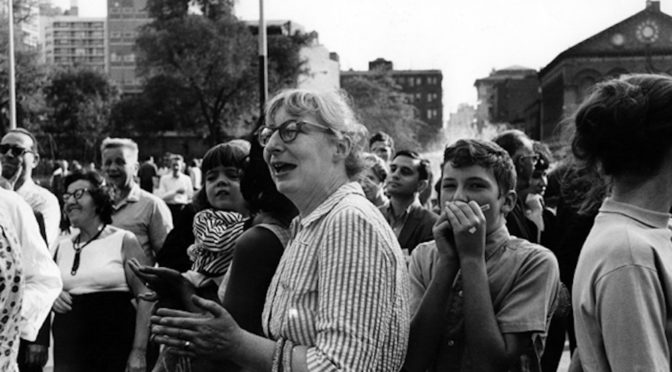
Jane Butzner was born 100 years ago in Scranton, Pennsylvania.  Jane Jacobs died on April 25, 2006, in Toronto, Canada. But for much of her life in between, she changed the way people thought about cities from her perch in North America’s largest — New York City.

Jane Jacobs was a revolutionary thinker in an age where ‘big ideas’ shaped cities. City planners thought about grand plans, not street corners. Jacobs became a breakout philosopher on everyday urban living, revealing practical realities that were completely misunderstood by those making real decisions.

Without Jacobs — and the countless activists and preservationists before and after her — we would not have New York City 2016. (You can take that statement both as a tribute and perhaps as a sly criticism as well.)

Now I didn’t know Jane, but I’m pretty sure she would like you to celebrate her birthday in one of the two following ways:  1) Go to your favorite neighborhood in New York City and spend money there at local businesses, or 2) Go to a neighborhood you’ve never been to before and learn everything you can about it. 

Of course, before cutting the birthday cake today, why not listen to the Bowery Boys 200th episode celebration of the life of Jane Jacobs? The podcast includes audio from Jane herself, waxing on about the creation of her book The Death and Life of Great American Cities.

If you’re looking for something to read today about Jacobs, by all means, jump into Death and Life or perhaps one of these books.

Today’s Google Doodle, celebrating Jane’s 100th birthday:
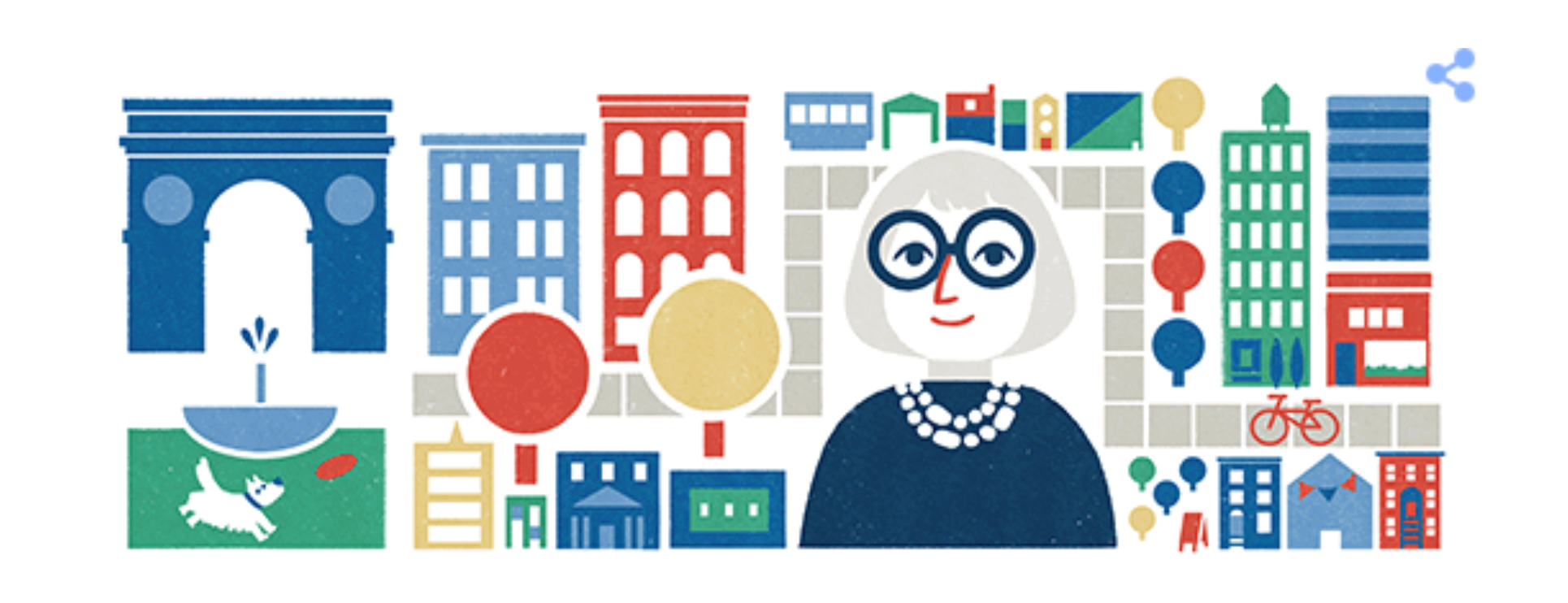
Screen Shot 2016-05-04 at 8.03.55 AM

After that, plan on joining one of the many Jane’s Walks this weekend, sponsored by the Municipal Art Society of New York. There are dozens and dozens of free walking tours, from May 6-8, that you’re sure to find one right in your back yard. (Maybe literally your back yard if you live somewhere historic!)

Check out the entire list right here and plan out a whole weekend of adventures.  Below is a list of ten notable tours that caught my eye and sound like exceptionally unique ways to spend an afternoon.  Plus an extra one that I’m personally invested in:
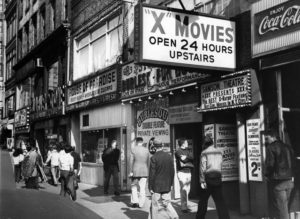
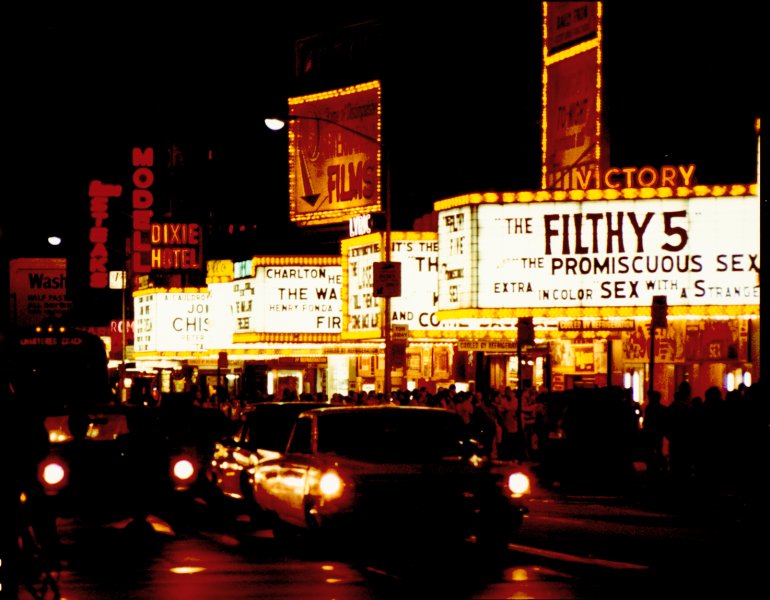
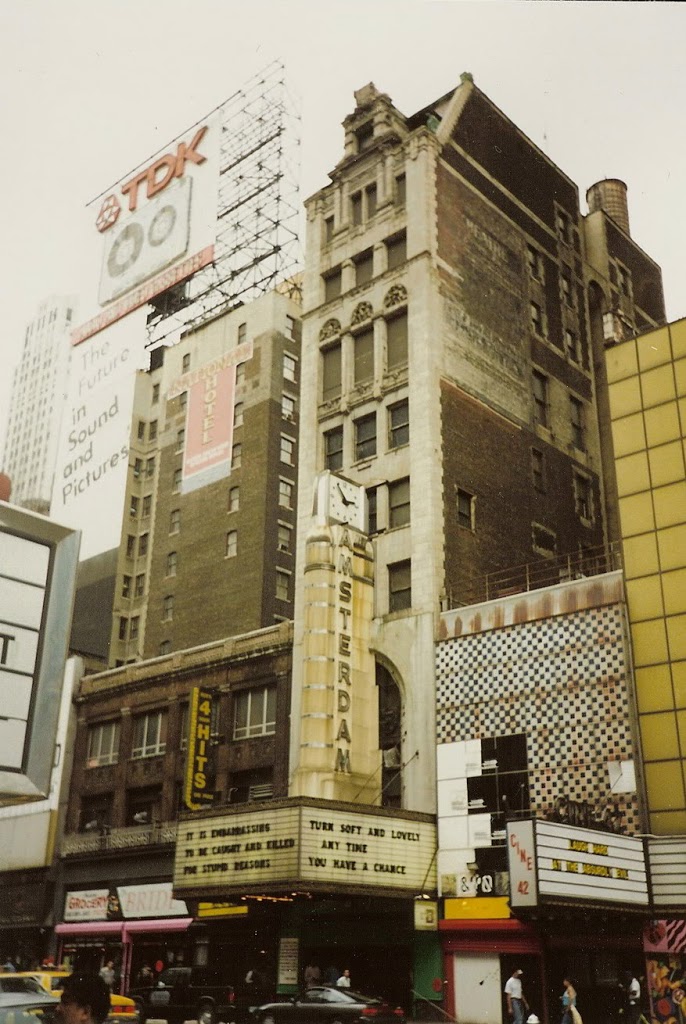
Times Square 1975. Courtesy Getty Images via Gothamist

DIRTY OLD TIMES SQUARE
Manhattan, Meet at Duffy Square
Friday, May 6, at 1pm, 2 hours
Details here
Tag line: “Most of old Times Square has been carefully obliterated by generic hotels and office buildings, but there are still vestiges of its seedy past—if you know where to look.”
Led by Robert Brenner

HOW AUDUBON PARK DISRUPTED MANHATTAN’S GRID
Manhattan, Meet at Audubon Monument, 550 West 155th Street
Friday, May 6, at 6pm, 1.5 hours
Saturday, May 7, 1:30pm
Sunday, May 8, 11am and 2pm
Details here
Tag line: “The distinctive footprint that disrupts Manhattan’s grid west of Broadway between 155th and 158th Streets—the Audubon Park Historic District—did not come about by accident or from the demands of local topography.”
Led by Matthew Spady
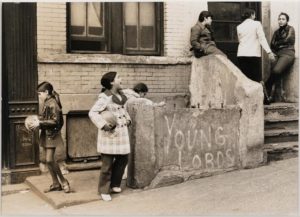
Photograph by Helen Barksy, 1971. Courtesy the Museum of the City of New York

EL BARRIO DREAMS: FOOD, ART, CULTURE (AND CHANGE)
Manhattan, Meet at Vendy Plaza (Park Avenue and 116th Street
Sunday, May 8, 1pm
Details here
Led by Flaco Navaja
Tag line: “Our walking tour will explore the dynamics of a community in flux, looking at the history of East Harlem and the political and cultural significance of that history, as well as examining competing visions for the neighborhood’s future. ”

THE LOST HIGH LINE
Manhattan, Meet at NW corner of Washington & Houston Streets
Saturday, May 7, 11am
Details here
Tag line: “Today, that remaining section of the High Line has become one of the city’s major attractions. But what about the ghosts of the past along its southern route?”
Led by Joan Schechter
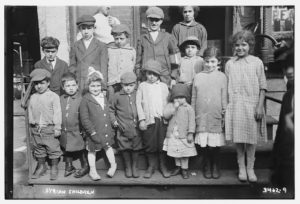
The littlest residents of former Little Syria. Courtesy Library of Congress

MANHATTAN’S LITTLE SYRIA: THE HEART OF ARAB AMERICA
Manhattan, Meet at St. George’s Syrian Catholic Church
Sunday, May 8, at 10:30am
Details here
Tag line: “Immigration to the United States from the territories of Greater Syria — now Lebanon, Syria, and Palestine — began in the 1870s and 1880s. The most important neighborhood of the immigration — and its economic and cultural heart — was along Washington Street in the Lower West Side of Manhattan.”
Led by Todd Fine

THE BRONX’S MAIN STREET: WALKING THE GRAND CONCOURSE
The Bronx, Meet at the Bronx Museum of the Arts, North Wing Lobby
Saturday, May 7, 11am
Details here 
Tag line: “While visiting key sites along this major thoroughfare, Goodman will provide a brief history of the Grand Concourse and explain the development of its diverse neighborhoods and communities.”
Led by Sam Goodman
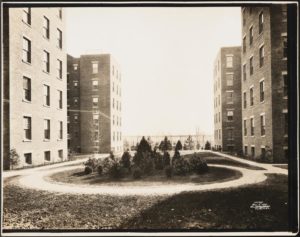
Courtesy Museum of the City of New York

HISTORIC JACKSON HEIGHTS – AMERICA’S FIRST GARDEN APARTMENTS
Queens, Meet at the Chase Bank @ 75th Street and Roosevelt
Saturday, May 7, 11:30am
Sunday, May 8, 11:30 am
Details here
Tag line: “We’ll explore the architectural qualities of Jackson Heights, developed by Edward A. MacDougall of the Queensboro Corporation in 1916. The neighborhood contains a variety of architectural styles with private gardens at the center of each city block.”
Led by Michael Limaco

ON LOCATION: THE VITAGRAPH STUDIOS AND THE HISTORY OF FILM IN MIDLAND BROOKLYN
Brooklyn, meet at Midwood Development Corporation
Sunday, May 8, 3PM
Details here
Tag line: “At Avenue M and 14th street, The Vitagraph Company of America built the nation’s first modern film studio in 1906, where it operated until 1925 as one of the most prolific moving picture companies in the world, making Brooklyn the epicenter of film production long before Hollywood.”
Led By Nellie Perera and Melissa Frizzling
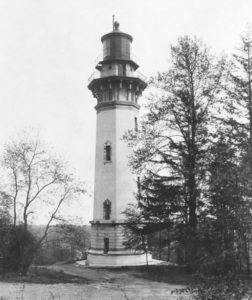
Photo courtesy the US Coast Guard

TIBET, OPERA, AND THE LUCKY CHARMS LEPRECHAUN: EXPLORING THE HIDDEN GEMS OF LIGHTHOUSE HILL
Staten Island, meet at the clubhouse of Latourette Golf Course on Edinboro Road
Saturday, May 7, 3PM
Details here
Tag line: “Himalayan Buildings, a working lighthouse, a golf course and a widow’s walk are just some of the interesting sights we will see. Some of the historical tidbits include “Why is the neighborhood called Lighthouse Hill?” and “Why are the streets named after places in the UK?” and “What notable people lived here?””
Led By Meg Ventrudo

THE HILLS ARE ALIVE!
Governors Island, meet at the Battery Maritime Building
Friday, May 6, at noon
Details here
Tag line: “See New York Harbor from a breathtaking new vantage point 70 feet in the air. Here is your chance to have a sneak peek at the newly planted Hills on Governors Island before they open to the public this summer.”
Led By Ellen Cavanagh


And finally, if you happen to be around Chelsea and the West Village on Saturday, check into the fascinatng tour below led by Kyle Supley. If all goes according to plane, I’ll be making a guest appearance during the tour, speaking at one particular location. Unfortunately, I will not be wearing chaps to this event!

GAY BARS THAT ARE GONE
Manhattan, meet at 515 West 18th Street
Saturday, May 7, 7pm
Details here
Led by Kyle Supley
Tag line: “Past patrons, NYC history buffs, and those just looking for a good time, take note! From ballrooms to discos to piano bars, we’ll observe the shifting typology of the gay bar. Together, we’ll cover everything from the raids to the raves.”
Categories
Holidays

Midnight in Times Square: The history of New Year’s Eve in New York City

PODCAST The tale of New York City’s biggest annual party from its inception on New Years Eve 1904 to the magnificent spectacle of the 21st century. 

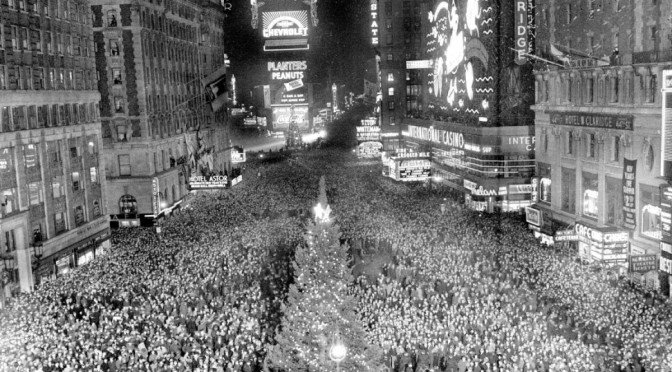
In this episode, we look back on the one day of the year that New Yorkers look forward. New Years Eve is the one night that millions of people around the world focus their attentions on New York City — or more specifically, on the wedge shaped building in Times Square wearing a bright, illuminated ball on its rooftop.

1

In the 19th century, the ringing-in of the New Year was celebrated with gatherings near Trinity Church and a pleasant New Years Day custom of visiting young women in their parlors. But when the New York Times decided to celebrate the opening of their new offices — in the plaza that would take the name Times Square — a new tradition was born.

Tens of millions have visited Times Square over the years, gazing up to watch the electric ball drop, a time-telling mechanism taken from the maritime tradition. The event has been affected by world events — from Prohibition to World War II — and changed by the introduction of radio and television broadcasts.

ALSO: What happened to the celebration which it reached the gritty 1970s and a Times Square with a surly reputation?

PLUS: A few tips for those of you heading to the New Years Eve celebration this year!


The Bowery Boys: New York City History podcast is brought to you …. by you!

We are now producing a new Bowery Boys podcast every two weeks. We’re also looking to improve the show in other ways and expand in other ways as well — through publishing, social media, live events and other forms of media. But we can only do this with your help!

We are now a member of Patreon, a patronage platform where you can support your favorite content creators for as little as a $1 a month.

Please visit our page on Patreon and watch a short video of us recording the show and talking about our expansion plans. If you’d like to help out, there are five different pledge levels (and with clever names too — Mannahatta, New Amsterdam, Five Points, Gilded Age, Jazz Age and Empire State). Check them out and consider being a sponsor.

We greatly appreciate our listeners and readers and thank you for joining us on this journey so far. And the best is yet to come!


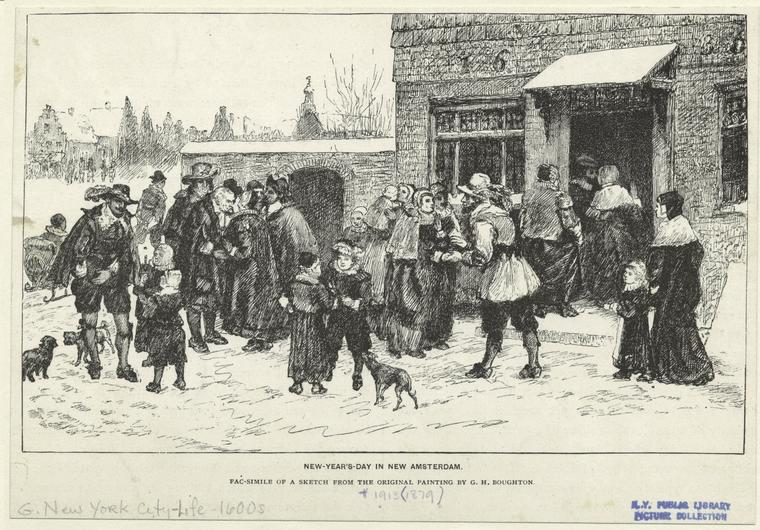
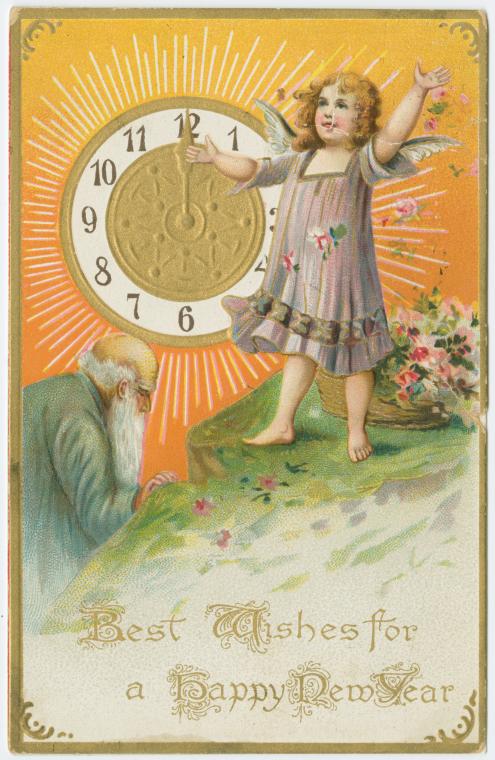
New Years Day celebrations have evolved since the days of New Amsterdam when visitations symbolized a ‘fresh start’ to the year.

Courtesy NYPL
Courtesy NYPL

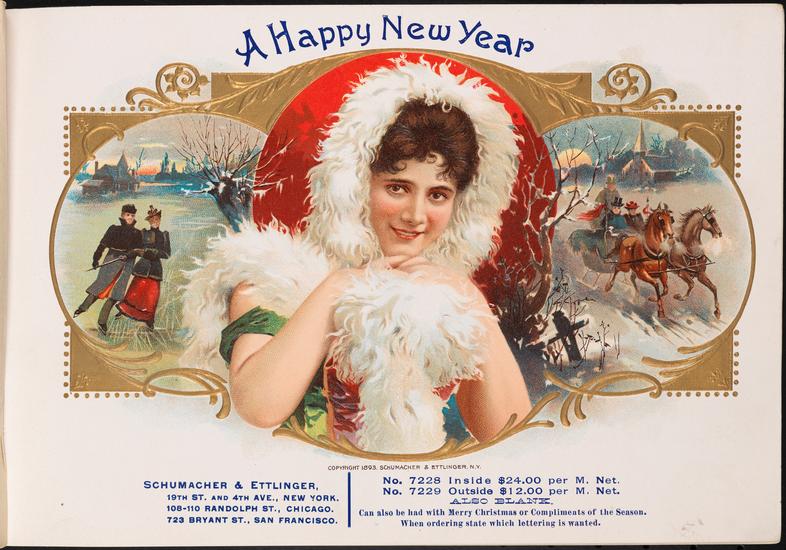
A decorative cigar box from the 1890s, ringing in the new year with a winsome damsel and wholesome scenes of winter beckoning you to smoke a cigar.

Courtesy Museum of the City of New York

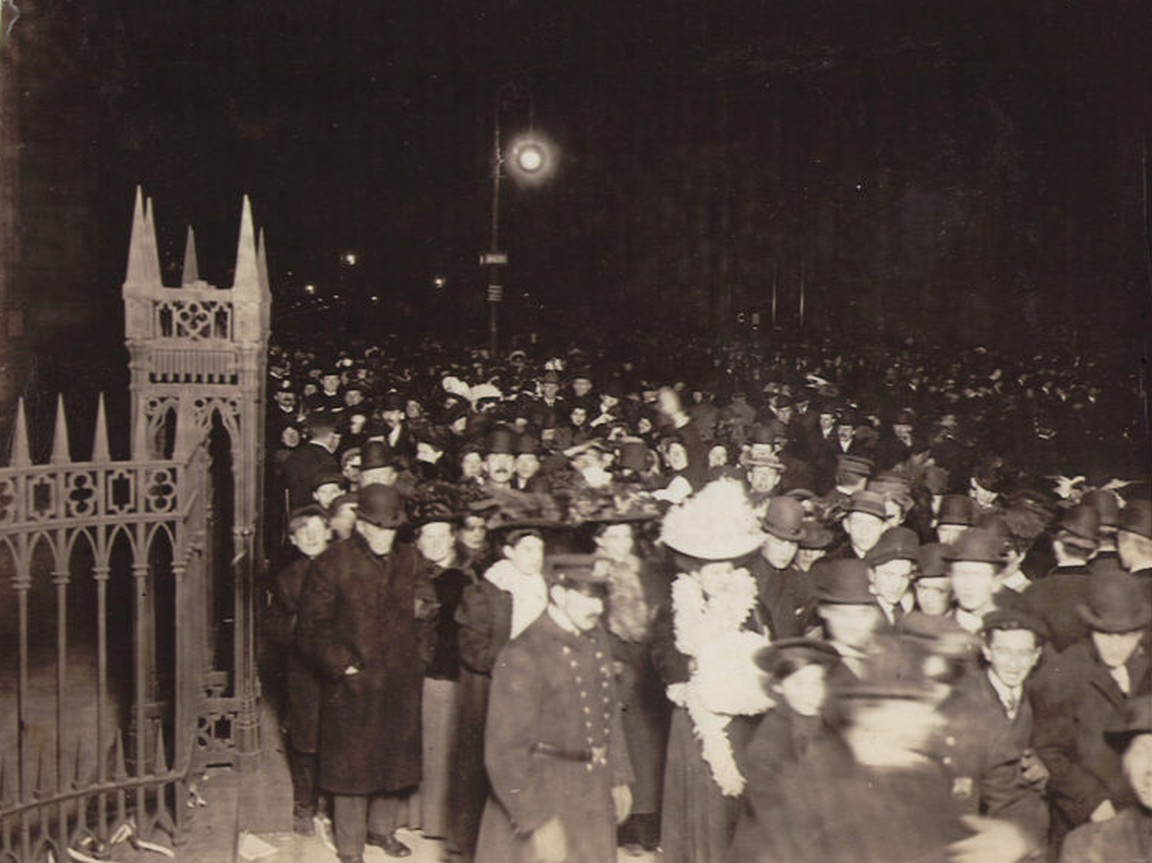
The crowds outside Trinity Church on 1906 gathered to usher in the new year. The church was traditionally the place people gathered before the Times Square celebration took off.

1

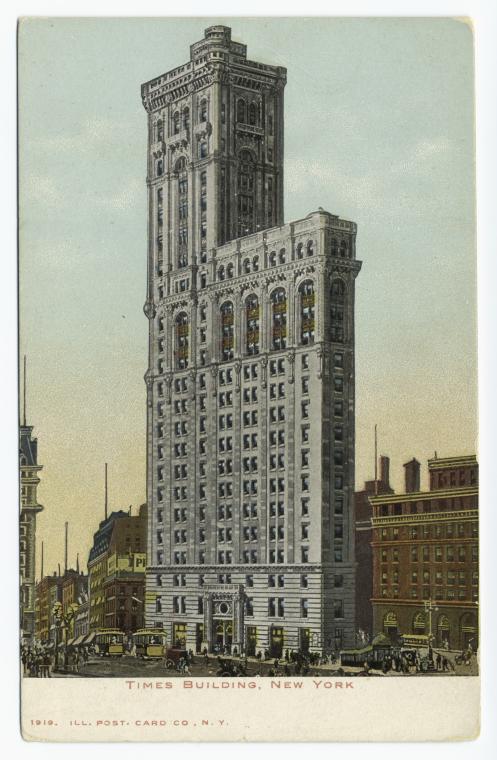
Fated to be the centerpiece of New Years Eve, One Times Square once wore some beautiful architecture until much of it was ripped off to accommodate a frenzy of electronic signs.

Courtesy NYPL
Courtesy NYPL

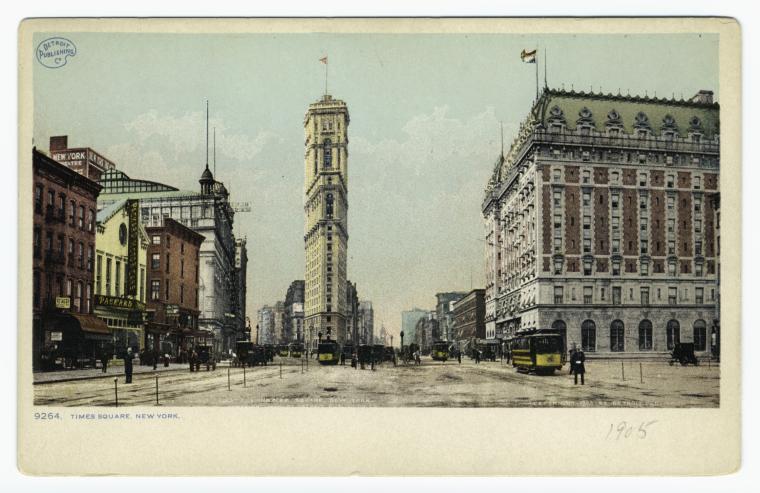
Times Square in 1905 for the very first New Years Eve celebration albeit one with fireworks, not a ball drop.

Courtesy NYPL
Courtesy NYPL

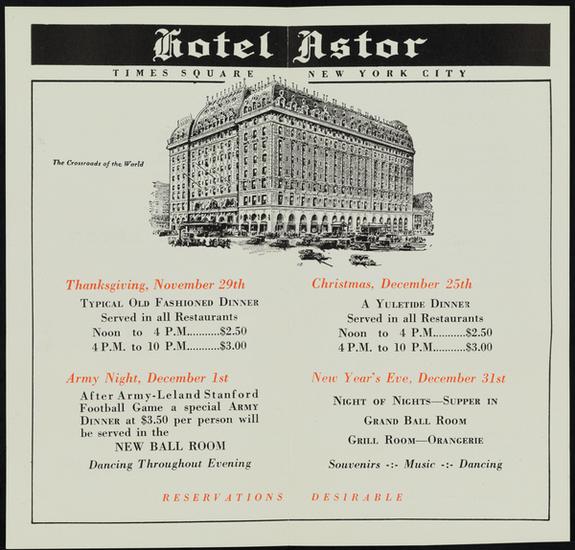
The party offerings at the Hotel Astor in Times Square in 1926.

Courtesy Museum of the City of New York

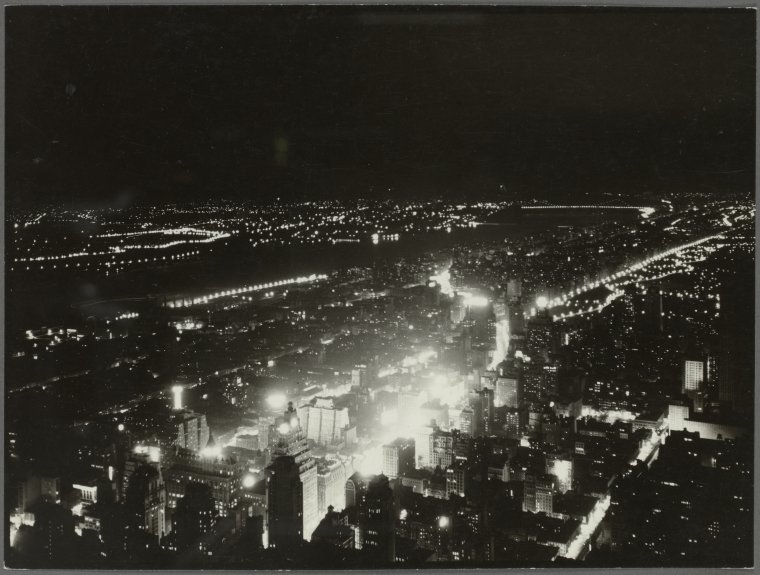
The view of Times Square from the Empire State Building.

Courtesy NYPL
Courtesy NYPL

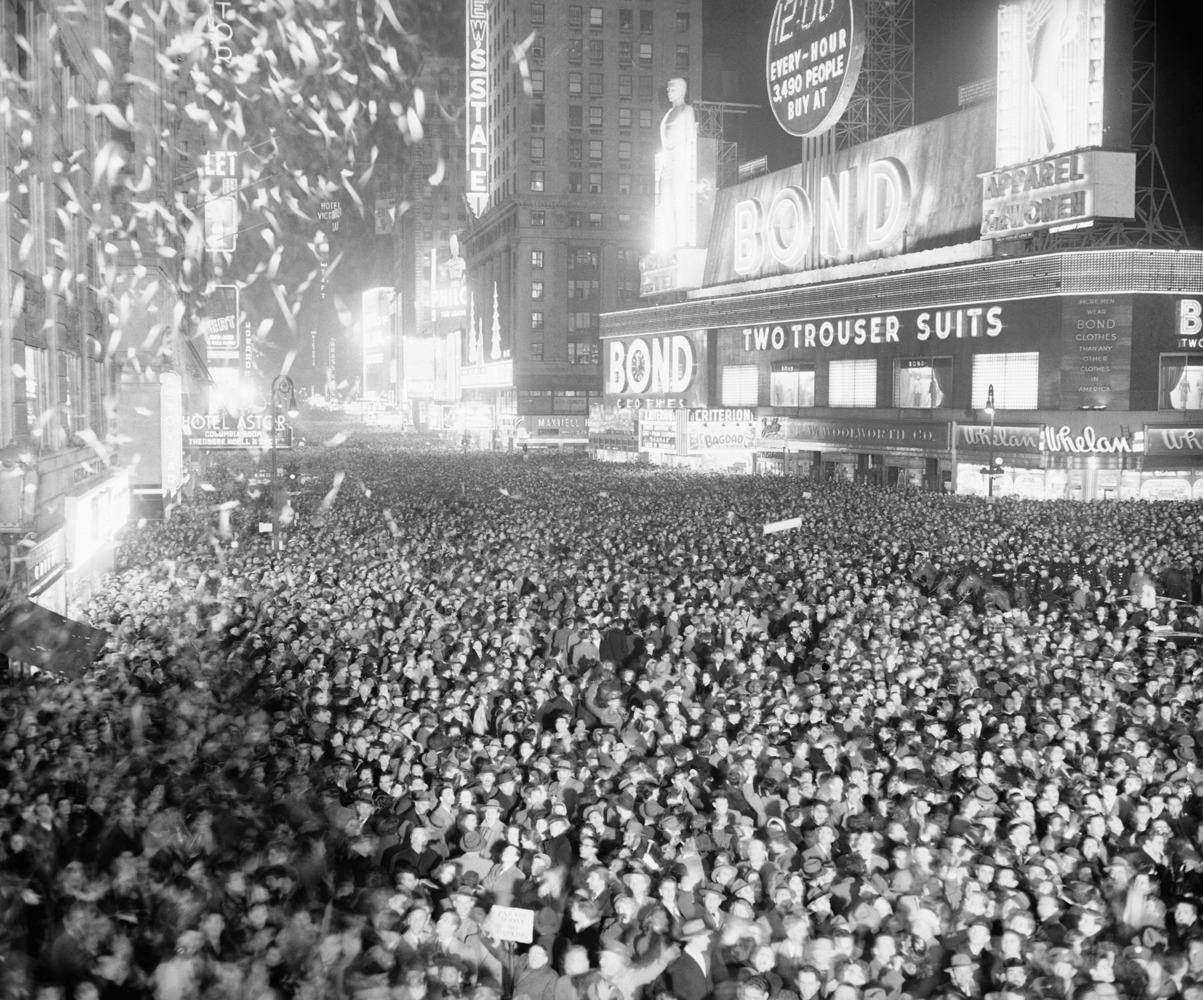
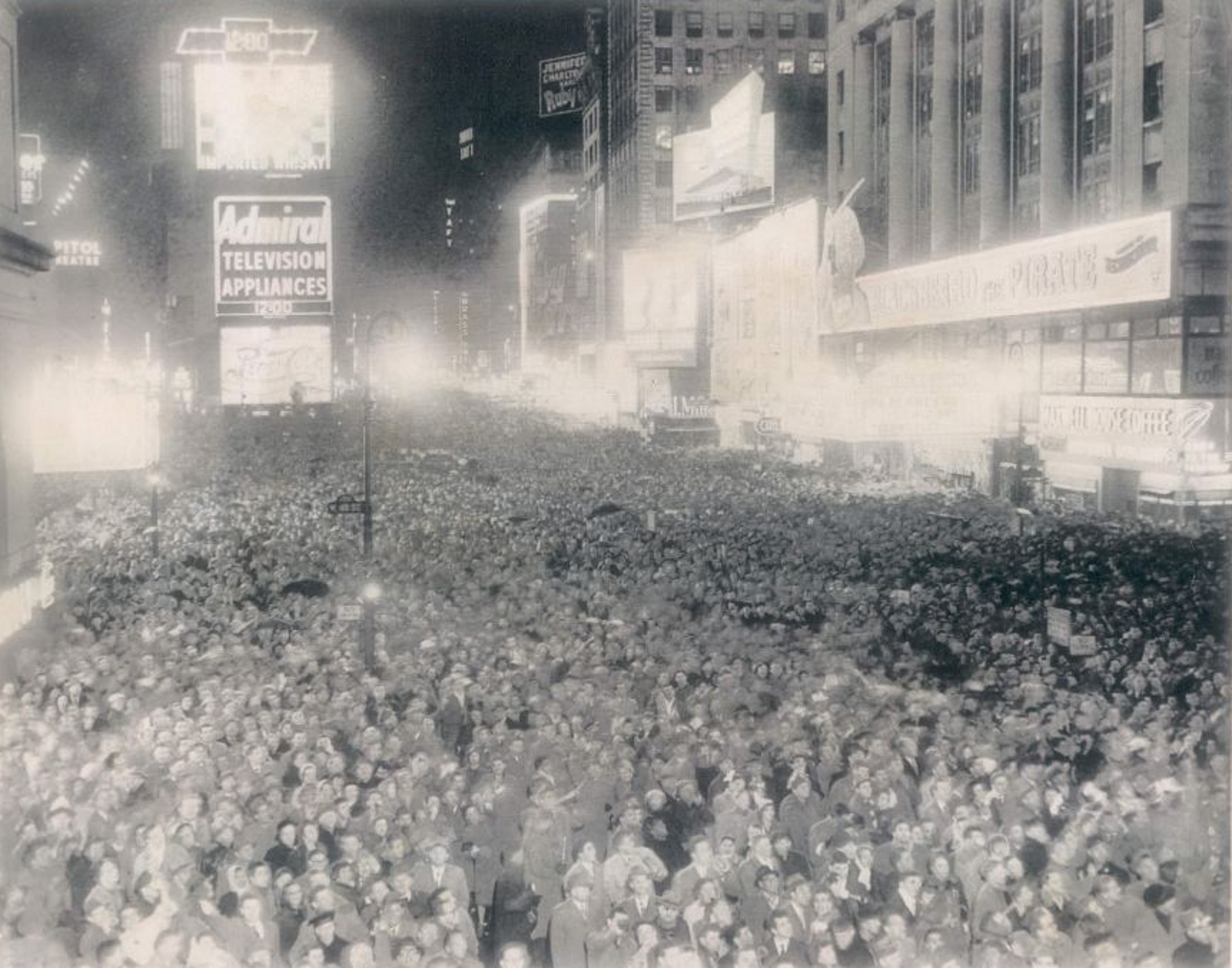
New Years Eve 1938

AP photo
AP photo

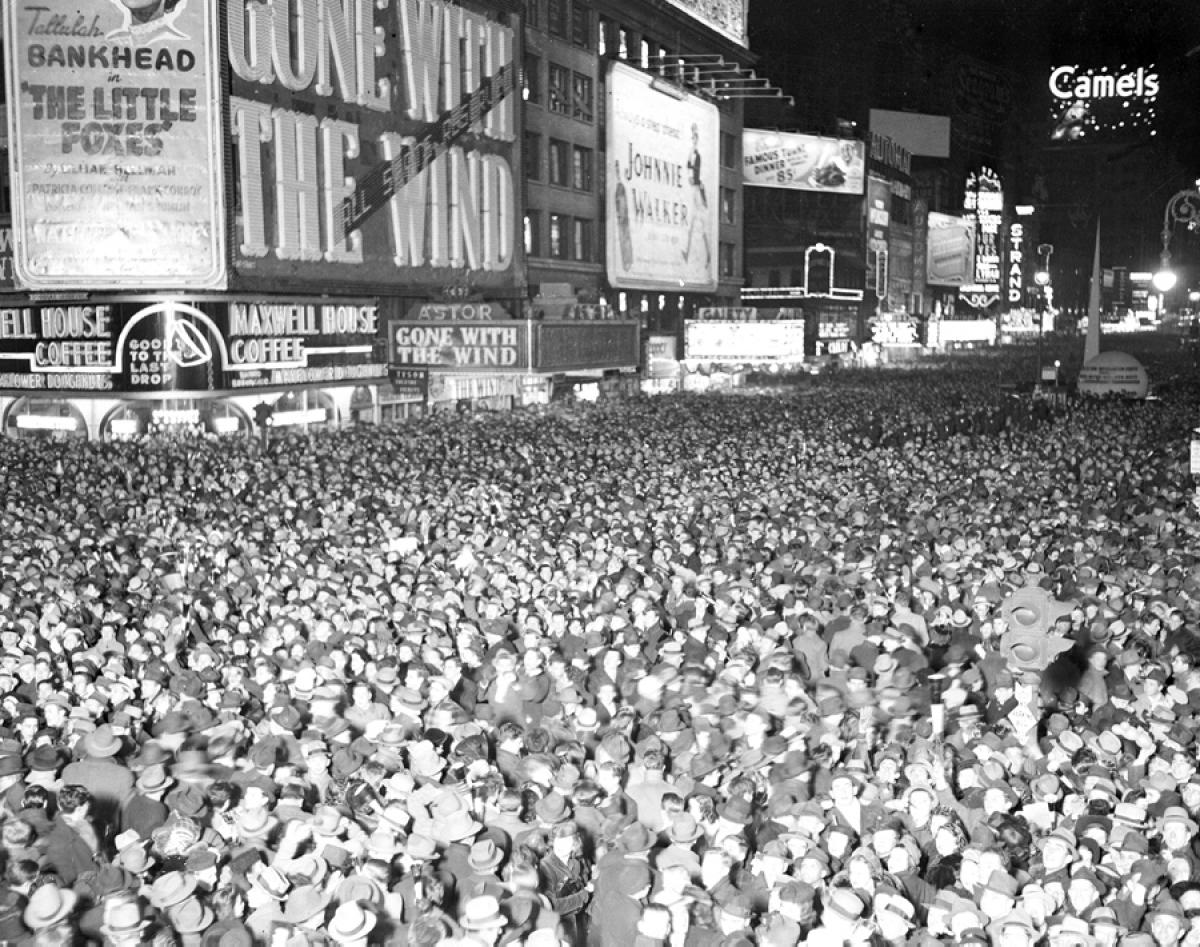
The throngs in 1940 with the Gone With The Wind marquee in the background (not to mention Tallulah Bankhead in the play The Little Foxes!)

Courtesy New York Daily News

Ushering in 1953:

9

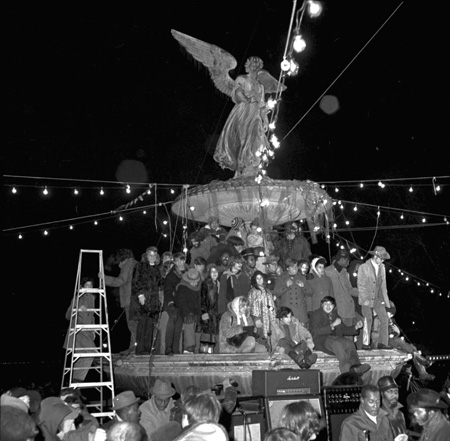
Celebrations were also held for a time in Central Park, like this festive group from 1969:

Courtesy New York Parks Department

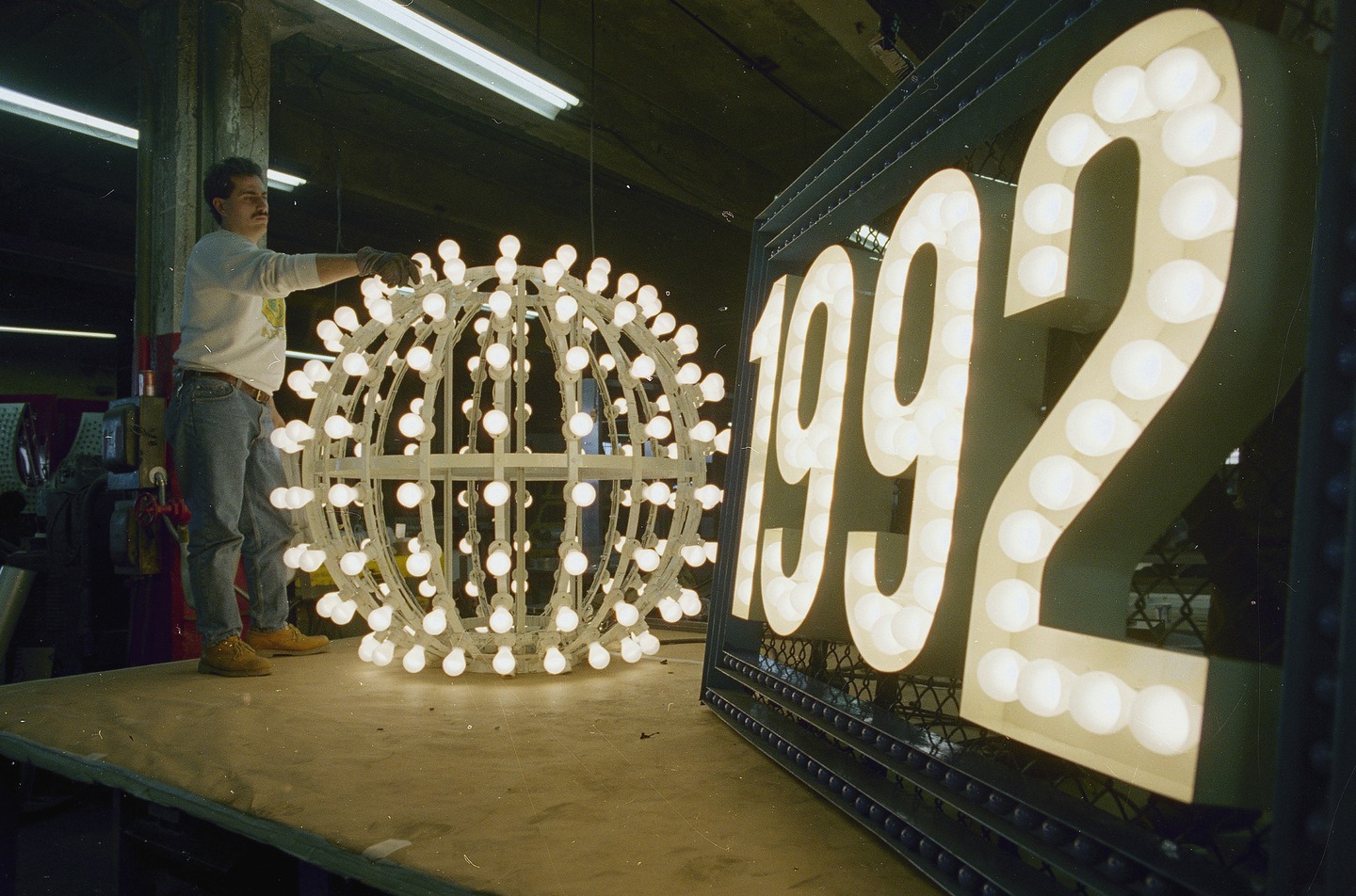
An electrician from the Artkraft Strauss Sign Corporation tests out the lighting effects that will greet the new year in 1992.

MARTY LEDERHANDLER/ASSOCIATED PRESS

And here’s some videos of New Years Eve countdown past!

Mr New Years Eve himself — Guy Lombardo — here at the Roosevelt Hotel, ringing in 1958

From 1965-66:

A clip from Dick Clark’s first appearance in Times Square. It cuts away to Three Dog Night in California!

CBS’s New Years Eve program featuring Catherine Bach from The Dukes of Hazzard.

The absolutely bonkers ball drop for the new millennium.

Last year’s commentary by those wacky cards Anderson Cooper and Kathy Griffin.

Categories
Parks and Recreation Podcasts

Bryant Park: The Fall and Rise of Midtown’s Most Elegant Public Space

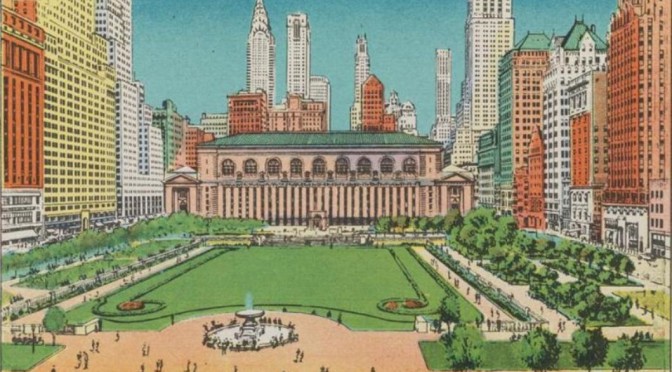
NEW PODCAST  In our last show, we left the space that would become Bryant Park as a disaster area; its former inhabitant, the old Crystal Palace, had tragically burned to the ground in 1858. The area was called Reservoir Square for its proximity to the imposing Egyptian-like structure to its east, but it wouldn’t keep that name for long.

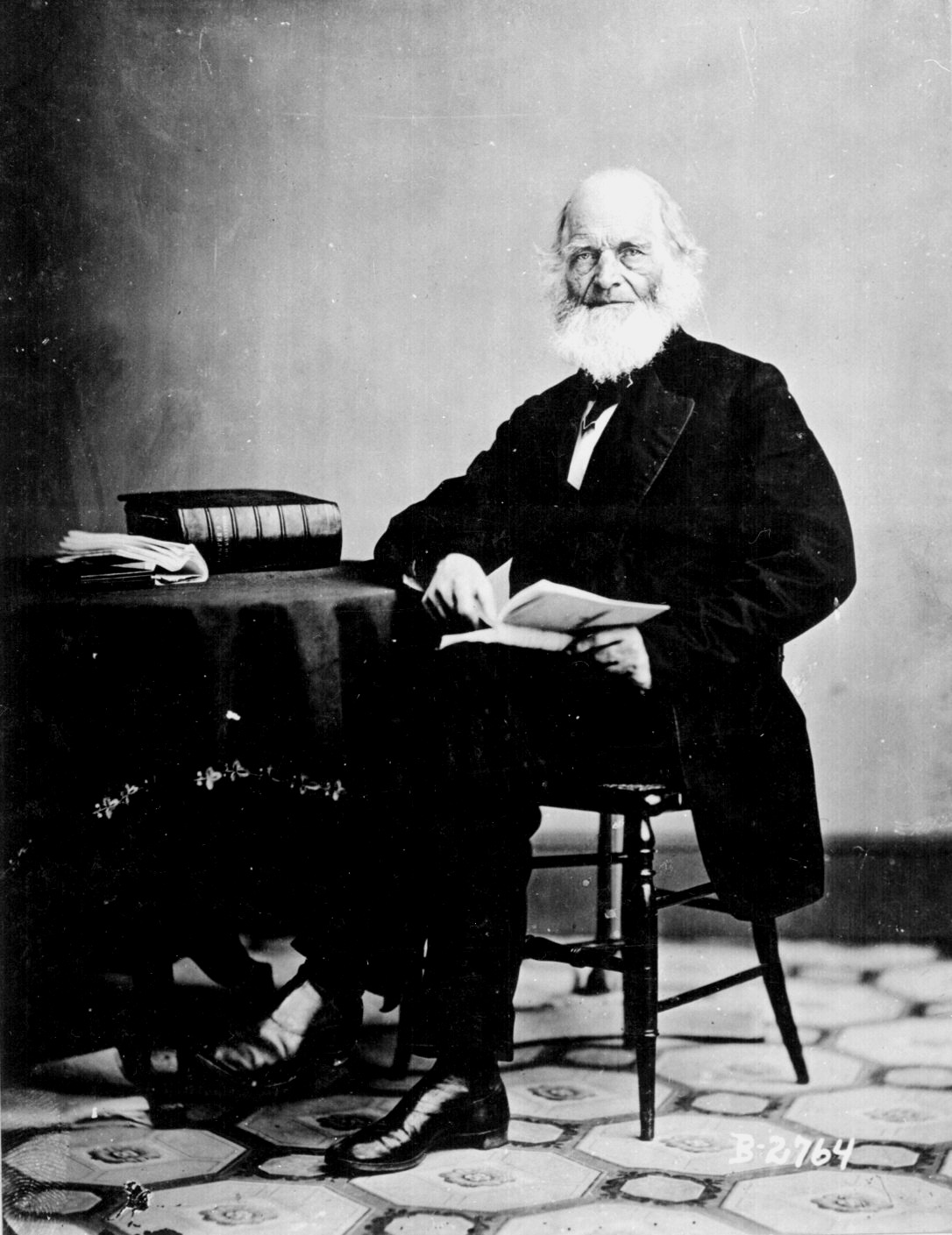
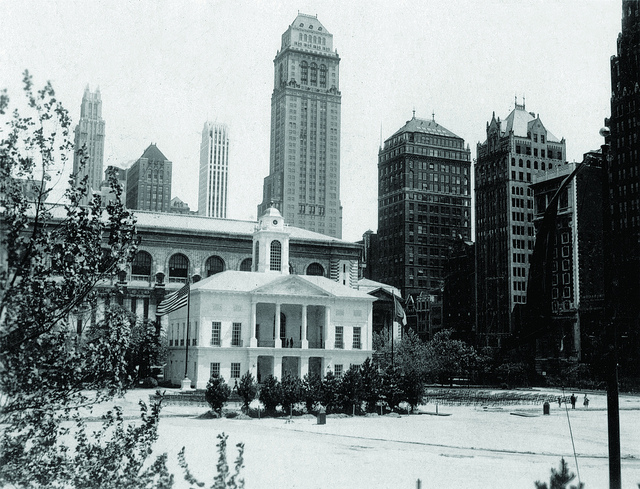
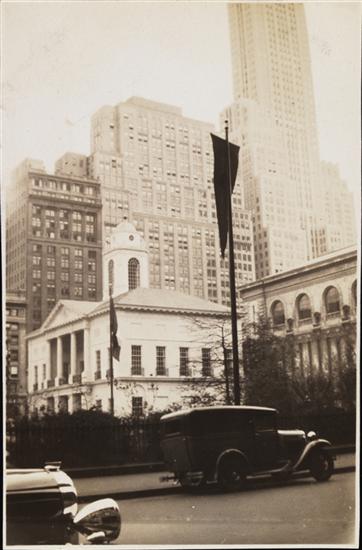
William Cullen Bryant was a key proponent to the creation of Central Park, but it would here that the poet and editor would receive a belated honor in the 1884. With the glorious addition of the New York Public Library in 1911, the park received some substantial upgrades, including its well-known fountain. Over twenty years later, it took on another curious present — a replica of Federal Hall as a tribute to George Washington.

By the 1970s Bryant Park was well known as a destination for drug dealers and most people shied away from its shady paths, even during the day. It would take a unique plan to bring the park back to life and a little help from Hollywood and the fashion world to turn it into New York’s most elegant park.


The Bowery Boys: New York City History podcast is brought to you …. by you!

Starting with this episode, we are doubling our number of episodes per month. Now you’ll hear a new Bowery Boys podcast every two weeks. We’re also looking to improve the show in other ways and expand in other ways as well — through publishing, social media, live events and other forms of media. And we need your help to make these expansion plans happen.

We are now a member of Patreon, a patronage platform where you can support your favorite content creators for as little as a $1 a month.

Please visit our page on Patreon and watch a short video of us recording the show and talking about our expansion plans. If you’d like to help out, there are five different pledge levels (and with clever names too — Mannahatta, New Amsterdam, Five Points, Gilded Age, Jazz Age and Empire State). Check them out and consider being a sponsor.

We greatly appreciate our listeners and readers and thank you for joining us on this journey so far. And the best is yet to come!


William Cullen Bryant, photo taken by Matthew Brady

2

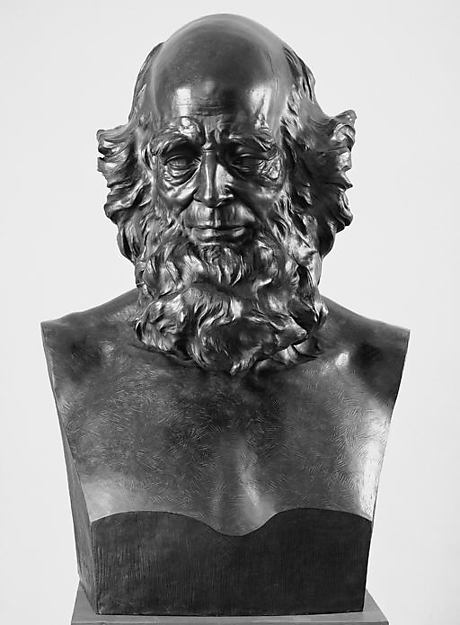
William Cullen Bryant in bust form, but Launt Thompson. It seems this bust has made its way back to the Metropolitan Museum of Art!

2

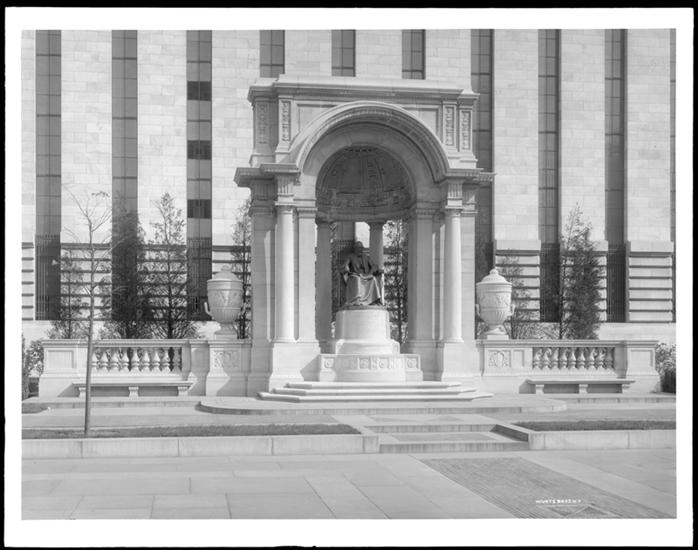
William Cullen Bryant installed in his marble niche behind the New York Public Library. This picture was taken in 1910, well before the radical redesign of the park in the 1930s. (Museum of the City of New York).

3

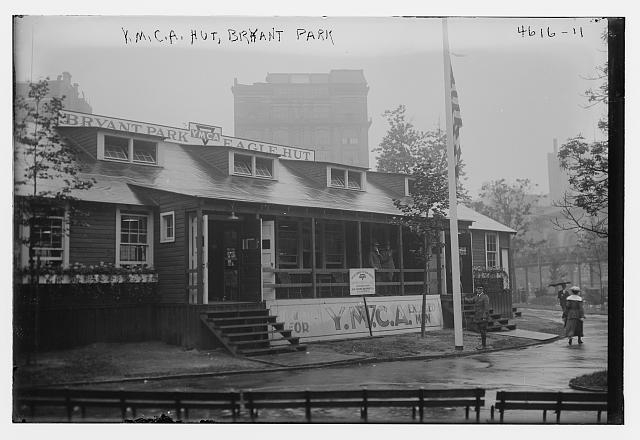
During World War I, the YMCA had a special ‘Eagle Hut’ built in the park for traveling servicemen. (Library of Congress)

2

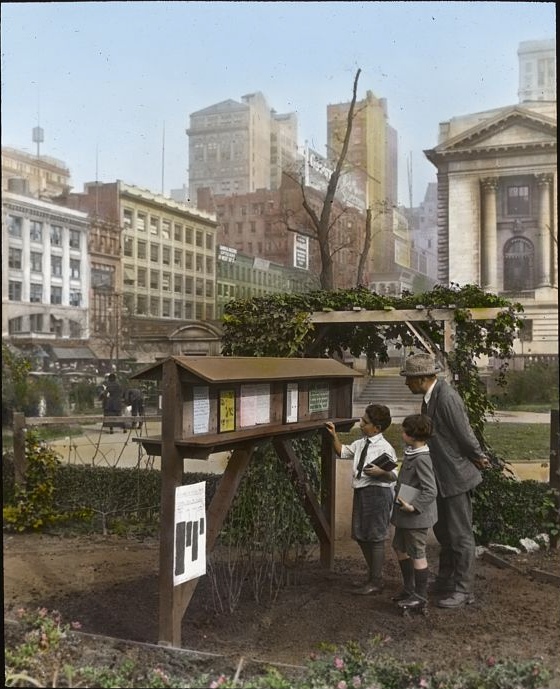
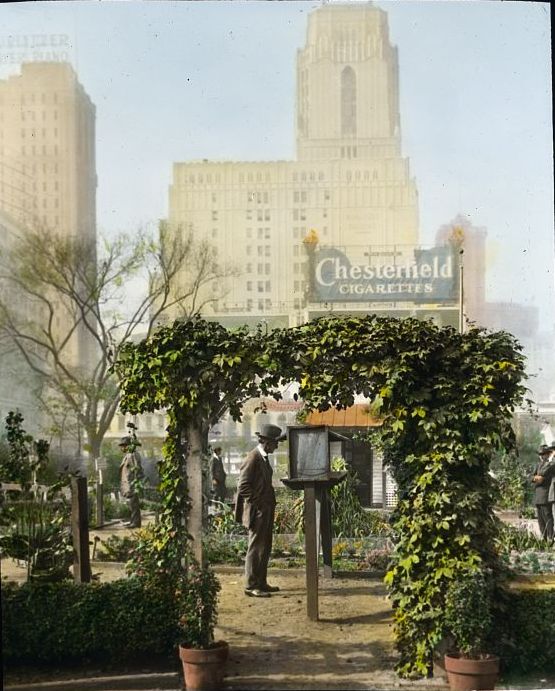
A colorful depiction of the Bryant Park ‘demonstration gardens’ that were planted during the war. (Library of Congress)

7096409143_3df8bc2aa4_b
2

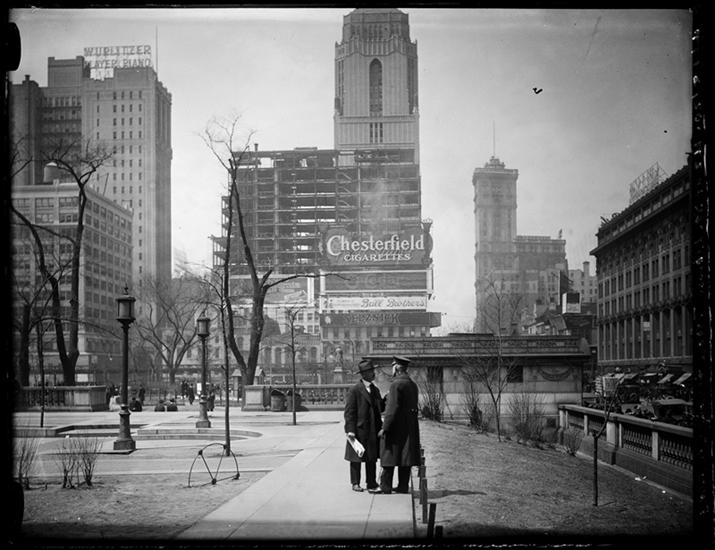
Bryant Park in 1920. Looking west on 42nd Street at 6th Avenue (you can see the elevated railroad!) In the distance is One Times Square. Note the reappearance of the Chesterfield Cigarettes billboard from the picture above. (Museum of the City of New York)

Bryant Park in 1920. Looking west on 42nd Street at 6th Avenue (you can see the elevated railroad!) In the distance is One Times Square. (Museum of the City of New York)

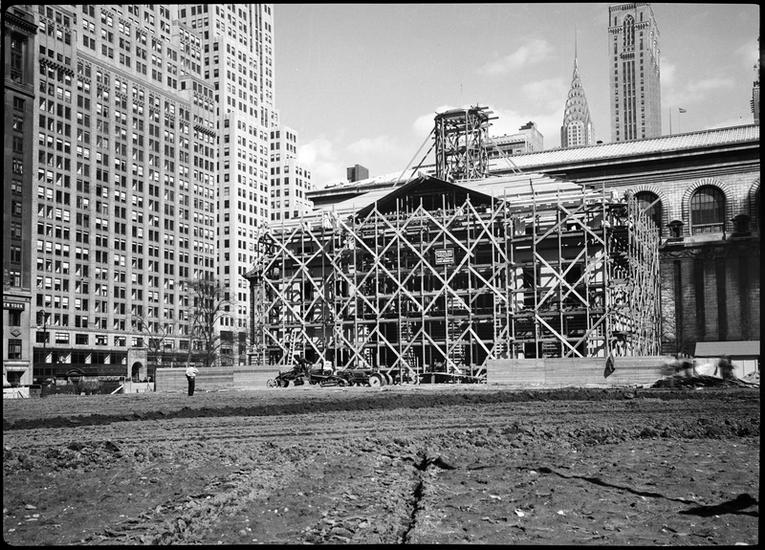
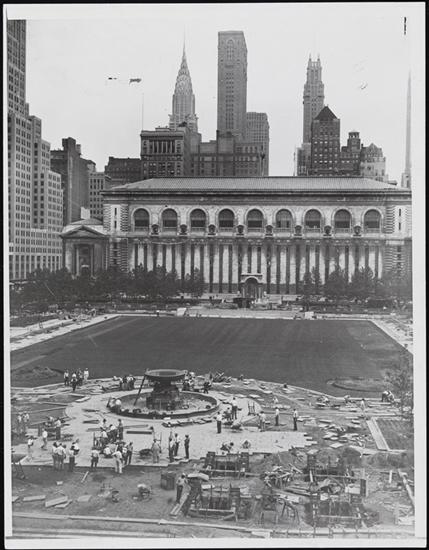
Constructing a replica of Federal Hall in a barren Bryant Park. (Picture taken by the Wurts Brothers, Museum of the City of New York)

8x11mm_X2010_7_1_ 703

The Federal Hall reconstruction had a corporate sponsor — Sears Roebuck & Co. Here’s how it looked in better days. Believe it or not, the reproduction of Mount Vernon actually did get built in New York — in Prospect Park in Brooklyn! (Bryant Park Corporation)

2

Bryant Park’s Federal Hall, May 1932. (Museum of the City of New York)

Bryant Park's Federal Hall, May 1932. Courtesy Museum of the City of New York

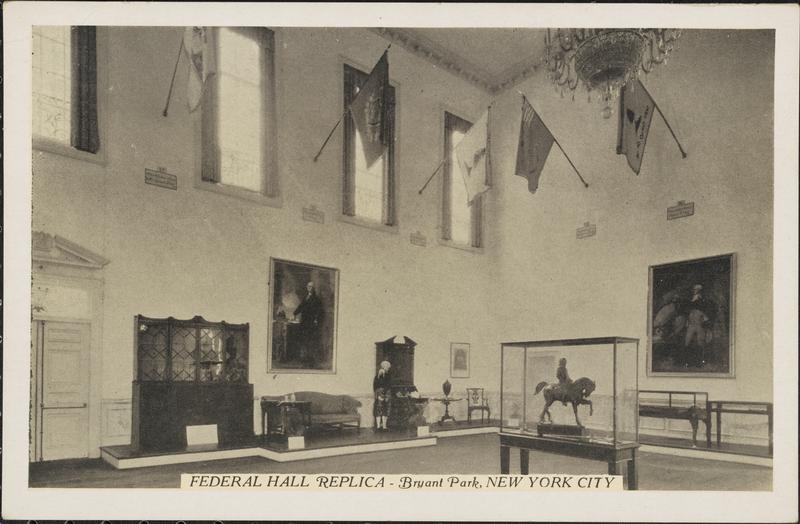
The interior of Bryant Park’s Federal Hall. (Museum of the City of New York)

The interior of Bryant Park's Federal Hall. (Museum of the City of New York)

The reconstruction of Bryant Park in 1934, overseen by new Parks Commissioner Robert Moses

The reconstruction of Bryant Park in 1934, overseen by new Parks Commissioner Robert Moses

This photo was taken by Stanley Kubrick during his years as a photographer for Look Magazine. The caption reads “Park Bench Nuisance [Woman reading a newspaper, while a man reads over her shoulder.]” Courtesy Museum of the City of New York

This photo was taken by Stanley Kubrick during his years as a photographer for Look Magazine. The caption reads "Park Bench Nuisance [Woman reading a newspaper, while a man reads over her shoulder.]" Courtesy Museum of the City of New York

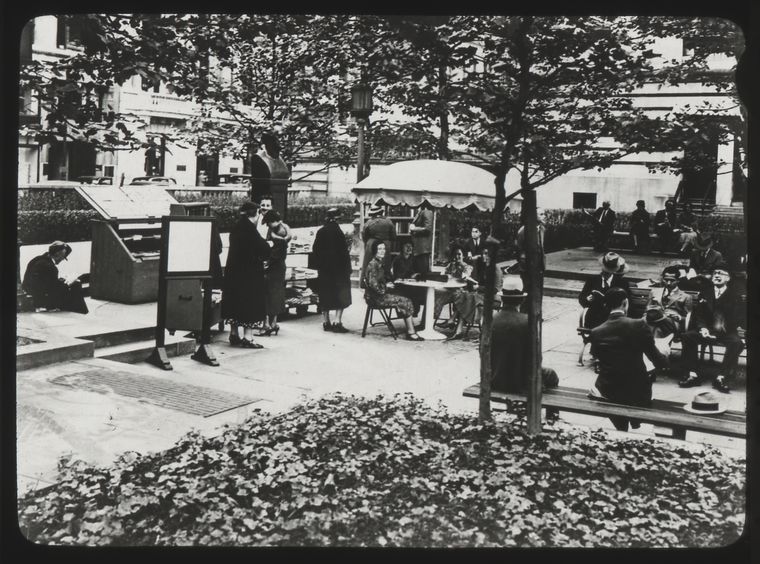
People enjoying the New York Public Library’s outdoor reading room, 1930s. (New York Public Library)

2

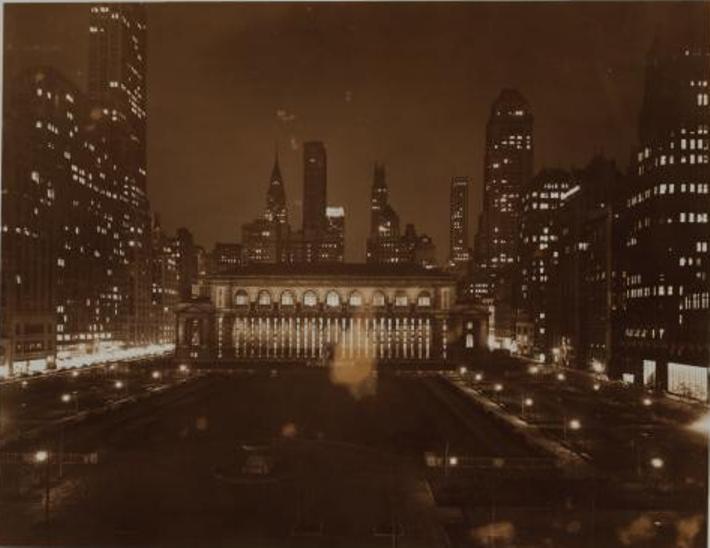
Bryant Park at night, photo by Nathan Schwartz, taken in 1938. (New York Public Library)

1a

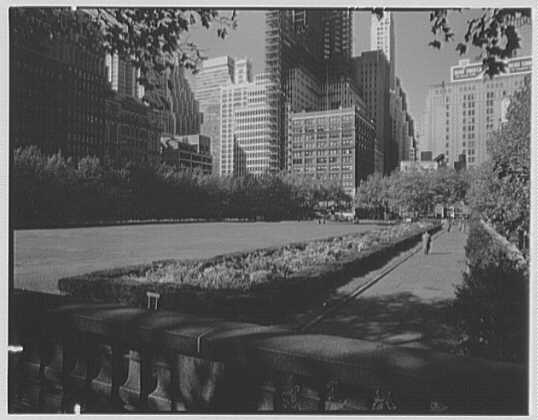
The hedges of the central lawn, photo taken in 1957. These were removed in the desperate effort to clean up the park in the late 1980s. (Library of Congress)

2

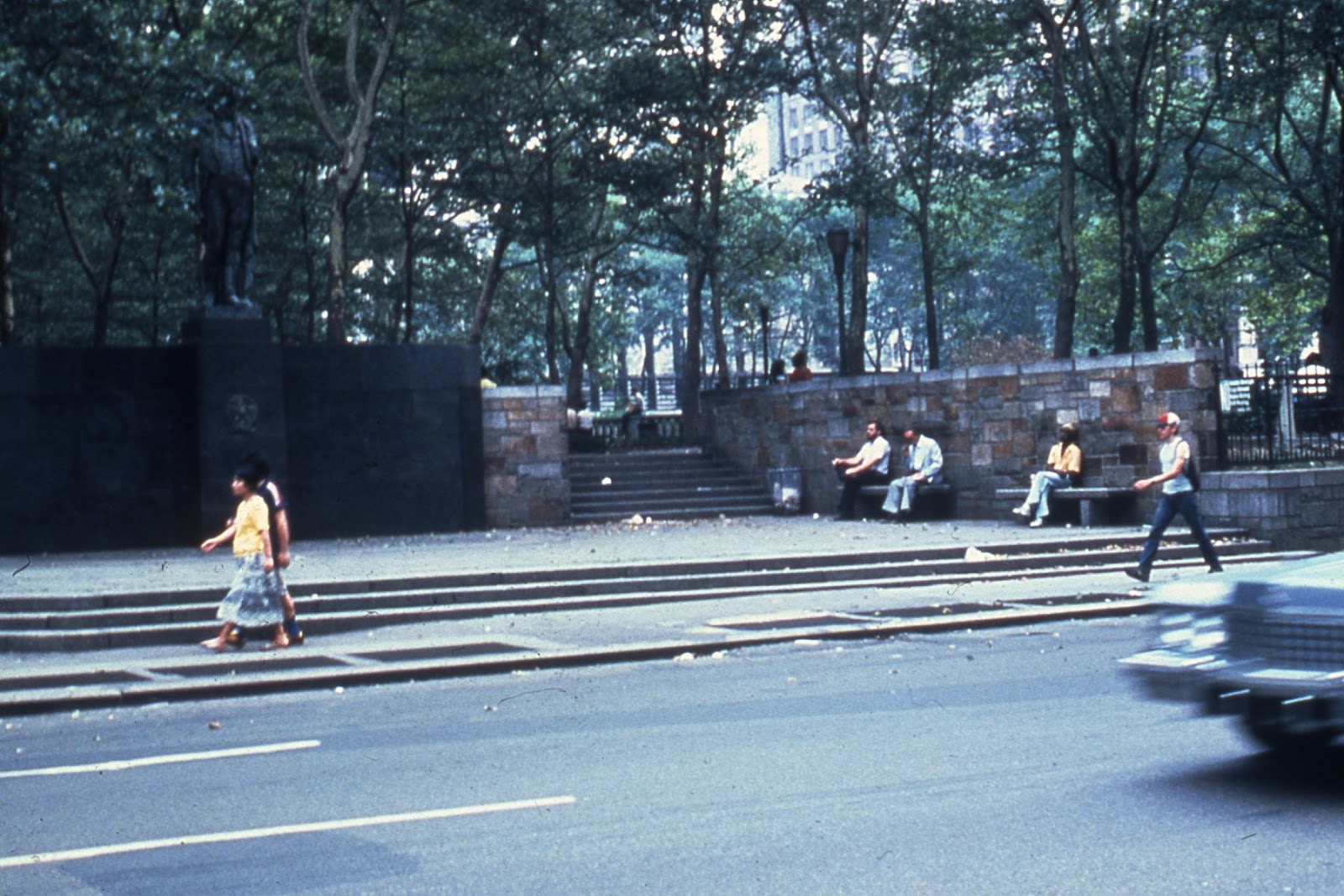
Bryant Park in the 1980s. High walls allowed for suspicious behavior to occur in the at all hours of the day. (Bryant Park Conservancy)

2

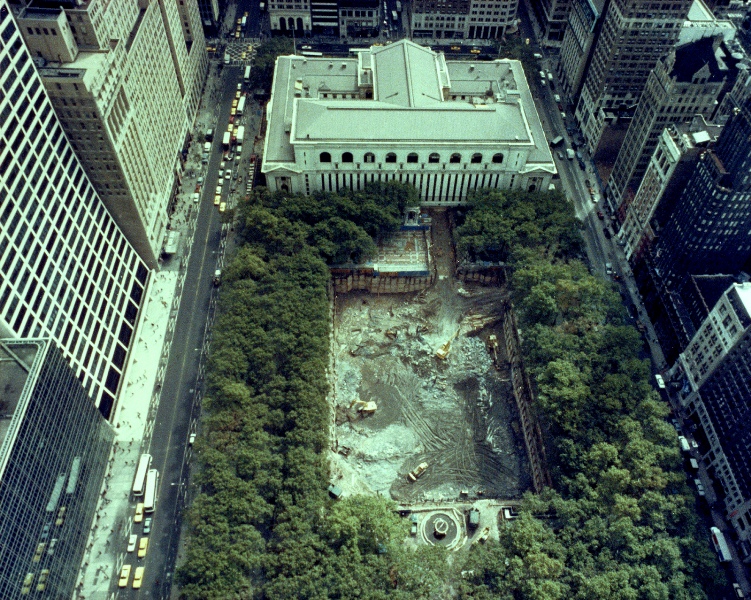
Overlooking the new renovations in the late 1980s (Bryant Park Corporation)

2

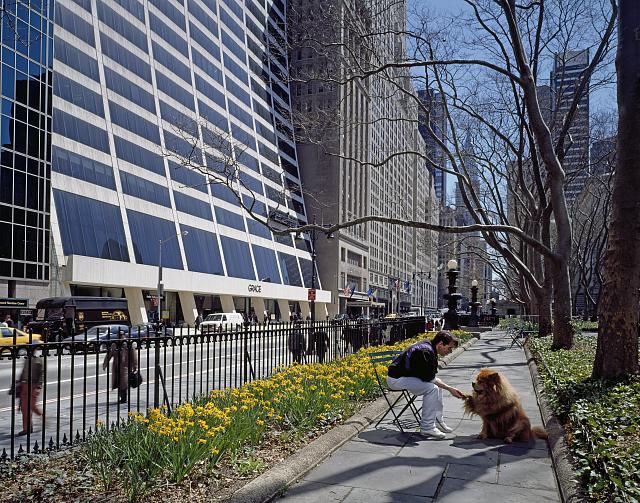
Bryant Park after the clean-up, taken sometime in the 1990s. Photo by Carol Highsmith (Library of Congress)

2

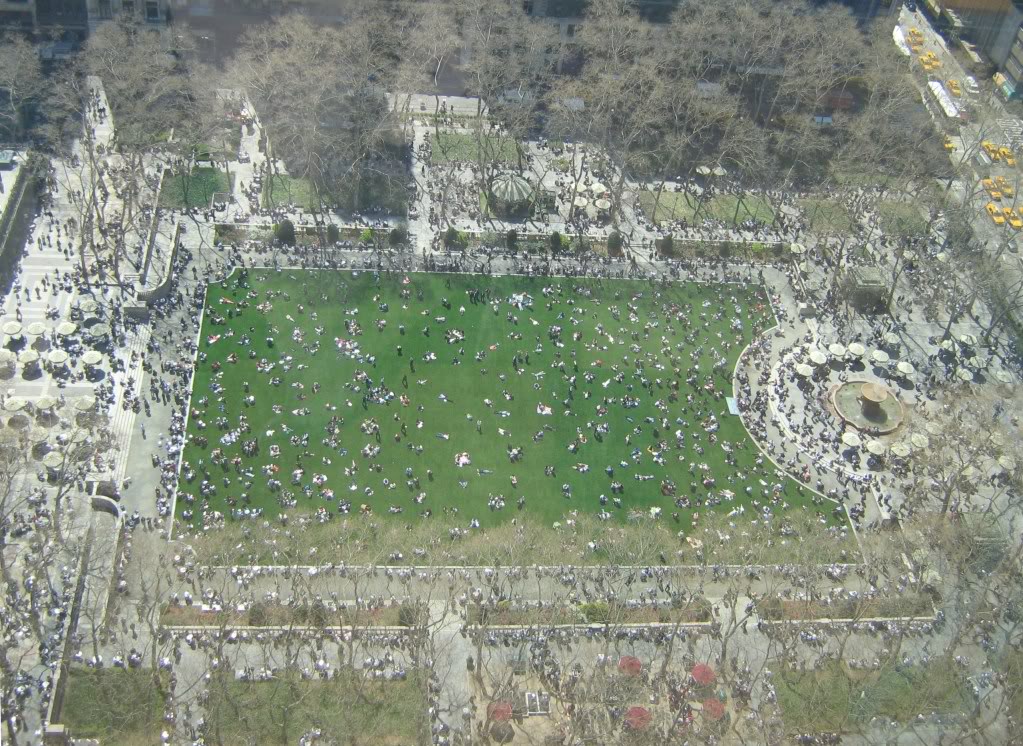
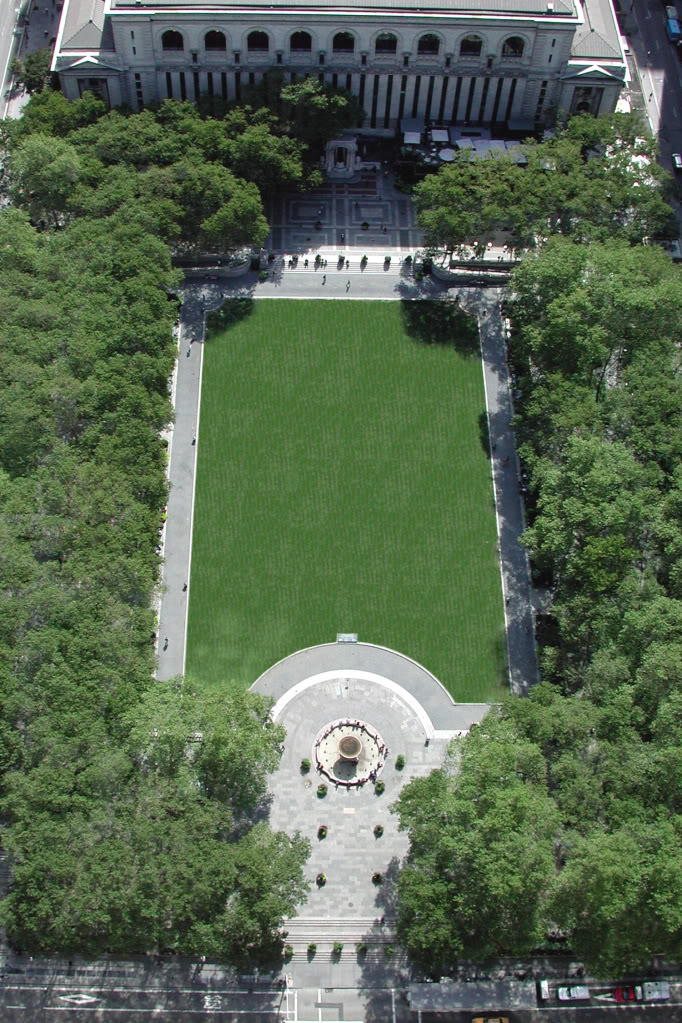
Great overhead shots directly from the Bryant Park Conservancy!

2
3
Categories
Neighborhoods

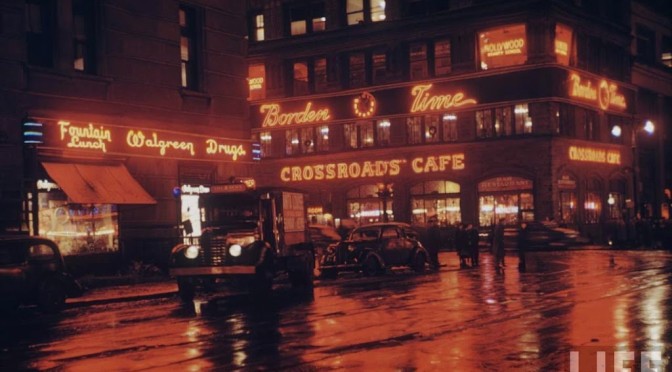
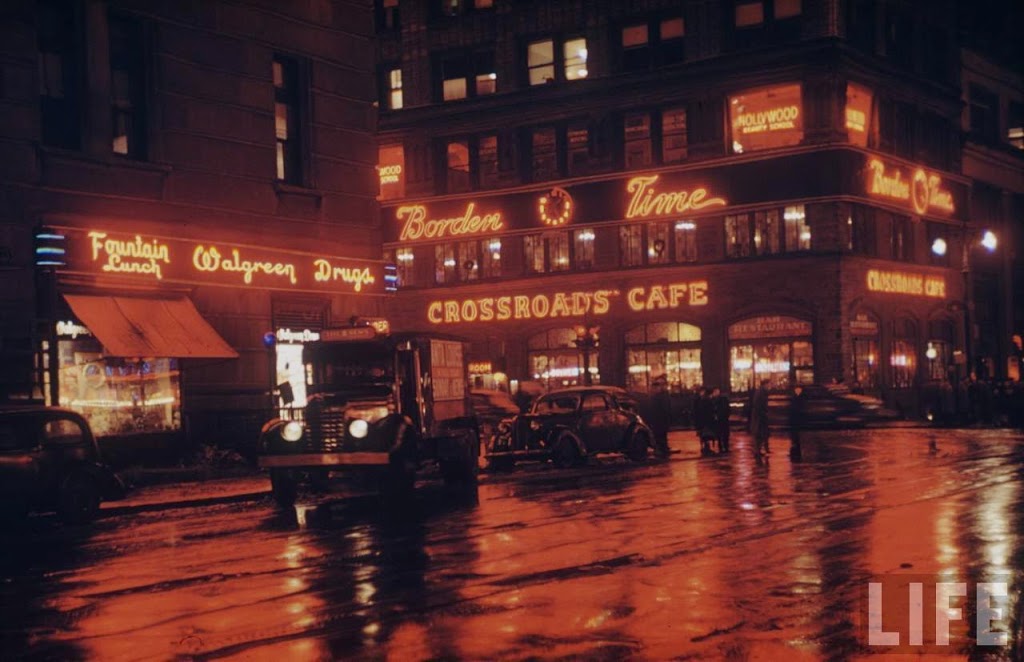
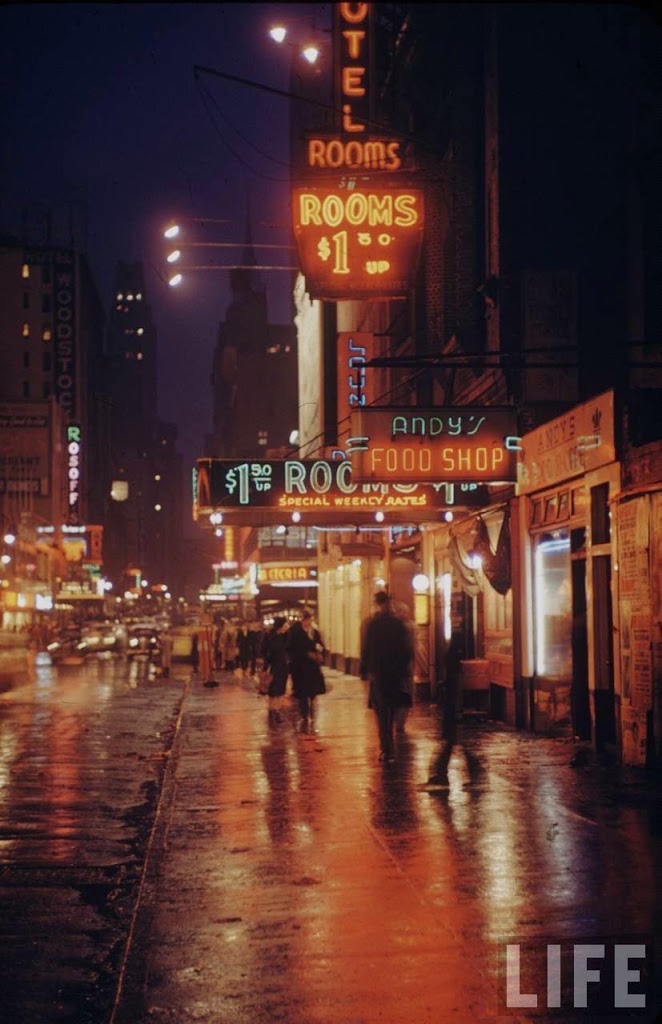
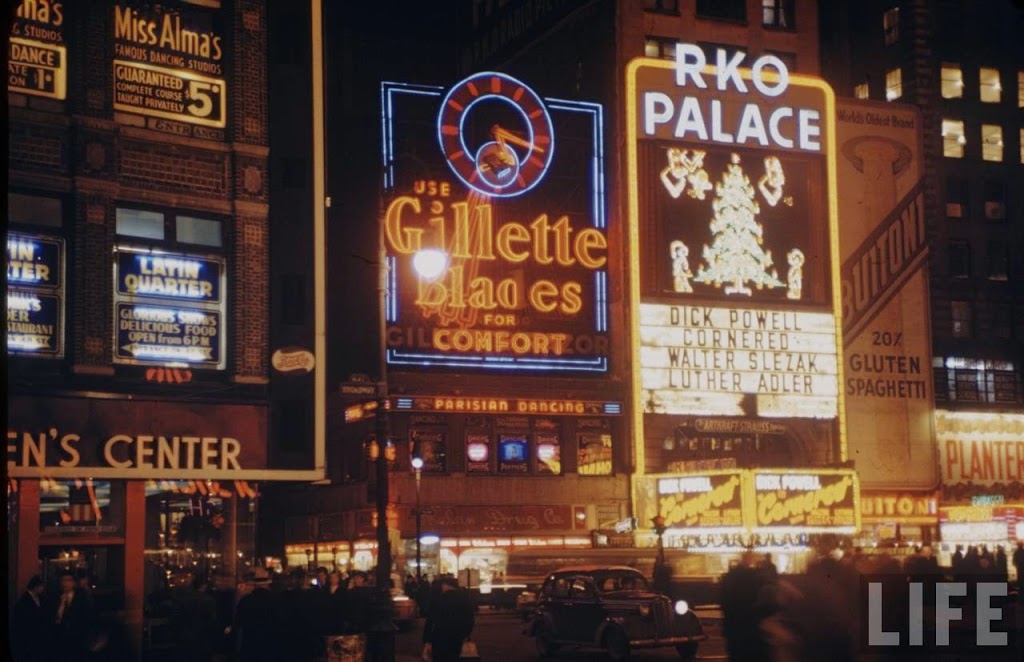
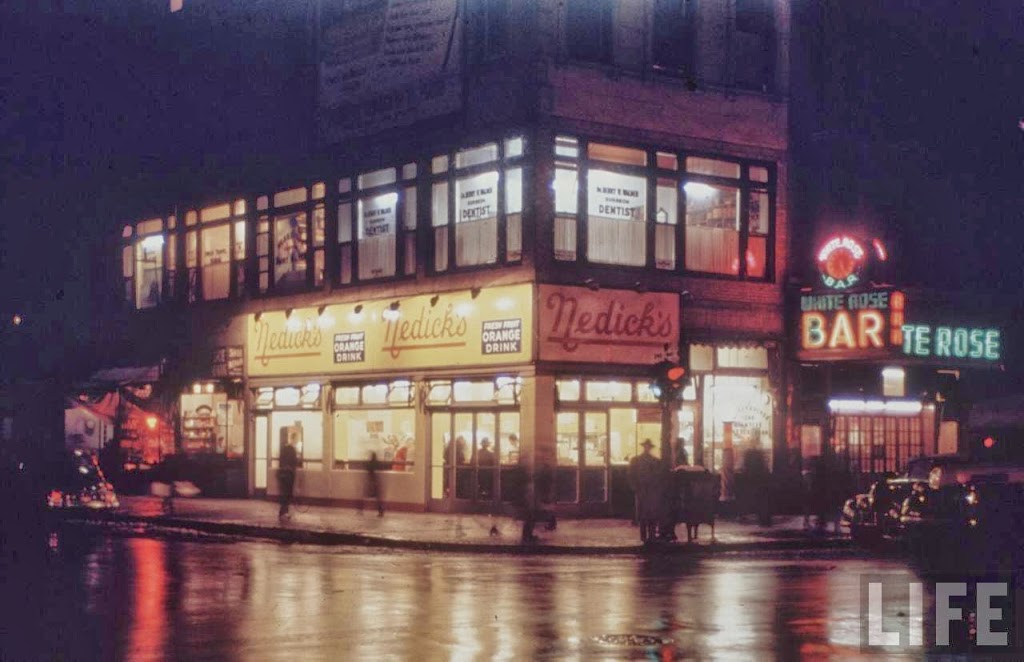
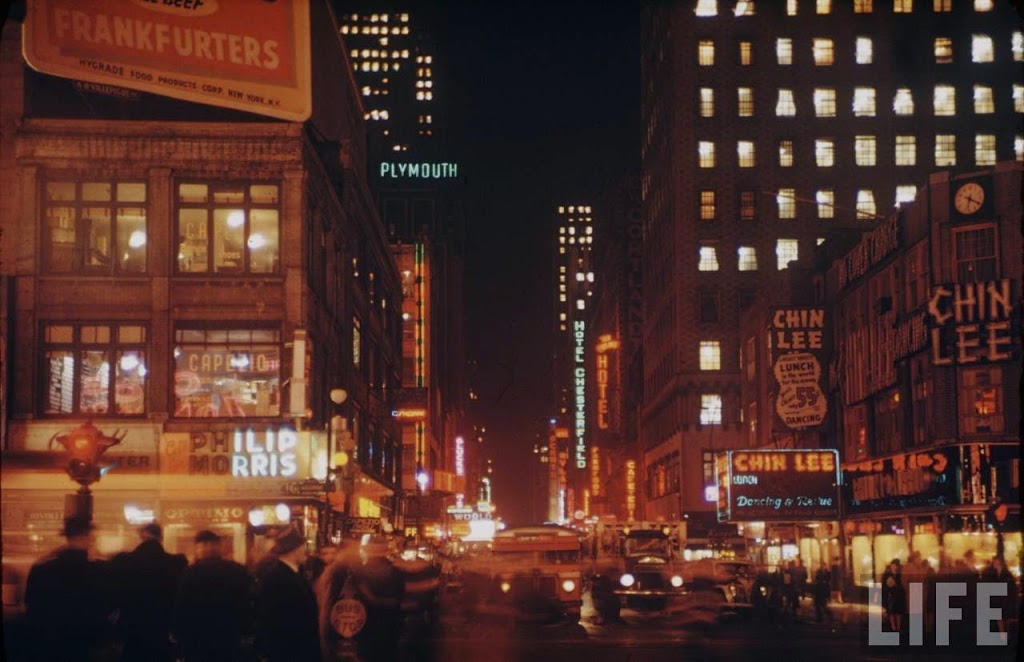
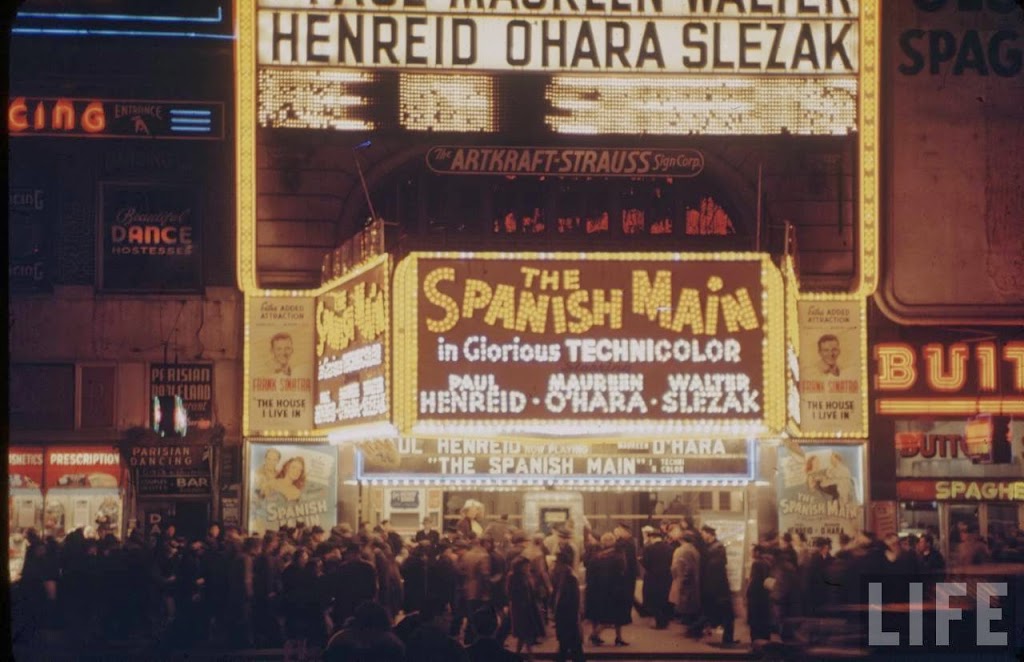
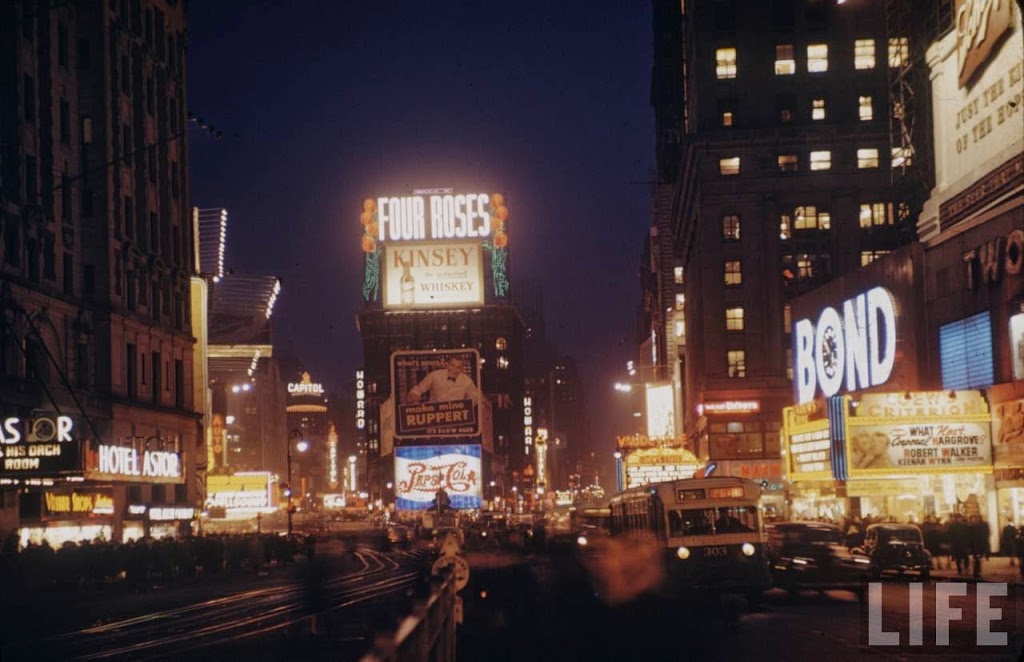
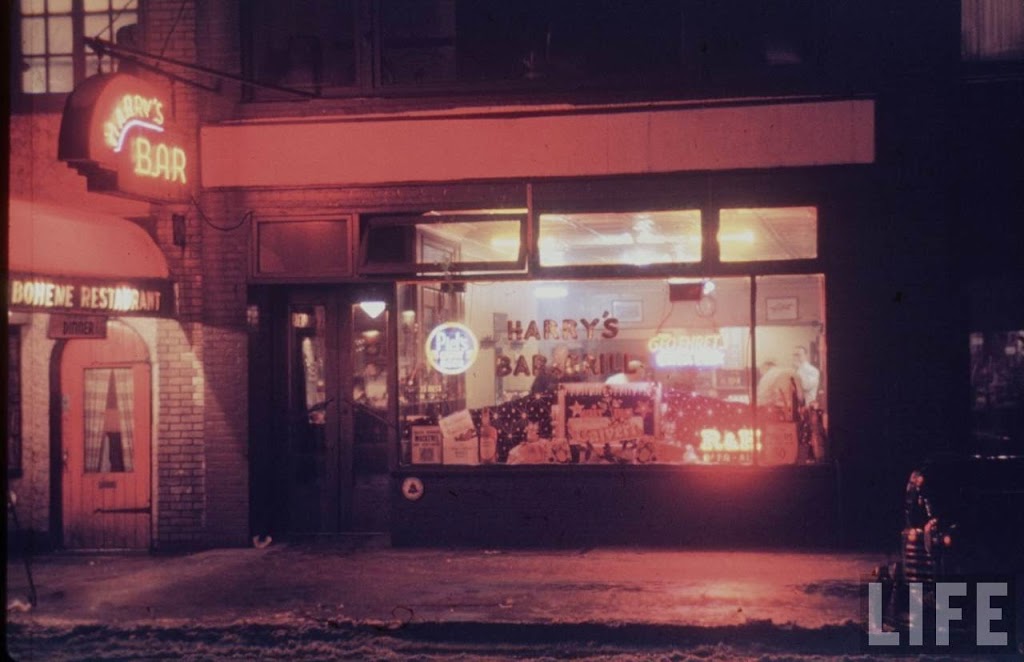
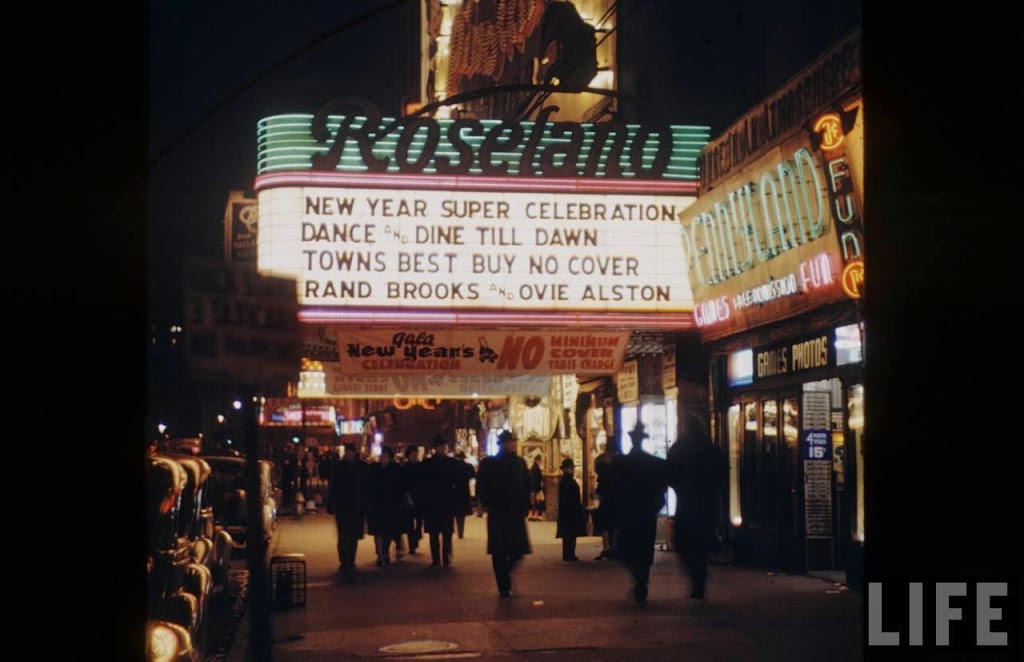
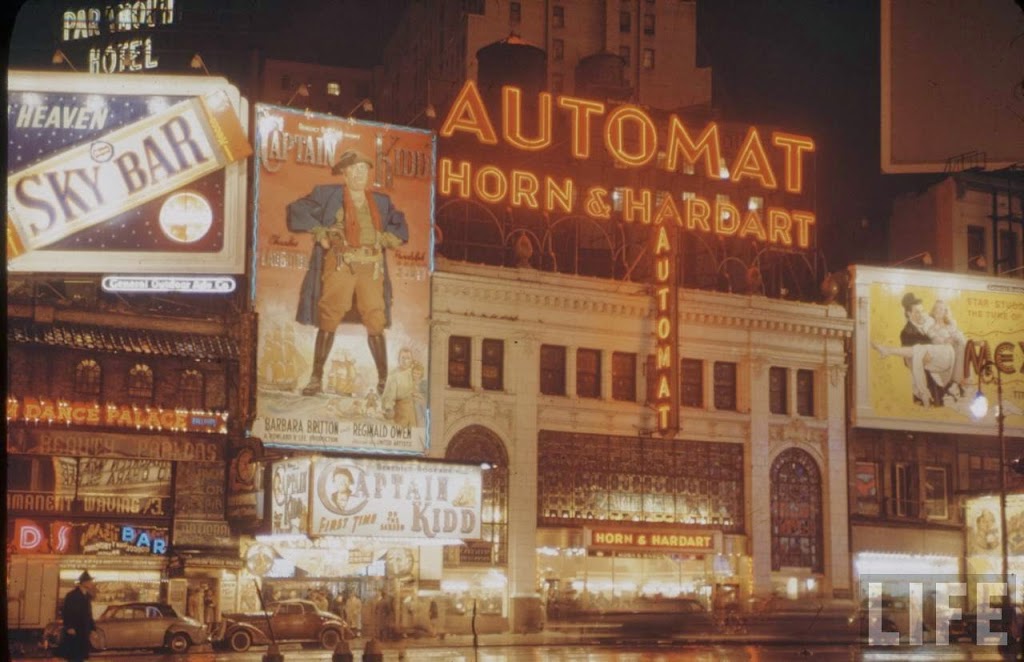
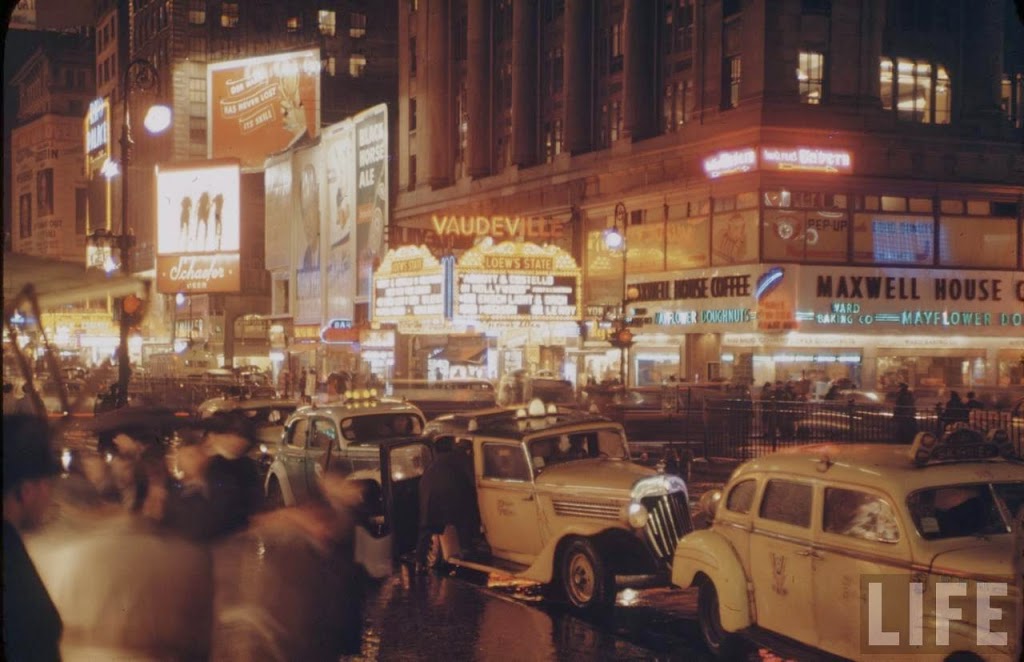
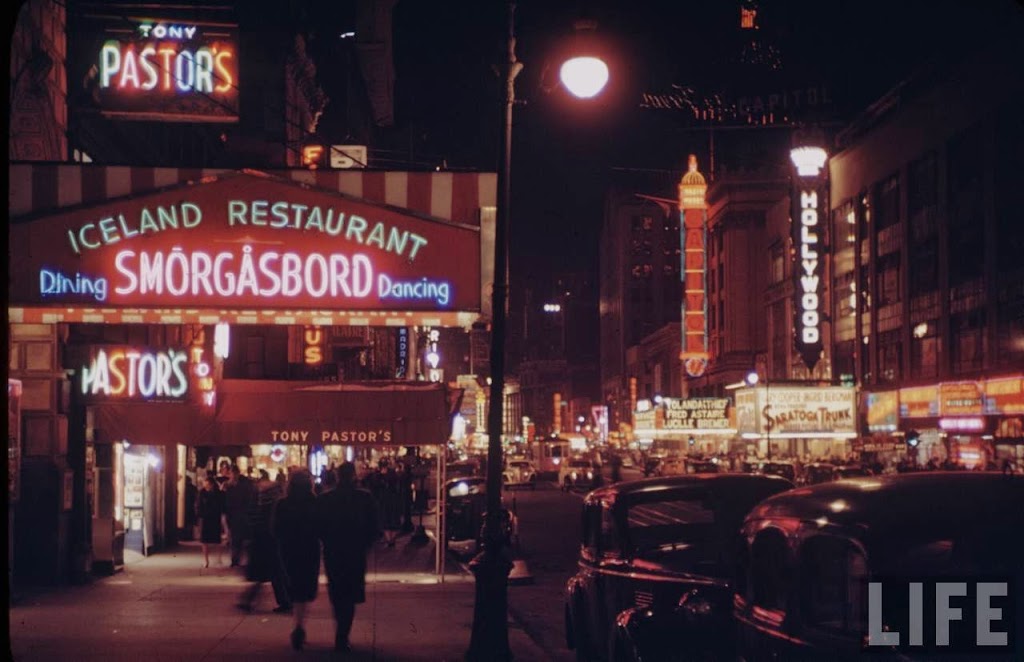
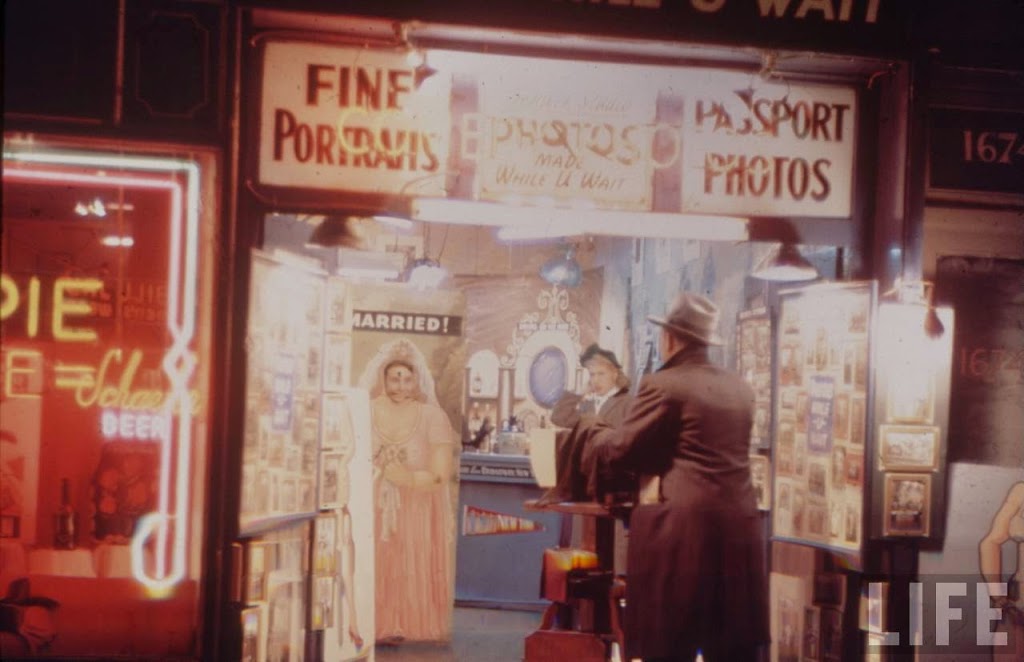
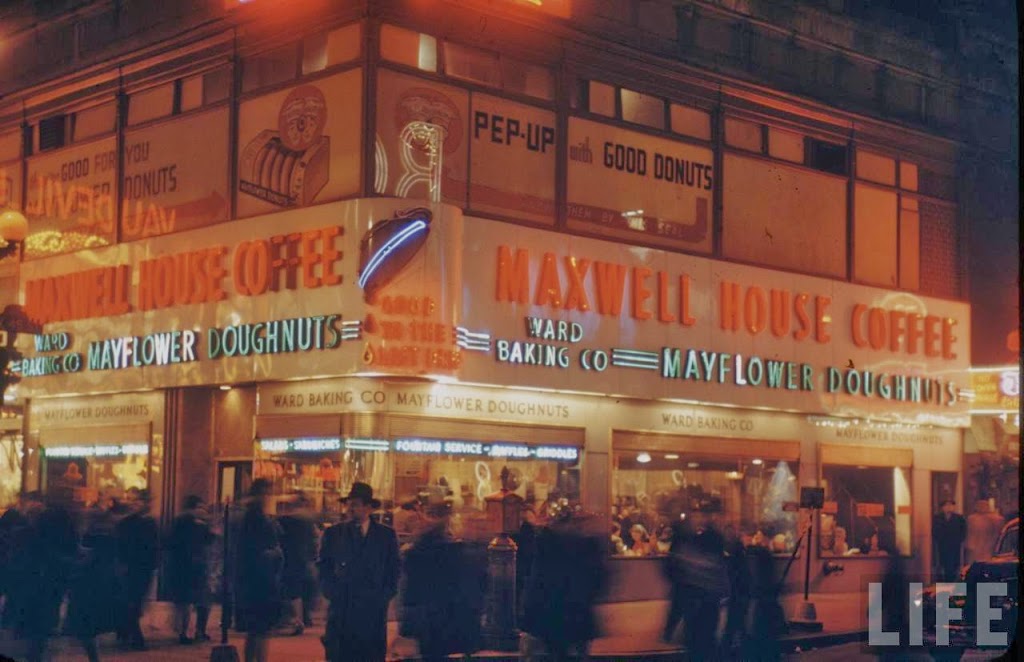
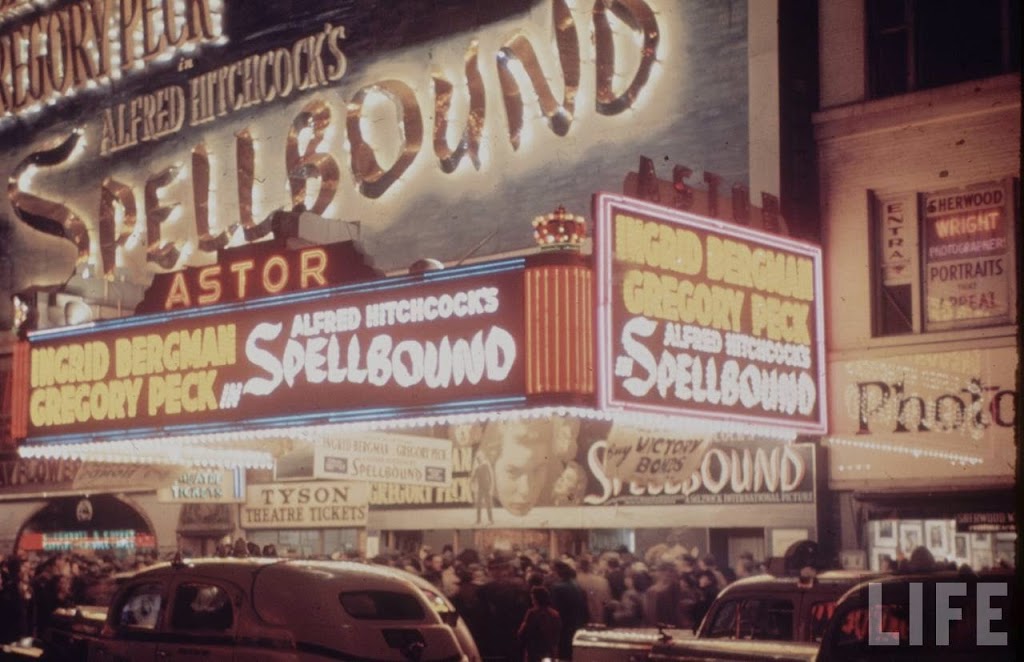
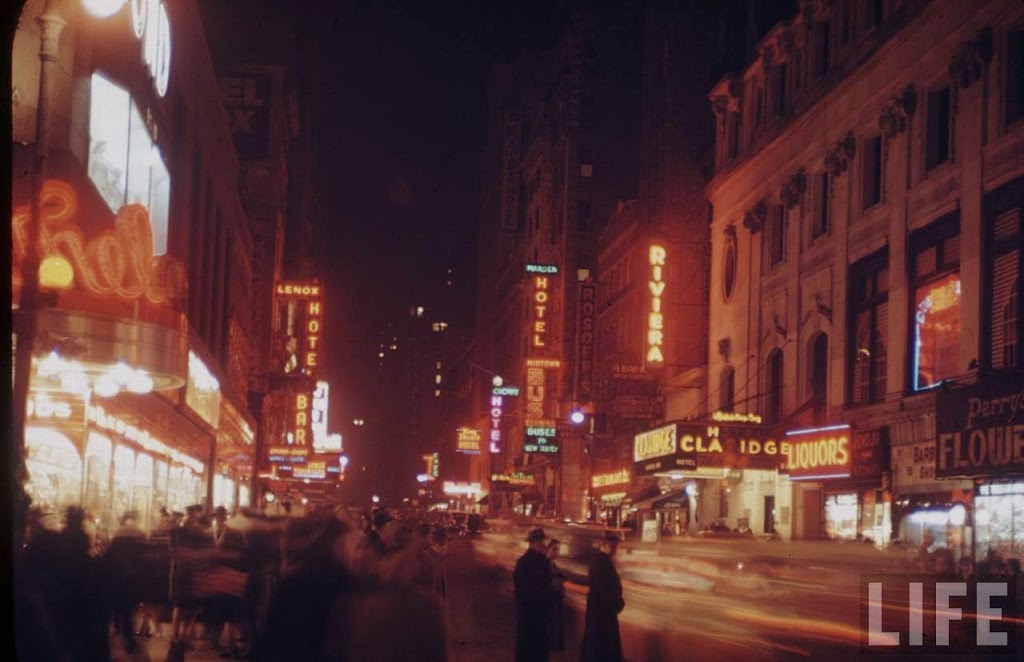
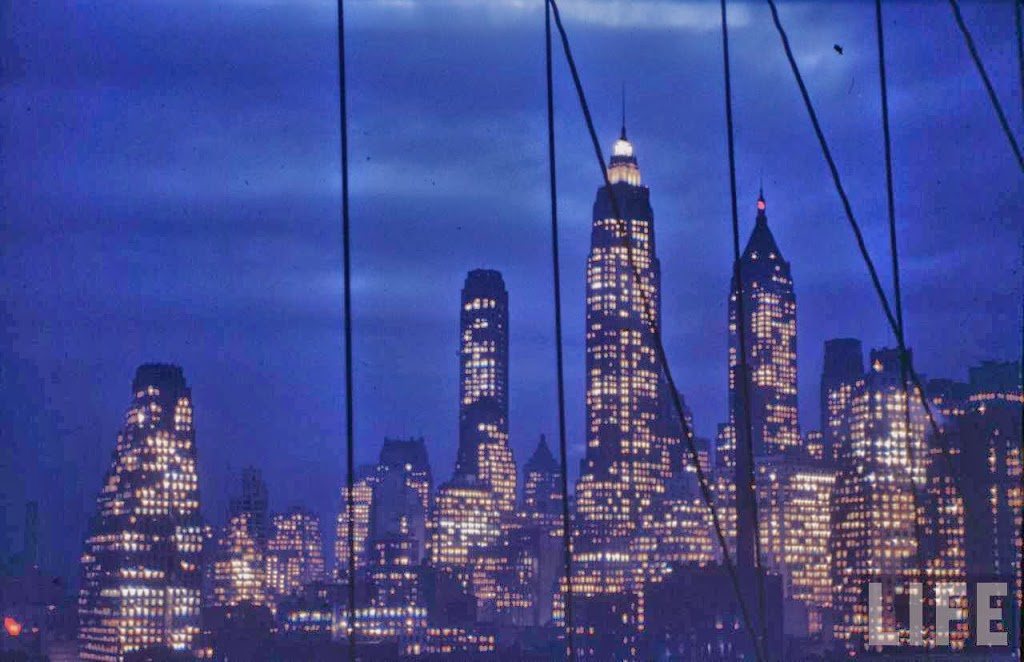
The Neon Beautiful: Images of New York at Night 1946

“In New York the first lights start to come on at night long before the last light has gone out of the sky.” 

 In 1939, a young Paris-born photographer named Andreas Feininger moved from his home in Germany to the United States. He took a job at Life Magazine in 1943, a few years after the publication’s retooling by publisher Henry Luce into a showcase for photojournalism.

Feininger would become one of America’s great photographers of the 20th century. He didn’t document places. He transformed them. In the era before frequent photo manipulation, Feininger could make the ordinary mythical. He could photograph a building and make it look like a rocket ship.  His vision was painterly, finding the iconic within the simple. And when he photographed extraordinary things — like his favorite subject, New York City — the result was often transcendent.

On August 5, 1946, Life ran a photo essay by Feininger called “New York At Night.”  It’s extraordinary for several reasons.  Most Life photography up until this time — in fact, most Feininger’s finest work —  was in black-and-white.

In fact that issue is all black-and-white — except the advertisements and “New York at Night.”

Just a few years before, New York was a darkened city at night due to wartime precautions.  But in the summer of 1946, the city was again abuzz.  Color photography itself had seen startling innovations but it was still a dazzling rarity then.

A revitalized New York City rendered in color prints by one of Life’s brightest talents?  It was the closest a print publication could come to conjuring magic.

Here’s several images from “New York at Night,” courtesy Life Magazine.  You can view the entire issue here for some context. (It’s worth a read, especially the article on a kids radio station!)

You can click into each image for greater detail.  And see if you can identify where in Midtown each of these photographs were taken!

And some music to put you in the mood, a song that was near the top of the charts in the summer of 1946:

Categories
Neighborhoods

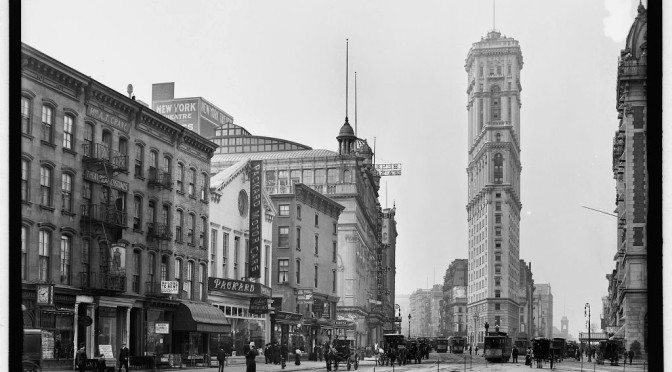
The naming of Times Square — 110 years ago today!

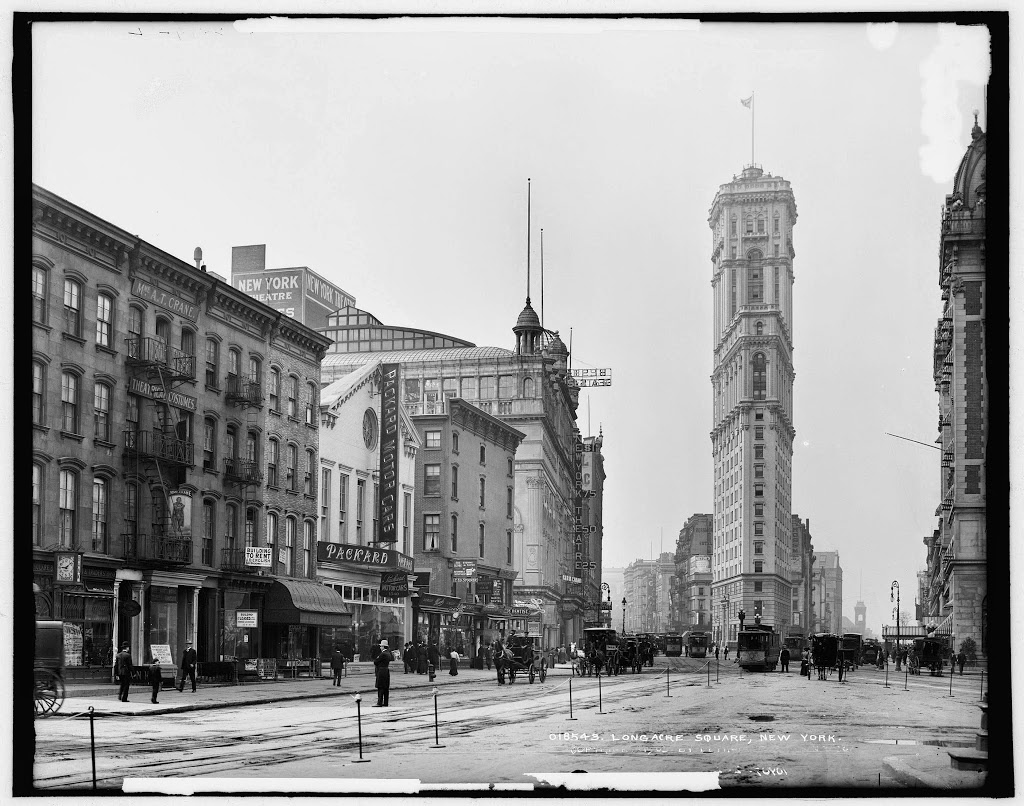
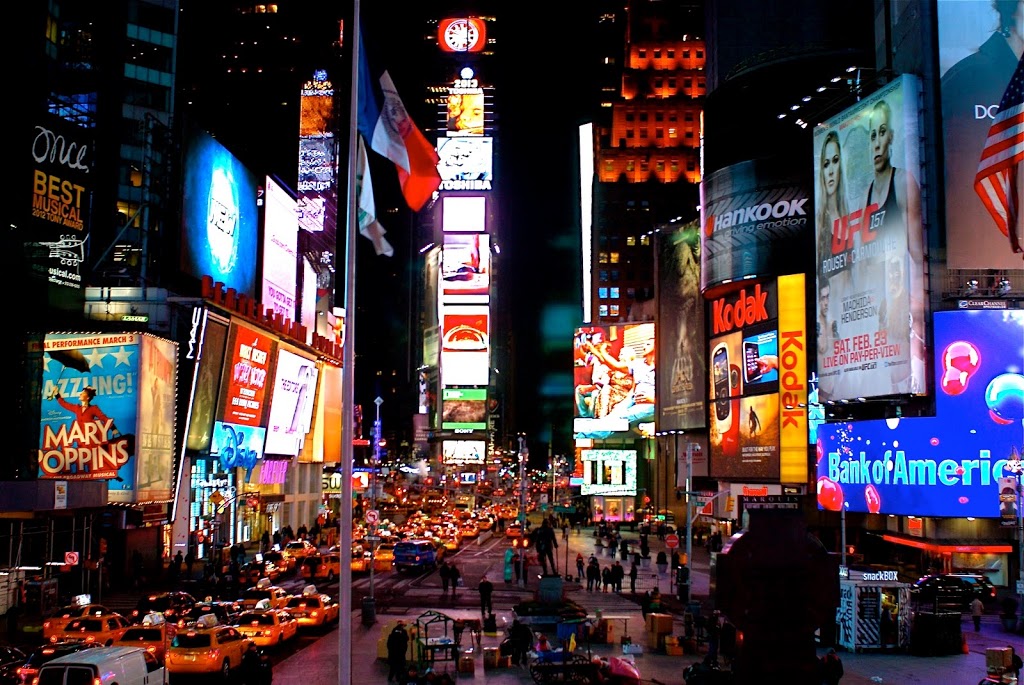
Looking south towards the Times Building, 1904 and 2013: Top pic courtesy Library of Congress; Bottom pic courtesy nyclovesnyc

From the New York Times, April 9, 1904:

Mayor [George B.] McClellan yesterday signed the resolution adopted by the Board of Aldermen on Tuesday last changing the name of Long Acre Square to that of Times Square.  This follows out the recommendation of the Rapid Transit Commission and of the Interborough Rapid Transit Company, which is to operate the subway, and it is intended by the Rapid Transit Commission at its next meeting to call the subway station at Broadway and Forty-Second Street Times station.

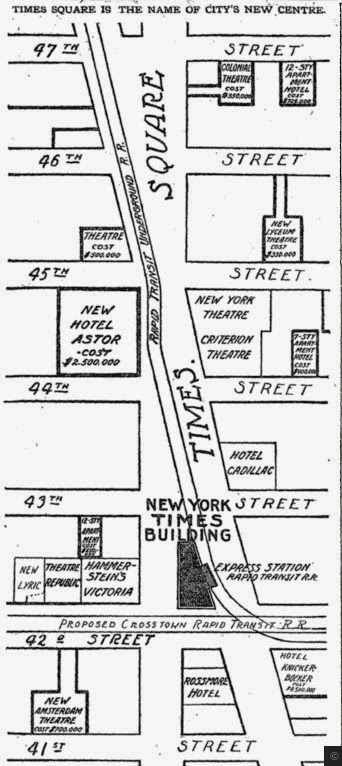
The resolution with Mayor McClellan has signed becomes operative at once, and authorizes the President of the Borough of Manhattan to take such steps in the matter as may be proper and necessary.  This includes the alteration of street signs.  Times Square takes in the triangle on which the new building of The New York Times is situated, and the name applies to the entire section between Forty-Second and Forty-Seventh Streets, Broadway and Seventh Avenue.”

You can check this entire 1904 issue of the New York Times on their snazzy, endlessly fascinating new TimesMachine, which gives you access to their entire array of back issues.

Below: The illustration of Times Square which ran in the April 9th issue:

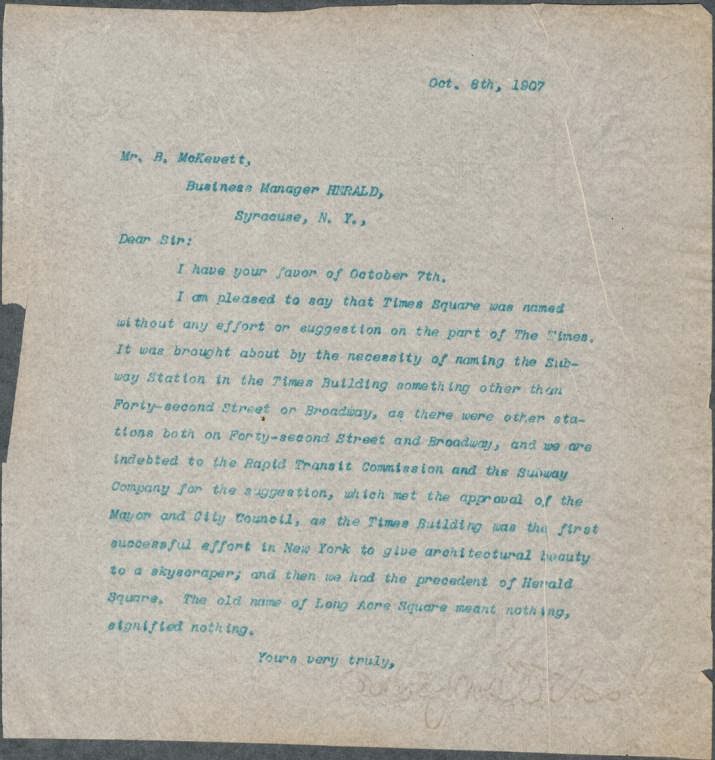
Below: A letter written by publisher Adolph Ochs to the New York Herald (Courtesy New York Public Library)

“I am pleased to say that Times Square was named without any effort or suggestion on the part of the Times.  It was brought about by the necessity of naming the Subway Station in the Times building something other than Forty-second Street or Broadway, as there were other stations both on Forty-second Street and Broadway…….”

“The old name of Long Acre Square meant nothing, signified nothing.”

Newspaper content courtesy the New York Times

Categories
Amusements and Thrills

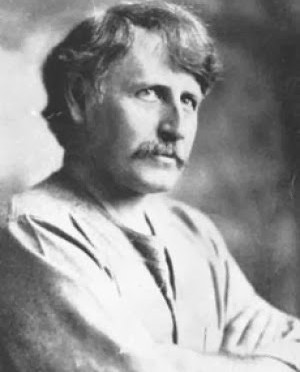
Charles Kellogg, the man who put out fires with his voice

New York has seen its share of bizarre entertainments, especially back in the days of vaudeville, when people would pay for almost anything that amused or titillated.  A few months ago, I wrote about the novelty star Don the Talking Dog, who allegedly spoke a handful of English and German words.

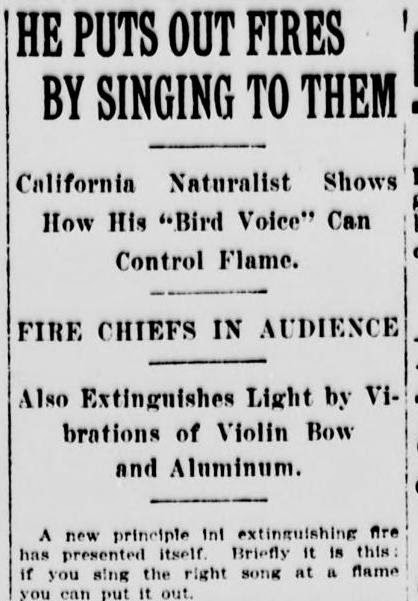
But another vocally talented star was the hot vaudeville ticket one hundred years ago — Charles Kellogg, the man who could extinguish fire with his singing voice.

Kellogg was an early environmentalist and promoter of California’s redwood forests.  He billed him as ‘California’s Nature Singer,’ known for his sterling emulation of bird song,  recording his aviary music for Victor. “He was born with the throat of a bird,” said the New York Times.  Imagine cranking up this record on your Victrola, his ‘duet’ with Romanian soprano Alma Gluck:

Kellogg voice was allegedly superhuman.  It could not only emulate the sounds of nature, but it could protect nature from devastating flame.

He performed this particular trick in New York on November 11, 1913, at the brand-new Palace Theater (Broadway/47th Street), performing for an audience which included various New York fire chiefs, several scientists, and an auditorium full of curiosity seekers.  Also on hand: William Temple Hornaday of the Bronx Zoo, his reputation recently sullied over the whole Ota Benga scandal.

During the demonstration, Kellogg proved he could affect the flickering flame on the other side of the stage by first aiming his ‘bird song’ at it, then by drawing a bow across a sheet of metal.  “He stood fifty feet away from the flame and drawing the bow across the metal and singing his bird song the flame acted the same way, finally going out.”

Kellogg continued his display of natural gifts by demonstrating a divining rod for finding water, then by dropping to the floor and “demonstrated the Indian way of making fire by friction with two pieces of redwood.”

Captivating, I’m sure, but not enough to convince New York’s fire chiefs.  “It has not yet reached a point where Fire Commissioner Johnson will put male quartets in the fire house ready to dash to a fire and render a popular ballad.” [source]

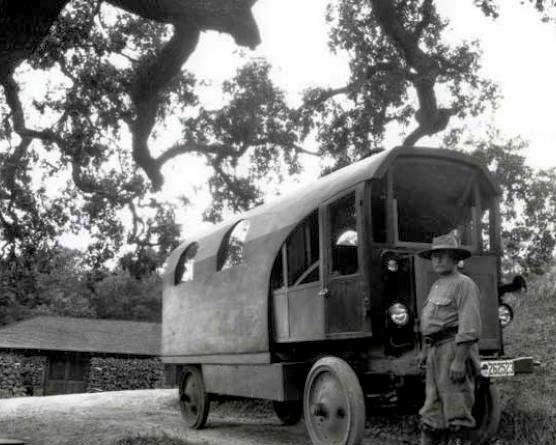
Kellogg returned to New York in 1917 with another redwood-inspired creation — his ‘redwood motor home’, called the Travel Log (pictured below), which he and his wife took cross-country.  The idea of a ‘mobile home’ was a true novelty for the day.  Kellogg’s Travel Log was briefly displayed at a motor car salesroom on Broadway and 57th Street to the delight of auto enthusiasts.

Picture courtesy NPR

By the way, Mythbusters recently took up Kellogg’s challenge as to whether the human voice could put out a fire.  The verdict — yes, it can, but not at any decibel Kellogg could have possibly been singing in. More information here.

Categories
Amusements and Thrills

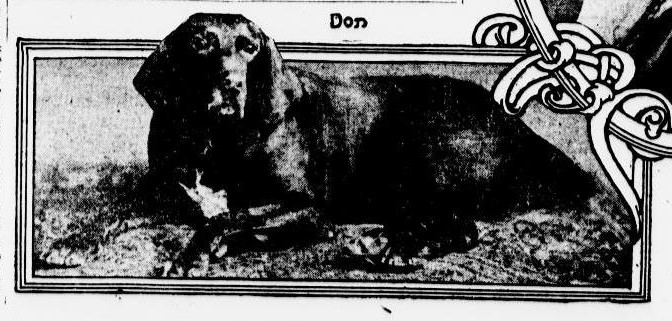
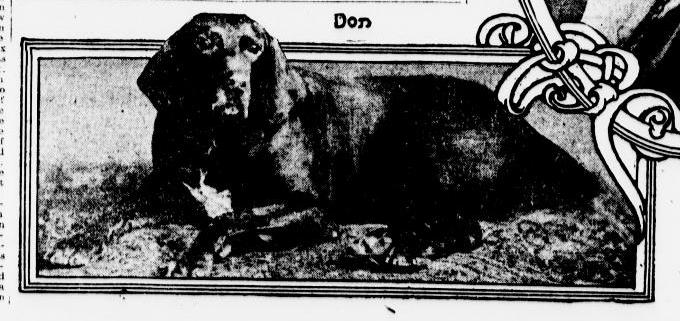
Don the Talking Dog, German vaudeville sensation, saves a drowning man in Brighton Beach

There once was a talking dog named Don.

One hundred years ago today, he saved a man from drowning in Brighton Beach.  Don shouted or barked the word ‘Help!’ then ran to the waters to save him.

But perhaps I should explain.

In December 1910, the New York Times ran a startling announcement that a dog in Germany had been discovered that could pronounce certain human words.  The setter from Theerhutte was owned by an eastern German gamekeeper and possessed several human qualities, not the least of which was the name Don.  The dog had beautiful eyes “sometimes almost human in their expression” and was an “uncommonly intelligent animal,” according to the Times.

Naturally, Don spoke only in German.  Being a dog, among the six words at his command were ‘haben’ (want), ‘kuchen’ (cakes) and ‘hunger’.  You had to use your imagination, of course, but one could detect a slight difference in Don’s barks that could be interpreted as separate words.

Despite some understandable cynics out there, Don was on his way to a career in the theater.

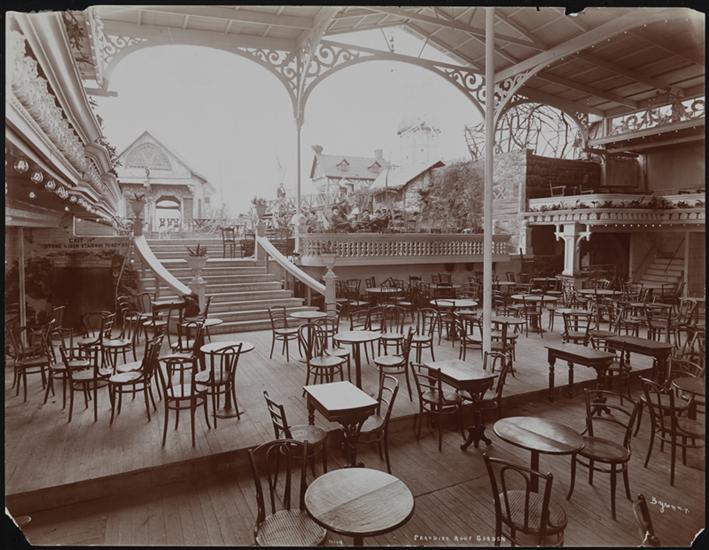
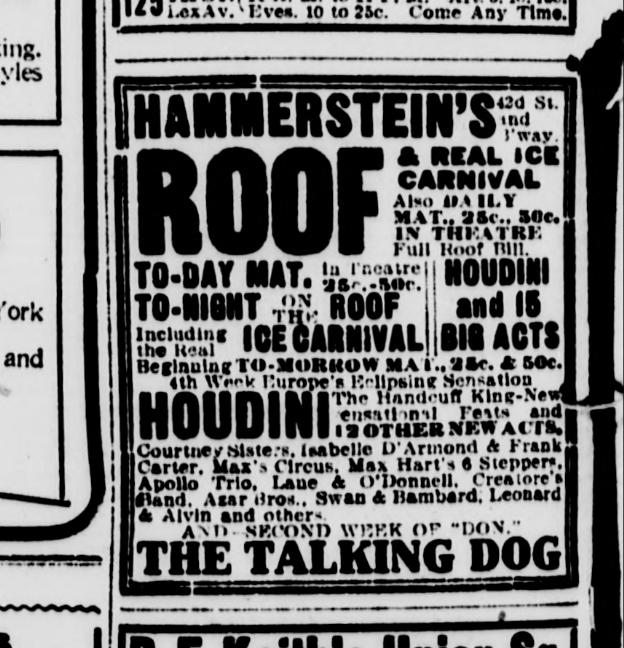
Above: Hammerstein’s rooftop garden at the Victoria Theatre in Times Square, the stage where Don the Talking Dog made his debut.

Generally speaking, dogs were a definite novelty among the stars of the vaudeville stage. A troupe of animals called Wormwood’s Dogs and Monkeys held court on the stages of Coney Island in the 1910s.  More renowned, perhaps, was the cross-dressing pooch Uno the Mind Reading Dog , who wowed theater crowds in 1910.

But the highest paid dog act up to that time was Dan the Drunken Dog, an animal who emulated the wobbling demeanor of an alcoholic, to the delight of audiences at the Oscar Hammerstein‘s Victoria Theater rooftop garden in Times Square.

None of these would reach the fame of Don the Talking Dog.  Hammerstein was so sure New Yorkers would love him that he posted a $50,000 bond to have Don brought to the United States.  The dog arrived in America on July 9, 1912 aboard the German steamship Prinz Friedrich Wilhelm, “absolutely refus[ing] to be interviewed at the pier, and indeed, had been too seasick on the way over to converse with anybody.” [source]

At right: On the bill with Harry Houdini, from the New York Sun, July 21, 1912

A few weeks later, the German canine would make his debut on Hammerstein’s rooftop garden, alongside master of ceremonies Loney Haskell.  “The trained growls which emanate from his throat can readily be mistaken for words,” claimed a Variety reviewer.  “On the roof the audience, skeptical in the first place, became more so at Loney’s [introduction], but after the dog had made its first try they became interested and later enthusiastic.”

His salary was allegedly $1,000 a week, paid, of course, to his owner Martha Haberland.  Like many temperamental divas, Don disliked the roof garden lifestyle due to the sounds of traffic, preferring to perform inside theaters, not atop them. But he was huge success that year, touring to other Hammerstein stages before returning to Germany that fall, a bonafide American star.

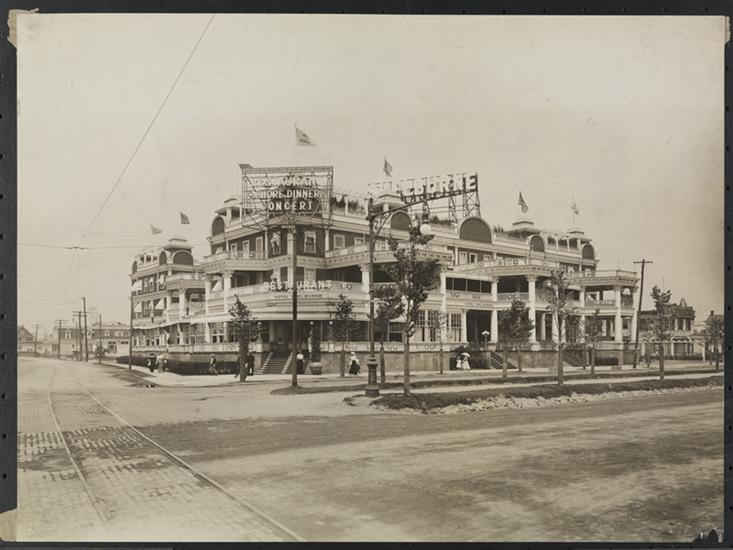
Above: The Hotel Shelburne in Brighton Beach, where Don the Talking Dog saved a man from drowning

Don returned to Hammerstein’s Times Square stage in 1913, this time performing alongside the likes of young comedian Sophie Tucker.  Later that summer he arrived in Brighton Beach to delight Brooklyn audiences.  It was here, on one of his afternoons off, that he rescued a drowning man with his famed ubiquitous voice.

The man was a waiter for the Hotel Shelburne who was actually out walking Don that afternoon.  The man jumped in the water for a swim and instantly lost his footing.  Don saw the man flailing in desperation in the ocean foam and, then, according to the New York Sun, allegedly unfurled one of his new words — “Help!” — startling everyone on the beach.*  The performer then swam over to the drowning man and began pulling on his bathing suit.

A passing policeman leaped into the water on his horse to rescue Don and the waiter.  This whole scene — dog, horse, waiter, policeman — was in turn rescued by three lifeguards in a boat. [source]

This was perhaps Don’s shining moment. He shortly retired from the stage and finally died in 1915 back in Germany.  His final words, according the Evening World:  “Say goodbye to my old pal Loney Haskell.”

*The Tribune reports the same event but does not mention this magical ‘Help!’

Top pic courtesy New York Evening World. Bottom two images courtesy Museum of the City of New York.

Categories
Neighborhoods Preservation

The neon bible: A chat with ‘New York Neon’ author Thomas E. Rinaldi about the city’s most stylish signs


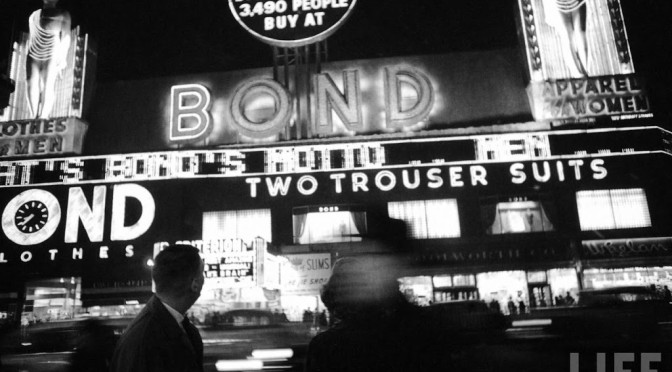
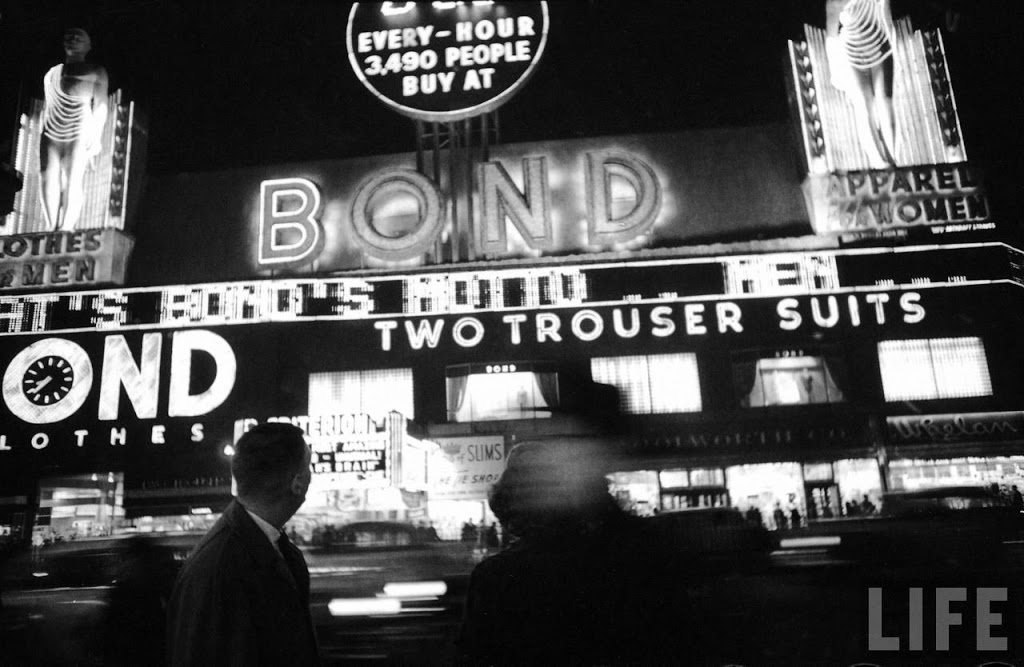
Bond Clothing Store sign was a mainstay of Times Square in the 1940s and 50s. For more on Bond’s unusual transition after that, read my article from 2007 on Bond International Casino. Picture courtesy Life Magazine, Lisa Larsen photographer

New York Neon is the Bowery Boys Book of the Month for July, a superb review of the history of neon signs in New York City and a delectable catalog of some of the finest neon works still in the city today.  My full review is here.

The author Thomas E. Rinaldi also runs a great website on the subject.  I asked him a few questions about the current state of New York’s most classic form of signage:

Why does the glow of a neon sign continue to endure and fascinate people over other architectural forms from the same period of the early-mid 20th century? 

Thomas Rinaldi: I think a large part of the appeal of old signs is their rarity.  The odds of any commercial sign lasting more than a few years are incredibly slim; for this reason, old signs really stand out, in a way that turns out to be of widespread appeal.  This is especially true in NYC today, where old signs have added appeal by way of their association with old, independent businesses that have become almost an endangered species in the city of late.

How does New York’s representatives in neon compare to those in other neon-friendly cities like Las Vegas or Los Angeles? 

TR: The old neon signs one finds around New York today are actually very modest compared to those of Vegas or LA, or the kind of “roadside Americana” signs one associates with Route 66.   I find this interesting in and of itself.  Sure, New York had its extravagant signs in places like Times Square.  But most of the neon that went up in New York was relatively humble, for a variety of reasons.

First of all, there are the obvious space constraints of any urban storefront.  While some pretty imaginative storefront signs appeared before WWII, the signs became increasingly spare after the War, partly because of restrictive zoning, partly because of labor costs (most of the New York sign shops were union), and – my belief – partly because of the general postwar trend away from urban centers and toward suburban development and roadside culture.

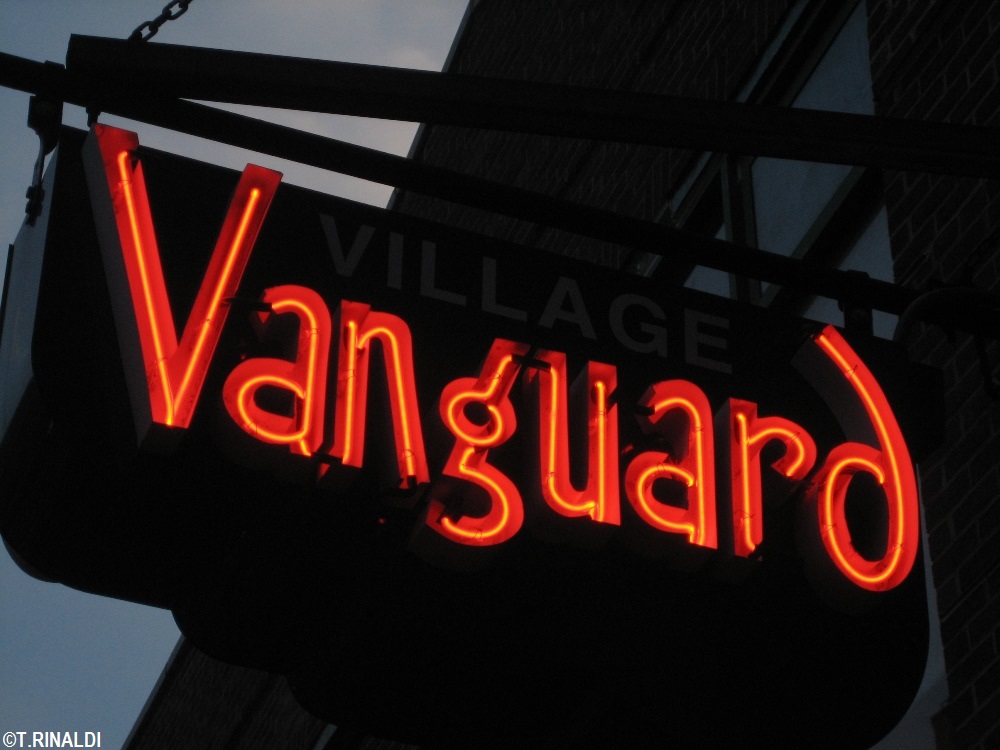
Below: The neon sign at the Village Vanguard in Greenwich Village, a facsimile of one that originally appeared here in the 1940s.

Neon lends its appeal to a certain nostalgic image of New York. Are there any uses in classic print, TV or film that stand out to you as particularly striking?

TR: I found that the classic, iconic image of New York neon noir is spread out in little scattered fragments.  There are a handful of classic noir films set in New York in which you’ll see neon in the backdrop – films like I Wake Up Screaming and Where The Sidewalk Ends.  But some of the best cinematic depictions of New York’s neon heyday aren’t noir films at all:  Pillow Talk, for instance, is a goofy comedy, or The Sweet Smell of Success, which is probably the single best go-to for shots of midcentury, neon-festooned New York.

Neon storefront signs were so incredibly ubiquitous in cities like New York that they crop up just about everywhere – in noir films, yes, but not just those set in New York. I would suggest that the popular association of neon with the nocturnal cityscape is not something born unto any one city, medium or genre, but a composite of scattered fragments that add up to a collective ideal.

Below: The trailer to Murder My Sweet, a wild, smoky film noir starring Dick Powell that effectively uses neon to help set the mood. 


It seems the most difficult task you laid out for yourself in ‘New York Neon’ is tracking down the stories of dozens of still-extant individual signs. What’s the secret to many of these classic signs surviving for so long?

TR: To a large extent, it’s luck of the draw. But also, I found that old signs tended to be more densely collected in certain kinds of neighborhoods, like the Upper West Side or Greenwich Village. Places that could still sustain little family-owned businesses, even through the period of New York’s financial crisis. Places not too rich but not too destitute either. Now, however, they’ve become scarce even in those neighborhoods.

What’s your personal favorite New York neon sign, both of those presently existing and those from the past?

TR: Depends on what day you ask me!  Ones that usually come to mind, though, are Nathan’s Famous and the Wonder Wheel out in Coney, the Dublin House on West 79th Street, Radio City Music Hall and Patsy’s Restaurant in Midtown.

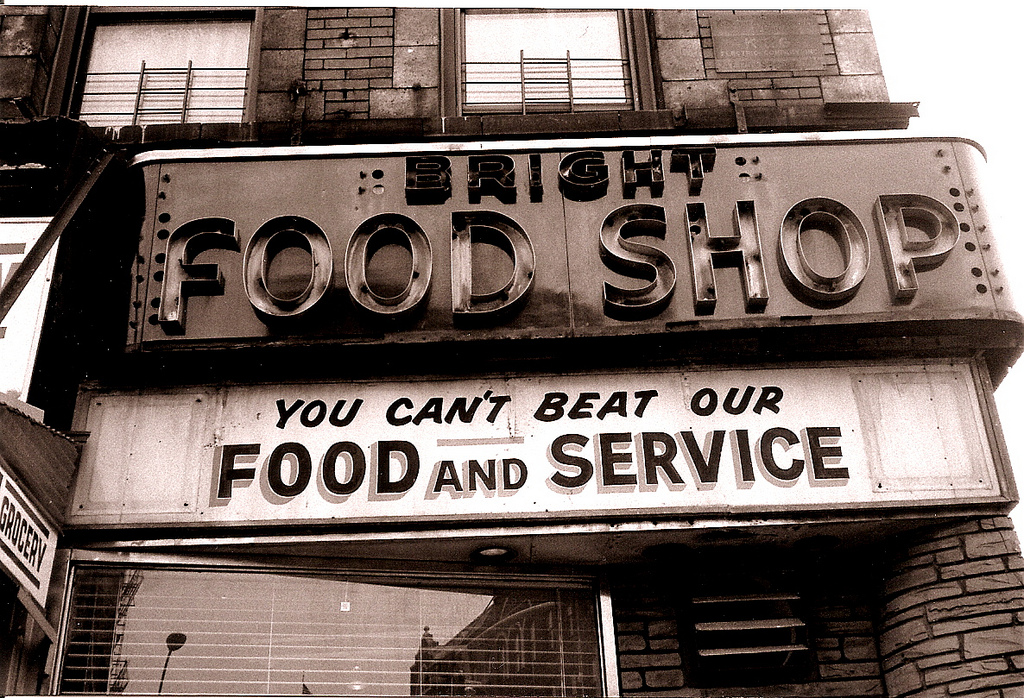
The P&G Bar sign, formerly on the Upper West Sign, is my favorite of the signs that have disappeared in recent years. I also really miss the Bright Food Shop‘s sign in Chelsea.

 There were some great relics that disappeared just a little before my time – places like the Terminal Bar, across from the Port Authority Bus Terminal, or the Penn Bar & Grill, by Penn Station, that I wish I’d photographed. And then there are those that vanished long, long ago – a funny place called the “Barrel Of Fun” nightclub in the West 50s comes to mind, but really, of the thousands and thousands of neon signs that have come and gone from Manhattan alone, the list could go on almost forever.

Below: The old Bright Food Shop sign on Eighth Avenue (Photo courtesy verplanck/Flickr)

Having devoted so much time to the classic beauty of neon, does it make you a little nauseous to even look at LED sign by this point?

TR: Actually, it’s sort of the opposite.  Maybe it’s just wishful thinking, but I find that LEDs have facilitated some fairly decent, interesting new signs, sort of like the early days of neon all over again – much more creative stuff than the boring, fluorescent-and-vinyl signs that have been the norm for the last few decades. 

Still, LEDs have a tremendously long way to go before they could give us illuminated signage that holds a candle to typical neon storefront signs of the 1930s or 1950s, in terms of creativity and craft.  Whereas neon signs were designed to be repaired rather than replaced, LEDs are essentially disposable, and it’s heartbreaking that they’ve taken such a huge toll on the neon industry around the world.

The flip side is that LEDs are an incredibly versatile artificial light source, so – maybe there’s hope for better signs down the road.  But neon is still so unique that I expect it will always have a niche, even though we’ll likely be seeing less and less of it in the years to come.

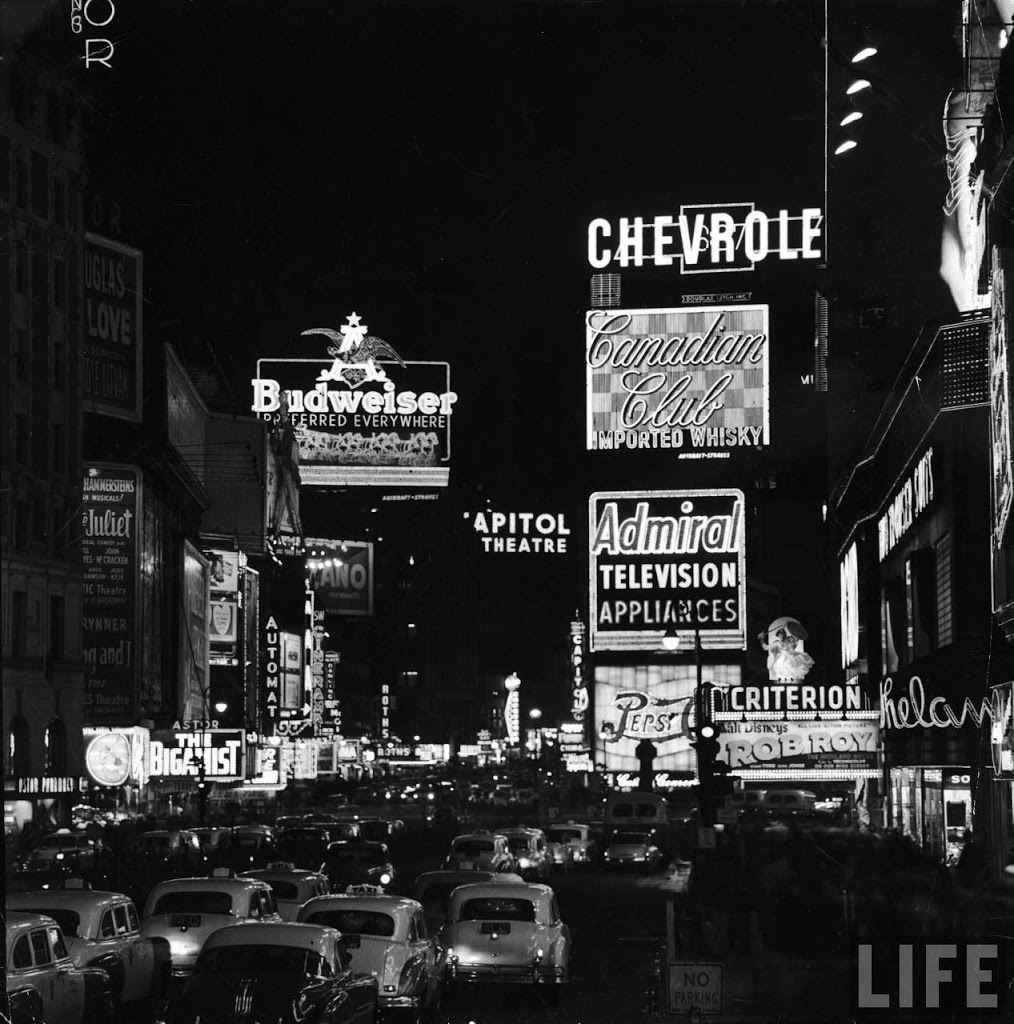
Below: Times Square 1954, photo by Andreas Feinginger (Courtesy Life)

You can hear Rinaldi discuss all things neon at his upcoming talk on Monday, July 22, at the New York Public Library’s Mid-Manhattan branch. More information here.

Categories
Pop Culture

The Broadway Melody: New York’s first Oscar victory and an ironic success for the Astor Theatre in Times Square

The second film to ever win the Academy Award for Best Picture was hardly a movie at all.

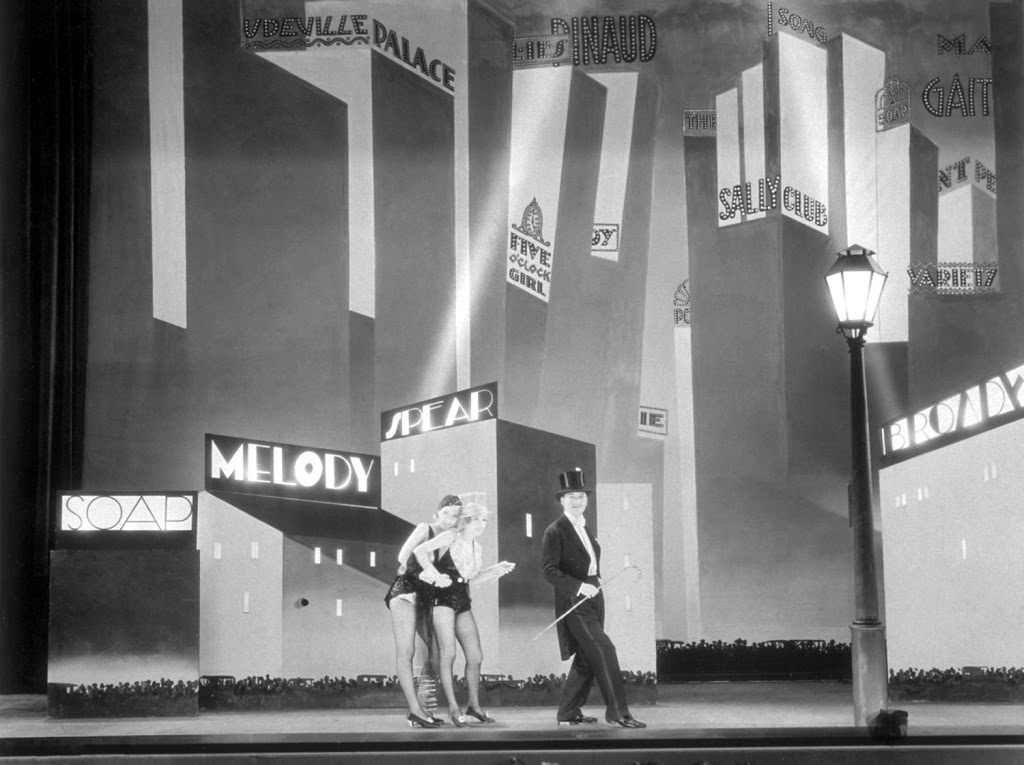
‘The Broadway Melody’, a frothy Hollywood revue about the mounting of an frothy Broadway revue, was a total celebration of every strength and weakness of the early Broadway stage, and a hopeful sign that the New York entertainment world would still wield some influence over its West Coast counterpart.

“Before an enthusiastic throng there was launched last night at the Astor Theatre a talking picture teeming with the vernacular of the bright lights and back-stage argot,” began the New York Times’ original review by Mordaunt Hall, when the movie opened on February 8, 1929.

One of the first-ever movie musicals, ‘Broadway’ was, of course, not filmed on Broadway, but in Hollywood, on an MGM soundstage.  Even when movies were regularly filmed in New York in the early years, they were rarely filmed on an actual Broadway stage.

But the movie’s opening shot is within an office on Tin Pan Alley, that sector of songwriters at 28th Street and Broadway who changed American pop music.  The melody of the film’s title is delivered to Zanfield (a thinly disguised Florenz Ziegfeld) who uses it as a vehicle to make stars out of a couple freshfaced sisters.

The puffy love triangle at the heart of ‘The Broadway Melody’ is merely an excuse to launch various musical numbers in the vaudeville-variety style.  The movie was produced at astonishing speeds; filming began in October 1928 and was ready for its two-city premiere (Grauman’s Chinese Theater in Los Angeles, the Astor Theatre in New York) by early February.

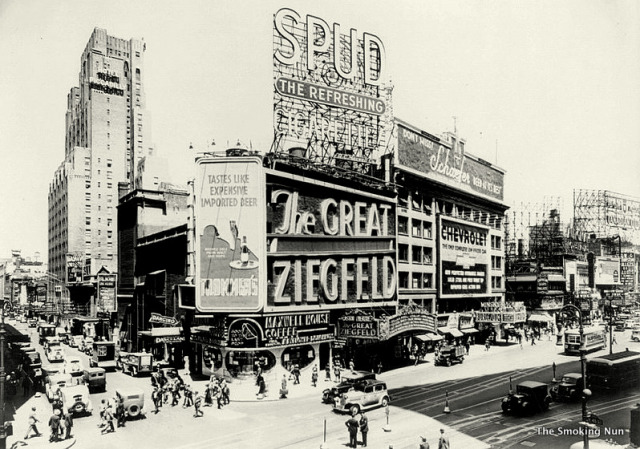
The Astor Theatre, in Times Square at Broadway and 45th Street, played host to ‘The Broadway Melody’ for an entire year.  Some might have thought that deeply ironic, as the Astor had once been a legitimate stage that permanently switched to motion pictures in 1925.  And with great success it was now exhibiting a motion picture about the legitimate stage.

Below: The Astor Theatre in 1936, exhibiting another Broadway-themed film that would go on to win the Oscar for Best Picture —  The Great Ziegfeld (Courtesy LOC)

It’s been claimed that the film was made by MGM’s Irving Thalberg on a suggestion from the owner of the Capitol Theatre, up the street from the Astor.  If so, its debut here must have been a real slap in the face!

In this tenuous day of movie sound, many were unsure people a film with music would work.  “Although the audible devices worked exceedingly well in most instances,” Hall continued in his review, “it is questionable whether it would not have been wiser to leave some of the voices to the imagination, or, at least to have refrained from having a pretty girl volleying slang at her colleagues.”

Audience members, especially those in the Astor’s $2 reserved seats, were rapturous for it.  “‘Broadway Melody’ has everything a silent picture should have outside of its dialog,” praised Variety in 1929.  A basic story with some sense to it, action, excellent direction, laughs, a tear, a couple of great performances and plenty of sex….It’s perfectly set at the Astor.  And will it get dough around the country. Plenty.”

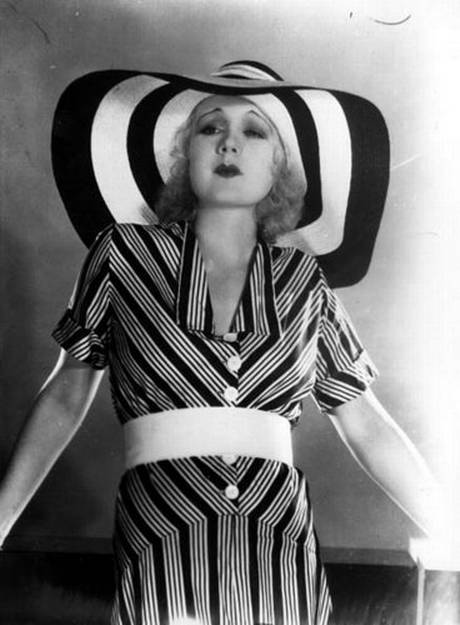
At right: Anita Page, one of the stars of ‘The Broadway Melody’, from Flushing, Queens!

The very first Academy Awards the previous year had rewarded serious fare — and all silent.  The first Best Picture winner, ‘Wings‘, had also been a big box office hit in New York, making its debut in August 1927 at the Criterion Theater, just one block away from the Astor!

But Oscar voters went carefree for their second Best Picture winner. Additionally, ‘The Broadway Melody’ became the first sound picture to be awarded the Best Picture Oscar. And the first of a great many to find inspiration in that great big city on the opposite coast.

It would also introduce a lasting connection between the movies and stage musicals, a connection that still lasts today with the Oscar-nominated ‘Les Miserables’, which had its Broadway debut on March 12, 1987 at the Broadway Theatre (Broadway and 53rd Street).

Times Squared: Lovingly nitpicking ‘The Great Gatsby’ trailer

The recent trailer to Baz Luhrmann’s The Great Gatsby, aka ‘Moulin Rouge in Manhattan’, seems to have left everyone in a state of awe (and horror) in its vivid, hyper-electro-glossy depiction of Prohibition-era New York. And it left many feeling slight panic, even apoplexy, especially considering the entire spectacle will be rendered in 3D when it’s released in December. Oh God. Will flappers kick whimsily towards the camera?

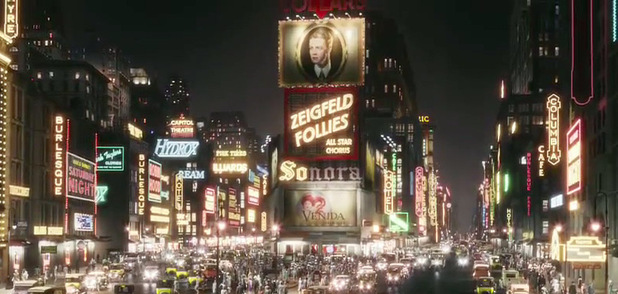
So how accurate was Lurhmann in his glamorous take on Times Square of 1922? How accurate was it supposed to be? Many have already taken note of one glaring and unforgivable error — misspelling the name of Florenz Ziegfeld on the sign for the ‘Ziegfeld Follies’. That ridiculous mistake overshadows a possibly smaller error, that the Follies were actually performed down at the New Amsterdam Theatre on 42nd Street in 1922. However, the Follies from the year before were hosted at the Globe Theater on West 46th Street (today’s Lunt-Fontanne Theatre), quite close to this sign. So perhaps they just kept it up.

Here’s the entire trailer:

Clearly, Luhrmann is interpreting New York, not emulating it. ‘Moulin Rouge’, after all, was Paris through a hazy scrim. He’s filtering the glitz of F. Scott Fitzgerald‘s work through his own dreamlike aesthetic and doesn’t need to fact-check every sign and street corner. Still, the trailer does feature some interesting obscure details, and I can’t help myself.  If you saw a different detail, please post about it in the comments section:

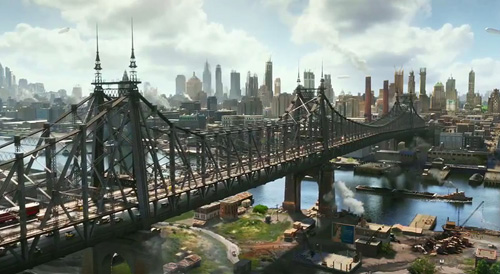
Queensboro Bridge The trailer opens with a spectacular look at the Queensboro Bridge, a potent symbol in the Fitzgerald novel. “Over the great bridge, with the sunlight through the girders making a constant flicker upon the moving cars, with the city rising up across the river in white heaps and sugar lumps all built with a wish out of non-olfactory money.”

The bridge opened in 1909, and it’s a defining image of the Jazz Age, not least of which because the population of Queens almost tripled during the 1920s. There were certainly trains on the Queensboro — it was built to accommodate them — but I’m not sure about that particular train.  Below it sits grimy old Blackwell’s Island, renamed Welfare Island in 1921 and certainly looking the part.

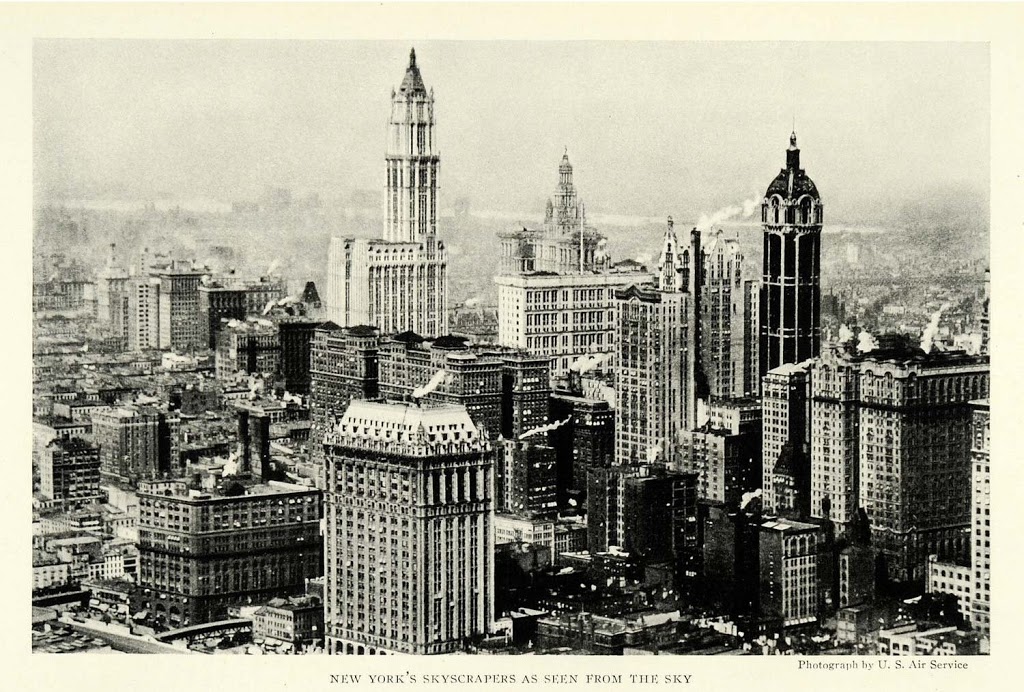
 — Skyscrapers Oh Lord. I don’t think this depicts New York at all but is a composite view of various buildings of the age. Far to the left in the trailer I see structures that look like the Singer Building and the Woolworth Building, but they would not be seen from this angle. Besides, the Woolworth would be taller than the Singer. See below for a size comparison, in a picture from 1922, looking northeast.

There are some vaguely Flatiron Building/Met Life Tower type structures, but they look like they’re on 42nd Street.  And why do I think I can see something that clearly looks like the New York Central Building (later the Helmsley Building) which wasn’t finished until 1929?
Times Square Signs An array of illuminated products logos — in various colorful hues foreign to Times Square in 1922 — gives the Crossroads of the World a mystical glow. The tony Hotel Astor adorned in lights dominates the plaza to the left. Nearby is an ad for Douglas Fairbank‘s ‘Robin Hood’, released in October 1922. It played at the Lyric Theatre. Fairbank’s rival Rudolph Valentino and actress Norma Talmadge created a buzz when they attended the film’s premiere together here.

It’s next to the advertisement for Hydrox (the sandwich cookie which debuted in 1908) and the Capitol Theater, a movie palace which opened in 1919. The tire ad is a nice touch, recalling Times Square’s status as the center of automobile sales and repair during the early 20th century.

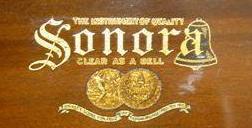
Below the Zeigfeld [sic] Follies sign is an advertisement for Sonora, a phonograph company that began producing radios in 1924. Their slogan ‘Clear As A Bell’ harkens back to the company’s original product line — clock chimes.

To the right of those is a sign for the Columbia Theatre, “the royal palace of burlesque” in the 1920s. The theater opened in 1910 with decor of “Roman gold and and French gray, and the hangings and carpets are of rose du Barry.” It became the Embassy movie theaters in the 1970s.

Later on in the trailer, an ad can be seen for Arrow Collars, the detatchable shirt collar company that went on to spawn America’s first male model type, the ‘Arrow Collar Man’, the sort of debonair type who populates the world of Gatsby. Of course, the demand for collared shirts pretty much killed of this industry by the end of the decade.

Grand Central Oyster Bar There appears to be a brief scene at this lush location with its vaulted ceilings. The Oyster Bar would have indeed been a thriving spot in 1922 and an ideal place to mix business with pleasure. A few years later, so goes the legend, David Sarnoff formed RKO Pictures over a few oysters here with Joseph Kennedy. In 1922, Tin Pan Alley lyricist Al Lubin met his music partner Harry Warren here. They went on to create the film musical 42nd Street in 1933.

Yellow Cab Co.? There are many brief glimpses of taxicabs, including those of the Yellow Cab fleet, which would later be purchased by the Checkered Cab company in 1929. In 1922, the Yellow Cab successfully won a ruling barring other paid-ride automobiles from being painted yellow. ‘1,000 Cabs Face Change of Paint.

Blood And Sand A prominent movie marquee is shown near the trailer’s end for Rudolph Valentino‘s ‘Blood And Sand’, a summer box office smash in 1922. This film debuted at the Rivoli, at 1620 Broadway, at 49th Street. From the New York Times film review on its debut: “Mr. Valentino has not been doing much acting of late. He’s been slicking his hair and posing for the most part. But here he becomes an actor again.” Let’s hope the same can be said of Leonardo DiCaprio, who plays Mr. Gatsby.

By the way, the 1974 version of ‘The Great Gatsby’, starring Robert Redford and Mia Farrow, premiered — with attendees in full ’20s regalia — at the Loews State Theater at 1540 Broadway at 45th Street. “The guests, many of them in Teflon or Daisy white, whatever you want to call it, were greeted by hundreds of celebrity gawkers, reporters and photographers.” [source]

Below: A clip from the Valentino film:


As I rewatch the trailer over the next few days, I may amend this article with further information. If there’s something obvious that I’ve missed, please let me know in the comments below!

Thanks to Michael Raisch, whose Tweet to me last night inspired this article.  Screenshots courtesy of Curbed and Entertainment Weekly.

Categories
Planes Trains and Automobiles

Motor hotels: Manhattan’s most luxurious parking garage “Your car never touched by human hands!”

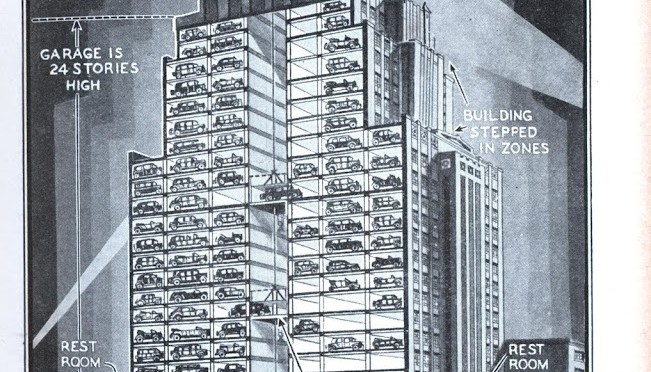
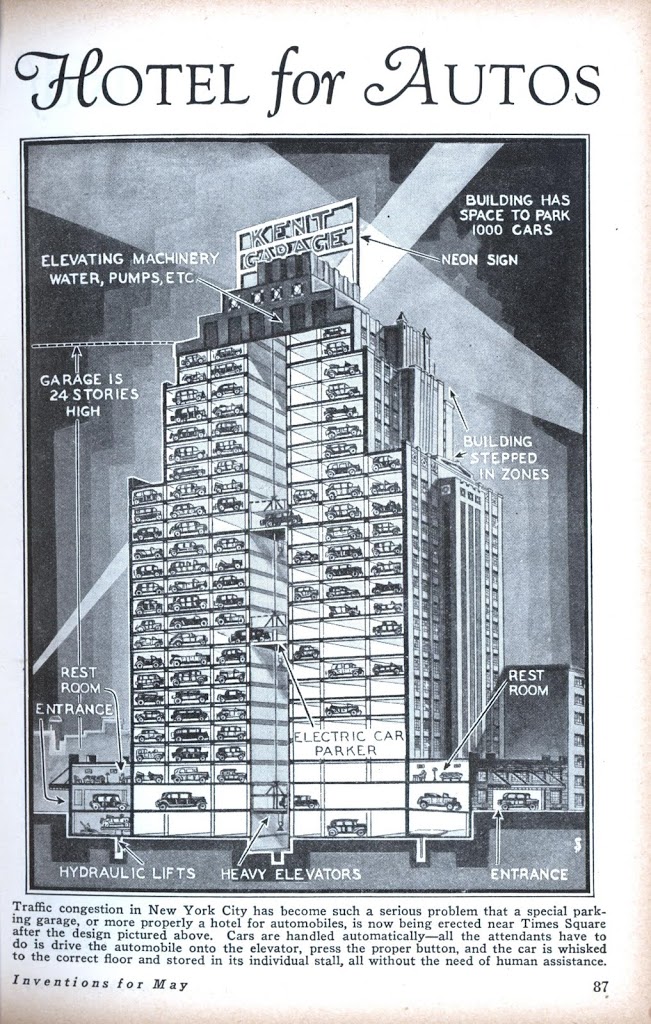
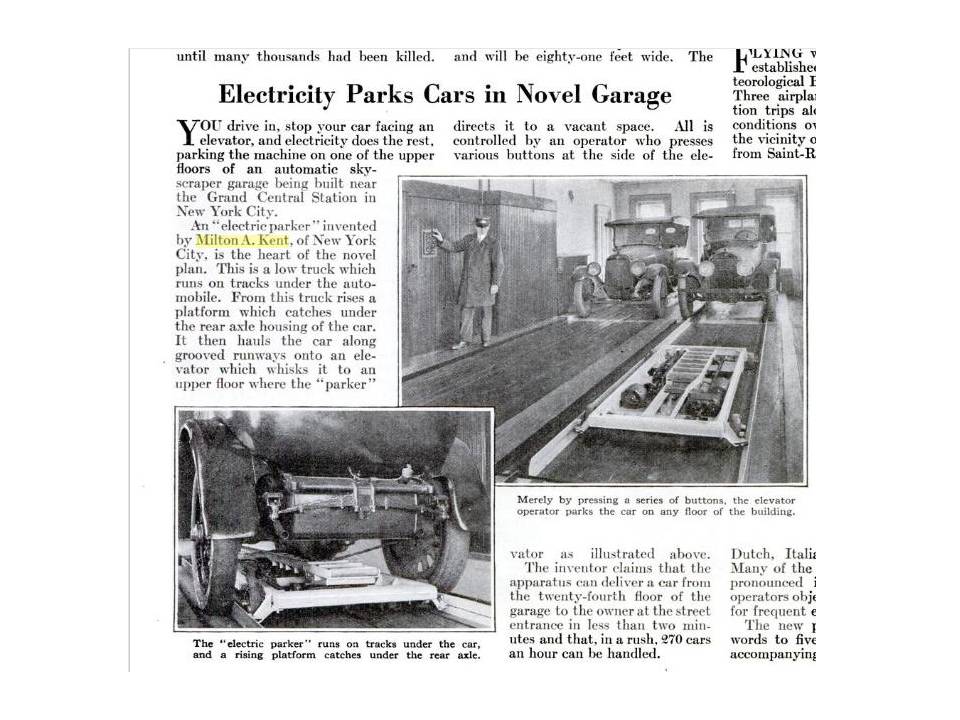
If you don’t already check in to the marvelous Modern Mechanix blog from time to time, then you’re missing out on some retro-futuristic genius. The blog usually highlights visionary drawings from the Modern Mechanics archives. But in the case of one illustration from May 1929, one particular wacky, wondrous dream was actually carried out — and promptly fizzled.

Automobiles had been a part of midtown Manhattan since the beginning of the 20th century, with dealerships lining the streets of the plaza that would soon take the name Times Square. But it wouldn’t be until the 1920s that the city recognized a crisis that would bedevil New Yorkers into today — where do you park your car?

Some cities outright banned curb parking during the decade. Chicago became the first city to charge motorists to park along city streets. But in New York, some private endeavors tried to solve the problem.

Perhaps seeing a bit of cross promotion, Packard Motors sold an area of property on Ninth Avenue and 61st Street (today’s 43-45 W. 61st Street) to the Kent Garage Investing Corporation in 1928. the brainchild by Westchester insurance salesman Milton A. Kent, the ambitious company opened a dizzying 25-floor* mechanical parking garage in a ‘flamboyant brick and terra-cotta’ art deco tower,  that could accomodate 1,000 cars, using an automatic elevator system that stored cars in upper floors. The cars were rolled into and out of elevators to desired slots in the structure, in theory using few human operators.  (See the clipping from the December 1928 issue of Popular Science at the bottom of this article.)

Advertisements touted the garage as a ‘motor hotel’. “Your car never touched by human hands!” went the Kent Garage slogan.

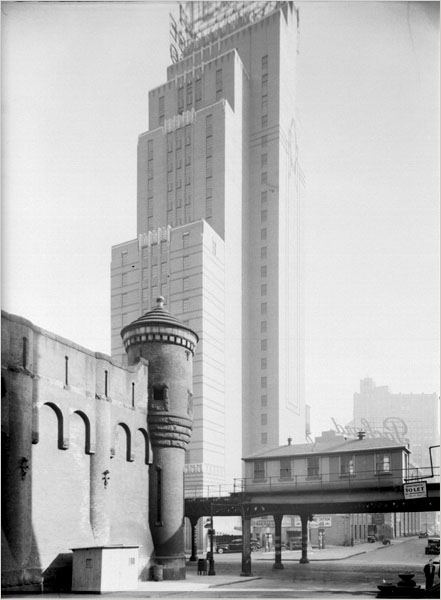
At right: The glamorous garage at West 61st Street, harkening a bit in appearance to the RCA Building, which would be completed in 1933. [source]

Kent Garages opened another location at 44th Street and 3rd Avenue and seemed to be the solution to the coming automobile boom that would fuel the ambitions of city planners like Robert Moses in the coming decade. Unfortunately, the Kent Garages were extremely inflexible, not suitable for cars of certain sizes, and employed highly defective machinery. And as you can probably gather, these were hardly swift forms of storage. It might take almost 30 minutes to retrieve your automobile during rush hour!

The garages were done in before they really got started thanks to the Great Depression. The Kents sold the 61st Street garage in 1931, although the building remained as a more conventional parking garage until 1943, when the building was refitted as a warehouse. (It’s an apartment building today.)

*Advertisements of the day tout a 25 floor structure, while the building’s landmark designation report lists a 24-floor building.

Top image courtesy of Modern Mechanix

Was Lauren Bacall the world’s most glamorous newsie?

The answer to the question in the headline is absolutely, without a doubt, yes.

This story begins with a Minnesotan named Leo Shull, who moved to New York in the 1930s to become a playwright. He never wrote anything of note for the stage, but he wrote plenty about the stage, various guides to playwriting, “how to break into showbiz” style books, and eventually, directories of entertainment contacts.

In 1941, Shull rented out some mimeograph machines in a basement below a Walgreens at 44th and Broadway to produce a newspaper called the Actors Cue, a daily guide to auditions, agents and producers. (Actor’s Cue was similar to today’s Back Stage. That currently operating publication was spun off by two former employees of Shull in 1960.)

But this was no ordinary Walgreens. According to author John U. Bacon, this was the very first Walgreens in New York, in the basement of the grand Paramount Building.

It opened in 1927, the same year that Sardi’s Restaurant opened its current location just around the corner. Both were associated with the theater business, with show folk. In fact, this Walgreens was often called the ‘poor man’s Sardi’s’. There was even a wall of caricatures, just like Sardi’s, lampooning the most famous faces of Broadway.

In his biography, Eli Wallach called that particular Walgreens a “hangout for actors,” a place for out-of-work actors to spend their last dime on a sandwich at the lunch counter, wiling away time before an audition.

So then, obviously, it made sense for Shull to create his daily directory here. And he not only sold the paper to actors; he often hired them to spread out around the theater district and sell the newspaper on the street.

So who should walk in but an attractive young actress named Betty Joan Perske. She was born in the Bronx and currently lived on a ground-floor apartment in the West Village, making ends meet by modeling and ushering in Broadway theaters. But she hoped to soon be on the stage, not in the aisles.

At some point, she met Shull and began selling his newspaper on her lunch breaks. In her own words:

I spent most of my lunch hours rushing to Walgreen’s to grab Actor’s Cue and look for a job in the theatre. …….  Leo had a table in the basement of Walgreen’s where copies of Actor’s Cue were piled up and sold for ten cents apiece. I prevailed on him to let me sell some. He finally said okay — to get me off his back, I think.

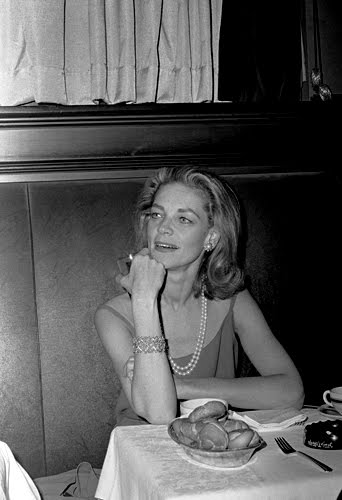
She took her papers to the sidewalk outside Sardi’s, where powerful producers and agents frequently dined. From there, she hocked the paper, not to make money, but to initiate conversations. “I kept my eyes peeled for a recognizable producer, actor, anyone who might help me get a job.” At right: Bacall, actually in Sardi’s Restaurant, courtesy Life Magazine

Her gumption eventually paid off. In 1942, with a slight name change (to Betty Bacall), she made her Broadway debut in the short-lived “novelty melodramaJohnny 2 X 4 at the Longacre Theatre.  However, her fame would be made on the movie screen, cast in 1943 (after yet another name change, to Lauren) opposite her future husband Humphrey Bogart in the Howard Hawks’ classic To Have And Have Not. She never needed an Actor’s Cue ever again.

I wonder if Winchell, a regular at Sardi’s, remembered that when he wrote an entire column that year called “The Bacall of the Wild,” raving about the young starlet.

Actor’s Cue is still being sold today — presumably not in front of Sardi’s — under its more descriptive new name of Show Business.

Stories from Midtown: The journey of an old church, surviving Civil War riots to become a garage


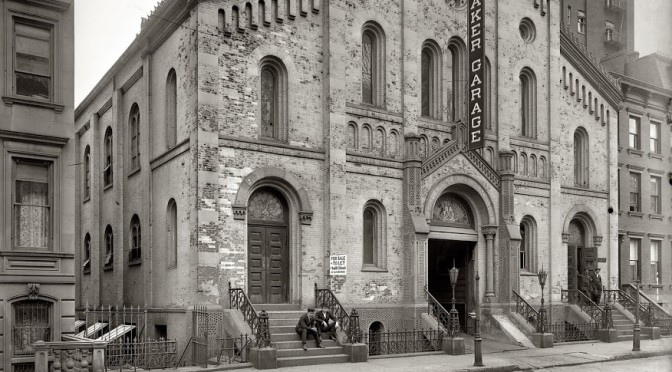
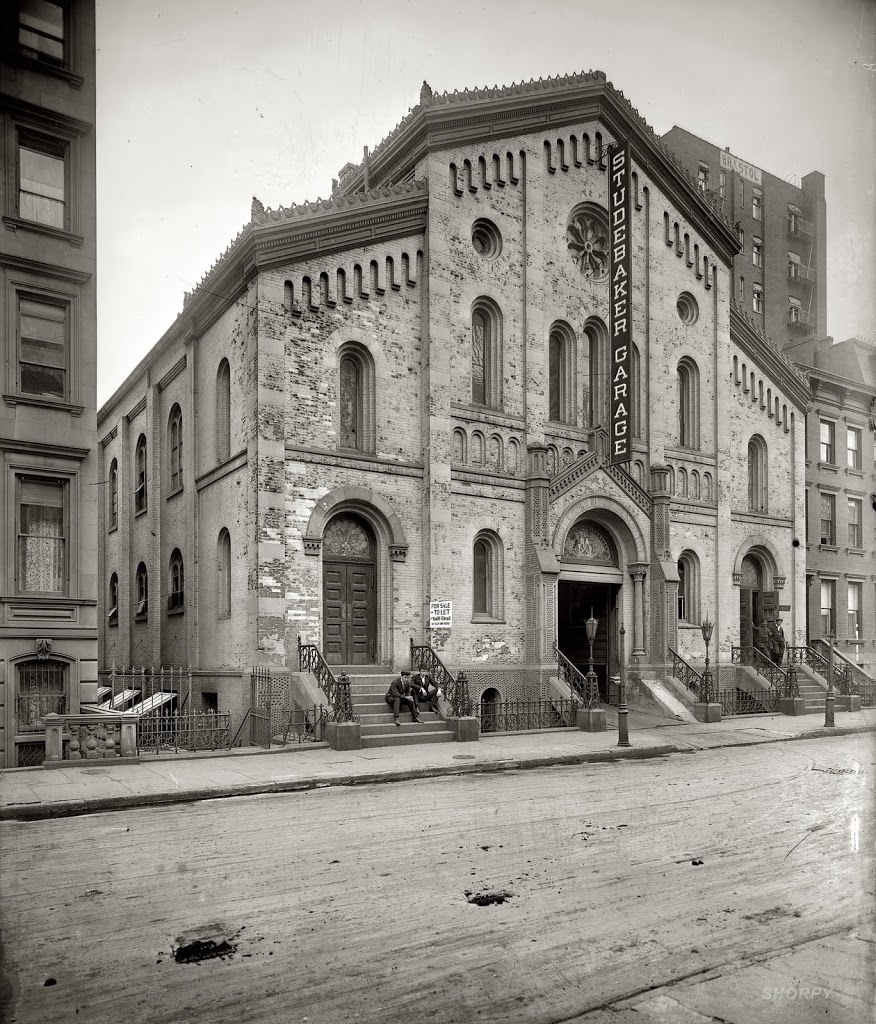
Drive-in salvation: the former All Souls church welcomed automobiles into the fold in 1908. (Courtesy Shorpy)

Another story of a long-gone, forgotten building and one that would have celebrated its dedication 150 years ago this week. This time the story has a strangely sacreligious twist!

It’s safe to say that most Americans were extremely anxious in April 1861. Even as a new president Abraham Lincoln settled into office, most of the Southern states had already seceded from the Union. One week later would begin the battle of Fort Sumter, commensing what would become the Civil War.

In a city of competing loyalties between its country and its rich Southern allies, it would have been difficult to get anything done in New York without lively debate on the matter. Newspaper were consumed with war talk. Irish and German workers excavating Central Park argued with each other about it; society was abuzz, from the Gramercy Park mansion of George Templeton Strong (a proponent for the Union) to the corridors of City Hall and the office of Mayor Fernando Wood (who was very much sympathetic to the South).

War consumed conversation; many New Yorkers feared the future. With everything going on, how can you possibly focus on anything else?

It was in this light, 150 years ago, that a simple little church, a Gothic brownstone structure of red and white brick, was dedicated on West 48th Street between Sixth and Seventh avenues. The All Souls Episcopal Church was nothing particularly fancy, “there were several oriel and oblong windows, not differing from those in churches generally,” the Daily Tribune said frankly.

All Souls would not have been terribly lonely in 1861, but West 48th Street was far from populated. Theaters wouldn’t make it up this far for decades, and nearby Long Acre Square was only now beginning to conjure the horse and buggy industries that would make its late 19th century reputation. Over on Fifth Avenue sat the new campus of Columbia College, its classrooms escaping the growing business district of lower Manhattan.

The congregants had much to pray about in its first years. Those competing loyalties and a conscription lottery that many thought targeted the city’s poor led to riots during the summer of 1863. Angry mobs stormed Columbia College and some nearby factories and residences, but All Souls was spared. Other Episcopal churches weren’t so lucky. (Harlem’s St. Philip’s, for instance was used as a barracks for police and Union soldiers fending off the rioters.)

All Souls survived the war and by the 1870s brandished a new name, the Memorial Church of the Rev. Henry Anthon. Rev. Anthon was a beloved leader from St. Mark’s-On-The-Bowery, and the building on 48th must have been closely connected to that congregation by this time. By the 1880s, it was also known as a charitable ‘bread and beef house’, “for the relief of worthy poor people between Thirty-second and Fifty-ninth streets.”

In 1889, the building went Methodist. Then for a time, in 1896, the church became ‘rented quarters’ for the New York City Christian Science Institute, one of the first New York headquarters for the fledgling religious practice and formed by Augusta Stetson on the orders of the church’s leader Mary Baker Eddy.

According to a 1904 issue of Architectural Record, the former All Souls building “was acquired and radically changed in structure, only the walls being left undisturbed.”

The Christian Scientists eventually moved out to much fancier digs (designed by the renown Carrere & Hastings) on the Upper West Side. But stripping out the detail of old All Souls Church may have ultimately doomed the structure. For in its next incarnation, it became a garage .

The carriage-industry district of Long Acre Square briefly became home to many of New York’s first automobile dealerships at the start of the 20th century.

The Studebaker company was among the most successful. Its main factory and showroom was just down the street at 48th Street and Broadway in what would now be called Times Square. By 1904 it began selling ‘horseless carriages’ that ran on gasoline. In that same year, the Studebaker company bought the old church and turned the former house of worship into a garage for its new vehicles.

The picture at the top of this posting shows the state of the building in 1908. In not a single way has the building’s original purposes been obscured, as though the owners wanted to make their automobiles new objects of worship. I do wonder if more religiously sensitive people thought this new purpose to be a bit blasphemous. What’s worse than turning a church into a garage? Turning a church into a nightclub, then a shopping mall, perhaps.

The garage was torn down one hundred years ago in 1911 and turned into a small theater, reflecting once again the changes of the neighborhood. It too was demolished and replaced — appropriately, with a garage — for the McGraw Hill building.

Photo above courtesy Shorpy

You’ve come a long way, baby! But now it’s over. Extinguishing 102 years of women’s public smoking rights

Write that man a ticket! This rebel might have had a different cause had he been at yesterday’s New York city council meeting.

The big news in the city yesterday was the massive smoking ban passed by the City Council that prohibits smoking in public places like Times Square and Central Park, a total of “1,700 parks and 14 miles of public beaches plus boardwalks, marinas and pedestrian plazas” in the city. [source]

Mark Twain, Humphrey Bogart and Fiorello La Guardia must surely be rolling in their graves today. This represents the most far-reaching ban on smoking that New York gentlemen have ever had to face.

New York ladies who smoke, on the other hand, have been down this path before. In fact, the new ban caps a period of roughly over 100 years of public smoking freedoms. Women who light up have been punished for it before.

Men have been legally allowed to smoke mostly where they like for much of the city’s history, and anybody who tried to stop them was met with resistance. Director-general Williem Kieft tried to outlaw the practice in New Amsterdam in the 1640s. As Washington Irving once colorfully described it: “He began forthwith to rail at tobacco as a noxious, nauseous weed, filthy in all its uses; and as to smoking, he denounced it as a heavy tax upon the public pocket, a vast consumer of time, a great encourager of idleness, and a deadly bane to the prosperity and morals of the people.” But nobody was going to give up their tobacco, and Kieft backed off.

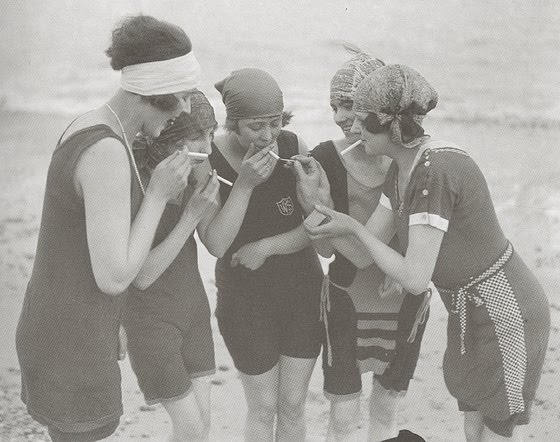
Below: Smoking in some sizzling swimwear, on a public beach, which in New York, will now get them arrested.

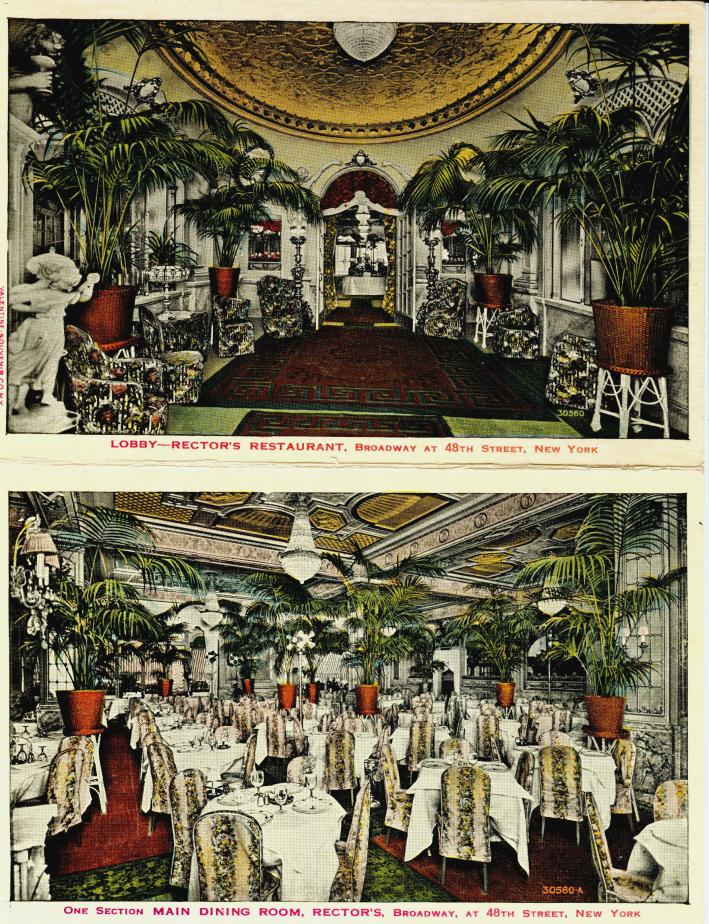
Smoking was a sign of prosperity in Gilded Age New York, the most common activity within the corridors of New York’s finest social clubs. Public transport was off limits, of course, but that didn’t stop everybody. (Lighting up a cigar in a streetcar, for instance, would earn you a hefty fine.) Posh restaurants in the late 19th century often required men to smoke in separate rooms. But with the rise of lobster palaces like Rector’s — rollicking, casual restaurants with a festive atmosphere — older restaurants like Delmonico’s had to loosen their policies.

Eventually men were allowed to smoke in the dining rooms. And sometimes, women would light up too, though such flagrant social rebellion was often met with polite shock. Places like the Plaza Hotel and Delmonico’s would put folding screens in front of tables that sat such bold women. It wasn’t the smoke itself that scandalized patrons. It was the sight of ladies enjoying such a male pastime. (Perhaps they should have done more; at least two members of the Delmonico clan died of smoking related illnesses.)

The sight of a woman enjoying a good cigarette flew in the face of proper etiquette, thus becoming a handy display of rebellion in a age when women were fighting for other rights, most notably the right to vote. From Meta Lander’s 1888 book-length tirade called ‘The Tobacco Problem’ :”On a crowded boat, between New York and Boston, a lady (?) passenger, unable to sleep, rose at three, virtuously mended her gloves, and then, O shade of Minerva! leaning back in her arm-chair, gave herself up to a cigarette; while, stretched on mattresses around her, many looked on with undisguised amazement and disgust.”

Indecent? Or independence? The debate came to a head in 1908 when, for two weeks at least, it was actually illegal for women to smoke in public. ‘NO PUBLIC SMOKING BY WOMEN NOW’ read the New York Times on January 21, 1908. “Will the Ladies Rebel? As the Ladies of New Amsterdam Did When Peter Stuyvesant Ordered Them To Wear Broad Flounces?”

The mayor, George McClellan, quickly revoked the unpopular law. Twelve years later, women would have the right to vote and the freedom to smoke. (But not to raise a toast; alcohol was prohibited by 1920.)

Smoking went relatively unabated until the 1989 Clean Indoor Air Act dictated that restaurants set aside “70 percent of the seating capacity as a nonsmoking area” and to designate a smoking section. Further restriction, such as the statewide ban from March 2003, eliminated smoking from restaurants and bars entirely.

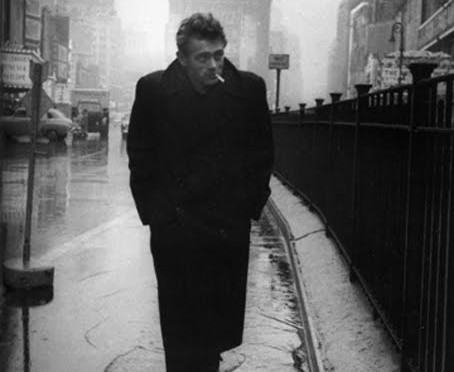
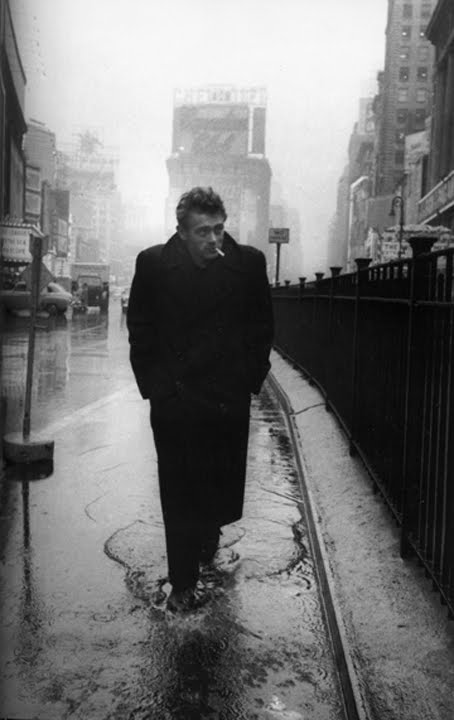
This new law seriously undermines decades of accomplishments by beatniks, poets, film noir icons, jazz musicians and gang members who have worked tirelessly to make smoking cool.** James Dean, we have betrayed you!

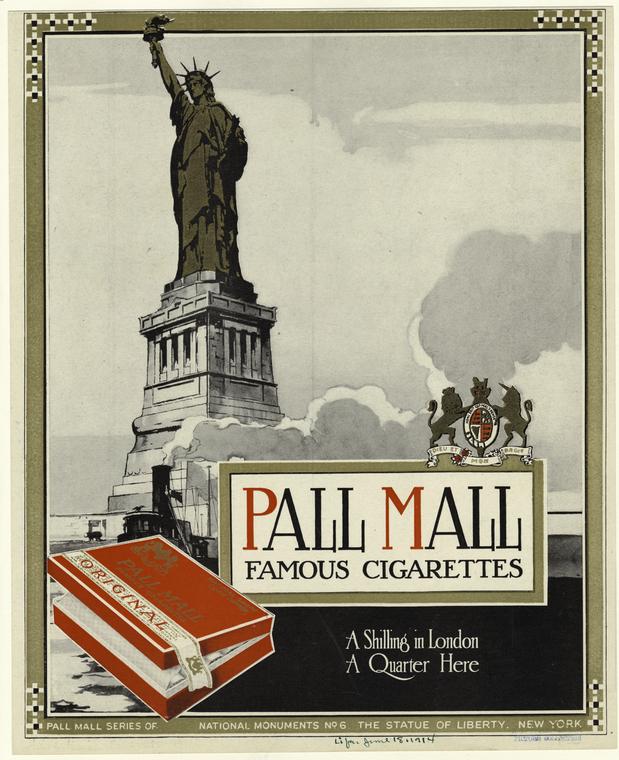
Above: a 1914 Pall Mall advetisement, using Lady Liberty to exemplify the American freedoms that smoking brings!

**Of course, many of them died of lung cancer.

Categories
Podcasts

Times Square: History in stages, chronicled in lights

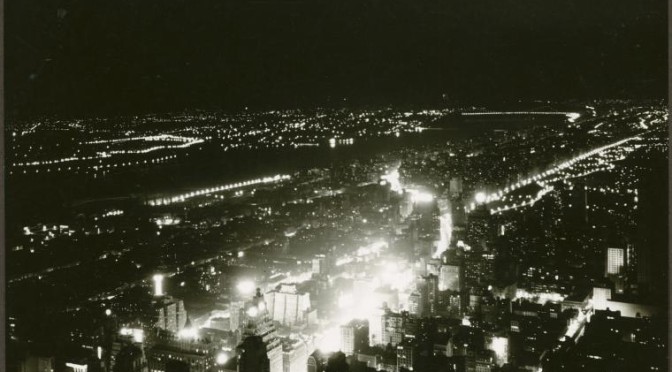
The canyon, as seen from the Empire State Building. (Photography by the Wurts Brothers, courtesy NYPL)

PODCAST: Times Square is the centerpiece of New York for most visitors and a place that sharply divides city residents. Nothing about it sits still. Even its oldest buildings are severely transformed and slathered with electronic imagery.

In 1900, the neighborhood surrounding the intersection of Broadway and Seventh Avenue was the drab Longacre Square, the heart of the horse and carriage industry, and few dared put a legitimate theater or restaurant so far north. But with the construction of the subway came big changes, and when the new headquarters for the New York Times arrived, so did a new name.

Listen along as we travel through the decades, through Times Square’s glory days of lobster palaces and celebrities, the introduction of electric advertisements, its gritty slide and eventual rebound. Is the new Times Square an extraordinary transformation? Or a travesty?


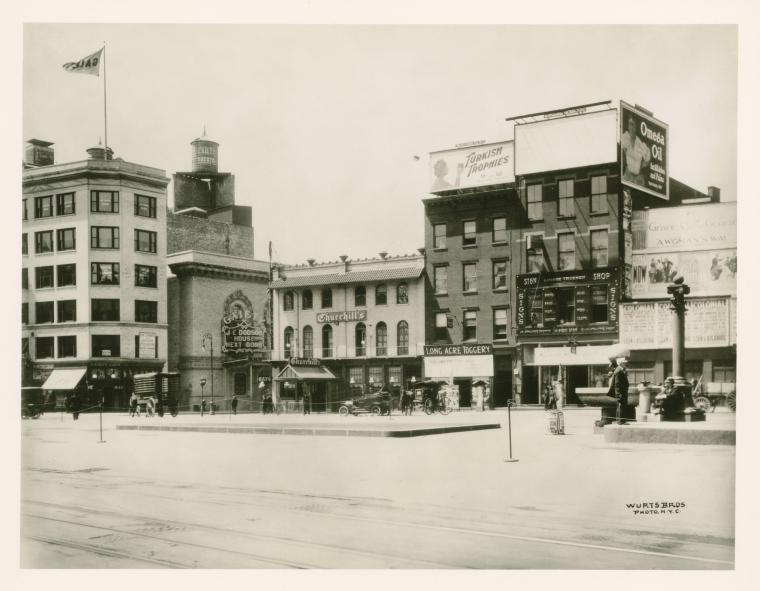
1909, when things weren’t quite so insane. I believe this is Broadway between 46th and 47th Streets. You see the Gaiety Theater on the left, as well as Churchill’s Restaurant. Long Acre Riggery sits next door, proving that the neighborhood’s transformation wasn’t as quick as you might have thought. There’s also an ad for Turkish Trophies cigarettes.

Rector’s Restaurant, the greatest of the so-called ‘lobster palaces’, where opulance and celebrity mixed with musical entertainment in an occasionally rowdy environment.

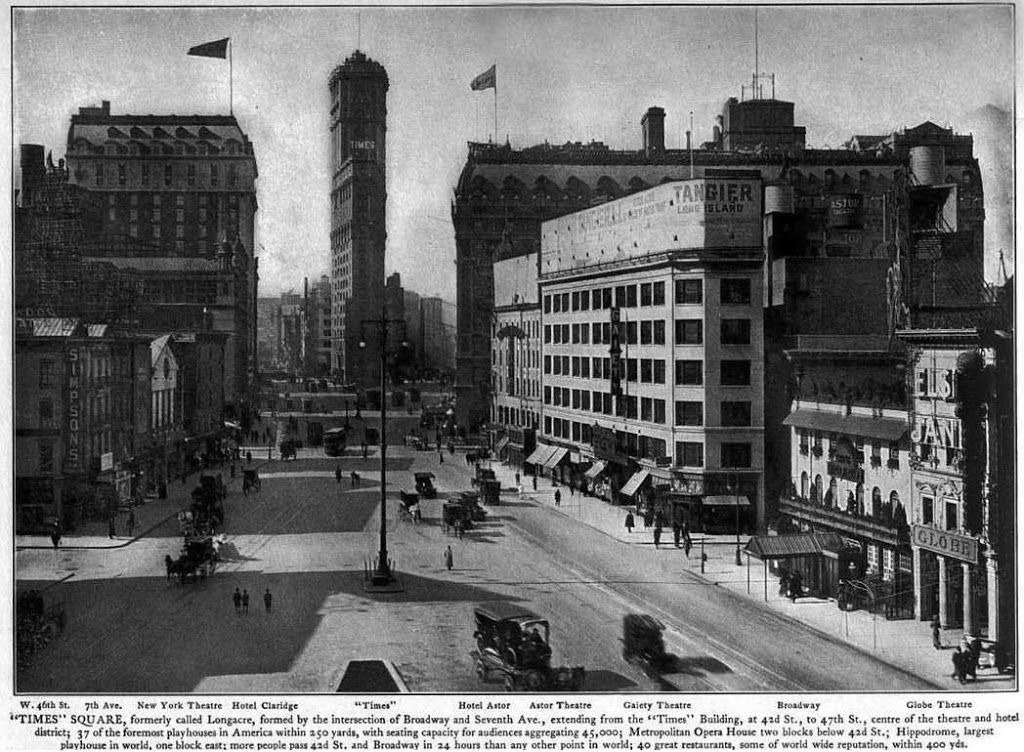
1910: The strangely orderly streets are still mostly filled with horse-drawn carriages and trolleys. Theaters have worked there way in by this time, including the New York Theatre on the left, and the Gaiety and Globe theaters on the right. (Courtesy Spooner Central)

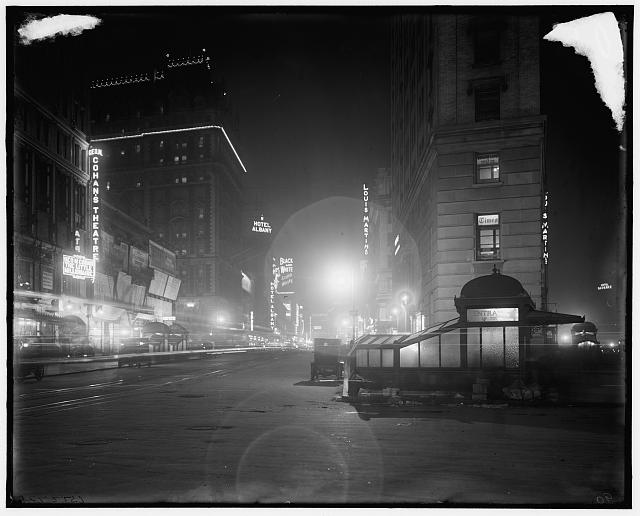
Between 1911-1915: Standing on 42nd Street, looking north, the Times Building and the subway entrance to the right. The theater built and named for George M. Cohan was completed in 1911. (Courtesy LOC)

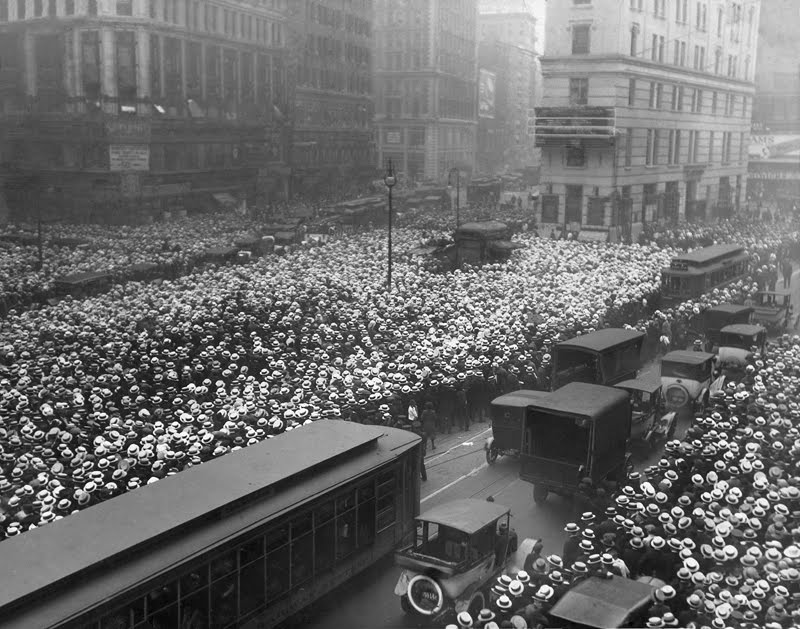
1921: People readily embraced Times Square as a place for instant news information. Thousands of similarly dressed men wait impatiently outside the Times Building on a hot July afternoon awaiting news of the Jersey City boxing match between Jack Dempsey and Georges Carpentier.

1931: No sign of a Great Depression here. Trolley tracks are still very much in evidence. (Courtesy Flickr/straatis)

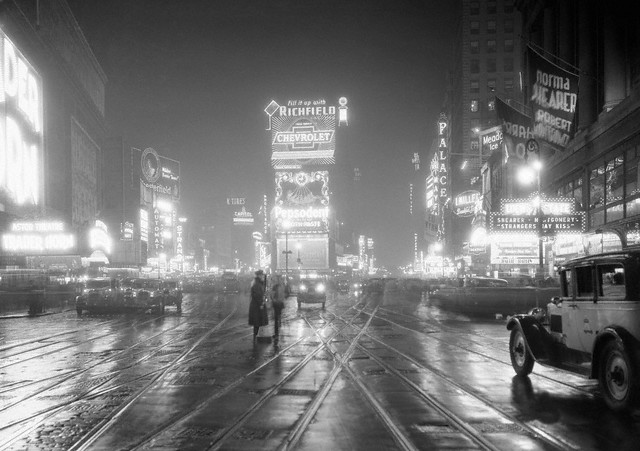
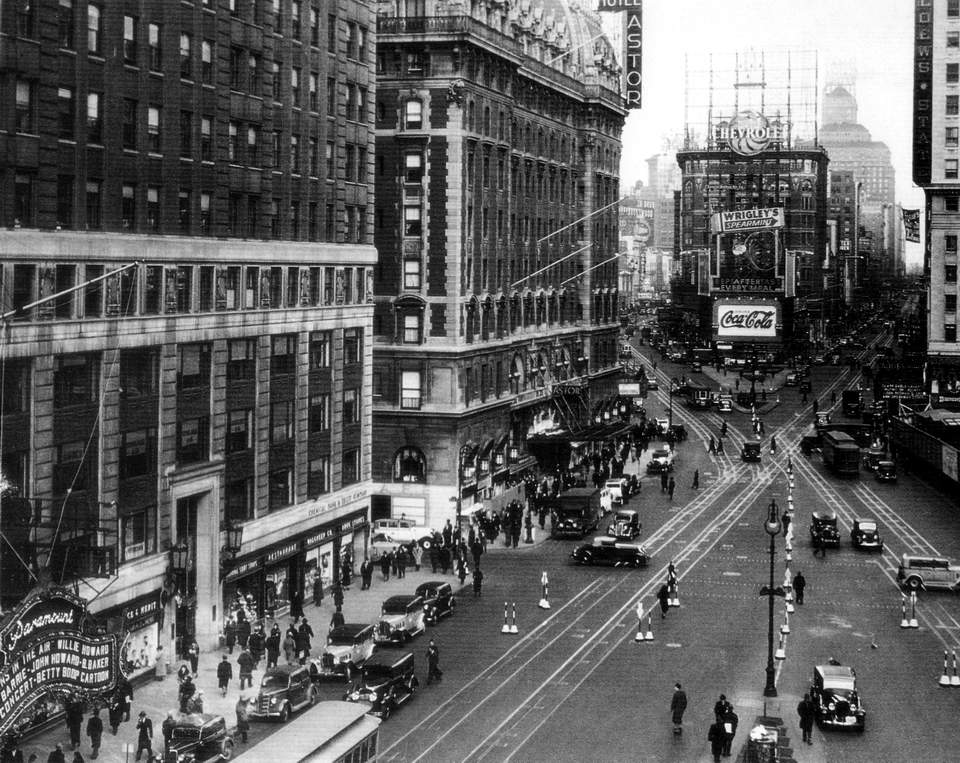
1935: The Paramount Building astride the Hotel Astor dominate the plaza. I’m not sure I would like negotiating this seemingly chaotic cross street.

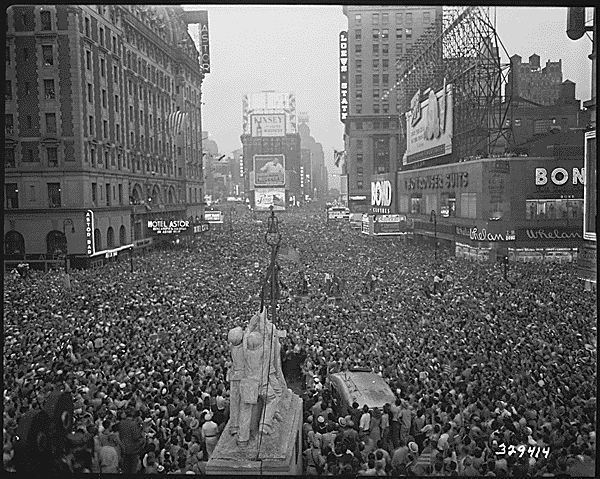
1945: Thousands arrive in Times Square to celebrate the end of the surrender of the Japanese and the end of World War II.

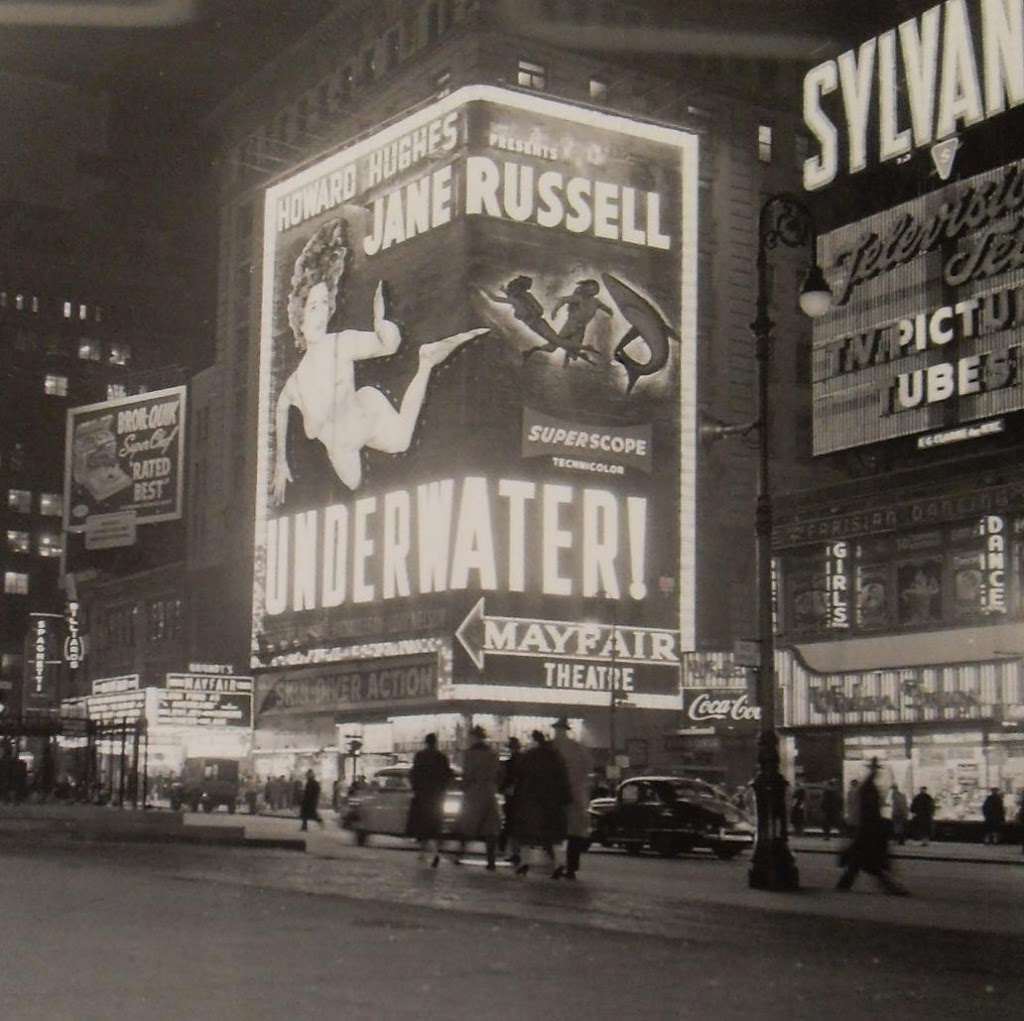
1955: Times Square’s subtle shifts can be seen here — larger than life electric beauties overhead, dancing girls across the street. The RKO Mayfair (later the DeMille sat at Seventh Avenue and 47th Street. (Courtesy Flickr/Christian Montone)

By the 1960s, old stages and movie theaters were giving way to a new form of entertainment, the adult kind.

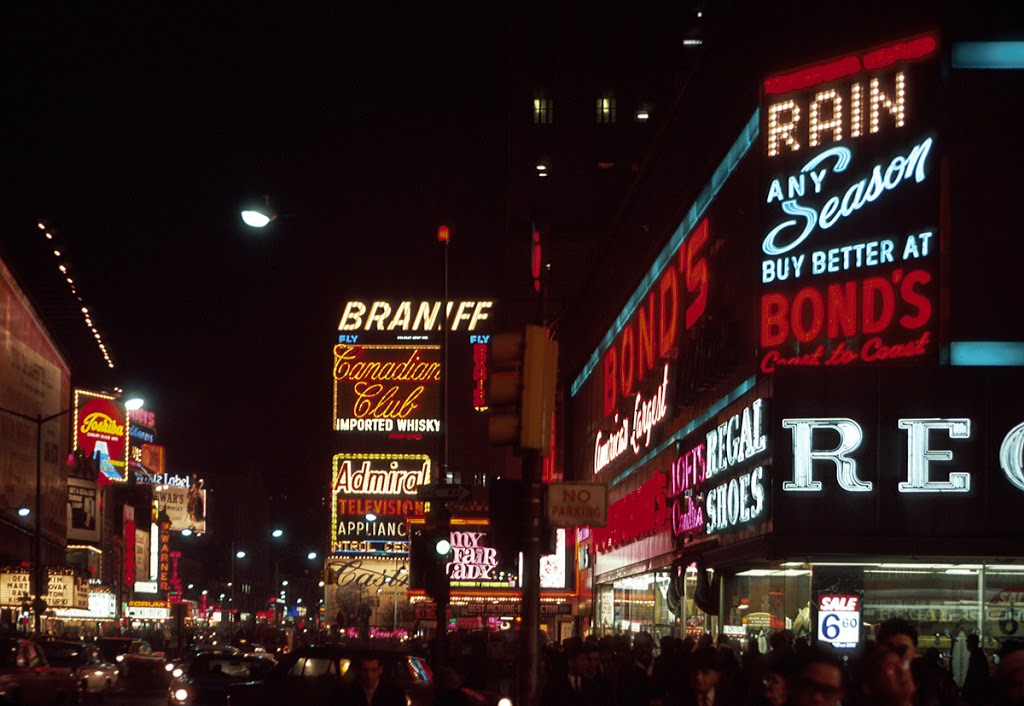
1965: The neon shines as bright as ever. Bonds Clothing Store thrived for years at this central location and provided one of its most memorable sign. Previously the space had been the swanky nightclub International Casino. In the late ’70s, the clothing store closed, and, in some clever combination, it became the nightclub Bond International Casino, home of the Times Square Riot of 1981. (Courtesy Panoramio)

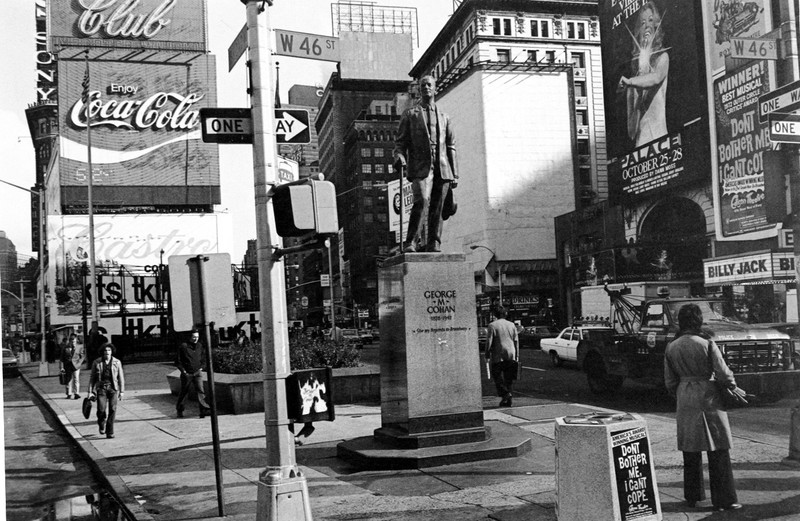
1970s: A strange mix of entertainments and ideas now permanently intermingle in Times Square. Cohan represents the past, while TKTS booth (which opened in 1973), providing discounted Broadway tickets and a safe haven for visitors, presents a possible key to its future.

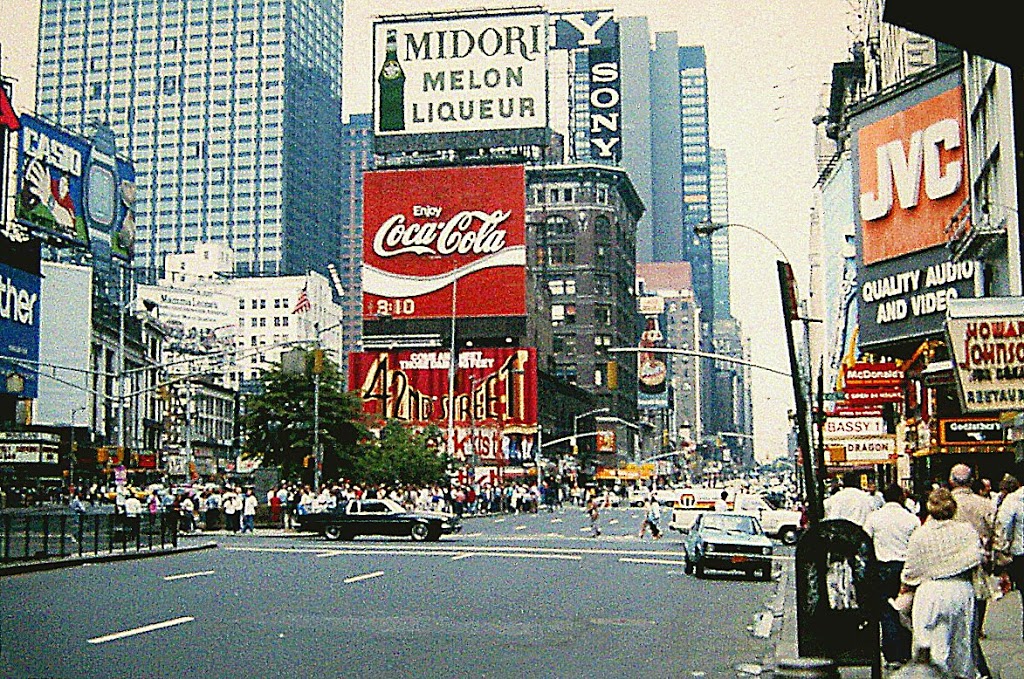
1985: By this time, the city had worked through almost two decades of improvement ideas for Times Square. (Courtesy Flickr/Jim In Times Square)

The New Amsterdam Theater, before it was renovated by Disney. (Courtesy Flickr/GuanoReturns)

2008: Most of the seedier element of Times Square was eradicated by this time. (Courtesy zero null)

A fabulous video of various New Years Eve ball drops throughout the years, starting in 1978:

And to tie it all back to the beginning, here’s an Edison film shot from the top of the Times Building, from 1905. Most interesting, actually, is the view of Bryant Park and the large, stately Hippodrome.

This episode was so packed, we barely even talked about New Year’s Eve! For some historical nuggets on that annual event, you might like to listen to our old show on One Times Square. Also, if theater history interests you, check out out podcast on Florenz Ziegfeld.