Categories
Mysterious Stories

THE BOWERY BOYS MONTH OF MYSTERY!

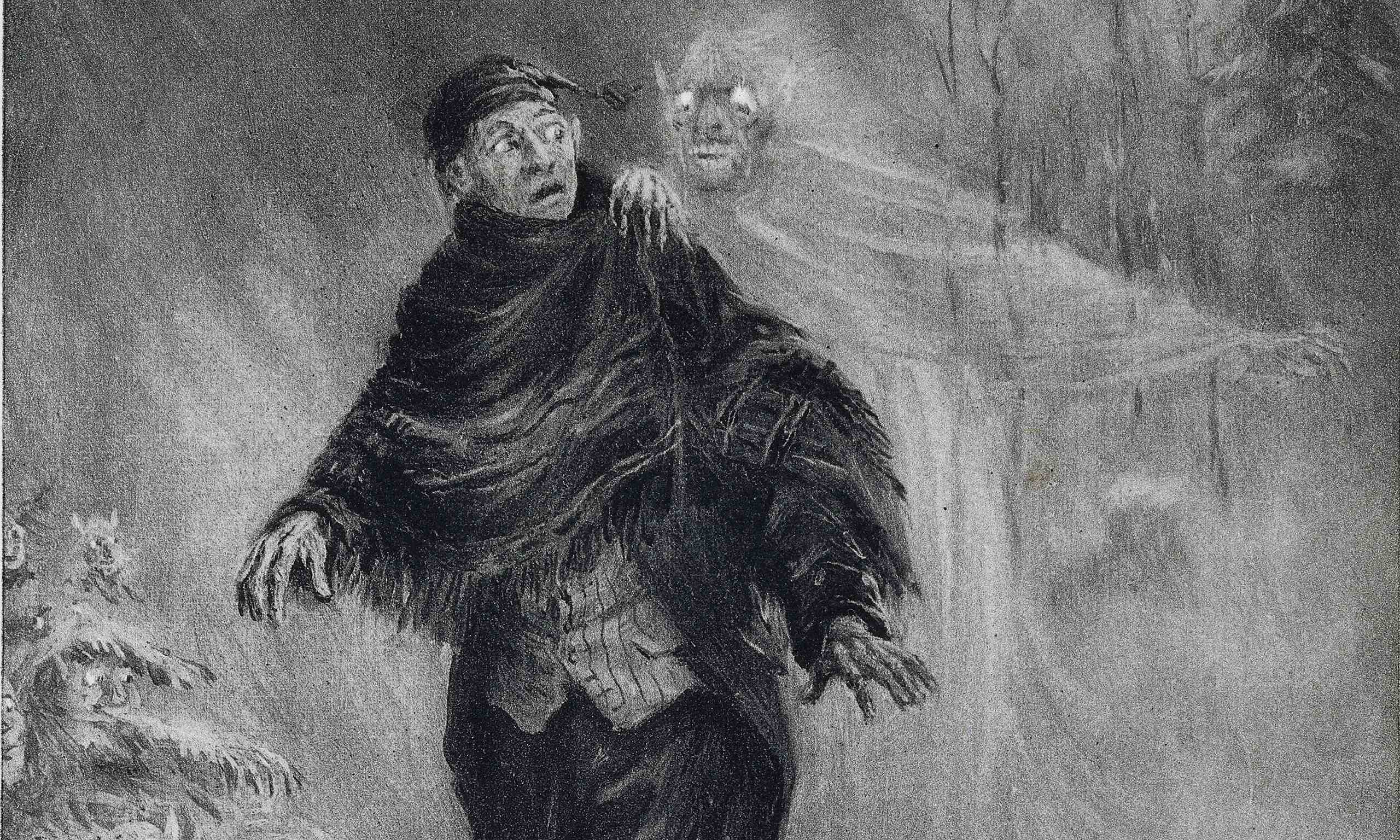
For three straight weeks this October, the Bowery Boys will bring you brand new, mysterious podcasts that will send a shiver down your spine.

On Friday we present you with one of New York City’s greatest whodunits with an unbelievable cast of characters.

Then next Friday (October 20) it’s our 11th annual ghost stories podcast! Four more tales of a macabre mash-up of history and legend.

And finally, on Friday, October 27, a look at one of America’s most famous icons of mystery and suspense.

Make sure you are subscribed to the podcast to make sure you don’t miss a single one!

Categories
The First

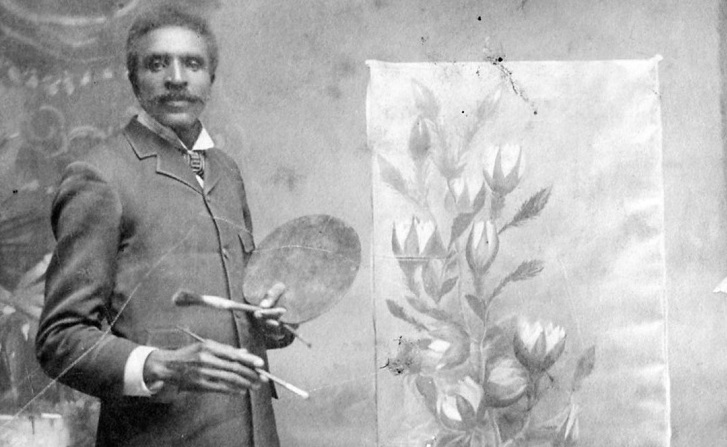
The Plant Doctor: The Extraordinary Life Story of George Washington Carver

THE FIRST PODCAST How much do you know about George Washington Carver, the man born into slavery who became America’s most famous botanist in the first half of the 20th century? He didn’t discover the peanut, a legume commonplace in the human diet for thousands of years, nor did he invent peanut butter. What Carver did — and what he remains underappreciated for — was help reorient man’s relationship with plants for the modern world

He saw items like the sweet potato and the soybean for their unlimited potentials, not just to better the human condition but to improve the opportunities of American farmers. He saw plants as the secret to human health and well being.

And he did these things not merely as an African-American man in the Jim Crow South, but as a man of frequent ill health and eccentric character. He was as miraculous as his inventions. George Washington Carver as an artist of uncommon tools — both a literal artist, armed with plant-based paints of his own design, but a conceptual one, finding a world of new ideas within the palette grown from his garden. He became the world’s most famous proponent for organic eating.

CO-STARRING: Booker T. Washington, Henry Ford and — Mahatma Gandhi?!

To get this episode, simply download it for FREE from iTunes or other podcasting services. Check here for other ways to get the show.

Or listen to it straight from here:
THE PLANT DOCTOR: THE EXTRAORDINARY GEORGE WASHINGTON CARVER

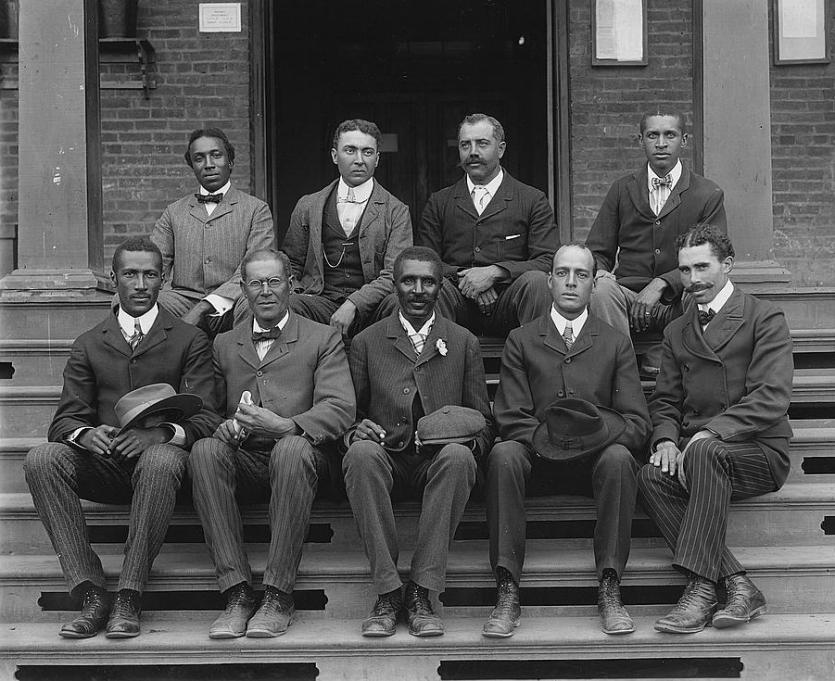
Carver with his fellow professors at Tuskegee University in 1902

Frances Benjamin Johnston/Library of Congress

Several months before he died, Carver visited Henry Ford in Dearborn, Michigan, and was there for the unveiling of the replica of his log cabin birthplace at Greenfield Village.

Categories
Podcasts Queens History

The History of Astoria and Long Island City, Queens

PODCAST The Bowery Boys head to northwestern Queens to uncover the origin of two close neighborhoods with divergent histories.

The borough of Queens has a history unlike any in the New York City region, but the story of its northwestern region — comprising Astoria, Long Island City and about a half dozen other, smaller neighborhoods — is particularly surprising. And there are basic aspects of these wonderful neighborhoods, fundamental to every day life here, that you may have never known.

How did Astoria get its name? John Jacob Astor is involved but not in the way you think.

Was Long Island City an actual city? Well, technically, yes. In the 19th century, it was certainly corrupt like a modern city!

How important to Astoria history is the Steinway Piano Factory? So important that modern Astoria would not exist in its present form without it.

In 2017, why is Long Island City full of new developments and Astoria almost none? The secret is imbedded in its history, in decisions that were made 150 years ago.

And it all begins with a brutal murder — in a little place called Hallets Cove.


The Bowery Boys: New York City History podcast is brought to you …. by you!

We are now producing a new Bowery Boys podcast every week. We’re also looking to improve the show in other ways and expand in other ways as well — through publishing, social media, live events and other forms of media. But we can only do this with your help!

We are now a member of Patreon, a patronage platform where you can support your favorite content creators for as little as a $1 a month.

Please visit our page on Patreon and watch a short video of us recording the show and talking about our expansion plans. If you’d like to help out, there are five different pledge levels (and with clever names too — Mannahatta, New Amsterdam, Five Points, Gilded Age, Jazz Age and Empire State). Check them out and consider being a sponsor.

We greatly appreciate our listeners and readers and thank you for joining us on this journey so far. And the best is yet to come!


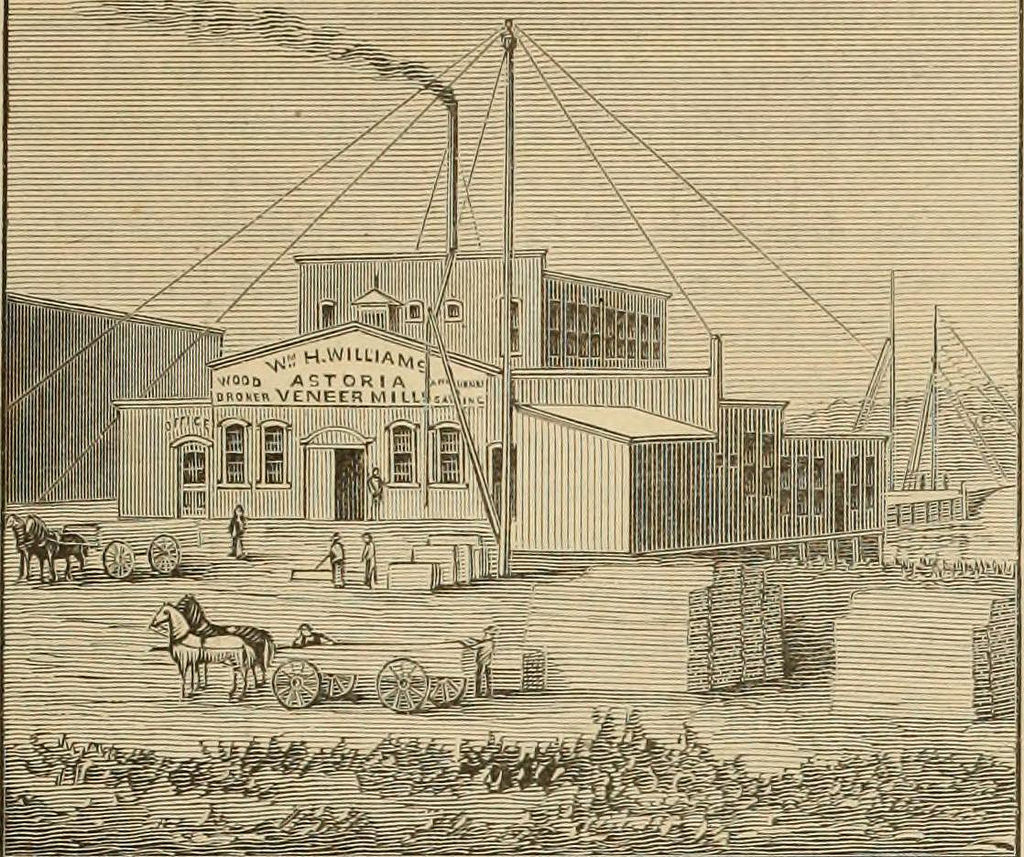
From the 1882 History of Queens County: “The Williams Veneer-Mills. The village of Astoria is, like scores of others, a clump of vigorous shoots from the underlying business roots of the great city, that permeate the surrounding country in every direction. Among its most enterprising businessmen is William H. Williams, a cut of whose extensive veneer-mills is herewith presented. In the spring of 1875 he came to Astoria and put up a building 40 feet square, which was in running order by the ist of June.”

Flickr Commons

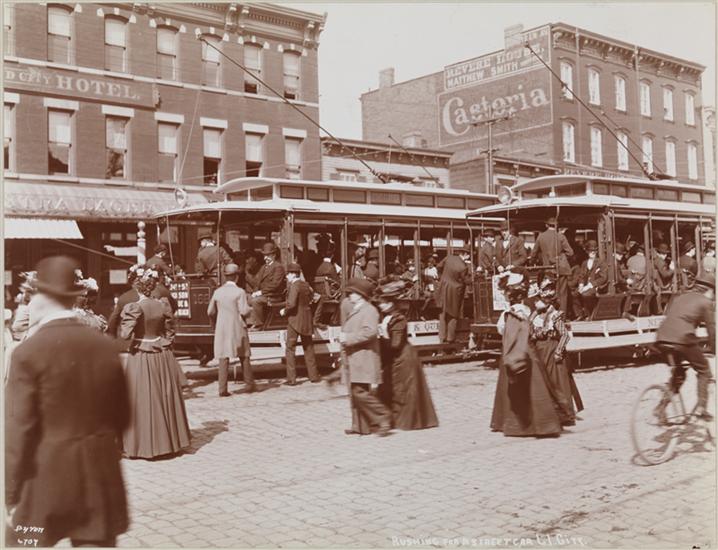
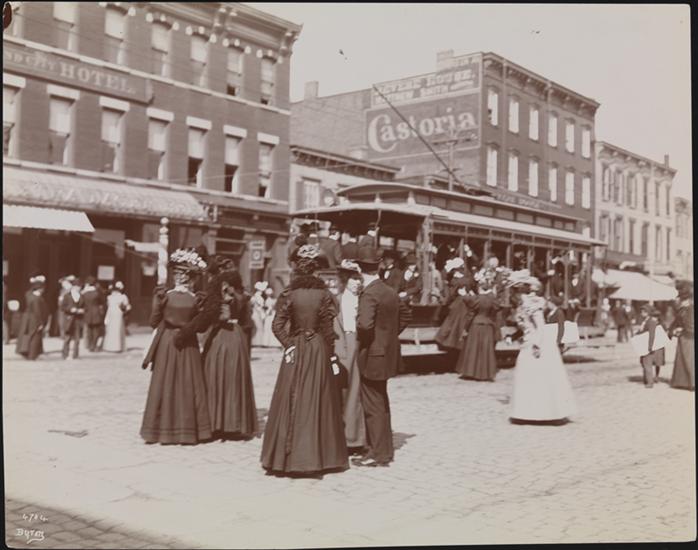
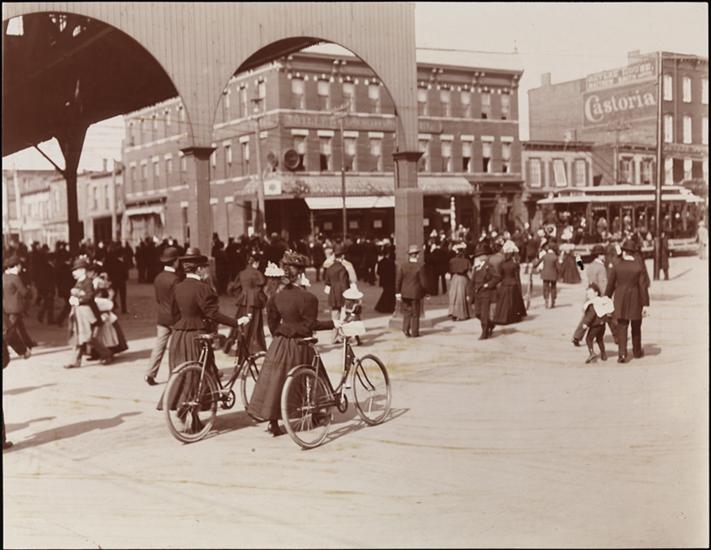
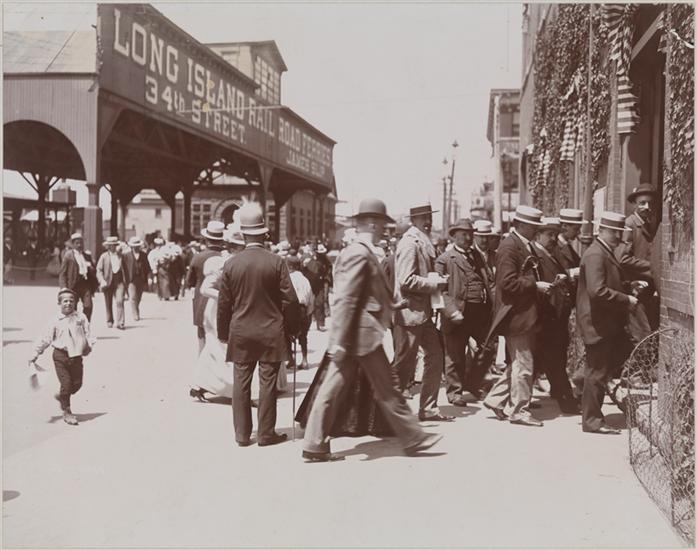
The bustling trolley system of Long Island City in 1899, a portion of which was controlled by the most corrupt mayor of Long Island! I’m not sure of the exact location but this is most likely near docks of Hunter’s Point (note Long Island Railroad ferry terminal which links to 34th Street in Manhattan).

Byron Company/Museum of City of New York

Images of the Steinway Piano Factory from 1902 (and courtesy Byron Company/Museum of the City of New York)

MCNY

The Famous Players-Lasky film studio in the 1920s. TV and film are still produced here today as the Kaufman-Astoria Studios.

Museum of Moving Image

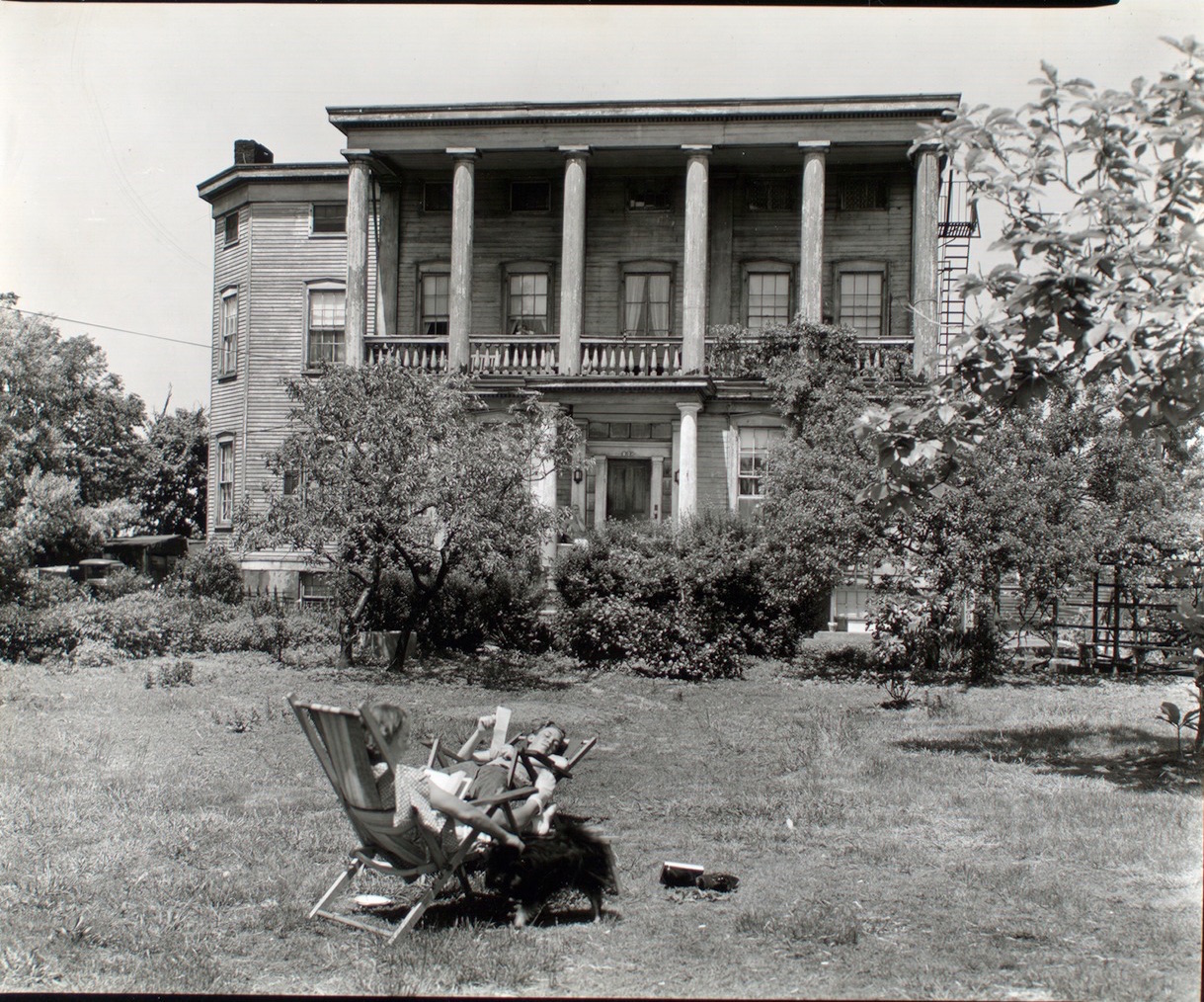
Meanwhile the mansions of Astoria were slowly being crowded out by new developments. Still a few hang on to this day. Unfortunately this rustic manor (seen here in 1937) which once sat at 805 27th Avenue is no longer there.

Berenice Abbott/NYPL

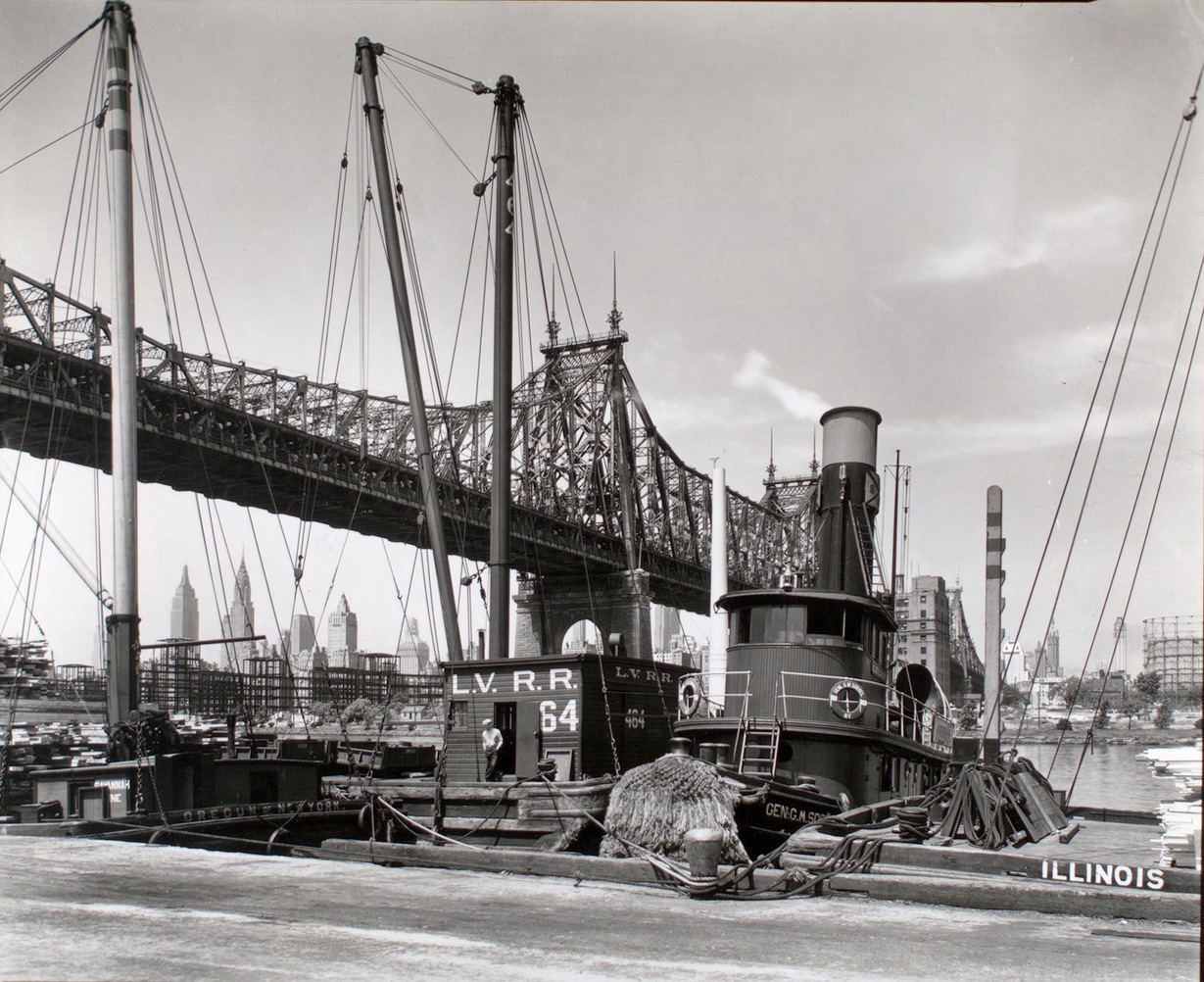
Long Island City, Queens, looking southwest from pier at 41st Road, with the Queensboro Bridge overhead.

NYPL

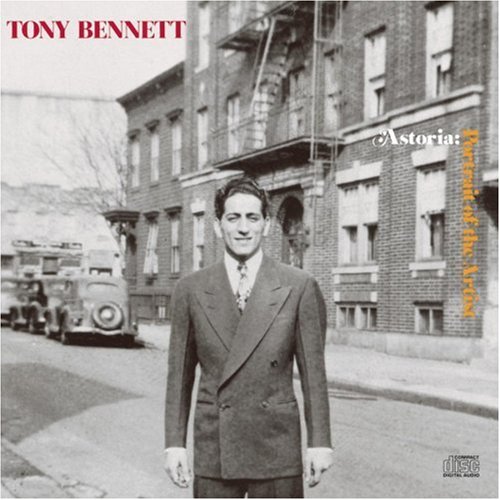
Tony Bennett’s 1990 album Portrait of the Artist pays homage to his birthplace.

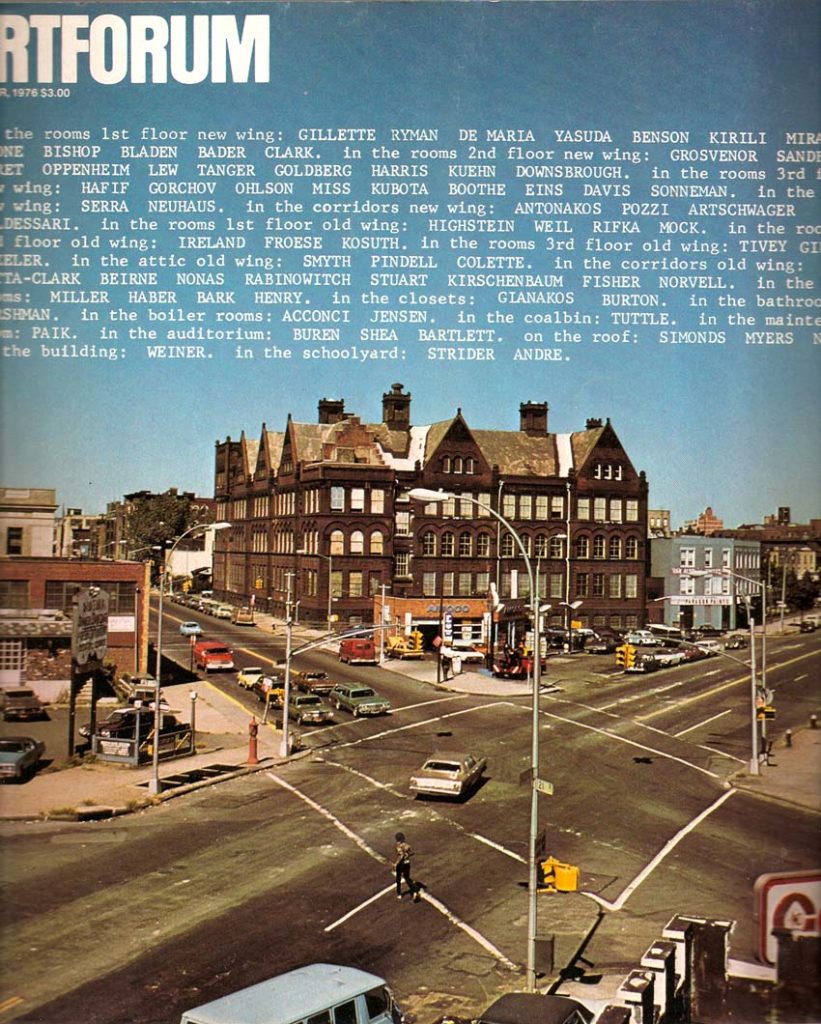
The debut of P.S 1 in 1976 was featured in Artforum Magazine. The first show there (called Rooms) presented installations in the still-unfinished classrooms of the old school built in 1892.

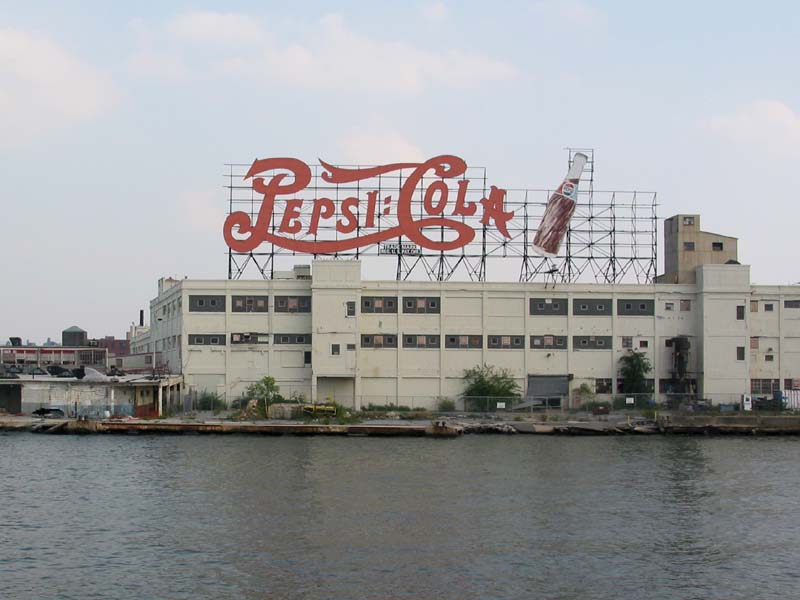
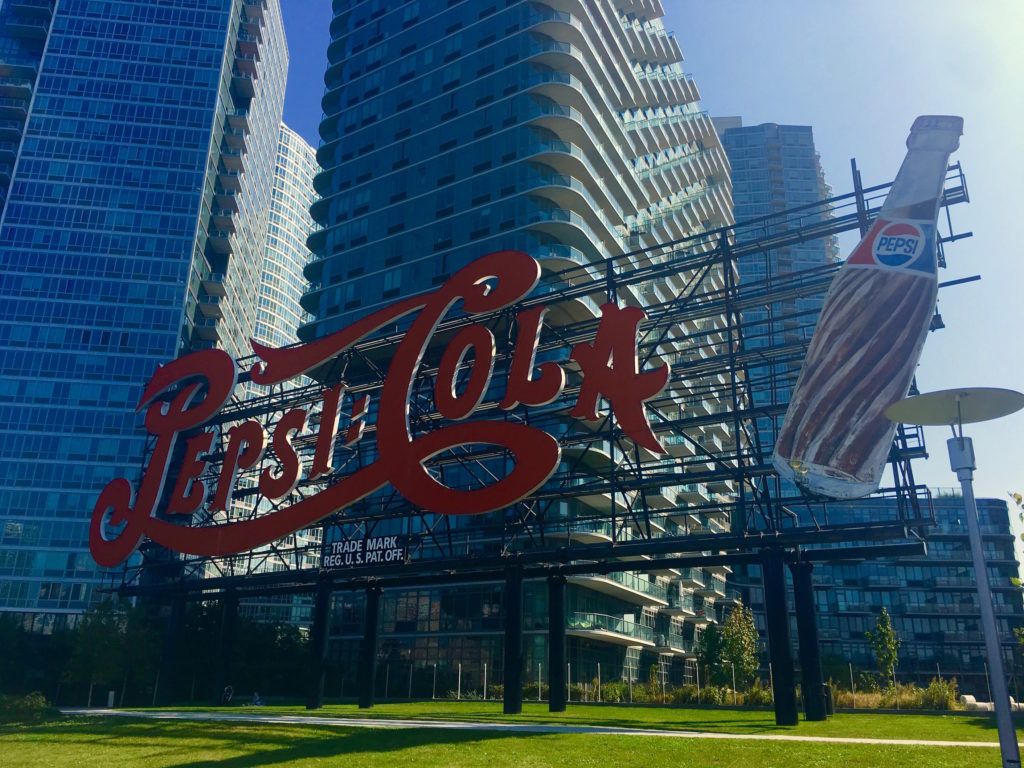
The Pepsi Cola sign as it appeared on the actual bottling plant (which closed in 1999). The sign is now a decoration on the promenade astride the Hunters Point South development.

Wired New York

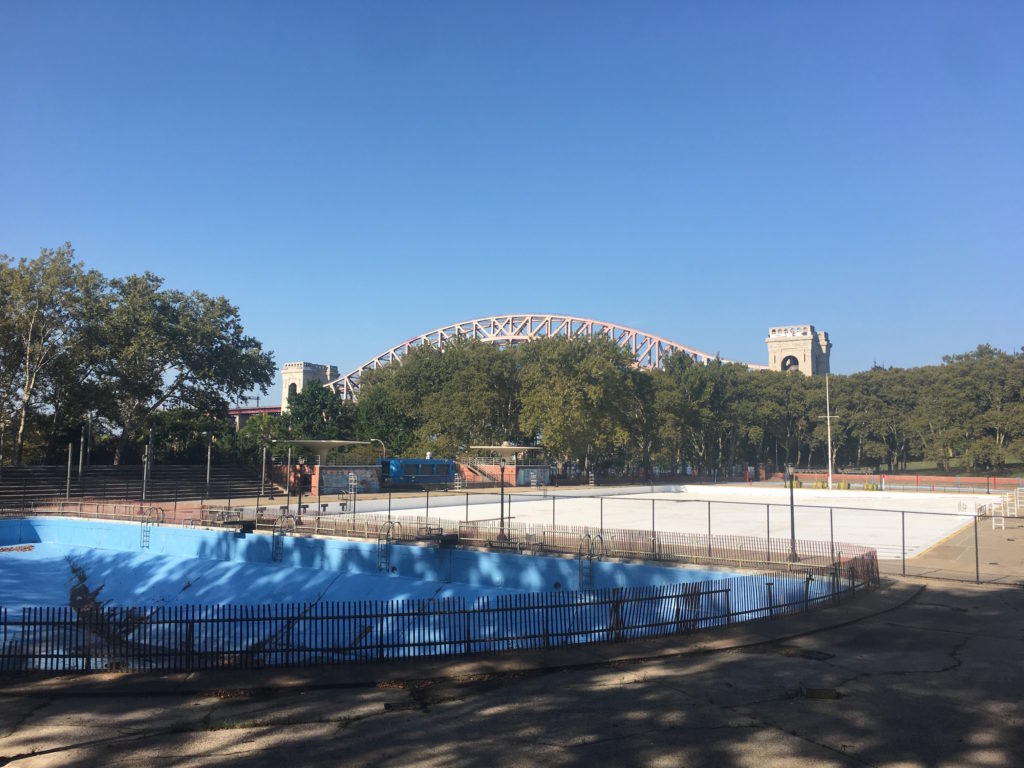
The Astoria swimming pool with Hell Gate Bridge in the distance.

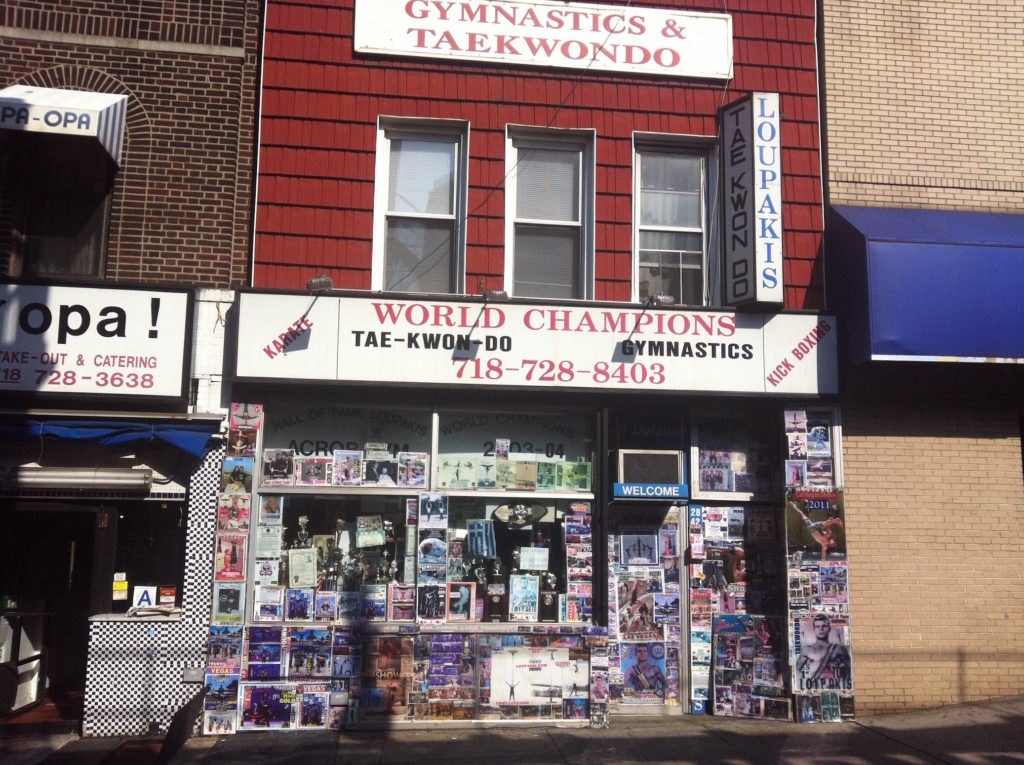
A fascinating business on 42nd Street near the elevated train.

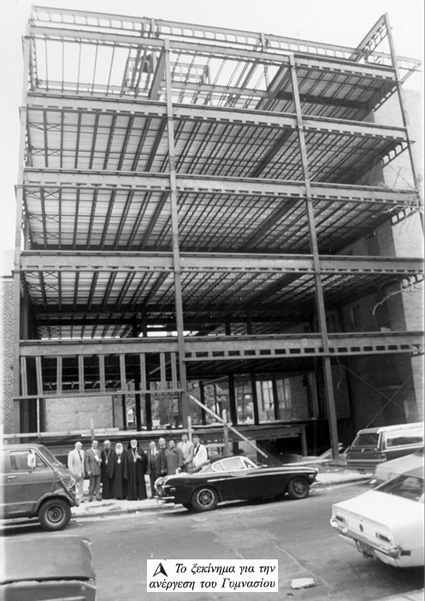
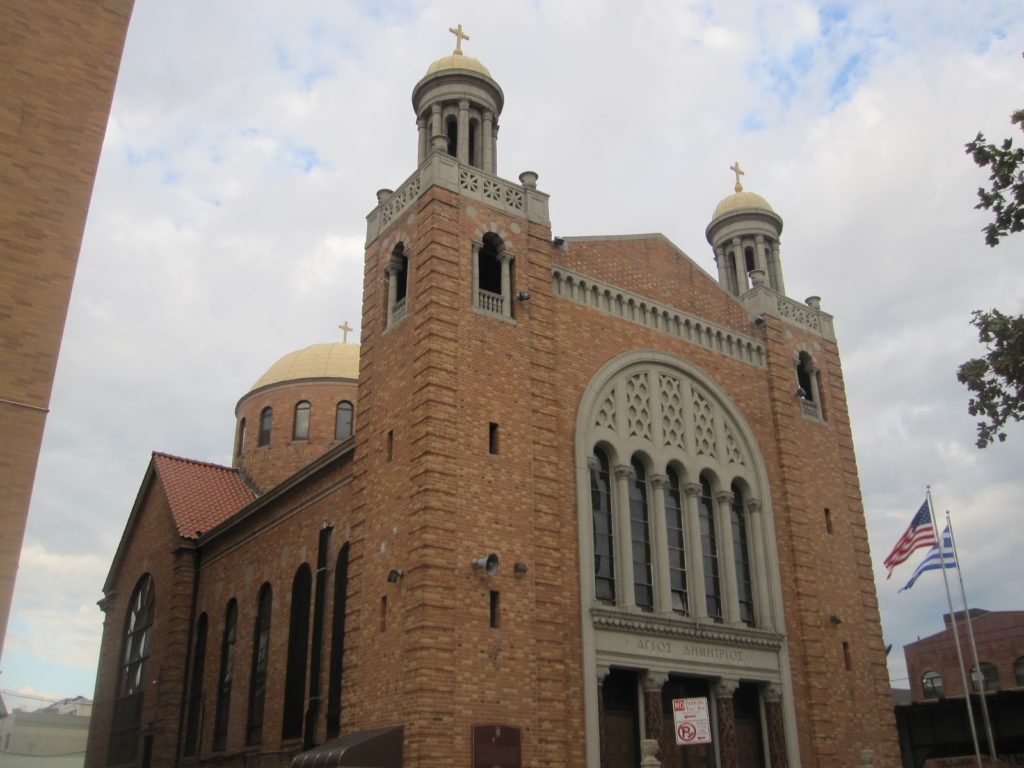
St. Demetrios Cathedral, during construction and how it looks today.

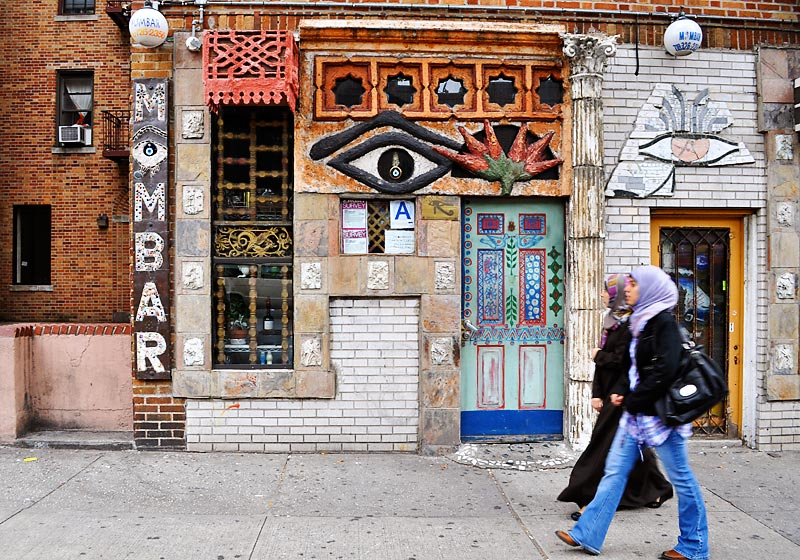
The restaurant Mombar in the ‘Little Egypt’ section of Astoria

Flickr/Mark Dodge Medlin
FURTHER READING
https://www.boweryboyshistory.com/2012/05/nostalgia-for-astoria-pool-early-robert.html
https://www.boweryboyshistory.com/2015/10/the-ghost-with-red-hair-two-hauntings-in-long-island-city.html

FURTHER LISTENING:

For more information on the Steinway’s origins, check out episode #92 —

The Museum of the Moving Image was featured in the Bowery Boys episode focusing on the city’s history with video games:

The late, departed Five Pointz, a graffiti space in Long Island City recently demolished to make way for condos, was featured in the Bowery Boys episode on the city’s history with graffiti art.

Categories
Queens History

The Fall of Ravenswood, Old Aristocratic Queens

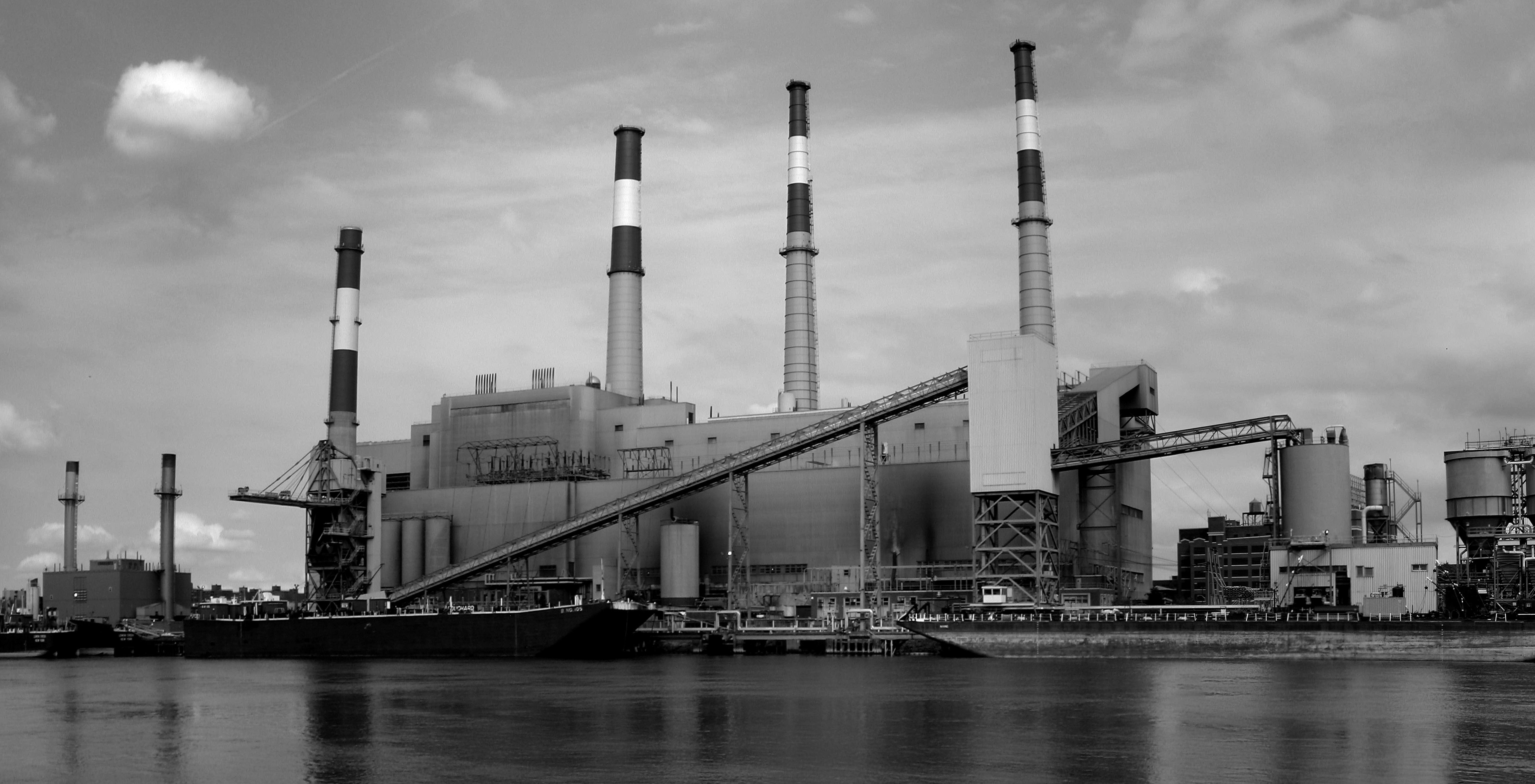
Ravenswood is a dramatic name for a New York City neighborhood and certainly wasted on its primary resident today — Big Allis, the Con Edison generating power station that provides the Queens waterfront with its most unattractive feature.

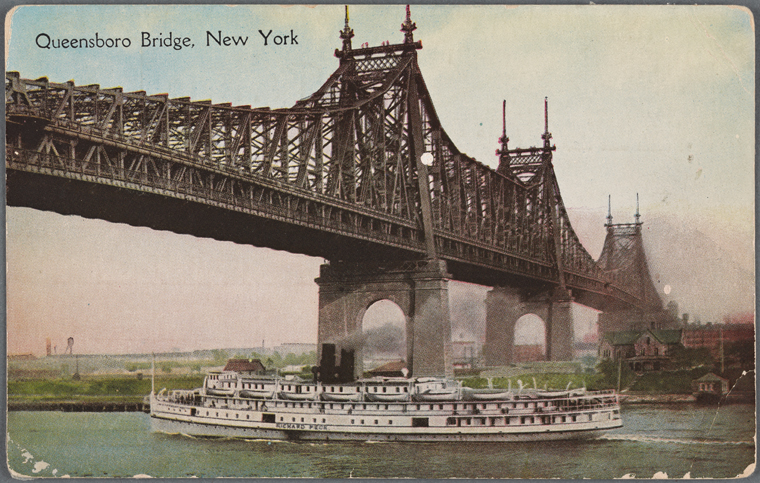
This pocket district is situated on the western edge of Queens just north of Hunter’s Point. Situated near the power station are two quiet parks — Queensbridge Park and Rainey Park which pay homage to the neighborhoods most striking landmark — the Queensboro Bridge — and the bridge’s most ardent proponent Dr. Thomas Rainey.

There’s little indication of it today, but over 150 years ago, this narrow ridge of land on the East River waterfront was once the most exclusive neighborhood on Long Island. It was indeed a ‘narrow’ stretch for the eastern side was hemmed in by a massive swamp. (The Ravenswood Houses sits on the spot of the old swamp.)

Among the first English settlers, the land was originally owned by Captain John Manning, then by Robert Blackwell. Both men also owned the island in the East River, today’s Roosevelt Island. (In fact, the island wore Blackwell’s name for over two centuries. Listen to our show on Roosevelt Island for more information.) It wasn’t until 1814 that a US mineralogist named Col. George Gibbs bought up this property and begin chopping up the lots for sale to wealthy merchants who desired large estates with a waterfront vista.

Nobody knows definitely where the name came from. One theory suggests it was named for the bishop of North Carolina — John S. Ravenscroft — and later altered. Author Vincent Seyfried gives a couple more romantic suggestions, “that there were a lot of native American ravens in the neighborhood, and that Ravenswood is a name figuring prominently in Sir Walter Scott’s “Bride of Lammermoor”, a historical romance popular in that day.”

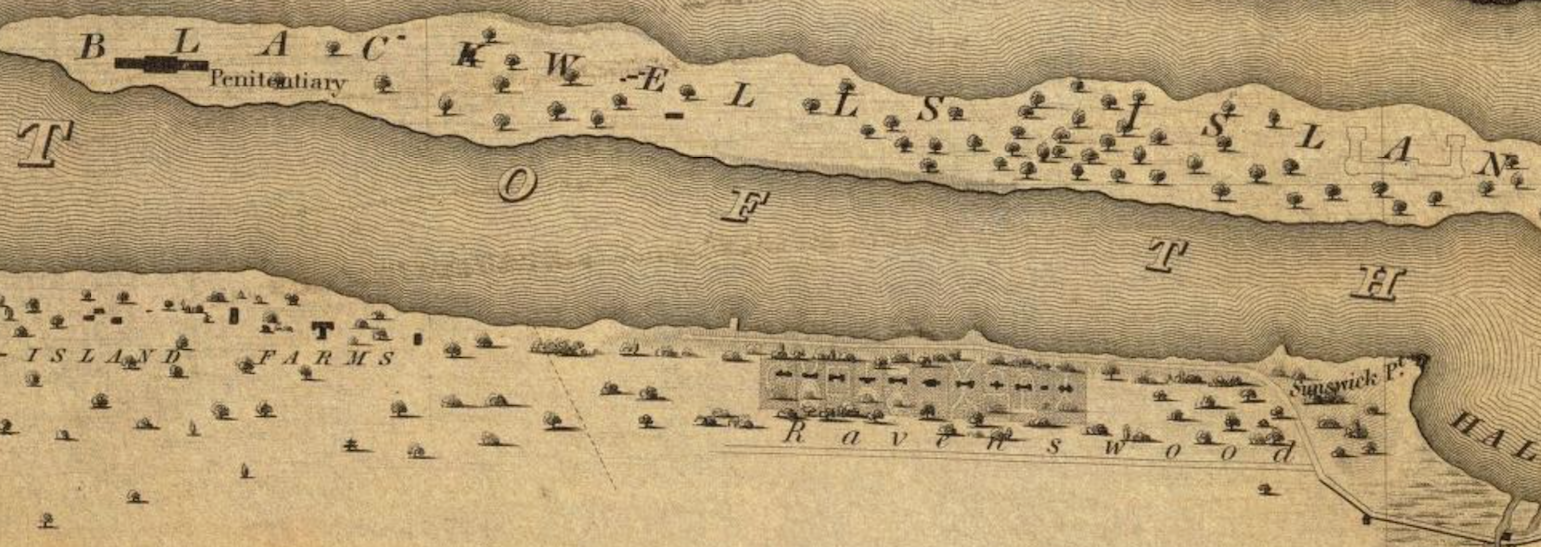
Below: From the David Ramsey Map Collection — a 1836 view of Blackwell’s Island and Ravenswood

By the 1850s, both Blackwell’s Island and Ravenswood were frantic with new construction — Blackwell with new public institutions like the almshouse, Ravenwood with sumptuous estates. From a local newspaper in 1852: “Buildings are going up in every direction and much taste is manifested by the owners in arranging and decorating their grounds. “

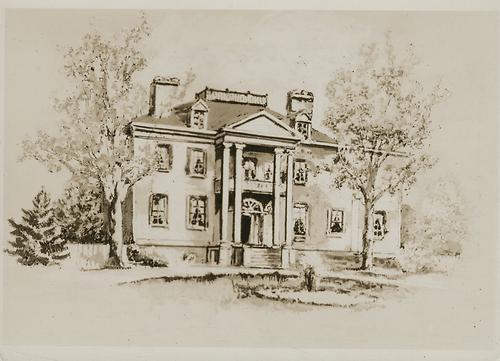
Below: The Delafield house which was owned by George Gibbs

Queens Archives

Most of the new residents were New York merchants enriched with the city’s growing fortunes, stimulated large by the construction of the Erie Canal. Almost none of them came from old families (who had manors in other parts of the region). Looking though a list of Ravenwood landowners from the 1850s, you’ll find mirror manufacturers, grocers, meat packers, doctors, insurance salesmen and Wall Street bankers.

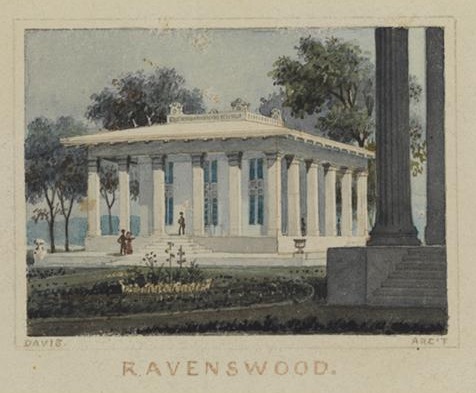
Below: An example of a Ravenswood property, from an engraving by Alexander Jackson Davis (ca. 1836)

From the Queens Gazette, 1953: “Ravenswood —  That beautiful village, so picturesquely located on the banks of the river, is improving rapidly and its present rate of increase will soon complete the chain of city and village which stretches almost from the Narrows to beyond Hell Gate.”

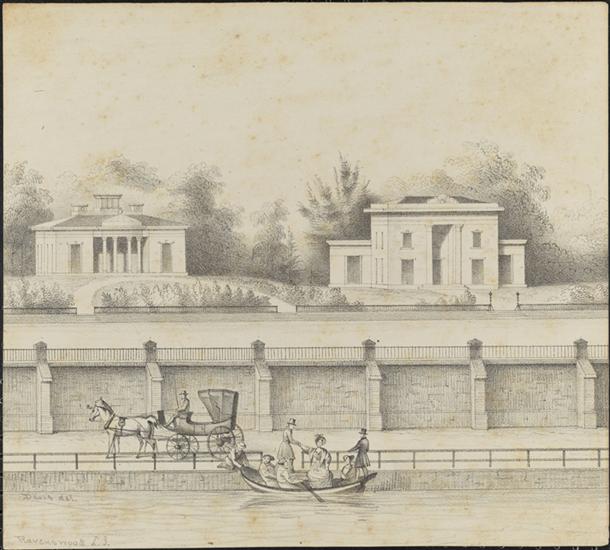
A unique feature of these new development was the public promenade (seen in the map image above). While lots were granted to the edge of the East River, a public walkway was carved into the properties so that neighbors could enjoy the impressive views.

Below: Ravenswood and its promenade, from an engraving by Alexander Jackson Davis (1850)

Courtesy Museum of the City of New York

Of course you might ask — wasn’t the back of Blackwell’s Island an unsightly mess by the late 19th century? It became the home of penitentiaries, asylums, workhouses and various hospitals. Well, by the time it got it got too unfortunate, the era of aristocratic Ravenswood was over.

Hunter’s Point, south of Ravenswood, was rapidly becoming a dense, industrial zone by the 1860s, endangering any bucolic peace that this new mansion row would have enjoyed. The swamp to the east — called Sunswick Swamp or Ravenswood Swamp — and the mosquitos it attracted created a serious health crisis with frequent malaria outbreaks.

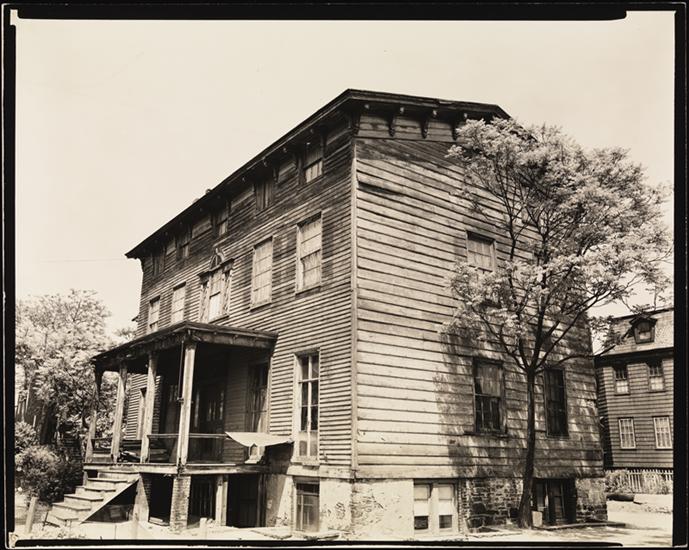
Below: A last holdout at Vernon Boulevard and 30th Road (ca. 1937)

Berenice Abbott, courtesy MCNY

In 1870, Ravenswood was absorbed into the district of Long Island City, encompassing all the village and hamlets of northwestern Queens, including Astoria and the new company village of Steinway & Sons. While this incorporation was a great benefit to the region overall — rapidly bringing utilities and municipal support — it eventually destroyed the small residential haven of Ravenswood.

A gas works was constructed in 1875 on the waterfront at 37th and 38th Avenues, the precise spot today of Big Allis. Residents almost immediately began fleeing.

In 1877, the Newtown Register lamented, “The aristocratic neighborhood of Ravenswood is beginning to be invaded by factories. We observe a large brick structure run up which will be devoted to canning fruits. The location of this factory is at the southern end of the neighborhood. The gas house on the water’s edge near the old Blackwell house may be considered another invasion, and like Union Square, New York, we may suppose these temples of industry to be ‘the beginning of the end’. [This is reference to New York’s Gas House District, on the spot of today’s Stuyvesant Town – Peter Cooper Village.]

Already one aristocratic mansion is converted into a summer hotel and restaurant. Such is change, such is life.”

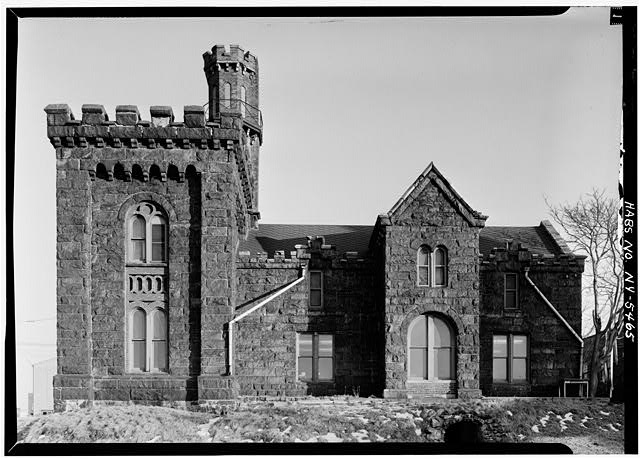
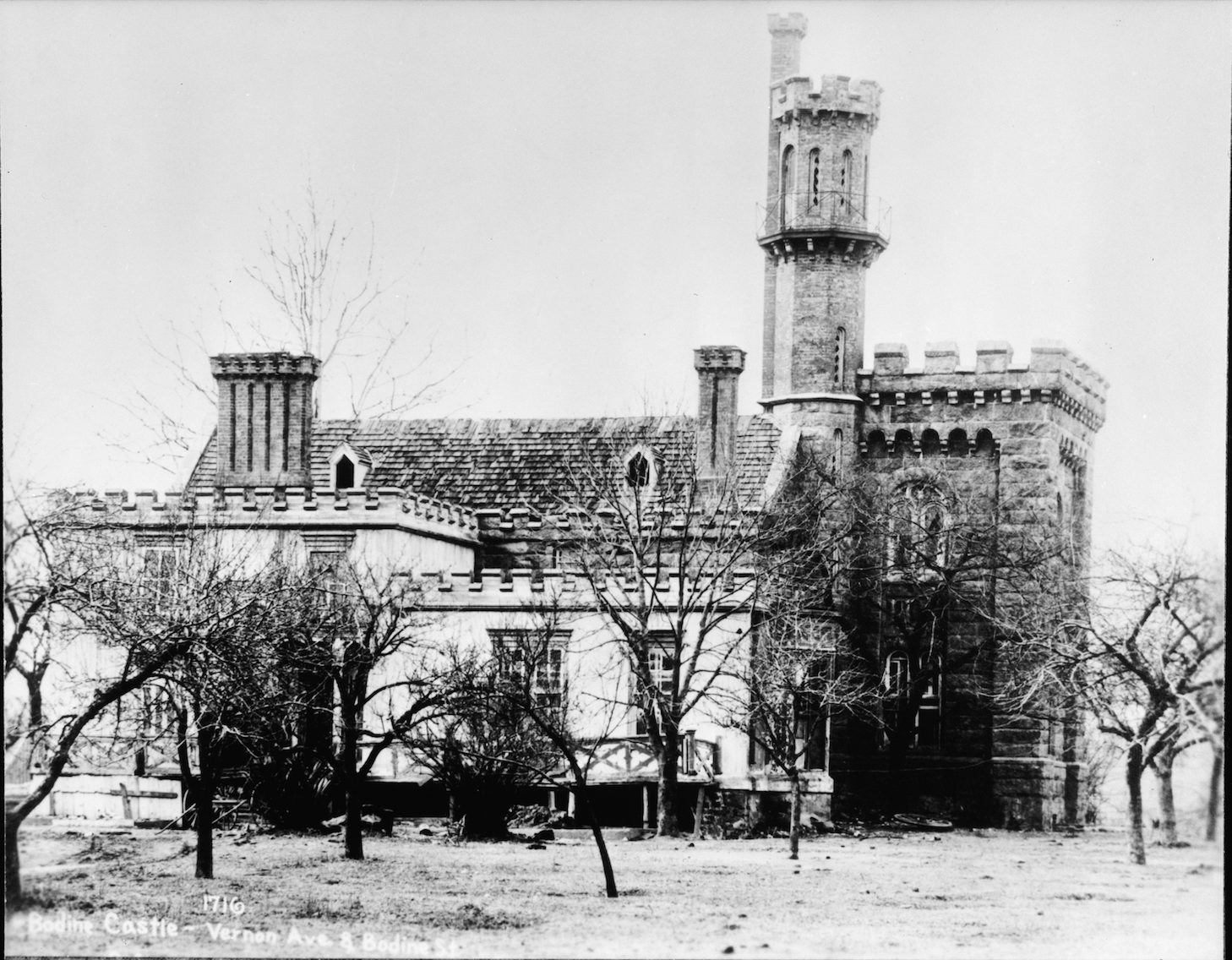
By 1905 even the promenade was gone. All traces of Ravenswood were eliminated save one — Bodine Castle at Vernon Boulevard and 43rd Avenue (pictured below). It too was demolished in 1966.

The area is now best known for this:

Courtesy Harald Kleims/Wikimedia

[My thanks to Vincent F. Seyfried and the Greater Astoria Historical Society for help with this research.]

Categories
Pop Culture

The Bowery Boys at New York Comic Con: Talking the history of comics and the legacy of Jack Kirby

The Bowery Boys’ Greg Young, an aficionado of comic strip and comic book history, will be appearing at two events this week tied to New York Comic Con.  The first event on Monday is general admission in the East Village, so come on out to kick off the week. The second event is at NYCC itself, held at the Javits Center, on Sunday, the convention’s last day.

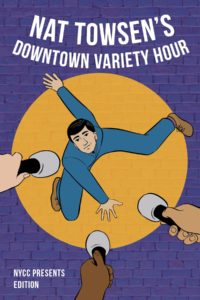
Downtown Variety: Special New York Comic Con 2017 Edition!

October 2, 2017, 7:30PM – 8:30PM

UCB East Village (153 E. 3rd Street)

Hey there, culture lovers! It’s time for another enticing installment of your favorite variety show with that loquacious local, Nat Towsen (host of the Bowery Boys live show this past April). This month, Nat’s teaming up with the gregarious geeks at New York Comic Con to bring you an enlightening, educational episode all about how New York City created our favorite much-maligned medium — the comic book.

We’ve gathered a pulchritudinous panel of the foremost fanatics on the topic, as well as some expert entertainers. There will be laughter, drama, and you just might learn something too! In this issue: Myq Kaplan (Late Show, CONAN), Lorraine Cink (Marvel, Hero Complex), Greg Young (The Bowery Boys) and Peter Sanderson (comic book historian, researcher at DC and Marvel).

With New York City trivia and with special prizes from the show’s sponsors Two Boots Pizza, Forbidden Planet NYC & New York Comic Con.  Tickets just $7! (A NYCC ticket is NOT required to attend.)

Get tickets here: bit.ly/NTDVH52


Peter Sanderson appeared with Greg on episode 187 of the Bowery Boys podcast — SUPER CITY: New York and the History of Comic Books. Listen to it here:


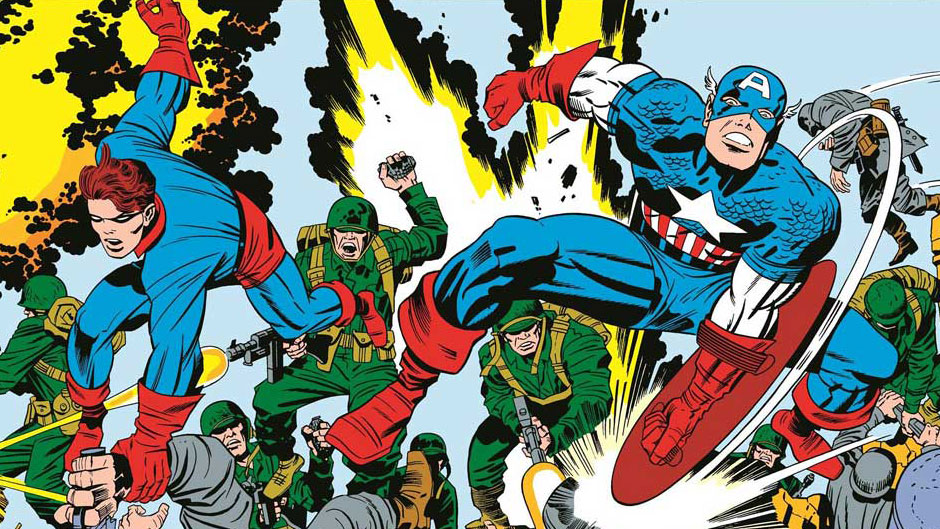
During the show Greg talked about the legacy of creator Jack Kirby. And he’ll be doing it live at New York Comic Con!

CELEBRATING 100 YEARS OF JACK KIRBY: THE KING’S NEW YORK

October 07, 2017, 4PM – 5PM

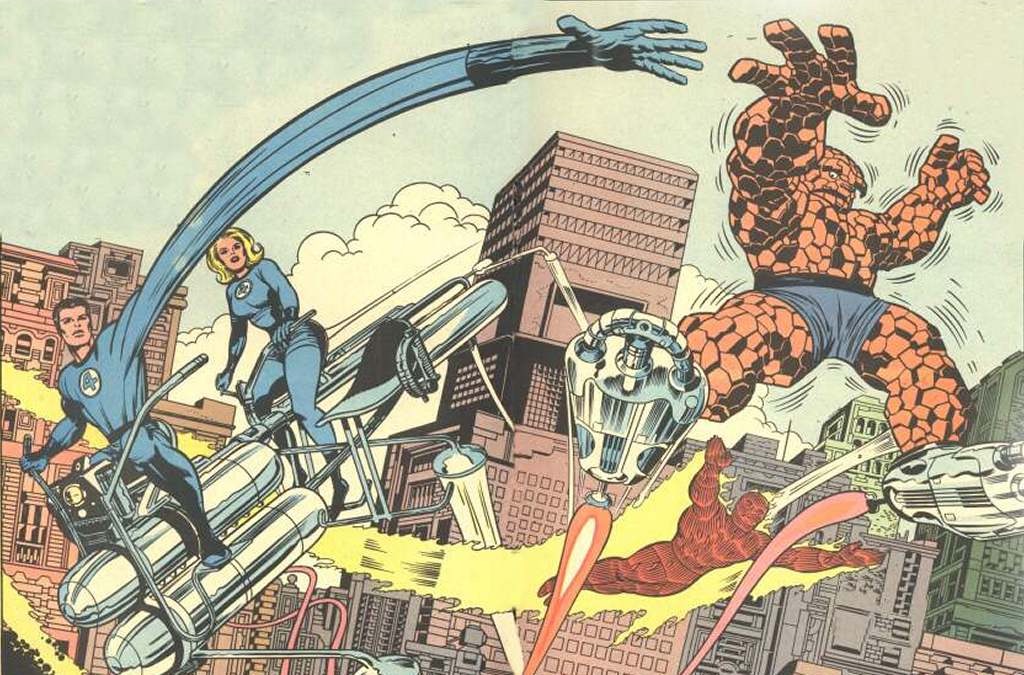
Throughout 50+ years of Marvel Comics, one of the most important characters to grace its pages has been the city of New York itself. Someone who realized this, perhaps the most, was Jack Kirby.  Born in the Lower East Side, Jack applied his experiences of life in the city that never sleeps to the Marvel Universe in numerous iconic ways – from Yancy Street to the coming of Galactus, to the scrawny kid from New York Steve Rogers.  Join a host of Mighty Marvel Guests along with famed New York podcaster & historian Greg Young of the Bowery Boys to trace the history of the King’s New York and its impact on the Marvel Universe in this can’t-miss panel.

You’ll need an NYCC ticket to get into this event.

Nat Towson postcard design by Alyssa Varner. Comic art courtesy Marvel Comics
Categories
Neighborhoods Podcasts

The History of Columbus Circle: A Century of Controversy

Columbus Circle, a center of media and shopping at the entrance to Central Park, has a history that, well, runs against the grain. Counter-clockwise, if you will.

LISTEN TO OUR NEW EPISODE HERE:

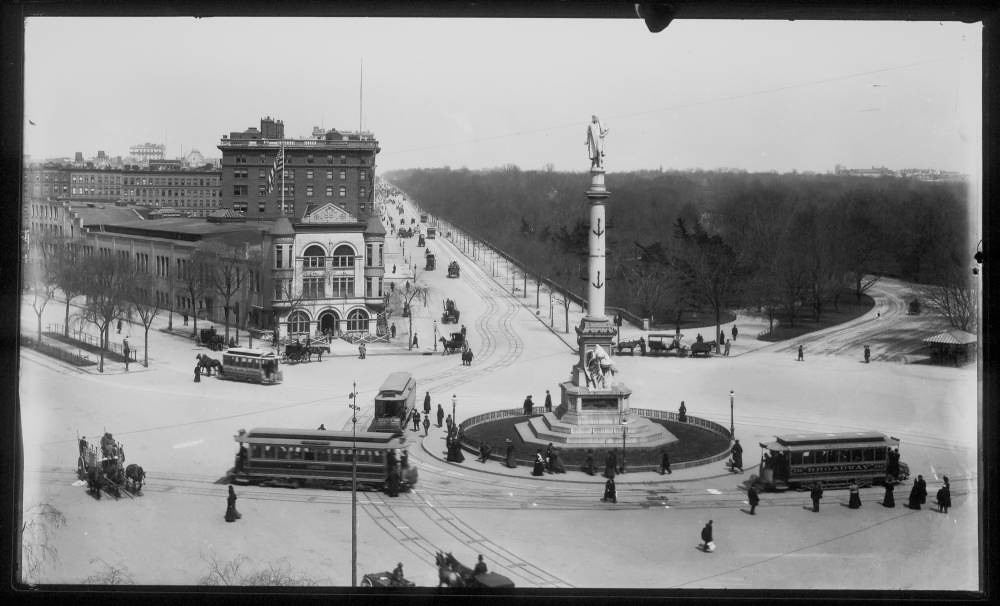
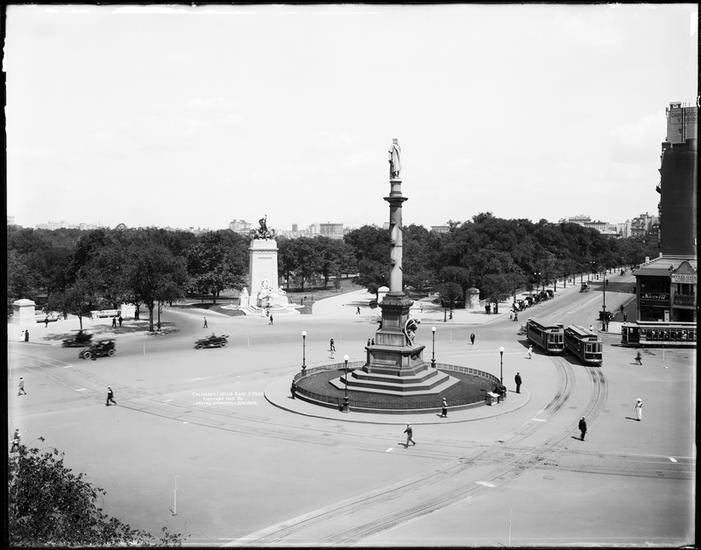
When the park was completed in the mid 19th century, a ‘Grand Circle’ was planned for a busy thoroughfare of horse-drawn carriages. A monument to the Italian explorer Christopher Columbus was placed at its center in 1892, bought and paid for by New York’s new Italian community.

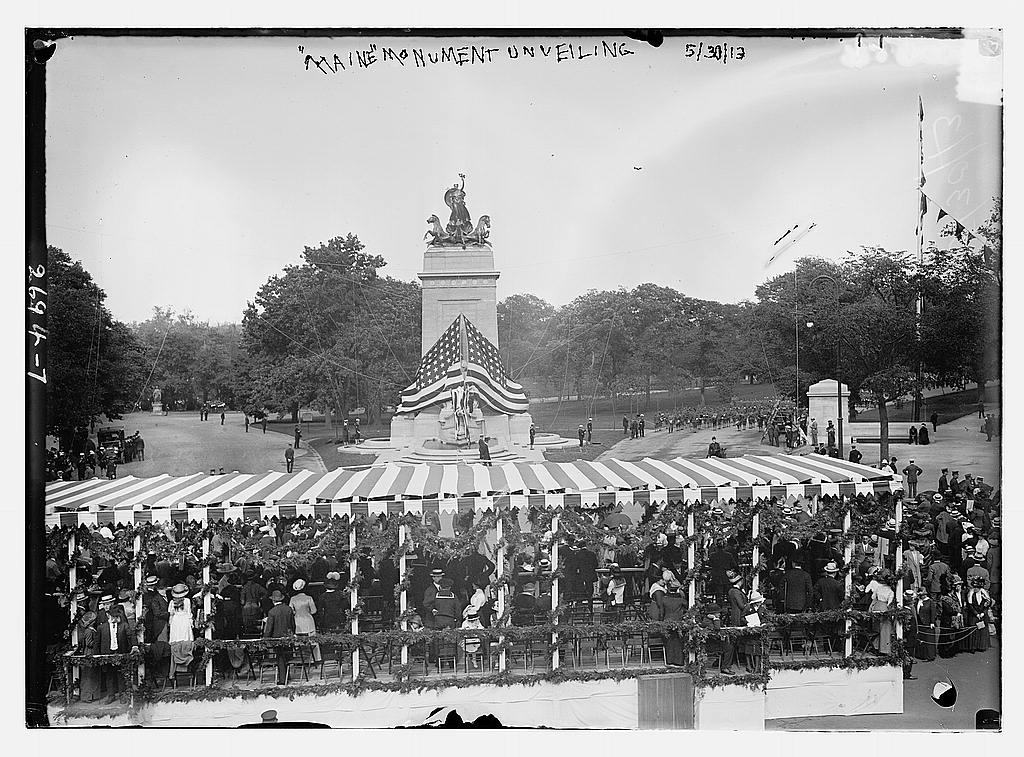
But the circle had awkwardly adjusted to modern development, and architecture which has graced its perimeter had been uniquely scorned — from the ‘confusing’ Maine Monument’ to Robert Moses’ Coliseum, a dated convention center which eliminated a street from the city’s grid.

Join us for a look at this unusual section of New York City, a place of both music history and real estate headaches. And what should the city do about that Columbus statute, embroiled in a modern controversy?

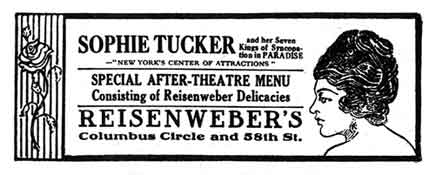
STARRING: William Phelps Enos, Donald Trump, Sophie Tucker and a man with the extraordinary name of Teunis Somerindyke.

To download this episode and subscribe to our show for free, visit iTunes or other podcasting services or get it straight from our satellite site.

You can also listen to the show on Stitcher streaming radio or your favorite podcast players

___________________________________________________________________________

The Bowery Boys: New York City History podcast is brought to you …. by you!

We are now producing a new Bowery Boys podcast every week. We’re also looking to improve and expand the show in other ways — publishing, social media, live events and other forms of media. But we can only do this with your help!

We are now a creator on Patreon, a patronage platform where you can support your favorite content creators.

Please visit our page on Patreon and watch a short video of us recording the show and talking about our expansion plans.

If you’d like to help out, there are six different pledge levels. Check them out and consider being a sponsor.

We greatly appreciate our listeners and readers and thank you for joining us on this journey so far.

________________________________________________________________________

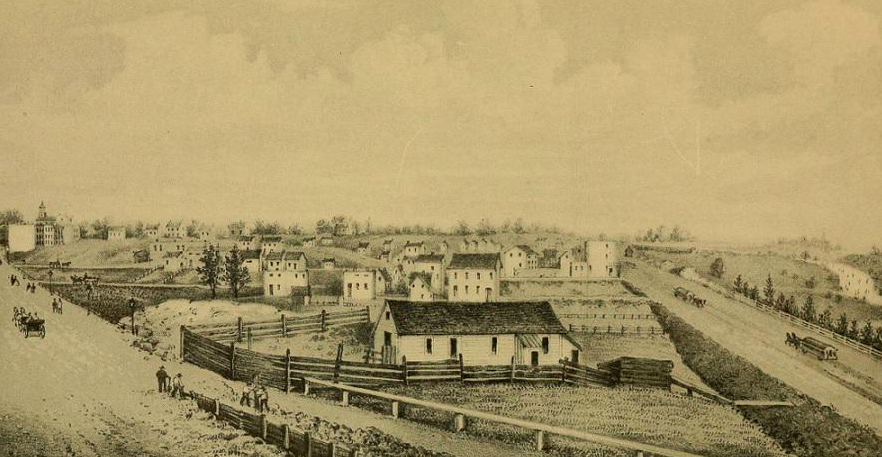
The Teunis Somerindyke farm. From this print, you can see Broadway (Bloomingdales Road) to the left and Eighth Avenue to the right, with a young Central Park on the far right side.

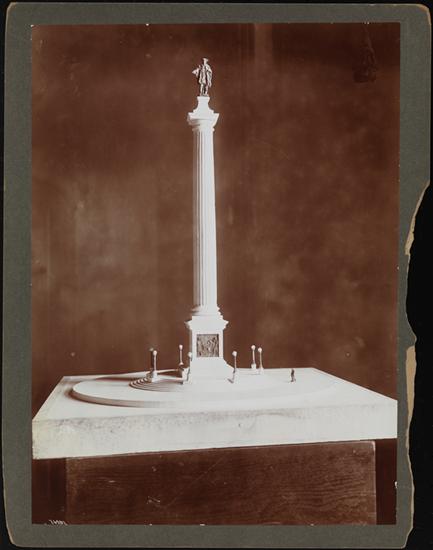
A model made of the Columbus Circle monument by its sculptor Gaetano Russo.

MCNY

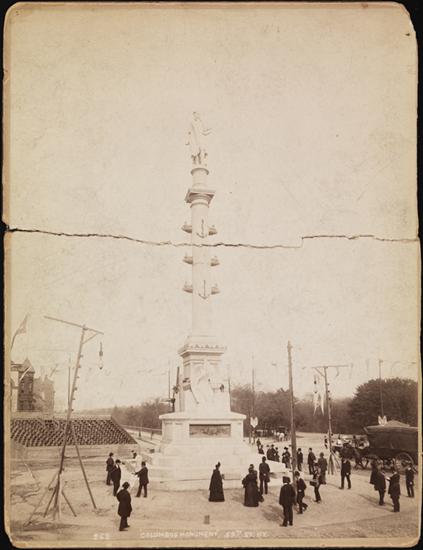
The monument in 1895, a few years after its prominent debut at this pivotal intersection.

MCNY

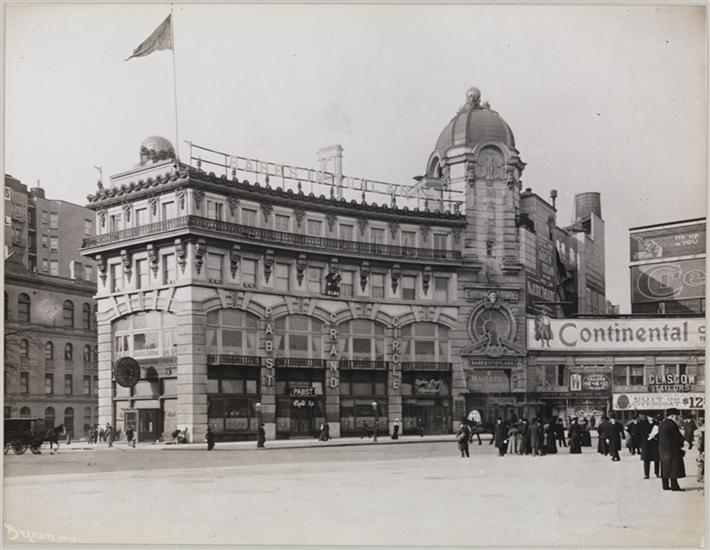
On the southwest side of the circle in 1903, one could find both the Majestic Theatre and the Pabst Grand Circle Hotel

MCNY

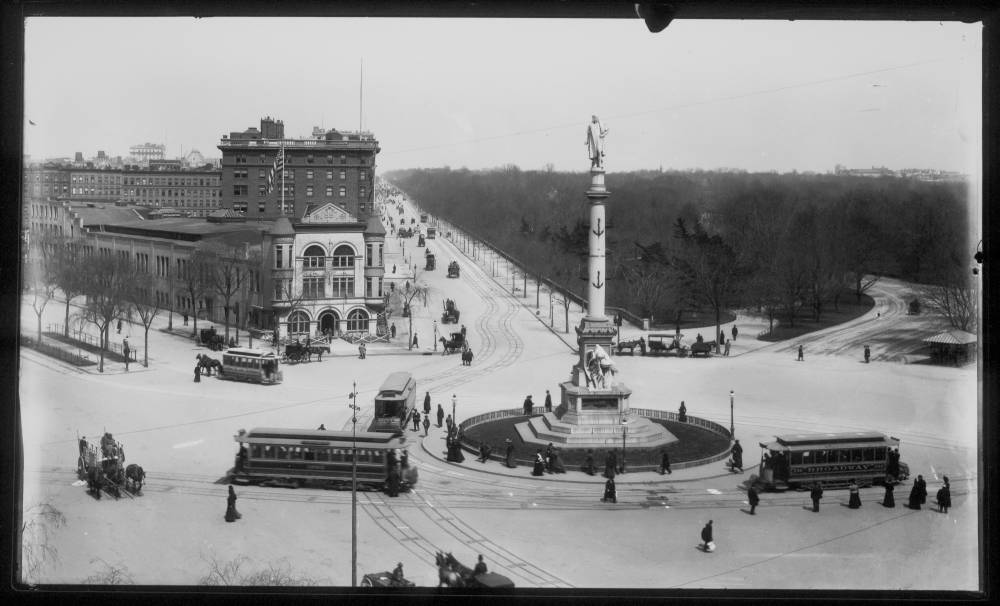
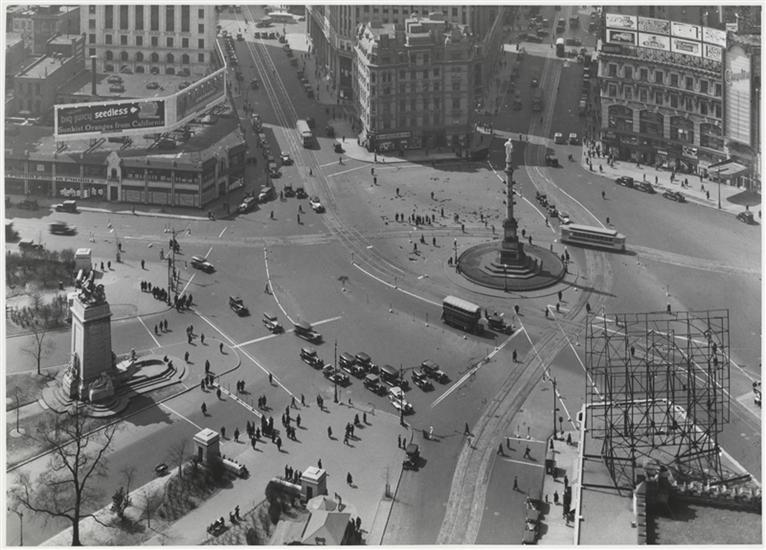
The Circle in 1905 and 1913, before and after the Maine Monument is installed. These images gives perfect illustration to the chaotic scene around the circle. People could just go wherever they liked!

Library of Congress/George Hall
MCNY/Irving Underhill

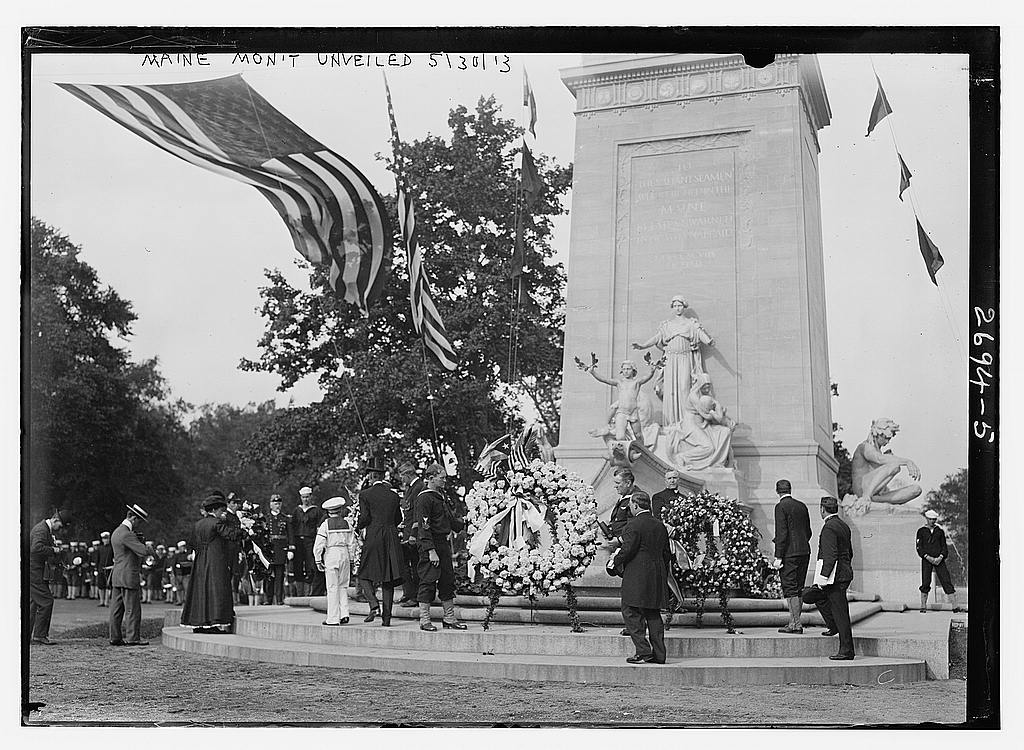
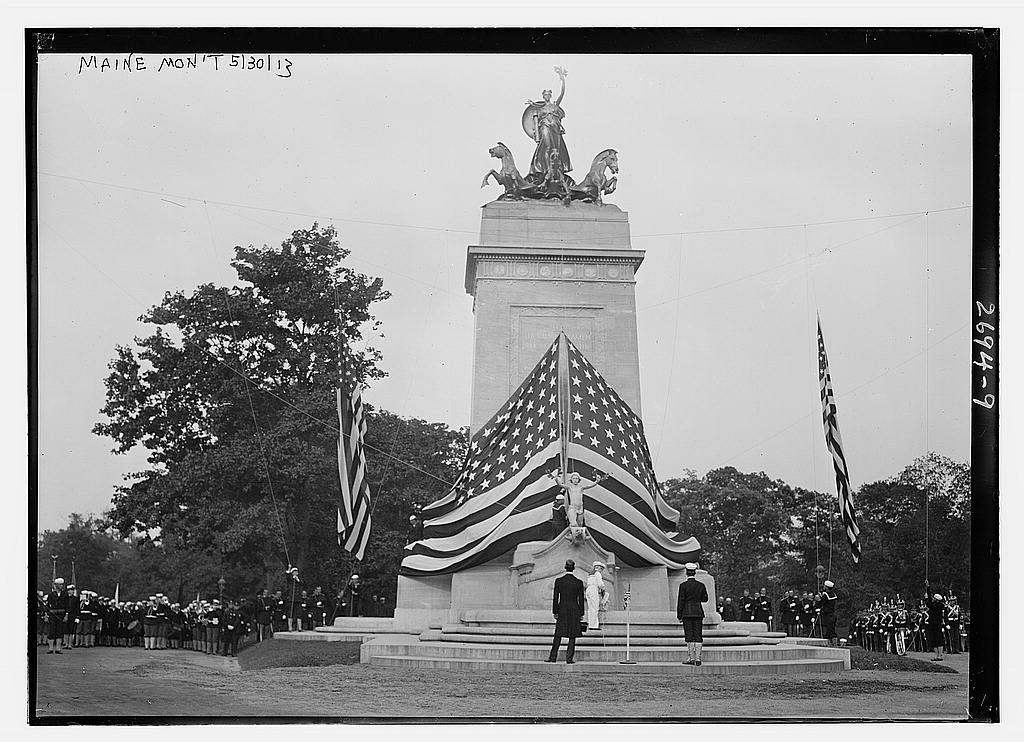
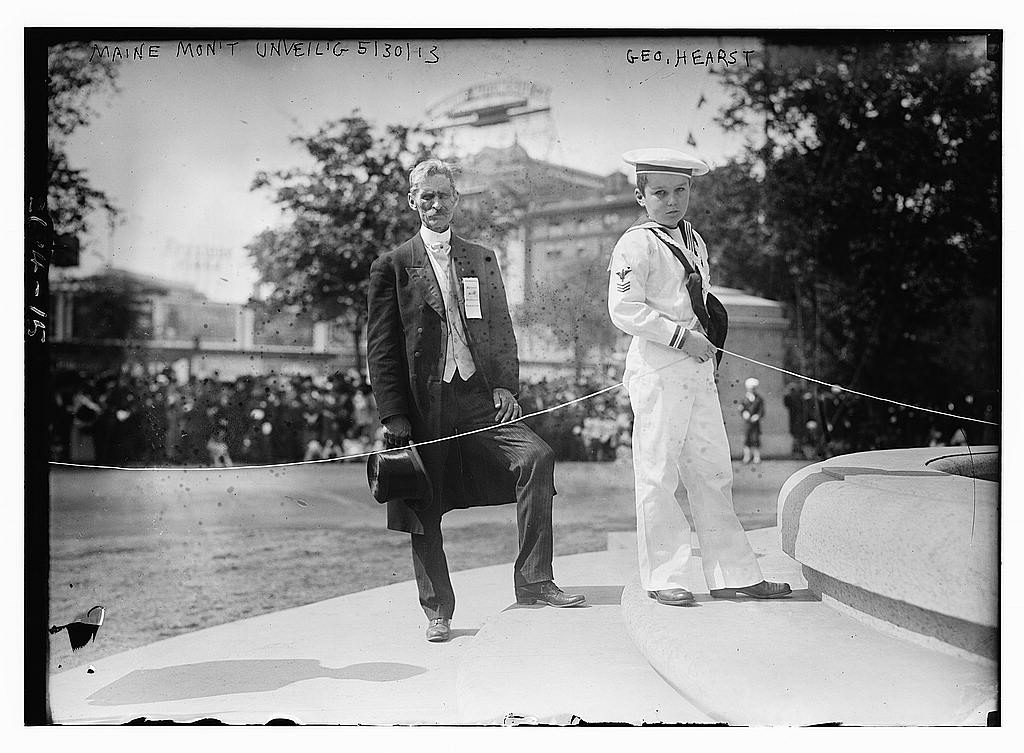
Images of the unveiling of the Maine Monument in May 1913 (courtesy Library of Congress/Bain Collection)

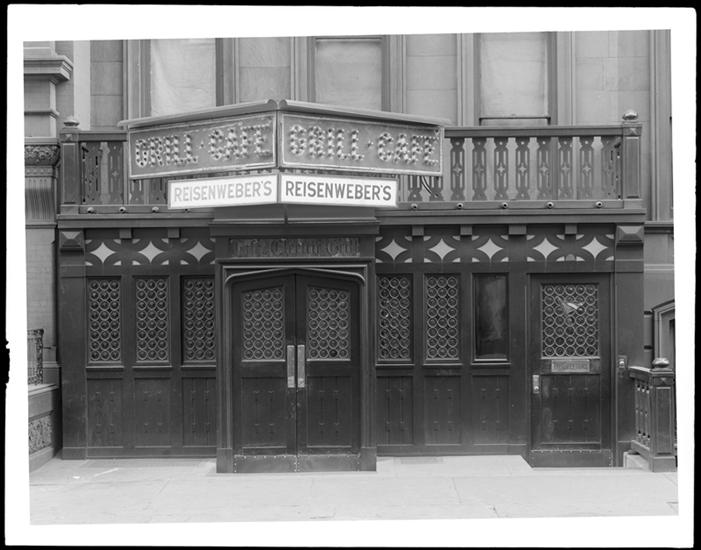
The entrance to Reisenweber’s in 1910. The place was packed through most of the decade with diners and cabaret lovers.

MCNY

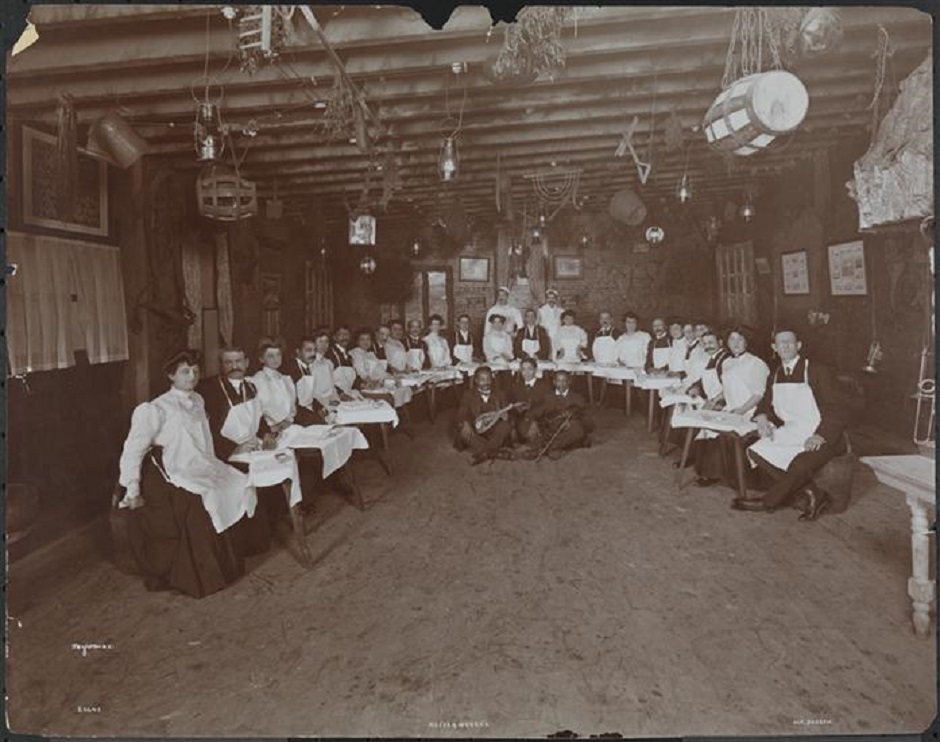
The staff and musicians of Reisenweber’s (dated 1905):

From the roof of the Century Apartments, early 1930s. Only the Columbus statue and the Maine Monument stand here today.

MCNY/Samuel H. Gottscho

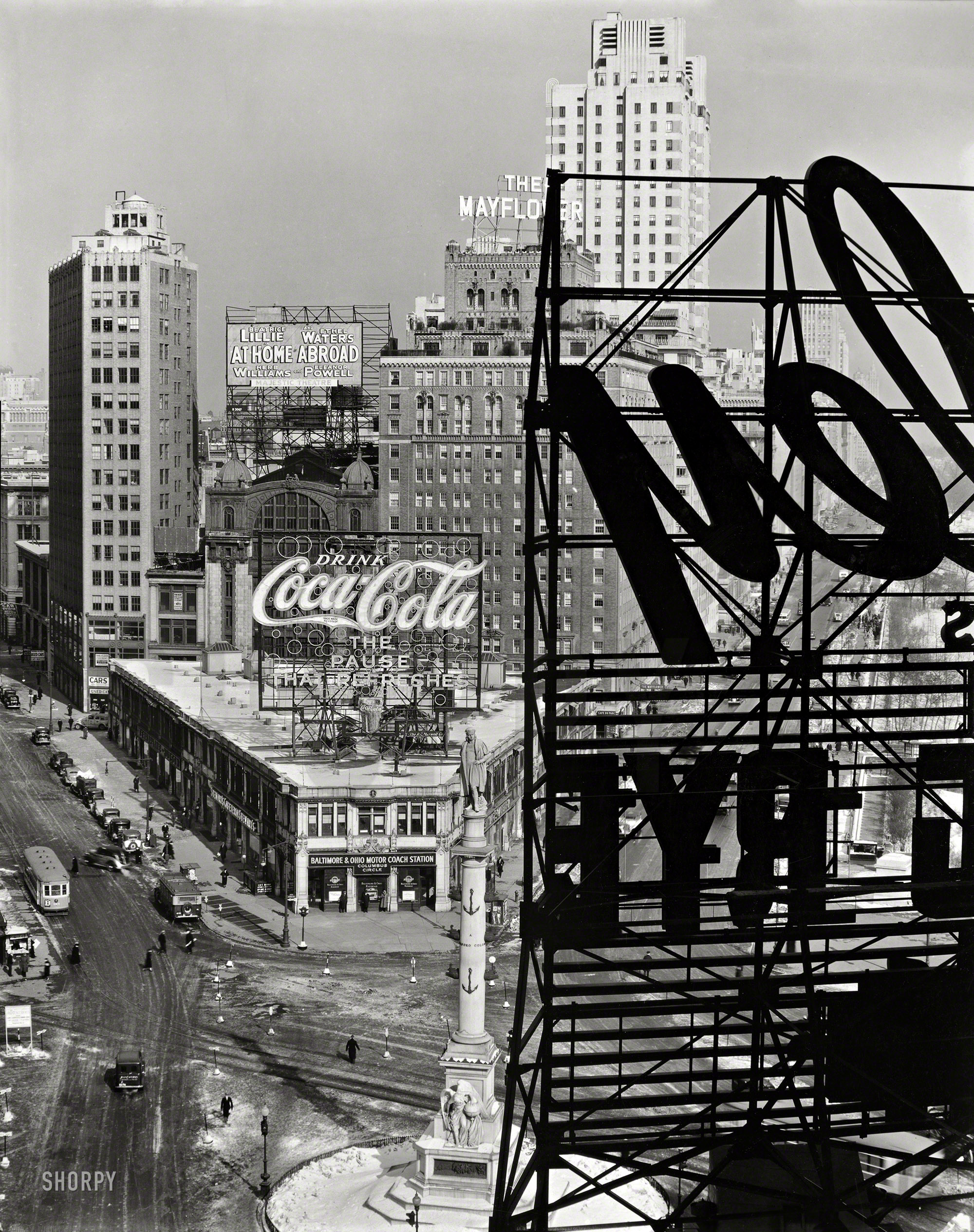
Looking north from Columbus Circle from the top of the General Motors building, circa 1936. The triangular building sits on the site of the old Somerindyke farm.  (Image courtesy Shorpy. Click into their site to zoom in to some amazing detail.)

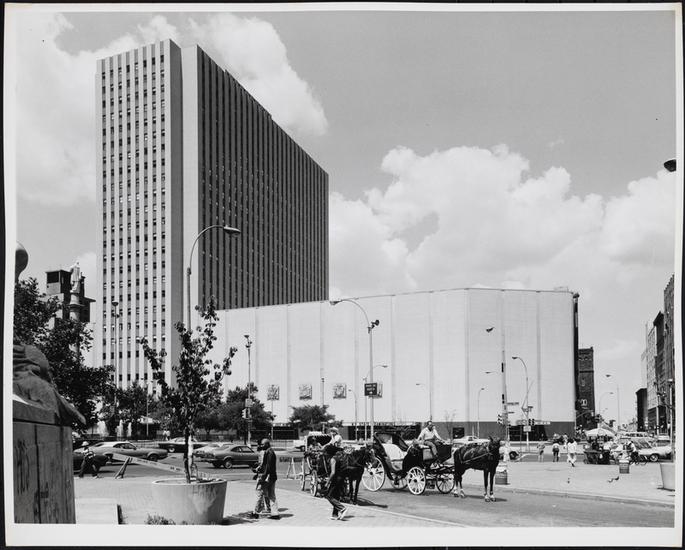
The New York Coliseum in the 1970s, a rather dour and uninspired component of Columbus Circle.

MCNY/Edmund Vincent Gillon

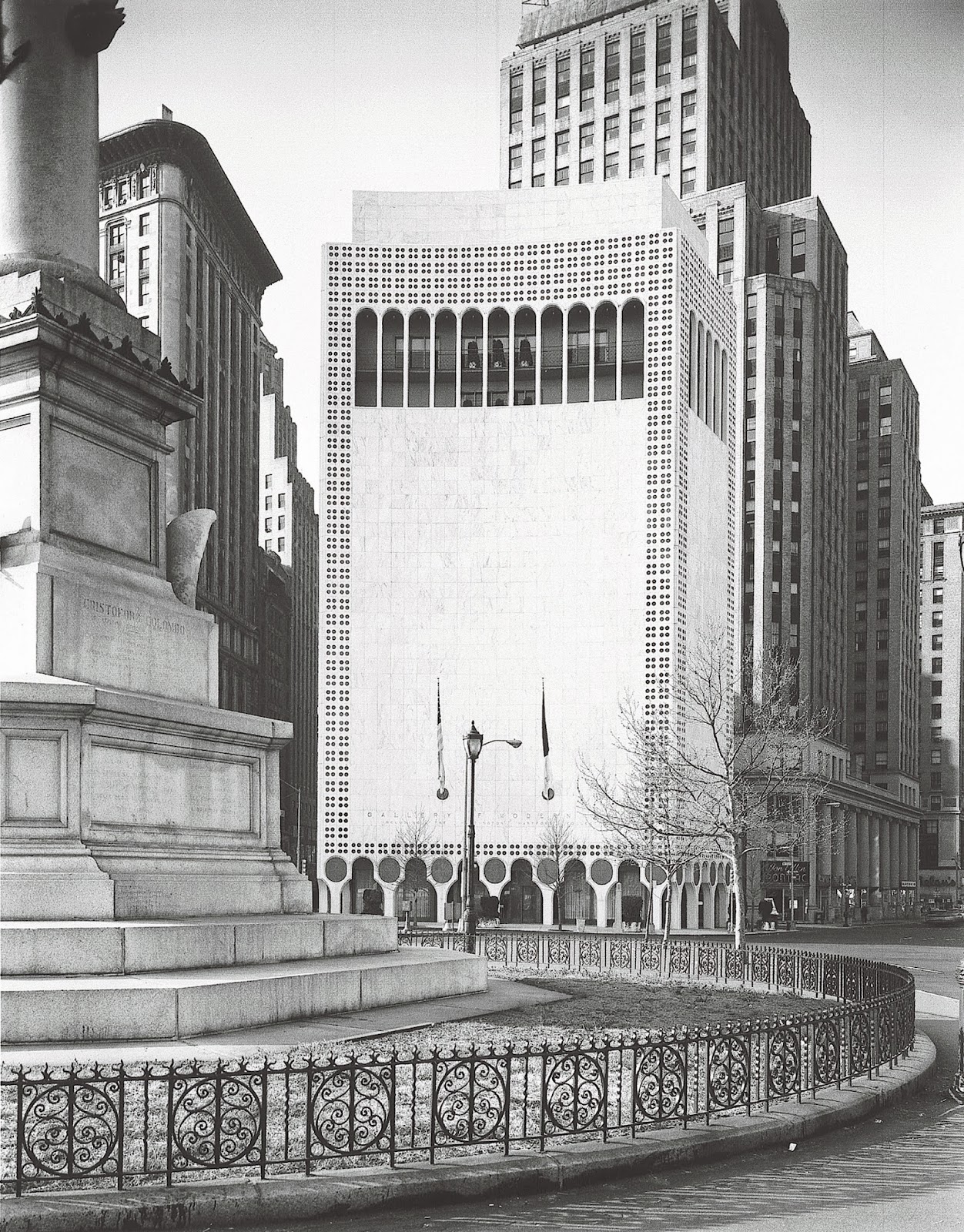
Behold — the Edward Durrell Stone-designed home of the Gallery of Modern Art

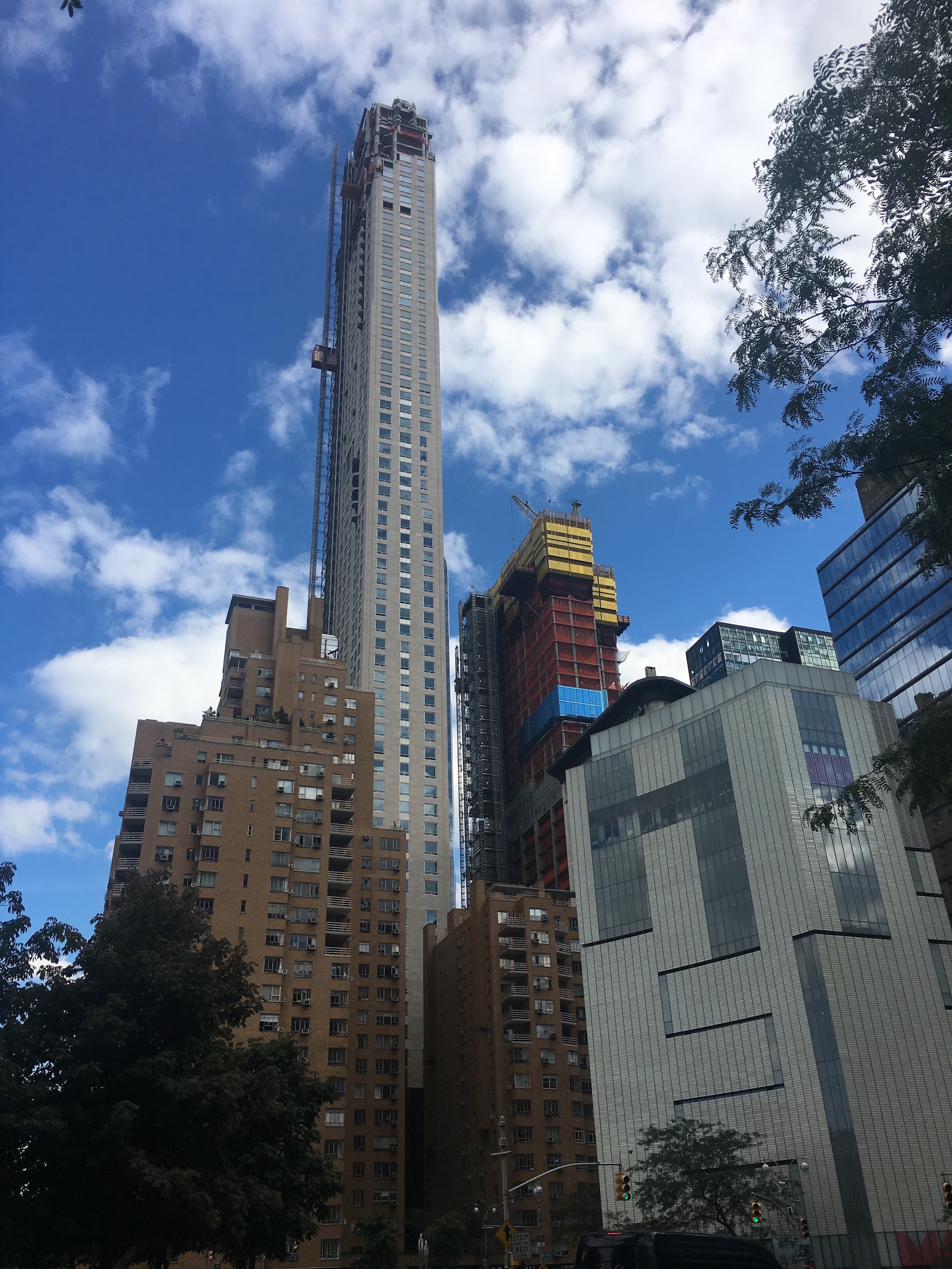
The newly redesigned 2 Columbus Circle — home of the Museum of Arts and Design — presents a more pleasant face to the intersection. In the background, the area is dwarfed by the super-tall skyscrapers of 57th Street.

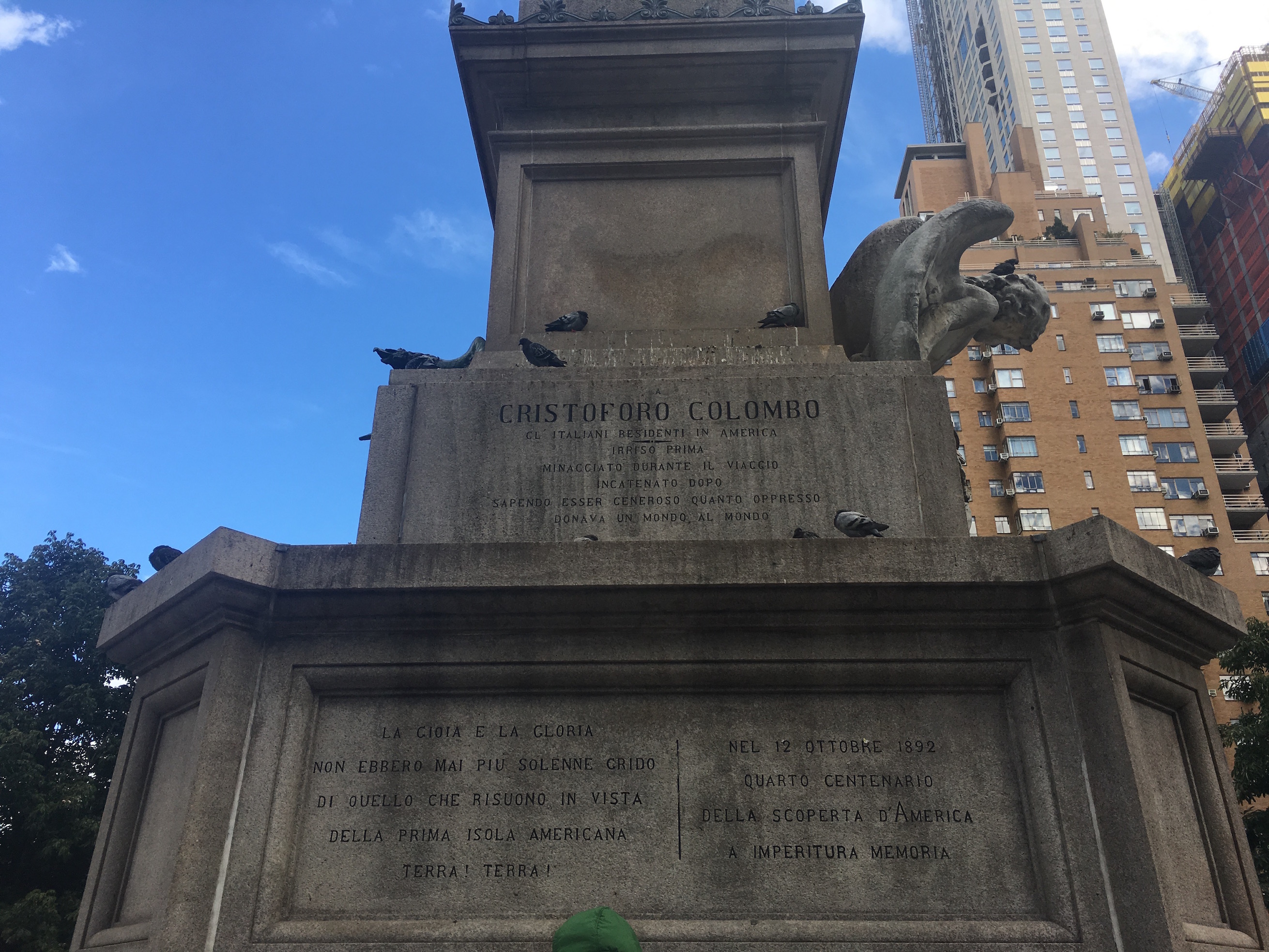
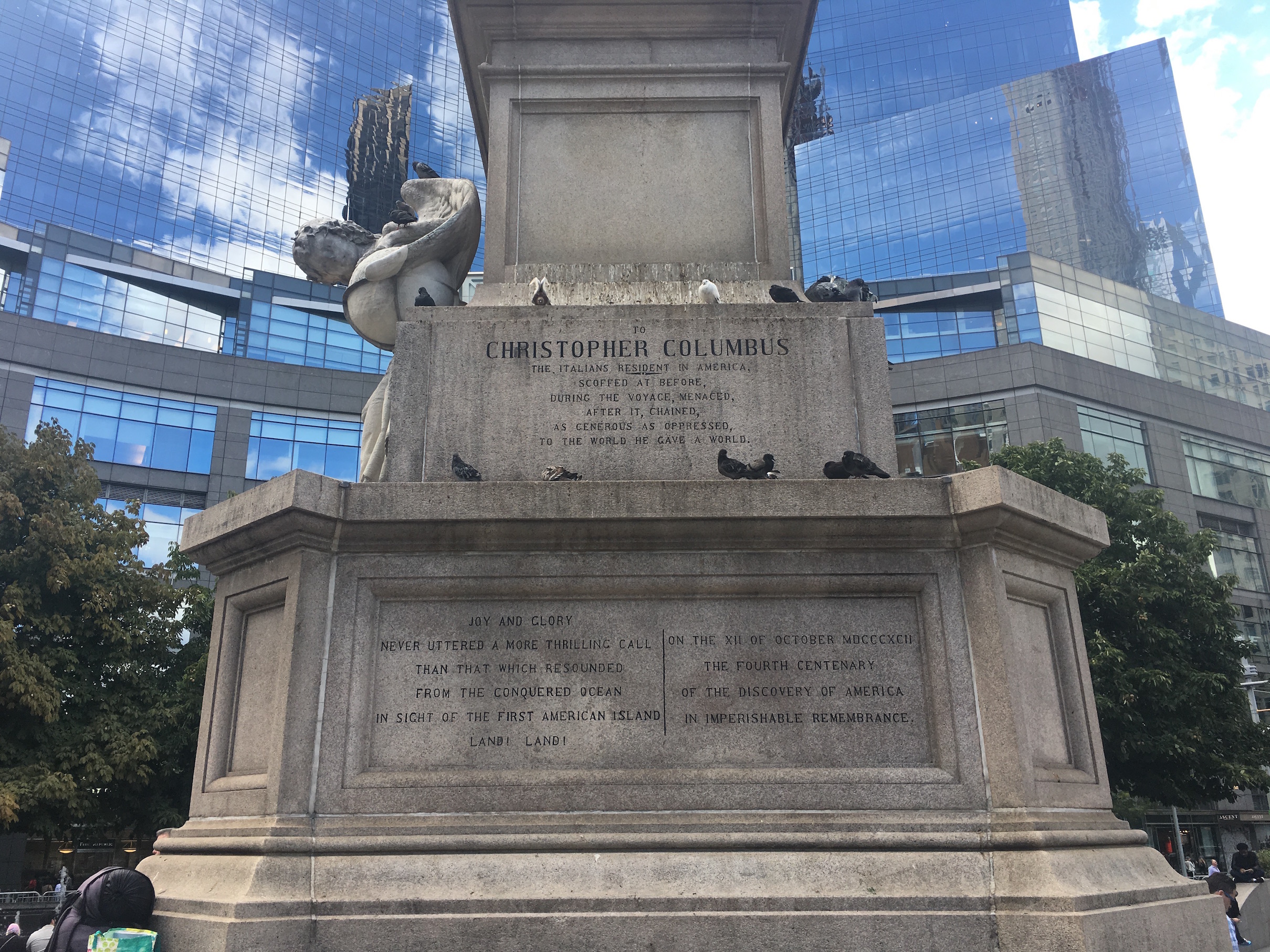
The Columbus statue has no contextual marker explaining its importance to the Italian-American community; only text on two sides of the monument give it meaningful explanation.

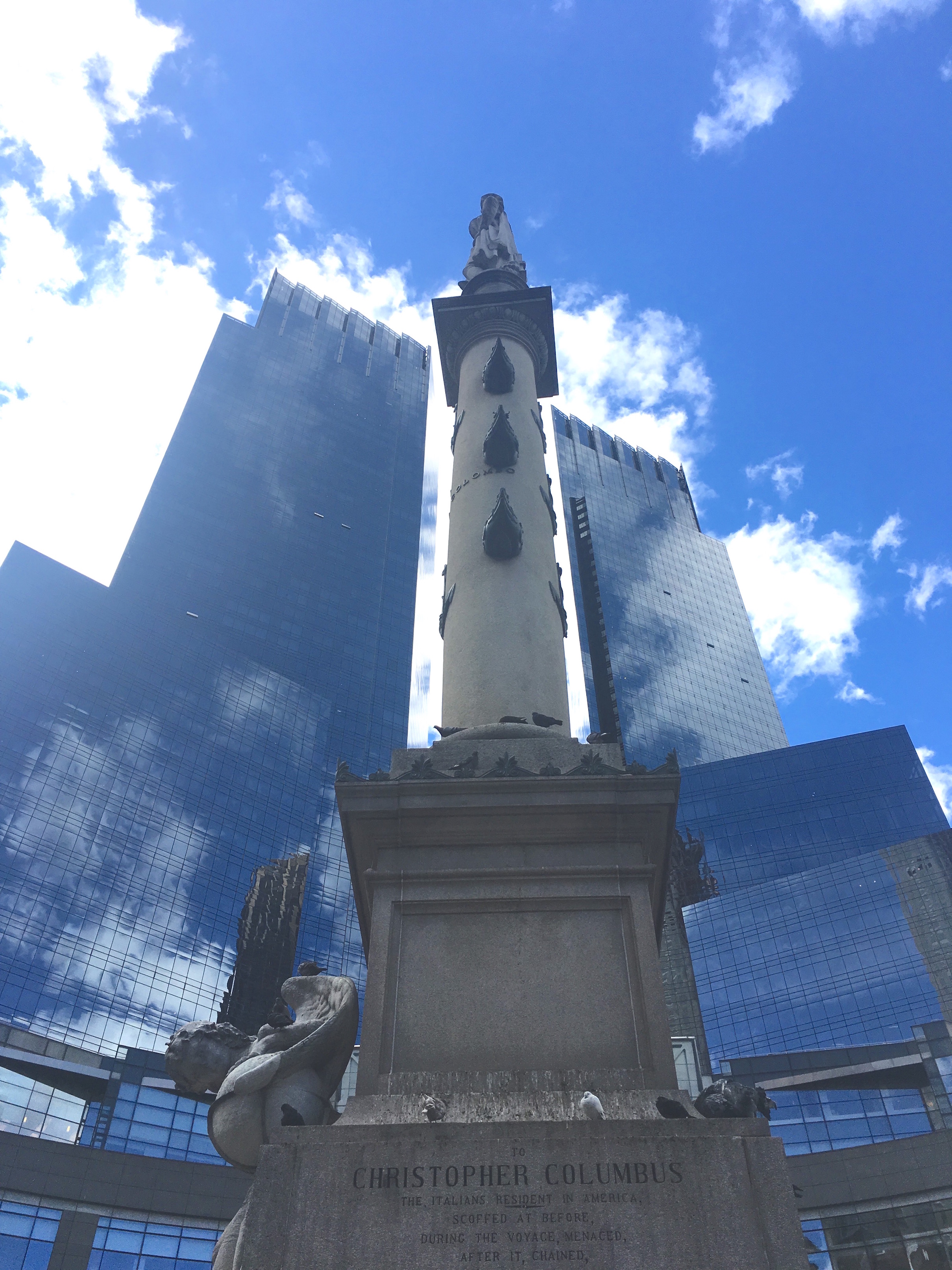
Columbus next to the Time Warner Center:

Categories
Bowery Boys Bookshelf

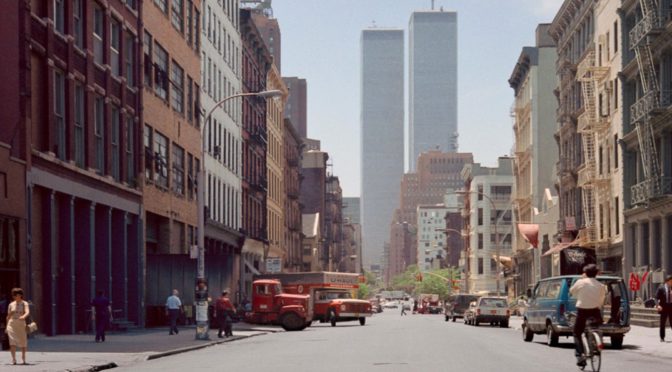
At the Strangers’ Gate: Becoming a New Yorker on the streets of 80s SoHo

The 1980s in New York City were defined by glossy magazines and gallery shows, the earnest giving way to irony, the facile passed off as profound. What would ring hollow in the following decade might have seemed still crisp and dangerous in the Ed Koch years.

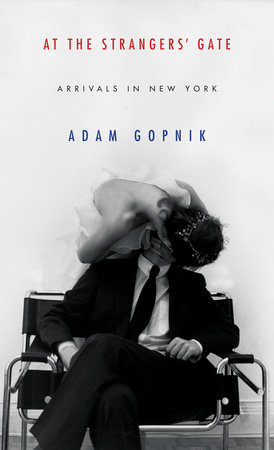
At the Strangers’ Gate
Arrivals In New York

by Adam Gopnik
Penguin Random House

Many chroniclers of this period fall victim to its excesses, treating guest lists like poems. Not Adam Gopnik, the New Yorker writer who resides within his written settings retaining a voice of wonder and restraint.  At the Strangers’ Gate: Arrivals in New York, Gopnik’s lovely recollection of New York during this heady, escapist decade, recounts tales of tiny studio apartments and dinners with iconic photographers with equal measures of joy and admiration.

The book is divided into two parts, named for two separate apartments which housed the writer and his wife Martha. The Blue Room was an uncomfortably small studio on the Upper East Side. The Big Store was a serviceable loft space in SoHo that happened to leak molasses. (It was located in an old candy factory.) It’s through these two awkward spaces and via the extraordinary professional connections Gopnik makes in those neighborhoods that the author and his wife — two Canadians — become New Yorkers.

I admired the first section, detailing Gopnik’s first jobs at the Frick Art Reference Library and the Museum of Modern Art (where he gave tours), as well as his absurd responsibilities at GQ Magazine, conjuring grooming advice from thin air. (“Yet, having invented a rule about, say shaving in the shower, I followed it religiously. I became a true believer in a faith I fabricated.”)

But I loved the second section as Gopnik takes the reader on an impassioned tour of SoHo, leading us through restaurants and lofts, detailing a Saturday gallery stroll with such vivid specifics that you can probably use that chapter as a virtual, self-guided walking tour. We also get a glimpse of TriBeCa, its prominence as a chic art and food destination on the rise.

Certainly he glamorizes SoHo’s rich art scene, already in decline by the time he and Martha moved there, but he doesn’t oversell it. “The SoHo we moved into in 1983 was still a village, a village of art ….. The sense of art in process, being made — canvases arriving, and sculpture being anchored — was still evident.”

But he makes sure to elaborate on the capitalism fueling the scene and the odd motivations of its many players including profiles of critic Robert Hughes and artist Jeff Koons, best known for his works of life-size pop cultural objects. The bemused, fascinated tone of At the Strangers’ Gate is best illustrated in this detail about Koons:

“One night, at dinner, he politely and enthusiastically asked Martha, ‘What is irony? People keep telling me that my art has it, and I really don’t understand what it is.’ She stumbled, taken aback, ‘I don’t know, Jeff, I think you should tell me.’ ….. He really didn’t know what irony was, and was hoping, politely, that someone would tell him.”

Romance is a principal theme, not merely with the city but with the rarest of companions — an actual person who is willing to live with you in a micro-sized apartment, a lover whose fascinated with New York’s rugged realities, a partner up for going on an adventure with you and legendary photographer Richard Avedon. Most of us imagine a life as interesting as Gopnik’s; fortunately At the Strangers’ Gate is written invitingly, an 80’s spectacle without a guest list, without irony.


Top image of SoHo in the early 1980s courtesy photographer Janet Delaney. You can see other examples of her work here. 

Categories
Those Were The Days

Pabst Blue Ribbon architecture from Old New York

Pabst Brewing Company, the Milwaukee beer dynasty founded in 1844 by Jacob Best (and his son-in-law Frederick Pabst), became one of America’s best known beer beverage distributors in the 20th century. Part of their strategy for popularizing their brand was by cracking into a market well saturated with beer at the start of the century — New York City.
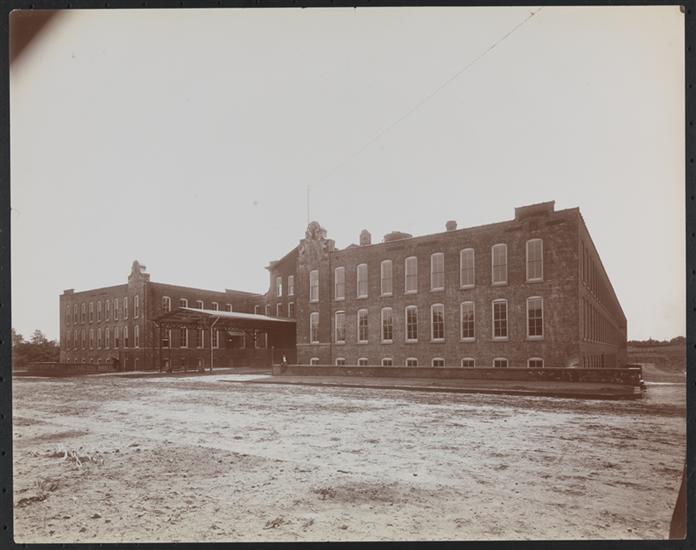
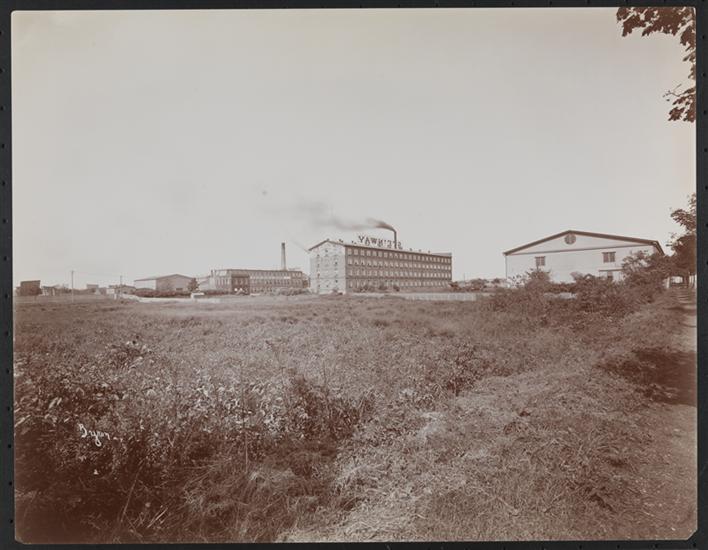
In New York, the Milwaukee based company was at a disadvantage; saloons sold only locally made products (storage and transport technologies not being quite as sophisticated as they are today) and New York had dozens of its own brewers.
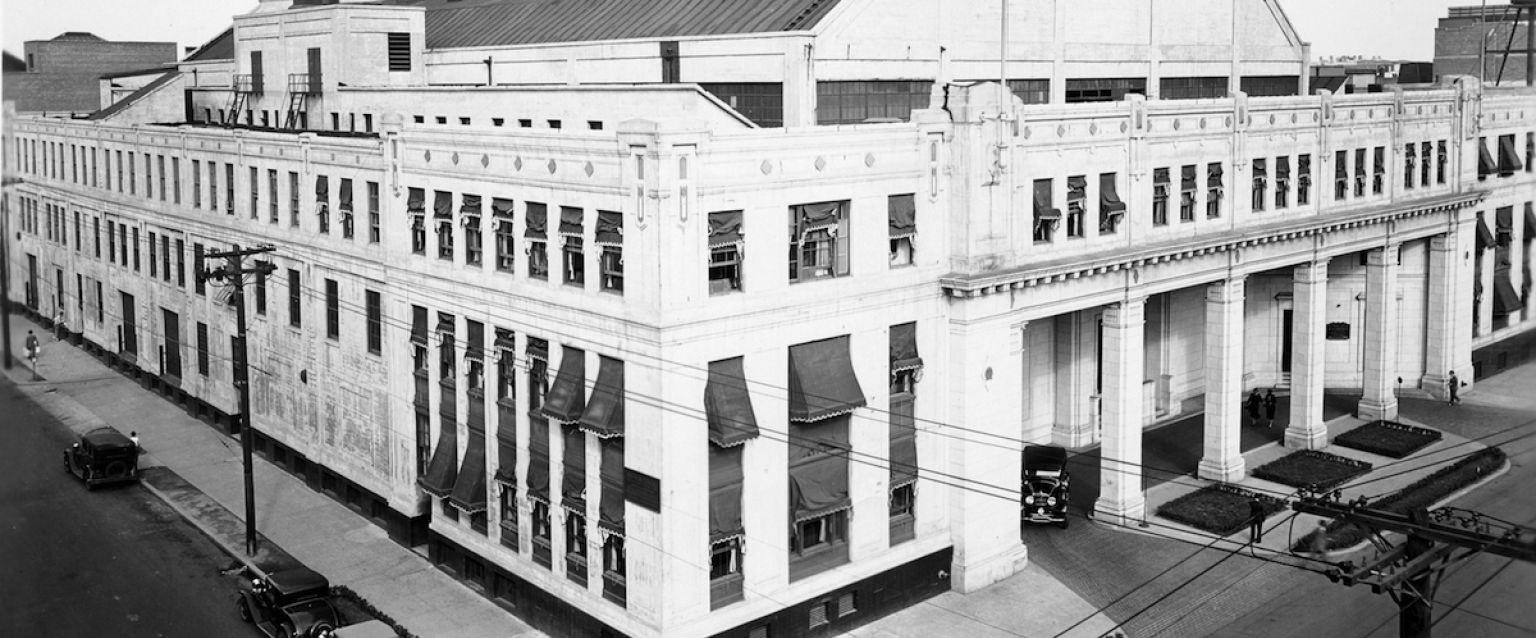
No matter! In 1896, Pabst opened a brewery here at 606 West 49th Street. And, starting in 1900,  they simply built their own operations to sell that beer in the centers of New York’s thriving entertainment districts. Here are four Pabst locations where one could sample their product:


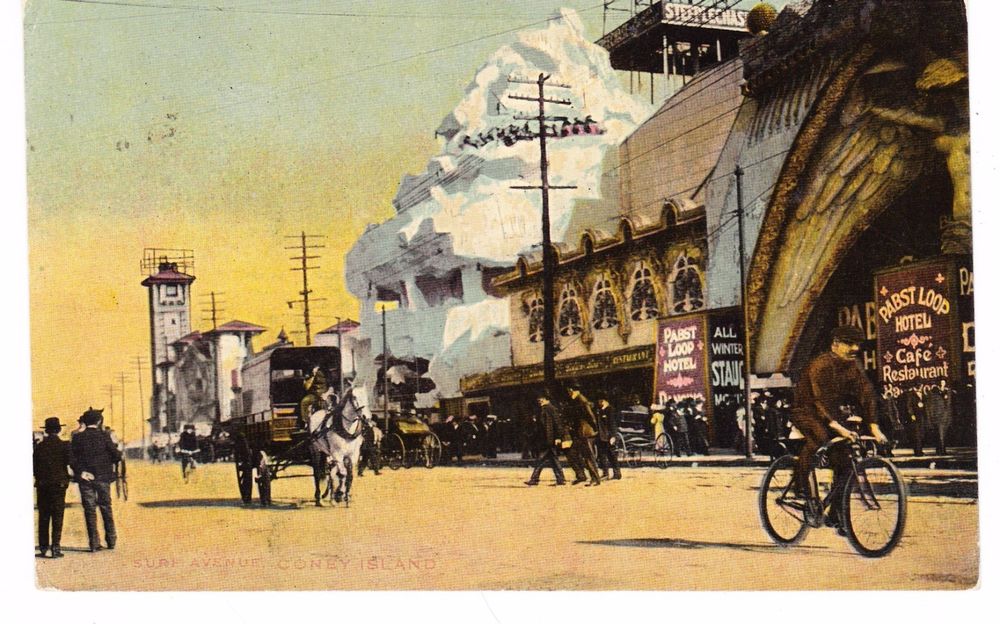
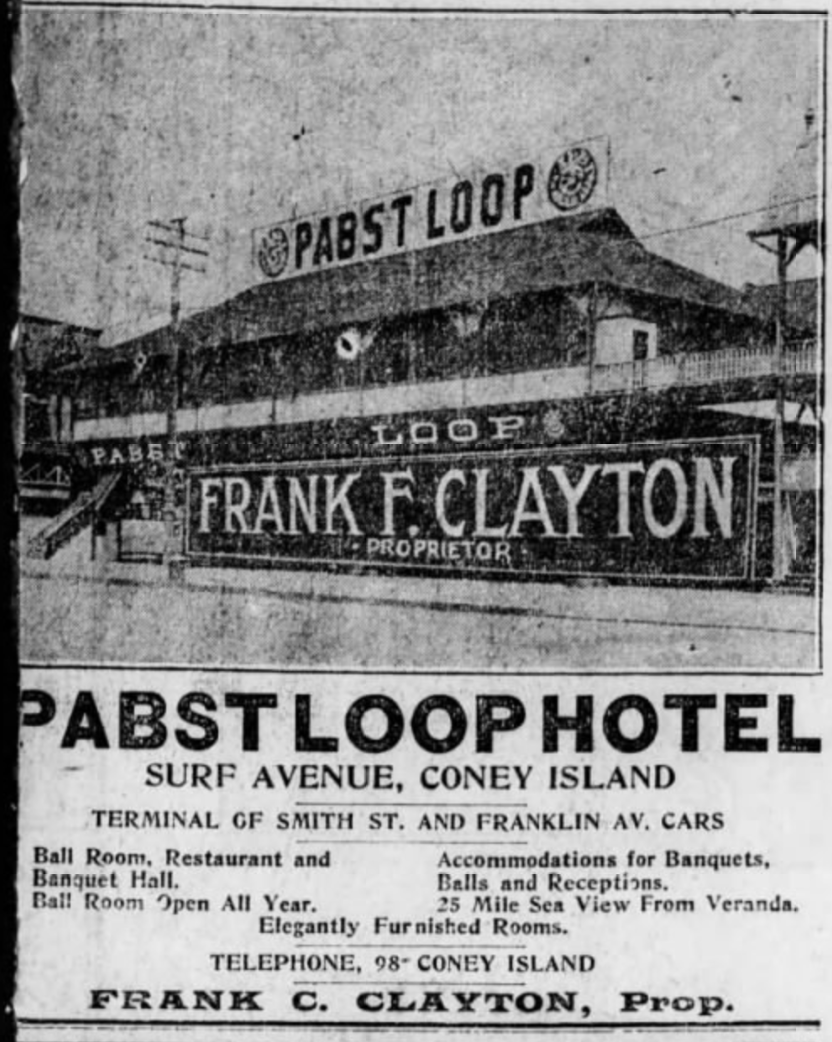
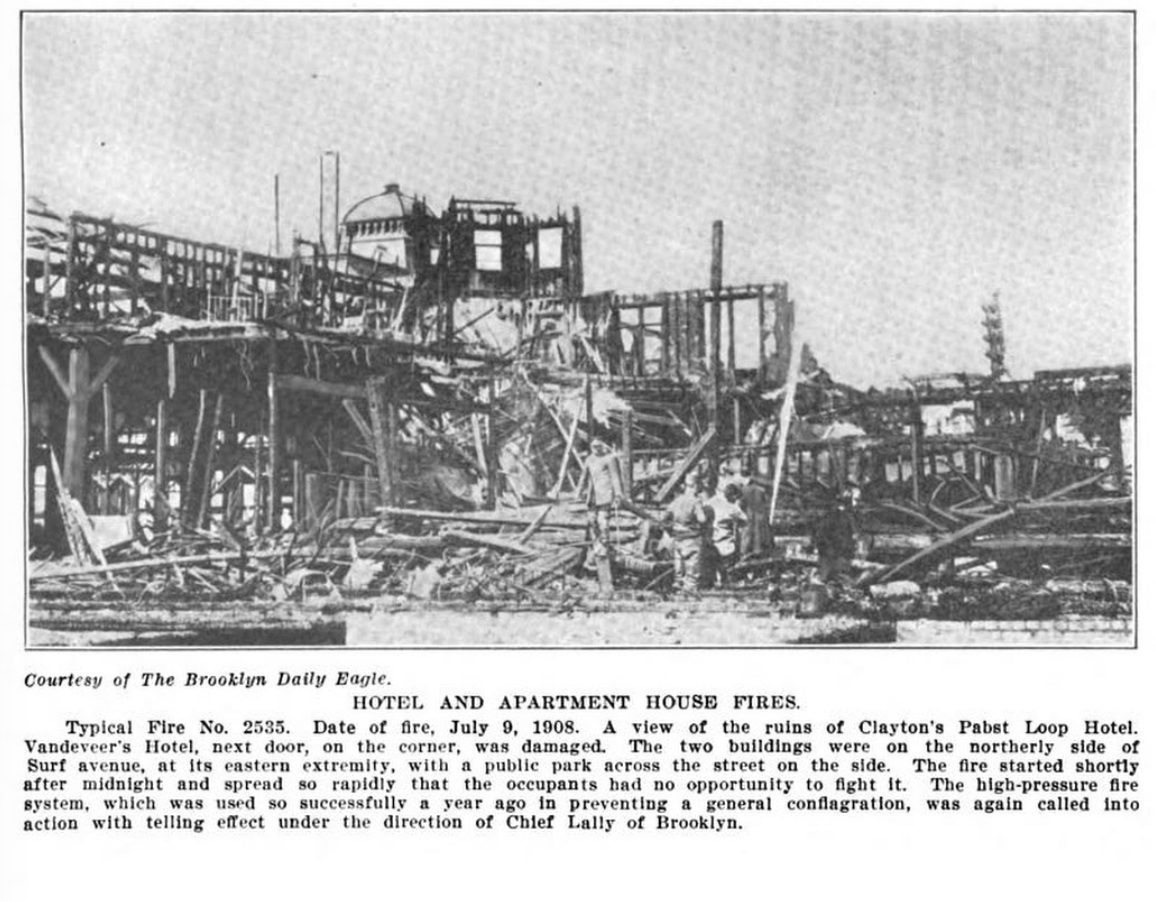
  1. PABST LOOP HOTEL, Surf Avenue, Coney Island

Opened in 1900, known as Frank Clayton’s Pabst Loop Hotel.

On July 9, 1908, the hotel burned to the ground. From Billboard Magazine: “In ten minutes, Clayton Pabst Loop Hotel, with its great once hall and roller skating rink, the Culver line station of the Brooklyn Rapid Transit Company and Vanderveer’s Hotel were a mass of seething, roaring flames.”

Before:

After:


MCNY

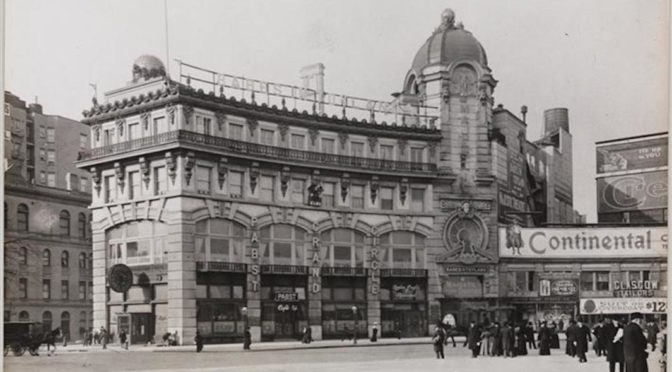
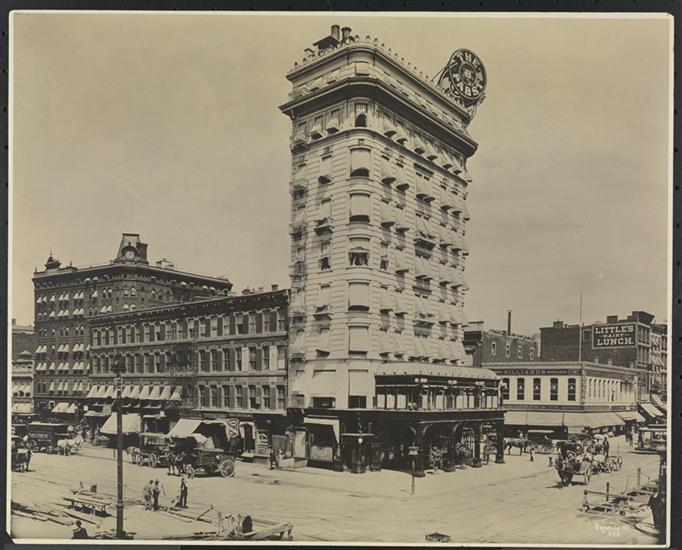
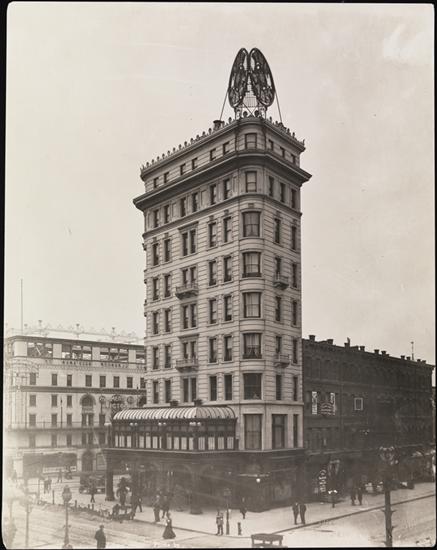
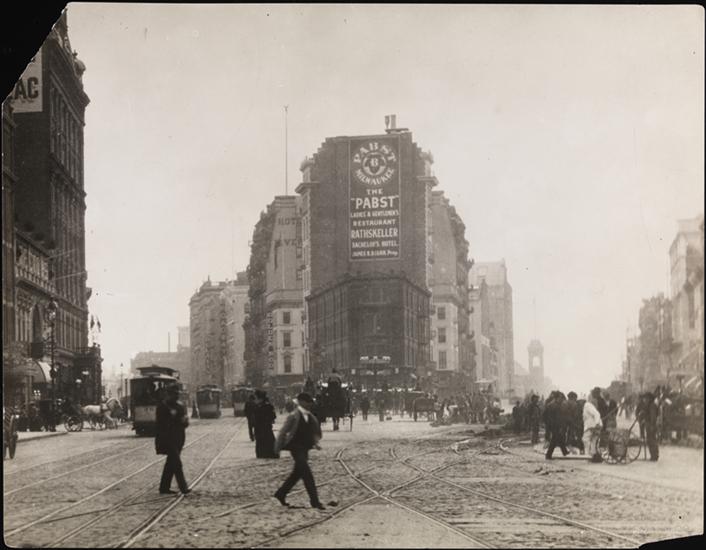
2. PABST HOTEL, 42nd Street and 7th Avenue, Midtown

Built in 1899 and perfectly situated at 42nd Street — right as the Broadway theater scene was arriving to the area — the Pabst Hotel used space in a surprising way. Its second floor restaurant was built out over the sidewalk while its ‘rathskeller‘ stretched below the street. Unfortunately it was no match for the influence of New York Times owner Adolph Ochs who desired the unique triangular space for his own newspaper.

In 1902, the hotel was torn down and One Times Square, the Times’ new headquarters, would help define the entire district.

MCNY


MCNY

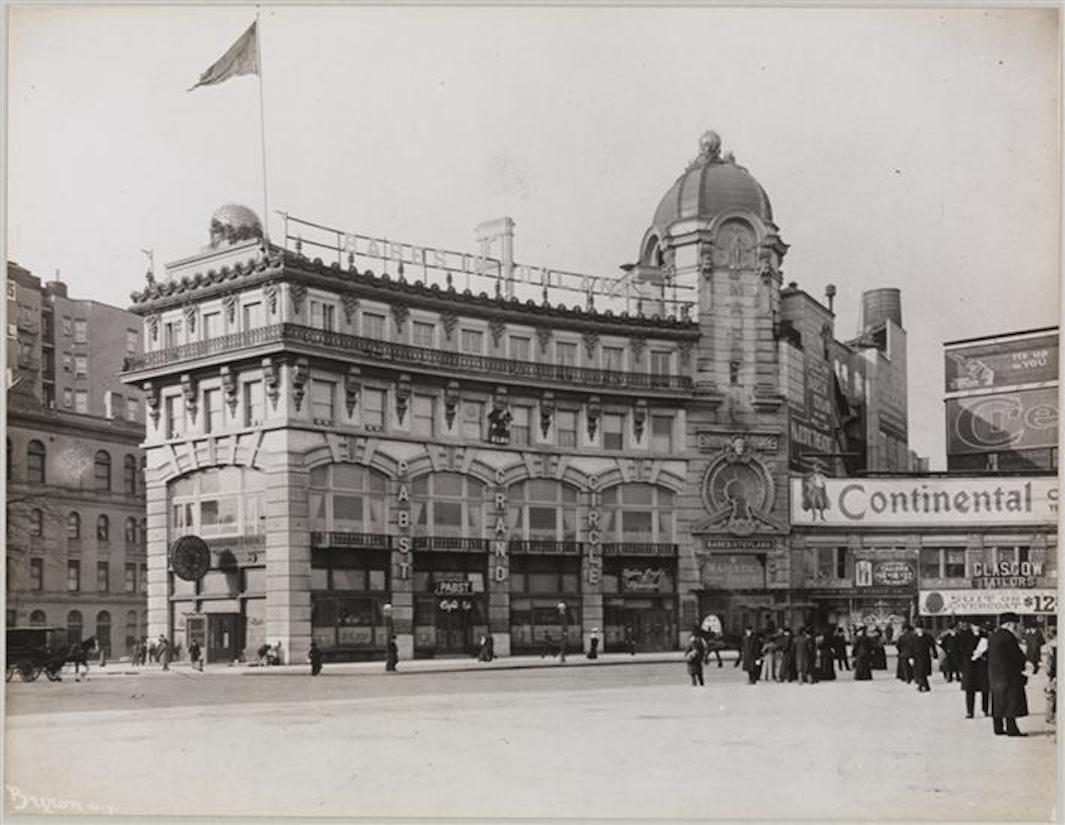
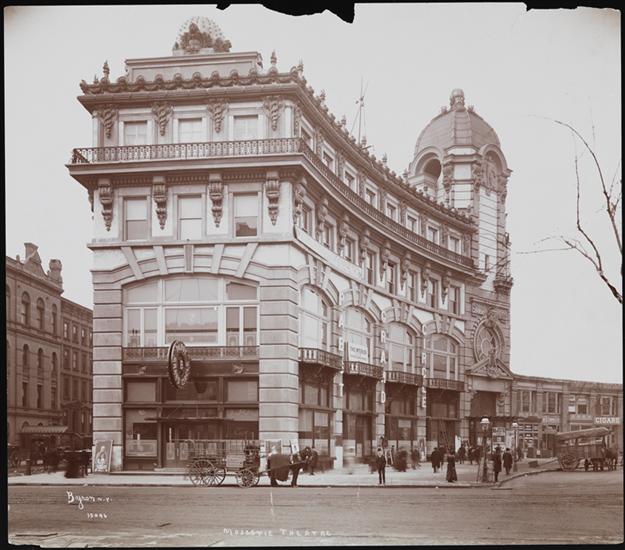
3. PABST GRAND CIRCLE HOTEL, Columbus Circle

Back when the traffic roundabout at the southwest corner of Central Park was called simply the Grand Circle, Pabst built another hotel in 1902 after the 42nd Street location was sold and torn down.  It was connected to the Majestic Theatre, the largest theater in the circle, a stage which would have great successes the following years with The Wizard of Oz and Babes In Toyland.  The structure graced the edge of Columbus Circle for many decades before being torn down in the 1950s and replaced with the New York Coliseum.

MCNY


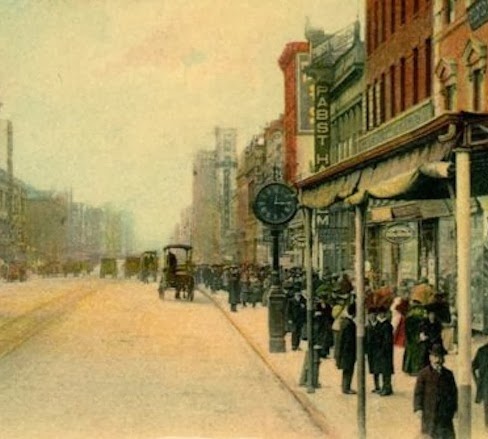
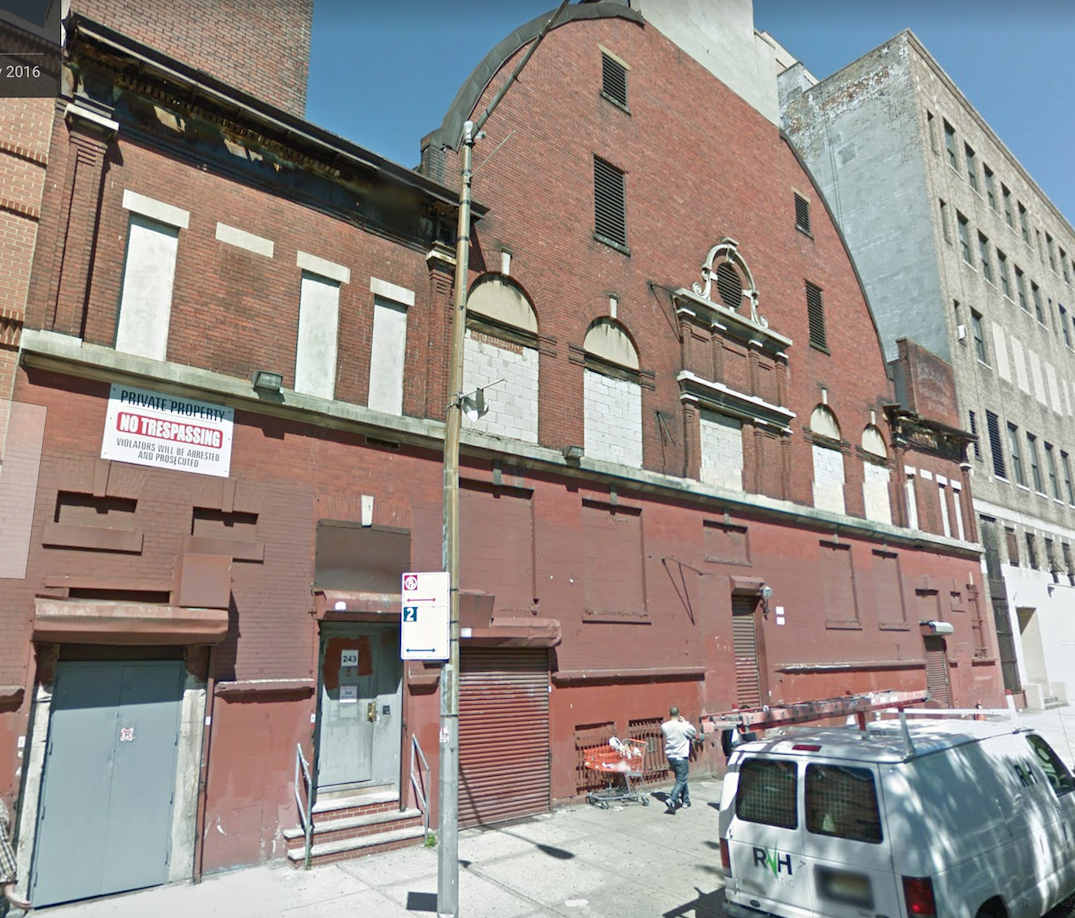
4. PABST HARLEM MUSIC HALL AND RESTAURANT, 243 West 124th St., Harlem

Back with Harlem’s 125th Street was a vaudeville haven of upper Manhattan, this hall, which opened in September 1900, was billed as the largest restaurant in the United States with a capacity for 1,400 diners. It closed in 1917 just before the Prohibition era.

Unlike the other Pabst properties, the building still remains. Unrecognizable from he 125th Street, you’ll have to go around to the 124th side to get a look at its former glory.
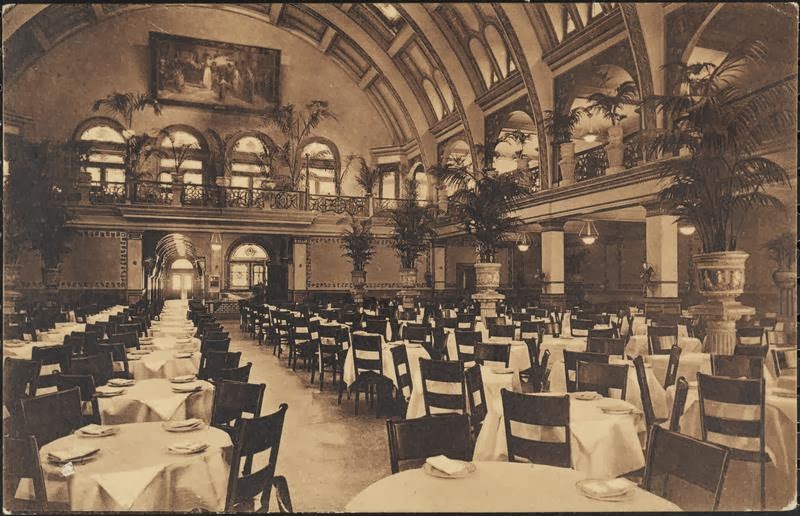
MCNY

Categories
Amusements and Thrills Podcasts The Deuce

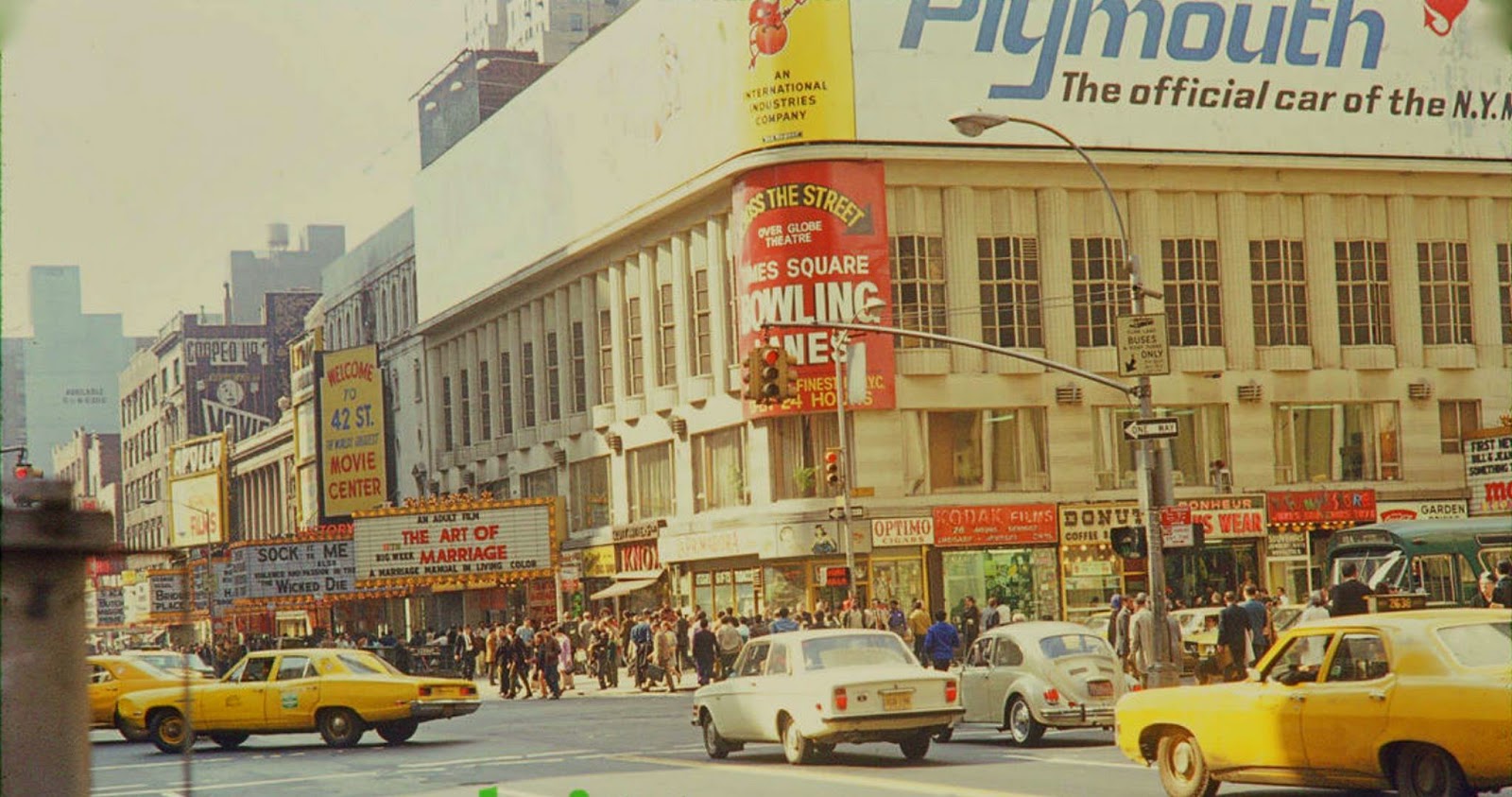
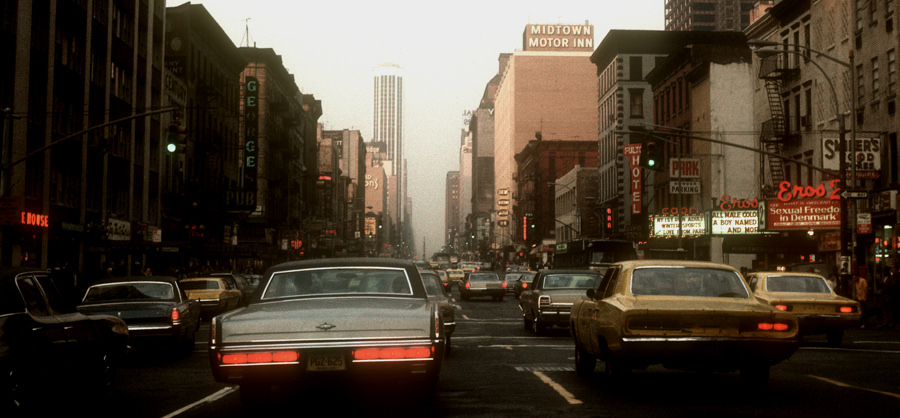
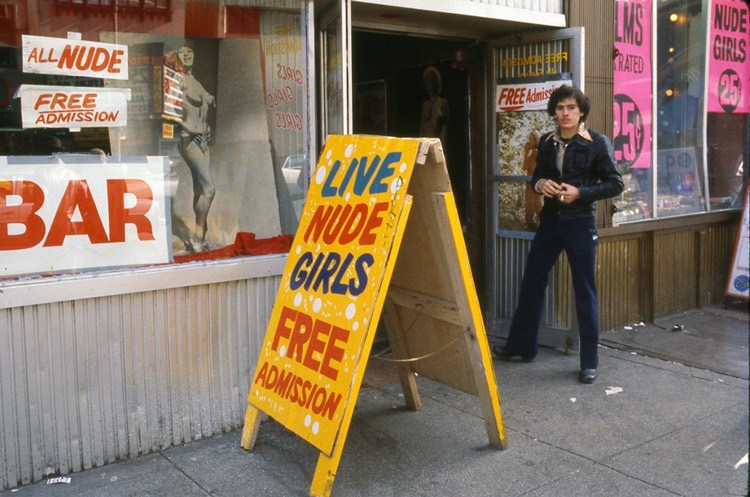
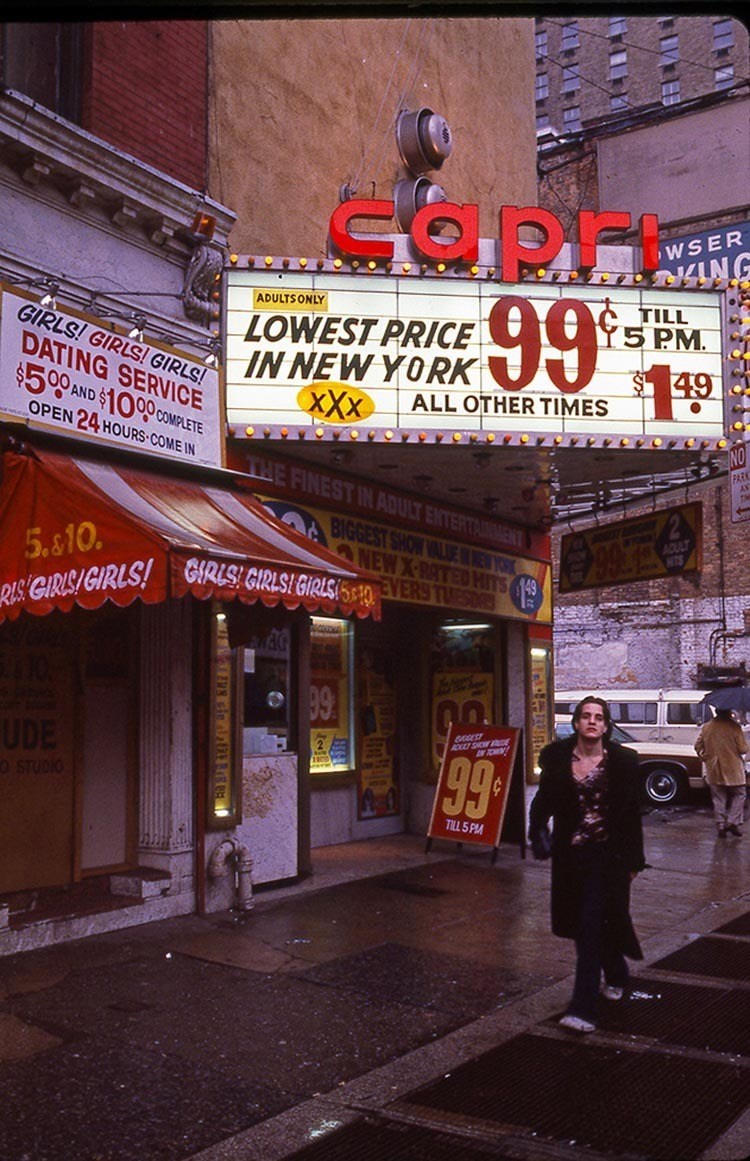
Times Square in the 1970s: Grindhouses, peep shows and XXX neon nostalgia

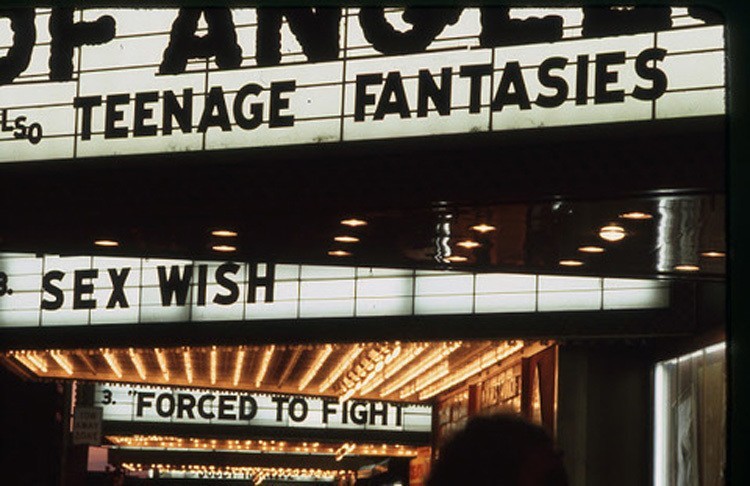
PODCAST 42nd Street After Hours. Cinema and sleaze. Nostalgia and fantasy. The story of a real and imagined New York.
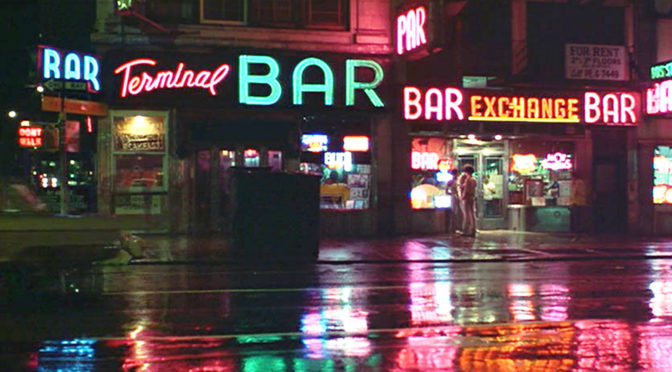
Take a trip with us down the grittiest streets in Times Square — the faded marquees of the grindhouses, the neon-lit prurient delights of Eighth Avenue at night.

LISTEN TO OUR LATEST EPISODE HERE:

[geo_mashup_map]

Times Square in the 1970s was all about fantasy — from the second-run theaters of 42nd Street to the pornographic pleasures of the adult bookstores next door. And yet our ideas of this place and time are also caught in a bit of fantastic nostalgia. In memory it becomes an erotic theme park, a quaint corner of New York City history. Sometimes its stark everyday reality is forgotten.

In this show we focus on a couple of Times Square’s most notorious streets from the period — 42nd Street and Eighth Avenue — and provide historical context for the seediness they were known for in this era.

Those glowing marquees disguise a theatrical history that dates from the beginning of Times Square, once hosting productions by the likes of Florenz Ziegfeld and Oscar Hammerstein. And the sex industries themselves trace back to the early seedy days of the Tenderloin neighborhood. They coalesced around Port Authority Bus Terminal (aka ‘the cavern of squalor’) to produce a gritty scene that was at once alluring, dangerous, and quintessentially New York.

To download this episode and subscribe to our show for free, visit iTunes or other podcasting services or get it straight from our satellite site.

You can also listen to the show on Google Music, Stitcher streaming radio and TuneIn streaming radio from your mobile devices.

The song featured in this week’s episode was

___________________________________________________________________________

The Bowery Boys: New York City History podcast is brought to you …. by you!

We are now producing a new Bowery Boys podcast every two weeks.  We’re also looking to improve the show in other ways and expand in other ways as well — through publishing, social media, live events and other forms of media.  But we can only do this with your help!

We are now a member of Patreon, a patronage platform where you can support your favorite content creators for as little as a $1 a month.

Please visit our page on Patreon and watch a short video of us recording the show and talking about our expansion plans.  If you’d like to help out, there are five different pledge levels (and with clever names too — Mannahatta, New Amsterdam, Five Points, Gilded Age, Jazz Age and Empire State). Check them out and consider being a sponsor.

We greatly appreciate our listeners and readers and thank you for joining us on this journey so far. And the best is yet to come!

________________________________________________________________________

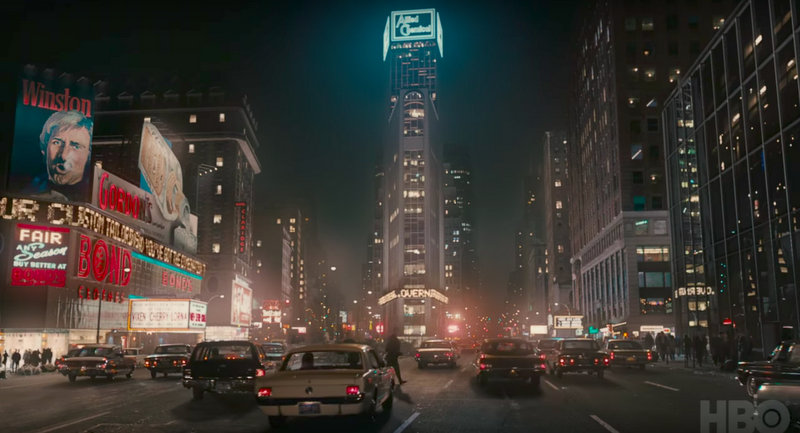
Our special thanks to HBO and the new drama series The Deuce for sponsoring this special episode. Follow along with the Bowery Boys on Twitter (@Boweryboys) this Sunday, Sept. 10, at 9pm as we watch the show live and share historical context to some of the action being shown.

One still from the show:

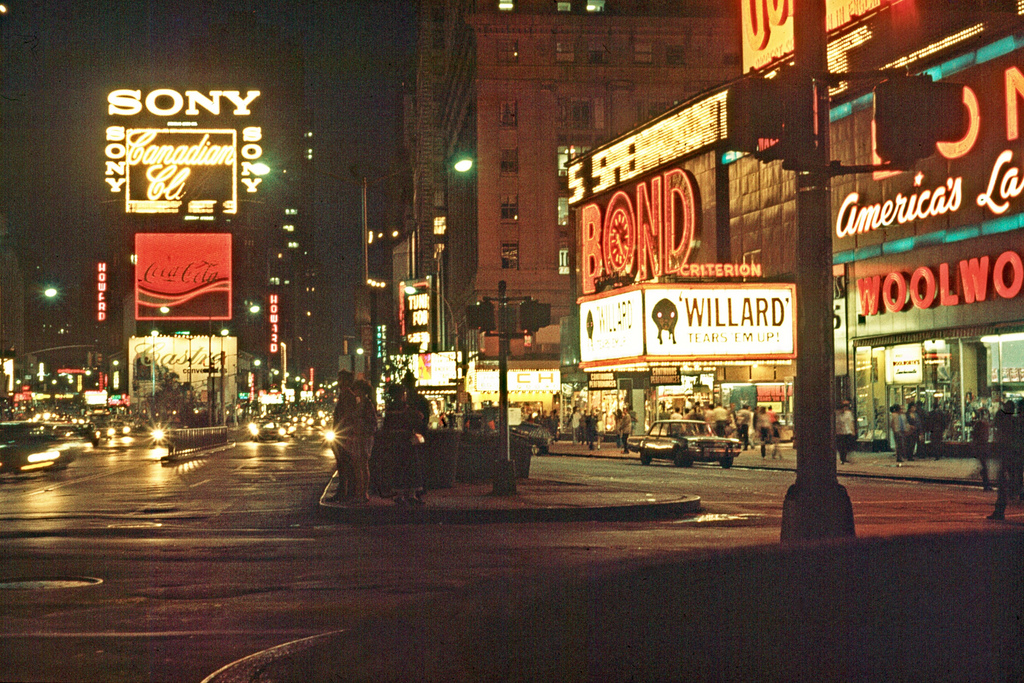
The real Times Square (looking the opposite way):

Flickr/GentleGiant

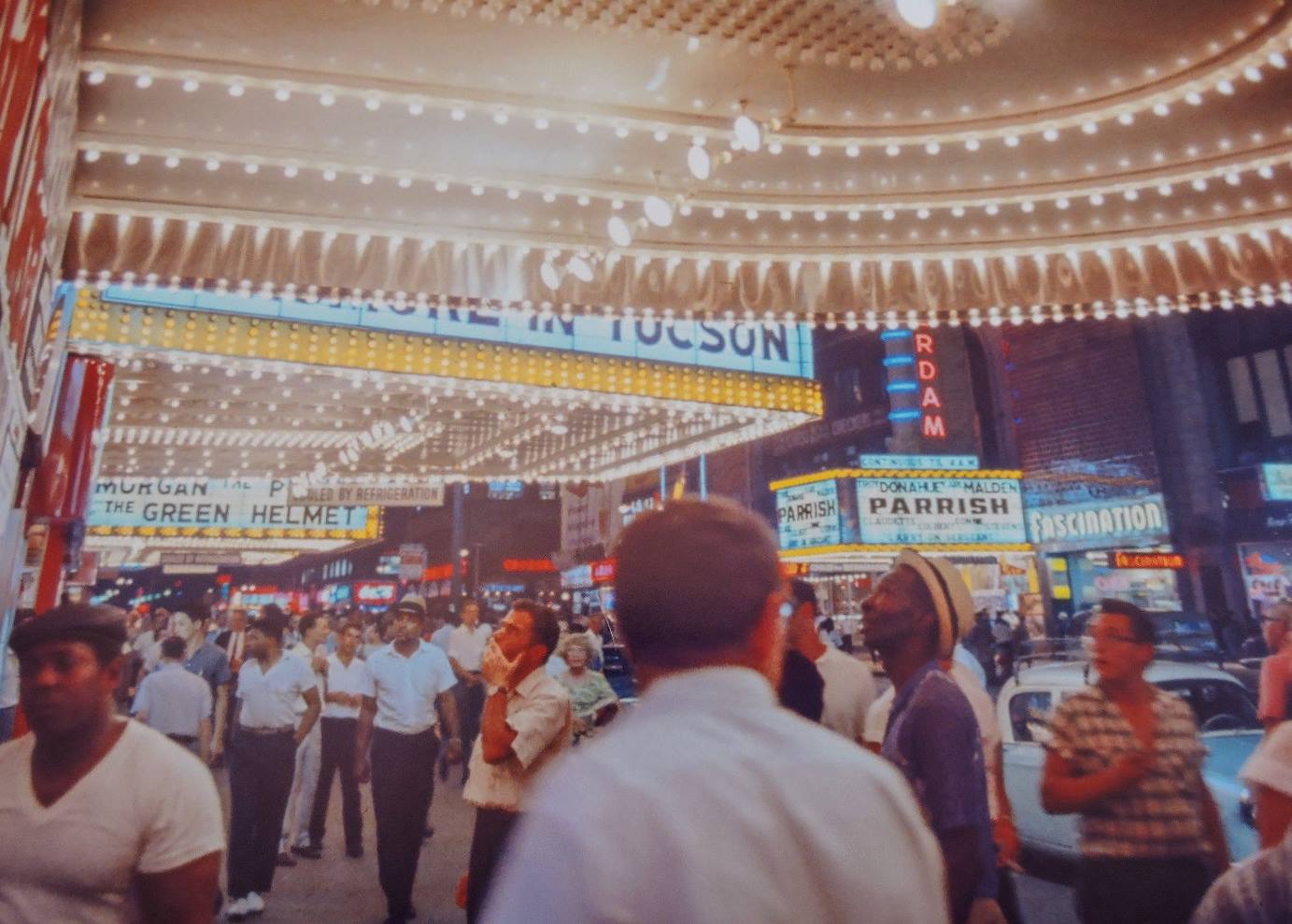
The look of 42nd Street in the early 1960s. See the New Amsterdam across the street (and the Fascination arcade next to it). Both films The Green Helmet and Parrish are from 1961, but since this was a row of second-row houses by this point, the date could be later.

Courtesy Flickr/Michael Donovan

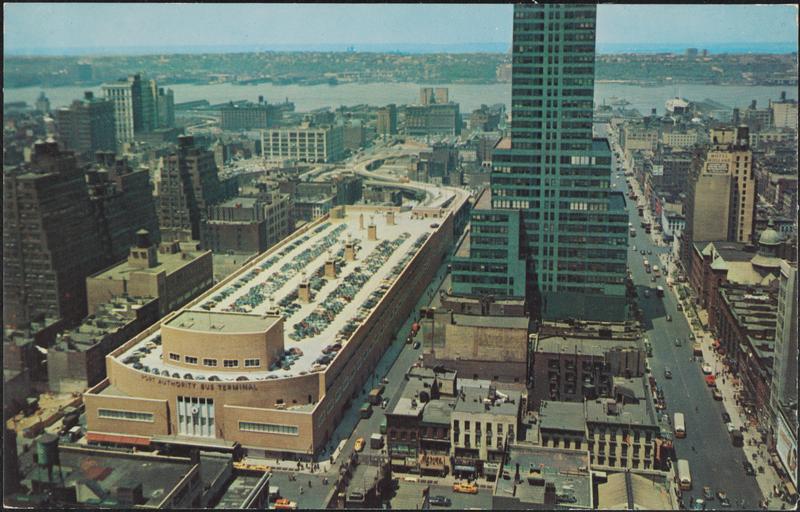
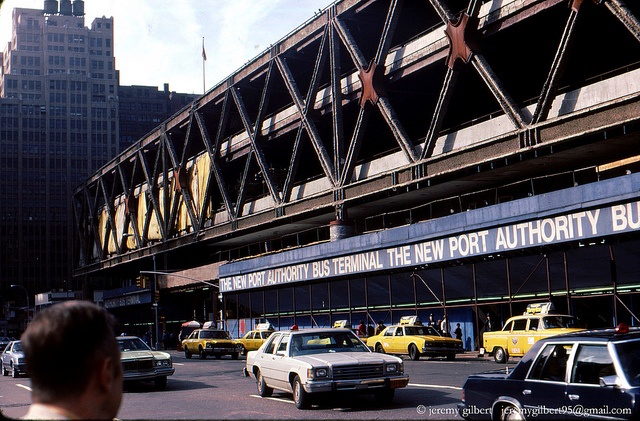
Port Authority bus terminal in 1965. The north wing ( which would face onto 42nd Street) opened in 1979.

Courtesy Museum of the City of New York/Dexter Press

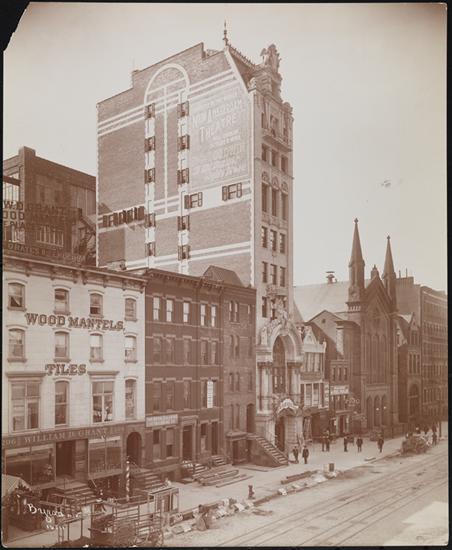
Here’s the New Amsterdam Theater in 1903, the year construction was completed — one year before the area would be called Times Square.

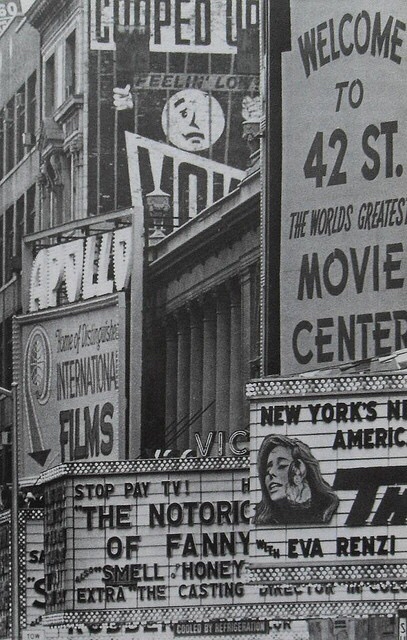
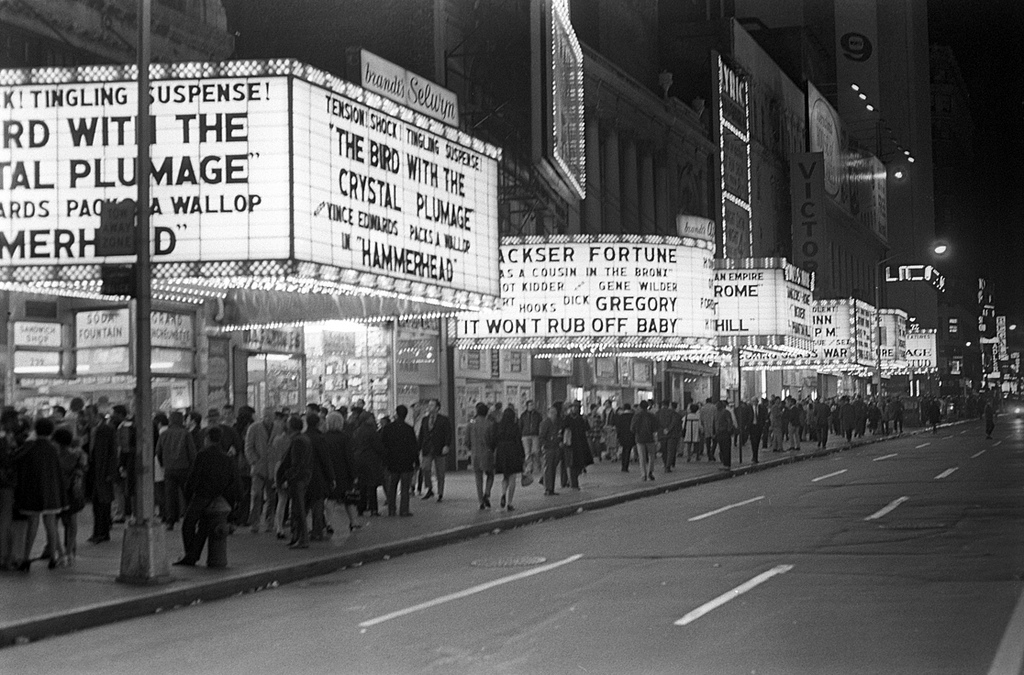
The theaters on 42nd Street on the north side, 1968. Note the exhibition of “international films.” The grindhouse classic The Notorious Daughter of Fanny Hill was released in 1966.

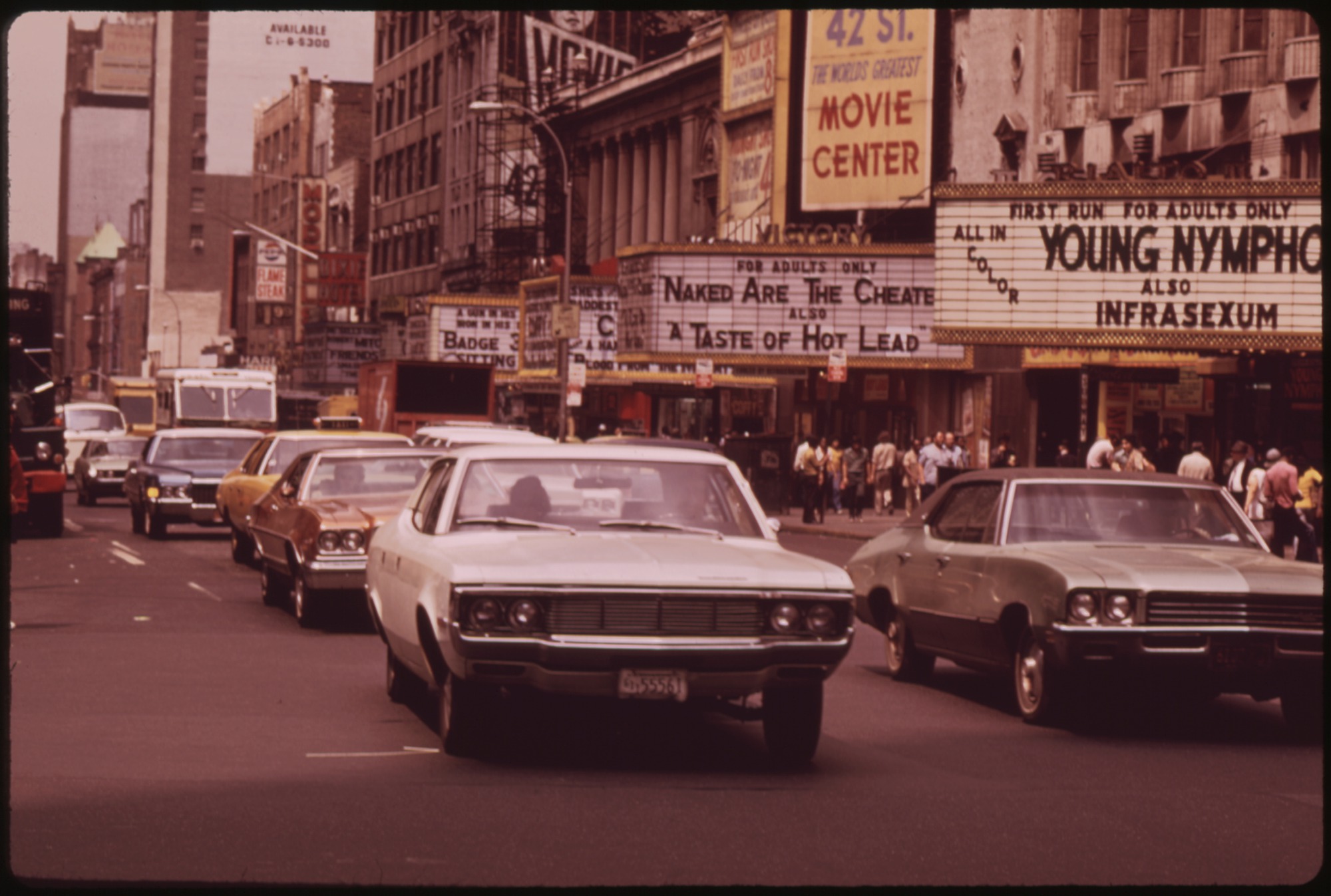
The same set of marquees in 1973

Dan McCoy/Environmental Protection Agency

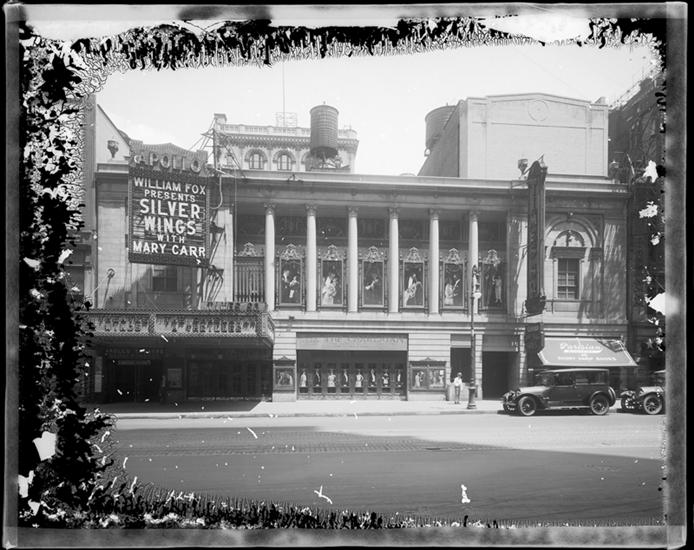
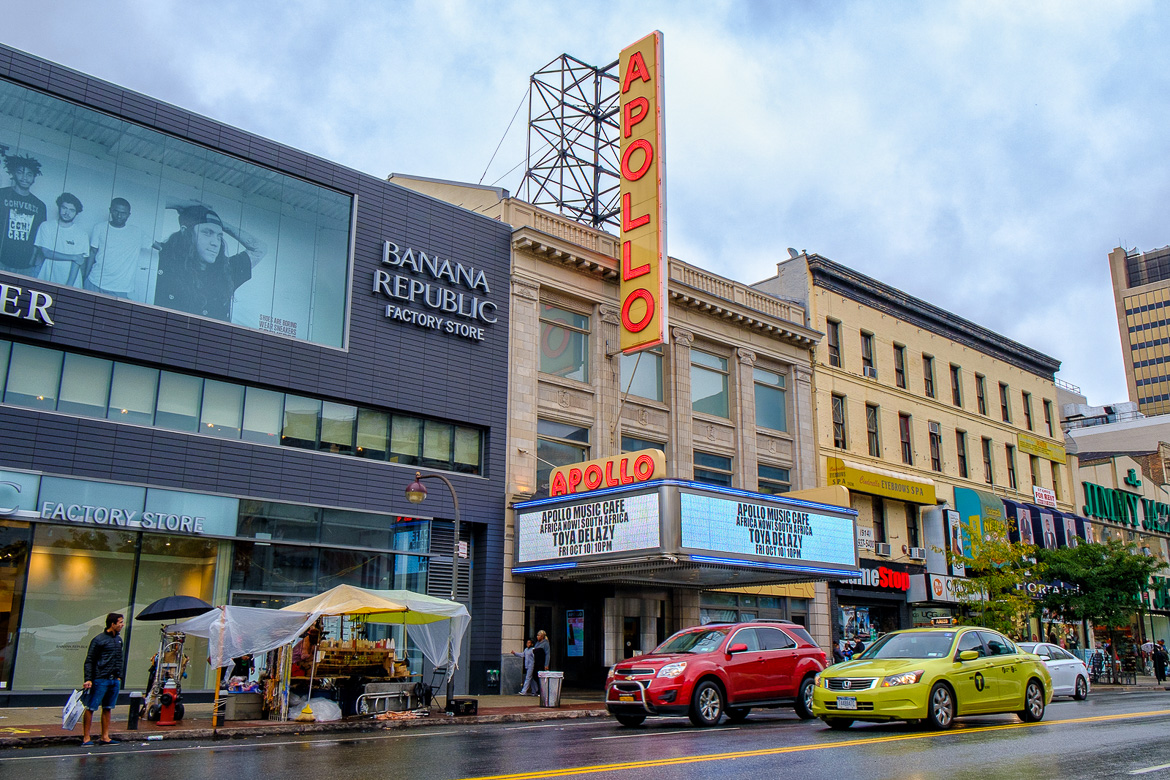
The Apollo Theater, pictured above, as seen below in 1922. It has already transitioned into film exhibition. (Silver Wings is a famously ‘lost’ film directed by John Ford.)

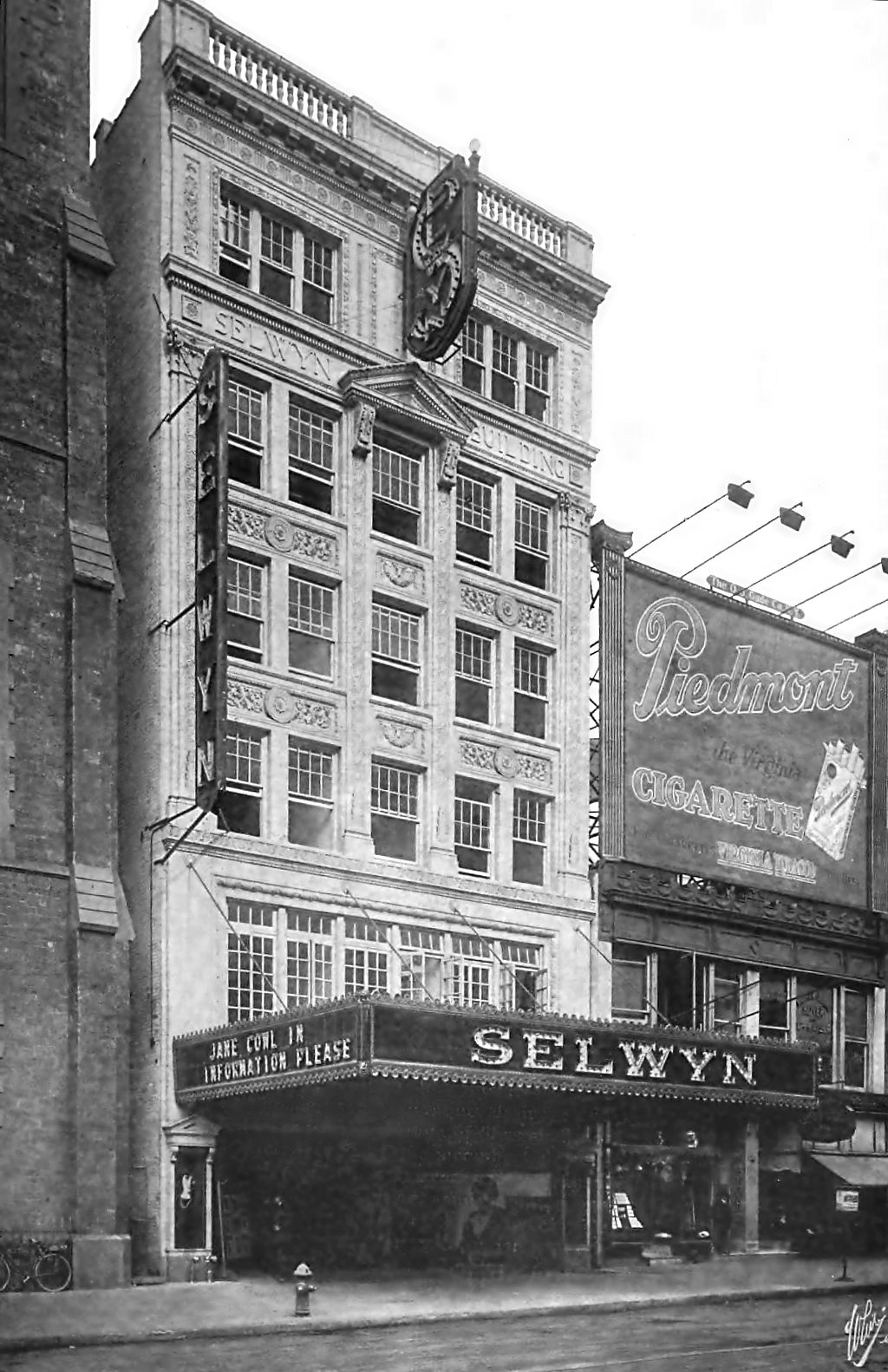
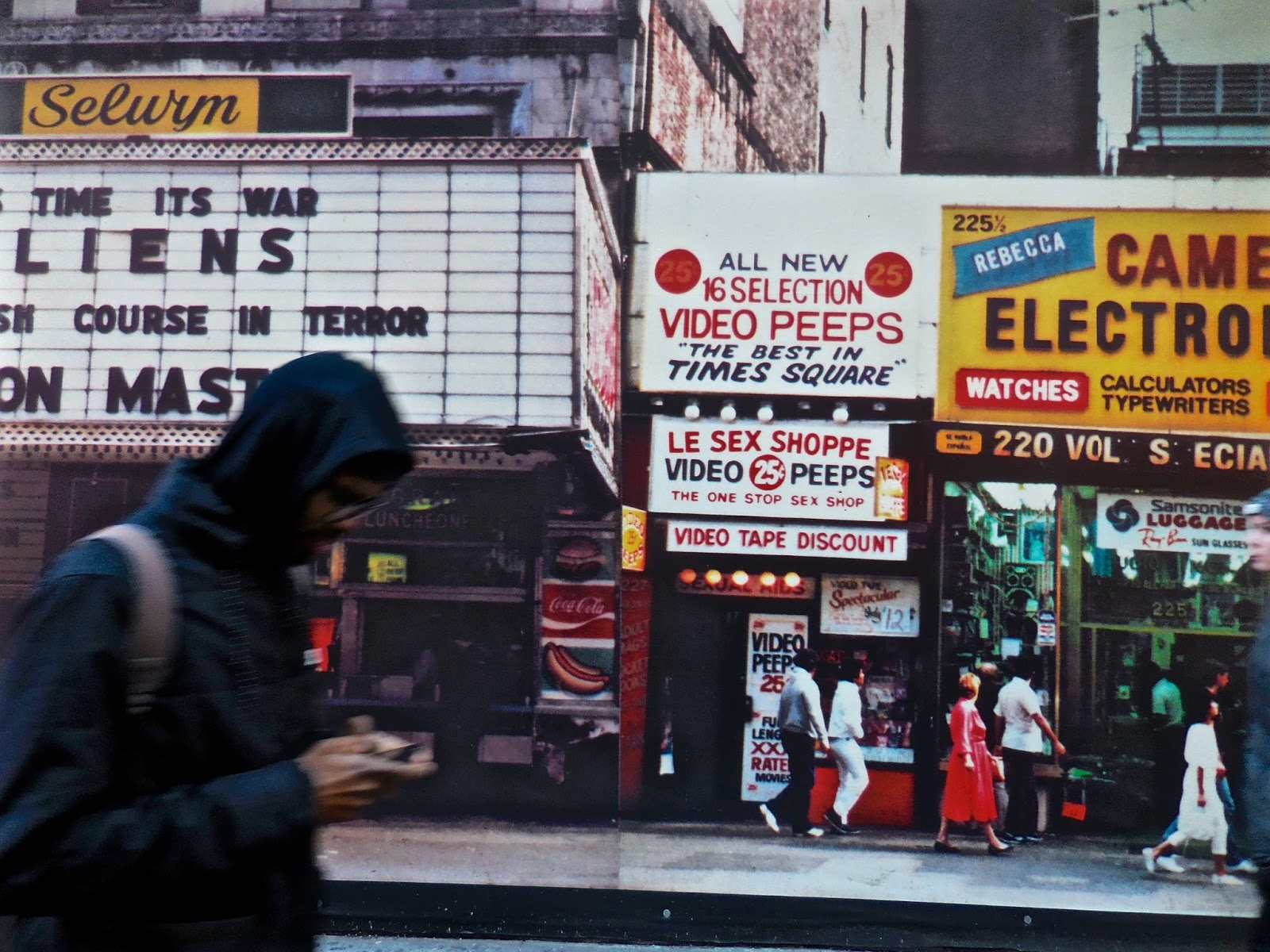
The Selwyn through the years. 1918:

1971

1980s

Courtesy Jeremiah’s Old New York

The corner of 42nd Street and Seventh Avenues, 1970

Eighth Avenue also had its share of erotic theaters including the Eros (732 8th Avenue) and the Adonis (839 8th Avenue).

A couple amazing photographs by Maggie Hopp. (See the rest here).

Maggie Hopp photographer

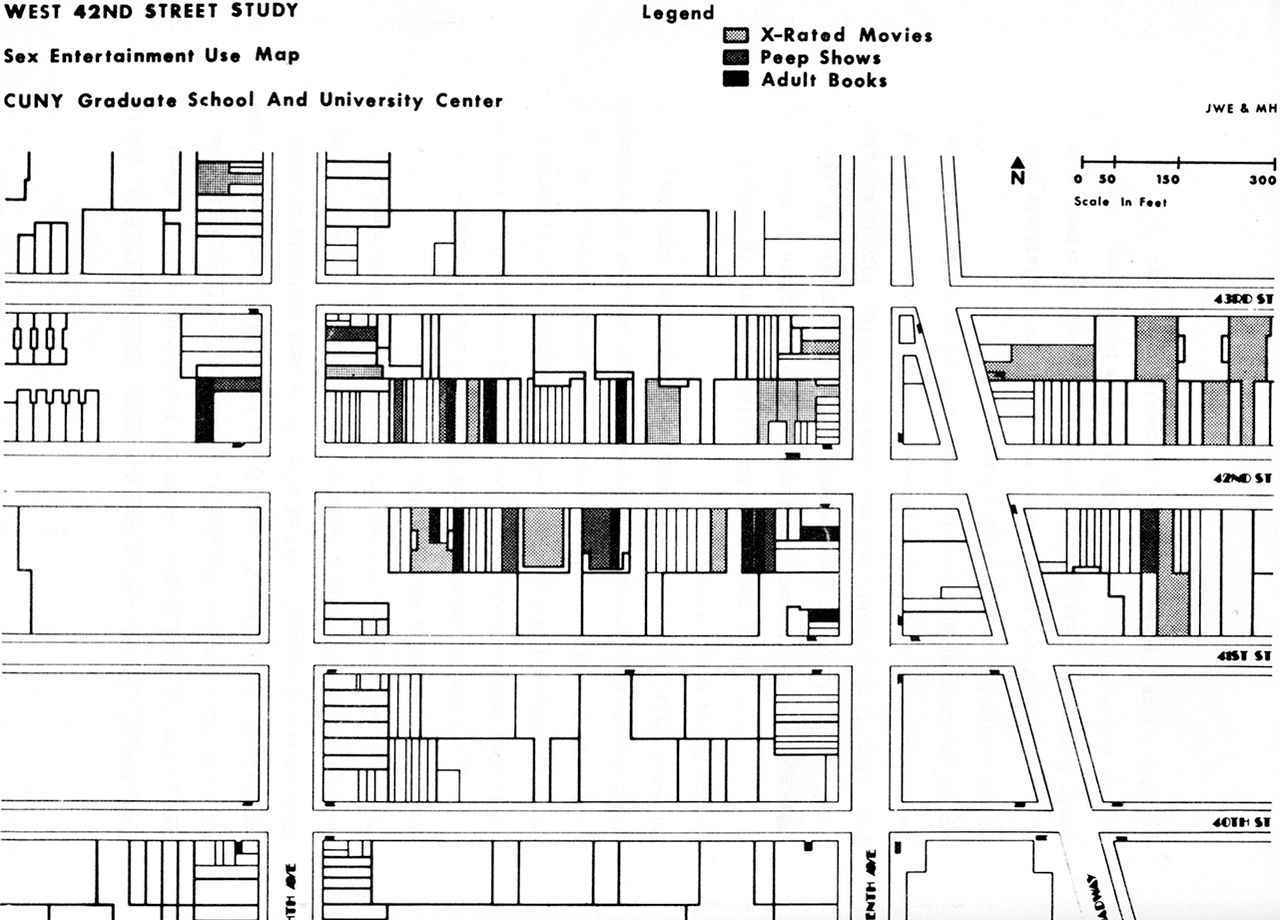
The zone illustrated via the “Sex Entertainment Use Map,” in William Kornblum, West 42nd Street: “The Bright Light Zone” (New York: Graduate School and University Center of the City University of New York, 1978). Courtesy of City University of New York.

Taken from a 1976 film Virgins In Heart which played on 42nd Street

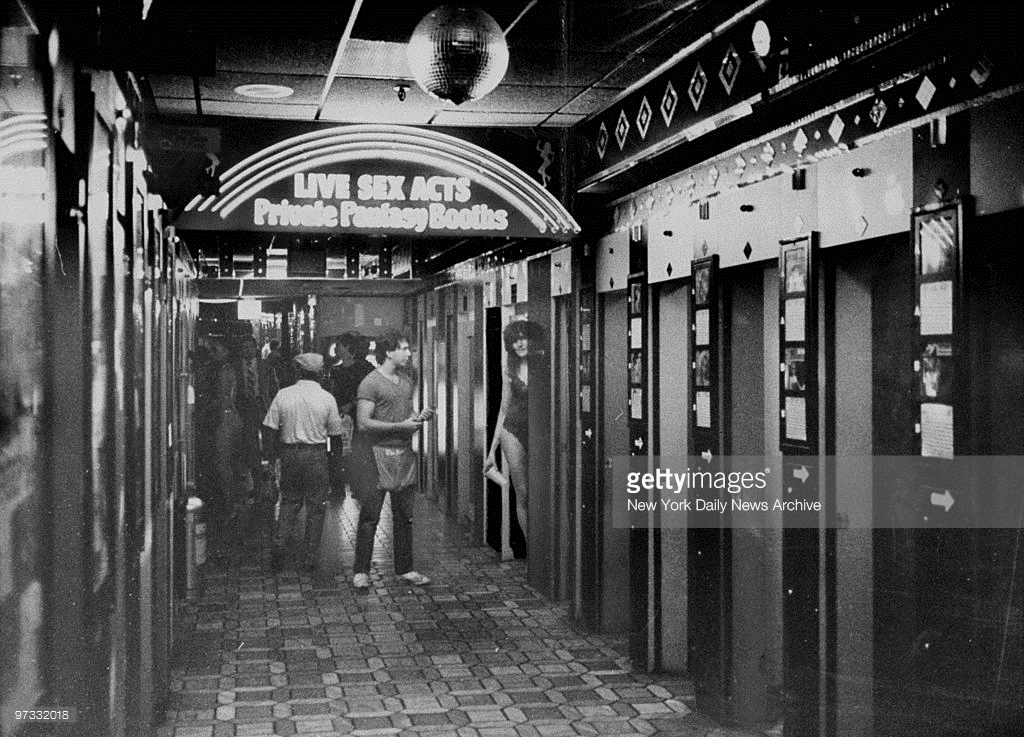
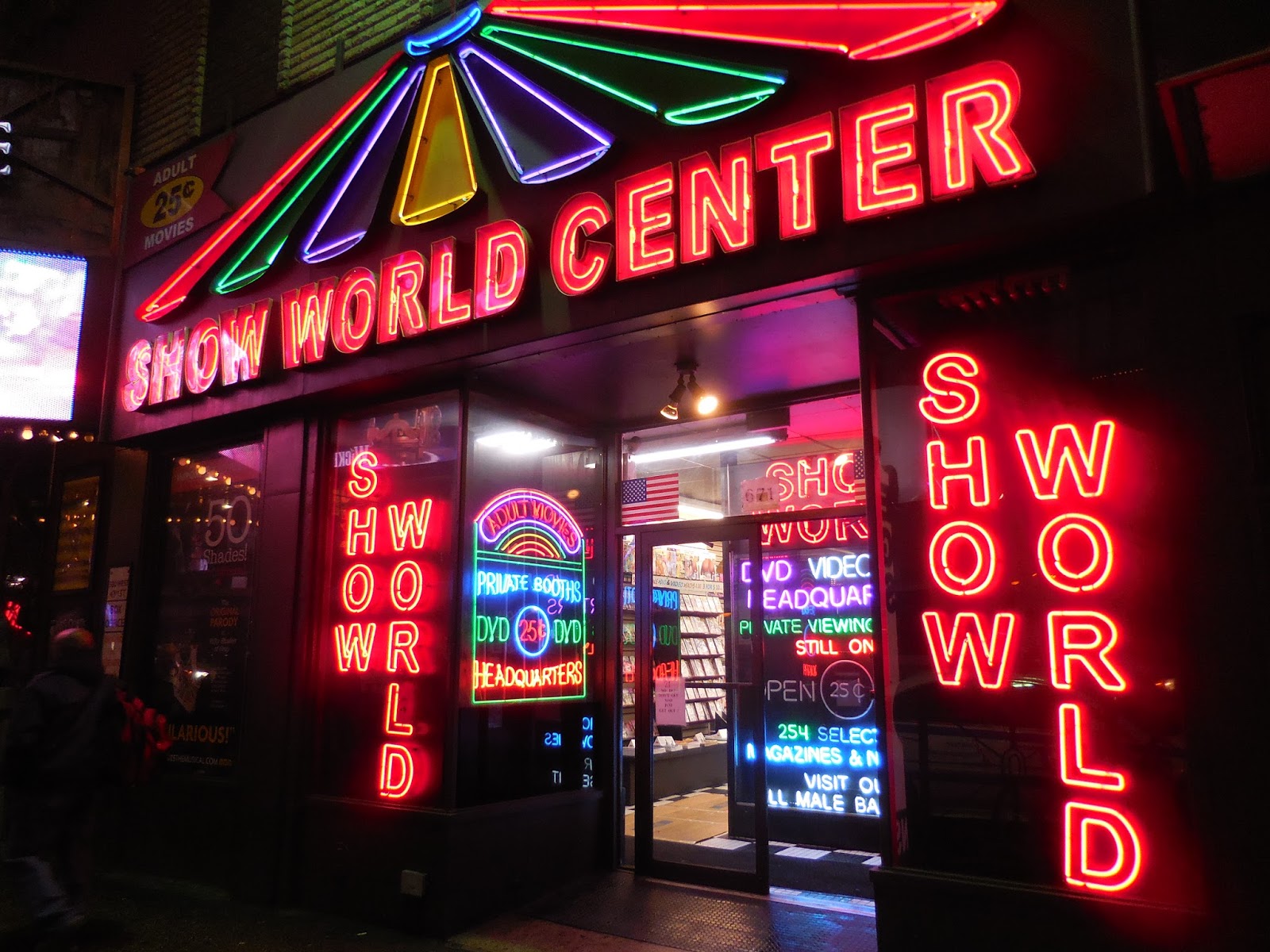
Inside the Show World Center, 1982

Courtesy Vanishing New York

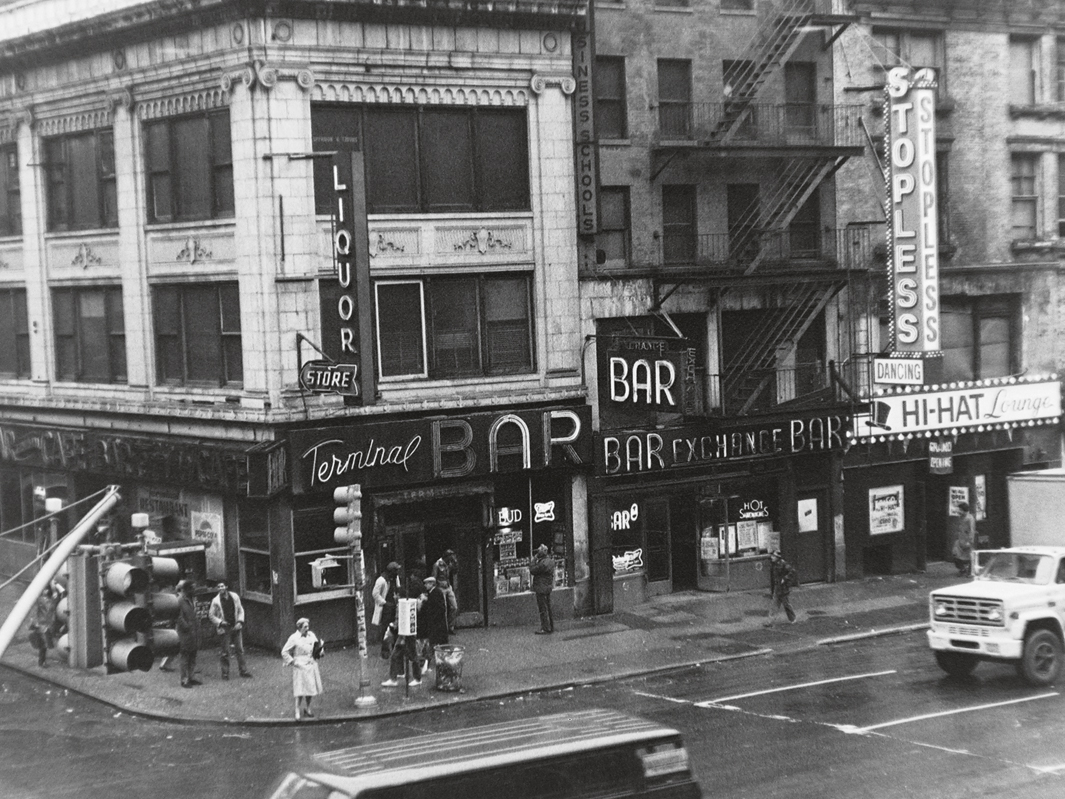
Terminal Bar in 1981. It closed the following year. Slate has a wonderful collection of images from its bartender Sheldon Nadelman.

The bar shot from the Port Authority, 1981. Sheldon Nadelman

A 2003 documentary about the history of Terminal Bar. Worth watching!

RECOMMENDED READIING:
The Devil’s Playground: A Century of Pleasure and Profit in Times Square by James Traub
Down 42nd Street: Sex, Money, Culture and Politics at the Crossroads of the World by Marc Eliot
The Forbidden Apple: A Century of Sex & Sin in New York City by Kat Long
Ghosts of 42nd Street, A History of America’s Most Infamous Block by Anthony Bianco

RELATED BOWERY BOYS PODCASTS:

#195 Midnight In Times Square

#118 A History of Times Square

#186 Hell’s Kitchen: New York’s Wild West

Categories
Bowery Boys Bookshelf

In two new books, loving New York doesn’t mean you have to like it

Writing about New York City often means making big, bold statements — flamboyant, absurd and ridiculous — especially if you love it. And even more if you hate it.

New York Is Hell
Thinking and Drinking in the Beautiful Beast
by Benjamin DeCasseres
w. introduction by Peggy Nadramia
Underworld Amusements
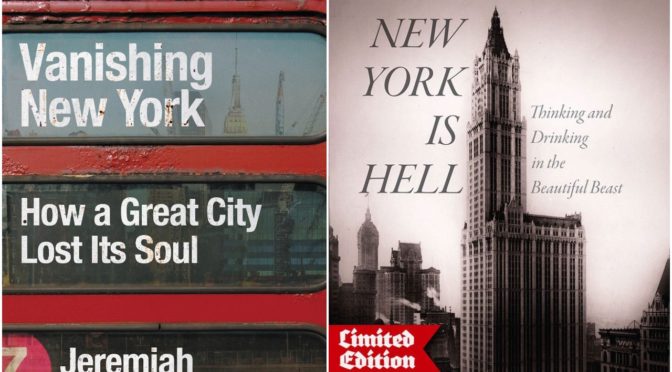
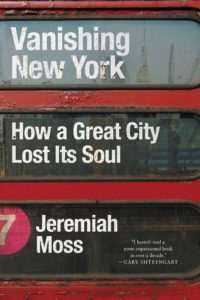
Vanishing New York
How A Great City Lost Its Soul
by Jeremiah Moss
Dey Street

The early 20th century wit Benjamin De Casseres, a writer for the city’s three biggest papers of the day (The New York Times, The Sun and The Herald), wrote with the flourish of his era, taking great pains to invigorate and often abuse the English language in his monologues about New York’s latest trends.

In a terrific anthology of his writings New York Is Hell, the breadth of his obsession with New York — and his disgust at those changes he deems withering — is on full display. These essays document life in the post-Gilded Age, a city propelled by money but hindered by reality. Highlighted in this collection are his own priggish and highly entertaining takedowns on one particularly rueful reality — Prohibition.

“When the cabarets, dances, cafes, saloons and seagoing hacks were in their flower the New Yorker found the Spirit of Adventure floating around every corner. After theater he set sail for the great voyage across the sea of wine, beer, high balls, jazz, conversation (not the dead exchange of canned smiles and dreary commonplaces you hear now at tables), casual acquaintances and taxis that whirled him to some strange ‘little place’ that some other fellow knew. 

The sea is dried up. ‘Gay New York’ has become a myth…..The romance of nightlife is gone.”

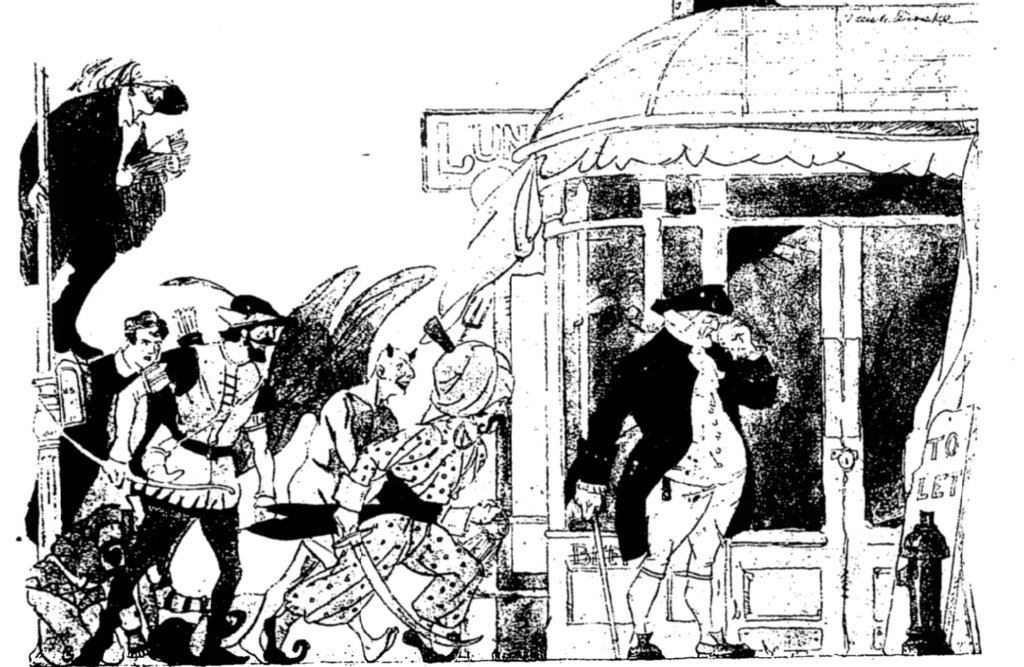
The section above was accompanied (from the New York Times, Oct. 9, 1921) with the illustration below:

And yet DeCasseres must have written these with a drink in hand. His observations on regular New York life feel as relevant today as they did 90 years ago.

“Whenever you’re ‘up against it’ take a boat to Staten Island. In summer time especially it is the Trip Magnificent.”

He details the great restaurants of the day — Luchows, Mouquin’s — and a great many other saloons and beer halls that have fallen into obscurity. Every word is wistful and lilting; you can get a little drunk while reading it.

As Peggy Nadramia writes in the intro, “DeCasseres was writing about New York a century ago, but his complaints are identical to mine: Things have changed — the great watering-holes are gone — you can’t have a good time anymore. Don’t all we old-timers say the same thing?”

_________________

Loving New York, of course, doesn’t mean you have to like what it’s becoming.  Most of you know the blog Jeremiah’s Vanishing New York, observing the steady strangulation of New York City by hyper-gentrification, one fallen local landmark at a time. Its writer Jeremiah Moss has taken a step back in his book of the same title, observing the alterations of the city’s DNA from neighborhood perspectives.

There are many New Yorks which have since vanished — the footprints of old immigrant cultures, the worn lunch counters and newsstands which took care of our grandfathers, the shadowy nightclubs which inspired a creative movement — and many culprits responsible.

To escape, I go into faded coffee shops, dive bars, and bookstores, the refuges of New Yorkers who have not been brainwashed by the ethos of the New Gilded Age. In these places you can feel the old city, the brash, opinionated, neurotic, human city that once was.”

Vanishing New York: How A Great City Lost Its Soul is a fuming, energizing read and often dispiriting. You’ll want to run out and find your little corner of New York to protect.

Categories
Podcasts The Jazz Age

The Wall Street Crash of 1929: The sobering end of New York’s Jazz Age

This is the final part of our three-part NEW YORK IN THE JAZZ AGE podcast series. Check out our two prior episode #233 The Roaring ’20s: The King of the Jazz Age and #234 Queen of the Speakeasies: A Tale of Prohibition New York


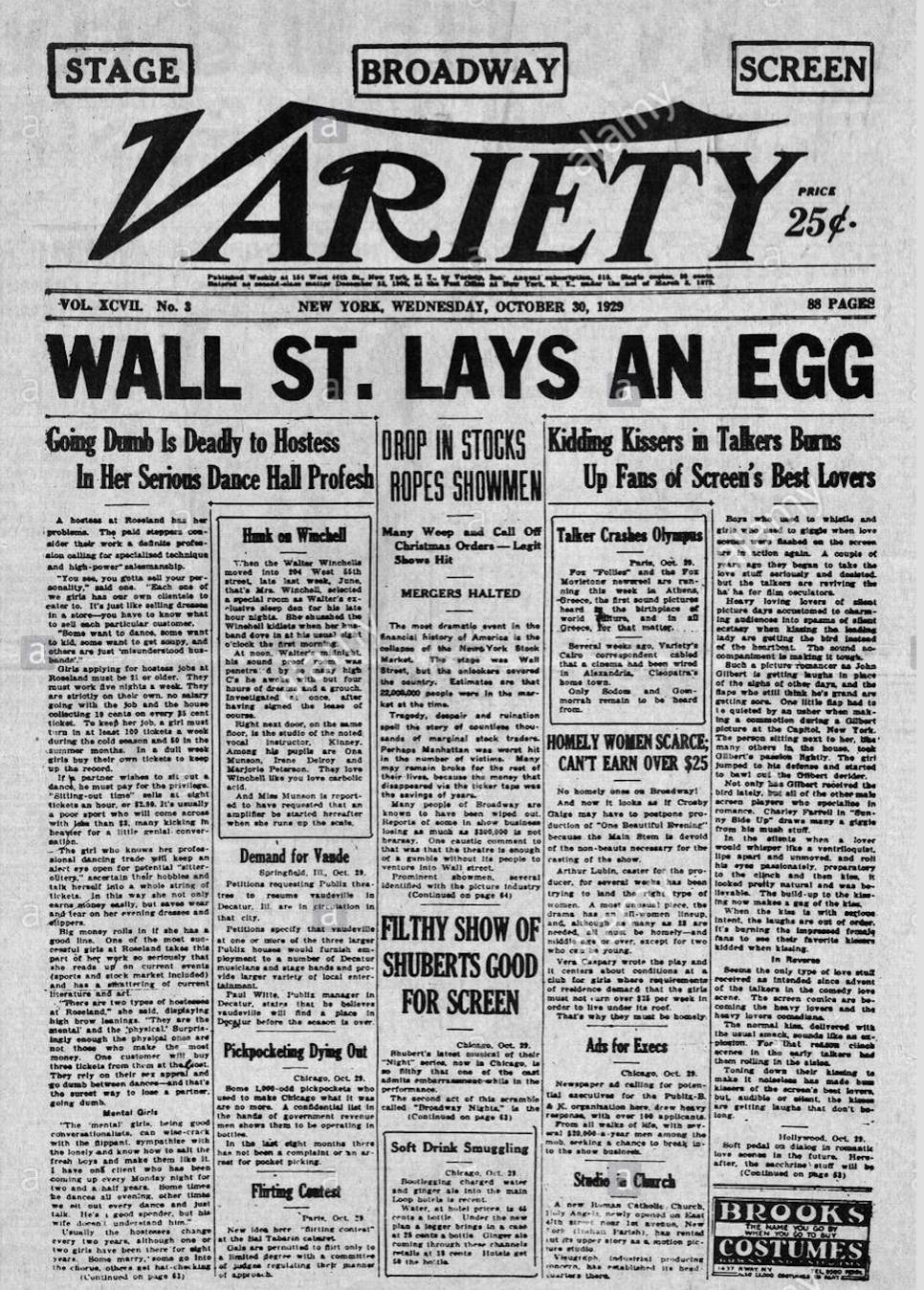
Something so giddy and wild as New York City in the Jazz Age would have to burn out at some point. But nobody expected the double catastrophe of a paralyzing financial crash and a wide-ranging government corruption scandal.

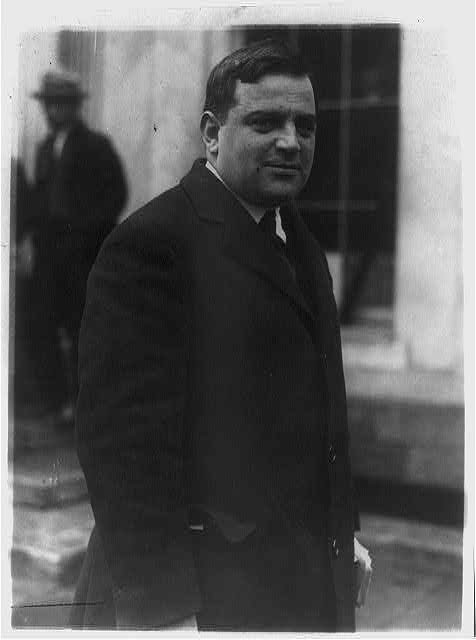
Mayor Jimmy Walker, in a race for a second term against a rising congressman named Fiorello La Guardia, might have had a few cocktails at the Central Park Casino after hearing of the pandemonium on Wall Street in late October 1929.

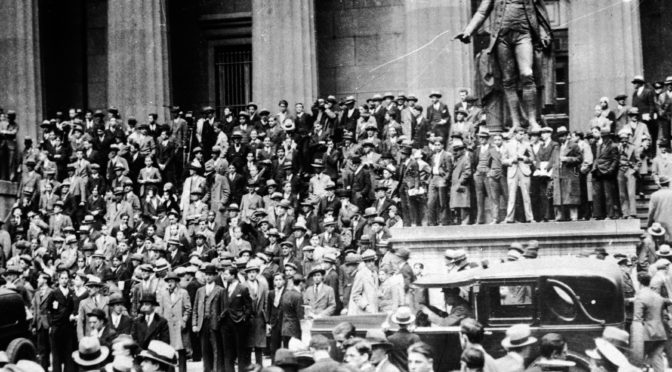
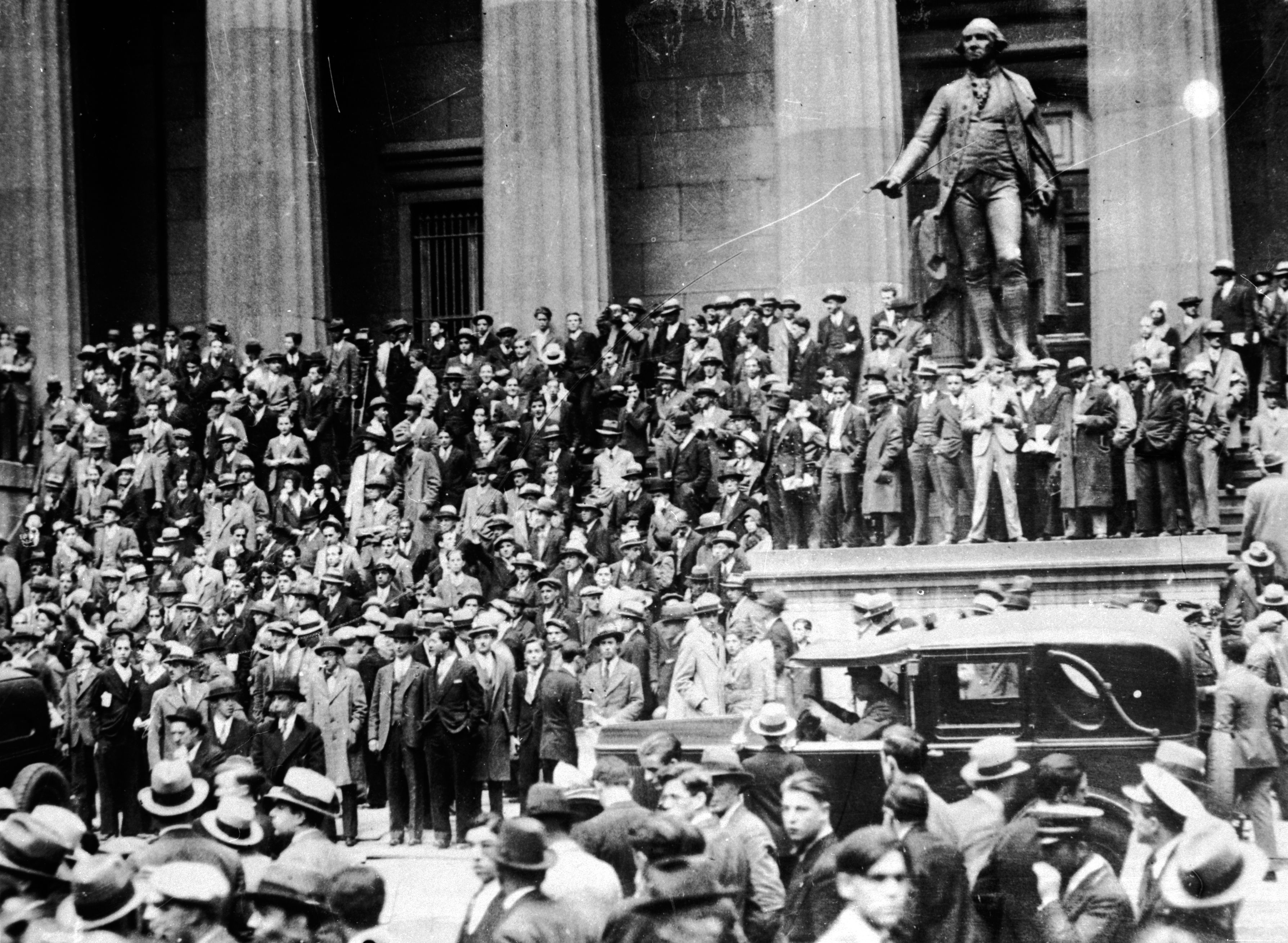
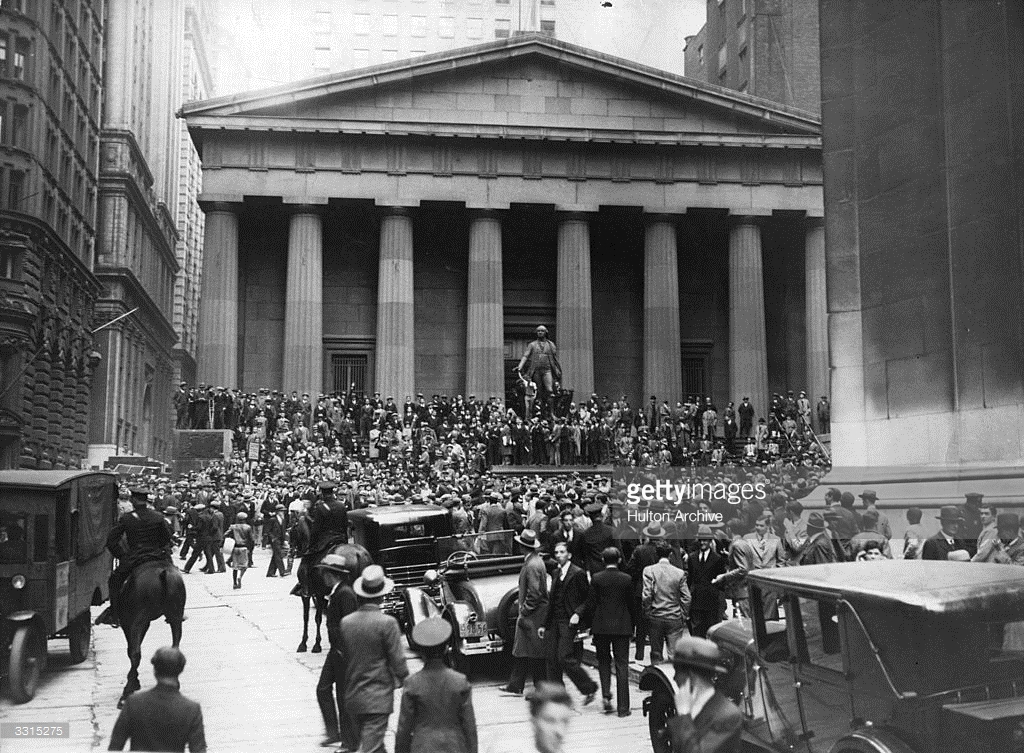
The irresponsible speculation fueling the stock market of the Roaring 20’s suddenly fell apart, turning princes into paupers overnight. Rumors spread among gathering crowds in front of the New York Stock Exchange of distraught traders throwing themselves out windows.

And yet a more immediate crisis was awaiting the Night Mayor of New York — the investigations of Judge Samuel Seabury, steering a crackdown authorized by governor Franklin Delano Roosevelt to rid New York City of its deeply embedded, Tammany Hall-fueled corruption.

With the American economy in free fall and hundreds of New York politicians, police officers and judges falling to corruption revelations, the world needed a drink! Counting down to the last days of Prohibition….

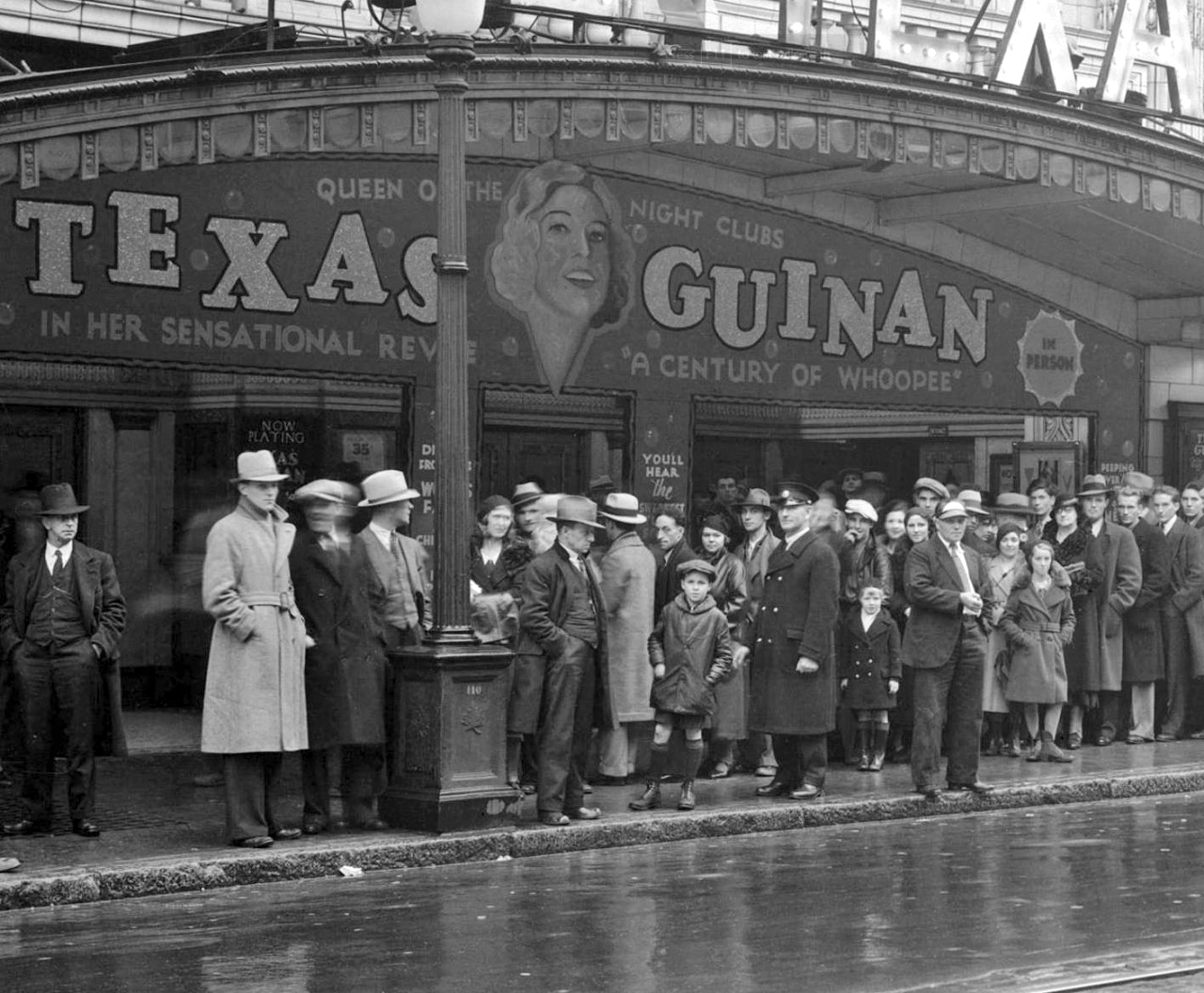
PLUS: The fate of Texas Guinan, the movie star turned Prohibition hostess who hit the road with a bawdy new burlesque — that led to a tragic end.

The song featured in this week’s episode was Bessie Smith’s “Nobody Knows You When You’re Down and Out”


The Bowery Boys: New York City History podcast is brought to you …. by you!

We are now producing a new Bowery Boys podcast every two weeks. We’re also looking to improve the show in other ways and expand in other ways as well — through publishing, social media, live events and other forms of media. But we can only do this with your help!

We are now a member of Patreon, a patronage platform where you can support your favorite content creators for as little as a $1 a month.

Please visit our page on Patreon and watch a short video of us recording the show and talking about our expansion plans.If you’d like to help out, there are five different pledge levels (and with clever names too — Mannahatta, New Amsterdam, Five Points, Gilded Age, Jazz Age and Empire State). Check them out and consider being a sponsor.

We greatly appreciate our listeners and readers and thank you for joining us on this journey so far. And the best is yet to come!


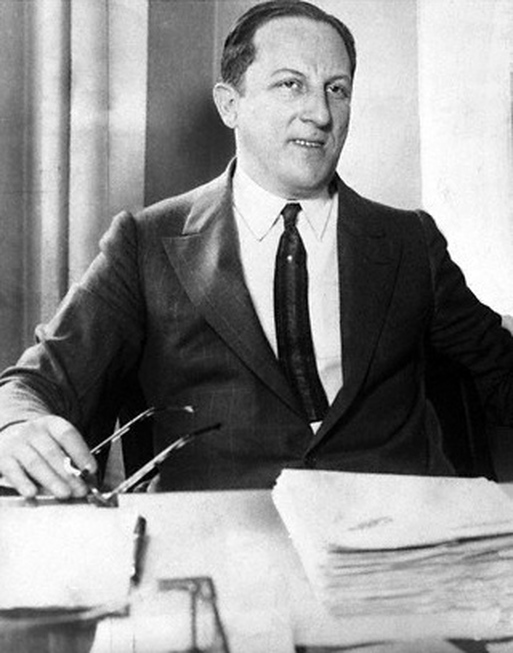
Arnold Rothstein — His murder would kick off a frenzy in New York’s organized crime syndicates and lead to an in-depth investigation into the police and local government

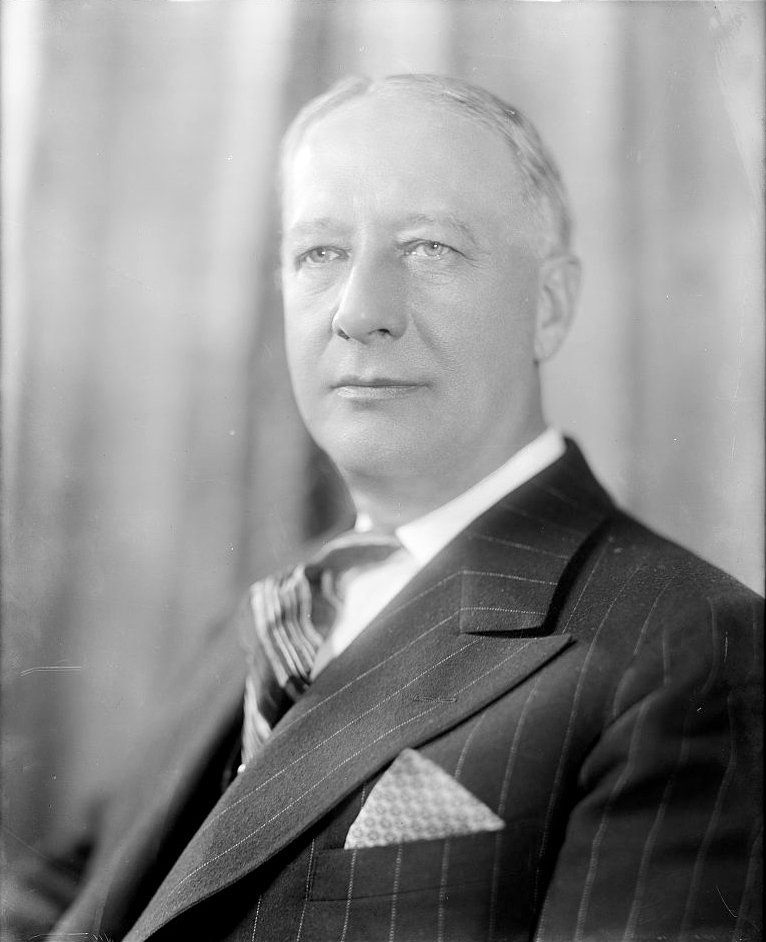
Al Smith — His unsuccessful bid for the presidency in 1928 led him to pursue more business-related projects, including the construction of the Empire State Building.

Harris & Ewing collection at the Library of Congress.

Mayor Jimmy Walker felt invincible at the start of his second term

Texas Guinan eventually left the nightclub scene and returned to film and stage work. She’s pictured here in 1931 in Paris. She would later be denied entry into the country for her bawdy performances (at least, that’s what she claimed).

Getty Images

Betty Compton waited patiently for Walker from the sidelines, watching as his political fortunes collapsed in 1932.

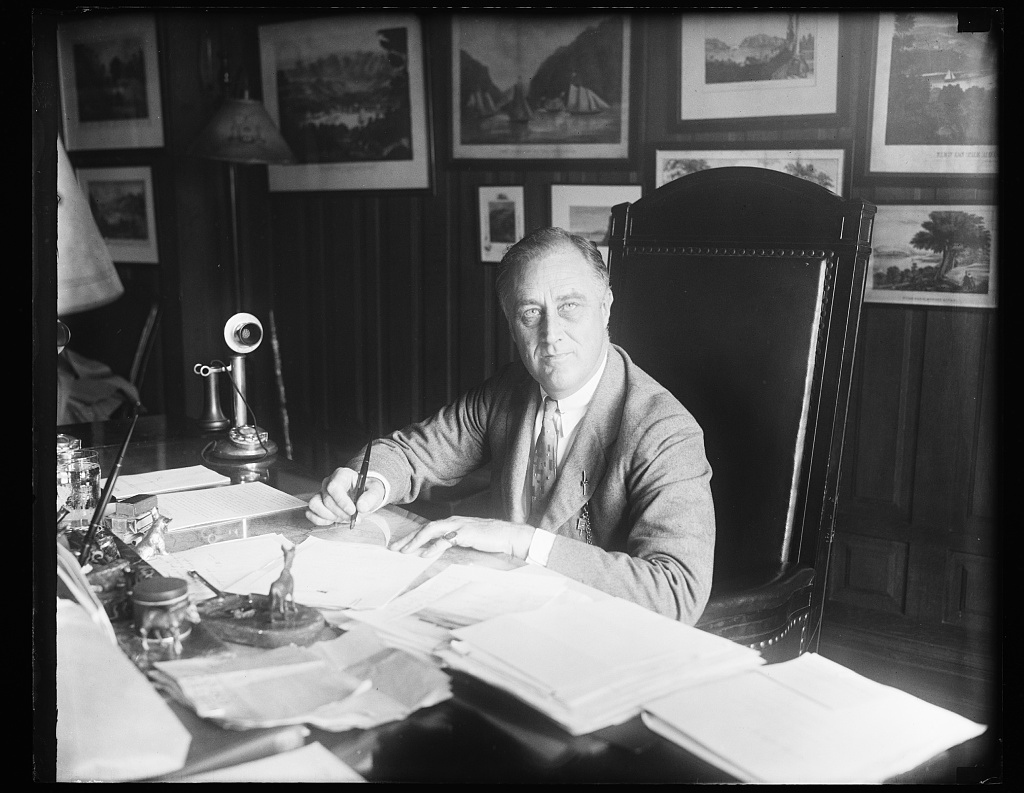
Franklin Delano Roosevelt — The governor of New York (and soon president of the United States) went after corruption during a busy campaign season.

Library of Congress

Fiorello La Guardia (pictured here in 1929) was an early supporter of Prohibition repeal and ran for mayor in 1929, losing to Walker.

Library of Congress

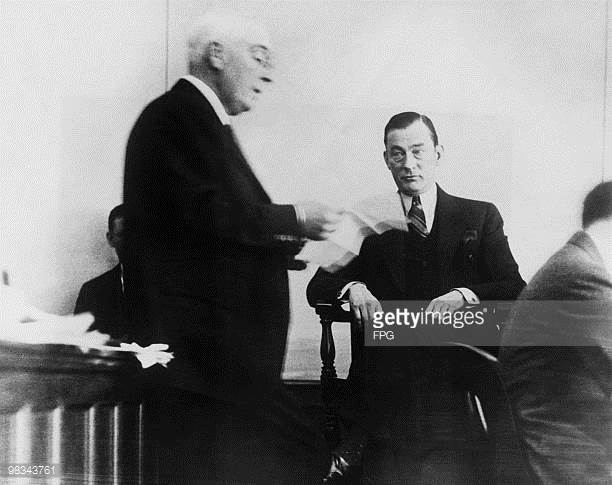
Samuel Seabury, questioning a nonplussed Jimmy Walker on the stand, succeeded in rooting out corrupt officials in public offices. With Roosevelt’s help, he even brought down the Night Mayor himself.

Getty Images

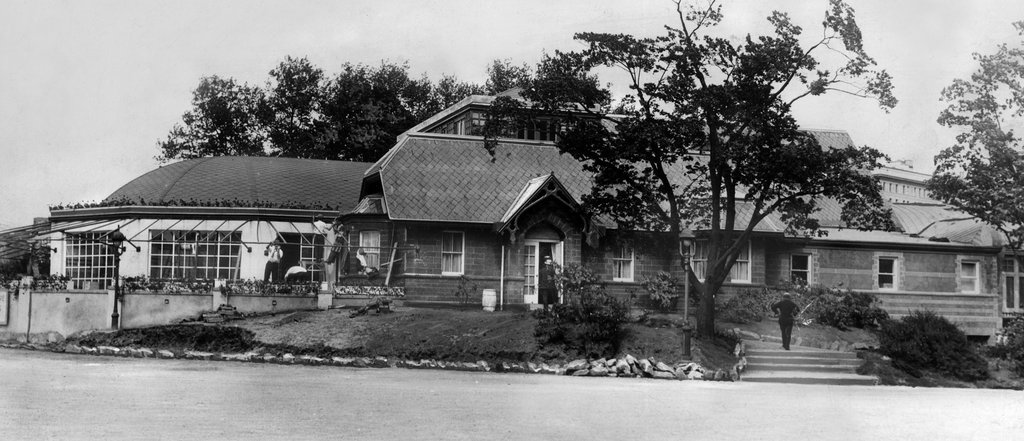
The Central Park Casino transformed into a swanky nightclub in 1929, a favored spot for Jimmy Walker

Courtesy New York Times

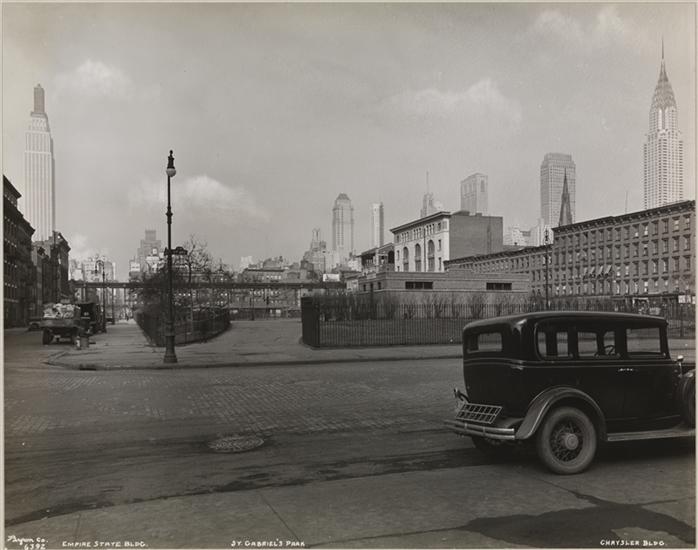
An interesting view of mid-Manhattan in 1931 (from St. Gabriel’s Park at First Avenue and 35th Street) with the newly completed Chrysler Building and the Empire State Building nearly completed.

MCNY/Byron Company

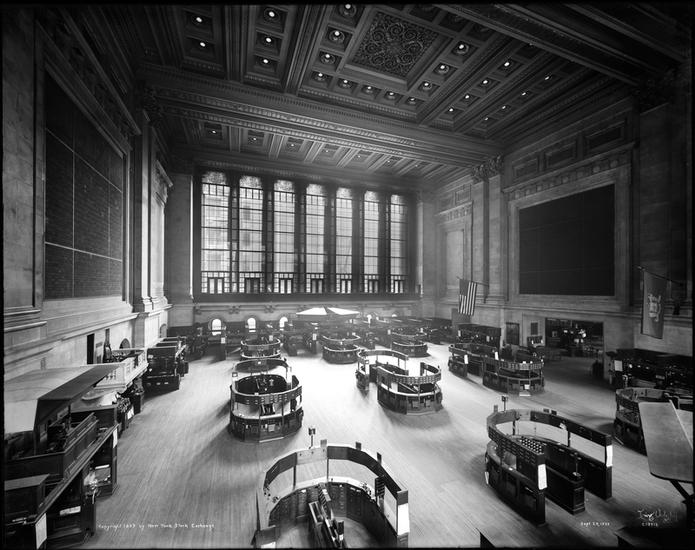
An ominous image of the New York Stock Exchange from September 1929, weeks before the crash.

Irving Underhill/MCNY

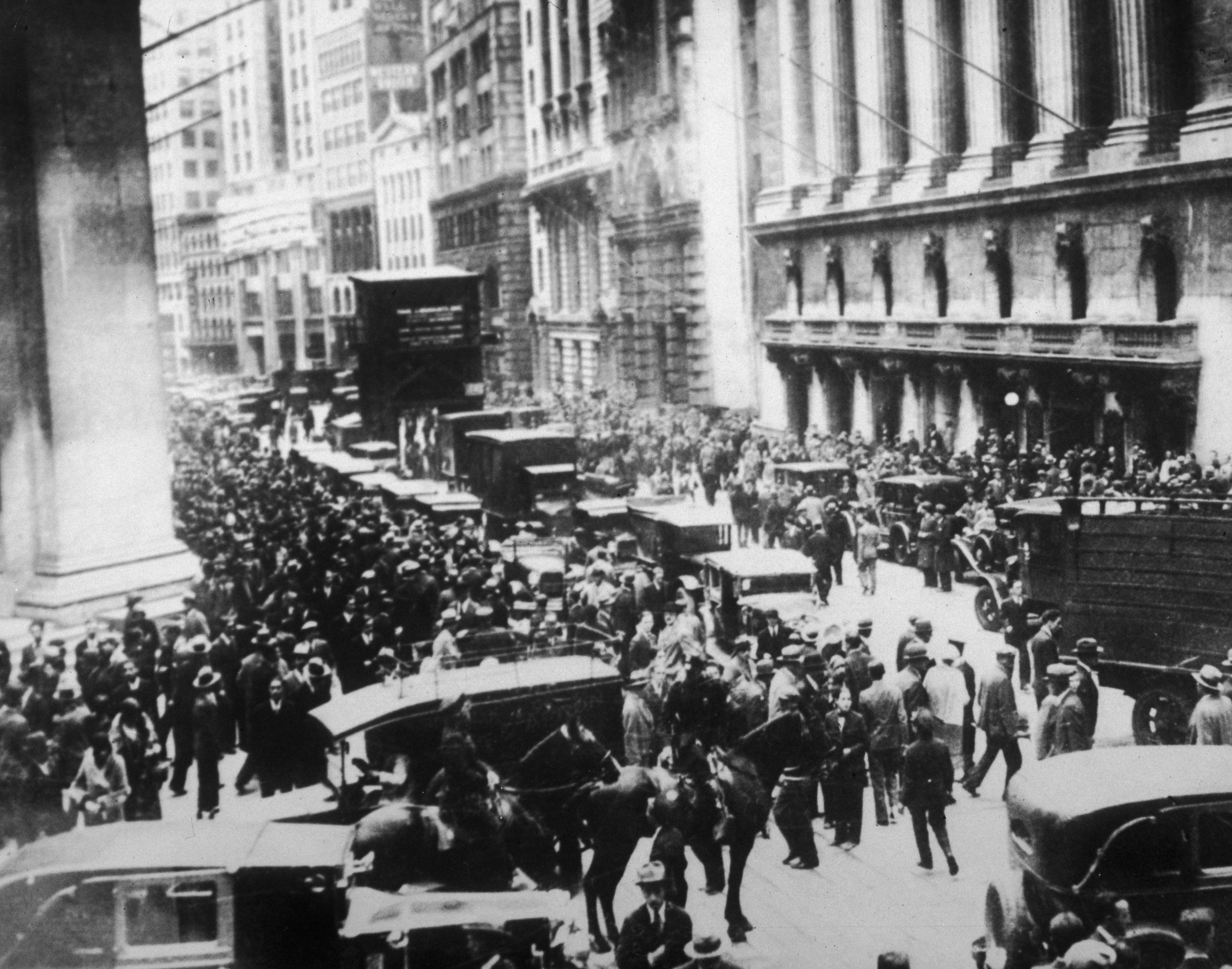
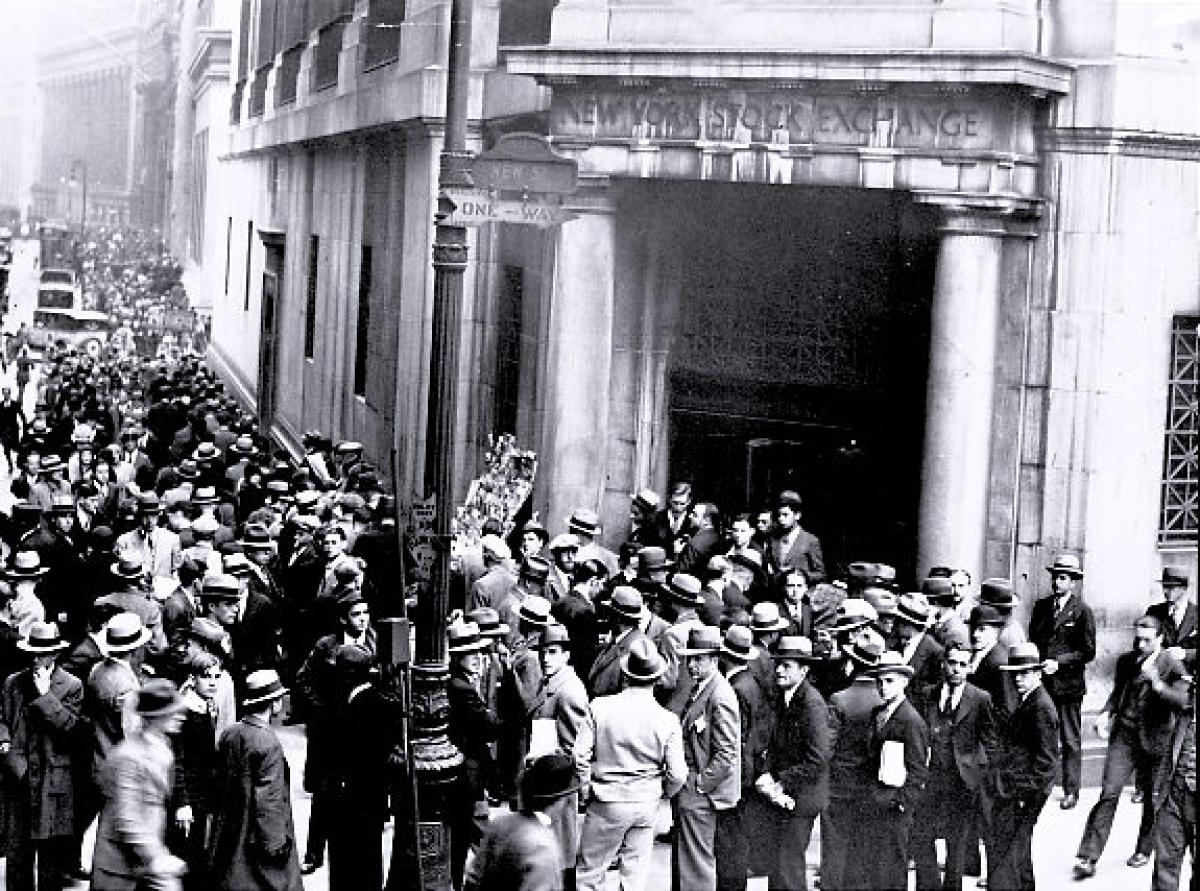
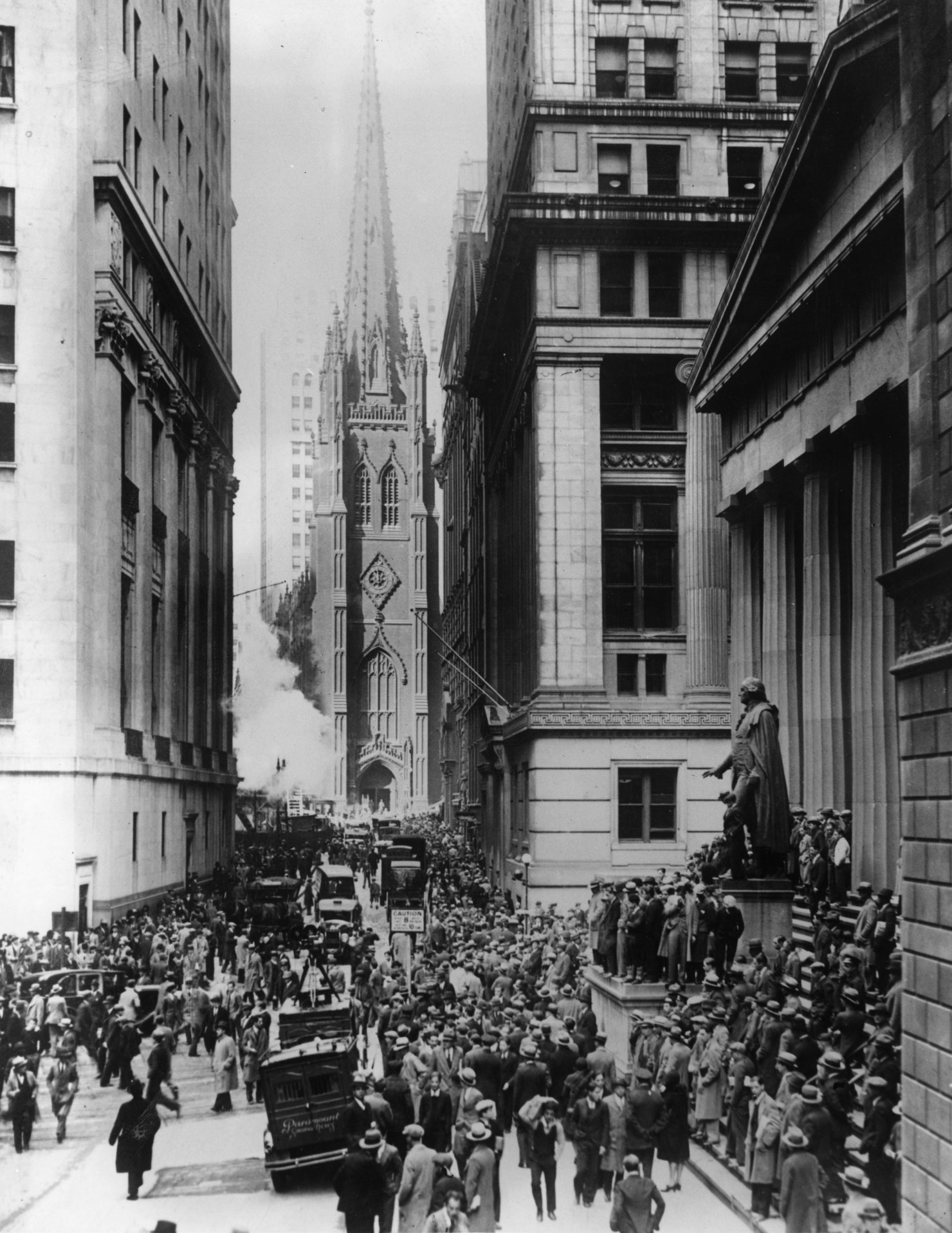
The streets outside the New York Stock Exchange were clogged with people for days, frantic scenes of anger, panic and heartbreak.

29th October 1929. (Photo by Hulton Archive/Getty Images)
New York Daily News
(Photo by Keystone/Getty Images)

A graphic look at the Wall Street Crash of 1929.

Wikicommons

Outside Vancouver’s Beacon Theatre on October 28, 1933, just a week before her death here in this city.


CORRECTION: Jimmy Walker’s second term began on January 1, not January 3.

For more information, check out the following books:

Dry Manhattan: Prohibition in New York City by Michael A. Lerner

The Great Crash by John Kenneth Galbraith

Once Upon A Time In New York by Herbert Mitgang

The Man Who Rode The Tiger: The Life and Times of Judge Samuel Seabury by Herbert Mitgang

Rothstein: The Life, Times, and Murder of the Criminal Genius Who Fixed the 1919 World Series by David Pietrusza

Other Bowery Boys podcasts related to this one:

The Tallest Building In New York: A Short History (#169)

Battle For The Skyline: How High Can It Go? (#199)

The Chrysler Building (#11)

Robert Moses (#100)

Categories
The First

The Rebel — Benjamin Franklin: America’s Founding Inventor

THE FIRST PODCAST The story of Benjamin Franklin at the end of his life — at the birth of a new nation.

Part Three of The Invention of Benjamin Franklin. Check Part One (Franklin Gothic) and Part Two (Lightning Strikes) to catch up on his extraordinary story!

Benjamin Franklin was the most famous American in the world by the time of the Revolutionary War, known as a writer, inventor and philosopher. But as an old man, he would earn another title — rebel.

By the time of the Boston Massacre, Dr. Franklin was already an elderly man, watching the early days of American unrest from his comfy home in London. His scientific experiments were eventually put on hold as he rushed back to the colonies to help set up the mechanism of independence.

But while others went to war, Franklin went — to France? It was because of his great celebrity that he was deployed on an unusual mission to court an important ally for George Washington and his Continental Army. And it was in the banquet halls and libraries of Paris that Franklin would actually invent one of his useful creations.

STARRING: Mesmer, Marie Antoinette, Voltaire and all the Founding Fathers!


To get this episode, simply download it for FREE from iTunes or other podcasting services. Check here for other ways to get the show.

Subscribe to The First here so that you don’t miss future episodes!

You can also listen to the show on Stitcher streaming radio from your mobile device.

Or listen to it straight from here:
THE REBEL: AMERICA’S FOUNDING INVENTOR


This painting is by David Martin, made of Benjamin Franklin in 1767

From my trip this week to Philadelphia for the eclipse:

On the steps of the Franklin Institute in Philadelphia. Everyone is very enthusiastic about the eclipse. #boweryboys

A post shared by Gregory Young (@boweryboysnyc) on

From the Benjamin Franklin Museum:


Next to the gravesite of Ben and Deborah Franklin:

Categories
ON TELEVISION

Travel Channel’s ‘Mysteries At the Museum’ featuring the Bowery Boys

Greg Young has been doing several appearances on the Travel Channel program Mysteries at the Museum with Don Wildman. He’s on tonight talking the construction of a bridge in Niagara Falls. Check your local listings and tune in

Mysteries at the Museum — KITE BRIDGE
featuring Greg Young of the Bowery Boys
Aug 24 premiere — 9 pm EDT/ 8 pm CDT
then again at
Aug 25 12am EDT / 11pm CDT
Aug 27 9am EDT / 8am CDT

Greg also appeared on an episode last week featuring the adventures of Isabella Goodwin, one of New York’s first female detectives.
Watch it again at:
Mysteries at the Museum — DETECTIVE GOODWIN
Aug 31 7pm EDT | 6pm CDT

Categories
Podcasts The Jazz Age

The Queen of the Speakeasies: A Tale of Prohibition New York

PODCAST Dry wit! Wet lips! The story of Prohibition during the Jazz Age and the movie star-turned-hostess who became the toast of New York nightlife.

Texas Guinan was the queen of the speakeasy era, the charismatic and sassy hostess of New York’s hottest nightclubs of the 1920s. Her magnetism, sharpened by years of work in Hollywood, would make her one of the great icons of the Prohibition era.

She’s our guide into the underworld of the Jazz Age as we explore the history of Prohibition and how it affected New York City.

The temperance movement united a very bizarre group of players — progressives, nativists, churchgoers — in their quest to eliminate the evil of alcohol from American society. Many saw liquor as a symbol of systemic social failure; others suspected it as the weakness of certain immigrant groups.

Guinan, a Catholic girl from Waco, Texas, was introduced to New York’s illegal booze scene by way of the nightclub. Her associations with rumrunners and gangsters were certainly dangerous, but her unique skills and charms allowed her an unprecedented power on the edges of a world fueled by the ways of organized crime.

Come along as we visit her various nightclubs and follow the course of Prohibition in New York City from the loftiest heights to the lowliest dive.

Listen to our podcast: Texas Guinan, Queen of the Speakeasies

To download this episode and subscribe to our show for free, visit iTunes or other podcasting services or get it straight from our satellite site.

You can also listen to the show on Google Music, Stitcher streaming radio and TuneIn streaming radio from your mobile devices.

___________________________________________________________________________

The Bowery Boys: New York City History podcast is brought to you …. by you!

We are now producing a new Bowery Boys podcast every other week. We’re also looking to improve and expand the show in other ways — publishing, social media, live events and other forms of media. But we can only do this with your help!

We are now a creator on Patreon, a patronage platform where you can support your favorite content creators.

Please visit our page on Patreon and watch a short video of us recording the show and talking about our expansion plans. If you’d like to help out, there are six different pledge levels. Check them out and consider being a sponsor.

___________________________________________________________

“Lips That Touch Liquor Shall Not Never Touch Mine” was a popular temperance ballad of the late 19th century.

Library of Congress

Inside a New York saloon in 1919. Its kegs would soon run dry, the barroom shuttered.

Library of Congress

New York City Deputy Police Commissioner John A. Leach, right, watching agents pour liquor into sewer following a raid in 1921.

Library of Congress
A two page ad in Moving Picture World, May 1919, touting a new kind of movie star — MISS TEXAS GUINAN
A lobby card for one of her biggest hits — The Gun Woman. These movie did not exactly display Guinan’s more playful charms.
Texas Guinan, visits the White House with fellow ‘cowboy’ actors Harold Vosburgh, George Nagle, Arthur Ludwig, Wells Guinan, 4/22/22

She would go blonde by the time she got to New York, helping to define hairstyles every night in her clubs.

A menu from the Cafe des Beaux Arts from 1914. This would be the place where Guinan would be ‘re’-discovered.

The interior of the King Cole Bar at the Hotel Knickerbocker showing the “Old King Cole” mural by Marfield Perrish. Below that: the exterior. The building, located on 42nd Street, has been refurbished to its original glory today.

MCNY
MCNY

Men gather outside the El Fey Club where Guinan first worked with Fay and made connections with New York’s criminal element.

Texas Guinan with Larry Fay to her right and a row of beautiful flapper chorus girls.

A calling card for Guinan’s most famous establishments.

All the while, she kept working on the stage and even doing a bit of touring. Here’s Guinan in 1925, stepping off the train to Miami. (I can’t imagine she was just there for a performance. Miami was considered ‘the wild west of bootlegging‘.)

A couple rare videos of Guinan in action:

For more information, check out the following books:

Last Call: The Rise and Fall of Prohibition by Daniel Okrent

Texas Guinan: Queen of the Nightclubs by Louise Berliner

Satan in the Dance Hall by Ralph G. Giordano

Dry Manhattan: Prohibition in New York City by Michael A. Lerner

Other Bowery Boys podcasts related to this one:

The Life and Death of Rudolph Valentino (Episode #170)

Mae West: Sex on Broadway (Episode #182)

The Murder of Stanford White (Episode #188)

Midnight in Times Square (Episode #195)

Categories
Bronx History

Robert E. Lee in the Hall of Fame? There were concerns even back in 1900

On Wednesday, Governor Andrew Cuomo announced that the busts of Robert E. Lee and Stonewall Jackson, located on the campus of Bronx Community College, would be permanently evicted, following the removal and dismantling of several sculptural depictions of the Confederate generals across the country in recent days.

The funny thing about these particular busts though. Most New Yorkers were probably saying to themselves, “Busts of Confederates? In the Bronx?”  Cuomo’s statement is probably the most that been written about them in more than five decades.

But many people have been displeased with Lee’s placement in the Hall of Fame from the moment it was decided to place his bust there back in 1900. Angry New Yorkers wanted to rip down his likeness before it was ever even erected.

“Robert E. Lee deserves the everlasting contempt of every soldier and every honest American.” – A.B.W., New York Times, 1900

Below: The Hall of Fame bust of Robert E. Lee

Archives of Bronx Community College, City University of New York

History remains static even as our recollections of it evolve, even as our monuments to it transform without a single chip of the chisel. Statues often reveal more about the nature of collective memory than the likenesses represented in these honors.

Nowhere in New York City is that more true than a strange little nook of marble busts in the Bronx.

The Hall of Fame of Great Americans, located on the beautiful campus of Bronx Community College (the former uptown campus of New York University), used to be considered a very, very important place.

MCNY — Raphael Tuck & Sons

Tucked on a scenic cliff overlooking the Harlem River (and with the Cloisters well in sight), the Hall of Fame  was an ambitious project constructed in 1900 with the idea of immortalizing Americans who had made significant contributions to the sciences, the arts, politics and the military.

Spearheaded by then-chancellor of NYU Henry Mitchell MacCracken, the project is the first real memorial ‘hall of fame’ concept to be executed in the United States. With America flush with Gilded Age wealth, the Hall of Fame was intended to be an American pantheon, a modern response to the god-filled marble hallways of Europe.

Walking along the spacious colonnade tucked behind the Stanford White-designed Hall of Philosophy, you are thrown back into a mix of turn-of-the century scholarly aesthetic and the belief of equating the American movement with ancient Roman and Greek forefathers.

MCNY 1945

There are 98 portrait busts representing a host of great minds — many recognizable, other completely forgotten today. The hall was regularly updated  up until the 1970s. Several people have been voted into the Hall of Fame but never received busts (sorry Andrew Carnegie).

Prominent American citizens voted on who would be the first entrants to the Hall of Fame in 1900.  When the ballots were at last tallied, a great number of (exclusively) men included some very obvious choices (Benjamin Franklin, Abraham Lincoln) some inspired ones (Nathaniel Hawthorne, Peter Cooper), and a couple bizarre ones, by today’s standards (the famed botanist Asa Gray).

Interestingly one man who had fought for the Confederacy during the Civil War made the original list — Robert E. Lee. Over a half century later, he would be joined by Stonewall Jackson, another Confederate general.

Below: Lee, photographed by Mathew Brady in 1865

The Jackson bust was installed in 1957 after a vigorous campaign by  Confederate history supporters. According to Richard Rubin of The Atlantic: “Newspaper publishers used their editorial pages to lobby for or against nominees, and groups like …. the United Daughters of the Confederacy waged extensive, expensive campaigns to get ‘their’ candidates elected.” [See picture at the bottom of this article]

But Lee’s appearance in this immortal pantheon was almost never in question — at least for those who voted on the original inductees.

However, almost immediately, the possibility of Lee’s inclusion became controversial. The idea of a Confederate general — responsible for the deaths of thousands of Union soldiers — seemed ridiculous, even offensive, particularly to Northerners and to the residents of the city which would hold the Hall of Fame.

Leading the charge against Lee was the New York Sun.

At this time there has come up a false and mushy sentimentality which would have the American people forget the outrage against the Republic committed by the rebellions forces under the command of Robert E. Lee. It is that meek and mawkish sentimentality which puts the name of Lee among the great commanders entitled to the veneration of posterity.  Hail to the Stars and Stripes and always death and confusion to its enemies!

The New Orleans newspaper The Times-Democrat promptly went after the Sun:

[T]he protagonist of the Lost Cause possessed personal beauty of the ideal kind and accomplishments which perfectly fitted him for the high station which was his, from the bright beginning to the sombre close of his career. [H]e sacrificed wealth and ambition, to battle for a cause which, to his keen professional eye, was predestined to failure.”

(Their response seems to revel in the ‘mawkish sentimentality’ upon which the New York Sun was remarking!)

In Alabama, the Montgomery Advertiser also trashed the Sun: “No doubt that paper is an admirer of John Brown and others of his character while vilifying one of the greatest captains of the century.” Brown led the raid on Harpers Ferry in 1859, an event which became a cause célèbre for Northern abolitionists.


But such remarks were not left to editorial boards.  Said one reader E.O. in the New York Times (Oct 16, 1900):

His only claim to distinction is that he displayed great ability in his attempt to destroy the Government he had sworn to defend, much of his ability being due to the education given him by that Government. The only excuse to be made for Lee is that he thought he was right, that he thought he must be ‘loyal to his State’…..

But supposing Lee was honest in his belief, it is not customary or proper to honor a man for making the mistake of a lifetime. We may forgive his offense but neither justice nor charity requires that we should do more than maintain silence on the subject.

Let those who know Robert E. Lee honor his memory for such good qualities as they found in him, but the Hall of Fame should be reserved for those whose public services are worthy of honor.

A month later:  “I protest against his name being coupled with the patriots of his time. Robert E. Lee deserves the everlasting contempt of every soldier and every honest American for accepting the surrender of brave Union soldiers when he know they would be sent to be starved and tortured in Southern prison pens.” — NYT, Oct 16, 1900

Then there’s this one:

Read the rest of this letter here:

Many of the letter writers were certainly alive during the Civil War. The veterans organization Associated Survivors of the Sixth Army Corps of Washington passed a resolution against the Hall of Fame organizers, declaring “General Lee was an enemy to his country and failed to do his duty at a critical time.”

However it is interesting that of all the objections about Lee and Jackson, none directly had to do with slavery or the plight of enslaved people.

An illustration of the first inductees from the New York Tribune:

Others thought of the  Hall of Fame a place of representative honor and so Lee must be included, if only to bring the Southern states into the hall’s august glory.

A reader (signed ‘Constant Reader’) from the Brooklyn Daily Eagle [April 3, 1900]:

“Would it not be a graceful tribute to our worthy Southern brothers to include the names of some of their great heroes on the Hall of Fame record? Though Robert E. Lee and T. J. Jackson fought for what we think is a bad cause, yet we should not forget that such men acted as their consciences dictated, and their whole lives show them to be great, good and most worthy gentlemen.”

Others set aside grievances with Lee and took aim at another candidate — John C. Calhoun, the former Vice President who set the wheels of the South’s secession in motion.

From a Boston newspaper: “The judges are having trouble enough from their assignment of a pedestal to General Lee. But Lee did not formulate policies. To have put the Great Nullifier in the American Pantheon would have bred a riot.”

To which the Atlanta Constitution replied: “A truly cultured people ought not to be lured into a riot because of honor paid the memory of a great man.”

In the end, Lee would be among the original inductees to the Hall of Fame. (Calhoun would fail to make the final cut.) Indeed the balloting proved both general to be well regarded in their day, placing higher in the voting than all generals by Ulysses S. Grant.

The Hall of Fame is a true curiosity in the ‘roadside attraction’ sense. Once NYU sold the campus in the 1970s, the colonnade was virtually neglected, the hall of fame forgotten.

It is a modern ruin that current events has dusted off for new evaluation.

Below: The installation of Stonewall Jackson’s bust in 1957 

Courtesy Bronx Community College

________________

Portions of the research for this article were taken from a previous article I wrote about the Hall of Fame back in 2009.