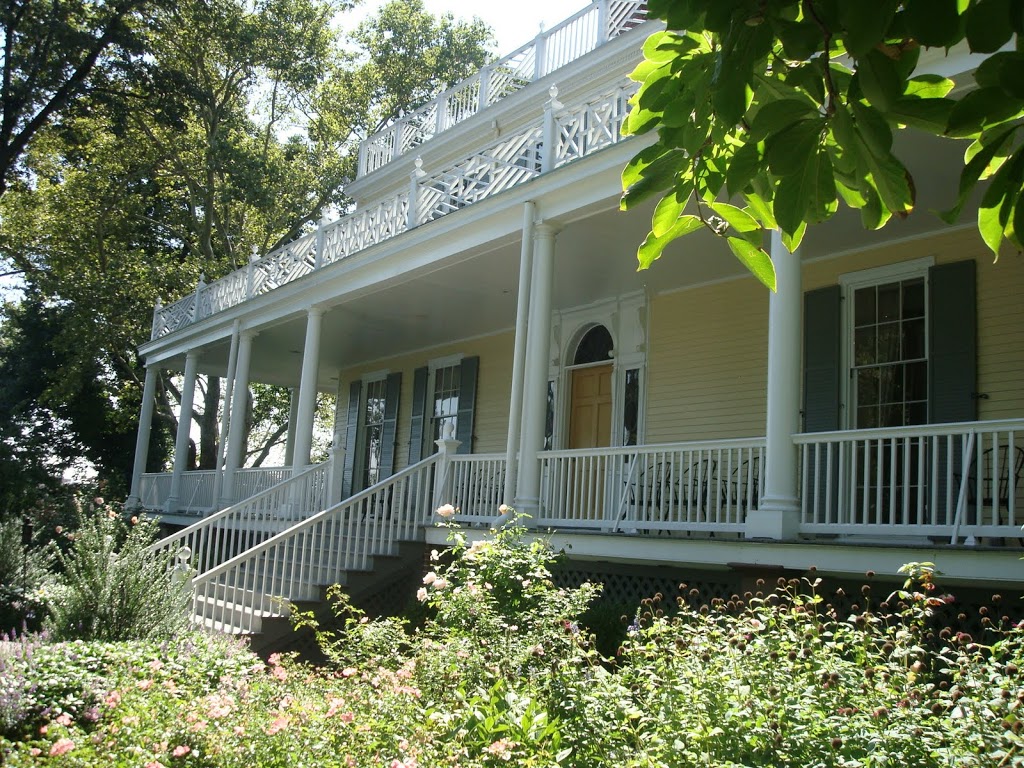
A new ‘Metropolis’ — for our metropolis — at the Ziegfeld


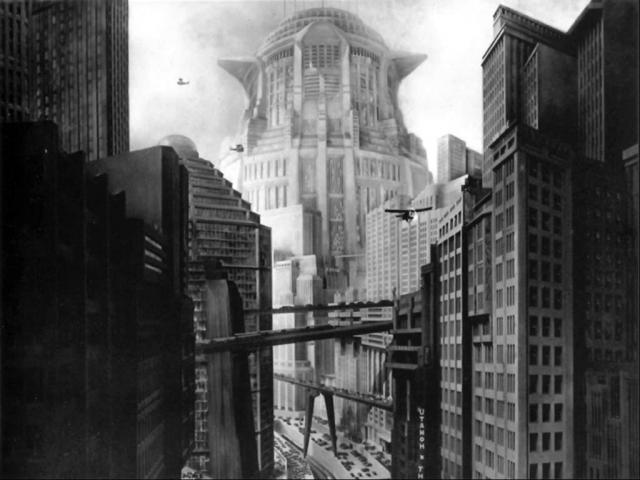
Fritz Lang claims the Manhattan skyline influenced the look of his film ‘Metropolis’ . In fact, the film’s fantasy city resembles futuristic sketches rendered by American magazine illustrators of the late 19th century.

The giant screen at the Ziegfeld Theatre goes silent this Friday as a two-week run of Fritz Lang’s fantasy masterpiece ‘Metropolis’ opens, featuring the famously restored print — with 30 minutes of newly integrated footage — that presents the most complete version of the movie ever screened in the city. This version originally debuted at the Film Forum back in May, but the Ziegfeld’s massive screen — the largest in the city — and classic cinema setting should make this an unforgettable event.

The Ziegfeld seats a little over 1,100 people. The film made its New York debut on March 3, 1927 on a much bigger screen, the Rialto, on the northwest corner of 42nd Street and Broadway, which could accommodate over 1,900 filmgoers at one time. (And that was considered a medium-sized theater for its day.) In the days when single films toured to various cities in succession, ‘Metropolis’ was a bonafide box office favorite for New Yorkers, raking in just over $150,000 during a six week run, back when the price of movie tickets ranged from 30 to 90 cents. Below: the Rialto Theatre in 1917
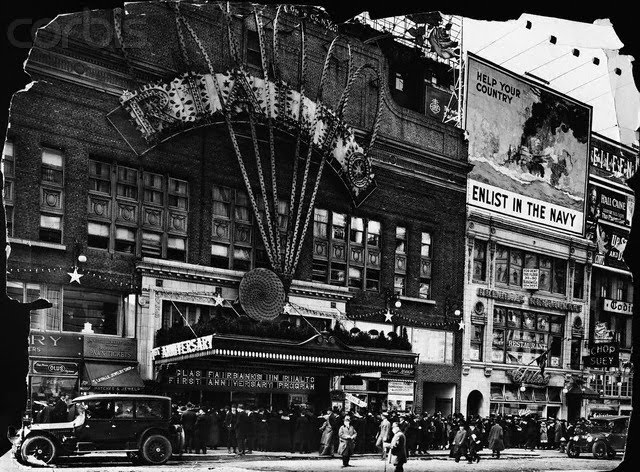

What was shown to audiences in 1927 would have made cineastes wither with shame, a “butchered, disjointed ” version released by Paramount Pictures, with whole reels of the film discarded, “16 reels to 7, resulting in a plot with ‘more holes than a pound of rigatoni.'” (Cesar J. Rotondi).” [source] In place of those reels were a couple shorts, including a scenic documentary called ‘Steamer Day’.

The version of ‘Metropolis’ being shown at the Ziegfeld is the truest to the filmmaker’s original vision. And a perfect home for it, too, as Lang had always claimed that the film was inspired by a journey to New York. On October 12 1924, while being kept in the harbor aboard the vessel SS Deutschland awaiting entry, Lang caught sight of the city skyline for the first time, “completely new and fairy-tale like for a European. I knew then that I had to make a film about all of these sensations.”

As production on ‘Metropolis’ began just five months later, however, there were undoubtedly other inspirations before Manhattan, and many film historians believe Lang told of his New York inspiration as a way to promote the movie.

New York critics were all over the map in their appreciation. “There is altogether too much of Metropolis…too much scenery, too many people, too much plot and too many platitudinous ideas,” proclaimed the critic from Life Magazine. Mordaunt Hall of the New York Times was kinder: “Nothing like “Metropolis” has been seen on the screen. It, therefore, stands alone, in some respects, as a remarkable achievement.” Before adding, “It is a technical marvel with feet of clay, a picture as soulless as the manufactured woman of its story.” (They were watching the heavily edited version, so we’ll give them a pass.)

The film had left New York by May 1927 — the era of sound movies would come that summer with ‘The Jazz Singer’ — but it left one spiritual mark on the city: three years later, architect William Van Alen pays the film a subconscious nod when the spire of the Chrysler Building is raised May 20, 1930.
Categories
Mad Men

‘Mad Men’ notes: Remembering the Times Square HoJo

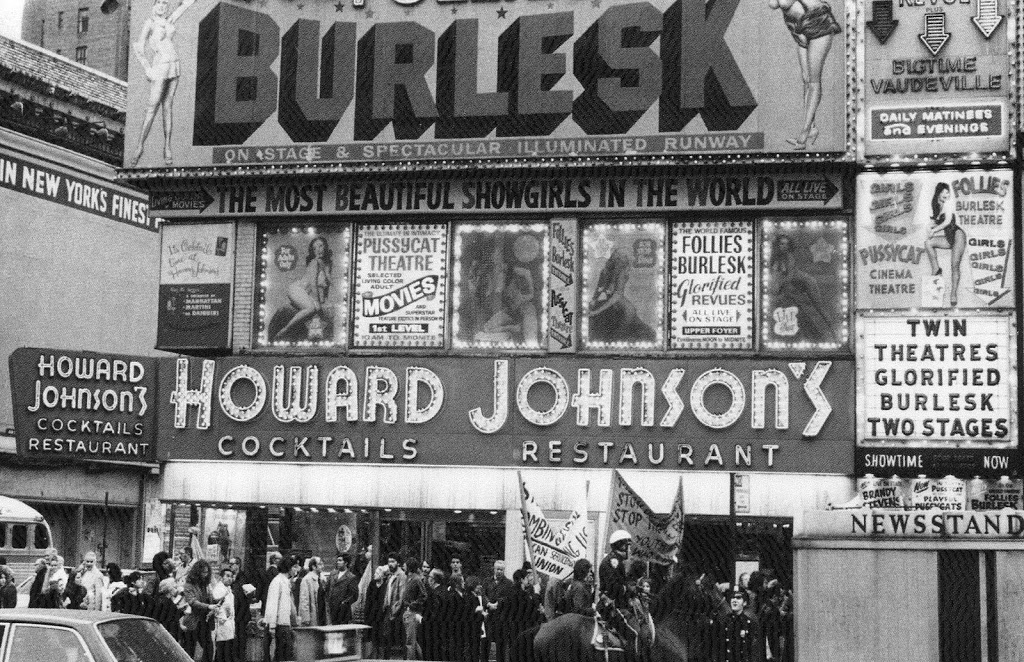
Howard Johnson at 46th Street: Dinner and a movie, all in one corner! There’s even Vietnam war protesters outside. (Photo by Bob Gruen, taken 1972, courtesy Ephemeral New York)

Every Monday I’ll try and check in with the Mad Men episode from the night before and focus in on one or two historical references made on the show. Spoilers aplenty, so read no further if you don’t want to know….

I was disappointed with last night’s season finale of Mad Men, not because of the out-of-nowhere shenanigans of Don Draper, but because a full half of the show took place in Los Angeles, leaving precious little opportunity for historical references. In fact, the two big references were L.A. originals, Disneyland and Whisky-a-Go-Go, which would have been only a year old in 1965.

But thankfully there was a brief mention (via Peggy’s hipster friend Joyce) of a treasured Times Square staple, and a place that most New Yorkers think of with great fondness — the Howard Johnsons restaurant at 46th and Broadway.

Nowhere on the planet could you find a more delicious plate of cheese fries or a dirtier martini. It stood for many years as the last remaining relics of the Times Square’s transitional period between glitz and grit, a stubborn throwback of authentic diner glamour. When it closed in 2005 — replaced with an American Eagle Outfitters — I’m was shocked that Time Square didn’t cave in on itself, as though HoJo’s and its greasy, glorious food were all that was holding it in place.

By the 1950s, the chain of hotels and restaurants founded by Massachusetts entrepreneur Howard Deering Johnson had spread throughout the United States, providing hearty and wholesome sustenance to mainstream, middle-class Americans. It was as ubiquitous and as recognizable with its orange roofs and friendly signage as McDonalds. So much so that Time Square alone had three of them, the first here at 49th and Broadway, a hole in the wall that had once employed up-and-coming actors Lily Tomlin and Gene Hackman. The HoJos here at 46th and Broadway, surviving the others, opened in 1955.

Nothing reflected the changes of Times Square more than this corner. Above the HoJo had been the glorious Orpheum Dance Palace, a once popular and rowdy dance hall that soon offered patrons their very own ‘private dancers’ and was closed down in 1964 for prostitution. It then became a porn theater called the New Parisdescribed as smelling “like decayed flesh in there, a lot of bodily fluids” — and later was later split into two spaces, housing a small legit theater (where A Perfect Crime ran for years) and the Gaiety male strip club.

And all the while, the Howard Johnsons below it retained its glittered-tile elegance, refusing to update their signs or menus. In the 1980s, it was an ideal spot to watch theater-goers and prostitutes. Penn Gillete (of Penn and Teller fame) had Friday night meet-ups here before heading off with a crowd for a weekly midnight movie screening.

In the ’90s, the now beaten but still thriving diner stood in contrast to the changing fortunes of Times Square, dwarfed by the multi-million dollar makeover. Eventually its corner real estate became too valuable for it to survive and it closed in 2005 — one of the last Howard Johnson’s restaurants in America. I miss it very much.

HoJoLand has a lovely tribute — full of photographs — of several former New York HoJos, including the Times Square locations.

ALSO: You might have heard a character mention the name Abe Beame, the city comptroller who ran for mayor in 1965, losing to John Lindsay (who’s also been name dropped on the show). Abe of course would get his chance to rule New York nine years later.

That’s it for Mad Men this year. Please go here if you’d like to go back and read prior articles based on references made on the show.

Lovelace’s Tavern: Early New York history, under foot

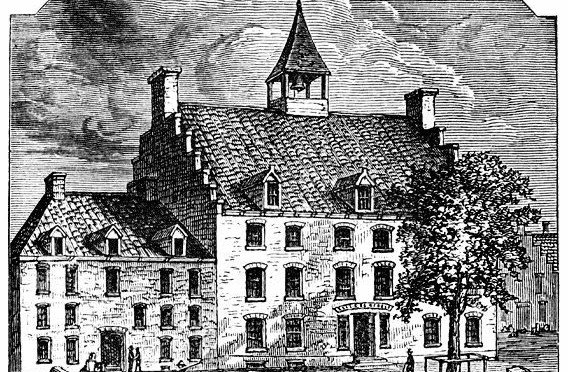
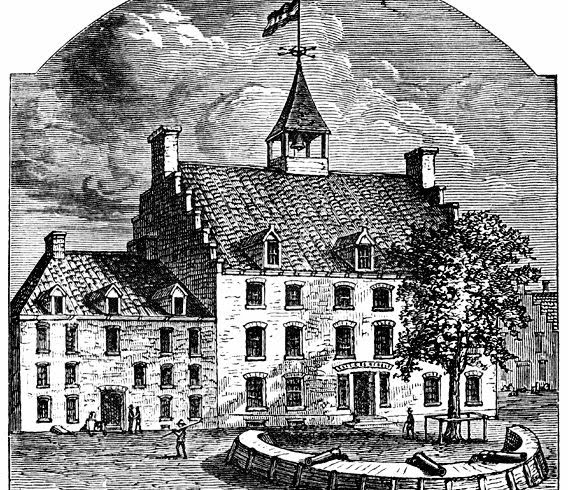
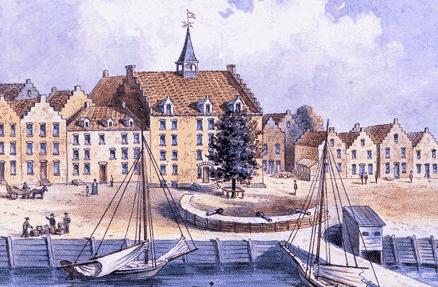
Lovelace’s Tavern is assumably the building to the left, with the Stadt Huys the main structure at center. You can find the foundations of this building still hanging out on Stone Street.

FRIDAY NIGHT FEVER To get you in the mood for the weekend, on occasional Fridays we’ll be featuring an old New York nightlife haunt, from the dance halls of 19th Century Bowery, to the massive warehouse clubs of the mid-1990s. Past entries can be found here.

LOCATION: Lovelace’s Tavern
Stone Street, Manhattan
In operation 1670-1706

If you’re a wanderer like I am, you’ve walked by Lovelace’s Tavern many times. People regularly walk on it; investment bankers take smoking breaks nearby it. It’s about 100 feet from the more famous Fraunces Tavern and just a block from the Alexander Hamilton Custom House. It’s history under glass, underfoot, remains trapped in a dusty cavity, the intervening eras heaped above it.

When Lovelace’s opened its doors in 1670, the Custom House was a fort and Fraunces was the home to the first mayor of new York, Stephanus van Cortlandt. The city extended a few blocks north, then abruptly stopped at a earthen wall fortified with timber planks 15 feet in height. The tallest building in New York in 1670 was next door to Lovelace’s — all of five or six floors.

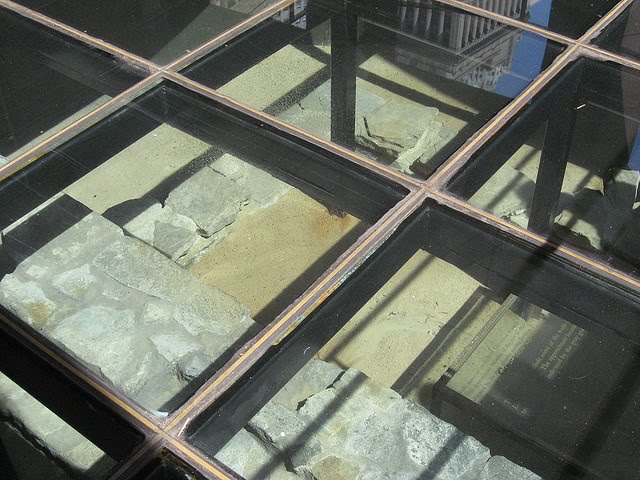
All that remains of the tavern of Governor Lovelace today are a few foundation walls set underfoot outside the former Goldman Sachs headquarters at 85 Broad Street. A rather unsightly office tower, 85 Broad Street was built during the glamour of the 1980s financial boom, a brown monolith of “inconspicuous plainness” that hovers above historic Stone Street. They’ve traced a path through the lobby so you can see where Stone Street used to linger before they planted this building here.

If wasn’t for Goldman Sachs, of course, nobody would have ever found Lovelace’s Tavern, whose foundations were unearthed in 1979 during construction. With a little imagination, you can rebuild it in your mind and refit it among the other historical recreations along Pearl and Stone streets.

The Stadt Huys was the center of New Amsterdam’s civic life — its municipal structure, its meeting hall, its sturdy town center. Built as a tavern in 1641, Peter Stuyvesant transformed it into the young settlement’s city hall, but kept it as a place to serve alcohol, all the while restricting many others in New Amsterdam from doing so.

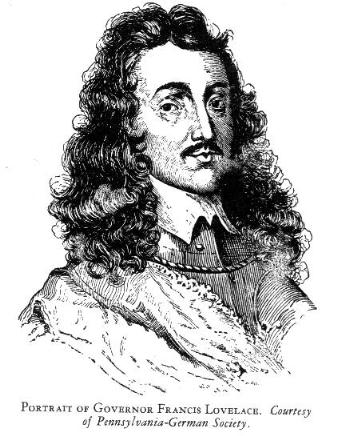
When the British took over in 1664, the building kept its place of importance. Underscoring is position was the building to the southwest that was erected in 1670, a tavern (“an inn, or ordinary“)owned by the governor of New York, Colonel Francis Lovelace (at right).

Francis was in good with the Duke of York during his territorial expansion of the New World and was installed in 1668 as the second governor of the recently acquired New York after the first (Richard Nicolls) was recalled.

Built right next door to the aging Stadt Huys, Lovelace’s tavern may have always been conceived as a second-tier administration building and seemed to offer the same services as the larger building. (It’s sometimes referred to as the King’s House.) In fact, the tavern connected right into municipal chambers, effectually an annex. Even so, the halls of the tavern would be illuminated until late at night with revelers, drinking wine and smoking their pipes.

This was the first of many changes made under Lovelace’s watch. He inaugurated the first postal service to Boston; its first route would become the basis for so many major thoroughfares today, most notably the Bowery. He also strengthened New York as a merchant hub, forcing farmers from surrounding areas to funnel their product through the city, and giving New York merchants a virtual monopoly of posts along the entire Hudson River.

At right: Another depiction of Stadt Huys and Lovelace’s Tavern from a few years later. The tavern also played host to most of the prominent leaders in town. Perhaps even ole Stuyvesant dragged his pegleg along its floors; he did, after all, live on a large farm north of the city and was alive during the tavern’s first two years of operation.

Lovelace, unfortunately, would be dead in a few years. During the short period when the Dutch regained control of New York — from August 1673 to December 1674 — Lovelace was recalled to England and squarely blamed for the loss. He was thrown in the Tower of London and died there in 1675.

But the tavern bearing his name lived on, even incorporating nearly all official New York business for a short time in 1697 when the first structure was deemed too decrepit to continue in. (An official city hall was finally built in 1700 where the city wall once stood.) The tavern burned down in 1706 and the land re-allotted for the growing merchant district.

Below: the remnants of Lovelace’s, in the shadow of 85 Broad Street

Photo courtesy J Gatz/Flickr

New York City Marble Cemetery had quite a weekend

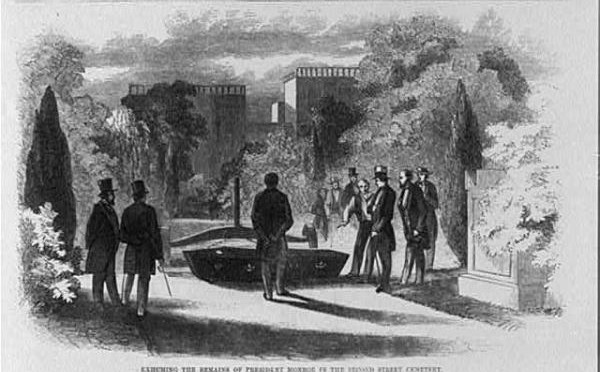
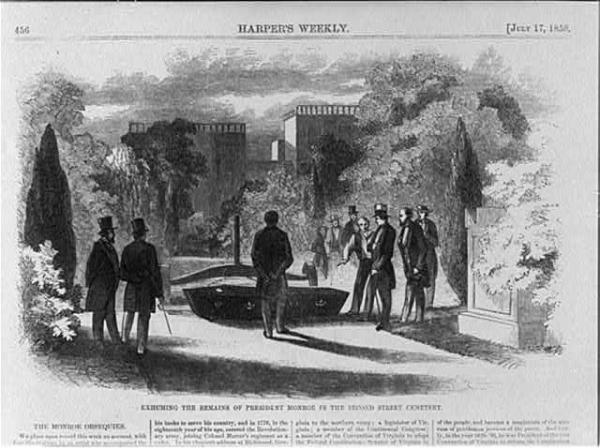
Above: President James Monroe laid to the rest at the New York City Marble Cemetery in 1831.

I hope many of you hit some of the Open House events throughout the city this weekend. Both the New York Marble Cemetery and the New York City Marble Cemetery were open to the public, both areas calm, quiet respites featuring the burial chambers of some early prominent New Yorkers. The similarly named resting places are a block away from each other in the East Village.

The less manicured New York Marble Cemetery is the oldest, dating from 1830, and includes the burial chamber of former mayor Aaron Clark . However the New York City Marble Cemetery, which opened one year later, is bit more aesthetically maintained and was once the final resting place of President James Monroe (before they moved him to Virginia), not to mention two mayors, Marinus Willett and Stephen Allen.

And of course, it was also home to a large cache of C-4 explosives!

New York Times: Explosives Abandoned In Cemetery Are Mystery
Gothamist: C-4 Found At Cemetery Becomes More Mysterious

(Illustration from Uncle Sam’s NY Tours)

Categories
Podcasts

Niblo’s Garden: New York’s entertainment complex and home to the first (bizarre) Broadway musical

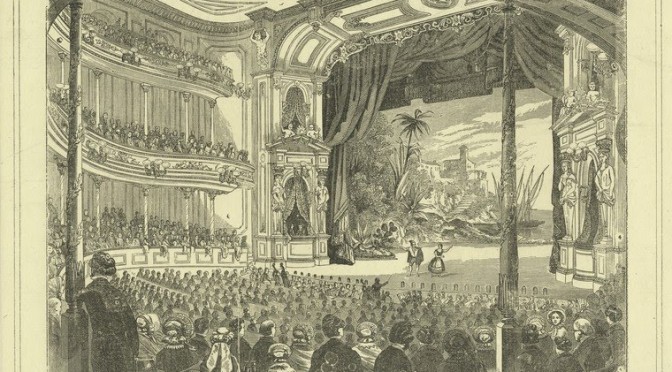
Show-stopping: The interior of Niblo’s Garden Theatre. Illustration by Thomas Addis Emmet, courtesy NYPL

PODCAST It’s the 1820s and welcome to the era of the pleasure garden, an outdoor entertainment complex delighting wealthy New Yorkers in the years before public parks. Wandering gravel paths wind past candle-lit sculptures, songbirds in gilded cages, and string quartets in gazebos, while high above, nightly fireworks spray the sky.

Niblo’s Garden, at the corner of Broadway and Prince Street, was the greatest of them all, with an exhibit room for panoramas and refreshment hall consider by some to be one of New York’s very first restuarants. But it was Niblo’s grand theater, seating 3,000 people, that would make Niblo’s reputation as the venue for both high- and low-brow events. And in 1866, a production debuted there that would change everything — the gaudy, much-too-long spectacle The Black Crook, considered by most as the very first Broadway musical.

Music in the episode is Enigma Variation VI. Ysobel by Elgar. It’s actually from after the time period of Niblo’s, but it’s so very strolling-the-garden, isn’t it? And I had a cold this week, so please forgive my scratchy voice!

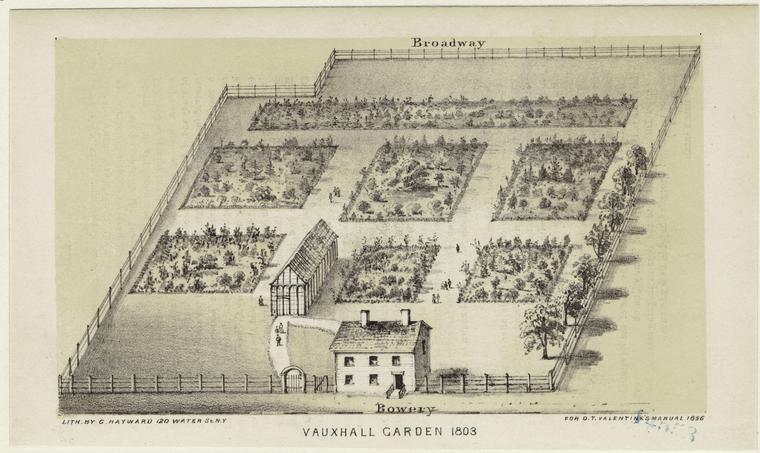
Before Niblo’s, the premier pleasure garden was Vauxhall Garden, derived from a British garden of the same name. The one picture below is from the incarnation before it moved in 1807 to the area just below Astor Place, in what would become Lafayette Street. (NYPL)

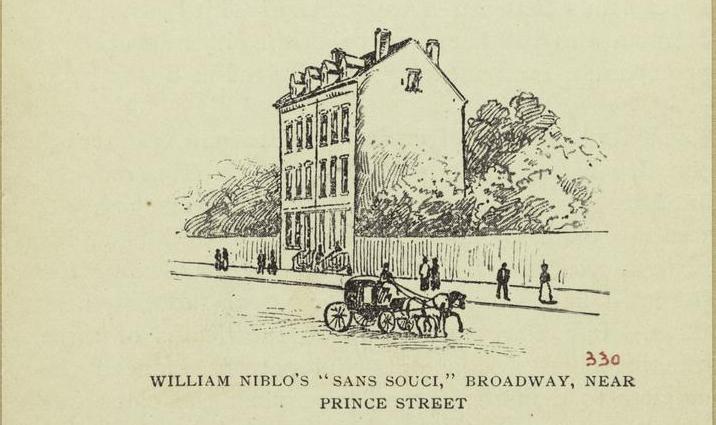
The first theater on the Niblo property was a small stage he called ‘Sans Souci’. Demand soon dictated that a larger venue be built. [NYPL]

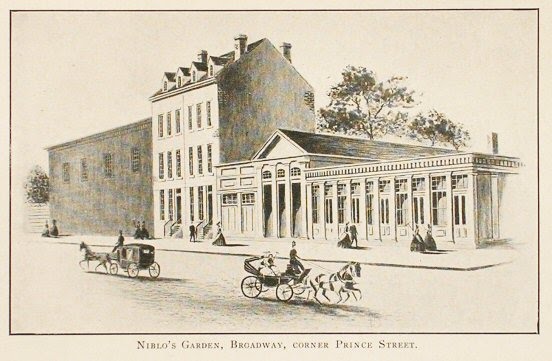
From another illustration detailing the block just a few years later. The theater looks the same, but other buildings (possibly the saloon or a greenhouse?) have been built up around it. (from Merrycoz)

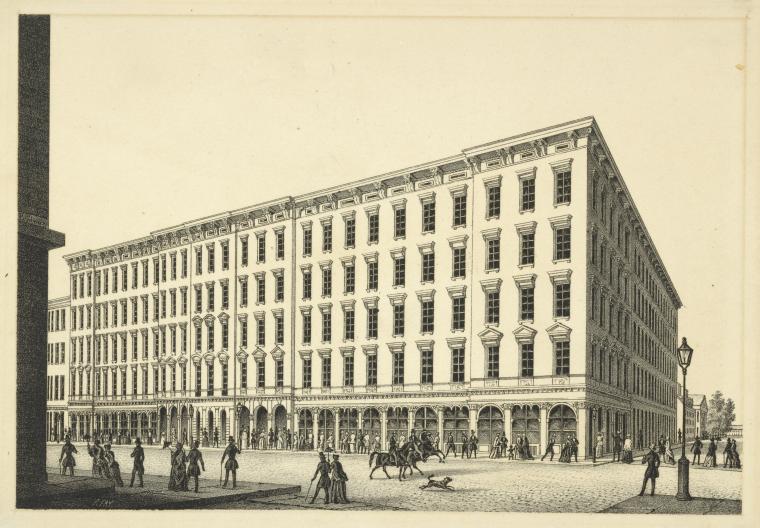
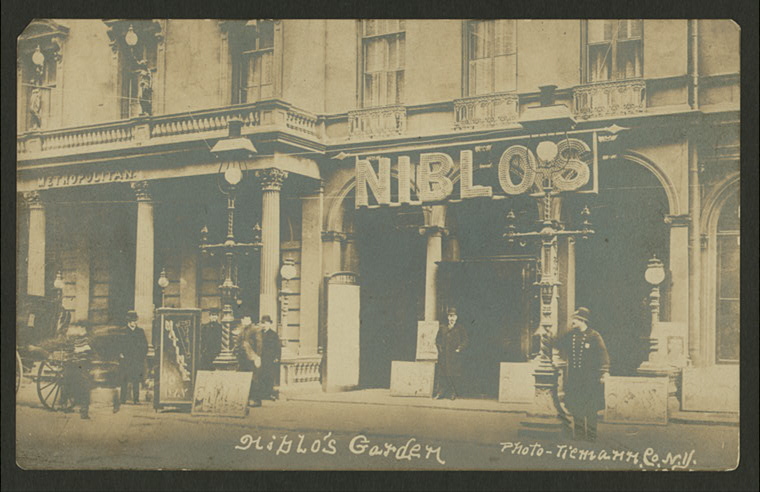
The garden was soon overtaken by a great hotel, the Metropolitan, which opened in 1852. This image is looking east, down Prince Street, with Broadway stretching to the left. NOTE: The original caption on this illustration says 1850, but the hotel would not be open for a couple years later. (NYPL)

This is one of the only photographs of Niblo’s Theater, certainly from its last years, judging from the fashion of the day. The theater and the hotel were demolished in 1895. [Pic from here]

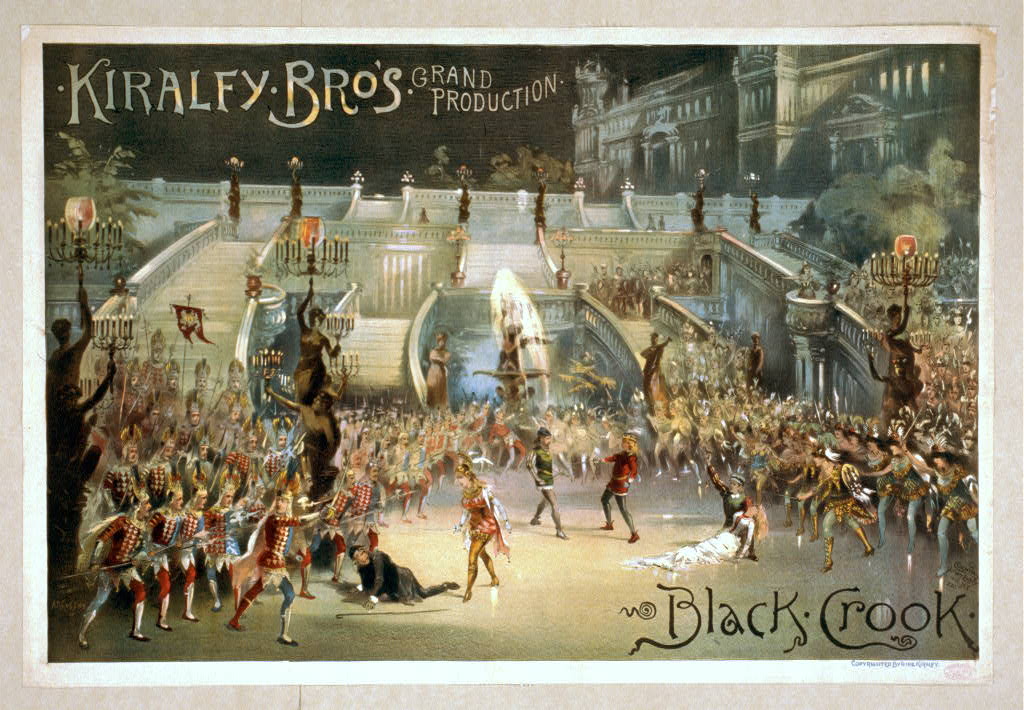
This poster is from a Boston production of ‘The Black Crook’, but it illustrates nicely the scope and theatricality of the production. The show was cobbled together using a poorly written German fantasia, a troupe of out-of-work Parisian dancers, and some original music. The show ran five and a half hours nightly and was a runaway hit. [Image from Kirafly Bros]

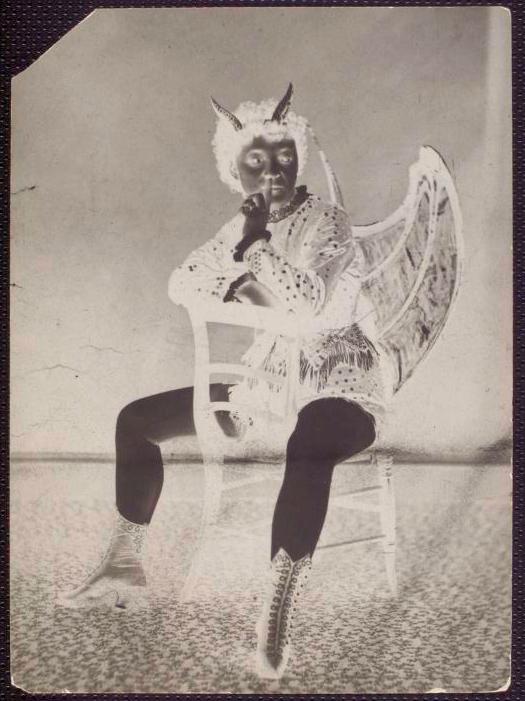
A costumed damsel (in photographic negative) from an early production of The Black Crook. [source]

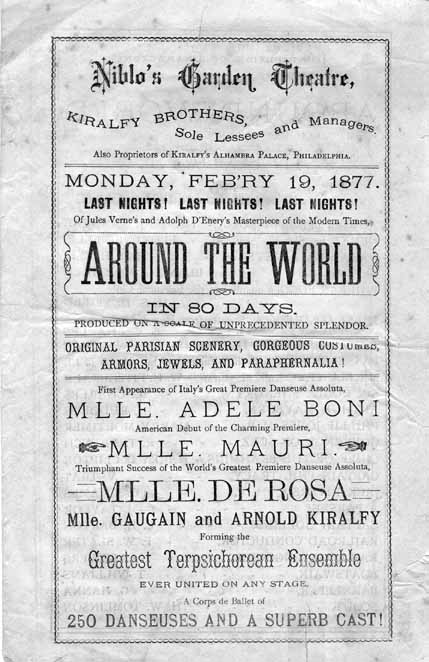
An early program from Niblo’s, from 1877, featuring stage rendition of Jules Verne’s Around The World In 80 Days. I can only imagine the sets for this one! Also featuring the ‘Greatest Terpsichordean Ensemble’ and ‘250 Danseuses and a Superb Cast’.[Courtesy Jules Verne]

Categories
Mad Men

‘Mad Men’ notes: The once and future Hotel Pennsylvania


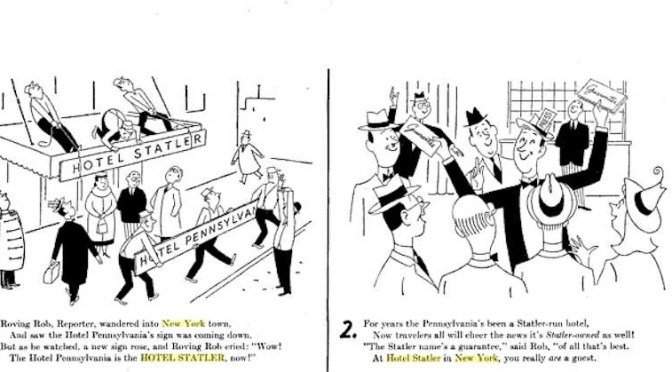
From a Statler Hotel advertisement in Life Magazine, dated January 10, 1949. Click in to the illustration to read the text

Every Monday I’ll try and check in with the Mad Men episode from the night before and focus in on one or two historical references made on the show. Spoilers aplenty, so read no further if you don’t want to know….

The offices of Sterling Cooper Draper Pryce were so busy imploding this episode that the characters barely left their offices. Except of course for Roger Sterling, in the midst of a game-changing lie and scrambling to save face. He was supposed to be in Raleigh, NC, convincing his number one client, Lucky Strike, not to leave the agency. But he knows that conversation is futile, so Roger is literally hiding out in Manhattan, “at the Statler.”

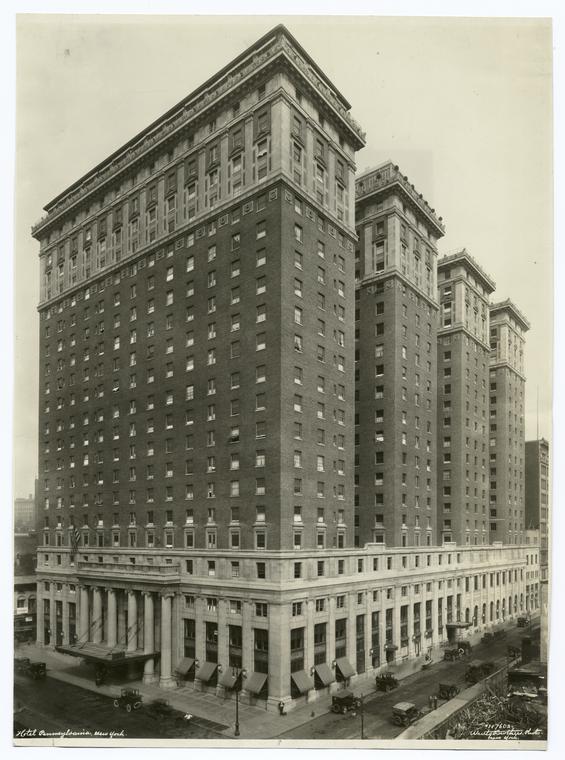
You may know this hotel by its first name — which also happens to be its current name: the Hotel Pennsylvania. The grand, columned 22-floor accommodation was built in 1919 across the street from the newly built Pennsylvania Station and also shared the firm of McKim, Mead and White as its architect.

It was a Statler property from the start. Ellsworth Statler, a hotelier from Buffalo, leased the property from the Pennsylvania Railroad and managed it until his death in 1928. His company kept expanding, however, and in 1948 bought the hotel from the financially ailing Penn Railroad and placed their name over the awning. An easy decision: the Statler brand had built itself a sterling reputation by the 1940s.

Its most valuable asset was certainly the elegant Cafe Rouge ballroom which hosted the very finest in Big Band performers, most famously the orchestras of Glenn Miller and Tommy Dorsey.

By the 1950s, the Statler organization merged with the ascendant Hilton chain. And thus the Hotel Statler became the Hotel Statler Hilton until the 1980s. After a couple more managerial changes, it brought back the Hotel Pennsylvania name in the early 1990s.

Despite its longevity and glamorous reputation during the ’30s and ’40s — its phone number is the subject of the classic song “Pennsylvania 6-5000” — the hotel was rarely considered the highest standard of luxury accommodation.

In 2007, the building’s owner Vornado announced it was ripping down the Hotel Pennsylvania and hoisting up a vast tower that would rival the Empire State Building in the midtown skyline.

You would think that demolishing a McKim, Mead and White creation with the word ‘Pennsylvania’ in its name would rankle preservationists, but it seems there is little interest in saving it.

Preserving that hotel, which has become very seedy, is not anywhere near as important as reusing the Farley building and creating a new rail station. And that’s from an interview with the president of the Municipal Art Society.

The battle for Hotel Pennsylvania’s fate is still ongoing. I would recommend checking out Curbed NY’s coverage for the latest.

Incidentally, the Statler name has been immortalized with a Muppet, namely in the crotchety old men who sit in the theater balcony Statler and Waldorf.

Photo courtesy NYPL Digital, photography by the Wurts Brothers

Tony Curtis: “The cat’s in a bag and the bag’s in a river”

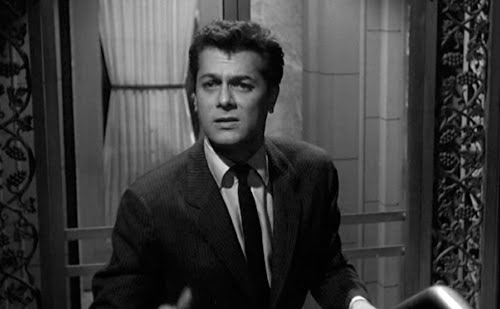
Curtis, as the smarmy Sidney Falco, in ‘Sweet Smell of Success’

“Another way I coped was by being rough, rowdy, and athletic. Not on a basketball court or a football field; on the streets of New York. I would climb the trestles of the el train like I was Tarzan. I would jump from the roof of one apartment building to another, sometimes downhill. One time I misjudged and bounced off the side of another building. I cracked a few ribs.

But my favorite stunt was really dangerous. I call it trolley hitching. I’d start on the sidewalk under the el. When the trolley was going about twenty miles an hour I’d run next to it, jump up, grab the window bar, and hang on. My timing was split second. I couldn’t afford a mistake.”

— Bronx baby Tony Curtis, who died last night at age 85, on his own scrappy, street-bred machismo, from his book The Making of Some Like It Hot and the Classic American Movie. (Excerpt from here)

The quote in the header is from one is his best works and one of the greatest New York films ever: ‘Sweet Smell of Success’. Here’s one of Curtis’ jazz-soaked scenes from the movie:

Categories
Mad Men

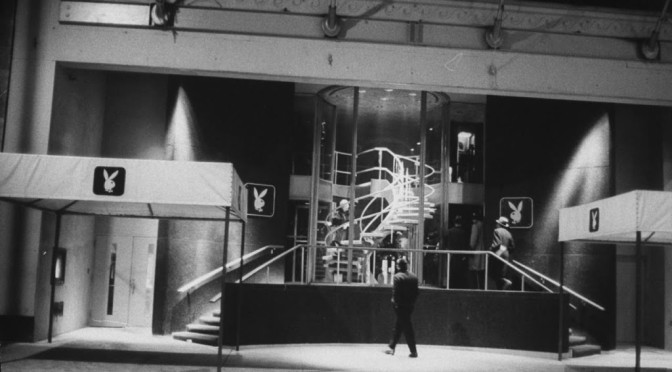
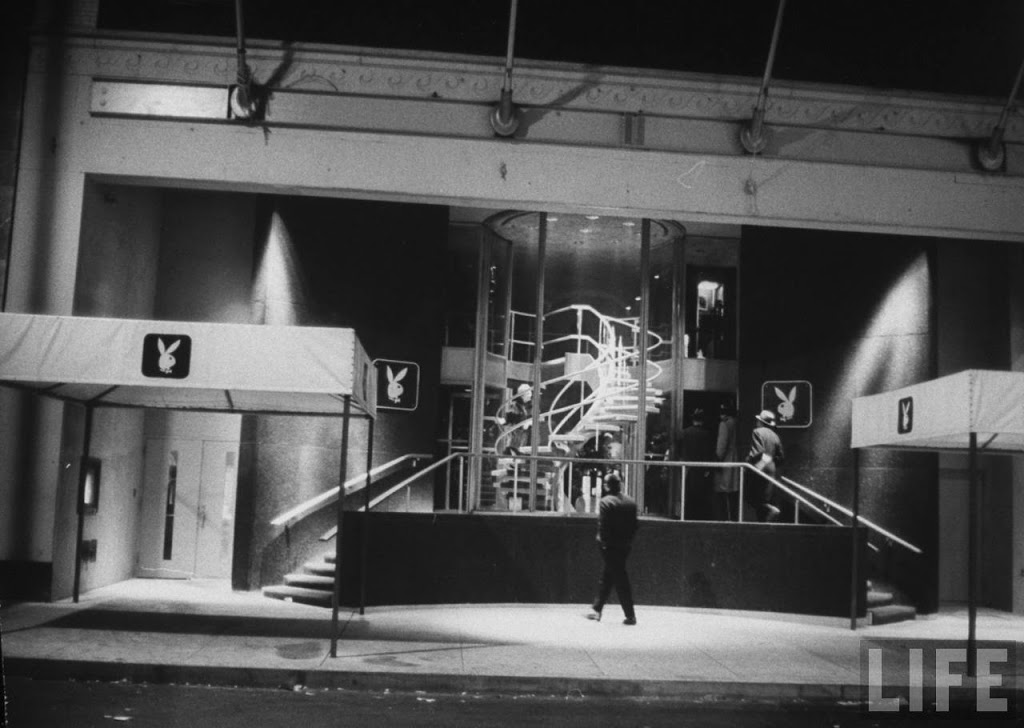
‘Mad Men’ notes: Nights at the New York Playboy Club

Above: the Manhattan Playboy Club, at 5 East 59th Street

Every Monday I’ll try and check in with the Mad Men episode from the night before and focus in on one or two historical references made on the show. Spoilers aplenty, so read no further if you don’t want to know….

In 1964, a salacious pulp novel was published with the title ‘I Was A Negro Playboy Bunny,” billed with the tagline “The beautiful woman you see on this cover was once a Playboy bunny….read the startling story (in her owns words) of what goes on behind the doors of the wildest sex palace in the world – the New York Playboy club – and behind her own doors!”

This novel might have been an inspiration to the writers of ‘Mad Men’ who featured the New York Playboy Club in last night’s episode, and in particular, an engaging black cocktail hostess formost in the heart (but not the priorities) of one of the partners of Sterling Cooper Draper Pryce.

The author, Anna English, worked at the New York Playboy Club, a Manhattan branch of the successful swanky lounge franchise started by Hugh Hefner in Chicago in 1960. The Manhattan venue was located at 5 East 59th Street (between Fifth and Madison), and, like those in Chicago, Miami and New Orleans, was famously a members-only club; you gained admittance by possession of an exclusive key decorated with the Playboy logo, described by comedian Dick Gregory as “a status symbol, like a Mercedes is now.”
You would think Manhattan would have gotten its own Playboy Club earlier than December 1963, but Hefner had troubles getting his liquor license. “It is a shame that the biggest city in the country should have this sort of problem,” Hef lamented. Due to the political content of the magazine (yes, this was back when people read Playboy), Hefner also had problems with the FBI, which he faced with aplomb, sending J. Edgar Hoover the following letter:
“Dear Mr. Hoover,
Hugh Hefner, Editor-Publisher of Playboy Magazine and President of the Playboy Clubs, has asked me to welcome you back to New York, and to make certain that whenever you wish, the facilities of the New York Playboy Club will be made available to you and your guests.

Therefore, at Mr. Hefner’s request, we are enclosing a special Celebrity Key which will make it possible for you and your friends to visit the Club anytime during your stay. . . .”

(No word on whether Hoover used his gift.)

Like a campy (or campier) version of Hooters, businessmen were greeted by sexy cocktail waitresses, dressed in the trademark Playboy bunny ears and cottontail. A young Gloria Steinem went ‘undercover’ at the New York location for a magazine expose*, revealing some of the more unsavory requirements in the ‘Playboy Club Bunny Manual’. (‘Bunnies are reminded that there are many pleasing means they can employ to stimulate club’s liquor volume’.) You can read the sad, hilarious, thoroughly bizarre article here, featuring the excerpt: “‘My tail droops,’ she said, pushing it into position with one finger. ‘Those damn customers always yank it.'”

Another notable employee of the Manhattan club? Deborah Harry, making ends meet in a bunny outfit in the late 1960s. Believe it or not, that’s her in the picture, at right.

The shimmery glitz and respectability of the Playboy Clubs (and the misogyny it embodied) faded with the 1970s, and by the following decade, New York’s tattered hotspot was a joke that even People Magazine took a moment to poke fun of: “A large illuminated rabbit’s head glows over the door. It seems impossible now to look at the logo without thinking of an automobile air freshener.” The club closed in 1986.

*Steinem’s article was called ‘I Was A Playboy Bunny’. I believe Ms. English’s book was most likely a play off this title. A 1963 issue of Jet Magazine ran a picture of Anna with a blurb about the club.

Oh, and the major cultural event mentioned in the episode (The Beatles at Shea Stadium)? More on that this Friday….

Top photo courtesy Life Google images; bottom photo from Marlene44

Who are the Spring Street Fencibles?


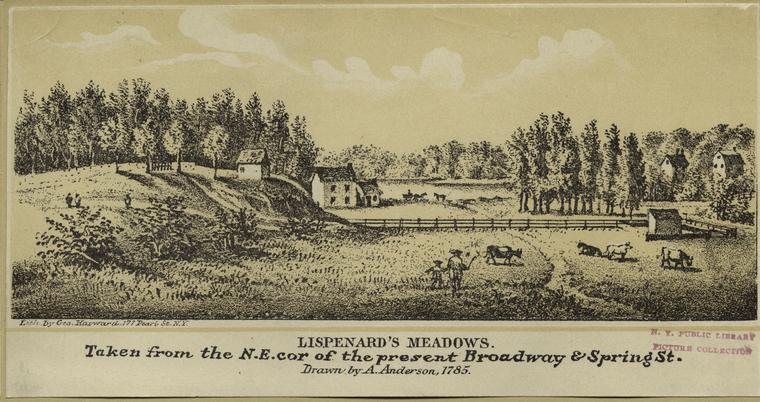
Spring Street and Broadway in 1785, 30 years before the events of the article below. Illustration courtesy NYPL digital images

While researching the Gracie Mansion podcast, I found mention of a street gang by the name of the Spring Street Fencibles, or simply, the Spring Streeters. Obviously, the streets of New York have been crawling with gang activity since the 19th century. But what makes this shadowy gang particularly interesting to me is the date of their only documented crime — 1825, making them one of the earliest mentioned organized gangs in the press. Their foul indiscretion? The murder of a well-known city merchant, an event that may have greatly affected the namesake of Gracie Mansion, Archibald Gracie — depending on which source you believe.

It is not known whether the Spring Streeters were truly organized in same way as later gangs like the Roach Guards and the Dead Rabbits; nor is it clear that their members were strictly Irish-born, as they commonly were in those days. In prior histories, they are loosely clumped with another group called the Grand Streeters. Spring Street runs parallel a couple blocks north of Grand Street, and it’s possible the two gangs were rivals or even one and the same gang.

The only crime by the the Spring Street Fencibles that I could find on record is the horrible slaying that occurred the early morning of June 3, 1825. The young drunken rowdies accosted a private carriage at Broadway and Art Street (or today’s Astor Place). A group of gentlemen accompanying the carriage uptown confronted the gang, and a ‘scuffle’ ensued. One of the gentlemen, one Mr. Lambert, was punched in the stomach and later died of his injuries. The gang members were rounded up and carted off to prison.

The confusion as to the victim’s name underscores one of the problems I often find in researching the early days of New York, when newspapers were not as concerned with exacting and factual detail. One key source, on the history of Gracie Mansion, clearly lists the victim as David Lambert, an associate of Gracie’s who put up the family in one of his townhouses when they fell on hard times. Other sources, however, list the victim’s name as Henry Lambert, of which nothing is known.

An old merchants guide of New York clearly links David as the victim of the crime, “up by Sailors Snug Harbor (near where Tenth Street is now).” The original land for Sailors Snug Harbor sat where today’s Washington Square Park is, which would have been just west of the reported violence. (Snug Harbor would move to its present location in Staten Island in 1833.)

Whatever the identity of the unfortunate man who died 185 years ago in the area of Astor Place, his demise also marked the end for this sorry group of thugs, locked up in prison for either seven or ten years — again, depending on which source you trust*.

Had this group of ruffians come along before 1807, they might have been known as the Brannon Street Fencibles, for that was the original name of Spring Street. The road was named for a Mr. Brannon the keeper of a “noted public house and a beautifully-laid-out garden,” situated nearby an actual spring of water. After 1807, the name switched to Spring Street.

*For the podcast, I clearly went with it being David.

Categories
Mad Men

‘Mad Men’ notes: Here’s to whiskey and Bermuda shorts!

Every Monday I’ll try and check in with the Mad Men episode from the night before and focus in on one or two historical references made on the show. Spoilers aplenty, so read no further if you don’t want to know….

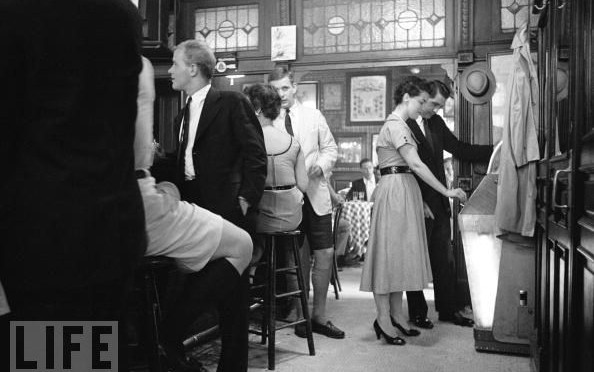
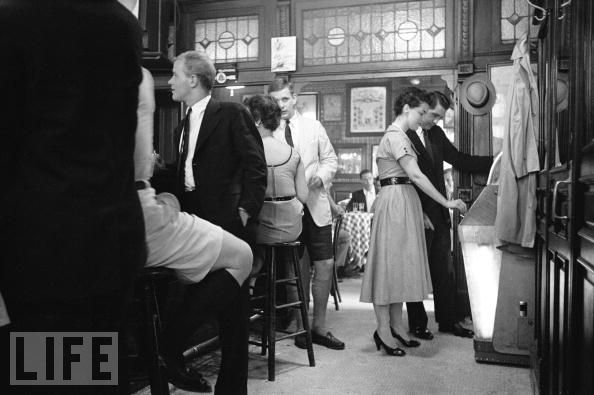
On last night’s episode of ‘Mad Men’, they actually used a tavern that’s still around and kicking — P.J. Clarke’s on Third Avenue. Peggy had a strange altercation with her potential hip cat paramour, leading to her storming out of the bar.

The photo above, by Alfred Eisenstaedt, taken in 1953, demonstrates that the bar has always attracted trendy gentlemen, namely those in Bermuda shorts.

P.J. Clarke’s, a well-preserved example of New York’s Irish heritage, traces its history back to the late 19th century, when the original pub, now shaded by immense skyscrapers, was surrounded by shabby tenements. Its namesake, one Patrick J. Clarke, came along in 1902 and bought the joint from his boss ten years later.

Photo by Alfred Eisenstaedt, Life images

Categories
Podcasts

Gracie Mansion: How a bucolic summer home survived a couple wars, a society feud and a few live-in mayors

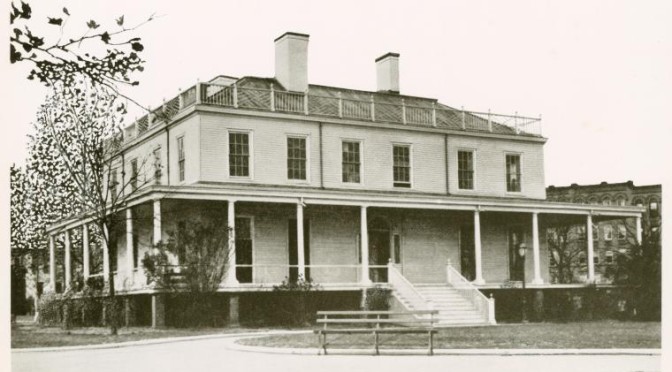
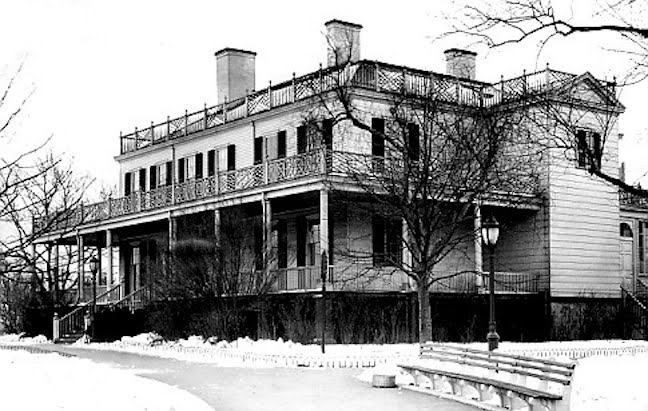
Photo by the Wurts Brothers, date unknown. Courtesy NYPL

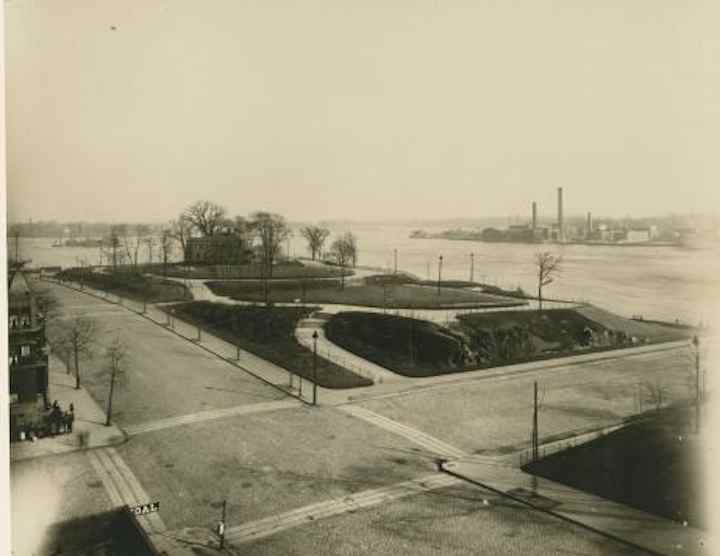
Archibald Gracie admired the extraordinary vistas at Horn’s Hook — overlooking the East River and the churning waters of Hell’s Gate — and decided to build a house here. Little did he know what an extraordinary journey this comfy little Federal home would take over the next two hundred years.

After seeing a lamentable period as a refreshment stand and a place for sewing classes, Gracie Mansion became the first home for the Museum of the City of New York. Then, one day, Robert Moses came along and fell in love with it. Find out how the waterfront mansion became New York City’s defacto White House for over 70 years. And why our current mayor chose NOT to live here.

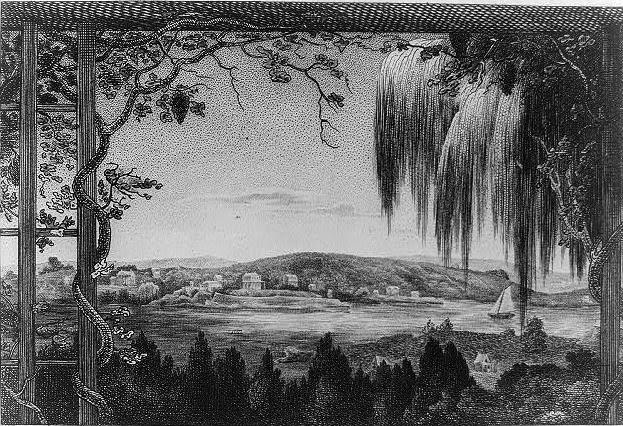
An illustration from May 1808, looking across the waters at Gracie’s mansion, newly built, and other country homes along the shorefront. In between them sits Hell’s Gate, the treacherous confluence of waters that often sank vessels and made travel quite difficult. (Courtesy LOC)


The land around the Gracie property was whittled away during the 19th century, and what remained was turned into Carl Schurz Park. The mansion, however, sat in disrepair and hardly of much use outside of storage and a basement refreshment stand. (Courtesy NYPL)

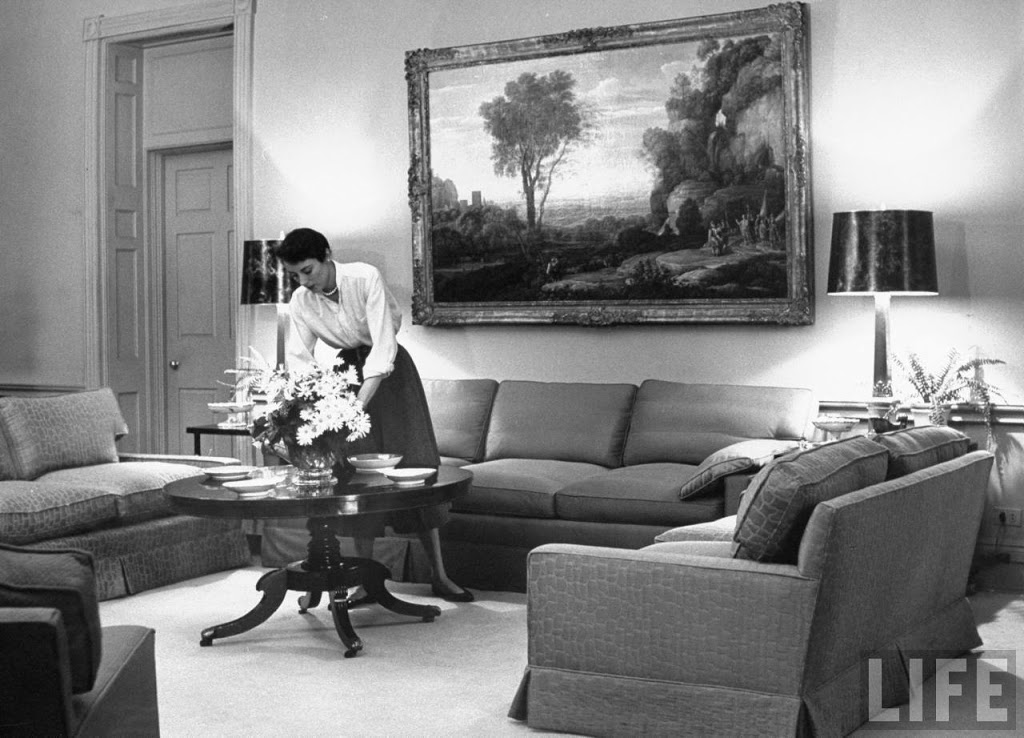
How it looked in 1942, before the mayors moved in…

William O’Dwyer‘s new wife Sloan Simpson readies the Gracie Mansion living room for an event, or at least poses for a photo op. O’Dwyer was the second of nine mayors to live at Gracie.
Photo by Alfred Eisenstaedt, May 1950 (courtesy Life images)

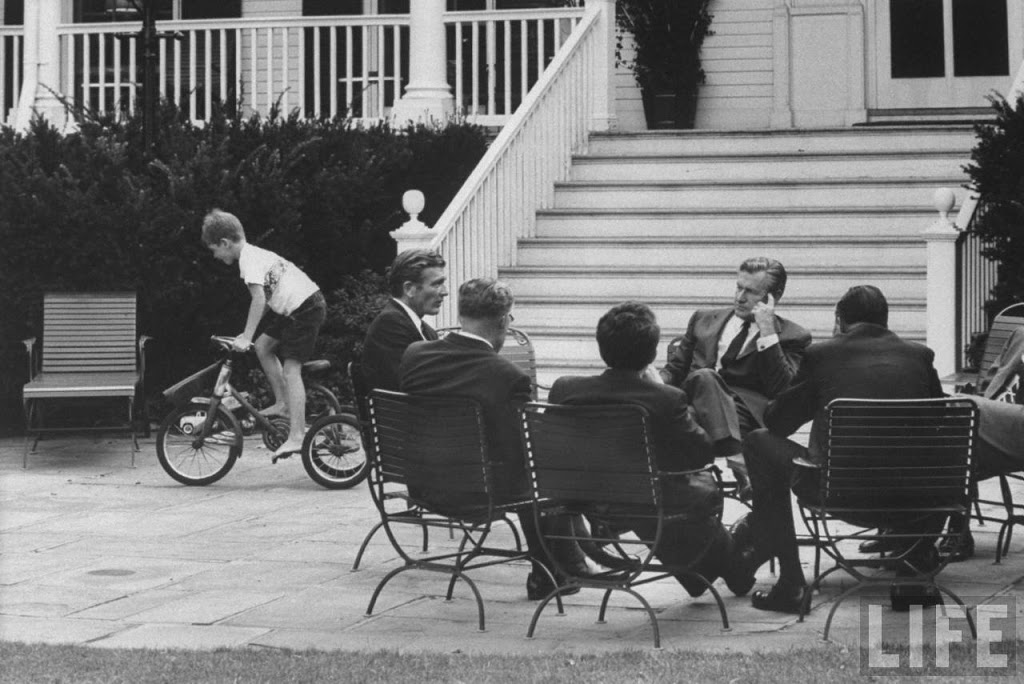
Certainly looks homey from here! A Federalist home is not complete without John Lindsay, G E chairman Gerald Phillippe, and Gov. Nelson Rockefeller sitting on the lawn. John’s son ride by without notice. Photo by John Dominis, May 1968 (courtesy Life images)

The front of Gracie Mansion today, although most guests use the side entrance. Gracie’s still faces into lovely vista overlooking the East River, but it mostly obscured today by trees.

Visit NYC.GOV’s website about Gracie Mansion to inquire about tours for individuals or small groups. If you have more than 25 people, you can actually have tea at Gracie Mansion. May King Van Rensselaer would have been proud. Our current mayor, by the way, lives here.

Categories
Uncategorized

Jones Woods: A Gothic picnic getaway in upper Manhattan

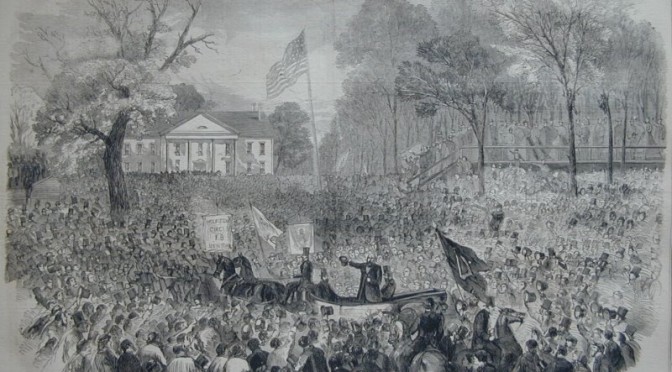
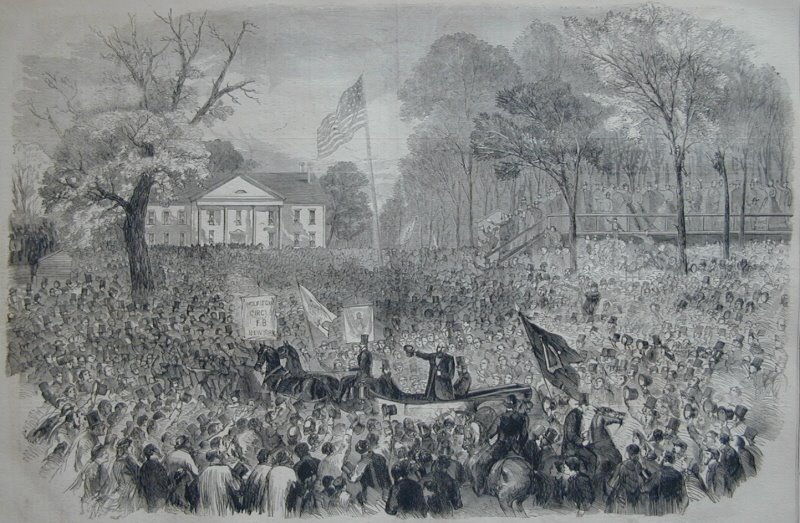
Over 15,000 Irish Americans gathered in Jones Wood in 1856, to greet countryman James Stephen

Once upon a time, back when Fifth Avenue was a dirt path and Bloomingdale was literally a blooming dale, there stood a haunted and most mysterious forest located on bluffs overlooking the East River, far east of the area today known as Lenox Hill in the Upper East Side. (Basically between 66th-88th streets to 75th-77th street.)

Back in the 1700s this was one of the most densely forested areas of the island, miles from the city of New York. Prominent families moved here, settling in secluded homes overlooking the crashing waters of Hells Gate below. And not surprising, ghost stories and legends took root here as well.

As an early account describes it: “It was the last fastness of the forest primeval that once covered the rocky shores of the East River, and its wildness was almost savage. In the infant days of the colony it was the scene of tradition and fable, having been said to be a favorite re-sort of the pirates who dared the terrors of Hell Gate, and came here to land their treasures and hold their revels.”

At the heart of this forest was a small, pioneering 90-acre farm called the Louvre, its owner unknown today, or why it shared its name with a famous French museum. Later, two famous New York families owned manors in this once out-of-town thicket. The Schermerhorns kept the family crypt here until it was nothing but broken tombstones, protruding underfoot when later the area would become better known for picnics and family outings.

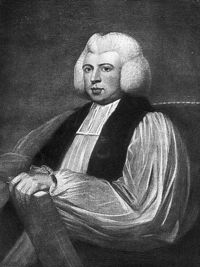
The second family was the Provoost clan, who bought the Louvre in 1742 and transformed it into an elegant home. Although prominent, the Provoosts were supporters of the American cause at the time of the Revolutionary War. Samuel Provoost (that dapper man to the right) later became president of King’s College, the pre-Revolutionary precursor to Columbia University. His cousin David, who fought with Washington’s army, took a more notorious path to fame, become a legendary smuggler nicknamed Ready-Money Provoost.

When Ready-Money died, he too was entombed in the family crypt here. Later, the site of Provoost’s grave attracted ghost seekers, who would “gather there and tell each other wonderful stories of the unearthly doings of the old man’s ghost. Not one of them could have been persuaded by all the ready money in the city to keep a night’s vigil under the trees that overhung the lonely, desolate grave.”

Later still the home was sold to a John Jones, who lent the forest his name. By the 19th century, the woods had become a popular destination for nearby city dwellers. The Provoost’s family chapel was soon turned into a clubhouse and adjoining manor grounds into places of recreation. Stories of its mysterious past and recent days as a retreat for prominent families drew recreationers of all sorts, until it became an what some have called the ‘first major U.S. amusement park’, with beer gardens, sporting events and great spaces for large gatherings.

It was still an untamed, wooded area, but now people arrived for “billiards, bowling, and donkey rides,” for general outdoor carousing and drinking.

Jones Wood was pegged to become the very first site for ‘a great park’, the land to be purchased by the state on 1851, to be transformed into an area worthy of the lavish public spaces of Europe. Proponents for an official park here claims the lush riverfront and rich “dense growth of forst trees” made it ideal for immediate conversion to a formal park.

But there was strong opposition by those who maintained that a ‘central’ park on the island would be preferred, both for its aesthetic symmetry and attractiveness to landowners surrounding it. And at only 150 acres, Jones was also deemed too small. Despite this, in June 1853, the state approved BOTH Jones’ Wood and the area that was to become Central Park.

Landowners around the Jones Wood area and merchants benefiting from sporting events and beer gardens had their day a year later, when city plans for Jones Wood were entirely abandoned.

It still remained popular for much of the late 19th century, particularly used by Irish and Germans from nearby Yorkville, although it was chipped away by new properties tenements. In 1894, a devastating fire swept through destroying properties over eleven acres. By this time, more sophisticated amusement parks began appearing out in a distant area of Brooklyn named Coney Island. Meanwhile, developers looked hungrily at the remaining area of Jones’ Wood. By the light of 20th century, all traces of this jovial and mysterious forest had vanished.

This article is a reprint from my blog post dated July 22, 2008. Read the original post here.

Categories
Mad Men

‘Mad Men’ notes: A movie theater classic in its final days

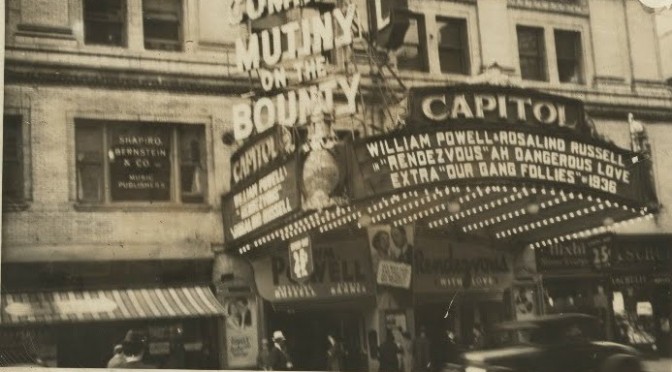
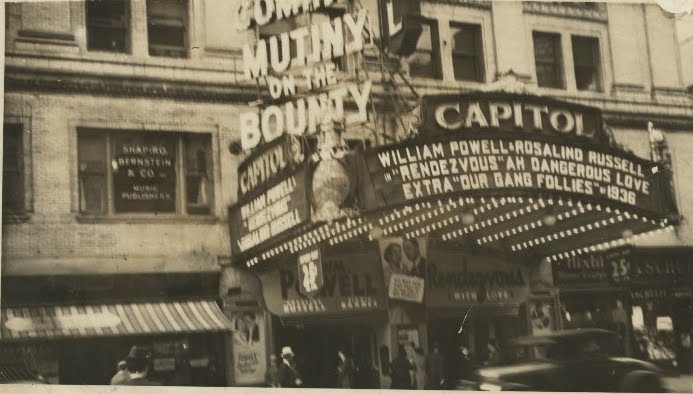
The Capitol in 1935, its feature attraction the spy thriller Rendezvous

Every Monday I’ll try and check in with the Mad Men episode from the night before and focus in on one or two historical references made on the show. Spoilers aplenty, so read no further if you don’t want to know….

While doing some background work on last week’s podcast, I came across an indulgent presentation in the New York Tribune of some elaborate new mural pieces by nearly forgotten painter William Cotton, installed in 1920 on the walls of the Capitol Theater, at Broadway and 51st Street. “The great mural paintings by William Cotton in the Capitol Theater stand to-day unrivaled. There are in America no decorations to compare with them.” (Take a look at these ‘unrivaled’ murals here.)

I crossed paths with the Capitol Theater again in this week’s episode of ‘Mad Men’. Most of the staff of Sterling Cooper Draper Pryce were attending an exclusive screening at the Capitol of the now-infamous Cassius Clay-Sonny Liston prize fight, waged in Lewiston, Maine, in May 25, 1965, a re-match between boxing powerhouses that help solidify the reputation of the future Muhammad Ali.

Like many locations previously featured on the show, the Capitol was past its prime by 1965 and would not make it out of the 1960s.

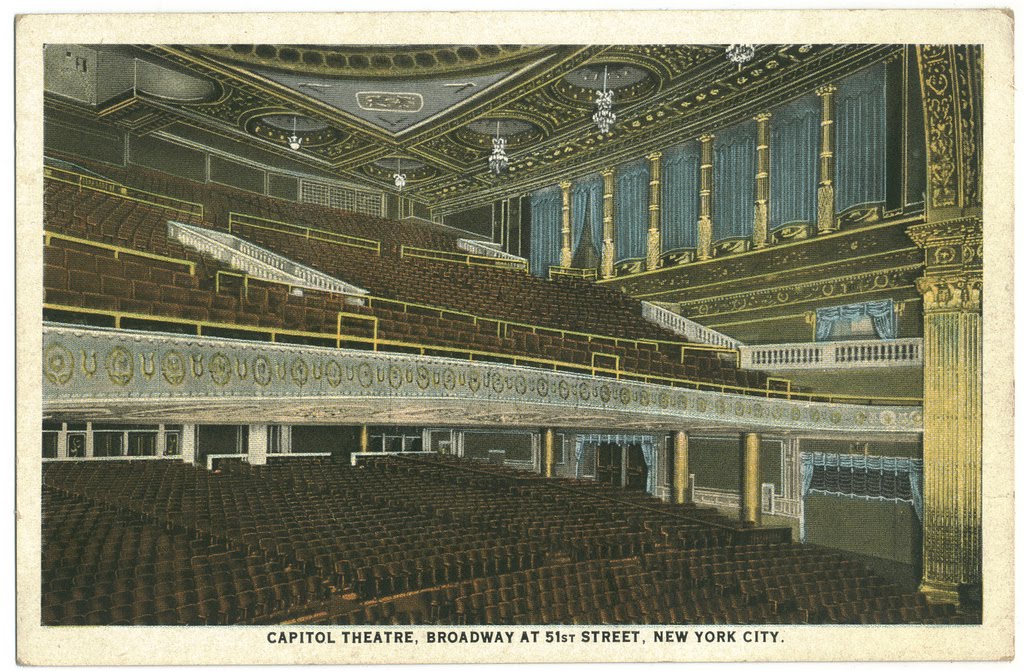
A movie house designed by architectural wizard Thomas W. Lamb, the Capitol opened in October 1919 and helped establish the template for lavish film palaces, with 4,000 seats, a 25 x 60 feet screen, and a stage large enough to host variety shows, classical music concerts and even radio broadcasts.

Not surprisingly, it was originally managed by Samuel “Roxy” Rothafel, of Radio City Music Hall fame.

By 1965, the stage productions had stopped, but the theater was still hosting spectacular film premieres such as the one on December 22 for ‘Doctor Zhivago’. As the unflappable Bosley Crowther dryly notes in his film review from that premiere: “In the three hours and seventeen minutes (not counting intermission time) it takes to move Robert Bolt’s dramatization of Boris Pasternak’s Doctor Zhivago across the screen, a few rather major things happen.”

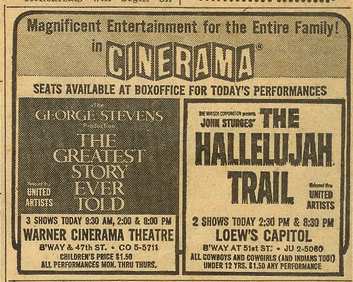
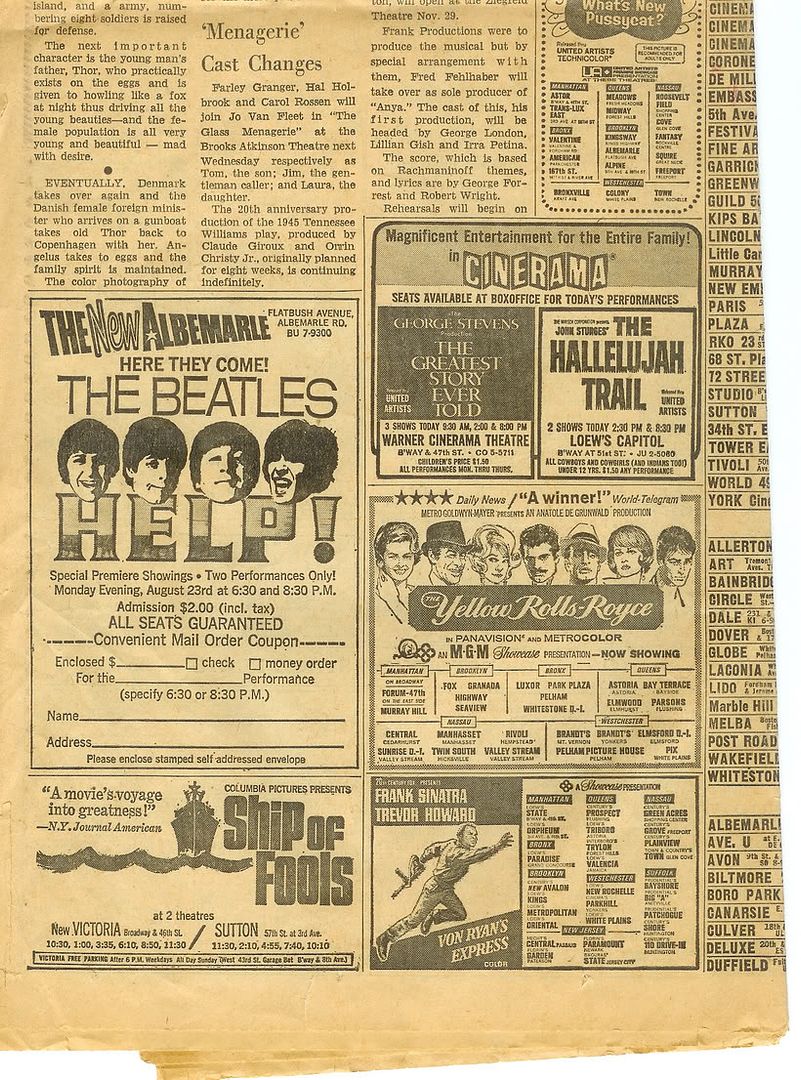
That June, for the now forgotten Burt Lancaster western ‘Hallelujah Trail’, the film studio United Artists threw a promotional barbecue in front of the theater that shut down Broadway.

The theater closed in 1968, but at least it went out memorably: its last two movies were Planet Of The Apes and (starting that April) 2001: A Space Odyssey, both in glorious Cinerama.

So, what’s sitting there now? Mars 2112 (and the Paramount Plaza office tower). It’s too bad they didn’t have Mars 2112 back in the 1960s; I’d love to see Roger Sterling get sloshed on their alien themed cocktails.

Coincidentally, by the way, our ‘Mad Men’ friends were attending a broadcast of a boxing match in a theater that sat only one block from the greatest live venue for boxing in the world — Madison Square Garden, when, in its third incarnation, it sat at 50th Street and 8th Avenue.

Below: the lush interiors at the Capitol Theatre

Top picture courtesy NYPL Digital Gallery. Movie advertisement courtesy Cinema Treasures You can check out a lovely picture of Times Square in the 1960s featuring the Capitol here

Categories
Podcasts Uncategorized

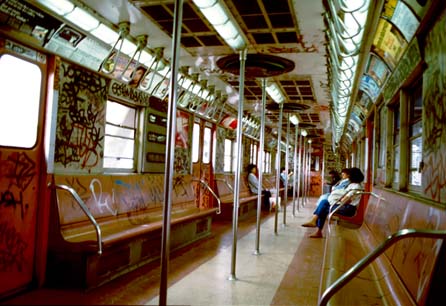
The wild times of the subway graffiti era 1970-1989

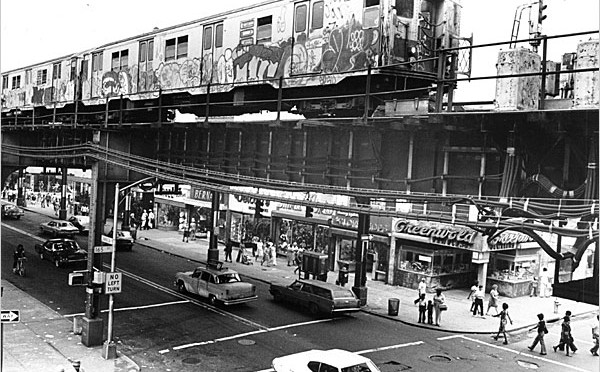
The BMT Jamaica line, late 1970s (Courtesy NYT)

PODCAST #111 Art. Vandalism. Freedom. Blight. Creativity. Crime. Graffiti has divided New Yorkers since it first appeared on walls, signs and lampposts in the late 1960s. Its ascent paralleled the city’s sunken financial fortunes, allowing simple markings to evolve into elaborate pieces of art. The only problem? The best examples were on the sides of subway cars which the city promptly attempted to eradicate, their attempts thwarted by clever, creative artists and a downtown culture that was slowly embracing graffiti as New York City’s defining art form.

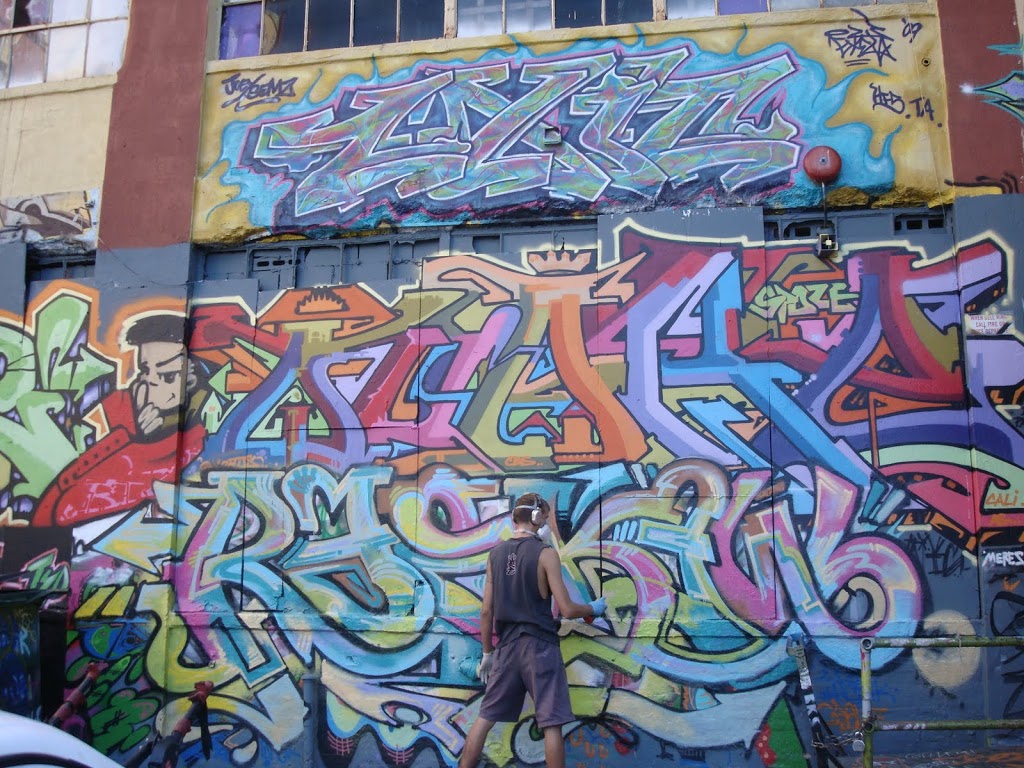
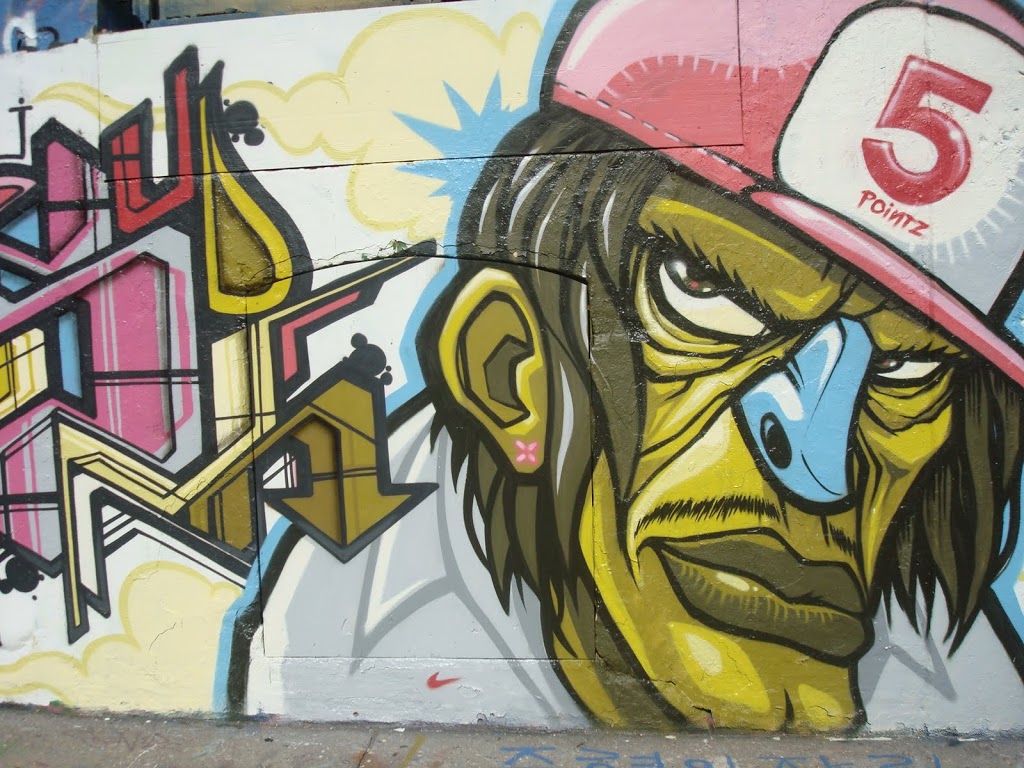
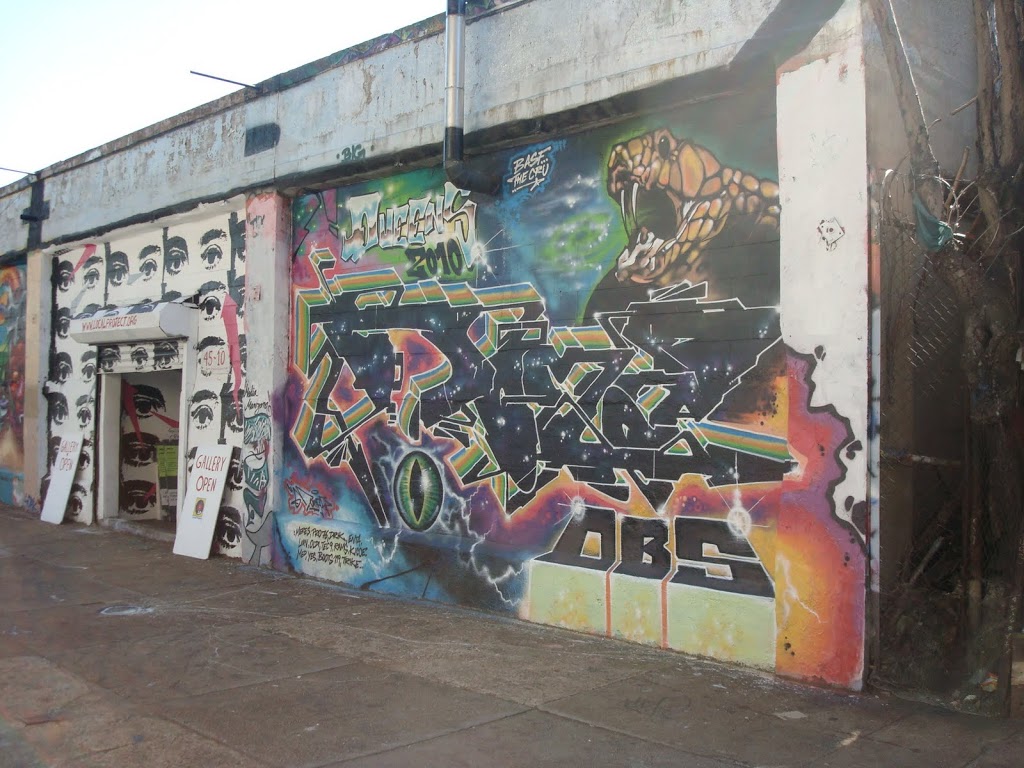
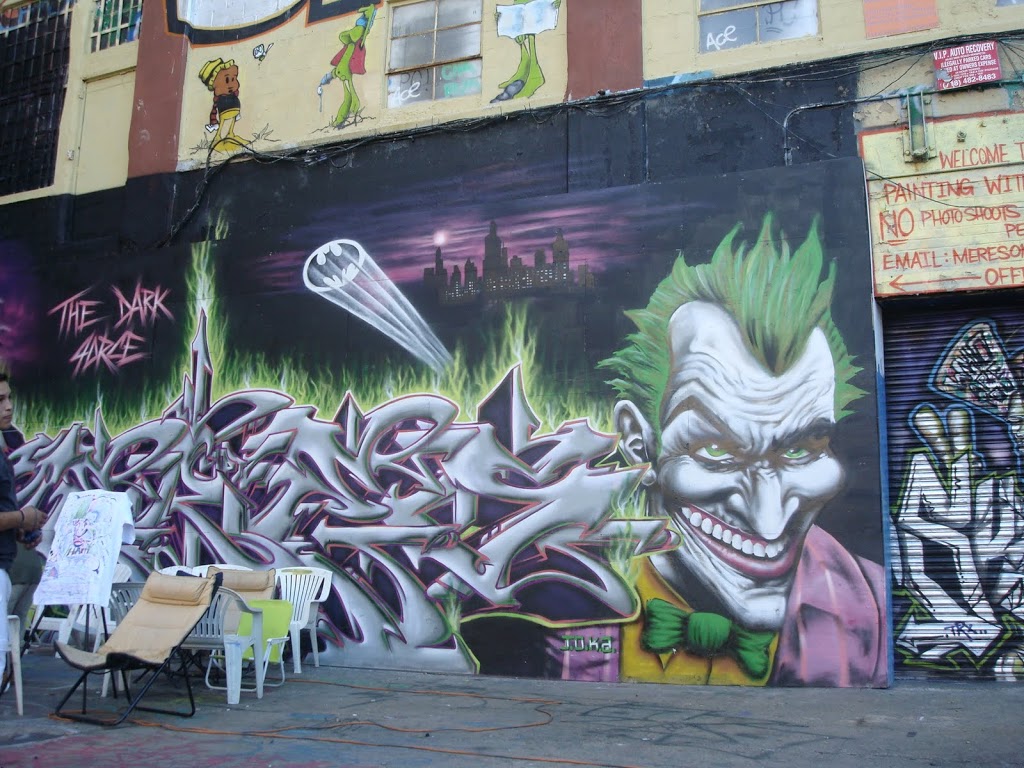
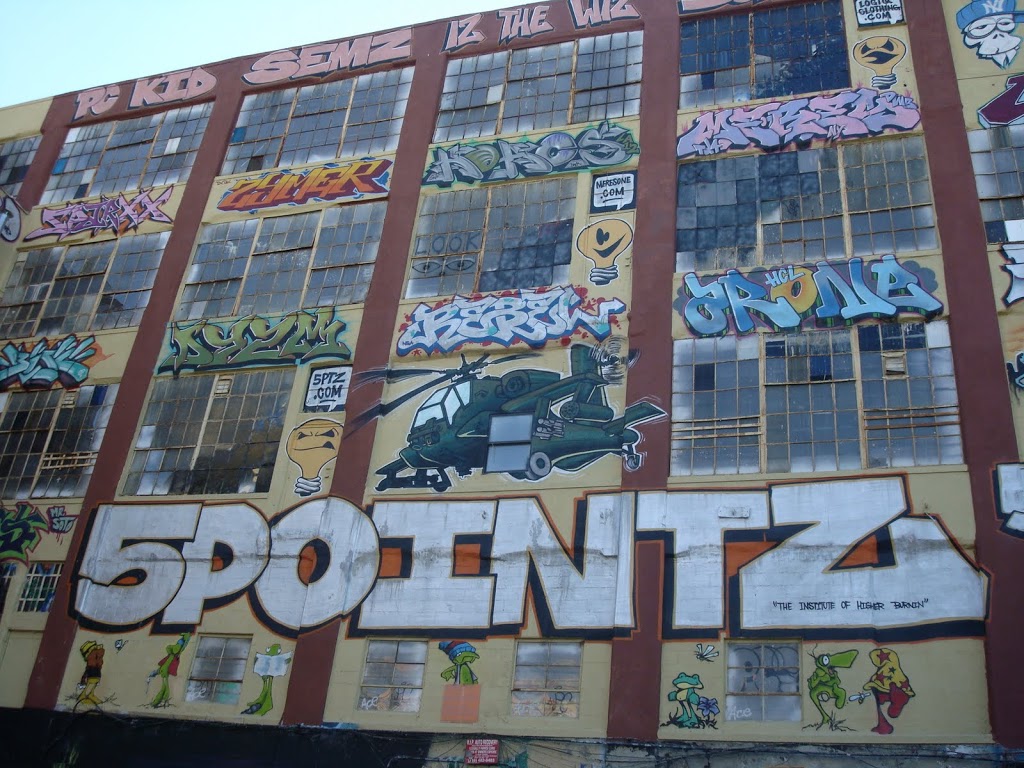
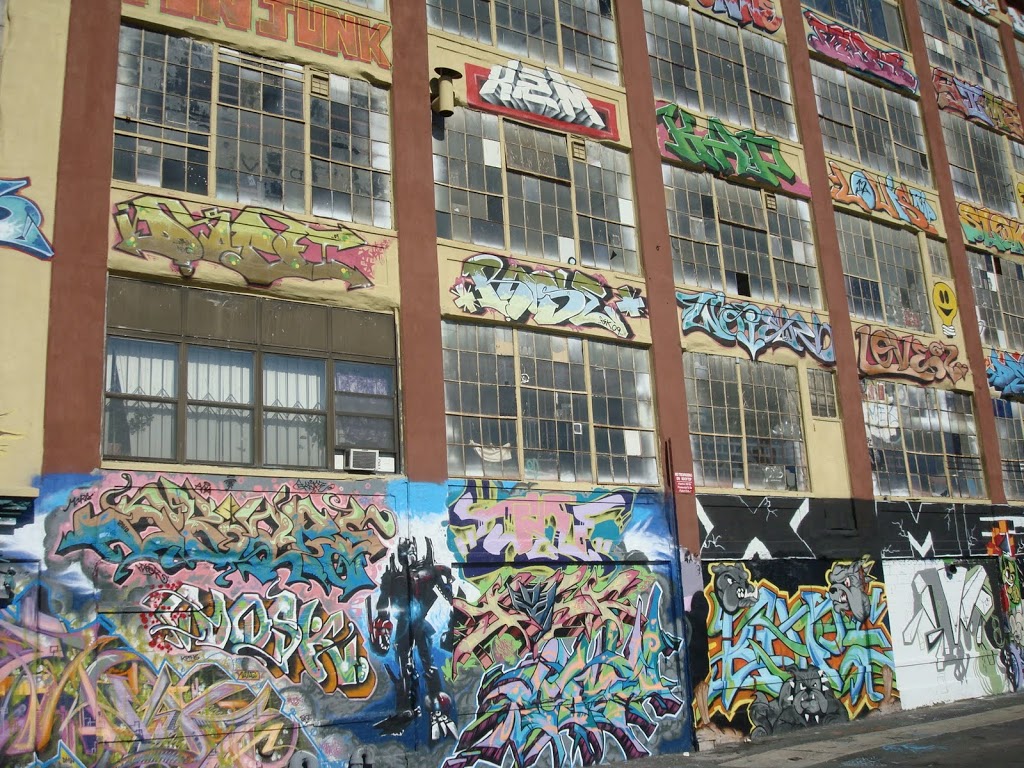
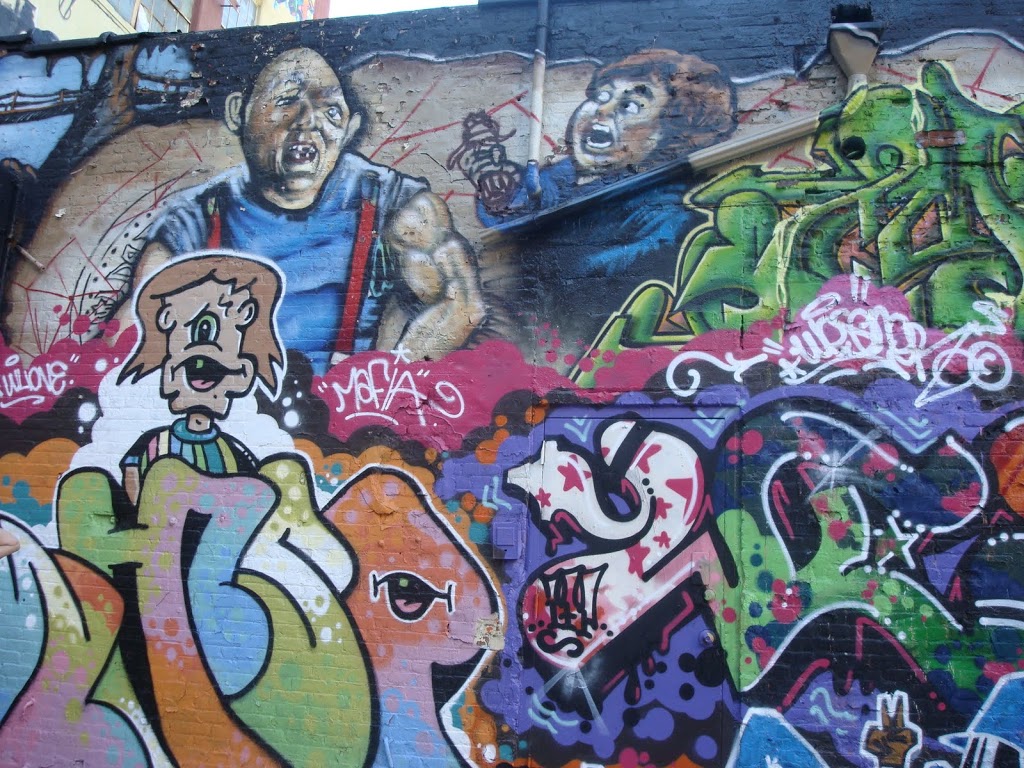
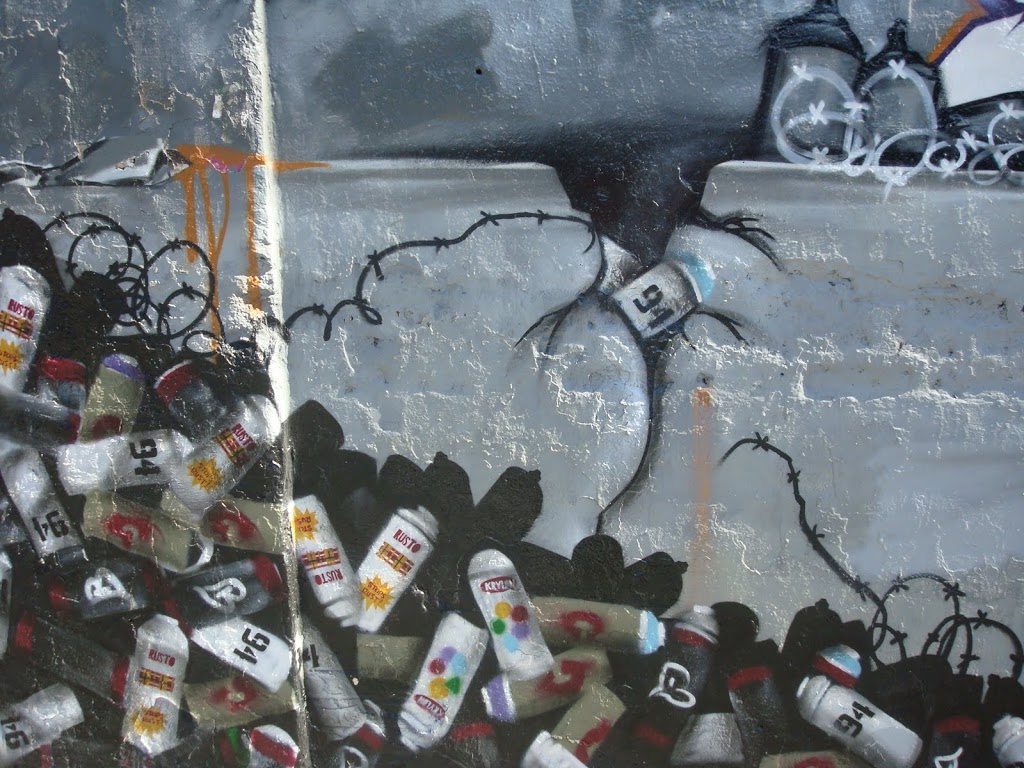
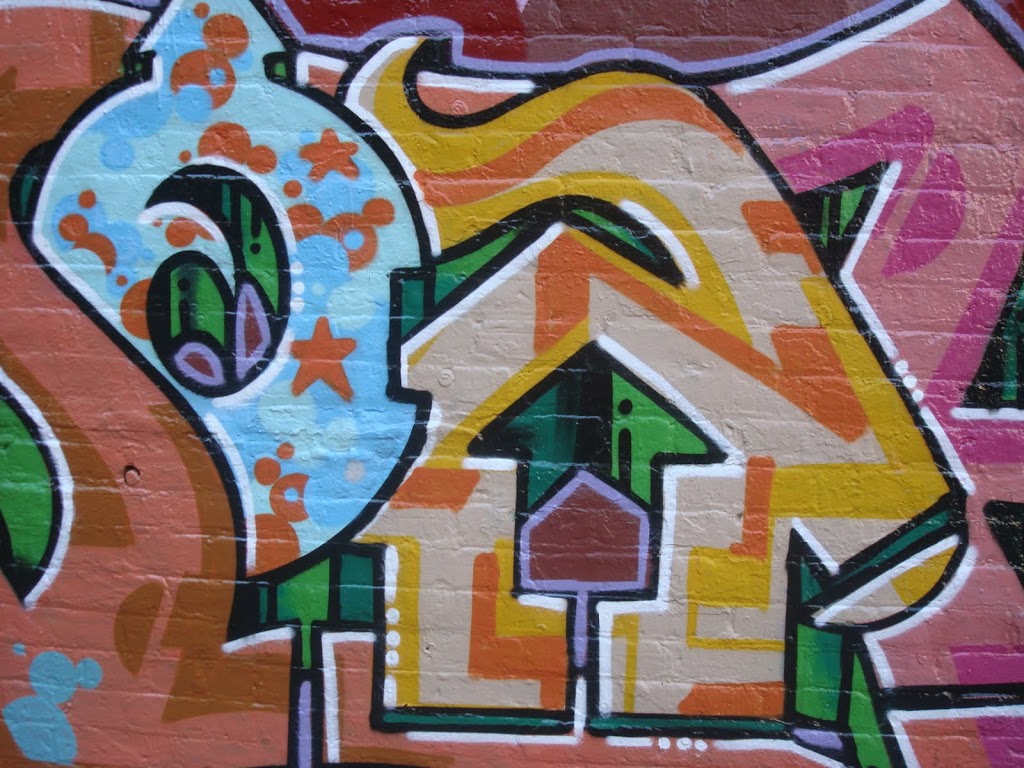
This is a history of the battle between graffiti and City Hall. And a look at the aftermath which spawned today’s tough city laws and a warehouse space in Queens called 5Pointz, where graffiti masterpieces thrive in abundance today.

You can tune into it below, download it for FREE from iTunes or other podcasting services, or get it straight from our satellite site.

Or listen to it here:
The Bowery Boys: Subway Graffiti 1970-1989


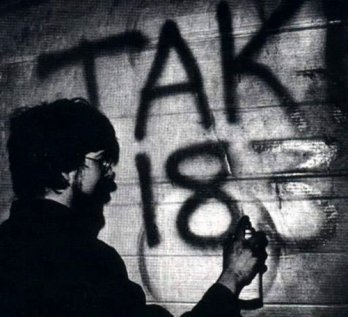
TAKI 183 — he didn’t create the graffiti art movement, but his tags throughout the city inspired a New York Times investigation into the mysterious 17 year old Greek teenanger’s antics, putting other taggers in the spotlight.


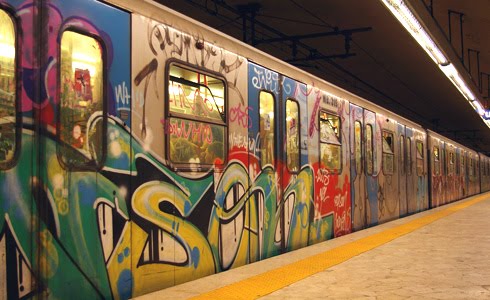
A ride on any subway during the 70s and 80s usually meant containment within a car coated in graffiti tags. The most artistic, colorful pieces (like the one below, by Lee Quinones, 1976) were hung on the outside. (Photo courtesy Second Avenue Sagas)

Below: Some of the astonishing work you’ll find out at 5Pointz Aerosol Art Center Inc., subtitled “The Institute For Higher Burnin’.”


For more tales of the 70s-80s graffiti scene, check out the blog @149st with individual profiles of dozens of period artists and taggers. Kings of New York is a spectacular photo blog of past and current work on walls and other surfaces throughout the city.

Two early photographers and writers of the subway graffiti scene have great books on the topic — Jack Stewart (Graffiti Kings: New York City Mass Transit Art of the 1970s) and Keith Baugh (Early New York Subway Graffiti 1973-1975: Photographs from Harlem, South Bronx, Times Square and Coney Island).

And finally, an excerpt of a short film by Steve Siegel, featuring a host of graffitified trains. And gotta love that opening sequence:

Categories
Mad Men

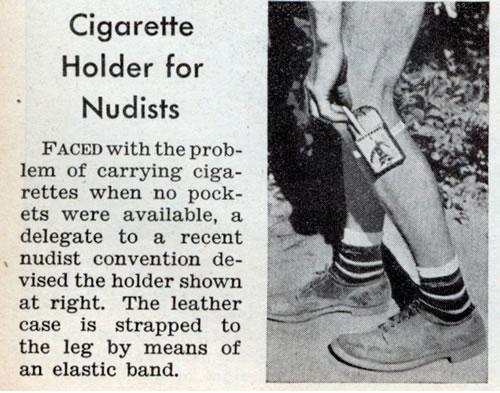
‘Mad Men’ notes: Naked truths about New York nudism

Every Monday I’ll try and check in with the Mad Men episode from the night before and focus in on one or two historical references made on the show. Spoilers aplenty, so read no further if you don’t want to know….

While the inebriated men of Sterling Cooper Draper Price were accepting Clio Awards at the Waldorf=Astoria, poor Peggy was stuck in a hotel room with a pretentious creative director going over ideas for a campaign for Vicks cough drops. Rizzo, the director, claims to be a nudist, or at least to sympathize with the cause. (Since the impetus of the conversation revolves around looking at a Playboy Magazine, I would say he’s probably a poseur and a faux-nudist.) Goading Peggy, she calls his bluff, strips off her clothes in a sign of liberation and casually settles back to brain storm.

By 1965, the nudism movement (or naturism) was firmly established in America, its proponents gathering in secluded camp grounds for decades, often near urban areas where its philosophies could be more easily disseminated, usually (but not always) among bohemians or extreme practitioners of physical fitness. Rizzo’s casual — but ultimately timid — embrace of a nudist philosophy was certainly not unusual by the mid-1960s and would be popularly corrupted in the practice of campus streaking.

The roots of the American nudist movement start in New York City among a group of German immigrant intellectuals, bringing over a well-established discipline from Europe. Kurt Barthel began the American League for Physical Culture in New York in 1929 as a straight-laced, non-lurid celebration of the human body; as an extreme corollary to the temperance movement, Barthel advocated clean living and eschewed alcohol.

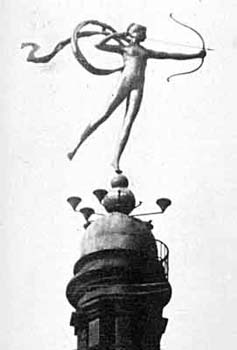
At left: In the days before nudist organizations, even racy sculpture like that atop the old Madison Square Garden could scandalize discreet New Yorkers.

From the little I could find on the early days of this organization, they had their first clothes-off gathering on Labor Day 1929 in upstate New York with seven participants (both men and women), but the organization held meetings in the city, at a Tenderloin establishment called the Michelob Cafe on 28th Street. (NOTE: I can only find evidence of a place called this from various nudist literature and not from any independent source.)

A guidebook to the discipline, called ‘The New Gymnosophy’ (or ‘Nudism In Modern Life’) written by Turkish doctor Maurice Parmelee, could be found in certain bookstores in New York, but was naturally sold behind the counter. Although a dry, philosophical text, the subject would have scandalized book buyers! In ‘Gymnosophy’, Parmelee extolled the virtues of the nude lifestyle, recounting the health risks of clothing and mental strains of bodily shame while being sure to separate these philosophies from common prurient thoughts.

Parmelee writes: “Sex feeling and curiosity…characterize practically all adults who enter the gymnosophic movement. After becoming habituated, sex stimulus through vision usually falls to normal and the initial curiosity is satisfied. [Excerpted in the book ‘Studies in human sexuality’ by Suzanne G. Frayser]

Interestingly, this sociologist and intellectual nudist is perhaps best known as being the author of America’s ‘first criminology textbook’.

Upstate campgrounds were fine (and far away from disapproving eyes) during the summer; but in the winter, the American League for Physical Culture met up a few times a month in a Manhattan gymnasium, and that put its naked aesthetic at odds with New York’s indecency laws. In 1931, one such meeting was raided by the police and Barthel was thrown into jail. In 1932 Barthel founded the Sky Farms nudist colony in Basking Ridge, NJ, the nation’s oldest continually operating nudist facility.

Above: If Don Draper were a nudist. (Photo from Martin Klasch)

By then, nudism philosophies had attracted other New Yorkers, including two librarians from the New York Public Library, Herman and Katherine Soshinski, who started up their own group — American Gymnosophical Association — and their own nudist colony, the Rock Lodge Club in northern New Jersey, still active today. (Who knew there were so many outlets for nudism in New Jersey?)