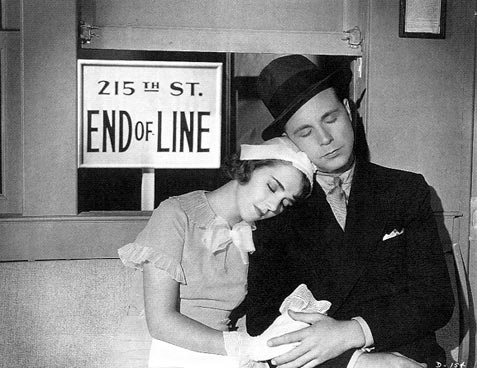
A History of Subway Cinema: From musical daydreams to gritty roller-skating gangs and underground alien bugs

Above: ‘Dames’ on a Train: Keeler and Powell dream of the innocent days

The subway doesn’t immediately come to mind as a photogenic movie star, but in fact, the various tunnels and stations of the New York City Subway have appeared as the backdrop for hundreds of movies. Its route diversity — from deep under midtown to elevations above the outer boroughs — and its longevity have allowed filmmakers to turn the subway into a rolling sound stage. I recently binged on a variety of subway films from several eras and noticed a definite pattern in their development:

The First Subway Movie: I posted this just a couple weeks ago, but the subway makes its first appearance at the inception of the very first IRT line, with a six-minute short (they were all short back then) “New York Subway” filmed by the Edison company, which was simply a camera following behind the first subway from Union Square to Grand Central. The film’s cinematographer, Billy Bitzer, went on to innovate standard filming techniques, like the soft focus and the fade out, and made his reputation working with D.W. Griffith on The Birth Of A Nation and Intolerance.

The Musical Subway: Fiction films wouldn’t be shot on-locaton in the subway until the 1940s, but that didn’t stop Hollywood from transforming it (via a backlot) into a romantic set piece. The most unusual of these is certainly the 1934 hokey gangbuster Dames, featuring an exotic dance number by Busby Berkeley as psychedelic as any 60s counter-culture movie. Dick Powell and Ruby Keeler put on a wacky show — they’re always puttin’ on a show back then — featuring a crowded ride on an uptown train. Powell falls asleep and his dreams burst into hundreds of chorus girls. BONUS: Earlier in the film, the pair woo each other on the Staten Island ferry with the song “I Only Have Eyes For You” (making its debut).

ALSO: Although it’s an elevated train — not a subway — I’d be remiss if I didn’t mention that King Kong (1933) didn’t much enjoy them rumbling down Sixth Avenue either.

The Romantic Subway: ‘On The Town’ (1949) is a candy-colored, on-location race through New York nostalgia, with our three dancing sailors skimming through the city’s greatest landmarks. A subway ride provides the impetus for the central romance, as Gene Kelly falls for a poster of Miss Turnstiles (a play on the mid-century’s quaint beauty pageant contest Miss Subways). Daydreaming similar to ‘Dames’ produces an equally dance-filled response (watch it here).
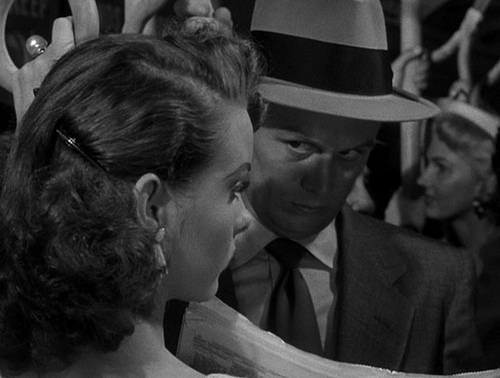

The Dark Subway: I’m not sure why more film noirs weren’t set on the subway — that would be remedied in the 1970s — especially when they’re as juicy as the 1953 Pickup on South Street. The opening scene is one of its most famous, as an eerie Richard Widmark hovers over ditzy Jean Peters in a crowded subway car, gingerly relieving her purse of what proves to be a very troublesome item. From there, the action shifts to the piers of South Street — nearly unrecognizable, not a mall in sight — before submerging back into the subway tunnels for a spectacular finish. Here’s a clip of the opening scene:

ALSO: With intrigue rumbling below, even the breeze from a passing subway train could elicit a sexual response as a defenseless young woman in a white dress stands above a grating in the 1955 comedy The Seven Year Itch.
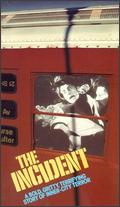
The Hostage Train: That glowing sheen of the Berkeley musicals — even the somewhat clean shadows of ’50s crime dramas — would slowly fade by the 1960s, along with the conditions of the subway itself. Presaging a rich future as a moving hellcar of violence and death, the 1967 film The Incident presents a group of unwitting passengers terrorized by two young, stereotypical ’60s sadists. Surreptitiously filmed and very low budget, ‘The Incident’ would introduce the subway car-as-trap motif that would fuel the 1974 thriller The Taking Of Pelham 1-2-3 and open its possibilities for urban horror.

Vengeance Underground: The movies hardly sugar-coated New York City’s hard times in the 1970s and rendered the subway into a place where anybody, at any time, could be shot, stabbed and assaulted. In Death Wish (1974), the subway is one of several locales of seething, bald-faced criminal activity, but it’s so dangerous that Charles Bronson goes down there twice to pick off bad guys. In the universe of this unsubtle action flick, you could be mugged and raped five, six, seven times a day, so best to be proactive and pick them off before they get you. Ten years later, Bernhard Goetz would reinvent this hyper, fictional fantasy by actually doing it.
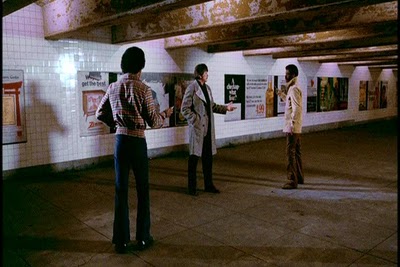
ALSO: The greatest movie ever made using the subway, The French Connection (1971), actually has its most notorious moment that runs underneath an elevated line in Brooklyn, a breathless chase scene filmed famously without the city’s permission.
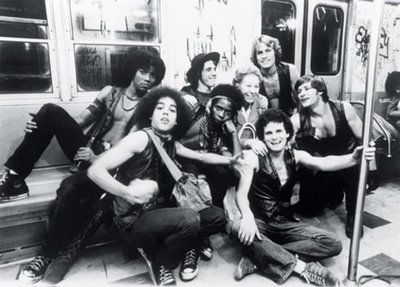
The Fantasy Detour: The reputation of the New York subway system was so poor in the 1970s that depictions went from the ultra-realistic to the absurd without missing a stop. In The Warriors (1979), the train becomes a virtual yellow-brick-row for a costumed Coney Island gang escaping a host of absurd villains. The Union Square subway station holds one of their deadliest challenges: suspendered, roller-skating pretty boy toughs with feathered hair. It’s only a tiny step into pure fantasy and an actual yellow brick road in The Wiz (1978) with a creepy collection of gangly puppets, a pair of Scarecrow-eating trash cans, and living subway posts most certainly not designed by Heins & Lafarge.

Local Lines: While the mainstream movie depictions would get even more outrageous, the growth of independent filmmaking and thoughtful, locally filmed productions in the 1980s depicted the subway in more realistic tones — as a confusing place to lose a child in Gloria (1980), as an underground wild west for graffiti artists and hip hop dancers in Wild Style (1983) and Beat Street (1984, in the clip below), and as a restless throwback to film noir in King of New York (1990).

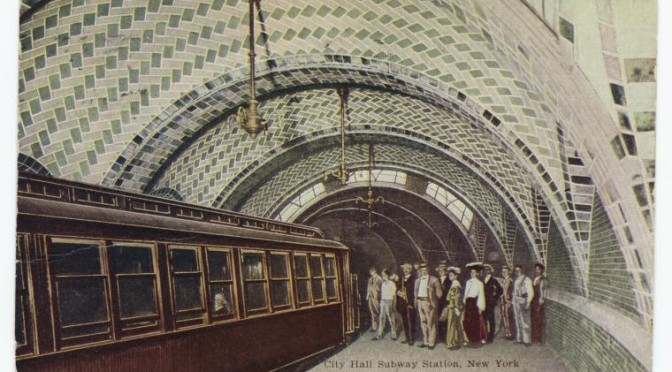
The Sequel Subway: With the advent of the Hollywood blockbuster came a restoration of the subway’s reputation — sorta. The subway in the cinematic 1980s and 1990s was still dangerous, but in wild, sensational and very unrealistic ways. The tunnels underneath Manhattan harbored rivers of ectoplasmic ooze (Ghostbusters 2, 1989), a train booby-trapped with explosives (Die Hard With A Vengeance, 1995), a supernatural danger zone of runaway trains and alien warriors (Superman 2 AND Superman 4), and even the Teenage Mutant Ninja Turtles (who hole up in that abandoned City Hall subway station).

Midnight Horrors: As the subways became safer to ride, the usual tropes of knife-wielding thugs and rapists no longer made sense as objects of menace. Soon the subways were filled with supernatural beings, starting with the relatively sedate Jason from Friday The 13th Part 8: Jason Takes Manhattan and slowly elevating into humanoid insects (Mimic, 1997), monsters from the sea laying large lizard eggs (the Godzilla remake, 1998), and humanoid insect monsters from the sea (Cloverfield, 2008)

ALSO: For a more intriguing take on subway horror, I recommend Jacob’s Ladder (1990) which uses the Brooklyn Bergen Street Station to surreal effect.

The Worst Subway Depiction Ever: Of course, films are allowed to manipulate train lines, distort direction, even put trains next to landmarks that are, in reality, miles away. It’s fantasy. But somewhere out there in the vast universe of fiction there is a vague, undefined point where a film steps over the line, and the movie which does this most shamelessly is the otherwise great Spider-Man 2, which inserts a vast, fantasy elevated R line through the heart of Manhattan, rebuilding what the city so painstakingly tore down in the 1940s and 50s.

21st Century Redux: In the last forty years, Hollywood has had a nasty habit of replicating itself, and that goes for subway movies, with rehashed old themes like vigilantism (in 2007’s The Brave One) and even remakes the older films, like the sorry remake to The Taking of Pelham 1-2-3. Incidentally, that remake’s two stars have two important subway films on their resumes — John Travolta in one of the greatest New York films of all time, Saturday Night Fever, and Denzel Washington, in an uncredited, unceremonious moment in Death Wish.

The MTA is more than happy to increase its exposure in future films. All you need, according to their website, is “a minimum $2 million general liability insurance policy; a $2 million railroad protective insurance policy; and proof of Workmen’s Compensation.”
I know I’ve missed a few goods/bad ones (Money Train, The Yards) but those’ll be for a future post…
Categories
Mad Men

‘Mad Men’ notes: Konnichiwa, New York City!

Every Monday I’ll try and check in with the Mad Men episode from the night before and focus in on one or two historical references made on the show. Spoilers aplenty, so read no further if you don’t want to know….

New York’s fascination with Japanese culture has never been because of a particularly large population, especially compared to the city’s other Asian communities. A hearty cluster of Japanese establishments in St. Mark’s in the East Village notwithstanding, there has never been a neighborhood of the size and shape of Chinatown or Koreatown. According to the 2000 census, just over 26,000 people identified as Japanese American, with less than 20,000 foreign-born Japanese residing here.

Instead, Japanese influence in the city has been felt through its wealth and through the success of individual businessmen and women. That’s where wrestler Hiroaki ‘Rocky’ Aoki comes in.

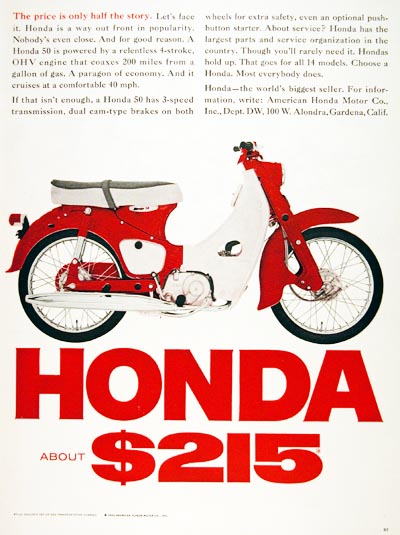
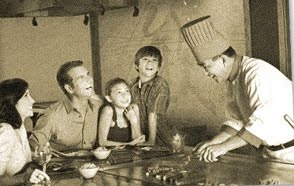
On last night’s ‘Mad Men’, Don Draper must weather some peculiar cultural differences and the prejudices of his own associates to snag a new account, the Japanese motorcycle maker Honda. (See the bottom of this post for an authentic 1965 advertisement for a Honda motor scooter.) In that frame of mind, he takes his date to one particular new midtown restaurant, Benihana, where Japanese food is prepared on grills in front of the patrons by daredevil chefs. A lively and noisy atmosphere, hardly romantic, his date notes.

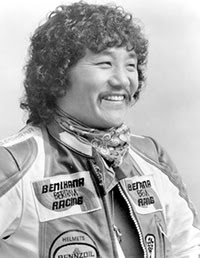
Benihana was the brainchild of Aoki (at right), a wrestler who qualified for Japan’s 1960 Olympic wrestling team (he didn’t compete) and came to America in his early 20s touring the wrestling circuit. He expressed a decidedly entrepreneurial streak, moving to New York in 1963 and he paying his way through business school by, among other jobs, operating a Mister Softee ice cream truck in Harlem.

His curious idea for an eatery — which brought the chef and steel grill into the dining room, preparing steaks and seafood for dizzied diners — was named after his parent’s own restaurant in Tokyo (Benihana, meaning red safflower). He bought out the lease of an unsuccessful Chinese restaurant at 61 West 56th Street* and opened Benihana Of Tokyo on May 1964.

The first restaurant was a tiny affair, much too small — four tables — for the theatricality he envisioned. And New Yorkers were at first confused, even intimidated. Of the few New York Japanese dining spots that existed, they were mainly for Japanese people; the embrace of sushi culture was many years in the future. Here, however, was a bold, dramatic and certainly exotic display of Japanese pomp, serving dishes that seemed somewhat ordinary.

It might had faded like so many midtown culinary novelties if not for the New York Herald-Tribune popular food writer Clementine Paddleford who, late in her career, threw Aoki a rave review. Within months, those four tables were hardly enough to meet demand, and Aoki opened a second location a few blocks east.

Benihana, of course, would be a concept suited for expansion, hitting Chicago and San Francisco before the end of the decade and soon swelling to dozens of locations all over the United States.

Aoki, who died in 2008, was quite an extravagant character, a Lothario (throughout his life, he famously had numerous wives, mistresses and girlfriends) and an avid adventurer, racing speedboats and reportedly even flying a hot air balloon over the Pacific Ocean in the early 1980s. He and Don Draper would have gotten along famously.

*The restaurant moved down the street to its present location at 47 W. 56th Street in 1973.
Pic above courtesy Benihana

For more on New York’s curious history with the Japanese, you might like to check out the brand new exhibit at the Museum of the City of New York called Samurai In New York: The First Japanese Delegation, 1860, taking a look at an entourage of 70 samurai who held court in the city 150 years ago.

And finally, courtesy of ADclassix (visit their page to order a print):

Categories
Podcasts

Modern history of the New York City Subway: Expansion from the 1,2,3, the A, B, C, Second Avenue and beyond

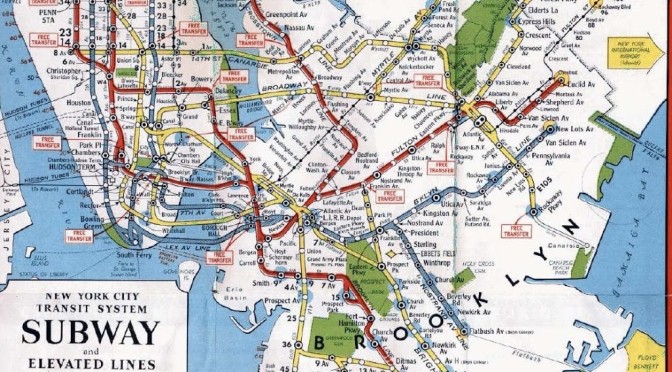
The subway in 1951, a bevy of new lines thanks to the unification of the IRT, the BMT and the IND, a consolidation we live with today. (Pic courtesy of NYC Subway)

PODCAST The amazing New York City subway system travels hundreds of miles under the earth and elevated through the boroughs. In this episode, we let you in on how it went from one long tunnel in 1904 to the busiest subway on earth.

This is our last episode in our series BOWERY BOYS ON THE GO, and we end it on the expansion of the New York City subway. Find out how some as innocuous sounding as the ‘Dual Contracts’ actually become one of the most important events in the city’s history, creating new underground rounds into Brooklyn, the Bronx and (wondrously!) and finally into Queens.

Then we’ll talk about the city’s IND line, which completes our modern track lines and gives the subway its modern sheen. After listening to this show, you won’t look at the Herald Square subway station the same way again.

ALSO: Bernhard Goetz, Mayor Jimmy Walker and the future present history of the Second Avenue Subway!

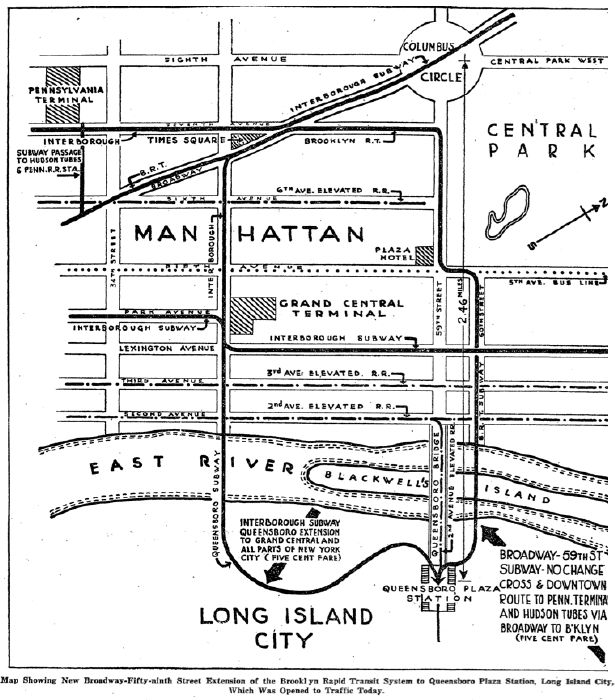
The Dual Contracts let the Interborough Rapid Transit (IRT) to expand its lines and opened Manhattan to Brooklyn Rapid Transit (BRT). And it allowed both companies to extend into Queens for the first time. Below is a simplified map from 1920 of extensions into midtown Manhattan and Queens. (Map below is from New York City Subway, the most invaluable resource on the web about subway history.)

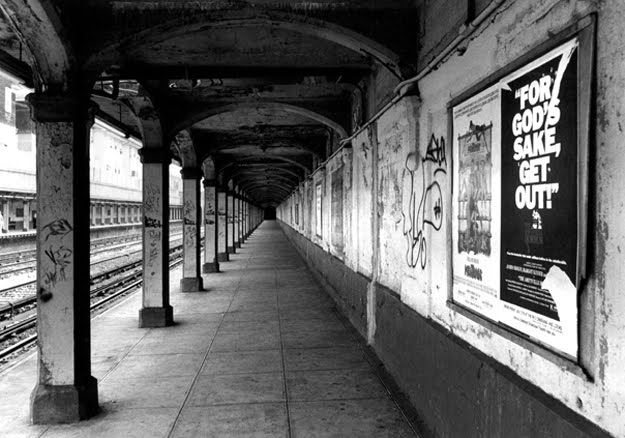
The mean tracks of the subway during the 1970s. The price went up, ridership went down, and the whole line fell into disrepair. In John Conn’s photograph below, a destitute station looks abandoned. (You can see a whole gallery of Conn’s subway photographs at the Daily Beast.)

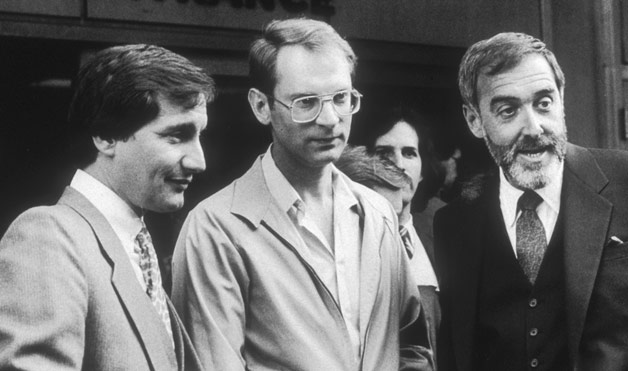
Bernhard Goetz, below at center, was labeled the ‘subway vigilante’ after shooting assailants on the subway in 1984, highlighting how dangerous New York’s subway had become. (Photo from here)

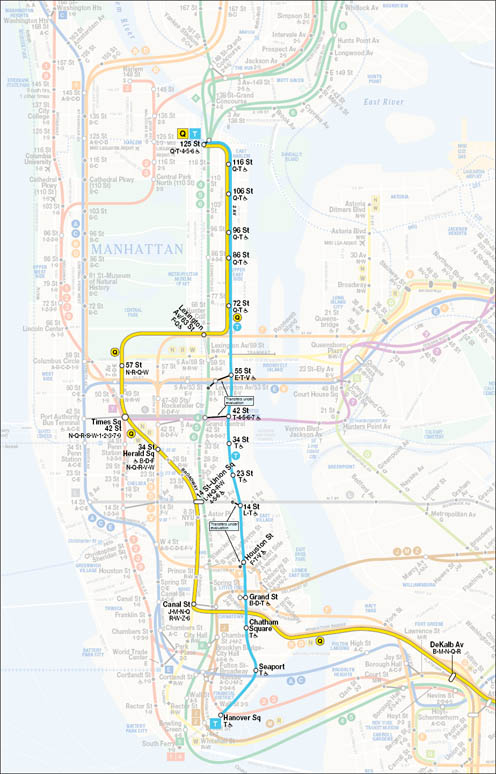
A map of the too-long-in-the-making teal Second Avenue Subway (the T line):

For a more visceral immersion into subway history, visit the New York Transit Museum and walk through the old subway cars contained in an actual, abandoned station. They also have an annex in Grand Central Terminal

Categories
Mad Men

‘Mad Men’ notes: Swanky steaks and a market soiree


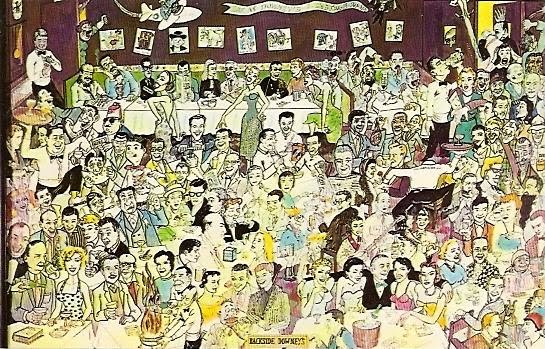
A postcard from Jim Downey’s showing a plethora of theatrical faces who frequented the place.

Every Monday I’ll try and check in with the Mad Men episode from the night before and focus in on one or two historical references made on the show. Spoilers aplenty, so read no further if you don’t want to know….

There were two long-gone destinations used in last night’s episode of ‘Mad Men’ to delineate the old and the new, contrasting the square with the hip.

Two former ad rivals Pete Campbell and Ken Cosgrove bury the hatchet over a meal at Jim Downey’s Steak House, a dapper theater-district hangout at 705 Eighth Avenue (at 44th Street), started in the late 1950s by an Irish immigrant who won big at the horse races one day and decided to open a restaurant (as the legend goes).

Downey’s, very much in the mold of classic midtown eateries like Sardi’s and Toot Shor’s, was considered more a destination for theater crowds than the professional set, so much so that its dining rooms had theatrical names (like the Backstage Room) and you could frequently find a theater star or two having Irish coffees at the bar, possibly standing by writer Brendan Behan, also a regular. Dustin Hoffman and Robert Duvall sat at a booth very much like the one depicted on the show, discussing women and literature.

The restaurant was closed by the early ’80s, taken over by a Cajun restaurant, although Downey’s sons opened steak houses in other parts of the city.

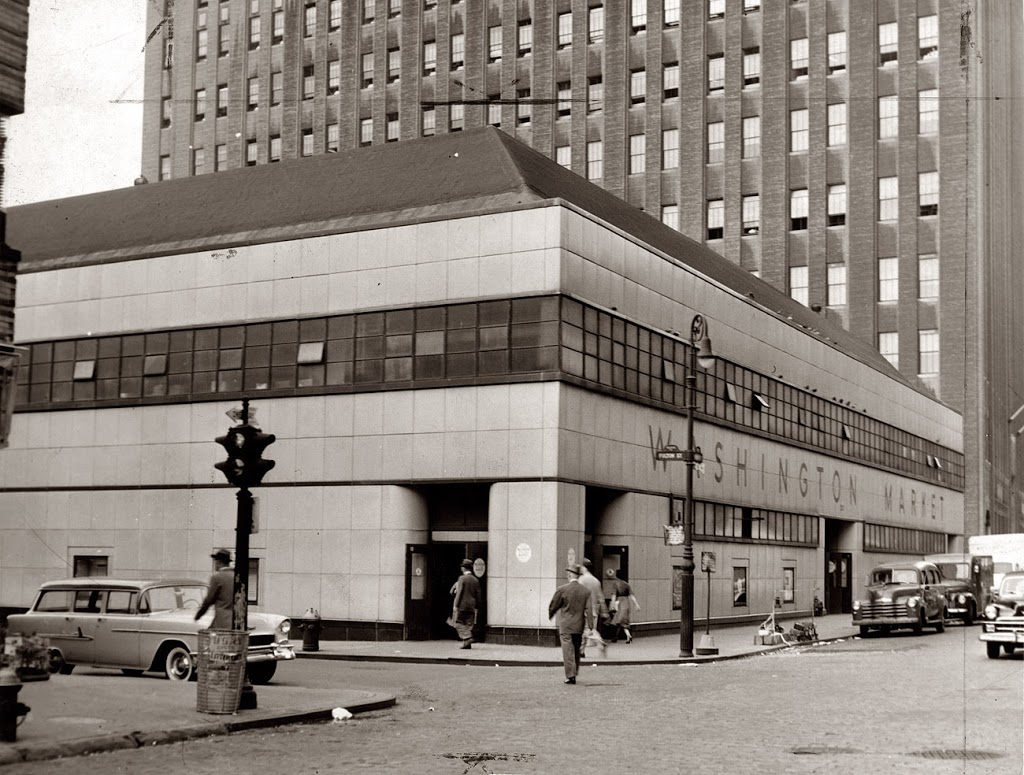
Meanwhile, Peggy Olsen got herself invited to a happening, or rather, an “I don’t even know what to call it” at old Washington Market (pictured below), the once lively indoor marketplace downtown. By 1956, however, the vendors — at one time, over 800 of them — had moved out (most up to the Hunts Point in the Bronx) and the forlorn shell of the building sat abandoned. It was eventually ripped down in 1967 to build the World Trade Center.


(Picture from Shorpy)

Bowery Boys Bookshelf: Film history and a morning Danish

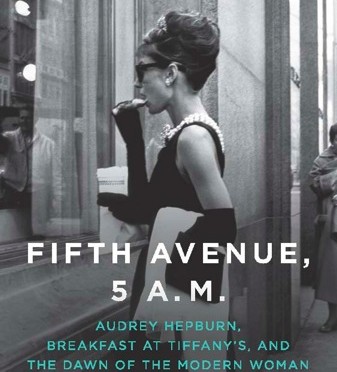
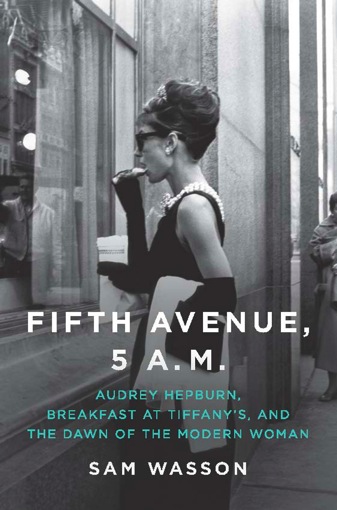
I feel as though I am partly responsible for the death of actress Patricia Neal, who passed away this past Sunday. Last Wednesday I was finishing up Sam Wasson’s indulgent little “Fifth Avenue 5 A.M.: Audrey Hepburn, Breakfast At Tiffany’s, and the Dawn of the Modern Woman” and admired the author’s anecdotes about Neal, who apparently had an awful time with co-star George Peppard.

Then I actually said aloud — in fact, posted on my Facebook page — “Wow, that Patricia Neal, what a lady. I can’t believe she’s still alive!” Next time, I’m keeping it to myself.

However I’m still recommending this book anyway, “Fifth Avenue 5 A.M.,” a morsel of a film bio that is the very definition of a good late-summer beach read, because you can finish it in 2-3 hour (preferably with a summer-y beverage) and it’s as light as a breeze.

‘Breakfast At Tiffany’s’ is one of the greatest films ever shot in New York City and features a heroine, Holly Golightly, that would have the same cultural effect to mid-’60s tastes that Carrie Bradshaw would have to those decades later. However, very little of Wasson’s book truly takes place here in the Big Apply, instead flitting about Europe and Hollywood, tracing the evolution both of the Truman Capote story and Audrey Hepburn’s career.

Capote, of course, was quite unhappy with the adaptation, yet the story as Wasson tells it seems to imply the film, in its finished form, was inevitable. The story of the film’s inception and production are told through snippets concerning the film’s main creators — Audrey’s of course, but also Henry Mancini (composer of ‘Moon River’), costumer Edith Head, and the film’s director Blake Edwards. Capote’s inspirations are also highlighted including the tragic Babe Paley.

Wasson’s retelling of the fateful morning of filming at the corner of Fifth Avenue and 57th Street in front of Tiffany’s, on October 2, 1960, has the feeling of mythology being retold. And yes, I guess that’s a bit much at times — he tends to overwrite a bit — but the wit and subject matter keep it light and frothy.

It’s not completely useless as a New York history tool, thanks to a map up front of key locations (mostly in the Upper East Side and Midtown East) to both the film and its principals that serves as a makeshift self-guided walking tour.

One of the cutest details recalls the ‘cat call’ for aspiring feline actors auditioning for the role of Cat, a sentence all too absurd to retype. You also get to relive some of the most famous legends of film, like the near electrocution within Tiffany’s and the real story about that particular, famous black dress (there were two, one for moving, one for standing).

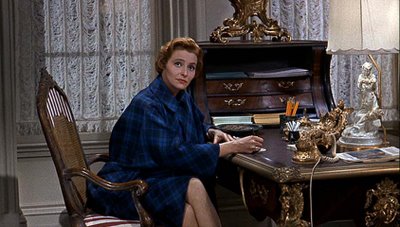
As for Patricia, her appearances are brief but notable. On Peppard: “I always thought he was a piss poor actor.”

Below: Neal in Breakfast At Tiffany’s


A couple years ago, I did a podcast on the history of Tiffany’s & Co., with a definite emphasis on the film. (You can get it here)

Categories
Mad Men

‘Mad Men’ notes: Upscale flowers in a mystery mansion

Every Monday I’ll try and check in with the Mad Men episode from the night before and focus in on one or two historical references made on the show. Spoilers aplenty, so read no further if you don’t want to know….

Last night’s episode of ‘Mad Men’ spent one half of the episode in California and the other half following the two office divorcees (Don Draper and his British partner Lane Pryce) on a raunchy boy’s night out in the Village. Pryce had been victim earlier in the episode of a disastrously slapstick mix-up: his secretary accidentally switched the notes in two boxes of roses, sending a heartfelt card intended to his ex-wife instead to office manager Joan, and vice versa. Joan responds by storming his office, tossing the flowers in his face, then firing Pryce’s befuddled secretary. Wacky!

At least the newly unemployed woman had the good sense to order the flowers from Rhinelander Florists, one of the poshest places to get your bouquets on Madison Avenue in the 1960s.

Rhinelander (867 Madison Avenue) was opened in 1936 by Frank Tomaino, a former gardener for Huntington Hartford, the old-money retail magnate who owned the A&P supermarket chain, and perhaps it was through these connections that Tomaino was able to accumulate a client list that included “the Rockefellers, Astors and Whitneys” (according to his obit).

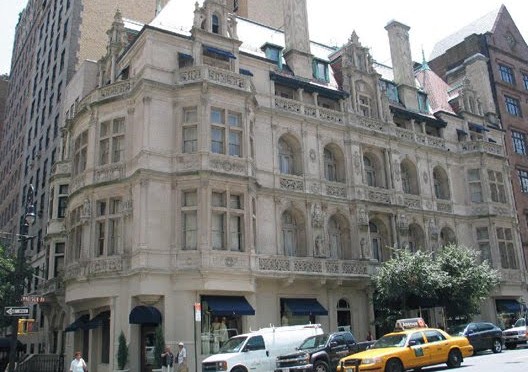
Just as likely however it was the desirability of Tomaino’s choice location and that which he chose to name his business — the mysterious Rhinelander Mansion at 72nd Street. The lushious manor, dripping with old world Beaux-Arts elegance, is notable in that its eccentric owner, Gertrude Rhinelander Waldo*, never bothered to move in when it was completed in 1898.

Mrs Waldo, heavily in debt, didn’t seem to have a knack for real estate. According to historian John Tauranac: “In 1908, a ‘For Sale’ sign hung in front of the building, but there was no sale, as much because of Mrs. Waldo’s price tag as her impetuosity. One broker had practically consummated a sale, but while the papers were being drawn up Mrs. Waldo calmly said, ‘I don’t think I’ll sell,’ and walked out.”

The mansion was left unoccupied — and quite unkempt, to the consternation of neighbors — until 1911, when Gertrude passed it on to her sister, who didn’t want to live here either.

The first floor was made into retail spaces in 1921, and it was fifteen years later, I believe, when Tamaino moved in. His business faced Madison Avenue and would go on to share the building with a corner pharmacy. By the 1950s, the upper floors were finally occupied, and how — by the photographer Edgar de Evia, known for his work in ad campaigns for products like Borden Ice Cream, and for fashion spreads taken here in his very own rustic home, famously transformed into a hazy, Miss Havisham-style set piece.

Rhinelander Florist was well associated with the floral needs of upscale Upper East Side clients. In ‘The Two Mrs. Grenvilles” by Dominic Dunne, he writes, “Babette told her to look up the Grenvilles in the Social Register at Rhinelander Florist on the corner of Madison Avenue and 72nd Street.”

By the 1980s, the florist pops up at a Sixth Avenue location. Tomaino died in 1988, and by then, the Rhinelander Mansion was in the throes of a massive renovation, courtesy Ralph Lauren, who turned the dusty old relic into the retailer’s flagship store in 1986.

*You may know Mrs. Waldo’s son Rhinelander Waldo, who was fire commissioner for New York City during the Triangle Factory Fire, and briefly the city’s police commissioner, famous for promoting officer Charlie Becker to the head of the anti-vice squad. (Listen to our Case Files of the NYPD podcast to hear about Becker’s strange fate.)

ALSO: Don and Lane fill up their flasks and hit a movie theater for some loud, obnoxious heckling. I’m not a big Godzilla fan, but based on chronology, the film they were watching had to be ‘Godzilla vs. the Thing’, more popularly known as ‘Mothra vs. Godzilla’ — unless they were at a revival house watching the original 1954 ‘Godzilla’.

Photo above from Racked

Categories
Podcasts

The New York City Subway and the creation of the IRT

PODCAST In the fourth part of our transportation series BOWERY BOYS ON THE GO, we finally take a look at the birth of the New York City subway. After decades of outright avoiding underground transit as a legitimate option, the city got on track with the help of August Belmont and the newly formed Interborough Rapid Transit.

We’ll tell you about the construction of the first line, traveling miles underground through Manhattan and into the Bronx. How did the city cope with this massive project? And what unfortunate accident nearly ripped apart a city block mere feet from Grand Central Station?

ALSO: What New York City mayor had a little too much fun on opening day?

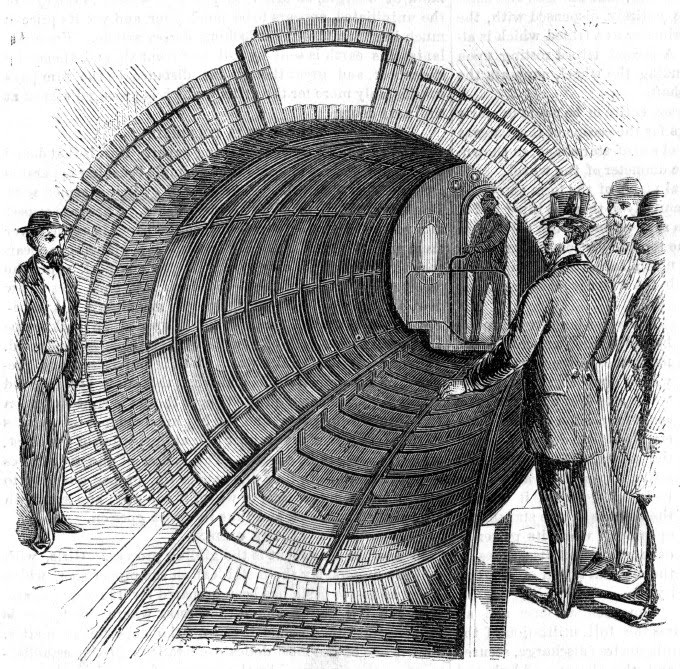
Below: An illustration of Alfred Beach’s pneumatic tube, built in 1870 a short distance from City Hall ran under Broadway from Warren Street to Murray Street. Although it’s little more than a footnote to the history of the New York City subway, it underscores that the technology was always available, even if public and political enthusiasm for such a project was not.

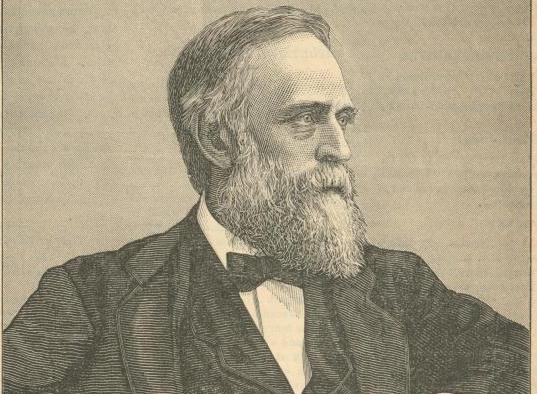
Abram Hewitt, mayor of New York in 1886, and an early proponent for an underground subway. (Pic NYPL)

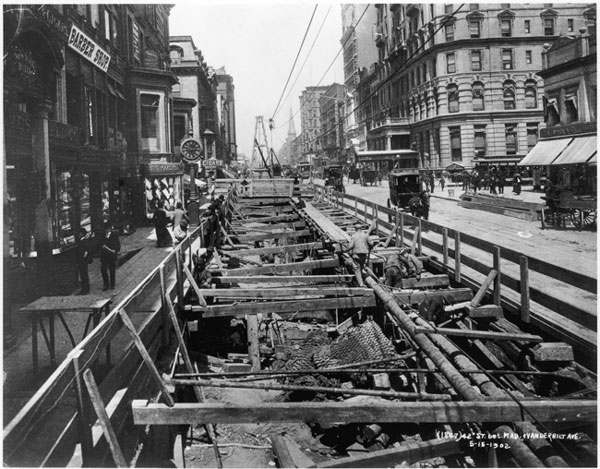
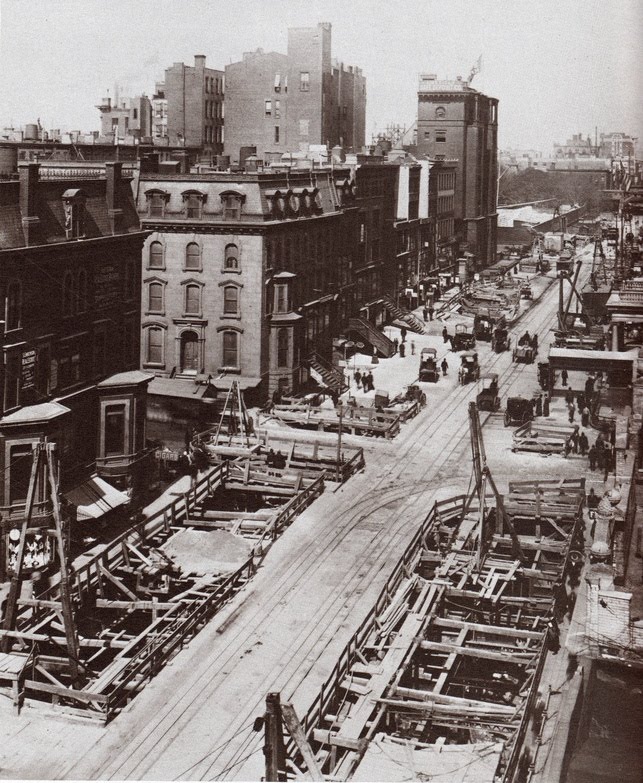
The cut and cover method chosen by subway engineers ensured that New Yorkers would be faced front-and-center with the daily slog of excavation and construction.

Forty-second Street during construction of the subway system, 1901.

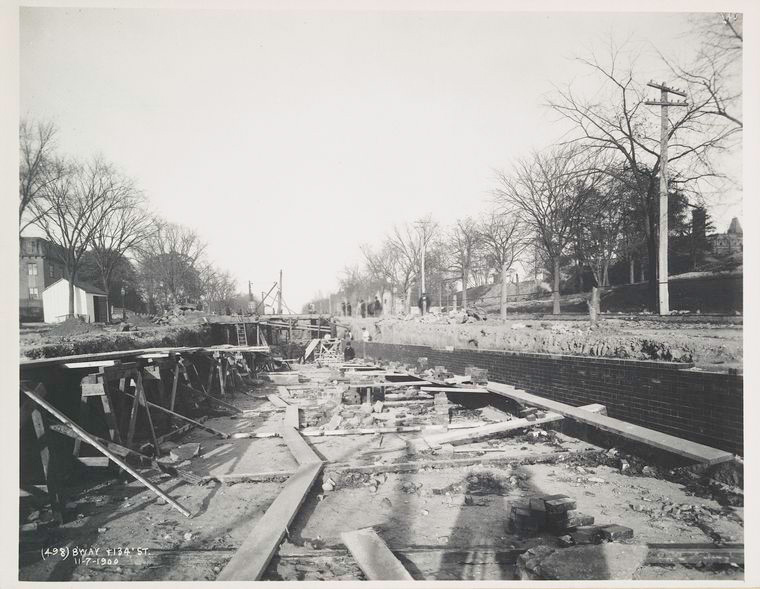
Mayhem during subway construction at Broadway and 134th Street! (NYPL)

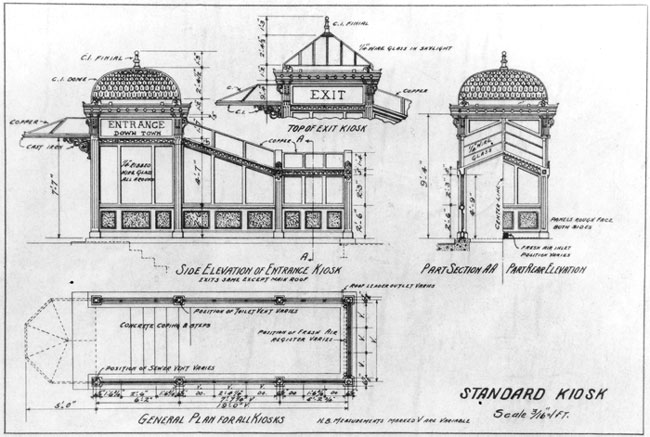
The plan for subway entrances, taking liberally from the design of kiosks in Budapest.

Thank this rich guy for your first subway, New York. August Belmont Jr., later known for his contributions to horse racing, founded the Interborough Rapid Transit Company to help operate the fledgling new subway system. (Pic LOC)

FOR MORE INFO:
We cannot begin to due justice to the birth of the subway in the way the good folks at the website NYSUBWAY.ORG have done. Hundreds of photos, original documents, and a wonderfully exhaustive list of stations, including many no longer in operation. Forgotten New York, of course, has several rich pages devoted to the subject.

And you definitely swing by the New York Transit Museum in Brooklyn, where you can actually sit in one of the original subway cars, among many, many more treasures of the original IRT.

Older Bowery Boys posts on today’s subjects:
Alfred Beach: The Short Lived Thrill of the Windy Subway
Grand Central’s Other Explosion
Know Your Mayors: George B McClellan
Know Your Mayors: Abram Hewitt

Categories
Mad Men

‘Mad Men’ notes: Swan song for a lion of Broadway

Every Monday I’ll try and check in with the Mad Men episode from the night before and focus in on one or two historical references made on the show. Spoilers aplenty, so read no further if you don’t want to know….

It’s Christmastime, December 1964, and our favorite upstart ad agency, in order to impress their primary client Lucky Strike, throw a wild, boozy office party which, being Mad Men, naturally leads to all sorts of inappropriate work behavior.

Meanwhile, down at Don’s Waverly Place bachelor pad, he meets his neighbor, a nurse from nearby St. Vincents Hospital — a bittersweet mention, as the hospital shut its doors earlier this year.

But it was one of the very first lines of dialogue that caught my attention last night, as Don’s secretary Allison brings in a resume from a young woman (named Violet) whom Don had met — had flirted with, assumably — at the Ziegfeld Theatre. The line is probably a throwaway to set up a shocking hookup between Don and Allison later in the show, but it’s a casual nod to an old theatrical treasure.

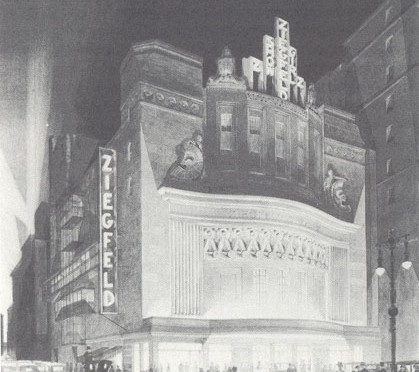
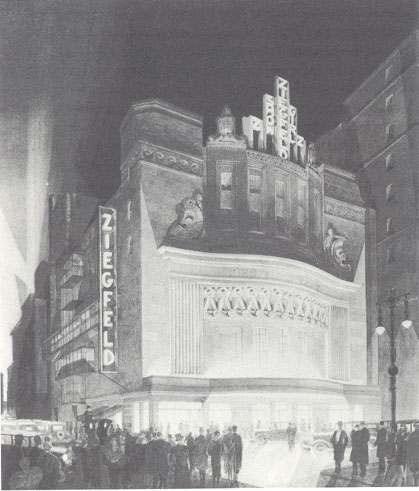
This isn’t the lavish Ziegfeld movie theater at West 54th Street, because that wasn’t built until 1969. Rather, this is a reference to the original Ziegfeld, built by Florenz Ziegfeld himself back in 1927.

The first Ziegfeld was just slightly down the street from today’s Ziegfeld, at Sixth Avenue at W. 54th St. (That would place it just a couple blocks north of Sterling Cooper Draper Price’s offices at the Time & Life Building.) A dazzling palace financed by William Randolph Hearst, the theater was hoisted upon the reputation of one of Broadway’s most successful producers, the creator of the sexy spectacular Ziegfeld Follies. Unfortunately, with the Great Depression around the corner, the theater had few successes under Ziegfeld’s personal direction (Showboat being one) before it transitioned into a movie house in 1933.

It returned to a legitimate Broadway stage in the 1940s, then became a recording studio for NBC’s upstart television operations in the 1950s. However, by 1964, the Ziegfeld was back in a musical state of mind, in the throes of one final attempt to capture the glories of live theater.

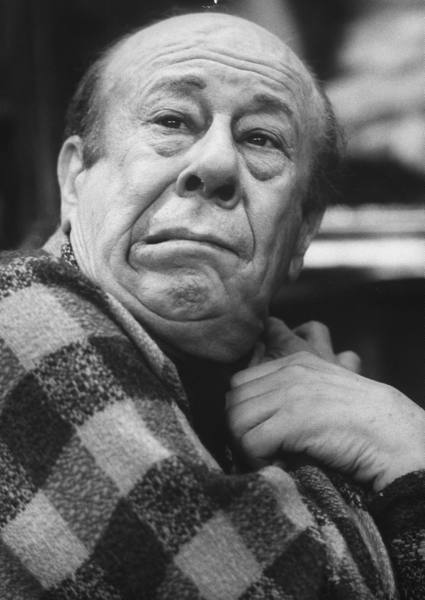
That February, producers dusted off the footlights and reopened with a vehicle for one of the old kings of vaudeville Bert Lahr (best known to film buff, naturally, as the Cowardly Lion of ‘The Wizard of Oz’.) In ‘Foxy’, Lahr sang and generally hammed his way through a light musical (by Robert Emmett Dolan and Johnny Mercer) about gold prospectors in the Yukon. Critics loved it, and Lahr went on to grab the Tony Award for Best Actor, his final theatrical award before his death in 1967. Audiences, however, were less enamored; the show closed in April 1964.

At right: Lahr in ‘Foxy’, 1964. Pic courtesy LIFE

I’m not sure if Don Draper would have actually met anybody at the Ziegfeld in December 1964, as there were no shows running. Although perhaps NBC was still using it at this time as a soundstage; certainly Don might latch onto a script girl or production assistant while visiting a client filming a commercial.

The Ziegfeld tried one final time for glory the following year, in November 1965, with Anya, a musical variant of the story of Anastacia, the alleged last surviving member of the Russian royal family. The dowdy show was put out of its misery with a couple weeks, and the theater itself, sadly, was demolished the following year and replaced with s 50-story skyscraper, currently the home of international finance firm Alliance Bernstein.

For more information on Ziegfield and the theaters that bore his name, check out our podcast on the Ziegfeld Follies.

And speaking of coy New York City history references, I hope you caught a remark made on the AMC show ‘Rubicon’ following ‘Mad Men’. Standing on one of the piers south of the Seaport, looking out at the East River, a character remarks: “My great-grandfather Horace started a ferry line between here and Brooklyn. It expanded to New London and south of Baltimore. Did pretty well for himself, until he was gobbled up by that prick [Cornelius] Vanderbilt.”

Union Square and the demise of ‘Dead Man’s Curve’

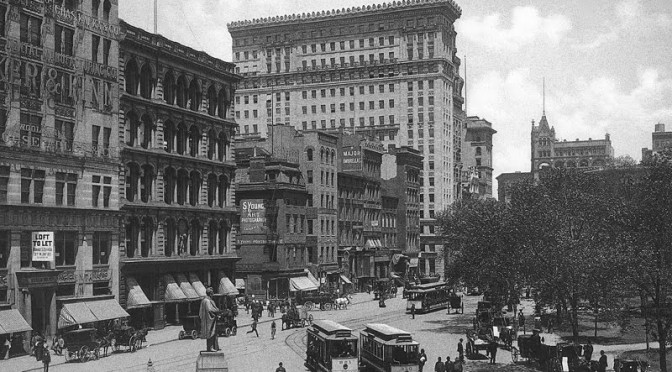
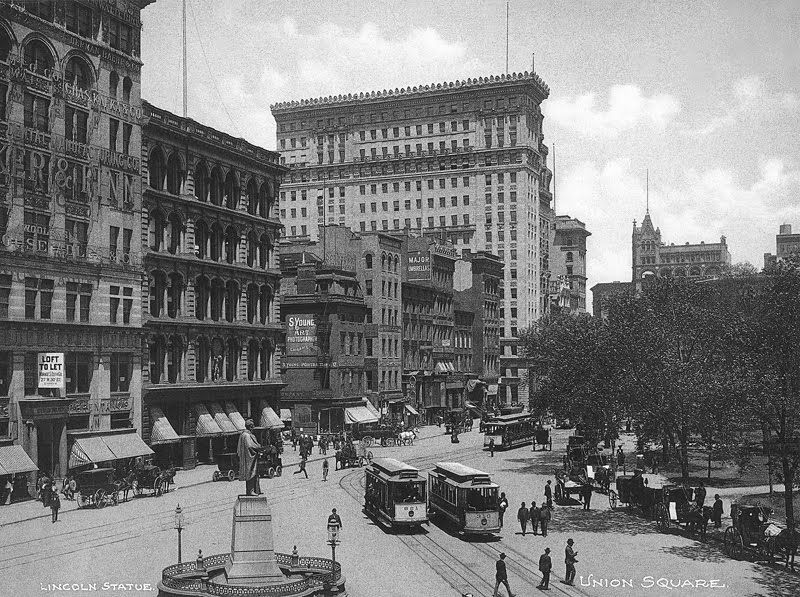
The photo above shows the southwest corner of Union Square in the year 1906. For many years prior, this corner was the scene of several brutal accidents between cable cars and pedestrians. When the Metropolitan Traction Company (now doing business as the powerful New York City Railway Company) ripped out the cable lines and replaced them with streetcar tracks in the early 1900s, New Yorkers hoped that troubles at the so-called ‘Dead Man’s Curve’ would likewise diminish.

Broadway and 14th Street, during the late 19th century, has always been seen as “New York’s Most Dangerous Crossing” (according to a Harpers Weekly article). But even in the new century, this morbid corner could never quite shake its reputation. “McGowan and Keenan Narrowly Escape Death At ‘Dead Man’s Curve” shouted an Evening World headline from February 15, 1906, reporting a serious accident here involving two major city officials, one (Patrick McGowan) the head of the Board of Alderman.

Getting rid of the cable cars reduced — but did not eliminate — the problems posed by the heavily trafficked, sharp corner along New York’s most famous avenue. Grim accidents kept occurring here, such as this one in September 1908: ‘Legs Are Crushed…at Dead Man’s Curve’. One source posits an interesting theory: with the district to the west still considered Ladies Mile, New York’s prime shopping district, male drivers (as they would have mostly been at this time) became distracted at this difficult corner by lively female shoppers.

Fortunately, it seems reputation can be the wonderful deterrent. While other cities would develop their own deadly traffic curves — and apply the nickname ‘dead man’s curve’ to those unfortunate places — New York would see fewer accidents at Broadway and 14th Street in the following decades.

One author in 1917 remarked that the corner’s “perils are now outdone on every street and road since the advent of the automobile.” In 1930, all of Union Square would be redesigned as subway lines were constructed underneath, and traffic was helpfully reduced. Most shopping had moved to Herald Square and Fifth Avenue, so there were fewer alleged distractions anyway.

A witness to all the grim accidents at this corner was, oddly enough, Abraham Lincoln. His sculptural likeness had stood here since 1870, a work by Henry Kirke Brown, surrounded by an austere bronze fence. With the redesign in the 1930s, Lincoln was moved away from the bloody corner and moved into the northern end of the park, where he still stands today.

Photo from the New York Times

The City Island Monorail, easily the worst ride in NYC

Taking their lives in their hands: riders of the City Island Monorail

On Friday’s podcast, I briefly talked about the Pelham Park & City Island Railroad (or, in the parlance of the day, Monoroad), an actual monorail system, three miles in length, linking the small fishing community of City Island with the Bronx mainland. This slender and awkward looking conveyance (with its “yellow, cigar shaped car“, you can see it a couple posts below), departing on its very first trip on July 17, 1910 crammed with over 100 passengers, promptly fell over, injuring dozens.

“Passengers were thrown one on top of the other on the floor, so that they lay literally in layers,” according to the Times. Not helping matters, the conductor locked the doors after the accident for fear passengers would touch the electrified rail, and the injured had to be passed through a couple small, open windows.

The monorail was being piloted by its creator Howard Hansel Tunis who had trumpeted his technology of a single ground rail with two elevated (and electrified) side railings. Some in the press had seen the monorail idea as being superior to the newly build subway train. However it had taken his Monoroad financiers almost two years to raise the money, and the construction of usable track had happened hastily — and with remarkable incompetence.

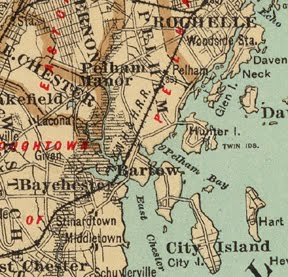
The ‘monoroad’ was to be a technological improvement of the horsecar line that serviced the route before 1910, picking up passengers at the long-vanished Bartow Station, located in Pelham Bay Park. One hundred years ago, New Yorkers took day trips up to enjoy the small, sandy beaches of City Island; most of that beach area is unavailable for bathers today, and anyway, Robert Moses sculpted a far grander Orchard Beach out of landfill in the 1930s, a more suitable option.

Despite the inaugural disaster, the City Island monorail system gave it another go a few months later, on October 12, 1910. On this, its second trip, the monorail hit an automobile, smashed it “to splinters” and injuring the driver and a passenger. They eventually seemed to work out the kinks, and the monorail began regular operation, although its irregular schedule and its inadequate connections to other lines never impressed local residents.

Its poor reputation may have held City Island back as a more popular place for recreation. An article on City Island from 1913 , while singing the monorail’s praises, inaccurately reported that people had been killed in the inaugural accident.

Its fate was sealed in 1914 when the powerful Third Avenue Railway bought it up, opened a traditional trolley line alongside it and unceremoniously closed the monorail by 1919.

Map above from Historic Pelham. Top photo from Wiki Commons.

A TV shout-out to a debonair palace for independent women


postcard from Old New York

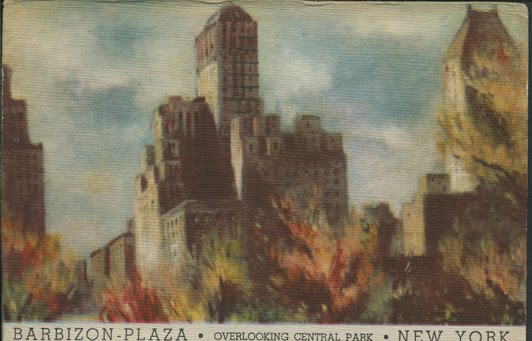
With Mad Men making its return last night on AMC, myself and many other bloggers (like the fabulous Natasha Vargas-Cooper and the folks over at the City Room) are scouring the episodes for fun New York City history references. One of my favorite buildings in the city made an appearance (or at least a notable mention) when, after a blind date, Don Draper drops his actress lady friend off at her home at the Barbizon Hotel for Women at 140 E. 63rd Street.

The Barbizon was a high-end complex for actresses and models, “a combined charm school and dormitory,” “the city’s elite dollhouse” according to Vanity Fair, offering single woman a luxurious address and a home base to pursue career and network. Some of its inhabitants, naturally, would go on to become major stars — Grace Kelly, Lauren Bacall, Cloris Leachman, Liza Minelli. Little Edie, of ‘Grey Gardens’ fame, lived here from 1947 to 1952 while trying to break into show business.

I personally love the dark grown, arch-heavy exterior, which the AIA calls a “romantic, neo-Gothic tawny brick charmer.” The building opened to men in 1981 and, as the Barbizon 63, is still a rather swanky address.

The Barbizon, however, was not known for sumptuous living back in the day. Apparently, a lady was just supposed to be grateful to be admitted here. The rooms were “not luxurious,” according to a biography on Kelly, “and a new girl’s first impression might have been that her austere quarters resembled a convent cell or a house of correction.” Kelly lived here as a teenager in 1947, quietly reading or having tea in the Barbizon’s dining area.
The building was designed in 1927 by the curiously named design firm of Murgatroyd & Ogden, who specialized in brick hotels and apartment complexes with quirky flair. Two years later, their Hotel Governor Clinton opened across the street from Pennsylvania Station.

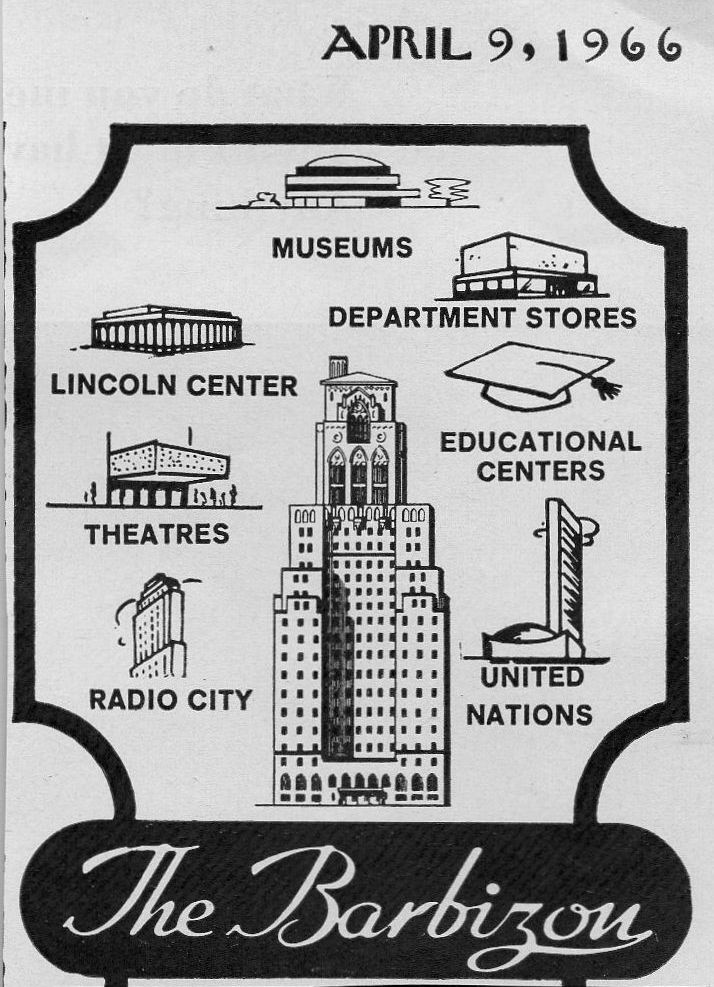
(New Yorker ad from 1966 courtesy Ephemeral New York)

Categories
Podcasts

Cable cars, trolleys and monorails: Moving around on New York’s forgotten transit options

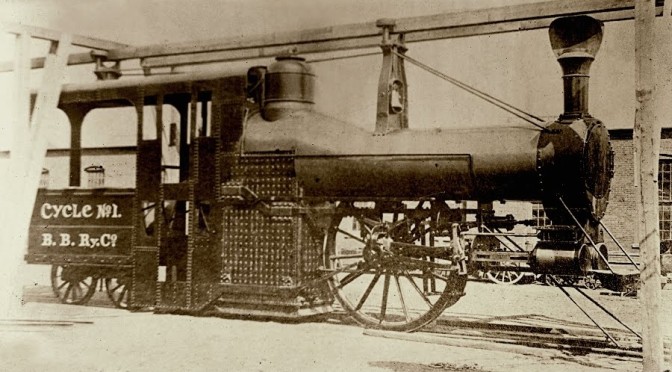
ABOVE: The Boynton Bicycle Railway, combining the best of the locomotive and the spinning wheel. This narrow little hot wheel took riders on a short ride through Coney Island.

For the third part of our Bowery Boys On The Go summer series, looking back at the history of New York City public transportation, it’s a short ride on the long gone, forgotten methods of getting around the city. The streets were mostly dominated by horse-based transport, but this was smelly and slow — not to mention awful on the animals. So the city experimented with new ways of moving the masses: by cable car (exported form San Francisco), the trolley and the monorail.

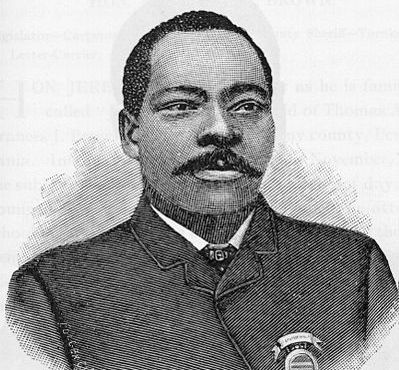
Along the way, you’ll find out the connection between the cable car and New York’s most famous art-house movie theater, discover the origins behind the name of a classic New York sports team, and hear the contributions of a man known as ‘the black Edison’.

ALSO: Find out about what may be the world’s worst monorail technology!

Click onto photographs for a larger view


Horse Drawn: New York City before the 1870s simply could not have survived without horse power, and the streets were filled with thousands of the animals pulling streetcars, omnibuses, carts and basically everything else that moved. As a result, life for a horse was pretty much appalling. Life span was relatively short. Although the city designated places along the waterfront to dispose of carcasses, it wasn’t unheard of to leave bodies in the street. This classic (but disturbing) photo from 1900, captioned ‘Close of a Career’, illustrates the absurdity. (Courtesy Shorpy)

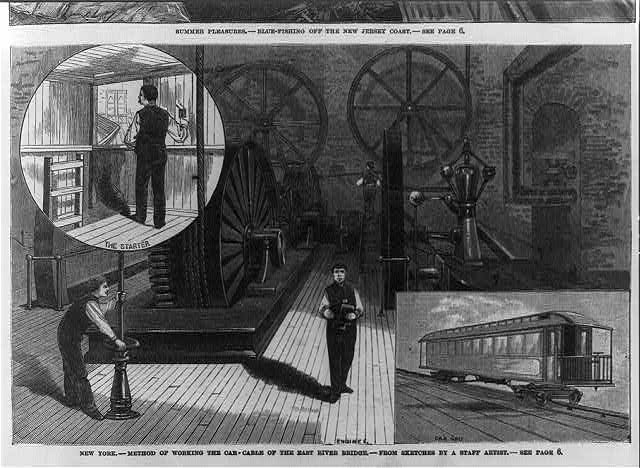
The first cable car system in New York was actually a steam-engine hybrid that ran over the Brooklyn Bridge in 1883. Engineers didn’t believe a regular steam locomotive could travel up an incline to get onto the bridge, so this dual steam/cable method was created. The powerhouses, pictured here, were situated under the approaches. (Read more about it here.)

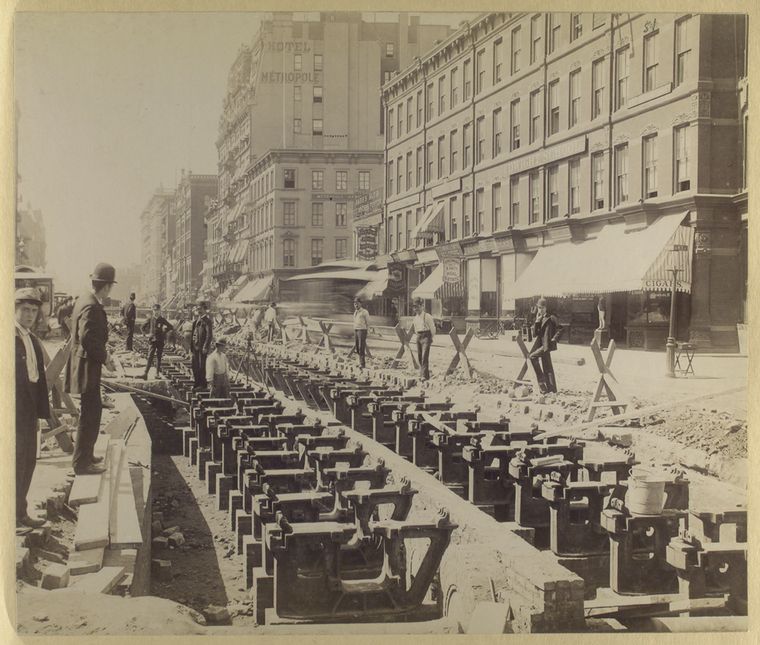
Cable Vision: How many times have the streets around Union Square been dug up? Here’s one of the very first times, in 1891, as workmen install a cable line for New York’s very first cable car system. Notable about this particular stretch is the fact that this would become part of the notorious Dead Man’s Curve, where cars would speed around the northwest corner of the park. (Courtesy NYPL)

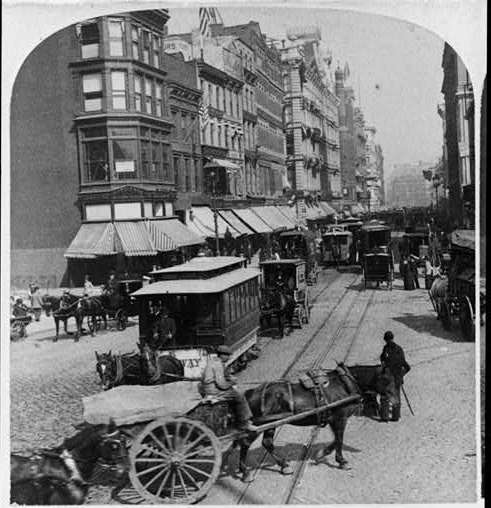
The frequent and frustrating traffic predicament on New York streets, a congested cluster of machines and horses, sometimes at a standstill. This picture, from 1892, depicts Broadway between Union Square and Madison Square.

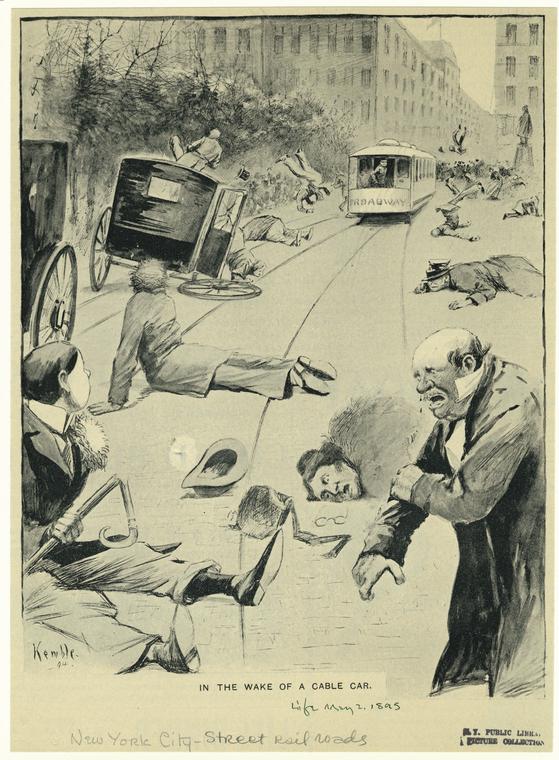
From an 1894 Life Magazine illustration, echoing the public sentiment over New York’s wily, dangerous cable car system. (Courtesy NYPL)

A video look at the Brooklyn trolley system, which by the 1930s had become the standard method of transit for most residents of the borough.

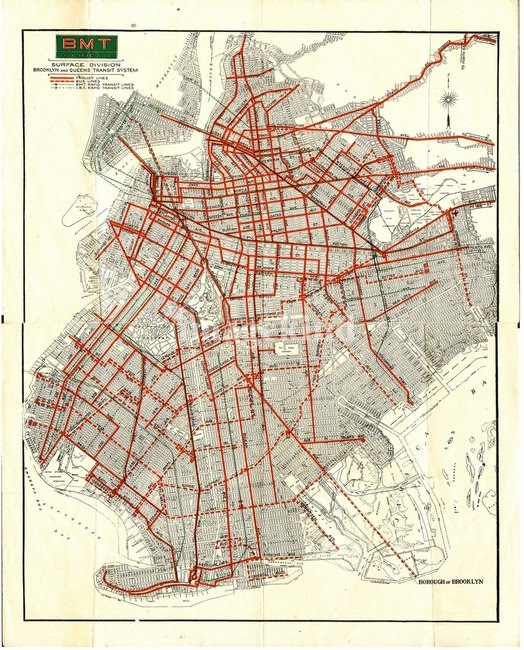
A map detailing the vastness of the Brooklyn trolley system by the 1930s, by this point a component of the Brooklyn-Manhattan Transit Corporation.

Inventor Granville Woods debuted his ‘multiple distributing station system’ — a sort of ‘wireless’ trolley system using electromagnetic induction — for the American Engineering Company in February 1892. Unfortunately, Woods had to sue the company for any sort of credit. In fact, this article in the Brooklyn Daily Eagle of the trial doesn’t even mention his name.

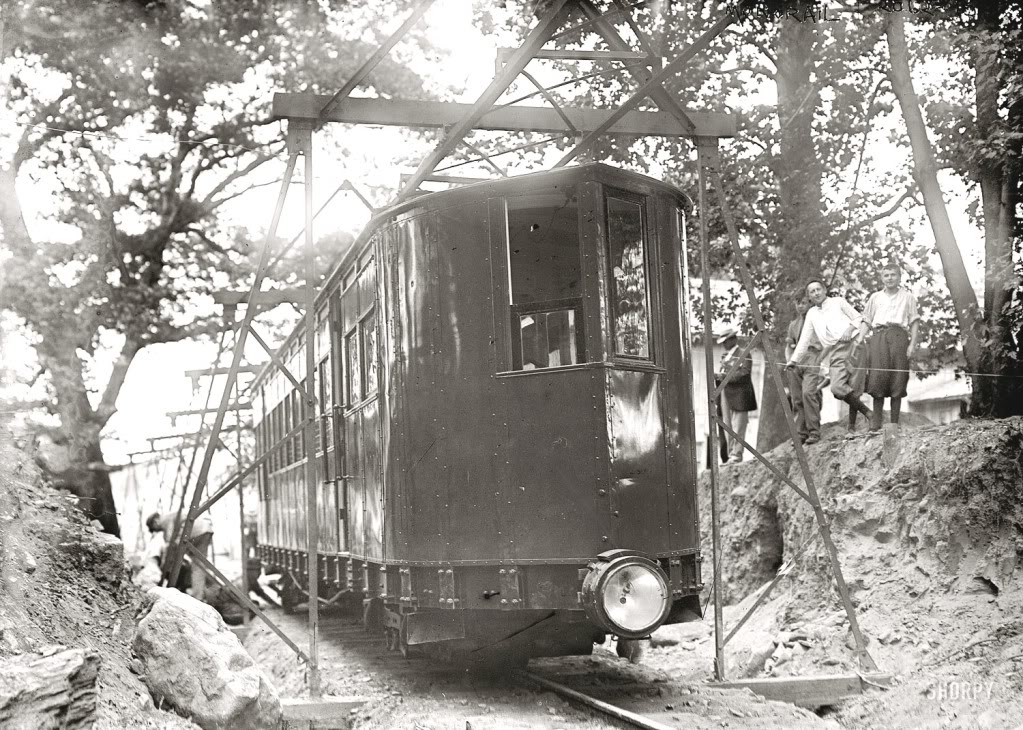
Monofail: The first riders of the monorail system provided by the Pelham Park and City Island Railroad were greeted with a nightmare voyage culminating in the entire car falling over on its side. “Flimsy Structure Supporting It Gives Way and Many Are Badly Hurt,” cries the New York Times. Despite this not insignificant hiccup, the monorail operated for a few years before being replaced with a trolley system.

On Track: Looking down on Times Square from 1905, taken from the top of the Times Building. I’m putting this hear for a bird’s eye view on what the streets of New York looked like, grooved with trolley rails. You can still see several horse carts too, although most horses had been taken off of city streets by this time. (Please click on the photo for a close-up view)

Categories
Staten Island History

‘Cropsey’: urban legend intersects with unspeakable crime at an abandoned Staten Island children’s institution


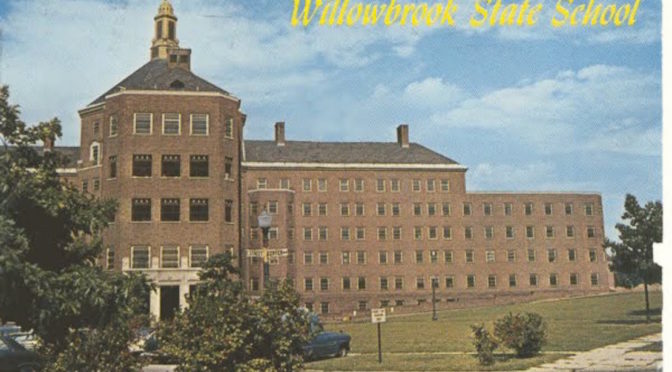
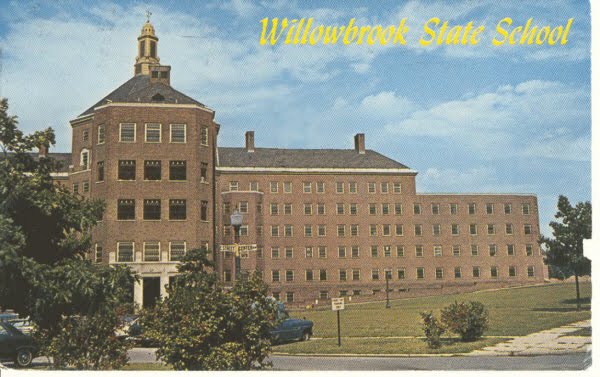
Above: Willowbrook State School in central Staten Island. Looks innocent enough….

BOWERY BOYS RECOMMEND is an occasional feature where we find an unusual movie or TV show that — whether by accident or design — uniquely captures an era of New York City as well as any reference or history book. Other entries in this series can be found here.

Mix a dangerous, fenced-in set of crumbling ruins with the imaginations of children, and the result is an urban legend. Throw in a series of real-life events more horrifying than anything a child would ever dare to conjure, and you have ‘Cropsey’.

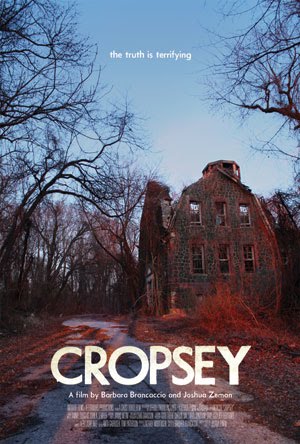
A chilling glimpse into some horrific Staten Island history, the documentary ‘Cropsey’, which briefly played at IFC Center earlier this month, is now available on Video On Demand on Time-Warner Cable. The film looks at a series of vile murders on Staten Island during the ’70s and ’80s and how they may relate to the closing of a disturbing old medical institution and at least one ghastly crime that may have occurred in its abandoned underground tunnels.

Cranking up the tinkling piano and effective Blair-Witch style photography of rotted buildings and dark forests, directors and Staten Island natives Barbara Brancaccio and Joshua Zeman present the murders and the subsequent capture of the suspect Andrew Rand through a veil of collected memory. Cropsey was the name of a generic killer figure — wielding an ax, or a hook hand, take your pick — woven by slumber-party storytellers and recounted to children. A basic urban legend, but rendered all the stranger for the events that actually did occur near the site of the Willowbrook State School, an institution for children with mental retardation in central Staten Island that was closed in 1987 due to wicked abuses to patients.

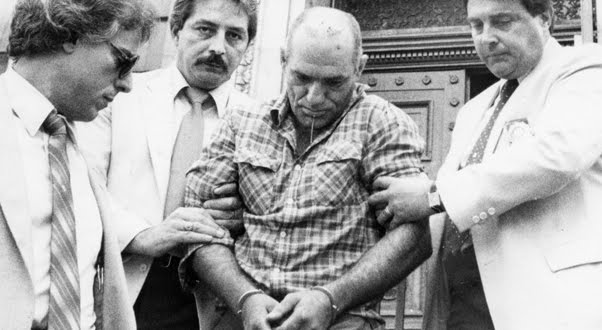
Below: Andre Rand in custody

Today the ruins of Willowbrook stand as part of the Staten Island Greenbelt, fenced away and inaccessible. Rand was a former Willowbrook employee who lived on the grounds of the institution after it was closed, and was apparently not alone there. In 1987 when a young girl Jennifer Schweiger goes missing, Rand is taken into custody. Then investigators make a grisly discovery on the grounds of Willowbrook, leading to a host of unsolved cases of child abduction.

The film links together these disappearances from several neighborhoods and attempts to place them into the larger context of Staten Island history — the idea of the borough as ‘dumping ground’ for most of its modern existence, and a place developing against the grain from the rest of New York City.

Along the way you get allusions to the Son of Sam murders and Satanic cults, accusations of necrophilia (!), bizarre handwritten letters from Rand to the filmmakers, and dated New York news footage with Ernie Anastos and Geraldo Rivera, all utilized to give you the serious creeps. “For my safety, I will not go on camera,” says a nun interviewed about a crazy Satanic cult. Like other assertions made in the film, the interview has little bearing on the case and is used primarily to concoct a spooky atmosphere.

The film brought back a lot of my own childhood fears; who didn’t grow up with similar ghost stories about an abandoned house in their neighborhood, a building left in ruin ripe for a fiction told by flash light? ‘Cropsey’ recounts true historical events — several disappearances unsolved to this day — with that same sense of chilling seriousness.

Catherine on our Facebook page had this review: “I saw a screening of this film… it’s a great topic that deserved a better treatment. They do a great injustice to the residents of the institution by repeatedly referring to them as mental patients, and do nothing to shed any light of fact on the urban legend. But if it piques anyone’s interest in the topic, then I guess it did a service.”
Look for ‘Cropsey’ on your cable’s Video On Demand listings. Click here for further information or on the official film website. Visit Forgotten New York to take a snow-covered tour of the Farm Colony ruins along side the main building at Willowbrook.

Categories
Uncategorized

Xenon and the strange journey of a Broadway theater: Noel Coward, Fellini, porn, disco, ‘Cabaret’, Dame Edna

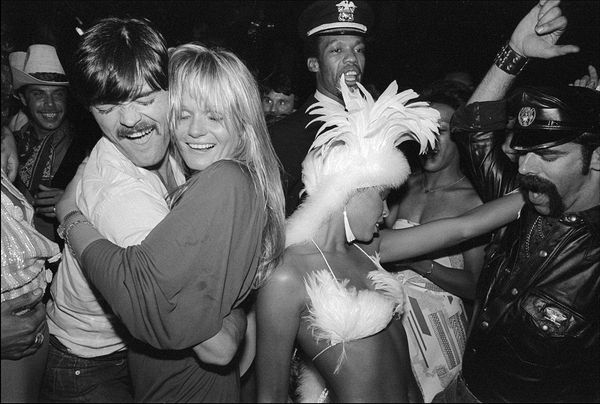
You know it’s a good night at Xenon when you’re drunk on the dance floor, and all of a sudden, the actress Valerie Perrine and the Village People appear (source)

FRIDAY NIGHT FEVER To get you in the mood for the weekend, on occasional Fridays we’ll be featuring an old New York nightlife haunt, from the dance halls of 19th Century Bowery, to the massive warehouse clubs of the mid-1990s. Past entries can be found here.

 LOCATION: XenonTimes Square, 43th Street and Broadway, Manhattan
In operation 1978-84

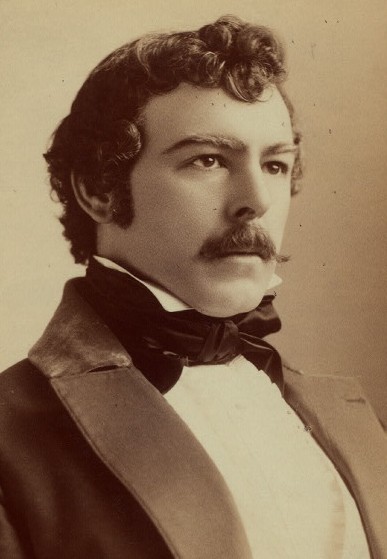
THIS, AT LEFT, IS HENRY MILLER. Clearly this is not the Henry Miller you more popularly know.

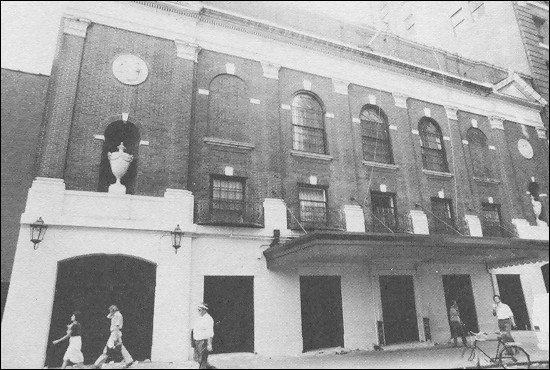
This Henry Miller would have never produced Tropic of Cancer. But his major contribution to the American stage would bring New Yorkers an iconic work of French cinema, a world famous theatrical revival, and one of the most successful Studio 54 knockoffs ever.

Miller was a minor theatrical star in the age of Sarah Bernhardt, who began dabbling as a director and stage manager at the same time that theater on 42nd Street began to flourish in New York. He became an early, respectable presence; from an early biography: “It was a foregone conclusion that a Henry Miller production must be in the best tradition of the theater.”
His timing was exquisite as well. The Broadway district in the 1910s was in full swing, with excitement at all hours. His patron (and progressive, feminist icon) Elizabeth Milbank Anderson assisted him in opening a stage in 1918 at 124 W. 43rd Street, a prime location near the theaters of Oscar Hammerstein, Klaw & Erlanger and Florenz Ziegfeld. The old New York Times building was half a block away, the nexus for New Years Eve celebrations for over a decade. Across the street rose the Hotel Metropole with its bustling late night antics; a few years earlier, in 1912, you could have stood in Miller’s lot and watched the bloody mob hit of gambler Herman Rosenthal — possibly ordered by New York cop Charlie Becker. (You can hear more about that in our Case Files of the NYPD podcast.)

There were no hits at Henry Miller’s theater, however, not the lucrative kind at least. In fact, the first show, The Fountain of Youth, was an unmitigated flop, opening in April 1918 and closing in May. (“This fountain of youth plays a very slender stream, and even that is of intermittent vigor,” claimed one review.) Famous names played here — George Gershwin, Billie Burke, Helen Hayes — but it wouldn’t be until Noel Coward debuted his scandalous, sex and cocaine-fueled comedy The Vortex in September 1925 that Miller’s theater would see its first in a string of major successes. Miller himself, however, would not enjoy these successes; he died a few months after Coward’s debut, in early 1926.

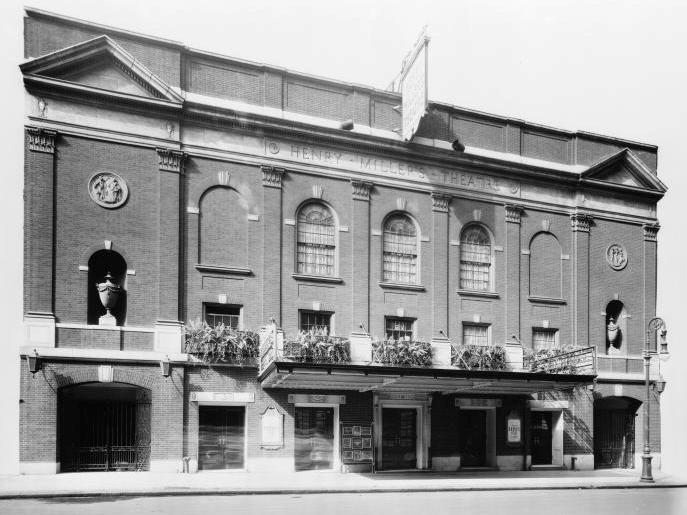
Below: Henry Miller’s theater, during its glory days. Photo courtesy NYPL

But Henry’s son Gilbert Miller had a knack for theatrical production even greater than his father. For three decades, he ushered countless box office hits through the Henry Miller’s Theatre, including the Tony winning T.S. Eliot play The Cocktail Party starring Alec Guinness. Most notably, Our Town would make its Broadway debut here in February 1938, and in 1957, a young British actress named Angela Lansbury would make her American stage debut here in Hotel Paradiso. Gilbert would win an honorary Tony in the mid-1960s for his contributions to the New York stage.

By then, however, the theater began flirting with a transition that many midtown stages had already made — into a legitimate movie house. Its first foray was also its most memorable, Federico Fellini‘s La Dolce Vita, premiering here in April 1961. The strangeness and theatricality of Fellini’s masterpiece fit the Henry Miller playhouse perfectly, even if the stage itself was technically ill-fitted for movies. The grumpy critic Bosley Crowther was even impressed: “Fellini’s “La Dolce Vita” (“The Sweet Life”), which has been a tremendous hit abroad since its initial presentation in Rome early last year, finally got to its American premire at Henry Miller’s Theatre last night and proved to deserve all the hurrahs and the impressive honors it has received.”

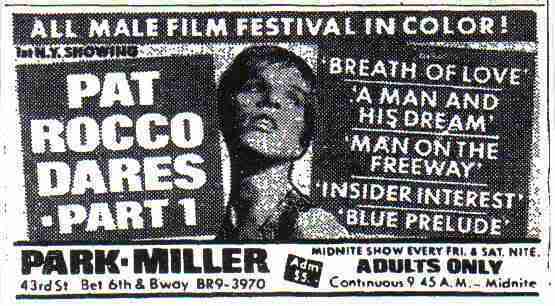
This might have been a harbinger for a fabulous future as an art house, however the theater was instead sold, renamed the Park-Miller, and entered the 1970s as one of Times Square’s most popular porno theaters, specializing in all-male features for gay audiences.

Although Henry Miller was certainly turning in his grave, the theater actually become quite successful, more so than most of Miller’s own productions during his lifetime.

According to author Hilary Radner, “the Park-Miller Theater on 43rd Street grossed in excess of thirty thousand dollars per week in the early 1970s….For a five dollar admission fee, audience members watched a mixed program that included shorts, slides, and a dubbed minifeature, such as Truckers — Men of the Road.” A long way from The Fountain of Youth, indeed!

Below: an advertising glimpse into the theater’s more prurient days

Everything changed in the spring of 1977 with the transformation of an old opera house into the superstar disco spectacular Studio 54, epitomizing the notion of nightlife as a headline-grabbing celebrity wonderland. One night at 54, music manager Howard Stein met Swiss restaurateur Peppo Vanini (the ex of actress Victoria Tennant), and the two cooked up a scheme to match the club’s glamour in another midtown location.

Stein purchased the old porn theater and remade it into the discotheque Xenon, although Xerox might have been a better name, for it adhered closely to the Studio 54 formula of flashy nights, big celebrities and kitschy showmanship (cannons with colored feathers, a neon X above the dance floor).

Being just slightly lesser a club than 54, you actually did stand a chance of getting in if you happened not to be a bold-faced somebody. But Stein would occasionally stand at the door himself “weeding out the detested middle class from the very rich and the colorful poor,” according to a New York Magazine profile.

Below: the club, during the day, in the 1970s:

Still, Xenon had its day, and on a typical hot summer night in 1979 or 1980 you might stumble into private parties hosted by Michael Jackson, Woody Allen, Lauren Bacall, Ben Vereen, or Pele. Inside you might hear deejay Jellybean Benitez.

Although people often stripped down to bikinis on the dance floor, you had fewer naked Grace Jones moments; Xenon “combined the craziness of Studio 54 with the comfort of Regine’s” according to one source, Regine’s being the more elegant nightclub entree owned by French chanteuse Régine Zylberberg.

With the end of disco came the end of Xenon, in 1984, and a brief attempt at turning the space into a rock ‘n’ roll venue called SHOUT! It lay mostly dormant, hosting temporary parties, until the early 1990s, when in a flash of inspiration, the Roundabout Theatre renovated the worn, abused little stage, combining all eras of its history to transform it into the Kit Kat Club, a cabaret venue fit to re-stage, naturally, Cabaret. That version, starring Alan Cumming and the late, wonderful Natasha Richardson, would go on to win the Tony for Best Musical Revival in 1998. Incidentally, that same year, a devastating construction crane accident next door closed the block for weeks, and Cabaret would be forced to move uptown to the former Studio 54.

Suddenly, all its prior incarnations seemed to enjoin to create its most successful reinvention yet. After Cabaret left, the hot off-Broadway show Urinetown moved in; that bawdy musical took three Tonys in 2003.

And then, they demolished it.

Saving the landmarked front exterior — with Henry’s name emblazoned along the top — the rest of the building was scrapped in a massive construction project that eventually put the Conde Nast Building to its west side and the Bank of America building to its north, to which a new theater was attached, using that old exterior and renamed the Stephen Sondheim Theatre. In the fine tradition of Henry Miller himself, the stage has features two shows — a revival of Bye Bye Birdie, and the Dame Edna musical All About Me — both flops.

For some great recollections of the glory days of Xenon, check out the website Disco Music. Featuring one commenter who says: “There’ll never be a club like it again. Pinball machines would drop out of the neon heavens and land next to dancers gyrating to ‘Funky Town’ by Lipps. Not to mention the fake snow (clearly an homage to the abundant cocaine passing through nostrils by one and all) that dropped on you, sticking to your favorite nylon shirt.”

The stagecoach ‘flying machines’ from New York to Philly: when it’s your only choice, who cares about comfort?


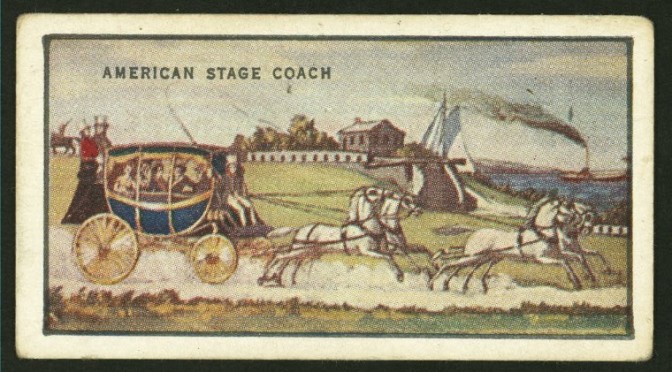
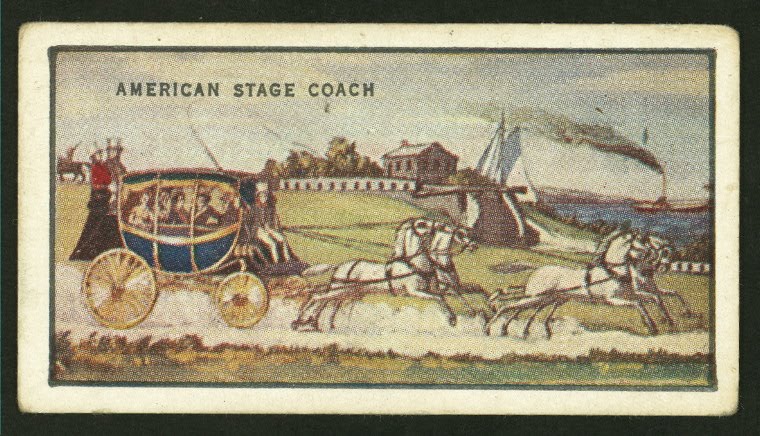
Pic Courtesy NYPL

Benjamin Franklin is, of course, awesome for many reasons. An often overlooked quality about Franklin in his early years was his ambition and fearlessness at solo traveling among the major cities along the eastern seaboard — from Boston to New York, then, in 1723, to Philadelphia. It can’t have been very easy; it certainly wasn’t comfortable.

Franklin was a stowaway on a sloop between Boston and New York, a trip that took three days. The later trip to Philadelphia required Franklin to maneuver, according to this source, from “Perth Amboy (the capitol of East Jersey) to Trenton and nearby Burlington (the capital of West Jersey), and then down the Delaware to Philadelphia.”

Travelling by land, although at times quicker, would have been dangerous and costly. Safe, dependable service between New York and Philadelphia via stagecoach would not be available for several years.

One source notes an irregular coach service between the two young cities, by way of Bordentown, NJ, starting in 1732. Passengers would sail from a New York ferry to a waiting coach on the New Jersey side — most likely at the township of Perth Amboy, south of Staten Island.

By 1756, there were a handful of regular stagecoach services between New York and Philly, each taking approximately three days. The coaches were frequently nicknamed ‘flying machines’, implying they constantly kept at top speeds, the better to thwart their competitors. Naturally, the trodden paths between each city were well lined with taverns catering to travelers eager to escape the uncomfortable coach rides.

Oh, did I mention that early stagecoaches did not have springs to cushion riders from a rocky ride? “It was not uncommon for a passenger, rendered insensible by the constant jarring, to be carried bodily from the coach to a bed in the inn after a day’s journey,” according to one genealogical site.

But despite the incomparable discomfort, demand for travel between the two cities naturally increased. Two Staten Island brothers, John and Joshua Mersereau, became reigning stagecoach operators, connecting the two cities along various routes through New Jersey, using docks at Paulus Hook (today’s Jersey City) and one in south Staten Island in a place charmingly called Old Blazing Star (today’s Rossville neighborhood) where the Mersereaus also conveniently owned a tavern.

A competitor of the Mersereau brothers, John Butler, discovered coach operation in a slightly more colorful way. Butler owned a Philadelphia kennel expressly reserved for the use of fox hunters — this was, after all, during British control — who steered course to stagecoach operation from his very own appropriately named tavern, the Death Of The Fox. (Although I have no evidence, I would not be surprised if Ben Franklin — age 50 in 1756 — had at some point become familiar with Butler’s establishment.)

It could be quite an elaborate ride. According to the old tome ‘Stage-Coach and Tavern-Days’ by Alice Morse Earle, Butler “with his waggon” would:

“…sets out on a Monday [from his tavern] and drives the same day to Trenton Ferry, where Francis Holman meets him, and the passengers and goods being shifted into the waggon of Isaac Fitzrandolph, he takes them to the New Blazing Star [different from Old Blazing Star and today’s Travis, Staten Island] to Jacob Fitzrandolph’s the same day, where Rubin Fitzrandolph, with a boat well suited will receive them and take them to New York that night.”

So many Fitzrandolphs! Remember the complexities of this journey the next time you happen to take one of those Chinatown buses between New York and Philadelphia.