Categories
Podcasts

New York City’s Elevated Railroads: Journey to a spectacular world of steam trains along the avenues

Above: The Third Avenue Line as it looked running along the Bowery, changing the nature of New York street life, even as its innovations helped expand the city.

PODCAST Before there were subways, New York City transported travelers up and down the length of Manhattan by elevated railroad, an almost unreal spectacle to consider today. Steam engines sat high above several avenues in the city, offering passengers not just a faster trek to the northern reaches of Manhattan, but a totally new way to see the city in the 19th century.

Welcome to our second podcast in our series Bowery Boys On The Go, a look at the history of New York City transportation. Before we get to those famous ‘El’ trains, we explore the earliest travel options in the city — the omnibuses and horse-drawn rail cars, the early steam successes of the New York and Harlem Railroad and Hudson River Railroads, and something affectionately nicknamed the one-legged railroad.

What were some of the more peculiar ideas for improving travel? And why was the idea of a subway immediately shot down by the city? Let’s just say — Boss Tweed and Jay Gould are involved.

ALSO: What were the different motivations driving transportation progress in the city of Brooklyn? Well, it has something to do with the beach.


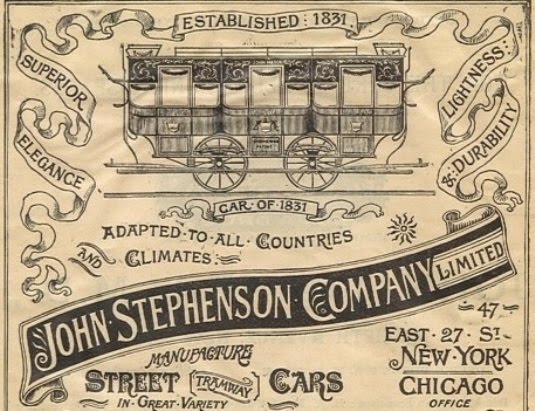
An illustration of the first traincar in the New York and Harlem Railroad system — the John Mason, named for the railroad’s president (Mason was also the president of Chemical Bank). It was designed by master engineer John Stephenson, who customized many of the New York and Harlem’s traincars.

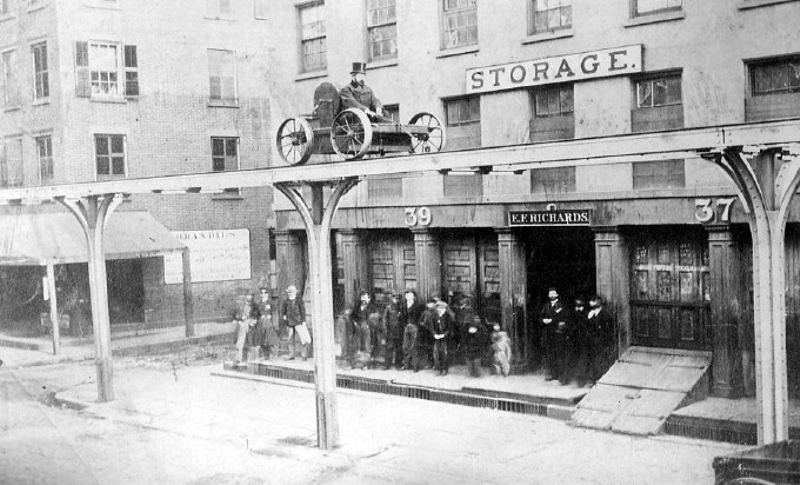
Charles Harvey developed the first elevated system for New York, essentially a cable/pulley system that stretched along the west side from the Battery. Below, Harvey gives his ‘one-legged’ line a tryout in 1867. (Pic courtesy Merritt Island Subway South)

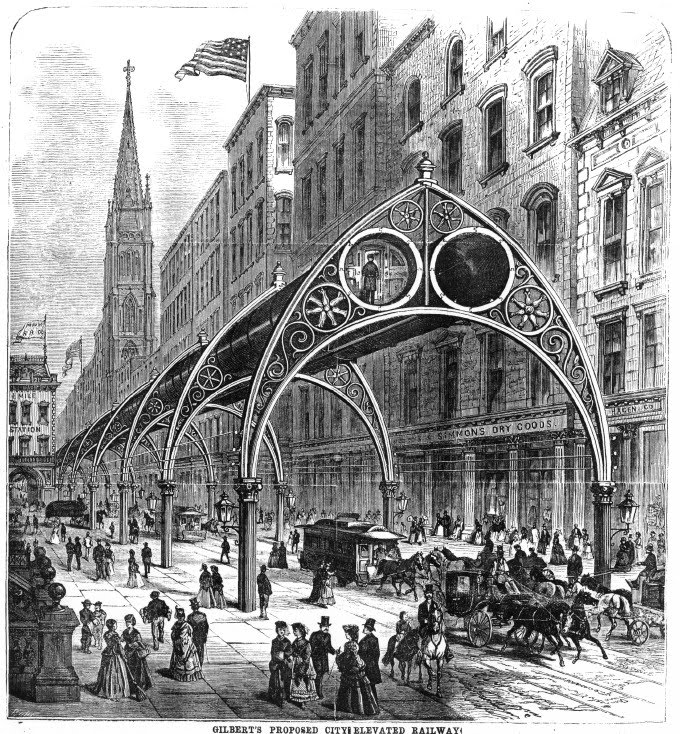
Rufus Gilbert, a Civil War physician, turned to trains after the war and dreamt up an imaginative pneumatic system, to zip passengers above the city in Gothic-themed arches. Gilbert was given the go-ahead to construct this oddity, but the love for steam and a financial crisis transformed the idea into a steam elevated line instead. (Courtesy Columbia U)

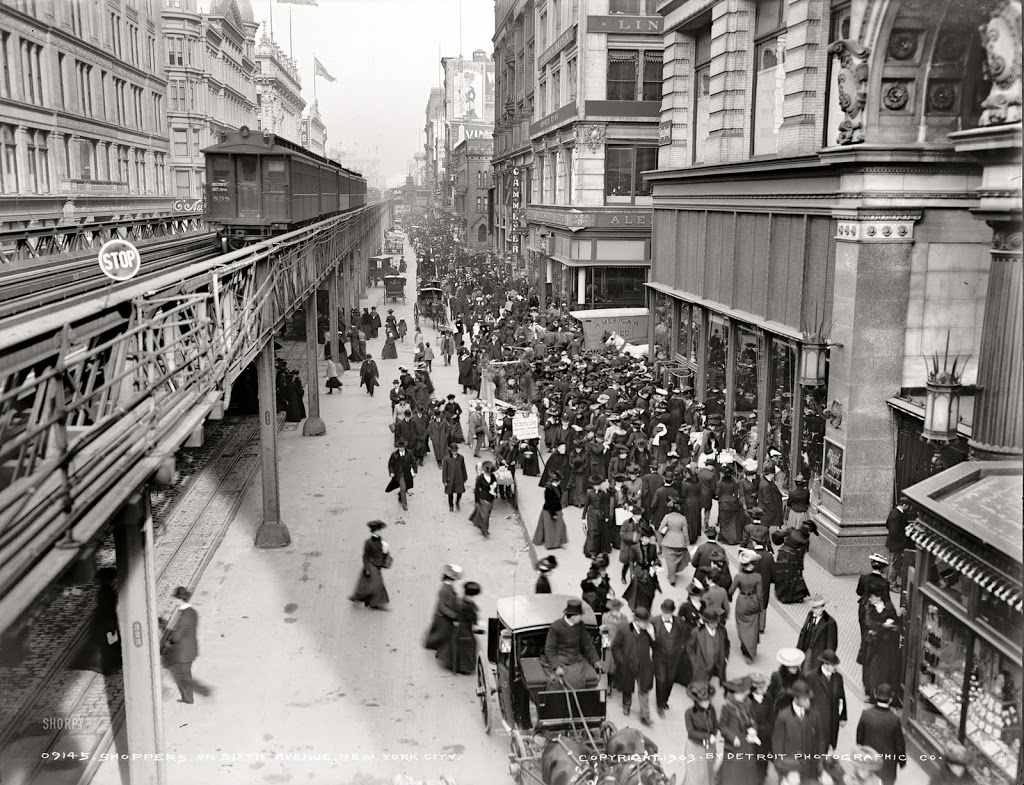
Ladies Mile along the Sixth Avenue elevated line. The trains might have made the city expand outwards, but it also made the streets smaller and darker. (Original pic from Shorpy)

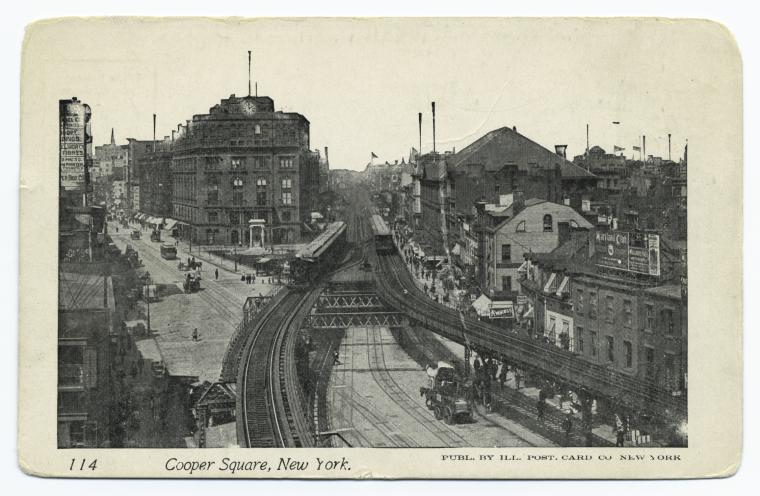
The Third Avenue line, where it ran alongside Cooper Union and traveled south down through the Bowery. This intersectioni today still sits rather wide and empty, a vestige of the days when tracks hovered above the roads. [NYPL]

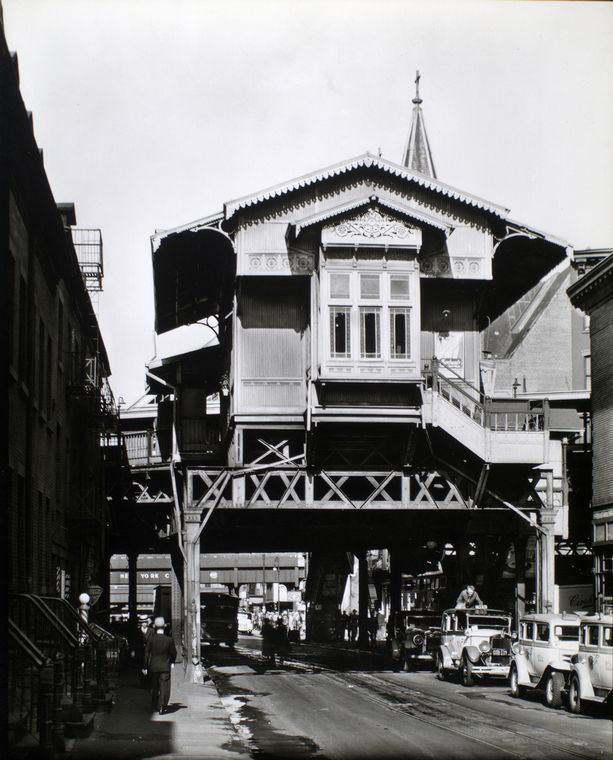
An ornate station for the Ninth Avenue line, at Christopher and Greenwich streets in the West Village.

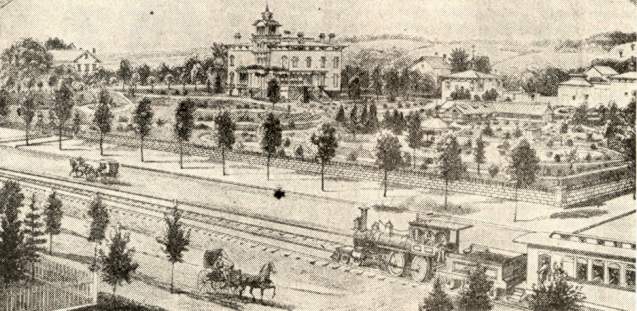
The Brooklyn and Jamaica Railroad, the precursor to the Long Island Railroad. The section illustrated here is along Woodhaven Boulevard, but much of the line went along Atlantic Avenue.

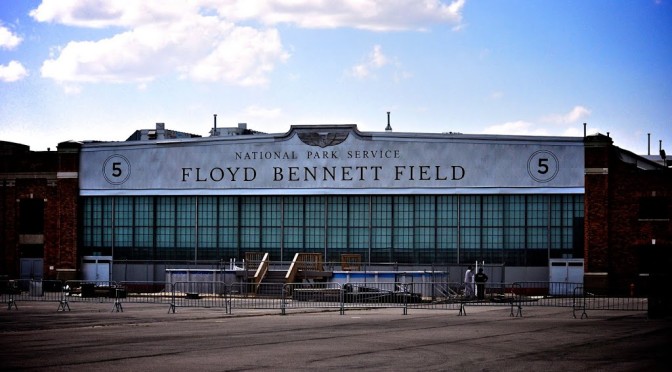
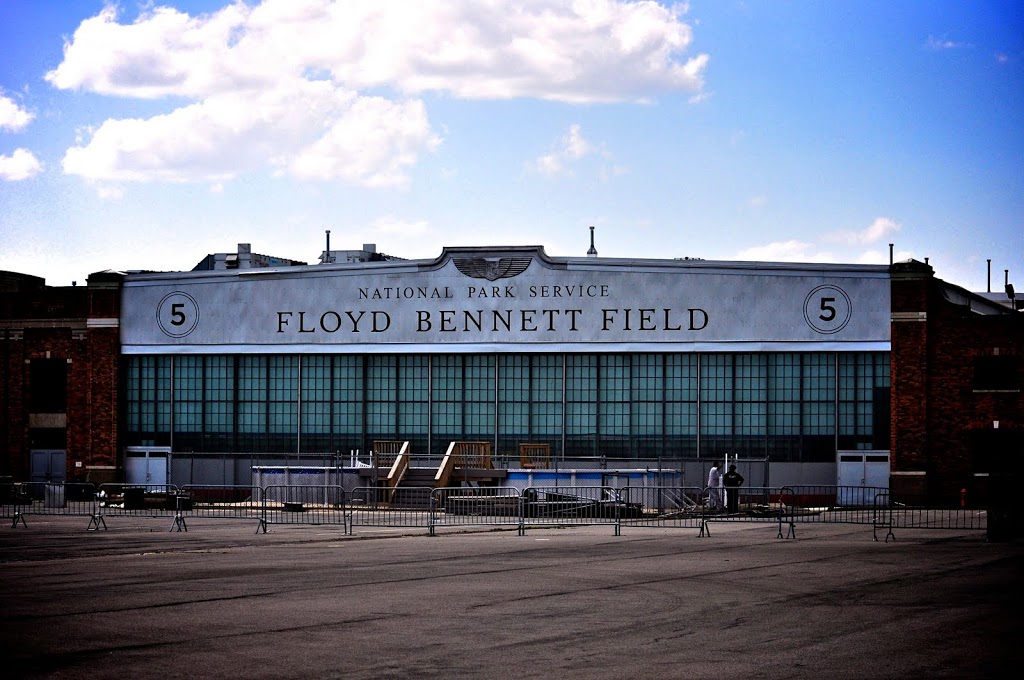
New York City aviation history and the beautiful ruins of Floyd Bennett Field


Photo by Sean Nowicke/Buzzstew Click pic for larger view

Since I’m in a transportation history mindset this summer, I’ll be making it a personal mission to visit a lot of glorious New York ruins with that theme. Staten Island boat graveyard, here I come!

But my first stop was a couple weekends ago, exploring the grounds of Brooklyn’s old Floyd Bennett Field, New York’s original airstrip and the first municipal airport. The area had been a private dirt airstrip for many years before 1930, when aviator Clarence D. Chamberlin received permission from the city to build lavish new facility here.


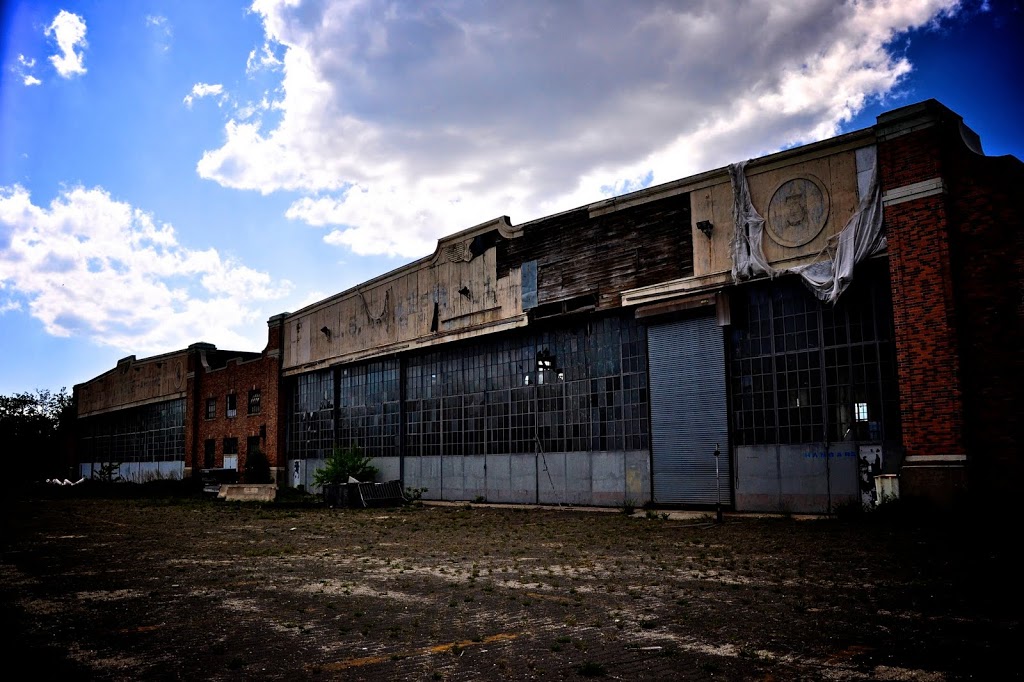
Photo by Sean Nowicke/Buzzstew

Over the years, the field (named for a Brooklyn pilot and adventurer) saw the greats of aviation — Amelia Earhart, Wiley Post, Howard Hughes, John Glenn — and the most revolutionary of small aircraft. It was later turned into a base for the Marine and Naval Air Reserves and decommissioned and handed over to the national parks department as part of the Gateway National Recreation Area in 1972.

For more information, you can listen to our podcast on LaGuardia Airport and the early years of New York City flight. [Download it here or from iTunes]

Today many of the old hangars sit like broken, ghostly relics, presiding over empty fields and a vast airstrip slowly being taken over by plant growth. The north end of the field is still very much in use, with a recreation center featuring an ice skating rink, gymnasium and rock climbing wall, and a football field outside. There was a cheesy carnival set up when I visited. And next to the withering airstrip is Brooklyn’s largest community garden.

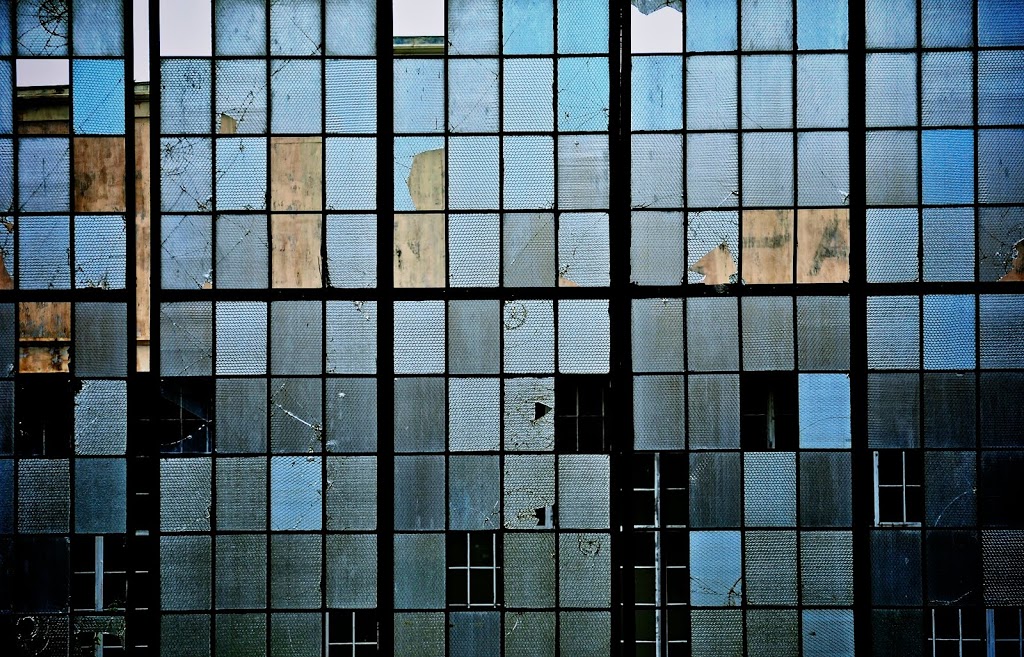
But the star of the show are those unused hangars filled with strange rubble and unidentifiable, rusted machines, broken windows sending light beams at stark angles. You can’t go inside them, but you can get extraordinarily close.


Photo by Sean Nowicke/Buzzstew

For a lot more information, I recommend checking out Forgotten NY’s detailed exploration of the site. You can check here for directions to the field, including by subway (the 2 train and a bus ride).

The photos on this page are by Sean Nowicke, a wonderful photographer who has more pictures of our trip there on his blog. He’s a world traveler and has a lot of fantastic photos of other places as well — check them out at Buzzstew.

New York and Brooklyn’s first ferry — for a handful of wampum and the toot of a horn


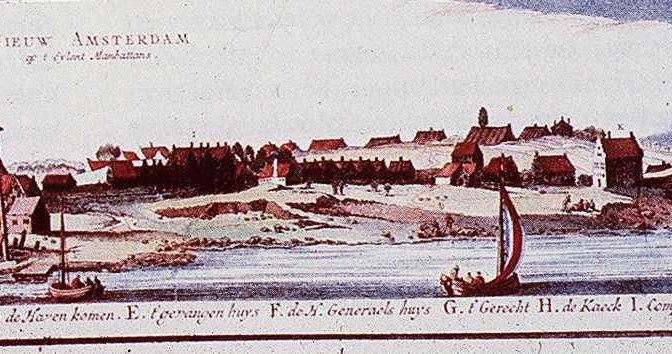
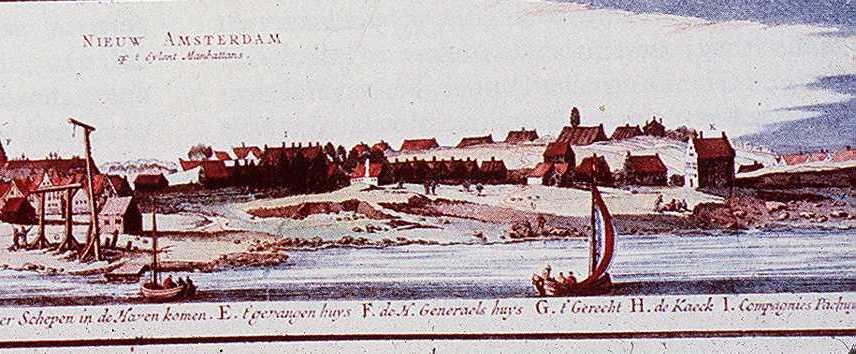
ABOVE: A detail from an illustration of the northern points of the New Amsterdam colony, 1640.

The year 1642 saw the very first regular ferry service in New York Harbor, between the two small villages of Breuckelen and New Amsterdam. The populations of both areas numbered less than 1,000 at most, combined, and most were employed by the Dutch West India Company. New Amsterdam, under Peter Kieft, had a modicum of defenses (notably Fort Amsterdam) but that famous wall demarcating its northern border would only come many years later, as would Peter Stuyvesant.

Across the water, Breuckelen was nothing more than a cluster of basic structures along the shore, near the area where the anchorage of the Brooklyn Bridge sits today. Its long stretch of flat shore in full view of the harbor and a high bluff (later Brooklyn Heights) made it a choice spot for adventurous Dutch settlers who made it their home in 1636. In contrast, other areas of Long Island were settled by other nationalities under Dutch authority, e.g. the English settlements of Gravesend (modern Gravesend and Coney Island).

Just north of New Amsterdam resided a man who would be the first to link the two tiny settlements. Cornelius Dircksen was a farmer and inn owner with prime real estate, even in 1640, along the eastern stretch of Mannahatta at Peck Slip, just north of the city.

In the early 1630s, Dircksen’s ferry was an irregular service, a way to earn extra income. Perhaps he considered it a special accomodation for guests of his inn. And who was staying at his inn, at this time? Mostly newcomers to New Amsterdam, or Dutch West India fur traders passing through.

As legend has it, if one of his guests or a passerby wanted conveyance across the river, they needed only to take a horn hanging from a tree and blow it. Cornelius would drop what he was doing to arrange the voyage, even if he was tending to his own fields. (I imagine the money must have been good.) His small boat would take passengers from the foot of his farm to a small landing on the other side — not surprising in the area that would later develop the Fulton Ferry in the 19th century.

In 1642, Cornelius decided to jump into the ferry occupation full time. Dircksen was, according to old histories, “the earliest ferryman of whom records speak and was, probably, the first person who regularly followed that calling.”

In a modest skiff, Cornelius (or his assistants) would take passengers across the harbor for shells: “the small price of three stuivers in wampum, meaning nine purple beads or eighteen white beads.” Wampum would be the colony’s most versatile form of currency, usable in both the Dutch settlements and with the Lenape themselves. The ride, often choppy and unpredictable, would sometimes take a full hour.

Cornelius owned the land on both sides but later sold the Breuckelen landing in 1643 to Willem Jansen — who then opened a competing tavern there himself.

Categories
On The Waterfront Podcasts

The Staten Island Ferry: its story, from sail to steam

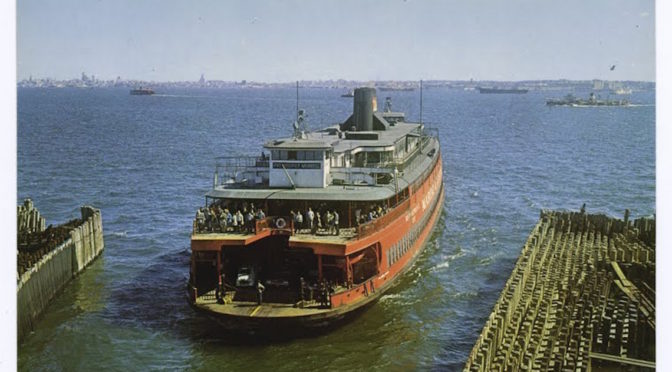
PODCAST The Staten Island Ferry is one of the last remaining vestiges of an entire ferry system in New York, taking people between Manhattan and its future boroughs long before any bridges were built. In Staten Island, the northern shores were spiked in piers, competing ferry operators braving the busy waters of New York harbor.

In the first of our summer-long podcasts BOWERY BOYS ON THE GO on New York public transportation, I look at the history of Staten Island’s famous ferry, its early precursors, its connection to Cornelius Vanderbilt and a Monopoly property, and its evolution when the city took it over in 1905.

ALSO: Find out the curious story behind the name of Victory Boulevard and the neighborhoods of St. George and Tompkinsville.

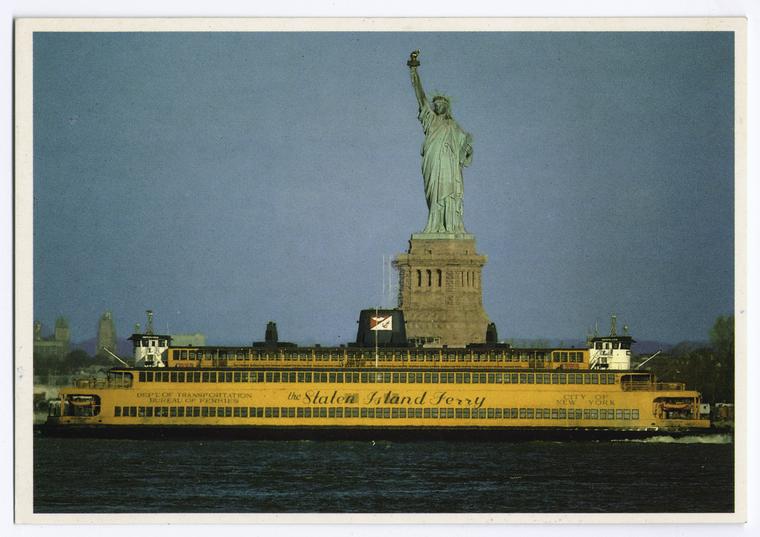
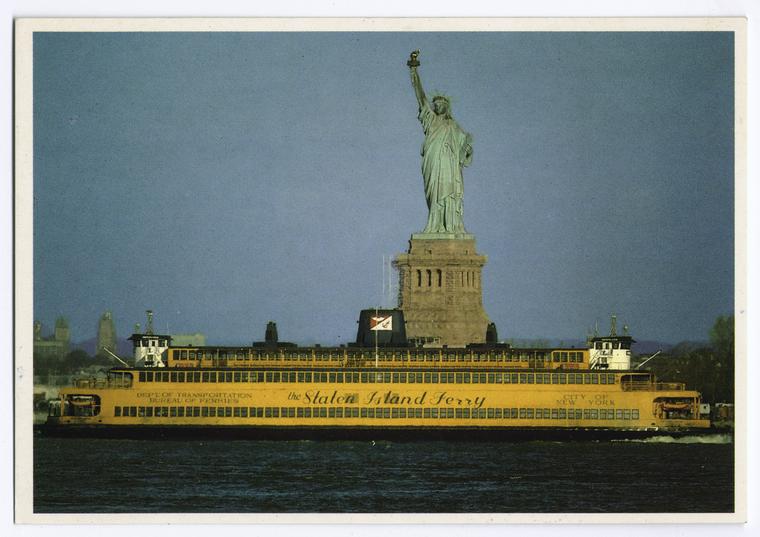
From an old postcard, illlustrating why the Staten Island Ferry has become more than just a way to get to and from work. [NYPL]

ferry2

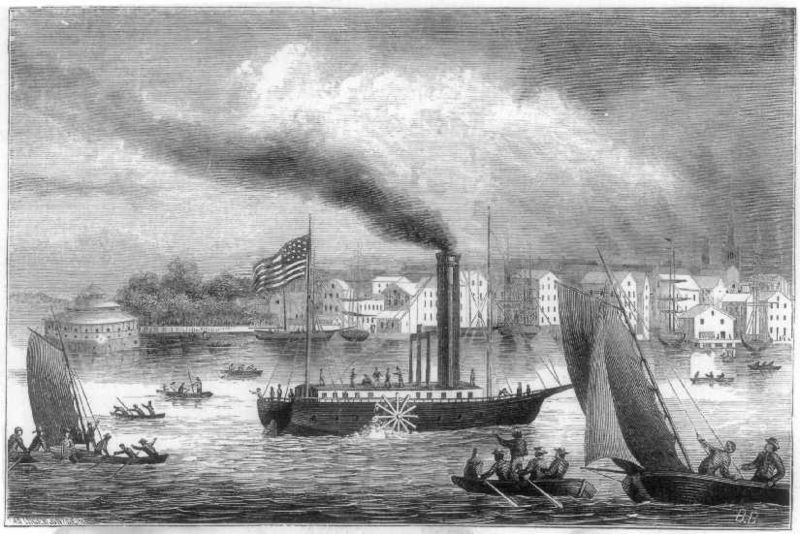
The Clermont in the waters of New York Harbor, 1807. Robert Fulton’s first steamship would revolutionize travel and change the rules of the ferry game. The first steamship off Staten Island waters would be the Nautilus in 1817, property of Daniel Tompkins. This Nautilus should not (obviously) be confused with Fulton’s famous submarine of the same name. Although the boat seems to have inspired a building, called Nautilus Hall, on Tompkins’ property. [Courtesy Gerald Massey]

clermont

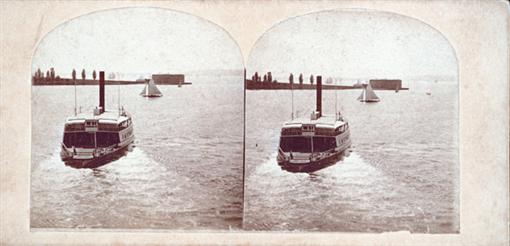
One of the earliest known photographs of a “Staten Island Steamboat”, taken in 1858 and about to chug by Castle William on Governor’s Island, one of “Anthony’s Instantaneous Views” from the George Eastman House archive.

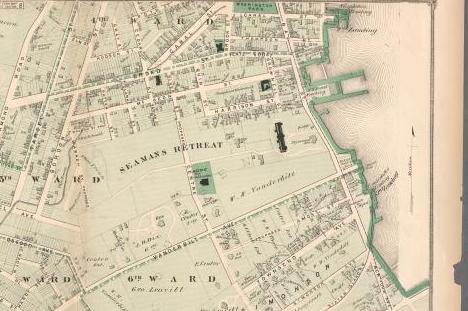
This is a detail from an 1874 map of Stapleton and Clifton along the northeast shore of Staten Island. The area in green along the waterfront is Vanderbilt’s Landing, at least the southern part of it. You can also find the Vanderbilt estate nearby. For a closer look, check out the map directly on the NYPL site and use the zoom in/out tools.

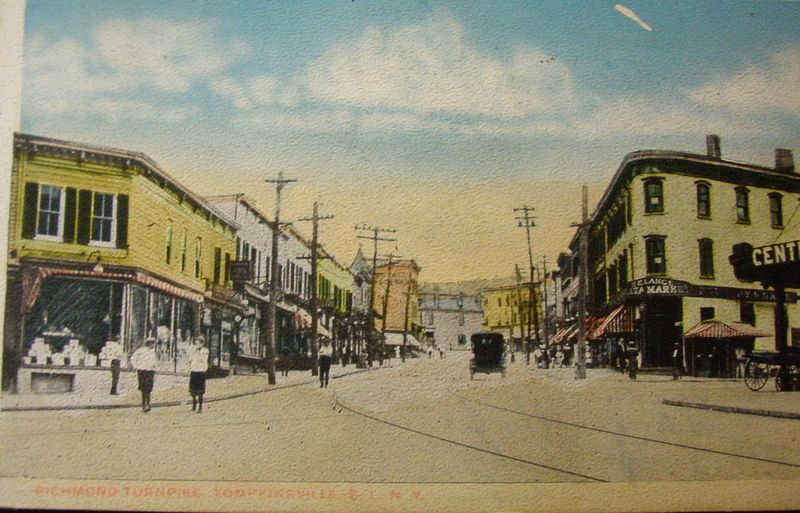
The Richmond Turnpike traveling through Tompkinsville, the town founded by Vice President Daniel D. Tompkins. The Turnpike, formerly a toll road and the basis of the Richmond Turnpike Company, would be renamed Victory Boulevard after World War I.

richmond

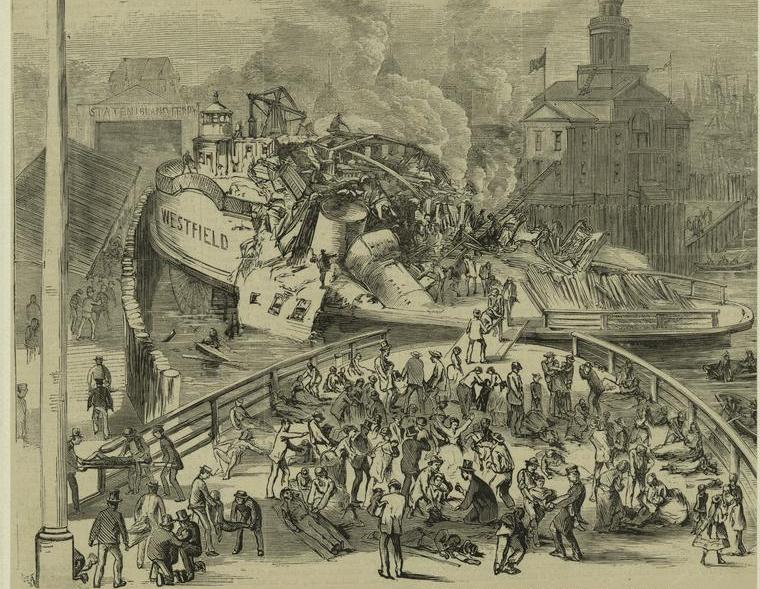
The Westfield disaster on July 1871, a boiler explosion that killed over 80 people, underscored the risks of early steam travel in the crowded waters of New York harbor. It remains the worst of several disasters in the Staten Island ferry’s long history.
westfield

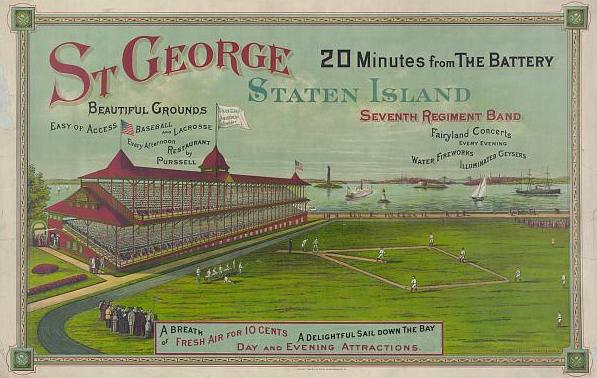
Named for George Law, the neighborhood of St. George was a bustling entertainment district, with hotels, light amusements and sports venues. This postcard is from 1886, illustrating the new St. George Cricket Grounds, built by developer Erastus Wiman.
1886

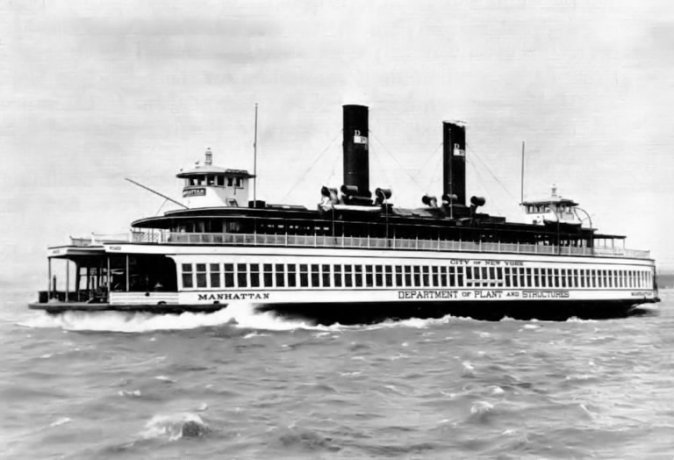
When the city took over operation of the Staten Island Ferry in 1905, they commissioned five new boats, each named for a borough. Here’s the Manhattan:
manhattan

If you want to thumb through a spread of old photographs of prior ferryboats, check out this great site.

And this Flickr picture might be one of my favorite pictures ever.

Bowery Boys On The Go: History of NYC Transportation

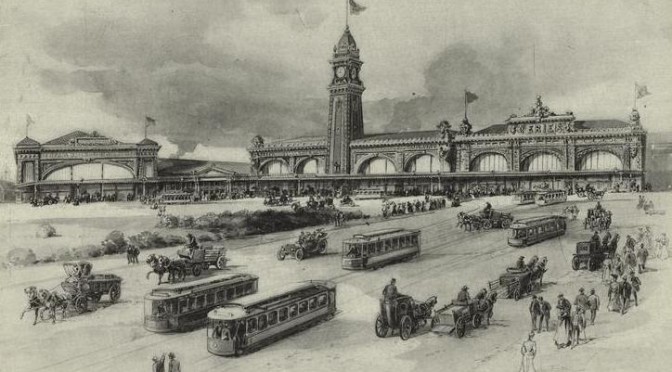
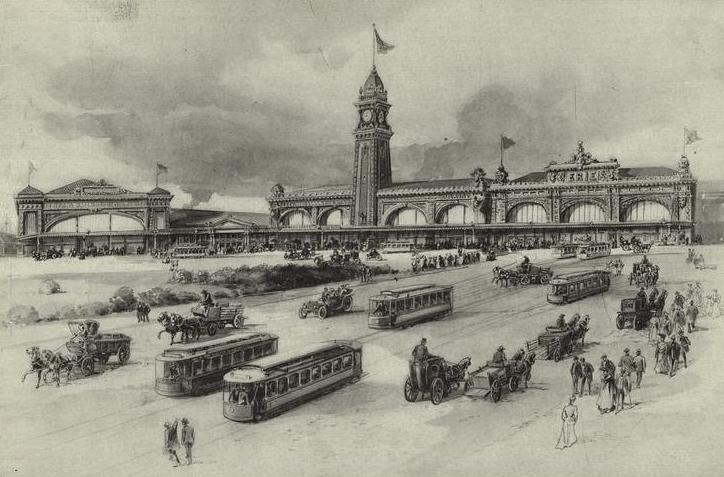
Wheels converge: Motor buggies, horse drawn carriages and other conveyances glide and to and from the railroad terminal ferry station at West 23rd Street (i.e. Chelsea Piers) Pic courtesy NYPL

Tomorrow we begin our first official summer blockbuster: a set of several podcasts in a row, themed BOWERY BOYS ON THE GO. Every two weeks, we’ll be taking on the history of a certain aspect of New York City public transportation. Like always, the podcasts will be available every other Friday starting tomorrow. You can download them from iTunes, at other podcast services, and of course from links on this page.

Although the blog will be, as usual, quaintly all over the place, I’ll try and focus a bit more on some of the history tales that we won’t get to cover on the podcast.

So let’s start! As an introduction, I give you this educational filmreel from the 1940s, vaguely about the wonders of New York City transportation:

You can watch the original here

Welcome to The Pansy Club: leave your wig at the door

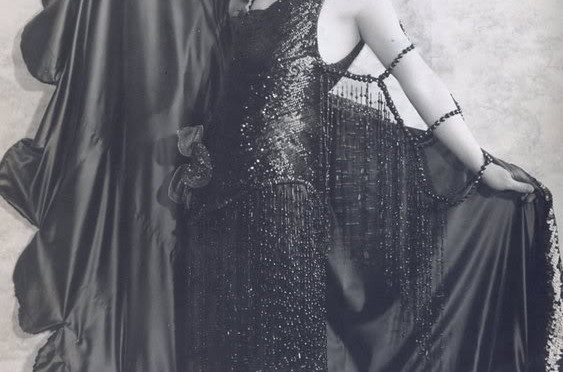
Above: Karyl Norman welcomes you to the Pansy Club!

FRIDAY NIGHT FEVER To get you in the mood for the weekend, on occasional Fridays we’ll be featuring an old New York nightlife haunt, from the dance halls of 19th Century Bowery, to the massive warehouse clubs of the mid-1990s. Past entries can be found here.

LOCATION: The Pansy ClubTimes Square, 48th Street and Broadway, Manhattan
In operation December 1930-31

The moral crusaders who succeeded in banning alcohol sales via the Eighteenth Amendment must have wondered where it all went wrong. Instead of ushering America down a path of productivity and moral fortitude, Prohibition sponsored a decade of unwritten rules, creating a shadow economy and empowering a criminal underworld.

Norms were upended, and the fringes of New York were defined by experimentation and playful risk. Harlem and Greenwich Village became the centers of culture, women found new avenues for empowerment, and black musicians mixed with white to create the sophistication of jazz.

It’s in the light of this churning mix of invention that you have to approach one curious fad of the Prohibition era — the pansy craze, an appreciation of drag-queen worship cultivated in the heart of Manhattan.

I’m not sure a place called The Pansy Club would be popularly received today, but when it opened in late 1930 it was risque and cool. Its location at 48th and Broadway planted it firmly in the theater district where it truly belonged, of course. But given the entertainments it generously offered, it’s amazing to me it was allowed to open at all.

It makes sense that the speakeasy-fueled, white crowds, having fully sampled from black nightclubs of the 1920s, would venture into other subcultures on the fringe of bohemia. There were plenty of places in Greenwich Village for gay and lesbians to meet, and within them came camped-up forms of cabaret, with men in drag emulating the glamorous female stars of the day. It helped that some of those stars, like Sophie Tucker and Mae West, mixed with and borrowed from their costumed admirers.

It all built into a national, urban ‘craze’ in 1930 and 1931 for drag shows in a mainstream cabaret environment.  Why it neatly fit on the nightclub circuit — and what made it somewhat more tolerable for conservative crowds — was partially due to drag’s close association with vaudeville.  Although the term ‘pansy’ was a derogatory one for gay men, for this brief time ‘pansy clubs’ were the hottest ticket in town.

The Pansy Club, at 204 W. 48th, in heart of Times Square (and about where the M&M Store is today) was not the only nightclub of this type, but when it opened the week before Christmas in December 1930, it was the showiest of the lot.

The Pansy Club featured standard-era vaudevillian and cabaret acts, but with a decided gay (read: scandalous) twist — female impersonators, “a bevy of beautiful girls in ‘something different’ entitled ‘Pansies On Parade'” according to a newspaper advertisement, one of the few documents that verify the club’s brief existence.

Mistress of ceremonies was one Karyl Norman, known in drag as the ‘Creole Fashion Plate’. Born George Peduzzi from Baltimore, Norman became a star on the vaudevillian circuits in the US, Europe and Australia in a show that featured him both in and out of drag. As a published songwriter and a favorite of Tin Pan Alley, Norman would have been a big draw in 1930 and as a seasoned vaudevillian star would have brought a touch of credibility to a club with so shocking a theme.

According to Brooks Peters, the club was also “a haven for aging flappers and party-goers who liked “slumming.””

Down the street was an even more popular draw. At Club Abbey (46th and 8th Ave) was a young Jean Malin (at left, courtesy Flickr), a Brooklyn-born wit and sometimes ‘female impersonator’ who hosted drag performances while charming audiences with interludes that made no disguise of his homosexuality.

What distinguished these places is that they were not considered gay and lesbian bars of the sort in the Village. However they did have a similar thread in common with them — ownership by the mob, an association that led to the club’s swift closings.

A gang shooting closed Club Abbey in January, and the police raided the Pansy Club that same month.  While the ‘pansy craze’ would live on in other cities — it made a more lasting impression in Hollywood, naturally — it retreated to the fringes again in New York.

And finally, for your Friday night celebration, here’s a look at Jean Malin, who made a brief appearance in Hollywood films before Malin’s untimely death in 1933. The film is ‘Arizona To Broadway’.

June 15, 1904: Remembering the General Slocum disaster

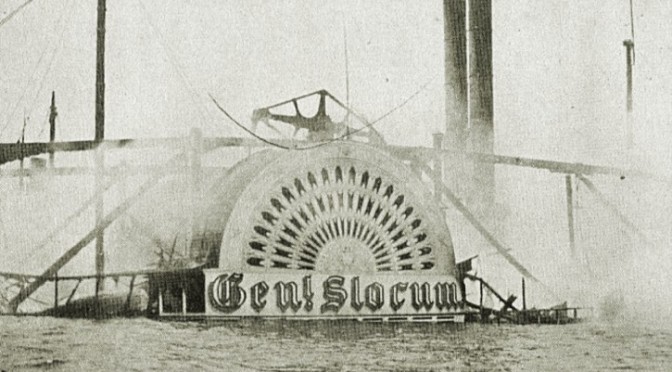
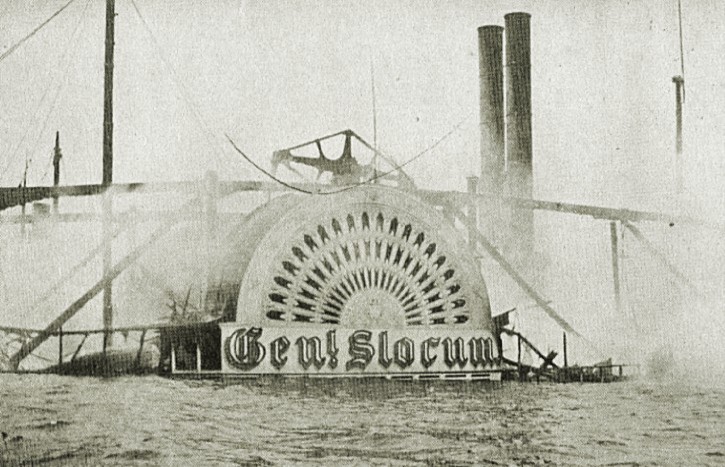
The morning of June 15 — The steamboat smolders off of North Brother Island

Today is the anniversary of undoubtedly one of New York’s most tragic events, a disaster that famously eradicated a neighborhood and became the city’s single largest loss of life in the 20th century — the explosion of the steamboat General Slocum.

SInce the invention of the steamboat, New York Harbor has seen its share of steamboat disasters, often by technical malfunctions like exploding boilers or sometimes by collision. But what took the Slocum on the morning of Wednesday, June 15, was a problem that faced many tenements at the time — inflammatory materials catching fire with little to almost no preventions in place. The blaze began in a room full of kerosene and hay, its initial discovery by a child was ignored by the captain himself, and, when it was taken seriously, all available tools to fight the blaze — hoses and buckets — were rotted through and virtually useless.

When passengers tried to flee, they discovered that the life vests were old and disintegrating and rafts were merely decorative. Regular inspections of the boat’s safety equipment had in the past been paid off in bribes; the result now manifest itself in a fast-burning ship with 1,342 passengers unable to escape.

The unlucky were the mostly women and children congregants of St. Marks Lutheran Church, in New York’s Kleindeutschland (today, the heart of the East Village), the vibrant destination for new German immigrants, seeking solidarity and a friendly, recognizable culture in the new, foreign city.

Being a day excursion, most of the men were off at work, and their families were off to enjoy a daytrip picnic at Eatons Neck along Long Island’s north shore. The Slocum never made it out of the East River however. The fire spread with such horrifying speed that I can only illustrate it the following way — the boat left the 3rd Street Pier at 9:30 and less than an hour later, its smoldering hull ran ashore at North Brother Island, most of its passengers either burned alive, choking from smoke inhalation along the shores or drowned in the waters of the East River. According to author Edward O’Donnell, “At 10:55 a.m., even before the news of the disaster became general, the burning hulk that had been the General Slocum was raised by the incoming tide and set adrift.”

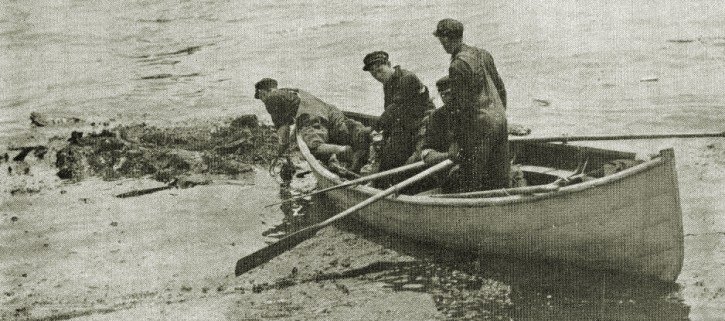
Below: Recovery workers scour the banks of the East River for days afterwards, looking for additional bodies

The tragedy sent the city into mourning. For the residents of Kleindeutschland, the disaster was simply too much to recover from. Of the 1,021 women and children who died, most lived in the German district of the Lower East Side. Their husbands and other family members moved on to other German neighborhoods, up to Yorkville or out to thriving districts in Queens and Brooklyn, or out of New York entirely.

Remnants of Little Germany can be found all throughout the East Village and Lower East Side, but for a memorial to the Slocum disaster, visit the original St. Mark’s Evangelical Lutheran Church on East Sixth Street.

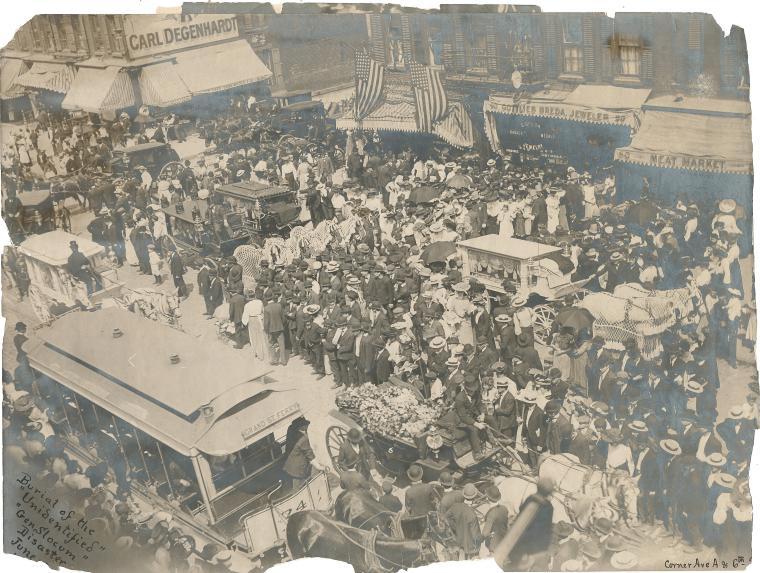
Below: A funeral procession passes Avenue A and Sixth Street, the ‘burial of the unidentified’ according to the caption

[Pic from LESHP]

Categories
Podcasts

Newsies vs the World! The Newsboys Strike of 1899

Are you tough enough to mess with them?

PODCAST Extra! Extra! Joseph Pulitzer and William Randolph Hearst vs. the newsboys! Pandemonium in the streets! One hot summer in July 1899, thousands of corner newsboys went on strike against the New York Journal and the New York World. Throngs filled the streets of downtown Manhattan for two weeks and prevented the two largest papers in the country from getting distributed.

In this episode, we look at the development of the sensationalist New York press — the birth of yellow journalism — from its very earliest days, and how sensationalism’s two famous purveyors were held at ransom by the poorest, scrappiest residents of the city. The conflict put a light to the child labor crisis and became a dramatic example of the need for reform.

Crazy Arborn, Kid Blink, Racetrack Higgins and Barney Peanuts invite you to the listen in to this tale of their finest moment, straight from the street corners of Gilded Age New York.


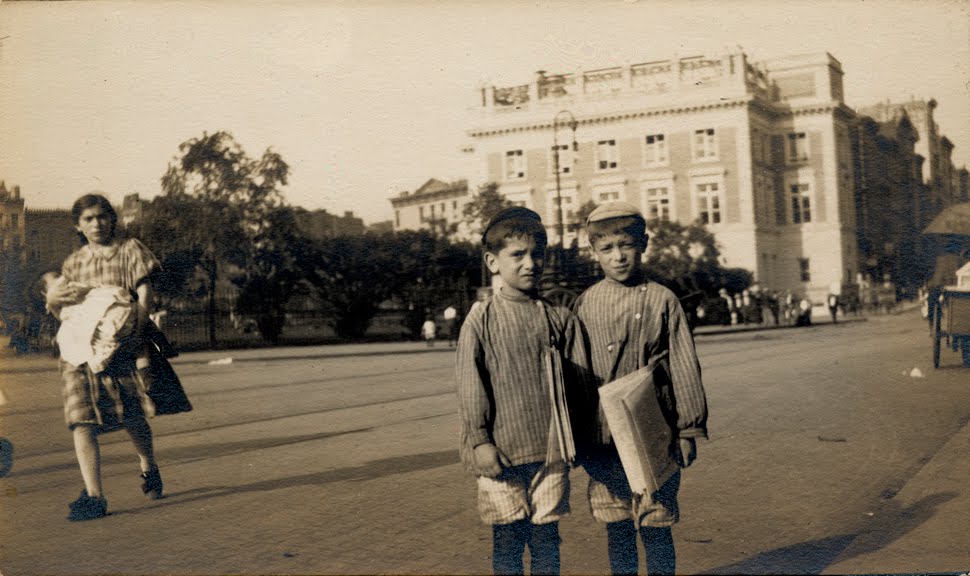
Newsboys in front of Seward Park. Caption: “Eisenberg Brothers, living at 27 Lewis Street. Benjamin, 8 years old, and John 10, selling Jewish papers [assumably the Forward] on East Broadway near Rutgers Street.” By Lewis Hine (Courtesy NYHS)

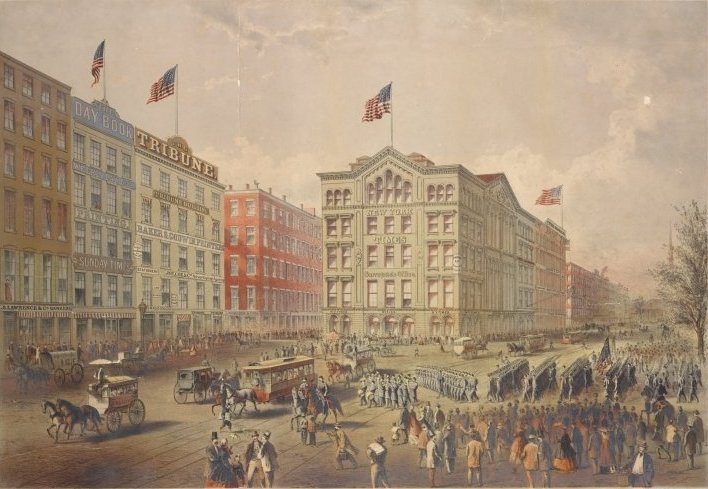
Printing House Square, in a print from 1866, and the world of newspaper publishing in the mid-19th century. This was the heart of journalism in New York, where the streets reeked of ink, reporters and editors darted back and forth from their offices, and newsboys gathered to pick up their morning bundles of hot-off-the-press editions. (NYPL)

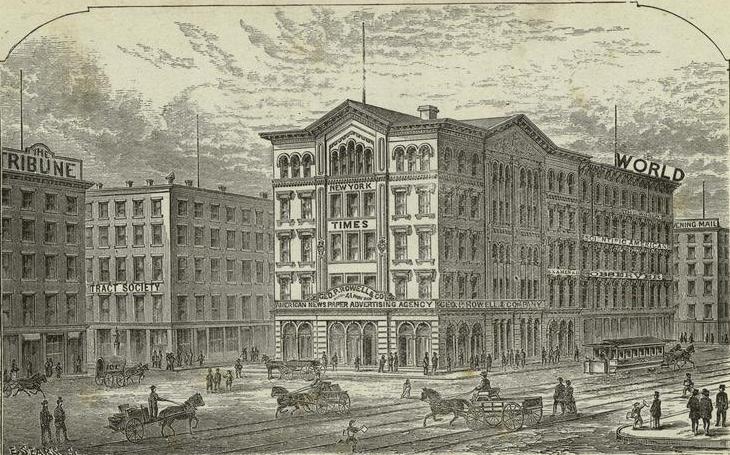
From another angle (print is labeled from 1870s) we see the offices of the Trubune, the Times and the World. The New York World at this time was under publisher Marble Manton was disreputable and unsuccessful.

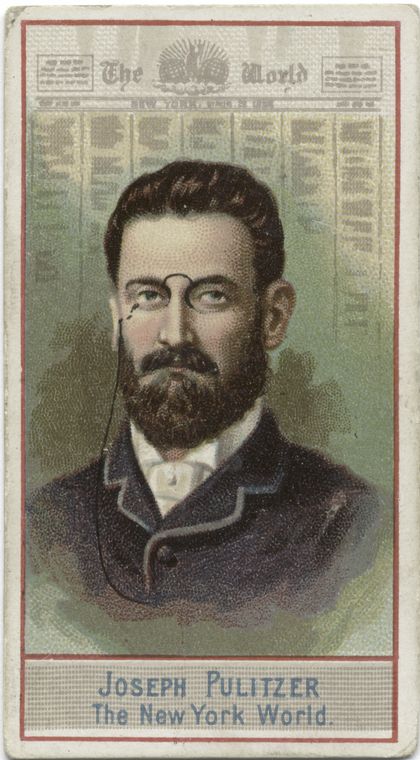
The fate of the New York World was transformed when it was purchased by innovator Joseph Pulitzer, who modernized the publication — introducing such staples of cover photographs and banner headlines — and increased its popularity through sometimes sensational articles. (NYPL)

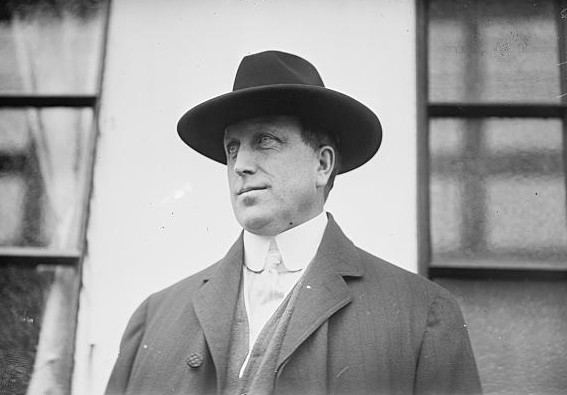
Not to be outdone, William Randolph Hearst stepped into the publishing fray in 1896 with the New York Morning Journal, matching the World head to head in pulling out the stops to increase circulation and ad revenue.

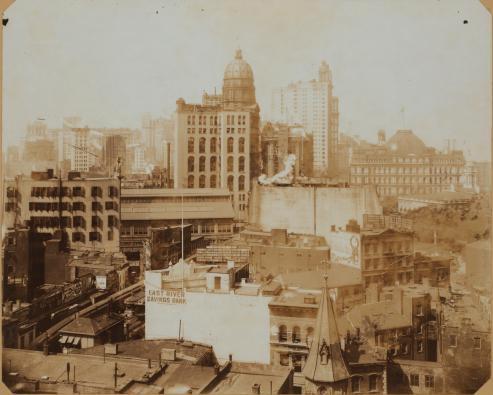
This is Duane Street in the early 1900s. I’m including this picture because the Newsboys Lodging House, where many of the strikers resided for a nickel a night, was located at 9 Duane Street, in the shadow of the World’s distinctive tower.

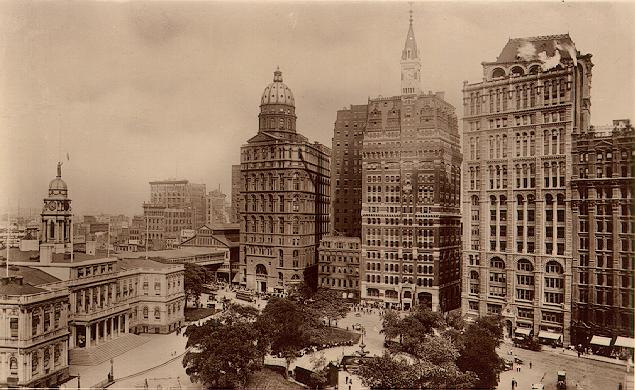
Pulitzer’s World Building from Park Row, designed by George Post, was at one time the tallest building in the world. It sits near the Tribune building, at center.
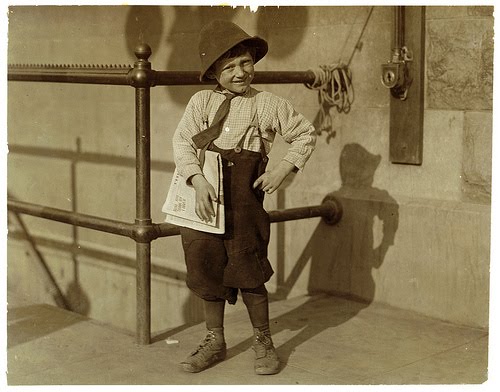
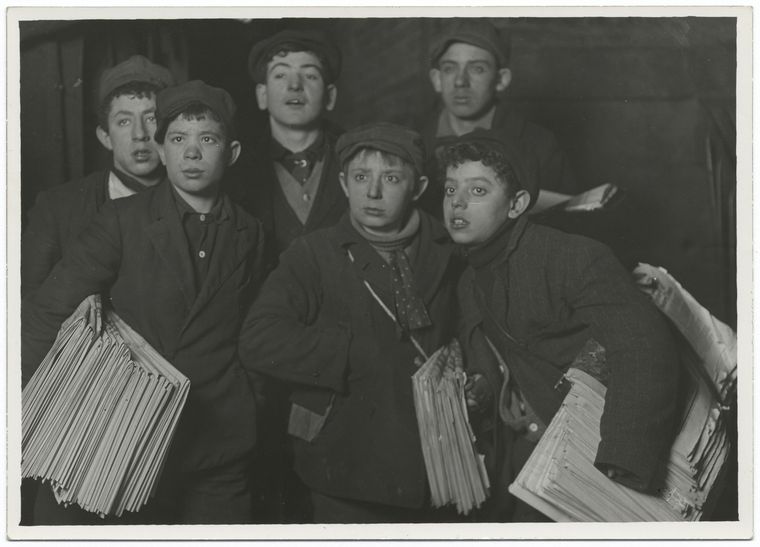
Newsboys were not the ‘plucky’, can-do ambitious entrepreneurs that pop culture has made them out to be, although sometimes (like this guy) they come close.

A Lewis Hine photograph with the caption “Group of newsboys starting out at Brooklyn Bridge early Sunday morning.” The newsies got up every morning to pick up their bundle of newspapers. New York newspapers raised the price of these bundles during the Spanish-American War, when circulation increased. When the war was over, many newspapers lowered the price. All but the World and the Journal. [NYPL]

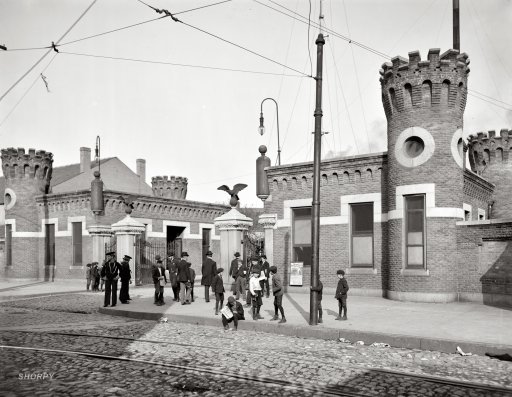
A cluster of newsboys, amongst sailors and businessmen, out at the Brooklyn Navy Yard, 1903. Brooklyn newsies had taken on the newspapers via a strike as far back as 1886 and joined their Manhattan counterparts in fighting back at Pulitzer and Hearst.(Courtesy Shorpy, who has a beautiful larger version)

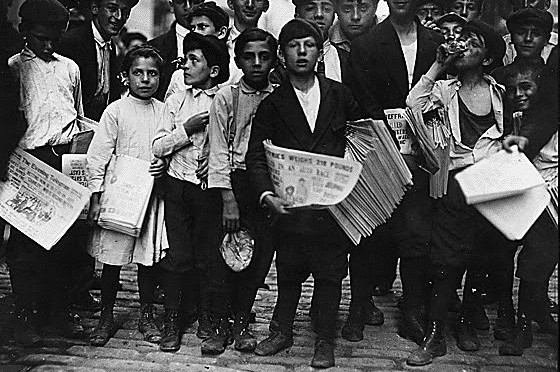
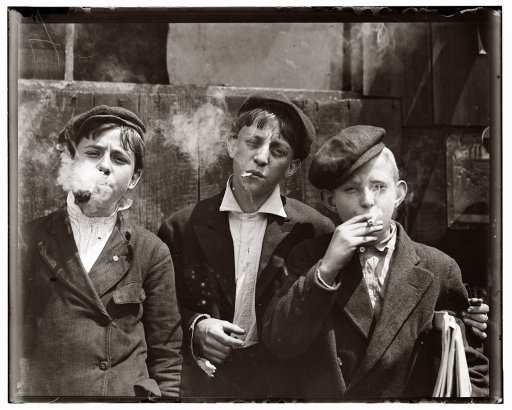
The life of the newsie aged children prematurely. Getting up early, staying up late, most of them homeless and scrounging for nickels and dimes to survive, the 19th century newsboy got by on emulating adulthood. The boys below were photographed by Lewis Hine in St. Louis. (from Shorpy, who have a larger view)

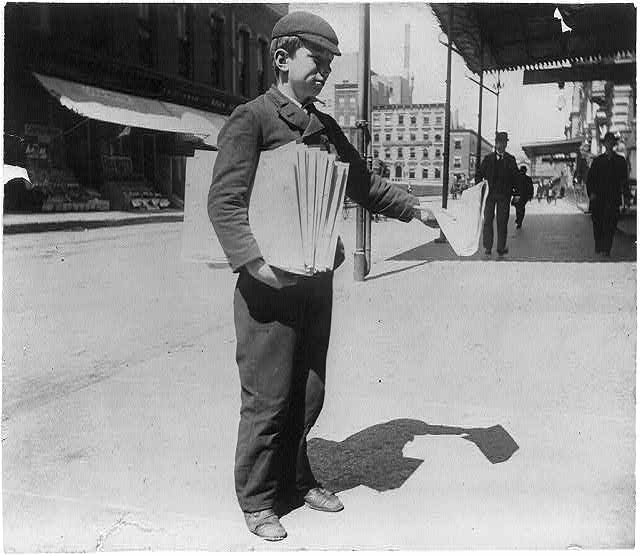
Hine and Staten Islander Alice Austen are the two most well-known photographers of everyday life in New York and captured life on the streets in all its unglamorized tarnish. Below, Austen captures a newsie hard at work in 1906.

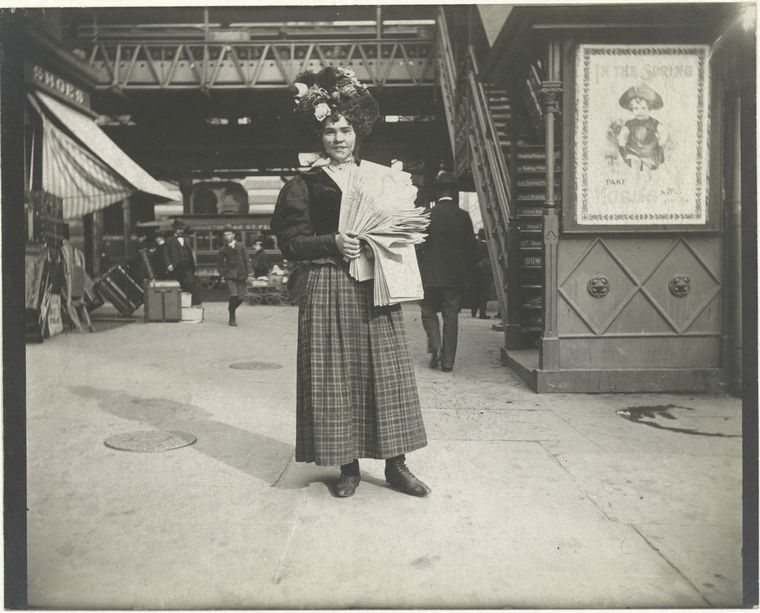
Although most newsies were boys, there were many newsgirls as well, such as this young lady in a fetching hat. Photo by Alice Austen. [NYPL]

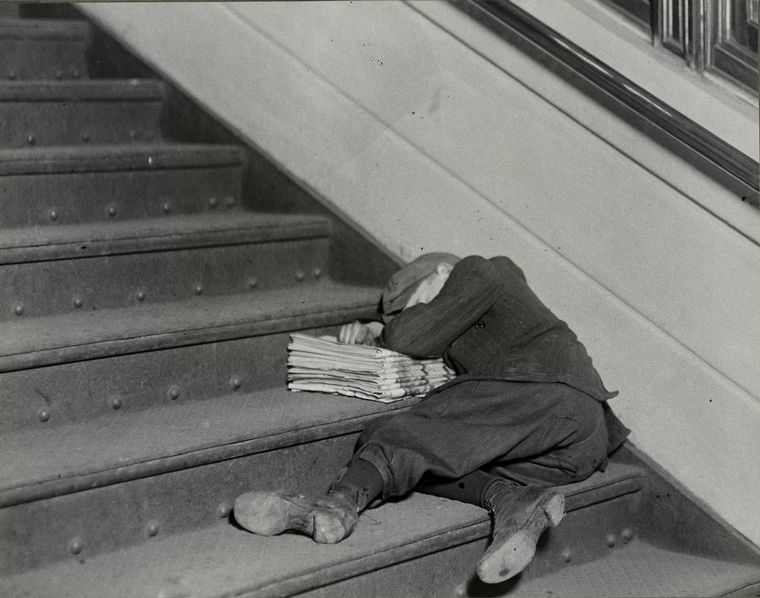
Even with aid organazations like the Children’s Aid Society and lodging homes for wayward waifs, many newsboys lived their entire lives on the streets. The picture below is from 1912, by Hine. (NYPL)

Why do photographs of young kids from this era seem to resonate so strongly? You can look at these pictures and see your own children, nieces and nephews and neighbors. As children — particularly poor ones– have few of the fashionable trappings of adults of this era, we’re able to recognize common expressions. I highly recommend checking out the collections of Lewis Wickes Hine and Alice Austen at both the New York Public Library Digital Collection and the Library of Congress.

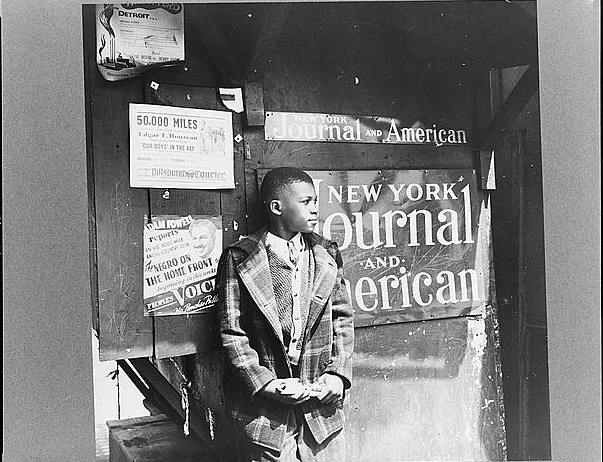
Finally, here’s a one more photograph from 1943 of a modern newsie, decades after the strike, by another great photographer Gordon Parks (yes, the director of Shaft). I like that he’s standing in front of a sign for the Journal-American, the newspaper that Hearst’s Journal morphed into.
[LOC]

And I couldn’t close without a little nod to that oft-maligned, cult classic Newsies , featuring fictional portrayals of Racetrack Higgins, David Simmons and of course Kid Blink (in a reduced role from his actual participation in the strike) (Thanks to Pengo for the link suggestion)

Finally I deeply apologize: I’m sadly aware that my impersonation of a newsboy’s dialect had a bit of an Ozark twang in it! I was never meant for the stage, I guess….

150 years ago: ‘Malaeska’, the birth of the dime novel

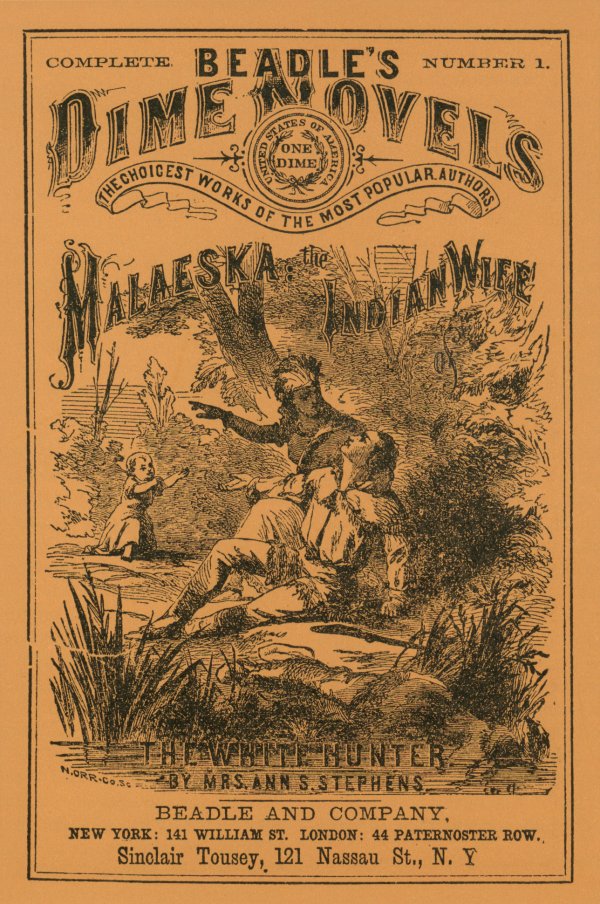
Today marks a big literary milestone of sorts. Serialized Harlequin romances, comic books, cheap paperbacks and pulp magazines filled with tales of gangsters and spies all trace themselves to the ‘dime novel’, a cheaply produced, cheaply bought publication of the mid and late 19th century, introducing breezy, far-flung tales to readers of lower classes. Although at first these items were mere reprints from newspapers, the form soon took on a life of its own, expanding with original stories and helping create the conventions of virtually every major adventure and action tale in its wake.

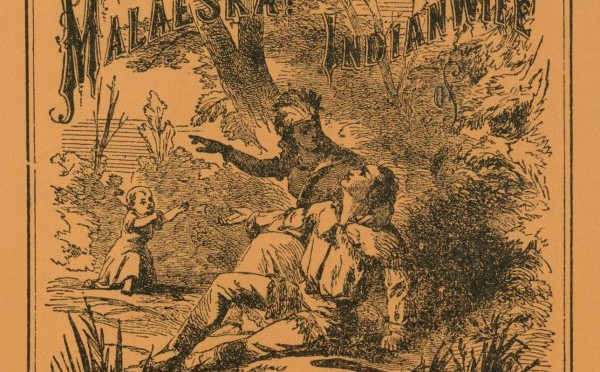
The very first of this mini-books was published today, June 9, 1860, 150 years ago, the amazing tale of Malaeska, the Indian Wife of the White Hunter, 128 pages of Hudson River Valley drama written by Ann S. Stephens, a 19th century serial writer whose breathless stories would define the genre and, by extention, the story trappings of the 20th century pulp genres.

Stephens’ sad tale recounts the illicit affair between a hunter living in Manhattan and a Mohawk woman. Their bi-racial child ends up living in white culture, while Malaeska is first made a servant and then banished. I’ll spoil the ending for you: when Malaeska confronts her son about his heritage, he responds by leaping off a cliff to his death.

You can read the novel’s entire content here hosted by Northern llinois University Libraries. The novel’s first run alledgedly sold over 300,000 copies. To put that into perspective, Uncle Tom’s Cabin, possibly the most influential American novel of the 19th century published just a few years before, sold that amount in its first year.


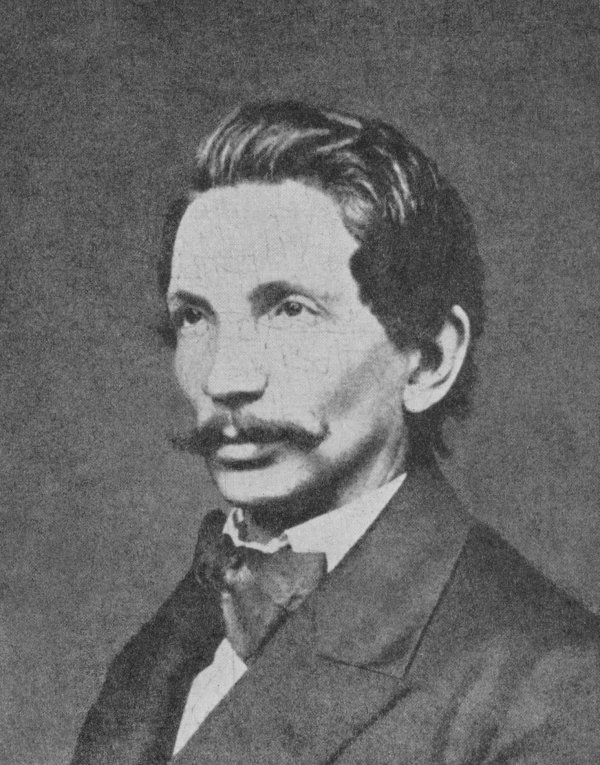
The experimental novel form was produced by Irwin P Beadle (at right), a publisher who collaborated with several partners (notably Robert Adams, George Munro, and Beadle’s own brother Erasmus) through the 1890s in producing hundreds of pop publications, including songbooks and weekly newspapers. But it would be the ‘dime novel’ which Beadle would both coin and prosper from, planned and produced from Beadle’s offices on William Street, first 141 William, then down the street at 118.

‘Malaeska’ would shortly be followed by such titles as ‘Myra, The Child of Adoption’, ‘The Slave Sculptor’, ‘Chip, The Cave-Child’, and many, many more titles sure to ruffle today’s modern levels of political correctness.

Mayor Thomas Gilroy: printer’s devil, and Tammany’s, too

KNOW YOUR MAYORS Our modest little series about some of the greatest, notorious, most important, even most useless, mayors of New York City. Other entrants in our mayoral survey can be found here.

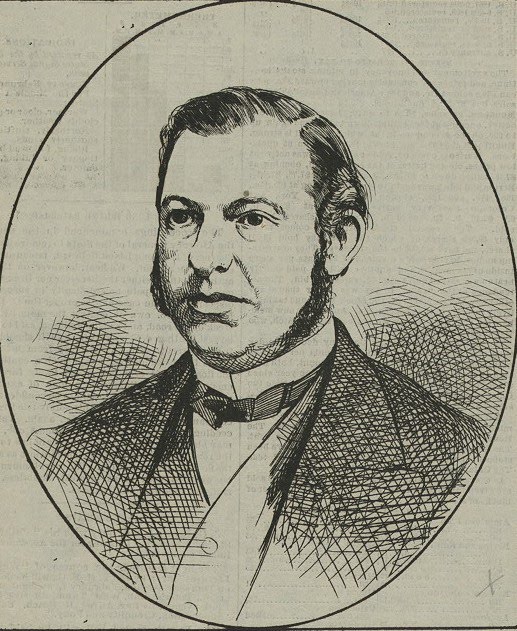
Mayor Thomas Francis Gilroy
In office: one term 1893-1894

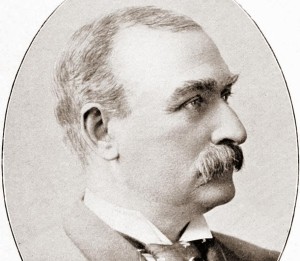
When it comes to corruption, you can’t get more front and center than Thomas Francis Gilroy. His political education came from the most dishonest names in public service, he was elected mayor in one of the most rigged elections in New York history, and he reigned as a mere figurehead controlled by the ruling political machine. There is little to distinguish him but for his uncanny knack of latching on to the most corrupt men in government.

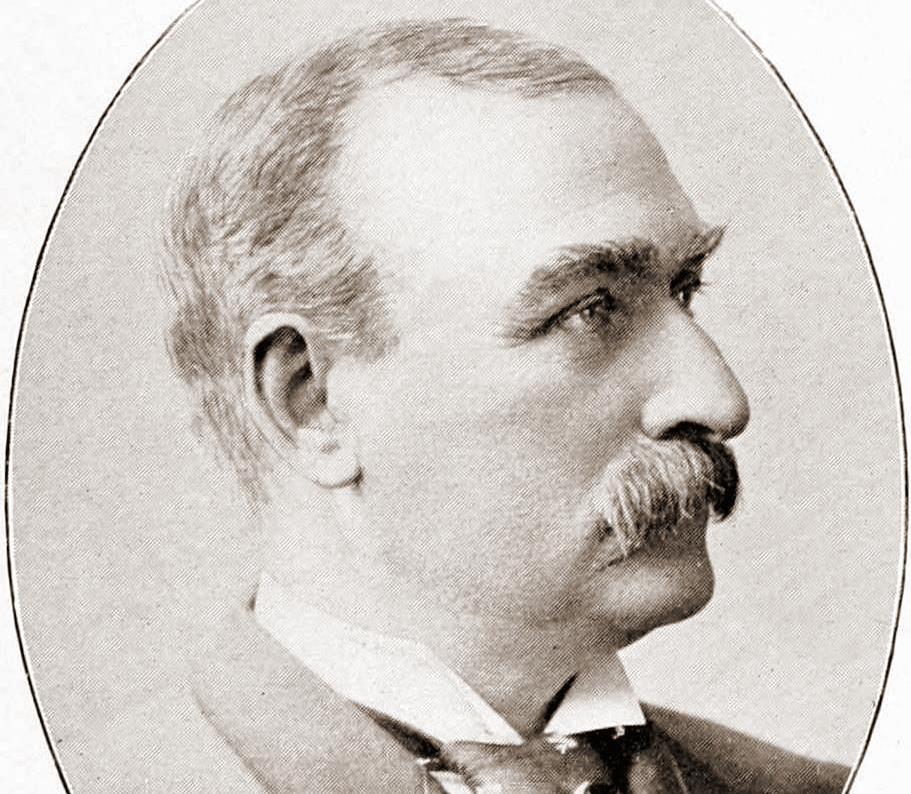
But didn’t he look dashing! “Gilroy was one of the most striking looking mayors this city has ever had, with iron-gray hair, a heavy mustache, a well-knit erect physique and ruddy cheeks,” according to his obit.

In the alternating crests of corruption and reform in New York City government, Gilroy rose when wrong was king and kept his head low every time else. It might have been different for Tommy, as his chums called him, if not for the connections of Boss Tweed, the notorious head of Tammany Hall and the embodiment of New York machine politics.

Gilroy was a bit of a rarity for the late century, a mayor born in another country but of a nationality greatly valued by future Tammany leaders. He was seven years old in 1847 when his parents brought him over from Sligo, Ireland, just one of millions of Irish newcomers at the beginning of a mass wave of immigration that would last decades.

As a teenager, sometime in the 1850s, he began on-the-job training as a printer’s devil for a young, well-known publishing company, G. Putnam Broadway*, who would produce work by Edgar Allen Poe, Nathaniel Hawthorne and most notably to Gilroy, Washington Irving. According to Gilroy: “They were getting out Irving’s ‘Life of Washington’ [the writer’s bio on George Washington] to be sold on subscription. It was a godsend for me to be in a bookstore. I read everything I could lay my hands on.”

“I don’t believe I was a very good servant though, for as soon as the subscription business was done, the publishers let me go.” Gilroy is being modest here; he would be a most excellent servant to the political machine.

He moved onto other publishers and by 1864 had become a proofreader. It may have been through his publisher that he made his introduction with city politics, and Tammany Hall in particular. He soon moved on to a useless city job, his title ‘sixth clerk to the Croton Aqueduct Department’, one of hundreds of padded government jobs requiring no conceivable skills except mendacity and blind ambition.

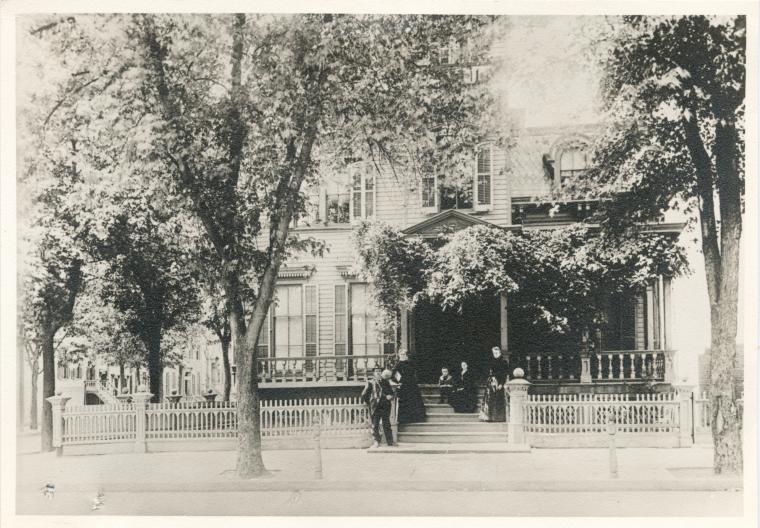
Gilroy’s home in the 1860s at the corner of Broome and Mott streets would have placed him near the epicenter of immigrant life in New York, which may suggest his usefulness within Tammany. Tommy was the boilerplate Irish American that Democrats liked in their ranks and lusted after during elections.
He became a confidante of Boss Tweed’s in early 1870, at the height of the notorious boss’s power as the city’s commissioner of public works. Apparently not busy enough in his Croton Aqueduct duties, Gilroy served as Tweed’s personal ‘messenger’, delivering the type of ‘messages’ one can only imagine and marvel at.

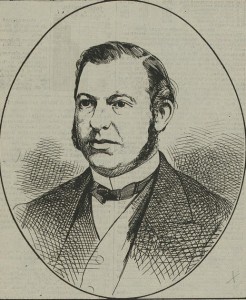
Tweed was arrested in the fall of 1871, but Gilroy had already moved on, as clerk and personal secretary to state senator Herry Genet (at right). Sometimes nicknamed ‘Prince Hal’, Genet was left picking up the pieces of a tattered political machine in the wake of the Tweed scandal and would himself had been shipped off to prison in 1873 on corruption charges had he not escaped from jail and fled the city. (He was eventually caught years later.)

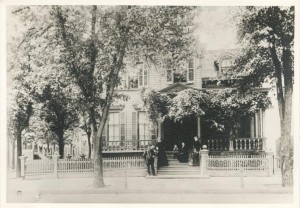
After these associations, Gilroy kept a lower profile, but always worked within the Tammany system, damaged by the Tweed scandals. He became a Mott Haven court clerk in 1874 — the year it was annexed by New York — and observed this Bronx neighborhood grow from an industrial backwater to a tony residential area.

Below: a home in Mott Haven, circa 1890 (NYPL)
People generally have a short memory when it comes to government corruption, and by the mid 1880s, Tammany Hall was back in full swing. Gilroy took a cozy clerk job closer to City Hall in 1885, benefiting financially from the kind of kickbacks perfected by the Tweed Ring.

He was so snug with Tammany that he was chosen by Boss William Crocker to oversee the campaign of Hugh Grant, who became mayor in 1889. As a reward, Grant make Gilroy commissioner of public works — the same job Boss Tweed had once held! And just to make the parallel complete, he became Tammany’s grand sachem in 1891. Make no mistake however; the man behind the curtain — behind both Grant and Gilroy’s ascensions — was Crocker.

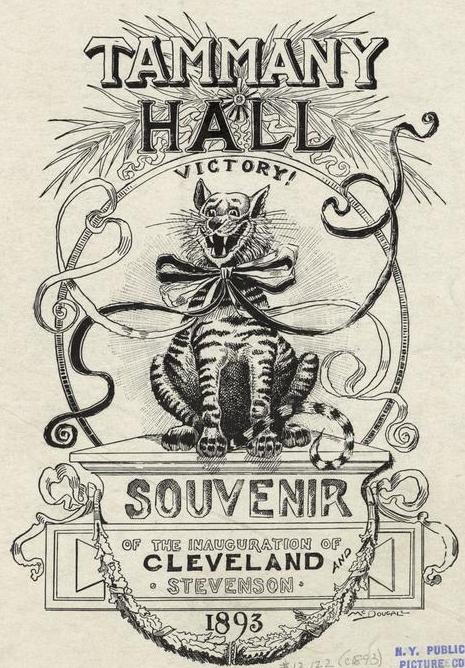
According to Oliver Allen: “There was no question that the good times were now rolling for Tammany Hall; it could hardly lose an election.” Crocker decided, after two two-year terms of Grant, that Gilroy should replace him, and rigged the election to assure that victory, crushing his republican opponent Edwin Einstein. In fact, in one Lower East Side district, 389 votes went to Gilroy and three to another candidate. Croker vowed he would find out who those three voters were. (Also on the ballot that year: Grover Cleveland for president, see 1893 souvenir print below)
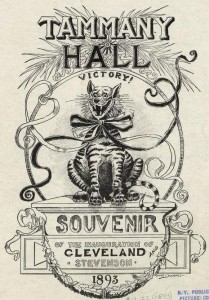
Gilroy kept things status quo, for Tammany, that is. According to Burrows and Wallace, City Hall distributed funds from “municipal employees and saloonkeepers” by city charities in need although stopped short of initiating a promised jobs program to deal with a growing unemployment rate. He rejected calls for improved public baths and additional schools, this in a decade of massive immigration swells.

Gilroy is notable only for coming in at the end of Tammany’s moment of glory. He had inherited a deeply corrupted police force, so ineffective that a state commission was called in 1894 to expose the deep fissures. The Lexow Committee would eventually uncover an institutional system of “extortion, bribery, counterfeiting, voter intimidation, election fraud, brutality, and scams.” All of it, naturally, inextricably tied together with Tammany leadership.

Gilroy tried desperately to turn the tide by appointing a ‘bi-partisan’ board of police directors, Democrats and Republicans. This paltry concession persuaded no one. By the next election, New York was a reform mood. In fact, Gilroy didn’t even bother running again; after briefly putting Macy’s president Nathan Straus on the ticket, the Democrats replaced him with also-ran Hugh Grant.

To no avail; Tammany’s nearly decade-long reign was (temporarily) over, as gruff reform candidate William Strong won handily. (The story picks up in my article on Strong’s tenure as mayor.)

Gilroy had played his last political card by this time. After a short stint as a bank president, Tommy retired to his homes, one on West 121st Street and another on Far Rockaway, where he died on December 1, 1911.

*The company still exists today as a division of the Penguin Group: Penguin Putnam Inc, frequently publishing juvenile literature

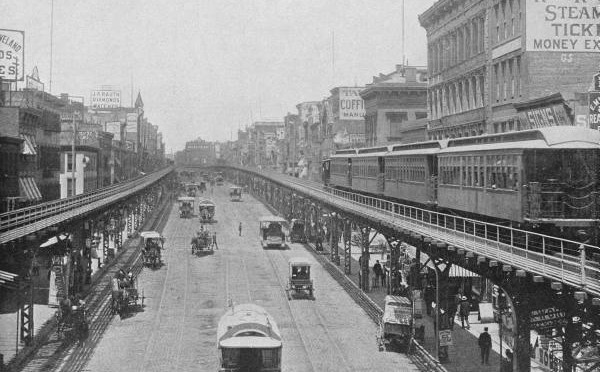
Bowery Boys Bookshelf: New York City writes about itself

No city has been more savaged and disparaged, more exalted and varnished, than New York City — and this from the very writers who lived here. The man who exclaimed “Manhattan crowds, with their turbulent musical chorus!” also wrote, “Silence? What can New York-noisy, roaring, rumbling, tumbling, bustling, story, turbulent New York-have to do with silence?” And Walt Whitman isn’t the only writer who loved to hate, and hated to love, growing New York.

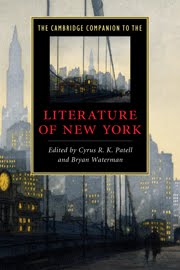
The Cambridge Companion, that staple of academic compendiums focusing on specific subjects, have finally and gratefully gotten around to the literature of New York City. (Although they did hit the Harlem Renaissance a couple years ago.) The editors of the volume, Cyrus R. K. Patell and Bryan Waterman, two associate professors at New York University, have been letting non-students in on their cultural inspirations via their regular site on New York City cultural history, Patell and Waterman’s A History of New York.
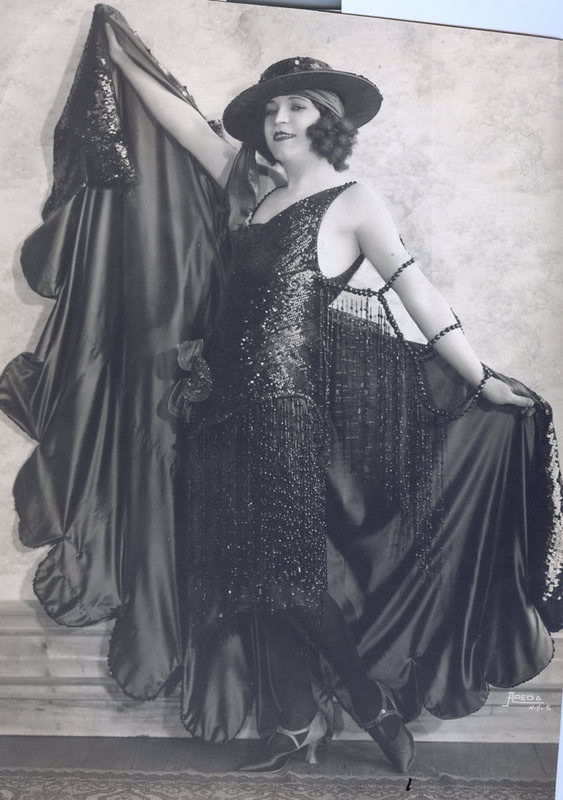
The “Cambridge Companion to the Literature of New York” (Cambridge University Press) takes a broad, thematic appreciation of New York’s written history, looking not merely at authors based in the city, but how those writers (and those looking in from elsewhere) viewed the city and its population.

Most of the essays are lovely, bite-sized ideas focusing on a handful of written works. For instance, Elizabeth Bradley distills her recent book ‘Knickerbocker: The Myth Behind New York” into a tale of New Yorkers perception of their Dutch New Amsterdam past and the devilish ways that Washington Irving distorted it. In other essays, you get sweet little snippets on the radical East Village beat scene and the ragged birth of gay and lesbian theater.

Whitman and Herman Melville get their very own takes, appropriately. Generally I preferred the narrowly defined essays to those of broader scope (like the totality of Brooklyn literary perceptions, in ten pages!), but they all work as a whole. Patell and Waterman tackle the introduction and closing essays and lead me to believe that a history of New York literature writtten by these two alone would be an even more satisfying read.
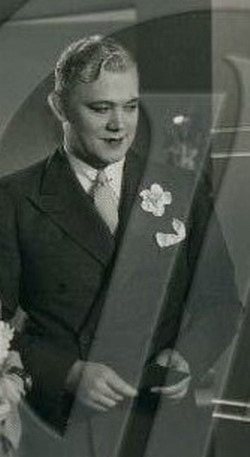
One form of literature curiously absent from the collection? The pulp and crime fiction of the 1930s and 40s. The grimy, simply written tales of gangsters, stewing the ingredients of film noir, were sold as cheaply produced paperbacks and are rarely considered true capital-L ‘literature’.
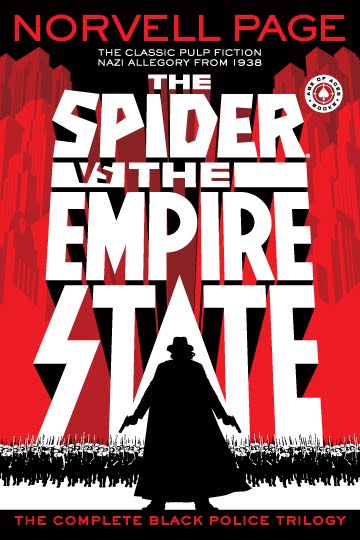
But you may rethink that after reading ‘The Spider vs. the Empire State’ (Age of Aces Books), a gorgeous reprint of three short novels by Norvell Page, exploring an alternate universe where New York is under siege by a vicious fascist regime.

Page wrote dozens of novels from 1933 to 1943 starring his cloaked protagonist The Spider, a crime fighter who straddled the edge of lawlessness, a character ideal that would go on to influence countless comic book writers. His novels were quick reads, set in a fictional New York state and soaked in cartoonish violence.

Most were insubstantial, breezy. But for three novels, the three collected in ‘The Spider vs. the Empire State’, Page created a more serious menace, a iron-handed regime called the Black Police who takes over the government of New York and wrings taxes (often by force) from the poorest citizens. Page’s creation would parallel the rise of Nazi Germany, employing dark political sentiment in a literature usually devoted to the glamour of the underworld.
The story is admittedly absurd — and deathly serious, with breathless scenes of narrow escapes, machine gun fire and midnight biplane getaways, a state run by monsters and a resistance movement centered in … the Catskills! Who wouldn’t want to read a book with scenes that take place at “Albany spy headquarters“? The new reprint by Age of Aces is beautifully designed and bound just in time for some beach reading.

My beach reading was a tad heavier this past Memorial Day — The First Tycoon: The Epic Life of Cornelius Vanderbilt by T.J. Stiles. I’m only about halfway through but it’s an amazing accomplishment, well worthy of its accolades (including this years Pulitzer Prize for biography. It’s now out on paperback, so read along with me!

And finally : I don’t exactly recommend this book — in fact, I thought the whole thing was borderline idiotic — but if you’re an admirer of one Abby Aldrich Rockefeller, you might get a kick out of reading Angelology by Danielle Trussoni, a fantasy-tinged attempt at giving New York City its very own Da Vinci Code. Without spoiling too much, Abby decided to embed Rockefeller properties all over the city with valuable, supernatural items — items which must be reassembled to prevent menacing hoards of evil, vain and fabulously wealthy angels from getting their otherworldly hands on it!

Before CBGB’s, parties at 315 Bowery were for the birds

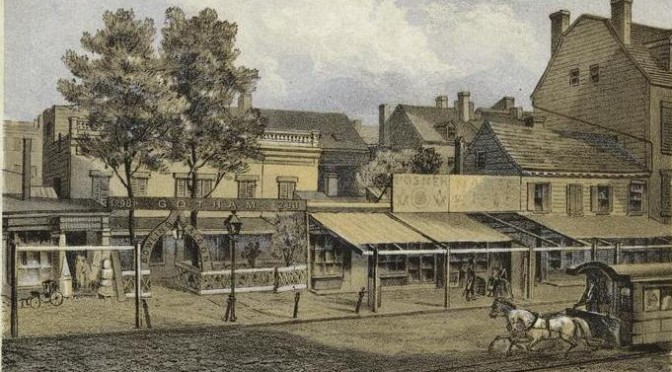
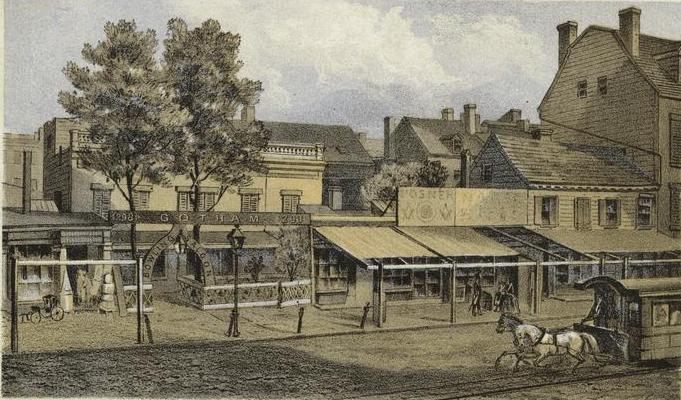
Above: The first of hundreds of Bowery hotels — the old Gotham Inn in 1862. The inn, which dated from the 1790s, sat quite close to where 315 Bowery is today, just north of Houston Street. (Pic courtesy NYPL)

The early history of buildings at 315 Bowery — the address that would later become the club CBGB’s — is spotty indeed, but some early references to the address reveal some rather odd events that took place here.

In the 1860s, the Bowery neighborhood would still have been a de facto theatrical district for the lower classes, “New York’s primary locale for down-market entertainment – saloons, beer gardens, amusement halls, dime museums, street vendors and oyster houses,” according to David Levinson. Not quite given over to the truly seedier elements which would define the street for over 100 years.

In the early 1860s, it appears a pet shop or bird supplier resided at the address 315 Bowery. One William F. Messenger, with profession listed only as ‘birds’, lived at this address in May 1861.

On January 31, 1862, the New York Times reported on a strange gathering at 315 Bowery and presumably at Messenger’s shop — the Bird Fanciers’ Third Annual Exhibition of prized fowl. Little is known of the group, which had reportedly been in existence over a decade by this time.

Prizes were awarded to bird lovers who kept roosters and hens, with a gentleman by the name of William Manson really cleaning up:

“First prize, yellow cock, WM. MANSON; second prize, yellow cock, JOHN WILLIAMSON; third prize, yellow cock, JOHN HIGGINBOTHAM. First prize, mealy cock and best bird exhibited, WM. MANSON; second prize, mealy cock, —- BAKER; third prize, mealy cock, —– BAKER. First prize, yellow hen, WM. MANSON; second prize, yellow hen, WM. MANSON; third prize, yellow hen, —-MURRAY. First prize, mealy hen, JOHN HIGGINBOTHAM; second prize, mealy hen, JOHN HIGGINBOTHAM; third prize, mealy hen, WM. MANSON.”

However, despite its avian beginnings, I was able to find mention of the address’s musical heritage during this period: a John Bogan is listed as living or working at the address in 1867-68 as a “banjoist”, a teaching instructor (and possible manufacturer) of banjos.

Categories
Friday Night Fever Podcasts

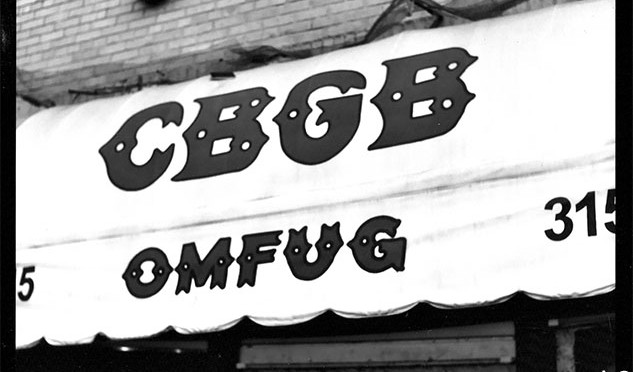
CBGB & OMFUG: Punk music history on the Bowery

Photo courtesy araceli.g, Flickr

PODCAST Modern American rock music would have been a whole lot different without the rundown dive mecca CBGB’s, a beat-up former flophouse bar that made stars out of young musicians and helped shape the musical edge of downtown Manhattan. Owner Hilly Kristal may have initially envisioned a place for ‘Country Blue Grass and Blues’, but the music spawned by this little hole in the wall would define the contours of American punk and new wave.

The Ramones, Blondie, the Talking Heads and hundreds of others bands would never have been the same without this dank little club with the most notorious bathroom stalls in New York. Tune in to hear a tale of the club’s rather inauspicious start and find out why, even as a venerated music icon, it was forced to close its doors.

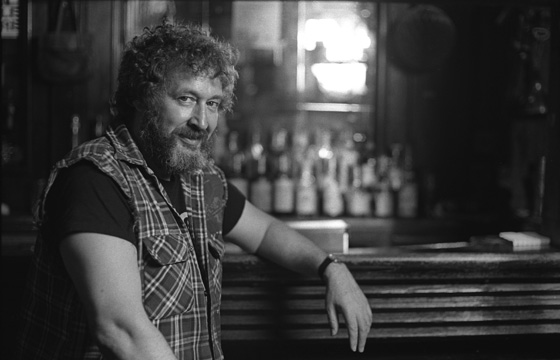
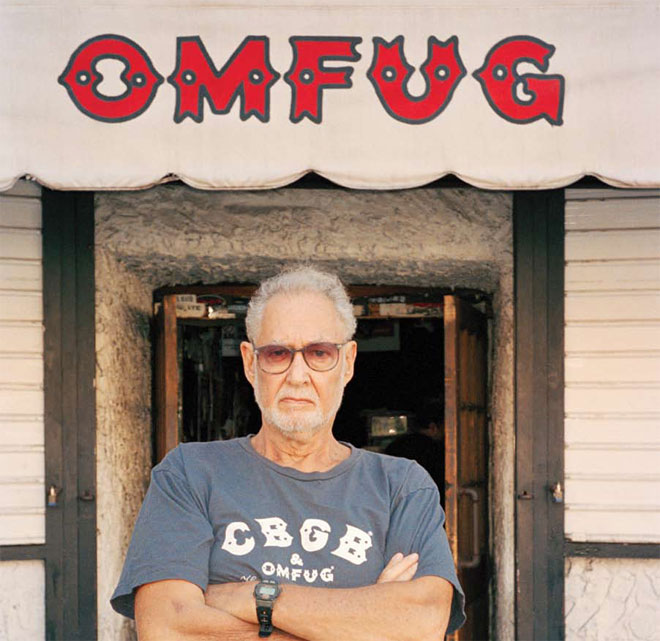
Hilly Kristal, back in the day. CBGB’s was originally Hilly’s On The Bowery, a spin-off of a far more successful West Village venue that frequently hosted performers like Bette Midler and Jerry Stiller. Hoping to draw a more music oriented crowd, Kristal changed the name to reflect broad tastes: Country Bluegrass Blues and Other Music For Uplifting Gormandizers.

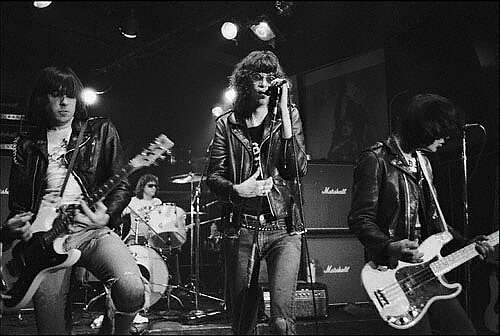
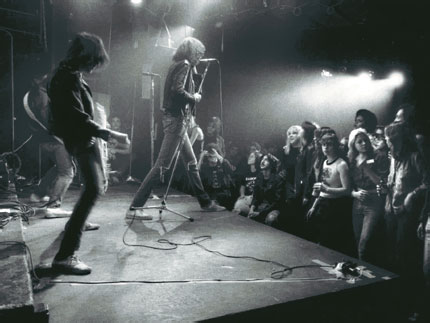
Initially unimpressive by any metric of musical quality, the scraggly group of guys from Forest Hills, Queens who formed The Ramones soon become a staple of the CBGB stage and the one of the most influential acts of the American punk style. If there’s a voice to 315 Bowery, most likely it’s that of Joey Ramone. (Photo by Allan Tannenbaum, from here)


(Photo from here)

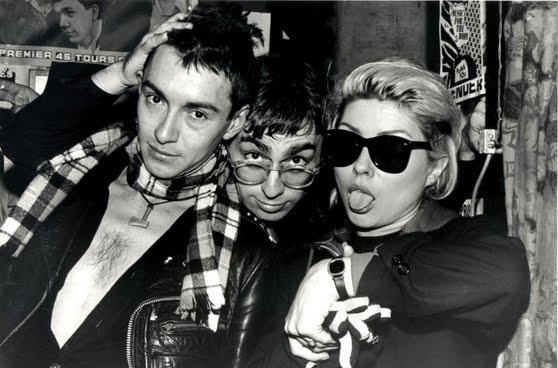
Deborah Harry and Chris Stein debuted on the CBGB stage as members of the Stilettos used the club to make their transformation into Blondie, the most successful group borne of Hilly’s Bowery club. Chris and Debbie are seen below with Arturo Vega, 1978. (Photo by Lisa J Kristal, photo from here)

Hilly in later years. The club become a high-profile victim of Bowery gentrification and had to shut its doors in 2006. It lived on briefly as a St. Mark’s clothing shop, even as its old location become home to a John Varvatos menswear boutique. Photo by Peter Sutherland (here)

Check out the official CBGB blog for lots of great stuff associated with the club, including lots of old photos and that full color ‘walk-through of the club. You might want to take a shower after viewing it.

Antoni Gaudi’s grand New York hotel — built by sci-fi


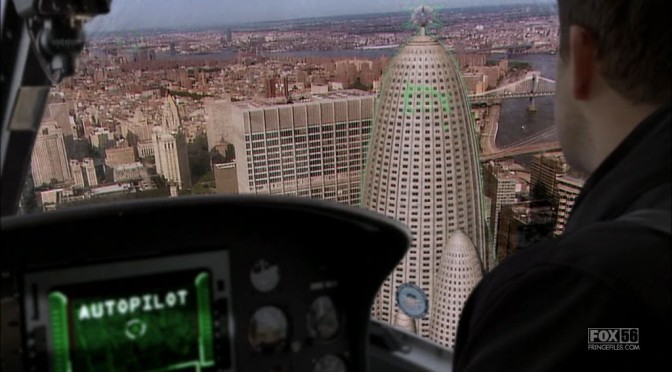
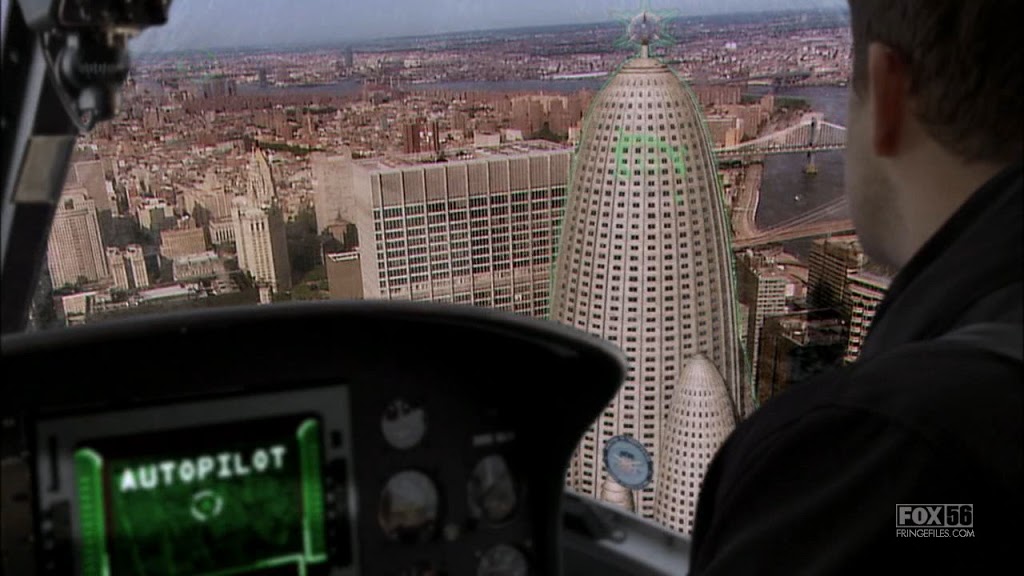
Joshua Jackson, looking down at Gaudi in an alternate universe. Courtesy Fringe Files

I promise, this is my last post on fake New York City history for awhile, but I couldn’t let the season finale of the FOX sci-fi series Fringe pass without comment.

A running scientific theory running through the series is the notion of a parallel universe co-existing with ours, with some not so subtle differences. We discovered this alternate universe last season when a character popped inside the still-standing World Trade Center. In the harbor sits the Statue of Liberty, in her original copper sheen, assumably off-limits to tourists and since 1989, home of the nation’s Department of Defense.

In this universe, it appears the grave threat comes from within its very fabric, not terrorists. Madison Square Garden — and the 10,000 people within it — fall victim to an expanding wormhole in 1999 and are contained in ghastly amber cocoon. And if you think that’s bad, you should see Boston!

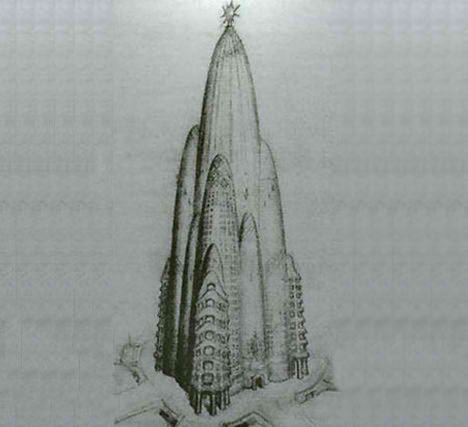
Silhouetted above this frightening fantasy skyline, however, is a work of art straight out of a New York City dream — the Grand Hotel, built in 1908, and designed by one of the world’s most eccentric architects, Antoni Gaudi. A spacecraft like mound of rounded forms, zeppelin-like curves shooting in the sky, mocking the Beaux-Arts and seeming like something that could be built in the city today (or tomorrow). Unlike the city’s space-time mishaps however, the Grand Hotel, believe it or not, was really planned by Gaudi to be an actual skyscraper.

Gaudi’s original sketch:

Gaudi’s talents lived apart from the styles of his contemporaries at the turn of the century, appreciated daily by the citizens of Barcelona in many otherworldly buildings he created, most famously La Pedrera, and growing spires of the Sagrada Família. In 1906, it appears Gaudi was approached by two businessmen with property in New York, asking him to design a luxury hotel in the style of the Waldorf-Astoria on 34th Street.

This being Gaudi, of course, the resultant sketches (for a structure he called Hotel Attraction) were nothing like the rectangular and domed objects currently rising above New York. At 1,016 feet, the monstrous hotel would have towered over the plans of F.W. Woolworth, whose own skyscraper was still in the planning stages in 1908.
This odd shape would have glistened with alabaster and bits of glass and tile. The interior would have included an immense hall ringed with circumferal galleries above it and decorated with sculptures of every American president. Below this, guests would enjoy a cavernous restaurant decorated with cosmic murals and a concert hall with ceilings 100 feet overhead. This alien masterpiece was slated to sit in the exact area where the World Trade Center would later be built.

The Hotel Attraction never made it off the drawing boards, but there were some efforts by ardent Gaudi fans championing it as the ideal replacement for the Twin Towers after 9/11. Could you imagine if they’d actually decided to build it today? It’s not so strange an idea. Gaudi’s cathedral is still being built in Barcelona. And in our alternate universe, the Gaudi’s grand hotel looks just spiffy.

First officer down: Highbinder riots at St Peter’s Church

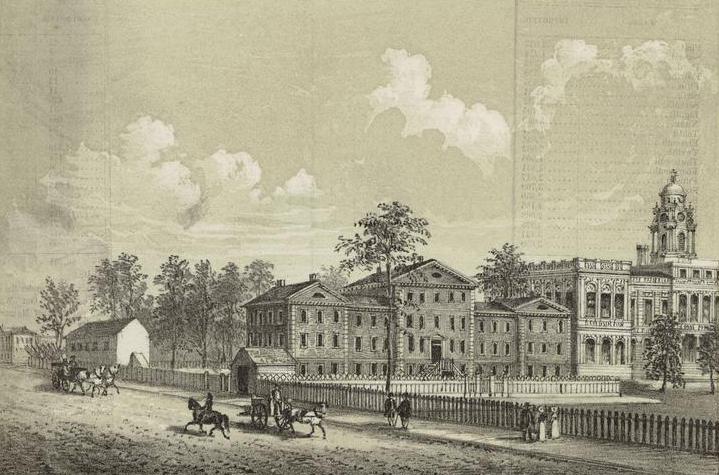
Broadway and City Hall, in 1809. The mobs of the so-called ‘Augustus Street Riot’ would have scuffled just to the west of this illustration. (Courtesy NYPL)

According to the Officer Down Memorial Page, there have been 778 New York law enforcement officers who have died in the course of duty. Fourteen of the last fifteen were those men and women who succumbed to 9/11-related illnesses. The last firearm-related death, Omar J. Edwards, came almost a year ago, in a strange, tragic case of mistaken identity.

The official count considers all officers from as far back as 1802 and the days of the New York City watch under the supervision of its renown High Constable Jacob Hays. (See our podcast below for more information.) Hays would be the sole administrator of this early form of law enforcement and would lead the group until the formation of the New York Municipal Police in 1845.

The watch’s first casualty came in 1806. The man’s name was Christian Luswanger, murdered in the line of duty during a very curious riot.

This was still a city shaking off its colonial trappings and still finding its identity. The mayor of New York that year was 37-year-old DeWitt Clinton, the well connected nephew to the former governor of New York and a man with great things in his future. The British had been gone for over two decades, and the city and its port were rapidly growing. But the real jump starts to the city’s economy and expansion — the Erie Canal, the debut of the steamboat, the Commissioners Plan — would come in the next decade.

New York was small but restless. When mayor Edward Livingston formed the night watch in 1801, it required only a handful of men, overseen by a Watch Committee on the city council (or Common Council). By 1806, all watchmen reported to Hays, and the constable reported to the council, who often directly advised on priorities. “The Captains of Watch in the first district [should] be particularly attentive to the neighborhood of Burling Slip,” according to the minutes of one council meeting.

Hays supervised a couple captains for each of New York’s wards — captains with such sturdy names as Magnus Beekman, Nicholas Lawrence, Gad Dumbolton and William Van Wart. Those captains had other men reporting to them, including Christian Luswanger, of which almost nothing is known — regular watchmen didn’t appear in the council payrolls, only the captains — nothing at all, except for the event which took his life. An event sometimes referred to as the Augustus Street Riots*.

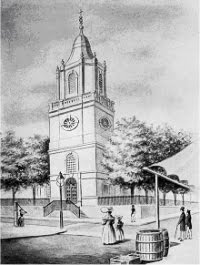
In 1806, St Peter’s Church was the only parish in town if you were a practicing Catholic. (The current building, sometimes called Old St. Peter’s, a simple, neo-classical gem near the WTC site, was built over the old structure in 1840.) It’s most famous congregant would be Elizabeth Ann Seton, the first American to be declared a saint.
Built in 1785, the church (at right) was a perpetual target of anti-Catholic sentiment, and violence would erupt here on Christmas morning, 1806. As worshippers gathered for midnight mass, a group of rowdies gathered outside, prepared to disrupt services.
One source, perhaps drawing from a contemporary New York Evening Post article, calls the group of about fifty a ‘gang’ called the Highbinders. However I’m not exactly sure it was any kind of an organized gang. The word ‘highbinder’ would eventually come to mean any kind of gangster and would even be slang for a corrupt politician. The first ‘gang’ of New York is commonly thought to be the Forty Thieves, who wouldn’t surface for at least another twenty years.
Simply consider them a massive of drunken, anti-Catholic thugs — sailors according to one source, “a nativist gang of apprentices and propertyless journeyman butchers” according to Edwin Burrows and Mike Wallace — all looking to cause trouble. Parishioners ran to get their alderman who eventually broke up the crowd. However they returned the next night — Christmas night — far more incensed, only this time the churchgoers were ready, armed with weapons. Certainly the defenders were not merely parishioners than other Irish immigrants who had heard about the prior evening’s altercation and came looking for a fight.

They got one. The two groups clashed through the street, a few dozen men on each side, travelling from the church’s doorsteps up to the Irish neighborhood in the Sixth Ward — many, many years before it would be called Five Points.

In this melee, the watch were called to quell the violence and arrest the rioters. Jacob Hays may have been there; several of his captains certainly were. Watchman Luswanger was called to join them. Somewhere along the way, a rioter stabbed Luswanger, and the watchman died of his injuries. Apparently, this did nothing but bring more rioters into the chaos.

Diarist William Otter presents a vivid recollection of these events, although he does not mention Luswanger: “The church was surrounded with a motley crew of Irish and sailors…engaged in deadly conflict…..The mob fought from the door of the church to Irish town, being the distance of about a fourth of a mile….A great deal of property was destroyed by the mob and a great deal of human blood shed.”

It took most of the night watch and the light of day to dissolve the rioters. Ten men, all Irishmen, were arrested. The mayor offered a reward for any information on Luswanger’s demise, but danced around firm condemnation of either group. I’m gathering from the lack of evidence that the case of who stabbed the watchman remains unsolved.

NOTE: One of my prime sources on this article states that the watchman’s name was Christopher Newfanger, not Christian Luswanger. I believe the latter is correct, and it is the name officially recognized by the police department.

*According to Forgotten New York, Augustus Street “was later called City Hall Place and in 1941 it was again renamed for Patrick Cardinal Hayes who had died in 1938.”