Categories
Bowery Boys Bookshelf

The New York Riots of 1964: Violent history with a haunting familiarity

One hot summer’s morning, in the neighborhood of Yorkville on the Upper East Side, high school student James Powell was shot and killed by police officer James Gilligan.

Powell either attempted to stab the officer or else the unarmed boy was brutally set upon by a man with violent tendencies. Gilligan, a war veteran, was either defending himself from a troubled delinquent or else he gunned down the teenager with little remorse.

There were few actual witnesses but dozens of bystanders. The incident took place across the street from a high school, and the students, incensed by rumors and the fear of blood running in the streets, began panicking.

The year was 1964.

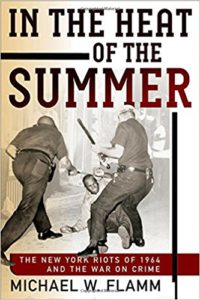
It’s hard not to read the opening pages to Michael W. Flamm’s gripping In The Heat Of The Summer: The New York Riots of 1964 and the War on Crime (University of Pennsylvania Press) and not see the parallels to modern police brutality cases.  So many different testimonies obscure the truth that it’s hard to know what really did happen in front of 215 East 76th Street that day. (Video footage might not have even cleared it up.)

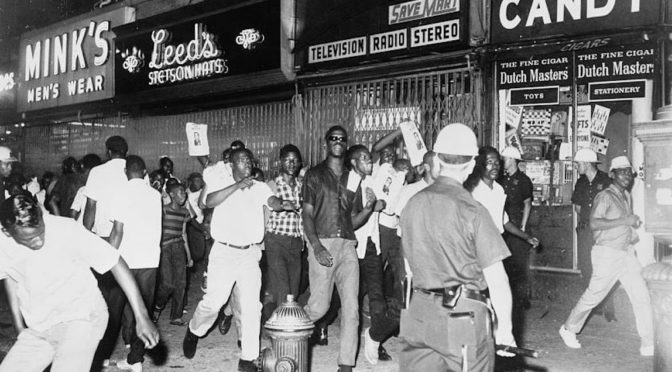
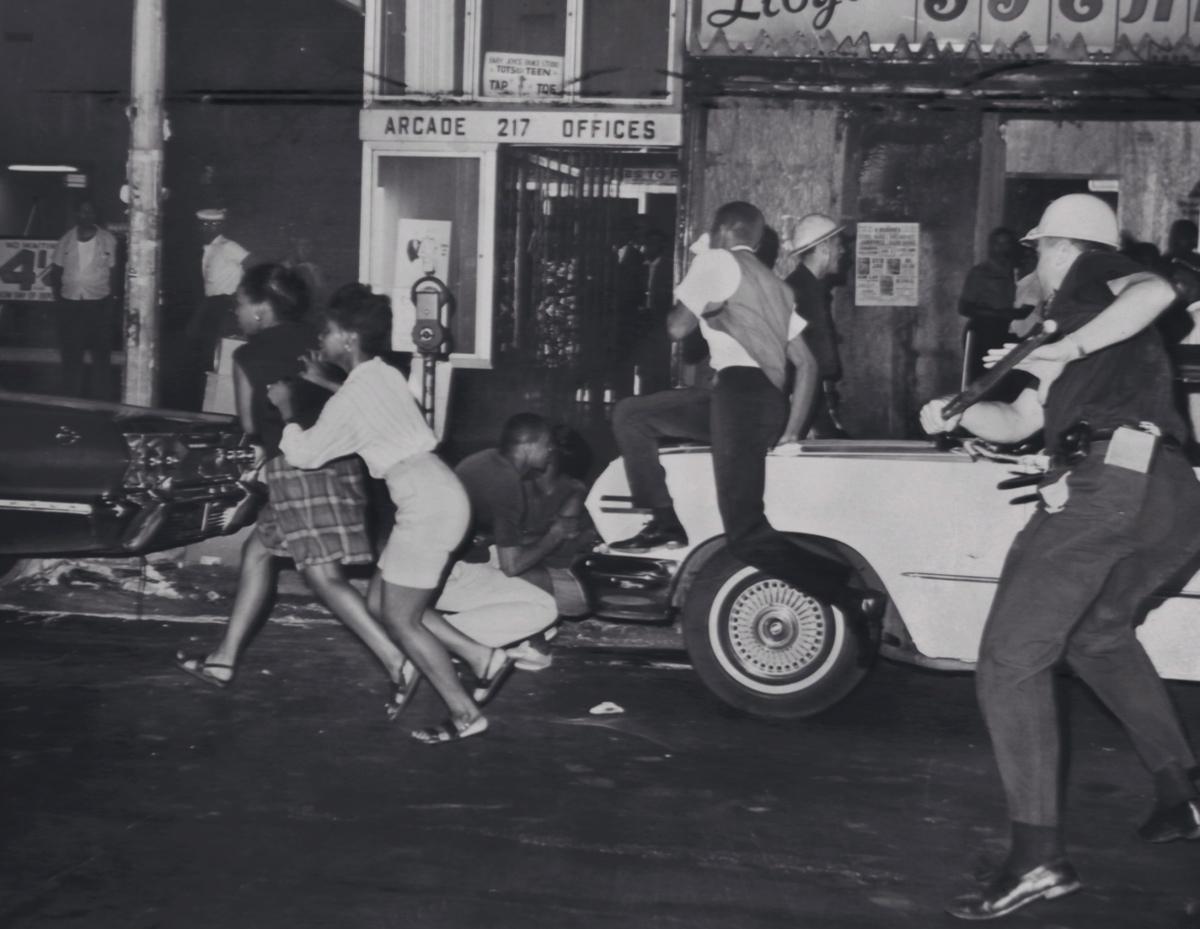
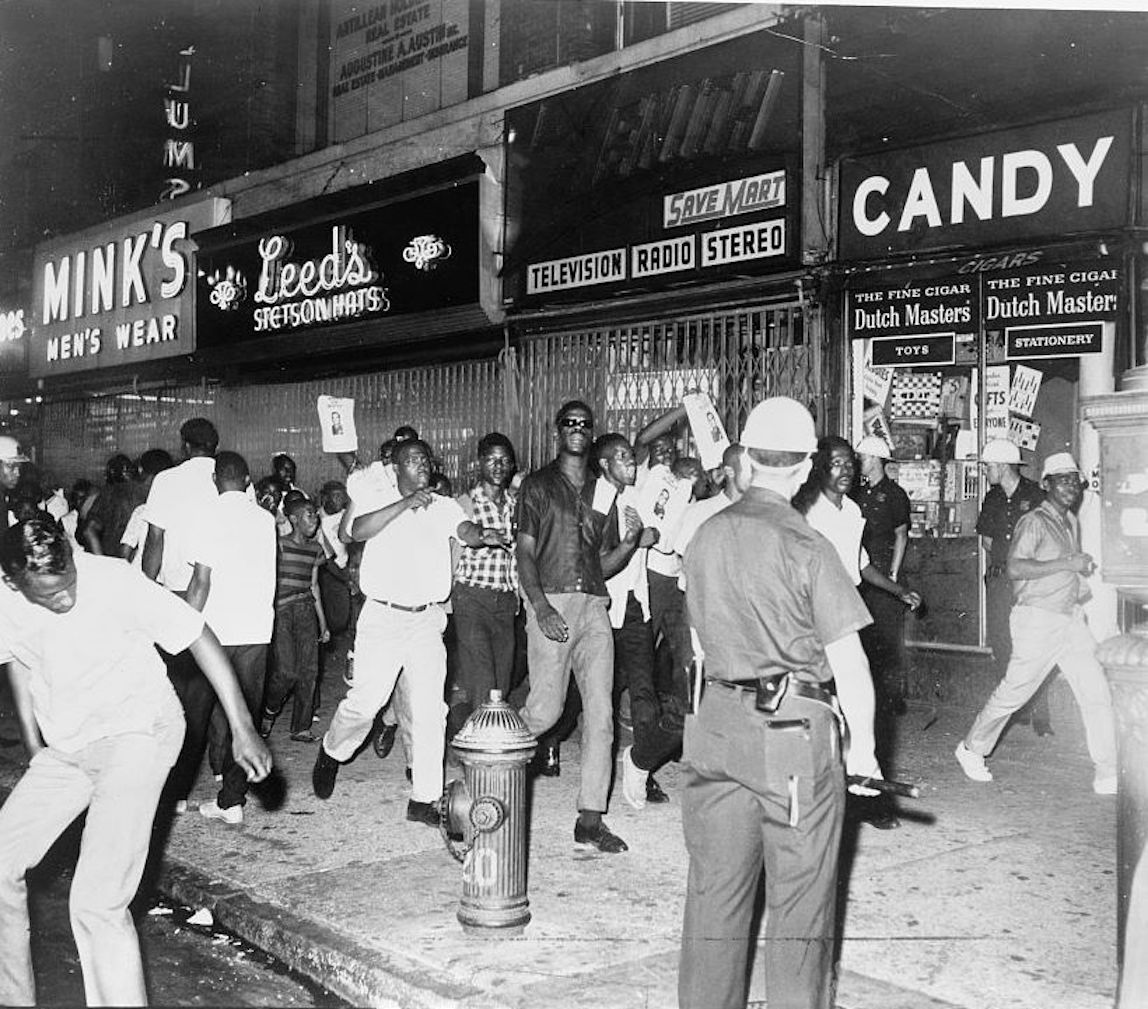
Yet Flamm’s book isn’t specifically about the crime, but the chaos which ensued — the New York Riots of 1964 (with the most violent night often referred to as the Harlem Riot of 1964). For several evenings following the shooting, a host of speculations and false rumors — mixing with grief and despair on a series of hot summer evenings — led to roaming violence and looting in Harlem (with some also reported in the Brooklyn neighborhood of Bedford-Stuyvesant).

The incidents which occurred that summer stem from hostilities which had built up within the black community for decades. A great distrust between the police and African-Americans played a part in the rising crime rate in poor neighborhoods like Harlem in the 1960s.

Courtesy the New York Daily News

Fearful residents felt powerless against increasing criminal behavior and drug abuse in their streets but didn’t risk involving law enforcement, who most considered corrupt and racist.

White residents avoided black neighborhoods — and vice versa — due to wildly dramatic reports in the press. Black power movements like the Nation of Islam escalated talk of violence while, in some neighborhoods, white vigilantes stopped and interrogated every black person found in the streets.

Writes Flamm: “New York sounded to the rest of the country like some frontier town helpless before the uncontrollable violence stalking its streets.”

Dick DeMarsico, New York World Telegraph & Sun

Flamm follows two parallel threads, both coming together in raw, unexpected ways. The first is a terrifying minute-by-minute account of the late-night street riots, the chaotic protests and the rallies organized by those who wished to funnel that rage into a mechanism of change. The second is the reactions of politicians and civil rights leaders to New York’s race and law enforcement problems.

The author’s meticulous research finds microcosms of hate and fear at nearly ever corner — of the kind which will make nobody particularly nostalgic for the period. “Central Harlem seemed like a war zone, with screams from people and cracks from bullets as they ricocheted off brick walls and cement sidewalks.”

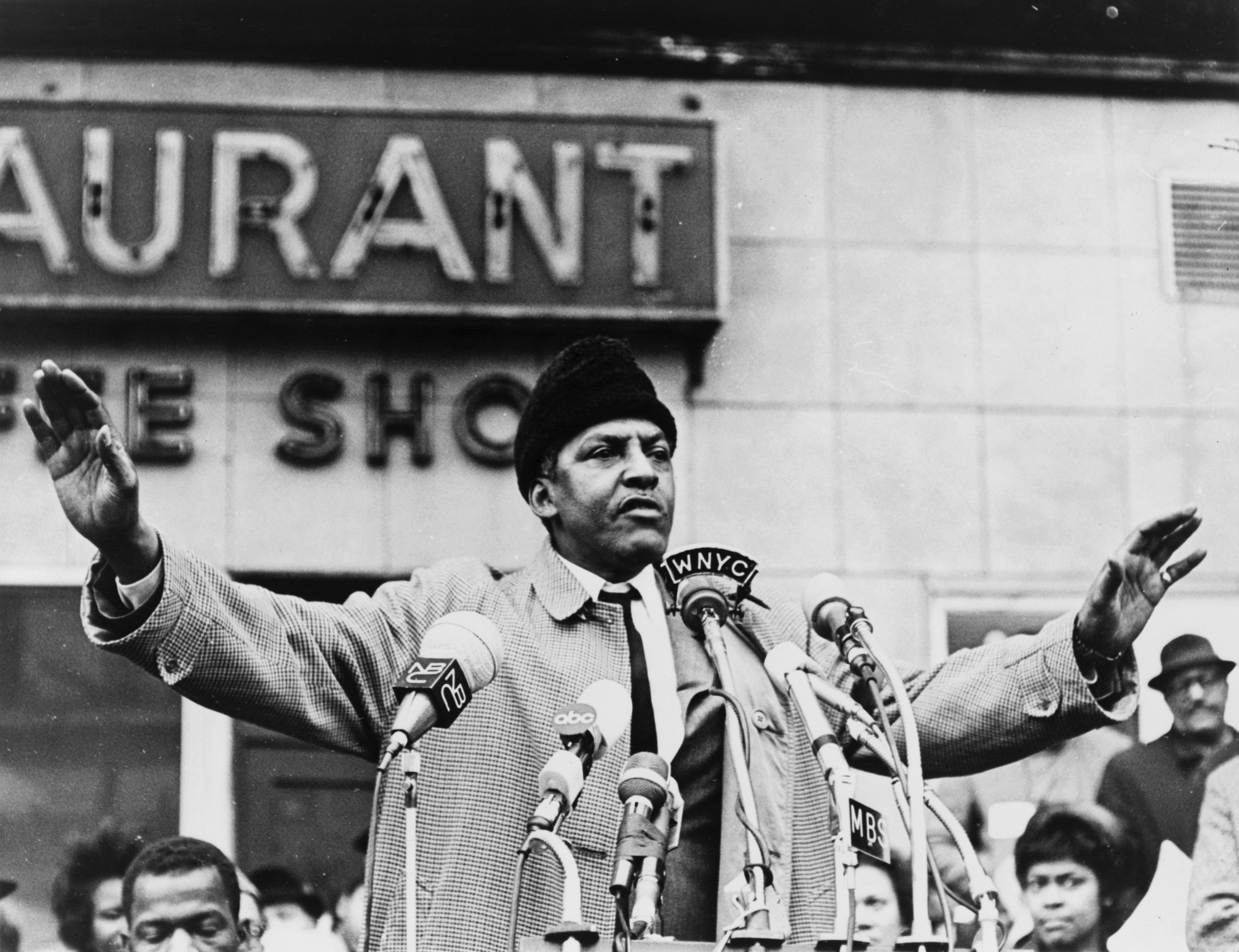
New York World-Telegram and the Sun staff photographer: Wolfson, Stanley, photographer.

At the center of the story is civil rights leader Bayard Rustin (pictured above) and the Congress for Racial Equality (CORE), often caught between keeping and promoting the peace and quelling the concerns of angry residents.

At one point, Rustin was literally disarming people. “The toll might have gone much higher if not for Rustin, who personally disposed of three cases of dynamite — enough to destroy a city block — after two young black men agreed to give it to him instead of using it.”

Few history books I’ve read in the past twelve months have felt as immediate as In the Heat of the Summer, with anecdotes that seem to speak pointedly to the events of today’s headlines.

For example, some police authorities applauded television coverage of the riots. Said one commissioner: “It’s the best answer we have to the cries of police brutality. The camera, after all, cannot distort or lie; the worst that can happen is that the film is edited. But what you see on the home screen is the actual occurrence.”

Categories
Bowery Boys Bookshelf

Insomniac City: A strange tale of love and a tribute to off-beat New York

Writer and photographer Bill Hayes moved to New York in 2009 and experienced what many of us have already learned:  the nights are magic and the subway is a wilderness.

He began jotting down his observations of peculiar experiences, the strange behaviors of others existing in their own little New Yorks. “Every car on every train on every line holds a surprise,” writes Hayes, “a random sampling of humanity brought together in a confined space for a minute or two — a living Rubik’s Cube.”

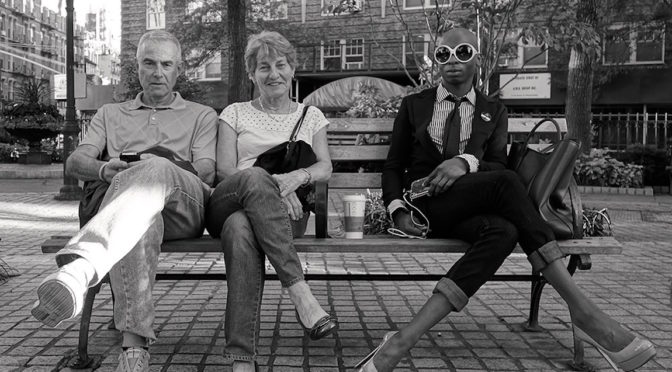
Above and below: A couple of the many strange and captivating photographs by Bill Hayes featured in the book.

During the day he would aim a friendly camera towards New Yorkers of all shapes and affinities. Hayes left San Francisco after the tragic death of his partner and fortunately seems to have fallen into New York like one of its many prodigal souls. His experiences aren’t unique; they mirror yours and mine.

Except for the fact that, oh yes, he falls in love with a noted British neurologist and author — the late and dearly missed Oliver Sacks.

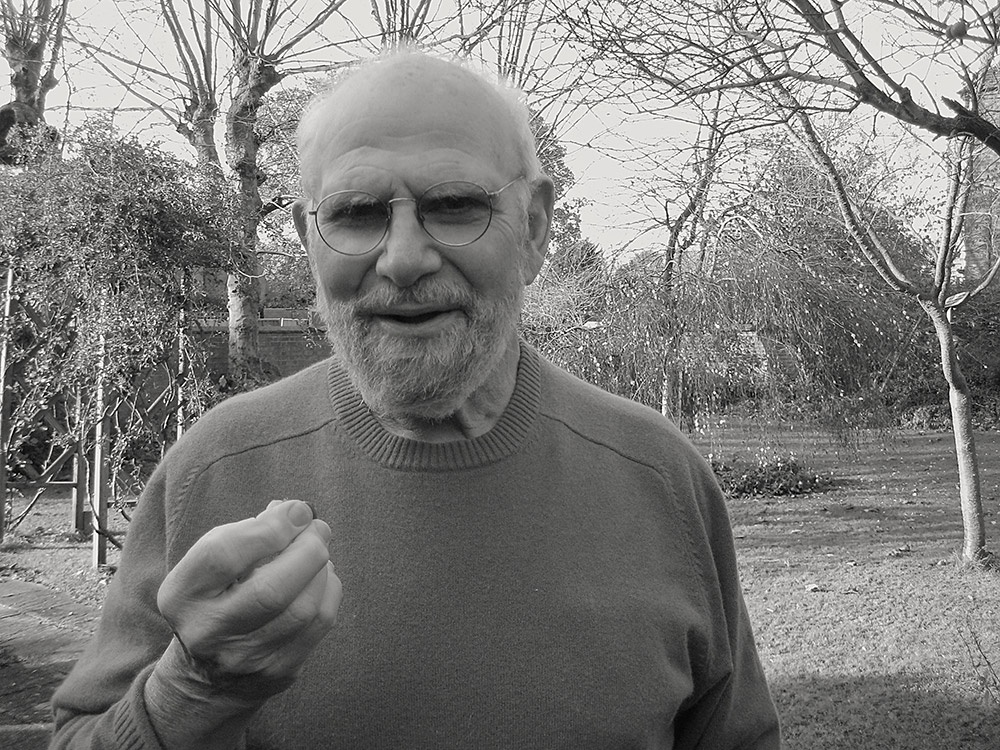
Oliver Sacks, photographed by Bill Hayes

In Insomniac City: New York, Oliver and Me, Hayes’ new memoir and urban rumination, we’re presented with a bird’s eye view of New York’s universal appeal to outsiders, paired with a microscopic look at two of those outsiders.

Sacks, a celebrated author of The Man Who Mistook His Wife For A Hat and Awakenings (the basis of the Robert De Niro/Robin Williams film), was a guarded individual, coming out to himself late in life and socially removed from non-professional affairs.

Hayes introduces us to Sacks’ extraordinary worldview, an intellectual who brought critical thinking into the slightest of gestures and loved going to the roof to drink wine out of the bottle. The love and reverence Hayes has for Sacks is clear, referring to him throughout the text as just ‘O’, giving us their intimate moments only when they illuminate something of his genius.

Insomniac City is a fragmentary, often poetic look at love of a city and of an individual, told in notes and journal entries. It’s a book one could easily devour in a single sitting but I suggest prolonging the experience, reading a little at a time, allowing the individual anecdotes to inform your own adventures out in the big city.

It take on a set of colossal tasks; it can be poem, a documentary and a tribute on just a single page. Hayes is giving us permission to stare into his life — and into the lives of others — in the same durations of time that we experience each other in our daily lives.  In those flash moments of bonding on mass transit or on the street, where we may imagine what another person is thinking and feeling before they vanish.

And knowing, in his vignettes, that he’s exposed an intimacy with strangers, he then bares his own to us, his unabashed mix of love, friendship and bewilderment to a wonderful, complicated man, who also came and went.

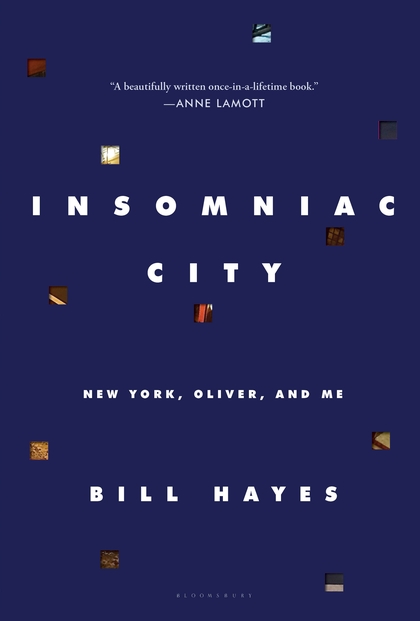
INSOMNIAC CITY
New York, Oliver and Me
Bloomsbury Publishing


Photographs courtesy Bill Hayes and Bloomsbury

Categories
Bowery Boys Bookshelf

The Magic of 1930s New York Through a Child’s Eyes

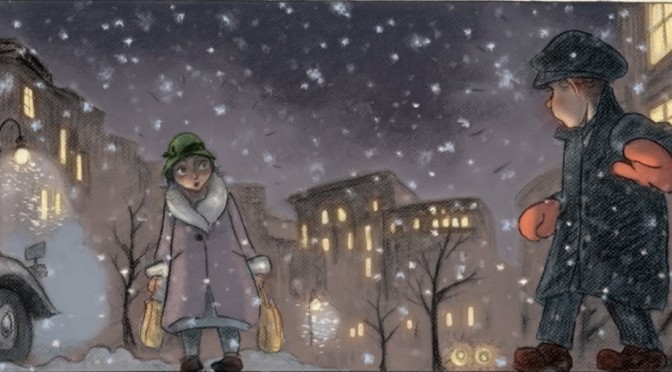
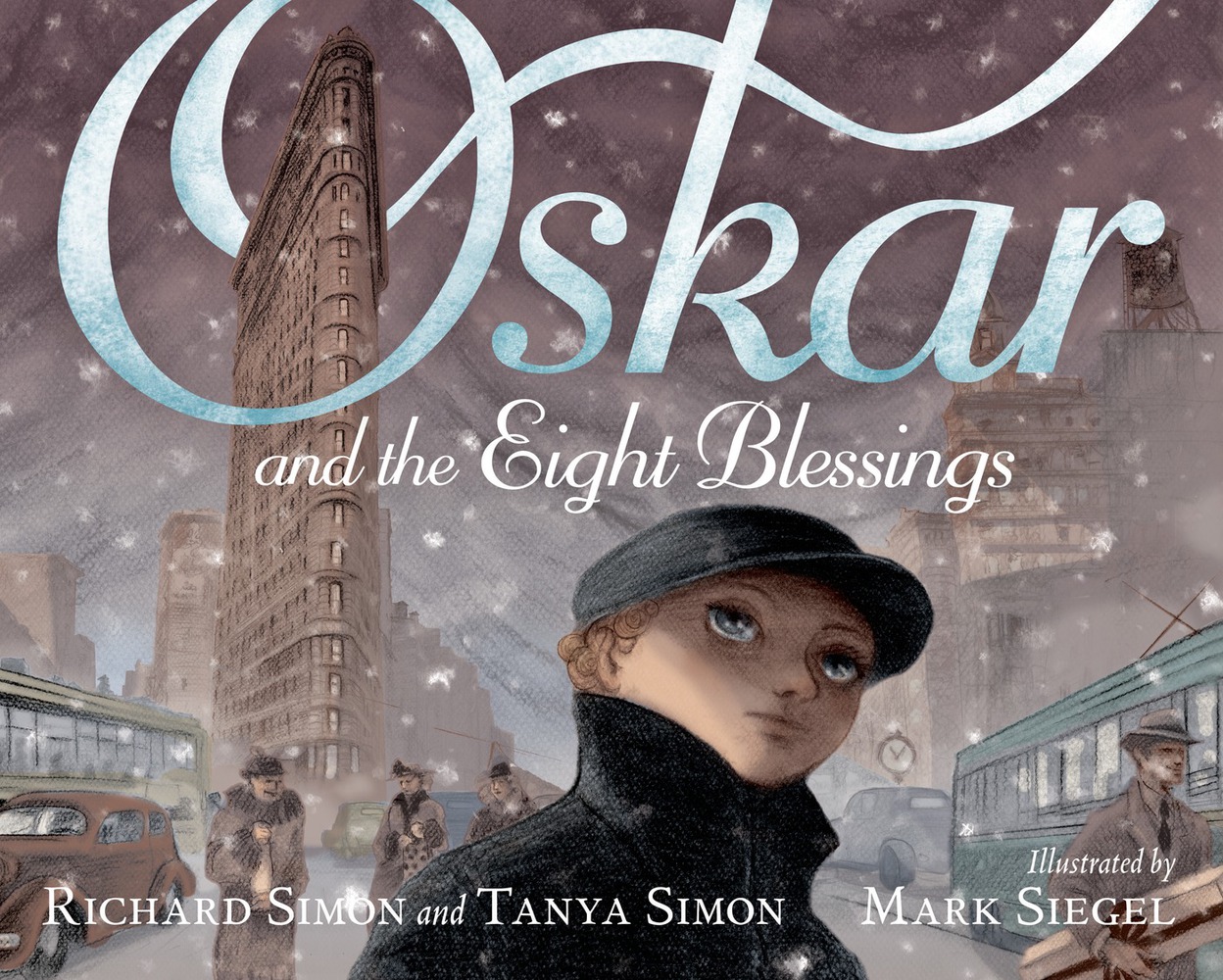
I don’t often review children’s books on this blog, but then again, there are few that use New York City history in such a spellbinding way as Oskar and the Eight Blessings, a winter’s tale spun from nostalgia.

Oskar, a waif with wide eyes and curly hair, is sent to New York by his parents under troubling circumstances. They are Jews in Nazi-controlled Europe and have sent their son away to an aunt who lives in upper Manhattan.

Courtesy Macmillan Publishers

Nobody knows he’s arrived in New York. It’s during a snowstorm (albeit of the very best kind). He has to get to his aunt’s house before sundown. Oskar just needs to walk 100 blocks by himself through a completely foreign and bewildering city.

His journey is the basis of an extraordinary story about generosity and kindness that, believe it or not, can still exist in New  York, can still exist, maybe, in humanity. Authors Richard Simon and Tanya Simon aren’t setting Oskar out on a random landscape, but one uniquely tied to a specific time — the seventh day of Hanukkah 1938, which also happens to be Christmas Eve.

Through a gauze of magic realism, the New York Oskar experiences is a real New York. Oskar visits Trinity Church, Central Park, Carnegie Hall, the Dakota Apartments and other places, running into a host of New Yorkers (including a couple famous ones) who teach him a little something about being a decent human being.

I was brought to this book because of my interest in the work of illustrator Mark Siegel who I’ve been a fan of since Sailor Twain, his terrific graphic novel about Hudson River steamships and enchanted mermaids. His work here wonderfully captures New York as a sort of wistful historic mirage, a child’s distorted gaze over a city, enchanting and endless.  His illustrations seem to generate warmth as the story progresses towards its poignant and beautiful ending.

Oskar and the Eight Blessings
Richard Simon and Tanya Simon
Illustrated by Mark Siegel
Roaring Brook Press
Macmillan Publishers


Categories
Bowery Boys Bookshelf

‘Spectacle’: The Story of Ota Benga

In 1906, visitors to the Bronx Zoo observed a rather bizarre sight in the Monkey House — the exhibition of a man in African dress, often accompanied by a parrot or an orangutan.


An African pygmy, so read the sign, “Age, 23, Height, 4 feet 11 inches, Weight 103 pounds, Brought from the Kasai River, Congo Free State, South Central Africa.” Displayed in one of America’s foremost institutions devoted to the display and care of exotic animals. Elephants, tigers, polar bears, snow leopards, bison. And one young man named Ota Benga.

2

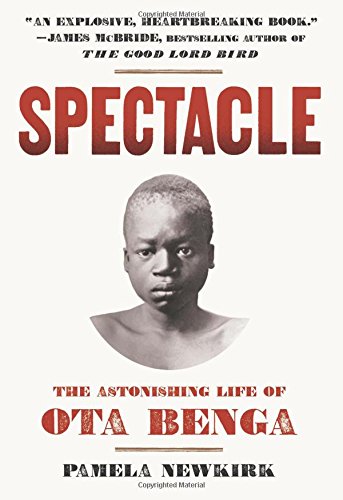
He is the subject of Pamela Newkirk’s engaging new book Spectacle: The Astonishing Life of Ota Benga, both a sincere ode to his tragic life and a contemporary accusation of the terrible forces that exploited him over a century ago.

But the story is really about the ghost of Ota Benga.

He spoke little English and there are no accounts from his perspective. Almost everything we know is from the perspective of a jaundiced press and the glare of condescending authority. He was the subject of great fabrications over the years; the truth is almost impossible to extricate from hyperbole.

While his story is front and center in Spectacle, but he barely raises his voice. He never had one.

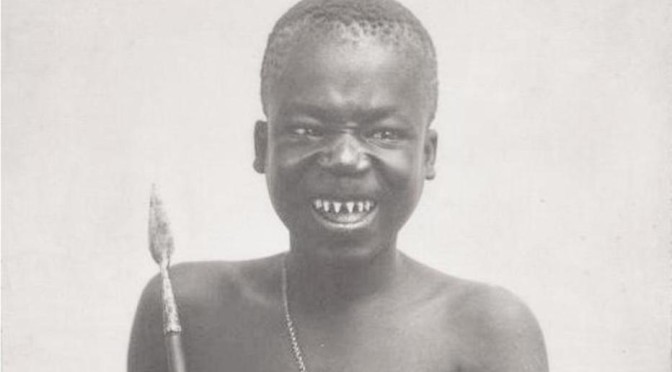
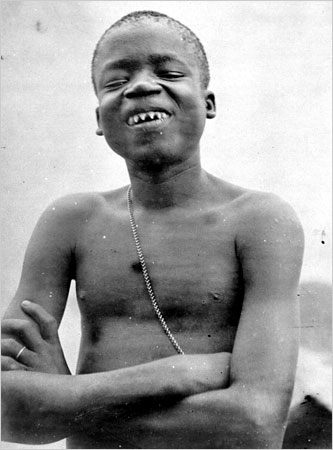
1906 photograph of Ota Benga, described as being taken at Bronx Zoo. (Wikimedia) Title: Ota Bengi     Creator(s): Bain News Service, publisher     Date Created/Published: [no date recorded on caption card]     Medium: 1 negative : glass ; 5 x 7 in. or smaller.     Reproduction Number: LC-DIG-ggbain-22741 (digital file from original negative)     Rights Advisory: No known restrictions on publication.     Call Number: LC-B2- 3971-2 [P&P]     Repository: Library of Congress Prints and Photographs Division Washington, D.C. 20540 USA http://hdl.loc.gov/loc.pnp/pp.print     Notes:         Title from unverified data provided by the Bain News Service on the negatives or caption cards.         Forms part of: George Grantham Bain Collection (Library of Congress).         General information about the Bain Collection is available at http://hdl.loc.gov/loc.pnp/pp.ggbain     Format:         Glass negatives.     Collections:         Bain Collection     Bookmark This Record:        http://www.loc.gov/pictures/item/ggb2005022751/
1906 photograph of Ota Benga, described as being taken at Bronx Zoo. (Wikimedia)
Creator(s): Bain News Service, publisher 
Ota Benga is probably not even his real name. And even then, it’s twisted and distorted mercilessly, sometimes by the man himself. (When he died in 1916, he was known as Ota Bingo.)  In 1904 he was rescued from captivity in the Congo by the explorer and would-be scientist Samuel Phillips Verner.

This is probably true although Verner is an unreliable source, often changing his own biography to burnish his reputation in the science community.  Verner was the product of his age, seeing Africans as inferior beings but seeing their continent as a source of revenue. Verner sought to profit handsomely from his ‘explorations’ both by currying favor with the Belgian King Leopold II (the ruthless leader who exploited the people of the Congo) and by snatching human specimens for display in America.

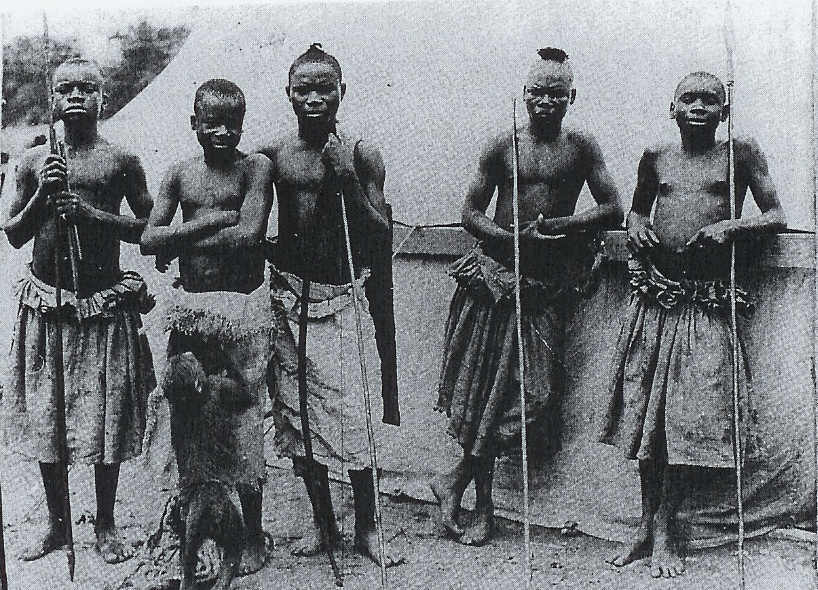
Ota Benga first arrived with a group of other men and boys for an exhibition at the 1904 St. Louis World’s Fair.  People delighted at his mischievous nature and unusual appearance. His teeth were filed into points, a decorative trait that exhibitors (including Verner) proclaimed were the product of a cannibalistic nature.

Below: Ota Benga at the St. Louis World’s Fair with other men taken from Africa 

1

He went back with Verner to Africa only to arrive back in America by 1906 where he was placed in the care of the American Museum of Natural History. Ota Benga actually lived inside the museum, subject to more than a few indignities. “I have bought a duck suit for the Pigmy,” wrote Hermon Carey Bumpus, the director of the museum, to Verner. “He is around the museum, apparently perfectly happy and more or less a favorite of the men.”

Ota Benga’s removal to the Bronx Zoo and subsequent display in the Monkey House has certainly been a blight to that institution’s history. The decision reveals the outmoded and racist philosophies that pervaded scientific thinking of the day.

At best, Ota Benga was simply an object in an exotic diorama with audiences prodding him to do tricks. His humanity was barely considered. At worst, the exhibition lays bare the racism of the day in the most baldy sinister way possible, corroding even the most esteemed institutions of the day.

It’s a small relief to hear of the many criticisms the zoo received in the press back in 1906. Sanity soon prevailed and Ota Benga left the zoo to live in an orphanage in Weeksville, Brooklyn.

2Newkirk gives the life of Ota Benga a proper eulogy. She crafts an intriguing tale around the many uncertainties of his biography, sometimes even stopping to analyze his state of mind.  I greatly credit the author for parsing through volumes of inaccurate news reports in search of even the smallest grains of truth.

His story ends with an unsatisfying hollowness, outside New York and far from the Congo. Few in his life ever treated him as an equal. In fact, due to his size, he was frequently treated like a boy, although he mostly like ended his life in his early 30s.  He never found a place to fit in.

There’s only a single moment in the book where Newkirk lets us in on his marvelous potential, on a life that could have been under more fair and enlightened circumstances.

He becomes, for a moment, “a father figure and hero” to a group of small African-American boys in Lynchburg, Virginia.  “In Benga they found an open and patient teacher, a beloved companion, and a remarkably agile athlete who sprinted and leaped over logs like a boy. And with his young companions Benga could uninhibitedly relive memories of a lost and longed-for life and retreat to woods that recalled home.”

Spectacle: The Astonishing Life of Ota Benga

Amistad, HarperCollinsPublishers

by Pamela Newkirk


Other recently reviewed books on the Bowery Boys Bookshelf:

Categories
Bowery Boys Bookshelf

The Lusitania’s final voyage, breathlessly told

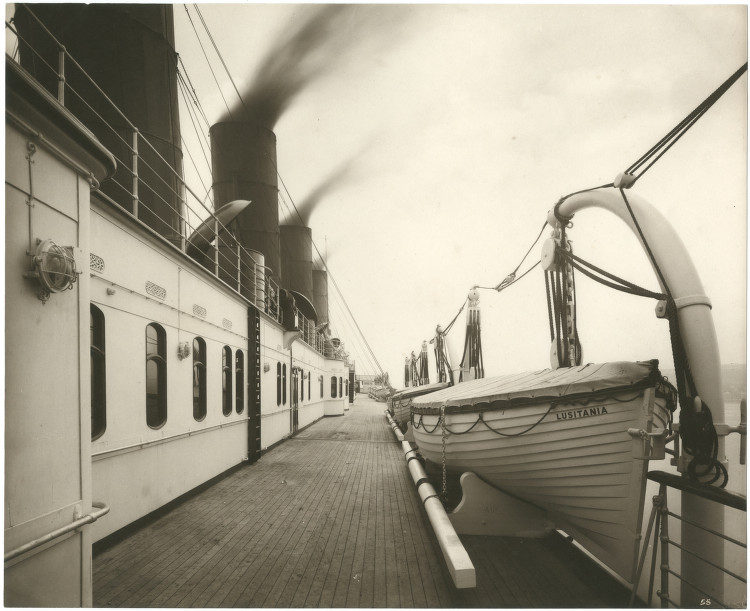
They said the Lusitania couldn’t be sunk. The German telegrams to the contrary were merely cheap scare tactics. Besides, England will provide protection once in their heavily guarded waters. The boat is simply too big to sink. There are plenty of lifeboats, enough for the entire passenger list. Even those in steerage!

And the best one — there are Americans on board. Germany wouldn’t risk dragging her into war.

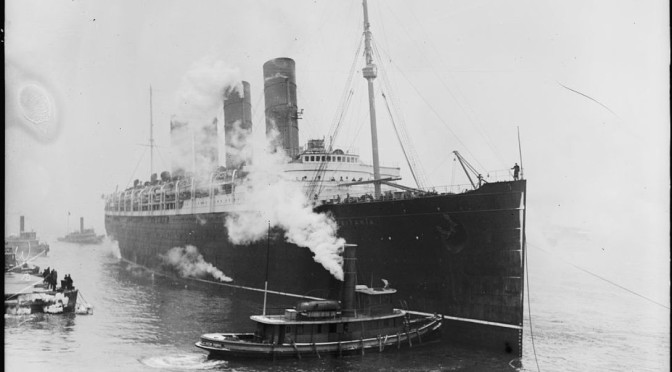
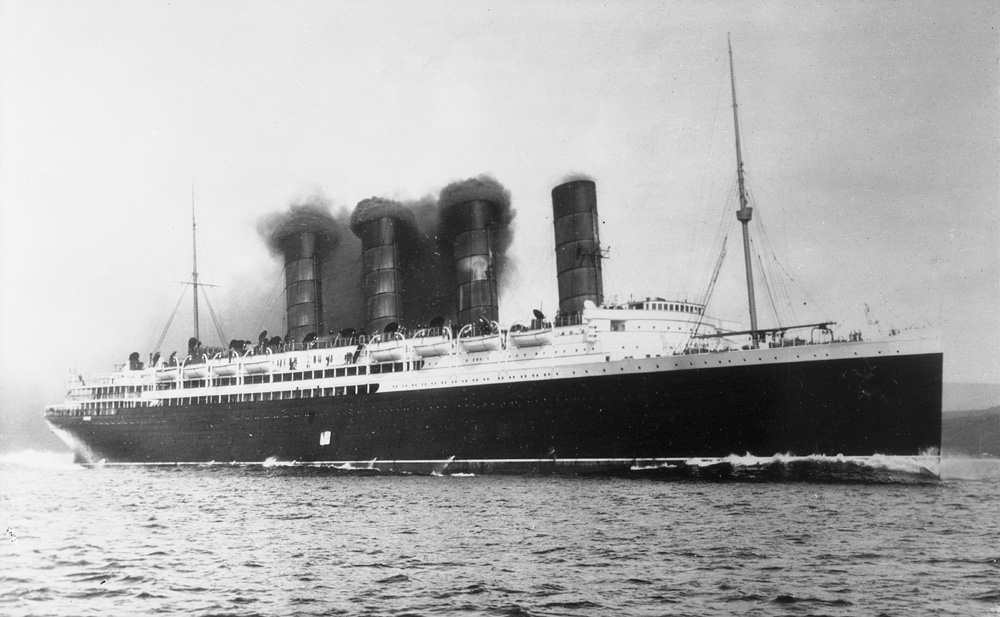
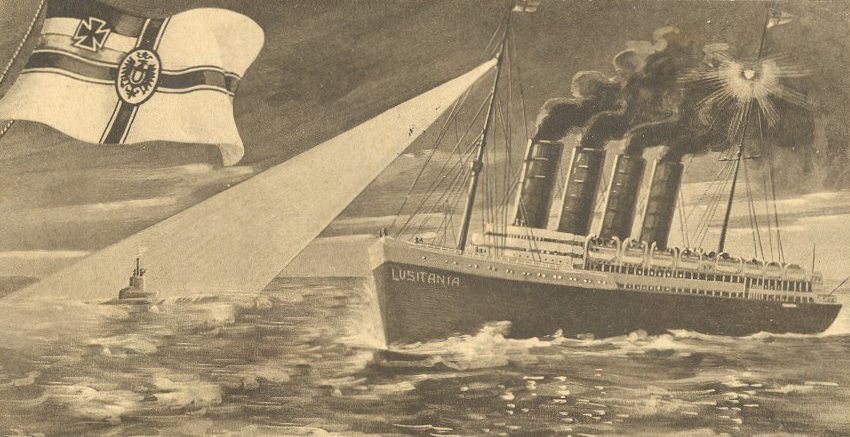
The excuses made by the passengers and crew of the Lusitania seem strikingly naive now, almost 100 years to that May 7th afternoon when the premier vessel of the Cunard fleet was taken down — by a single German torpedo — and brought to the bottom of the ocean in all of 18 minutes.

The deck of the Lusitania, 1905-07, courtesy SMU Central University

Dead Wake, the captivating new narrative non-fiction by Erik Larson, follows the tragic fate of the Lusitania from four sectors.

In England, a group of cryptoanalysts in shadowy Room 40  attempt to crack German messages as their U-boats began prowling through British-controlled waters. Meanwhile, President Woodrow Wilson, still mourning the loss of his wife, attempts to keep American neutrality intact in the face of growing threats.

But the two central perspectives are what grant Dead Wake its lurching, inevitable dread.  And Larson switches between them like the dance of predator and prey in a nature documentary.

The Lusitania on one of its early voyages, 1906, courtesy Royal Museum Greenwich

In New York, docked at Chelsea Piers, passengers from all walks of life board the Lusitania, ready for leisure and occupied with trivial affairs of the day. The bookseller Charles Lauriat Jr. boards with a valise of valuable literary works.

Theodate Pope, the spirited, independent woman who’s clearly Larson’s favorite, hits the decks with her mysterious male companion Edwin Friend. A pregnant Bronx woman named Margaret Kay boards with her young son Robert, destined to get the measles. An entire family with the last name of Luck boards the ship, never a good sign in these kinds of books.

And then there’s the enigmatic Preston Prichard, a Canadian medical student described in such striking, beatific terms that it spells doom for him almost immediately.

Meanwhile, thousands of miles away, the other narrative course follows the U-20 submarine captained by Walther Schwieger, a stern and sometimes unforgiving man in charge of a lonely vessel cutting through the waters of the Irish Sea.

Submarine warfare was primitive by nature and callous by design. Captains gauged the success of a mission not by numbers of ships sunk, but the amount of tonnage destroyed. Human lives were lightly considered.

Sinking of the Lusitania, European postcard

Larson is best known for a certain flamboyant style of storytelling, meshing two or more sometimes unrelated story arcs to create a swelling crescendo of melodrama. His books bristle with energy even when artificially cultivated. His best known book, The Devil In the White City, works entirely because of this particular narrative mechanism, weaving together the tales of the Chicago World’s Fair and a ruthless serial killer

But in Dead Wake, it’s the inevitable confrontation between the Lusitania and the U-20 that drives the story, and Larson finely manages the tension.

He prefers to spend time with lesser known people aboard the Lusitania and barely looks at its most famous passengers — Alfred Gwynne Vanderbilt or the Broadway impresario Charles Frohman. Once the torpedo hits, you’re genuinely invested in situations all throughout the boat.

The book has a cinematic feel and comparisons with the film Titanic will surely be made. You can almost feel the urge to transform passengers like Pope or Prichard into the next Rose or Jack.

But the story never lapses into phoniness or boisterous, over-descriptive speculation for long. There are thankfully few of those artificial “she felt the wind in her hair” moments that hamper other narrative non-fiction book events. Larson is the master of this particular genre, and once the torpedo hits the ocean liner on that fateful May afternoon, he’s in full control of the story.

When you get to Dead Wake‘s halfway point, prepare to keep your afternoon open, because you won’t want to put it down.

Dead Wake:  The Last Crossing of the Lusitania
By Erik Larson
Crown Publishers

Categories
Planes Trains and Automobiles

The New York City subway system opened 110 years ago today; An interview with The Race Underground author Doug Most

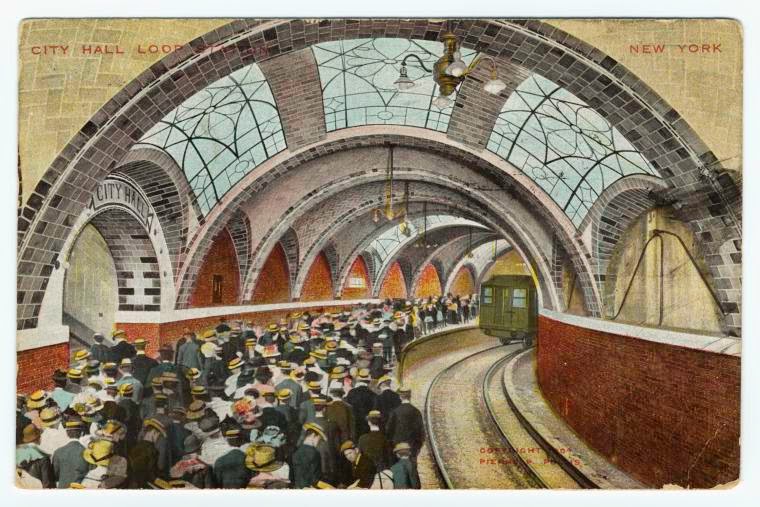
Crowds at the now-defunct City Hall Station of the brand new New York subway system. (NYPL)

One hundred and ten years ago today, the first train of the New York City subway system began its first trip underneath the city, filled with eager and excited passengers.  Thousands lined up to take this revolutionary new ride, promising a jaunt from City Hall to Harlem in under 30 minutes. At the helm of the very first subway ride was the mayor himself, George B McClellan Jr., refusing to relinquish the wheel until he had completed most of the distance.

The subway is one of the defining creations of New York’s Gilded Age, but it was hardly a foregone conclusion.  Early attempts at underground transportation by innovators like Alfred Ely Beach were waylaid by political corruption.  Elevated railroad and streetcar companies were hardly enthusiastic about it. Even the idea of going below disturbed and frightened some people.  Proponents of the subway in New York must have grimaced when Boston beat them to the punch in the late 1890s.

Both the Boston and New York subway systems benefited from great genius and even greater wealth. As Boston Globe editor Doug Most notes in his terrific book The Race Underground: Boston: New York and the Incredible Rivalry that Built America’s First Subway, the systems even shared wealthy benefactors — the brothers Henry and William Whitney, one in each city, negotiating a  host of political and technical speed bumps on their quest to build the country’s first subterranean route.

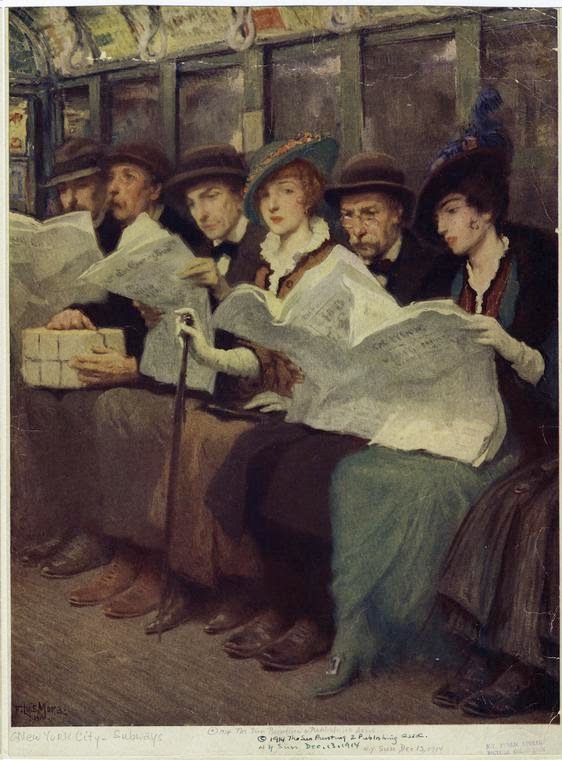
At right: Subway riders, painting by F. Luis Mora, 1914 (NYPL)

Most’s story is especially fascinating in outlining the difficulties of these ambitious projects.  What seems an absolutely sound decision today was deemed highly risky and politically fraught in its day.  On this important anniversary, I thought I’d ask the author to elaborate on the significance of this day and the spectacular achievements of these two rival cities. (And I highly recommend picking up his book this week. After all, has there ever been reading material better suited to commute reading?)

The final chapter of The Race Underground is actually titled “October 27, 1904 “? This is obviously an important date for New Yorkers, but what is it about the events of that particular day that make this a milestone in American (and even world) history?

Doug Most: ​Well, first I loved the contrast between how Boston celebrated opening its subway and New York celebrated its subway opening. Boston opened in the morning and just treated it like any other day. Here it is, we built it. New York celebrated like New Yorkers, they made it a spectacle, a party, and all the politicians and key figures wanted to play their part. Very different openings.New York’s subway was a huge achievement for many reasons. That it was built, tunneling through the ​Manhattan schist, using dynamite where needed, was incredible. Many workers died during the construction and my book tells the dramatic story of how they worked, dug, and died tragically. But that’s how society makes progress, right? We have to learn through tragedy. The New York subway was a great example of that.


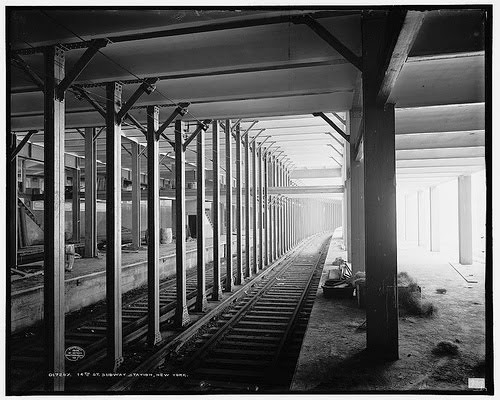
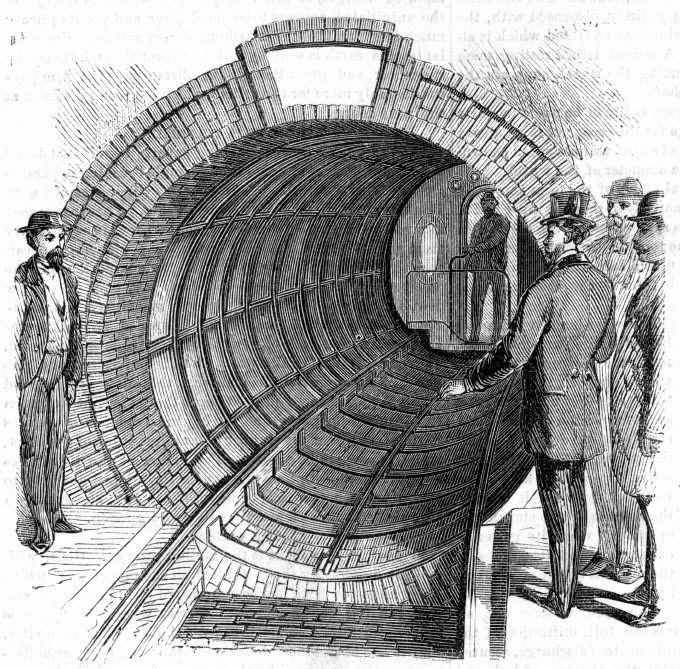
The newly completed subway tunnel in 1904, before the big inaugural ride on October 27, 1904 (Library of Congress)

The greatest obstacle for the creation of the subway wasn’t merely physical or political; it was convincing people that travelling underground could be a clean and safe experience. What were a few of the beliefs or superstitions people held in the early days?

DM:  ​It’s something we take for granted today. We bound downstairs staring at our phones and tablets and papers, and don’t give a second though to the underground. But back then in the 19th century, the underground was terrifying for people. It was where Lucifer lived! The Devil! Where vermin made their home.People needed to be convinced subways could be clean, safe, dry and healthy, that the air would not be poisonous and kill them. I love the story of London opening a pedestrian tunnel around 1840, and thousands of people taking one look down that tunnel and going right back up to the street, refusing to walk through it. That was 1840! In terms of history, not that long ago. It took a long time for society to accept the underground as a safe place to travel.​

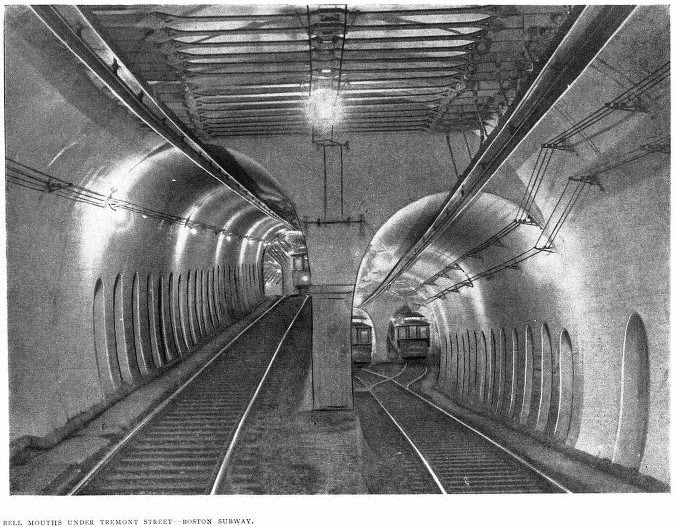
Under Tremont Station in Boston (courtesy nycsubway.org)

Your story is framed as the glorious rivalry between two brothers – Henry and William Whitney – and two rival cities, Boston and New York. But Boston really manages to pull ahead for much of the story. Was this because the needs of the city were easier to accomplish or was it because of New York’s corrupt political system at this time?

​DM:  I think it’s both. New York struggled politically with some big decisions and some key characters stood in the way of progress, including of course Boss Tweed. New York absolutely should have been ahead of Boston; they were talking about a subway in New York in the mid 1800s, but it didn’t get built until 1900.Boston didn’t start thinking subway until 1887 and then moved very quickly. New Yorkers were not happy to see that little podunk city to the north making so much progress while their city kept getting bogged down in politics.​


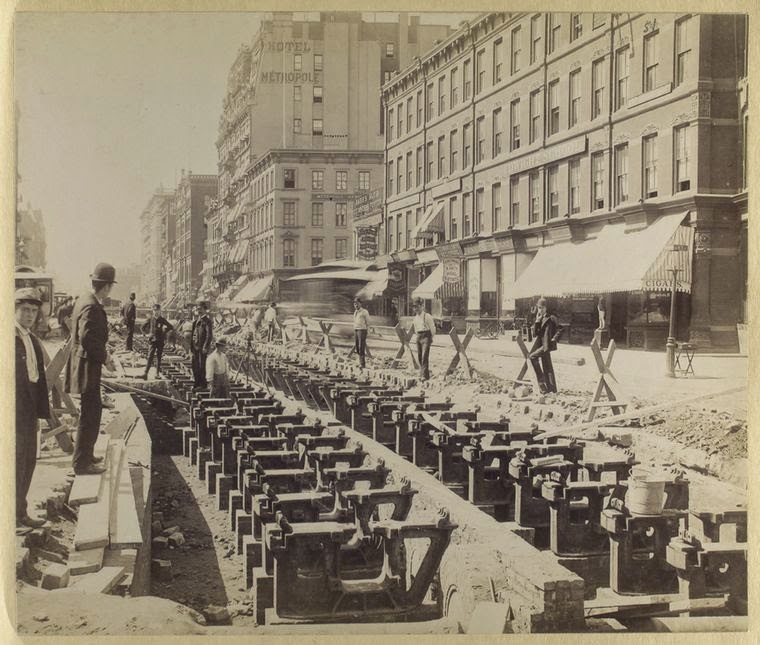
Digging up Union Square to lay cable-car lines, 1891. (New York Public Library)

The story of The Race Underground features an extraordinary build-up of transportation technologies, from noble but failed technologies (the pneumatic tube) to others that led to the birth of the subway (like electric streetcars). What do you personally consider the most interesting or surprising development in transportation prior to the birth of the subway?

​DM:  Well the story of the cable car was fascinating, because it seemed like for a few years that was the future of urban transportation. It was cleaner and faster and smoother than the horse-pulled carriage, and people enjoyed riding them and it really looked like it might take off. San Francisco gave birth to it, and other cities, including New York, experimented with it.But as cities quickly learned, the cable car had a big problem. Those cables could twist and snap and fixing them was slow and expensive. And when a cable snapped, the entire system ground to a halt. Plus, cables were only effective in cities with lots of long straight roads like New York. But in smaller cities, like Boston, with twists and turns and narrow streets, cable cars just didn’t make sense. I love the story of how the cable car was almost our future, and then suddenly, it was gone!​

Now speaking of that pneumatic tube, here’s a what if? – say Beach faced no opposition from Boss Tweed and the elevated railroads. Could New York have actually built a viable transportation system using this method? After all, people are looking into pneumatic systems for possible high-speed travel today!

​DM:  No. Chapter One in my book, the story of Alfred Beach and Boss Tweed, is really my favorite chapter for so many reasons. And the great fan he used, the Western Tornado, to blow his subway car down the tracks. But was a fan really going to blow subway cars all over the island of Manhattan? No it wasn’t. The technology being talked about today is so sophisticated, involving electromagnetic charges and other methods far beyond basic pneumatic tubes. ​But Beach was a dreamer, a lot like Elon Musk of Tesla, and we need dreamers like that to push us forward as a society. So that’s why I love his story so much.

What features of the modern New York City subway system are you the most impressed by today? And what could use some serious improvement?​DM:  The speed is impressive and so is the reach of it — how you truly can reach almost every corner of the five boroughs on the subway. That’s so different than other cities, especially Boston and Washington, for starters, where the transit systems are much smaller and harder to survive on without a car. I am not sure I have any great suggestion for New York’s subway. I’m a big fan of it, and loved riding it when I lived at 80th and Broadway, and love taking my kids on it today when we come back to visit. It’s a treat and it’s a part of history I hope people appreciate.​

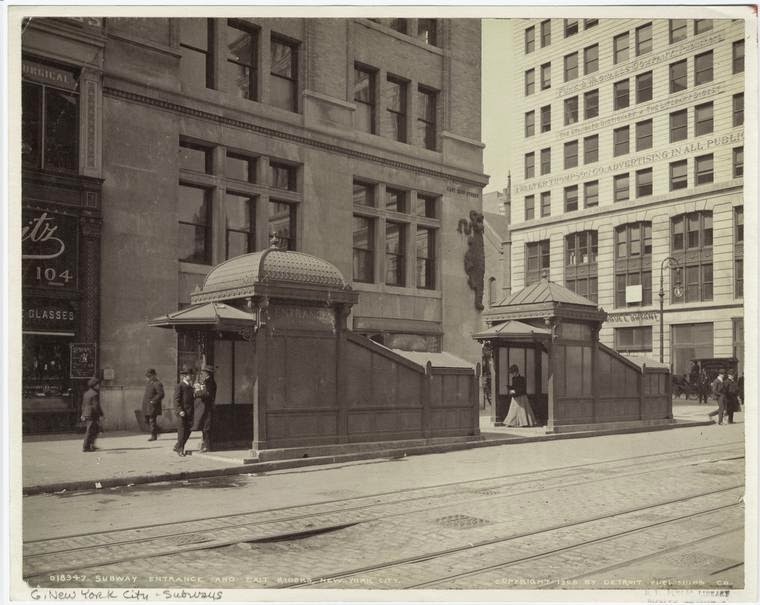
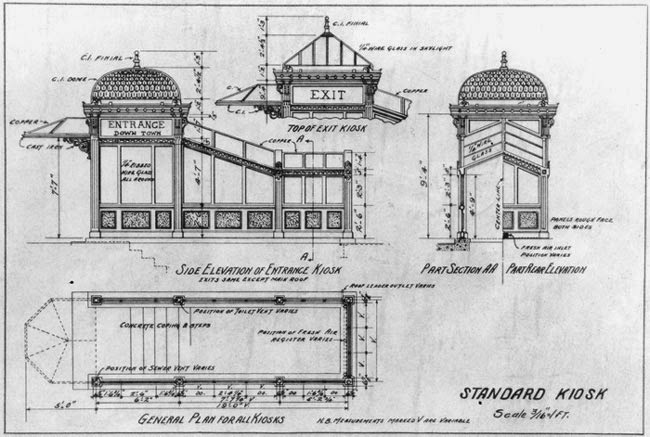
Below: New York’s distinctive subway entrances, inspired by the subway system in Budapest, 1905 (New York Public Library)
Categories
Bowery Boys Bookshelf Skyscrapers

Supreme City: The ascent of Midtown Manhattan in the 1920s


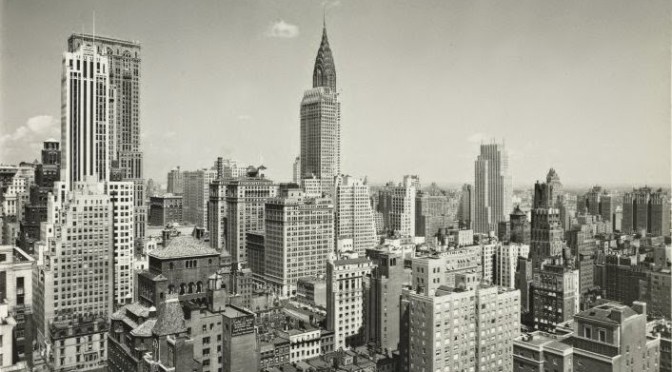
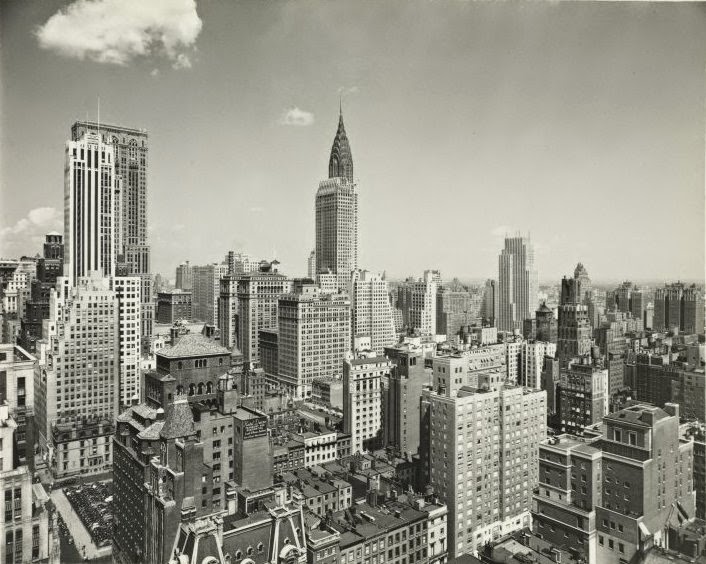
A view of Midtown Manhattan, looking southeast, by the Wurts Brothers (NYPL)

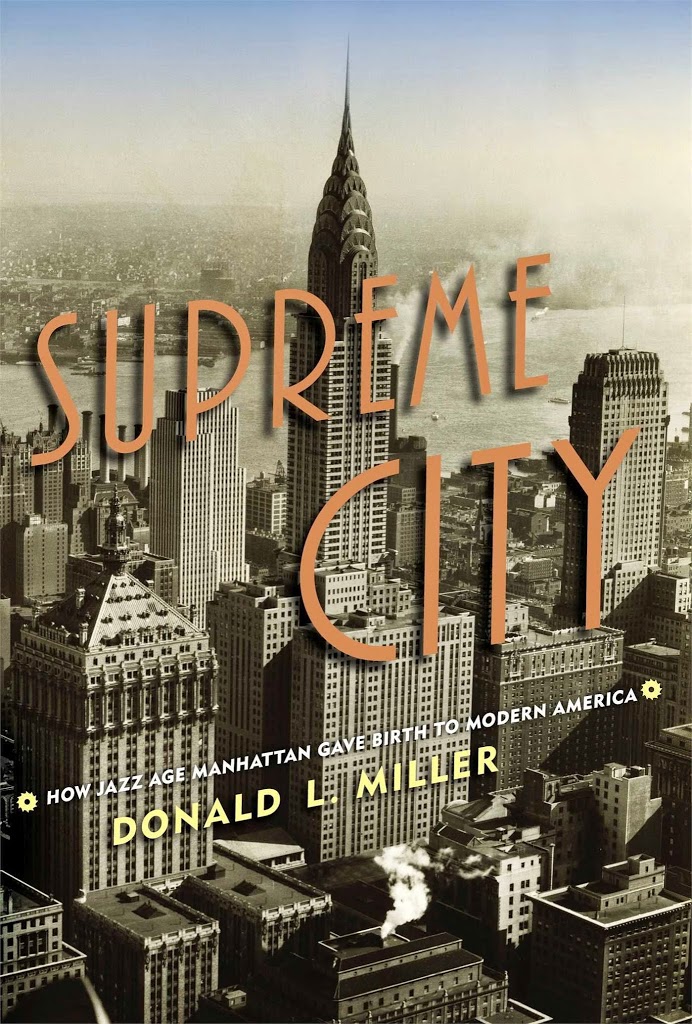
Supreme City
How Jazz Age Manhattan Gave Birth to Modern America
by Donald L. Miller
Simon & Schuster

Supreme City, by Donald L. Miller, certainly one of the most entertaining books on New York City history I’ve read in the past couple years, is also one of the strangest.  Almost as an obligation, New York’s Prohibition-fueled nightlife and the rowdy administration of Jimmy Walker are conjured up front, and colorfully so, only to then be placed aside.

This is not a book about the standard subjects of the 1920s.  This is indeed an epic about New York City in the Jazz Age, but it’s a wildly different tune than the one in which you’re familiar.

This is a tale of architecture and invention, of a boldness and proportion that New Yorkers take for granted today.  Supreme City recounts the invention of Midtown Manhattan, but it’s also about a spiritual shift in urban life.  This is the story of how New York City became not only a supreme city, but a supersized one.

Miller, a professor of history at Lafayette College perhaps better known for his works on World War II, approaches the sprawl of New York’s most ambitious decade almost like a mathematician. He ties this epic — a swirl of large personalities and impossible ideas — into a specific intersection of time and place.

It’s as though a slew of particles (comprised of ambitions and personalities) just slammed into each other one day, creating a new form of urban environment.

Industrial visions and personal journeys alike culminate in the year 1927, a watershed date for New York history, and arrive within the Manhattan grid system, mostly along 42nd Street between Eighth Avenue and Lexington Avenue, the nucleus of a new urban vision.  The story ventures out through the entire city of course but always to the beat of this new Midtown.

From here, Miller brings in the components of growth, the great innovators and personalities, plotted in relation to each other and to the great city blossoming under their feet.

These aren’t just the standard innovators, the expected cast — David Sarnoff, Duke Ellington, Charles Lindburgh. Sure, you get a bit Texas Guinan‘s drunken swagger, a little of Jack Dempsey‘s scrappiness.  But Miller gives equal prominence to perhaps less colorful real estate gurus and planners whose contributions created the playing field of modern New York. While it’s always nice to relive the 1920s through a lens of champagne and The Great Gatsby, Miller’s concern is with the players who actually built the city.

The engineer William Wilgus receives deserved placement in Supreme City for his innovations of covering the unpleasant tracks of Grand Central to create acres of new land, “taking wealth from the air” and inventing New York’s ultimate canyon of wealth — Park Avenue.

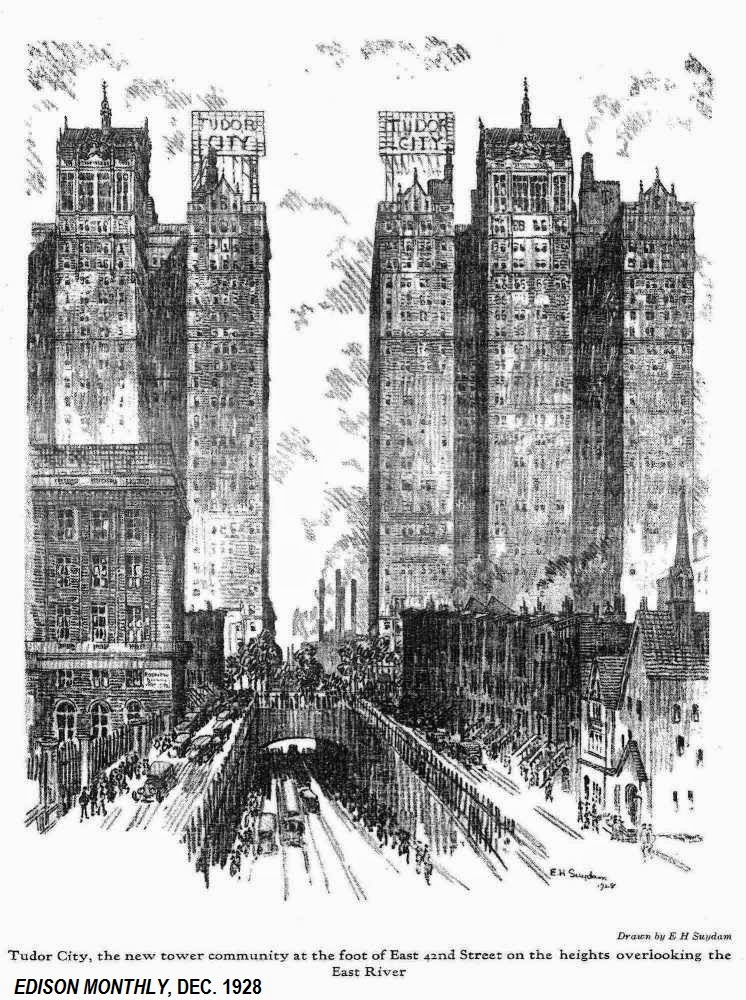
Architect Emery Roth brought the apartment skyscraper to Midtown and practically invented the allure of the penthouse.  The almost faceless Fred French — his section is actually called “Who on Earth was Fred French?” — turned the apartment complex into a swanky, thematic thrill with such Midtown projects as Tudor City (a 1928 illustration pictured at left).

Of course, it took the wealthiest New Yorkers to fuel these changes. New money sparked the new playing field.  The old families hastened their migration up Fifth Avenue, their mansions abandoned, torn down and replaced with the high-end shops in which they would later shop.

While department store masters like Edwin Goodman swept out the socialites to build his Fifth Avenue temple of commerce Bergdorf-Goodman, the pleasant rivalry between Helena Rubenstein and Elizabeth Arden helped generate the avenue’s reputation of social perfection and high glamour.

Sensing the upward surge of Midtown — its almost-amoral infinite rise — impresarios like Samuel “Roxy” Rothefeld, Florenz Ziegfeld and George “Tex” Rickard rose to create venues to corral the masses.  Midtown became home in the 1920s to the industries of entertainment — publishing, radio, television.  Even Seventh Avenue below Times Square found purpose in the swell as America’s Garment District.

As Midtown grew in the 1920s, the instruments of getting there also rose to the challenge, finally conquering the Hudson River, from the Holland Tunnel to the George Washington Bridge.

The story is so big that Miller can’t contain all of it. Supreme City captures that place before the Great Depression, perhaps New York’s single most decadent moment. He does not venture out into the other boroughs and rarely even ventures below 42nd Street. From the vantage of the Chrysler Building — the treasure most indicative of the age — those places are hazy and distant.  By the last page of this heavy tome, Midtown Manhattan creates everything, drives everything, almost entirely is everything.  That energy is certainly infectious, making Supreme City is an rich, propelling read.

Categories
Landmarks

The wonder of the Chelsea Hotel: ‘Inside the Dream Palace’ — an interview with author Sherill Tippins

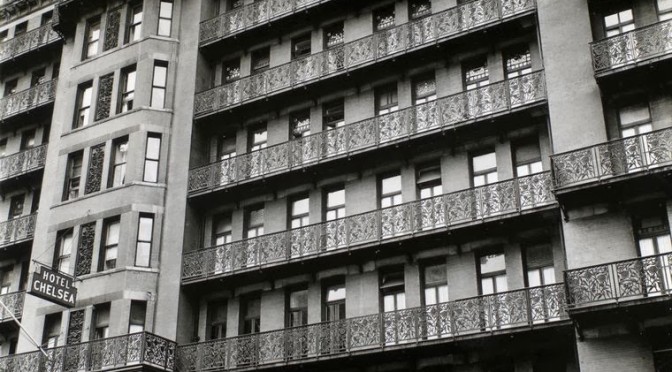
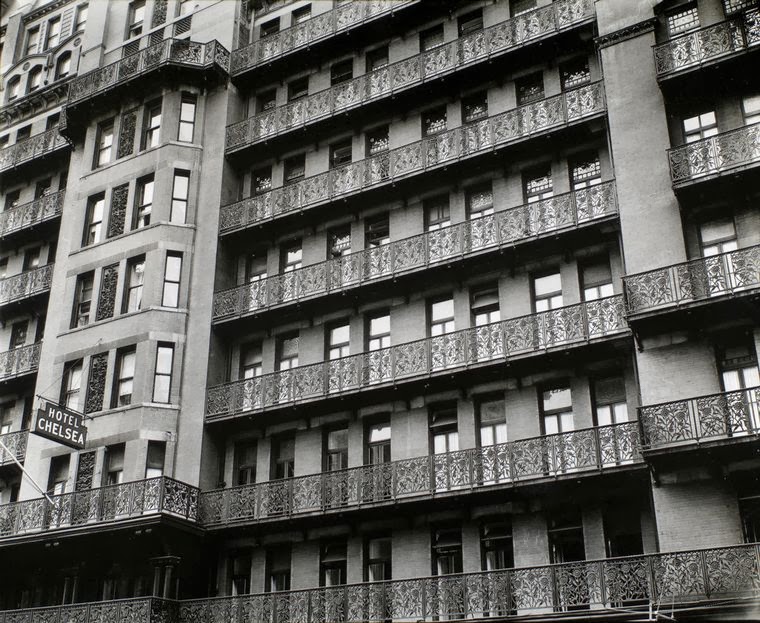
The Hotel Chelsea, August 1936, photograph by Berenice Abbott (NYPL)

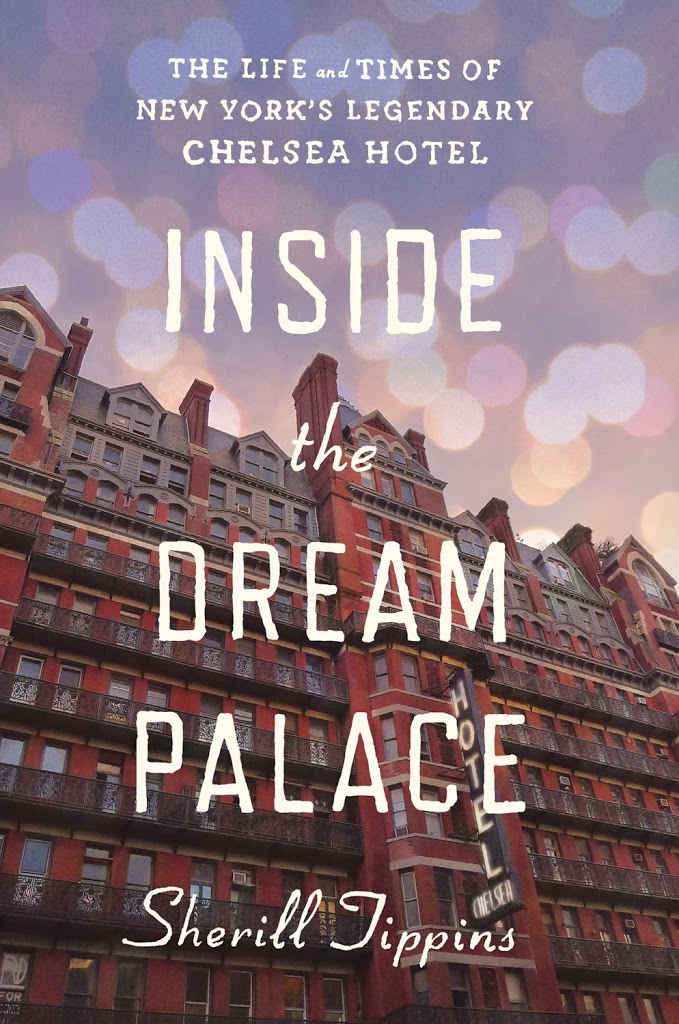
Inside the Dream Palace
The Life and Times of New York’s Legendary Chelsea Hotel
by Sherill Tippins
Houghton Mifflin Harcourt

Few places in New York exist with so many ghosts as the Chelsea Hotel. Oh, I don’t know if it’s really haunted, but the historical figures that have gained inspiration from their stays at this storied place have certainly left their mark.  But with geniuses — with the pressure of being genius — also comes drama, escapism, and tragedy.

Sherill Tippins‘ new book on the Chelsea Hotel — aptly named Inside the Dream Palace — does double-duty as a hall of fame for great substance-abusing artists and writers.  It’s a wondrous, colorful account of a unique social living experiment as it slowly dismantled its pretensions and became a rustic den of creativity, community and debauchery.

All the great tales are recounted here — from Dylan Thomas‘s death to Sid and Nancy‘s tragic evening — and a many new ones introduced.  For all the names I expected to see (Henry Miller, Arthur C. Clarke, Thomas Wolfe, Patti Smith), there were a great many more that have surprising connections to this unique landmark.

I had such a fantastic time sampling the lives of the Chelsea’s various characters that I wanted to ask the author a few questions myself.  Here’s Sherill Tippins, elaborating upon the hotel’s unusual origins, its tenacious spirit and uncertain future:

Reading of the original philosophies behind the Chelsea Hotel – the utopic, if somewhat simplistic notion of communal living of various types of classes – I kept thinking ‘Wow, imagine if somebody tried floating this idea today!”  What was it about this period and this project specifically that made people open to such a radical suggestion?

ST:  In the wake of Boss Tweed’s thefts, the long, deep recession of 1873, and the usual massive shift of wealth to the top one percent that followed (sound familiar?), the city’s social fabric seemed to many New Yorkers to be irredeemably destroyed.  People were so desperate for some kind of workable solution that New Yorkers from different economic classes started meeting in unprecedented ways – “bankers sitting next to bakers,” as one reporter put it in amazement – to discuss what had happened to the city and how it might start to recover.

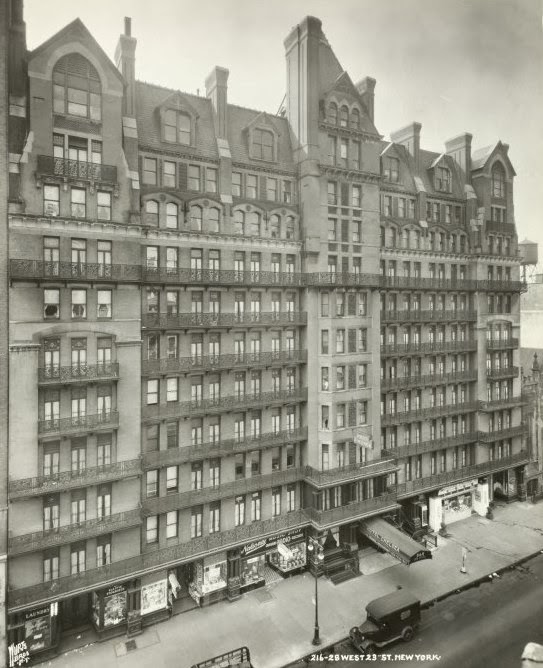
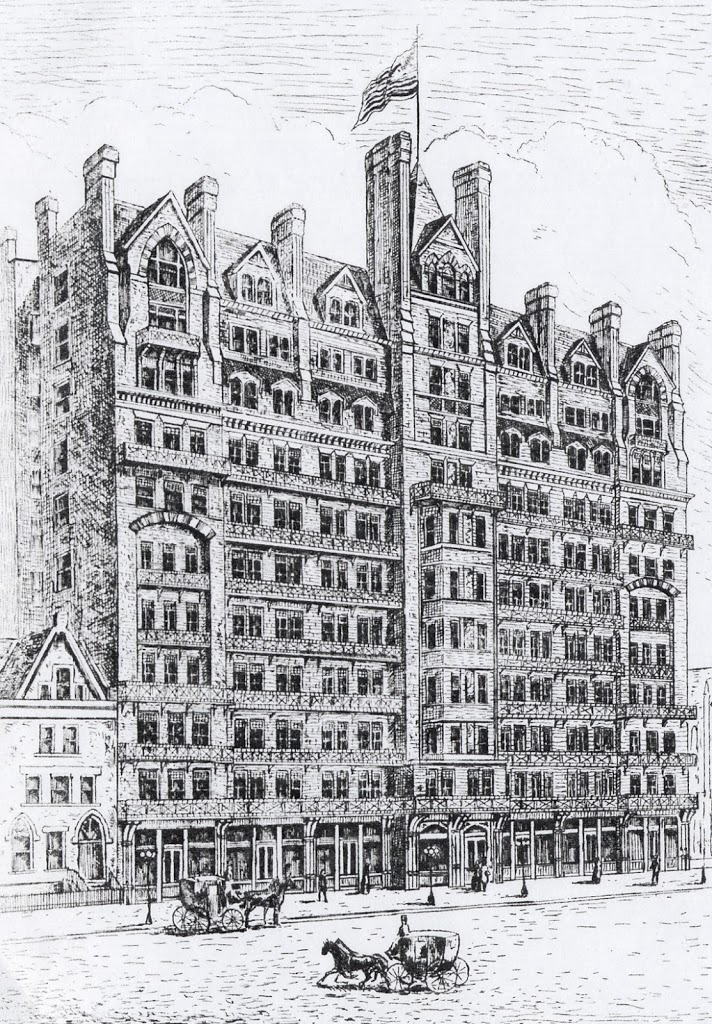
Into this critical moment in history walked the Chelsea’s architect, Philip Hubert.  Basically, Hubert appealed to New Yorkers in the same way every successful idea man has in New York, before or since – via their pocketbooks.  (Below: The Chelsea, photographed by the Wurts Brothers, NYPL)

He introduced the concept of cooperative living – showing how much cheaper it was for New Yorkers to form a “club” to buy their own land, build an apartment house to their own liking, and share the costs of maintenance, fuel, and other services.  The new cooperative apartments were so appealing and cheap that the demand for them proved nearly insatiable.

Here was a way to bridge the stultifying divide that had opened up between classes in a society where status was determined by the size of an individual’s bank account, so that citizens felt compelled to isolate themselves, as Hubert put it, “to guard their dearly cherished state of exaltation.” New Yorkers who lived together, on the other hand, would have to converse and exchange ideas. Alliances would form, and perhaps these alliances would arm groups against the chicanery of the next Boss Tweed.

To create real diversity, Hubert had to make cooperatives not only practical but, in a sense, sexy.  He managed that feat with the Chelsea Association Building, set in the heart of New York’s racy theater district, at the intersection of all the new elevated railroad lines and equidistant from the Ladies’ Mile shopping district and the decadent Tenderloin.  To make life at the Chelsea even more enticing, he built a cooperative theater and a drama school to go with the cooperative, and invited in an assortment of artists, musicians, actors and writers to spice up the core population of businessmen, financiers, and working people.

You walk us very vividly through different decades of the Chelsea’s strange and storied existence. If you could re-visit a particular era of the Chelsea yourself, to which time period would you like to see? Its earliest days, the wild 60s, or another era?

ST
:  Every time I’m asked this question I respond differently, because in fact I love every era at the Chelsea. Today, though, I’ll choose the Depression era as the one I’d most like to experience.

It was a surprisingly idyllic time at the hotel.  Room prices had lowered to a level that artists could actually afford, and secondly because many residents experienced a new kind of creative freedom as they were subsidized financially by the W.P.A. (“I can’t begin to tell you how rich everyone was,” one artist recalled.)

This was the era when the residents laid down a set of “house rules” that have been followed, more or less, ever since: don’t interrupt people during work hours; don’t visit without an invitation; don’t hit up famous neighbors for a job or a connection, and so on.  With their privacy protected, working artists felt comfortable socializing after hours: Edgar Lee Masters entertaining Thomas Wolfe in his suite, Masters and the artist John Sloan listening to music on the Victrola together, Van Wyck Brooks dropping in for cocktails with Sloan….  It was from these interactions that a real, lasting Chelsea Hotel culture was born—a culture that would nurture generations of artists in the decades to come.

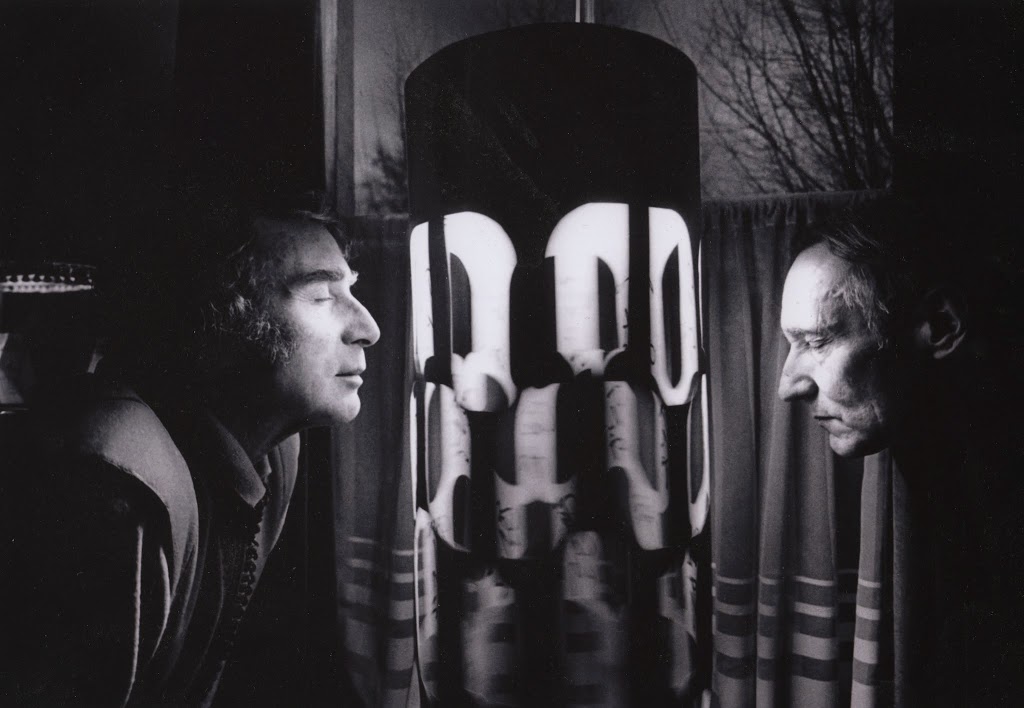
From ‘Dream Palace’: “The artist Brion Gysin and his close friend William Burroughs arrived to market their new invention, the Dream Machine.”

You’ve written about so many iconic writers and artists, both in this book and in your past projects. And this is really a story of icons, as they pass through this extraordinary landmark.  But I greatly enjoyed stumbling upon some of your rather obscure figures here, those fairly forgotten today. Any particular individuals that you newly discovered in your research that were a particular favorite of yours?

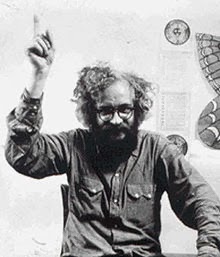
ST:   One of the most fascinating longtime Chelsea Hotel denizens, who is known surprisingly little considering his cultural contributions, is the anthropologist-musicologist-artist-filmmaker-occultist Harry Smith (at right).  Smith created The Anthology of American Folk Music, a collection of powerfully resonant American blues, ballads, gospel, and other songs that helped inspire the 1960s folk music movement and that inspired Bob Dylan in particular.

At the Chelsea, in his role as house magician, Smith provided the Yippies with a magic spell for levitating the Pentagon and Leonard Cohen with a love spell to seduce the singer Nico. (It failed, sadly.) Smith was also an experimental filmmaker, considered a genius by the underground film community; his films were designed to affect viewers neurologically, presumably altering their state of consciousness as a path toward further evolution. In the 1970s, Smith created a film, Mahagonny, based on the opera by Kurt Weill and Bertolt Brecht and featuring such Chelsea Hotel residents as Patti Smith, Robert Mapplethorpe, and Allen Ginsberg—a film intended to communicate to all cultures, regardless of language or location, humanity’s troubled state.

There are others I found captivating, even if they weren’t known outside their small circles of admirers.  In fact, I would have included hundreds more if I’d only had the pages to contain them.

There’s also a large amount of tragedy associated with the Chelsea, from the most famous events (Dylan Thomas and Sid Vicious, of course) to even the footnotes of history, those known only for their awful ends.  For instance, the woman who cut off her hand and jumped off the roof. (I went back and read that sentence like six times!)  Did you sense any particular reason for this in your research? Is it just the density of dramatic figures that stayed here? 

ST: I’m so glad you asked that question, because I’ve asked it myself so many times!  Unfortunately, I’ve never come up with a definitive answer, but I can give you my hypothesis.

Somehow, from the beginning—according to the letters and other writings in various archives—the Chelsea has always felt feminine to those who have lived in it.  Feminine and maternal, like a mother welcoming her children into her arms.  I would imagine that if one were in a state of existential despair or psychological extremity, one might look for comfort to an architectural (archetypal?) mother figure, particularly as one made the ultimate decision to end one’s life.

I’m thinking of Frank Kavecky, the impoverished young artist who was robbed on the subway of funds he was holding for the Hungarian Sick and Benevolent Society.  Discovering his loss, he went straight to the Chelsea – checking into a room for the afternoon, locking the door, settling himself into a rocking chair, and shooting himself in the head.

And Almyra Wilcox, the well-to-do visitor who overdosed on pills while writing a love letter to someone she knew she’d never see again. She was found dead the next morning, unfinished letter in hand.  Reading these stories, I think, if I were ready to do myself in, I might choose the Chelsea.  Wouldn’t you?

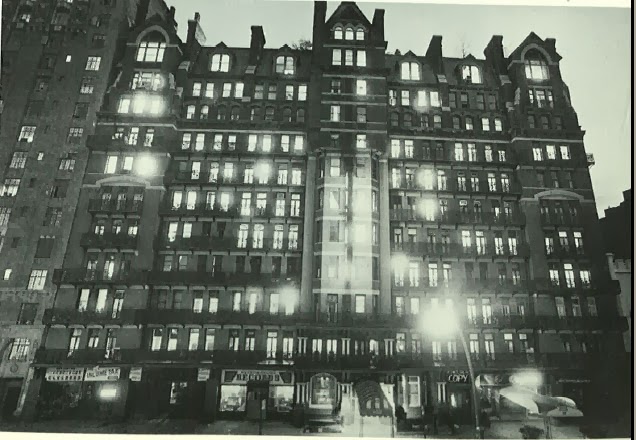
Photo by Claudio Edinger (courtesy Ed Hamilton/Living With Legends)

The fate of the Chelsea Hotel remains undecided, sitting empty, “like a corpse in its niche on Twenty-Third Street.”  If you could somehow dictate the future of the Chelsea yourself, what would you like see happen here? A return to its transient roots or an entirely new purpose altogether? 

ST:  Of course, the obvious desire would be to bring back the old days, with the former co-owner Stanley Bard managing the Chelsea and his son, David Bard, waiting in the wings. But since life is about moving forward, I would hope that the new owner, Ed Scheetz, will respect the Chelsea’s traditional function as fully as he claims to do.

The new owner has some intriguing ideas for the “new” Chelsea: creating a small, urban MacDowell-colony type program in which a half-dozen artists would enjoy free room and board, along with space on the ground floor to display or perform finished work.  He has shown me his plans for placing large, expensive rooms next to small, relatively cheap ones, to encourage a mix of people in the traditional Chelsea Hotel way.  He has assured me that he intends to maintain the building as a hotel, with the much-needed circulation of daily visitors from around the world, along with permanent residences whose occupants can pass on the community’s memories and values.

All of this sounds wonderful. The challenge, as always, lies in making this culture both “real” and affordable. It’s ultimately my hope that Ed Scheetz will be willing to go so far as to make the Chelsea the loss leader of his collection of New York hotels, if that’s what it takes to keep the life of the Hotel Chelsea going.
_______________________________________

Sherill was also on the Leonard Lopate Show on WNYC, talking about the book. Here’s the show (and thanks to Chip Pate on Twitter for pointing this out!): 


Other recent selections from the Bowery Boys Bookshelf:

Categories
Bowery Boys Bookshelf

‘The Big Crowd’: Kevin Baker takes on an unsolved mystery, the murder of Kid Twist and the secrets of a fallen mayor

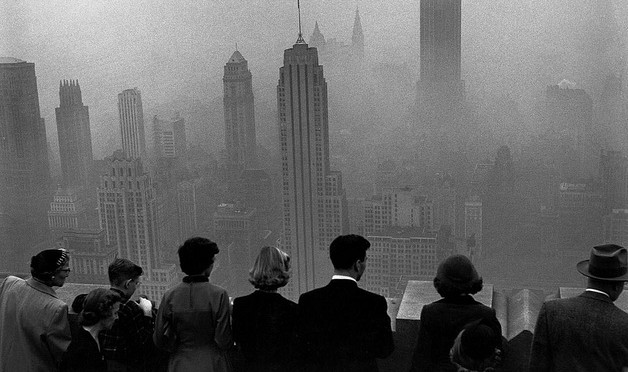
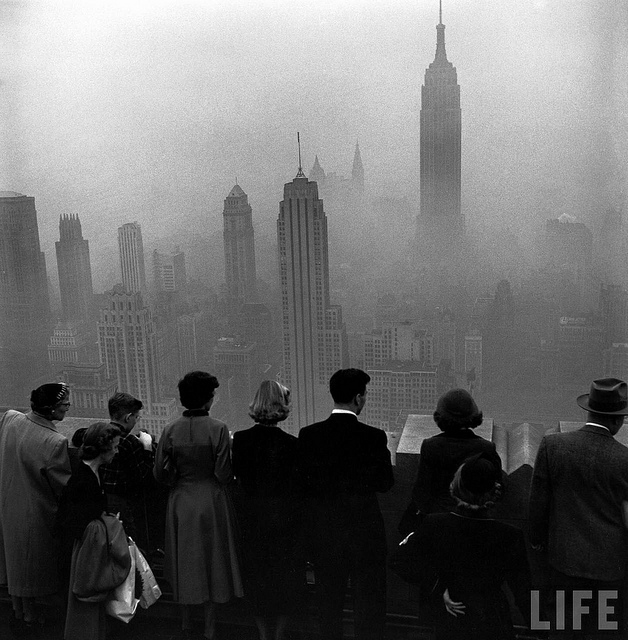
New York City, 1953, the setting for Kevin Baker’s The Big Crowd. Photo by Eliot Elisofen, courtesy Life/Google images

BOWERY BOYS BOOK OF THE MONTH Each month I’ll pick a book — either brand new or old, fiction or non-fiction — that offers an intriguing take on New York City history, something that uses history in a way that’s uniquely unconventional or exposes a previously unseen corner of our city’s complicated past.  You can find some our past selections here and links to purchase them from Amazon at the bottom of this post.

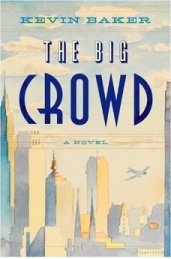
The Big Crowd: A Novel
by Kevin Baker
Houghton Mifflin Harcourt

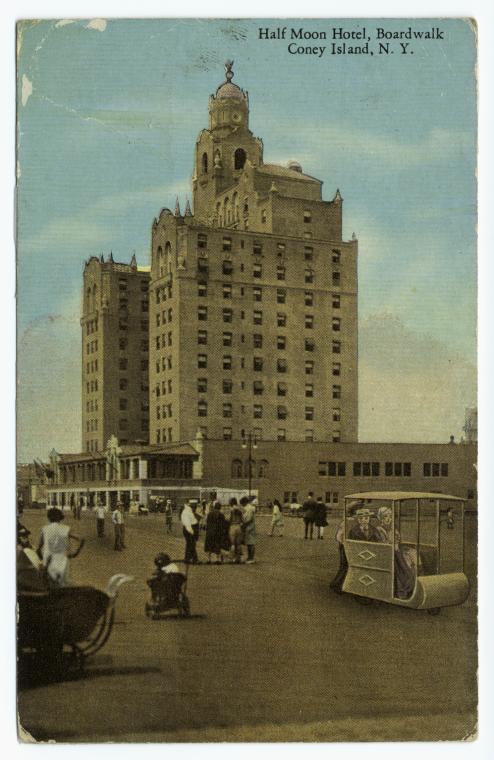
The Half Moon Hotel (pictured at left), named for Henry Hudson’s ship, was Coney Island’s most glamorous accommodation when it was built in 1927.

In the fall of 1941, the mob informer Abraham Reles, nicknamed Kid Twist, was being held here, heavily guarded by police officers.  Reles had information on dozens of murders, putting away some of Brooklyn’s most notorious gangsters.

Next on his list was Albert Anastasia, better known in the press as the leader of Murder Inc.  On November 12, Reles plummeted out the window to his death.  Was Reles trying to escape?  Or was he murdered?

This real life mystery is at the heart of Kevin Baker’s new historical novel The Big Crowd, a brassy noir of New York City in the post-LaGuardia era.

Baker is one of the more thrilling historical novelists working today, latching colorfully and with epic flourish into specific New York eras, obsessed with the seedier elements which make the city tick.  He is unafraid of embracing real-life characters and emboldened by difficult, abrasive eras.  In Paradise Alley, his imagination ran wild through the Civil War Draft Riots.  In my favorite Baker novel, Dreamland, gangsters and freaks collide amid famous Coney Island landmarks.  He somehow even fits in Carl Jung and Sigmund Freud along the way.

He’s written about the life of Kid Twist, too, in Dreamland.  But it’s his death that sits in the smoldering center of The Big Crowd, exposing the connection between waterfront gangland activity and the upper reaches of New York government, reaching, in fact, all the way to the very top.

While Baker has fictionalized the lives of real-life people in the past (a young Malcolm X being the most ambitious, in his novel Strivers Row), for his latest, he’s transformed Mayor William O’Dwyer into Mayor Charlie O’Kane.

While their biographies are nearly the same — an Irish mayor brought down by scandal — O’Kane is a lustier, more mysterious figure, escaping America and becoming an almost godlike figure in Mexico City.  His brother Tom works for the New York district attorney’s office, attempting to clear his brother’s name while solving the mystery of Reles’ death.

The Big Crowd often feels like an unmade gangster film, its beat cops and waterfront roughs rendered from a world of cinematic grays.  At the core is Baker’s relentless attention to historical detail, even when it seems impossible to believe, manifesting into occasional weirdness.

For instance, O’Kane’s lascivious wife, who incidentally sleeps with his brother, fancies herself a bull-fighter. (O’Dwyer’s real wife Sloan Simpson did become a bull-fighter in Mexico.)
Some of my favorite 20th century figures are successfully evoked, including Toots Shor and racketeer Joe Ryan.  Robert Moses is glimpsed without apology as a menace;  a powerful passage late in the book envisions the wreckage of a demolished Bronx neighborhood, “the cityscape melted into a pile of pure, mindless wreckage.”

Like other Baker adventures, The Big Crowd rewards history buffs with dozens of recognizable signposts, but not so many as to seem like an over-researched theme park.

The underlying story of Reles’ murder languidly ebbs and flows through the book, unspooling gradually, via interrogations and in few eloquent monologues.  (In real life, the mystery was never solved.)  But The Big Crowd is the type of book where the distractions are often the most entertaining.  Baker has once again created a magnificent alternate New York of exacting, glamorous detail.

PAST BOWERY BOYS FEATURED BOOKS:


Categories
Bowery Boys Bookshelf

Thieves of Book Row: Strange treasure among the stacks inspires New York’s most intellectual black market


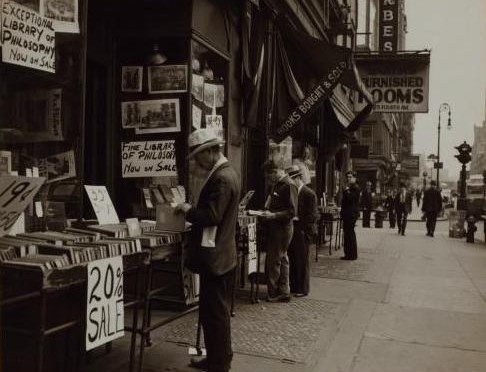
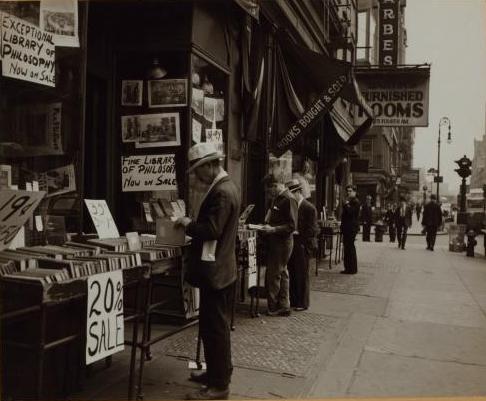
The used bookstores of Book Row, the above shot from Fourth Avenue and 10th Street, 1938 (courtesy NYPL)

BOWERY BOYS BOOK OF THE MONTH Each month I’ll pick a book — either brand new or old, fiction or non-fiction — that offers an intriguing take on New York City history, something that uses history in a way that’s uniquely unconventional or exposes a previously unseen corner of our city’s complicated past.  You can find some our past selections here and links to purchase them from Amazon at the bottom of this post.

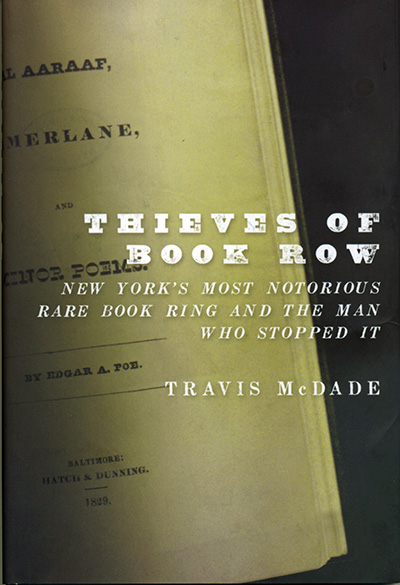
Thieves of Book Row
by Travis McDade
Oxford University Press

You probably own a book that you consider priceless, not for its physical value, but for the knowledge it imparted upon you, or the adventure it provided.  Books can bring you into their worlds, and they can capture who you once were when you first read them.

Now separate those meaningful values and see your favorite book as nothing but an object — a precious, rare artifact, hoarded like jewels by wealthy collectors. A one-of-a-kind bound volume as desirable as fictional literary treasures like the Maltese Falcon or the Holy Grail.

From the late 19th century until the end of the jazz age, criminals worthy of a film noir backdrop were on the prowl for these objects, spiriting them away in coat pockets and sprinting through the streets of Manhattan to deliver them to book-buying fences.  It was in this manner that hundreds of books changed  hands from the advent of mass-market publishing to the end of the jazz age, creating New York’s most intellectual black market.

Welcome to the world of Thieves of Book Row, an intriguing new historical investigation by Travis McDade that uncovers an unusual criminal undercurrent that thrived in New York upon the increasing stature of books as exotic, desirable artifacts.

The rare book market exploded in the late 19th century as Americans became wealthier and created their own personal libraries.  The development of American identity after the Civil War turned obscure, small-run volumes of Americana by local historians into highly sought-after items.  Early editions by famous poets and novelists, manufactured in modest runs, were hunted down by Gilded Age millionaires who could spend months seeking one particular book.

But the value of books went beyond particular authors and titles. Public lending libraries, such as the Astor and Lenox libraries, made old books available for the general public.  The concept of a ‘rare book’ room was still many years in the future, so older books frequently went into circulation. By the early 20th century, the New York Public Library and associated neighborhood libraries sprang up throughout the city, and for the first time, regular New Yorkers could experience great works of writing themselves.

With mass production of books came the advent of used bookstores, which clustered in New York City north of Astor Place in an area called Book Row and later in areas of midtown Manhattan.  As McDade illustrates, it was here that the book thief thrived, as crooked book sellers went into overdrive to provide rare, valuable objects for a growing number of wealthy book lovers.

In fact, a ring of book thieves terrorized book stores and libraries up and down the East Coast, common criminals often led by a book seller with connections to wealthy buyers. Hardly a trifling crime, book thieves were considered “the meanest thief God ever let live” by 1907 and were harshly prosecuted. A few thieves you will meet in McDade’s engrossing investigation will end up in Sing Sing Prison.

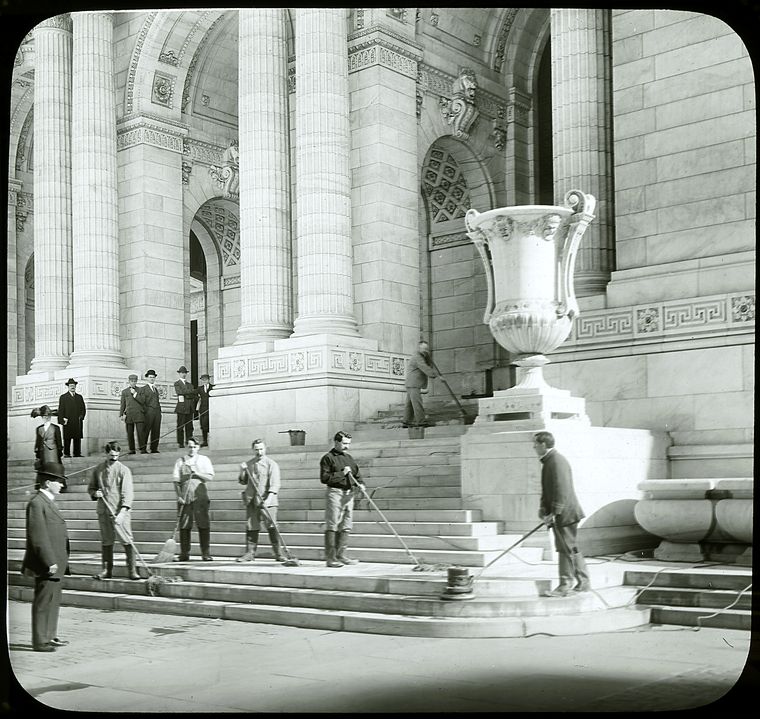
Below: Outside of the New York Public Library central branch on 42nd Street, early 1920s 


Robbing from a public library was akin to snatching a book from a poor child’s hands. “Stealing books from the libraries of the public is one of the unspeakable crimes — like stealing coins from the eyes of a dead man,” said a judge in 1904.

The centerpiece of this tale is the theft of a particular volume: Al Aaraaf, Tamerlane and Minor Poems by Edgar Allan Poe, an author whose book value skyrockets during the Gilded Age.  What makes this book theft so intriguing is where it was stolen from — the virtual fortress of the New York Public Library’s main branch.  The best passages in Thieves of Book Row describe the methodical heist of this and other precious volumes from NYPL’s Reserve Book Room, walking you step-by-step through this criminal enterprise.

If you love books, it will be McDade’s backdrop that may appeal to you more, a world of bookstores that has disappeared, dozens of stores stocked with thousands of old book, clustered along a few city streets.  Today, the Strand BookstoreAlabaster Bookstore and a couple others are all that remain of this once remarkable district in the Village.

Along the way, you’ll meet the New York Public Library’s jazz-age investigator G. William Bergquist and a shifty assortment of book thieves, some of middling intelligence. It seems many of these desperate men were simply too busy shoving volumes into their coats to actually read any of them.

PAST BOWERY BOYS FEATURED BOOKS:


Categories
Neighborhoods Preservation

The neon bible: A chat with ‘New York Neon’ author Thomas E. Rinaldi about the city’s most stylish signs


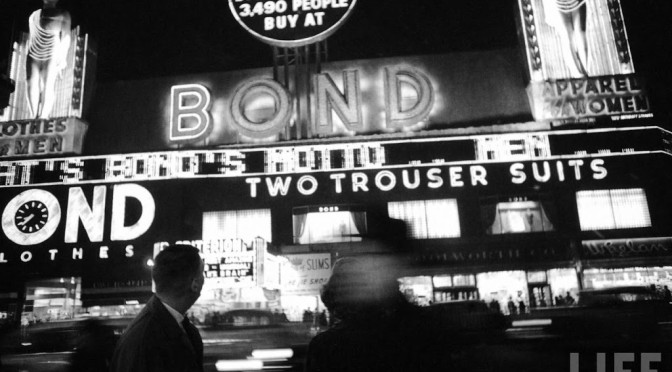
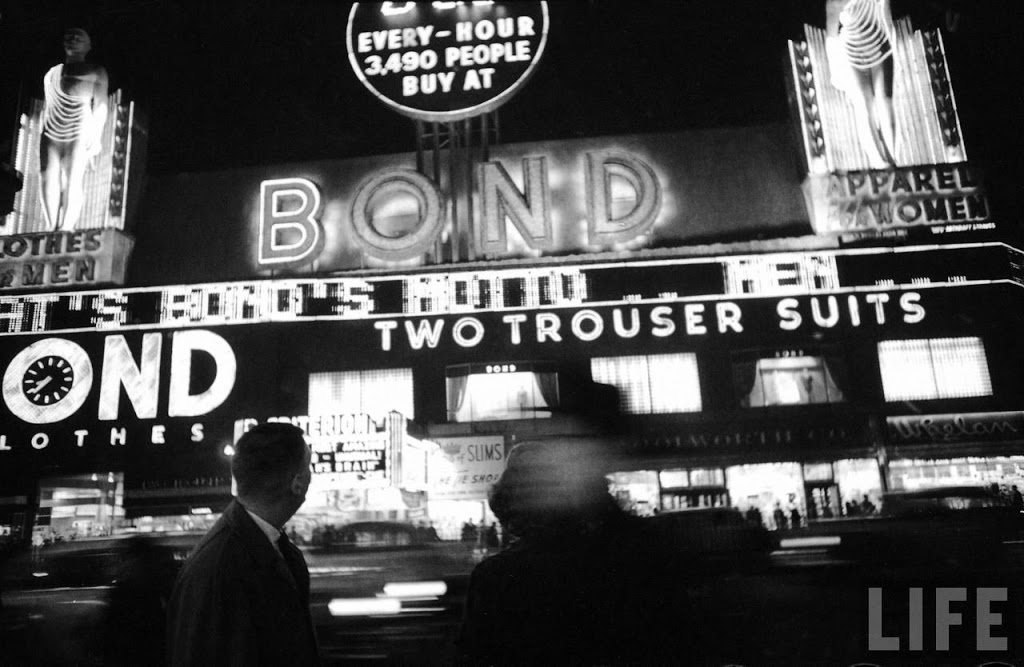
Bond Clothing Store sign was a mainstay of Times Square in the 1940s and 50s. For more on Bond’s unusual transition after that, read my article from 2007 on Bond International Casino. Picture courtesy Life Magazine, Lisa Larsen photographer

New York Neon is the Bowery Boys Book of the Month for July, a superb review of the history of neon signs in New York City and a delectable catalog of some of the finest neon works still in the city today.  My full review is here.

The author Thomas E. Rinaldi also runs a great website on the subject.  I asked him a few questions about the current state of New York’s most classic form of signage:

Why does the glow of a neon sign continue to endure and fascinate people over other architectural forms from the same period of the early-mid 20th century? 

Thomas Rinaldi: I think a large part of the appeal of old signs is their rarity.  The odds of any commercial sign lasting more than a few years are incredibly slim; for this reason, old signs really stand out, in a way that turns out to be of widespread appeal.  This is especially true in NYC today, where old signs have added appeal by way of their association with old, independent businesses that have become almost an endangered species in the city of late.

How does New York’s representatives in neon compare to those in other neon-friendly cities like Las Vegas or Los Angeles? 

TR: The old neon signs one finds around New York today are actually very modest compared to those of Vegas or LA, or the kind of “roadside Americana” signs one associates with Route 66.   I find this interesting in and of itself.  Sure, New York had its extravagant signs in places like Times Square.  But most of the neon that went up in New York was relatively humble, for a variety of reasons.

First of all, there are the obvious space constraints of any urban storefront.  While some pretty imaginative storefront signs appeared before WWII, the signs became increasingly spare after the War, partly because of restrictive zoning, partly because of labor costs (most of the New York sign shops were union), and – my belief – partly because of the general postwar trend away from urban centers and toward suburban development and roadside culture.

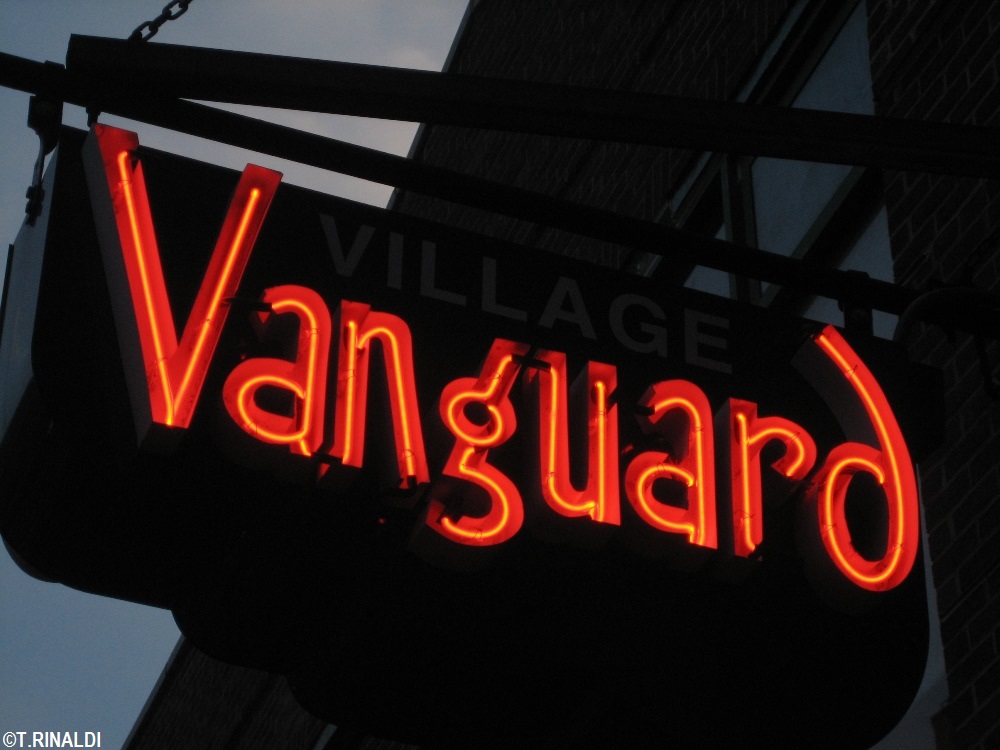
Below: The neon sign at the Village Vanguard in Greenwich Village, a facsimile of one that originally appeared here in the 1940s.

Neon lends its appeal to a certain nostalgic image of New York. Are there any uses in classic print, TV or film that stand out to you as particularly striking?

TR: I found that the classic, iconic image of New York neon noir is spread out in little scattered fragments.  There are a handful of classic noir films set in New York in which you’ll see neon in the backdrop – films like I Wake Up Screaming and Where The Sidewalk Ends.  But some of the best cinematic depictions of New York’s neon heyday aren’t noir films at all:  Pillow Talk, for instance, is a goofy comedy, or The Sweet Smell of Success, which is probably the single best go-to for shots of midcentury, neon-festooned New York.

Neon storefront signs were so incredibly ubiquitous in cities like New York that they crop up just about everywhere – in noir films, yes, but not just those set in New York. I would suggest that the popular association of neon with the nocturnal cityscape is not something born unto any one city, medium or genre, but a composite of scattered fragments that add up to a collective ideal.

Below: The trailer to Murder My Sweet, a wild, smoky film noir starring Dick Powell that effectively uses neon to help set the mood. 


It seems the most difficult task you laid out for yourself in ‘New York Neon’ is tracking down the stories of dozens of still-extant individual signs. What’s the secret to many of these classic signs surviving for so long?

TR: To a large extent, it’s luck of the draw. But also, I found that old signs tended to be more densely collected in certain kinds of neighborhoods, like the Upper West Side or Greenwich Village. Places that could still sustain little family-owned businesses, even through the period of New York’s financial crisis. Places not too rich but not too destitute either. Now, however, they’ve become scarce even in those neighborhoods.

What’s your personal favorite New York neon sign, both of those presently existing and those from the past?

TR: Depends on what day you ask me!  Ones that usually come to mind, though, are Nathan’s Famous and the Wonder Wheel out in Coney, the Dublin House on West 79th Street, Radio City Music Hall and Patsy’s Restaurant in Midtown.

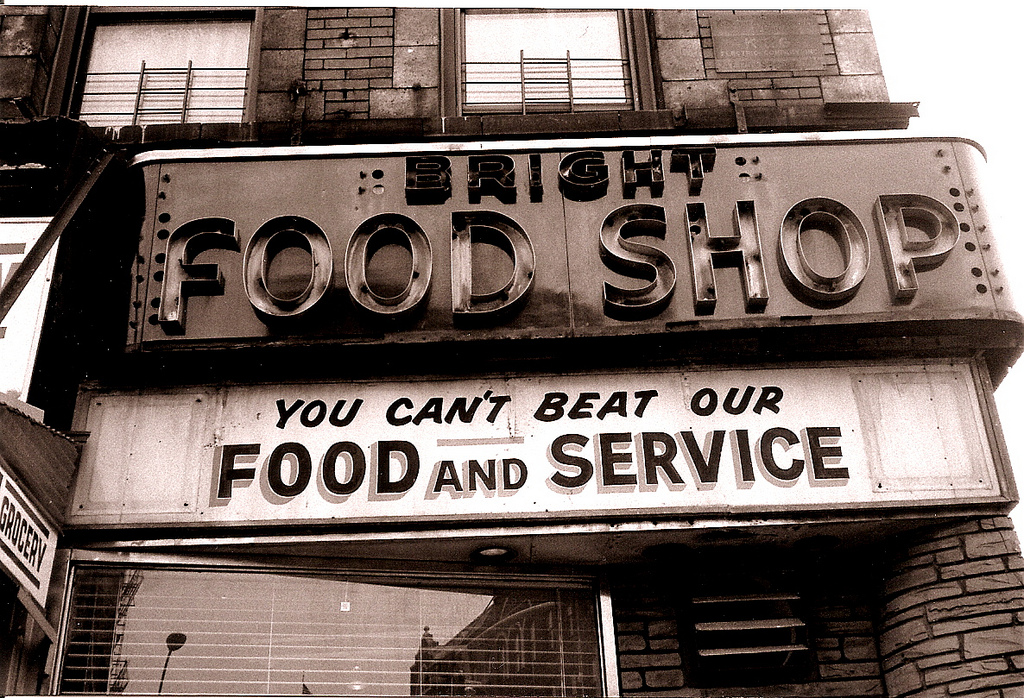
The P&G Bar sign, formerly on the Upper West Sign, is my favorite of the signs that have disappeared in recent years. I also really miss the Bright Food Shop‘s sign in Chelsea.

 There were some great relics that disappeared just a little before my time – places like the Terminal Bar, across from the Port Authority Bus Terminal, or the Penn Bar & Grill, by Penn Station, that I wish I’d photographed. And then there are those that vanished long, long ago – a funny place called the “Barrel Of Fun” nightclub in the West 50s comes to mind, but really, of the thousands and thousands of neon signs that have come and gone from Manhattan alone, the list could go on almost forever.

Below: The old Bright Food Shop sign on Eighth Avenue (Photo courtesy verplanck/Flickr)

Having devoted so much time to the classic beauty of neon, does it make you a little nauseous to even look at LED sign by this point?

TR: Actually, it’s sort of the opposite.  Maybe it’s just wishful thinking, but I find that LEDs have facilitated some fairly decent, interesting new signs, sort of like the early days of neon all over again – much more creative stuff than the boring, fluorescent-and-vinyl signs that have been the norm for the last few decades. 

Still, LEDs have a tremendously long way to go before they could give us illuminated signage that holds a candle to typical neon storefront signs of the 1930s or 1950s, in terms of creativity and craft.  Whereas neon signs were designed to be repaired rather than replaced, LEDs are essentially disposable, and it’s heartbreaking that they’ve taken such a huge toll on the neon industry around the world.

The flip side is that LEDs are an incredibly versatile artificial light source, so – maybe there’s hope for better signs down the road.  But neon is still so unique that I expect it will always have a niche, even though we’ll likely be seeing less and less of it in the years to come.

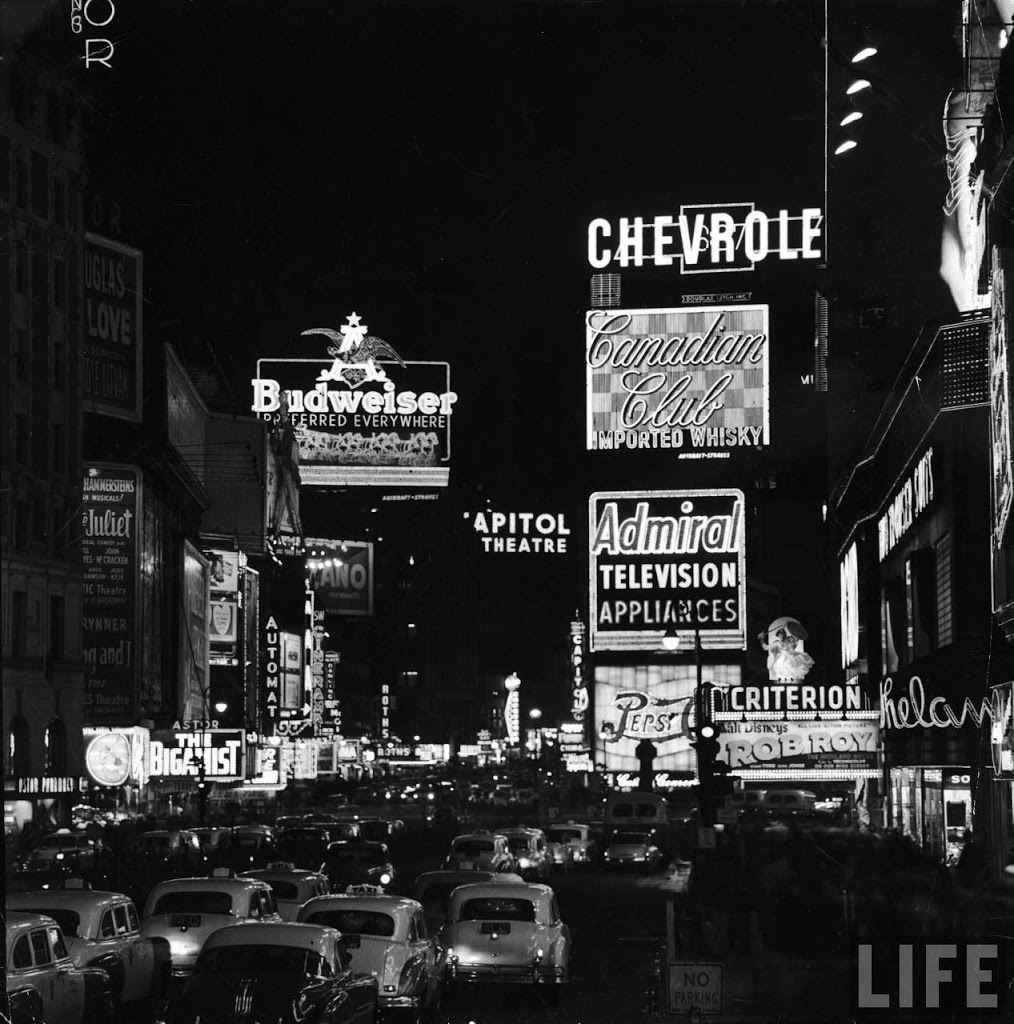
Below: Times Square 1954, photo by Andreas Feinginger (Courtesy Life)

You can hear Rinaldi discuss all things neon at his upcoming talk on Monday, July 22, at the New York Public Library’s Mid-Manhattan branch. More information here.

Categories
Bowery Boys Bookshelf

‘New York Neon’: A history of the city’s most mythical lights

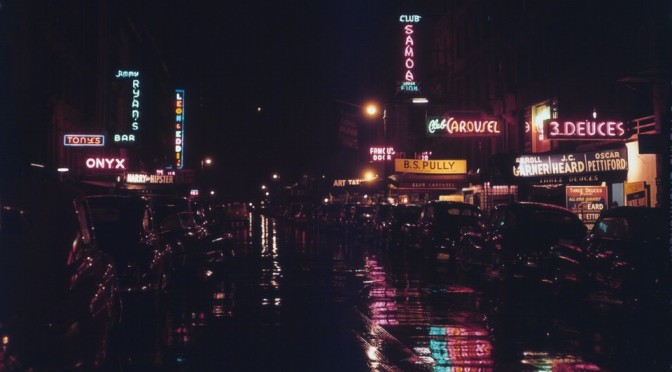
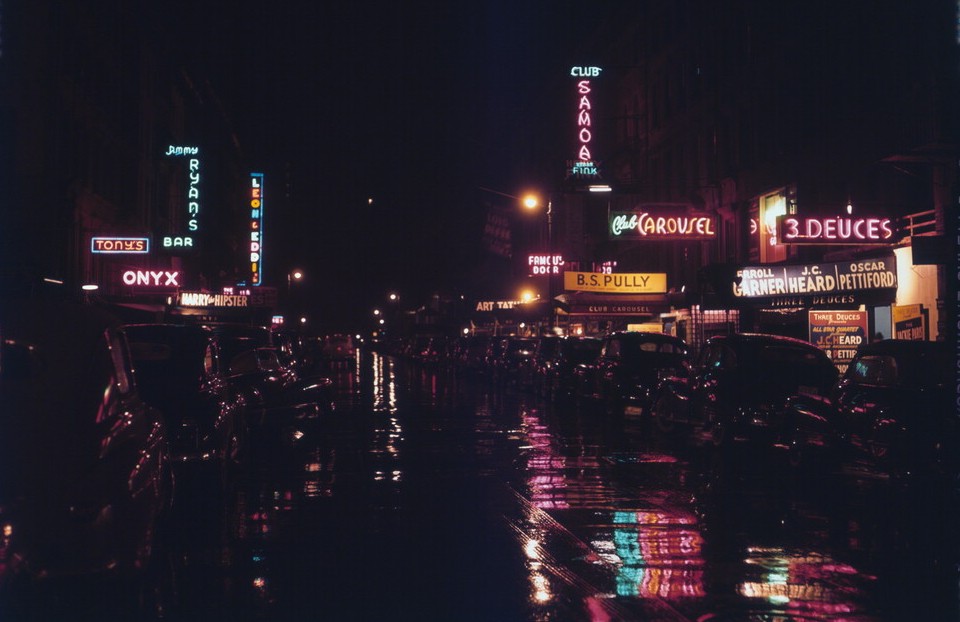
A sizzling 52nd Street in July 1948 (courtesy LOC)

BOWERY BOYS BOOK OF THE MONTH Each month I’ll pick a book — either brand new or old, fiction or non-fiction — that offers an intriguing take on New York City history, something that uses history in a way that’s uniquely unconventional or exposes a previously unseen corner of our city’s complicated past.  Then over the next month, I’ll run an article or two about some of historical themes that are brought up in the selection. 

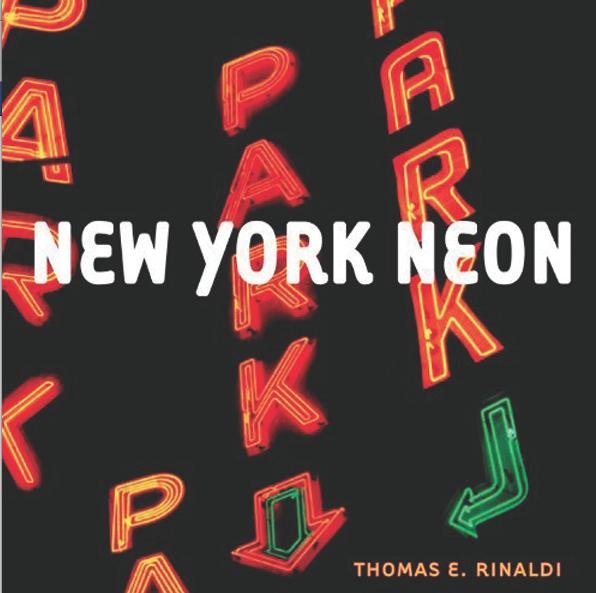
New York Neon
by Thomas E. Rinaldi
W.W. Norton

Neon has been a most attractive tool for pop American graffiti for well over one hundred years, glowing tubes of foggy color alighting the simple and the sublime, from jagged old signs along Route 66 roadsides to those lining the most flamboyant casinos of Las Vegas.  In Los Angeles, stand-alone neon signs along Sunset Strip typify the glamour of old Hollywood, the buzz of Mildred Pierce‘s restaurant and the cocktails at the Brown Derby.

New York City also has its share of iconic neon signs — some of the greatest, in fact — but amid the blinding lights of an ever-changing modern metropolis, they frequently recede into the background. But no longer. In Thomas Rinaldi’s excellent ‘New York Neon’, these representatives of an elusive, nostalgic past finally receive a warranted inspection.  And I guarantee you that after reading this book, you’ll see neon popping up all around you on the city streets. It’s always been here.

No city has a more complicated relationship with the neon glow than New York City. Once the material of great advertisements and tony nightclubs, neon became associated with the seedier parts of town by the 1940s and 50s.  Their singular appeal — handcrafted works, often one-of-a-kind — initially threatened their existence in a city of heightened sensation.  Fortunately, detective novels, film noir and the embrace of nostalgia saved the idea of neon from total oblivion;  more than any other visual queue, warm neon evokes a sense of a faded city, its melancholy and mystery.

Rinaldi gives a one-stop primer on all things neon, from its early history and development to its present creation by local craftsmen.  He identifies possible moments in time when neon became ‘cool’ again and speculates on why it may never completely disappear. He writes: “For its sheer charisma, neon will likely live on as a specialty item.”

Indeed, New York’s romance with neon signage mostly veers from the mainstream today.  The neon spectaculars of Times Square have given way to explosive LED high-definition displays, washing thousands of color gradients over the eyes of stunned tourists.  As Rinaldi illustrates, the survival of neon has depended on small, private businesses; it glows above the doorways of New York’s most famous delis, pharmacies and bars.

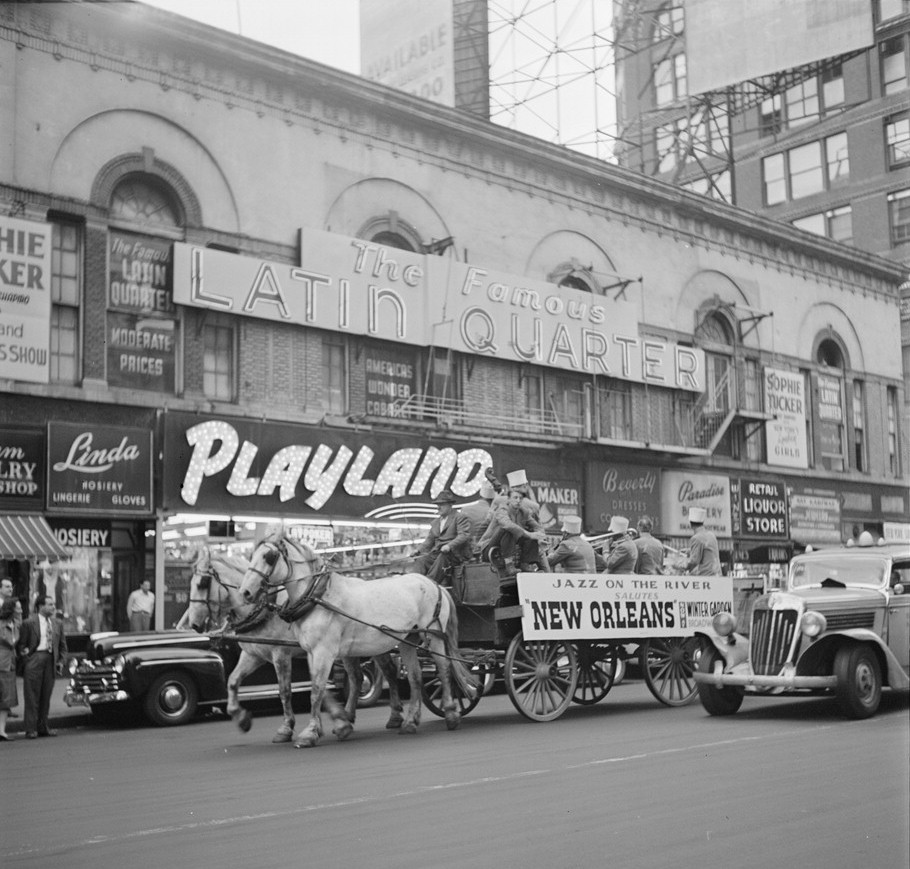
Above: The nexus of neon was probably at Broadway and 47th Street in its heyday. Here, the 1947 sign of the Latin Quarter nightclub joins the party. (LOC)

And here’s where the book comes in most handy, going through every borough to locate some of the finest examples of neon currently existing in the city. The author even finds the origin stories to a few of these treasures, from the pastel silliness of the Papaya King to the haunting glow of a neon crucifix on East 2nd Street.

The great, old taverns of New York are often defined by their neon. Sometimes whole neighborhoods are too, as in the case of Long Island City and its 1936 Pepsi-Cola sign.  But collect it all together into one resource like ‘New York Neon’, and you’ll come to realize that neon has had a lasting effect on the entire city.  Your dreams of New York are likely illuminated in neon.

Times Square will always glow with the latest in lighting technologies. Subway signs and chain stores signage may render everything into a dulling uniformity. But nothing will speak for New York more than the signs of Katz’s Deli, or the Chelsea Hotel, or the Odeon Restaurant, or Loew’s Paradise.

Later this week: An interview with the author Thomas Rinaldi who also maintains a great blog on the subject.

PAST BOWERY BOYS FEATURED BOOKS:

Categories
Bowery Boys Bookshelf

The Great Gatsby’s New York City, in ten different scenes, from the Queensboro Bridge to the Plaza Hotel

BOWERY BOYS BOOK OF THE MONTH Each month I’ll pick a book — either brand new or old, fiction or non-fiction — that offers an intriguing take on New York City history, something that uses history in a way that’s uniquely unconventional or exposes a previously unseen corner of our city’s complicated past.  Then over the next month, I’ll run an article or two about some of the historical themes that are brought up in the selection. 

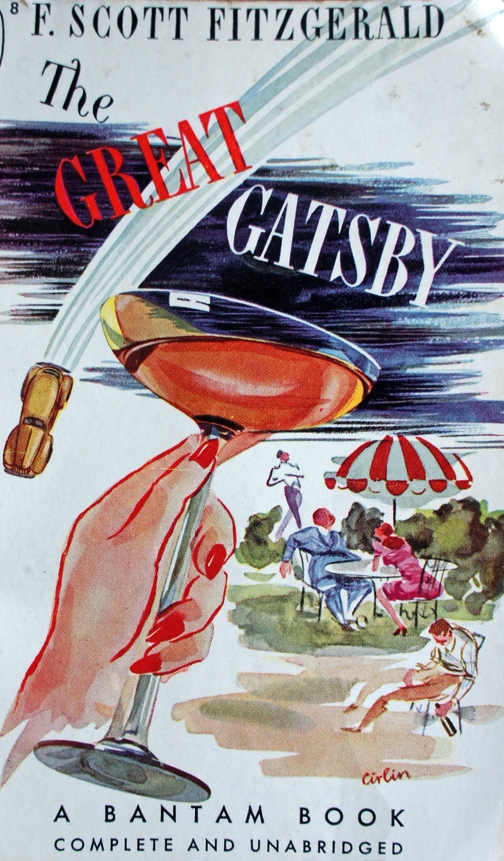
The Great Gatsby
by F. Scott Fitzgerald

I re-read The Great Gatsby a few weeks ago on purpose, not because I had a school assignment. Unlike my first experience with Gatsby at age 14, I actually read it, without the signposts of Cliff’s Notes to tell me what I was supposed to be getting from it.

Of course the impetus for re-discovering F. Scott Fitzgerald‘s masterpiece is the flashy new Baz Luhrmann film coming out this weekend, which uses the text as an excuse to throw an expensive 3-D party, starring Leonardo DiCaprio, Beyonce, large champagne bottles, fifty shades of pink, the ghost of Mae West and a whole host of other drunk guests.

Few works of American literature have been as comprehensively analyzed as The Great Gatsby, by which I mean, of course, over-analyzed.  One reason I’m excited about the film, with all its superficial decadence on display, is that it seems to discard several decades of nine-dimensional analyses that have settled upon the book like a thick shroud of dust.  Maybe that’s wearing white to a funeral, so to speak, but true masterpieces can weather an occasional glare.

The Great Gatsby deserves to be savored for many reasons that I had forgotten or never noticed through the filter of creating a B+ term paper in my teenage years.  It’s one of the most economic stories of the 20th century, an exercise of graceful control, an epic with powerful restraint.  In comparison, try reading Fitzgerald’s The Beautiful and the Damned — an embittered New York book twice as long with half as much to say– to appreciate the brevity of Gatsby.

Fitzgerald uses the locales of 1922 New York City so precisely — jetting around Long Island and over the bridge to Manhattan — that it seems almost possible to map the characters’ every move.

There are three principal types of locations in The Great Gatsby.  About half the novel’s actions take place on either East Egg or West Egg, fictional northern Long Island villages still graced with the mansions of Gilded Age millionaires.  Characters escape to Manhattan, big and glittering, either to entertain their mistresses or to dine with gentlemen of suspicious occupation.  And then, of course, there’s the wasteland in between, where secrets are laid bare and burnt to ash.  Welcome to Queens!

Fitzgerald paints a very lush, cockeyed view of New York City in the early 1920s.  Here are some of the more interesting city locations you’ll visit as you read along, and some of the words he used to describe them:

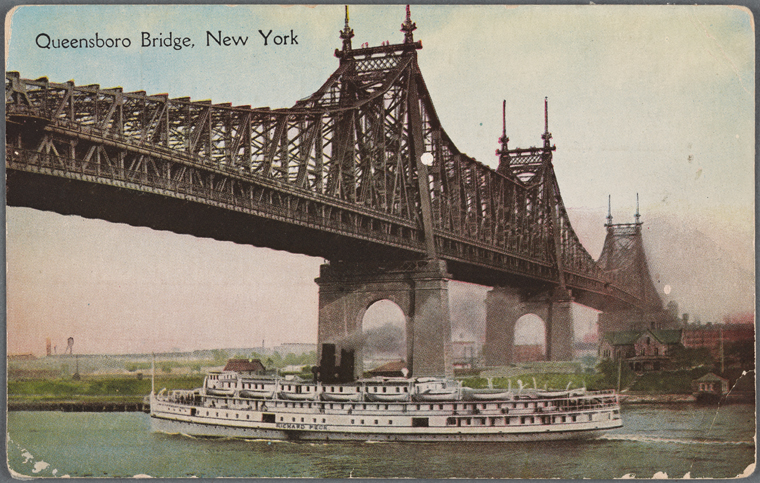
Queensboro Bridge
“The city seen from the Queensboro Bridge is always the city seen for the first time, in its first wild promise of all the mystery and the beauty of the world.”
‘Anything can happen now that we’ve slid over this bridge,’ I thought; ‘anything at all….’  
Even Gatsby could happen, without any particular wonder.”
The 1920s were more than just a decade of speakeasies and spendthrifts. It was the decade of immense growth for Manhattan’s outer boroughs, none more so than Queens, thanks mostly to the opening of the Queensboro Bridge in 1909 and a connection to New York’s new subway system.

The IRT Astoria line
“[W]e sped along toward Astoria at fifty miles an hour, until, among the spidery girders of the elevated, we came in sight of the easy-going blue coupe.”

Astoria’s elevated subway train opened in 1917, at the time servicing only cars from the IRT. (The trains of the BMT are a little too wide to use the stations.)  So as Gatsby, Nick Carraway and the gang race underneath it to get onto the Queensboro, they’re really experiencing something quite new, a symbol of New York’s expansion into Queens.

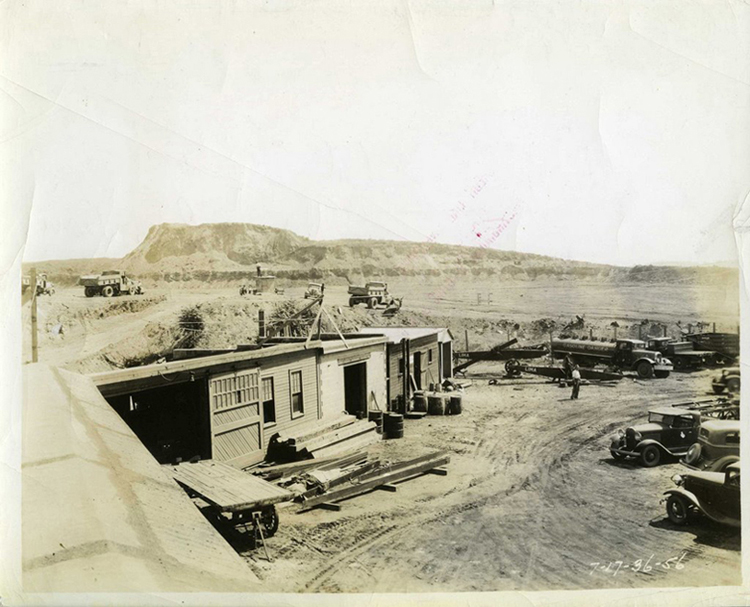
Corona Ash Dumps
“We passed Port Roosevelt, where there was a glimpse of red-belted ocean-going ships, and sped along a cobbled slum lined with the dark, undeserved saloons of the faded-gilt nineteen-hundreds.  Then the valley of ashes opened out on both sides of us.”

Once the place where New York and Brooklyn dumped their ash from coal-burning furnaces, the old ash dumps of Corona turned a bit of Queens into a gloomy and unpleasant landscape.  It would take Robert Moses and dreams of a World’s Fair to transform the ashen landscape into Flushing Meadows-Corona Park in the 1930s. (Picture courtesy the Queens Museum)

3

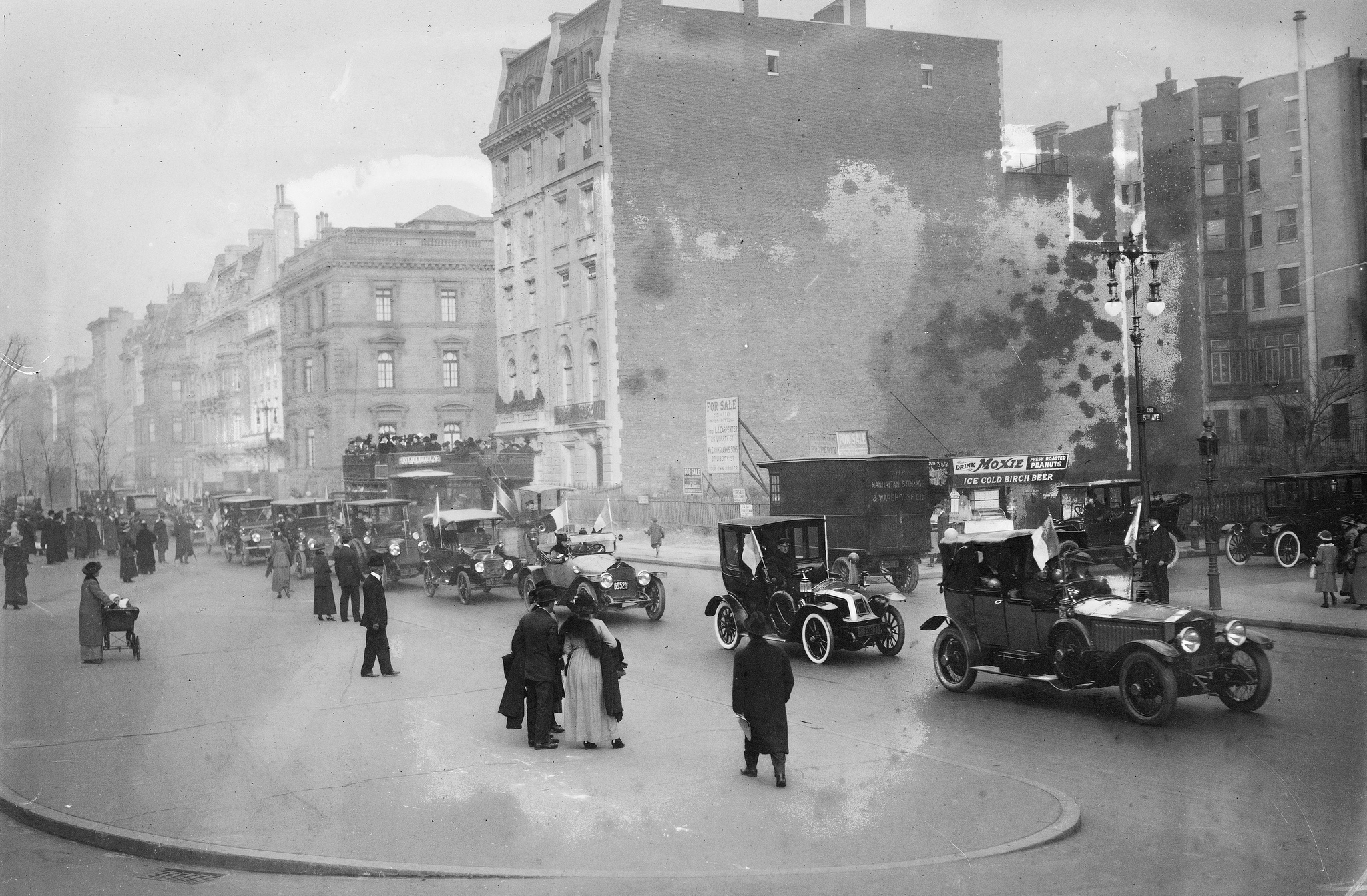
Automobile parade on Fifth Avenue, approx. 1915 (Courtesy LOC)

Upper Fifth Avenue
“We drove over to Fifth Avenue, so warm and soft, almost pastoral, on the summer Sunday afternoon that I wouldn’t have been surprised to see a great flock of white sheep turn the corner.”
This was not as bizarre as it sounds, for nearby Central Park actually had sheep grazing in it until 1934.  Granted, they would have been on the other side of the park, in today’s aptly named Sheep Meadow.

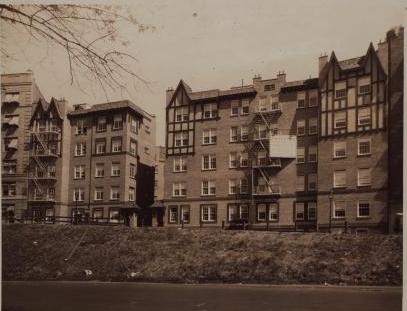
Above 158th Street and Riverside Drive, 1921 (NYPL)

Washington Heights
“We went on, cutting back again over the Park towards the West Hundreds. At 158th Street the cab stopped at one slice in a long white cake of apartment-houses.  Throwing a regal homecoming glance around the neighborhood, Mrs. Wilson gathered up her dog and her other purchases, and went haughtily in.”

Once the respite of wealthy manors in the 19th century, the upper reaches of Manhattan gave way to middle-class housing at the start of the new century.  Myrtle’s perch here in Washington Heights would have been appropriately out of the way in the 1920s.

1a

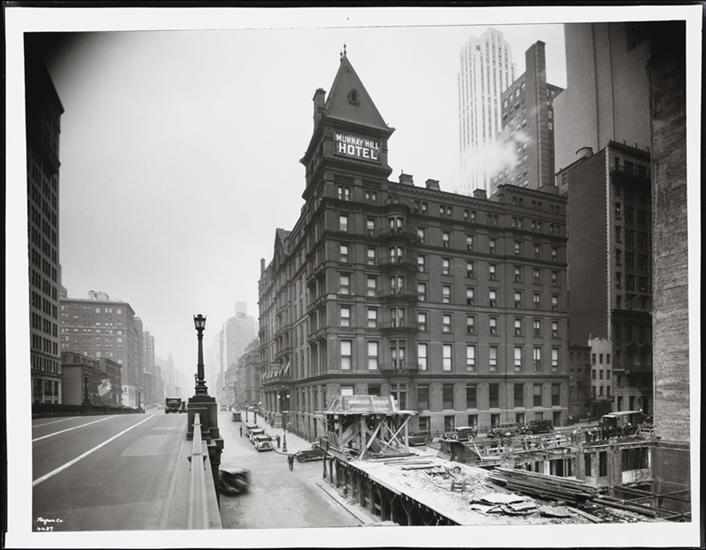
The Murray Hill Hotel on Park Avenue, 1931, courtesy Museum of the City of New York

The Murray Hill Hotel

“After that, if the night was mellow, I strolled down Madison Avenue past the old Murray Hill Hotel and over 33d Street to the Pennsylvania Station….I liked to walk up Fifth Avenue and pick out romantic women from the crowd and imagine that in a few minutes I was going to enter into their lives, and no one would ever know or disapprove.

Opening in 1884 to serve the needs of those arriving from Grand Central Depot, the Murray Hill Hotel kept its halls fully occupied until its demolition in 1946.  The Daytonian In Manhattan blog has a wonderful tale of the hotel’s colorful history.

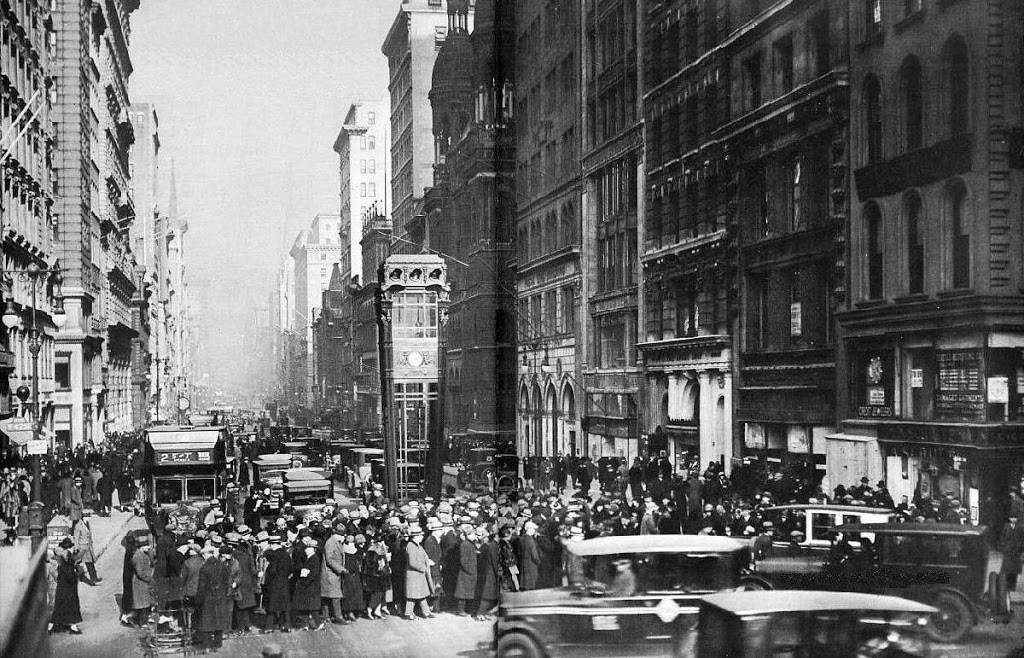
Above: 42nd Street in 1926 (Courtesy Kings Academy)Forty-Second Street

“Roaring noon. In a well-fanned Forty-second Street cellar, I met Gatsby for lunch.  Blinking away the brightness of the street outside, my eyes picked him out obscurely in the anteroom, talking to another man.”


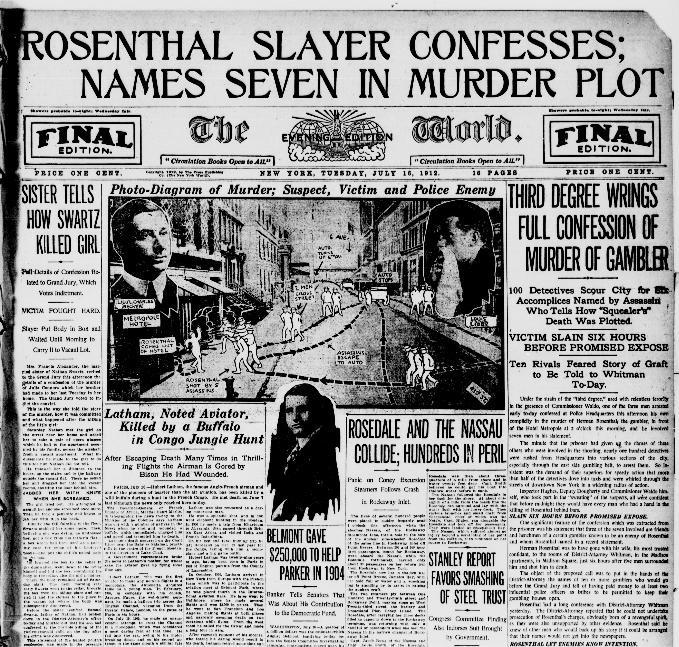
From the July 16, 1912 edition of the New York Evening World
Hotel Metropole
“The old Metropole,” brooded Mr. Wolfsheim gloomily.  “Filled with faces dead and gone. Filled with friends gone now forever. I can’t forget so long as I live the night they shot Rosy Rosenthal there.”

The Hotel Metropole was a swanky Times Square hotspot located at 147 W. 43rd Street.  Mr. Wolfsheim (himself a stand-in for gangster Arnold Rothstein) spends a moment recounting the assassination of Herman Rosenthal, gunned down by the mob.  Charles Becker, who was accused of orchestrating the murder, became the first police officer to ever be given the death penalty.

We talk about the Rosenthal assassination in our podcast Case Files of the New York Police Department.

Above: The southwest corner of Central Park, photo by the Wurts Brothers (NYPL)

Central Park
“When Jordan Baker had finished telling all this we had left the Plaza for half an hour and were driving in a victoria through Central Park.  The sun had gone down behind the tall apartments of the movie stars in the West Fifties, and the clear voices of little girls, already gathered like crickets on the grass, rose through the hot twilight.
We passed a barrier of dark trees, and then the facade of Fifth-ninth Street, a block of delicate pale light, beamed down into the park.”

3

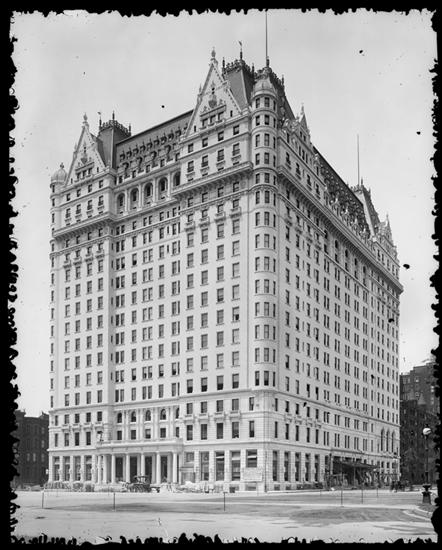
The Plaza, photo by the Wurts Brothers (NYPL)

“And we all took the less explicable step of engaging the parlor of a suite in the Plaza Hotel.
The room was large and stifling, and, though it was already four o’clock, opening the windows admitted only a gust of hot shrubbery from the Park.”

The Plaza Hotel
The beginning of a string of violent acts in the book begins here at The Plaza, at perhaps the epitome of class in the early 1920s. It was only open about 15 years when the events of the book take place here.

Check out our podcast history of the Plaza Hotel and some more glamorous pictures of the hotel here.

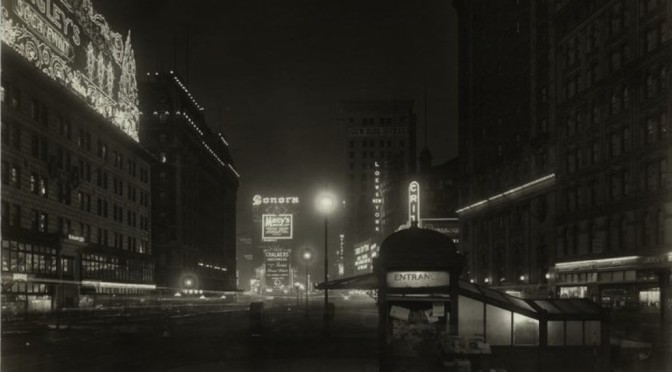
Top picture: Times Square at night, 1921 (NYPL)

Categories
Bowery Boys Bookshelf

The Great Gatsby’s New York City, in ten different scenes, from the Queensboro Bridge to the Plaza Hotel

BOWERY BOYS BOOK OF THE MONTH

The Great Gatsby
by F. Scott Fitzgerald

I re-read The Great Gatsby a few weeks ago on purpose, not because I had a school assignment. Unlike my first experience with Gatsby at age 14, I actually read it, without the signposts of a Cliff’s Notes to tell me what I was supposed to be getting from it.

Of course the impetus for re-discovering F. Scott Fitzgerald‘s masterpiece is the flashy new Baz Luhrmann film coming out this weekend, which uses the text as an excuse to throw an expensive 3-D party, starring Leonardo DiCaprio, Beyonce, large champagne bottles, fifty shades of pink, the ghost of Mae West and a whole host of other drunk guests.

Few works of American literature have been as comprehensively analyzed as The Great Gatsby, by which I mean, of course, over-analyzed. One reason I’m excited about the film, with all its superficial decadence on display, is that it seems to discard several decades of nine-dimensional analyses that have settled upon the book like a thick shroud of dust. Maybe that’s wearing white to a funeral, so to speak, but true masterpieces can weather an occasional glare.

The Great Gatsby deserves to be savored for many reasons that I had forgotten or never noticed through the filter of creating a B+ term paper in my teenage years.  It’s one of the most economic stories of the 20th century, an exercise of graceful control, an epic with powerful restraint.  In comparison, try reading Fitzgerald’s The Beautiful and the Damned — an embittered New York book twice as long with half as much to say– to appreciate the brevity of Gatsby.

Fitzgerald uses the locales of 1922 New York City so precisely — jetting around Long Island and over the bridge to Manhattan — that it seems almost possible to map the characters’ every move.

There are three principal types of locations in The Great Gatsby.  About half the novel’s actions take place on either East Egg or West Egg, fictional northern Long Island villages still graced with the mansions of Gilded Age millionaires.

Characters escape to Manhattan, big and glittering, either to entertain their mistresses or to dine with gentlemen of suspicious occupation.

And then, of course, there’s the wasteland in between, where secrets are laid bare and burnt to ash.  Welcome to Queens!

Fitzgerald paints a very lush, cockeyed view of New York City in the early 1920s. Here are some of the more interesting city locations you’ll visit as you read along, and some of the words he used to describe them:

Queensboro Bridge
“The city seen from the Queensboro Bridge is always the city seen for the first time, in its first wild promise of all the mystery and the beauty of the world.”

‘Anything can happen now that we’ve slid over this bridge,’ I thought; ‘anything at all….’ 

Even Gatsby could happen, without any particular wonder.”

The 1920s were more than just a decade of speakeasies and spendthrifts. It was the decade of immense growth for Manhattan’s outer boroughs, none more so than Queens, thanks mostly to the opening of the Queensboro Bridge in 1909 and a connection to New York’s new subway system.

The IRT Astoria line
“[W]e sped along toward Astoria at fifty miles an hour, until, among the spidery girders of the elevated, we came in sight of the easy-going blue coupe.”

Astoria’s elevated subway train opened in 1917, at the time servicing only cars from the IRT. (The trains of the BMT are a little too wide to use the stations.)  So as Gatsby, Nick Carraway and the gang race underneath it to get onto the Queensboro, they’re really experiencing something quite new, a symbol of New York’s expansion into Queens.

Corona Ash Dumps
“We passed Port Roosevelt, where there was a glimpse of red-belted ocean-going ships, and sped along a cobbled slum lined with the dark, undeserved saloons of the faded-gilt nineteen-hundreds.  Then the valley of ashes opened out on both sides of us.”

Once the place where New York and Brooklyn dumped their ash from coal-burning furnaces, the old ash dumps of Corona turned a bit of Queens into a gloomy and unpleasant landscape.  It would take Robert Moses and dreams of a World’s Fair to transform the ashen landscape into Flushing Meadows-Corona Park in the 1930s. (Picture courtesy the Queens Museum)

3

Automobile parade on Fifth Avenue, approx. 1915 (Courtesy LOC)

Upper Fifth Avenue
“We drove over to Fifth Avenue, so warm and soft, almost pastoral, on the summer Sunday afternoon that I wouldn’t have been surprised to see a great flock of white sheep turn the corner.”

This was not as bizarre as it sounds, for nearby Central Park actually had sheep grazing in it until 1934.  Granted, they would have been on the other side of the park, in today’s aptly named Sheep Meadow.

Above 158th Street and Riverside Drive, 1921 (NYPL)

Washington Heights
“We went on, cutting back again over the Park towards the West Hundreds. At 158th Street the cab stopped at one slice in a long white cake of apartment-houses. Throwing a regal homecoming glance around the neighborhood, Mrs. Wilson gathered up her dog and her other purchases, and went haughtily in.”

Once the respite of wealthy manors in the 19th century, the upper reaches of Manhattan gave way to middle-class housing at the start of the new century.  Myrtle’s perch here in Washington Heights would have been appropriately out of the way in the 1920s.

1a
The Murray Hill Hotel on Park Avenue, 1931, courtesy Museum of the City of New York

The Murray Hill Hotel

“After that, if the night was mellow, I strolled down Madison Avenue past the old Murray Hill Hotel and over 33d Street to the Pennsylvania Station….I liked to walk up Fifth Avenue and pick out romantic women from the crowd and imagine that in a few minutes I was going to enter into their lives, and no one would ever know or disapprove.

Opening in 1884 to serve the needs of those arriving from Grand Central Depot, the Murray Hill Hotel kept its halls fully occupied until its demolition in 1946.  The Daytonian In Manhattan blog has a wonderful tale of the hotel’s colorful history.

Above: 42nd Street in 1926 (Courtesy Kings Academy)

Forty-Second Street

“Roaring noon. In a well-fanned Forty-second Street cellar I met Gatsby for lunch. Blinking away the brightness of the street outside, my eyes picked him out obscurely in the anteroom, talking to another man.”


From the July 16, 1912 edition of the New York Evening World

Hotel Metropole
“The old Metropole,” brooded Mr. Wolfsheim gloomily.  “Filled with faces dead and gone. Filled with friends gone now forever. I can’t forget so long as I live the night they shot Rosy Rosenthal there.”

The Hotel Metropole was a swanky Times Square hotspot located at 147 W. 43rd Street.  Mr. Wolfsheim (himself a stand-in for gangster Arnold Rothstein) spends a moment recounting the assassination of Herman Rosenthal, gunned down by the mob.  Charles Becker, who was accused of orchestrating the murder, became the first police officer to ever be given the death penalty.

We talk about the Rosenthal assassination in our podcast Case Files of the New York Police Department.

Above: The southwest corner of Central Park, photo by the Wurts Brothers (NYPL)

Central Park
“When Jordan Baker had finished telling all this we had left the Plaza for half an hour and were driving in a victoria through Central Park. The sun had gone down behind the tall apartments of the movie stars in the West Fifties, and the clear voices of little girls, already gathered like crickets on the grass, rose through the hot twilight.

We passed a barrier of dark streets, and then the facade of Fifth-ninth Street, a block of delicate pale light, beamed down into the park.”

3

The Plaza, photo by the Wurts Brothers (NYPL)

“And we all took the less explicable step of engaging the parlor of a suite in the Plaza Hotel.

The room was large and stifling, and, though it was already four o’clock, opening the windows admitted only a gust of hot shrubbery from the Park.”

The Plaza Hotel
The beginning of a string of violent acts in the book begins here at The Plaza, at perhaps the epitome of class in the early 1920s. It was only open about 15 years when the events of the book take place here.

Check out our podcast history of the Plaza Hotel and some more glamorous pictures of the hotel here.

Top picture: Times Square at night, 1921 (NYPL)

Categories
Bowery Boys Bookshelf

A chat with Matthew Goodman, author of ‘Eighty Days’

So how do you follow two journalists around the world, in opposite directions and from the vantage of almost 125 years in the future?  I asked Matthew Goodman, the author of “Eighty Days: Nellie Bly and Elizabeth Bisland’s History-Making Race Around the World,” this month’s Bowery Boys Book of the Month, about the two competitors and the challenges of Victorian era travel.

Bowery Boys: So just how insane was it for a woman to travel alone around the world – not to mention two women, going in the opposite direction? How many traditions of propriety were they shattering by accomplishing this?  

Matthew Goodman:  By 1888 Nellie Bly had established herself as a star reporter for The World, Joseph Pulitzer’s widely read newspaper.  But when she went to her editors to propose a solo race around the world to beat Phileas Fogg’s eighty-day mark, the idea was soundly rejected.

This was a time, after all, when male newspaper editors didn’t feel comfortable sending their female reporters across the city, much less around the world.   Editors didn’t think it was appropriate for a female reporter to go out by herself out night, or in the rain, or into tenements or dancehalls or barrooms or wherever else a story might lead them, much less consort with criminals and policemen and other unsavory characters.  Such behavior was considered improper, undignified, unseemly – in a word, unladylike.

Moreover, any woman attempting to travel around the world would surely require a battery of steamer trunks, to carry all of the ball gowns and so forth that, of course, she would require. And so, when Bly proposed her trip, The World’s business manager told her firmly, “Only a man can do this.” (To which Bly just as firmly replied, “Very well, then. Send your man, and I will start the same day for some other newspaper and I’ll beat him.”)

A year later, when The World’s circulation had started to decline, Bly’s editors finally gave her permission to set out around the world. To do so, Bly insisted on carrying everything she would need for her trip in a single handbag, measuring sixteen by seven inches at its base. Not only did she want her travel to be as efficient as possible, she also wanted to give the lie to the time-worn notion that a woman required more luggage to travel than did a man. (That leather bag would eventually become iconic, and today it is on public display at the Newseum in Washington, D.C.)

BB:  Nellie Bly is of course a classic figure of the Victorian era but Elizabeth Bisland is relatively unknown. Were there any challenges in bringing Bisland’s tale up to the pace of Nellie’s – the more familiar of the two tales?

MG:  I knew right from the beginning that I wanted this to be a double narrative – half of it told from Nellie Bly’s point of view, half of it from Elizabeth Bisland’s. Which meant that Bisland’s story would need to be just as richly detailed and compelling as Bly’s – a challenge, as you point out, given that no one had ever written any substantial account of her life and she is today almost entirely unremembered.

So I set to work attempting to learn everything that there was to know about Elizabeth Bisland. Fortunately, Bisland had written a book about her race around the world (as had Bly), so I read that first.  Then I read everything else she had ever written – which included a novel and several collections of essays, as well as many dozens of newspaper articles. On the Internet I tracked down a number of her descendants, and they generously shared with me unpublished family histories, letters, photographs, and newspaper clippings about their beloved ancestor.

At left: Elizabeth Bisland, from her book written about her journey called A Flying Trip Around The World

At Tulane University I discovered a little-known trove of Bisland’s letters from the last years of her life, which filled in a lot of details that even her family members didn’t know. Over time I was able to develop a very strong sense of who this remarkable woman was; as it turned out, she was this incredibly erudite, cosmopolitan poet and essayist who had grown up on a ruined Louisiana plantation (where, for instance, she taught herself French as she churned butter so that she could read Rousseau’s Confessions in the original language!), who wrote gorgeously but whose books are all, sadly, out of print.

She is someone who deserves to be far better remembered than she is, and if Eighty Days can bring her to the attention of a new generation of readers, then I’ll be extremely gratified.

Above: One of dozens of issues of the New York World that used Bly and her adventures to sell papers — before, during and after the race!

BB:  The two travelers take nearly the very same path across the world, from opposite directions of course. I love the exact moment in the book where their paths cross (although of course they never realize it). Were Bly and Bisland driven by similar desires – competition, fame, or the chance to make history perhaps? 

MG:  One of the things I loved about writing this book was that the two main characters – while both pioneering young female journalists – were so different from each other.  Nellie Bly was this scrappy, ambitious, driven investigative reporter from coal country in western Pennsylvania, who always sought out the most sensational news stories; Elizabeth Bisland was a genteel, elegant poet from New Orleans who derided most newspaper reporting as “a caricature of life.” Bisland hosted literary teas in her little apartment on Fourth Avenue; Bly was a regular at O’Rourke’s saloon on the Bowery!

And their very different personalities were reflected in their attitudes toward the race itself.  Bly was deeply competitive (it was part of what made her such a good newspaperwoman), and she was desperate to win the race – she was constantly worrying about schedules and departure times, and was constantly urging ships’ captains to make more speed. On more than one occasion she was heard to say that she would rather die than return to New York behind time.

For Bisland, on the other hand, the trip became an opportunity to see the world, which she would not have had otherwise. She fell in love especially with Japan, to which she returned twice later in life.  In her subsequent book about the trip, she never once used the word “race” to describe it, preferring the word “journey.”  Bly sought out the celebrity that came from the race, immediately embarking on a forty-city lecture tour; Bisland, wanting to escape the public’s attention, sailed to England, where she lived for a year.   She later wrote that she wanted to live the rest of her life in such a way that her name would never again appear in a newspaper headline.

Above: The New York World Building, completed in 1890, the year Bly completed her trip around the globe.

BB:  Your last book The Sun and The Moon was about a fabulous New York media hoax.  In Eighty Days, the publications in question are in fact recounting real events.  But I cannot imagine, given the ethics of the day, that everything you were discovering in them about Bly and Bisland was completely accurate.  Did you find anything unusual in your research about these publications’ treatment of the race? 

MG:  Perhaps not surprisingly, a lot of the initial coverage of the race was rife with mistakes, as New York’s newspapers, caught unawares by the story, tried to pin down just who these two young women were.

For instance, one newspaper claimed, confusingly, that both reporters were being paid by The World (why that paper would send two competitors around the world was not explained). The Tribune even ran a story that claimed that not two but three reporters were racing around the world!

The more substantial inaccuracies, though, were to be found in The World’s own stories about Nellie Bly.   Bly and The World jointly participated in a kind of mythologizing of their star reporter, creating an air-brushed portrait of a plucky, independent, light-hearted, pretty, energetic young American woman – just the sort of heroine the paper’s readers wanted.  Indeed, the most egregious rewriting of Bly’s history came in a story – surely approved by Bly herself – that promised “an authentic biography of The World’s globe-girdler.”

BB:   There should be a side project where you yourself trace the steps of Bly and Bisland, approximating their forms of transportation (no airplanes!)  Is that technically possible and how long do you think it take you – or would you have the stamina of your two heroines? 

MG:  My sense is that it would be technically possible. (I seem to recall a PBS series of some years ago in which Michael Palin, of “Monty Python” fame, traveled around the world in such a manner and accomplished the feat in just under eighty days.)

It would be possible, however, for someone other than I.  I do love to travel, and would very much love to go to many of the places Bly and Bisland visited – such as Hong Kong or Sri Lanka, not to mention Jules Verne’s estate in Amiens, France – but after a few weeks spent aboard ship or in a railway carriage, I’m pretty sure I’d start planning my return to dear old Brooklyn.