Categories
Uncategorized

Xenon and the strange journey of a Broadway theater: Noel Coward, Fellini, porn, disco, ‘Cabaret’, Dame Edna

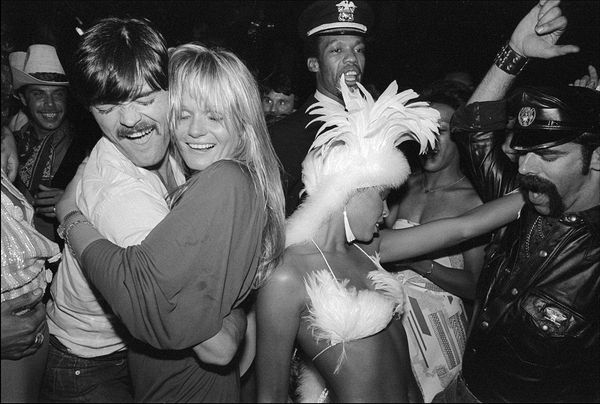
You know it’s a good night at Xenon when you’re drunk on the dance floor, and all of a sudden, the actress Valerie Perrine and the Village People appear (source)

FRIDAY NIGHT FEVER To get you in the mood for the weekend, on occasional Fridays we’ll be featuring an old New York nightlife haunt, from the dance halls of 19th Century Bowery, to the massive warehouse clubs of the mid-1990s. Past entries can be found here.

 LOCATION: XenonTimes Square, 43th Street and Broadway, Manhattan
In operation 1978-84
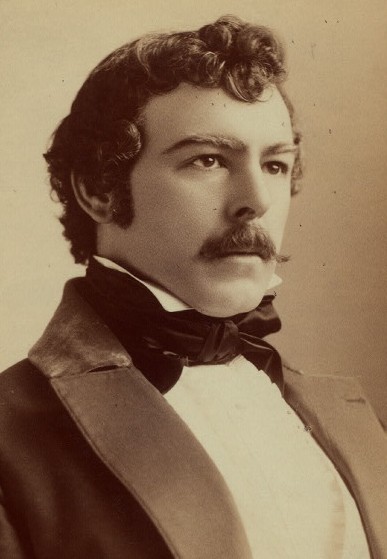
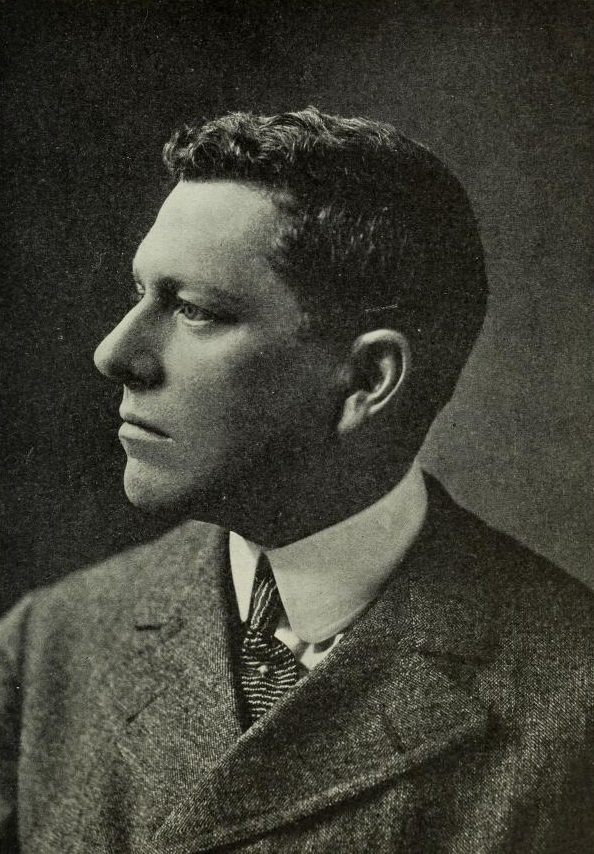
THIS, AT LEFT, IS HENRY MILLER. Clearly this is not the Henry Miller you more popularly know.

This Henry Miller would have never produced Tropic of Cancer. But his major contribution to the American stage would bring New Yorkers an iconic work of French cinema, a world famous theatrical revival, and one of the most successful Studio 54 knockoffs ever.

Miller was a minor theatrical star in the age of Sarah Bernhardt, who began dabbling as a director and stage manager at the same time that theater on 42nd Street began to flourish in New York. He became an early, respectable presence; from an early biography: “It was a foregone conclusion that a Henry Miller production must be in the best tradition of the theater.”

His timing was exquisite as well. The Broadway district in the 1910s was in full swing, with excitement at all hours. His patron (and progressive, feminist icon) Elizabeth Milbank Anderson assisted him in opening a stage in 1918 at 124 W. 43rd Street, a prime location near the theaters of Oscar Hammerstein, Klaw & Erlanger and Florenz Ziegfeld. The old New York Times building was half a block away, the nexus for New Years Eve celebrations for over a decade. Across the street rose the Hotel Metropole with its bustling late night antics; a few years earlier, in 1912, you could have stood in Miller’s lot and watched the bloody mob hit of gambler Herman Rosenthal — possibly ordered by New York cop Charlie Becker. (You can hear more about that in our Case Files of the NYPD podcast.)

There were no hits at Henry Miller’s theater, however, not the lucrative kind at least. In fact, the first show, The Fountain of Youth, was an unmitigated flop, opening in April 1918 and closing in May. (“This fountain of youth plays a very slender stream, and even that is of intermittent vigor,” claimed one review.) Famous names played here — George Gershwin, Billie Burke, Helen Hayes — but it wouldn’t be until Noel Coward debuted his scandalous, sex and cocaine-fueled comedy The Vortex in September 1925 that Miller’s theater would see its first in a string of major successes. Miller himself, however, would not enjoy these successes; he died a few months after Coward’s debut, in early 1926.

Below: Henry Miller’s theater, during its glory days. Photo courtesy NYPL
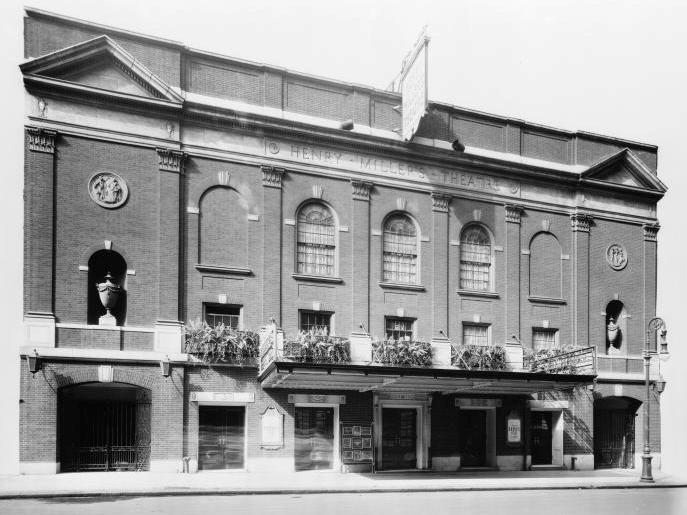
But Henry’s son Gilbert Miller had a knack for theatrical production even greater than his father. For three decades, he ushered countless box office hits through the Henry Miller’s Theatre, including the Tony winning T.S. Eliot play The Cocktail Party starring Alec Guinness. Most notably, Our Town would make its Broadway debut here in February 1938, and in 1957, a young British actress named Angela Lansbury would make her American stage debut here in Hotel Paradiso. Gilbert would win an honorary Tony in the mid-1960s for his contributions to the New York stage.

By then, however, the theater began flirting with a transition that many midtown stages had already made — into a legitimate movie house. Its first foray was also its most memorable, Federico Fellini‘s La Dolce Vita, premiering here in April 1961. The strangeness and theatricality of Fellini’s masterpiece fit the Henry Miller playhouse perfectly, even if the stage itself was technically ill-fitted for movies. The grumpy critic Bosley Crowther was even impressed: “Fellini’s “La Dolce Vita” (“The Sweet Life”), which has been a tremendous hit abroad since its initial presentation in Rome early last year, finally got to its American premire at Henry Miller’s Theatre last night and proved to deserve all the hurrahs and the impressive honors it has received.”

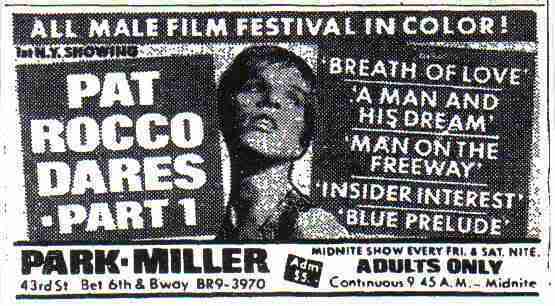
This might have been a harbinger for a fabulous future as an art house, however the theater was instead sold, renamed the Park-Miller, and entered the 1970s as one of Times Square’s most popular porno theaters, specializing in all-male features for gay audiences.

Although Henry Miller was certainly turning in his grave, the theater actually become quite successful, more so than most of Miller’s own productions during his lifetime.

According to author Hilary Radner, “the Park-Miller Theater on 43rd Street grossed in excess of thirty thousand dollars per week in the early 1970s….For a five dollar admission fee, audience members watched a mixed program that included shorts, slides, and a dubbed minifeature, such as Truckers — Men of the Road.” A long way from The Fountain of Youth, indeed!

Below: an advertising glimpse into the theater’s more prurient days
Everything changed in the spring of 1977 with the transformation of an old opera house into the superstar disco spectacular Studio 54, epitomizing the notion of nightlife as a headline-grabbing celebrity wonderland. One night at 54, music manager Howard Stein met Swiss restaurateur Peppo Vanini (the ex of actress Victoria Tennant), and the two cooked up a scheme to match the club’s glamour in another midtown location.

Stein purchased the old porn theater and remade it into the discotheque Xenon, although Xerox might have been a better name, for it adhered closely to the Studio 54 formula of flashy nights, big celebrities and kitschy showmanship (cannons with colored feathers, a neon X above the dance floor).

Being just slightly lesser a club than 54, you actually did stand a chance of getting in if you happened not to be a bold-faced somebody. But Stein would occasionally stand at the door himself “weeding out the detested middle class from the very rich and the colorful poor,” according to a New York Magazine profile.

Below: the club, during the day, in the 1970s:
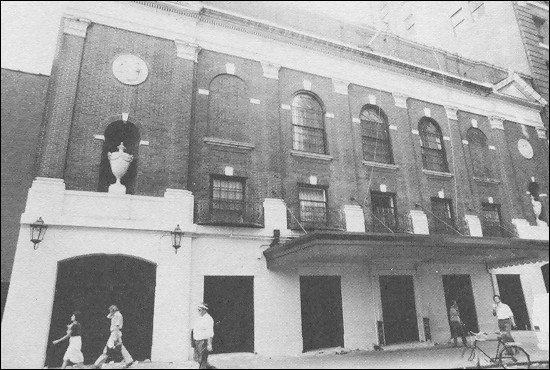
Still, Xenon had its day, and on a typical hot summer night in 1979 or 1980 you might stumble into private parties hosted by Michael Jackson, Woody Allen, Lauren Bacall, Ben Vereen, or Pele. Inside you might hear deejay Jellybean Benitez.

Although people often stripped down to bikinis on the dance floor, you had fewer naked Grace Jones moments; Xenon “combined the craziness of Studio 54 with the comfort of Regine’s” according to one source, Regine’s being the more elegant nightclub entree owned by French chanteuse Régine Zylberberg.

With the end of disco came the end of Xenon, in 1984, and a brief attempt at turning the space into a rock ‘n’ roll venue called SHOUT! It lay mostly dormant, hosting temporary parties, until the early 1990s, when in a flash of inspiration, the Roundabout Theatre renovated the worn, abused little stage, combining all eras of its history to transform it into the Kit Kat Club, a cabaret venue fit to re-stage, naturally, Cabaret. That version, starring Alan Cumming and the late, wonderful Natasha Richardson, would go on to win the Tony for Best Musical Revival in 1998. Incidentally, that same year, a devastating construction crane accident next door closed the block for weeks, and Cabaret would be forced to move uptown to the former Studio 54.

Suddenly, all its prior incarnations seemed to enjoin to create its most successful reinvention yet. After Cabaret left, the hot off-Broadway show Urinetown moved in; that bawdy musical took three Tonys in 2003.

And then, they demolished it.

Saving the landmarked front exterior — with Henry’s name emblazoned along the top — the rest of the building was scrapped in a massive construction project that eventually put the Conde Nast Building to its west side and the Bank of America building to its north, to which a new theater was attached, using that old exterior and renamed the Stephen Sondheim Theatre. In the fine tradition of Henry Miller himself, the stage has features two shows — a revival of Bye Bye Birdie, and the Dame Edna musical All About Me — both flops.

For some great recollections of the glory days of Xenon, check out the website Disco Music. Featuring one commenter who says: “There’ll never be a club like it again. Pinball machines would drop out of the neon heavens and land next to dancers gyrating to ‘Funky Town’ by Lipps. Not to mention the fake snow (clearly an homage to the abundant cocaine passing through nostrils by one and all) that dropped on you, sticking to your favorite nylon shirt.”
100 Years Ago: Frankenstein monster stalks the Bronx

In 1910, DW Griffith made the first film ever made in Hollywood, CA, called In Old California. Before then, film production companies were scattered throughout the United States, with two of the most successful based here in New York City.

The American Vitagraph Company, originally located at the Morse Building on 140 Nassau Street, made film shorts on the roof before moving to the Brooklyn neighborhood of Midwood in 1906. Vitagraph is best known for producing a five-part serial on The Life of Moses strung together to make what some call the first ever feature length motion picture.

More influential, however, was Edison Studios, the film company owned by inventor Thomas Edison. With principal studios in the New Jersey town West Orange — and original laboratories in Menlo Park (now Edison, NJ) — Edison eventually set his sights on a Manhattan studio.

He initially moved into the heart of the city in 1901, in a studio at 41 East 21st. Such a move made sense at the time; movies were only a few minutes long, essentially just filmed sequences of activities, and had no sound. A small studio smack in the center of New York would not have been disturbed by the bustle of the city.

With the growth into narrative films — longer movies with elaborate sets and casts — Edison needed to expand into a larger space and in 1908 moved production to a warehouse in the Bronx, at Decatur Avenue and Oliver Place, close to the New York Botanical Garden.

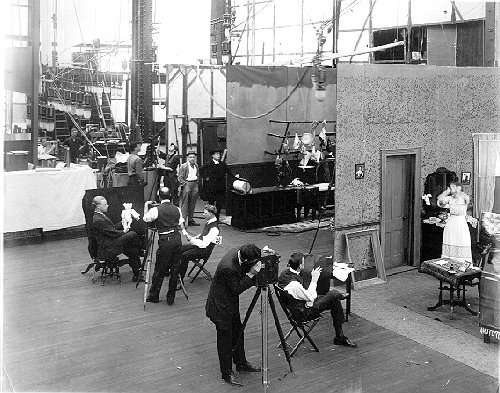
Below: Inside Edison’s Bronx studio

“The Edison Studio is said to be one of the finest and largest of its kind in the world,” reported [the theatrical trade paper] The Dramatic Mirror. “The building itself is 60 by 100 feet, built of concrete, iron and glass. The scenic end of the studio, corresponding to the stage in a theatre, except that it is not raised is 60 by 60 feet and 40 feet high. Here the scenes for film productions that cannot be made with natural outdoor backgrounds are painted and set.” [source]
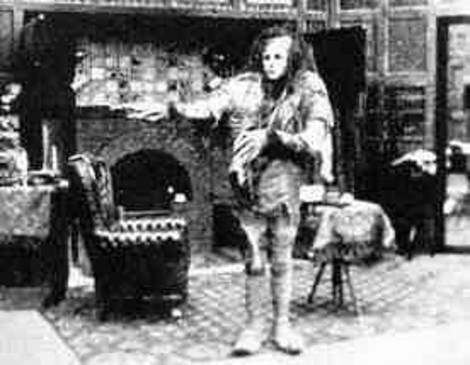
It was at this new Bronx studio in 1910 that Edison’s company produced one of its greatest works, the very first film adaptation of Mary Shelley’s Frankenstein. Shot in a week — rather lengthy for a film shoot in those days — the loose adaptation featured Charles Ogle as the famed monster. Believe it or not, the film began production on January 17, 1910, and was released by March of that year! Since there just weren’t that many movies houses in 1910, a film released constituted about 40 copies which were distributed around the country, then returned several months later.

The film was reportedly lost forever before a single negative was found and restored in the 1970s. I present to you the Bronx-made psycho-horror masterpiece in all its glory (watch it below or click here):

You can find more information about the film at Frankensteinia.

Wonderland: Walt Disney’s seven Big Apple moments

Yesterday’s news about a new Times Square flagship store for Disney had me wondering what influence if any New York had on the career of Walt Disney, arguably one of the most successful men in history to make his name on the West Coast. Come to find out, the world might never have had Mickey Mouse and the rest without one New Yorker in particular.

Here’s seven of the most significant New York moments for Walt Disney and the Disney empire:

1) Disney Discovered
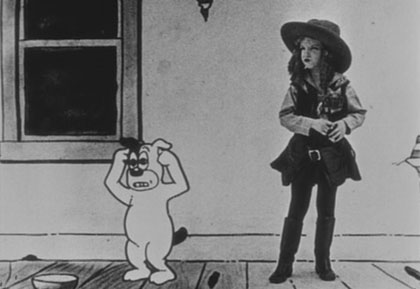
Small-time Kansas City animator Walt Disney spent much of 1923 writing New York film distributor Margaret Winkler, hoping she’d take a look at a new film he was creating, Alice’s Wonderland — a coy, self-reflexive mix of animation and live-action. He was lucky; Winkler was looking to put pressure on her biggest star Pat Sullivan (creator of Felix The Cat), and Disney’s strange little picture did the trick. She signed him and brother Roy, but retained editing control on the early ‘Alice Comedies’, inserting a Felix the Cat-like character named Julius, the first of hundreds of human-like animals in Disney films.

Winkler, by the way, was the first female film distributor in the United States and briefly one of the most powerful women in silent film — at a time when the film industry was centered on the east coast.

Below:one of the Alice Comedies

2) Steamboat Willie
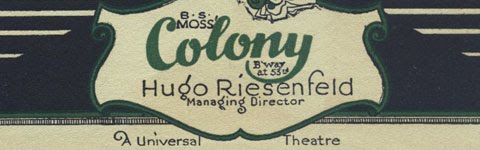
Disney would return to New York with his revolutionary ‘Steamboat Willie’, the first sound appearance of Mickey Mouse. On November 18, 1928, it quietly made its world premiere at the Colony Theatre (Broadway and 53rd Street, still around today as the Broadway Theatre). Sitting in the audience for everyone of its two-week performances was Walt himself.

Steamboat Willie was the opener on a bill of entertainment that also featured the film Gang War, starring Mary Pickford’s brother Jack, an alcoholic mess who once dated Olive Thomas who allegedly haunts the New Amsterdam Theatre. ‘Gang War’ would be his final movie role.

3) Snow White and The Seven Dwarfs
Almost ten years later, Disney’s first feature-length animated spectacle would have a far more grandiose reception — a five-week run at Radio City Music Hall starting in January 1938. The New York Times exclaimed, “They’re gay and friendly and pleasant, all of them, and so is the picture. Thank you very much, Mr. Disney, and come again soon.” As legend goes, the upholstery of several Radio City Music Hall chairs had to be replaced, as children wet their pants as the first sight of the Wicked Witch.

Strangely, the film was later paired with an ice-themed short, Ski Flight, because during winter there’s nothing people like to do more than sit and watch ski movies.

4) Fantasia
Disney’s trippy concept film closed the loop; as one of Disney’s first self-distributed films, it premiered November 13, 1940 at the same theatre that had once shown Steamboat Willie, only this time it was called the Broadway Theatre. (Today it’s a mainstream musical stage featuring Shrek the Musical).)

There was more drama behind the screen than in front. One scene (“Ave Maria”) had to be redeveloped, flown to New York and was literally spliced in with four hours to go before showtime.

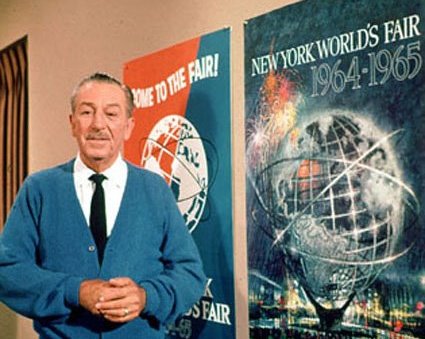
5) The Worlds Fair 1964-65
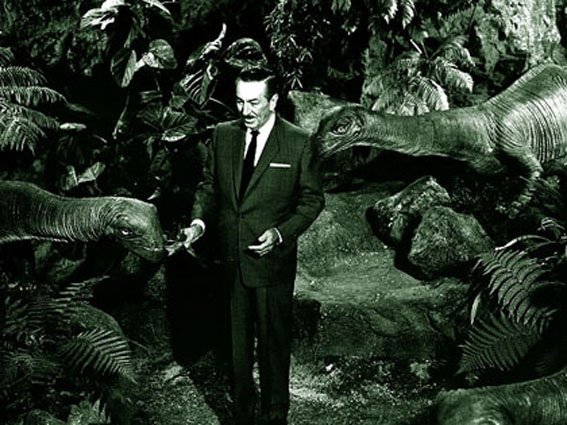
The Worlds Fair of 1939 had clearly had its influences on Disney’s future theme parks. So it was only natural to bring him in as a consultant for Robert Moses’ crowning concrete spectacle of 1964. Disney Studios brought animatronic dinosaurs to life in the “Magic Skyway” for the Ford Motor Company pavilion (see picture below), a talking Abraham Lincoln, and of course ‘It’s A Small World’. Many more pictures of Walt behind the scenes at Disney and More.

6) Disney rewrites Broadway
Less than thirty years after Walt’s death, the company enters — and promptly conquers — a new frontier: Broadway. Beauty And The Beast became its first permanent Broadway production when it opened in April 18, 1994. The swirling gala of dancing utensils and candelabras won the Tony for Best Musical, fueling a run that would make it the sixth longest running show in Broadway history and opening the flood gates of Disney-themed shows.

By the time ‘Beauty and the Beast’ closed in 2007, Disney had changed the rules of the Broadway musical and the actual physical makeup of 42nd Street itself, leading to the sanitation (i.e. ‘Disney-fication’) of the once-seedy boulevard

7) And hits Fifth Avenue, too
The invasion wasn’t just on popular entertainment, but on the heart of New York retail. The first Disney store opened on Fifth Avenue on May 22, 1996. Ushered in by mayor Rudy Giuliani and Disney CEO Michael D. Eisner, thousands of shoppers flocked to the retailer, at the time setting the record for single-day sales at a Disney store. That’s an awful lot of mouse-eared Statue of Libertys.

The company just announced that this ‘World of Disney’ location, at 55th Street, would be permanently closing next year, to make way for Disney’s Time Square plans.

I should end by adding that when Disney moved in during the 1990s, it had kicked out a New York City institution — the famous French restaurant La Côte Basque, a “high-society temple” and favorite of Jacqueline Kennedy Onassis. The eatery moved around the corner but only lasted a few more years.

Prospect Park: Montgomery Clift’s final resting place


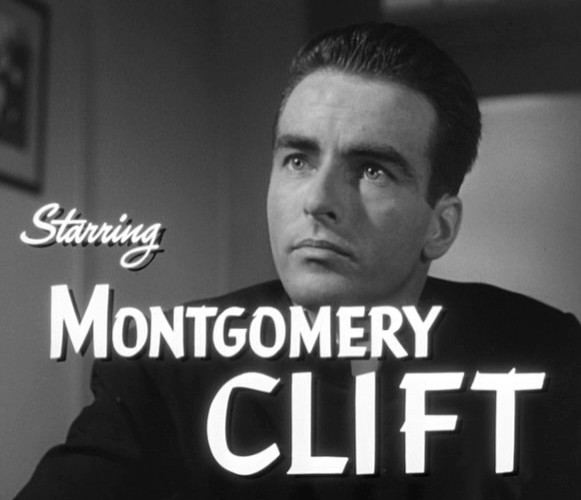
One curious fact we mentioned in our Prospect Park podcast is that classic film actor Montgomery Clift is actually buried here, in a quiet Quaker cemetery near the southwest entrance of the park. As far as I’m aware, entrance to the tombstones is locked, and its so cloistered away in the woods that it’s difficult to find.

So why would a movie star be buried here of all places? The handsome Nebraska-born actor came to prominence in such searing Hollywood films as A Place In The Sun and From Here To Eternity. In 1956, Clift crashed into a tree while leaving the home of Elizabeth Taylor. (Hollywood lore famously suggests Liz raced to the accident scene and fished out broken teeth that were lodged in his throat.) His career was never the same after reconstructive plastic surgery.

Hooked on pain medication and driven to drink, Clift was found dead in his Manhattan townhouse at 217 East 61st Street on July 22, 1966. Clift was allowed to be buried here, quietly and with little fanfare, because his mother Sunny was a practicing Quaker. Still, these were the film actors; actress Nancy Walker planted two hundred crocuses around his tiny tombstone, reportedly designed by the same man who made John F. Kennedy’s marker at Arlington Cemetery.

The hidden cemetery of almost 2,000 graves, on this land long before Prospect Park, used to be larger. The city acquired only part of it however, and thus the graveyard remains the only patch of private land in the park.

Look here for a map of the area.

Categories
Know Your Mayors

Know Your Mayors: George B. McClellan Jr.

Our modest little series about some of the greatest, notorious, most important, even most useless, mayors of New York City. Other entrants in our mayoral survey can be found here.

Perhaps no mayor of New York City this side of Fiorello Laguardia has ever overseen so drastic a change to the landscape of the city than George B. McClellan Jr.

For six extraordinary years (1904-09) McClellan presided over the openings of the New York Public Library, Chelsea Piers, Grand Central Station, christened the first subway service and licensed the first taxi cab.

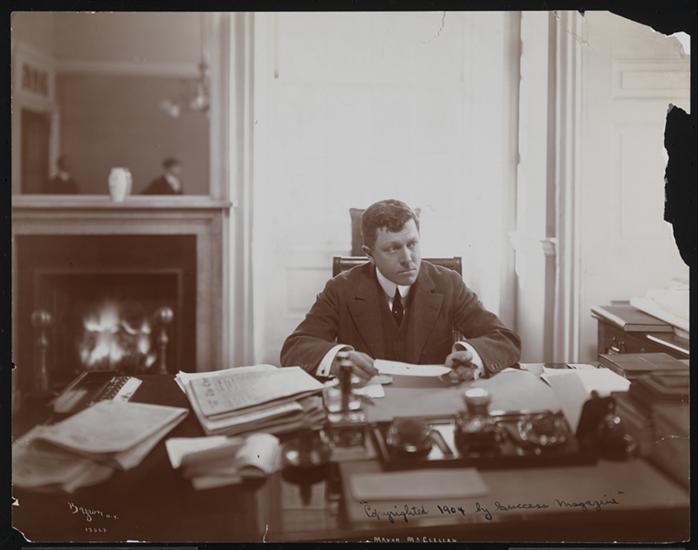
Below: Mayor McClellan in 1904, his first year in office

george

But oddly, George is perhaps best remembered today for his half-hearted but successful campaign against motion pictures.

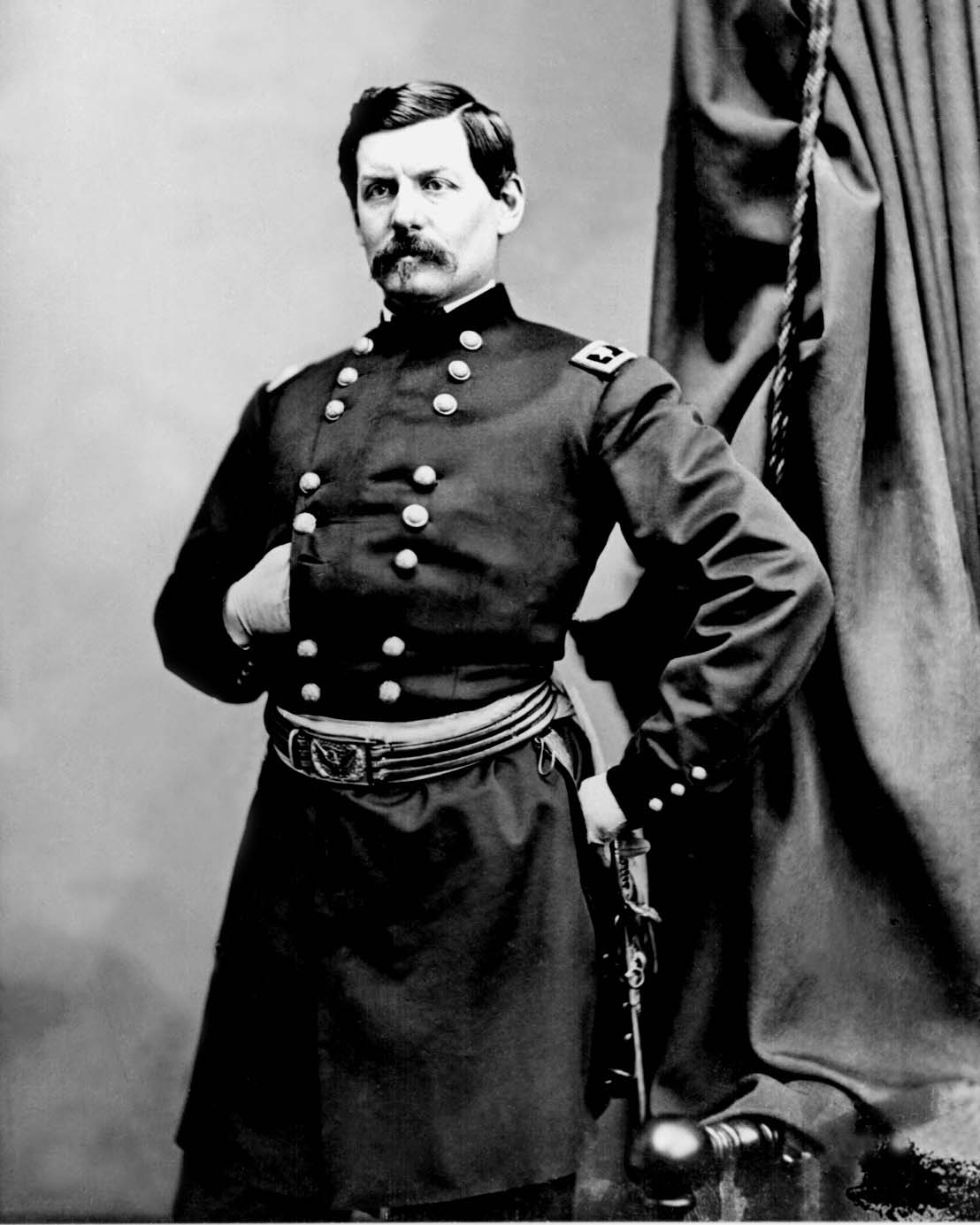
If his name sounds vaguely familiar, thank your high school history teacher. George Jr. was the son of the ultimately disastrous Civil War general of the same name, a Union general first fired by Lincoln, then defeated by him in the presidential election of 1864. Despite this, George McClellan Sr. did become the governor of New Jersey, providing his son with a model of leadership he would implant into his many civic duties.

Below: Papa McClellan
father

The dashing George Jr — or you can call him Max, his family did — is one of New York’s few foreign-born mayors, born in 1865 in Dresden, a few years before it was absorbed into Germany. Growing up in New Jersey while father governed, George graduated from Princeton in 1886 and a couple years later ended up as a writer for the revitalized New York World, Joseph Pulitzer‘s popular scandal sheet, in its brand new office on Newspaper Row — just across the street from George’s future office at City Hall.

Actually, George was mayor before he was really mayor. Name recognition and an inherited interest in public service placed him on the Board of Aldermen (precursor to the City Council) by the 1890s, and he was elected board president in 1893. The next year, due to an absence from the city by sitting mayor Thomas Gilroy, McClellan, age 29, became the acting leader for a month.

His biggest controversy? Raising on Irish flag over City Hall for St. Patricks Day, outraging local schoolboys. No, really. He even received threats of bodily harm, but held firm. Deal with it, he told the boys.

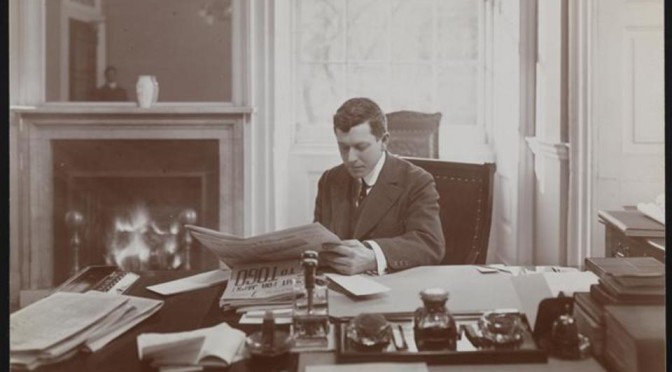
Mayor McClellan in his office, 1904 (Courtesy Museum of the City of New York)


Snugly in bed with Tammany Hall and a favorite of ole Boss Croker, McClellan spent the next several years representing New York in the U.S. House of Representatives. He returned to the New York scene in 1903 as a Tammany instrument to oust mayor Seth Low, a reform ‘clean-up’ mayor who may have irked more than a few tavern owners.

McClellan, with Tammany’s blind eye towards New York’s more lascivious industries, handily won. And would stay in office for six years, making him New York’s longest serving mayor since Richard Varick in 1789. (The man he beat for re-election in 1905? William Randolph Hearst.)

New York blossomed under McClellan’s reign, with many long boiling projects coming to fruition. One new bridge, the Williamsburg, opened under his watch with another (Manhattan Bridge) well on its way, he unveiled lofty plans to improved the city’s water system, and he gave Longacre Square a new name (Times Square). The Battery Maritime Terminal (built in 1906), that jade beauty next to the Staten Island ferry, is even dedicated to McClellan. New York Public Library was nearly completed — and Grand Central Terminal half-way done — by the end of his term.

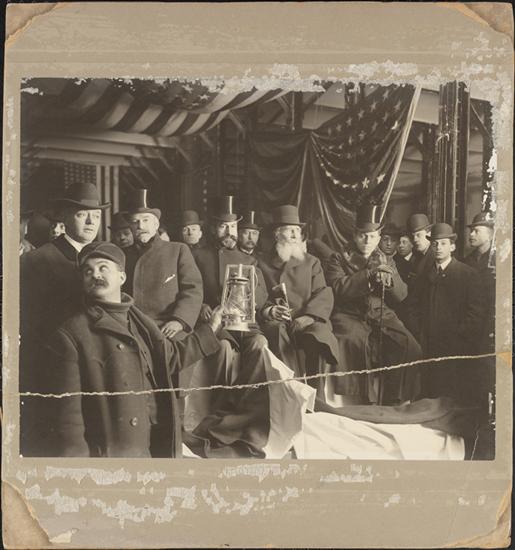
A picture in the new subway tunnels, Mr. McClellan looking very confident near the center right. (Museum of the City of New York)


An intrepid tale springs up about McClellan involving the grand opening of the IRT’s first subway tunnel in October 27, 1904. Meant only go ceremonially start up the engine of the first train, McClellen requested that he would like to actually go ahead and drive the train all the way up to Harlem! (And Bloomberg brags that he only rides the train.) He deftly steered the new engine up to 103rd Street before handing over the controls.

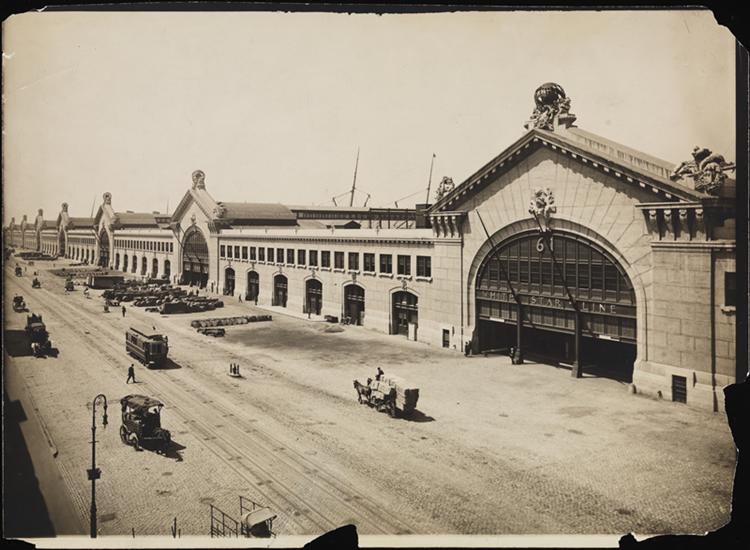
To me, McClellan’s biggest contribution is valuable indeed — overseeing the construction of the Chelsea Piers (below), which allowed massive steamships to dock in the city, turning New York into a truly international port. By 1907, in fact, the Lusitania was already at dock here, although the terminal wasn’t officially completed until 1910.

piers

Yet with all of these remarkable changes, the story which arises the most about McClellan involves his war against a technological threat — the rise of cinema.

By 1905, the city had dozens of ‘movie houses’, nickelodeons and amusement arcades where patrons could pay a penny to see the birth of the motion picture. A theater owned by Marcus Loews, quickly to become the biggest name in film exhibition, opened in New York in 1904; the city got its own production company, Biograph, in 1906.

This new moving pictures craze was sweeping the United States — two million patrons in 1907, according to the Saturday Evening Post — and like everything foreign and new, it was soon seen as a corrupting influence, ‘demoralizing’ children, a bastard offspring of vaudeville and burlesque.

Some accounts have McClellan ardently opposed to this new medium on those grounds. I prefer a more rational theory: by 1908, McClellan had his eye on a new job — president of Princeton University — and in order to get that, he had to be seen as sticking up for higher morals. (Something Tammany candidates aren’t exactly known for.)

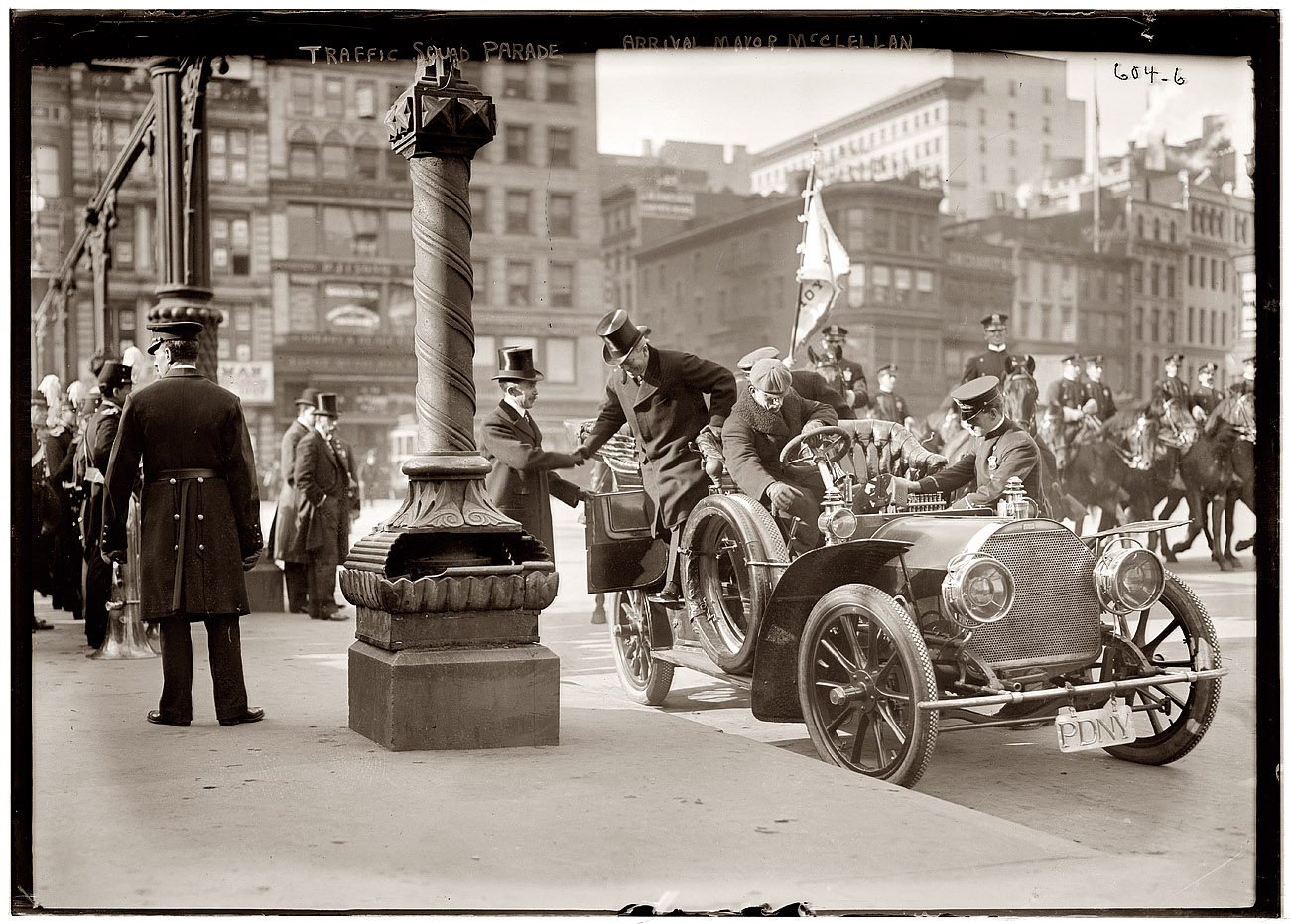
Below: McClellan steps from a newfangled automobile onto the streets of Union Square in 1908 (pic courtesy Shorpy)

02905u

And so, on the technicality of being dangerous fire hazards, McClellan tore up the licenses of over 550 motion picture exhibitors — yes, that’s right, 550. (Nickelodeons were in music halls, taverns, even a few restaurants.) Most were not reinstated until the debut of New York’s Board of Censorship in 1909, a reviewing board which ended up not censoring much of anything. By the 1910s, movie makers and theatre owners were becoming too powerful to overrule.

By why was McClellan looking for a new job in the first place? In 1908, he was not long for the mayor’s office. Like blessed as Tammany Hall golden boys, McClellan got a conscious in his second term, hiring many non-Tammany employees and rooting out a mountain of Tammany related corruption in civic offices.

This turncoat did not please new Tammany boss Charlie Murphy, no it didn’t. In 1909, Tammany put up their new contestant, the colorful William J. Gaynor. (Incidentally, he also beat William Randolph Hearst, in his second and final unsuccessful run at the office.)

McClellan never became the president of Princeton, but he spent his remaining years teaching there until 1931, when he retired to the good life, writing books about his real passion — the history of Venice. He died in 1940 in Washington DC and was buried in Arlington Cemetery.

But clearly, it’s to New York that he belong.

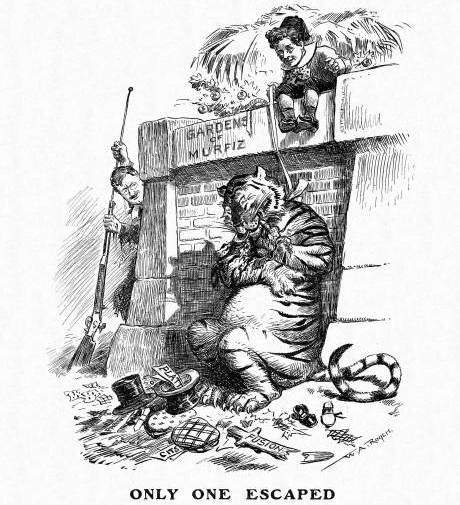
Below: in this 1905 Harpers Weekly cartoon, McClellan is seen as a little boy holding the Tammany tiger, devouring the ‘fusion candidate’ (Seth Low). President Theodore Roosevelt peeks from the side. (He always did like wildlife.) Within three years, McClellan would be the devoured.

Garden of Murfiz = Tammany Boss Charlie Murphy

Manhatta: Art of the silent city

The Sunday New York Times had an excellent article on the restoration of the film Manhatta, purported to be the ‘first avant garde film’ ever made and one of silent film’s great sightseeing tours of New York City.

The film was a collaboration between photographers Paul Strand and Charles Sheeler, with a little help from Brooklyn-ite Walt Whitman, long dead but represented with pertinent works of poetry on title cards between the images.

Although the restored movie is a whopping ten minutes long, the program, hosted by the Museum of Modern Art, will feature other archival New York footage from the early days, as well as a chat with the restorer and curator Bruce Posner. More details on the viewings of this and other films in the To Save and Project series can be found on their website.

If you plan to go, you’ll probably want to check out what the film looked like pre-restoration:

And since I’m at it, here’s a few views of New York City courtesy of the silent era.

Thomas Edison’s early experiments with film resulted in several shorts capturing New York at the turn of the century, including this one, Skyscrapers of New York

One of my personal favorites from 1903 gives us a look at ‘The Eighth Wonder’, a panorama of the Flatiron Building and its surroundings 105 years ago:

Seven years older and just up the street is this brief glimpse of ‘Herald Square 1986’

And for a little sappy melodrama, why not try this 1912 Mary Pickford weeper, the New York Hat directed by DW Griffith, showing the soothing powers of New York fashion decades before Carrie Bradshaw

Categories
Podcasts

PODCAST: Breakfast at Tiffany & Co.

You’ll be surprised by Tiffany’s 170-year history as a vanguard in New York luxury. See how they went from selling horse whips to world class diamonds.

Listen to it for free on iTunes or other podcasting services. Or you can download or listen to it HERE

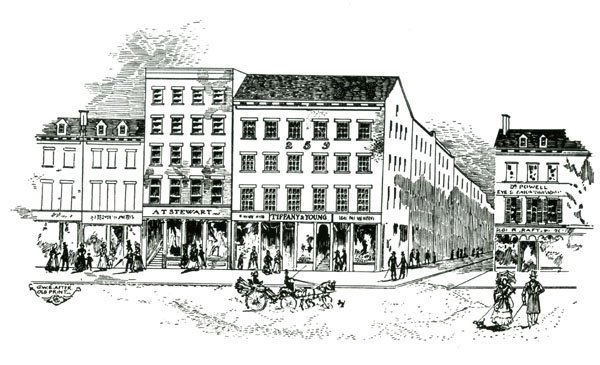
The original Tiffany & Young location on downtown Broadway

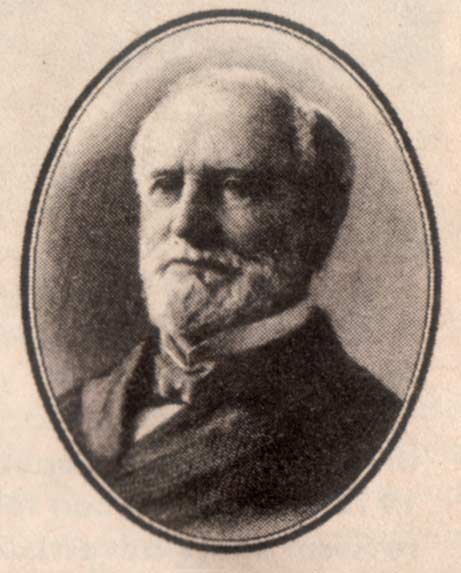
Charles Tiffany, the ‘King of Diamonds’

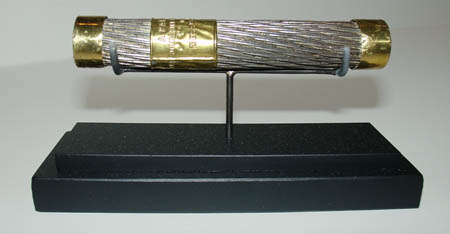
Outside of his gems, the most curious item that Tiffany probably ever sold in his store were leftover bits of the Atlantic cable. This is probably the only instance in history where cable wires became a luxury item.

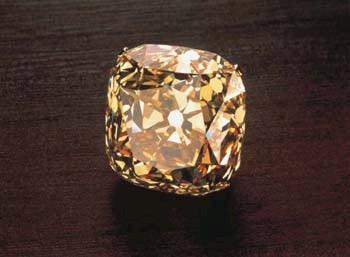
No amount of cable, however, drew the kind of crowds that the Tiffany diamond did:

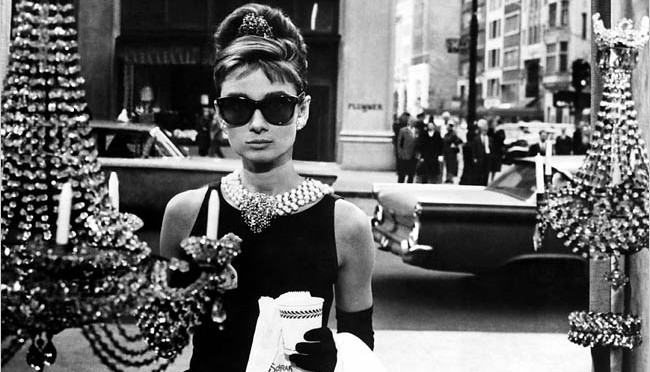
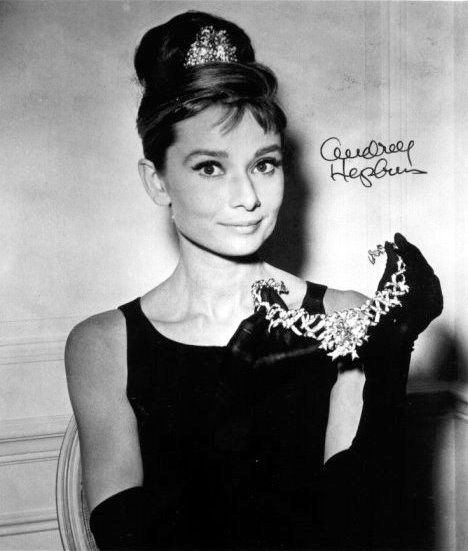
Here’s a promo pic of Audrey Hepburn wearing the Tiffany diamond. After this photoshoot, the necklace was dismantled. The diamond has not been worn since.

Sparkletack has a great podcast on the Great Diamond Hoax that vexed Charles Tiffany and various other wealthy gents.

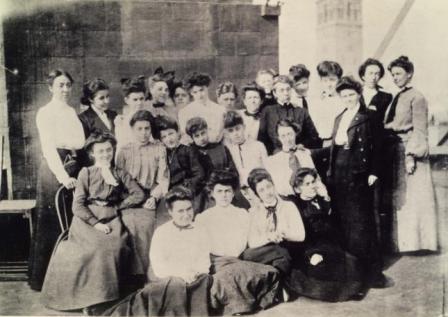
And who are the Tiffany girls?

They’re not counter girls at the jewelry store, but rather workers in the studio of Louis Comfort Tiffany. The studios were on 25th street and (then) Fourth Avenue. This team of largely unmarried women enjoyed a unique privledge in the history of the female workforce — they were paid the same as their male counterparts. More information here.

And finally, onto the end of this weeks blog series:

Meloncholy
1. Breakfast At Tiffany’s
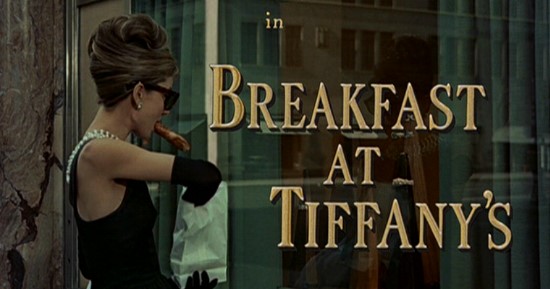
A little windowshopping

This serene, wistful and deceptively simple scene — Holly gets out of a cab, dreams of Tiffany jewels, walks down 57th street — displays New York at its best. Filmed on an early Sunday morning — the first time in decades Tiffany had ever opened its doors on a Sunday — just off camera were hundreds of Audrey fans and gawkers watching the progress of the filming.

According to director Blake Edwards, traffic was not controlled; they just happened to catch a few moments with NO automobiles on the street. (I find this almost impossible to believe, by the way.)

However, Audrey was often distracted and the scene required several takes. Also, she was not a fan of Danish pastries, making these multiple takes of her nibbling on one especially taxing.

As the legend goes, however, a crew member was almost electrocuted on a piece of equipment off camera. The accident sent a chill through the crew, and Audrey then snapped into focus, completing the scene. I do wonder how close to electrocution that crew member really was, but it is a nice legend attached to the famous scene.

It should be noted that lovely, slinky Audrey had just had a baby three months prior to shooting.

New York’s best performances – Part 3

It’s funny that the decade in which New York is truly at its lowest — crime at its all time high, fiscal crisis, the city’s landmarks falling apart — also happens to be the best decade ever for films about New York. I’ve already listed Taxi Driver and Saturday Night Fever, but you could wax on endlessly about New York films in the 1970s: Three Days of the Condor, Marathon Man, The Godfather, Annie Hall, The Taking of Pelham 1-2-3, Mean Streets, Shaft, All That Jazz, Network, the Panic at Needle Park.

And of course, these three….

Chaos
4. Dog Day Afternoon
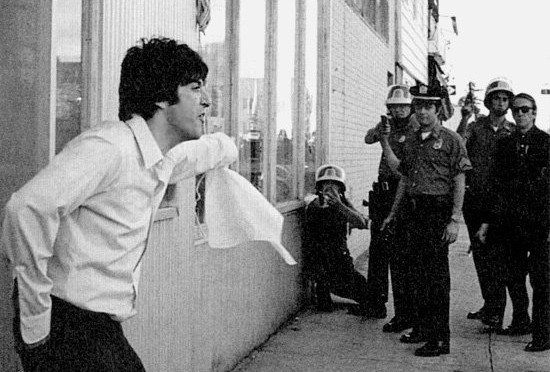
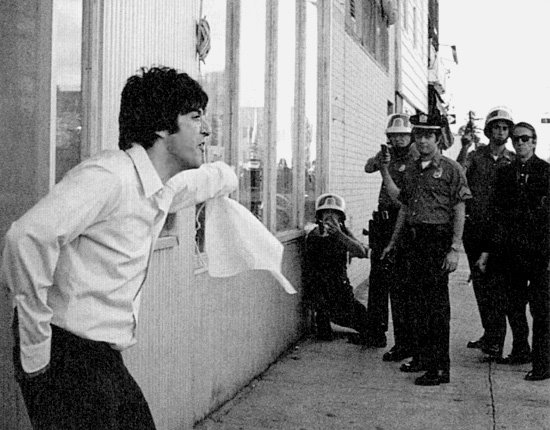
Warming up the crowd

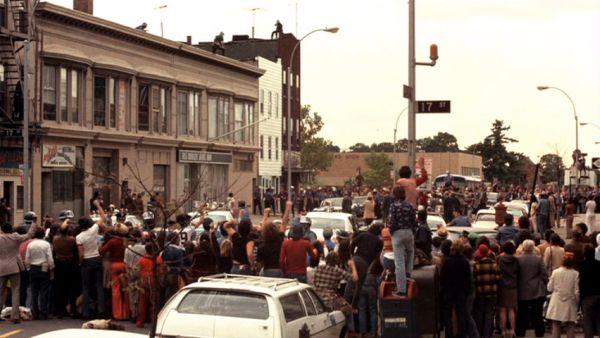
Like Do The Right Thing, this blistering Sidney Lumet flick is based on a real incident, a bank heist in Gravesend, Brooklyn — at 450 Avenue P, to be exact. (The only thing you can steal from there now is a mammography or an ultrasound; it’s the now the Brooklyn Medical Imaging Center.) Lumet moved the action to the Brooklyn neighborhood of Windsor Terrace, at Prospect Park West between 17 and 18th streets. He probably couldn’t have chosen a better block. With the park in the distance, the streets fill with police, random photographers, on-lookers, TV cameramen, buses and shop owners, and the result is like a self-contained swarm.

All to observe Al Pacino, playing Sonny the charming but befuddled bank robber, holding hostages and, in the pivotal scene, rallying the crowd to his side with cries of ‘Attica! Attica!’ (The Attica prison riots, spurred on by accusations of prisoner torture, had just happened, in 1971.)

Sadly the bank and many of the shops on the street have been replaced with — quel suprise! — condominiums.

However, the neighborhood Holy Name Roman Catholic Church (at 245 Prospect Park West), featured in the film, is still hanging around. The bank interiors, although not filmed in the actual bank, were still filmed in Brooklyn — in a nearby warehouse.

Hysteria
3. The French Connection
Chase under a train

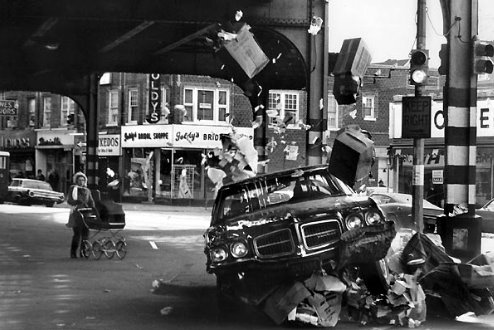
The car chase that defines all car chases zipped under the elevated train from Coney Island for a death-defying 26 blocks. I wrote about the wacky logistics of the filming here . Perhaps with the exception of I Am Legend or The Naked City, this William Friedkin film could be considered the film that most used New York, as scenes were evidentally shot in almost every corner of the city.

Magic
2. Manhattan
Isaac and Mary have a chat

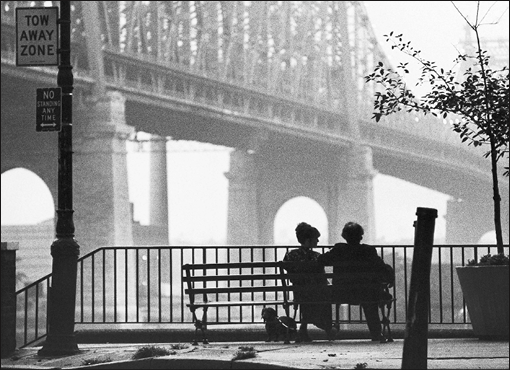
I’m sorry, but Woody Allen’s 59th Street Bridge scene is just him showing off. And that’s why it’s so perfect, the defining shot in what has commonly been called his “love letter” to the city. The quintessential New York director, essentially rendering a rather unromantic bridge into the most beautiful site in the entire city — the entire world, at least you think so while watching it.

“This is just a great city. I don’t care what anybody says,” Woody remarks to Diane. (Their characters are Isaac and Mary, but who cares?)

You’d think it would be easy to recapture this scene yourself, but alas, there’s no longer a bench. By the way, for some reason, ‘Manhattan’ is considered to be Woody Allen’s least favorite film that he’s made. Really Woody? Worse than Scoop? Shadows And Fog? The Jason Biggs-vehicle Anything Else?

New York’s best film performances – Part Two

My list of New York’s best movie scenes continues with two in Brooklyn — and one that almost gets there….

Tension
7. Do The Right Thing (1989)
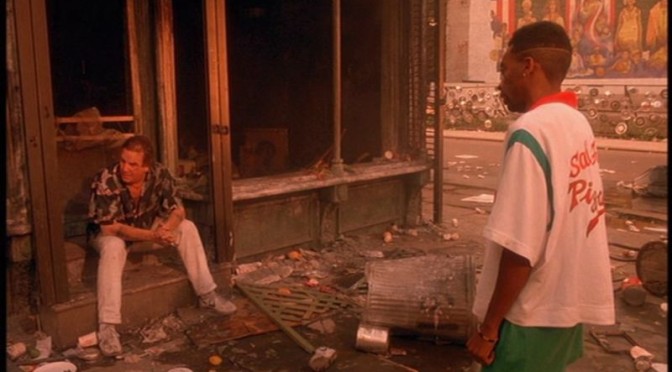
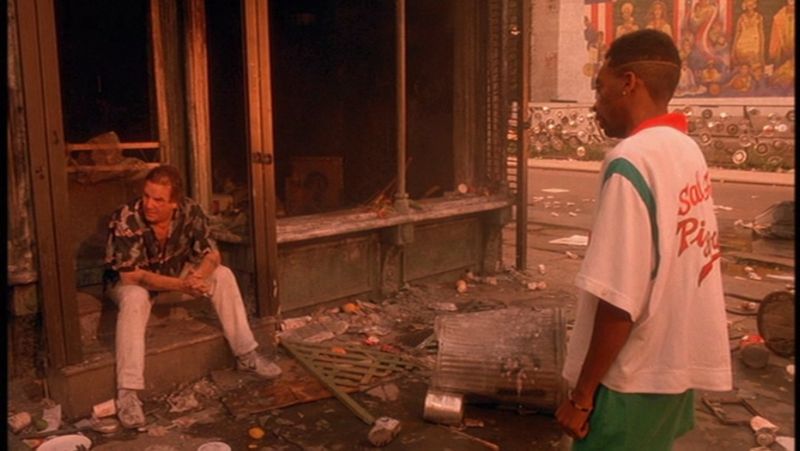
Mookie throws a trash can

Spike Lee is only one of a few directors who knows how to turn New York City into a character in his films. With ‘Do The Right Thing’, he photographs a typically drab streetcorner in Bedford-Stuyvesant with the sorts of color and pizazz more associated with 1950s musicals. Better to match the residents — everybody from the old men on the corner to the customers at Sal’s Pizzeria — a cross-section of vivid characters and a balance of different races getting along. Until, of course, Mookie throws that trashcan through Sal’s window.

The film is loosely based on a violent 1986 incident that occured in Howard Beach, Queens, involving the death of a black teenager after being harassed with his friends at a pizzeria. Mookie’s act of violence — the “did he do the right thing” moment — sparks a mob scene that greatly parallels many incidents during the New York blackout of 1977.

Not suprisingly, Lee goes back to the motif of the ‘hottest day of the summer’ in another great movie actually set in 1977 — “Summer of Sam” — a film loaded with on-location shots in Queens and the Bronx.


Grit
6. The Naked City (1948)
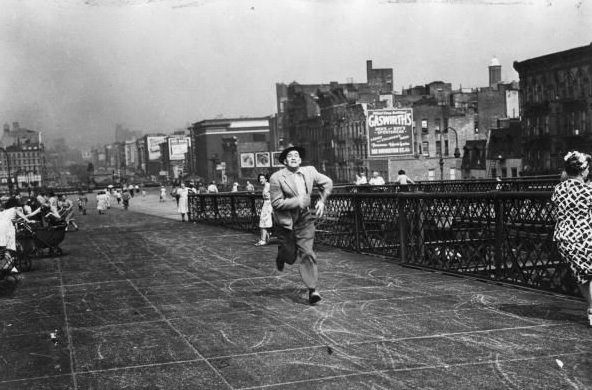
Shootout on the bridge

The Williamsburg Bridge’s best moment ever in a recorded medium is this scene in the Naked City, the climactic chase and shootout in a film already known as one of the best look New York City movies ever made.

Forget the standard issue film noir plot, fun but unspectacular; it’s all about William H. Daniels’ verite cinematography, which won him an Oscar. The Naked City is one of the first film to shoot almost everything on location in New York, 107 on-location scenes in all. The film, and New York, looks better the older it gets.

Among its more famous locales include the ole Roxy Theater, the Whitehall Building, and the City Morgue (!), but its crowning scene is its last, a breathtaking shoot-out literally up in the proverbial rafters of the Williamsburg Bridge. NO film (not even the next on my list) has ever used a bridge to such tangible effect.


Decadence
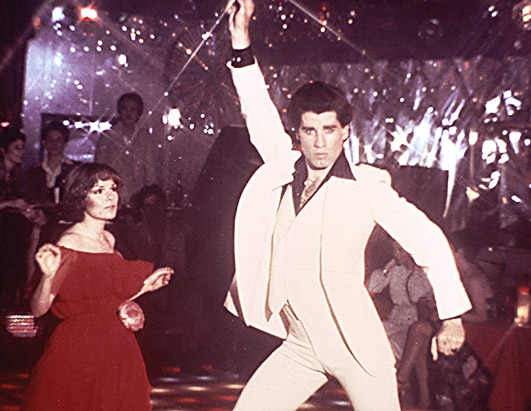
5. Saturday Night Fever (1977)
Tony and Stephanie cut a rug

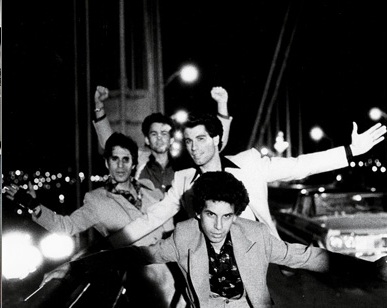
I couldn’t not pick the famous danceoff scene with Tony Manero and Stephanie Mangano. It defines the style of New York nightlife outside the VIP area of the 1970s. But for the record, Saturday Night Fever has two equally beautiful scenes using New York backdrops that are utterly fabulous — Tony strutting down the street with paintcans and, of course, the tragic encounter at the Verrazano-Narrows bridge. I can probably go on record and say ‘Fever’ is the coolest movie about New York City ever filmed.

I’ll save myself some typing and direct you to my writeup a few months ago on Saturday Night Fever and the club where it was filmed 2001 Odyssey, which also includes a report the fate of that sacred dance floor.

By the way, the original name of the movie was ‘Tribal Rights of Saturday Night’, as the film itself is based on a magazine article called ‘Tribal Rights of a New Saturday Night.’

New York’s best film performances – Part One

After spending quite an amount of time in the Revolution, then taking you to church, I’m taking it easy on you (and me, for that matter) and focusing on New York in the movies.

New York City is without a doubt the most photographed and filmed city in the world. Even when filmmakers shoot in other cities — such as Toronto — it’s still New York.

For the week, I’m presenting my incredibly subjective list of the ten best movie scenes shot in New York City. This doesn’t quite equate to the ten best movies about New York. These are just the ten images that I think in total represent the reasons that people continue to turn NYC into the world’s largest back lot. I’ll reel out the first nine today through Thursday; the topic of my number one pick will also be the topic of this week’s podcast.

This list only features scenes that were actually filmed in New York without too much enhancement or special effects, so no sci-fi (King Kong, Ghostbusters, Men In Black, I Am Legend). I also avoid scenes that are obviously in New York City but are interiors with no distinguishing features (‘You talkin’ to me?’ and ‘I coulda been a contender’ both spring to mind.)

I’m obviously going to leave out a few favorites, so after Friday drop me an email of what I’ve left out. I’ll list the notable omissions next week.

FYI, I give 11th place, honorable mention to Marilyn Monroe’s dress-blowing scene in the zany sex comedy ‘Seven Year Itch’, But you’ll have to read here to find out the technicality that excludes it from this list.

Mystique
10. North By Northwest (1958)
Roger Thornhill buys a ticket

Alfred Hitchcock loved using New York as a set piece. He put Jimmy Stewart in a wheelchair here, cooked up a claustrophobic mystery, and used the Statue of Liberty to great effect.

In North By Northwest, he engineers a chase through Grand Central Terminal featuring Cary Grant in shades alluding capture, eventually finding himself on a train with Eva Marie Saint. What makes this scene so alluring is that it’s actually at Grand Central and prefaced by an awkward scene involving a fake United Nations. (Hitchcock couldn’t get permission to film there; nobody could until Nicole Kidman.)

By merits of it being a Hitchcock film, the scene is zippy and glamorous, all the more because Hitch uses a crane shot to follow Grant from one corner to the other, a gravity-less vantage that for a moment takes you above the busiest place in New York.

By the way, once Grant gets on the train, we’ve clearly gone back to a staid movie set. However Grand Central was not the only real location used; you also have some great old views of The Plaza Hotel and the Oak Room.

Drama
9. Vanilla Sky (2001)
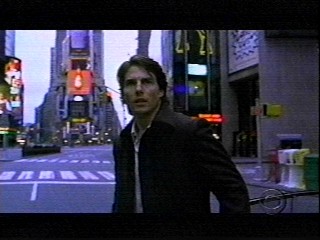
Times Square in dreamtime

See, this list isn’t about good movies. Whatever you think about this Cameron Crowe remake, this fantasy sequence featuring Tom Cruise in a completely empty Times Square is remarkable by merits of them pulling it off at all.

The scene was filmed on an early Sunday morning in November 2000 and they had to shoot quickly. Their efforts to create an eerie setting were almost thwarted by the Dow Jones news ticker, in the background proclaiming details about the disputed Bush-Gore election. They were given permission to digitally erase the information.

Studio execs had also asked Crowe to digitally erase the World Trade Center, which by the film’s release date had been destroyed. This, Crowe did not do.

Perversity
8. Taxi Driver
Marty takes a ride

It’s not Taxi Driver’s best known scene, but it perfectly employs New York at night in a twisted noir-ish way. Travis Bickle (Robert Deniro, essentially silent during the scene) pulls up a passenger to the curb. That passenger happens to be played by Martin Scorsese himself, who argues with Bickle to leave the meter running.

We then see that classic of noir fixture — a woman’s silhouette in the window — and Scorsese goes off on a sick and disturbing explanation of what he intends to do to her, his estanged wife.

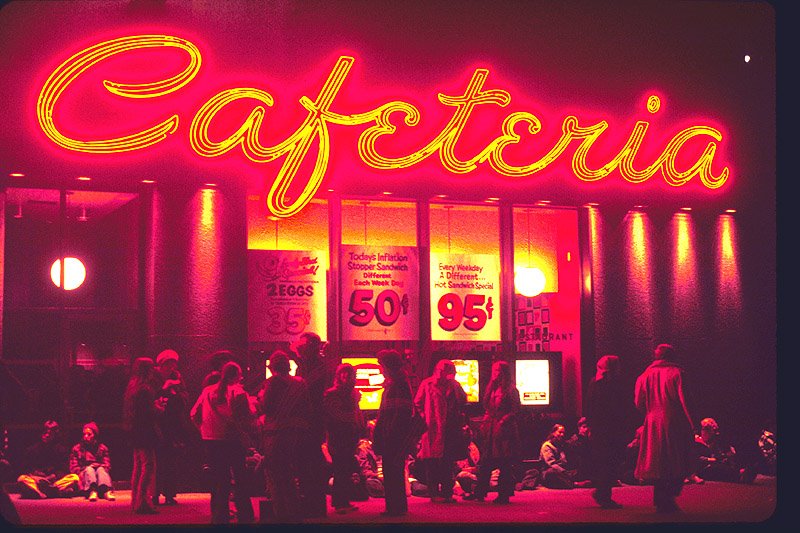
By the way, the scene that proceeds this one — of cabbies gabbing at a diner — is filmed at the Belmore Cafeteria, a classic old-style diner which once sat at 28th Street and Park Avenue South. This site has a great tribute to the old joint. Here’s a shot of its dazzling exterior:

Tomorrow: #7-5!

The History of (Destroying) New York City


I apologize for the second post in a row about films, but I had to ask the question, when did destroying New York become hot again?

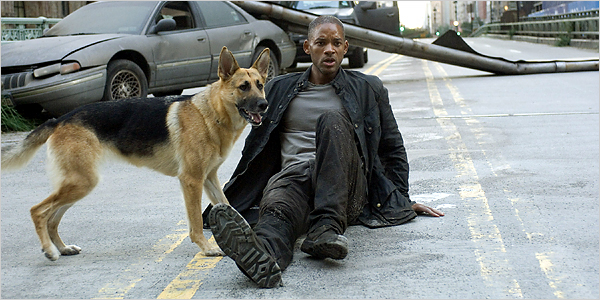
This Friday is the opening of I Am Legend, an adaptation of Richard Matheson’s classic thriller about the last non-zombiefied human being alive. In this case, he resides in New York City, the population wiped out by a virus. Nice to know that the last representative of the human race is charming, witty, and a former rapper.

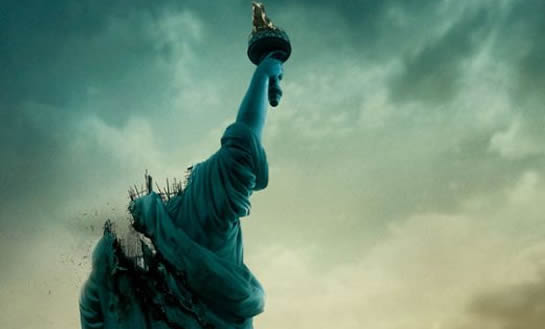
If that’s not enough doomsday for you, JJ Abrams brings us Cloverfield next month, about a sea monster ‘the size of a skyscraper’ ravaging New York. I almost breathed a sigh of relief when I found out that M. Night Shyamalan’s The Happening releasing next spring, takes out Philadelphia.

Tokyo may be the one with the most movie monsters attacking it in film history, but New York has taken it pretty hard from a variety of fictional sources. Here’s the top ten (I left out films that actually destroy the whole earth):

1. King Kong (1933)
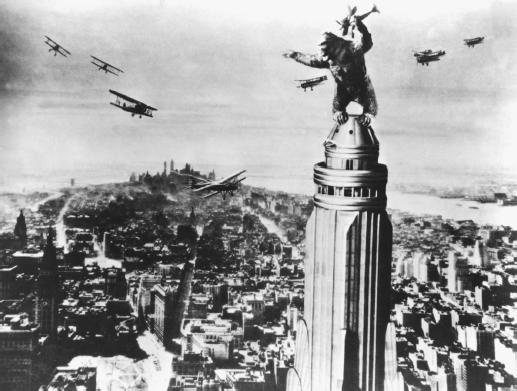
Sure, they destroy more in a run-of-the-mill Fantastic Four or Spider-man movie these days than ole Kong does here, but the sheer novelty at the time of urban carnage was enough to petrify audiences. His attack on the elevated train is still terrifying. Thank God he merely climbs the Empire State Building.

2. Beast From 20,000 Fathoms (1953)
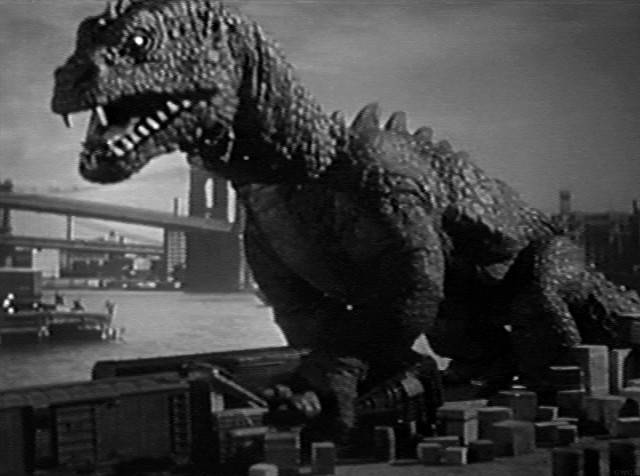
Atomicly-woken prehistoric beastie with germ-infested blood plays tourist in Manhattan, eventually finding a suitable lodging at a roller-coaster in Coney Island. The movie is flat and plotless, but love that Ray Harryhousen stop-motion monster. If it wasn’t so destructive, the monster might be a little lovable.

3. Planet of the Apes (1968)
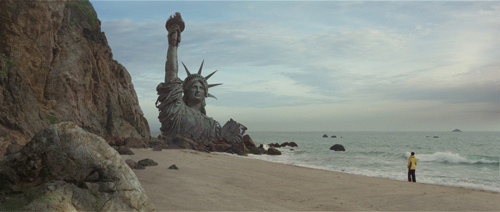
By placing it on this list, I suppose I’ve spoiled the ending for you.

4. Escape From New York (1981)
John Carpenter takes a different approach to the Manhattan destruction theme — turning it into a gigantic prison — and along the way, makes a potent comment about New York in the late 70s.

5. Ghostbusters (1984)
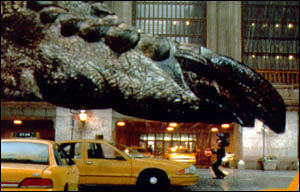
New York City has seen its share of monsters. From the skies, we’ve had Q: the Winged Serpent. From below, C.H.U.D. And in our elevators, those damned Gremlins! Even Godzilla‘s taken a snack by the Flatiron Building, years before the opening of the Shake Shack. But no big baddie comes closer to the hearts of New Yorkers than the sugary goodness of this sweet ectoplasmic ogre, successfully dispatched by Dan Ackroyd and Bill Murray.

6.Independence Day (1996)
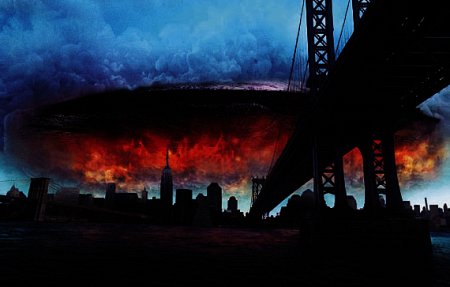
Destroying New York City really came into its own cinematically in the 90s. The unease at seeing our fair city blown to smithereens by alien blasts is offset by the cries of joy of future architects and city planners at the alien’s first target — the Pan Am/Met Life building. It is sort of awful seeing Park Avenue South wiped away by flames. Some great restaurants, gone in a flash!

7. The Siege (1998)
Technically the only movie on the list that really ‘could’ happen, however the filmmakers glee is killing off mass groups of New Yorkers is just plain sadistic. The bombing of a Broadway theater — look, that rich woman is missing her arm! — is of particular poor taste. Maybe it would have been easier to swallow had the movie been actually, you know, good.


8. AI: Artificial Intelligence (2001)
Steven Spielberg creates some graceful carnage — waterfalls and flocks of birds among toppled buildings — and includes a vision of a destroyed Twin Towers in a rather unfortunate year of release. Don’t get too depressed however; his recollection of the city is hardly too accurate. One of the buildings is literally just a Apple computer subwoofer dressed up to look like a building.

9. Deep Impact (1998) and Day After Tomorrow(2004)
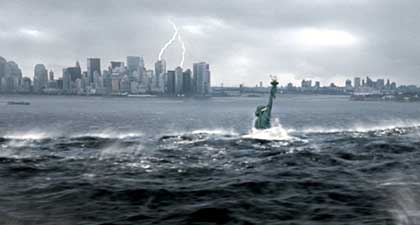
These two films are pretty abysmal, but the creative ways in which they treat New York City like children’s toys in the hands of natural catastrophe is at least notable. Heck, and even I’ll throw in the meteor madness of Armageddon (1998), which dares to take specific note to flatten the Chrysler Building along with everything else. And for the sheer cheese factor, I cant forget to mention the 1999 made for TV Aftershock: Earthquake in New York.

*sigh* Lady Liberty, just can’t catch a break…

10. King Kong (2005)
In the rather campy remake from 1976, Kong tackles the World Trade Center. By the time Peter Jackson got around to remaking it, he’s back on top of the Empire State and wrecking a bit more havoc than his prior incarnation.

Honorable Mention: New Yorkers should be honored to know that in the Japanese monster classic Destroy All Monsters (1968) set in the future (aka 1999), New York City is in fact destroyed by Godzilla before he gets to Tokyo.

NYC NOIR: “He has his father’s eyes!”


The Film Forum is in the midst of their five week NYC Noir screening series, featuring some of the best thrillers, mysteries and action films set on the streets of the city. In this blog every Thursday of the series, we’ll feature a bit about one of the films, and encourage you to go check out some of these classic flicks. Past entries of this series can be found here. Showtimes and other movies in the series can be found at the Film Forum’s website.

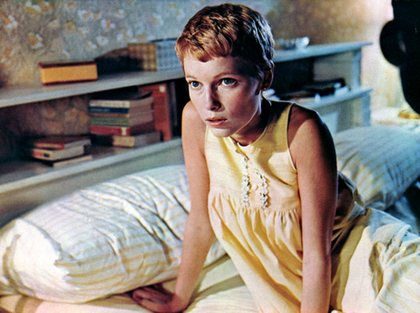
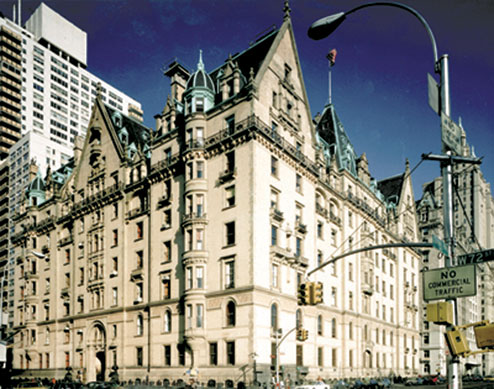
And killing two birds with one stone — as its also the topic of this week’s podcast — this week we feature a disturbing supernatural thriller Rosemary’s Baby and its primary setting, the Dakota Apartments, located at Central Park West and 72nd Street.

First of all, to correct a slip of the tongue from the podcast. No film has ever been shot in the interior of the Dakota. The exterior has been used in several films, most recently in Vanilla Sky, which may have given Tom Cruise and Katie Holmes the idea to buy a place there. The Dakota was first used in the 1949 Joseph Mankiewicz (All About Eve) directed film noir House of Strangers with Edward G Robinson. It’s safe to say that the Dakota is a perfect place for film noir.

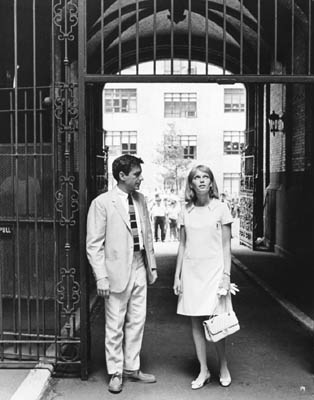
Here are stars Mia Farrow and John Cassavetes just inside the beautiful gated entry of the Dakota. When it was built in the 1880s, horse-drawn carriages rode through the gate to let out their passengers, then parked in the stables nearby. The center of the courtyard features a fountain, which greeted residents before they climbed up one of four seperate staircases to their homes.

By the way, it was while filming at the Dakota that Mia’s husband Frank Sinatra served her divorce papers. Tacky.

The Dakota is believed to have gotten its name from the preferences of developer Edward Clark’s towards the names of new American states (which represented ‘new money’). Others stories suggest that at the time of its construction, the new building was so far north that it would have been like visiting ‘the Dakota territories’. From this picture, that seems plausible:

The Dakota was host to Manhattan’s artistic elite, the home of famous actors, writers and composers. According to the book “Upper West Side Story, a History and Guide” “The early tenants included the piano manufacturer Theodor Steinway and his friend the music publisher Gustave Schirmer, who liked to fill his salon with such brilliant guests as Mark Twain, William Dean Howells, Herman Melville and Peter Ilyich Tchaikowsky, who came to town in 1891 to donduct the opening night concert at Carnegie Hall.” Latter day tenants included Paul Simon, Connie Chung and Maury Povich, and of course the Dakota’s most famous tenants, John Lennon and Yoko Ono.

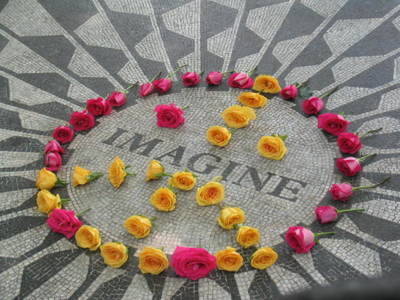
After Lennon’s murder in front of the Dakota — not far really from the grisly fake murder in ‘Rosemary’s Baby’ — the portion of Central Park nearest to the building was christened Strawberry Fields, and mural made of tiles from Pompeii was constructed in honor of the musician. The place has taken on a general purpose of celebrations and mournful gatherings: you’ll find people congregated there for the birthdays of living Beatles, the anniversary of Lennon’s death and even 9/11 memorials.

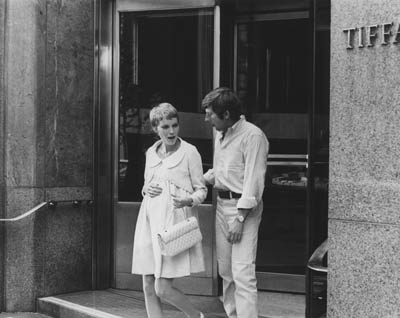
“Rosemary’s Baby” was filmed in other locations throughout the city, including stretches of Park Avenue above 42nd Street, the Time Life Building, and Tiffany’s. Here’s Polanski with Farrow rehearsing a scene:

NYC NOIR: “ONE MILLION DOLLARS!”

The Film Forum is in the midst of their five week NYC Noir screening series, featuring some of the best thrillers, mysteries and action films set on the streets of the city. In this blog every Thursday of the series, we’ll feature a bit about one of the films, and encourage you to go check out some of these classic flicks. Past entries of this series can be found here. Showtimes and other movies in the series can be found at the Film Forum’s website.

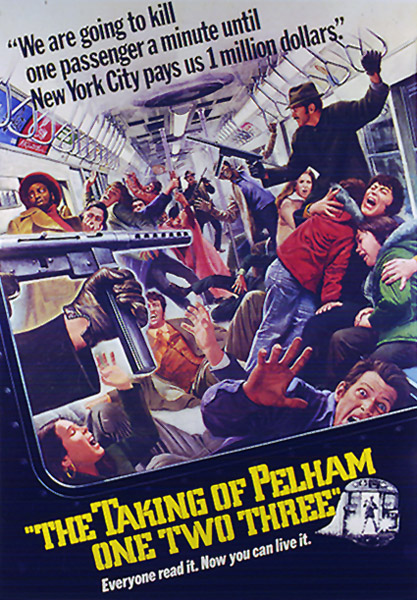
This weekend we feature a tense and perfectly 70-ish action flick The Taking of Pelham One Two Three.

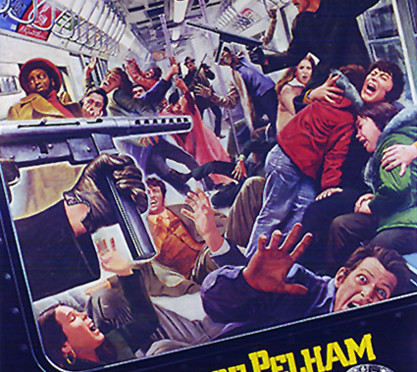
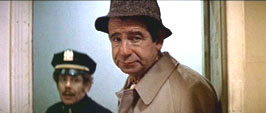
The film is best known now for its very dated but (if you’re budding historians like us) absolutely prototypical settings in a gritty, sweaty New York City. A group of hijackers demanding a ransom of one million dollars (Ha!) hold the 123 train and its unfortunate occupants hostage. On the case is Jerry Stiller and Walter Matthau, both playing the first of many grumpy old men in their futures, as police officers trying to negotiate with the crafty terrorists.

“Pelham” a fantastic example of the zippy, thriling action films that came in the wake of the French Connection (also in the Film Forum series). With a classic soundtrack by David Shire (Talia’s husbund), the best scenes are in the subway cars, with hijackers Martin Balsam and Robert Shaw wrestling with a most diverse group of Manhattanites and their attitude. Those scenes were partially shot in the tunnels below the old Court Street line in Brooklyn — which has now been transformed into the New York Transit Museum.

But as a personal story, my favorite location shots are those involving the police racing to get the hijackers their ransom money. When I first moved to New York, I lived on the corner of Park Ave and 23st Street (back when it was possible to be poor and live there!) and I happened to rent this film. What a surprise to see Park Ave, the stretch between 34th and 23rd, as location shots, with familiar buildings mixing in with now-forgotten shop awnings and people with crazy feathered hair and afros!

Of course, it’s actually the 6 line (that still goes to Pelham Bay Park) that gets hijacked. The 1-2-3 line, meanwhile, runs along the west of the island for much of Manhattan. Its the 1:23 6-train that is hijacked. Yeah, weird, New York subway trains have timetables!

The film runs all this weekend at the Film Forum.

NYC NOIR: ‘Sweet’ and sour


Almost as if they had asked us to help them program their schedule, the Film Forum begins their five week NYC Noir screening series, featuring some of the best thrillers, mysteries and action films set on the streets of the city. In this blog every Thursday of the series, we’ll feature a bit about one of the films, and encourage you to go check out some of these classic flicks.

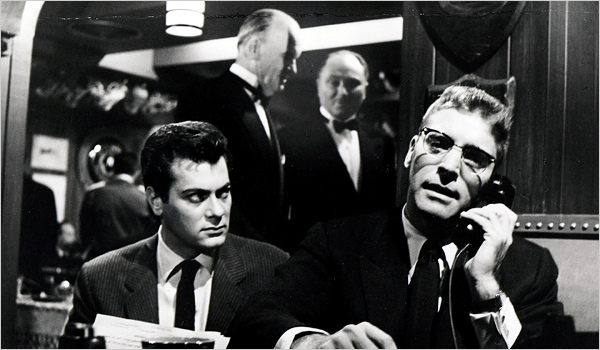
They kick off the festival with one of the most likeably cynical films ever made, Sweet Smell of Success, starring Burt Lancaster as the city’s most powerful gossip columnist JJ Hunsecker, back in the day when gossip mongers wielded their Page Sixes almost menacingly. Unfortunate for Martin Milner, playing jazz musician Steve Dallas that he should happen to get engaged to Hunsecker’s naive sister. Hunsecker soon makes it his business to see the coupling destroyed. His secret weapon? A curt and cool Tony Curtis, as Sidney Falco, the most dispicable and pathetic press agent in town.

Easily one of the best films to portray the glitzy 1950s New York nightclub scene, the characters weave themselves through half the bars in midtown, most notably the 21 Club formerly on 52nd Street. The night scenes have both a stink and a sheen to them, thanks to rigorous location shooting. Director Alexander Mackendrick’s complained of the bustling street noise — not to mention Curtis groupies, waiting for a glimpse — but it lends the movie pulp authenticity. Midtown never looked so stark and busted.

Hunsecker’s apartment, which plays a pivotal role in the final scenes involving his nervewracked sister, is actually in the Brill Building, 1619 Broadway near 49th St. According to Roger Ebert, a shot inside its lobby is mirrored by another film playing later in the NYC Noir series, Taxi Driver.

The film plays this Friday and Saturday. The showtimes and dates for this and the rest of the films in the series can be found here. My favorite part about the Film Forum’s repertory series is that you pay for double feature during the weekend, so find one you like and go hunker down….

The Summer Blockbuster of 1928

On this day, 79 years ago in 1928…

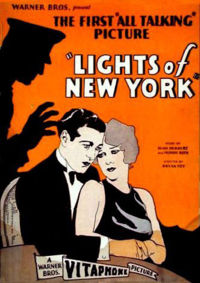
The first ever all-talking movie, “The Lights of New York” debuted in New York’s Strand Theatre at midnight, to an enrapt audience. (It would release nationally on July 28)

“Lights of New York” was a precursor to the great crime films of the 30s that would make Edward G Robinson and James Cagney into huge stars. The plot involves Broadway speakeasies, chorus girls and ‘toughies’, featuring a cast of vaudevillian entertainers.

The film was a box office smash (grossing $2 million dollars, or what Tom Cruise makes for a single day of work today) and presaged the death of the silent era.

Of course, they hadnt quite got the art of editing down, and the film still included ‘transition’ placards.

The Brooklyn Eagle has a few charming anecdotes about the filming:

“In one scene in a barbershop, a character began a speech at one end of the room, walked across the room, and started talking again only when he had come to a complete rest at the other end. He could not speak until he had parked himself under the mike.”

The Eagle also notes the film’s other contribution to the world of cinema: it’s the first of many, many, many gangster films to feature the line “Take him for a ride.” Martin Scorcese and The Sopranos thank you kindly.

Oh, and you might be asking — where’s the Strand Theatre? A premier auditorium for film and Big Band shows for over 70 years, The Strand was demolished in 1978. But you can go see where it used to be; the former address is 1579 Broadway. There’s a Hershey’s Chocolate Super Store there now.

Cinema Treasures, one of our favorite websites, has an elaborate write up on the fate of the Strand.