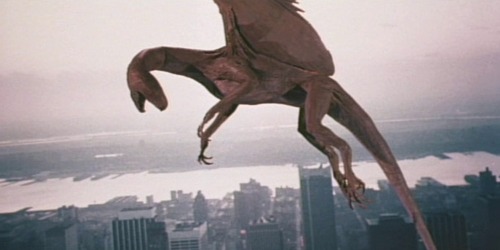
Monster madness at the Chrysler Building

BOWERY BOYS RECOMMEND is an occasional feature whereby we find an unusual movie or TV show that — whether by accident or design — uniquely captures an era of New York City better than any reference or history book.

By the early 80s, New York City has already seen its absolute nadir as a fiscally and morally bankrupt urban center and was fully comfortable with its place in the gutter. The crime rate wouldn’t improve for another decade, but at least Wall Street was picking up the city’s financial fortunes by the lapels. Punk is strangling disco in the back alley, the city struggles through transit strikes, smog and a sudden rise in homelessness.

So it is in that light in which the piece of glorious grade-A schlock “Q: The Winged Serpent,” released in 1982, must be judged.

Chrysler Building architect William Van Alen would be horrified to learn that the graceful tapering top hat of his most famous building becomes home of a loathsome flying dragon and a gigantic nest of eggs. As if possessed with a little of Van Alen’s spite at being quickly overtaken in less than a year by the taller Empire State Building, the first scene of “Q” involves the dragon popping over and snatching off the head of an Empire State window washer.

Q swiftly makes a go at New Yorkers sunning themselves on rooftops or in private swimming pools, an inverted Jaws scenario. As such, her victims are mostly upper class, young and rich. There’s a perverse joy at seeing a montage of New Yorkers staring into the sky and being slathered in fake looking blood.

Q also has a ball hanging around the pyramid-topped Bankers Trust building in the financial district. Curiously, few New Yorkers notice this massive monster jetting between uptown and down.
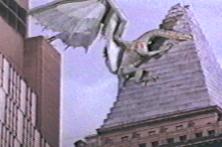
Just how did a winged serpent (it really looks like a dinosaur from Land of the Lost) get to Manhattan? According to the ham-fisted plot, it involves an ancient sacrificial cult, located at the Museum of Natural History, who have summoned the Aztek god Quetzlcoatl via a trail of skinned, sacrificial bodies.

David Carradine and Richard Roundtree (Kung Fu and Shaft) lead the investigation, in a depiction of the New York police force that is hardly flattering. Michael Moriarty is a sad-sack conman — roughed up down by South Street Seaport — who discovers the serpent hideaway during a completely superfluous chase scene through the Chrysler.

And, oh, did I mention the cop dressed as a mime who stays in makeup for the whole film? Whatever happened to the good old fashioned New York mime, I ask you?
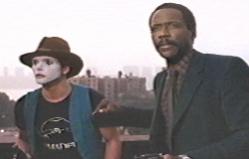
By sheer function of the story, “Q” happens to be one of the best depictions of New York City in the early 1980s. That’s because the ‘serpent’, in all its cheesy stop-motion glory, frequently soars over New York midtown, allowing the viewer to soak in its former splendor. I had a blast freezeframing these scenes and trying to figure out what I was looking at; given the swift makeover of midtown Manhattan, its harder than you think.

Director Larry Cohen, known for other B-movie fare like ‘Black Caesar’ and ‘It’s Alive’, supposedly got the entire idea for the film by looking up at the Chrysler and thinking, “That’d be the coolest place to have a nest.” Probably not the reaction Walter Chrysler wanted when he first commissioned it.

“Q: the Winged Serpent” is currently available on DVD and is probably shamelessly gathering dust at your local video store.

By the way, should we be surprised that the Natural History museum is currently hosting an exhibit called Mythic Creatures that actually features Quetzlcoatl?
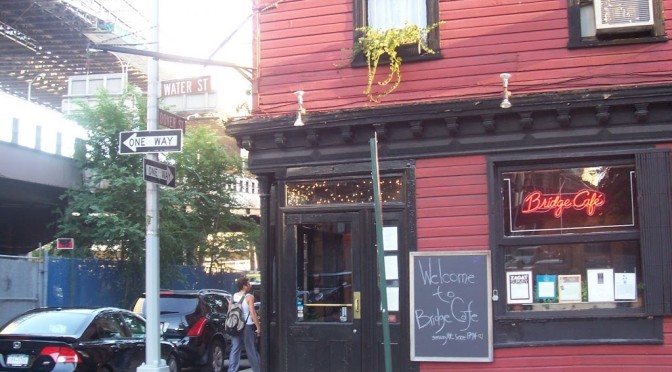
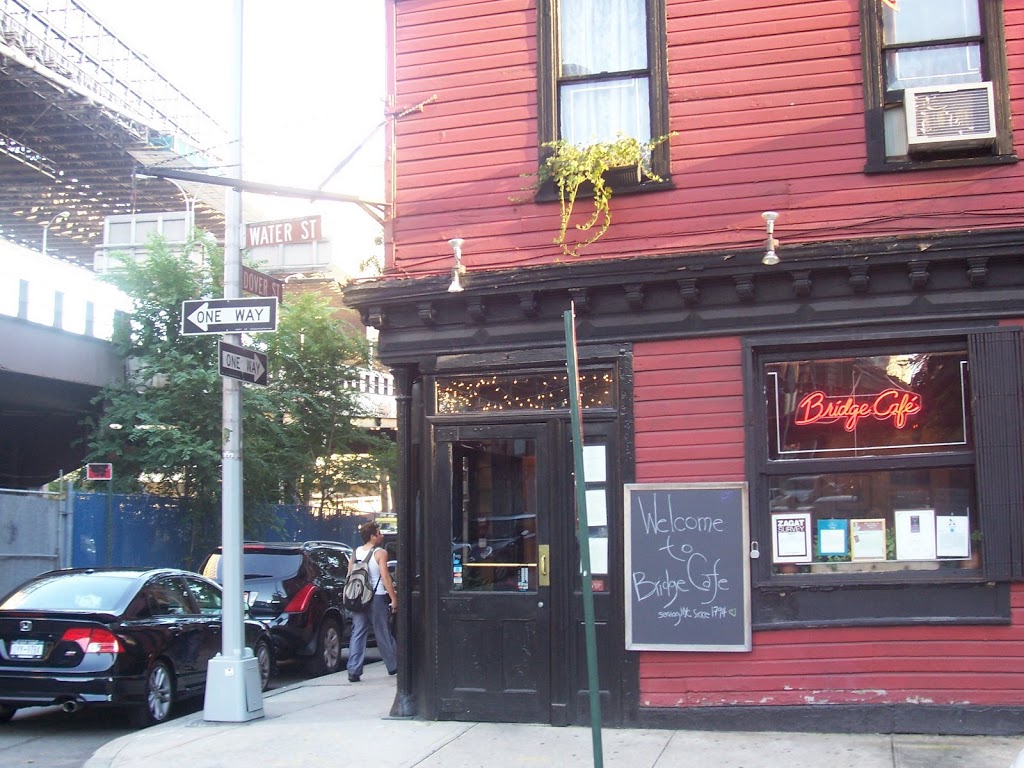
FRIDAY NIGHT FEVER: Hole-In-The-Wall

To get you in the mood for the weekend, every Friday we’ll be celebrating ‘FRIDAY NIGHT FEVER’, featuring an old New York nightlife haunt, from the dance halls of 19th Century Bowery, to the massive warehouse spaces of the mid-90s. Past entries can be found HERE.

The Bridge Cafe, a quiet bar and brunch destination underneath the Brooklyn Bridge at the corner of Water and Dover streets, has a storied legacy as the oldest tavern in New York City. Although it does take a bit of imagination to envision the red wooden building as former home to the most despicable, most vile and — let’s face it — most fabulous characters in our fair city’s history.

The legend of the Hole In The Wall derives mostly from one place — Herbert Asbury’s infamous ‘Gangs of New York’, a dastardly inspection of New York’s 19th century criminal lowlifes and squalor. As such, given the books fanciful and exagerrated nature, you can’t exactly use it as faithful reference. When journalist Richard McDermott began doing research on the Bridge’s background, he didn’t even find the Hole In The Wall.

What he did discover was a tradition of booze swilling that began with a ‘wine and porter bottler’ in 1794. It was followed by a grocery — one that I guess technically sold liquor, thus keeping the ‘oldest tavern’ title precariously intact. But the date 1826 is most significant as the establishment fell into the hands of Charles G. Ferris, an attorney who leased the property to a host of saloons.

And there were patrons aplenty, for this was New York’s dangerous Fourth Ward; in particular, Water Street was festooned with brothels, boarding houses, dance halls and watering holes. In 1866, writer Bayard Taylor referred to it as “the only rival of the Sixth in its triple distinction of filth, poverty, and vice.” (The Sixth being the Five Points slum, about a half mile away.) ‘On The Town in New York’ by Michael Batterberry says, “Generally speaking, Water Street was a thoroughfare of vice and iniquity to challenge the imagination of the most graphic Victorian preacher.”

So although little evidence remains of a Hole In The Wall in the precise vicinity of the Bridge Cafe, it’s extremely likely such a place existed.

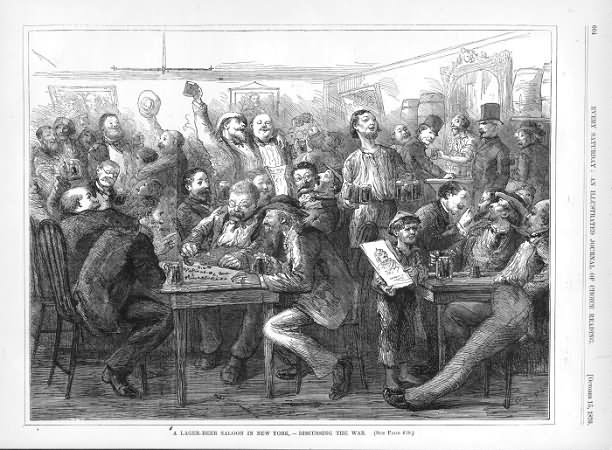
(The picture below is not of Hole In The Wall, or of any particular Water Street saloon, but a print of a New York ‘lager-beer saloon’ from 1870. Sorry, there aren’t a lot of photographic options from this period of time!)

Few tavern staffs today could compare to those of Hole In The Wall’s proprietor ‘One-Armed’ Charley Monell. We’re assuming that sobriquet wasn’t just a cute nickname. For security, he relied on two lovely ladies by the names of Kate Flannery and scrappy Gallus Mag. No ordinary bouncer, Mag kept a pistol at her waist, a club at her side and for good measure sharpened her teeth like a rodent. This was not just a fashion statement; she would need such sharpened incisors for when she would bite off the ears of unruly patrons, spraying blood with delight as she deposited the ear into a gigantic jar behind the bar. (Mag is immortalized in the film version of ‘Gangs of New York’ as well as virtually tributed in every horror movie from ‘Texas Chainsaw Massacre’ onward.)

Gallus (a word for men’s suspenders, which she would frequently wear) wasn’t always so cruel. After chewing off the ear of a female rival named Patsy the Goat, she later gave the body part back after the two mended ways. It’s a plot right out of ‘Sex And The City’, I tells ya.

Sex, sinful dancing and swill — sometimes drank right out of the spout for a small price — were orders of the day on Water Street, as was murder. The most famous brawl in perhaps all of Water Street occurred here between two thugs named Patsy the Barber and Slobbery Jim, both probably teenagers or in their early 20s. They were members of the gang the Daybreak Boys (ahem, I’m sure they were no match for the Bowery Boys), responsible for dozens of deaths in downtown Manhattan in the 1850s.

One day, Patsy and Slobbery casually robbed and killed a German and threw him into the East River. Settling down at Hole In The Wall with their booty (all of twelve cents), the pair fought over the amount, with Jim thinking he deserved more as he did single-handedly throw him into the river. 

Soon the boys were brawling, Mag and Charley stepping back to watch it play out. Patsy had a knife and stuck it into Jim; the knife changed hands and was soon lodged into Patsy’s throat. Patsy passed out from blood loss, and Jim finished the performance by stomping into his partner until he expired. Ten years later Slobbery would enlist in the Confederate Army.

According to Asbury, the Hole In The Wall was permanently closed after a string of seven murders were committed there in less than two months. However, if Bridge Cafe is indeed the former home of Hole In The Wall, it clearly didn’t stay closed for long. It passed through the hands of several saloon owners, including a city alderman Jeremiah J. Cronin in 1898. Even Prohibition couldn’t dry it out; a restaurant in the ’20s served beer on the down low from bootlegger Charlie Brennan.

The current incarnation opened in 1979 and was a favorite of former mayor Ed Koch. Today you can have a good brunch there and just stare down at the floor, picturing Patsy the Barber, pools of blood and a few loose ears lying around.

Categories
Podcasts

PODCAST: Staten Island: A Brief History

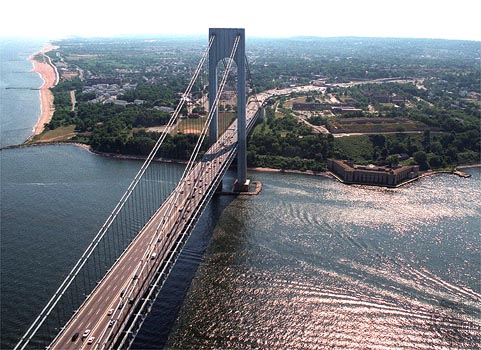
(flying over the Verrazano-Narrows Bridge)

The Bowery Boys take on the history of New York City’s most ‘forgotten’ borough, from its beginnings as a British outpost during the Revolutionary War to the controversy over that big stinky landfill. And we do it all in exactly the time it takes the Staten Island ferry to take you across the New York harbor! (No really, try it!)

Listen to it for free on iTunes or other podcasting services. Or you can download or listen to it HERE

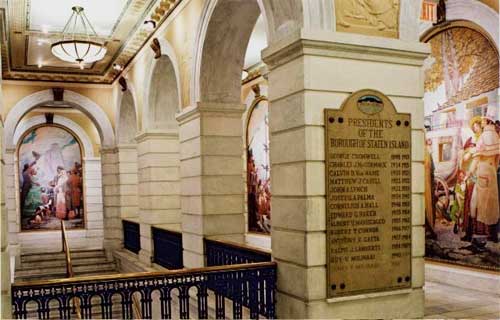
Take a look at the list of top 100 historical moments in Staten Island history that we mention in our podcast. By the way, here’s a peek inside Staten Island Borough Hall, which we mentioned was designed by Carrere & Hastings, best known for the New York Public Library.

And on to the final part in our Staten Island Snug Harbor series (other parts can be found here):

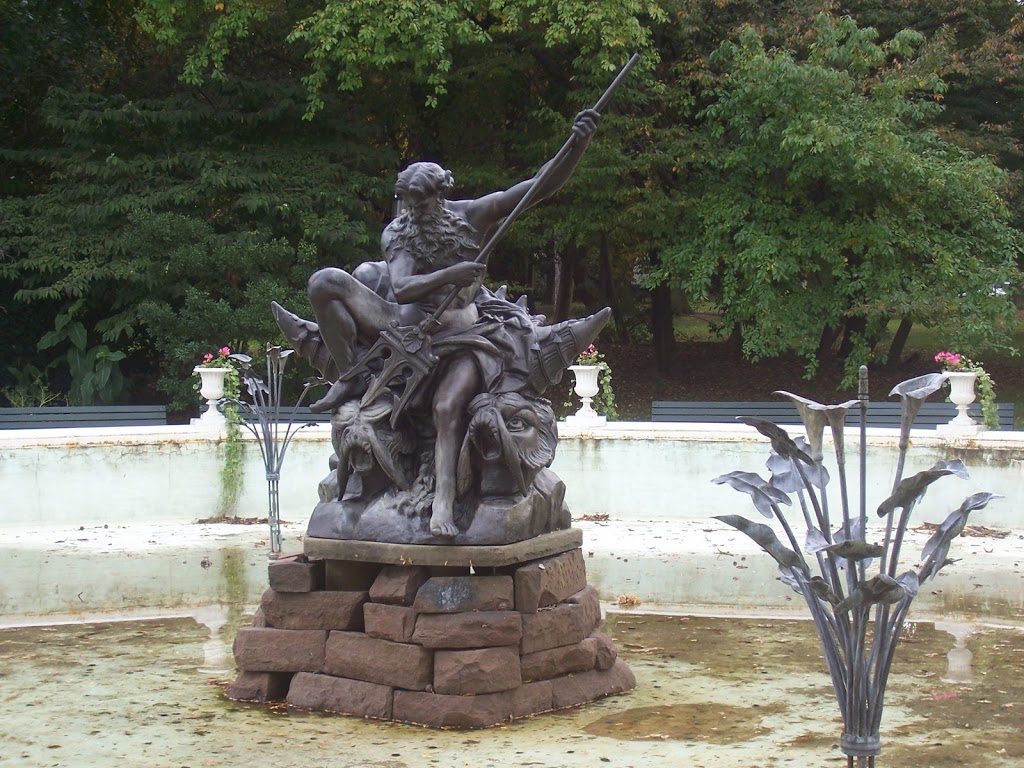
(A Neptune fountain on the front lawn, which would not look out of place in Rome)

Modern Snug Harbor offers the community a wide variety of cultural functions. In fact, the afternoon I was there, Snug Harbor was host to a regional American Girl Fashion Show. I would have taken some photographs of this unusual event — you can get the general idea of what an American Girl Fashion Show is like here — however it might have been a bit odd for a single man with a camera to be walking around taking pictures of young girls with their dolls.

The most dynamic of Snug’s new additions is the Staten Island Botanical Garden, sprouting up on the vast Snug Harbor campus in 1977, first as a traditional English garden, but quickly diversifying. I took a stroll last weekend, which was an odd time for a garden. Most of the budding flowers had disappeared, and the leaves were only beginning to change. I would recommend hitting Snug Harbor over the next couple weekends to experience the fall colors.

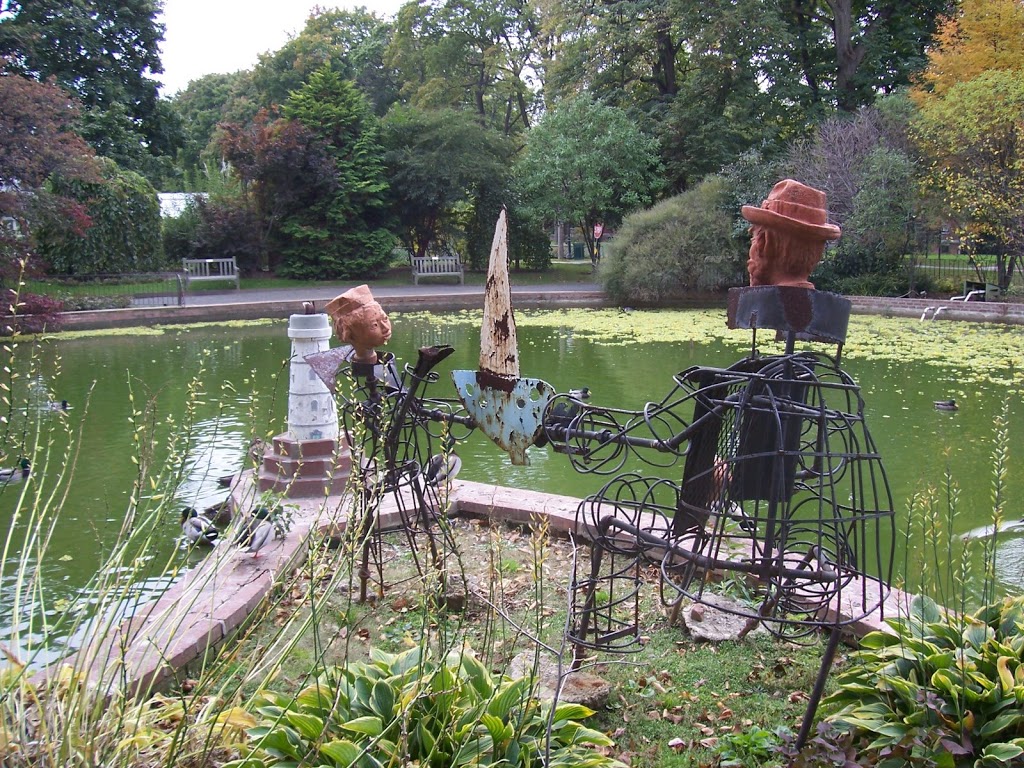
The Pond Garden was actually overrun with ducks, more than I could count actually, all encircling this curious sculpture:

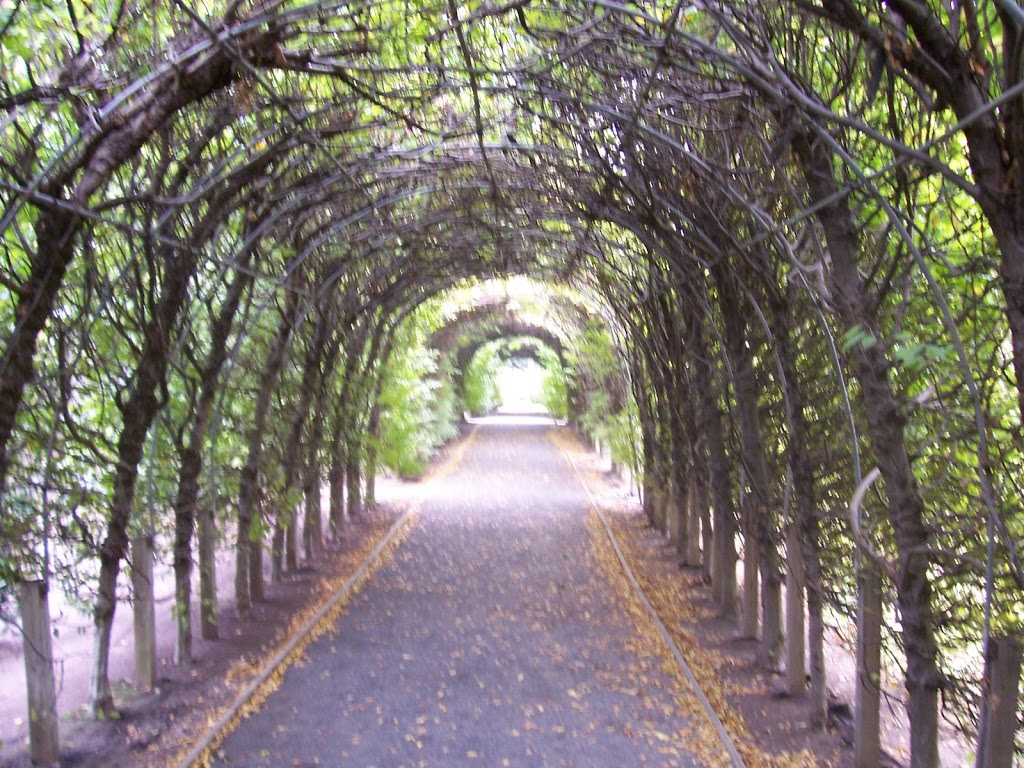
The canopied allie, planted in 1997, is created by the conjoining 120 European hornbeams, creating a disorienting path.

The path leads to the most sobering part of the entire center, the World Trade Center Educational Tribute. Created in 2003 to honor the residents of Staten Island killed in the 9/11 attacks, this small museum features a wall of victims and biographies, some eyeopening photos and artifacts from the tragedy. A very kind member of the fire department awaits inside to answer your questions. Its very intense inside, as you can imagine.

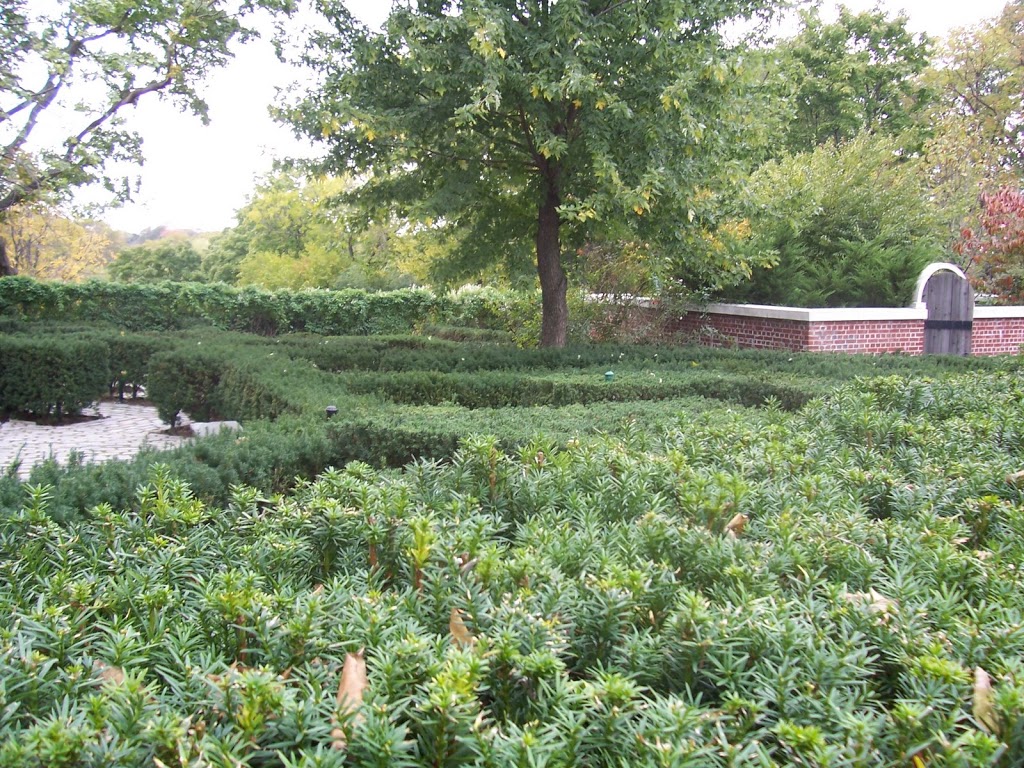
You might need to weave yourself through this hedge maze to take your mind off of some of the disrupting images. Although clearly designed for children — i.e. I didnt exactly get lost through it — it’s apparently the only maze of its type in New England. Who knew?
As it was slightly chilly when I strolled around, I obviously welcomed the Carl Grillo Glass House, with its three heated zones for arid, tropical and temperate vegetation, as well as a healthy selection of orchids.

Some of the more modern additions include a childrens museum, guarded by this startling creature:

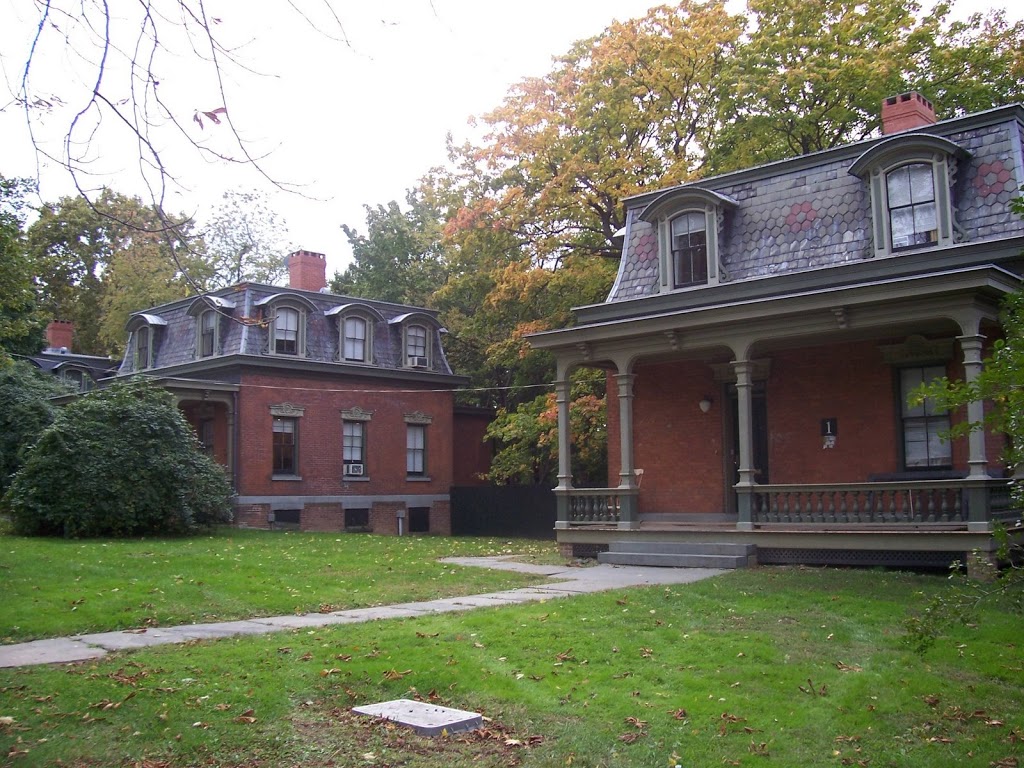
Along the eastern end are a row of identical former homes, one of which serves as the entrance to the newly built Chinese Scholar Garden. (Unfortunately I was not able to enter this on my visit; however you can view a map of its particular grounds.)

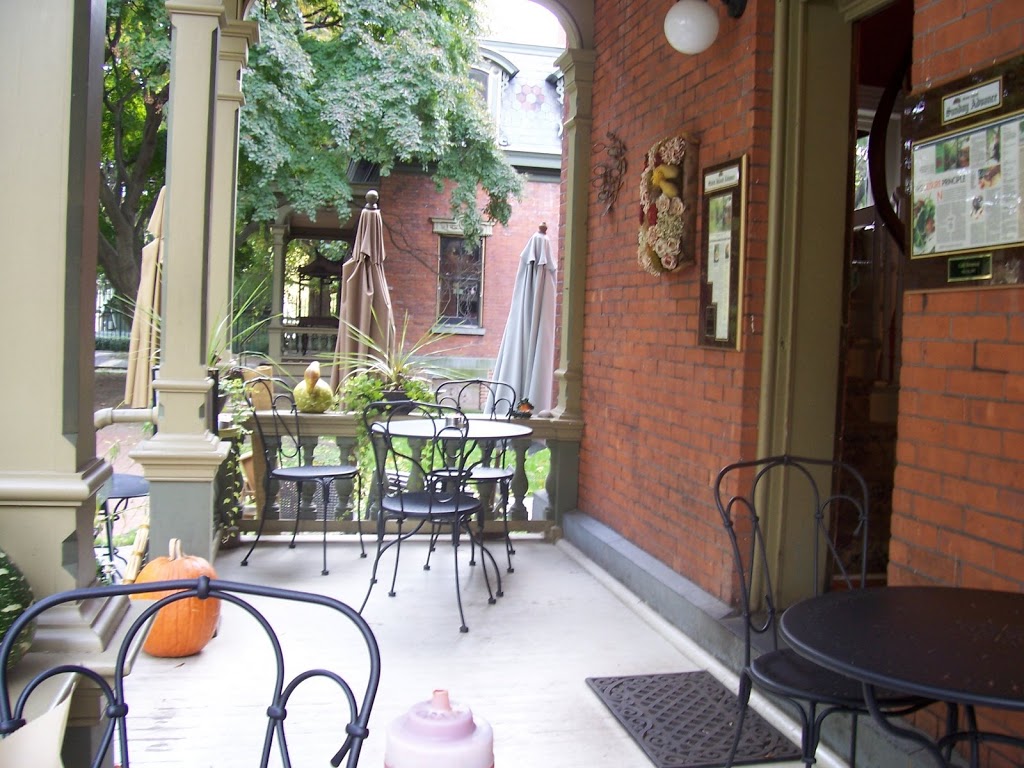
Another of the houses has been converted into a restaurant, Cafe Botanica. Its surreal to eat brunch on a big friendly porch. Inside there’s dining by a cozy fireplace:

Some parts of Snug Harbor are not currently open, including the healing garden, which is going through an extensive renovation, as is the Italian garden and vineyard. That’s right, a virtual vineyard is on the way!

Extra: when leaving Snug Harbor, just take a look in the trees across the street, right in front of the Kill Van Kull. What’s this mysterious thatch of boardwalks that runs along the side of the waterfront?

Snug Harbor: a port in the storm (Part 2)


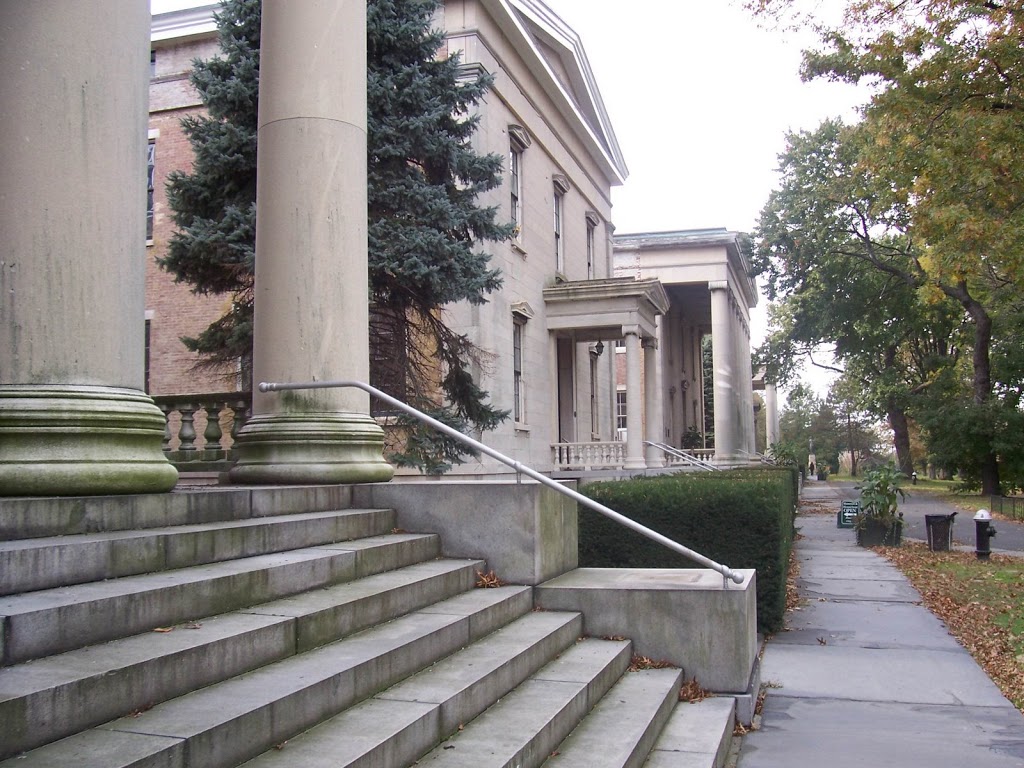
(The imposing Front Five, a wall of Greek revival madness, faces the Kill van Kull and Richmond Terrace almost like a fort.)

Although the sailors home that eventually became Snug Harbor was not in the location its founder Robert Richard Randall would have preferred, it quickly became as tranquil and as restful a place as any rest home might in the 19th century. Fortunately many of the buildings have been completely restored to their original charm, and in some cases (see below) even more so.

You might be asking about now — why would I want to walk around an old rest home? Its all about that mix between careful preservation and vibrancy. Snug Harbor is both a throwback and a modern facility that very rarely feels stodgy. Many similar landmarks would do well to take some lessons from here.

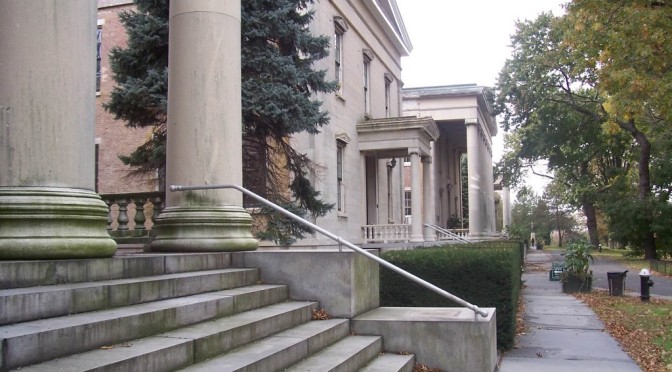
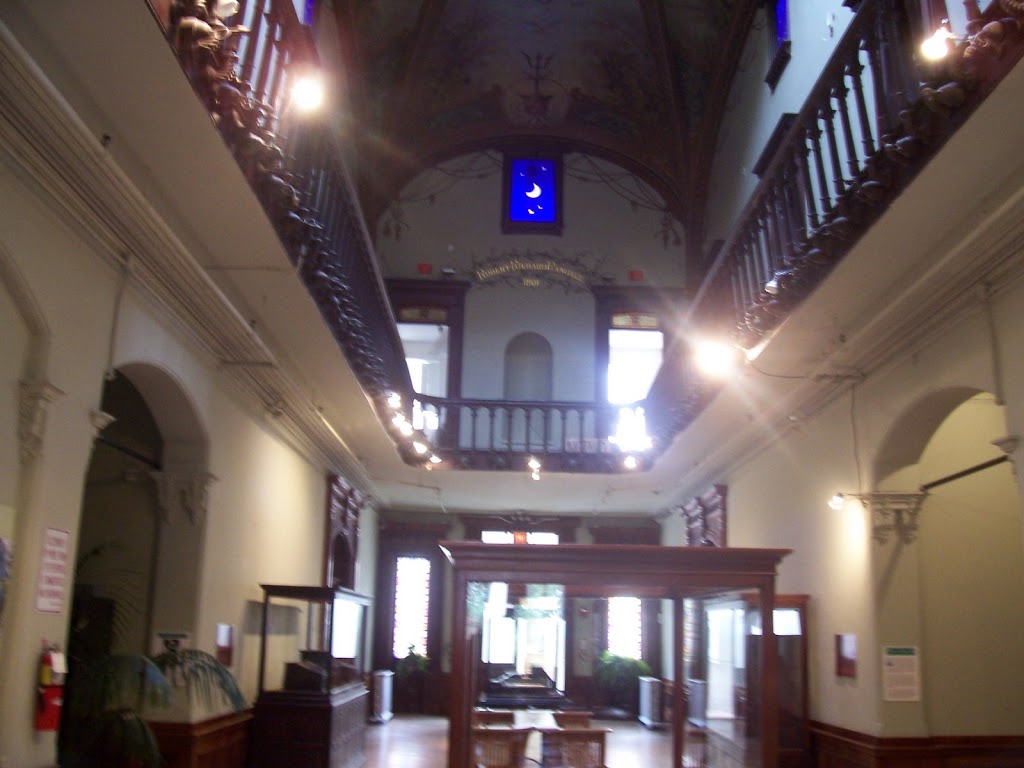
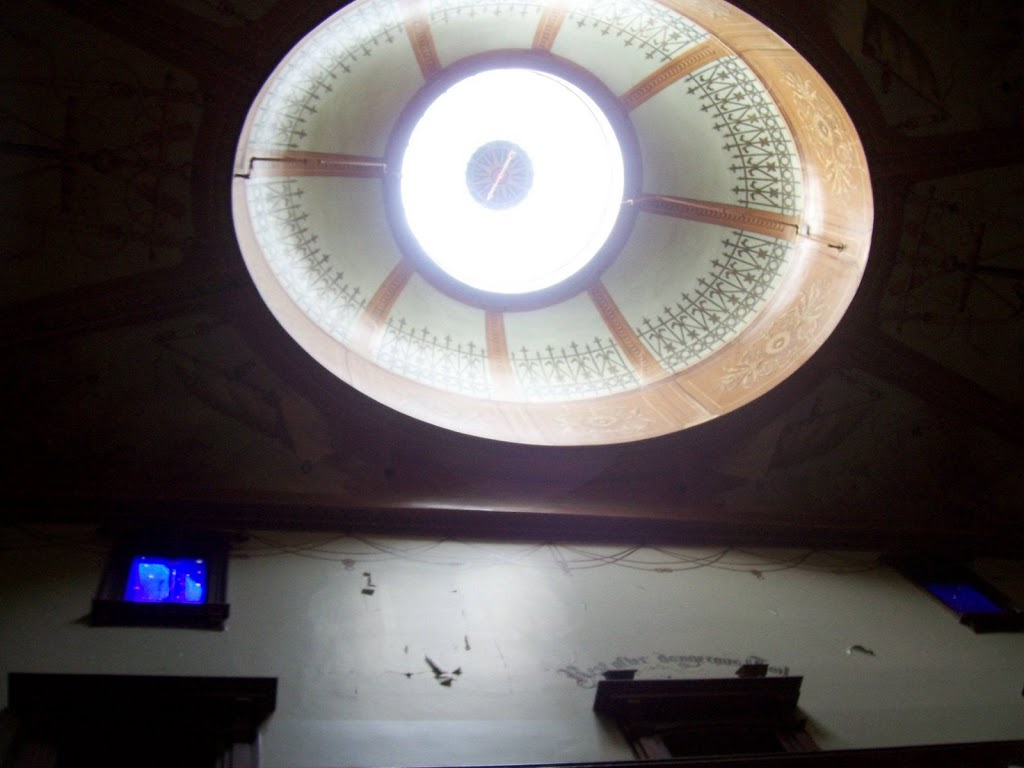
The Minard Lafever-designed hall “Building C”, housed in the the center structure of the Front Five, is the most dazzling architecturally, built in 1830-1, with a wide Victorian entrance way and blue glass windows on the second floor. Building C is generally considered Lafever’s greatest still-existent building.

Unfortunately the building is darker than the rest, so my sad little digital cam can’t begin to capture the beauty. On top of well preserved rooms with historical displays, the building also hosts the Newhouse Gallery, featuring contemporary art displays.

(You can click on any photo to see detailing)


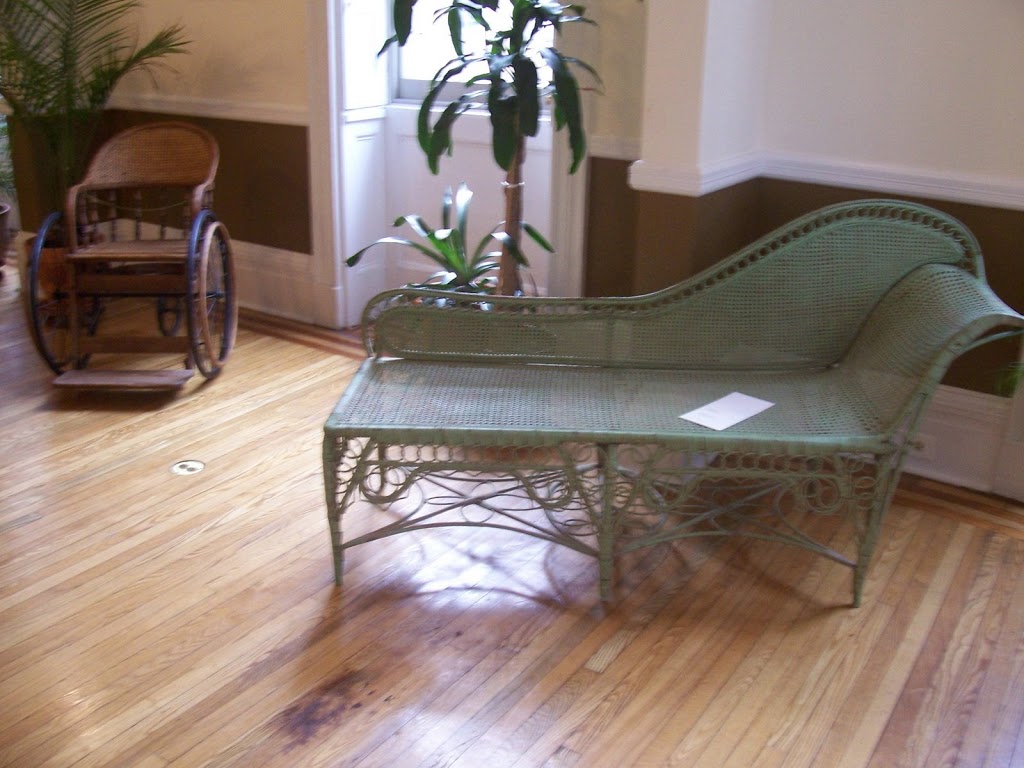
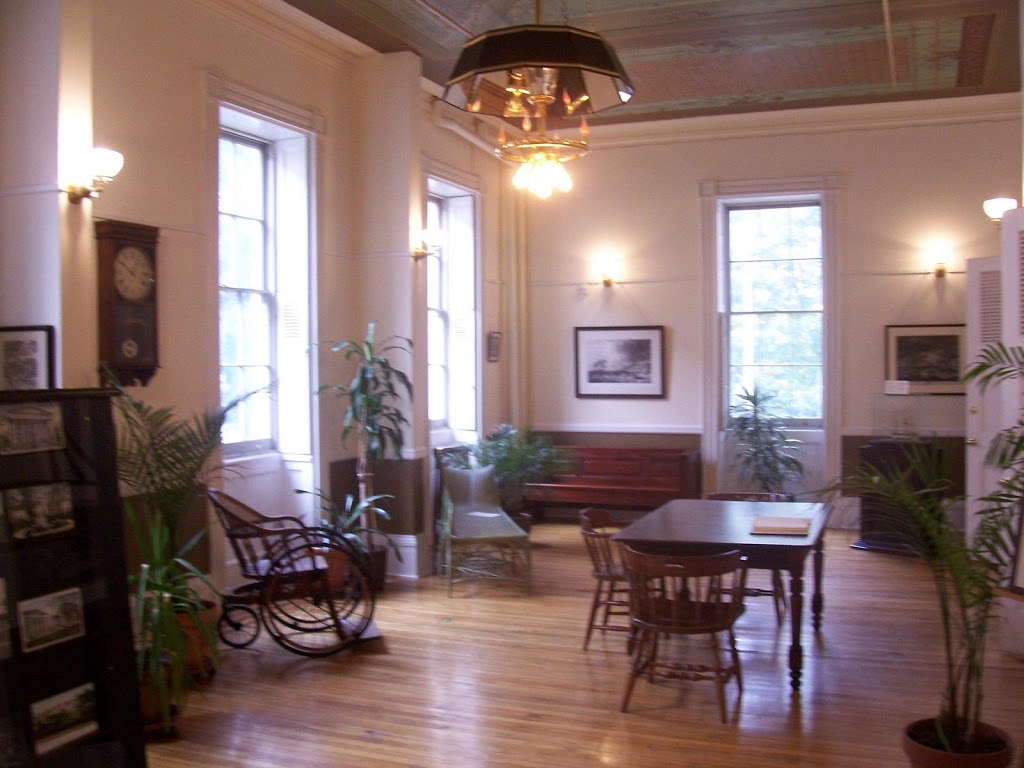
The smaller but no less impressive Building D (can’t they come up with more nautical names?) next door is of more interest to history lovers. With its white wood floors and flawless well-lit restorations of rooms and stairwells, the building is virtually laminated. It’s here that you can get a taste of what living at Snug Harbor might have been like.

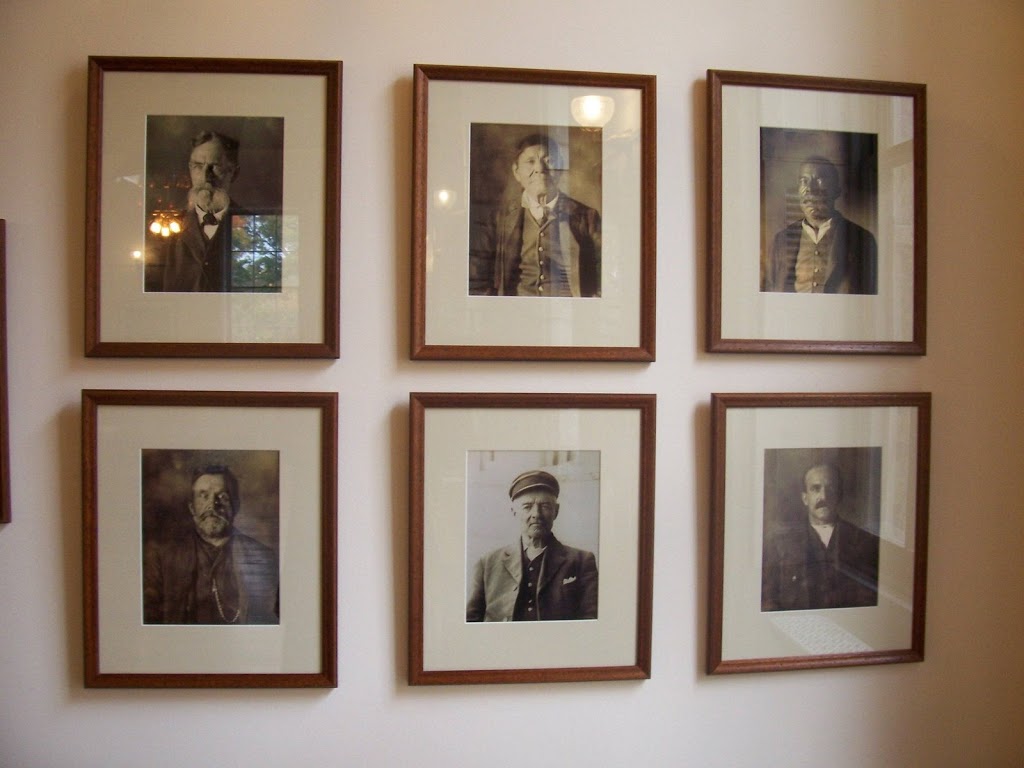
Here were some of the former residents of Sailors Snug Harbor, world weary faces that survived decades at sea to spend their final days at Snug Harbor. One of the earliest governors of Snug Harbor was no less than Herman Melville’s brother Thomas, who was reputed to be a bit of a hardass with his aged charges.

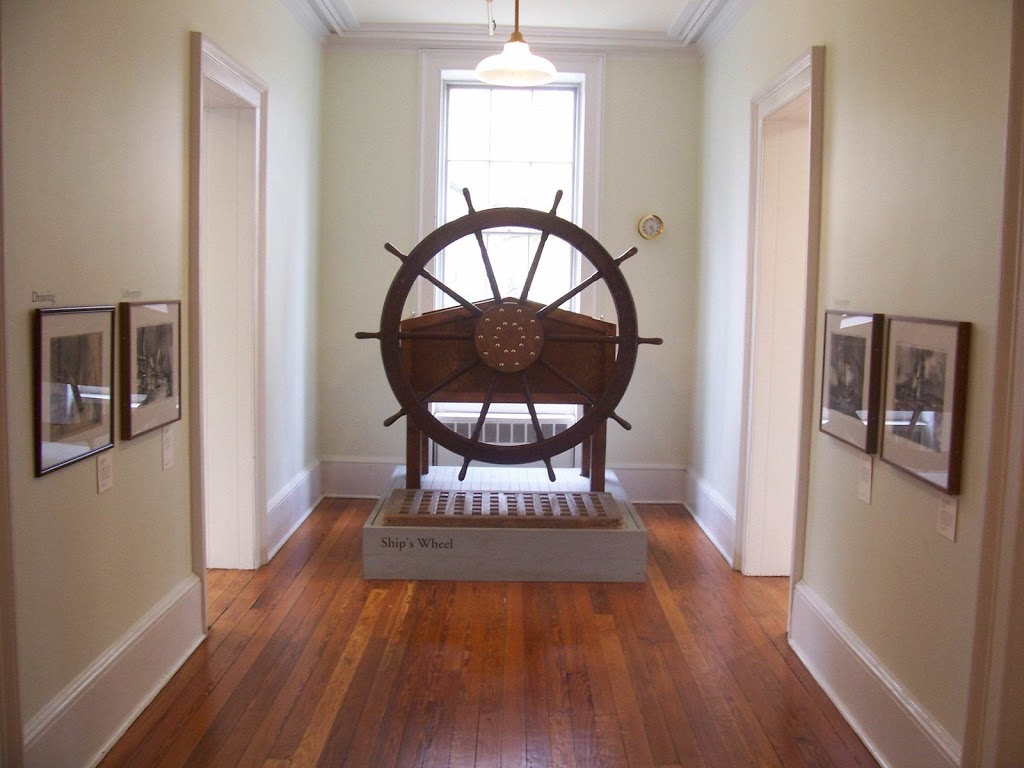
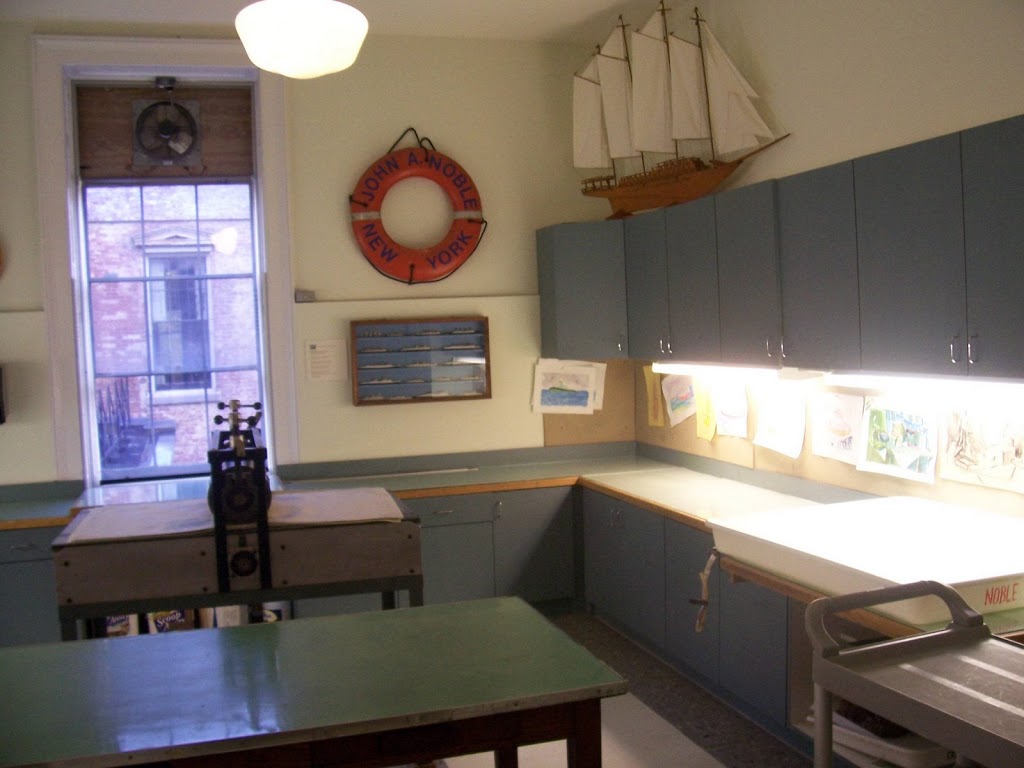
Building D, built in 1841, serves as the Noble Maritime Collection as well and features artifacts from ships that frequented New York harbor and Staten Island.

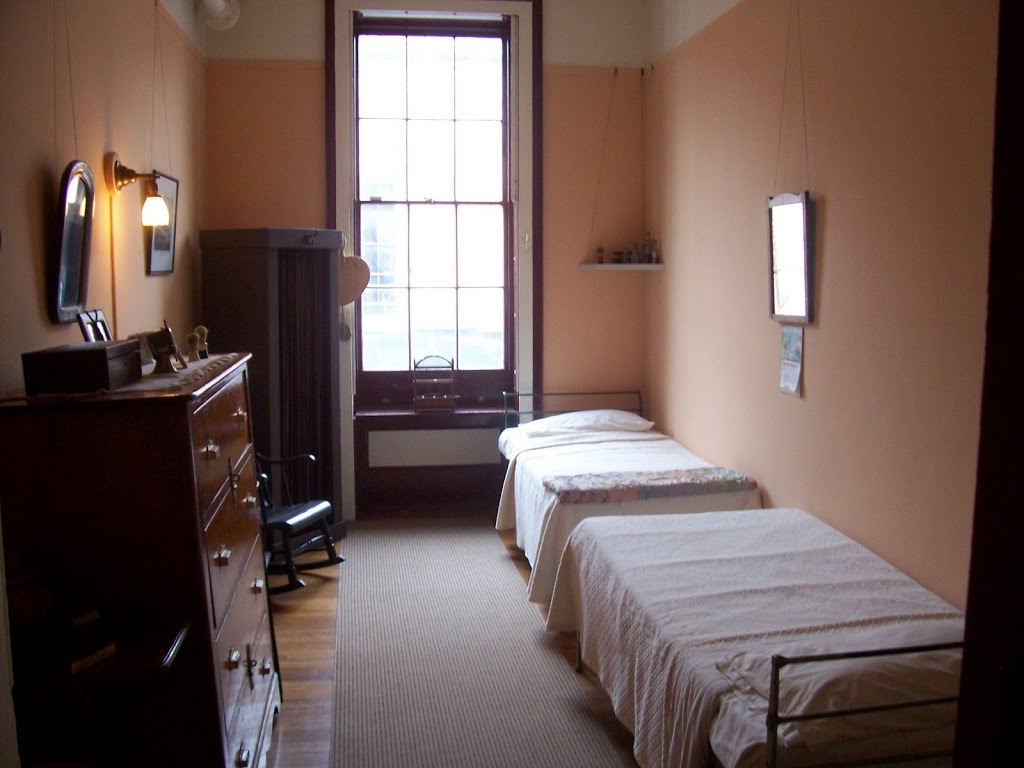
Okay, so its not exactly four star accommodations, but given that the men housed here were used to cramped sea quarters for most of their lives, rooms like this must have looked spacious. The skillful design of the building allows for natural light to spill in everywhere.

The Maritime collection is named for John Alexander Noble, one of America’s foremost nautical painters. It was in part to his efforts that Snug Harbor was saved from the wrecking ball in the early 70s. Restoration of the building actually started as a space for his artwork.

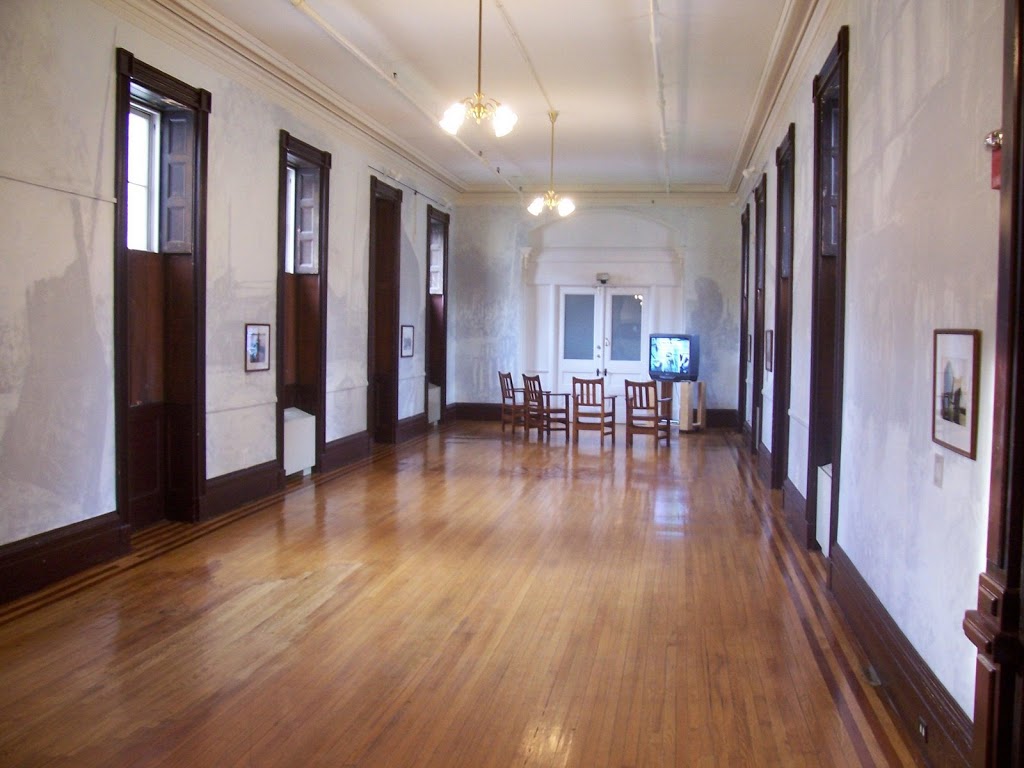
Down this beautiful (and, let’s face it, Shining-like) hallway lay a presentation of Noble’s life and work:

Born in Paris in 1913, Noble spent his life in New York working on schooners, and became particularly entranced with a boatyard of docked and abandoned vessels at Port Johnston, at Bergen Point, New Jersey. His father was an accomplished painter and apparently passed on his talents to his curious and contemplative son. Enamored of sea life and particularly those used, beaten ships, Noble built a houseboat out of salvaged pieces and made himself an artists studio there, become a full time artist in 1946.

Many of the works displayed in Building D are Noble’s inspirations from taking a rowboat and touring the shores of Staten Island, taking in the activity of the ports and visiting ships.

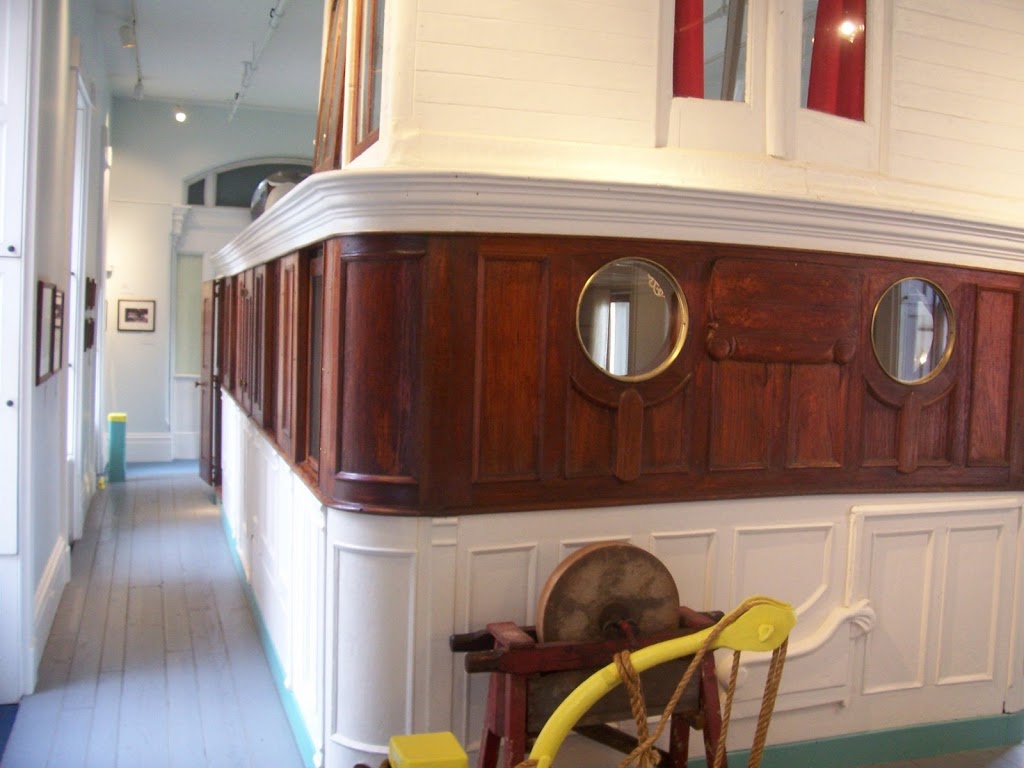
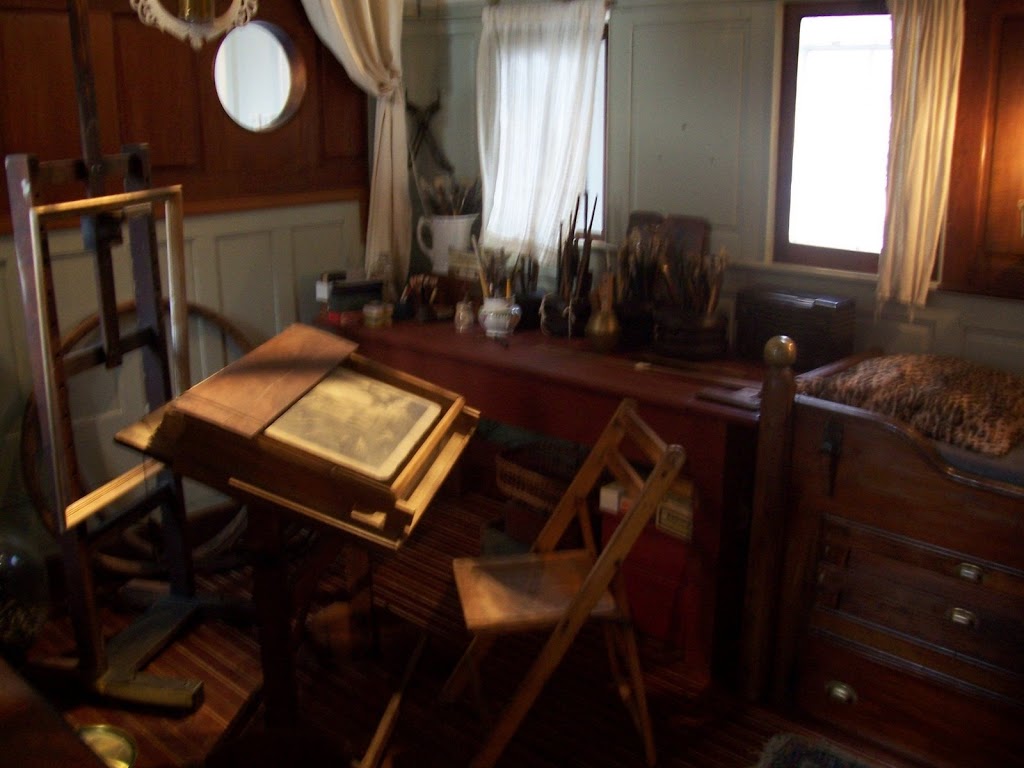
Snug Harbor is as complete a monument to a single artist as you’ll be likely to find. Noble’s houseboat has been meticulously transferred to one of the building’s hallways:

Inside the houseboat, his studio has been dutifully recreated:

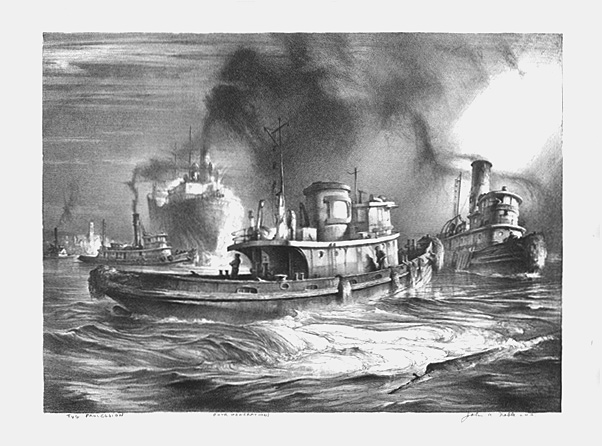
A haunting example of Noble’s work:

The 20th century saw a drastic improvement in social security and health benefits for the elderly, opening options for retired seamen. Enrollment into the home fell from 1,000 men in 1900 to just 110 by the 70s. The firm in Washington DC has actually proposed demolishing all of Snug Harbor’s “obsolete” buildings but Building C. Vicious battled ensued between the city and trustees (who wished to demolish and build new facilities) before landmark status was finally granted in 1976. The sailors (and St Gauden’s statue of Robert Randal) were shipped to North Carolina, and Snug Harbor Cultural Center was opened to the public in 1976.

Modern Snug Harbor can give some thanks to an unlikely source: Jacqueline Kennedy Onassis, who became an early supporter of preserving the grounds as is. “Attention should be brought to a place like this. There’s no place in all the five boroughs where there is such a sanctuary as this…it must be preserved.” She would certainly be pleased with its modern incarnation.

Tomorrow: modern Snug Harbor, home of art, gardens, massively gigantic bugs and, yes, that killer brunch

No more battery for downtown’s green ferry

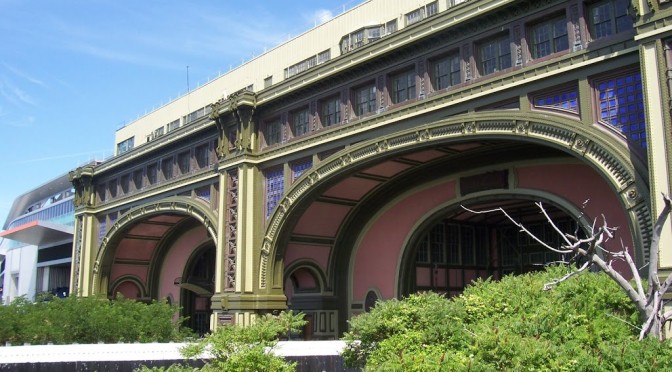
(Battery Maritime, from the back)

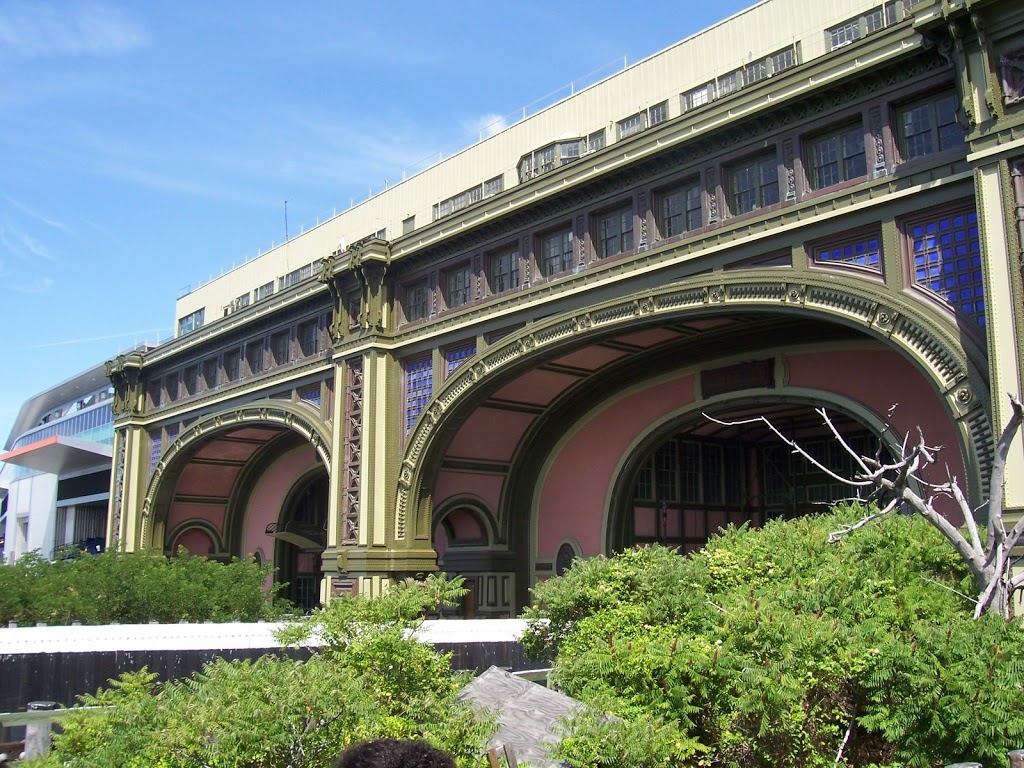
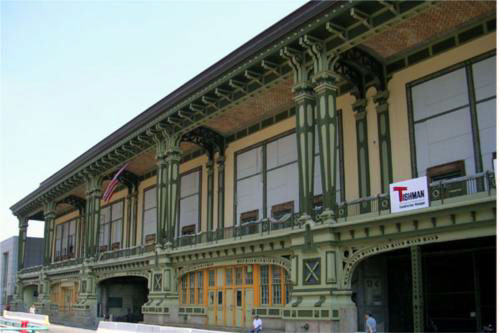
That precious jade little music box with a copper top sitting next to the brand spanking new Staten Island Ferry terminal is about to get yet another makeover.

The Battery Maritime building, now landmarked, has probably been one of downtown Manhattan’s most mistreated buildings. There are probably a few reasons why this Beaux-Arts confection, finished in 1909, has been so maligned. It was designed by William and Morris, not exactly one of New York’s great design firms. (They’re responsible for a few lesser known buildings along Riverside Drive.)

Its primary function, as a ferry terminal for vessels to and from 39th street in Brooklyn, was eliminated in 1938 and lent to various private operations. Its second floor waiting room, with its grand ceilings and columns, hasn’t been open to the public in decades. At some point its most dazzling detail, a glazed glass ceiling of sparkling stained glass was, according to NYC Architecture, was unceremoniously demolished and built over.

It basically sat abused like some old jewel case washed up from the East River. Fortunately its been completely refurbished in a 2001 $60 million makeover that gives its pale green skin a glossy restored finish. However its vast upper floor remains unused. And its three slips are used only for minor ferry use, such as the Governor’s Island ferries — which don’t run outside of spring and summer months.

However it looks like the Battery Maritime may get seriously modernized if the Dermot Company have their way. They intend to install a glass-coverd hotel on the upper floors, a rooftop restaurant, and a gourmet market down below. The community is all over the board about it; according to Gothamist, architects love the idea, the Historic Districts Council hates it, and everybody else seems to want something in between.

One thing for sure — this battered green lady is finally getting the attention she deserves. Before jumping to too many conclusions regarding a potential radical re-design, keep in mind that it sits by the new, wildly dramatic Staten Island ferry terminal — once slotted to have a gigantic electronic message board slapped across the front.

FRIDAY NIGHT FEVER: The Roxy

To get you in the mood for the weekend, every Friday we’ll be celebrating ‘FRIDAY NIGHT FEVER’, featuring an old New York nightlife haunt, from the dance halls of 19th Century Bowery, to the massive warehouse spaces of the mid-90s. Past entries can be found HERE.

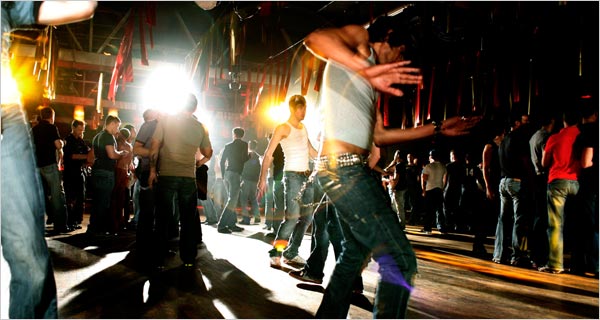
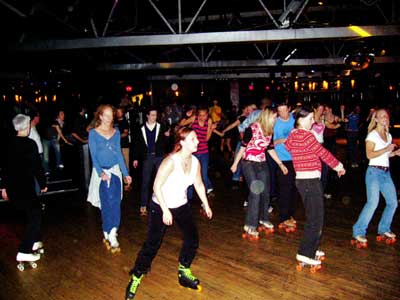
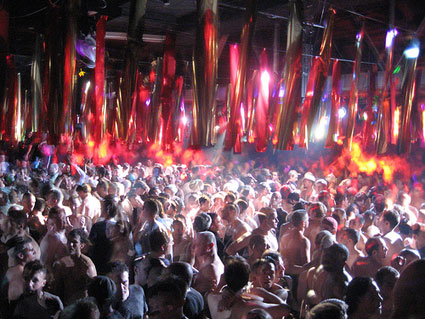
Most New York nightclubs rarely see get past one dance craze before shuttering, their popularity passed to another disposable club. The Roxy, however, kept the mirrorball turning for over 25 years, bringing to light world famous deejays, breakdancing motion pictures, and its biggest claim to fame — roller-disco.

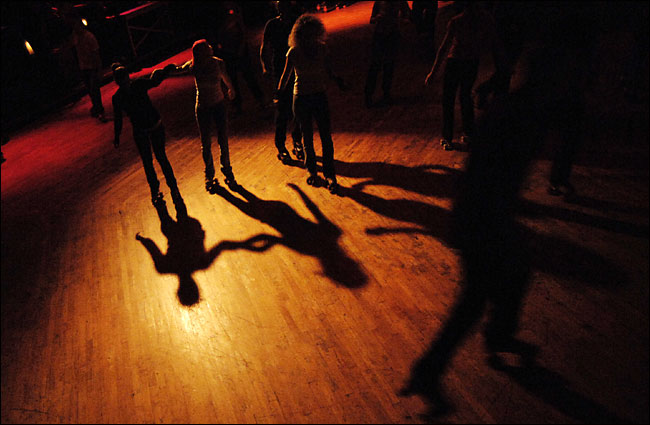
Roller-disco was disco dancing taken to the level of near-sport, tight pants and tube-tops whizzing by to the beat of Donna Summer. The Roxy was one of several roller-discos in late 70s New York, but Roxy was its finest — judging by its nickname ‘the Studio 54 of rollerdisco’ — and was destined to become the last one standing. Owner Steven Greenberg, who would later manage the storied Palladium, turned a 60-year-old warehouse into a hangar-sized fantasia for skaters. With very few other rooms to carry about in, all focus was on the massive floor, filled with people on wheels.

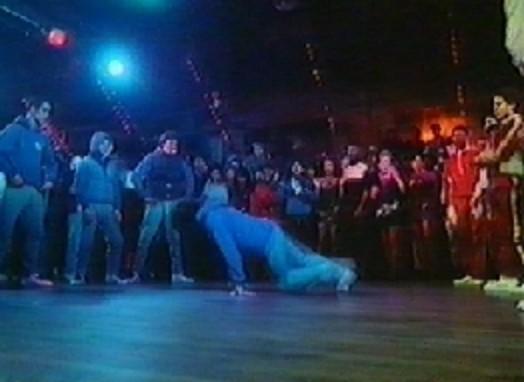
Roller-disco quickly waned, though most of the Roxy’s later history would feature at least one roller night, all the way up to the end. However during the 80s, the Roxy would be chiefly occupied by another dance craze — breakdancing. 

One of the many deejays of this period was Afrika Bambaataa who brought the style and energy of his Zulu Nation into the club. Known for breaking hip hop into white venues and creating the electro-funk sound, Bambaataa remade the Roxy as a centerpiece to freeform early 80s hip hop culture. Go out and rent the pivotal breakdancing film ‘Beat Street’ to see a performance of Bambaataa’s in the Roxy.

The late 80s saw its bleakest phase with a name change and frequent violence from rowdy crowds. It was saved, like so many dance clubs in New York, by the gay community.

New owner Gene DiNino, having experimented unsuccessfully by renaming the Roxy as 1018 (the combination of its cross streets), brought in promoters Lee Chappell and David Leigh and deejay Larry Tee to debut a gay night on Saturdays, one which eventually lasted sixteen years and would help shape from its partygoers the ubiquitous ‘Chelsea boy’ type, an aesthetic of well groomed, tightly muscled bodies squeezed into simple, often nonexistent clothing.

According to ‘Dirty Sexy Money’ star Candis Cayne: “[In the early ’90s] I was a kitty girl selling cigarettes and candy. It was amazing! There were drag queens in flawless costumes they worked all week long, and everyone seemed happy. Roxy is one of those ‘firsts’ kind of clubs—people did things for the first time there.”

The Roxy defined the modern dance music sound of big beats and wailing divas, woven into epic evenings of glittery debauchery. Party promoters such as John Blair and Marc Berkley would amp up the energy with lavish themed parties and deejays known the world over — Victor Calderone, Junior Vasquez, Peter Rauhofer. It was almost imperative for pop stars to sweep through for an ‘improptu’ performance — Beyonce, Cher, and Madonna singing (or syncing) just feet from hundred of frenzied, sweaty fans.

Lest anybody feel they still needed to strap on some roller-skates, never fear. The Roxy still hosted roller-disco one night a week. Skaters made their last pass under the disco ball the week of March 10, 2007. Like everything it seems these days, the Roxy will be turned into luxury condominiums, following the fates of the Tunnel, the Palladium and many other popular 80s and 90s dance spaces.

Categories
Podcasts

PODCAST: The Astors and the Waldorf-Astoria

We’re going to the ‘original’ Waldorf-Astoria Hotel in this podcast to hang with the filthy rich.

Our guides are the styling and eccentric Astor family, the centerpiece of 19th Century New York wealth and society. Come along as we weave through a family tree of Williams and John Jacobs, not to mention THE Mrs. Astor, the one and only (even if there was more than one).

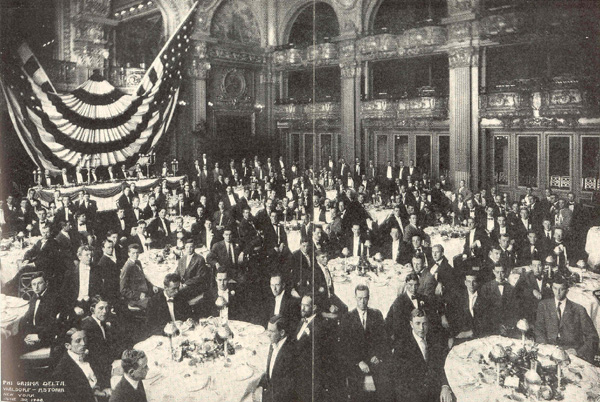
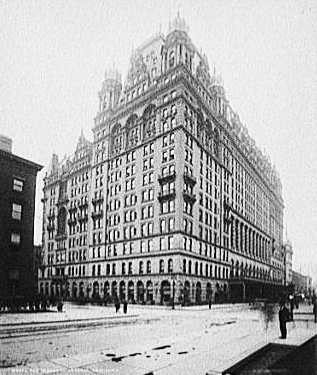
A glimpse inside the Waldorf-Astoria ballroom : a Phi Gamma Delta fraternal function in 1908

Outside the combined hotels, you can see where the shorter Waldorf ends and the taller Astoria floors begin. The streets look pretty calm too.

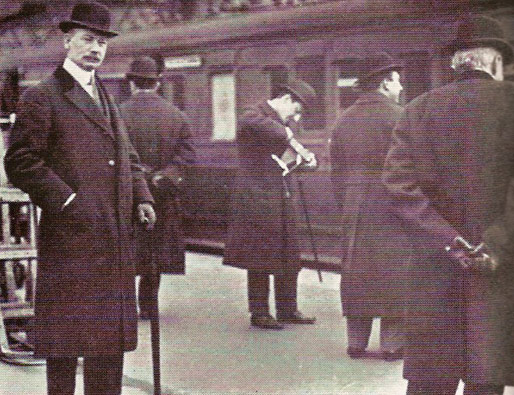
John Jacob Astor IV — inventor, writer, gad-about — at 48 years old, the year he meets his fate on the Titanic

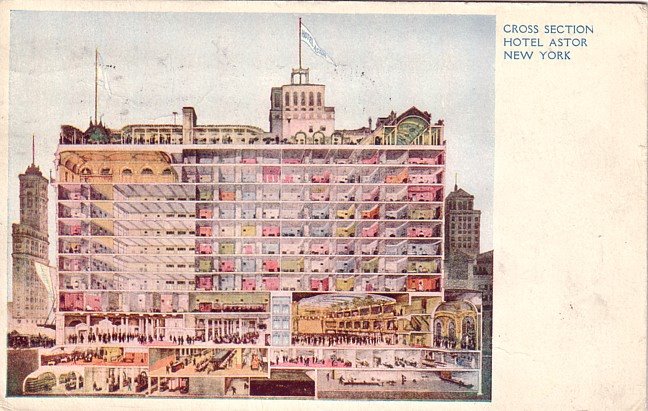
Another Astor holding, the Astor Hotel, was built by William Waldorf Astor in Times Square. This postcard curiously gives us an inside look.

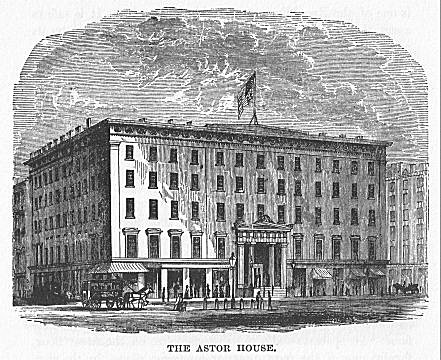
This is not to be confused with the Astor House, the downtown Manattan lodging built in 1836 by William and JJ Astor IV’s great-grandfather, the original John Jacob Astor. Right next door to the long-standing St Paul’s Church, the location of the Astor House is now occupied by a Staples and a New York Sports Club.

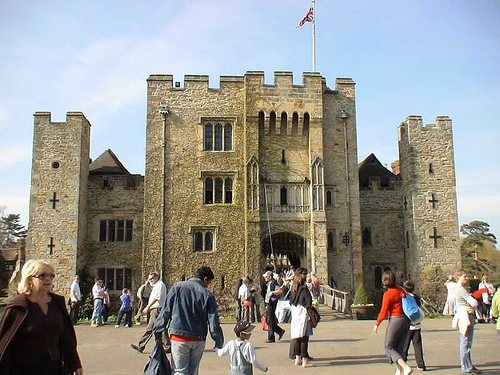
And over in England you can now visit the Hever Castle, once home to Anne Boleyn, but refurbished and lorded over by William Waldorf Astor, shedding his American skin to become an eccentric British viscount.

And we failed to mention that the Waldorf salad gets its name from the hotel where it was purportedly invented by Waldorf-Astoria’s much-admired maître d’hôtel Oscar Tschirky, who incidentally also claimed the invention of eggs benedict and veal oscar. As we mentioned on our podcast, thousand island dressing also made its debut at the Waldorf.

If you’re interested in more, you should read Justin Kaplan’s When The Astors Ruled New York . We’ve previously written about the profundity of Astor-named places here.

FRIDAY NIGHT FEVER: Peppermint Lounge


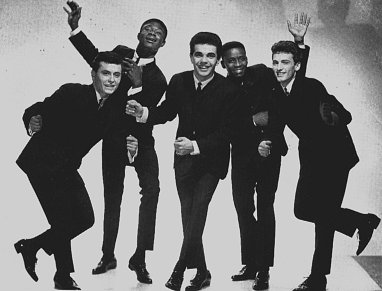
pictured: Joey Dee and the Starliters, who turned a small midtown gay hustler bar into a dance hit in 1961

To get you in the mood for the weekend, every Friday we’ll be celebrating ‘FRIDAY NIGHT FEVER’, featuring an old New York nightlife haunt, from the dance halls of 19th Century Bowery, to the massive warehouse spaces of the mid-90s. Past entries can be found HERE.

Like most things associated with popular music, the early 60s brought sea change to the very notion of nightlife. Clubs typified by the 21 Club and last weeks’ feature El Morocco were very much venues where you dressed up, not where you let your hair down. Harlem and Greenwich Village certainly catered to rowdier fare, but in midtown, things still held a pretense of glamour and society.

All that changed as rock and roll seeped into the streets. Such “naughty” music, inspiring amoral and sexual dancing, sprang first from the seediest places, with the sweetest being the Peppermint Lounge, also known as the home of the Twist. Although the Twist was actually born in Philadelphia, New York and the Peppermint sped it up and whipped it into a frenzy.

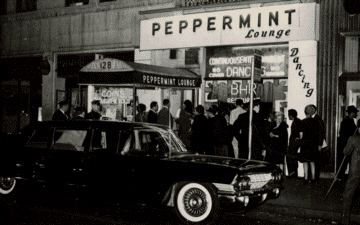
The ‘Pep’, as it was called, a hole in the wall at 128 West 45th Street, with a doorway into the adjacent Knickerbocker Hotel, might have remained a quiet gay hustler bar out of the way of the public consciousness had rock and roll not swept through. Vanity Fair calls it an “inauspicious dump destined to become a pop landmark.” The ruffians would soon share the floor with Marilyn Monroe and the Beatles.

With a capacity of 174 people (and often filled to just slightly over that amount), a tiny stage and even tinier dance floor, the Pep soon pulsed with dance-friendly rock music, featuring house band Jordan Christopher and the Wild Ones slinging R&B rhythms over guitars and marrying it with almost demonic body gyrations. The well kept secret was effectively spilled when frequent performer Joey Dee and the Starliters recorded their biggest hit ‘Peppermint Twist’, cementing the club’s lusty reputation into a hit record in 1961. (Watch a video here of the Starliters performing their hit.)

The Pep was sweaty raunch. It was white society dabbling into the rhythms of black music. Traditional society, leering over the edge of its dry martinis, thumbed up its nose. But like everything forbidden in this city, the Peppermint soon drew its admirers.

Or as Tom Wolfe explains it: “One week in October, 1961, a few socialites, riding hard under the crop of a couple of New York columnists, discovered the Peppermint Lounge and by next week all of Jet Set New York was discovering the Twist.”

The mystique of the Twist — and the dozens of other novelty dances that came afterwards — is that is was a solo dance. And as a result, according to the New York Social Diary, “It was the first time the general public saw men dancing with men and women dancing with women.” The Pep invited sexual intimacy and freedom. Perhaps not of the types we see on dancefloors today, but this was the first significant steps towards it.

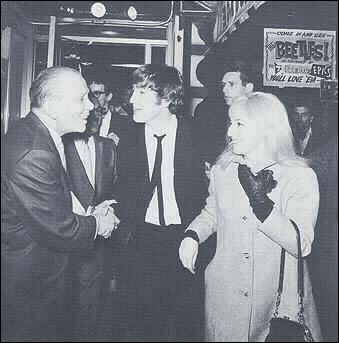
But while the floor of the Pep might have been filled with twisting, sexed up young adults, the allure soon drew icons. Marilyn Monroe, seen last week shimmying at El Morocco, found her way to the Peppermint, as did the Beatles during their legendary week in the city. (Pictured above: John Lennon is welcomed into the Pep.) As well as an odd assortment of celebs that I can’t imagine ever once did the Twist — Liberace, Tennessee Williams, Noel Coward, Norman Mailer, Judy Garland, Zsa Zsa Gabor, John Wayne (!).

According to Time Magazine (via the above Vanity Fair article), “Even Greta Garbo hauled herself out of her myth-lined cocoon and appeared, lank-haired and bone-pale, to snap her fingers and smile.” Even first lady Jackie Kennedy snuck in with her sister Lee.

The Pep made stars as well. Three of the Starlighters spun off into another band, the Rascals. And Phil Spector’s pet project the Ronettes, according to legend, got their unexpected big break there: “One night in 1961, the girls dressed in tight skirts and with their hair piled high, stood [outside] in line …. the manager mistook them for a singing trio that hadn’t arrived and took them inside. Ushered them on stage and they belted out a version of Ray Charles’ “What I Say,” … The girls took the club by storm and were signed to appear regularly for $10 a night.” (At right: Ronettes at the Pep)

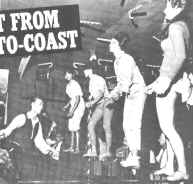
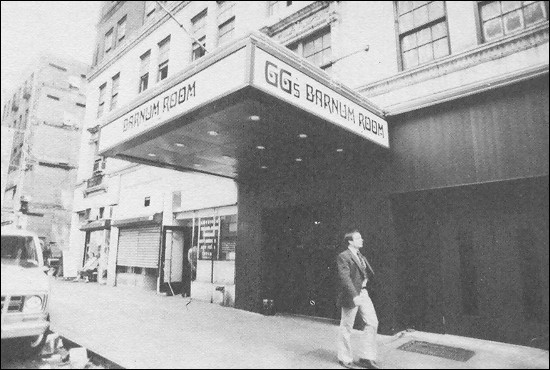
The Pep wouldn’t survive the 70s. The space on 45th street would become a couple different disco venues: a circus themed disco called GG’s Barnum Room (pictured below) and a glossier disco called Hollywood. The Pep would return in fits and starts in other locations, but nothing approaching the feral frenzy of its early days.

The address of the Peppermint, 128 West 45th Street, is completely gone, replaced with a parking garage, a Citibank and a luxury hotel. However, not more than a 100 feet from its original location was once another legendary rock venue, Bond International Casino.

Categories
Podcasts

PODCAST: The United Nations Headquarters

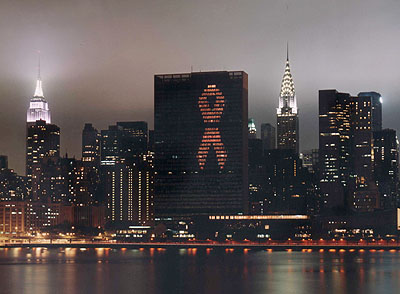
(Secretariat Tower, in a dazzling light show during a special session on the international HIV/AIDS crisis.)

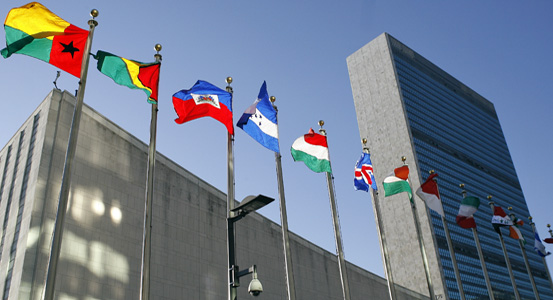
It’s the only area of Manhattan that actually belongs to the world (literally). Come along with the Bowery Boys as we cut the security line to uncover the true story about the unusual headquarters of the United Nations, and why they ended up in New York City in the first place.

Listen to it for free on iTunes or other podcasting services. Or you can download or listen to it HERE

Yesterday was United Nations Day, marking the anniversary of the creation of the UN Charter by its five originating members (Soviet Union, China, Britain, the United States and France) and 46 other signatary nations. Currently there are 192 member nations.

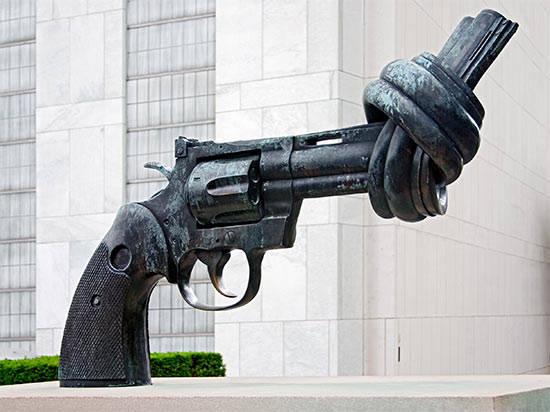
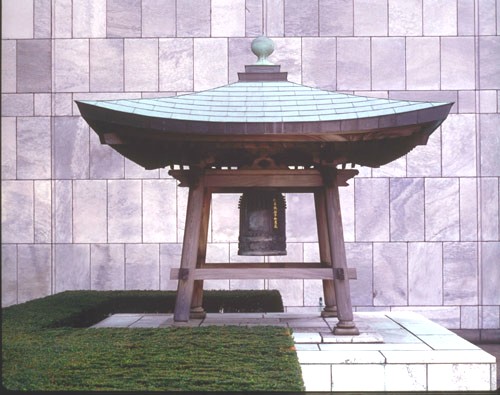
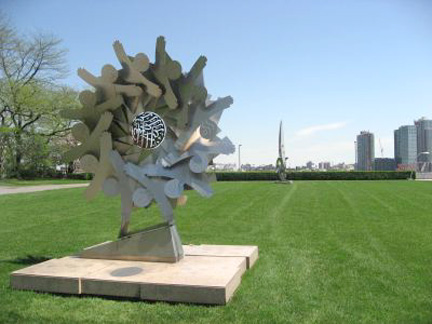
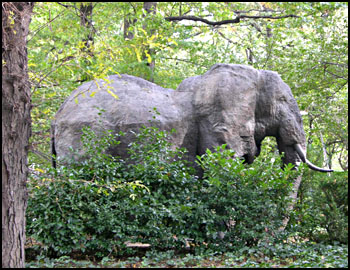
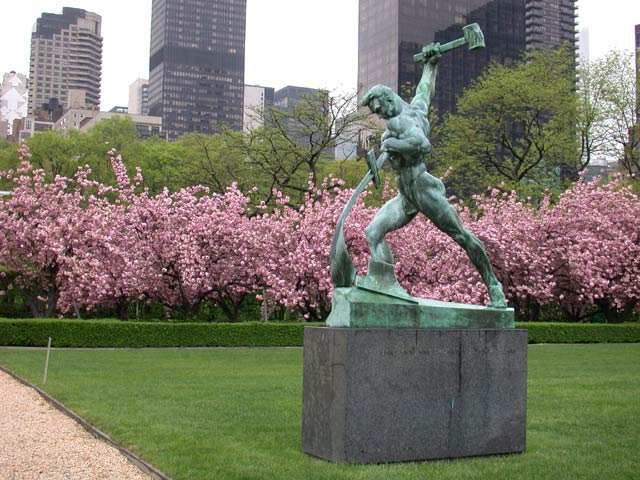
The grounds of the United Nations are alive with an assortment of unusual sculptures from around the world. Although not open to the public, you can easily see most of these through the fence:

From Luxembourg, the very popular Knotted Gun, by Fredrik Reuterswärd, titled ‘Non Violence’ no explanation neccessary:

The Japanese Peace Bell, a gift from Japan before they were even members of the United Nations, holds a special significance on the UN grounds. It tolls twice a year, for the vernal equinox and on the first day of General Assembly.

The circular Solidarity Among Sisters was a gift from ‘Arab women’ crated by Silvio Russo, “shaped … in the form of an abstract image of a number of women, each of whom is holding out her hand to the next.”

Tucked in the trees at the end of the garden is ‘Sleeping Elephant’, a bronze sculpture from three nations (Kenya, Namibia and Thailand) and cast from an actual living elephant by sculptor Mihail. Believe it or not, the size of its, um, ‘member’ was a point of contention when it was first installed in the park.

The most renown of all the sculptures is probably Let Us Beat Swords Into Plowshares an Evgeniy Vuchetich creation donated by the Soviet Union

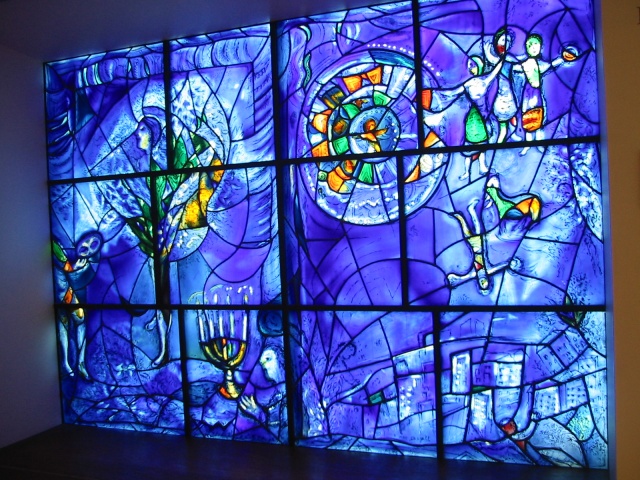
Additionally, the lobby of the UN has one object of significant note — a striking stained glass window commemorating the life of Dag Hammarskjold by French painter Mark Chagall:

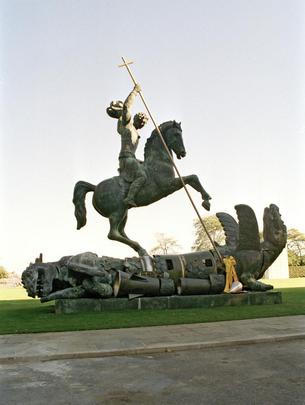
Then of course there’s the most striking piece of all — ‘Good Defeats Evil’, by Georgian artist Zurab Tsereteli, a rather controversial gift from the Soviet Union in 1990. It conjures the legend of St. George slaying the dragon, with nuclear arms filling the role of the slayed beast.

Mysteries of Roosevelt Island: Jailhouse jitters


We’ve got some more on that wacky, wonderful place called Roosevelt Island. We highlighted some of the spookier stuff last week. Read it all here.

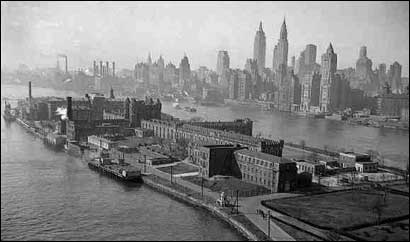
I mentioned earlier that Roosevelt Island was named for a Franklin Delano Roosevelt memorial that was never built there. Perhaps the reason that doesn’t bother anybody is that’s a far more attractive name than its last one, Welfare Island. In the continuum of names in the island’s history, Welfare is worse than all of them, although slightly better than Hog Island.

(The best name it’s ever had? The original Canarsie tribe name Minnahannock, meaning ‘it’s nice to be on this island’.)

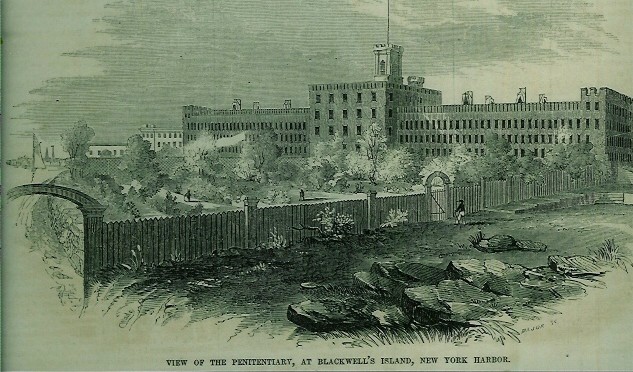
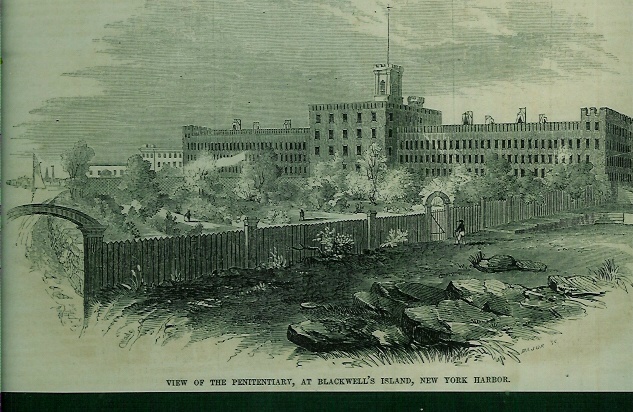
Welfare Island might seem a rather unappealing name these days, but at the time it was changed from Blackwell’s to Welfare in 1921, the connotation was less onerous. By that time, the island was crammed with institutions that benefited “the welfare” of the public, while at the same time sequestering society’s most undesirable. It’s held an almshouse, various hospitals, a workhouse, an asylum. Yet none of these public projects grabbed as many headlines as the island penitentiary, which stood there for over a hundred years.

A prison was one of the first things built on then-Blackwell’s Island in 1832. A north wing was added to the prison to accommodate inmates transported from a facility next door to Bellevue Hospital. (The mental patients of Bellevue would make a similar journey to Blackwell’s asylum at around the same time.) The five-story L-shaped building had a granite, medieval-looking facade and 800 cells, much of it filled to capacity through most of its existence.

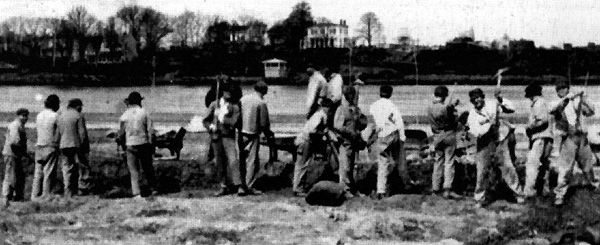
The prison fomented little idleness. Male inmates from there and the adjoining 220-cell workhouse (essentially a correctional facility for “drunks and disorderlies”) were used either in the quarry or to build many of the island’s structures, including a seawall around the perimeter. (Below: a picture from the book Images From America: Roosevelt Island of some of Blackwell Island’s prison laborers.)

This takes the notion of a chain-gang to a whole other level. But then, where would they escape to? Even if they could find a boat, the closest dock was heavily guarded. And although swimming was a possibility, the waters of the East River were far more crowded than they are today. Although some criminals — like ‘Oily’ Rockford — managed escape quite easily.

While the men were outside, women prisoners would do more ‘womanly’ chores, like sewing and laundry. I can’t help but think many of these women could have been better served in the quarries than in the sewing circles.

The prison and workhouse has seen its share of celebrity lawbreakers; one could imagine Paris Hilton feeling at home here. (I’m kidding; she wouldn’t last a day.) Many of the purported crimes wouldn’t even get you a slap on the wrist today.

Margaret Sanger’s sister Ethel Byrne was locked up for providing birth control advice to women in Brooklyn. Anarchist Emma Goldman was a frequent ‘guest’ for incendiary remarks and inciting riots, joining other frequenter Madame Restell, an early 20th century abortionist. Well before her singing career took off Billie Holiday spent four months here for a “vagrant and dissipated adult” (code for prostitution), although she was still a minor.

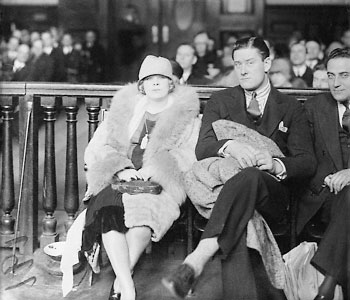
However its two most recognizable residents to the public at the time stand at either end of the justice scale; Boss Tweed served there for a year as the instigator of New York’s corruption woes, while comedian Mae West was locked up for eight days in 1927 on public obscenity charges, due to the ‘salacious’ nature of her Broadway show ‘Sex’. She received so much media attention that she was allowed to wear silk underpants at night and was eventually let off for good behavior. (The picture above is Mae in court, possibly on the day receiving her sentence.)

The celebrity element also helped shine spotlights on the prison’s squalid conditions — a sorry hall of overcrowding, drug addiction and corruption. By the 20th century, gangs of prisoners virtually ran the place. It would become the inspiration for dozens of pulp novels and films, including one actually called Blackwell’s Island.

After a few sorry reforms — including the name change to Welfare Island — produced few results, it was up to can-do mayor Fiorello Laguardia and his hire for corrections commissioner Austin H. MacCormick to raid the prison and transport its remaining inmates to the newly built Rikers Island. The Welfare Island prison was quickly torn down and replaced by Goldwater Hospital, today the Coler-Goldwater Memorial, which still serves the city in an environment far more inviting that anything that ever stood there before. has some of the best medical facilities in the city.

That’s it for Roosevelt Island this week! If you want to know more, the best online resources I could find include those at the Roosevelt Island Historical Society and a spectacular in-depth timeline at NY10044. (I know, I know, I didnt even get to the Blackwell house, fifth oldest building in all of New York City, or the ruins of old Strecker Laboratory.)

By the way, if you want to see what Blackwell Island might have been like, Roosevelt Island 360 has a video stream of the 1903 panoramic film reel that surveys the island in all its gloom and gray.

Mysteries of Roosevelt Island: The Madman’s Lighthouse

We’ve got some more on that wacky, wonderful place called Roosevelt Island. We highlighted some of the spookier stuff last week. Read it all here.

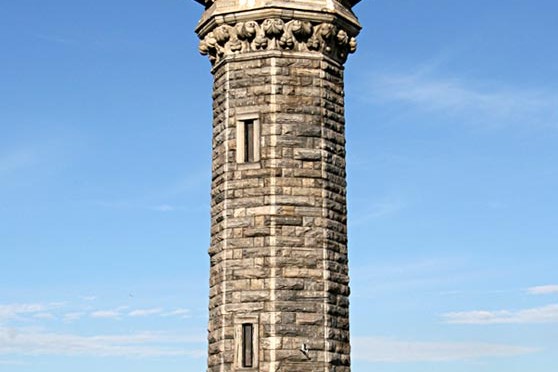
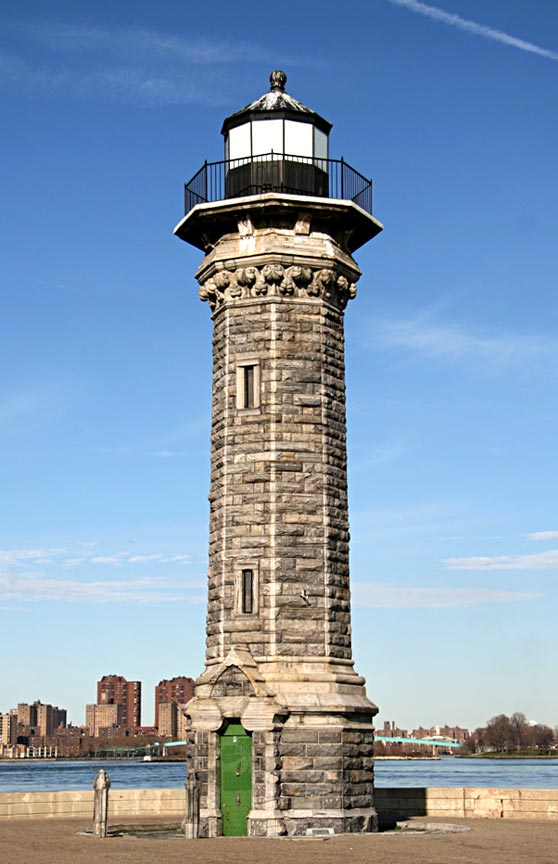
After the Renwick Ruins (which on most days aren’t open to the public) and the tramway (which takes all of five minutes to enjoy), the landmark which people associate with Roosevelt Island the most is the lighthouse on its northernmost point, built back when the isle was called Blackwell Island.

There are certainly more famous lighthouses in New York City. The ‘Little Red Lighthouse‘ underneath the George Washington Bridge was made famous by a classic children’s story. The stumpy lighthouse at the South Street Seaport serves as a memorial to the Titanic. And technically, the Statue of Liberty was lighthouse-ish, serving as a beacon for ships into the harbor.

But none had as ominous a purpose — or as peculiar an origin — as the Blackwell Island lighthouse, Roosevelt’s homage to the determination of the clinically mad.

As we mentioned last week, a sanitarium was built on Blackwell Island on 1839 to house mental patients previously stranded in various wards unsuited to their particular needs.

Many years after its notorious fire in 1858 and subsequent rebuilding, the relatively petite 50 foot tall lighthouse was planned to illuminate the waters filled with ships exiting from the perilous Hell’s Gate, the waterway between the Bronx and Queens. Presumably there had been a problem with vessels running aground on the relatively dark island, illuminated only by the lights of the asylum.

James Renwick, he of the smallpox hospital, was tasked in 1872 to design the lighthouse, a Gothic octagon cut from dark gray gneiss originating from the island’s own quarries, stone that would adorn many of the island’s most prominent structures.

The only thing holding back the construction was one particularly conscientious inmate of the asylum named John McCarthy. (Or, at least, this is how the legend goes.)

Whatever his maladies, McCarthy was deathly afraid of an attack by the British. Although New York was indeed under fear of such an attack in 1812, it never happened. By 1872, it was very unlikely to ever happen. This did not deter McCarthy, who, in his delusions, just wanted to protect the island from eventual attack. So, as the story goes, he built a fortress-like wall from river clay on the north end.

According to an asylum warden, the “industrious but eccentric” man “is very assiduous, and seems proud of his work, and he has reason to be, for it is a fine structure, strong and well built.” Apparently it was ‘fine’ enough to fortify some of the marshy land that would be used later for the lighthouse and adjoining platform.

He seems like a good but very misdirected citizen, in my opinion. However, such a fort would be no match for a warship and besides, there were no warships. The city, possibly through bribery, convinced McCarthy to demolish the fort.

Not surprisingly, labor from the asylum was used to build the lighthouse, and design shifted slightly from Renwick’s intentions. It is unclear who among the asylum laborers was involved in actually constructing the lighthouse. Another inmate Thomas Maxey is also attributed to the construction.

Whoever it was, McCarthy was the one attributed on a plaque that stood in front of the lighthouse until the 60s:

This work
Was done by
John McCarthy
Who built the light House
from the bottom to the Top
all ye who do pass by may
Pray for his soul when he dies

Serving the harbor admirably for almost 70 years, the lighthouse was decommissioned in the early 40s, then restored to its quaint, haunted lustre in 197s. It’s joined on the north side by a 147-acre park highlighted by the lovely white ‘meditation steps’, where you can bask in views of Gracie Mansion and the skyline of Manhattan, as well as ponder the invisible border of McCarthy’s former noble fort. I can personally attest to this being a perfect place for a picnic.

(Lighthouse photo courtesy of one of my favorite New York blogs New York Daily Photo)

Mysteries of Roosevelt Island: Terror on the tram!

We’ve got some more on that wacky, wonderful place called Roosevelt Island! We highlighted some of the spookier stuff last week. Read it all here.

One of the more intriguing aspects to Roosevelt Island is the notion of even getting there at all.

For most of its existence, people used ferries to get to and from Manhattan and Queens. Boatloads of prisoners, smallpox patients, the mentally insane, and, yes, residents of the island crossed the East River daily.

Later, when the Queensboro Bridge sprung up on its north side, a trolley would stop in the middle of the bridge, allowing people to then enter a small elevator which would take them down to the island. According to NY Roads, this was the only way for the public to get to Roosevelt (then Welfare Island) in the 50s. I can’t imagine this inconvenient form of commute brightened the island’s reputation any.

A lift bridge spanning 2,877 feet to Queens was opened in 1955, finally allowing automobiles on the island. Its also the only way you can walk there. Those odd Queensboro elevators were dismantled in 1970.

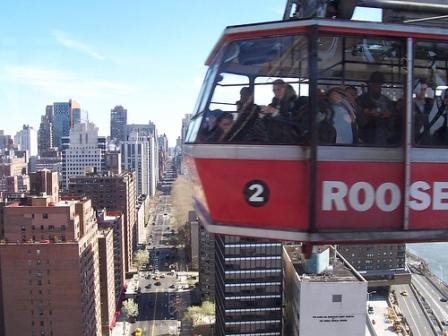
However Roosevelt Island is often defined by its most popular method of conveyance, the Roosevelt Island Tramway. This unique way of getting to and from home, taking less than five minutes one way, is a picturesque and perfectly European way of experiencing the city. The aerial tram, made by the Swiss company Vonroll, is the only one of its kind on North America to be used as actual mass transit. (Many vacation destinations obviously use trams, including mountains in Oregon and New Mexico.)

The Tram was built in 1976 as a temporary relief for residents impatient with the slow development of the subway out to the island. By the time the subway (now the F line) reached Roosevelt in 1989, the Tram had become such a signature of the midtown skyline that it was retained.

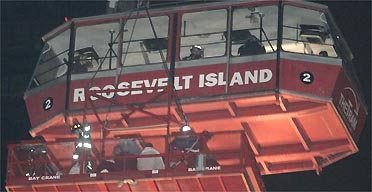
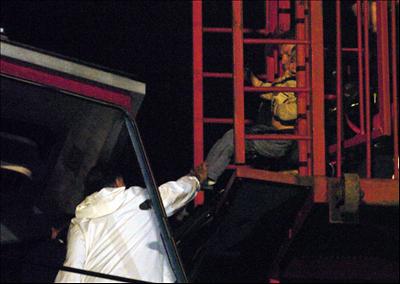
Some passengers in 2006 might have wished they had hopped on the subway. On April 18, 2006, the two operating cars abruptly stopped moving, leaving almost 70 people stranded above the East River. It took almost six hours, well into the early morning, for rescue workers to extract the passengers ten at a time using an industrial crane and rescue gondolas. According to a 12 year old passenger, who had to leap from the tram doorway to the gondola: “I was just a little scared because, one, what if I miss it; two, what if I slip, I might fall into the river.”

(Go to WNBC to see some of the vivid coverage.)

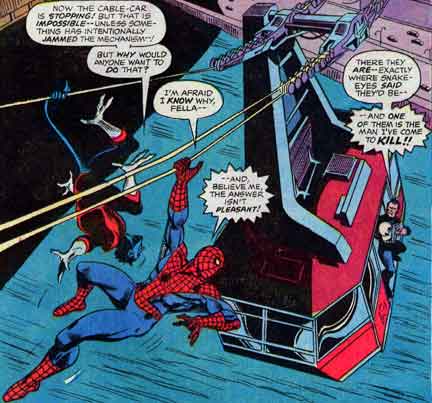
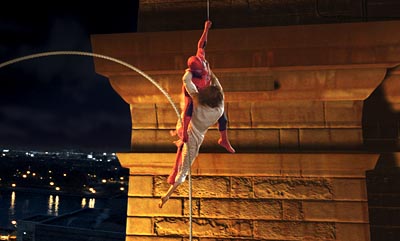
Of course the Tram isn’t foreign to use by malevolent types and rescues by bonafide heroes, at least in the fictional realm. Spider-man seems to be the tramway’s personal security guard, in comic books and in film.

You can take a far safer virtual tram ride with the Roosevelt Islander.

The subway seem to be the easiest way to travel, but even that has an odd distinction — at a little over 100 feet deep, its the second deepest subway stop in the entire city. (That’s still 80 feet shorter than the 191 Street station in Manhattan.) After a series of steps and escalators, it can seem like you’re emerging from a subterranean city.

Categories
Uncategorized

FRIDAY NIGHT FEVER: El Morocco


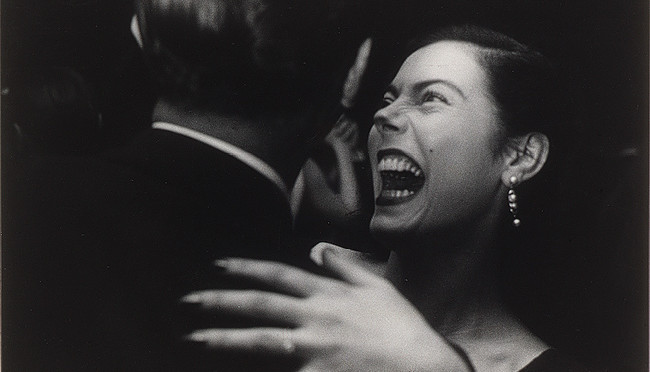
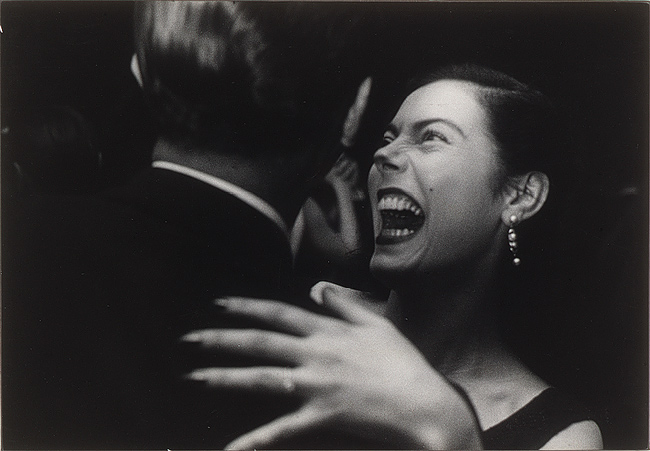
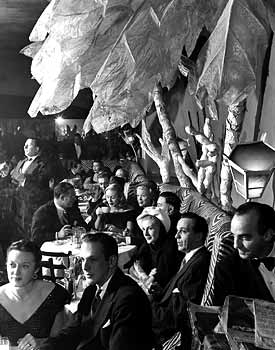
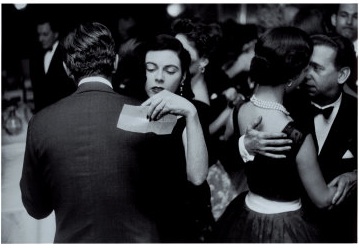
(Top and bottom photos: Garry Winogrand – taken on the El Morocco dance floor – 1955)

To get you in the mood for the weekend, every Friday we’ll be celebrating ‘FRIDAY NIGHT FEVER’, featuring an old New York nightlife haunt, from the dance halls of 19th Century Bowery, to the massive warehouse spaces of the mid-90s. Past entries can be found here .

Has there ever been a place in Manhattan more glamorous than El Morocco? Probably not.

John Perona opened El Morocco as a speakeasy at 154 East 54th Street, moving down the street to 307 East 54th Street in its later days. (Both locations have been destroyed; the Citicorp building stands where the original once stood.) “Elmo”, as the socialites would utter it, transitioned into post-prohibition losing none of its glamour or appeal.

Along the way, it set the standard by which all other nightclubs of the 30s through the 50s were to be judged. (Only the Stork Club and possibly the 21 Club would rival it.) It was the first to use a velvet rope. The ruler of the rope, Angelo Zuccotti, was so revered that the New York Times ran his obit when he died in 1998, a doorman
“who wielded the velvet rope at El Morocco with such authority and finesse that he helped define the very line between cafe society and social Siberia.”

And via Perona’s official photographer Jerome Zerbe (who also worked the Rainbow Room), this midtown speakeasy turned celebrity hotspot was one of the first to employ photographers to snap candids of its famous clientele. Yes folks, you can actually trace the scandalous club photos of Lindsey Lohan and Britney Spears back to their less shameless beginnings at El Morocco.

According to an account by Zerbe, “From 1935 until 1939, I was at the El Morocco and I invented a thing which has become a pain in the neck for most people. I took photographs of the fashionable people and sent them to the papers.”

One key element was Elmo’s signature blue and white zebra-striped banquettes, which popped from the corners of every snapshot. Photos running the next day would easily be recognized.

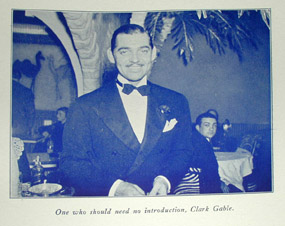
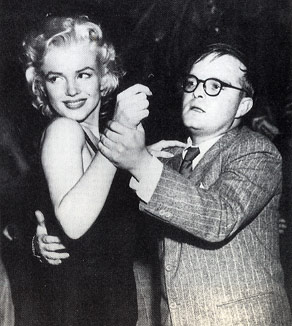
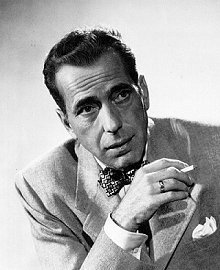
The other, of course, was the who’s-who list of stars that would traipse through. And who exactly showed up at El Morocco’s doorstep? I can throw some names at you — Clark Gable, Cole Porter, Ingred Bergman, Truman Capote, Audrey Hepburn, Marilyn Monroe. Humphrey Bogart, God bless him, was banned from the club for life. (The story is so incredible, I’m saving it for the end.)

But I think Zerbe says it best: “They were really the top, top social — and what you mean by society, that’s difficult again to define. These were the people whose houses one knew were filled with treasures. These were the women who dressed the best. These were the women who had the most beautiful of all jewels. These were the dream people that we all looked up to and hoped that we or our friends could sometimes know and be like.”

Scour any recollections of Elmo, and you’re bound to spend half the night picking up all the dropped names. “Errol Flynn would either sit at Perona’s table or cruise the room,” says Taki Theodoracopulos. “On a normal night Aristotle Socrates Onassis would be there, more often than not without his wife, Tina, who would come in later with the then young Reinaldo Herrera.”

And from Nannette Fabray: “One entered, and there was a hierarchy of where one sat. The first table on the right was the best; the second was reserved for the owner, John Perona. You didn’t dare go unless you were perfectly turned out.”

Human beings were not allowed in El Morocco. It was the place where film stars mixed with European royalty, where a poor Southern girl could be wooed and courted, as long as that poor Southern girl was Ava Gardner.

Sadly, like an aging film actress long past her prime, El Morocco lasted well into the 90s, dissolving into less alluring variants until it took the final step of becoming a topless bar in the mid 90s, under the name Night Owls.

Celebrity hotspots these days rarely have the elegance or the prestige. I can only imagine if Britney Spears turned up at Angelo’s velvet rope, that he would turn her away.

Oh, and why was Humphrey banned from El Morocco? Well, one night in 1950, Bogart dropped off his wife Lauren Bacall at home, and he and a friend went out for the evening. Heavily inebriated, Bogart thought it would be funny to bring two 22 lbs. stuffed panda bears into Elmo as their ‘dates’ and proceeded to prop them up on a chair.

Two drunk young women attempted to pick up the pandas, but, depending on who you believe, were either pushed by Bogart or tumbled to the floor by the shear weight of the heavy toys. Later, in a flurry of half-truths, it was believed Humphrey and his friend violently assaulted the young women for attempting to steal the panda bears. Not helping matters — the boyfriend of one of the women then began throwing plates at Bogart.

The next day Bogart received a summons to appear in court. The man who would become the greatest movie star of all time, on that day, had to convince a judge that it was his excessively large stuffed pandas, and not his fists, that had felled the young women. The judge eventually threw it out of court.

When asked by reporters if he was drunk that night, Humphrey replied, Who isn’t at 3 o’clock in the morning? So we get stiff once in a while. This is a free country isn’t it? I can take my panda any place I want to. And if I want to buy it a drink, that’s my business.

Categories
Podcasts

PODCAST: Washington Irving

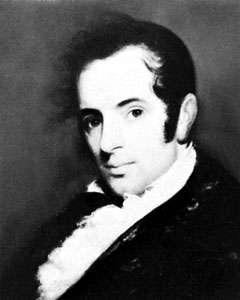
In this mini-podcast, we bring you New York’s first famous writer Washington Irving and his creepy tale of the Headless Horseman. We’ll tell you where you can go to celebrate his life and work, and what famous Irving landmark has nothing really to do with him at all.

Listen to it for free on iTunes or other podcasting services. Or you can download or listen to it HERE

Washington Irving was one of the first New Yorkers to make a name for himself in the international literary world. But it was a very narrow set of circumstances that allowed him to make it out of New York at all. The runt of eleven children, was ill for most of his youth; in fact, sickness would later prevent him going to Columbia University like his brothers. Under different situations a sick child growing up in downtown Manhattan might not have survived; he was, after all, born in the most volatile city in the nation, in the year the British finally relinquished New York to the new American army.

However, Washington’s father William had grown quite wealthy under the British as a mercantilist. His family could more than afford the proper care; as the baby, and one needing so much care, they spoiled him. Frequently bedridden, Washington was able to read more than the other kids, sparking his imagination with such favorites of his as Robinson Crusoe and Sinbad, devouring adventure tales, fictional and true. He half-heartedly studied law, but as his older brothers took over the family business, they actually encouraged him to indulge in story-telling. Keep in mind that fiction writing was not a popular endeavor at the time; writers documented and observed, but they very rarely imagined.

Writing as elderly Jonathan Oldstyle, his penname at 19, he frequently wrote to the newspapers reviewing theatricals and sometimes the people in the audience as well: “The noise in this part of the house is similar to that which prevailed in Noah’s ark; for we have an imitation of the whistles and yells of every kind of animal… Somehow or another, the anger of the gods seemed to be aroused all of a sudden, and they commenced a discharge of apples, nuts, and gingerbread, on the heads of the honest folks in the pit… I can’t say but I was a little irritated at being saluted aside of my head with a rotten pippin.

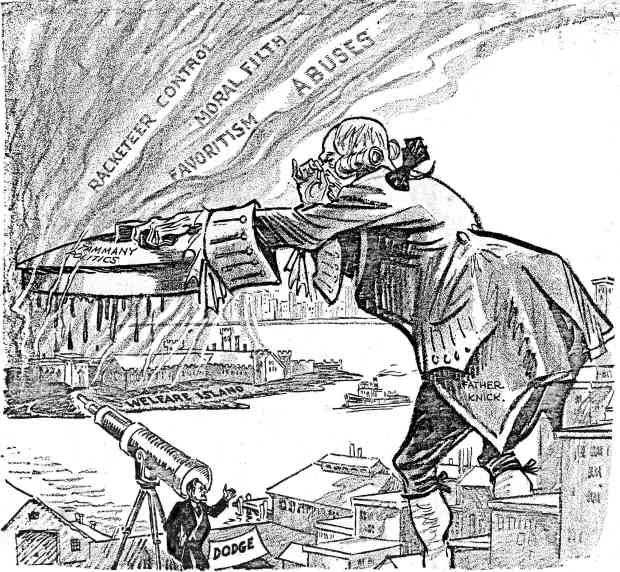
Later in life he would disavow these early writings as sloppy and lazy. He was much prouder of his later works the Salmagundi (a blistering criticism of New York’s upper class) and Deitrich Knickerbocker’s History of New York. As mentioned in the podcast, the name ‘Knickerbocker’ evolved to represent the first (if fictional) clan of the city. A character called ‘Father Knickerbocker’ would come to represent New Yorkers in political cartoons throughout the 19th century and early 20th.

To tie today’s topic with yesterday, here’s a political cartoon from the 1930s featuring Father Knickerbocker (his name embroidered on his coat) lifting the lid on the festering problem of Welfare/Roosevelt Island

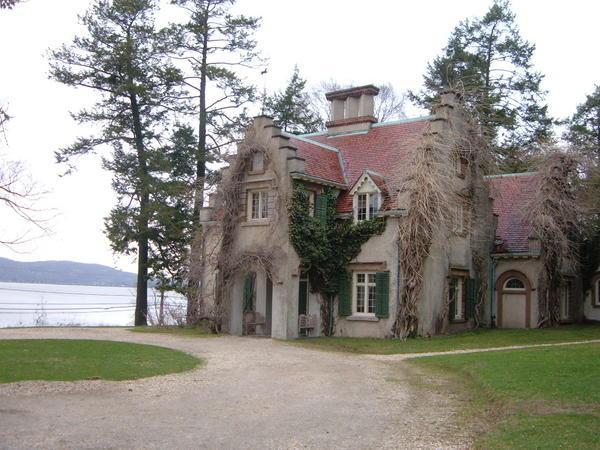
In the later part of his life, Irving made a home on the Hudson river which he called Sunnyside, living there with many members of his extended family.

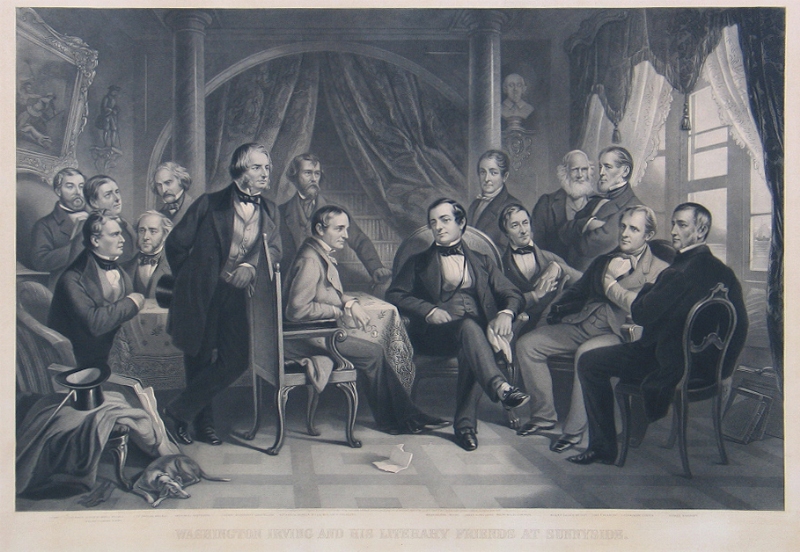
It also became quite the literary parlor, and was frequented by the likes of John Jacob Astor, whose exploits in the western United States Irving would immortalize in his work Astoria. Here’s a rare engraving from 1866 of Washington Irving entertaining a group of extremely similar looking men in his parlor.

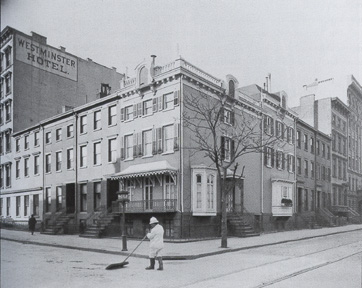
We can say with fair certainty, however, that Irving did NOT live here, 49 Irving Place (seen here in an old photograph):

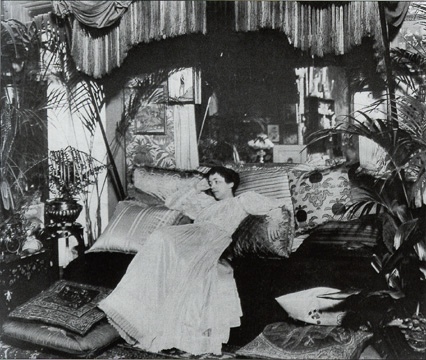
Who did live here, however might be more interesting. Elsie de Wolfe, a well known actress and soon to become New York’s first professional interior decorate, resided here from 1892 to 1912 with Elizabeth Murray, a literary agent to George Bernard Shaw and Oscar Wilde. (Curiously a few years earlier Oscar ended up next door at 47 Irving Place, as he saw his latest play Vera being savaged by the critics in a nearby theater.) They were quite open romantically and their house became a high-class salon for the artistic rich and famous. Its amazing to consider these two powerful lesbians stirring up social circles at the time.

Here’s Elsie reclining in her Irving-less home at 47 Irving Place. (This and the exterior shot above are courtesy the City Review from the Christopher Gray book New York Cityscapes.)

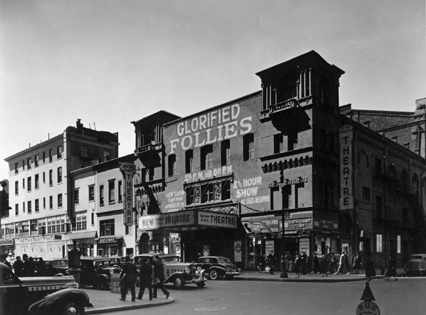
Just down a block away once stood the Irving Place Theatre, a former burlesque house and art film theater:

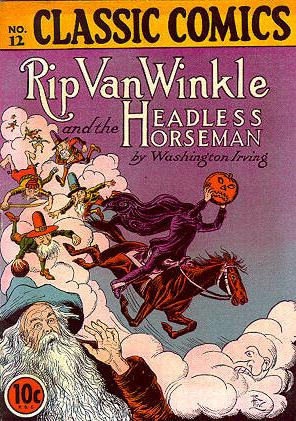
(I love how the illustrators of the comic on the left manage to combine Irving’s two most famous tales, and somehow stage the whole thing in intestine-shaped clouds.)
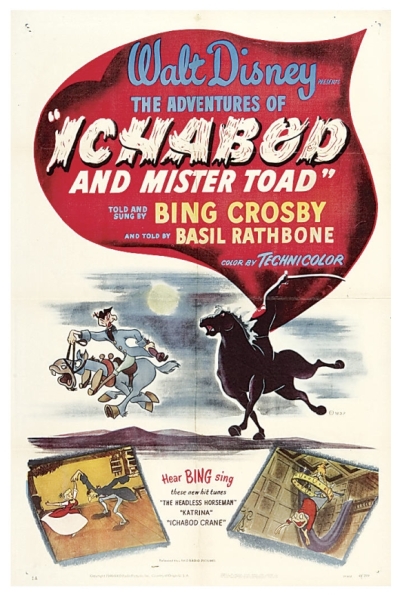
As for the story of ‘Sleepy Hollow’, it was one of many short tales gathered in ‘The Sketch Book of Geoffrey Crayon’ that cemented Irving’s status as the pre-eminent American writer. The story has been adapted in dozens of curious ways in the 20th century. A few silent film versions are known to exist, including one from 1922 starring Will Rogers as the terrified Ichabod Crane! For some reason, in 1949 the story was combined as a double feature with ‘The Wind In The Willows’ in a Disney animated adventure known as “The Adventures of Ichabod and Mr. Toad.” Bing Crosby provides the spooky narration and the best part of the story — the chase between Crane and the Horseman — is greatly extended. The Sleepy Hollow portion proved so much more popular that Disney split it off into its own film in the 50s.

Then of course then there’s the Tim Burton version with Johnny Depp as Crane, Christina Ricci as Katrina van Tassel, and as rival suitor Brom Van Brunt, an actor whose name could have very well placed him in the tale when it was first written, Casper van Dein. Burton, God bless him, completely re-writes the tale to flesh out a grim mythology. However he pays homage to the original story — as well as the Disney animated version — in a sequence where Crane is pursued by the Horseman and hid with a flaming pumpkin hurled by a costumed Van Brunt.

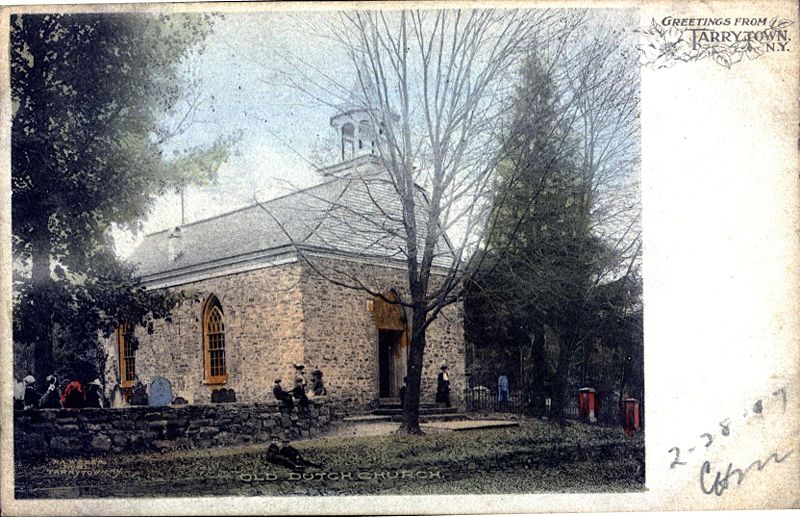
And finally, we end our look at Irving with an old crusty postcard image of Sleepy Hollow’s greatest landmark and the central location of Irving’s tale: the Old Dutch Church and its adjoining burial ground. Irving — as well as a great many other luminaries — are buried in the adjacent Sleepy Hollow cemetery. Look here to see what we wrote about the cemetery back when Leona Helmsley died.

“Horrors” of Roosevelt Island: Lunacy!

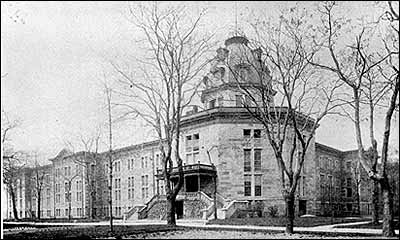
(ABOVE: Metropolitan Hospital, at the turn of the century, the former site of Blackwell Island’s asylum)

Is there anything more frightening than a insane asylum on fire? Nope.

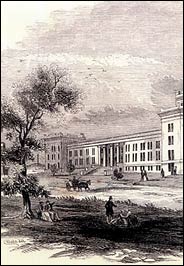
Welcome to America’s first municipal lunatic asylum, its home — you guessed it — on Roosevelt Island in the 19th century. The 1839 facility was designed by Alexander Jackson Davis, one of the most influential architects of his day and best known for decorating the northeast with austere, ornate homes. His best known New York building is Federal Hall (actually the Custom House when it was finished in 1942). The center tower of the asylum with its two L-shaped wings created an internal campus and had more in common structurally with a university or hotel.

The early 19th century was not the best time to be labelled a lunatic. The medical profession was not terribly prepared to treat mental patients; however at the time of the asylum’s construction, attitudes were shifting somewhat. As Blackwell Island, its isolation and relative calm were seen as conducive to the treatment of the mentally ill.

Good intentions were overtaken by reality, overcrowding and rather poor managerial decisions, such as the notion to leave part of the care of the asylum’s patients to the attentions of the inmates at the neighboring penitentiary. (I’ll focus more on the Roosevelt Island’s prison life next week.)

The asylum swiftly entered the public imagination. Charles Dickens, on his tour of America, visited the asylum and found “…everything had a lounging, listless, madhouse air, which was very painful. The moping idiot, cowering down with long disheveled hair; the gibbering maniac, with his hideous laugh and pointed finger; the vacant eye, the fierce wild face, the gloomy picking of the hands and lips, and munching of the nails: there they were all, without disguise, in naked ugliness and horror.”

Part of the asylum was lost in an inferno in 1858. One can only imagine the pandemonium of evacuating mental patients without the modern medications and restraints of today. And the sounds of the blaze mixed with the shouts and howling of the patients.

It was swiftly rebuilt but the conditions were no better. Intrepid reporter Nellie Bly then steps into the story at this time, in a move that would inspire budding Geraldo Rivera’s well into the future. In 1887, already well known for evocative articles on social reform, Bly took an assignment for Joseph Pulitzer’s New York World newspaper to enter the asylum disguised as a patient. (Why some actress like Charleze Theron has not played her in a film is quite beyond me.)

Bly’s reporting of conditions there are as shocking today as they are melodramatic. “From the moment I entered the insane ward on the Island, I made no attempt to keep up the assumed role of insanity. I talked and acted just as I do in ordinary life. Yet strange to say, the more sanely I talked and acted, the crazier I was thought to be by all….” Laughably misdiagnosed, Bly was tormented with rotted food, cruel nurses and cramped and diseased conditions for ten days before released with Pulitzer’s help.

Her reporting did more than shine a light on poor conditions for the mentally ill; it apparently also spelled the end of Blackwell Island’s asylum. By 1893, the patients were transferred further up the East River to Ward’s Island and the building given to more traditional medical services, becoming Metropolitan Hospital. It made the former asylum home for more than fifty years, leaving in 1955 and essentially abandoning Davis building to deteriorate.

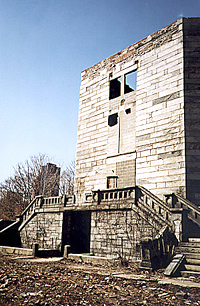
For years the only remaining vestige of the asylum was the Octagon, with the entrance tower and once spectacular spiral staircase. Certainly it must has inspired Batman writers to create Arkham Asylum, Gotham City’s home for the mentally insane and frequent home of most of the caped crusader’s rogue gallery.

Hmmm, ancient site of mental and physical horrors? I know, let’s build a condo! That’s exactly what the developers of The Octagon have done, completed last year. They have however preserved the octagonal tower and stairwell, leading me to suspect that at least they’re not hiding from the location’s wild, unsettling history, despite the promises of their website — “a Midtown venue with small-town values.” *shudders*

NEXT WEEK: More on Roosevelt Island’s peculiar and disquieting history