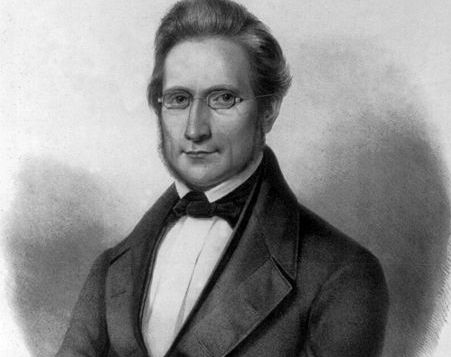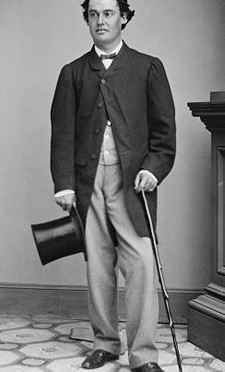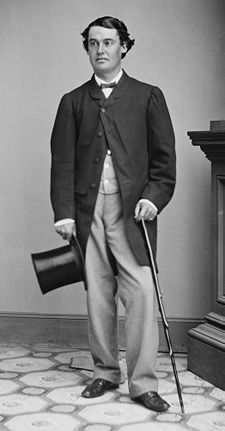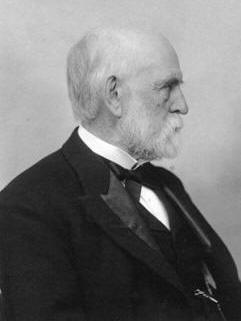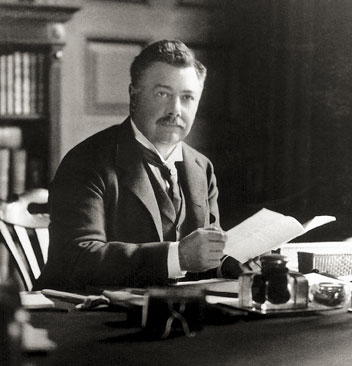
Mayor Cornelius Lawrence, son of Bayside

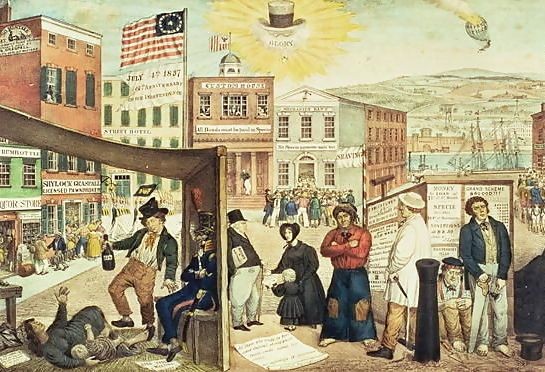
Above: New York by 1837 (in an painting by Edward Williams Clay) — a city surviving financial ups and downs, fires and water shortage, riots, cholera and the mayoralty of Cornelius W. Lawrence

KNOW YOUR MAYORS Our modest little series about some of the greatest, notorious, most important, even most useless, mayors of New York City. Other entrants in our mayoral survey can be found here.

Mayor Cornelius Lawrence

In office: 1834-1837

We’re going back to the era of the great fire one more time to take a look at the man in charge of the city during that time — Cornelius W. Lawrence, the first elected mayor of New York.

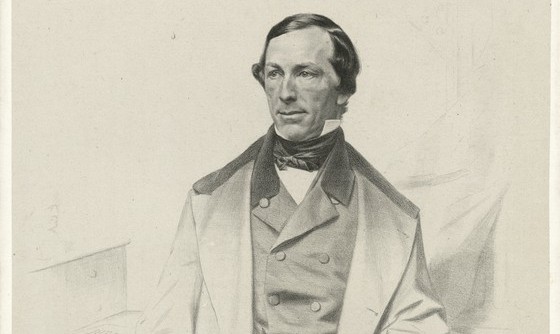
I couldn’t find any portraits of Cornelius, but I found something better: the following description from a mid-19th century journal: “…old Cornelius had the ice cream and strawberries of everything in life — in commerce, in politics, in wives, in finances and in religion….He had a peculiar way of carrying his spectacles in his hand, behind his back while he looked at all the pretty girls he met.”

But getting to that ‘ice cream and strawberries’ required surviving one of the most tumultuous city elections — and the subsequent years of trauma — that a New York mayor has ever had to endure.

Lawrence was born in 1791 in bucolic Bay Side(in the future Queens), a farm boy with big city intentions at an early age. He became entranced with the lucrative merchant culture of New York, working his way into his own dry-goods auction house, the firm of Hicks, Lawrence & Co. with the wealthy Quaker financier Willet Hicks and Lawrence’s brother Richard. Their auction house was at Pearl and Fulton streets (just off Schermerhorn Row near the South Street Seaport today).

Lawrence, a high-profile merchant by 1832, was also a politically ambitious Democrat and served two years as a state congressmen before turning to local politics at a uniquely opportune moment.

Before 1834, the position of mayor had been appointed by the Common Council of the city, an unelected job that was shaped more by the political favoritism of governors and city alderman (who were elected) than by any particular leadership characteristic. This was finally amended by New York state in 1834, allowing for the mayor’s job to be popularly elected. And, not surprisingly, that first election was an absolute, chaotic mess.

The long-established Democrats and a surging Whig party wanted to get their hands on this now attainable position. As a result, that election day, spring 1834, came with voter intimidation, massive fraud, and angry riots which overtook the polls, particularly in the volitile Sixth Ward. The Democrats had put up Lawrence to challenge the wonderfully named Gulian Crommelin Verplanck, a colorful poet and former Democrat. When the dust settled, the Whigs were victorious in a majority of alderman posts, but the Democrat came out on top as mayor — by a mere 180 votes!

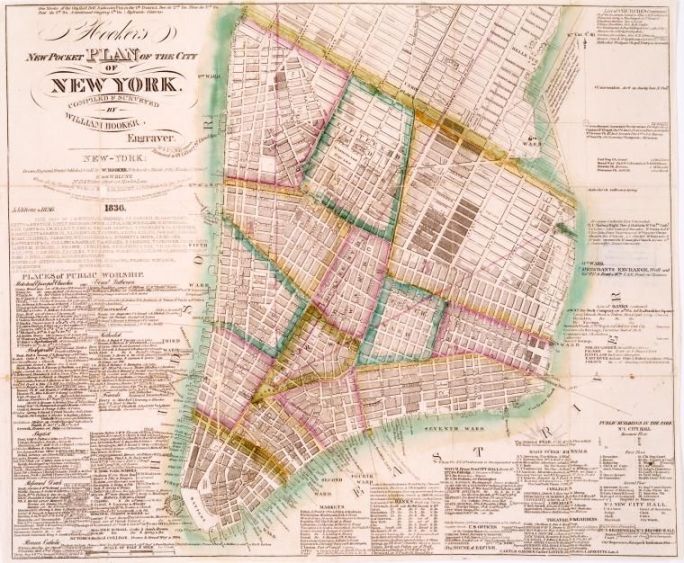
Below: New York in 1836, as per “Hooker’s new pocket plan of the city” (Click into it for a closer view)
Lawrence would be elected for three stressful one-year terms (spring 1834-spring 1837). At the very top of his to-do list was New York’s water supply. The new mayor had inherited a city quickly bursting with new residents and a paltry water supply so rancid and inadequete that one source blames it for the increase in public drunkenness. (Hey people have to drink something, right?)

Exacerbating the matter was the fear of disease. In 1832, his first year as congressman, New York was struck with a devastating cholera epidemic, killing hundreds; a lesser but no less dangerous sequel struck in 1834, just as Lawrence was getting comfortable at City Hall. And of course, the spectre of fire lurked, not just jeopardizing a highly flammable city, but Lawrence’s own fortunes: he controlled shares several fire insurance companies.

Plans for what would become the Croton aqueduct were well underwway when the Great Fire of 1835 devastated New York, destroyed the Merchant’s Exchange and potentially spelled doom for the city’s future. Lawrence himself lost thousands of dollars in shares, although his own auction house on Pearl Street had been spared.

The mayor and his entourage stormed down to Washington begging for aid for his beleagured city, to no avail. Fortunately, former mayor Philip Hone succeeded in persuading the state government to dole out millions in relief. Meanwhile, voters finally approved the construction of the aqueduct in 1836. Within the year New York experienced a burst of rapid reconstruction; the price of New York real estate post-fire soared to outlandish prices.

But fire and water weren’t Lawrence’s only distresses. Sometimes he had to fear his own constituents.

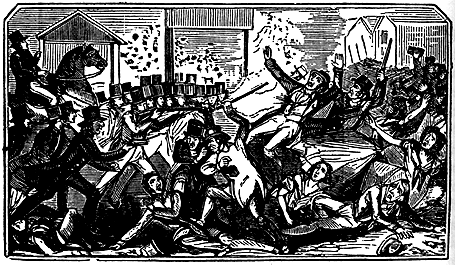
BELOW: Anti-abolitionist riots kept the city on edge during the 1830s
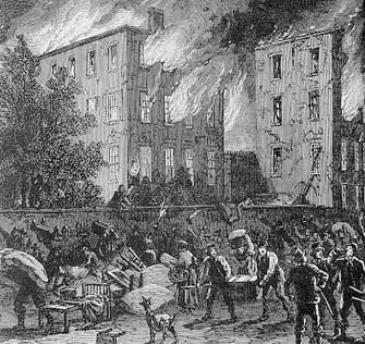
Pro-slavery sentiment among some New Yorkers culminated in a series of deadly riots in the 1830s, one during Lawrence’s first months as mayor, leading to the destruction of property owned by abolitionists and prominent businessmen Lewis and Arthur Tappan. Lawrence denounced the mob (after posing a threat to his wealthy friends) and ordered the National Guard to disperse them. Later, Tappen penned this mea culpa to the mayor, ensuring his good intentions, particularly the assurance that the abolitionists “will never, in any way, countenance the oppressed in vindicating their rights by resorting to physical force.”

Being a Democrat in the 1830s meant a marraige between the Jacksonian wealthy and a powerful Irish working-class, strange bed-fellows often culminating in disaster. At a New Years eve celebration at the mayor’s home in 1837, supporters stormed the doors, turning the home into a ‘Five Points tavern’ by one account. The police were summoned in an effort to clear away the mayor’s own supporters!

As if these catastrophic events hadn’t been enough, Lawrence was finally thrown out of the mayor’s seat due to the results of the greatest catastrophe of all — the Panic of 1837, a financial crisis that briefly shifted the city’s power from the Democrats to the Whigs. He was defeated by Aaron Clark, who would prove to be the only Whig mayor of the city.

Perhaps ready to move on anyway, Lawrence entered the world of banking in his later years, interuppted only by a four-year stint in a federal role under President James Polk as the Collector of Customs.

He lived his later years in the city in a home near Broadway and Worth Street, before finally retiring back to the family home in Flushing. He died in 1861 and you can conceivably still go visit him; he’s buried at the Lawrence family burying ground at 216th Street and 42nd Avenue in Bayside, Queens.
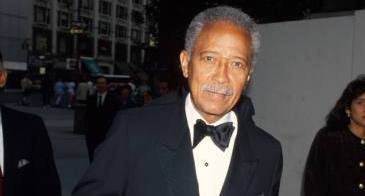
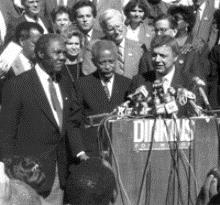
Know Your Mayors: David Dinkins

Our modest little series about some of the greatest, notorious, most important, even most useless, mayors of New York City. Other entrants in our mayoral survey can be found here.

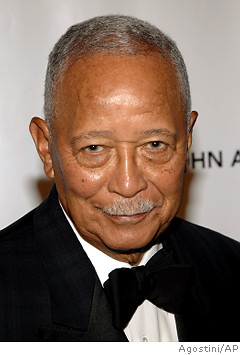
As we cap a historical week for our nation, it seems appropriate to take a brief look at New York City’s own first African-American leader, David Dinkins, mayor of the city from 1990 to 1993, and the last Democrat to hold the office. My only hesitation in bringing this up is that I hope Obama has far better luck than Dinkins, whose tenure was most notable for at least appearing to make almost everything worse. (Appearances, however, can be deceiving.)

Dinkins is one of the most successful products of a Harlem political machine that has been slowly churning since the 1920s, when a huge population influx into the neighborhood bestowed political influence to community leaders and business owners.

Not surprisingly, many of today’s political organizations are spinoffs of Tammany Hall from its last waning days of power, and so came J. Raymond Jones, Tammany Hall’s first black leader in the 1960s.  Jones developed his own political coterie here — known as the ‘Harlem Clubhouse’ — and proceeded to foster some of New York’s saaviest political talents, including New York congressman Charlie Rangel and former deputy New York mayor Basil Patterson, father of our current governor.

Dinkins became a core member of this influential political group. (Rangel actually calls himself, Dinkins, Patterson and Percy Sutton the “Gang of Four.”) Although born in Trenton, New Jersey, David’s family moved to Harlem during the 1930s, just as the neighborhood, once flourishing under a cultural renaissance, begin feeling the pinch of economic depression. After a stint in the Marines, Dinkins returned to New York, became a lawyer and slowly began his ascent into Harlem’s growing political scene.

His close political connections with the Clubhouse granted him access to real opportunity — first in the state assembly in 1966, then City Clerk in 1975 — but it was his work with the city’s lower class that endeared him to constituents. In 1985 he was elected Manhattan Borough President, often a springboard to the mayoralty.

From our vantage today, Dinkins is sandwiched between two great forces in New York City politics — Ed Koch and Rudy Guiliani. Koch however, bore the brunt of New York’s pitiful economic downturn during the 1980s and Dinkins handily defeated him in the Democratic primary. Guiliani, on the Republican side, was a far more formidable foe; fresh from defeating the wealthy Ronald Lauder (son of Estee Lauder), Rudy put up a good fight against Dinkins, although a New York Times opinion piece laments: “voters have heard almost as much about Jackie Mason and Jesse Jackson as about David Dinkins and Rudolph Giuliani. So far, the two candidates haven’t even managed to debate each other.”

Ultimately, in November 1989, Dinkins defeated Guiliani, in the smallest margin of victory in modern times — 47,080 votes.

Dinkins seems almost immediately carried off by events of the city. Although he was initially seen as a potential salve to the city’s uneasy ethnic tensions, he was soon caught up in rocky political scandals, most involving racial violence.

None were as damaging as the Crown Heights riots of 1991. A deadly three days of racially fueled mayhem between West Indian and Jewish residents which left dozens injured, Dinkins was remarkably ineffective in quelling the violence and later was even accused of restraining police and refusing to get involved. It was a political disaster for Dinkins, one he was never able to recover from for the duration of his term.

In fact, the event disguises a surprising fact: Dinkins did successfully lower the city’s crime rate and grow the city’s police force.  It’s widely argued that many of Dinkin’s policies laid the ground work for Guiliani’s many successes in the late 90s.

However, Rudy successfully lobbed Crown Heights back at Dinkins during an electoral rematch in 1993.  Although Dinkins still had great support in Manhattan, Rudy swept past him to officially end the Democratic hold on the mayor’s office.

Dinkins is currently a professor at Columbia University. His term as mayor is still one of the most hotly debated even today.

And because he’s a Bowery Boys fave, I thought you might like to know his thoughts on another controversial New York figure, Robert Moses (quote courtesy PBS.org):

“Robert Moses left a legacy. To be sure, we would not have had the kinds of development that we had, had he not behaved as he did. Which incidentally doesn’t mean that it was necessarily a good thing to so behave. There was a lot of pain in the wake of some of the things that got accomplished and he fought with mayors and governors along the way, but he did achieve a lot of development that would not have occurred otherwise, and that no way could occur today.”

Categories
Know Your Mayors

Know Your Mayors: George B. McClellan Jr.

Our modest little series about some of the greatest, notorious, most important, even most useless, mayors of New York City. Other entrants in our mayoral survey can be found here.

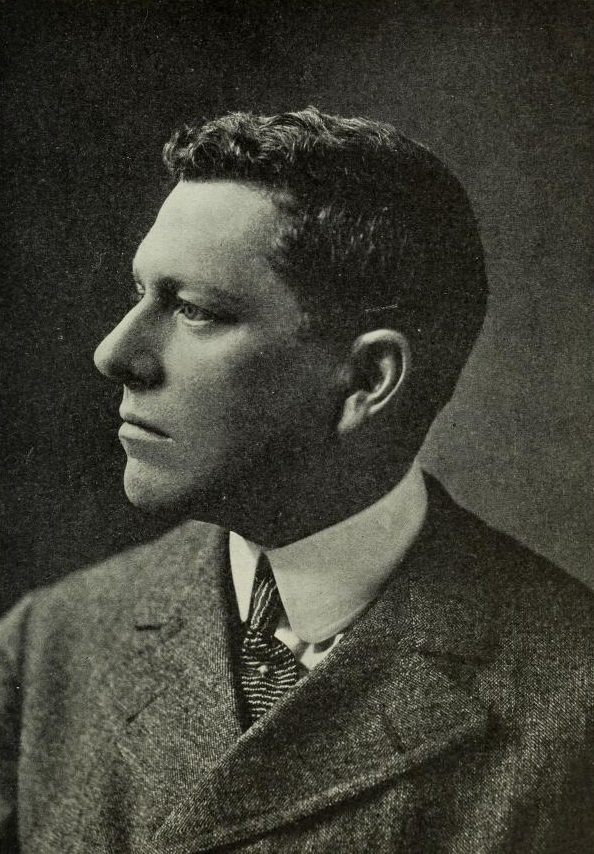
Perhaps no mayor of New York City this side of Fiorello Laguardia has ever overseen so drastic a change to the landscape of the city than George B. McClellan Jr.

For six extraordinary years (1904-09) McClellan presided over the openings of the New York Public Library, Chelsea Piers, Grand Central Station, christened the first subway service and licensed the first taxi cab.

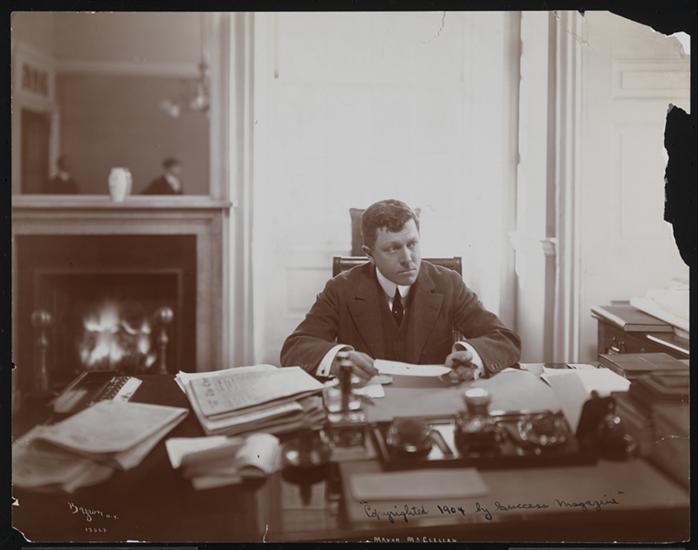
Below: Mayor McClellan in 1904, his first year in office

george

But oddly, George is perhaps best remembered today for his half-hearted but successful campaign against motion pictures.

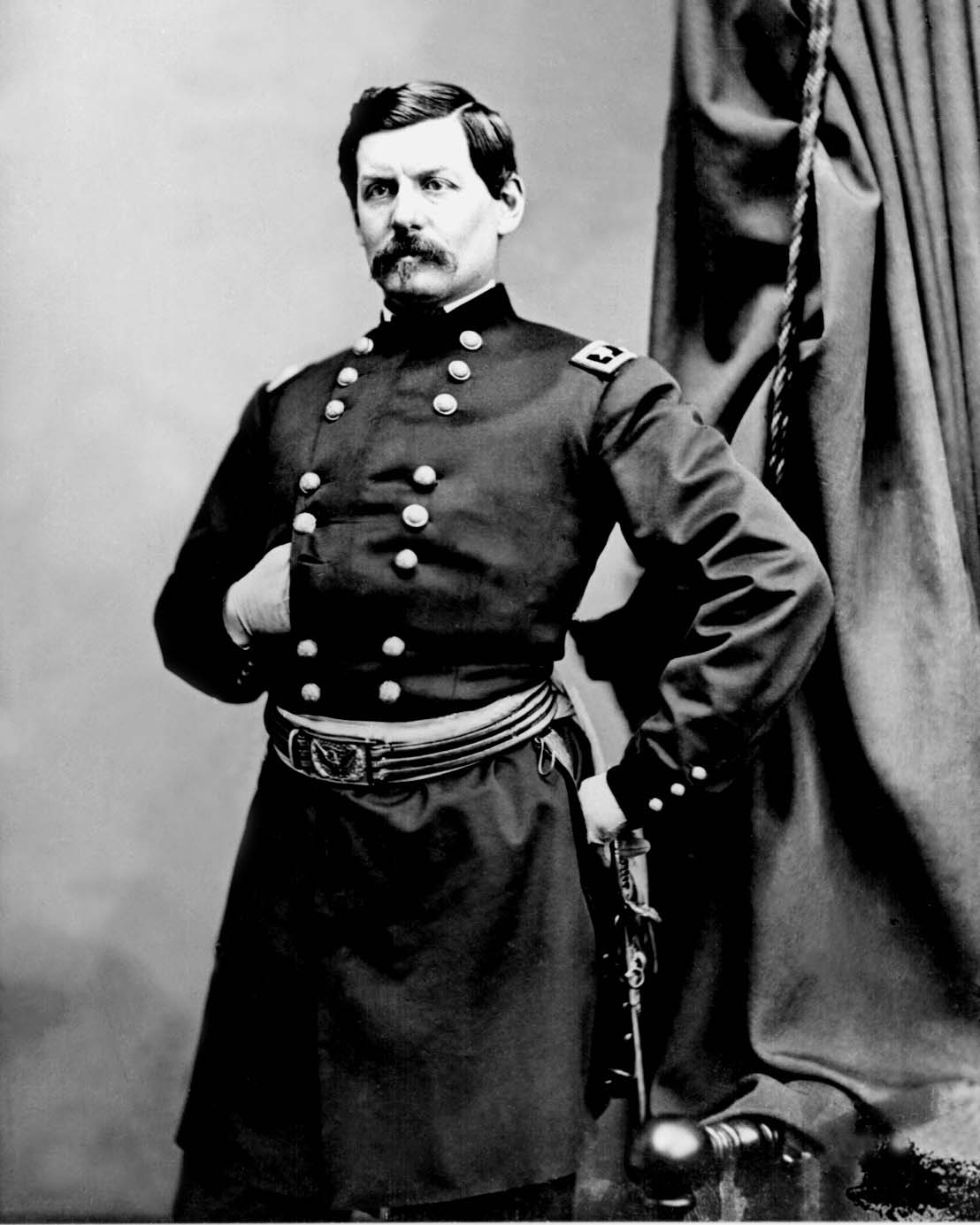
If his name sounds vaguely familiar, thank your high school history teacher. George Jr. was the son of the ultimately disastrous Civil War general of the same name, a Union general first fired by Lincoln, then defeated by him in the presidential election of 1864. Despite this, George McClellan Sr. did become the governor of New Jersey, providing his son with a model of leadership he would implant into his many civic duties.

Below: Papa McClellan
father

The dashing George Jr — or you can call him Max, his family did — is one of New York’s few foreign-born mayors, born in 1865 in Dresden, a few years before it was absorbed into Germany. Growing up in New Jersey while father governed, George graduated from Princeton in 1886 and a couple years later ended up as a writer for the revitalized New York World, Joseph Pulitzer‘s popular scandal sheet, in its brand new office on Newspaper Row — just across the street from George’s future office at City Hall.

Actually, George was mayor before he was really mayor. Name recognition and an inherited interest in public service placed him on the Board of Aldermen (precursor to the City Council) by the 1890s, and he was elected board president in 1893. The next year, due to an absence from the city by sitting mayor Thomas Gilroy, McClellan, age 29, became the acting leader for a month.

His biggest controversy? Raising on Irish flag over City Hall for St. Patricks Day, outraging local schoolboys. No, really. He even received threats of bodily harm, but held firm. Deal with it, he told the boys.

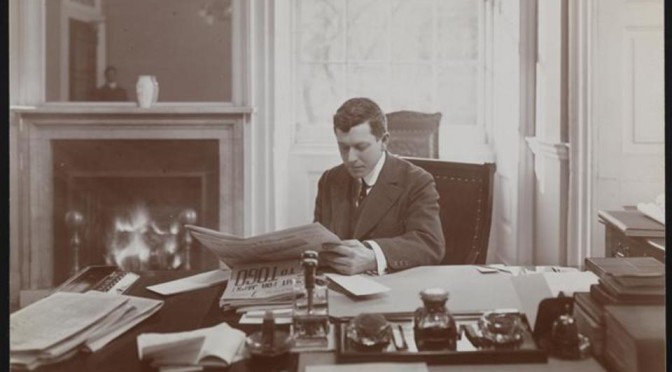
Mayor McClellan in his office, 1904 (Courtesy Museum of the City of New York)


Snugly in bed with Tammany Hall and a favorite of ole Boss Croker, McClellan spent the next several years representing New York in the U.S. House of Representatives. He returned to the New York scene in 1903 as a Tammany instrument to oust mayor Seth Low, a reform ‘clean-up’ mayor who may have irked more than a few tavern owners.

McClellan, with Tammany’s blind eye towards New York’s more lascivious industries, handily won. And would stay in office for six years, making him New York’s longest serving mayor since Richard Varick in 1789. (The man he beat for re-election in 1905? William Randolph Hearst.)

New York blossomed under McClellan’s reign, with many long boiling projects coming to fruition. One new bridge, the Williamsburg, opened under his watch with another (Manhattan Bridge) well on its way, he unveiled lofty plans to improved the city’s water system, and he gave Longacre Square a new name (Times Square). The Battery Maritime Terminal (built in 1906), that jade beauty next to the Staten Island ferry, is even dedicated to McClellan. New York Public Library was nearly completed — and Grand Central Terminal half-way done — by the end of his term.

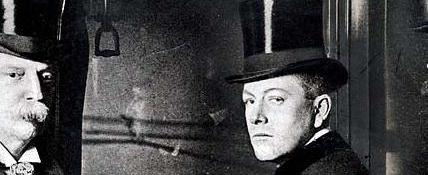
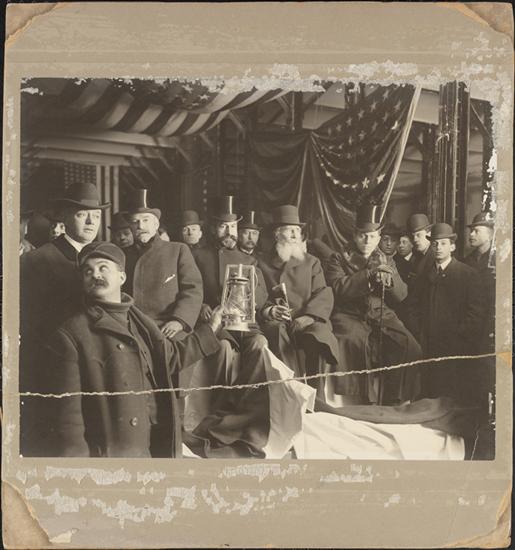
A picture in the new subway tunnels, Mr. McClellan looking very confident near the center right. (Museum of the City of New York)


An intrepid tale springs up about McClellan involving the grand opening of the IRT’s first subway tunnel in October 27, 1904. Meant only go ceremonially start up the engine of the first train, McClellen requested that he would like to actually go ahead and drive the train all the way up to Harlem! (And Bloomberg brags that he only rides the train.) He deftly steered the new engine up to 103rd Street before handing over the controls.

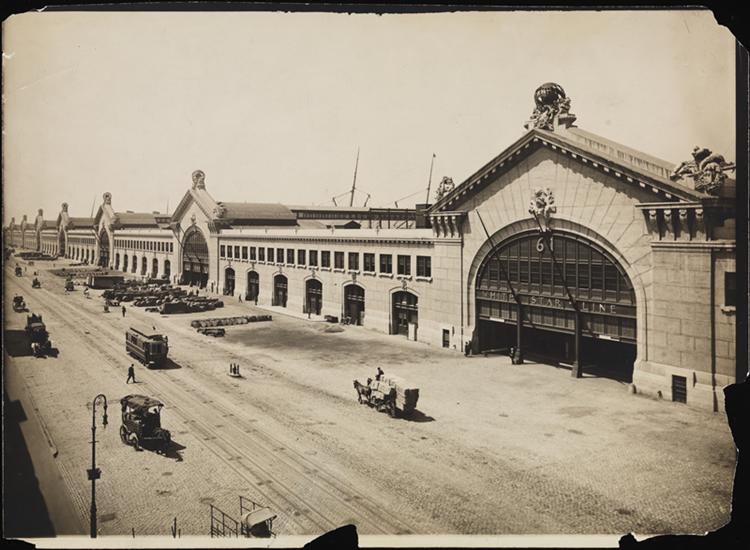
To me, McClellan’s biggest contribution is valuable indeed — overseeing the construction of the Chelsea Piers (below), which allowed massive steamships to dock in the city, turning New York into a truly international port. By 1907, in fact, the Lusitania was already at dock here, although the terminal wasn’t officially completed until 1910.

piers

Yet with all of these remarkable changes, the story which arises the most about McClellan involves his war against a technological threat — the rise of cinema.

By 1905, the city had dozens of ‘movie houses’, nickelodeons and amusement arcades where patrons could pay a penny to see the birth of the motion picture. A theater owned by Marcus Loews, quickly to become the biggest name in film exhibition, opened in New York in 1904; the city got its own production company, Biograph, in 1906.

This new moving pictures craze was sweeping the United States — two million patrons in 1907, according to the Saturday Evening Post — and like everything foreign and new, it was soon seen as a corrupting influence, ‘demoralizing’ children, a bastard offspring of vaudeville and burlesque.

Some accounts have McClellan ardently opposed to this new medium on those grounds. I prefer a more rational theory: by 1908, McClellan had his eye on a new job — president of Princeton University — and in order to get that, he had to be seen as sticking up for higher morals. (Something Tammany candidates aren’t exactly known for.)

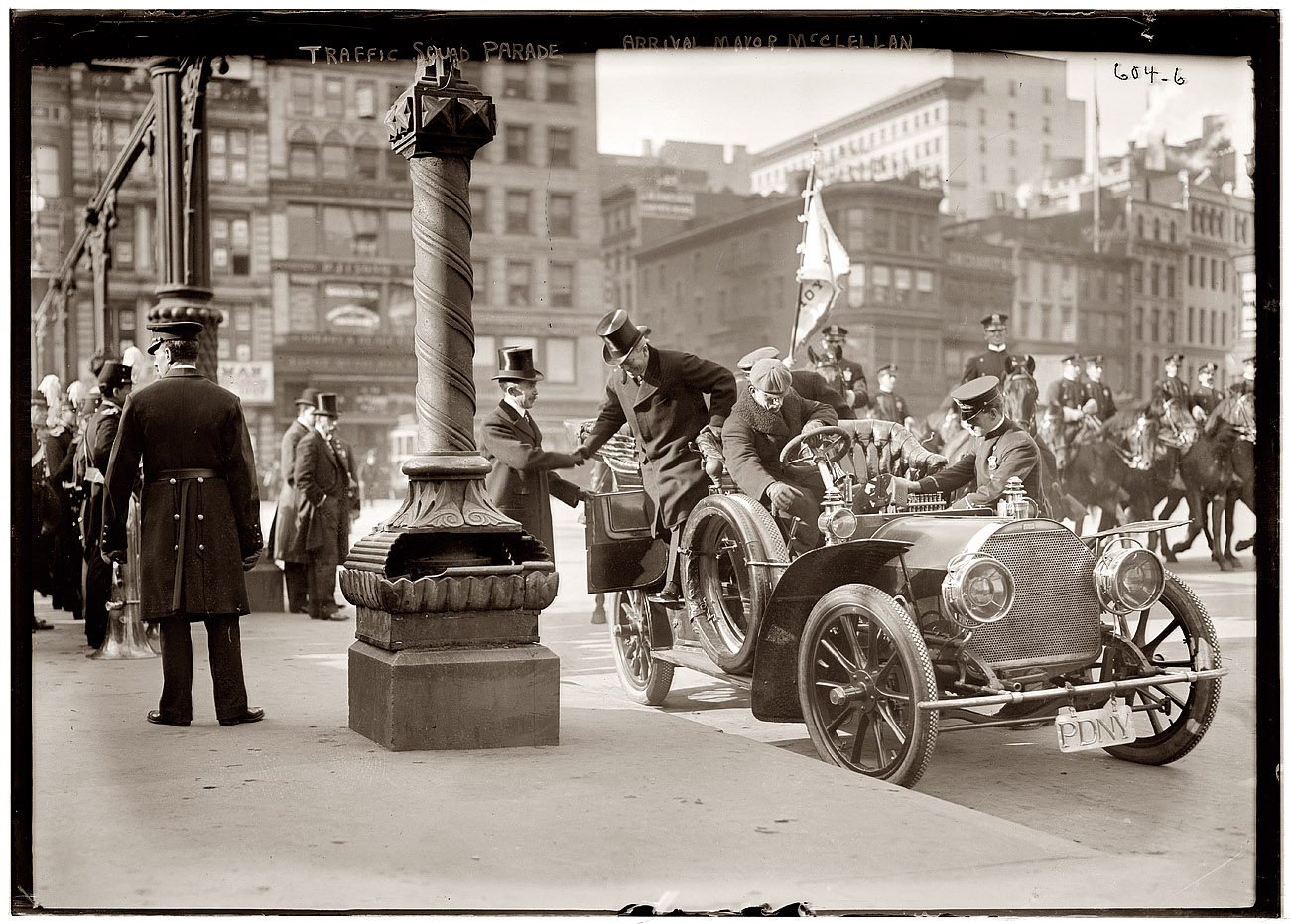
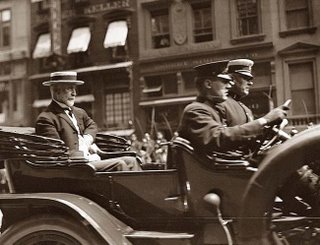
Below: McClellan steps from a newfangled automobile onto the streets of Union Square in 1908 (pic courtesy Shorpy)

02905u

And so, on the technicality of being dangerous fire hazards, McClellan tore up the licenses of over 550 motion picture exhibitors — yes, that’s right, 550. (Nickelodeons were in music halls, taverns, even a few restaurants.) Most were not reinstated until the debut of New York’s Board of Censorship in 1909, a reviewing board which ended up not censoring much of anything. By the 1910s, movie makers and theatre owners were becoming too powerful to overrule.

By why was McClellan looking for a new job in the first place? In 1908, he was not long for the mayor’s office. Like blessed as Tammany Hall golden boys, McClellan got a conscious in his second term, hiring many non-Tammany employees and rooting out a mountain of Tammany related corruption in civic offices.

This turncoat did not please new Tammany boss Charlie Murphy, no it didn’t. In 1909, Tammany put up their new contestant, the colorful William J. Gaynor. (Incidentally, he also beat William Randolph Hearst, in his second and final unsuccessful run at the office.)

McClellan never became the president of Princeton, but he spent his remaining years teaching there until 1931, when he retired to the good life, writing books about his real passion — the history of Venice. He died in 1940 in Washington DC and was buried in Arlington Cemetery.

But clearly, it’s to New York that he belong.

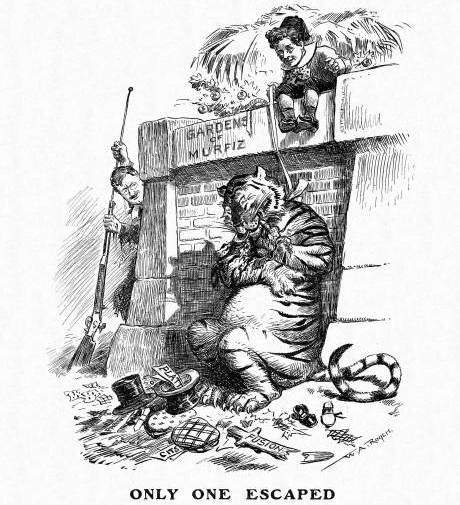
Below: in this 1905 Harpers Weekly cartoon, McClellan is seen as a little boy holding the Tammany tiger, devouring the ‘fusion candidate’ (Seth Low). President Theodore Roosevelt peeks from the side. (He always did like wildlife.) Within three years, McClellan would be the devoured.

Garden of Murfiz = Tammany Boss Charlie Murphy

Know Your Mayors: George Hall

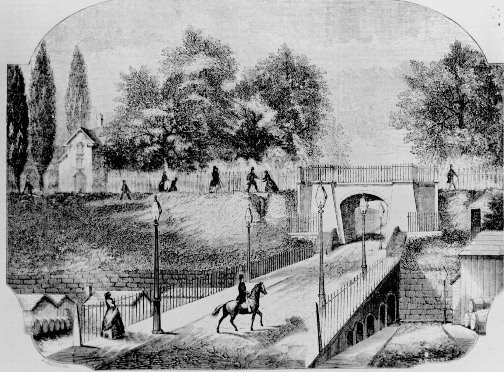
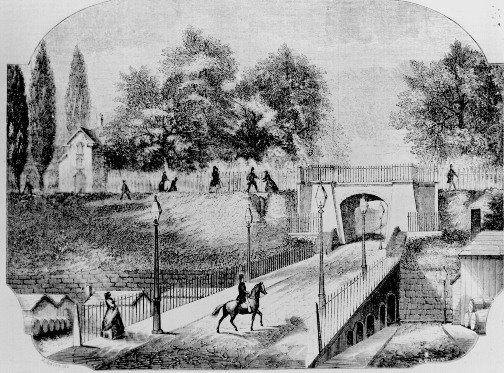
An engraving of Brooklyn Heights in 1854, the year before George Hall took office a second time

Our modest little series about some of the greatest, notorious, most important, even most useless, mayors of New York City. Other entrants in our mayoral survey can be found here.

I’ve been very Manhattan-centric in this column, so it’s about time I introduce you to a man pivotal to Brooklyn’s history: George Hall, its very first mayor from its days as an independent city (1834-1898).

The various townships of Kings County were growing at such rapid pace that the state officially bestowed a city charter to the town of Brooklyn in 1834. This would leave the county with one true city (Brooklyn) and five official remaining townships (Bushwick, Flatbush, Flatlands, Gravesend and New Utrecht) all of whom would eventually be conjoined in coming years through development and annexation. Later, a second city — Williamburgh — briefly competed for dominance, but it was no match for Brooklyn’s incredible growth and was absorbed in 1850s (hurling its dangling ‘h’ into the East River forever).

By 1896, Brooklyn would come to mean everything within the boundaries of Kings County, just in time for its consolidation with the city of New York just two years later.

That’s the history of Brooklyn in a nutshell. But that first year, 1834, heaped huge pressures on the growing new city, as influential landowners (such as the Pierreponts) raced to reshape the surrounding area to attract residents and new businesses. And the man planted in the driver’s seat, appointed by the city’s municipal charter by Common Council, was George Hall.

Hall was a self-made tradesman, borne of Irish immigrants in Flatbush, a painter and glazier (glass seller) whose successes in the rapidly growing city made him a natural candidate for elected office, first as a ward aldermen then at last as the first mayor.

In 1834, Brooklyn had 20,000 residents and few paved roads outside of its city center (around Fulton Ferry). “There were, within the city, two banks, two insurance companies, one savings bank, fifteen churches and three public school,” Hall later described the scene. “Sixteen of its streets are lighted with public lamps.” Hall brought omnibuses to the city and passed measures to improve the water supply. Working with city leaders, he also purchased a site that would become the future home of Brooklyn City Hall.

Hall was not merely concerned with the physical growth of young Brooklyn. Mindful of the intersection of commerce and morality, the tee-totalling Hall cracked down on “unlicensed rum shops” and reduced that awkward but somewhat common method of street-cleaning — releasing pigs into the street.

Over twenty years later, as the city of Brooklyn expanded to consolidate with Williamsburg, city residents turned to Hall again, electing him for a two-year term in 1855-56.

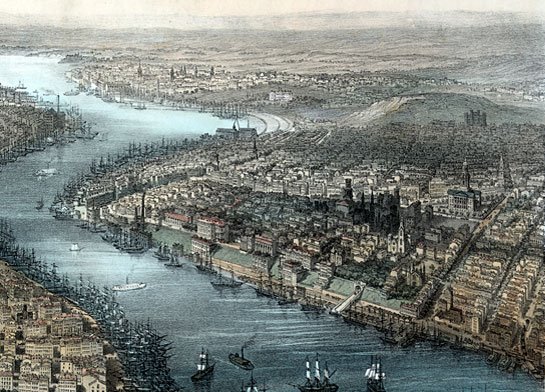
Below: Brooklyn in 1851. See if you can find where the picture above might fit in with the city as depicted below!

In the same speech, Hall gleams with pride over the greatly expanded city that elected him. “Brooklyn, judging from its past increase, yesterday contained a population of about 145,000 persons, and on this day the three places consolidated [Brooklyn, Williamsburg(h), along with the township of Bushwick] into one municipal corporation, takes its stand as the third city in the empire state, with an aggregate population of about 200,000 inhabitants.”

Crisis came to Brooklyn during his tenure with a massive cholera outbreak, which nearly sent Hall himself to his grave. He lived the remainder of his life on 37 Livingston Street.

One of Brooklyn’s most respected men, when Hall finally died in 1868, Henry Ward Beecher rose to give a rousing eulogy to thousands of mourners who filled the streets of Brooklyn Heights.

Unfortunately, I couldn’t find any portraits of George to put in the blog today; however I believe you can find one if you visit the Brooklyn Historical Society. Aafter you’re visiting them, you can take a walk to Hall Street in Fort Greene, which is named after him.

Some info above was obtained from research from thehistorybox.com

Know Your Mayors: James Harper

Our modest little series about some of the greatest, notorious, most important, even most useless, mayors of New York City. Other entrants in our mayoral survey can be found here.

Former New York mayors are all around you. No, Ed Koch is not hiding in your closet — maybe not today — but you can find their names almost anywhere, including your local bookstore. Meet James Harper, the Harper of Harper-Collins, and mayor of New York in 1844.

I think I say this about every decade of New York history, but the 1840s was an especially tumultuous era, thanks to the aftermath of the Panic of 1837, and to the massive influx of Irish immigrants spilling into the city.

Nativism, the form of political xenophobia aimed during this period at the Irish, was rearing its head in state politics in 1841 when Governor William Seward proposed funds be set aside for a parochial private school system for Irish Catholics, who were alienated from regular schools due to the use of the King James Bible. (Separation of church and state? What’s that?)

Opponents formed the anti-immigrant American Republican party and within just a couple years had received substantial clout at the voting booth in New York. In 1844, the time was right for them to propose a mayoral candidate to serve their needs.

James Harper and his three brothers formed Harper and Brothers in 1833, from the print shop of James and his brother John. It wouldn’t be until mid-century that the small but prolific house started producing Harper’s Magazine and Harper’s Bazaar. By then Harper was a well-established and powerful publisher, printing some of New York’s best known authors, including Edgar Allen Poe, Herman Melville and Washington Irving and delivering the first American printings to such books as Charlotte Bronte’s ‘Wuthering Heights’ and Charles Dickens’ ‘Bleak House’.

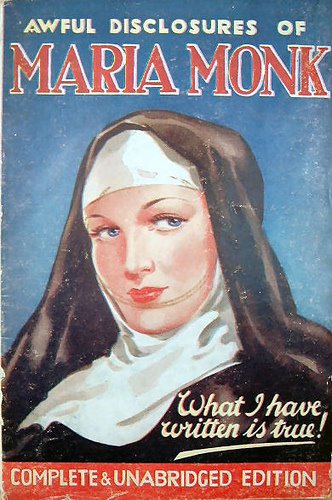
Harper was an ardent nativist, having made his publishing house’s reputation with a salacious (and apparently deranged) anti-Catholic tome by Maria Monk entitled Awful Disclosures. (At right: a 20th century reprinting of Monk’s famous ramble.)

Nominated as a school commissioner in 1842, Harper lurched for the mayoralty two years alter, promising to reform local government of its Irish influence. He had the good fortune of running after an extremely ineffective mayor (Robert Morris) and against two conflicted and split parties (the Democrats and the Whigs). And so, in April 1844, the American Republicans had their first — and only — mayor.

An overly florid 1855 nativist creed — The Arch Bishop: or, Romanism in the United States — describes his victory:

“Mr. James Harper, the American Republican, had triumphed over his opponent who, with the whole foreign vote combined in his favor, stood rebuked and abashed before Liberty’s searching eye.”

The dream was a brief one for Harper. Irishmen on the city payroll were indeed removed, and Harper curtailed liquor sales in the city, including one very dry July 4, 1844. Under his regime, trash-eating pigs were prohibited from wandering the streets. Most notably, he went against the state legislature and formed his own municipal police force, which was abruptly abandoned the following year with the state’s reform — setting up a system of city police wards that would later to be corrupted by Tammany Hall and almost everybody else.

Harper’s whole reform ideology was undermined by an event completely out of his control. Anti-Irish sentiment had swelled in nearby Philadelphia and spilled over into violence, a three day riot resulting in several deaths, the torching of two Catholic churches and the transformation of some Protestant churches into armed fortresses. (Below: an illustration of the violence in Philadelphia.)

It appears the coalition of forces that got Harper elected crumbled under the fear of similar ramifications coming to New York. “I shan’t be caught voting a ‘Native’ ticket again in a hurry,” said George Templeton Strong in 1845, when Harper was swept aside for the newly elected William Havemeyer.

And with Harper’s power went the glue holding together the American Republican Party. Changing their name the next year to the Native American party, the anti-immigrant torch would be relit a few years later with the more successful Know-Nothing Party.

As for Harper, he returned to his publishing business, constructing an impressive empire that lives on today. (Harper merged with Collins in 1990.) Both Harper’s Magazine and Harper’s Bazaar have been in publication ever since.

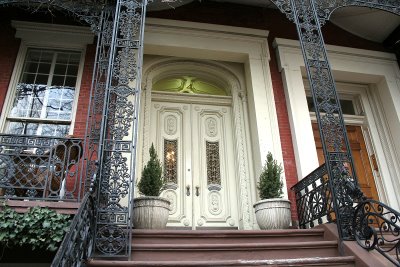
Unlike many former mayors, who fade into a decidedly non-corporeal legacy, Harper still has an admirable home on Gramercy Park — 4 Gramercy Park West, to be exact — one of the most beautifully preserved buildings on the block. (See below.) He lived here a few years after stepping down as mayor until his death. And he’s buried at Greenwood Cemetery along with many other more influential mayoral luminaries.

Know Your Mayors: William Lafayette Strong

Our modest little series about some of the greatest, notorious, most important, even most useless, mayors of New York City. Other entrants in our mayoral survey can be found here.

Democrats and Republicans in this year’s election who think they can roll into office on the mantel of “change” may want to look at the example of William Lafayette Strong (mayor 1895-97), a reformer who swept in, cleaned up the city … then watched it all fall apart again.

One of the great narratives of New York City in the late 19th century is the dominance of the Democratic Tammany Hall machine in controlling city politics, often seeped in deep corruption.

At key periods, however, Tammany Hall would be usurped from its perch. In the 1870s came the great reckoning to Boss Tweed and mayor A. Oakley Hall. However by the early 1890s, Tammany had regained control of local government and had installed mayors who exhibited various degrees of independence. (For instance, the topic of our last Know Your Mayors column, Hugh J. Grant, mayor from 1889–1892, was firmly in their pocket.)

By 1894, in the throes of a nationwide fiscal depression, outrage at open corruption in the police department prompted the New York State Senate, Republican-led and frequently at odds with city management, to clamp down. The Lexow Commission, named for its chairman Senator Charles Lexow, exposed deep veins of criminal negligence within the New York police department and issued a now-legendary 10,000 page report outlining the most grievous charges.

Republicans and reform-minded Democrats saw their chance to effectively wipe Tammany from the map. Forming a Committee of Seventy (a Biblical reference, as well as one to the group that helped expose Tweed’s malfeasance), they rallied their support in late 1894 with a fusion ticket backing a political novice, one William Lafayette Strong.

Like another reformer mayor before him (William Russell Grace), Strong was a businessman made good, an Ohio-born dry goods merchant turned banker whose efficiency and clean record (not to mention prominent position on the influential Union League Club) endeared him to those looking for a clean break from Tammany.

Still reeling the Lexow smackdown, Tammany Hall could only watch their ambitions fold. Against Strong they put up Nathan Straus of Macy’s Department Store as their candidate; within two weeks, he resigned, fearing business reprisals. They replaced him with former mayor Grant, but he was no match against the fusion ticket and alliance of German and Jewish voters, which easily swept Strong into office.

Strong went immediately to work, scouring City Hall of bureaucratic buildup and rebooting municipal agencies mired in Tammany cronyism. First on the agenda was a literal cleanup, hiring Civil War vet George Edwin Waring Jr. as the head of street cleaning, an absolutely key element to restoring the city’s psychological health. Within a few months, New York’s streets — clogged with garbage, manure and other detritus — were as clean as they had ever been.

Strong’s most electrifying appointment, however, would put a future president on the road to the Oval Office.

Lexow had exposed the police department’s weaknesses, and Strong sprung on this moment for a radical shakedown, hiring a new police commissioner known for his tenaciousness, an also-ran for mayor with roots in New York City — Theodore Roosevelt.

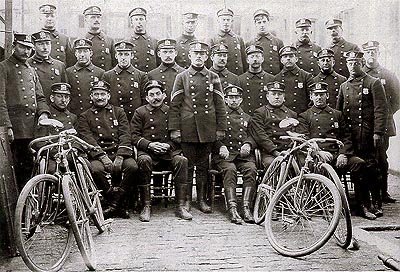
The new commissioner was a dominant force in transforming the city at this time, easily outshining Strong. Roosevelt eliminated anyone associated with prior corruption and installed new programs that would improve efficiency but also confidence among the ranks. Notably he mounted cops on bikes (see below), a quaint notion today, but one that at the time allowed a pervasive presence throughout the city.

Roosevelt’s key ally was not Strong but our old friend Jacob Riis. With Riis’ guidance, loathsome and unsafe police homeless shelters were shut down. It was the influence of Riis, through his close associate Roosevelt, that enabled Strong through recently passed state laws to finally tear down the tenements of Five Points.

The New York school system was also getting a thorough shake. In July 1896, Strong and an emboldened state legislature passed the School Reform Law, which for the first time created a centralized education system in the city. Previously, schools were governed by city wards, a practice allowing for uneven educational opportunities and fertile ground for all manner of dishonesty.

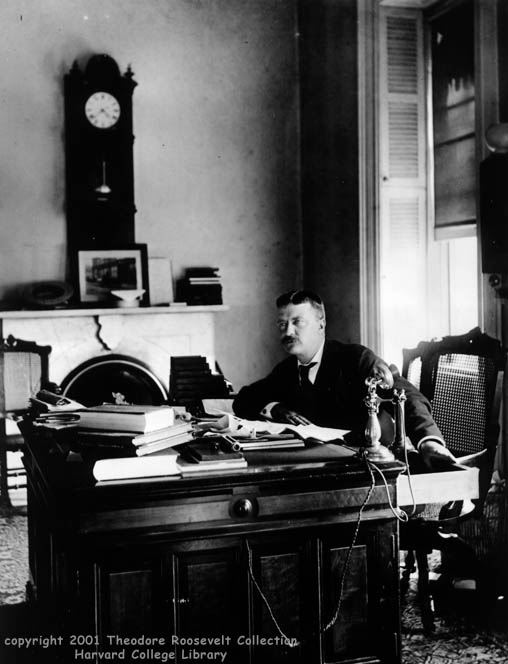
We benefit today from many of the vast reforms initiated under Strong’s administration. The effects on his own political fortunes, however, were far less beneficial. Roosevelt had become unwieldy, shutting down saloons popular with the German New Yorkers who had helped sweep Strong into office. The closures of these working class drinking holes were evidence that Strong spoke only for the rich, claimed activists, whose rallies and protests were harshly dealt with by Roosevelt’s newly determined police force. Above: Commissioner Roosevelt in his office

By the time the backlash began for Strong and Roosevelt, the commissioner had already resigned, on a naval appointment from William McKinley and a few years away from being president of the United States.

Part of the reason for so many pressing reforms through state government is because of the most important event in New York history — the consolidation of the boroughs, slated to take effect on January 1, 1898. William Strong is the last mayor of the unconsolidated borough of Manhattan, passing over the newly created city to new mayor Robert Van Wyck….handpicked and groomed by Tammany Hall.

Strong was vociferously opposed to the consolidation, thinking it a ridiculous burden to the city coffers, vetoing it even up to the very end. By that time, however, Strong was not seeking re-election, but for decidedly personal reasons. In cleaning up the city — getting it ready for the future — his own business had nearly gone bankrupt. He would die just two years later, in 1900.
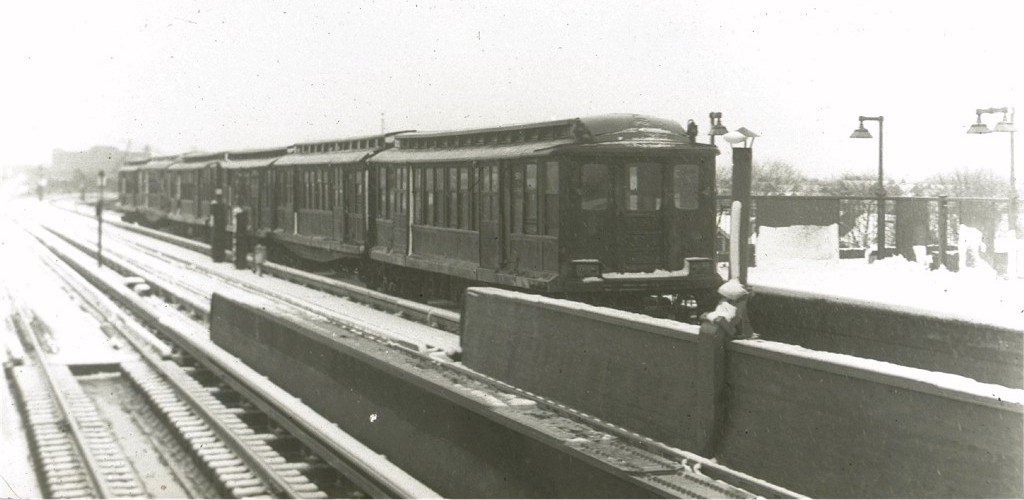
Strong left a vastly changed city, newly expanded, and now in the hands of the very group whose prior machinations he had tried so very hard to reverse.

That’s politics for you.

Know Your Mayors: Hugh Grant, our youngest mayor

Our modest little series about some of the greatest, notorious, most important, even most useless, mayors of New York City. Other entrants in our mayoral survey can be found here.

The year Carnegie opened his illustrious Music Hall to the delight of New York’s cultured class, the city’s fate was in the hands of the youngest man ever elected to the office of mayor — Hugh J. Grant.

Although there would later be a man elected to job unofficially called ‘The Boy Mayor of New York’, Grant would be 31 years old when he finally stepped into the job. A stalwart of the Tammany Hall machine, the young Irish-Catholic worked his way through the ranks, from alderman in 1882 to sheriff in 1885 and graduated from there to mayor in 1889, where he stayed in office for two two-yera terms until 1892.

Grant was defeated in earlier attempts for mayor by businessman and reform Democrat William Grace. When Grant ran again in late ’88, he successfully defeated Abram Hewitt, thanks to the machinations of new Tammany ‘Boss’ Richard Crocker, who had personally grown weary of Hewitt’s independence. Grant would be a far less wily pawn.

At this point, I should quote at length the unreliable and heavily biased but enjoyable description of Grant, according to a 1922 chronicle: “Unfortunately in 1888 Hewitt was defeated by the old Tammany favorite, “Hughie” Grant, and corruptions returned to their former power and spoils. Worst of all, Grant’s election was accepted without alarm, and even with satisfaction, by the educated classes.
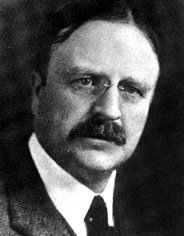
“The new Mayor, an ignorant and unprincipled son of a saloon-keeper, was given ‘social recognition,’ asked to dinner in the best circles, and opened a ball with Mrs. Astor. When he said, “If I don’t prove a good Mayor, it will be because I don’t know how,” this remark was repeated as if it were a gem of aphoristic wisdom.”

Grant was a Tammany loyalist, and enemies sniped that his administration hemmed in spirit to the corruption of the Tweed Ring, which had been taken apart twenty years earlier. It is true that the ‘tacit alliance of Tammany, business and underworld went unchallenged‘ under Grant’s hardly watchful eye; however, great city improvements developed rapidly under his administration.

Despite a state legislature probe into rampant city corruption, Grant was easily reelected in 1890.

Grant most notably attempted — and failed — to snag the 1892 World’s Fair for New York which he would have planted on the northern edge of Central Park. Instead, the fair was awarded to Chicago, to become the legendary 1893 World’s Columbian Exposition, or the fair of the White City.

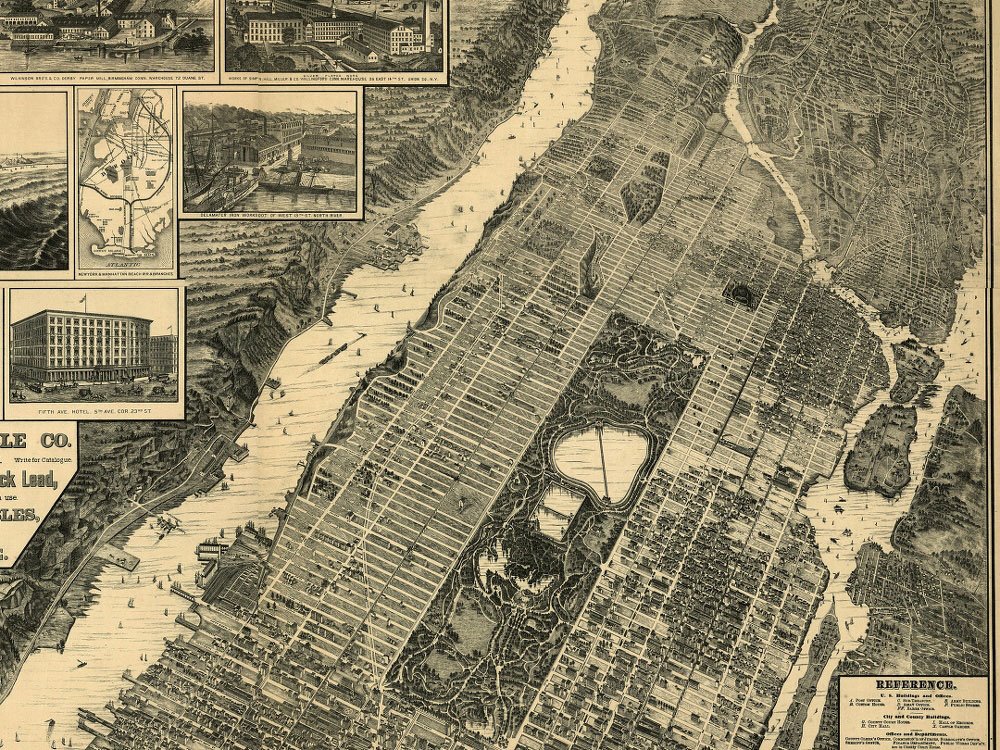
Below: an illustration of northern Manhattan, 1879 (Pic courtesy Times Up)

The city’s decisions regarding lands that would become the Bronx would also stir up a controversy. Despite technically being outside New York’s jurisdiction, development of the Bronx flourished in the 1870s. New York was powerful enough to exert its influence here, acquiring some areas as early as 1873. By 1895, most of the Bronx would belong to New York.

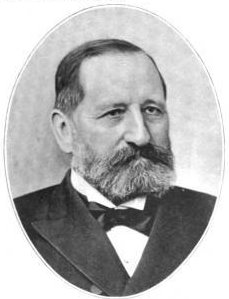
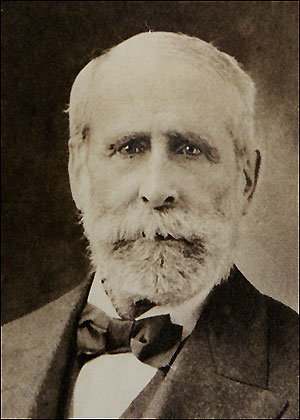
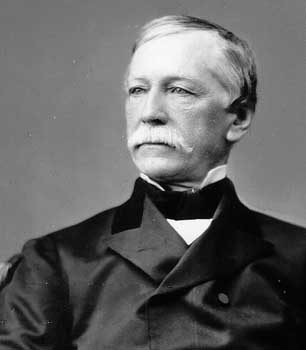
Andrew Haswell Green (pictured right), the influential parks commissioner and proto-Robert Moses who had once bunted Fredrick Law Olmstead from his own Central Park project, exerted great powers in developing outlying regions of Manhattan and had even proposed New York consolidation with the future boroughs long before 1898. Green would grow to become one of the most influential men in 19th century New York. In fact, Green had assisted close friend Samuel Tilden in taking down the Tweed Ring.

Grant was skeptical of these expansion plans, seeing developments of these outlying regions as pointless costly money pits. Like many under the thumb of Tammany Hall, he also disdained the state’s involvement in city affairs. Regardless, areas which became Van Cortlandt Park and Pelham Bay Park were bought during his tenure and today a small park in the Bronx is named in his honor. As New York Parks Department cheekily notes “Grant may be the only person who fought against parks who nonetheless has a park named after him.”

He didn’t resist another innovation that would soon change the fate of New York. Grant would be the first mayor to appoint a “rapid transit commission” in 1890 to develop a subway system.

Grant would pass off the mayor’s seat to another Tammany man, Thomas Gilroy, in 1892.

USELESS TRIVIA OF THE DAY: Hugh Grant isn’t the only New York mayor who shares his name with well-known 20th Century pop culture figures. Joining him in this lofty honor is Robert Wagner, James (Jimmy) Walker and David (Dave) Matthews.

Categories
Know Your Mayors

Hey kids! Wanna be president? Don’t be New York mayor.

(This story was originally published in June 25, 2008)

Yesterday was the opening of Campaigning For President at the Museum of the City of New York, a look at the city’s participation in some of the most famous and contentious presidential elections in history. The exhibit will focus on the city’s role in deciding the outcomes, as well as some of the famous New Yorkers who once coveted the White House.

It got me thinking about the recent phantom campaign of Michael Bloomberg and colossally failed one of former mayor Rudy Giuliani. Is it possible for the leader of the biggest city in America to step up to the role of Commander In Chief?

The answer is a big, fat NO, at least so far. Not one New York mayor who ever actively tried or hinted at being interested in the job ever got it. And the list of also-rans is long indeed:

Michael Bloomberg – Excessive hints to the contrary, Bloomberg never officially threw his hat in the ring.

Rudy Giuliani — He did run for President in 2008 but stumbled almost immediately after a major Florida miscalculation and never recovered, withdrawing on January 30, 2008.

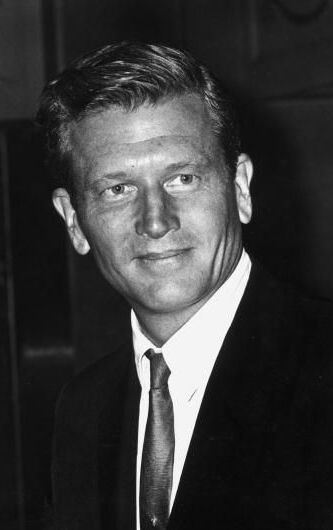
John Lindsay (mayor from 1966 to 1973, pictured at right) didn’t fare much better than Rudy in the quest for the 1972 Democratic nomination. Starting out of the gate strong, like Rudy he stalled in Florida and eventually dropped out. Given the catastrophic changes to the city in the 1970s, I’m surprised anybody thought having ‘mayor of New York’ on their political resume would have garnered national favor.

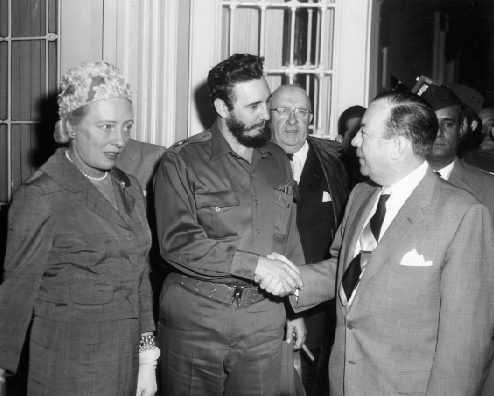
Robert F. Wagner (1954 to 1965) never ran for president but was short-listed to be Adlai Stevenson’s vice president in 1956. Wagner was eventually beaten in balloting by Al Gore Sr. and John F Kennedy Jr. But, in the end, they were ALL beat for the spot by the clearly more popular, always reliable Estes Kefauver.)

Below: Robert Wagner meets Fidel Castro during his visit to New York in 1959.

Courtesy La Guardia and Wagner Archives

William Jay Gaynor (mayor 1910-1913) was widely considered a potential presidential hopeful, even with an assassin’s bullet lodged in his neck. Had he actually lived through his term as mayor, who knows?

George Brinton McClellan Jr (mayor 1904-1909) was never a presidential candidate but his father and Civil War icon George B. McClellan Sr certainly was. Dad ran in 1864 against Lincoln in his second term, promising to end the war in the South.

f2012-58-813

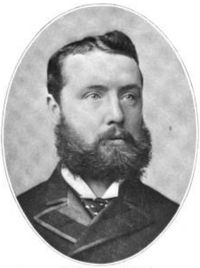
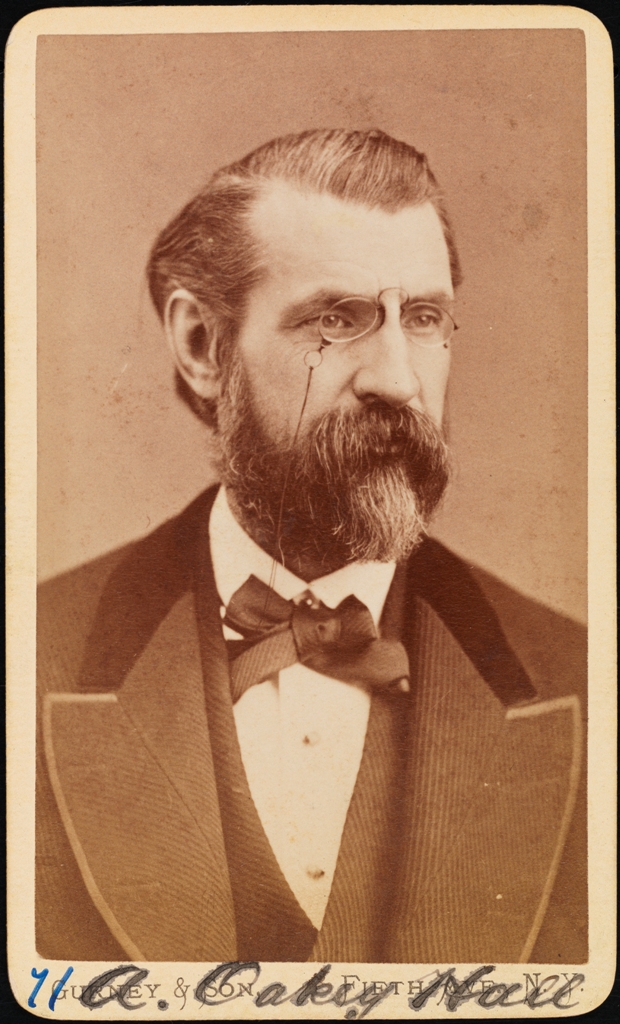
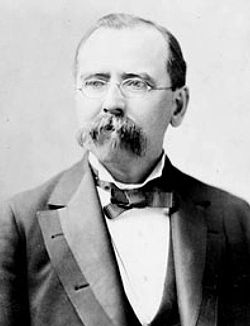
A Oakley Hall (mayor 1869 from 1872) (pictured at left) was as closely tied to the Boss Tweed Ring as a politico could be, but even he harbored presidential hopes. Considering he had to temporarily resign from mayor due to the Tweed scandal, I can’t imagine how much luck he would have had.

DeWitt Clinton (mayor for ten non-consecutive annual terms starting in 1803 ending 1815) collected political positions like butterflies, but the one he could never catch was the presidency, defeated by incumbent James Madison in 1812. By June, Madison had declared war on England and later fled the White House when the Brits torched it.

The closest a mayor ever got to the top job was Edward Livingston, who became Secretary of State to Andrew Jackson. Which is interesting, as Livingston was literally ran out of Manhattan after his stint as mayor several years previous due to debts and scandals.

The real road to power is through the office of New York state governor. Four former governors have become president (Martin Van Buren, Grover Cleveland, Theodore and Franklin Delano Roosevelt), four more were vice president (George Clinton, Daniel Tompkins, Levi P. Morton and Nelson Rockefeller) and two have even become chief justice of the Supreme Court (John Jay and Charles Evans Hughes).

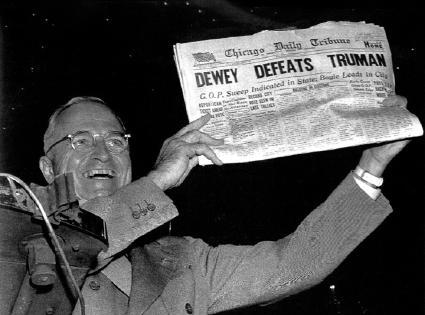
Heck, even those governors who failed to become president did so in a dramatic and historic fashion, such as former governors Al Smith, Samuel Tilden and Thomas Dewey (of the particularly famous photo below).

Know Your Mayors: William Russell Grace

Our modest little series about some of the greatest, notorious, most important, even most useless, mayors of New York City. Other entrants in our mayoral survey can be found here.

You can divide the mayors of New York into at least five different groups, with some obvious overlapping into one or more groupings:

1) Ladder climbers who use the mayor’s seat as a mere spoke to greater political power

2) Puppet mayors of Tammany Hall, driven by corruption, though occasionally by sudden late-day resistance against the powerful Democratic machine that put them into power

3) Idealistic one-shots, who rise to power during flashes of mass community unrest, then often disappear shortly afterwards

4) City workhorses, who spend their lives rising through the ranks to achieve the mayor’s seat almost as a finish line to their careers

Then there is the fifth kind, one that our current Michael Bloomberg embodies, as does this week’s Know Your Mayor topic, William R. Grace — the mogul mayor, a powerful businessman with astute vision who pursue civic leadership almost like a hobby.

Like Bloomberg, Grace entered New York politics only after establishing a business empire that spanned the globe. In fact, Grace’s resume hardly seems to foretell a future in local politics at all.

Born on May 10, 1832, in Cork, Ireland, young William and his family fled the potato famine in 1846 and eventually found themselves in Peru. Grace became a successful merchant to the shipping and delivery vessels mining South America’s natural resources, particularly bat guano, whose flexible chemical properties made it as desirable as precious metals.

By 1854, Grace and his brothers had their own operation — W.R. Grace and Company — which initiated steamship lines traveling between North and South America. By the time the young entrepreneur decided to relocate to his North American office in New York City in 1866, he had become independently wealthy and one of the most powerful men navagating the Atlantic Ocean.

Like many of the nouveau riche, Grace lived in Brooklyn Heights with his wife where he could observe his burgeoning shipping empire in New York harbor, his vessels traveling between Latin America and Europe. His office was at 47 Exchange Place and, later, the India House.

His new financial powers granted him avenues into New York’s political scene. At first entirely uninterested in civic matters, he ran for mayor in 1880, and won, incredibly as a Democrat who also happened to be foe to the Tammany Hall forces. (If you’re going to fight Tammany Hall, it helps to have money and influence already in the bank.)

If that wasn’t enough, Grace become the first Irish-American and Catholic mayor in an age where when many city residents still distrusted Catholics. In fact, Republican opponents had claimed that Grace would “make this City subordinate to the Holy Father in Rome.

Grace was mayor for two non-consecutive terms. From 1880-1882, his battles were with Tammany’s ‘Honest’ John Kelly and the city’s deteriorating infrastructure. Although Boss Tweed had been dead for two years, and Tammany’s corrosive readily exposed, Grace still devoted most of his first term battling his fellow Democrats over such things as street cleaning.

After returning to business for a couple years, he was brought back into the mayoral world in 1884 (until 1886) after the Republican and traditional Tammany candidates proved too divisive. Less dramatic years in terms of political battles, Grace would be involved with ensuring New York two of its most famous monuments.

He was mayor when the Statue of Liberty came to town, officially accepting the gift from the French in 1885. That same year he successfully secured the permission to have the body of Ulysses S. Grant buried in the city, in the ostentatious mausoleum that would be known as Grant’s Tomb.

According to the Catholic Encyclopedia, Grace went to Mass every morning before heading to City Hall. Grace’s latter days were devoted to philanthopical gestures, including the Grace Institute, which educated immigrant women, in 1897. He died in 1904.

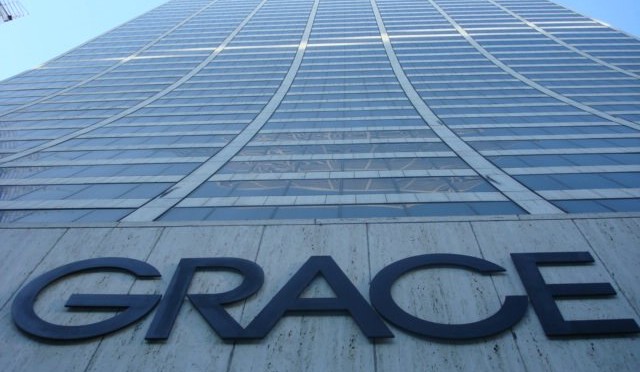
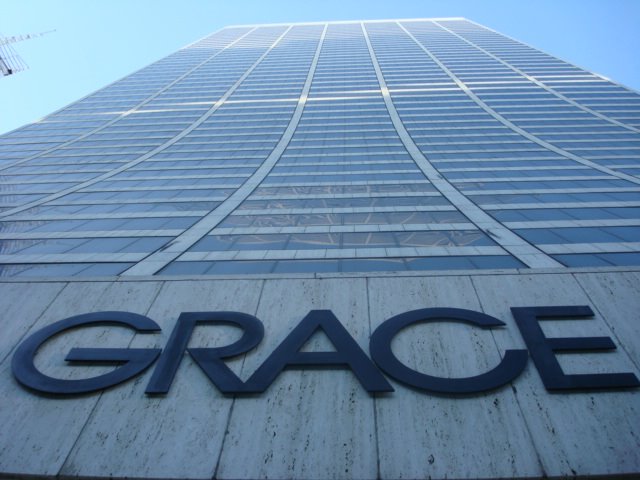
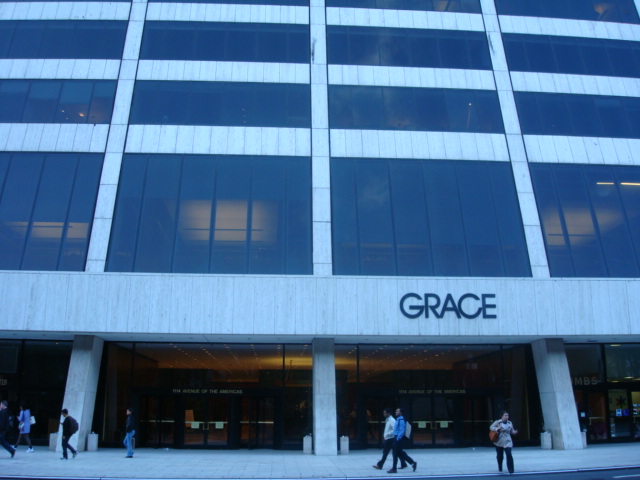
However, his company W.R. Grace and Company would grow, from its salad days in bat guano, to become one of the world’s biggest chemical conglomerates. Their New York corporate headquarters was built in 1971 on the north side of Bryant Park and is generally known for its white sloping facade. At present it is the 61st tallest building in New York City.

Know Your Mayors: John F. Hylan

Our modest little series about some of the greatest, notorious, most important, even most useless, mayors of New York City. Other entrants in our mayoral survey can be found here.

Fiorello Laguardia has his airport. James Duane has a drug store. Abram Hewitt is immortalized by the Cooper-Hewitt Museum. Robert Van Wyck has an expressway named after him.

But the former mayors of New York City are not always lionized in monuments or objects they would necessarily be proud of. Take John F. Hylan, the mayor of New York from 1918—1925. He may be the only mayor on planet Earth to have a gigantic hole named after him. Two holes, actually.

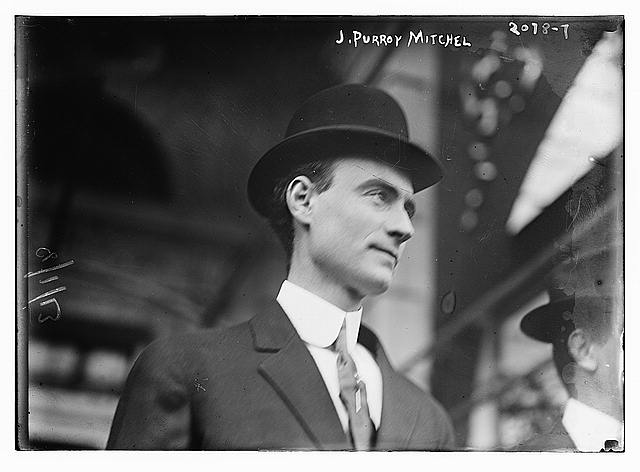
When Hylan stepped into the mayors seat in 1918, he brought the Democratic machine Tammany Hall back into city government after four years of Tammany-free leadership by idealistic ‘boy mayor’ John Purroy Mitchel. But Hylan would surprise many by devoting his two terms in office with a single-minded goal — the New York subway.

Hylan was a product of New York locomotive culture. Moving to Brooklyn from upstate New York at an early age, he became a train conductor with the Brooklyn Union Elevated Railroad (later the Brooklyn Rapid Transit Company, or BRT) which operated streetcars trains in Brooklyn and Queens, including the storied Coney Island trains, carrying thousands of passengers out to the beach each summer. Later the BRT would team with the early subway system of Manhattan’s Interborough Rapid Transit System to create a “dual contract” system of unregulated, privately-controlled transportation.

It should be noted that Hylan was fired from the train company after almost accidentally running down his supervisor. His bitterness towards the privately-owned BRT clearly fueled his later actions.

Hylan then became a lawyer and, after initially fighting the advances of Tammany Hall, eventually became one of their loyal candidates. His victory over Mitchel in the 1918 election was partially helped by the powerful William Randolph Hearst.

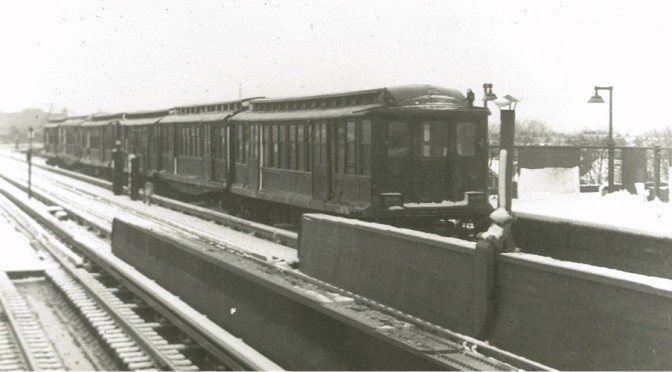
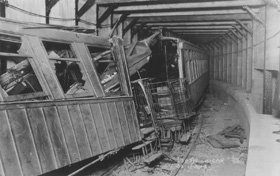
In the first year of Hylan’s term, a BRT train on the Brighton Beach line derailed at Malbone Street (today’s Empire Boulevard) near Prospect Park. The horrific accident (seen below) left 93 passengers dead and virtually destroyed the BRT system overnight.


Meanwhile, the IRT was planning on raising its fares. Uniting the city required miles of more tracks, and it was leasing land from the city. So they decided it needed to bump up the astronomical five cents that customers currently paid.

Hylan had quite enough. Already an advocate against private interests, he often decried organized private power. Here’s an example of his wrath against private banking, a crusade that went unfulfilled: “The real menace of our Republic is the invisible government which like a giant octopus sprawls its slimy legs over our cities states and nation. At the head is a small group of banking houses generally referred to as ‘international bankers.'”

Of course, Hylan is one to speak; he was in Hearst’s back pocket throughout his entire tenure and never swayed from the calls of dear ole Tammany.

Hylan battled the train companies for most of his two terms. He was re-elected in 1921 by effectively thwarting the fare increase and creating a transit commission to refigure a transportation system under city control. By the end Hylan had effectively retooled New York’s transportation industry by creating his own city-run operation, christening the new Independent Subway System (ISS), in his last year of office, on March 14, 1925.

That November however he was swept out of office by Jimmy Walker, who would guide New York as one of its most powerful and influential leaders, leaving Hylan’s legacy virtually forgotten. Hylan died eleven years later of a heart attack. Four years after that, his dream was fully realized; the ISS merged with the other subway lines to create one complete city-run subway system.

But what about that hole? Well, Hylan had another bright idea: a tunnel between Brooklyn and Staten Island. The project began in 1923, with holes began on both sides of the Narrows, at Fort Wadsworth on the Staten side, and Bay Ridge on the Brooklyn side. The project, however, was abandoned. What remains on both sides is affectionately known as ‘Hylan’s Holes’.

The whereabouts of these abandoned holes, as far as I can tell however, remains a mystery.

Know Your Mayors: “The Boy Mayor of New York”

Our modest little series about some of the greatest, notorious, most important, even most useless, mayors of New York City. Other entrants in our mayoral survey can be found here.

The 1910s were a rough time to be mayor of New York City. The decade’s first mayor, William Jay Gaynor, took an assassin’s bullet in the neck and an entire term to die from it. A second mayor — in fact, New York’s youngest mayor ever — would not live to see the end of the decade either.

We covered Gaynor’s unusual tenure in the job in a prior entry. Former army Col. Ardolph Loges Kline stepped in to fill the remainder of Gaynor’s term, a duration of less than four months. Kline, former president of the Board of Aldermen (an equivalent of today’s city council), was remarkably enough a replacement for that job too. He stepped in after first Board president, a man whom I will shortly introduce below, vacated the post.

Although fairly insignificant, Col. Kline holds a distinction that Rudolph Guiliani must loathe — Kline is the last mayor to hold an additional elected office after leaving City Hall. (He became a U.S. representative for a single term.) Keep in mind this significance; in the early days of New York, the mayor’s seat was a mere stepping stool to a host of elected jobs. Kline seemed to take that stepping stool with him when he departed on the first day of 1914.

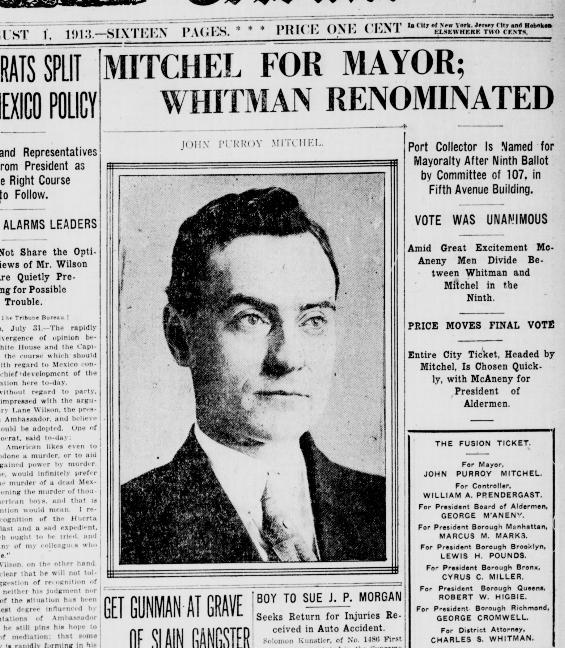
Kline stepped aside in 1914 for the newly elected John Purroy Mitchel, an ambitious young man who at 34 become the city’s second youngest mayor. (Hugh Grant — that’s Hugh J. Grant — was the youngest at 31.) He would forever be known as The Boy Mayor.

Mitchel had a meteoric rise not too dissimilar to our former governor Eliot Spitzer. A graduate of Columbia University and the New York Law School, Mitchel was thrust into the spotlight in cases that frequently pit him against the all-powerful leader of Tammany Hall, Charlie Murphy.

In 1907, all of 28 years old, Mitchel brought down the borough presidents of Manhattan and the Bronx in one fell swoop, the ringleaders of a corrupt contracting scandal. He quickly became known for his reform-heavy, almost naive take on civic responsibility, a refreshing breath in this era of Tammany Society. Mitchel was quickly elected to the president’s seat of the Board of Aldermen, in the same election that brought Gaynor to City Hall.

As Gaynor was losing the graces of Tammany, Mitchel swiftly proved himself a thorn in the side of the shifty New York police force. When it was discovered that a prominent police chief Charles Becker, on the Tammany payroll, had murdered a Jewish casino owner on July 1912 in efforts to ‘shut him up’, Mitchel used the public outcry to sweep the precinct halls of mass corruption.

Mitchel’s rising star was impervious to Tammany attacks and was elected the new mayor, the nominee of a fusion party.

In his inauguration speech, he makes the startling announcement: “It will not be necessary for us to go to the people of the city every day and tell them what we propose to do. It will be better for us to wait a little while and then to go to them and tell them what we are doing or have done.”

Some of the reforms he brought into play include a standardization for government works and a innovative city development zoning plan.

Unfortunately, history almost repeats itself with another crazy assassin. Four months into his term, a disgruntled 72 year old man by the name of Michael Mahoney fired a shot at Mitchel at City Hall.  But unlike his predecessor Gaynor, the mayor was not hit and he and his entourage wrestled the disturbed man to the sidewalk.

The real attack, however, was yet to come — and no surprise, from Charlie Murphy. Although Mitchel had continued with his vow to eradicate police corruption, an educational reform policy was viciously attacked from both ends, from Murphy’s Tammany pawns and from William Randolph Hearst‘s New York World. The attacks worked; Mitchel, a Catholic, lost the support of the poor Irish Catholics who believed the education reforms would only benefit the rich. By the end of his term, the Boy Mayor was soundly defeated by John Francis Hylan — bringing Tammany back to City Hall.

Undetoured, Mitchel changed career course. World War I had raged throughout his tenure as mayor, and he strongly believed in the importance of military service. Still a young man, he joined the Signal Corps Army Air service as a pilot in 1918. Unfortunately nobody would ever know whether he would bring his brilliance and ambition to the armed forces as on July 6, 1918, fell out of his plane during a training session in Louisiana, after apparently failing to fasten his seat belt. A curiously ridiculous and tragic end to a unique New York personality.

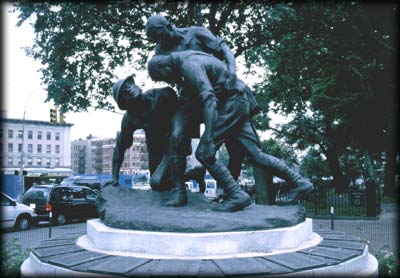
At the Engineers Gate in Central Park on Fifth Avenue sits a very, very gold bust of Mitchel. The bust was made by Adolph Weinman, the go-to sculpture guy of iconic New York architects McKim Mead and White. He’s also honored by Mitchel Square in Washington Heights (with a monument to World War I, see below) and Mitchel Air Force Base in Long Island.


Strange fact: allegedly, his aerial death was the partial inspiration for Gary Cooper‘s demise in the silent film ‘Wings’, best known as the first ever Best Picture Oscar winner.

Know Your Mayors: Fernando Wood

Our modest little series about some of the greatest, notorious, most important, even most useless, mayors of New York City. Other entrants in our mayoral survey can be found here.

And now we come to one of New York’s most notorious, absolutely in the top 10% of the most corrupt mayors ever in our fair city — Fernando Wood. He was the first mayor ever to be forcibly dragged from City Hall and arrested. Even then, he was elected more than once, was seen at one point as a savior, and even received the unanimous votes of New York City’s dead constituents. We also have him to thank for one of New York’s most treasured landmarks.

The Philadelphia-born Wood had distinguished himself as a former merchant and then as a member of Congress from 1841-43. His meteoric rise came through the assistance of Tammany Society, the frequently corrupt Democratic machine which all but dominated New York politics. By 1855, the year Tammany placed Wood in the mayoral seat, the Society was at the height of their control.

During his first term, 1855–1858, he was initially seen as a moral reformer, who “closed saloons on Sunday, suppressed brothels, gambling houses and rowdism, [and] had the streets cleaned” according to Tammany historian Gustavus Myers.

But these tokens of fortitude were a facade to extort support from those very vice industries. By 1856, he abolished the Sunday saloon restriction in exchange for their support. The Municipal Police Force under Wood became corroded with graft and bribery, at times more fearful than the crime they were purportedly there to eliminate.

So it should come as no surprise that even nativist gangs like the Dead Rabbits were soon under Wood’s control, ensuring ‘fair’ elections — fair for Wood, that is — by destroying ballot boxes, tossing others into the river and even tallying votes from lists of voters in cemeteries. It helped that rival gangs like the Bowery Boys (the gang, not us) were in the pockets of the Republicans.

Fed up with New York’s culture of corrupt law enforcement, in 1857 the state legislature formed a rival police force the Metropolitan Police Force. Wood’s Municipal force, fat from its complex institution of graft that essentially left crime to fester unabated, were not interested in stepping aside, nor did Wood relinquish his power to the Republican-controlled state. When Albany-appointed State Commissioner Daniel Conover arrived at City Hall, Wood promptly threw him out. (Wood had hired his own state commissioner, Charles Devlin, who bought the position for $50,000.)

Conover returned with the Metropolitan police force and a warrant for Wood’s arrest. Wood’s Municipal men were waiting, and when the captain grabbed Wood and began dragging him from City Hall, the Municipal men pounced.

Soon Metropolitan police were battling Municipal men, a surreal conflict now known as the Police Riots of 1857. With the assistance of the National Guard, Wood was briefly arrested. The Metropolitans eventually disbanded, but not before a chaotic summer of two rival police forces, cancelling each others arrests and raiding each other jails. Ah, it was a great time to be a knife-wielding gang member. *sigh*

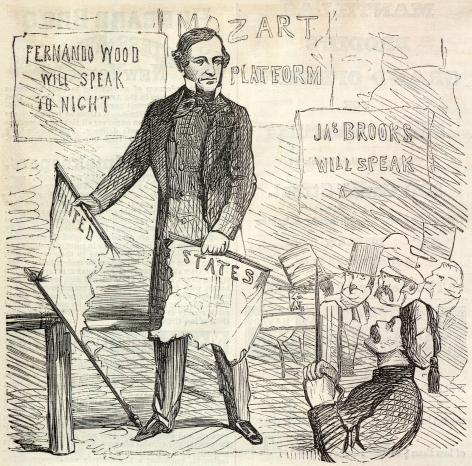
Disagreements with Tammany left Wood without his primary backers and out of office in 1858. (Industrialist Daniel Tiemann was mayor from then until 1860.) But under the aegis of a new political machine, called Mozart Hall, he swept back into office for another two year term.

This time, his allegiances took on a Confederate tenor. A sympathizer with the Southern cause, especially as New York’s profits as a port city were tied closely to Southern plantations, Wood suggested that New York City secede with the South. In his official recommendation, he proclaims, “Amid the gloom which the present and prospective condition of things must cast over the country, New York, as a Free City, may shed the only light and hope of a future reconstruction of our once blessed Confederacy.”

“With our aggrieved brethren of the Slave States, we have friendly relations and a common sympathy,” he remarked, in statements made January 6, 1961.

He also had a prescient idea for all the wrong reasons — to merge Manhattan, Staten Island and Long Island into a new independent commonwealth, known as the Free City of Tri-Insula. Had Wood gotten his way — and his plan was greeted warmly by the corrupt Common Council — the city might have joined the South. Less than forty years later, of course, similar consolidation plans (with less anarchic pretentions) prevailed.

Unfortunately for his grandiose schemes, the Civil War erupted in April of that year at Fort Sumter and a huge outpouring of support in New York soon swept Wood’s ideas into obscurity. In fact, being a crafty politician, he was soon organizing troops for the Union cause, the eventual result of which would soon lead to New York’s draft riots in 1863.

By then, however, Wood was out of the mayoral office and onto other pastures — namely the U.S. House of Representatives. How this man could have been elected with his track record is personally beyond me, but thus is the way of the New York political machine.

He did, however, leave us with one lasting mark on the city — the present-day location of Central Park.

Know Your Mayors: William Jay Gaynor

Our modest little series about some of the greatest, notorious, most important, even most useless, mayors of New York City. Other entrants in our mayoral survey can be found here.

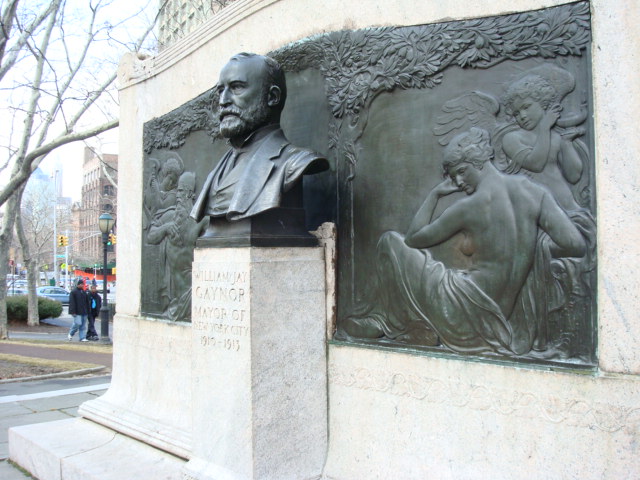
Walk from Manhattan over the Brooklyn Bridge, take the first ramp off the bridge, turn right to Cadman Plaza, and you will run smack dab into a marble slab and the stoic bust (see below) of William Jay Gaynor, mayor of New York City from 1910 to 1913. Very few mayors are honored with statuary in this city, especially a mayor with so short a term in office. Gaynor’s term represented a shakedown of traditional New York Tammany politics, a true bureaucratic reform movement.

But Gaynor is perhaps best remembered as being the only New York mayor to become target of an assassination attempt and to eventually die of his injuries.

It wasn’t supposed to play like this at all. Tammany Hall, entering the dusk of its influence by the early 20th century, thought they had a ringer with Gaynor, a state Supreme Court justice for 14 years chosen to run by still-powerful political machine. One of his opponents — William Randolph Hearst — an early admirer who warned Gaynor to publicly reject his corrupt Tammany sponsors.

Hearst needn’t have worried. Once elected, Gaynor flummoxed his Democratic forebears by eshewing the usual political favors to Tammany cronies and actually hiring qualified individuals in chosen fields. His swiftly became no one’s pawn.

Gaynor continued to live in Brooklyn — 20 Eighth Avenue in Park Slope, to be precise. On his first day of work, he actually walked from home, over the Bridge, and right into City Hall.

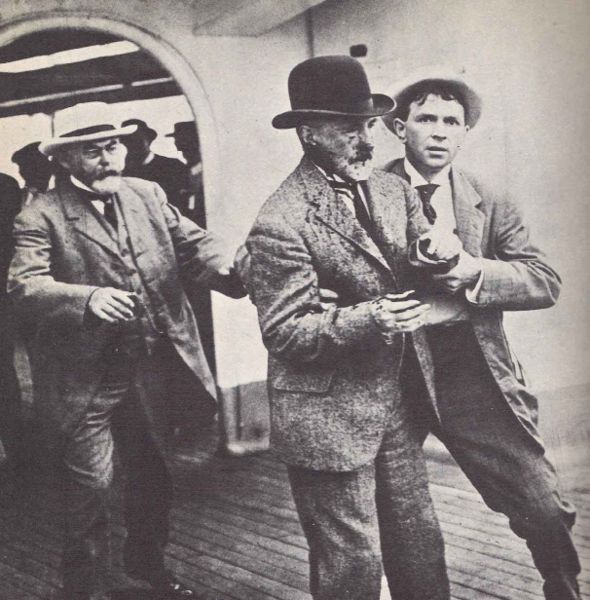
While vacationing on the ocean liner SS Kaiser Wilhelm der Grosse, a disgruntled city employee James J. Gallagher, fired from his job on the docks, took out his frustration on Gaynor, shooting him through the back of the neck. Gallagher claimed, “He took away my bread and meat. I had to do it.” Really, James?

Unbelievably, a photographer for the New York world William Warnecke happened to catch the incident, which quickly became one of the most startling photographs in the short history of photo-journalism:

Gaynor recovered somewhat, although the bullet would remain lodged in his throat, and his entire term of mayor, he would remain weakened and haggard. He would even use the injury as a reason to get out of discussing delicate subjects, saying, “Sorry, can’t talk today. This fish hook in my throat is bothering me.”

The brush with death, paired with his remarkable house-cleaning at City Hall, quickly transformed him into a popular leader, with talk of even running for president. Tammany wouldn’t help him with another term for mayor, naturally, but he was immediately nominated as an independent.

Somebody should have told Gaynor, however, that he should have avoided ocean liners. On Sept. 4 1913 he boarded the ocean liner Baltic for yet another oceanic vacation and six days later was found dead on a deck chair, his body finally giving in to lingering internal injuries. Curiously, Gaynor’s would-be assassin Gallagher had died just a few months prior — at an insane asylum in Trenton, New Jersey.

The New York Press ran a further appreciationof the Gaynor monument itself. Or maybe you’d like to read his extravagent obit from the New York Times.

Know Your Mayors: Abram S. Hewitt

Our modest little series about some of the greatest, notorious, most important, even most useless, mayors of New York City. Other entrants in our mayoral survey can be found here.

Abram Hewitt could easily be considered a very pivotal mayor in New York City, given the significant development and personal connections he had to the heart of the city. However a shipwreck very nearly did him in before he could even get started.

Hewitt, born upstate in Haverstraw, attended Columbia and taught mathmatics, where he became friendly with a student he was tutoring, Edward Cooper. The two of them later voyaged to Europe in 1844, but on the way back to America, their ship capsized off the coast of Cape May.

He, Edward and the crew were later rescued, but the experience affected Hewitt deeply (and rather vaingloriously): “It taught me…that my life which had been miraculously rescued belonged not to me, and from that hour I gave it to the work which from that time has been in my thoughts — the welfare of my fellow-citizens.”

It had a more lucrative effect as well; for Edward Cooper happened to be the only son of industrialist Peter Cooper. Hewitt’s bravery bonded him with the Cooper family, becoming lifelong friends with Edward and marrying Edward’s sister Sarah.

He helped found Trenton Iron Company with the Coopers and became the first to experiment with the inexpensive steel-producing Bessemer process in the United States.

But politics was soon in Abram’s sights, especially with the crumbling of Boss Tweed’s Tammany Hall after his fall in 1871. Hewitt reorganized that once-corrupt Democratic political machine with political rewards for himself, elected to the U.S. House of Representatives in 1874.

He even tried his hand at national politics, managing Samuel Tilden’s nearly-successful quest for the White House in 1876. Remember this from history class? Despite Tilden winning the popular vote, an electoral fiaso gave the election to Rutherford B Hayes.

As Hewitt held court in Washington — becoming, in Henry Adams’ words “the most useful public man in Washington” — his close friend and brother-in-law Edward Cooper would be elected mayor of New York in 1879.

Hewitt’s connections in Washington would assist in getting the neccessary attentions brought to the building of the Brooklyn Bridge. Although David McCullough dryly notes that Hewitt might have inadvertantly helped weaken the Bridge by helping deliever the wire bid to Brooklyn native (and total fraud) J. Lloyd Haugh. (More about him in last week’s podcast.) Hewitt would give a most stirring speech during the Bridge opening ceremony in 1883.

Finally, Hewitt himself would become mayor of New York City in 1886 during a heated election in which a candidate by the name of Theodore Roosevelt would place third.

Hewitt strong distain for corruption in city politics ran him against his old organization Tammany Hall. He also had strong moral convictions, fighting to keep city saloons closed on Sunday. (This did not endear him to many people.) However, he strongly advocated the creation of new city parks and began work on a much-delayed underground train system — which Tweed’s machine had stalled for years. In fact, Hewitt is considered the “Father of the New York Subway.”

He was defeated in 1888, partially due to angering the Irish community because he refused to attend the St Patricks Day Parade. (Hewitt tended to be of a more nativist stripe; among other demands, he required all immigrants take a literacy test.)

He spent his later years as a philanthropist, on the boards of the Carnegie Institution and the Museum of Natural History. When he died in 1903, Andrew Carnegie himself claimed the former mayor was “America’s foremost private citizen“.

KNOW YOUR MAYORS: Seth Low


We speed ahead over a hundred years after our last Know Your Mayors entry to that jovial man with the funny name, Seth Low. He holds a very unique place on the list of mayors, as he has been both the mayor of Brooklyn (from 1881 to 1885, back when it was a separate city) and mayor of the new five boroughed New York City — in fact, the second mayor ever of the consolidated city, from 1902-1903.

A likable organizer and leader, ‘the people’s candidate’ as he was called, fast-tracking through city politics, Low was on-site for a number of significant changes to the city. Elected Brooklyn mayor near the completion of the Brooklyn Bridge, Low was perturbed by seeming delays to its completion and, with the help of New York’s mayor William Grace, attempted to oust its Chief Engineer Washington Roebling. Outvoted at the trustees meeting, Low then about-faced (like any good politician) and, on opening day, symbolically met Grace halfway of the new bridge.

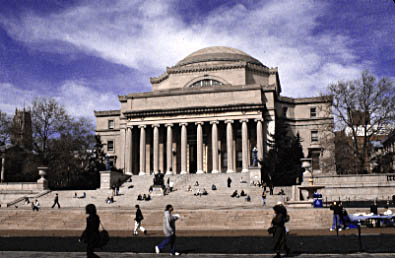
Low made his most influential mark as the president of Columbia College from 1890-1901, shuffling the school from midtown to its present location in Morningside Heights, involving McKim, Mead, and White to design the new buildings, including the wonderful Roman revival throwback Low Memorial Library (named for Low’s father, a successful Brooklyn silk merchant). Oh, and during his tenure, Columbia dropped the College and became a University.

Below: the beautiful Low Memorial Library on the Columbia campus

By 1898, thanks in part to the Bridge, Brooklyn and the other boroughs were combined with Manhattan to create Greater New York. Low was then elected mayor again, of the entire city, crushing the Tammany Hall candidate with the help of his friend Mark Twain, who stumped for him at political rallies. (Think Barack Obama and Oprah Winfrey, or Mike Huckabee and Chuck Norris!)

Low was only mayor for a single year, but brought such reform to the city as lower taxes and a purge of corruption within the police department. His short tenure is more importantly symbolically, as he won the job as a ‘fusion’ candidate of two different major parties — the Republicans and the Citizens Union, both seeking to squash the Tammany Democrats.

Perhaps by way of karma, he lost his re-election bid in 1903 to another name associated with the Brooklyn Bridge, George Brinton McClellan Jr, treasurer of the bridge. McClellan, by the way, would open the Manhattan Bridge during his six-year term as mayor.

Low finished his professional career heading another prestigious school — the Tuskegee Institute in Tuskegee, Alabama — serving as chairman from 1907 until he died in 1916.

Students currently attend the I.S. 96 Seth Low Intermediate School in Bensonhurst, Brooklyn.