Categories
Know Your Mayors

George Opdyke: The mayor during the Civil War Draft Riots and his unsavory connection to New York’s fashion industry

KNOW YOUR MAYORS A modest little series about some of the greatest, notorious, most important, even most useless, mayors of New York City. Other entrants in the Bowery Boys mayoral survey can be found here.

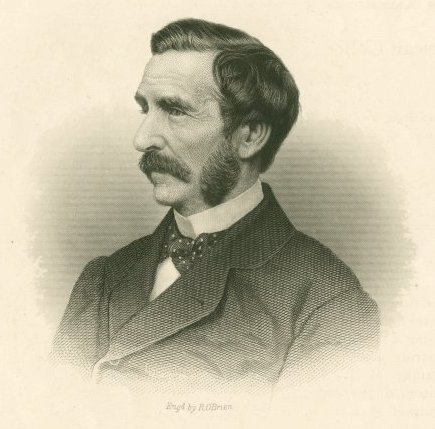
Mayor George Opdyke
In office: 1862-1863

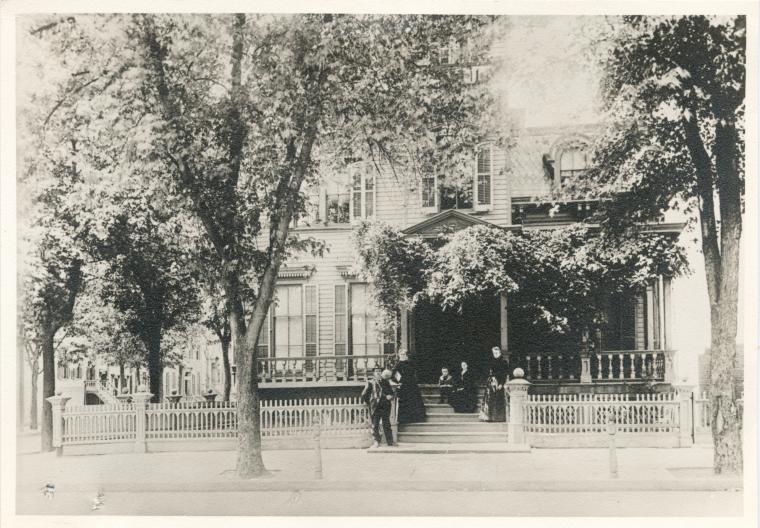
The wealthy merchant and politician George Opdyke died on June 12, 1880, attended to by his family from their lavish home at Fifth Avenue and East 47th Street, just a few blocks from where the violent Draft Riots had ignited back in 1863.

In the 17 years since those terrible days, New York had grown mightier with vast wealth, in an explosion of prosperity that would inaugurate the Gilded Age.  But while the scars of the Draft Riots had faded from the city streets, they never quite faded from Opdyke, who had been mayor of New York during the violent outbreak.

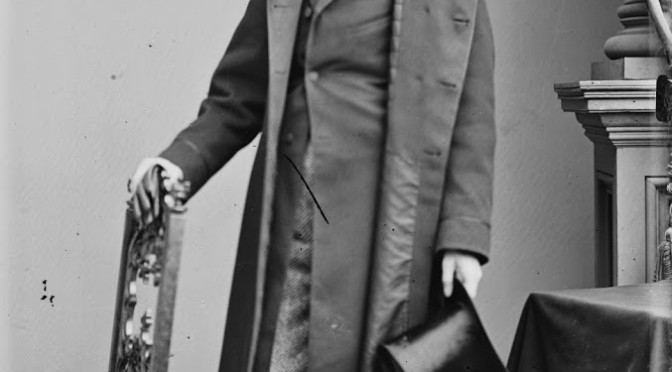
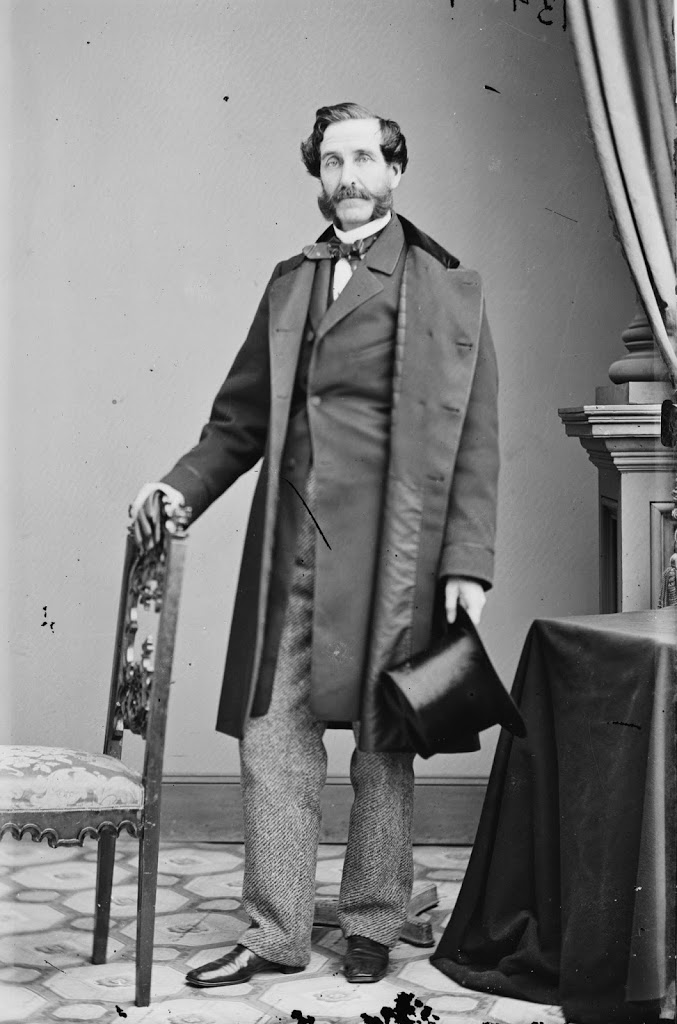
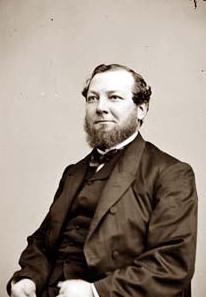
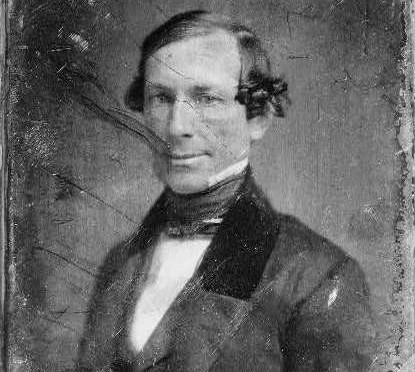
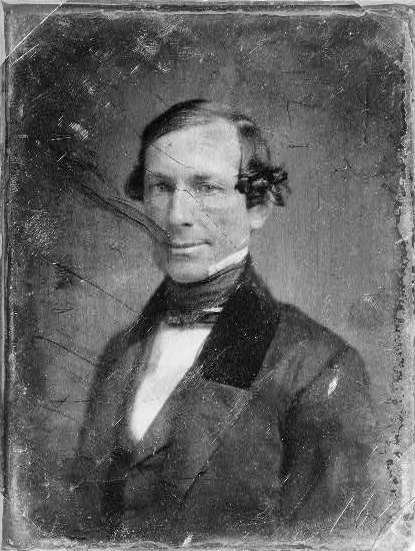
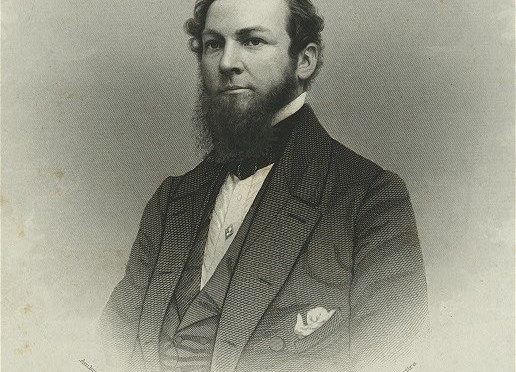
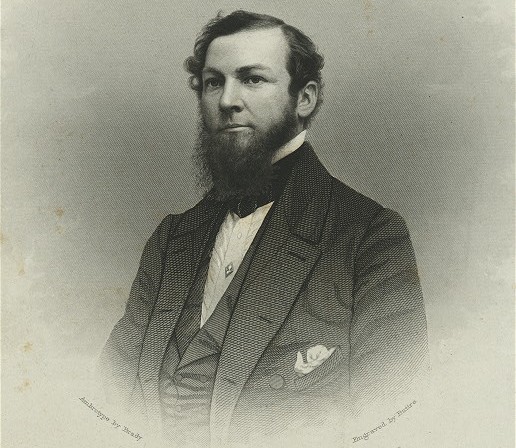
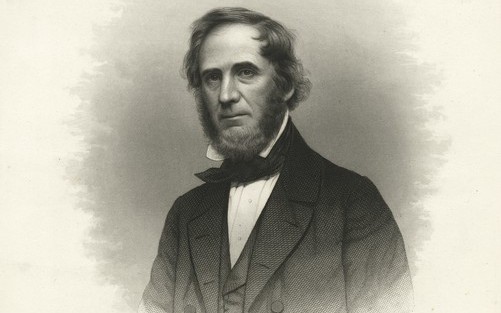
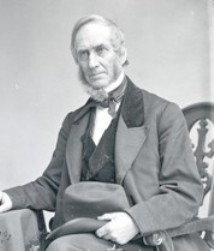
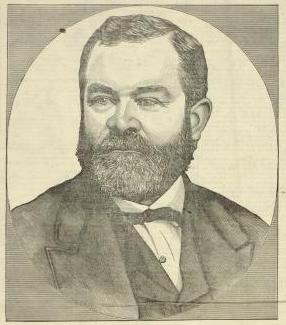
At right: George Opdyke, in a photo taken by Matthew Brady

Some of the violence that week in July had been directed towards Opdyke, one of the most prominent Republicans in a city of Democrats. His former home at 57 Fifth Avenue had been attacked twice by rioters.  He was considered the face pro-Lincoln, pro-war, and, thus, pro-abolitionist forces in New York

Yet had it not been for the institution of slavery in the South, Opdyke might never have even made his fortune.

George Opdyke was born to a large New Jersey farming family in 1805, working his way from the fields to the classroom, becoming a young school teacher at an early age.  Like so many teenagers in the early 19th century, job opportunities out West spoke to his sense of adventure.  With $500 in their pockets, Opdyke and a friend settled in Cleveland, Ohio, opening a clothing store and tailor for workers of the newly constructed Erie Canal.

Opdyke soon found a more profitable application for his young business — the high mark-up manufacturing of cheap slave clothing.  He moved to New Orleans and began an incredibly profitable plant there, making inexpensively produced clothing for the plantations of the deep South.

In fact, Opdyke became so successful that, in 1832, he moved to New York to open a larger clothing factory on Hudson Street.  According to historian George Lankevich, Opdyke “built the city’s first important clothing factory, selling his goods largely to southern plantations and creating the basis of a new industry.”  It was the first large-scale, ready-to-wear clothing establishment in New York, soon employing thousands; so, yes, this is how the New York fashion industry begins.

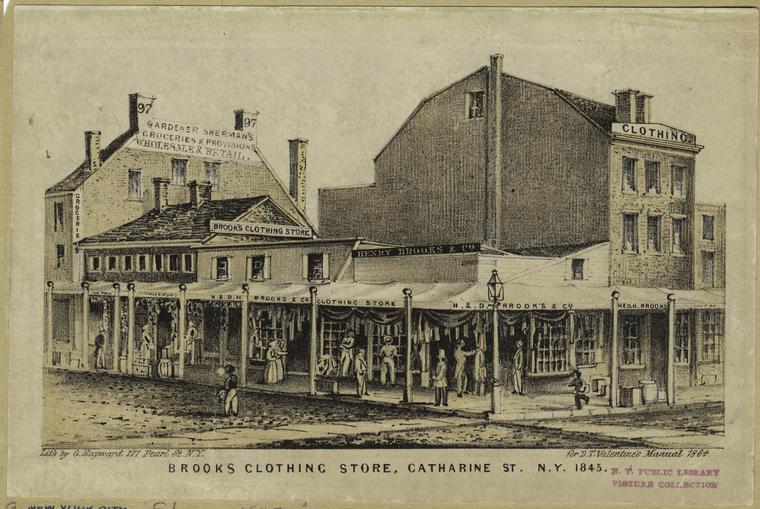
Below: Brooks Clothing Store in 1845, a rival of Opdyke’s clothing business. Opdyke would have some rather controversial connections for Brooks Brothers during the Civil War. (NYPL)

And a successful political career begins as well.  By 1846, Opdyke, now a millionaire and a well-connected member of mid-19th century New York society, entered a life of politics.

Interestingly, he was originally associated with the Free Soil Party, an early anti-slavery effort, illustrating how businessmen often separated certain moral beliefs from their business practices. (Early on, he would become one of Abraham Lincoln’s most ardent supporters.) The Free Soilers were soon be incorporated into the burgeoning Republican Party, and Opdyke’s first appearance in New York state assembly, in 1859, was as a Republican.

That same year, Opdyke became the Republican’s best chance at winning the mayor’s seat in New York. However, he vied for the job with two other seasoned politicians — unscrutable Democrat Fernando Wood and former mayor and sugar king William Havemeyer.  Thanks to machine politics and the uncertainty of war with the South, Wood prevailed that fall, becoming mayor of New York at the start of the Civil War. (I have an entire podcast on Wood’s roller-coaster career in politics.)

But tides would change in Opdyke’s favor.  Pro-Union sentiment surged through the nation and in New York City by the start of the war.  And by the time of the next mayoral election in 1861, situations were ideal for a Republican to take charge.

It helped that Democrats were divided — Tammany Hall went with C. Godfrey Gunther, while Wood formed his own alternative political machine Mozart Hall.  But it was Opdyke that prevailed, although barely.  He beat Gunther by a whopping 613 votes. (But he did beat Wood in Wood’s own ward.  That must have felt good.)

Part of Opdyke’s appeal at that moment was his deep connections to the Lincoln administration. When the flags were waving in New York, Opdyke was an ideal representative, encouraging support for the war, hosting troops in the city, raising money for the effort.  But when enthusiasm for the war withered, so did Opdyke’s reputation.

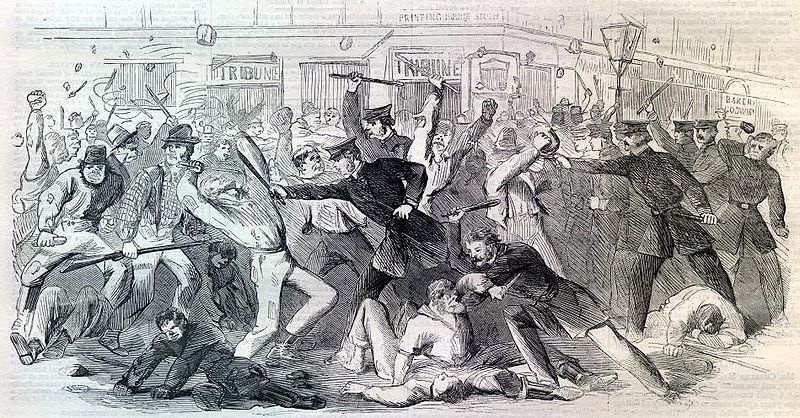
Below: The draft riots, which paralyzed New York in July 1863

Opdyke’s unwavering support for the draft backfired severely in the summer of 1863. When New Yorkers took the street on July 13, 1863, burning the draft offices and taking out their anger on black citizens and prominent Republicans, Opdyke topped the list of most despised New Yorkers.  He had very little power to quell the violence; the police department was placed under state control, and state militia had been called away.

While his home was nearly destroyed, it was his political reputation that took the greatest hit. At first, he had vetoed a plan by the Common Council to pay for substitutes for any drafted New Yorkers. But a month later, working with Tammany Hall, he essentially endorsed a similar bill to avoid more violence.

This saved New York, but it did not save him.  On election day, that December in 1863, he was replaced with the Democrat Gunther, whom he had narrowly beat just two yeas before.

His woes weren’t quite over. A political feud with newspaper editor Thurlow Weed revealed some unpleasant information about Opdyke in the press. “[H]e had made more money out of the war by secret partnerships and contracts for army clothing, than any fifty sharpers in New York,” claimed the irate newspaper editor.

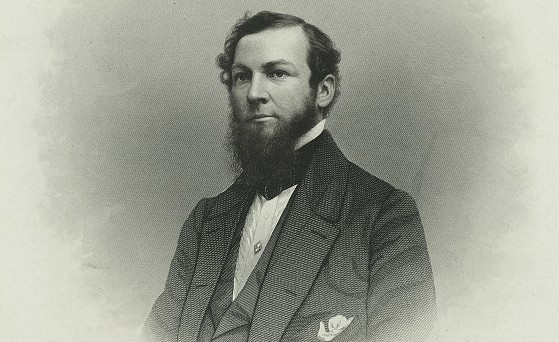
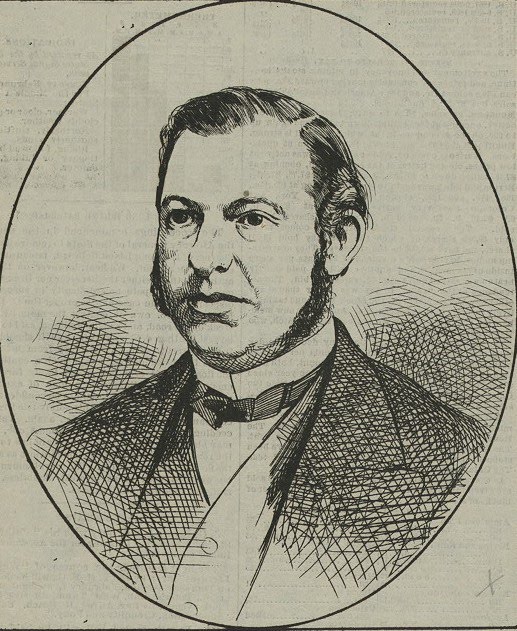
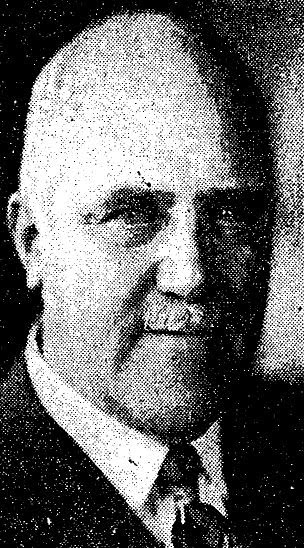
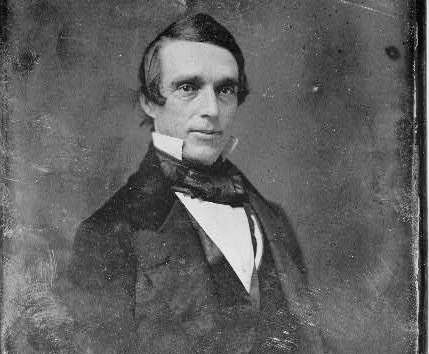
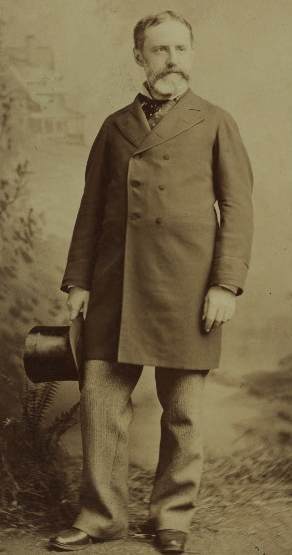
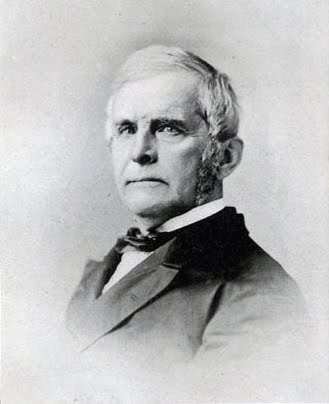
At right: Opdyke in later life (NYPL)

Opdyke had profited handsomely from the war through his own clothing plant and in deals with rival clothing manufacturer Brooks Brothers.  Opdyke took Weed to court for libel in December 1864, but the jury essentially exonerated Weed, delivering an indecisive verdict “as to whether Weed should pay nominal damages of six cents, or be acquitted.” [source]

In later life, Opdyke took up banking with his sons, representing the concerns of various railroad companies. He “retired a few months before his death with a large fortune.” [source]

After his death, the Opdykes would sell their house to railroad tycoon Jay Gould.

C. Godfrey Gunther: the other Civil War, pro-South mayor

Continuing with the theme of ‘1864’, here’s a revised and expanded version of an article I wrote back in 2009 on the man who was mayor of New York during that crazy year:

KNOW YOUR MAYORS Our modest little series about some of the greatest, notorious, most important, even most useless, mayors of New York City. Other entrants in our mayoral survey can be found here.Mayor C. Godfrey Gunther


In office: 1864-1865

His past glories were built on a mountain of fur pelts, and his future would wash up on the half-developed shores of Coney Island. But in 1961, it was Civil War that nearly derailed the political career of Charles Godfrey Gunther.

The groundwork was laid in 1857 by former mayor Fernando Wood, who rebelled against Tammany Hall, the Democratic machine he formerly led, to form his new political organization called Mozart Hall. This assemblage of working class reformers and Wood devotees returned him to City Hall in 1960, foisting from office the German paint mogul Daniel Tiemann who had first unseated Wood back in 1857.

Back in business, Wood heralded a feisty pro-South, anti-abolitionist stance, pitting himself against Albany and threatening to secede Manhattan from the state.

By the election of 1861 however, a swell of national support for the Union cause turned against Wood. The Democrats were in a precarious spot, splintered between rival Democratic groups. It’s here in our story where we introduce Charles Godfrey Gunther, Tammany’s official candidate for mayor in 1861.

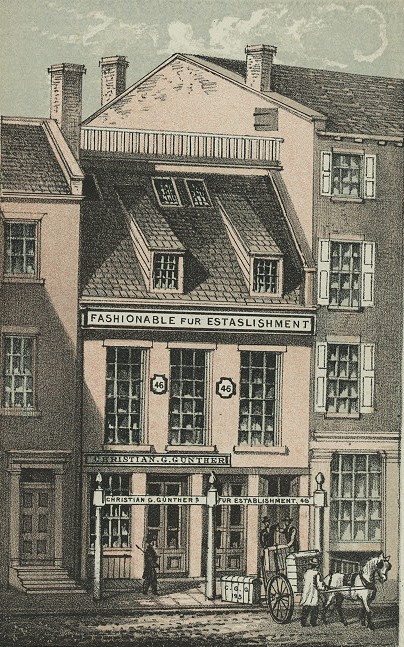
Gunther was born at Maiden Lane and Liberty Street, on Feb 7, 1822 — into a German family that had made its fortunes in the fur trade, rivals of the city’s true fur king, John Jacob Astor. Charles spent his youth in his father Christian’s tutelage, taking over the family mercantile business C.G. Gunther & Co. (pictured at left)

Charles was active in Democratic politics at an early age, sharpening his teeth during party squabbles. In 1855, he was elected an almshouse governor, overseeing the city’s prison and pauper populations. (The blog Correction History has a nice rundown of this unusual elected job function.)

His backroom political successes, paired with his wealth, attracted the attentions of Tammany Hall. The furrier’s son worked his way up through the political lodge, eventually becoming sachem (or district leader) in 1856.

He was Tammany’s candidate for mayor in 1861, against the rebellious Wood, and it would have made for a fine contest between them. Wood still had his Irish supporters, but Gunther’s inclusion lured German voters away from him. In fact, Gunther did beat Wood in that election, scoring 600 more votes than Wood.

But of course, there was another contestant, the Republican George Opdyke. With Wood and Gunther appealing to the same constituencies, they split the traditional Democratic vote, and Opdyke ascended to office.

Perhaps Charles should have been grateful. The years 1862 and 1863 were not gracious times to be mayor of a major city. Opdyke’s execution of military conscription angered poorer New Yorkers, and his fumbled handling of the ensuing draft riots permanently damaged his political reputation.

By the fall of 1863, New Yorkers craving a change in leadership were given a strange buffet of choices. The Republicans, shedding Opdyke and at a serious political disadvantage, brought forth alderman and gun-maker Orison Blunt, inventor of the ‘pepper box gun’. Tammany meanwhile offered up Francis I. A. Boole, a rather corrupt city official notable for heading the street cleaning department.

With these weak choices at such a pivotal period in history, rebels from both parties — and heavily peopled with disenfranchised former Wood supporters — split to form a temporary coalition of working class Irish and Germans.

With the strong support of the city’s surging German newspapers, Gunther was chosen as their candidate. That November he swept past Blunt and Boole to become New York’s 77th mayor. Boole took it especially hard; he “became insane and died shortly afterwards.”

Was the Gunther an effective mayor in 1864? His reviews have always been mixed. An “honest, pleasant gentleman, with frank and cordial manners,” he’s praised for his penny pinching tactics, at one time even cancelling a celebration of George Washington’s birthday as it was thought to be too extravagant. In 1964, on the verge of a national election, he clamped down on any serious city celebrations of Union victory as being too ‘political’ in nature.

Many, however, saw a darker reason for Gunther’s actions. He was also pro-South and anti-war, but practically so and far less treasonous sounding than Wood. “He was probably a genuine pacifist,” according to author Ernest McKay. “His opposition was a matter of principle that appeared to be closely connected with his religious beliefs.” Let’s just say, I doubt either Fernando or Benjamin Wood considered Gunther much of a political ally.

Regardless, throughout his term, Gunther attempted to curtail renewed draft efforts in the city and tried to deter ‘brokers’ from hanging around Castle Garden and signing up green young men from off the immigrant boats. He made public strides to prevent a potential anniversary of the Draft Riots, although it is unclear whether such violence would have reoccurred in 1864, with the war clearly gaining steam for the Union.

The new mayor also strived to clear the streets during his tenure, with the removal of slaughterhouses and roaming herds of cattle all over the city.

Ultimately, Gunther was seen as a rather weak political figure, with little influence over other city offices. Perhaps this was because he was comparatively honest — living “by his principles” according to McKay — and the bureaucracies of city government dreadfully corrupted. Running for re-election in 1865, he was crushed in the polling, with three other candidates out voting him. The victor that year was true-blue Boss Tweed crony John Hoffman.


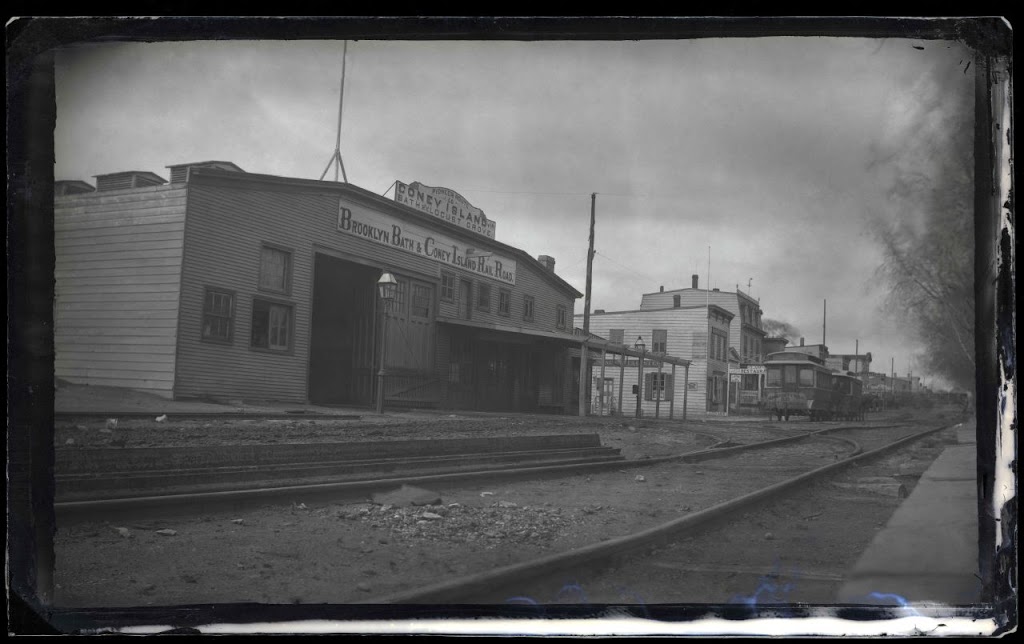
Above: the Coney Island terminal for the Brooklyn, Bath and Coney Island Railroad line

Gunther’s story doesn’t end here. He became a prominent leader in New York volunteer fire department and eventually even a partner in a very lucrative venture — the Brooklyn, Bath and Coney Island Railroad. It was this rail line that allowed thousands of New Yorkers to escape the city, eventually transforming Coney Island into a popular resort and amusement palace.

The train line, nicknamed Gunther’s Road, operated “six steam locomotives and 28 passenger cars” and “carried almost 400,000 passengers” in 1882 alone. Gunther would even own his own resort out on Coney Island, although it burned down a few years later.

And I end with a rather colorful anecdote from a 1906 article about Mr. Gunther and his railroad, from The Third Rail:

“There was one engineer who had served in the war of the rebellion, and who was particularly patriotic, who painted his engine red, white and blue.

Gunther saw it from a distance, on its first trip, tearing across the country, and he was frantic.

“For God’s sake, Drummond,” he said, when he overtook his engineer, “whatever possessed you to paint that engine red, white and blue?’

“You’re a true American, ain’t you?” said Drummond.

“Yes, but-but-“

“Well, so am I.”

“Yes, but that engine looks like a traveling barber shop.”

Gunther could not convince Drummond, however, and the latter quit his job rather than submit to any alterations.

The engine was afterwards painted according to Mr. Gunther’s ideas.

It was painted a flaring yellow.”

Mr. Gunther died on January 22, 1885 and is buried at Green-Wood Cemetery.

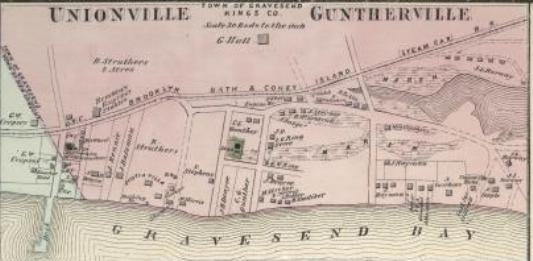
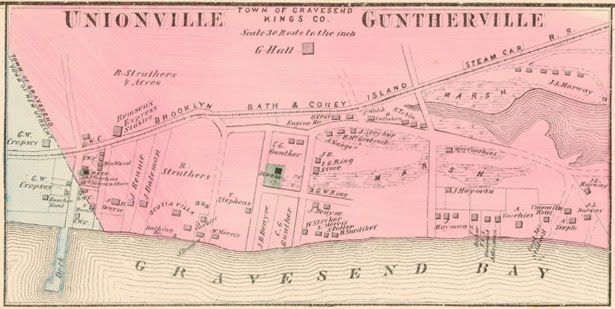
ADDED: One of our Facebook fans reminded me of an even more spectacular fact about Mr. Gunther — there was actually a short-lived Brooklyn neighborhood named after him. Guntherville was actually part of the pre-consolidation town of Gravesend and naturally featured many properties owned by C. Godfrey. The map below from 1873 illustrates its place along the Gravesend shore. Judging from comparing maps, it appears that part of Guntherville would later comprise the fleeting, beach side amusement venture Ulmer Park.

Pics courtesy of the New York Public Library

Notes from the Podcast (#126) Fernando Wood

Somebody should make a movie about Fernando Wood, and the role should be played by Johnny Depp. Wood is endlessly fascinating, not only as a shady character of political theater, but as a example of bald tenacity. He was written off as finished at many occasions — and saddled with mounting corruption charges — only to return to ever greater public office.

He was blatantly ambitious as a young man, in an era where such naked power grabbing was frowned upon in proper society. By the end of his career, such ambitions were a requirement of New York politicians. Fernando strengthened Tammany Hall style politics even in those occasions when he was blatantly against them. He perfected every despicable element of New York politics as though he were a craftsman.

This was also the ‘set up’ show for our next two episodes, which Tom and I will record later this summer. There’s a lot of coverage of the Civil War this year, but you might be surprised to see the directions we take with these upcoming shows.

Correction: I stated that the amount of business brought to New York per year by just five Southern states equaled $300 million. I overstated; the amount is actually “at least $200 million” according to author Ernest McKay. However, Southern states are estimated to have owed somewhere between $150 to $200 million in New York creditors. Needless to say, from a financial perspective, it’s easy to understand New York’s sympathies to the seceded states.

Places to Visit: Fernando Wood was a rather saavy real estate investor as well. In fact, he profited handsomely from leasing a building he owned — at 115 and 117 Nassau Street — to the city government! But his most lucrative acquisition was most likely his own estate of Woodlawn. The borders of his property were between Broadway and the waterfront on the west, running north to south from 76th Street  to 78th Street. That’s some pretty lofty acreage today. Part of Wood’s land was acquired for the development of Riverside Park during his lifetime.

What To Read: Fernando pops up in all the great histories of the city, including Herbert Asbury‘s ‘Gangs of New York’. Jerome Mushkat’s ‘Fernando Wood: A Political Biography’ takes you through the intricacies of the man’s politicking. But challenge for biographers is that Wood wrote very little about his private life. What we do know certainly alludes to details as salacious as some of his public shenanigans

Listen In: Wood figures in greatly to two of our prior podcasts. The details of the Police Riot of 1857 were presented in our show Case Files of the NYPD (episode #103). And he makes his first appearance in a Bowery Boys podcast way back in episode #40, in our Union Square show.

Above: Another portrait of Wood by Matthew Brady, courtesy Library of Congress

Categories
Know Your Mayors

Where are New York’s mayors buried? An (almost) complete list

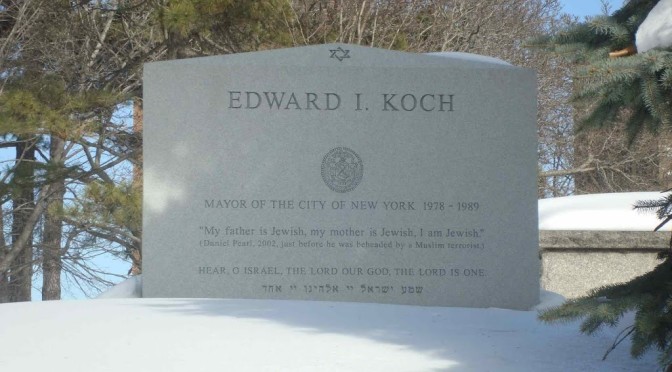
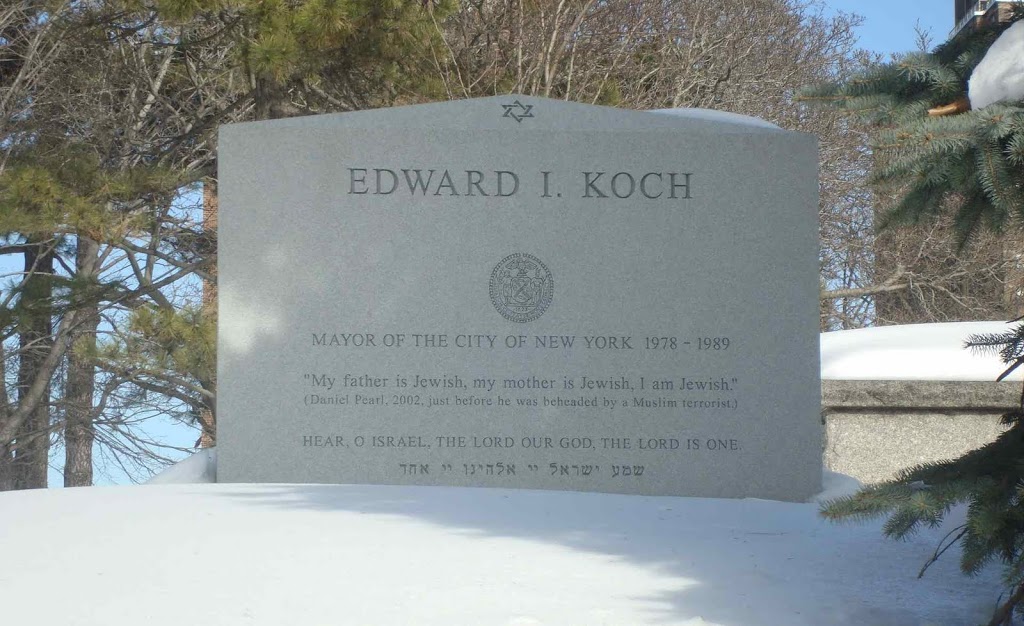
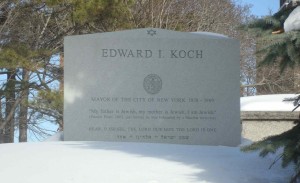
Koch’s tombstone, bearing the inscription: “‘My father is Jewish, my mother is Jewish, I am Jewish.’ (Daniel Pearl, 2002, just before he was beheaded by a Muslim terrorist.)”

Ed Koch likes to get a jump on things. The former mayor, who served as mayor of New York City from 1978 to 1989, went ahead a couple years ago and got himself a plot and a gravestone all arranged at the uptown Trinity Church Cemetery. You can actually visit his grave there and pay your pre-final respects.

He recently recounted his decision for the Huffington Post [What’s On My Tombstone, and Why], and it got me wondering if any other mayors were already buried at Trinity. (There’s two.) That soon developed into an investigation into how many former New York mayors are still buried in Manhattan. (Answer: seven so far.) Which then led to the following admittedly macabre project before you:

Here is a near-complete list of final resting places of (almost) all the mayors of New York City, from 1783 to present, a catalog of the various cemeteries and burial grounds where these former leaders of the city have been entombed, buried or otherwise interred.

Okay, I recognize I’ve gotten a little morbid on the blog recently (what with this and this, for instance), but this survey shouldn’t bum you out. The results of this little scavenger hunt actually say much about the priorities of New Yorkers past, the co-mingling of high society and politics and the rise and fall of egotism and pomp in the celebration of famous figures.

Most all these burial places are within a reasonable traveling distance of the city. Even the men who became mayors in the city’s early days were often tied to the region by familial connections. The one who went the most far afield (Edward Livingston, who made his reputation in Louisiana) came back to his family estate in Rhinebeck at the end of his life.

Only a handful (like Livingston and Dewitt Clinton) ever held a political position more powerful than mayor. Even when they were mayors, many weren’t very powerful at all, mere figureheads of strong political machines. Their business connections made some quite rich and internationally successful. But in the end, most came back to New York or the surrounding region.

I should preface by saying that I did not include any British appointed mayors from before the Revolutionary War. New York really became a new city on Evacuation Day 1783 when the British left the harbor, and the city’s leaders faced fresh challenges as an American port. It truly was a city anew when the first post-British mayor (James Duane) took office.

And practically speaking, it’s difficult to trace the final destinations of mayoral appointees from that far back anyway. Many left the colonies after their tenure. For instance, the British appointed mayor David Matthews, presiding over the city during the entire war (1776-1783), is buried somewhere in Canada, probably Nova Scotia.

There are four mayors I was not able to locate. I list those at the bottom of this post. Some of this data comes from single sources and thus, as with any crush of information like this one, if you see any errors, please email me or send me a comment. I will continue to update this as I discover more information.
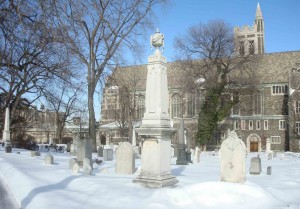

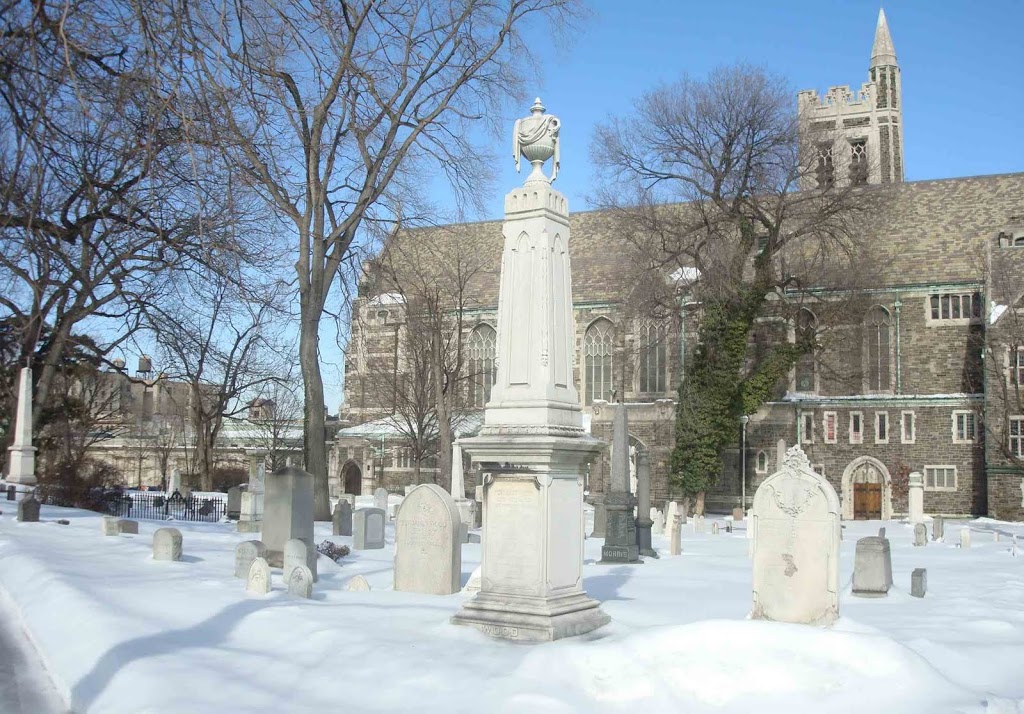
Above: A mighty obelisk to Fernando Wood, a man who once said, “The Almighty has fixed the distinction of the races; the Almighty has made the black man inferior, and sir, by no legislation, by no partisan success, by no revolution, by no military power, can you wipe out this distinction.”

MANHATTAN
Dear ole Ed Koch will have some unique companions at
the Trinity Church Cemetery at West 153rd Street, sharing the location with two of New York’s most notorious office holders of all time. Fernando Wood (mayor from 1858-1858 and 1860-62), who famously recommended that the city secede with the South, is interred here, as is ‘Boss’ Tweed’s most elegant right-hand man, Abraham Oakey Hall (1869-1872). Nice company, Ed!

Downtown Manhattan cemeteries keep a few mayors around as well. In the East Village, at the New York Marble Cemetery, the “oldest public non-sectarian cemetery” in the city, you’ll find the remains of Whig representative Aaron Clark (1837-39), while the man who succeeded him as mayor, Isaac Varian, (1839-1841), resides down the street at its similarly named cousin, the New York City Marble Cemetery, along with sailmaker-mayor Stephen Allen (1821-24).

Philip Hone, known more for his observant diaries on New York than for his mayoralty (1826-27), gets a treasured spot at St.Marks-On-The-Bowery, entombed close to the vault of fabulous New Amsterdam tyrant-leader Peter Stuyvesant.

Finally, Trinity’s original churchyard at Wall Street and Broadway — the final home to Alexander Hamilton, Albert Gallatin and Robert Fulton, among others — has one New York mayor among its population: the Revolutionary War hero Marinus Willett (1807-1808). The stone marking his vault, the size of a brick, is quite easy to miss.

BROOKLYN
To the surprise of few, the place which hosts the most deceased New York mayors is
Green-Wood Cemetery, which became the burial place of choice for the upper class in the mid-19th century. But when it first opened in 1838, Brooklyn still felt a bit too bucolic for some. Other families shied from its less than sacred credentials. After all, Green-Wood would become a place for a picnic or a nice stroll on a summer’s day; more pious folk preferred the reverence of a church yard.
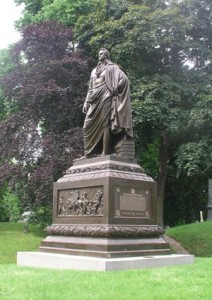
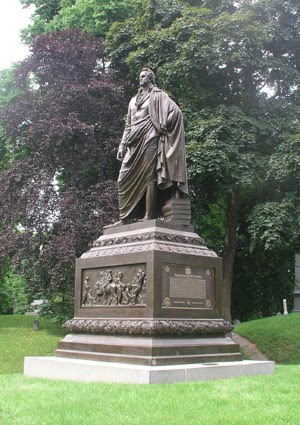
That is, until the body of former New York governor DeWitt Clinton (and mayor of New York from various periods: 1803-1807, 1808-1810, 1811-1815) was transferred from his resting place upstate to Green-Wood. Now a bonafide celebrity lay here: a child of the Founding Fathers’ generation and the driving force behind the Erie Canal. Society felt comfortable leaving their loved ones next to such a charming man for eternity. (Right: Clinton’s monument.)

A host of lesser mayors soon joined Clinton here. First came Andrew Mickle (1846-1847) and the anti-Irish mayor James Harper (1844-45), founder of a publishing empire.

Back-to-back mayors Ambrose Kingsland (1851-53) and shipping magnate Jacob Aaron Westervelt (1853-55) came along in the 1870s. Charles Godfrey Gunther (1864-65), the inspiration for the shortlived Brooklyn neighborhood Guntherville, is buried close to his more famous contemporary, publisher and reformer Horace Greeley.

The close ties between the Cooper and the Hewitt families remains even after death; you’ll find Peter Cooper’s son Edward Cooper (mayor from 1879-80) next to his brother-in-law and early subway proponent Abram Hewitt, the man who beat Theodore Roosevelt to become mayor from 1887-88. Both men were certainly acquainted with another Green-Wood resident, Seth Low, who was mayor of Brooklyn during Cooper’s tenure and eventually the mayor of the consolidated New York City in 1903-4.

Finally, the mayor who survived an assassin’s bullet to the throat, William Jay Gaynor (1910-13), has an odd marker in Green-Wood, according to the cemetery’s website, “a large open granite circle, on the ground. It is a variation on the Victorian symbol for eternity–a globe or circle that has no beginning and no end.”

Brooklyn is the borough with the most deceased New York mayors. And I’m not even counting Brooklyn’s own mayors, from before the 1898 consolidation*! You can find two more in Flatbush at the Catholic Holy Cross Cemetery. I imagine they’re very honored to have New York’s very first Irish Catholic mayor, the business savvy William Russell Grace (1880-82 and 1885-86), as well as the Col. Ardolph Loges Kline, the man who served briefly (a little more than three months in 1914) after Gaynor succumbed from his long-festering bullet wound.

*Brooklyn’s first mayor, George Hall, is buried at Green-Wood, as are several others.

BRONX
Woodlawn Cemetery was developed over 30 years after Green-Wood, but a great many wealthy and well-connected New Yorkers preferred its serene and pastoral setting. It’s the final home for businessmen (Rowland H. Macy), moguls (Jay Gould), authors (Herman Melville) and musicians (Miles Davis). And more than a few mayors.

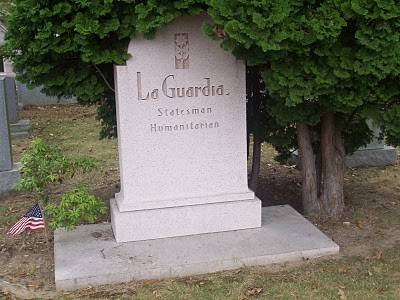
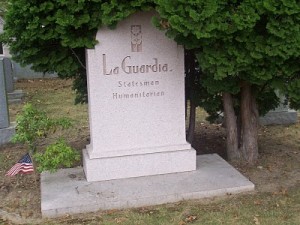
The man sometimes considered the greatest mayor of all, Fiorello LaGuardia (1934-45), is buried here with a modest tombstone hidden under a bush. It makes a striking statement compared to the elaborate and monolithic vaults scattered around it.

Woodlawn also has the unique distinction of containing the burial of Robert Van Wyck (1898-1901), the first mayor of the five-borough New York area. And the last two mayors of pre-consolidated New York (when it was just Manhattan and a few areas of the Bronx) are also around here: the “striking looking” pro-Tammany Thomas Gilroy (1893-94) and stern, anti-Tammany William Strong (1895-97), best known for hiring Theodore Roosevelt as police commissioner.

There are 19th century industrialists galore at Woodlawn, so it’s no surprise to discover Williamsburgh sugar king and three-time New York mayor William Havemeyer (1845-46, 1848-9) here, as is the man who served between Havemeyer’s two terms, William Brady (1847-48).
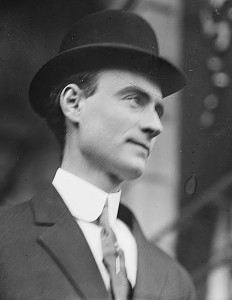

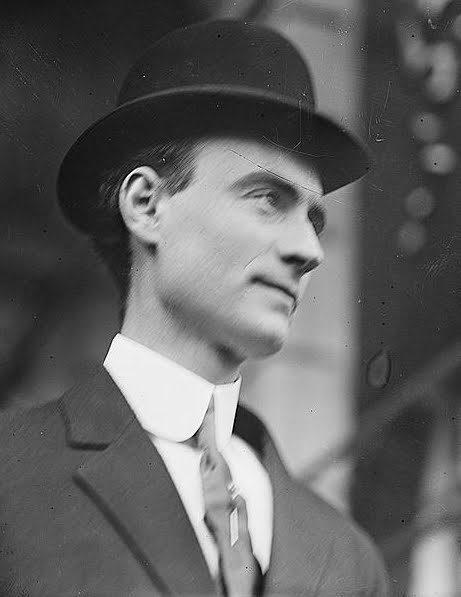
Finally, no visit to this quiet outlet in the Bronx is complete without searching out the ‘boy mayor’ John Purroy Mitchel (1914-17), an enigmatic figure in New York political history, who became mayor at age 35 and tragically fell out of a plane during military training before his 39th birthday. He’s also honored with an unusual gold bust in Central Park near the reservoir. (At left: Mitchel as mayor)

Mitchel’s stone has the curious inscription: “May His angels lead thee into paradise, which is thy home, for in Israel there is corruption.”

Further south from Woodlawn you’ll find Robert Morris** (1841-1844), a member of the famous Morris clan (as in Gouverneur Morris), buried in the family plot at St. Ann’s Episcopal Church in Mott Haven, the oldest church in the Bronx.

**This is something I need to confirm. Morris’ wife Ann Eliza Morris is buried at Green-Wood. There is a Robert Morris buried nearby, but the date of death does not match the former mayor’s.

QUEENS
Calvary Cemetery in Woodside, Queens, is closely tied to the parishioners of Old St. Patrick’s in Manhattan, who purchased a bit of farmland out in Queens County in 1846 to bury members of its large Irish congregation. In the last century, it was made famous for its afterworld connections to organized crime, both real (many famous mafioso are interred here) and imagined (it’s in The Godfather).

Two very different mayors are interred here, both born in Manhattan and both closely aligned with Tammany Hall: New York’s youngest mayor ever, Hugh J. Grant (1889-92), and Robert Wagner Jr. (1954-65).

Go a little ways east to Middle Village and to another Catholic grave site, St. John’s Cemetery, where you’ll find John F. Hylan (1918-25), a man of the railroad world who was pivotal in the creation of the IND, the first rapid transit line wholly owned and operated by the city.

Three other early 19th century mayors from well connected families are found in surrounding neighborhoods. At the small, colonial Grace Church Cemetery in Jamaica, meet up with good ole Cadwallader D. Colden (1818-21) next to a signer of the Constitution (Rufus King). Walter Bowne (1829-33), with deep family connections to the area, is buried at Flushing Cemetery, east of the home of his Quaker ancestor John Bowne.

But the most mysterious site is in Bayside. Here, at a small, sparsely wooded grave site, you can find a cluster of tombstones, many with the same name. The Lawrence Cemetery is on land owned by the family since the Dutch era. A small, bare obelisk marks the place where Cornelius Lawrence (1834-37) lays. He’s the first man every popularly elected mayor; before Lawrence, the job was appointed or voted on only by the Common (City) Council.

LONG ISLAND
Beyond the borders of the city and along the north shore of Long Island, you can locate a few other resting places of past city leaders. From west to east we have:
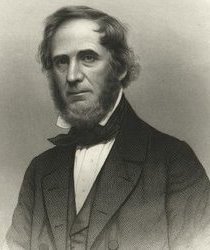
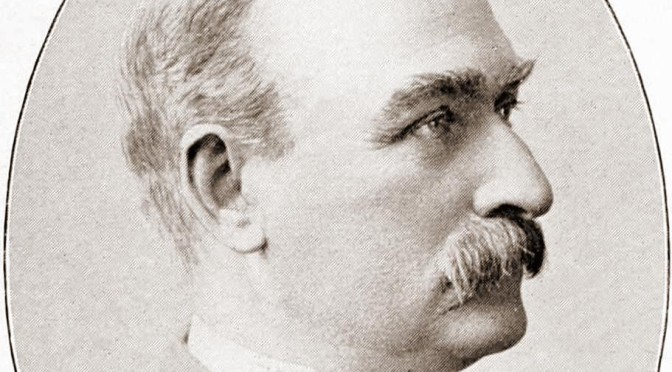
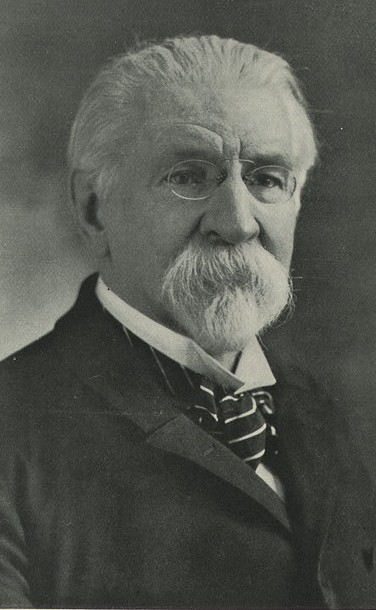
Daniel F. Tiemann (1858-60), “the paint king of New York and a member of the Peter Cooper clan by way of marrying Peter’s niece, is not buried in Green-Wood with the rest of Cooper/Hewitt dynasty. Instead you can find him in the old village of Hempstead, at Greenfield Cemetery. However I’ve not yet figured out why he would be interred all the way out here. (Tiemann at right)

John Lindsay, the ‘fun’ dashing, ambitious and often controversial mayor from 1966-1972, rests along a winding road near Cold Spring Harbor, in a small rustic cemetery near St. John’s Church.

William H. Wickham (1875-76), an anti-Tweed Democrat and an early president of the formative New York Fire Department, was born in Smithtown and was returned for burial there in the town’s small and very lovely cemetery.

Caleb Smith Woodhull (1949-51), who ineffectively looked on during the Astor Place Riots, was a landowner in Miller Place on the north shore and is buried nearby at Ceder Hill Cemetery overlooking the fantastic Port Jefferson. Fun fact: a member of the local historical society dressed as Mr. Woodhull during the burial ground’s 150th anniversary last year. [There’s even a picture!]

UPSTATE
A large number of former statesmen are scattered throughout the state, with a large concentration in the Hudson River Valley, close to the modern borders of the city.

For afficianados of Prohibition era politics, look no further than the Gate of Heaven Cemetery in Westchester Country, which opened in 1917 and quickly attracted some big name interments. One of the first was that of actress Anna Held, former companion of Florenz Ziegfeld. Other iconic New Yorkers like Babe Ruth, James Cagney and Conde Nast are also here.

Jimmy Walker (1926-1932), the posh ‘Beau James’ and symbol of New York’s roaring ’20s, died in 1946 several years after resigning from politics due to corruption charges. He’s buried at Gate of Heaven under a tombstone he might have considered far too modest. Coincidentally, the two men who briefly filled the mayors seat after him, Joseph McKee (1932) and John O’Brien (1933), also followed him here.

Sleepy Hollow contains one of the oldest cemeteries in the country, the rustic Old Dutch Burying Ground, and within it, one mayor of New York, the brigadier general William Paulding Jr. (two terms 1825-26, 1827-29), who fought in the War of 1812. A short drive north is the lovely riverside town of Ossining and its 160-year old Dale Cemetery, the final home for former mayor and governor John Hoffman (1866-68), whose close associations with the Tweed Ring corroded his political career.

Due north, in Rhinebeck, you’ll find the family vaults of the Livingston family, including that of Edward Livingston (1801-03), who reinvented himself after his tenure, becoming the U.S. Secretary of State under Andrew Jackson.

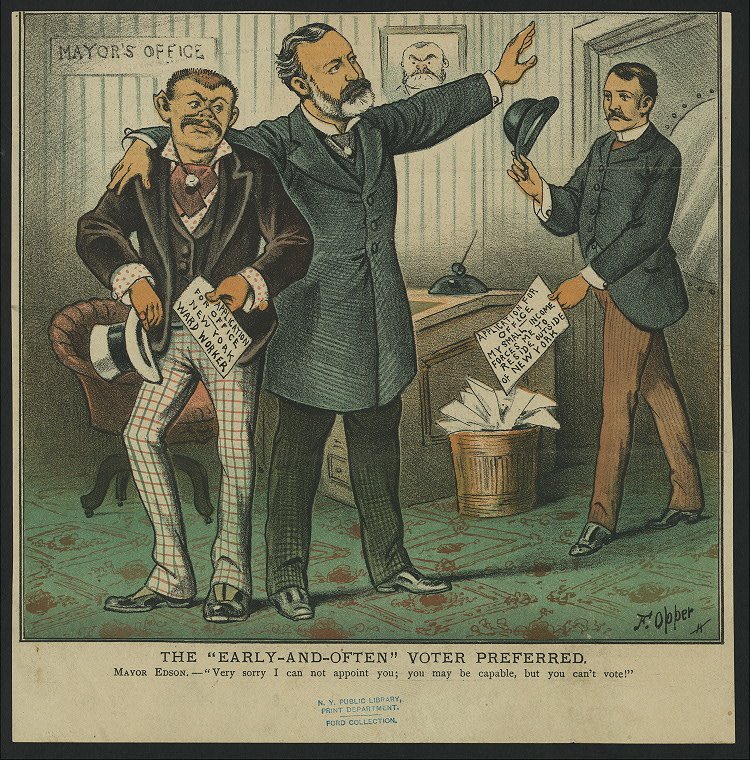
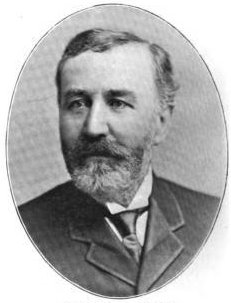
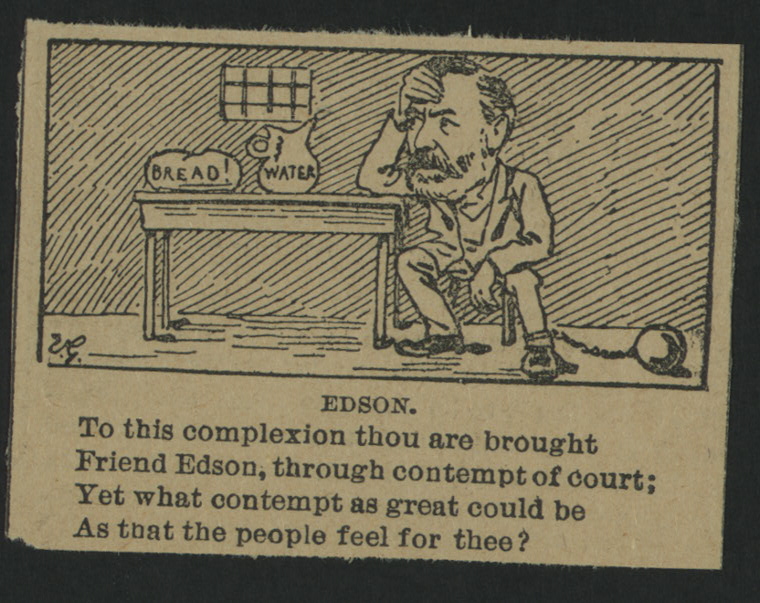
Other old mayors buried throughout the state include leather-maker Gideon Lee (1833-34) in Geneva, NY; Tammany pawn John Ferguson (1815) in Sullivan, NY; and father of the Bronx park system Franklin Edson (1883-84) in Menands, NY, near Albany.

Finally, New York’s first post-British mayor, James Duane (1784-89), the namesake of Duane Street, also gave his name to an entire town, Duanesburg, near Schenectady. Duane had hoped the town would become New York’s capital city, before Albany was chosen in 1797 (the year Duane died). Appropriately, he is interred here, at the rustic, old Christ Episcopal Church.
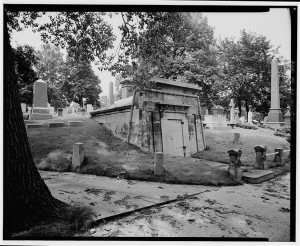
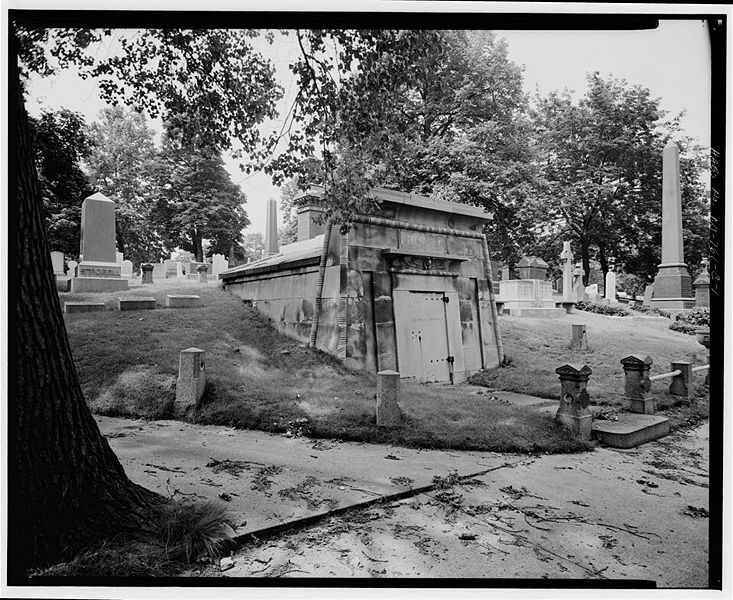
Above: the vault of George Opdyke, in Newark, NJ

OUT OF STATE
Finally, at least six former mayors are buried out of state but remain a short trainride away. For instance, the Sicilian-born Vincent Impellitteri (1950-53), moved to Connecticut after his tenure and is buried in a Catholic cemetery in Derby (Mount St. Peters).

In New Jersey, you’ll find the vault of Civil War mayor George Opdyke (1862-63) at Mt. Pleasant Cemetery in Newark, and the unsuspecting former aide to Benedict Arnold and long-lasting mayoral figure Richard Varick (1789-1801) at the historic First Reformed Dutch Church burial ground in Hackensack.

The slight figure of Smith Ely Jr., may have been New York mayor from 1877-78, but he’s New Jersey born, and he died there one hundred years ago, in 1911. Ely ruled the city the year Boss Tweed died, and he famously refused to lower the flags to half-mast for the Tammany Hall trouble maker. The former mayor and commissioner of Central Park is buried under an imposing monument on his family’s estate, now the Ely Cemetery, in Livingston, NJ.

And finally, we come to two men whose final resting place is the furthest from the city, but its location is an honor indeed — Arlington National Cemetery. William O’Dwyer (1946-1950), actually ran for New York mayor in 1941. When he lost to LaGuardia, he enlisted in the army, becoming a brigadier general, thus making him eligible for burial at Arlington. (I guess they overlooked all that nastiness about his alleged mafia connections.)

George McClellan (1904-09) ruled the roost during the height of New York’s gilded era and was there — literally driving the train — at the opening of the New York subway in 1904. George never fought in any wars, but his father George B. McClellan sure did. And it’s that connection that puts him in the most prestigious cemetery in America.

AND STILL LOOKING FOR….
There are a few that I was unable to locate, and if you have any information regarding any of them, just leave me a note below and I’ll update this article. I’m afraid I may never find the locations of lesser figures like either
Thomas Coman (1868) and Samuel B.H. Vance (1874). Coincidentally, both men were interim mayors, serving only one month apiece.

But two full-term mayors have eluded me as well. One is Jacob Radcliff (1810-11, 1815-18), one of the first true Tammany Hall puppets. And believe it or not, information regarding the location of New York’s first Jewish mayor Abraham Beame (1974-77), who just died in 2001, escapes me.

MAP IT!
I’ve put most of the locations above on a Google map. Most markers are approximate and in the case of some small towns, I’ve placed the marker in town center instead of the cemetery in questions — sometimes hard to find in a satellite view.

View Burial sites of New York City mayors in a larger map

Mayor Thomas Gilroy: printer’s devil, and Tammany’s, too

KNOW YOUR MAYORS Our modest little series about some of the greatest, notorious, most important, even most useless, mayors of New York City. Other entrants in our mayoral survey can be found here.

Mayor Thomas Francis Gilroy
In office: one term 1893-1894

When it comes to corruption, you can’t get more front and center than Thomas Francis Gilroy. His political education came from the most dishonest names in public service, he was elected mayor in one of the most rigged elections in New York history, and he reigned as a mere figurehead controlled by the ruling political machine. There is little to distinguish him but for his uncanny knack of latching on to the most corrupt men in government.

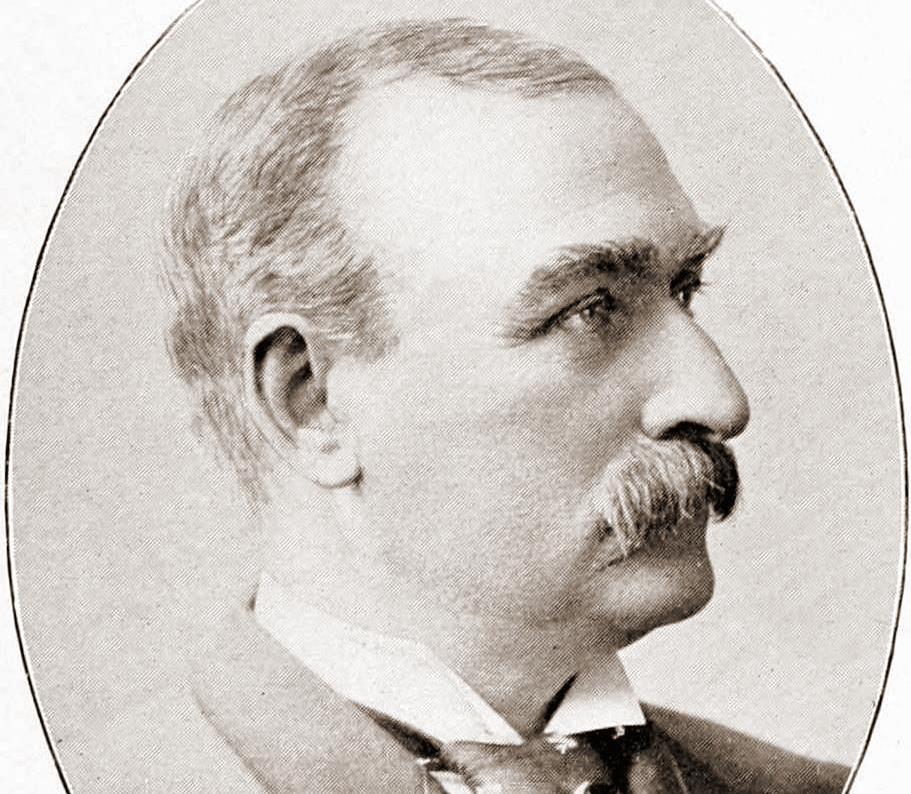
But didn’t he look dashing! “Gilroy was one of the most striking looking mayors this city has ever had, with iron-gray hair, a heavy mustache, a well-knit erect physique and ruddy cheeks,” according to his obit.

In the alternating crests of corruption and reform in New York City government, Gilroy rose when wrong was king and kept his head low every time else. It might have been different for Tommy, as his chums called him, if not for the connections of Boss Tweed, the notorious head of Tammany Hall and the embodiment of New York machine politics.

Gilroy was a bit of a rarity for the late century, a mayor born in another country but of a nationality greatly valued by future Tammany leaders. He was seven years old in 1847 when his parents brought him over from Sligo, Ireland, just one of millions of Irish newcomers at the beginning of a mass wave of immigration that would last decades.

As a teenager, sometime in the 1850s, he began on-the-job training as a printer’s devil for a young, well-known publishing company, G. Putnam Broadway*, who would produce work by Edgar Allen Poe, Nathaniel Hawthorne and most notably to Gilroy, Washington Irving. According to Gilroy: “They were getting out Irving’s ‘Life of Washington’ [the writer’s bio on George Washington] to be sold on subscription. It was a godsend for me to be in a bookstore. I read everything I could lay my hands on.”

“I don’t believe I was a very good servant though, for as soon as the subscription business was done, the publishers let me go.” Gilroy is being modest here; he would be a most excellent servant to the political machine.

He moved onto other publishers and by 1864 had become a proofreader. It may have been through his publisher that he made his introduction with city politics, and Tammany Hall in particular. He soon moved on to a useless city job, his title ‘sixth clerk to the Croton Aqueduct Department’, one of hundreds of padded government jobs requiring no conceivable skills except mendacity and blind ambition.

Gilroy’s home in the 1860s at the corner of Broome and Mott streets would have placed him near the epicenter of immigrant life in New York, which may suggest his usefulness within Tammany. Tommy was the boilerplate Irish American that Democrats liked in their ranks and lusted after during elections.

He became a confidante of Boss Tweed’s in early 1870, at the height of the notorious boss’s power as the city’s commissioner of public works. Apparently not busy enough in his Croton Aqueduct duties, Gilroy served as Tweed’s personal ‘messenger’, delivering the type of ‘messages’ one can only imagine and marvel at.

Tweed was arrested in the fall of 1871, but Gilroy had already moved on, as clerk and personal secretary to state senator Herry Genet (at right). Sometimes nicknamed ‘Prince Hal’, Genet was left picking up the pieces of a tattered political machine in the wake of the Tweed scandal and would himself had been shipped off to prison in 1873 on corruption charges had he not escaped from jail and fled the city. (He was eventually caught years later.)

After these associations, Gilroy kept a lower profile, but always worked within the Tammany system, damaged by the Tweed scandals. He became a Mott Haven court clerk in 1874 — the year it was annexed by New York — and observed this Bronx neighborhood grow from an industrial backwater to a tony residential area.

Below: a home in Mott Haven, circa 1890 (NYPL)

People generally have a short memory when it comes to government corruption, and by the mid 1880s, Tammany Hall was back in full swing. Gilroy took a cozy clerk job closer to City Hall in 1885, benefiting financially from the kind of kickbacks perfected by the Tweed Ring.

He was so snug with Tammany that he was chosen by Boss William Crocker to oversee the campaign of Hugh Grant, who became mayor in 1889. As a reward, Grant make Gilroy commissioner of public works — the same job Boss Tweed had once held! And just to make the parallel complete, he became Tammany’s grand sachem in 1891. Make no mistake however; the man behind the curtain — behind both Grant and Gilroy’s ascensions — was Crocker.

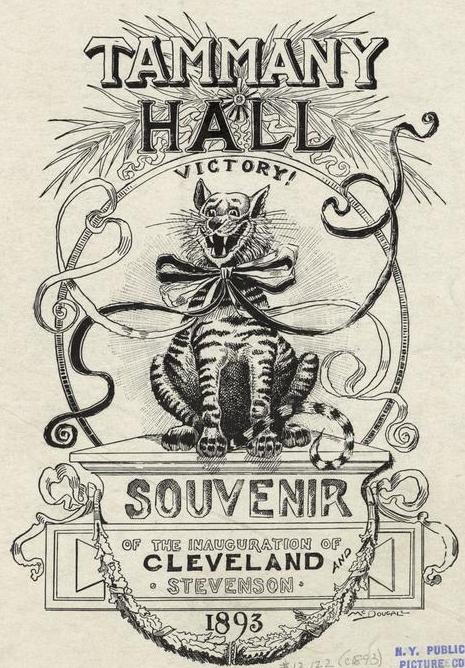
According to Oliver Allen: “There was no question that the good times were now rolling for Tammany Hall; it could hardly lose an election.” Crocker decided, after two two-year terms of Grant, that Gilroy should replace him, and rigged the election to assure that victory, crushing his republican opponent Edwin Einstein. In fact, in one Lower East Side district, 389 votes went to Gilroy and three to another candidate. Croker vowed he would find out who those three voters were. (Also on the ballot that year: Grover Cleveland for president, see 1893 souvenir print below)

Gilroy kept things status quo, for Tammany, that is. According to Burrows and Wallace, City Hall distributed funds from “municipal employees and saloonkeepers” by city charities in need although stopped short of initiating a promised jobs program to deal with a growing unemployment rate. He rejected calls for improved public baths and additional schools, this in a decade of massive immigration swells.

Gilroy is notable only for coming in at the end of Tammany’s moment of glory. He had inherited a deeply corrupted police force, so ineffective that a state commission was called in 1894 to expose the deep fissures. The Lexow Committee would eventually uncover an institutional system of “extortion, bribery, counterfeiting, voter intimidation, election fraud, brutality, and scams.” All of it, naturally, inextricably tied together with Tammany leadership.

Gilroy tried desperately to turn the tide by appointing a ‘bi-partisan’ board of police directors, Democrats and Republicans. This paltry concession persuaded no one. By the next election, New York was a reform mood. In fact, Gilroy didn’t even bother running again; after briefly putting Macy’s president Nathan Straus on the ticket, the Democrats replaced him with also-ran Hugh Grant.

To no avail; Tammany’s nearly decade-long reign was (temporarily) over, as gruff reform candidate William Strong won handily. (The story picks up in my article on Strong’s tenure as mayor.)

Gilroy had played his last political card by this time. After a short stint as a bank president, Tommy retired to his homes, one on West 121st Street and another on Far Rockaway, where he died on December 1, 1911.

*The company still exists today as a division of the Penguin Group: Penguin Putnam Inc, frequently publishing juvenile literature

Mayor John O’Brien: his heart is as black as yours!

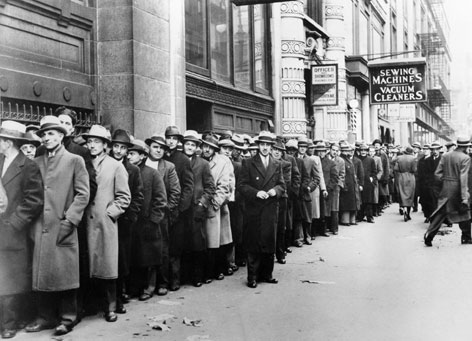
Above: An unemployment line in November 1933. The O’Brien administration offers no relief to the city.

KNOW YOUR MAYORS Our modest little series about some of the greatest, notorious, most important, even most useless, mayors of New York City. Other entrants in our mayoral survey can be found here.

Mayor John Patrick O’Brien
In office: 1933

There’s not much to say about New York mayor John P. O’Brien that’s very positive. He’s one of the most forgettable mayors of the 20th century. But I haven’t forgotten!

His obscurity is partially due to his length of term; he was mayor for only a year. But thank goodness. He was the last pure mayoral puppet of Tammany Hall. His blandness is further accentuated by the fact that his duration of mayor is sandwiched between that of the debonair Jimmy Walker (1926-1932) and the reformer Fiorello LaGuardia (1934-1945) — two men of great charm and strong personal narrative.

What makes his mediocrity less than humorous is the fact that O’Brien governed the city during the pitiful year of 1933, the last truly disastrous year of the country’s greatest depression, a year when the nation’s unemployment rate actually hit 25%.

His predecessor Walker was a political illusionist, known more for his style than his substance. He hypnotized the city while keeping its corrupt, ineffective infrastructure churning. When no-nonsense, progressive judge Samuel Seabury exposed widespread malfeasance in the New York legal system, all roads eventually led to ‘Beau James’, who resigned in September 1, 1932. [More in the Know Your Mayors entry on Jimmy Walker.]

In the wake, Walker’s deputy mayor Joseph V. McKee was declared temporary office holder until a special election could be hastily prepared to find someone to complete Walker’s term. Normally, such wholesale exposure of corrupt Democratic leadership would have assured their immediate ouster at the polls; however, the anti-Tammany forces had yet to properly gel when the special election took place two months later in November 1932 — and the political machine was able to squeeze in one more elected representative.

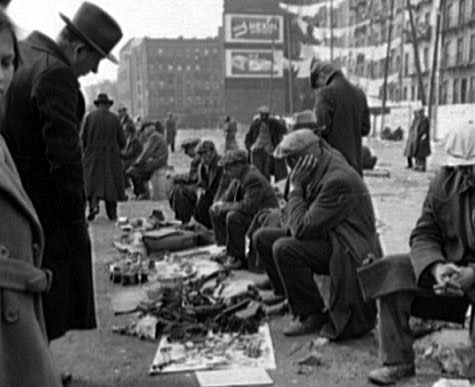
Below: New York in 1933, and it’s not pretty. Men selling their possessions on the street.

John O’Brien, a lawyer of some renown, was known as a quiet but obedient public servant. (“Loyal and industrious” according to Allan Raymond.) The man was stiffer than stiff, a devout Catholic who wore his holy medals everywhere, even on gym clothes. Born to Irish immigrants in Massachusetts in 1873, O’Brien graduated from Georgetown, moved to the city, and moved into and up through the ranks of the Democratic machine to become Corporation Counsel in the early 1920s. (A nice description of what the Counsel is can be found here.) He was later appointed a New York Surrogate Court judge.

As deputy mayor, McKee was merely a fill in. Even at veiled gestures that McKee would cut wasteful city jobs was too much for the liking of Tammany leaders, who often filled those very jobs. Also McKee was also from the Bronx. That will never do!, cried party leadership.

So they went hunting for a more malleable choice, and found O’Brien. With opposition scrambling for a real candidate for the full election a year later, O’Brien handily won the special election on December 1932, double the votes of his inept republican competitor, former Brooklyn borough president Lewis H. Pounds.

Square jawed” O’Brien went right to work — doing virtually nothing. Despite being in the midst of the Great Depression, little was truly accomplished. Even if he had wanted to do something — and there is no evidence he did — he was so beholden to his Tammany Hall masters that he had little latitude for change. Those jobs he did eliminate were those least interesting to his Democratic overlords, namely school teachers.

He did secure a agreement with private banking firms to continue loaning to the city until 1937, so long as the city stopped raising real estate taxes. This balm merely disguised a rueful out-of-balance city budget that would weigh heavily upon his successor. Even worse, emergency relief funds from the federal government (what we would call ‘stimulus money’ today) was re-routed to the pockets of Tammany rank-and-file, dispersed almost at random instead of places in the city of greatest need.

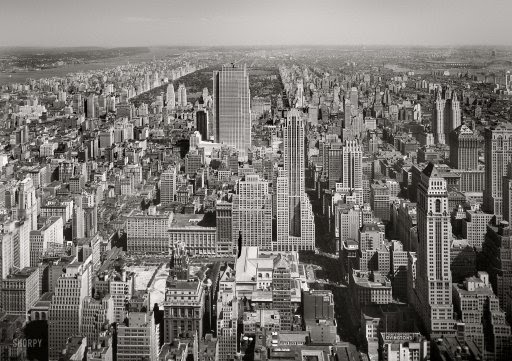
Below, midtown Manhattan in 1933 (Pic courtesy Shorpy)

By design, O’Brien was selected in contrast to slick party hound Jimmy Walker. Unfortunately this also meant that the party was over, that “a pious, laborious dullard” occupied City Hall, “a hack given to malapropisms,” according to George J. Lankevich.

To African-American crowds in Harlem, O’Brien proclaimed proudly, “I may be white but my heart is as black as yours.” To Jewish constituents, he herald the talents of ‘that scientist of scientists, Albert Weinstein.”

Even worse, he was apparently not bright enough to disguise the Tammany strings affixed to his back. Famously (in fact, it’s the soundbite he’s most known for), O’Brien, when asked by the press who New York’s new police commissioner would be, replied, “I don’t know. They haven’t told me yet.” D’oh!
By the end of his term, O’Brien had wasted any shred of credibility he might have had. Yet Tammany stuck with him going into full election in November 1933. A fusion coalition of Republicans and anti-Tammany Democrats had the upper hand going into the election. Their first pick for mayor was young parks commissioner Robert Moses (who called O’Brien “a winded bull in a china shop.”) Moses was considered too divisive, even back then, so Samuel Seabury, revered voice of the fusion ticket, convinced party leadership to switch to a mayoral also-ran, former city alderman and house representative Fiorello La Guardia.

La Guardia had run for mayor before and lost — in 1929, to Jimmy Walker! The stock market crash had occurred two weeks before election day, and Walker was still charming. This time, however, La Guardia had the winds of reform carrying him.

O’Brien, naturally, stood no chance. In the final outcome, even former temp-mayor McKee, as a candidate for the hastily assembled Recovery Party, beat him. It was the most crushing defeat of a Democratic hopeful in decades.

The start of La Guardia’s term in 1934 would usher in the beginning of the end for Tammany Hall. O’Brien, for his part, remained faithful to his party to the end, even serving as a delegate to the Democratic National Convention a few times. Having rescued his reputation by returning to law in his later year, O’Brien lived in the Upper East Side until his death there in September 27, 1951.

100 Years Ago: Somebody actually shot the mayor

New York City started 2010 with an important bit of ceremony: the swearing-in of Michael Bloomberg. One hundred years ago, New Yorkers did the same thing, but with a new face — former state Supreme Court judge William Jay Gaynor, replacing George B. McClellan.

I did a whole Know Your Mayors posting about Mr. Gaynor awhile back, so I won’t elaborate too much about his biography here. However, just eight months after taking the job, on August 9, Gaynor was almost killed by an assassin’s bullet. As I originally wrote:

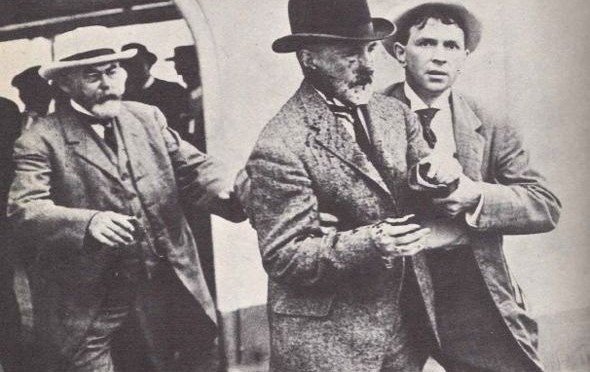
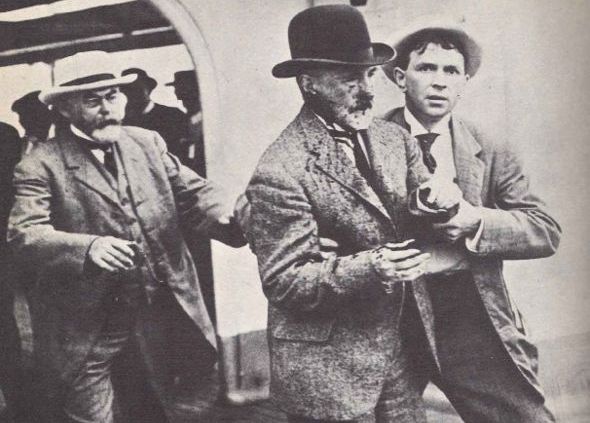
“While vacationing on the ocean liner SS Kaiser Wilhelm der Grosse, a disgruntled city employee James J. Gallagher, fired from his job on the docks, took out his frustration on Gaynor, shooting him through the back of the neck. Gallagher claimed, “He took away my bread and meat. I had to do it.” Really, James?

Unbelievably, a photographer for the New York world William Warnecke happened to catch the incident, which quickly became one of the most startling photographs in the short history of photo-journalism. [The photo above!]

Gaynor recovered somewhat, although the bullet would remain lodged in his throat, and for his entire term of mayor, he would remain weakened and haggard. He would even use the injury as a reason to get out of discussing delicate subjects, saying, “Sorry, can’t talk today. This fish hook in my throat is bothering me.”

Somebody should have advised Gaynor, however, to avoid ocean liners altogether. On Sept. 4 1913 he boarded the Baltic for yet another oceanic vacation and six days later was found dead on a deck chair, his body finally giving in to lingering internal injuries. Curiously, Gaynor’s would-be assassin Gallagher had died just a few months prior — at an insane asylum in Trenton, New Jersey.”

Read the rest of the piece here

Other political stories of 1910:

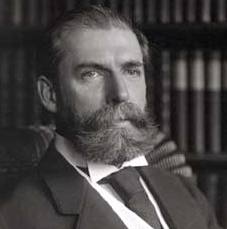
This was the final year in the term of New York governor Charles Evans Hughes (pictured), but it was hardly the last anybody would hear of the distinguished New Yorker. After an unsuccessful bid for president of the United States in 1916, President Warren G. Harding made him Secretary of State in 1921. Then he became the Chief Justice of the Supreme Court in 1930, where he resided over the greatest court in the land for an entire decade, helping bring Franklin D. Roosevelt’s New Deal policies to life.

What a surprise: corruption in the New York state senate! Senate Majority Leader Jotham P. Allds resigns on March 29, 1910, after it’s revealed that he took bribes from bridge construction companies to kill some undesirable legislation. In April, other senators, including notorious Lower East Side power broker “Big Tim” Sullivan, are implicated in several other bribery schemes, involving streetcar and fire insurance companies.

Capping it off is testimony in September 1910 that several lawmakers, with Williamsburg senator Patrick Henry McCarren smack in the middle, were given “a legislative corruption fund of $500,000” in early 1909 — during a dinner at Delmonico’s Restaurant, no less — to squash some critical anti-race track gambling legislation.

Nobody was censured — and McCarren had died in late 1909 — but the largely Republican scandal was probably key in getting a Democrat, John A. Dix, into the governor’s seat the next year.

[You can find all the juicy details in Gustavus Myers’ wonderful History of Tammany Hall.]

—-
AND SPEAKING OF RATS…

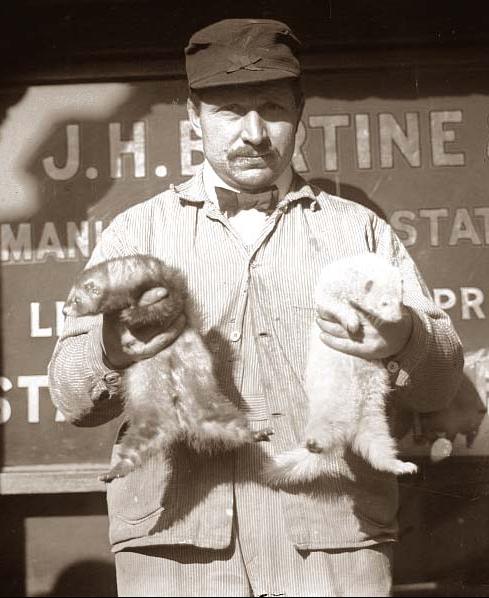
ABOVE: A New York City ratcatcher, photo taken during the 1910s, but those don’t look like rats to me. In fact, I think the ferrets are used to sniff out vermin. (Picture courtesy the great Old Photos blog)

And finally, for no reason other than humor, I present to you a letter that Mayor Gaynor wrote in March 20, 1910, to one Charles M. Frey, noted and ‘learned’ city ratcatcher. Imagine Mayor Bloomberg penning such a missive to one of his constituents:

“Dear Mr. Frey, Your letter of March 15 is at hand, describing how your calling of ratcatcher is being constantly interrupted by your being summoned to serve as a juror.

Sooner than have the city overrun with rats and everything eaten up by them I would have you relieved of jury duty. Do you not think we had better have a bill introduced in the Legislature to exempt ratcatchers from jury service?

The difficulty is, however, that so many exemptions have already been passed by the Legislature that there seems to be only ratcatchers and a few other people left to serve on juries. That might possibly impede the progress of your bill if sent to Albany.

I will have to carefully consider the matter, and some day when you are down this way, come in and we will talk it over, and also about rats. I see that you are a classical scholar, judging by the motto at the head of your letter. My experience is that learned men are to be found everywhere. As we read in Don Quixote: “The mountains breed learned men and philosophers are found in the huts of shepherds.”

[More of Gaynor’s fascinating correspondence here.]

Voted down: Six New York City mayoral wannabes

By the end of the day today, one person will be named the mayor of New York City and many other people will be named the losers.

But take heart! Many fine people have lost the race for mayor. Today I focus on six rather interesting ones. Reverend Billy, take stock! If you lose today, you join the good company of the following people:


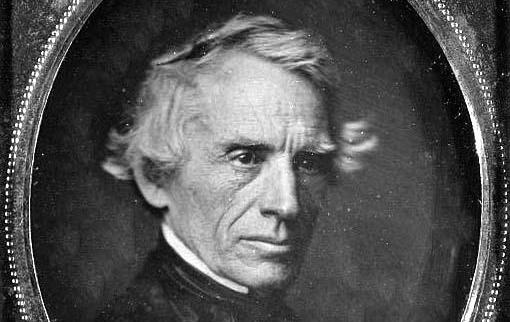
Samuel F.B. Morse
Sure, we know him as one of the 19th century’s most important inventors, creator of the telegraph and the dots and dashes that bear his name. But did you also know Morse was a virulent anti-Catholic and was once a mayoral candidate in 1836 for the Native American Party — in this case, ‘native’ American meaning anybody not newly immigrated? He saw Catholic conspiracies everywhere. People were not convinced; he received less than 1,500 votes. (He would run again in 1844 and not even muster 100 votes.)

Why he lost? As he had not achieved name recogniztion yet, his campaign against Tammany-backed Cornelius Lawrence was doomed from the start.

If he won… Morse was also a prolific portraitist and could have done his own to hang in City Hall


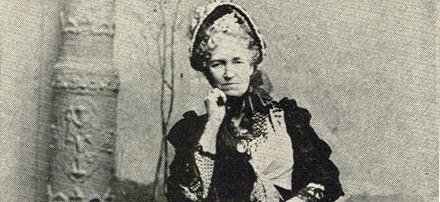
Cynthia Leonard
A political thinker, sufferagette and stage mom, Leonard played by her own rules. Nobody was going to tell her that a recently seperated woman couldn’t move to New York with her two lovely daughters and run for mayor of New York City in 1888! Why hasn’t Meryl Streep made this woman’s movie yet?
Why she lost? Being a rich New York woman in 1888 might have granted you social powers, but few political ones
If she won… The newspapers would have ignored her and written all about her daughter — the glorious Lillian Russell, who the press was already obsessed with. Most likely, her daughter’s ambiguous affair with Diamond Jim Brady would have scandalized New York more than it already did.


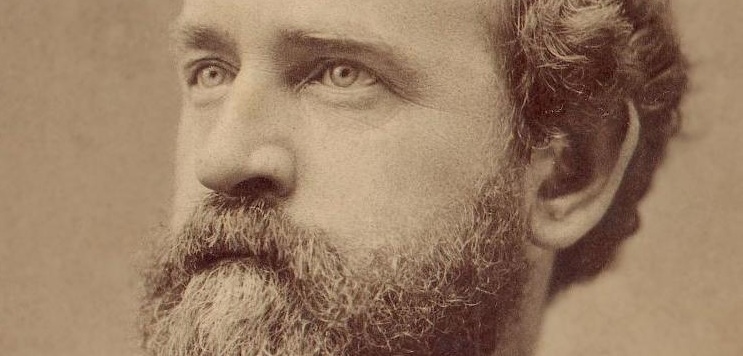
Henry George
The political economist and founder of philosophical land theories appropriately named Georgism desperately wanted to share his vision with New Yorkers, running for mayor in 1886 under the United Labor Party, and actually beat out a young politico named Theodore Roosevelt. Both lost to Abram Hewitt. He ran again in 1897 under the far more ambitious party title The Democracy of Thomas Jefferson.
Why he lost? The first time, he didn’t have Tammany’s backing or Hewitt’s appeal. In 1897, there was another minor snafu; George died four days before the election, of a stroke brought on by campaigning.
If he won… The city would have been ran by his son, Richard F George, who stood in for his dead father.


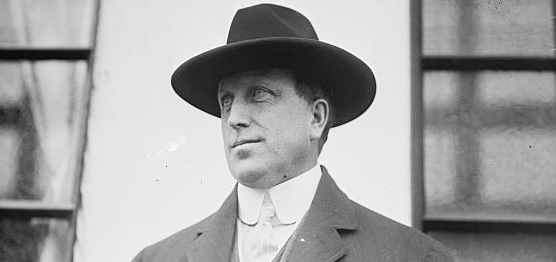
William Randolph Hearst
Perhaps more ingraciously known as the inspiration for Citizen Kane, newspaperman and millionaire Hearst couldn’t buy himself the mayor’s seat, believe it or not, running in 1905 and 1909 under the fleeting Municipal Ownership League and Civic Alliance parties, respectively
Why he lost? Tammany Hall was re-ascendant at the turn of the century, and Hearst their biggest enemy.
If he won…One of the richest men in America and owner of a media empire as mayor? Never happen. ALSO: Citizen Kane might have been even more interesting.


Robert K. Christenberry
Thrown to the wolves as a token Republican candidate against a popular incumbent Robert Wagner, Hotel Astor manager Christenberry was crushed by his opponent, receiving slightly more than 25% of the vote.
Why he lost? He wasn’t the most politically saavy man who ever lived.
If he won…He would have been the first mayor with no right hand (he lost it in the war)


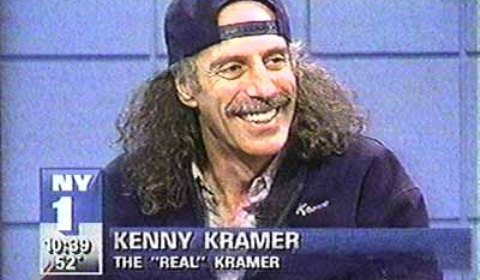
Kenny Kramer
The man who inspired a character on Seinfeld threw his ballcap into the ring as the Libertarian Party candidate in 2001.
Why he lost? For one, the man who won, Bloomberg, is a billionaire. Also, Kenny may have had a credibility problem. When he tried running in 1997 — with Seinfeld still on the air — the Daily News ran an article ‘No Joke! Real Life Kramer’s Running
If he won…then who would run the Seinfeld Reality bus tours?

Mayor Westervelt: “Police officers must wear uniforms!”


KNOW YOUR MAYORS Our modest little series about some of the greatest, notorious, most important, even most useless, mayors of New York City. Other entrants in our mayoral survey can be found here.

Mayor Jacob Westervelt
In office: 1853-1855

Dutch-blooded Jacob Aaron Westervelt, 24th man to become mayor of New York since the British evacuation of 1783, lived in a two-family home at 308 East Broadway near Grand Street. This seems like a rather odd spot for a mayoral residence today, and perhaps even then. Today there is no 308 East Broadway, there’s only a grim-looking public school and a barren traffic island.

But there are some surviving row houses just down the block — preserved Federal-style buildings at 247-249 East Broadway — so just imagine a fancier version of these on the spot that Westervelt’s residence once stood, many years before this neighborhood would become associated with squalor and overcrowding.

Now image this: an angry mob of 5,000 men with torches, surrounding this very home in the winter of 1853, painting a cross on the doorway and crying for his head. His crime: he sides with Catholics. Scandal! What would a mayor have to do garner that sort of reception today?

Westervelt is better known today for his original profession as master ship-builder. Few men who served as mayor of New York were better regarded internationally as Westervelt, who once received an honor from the king of Spain for making them some of the fastest ships in the sea.

Jacob was born twenty days into the year 1800 in Tenefly, New Jersey, but moved with his family into New York when he was only four years old. His father was a builder and constructed several new homes along Franklin Street, near the area being drained of that marshy, polluted mess known as Collect Pond.

By age 14, Jacob was apprenticing with famed shipbuilder Christian Bergh at his shipyard off Corlear’s Hook — not coincidentally more than a few blocks from Westervelt’s later residence as mayor.

Bergh would spawn one of New York’s wealthiest families, although incongruently his son Henry Bergh would become the best known member — as the founder of the American Society for the Prevention of Cruelty to Animals. Henry is also known for this weird mausoleum at Green-wood Cemetery.

The Berghs would eventually abandon shipbuilding after Christian’s death. His young apprentice Jacob would carry the torch for him, eventually taking over Bergh’s shipyards, expanding with other business partners up and down the East River shore, and using southern American and European connections to soon dominate the shipbuilding business. By 1845, Westervelt had overseen the construction of dozens of clippers, schooners and steamships, among the fastest and most reliable on the Atlantic Ocean.

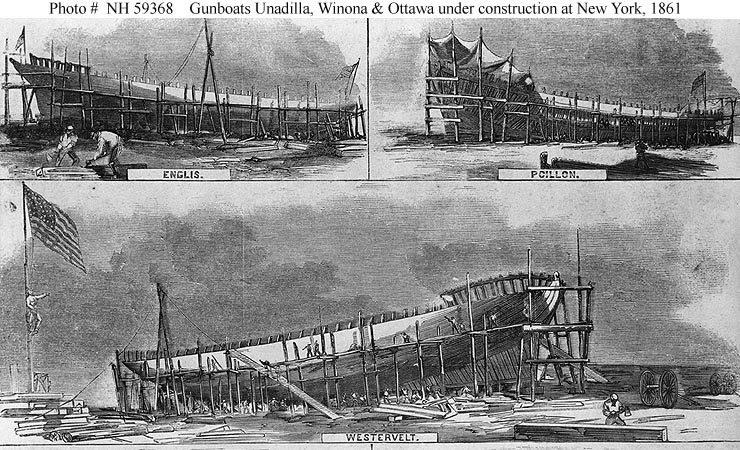
Below: an illustration of various boatbuilders in 1861, including Westervelt at bottom

As a pioneer of reliable and innovative shipping vessels, Westervelt’s influence was felt internationally. In the world of mid-19th century politics, that made him an ideal candidate for public office, and especially to Democratic machine Tammany Hall. As one of Manhattan’s most visible men of industry, Jacob employed hundreds of new Irish immigrants, Tammany’s prime voting bloc. In fact, Westervelt had already briefly served as council alderman for his district in 1840.

In 1852, Tammany could use a man of relatively unblemished character. The stench of corruption was already swirling around the powerful, entrenched Democrats in office — and this was in the years before Boss Tweed! Derisively known as the Forty Thieves**, the Democratic aldermen in City Hall were easily and openly bought, by everyone it seems but the mayor at the time, anti-Tammany reformer Ambrose Kingsland. City expenditures swelled, the elaborate web of political kickbacks and bribery gelling during this period.

But Tammany was looking to start fresh — or at least strike the apperances of doing so — choosing Westervelt as their reform-lite candidate in 1853, a symbol of prosperity in a wobbly New York economy. Westervelt, on the surface, looked like somebody who could quell the city’s massive over-expenditure. On the strength of a surging Democratic national ticket with presidential candidate Franklin Pierce, Westervelt was easily elected by the largest margin yet during a mayoral race, defeating the now-forgotten Whig Morgan Morgans.

Although, this being the 1850s, one can assume that total to be highly suspicious. “No registry law was in force to hinder men from voting…as often as twenty times,” claimed one early history.

Westervelt inherited several massive projects which were bloating the city budgets, including Central Park. Already a done deal when Westervelt entered office, the mayor sought to cut the park space in half due a bloated, overwhelmed city budget. Had Westervelt ruled the day, Central Park would have started on 72nd Street! His plans would be reversed a few years later by Mayor Fernando Wood.

More appropriately, Westervelt became president of a world’s fair in 1853, more specifically called the Great Exhibition of the Industry of All Nations and housed in the glorious Crystal Palace in the area of today’s Bryant Park. Having a man of industry preside over a fair of industry was both fortuous and apt; certainly examples of his own creations were displayed with other technological marvels of the age like the elevator.

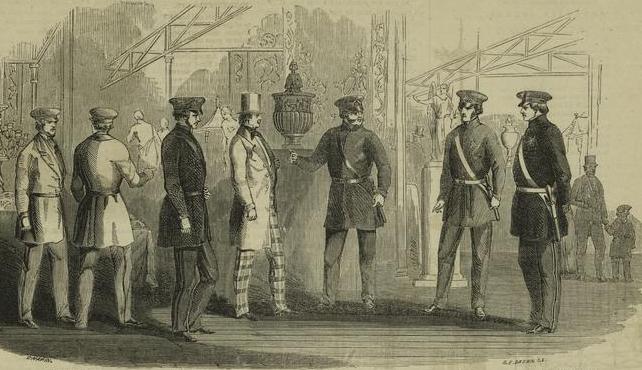
Below: the well-uniformed Crystal Palace police officers (pic courtesy NYPL)

One of the mayor’s lasting contributions was in New York police reform, creating a Board of Police Commissioners with himself in charge to apply a strict code of ethics to an already chaotic, corrupted body. In doing so, he wrangled away from his more corrupt Democratic brethren their ability to buy and sell police jobs as a form of political patronage.

But his most radical idea is today the most obvious: he mandated that every police officer should wear a uniform, an “expensive and fantastical” requirement according to his opponents who believed it “unrepublican to put the servants of the City in livery.”

Westervelt managed to make himself with one very unpopular with one group: the Know-Nothings, a ‘native American’ group who feared the swelling hordes of Irish and Catholic immigrants and the Catholicism they brought with them. The group would reach peak influence across the country in the mid-1850s, and they would actually gain significant political traction in other cities. In New York, they more often showed their moxie in the form of rioting.

The mayor earned their ire on December 11, 1853, when he ordered a street preacher arrested for gathering a group of 10,000 to listen to his frothing Know-Nothing spiel. It probably didn’t help matters that said preacher had organized on Westervelt’s own wharfs on the East River!

At the beginning of this article, I mentioned Jacob’s address — 308 East Broadway. A bit out-of-way of New York’s high society, sure, but Westervelt wished to be close to his ships. In fact, he and his partner Robert Connelly both built adjoining houses on this spot, facing Grand Street. According to Harper’s, “Over the door was a large stone cap on which was carved the representation of a ships taffrail.” (Taffrail is nautical for “the upper part of the ship’s stern“)

Thus, the angered Know-Nothing crowds were scant blocks from the mayors door. A reported 5,000 men gathered outside Westervelt’s home, demanding retribution and the release of the arrested preacher. To remind the mayor what this argument was all about, they painted a gigantic cross upon the door.

This story outlines Westervelt’s uneasy dual role as city leader and businessman. In 1855, the ships won out. Jacob bowed out, allowing Wood to finally ascend to the mayor’s desk for the first time. His best work as a shipbuilder was indeed ahead of him, though he would make brief returns into the political fray, first as a state senator, then in a newly created job in which he was most qualified — the New York commissioner for docks and ferries, from 1870 until his death in 1879. He died at his home on 63 West 48th Street, in the area of Rockefeller Center today.

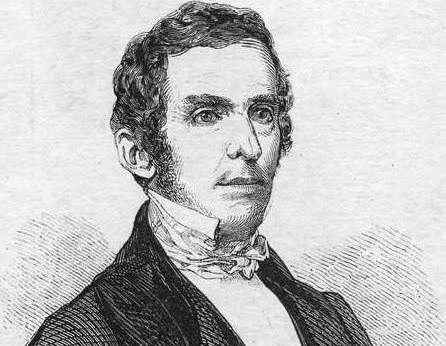
Pictured at right: Westervelt at age 70

** Not to be confused with New York’s first gang, also called The Forty Thieves

Mayor Charles Godfrey Gunther, Coney Island-bound

KNOW YOUR MAYORS Our modest little series about some of the greatest, notorious, most important, even most useless, mayors of New York City. Other entrants in our mayoral survey can be found here.

Mayor C. Godfrey Gunther
In office: 1864-1865

His past glories were built on a mountain of fur pelts, and his future would wash up on the half-developed shores of Coney Island. But in 1961, it was Civil War that nearly derailed the political career of Charles Godfrey Gunther.

The groundwork was laid in 1857 by former mayor Fernando Wood, who rebelled against Tammany Hall, the Democratic machine he formerly led, to form his new political organization called Mozart Hall. This assembledge of working class reformers and Wood devotees elevated him back to City Hall in 1960, returning to the seat of power occupied by German paint mogul Daniel Tiemann, who had unseated Wood back in 1857.

Back in business, Wood heralded a feisty pro-South, anti-abolitionist stance, pitting himself against Albany and threatening to secede Manhattan from the state.

By the election of 1861 however, a swell of national support for the Union cause turned against Wood. The Democrats were in a precarious spot, splintered between rival Democratic groups. It’s here in our story where we introduce Charles Godfrey Gunther, Tammany’s official candidate for mayor in 1861.

Gunther was born at Maiden Lane and Liberty Street, on Feb 7, 1822 — into a German family that had made its fortunes in the fur trade, rivals of the city’s true fur king John Jacob Astor. Charles spent his youth in his father’s tutelage, taking over the family business C.G. Gunther & Co.

Like so many others before him, Charles’ business saavy and wealth caught the attentions of Tammany Hall. The furrier worked his way up through the political lodge, eventually becoming sachem in 1856.

He was Tammany’s candidate for mayor in 1861, against Wood, and it would have made for a fine contest between them. In fact, Gunther would have won. (He scored all of 600 more votes than Wood.)

But of course, there was another contestant, the Republican George Opdyke. With Wood and Gunther appealing to the same constituencies, they split the traditional Democratic vote, and Opdyke ascended to office.

Perhaps Charles should have been grateful. The years 1862 and 1863 were not gracious times to be mayor of a major city. Opdyke’s execution of military conscription upon the city’s immigrants and his fumbled handling of the ensuing draft riots permanently damaged his political reputation.

By the fall of 1863, New Yorkers craving a change in leadership were given a strange buffet of choices. The Republicans, shedding Opdyke and at a serious political disadvantage, brought forth alderman and gun-maker Orison Blunt, inventor of the ‘pepper box gun’. Tammany meanwhile offered up Francis I. A. Boole, a rather corrupt city official notable for heading the street cleaning department.

With these weak choices at such a pivotal period in history, rebels from both parties — and heavily peopled with disenfranchised former Wood supporters — split to form a temporary coalition of working class Irish and Germans.

With the strong support of the city’s surging German newspapers, Gunther was chosen as their candidate. That November he swept past Blunt and Boole to become New York’s 77th mayor. Boole took it especially hard; he “became insane and died shortly afterwards.”

Was the German furrier an effective mayor? I can’t quite figure out as original sources seem split. An “honest, pleasant gentleman, with frank and cordial manners,” he’s praised for his penny pinching tactics, at one time even cancelling a celebration of George Washington’s birthday as it was thought to be too extravagant. In 1964, on the verge of a national election, he clamped down on any serious city celebrations of Union victory as being too ‘political’ in nature.

In a parallel to Bloomberg’s recent efforts to relieve traffic congestion, Gunther also strived to clear the streets — with the removal of slaughterhouses and roaming herds of cattle.

However, he was also seen as a rather weak political figure, with little influence over other city offices. Perhaps this was because he was honest and the bureaucracies of city government dreadfully corrupted. Running for re-election in 1865, he was crushed in the polling, with three other candidates out voting him. The victor that year was true-blue Boss Tweed crony John Hoffman.


Above: the Coney Island terminal for the Brooklyn, Bath and Coney Island Railroad line

Gunther’s story doesn’t end here. He became a prominent leader in New York volunteer fire department and eventually even a partner in a very lucrative venture — the Brooklyn, Bath and Coney Island Railroad. It was this rail line that allowed thousands of New Yorkers to escape the city, eventually transforming Coney Island into a popular resort and amusement palace.

The train line, nicknamed Gunther’s Road, operated “six steam locomotives and 28 passenger cars” and “carried almost 400,000 passengers” in 1882 alone. Gunther would even own his own resort out on Coney Island, although it burned down a few years later.

And I end with a rather colorful anecdote from a 1906 article about Mr. Gunther and his railroad, from The Third Rail:

“There was one engineer who had served in the war of the rebellion, and who was particularly patriotic, who painted his engine red, white and blue.

Gunther saw it from a distance, on its first trip, tearing across the country, and he was frantic.

“For God’s sake, Drummond,” he said, when he overtook his engineer, “whatever possessed you to paint that engine red, white and blue?’

“You’re a true American, ain’t you?” said Drummond.

“Yes, but-but-“

“Well, so am I.”

“Yes, but that engine looks like a traveling barber shop.”

Gunther could not convince Drummond, however, and the latter quit his job rather than submit to any alterations.

The engine was afterwards painted according to Mr. Gunther’s ideas.

It was painted a flaring yellow.”

Mr. Gunther died on January 22, 1885 and is buried at Green-Wood Cemetery.

ADDED: One of our Facebook fans reminded me of an even more spectacular fact about Mr. Gunther — there was actually a short-lived Brooklyn neighborhood named after him. Guntherville was actually part of the pre-consolidation town of Gravesend and naturally featured many properties owned by C. Godfrey. The map below from 1873 illustrates its place along the Gravesend shore. Judging from comparing maps, it appears that part of Guntherville would later comprise the fleeting, beach side amusement venture Ulmer Park.

Charming mayor A. Oakey Hall: coy, clueless or corrupt?

An early portrait of A. Oakey Hall as photographed by Matthew Brady

KNOW YOUR MAYORS Our modest little series about some of the greatest, notorious, most important, even most useless, mayors of New York City. Other entrants in our mayoral survey can be found here.

Mayor A. Oakey Hall

In office: 1869-1872

Few leaders of New York could match Abraham Oakey Hall in personal flair. For every nine colorless businessmen who ascend to the mayoralty, there is one truly debonair statesman, an enigma of charm who seems to govern with ease. In 1869 that was Hall, a jack of all trades, a raconteur and paragon of style. Unfortunately, as the most glamorous member of the notorious Tweed Ring, corruption may have been another trend that suited him.

Before the events, Hall was destined for great things. Most (even Tweed himself) assumed Hall would become New York’s governor, with the White House in sights. He was after all born in Albany, in 1826, back when New York’s capital was one of the most populous cities in the entire country. For those who believed in such things, Hall’s birth there might have been providence, because his parents were merchants in New York and were merely visiting Hall’s grandfather. “I was born transitu,” he proclaimed later. But he never made it back to Albany, at least not officially.

A slight, nimble figure, Hall expressed a variety of talents at an early age, latching on first to journalism, writing for many city newspapers while working his way through New York University, graduating in 1844. Next came a love for the law, attending both Harvard and Cambridge before heading to New Orleans to start a small practice. He then returned to Manhattan and swiftly maneuvered through the courts to become the assistant district attorney in 1850 and a short time later to even argue a case before the state Supreme Court — all before he was 25 years old.

He would win true acclaim and popularity, however, as the city’s district attorney proper, serving first from 1853-1859 and again from 1861-1869, one of New York’s most important legal voices during the Civil War. He allegedly prosecuted over 12,000 cases. He was also on hand during the Draft Riots, funneling many rioters through the court system and straight to jail. His accomplice was often judge John Hoffman, soon to be the mayor of New York who preceded Hall. Their crusades against rioters would boost both their popularity.

Hall would also be known for a rather alarming law briefly on the books in 1855. The state had outlawed the sale of alcohol in the entire state. Under advisement of mayor Fernando Wood (who wanted to please hard-drinking Irish voters), Hall constructed a law allowing for unencumbered liquor sales, seven days a week, in the two months before the prohibition was to take effect. May and June of 1855 were the booziest months in New York City history.


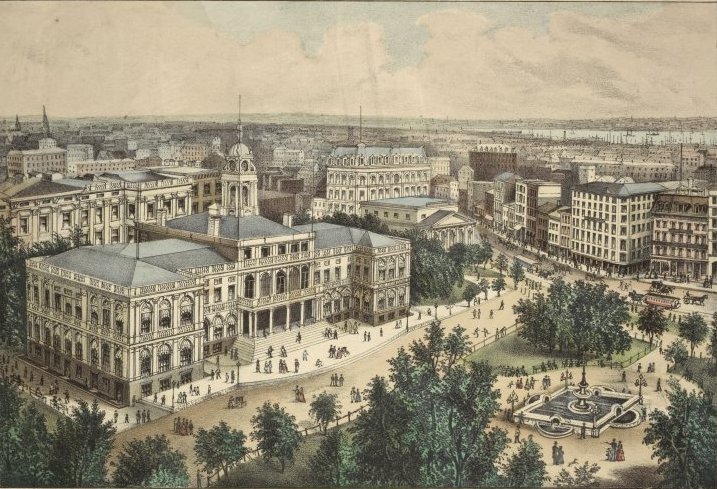
Above: City Hall in 1874 in an illustration by Currier and Ives

With his professorial good looks and humorous demeanor, A. Oakey was a natural for politics of course. Bespeckled and bearded, he spoke elegantly — Elegant Oakey was his nickname after all — and wrote passionately. He penned social polemics, theatrical plays, political tirades and at least one holiday novel — Old Whitey’s Christmas Trot.

More importantly though, he was an attractive politician to Tammany Hall and in particular its boss, William M. Tweed**.

We know the Tweed Ring as that most notorious of crooked entities that came from the Democratic machine. In fact, through, Hall was for many years a Republican — even claiming to have helped form the Republican Party! — and was even elected District Attorney as a member of that party. But he was lured into Tammany Hall shortly before the war ended and would facilitate their dominance over the affairs of City Hall.

‘Boss’ Tweed liked him because he was confident, likable, distracting. He often quoted Shakespeare and cracked jokes. The complicated layers of graft, bribery and outright theft that were installed in city government needed an attractive front. In one of the most manipulated elections in New York history, Tweed and Tammany Hall succeeded that fall of 1868 in getting their man Hoffman into the governors seat, with Elegant Hall becoming his elegant replacement at City Hall. (Hall would be re-elected three times in heavily tampered elections.)

The year 1869 was a watershed year in New York City corruption, with the Tweed’s hand-selected cohorts fully in place at City Hall, all oversight committees abolished the previous year, and civic projects sprouting up throughout the city, ripe for graft and embezzlement.

Tweed and the others directly associated with the ring (chamberlain Peter Sweeny, comptroller Richard Connelly) needed Hall’s charm to bedazzle the press and public, deflecting any charges of malfeasance.

The level of Hall’s involvement in the city corruption at the time is unclear. He was brought before a grand jury twice, once during the final days of his tenure as mayor. Two trials followed, the first ending in mistrial, the second in acquittal. Despite clear signatures on dozens of suspicious invoices, Hall claim was that he was much too busy running the city to have carefully inspected each and other claim.

Below: Thomas Nast parodies Hall’s statements at being ‘blissfully ignorant’ of corruption

Perhaps so. During his first year in office came a devastating stock market crash, the Black Friday of September 24, 1869, facilitated by Tweed’s chums Jay Gould and Jim Fisk.

As immigrant numbers increased — as tenements like Five Points were swelling to overcrowded — racial and religious disunion threatened the city. Like Tammany, Hall was a friend of the Irish; on St. Patricks Day, he would wear an emerald flytail coat. When Hall suddenly banned the particularly violent protestant Orange parade that year, its participants feared his actions were controlled by Irish Catholics. Governor Hoffman ordered the parade to resume, but the result was an even more violent riot, with 62 people dead and over a hundred injured. Confidence in Hall’s leadership quickly evaporated.

Despite the aura of corruption and mediocrity that hung over his tenure as mayor, Hall actually had a quite colorful life afterwords, working as both a newspaper editor (for the New York World), a London correspondent for the New York Herald and the manager of a theater. He even produced and starred in his own play. For some reason, few went to see it.

He returned to practicing law in his later years in London, famously returning to New York in a court case in 1893 representing Emma Goldman. Despite the convergence and press coverage of these two great New York figures, Goldman and Hall lost the case.

Hall died on October 7, 1898, at his home at 68 Washington Square South, just blocks from where he first went to college. The picture above was taken the year of his death (pic courtesy NYPL)

**Wanna know more about Boss Tweed and the Tweed Ring? Tune in on Friday!

Mayor Daniel Tiemann, colorful man of Manhattanville

KNOW YOUR MAYORS Our modest little series about some of the greatest, notorious, most important, even most useless, mayors of New York City. Other entrants in our mayoral survey can be found here.

Mayor Daniel F. Tiemann

In office: 1858-1859

Once upon a time there was a village called Manhattanville, a small, originally Quaker community that planted itself between a bustling but still bucolic section of Bloomingdale Road (later Broadway) and the Hudson River. A remnant of the old village remains in the small neighborhood that shares its name today, north of Morningside Heights between 122nd and 135th streets on the west side.

Founded in 1806 the village grew due to its proximity to a major artery that led to the city of New York, but its fortunes really multiplied due to a developing port industry along the water. Together with its sister village Harlem, they grew into healthy rural communities.

In 1850s, the most powerful man in Manhattanville was Daniel Fawcett Tiemann. He was actually born down in New York, at a house on Nasssau and Beekman to German immigrants; he would later return to govern the city from City Hall, just two blocks away from his birthplace.

Daniel was the paint king of New York, a trade he learned from his father, working in the original Tiemann paint factory at 23rd and 4th Avenue (today’s Madison Square park). He and his brother Julius eventually inherited the family business and moved it into the rural pastures of Manhattanville. Soon D.F. Tiemann & Company Color Works took up a dozen buildings and dominated the industrial character of the village.

Notably, Edward Leslie Molineux, later to be both a Union general and the father of convicted (and famously acquited) 19th century murderer Roland Molineux, was a clerk in Tiemann’s firm and later a close political associate.

Tiemann had his eyes quite literally set on City Hall even at a early age. “I saw them building the present City Hall and we all thought that it was too far away from the business centre,” he once recollected. Young Tiemann frequently reminsced of his glorious youth, skating on Collect Pond and later fishing in the newly dug canal.

BELOW Color me impressed: the Manhattanville paint empire of New York mayor Tiemann

Luckily he had very strong ties to one of New York’s most prominent families, the clan of Peter Cooper. In fact Tiemann married Cooper’s niece and would eventually became a founding trustee in Peter’s pet project, Cooper Union, in 1859. (Marrying into the Cooper clan is always good for one’s prospects, as Abram Hewitt also found out.)

His family background, business acumen and solid nativist appeal recommended him for public office, particular in the years when corruption and chaos seemed to reign supreme in City Hall, namely the administration of wily Fernando Wood.

In 1857 a coalition of different parties united behind unblemished, teetotaling Tiemann, including the ‘People’s Union Party’ (composed of merchants), the American Party (a nativist, anti-immigrant party) and even Tammany Hall — who had kicked Wood out just the year previous.

That October 1857, Tiemann handily beat Wood by 22,000 votes. It should be noted, however, that Tiemann’s support was as much anti-Wood as it was pro-Tiemann. “If I succeed in the business of the Mayoralty as well as I have in making paint…I should be satisfied,” Daniel proclaimed at his victory.

Tiemann inherited a nearly bankrupt city government, tapped dry with graft and unable to sustain itself. In fact, by October 1858, City Hall itself was actually put up for auction, and the wealthy Tiemman had to personally buy it (for $50,000!) and eventually gave it back to the city.

The new mayor did bring a modicum of reform to city government throwing out a few corrupt officials, including the laughably crooked street commissioner Charles Devlin. But Tiemann was fighting upwind and his political coalition immediately fractured.

Below: Tiemann’s home in upper Manhattan

Much happened in the city under his watch, including further development of Central Park and the ground-breaking of new St. Patrick’s Cathedral. But his greatest contribution is something we take for granted today. In a burst of common sense one night, Tiemann proposed that street names be attached onto lampposts for better visibility, as opposed to being stuck to the face of corner buildings.

His greatest claim to fame, however, was as one of the first voices that traveled the newly laid Atlantic cable, which connected North America to Europe for the very first time. “Mayor Tiemann to the Lord Mayor of London. Enthusiastic Celebraton of the Event of the Age. A UNIVERSAL JUBILEE. NEW-YORK IN A BLAZE. Grand Exhibition of Fireworks in the Park,” boasted the Times headline.

Wood’s supporters had never warmed to Tiemann and staged a comeback. And the paint king had even expended Tammany’s good graces; in the election of 1859, they backed William Havemeyer who was mayor of New York before and would become mayor of New York again, 13 years later. But he would not become mayor of New York today. After keeping the seat warm for two years, Tiemann was replaced by Fernando Wood. It would be the start of a tumultuous tenure.

Tiemann would later become a state senator but his heart would always be in the family business. He settled for the rest of his days in a beautiful home (pictured above) built near his paint plant. He finally died in 1899 at age 95, a staple of New York life who had seen it from bottom to top grow from a port town into the biggest, most important city in the world.

Categories
Uncategorized

Mayor Jimmy Walker: a finer class of corruption

Jimmy Walker, Hollywood version of a mayor

KNOW YOUR MAYORS Our modest little series about some of the greatest, notorious, most important, even most useless, mayors of New York City. Other entrants in our mayoral survey can be found here.

MayorJimmy Walker

In office: 1926-1932

Has a New York mayor ever reflected the decade he governed more perfectly than Jimmy Walker? Although John Hylan was actually the 1920s more effective mayor, it was Walker who embodied the Jazz Age spirit in his style, and the tragic Depression-era change of fortune in his downfall. He glamours us today because he’s both movie star and rebel; but the corruption of his regime is equally as striking and even disturbing in its grandiosity.

Walker is easily one of the most notorious mayors of New York, but today we can appreciate his brashness, his independence and class, just as we can lament his subservience to diabolic Tammany-era politics. He wasn’t the last disgraced mayor the city would see in the 20th century, but his abdication neatly defines the modern era’s defining fall from grace.

Jimmy, born June 19, 1881, was a New York boy and a golden one at that, raised in Greenwich Village among the bohemians, the son of an Irish immigrant who became a well connected Democratic assemblyman. Walker’s first passion seems to be music; in 1905 he stormed Tin Pan Alley writing songs such as “There’s Music In The Rustle Of A Skirt” and “Will You Love Me in December As You Do in May?” with its melancholy refrain:

Will you love me in December as do in May,
Will you love in the good old fashioned way?
When my hair has all turned gray,
Will you kiss me then, and say,
That you love me in December as do in May?

Below: In an odd ceremony with the mayor of Albuquerque

He had even less hesitation in announcing a political career, especially as Father had connections to a certain Al Smith, governor of New York. An adopted son of Tammany Hall, elected first to the state assembly in 1910 then to the state senate in 1914, young Walker sought Smith’s guidance and the governor soon took a fancy to the smooth, impeccably dressed young man, who shone like a new penny on the Senate floor. As he was described by Robert Caro:

“Pinch-waisted, one-button suit, slenderest of cravats, a shirt from a collection of hundreds, pearl-gray spats buttoned around silk-hosed ankles, toes of the toothpick shoes peeking out from the spats polished to a gleam. Pixie smile, the ‘vivacity of a song and dance man,’ a charm that made him arrive n the Senate Chamber like a glad breeze’ The Prince Charming of Politics…..slicing through the ponderous arguments of the ponderous men who sat around him with a wit that flashed like a rapier. Beau James.”

Smith took him under wing, maneuvering him through the entanglements of state politics, shielding Walker when his excesses got the better of him. He was a philandering cad and a boozer, even then. When opportunity arose to challenge the successful John Hylan for mayor of New York, Smith wanted Walker to run, but only if he would change his ways. Walker changed them all right; instead of partying out at speakeasies with chorus girls, he moved the whole production to a private penthouse funded by Tammany favors.

That election in 1925 was fierce. First, Smith had to dispense of Hylan in the Democratic primary — and in the halls of Tammany. The two split the storied political machine, but eventually Walker won out. Next, he faced the Republican-Fusion candidate Frank Waterman in the general election, who cried of potential Tammany corruption to the new subway system if Walker were elected. (Waterman would, of course, be right.) Beau James, however, went unabated. He ran as a people’s mayor, somebody who enjoys and the same pleasures as those voting for him:

“I like the company of my fellow human beings. I like the theatre and am devoted to healthy outdoor sports. Because I like these things, I have reflected my attitude in some of my legislation I have sponsored — 2.75 percent beer, Sunday baseball, Sunday movies, and legalized boxing. But let me allay any fear there may be that, because I believe in personal liberty, wholesome amusement and healthy professional sport, I will countenance for a moment any indecency or vice in New York.”

Right! Walker was one of the people. Everybody bought it but nobody believed it. He swept into office because New York, in 1925, was prosperous, a Jazz Age mayor for a Jazz Age city.

Once elected, of course, Walker countenanced all sorts of indecency and vice. He was frequently in Europe on vacation. When he was in town, it was rarely at City Hall. The lavish new Casino nightclub in Central Park became his unofficial headquarters, with Ziegfield dancer Betty Compton at his side. (Walker’s wife was out of town, frequently.) City business was often discussed with the pop of champagne cork.


Some things got done that first term: the New York hospital system was consolidated on his watch, he purchased thousands of acres for park land (including Great Kills in Staten Island), and grew the municipal bus system — greatly benefiting more than a few friends who happened to own the bus company given the exclusive franchise.

He managed to turn on his old ally the governor, scrubbing City Hall of any Smith loyalists, granting more jobs to his type of Tammany men, filling their own pockets but allied to the charming man in charge.

How did he stay so popular? This was the late ’20s and people wanted the mayor to reflect prosperity and confidence. He also gave back, in symbolic gestures. Even as the new subway system became clogged with corruption, he staved off a strike while keeping the fare at five cents, thought at the time to be an incredible concession.

He easily won election in 1929 against a largely outmatched Fiorello LaGuardia. Tammany was in place and unstoppable; but the voters still chose not to look askance at Walker’s dalliances, and even the newspapers were charmed. The New York Times wrote of his “great personal charm, his talent for friendship, his broad sympathies embracing all sorts of conditions of men,” then recommended him under the guise that “the Mayor that he has been gives only a hint of the Mayor that he might be.”

That hinted-at mayor never materialized, because the Stock Market crash did, plunging the city’s fortunes into ruin and exposing the weaknesses of a government consumed with greed. Suddenly, having an extravagant, indecent mayor didn’t seem like such a good idea.

Archbishop of New York Cardinal Hayes, once dazzled, now condemned the mayor’s amoral ways, opening the flood doors for others to lay the city’s problems was Walker’s feet. Eventually the accusations reached the ear of governor Franklin D. Roosevelt.

A commission lead by Justice Samuel Seabury exposed deep veins of corruption throughout the city’s legal system and police force. Innocent citizens, often women, would be charged with crimes and forced to pay steep fines to get out of jail time. (Many times they couldn’t pay, and off they went, dozens at a time.) Neighborhoods, most often Harlem, would be routinely raided and its residents taken in, wild charges conjured for maximum penalty.

This would line the pockets of dozens of judges and vice squad officers. Newspapers dubbed it the Tin Box Parade, “after one testified that he had found $360,000 in his home in a ‘tin box…a wonderful tin box'” (Caro).

Walker himself was brought to the stand to testify, the judge warning those in the court room not to look the mayor in the eye, lest they succumb to Walker’s sensational charm.

After months of epic battles on the stand — Walker eluding hot button questions about his personal bank accounts, delaying appearances until after Roosevelt’s nomination for president was assured — the embattled mayor could fight no longer. With Roosevelt mere months from his national election, he needed to be rid of Walker. Walker obliged in the classiest way possible: he resigned on September 1, 1932, and went on a grand tour of Europe with his Ziegfeld girl.

He was never charged with a crime. He was barely even held accountable for anything. Back in New York three years later, he held a series of smaller posts, including one for the New York garment industry that was assigned to him by new mayor LaGuardia, his former rival.

Nothing stuck to him. He died in November 1946 of a brain hemorrhage, just two years after returning to his first love as the head of a big-band record label with a stable of artists that included Louis Prima and Bud Freeman. Ten years later, Hollywood decided to do something very redundant and make a movie of his life, starring Bob Hope as Beau James. It would follow a screenplay only slightly less glamorous than the real thing.

Mayor Franklin Edson: Bronx man and distillery king

Above: a cartoon mocking Edson’s hiring practices (courtesy New York Public Library Digital Gallery)

KNOW YOUR MAYORS Our modest little series about some of the greatest, notorious, most important, even most useless, mayors of New York City. Other entrants in our mayoral survey can be found here.

Mayor Franklin Edson

In office: 1883-1884

Although the political career of one-term mayor Franklin Edson was indeed brief, he helped commission both the city’s largest acquisition of park land and one of its biggest improvements in drinking water. And he was present for the opening of one of New York’s greatest landmarks. So how did the city thank him for his service? By nearly throwing him into Ludlow Street Jail — where Boss Tweed had been left to rot just a few years before.

Edson, a transplanted New Yorker, was a farmboy from Chester, Vermont, born in 1832, who distinguished himself in the art of whiskey distillery — distinghished with “precocious tact and sagacity,” in fact.

He worked his way over to Albany, New York, as a successful distiller and grain merchant with his brother. Franklin took full advantage of drink demands during the Civil War; his company soon became so profitable that he moved the entire venture to New York in 1866.

Edson, a burgeoning booze mogul of sorts, immediately became a prominent merchant voice in Manhattan, becoming the president of New York’s Produce Exchange three times, serving his first term in 1866 before he had to time to even unpack his moving boxes.

While this naturally afforded Franklin an incredible vantage for commercial power, it would soon place him in the crosshairs of political power as well. In later years he would be most proud of his Exchange days, priding himself in being one of the encouraging voices to tear down the inadequate castle-like Produce Exchange (designed by Leopold Eidlitz) and erecting the larger, more impressive George Post-designed Produce Exchange building near Bowling Green (which itself would be sadly torn down in 1957).

Below: the new Produce Exchange

What sets Edson apart from other future mayors of the time — and what might have potentially hindered his political ambitions — was that he loved the countryside, in this case Old Fordham Village, today a neighborhood in the Bronx.

He would live here for many years and would remain a member of the (now landmarked) Episcopal Saint James Church in Fordham for most of his days. Whether by design or coincidence, this love for what would become New York’s northern borough would soon prove fruitful for the city as a whole.

Franklin was also a practicing anti-Tammany Hall Democrat. And who wouldn’t be anti-Tammany during the 1870s? Edson became politically active in the years following the Boss Tweed scandals, when Tammany was still reeling for the highly publicized affair involving Tweed and then-mayor A. Oakley Hall.


Despite a slow rebounding, Tammany would never fully rinse off the stench of corruption. Naturally, Edson’s prominence among the business class married nicely with mayoral ambitions by the mid 1880s and would eventually include a denunciation of Tammany practices and condemnation of Tammany boss John Kelly (at right). But not at first.

For the election in November 1882, the various Democratic factions, including the still-potent Irving Hall, soon decided on the relatively green Edson, because he was a uncontroversial, neutral choice. To Tammany’s Kelly, Edson must have seemed a fairly agreeable pick indeed compared the previous mayor William Russell Grace, a reform Democrat rebelliously outside the realm of Tammany’s power.

Edson easily swept past his opponent, railroad man Allan Campbell — a sweet victory for John Kelly, as it was Campbell that had replaced Kelly as the city comptroller several years previous under the administration of mayor Edward Cooper. (Check out Edward’s entry for some juicy details of the Kelly/Cooper rivalry.)

How did a political nobody — a “seven day wonder in the political world” — sweep so handily into office? It helps to ride coattails; during that same election, the popular Democrat Grover Cleveland was elected the governor of New York.

At first, Edson gave in readily to political favoritism, paying back some of his Democratic cohorts — including many of the Tammany variety — with lucrative city jobs, a decision which disgruntled many of his former supporters. In fact, he even appointed Richard Croker as fire commissioner; Croker would become the head of Tammany Hall in the 1890s. (Harper’s Weekly has a coy little cartoon chiding the Croker decision.)

Like many before him, however, Edson soon grew tired of Tammany’s corrupting influence and began adopting reform policies which were currently being installed on the state level. And also like many before him, his against-the-wind attempts at reform would essentially spell the end of his political career. Edson would serve but a single term and would almost entirely vanish from politics afterwards.

But not before throwing his weight behind a major expansion of the Croton Aqueduct, which within in a few years would triple the supply of water into the city. (In fact, most of the expansion he pushed for is still in use today.)

Edson is also partially responsible for the huge increase in New York park land, commissioning a citizens group in 1884 to lobby the state to purchase lands in the area of today’s Bronx; accordiing to an old Bronx history, “the ‘new’ parks, as they were called, comprised 3,757 acres, now included in Van Corlandt, Bronx, Pelham Bay, Crotona, St. Mary’s and Claremont parks.”

And most notably, he was the first New York mayor to walk the Brooklyn Bridge, astride president Chester A. Arthur and governor Cleveland on the bridge’s opening day, May 24, 1883. He would be met in the middle by the mayor of Brooklyn — future New York mayor — Seth Low.

He might have crept quietly into obscurity had Edson not been accused of contempt of court shortly after he left office, threatening a man in his early 50s with jail time with a stint at the notorious Ludlow Street Jail. Apparently, despite a court injunction, Edson had quietly made promotions to two posts — the Commissioner of Public Works and the Corporation Council — on his last day in office. However, after a stressful two months in court, Edson was declared not guilty of the crime.

This did not stop people from imagining the ex-Mayor trapped behind bars, as the newspaper illustration below evidences:

Edson died in 1904, at his home on the Upper East Side. 42 West 71st Street, to be exact, a block from the Dakota Apartments, which were completed during his tenure as mayor.

Mayor Edward Cooper, chip off the ole block

ABOVE: Puck Magazine satirizes father and son, Peter and Edward Cooper

KNOW YOUR MAYORS Our modest little series about some of the greatest, notorious, most important, even most useless, mayors of New York City. Other entrants in our mayoral survey can be found here.

Mayor Edward Cooper

In office: 1879-1880

Many of us must inevitably live in the shadows of the achievements of our parents. Edward Cooper, while no slouch, suffers from the competing bios of two great men in his family — papa Peter Cooper, New York’s cleverest industrialist, and brother-in-law Abram Hewitt, a transformative city leader.

Like Hewitt, Cooper too was mayor of New York, from 1879-1880. Cooper’s tenure wasn’t exactly memorable, but the years following up to it certainly were.

Edward was born on the outskirts of town (i.e., 28th Street and today’s Park Avenue South) in October 1824, the only surviving son of Peter and his wife Sarah, a child with the unique advantage of having one of America’s leading inventors to apprentice from. Peter was already wealthy from his Kips Bay glue factory and employed his free time tinkering, experimenting and dreaming. In fact, Edward was celebrating his third birthday when Peter brought into this world another of his pride and joys — the Tom Thumb, the first operable, steam-powered train engine.

Not surprising, Edward quickly followed his father’s intellectual lead. During his early days in public school, “it was often said of him that there was never a time in his life when he would not sit up half the night to solve a difficult problem in mathematics or engineering which were his especial delights.” Like father, like geek!

Edward went to Columbia University where he befriended his fellow student Abram Hewitt, and the two set out for an educational European vacation in 1844. On the way back however, they were both nearly killed in a shipwreck, stranded with the crew for many days without food or water,

Leave it to outrageous hearsay, but allegedly during this shipwreck, according to Edward’s own obituary, he was almost cannibalized for food by the survivors.

“One report had it that the castaways were so hungry that lots were cast to see who should be eaten. Mr. Cooper drew the unlucky number, but Mr. Hewitt asked to take his place.

“I have brothers,” Mr. Hewitt said, but you are your father’s only son and his life is wrapped up in you. Let me take your place.” Now that’s friendship!

This devastating experience drew the Coopers and the Hewitts together. In fact, Hewitt would later marry Edward’s only sister Sarah Amelia. Edward and Abram, meanwhile would go into the ironworks business together, with capital from Peter Cooper. The results would make them very rich men with foundries in Trenton, New Jersey, producing “mortar beds and gun carriages” in the years leading up to the Civil War.

In 1865, Peter gave control of his coveted glue factory to Edward and soon young Cooper became as distinguished a New York business man in his own right. Just in time to pursue a political career.

Edward was a Democrat, but not of the tainted Tammany Hall stripe. Cooper came from the short-lived rival and reform-minded Irving Hall, battling to sweep away city hall corruption as practiced by the machinations of the other, far powerful Democratic machine. In fact, he would prove instrumental — both through his close friend Samuel Tilden, and as a member of the reform Committee of 70 — in helping bring down the ring of Boss Tweed and the corrupt mayoralty of A. Oakley Hall. He later ardently supported his friend Tilden during his contentious run for the White House in 1876.

The rift was caused by two rival party bosses — John Morrissey, a prize-fighter turned state senator who drew men like Cooper by recoiling from the excesses of Tweed-style politics, and ‘Honest’ John Kelly, who at first rallied in reform rhetoric with Tilden and others but later rebuffed his former allies when he became New York comptroller.

Morrissey ran for state legislature defeating Tammany stalwart August Schell. August turned around and ran for mayor, but this time it was Edward Cooper who defeated him in the fall of 1878. (Ironically, Cooper had to cull together a coalition of Republicans and anti-Tammanys in order to claim victory.)

Below: the electoral decision between Schell and Cooper, as seen through the satire a political cartoon.

The conflict above between Morrissey and Kelly deserves some greater inspection in this column at a later date. Only know that it was John Kelly’s ascension into the comptroller seat before Cooper became mayor that basically ensured Cooper would not be any kind of an effective mayor at all.

Most of Cooper’s time was spent in political infighting, and his prime objective — to reform the corrupt police department — was continually met with criticism, mostly led by Kelly.

Let’s just say, Kelly and Cooper really didn’t get along. Or, in Kelly’s own words, “Let, Edward Cooper, that infamous hypocrite who occupies the Mayoralty chair know that, after his betrayal of the Democracy, he is no nearer Heaven, nor Samuel Tilden near the White House, than they were before!”

Interestingly, Cooper is front and center of a small but precious moment in New York history: the debut of Cleopatra’s Needle, the 3,500 year old obelisk from Egypt planted in Central Park on Oct 9, 1880.

Near the end of his life, Edward would take another, more familiar and far less strenuous office — the president of Cooper Union — in 1898. He died seven years later, in 1905.