Categories
Film History

The World of Today: How the New York World’s Fair connects to the Marvel Cinematic Universe

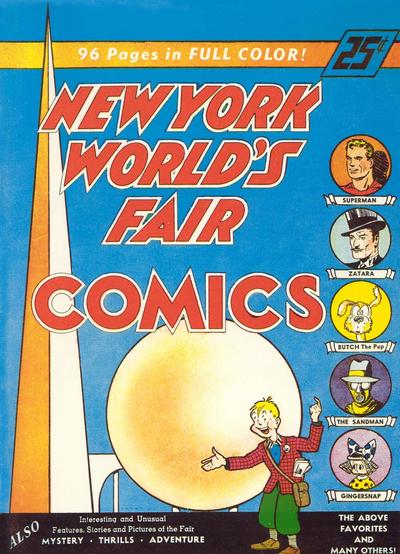
The New York World’s Fair of 1939-40, held in Flushing Meadows Corona Park, was an extravagant wonderland of ideas, filled with technological wonder and futuristic imagination. It was fun for all ages — if you could afford it. Children were a key audience, of course, and the fair was advertised to them in a variety of ways, including through a rather new form of publication called a comic book.

Action Comics #1, featuring the first exploits of Superman, was published in June 1938. Less than a year later, the Man from Krypton appeared in an official World’s Fair tie-in comic book.
Flash forward many decades in the future. Comic books have gone from cheap kiddie magazines to the basis of modern Hollywood blockbusters. And it’s there that the New York World’s Fairs have again come alive — thanks to Marvel Comics.

The movies spawned by Marvel characters have always given a superheroic nod to New York City, whether it be through epic battles in Greenwich Village or intergalactic encounters in Midtown Manhattan. Marvel Comics publisher Stan Leewho died last year, and creators like Jack Kirby purposefully brought the city into the pages of their extraordinary stories as a way to root their characters in the real world.

Below: Jack Kirby at the 1939 New York World’s Fair
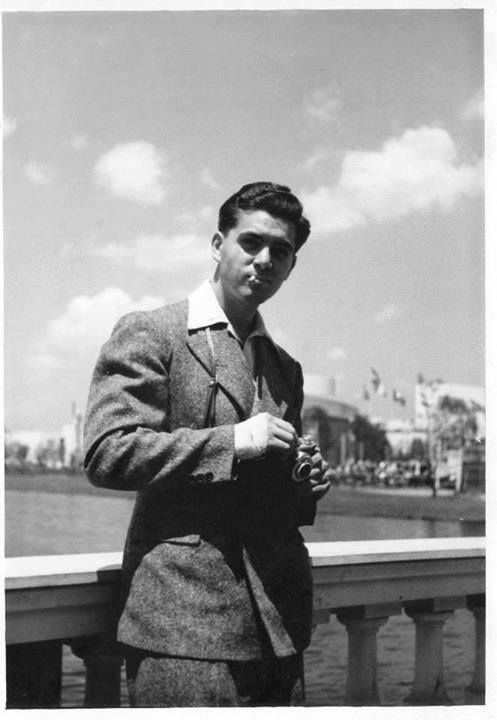
Courtesy Kirby Museum

But there’s obviously something special about Flushing Meadows Corona Park — and the two New York World’s Fairs which were held there in 1939-40 and 1964-5 — for the site has been carefully built into the movies of the Marvel Cinematic Universe, a collection of massive superhero blockbusters culminating this weekend with Avengers: Endgame**.
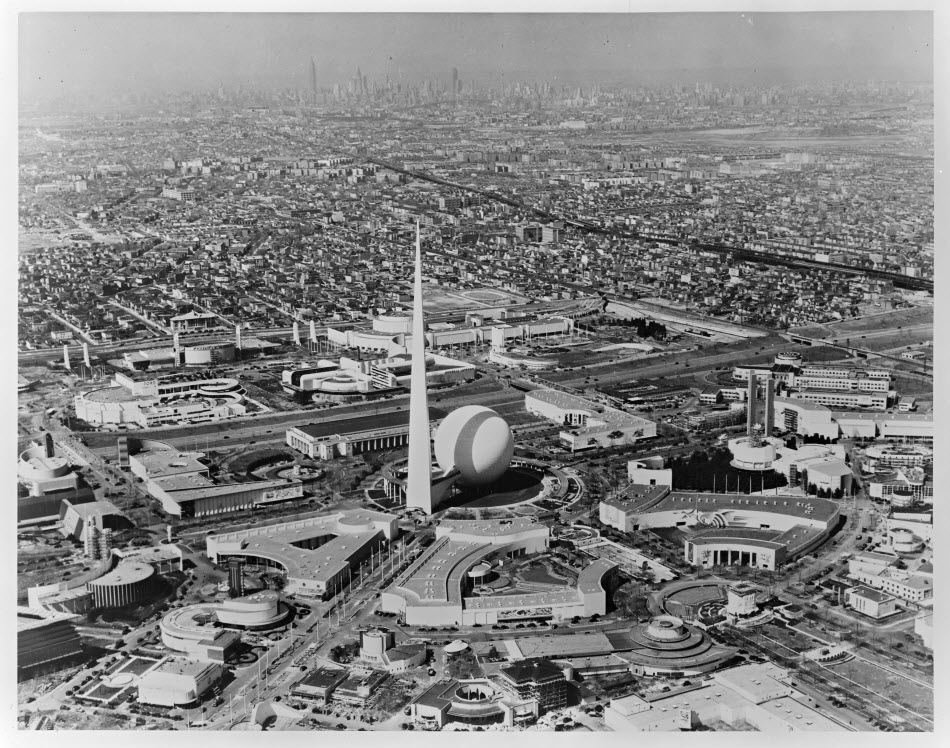
Courtesy New York Public Library

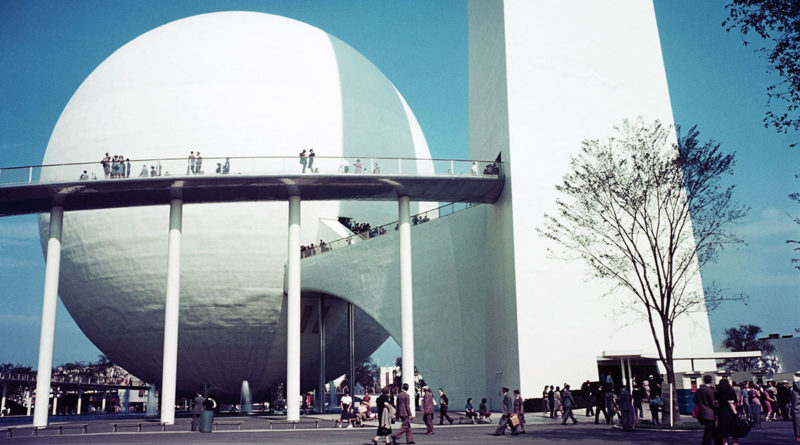
World’s Fair of 1939

As we mentioned in our latest podcast, the New York World’s Fair of 1939-40 celebrated corporate innovation and technological progress, a glittering future through automobiles and robotics.

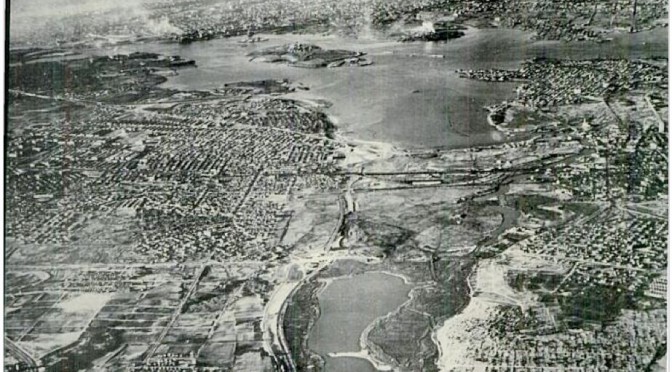
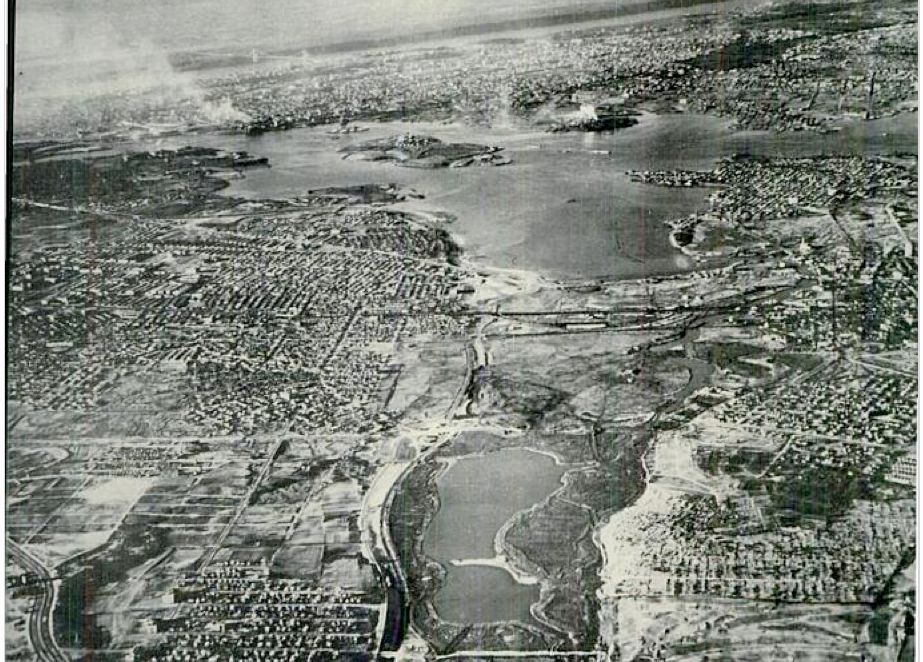
Had the fair been deemed a financial success when it closed in 1940, you could imagine how it might have become a permanent theme park to American middle-class ideals. After all, it was the ambitions of city parks commissioner Robert Moses to transform Flushing Meadows Corona Park — a former ash dump — into a place that could be enjoyed by New Yorkers year-round.

Well, good news, Mr. Moses! In the alternate history presented by Marvel, the World’s Fair of 1939-40 was apparently NOT a financial disappointment, because its doors remained open for future expositions, possibly even yearly ones.

Imagine how Queens would have developed with perpetual events at Flushing Meadows.  There would have been more highways and a greater expansion of the park grounds.  The tolls gathered by Moses’ Triborough Authority would have been double the bounty they were in real life.  He might have arguably had even more power within the city.  
World’s Fair of 1943

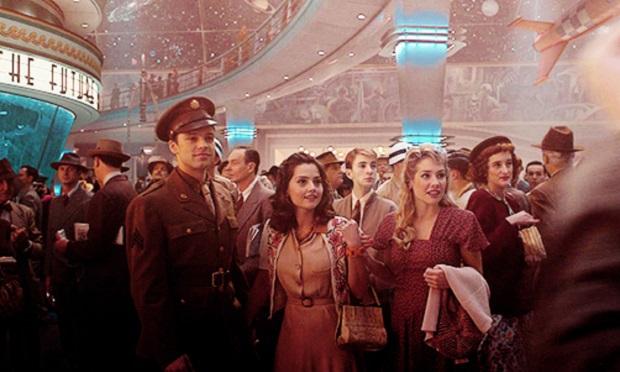
The first fictional fair in Flushing Meadows debuted in the film Captain America: The First Avenger, an exposition called Modern Marvels of Tomorrow.

Longtime friends Bucky Barnes and Steve Rogers bring dates to the fair and attempt to have a good time before Bucky ships out to war. Rogers, a puny CGI-ed man with great enthusiasm, pines to join his best friend on the front lines.

It seems unusual that New York would host a seemingly frivolous fair during wartime. Even in 1939, the crisis in Europe was influencing the direction of the actual fair; by the 1940 edition, the Poland Pavilion had closed and the Soviet Pavilion and its massive Big Joe sculpture were entirely removed.

The fictional Modern Marvels of Tomorrow seems to mix patriotic pride with technological advancement. It’s here that Rogers, deemed too physically inadequate to serve, attempts to re-enlist for the military.
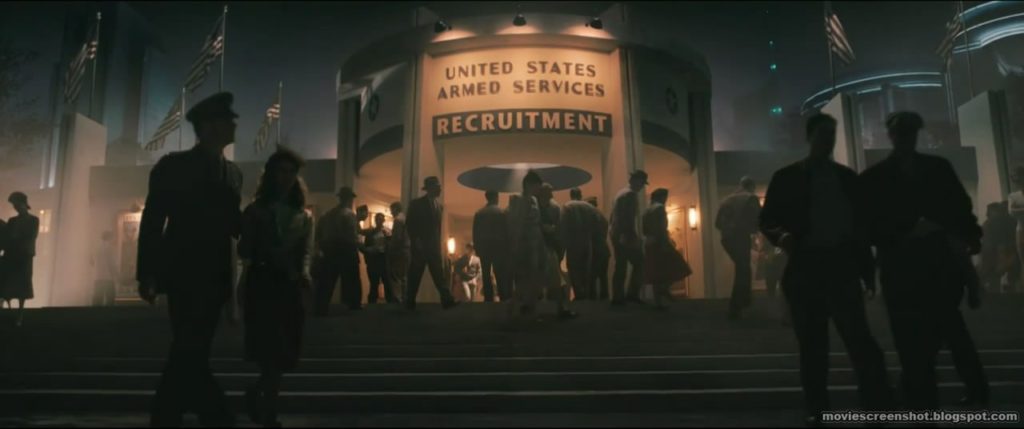
It’s not all bandstands and flag-waving. The future Captain America and Winter Soldier (and their dates) drop by the pavilion of a young start-up company Stark Industries where its handsome young CEO Howard Stark attempts to demonstrate a flying car.
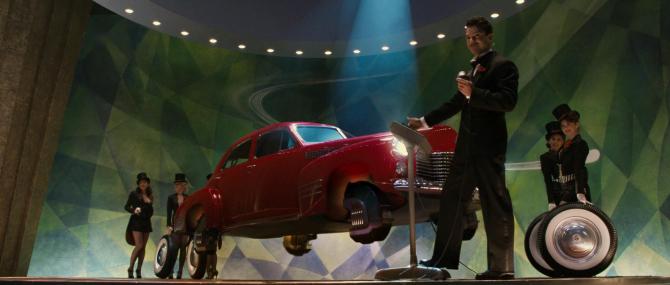
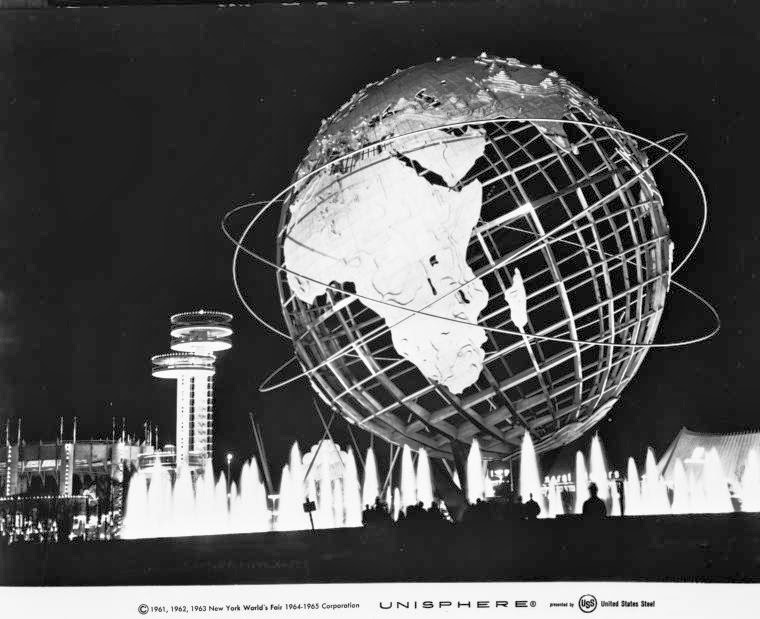
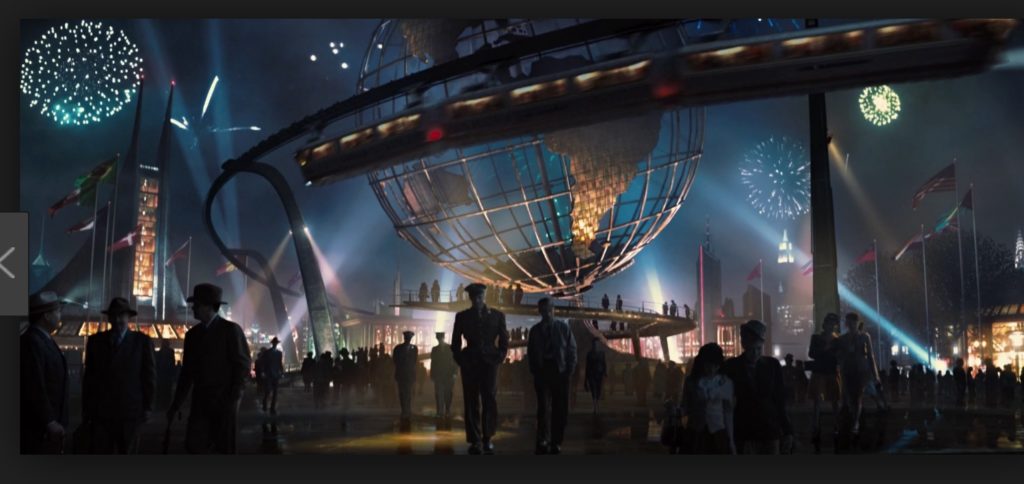
You can watch the entire sequence featuring the 1943 World’s Fair here. Note that the Unisphere, created for the 1964 World’s Fair, is already a feature of the Marvel Cinematic Universe by this time. In fact, a model of the Unisphere plays a crucial role in the film Iron Man 2.

The Trylon and Perisphere are nowhere to be seen but the Helicline — the spiral ramp which encircled the Perisphere — now wraps around the Unisphere.
World’s Fair of 1954

In the Marvel Cinematic Universe, we must assume that Howard Stark became good friends with Robert Moses and mayor Vincent Impellitteri, for in 1954, it appears they simply give management of the fair over to Stark Industries.  

In a memo later sent by Howard’s son Tony Stark: “In ’54 my Father returned to Flushing Meadows, Queens, to show off the new tech he used to defeat global tyranny. This was the first ever Stark Expo.”
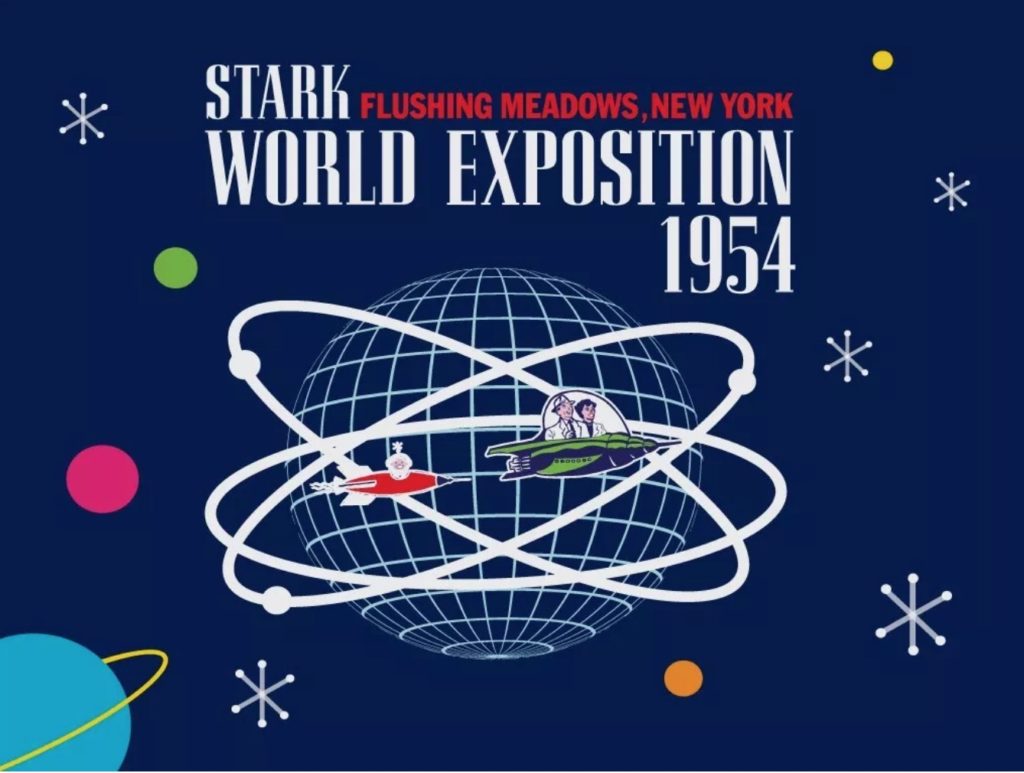
Banner for the non-existent 1954 fair.

Certainly Moses would have been thrilled to have private sponsorship of public fair pavilions. In this alternate New York past, perhaps Moses even worked with Stark in producing the highways and airports that would service this grand Queens attraction. By the 1950s, Queens would have been recognized as the most important tech center in the United States.

World’s Fair of 1964

The New York World’s Fair of 1964-65 occurred both in the real world and in Marvel Cinematic Universe history. The themes, however, were quite different.

The theme of real fair, officially unsanctioned by the Bureau of International Expositions, was “Peace Through Understanding.” Howard Stark’s fair put a cheeky spin on that title — “Better Living Through Technology.”

In the Marvel world, we can only assume that the Mets did debut in Shea Stadium in 1964, except that it was most likely called Stark Stadium. We do know that the Mets exist in the same universe as the Avengers as canonically the cinematic Amazing Spider-Man is a big fan.

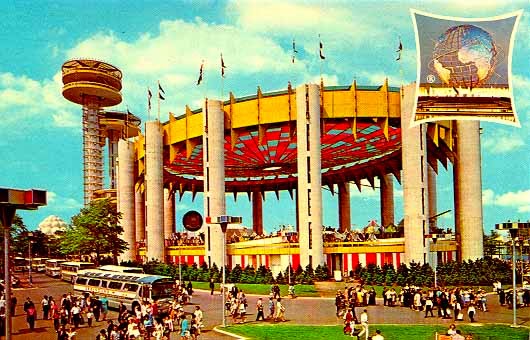
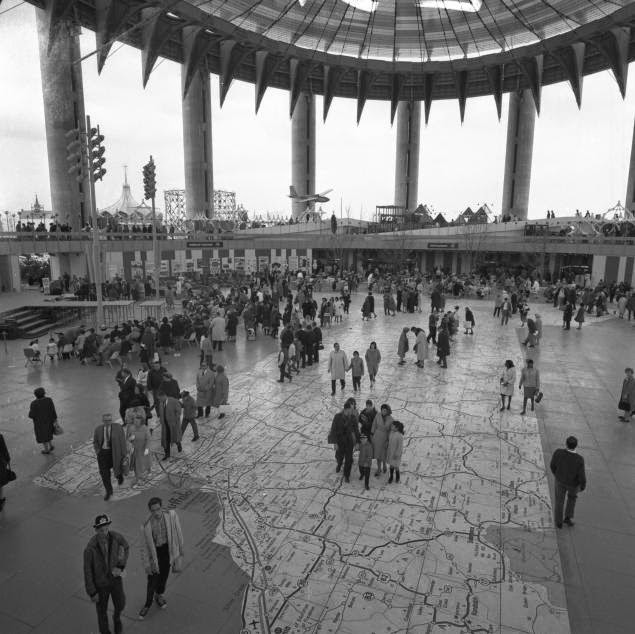
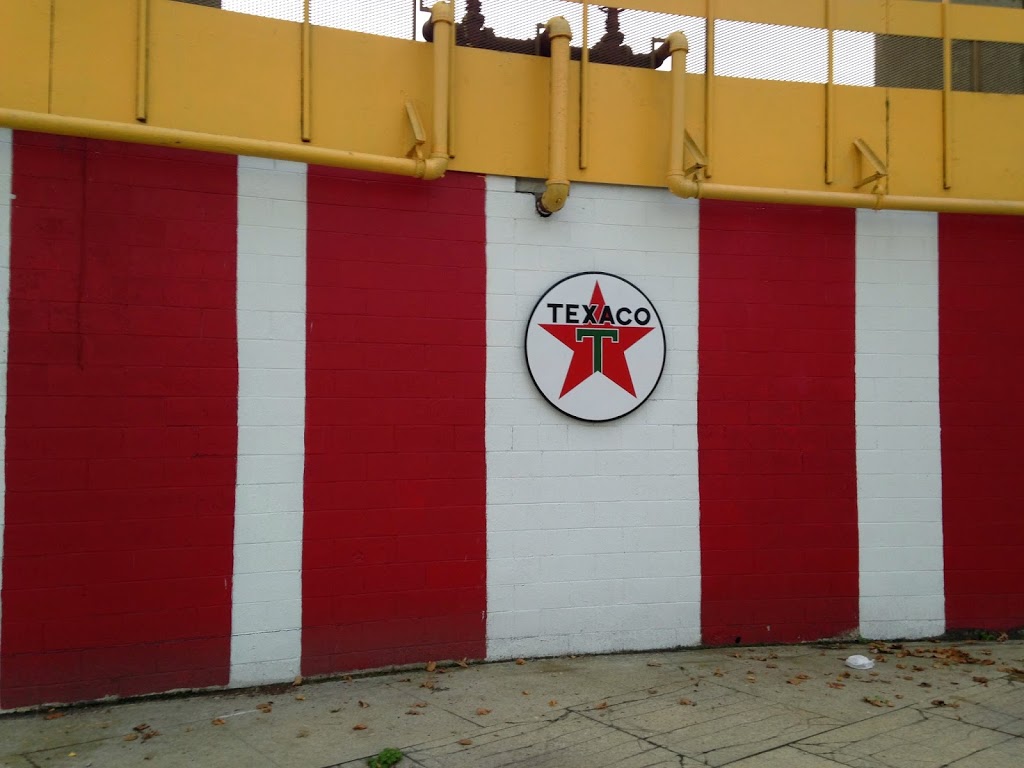
As with the actual 1964 fair, it appears that that the New York State Pavilion structure may have been built for the Stark Expo, although it is unclear if the Marvel version of the Philip Johnson-designed pavilion would have included a life-sized Texaco highway map.

Stark Expo 1974

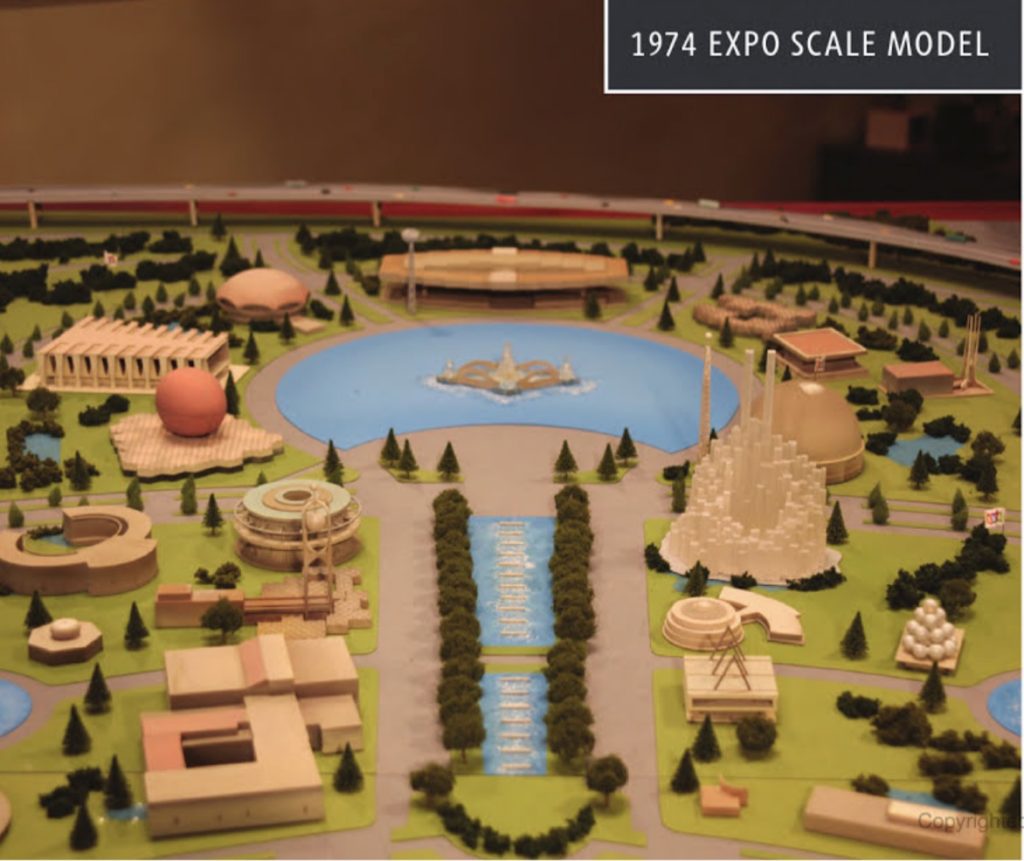
The ‘Stark Expos’ ran for many years until 1974.  I can only imagine that New York City’s dire financial fortunes still played out in this fictional comic-book world, closing the annual display of progress for good.

From Tony Stark’s memo: “In the decades that followed, my Father invited the world’s greatest minds to contribute to the Expo and put to task corporations to create better living for all. When the 1974 Expo closed, we lost that glimpse into humankind’s amazing future.”

Below: It appears that the Lagoon of Nations has been a feature of the fair from the very beginning — in both the real and fictionalized worlds.
After its closure, the borough would have been decimated, no longer the heart of American technology.  Perhaps we can assume Moses was involved until the bitter end, for 1974 happens to be the year his own reputation takes a beating with the publication of Robert Caro’s The Power Broker.

The promotional video for the 1974 Stark Expo offers no new insights outside of an introduction by Howard Stark (who looks an awful lot like another New York city power player, Madison Avenue advertising king Roger Sterling, mixed with a bit of Walt Disney).

The great downturn of New York City’s fortunes in this alternate timeline must have contributed to a massive crime wave and serious urban blight.  It is fortunate then that the city might have benefited from a completely coincidental spike in costumed crime fighters.

(By the way, the film Iron Man 2 does provide confirmation that the 1974 fair did include a “Belgian waffle stand,” as mentioned by Jarvis, the computer intelligence that would later become incorporated into robot superhero Vision. Belgian waffles were the fair snack of choice for visitors of the 1964 New York World’s Fair.)
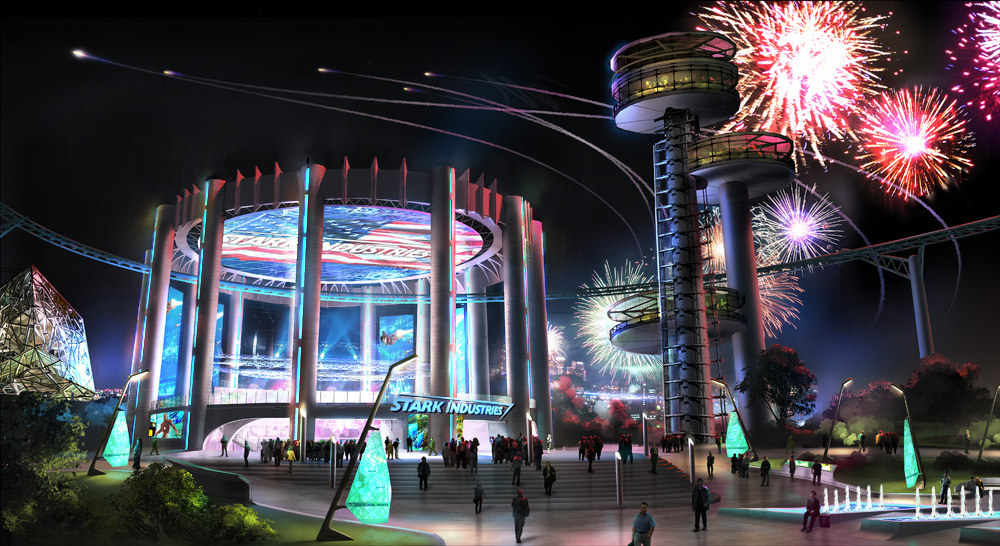
A look at the World’s Fair of 2010 according to the film Iron Man 2.

Stark Expo 2010

As highlighted in the film Iron Man 2, Howard’s son Tony Stark — aka Iron Man — would bring the Stark Expo back to Flushing Meadows in 2010, making the New York State Pavilion the centerpiece of the excitement.

Unfortunately the festivities are interrupted by dozens of flying armored super robots. I’m sure Iron Man 2 features several deleted scenes of an enraged Mayor Michael Bloomberg demanding retribution from Stark Industries, dozens of lawsuits against the private firm and reverberations of corruption through Stark’s association with the federal government. (Hopefully, the Mets weren’t having a home game that night!)  
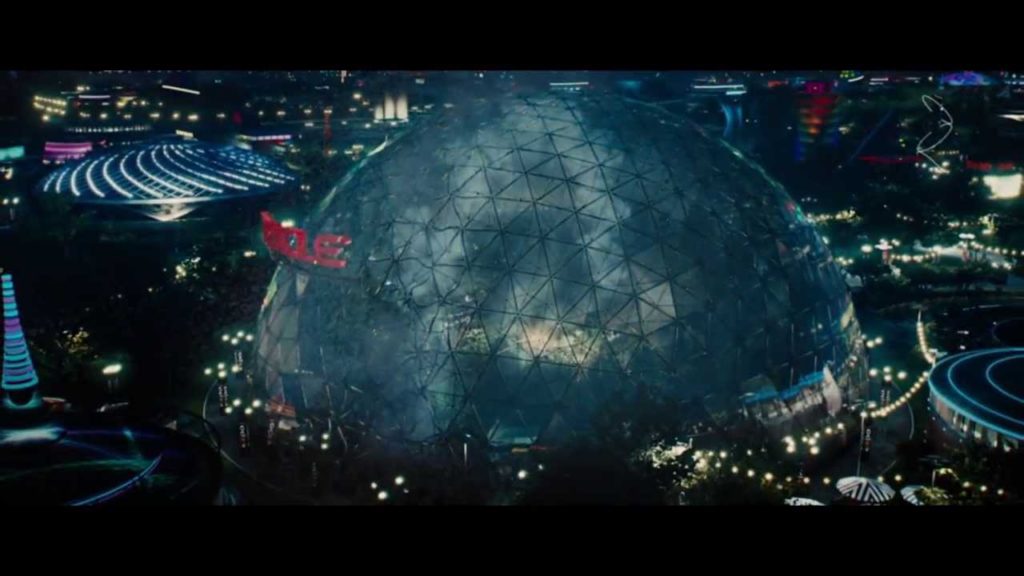
Bill Cotter/New York Times

Among the architecture seriously damaged during the battle was a pavilion sponsored by Oracle within a geodesic dome that looks very similar to the Queens Zoo aviary which was originally created for the 1964 World’s Fair.
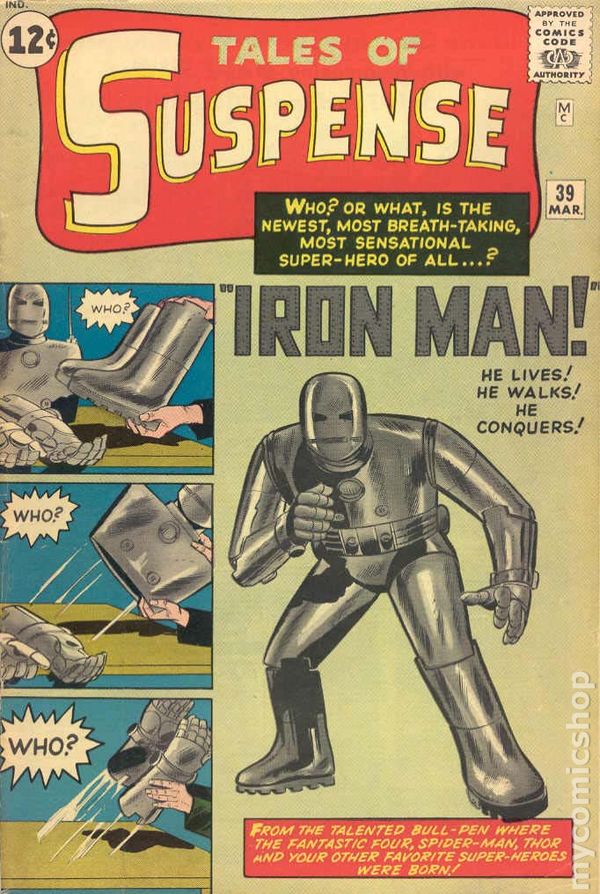
The character of Iron Man debuted on March 1963 in the comic book Tales of Suspense #39. Had this suit of powered armor been an actual creation, it would most likely have been displayed at the real 1964 World’s Fair — with its focus on ‘A Millennium of Progress’ — alongside other wonders of the day like the computer, atomic power and new space technology.

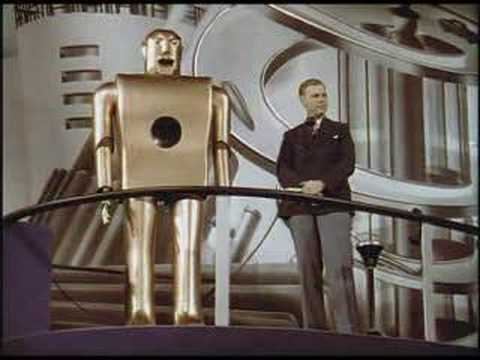
There is no evidence that Iron Man creators Lee, Kirby, Don Heck and Larry Lieber were directly inspired by the 1939 World’s Fair super-being Elektro, but visually the pair could been mechanical cousins.
And just nearby….

Peter Parker lives with his Aunt May in the neighborhood of Forest Hills, Queens, a short walk from Flushing Meadows Corona Park.

In the comic books, Parker would attend a demonstration of the “safe handling of nuclear laboratory waste materials” at the New York Hall of Science within the park, and it was there that he was bitten by a radioactive spider, becoming Spider-Man. It too was designed for the 1964 New York World’s Fair.
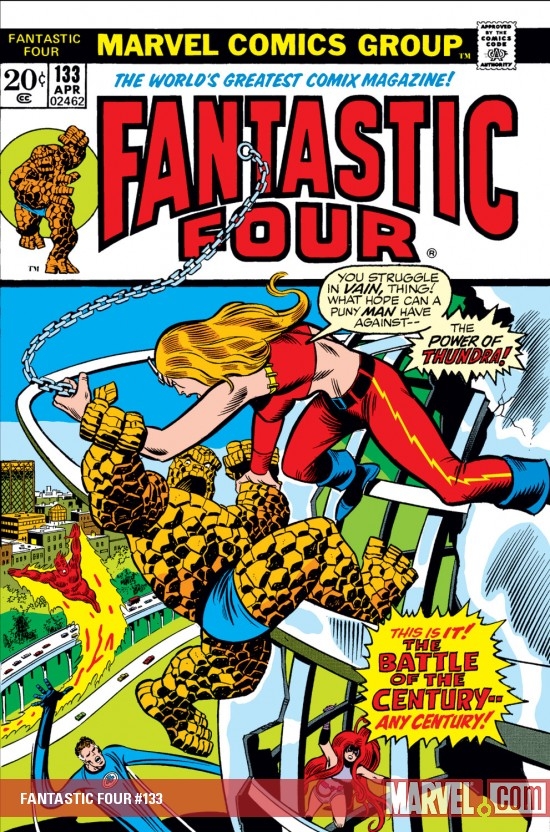
The Fantastic Four found themselves at the Unisphere in 1973

Check out these past podcast episodes for more information on World’s Fairs, Flushing Meadows Corona Park and comic books!

**In the new Avengers: Endgame there is a quick panning show of Flushing Meadows centers on Citi Field, proving you can’t make a Marvel movie without a little Queens in it.

All movie art and promotional photos above courtesy Marvel Entertainment — from the films Captain America: The First Avenger and Iron Man 2. All comic book art (except where otherwise noted) is courtesy Marvel Comics
Categories
Podcasts Queens History

The World of Tomorrow: Visiting the World’s Fair of 1939-40, the kitschy futurescape of Queens

PODCAST Visiting the first World’s Fair at Flushing Meadows Corona Park, the unimaginable playground of the future, planted inescapably within the reality of the day.

Flushing Meadows Corona Park, the fourth largest park in New York City and the pride of northern Queens, has twice been the doorway to the future.

Two world’s fairs have been held here, twenty-five years apart, both carefully guided by power broker Robert Moses. In this episode, we highlight the story of the first fair, held in 1939 and 1940, a visionary festival of patriotism and technological progress that earnestly sold a narrow view of American middle-class aspirations.

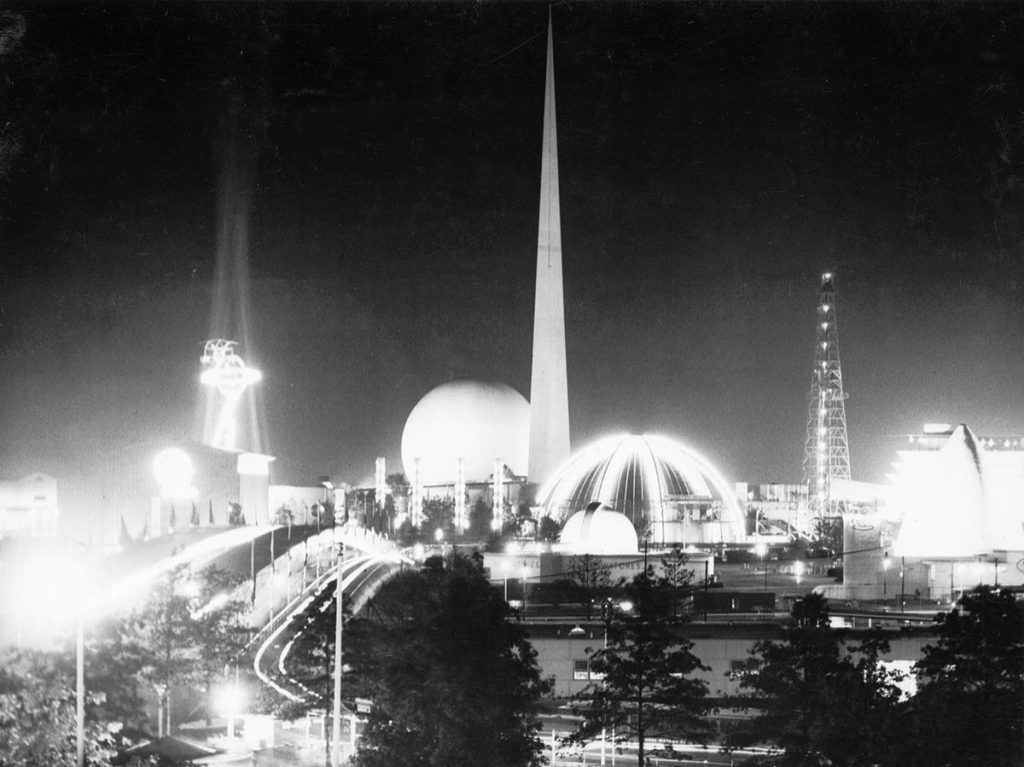
It was the World of Tomorrow! (Never mind the protests or the fact that many of the venues were incomplete.) A kitschy campus of themed zones and wacky architectural wonders, the fair provided visitors with speculative ideas of the future, governed by clean suburban landscapes, space-age appliances and flirtatious smoking robots.

The fair was a post-Depression excuse for corporations to rewrite the American lifestyle, introducing new inventions (television) and attractive new products (automobiles, refrigerators), all presented in dazzling venues along gleaming flag-lined avenues and courtyards.

But the year was 1939 and the world of tomorrow could not keep out the world of today. The Hall of Nations almost immediately bore evidence of the mounting war in Europe. Visitors who didn’t fit the white middle-American profile being sold at the fair found themselves excluded from the ‘future’ it was trying to sell.

And then, in July of 1940, there was a dreadful tragedy at the British Pavilion that proved the World of Tomorrow was still very much a part of the world of today.

PLUS: Where can you find traces of the fair in New York City today?

Listen Now: New York World’s Fair of 1939 Podcast


The Bowery Boys: New York City History podcast is brought to you …. by you!

We are now producing a new Bowery Boys podcast every other week. We’re also looking to improve the show in other ways and expand in other ways as well — through publishing, social media, live events and other forms of media. But we can only do this with your help!

We are now a member of Patreon, a patronage platform where you can support your favorite content creators.

Please visit our page on Patreon and watch a short video of us recording the show and talking about our expansion plans. If you’d like to help out, there are six different pledge levels (New Amsterdam, Five Points, Gilded Age, Jazz Age, Empire State and Greater New York). Check them out and consider being a sponsor.

And join us for the next episode of the Bowery Boys Movie Club, an exclusive podcast provided to our supporters on Patreon. This month’s movie — On The Town!

We greatly appreciate our listeners and readers and thank you for joining us on this journey so far.


AP Photo

Silent color video of the 1939 World’s Fair

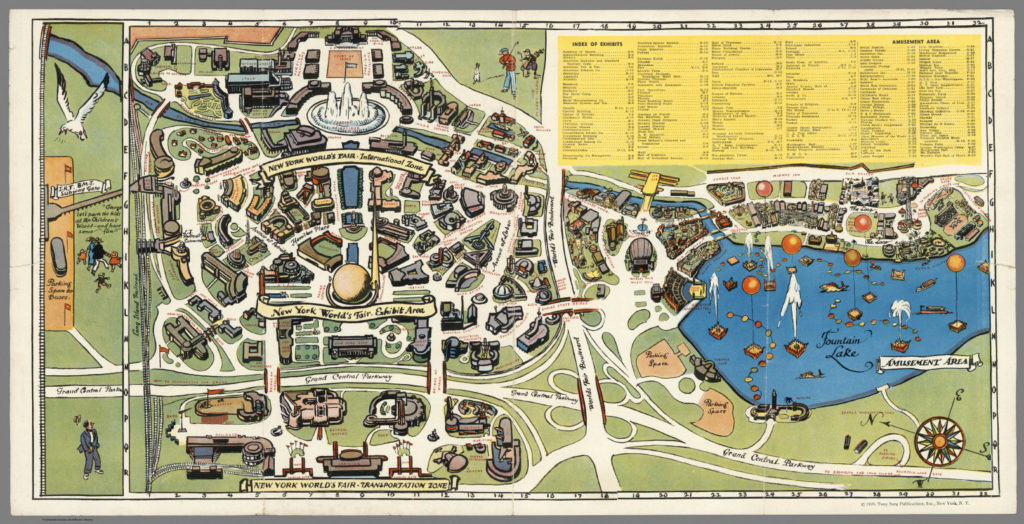
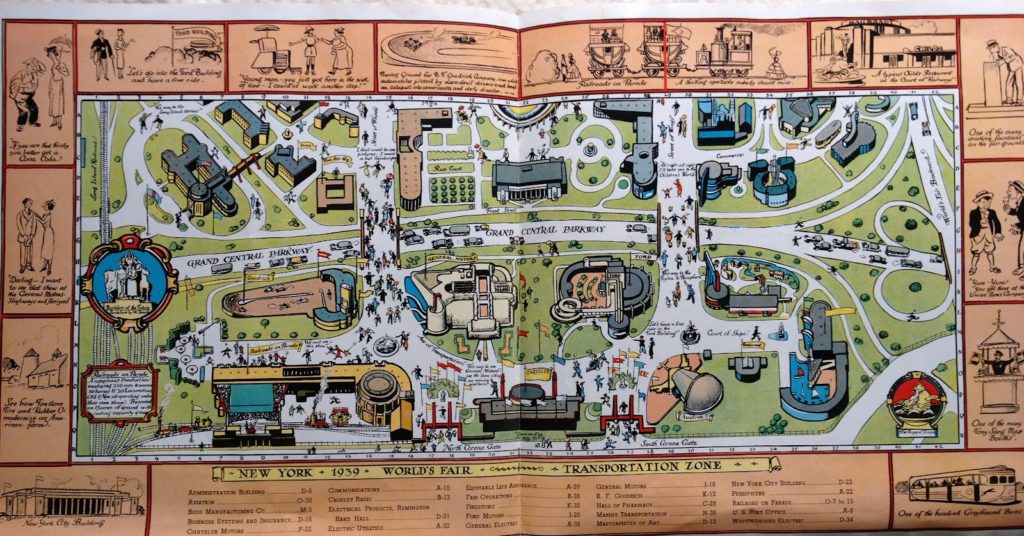
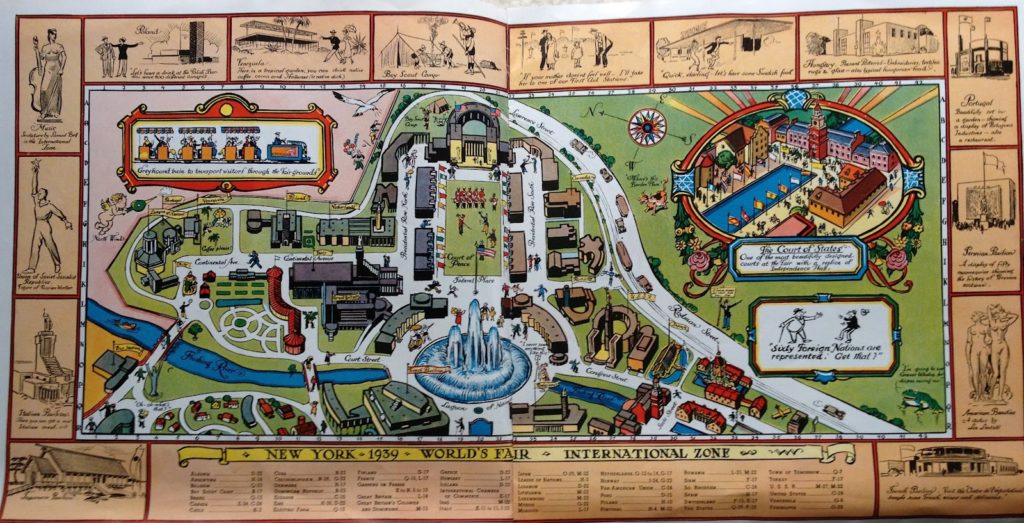
A map of the World’s Fair of 1939, courtesy the David Rumsey Map Collection. Click here to zoom in and get a closer look.

David Rumsey Map Collection
Renfusa/designer Tony Suga

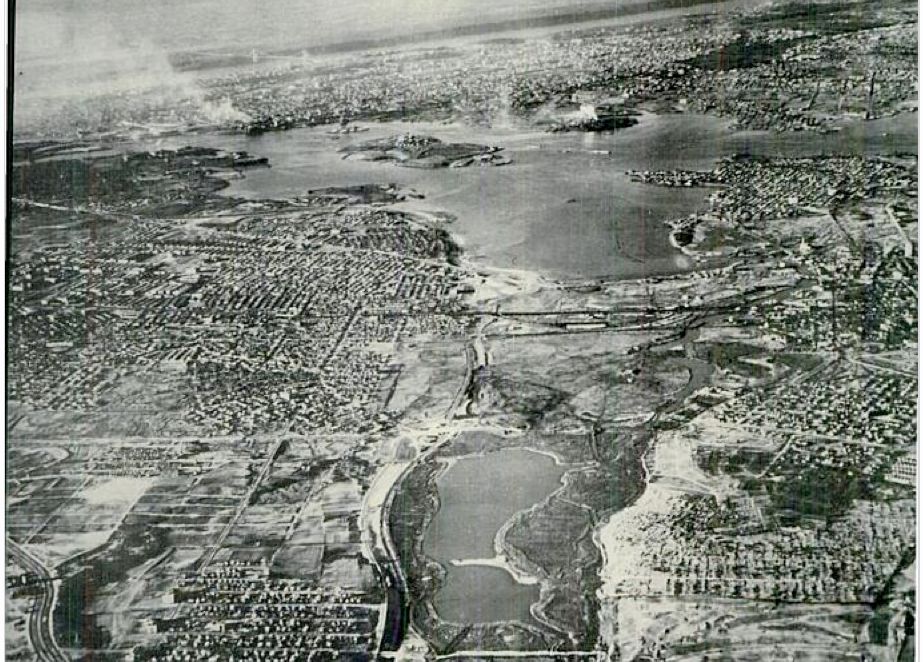
A look at the park grounds before they became Flushing Meadows. Read this article on the ash dump for more information.

Courtesy CUNY

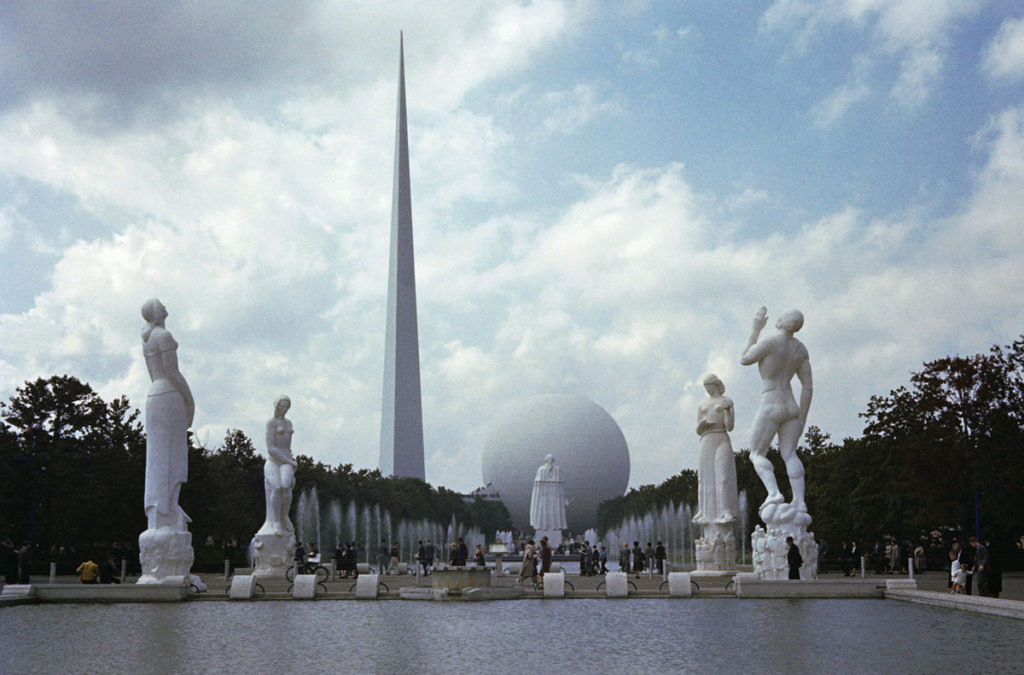
With the Trylon and Perisphere in the background, a statue of George Washington presides over the lagoon era and statues of the Four Freedoms. Read this for more information on the fair’s Washington inauguration connection.

Peter Campbell/CORBIS/Corbis via Getty Images

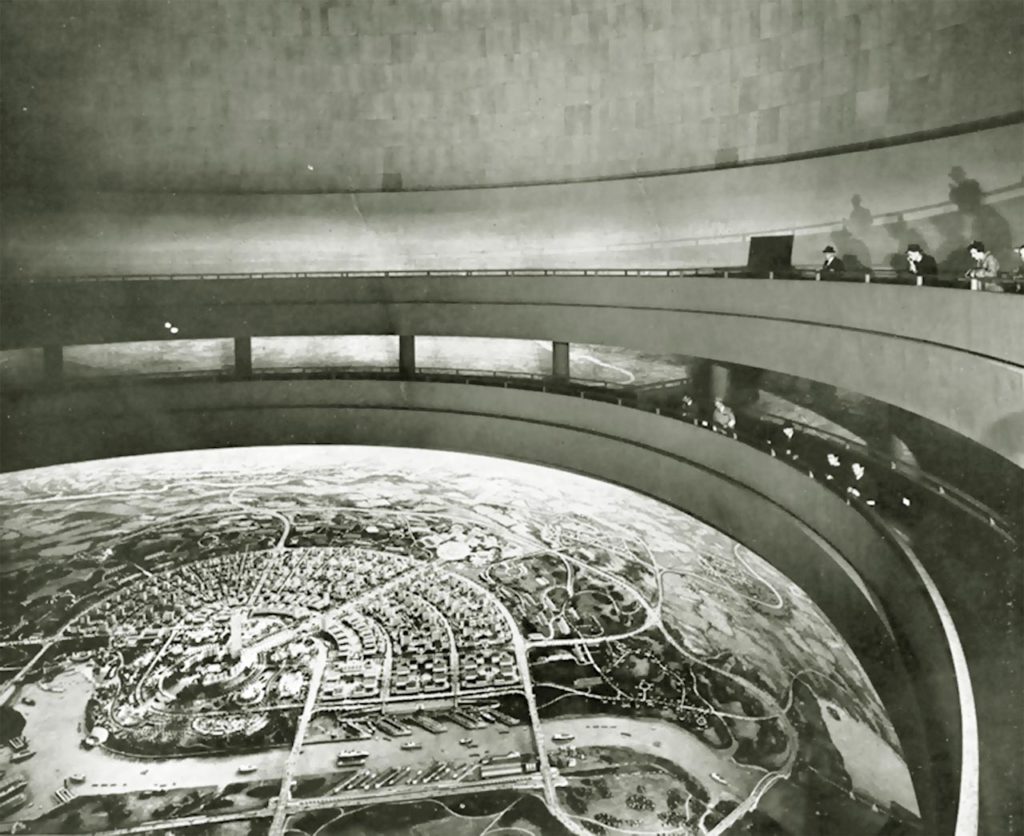
Gazing down at the wonder of Democracity within the Perisphere.

Worlds Fair Community

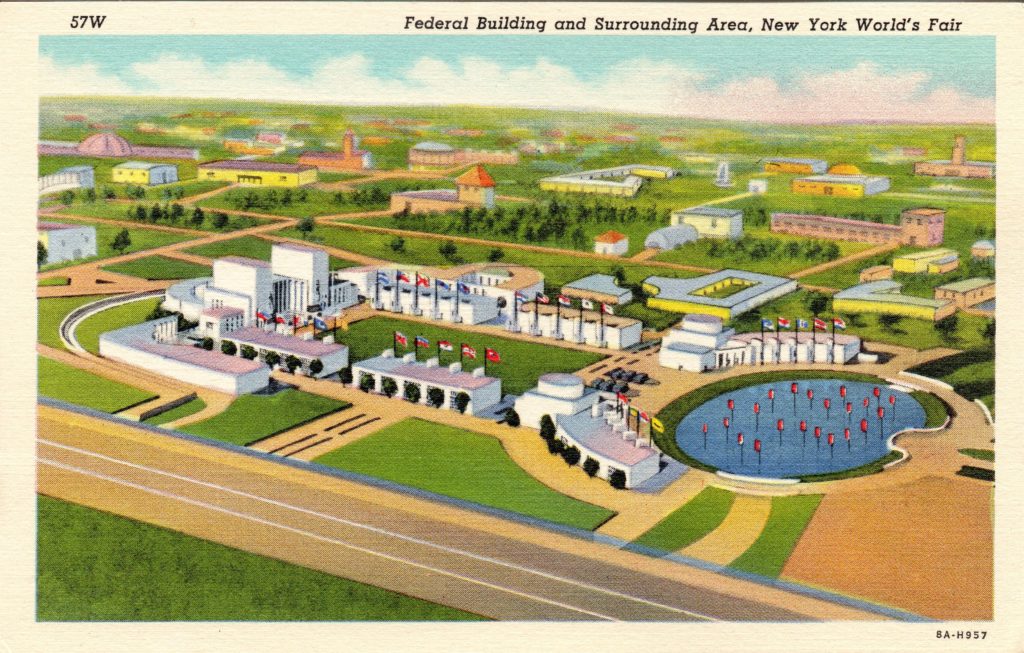
Starring into the gushing waters of the Lagoon of Nations with a view of the U.S. Federal Building.

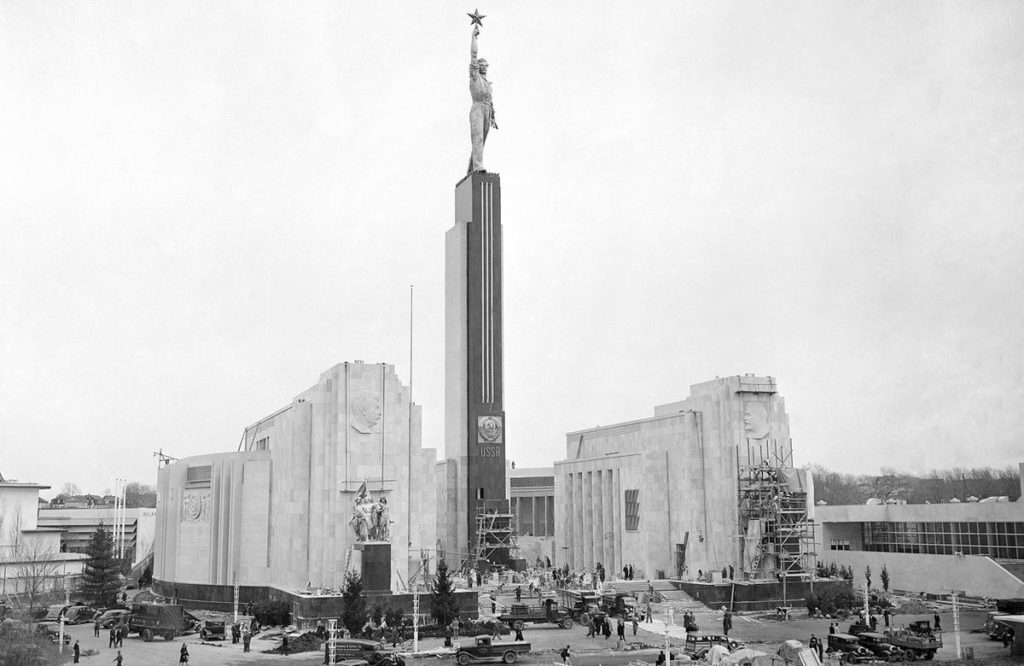
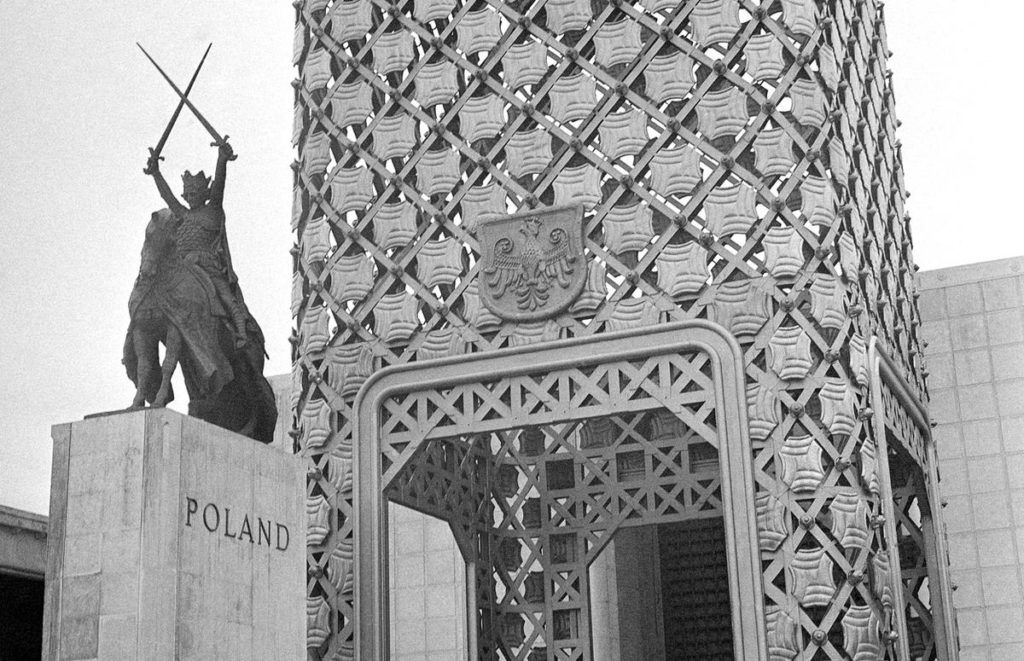
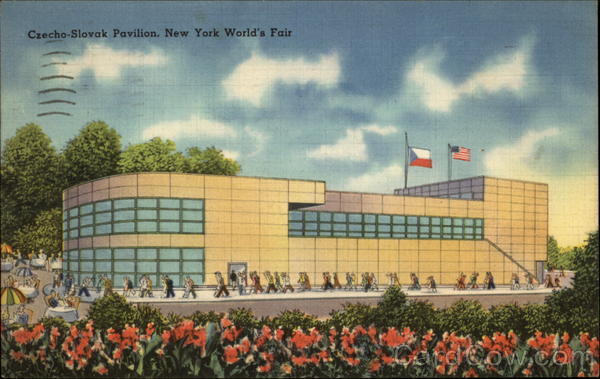
A few images of pavilions from the ‘Government Zone’ that were mentioned on the show:

The Soviet Union pavilion/AP Photo
Poland pavilion/AP photo
Czech-Slovak Pavilion, New York World’s Fair New York City
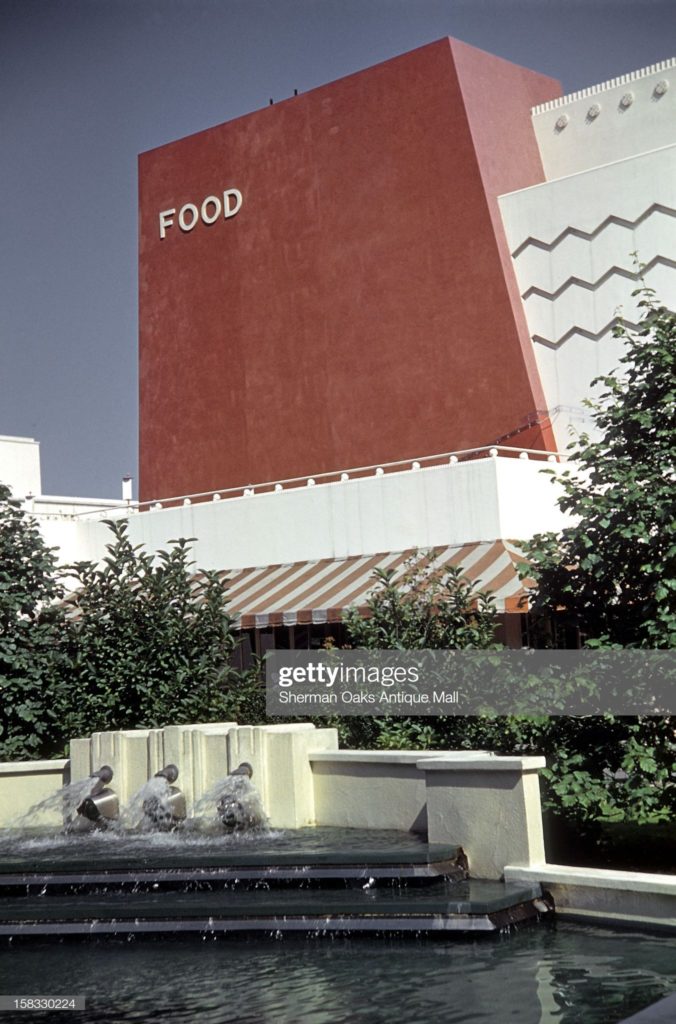
A view of the Food North Building at the 1939 New York World’s Fair in Flushing Meadows, Queens, New York City, New York. (Photo by Sherman Oaks Antique Mall/Getty Images)

The Mickey and Minnie Mouse cartoon which appeared at the National Biscuit Company (Nabisco) exhibition.

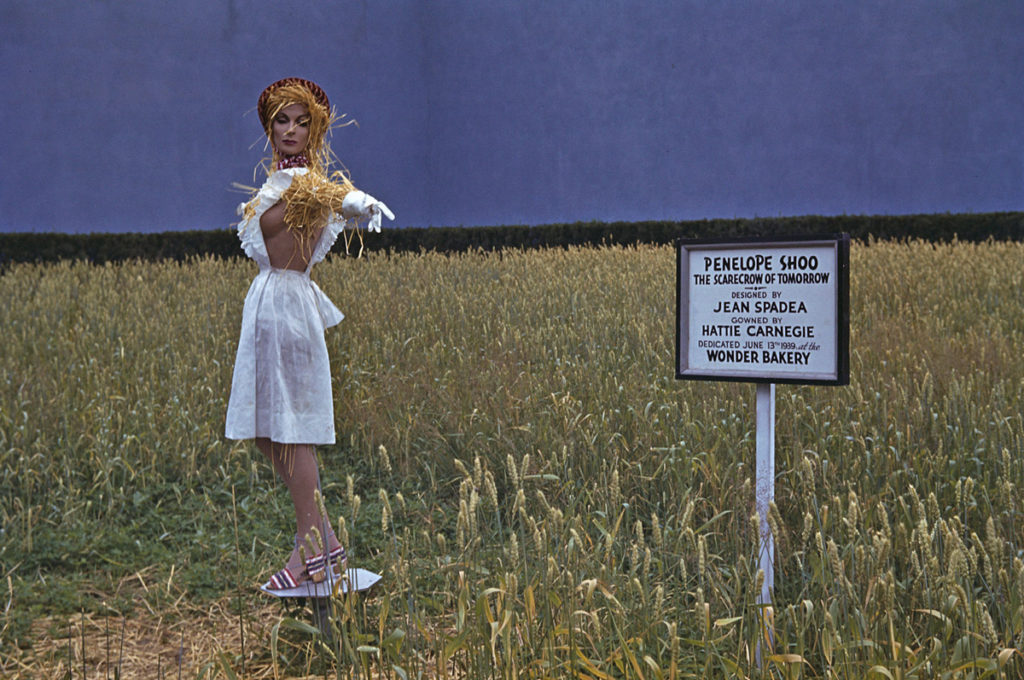
Wonder Bakery displays a wheat field exhibit at the 1939 World’s Fair. The model, Penelope Shoo, is wearing an outfit designed by Hattie Carnegie. The wheat field was billed as “the first planted in New York City since 1875.” (Peter Campbell//Corbis via Getty Images)

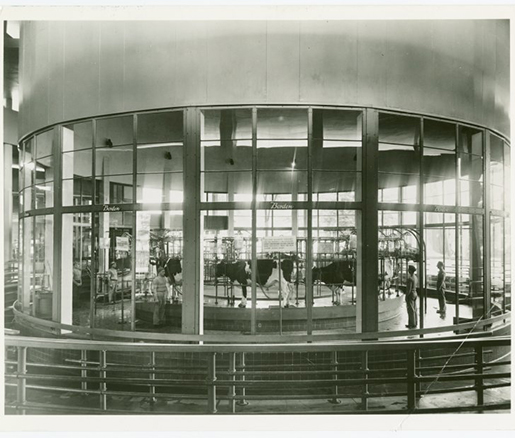
The ‘rotolactor’ in the Borden Company Exhibit

Courtesy James Beard

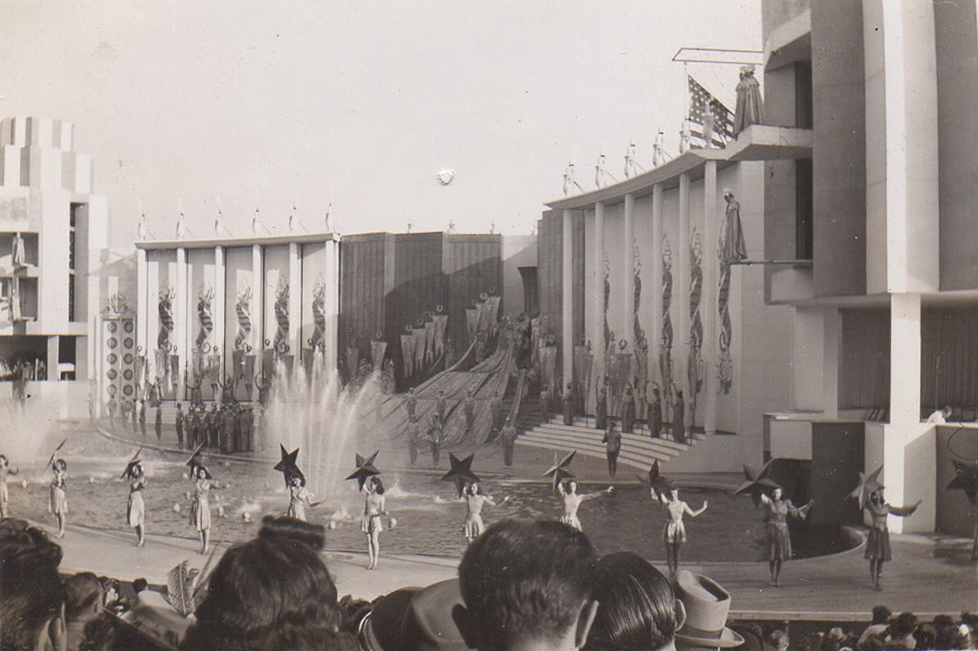
Billy Rose’s Aquacade — or if Aquaman were a musical!

You can find evidence of the 1939 Worlds Fair all over the place in the park! Just a few examples (pictures by Greg Young):

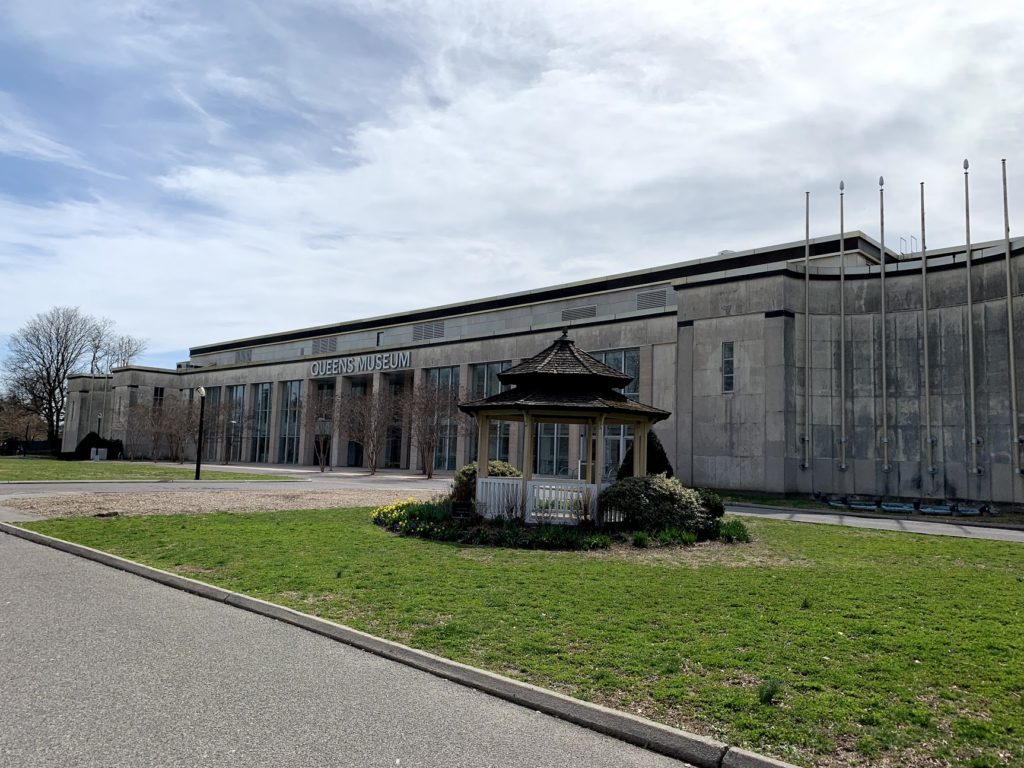
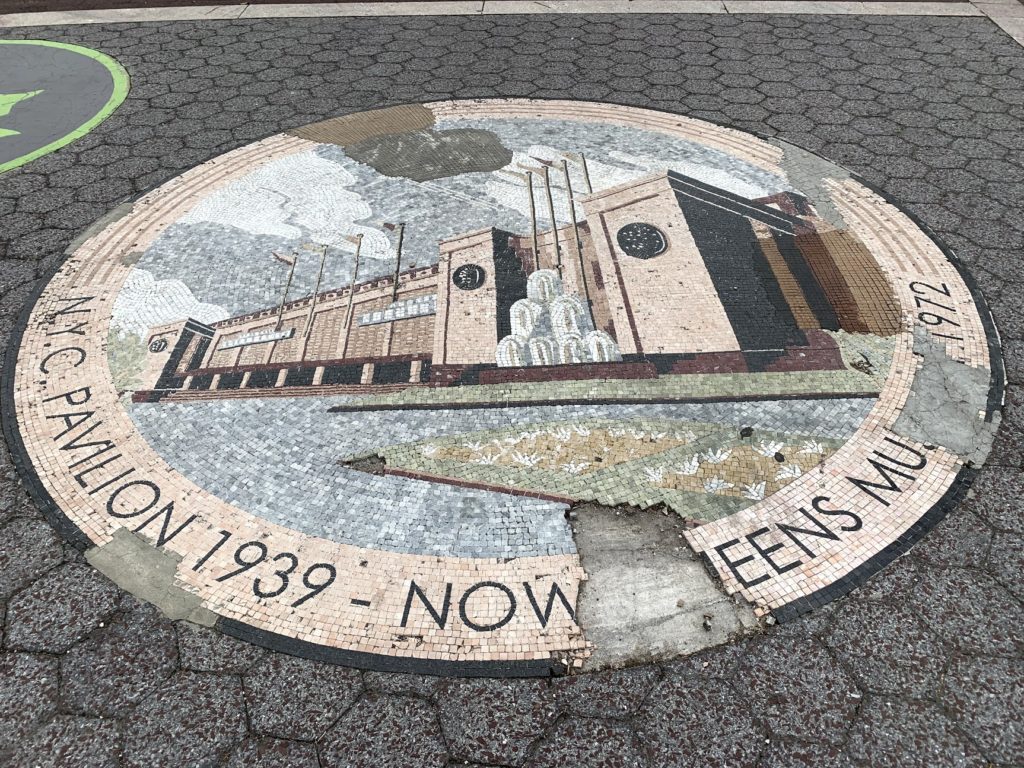
The former “New York City Building” which sat in the shadow of the Trylon and the Perisphere. Today it’s the Queens Museum….
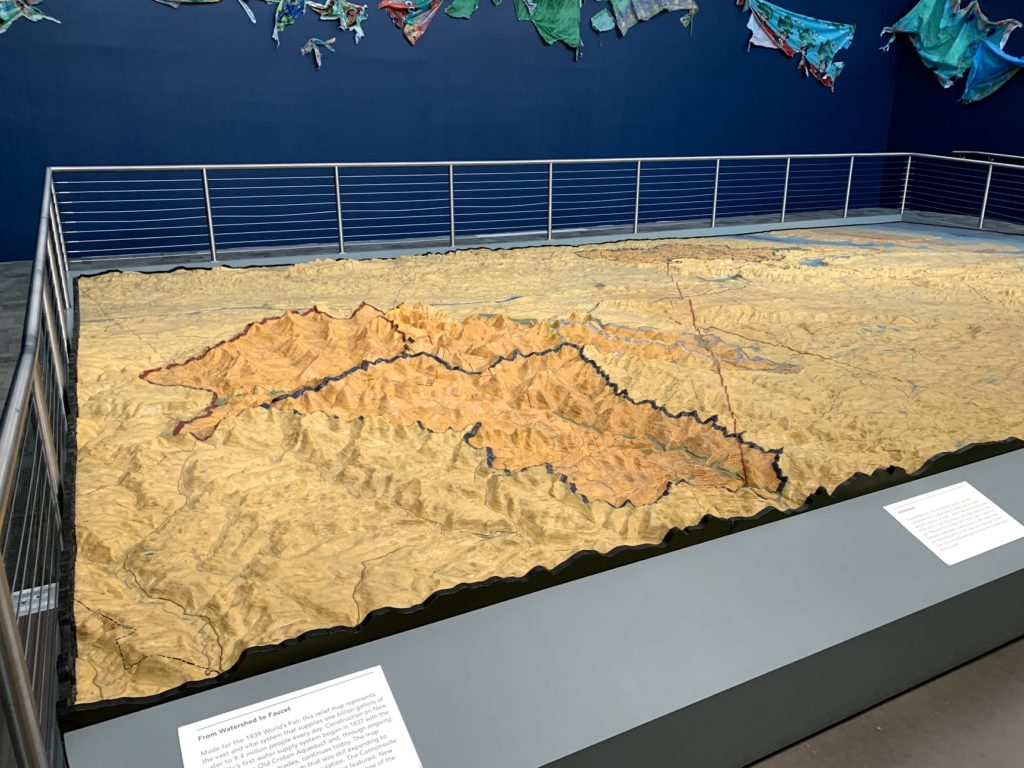
…where you can find the relief map of the New York City water supply, designed for the 1939 World’s Fair but never used.
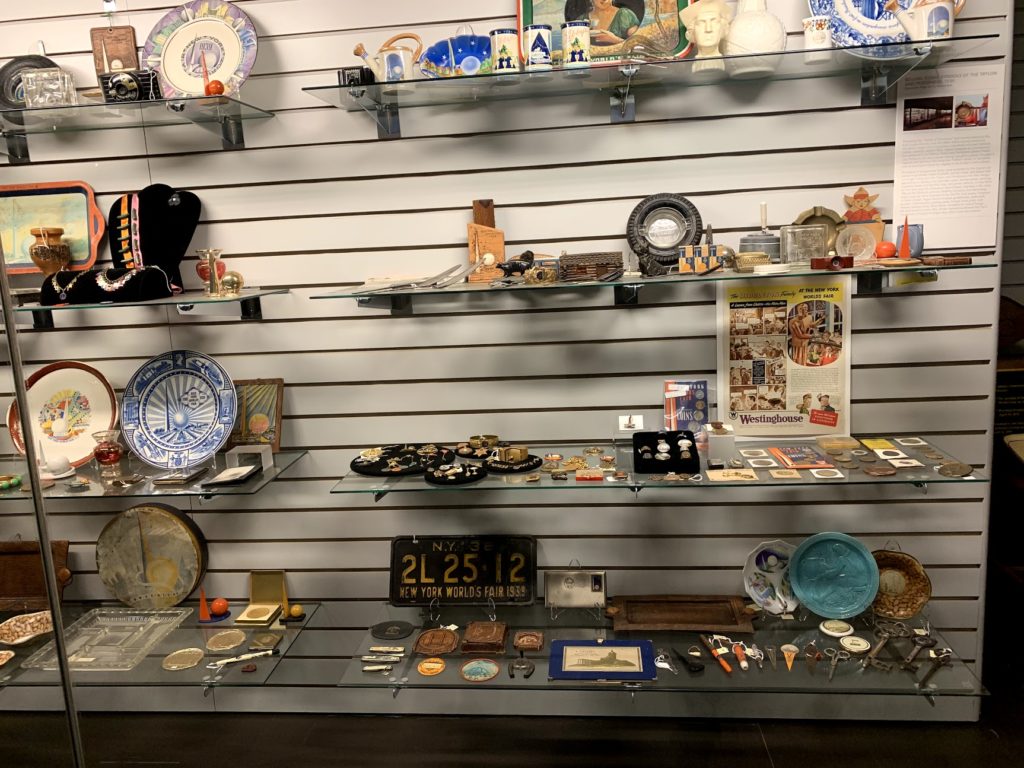
On the second floor, you’ll find a visible storage collection of World’s Fair memorabilia from both fairs.

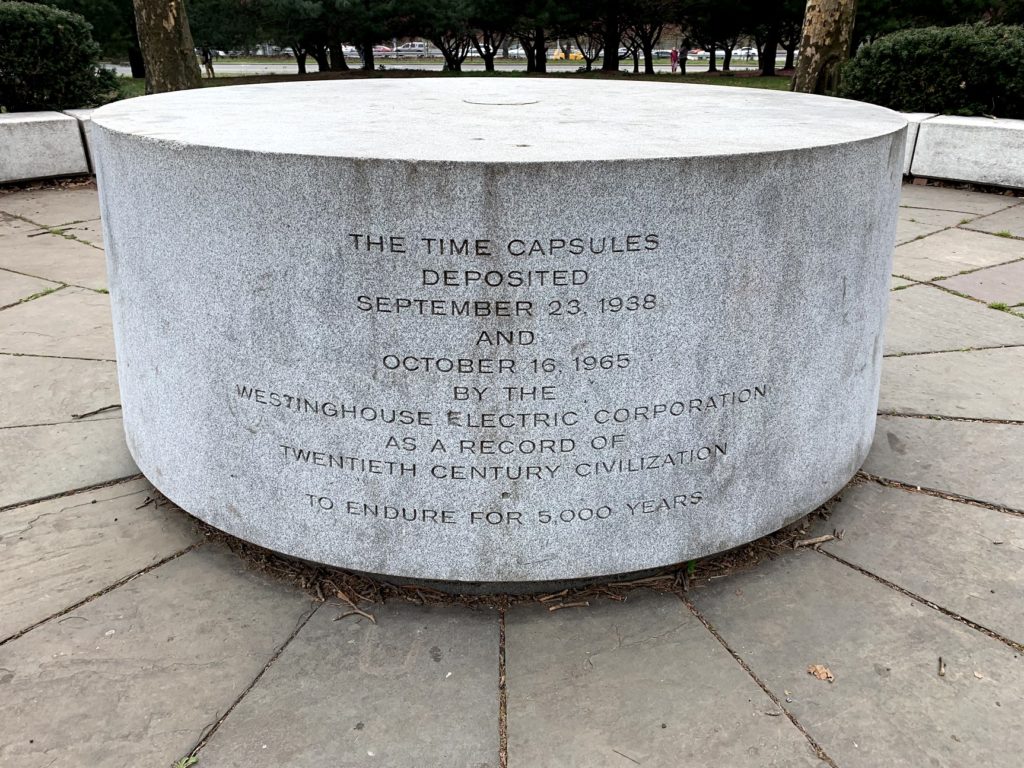
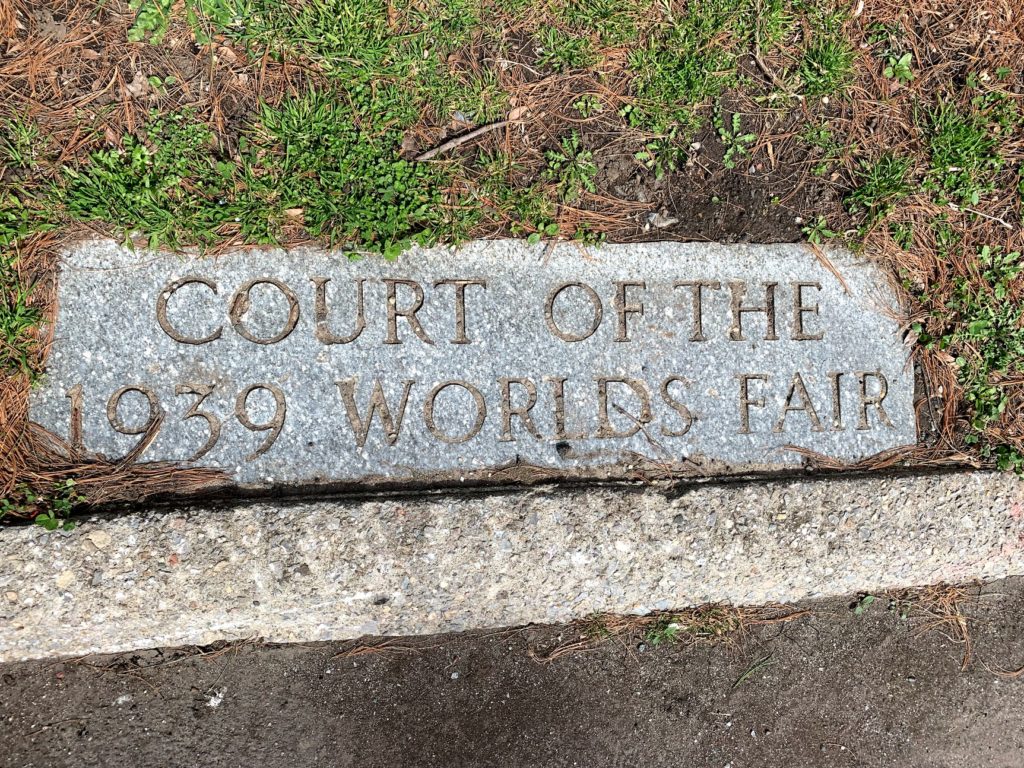
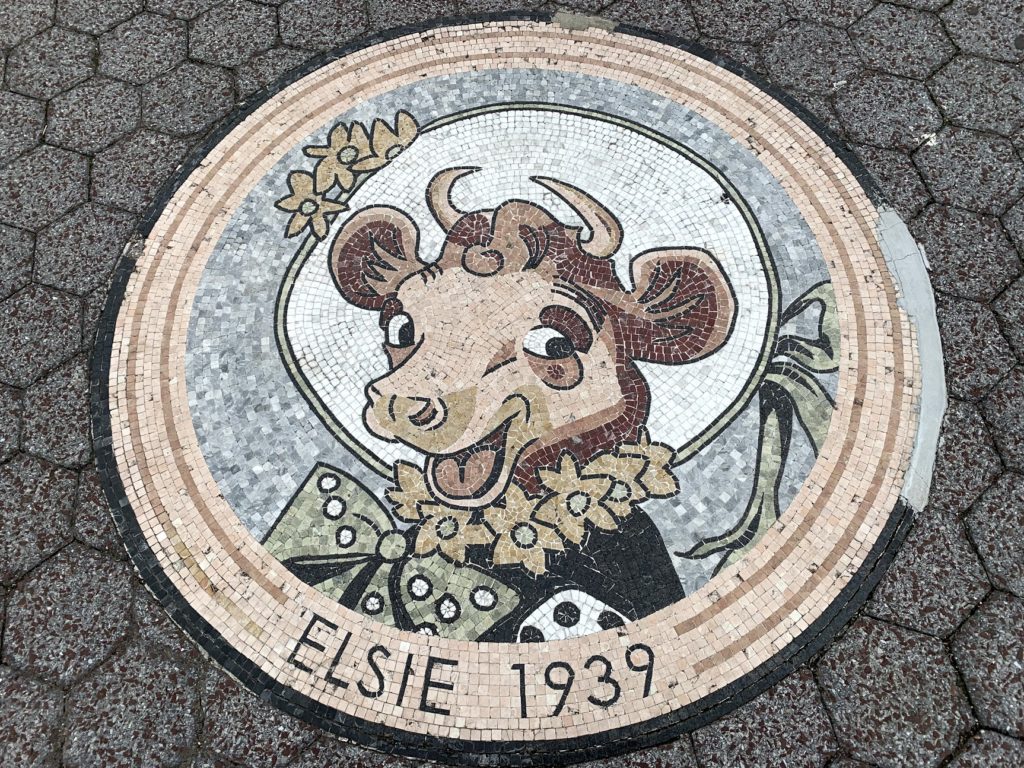
Don’t just look up! At your feet are also some tributes and traces to the World’s Fair.

FURTHER READING

The website 1939 New York World’s Fair is a wonderful resource, breaking down the specifics of most pavilions and even offering scans of brochures and programs from the fair.
The University of Virginia American Studies program also has a fine, older online look at the fair.

NYC Parks also has a page of vintage photographs, including one of the Westinghouse Time Capsule being installed.

FURTHER VIEWING

The Anthology Film Archives is hosting a film series in May called Films For The Fair: The World’s Fair and the Cinema  with some fascinatingly strange features scheduled throughout the month.

FURTHER LISTENING

Listen to these past Bowery Boys podcast episodes for tie-ins to this week’s show — two on the World’s Fair of 1964-65 (including one on the ruins of the New York State Pavilion) and one on the ‘first’ World’s Fair — the New York Crystal Palace Exposition. In addition, an episode on the birth of television featured the RCA Pavilion at the World’s Fair.

In addition, you may also like an episode of Greg’s spinoff podcast The First about the invention of robots (featuring Elektro).

Categories
Bowery Boys Bookshelf Sports

Opening Day at Shea Stadium: A nostalgic trip to the New York Mets’ beloved old home

Shea Stadium has been gone ten years now.

With mourning fans looking on, the final section of seats were torn out on the morning of February 18, 2009. Awaiting fans a short distance away was the sparkling new Citi Field which would open for business with a thrilling game between the San Diego Padres and the field’s home team the New York Mets.

Shea was not a perfect stadium. Neither was Ebbets Field, the former home of the Brooklyn Dodgers that has nonetheless entered into the realm of sports mythology. But nostalgia holds a special power in sports history, and the further we get from the classic moments which took place at Shea, the more remarkable it becomes in memory.

Quite frankly, Queens has not been quite the same.

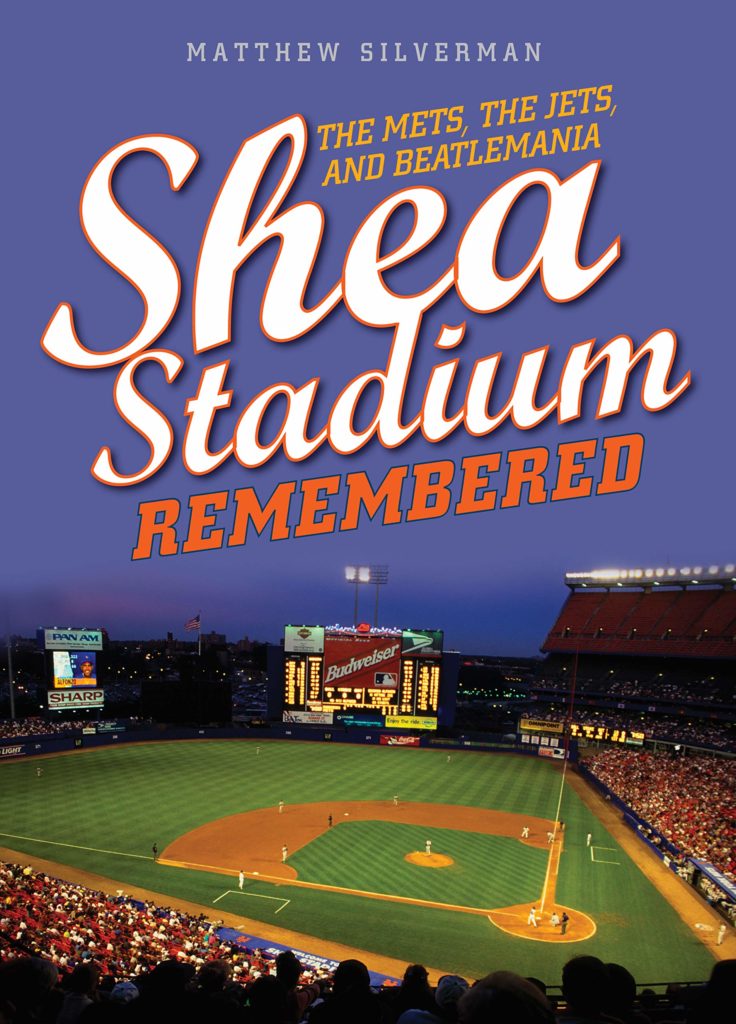
Shea Stadium Remembered:
the Mets, the Jets and Beatlemania
by Matthew Silverman
Lyons Press

Journalist Matthew Silverman is such an ardentMets aficionado — if you’ve read a book about the beloved Queens baseball team, he probably wrote it — that his official website is MetSilverman.com. And so of course Shea Stadium Remembered: the Mets, the Jets and Beatlemania, his tribute to the Met’s most famous home, has a breezy pitch-perfect charm to it.

Arranged in tiny chapters, little blips of history, Shea Stadium Remembered revels unashamedly in sweet nostalgia, recalling a place that matched the charisma of its underdog baseball team and a home for an accomplished football team back when it was actually situated within the city.

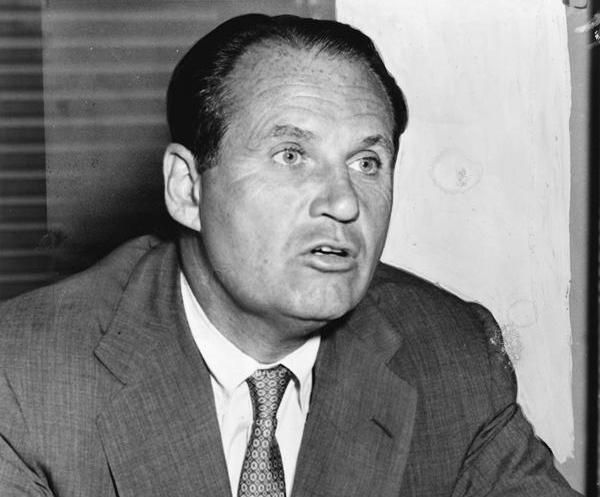
The birth of the Mets and their home for over 40 years begins in a moment of great turmoil in New York City sports history. In the 1950s, both the New York Giants and the Brooklyn Dodgers left New York City, the latter after a vicious public battle between Dodgers owner Walter O’Malley and New York power broker Robert Moses.

Moses wanted a team situated in Queens, in Flushing Meadows-Corona Park, an eventual companion to Moses’ pet project — the World’s Fair of 1964. With Ebbets growing inadequate for modern baseball crowds, O’Malley wanted a new stadium at Atlantic and Flatbush Avenues, keeping them in Brooklyn. (That’s near the spot of today’s Barclays Center.)

But nobody overpowered Robert Moses in the 1950s. The Dodgers split for Los Angeles.

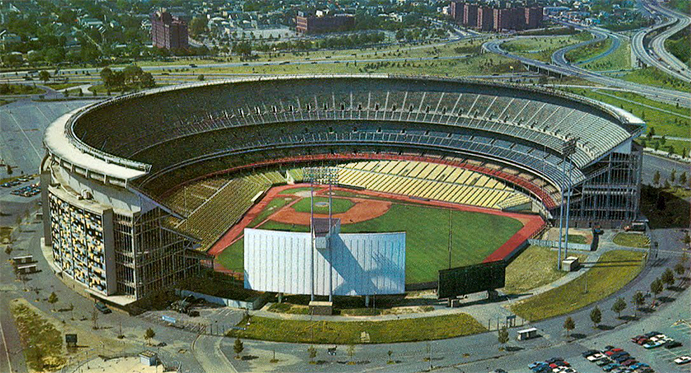
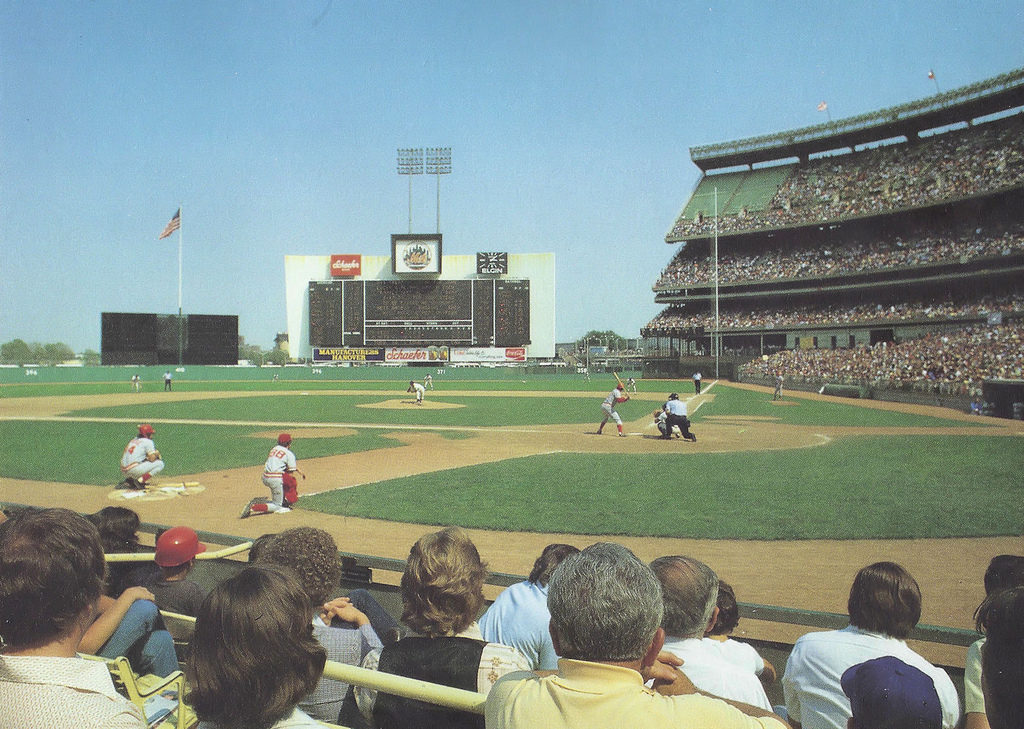
Shea Stadium, late 1970s — Sports Photo File/Mitchell Reibel

Fortunately, lawyer William Shea convinced the National League to expand their roster, leading to the creation of the New York Metropolitans, the name a nod to a 19th century baseball club and eventually shortened. After a short stint in the decrepit Polo Grounds, they moved to their new home — named in honor of a man who never played for them but was nonetheless instrumental to the history of New York City sports.

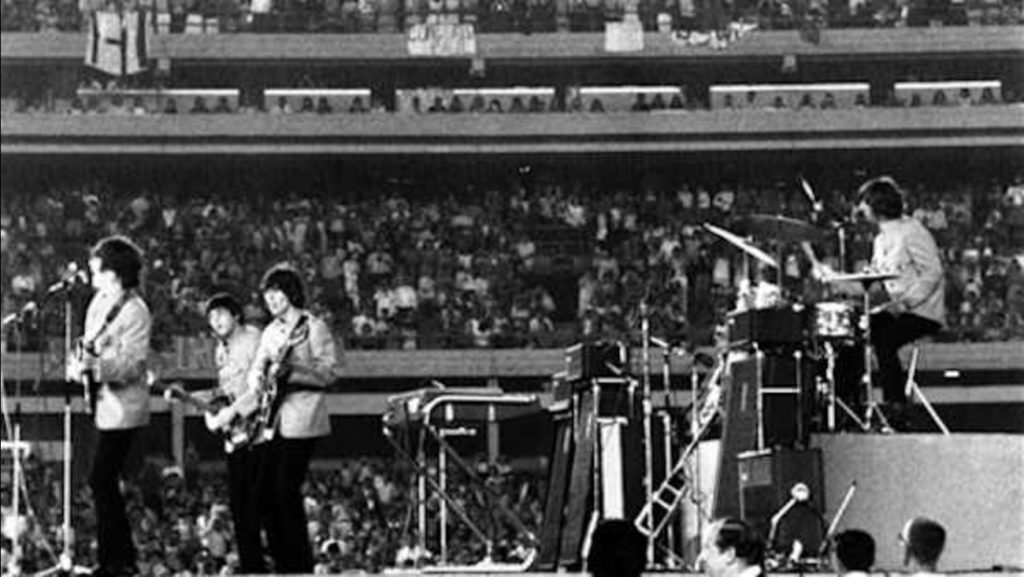
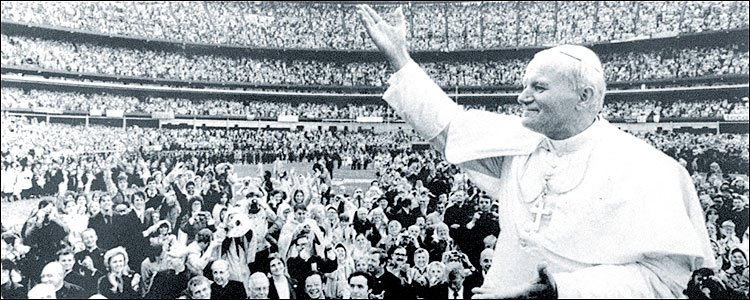
In Shea Stadium Remembered, Silverman gives us a compilation of the stadium’s greatest moments, weaving the Met’s history in with the other notable events at the stadium — from the Beatles to Pope John Paul II.

Not to say that the Jets aren’t prominently featured here as well — they played at Shea for almost twenty years — but the Mets were truly at home here, through thick and thin (often very thin). The Mets gave Shea some of its personality and Shea gave the Mets its hometown pride.

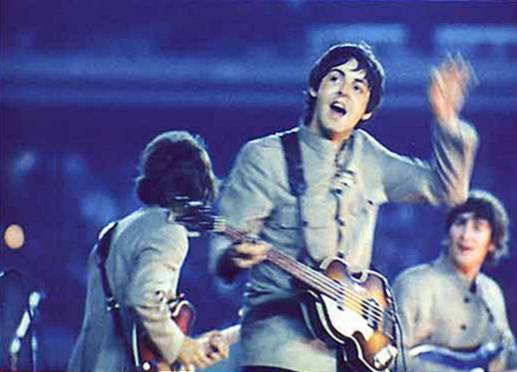
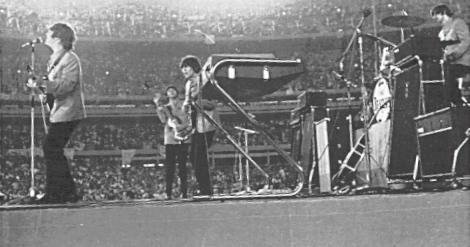
The Beatles at Shea Stadium, August 1965 (AP)

For more information, check out these catalog episodes of the Bowery Boys podcast:

Categories
Amusements and Thrills

The 1965 New York World’s Fair: Opening Day

The New York World’s Fair opened for its second and last season on April 21, 1965.  The grand opening the previous year had been rocky indeed — protests, rain, even a parking lot riot.  Thankfully the second season was met with beautiful weather and abundant crowds.  In order to jazz it up a bit — not too much, just enough to increase ticket sales — Robert Moses authorized a host of changes, great and small.  Some of the exciting guest stars and new features that awaited entrants to the 1965 World’s Fair that day included:

1

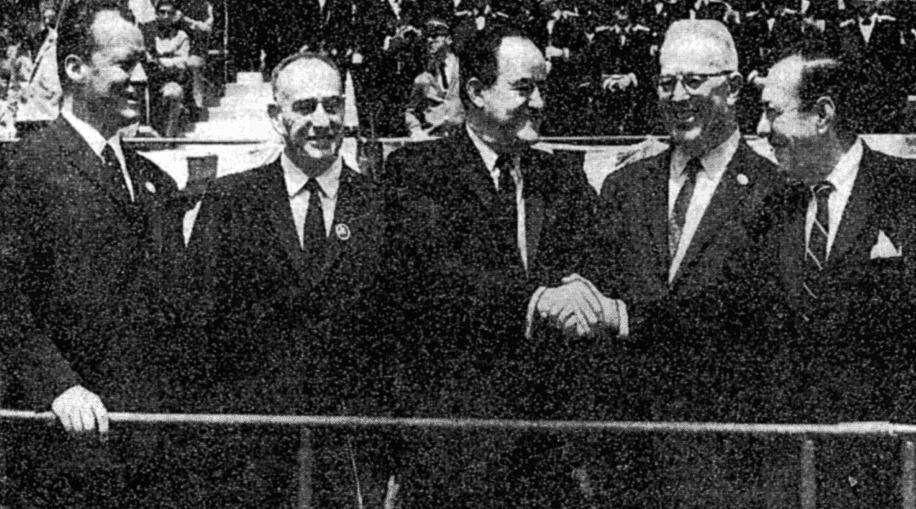
Opening the World’s Fair that day: Mayor Willie Brandt of West Berlin; Robert Moses naturally; Vice President Hubert Humphreys; Chief Justice Earl Warren and New York Mayor Robert Wagner (from NYT file photo)

Vice President Hubert Humphrey took a leisurely stroll through the fair, creating quite a stir. “He’s a walking pavilion,” cracked one observer. His entourage included Chief Justice Earl Warren.  During his visit to the New York State Pavilion, a riot almost ensued.  “Children cried out in terror, parents shouted, toes were trampled, cameras clicked.”

Courtesy Life Magazine

Hall of Presidents: Appropriately, Humphrey’s appearance coincided with the opening of some striking new exhibits within the United States Pavilion (which had opened the previous year) featuring memorabilia from over a dozen American presidents, including original copies of the Bill of Rights, Washington’s inaugural and farewell addresses and Lincoln’s Gettysburg Address.  Meanwhile, a crude Animatronic version of Lincoln continued to greet visitors.

Photo by Bill Cotter/NYT

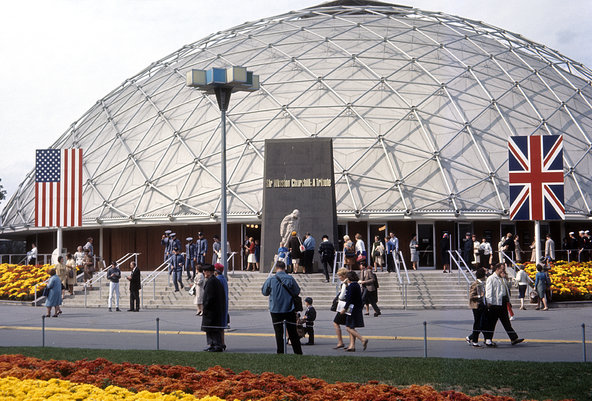
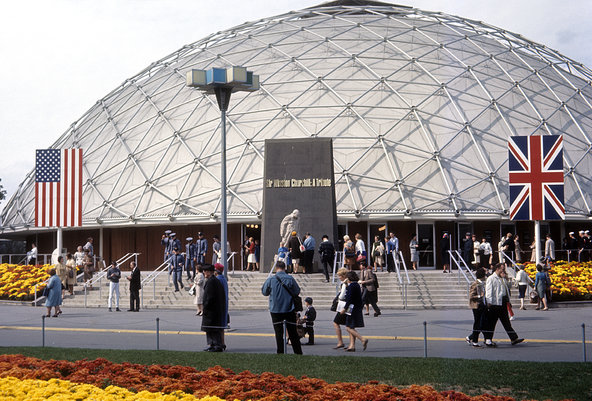
Under The Dome: One of the most anticipated new arrivals to the fair was the Winston Churchill Center, a tribute to the former British Prime Minister who had died in January.  “Included in exhibits documenting Sir Winston’s career are some of his own paintings, and photographs of him at various periods in his life. Also on display are a replica of Churchill’s study at Chartwell; models of Blenheim Palace, where he was born, and Bladon churchyard, where he lies buried; and an exhibit of his personal effects, including his desk, which once belonged to Disraeli.”

The dome of this dramatic pavilion would later be used as the Queens Zoo Aviary.

heinz

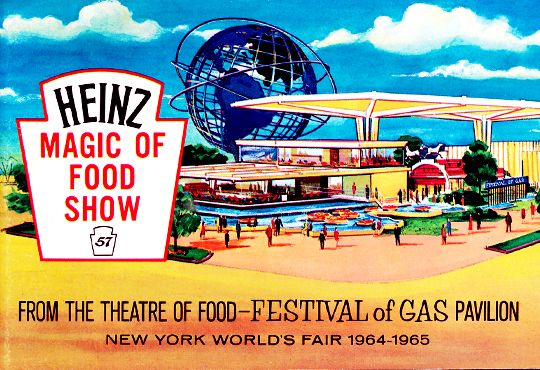
MORE FOOD: According to the New York Times, “the number of restaurants has been increased from 111 to 198. This means the fair can now serve more than 38,000  person simultaneously, or about 8,000 more than last year. ”  Certainly there was food to be found at the Theater of Food-Festival of Gas Pavilion?

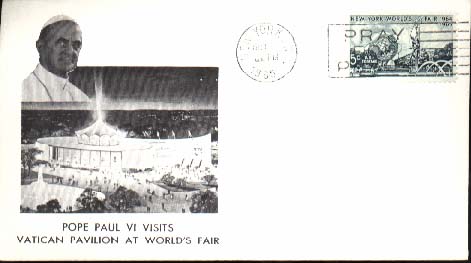
The Gutenberg Bible: If you were craving a more spiritual exhibition, look no further than the latest resident of the Vatican Pavilion, one of six existing copies of the Gutenberg Bible. Also on site: The Pope’s jeweled tiara.  These two items were joining the Pieta, perhaps the most historically significant work of art at the fair.

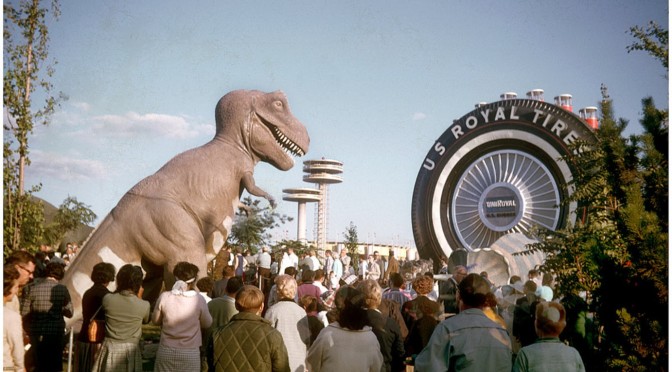
dino

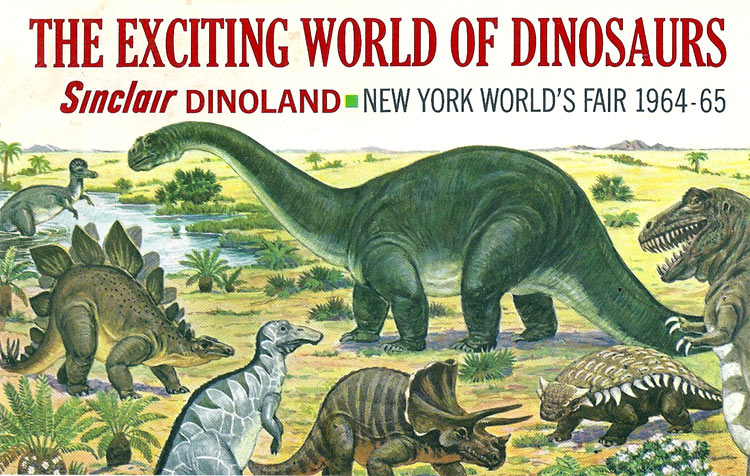
New Dinosaurs at Sinclair’s Dinoland : And not just any dinosaurs, but automated dinosaurs that could roar. “Last year we were of the school that dinosaurs had no vocal cords,” said the exhibit’s fuddyduddy spokesman. “This year we are in a new school.”

Kiddie Phone Center : As a way to get children excited about using the phone, Bell Telephone opened a Phone Fun Fair featuring a variety of wacky telephone games. “The center has three tot-sized phone booths where a youngster, by dialing, can get a pleasant message from one of six Disney characters, or a commercial message from an operator.” BONUS FUN:  “A voice Mirror lets you hear how you sound on the telephone. Weather-phones allow you to dial Weather Bureau information in selected cities. Quiz games, solar battery display — and much more!”

fiesta

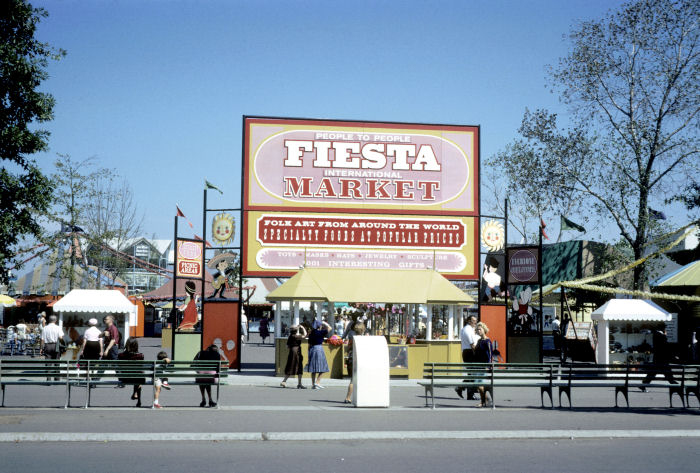
People To People Fiesta: The youth oriented People to People International is a youth outreach non-profit started by President Eisenhower in 1956. “Africa, Asia, Europe, as well as the Americas, are represented in a “village” of kiosks which display and sell a variety of folk art. Admission is charged; proceeds go to a center for world understanding.”   The ‘fiesta’ “will stress folk singing and dancing in the setting of colorful tents.”

Today PTPI takes the World’s Fair’s slogan — Peace Through Understanding — as its own.

(Image courtesy Worlds Fair Community forum.)

mars

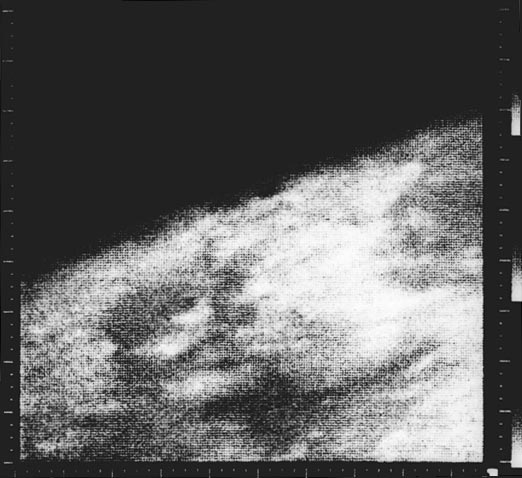
MARS! One of the more innovative new exhibits was located in Space Park with a focus on Mariner 4, a spacecraft launched the previous year that would successfully take the first images of Mars. Photos sent by Mariner 4 would be displayed here as they came in on July 14-15. Above: An image of Mars sent by the orbiting spacecraft.

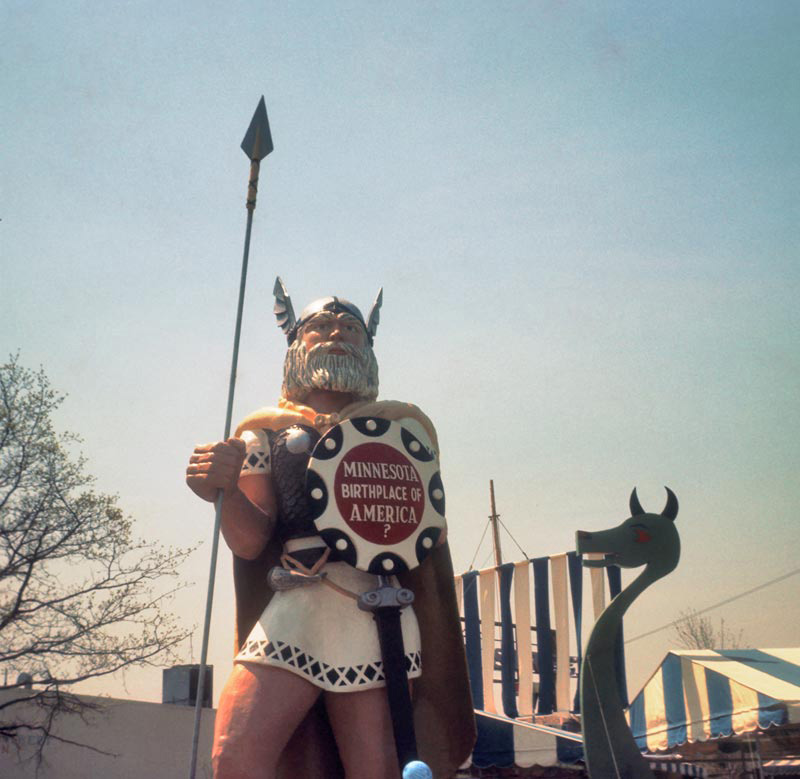
Kensington Runestone: And finally no trip to the fair in 1965 would be complete without a viewing of the mysterious Kensington Runestone, an ancient stone marking found in Minnesota in 1898.  Some believe this to be a link to 14th century Swedish explorers although how it got to Minnesota is anybody’s guess. It was debunked as a hoax in 1910, and yet here it is at the  World’s Fair! It was accompanied, naturally, by the 28-foot-tall Viking that you see below:

viking

Picture courtesy the World’s  Fair Community boards

Categories
Podcasts Queens History

Ruins of the World’s Fair: The New York State Pavilion, or how Philip Johnson’s futuristic architecture was almost forgotten


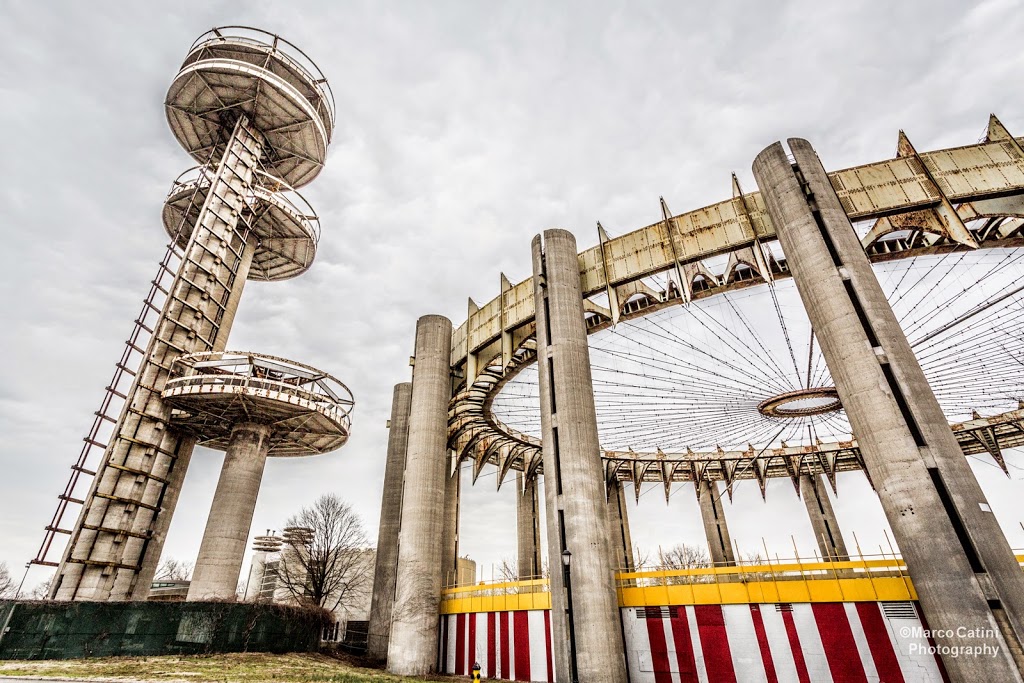
A little bit Jetsons, a little bit Gladiator, a little bit P.T Barnum. Photo/Marco Catini

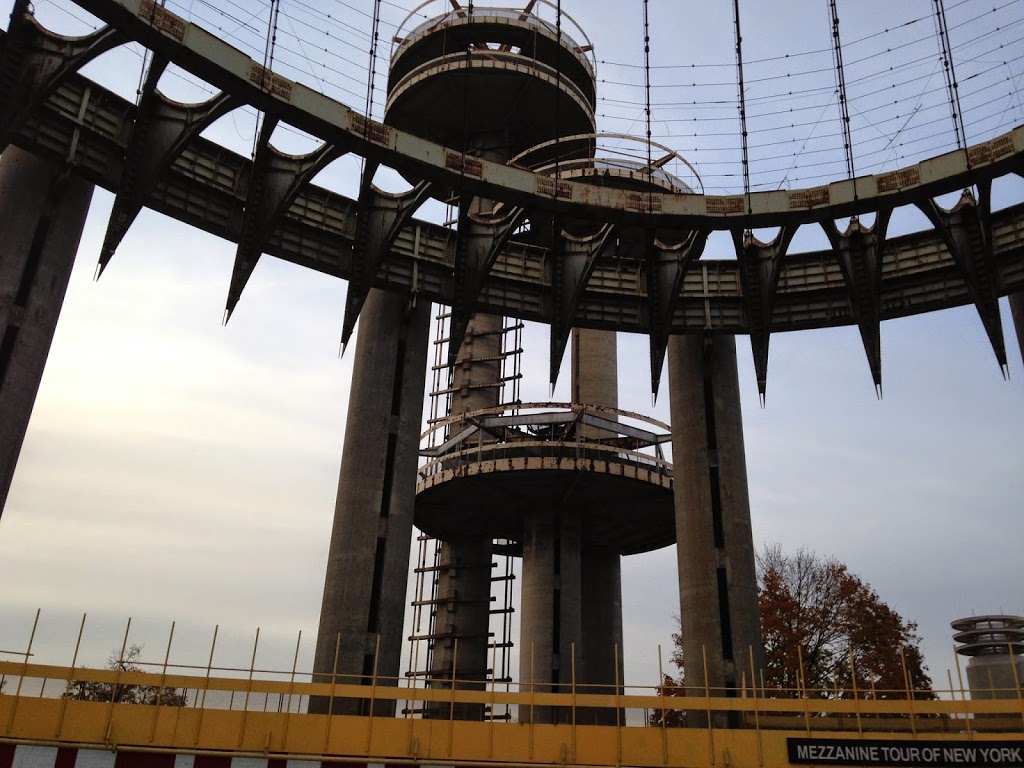
PODCAST The ruins of the New York State Pavilion, highlight of the 1964-65 World’s Fair in Flushing Meadows-Corona Park, have become a kind of unofficial Statue of Liberty of Queens, greeting people as they head to and from LaGuardia and JFK airports. Its abandoned saucer-like observation decks and steel arena have inspired generations of New Yorkers who have grown up with this oddity on the horizon.


The Pavilion holds a great many surprises, and its best days may be yet to come. Designed by modernist icon Philip Johnson, the Pavilion was saved from the fate of many of the venues in the World’s Fair. But it’s only been used sporadically over the past 50 or so years, and the fear of further deterioration is always present.

For the first part of this very special episode of the Bowery Boys, I take you through the pavilion’s presence in the World’s Fair, a kaleidoscopic attraction that extolled the greatness of the state of New York. In its first year, however, a battle over controversial artwork was waged, pitting Robert Moses and Nelson Rockefeller against the hottest artist of the day — Andy Warhol. Other controversies at the Fair threatened to derail the message behind its slogan ‘Peace Through Understanding.’

In the show’s second half, I head out to record at the Queens Theater — the only part of the New York State Pavilion that’s been rehabilitated — to explore the venue’s ‘lonely years’ with filmmaker Matthew Silva, a co-founder of People For The Pavilion, an organization that’s successfully bringing attention to this weird little treasure. Matthew gives us the scoop of the pavilion’s later years, culled from some of his interviews in the film Modern Ruin: A World’s Fair Pavilion.

This is crucial time in the history of this spectacular relic. With public attention at an all time high, we may now be at the right time to re-purpose the Pavilion into a new destination for New Yorkers. What do you think should be done with the New York State Pavilion?

An airplane passes over the park, its shadow captured inside the Pavilion. (Photo by George Garrigues)


And we would like to thank our sponsors:

Audible, the premier provider of digital audiobooks. Get a FREE audiobook download and 30 day free trial at www.audibletrial.com/boweryboys. Over 150,000 titles to choose from for your iPhone, Android, Kindle or mp3 player Audible titles play on iPhone, Kindle, Android and more than 500 devices for listening anytime, anywhere.


Here’s the trailer to Matthew’s film Modern Ruin: A World’s Fair Pavilion:


Modern Ruin: A World’s Fair Pavilion – Promo I from Matthew Silva on Vimeo.

Thank you Matthew for helping out with the show this week! He’s finishing his film. If you would like to help out, go over to the Modern Ruin GoFundMe page and donate. You just be helping out the film, but the Pavilion itself. The film will probably be the first time many people ever hear of the New York State Pavilion.

And for a different (fictional) film take on the Pavilion, try out these appearances from The Wiz, Men In Black and Iron Man 2:

And thank you to commenter Signed D.C. who points out that the venue was featured in an music video by They Might Be Giants who, generally speaking, who a bit obsessed with the World’s Fair. (It pops up in several of their songs, including a lyric to their song “Ana Ng.“) At one point, the lead singer floats over the Texaco map.


Looking down at the Texaco map of New York state. (Courtesy New York Daily News)


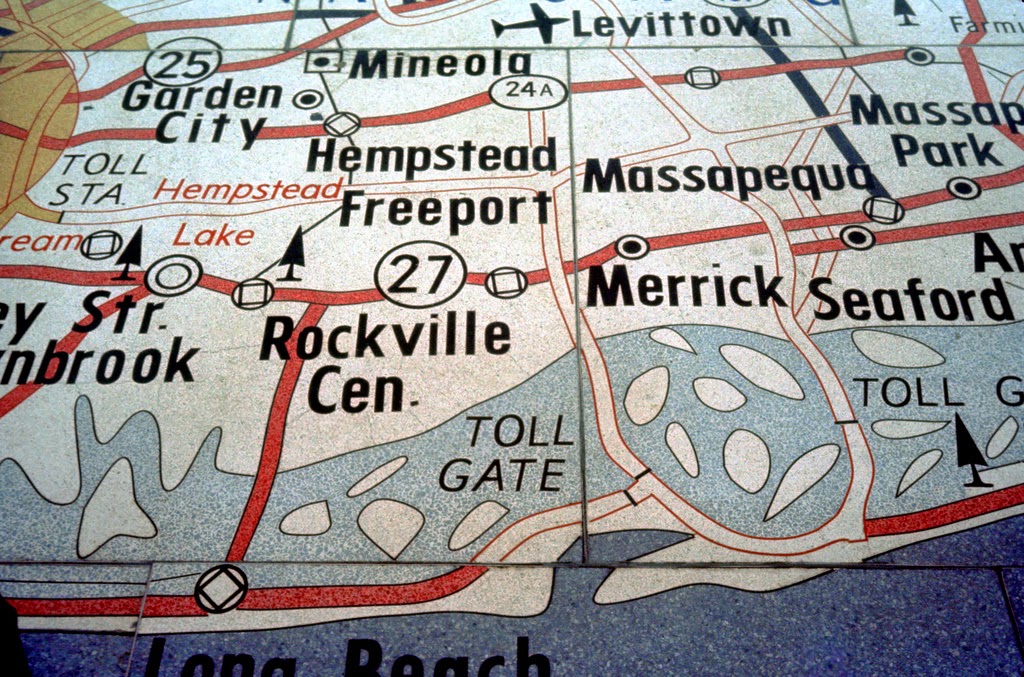
A close up of Long Island, photo taken in 1964. (Courtesy Flickr/Susan DeMark)

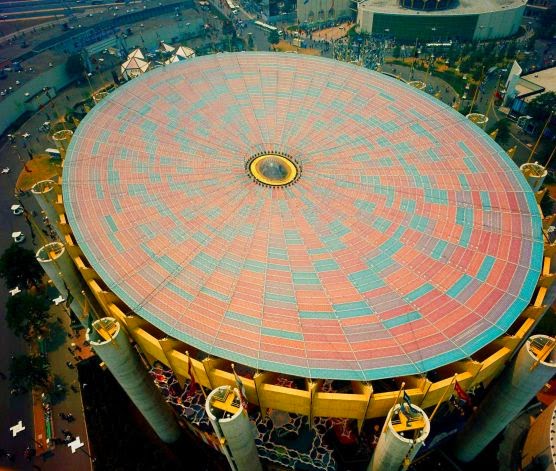
An overhead shot of Philip Johnson’s extraordinary rooftop, a stunning colorful ovoid that projected a rainbow of colors down upon fair-goers. (Courtesy AP)

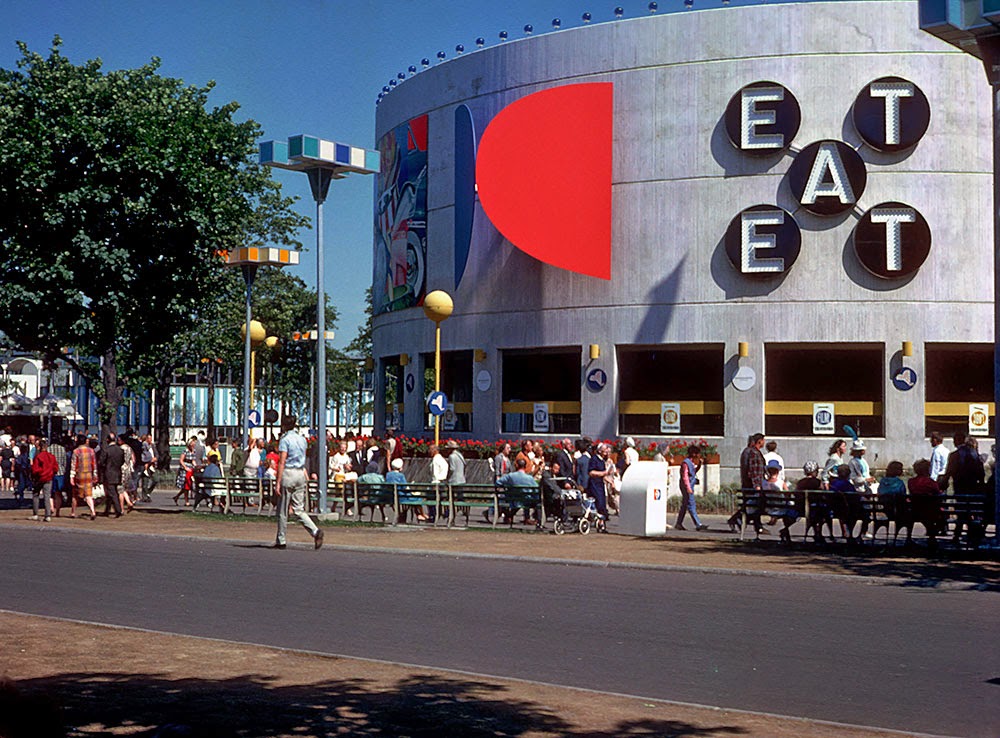
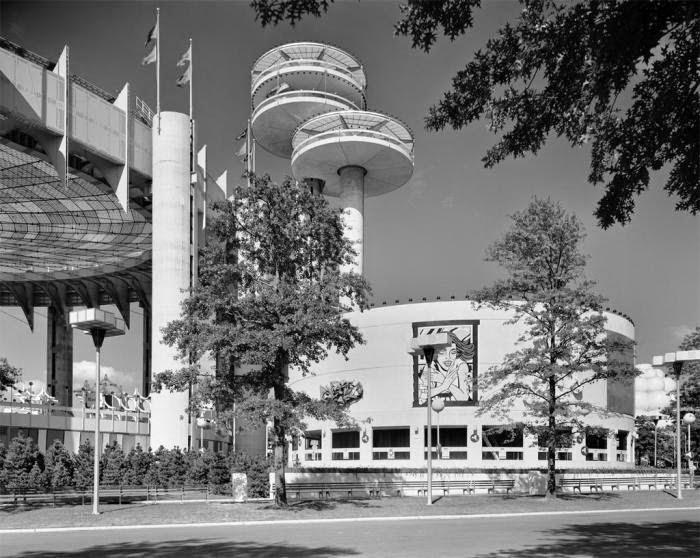
Theaterama, part of the New York State Pavilion, is today’s Queens Theater. Johnson commissioned the work of several pop artists to hang along the walls of the pavilion. (Courtesy Bill Cotter/World’s Fair Community)

A view of Theaterama showing the Roy Lichtenstein mural upon its side (Courtesy Jon Buono):

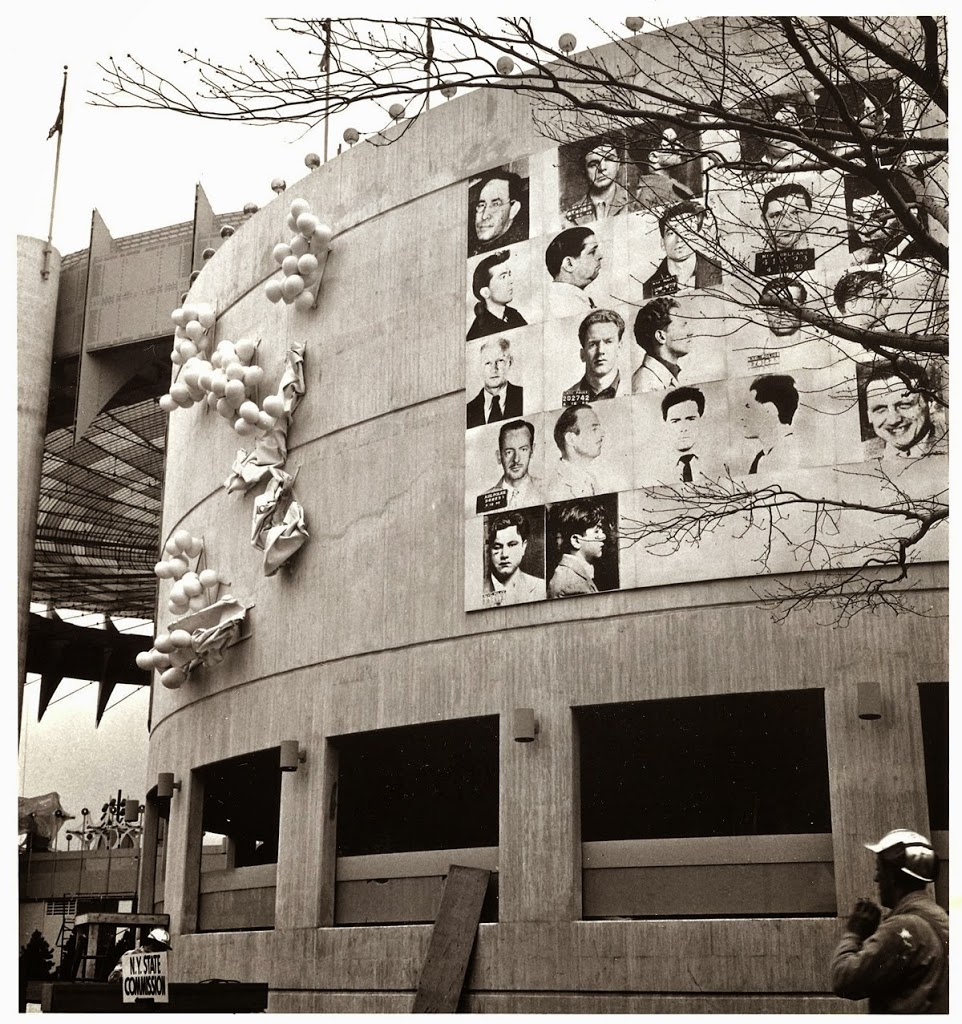
Andy Warhol‘s Ten Wanted Men on the side of Theaterama, with the Tent of Tomorrow in the background. Although we can almost guarantee that it was not beloved by Robert Moses, it’s believed it was taken down because of Governor Rockefeller.

Robert Moses beams from the sidewalk of Flushing Meadows-Corona Park. The mosaic is based on the work of Andy Warhol.

The Federal Pavilion — “the square donut on stilts” — was designed by Charles Luckman, who also designed the current Madison Square Garden.

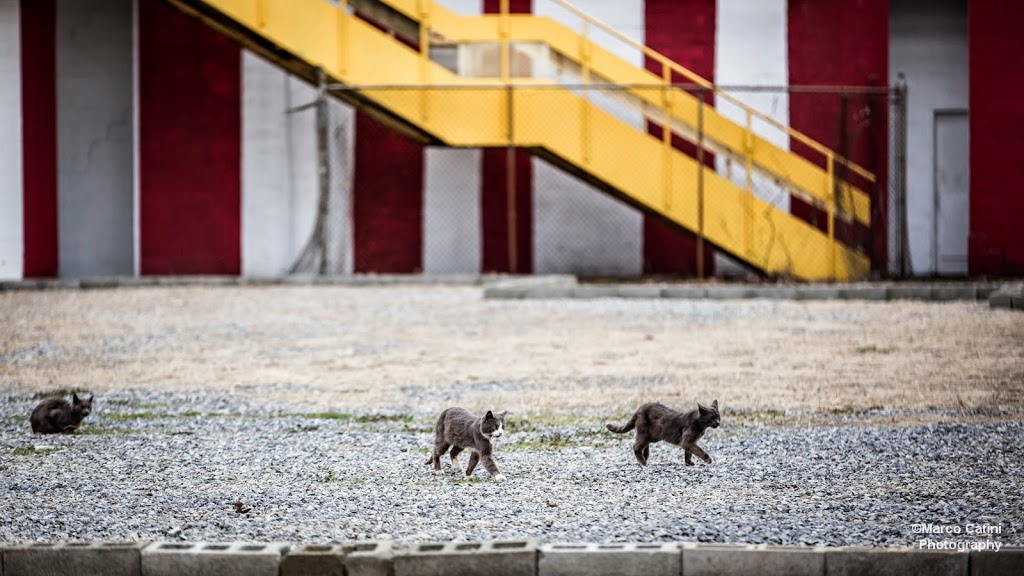
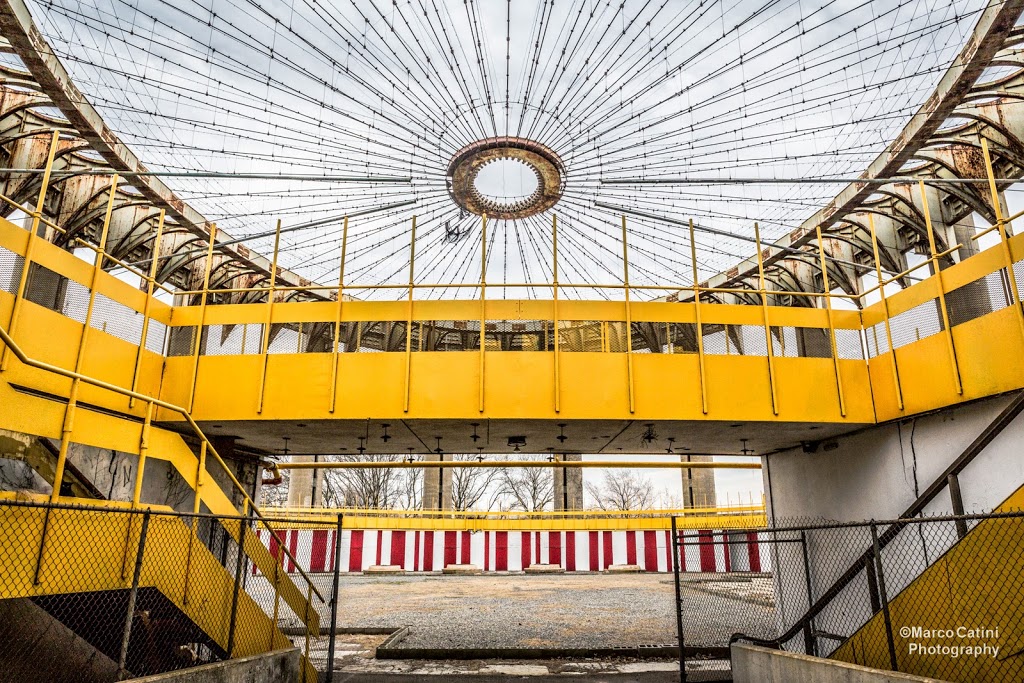
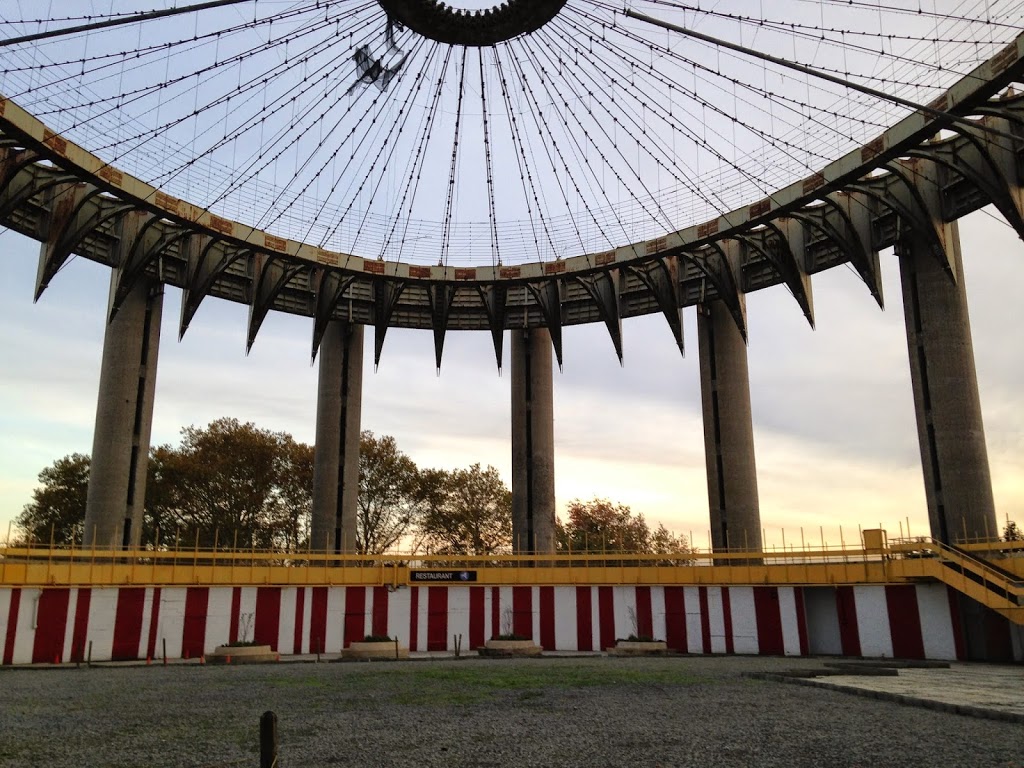
The photographer Marco Catini has taken some recent images of the Pavilion. You can find much more of his work here. Thanks Marco for letting me use your work here!

Here are a few of my photos taken on the afternoon of recording. The New York State Pavilion Paint Project is responsible for keeping the place is festive shape. The candy stripes are similar to the look of the 1964 pavilion.

MY THANKS AND GRATITUDE to the Queens Theatre in The Park for allowing us to record in the cabaret room! I know we went on and on about the observation desks and the Tent of Tomorrow, but you should really check out a show within the greatly renovated theater. Coming in December: Charles Dickens’ A Christmas Carol!

Visit the People For The Pavilion website for more information on upcoming events, news and fund-raisers. And a shout-out to the organization’s co-founder Salmaan Khan!

The New York Daily News just yesterday published an article about People For the Pavilion and its co-founder Christian Doran who passed away in February. There’s a fund-raiser tomorrow in his honor. [More info here]

ALSO: I didn’t get to plug this on the show, but historian Christian Kellberg has just released a book of photography of the New York State Pavilion, part of the Images of America series. Most of the pictures are exclusive to this book including some extraordinary shots of the pavilion construction.

And of course there’s Joseph Tirella‘s terrific book Tomorrow-Land: The 1964-65 World’s Fair and the Transformation of America, putting the entire fair within context of the rapidly changing America of the 1960s.

And since I mentioned it on the show, here’s a link for Robert Caro‘s The Power Broker as well!

Categories
Queens History Robert Moses

Robert Moses rejected this terrifying Margaret Keane painting from hanging at the 1964-65 World’s Fair

The World’s Fair of 1964-65 at Flushing Meadows-Corona Park was a major American event forward-looking in its intent and, in many ways, backwards in its practice.  In particular, Robert Moses did not care for cheap carnival amusements, nor did he care for music or art that was particular edgy or controversial. Moses’ tastes ruled supreme over the Fair as he held veto power over any works that were in “extreme bad taste or low standard.”

There was no pavilion dedicated to art although several independent partners funded their own art displays.  The New York State Pavilion presented the work of brand-new pop artists; an objectionable piece by Andy Warhol entitled Thirteen Wanted Men was eventually painted over (although it was the governor Nelson Rockefeller who objected in this case).

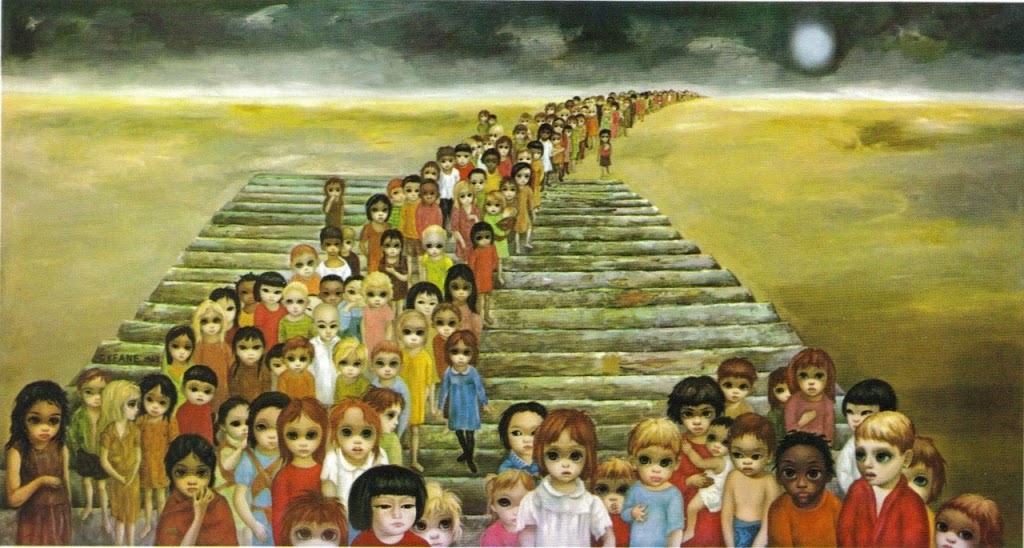
Moses did eventually throw out one surprising piece of artwork — Tomorrow Forever by Margaret Keane.

The Keane painting was to have been displayed in this building at the fair.**

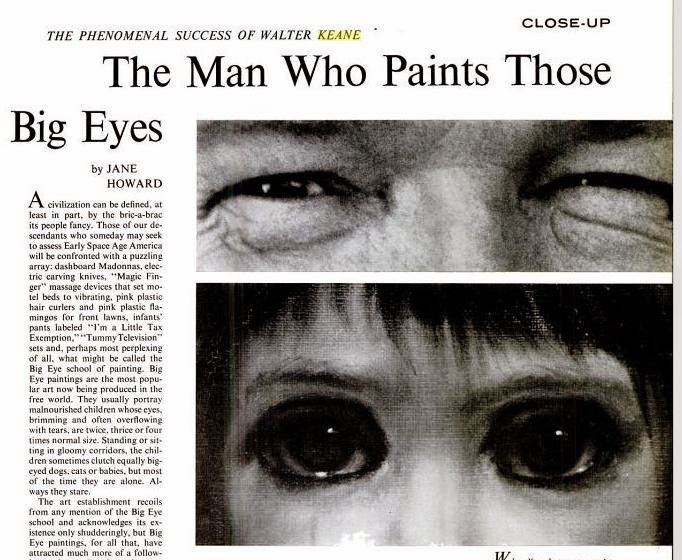
Keane was known for her bizarre and haunting images of children and animals with large empty eyes.  During the 1960s, her husband Walter Keane claimed to be the creator of her paintings.  It was he who was announced as the painter of this macabre work, chosen in February 1964 to grace the Fair’s Hall of Education.   The venue devoted to the future of schools would feature a scale model of an elementary school from the year 2000, a playground with “futuristic climbing structures,” and from the entrance way, the terrifying painting you see above.

The work by Keane, representing “something which would be symbolic for the aspiration of children,” was not exactly heralded as the pinnacle of artistic expression in 1964.

The New York Times’ art critic John Canaday could barely conceal his disgust at this “grotesque announcement,” adding, “Mr. Keane is the painter who enjoys international cele­bration for grinding out form­ula pictures of wide‐eyed children of such appalling sentimentality that his product has become synonymous among critics with the very definition of tasteless hack work.”   [source]
To be fair, Canaday had only seen a photograph of the painting, which depicts an endless sea of soul-crushing zombie children, rising out of a morose and barren wasteland. “That’s true,” he confessed to a Life Magazine reporter. “It’s normally a principle of mine never to judge just by a photograph, but in this case it didn’t matter.”

Moses seemed to agree with Canaday, demanding the Hall of Education cancel the planned installation before it was even mounted.  Thanks to Canaday’s protest, Moses’ office was inundated with letters from angry intellectuals and aesthetes. “[T]he perpetrators of this art burlesque,” wrote Joseph James Akston, “expose us to veritable scandal sure to incur ridicule and laughter of the whole civilized world with possible exception of Russians.” [source]

Keane, who of course didn’t paint the artwork attributed to him, nonetheless seemed to revel in the critical potshots.  The following year, he issued a press releases from San Francisco and Tahiti, declaring himself “the American Gauguin.”  Canaday would continue to take aim at Keane’s kitschy work.  Imagine how Canaday felt when he discovered that Walter hadn’t even painted the works he so deliciously despised?

Margaret eventually left her husband and sued for rightful ownership of her artwork.

Below: From a Life Magazine profile in August 1965:

NOTE: I’m being a little irreverent in calling the painting “terrifying” as the artist clearly intended the subjects to be starving, sad children.  However, the passage of time has been a little strange to Keane’s legacy.  She is perhaps more beloved than ever — there’s a new Tim Burton film coming out this year — but the flagrant sentimentality of the work has given way to their spectacular kitsch value.

** The Hall of Education picture courtesy the blog Little Owl Ski which has a few other nifty World’s Fair pictures.


Categories
Queens History

The religious controversy behind a lonely Roman column just standing around by itself in Flushing Meadows Park

.
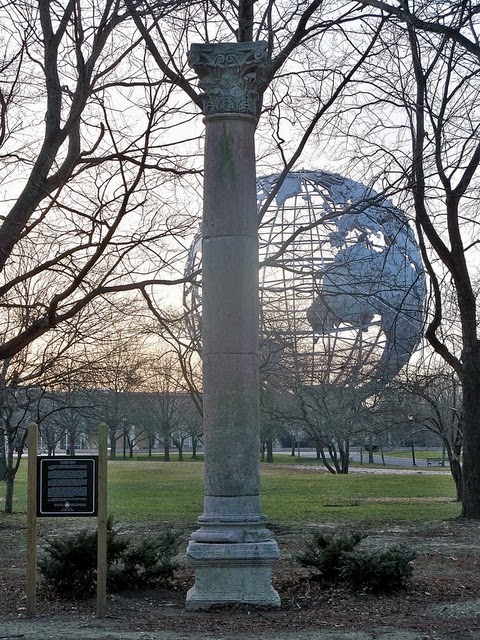
The second oldest manmade object in New York City — outside, that is, not in a museum or private collection — is a solitary little Roman column built in 120 AD for the Temple of Artemis in the ancient city of Jerash.  It once stood among a chorus of ‘whispering columns’, creating an effect in the temple which would magnify the human voice.
So why is it standing all alone in Flushing Meadows Park in Queens?

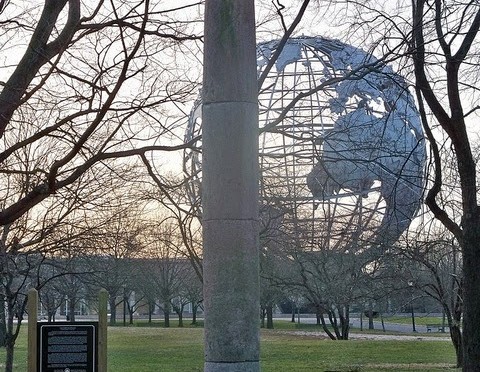
At right: The column stands alone, with the Unisphere in the background. Courtesy Flickr/Christoslilu

It was a gift of the Kingdom of Jordan for the New York World’s Fair of 1964-65, presented on April 22, 1964, by the young King Hussein to none other than Robert Moses. What did those two have to talk about?

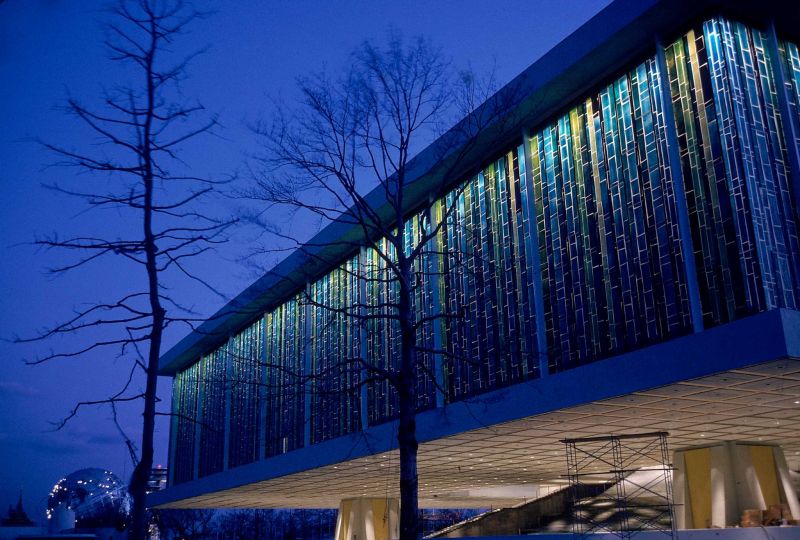
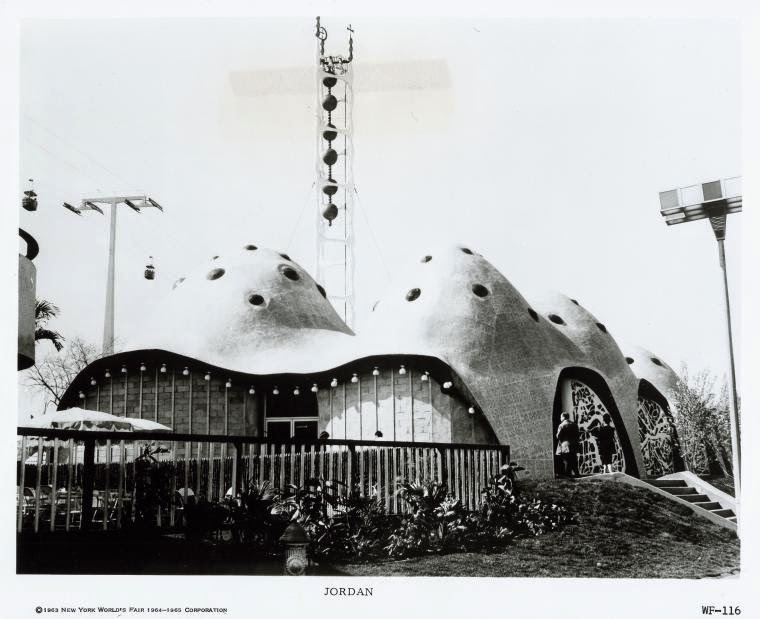
The Jordanian Pavilion at the World’s Fair was a particularly unusual addition to the unofficial (and incomplete) league of nations at the fair. Despite its almost alien appearance — curved and encrusted with gold mosaics — it was one of the most religious buildings there, embodying imagery of both the Christian and Muslim faiths.

Sculptural displays of Stations of the Cross by Antonio Saura decorated the exterior, and bright stained glass windows lit up spectacularly at night.  The Dead Sea Scrolls were displayed alongside a replica of the Dome of the Rock, and visitors could shop at a jewelry bazaar or eat traditional Middle Eastern food in the snack shop.

But despite the many artifacts of great historical provenance, the most controversial thing in this odd building were a set of newly painted murals.

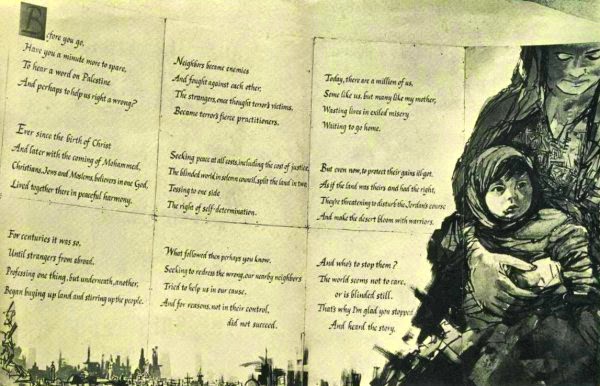
Some Jewish visitors to the pavilion were immediately offended by one particular mural depicting a young refugee expounding in a lengthy text about the Israeli-Palestinian situation at the Jordanian border.  “The strangers, once thought terror’s victims, became terror’s practitioners,” it said, implicating the Israelis (but never mentioning them by name).

“But even now, to protect their gains, illgot, as if the lands were theirs and had the right,” went the mural, “they’re threatening to disturb the Jordan’s course and make the desert bloom with warriors.”

Below:  The controversial Jordanian mural (Courtesy the excellent tribute site NYWF64 )

Organizers at the American-Israeli Pavilion wrote Moses to complain, saying the murals were not in keeping with the fair’s theme of “Peace Through Understanding.”  Moses (pictured below) initially rejected the request, but Mayor Robert Wagner, perhaps in an intentional slight to the former parks commissioner, promised to have the murals removed.

Members of the City Council even proposed a bill forcing the fair to remove the mural.  The Jordanians replied that they would rather close the pavilion than tear down the murals under pressure.  Israeli protesters picketed the pavilion;  at one point, the Jordanian flag was taken and temporarily replaced by the Israeli flag by a protester.

Of course, as a result, the Jordanian Pavilion became hugely popular in the early days of the fair, with thousands of visitors streaming in to see what the fuss was about.

The Isaeli pavilion then unveiled its own mural as a response to the Jordanian mural.  Further lawsuits, even fistfights, ensued over the controversy. In the end, none of the murals were removed.

What got sadly overshadowed in all this, of course, was the Column of Jerash, which could have been made of plaster for all the attention it received.

After the fair ended in 1965, the pavilions were mostly all torn down, but the column stayed behind, making the park its home for several decades now.  Today you can find it near the Unisphere next to a plaque which reads:

THIS COLUMN WAS PRESENTED TO/ THE NEW YORK WORLDS FAIR AND THE CITY OF NEW YORK BY/ HIS MAJESTY KING HUSSEIN / OF THE HASHEMITE KINGDOM OF JORDAN/ ON THE OCCASION / OF JORDAN’S PARTICIPATION IN THE FAIR./ THE COLUMN WAS RECEIVED BY THE HONORABLE ROBERT MOSES, PRESIDENT, / NEW YORK WORLD’S FAIR 1964-1965 CORPORATION./ THIS IS ONE OF MANY COLUMNS IN A TEMPLE ERECTED BY THE ROMANS/IN 120 A.D./ THAT STOOD IN THE ROMAN CITY OF JERASH, JORDAN./ THE COLUMNS ARE KNOWN AS THE WHISPERING COLUMNS OF JERASH.

——————————

Okay, so that’s the second oldest large manmade object in New York City?  What’s the oldest?

That’s the subject of our new podcast tomorrow so stay tuned!

Categories
Robert Moses

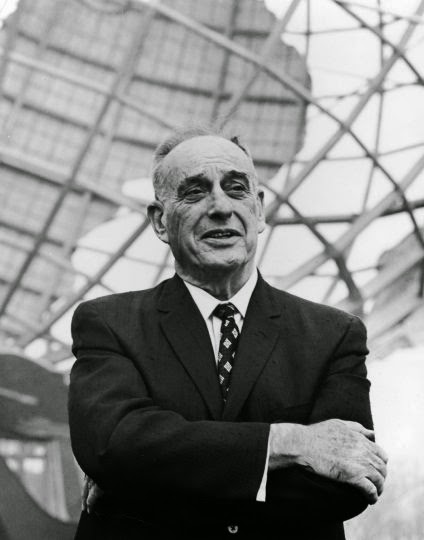
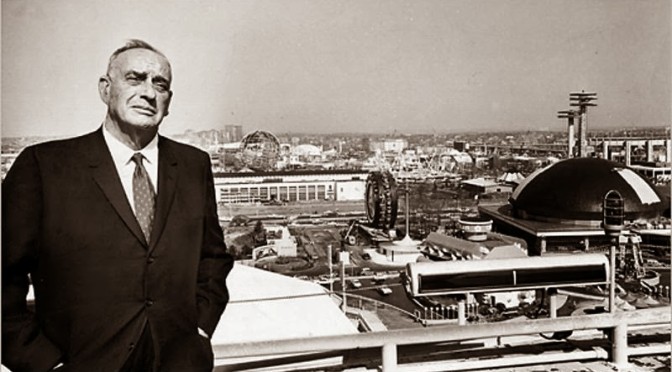
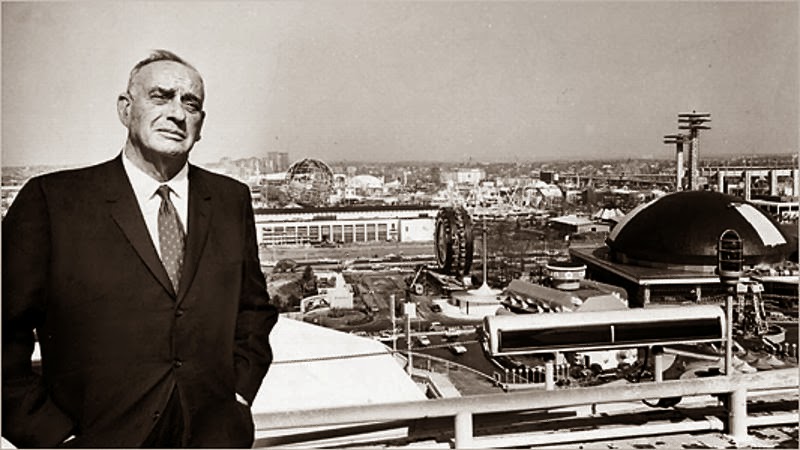
Robert Moses was born 125 years ago today. Here’s ten ways to celebrate/mourn his magnificent, controversial legacy

One hundred and twenty-five years ago today, Robert Moses was unleashed upon the world, born in New Haven, Connecticut, on Dwight Street.  He remains today one of the most powerful civic figures in American history, and obviously one of the most controversial.  Because of Moses, we have the modern New York City.  Many of its strengths and its difficulties can be traced, in some way, to decisions he made, from roads and housing to parks and waterways.

Can you really “celebrate” Robert Moses?  Of course you can.  Here’s ten particular ways you can ruminate upon the changes he inflicted upon the city, from the mighty highways to the large, concrete-heavy parks.

1) Read his obituary in the New York Times. Robert Moses died on July 29, 1981.

An excerpt: “Robert Moses was, in every sense of the word, New York’s master builder. Neither an architect, a planner, a lawyer nor even, in the strictest sense, a politician, he changed the face of the state more than anyone who was. Before him, there was no Triborough Bridge, Jones Beach State Park, Verrazano-Narrows Bridge, West Side Highway or Long Island parkway system or Niagara and St. Lawrence power projects. He built all of these and more.”

You might also like to know the contents of his will.

The Unisphere is still around (and presumably in no danger), but the New York State Pavilion, seen in the background, could face demolition. (NYPL)

2) Help save the New  York State Pavilion.  
The curious remnants that remain of the World’s Fair 1964-65, located in Flushing Meadows-Corona Park, are in danger of being torn down.  Certainly Moses himself would have approved of tearing down these useless — and yet, priceless — relics.

After the city projected it would be cheaper to tear them down than to renovate, many in the community rallied to save the embattled old ruins.  A couple weeks ago, Gizmodo asked the question ‘Should Queens Tear Down The 1964 World’s Fair Pavilion’.  Prepare an interesting preservation battle over this historic piece, designed by Philip Johnson.

3) Visit neighborhoods plucked from Robert Moses’ grasp.
Had Moses had his way, a variety of beloved neighborhoods would have been wiped from existence — parts of the Lower East Side and SoHo (thanks to the Lower East Side Expressway proposal), Willowtown in Brooklyn, just to start.

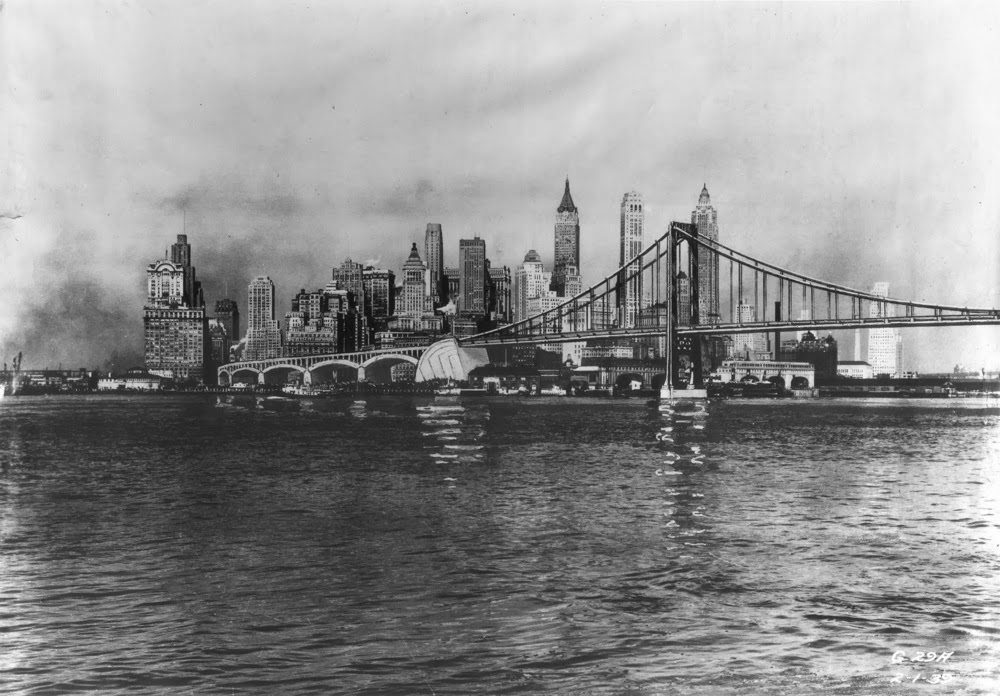
In particular, go to Battery Park and physically embrace Castle Clinton if you can. (It was still behind fences last I checked.)  Moses wanted to construct a bridge over to Brooklyn that would have wiped it from existence.  From my original article:  “The Brooklyn-Battery would be designed by bridge master Othmar Ammann, designer of nearly half the bridges of New York City, with an anchorage plopped in the middle of Governor’s Island.”

Fortunately, the community intervened, and the Brooklyn-Battery Tunnel was built in its place. But a vision of what it might have looked like is above.  (Courtesy Urban Omnibus)

4) Visit those neighborhoods he did replace.
This is a far more depressing stroll and far more common.  Moses’ use of funds from Title I of the 1949 Housing Act replaced some serious New York slum conditions with low-income housing developments, but some of it was poorly designed and shoddily planned.  According to Joel Schwartz, “To a generation of critics … Title I was also synonymous with reckless power that went unchecked until a small band of urban liberals rallied the conscience of the city.”  Not surprisingly, Moses focus was on neighborhoods that were predominantly black and Latino.

Most striking of these was East Tremont in the Bronx and Manhattantown on Manhattan’s Upper East Side:

5) Ride over the Triborough Bridge and head to Randall’s Island
Easily one of Moses’ biggest successes, the Triborough Bridge Authority took in millions of dollars in tolls which then funded other ambitious projects throughout the state.

Over at Randall’s Island,  you should visit the Triborough Bridge Authority Building, which was the homebase for Moses for decades.  It was here that many of his greatest triumphs — and a few city downfalls — were planned.

6) Check out the ghastly Robert Moses mosaic in Flushing-Meadows Park.
The mosaic underfoot is based upon a work by Andy Warhol which the artist created after Moses destroyed Warhol’s outdoor art piece involving the FBI Most Wanted list. From my previous article ‘Most Wanted: Robert Moses vs. Andy Warhol’:  “[H]is mural was literally whitewashed. Warhol intended to replace it with a new design: 25 silkscreen panels of Robert Moses’ face in a Joker-like grin. Unsurprisingly, [Philip] Johnson did not think this appropriate for the main pavilion of Moses’ fair.”

Listen to the WNYC piece from 2010 for more information!

7)  Ponder his vast, virtually unchecked power.
Can you imagine if a politician or city leader were actually as successful as Robert Moses in getting anything done?  His reach and output makes him one of the most powerful city builders in modern human history.

Imagine such power in the hands of a modern politician today. Scratch that. Imagine that power in the hands of an unelected civic leader, as Moses was.

He was so powerful, in fact, that he changed the names of neighborhoods — on a whim!  Like Throggs Neck, for instance.  Excuse me, Throgs Neck.

From my article on the origin of the name: “You may have noticed that John’s last name [Throgg] has two g’s in it, while most common spellings have only one. Legend has it that this is another thing you can blame on Robert Moses.  Not exactly known for reaching out to communities for their thoughts and opinions, Moses decided to drop a ‘g’ in 1955 when the bridge started construction, believing it would fit on more traffic signs without an additional and needless letter.  Who cares if it was in use that way for over 300 years!”

8) Watch Robert Moses on TV in 1953
Moses was even a guest on an early television show called Longines Chronoscope, sponsored by Longines.  This isn’t the most fascinating television that was ever made, but it’s interesting to hear Moses’ authoritative voice during the era of his greatest power.

And check out this bonus video on Robert Moses’ “improvement plans” for Coney Island:

9) Visit his burial site 
He’s buried in a crypt at Woodlawn Cemetery in the Bronx.  So is his most prominent collaborator, Mayor Fiorello LaGuardia.

10) Listen to our podcast (Episode #100) on Robert Moses!

And check out our other podcasts and pages which feature Robert Moses and his effects on the city including the Verrazano-Narrows Bridge, Shea Stadium, Shakespeare In The ParkThe Rockaways and Rockaway Beach and Central Park

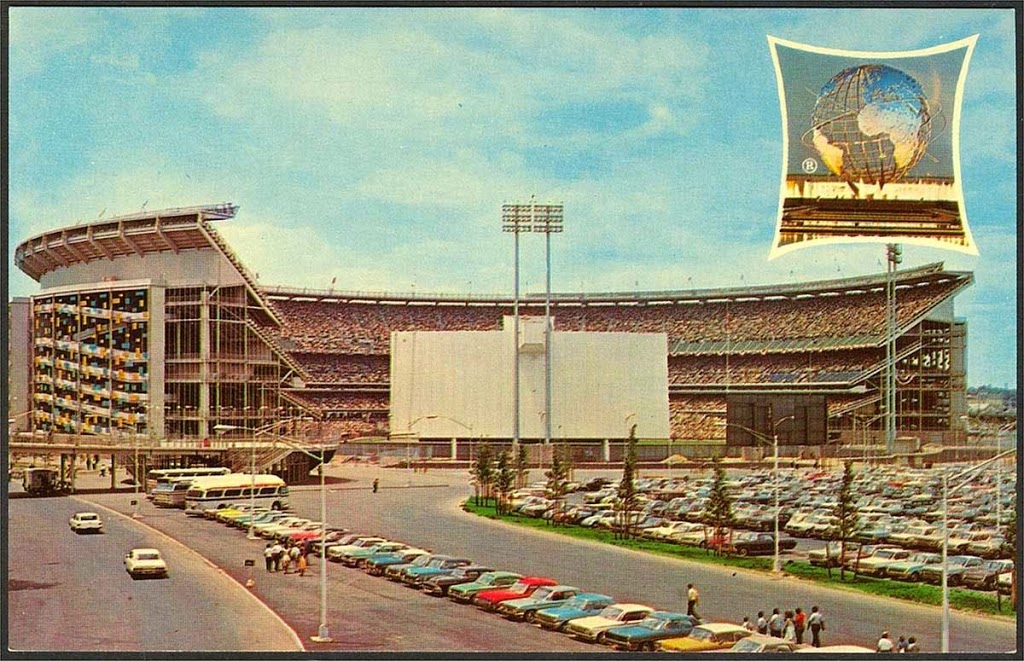
Below:  The glory that was Shea Stadium  (NYPL)

Categories
Queens History

The Corona Ash Dump: Brooklyn’s burden on Queens, a vivid literary inspiration and bleak, rat-filled landscape

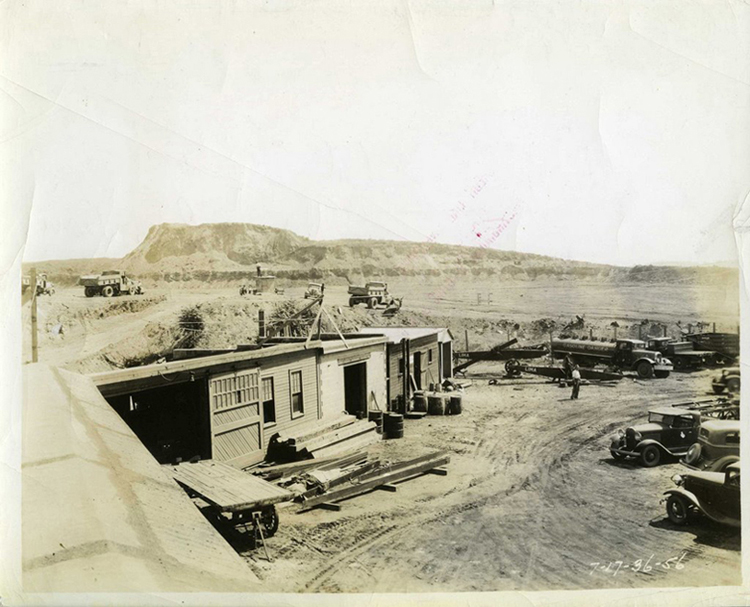
Ah, take in the horrid reality of the Corona marshes with their ashes, manure and garbage! (Courtesy CUNY)

Outside of probably Hell, there is no literary landscape as forlorn and soul-crushing as the ash dumps of Corona, Queens.

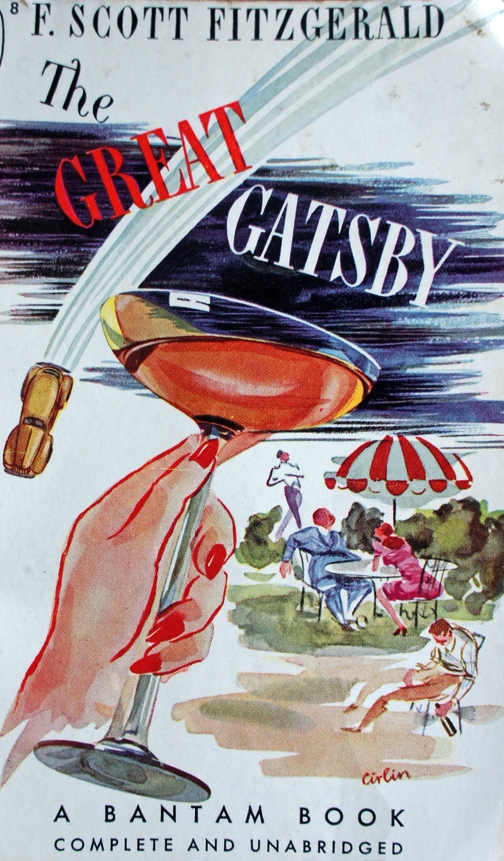
This is the valley of ashes,” writes Fitzgerald in The Great Gatsby, “a fantastic farm where ashes grow like wheat into ridges and hills and grotesque gardens; where ashes take the forms of houses and chimneys and rising smoke and, finally, with a transcendent effort, of men who move dimly and already crumbling through the powdery air.”

The Corona ash dump was a stain on Queens every bit as real as Fresh Kills landfill would later be on Staten Island, a repository for the detritus from Brooklyn coal furnace that created crud-caked mountains amid a salty marsh.

The salt marshes sat relatively untouched, along with other large stretches of the newly formed borough. The Brooklyn Ash Removal Company moved here in 1909 after it outgrew its dumping grounds on a small island in Jamaica Bay named Barren Island.  (The island no longer exists per se; landfill connected it to the mainland and Floyd Bennett Field was built there in 1930)

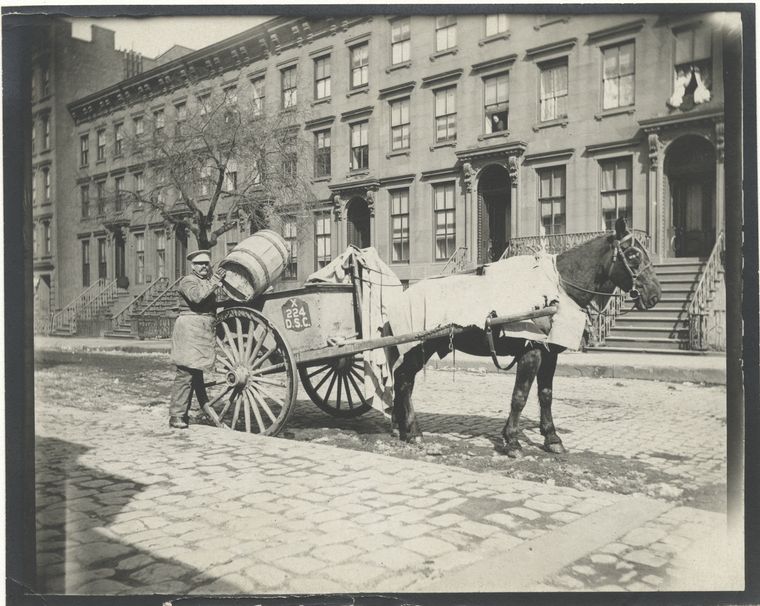
Below: A sanitation worker carting carting away a full barrel of ash. The open cart would be filled, taken to barges, then sent to far-away dumps. In the 1910s, Brooklyn ash went to Corona. {NYPL}

With the increase of coal-burning furnaces in the late 19th century, the city had yet another sanitation crisis sullying the streets.  Even by 1910s, New York was trying to clamp down on the situation — literally — attempting to get residents and private businesses to cover their ash carts and containers “as to protect pedestrians from the annoyance of flying ash dust.” [source]

In Queens, mountains of choking, awful ash made for poor living conditions for neighboring Corona on one side, Flushing on the other.  It was a constant eyesore for early commuters, as the Long Island Railroad went right past it, as did the main thoroughfares of northern Long Island — roads taken by many of the wealthy ‘Gold Coast’ families.

One ash pile was so large — almost 100 feet — that it was christened Mount Corona.  And of course it wasn’t just ash; barges filled with animal manure docked here as well, awaiting local farmers who used the waste as fertilizer.

And new menace was introduced in 1920  — an infestation of rats. “War Declared Upon Rats,” declared the New York Times. An army of exterminators were sent to wipe out the colony of rats that lived among the ashen meadow dumps.

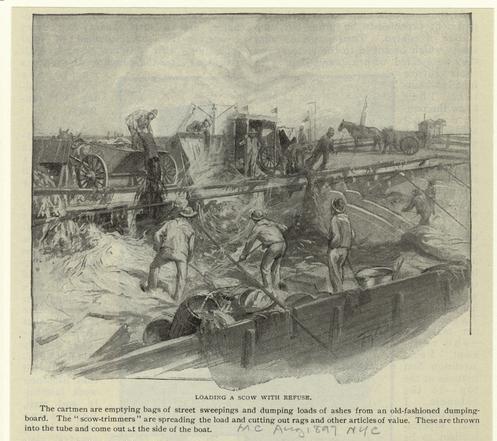
Below: From 1897, loading a scow full of ash to be taken to the local dump (NYPL)

Believe it or not, the Brooklyn Ash Removal Company tried to convince residents that presence of the grim, brimstone terrain next to their homes was getting rid of pests. When they were taken to court in 1923, “charged with permitting dense smoke to issue from the dumps,” they claimed the dumping grounds were good for the salt marshes, as they helped rid the neighborhood of mosquitoes!

With the population of Queens almost doubling during the 1920s, it seemed the days of the Corona Ash Dump were numbered. Enter Robert Moses, with his dreams of a large and spectacular park for the growing borough.  He swiftly moved in, bought all the marshland, all the mountains of ash, and filled in wetlands and the dark hills to create Flushing Meadows-Corona Park.  If you’ve been to Citi Field or the Billie Jean King Tennis Center, then you have sat upon land that was once the Corona ash dumps.

Categories
Bowery Boys Bookshelf

The Great Gatsby’s New York City, in ten different scenes, from the Queensboro Bridge to the Plaza Hotel

BOWERY BOYS BOOK OF THE MONTH Each month I’ll pick a book — either brand new or old, fiction or non-fiction — that offers an intriguing take on New York City history, something that uses history in a way that’s uniquely unconventional or exposes a previously unseen corner of our city’s complicated past.  Then over the next month, I’ll run an article or two about some of the historical themes that are brought up in the selection. 

The Great Gatsby
by F. Scott Fitzgerald

I re-read The Great Gatsby a few weeks ago on purpose, not because I had a school assignment. Unlike my first experience with Gatsby at age 14, I actually read it, without the signposts of Cliff’s Notes to tell me what I was supposed to be getting from it.

Of course the impetus for re-discovering F. Scott Fitzgerald‘s masterpiece is the flashy new Baz Luhrmann film coming out this weekend, which uses the text as an excuse to throw an expensive 3-D party, starring Leonardo DiCaprio, Beyonce, large champagne bottles, fifty shades of pink, the ghost of Mae West and a whole host of other drunk guests.

Few works of American literature have been as comprehensively analyzed as The Great Gatsby, by which I mean, of course, over-analyzed.  One reason I’m excited about the film, with all its superficial decadence on display, is that it seems to discard several decades of nine-dimensional analyses that have settled upon the book like a thick shroud of dust.  Maybe that’s wearing white to a funeral, so to speak, but true masterpieces can weather an occasional glare.

The Great Gatsby deserves to be savored for many reasons that I had forgotten or never noticed through the filter of creating a B+ term paper in my teenage years.  It’s one of the most economic stories of the 20th century, an exercise of graceful control, an epic with powerful restraint.  In comparison, try reading Fitzgerald’s The Beautiful and the Damned — an embittered New York book twice as long with half as much to say– to appreciate the brevity of Gatsby.

Fitzgerald uses the locales of 1922 New York City so precisely — jetting around Long Island and over the bridge to Manhattan — that it seems almost possible to map the characters’ every move.

There are three principal types of locations in The Great Gatsby.  About half the novel’s actions take place on either East Egg or West Egg, fictional northern Long Island villages still graced with the mansions of Gilded Age millionaires.  Characters escape to Manhattan, big and glittering, either to entertain their mistresses or to dine with gentlemen of suspicious occupation.  And then, of course, there’s the wasteland in between, where secrets are laid bare and burnt to ash.  Welcome to Queens!

Fitzgerald paints a very lush, cockeyed view of New York City in the early 1920s.  Here are some of the more interesting city locations you’ll visit as you read along, and some of the words he used to describe them:

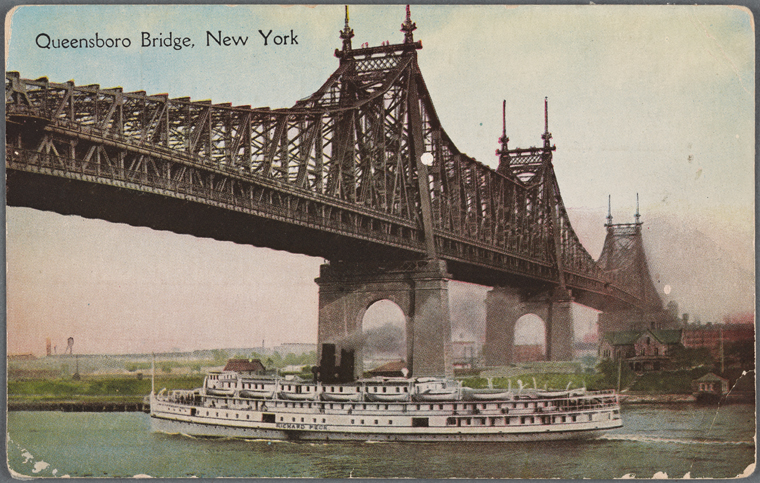
Queensboro Bridge
“The city seen from the Queensboro Bridge is always the city seen for the first time, in its first wild promise of all the mystery and the beauty of the world.”
‘Anything can happen now that we’ve slid over this bridge,’ I thought; ‘anything at all….’  
Even Gatsby could happen, without any particular wonder.”
The 1920s were more than just a decade of speakeasies and spendthrifts. It was the decade of immense growth for Manhattan’s outer boroughs, none more so than Queens, thanks mostly to the opening of the Queensboro Bridge in 1909 and a connection to New York’s new subway system.

The IRT Astoria line
“[W]e sped along toward Astoria at fifty miles an hour, until, among the spidery girders of the elevated, we came in sight of the easy-going blue coupe.”

Astoria’s elevated subway train opened in 1917, at the time servicing only cars from the IRT. (The trains of the BMT are a little too wide to use the stations.)  So as Gatsby, Nick Carraway and the gang race underneath it to get onto the Queensboro, they’re really experiencing something quite new, a symbol of New York’s expansion into Queens.

Corona Ash Dumps
“We passed Port Roosevelt, where there was a glimpse of red-belted ocean-going ships, and sped along a cobbled slum lined with the dark, undeserved saloons of the faded-gilt nineteen-hundreds.  Then the valley of ashes opened out on both sides of us.”

Once the place where New York and Brooklyn dumped their ash from coal-burning furnaces, the old ash dumps of Corona turned a bit of Queens into a gloomy and unpleasant landscape.  It would take Robert Moses and dreams of a World’s Fair to transform the ashen landscape into Flushing Meadows-Corona Park in the 1930s. (Picture courtesy the Queens Museum)

3

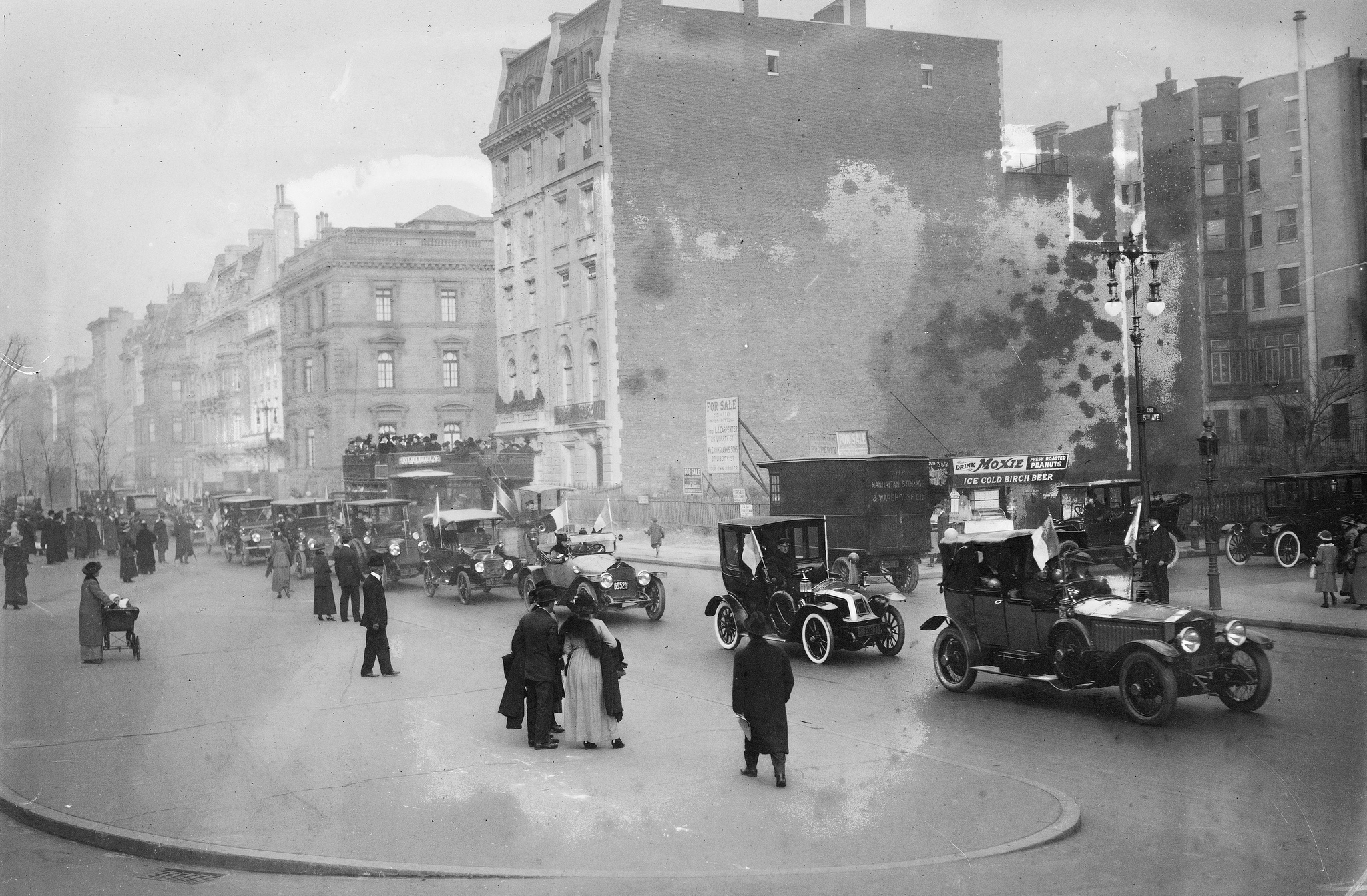
Automobile parade on Fifth Avenue, approx. 1915 (Courtesy LOC)

Upper Fifth Avenue
“We drove over to Fifth Avenue, so warm and soft, almost pastoral, on the summer Sunday afternoon that I wouldn’t have been surprised to see a great flock of white sheep turn the corner.”
This was not as bizarre as it sounds, for nearby Central Park actually had sheep grazing in it until 1934.  Granted, they would have been on the other side of the park, in today’s aptly named Sheep Meadow.

Above 158th Street and Riverside Drive, 1921 (NYPL)

Washington Heights
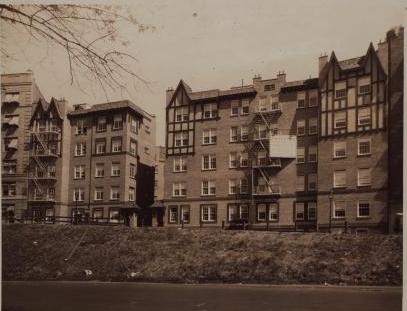
“We went on, cutting back again over the Park towards the West Hundreds. At 158th Street the cab stopped at one slice in a long white cake of apartment-houses.  Throwing a regal homecoming glance around the neighborhood, Mrs. Wilson gathered up her dog and her other purchases, and went haughtily in.”

Once the respite of wealthy manors in the 19th century, the upper reaches of Manhattan gave way to middle-class housing at the start of the new century.  Myrtle’s perch here in Washington Heights would have been appropriately out of the way in the 1920s.

1a

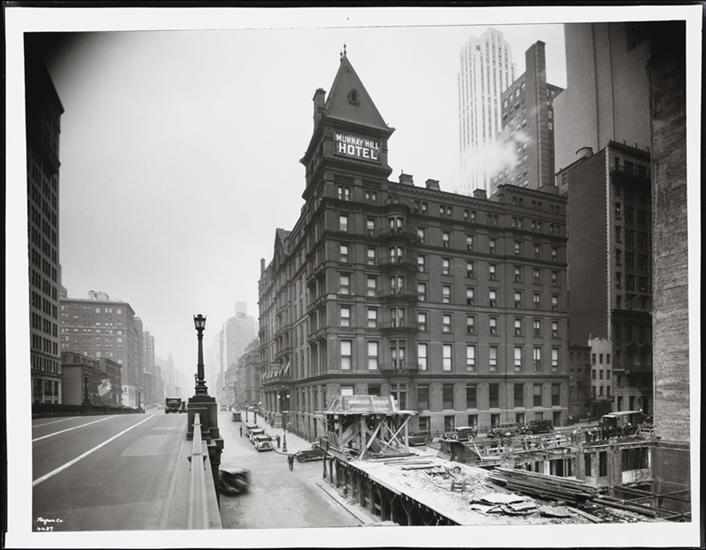
The Murray Hill Hotel on Park Avenue, 1931, courtesy Museum of the City of New York

The Murray Hill Hotel

“After that, if the night was mellow, I strolled down Madison Avenue past the old Murray Hill Hotel and over 33d Street to the Pennsylvania Station….I liked to walk up Fifth Avenue and pick out romantic women from the crowd and imagine that in a few minutes I was going to enter into their lives, and no one would ever know or disapprove.

Opening in 1884 to serve the needs of those arriving from Grand Central Depot, the Murray Hill Hotel kept its halls fully occupied until its demolition in 1946.  The Daytonian In Manhattan blog has a wonderful tale of the hotel’s colorful history.

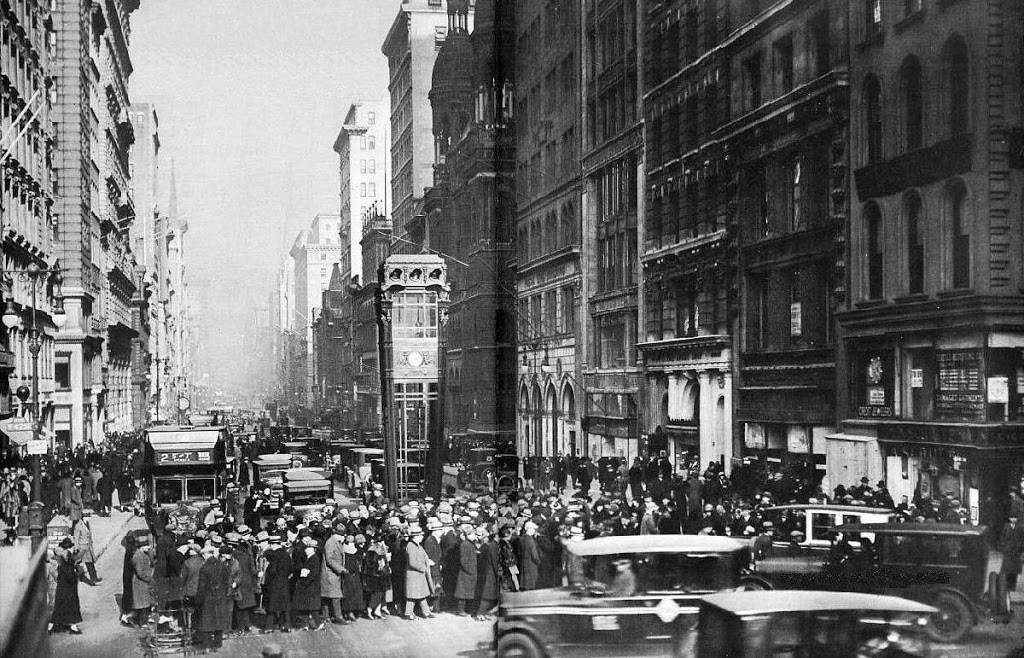
Above: 42nd Street in 1926 (Courtesy Kings Academy)Forty-Second Street

“Roaring noon. In a well-fanned Forty-second Street cellar, I met Gatsby for lunch.  Blinking away the brightness of the street outside, my eyes picked him out obscurely in the anteroom, talking to another man.”


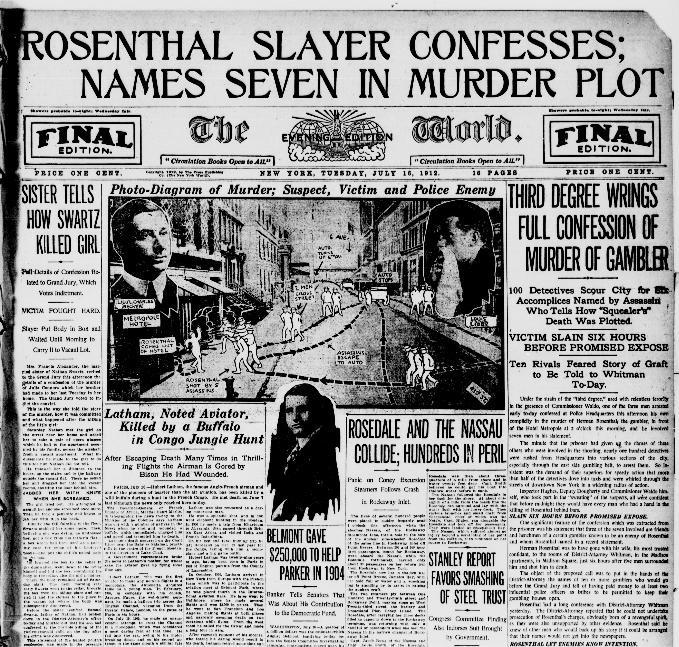
From the July 16, 1912 edition of the New York Evening World
Hotel Metropole
“The old Metropole,” brooded Mr. Wolfsheim gloomily.  “Filled with faces dead and gone. Filled with friends gone now forever. I can’t forget so long as I live the night they shot Rosy Rosenthal there.”

The Hotel Metropole was a swanky Times Square hotspot located at 147 W. 43rd Street.  Mr. Wolfsheim (himself a stand-in for gangster Arnold Rothstein) spends a moment recounting the assassination of Herman Rosenthal, gunned down by the mob.  Charles Becker, who was accused of orchestrating the murder, became the first police officer to ever be given the death penalty.

We talk about the Rosenthal assassination in our podcast Case Files of the New York Police Department.

Above: The southwest corner of Central Park, photo by the Wurts Brothers (NYPL)

Central Park
“When Jordan Baker had finished telling all this we had left the Plaza for half an hour and were driving in a victoria through Central Park.  The sun had gone down behind the tall apartments of the movie stars in the West Fifties, and the clear voices of little girls, already gathered like crickets on the grass, rose through the hot twilight.
We passed a barrier of dark trees, and then the facade of Fifth-ninth Street, a block of delicate pale light, beamed down into the park.”

3

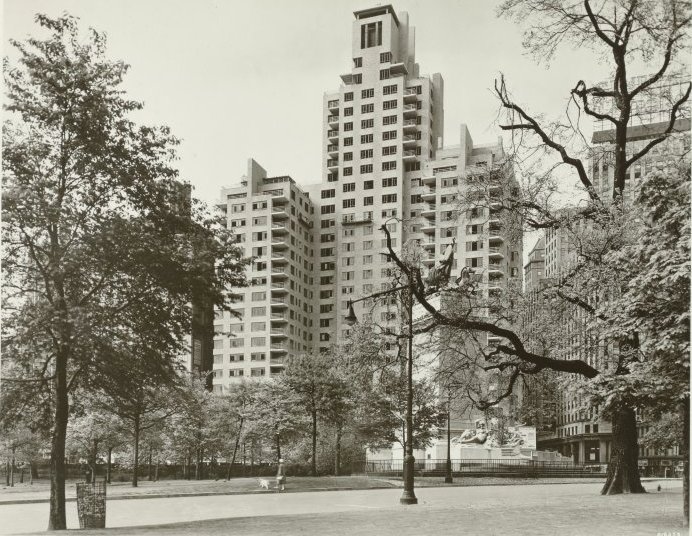
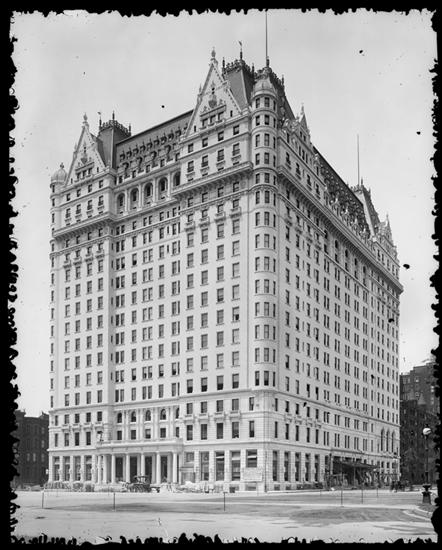
The Plaza, photo by the Wurts Brothers (NYPL)

“And we all took the less explicable step of engaging the parlor of a suite in the Plaza Hotel.
The room was large and stifling, and, though it was already four o’clock, opening the windows admitted only a gust of hot shrubbery from the Park.”

The Plaza Hotel
The beginning of a string of violent acts in the book begins here at The Plaza, at perhaps the epitome of class in the early 1920s. It was only open about 15 years when the events of the book take place here.

Check out our podcast history of the Plaza Hotel and some more glamorous pictures of the hotel here.

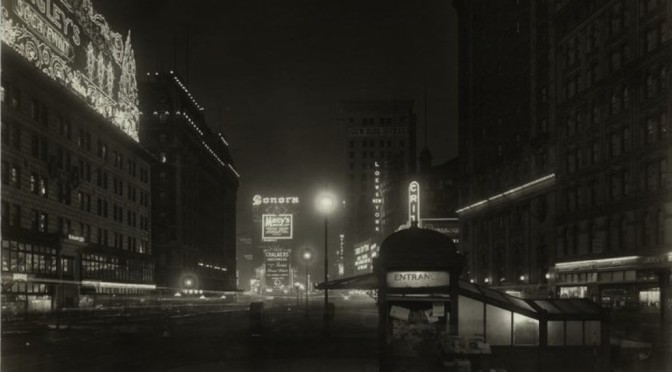
Top picture: Times Square at night, 1921 (NYPL)

Categories
Bowery Boys Bookshelf

The Great Gatsby’s New York City, in ten different scenes, from the Queensboro Bridge to the Plaza Hotel

BOWERY BOYS BOOK OF THE MONTH

The Great Gatsby
by F. Scott Fitzgerald

I re-read The Great Gatsby a few weeks ago on purpose, not because I had a school assignment. Unlike my first experience with Gatsby at age 14, I actually read it, without the signposts of a Cliff’s Notes to tell me what I was supposed to be getting from it.

Of course the impetus for re-discovering F. Scott Fitzgerald‘s masterpiece is the flashy new Baz Luhrmann film coming out this weekend, which uses the text as an excuse to throw an expensive 3-D party, starring Leonardo DiCaprio, Beyonce, large champagne bottles, fifty shades of pink, the ghost of Mae West and a whole host of other drunk guests.

Few works of American literature have been as comprehensively analyzed as The Great Gatsby, by which I mean, of course, over-analyzed. One reason I’m excited about the film, with all its superficial decadence on display, is that it seems to discard several decades of nine-dimensional analyses that have settled upon the book like a thick shroud of dust. Maybe that’s wearing white to a funeral, so to speak, but true masterpieces can weather an occasional glare.

The Great Gatsby deserves to be savored for many reasons that I had forgotten or never noticed through the filter of creating a B+ term paper in my teenage years.  It’s one of the most economic stories of the 20th century, an exercise of graceful control, an epic with powerful restraint.  In comparison, try reading Fitzgerald’s The Beautiful and the Damned — an embittered New York book twice as long with half as much to say– to appreciate the brevity of Gatsby.

Fitzgerald uses the locales of 1922 New York City so precisely — jetting around Long Island and over the bridge to Manhattan — that it seems almost possible to map the characters’ every move.

There are three principal types of locations in The Great Gatsby.  About half the novel’s actions take place on either East Egg or West Egg, fictional northern Long Island villages still graced with the mansions of Gilded Age millionaires.

Characters escape to Manhattan, big and glittering, either to entertain their mistresses or to dine with gentlemen of suspicious occupation.

And then, of course, there’s the wasteland in between, where secrets are laid bare and burnt to ash.  Welcome to Queens!

Fitzgerald paints a very lush, cockeyed view of New York City in the early 1920s. Here are some of the more interesting city locations you’ll visit as you read along, and some of the words he used to describe them:

Queensboro Bridge
“The city seen from the Queensboro Bridge is always the city seen for the first time, in its first wild promise of all the mystery and the beauty of the world.”

‘Anything can happen now that we’ve slid over this bridge,’ I thought; ‘anything at all….’ 

Even Gatsby could happen, without any particular wonder.”

The 1920s were more than just a decade of speakeasies and spendthrifts. It was the decade of immense growth for Manhattan’s outer boroughs, none more so than Queens, thanks mostly to the opening of the Queensboro Bridge in 1909 and a connection to New York’s new subway system.

The IRT Astoria line
“[W]e sped along toward Astoria at fifty miles an hour, until, among the spidery girders of the elevated, we came in sight of the easy-going blue coupe.”

Astoria’s elevated subway train opened in 1917, at the time servicing only cars from the IRT. (The trains of the BMT are a little too wide to use the stations.)  So as Gatsby, Nick Carraway and the gang race underneath it to get onto the Queensboro, they’re really experiencing something quite new, a symbol of New York’s expansion into Queens.

Corona Ash Dumps
“We passed Port Roosevelt, where there was a glimpse of red-belted ocean-going ships, and sped along a cobbled slum lined with the dark, undeserved saloons of the faded-gilt nineteen-hundreds.  Then the valley of ashes opened out on both sides of us.”

Once the place where New York and Brooklyn dumped their ash from coal-burning furnaces, the old ash dumps of Corona turned a bit of Queens into a gloomy and unpleasant landscape.  It would take Robert Moses and dreams of a World’s Fair to transform the ashen landscape into Flushing Meadows-Corona Park in the 1930s. (Picture courtesy the Queens Museum)

3

Automobile parade on Fifth Avenue, approx. 1915 (Courtesy LOC)

Upper Fifth Avenue
“We drove over to Fifth Avenue, so warm and soft, almost pastoral, on the summer Sunday afternoon that I wouldn’t have been surprised to see a great flock of white sheep turn the corner.”

This was not as bizarre as it sounds, for nearby Central Park actually had sheep grazing in it until 1934.  Granted, they would have been on the other side of the park, in today’s aptly named Sheep Meadow.

Above 158th Street and Riverside Drive, 1921 (NYPL)

Washington Heights
“We went on, cutting back again over the Park towards the West Hundreds. At 158th Street the cab stopped at one slice in a long white cake of apartment-houses. Throwing a regal homecoming glance around the neighborhood, Mrs. Wilson gathered up her dog and her other purchases, and went haughtily in.”

Once the respite of wealthy manors in the 19th century, the upper reaches of Manhattan gave way to middle-class housing at the start of the new century.  Myrtle’s perch here in Washington Heights would have been appropriately out of the way in the 1920s.

1a
The Murray Hill Hotel on Park Avenue, 1931, courtesy Museum of the City of New York

The Murray Hill Hotel

“After that, if the night was mellow, I strolled down Madison Avenue past the old Murray Hill Hotel and over 33d Street to the Pennsylvania Station….I liked to walk up Fifth Avenue and pick out romantic women from the crowd and imagine that in a few minutes I was going to enter into their lives, and no one would ever know or disapprove.

Opening in 1884 to serve the needs of those arriving from Grand Central Depot, the Murray Hill Hotel kept its halls fully occupied until its demolition in 1946.  The Daytonian In Manhattan blog has a wonderful tale of the hotel’s colorful history.

Above: 42nd Street in 1926 (Courtesy Kings Academy)

Forty-Second Street

“Roaring noon. In a well-fanned Forty-second Street cellar I met Gatsby for lunch. Blinking away the brightness of the street outside, my eyes picked him out obscurely in the anteroom, talking to another man.”


From the July 16, 1912 edition of the New York Evening World

Hotel Metropole
“The old Metropole,” brooded Mr. Wolfsheim gloomily.  “Filled with faces dead and gone. Filled with friends gone now forever. I can’t forget so long as I live the night they shot Rosy Rosenthal there.”

The Hotel Metropole was a swanky Times Square hotspot located at 147 W. 43rd Street.  Mr. Wolfsheim (himself a stand-in for gangster Arnold Rothstein) spends a moment recounting the assassination of Herman Rosenthal, gunned down by the mob.  Charles Becker, who was accused of orchestrating the murder, became the first police officer to ever be given the death penalty.

We talk about the Rosenthal assassination in our podcast Case Files of the New York Police Department.

Above: The southwest corner of Central Park, photo by the Wurts Brothers (NYPL)

Central Park
“When Jordan Baker had finished telling all this we had left the Plaza for half an hour and were driving in a victoria through Central Park. The sun had gone down behind the tall apartments of the movie stars in the West Fifties, and the clear voices of little girls, already gathered like crickets on the grass, rose through the hot twilight.

We passed a barrier of dark streets, and then the facade of Fifth-ninth Street, a block of delicate pale light, beamed down into the park.”

3

The Plaza, photo by the Wurts Brothers (NYPL)

“And we all took the less explicable step of engaging the parlor of a suite in the Plaza Hotel.

The room was large and stifling, and, though it was already four o’clock, opening the windows admitted only a gust of hot shrubbery from the Park.”

The Plaza Hotel
The beginning of a string of violent acts in the book begins here at The Plaza, at perhaps the epitome of class in the early 1920s. It was only open about 15 years when the events of the book take place here.

Check out our podcast history of the Plaza Hotel and some more glamorous pictures of the hotel here.

Top picture: Times Square at night, 1921 (NYPL)

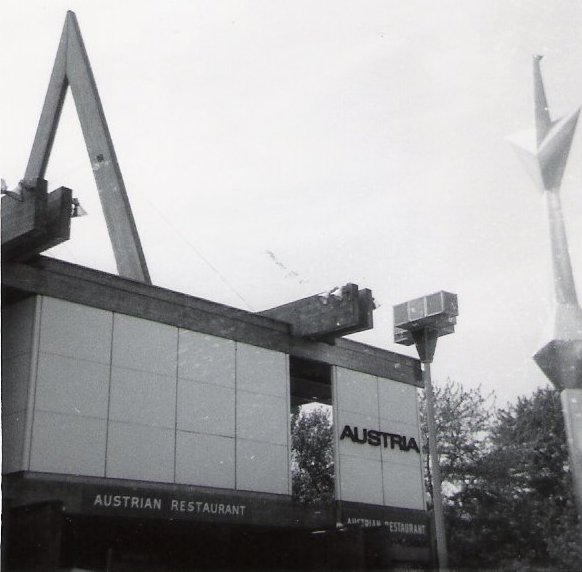
Auf Wiedersehen to a well-travelled World’s Fair original


In 1965, at the completion of the World’s Fair in Flushing-Meadows, many components like fountains, sculptures, lighting features and even whole pavilions were moved to other areas of the world. Most famously, the ‘It’s A Small World’ collection of animatronics made their way west to Disneyland. The Spanish pavilion moved to St. Louis and became a hotel. Parts of the New England pavilion decorated a shopping mall in Danbury, Mass.

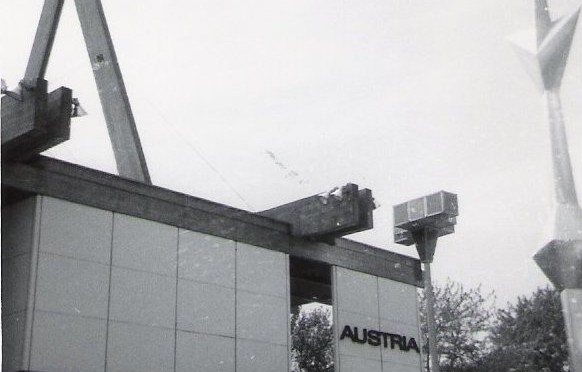
But the Austrian pavilion seemed to win the prize for best post-fair afterlife. The entire structure was moved to a ski resort in western New York, where its unusual angular design seemed to fit quite nicely as a remote, snow-covered lodge. The Cockaigne Ski Resort paid just $3,000 for the used building, but spent a great deal more (nearly $200,000!) to transfer it almost 400 miles to its new home.

Unfortunately, the great, kitschy lodge was destroyed in a fire a couple weeks ago. Images taken in the smoldering aftermath don’t look pretty. The signature angle is completely gone. [Click here to see video of the blaze.]

According to a dedication booklet from the fair, the pavilion’s unusual triangle shape bear a symbolic purpose, “to symbolize Austria as a land of mountains and tourism, and constructed of wood to symbolize the richness of the timber and industry.” I’ll bet they’re really regretting that wood construction now!

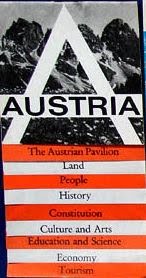
You would have received the brochure to the right upon entering.

The pavilion was always closely tied to the skiing industry; in fact Austrian-made ski products were displayed inside during the Fair’s duration, serenaded by classical music from Austrian composers. And then there’s this, according Jeffrey Stanton’s excellent World’s Fair website Westland: “Beneath the pavilion were other contemporary sculptures and a large photographic exhibit of the SOS Children’s Villages, which were settlements for homeless children.”

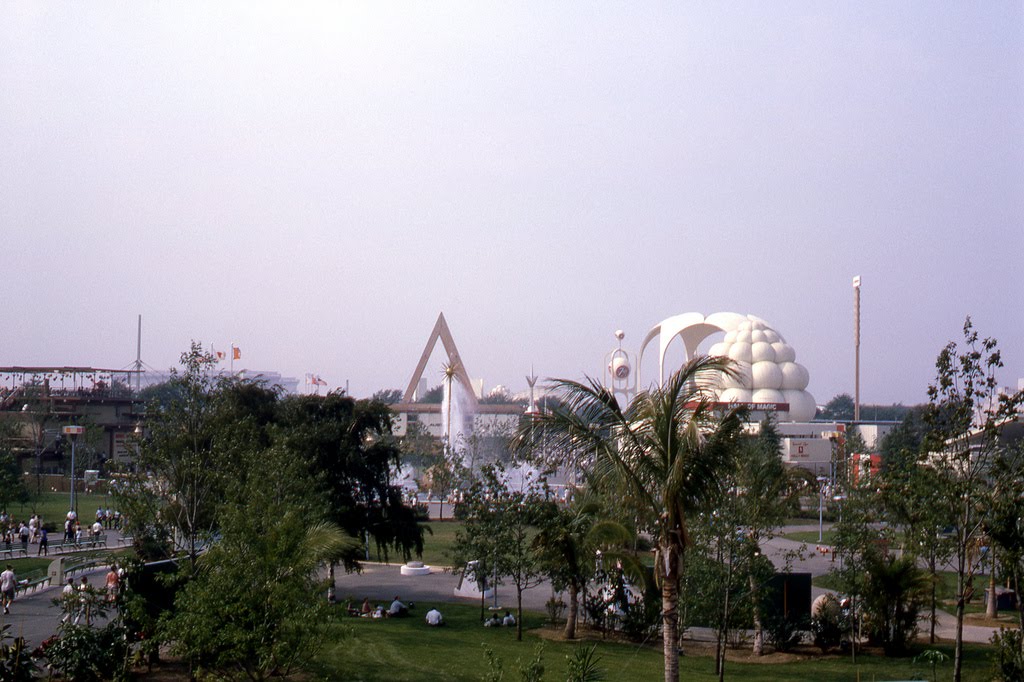
Below: the Austrian pavilion prominently sticks out on the strange World’s Fair skyline. (epicharmus/Flickr)

Categories
Podcasts

PODCAST: Shea Stadium

The Mets are movin’ out to Citi Field, but we can’t overlook the great stories contained in their old home, Shea Stadium, a Robert Moses project took years to get off the ground and has been populated with world class ball players, crazed Beatles fans, and one very mysterious black cat.

William Shea, who essentially bluffed the National League into creating a new team for the city — the New York Mets

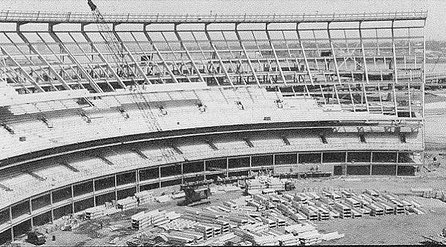
Shea under construction. Plans for a retractable done were abandoned, although many of the features that did make it were revolutionary at the time, including one of sports biggest scoreboards.

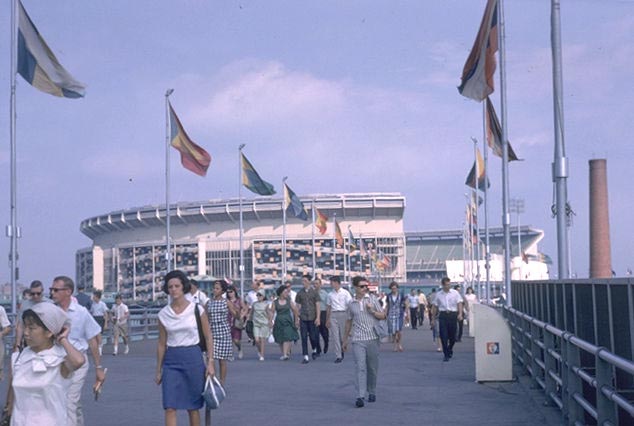
How the exterior of Shea Stadium looked back in 1964. (The photo above is from a great fan website from Carl Abraham, full of great old pictures. Check it out here.)

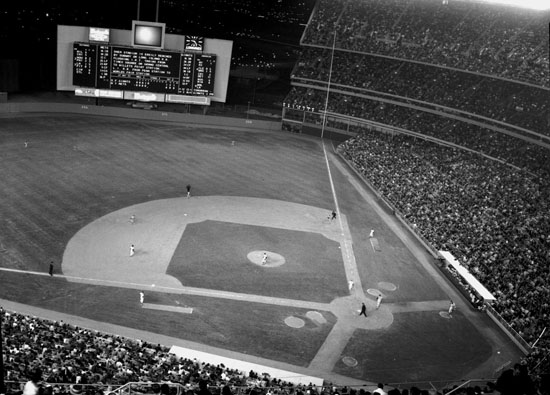
And inside, the same year.

The biggest stars to play in Shea Stadium in the 1960s weren’t sports figures, but music heartthrobs — the Beatles.

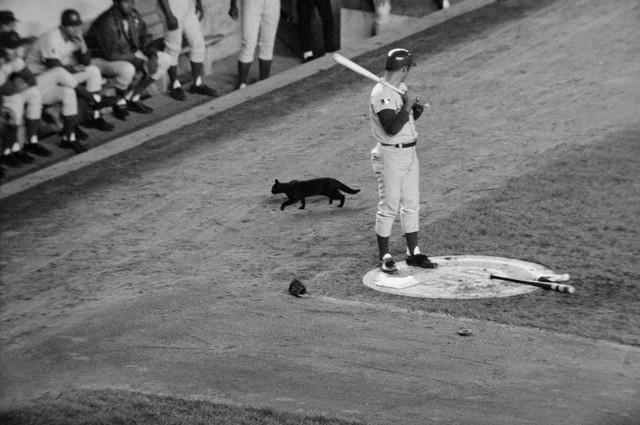
The infamous black cat from that acursed game in September 1969, jettisoning the hopes of the Cubs that year.

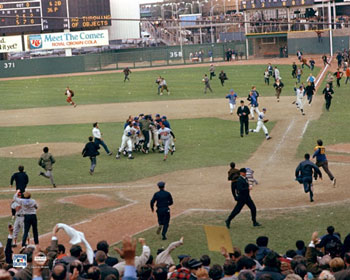
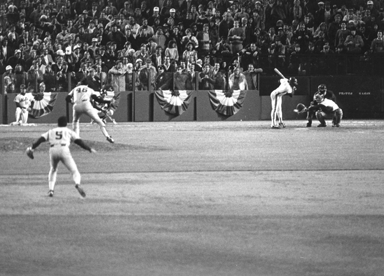
Fans literally stormed the field the moment the Mets clinched their very first Worlds Series title in 1969.

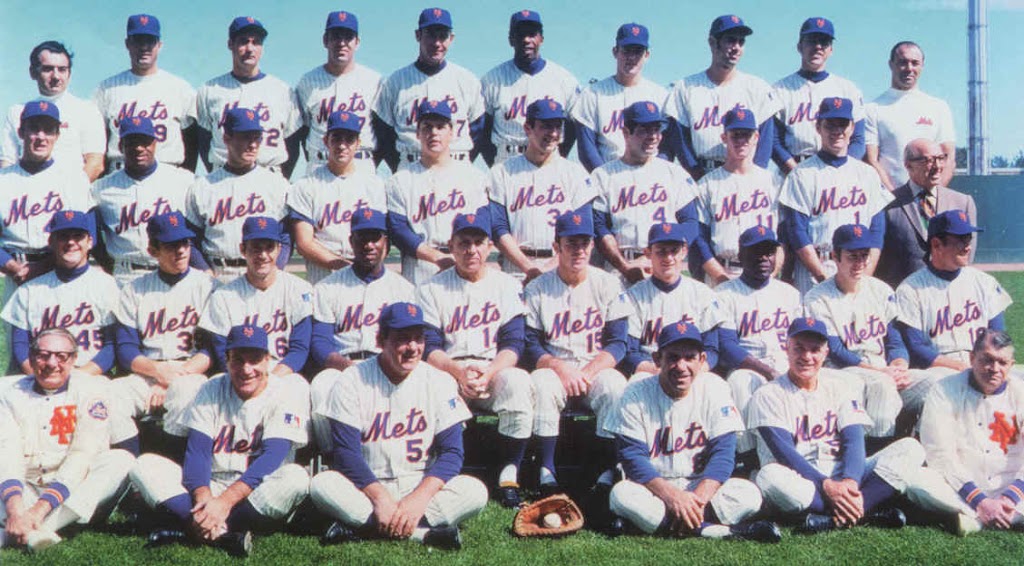
The proud lineup of the Miracle Mets of 1969.

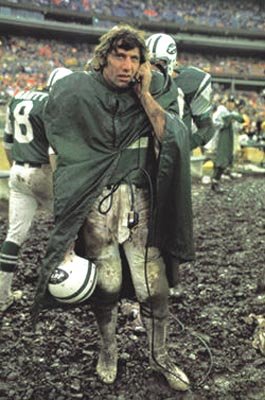
His notable performances and personal theatrics at Shea Stadium with the New York Jets turned quarterback Joe Namath (#12) into a Wheaties-box household name during the 1970s.

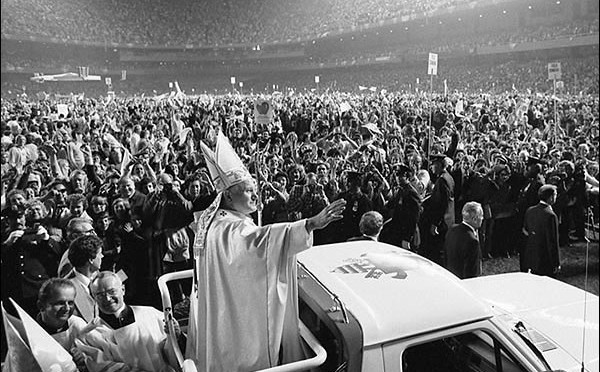
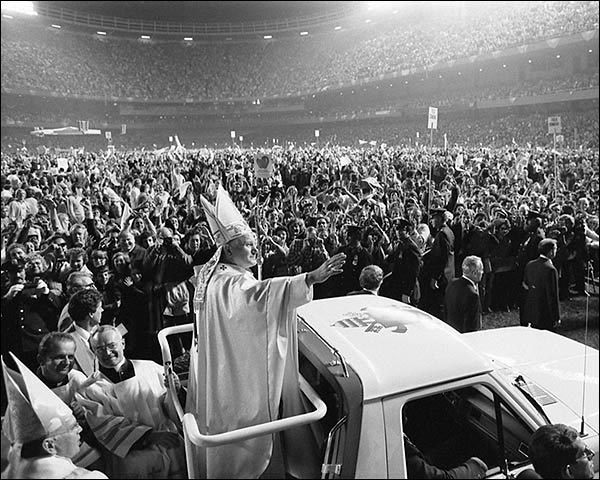
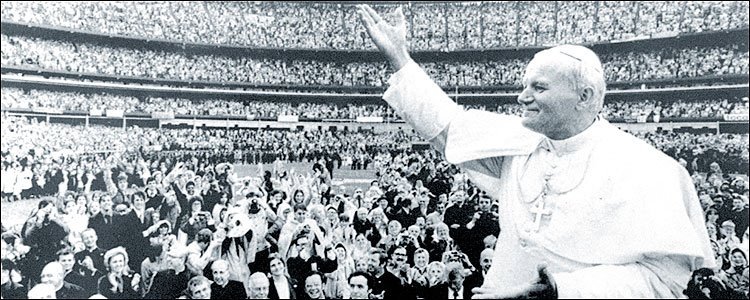
No less a star than Namath, Pope John Paul II finds a warm welcome for him at Shea in 1979.

One of the Mets biggest stars of the ’80s, cheerful center fielder Mookie Wilson, was instrumental in the Mets World Series win of 1986 over the Boston Red Sox.

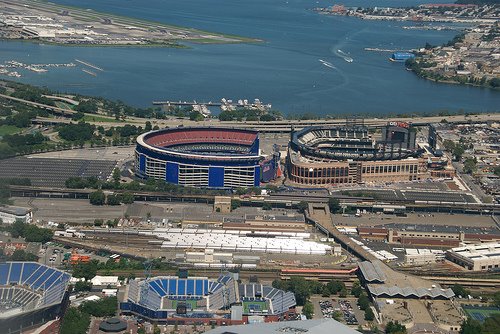
The new Citi Field sits within site of the stadium it will replace

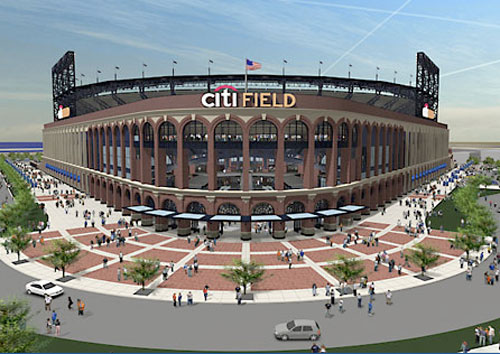
An illustration of what the new Citi Field will look like.

Ever wonder why the Mets team colors are blue and orange? Read one of our very early entries about it here.

However, a commenter below notes that the Mets website actually says: “The Mets’ colors are Dodger blue and Giant orange, symbolic of the return of National League baseball to New York after the Dodgers and Giants moved to California.” Which sounds very plausible — and amazingly coincidental, considering they’re also the official colors of New York. Perhaps the Giants and the Dodgers original sporting colors were based on the official colors, making both explanations correct?

Frankly there’s been no better tribute to Shea Stadium than the New York Post’s current countdown of the top 25 moments that occurred there over the years.

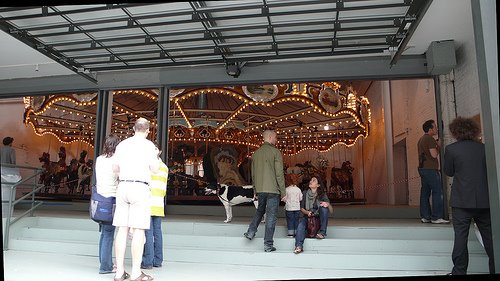
A ride around New York’s remaining merry-go-rounds

Carousels aren’t really for kids anymore. Sure, you won’t see many adults truly captivated by the process of mounting a wooden animal and twirling in a circle. But well-preserved models of the famous amusements are nostalgia goldmines; tinkling calliope music and a few flashing light bulbs can sometimes capture a by-gone era more than a multi-million dollar restoration can.

New York City used to have dozens of the swirling entertainments. Today, you can only find them in a few places:

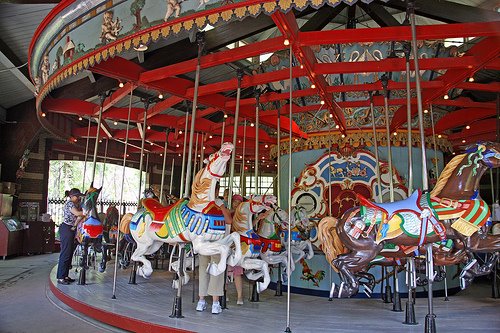
Central Park Carousel (above)
This is perhaps the world’s most famous carousel, but it’s not the original amusement which debuted in 1871. That carousel was controlled by a blind mule that walked around in circle in a dark, underground pit, as upper-class children paid the rather steep ten cent admission for a chance to ride it. It was replaced by an electric carousel in 1924 and was eventually destroyed in fire.

The carousel that whirrs about here today is actually much older, built in 1908 and entertained children during Coney Island’s heyday. Still one of the world’s largest carousels, it moved to this location in 1950.

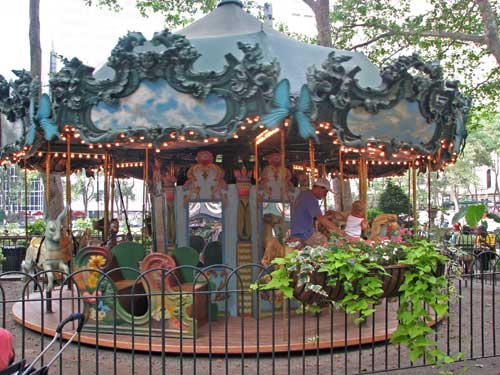
La Carrousel
Given to the park’s symmetrical French landscape design, they call the one in Bryant Park Le Carrousel (ooo la la). Despite seeming very rustic, this miniature wedding-cake was only installed in 2001. I can only imagine what a carousel would have seemed like had it been here during Bryant Park’s days as a hangout for drug addicts.

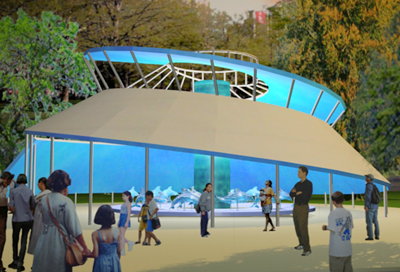
Battery Park SeaGlass
This glittery, futuristic looking thing recalls Battery Park’s past as the home of the New York Aquarium, with horses replaced by creatures of the sea. Oh wait. This carousel’s not built yet.

Flushing Meadows-Corona Park ‘Carousel In The Park’
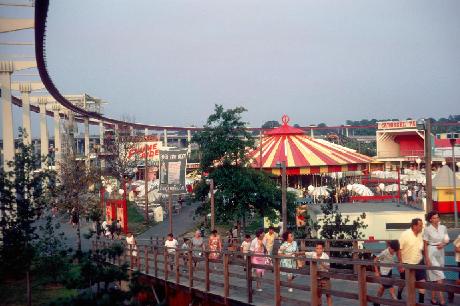
Queens’ only merry-go-round came here from Coney Island, by way of the New York World’s Fair in 1964. Previously, it spent the early part of the century as the official carousel of Stubbman’s Beer Garden until the 1950s, where it moved up to the boardwalk next to the parachute jump and became the Steeplechase Carousel. It was transported to the World’s Fair Lake Amusement area (pictured above) and was left there, donated to the city, long after the Fair left town.

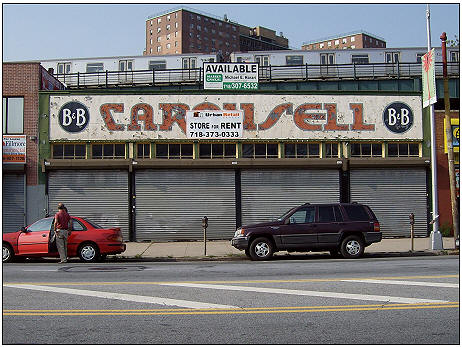
B & B Carousell
Coney Island was the home of dozens of spectacular carousels and could safely be considered the world’s largest assemblage of them. Today there’s only one left — the wonderfully misspelled B & B Carousell, which arrived in 1923. But don’t go looking for it. After being purchased by the city, the Carousell is currently being refurbished in Ohio for the fancy new Steeplechase Plaza, the city’s costly revamp of the Coney Island amusement sector. However its former home still sits, sad and vacant:

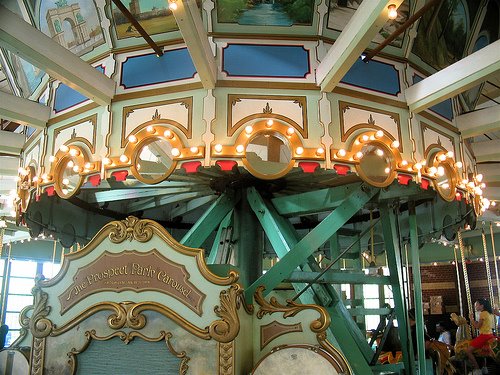
Prospect Park Carousel
Sitting close to the zoo and Leffert’s Homestead, this was also acquired from a Coney Island site in 1952, although the park has had merry-go-arounds since its inception. It stopped running altogether in the 1980s due to mechanical failures but was renovated in 1990. The park has a ‘horse adoption and grooming’ program to keep the carousel in working order.

The Carousel for All Children
This awkwardly named merry-go-round is located at Willowbrook Park in Staten Island’s Greenbelt. Nothing too retro about this ride; a modern model built in Ohio, it was installed here at Willowbrook in 1999. However, some of the horses are reproductions of those of Staten Island’s very first carousel — a version that entertained on Midland Beach Boardwalk from the mid 1910s that was dismantled in 1957.

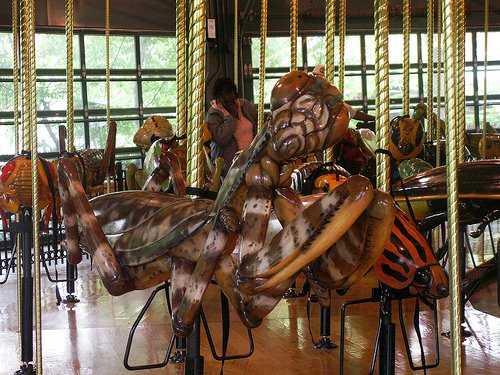
The Bronx Zoo Bug Carousel
The New York area’s newest carousel, debuting in 2005, the Bronx Zoo model is certainly the only one of its kind to be comprised entirely of insects.

Jane’s Carousel
The strangest carousel in New York is one that unfortunately does not take riders. Jane Walentas, wife of Brooklyn real estate developer David Walentas, keeps a fully restored 1922 carousel (seen below) tucked away in a building on Water Street. Walentas, who purchased the crumbling amusement in 1984 and personally restored it, has been hoping the city would adopt her hobby horse for the expanding Brooklyn Bridge Park. Until then, pop by 56 Water Street to grab a view, if not a ride.

Know of any I might have missed?

Pope-fest 2008: The Holy (Sight) See

Pope John Paul greets the crowds at Yankee Stadium

Welcome Benedict! I’m not Catholic, but I do love a good papal visit to New York City. Nothing could be more absurd. The leader of the Catholic Church, a man who traces his spiritual lineage all the way back to the apostles — delivering mass at Yankee Stadium, traipsing Fifth Avenue in his sacred robes. I hope that person who dresses as Sesame Street’s Elmo in front of Rockefeller Center waves to Benedict as he enters St. Patrick’s Cathedral on Friday.

Only the Marquis de Lafayette and the Beatles have been treated to more rapturous displays of welcome by New York City residents. The city has been host to three previous papal visits, and in each case, St. Patrick’s has naturally been the manic center of activity. In fact each visit is immortalized on a plaque in front of the cathedral. Although with each trip, the pope in question managed to find a couple other unique corners of the city to visit as well.

Perhaps the strangest was the very first — Pope Paul VI, the controversial leader who presided over the Second Vatican Council and made a name for himself traveling all over the world. Finally in an era were a man could be both pope and jetsetter, Pope Paul arrived in New York in October of 1965 and promptly went to visit his roommate, who was performing in a fair.

That roommate would be Michelangelo’s Pieta, on loan from St. Peter’s hallways to the Vatican pavilion at the 1964-65 World’s Fair. The Pope visited the Fair on Oct 4, 1965, on a busy day that also included mass at Yankee Stadium (the first papal mass ever in the United States), an address to the United Nations, and a meeting in the city with president Lyndon Johnson at the Waldorf=Astoria.

Today a rounded bench, or exedra, sits in Flushing Meadows park honoring the moment Pope Paul visited the Pavilion. (It seems that whenever a Pope hovers in a place for more than a few minutes, a plaque or monument springs up in its place.)

By the way, I found this extraordinary page full of great photos about the Pope-mobile, the superfine limousine used by the Pope during his visit.

But its Pope John Paul who’s the real New York favorite; he held the office for so long that he managed two trips to Gotham City — in 1979 and 1995.

His October 1979 trip was like a rock concert tour, also swinging through Philadelphia, Boston, D.C., Chicago and Des Moines. Part of the enthusiasm was because John Paul, at 58 years old, had just been appointed the year before.

As a cardinal, he had already held mass at Yankee Stadium, so by the time he did it again on October 2, 1979, he was as much a fixture as Reggie Jackson. Rain greeted over 9,000 cheering worshippers — or fans — and, according to legend, when the Pope mounted the ballfield to address the crowd, the rain showers stopped. And as a blessing for Mets fans, the next day the Pope also held rapt an audience of 52,000 at Shea Stadium (pictured below).

But like all rock stars, the Pope couldn’t complete his New York odyssey without a performance at Madison Square Garden. Although John Paul also addressed the U.N. and a St Patrick’s audience during that trip, he’s best remembered by many for his inspirational address on October 3rd to 19,000 city children.

St Patrick’s honored his Holiness’s visit in 1979 by installing a bust (see below). But he would be back. On almost exactly the same day, sixteen years later.

New York City in 1995 was a vastly different city and John Paul returned for a longer visit — four days in total in the entire New York area — on October 4th. This time, instead of just delivering messages to the clergy gathered at St. Patrick’s, he spontaneously decided he wanted to walk around the block. And why not? You’ve got shopping, Saks, street vendors selling Pope souvenirs!

Below: the Pope prepares for his light stroll

The Pope also finished off his collection of performing in gigantic venues for mass — holding court in Giants Stadium, the Aquaduct Racetrack in Ozone Park and eventually to 100,000 people on the great lawn in Central Park.

From there, the elderly leader of the Catholic Church gave the city the ultimate shout-out: “This is New York! The great New York! This is Central Park. The beautiful surroundings of Central Park invite us to reflect on a more sublime beauty: the beauty of every human being, made in the image and likeness of God. Then you can tell the whole world that you gave the pope his Christmas present in October, in New York, in Central Park.”

Pope Benedict, here for two days (April 19-20), has broken the apparently holy tradition of visiting New York in the first week in October. But Benedict, as the cardinal formerly known as Joseph Ratzinger, actually visited the city in that lesser role in 1988, where apparently he was met with protest from gay activists and shunned by some prominent Jewish leaders.

This year, he intends to hit all the “usual” Pope spots — St. Patricks, the United Nations, Yankee Stadium — but has added a couple surprising detours: Park East Synagogue and Ground Zero. At this rate, he might even stop in to see an off-Broadway show! Is Nunsense still playing?