Categories
Uncategorized

The New York monkey fad of 1907: From Fifth Avenue to the fire department, primates were fashionable companions

The wacky IKEA monkey story of the past few days got me to wondering about wild animals as pets here in New York. After all, the wealthiest classes collected all sorts of unusual beasts for their amusement during the 19th century.  So many in fact that the Central Park Zoo — or Menagerie, as it was called then — was created as a repository for all those unusual creatures abandoned by their owners. (The Central Park Zoo was the topic of one of our first podcasts, all the way back in August 2007!)

A bizarre New York Sun article from March 1907 found an interesting correlation between elegant women and their companion monkeys.  They were such hot commodities with finer New York ladies that year that the animals were almost considered luxuries.
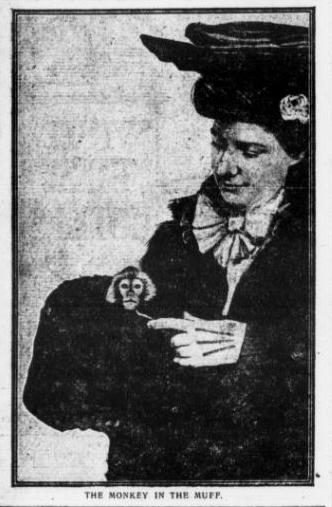
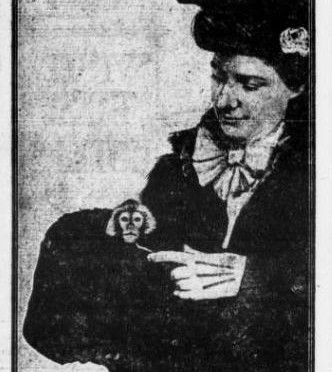
Monkeys rode snugly amid the elegant furs and finery of a modern woman.  “Out of ermine muffs, carried by smartly dressed women along Fifth Avenue, hideous grinning little faces peep out of you.”  The best examples of woman-monkey companionship were the talk of the town;  one New York lady had her monkey trained to “manicure himself, don the right clothes at the right hour, eat daintily with his fork, pretend to smoke his after dinner cigarette and go to bed in a little iron bedstead.”

At right: From the 1907 Sun article, a lady with her pet monkey (courtesy LOC)

“It is impossible to import enough monkeys to fill the present demand,” one animal importer told the Sun.  “An installment of marmosets or ringtails no sooner reaches port than they are shipped to women all over the country.”

It was an unorthodox but very charismatic choice, popular with actresses, princesses and rich ladies of a certain progressive bent.  The pet monkey was prepared to do the unthinkable in 1907 — replace the yapping dog as the woman’s preferred companion.  “To those who do not like monkeys, the popularity of the beast seems more objectionable than any other recent fad. The horse fad, the dog fad, the cat fad, the automobile fad, the ping pong fad, the bridge fad, the chameleon fad are more excusable to such people.”

The popularity of the pet monkey, once associated with immigrant organ grinders on the streets of Five Points in the late 19th century, arose from increased scholarship on the animal, from stories of African safaris, and from seeing them in action at the House of Primates in the Bronx Zoo.

The animals were brought over on trading ships, basketfuls scooped up off the coasts of South America or even as far away as South Africa. (A boatload of 1,000 monkeys arrived in New York in 1909, a cargo which also included hundreds of exotic birds and a couple dozen pythons.)  If they survived, they were given to importers throughout the city or sometimes sold right of the dock.
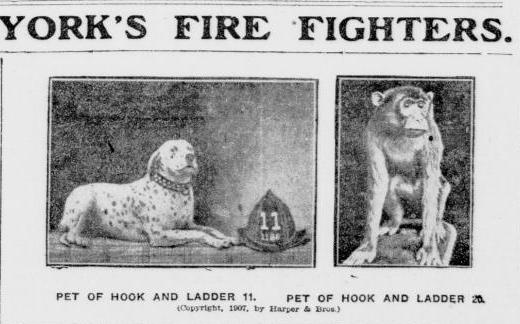
Monkeys even found themselves in the service of New York area fire departments. In 1907, a Mercer Street crew enjoyed the alertness of a monkey named Jenny (pictured below), who once warned her fellow firefighters of a blaze by tossing pool balls down an iron stairway.

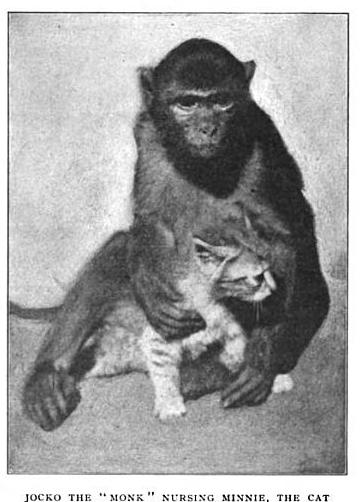
And a fire crew in Rockaway Beach was well-known for their monkey mascot Jocko (pictured at left, with fellow mascot, kitten Minnie) who occasionally attacked Italian peanut vendors.

It seems impossible to comprehend how nonchalant pet owners were regarding disease and injury.  The Sun article runs through some helpful hints about how to personally select your monkey from a writhing litter right off the boat:  “If the skin is yellow do not invest your money, for you may be quite sure that the monkey has tuberculosis. If the skin is black the monkey has blood poisoning.”

Inevitably, the more untamed of these creatures did cause mayhem. In just one example from 1907, a Sixth Avenue monkey named Pete hurled flower pots at pedestrians, almost killing a woman.  On July 4, 1908, a Brooklyn, monkey named Nimbo set a house on fire by lighting fireworks.

And sadly, the monkey too soon fell victim to the inevitability of a passing fad.  By 1908, the New York Times was already proclaiming the Pomeranian as the new “hot” pet.

Below: From the Nov. 17, 1907 New York Tribune, Jenny the pool ball-hurling monkey mascot of the Mercer Street fire crew.
Categories
Holidays

Good grief! Madison Avenue’s connection to ‘A Charlie Brown Christmas’

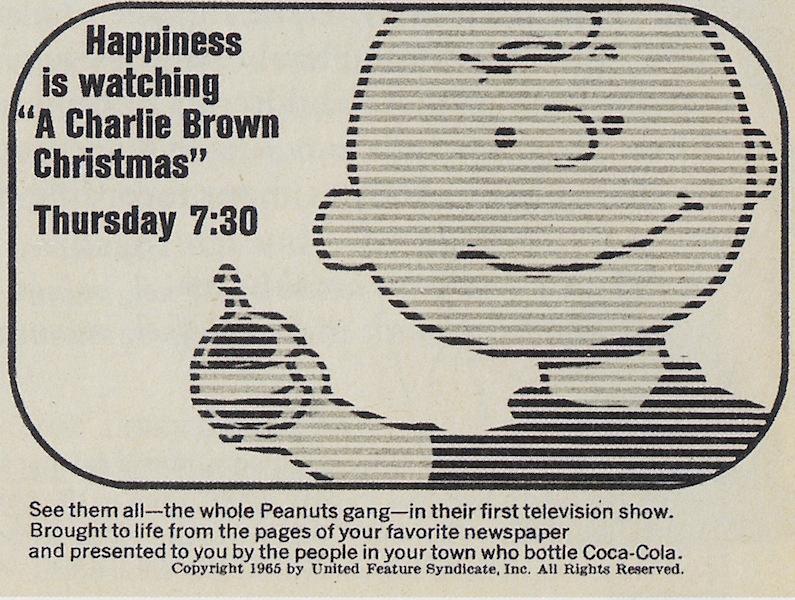
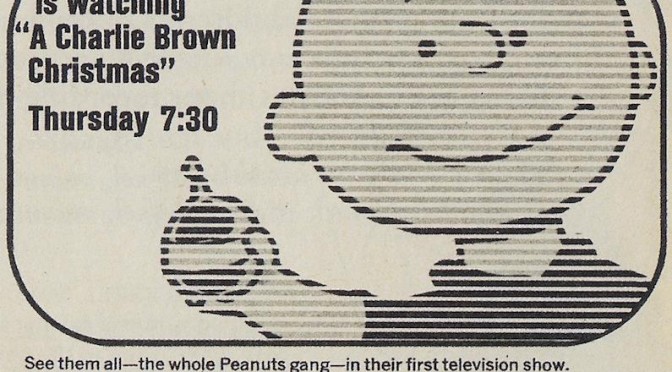
The first time: A TV Guide advertisement from 1965 announcing the upcoming Charlie Brown special, “presented … by the people in your town who bottle Coca-Cola.” [source]

A Charlie Brown Christmas, the holiday special to end all holiday specials, needed a little encouragement from the Madison Avenue advertising world in 1965 to spring into existence.  In fact, Peanuts’ creator Charles Schulz wasn’t exactly clamoring for any kind of television version of his classic characters.

The Minnesota cartoonist’s first fateful encounter in New York came in June 1950, when he met with editors at United Feature Syndicate, located in the Daily News Building on 42nd Street, to form the strip which eventually became Peanuts.  The syndicate initially restricted the size of Schultz’s cartoon panels to flexibly adhere to the various column sizes of their partner newspapers. This forced simplicity into Schultz eventual designs for his characters — the bulbous head of Charlie Brown, the dash of black ears on an all-white beagle.

The syndicate unveiled Schulz’s creation a few months later, on October 2, 1950. Within a decade, it would be one of America’s most famous comic strips.

Flash-forward to another spring in New York, April 1965, and to the bustling offices of advertising agency McCann Erickson, at 485 Lexington Avenue.  They were Madison Avenue’s most successful agency and held among their clients the defining product of post-war America — Coca-Cola.

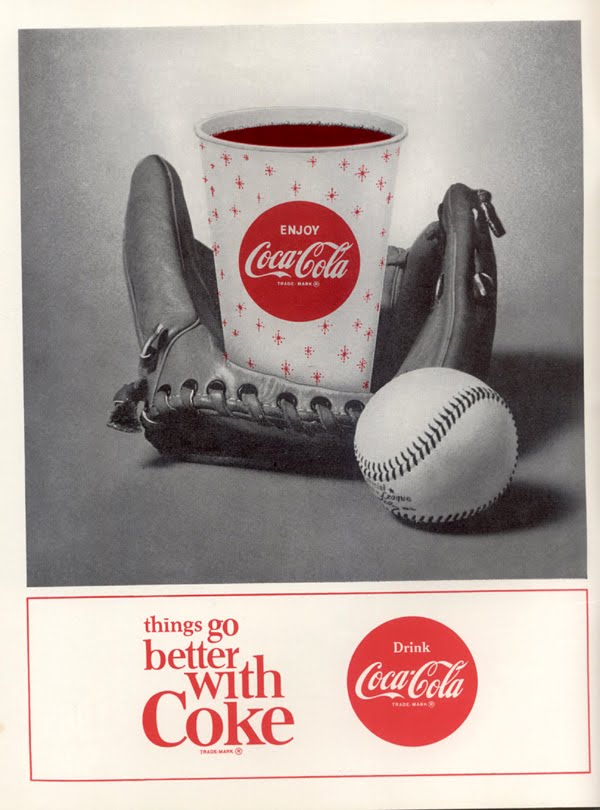
McCann Erickson would be responsible for some of Coke’s most recognizable advertising campaigns during a decade when the beverage would reach international popularity.  In 1971, agency efforts would underscore Coke’s world domination with ‘I’d Like To Buy The World A Coke’.  At left: A McCann-Erickson Coke ad from 1965, courtesy the blog Beautiful Life

Coke was looking for a television show to sponsor for the holiday season of 1965, one that could be developed from scratch, with a Coca-Cola audience in mind — namely, families with children.

(If you’re a ‘Mad Men‘ fan, you may also be familiar with McCann Erickson as the agency from Season 3 who bought out Sterling Cooper, forcing Don Draper and the gang to quit and form a new, fledgling agency. The events of Season 4 — with Ken Cosgrove still in McCann’s employ — play out during 1965, the same year as A Charlie Brown Christmas.)

One of McCann Erickson’s lead executives John Allen had an idea in mind.  He had seen a documentary on Schulz, called A Boy Named Charlie Brown, and that film contained some crudely animated versions of Charlie Brown and Lucy by animator Bill Melendez.  Allen called up Melendez and asked if Schulz had ever been interested in developing a full-length television special.

He had not, actually.  In fact he had turned down many previous offers to produce animated specials. Schulz said at the time, “There are some greater things in the world than TV animated cartoons.”  Yet, perhaps contradictory to this, Schulz seemed open to licensing and merchandising opportunities.  In 1960, Charlie Brown and Lucy made their first animated appearance on television hawking cars for Ford:

But you couldn’t turn down an offer by the world’s biggest sugary beverage, could you?  Melendez agreed, brought the offer to Schulz at his northern California home, and from his studio there, he and a team of animators frantically put together a program in time for the holidays.

Schulz wanted lots of snow and ice skating and talk of “the true meaning of Christmas,” inspiring the special’s lengthy Biblical monologue by Linus.  They auditioned Hollywood children and kids from Schulz’s neighborhood for the voiceovers and called up San Francisco-based musician Vince Guaraldi, who had recently cracked the Billboard charts with the song ‘Cast Your Fate To The Wind‘, to score the special.

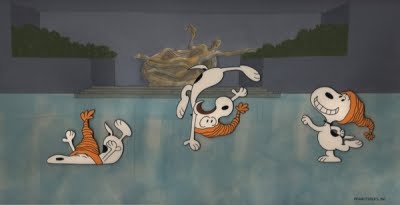
Below: Snoopy careens around the Rockefeller Center ice skating rink in the 1969 film A Boy Named Charlie Brown.

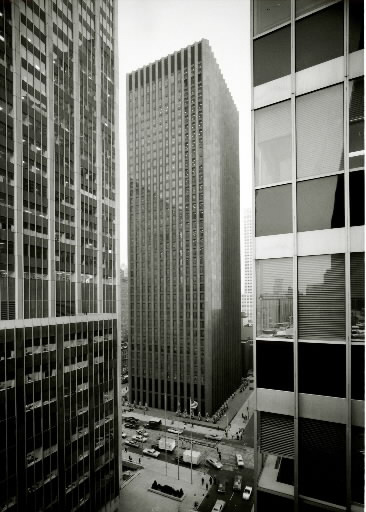
The half-hour feature was finished just a few days before broadcast. TV Guide and newspapers were already advertising the airing when Melendez sped to CBS’s brand new corporate offices at 51 West 52nd Street; the Eero Saarinen-designed building was nicknamed Black Rock for its monolithic design. (Pictured below, pic courtesy Skyscraper.org.)

Melendez screened the special for executives who were greatly underwhelmed with the final product.  “It seems a little flat … a little slow,” said one executive, assuring Melendez that CBS would not be ordering any future Peanuts specials.  According to producer Lee Mendelson, “If the show hadn’t already been scheduled to air in six days, it might never have been broadcast.”

Fortunately, a Time Magazine reviewer was allowed to screen A Charlie Brown Christmas and wrote a rave review that ran a couple days before showtime. From the review: “For one thing, the program is unpretentious; for another, it is unprolonged (30 minutes).”

But television audiences would have the final say and, upon broadcast on Thursday, December 9, it became the week’s second biggest show behind Bonanza.  Popular acclaim was soon joined by critical plaudits; a few months later, Schulz, Melendez and Mendelson arrived back in New York to receive an Emmy Award for Best Animated Special.

The original version of A Charlie Brown Christmas included a short shot of Linus being flung by Snoopy into a Coca-Cola sign. It was later edited to say Danger, which was then edited out entirely, because, well, it’s a bit disturbing. (See below.)  No remnant exists today within A Charlie Brown Christmas of its Coca-Cola advertising reason for being.

Four years later, Charlie Brown, Snoopy and Linus would head to New York themselves, in the 1969 feature length film A Boy Named Charlie Brown (title similar to the 1962 documentary) in which Charlie would nervously compete in the Scripps Spelling Bee competition.

Schulz’s Manhattan is as abstract as any of his landscapes, but he does depict both the New York Public Library and Rockefeller Center.  It’s here that Snoopy reprises his ice skating routine to the music of Guaraldi.

There’s also several scenes of a cracked-out Linus stumbling through the city at night, looking for his blanket, which he has unwisely loaned to Charlie. An excerpt of the film:

A Boy Named Charlie Brown made its premiere at Radio City Music Hall on December 11, 1969. You can check out the original film program here.

A giant Coke bottle atop the Empire State Building? Almost.

Did you see the spectacular debut of the Empire State Building‘s new LED lights last night, choreographed to the music of Alicia Keys, being simultaneously broadcast on four New York radio stations?


 The allure of the Empire State Building as a glamorous light spectacle has been around almost since the mast — originally designed, but never used, as a mooring mast for zeppelins — was raised in 1931.

Nearby Times Square was bathed in the light of neon advertisement, and its master of manipulation was lighting designer Douglas Leigh.  The iconic beacon would have been irresistible to Leigh, and in 1941, he proposed for the top of the Empire State something that would have been easily his most ambitious, most striking lighting display to date — an illuminated bottle of Coca-Cola.

According to author John Tauranac, the famous curvaceous bottle would have sat along the spire, changing color based upon the weather. It was one of several potential Empire State Building/Coke tie-ins planned, including a Coke-sponsored performance by the orchestra of Andre Kostelanetz performed at the top, broadcast nationwide on the radio. Coke products would have featured “a small guide to decipher the colors.

The Empire State Building could have used this publicity at this time, as owners were scrambling to fill vacancies within the building. With Rockefeller Center, the Chrysler Building and dozens of other towers now constructed, midtown Manhattan was experiencing a glut of office space.  A Coke sponsorship would have given the Empire State Building free publicity, not to mention sizable rental fees.

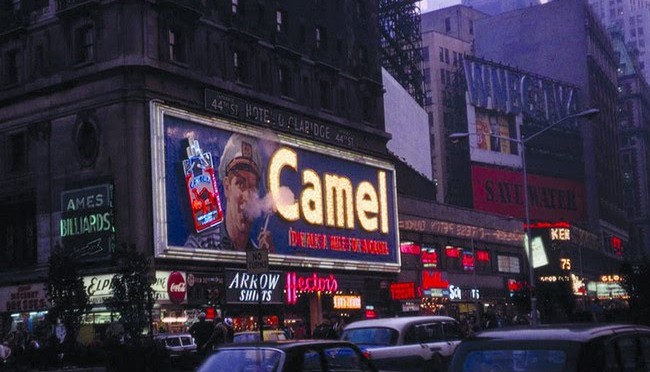
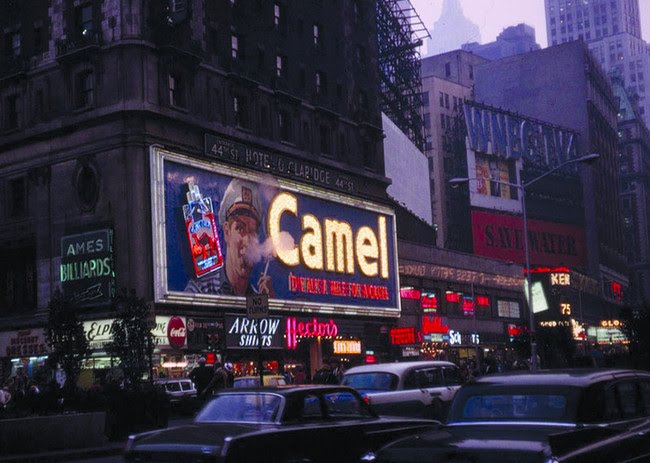
Below: Leigh’s famous smoking Camel ad in midtown Manhattan. The Empire State Building can be seen up in the corner.

But Leigh’s timing was terrible; even as the plan was being drafted, Pearl Harbor was attacked, and America entered World War II.  During the war, there would be no lights at all atop the building or in its upper floors.

A few years later, in July 1945, a B-25 bomber would crash into the Empire State Building, killing the pilot and several within the building. More amazing facts about that tragic accident here.

Leigh never gave up his dream of transforming the Empire State Building. After the war, Leigh told Life Magazine he wanted to put a gigantic, lighted cigarette on the building. [source]  Many decades later, Leigh would finally get his chance — albeit without product placement — designing a new, colorful lighting system  in time for the country’s 1976 Bicentennial celebration.

Categories
Uncategorized

Williamsburg in flames: Explosion on the East River 1912, and a test for the five-borough fire department

The Williamsburg waterfront was a wall of industry over one hundred years ago and of a most combustible kind.

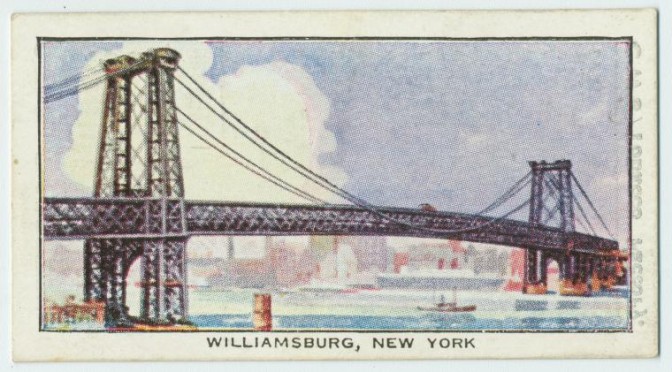
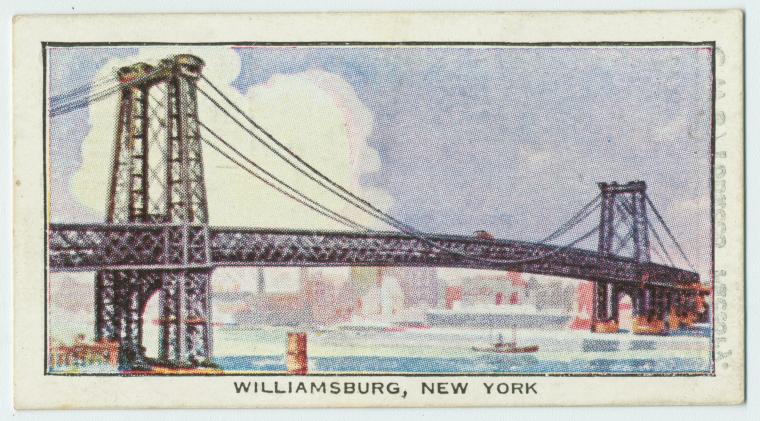
Manhattan had waterfront industry as well, but it was leveraged with rising skyscrapers.  For instance, from the Williamsburg Bridge — not a decade old in 1912 — one could see the nearly-completed Woolworth Building emerging from the downtown skyline. When one turned to the Brooklyn side, however, you were greeted only with towers of belching smokestacks from warehouses and factories, dark, sooty and noxious.

Immediately north of the bridge was the Domino sugar plant, a remnant of William Havemeyer’s century-old sugar concern.  Nearby were the oil tanks and plants of Standard Oil, coal yards, concrete warehouses, gas reservoirs and even a marine freight terminal, with storage warehouses with grain and hay. Many workers of these factories actually lived close by in tenements along Kent Avenue.

And right in the middle of all that was the United Sulphur Company*, at Kent Avenue and North 10th Street. On the afternoon of November 25, 1912, an explosion here at the sulphur plant threatened to destroy the entire waterfront.

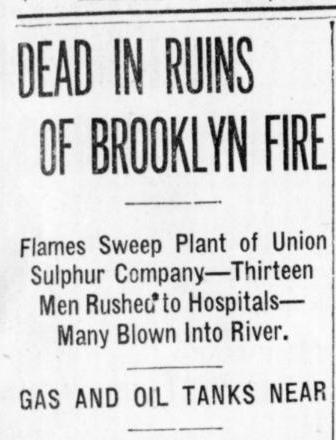
At right: Headline from the New York Tribune, November 26, 1912

Imagine both the sights and the smells of an exploding sulphur factory. Over 5,000 tons of crude sulphur were ignited, created a blast so powerful that some employees were literally blown into the river. Others were trapped in “suffocating fumes” and collapsed.

Newspaper reports made note of various acts of “unselfish heroism” as trained employees “plunge[d] into the yellow glare, shot with blue sulphur flame” to rescue unconscious co-workers.

Two more explosions spread the fire over three blocks, showering fiery embers into the hay bales over at the  Brooklyn Eastern District Terminal building and endangering the nearby oil and gas tanks.

Fire alarms rang throughout the entire city, as firefighters from other boroughs soon arrived to help combat the blaze. This was the second time in history that a ‘borough call‘ — essentially, all hands on deck — had ever been made since the consolidation of New York in 1898.

The first would have been fresh on the minds of firefighters rushing to the scene — the devastating blaze at the Equitable Building (in Manhattan, at 120 Broadway) which had killed six people that January.  It appears the borough call was not yet in place or was simply not called in 1911, when the fire at the Triangle Factory Fire killed 146 workers.

“This was the hardest fire of its sort I ever experienced,” said New York fire chief John Kenlon of the blaze. Taking seven hours to fully extinguish, the inferno was made worse by the billowing sulfurous fumes which knocked out more than a few firemen and at least four fire horses.

One benefit of the burning sulphur: it smelled so rancid that residents of tenements in the surrounding neighborhood fled early from the smell. A good thing, as the flames eventually destroyed a tenement on Berry Street. A local saloon also caught fire from wisps of burning hay.

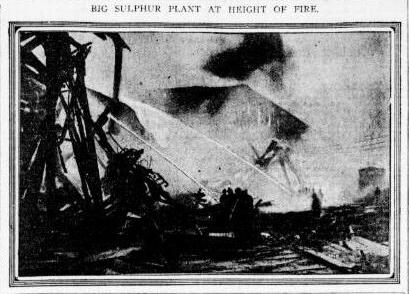
Below: An almost abstract photo of the fire from the Tribune.

Hundreds of spectators watched the blaze from the vantage of the Williamsburg Bridge, the sulphur created a thick curtain of smoke; the New York Times claimed that “the flames showed like dancing green sprites through the fog of gas and smoke.”

Unbelievably, despite dire headlines — ‘DEAD IN RUINS OF BROOKLYN FIRE‘ — it appears there were no deaths due to the blaze, but dozens of injuries. It was a true test of the consolidated New York Fire Department, and one they ably passed.

*’Sulfur’ is the more preferred spelling today, but as the original company used the British spelling ‘sulphur’, I have continued that spelling throughout the article for consistency. 

Top illustration courtesy New York Public Library

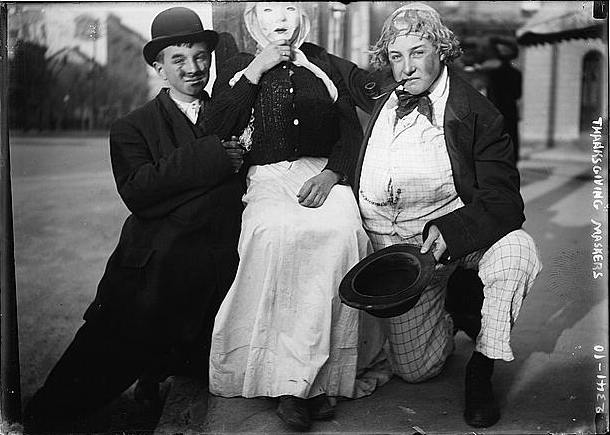
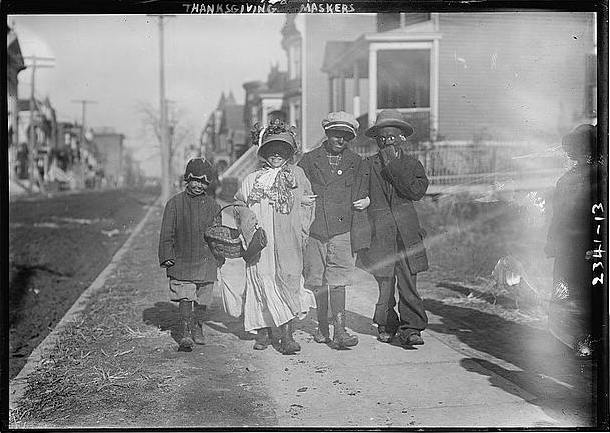
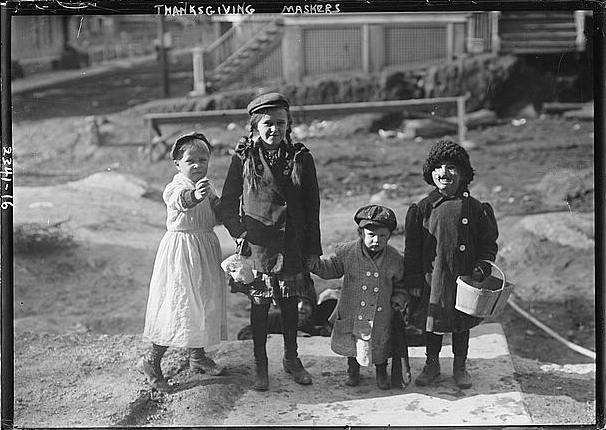
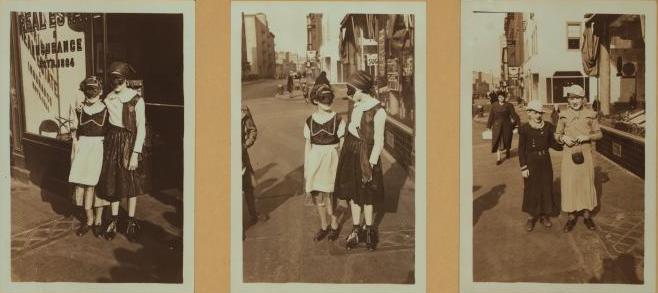
Dressed for success: The tradition of Thanksgiving masking, children in drag, begging for money!


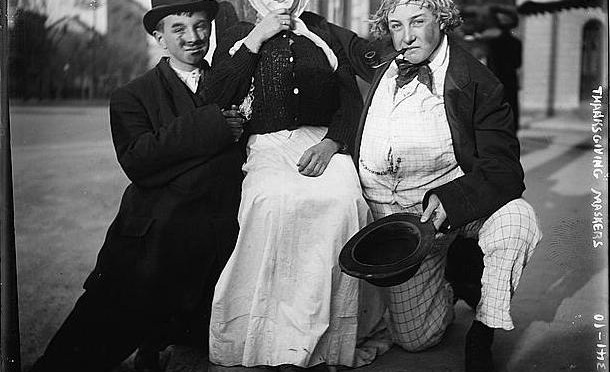
Turkey anyone? Thanksgiving maskers, in New York, taken sometime between 1910-15. Whatever you do, don’t look the ‘lady’ directly in the eye!

My new column for the Huffington Post is live, and the topic is a strange, forgotten holiday custom called Thanksgiving masking, popular among New York kids from the 1890s-1930s. Children dressed as exaggerated versions of poor people! Boys in their sisters’ clothes! I wrote about this last year at this time, but this article is newly expanded, and I’ve done a bit more research on the origins of this very odd tradition.

You can check out my story here.

There are several archive photos attached to the article as well. However, here are a few more, courtesy the Library of Congress.

All these were taken in New York between the years 1910-15 according to file captions. However the background looks quite unfamiliar. Any guesses?

I especially love these little rascals. Cute, cute, really cute, SCARY.

And finally, here’s a selection of small portraits of Thanksgiving maskers in the West Village in 1933. Courtesy New York Public Library

Categories
Podcasts

Bicycle Mania! The story of New York on two wheels, from velocipedes to ten-speeds — with women’s liberation in tow


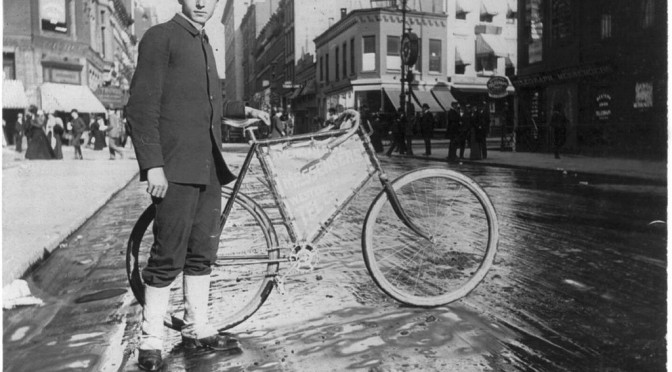
Alice Austen’s iconic photograph of a telegram bike messenger in 1896, a year where many New Yorkers were wild about bikes. Austen even rode one around with her camera. 

PODCAST The bicycle has always seemed like a slightly awkward form of transportation in big cities, but in fact, it’s reliable, convenient, clean and — believe it or not — popular in New York City for almost 200 years.

The original two-wheeled conveyance was the velocipede or dandy horse which debuted in New York in 1819. After the Civil War, an improved velocipede dazzled the likes of Henry Ward Beecher and became a frequent companion of carriages and streetcars on the streets of New York. Sporting men, meanwhile, took to the expensive high-wheeler.

But it was during the 1890s when New Yorkers really pined for the bicycle. It liberated women, inspired music and questioned Victorian morality. Casual riders made Central Park and Riverside Drive their home, while professionals took to the velodrome of Madison Square Garden. And in Brooklyn, riders delighted in New York’s first bike path, built in 1894 to bring people out to Coney Island.

FEATURING:  Robert Moses, Charles Willson Peale, Ed Koch, and New York’s bike thief in bloomers!


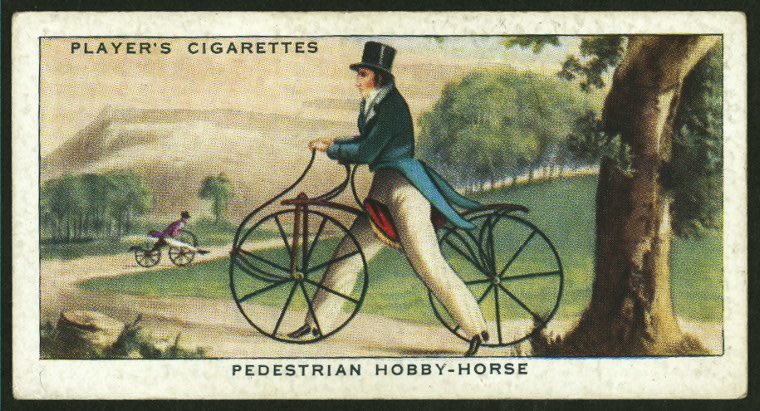
The early velocipede went by several names — the hobby horse, the dandy horse, the draisine. This device made a big splash in 1819 before they were effectively banned from the city. [NYPL]


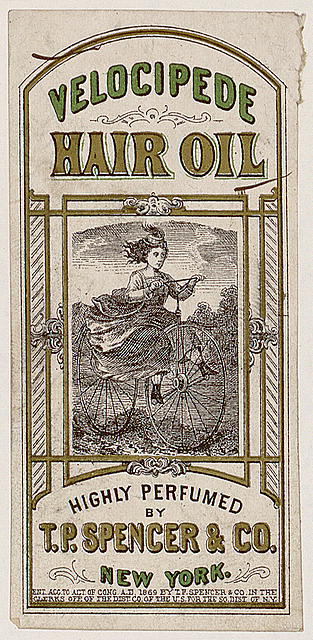
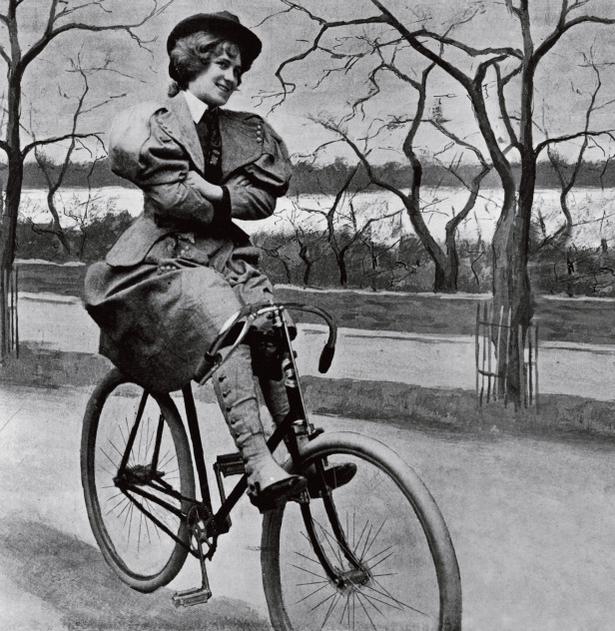
With the velocipede craze of the late 1860s, women attempted to conform to Victorian ideals of fashion with a host of bizarre products to maintain a ladylike presentation. By the 1890s, women riders chucked most of those conformities out the window, introducing more comfortable clothing and embracing the independence offered by the bicycle.

At top: An ad for a hair product, 1869. (LOC) Below: A radical change of costume in a photo illustration from 1890s (courtesy Brain Pickings, accompanying an amusing article of women’s bicycle do’s and don’ts from 1895)

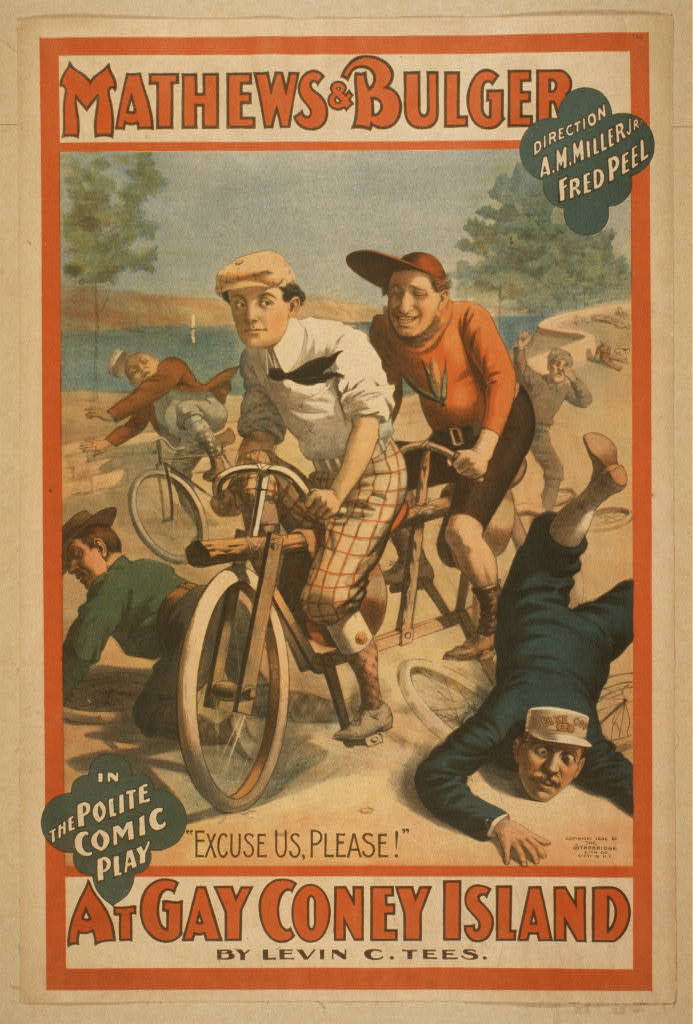
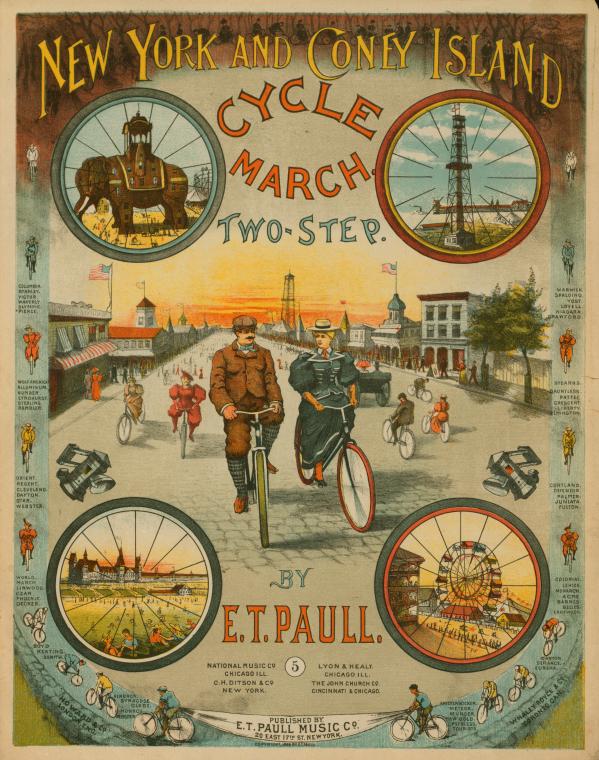
The bicycle didn’t just provide transportation and recreation in the 1890s. It influenced entertainment as well, through the songs of Tin Pan Alley. Below: A ‘comic play’ and a two-steph, both from 1896, and both inspired by the Coney Island Bike Path. (LOC)

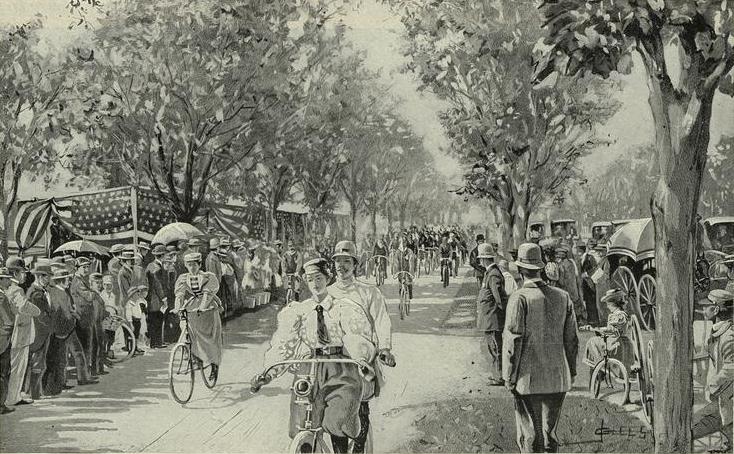
The Coney Island Bike Path in 1896, running up Ocean Parkway to Prospect Park. I believe this illustrates the opening of the return path, as the original path opened in 1894

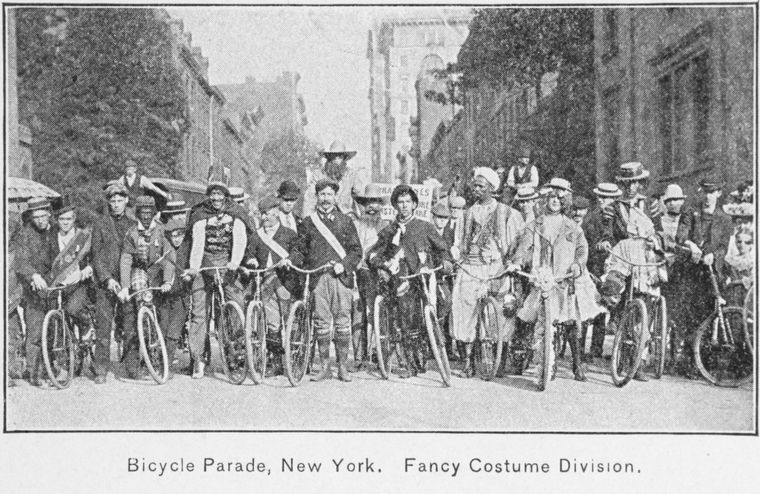
I have absolutely no context for this image, but I love it. Taken sometime between 1894-1901 [NYPL]

New York gas rationing 1942: “The taxi driver’s golden age?”

Today begins mandatory gas rationing in New York City due to shortages caused by Hurricane Sandy.

There was limited gas rationing during the 1970s, but the longest a gas ration was ever sustained in New York City was 70 years ago, during World War II, officially becoming a nationwide policy in December 1942. It was actually rubber that the government was protecting, conserving it for military vehicles by reducing the amount of rubber used by America’s growing car culture.

Gas was distributed based on coupons, allotted by communities at their discretion, according to author John Alfred Heitmann. An underground market of ‘chiseled gas’ naturally sprung up, “particularly on the East Coast.”

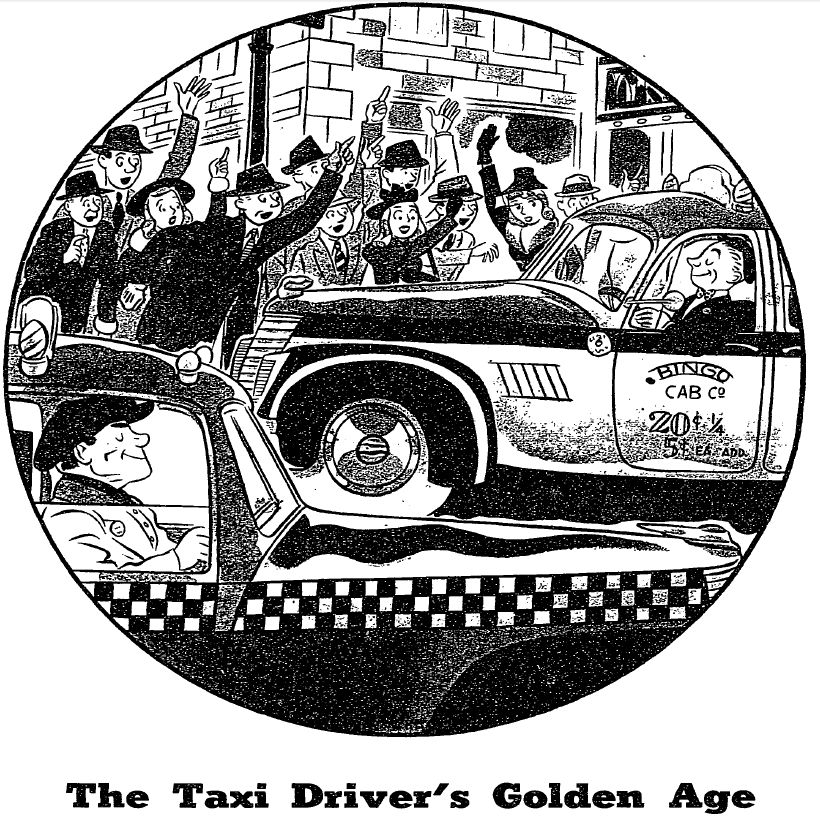
Most New Yorkers, however, adhered to the rationing. Interestingly, the New York Times and others have referred to the 1942 rationing as a ‘golden age’ for city taxicabs, raking in fares as New Yorkers left their private cars home. “They are making so much money it runs out of their ears and into their savings banks.” 

At left: An illustration from the 1943 Times article. Good times for taxi!

According to the Times, a fleet of 9,300 New York cab drivers received enough gas to travel 100 miles a day and were taken off the road only one day a week. Essentially, every street in Manhattan would have looked like Times Square today — a sea of taxis, checkered, yellow and other colors.(Yellow wouldn’t become the standard color for medallioned cabs until the 1960s.)

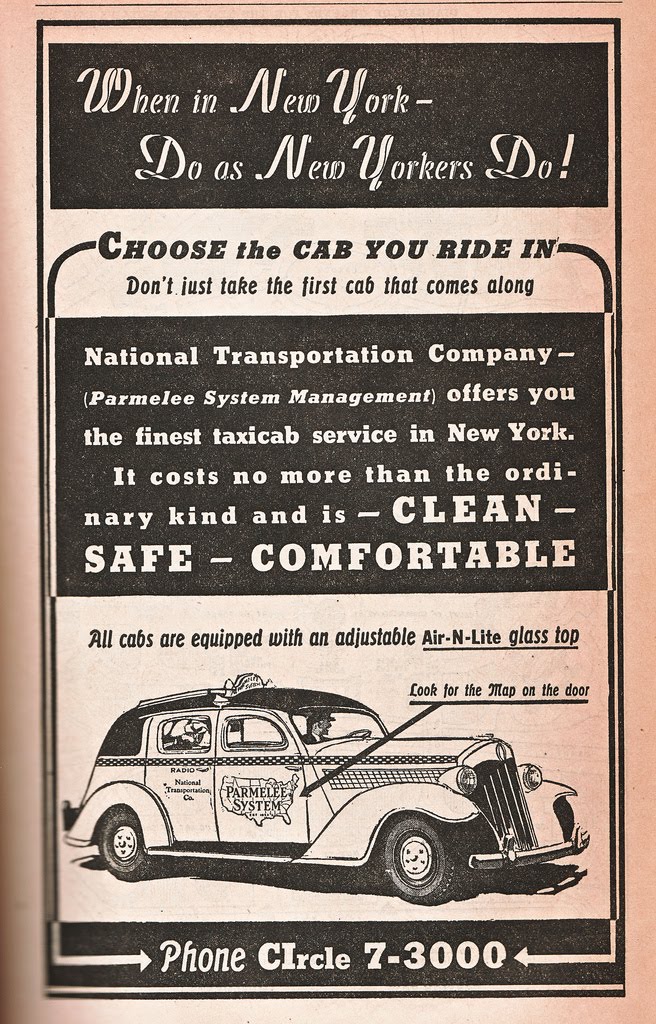
Below a cab company advertisement from 1944 [courtesy Flickr]

PODCAST: A snapshot of Hurricane Sandy, Nov. 2, 2012


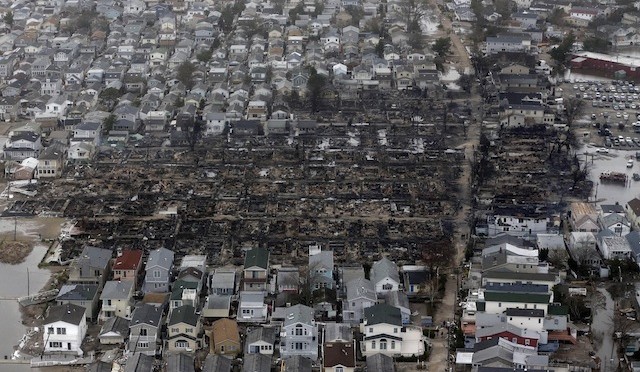
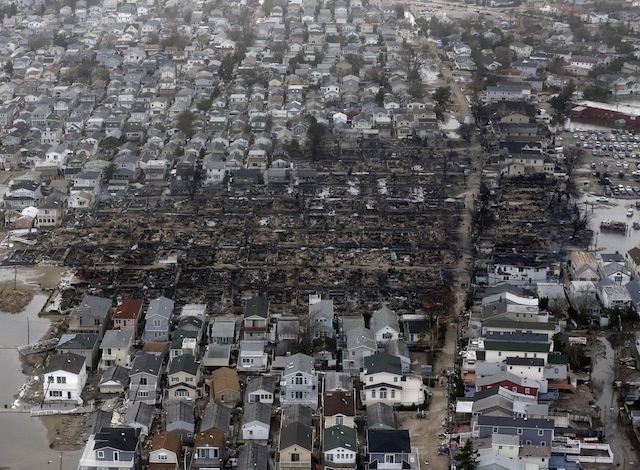
Above: Aftermath of a massive blaze in Breezy Point on the Rockaway Peninsula (Picture courtesy AP) 

PODCAST A brief encapsulation of what’s happening in the city as of Friday afternoon, November 2, reviewing some of the events associated with Hurricane Sandy, the catastrophic storm which hit the Northeast this week. Featuring some of the historical context for the storm. This is just a summary of what’s occurred as of now, so much of this information is sure to have changed after recording date. Please check your local news for up-to-date information.

To listen this episode, simply download it for FREE from iTunes or other podcasting services, subscribe to our RSS feed or get it straight from our satellite site.

You can also listen to the show on Stitcher streaming radio and Player FM from your mobile devices.

Or listen to straight from here:
The Bowery Boys: Hurricane Sandy Update

Throughout the weekend I’ll be compiling a list of relief organizations that you can contribute to, helping out those affected by Hurricane Sandy. If you know of any more — particularly those tailored to particular areas — please leave them in the comments section or email me, and I will include them on the list today and this weekend.

Tunnel To Towers Foundation [website]
Hope For New York [website]
Jewish Federation of North America [website]
New York Red Cross [website]
Support Breezy Point [website]
Rockaway Relief [website]
Belford NJ/ Jersey Shore Hurricane Relief Fund [website]
Salvation Army [website]

Visit NYC Service for information about volunteering in the area

“Not since the Great Blizzard!” “Bigger than 1821!” Hurricane Sandy inspires historical superlatives

When things get really, really bad, history provides validation and context.   The aftermath of Hurricane Sandy has already inspired newscasters, meteorologists and journalists to reach to the greatest disasters in New York City history for comparison.

These can seem very hyperbolic at times and even a little weird. (‘7 Devastating Hurricanes: Where Will Sandy Rank?‘ as though she were an American Idol contestant.)  It will be days before we really know if this was truly “the greatest disaster in New York history.”  But I do think the comparisons can not only bring home the severity of the current situation, they can also bring to life past traumas in a way that no faded black-and-white image ever could.

Here’s a few historical comparisons I’ve heard thus far, and I’m adding a couple of my own, events that popped into mind as I watched some of the terrifying images on television:

Worst Subway Shutdown Ever — The subways often flood after rainstorms, but snowstorms have also been a menace, particularly the blizzard of 1947 and one in 2006.  However, after Sandy, the MTA declared “The New York City subway system is 108 years old, but it has never faced a disaster as devastating as what we experienced last night.”  Last year’s Hurricane Irene was the first time the subway was ever preemptively shut down.  The decision this year proved wise indeed. [source]
 
Great Norfolk and Long Island Hurricane of 1821 — The Battery experienced high water levels of 11.2 feet during this 1821 event, still the only hurricane to ever directly hit New York. Last night, water levels surged to 13.88 feet, setting a new, disturbing record. Also known as the Great September Gale.

The Great New York Fire of 1835 — The images of runaway fires in Queens, mixed with the utter devastation of lower Manhattan, might remind you of the December blaze of 1835 which destroyed hundreds of buildings downtown. However, that exploding transformer on 14th Street — which caused a blackout to thousands of residents last night — also recall a series of explosions which occurred in New York in 1845, affectionately called the Great Explosion of 1845.  (Boy, they can really overuse a word like ‘great’.)

The Great Blizzard of 1888 — Sandy forced the shutdown of the New York Stock Exchange for a second day today, although the storm did not flood it, as rumors Monday night proclaimed. This was the first time the exchange has shut down for more than one day since the pulverizing snowstorm of 1888 paralyzed city transportation.

The Rockaway Fire of 1892 — One of the hardest hit areas in New York was Rockaway Beach, with its boardwalk destroyed and dozens of homes destroyed by fire over in Breezy Point.  The frightening images reminded me of something from our Rockaways podcast from this summer, a great fire which broke out in September of 1892 which destroyed most of the neighborhood of Seaside.

The Big Wind of 1912 — If contemporary sources are to be believed, the frozen windstorm which struck New York on February 22, 1912, blew at speeds more than double those of Sandy. The ‘giant among gales’ even stirred up a huge blaze in Red Hook, Brooklyn, and tested the steel of recently built skyscrapers.

The Long Island Express (New England Hurricane of 1938) — This powerful hurricane slammed into New England and Long Island in September of 1938.  It remains the most powerful storm to ever ravage the New England states.  According to Jeff Masters of Weather Underground, Sandy’s barometric pressure ties that of the Long Island storm, at 946 millibars.

The Ash Wednesday Hurricane of 1962 — Due to the ‘Frankenstorm‘ aspect to Sandy, another metric experts have used is the similarly formed, long-lingering March 1962 storm which hammered North Carolina, New Jersey and Long Island.

Hurricane Andrew 1992 —  Comparisons to this catastrophe are still out, as it’s mostly evoked due to the federal government’s poor disaster response. Another question left lingering is whether the cost of Sandy will rival that of Andrew, the third most expensive hurricane in American history (after Katrina and Ike).

September 11, 2001 — Then, of course, due to the shutdown of lower Manhattan, one can’t help but recall the attack on the World Trade Center, which actually was the worst thing to ever happen to New York City.

Crane Collapse at 303 East 51st Street 2008 — Anybody seeing the images of the broken crane which hung precariously at the construction site of One57 on West 57th Street might have remembered the horror which occurred at another midtown Manhattan site just four years ago, a crane collapse on East 51st Street which killed seven people. To this day, the uncompleted building stands as a reminder to this tragedy.

If you’ve heard any other historical comparisons used on your local newscast, please put them in the comments.

Hope everybody is safe and sound!

I’ll update the blog later today with some observation on catastrophic Hurricane Sandy. Tom is one of the thousands on the Manhattan side without power. I’m on the Brooklyn side and fared a little bit better, although I cannot say the same for the many trees on my block.   Be safe today!

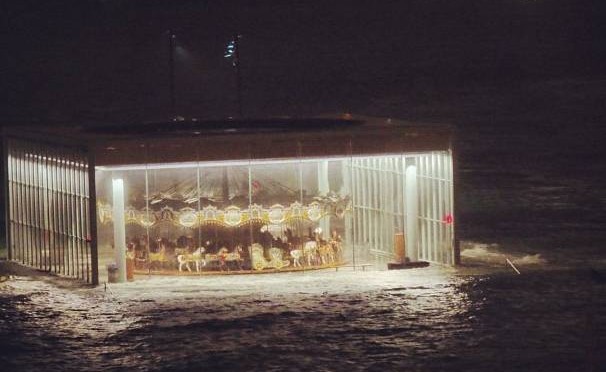
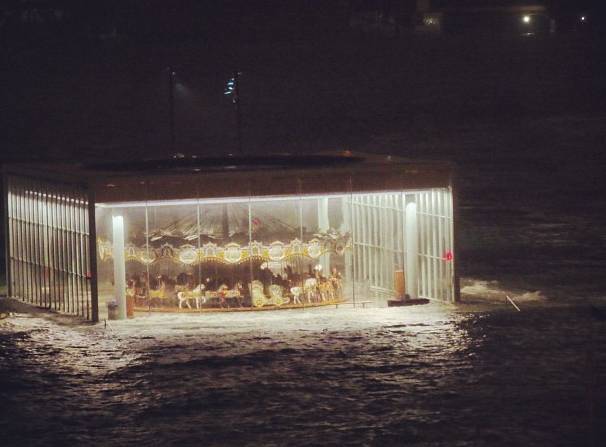
Above picture of Jane’s Carousel in DUMBO courtesy andjelicaaa’s instagram

Brooklyn’s Hell Gate: Dangerous tides off Coney Island

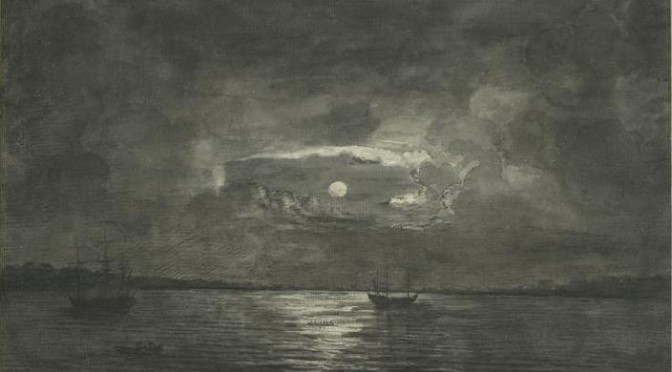
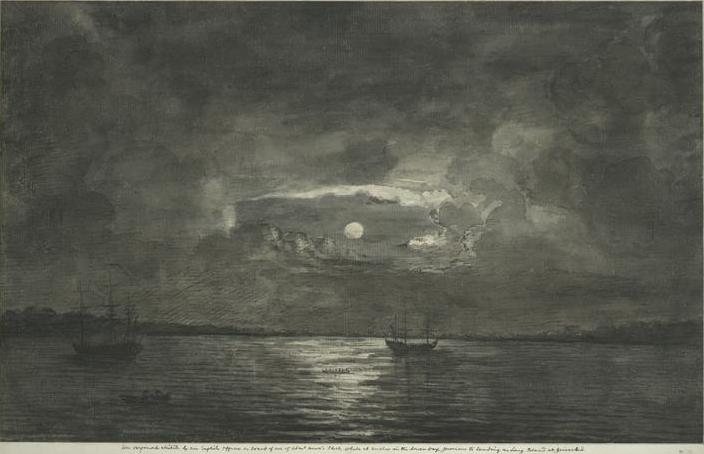
Above: The waters off Gravesend, Brooklyn, sketched by a British general in 1776. They too would have experienced the odd watery phenomenon known as ‘the Potato Patch’. [NYPL]

You may know the legend of the East River’s Hell Gate, a rush of violent waters borne from a tidal strait near Randall’s Island, so famous for wrecking ships that 19th century engineers took to dynamiting the surrounding rocks to alter the river’s flow. But the Hell Gate was not the only danger ships faced when traversing the waters around New York.
On the afternoon of October 24, 1912, two boys, Willie Taylor and Clinton Fox, playfully slipped out of their classrooms and tramped along the southern shore of Coney Island, near the edge of today’s Sea Gate neighborhood. Fox’s mongrel dog jumped into an abandoned rowboat floating off the shore near W. 25th Street.  The boys, already primed for mischief, climbed aboard, grabbed the oars and began paddling away.

They unwisely decided to steer toward the western tip of Coney Island, towards the lighthouse and Sea Gate’s most popular landmark of the day, the Atlantic Yacht Club.  They suddenly hit violent, churning seas created by a ‘strong ebb tide and a stiff wind’, and the boat smashed against a pier. Willie was thrown from the boat and eventually washed onto the shore unconscious.

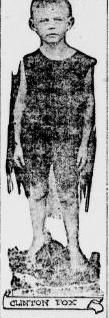
But Clinton and his dog were swept back into the inescapable, twisting waves, never to be seen again.  Near midnight, the damaged rowboat eventually reemerged ashore with no trace of Clinton Fox but his shoes. [Above: a photo of Clinton Fox from the front-page Evening World story, next to the banner ‘BOY SKIPPER GAVE UP LIFE FOR CANINE CREW OF ROWBOAT‘]

Fox was one of several deaths caused by the curious water occurrence off the Sea Gate shore known as The Potato Patch, a one-mile long watery stew of twisting currents near a row of jagged rocks and old piers, where Atlantic Ocean waters meet those of more tranquil Gravesend Bay.  A ‘peculiar rip‘ with a benign name, the choppy currents were a constant vexation one hundred years ago, “a miniature maelstrom where scores of small boats and boatsman have come to grief.”

A potato patch is an old nautical name for rough, choppy waters near a shoreline.  There is a similar occurrence in San Francisco also called the Potato Patch Shoal (watch video of it here) that frustrates ships and surfers to this day.

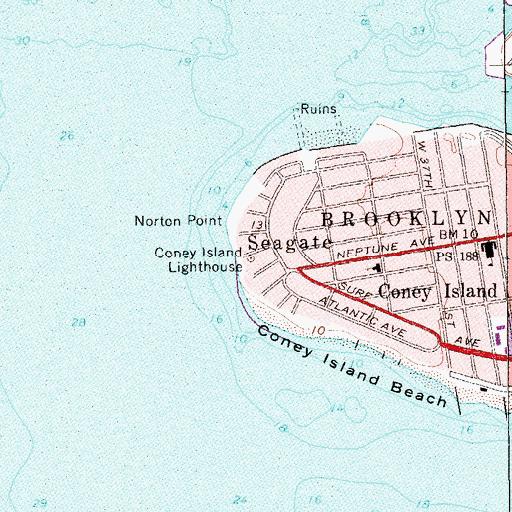
At left: location of the Brooklyn Potato Patch, off the coast of Sea Gate and the Coney Island beach.

The patch could overturn small boats and submerge their crewmen before anyone on shore could take notice. The Sun claimed in 1912 that it had an “unenviable record for boat mishaps and drownings.”

The area along the western portion of Coney Island had become more residential by this time. Once called Norton’s Point, a rowdy getaway popular with the likes of Boss Tweed, it had been redeveloped in the late 1890s as the respectable residential community of Sea Gate. The Atlantic Yacht Club operated as an upper-class alternative to the amusements of Coney Island further east, and, in fact, does so to this day.  All of this served only to increase small-craft traffic along the shore, particularly sporting and recreational crafts.

On March 1914, two men disappeared into the waters when their canoe was pulled into the tidal disturbance. The New York Times reported “it is feared that their boat was overturned in the rough water known as the potato patch.”

The effect of the patch were greatest in the late afternoon when the tide came in. A 1910 swim meet, delayed by only an hour, unceremoniously ended at the treacherous tidal scar. “[W]hen the swimmers came to it … they found in it their Waterloo, as not even a rowboat could pull through it with the current and wind that prevailed.”

Bearing witness to many of these disasters was an operating station for the Marconi Wireless Company, famous for its role in picking up messages from the RMS Carpathia after the sinking of the Titanic. And also Its most famous operator was David Sarnoff, later the founder of the Radio Corporation of America (RCA).

I found references to the Potato Patch well into the 1920s.  I’m sure the waters in this area are still turbulent to this day; however they are likely no match for modern vessels. It does not appear to have caused many injuries after this date. It’s also doubtful that children are jumping into random rowboats anymore.

Categories
Mysterious Stories Podcasts

Mysteries and Magicians of New York: Whimsical spirits, scary legends, strange magic and the original ghost busters

A session with a ouija board, a haunting illustration from a piece of 1901 sheet music ‘There’s A Charm About The Old Love Still’. (NYPL)

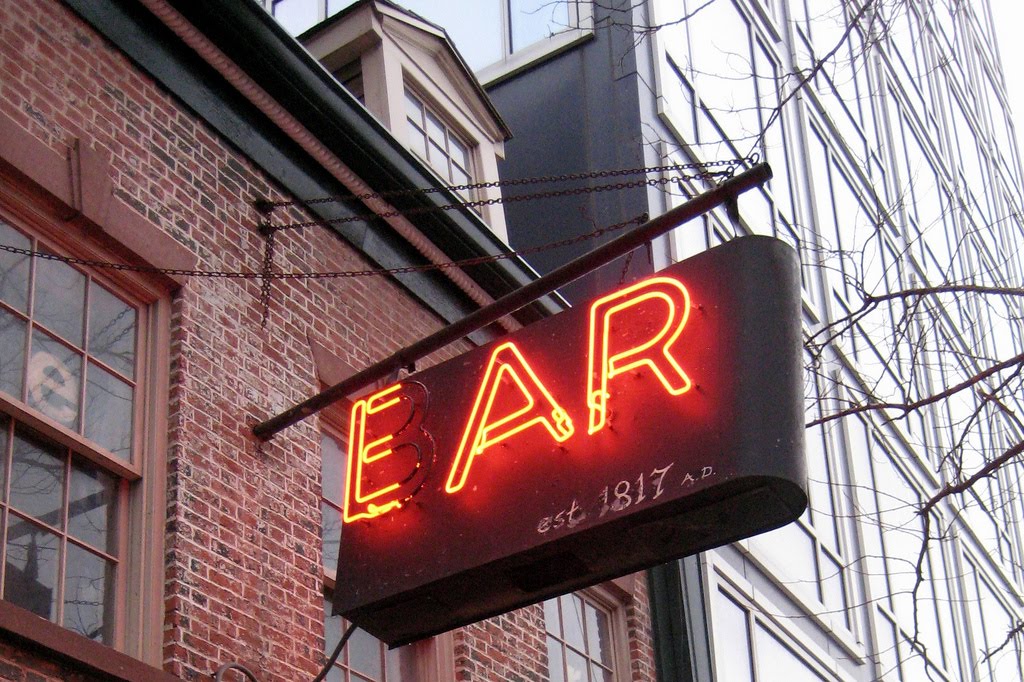
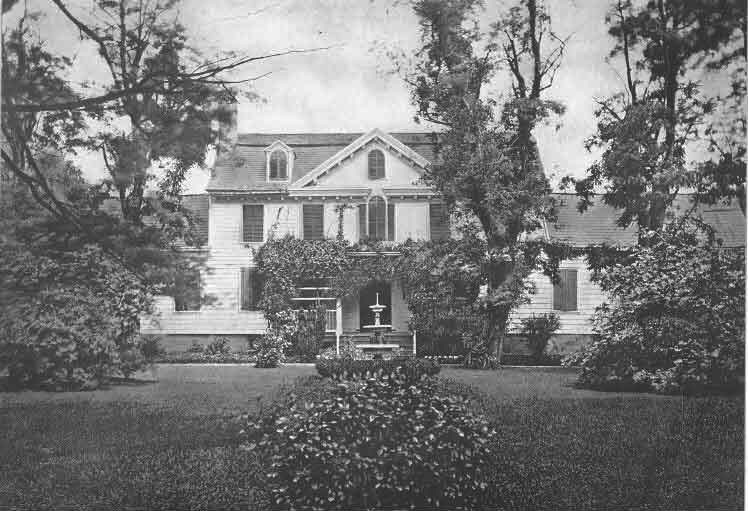
PODCAST Our sixth annual ghost story podcast takes a little twist this time around. Oh sure, we have two of New York’s most FAMOUS horror stories in our first part, beginning with a spirited sailor named Mickey who haunted a classic structure on the Lower West Side. Today it’s the Ear Inn, where you better watch your drink. Then we switch to a Colonial-era tale of obsession and entrapment in old Flatbush, the tale of Melrose Hall with its secret passages, stairwells and dungeons.

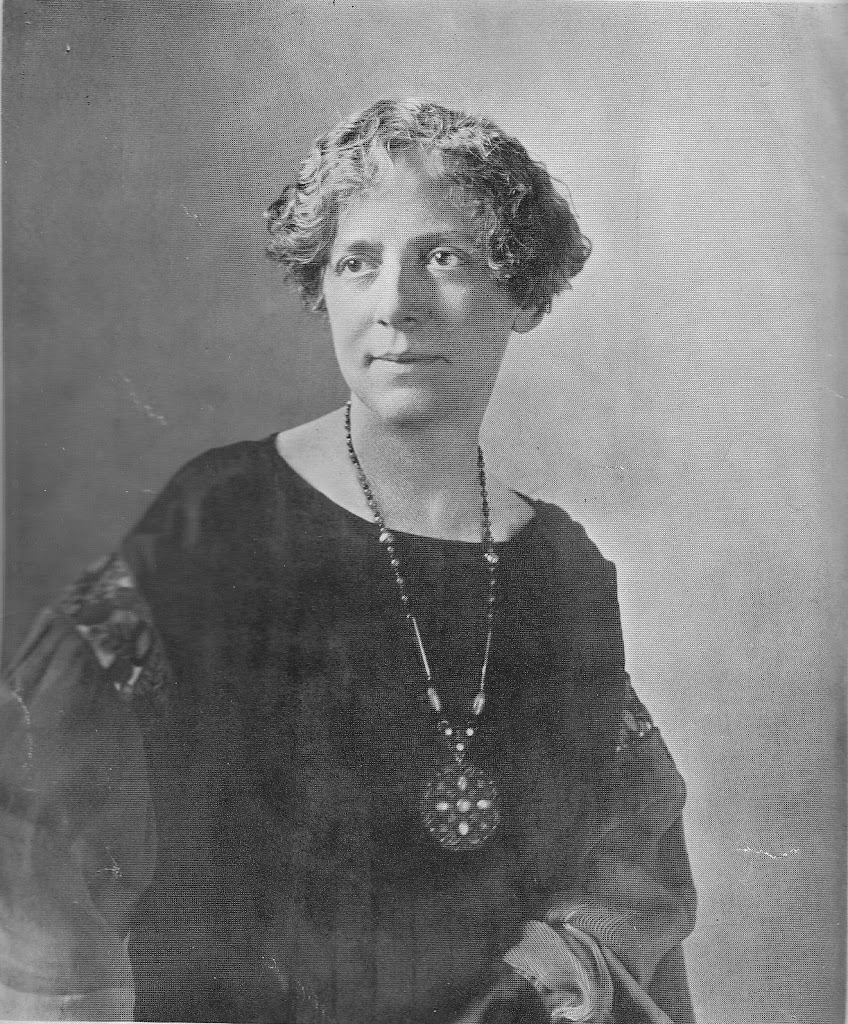
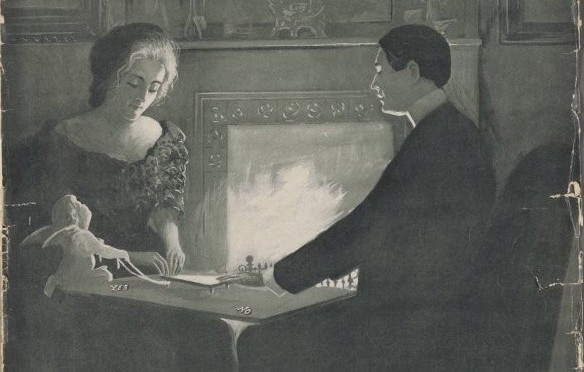
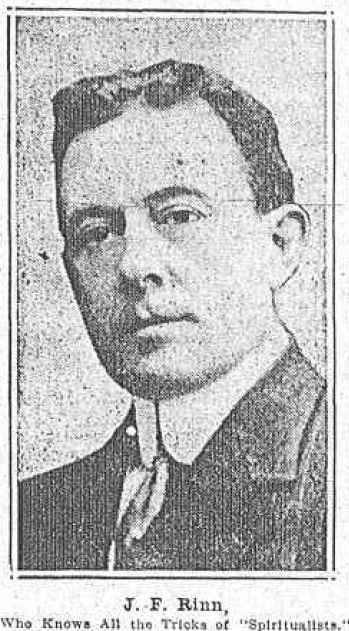
But in the second half, we observe New York’s spiritualism craze of the early 20th century through two frightening faceoffs. In the first, its the madame of the Ouija board, Pearl Curran, and her ghostly companion Patience Worth vs. one of New York’s original ghostbusters, the adventurer and conjurer Joseph Rinn (pictured at right). And in the final tale, Tom explores the secrets of Harry Houdini and what happens when a close confidante — in this case, the noted author Sir Arthur Conan Doyle — believes his powers are of a supernatural variety.

Featuring our annual ghost-story dramatics, a few sound effects, and the surprising haunted history of Carnegie Hall!


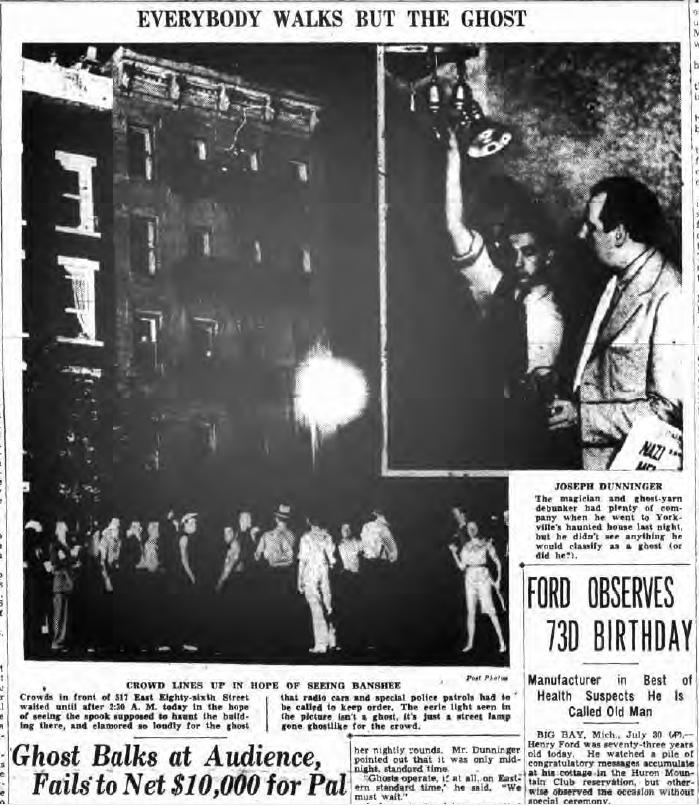
From the pages of the New York Post, July 1936. Crowds hunt for the spirit of Angelina, the Italian ‘banshee’. Crowds lined up to get a glimpse, so many that ‘special police patrols’ were called to control the search. [source]

The house of Revolutionary War veteran James Brown, today the worn and welcoming Ear Inn, is almost 200 years old, which means it has a great many ghosts, including a couple literal ones, including the randy spirit of a sailor named Mickey. (Picture courtesy Flickr/wallyg)

 
The haunted Melrose Hall in Flatbush, Brooklyn, the site of some improbable architecture and a terrible crime. Is that Alma peering from the third floor window? Do you dare enter?
 

Pearl Curran, the St. Louis woman who began conjuring the spirit of an 17th century English woman named Patience Worth, via the Ouija board. She was frequently questioned by prominent medium debunkers, including Houdini’s friend Joseph Rinn.

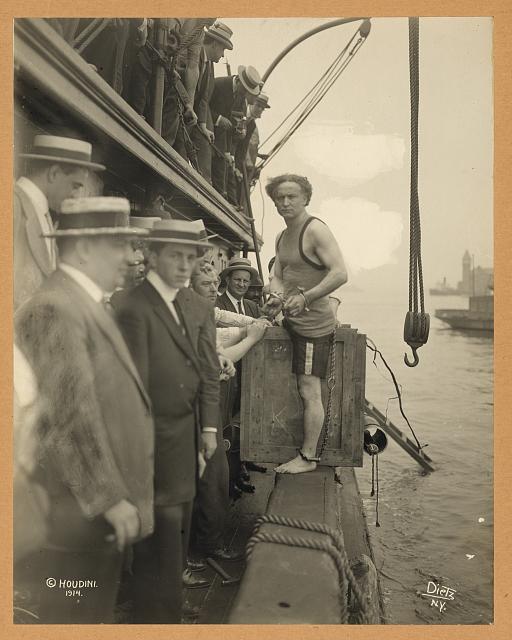
Harry Houdini in 1912, about to step in to a sealed sunken chest, which he will inevitably escape from. But what was his secret? Was Sir Arthur Conan Doyle — and his wife Lady Jean — onto something about Houdini’s secret powers? (Courtesy Library of Congress)

Rough and rusted: Walking the last section of the High Line


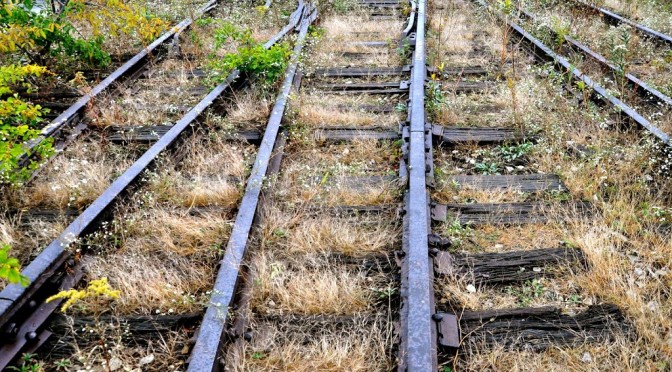
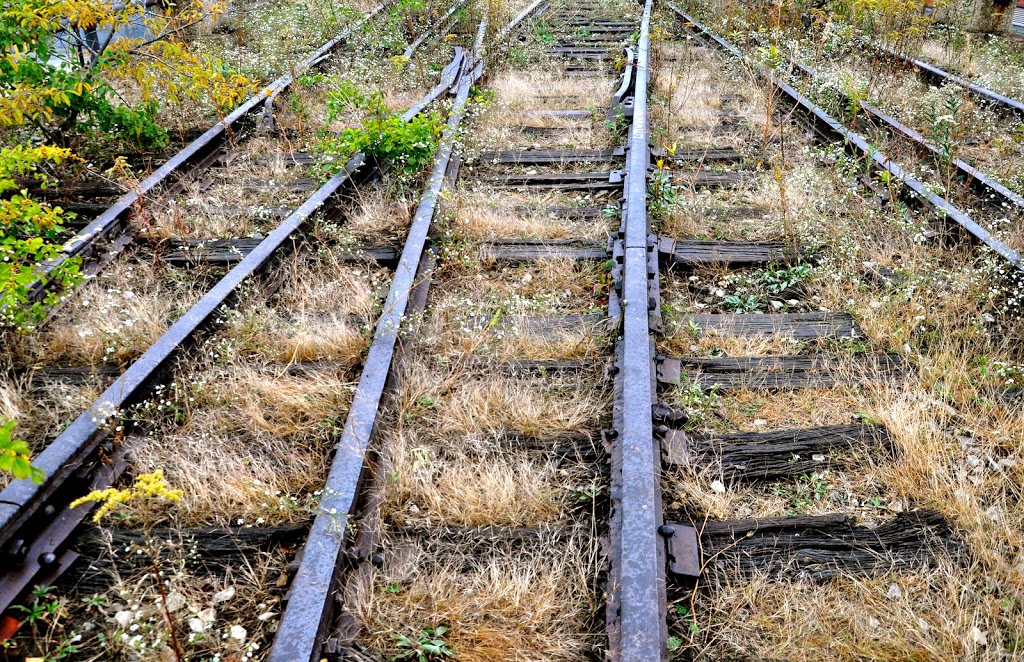
The last remaining unrenovated tracks of the West Side Elevated Railway: Seen better days, but haven’t we all? (Click onto pictures for a larger view)

This past weekend, Open House New York, in association with the clothing company Uniqlo, opened up the remaining portion of the West Side Elevated Railway — aka the High Line. Urban explorers could walk the rusted, overgrown loop from a street-level ramp on 34th Street and stroll over the Hudson train yards, eventually connecting with the end of the developed portion on 30th Street.

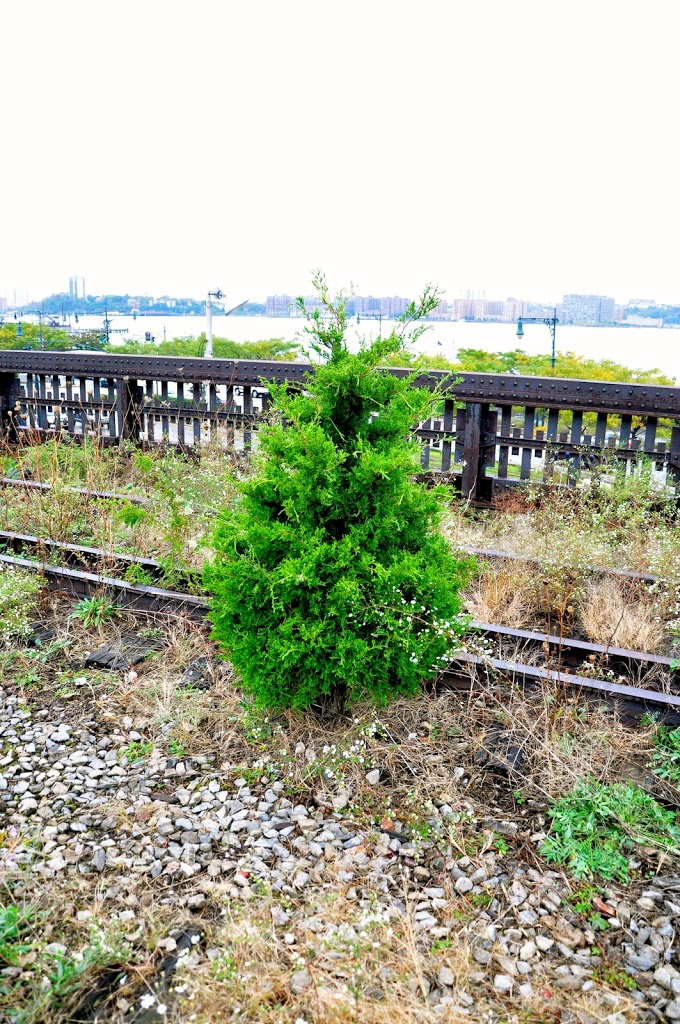
While this section of the elevated structure offers little in the way of beautiful surrounding architecture, it is notable for having unencumbered views of the Hudson and a dramatic bend over rows of unoccupied subway cars. That stunning view should be preserved when the $90 million rehabilitation begins later this year.

More uncertain is the fate of the strange growth that has sprouted upon the elevated trains since they were abandoned in the late 1970s. Bushes and small trees thrived from crevasses of rusted railroad ties.

At right, a perfectly healthy evergreen shrub of some sort, begging for Christmas decorations. I’m starting a movement — protect the High Line Christmas shrub!

 The first phase of new development will include a simple elevated walk constructed on the south portion of the tracks. In its current state, the corroded tracks disguised in thickets of weeds and were hardly safe for children or high heels. But for lovers of graceful urban decay, it was a rich opportunity. Uniquo is sponsoring another weekend on the tracks this weekend, but unfortunately it’s already sold-out too!

Maybe they should consider, I don’t know, leaving it wild and overgrown for awhile? New Yorkers seem to be enjoying it as is.

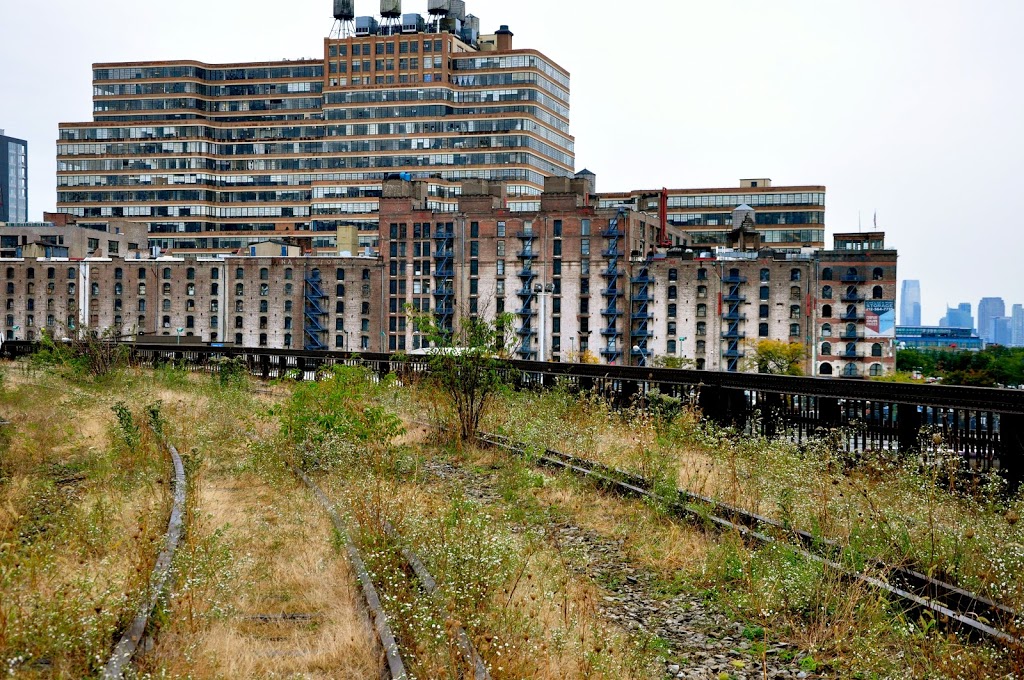
The pictures below are courtesy Sean Nowicke. You can visit his photo blog for many more amazing images of the undeveloped section.

For information on the history of the High Line, check out our podcast from earlier this year. (Here’s the blog page.) And you can find my free walking tour of the developed part of the High Line here, with mention of the Starrett-Lehigh Building, pictured below:

Staten Island already had a gigantic Ferris wheel — in 1893!

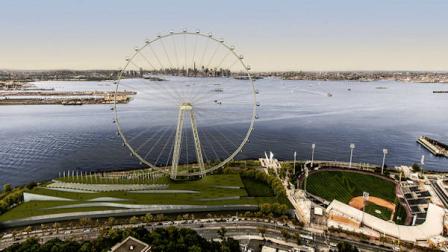
In the spirit of P.T. Barnum, Mayor Michael Bloomberg yesterday announced plans to build the world’s largest Ferris wheel next to the ferry terminal on Staten Island. The amusement, called the New York Wheel, will stand 84 feet higher than a similar Ferris wheel in Singapore and also nods towards the London Eye, a ride built in 1999 that quickly became a centerpiece of British tourism.

Obviously geared towards boosting tourism to Staten Island, the plan offers something for the residents of the borough in the form of a “retail outlet complex.” With the ballpark home of the Staten Island Yankees and the recently redesigned ferry terminal, the new projects will radically alter the face of the St. George neighborhood.

(At right: A rendering of the new wheel, courtesy ABC.)

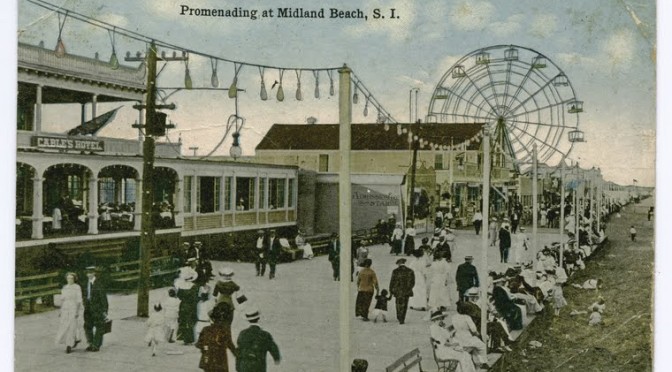
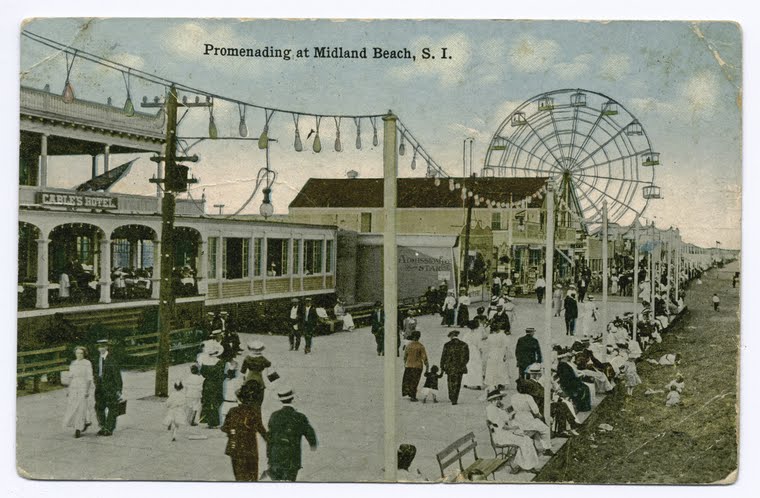
But the idea of a Ferris wheel drawing tourists to Staten Island isn’t a new one. The very first Ferris wheel in the borough was constructed back in 1893, on the opposite shore in the old Midland Beach resort area.

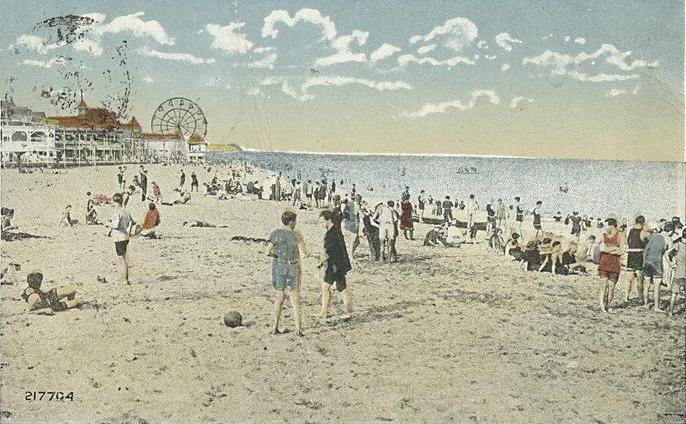
Midland Beach and adjacent South Beach were Staten Island’s answer to Coney Island and Rockaway Beach, back in the era before any of those amusement centers were officially a part of New York. The Staten Island resort area got its wheel the same year that George Washington Gale Ferris Jr. installed his most notable wheel — and thus giving the amusement its name — at the World’s Columbian Exposition in Chicago.

Staten Island’s ride — called an ‘observation roundabout’ — was built by Ferris’ rival William Somers after he was rejected a spot at the Chicago fair. It was probably similar to Somers over roundabouts built on Asbury Park and Rockaway Beach, of wooden construction, about 50 feet in diameter with approximately 16 passenger chambers. [Check out Norman Anderson’s history of Ferris wheels for more information.)

Thanks to Ferris and the fame of the Chicago World’s Fair, nobody was calling them roundabouts by the start of the 20th century. The Ferris wheel hovered over Midland’s rows of bathing pavilions and beer gardens along the boardwalk and was joined by the Happyland amusement park in 1906.

The New York Tribune sang praises of the amusement in 1904: “If they [the young of all ages] desire pleasure with an element of excitement, [they] may venture a ride in the great Ferris wheel, from the summit of whose broad circle they may enjoy an excelled view out over the broad bay to the open sea.”

The St. George Ferris Wheel is slated for completion in 2015. As for the old Midland Beach wheel, it appears to have been destroyed — along with a great many other amusements — in a devastating fire in 1924.

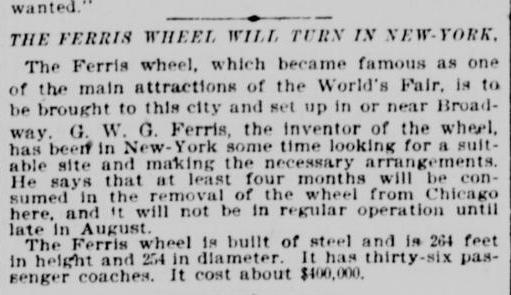
And by the way, Ferris’ original wheel, the one that was at the Chicago World’s Fair? There were actually plans to bring the wheel to Manhattan in 1894 and set it up — on Broadway! Sadly, these plans fell through.

Pictures courtesy NYPL

Categories
Podcasts

The Croton Aqueduct: How New York got its drinking water

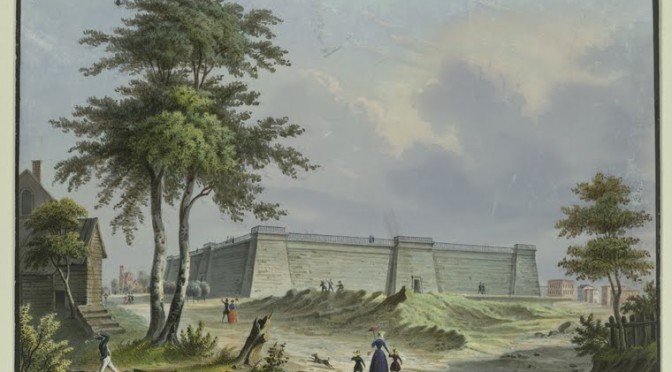
Above: The Croton Reservoir in 1850, in what would soon become Central Park. (NYPL)

PODCAST One of the great challenges faced by a growing, 19th-century New York City was the need for a viable, clean water supply.

We take water for granted today. But before the 1830s, citizens relied on cisterns to collect rainwater, a series of city wells drilled down to bubbling, underground springs, and, of course, the infamously polluted Collect Pond. But these sources were spreading disease and clearly inadequate for a city whose international profile was raising thanks to the Erie Canal.

The solution lay miles north of the city in the Croton River. New York engineers embarked on one of the most ambitious projects in the city’s history — to tame the Croton, funnelling millions of gallons of waters through an aqueduct down to Manhattan, where it would be collected and stored in grand, Egyptian-style reservoirs to serve the city’s needs.

This is the story of both the old and new Croton Aqueducts, and of the many landmarks that are still with us — from New York’s oldest surviving bridge to a former Bronx racetrack that was turned into a gigantic reservoir.

FEATURING: An entire town moved on logs, a famous writer’s strange musings on Irish laborers, the birth of a banking titan, and guest appearances by Isaac Newton, DeWitt Clinton, and Gouverneur Morris (or, at least, men who share those names).


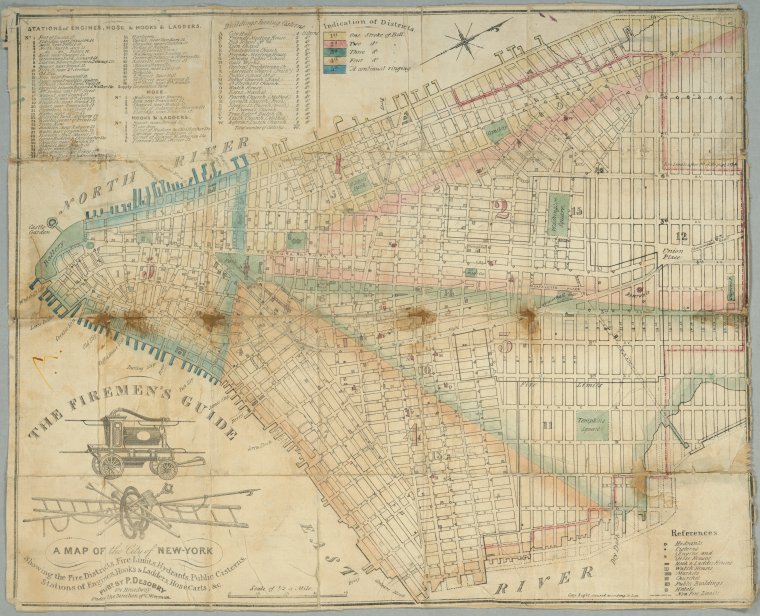
A fireman’s map of New York in 1834, detailing the location of the city water supply, in cisterns and hydrants fueled by the 13th Street Reservoir. (NYPL)

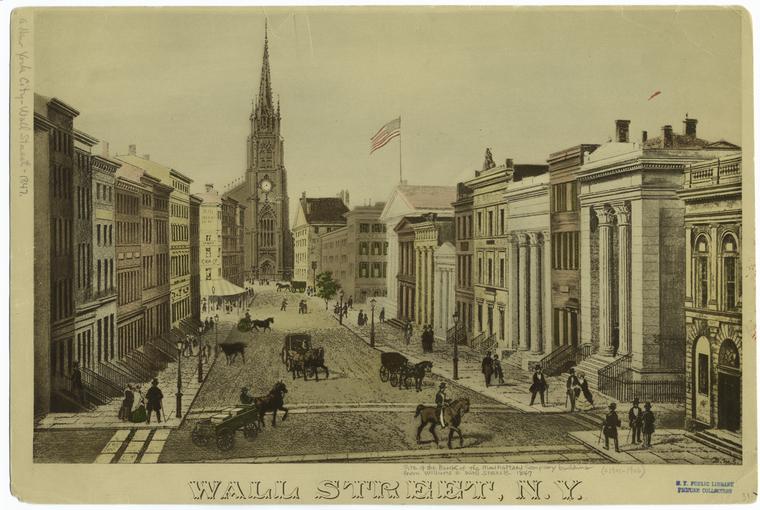
Wall Street in 1847. The Manhattan Company is at 40 Wall Street. Founded by Aaron Burr ostensibly as a public works to distribute water, the Company soon shed its water responsibilities to become a full-fledged financial institution.

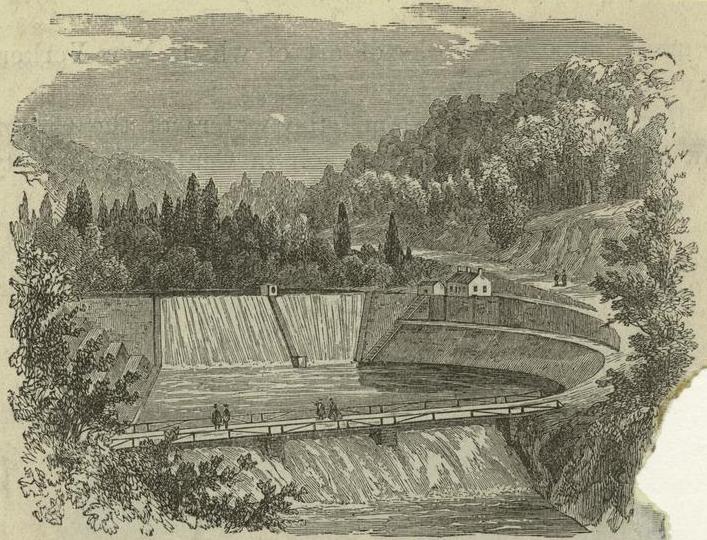
The Croton Dam and the start of the aqueduct system. After a partial collapse in 1841, the dam was quickly rebuilt for the opening of the entire system the following year. Today, the location of this dam is submerged under the current Croton. (NYPL)

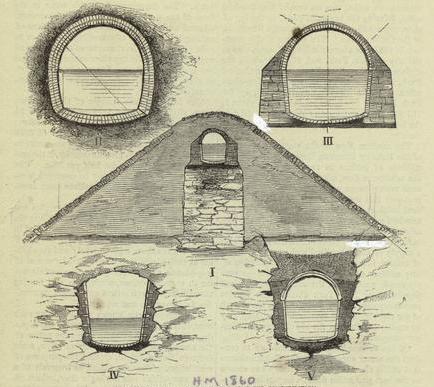
Examples of the various tunnels created to accommodate the various topographical challenges encountered during construction. Miles of these water tunnels were constructed by a team mostly comprised of Irish laborers. (NYPL)

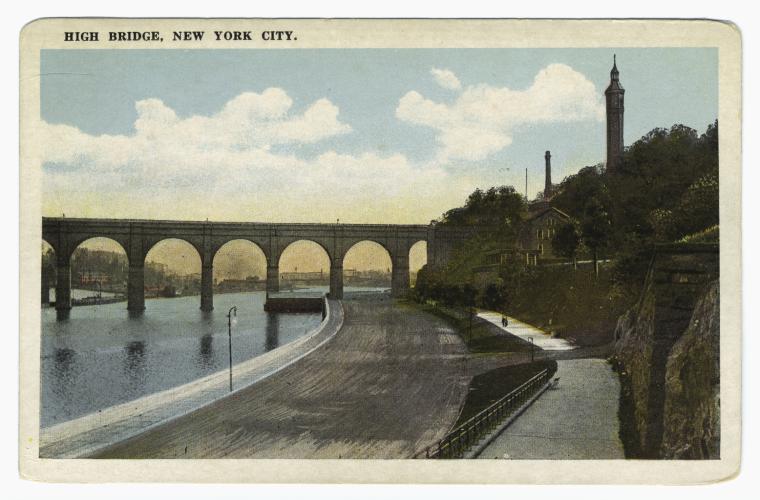
The glorious High Bridge, the oldest surviving bridge in New York — although much of it has been replaced and quite altered. (NYPL)

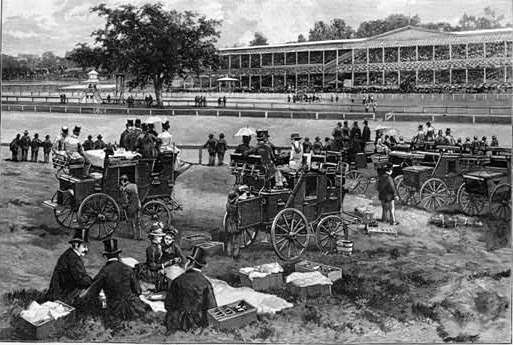
High society flocked to Jerome Park Racetrack on the weekends in the 19th century. But the park was turned into a reservoir at the beginning of the 1900s. (NYPL)

Also: please see my post from yesterday The Art of the Reservoir for pictures of some of the receiving and distributing reservoirs used in the Croton system and others through the New York region.