Categories
Planes Trains and Automobiles

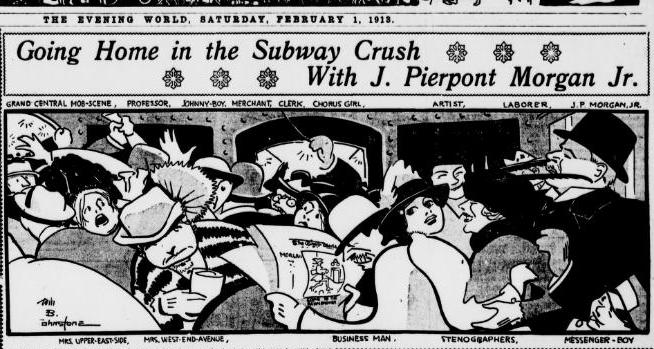
J. P. Morgan Jr. rides the subway and is accosted by a hat

Any of you who ride the 4-5-6 train in rush hour will especially relate to this story.  It takes place, in fact, on that very line, one hundred years ago.

Will B. Johnstone, an artist at the New York Evening World, noticed an interesting sight on his subway ride that morning, February 1, 1913, the day before the opening of Grand Central Terminal.  Crammed up against the wall of the train was J. P. Morgan Jr., son of the famous financier.

Such a sight greatly amused Johnstone. “There stood J. Pierpont Morgan Jr. ignominiously caught in the deadly rush hour!”  Even more remarkable, the writer notes, was the fact that Morgan was a principal financier for the Dual Contracts project, which would greatly expand the subway system and double the length of tracks into the other boroughs.

“I wondered why he was using the subway instead of a diamond-studded limousine? What did he mean by travelling with the common herd and of all times during rush hour?”

At one point, Morgan was accosted by a young woman with “a large velvet hat and the hat had two long stiff quills projecting from it like the horns of a billy goat, and as dangerous. Mr. Morgan’s face was impaled between them.”

The woman hat jostled about during the bumpy ride, and “[t]he quills began to bob around his face and he was busy trying to avoid them.” Others noticed the financier’s dilemma and began laughing with him.

“She’s going to get me yet,” he laughed to another passenger.  “And he was right,” Johnstone noted, “for one side of the quill and then the other jabbed him in the face.”

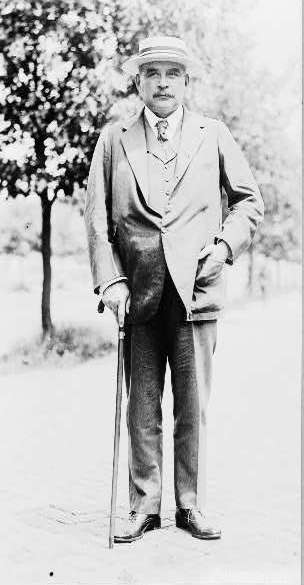
At right: Morgan in 1919

Finally at the Grand Central Station**, he had to push his way through the crowd and barely got of the car before the doors closed.

“This is no way to treat royalty,” Johnstone laments.

Less than two months after this incident, his father Morgan Sr. would die in Rome, leaving him one of the world’s largest business enterprises.  I wonder if he ever rode the subway again after that.

You can read the original article at the Library of Congress.

**The subway station opened in 1904 and rattled away underground throughout the entire construction phase of the terminal above.

Categories
Landmarks

Grand Central Terminal: The original plan from 1910

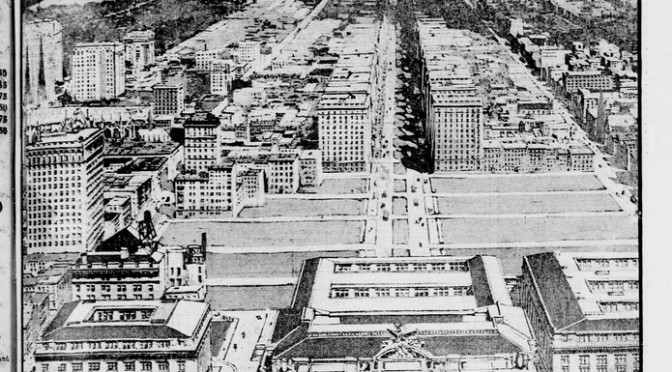
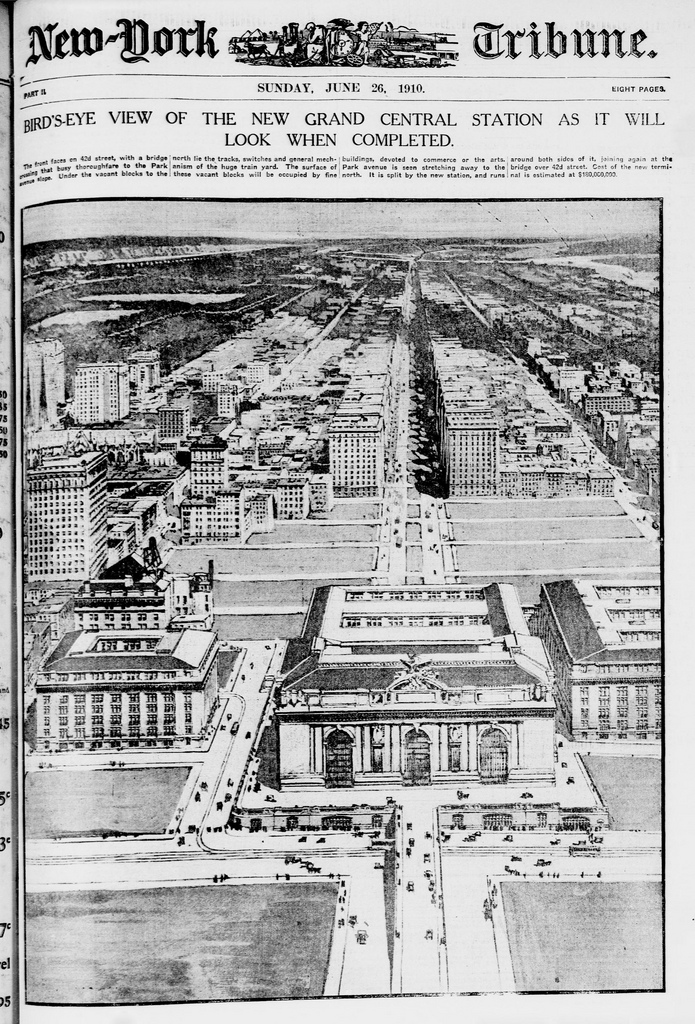
Continuing the celebration of Grand Central Terminal’s 100th anniversary, here’s a look at the proposed street plan which was run in the New York Tribune on June 26, 1910.

“The front faces on 42nd Street, with a bridge crossing that busy thoroughfare to the Park Avenue slope. Under the vacant blocks to the north lie the tracks, switches and mechanisms of the huge train yard. The surface of these vacant blocks will be occupied by fine buildings, devoted to commerce or to the arts.

Park Avenue is seen stretching away to the north. It is split by a new station and runs around both sides of it, joining again at the bridge over 42nd Street. Cost of this new terminal is estimated at $180,000,000.”

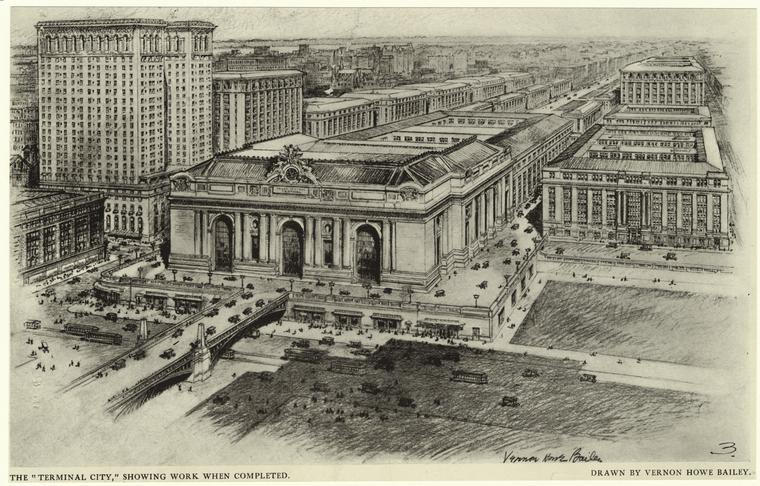
This was the beginning of the ‘Terminal City’ plan, a group of linking buildings with similar design. Sadly, many of those buildings were never built, and those that were have been torn down during the furor of the midtown skyscraper boom.

The plan below shows Terminal City from a different angle, and with new features:

The uniformity intended for Terminal City stands in stark contrast to the multiplicity of towering structures in the area today. In particular, the graceful New York Central Building (today the Helmsley Building) would finally rise to Grand Central’s north in 1929. The decidedly ungraceful Pan Am Building (today the MetLife Building) was planned during the late 1950s, when commuter travel by train decreased and Grand Central was considered an antiquated relic.

But it’s not what you see that New Yorkers marveled at back in 1910. It’s what you didn’t see. “[A]ll of  this machinery of this vast terminal — the signals, the tracks and the hundreds of trains — will never be seen from the street,” proclaimed the 1910 Tribune article. “They will be less in evidence than the engines at the heart of an ocean liner.”

Electric trains afforded such a disappearance from street level, creating an entirely new boulevard from 45th Street to 57th Street.  In some serious understatement, the Tribune continues, “These changes will revolutionize the character of this part of the city. Along the new part of Park Avenue will be constructed a mile and a half of imposing apartment houses.”

Spectacular apartment complexes would appear on Park Avenue, but mostly above 57th Street.  Commerce would eventually fill in the block below, bringing the most innovative skyscrapers of the 1950s, structures like the Seagram Building at 52nd Street and the Lever House at 53rd Street, buildings which toyed with the city’s zoning laws and created new public spaces.

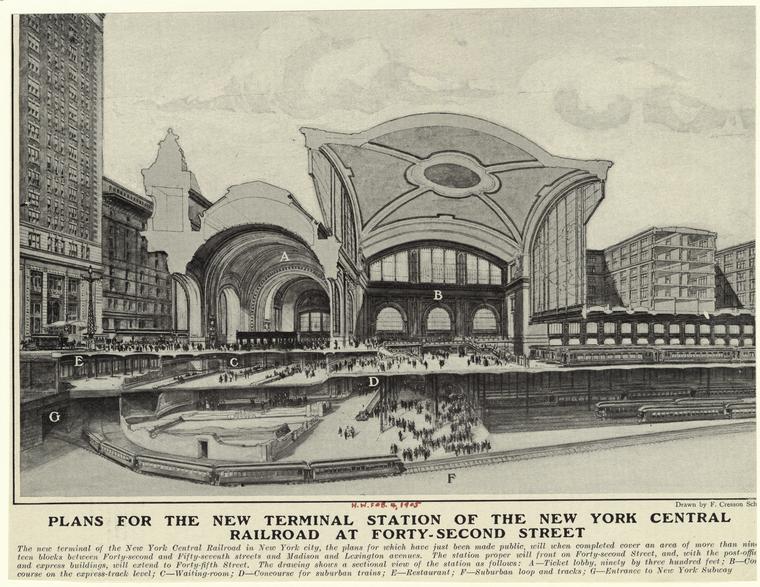
Below: A cross-section plan of the new structure, created in 1905, focuses on what would have focused on the terminal’s most magnificent secret — the buried tracks and public spaces.

Top two images courtesy Library of Congress; bottom image from New York Public Library
Categories
Friday Night Fever

In good company: The local significance of Obama’s inaugural quote: “Seneca Falls, and Selma, and Stonewall”

As many others today are ruminating on the symbolic and historic implications of yesterday’s presidential inaugural ceremony, allow me to dwell a little on a curious milestone of far lesser importance.

Until yesterday, no place in New York City has ever been mentioned in a presidential inaugural speech.  Not Ellis Island, not the Statue of Liberty, not Wall Street, not the World Trade Center, none of our fortresses or other towering landmarks.

In fact, New York as a city has actually been name-checked only once. (See below.)  But no individual place has ever been mentioned in what are considered to be the most memorable set of presidential speeches.

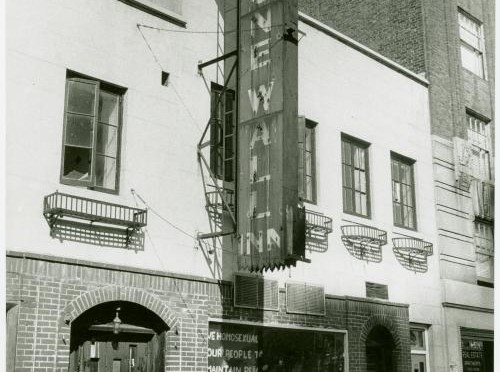
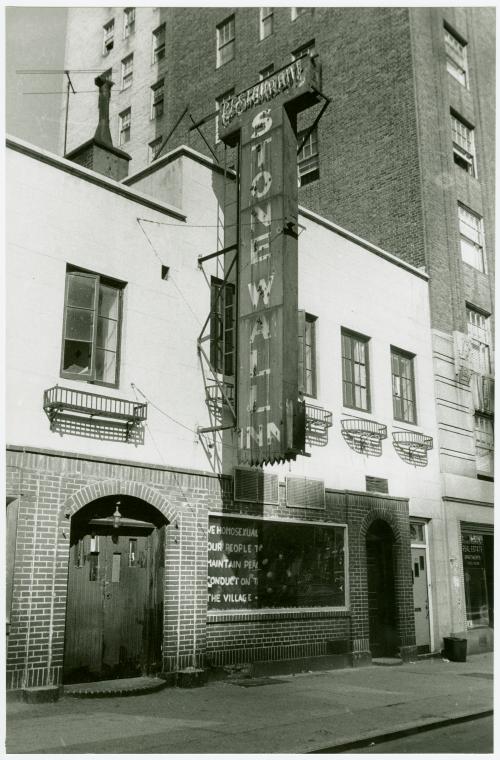
That is, until yesterday, when President Barack Obama referenced the name of a West Village gay bar — Stonewall Inn.

index

“We, the people, declare today that the most evident of truths – that all of us are created equal – is the star that guides us still; just as it guided our forebears through Seneca Falls, and Selma, and Stonewall; just as it guided all those men and women, sung and unsung, who left footprints along this great Mall, to hear a preacher say that we cannot walk alone; to hear a King proclaim that our individual freedom is inextricably bound to the freedom of every soul on Earth.”

“Seneca Falls, and Selma, and Stonewall” represent flashpoints of various American social movements.  With his mention of Stonewall — representing the Stonewall riots and subsequent street gatherings of June-July 1969, considered the birthplace of the gay-rights movement — the president has elevated the struggles of gay Americans to those of the women’s movement (the Seneca Falls Convention of 1848) and the African-American civil rights movement of the 1960s (the Selma to Montgomery marches in 1965).

The rhetorical flourish of alliteration unites these movements by the places in which they occurred.  Stonewall thus becomes shorthand for the gay rights movement.  But as it is the actual name of a bar — still very much in operation, right off Christopher Park — Stonewall Inn now holds another very special place in history.

The United Nations, of course, has been mentioned a few times, mostly in the 1940s and 50s. (Without surprise, mentions of the international body literally drop off to nothing after that.)  But all references relate only to the legislative body, not the actual place.  In fact, when it was first mentioned in 1949, by President Harry S. Truman — “We have constantly and vigorously supported the United Nations and related agencies as a means of applying democratic principles to international relations” — its headquarters in Manhattan had not even been completed.

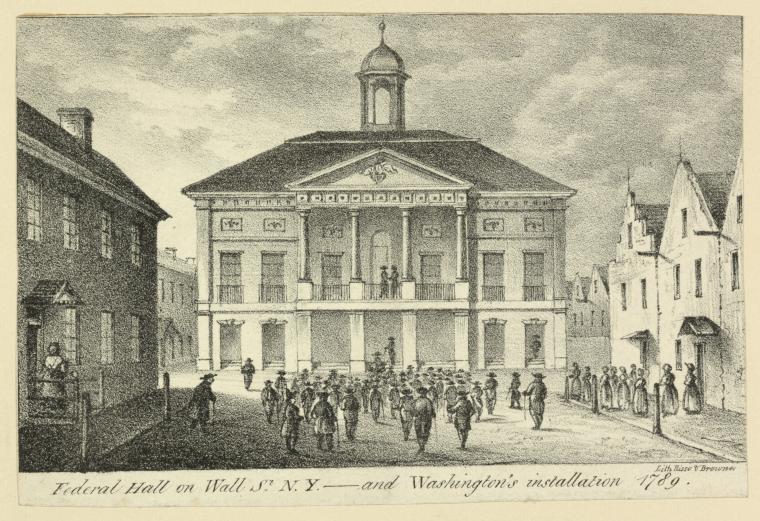
Below: Federal Hall on Wall Street, site of the first American government and the inauguration of George Washington in 1789

When New York has been mentioned in inaugural addresses, it’s because it was the location of the first inaugural address in April 1789, when the seat of American government was in New York.

“This occasion derives peculiar interest from the fact that the Presidential term which begins this day is the twenty-sixth under our Constitution,” Benjamin Harrison remarked in his 1889 speech.  “The first inauguration of President Washington took place in New York, where Congress was then sitting, on the 30th day of April, 1789, having been deferred by reason of delays attending the organization of the Congress and the canvass of the electoral vote.”

George H.W. Bush makes specific mention of Washington’s inauguration in 1989, which happened to be the 200th anniversary of that event. “I have just repeated word for word the oath taken by George Washington 200 years ago, and the Bible on which I placed my hand is the Bible on which he placed his.  It is right that the memory of Washington be with us today, not only because this is our Bicentennial Inauguration, but because Washington remains the Father of our Country.”

While this means very little in terms of the city’s historical stature, it means a great deal to the gay rights movement, and certainly to the bar itself. Or as Stonewall Inn owner Stacey Lentz recently said: “We’re not just a bar. We’re the Stonewall. It’s like owning Rosa Parks’s bus. We don’t own the movement, but we own the bus.”

For more information on Stonewall Inn, check out our podcast #48 The Stonewall Riots (download here or on iTunes.)  

Pics courtesy NYPL

Categories
Gangs of New York

A very strange coincidence surrounds New York’s most famous gangsters and ‘Boardwalk Empire’ inspirations

Many of the early 20th century’s most renown gangsters were born in late January!

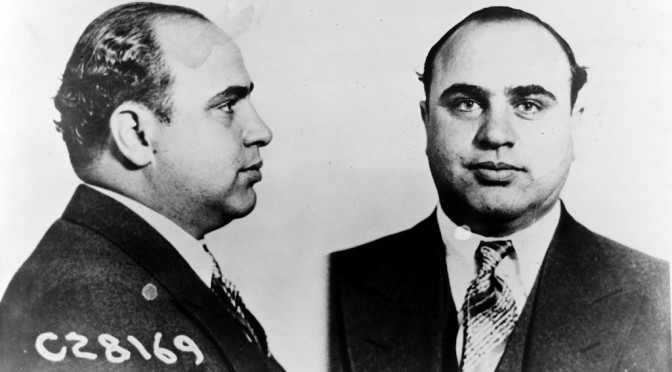
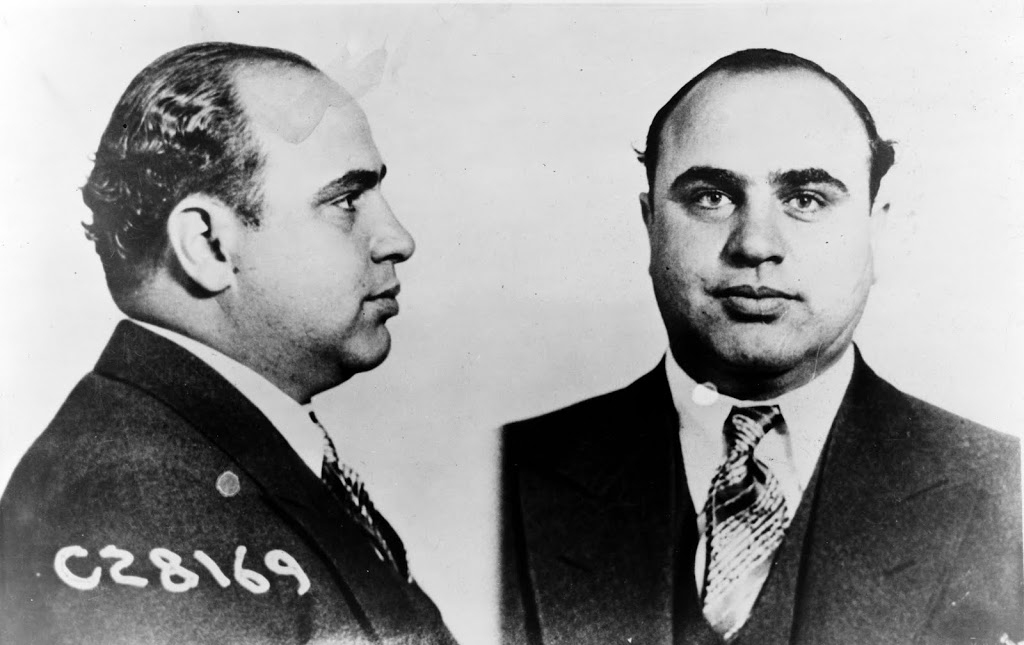
Today is Al Capone‘s birthday. (He’s pictured above in his infamous mugshot.) It’s also the birthday of gambler/ Jewish mobster Arnold Rothstein.  Joe Masseria, early New York Mafia leader, was also born on this date — January 17, 1886.

Enoch ‘Nucky’ Johnson — the inspiration for Steve Buscemi’s Nucky Thompson — was born January 20, 1883.  Frank Costello, leader of the Luciano crime family post-Prohibition, was born January 26th.

Papa Johnny Torrio, Capone Chicago mentor, was born on January 20, 1882.  Frankie Yale, another of Capone’s gangster employers, was born January 22, 1893.

And if we extend the coincidence even further to times of death, Lucky Luciano died of a heart attack on January 26, 1962.  Meyer Lansky died in Florida on January 15, 1983.  The bootlegger George Remus died on January 20, 1952.

Most of the men above are depicted in some form or another on HBO’s Boardwalk Empire. In fact most of the characters from that show appear to have late January birthdays.

I’m not too knowledgable about astrology, but is there something about the gangster way of life that appeals to those that reside on the Capricorn-Aquarius cusp?

Perhaps I should be afraid. My birthday was a few days ago. (Ack.)

Pic courtesy NYPL

Another art anniversary: Mona Lisa comes to New York! And she’s almost drowned in a sprinkler malfunction

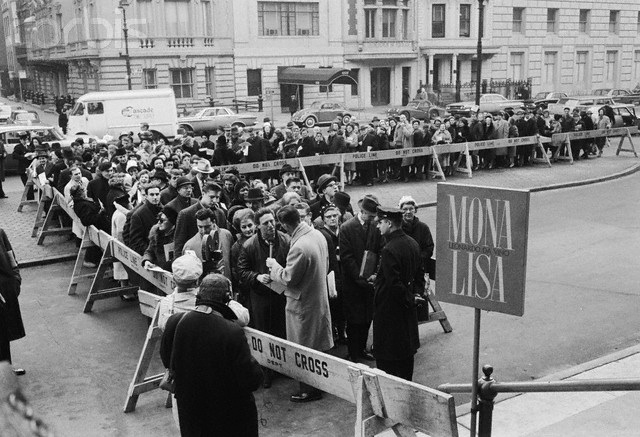
Mona mania: New Yorkers line up outside the Met for the hottest ticket in town in 1963

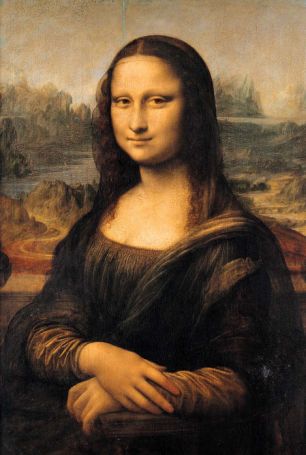
While many artistic institutions will be celebrating the 100th anniversary of the Armory Show next month, New York lovers of more classical paintings will be celebrating another milestone — the 50th anniversary of the Mona Lisa‘s visit to the Metropolitan Museum of Art.

Leonardo da Vinci‘s stoic portrait came to America fifty years ago this month, a single-picture loan to the United States (as a special favor to Jackie Kennedy) and accompanied by André Malraux, the French Minister of Cultural Affairs. The first stop was the National Gallery in Washington DC, where over a half million people spent hours in line to gaze at the famous smile.

On February 7, 1963, she made her debut to the public at the Metropolitan Museum of Art in the medieval sculpture hall, for a month-long exhibition that would become one of the museums most attended shows in history.  On that first day, thousands lined up outside in the freezing cold to catch a glimpse of the iconic painting; the first in line, a taxi driver named Joseph Lasky, got there at 4:30 in the morning.  By week’s end, already a quarter of a million people had visited the museum to see the Italian masterpiece.

Accommodating such a famous painting required some unprecedented changes in protocol. As a favor to the two governments, no admission fee was charged to view the painting, and weekday hours were extended until 9 pm each night.

Thousands of schoolchildren crammed the museum every morning, funneling by the modest-sized painting in a daze. Museum director James Rorimer told the New Yorker, “The dirt we expect, from them and everybody else! The accumulation of dust from scuffling shoes! We’ll have literally balls of dust.”

From reports, it sounds like they got the dust and air quality under control. The painting was secured by bulletproof glass and a couple Secret Service agents.  But the museum sprinkler system almost created an international incident by nearly destroying the painting in an unplanned shower.

According to a memoir by former museum director Thomas Hoving, he arrived at the museum storeroom one morning to find people frantically scurrying around with towels.

“No one ever discovered why, but some time during the night one of the fire sprinklers in the ceiling broke its glass ampoule….The Mona Lisa, according to the Louvre official, was ok.  He told me that the thick glass covering it had acted like an effective…raincoat.”

That incident was never leaked to the press. Actually, this would have been a good time to conceal something from the media as there was a newspaper strike at this time, shuttering many publications.

By the time the painting was packed up aboard the US United States for her journey back to the Louvre, the Mona Lisa had been seen by  well over one million people. According to the New York Times, the museum was able to identify the one-millionth visitor — one Arthur Pomerantz of New Rochelle — who was given a reproduction of the painting and gifts for his children.

Categories
Museums

Art Insanity: The elegant audacity of the Armory Show of 1913, the daring exhibit that awed and outraged America


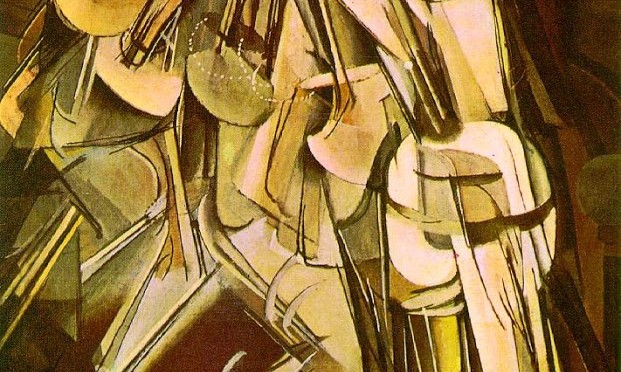
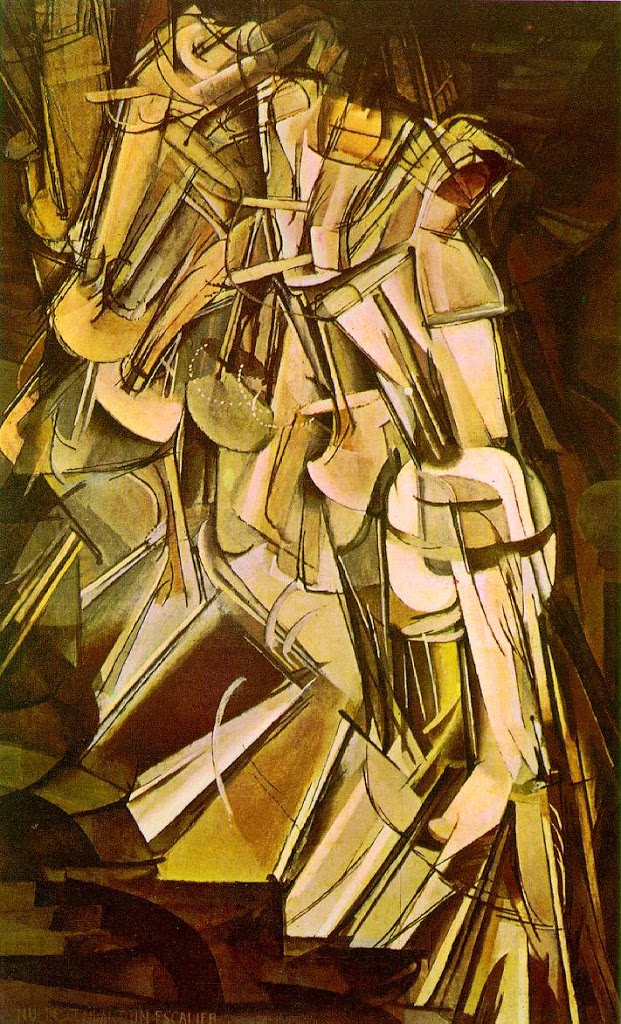
The monster within the Armory’s ‘Chamber of Horrors’: Marcel Duchamp’s ‘Nude Descending A Staircase No. 2


PODCAST The Armory Show of 1913 was the mainstream debut of modernist art — both European and American — to New York City audiences. Galleries had previously devoted themselves to the great European masters, antiquity and American landscapes as a way to influence the taste of a growing city. But even though vanguards like Alfred Stieglitz debuted artists like Pablo Picasso and Paul Cezanne into his Fifth Avenue gallery, those names were still barely known to the average New Yorker.
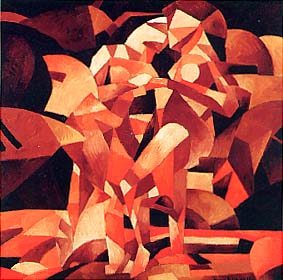
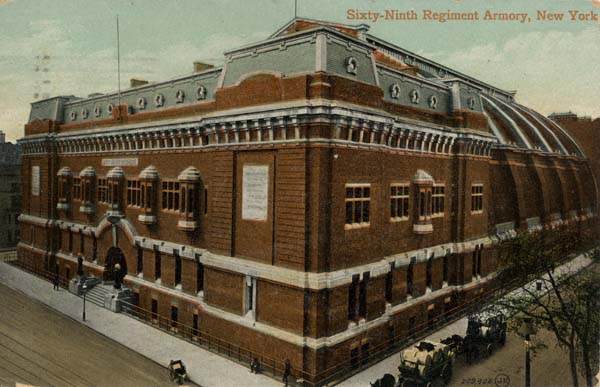
 The Armory Show, located at the 69th Regiment Armory on Lexington Avenue, changed all that, but not without controversy. When the exhibition debuted on February 17, 1913, writers and art critics exploded in shock and outrage. Even a few of the artists were incensed, as people raced by some important American works to get to the scandalous European works in the back.

This is the story of an important moment in American art history, but also a moment in New York City pop culture, an event that shook society and challenged its beliefs about taste and beauty — not a small thing in the waning years of the Gilded Age.

At right: Francis Picabia’s Dances at the Spring

But you don’t need to be fluent in art history to enjoy the wackiness of the Armory Show! This is a tale of one of the biggest and most written-about exhibitions in New York history, a story P.T. Barnum would have found satisfaction in.

STARRING: Pretty much a who’s who of your local modern art gallery, with special focus on Marcel Duchamp, Edward Hopper, Robert Henri and Henri Matisse.

To get this week’s episode, simply download it for FREE from iTunes or other podcasting services, subscribe to our RSS feed or get it straight from our satellite site.

You can also listen to the show on Stitcher streaming radio and Player FM from your mobile devices.

Or listen to straight from here:
The Bowery Boys: The Armory Show of 1913

NOTE: I manage to get all the difficult pronunciations as close to correct as my voice is going to get, but then keep saying HENRY Matisse. (It’s really pronounced EN-RI.) You’d think with all those Starry Night posters in my youth, I would have caught this….
______________________________________________________


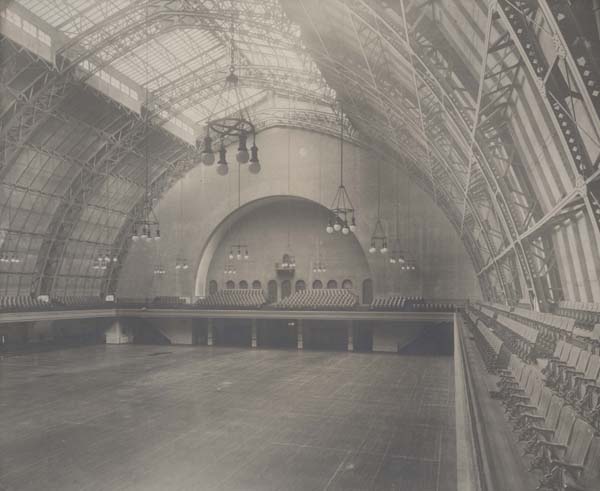
The interior of the 69th Regiment Armory, showing the vastness of its drill hall. The room would play host to marathons, basketball games, concerts and fashion shows, but none were as famous as perhaps the event that makes the strangest fit into a military building — a modern art show. (Courtesy NY State Military Museum)


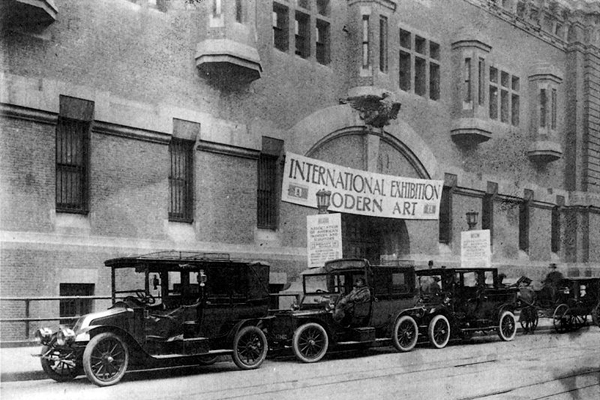
The limousines lined up in front of the Armory Show, certainly carrying away more than a few bewildered (and bemused) visitors. (Pic courtesy Museyon Guides)


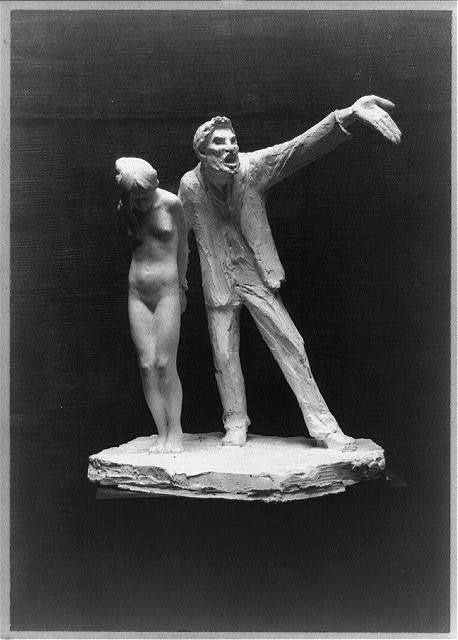
The White Slave, by Abastenia St. Leger Eberle, flummoxing crowds in the very first room. (LOC, from photos taken at the show)

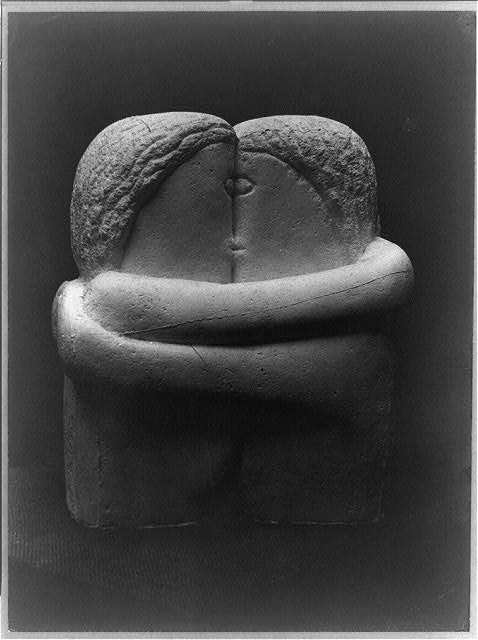
The Kiss by Constantin Brancusi, a primitive insult to many. (LOC, from photos taken at the show)

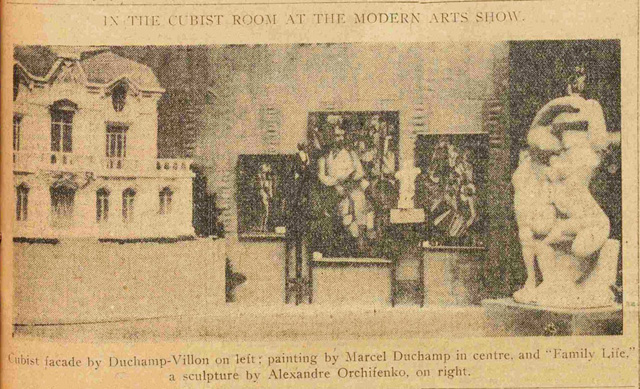
Inside the glorious ‘Gallery I’ with its collection of Cubist works. Duchamp’s eyeopener can be seen in this image. (Courtesy Smithsonian Archive of American Art blog)

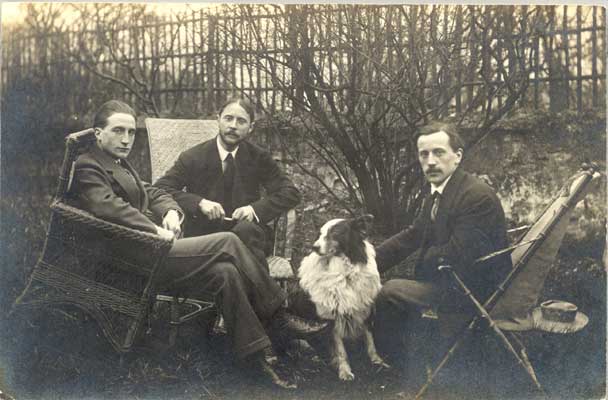
This photo of the Duchamp Brothers was run alongside their works in the so-called ‘chamber of horrors’ Gallery I.  For whatever reason — intrigue, outrage, attraction — people became fascinated by the siblings.   From left to right: Marcel Duchamp, Jacque Villon and Raymond Duchamp-Villon.


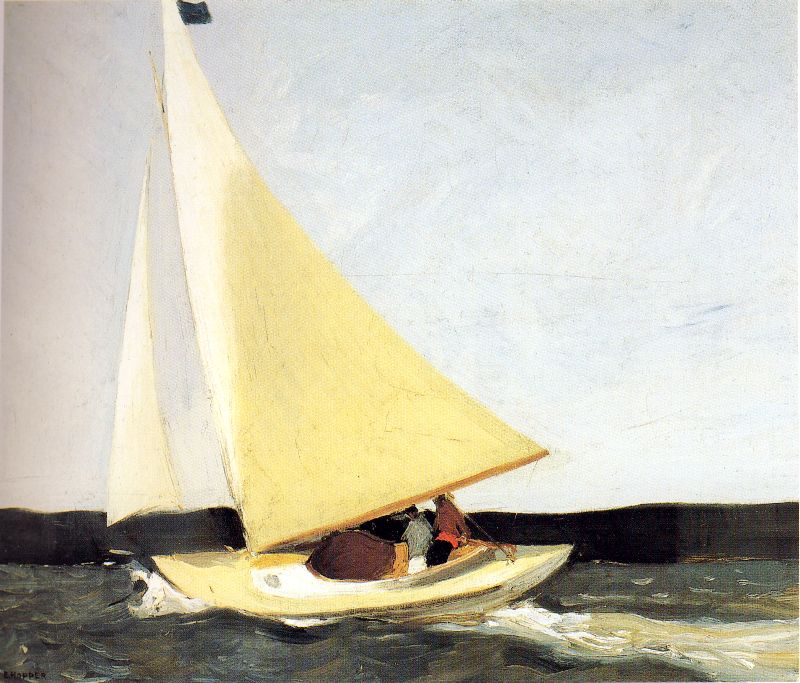
Edward Hopper’s painting of a sailboat was one of a few American paintings sold during the exhibit. It was mostly the European entries that got the attention of art collectors.

MORE INFORMATION
For more in-depth information on the Armory Show, your first stop must be the University of Virginia’s invaluable website on the event, featuring a walkthrough of ever gallery, and some exhaustive but interesting analysis.

There will be a great many shows in museums and gallery throughout the United States and internationally this year, being the 100th anniversary. I will list a few here as I find them. However if you know of any that I haven’t listed, please put them in the notes below:

— The New York Historical Society will host an exhibit on the Armory Show starting in October.
“The 2013 exhibition revisits the Armory Show from an art-historical point of view, shedding new light on the artists represented and how New Yorkers responded. It will also place this now-legendary event within the context of its historical moment in the United States and the milieu of New York City in ca. 1911–1913. To that end, music, literature and early film will be considered, as well as the political and economic climate.”

The Abrons Art Center, part of the Henry Street Settlement, in Manhattan’s Lower East Side, has an intriguing take on the Armory Show debuting on February 17, 2013, the exact anniversary of the original show. Called ‘DECENTER: An Exhibit on the Centenary of the 1913 Armory Show‘, the show will explore the question: “What is the legacy of Cubism in the hundred years since the Armory Show’s radical display of modern European and American art, and especially, how has this become relevant again in our digital age? The show will exhibit a core group of artworks in the gallery, and also feature a corresponding internet component of digital works in an online gallery. ”

The Montclair Art Museum in Montclair, NJ, is also opening its exhibit “The New Spirit: American Art in the Armory Show, 1913” on the exact date of the original — February 17. “The Montclair Art Museum collaborated with the Smithsonian’s Archives of American Art on a gallery that will be devoted to rare and unique primary documents pertaining to the Armory Show. These include personal letters, floor plans, sales records, admission tickets, catalogues, buttons, and invitations, as well as reproductions of the original installation.”

The Art Institute in Chicago will be celebrating the show in March with a lecture focusing on some of Chicago’s private collectors and will undoubted have more information on Chicago’s reception of the exhibition. More information here.

— And of course there’s an annual exhibition called The Armory Show which traces its roots back to the original show. Naturally they’ll be having a centennial celebration as well, from March 7-10, 2013, located at Piers 92 & 94 in Manhattan. More info here.

Categories
Museums

The Metropolitan Museum of Art, when it was smaller

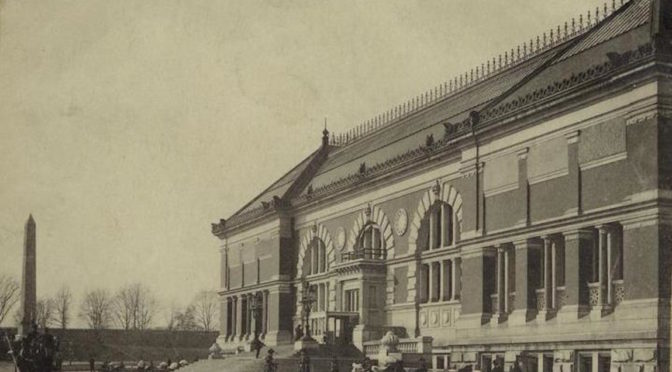
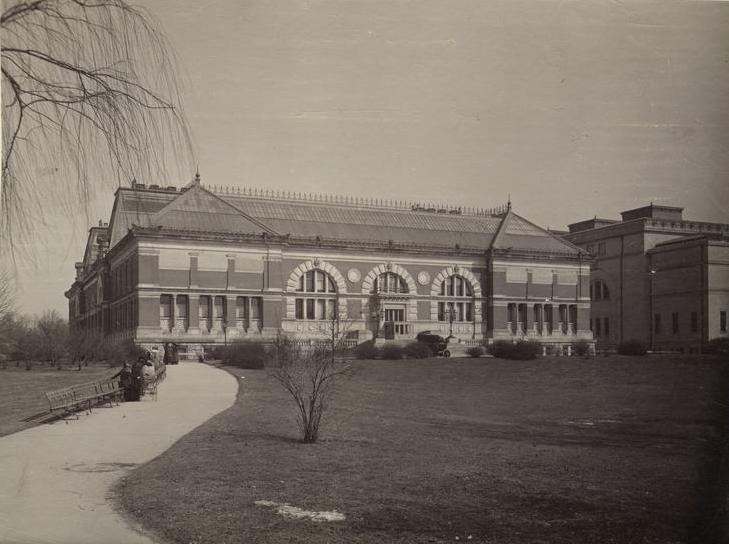
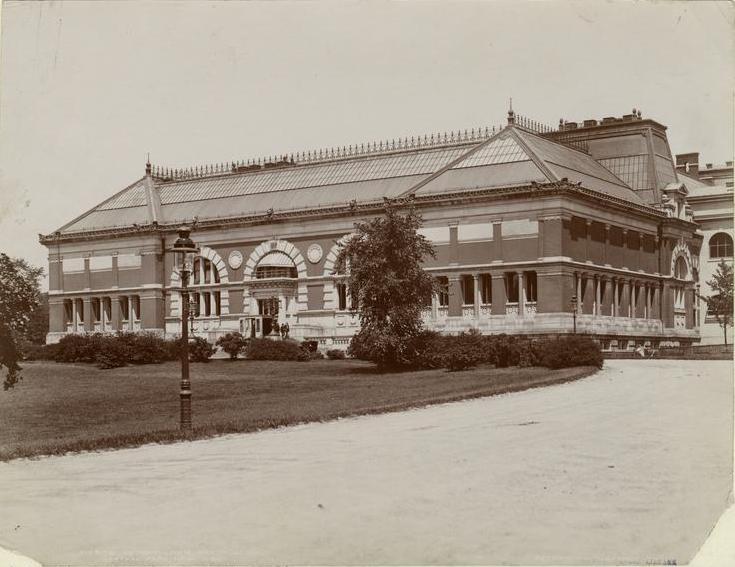
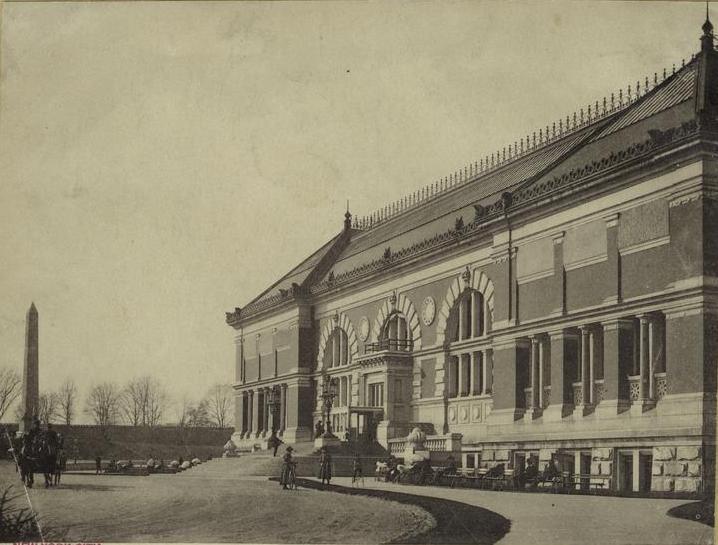
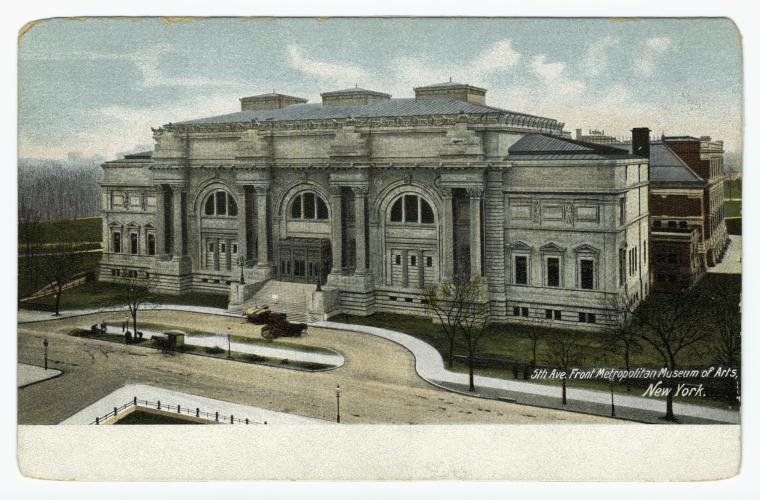
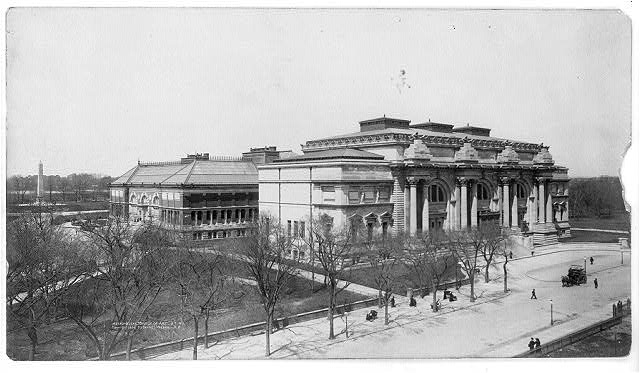
I’m working on a very art-themed podcast which should be ready for release this Friday.  The Metropolitan Museum of Art will be a supporting player in this week’s show, so please enjoy these early photos of the original building, opened in 1880 and designed by Calvert Vaux (to better accentuate his park) and Jacob Wray Mould, of Belvedere Castle fame.

The building was considered out-of-fashion almost as soon as it was finished, and within a couple decades Richard Morris Hunt had created the museum’s more expansive Beaux-Arts facade and wings. What you see here is the old building, next to the new facade, before it was fully consumed by additions.

The postcard and the photo below it gives you a good idea of where the new additions sat in relation to the old building. And this is before the wings were added.

The top four images are courtesy New York Public Library. The last is courtesy Library of Congress.

Theodore Roosevelt and the Case of the Master Mind! Is it the Black Hand or something even stranger?

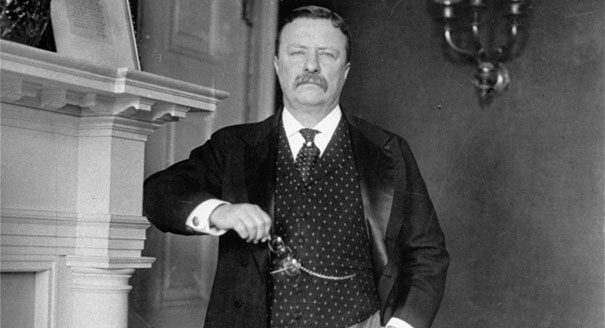
Theodore Roosevelt in 1908, in a rare shot with his pince-nez lowered.

Checking the mailbox was a frightening experience for some New Yorkers almost a century ago.

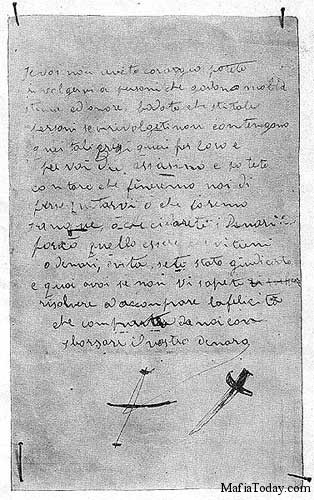
Some found extortion notes — threatening letters, demanding large sums of money or else — courtesy Italian gangsters collectively referred to in the press as The Black Hand.  Most of the targeted addresses belonged to newly arrived wealthy Italian immigrants, often celebrities or successful business owners.  Famed tenor Enrico Caruso was even a victim of the Black Hand’s extortion in 1920.  “I laugh, ho ho, to show me myself that I fear not,” the singer claimed, although he ended up paying one extortion threat before calling the police after he received a follow-up.

At right: A typical extortion letter attributed to the Black Hand (Courtesy Mafia Today)

The Black Hand was already a frightening and well-publicized threat by 1913, although the number of incidents were probably less than the press would have its readers believe.

It was under this apprehension, on Valentine’s Day 1913, that a Mrs. Douglas Robinson arrived at her husband’s real estate office on the Upper East Side to open his mail.

Inside one envelope was a single ‘blood-red’ card, which very simply stated:

“This is the red card to remind you that I have not forgotten. When you receive a black card, you will know that the end is at hand. The Master Mind”

What Mrs. Robinson did not know is that this threatening note had been sent to thousands of New Yorkers that very day. And that it had been preceded just a few days before with another ominous card:

“This is to remind you of an incident in your past, and of my enmity. When you receive a red card it will mean I am drawing near. The Master Mind.”

According to the New York Tribune, 40,000 New Yorkers had received such cards in the mail that month. Had Mrs. Robinson known this fact, she might have found safety in numbers and cautiously went about her day.  Instead, in a panic, she reached for the telephone and called New York’s police commissioner.

Except not the current commissioner, the ineffectual reformist Rhinelander Waldo.  Instead, she called up New York’s most famous police commissioner (from 1895-97), a man who still lived in New York and, oh yes, had been the President of the United States for a few years — Theodore Roosevelt.

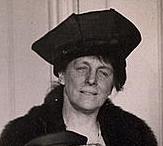
The Colonel was still licking his wounds from an unsuccessful bid the previous year at reacquiring the presidency, as the head of the newly formed Bull Moose Party.  You may wonder how the wife of a real estate broker would have the ready ear of an ex-President, but it is here that I reveal that Mrs. Douglas Robinson (which is how she’s presented in press accounts of this incident) is in fact Corinne Roosevelt Robinson, Theodore’s younger sister. (Pictured at left in 1920, picture courtesy LOC)

“Leave it to me,” he assured his sister and promptly called up detectives Hyams and Hughes to investigate the matter.

Going only upon Roosevelt’s description, the two detectives began scouring the streets for clues.  They were certainly quite proud to be working on a case personally passed to them by Roosevelt — probably the most famous New Yorker in America.  Their only liability was that they were working only off of Roosevelt’s information — and his sister had overlooked one rather big piece of information.

While wandering through midtown Manhattan, the detectives struck up a conversation with Edward Gireaux, a booking agent of John Cort, one of America’s leading theatrical impresarios.  A Seattle entrepreneur enriched by the Klondike gold rich, Cort, unlike his competitors Klaw & Erlanger and the Shuberts, specialized in promoting a national circuit of legitimate theater.  No musicals for the Cort Circuit! (The Cort Theatre, on West 48th Street, is still hammering out dramas to this day.)

The detectives were only too eager to tell Mr. Gireaux of their mysterious case, delivered to them by Roosevelt directly.  It was only when they informed the agent of the details of the crime that Gireaux must have smiled to himself.

He produced a stack of the very same ‘blood-red’ cards from his pocket. Perhaps he was passing them out to passers-by. The detectives now saw the entire printed content of the card:

“This is the red card to remind you that I have not forgotten. When you receive a black card, you will know that the end is at hand. 

I will see you at the Harris Theatre.  — The Master Mind”

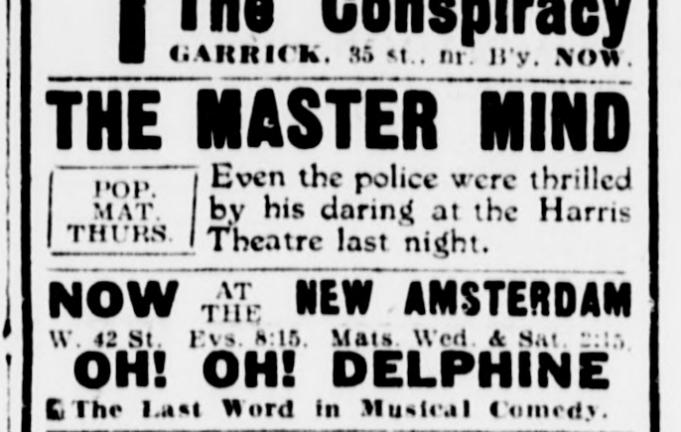
‘The Master Mind’, starring Edmund Breese, was a ragged melodrama about “a dominant personality in a band of criminals,” premiering that week at the Harris Theatre at 254 W. 42nd Street.  The cards had been nothing more than a slightly inappropriate bit of viral marketing.

Below: Newspaper advertisement for the Master Mind. ‘Even the police were thrilled!’ 

And it worked!  The Master Mind played for several months despite some tepid reviews (“headachy to follow“) and was later turned into a film starring Lionel Barrymore.  You can read a contemporary novelization of the play here, featuring such delectable bon mots as “You have made your own beds! Now you shall lie in them. Understand that, please! I have said it — I, the Master Mind!”

The star of the play Breese would himself go on to the silent pictures and co-starred in the Oscar-winning All Quiet On The Western Front in 1930.

As for Theodore Roosevelt, he would publish his autobiography in 1913 and by year’s end would embark on a lengthy journey to South America.  Corinne Roosevelt Robinson would later dabble in politics herself, backing Warren G. Harding in 1920 and even recording this radio message in support.

Four New York City landmarks turn 100 years old this year

1) Grand Central Terminal
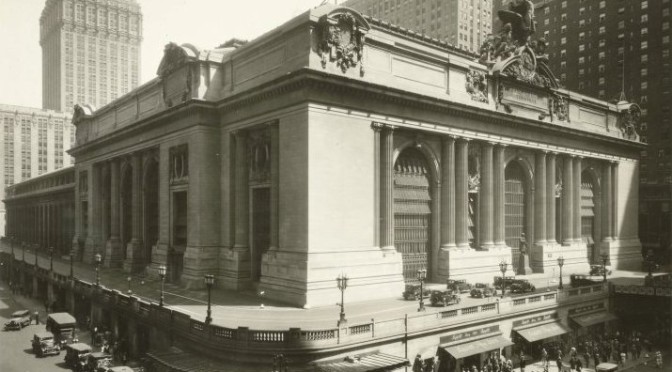
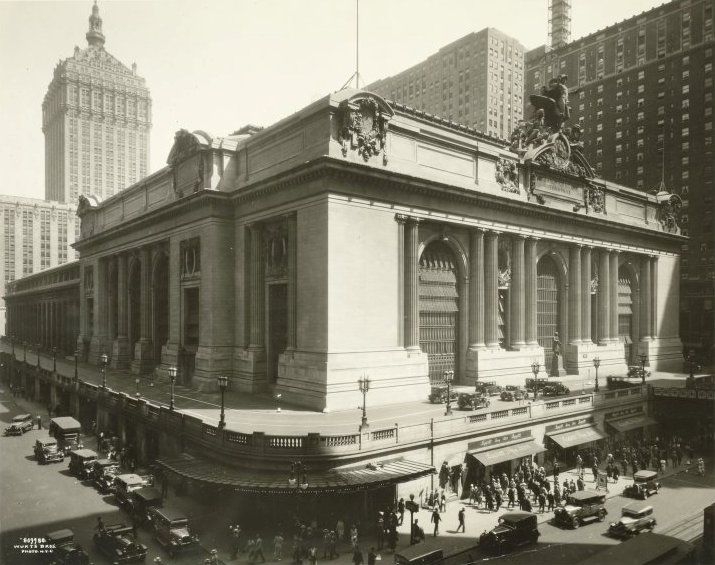
The Grand Central Depot was first built at 42nd Street in 1871 as a hub for Cornelius Vanderbilt’s railroad operations. It was greatly expanded at the turn of the century. and by this time, the tracks headed north were electrified and buried, creating Park Avenue.

The present terminal was conceived in 1903 by two teams of architects and took a decade to construct. Meanwhile, the tracks heading north, now sunken and electrified, were covered with a new street and its air rights sold to become Park Avenue.

The ne plus ultra of Beaux-Arts New York opened in February 1, 1913, and its first train, the Boston Express, left the station two days later.

For more information, listen to our podcast on Grand Central Terminal (Episode #45)

2) Woolworth Building
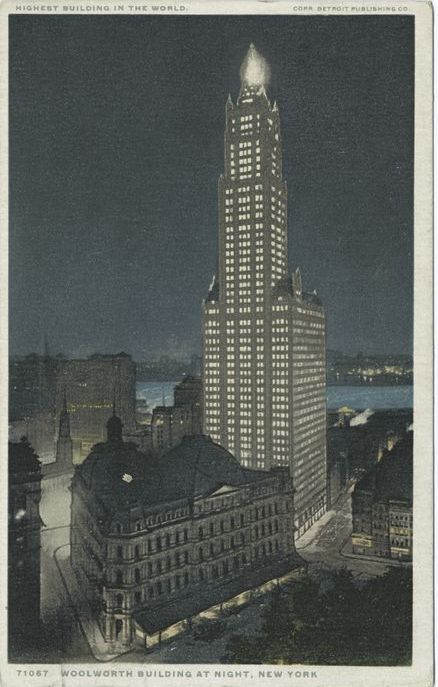
The Woolworth Building and the current One World Trade Center are separated by a couple blocks — and one century. Just as New Yorkers marveled last year at what will be the city’s tallest building as it began to tower over downtown Manhattan, so too did the New Yorkers of 1912, at the ornate Cass Gilbert structure rising near City Hall. In January of 1912, newspapers were already proclaiming Woolworth the crown of “:the world’s greatest construction era.”

One World Trade Center will open later in 2013. The Woolworth opened on April 24, 1913 as New York’s tallest building until 1930. As you can tell from the 1910s postcard above, it rose next to the garish old New York Post Office at the foot of City Hall Park.

For more information, listen to our podcast on the Woolworth Building (Episode #76)

3) The Apollo Theatre
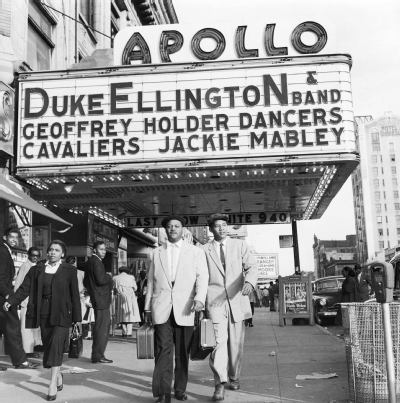
The theater that eventually became one of America’s top spotlight for new entertainers was constructed in 1913 — its architect, George Keister, designed many great theaters of the day, including the Belasco — and quickly became a home for Harlem burlesque acts under the name Hurtig and Seamon’s New Burlesque Theater.  While far from Times Square’s Broadway district, its stage has actually outlasted most of the theaters there.

It reopened in 1933 as the 125th Street Apollo Theater. It was around this time that the doors were opened to African-American entertainers.  Its ‘amateur nights’ would soon become world-famous for discovering major talent.

For more information, listen to our podcast on the Apollo Theatre (Episode #15)

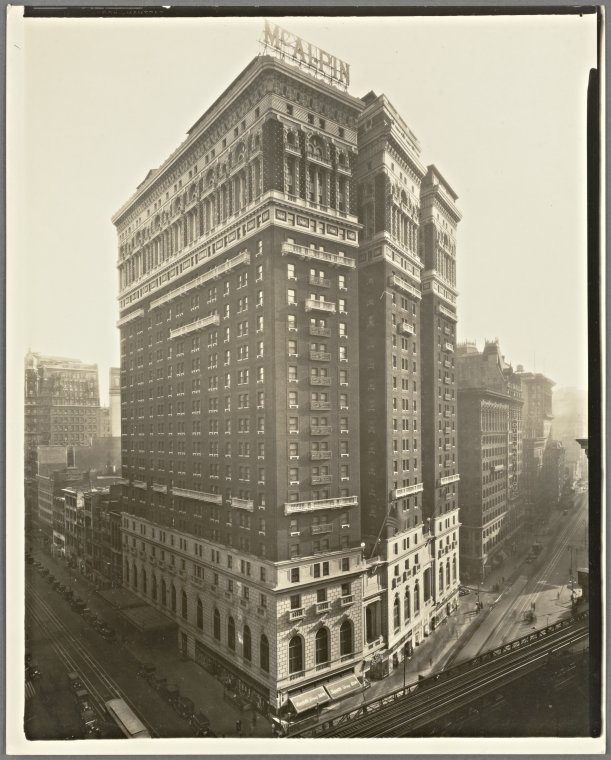
4) Hotel McAlpin
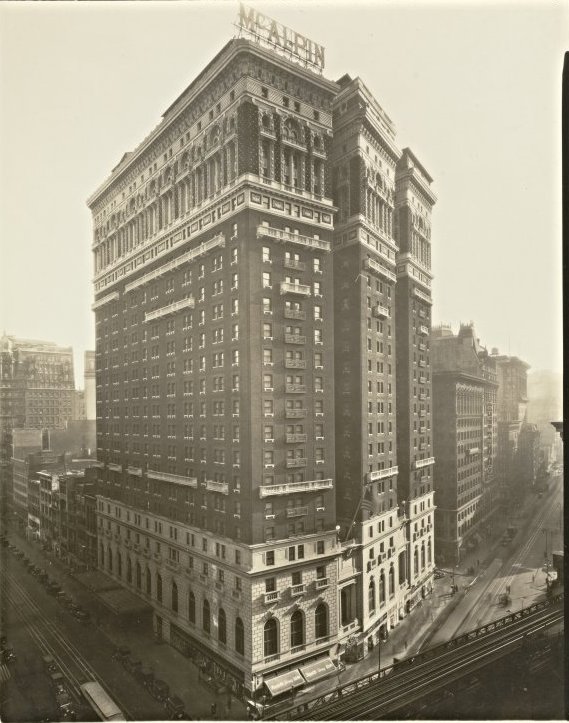
New Yorkers got a look at Herald Square’s Hotel McAlpin — the tallest hotel in the world at the time — in a lavish open house on December 29, 1912.  Thousands marveled at its almost absurd size, suitable for 2,500 guests and 1,500 employees.  It was ready to welcome guests with the new year.

“The McAlpin has many features peculiar to it among hotels,” proclaimed the New York Times. “For one thing there is a woman’s floor to which no men are permitted and where even the clerks are women …The twenty-second floor is devoted exclusively to men.” And the 16th floor was known as the ‘Sleepy Sixteenth’, the silent floor.

Today the Hotel McAlpin is an apartment complex, the Herald Towers.

For more information, listen to our last podcast on the history of Herald Square (Episode #146)

Note: I don’t think the McAlpin is officially landmarked, only one in the historical sense.

Courtesy 1) Wurts Brother/NYPL; 2) NYPL; 3) Long Wharf Theatre; 4) NYPL

An historic New Years Day editorial from 150 years ago, as the Emancipation Proclamation takes effect


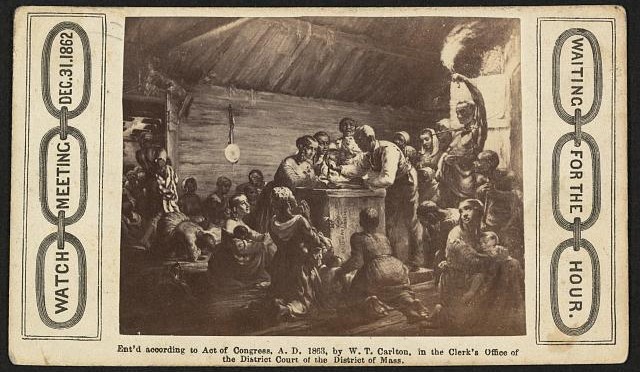
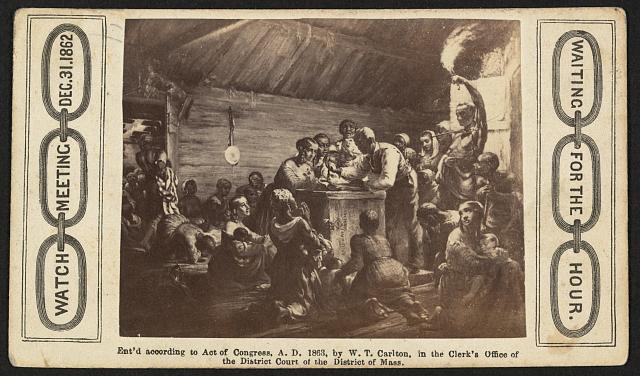
In black churches throughout America 150 years ago, gatherers celebrated ‘Watch Night’ on December 21, 1862, counting down to the moment when Abraham Lincoln’s Emancipation Proclamation would take effect. The carte-de-visite above celebrates a watch night that took place in Boston. [LOC]

The following text is taken from the New York Tribune on January 1, 1863. (You can read the entire issue here.) With the North in the terrible throes of war, most of the issue is filled with battle reports.  New York City celebrations of the new year were most likely muted, with possible exception of a few saloons celebrating some odd-timed primary elections for various Tammany Hall job functions.

But for a great many, midnight brought in more than just a new year.  That day was significant for another reason.  President Abraham Lincoln’s executive order, the Emancipation Proclamation, freeing the slaves in Confederate territories, took effect on January 1.

I’m reprinting the Daily Tribune’s notice in full, both the significant and trivial portions, to give you a full sense of how the news was received, in this case, by the pro-Lincoln paper owned by Horace Greeley (over three decades before Mr. Greeley was immortalized in statuary in Herald Square). It’s a celebration of a true historical event and the pursuit of freedom, with a snide insult lobbed at ‘the low-born and vulgar [who] fear the competition of the negroes’.

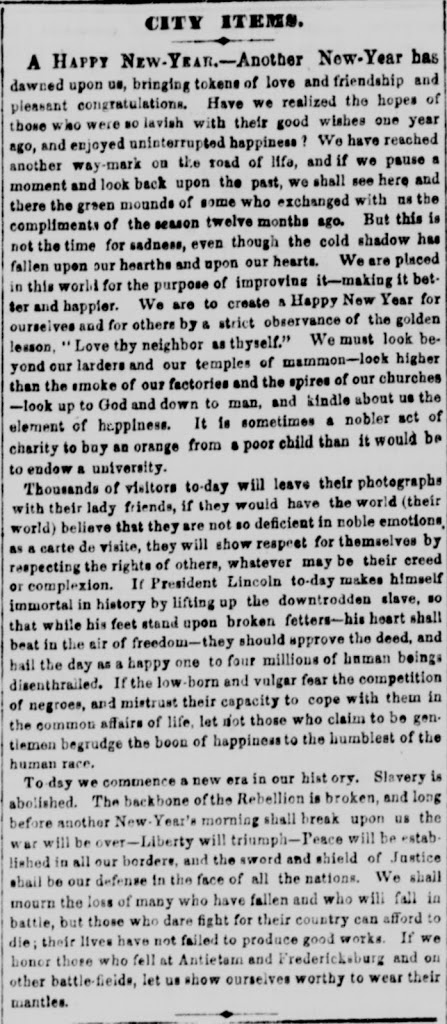
Here’s the original article, with excerpts from the text below it.

A Happy New Year Another New Year has dawned upon us, bringing tokens of love and friendship and pleasant congratulations. Have we realized the hopes of those who were so lavish with their good wishes one year ago, and enjoyed uninterrupted happiness? 

We have reached another way-mark on the road of life, and if we pause a moment and look back upon the past, we shall see here and there the green mounds of some who exchanged with us the compliments of the season twelve months ago. But this is not the time for sadness, even though the cold shadow has fallen upon our healths and upon our hearts.

….

Thousands of visitors today will leave their photographs with their lady friends, if they would have the world (their world) believe that they are not so deficient in noble emotions as a carte de visite*, they will show respect for themselves by respecting the rights of others whatever may be their creed or complexion. 

If President Lincoln today makes himself immortal in history by lifting up the downtrodden slave, so that while his feet stand upon broken fetters — his heart shall beat in the air of freedom — they should approve the deed, and hail the day as a happy one to four millions of human beings disenthralled**.  If the low-born and vulgar fear the competition of negroes and mistrust their capacity to cope with them in the common affairs of life, let not those who claim to be gentlemen begrudge the boon of happiness to the humblest of the human race.***

Today we commence a new era in our history. Slavery is abolished. The backbone of the Rebellion is broken, and long before another New Year’s morning shall break up us the war will be over — Liberty will triumph — Peace will be established in all our borders, and the sword and shield of Justice shall be our defense in the face of all the nations.**** 

We shall mourn the loss of many who have fallen and who will fall in battle, but those who dare fight for their country can afford to die; their lives have not failed to produce good works.   If we honor those who fell at Antietam and Fredericksburg and on other battlefields, let us show ourselves worthy to wear their mantles.

*Small likenesses  — essentially trading cards of yourself — called carte de visite were especially trendy during the Civil War, both as a novelty and as a way of remembering those at war.

**The Proclamation could only be enforced in rebel territory under Northern control, so not all of the four million enslaved men felt its benefits on this date.

***Referencing fears of new immigrants that freed blacks would become a competitive labor force. These fears would, of course, culminate later that summer in the Civil War Draft Riots.

****Of course, we know now that the war would drag on for over two more years.


The Bowery Boys Year In Review: Our 2012 podcasts

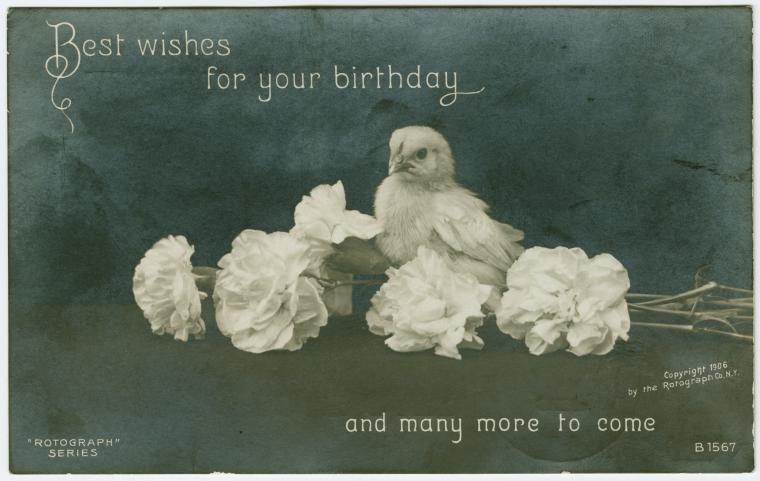
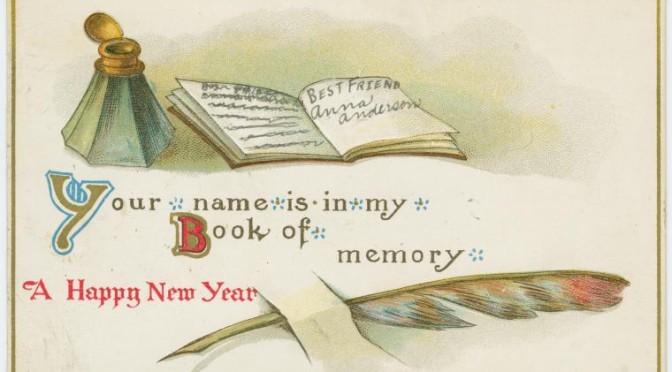
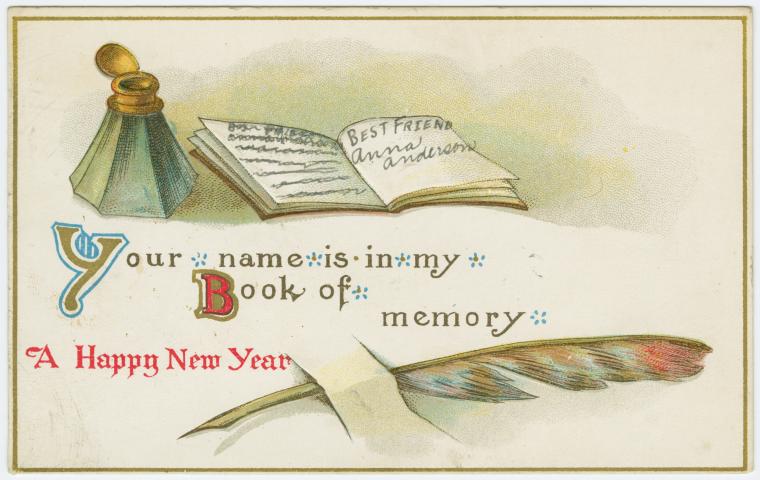
Above: A curious New Years postcard from 1913

Here’s the list of our fifteen podcasts released in 2012, running the gamut from New York City’s most popular landmarks to a look at some of the infrastructure that keeps the city running.

History is but a story with an unwritten ending. Two of our subjects this year — the neighborhoods of Rockaway Beach and Red Hook — experienced course-altering devastation that continues to this day due to Hurricane Sandy. Those neighborhoods are rebuilding but some areas will never be the same again.

In this year’s shows, we spent time with tortured genius like Nikola Tesla and Samuel Morse, visited west side abattoirs, midtown’s Trappist monastery and a few Bushwick breweries, imagined Edwin Booth‘s final performance, and one of Patti Smith‘s first, in a basement a few feet away from the body of Peter Stuyvesant.

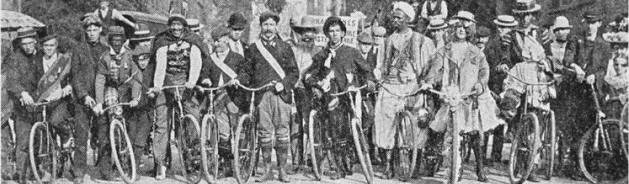
We talked about New Yorkers who changed the course of rivers, sent radio signals for the very first time, broke social conventions to ride on two wheels and debunked magic at Carnegie Hall. While Rockaway Beach was experiencing the biggest hotel flop in history, men gathered to ogle the can-can dancers at the Haymarket in Herald Square.  And in midtown Manhattan, an icon takes its sweet time rising to become New York City’s most famous church.

We also introduced you to a couple walking tours of New York City and hopefully there will be a few more completed in 2013.

The two most popular shows of the year, based on downloads, were St. Patrick’s Cathedral and New York Beer History. My personal favorite? Probably NYC and the World of Radio. It’s got music in it!

We both thank you all for listening in this year. Tom and I really could not do this without your love of New York City history, your enthusiasm and your feedback. And I’m telling you now — 2013 will be our biggest year yet, with a lot of new projects and of course many more new podcasts.

Happy New Year! Here’s the year in review. You can download all of these from iTunes, all free (except the Washington Square Park walking tour). You can also get them directly from our Libsyn page by clicking the links below:


#133 Red Hook: Brooklyn On The Waterfront
Red Hook, Brooklyn: A rich seafaring history, organized crime and the isolation of a beleaguered neighborhood

#134 St. Patrick’s Cathedral
St. Patrick’s Cathedral: Stately grace in bustling Midtown, thanks to a fiery archbishop and a venerable hairdresser

#135 The High Line
The High Line: The wild, wild West Side, cowboys included, inspires an elevated railroad and a remarkable park

#136 The High Line Walking Tour
The Bowery Boys High Line audio walking tour, featuring tales of the Titanic, the Manhattan Project and 1,000 Stevies

#137 NYC and the World of Radio
New York and the World of Radio: Live and on the air, inventors and stars at the dawning of the AM airwaves

#138 St. Mark’s-in-the-Bowery
The secrets of St. Mark’s Church in-the-Bowery, and uncovering the East Village footprint of Peter Stuyvesant

#139 Brooklyn Academy of Music
The Brooklyn Academy of Music: Enduring floods, fires and snobbery to become New York’s oldest home for the arts

#140 Rockaway Beach
The Rockaways and Rockaway Beach: The strange fortunes of New York’s former resort oasis and amusement getaway

#141 New York Beer History
On The House: A history of New York City beer brewing

Washington Square Park Walking Tour
The Bowery Boys Washington Square Park Audio Tour: a stroll through New York history, now on sale everywhere!

#142 New York University (NYU)
New York University: A noble idea takes root in the Village, a school for the metropolis, but not without growing pains

#143 Water for New York: The Croton Aqueduct
The Croton Aqueduct: How New York got its drinking water

#144 Mysteries and Magicians of New York
Mysteries and Magicians of New York: Whimsical spirits, scary legends, strange magic and the original ghost busters

#145 Bicycle Mania: From Velocipede to Ten Speed
Bicycle Mania! The story of New York on two wheels, from velocipedes to ten-speeds — with women’s liberation in tow

#146 Herald Square
A whirlwind tour of Herald Square: More than just Macy’s, the intersection of publishing, theater and debauchery

In addition, I also released a short show during the week of Hurricane Sandy, recounting the events as they had occurred that week. It was released just a few hours before midtown Manhattan returned to power, so it makes an interesting time capsule of the events.

The Bowery Boys Year In Review: Our 2012 podcasts

Above: A curious New Years postcard from 1913

Here’s the list of our fifteen podcasts released in 2012, running the gamut from New York City’s most popular landmarks to a look at some of the infrastructure that keeps the city running.

History is but a story with an unwritten ending. Two of our subjects this year — the neighborhoods of Rockaway Beach and Red Hook — experienced course-altering devastation that continues to this day due to Hurricane Sandy. Those neighborhoods are rebuilding but some areas will never be the same again.

In this year’s shows, we spent time with tortured genius like Nikola Tesla and Samuel Morse, visited west side abattoirs, midtown’s Trappist monastery and a few Bushwick breweries, imagined Edwin Booth‘s final performance, and one of Patti Smith‘s first, in a basement a few feet away from the body of Peter Stuyvesant.

We talked about New Yorkers who changed the course of rivers, sent radio signals for the very first time, broke social conventions to ride on two wheels and debunked magic at Carnegie Hall. While Rockaway Beach was experiencing the biggest hotel flop in history, men gathered to ogle the can-can dancers at the Haymarket in Herald Square.  And in midtown Manhattan, an icon takes its sweet time rising to become New York City’s most famous church.

We also introduced you to a couple walking tours of New York City and hopefully there will be a few more completed in 2013.

The two most popular shows of the year, based on downloads, were St. Patrick’s Cathedral and New York Beer History. My personal favorite? Probably NYC and the World of Radio. It’s got music in it!

We both thank you all for listening in this year. Tom and I really could not do this without your love of New York City history, your enthusiasm and your feedback. And I’m telling you now — 2013 will be our biggest year yet, with a lot of new projects and of course many more new podcasts.

Happy New Year! Here’s the year in review. You can download all of these from iTunes, all free (except the Washington Square Park walking tour). You can also get them directly from our Libsyn page by clicking the links below:


#133 Red Hook: Brooklyn On The Waterfront
Red Hook, Brooklyn: A rich seafaring history, organized crime and the isolation of a beleaguered neighborhood

#134 St. Patrick’s Cathedral
St. Patrick’s Cathedral: Stately grace in bustling Midtown, thanks to a fiery archbishop and a venerable hairdresser

#135 The High Line
The High Line: The wild, wild West Side, cowboys included, inspires an elevated railroad and a remarkable park

#136 The High Line Walking Tour
The Bowery Boys High Line audio walking tour, featuring tales of the Titanic, the Manhattan Project and 1,000 Stevies

#137 NYC and the World of Radio
New York and the World of Radio: Live and on the air, inventors and stars at the dawning of the AM airwaves

#138 St. Mark’s-in-the-Bowery
The secrets of St. Mark’s Church in-the-Bowery, and uncovering the East Village footprint of Peter Stuyvesant

#139 Brooklyn Academy of Music
The Brooklyn Academy of Music: Enduring floods, fires and snobbery to become New York’s oldest home for the arts

#140 Rockaway Beach
The Rockaways and Rockaway Beach: The strange fortunes of New York’s former resort oasis and amusement getaway

#141 New York Beer History
On The House: A history of New York City beer brewing

Washington Square Park Walking Tour
The Bowery Boys Washington Square Park Audio Tour: a stroll through New York history, now on sale everywhere!

#142 New York University (NYU)
New York University: A noble idea takes root in the Village, a school for the metropolis, but not without growing pains

#143 Water for New York: The Croton Aqueduct
The Croton Aqueduct: How New York got its drinking water

#144 Mysteries and Magicians of New York
Mysteries and Magicians of New York: Whimsical spirits, scary legends, strange magic and the original ghost busters

#145 Bicycle Mania: From Velocipede to Ten Speed
Bicycle Mania! The story of New York on two wheels, from velocipedes to ten-speeds — with women’s liberation in tow

#146 Herald Square
A whirlwind tour of Herald Square: More than just Macy’s, the intersection of publishing, theater and debauchery

In addition, I also released a short show during the week of Hurricane Sandy, recounting the events as they had occurred that week. It was released just a few hours before midtown Manhattan returned to power, so it makes an interesting time capsule of the events.

‘Twas the Night Before Christmas, 190 years ago, that an iconic poem was written in Chelsea

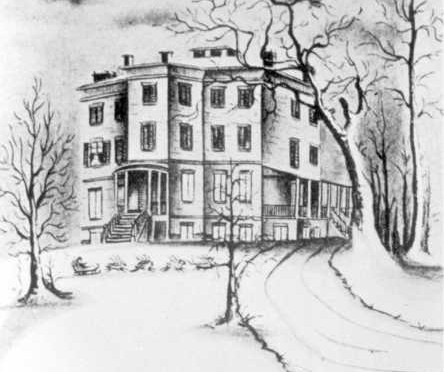
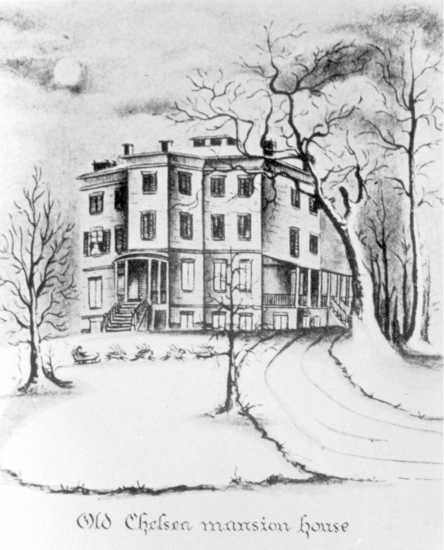
On Christmas Eve, one hundred and ninety years ago today, wealthy landowner and august Columbia professor Clement Clarke Moore completed a seasonal poem to read to his children. He penned the whimsical little tale — a throwaway, really, in comparison to his great and respected writings in Greek and biblical literature — from a desk at his comfortable, snow-covered mansion which the family called Chelsea.

The home sat atop an old hill (at around today’s modern addresses of 422-424 West 23rd Street) overlooking Moore’s estate which stretched south from here. His estate, of course, gives modern Chelsea its name. At right, the Chelsea estate on a cold winter’s night.
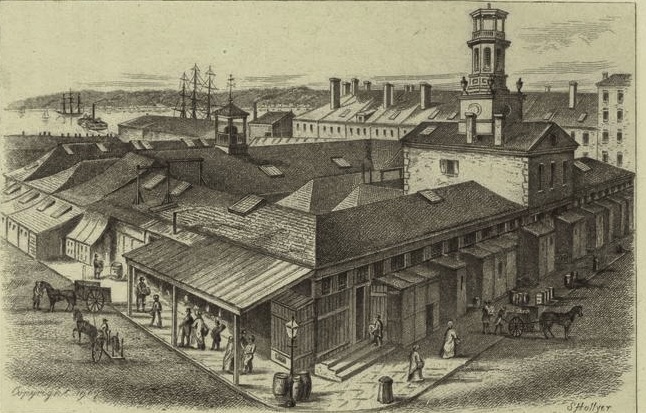
Moore was allegedly inspired that afternoon during an outing to Washington Market to purchase a Christmas turkey. The market (pictured below in 1829) would have another holiday claim to fame: it was the site of America’s first outdoor Christmas tree market.

The poem, “A Visit from St. Nicholas” and often referred to as “‘Twas The Night Before Christmas,” would eventually help define Santa Claus mythology. It’s perhaps the most important source in shaping the physical appearance and ritual behavior of the North Pole gift-giver and would provide inspiration to New York illustrators like Thomas Nast and, in the 20th century, the Coca-Cola advertising of Haddon Sunblom.  Moore is even credited with naming the eight reindeer.

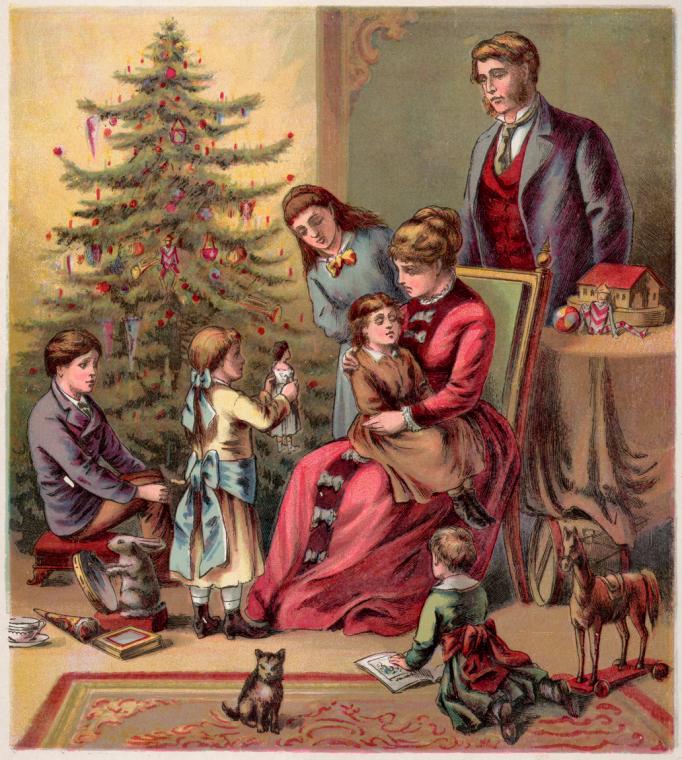
But the poem was only originally intended for Moore’s children. I’m not certain how many were around to hear it in 1822, but Moore and his wife Catherine Elizabeth Taylor would eventually have nine of them. One daughter, Mary Ogden, would later produce the first of dozens of illustrated versions of the poem.

At left: An illustration of Moore and his family from an edition published in 1896 (source)

The poem was published anonymously the following year, and Moore would only take credit — at his children’s insistence — in 1844.

Given Moore’s original hesitation, some scholars have suggested that another New Yorker, Henry Livingston Jr., may have penned it.  Until that is definitely proven, you are allowed to always think of the neighborhood of Chelsea — just two blocks west of the Chelsea Hotel — every time you hear it.

So jump in your ‘kerchief, open your shutters and throw up your sashes, and give this little holiday poem a ripe rendition this year. You can find the full text here. But to quote the final section:
He sprang to his sleigh, to his team gave a whistle,
And away they all flew like the down of a thistle.
But I heard him exclaim, ‘ere he drove out of sight,
“Happy Christmas to all, and to all a good-night!”

For more information on Moore and the Chelsea neighborhood, check out our podcast on the Chelsea Hotel.

Pictures courtesy NYPL

Eleven breathtaking views of the New York Herald Building, one of midtown Manhattan’s earliest tourist attractions

Click into the images within this post for a more closeup view!

When the extravagant James Gordon Bennett Jr. decided to move the offices of the New York Herald from grimy, old Park Row to the frenzy of uptown Manhattan, he wanted something spectacular and eye-catching.  As we mentioned in our newest podcast on the history of Herald Square, Bennett went the opposite direction of newspaper publisher Joseph Pulitzer, who remained on on Park Row and put his publication in the tallest building in the world (the New York World tower, completed in 1890).

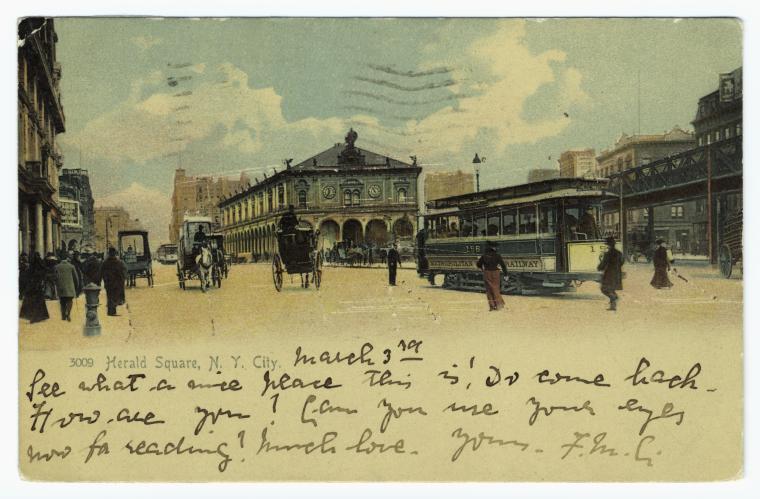
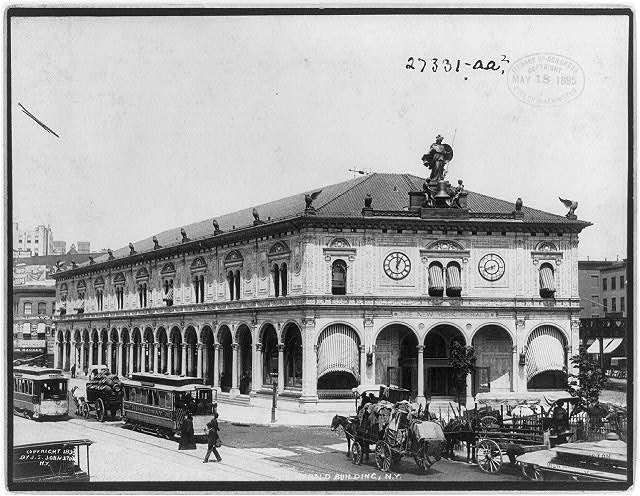
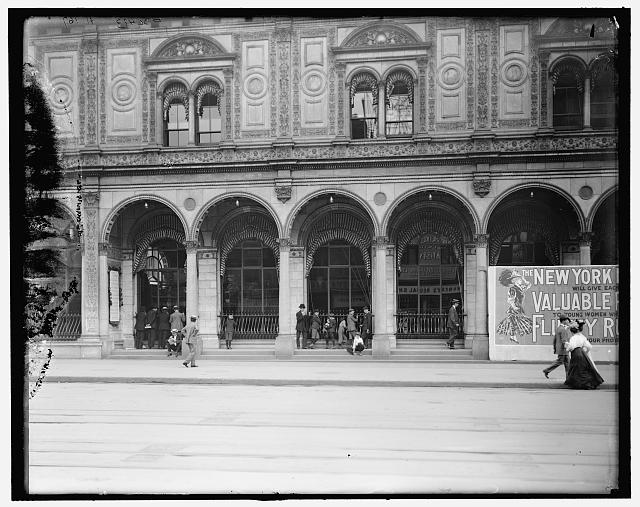
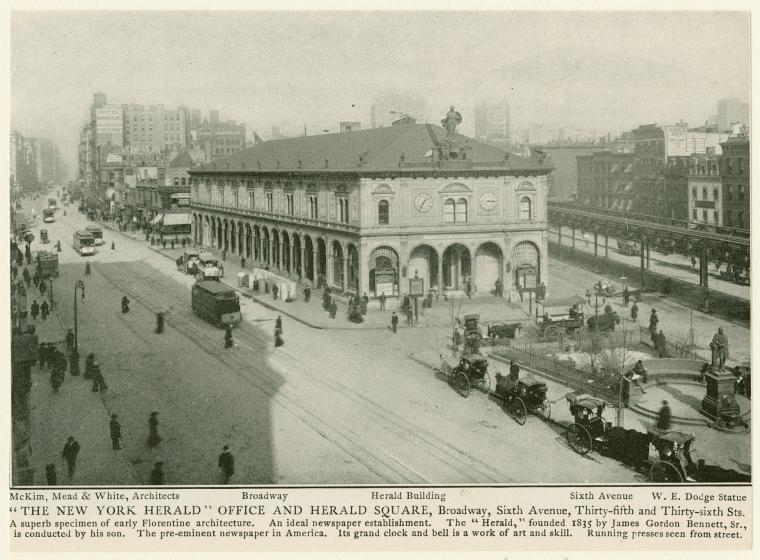
Bennett’s New York Herald Building, completed in 1894, sat at 35th Street between Sixth Avenue and Broadway, on the north side of the square his building would soon give its name. He wanted the structure to align with the theaters and hotels of the area; as designed by Stanford White, the New York Herald Building doesn’t tower over the neighborhood.

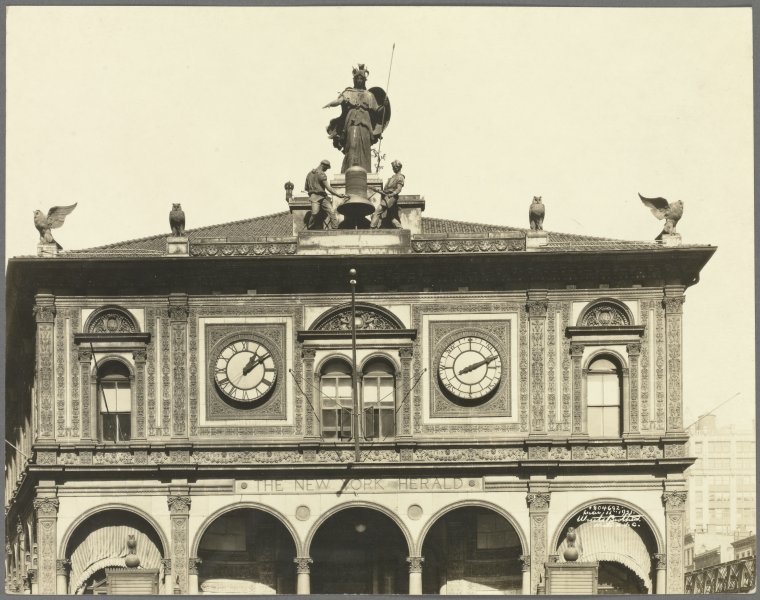
He wanted the newspaper to be essential to the rhythm and energy of this bustling intersection. It does so with its mysterious and fanciful ornamentation, its spooky owls, its ornate clock tower and its mechanical bell-ringers.

Below: the New York Herald Building, at 35th Street, between Sixth Avenue and Broadway, a frilly Italian-style structure at the nexus of a growing New York in the 1890s. [LOC]

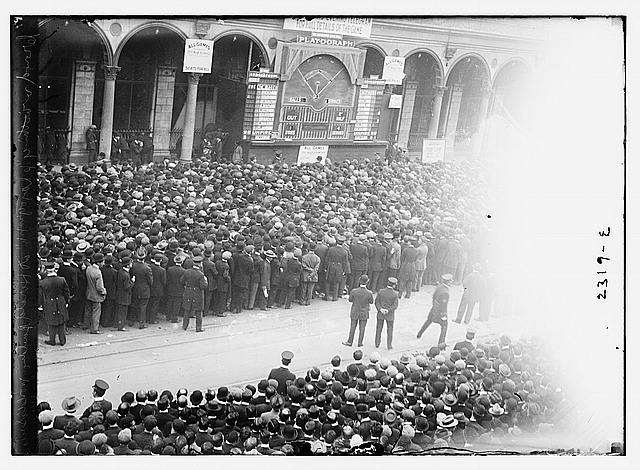
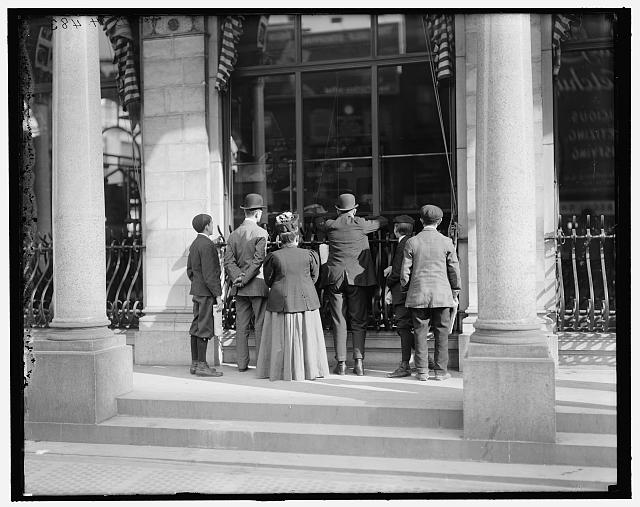
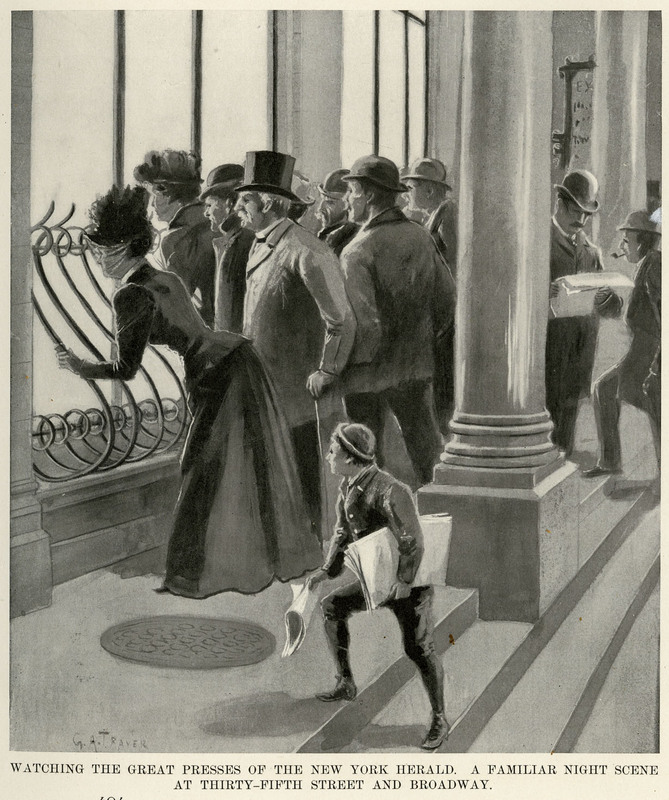
But the building became a component of the square with its open windows displaying the printing presses inside. Visitors would stand gawking as the presses furiously went about print the late-day editions. In the era before radio and television, the results of sporting events would be displayed on a billboard or “Play-o-Graph” that would attract thousands. It would be here that thousands of New Yorkers would gather to get the results of the World Series between the Red Sox and the Giants — occurring just uptown at the Polo Grounds!

The New York Herald Building became one of midtown Manhattan’s first big draws for regular New Yorkers and visitors to gather, get news, set their watches, dazzle at modern technology and ogle at the curious mix of high and low culture that sped through here. One decade later, Times Square would bring the same kind of excitement to another Broadway intersection.
Here are some additional views of the Herald Building, many romantic, most unbelievable, especially if you consider what sits there today:

Thousands of men gather to watch the results of the 1911 World Series — between the New York Giants and the Philadelphia Athletics — displayed on a “Play-o-Graph” at Herald Building. Sports results were telegraphed from inside the building, and a mini baseball diamond was regularly updated, mirroring the real time action. [LOC]

Spectators watch the Herald presses in action. {LOC}

From the Appleton publication The New Metropolis, 1899 (courtesy CUNY)

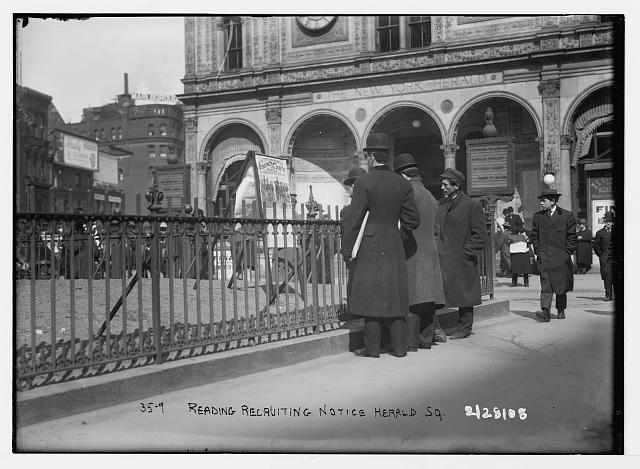
The square in front of the Herald Building would also be used for immediate announcement, often taken right from the telegraph. These men are reading a military recruitment advertisement. [LOC]

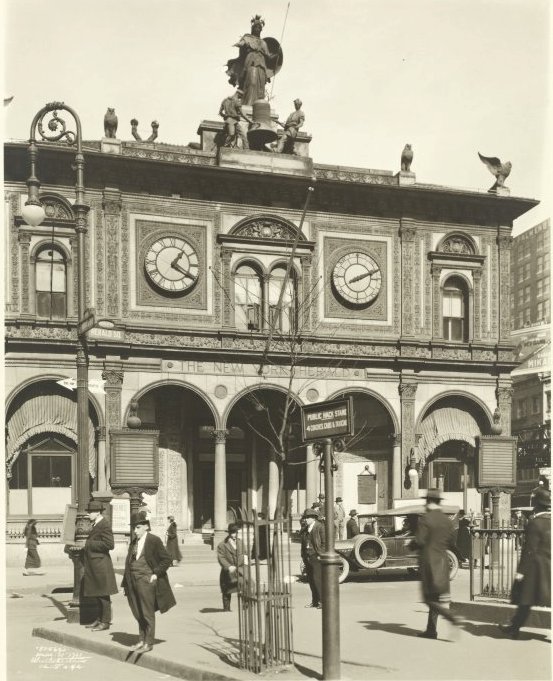
A closeup of the ornate clock, with the goddess Minerva, its two bell ringers Scruff and Guff, and the series of owls perched at various spots around the building. From March 1921 (Courtesy NYPL)

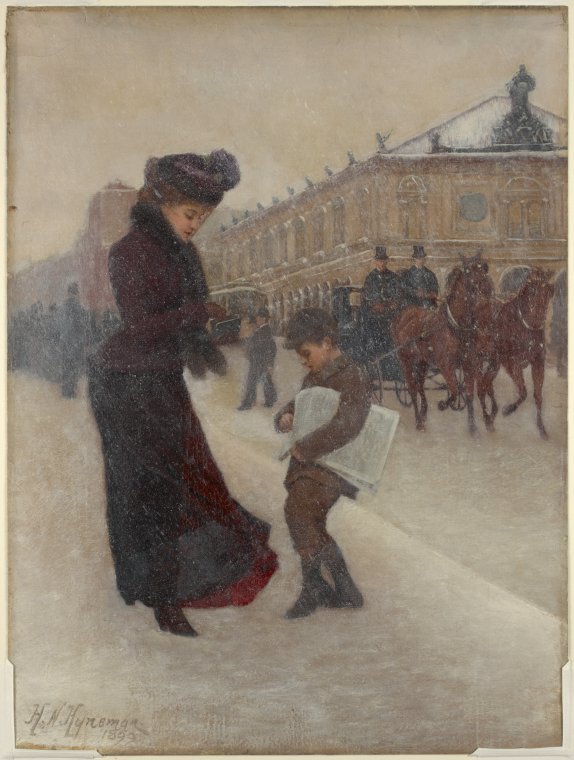
A painting by Herman Hyneman from 1899, depicting a Herald newsie and a customer in the snow. [NYPL]

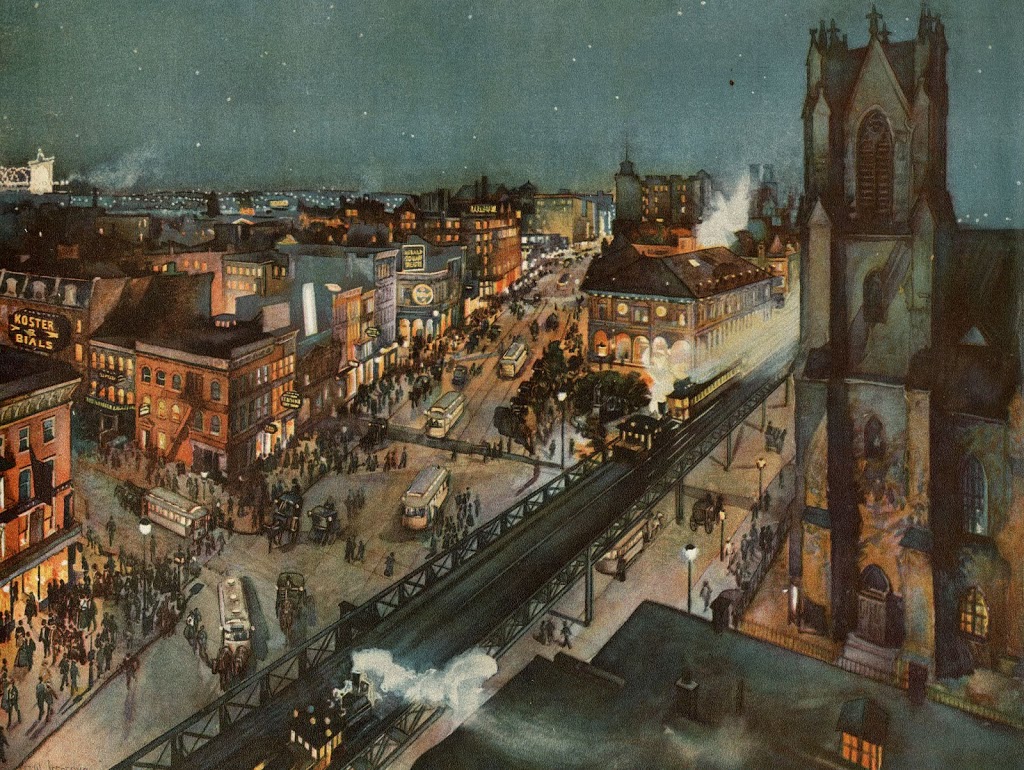
Also from The New Metropolis, an owl’s-eye view of Herald Square, from 1899.  The caption: “This is a vibrant reproduction of a color print by Canadian-born artist Charles William Jefferys (1869-1951) who once worked at the New York Herald. The Broadway Tabernacle Church, the 6th Avenue elevated train, the Herald Building and several theatres, including Koster and Bial’s, are depicted. The streets are teaming with cable cars, horse drawn vehicles and pedestrians.” Courtesy CUNY

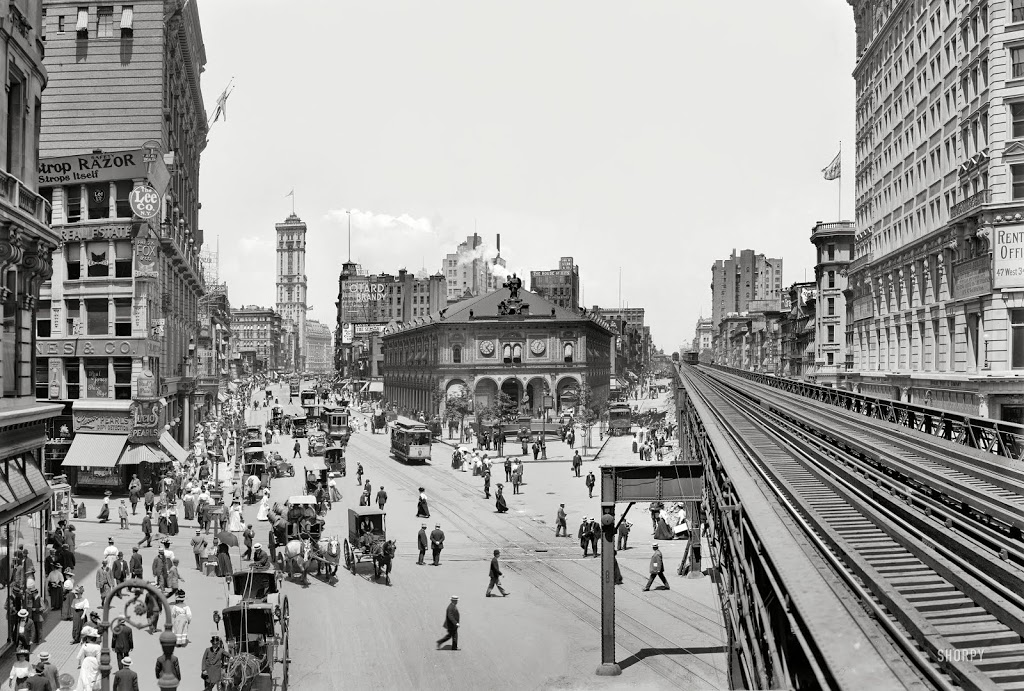
And finally, an overhead view of the entire square. This is an image that was cleaned up and published by the great photo blog Shorpy. Click into the picture to see a rather magnificent view of the surroundings. Trust me, you may waste five minutes just looking at this one….
Categories
Podcasts

A whirlwind tour of Herald Square: More than just Macy’s, the intersection of publishing, theater and debauchery

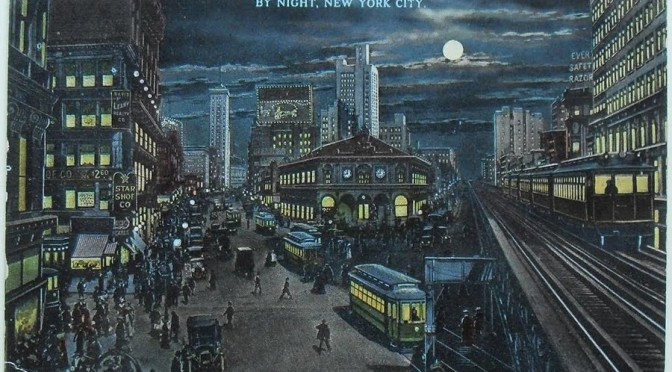
Herald Square at night, 1910, with the flurry of shoppers, the churn of printing presses, the clanking and soot exhaust of the elevated train, the rush of the streetcar. The theaters, the drinking, the dancing. (Courtesy the blog Ajax All Purpose Blog)

PODCAST Welcome to the secret history of Herald Square, New York City’s second favorite intersection — after Times Square, of course, just a few blocks north. But we think you may find this intersection at 34th Street, Sixth Avenue and Broadway perhaps even more interesting.

This is a tale of the Tenderloin, an entertainment and vice district which dominated the west side of midtown Manhattan in the late 19th century, and how it abutted the great cultural institutions that soon became attracted to Herald Square, from cheap aquariums to New York’s greatest opera house.
By the 1890s, newspapers arrived to the area, including the one that gives Herald Square its name. A remnant of the New York Herald Building still sits in Herald Square and is the cause of some serious conspiracy. (Especially if you’re afraid of owls!) But the Herald wasn’t the only publication that got its start here; in fact, one of America’s most famous magazines began in a curious office-slash-bachelor apartment facility just close by.
The department stores came at the start of the 20th century, and we bring you the tales of Macy’s, Saks and Gimbels, not to mention their later incarnations, the Herald Center and the Manhattan Mall.

ALSO: Where on 32nd Street were crazy parties featuring a who’s who of New York’s greatest freak show performers? Where did a silent fim stunt man meet his end? And where in New York can you get the best in Korean pop music?


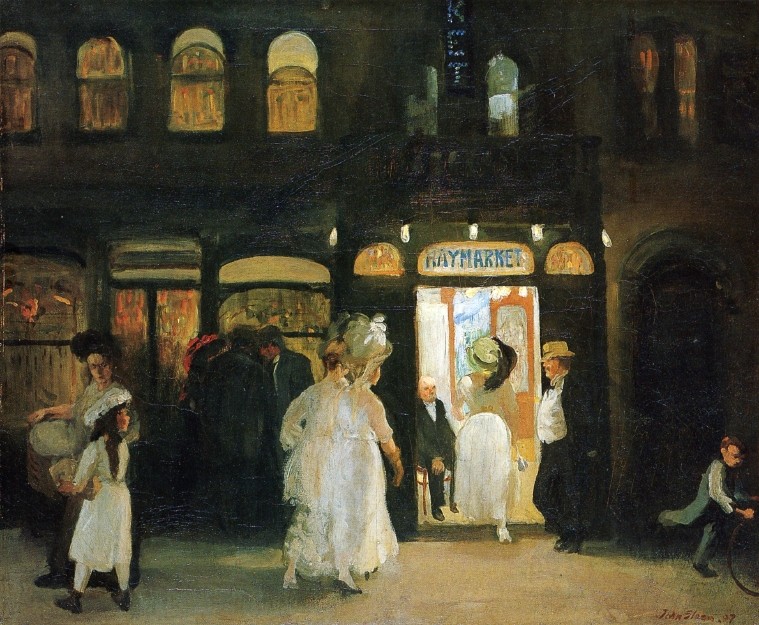
The bawdy Haymarket dance hall, at 30th Street and Sixth Avenue, in a magnificent painting by John Sloan (1907) that conjures up the glamour and winks at its secret pleasures. Several of Sloan’s works depict places located in the Tenderloin, a wide area of entertainment and vice west of Broadway. The original painting hangs in the Brooklyn Museum.

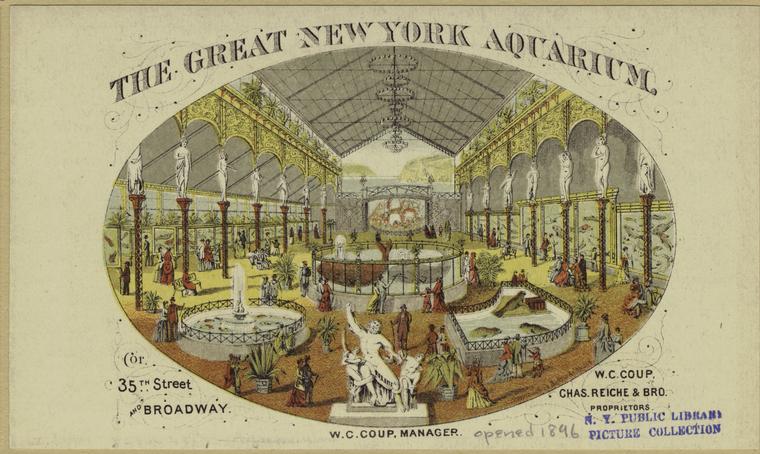
The Great New York Aquarium of W.C. Coup, bringing sea creatures to the corner of Broadway and 35th Street. (NYPL)

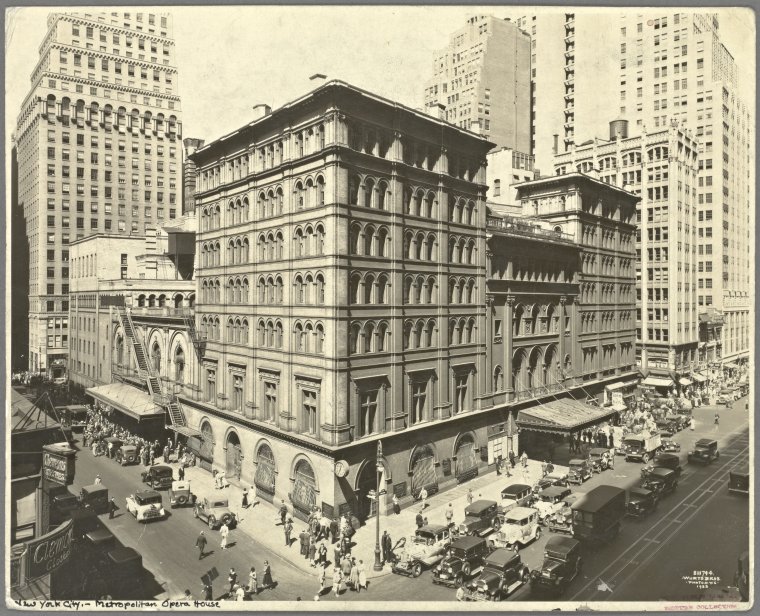
The character of Broadway between the intersections of 34th Street and 42nd Street (before they were known as Herald Square and Times Square, respectively) was changed forever with the construction of the Metropolitan Opera House, a vanity project for New York’s new wealthy class. It was all for show; there were plenty of loges for the rich, but so little backstage room that set pieces were stored on the street. (NYPL)

The front of the New York Herald building, with its ornate clock face and Minerva statue. Please note the owls on the corners. (NYPL)

The two most dominant structures in Herald Square in the 1890s — the Sixth Avenue Elevated and Stanford White’s Herald building. “Running presses seen from street.” (NYPL)

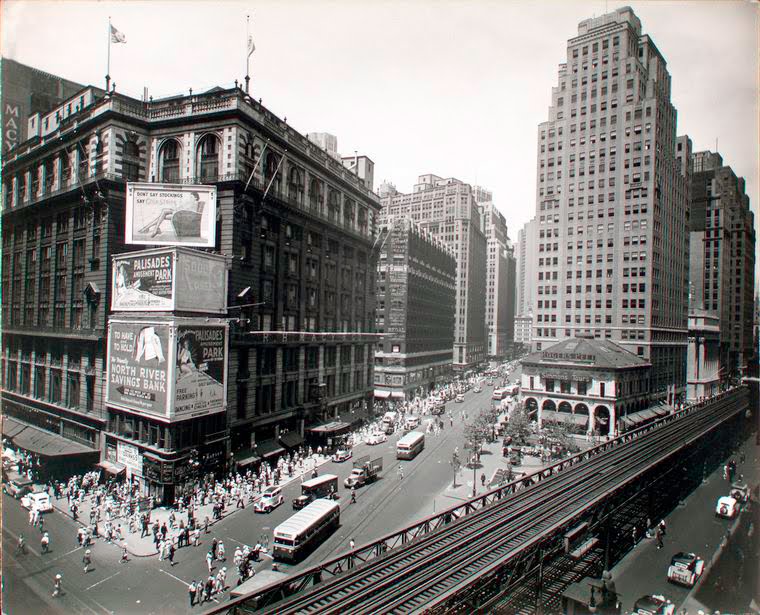
The Elevated and the Herald Building from another angle in 1936, with the new addition of Macy’s — and the little building which prevented Macy’s from taking up the entire block! Today, that’s still a Sunglass Hut. You can also see that the back of the Herald offices has already been demolished and replaced with an office building. The front would survive a bit longer and then too would be destroyed. (NYPL)

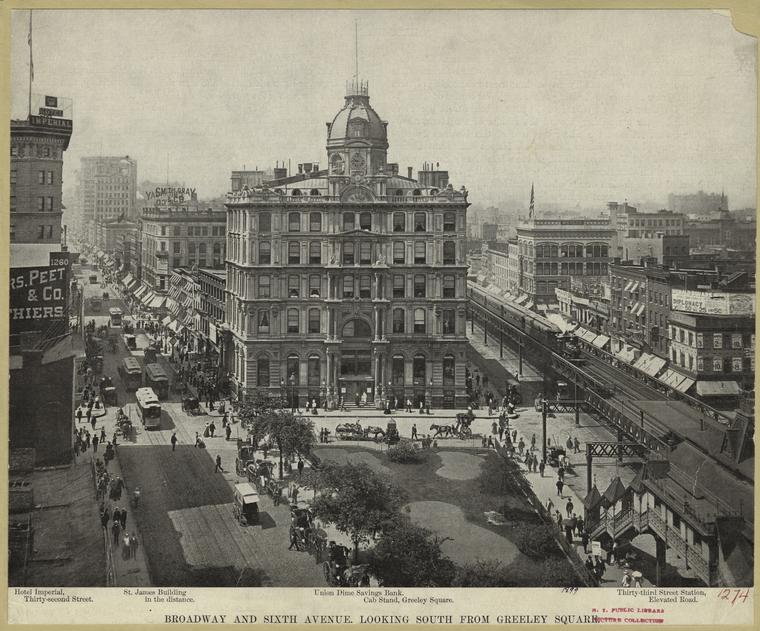
A view of Greeley Square, with the elevated to the right. This building is the Union Dime Saving Bank. The counting offices of the New York World were on the ground floor, however I’m not certain if they are there in the year this picture was taken (1899).

Now here’s a mystery for you — this is Greeley Square, named for the statue of Horace Greeley which was definitely installed in 1894. Hmm, but where is it?

The Hotel McAlpin, at the southeast corner of 34th Street, the largest hotel in the world when it was built in 1912! Happy 100th anniversary to this accommodation, pivotal in New York City history.

Herald Square in an early (1896!) clip from Edison.

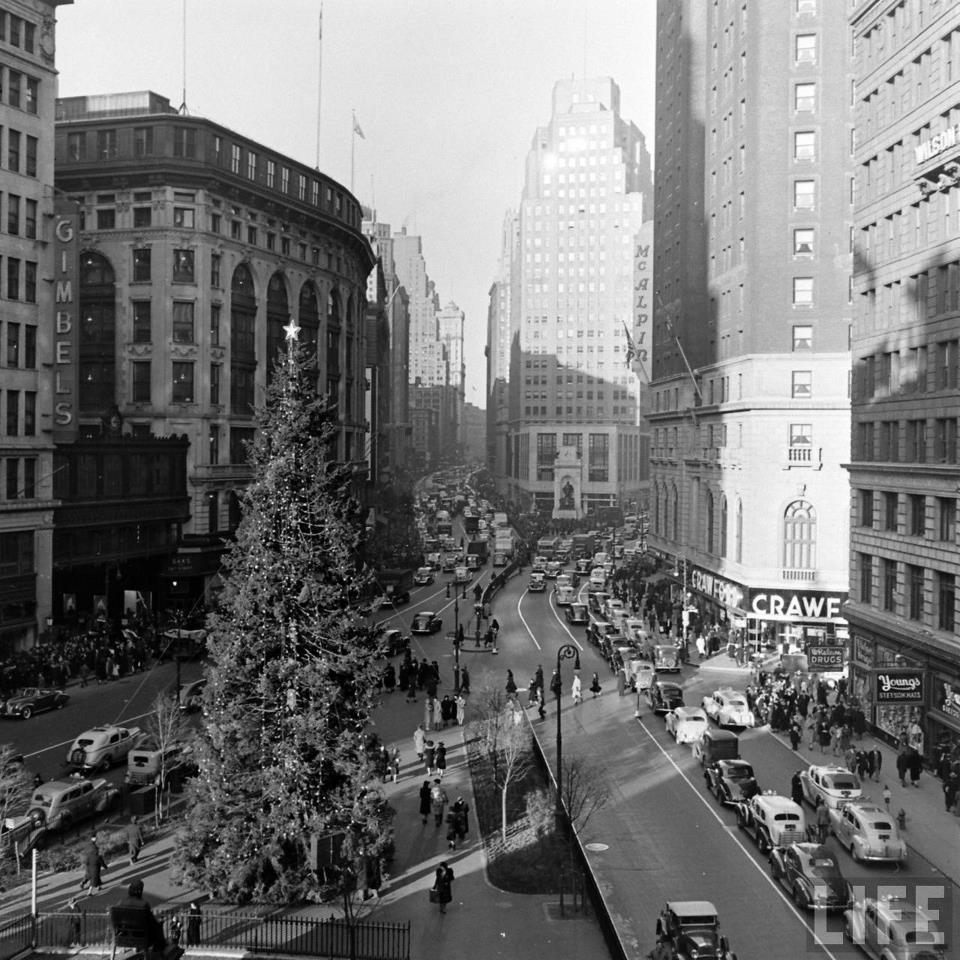
And an image for the holidays, from the 1940s! Courtesy Life Magazine