The art of the reservoir, New York’s forgotten architecture

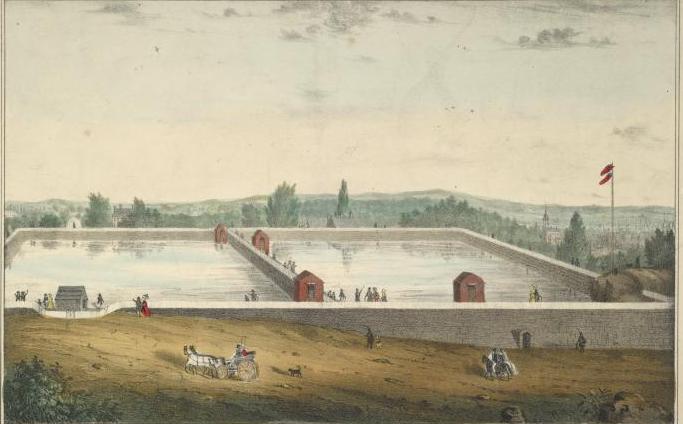
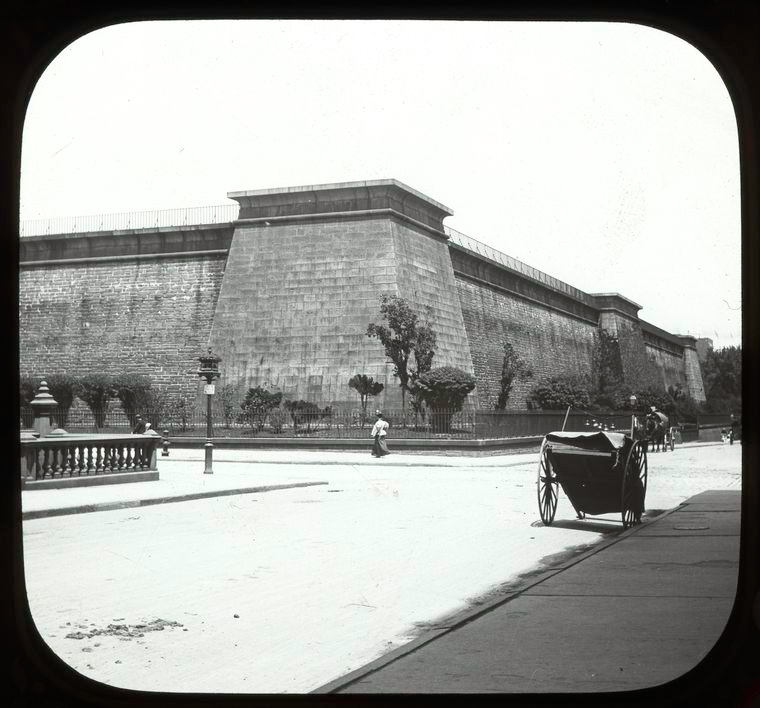
The Fortress of Fifth Avenue: the Murray Hill Reservoir

We share a lot of the same needs as New Yorkers of the past, but we’ve just gotten better at hiding the unpleasant ones.  There are a great many mental institutions and specialized medical facilities in the city; they just aren’t in creepy, old Gothic buildings anymore. Prisons are out on islands or in nondescript beige towers flaunting only the barest hint of iron bars. We don’t dress them up in Egyptian morbidity like the famous Tombs prison of Five Points.

Our trains and our electricity reside underground, and so does our water, mostly. There are only a few places that seem to suggest that New York City’s water supply doesn’t just magically appear. Water towers dot the skyline, recalling romantic comic book landscapes, while water treatment plants, spread mostly through the outer boroughs, obviously do not. Then there are the reservoirs, the grandest of these, the Jerome Park Reservoir in the Bronx, is a landmarked structure of enormous, albeit hidden, beauty. It’s currently drained and sitting like the Earth’s largest off-season swimming pool.

But New Yorkers used to live with their water, contained in reservoirs meant to evoke might, sophistication and security. After all, New York only got fresh water from the Croton Aqueduct in 1842; before that, it was mostly obtained from wells, cisterns, and that nasty old Collect Pond. People were proud of their new water system, so why not show it off?

Here’s a gallery of New York’s old 19th century reservoirs. In tomorrow’s podcast, we’ll elaborate on the marvelous story on how the city got its water:

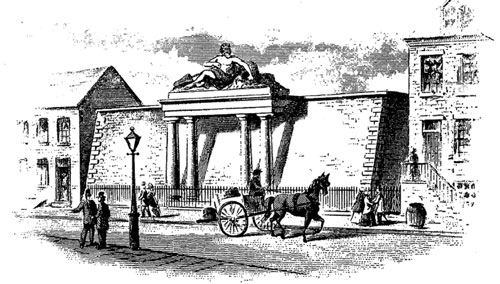
The Manhattan Company reservoir on Chambers Street was opened in 1801 and was quickly deemed inadequate. Looks lovely though. If it were still around — it was demolished in the early 1900’s — it would probably be a nightclub today.

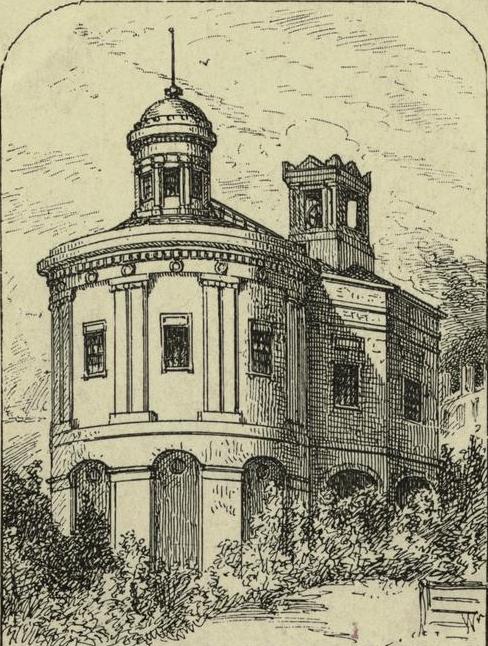
13th Street ReservoirOpened in 1830 as a water-pooling resource for fire fighting, it pumped water to hydrants on Broadway, the Bowery and other streets, but was little help in stopping the blazes of the Great Fire of 1835.

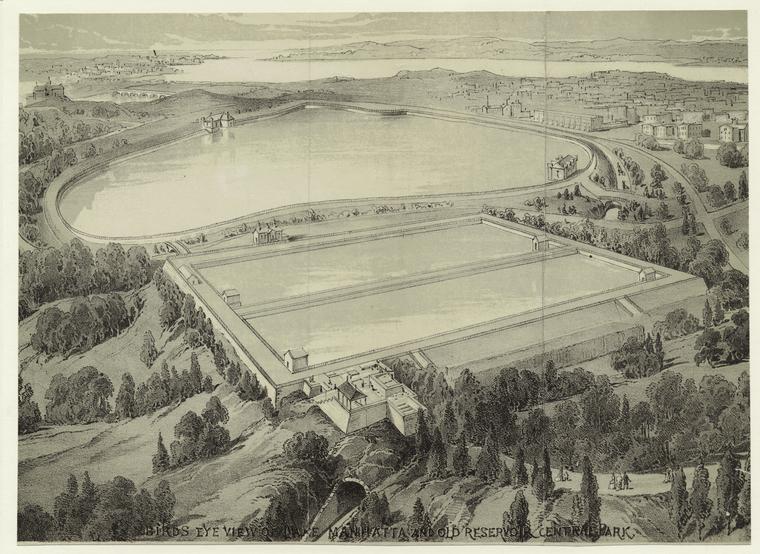
The Yorkville reservoir, how it looked on its opening in 1842. It was located between 79th and 86th Streets and between Sixth and Seventh Avenues. Many years later, was surrounded by Central Park and was later torn down to become the park’s Great Lawn. What does remain, however, is….

…the Central Park receiving reservoir, built in the 1850s and, unlike the Yorkville, incorporated into the park’s designs. Today it’s named for Jacqueline Kennedy Onassis, who lived nearby and frequently jogged around it.

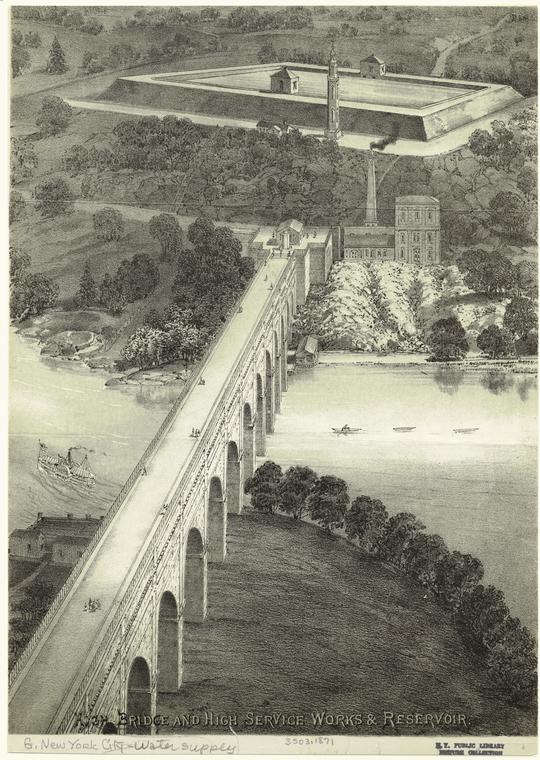
The spectacular High Bridge, part of the Croton system, with its adjoining smaller reservoir and water tower, serving the needs of residents of Manhattan’s higher elevations.

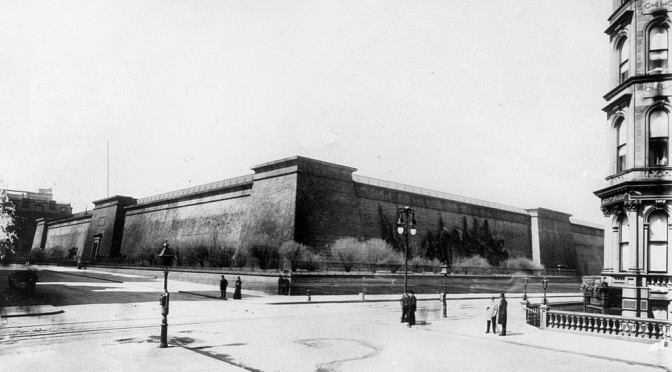
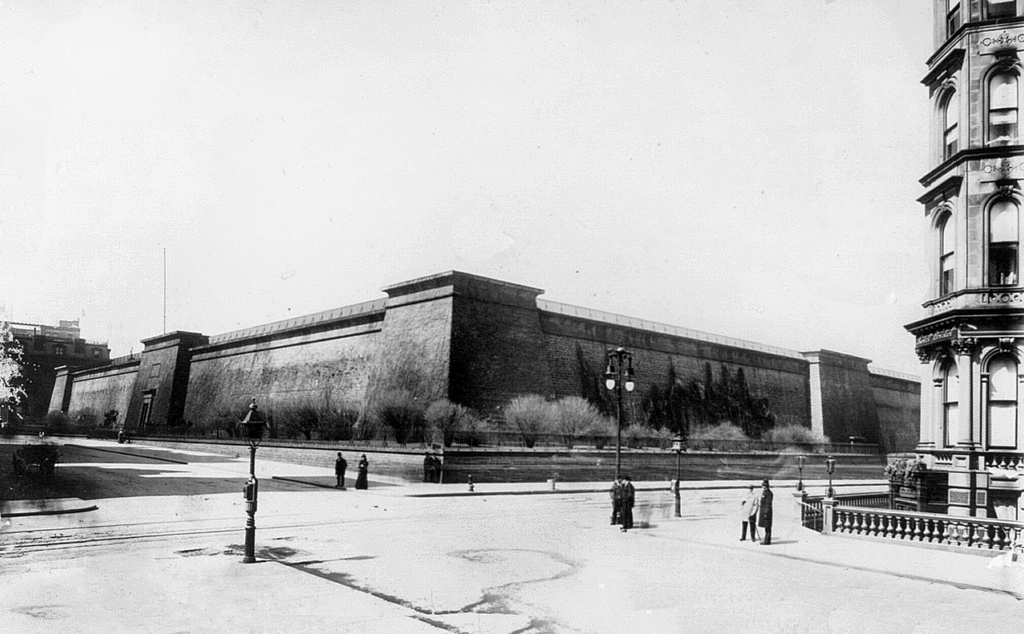
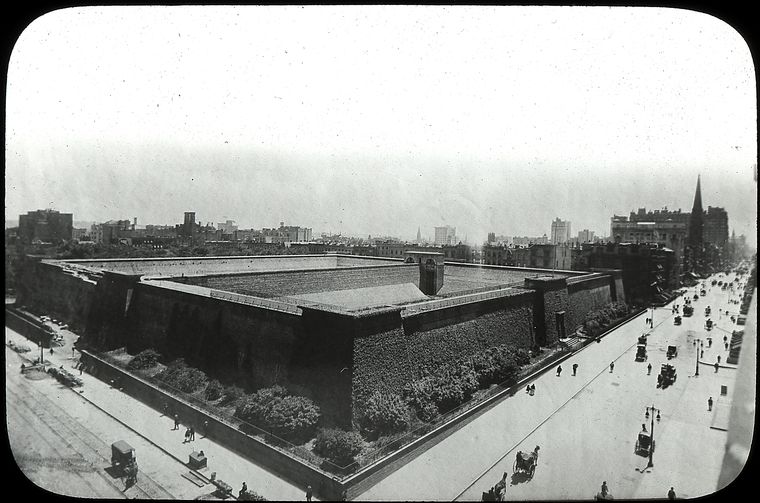
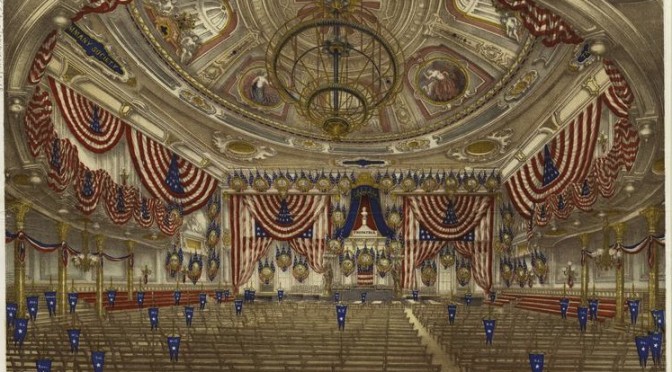
The grand Murray Hill Reservoir, probably the most popular of the reservoirs with 19th century tourists. Situated on land that had held the fabulous Crystal Palace (destroyed by fire in 1858), the reservoir was demolished in the 1890s to make room for Bryant Park and the New York Public Library.

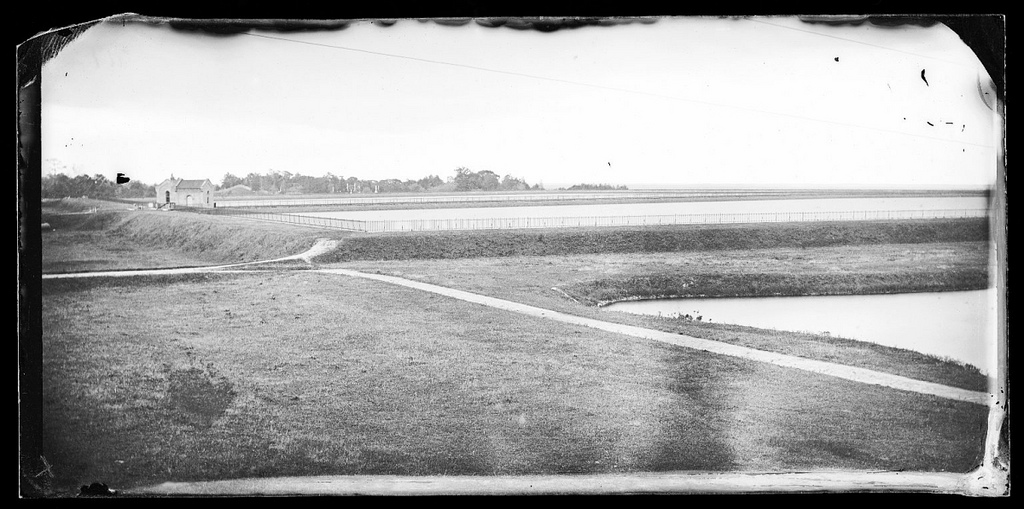
Brooklyn was maintained in the 19th century in two reservoirs, one in Ridgewood and the other high atop Mount Prospect, although the ultimate source of the water came from a variety of places.

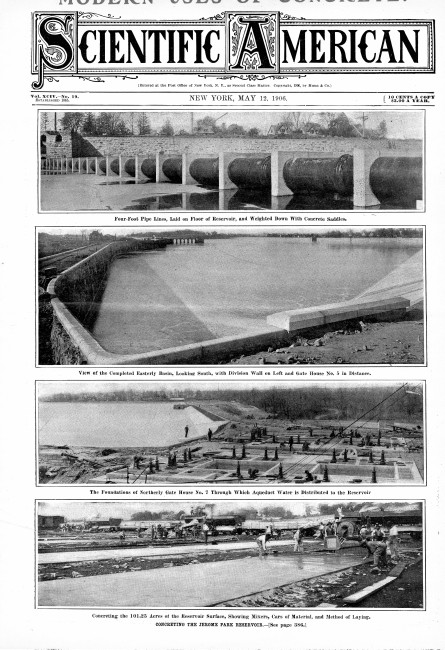
An issue of Scientific American in 1906, celebrating ‘the concreting’ of the Bronx’s Jerome Park Reservoir which opened that year and contained portions of both the old and new Croton Aqueduct systems.

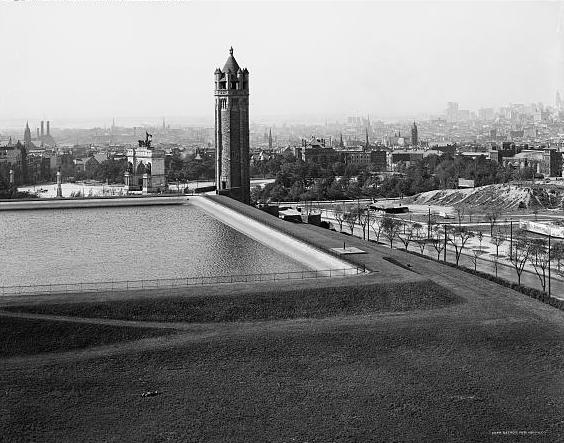
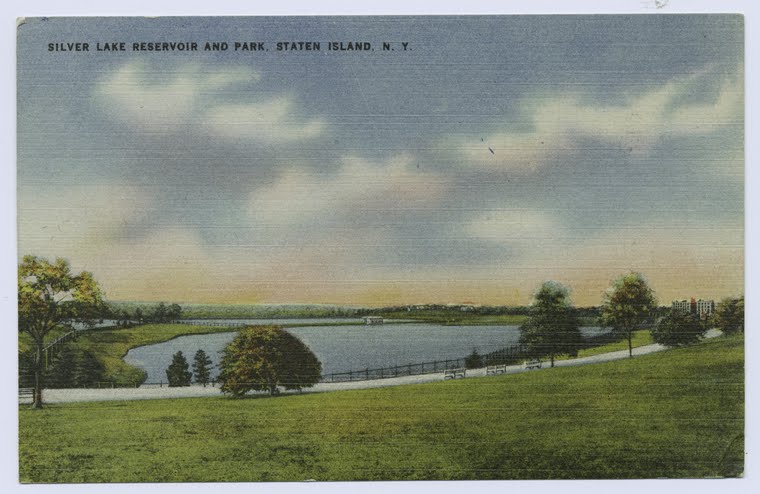
The 1917 Silver Lake reservoir in Staten Island was constructed, like the Central Park reservoir, to be a functional feature of a park setting.

Pictures courtesy the New York Public Library, the Brooklyn Museum and the Library of Congress. Thanks as always to these institutions. The Scientific American can be found here.

Categories
Uncategorized

Ten strange supernatural events that have supposedly occurred in New York, according to the Weekly World News

When I was a teenager, one of many life missions was to one day write for the Weekly World News, the black-and-white supermarket tabloid which specialized in uncovering mutant, fantastical, and mostly unbelievable events being ignored by the mainstream media.

It began in 1979 with far less embellished intentions, focusing on celebrity gossip and sensational true crime stories.  But it quickly found its footing as a proto-Onion style poke at the National Enquirer, spending the 1980s with ever-heightening, baldly absurd headlines which often slathered a kernel of truth in layers of fiction.

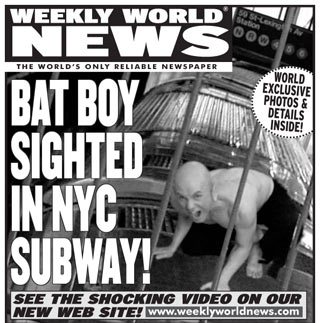
And then in 1992 came an extraordinary discovery in a West Virginia cave, a primordial mutant child the News called ‘Bat Boy‘, an instant success that eventually spawned a popular off-Broadway musical.  From then on, the Weekly World News has been an ever-escalating fanzine to the absurd, an outlandish rag of zany stories and doctored photography, often making unsubtle dings at current cultural events.

New York has been a repeated backdrop for many Weekly World News exposes, its landmarks battered and abused by a host of supernatural entities.  For his part, Bat Boy has been to New York on several occasions, once riding upon the top of a subway car to Coney Island “to get some of his beloved hot dogs.” In 2010, Bat Boy endorsed the enigmatic Jimmy McMillan (of The Rent Is Too Damn High party) for mayor.

The entire Weekly World News back-catalog is now available online on Google Books, and I recently spent a few too many hours perusing old titles looking for the best stories about New York City.  Little did I know of the number of spectacularly weird — and true! — events that have occurred here without my knowledge.  Click on the headers below to go the particular issue:

GIANT TURTLES 
In 1997, the paper uncovered a nest of giant turtles in the New York sewer system capable of snapping off a man’s hand in a single bite.  One specimen was captured at a Bronx treatment plant and sent to the Bronx Zoo where it was declared patently ‘prehistoric’.

But where did these monsters come from?  “The Hudson River gets too much water and gates are opened to allow the water to flow into the East River.”

GHOST PRIDE PARADE
A gathering of phantoms terrorized socialites along Fifth Avenue in 2006 as they marched down the street in a parade, walking through traffic and alarming law enforcement.  A police barricade at 57th Street proved useless as the spectral community simply passed right through it.

“It was surreal. I saw a Civil War soldier, an ancient Roman, a cavewoman and other strange apparitions. There were even a few celebrities, like Laurel and Hardy and Mark Twain.”

SAUCERS OVER BROOKLYN
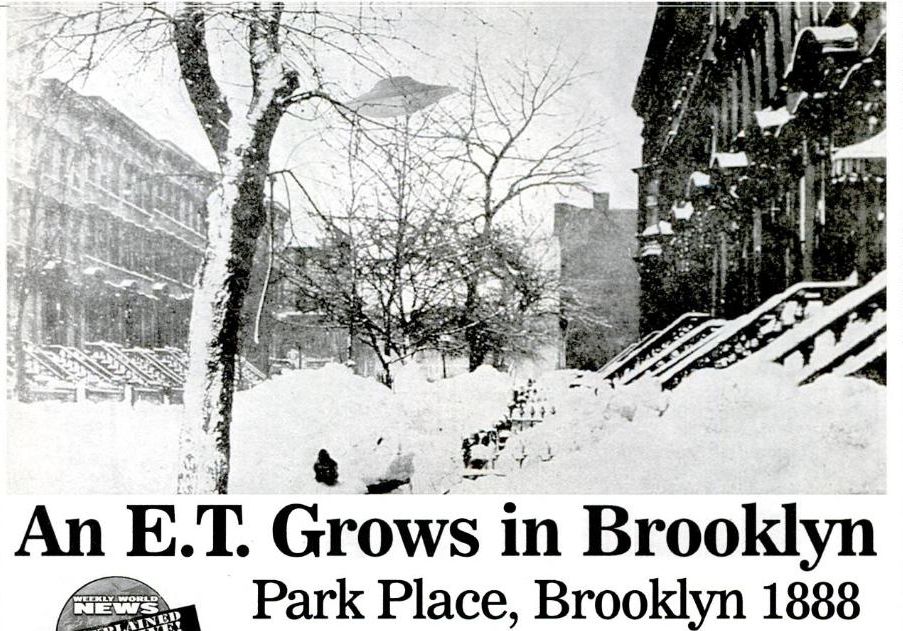
The Blizzard of 1888 immobilized the city, responsible for the deaths of hundreds and shutting down almost every element of New York infrastructure. It was such a devastating storm that there could only be one cause — beings from outer space.

As proven in the photograph above, obtained by the Weekly World News in 2007 from a source at the Brooklyn Eagle, flying saucers menacingly hung in the air over South Brooklyn during the storm. “We were being tested,” claimed a representative from the government’s Unexplained Phenomena Bureau.  Apparently, we passed.

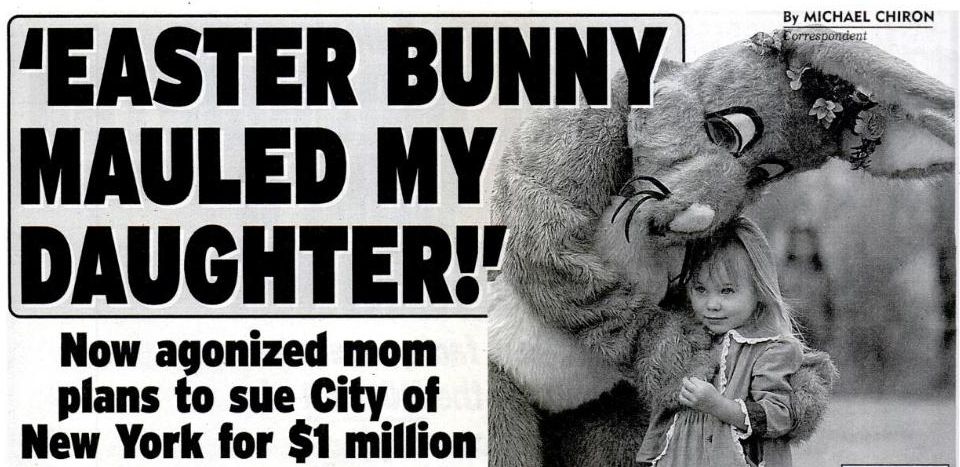
THE EASTER BUNNY
(pictured at top)
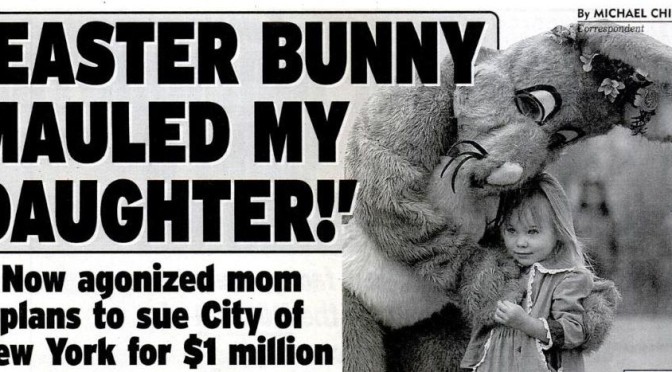
An unprovoked Easter attack in Central Park by an alleged “man-sized, floppy-eared creature” brought on a lawsuit by the victim’s mother. Perhaps the suit was settled out of court, for a paranormal expert is quoted claiming that “I seriously doubt that [the Bunny] would attack a helpless, unarmed child.”

THE RAPTURE
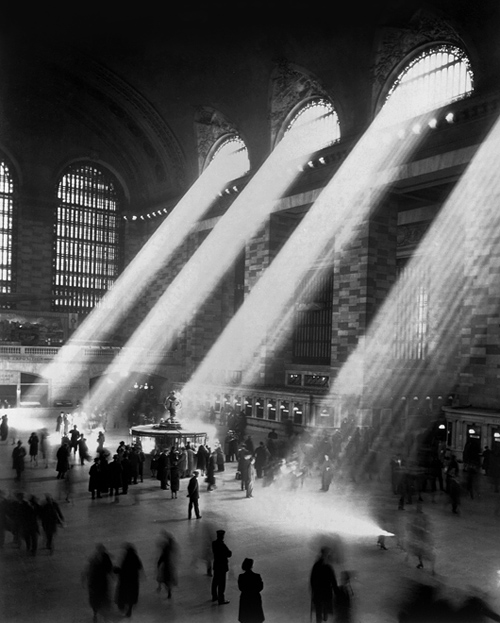
The Biblical rapture — where Christian faithful instantly vanish from the earth, to be taken to heaven — has already occurred, according to one 1999 article. The event took thousands of Christians during World War II. It offers as proof the extraordinary photograph of Grand Central Terminal to the right.

“According to a police officer who was cited as an eyewitness in one news account, rays of bright blue light came through the windows of the train station and singled out certain individuals.”

Strangely, the photographer of this iconic picture, John Collier, remained silent on this fact. Another conspiracy?

DUCKMEBA
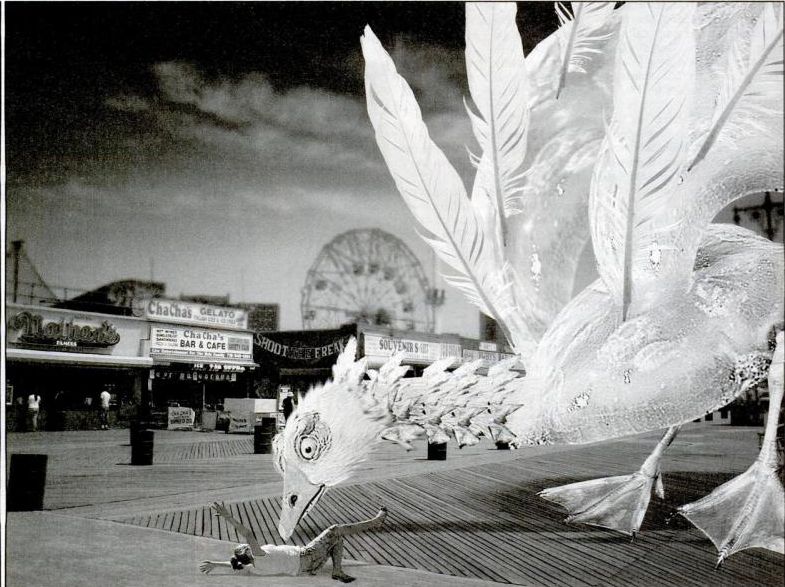
It is particularly irresponsible of the city to cover up the deadly event which occurred on Coney Island in July 2007, when an ‘undulating amoeba’ with the head of a duck and webbed feet rose from the ocean and attacked people along the boardwalk.

The beast apparently destroyed the Cyclone — it was swiftly repaired — and viciously went after the Parachute Jump before its ‘viscous body’ evaporated before the eyes of stunned police officers. Certainly you remember Mayor Bloomberg’s lame story about this event being ‘an aberrant form of ball lightning’? Well, the News blows that lie right out of the water.

Below: A composite of the fowl creature.

TIME-SPACE PORTALS
Anybody who lives and works in New York knows that there are moments where hours seem to pass in the span of mere minutes. Luckily, the Weekly World News over the years has found evidence of the city’s tenuous spot at the precipice of time and space.

An airplane which had disappeared over the Swiss Alps in 1972 suddenly reappeared over Manhattan in 1996, souls which had traveled through the dimensions, unaware of their otherworldly form.

Another portal appeared in the Tribeca neighborhood in 2007, when construction workers on Chambers Street fell victim to a tear in the space-time continuum, going from “real-time motion to moving at slow speed,” due to the dust of a white dwarf star that had somehow managed to get in their cement mix. The workers trapped in the space-time anamoly asked for overtime, “but they ain’t gettin’ it,” claimed their foreman.

SEWER GATORS
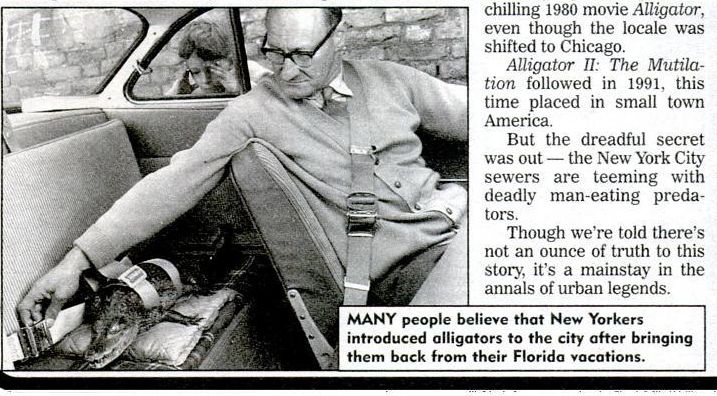
A popular urban legend is given forceful historical credibility by the tabloid, exploring the long history of alligator sightings in the New York sewers.  In the 1930s, sewer workers were authorized to “shoot, poison or drown every one they could track down.” There were so many sightings in the 1950s, claims the paper, that sanitation workers purportedly demanded “protection from attacks.”

FRENZIED WOLFMEN
In 2002, a man viciously attacked his girlfriend in her apartment by biting her in the face. Or, as the News reported it, “gorged himself on chunks of her flesh!”

Clearly a telltale sign of lycanthropy, the News helpfully adds “The case recalls the mythical creature explored in folklore and in such Hollywood films as I Was A Teenage Werewolf.”

FISH MOBSTERS
The aquatic population of the East River is not immune from organized crime, as one Lower East Side resident discovered in 2007 when he awoke one morning to discover seven dead trout in his bed.

Officials tracked the crime to a deadly internecine war among the ‘trout, carp and bass’ of the river. “We think they have fishermen on the payroll,” said one detective.

But it’s not been all horror and doom for New York City in the pages of the Weekly World News. According to a 2002, article, the legendary Fountain of Youth was discovered underneath the streets of the city. One catch — it’s in a subway toilet.

Images and headlines above courtesy the Weekly World News, except for the Grand Central shot, courtesy New York Public Library

Categories
Newspapers and Newsies

Hot off the press: the bicentennial of the Bronx Gutenberg

Hoe Avenue in the Bronx has nothing to do with farming, although it once indeed ran through a grand 19th century farm estate.

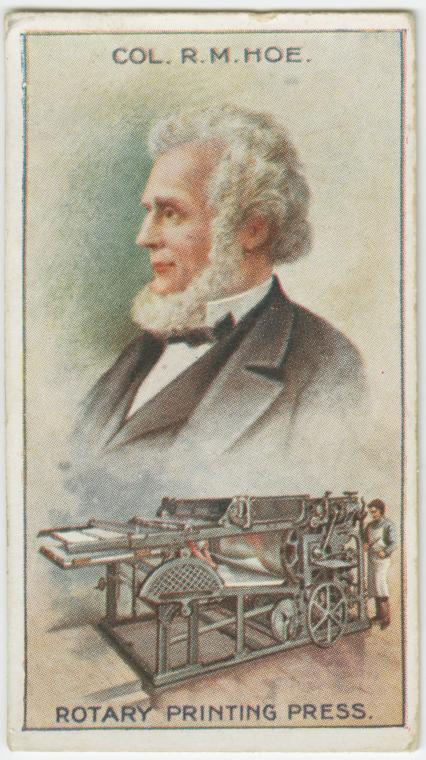
The avenue’s namesake, Richard March Hoe, born 200 years ago today, brought about a revolution in the world of printing. Without his innovations, the phrase ‘hot off the press’ might never have come about.

His father Robert Hoe, born in England in 1784, the year after America won its independence, moved to the new country and began a printing press business in lower Manhattan (10 Cedar Street) with his two brothers-in-law. Hoe tinkered with improving the hand-operated press machine for the ever-demanding industry of New York publishing. But it would be his young son Richard (born Sept. 12, 1812), taking over the reigns of the company in the 1830s, who would change the world of printing forever.

At right: ‘Colonel’ Hoe with his spectacular invention

The answer, of course, was steam power. It had forever changed the worlds of industry and transportation during this period. In 1843, R. Hoe & Company introduced a rotary printing press (nicknamed the ‘lightning press’), using a revolving cylinder drum that rapidly turned out thousands of printed pages using steam power.

His influence on the publishing world by the 1840s cannot be overstated. New York’s penny press, led by newspapers like the Sun, the Tribune and the Herald, utilized the technology to expand their circulation. Soon newspapers across the country were being made using the Hoe printing press, inspiring the growth of daily publications, turning the newspaper into an everyday item and creating a greater demand for the quick delivery of information.

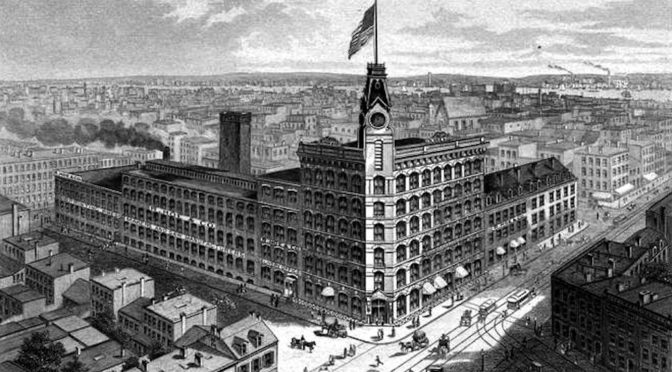
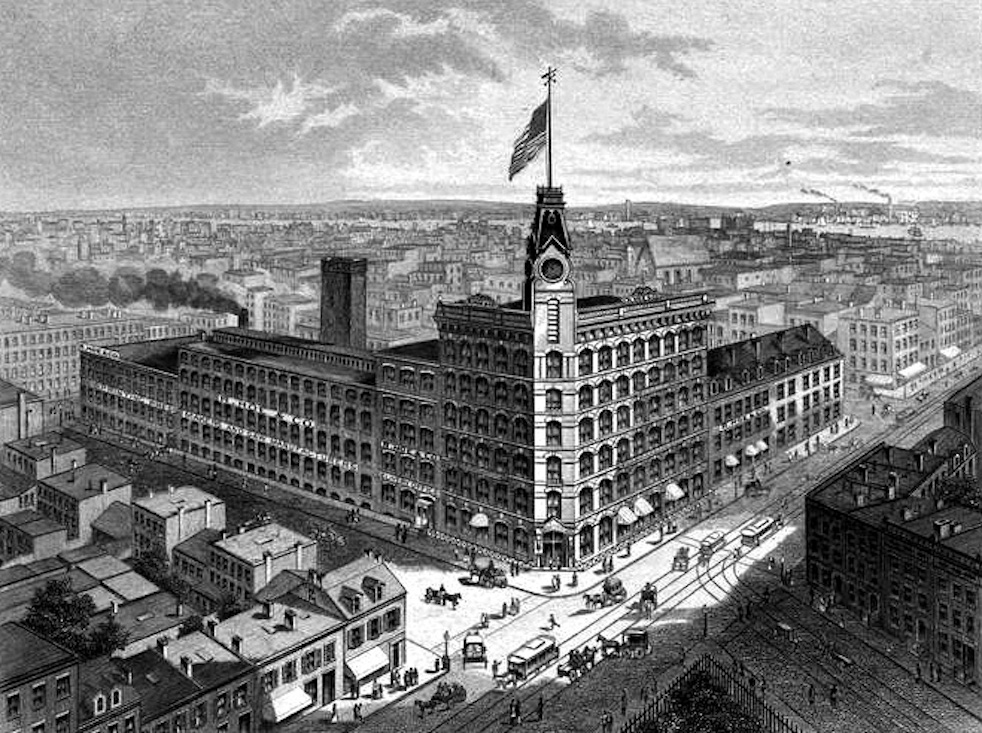
Above: R. Hoe & Company at 504-520 Grand Street.  

Like many great business moguls of the age — certainly men like Thomas Edison were paying attention — Hoe both innovated himself and bought inventions from others, generating a mini-publishing revolution from his headquarters at 504 Grand Street in Manhattan (pictured above).  In 1871, his factory eventually produced America’s first web press, generating two-sided printed pages from a single roll of paper. [source]

If that wasn’t enough, a decade later, Hoe acquired the technology to fold the newspapers as they came off the press.

Interestingly, the company also distinguished themselves in the manufacture of saw blades, a side business not completely unrelated, as they were used to cut metal type.

While Hoe conducted business from the Lower East Side and from offices in London, the printing-press mogul resided in a lavish 53-acre estate named Brightside near the Bronx River, on land once owned by the family of Gouverneur Morris, with plenty of room for an orchard and land for his prize-winning Jersey cattle. His brother Robert bought the neighboring land and opened his own estate called Sunnyslope.

Most signs of these estates is long gone, of course, with the exception of Hoe Avenue.  For modern pop culture junkies, the street is perhaps best known for the Hoe Avenue peace meeting, an assemblage of New York street gangs calling for a truce that inspired the plot of the 1981 film ‘The Warriors (in particular, the ‘Can you dig it?’ scene).

Nearby you’ll find another street named for printers: Aldus Street, a modification of the name Aldo Manuzio, a 15th century Italian printer  At the corner of Aldus and Hoe is a small playground called Printer’s Park, with playground equipment made to look like a rotary printing press.  And nearby is a small garden called — no beer jokes please — the Hoe Garden.

Richard Hoe died in Florence, Italy, on June 7, 1886.

Pictures courtesy New York Public Library.

Rainey’s African Hunt: A bloody 1912 movie blockbuster

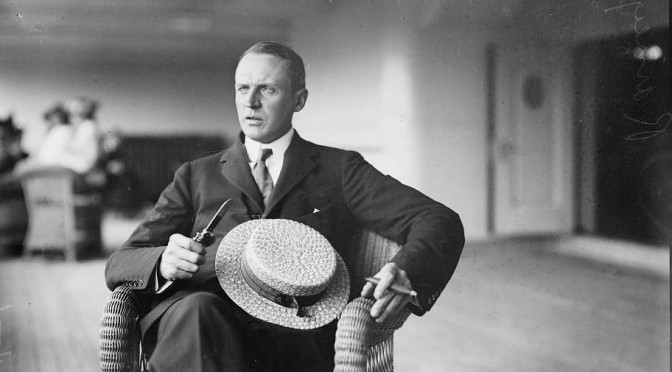
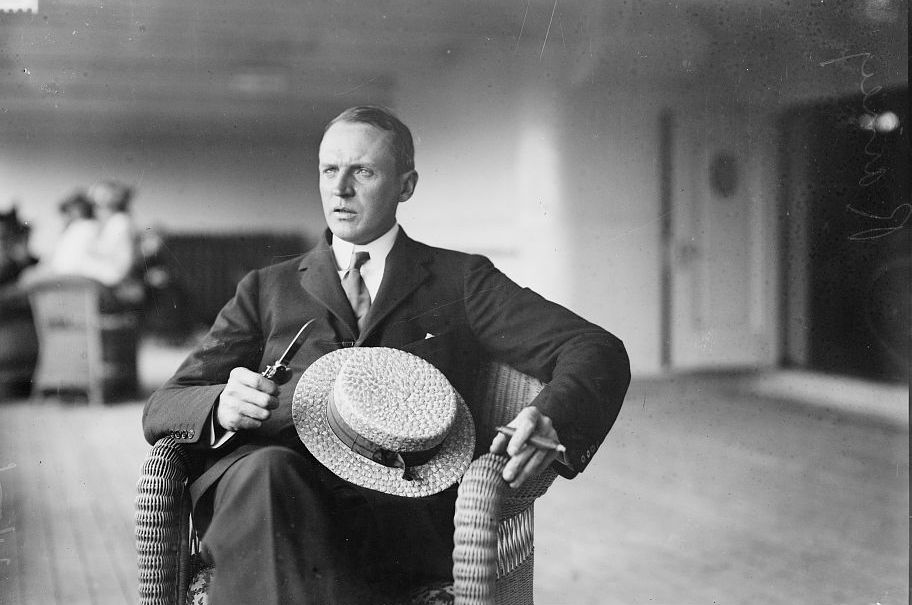
Hunter and gadabout Paul Rainey: An accidental matinee idol

Catching a movie this weekend? Many New Yorkers had the same plan one hundred years ago, but the experience was vastly different.  Motion pictures in 1912 were shorter, without sound and in black-and-white, of course, but they were sometimes presented as part of a set of vaudeville performances, with live musical accompaniment and in repertory with several short films.

In the days before movie palaces, movies were shown in legitimate theaters which often gave them a must-see feel. This was the case with a strange non-fiction film that played in New York for well over a year — Rainey’s African Hunt.

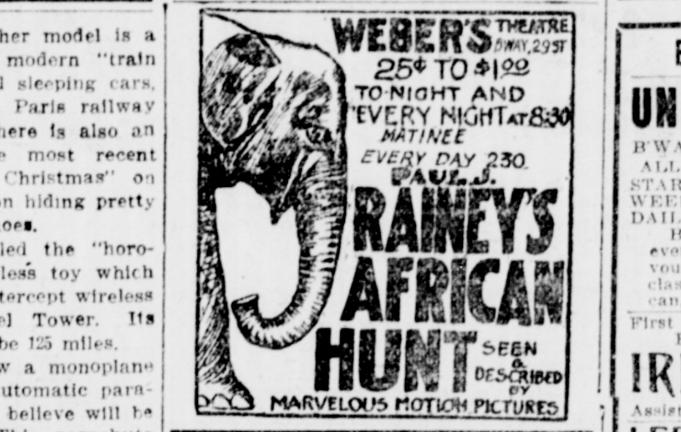
In September 1912, the film played Joe Weber‘s Music Hall at Broadway and 29th Street:

The film made its debut in April 1912 up the street at the Lyceum (45th/Broadway) and played there through the summer, heralded as a serious entertainment, for ‘wealthy people at top prices‘ to distinguish it from the fiction films favored by everybody else.

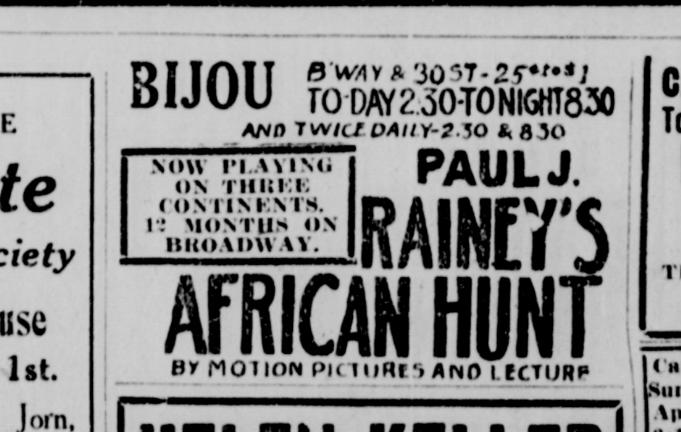
But is seems that ‘African Hunt’ resonated with all sorts of audiences. The film moved to Weber’s in August, then to the Bijou (30th/Broadway) in October, where it stayed put until April 1913!

So what made this film so popular? Americans were still safari crazy in the early 1910s thanks to Theodore Roosevelt‘s famous African trip in 1909, in which he brought back the carcasses of dozens of exotic animals and donated them to natural history museums around the country, including New York’s own American Museum of Natural History.

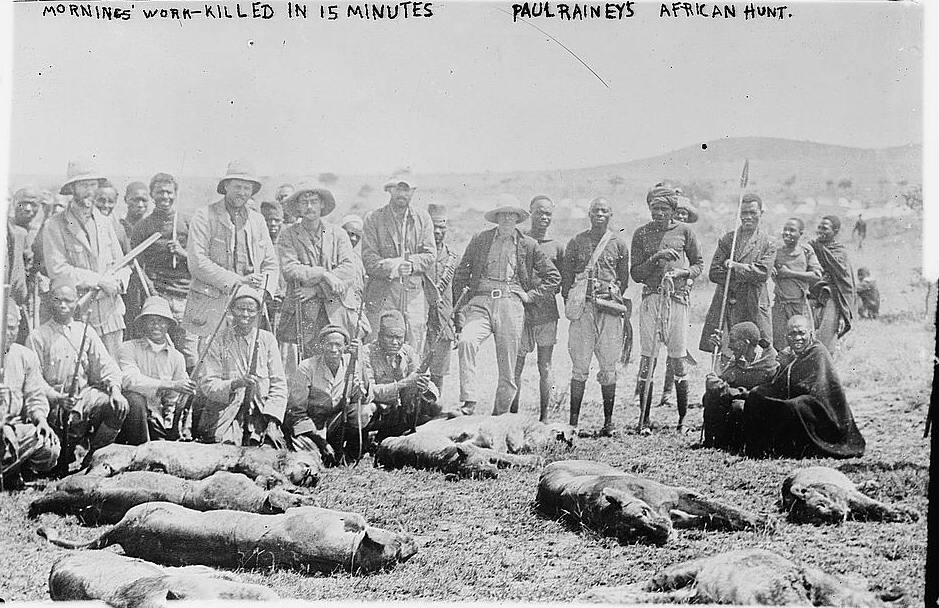
The wealthy playboy Paul Rainey was also a renown game hunter and filmed his exploits in Africa following Roosevelt’s trip there. The film depicts his interaction with African tribes and the trials of hunting exotic animals. Although Rainey claims to have been more interested in photographing and trapping live creatures, he ended up killing several dozen animals, including “twenty-seven lions in thirty-one days.” One notable scene features Rainey’s specially trained fox hounds stalking and killing a leopard.

 Claimed one advertisement: “One touch of nature makes the whole world kin. That is the secret to the extraordinary success of this picture.”

The film came with a sterling pedigree and glowing reviews, include praise from the American Museum’s Henry Fairfield Osborn, who proclaimed it the ‘greatest contribution to natural science of the decade.’ [source]

Distributed by Carl Laemmle’s Universal studios, ‘Rainey’s African Hunt’ grossed over a half-million dollars, an extraordinary sum for an early motion picture. It would stand as one of the most successful non-fiction films of the decade.

Like every box office success, a sequel debuted in 1914 at the Casino Theatre (29th/Broadway). Portions of its first week gross were donated to a newsies home and summer camp in Staten Island. Despite emphatic reviews — “better and clearer” than its predecessor, according to the New York Times —  it appears to be mostly recycled material and was not a hit.

Below: A grim photo from Rainey’s safari. The hunter killed so many animals that is exploits eventually led to stricter regulations on foreign hunters.

According to the site Silent Era, a print exists of the film, although I don’t know if its presently available for view.
For more information on New York’s unique relationship with African safari hunters, check out our podcast on the American Museum of Natural History. For a peek at the early days of cinema in New York, listen to our show on NYC and the Birth of the Movies.
For more information on Paul Rainey, check out this interesting blog page on his Tennessee lodge and his tragic death.

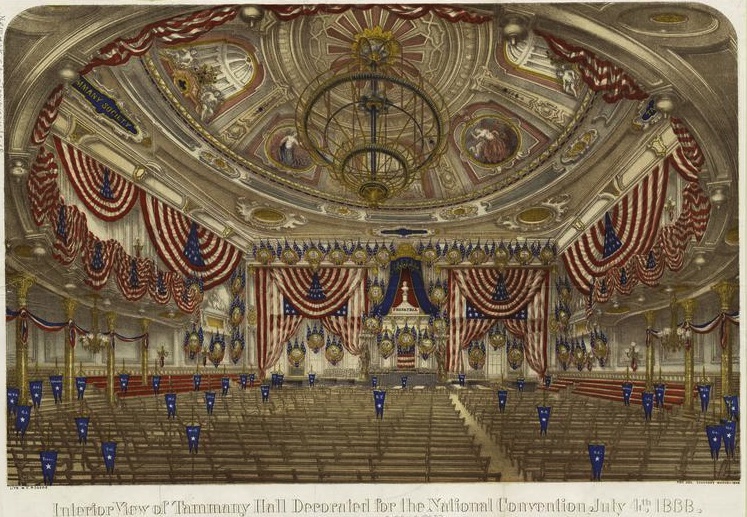
Tammany Hall hosts the city’s first Democratic Convention: Susan B. Anthony, the KKK, and a reluctant nominee

Many of you may remember New York’s sole Republican National Convention, held in 2004 at Madison Square Garden, celebrating the re-election bid of George W. Bush. Some may recall any one of New York’s three recent Democratic National Conventions — two (1976, 1980) for Jimmy Carter, and a rather memorable one in 1992 that placed Bill Clinton on the ticket.

Oh, but that’s modern politics! Conventions of the past — stodgy, contentious, male — are more fascinating artifacts, gentlemanly in tone, chaotic and raw in execution, and dominated by a mix of issues both eternal (war, debt, taxes) and outdated (slavery, territorial expansion).

Of New York’s five Democratic nominating conventions, the most infamous is certainly the 1924 gathering at Madison Square Garden — the old Garden, Stanford White’s palace on 26th Street — distinguished by rancor, the significant influence of an energized Ku Klux Klan and an exhaustive trek through 103 ballots only to settle upon a weak compromise candidate, West Virginian politician John W. Davis, who was crushed in the general election by Republican Calvin Coolidge. Within two years, the Garden would be closed and promptly demolished, as though in embarrassment.

But I find the first national convention, held in 1868, to be the most intriguing and telling of New York life in the mid-19th century, a convention so unusual that the eventual presidential nominee actually recoiled from accepting the nomination.

Four years prior, in 1864, a splintered Democratic Party had tried to replace Abraham Lincoln in the White House with his former Union general George B. McClellan. In New York, former mayor and now-Congressman Fernando Wood led a drive for new national leadership — even though he loathed McClellan — and called for an end to the Civil War with their ‘Southern brethren’. But opposition quickly withered after a series of Union victories, and Lincoln was re-elected.

Flash forward to 1868. Lincoln was dead, the Civil War was over and slavery was abolished. The current president Andrew Johnson aligned with Democrats over Southern inclusion, eventually leading to his impeachment and a serious damaging of the national Democratic brand.

To bring glory back to the White House, the Republicans hoisted forth as their nominee the hero of the war, Ulysses S. Grant. Perhaps the most famous man in America, Grant would eventually prove to be a mediocre president. But his reputation and charm were so great in 1868 that the Democrats knew they stood little chance to defeating him.

New York’s Democratic contingent — in particular, the political machine Tammany Hall and its leader William ‘Boss’ Tweed — controlled the national committee during this period and steered the convention to New York for the very first time in July 1868.

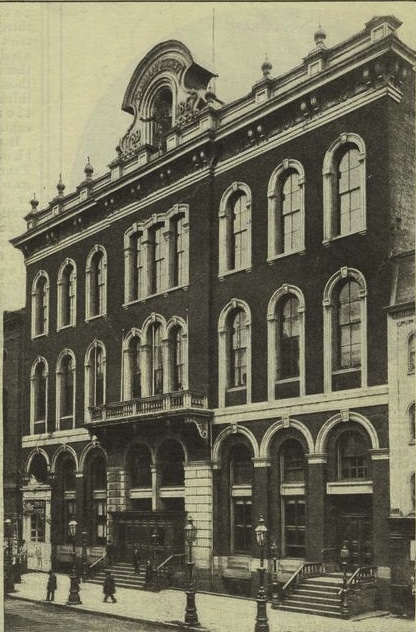
Their headquarters at 141 14th Street (at left) was sparkling new, ‘fresh from the builder’s hands,’ a lush multi-use venue with auditoriums, clubrooms and even a basement cafe, situated next door to New York’s poshest destination, the Academy of Music.

The convention was especially notable as it featured several Democrats from Southern states for the first time since the war.

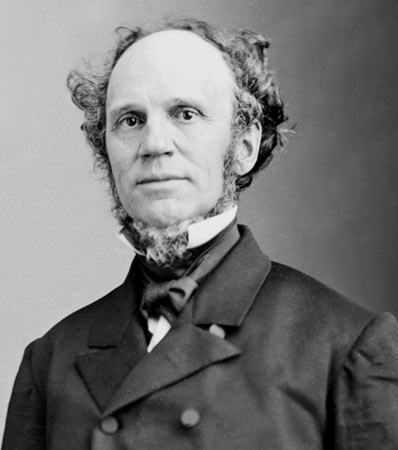
Delegates crowded into the main hall on July 4, and a roar of support greeted Democratic power player (and horse breeder) August Belmont, who gaveled in the proceedings. “I welcome you to this good city of New York,” Belmont declared, “the bulwark of Democracy.”  Nearby smiled former New York governor Horatio Seymour (pictured below), president of the convention. Five days later, there were be far less formality and Seymour, in particular, would not be smiling.

On July 5th, the Democrats unfurled their official platform, embracing the return of the Southern states and harshly criticizing the Republican-dominated Congress:  “Instead of restoring the Union, it has, so far as in its power, dissolved it, and subjected ten States, in time of profound peace, to military despotism and negro supremacy.”  Certainly pleased with this particular inclusion was Tennessee delegate Nathan Bedford Forrest, grand wizard of the Ku Klux Klan.
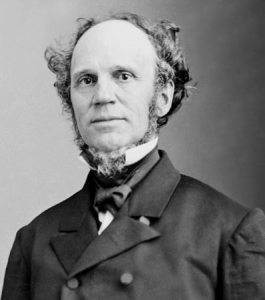
But the Democrats made room for the consideration of progressive causes too, such as a call for women’s suffrage.  Seymour read aloud a plank from the Women’s Suffrage Association written by Susan B. Anthony and co-signed by Elizabeth Cady Stanton.

Anthony appealed to their quest for dominance. “It was the Democratic party that fought most valiantly for the removal of the ‘property qualification’ from all white men, and thereby placed the poorest ditch-digger on a political level with the proudest millionaire. And now you have an opportunity to confer a similar boon on the women of the country … a new talisman that will ensure and perpetuate your political power for decades to come.”

The request was greeted warmly by the room before being respectfully dismissed altogether.

Things grew less harmonious when the balloting for president began.  Several candidates were submitted, even the disgraced Andrew Johnson. For several arduous ballots, the leader was George H. Pendleton, who had been the vice presidential hopeful under General McClellan. But it immediately became clear that the factions within the party were in no mood to settle quickly.

Pendleton’s lead had weakened by the 13th or 14th ballot, leaving two key candidates — Thomas Hendricks, an Indiana politician, and Winfred Scott Hancock, a Union general that seemed an attractive challenger to Grant.  But neither could approach the two-thirds needed to snatch the nomination.

A stalemate called for a third candidate, somebody that all could agree with, while at the same time, an individual that was absolutely nobody’s top choice.  It was at the podium that delegates found their man — Horatio Seymour.
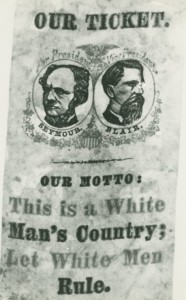
He was horrified. Seymour wanted to retire and had previously rejected calls to run for national office. Privately he must have considered the pitiful chances of running a lengthy campaign against Grant. But delegates greatly respected the former governor, a bastion of cool Democratic leadership who had been an opponent to the federal draft during the war.  He had also been partly responsible for the Draft Riots, emptying the city of federal militia days before the draft was to begin that July.

Still, their were few ready options for the Democrats. When a delegate from Ohio suddenly declared “against his inclination, but no longer against his honor” to put forth Seymour as a suitable compromise, the room followed suit. On the 22nd ballot, Seymour was enthusiastically declared the Democratic nominee for president.

The only one not enthusiastic about it was Seymour. “I said to them that I could not be a candidate [and] I meant it.” [source]  He left the convention in a huff, only to begrudgingly accept the nomination back at Tammany Hall the following day.

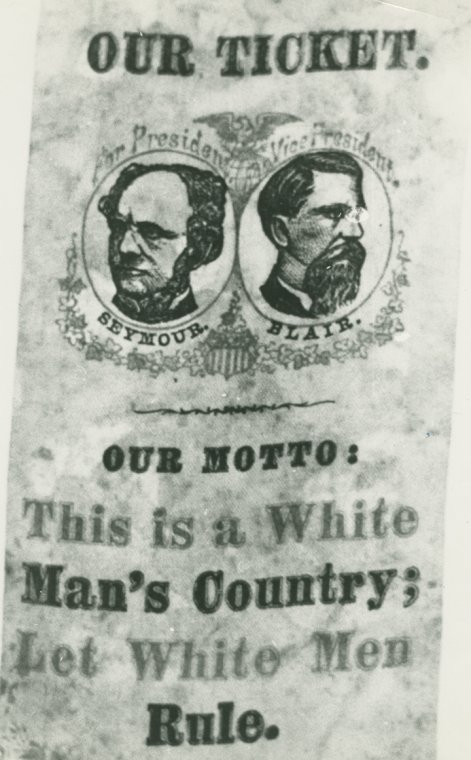
Seymour threw himself into the campaign with vice presidential choice Francis Blair Jr. (whom Seymour barely knew and hardly liked). As evidenced by the campaign poster above, they weren’t afraid to use the Southern racial divide to appeal to voters. But no matter; they lost soundly in the electoral vote to Grant and vice president Schuyler Colfax.

Perhaps the real objective of the convention wasn’t to sway a national crowd, but to energize New Yorkers. Democrats swept into local and state offices, including Boss Tweed’s own choice for governor John T. Hoffman.

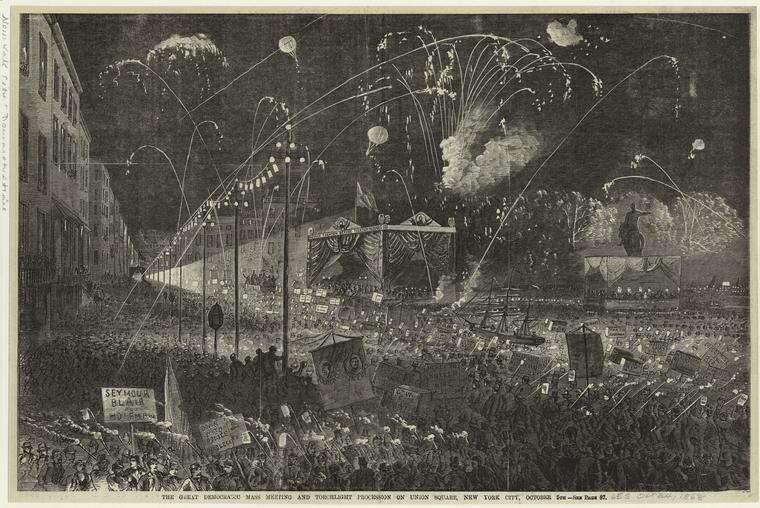
Below: Democrats rally in Union Square in support of Seymour and other local candidates, October 5, 1868

Pictures courtesy of New York Public Library

News from the podcast: Super Deluxe Library Edition

A Welcome Debut: Our podcast this week was on the history of New York University, an institution which spent decades in the Bronx neighborhood today called University Heights. When they returned downtown to Greenwich Village, the campus passed into the hands of Bronx Community College, a part of the City University of New York system.

From that moment, the students of Bronx Community College have been essentially educated in second-hand properties, a collection of storied structures designed by Stanford White and a couple kooky Brutalist additions. But no longer! The New York Times reports on the opening of North Hall and Library, the first new building for the college since they moved in.

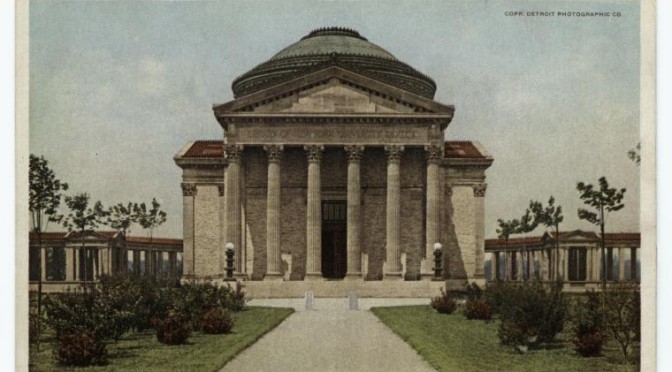
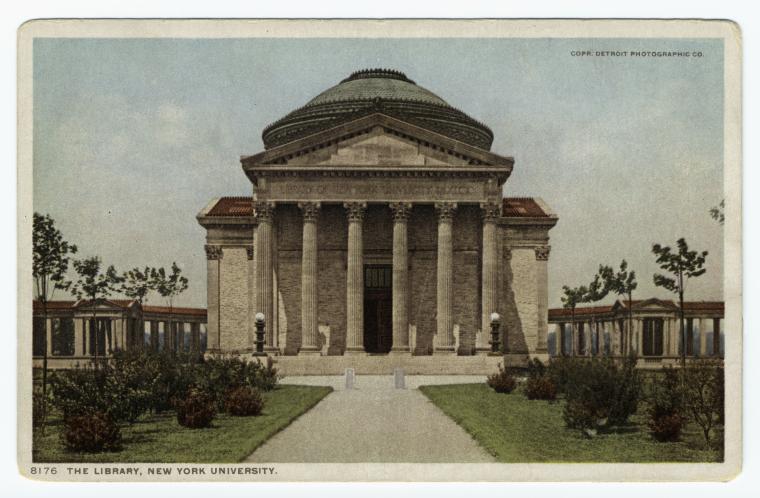
And what of the fate the Stanford White-designed Gould Library (pictured above), home to the Hall of Fame For Great Americans?  Read about it in the Times article here.

What The World Needs Now: Songwriter, NYU graduate and New Yorker Hal David, known for his collaborations with Burt Bacharach, passed away over the weekend. David was a student at the NYU journalism school, although he would quickly find his calling in the world of pop music, and specifically at Brill Building, the venerable songwriting factory in midtown.

I shall now use this occasion to honor Mr. David by presenting the one of his greatest collaborations with Bacharach. When do I ever get the opportunity to post a video by the Carpenters?


Top picture courtesy New York Public Library
Categories
Podcasts

New York University: A noble idea takes root in the Village, a school for the metropolis, but not without growing pains

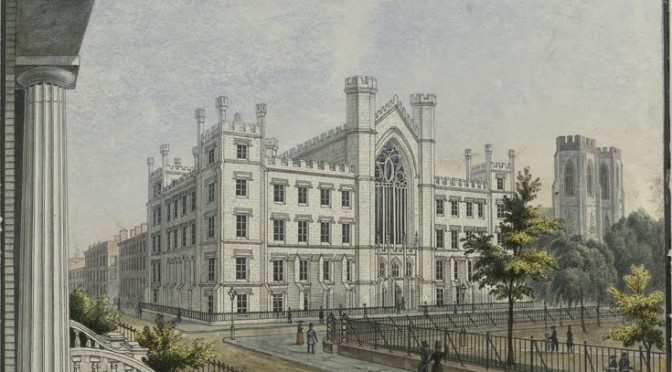
Hogwarts of Washington Square: The beautiful and supremely ostentatious University Hall at the northeast corner of the park, circa 1850. [NYPL]

PODCAST They once called it the University of the City of New York, an innovative, non-denominational school located in a intellectual castle on the northeast corner of the Washington military parade ground. Today it’s better known as New York University, one of America’s largest private schools of higher education, inhabiting dozens of buildings throughout the city.

Find out more about its spectacular and sometimes strange history, from the inventors among its early faculty to some of the more curious customs among its 19th century student body. But the story of NYU is often defined by its growth, the need for expansion, and conflicts with the community.

Featuring: The prisoners of Sing Sing Prison, the Hall of Fame for Great Americans, the usual controversial plans of Robert Moses, and a strange custom known simply as The Bun.


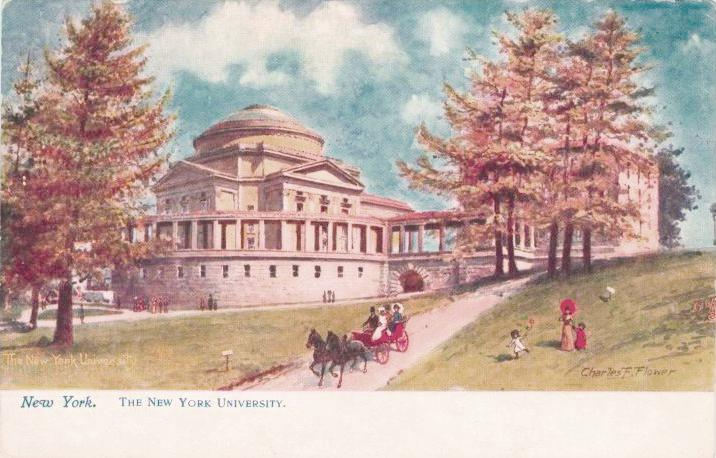
The Bronx campus of New York University was an attempt to affix the school into a more traditional campus. And a bucolic one too, from the looks of  this postcard. [NYPL]

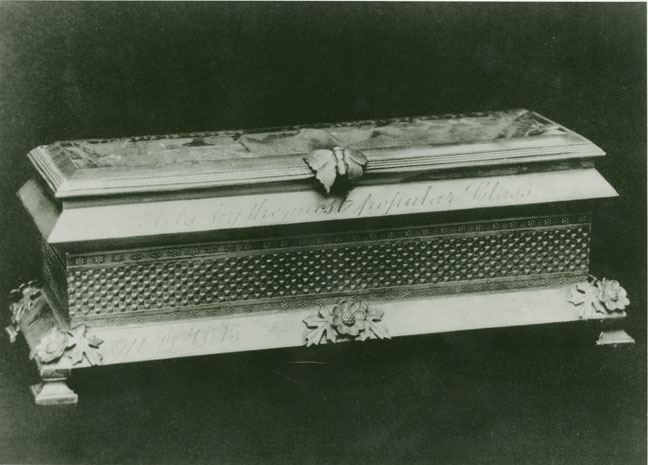
The silver casket (pictured here in 1915) which contained the remains of the coveted ‘Bun’. Who holds the Bun today? [Courtesy the NYU archives]

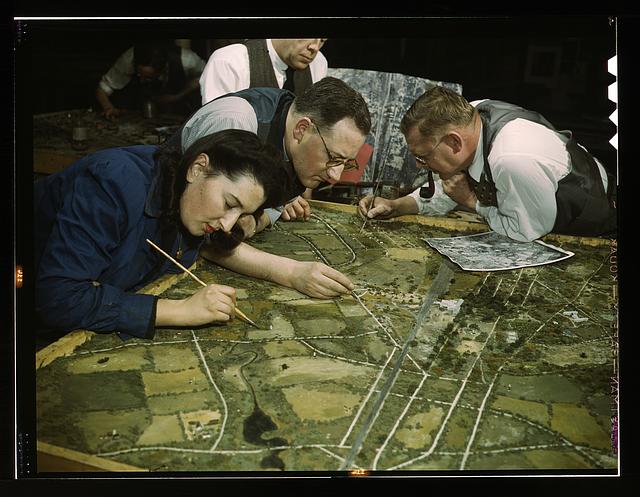
New York University’s Bronx campus became a critical training facility during the World Wars. According to the caption, this is a picture from 1943 of a ‘camouflage class’, with “men and women are preparing for jobs in the Army or in industry.” [LOC]

A 1948 model of the building that would become Vanderbilt Hall. Its construction on the northwest corner of Washington Square Park created tensions with the residents and activists of the neighborhood, one of many such conflicts NYU face in its expansion plans. [LOC]

Don’t douse the glim! Four infamous dancehalls and dives which made the notorious reputation of Bleecker Street


“There are no lower outcasts in New York than the women who nightly creep out of the darkness and swarm the pavement of Bleecker Street…” L. Hereward, Eclectic Magazine, 1893

Sure, the Bowery was a rough and rowdy avenue, but one looking for more alternative adventures in the late 19th century might have found themselves somewhere along Bleecker Street. The college bars and cafes which inhabit the street now seem practically chaste compared to some of the dives once housed there.

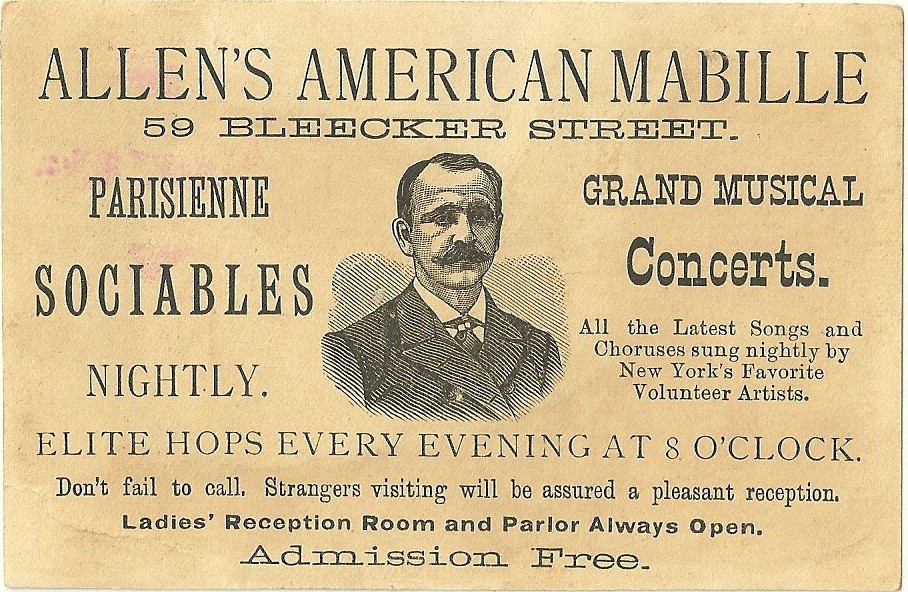
At 59 Bleecker Street, for instance, one could find The Allen’s American Mabille, a ‘Parisienne’ style dance hall and den of prostitution that survived several dozen police raids — police headquarters was literally a block away — and made Allen one of the infamous proprietors in Manhattan, responsible for “the ruin of more young girls then all the dive keepers in New York.” [source]

It joined a collection of prostitution houses along Bleecker and east of Washington Square Park, so many that the neighborhood was sometimes known as Frenchtown, and not because of the fine cooking.

But American Mabille and the other ‘Paris’ houses, from all appearances, specialized in heterosexual couplings. A few places on Bleecker catered to male encounters and often of the most flamboyant kind, if accounts are to be believed. (Keep in mind the hysteria of the late 19th century press!)

The most famous of these was The Slide at 157 Bleecker Street, a basement dive filled with men in drag, horrifying proper New Yorkers with clientele “effeminate, degraded, and addicted to vices which are inhuman and unnatural” according to contemporary scandal sheet descriptions.

The Slide is somewhat well-known today as it shares the same address as rock venue Kenny’s Castaways.

Down the street from The Slide was the Black Rabbit at 183 Bleecker Street, another dive with a mixed clientele, known for scandalous sex shows, from the likes of the ‘Jarbean fairy’ and a female ‘sodomite for pay’. Like many of the others, it survived with sizable bribes to the police. The bar even scandalized thieves. In 1901, a reporter from McClure’s Magazine entered the Black Rabbit with a pickpocket who replied, “[T]his is dead tough. I wouldn’t allow this, ‘f I was the chief….I like an open town where everything goes all right enough, but I’d douse the glim here.” (douse the glim = turn out the lights)

Today, the historically themed 1849 Restaurant occupies the Black Rabbit’s address.

Nearby The Slide was Frank Stephenson’s Black And Tan at 153 Bleecker, “a place of bad repute“, specializing in mixed race heterosexual encounters, something most likely frowned upon even in many low-class Bowery dives. The phrase black-and-tan was used to describe other halls where people of different races drank and caroused together.

 Top image courtesy here.

New York transit system stymied by women’s skirt styles

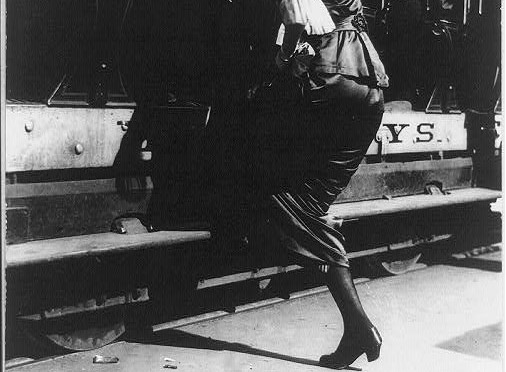
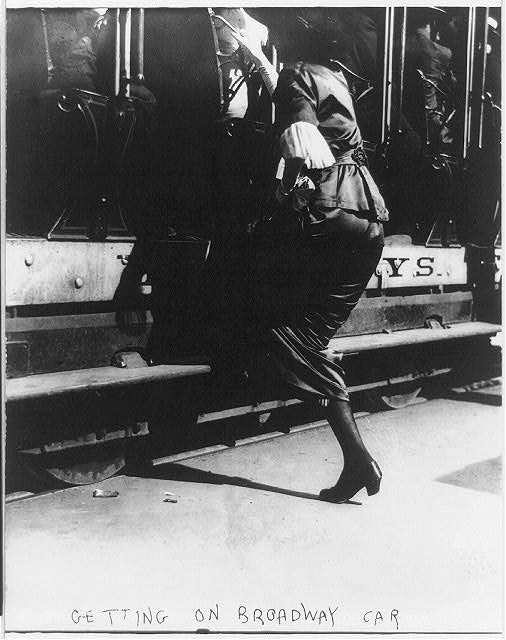
A lady in a relatively normal skirt boards a Broadway streetcar in July 1913. Now imagine trying this in a hobble skirt! (Courtesy Library of Congress)
A serious cry (mostly from men) rang out through the city one hundred years ago about the ever-expanding transit system and the scandalous style of women’s skirts. Were frocks getting caught in doorways? Were dress lengths causing women fall down stairs?

Perhaps, but that wasn’t the issue. The latest fashion trend, the hobble skirt, was slowing the progress of women onto and off of streetcars, causing frustrating delays.

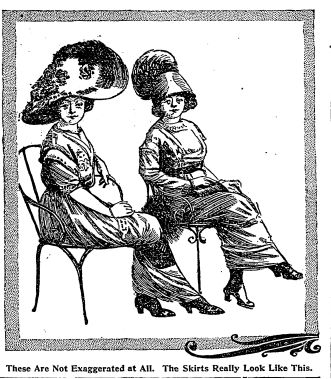
The Parisian-style hobble skirt, with its bunched hem near the bottom to create a mermaid-like appearance, made its appearance on New York streets in the early 1910s. The new gowns required ladies to walk more elegantly and, thus, more slowly, a throwback to the Victorian gait. “[T]he mannish stride of the women of today was taken for granted as a permanent thing. Nobody expected it to change, for nobody saw the hobble skirt on the horizon.” [New York Times, January 1912]

Above: Some sass from the Times fashion pages, June 12, 1910

After a millenia of unfettered skirts, this new silhouette must have seemed positively strange to elder fashionistas.

“‘The hobble’ is the latest freak in women’s fashions,” warned the Times upon their arrival in 1910.  “The hobble skirt suits none. But many, too many, women will wear what the fashion authorities decree.”

Aesthetics aside, the hobble skirt created a practical problem. While measured, graceful walking might be fine on Ladies Mile or strolling along Fifth Avenue, it was an encumbrance upon the ever-moving streetcar system.

An executive of the Interborough Transit System (New York’s first subway operator) grumbled to the Evening World in 1912 about the extra burden the hobble skirt created upon city transportation and called for the fashion trend to be abolished.

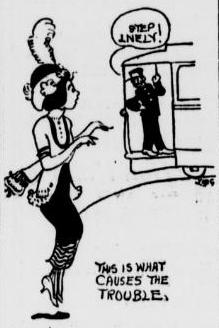
“Often hundreds of people will be forced to stand aside patiently waiting for some women to raise her skirts sufficiently to allow her to step into the car,” said George Keegan, general superintendent.

A special ‘step-less’ car had even been designed with the fashionable lady in mind. The first of these “hobble-skirt, hygenic, fool proof” cars debuted on the streets of New York in the spring of 1912.

Meanwhile, underground, fashionable ladies were finding difficulty clearing the gap between the platform and subway cars. “Nearly all of the accidents in the subway are due to the fact that women wear hobble skirts,” said Keegan, a claim which could not possibly have been true.

The Pennsylvania Railroad, fearful of complaints and potential lawsuits, acted upon the crisis the following year by requiring train conductors to note skirt styles and “height of heel” and report all data to their central office. “If women passengers on the Pennsylvania Railroad insist on wearing such mantraps, or rather womantraps, as hobble skirts and high heels they cannot hold this company responsible for accidents which may happen to them,” claimed the railroad.

But all these railroad executives really needed to do was simply wait — trends subside, to replaced with other, more objectionable wear.

By the time Mr. Keegan was complaining about the hobble skirt, the Evening World fashion section was already clutching its pearls in disbelief about another fashion abomination. “The high note of feminine folly has been struck.  The harem skirt is to succeed the hobbled horror which has made women hideous and ridiculous during the past year.”

But, leaving taste aside, at least you could ride the subway in a harem skirt!

Illustration above is from the August 9, 1912 edition of the Evening World which accompanied the Keegan article

Notes from the podcast: (#141) New York Beer History

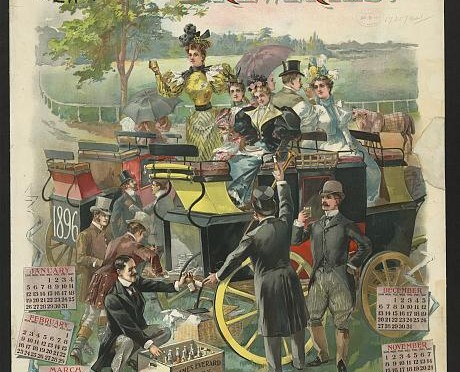
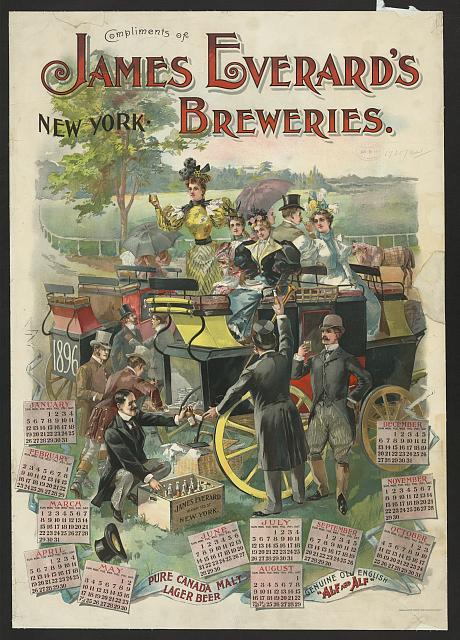
Year-Round Brews: This calendar from 1895 celebrates the Harlem breweries of James Everard. An older Everard brewery building on W. 28th Street was converted into a Turkish bathhouse in 1888. It became the location of a variety of notorious activities during the 20th century. Everard’s breweries became the plaintiff in a Prohibition-era Supreme Court case regarding the use of alcoholic beverages for medicinal purposes. (Pic courtesy the Library of Congress)
Piels:  We completely skipped one major New York brewer, one that still maintains a presence in New York, if in name only. Three German brothers opened the Piels Brewery in East New York, on the same day as the opening of the Brooklyn Bridge— May 24, 1883. They too had their own beer garden to enjoy the brews manufactured inside. Called the Summer Garden, this festive place adorned with electric lights and a shaded seating area was known for its determined wait staff.

From the Brooklyn Daily Eagle: “The waiters in the summer garden competed to see who could carry the most seidels of Piels Beer from the bar to their customers tables. In 1904 one waiter carried 16 seidels (eight in each hand).” [source]

Piels is still manufactured in Milwaukee by the Pabst Brewing Company.

Five-Borough Beer: In its heyday, you could find breweries in all five boroughs. Brewers were particularly attracted to Staten Island thanks to its spring water. In Stapleton, near the ferry piers, sat two of the largest — George Bechtel‘s brewery (which opened in 1853) and Rubsam & Hormann’s Atlantic Brewing Co.

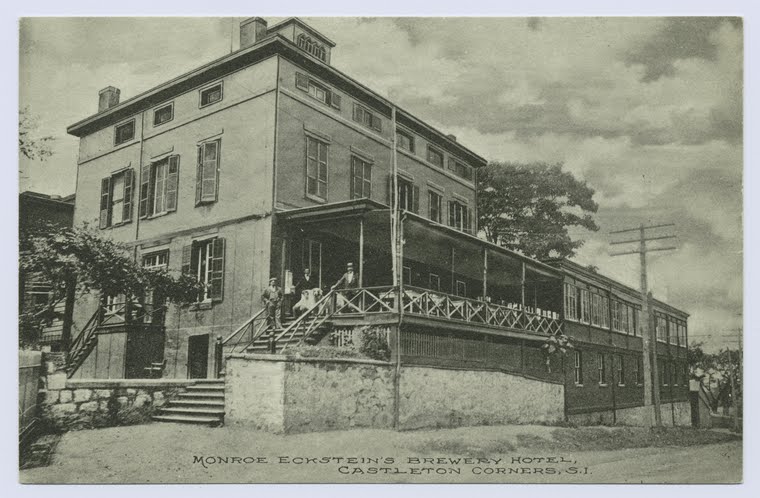
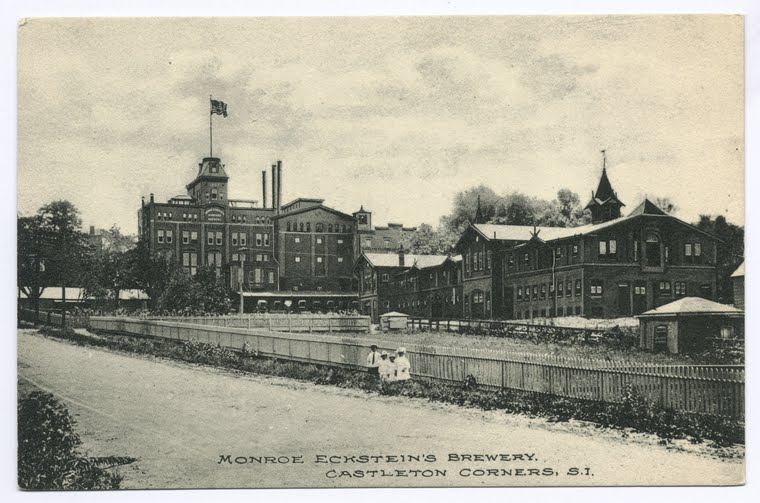
And then, of course, there’s a place we all want to stay — Monroe Echstein’s Brewery Hotel and adjoining brewery on Manor Road in Castleton Corners. (Pics courtesy NYPL)

College Point in Queens County attracted a large German population, thanks in part to rubber industrialist Conrad Poppenhausen, who set up his factories here in the 1850s. His workers and daytrippers to the region enjoyed a line of small breweries and beer gardens here. A couple decades later, Henry Steinway would set up his own factory town to the west and with it an assortment of beer gardens and even an outdoor amusement park called North Beach.

Today’s Bohemian Hall in Astoria is not far from Steinway’s factory. Read about the history of one of Queens’ oldest drinking establishments here.

For More Information: The New-York Historical Society exhibit ‘Beer Here: Brewing New York’s History is on display until September 2, 2012. I was particularly interested in the Society’s collection of ice carving equipment used by early brewers and the very cheeky collection of mid-20th century advertising and media.

For a general history on American beer, I recommend Maureen Ogle’s ‘Ambitious Brew: The Story of American Beer’ and also Gregg Smith’s ‘Beer In America: The Early Years’. And there is no shortage of History-Channel style documentaries on the subject. Also, for some general information on Bushwick, I highly recommend exploring the Bushwiki, with lots of history about the neighborhood.

There’s now a New York Beer and Brewery Tour with stops at brewers in three different boroughs. And it takes you down ‘Brewer’s Row’ after having a couple rounds of beer elsewhere. You can catch a tour of the Brooklyn Brewery of course; visit their website for more information.

Thanks again to Scott Nyerges for helping me out with this one! Please visit his website for more information on his upcoming gallery show in Bushwick. And also my thanks to the Bodega Bar in Bushwick where I was going to pull together the Bowery Boys’ very first real ‘on location’ recording at a bar. Unfortunately I was not able to work that out, but I thank them for opening their door to the show anyway.

Categories
Podcasts

On The House: A history of New York City beer brewing

Behold the lager: A German variety of beer revolutionized American drinking, inspiring a new kind of drinking establishment (Courtesy the New-York Historical Society

Inspired by ‘Beer Here: Brewing New York’s History‘, the terrific summer show at the New-York Historical Society, the latest Bowery Boys podcast explores the story of one of America’s greatest, most treasured products– beer.

PODCAST New York City’s thriving craft brewing industry today hearkens to a time over a century ago when the city was one of America’s great beer-making capitals, the home to a robust industry of breweries and beer halls. In the 19th century, German immigrants introduced the lager to thirsty crowds, manufacturing thousands of barrels per year from breweries in Manhattan and Brooklyn’s ‘Eastern District’ (primarily Bushwick and Williamsburg). 

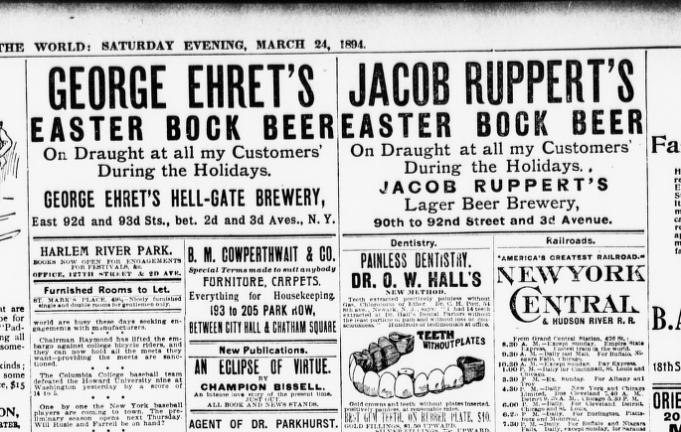
The top Manhattan brewers were Hell Gate Brewery and the Jacob Ruppert Brewing Company, situated right next to each other in the old German neighborhood of Yorkville. Both Ruppert and Hell Gate’s founder George Ehret rode the beer craze to become two of New York’s wealthiest businessmen. Meanwhile, out in Brooklyn, a phalanx of brewers clustered along Bushwick Avenue in fine red-brick factories.

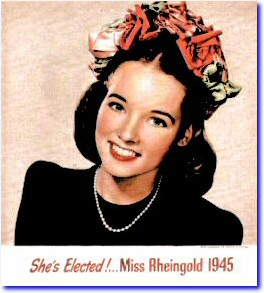
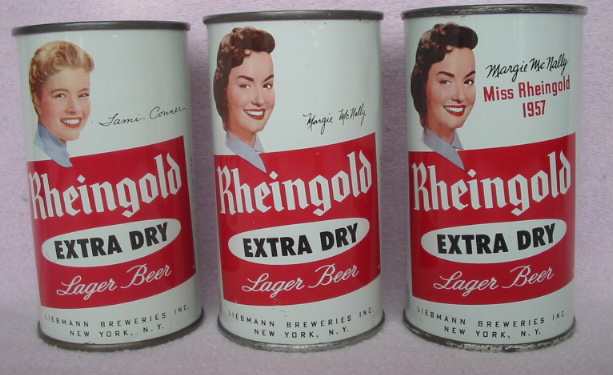
Following World War I and Prohibition, New York lost its hold over beer manufacturing to more savvy Midwestern beer makers. But a few local brands weathered the century with unusual marketing ploys — from sports sponsorships to the Miss Rheingold beauty pageant.

By the late 1970s, significant brewing had vanished from New York entirely. But somewhere in SoHo in the 1980s, a renaissance was about to begin…..

For a little extra ambiance, the show is recorded on location, live in Bushwick, Brooklyn, within a couple blocks of the original Brewers Row.


NOTE: It wouldn’t be a show without my vocal slipup o’ the month. Perhaps  I watched too much Buffy The Vampire Slayer when I was younger. I keep referring to Hell Gate as Hell’s Gate. Scott says it correctly. Both the turbulent confluence of waters and the brewery are called Hell Gate.  

Next Week: Some books, additional resources, a few more pictures and some more stories left out of this week’s podcast.

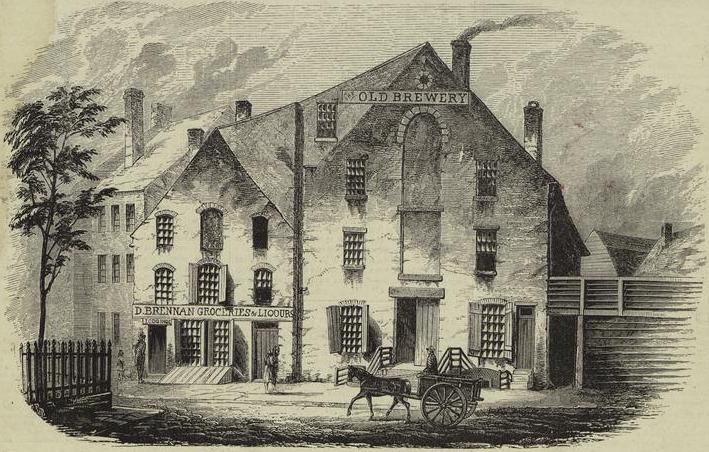
Perhaps the most notorious example of an early New York brewery was the Coulthard’s Brewery situated on the banks of Collect Pond. It survived the draining of that polluted body of water, only to survive as the center of the most disreputable elements of the Five Points neighborhood.  It was eventually demolished in 1853, replaced with a mission house.

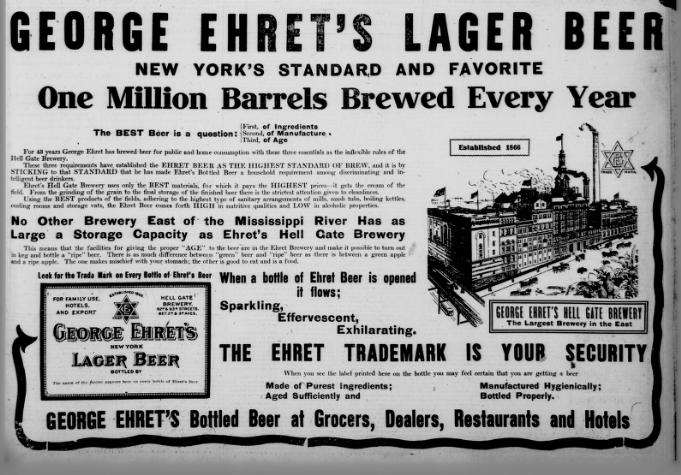
George Ehret was New York’s most successful brewer of the late 19th century. His assertion that ‘no other brewery east of the Mississippi River has as large a storage capacity as Ehret’s Hell Gate Brewery‘ was certainly accurate.  This ad from 1909 presents a company still at the top of its game. However Ehret would encounter serious opposition in the coming years, with both World War I and Prohibition cutting short the brewery’s meteoric success.

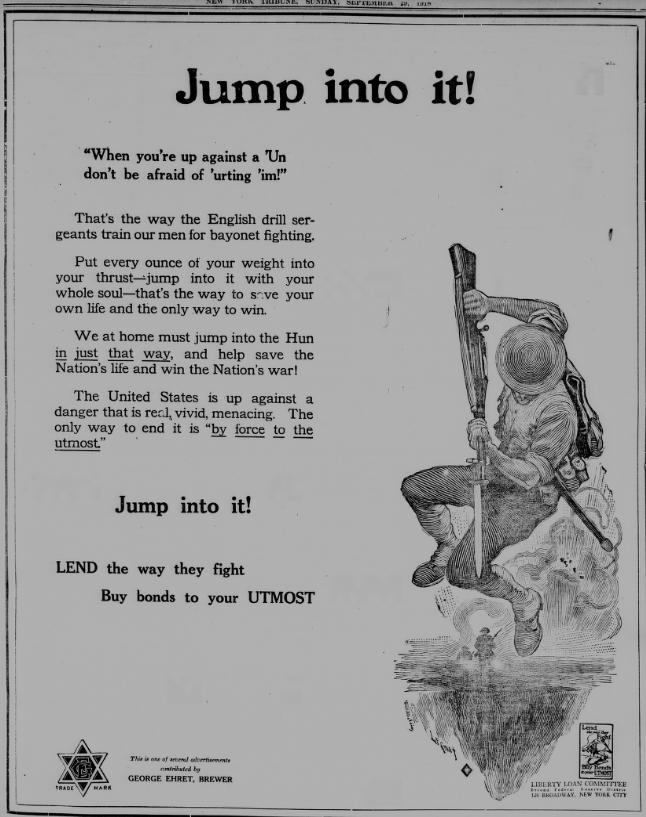
Ehret was stuck in Germany during World War I due to illness, not a great place to be during a war. His entire estate was seized by the government while he was away. When he finally returned, he threw his weight behind pro-American causes to banish any suspicions. This U.S bonds ad from 1918, the year Ehret returned to New York was one of many placed by the brewery.

The brewery of Jacob Ruppert wasn’t just situated next to Ehret’s in this 1894 New York World newspaper; the buildings themselves were near one another, in the burgeoning neighborhood of Yorkville on the Upper East Side.  (Newspaper clippings courtesy the Library of Congress.)
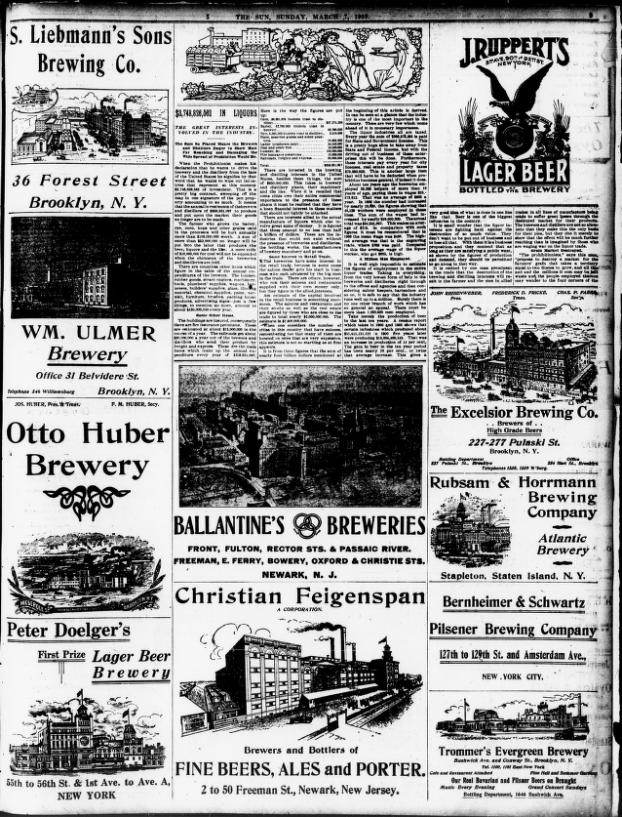
A sample page from a 1909 New York Sun newspaper illustrating some of the many breweries in the region.   Included here are the Liebmanns (who produced Rheingold Beer), the Otto Huber Brewery, William Ulmer, Trommer’s and the Excelsior Brewing Company — Brooklyn most prominent lager brewers.

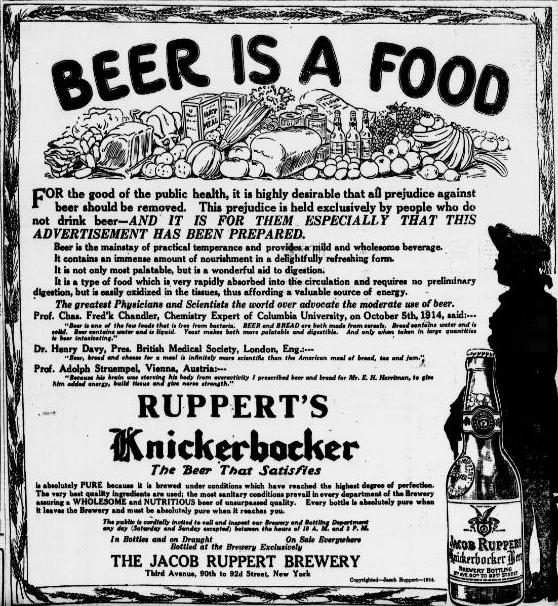
Temperance causes were greatly beginning to clamp down on the brewing industry, so beer makers attempted to market their product as true American beverages — with links to the Founding Fathers — or as products important to a person’s health. This Knickerbocker Beer ad from 1914 gamely attempts both.

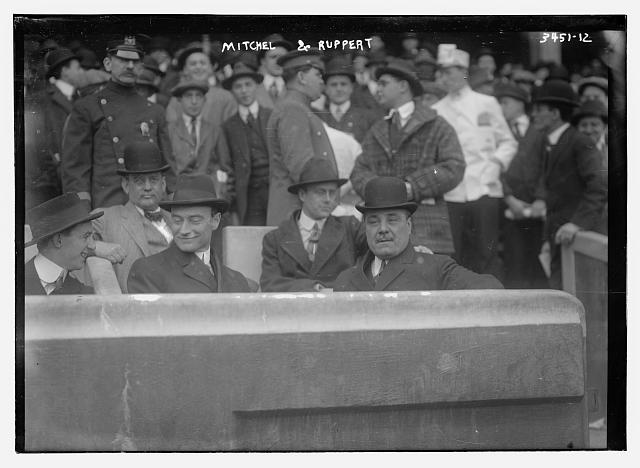
New York’s ‘boy mayor’ John Purroy Mitchell sits with Jacob Ruppert at the Polo Grounds in anticipation of a game by the team owned by the brew man, the New York Yankees. The Yankees would play at the Polo Grounds until 1923, when they moved to the newly built Yankee Stadium.

Rheingold Beer was one of the few remaining locally-based brewers to survive by the mid 20th Century, partially thanks to their annual Miss Rheingold beauty competition. [source]

This jingle, with true New York flavor, was featured in our podcast, but it really works better as a vintage television commercial!

And this Schaefer’s advertisement visualizes a world where robots are all-in-one bartenders.


I want to especially thank my guest host this week, Scott Nyerges, photographer, filmmaker and my old college friend! 

Oh, and do you need another reason to have a beer today? Well, it’s the birthday of Joseph Mitchell, born in 1908, the author of a great many profiles for The New Yorker. One of his best known collections is ‘McSorley’s Wonderful Saloon‘ from 1943, featuring a classic New York profile of the old ale house on East 7th Street.

‘Staten Island Has Many Charms Worthy Of Consideration’: Ten ways to sell a borough (and a proposed subway) in 1912


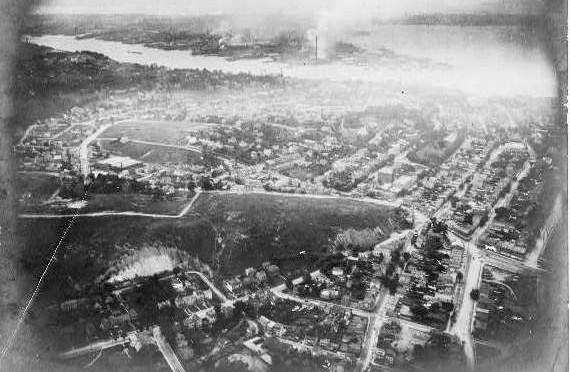
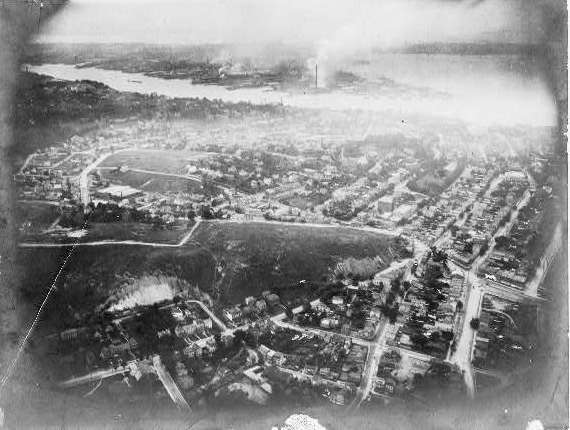
The sky’s the limit: Staten Island from the vantage of a hot air balloon, August 1906. (Courtesy LOC)


“God might have made a more beautiful place than Staten Island, but He never did.” — George William Curtis

If you’ve ever been slightly bemused by the newspaper profiles of trendy neighborhoods, presented as though the reporters were urban archaeologists ‘discovering’ heretofore hidden pockets of the city, then you’ll find amusement in this New York Tribune article from July 1912.

Hopefully to snag the attentions of Manhattan businessmen, the Tribune staff devoted an entire section in their Sunday section to extolling the many virtues of one of its more foreign corners — Staten Island.

The other island borough may have indeed been a mystery to many Tribune readers; the city had taken over ferry service just a few years previous, and there were no bridges yet linking Staten Island to Brooklyn. Many Manhattanites in 1912 harbored the impression that Staten Island, once known as a rural recreational getaway,  was now a dull and uncivilized farmland with a few scattered industries.

But this Tribune article was inspired by a promise that would finally draw Staten Island into the fold — the subway.


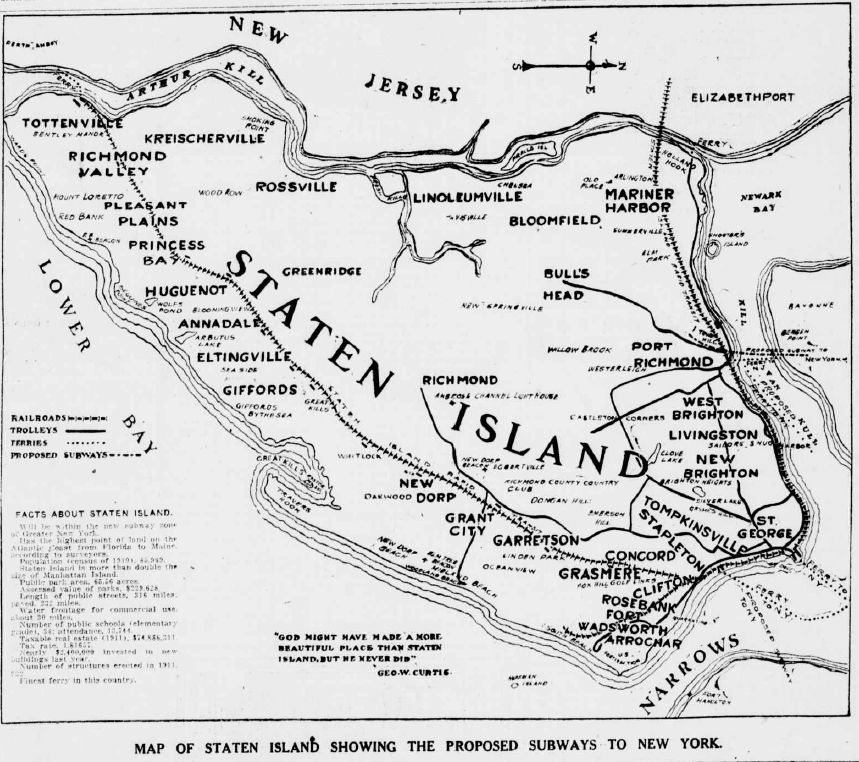
Below: A real estate map of Staten Island from the 1912 article. The dotted lines at the bottom denote where the proposed subway line would have been. 

Manhattan’s Interborough Rapid Transit Company (IRT) and the Brooklyn Rapid Transit Company (BRT) were nearing an agreement with the city to expand the present subway system and create new lines throughout the city. This plan, called the Dual Contracts, helped lay out most of the current New York subway routes today. However there were many potential lines that were never built (despite the efforts of a few future mayors). Among the most ambitious was a subway link to Staten Island.

It was with the anticipation of this underwater track (linking Stapleton to Bensonhurst, see map abovve) that the Tribune hoped to regale readers with the unspoiled wonders of New York City’s least populated borough.

Forget the fact that Staten Island already had an intimate, but thriving old-money scene, the vestiges of a genteel society formed among the mansions of tycoons along the north shore. Fast-paced urbanites would have considered them stubbornly charming but boorish. Society and recreation were not the appeal.

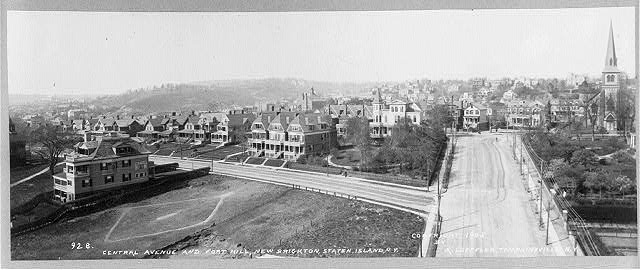
Below: New Brighton, at Central Avenue and Fort Hill, 1905 (LOC)

The Tribune focuses on Staten Island’s destiny as ‘one of the greatest shipping and manufacturing centres of the world’ and wonders deliriously at the delights of that great, underused waterfront. Some highlights from the article (which you may read in full here):

1) Staten Island’s terrific gas supply, the borough’s oldest public service supply, lives up to its motto to ‘Make Gas Service Good Service And Then Some’. Its most recent successes include a yard dyeing manufacturer, the gas engines of the Swift Beef Company, and soldiering furnaces for the U.S. Department of Lighthouses. And the price of gas is going down!, claim management.

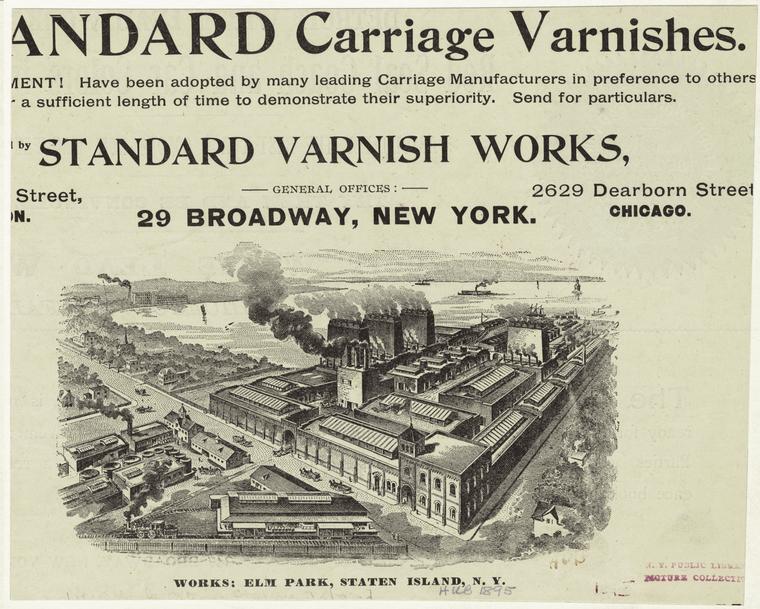
2) The Varnish Capital: One of Staten Island’s great success stories is its varnish industries, most notably Standard Varnish Works, which has miles of underground pipes that filter oil and turpentine from the docks to large storage tanks in the neighborhood of Elm Park. Sold around the globe, “the sun never sets on products manufactured by the Standard Varnish Works.”

3) ‘Country Life’, not ‘Lonely Life’: In New Dorp,  homes upon a ‘noble ranges of hills’ have access to a fine beach, according to the article. “The loneliness that so many people fear as the bane of country life has had in no chance to make itself felt in New Dorp.” A resident describes it as ‘earthly paradise’.

4) Building Innovation: One of Staten Island’s most successful builders is W. H. C. Russell, ‘the pioneer … of the famous asbestos ‘Century’ shingles’, used in the construction of public schools and government buildings.’

Below: The glory of varnish, Standard Varnish Works in Elm Park, that is. (NYPL)

5) Hot Development Opportunities (But Not Too Hot): A St. George realtor admits, “Do not think for a moment that I have been tearing up the earth or anything of that sort, but … I have been doing very satisfactory business.”

6) Great Subway Expectations: The report speculates that the new subway link will get commuters from Stapleton to lower Manhattan in about thirty minutes, bringing the borough’s ‘most entrancing’ residential areas into the subway’s five-cent-fare zone.

7) Don’t Let The Factories Bother You! ‘The man who prefers to live in a place with superb country features, where are green fields, towering shade trees, winding roadways inviting to autoists and owners of harness horses … should not turn his step away from Staten Island because bigger factory zones are going to be built there soon.’

8) There’s Always South Beach: Staten Island’s southern amusement area, rivaling Coney Island, remained a vital recreation center for the city in the 1910s, thanks to Staten Island’s present train services. “Rapid transit has converted an unknown and unused beach into a gay and popular resort, and today South Beach rightly claims to be Coney Island’s only rival.”

9) ‘The Garden Spot of Greater City Of New York‘: ‘Verily, extremes meet here. Already quaint and prosperous little villages have begun to take on new life and expand ……. [E]very day adds to the list of those who through out-of-door life and sunshine are ‘finding themselves’ and adding measurably to the pleasures as well as to the number of their days.’

10) ‘Spotless Town‘: But if you need to be around wealth, the old Vanderbilt estate is being chopped up into ‘high class lots’, near the Fox Hills Golf Course, ‘the finest course in America’!

Thank you, Tooth Brush Lady! Newsies get their teeth fixed

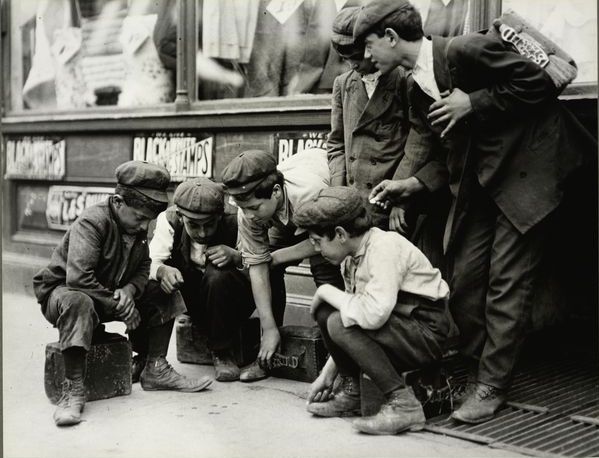
Above: Newsboys and bootblacks playing craps, photographed by Lewis Hines in 1912.  Some of these were most likely recipients of free dental care, provided at the Second Avenue newsie’s lodging house in that year by the Society of Good Cheer.

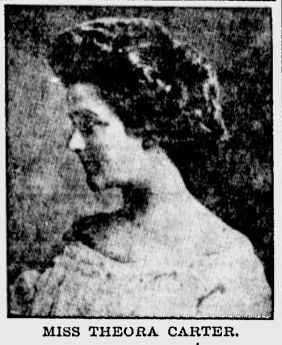
Newsboys with poor teeth one hundred years ago — I’m guessing this would be most of them — had something to smile about in 1912 in the form of Miss Theora Carter and the Society of Good Cheer.

Miss Carter, a native of Seattle, was an inventive social activist and lecturer, focusing on generating an overall sense of good will among the poorest in New York, uplift and cleanliness as a way of promoting health.  An “advocate of good cheer” and a woman of “ample income“, Carter moved to New York and formed the Society of Good Cheer as a method of spreading healthful calm and tranquility. Joining her at the Society’s headquarters at 258 West 74th Street on the Upper West Side were two dozen like-minded young women, many of whom lived at that address. (Carter may also have lived here, although one news clipping claimed she lived in Park Slope.)

At right: A photo of Miss Carter from a Toledo newspaper [source]

The ladies of the Society of Good Cheer canvassed New York’s many hospitals, “seek[ing] out those patients with few or no friends and cheer[ing] them up by reading or talking to them.” During the holidays, the Society provided homes and hospital rooms in New York and Boston with Christmas trees; in many ways, Miss Carter’s holiday work might have inspired another society lady, Emilie Herreshoff, when she provided Madison Square with the very first public Christmas tree in 1912


In 1911, Carter expanded their crusade to noise prevention. After all, the streets were now rapidly filling with automobiles, adding to the noise of streetcars and elevated trains. She focused her wrath at noisemakers outside of children’s hospitals, handing out “cards of human appeal” to “truck drivers, the drivers of automobiles and other noise-making vehicles.” [source]


The following year, inspired by her noise-squelching hospital visits, Miss Carter turned her attentions to the orthodontic needs of poor children, in particular, the many thousands of newsies. ‘The upbuilding of character and the overcoming of physical imperfections through remedying irregularities of children’s teeth’ was Miss Carter’s stated goal. Another article further described her intentions as “good teeth, clean teeth and straight teeth.”


The Childrens Aid Society was already providing free dental inspections to hundreds of children by this time,  so Miss Carter decided to focus one some of the most neglected, most independently minded children, the inhabitants of the Newsboys Home at 170 Second Avenue (at 11th Street). A New York Times editorial from July10, 1912, proclaimed that ‘the teeth, jaws and mouths of some 2,000 newsboys’ would benefit from the new clinic.

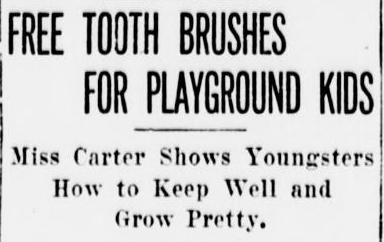
Above: A headline from the New York Sun, September 28, 1912

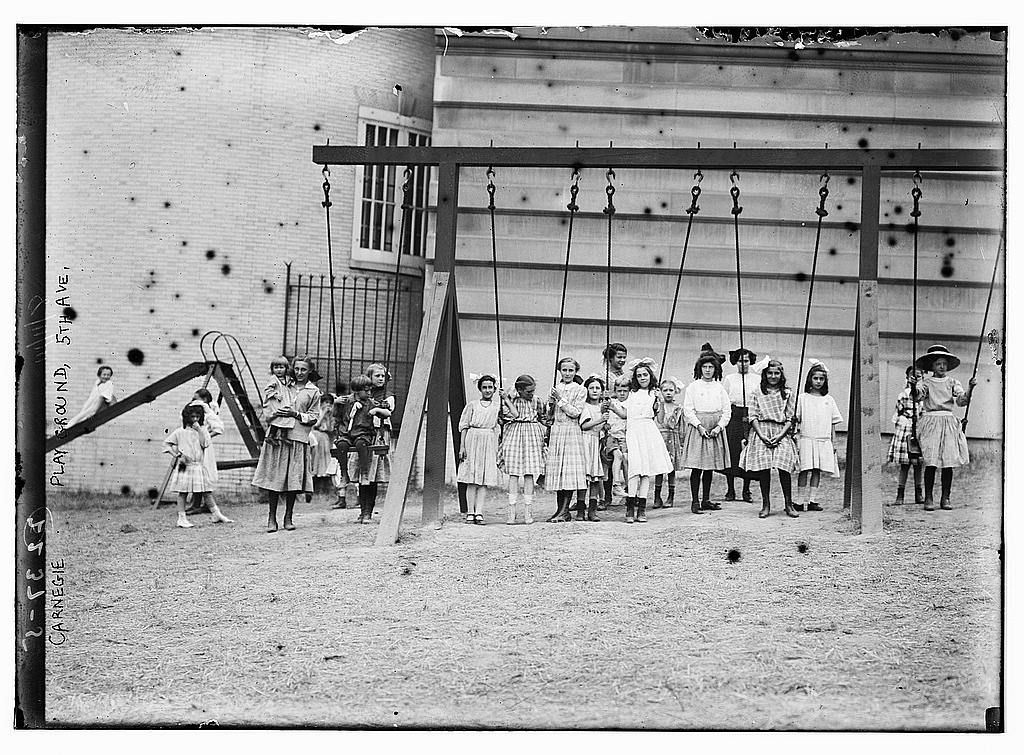
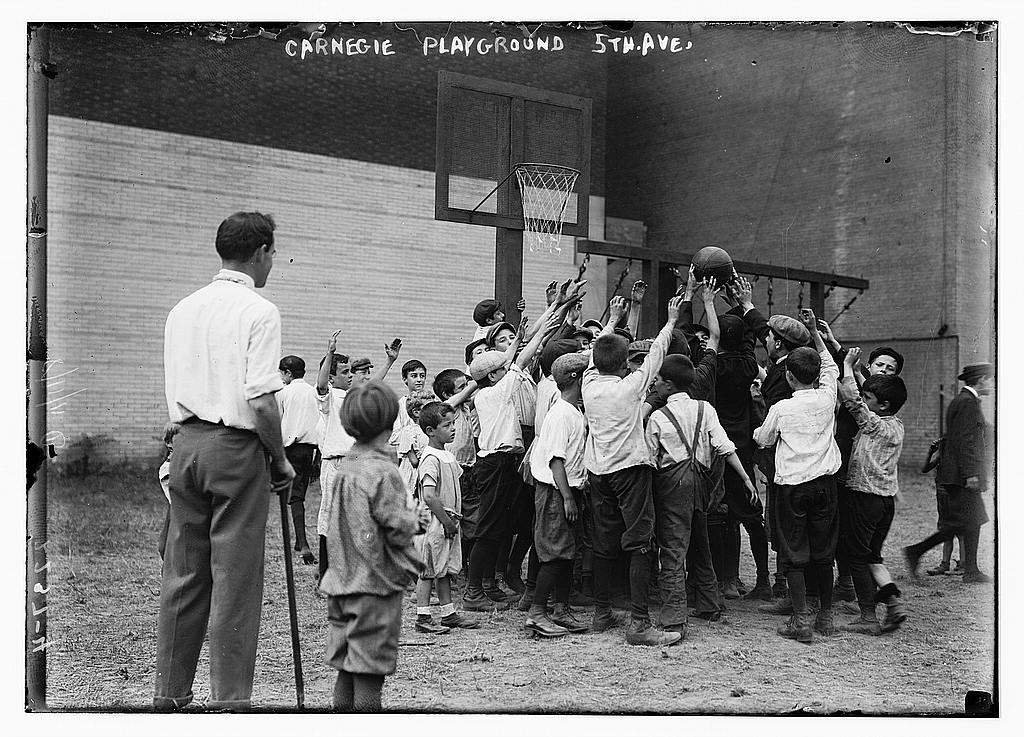
Carter, now fully invested in children’s dental practices, lectured to children on the Carnegie Playground at 91st Street and Fifth Avenue (near the palatial mansion of Andrew Carnegie), providing them with free toothbrushes while underscoring the social advantages of a healthy mouth. “[Y]ou see if you want to be good looking you must clean your teeth.” [source]

Miss Carter, known as the Tooth Brush Lady or ‘the Apostle of the Toothbrush‘, spent the next decade treating New York’s youngest unfortunates to her trademark ‘good cheer’. In 1916, the Society brought Christmas presents to the infirm young patients at the Hospital For Ruptured And Crippled Children — yes, that was its actual name — at 321 East 42nd Street (where the Ford Foundation stands today).

The New York Sun gives an interesting description of the ravishing Miss Carter: “She is slim and svelte, with dusky hair, big hazel eyes and a perfectly straight nose.”

Apparently the Society was so successful that Miss Carter formed a junior off-shoot in Brooklyn called the Little Cheerfuls, which allowed young children from wealthier households to help in the spreading of ‘good cheer’ in local hospitals.

By the way, I have officially fallen in love with Miss Theora Carter.

Below: Children at the Carnegie Playground at 91st and Fifth Avenue. It’s likely that these photographs were taken during Miss Carter’s visit to the playground, as news reports all state that photographers were present during her visit.

Photos courtesy the Library of Congress
Categories
Pop Culture

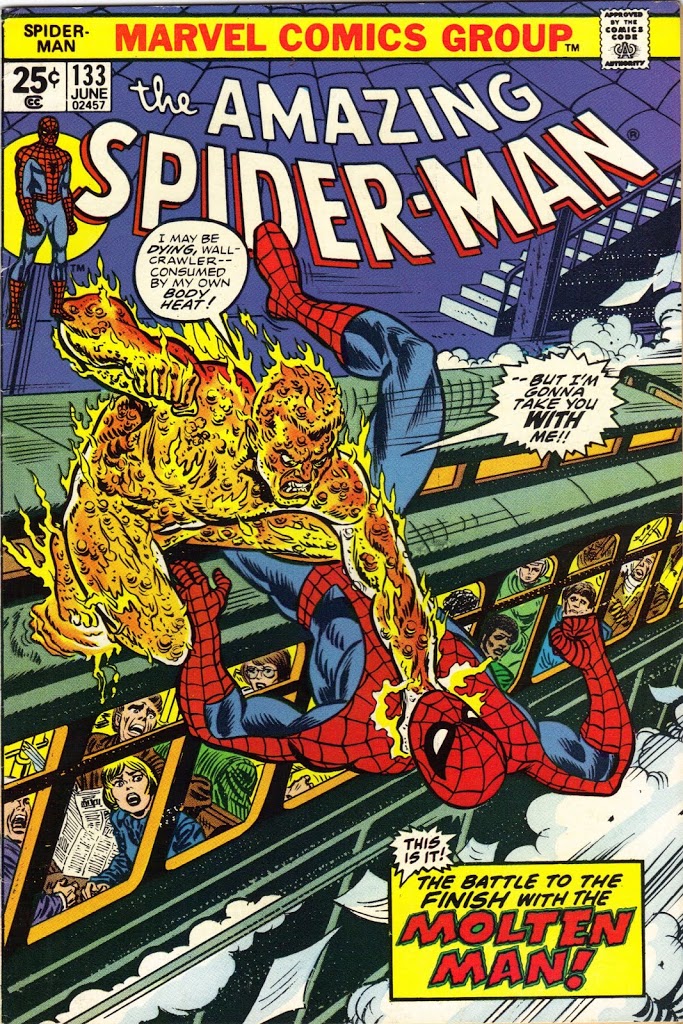
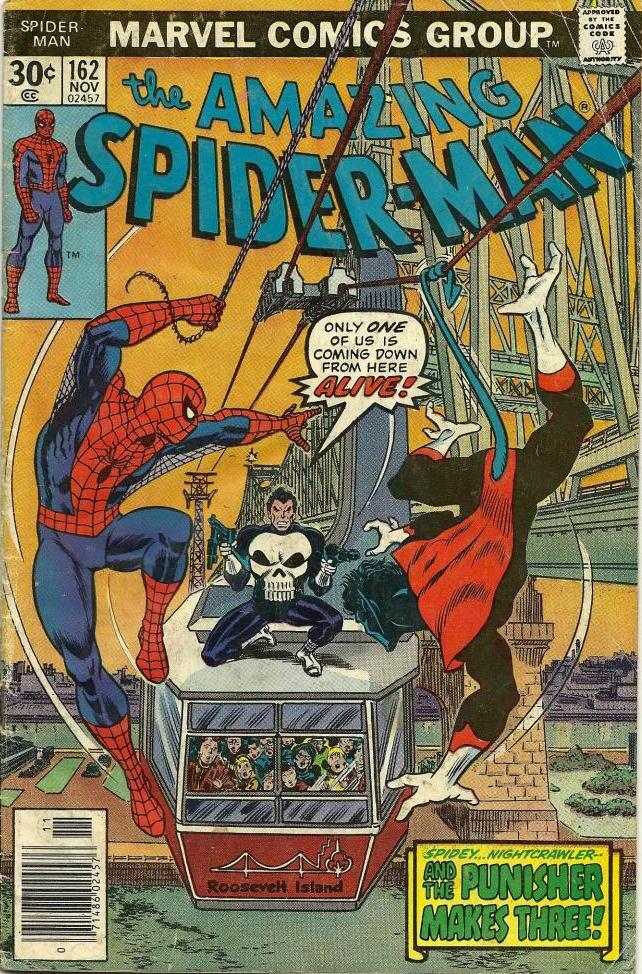
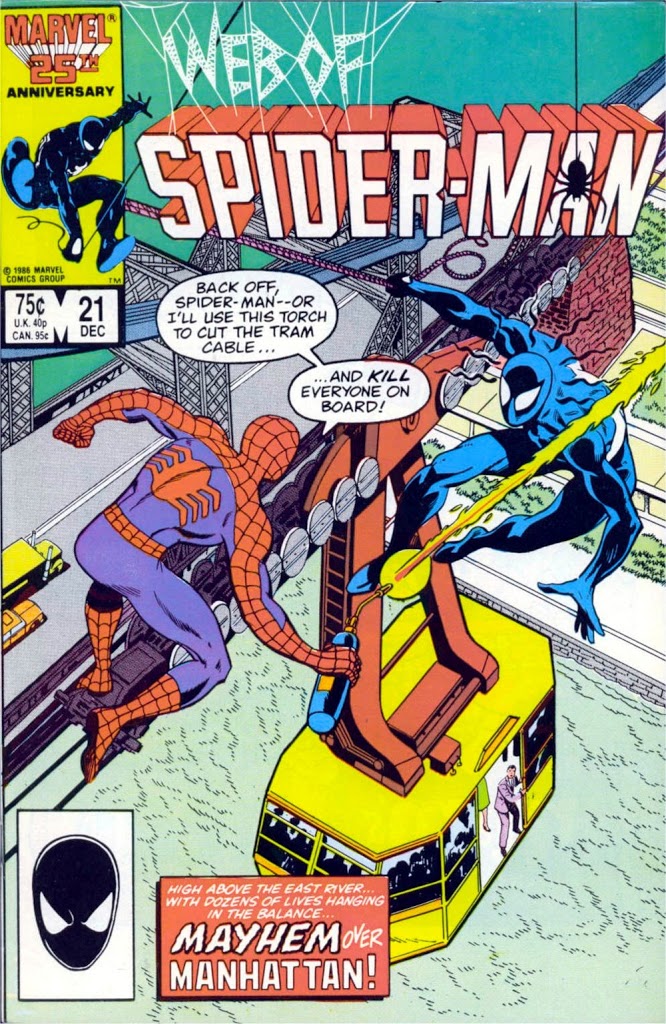
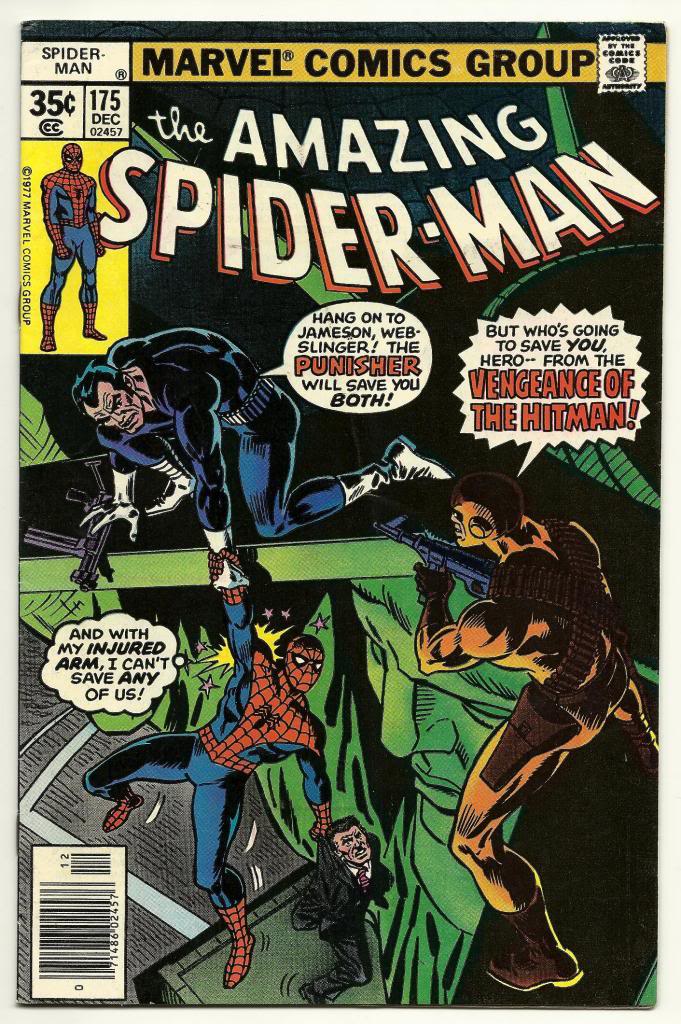
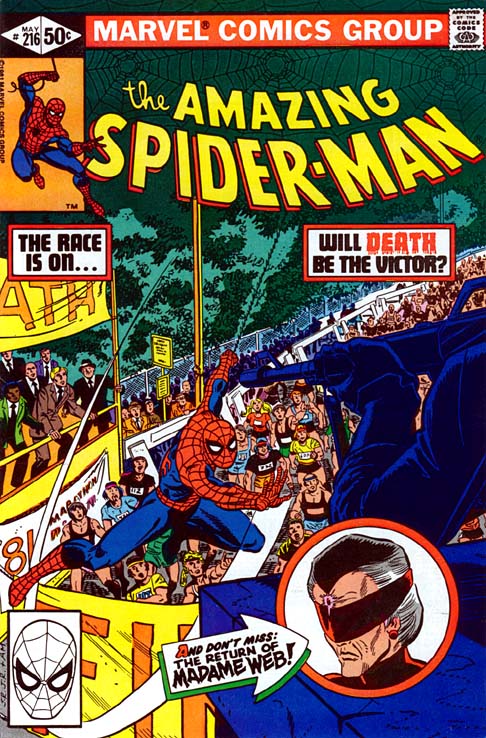
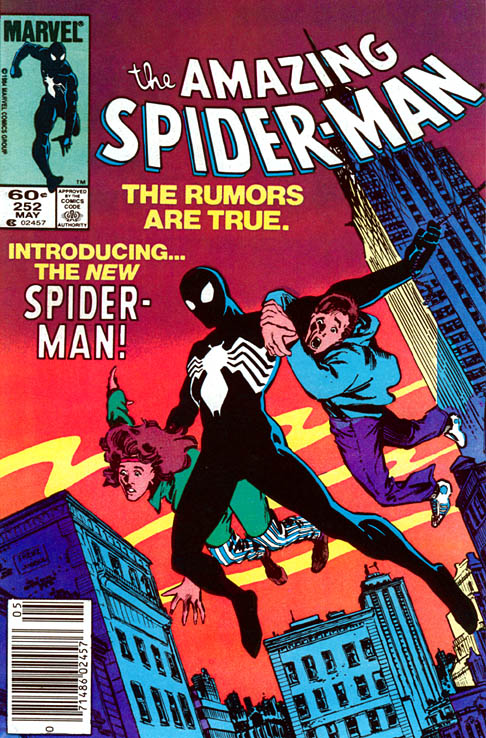
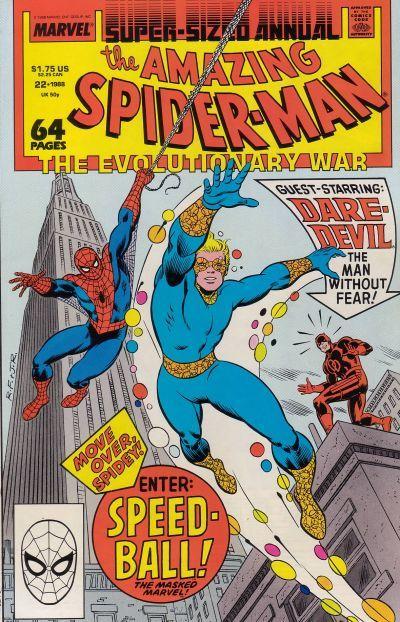
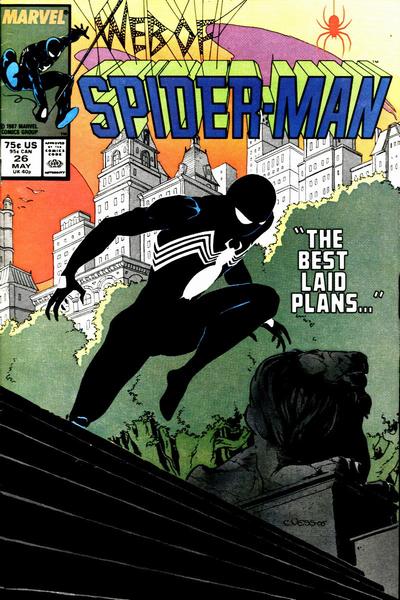
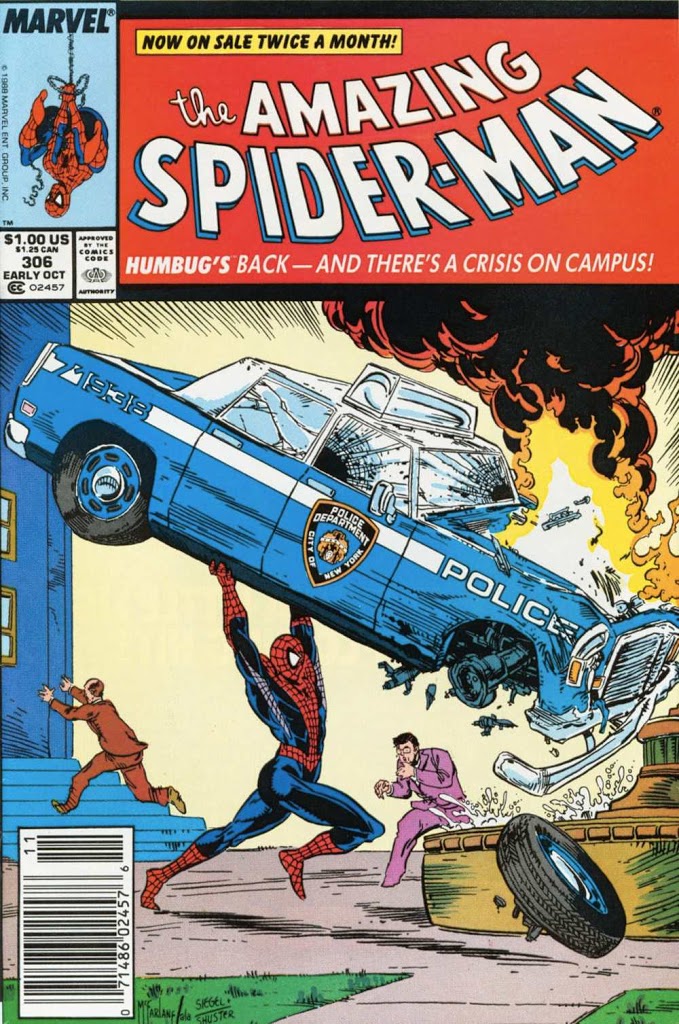
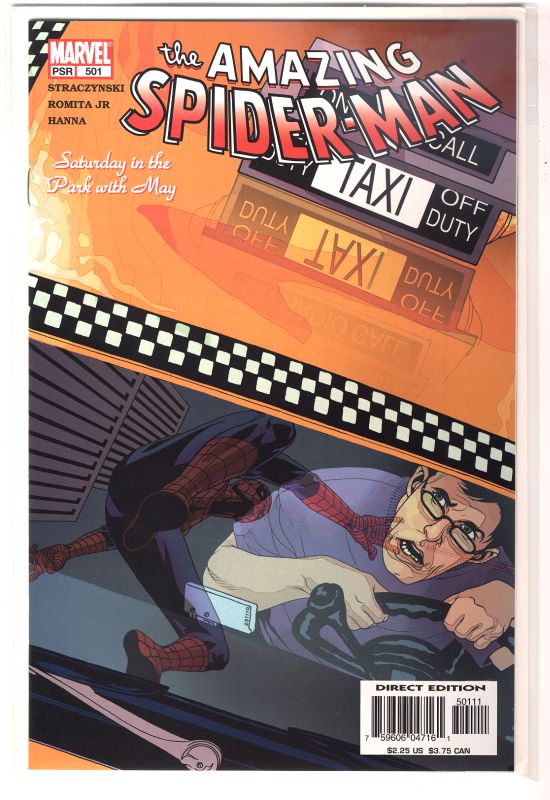
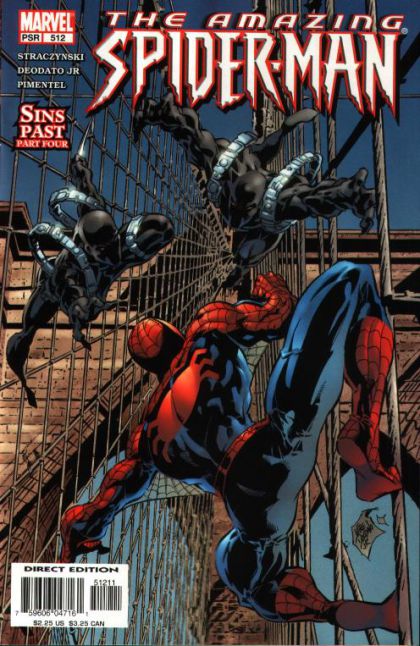
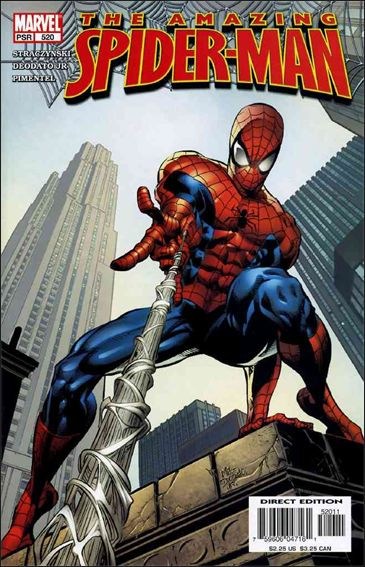
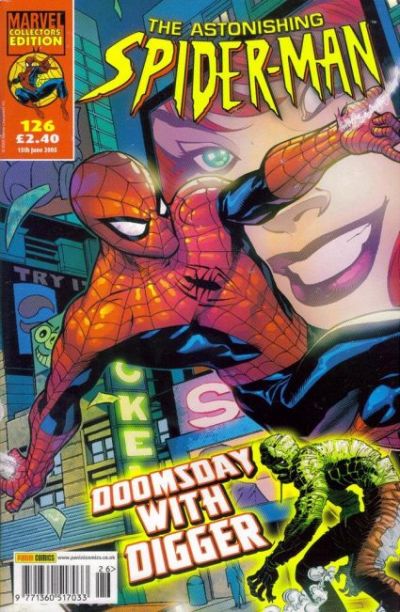
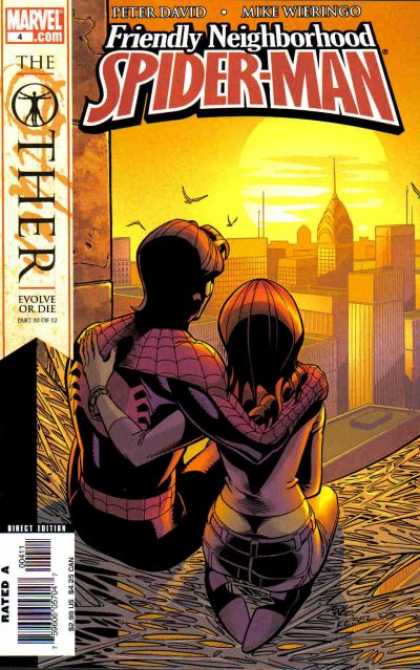
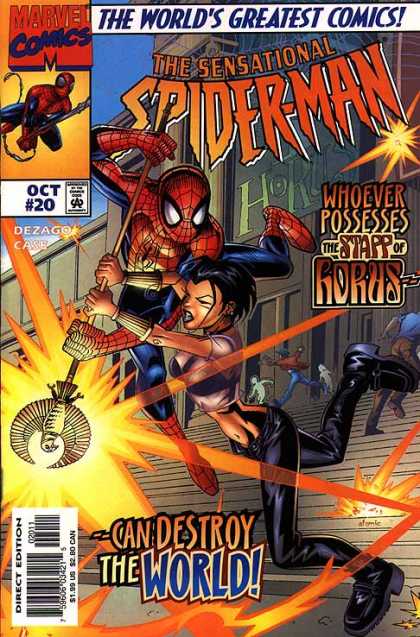
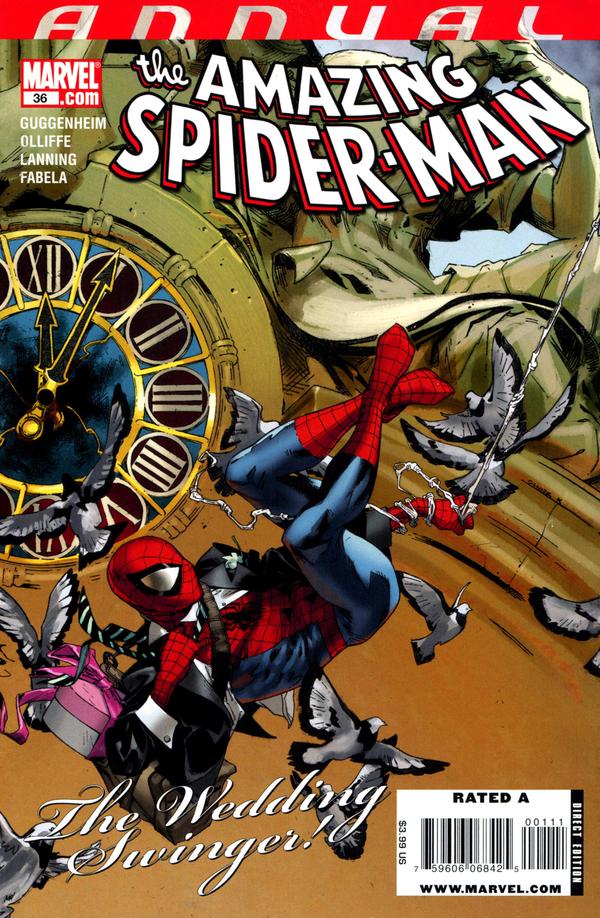
Your friendly neighborhood tour guide: New York as seen through 50 years of Amazing Spider-Man comic book covers

Today is the fifth birthday of this blog, which modestly began on July 4, 2007 and has grown more steadily out of control and independent of the podcast which inspired it.  The following article was inspired by a box of old comics books which have followed me around to various apartments for the past two decades.

Spider-Man might be considered the superhero version of the New York Mets. Ever in the shadow of stronger, older, perhaps stodgier renditions from a different league (Superman, the Yankees), both Spider-Man and the Mets have origin stories which begin in Queens in the 1960s and are often considered New York underdogs. Their fans call them Amazing.

No modern fictional character inhabits a city quite like Spider-Man does with New York City.  Like other creations from the stable of Stan Lee, Spider-Man was meant to reflect a normal human being in a familiar setting, unlike the characters of DC Comics, who were space aliens, amazons or billionaires. Yet it’s only Peter Parker’s humble beginnings as a teen from Forest Hills that seem ordinary; as Spider-Man, he nimbly darts over the city, never in need of public transportation, elevators or a taxicab.

Writer Steve Ditko** fleshed out Lee’s vision of an awkward teenager-turned-acrobat who could virtually sail through the streets outside their window.  The locations of Marvel’s offices and studios — formerly in the Empire State Building, but at 635 Madison Avenue by 1962 – certainly played a role in developing Marvel’s early characters as urbanites.

Most all his adventures take place in New York, and the city plays backdrop to these melodramatic, often cataclysmic events.  Upon the covers of hundreds of comics books that Spider-Man has appeared since his debut in August 1962, the webslinger has perilously dangled over the grid, either swinging down the avenues or bouncing super villains against an endless number of brick walls. (Like more than a few fashionistas, he sometimes even wears all black to work.)

If superheroes existed, New York City’s maintenance and security costs would well exceed its annual budget, and nobody would dare build a new skyscraper. Why, the budget to clean buildings of Spidey’s used webbing would reach into the thousands each year! (Ed. note: I’ve since been informed that the hero’s webbing is basically biodegradable. No wonder he’s Michael Bloomberg’s favorite superhero!)

Most structures depicted in his greatest adventures are mere abstractions, simple ledges for perching and windows for smashing. We rarely see pedestrians fleeing the falling debris or the contractors assessing the damage for disgruntled landlords.

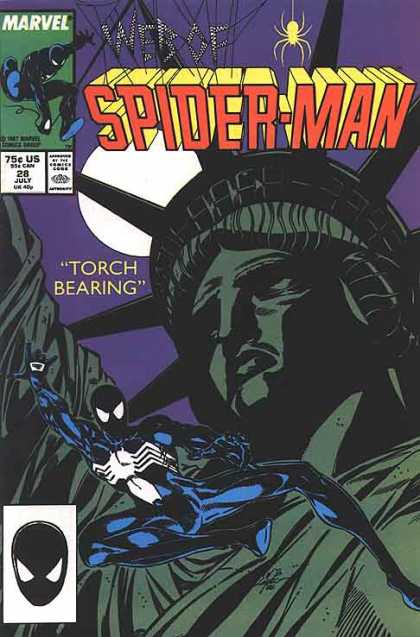
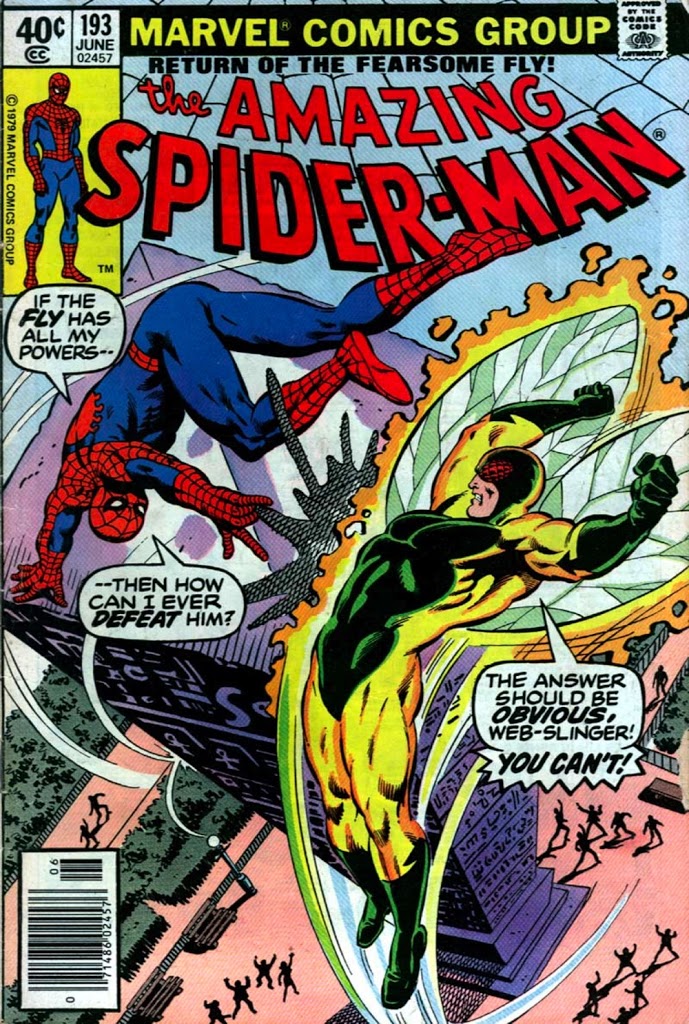
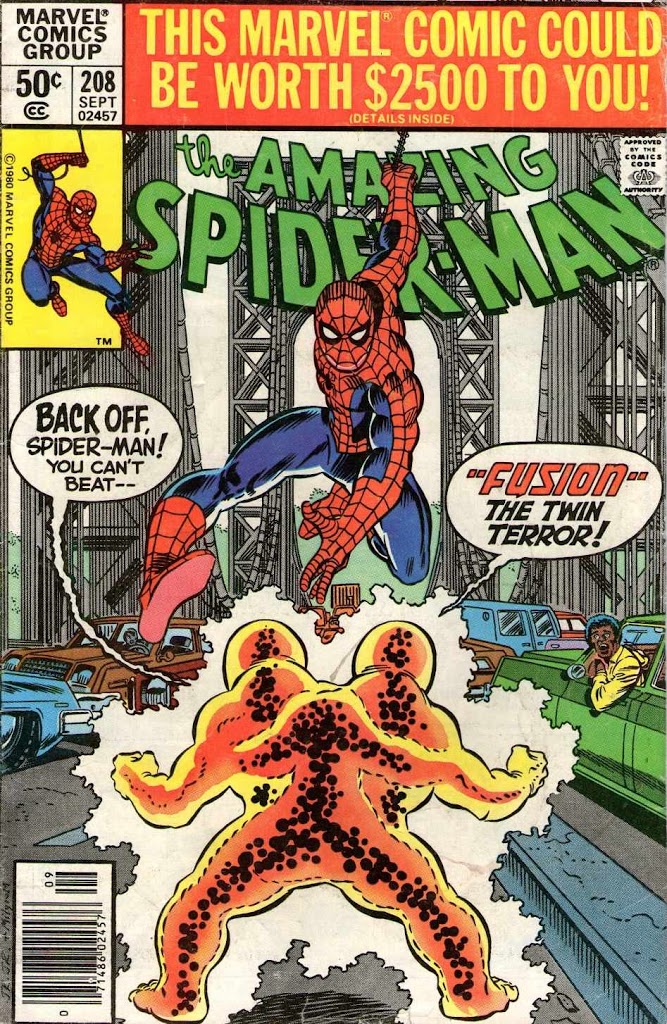
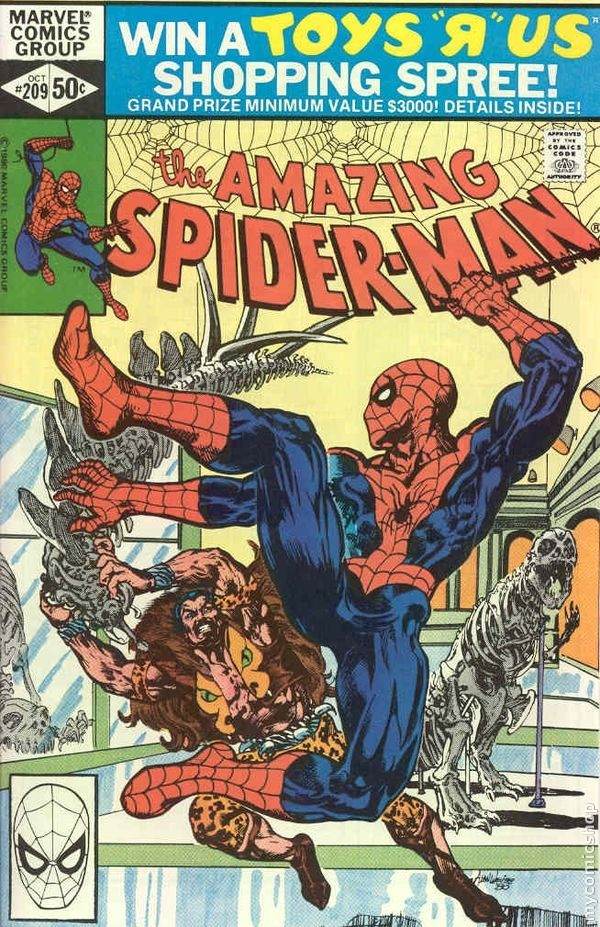
Spider-Man doesn’t fly. The superhero and the city have a symbiotic relationship; he needs the city’s height to swing around, and the city needs him to protect it. And so New York landmarks have frequently popped up on Spider-Man comic book covers, perhaps more than any other superhero creation. He gathers his strength from the famous skyline itself.

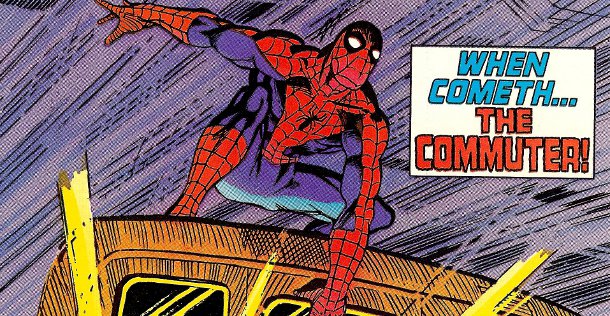
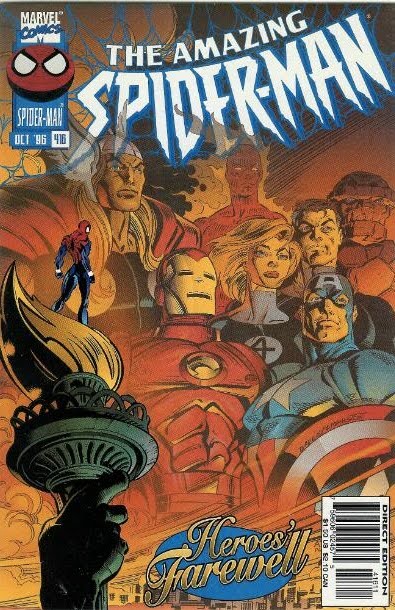
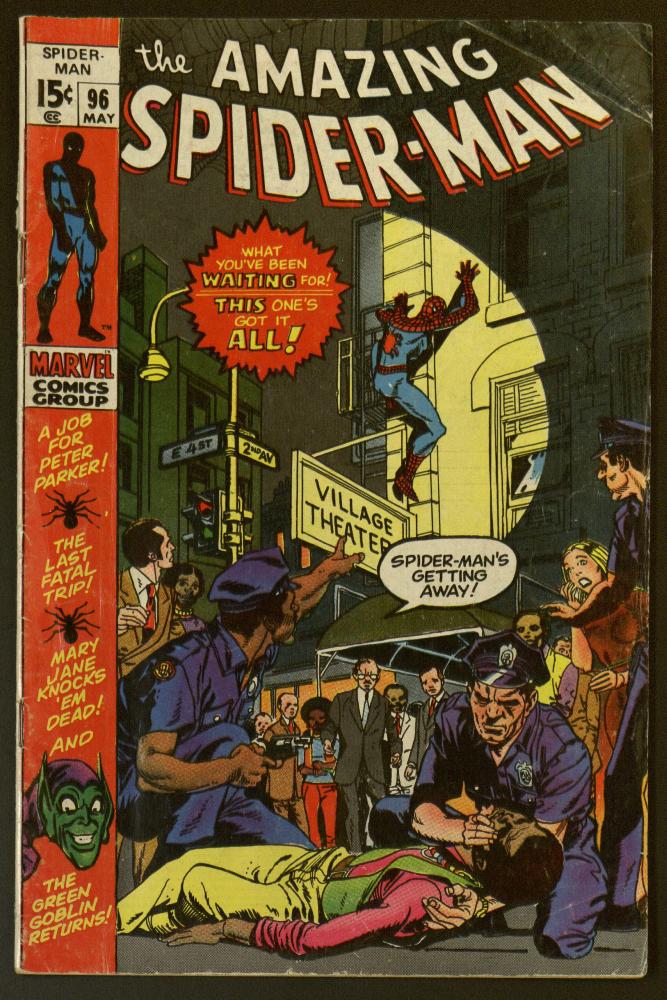
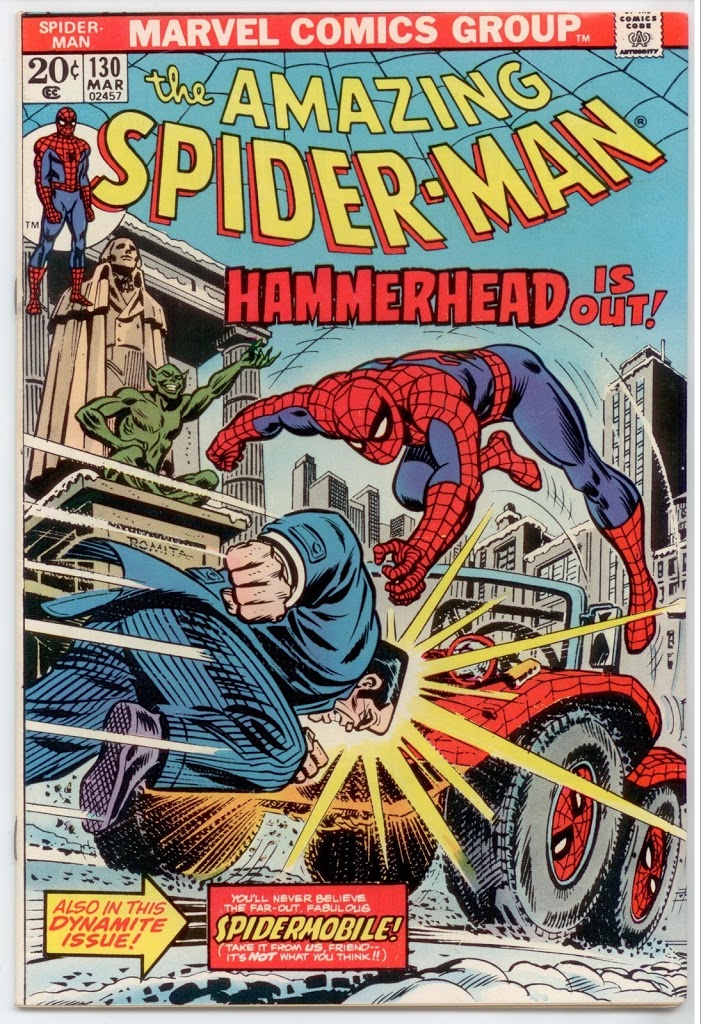
You can actually take a tour of the city through Spider-Man covers, from the 1960s to today. Below are several examples of New York’s guest appearances. Swing along with him as he takes you past 1) the East Village, 2) Federal Hall, 3) the subway, 4-5) the Roosevelt Island tram, 6-7) the Statue of Liberty, 8) Cleopatra’s Needle, 9) the George Washington Bridge, 10) the American Museum of Natural History 11) the New York Marathon, 12-13) the Empire State Building, 14) the New York Public Library, 15) a vehicle from the New York Police Department, 16) a yellow cab, 17) the Brooklyn Bridge, 18) Rockefeller Center, 19) Times Square, 20) the Chrysler Building, 21) the Metropolitan Museum of Art and 22) Grand Central Terminal.

**Note: There is some controversy over whether legendary artist Jack Kirby might also have been involved in the creation of Spider-Man. I have re-edited the story above, however I send you to i09’s 2009 article Who Created Spider-Man? which discusses artist’s possible involvement. (7/9/12)
 
Many more after the jump…


And finally, Marvel and the creators of Spider-Man did pay tribute to the attack on the World Trade Center on September 11, 2001. Appropriately, for a comic book that often wantonly celebrates the crumbling of random structures in high-flying battles with super villains, the creators chose to use no image:

Top image courtesy IGN. A couple of these are from Sam Ruby, a couple of them are my own scan! You can see the complete collection of Spider-Man covers over at Cover Browser where I borrowed a couple of these as well.

Notes from the podcast (#140) Rockaway Beach

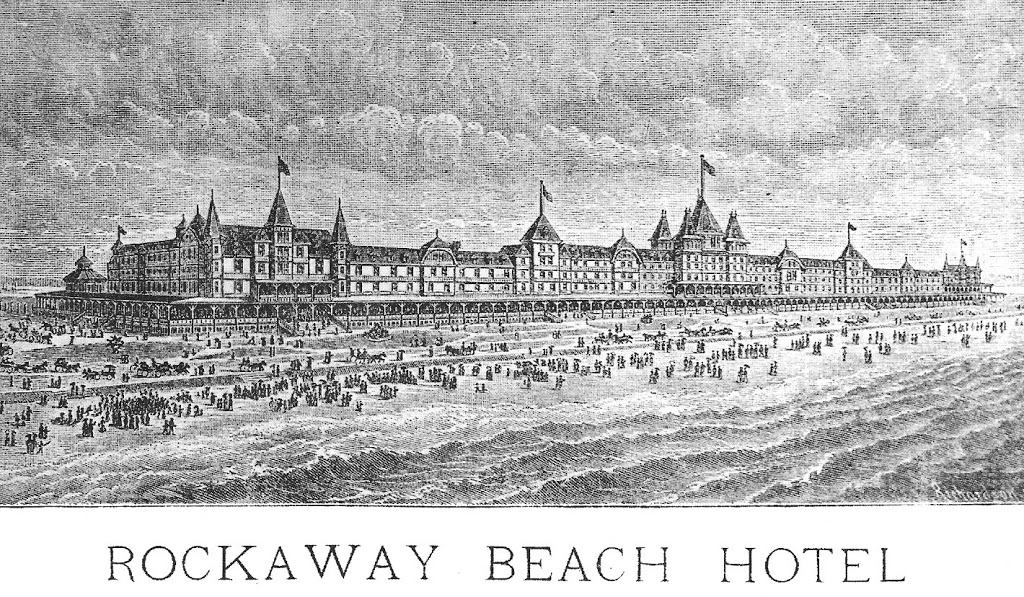
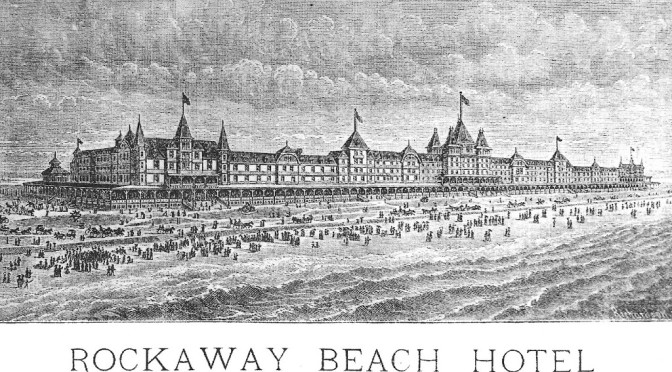
Behold the insanity: (Above) A lithograph of the Rockaway Beach Hotel, one of the most notorious failures in American history

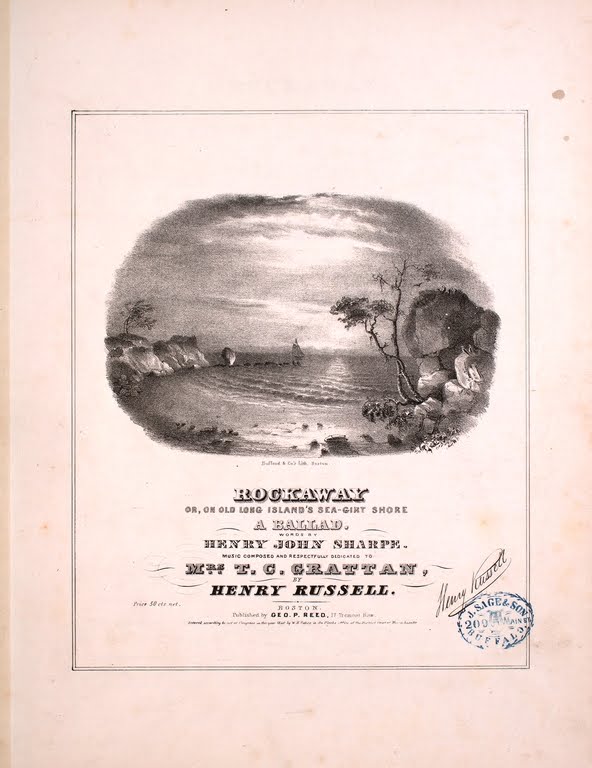
A Song About Brooklyn: I gave you a little taste of a poem about the Rockaways by balladeer Henry John Sharpe. Yes, that’s right, this is actually a song, with music by Henry Russell. Click here to listen to the entire melody.
Rockaway, or, On Long Island’s Sea-Girt Shore. A Ballad

ON old Long Island’s sea-girt shore,

 Many an hour I ’ve whiled away,
 In listening to the breakers’ roar
 That wash the beach at Rockaway.
Transfixed I ’ve stood while Nature’s lyre
In one harmonious concert broke,
And catching its Promethean fire,
 My inmost soul to rapture woke.


To hear the startling night-winds sigh,
 As dreamy twilight lulls to sleep;
While the pale moon reflects from high
 Her image in the mighty deep;
 Majestic scene where Nature dwells,
 Profound in everlasting love,
While her unmeasured music swells, 
The vaulted firmament above.

CORRECTION: We implied that Robert Moses had something to do with the naming of Jacob Riis Park, when in fact it appears to have already had this name applied to it by the time Moses came along to revitalize it in the early 1930s. It was much smaller, of course, and in the 1920s, the Naval Air Station actually wanted to take it over to expand their airfields.

The New York Times thundered in 1922: “By this time the Navy Department must be aware that the people of New York are opposed to the cession to the United States Government of a large part of the Jacob Riis Park at Rockaway Point for a permanent aviation base.” As it turned out, a decade later, it would be the station that closed, and Jacob Riis Park became a mini-Jones Beach.


FURTHER READING: I do think we rather glossed over the later, sadder years of Rockaways history, simply because the causes of the area’s many unusual changes starting in the 1950s are still being debated.

For more information, I must turn your attention to an amazing, if very sobering, book on the subject of the Rockaway’s recent history — Between Ocean And City: The Transformation of Rockaway, New York by Lawrence Kaplan and Carol P. Kaplan. It’s a hearty, in-depth grasp of the social changes of the area and give a nuanced analysis of Robert Moses’ role in the peninsula’s transformation from daytripping destination to a place of inadequate permanent residency for some New Yorkers.

For a stodgy but earnest throwback, you can download a copy of the 1918 book History of the Rockaways from the year 1685 to 1917 by Alfred Henry Bellot. Sandwiched between the lists of names and descriptions of churches that are no longer there are lots of lovely little anecdotes.

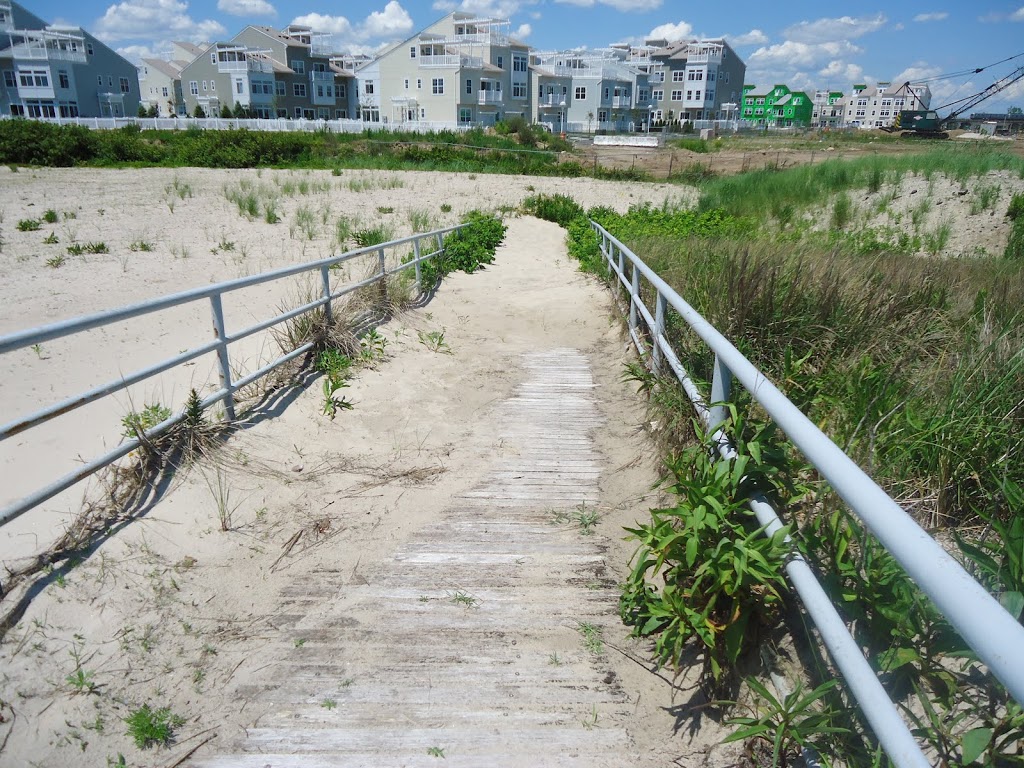
But the best way to explore the history of the Rockaways is to simply roam around the boardwalk. Hints of its glory days — and reminders of its less storied era — can be found scattered all along the way. You’ll see new beach housing that feels like a ghost town, sad 1970s style housing projects, Robert Moses-era storm shelters, surfers, convalescent homes, beach shacks, oddly placed municipal structures, quiet bird sanctuaries, trendy restaurants and rundown pizza joints.