I’LL HAVE WHAT SHE’S HAVING.When Harry Met Sally, directed by Rob Reiner and written by Nora Ephron, is more than just a simple romantic comedy about opposites Harry (Billy Crystal) and Sally (Meg Ryan in a breakthrough performance).
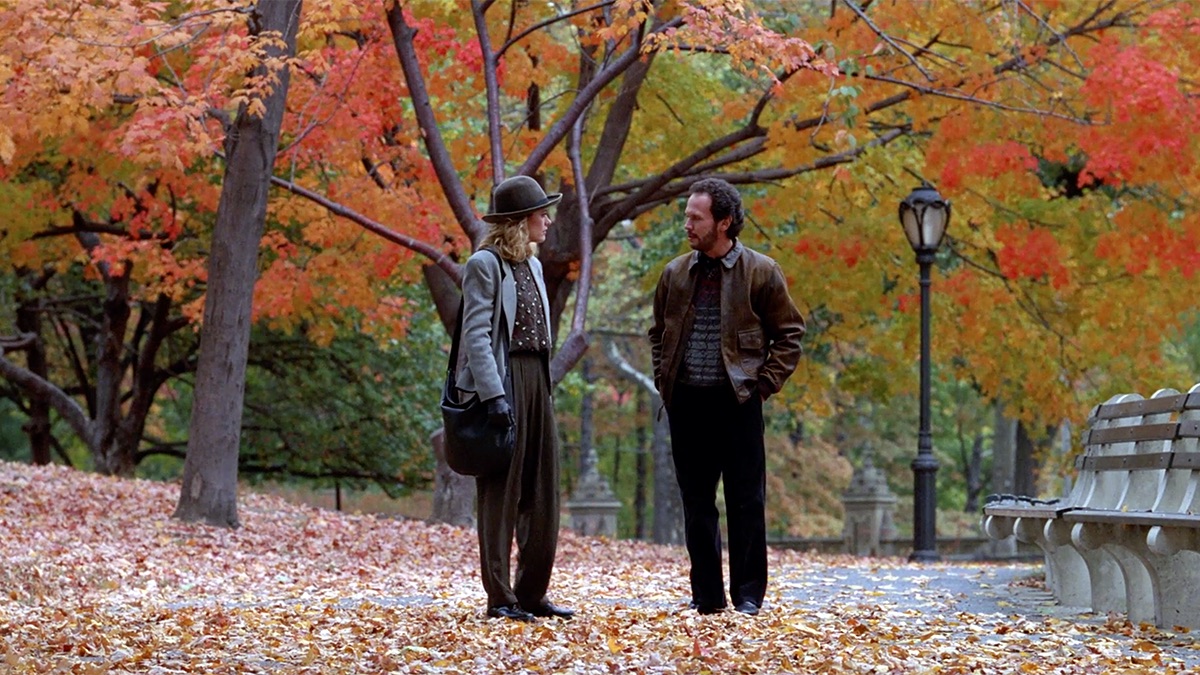
The film reinvents New York City for the screen. Its postcard-perfect scenes of autumn leaves in Central Parkand breathtaking walks through the Upper West Side would have been unheard of at the movies ten years before. When Harry Met Sally helped redefine the metropolis after almost two decades of dark, gritty depictions on screen.
Listen in as Greg and Tom recap the story and explore some of the historical context for the film. Featuring a glorious lineup of locations including the Central Park boathouse,the Metropolitan Museum of Art and the Puck Building.
HowdoIlistentheBoweryBoysMovieClub? Once you’re signed in on Patreon, you’ll see a private RSS link that can be put directly into your favorite podcast player. Even easier, it can also be played directly from the Patreonapp if you’re signed in.
Your support on Patreon assists us in producing our podcast and website and it helps as we endeavor to share our love of New York City history with the world.
Shouldyouwatchthemoviebeforeyoulistentothisepisode? This podcast can be enjoyed both by those who have seen the film and those who’ve never even heard of it.
We think our take on When Harry Met Sally might inspire you to look for the film’s many fascinating (but easy to overlook) historical details, so if you don’t mind being spoiled on the plot, give it a listen first, then watch the movie! Otherwise, come back to the show after you’ve watched it.
Where can you watch When Harry Met Sally? It’s available to rent on all movie streaming services and is free to watch on HBO Max.
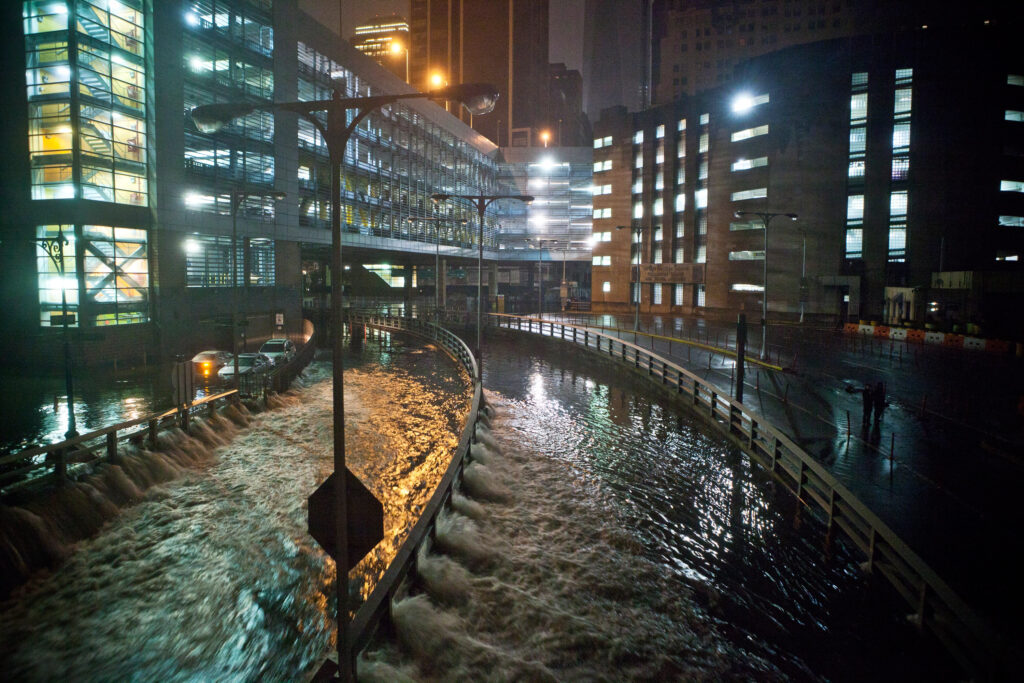
This week marks the eighth anniversary of Hurricane Sandy, the largest Atlantic hurricane on record, which wreaked havoc upon the Northeast United States, causing billions of dollars in damage.
The storm hit just days before a presidential election and right before Halloween, plunging many areas of New York City into darkness and flooding the subway system.
But just a few months ago,Hurricane Isaias — downgraded to a tropical storm — left a smaller but still significant mark upon the New York City area. Tens of thousands were left without power and the streets were littered with trees and debris.
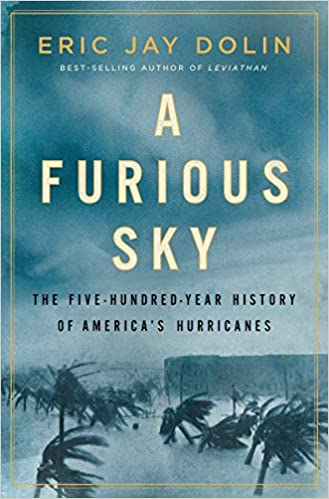
A FURIOUS SKY The Five Hundred Year History of America’s Hurricanes By Eric Jay Dolin Liveright/WW Nolin
A gripping new history of American hurricane disasters by Eric Jay Dolin (Leviathan, Black Flags, Blue Waters), the reader is reintroduced to the unavoidable power of nature and its control over human affairs. Hurricanes have shaped American history in ways you might not expect — not just in their destruction but in man’s attempts to predict them.
The European powers which sought to control and profit from lands already occupied in the Americas and the Caribbean had the might to bring native populations to their knees. But they could do nothing in the face of weather’s most destructive forces. Hurricanes frequently conquered the conquerers.
OCTOBER 29, 2012 Hurricane Sandy destruction at the Brooklyn Battery Tunne. (Photo by Andrew Burton/Getty Images)
The Great Colonial Hurricane of 1635 was taken by some early Puritans in New England as a sign from God.
In 1715, Spanish treasure fleets destroyed off the coast of Florida distributed gold, silver and jewels over hundreds of miles of ocean floor, feeding “thousands of fantasies and led to a rush of mariners sailing to the Florida coast to recover some of the booty.” Welcome to the age of piracy.
North American attempts to predict the paths of hurricanes were predictably stunted by the ability to get information to endangered areas quickly. In that regard, Dolin rightly notes Samuel Morse and the invention of the telegraph as instrumental in the struggle to predict weather
Before the late 19th century, hurricanes could almost never be foreseen or protected against. The dreams of rising communities along the Gulf Coast could be erased overnight.
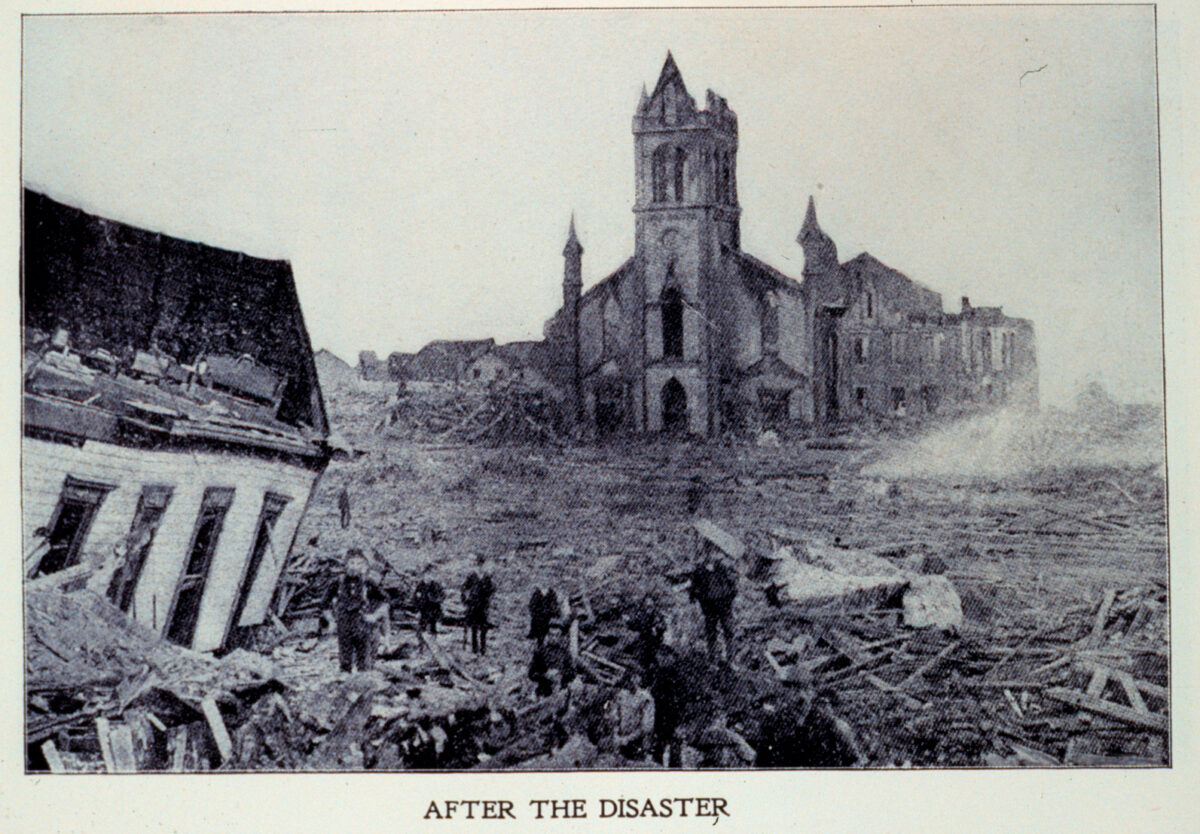
Galveston remains the most tragic example in American history. The hurricane which hit this coastal Texan town in 1900 remains one of the worst natural disasters to ever strike the United States.
“Galveston did rise again,” writes Dolin, “but the prehurricane trajectory that had positioned it to become the undisputed economic and commercial center of Texas had been derailed.”
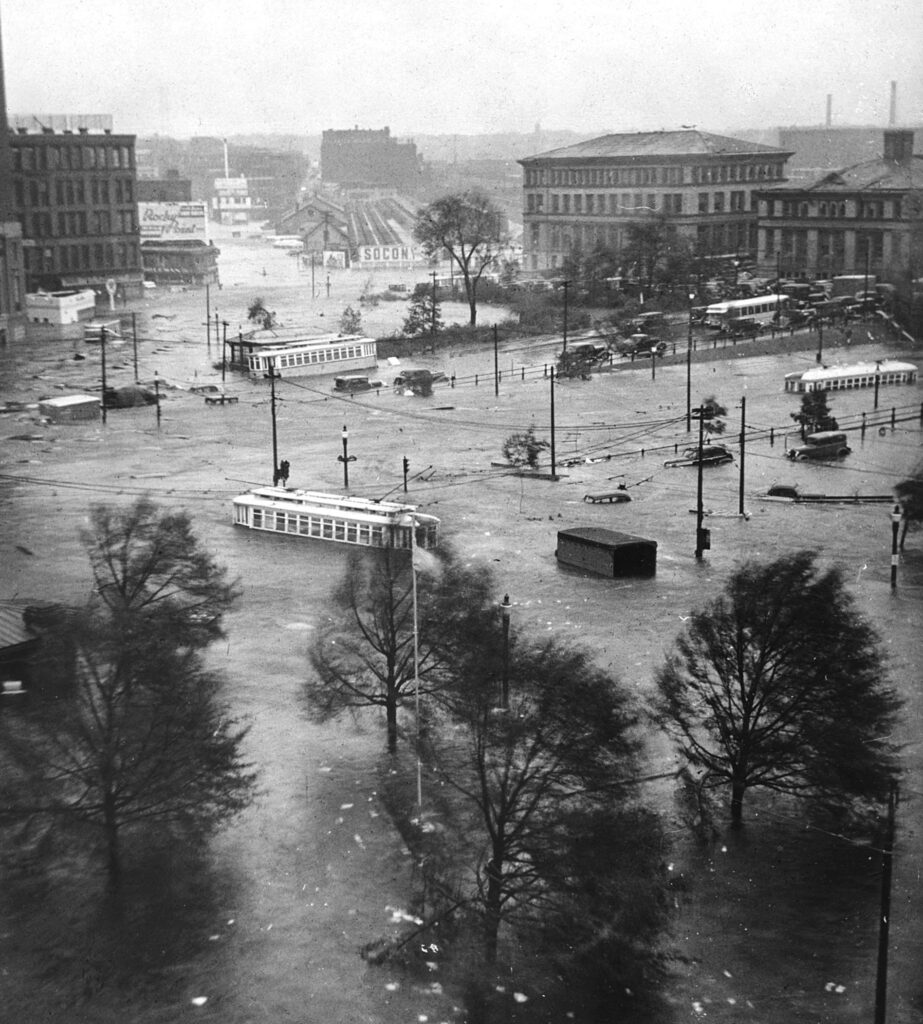
Providence, Rhode Island after a hurricane in 1938 (courtesy Providence Journal)
In theory a book detailing a series of hurricane disasters might appear to be an exercise in gloom. And while each hurricane Dolin details does seem to be worse than the last, his tales are distinctly and vividly drawn, pulling from dozens of eyewitness reports — from doctors and housewives and police offices and even a few from famous folk (Ernest Hemingway, Katharine Hepburn).
The book heads towards a hopeful outcome as hurricane prediction and documentation improves over time, allowing a fuller picture of these forces of destruction. This only disguises the fact that the hurricanes themselves are getting more dangerous — and no community facing into the Atlantic Ocean is safe.
At top: Image of the Galveston Hurricane aftermath in 1900. Courtesy NOAA
EPISODE 343 In the 14th annual Bowery Boys Podcast Halloween special, we celebrate some classic tales of the strange and supernatural written by the most famous horror writers in New York City history.
Since 2020 is already a year full of ridiculous twists and frights, we thought we’d celebrate the season in a slightly different way. But don’t worry! Tom and Greg are still delivering a new batch of frightening stories.
This time however the selected stories have been made famous by great writers who have lived and worked in New York City.
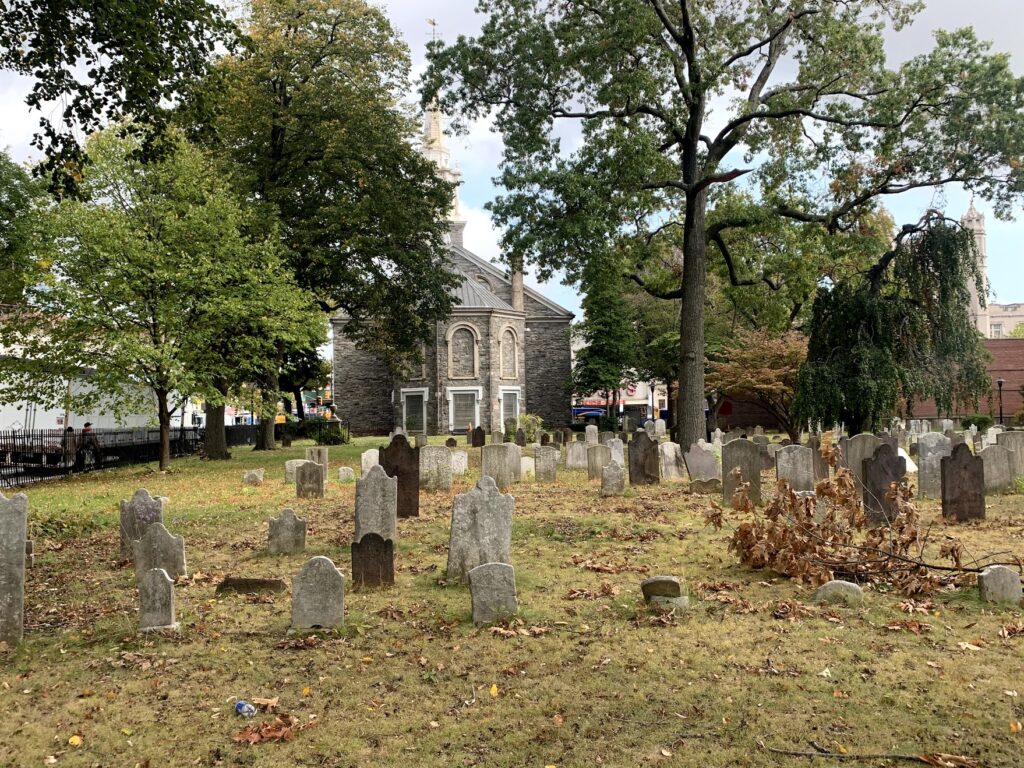
Flatbush Reformed Dutch Church, photo by Greg Young
Included in this year’s terrors:
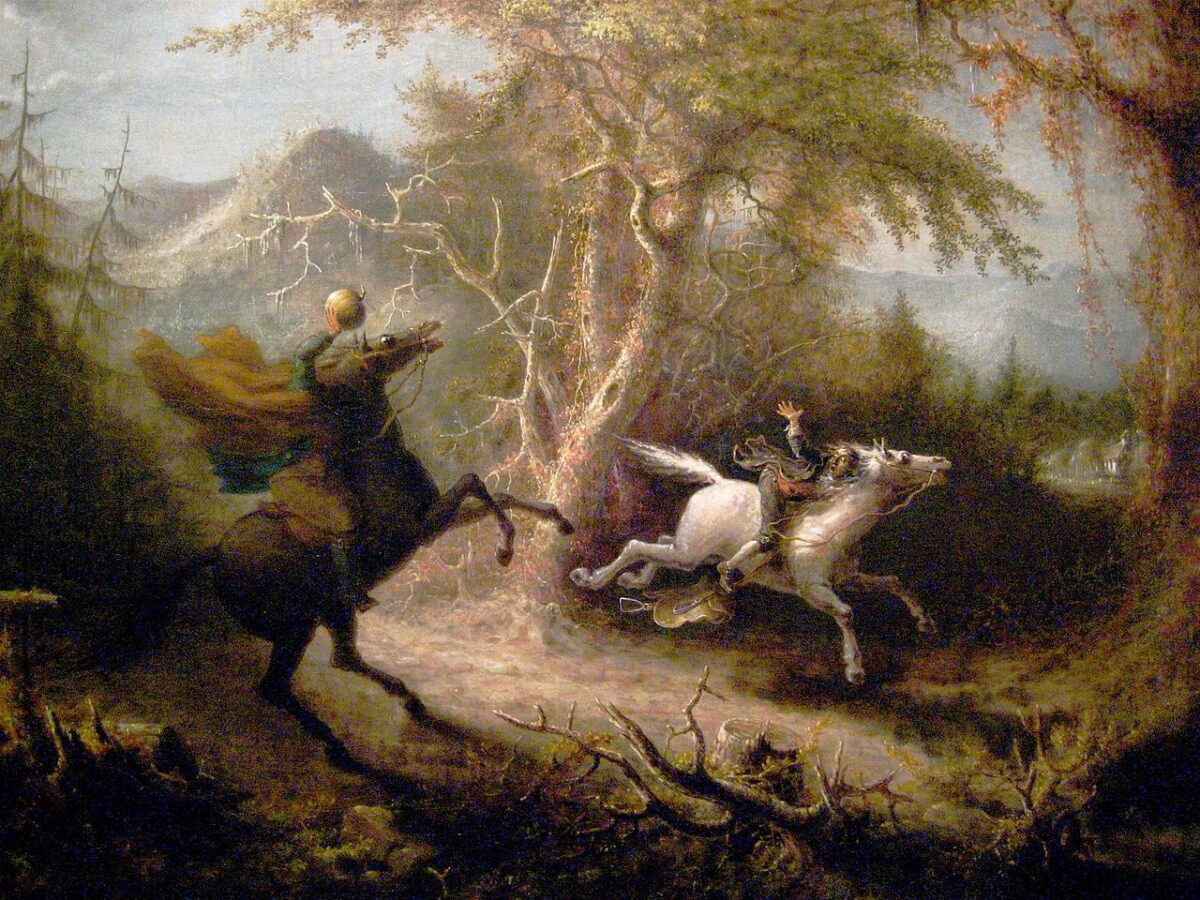
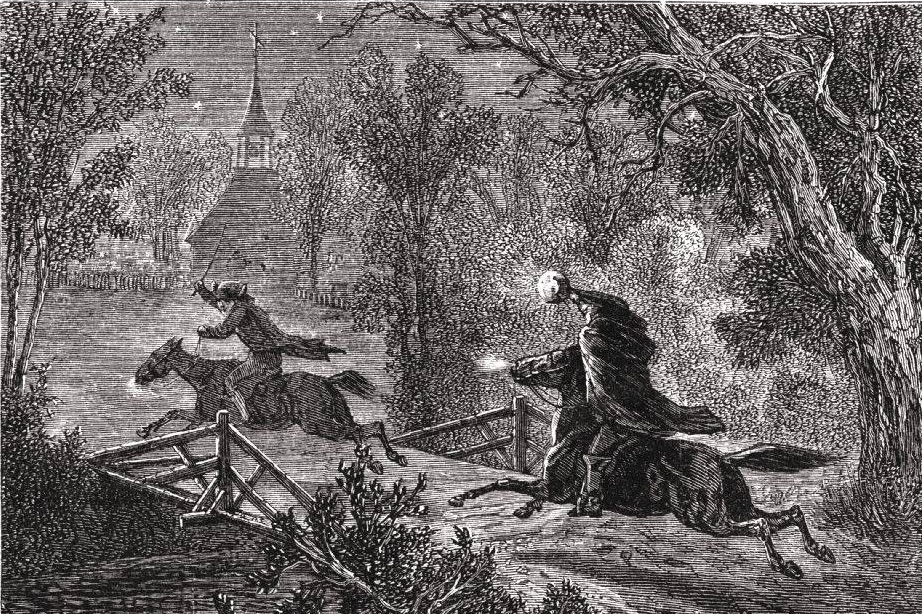
— A celebration of the 200th anniversary of Washington Irving‘s “The Legend of Sleepy Hollow,” featuring the Headless Horseman and the backstory of this classic story’s creation;
— The unsettling nights of H.P. Lovecraft in Brooklyn where his xenophobia, racism and anxiety manifest into a pair of dark, claustrophobic tales, plucked from the waterfront and the West Village;
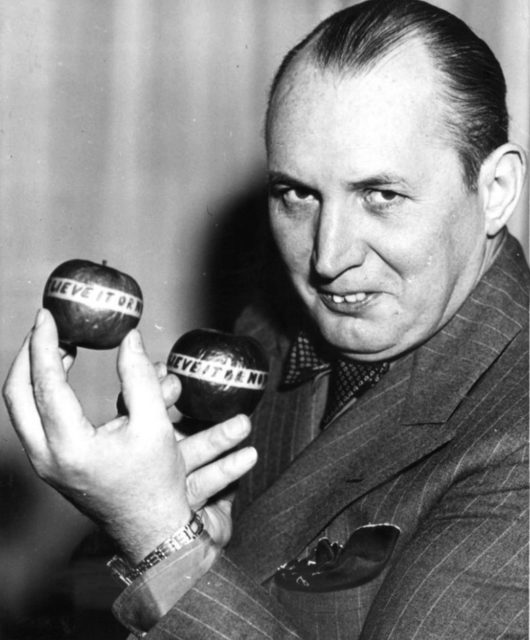
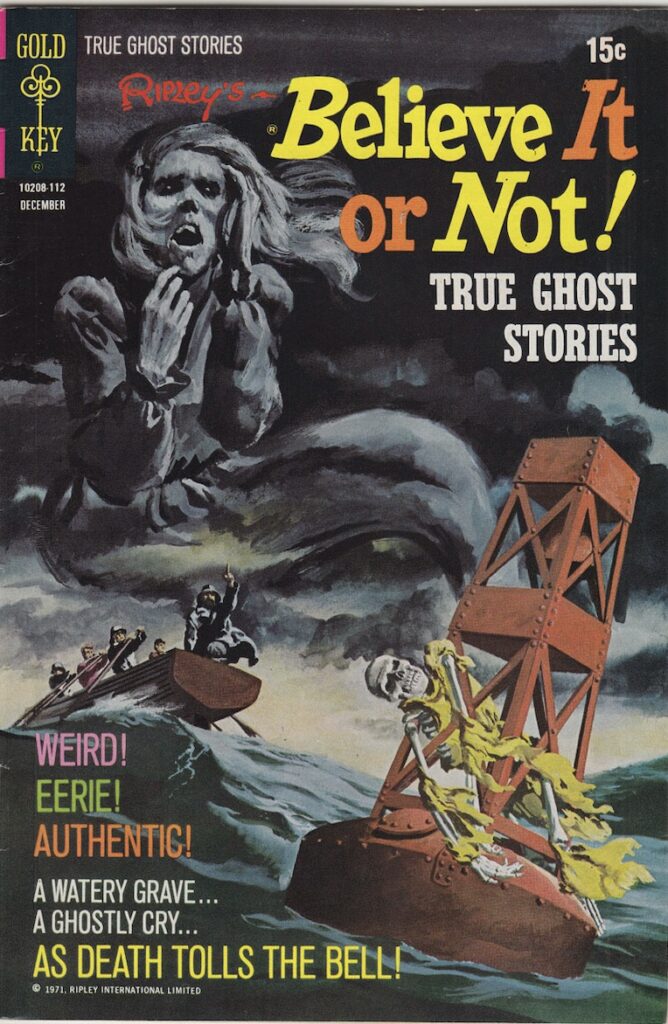
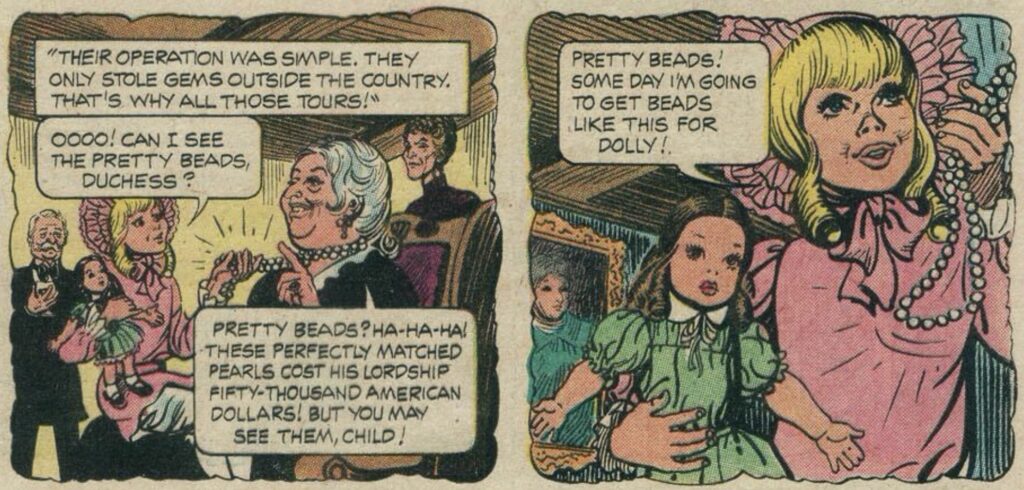
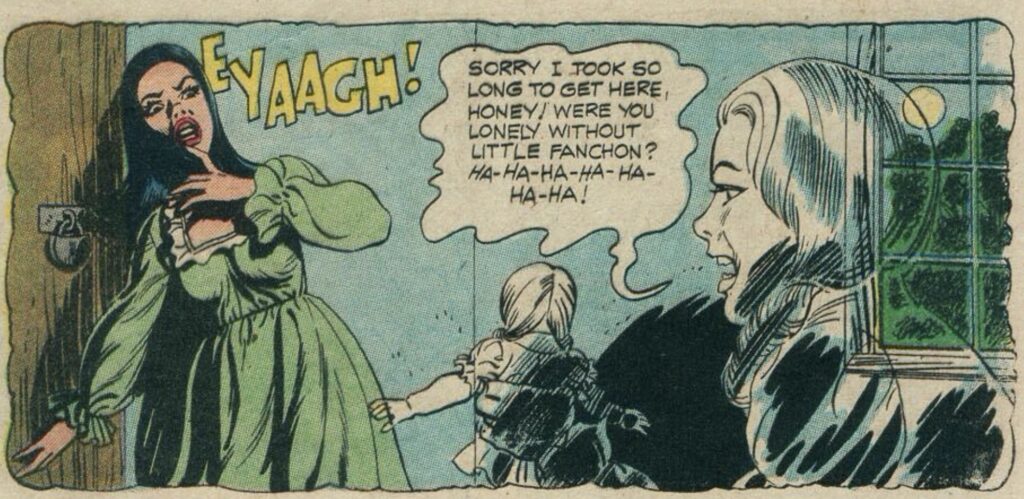
— A bizarre and allegedly true story (or is it an urban legend?) of an unconventional jewel thief named Fanchon Moncare, made famous by that 20th century purveyor of all things unbelievable — Robert Ripley;
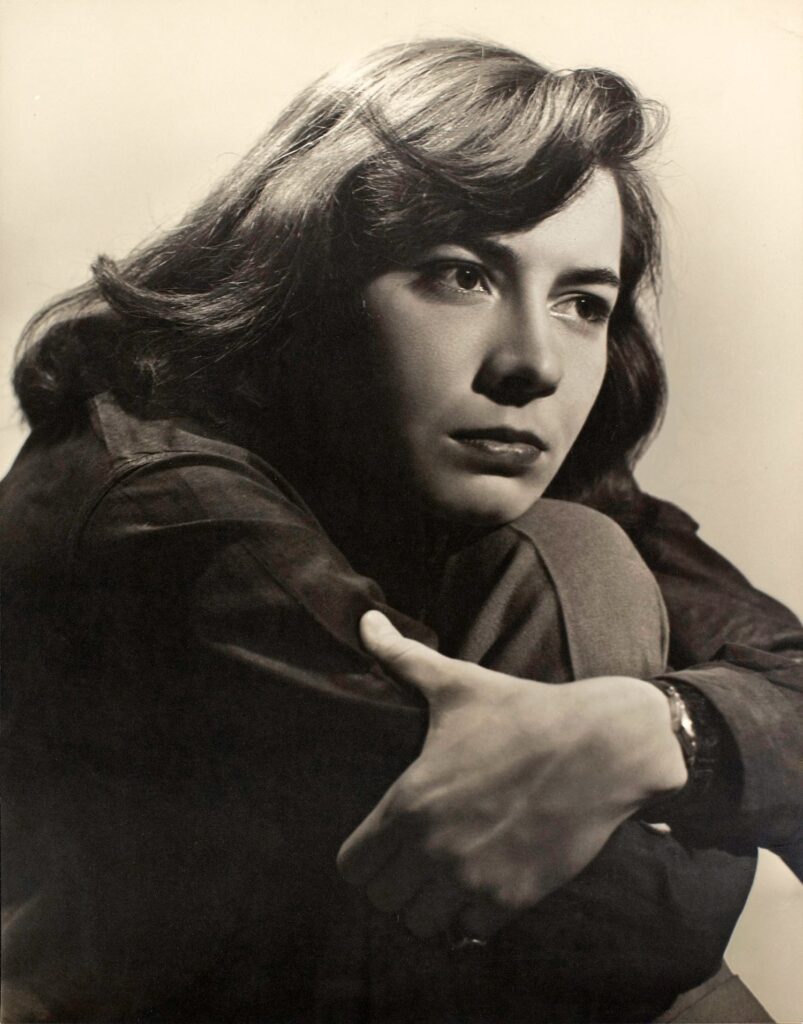
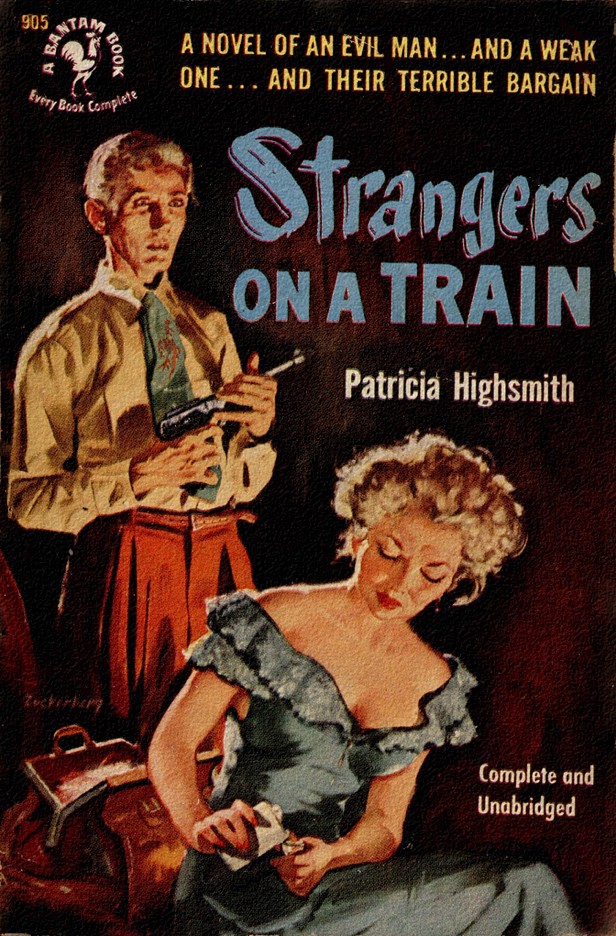
— And a look at the life of Patricia Highsmith — celebrating the 100th anniversary of her birth a bit early — whose nasty little tales of mad murderers have inspired Hollywood and unsettled a new generation of suspense lovers.
Listen today on your favorite podcast player:
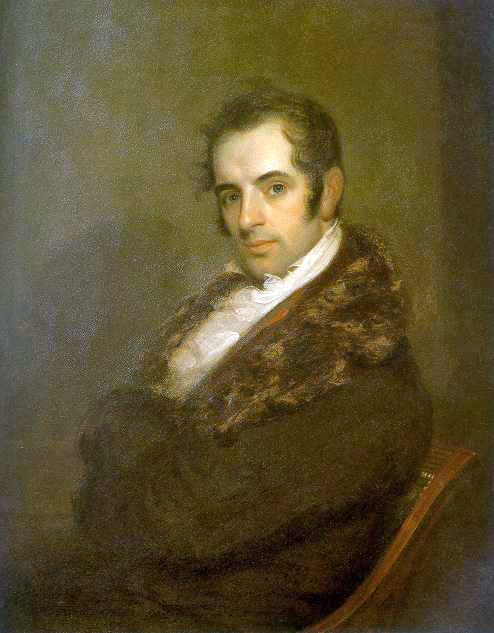
Portrait of Washington Irving, by John Wesley Jarvis, 1809
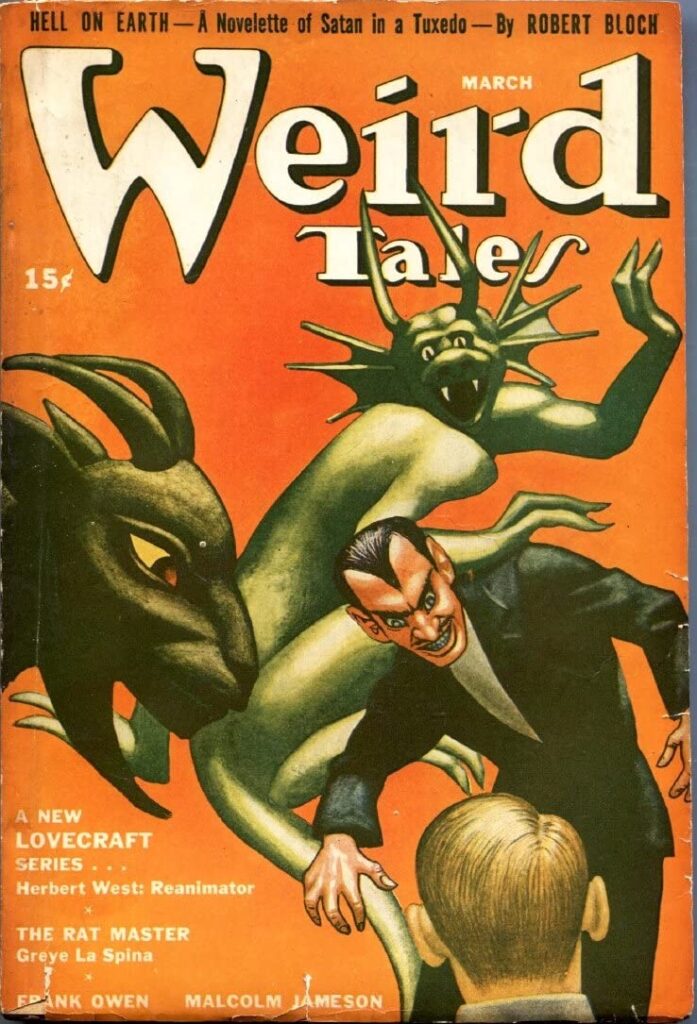
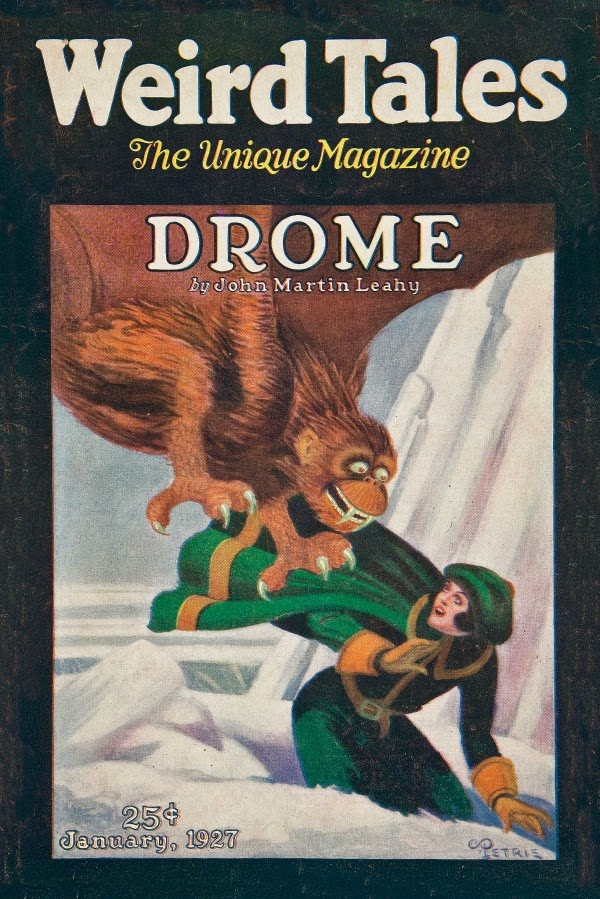
Weird Tales, the pulp magazine started in 1923 which gave Lovecraft (and many other budding fantasy writers) their start.
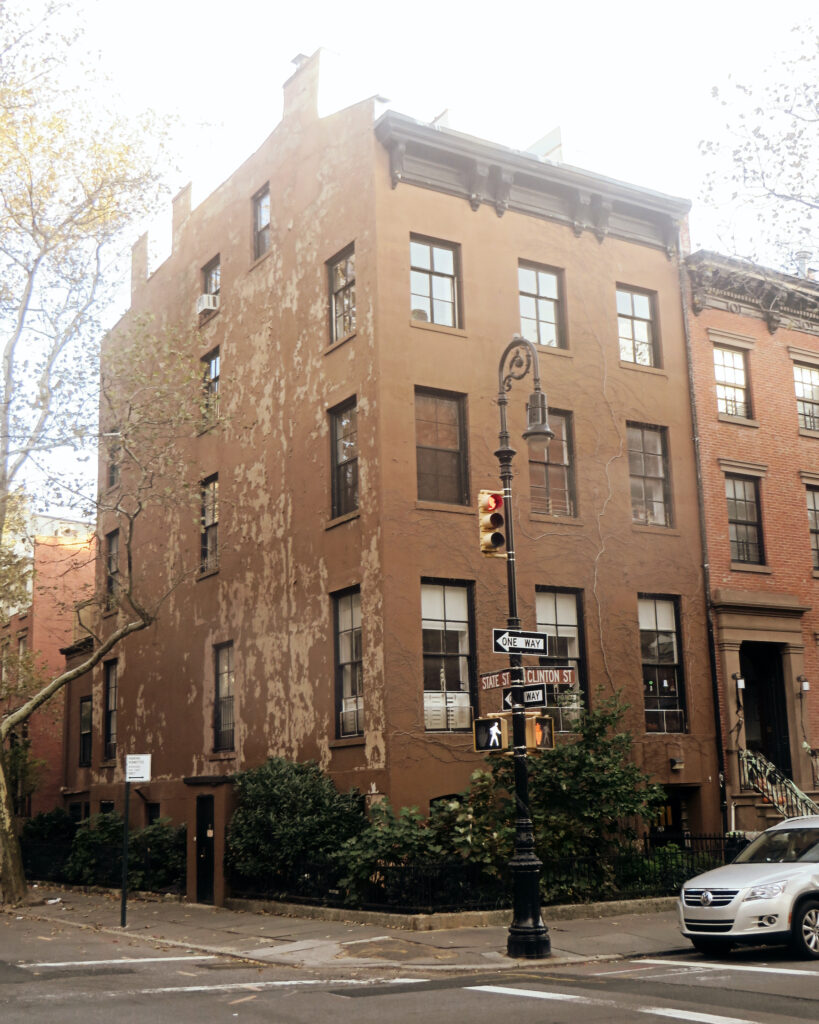
The former Brooklyn Heights home of HP Lovecraft. WIkicommons/Flickr/Eden, Janine and JimRobert Ripley of Ripley’s Believe It or Not.
You can read the entire story from the Gold Key comic book here.
Photograph by Ruth Bernhard / Princeton University Art Museum / Art Resource
FURTHER READING
Sections of the following works were read in this episode:
Washington Irving “The Legend of Sleepy Hollow” HP Lovecraft “The Horror at Red Hook” HP Lovecraft “He Ripley’s Believe it Or Not/Gold Key Comics “The Devil’s Midget” Patricia Highsmith Strangers On A Train Patricia Highsmith “The Terrapin”
In addition, seek out these additional sources: S.T. Joshi / HP Lovecraft: I Am Providence W. Scott Poole / In the Mountains of Madness: The Life, Death and Extraordinary Afterlife of HP Lovecraft Joan Schenkar / The Talented Miss Highsmith Andrew Wilson / Beautiful Shadows: A Life of Patricia Highsmith
The Bowery Boys: New York City History podcast is brought to you …. by you!
We are now producing a new Bowery Boys podcast every week. We’re also looking to improve and expand the show in other ways — publishing, social media, live events and other forms of media. But we can only do this with your help!
We are now a creator on Patreon, a patronage platform where you can support your favorite content creators.
Please visit our page on Patreon and watch a short video of us recording the show and talking about our expansion plans.
If you’d like to help out, there are six different pledge levels.Check them out and consider being a sponsor.
We greatly appreciate our listeners and readers and thank you for joining us on this journey so far.
EPISODE 342 A very special Bowery Boys: New York City History podcast presentation, recorded live on Halloween Night 2019.
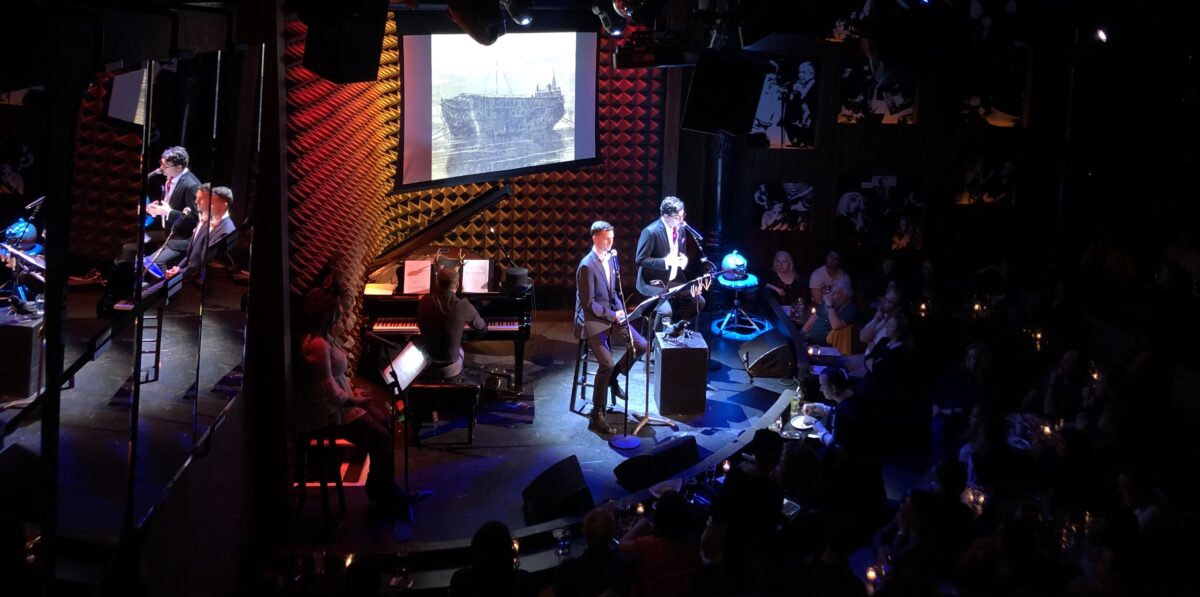
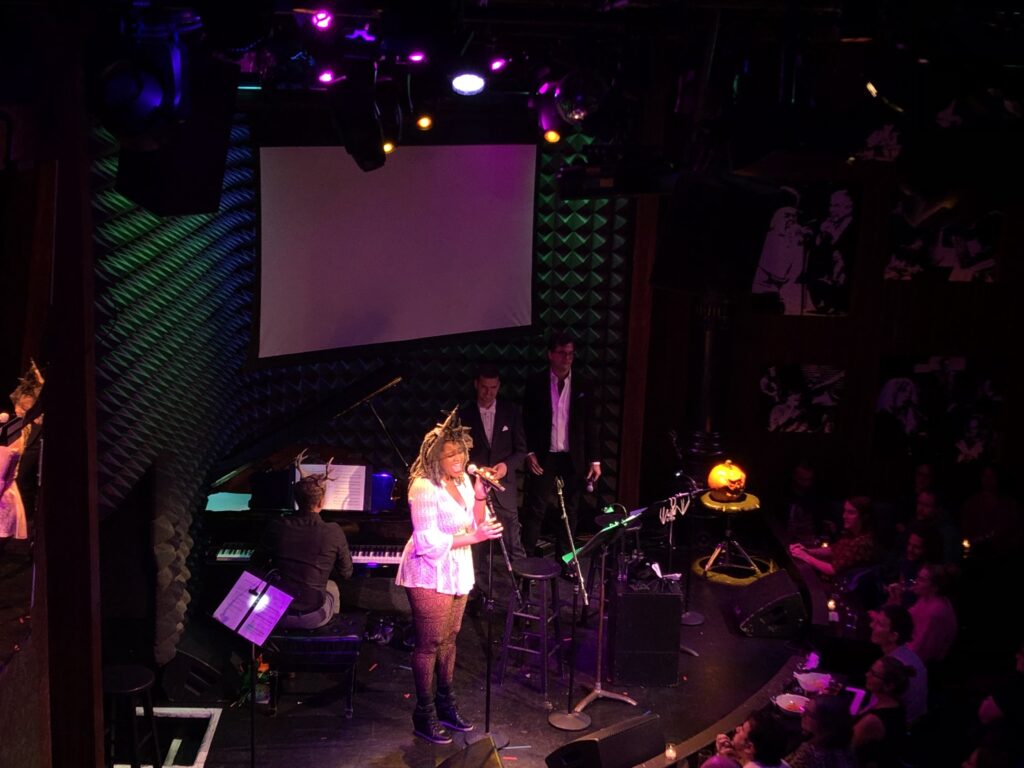
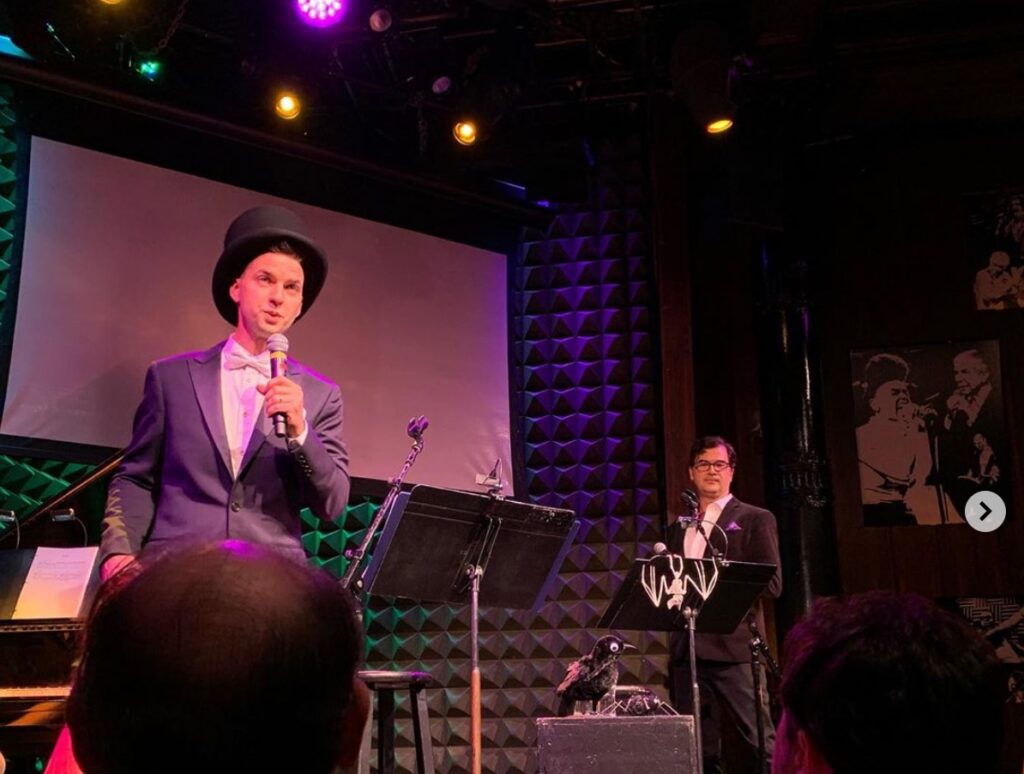
For the past couple years we have put on a LIVE cabaret version of our annual Ghost Stories podcast at Joe’s Pub at the Public Theater.
For reasons related to the fact that it’s the hellish year of 2020, we cannot bring you a live performance this year.
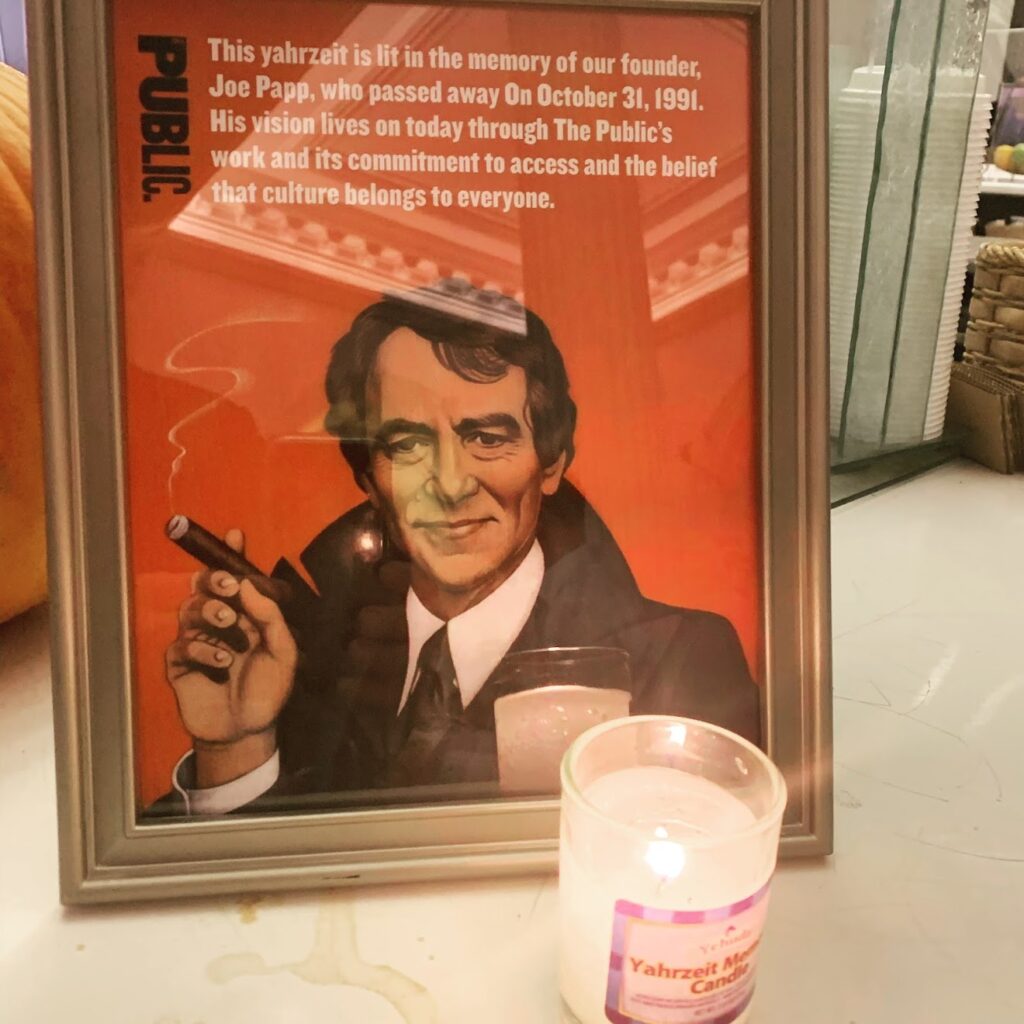
Every Halloween night, a candle is placed in the lobby of the Public Theater in honor of its founder Joseph Papp.
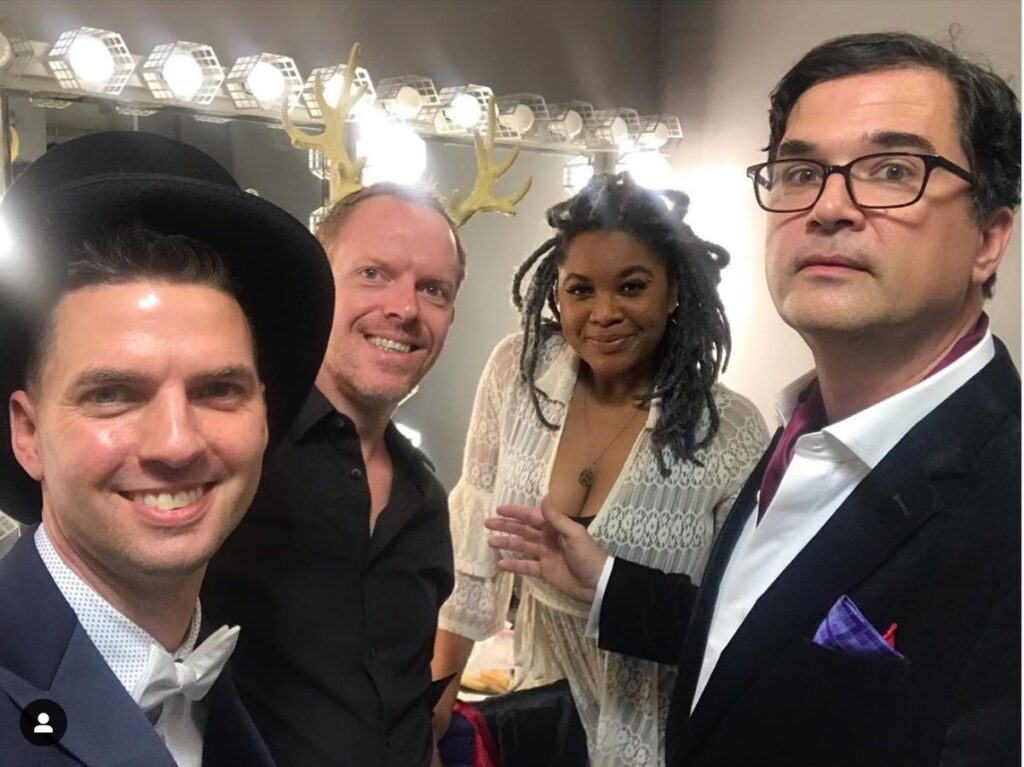
But we miss the wonderful Joe’s Pub so much – and we miss being with our listeners in a cabaret setting with cocktails – that we’re presenting to you a live recording of our last show at the storied venue, recorded on Halloween night 2019, featuring pianist and composer Andrew Austin and vocalist Bessie D Smith.
Prepare to hear new versions of your favorite ghost stories including:
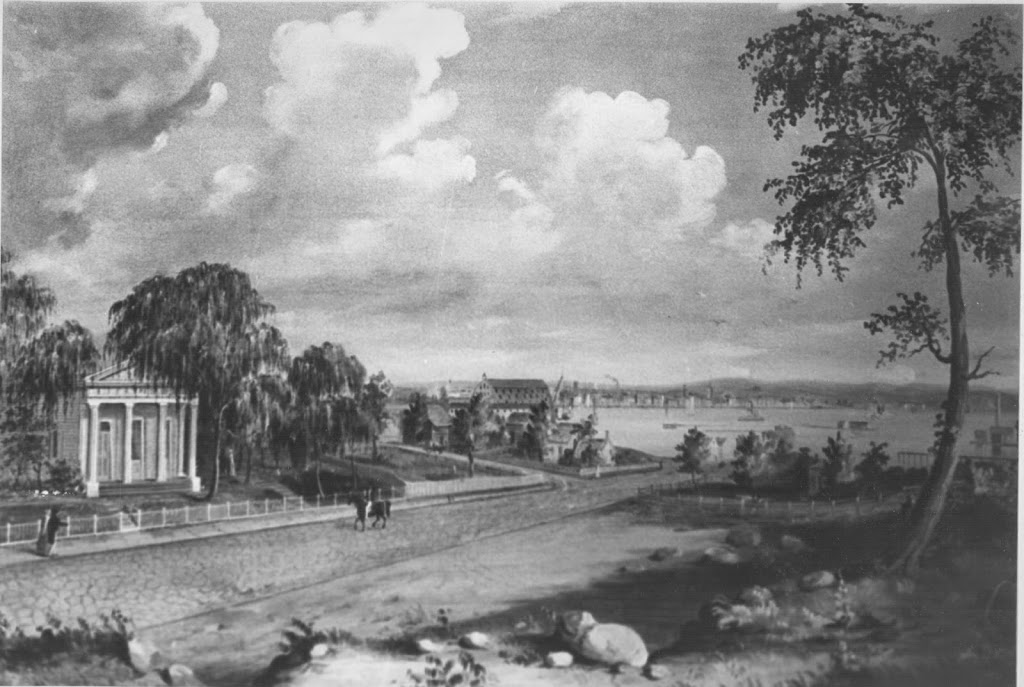
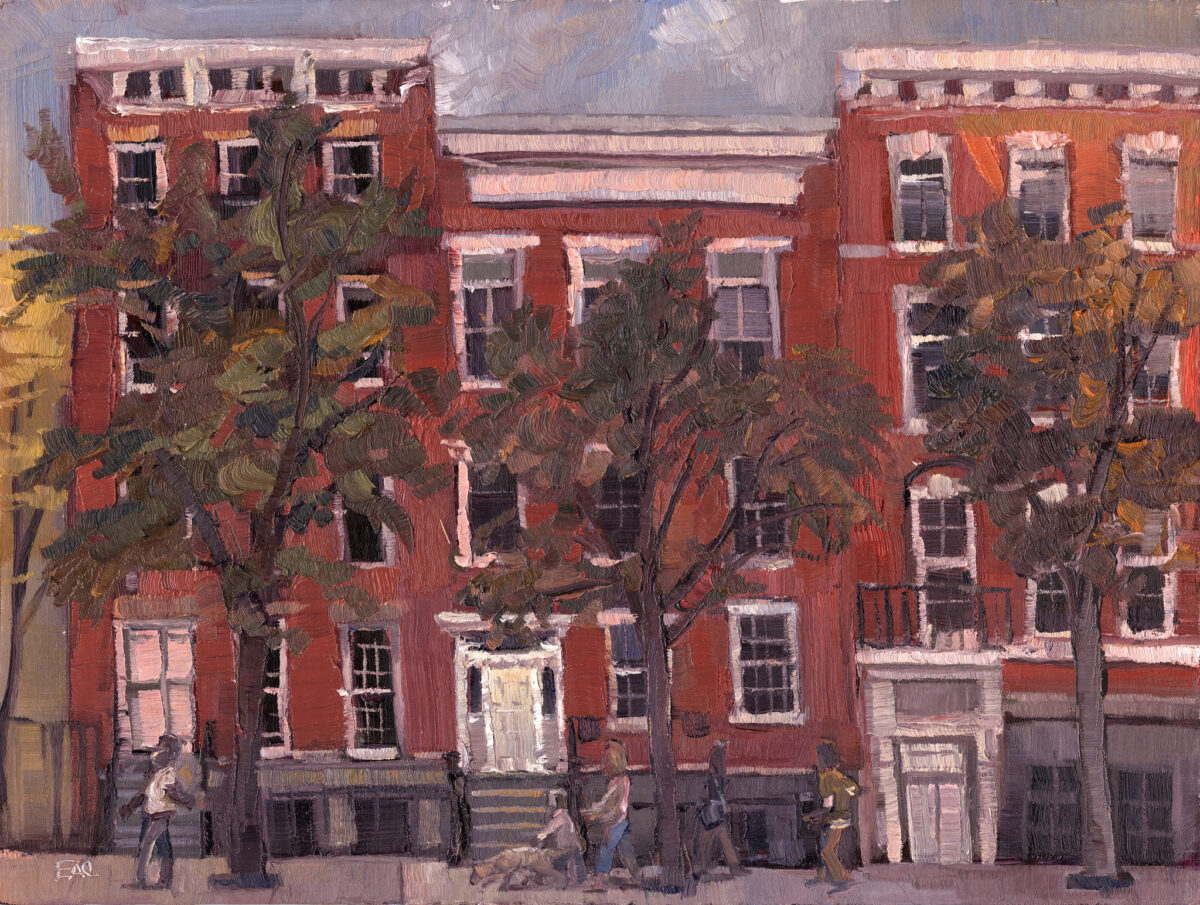
— A Brooklyn house haunting that may be related to the spirits from a colonial-era prison ship;
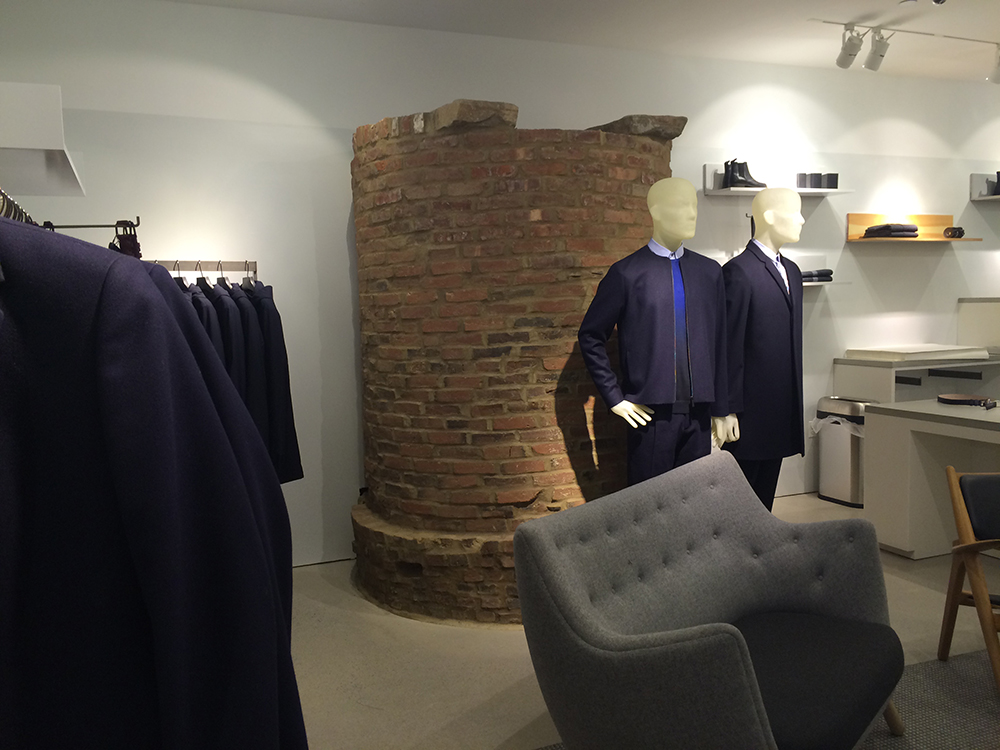
— A famous murder trial from the year 1800 and a mysterious well which still stands in the neighborhood of SoHo;
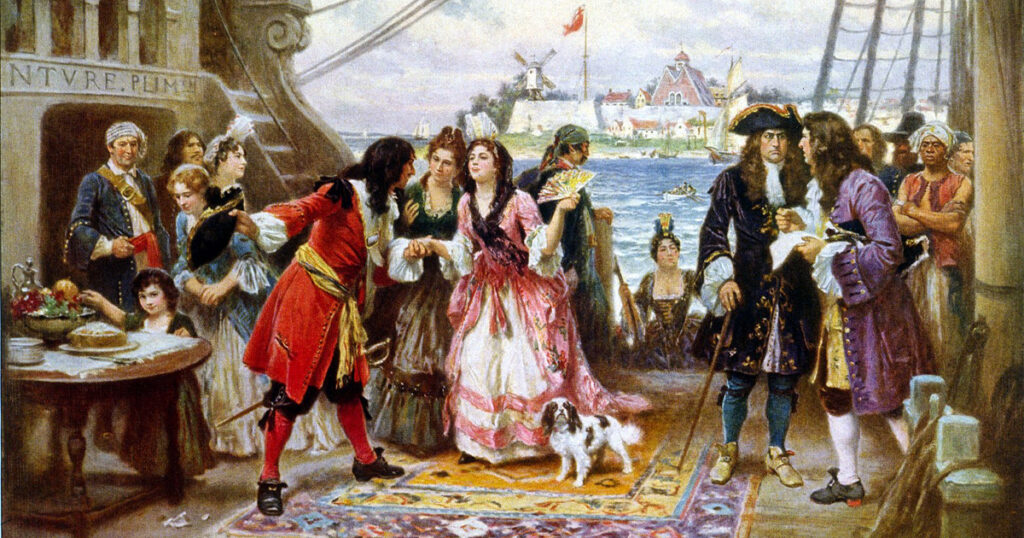
— The ghosts (or other supernatural entities) which guard the treasure of the famous Captain Kidd; and
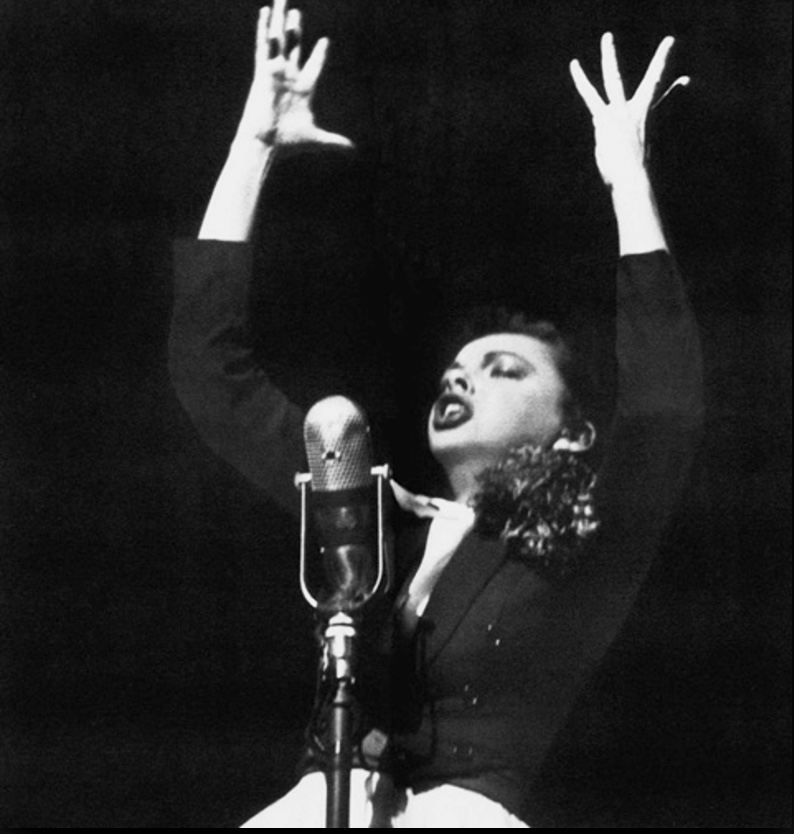
— The mournful secrets of a famed Broadway theater and the inner demons of a Hollywood icon.
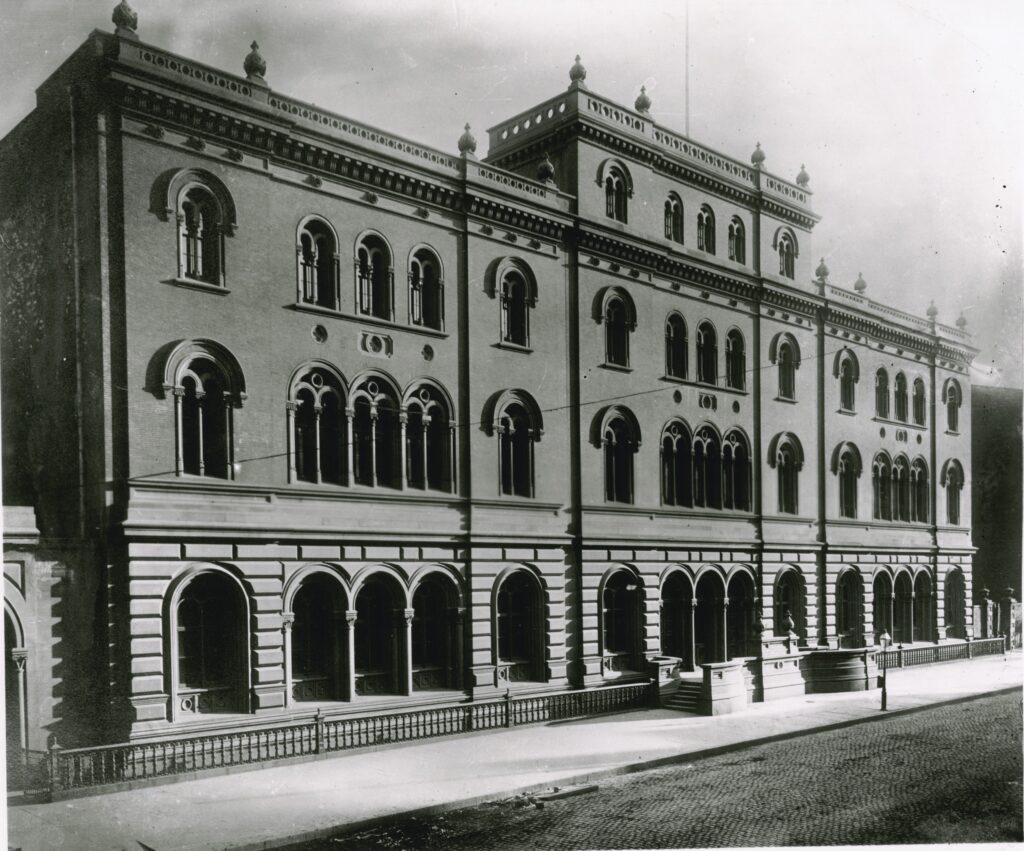
With an ALL NEW GHOST STORY — WHO HAUNTS THE FORMER ASTOR LIBRARY?
Listen today on your favorite podcast player:
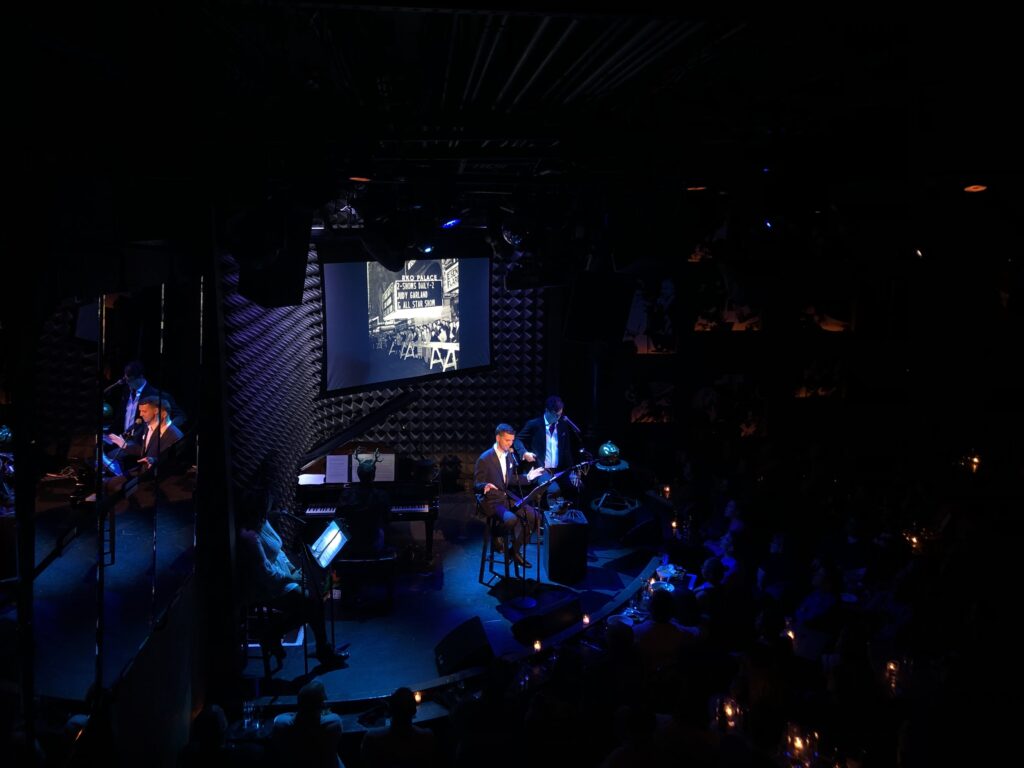
Photos by Julia Press136 Clinton Avenue in Brooklyn back when it was very, very close to the shoreline.The remainder of old Manhattan Well. (Image courtesy Scouting NY)Captain Kidd in early New York, depicted in a 1920 painting by Jean Leon Gerome FerrisJudy Garland at the Palace TheaterAstor Library, later the Public Theater. Courtesy New York Public Library
The Bowery Boys: New York City History podcast is brought to you …. by you!
We are now producing a new Bowery Boys podcast every week. We’re also looking to improve and expand the show in other ways — publishing, social media, live events and other forms of media. But we can only do this with your help!
We are now a creator on Patreon, a patronage platform where you can support your favorite content creators.
Please visit our page on Patreon and watch a short video of us recording the show and talking about our expansion plans.
If you’d like to help out, there are six different pledge levels.Check them out and consider being a sponsor.
We greatly appreciate our listeners and readers and thank you for joining us on this journey so far.
If you’re looking to read something about the possibility of doingabsolute good in the world, then a story about the Henry Street Settlement is a good place to start.
The Lower East Side settlement house, founded by Lillian Wald in 1893, became not only a salvation to the hundreds of thousands of immigrants in the densely populated neighborhood, it created a template for social work and community care during the Progressive Era.
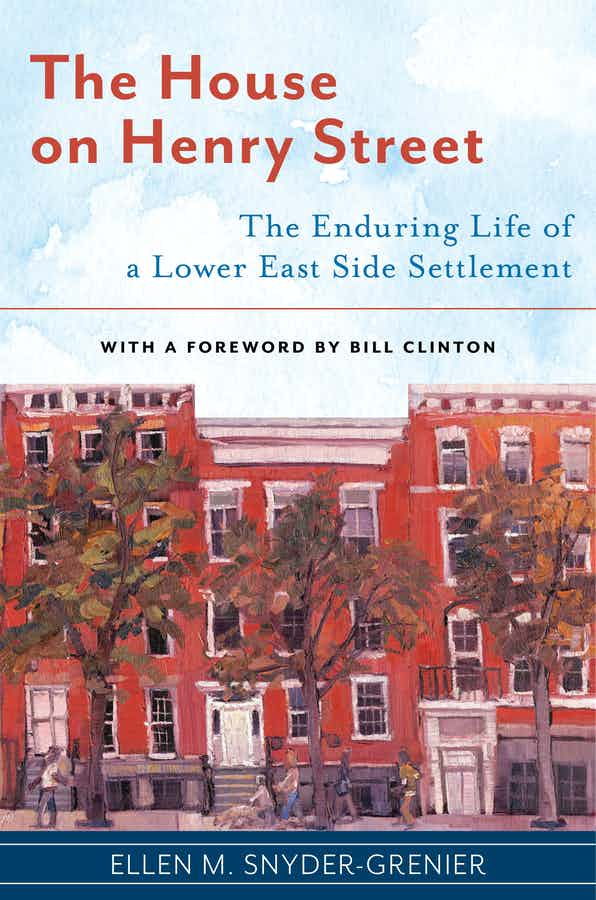
THE HOUSE ON HENRY STREET The Enduring Life of a Lower East Side Settlement by Ellen M. Snyder-Grenier Washington Mews Books
But in a new book about Wald and her historic institution, curator Ellen M. Snyder-Grenier makes the convincing case that many roads of 21st century social justice pass through the doorway at 265 Henry Street as well.
Wald charted this ambitious project as a means to provide individualized nursing care to those in the Lower East Side who could not afford or were too unwilling to visit hospitals. Writes Snyder-Grenier:
“Warm, inviting, and welcoming, the house on Henry Street was more than just a house; it was a home. Settlement women like Wald drew on a Victorian model of middle-class women presiding over their homes as wives and mothers with care, moral uplift and nurturing, redefining it for their modern endeavor, rejecting maternalism’s limiting aspects and owning its best and most useful parts.”
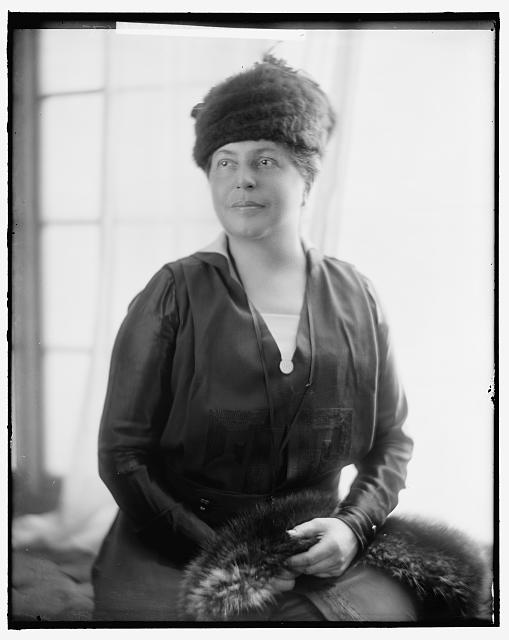
But Wald (pictured above) knew early on that struggling communities needed more than physical care. They needed advocates. “[H]er goal was not only to nurse the sick but to address the underlying social problems to poor public health.”
The Henry Street Settlement became a testing ground for social reform. Every child in America has been positively affected by Wald’s crusades, local endeavors which took wing across the country — for playgrounds, for free school lunches, for special education, for child labor laws.
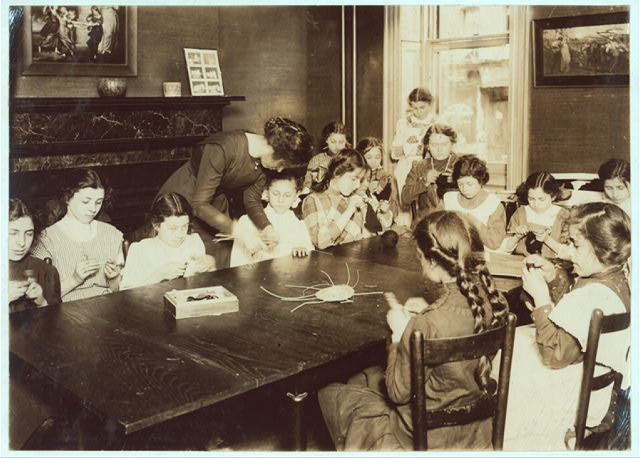
A knitting class in the famous Henry Street dining room, May 1910. The fireplace at left is still very much intact. (Library of Congress)
But Wald (and the Settlement, the fullest extension of her personality) also fought for gender equality and organized against racial injustice.
She expanded the Settlement into black neighborhoods like San Juan Hill and was on the board of the directors for the NAACP. And during wartime, she and the Settlement championed for peace.
Naturally, during conservative periods, Wald and her “seditious activities” were painted by some as anti-American.
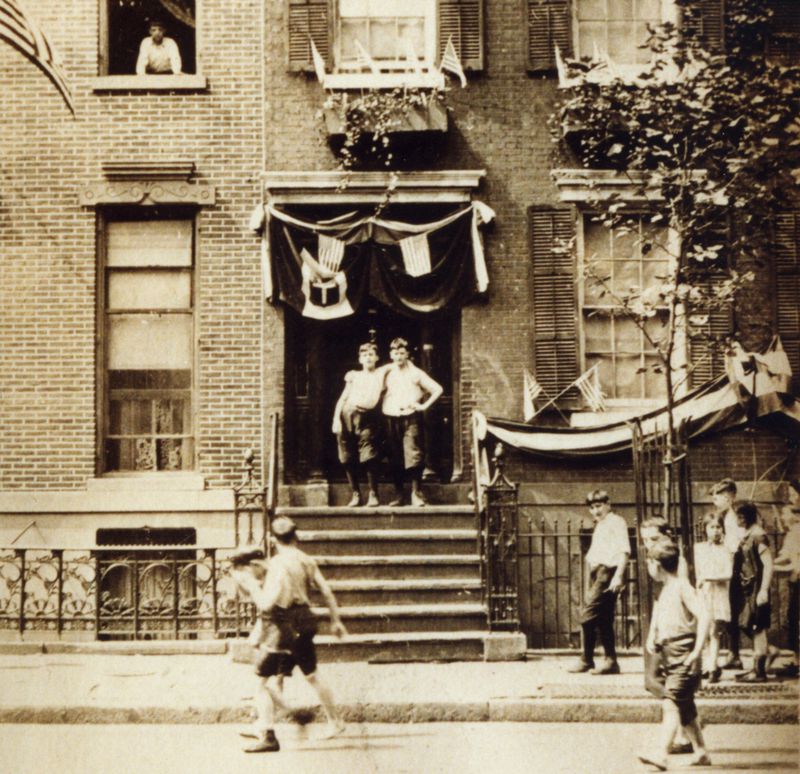
The settlement house, around 1920. (Henry Street Settlement Collection)
After Wald’s death, Helen Hall became director of the Settlement, and for over thirty years she led the institution in directions that would have made Wald quite proud.
In particular, Hall and the Settlement became instrumental during the development of certain New Deal programs. Although, from the vantage of a social worker, FDR’s visionary programs did not go far enough.
“Hall was unhappy about what the legislation had left out — compulsory (universal) health insurance — an omission that continues to resonate in American life in politics.”
In fact the parallel with modern progressive politics is made so clear in The House of Henry Street that the book even comes with a forward written by Bill Clinton, who visited the Settlement in 1992:
“As I looked around, I saw the best of America — young and old, immigrant and native born — all there because they wanted to create a better future for themselves and their families.”
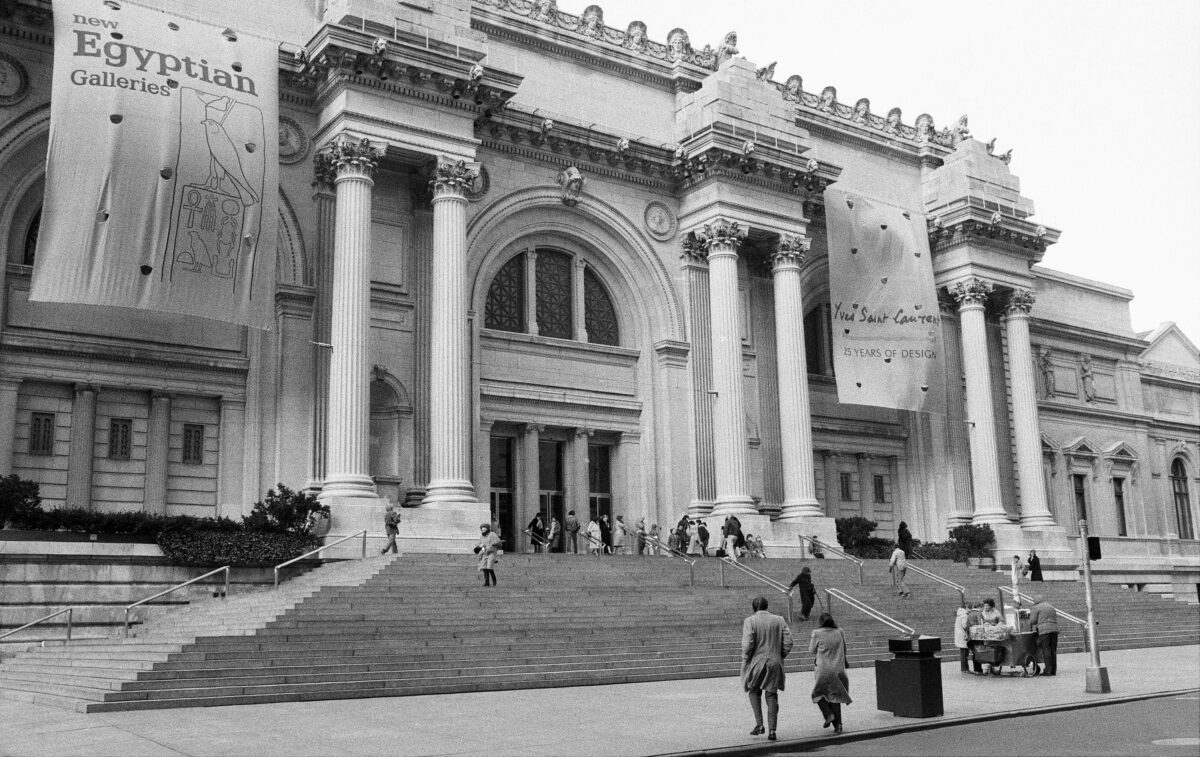
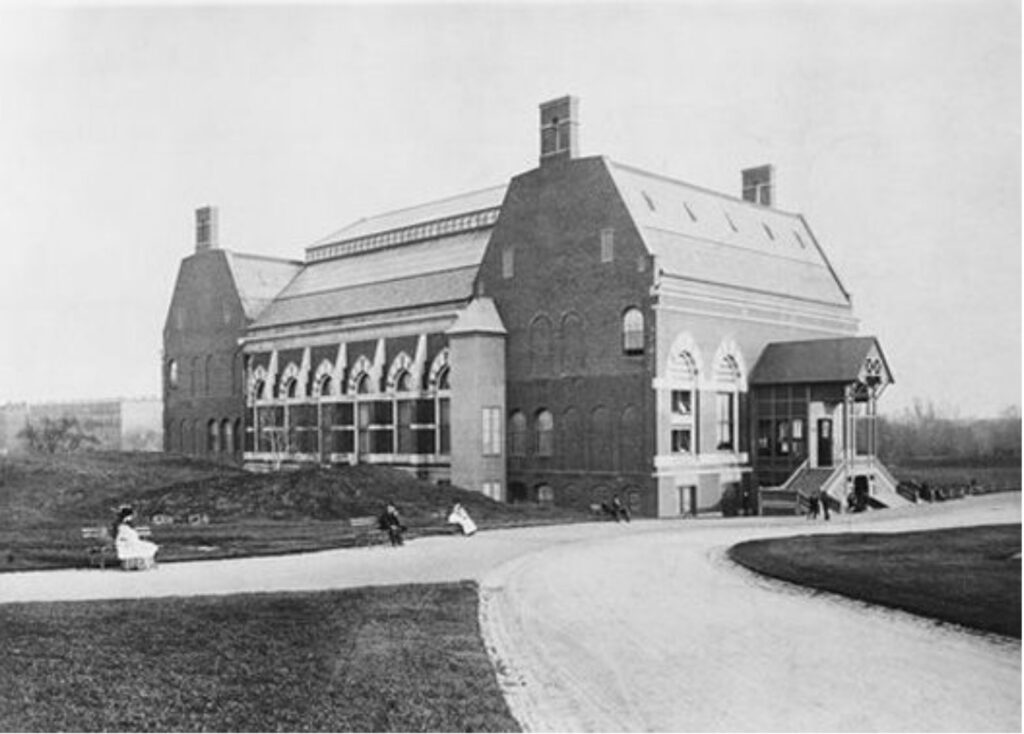
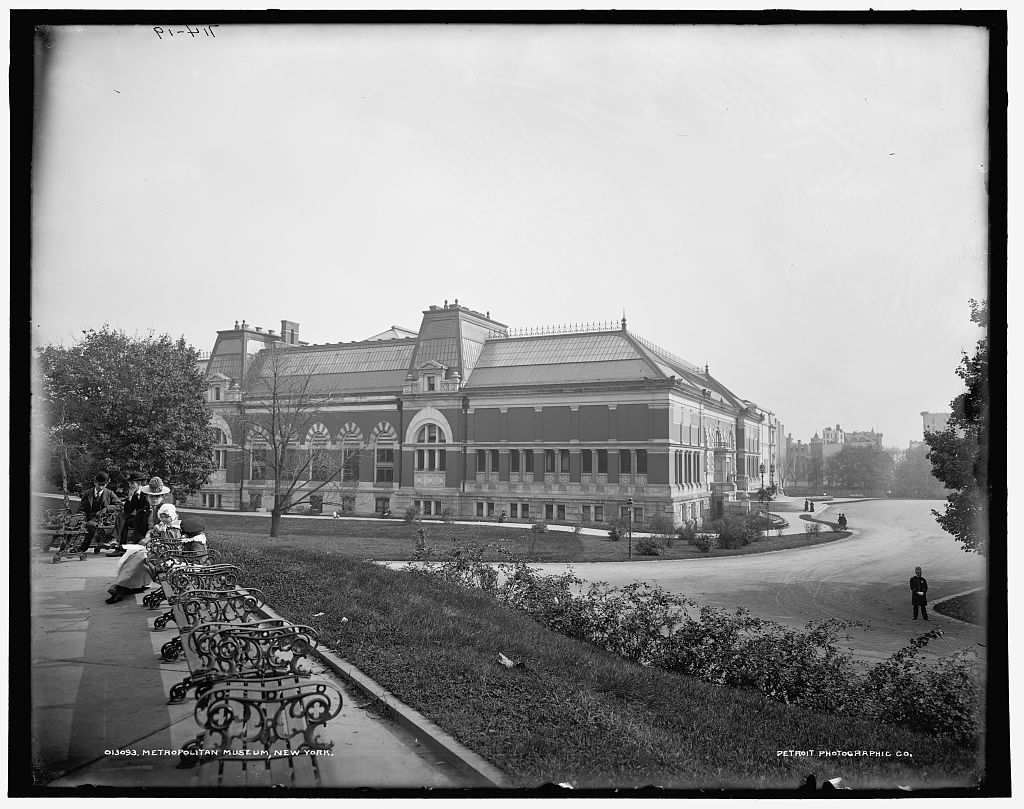
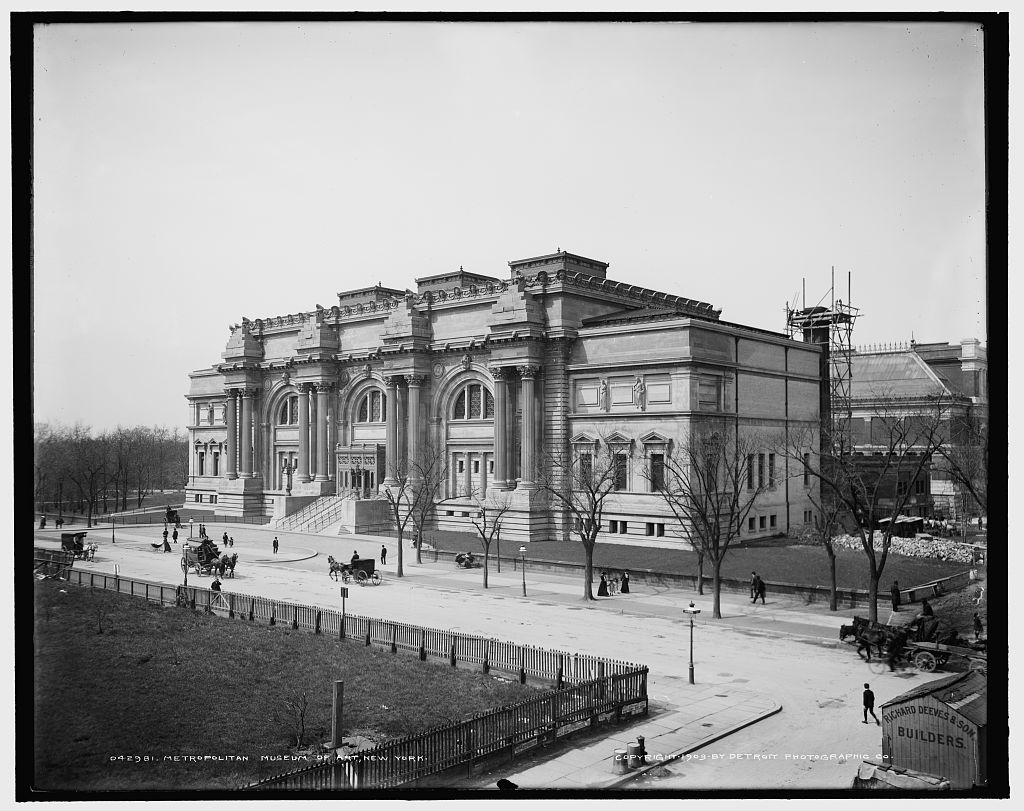
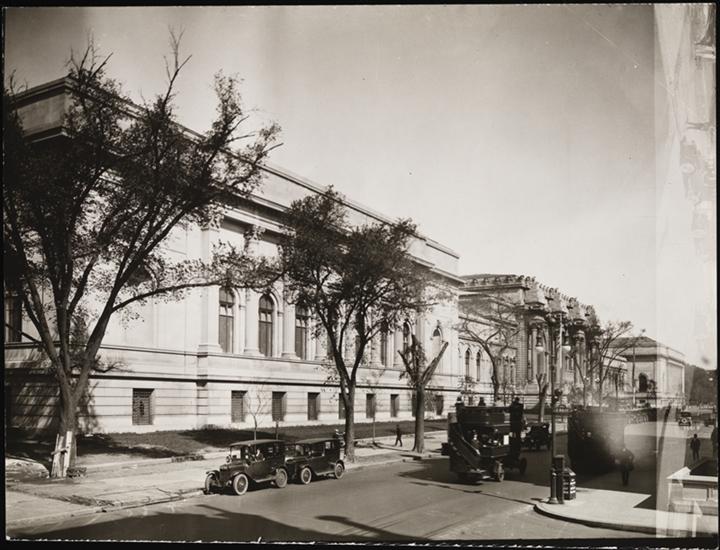
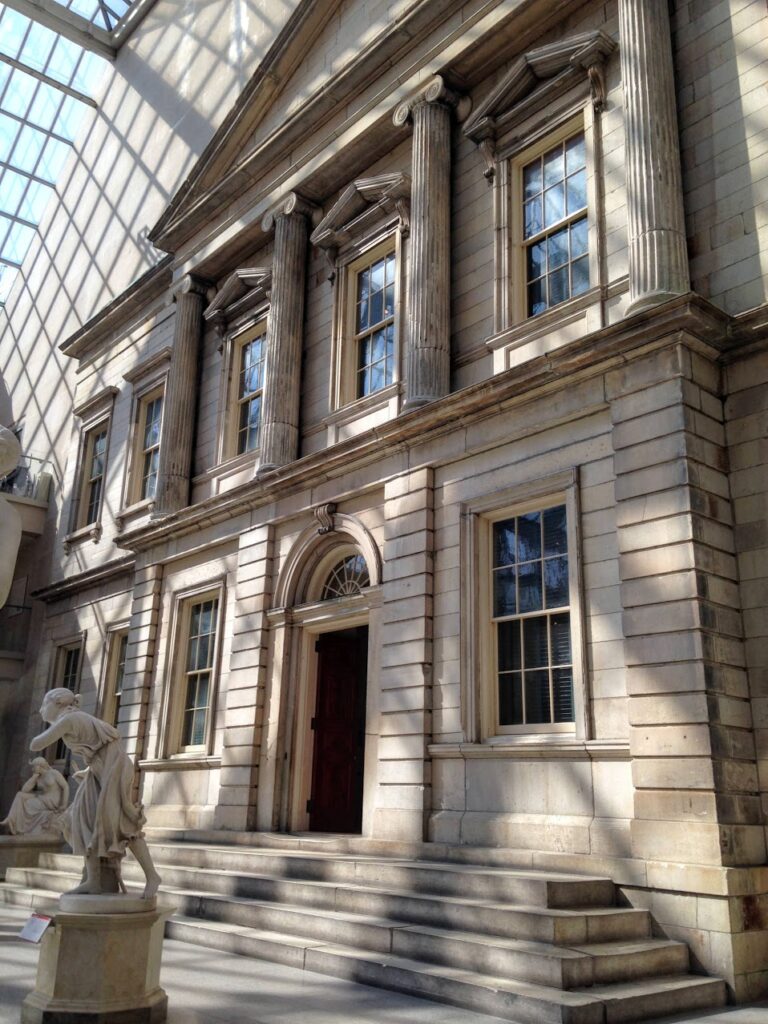
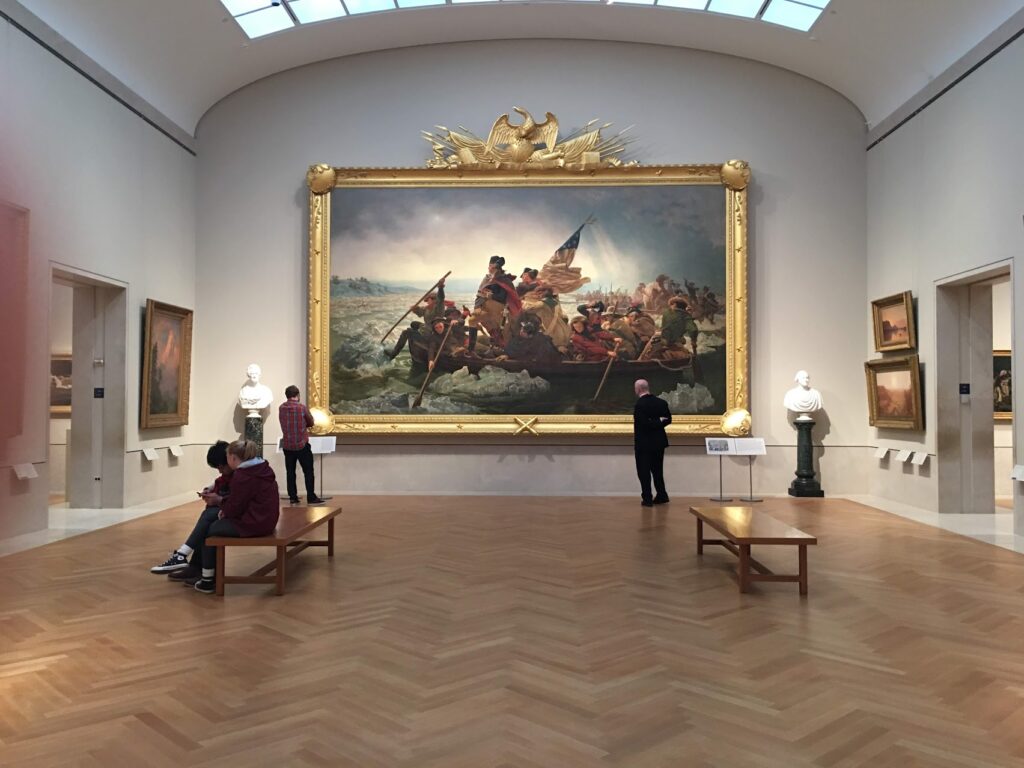
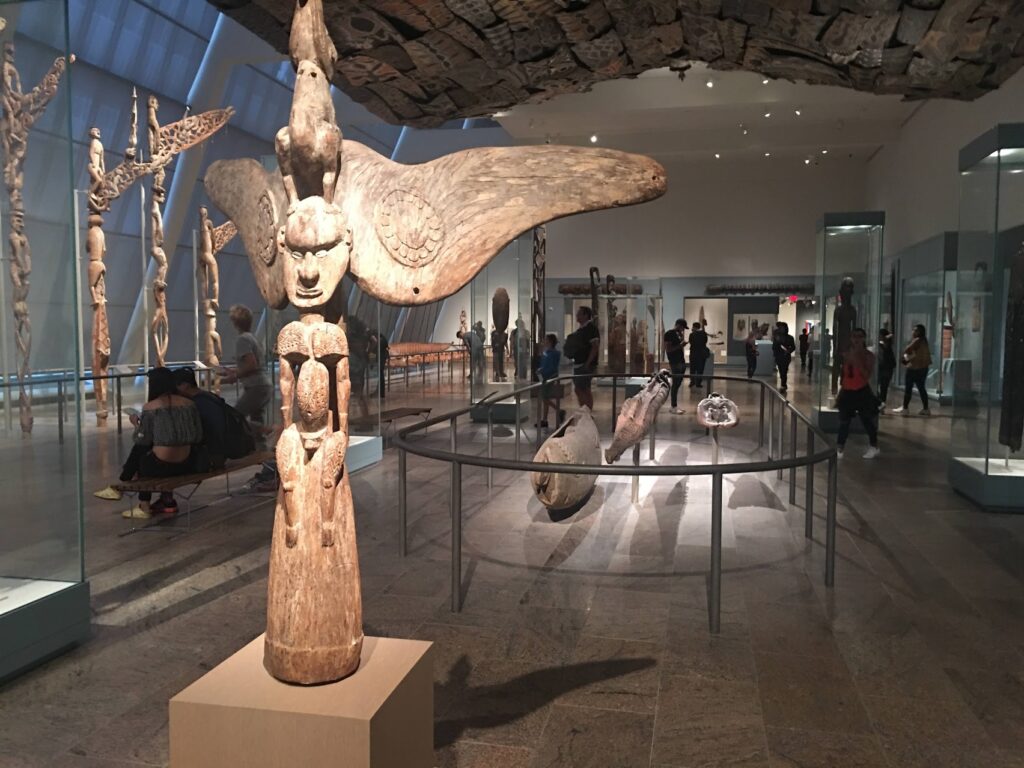
EPISODE 341 Celebrating the history of the Metropolitan Museum of Art in the 150th anniversary year of its founding — certainly one of the strangest years in its extraordinary existence.
The Met is really the king of New York attractions, with visitors heading up to Central Park and streaming through the doors by the millions to gasp at the latest blockbuster exhibitions and priceless works of art and history.
And who doesn’t love getting lost at the Met for an afternoon — wandering from the Greek and Roman galleries to the imposing artifacts within the Arms and Armor collection and the treasures of the Asian Art rooms?
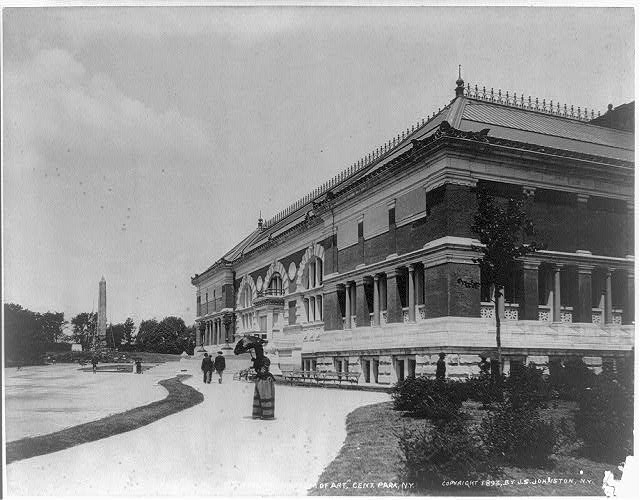
The Theodore Weston addition to the Met 1893, J.S. Johnston, Library of Congress
But this museum has a few surprising secrets in its history — and more than a few skeletons (or are those mummies?) in its closet.
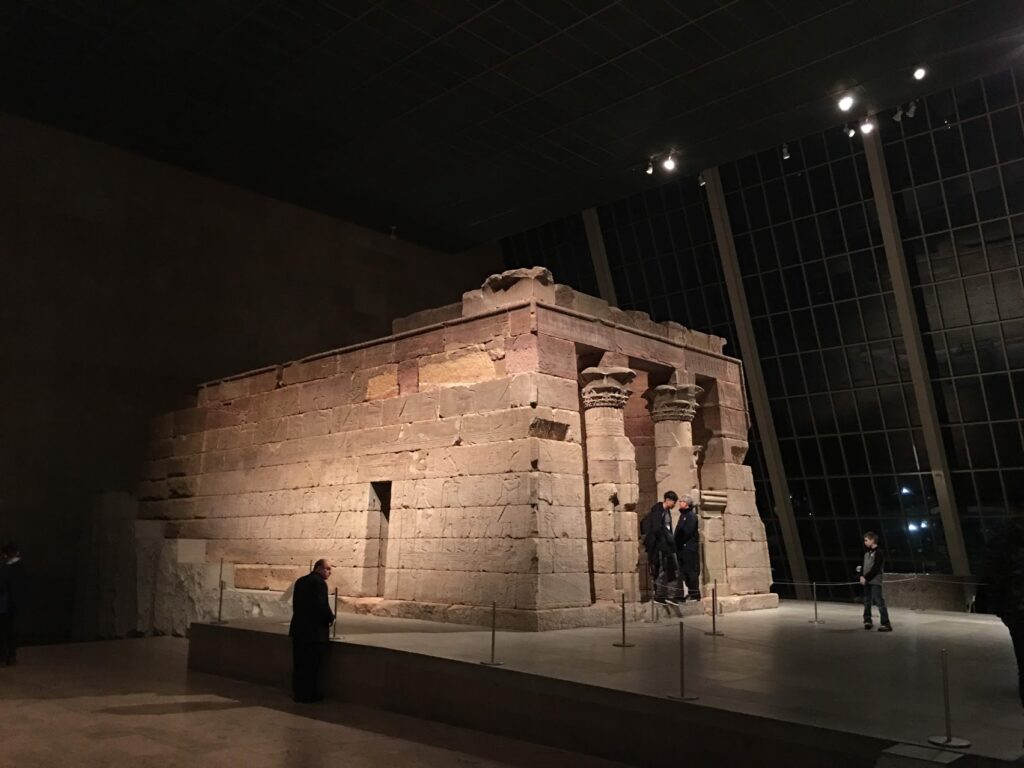
WITH Ancient temples, fabulous fashions, classical relics, Dutch masters, controversial exhibitions and the decorative trappings of the Gilded Age.
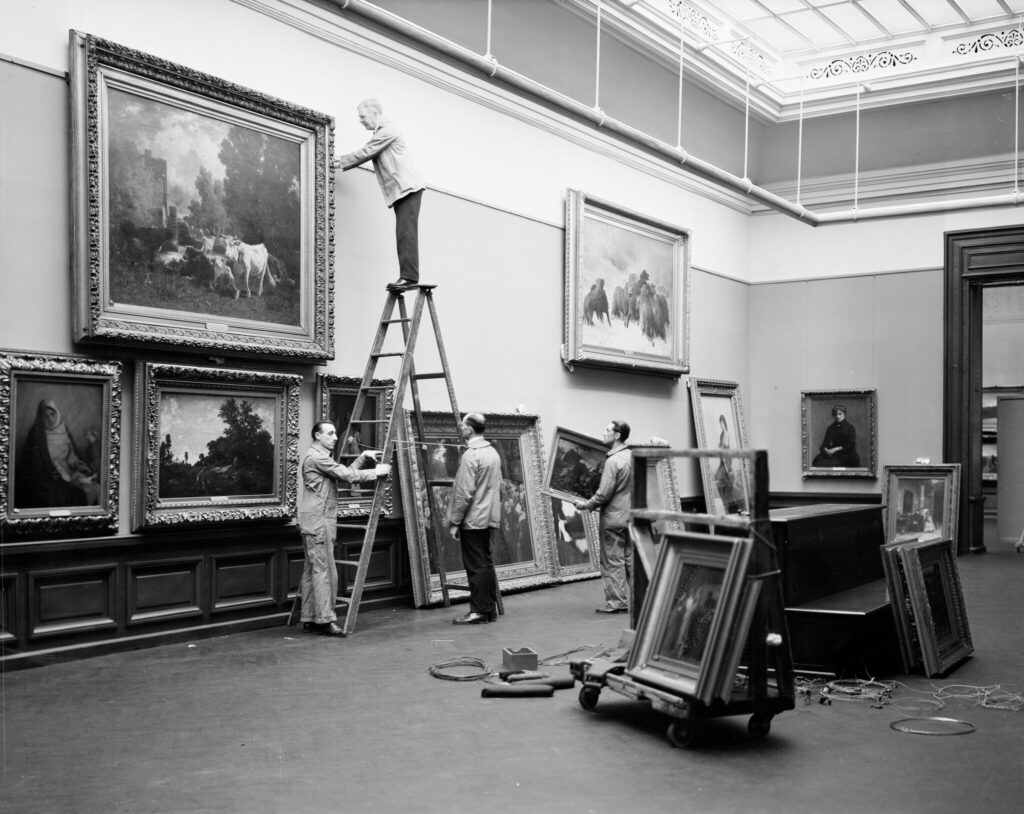
November 1928, photo courtesy The Metropolitan Museum of Art
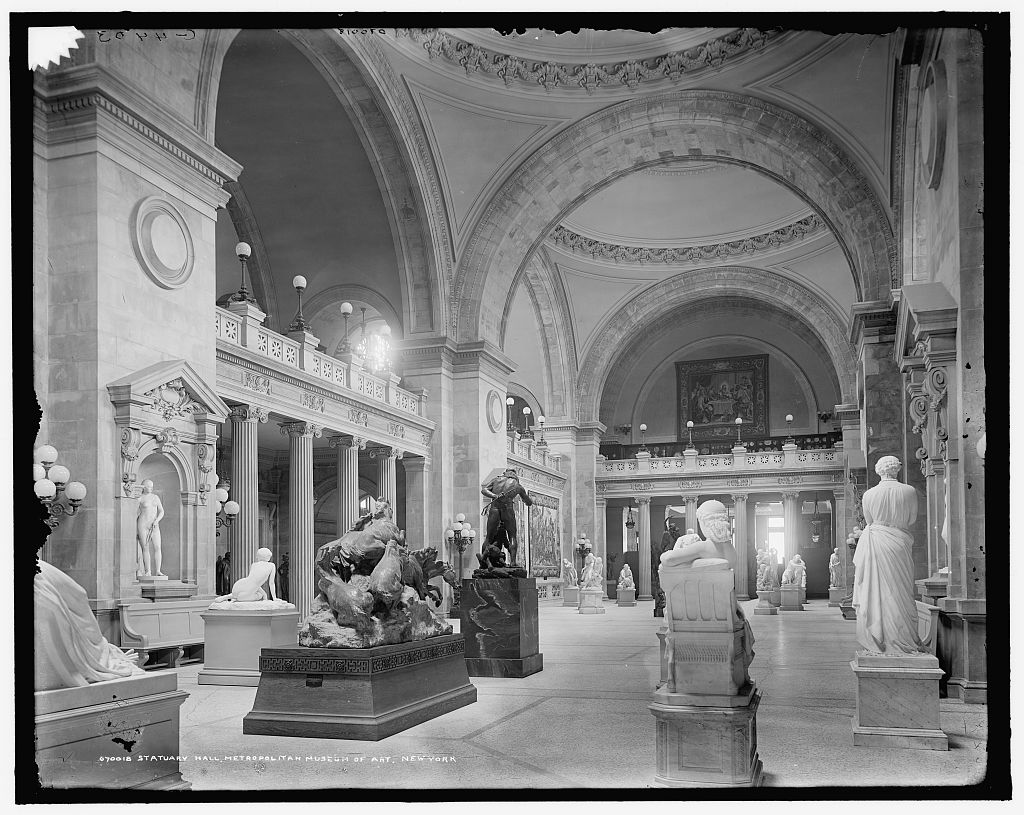
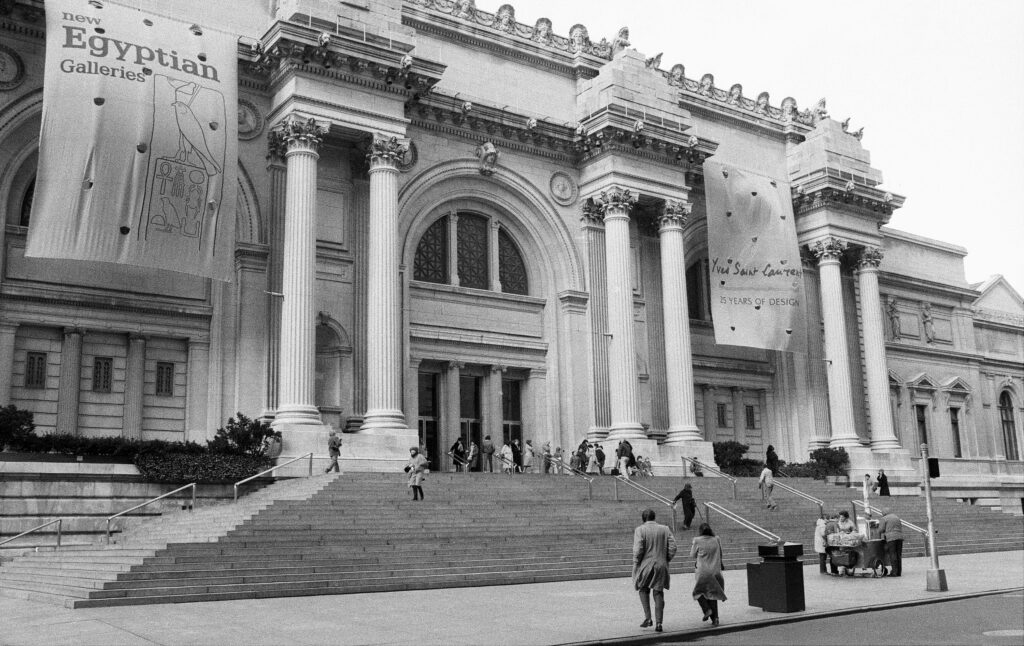
AND Find out how the museum building has evolved over the years, employing some of the greatest architects in American history.
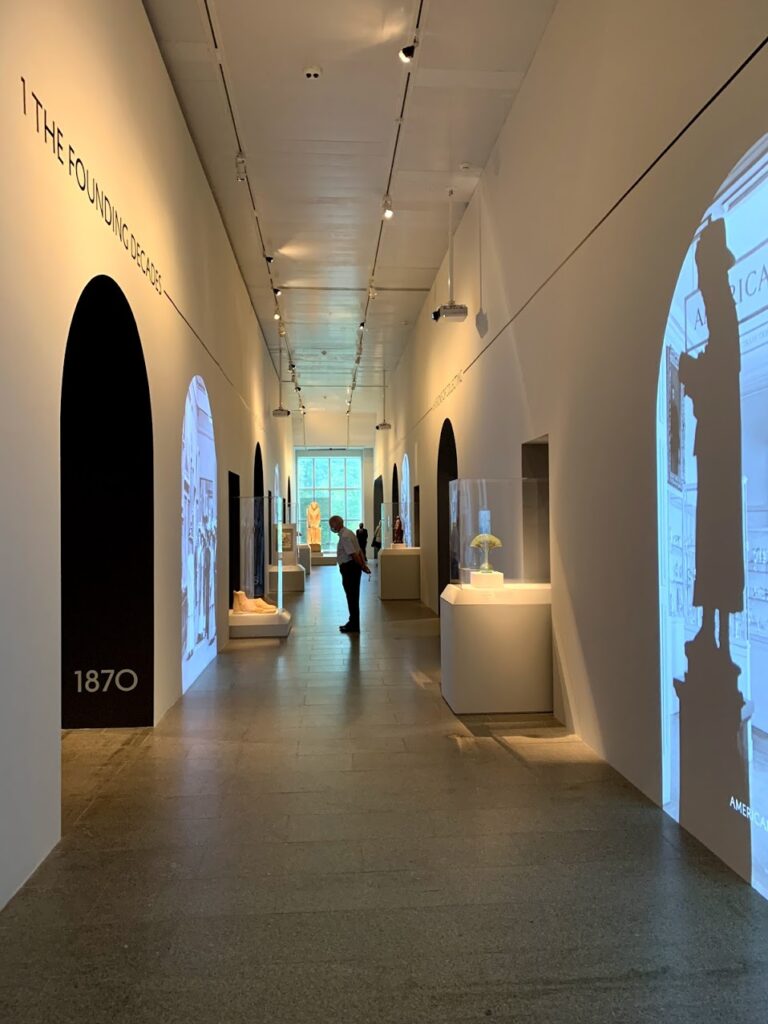
PLUS An interview with the Met’s Andrea Bayer, Deputy Director for Collections and Administration, on the museum’s celebratory exhibition Making the Met 1870-2020.
How do you launch an anniversary celebration during a pandemic and lockdown?
Listen today on your favorite podcast player:
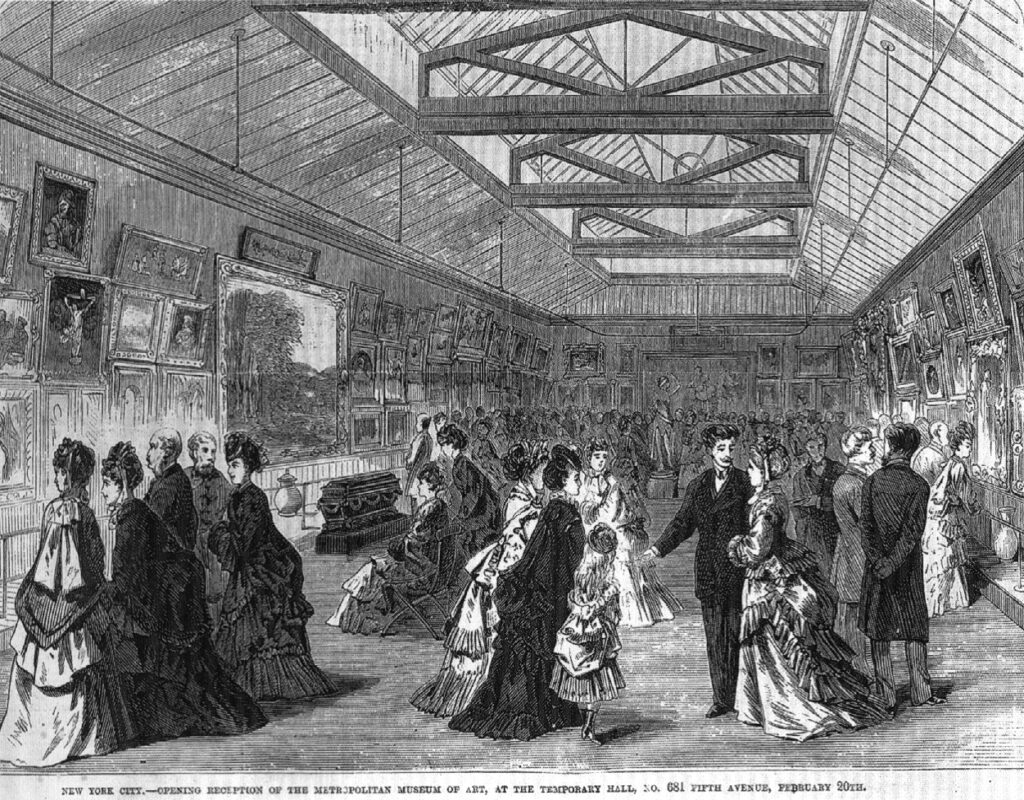
Opening reception in the picture gallery at 681 Fifth Avenue, February 20, 1872; wood-engraving published in Frank Leslie’s Weekly, March 9, 1872‘The Barn’, the original Met from Calvert Vaux and Jacob Wrey Mould, courtesy the Metropolitan Museum of Art1900, Detroit Pub Co, Library of CongressThe Richard Morris Hunt addition to the Met, 1903, Detroit Pub Co, Library of CongressThe Great Hall, 1907, Library of CongressThe Met in 1920, with the southern wing in place. Museum of the City of New YorkThe Met in 1983, Getty Images
Some excellent footage from the 1920s of the Met’s Egyptian excavations
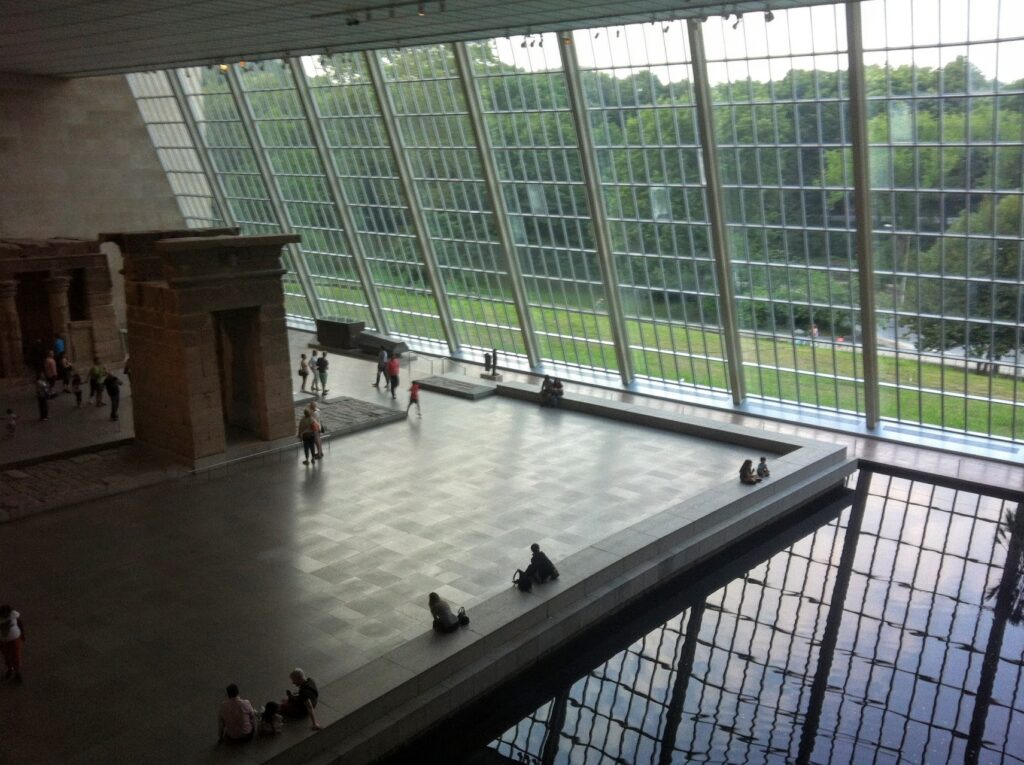
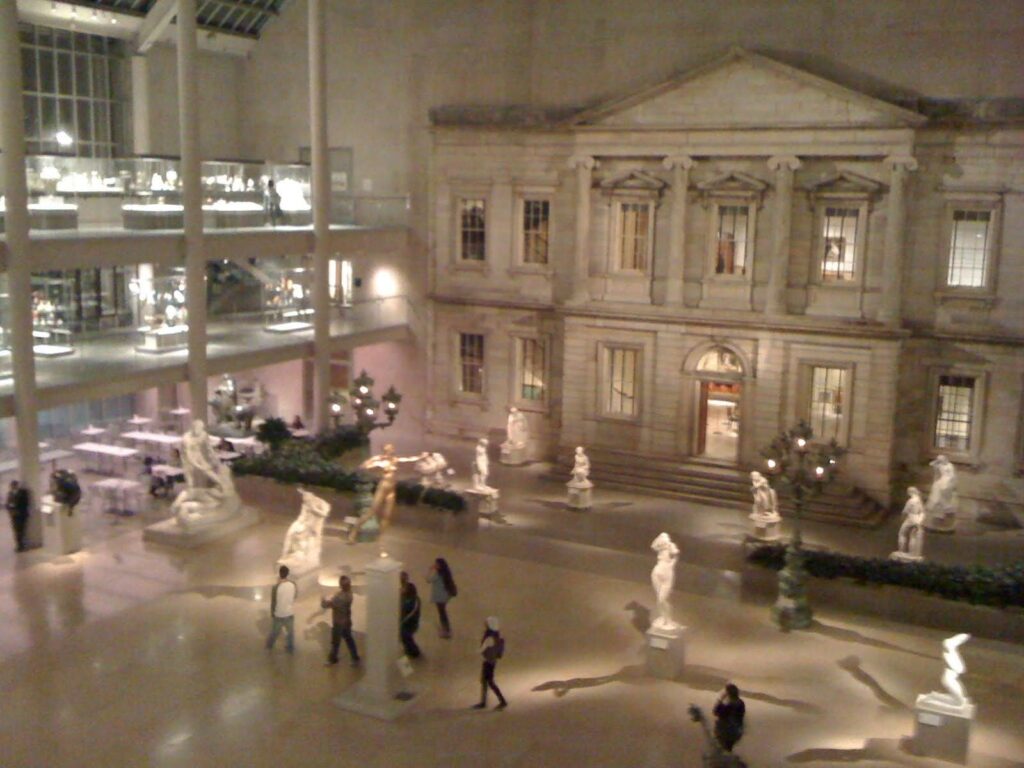
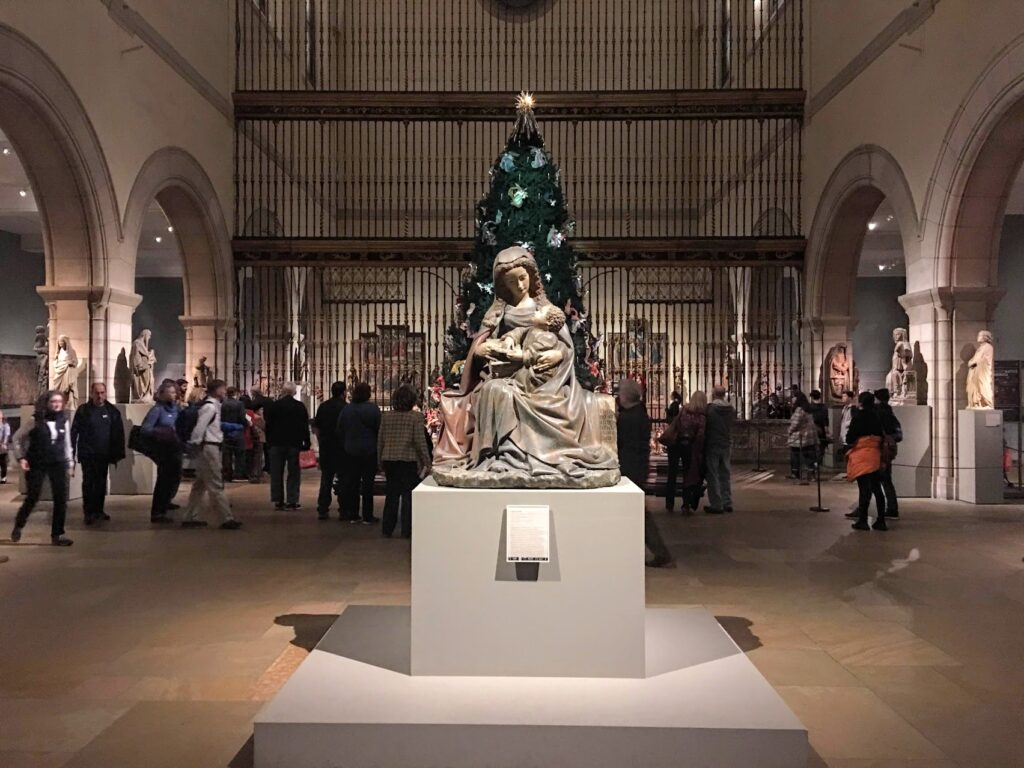
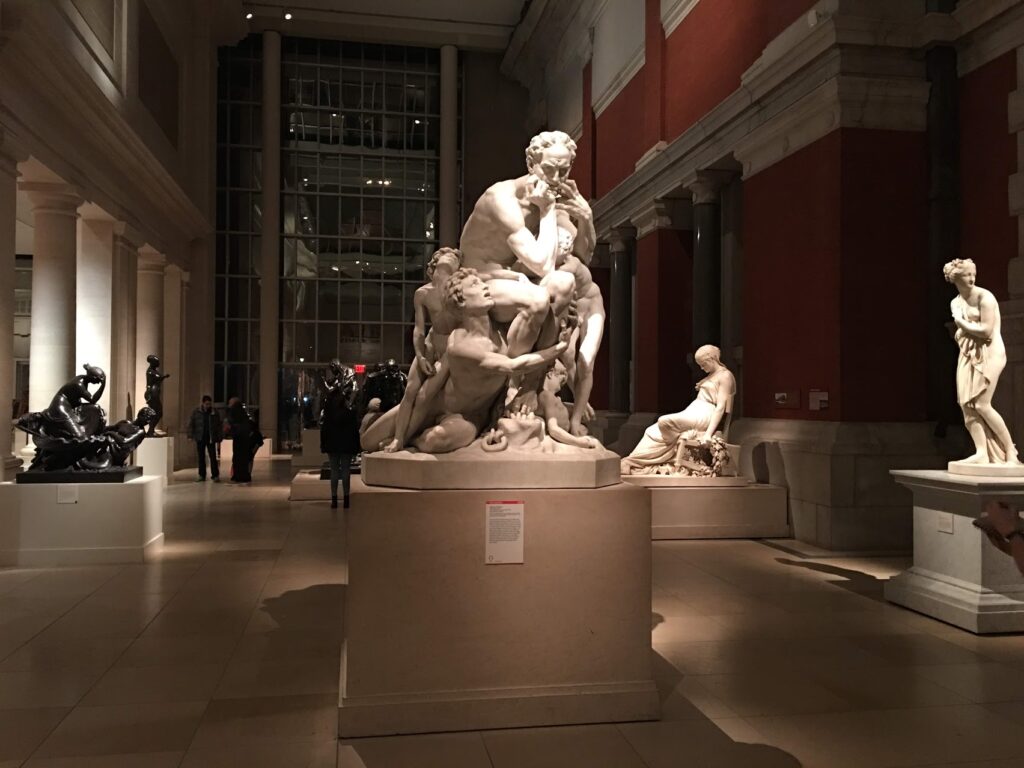
The Temple of Dendur. photo by Greg YoungThe American Wing sculpture garden at night, photo by Greg YoungBranch Bank entrance, 2012, photo by Greg YoungWashington Crossing the Delaware, taken 2017, photo by Greg YoungDendur at night, 2018, photo by Greg YoungThe Met at Christmas, 2018, photo by Greg YoungThe European sculpture garden at night, with views of the original 19th century facade in red brick. 2018, photo by Greg Young
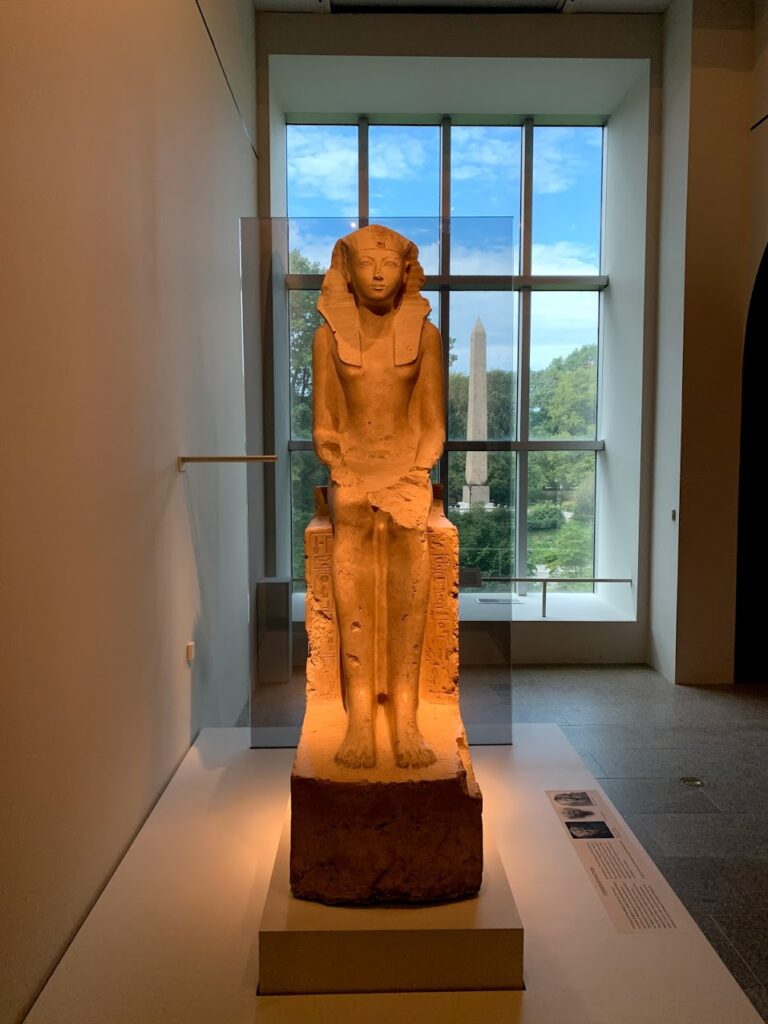
Views from Making the Met (photos by Greg Young):
The Bowery Boys: New York City History podcast is brought to you …. by you!
We are now producing a new Bowery Boys podcast every week. We’re also looking to improve and expand the show in other ways — publishing, social media, live events and other forms of media. But we can only do this with your help!
We are now a creator on Patreon, a patronage platform where you can support your favorite content creators.
Please visit our page on Patreon and watch a short video of us recording the show and talking about our expansion plans.
If you’d like to help out, there are six different pledge levels.Check them out and consider being a sponsor.
We greatly appreciate our listeners and readers and thank you for joining us on this journey so far.
FURTHER LISTENING
The Met was a bit behind the times when it came to celebrating Impressionism but New Yorkers could take a gander at the ‘shocking’ output from Europe — as well as examples from the New York’ Ashcan School — at the Armory Show of 1913.
The Met is a twin institution to the American Museum of Natural History which shares a similar origin story.
In the second half of our Fifth Avenue Mansions series, we look at how the wealthy mansions of Fifth Avenue left midtown and headed to the Upper East Side.
Comic books were invented in New York City during the 1930s, the product of a low-key publishing trade combining the popularity of newspaper comic strips with the gloss of the magazine revolution.
That was also a decade of social activism — with the Great Depression at home and the rise of fascism in Europe — and many early comic book publishers happened to be progressive and politically engaged.
Perhaps none more so than Lev Gleason.
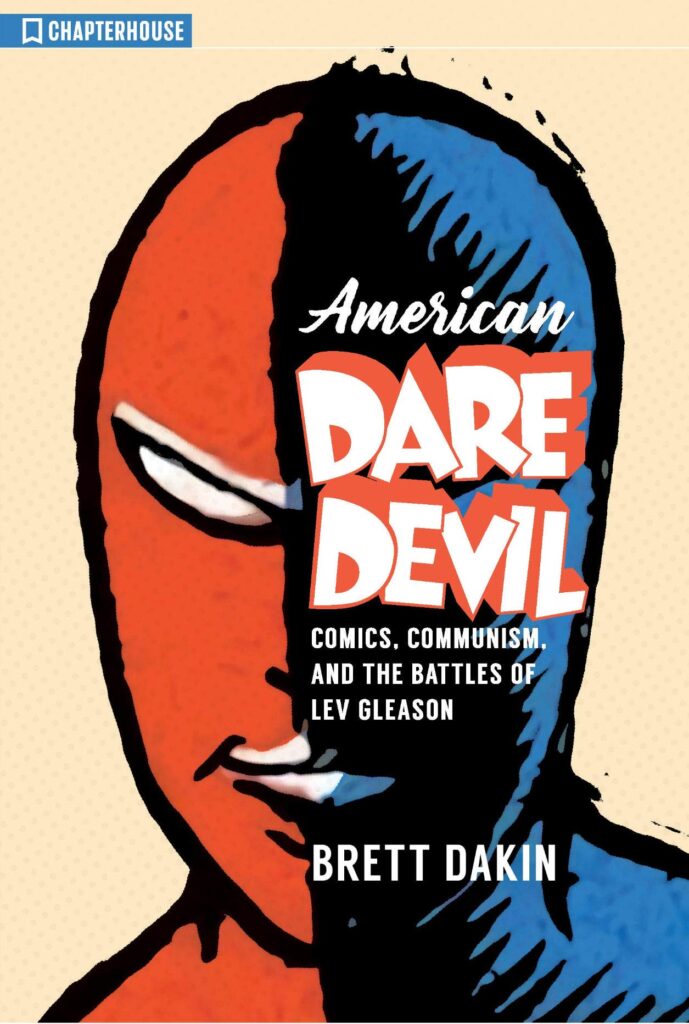
AMERICAN DAREDEVIL Comics, Communism and the Battles of Lev Gleason by Brett Dakin Chapterhouse
Lev Gleason was Dakin’s grand-uncle. Some of my favorite biographies are written by those directly related to the subjects. (Recommended examples include The Vapors by David Hill and On Her Own Ground by A’Lelia Bundles.) The strengths of having a personal connection to a biographical subject are on nice display here.
Gleason was no ordinary comic book publisher; he was also a vibrant anti-fascist organizer, a suburban liberal who was eventually targeted by the federal government in the early years of the Red Scare.
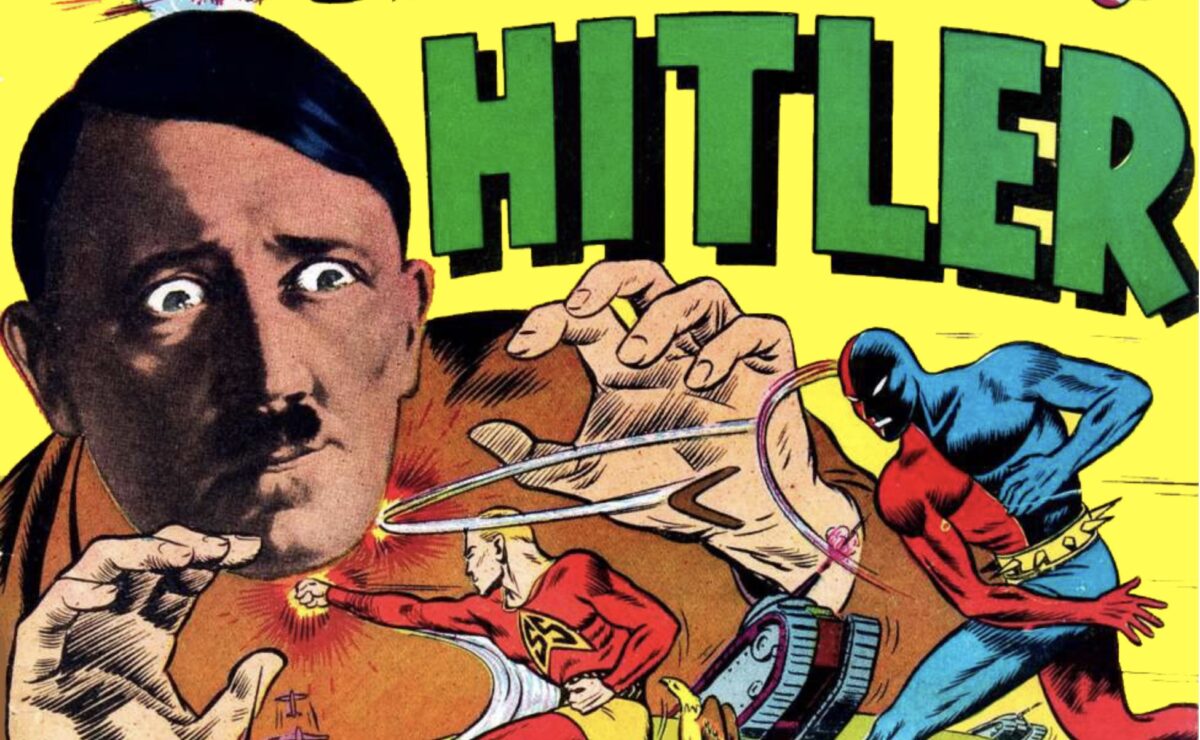
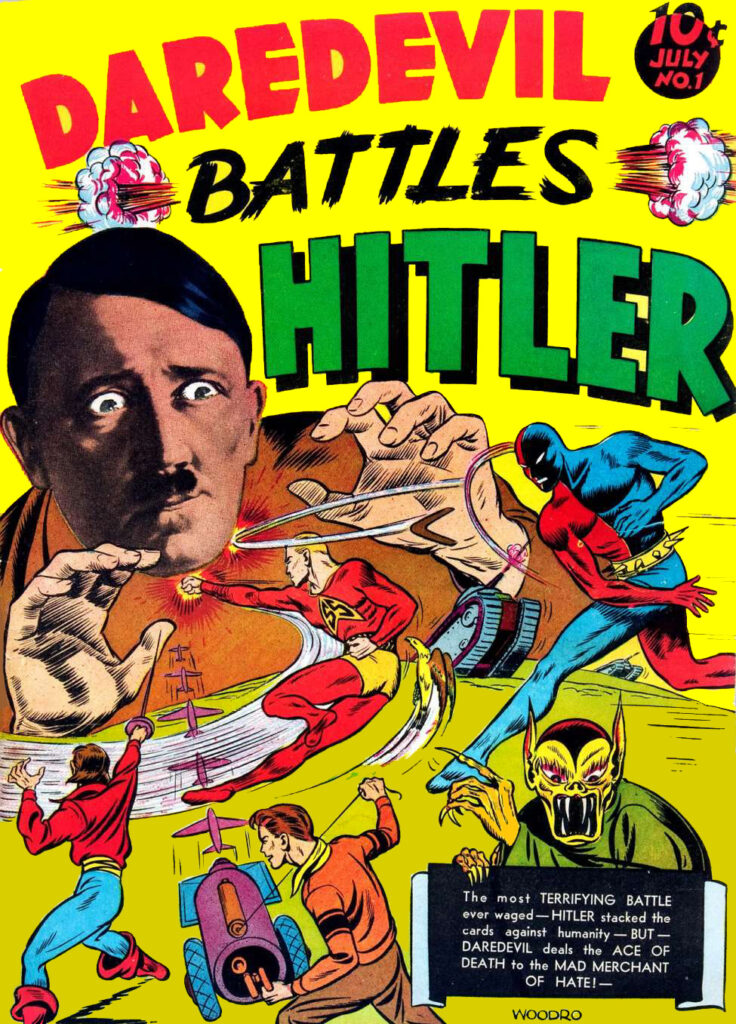
Gleason was one of America’s most successful early comic book publishers. At first, like so many others*, he dabbled in superhero comics with heroes such as Daredevil — not related to Marvel’s later incarnation — and Silver Streak. Real-life enemies such as Adolf Hitler met their match in these colorful pages.
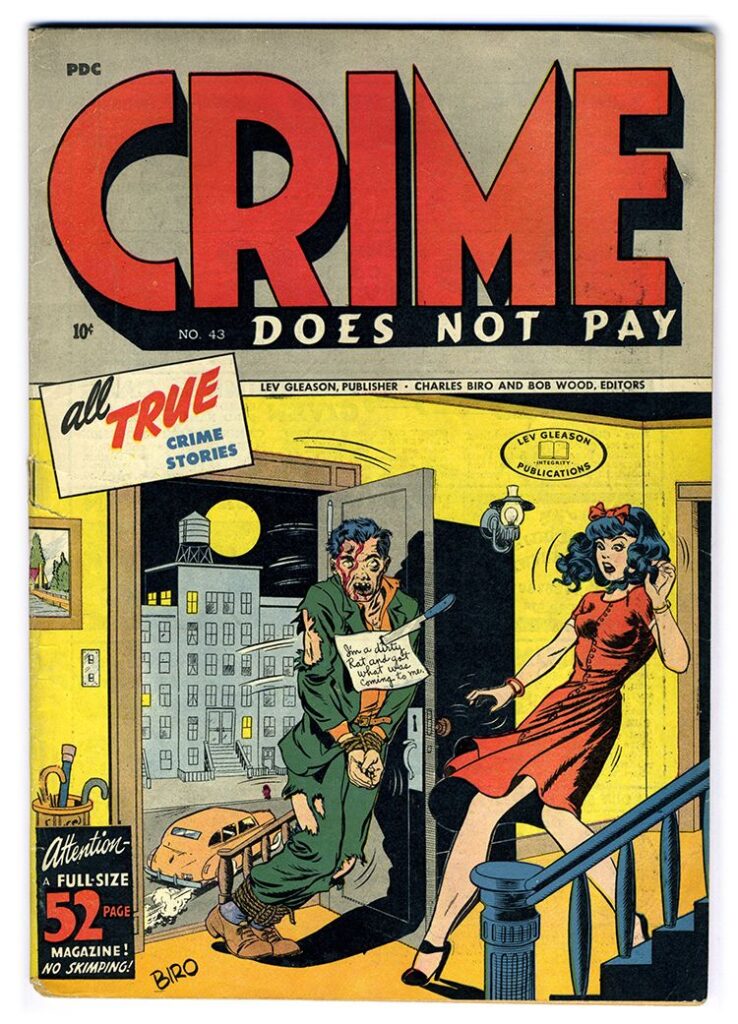
But his real notoriety came in adapting to a new genre — the true crime comic book. With his landmark Crime Does Not Pay, readers experienced stark violence, depravity and vice from a more unsettling vantage.
“What was unique about Lev’s contribution,” writes Dakin, “was that, rather than focusing on the detectives and the police, the tales in Crime revolved around the criminals themselves….
“At the end of every issue, it is true, the criminal was caught, and Mr. Crime [the story’s omniscient narrator] reminded the reader of the dangers of a life of crime. But by that point, the reader had come to know the criminal, and perhaps, to sympathize with him.”
This put Gleason in direct opposition with moral reformers of the day, who saw comic books as disreputable and corrupting influences. By the 1950s publishers were testifying to Senate sub-committees in defense of their industry.
But it was Gleason’s involvement in progressive publications and with anti-fascist organizations such as the Joint Anti-Fascist Refugee Committee that got him marked by the House Un-American Activities Committee, “created in 1938 to investigate alleged disloyalty and rebel activities on the part of private citizens, public employees and organizations suspected of having Communist ties.” [source]
Dakin creates a sharp and intriguing portrait of Gleason, taking the reader along on the journey to discovering his grand-uncle’s story.
From a narrative perspective, I found the personal asides to be the book’s greatest strength. If you plunged into the dark corners of your own family tree, what fascinating figure might you discover?
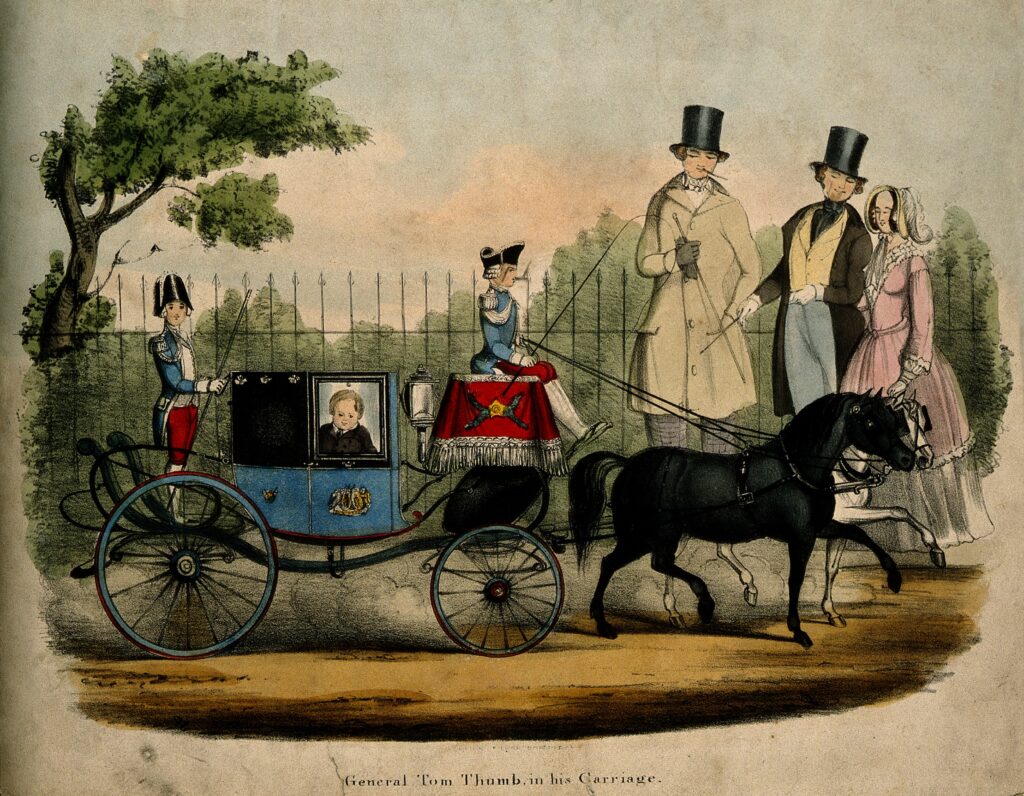
PODCAST The tale of one of the 19th century’s most unusual superstars, a man who spent his entire life in the media spotlight — thanks to promoter and friend P.T. Barnum and to his highly publicized ‘wedding of the century’ to Lavinia Warren at Grace Church.
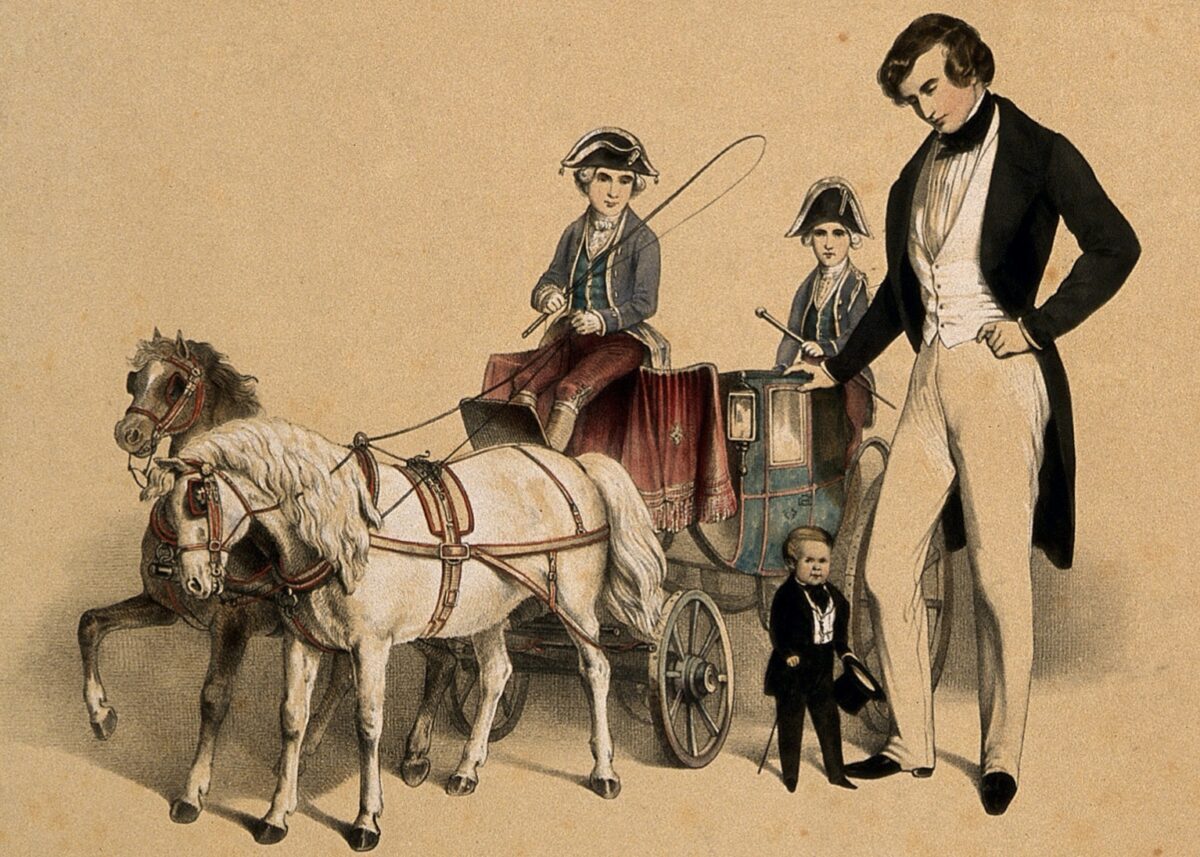
EPISODE #339 Charles Stratton, who would become world famous as “Tom Thumb” in the mid-19th century, was born in Bridgeport, CT on January 4, 1838 to parents of average height, and he grew normally during the first six months of his life — to about 25 inches or so.
And then, surprisingly, he just stopped growing.
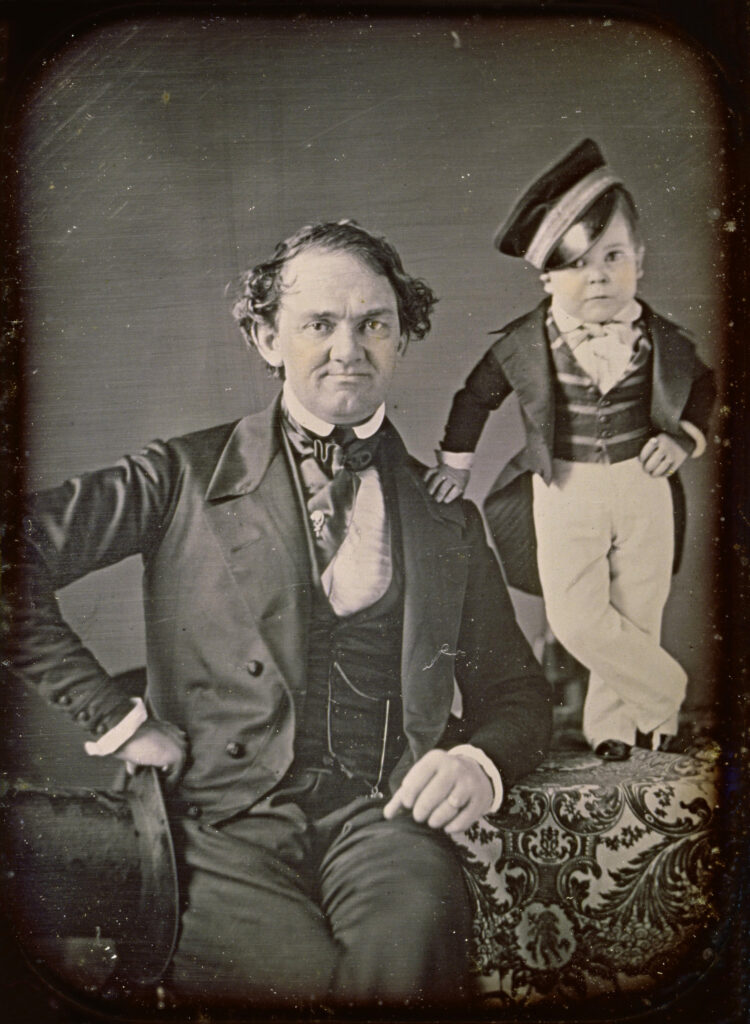
When P.T. Barnum, the master showman, would meet Charles and his parents, Charlie was 4, and he’d be signed on the spot to play the part of “General Tom Thumb” atBarnum’s American Museum. He’d be given a fancy new wardrobe, a new nationality (British), and a new age — 11 years old.
Charles would perform for the rest of his life as “Tom Thumb”. He’d enchant European royalty and American presidents, and sell out crowds around the world.
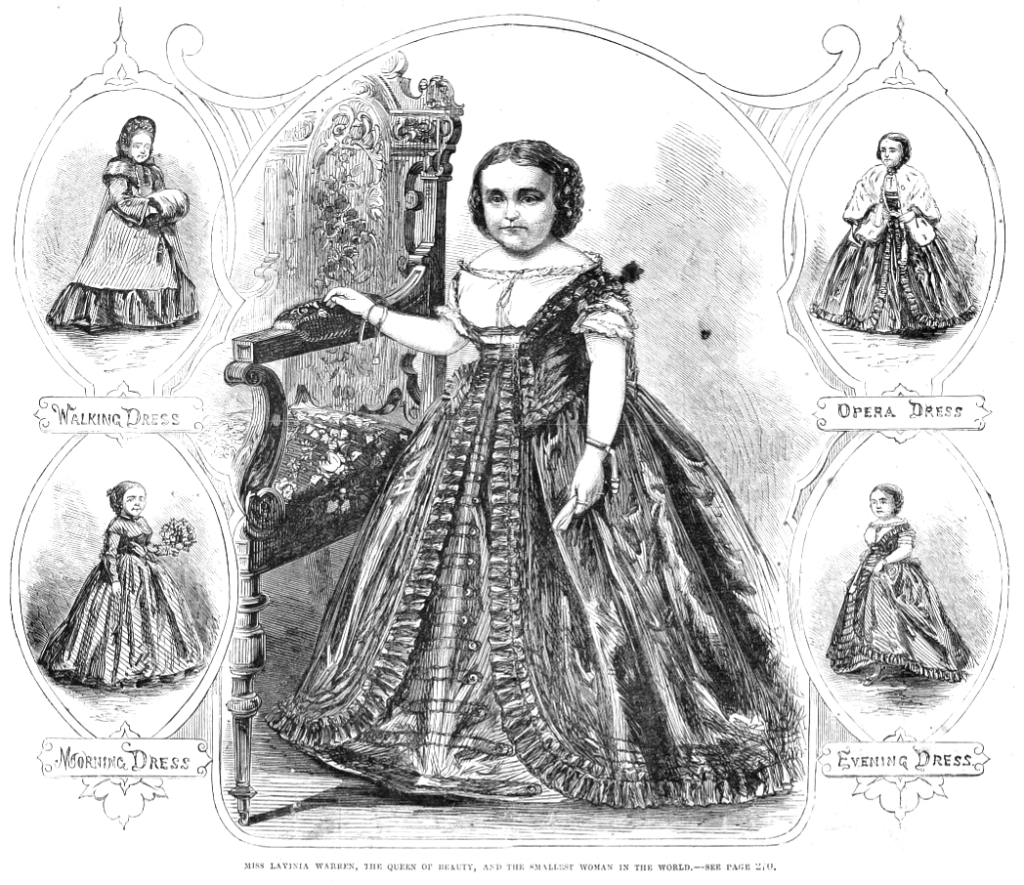
And in 1863, during the darkest days of the Civil War, he’d be married in New York’s Grace Church to Lavinia Warren, another Barnum employee and another performer of short stature.
Their wedding would be a sensation, and would actually knock news from the battlefields off the front page of the New York Times for three days.
Listen today on your favorite podcast player or just press play here:
Frank Leslie’s Illustrated Newspaper, January 17, 1863
FEATURED GUESTS ON TODAY’S EPISODE:
Dr. Michael Mark Chemers is a Professor of Dramatic Literature and Director of Graduate Studies in the Department of Theatre Arts at the University of California, Santa Cruz. He’s the author of Staging Stigma: A Critical Examination of the American Freak Show published by Palgrave MacMillan in 2008, in which he looks into the career and reception of Charles Stratton.
Eric Lehman is an Associate Professor of English at the University of Bridgeport and the author of 18 books, including Becoming Tom Thumb, published in 2013 by Wesleyan University Press.
Kathy Maher is the Executive Director of the Barnum Museum and is celebrating her 22nd year with the Museum. Located an hour out of New York City, P.T. Barnum’s last museum continues to stand on Main Street in the heart of downtown Bridgeport, CT, his adopted home. Although the Barnum Museum is currently closed due to covid-19 regulations, the Museum remains active with social media, virtual programming and a major historic restoration and re-envisioning https://barnum-museum.org/
Robert Wilson has been the editor of The American Scholar magazine since 2004. Before that, he edited Preservation magazine and was the book editor and columnist for USA Today. His previous books include The Explorer King(2006), about the 19th-century scientist, explorer, and writer Clarence King, and Mathew Brady: Portraits of a Nation (2013), about the Civil War photographer. His most recent book, Barnum: An American Life (from 2019), has just been published in paperback.
Lithograph — Charles S. Stratton, a dwarf known as General Tom Thumb; Credit: Wellcome Library, London.
FURTHER LISTENING
The Bowery Boys: New York City History podcast is brought to you …. by you!
We are now producing a new Bowery Boys podcast every week. We’re also looking to improve and expand the show in other ways — publishing, social media, live events and other forms of media. But we can only do this with your help!
We are now a creator on Patreon, a patronage platform where you can support your favorite content creators.
Please visit our page on Patreon and watch a short video of us recording the show and talking about our expansion plans.
If you’d like to help out, there are six different pledge levels.Check them out and consider being a sponsor.
We greatly appreciate our listeners and readers and thank you for joining us on this journey so far.
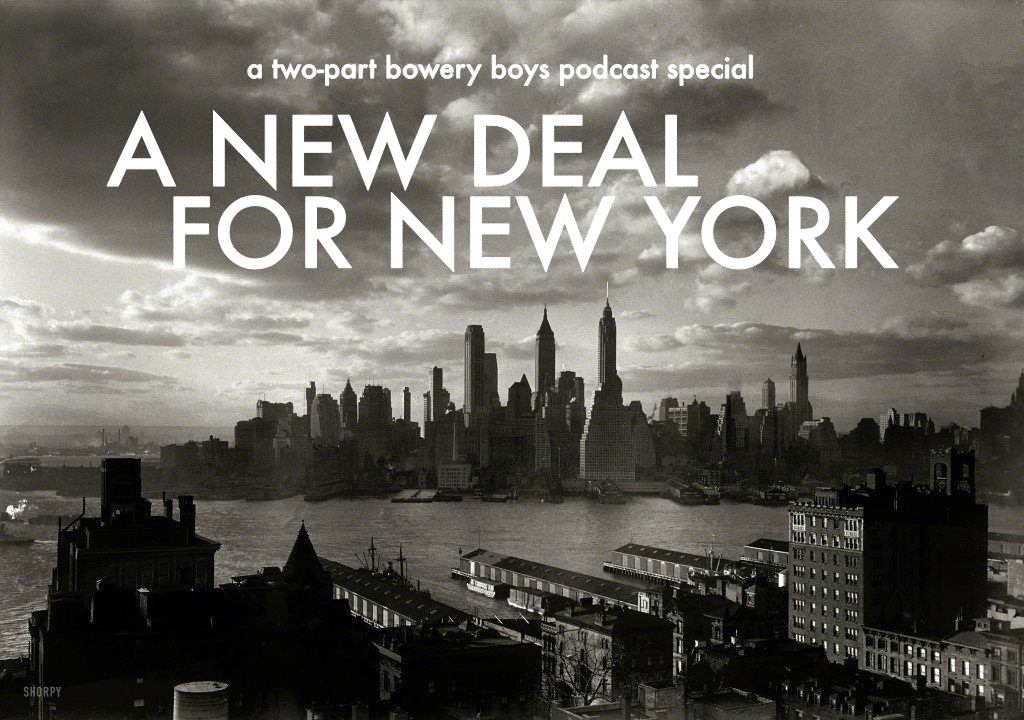
PART TWO of a two-part podcast series A NEW DEAL FOR NEW YORK.
In this episode, we look at how one aspect of FDR’s New Deal — the WPA’s Federal Project Number One — was used to put the country’s creative community back to work and lift the spirits of downtrodden Americans.
EPISODE 338 Federal Project Number One — the ‘artistic wing’ of the Works Progress Administration — inspired one of the most important and lasting cultural revolutions in the United States, an infusion of funds that put musicians, painters, writers and the theater community back to work, creating works that would promote and celebrate the American experience.
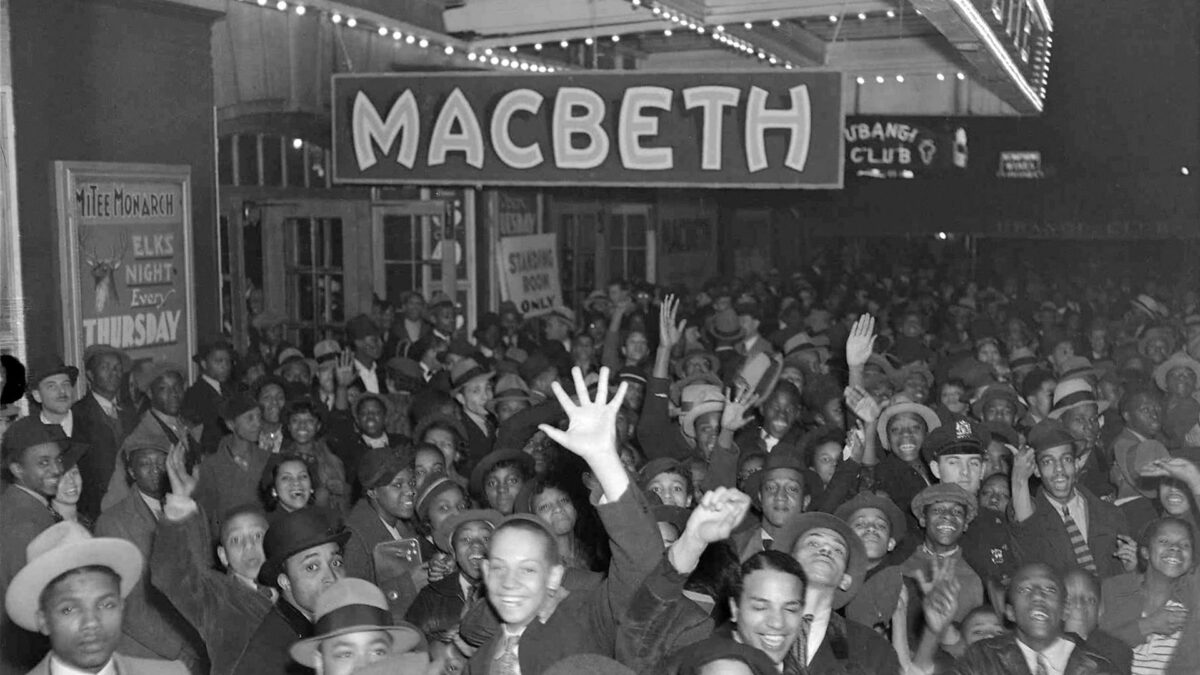
The already-rich creative communities of New York City thrived during the program in several unique ways — from the stages of Broadway to the art studios of Harlem.
In this episode we present several tales from the four main units of Federal One — the Federal Music Project, the Federal Theatre Project, the Federal Art Project and the Federal Writers Project.
Including the stories of these WPA creators —
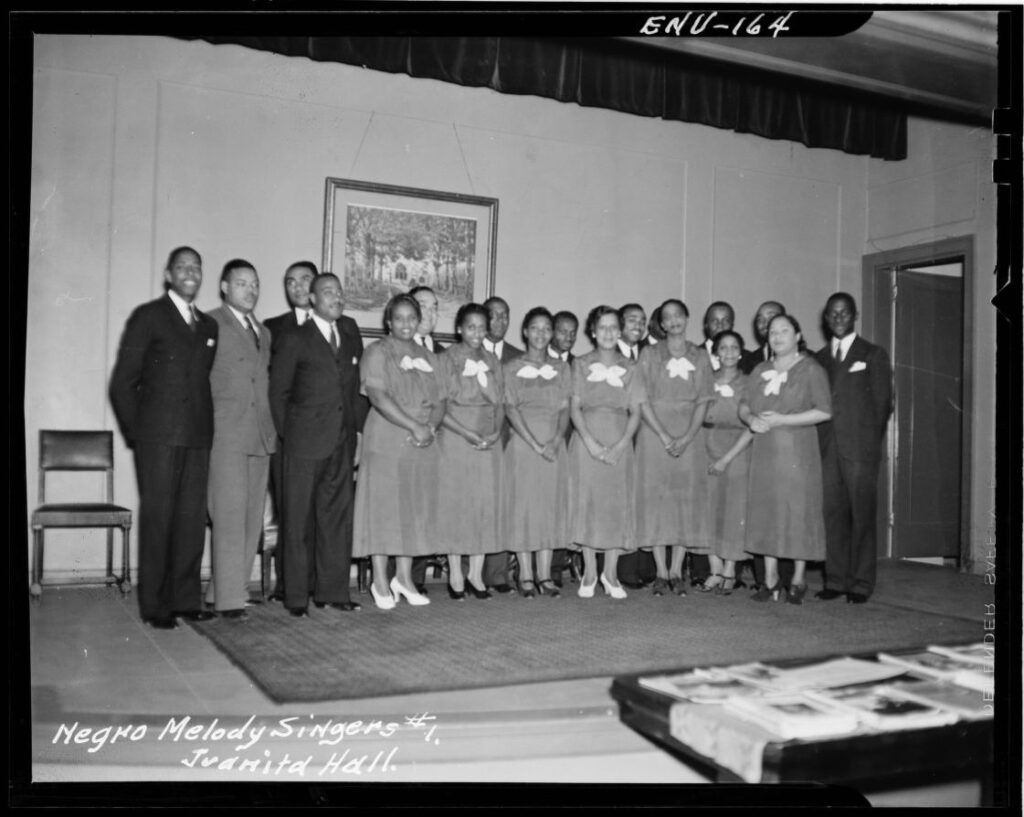
— Juanita Hall: A future Tony-winning actress whose WPA-funded gospel chorus performed over 5,000 times
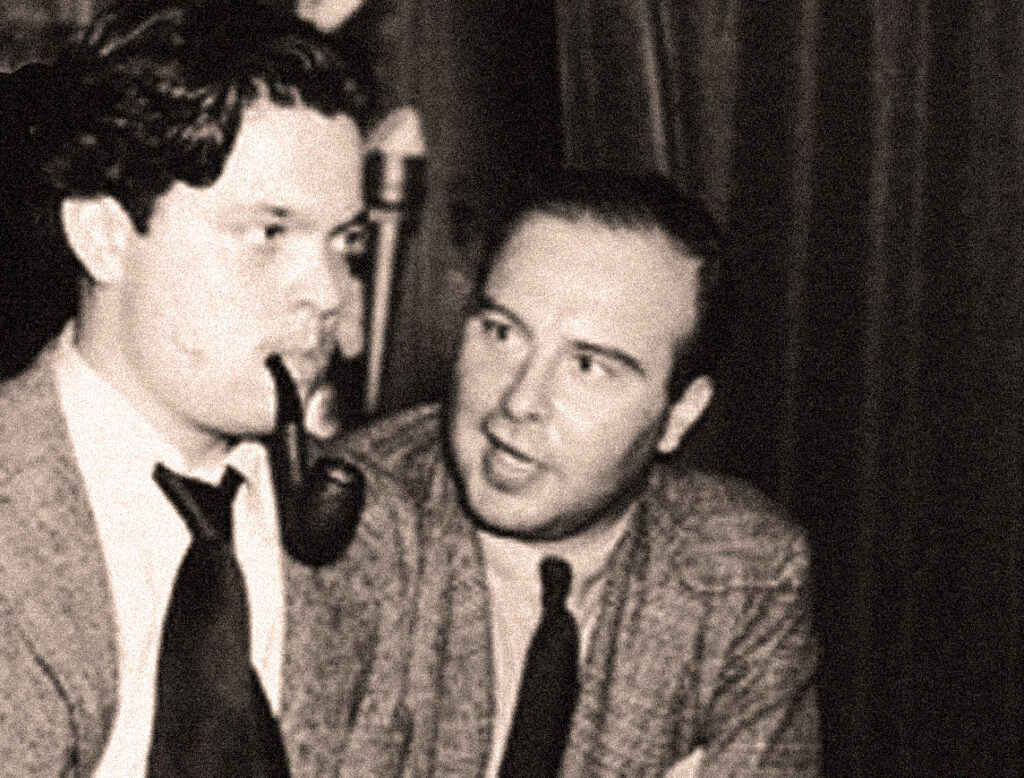
— Orson Welles: A brilliant stage producer (not yet a filmmaker) whose bold stage inventions pressed the limits of government censorship
— Jackson Pollock: A budding painter just finding his artistic voice, making a living working on murals and canvas
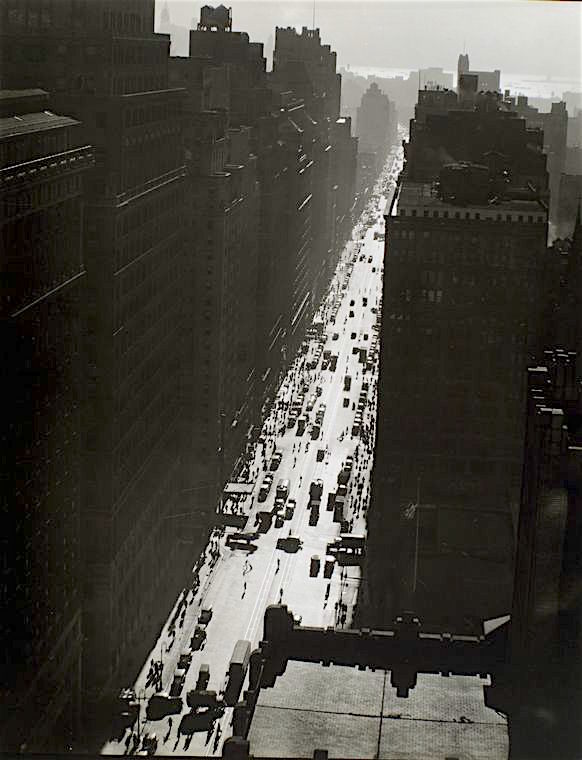
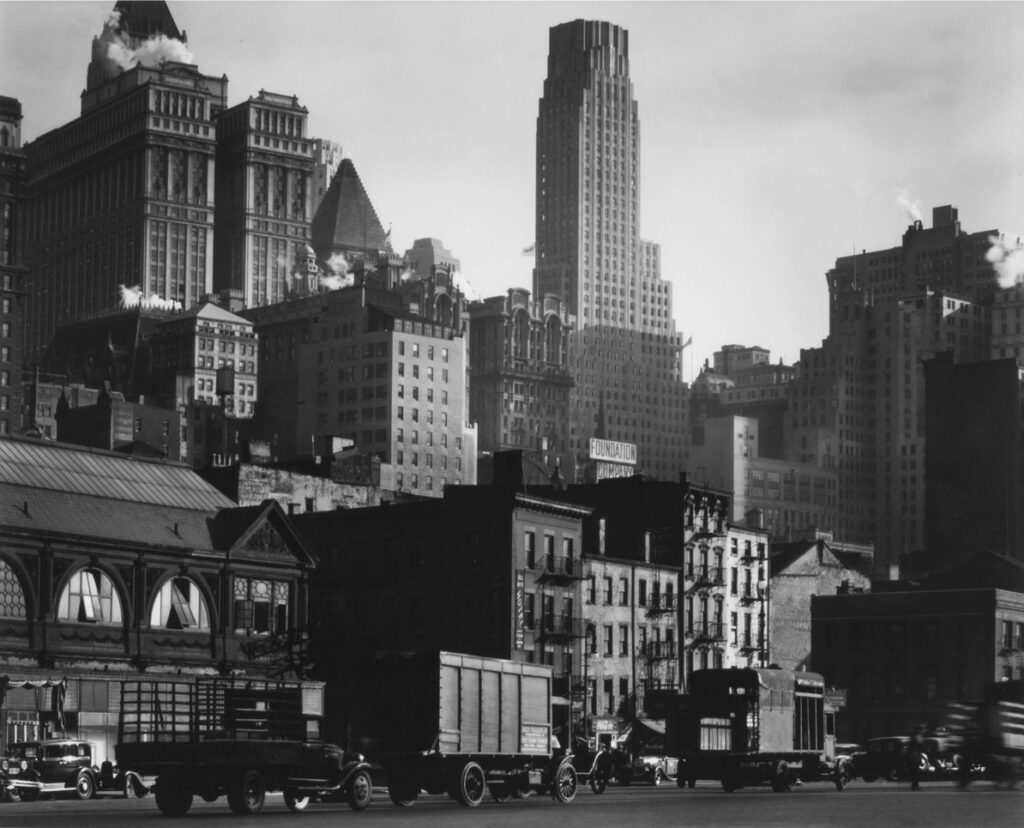
— Berenice Abbott: Her series of New York City photographs would endure as a lasting document of 1930s New York City
— Zora Neale Hurston: The Harlem Renaissance anthropologist and novelist who used the WPA program to explore folklore and traditions in Florida
PLUS: The mural program, the WPA Guides and the contributions of WNYC and the New York Public Library
Listen today on your favorite podcast player or just press play here:
Juanita Hall and the Negro Melody Singers, featured in the WNYC clip.
WNYC audio clips courtesy the NYC Municipal Archives WNYC collection.
Our thanks to Andy Lanset from WNYC and Kenneth Cobb from the NYC Municipal Archives for allowing us to feature these clips on the show.
Here are the clips if you’d like to hear them in full:
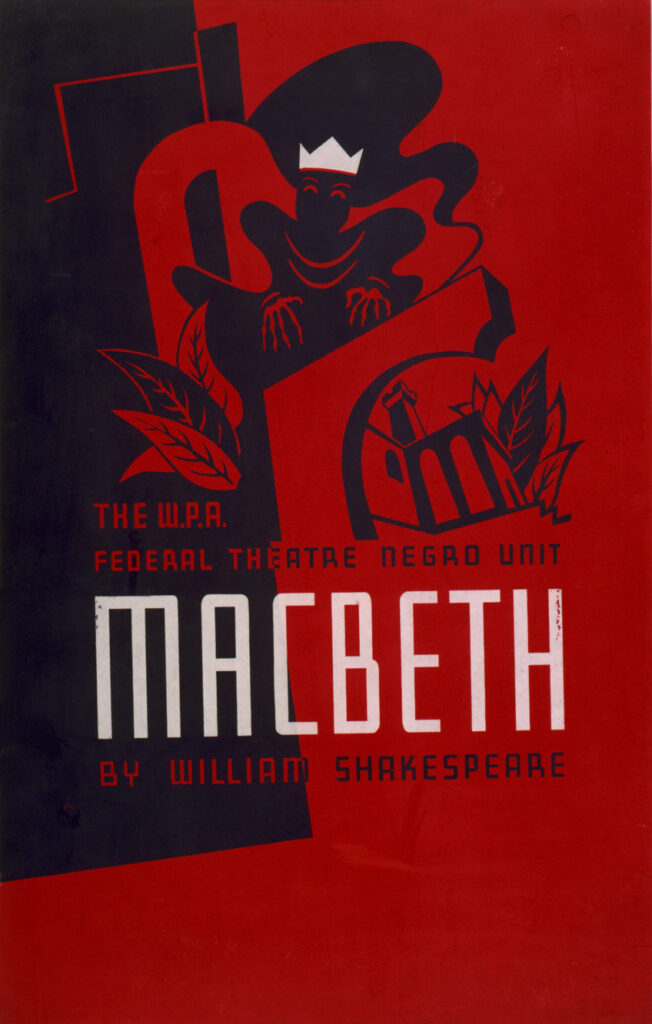
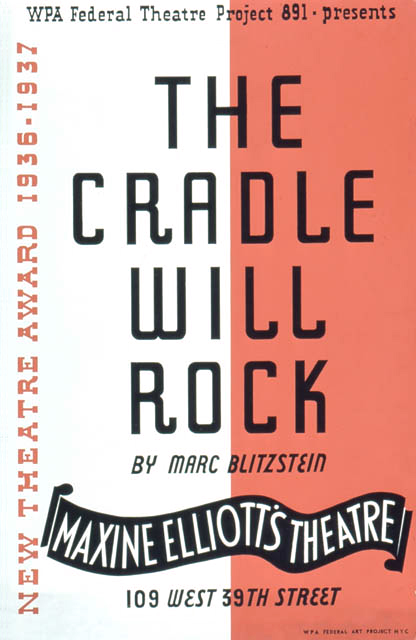
Young Orson Welles and John HousemanThe WPA also employed poster designers who went on to produce promotional tools for other WPA projects — such as this poster for ‘Voodoo’ Macbeth.
John Houseman discusses the WPA theater program in this fantastic clip from a PBS broadcast of the 1985 revival of the show, with Patti LuPone.
Patti LuPone’s rendition of “Nickel Under the Foot” from the 1985 PBS broadcast.
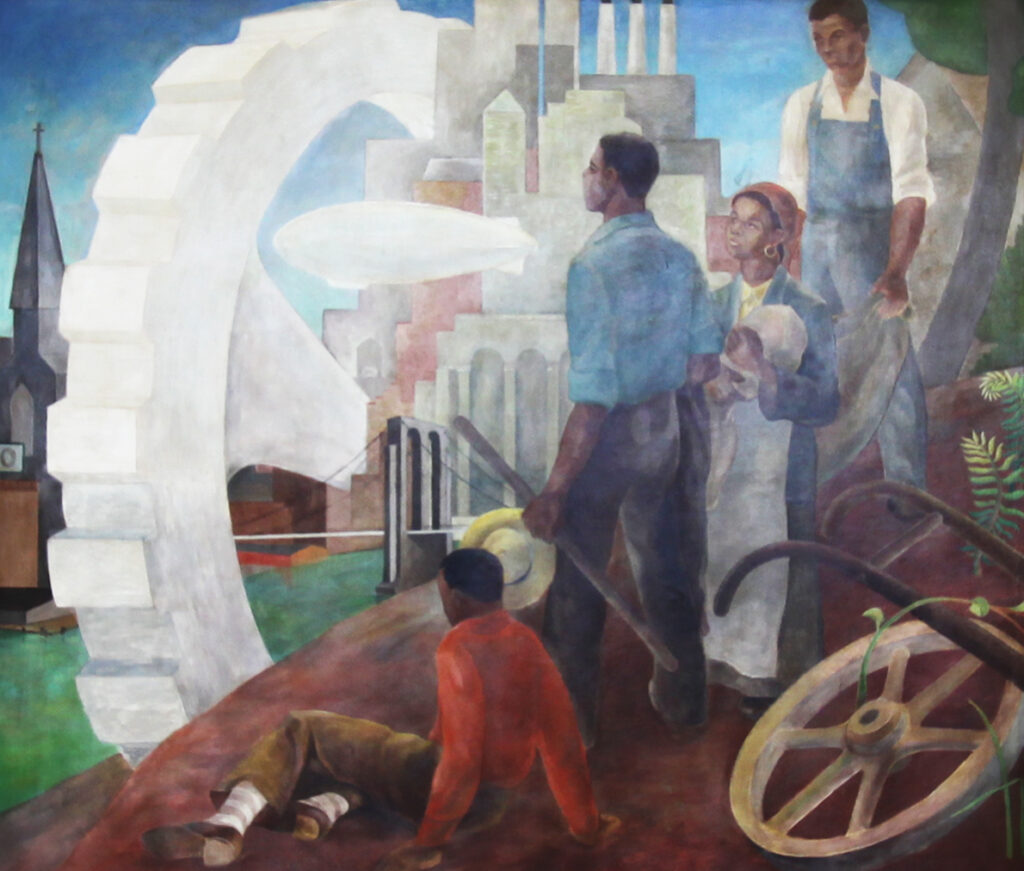
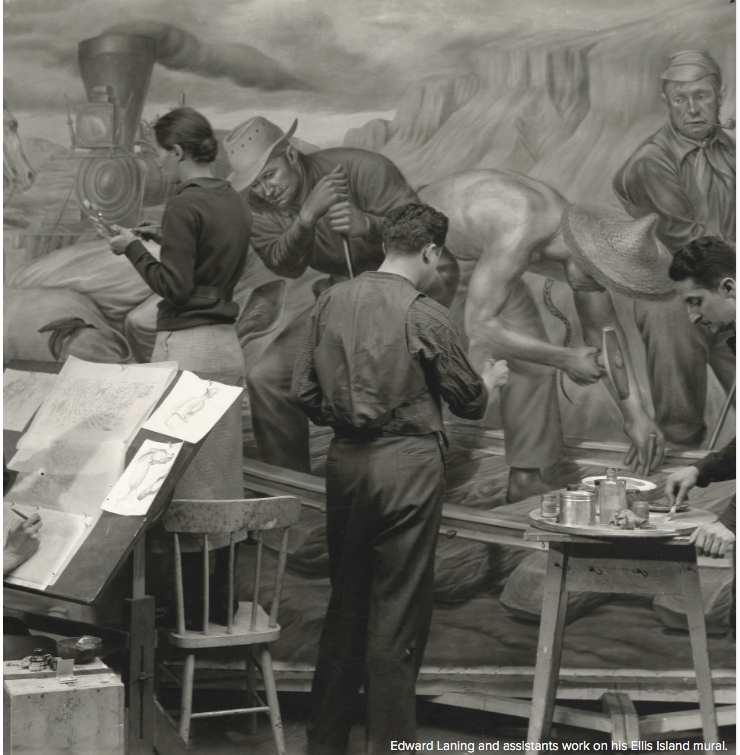
One of the Harlem Hospital murals, now on display at the hospital’s mural pavilion.In 1935 Edward Laning produced murals for Ellis Island; today these murals appear at the Brooklyn Federal Court Building.Berenice Abbott, Seventh Avenue looking south from 35th StreetBerenice Abbott, West Street, 1938
First of all, please visit The Living New Deal, an incredible website with an exhaustive catalog of New Deal projects across the country.
THE WPA GUIDE TO NEW YORK CITY (1939) Sue Rubenstein DeMasi / Henry Alsberg: The Driving Force of the New Deal Federal Writers Project William E. Leuchtenburg / Franklin D. Roosevelt and the New Deal Susan Quinn / Furious Improvisation: How the WPA and a Cast of Thousands Made High Art Out of Desperate Times David A. Taylor / Soul of a People: The WPA Writers’ Project Uncovers Depression America Nick Taylor / American Made: The Enduring Legacy of the WPA Mason Williams / City of Ambition: FDR, La Guardia and the Making of Modern New York (And our miniseries title is an homage to Mike Wallace‘s 2002 book A New Deal For New York)
The Bowery Boys: New York City History podcast is brought to you …. by you!
We are now producing a new Bowery Boys podcast every week. We’re also looking to improve and expand the show in other ways — publishing, social media, live events and other forms of media. But we can only do this with your help!
We are now a creator on Patreon, a patronage platform where you can support your favorite content creators.
Please visit our page on Patreon and watch a short video of us recording the show and talking about our expansion plans.
If you’d like to help out, there are six different pledge levels.Check them out and consider being a sponsor.
We greatly appreciate our listeners and readers and thank you for joining us on this journey so far.
PART ONE of a two-part podcast series A NEW DEAL FOR NEW YORK.
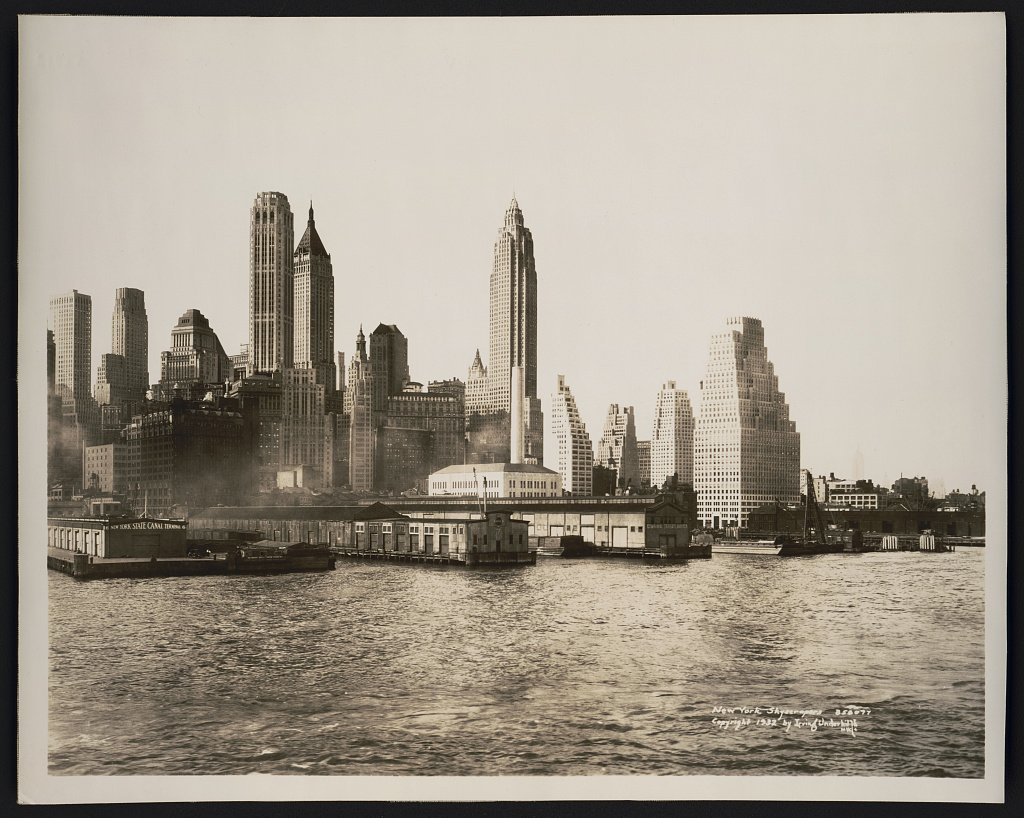
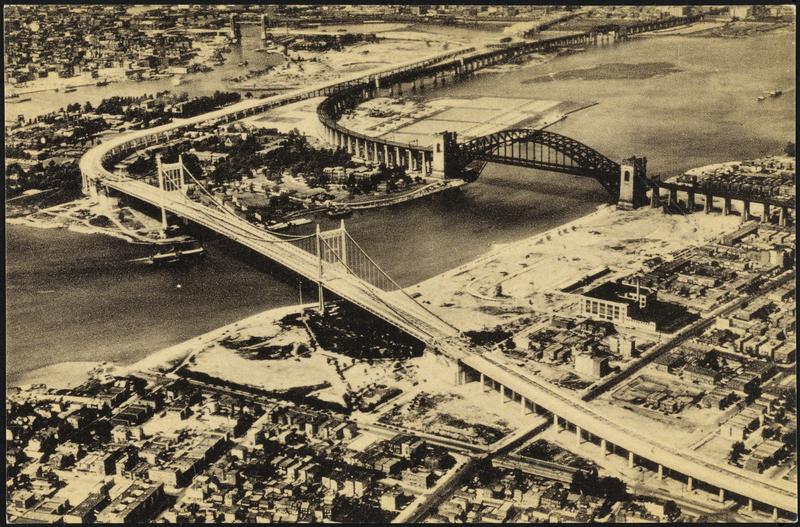
In this episode, we look at the impact New Deal funding had in shaping the city’s infrastructure — from bridges and tunnels to neighborhood parks — how New York City uniquely benefited from this government program.
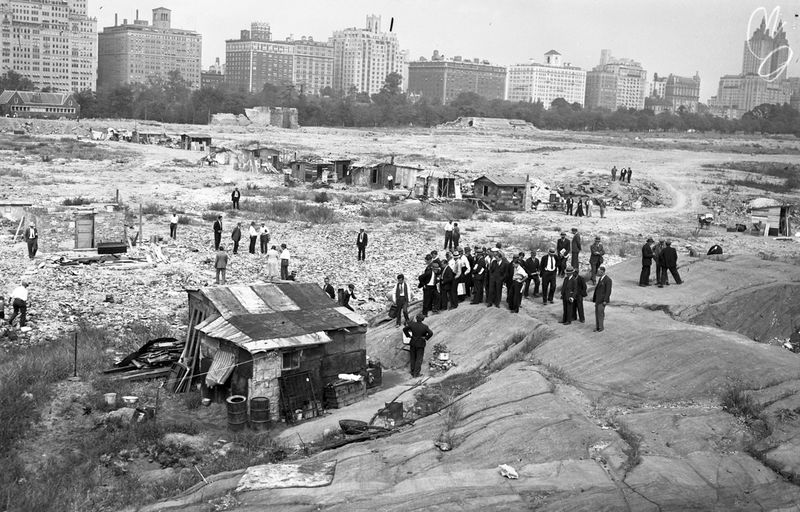
EPISODE 337 New York City during the 1930s was defined by massive unemployment, long lines at the soup kitchens, Hoovervilles in Central Park.
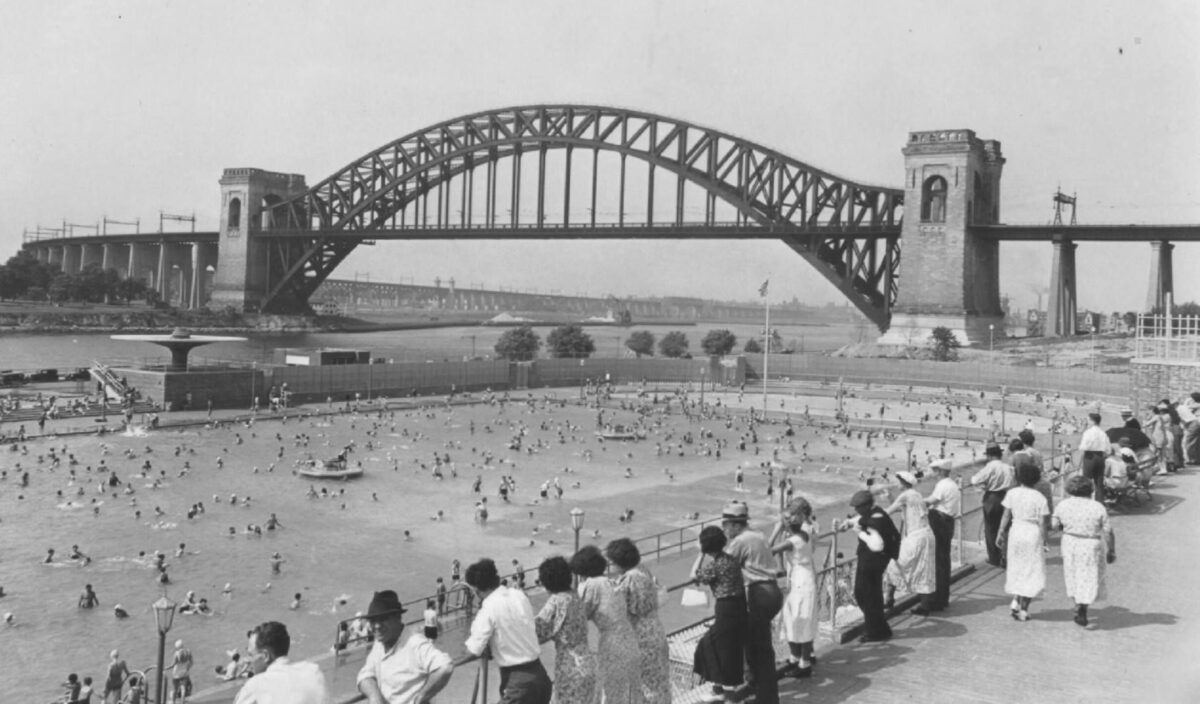
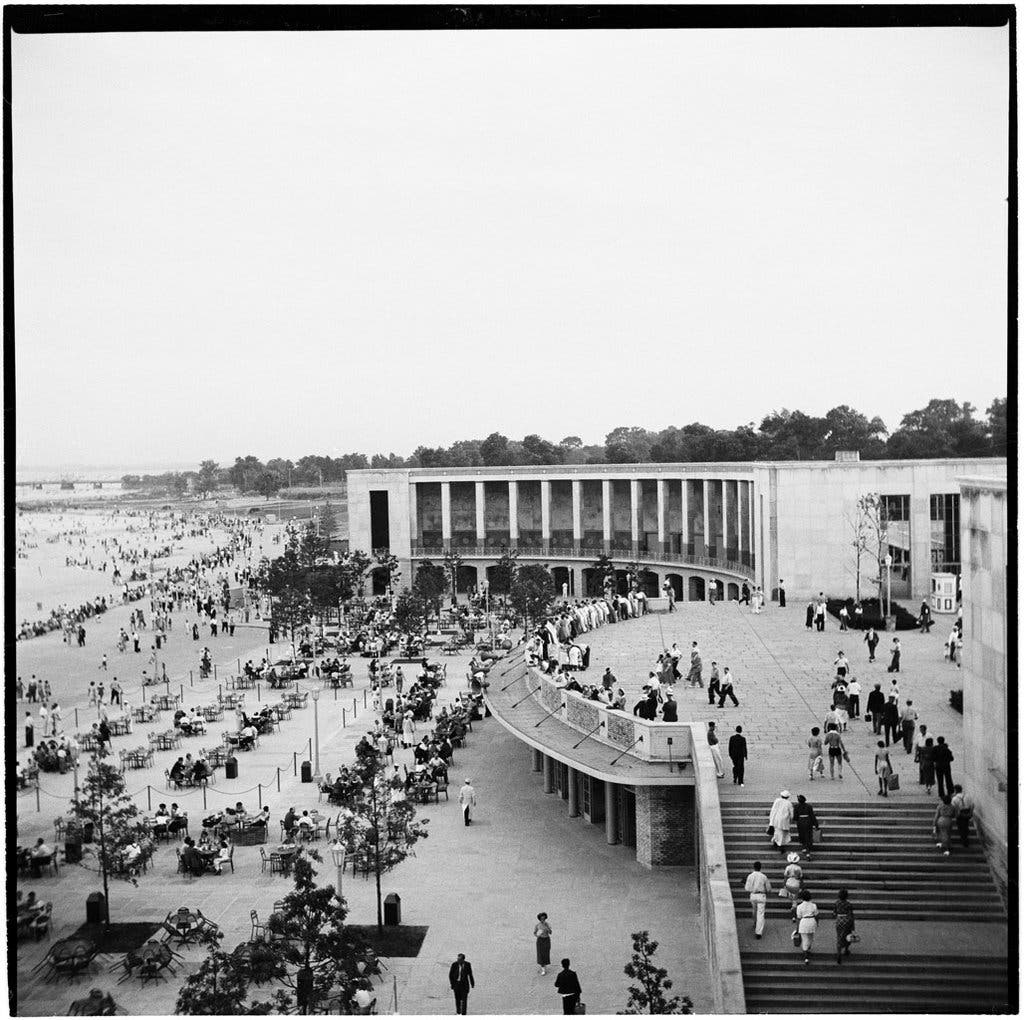
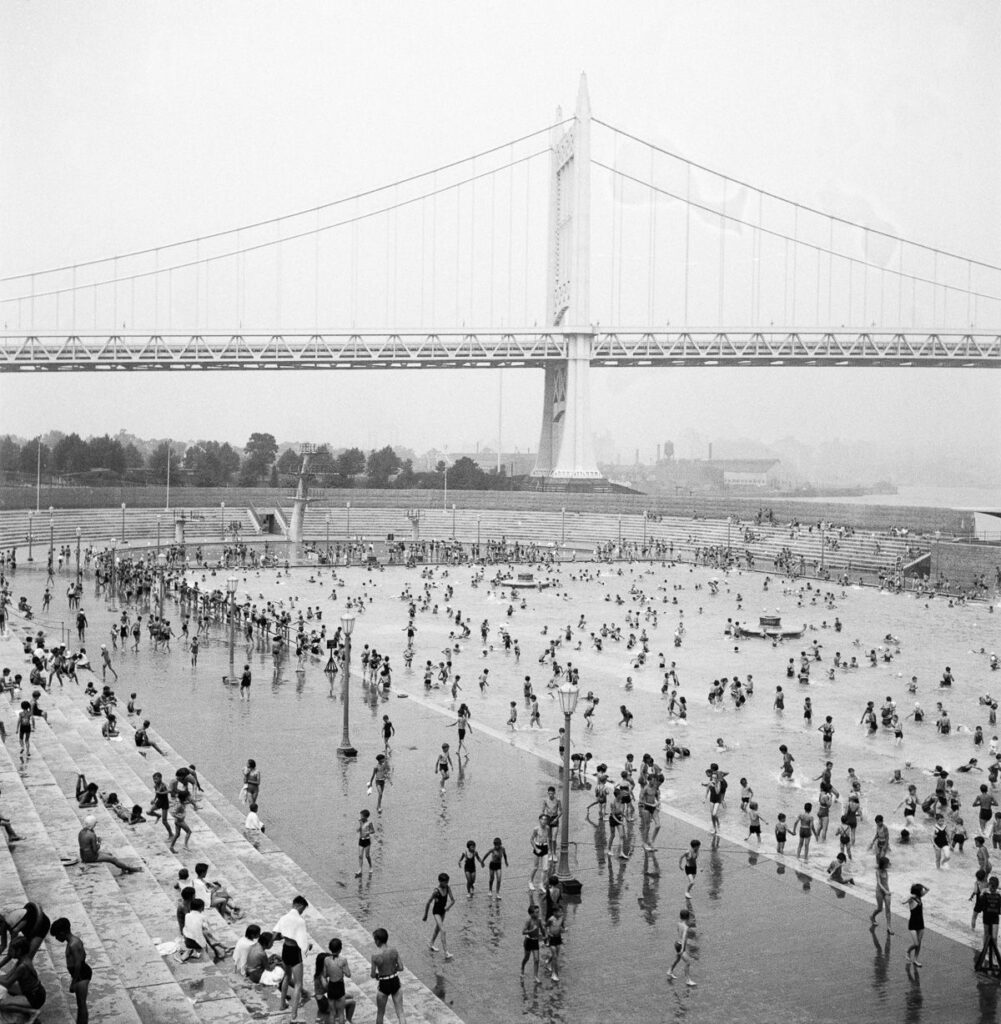
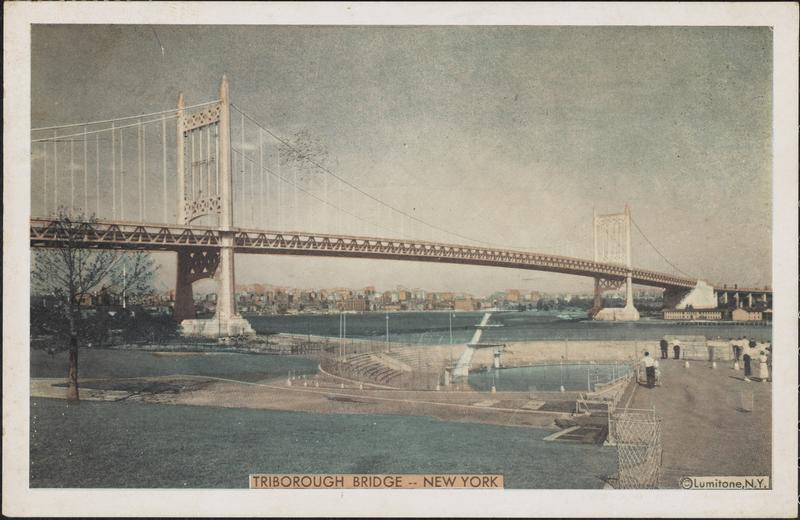
But this was also the decade of the Triborough Bridge and Orchard Beach, of new swimming pools and playgrounds, of hundreds of new building projects across the five boroughs.
Faced with the nationwide financial crisis, former New York governor and newly elected President of the United States Franklin Delano Roosevelt chose to boldly take the crisis on a series of transformative actions by the government that became known as the New Deal.
No other American city would benefit more from the New Deal that New York City. At one point, one out of every seven dollars from the Works Progress Administration (WPA) was being spent in New York.
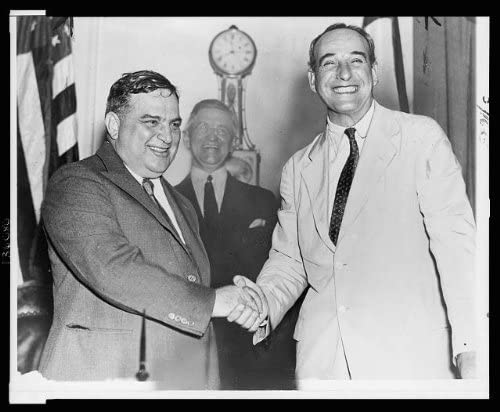
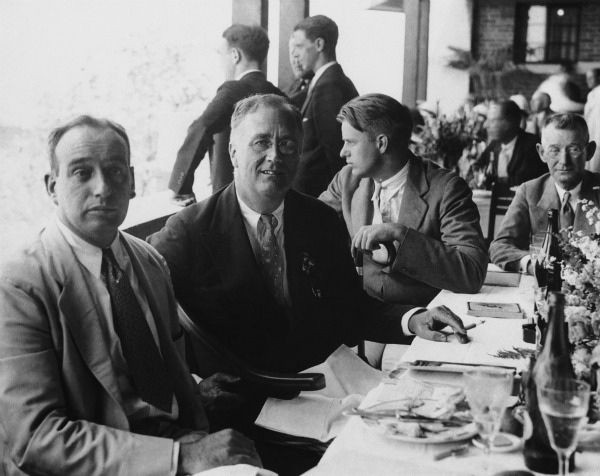
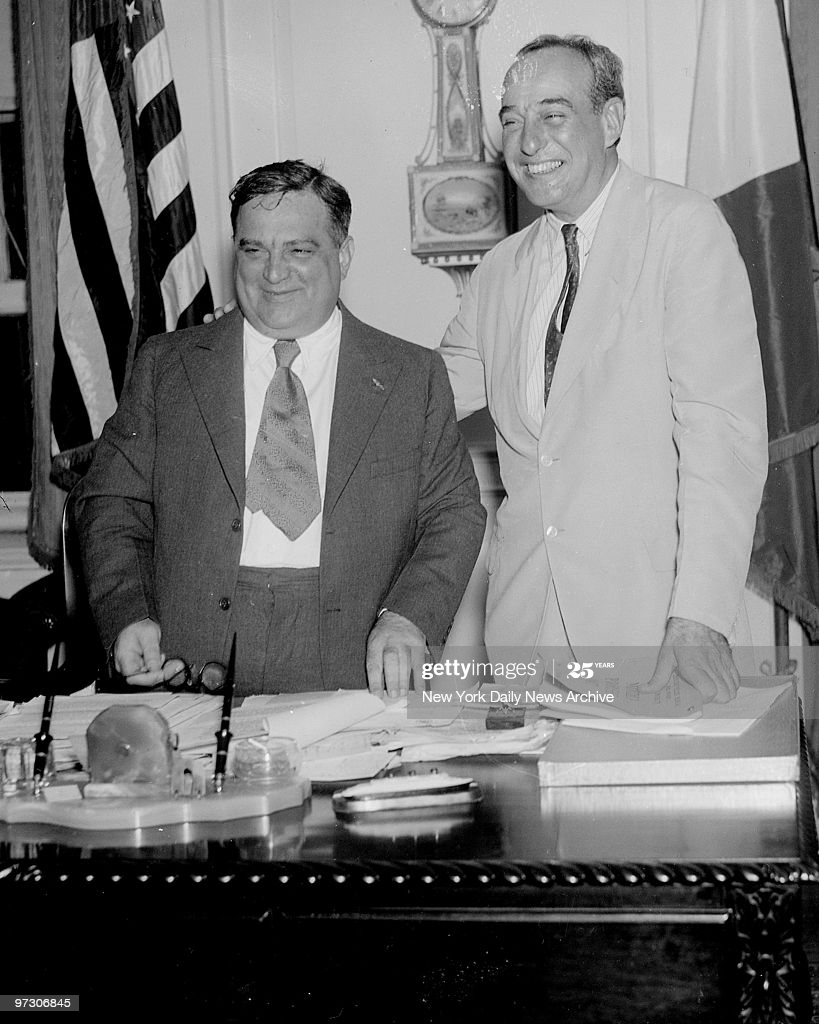
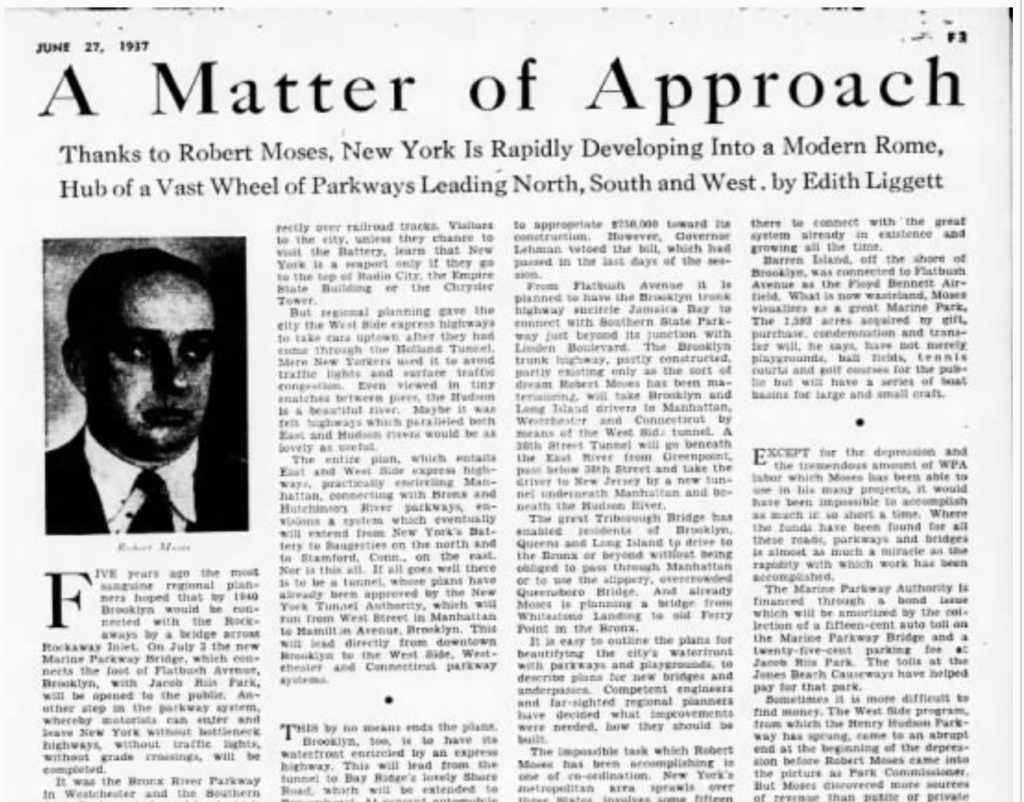
And the two men responsible for funneling federal funding to the city was Mayor Fiorello LaGuardia and his new parks commissioner Robert Moses.
Moses amassed a great amount of unchecked power, generating thousands of projects through out the city — revitalizing the city landscape.
How did Moses manage to funnel so much federal assistance into his own projects? And where can you see evidence of the New Deal in the city today? (HINT: Pretty much everywhere.)
Listen today on your favorite podcast player or just press play here:
New York City, 1932 (Irving Underhill/Library of Congress)A Hooverville in Central Park, 1932 (New York Daily News)Robert Moses and FDR at Jones BeachMayor Fiorello LaGuardia and Gov. Robert Moses (Photo by Bob Mortimer/NY Daily News Archive via Getty Images)Orchard Beach, 1937 (Museum of the City of New York)July 29, 1936 Astoria Park PoolThe Triborough Bridge as seen from the Astoria swimming pool, in a 1940 postcard. (Museum of the City of New York)Aerial view of the Triborough Bridge, 1936 (Museum of the City of New York)Article from the Brooklyn Daily Eagle, 1937 (Courtesy Newspapers.com)
FURTHER LISTENING
After you’ve checked out this episode, go back to some of our past episodes for further insight into this period in American history.
FURTHER READING
First of all, please visit The Living New Deal, an incredible website with an exhaustive catalog of New Deal projects across the country.
Robert Caro / The Power Broker William E. Leuchtenburg / Franklin D. Roosevelt and the New Deal Amity Shlaes / The Forgotten Man Nick Taylor / American Made: The Enduring Legacy of the WPA Mason Williams / City of Ambition: FDR, La Guardia and the Making of Modern New York (And our miniseries title is an homage to Mike Wallace‘s 2002 book A New Deal For New York)
The Bowery Boys: New York City History podcast is brought to you …. by you!
We are now producing a new Bowery Boys podcast every week. We’re also looking to improve and expand the show in other ways — publishing, social media, live events and other forms of media. But we can only do this with your help!
We are now a creator on Patreon, a patronage platform where you can support your favorite content creators.
Please visit our page on Patreon and watch a short video of us recording the show and talking about our expansion plans.
If you’d like to help out, there are six different pledge levels.Check them out and consider being a sponsor.
We greatly appreciate our listeners and readers and thank you for joining us on this journey so far.
Howard Philip Lovecraft — aka H.P. Lovecraft — was born 130 years ago this week (on August 20, 1890) in Providence, Rhode Island.
The pulp-fiction storyteller, known for claustrophobic tales of the occult, lived for a time in Brooklyn. He did not enjoy it.
In 1924, he moved to 259 Parkside Avenue in Flatbush, Brooklyn, close to Ebbets Field and Prospect Park. When his new wife relocated for work in Cincinnati, Lovecraft moved from the pleasant Flatbush neighborhood to a small flat at 169 Clinton Street in Brooklyn. He only lived here until 1926 but during his stay, possessed of anxiety and neurosis, he practically starved himself.
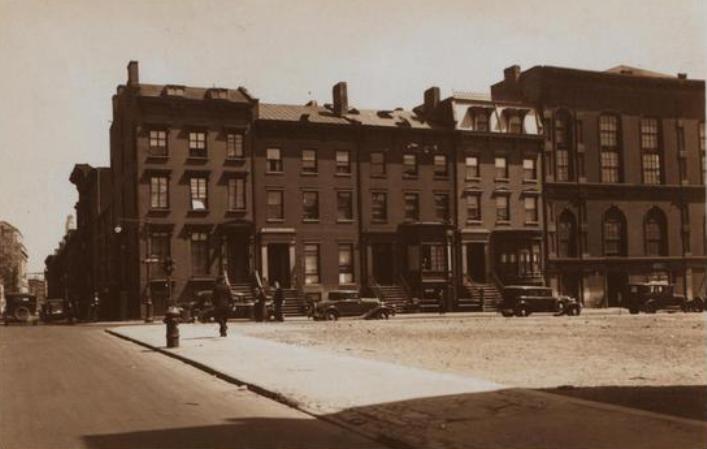
Below: The boardinghouse at 169 Clinton Street, pictured here at left, from 1935. The first four buildings still exist. The building at the far right is the old Brooklyn Athenaeum.
Courtesy New York Public Library
Lovecraft had contempt for New York’s thriving immigrant population and those workers who sustained Brooklyn waterfront in the 1920s. In particular he negatively interacted with the residents of Brooklyn’s so-called “Little Syria” on Atlantic Avenue.
I find his invective ugly and even a little obsessive, but it illustrates that occasional truth that the culture of New York City is simply not for everybody, especially if you have certain racist dispositions mixed with a little mental instability.
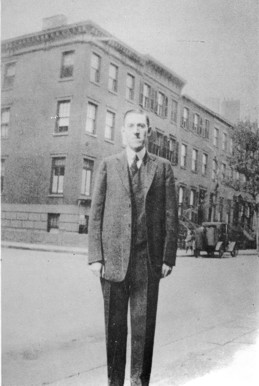
Below: Lovecraft in Brooklyn Heights in 1925. The house behind him may be his Clinton Street boarding house. Compare to the image above and the current view here. (Photo courtesy HPL.com)
In a comparison with Philadelphia, Lovecraft wrote “[Philadelphia has] none of the crude, foreign hostility and underbreeding of New York — none of the vulgar trade spirit and plebian hustle.” He further described New York as “an Asiatic hell’s huddle of the world’s cowed, broken, inartistic, and unfit.” [source]
According to author Donald Tyson, “when [H.P.’s wife Sonia] and Lovecraft were walking the streets of New York and encountered a group of immigrants, Lovecraft would become so animated and enraged that she feared for his sanity.”
The renovated, wealthy houses of today’s Brooklyn Heights were often working-class housing in the 1920s, many turned into affordable boarding houses. Lovecraft disliked his ethnic neighbors and held particular scorn for his Irish landlady. “Only later was I to learn of her shrewish tongue, desperate household negligence, miserly watchfulness of lights and unwatchfulness of repairs, and reckless indifference to the class of lodger she admitted.” [source]
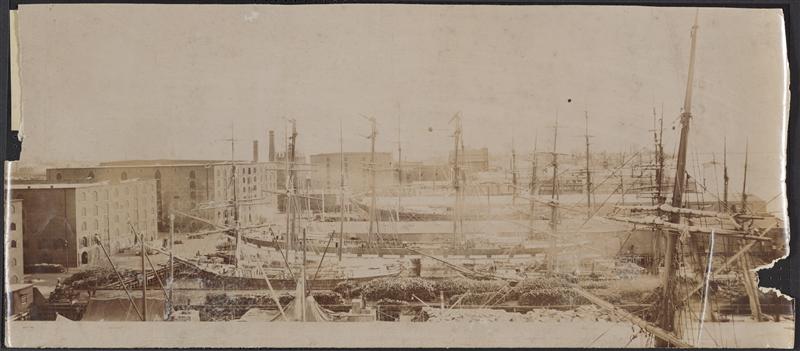
He would have lived with mostly single men of differing ethnicity, many employed along the congested docks that lined the waterfront all the way down to Red Hook, culminating in two self-contained shipping areas — the Atlantic and Erie basins. Back in the 1920s, it was the busiest freight port in the entire world.
Below: Ships along the waterfront heading towards Red Hook, circa 1890
Courtesy Museum of the City of New York
He seemed to filter all his untethered anxiety into the very building at 169 Clinton Street. “I conceived the idea that the great brownstone house was a malignly sentient thing — a dead, vampire creature which sucked something out of those within it and implanted in them the seeds of some horrible and immaterial psychic growth.”
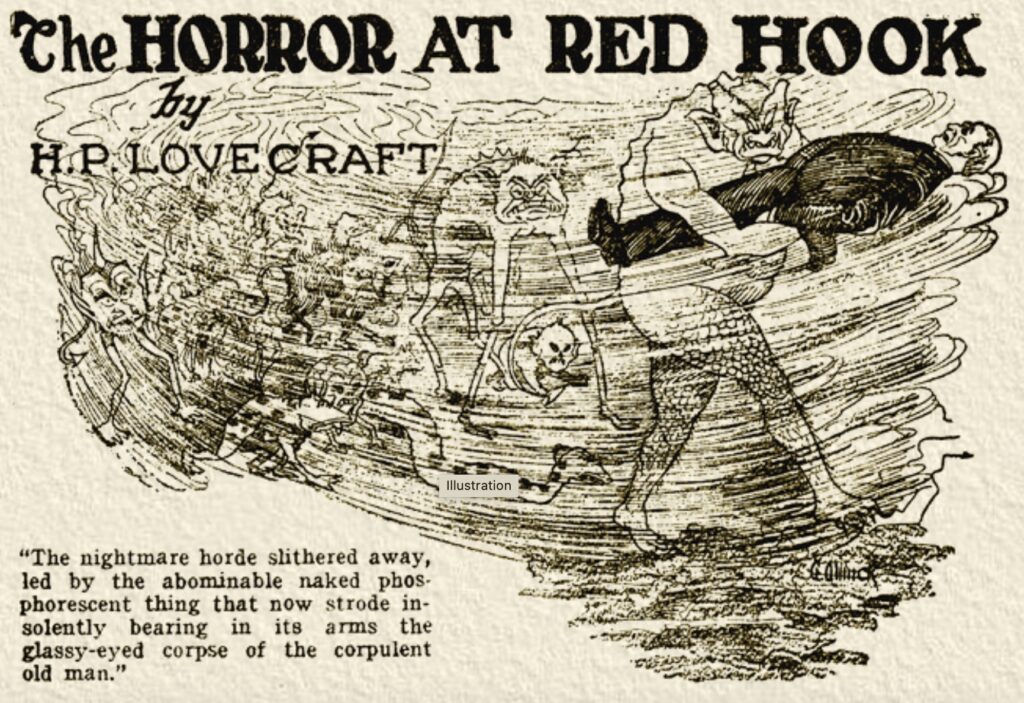
Yet Lovecraft saved his greater fantasies for the neighborhood south of here. He eventually funneled all this tortured and deranged hysteria into his horror writing with the publication of “The Horror at Red Hook,” a story that literally depicts the neighborhood as a gateway to Hell. Naturally he wrote it over a two-day period from the Brooklyn Heights boardinghouse.
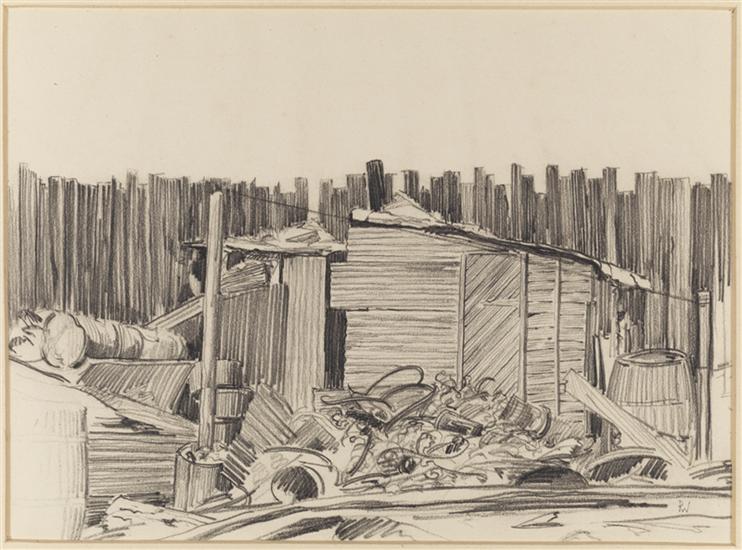
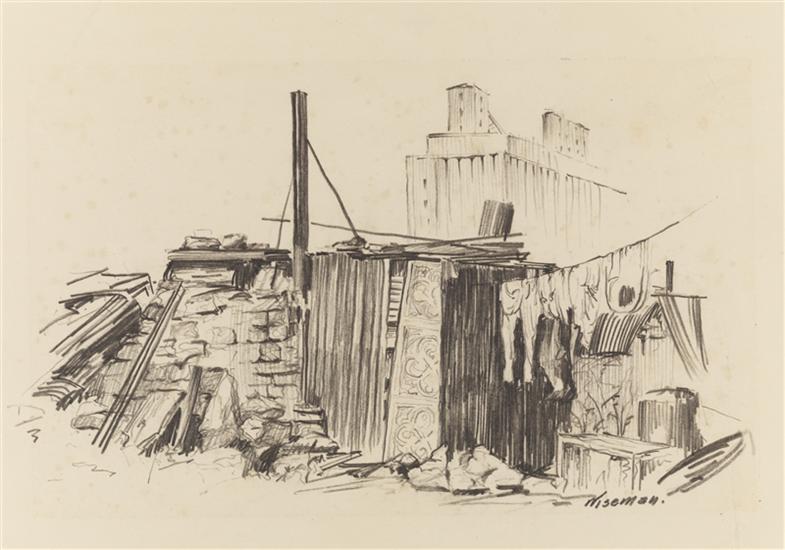
Below (the next two pictures): Some striking illustrations by Robert Cummings Wiseman of shanties around the Atlantic Basin in 1930, courtesy the Museum of the City of New York
The short story, one of his best known, is an amusing curiosity to read today. Its a muddled, sometimes incomprehensible work with some occasional flashes of creepy description. Clearly the story is self-therapy as much as it is an actual story, an early 20th century entry in the field of conspiratorial fiction. It’s undeniably haunting if you manage to forgive the vast amount of virulent, anti-immigrant description:
“Red Hook is a maze of hybrid squalor near the ancient waterfront opposite Governor’s Island, with dirty highways climbing the hill from the wharves to that higher ground where the decayed lengths of Clinton and Court Streets lead off toward the Borough Hall. Its houses are mostly of brick, dating from the first quarter to the middle of the nineteenth century, and some of the obscurer alleys and byways have that alluring antique flavour which conventional reading leads us to call “Dickensian”.
The population is a hopeless tangle and enigma; Syrian, Spanish, Italian, and negro elements impinging upon one another, and fragments of Scandinavian and American belts lying not far distant. It is a babel of sound and filth, and sends out strange cries to answer the lapping of oily waves at its grimy piers and the monstrous organ litanies of the harbour whistles.”
Courtesy Museum of the City of New York
I won’t spoil any of the plot points of the story. (If you’re interested in reading ‘The Horror At Red Hook’, you can check it out here. ) But let’s just say the author confirms his suspicions — the street gangs and liquor rackets of the Prohibition era are really just dens of age-old evil:
“The soul of the beast is omnipresent and triumphant, and Red Hook’s legions of blear-eyed, pockmarked youths still chant and curse and howl as they file from abyss to abyss, none knows whence or whither, pushed on by blind laws of biology which they may never understand. As of old, more people enter Red Hook than leave it on the landward side, and there are already rumours of new canals running underground to certain centres of traffic in liquor and less mentionable things.”
The story would be published in 1927 in the pulp magazine Weird Tales. Notably, their offices were in Chicago, not in New York
Once he left New York, he pursued some of his more famous writing projects, using his anxiety to more disturbing effect in runic, terror-filled stories of the occult. He died in 1937, revered by many as a truly boundary-breaking writer, greatly inspiring writers like Stephen King.
It would be almost fifty years before an author attempted to look at south Brooklyn with similar monstrous intent — in the 1970s horror novels The Sentinel and The Guardian by Jeffrey Konvitz.
Top picture: Detail from a 1897 Rand McNally map of Brooklyn
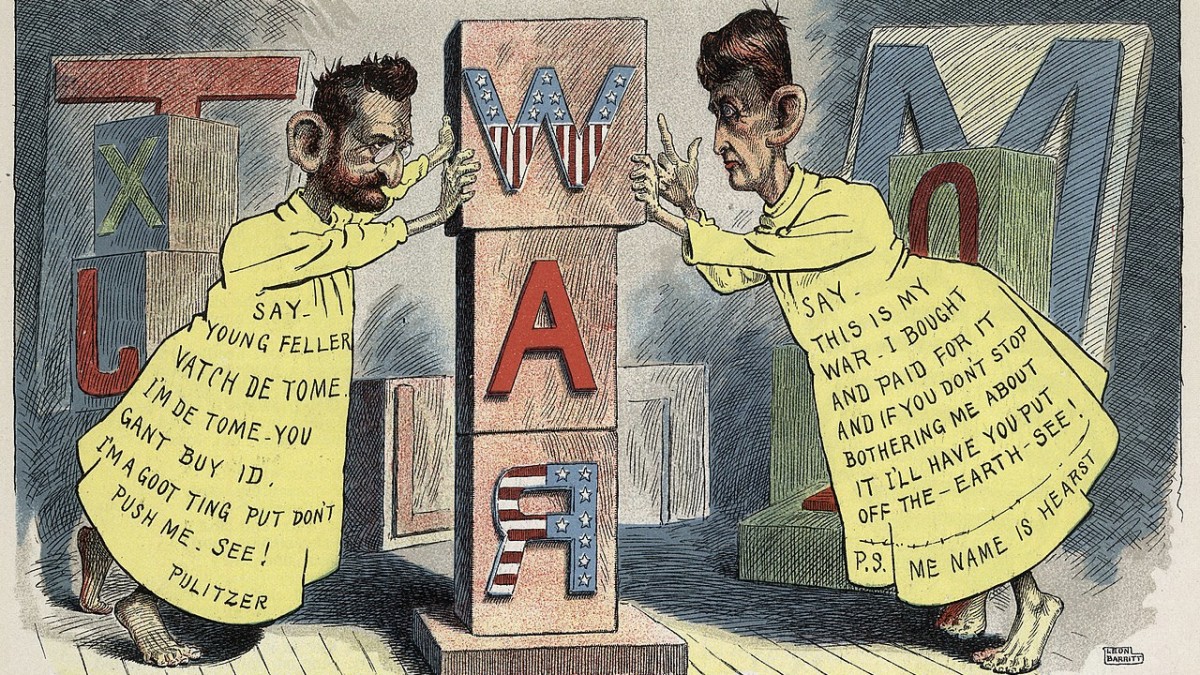
Pulitzer and Hearst, depicted in 'Yellow Kid' costumes, build the case for war. (Puck Magazine, 1898, illustrator Leon Barritt, courtesy Library of Congress)
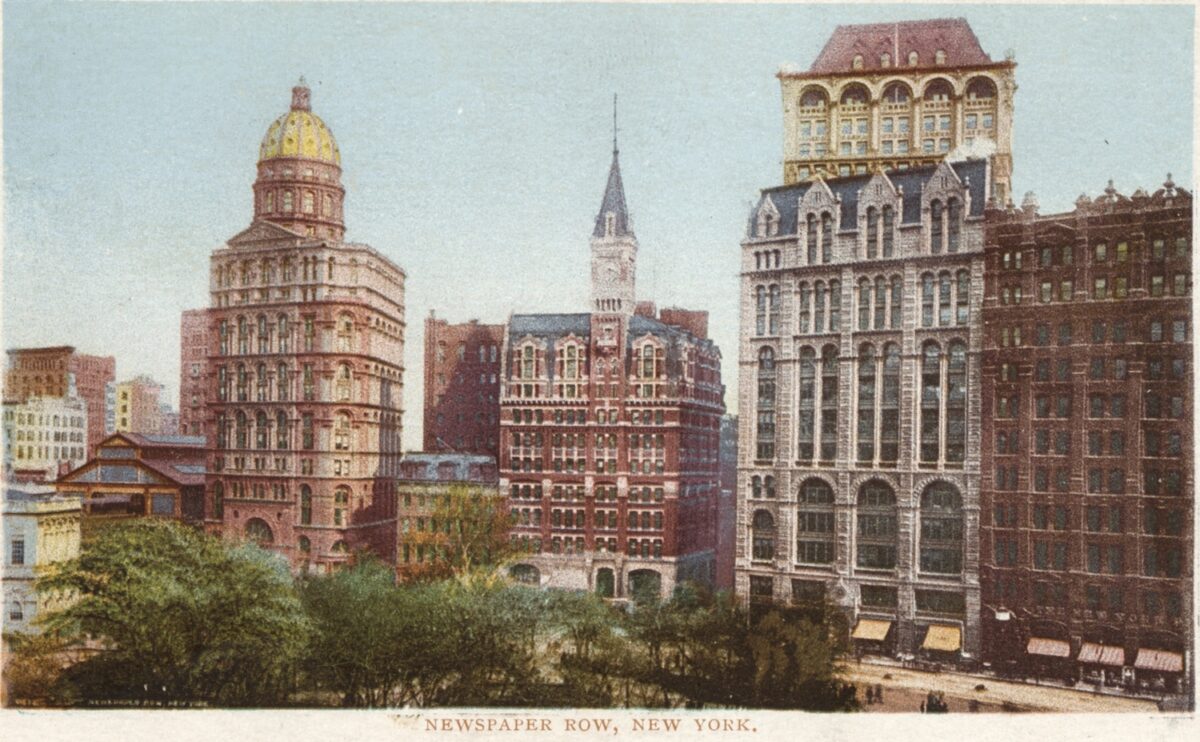
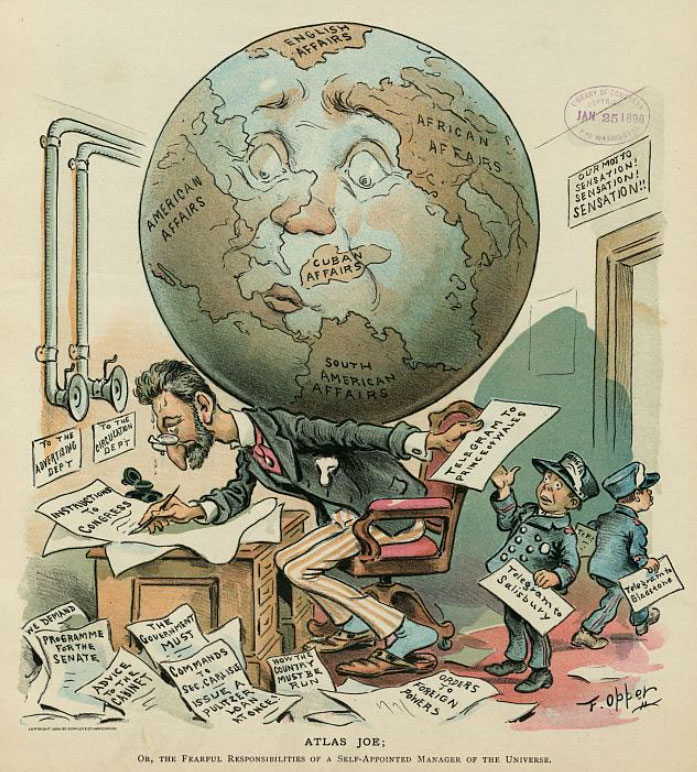
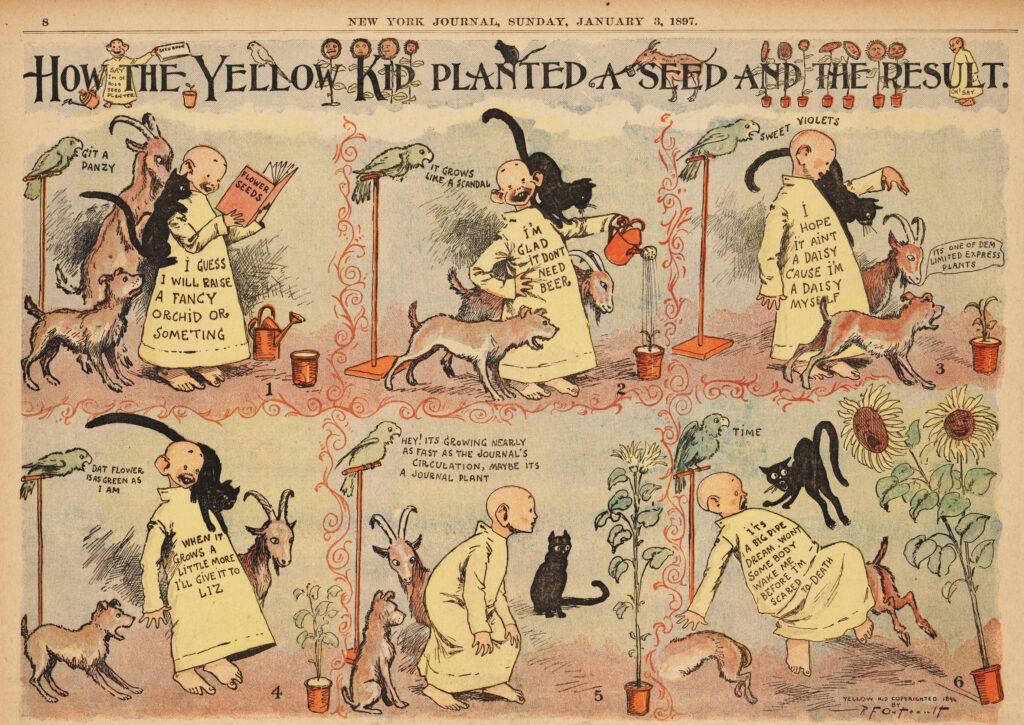
EPISODE 336 The newspapers of Joseph Pulitzer and William Randolph Hearst — the New York World and the New York Journal — were locked in a fierce competition for readers in the mid 1890s. New Yorkers loved it. The paper’s frantic, sensational style was so shocking that it became known as ‘yellow journalism’.
So what happens when those flamboyant publications are given an international conflict to write about?
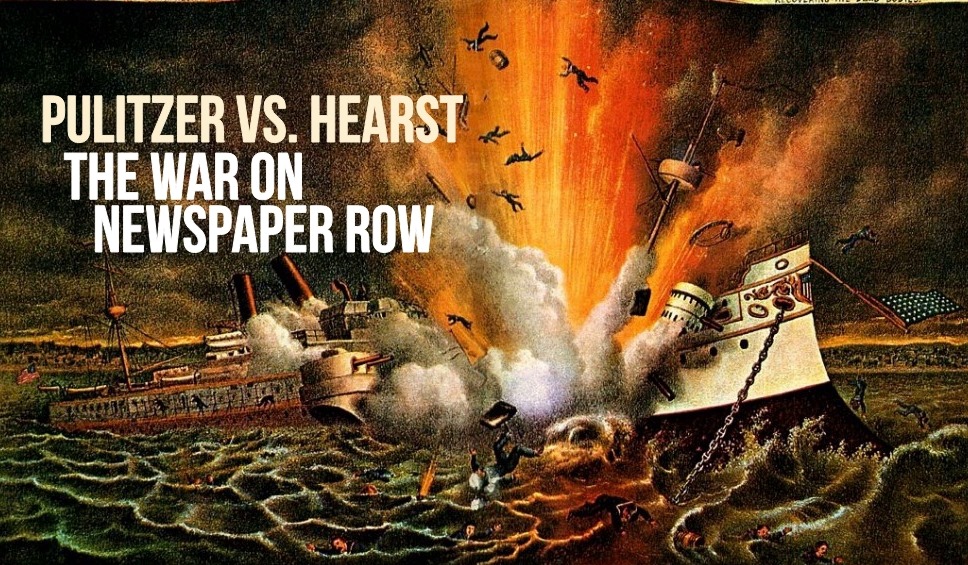
On February 15, 1898, the USS Maine mysteriously exploded and sank while stationed in Havana Harbor in Cuba. While President William McKinley urged calm and patience, two New York newspapers jumped to a hasty conclusion — Spain had destroyed the ship!
The Spanish-American War allowed Hearst (with Pulitzer playing catch up) fresh opportunities to sell newspapers using exaggerated reports, melodramatic illustrations and even outlandish stunts. Think Hearst on a yacht, barreling into conflicts where he didn’t belong!
But by 1899, with the war only a recent memory, the publishers faced a very different battle — one with their own newsboys, united against the paper’s unfair pricing practices. It’s a face-off so dramatic, they wrote a musical about it!
PLUS: How have the legacies of Pulitzer and Hearst influenced our world to this day? And where can you find the remnants of their respective empires in New York City today?
This is Part Two of our two-part series on Joseph Pultizer and William Randolph Hearst. Listen to Episode 335 (Pulitzer vs. Hearst: The Rise of Yellow Journalism) before listening to this show.
To get this week’s episode, just find our show onStitcher or your favorite podcast streaming service. Or listen to it here:
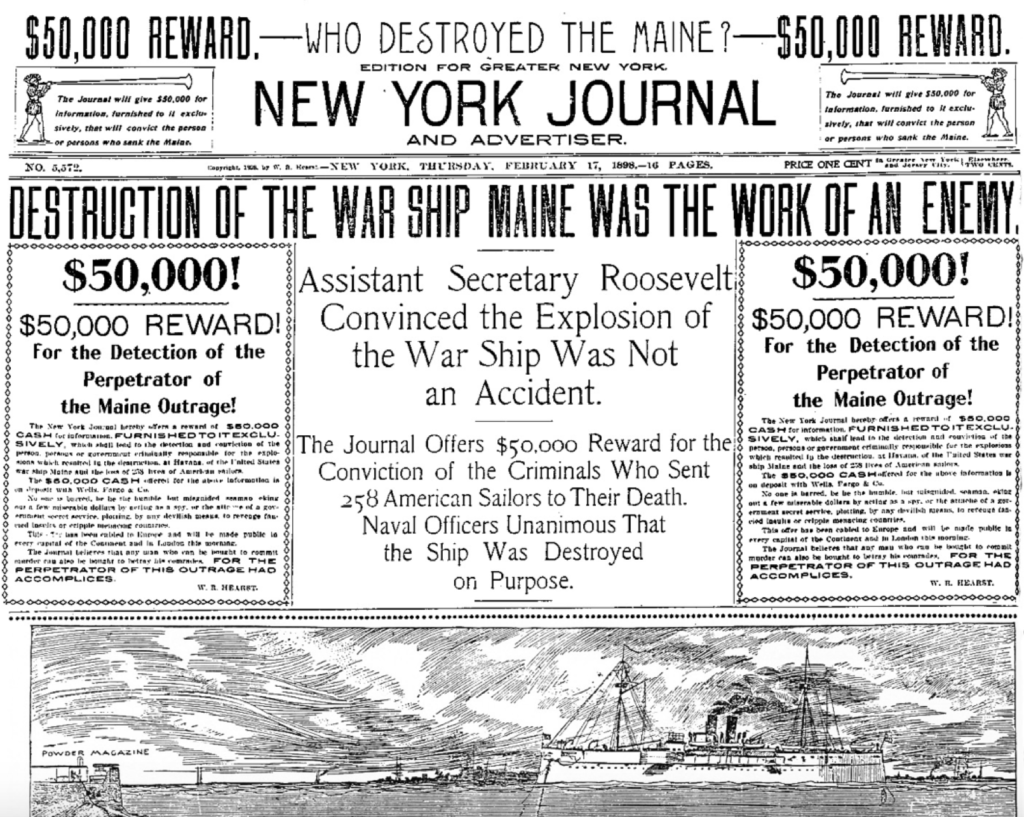
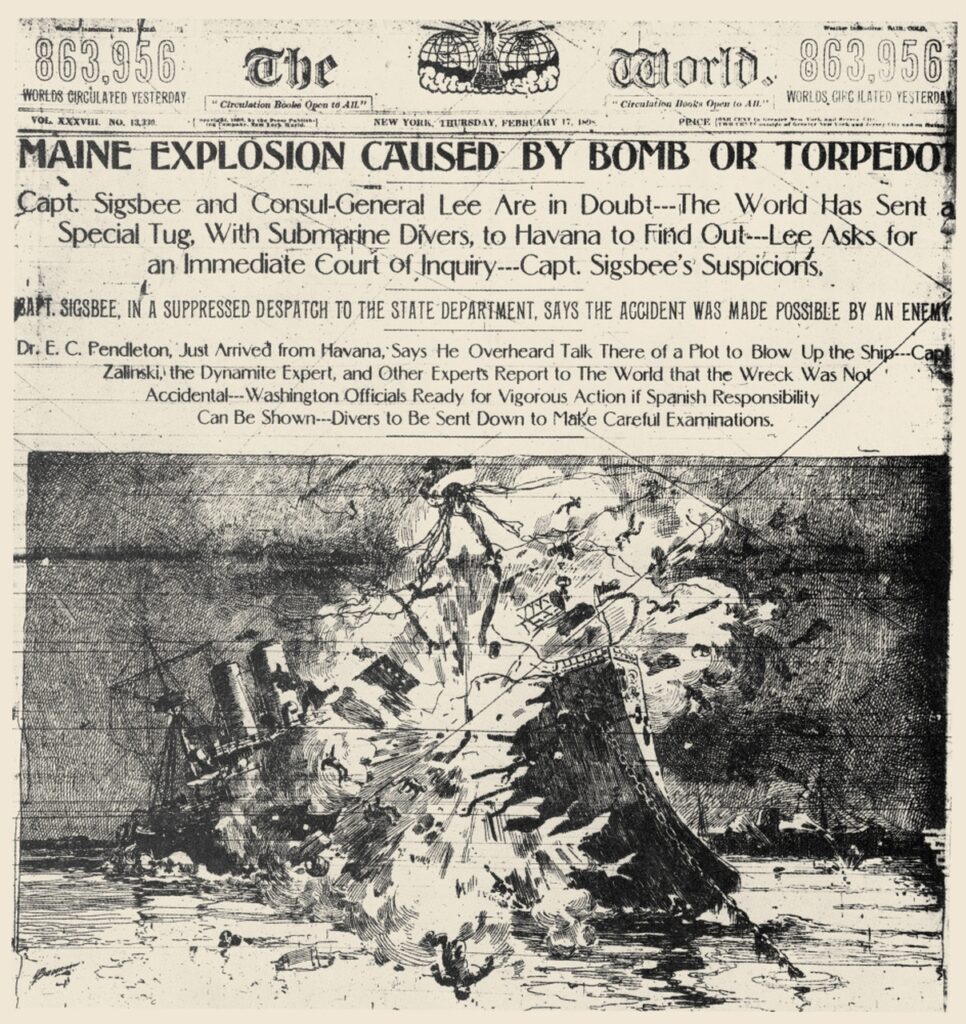
The respective front pages from the Journal and World, drawing similar conclusions that the sinking of the USS Maine was caused by Spanish treachery.
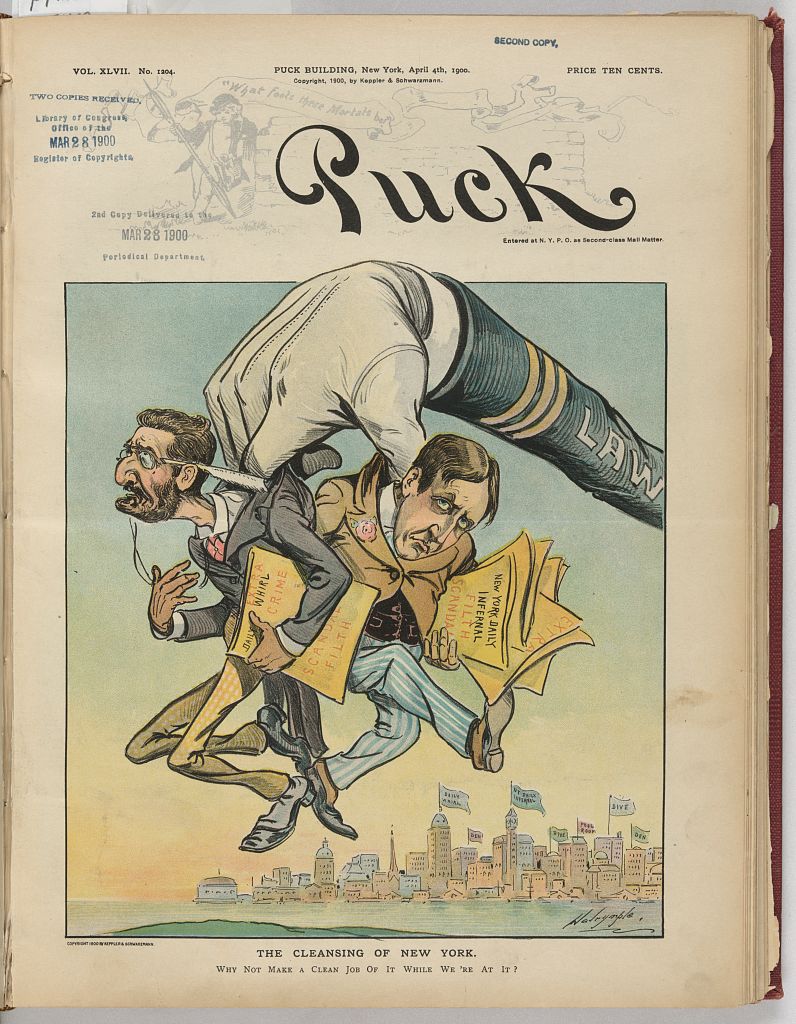
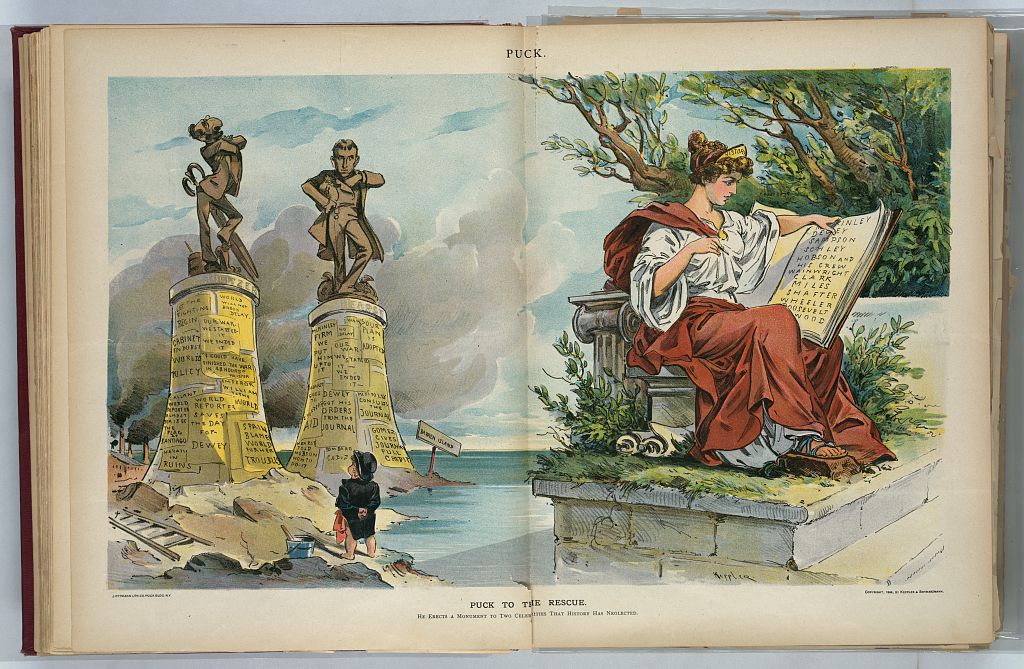
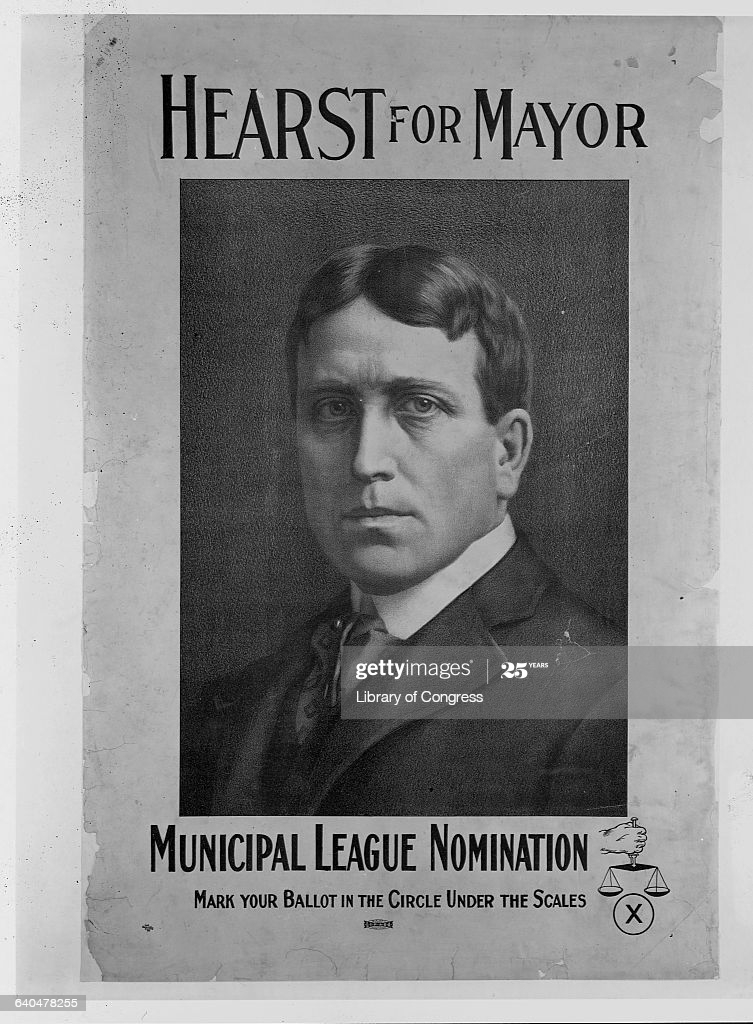
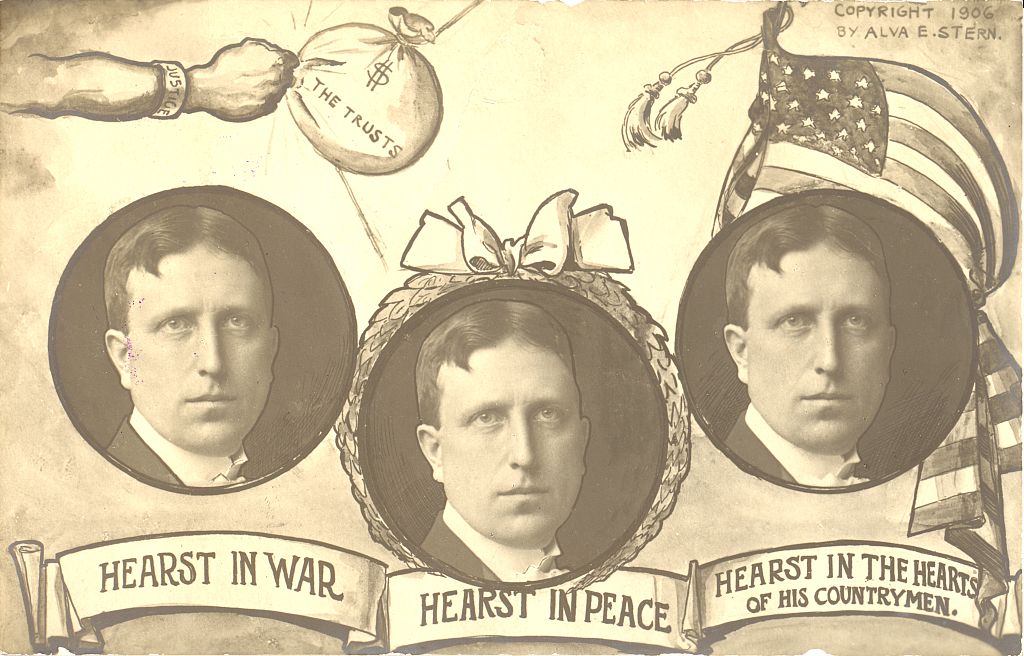
Here’s what Puck Magazine thought of Pulitzer and Hearst in 1900. “Illustration showing a large hand labeled “LAW” holding up by the collar newspaper publishers Joseph Pulitzer and William Randolph Hearst, with view of New York City in the background.” Library of CongressPrint shows a female figure sitting on a stone bench writing a list of names in a large book, including “McKinley, Dewey, Sampson, Schley, Hobson and his crew, Wainwright, Clark, Miles, Shafter, Wheeler, Roosevelt, [and] Wood”; behind her, Puck has erected two monuments on a “Barren Island”, topped with statues of “Pulitzer” and “Hearst”. Each monument is papered with yellow sheets of paper that give credit for the success of the American forces in Spanish-American War to both Pulitzer and Hearst. (Library of Congress)Library of Congress“Hearst for Mayor” Campaign Poster (Photo by Library of Congress/Corbis/VCG via Getty Images)Political postcard showing three bust-portraits of Democrat William R. Hearst, unsuccessful candidate against Charles E. Hughes, in the New York Governor race of 1906. Upper left side of card shows a fist “justice” punching a money bag “the trusts”.
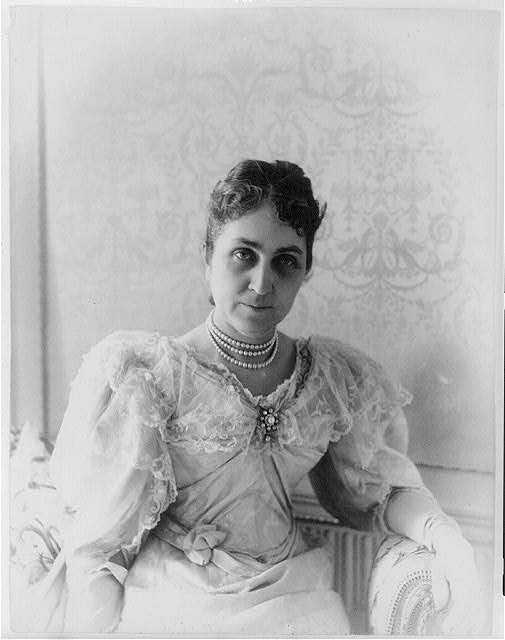
Phoebe Apperson Hearst, William’s mother and the bankroller of many of his more ambitious ideas. January, 1895. (Courtesy Library of Congress)
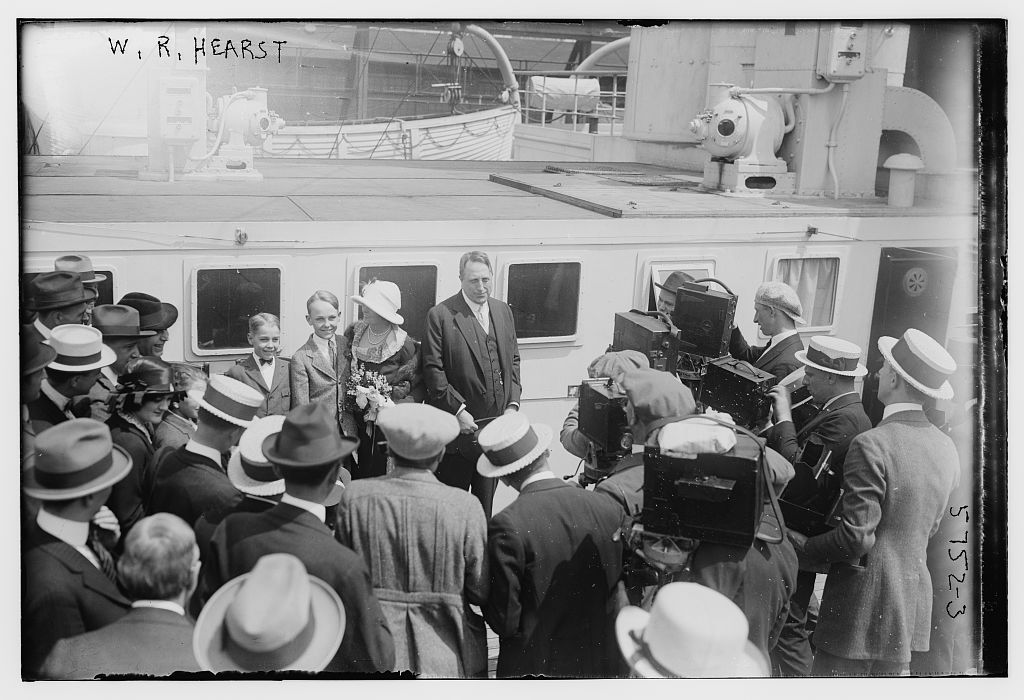
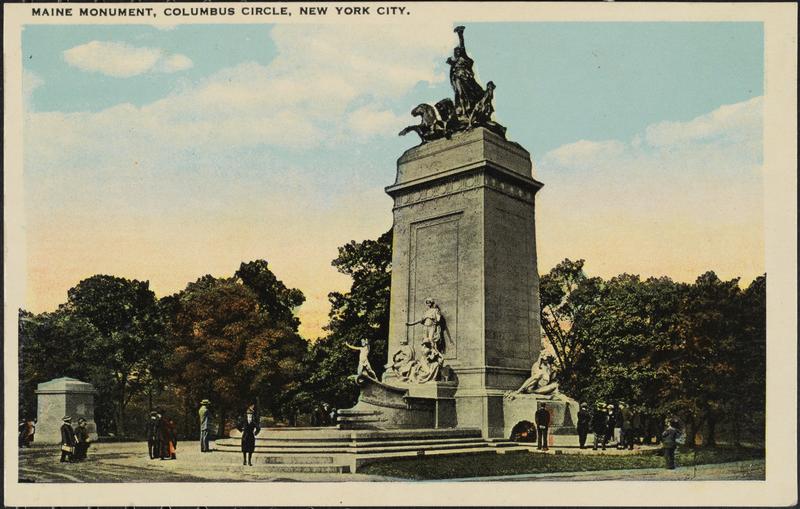
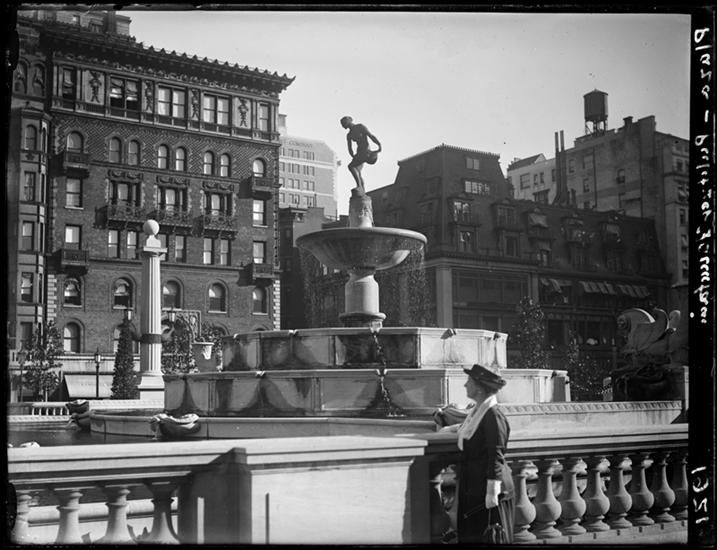
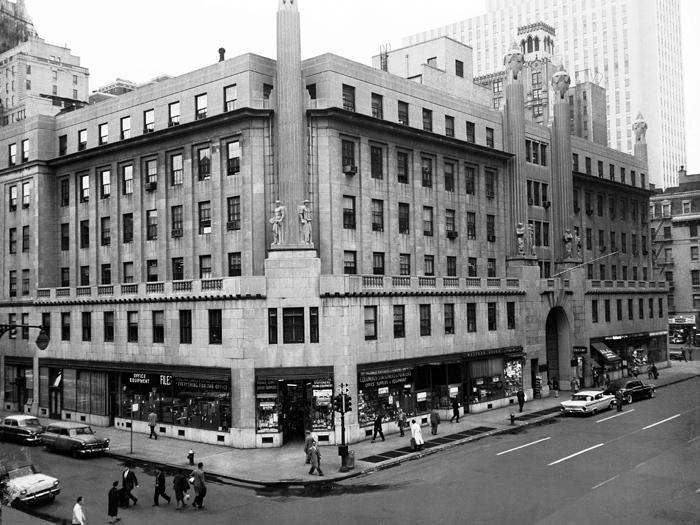
Hearst making a show of it with his wife Millicent Wilson and his sons. Courtesy Library of Congress. Date indicated on website says between 1920-25The Maine Monument in Columbus Circle. Read about its dedication here. (Image courtesy Museum of the City of New York)The Pulitzer Memorial Fountain in Manhattan’s Grand Army Plaza, 1921. (Courtesy Museum of the City of New York)The Hearst Building, pictured here in the 1950s. (Courtesy Ephemeral NY)
FURTHER LISTENING
First of all, please listen to part one of our Pulitzer vs. Hearst series if you haven’t already done so….
Then revisit the thrilling tale of newsies on strike!
And finally get another perspective of publishing in the Gilded Age with this look at Puck Magazine and the Puck Building.
FURTHER READING
Crying the News by Vincent DiGirolamo The Spanish American War by Kenneth E. Hendrickson How to Hide an Empire by Daniel Immerwahr Pulitzer: A Life in Politics, Print and Power by James McGrath Morris Empire By Default by Ivan Musicant The Chief: The Life of William Randolph Hearst by David Nasaw William Randolph Hearst: The Early Years by Ben Proctor Citizen Hearst: A Biography of William Randolph Hearst by W.A. Swanberg
The Bowery Boys: New York City History podcast is brought to you …. by you!
We are now producing a new Bowery Boys podcast every week. We’re also looking to improve and expand the show in other ways — publishing, social media, live events and other forms of media. But we can only do this with your help!
We are now a creator on Patreon, a patronage platform where you can support your favorite content creators.
Please visit our page on Patreon and watch a short video of us recording the show and talking about our expansion plans.
If you’d like to help out, there are six different pledge levels. Check them out and consider being a sponsor.
We greatly appreciate our listeners and readers and thank you for joining us on this journey so far.
Owney Madden was one of New York’s most infamous gangsters, a bootlegger and murderer who seemed to cross paths with every major cultural marker of the Roaring 20s. He opened the Cotton Club (with Jack Johnson), dated Mae West, and operated a liquor smuggling racket that catered to the city’s busiest speakeasies.
In essence Madden was the blistering face of Prohibition-era Manhattan.
And in 1935, he left it for good to go live in Hot Springs, Arkansas.
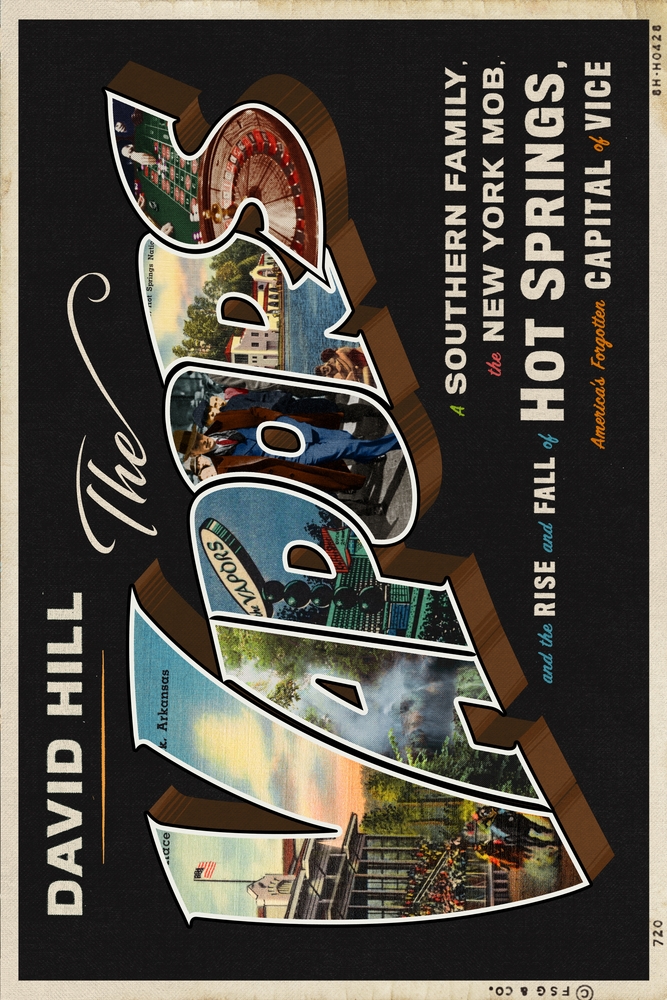
THE VAPORS A Southern Family, the New York Mob and the Rise and Fall of Hot Springs, America’s Forgotten Capital of Vice By David Hill Farrar, Straus and Giroux
For a time, it seemed that Hot Springs, not Las Vegas, would be the vice capital of the United States. In David Hill’s captivating and beautifully written The Vapors, we’re re-introduced to an overlooked corner of history, a historic spa town with troubling secrets and a sleazy underbelly.
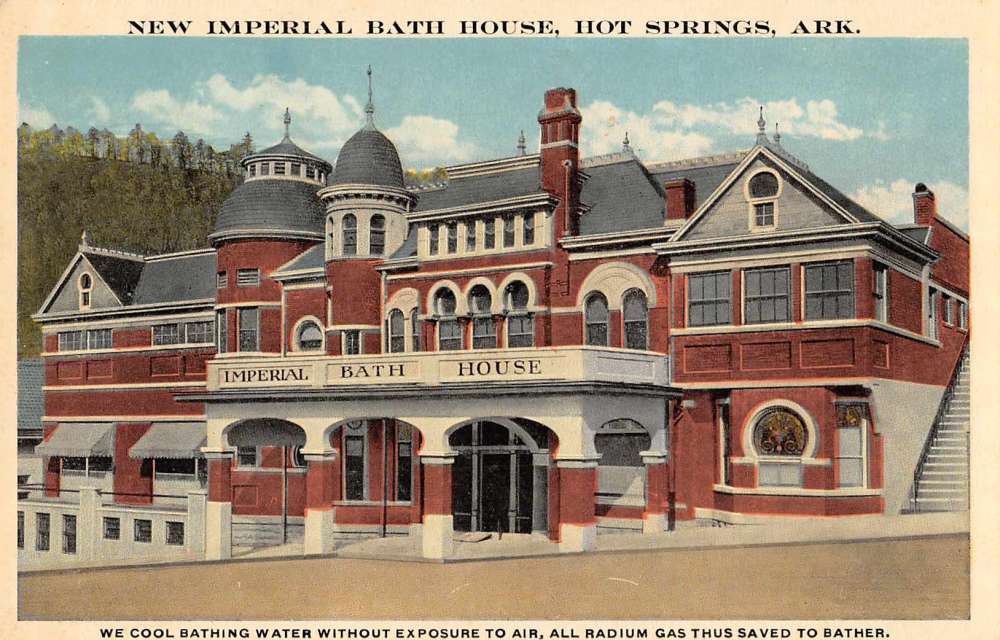
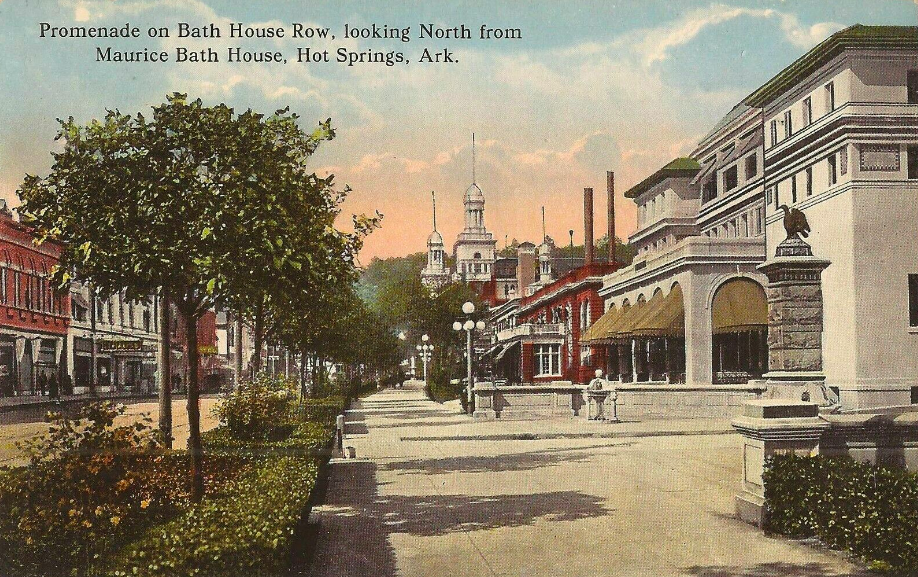
The Vapors was one of the last in a series of glamorous casinos and resorts which graced this mountain town during the 20th century, well established as a destination for illegal gambling by the time Madden arrived.
With Prohibition repealed, organized crime lords looked to gambling as their next best bet.
In the 1930s, Vegas was an uncertain proposition, sprouting haphazardly in the middle of the desert.
But here in Hot Springs, tourists had luxuriated in healing spring waters for decades. Sports heroes, politicians and musical entertainers all came here to relax. Lawmakers and law enforcement often looked the other way as it frequently benefited them to do so.
Madden was a celebrity in Hot Springs, a liaison between civic leaders and visiting gangsters, a man with unique powers who nonetheless had to learn the more delicate game of political control.
“Owney’s days of killing his enemies were long behind him,” writes Hill, “but it sure must have seemed cheaper than winning a fair election in Hot Springs. ‘You know, in my day, back in New York, how I’d have handled this…..’ Owney said to the gamblers. ‘No, no, no!’ they quickly cut him off.”
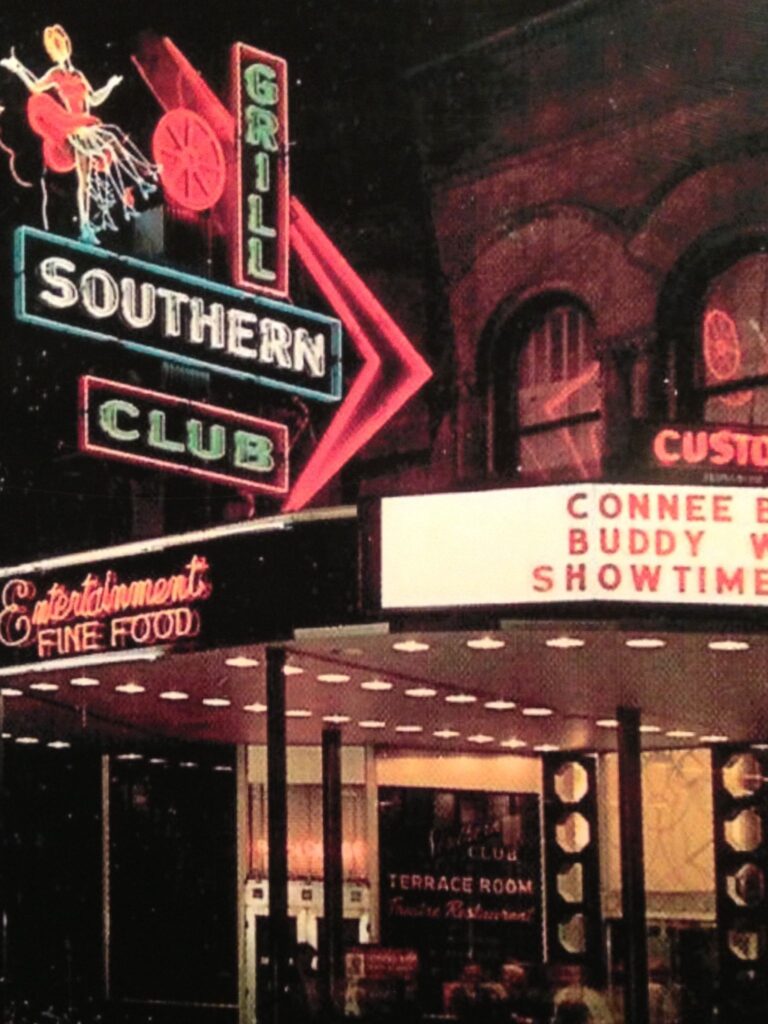
Madden’s roost was the Southern Club, an Arkansas variant of club’s like his old Cotton Club. Hill writes:
“At the Southern, Owney was treated with discretion, not as if he were anyone else off the street, but not as anything special, either. The patrons knew to keep their distance. In Hot Springs, people had grown used to seeing famous folks out and about, and had learned to act like it wasn’t any big deal. In this way the spa had a lot in common with much larger cities, and the famous appreciated it as a form of hospitality. The notorious, even more so.”
The fate of Hot Spring’s lucrative gambling scene — and all its vice-ridden sideshows — rested on shady deals with law enforcement and local officials.
The city often resisted the presence of notorious gangsters for fear of the attention; in fact, another New York mob boss Charles‘Lucky’ Luciano, who had considered Hot Springs a sort of gangster’s retreat, was arrested here in 1936.
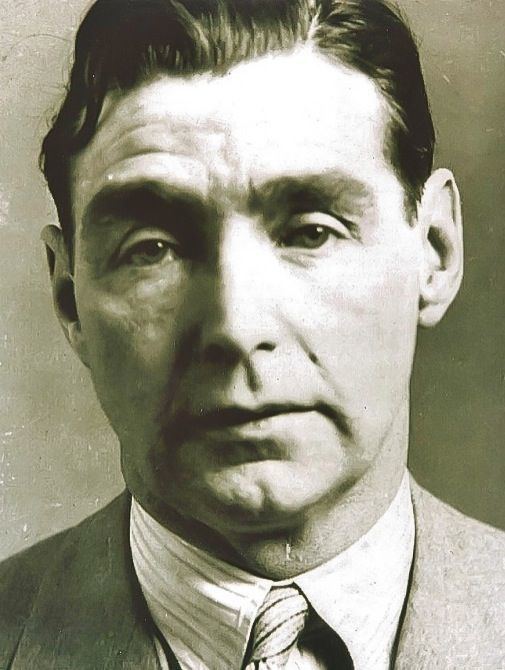
Below: Owney Madden in his later years
Hill reconstructs the resort town with such vivid attention to detail — a haven of mist, fedoras and cheap-lipstick glamour — through exhaustive research and interviews. (Hill, who lives in New York, is a native Arkansan and you feel it.)
Alongside Madden, in a simple stroke of balanced narrative that really elevates The Vapors into the realm of prize-deserving literary magic, the author also follows the stories of Madden’s protege Dane Harris (the “boss gambler” of Hot Springs) and a tough lady named Hazel Hill, raising two sons during the city’s most tumultuous years.
Hazel’s story is told with an added degree of richness and sympathy, as well it should. She’s the author’s grandmother.
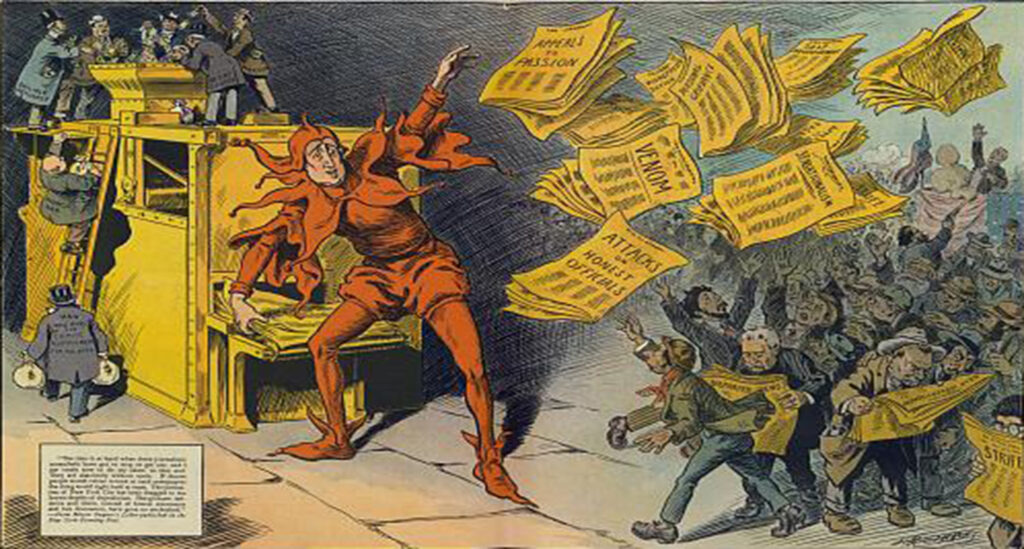
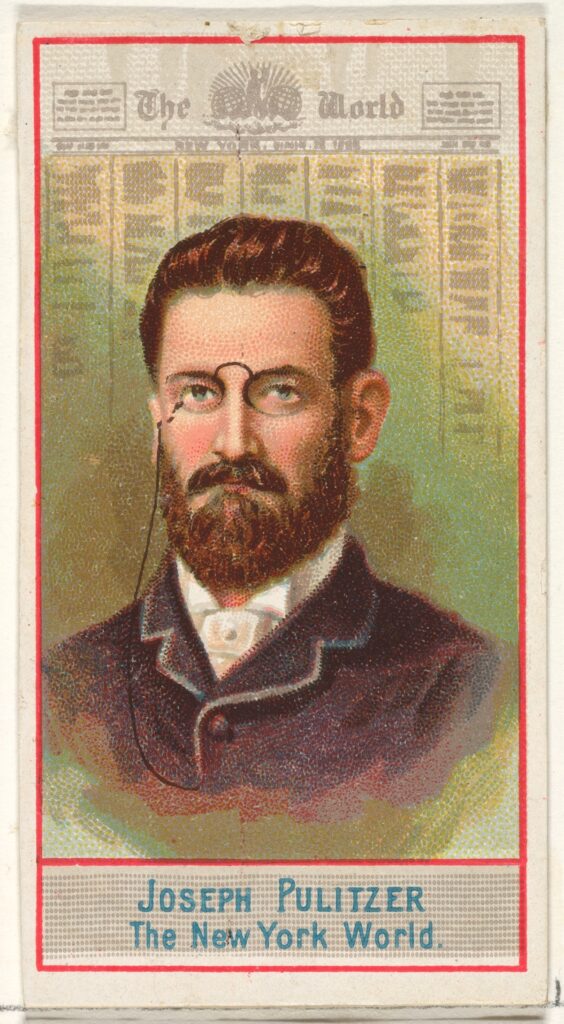
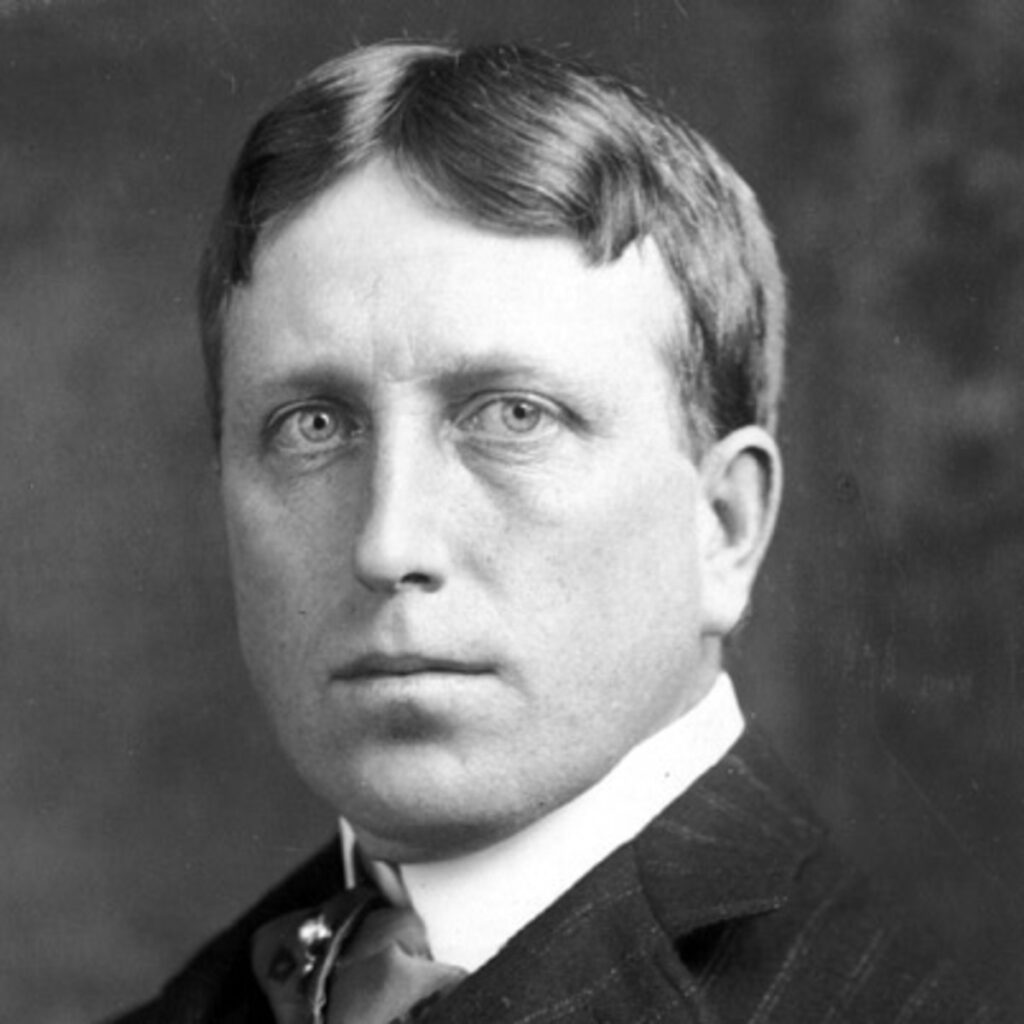
PODCAST (EPISODE 335) In the 1890s, powerful New York publishers Joseph Pulitzer and William Randolph Hearst engaged in an all-out battle for daily readers of their respective newspapers, developing a flamboyant, sensational style of coverage today referred to as ‘yellow journalism’.
This battle between the New York World and the New York Journalwould determine the direction of the American media landscape and today we still feel its aftermath — from melodramatic headlines to the birth of eyewitness reporting and so-called ‘fake news’.
An illustration parodying Joseph Pulitzer from Puck Magazine, created by Frederick Burr Opper, January 1898, Library of Congress, Prints and Photographs Division
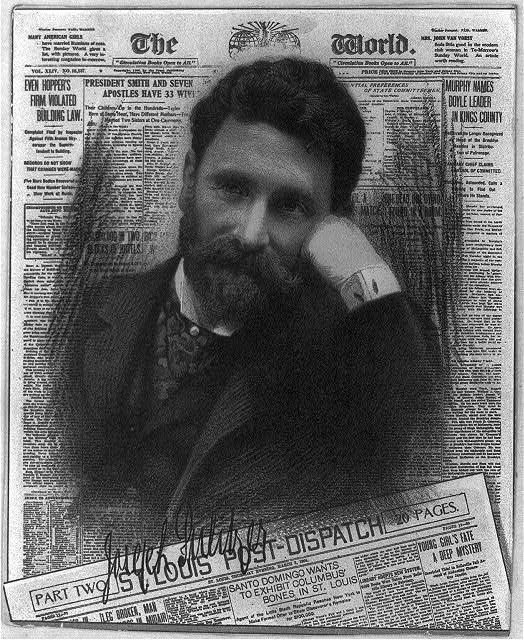
The two men come from drastic different backgrounds. Pulitzer, an Hungarian immigrant who started his publishing empire in St. Louis, used the World to highlight injustices upon the working class and to promote worthy civic projects (like the pedestal of the Statue of Liberty).
Hearst, himself the wealthy publisher of a San Francisco newspapers, entered the New York publishing world, specifically aimed at competing with Pulitzer. In many ways, he out-Pulitzered Pulitzer, creating extraordinary daily publications which appeals to all types of New Yorkers. (Even children!)
An illustration parodying Hearst from Puck Magazine, “The Yellow Press,” by L.M. Glackens, 1910. Library of Congress, Prints and Photographs Division
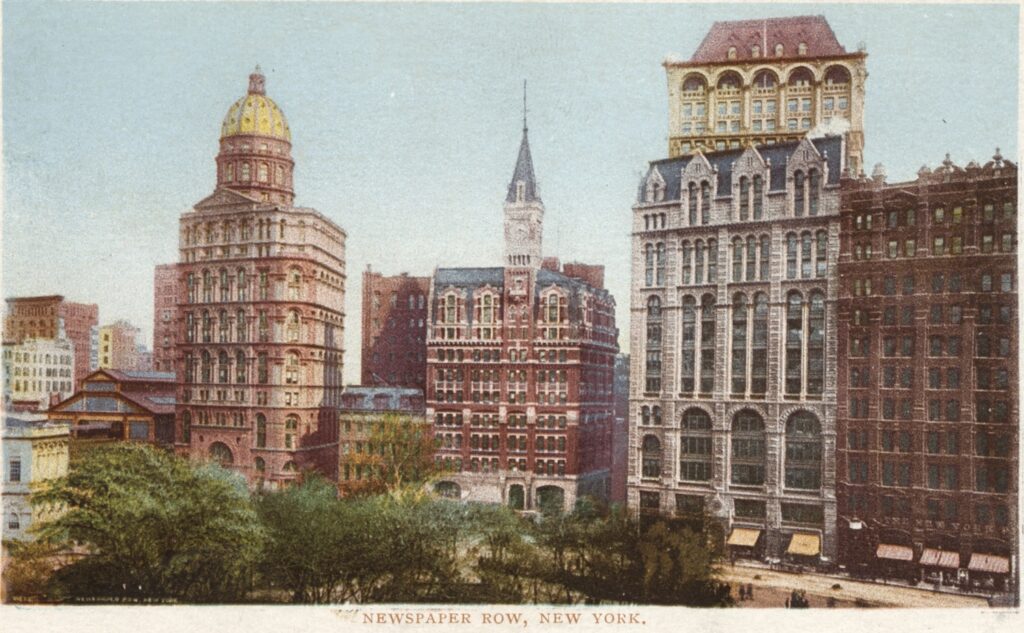
In Part One, we introduce you to the two publishers and meet them on a battlefield of newsprint and full-page headlines — located on just a couple short blocks south of the Brooklyn Bridge.
To get this week’s episode, just find our show onStitcher or your favorite podcast streaming service. Or listen to it here:
The Bowery Boys: New York City History podcast is brought to you …. by you!
We are now producing a new Bowery Boys podcast every week. We’re also looking to improve and expand the show in other ways — publishing, social media, live events and other forms of media. But we can only do this with your help!
We are now a creator on Patreon, a patronage platform where you can support your favorite content creators.
Please visit our page on Patreon and watch a short video of us recording the show and talking about our expansion plans.
If you’d like to help out, there are six different pledge levels. Check them out and consider being a sponsor.
We greatly appreciate our listeners and readers and thank you for joining us on this journey so far.
Without moving images or sound recordings to guide us, it can be hard to imagine the lives and careers of famous theater actors from the 19th century.
And yet the American theater produced a list of wildly famous performers whose names were repeated in households that often had no possibility of ever seeing a major play. The press could build upon an actor’s natural charisma and talent, turning leading ladies into modern goddesses.
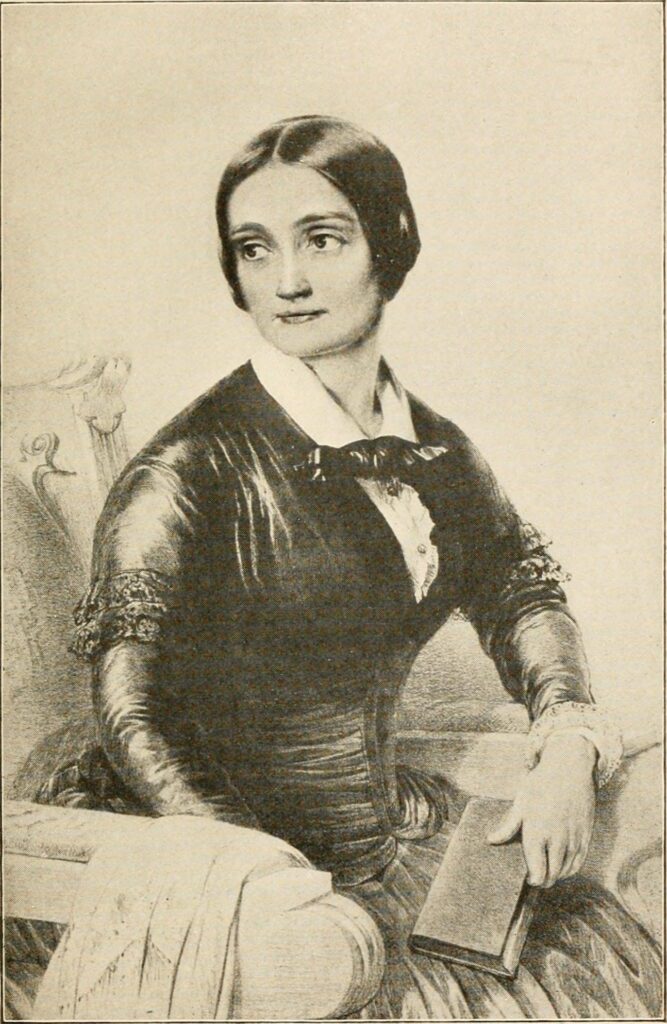
One such star was Charlotte Cushman, a theatrical chameleon who achieved international fame playing men’s roles and breaking just about every other convention in the book.
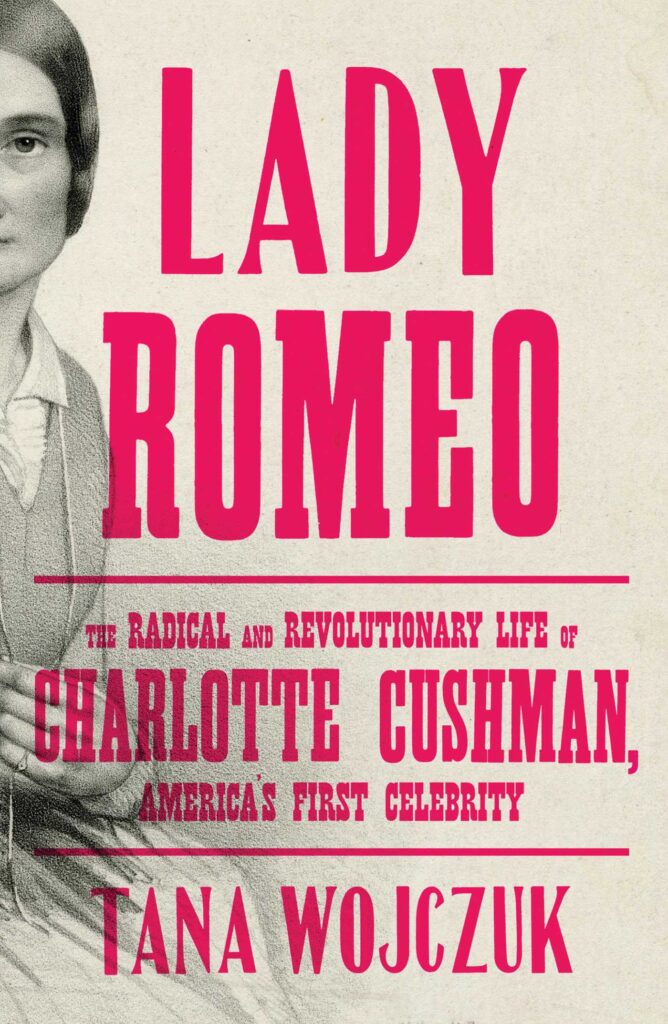
LADY ROMEO The Radical and Revolutionary Life of Charlotte Cushman, America’s First Celebrity by Tana Wojczuk Simon & Schuster
The charming biography Lady Romeo has by circumstance become a truly fantastical read, more so than author Tana Wojczuk probably intended.
Not only is Cushman’s life fascinating and almost unbelievable, but nostalgia for the theater itself in 2020 has become romanticized. Imagining anybody on stage performing Shakespeare gave me a thrill!
Cushman reigned during the mid 19th century as America’s most famous actress, specializing in playing roles written for both women and men.
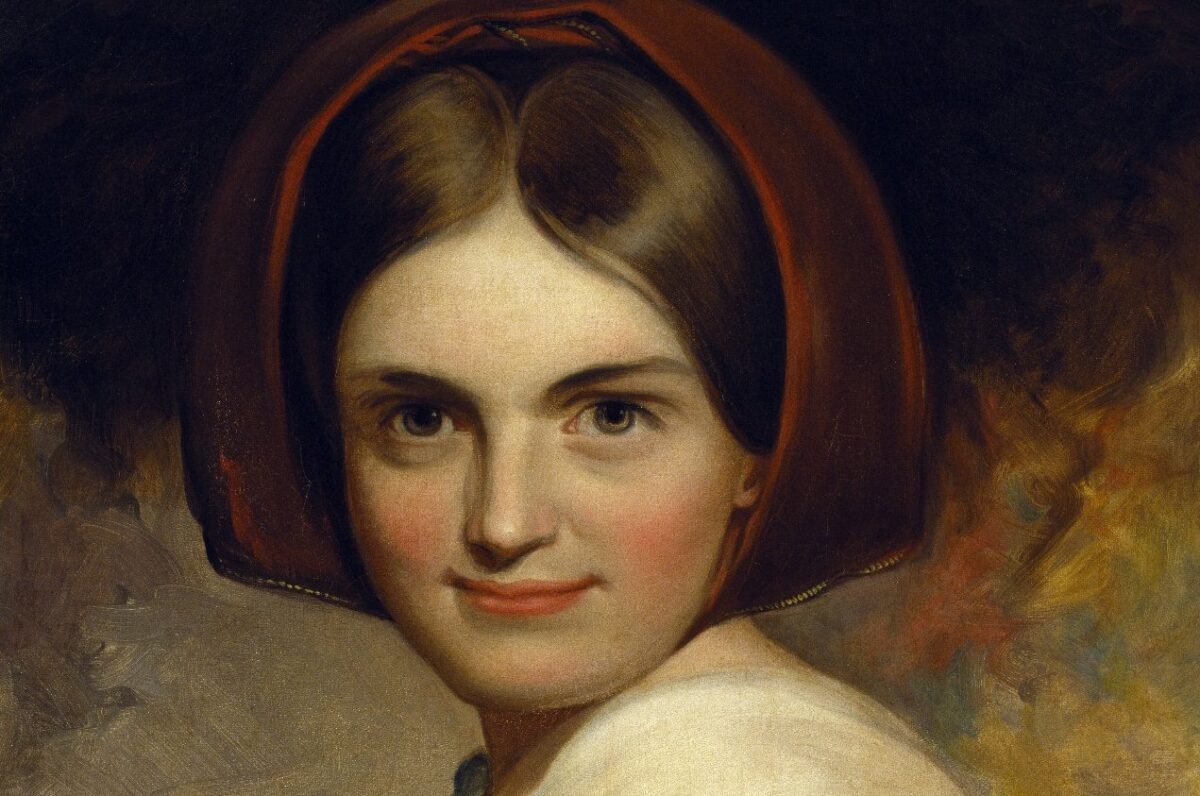
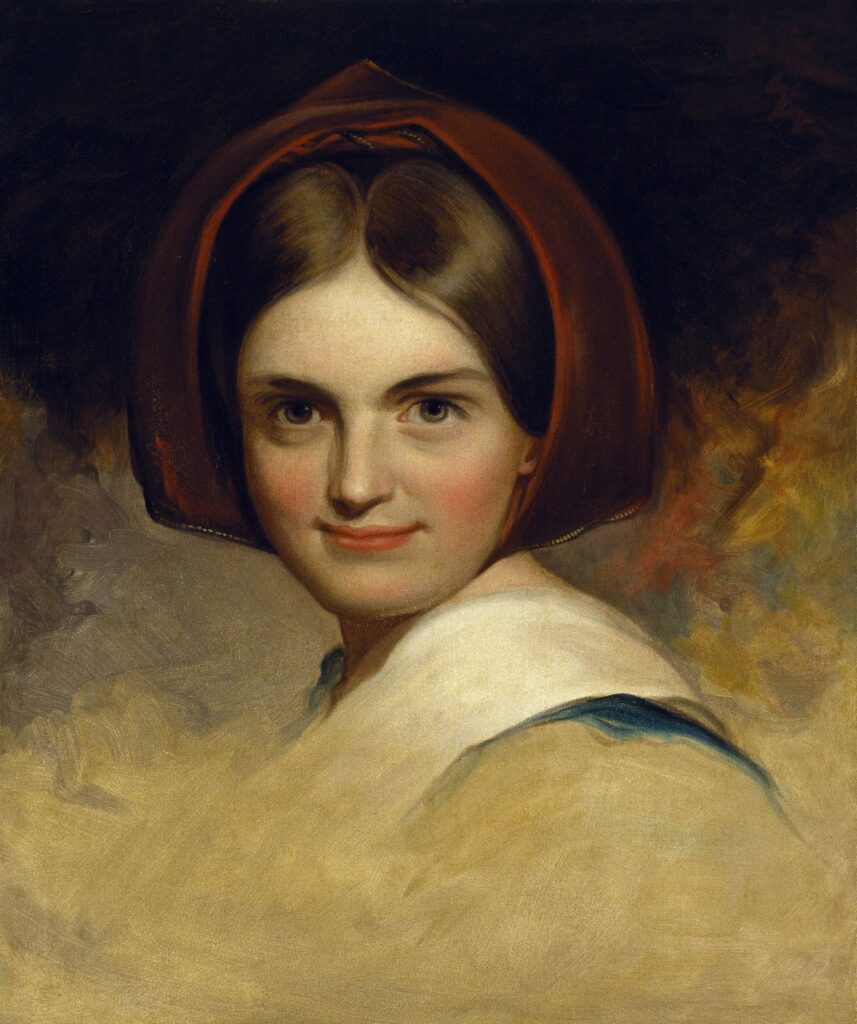
Cushman in an unfinished 1843 painting by Thomas Sully, courtesy the Folger Shakespeare Library
Her versatility and transformative ability — it was truly 19th century ‘method acting’ — were displayed on the New York stage by the mid 1830s, and even early on she was not afraid to challenge the status quo.
She soon commanded the attentions of the New York theater world — even on stages such as the Bowery Theatre with its ample prurient distractions — and in Lady Romeo, her bold ingenuity leaps off the page.
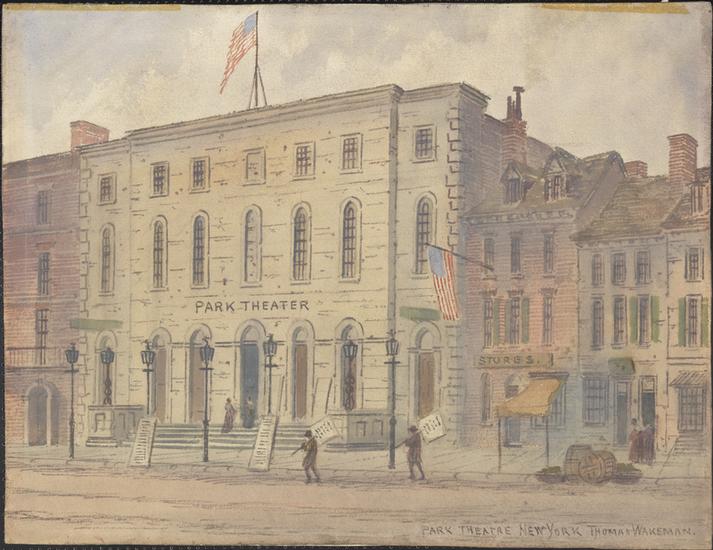
The Park Theater, depicted here in 1840 in a watercolor by Thomas Wakeman. (Courtesy the Museum of the City of New York)
At a performance of Guy Mannering at the lofty Park Theatre on Park Row, Cushman stepped into a starring role interpreted as a young woman.
Charlotte thought differently; she surprised both cast and audience when she emerged as an old crone; her “face was deeply carved with dry creek beds of wrinkles, her dark hair, parted in the middle, escaping in uncombed tangles down her back.”
Cushman was not a traditional beauty, nor was she uniquely connected or wealthy enough to take such early risks in her career. But she let nothing stop her bold ambition for reinventing theater.
For instance, in 1839, Cushman was given the role of Nancy in Oliver Twist. Playing a prostitute was a risky part. Wojczuk writes, “[A]ctresses already had to fight against the stereotype that they were essentially prostitutes themselves.”
Cushman leaned into the controversy. She visited the neighborhood of Five Points to research the part and even exchanged her clothes with those of a dying prostitute. “She gave up her simple but well-made silk dress and put on the women’s rags. These would be Nancy’s clothes.”
She soon became the American queen of Shakespeare; President Abraham Lincoln was a huge fan, enrapt with her portrayal of Lady McBeth.
Her fame and command of the stage allowed her to live a surprisingly more open life with many female companions over her life. Cushman steps vividly from the pages of Lady Romeo like a superstar who would fit perfectly into the 21st century.
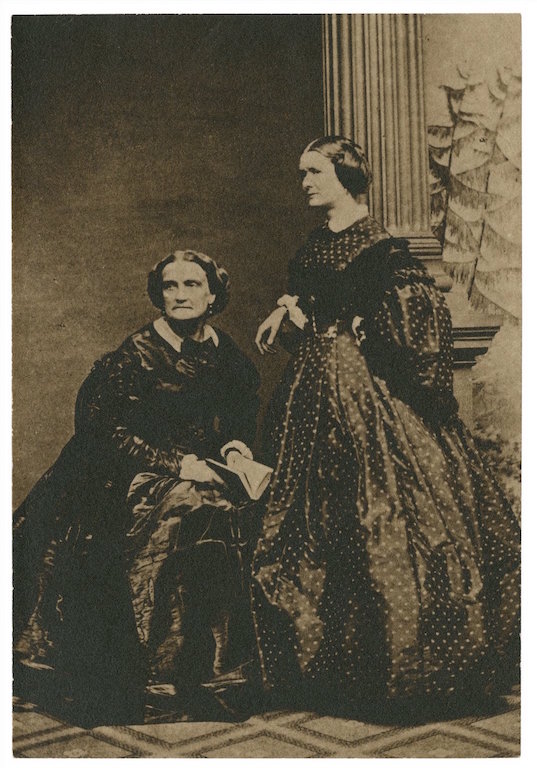
Charlotte Cushman and the New York sculptor Emma Stebbins. The pair were partners at the end of Cushman’s life. Stebbins would eventually write a biography of Cushman. (Shakespeare Folger Library)