PODCAST The Hotel Theresa was once called the Waldorf of Harlem, a glamorous New York City accommodation known as a hub for Black society and culture in the 1940s and 50s — and for a few eyebrow-raising political moments in the 1960s.
The luxurious apartment hotel was built by a German lace manufacturer to cater to a wealthy white clientele.
But almost as soon as the final brick was laid, Harlem itself changed, thanks to the arrival of thousands of new Black residents from the South.
Harlem, renown the world over for the artists and writers of the Harlem Renaissance and its burgeoning music scene, was soon home to New York’s most thriving Black community. But many of the businesses here refused to serve Black patrons, or at least certainly made them unwelcome.
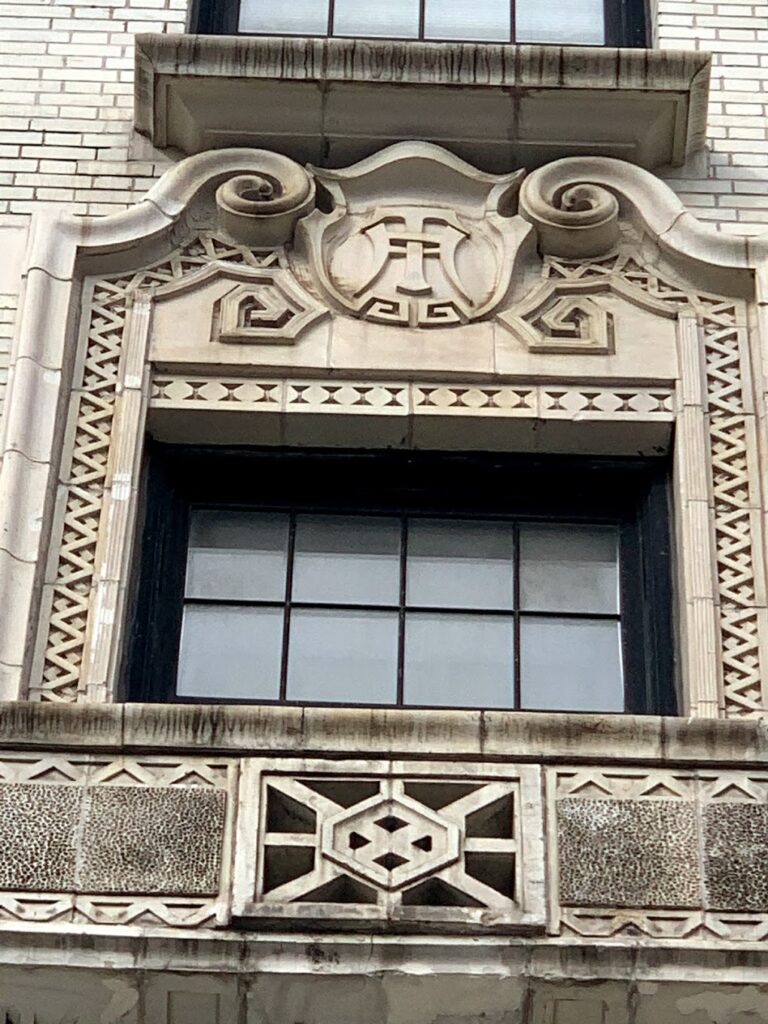
The TH initials over the windows. Photo courtesy Greg Young
The Theresa changed its policy in 1940 and soon its lobby was filled with famous athletes, actresses and politicians, many choosing to live at the Hotel Theresa over other hotels in Manhattan.
The hotel’s relative small size made it an interesting concentration of America’s most acclaimed Black celebrities. And an almost surreal backdrop for presidents and foreign leaders alike.
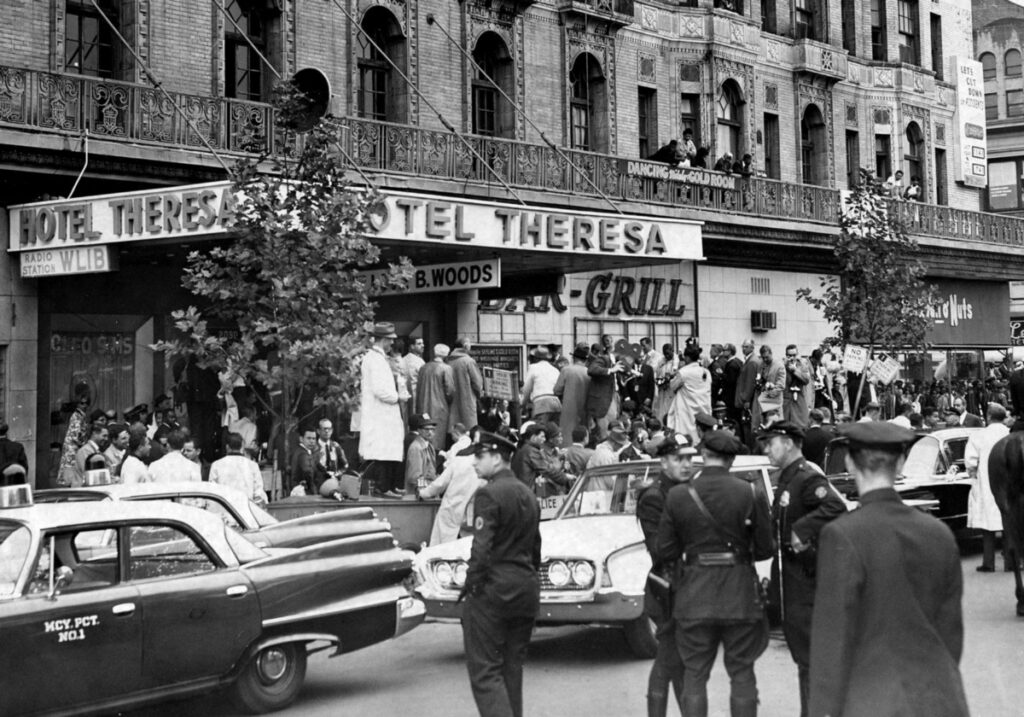
Media frenzy around the Fidel Castro’s stay at the hotel.
In this podcast, Greg gives you a tour of this glamorous scene, from the corner bar to the penthouse, from the late-night coffee shop to the crazy parties of Dinah Washington.
WITH: Martin Luther King Jr,Dwight D. Eisenhower, and Fidel Castro. And music by Sarah Vaughan, Billy Eckstine and Duke Ellington
ALSO: Who is this mysterious Theresa? What current Congressman was a former desk clerk? And what was Joe Louis’ favorite breakfast food?
Listen to Harlem Nights at the Hotel Theresa on your favorite podcast player or from the player below:
The first half of this show was originally released in 2013 (as Episode #158) but has been newly edited for this release. The second half of this show is ALL NEW.
MUSIC FEATURED: “Sophisticated Lady” by Duke Ellington and His Orchestra and “Dedicated To You” by Billy Eckstine and Sarah Vaughan.
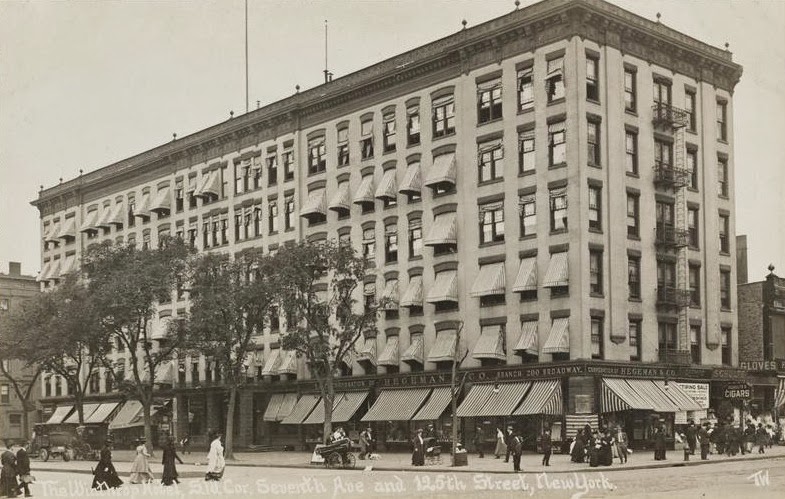
The Hotel Winthrop which sat on the spot of the Theresa before it was torn down in the early 1910s, deemed a bit inadequete for the growing neighborhood.
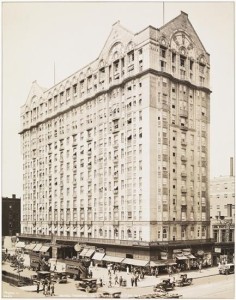
Museum of the City of New York
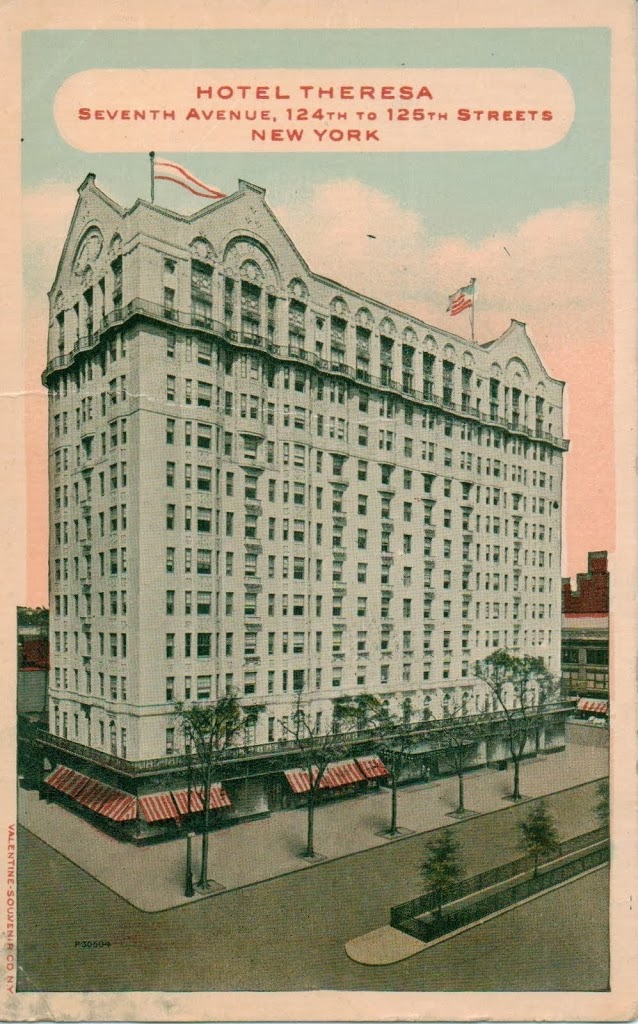
An early glimpse of the Hotel Theresa.
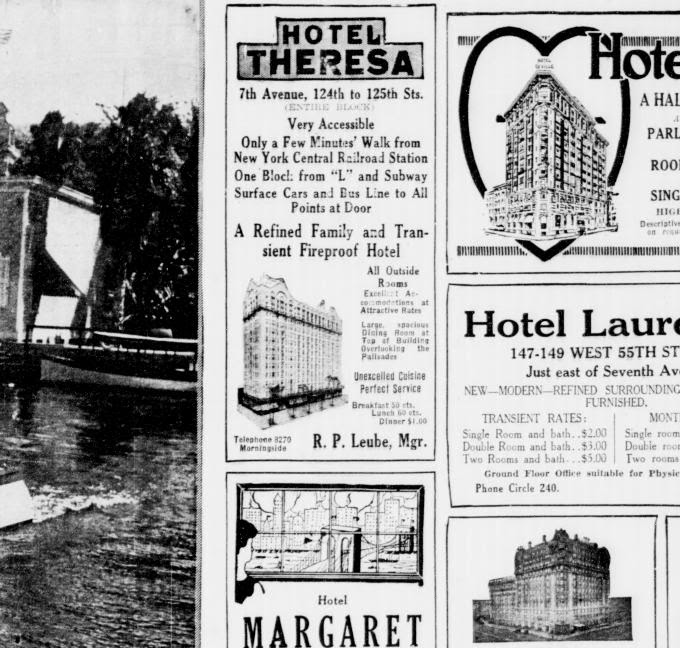
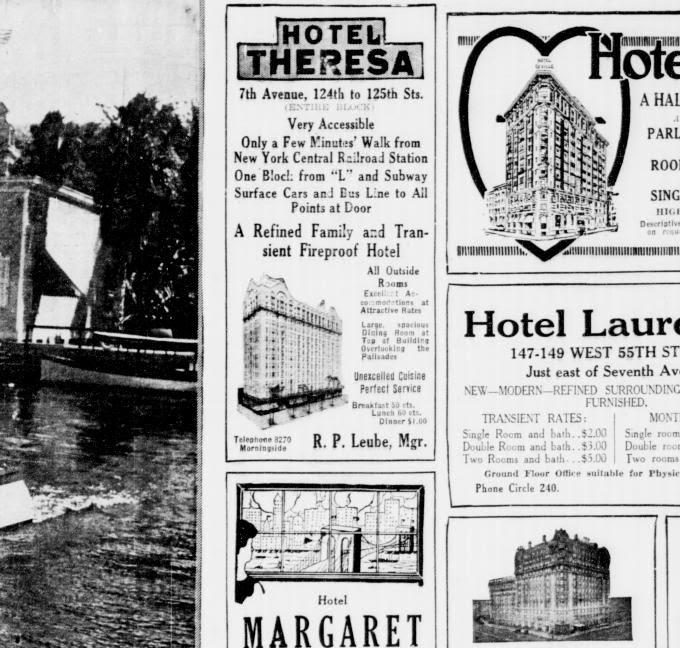
From the February 4, 1917, issue of the New York Tribune, making note of its “large spacious dining room overlooking the Palisades.”
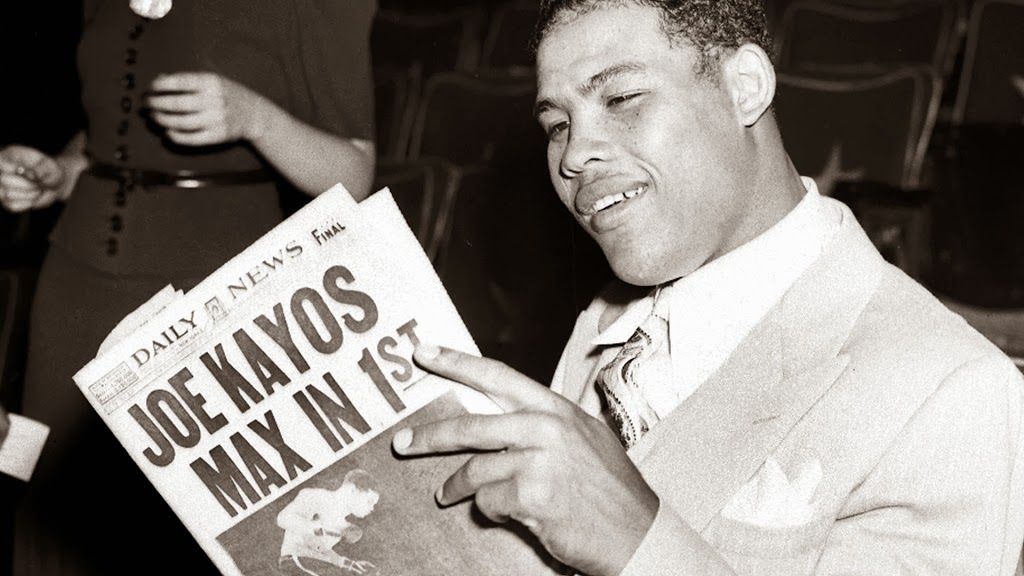
Boxer Joe Louis was one of America’s most famous athletes in the 1940s and a frequent guest at the Teresa. Joe fought the German boxer Max Schmeling twice, both times at Yankee Stadium.
Max bested Joe in the first match, but on the second go-around in 1938, Louis knocked out Schmeling in the first round.
He enjoyed his win that evening at the Theresa, as thousands of fans gathered in front of the hotel and throughout the city in celebration.
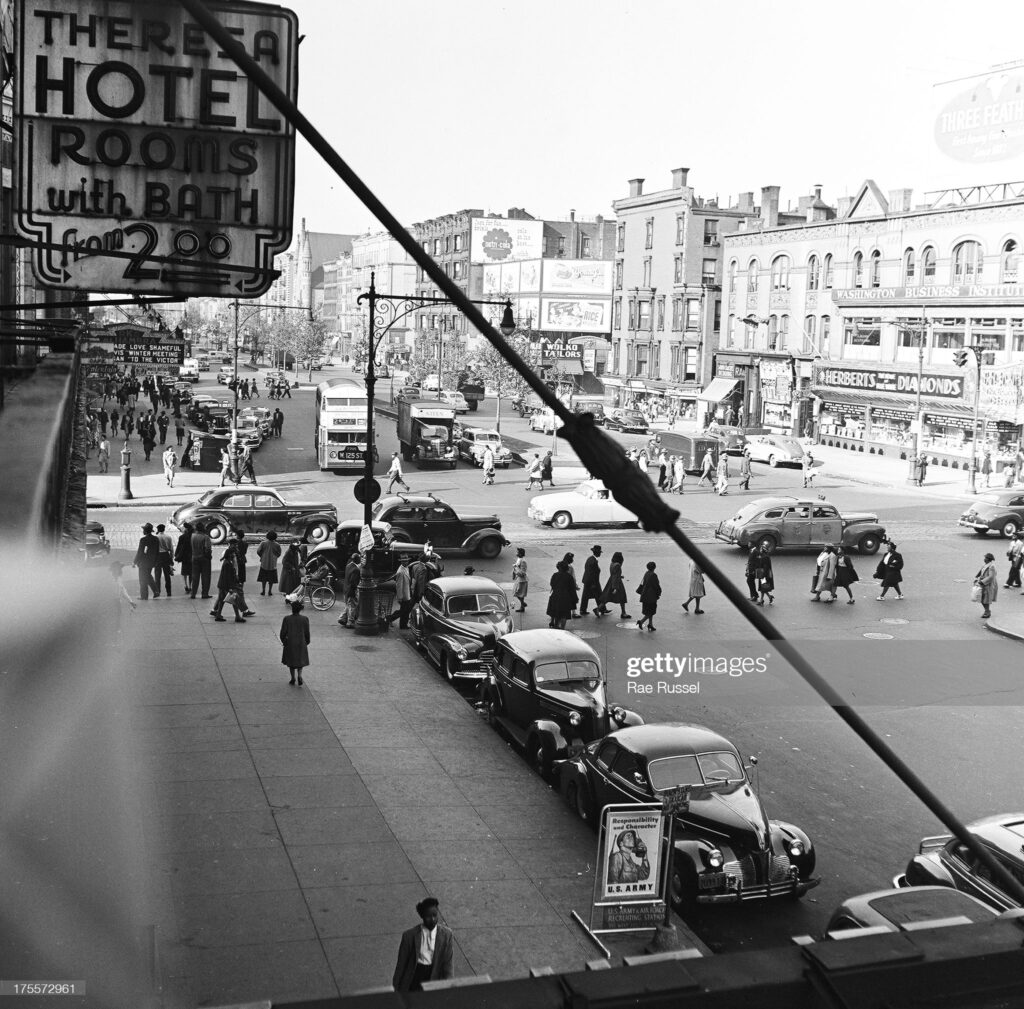
View of pedestrian and vehicular traffic at the corner of 125th Street and 7th Avenue in Harlem, New York, New York, 1948. The sign for the Theresa Hotel is visible on the left. (Photo by Rae Russel/Getty Images)
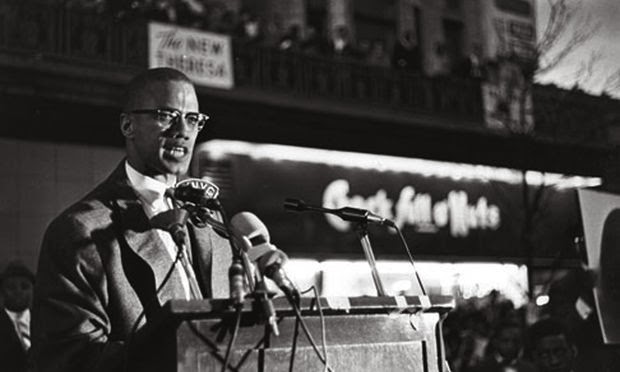
Malcolm X speaking to crowds in front of the Hotel Theresa — back when there was a Chock Full O Nuts on street level! Malcolm would be very associated with the hotel, headquartering here after his split with the Nation of Islam.
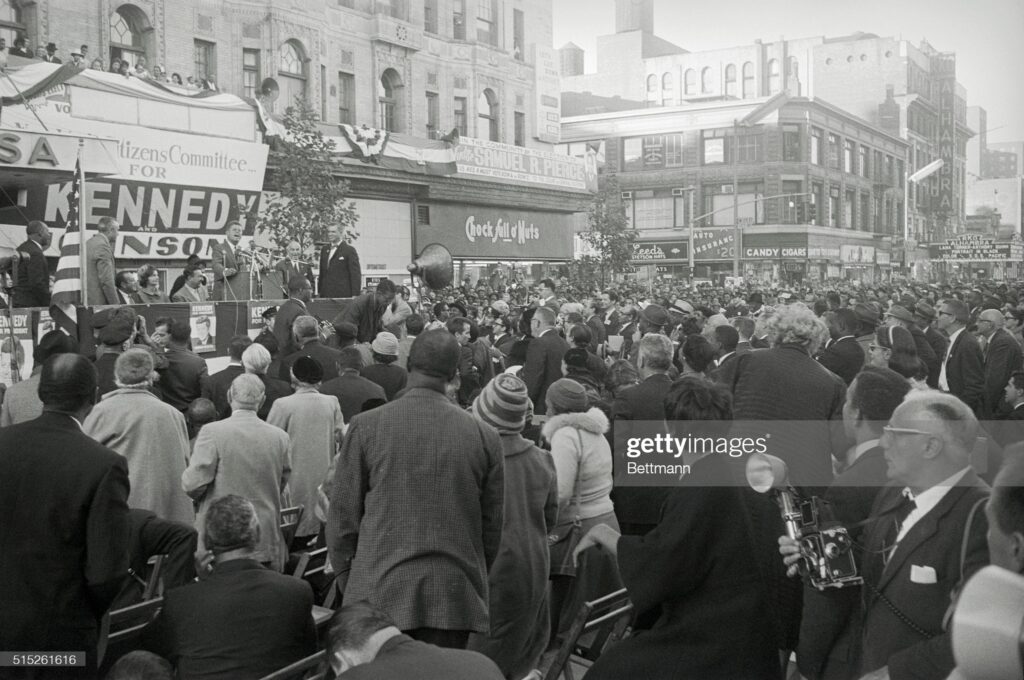
Photo by Larry Fink c/o WNYCSen. John F. Kennedy, Democratic presidential nominee, speaks at a rally in front of the hotel Theresa in Harlem. Kennedy made a half dozen speeches or appearances in and around the city during the second of a three-day bid for New York State’s 45 electoral votes. (Getty Images)
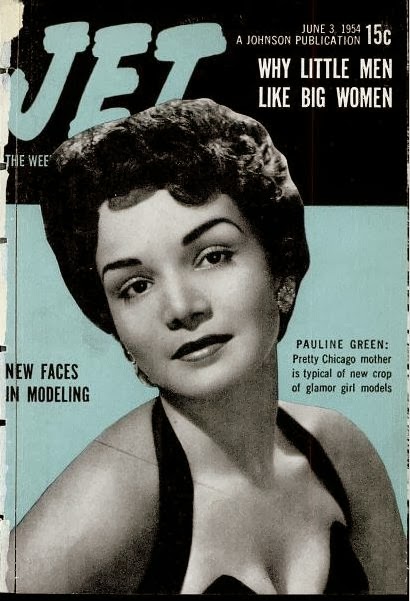
Jet Magazine and Ebony Magazine founder John J Johnson conceived the ideas for both magazine at the Hotel Theresa and frequently published articles about the Theresa.
A notice in a 1954 issue of Jet announcing the opening of the Hotel Theresa ballroom, called the Skyline.
The Bowery Boys: New York City History podcast is brought to you …. by you!
We are now producing a new Bowery Boys podcast every other week. We’re also looking to improve and expand the show in other ways — publishing, social media, live events and other forms of media. But we can only do this with your help!
We are now a creator on Patreon, a patronage platform where you can support your favorite content creators.
Please visit our page on Patreon and watch a short video of us recording the show and talking about our expansion plans. If you’d like to help out, there are six different pledge levels. Check them out and consider being a sponsor.
We greatly appreciate our listeners and readers and thank you for joining us on this journey so far.
One hundred and nine years ago this month, a tiny airplane made history over the waterways of New York City.
These weren’t the first flights over the city — those had occured in the fall of 1909, during the Hudson-Fulton Celebration — or even the most daring or most publicized. (Aerial competitions like the Great Gimbels Air Race of 1911 might take those titles.)
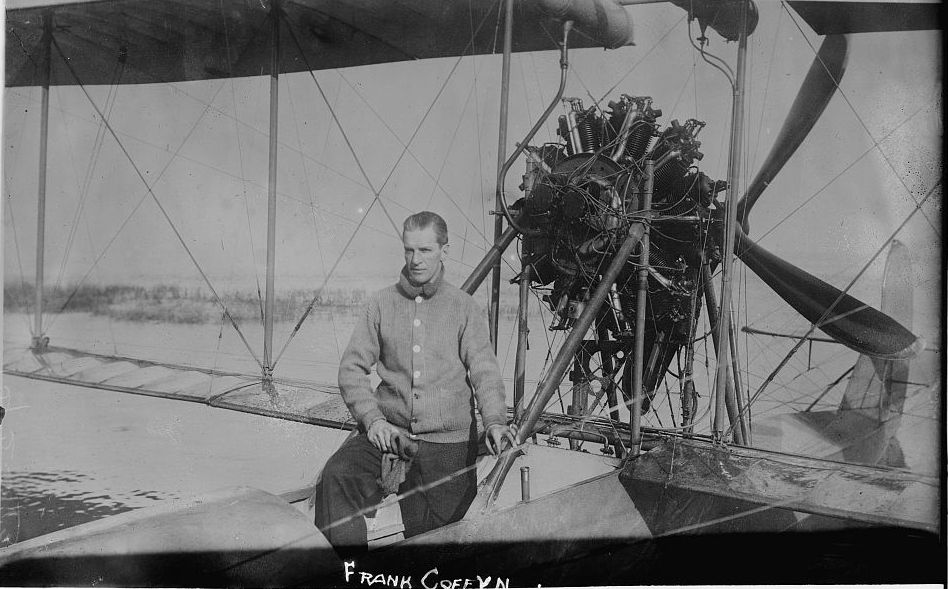
These flights, which took place in February and March of 1912, were important not only due to the bravery and braggadocio of the pilot, derring-do Frank Coffyn, but because of his companion — American Press Association photographer Adrien C. Duff.
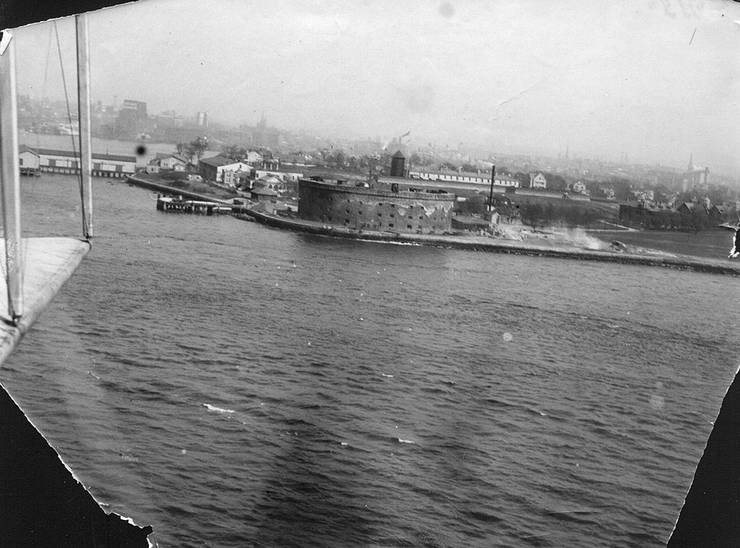
Duff is responsible the very first photographs and the first ever film of New York City — from overhead, taken by an airplane.*
And in taking these photographs, this also makes Duff the very first airplane passenger over New York Harbor.
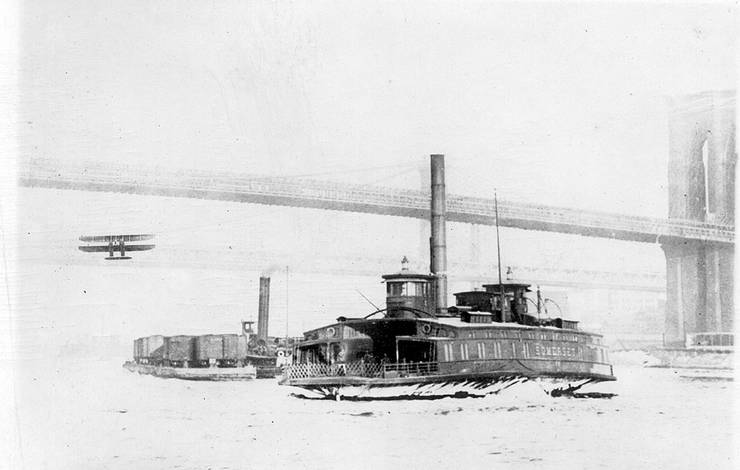
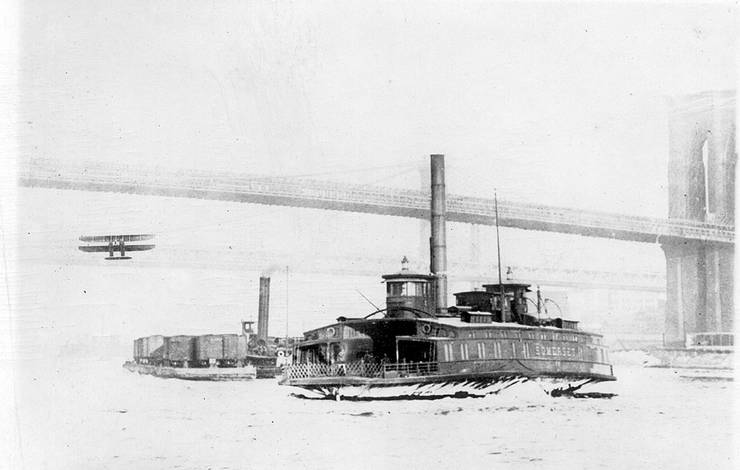
Frozen flight: Frank Coffyn sails underneath the Brooklyn Bridge and above the East River during the dead of winter.
First In Flight
Coffyn, a former Wright Brothers employee, accepted the offer of Brooklyn film studio American Vitagraph to figure out a way of snapping images of New York from above.
This was a tricky task to be sure in 1912. Manned flights had only been invented by his former employers a few years previous. Planes had to be very light and until that moment could only carry the pilot and necessary equipment.
Below: Frank Coffyn, in a picture with a Wright Bros plane in 1911 (Photos courtesy Library of Congress)
Even trickier, Coffyn wanted to lift off from the harbor directly and not from the icy landing strip based on Governors Island. To that effect, he furnished his plane with pontoons, allowing it to float upon the unfrozen shoreline.
The Sky’s The Limit
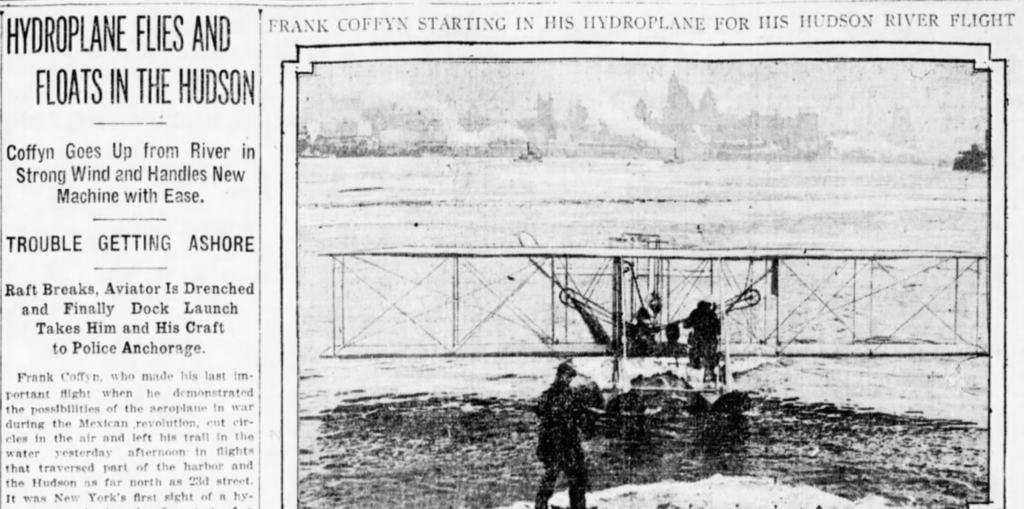
His first successful flight skimming off, and then above, the Hudson River was on February 6, 1912, “proving that the aeroplane …is also a near cousin of the mudhen or the duck,” according to the New York Times.
New York Tribune, Feb 7, 1912
He continued to make successive flights over the next few weeks, this time from the shore of the Battery and up the East River.
On February 13, 1912, he became the first pilot to fly underneath the Brooklyn Bridge, so low that he reportedly felt the smoke from a passing tugboat.
As a May 1912 edition of Metropolitan Magazine put it: “In February New Yorkers saw Frank T. Coffyn with his Wright hydro aero-plane travel over the surface of the half-frozen river, maneuvering in the water like a motor-boat, skating on the ice at top speed — then rise in the air over the ferryboats, under and over the bridges and around the Statue of Liberty.“
Better Than A Postcard
But it was one particular flight on February 8th that is of historic significance.
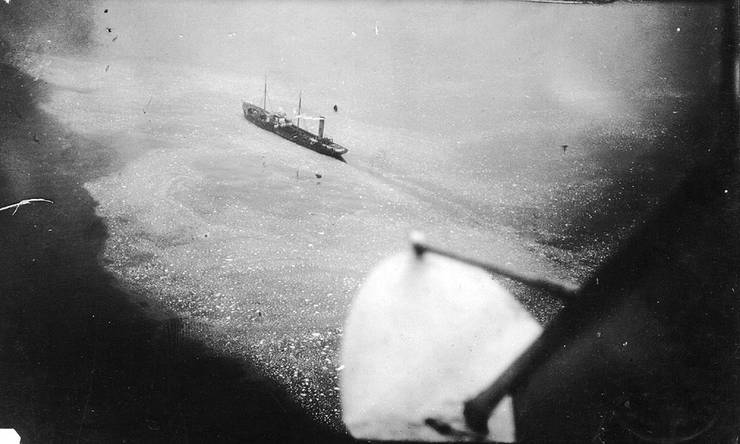
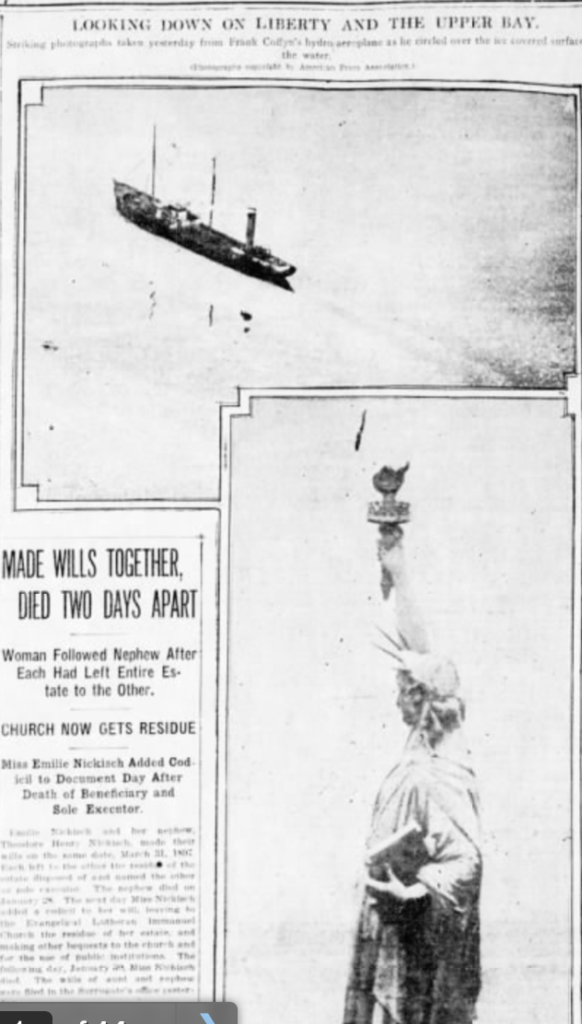
During the short flight, Coffyn took Duff from the Battery past Governors Island, over the ships of the harbor, around the Statue of Liberty, then back to Manhattan.
Duff was actually strapped onto the lower wing, with his legs dangling off the side of the plane! Both Coffyn and Duff were frozen to the bone by the time they landed.
Duff took nine photographs in all, of which only a few were usable. This article features the best of Duff’s pictures, and the first ever taken of New York from the sky.
Below: The first appearance of the photo above in a newspaper, the New York Tribune, Feb 8, 1912. (courtesy Newspapers.com)
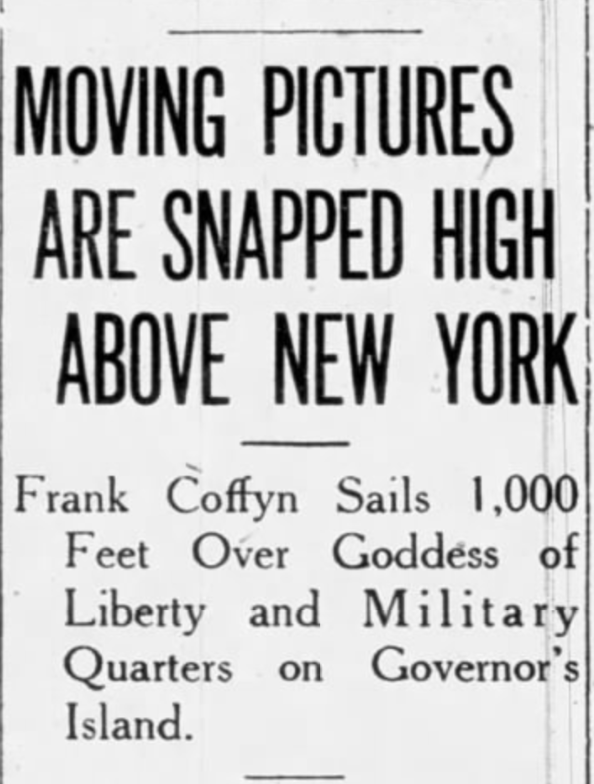
Coffyn eventually fulfilled his original mission with Vitagraph, bringing Duff back on his plane on February 12th to operate the moving-picture camera and making the very first film overhead New York.
The footage is not the most vivid, partially because Duff’s hands became so cold that he could barely operate the crank-operated camera.
From the Buffalo Courier, Feb 13, 1912
Later on, Coffyn attempted to operate the camera himself. This proved to be less successful, as a couple days later, he dropped the camera into the East River. Vitagraph released the usable footage to theaters in April.
Here’s a newsreel incorporating some of Coffyn’s own footage and some great shots of him taking off from the Battery shore.
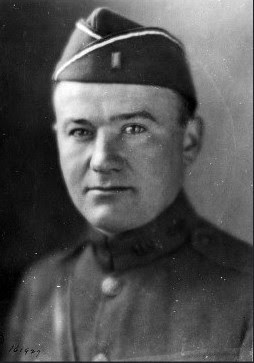
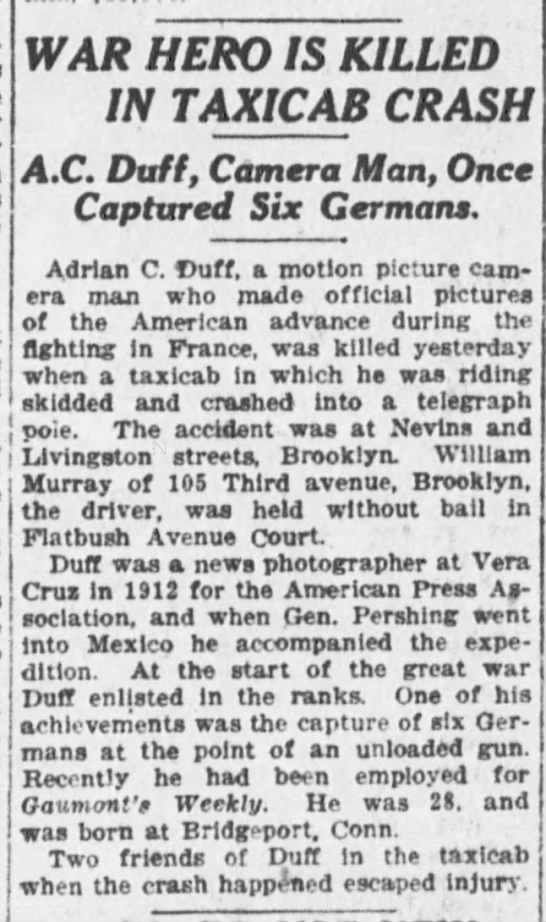
And whatever happened to Adrian C. Duff?
He took that sense of adventure, enlisted in the U.S. Army, and became a noted photographer during World War I. Here’s one of his more famous images.
PODCAST Two stories of outrageous hoaxes perpetrated upon New Yorkers in the early 19th century.
New Yorkers can be tough to crack, maneuvering through a rapidly changing, fast-paced city. But they can, at times, also be easily fooled.
In this episode, we explore two of the wackiest stories in early New York City history, two instances of tall tales that got quite out of hand.
While both of these stories are almost two centuries old, they both have certain parallels to modern-day hucksterism.
In the 1820s, the Erie Canal would completely change the fortunes of the young United States, turning the port city of New York into one of the most important in the world.
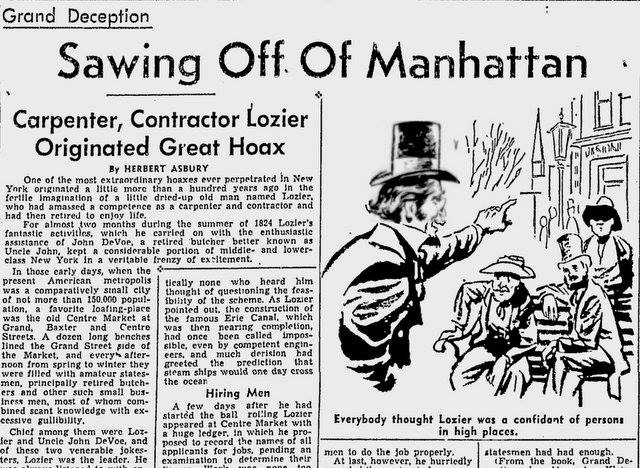
But an even greater engineering challenge was necessary to prevent the entire southern part of Manhattan from sinking into the harbor! That is, if you believed a certain charlatan hanging out at the market…..
One decade later, the burgeoning penny press would give birth to another tremendous fabrication and kick off an uneasy association between the media and the truth.
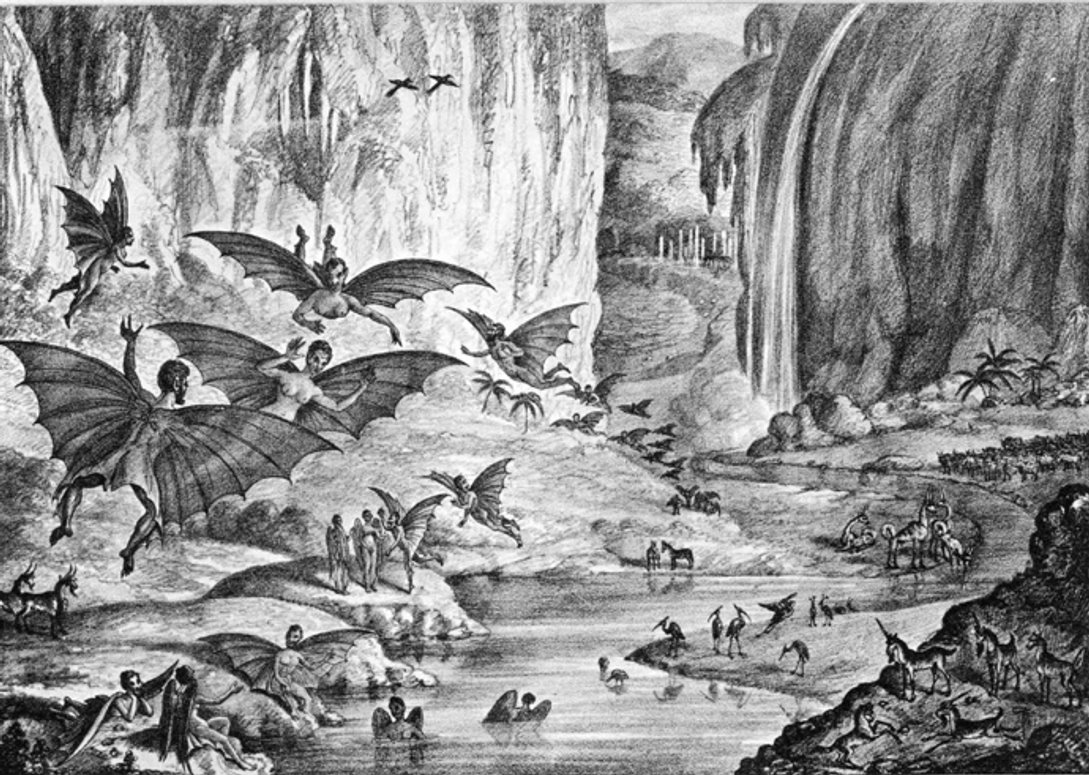
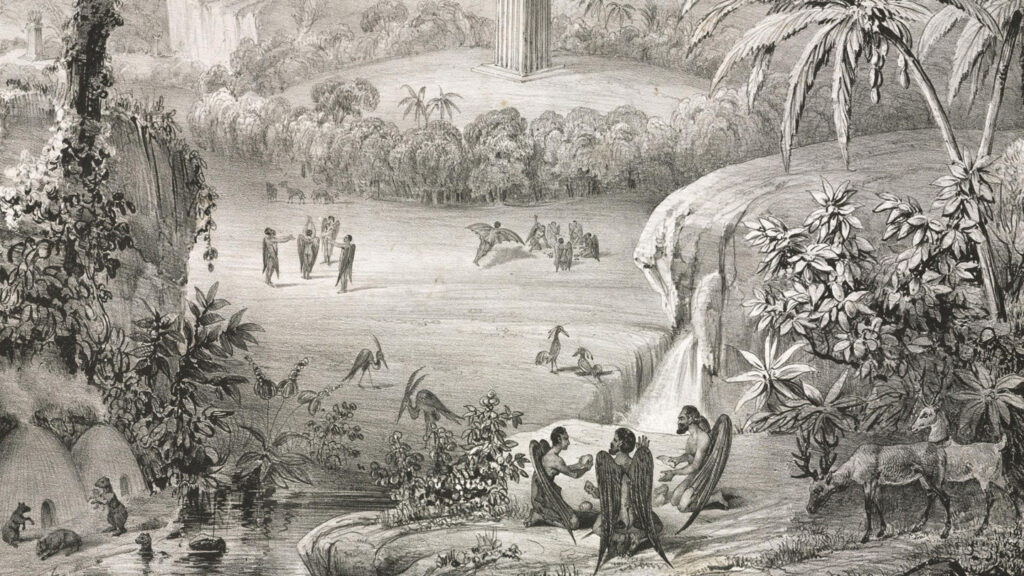
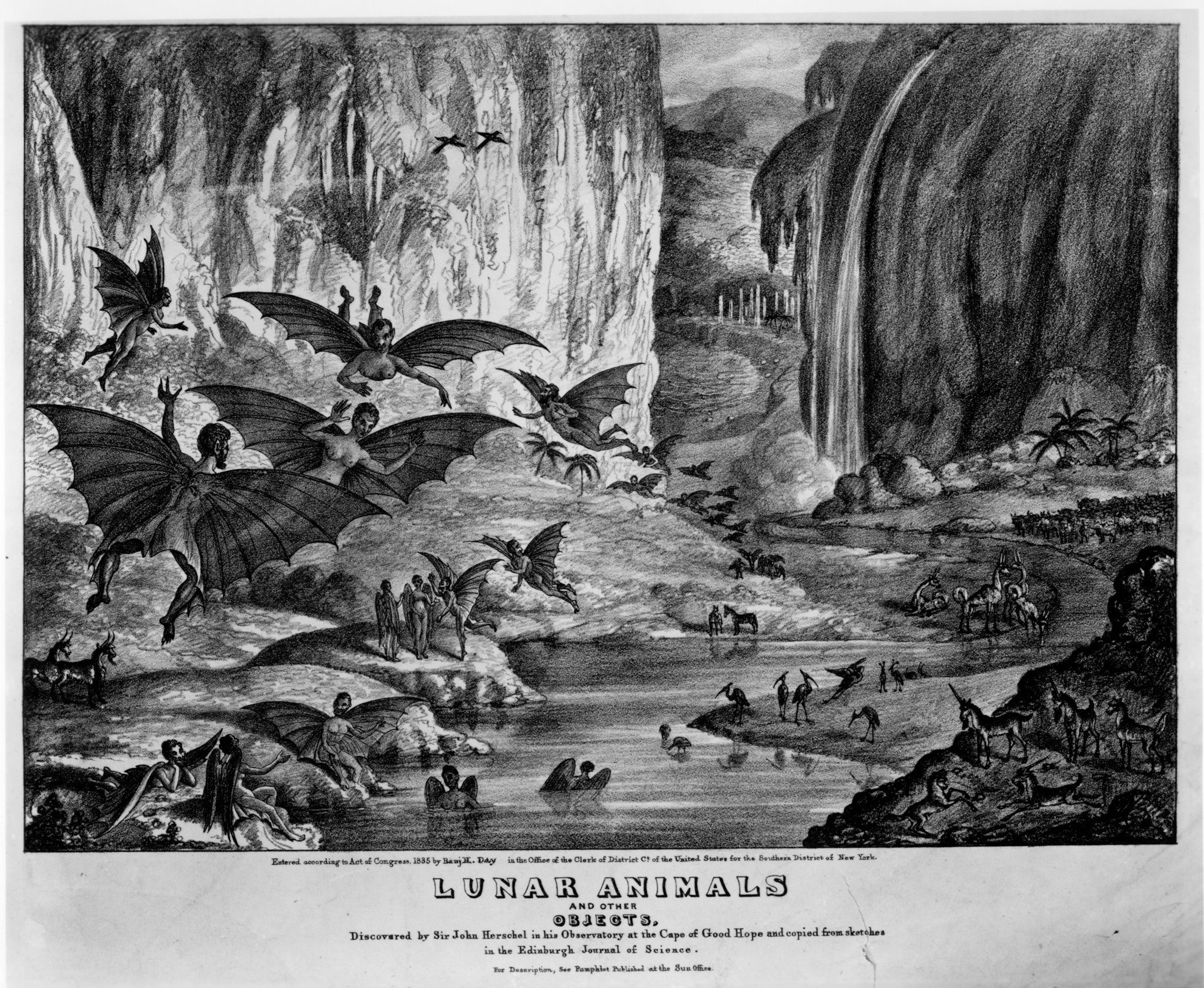
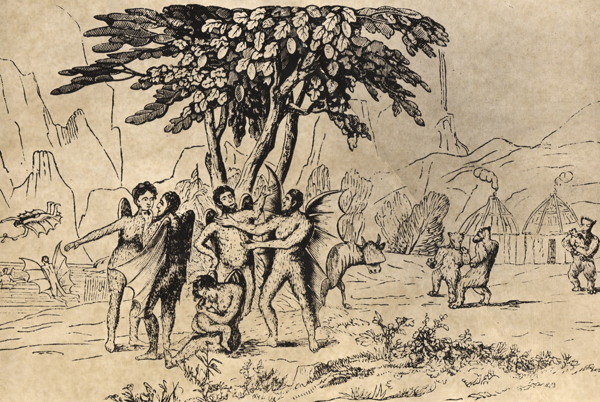
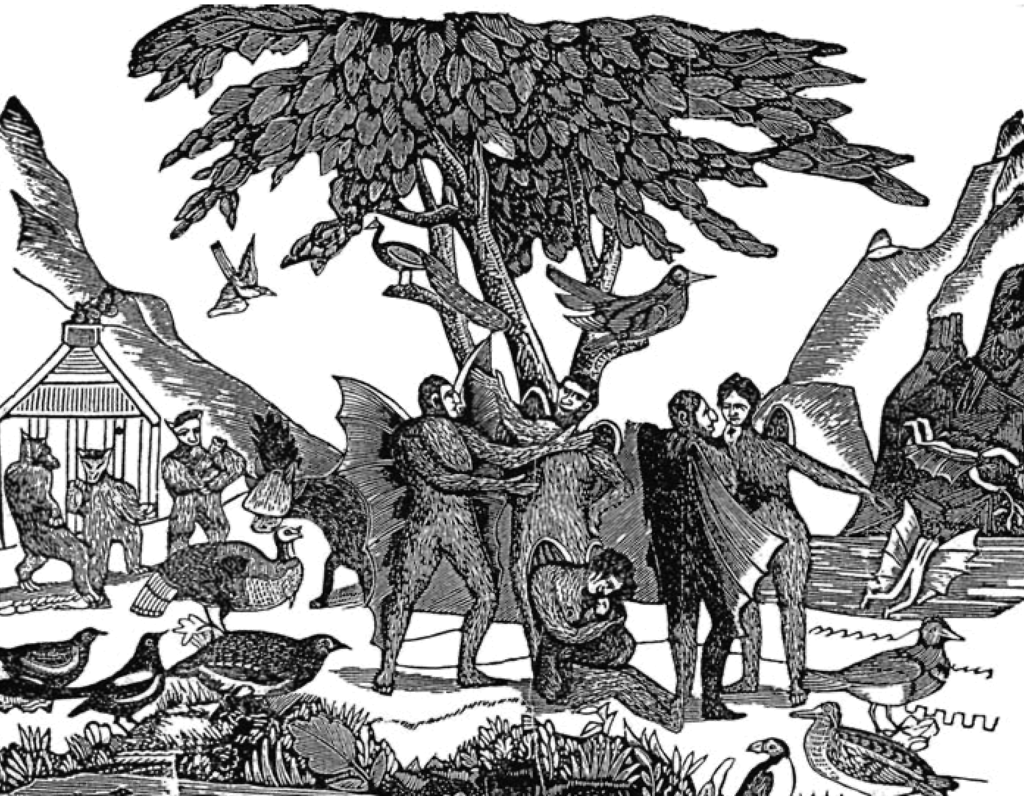
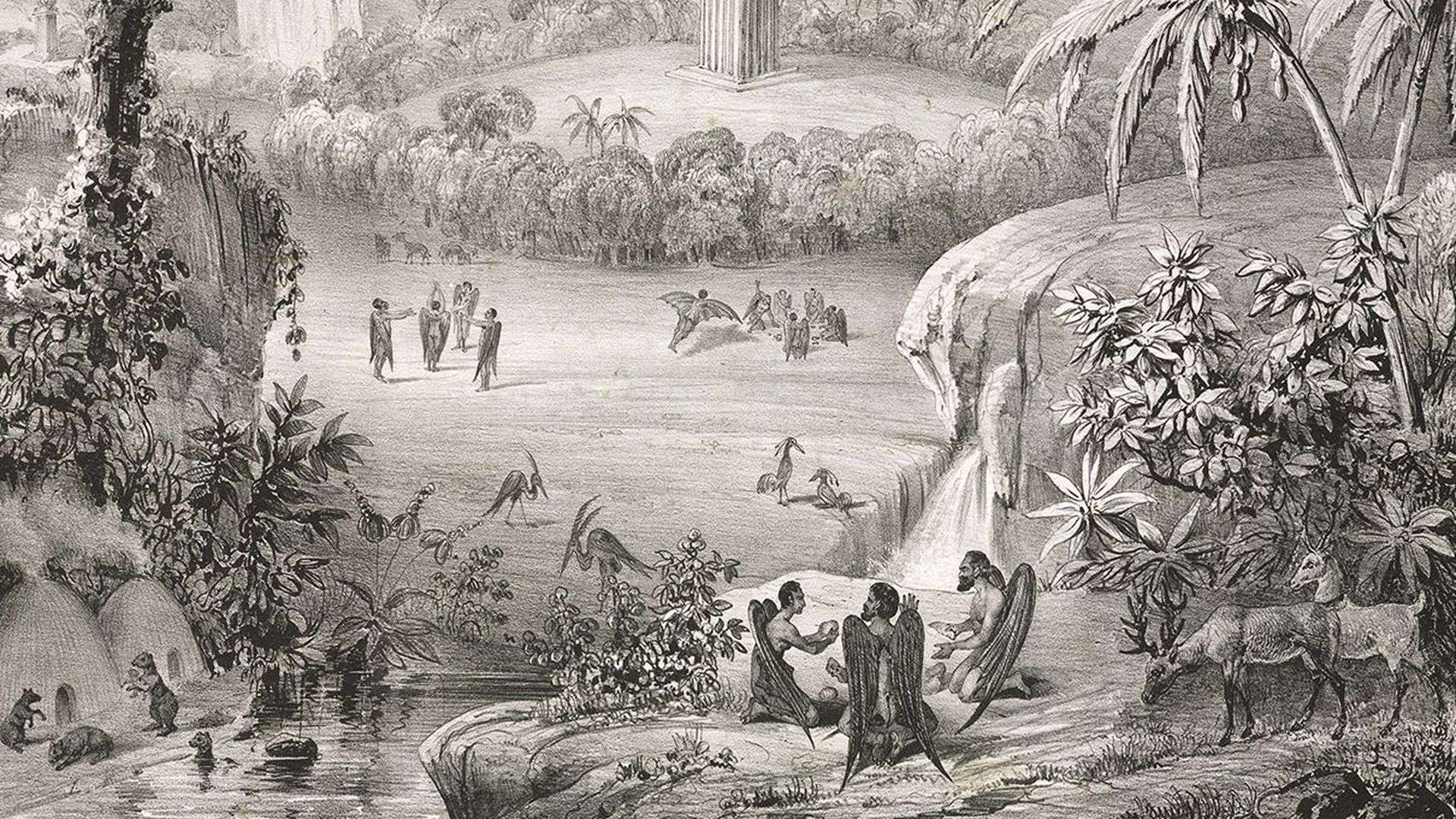
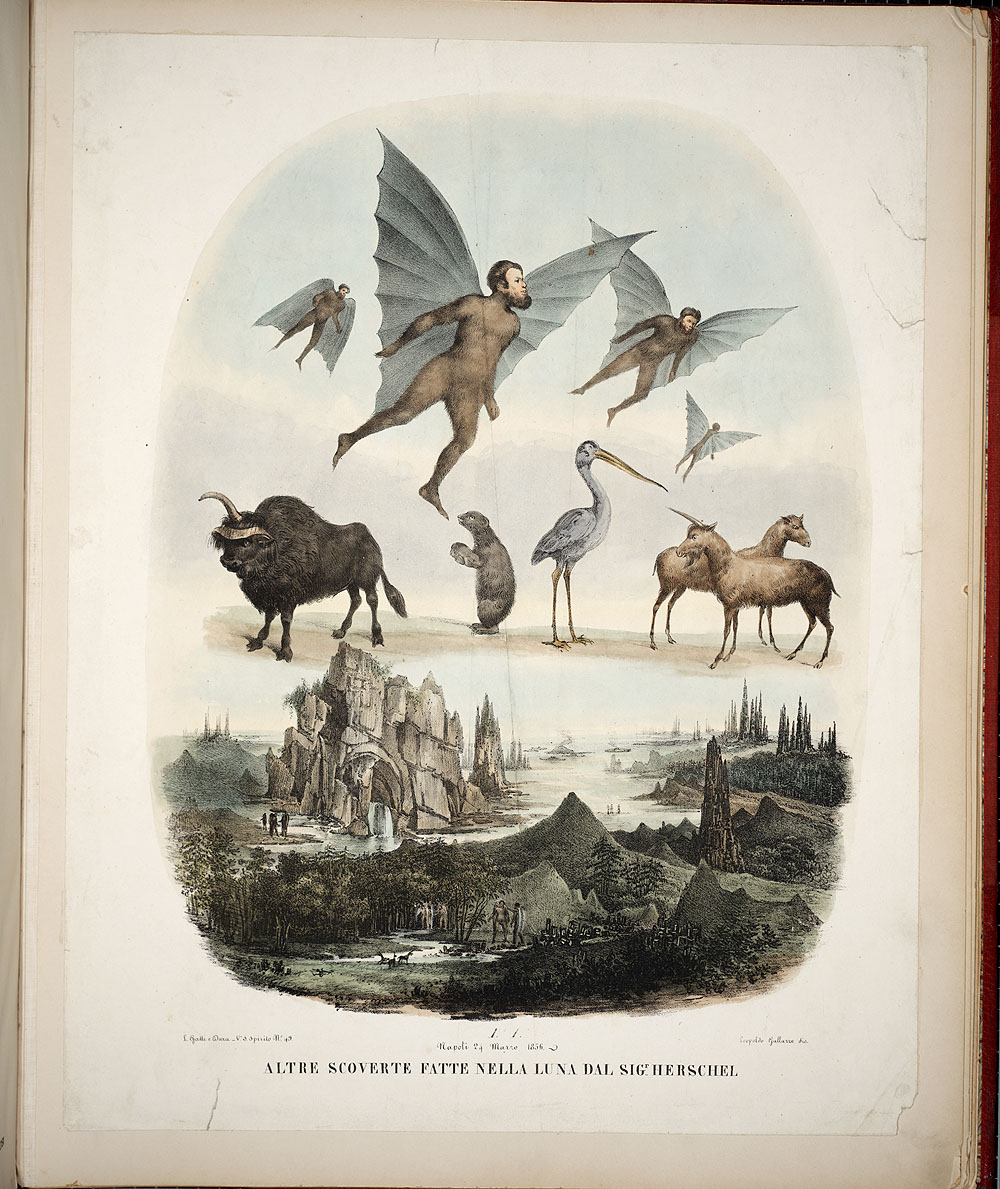
In the summer of 1835 the New York Sun reported on startling discoveries from one of the world’s most famous astronomers. Life on the moon! Indeed, vivid moon forests populated with a menagerie of bizarre creatures and winged men with behaviors similar those of men on Earth.
Listen here or stream/download the episode from your favorite podcast player:
The Bowery Boys: New York City History podcast is brought to you …. by you!
We are now producing a new Bowery Boys podcast every other week. We’re also looking to improve and expand the show in other ways — publishing, social media, live events and other forms of media. But we can only do this with your help!
We are now a creator on Patreon, a patronage platform where you can support your favorite content creators.
Please visit our page on Patreon and watch a short video of us recording the show and talking about our expansion plans. If you’d like to help out, there are six different pledge levels. Check them out and consider being a sponsor.
We greatly appreciate our listeners and readers and thank you for joining us on this journey so far.
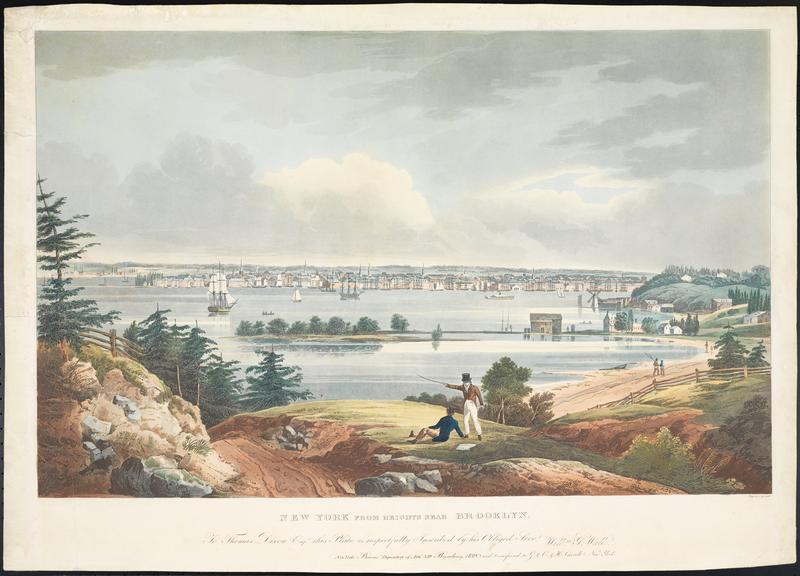
New York in 1823, as seen from Brooklyn. Does it look a little, uh, heavy to you, like it might be sagging into the harbor?
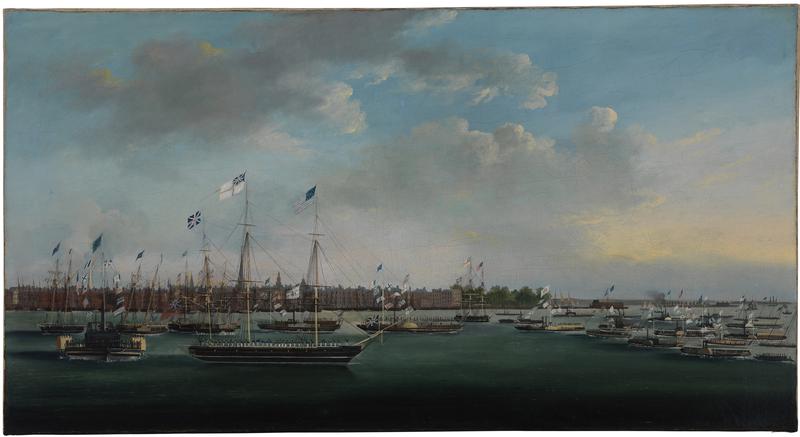
The harbor in 1825, at the opening of the Erie Canal, which changed the financial fortunes of New York and America in general. If man could carve a canal into the continent, couldn’t they also just move a little part of a island and move it around?
Courtesy Museum of the City of New York
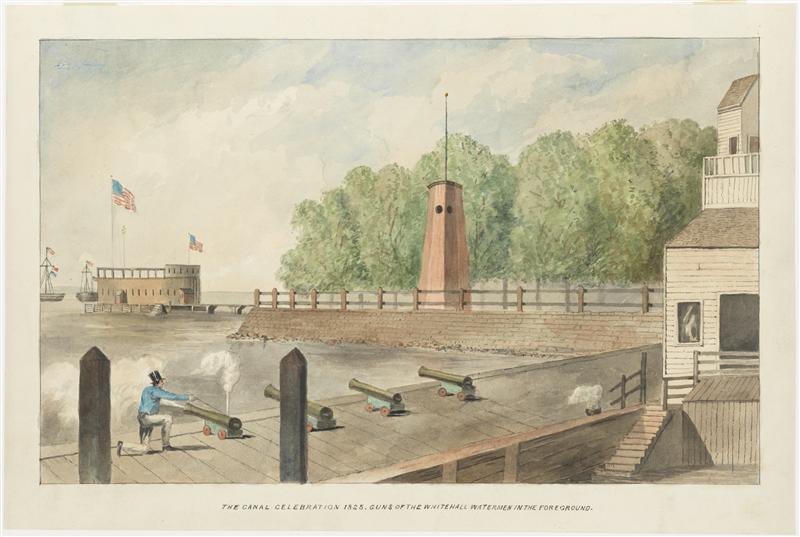
A view of Castle Clinton and the Battery in 1825. Had the island been severed and moved around, what would have become of Manhattan’s most famous fort?
Courtesy Museum of City of New York
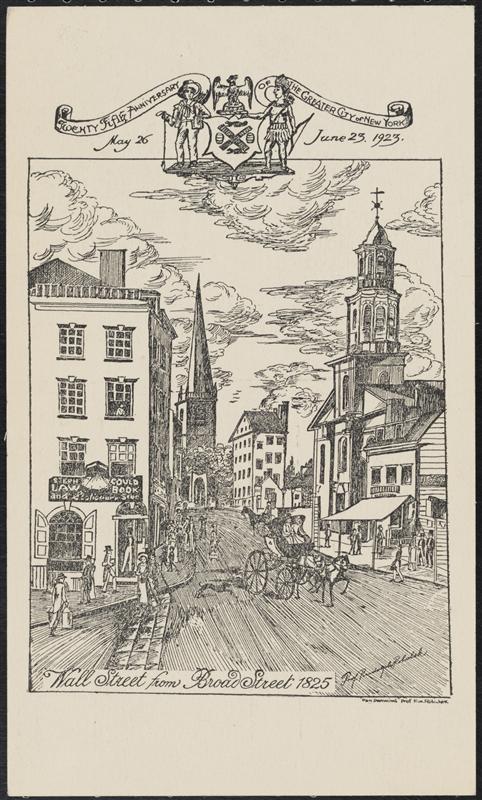
And here’s an illustration of Wall Street as it may have looked in 1825.
Courtesy Museum of the City of New York
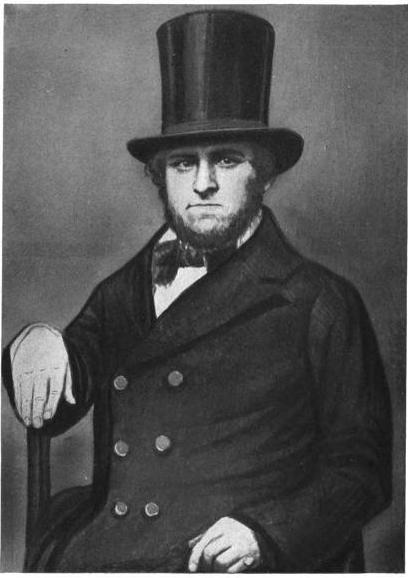
Benjamin Day, the publisher of the New York Sun, who literally opened up the pages of his newspaper to the heavens.
The Moon Hoax articles of 1835 were reprinted in several papers, and the New York Sun even sold lithographs. Here are some images from those publications:
A 1838 print by the Thierry Brothers
An illustration featuring the moon bison!
For more information on the Moon Hoax, visit the excellent presentation by the Museum of Hoaxes and of course Matthew Goodman’s The Sun and the Moon.
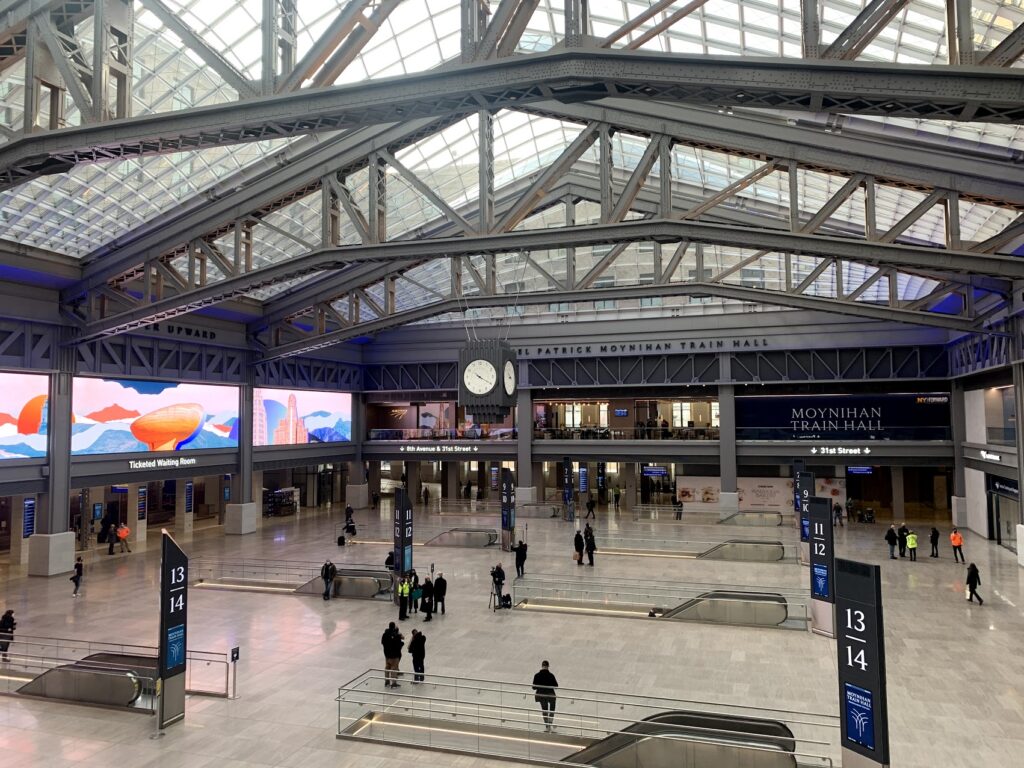
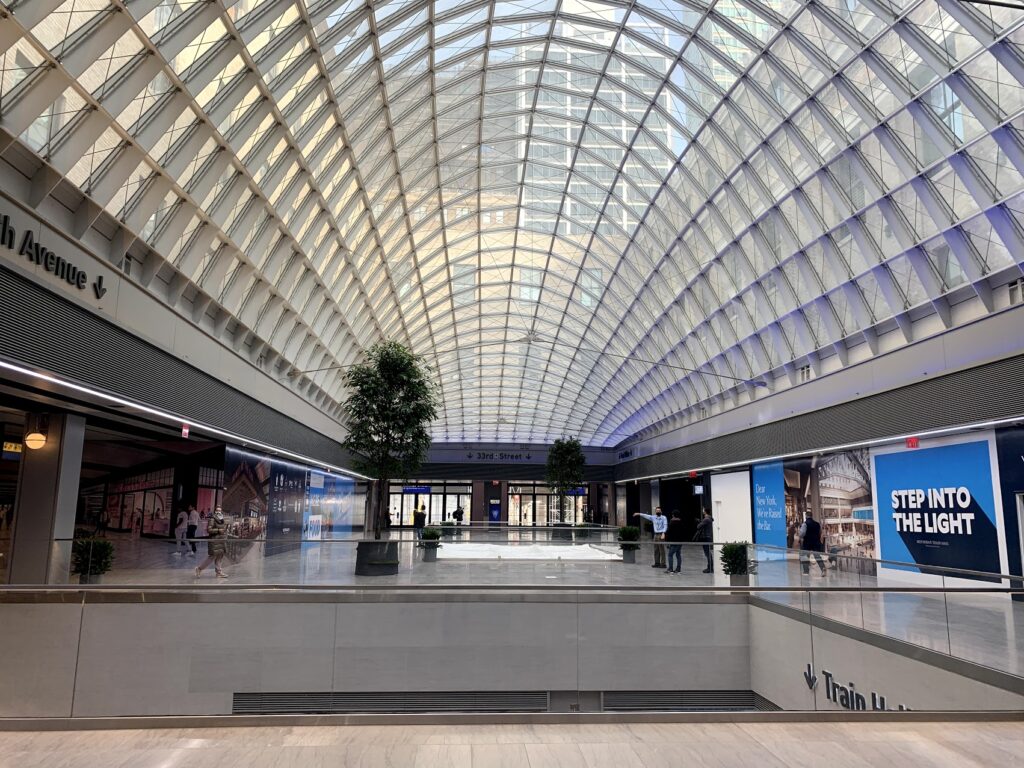
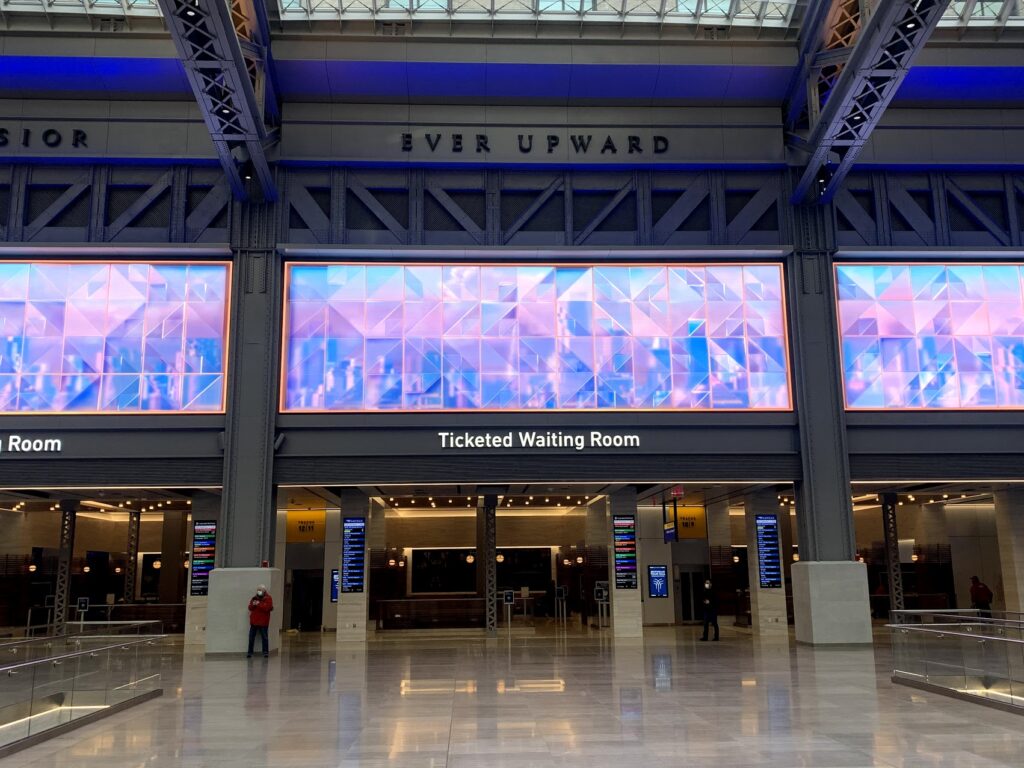
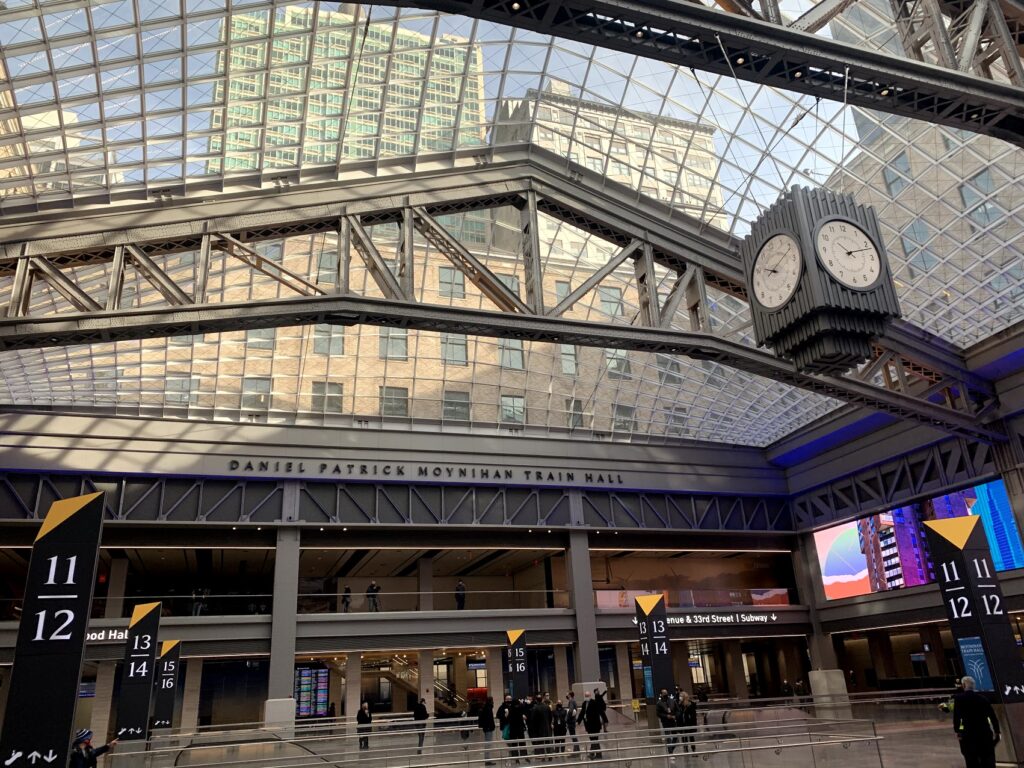
On January 1, 2021 Moynihan Train Hallofficially opens to the public, a new commuters’ wing catering to both Amtrak and Long Island Railroad train passengers at New York’s underground (and mostly unloved) Penn Station.
To celebrate this big moment in New York City transportation history, we’re going to tell the entire story of Pennsylvania Station and Pennsylvania Railroad over two episodes, using a couple older shows from our back catalog.
PODCAST The story of Pennsylvania Station involves more than just nostalgia for the long-gone temple of transportation as designed by the great McKim, Mead and White. It’s a tale of incredible tunnels, political haggling and big visions.
Pennsylvania Railroad was the largest railroad in the world by the 1880s, but thanks to Cornelius Vanderbilt’s New York Central Railroad, one prize was strategically out of their grasp — direct access to Manhattan.
An ambitious plan to link New Jersey to New York via a gigantic bridge fell apart, and it looked like Pennsylvania passengers would have to forever disembark in Jersey City.
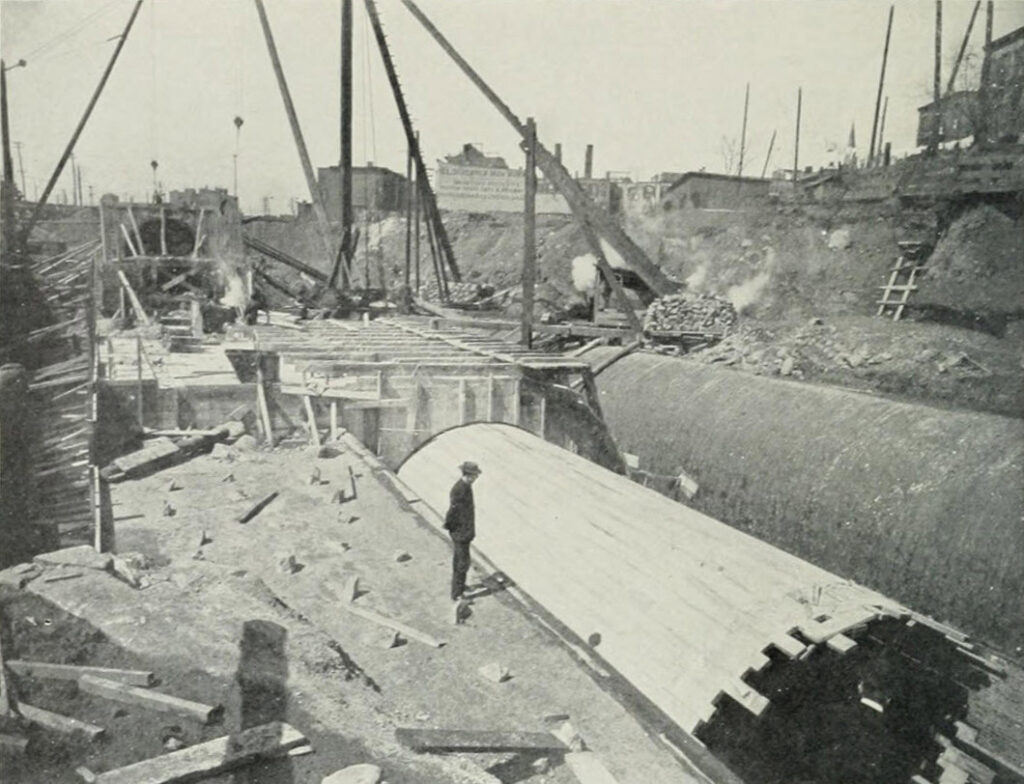
North River Tunnels of the Pennsylvania Railroad: Tunnel C crossing Tunnel B West of Sunnyside Yard as seen during cut-and-cover construction, 1909
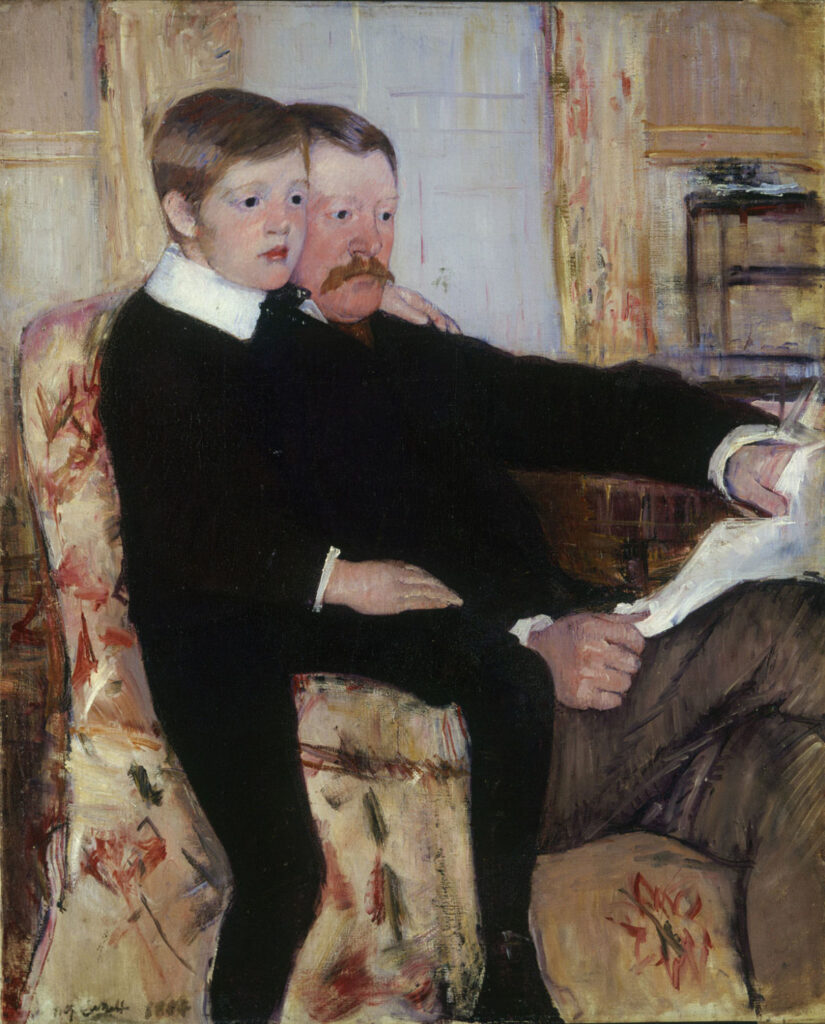
But Penn Railroad president Alexander Cassatt was not satisfied. Visiting his sister Mary Cassatt — the exquisite Impressionist painter — in Paris, Cassatt observed the use of electrically run trains in underground tunnels. Why couldn’t Penn Railroad build something similar?
One problem — the mile-wide Hudson River (or in historical parlance, the North River).
This is the tale of an engineering miracle, the construction of miles of underground tunnels and the idea of an ambitious train station to rival the world’s greatest architectural marvels.
Listen to the show here or on your favorite podcast player:
THIS SHOW WAS ORIGINALLY RELEASED AS EPISODE 80 — APRIL 10, 2009
Alexander Cassatt and his son Robert, as painted in 1884 by Mary Cassatt
The Bowery Boys: New York City History podcast is brought to you …. by you!
We are now producing a new Bowery Boys podcast every other week. We’re also looking to improve and expand the show in other ways — publishing, social media, live events and other forms of media. But we can only do this with your help!
We are now a creator on Patreon, a patronage platform where you can support your favorite content creators.
Please visit our page on Patreon and watch a short video of us recording the show and talking about our expansion plans. If you’d like to help out, there are six different pledge levels. Check them outand consider being a sponsor.
We greatly appreciate our listeners and readers and thank you for joining us on this journey so far.
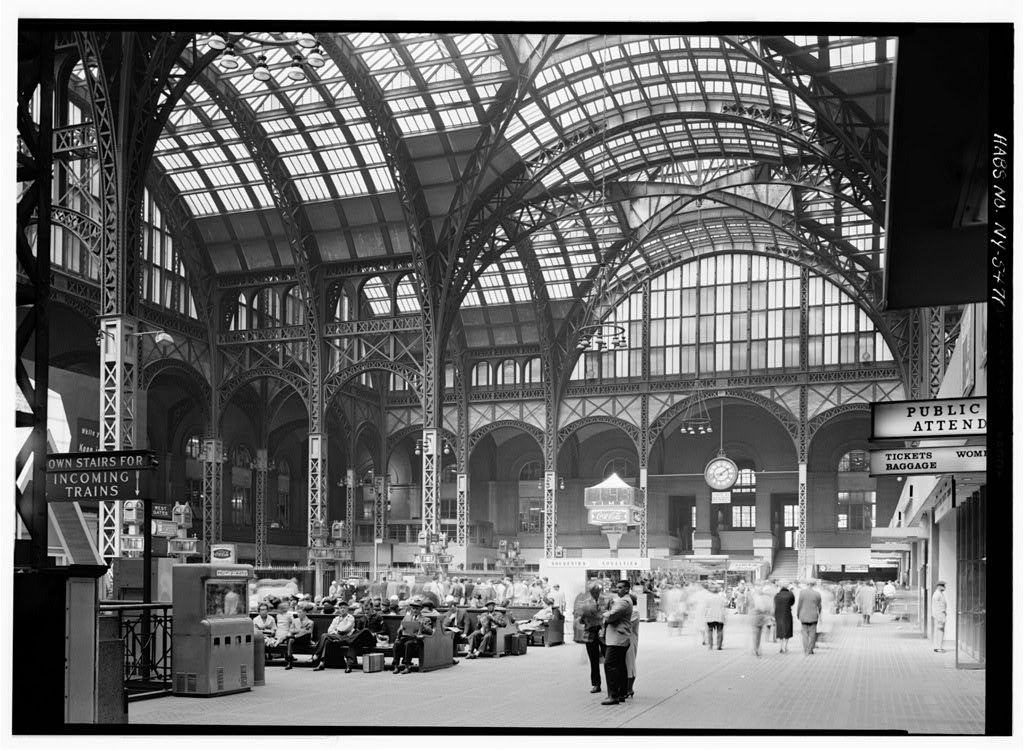
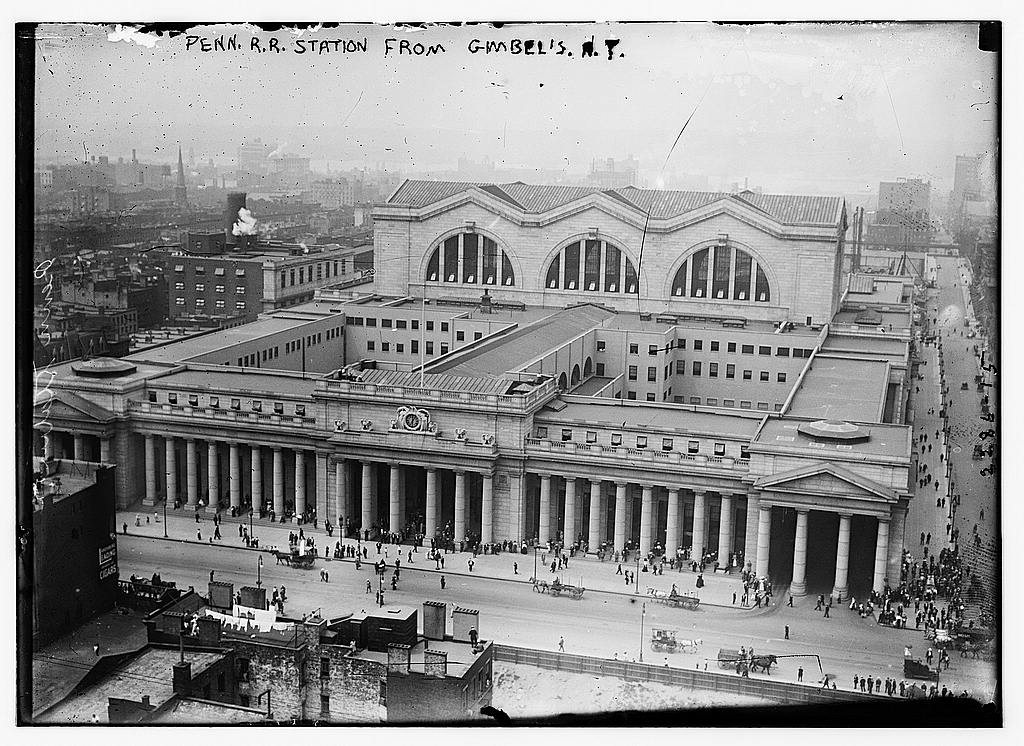
Old Penn Station vs the new Moynihan Train Hall
The view of Penn Station from the roof of Gimbels Department Store.
Library of Congress
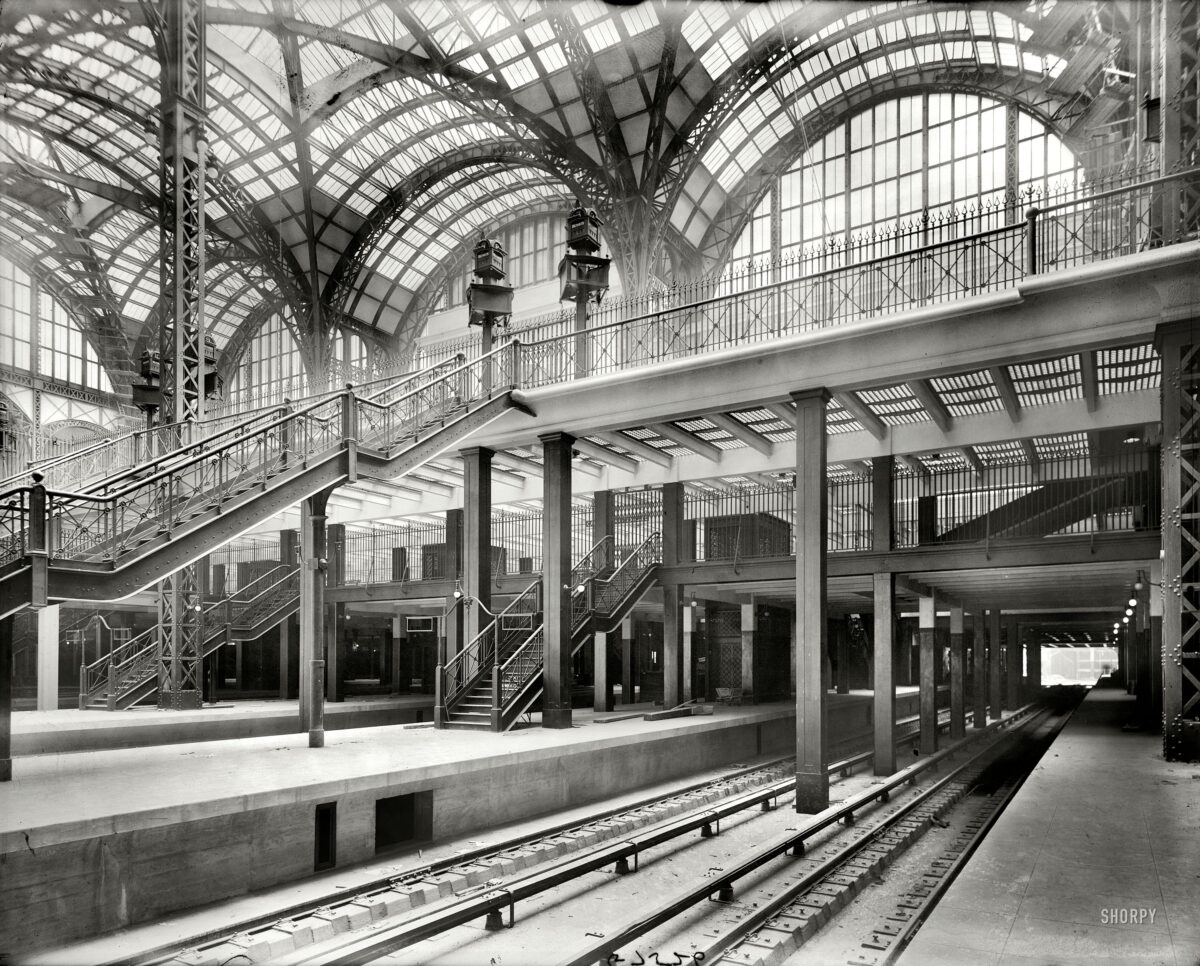
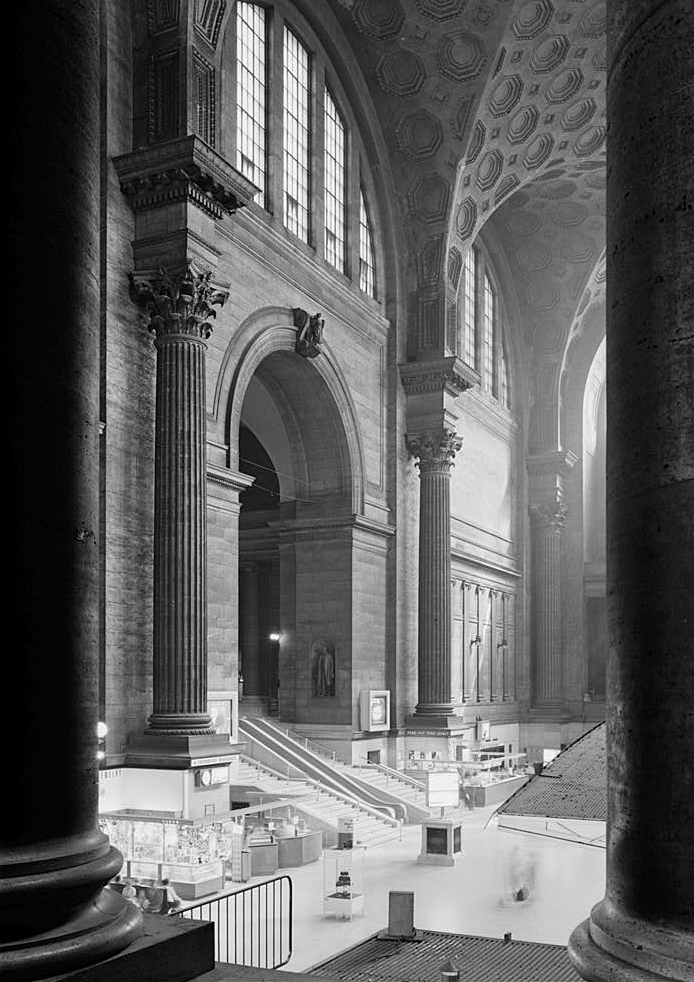
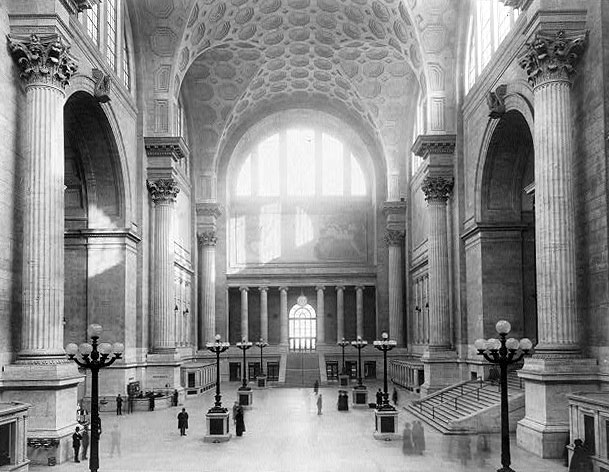
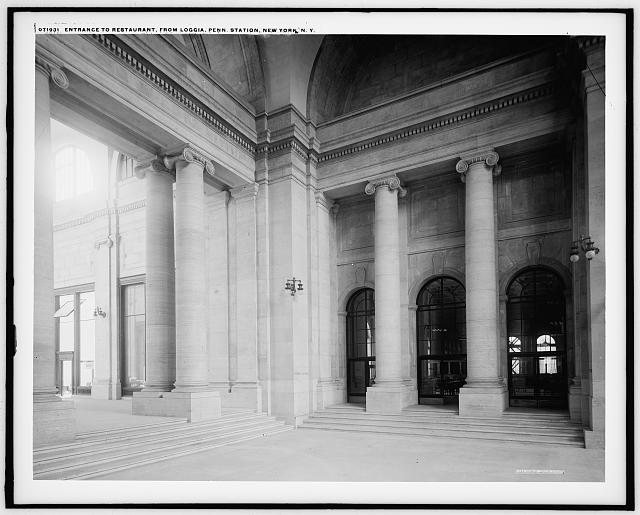
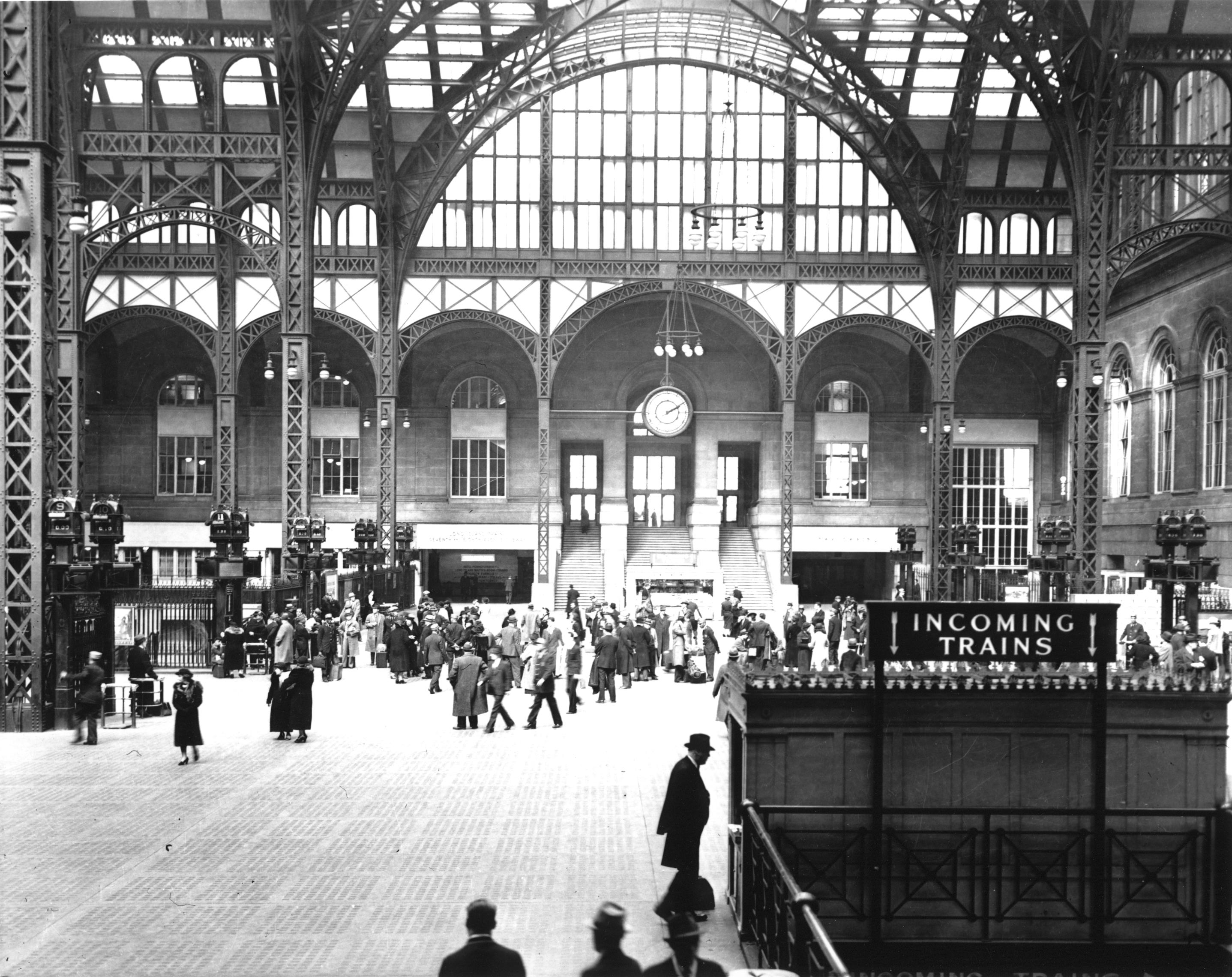
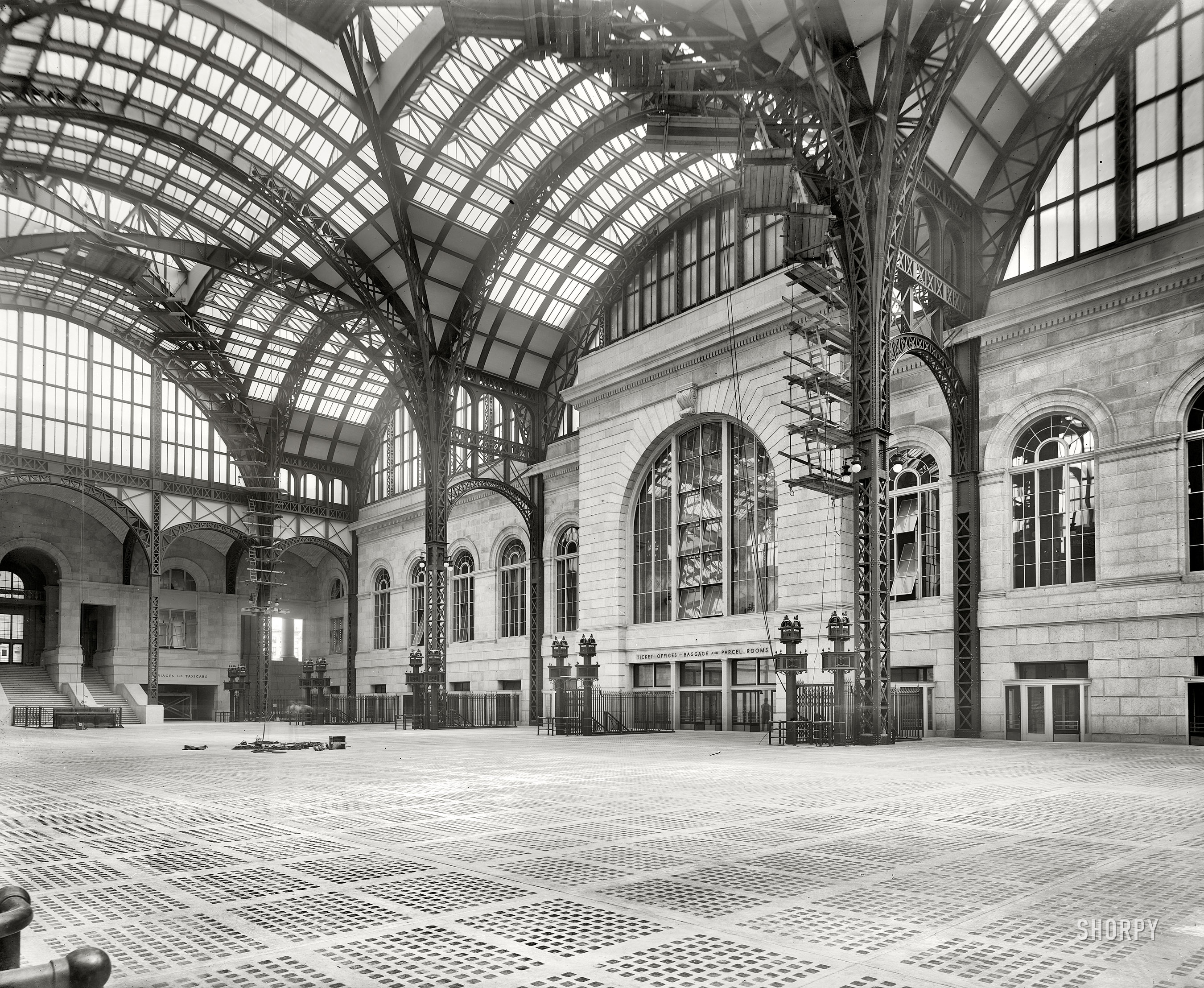
For this round of photographs, let’s focus on the inside of the station, shall we?
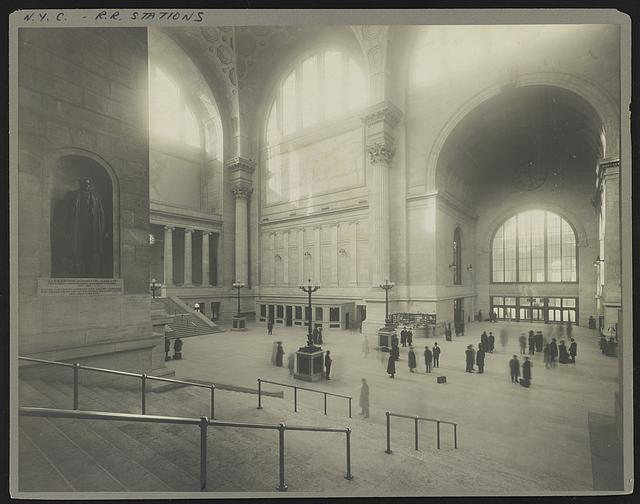
Images of the spectacular main waiting room and the classical Corinthian columns. Read here about something very mysterious and tragic which occurred near here in 1914.
Library of Congress
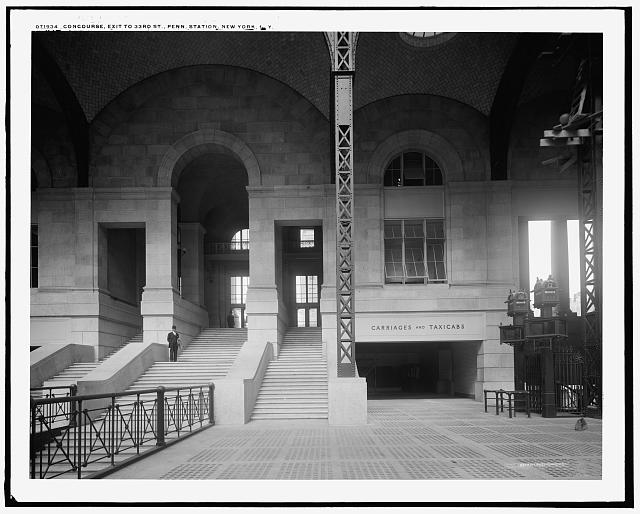
This is what greeted you as you got off the train and headed for 33rd Street.
Library of Congress
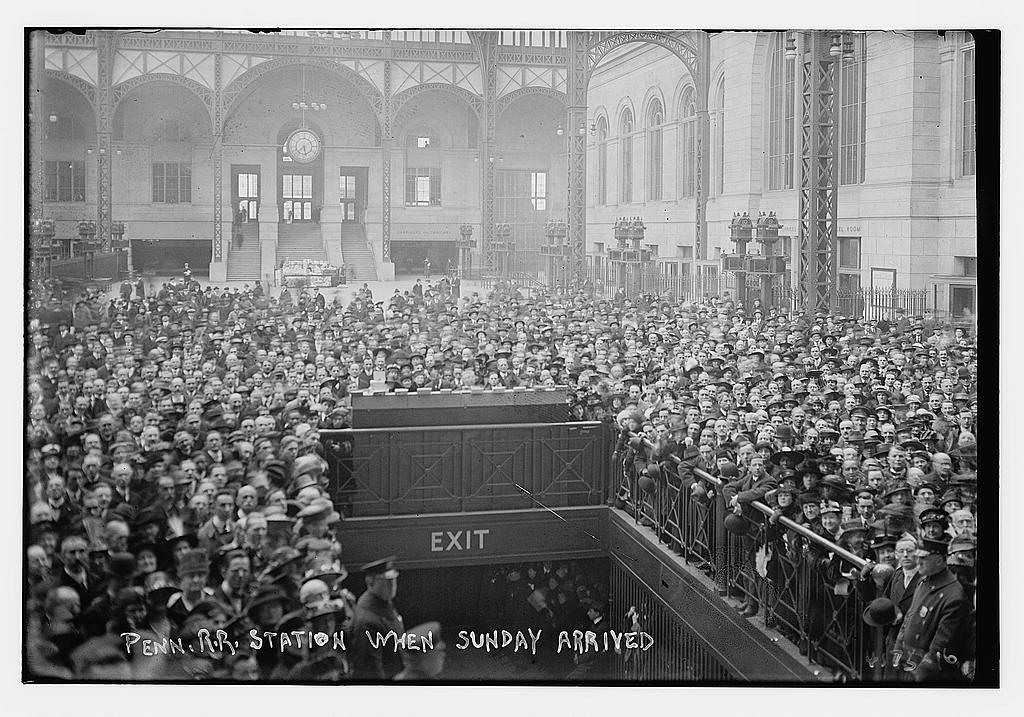
Crowds await the arrival of superstar preacher Billy Sunday in 1917. Read all about his visit here.
Library of Congress
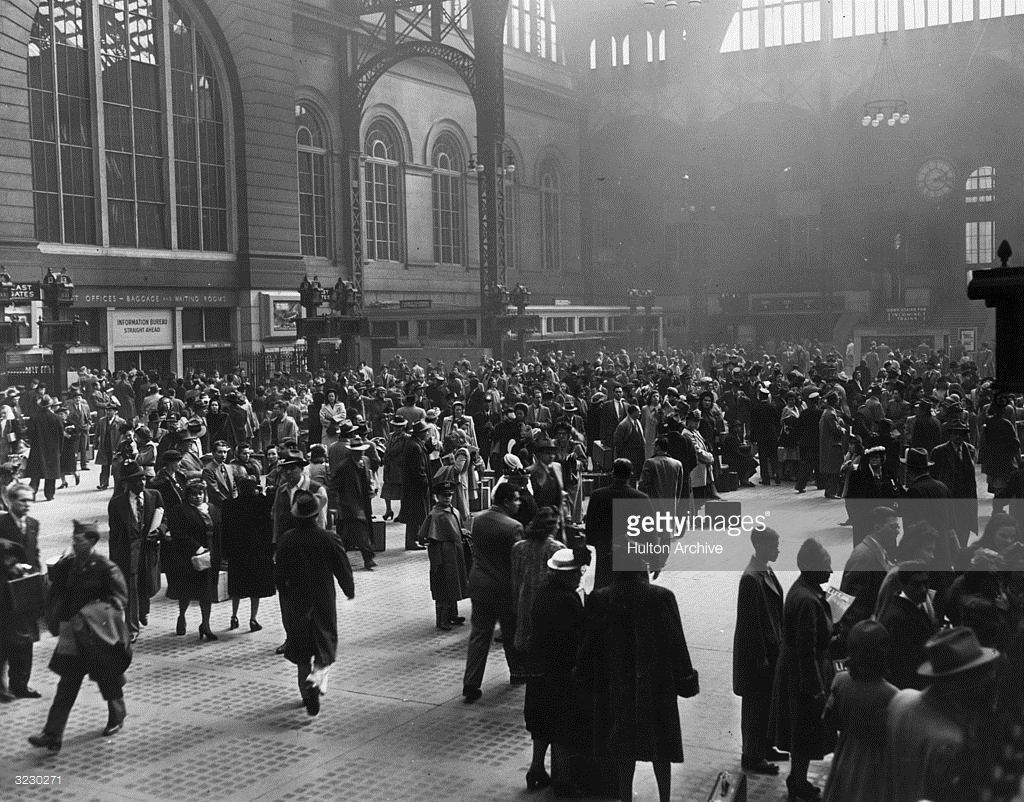
The interior from the 1950s during rush hour. Getty has a terrific collection of Penn Station photographs over the years.
Getty Images
From this angle of the waiting room (taken in the station’s early days) you can see a statue of Alexander Cassatt, Penn Railroad’s former president, in its wall niche. Cassatt, brother of impressionist painter Mary Cassatt, never got to see the completed station, as he died in 1906. (The station opened in 1910.)
Library of Congress
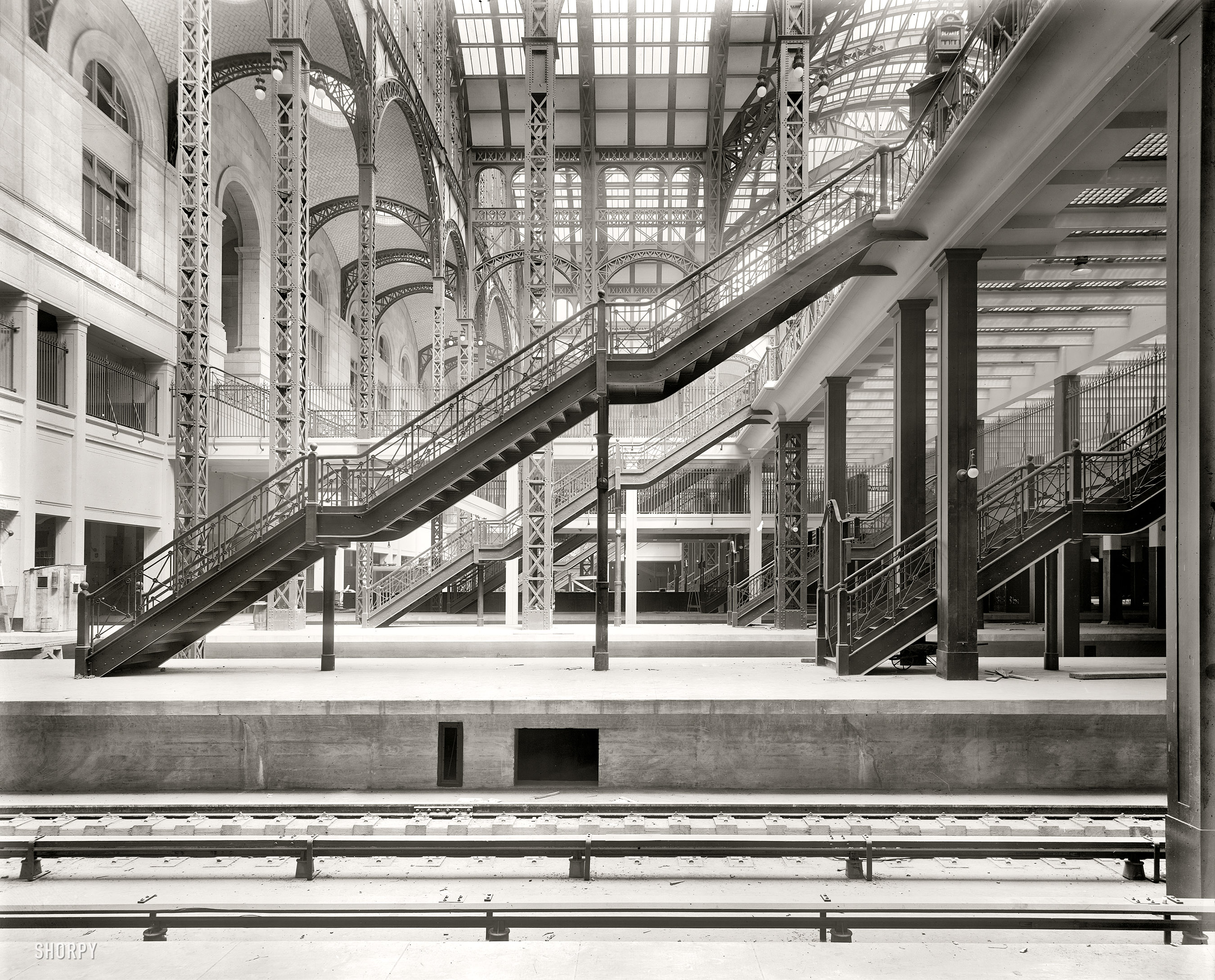
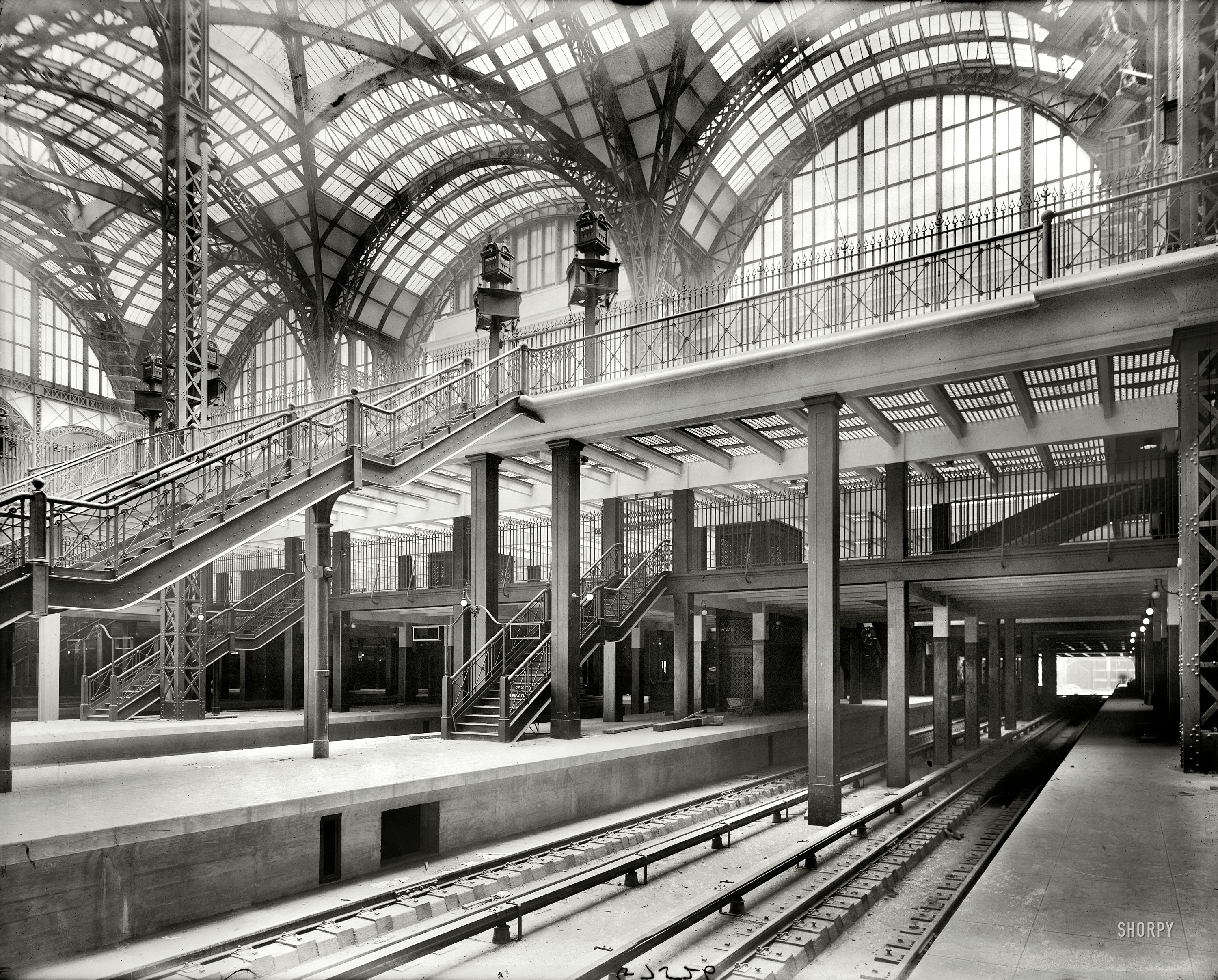
From this angle, you can really see the relation of the train platforms with one of the entrances. Seems easier to navigate than the current Penn Station, don’t you think?
Here are a few ‘cleaned up’ hi-res images from the fine folks over at Shorpy, who have a bit of a thing apparently for old Penn Station. Go over to their blog to check out the rest of their work.
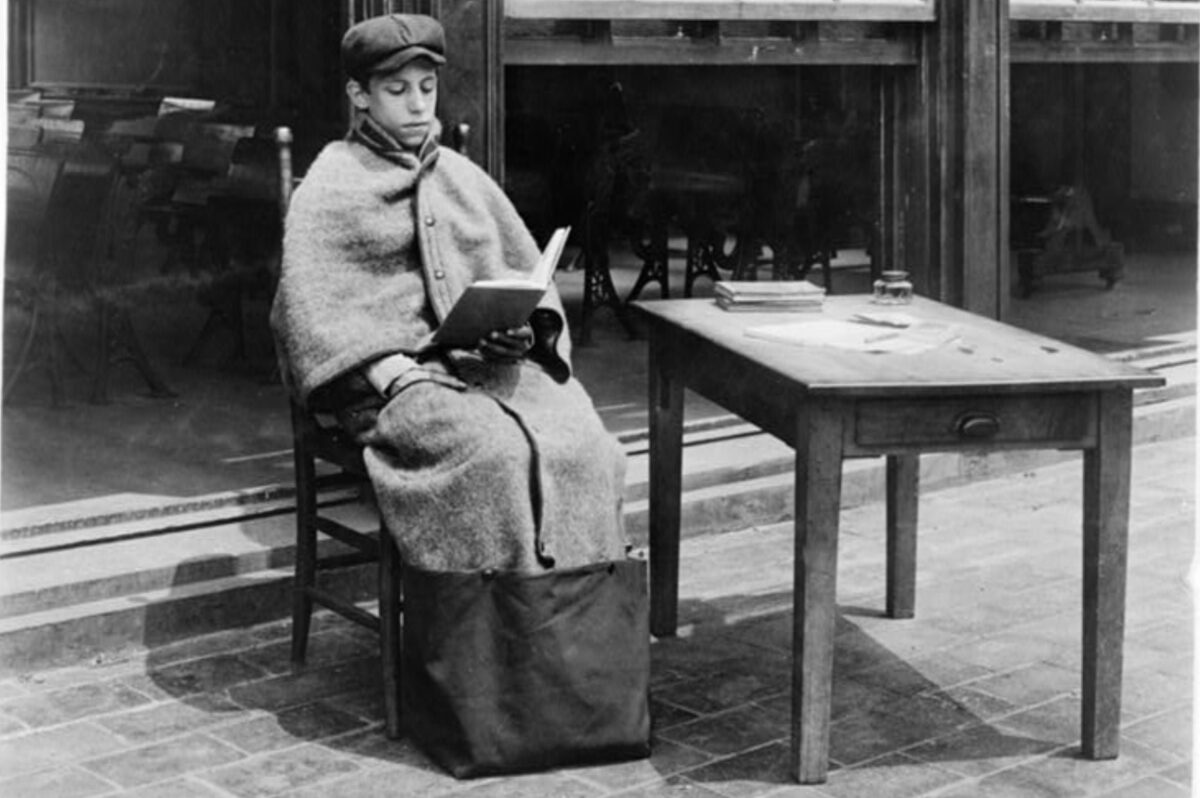
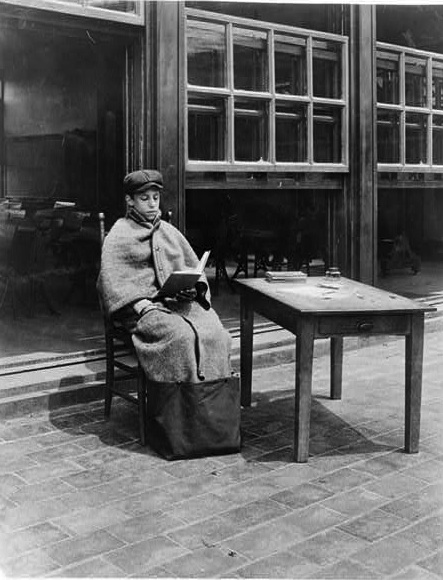
This is a sitting-out bag. No child ever wore one because he wanted to impress his friends.
But this awkward example of outdoor wear was created to save lives and keep students educated during one very concerning health crisis.
Teaching children during perilous moments of disease spread had been a challenge since the invention of public schooling. The educators of the past did not have the option of remote learning. And sometimes the epidemics faced during these moments seemed to specifically target children.
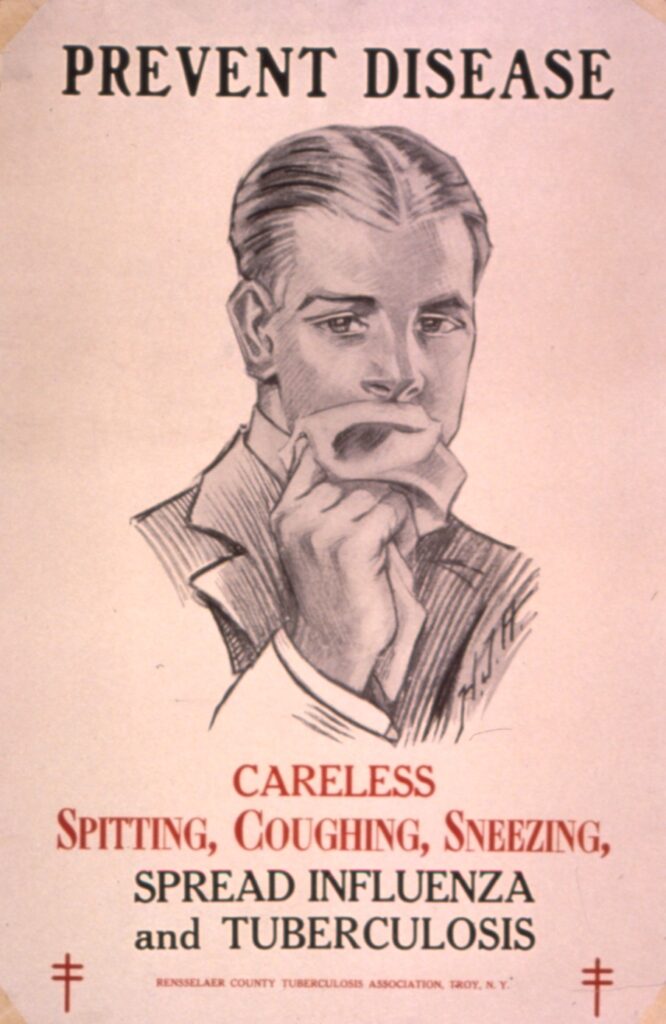
Such was the case of tuberculosis (TB), a constant specter over life in big cities for centuries. Like COVID-19, tuberculosis is spread through aerosol droplets. And like COVID-19, TB is spread through close and continued exposure to an afflicted person.
Tuberculosis was one of the leading causes of death worldwide in the 19th century and would not fully be controlled until the widespread acceptance of vaccines after World War II.
But in densely populated neighborhoods like the Lower East Side, combatting the disease was an uphill battle. Not only were people packed into small spaces, but those spaces were hardly well ventilated.
Where possible, educators chose to heed the advice of experts and hold classes outdoors.
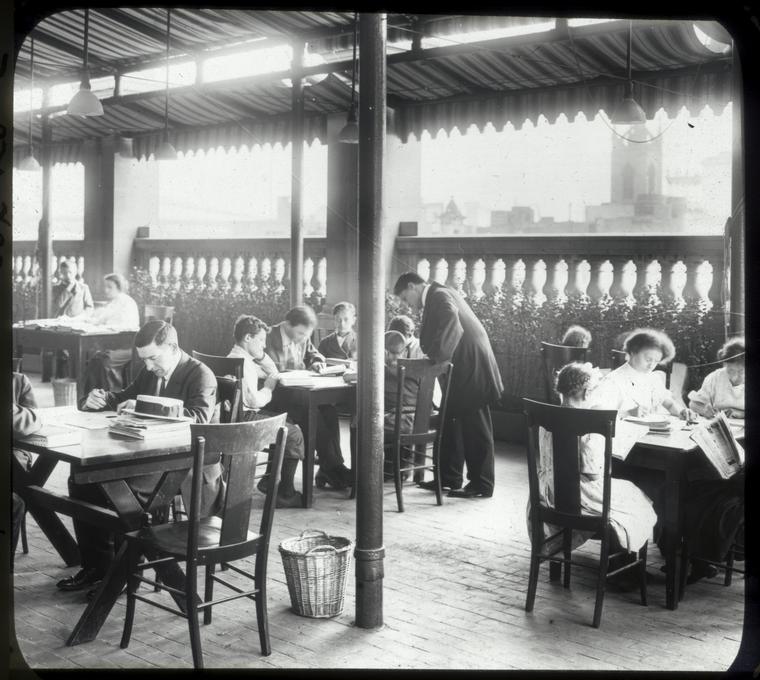
The Seward Park Library opened up its rooftop as a reading room for students, both as a way to beat the heat but also to encourage the flow of air and the prevention of disease. (Courtesy NYPL, date unknown, photographer Lewis Hine)
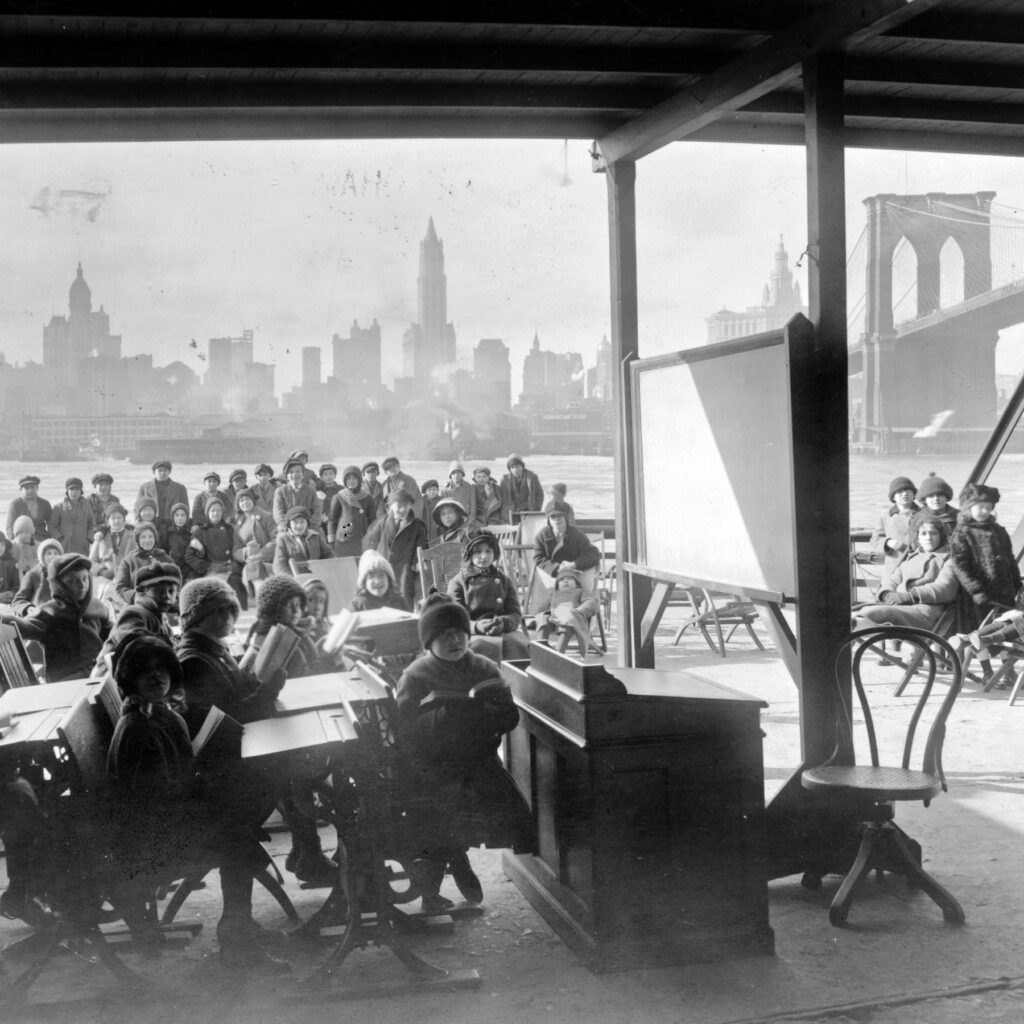
The so-called ‘open air schools’ instructed students in environments with ample ventilation, often on building rooftops or lawns.
According to a 1916 analysis of the movement, an open-air schoolroom was “fully exposed to the air on one or more sides, providing merely shelter from wind and rain. There is no artificial heating, the temperature of the room always being that of the open air.”
Bureau of Charities, via Library of Congress
The first open-air school in New York opened in 1908 on an “abandoned ferryboat.” Easily the most notable of New York’s open-air schools — and a model of this unusual form of education — was the Horace Mann School, operated by the Teachers College at Columbia University.
Horace Mann’s students had to meet a certain unfortunate criteria. “The children who make up the classes were chosen because they were nervous, or irritable, or anaemic, or undernourished.” [source]
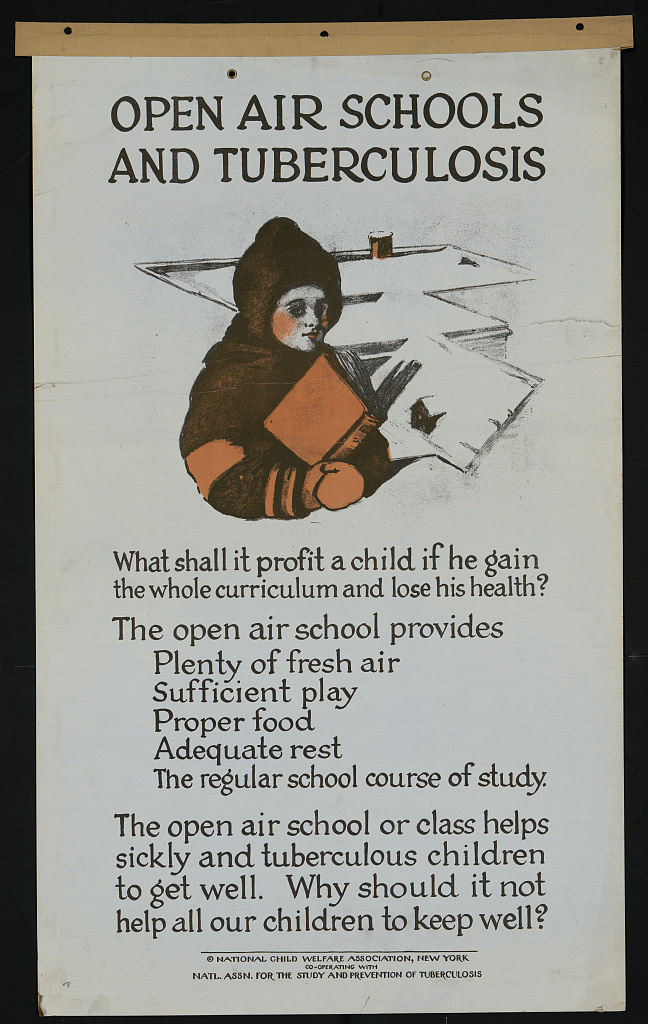
Library of Congress/National Child Welfare Association : Co-operating with Natl. Assn. for the Study and Prevention of Tuberculosis, [between 1920? and 1923?]
But while the open-air school was created for the prevention of one illness, it most likely encouraged another — pneumonia.
And that’s where the sitting-out bag comes in.
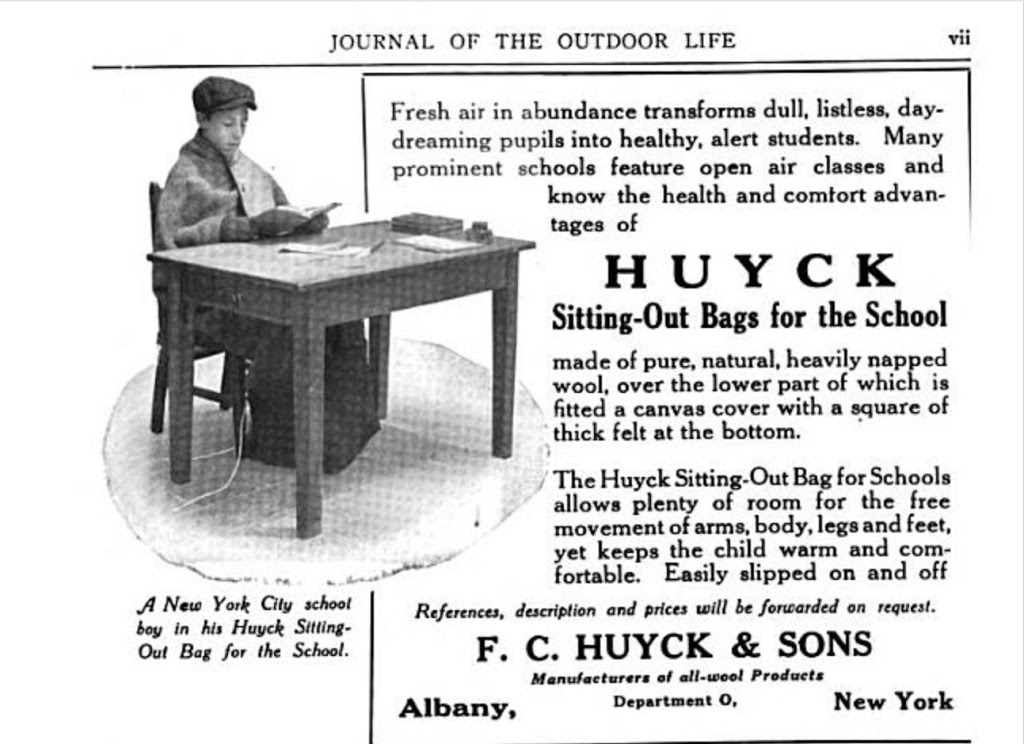
Not cool: “Boy wearing coat with attached bag covering feet, seated at table, outside of classroom, reading, New York City.” Courtesy Library of Congress
The sitting out bag was like a potato sack, a thick sheath of material that allowed the student to study even in freezing temperatures.
The device was basically the sleeping bag for daytime, used to warm the body and keep students alert during open-air classrooms.
Below: An advertisement promoting “fresh air in abundance”featuring the same boy as above
It was by no means a pleasant ensemble. One guide to open-air schools described the sitting-out bags as “made of a brown, pliable, hairy, felt-like cloth bound with tape and fitted with snap fasteners.”
Because the sitting-out bags were often used by several students — and reused, over many years — parents were encouraged to make their own sitting-out bags at home for their children.
As with masks today, parents were encouraged to make their own. An article in a 1910 Survey Magazine offered tips to adults on how to make homemade sitting-out bags. (If you’d like to make your own sitting-out bag, find the instructions here, but you’ll need lots of braid and cotton batting.)
Many sitting-out bags came with hoods, leading to the alarming sight of an entire classroom of hooded children in stiff uncomfortable cocoons.
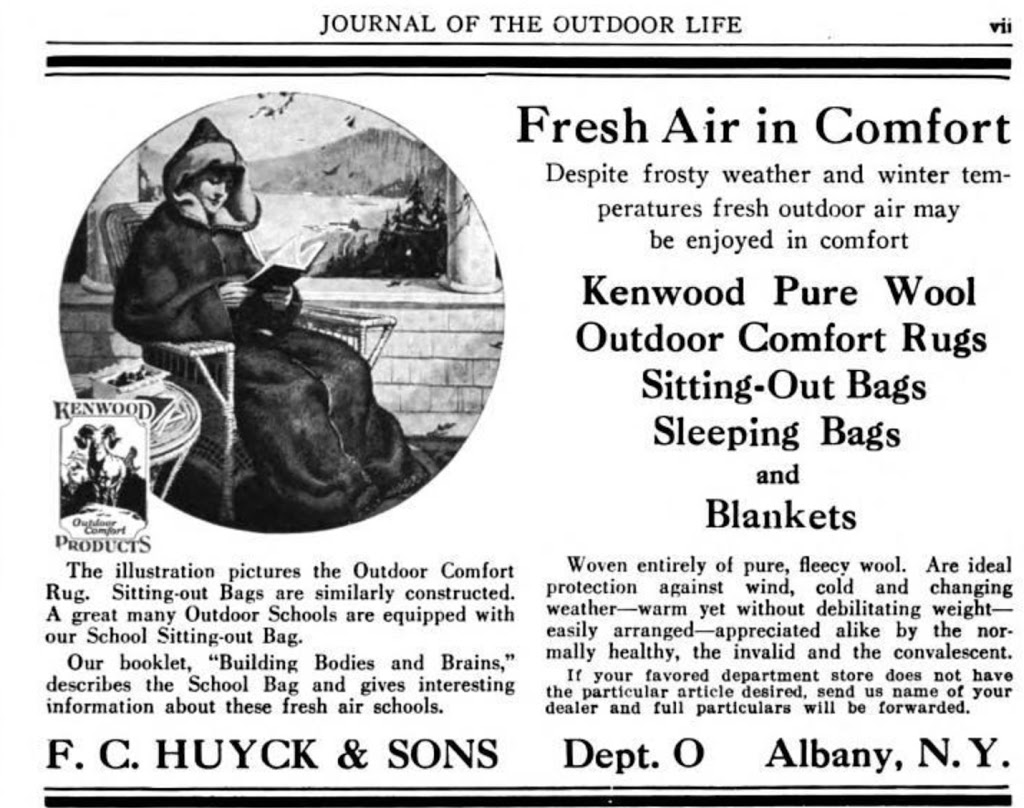
Below is pictured a hooded version, advertised in the Journal of the Outdoor Life in 1922. A sporting magazine? Sadly, no. The publisher of this guide to open-air living was the National Tuberculosis Association.
But the sitting-out bag played a small part in keeping children safe during this moment of crisis. Better understanding of the disease and the invention of an effective vaccine would lower the infection rate by mid-century:
“Rates of death from tuberculosis in the United States decreased from 194 per 100,000 persons in 1900 to 40 per 100,000 persons in 1945, in part because the epidemic of tuberculosis in the western world was running its course and in part because of public health initiatives and improved socioeconomic conditions.” [source]
PODCAST An account of a mysterious typhoid fever outbreak and the woman — Mary Mallon, the so-called Typhoid Mary — at the center of the strange epidemic.
American Red Cross 1919, courtesy Library of Congress
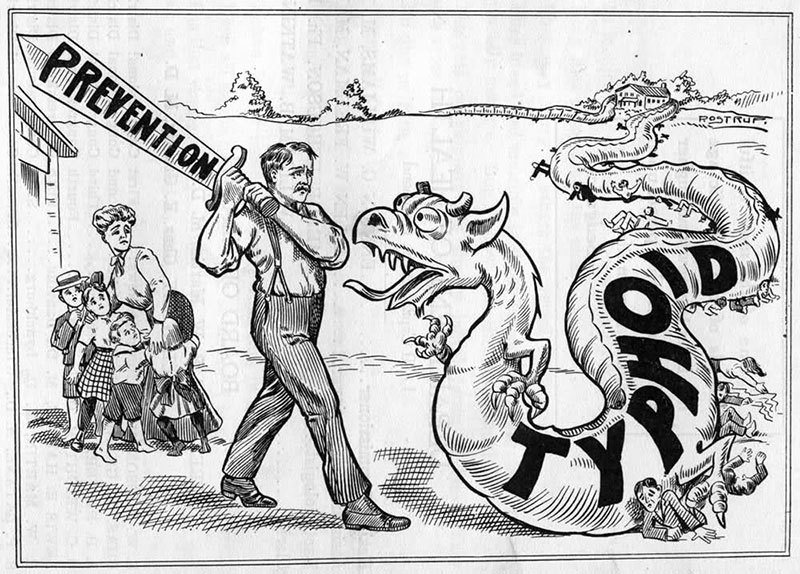
The tale of Typhoid Mary is a harrowing detective story and a chilling tale of disease outbreak at the start of the 20th century.
Why are whole healthy families suddenly getting sick with typhoid fever — from the languid mansions of Long Island’s Gold Coast to the gracious homes of Park Avenue?
Can an intrepid researcher and investigator named George Soper locate a mysterious woman who may be unwittingly spreading this dire illness?
Mary Mallon — is she a victim or an enemy? One of the weirdest and divisive tales of the early 1900s. What side are you on?
The Bowery Boys: New York City History podcast is brought to you …. by you!
We are now producing a new Bowery Boys podcast every week. We’re also looking to improve and expand the show in other ways — publishing, social media, live events and other forms of media. But we can only do this with your help!
We are now a creator on Patreon, a patronage platform where you can support your favorite content creators.
Please visit our page on Patreon and watch a short video of us recording the show and talking about our expansion plans.
If you’d like to help out, there are six different pledge levels.Check them out and consider being a sponsor.
We greatly appreciate our listeners and readers and thank you for joining us on this journey so far.
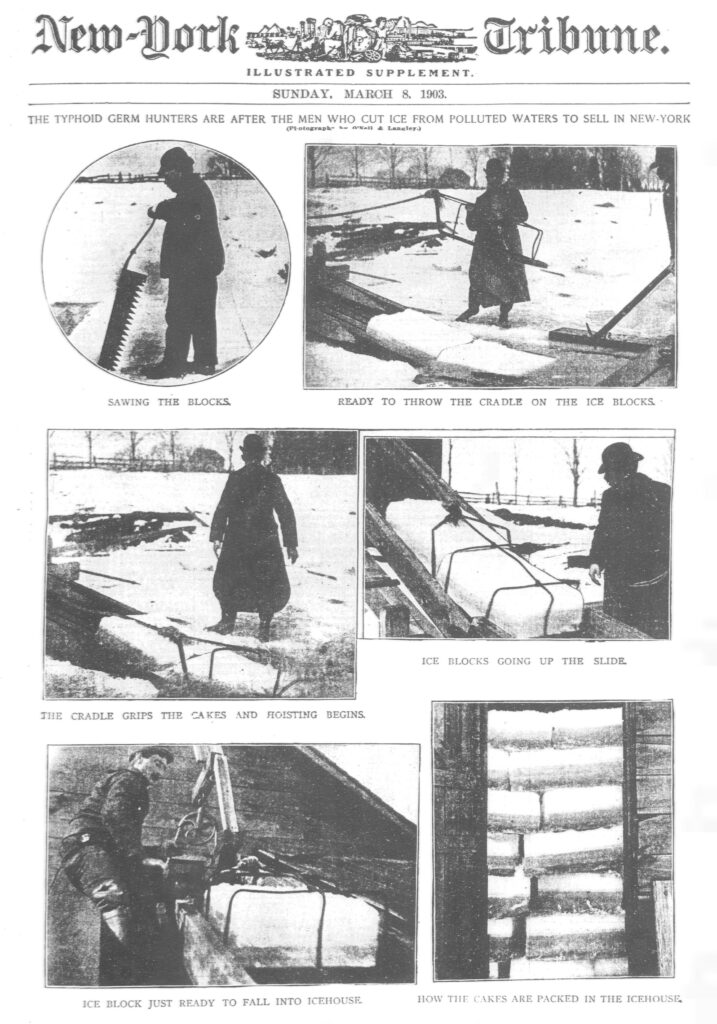
‘The typhoid germ hunters are after the men who cut ice from polluted waters to sell in New York.’ New-York Tribune, March 8, 1903,
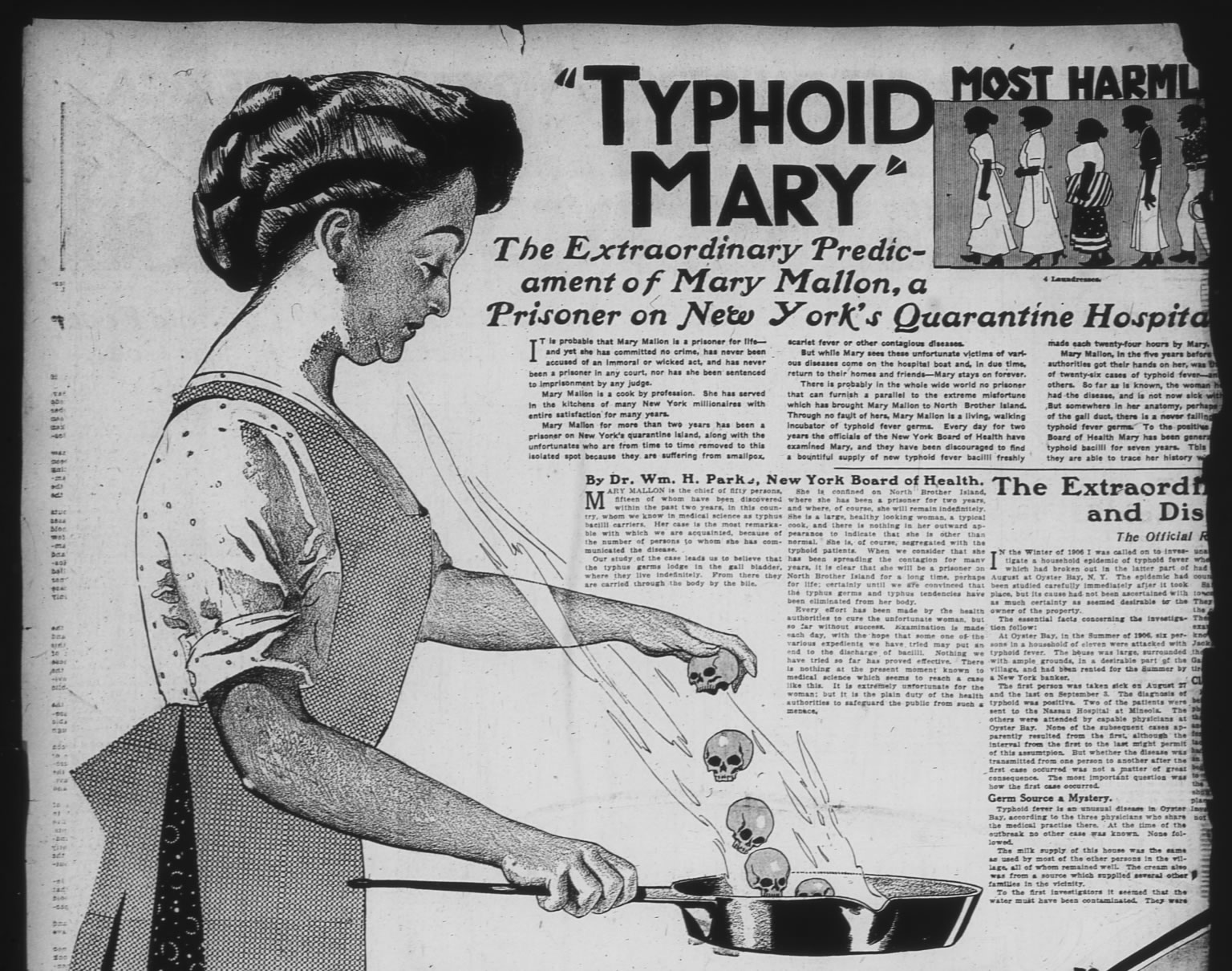
The infamous newspaper article from the New York American (June 30, 1907) which depicts Mary literally seasoning her meals with death.
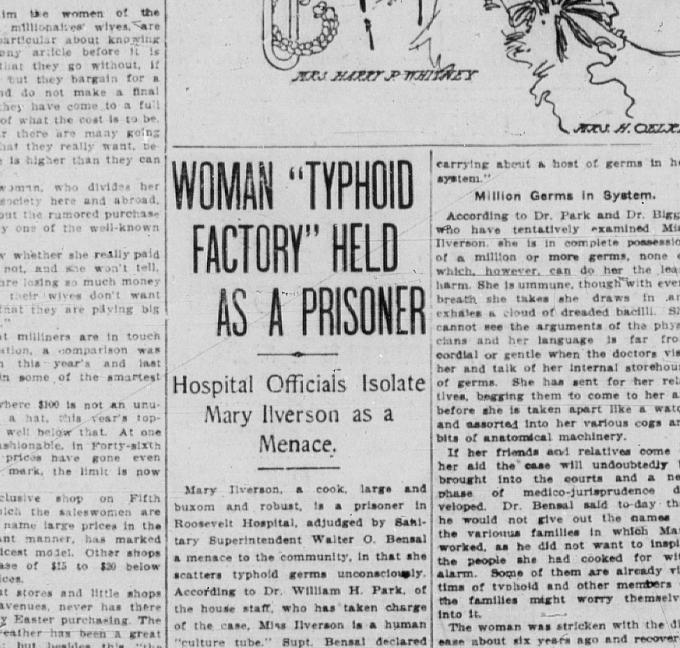
Another newspaper headline from the Evening World, April 1, 1097
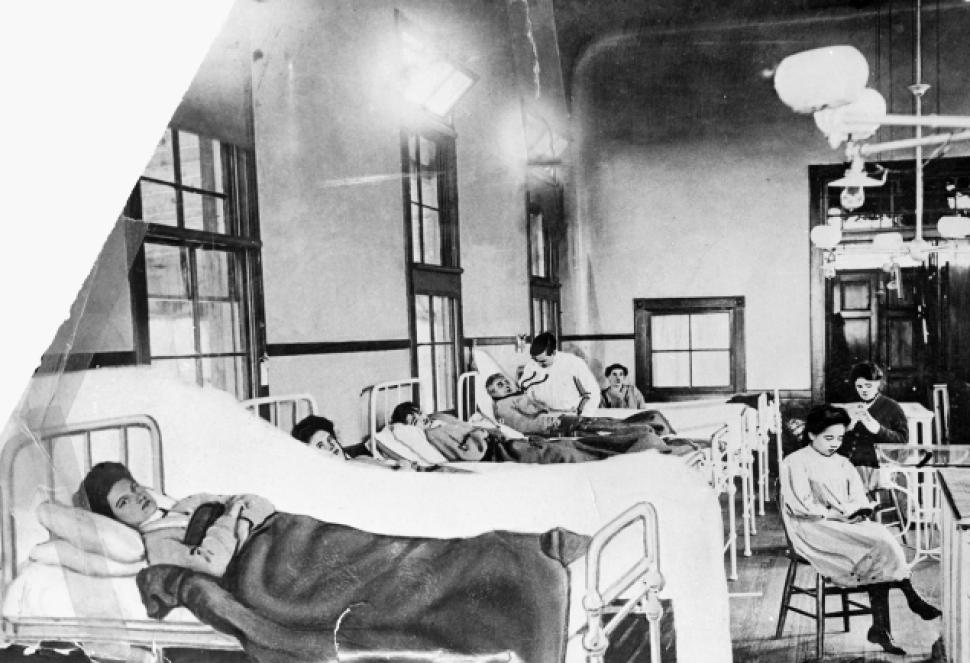
Mary Mallon in a hospital bed at North Brother Island
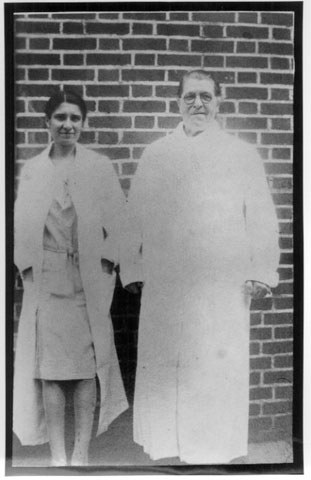
Dr. Emma Sherman standing next to Mary Mallon in the early 1930s. Mary has already spent over 15 years on North Brother Island by this time.
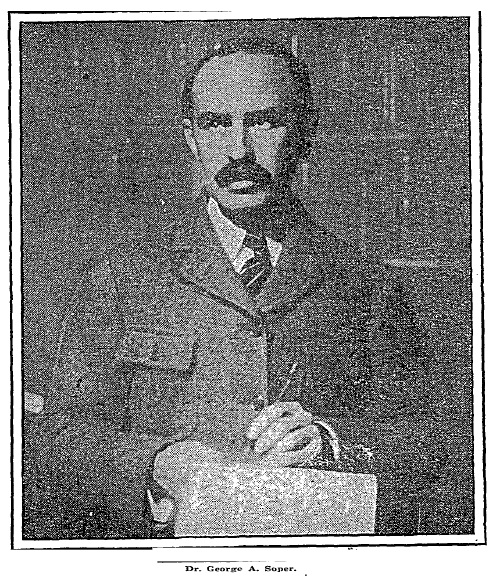
The sanitation engineer (and detective of our story) George Soper who relentlessly tracked down Mary. Â (From the New York Times, April 4, 1915)
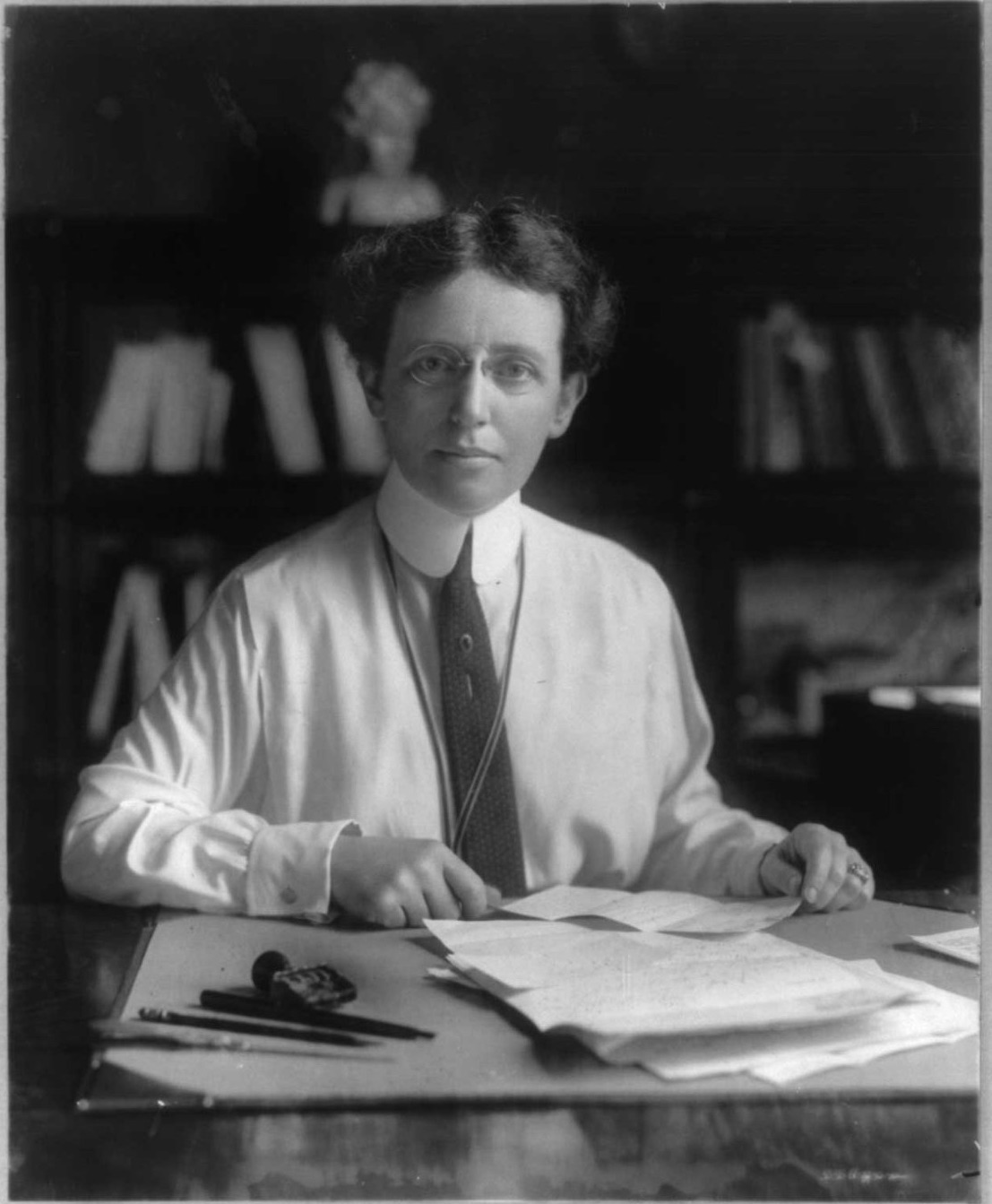
Sara Josephine Baker, the pioneering doctor who was brought in by Soper to (futilely) talk some sense into Mary.
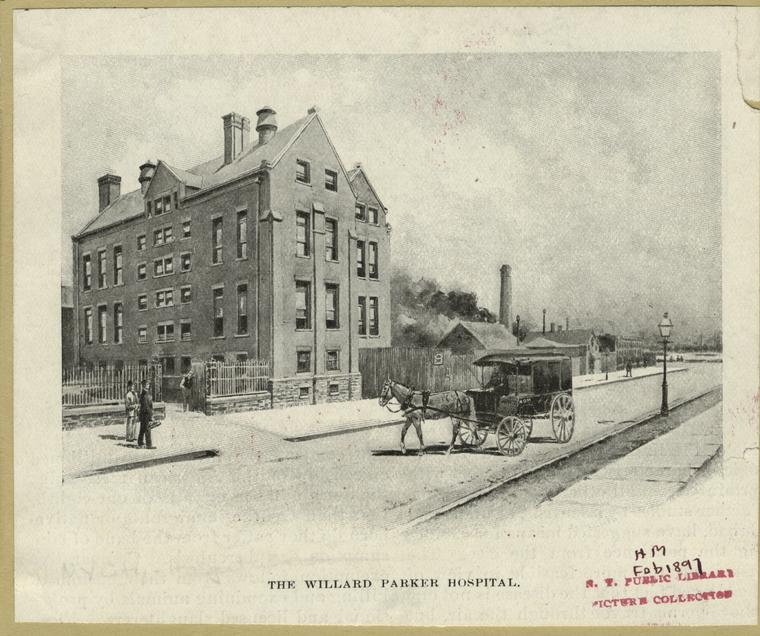
Willard Parker Hospital, formerly at East 16th Street along the East River in the old gashouse district.
Courtesy New York Public Library
The smallpox hospital on North Brother Island.
Photo by Jacob Riis, courtesy Museum of the City of New York
Mary Mallon’s cottage on North Brother Island where she spent the remainder of her life.
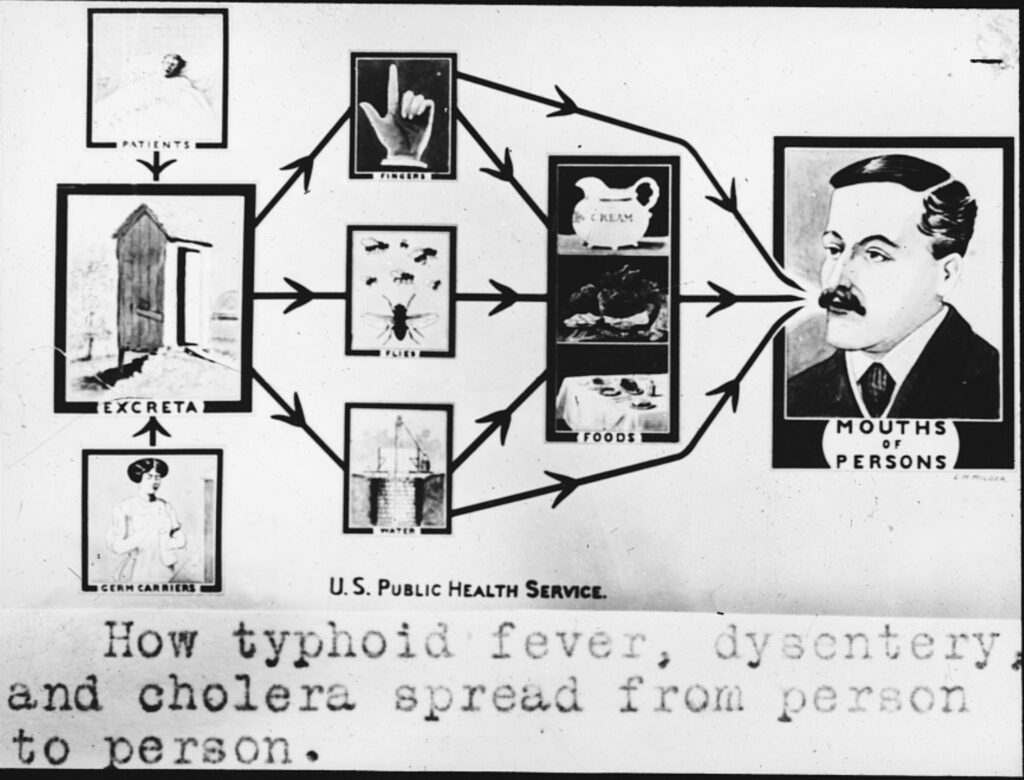
A poster hung in eating establishments following the whole Typhoid Mary fracas.
Otis Historical Archives Nat’l Museum of Health & Medicine
FURTHER LISTENING
After listening to this show, take a dive into previous episodes which relate to this subject —
Sara Josephine Baker also appears in this 2019 episode about women health care workers in the Progressive Era:
Many years before North Brother Island, America’s largest quarantine hospital was located on Staten Island. That is, until 1858 when the residents, endangered for decades and ignored by the state, finally took matters in their own hands
Welcome to Bellevue Hospital, New York’s most famous (and infamous) hospital — from ‘pest house’ to execution ground, from a Pathological Museum to New York’s first city morgue
The seats at Radio City Music Hall, rigged with explosive devices planted inside the upholstery. Bombs found at the Empire State Building, others detonating at movie theaters and in phone booths, at the New York Public Library and in subway stations. An explosion inside Macy’s.
Chaos, panic, anonymous letters to the police, copycat bombers. Some of the most sustained levels of domestic terrorism to hit an American city in the 20th century.
It may sound like the plot of a dastardly comic book film. But it actually happened in New York City.
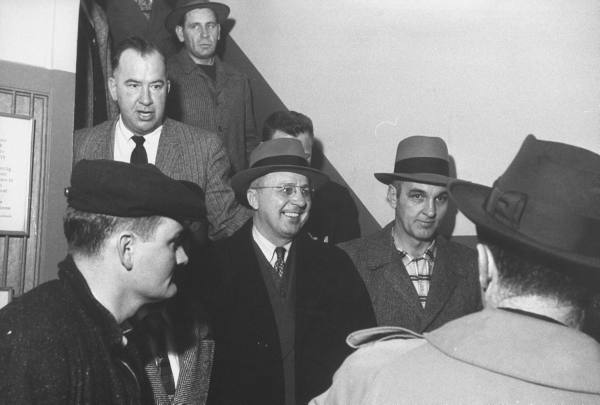
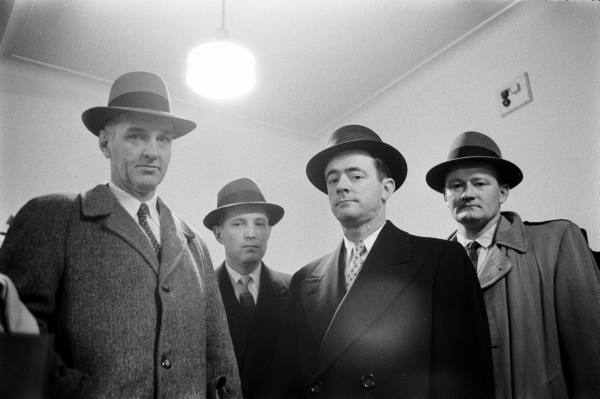
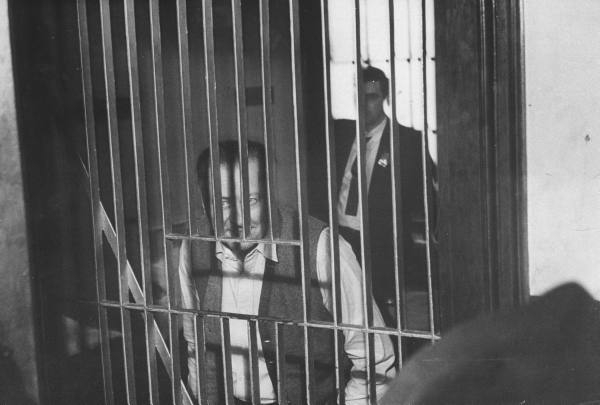
The man in the center, the one who looks like a kind grocer? That’s George Metesky, the insane “Mad Bomber” who terrorized New York for years with crudely made bombs placed in public places. (Photo by Peter Stackpole)
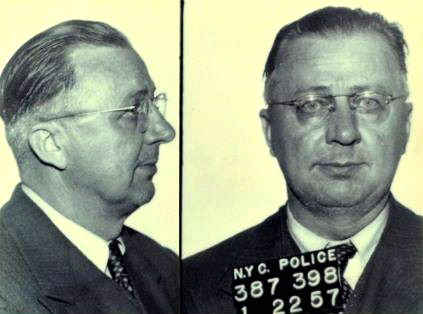
Through two decades, from 1940 to the mid 1950s, the city was under siege by a violent, greatly disturbed ex-Marine dubbed the Mad Bomber by the press.
George Metesky planted dozens of pipe bombs in New York City before he was finally apprehended in January 1957 at his home in Waterbury, Conn. He sheepishly met his captors at the door with the phrase, “I know why you fellows are here. You think I’m the Mad Bomber.”
George had been employed by the utility company until 1931, when a boiler explosion at uptown Manhattan plant left him permanently disabled and in the care of his two sisters in Connecticut.
He claimed the company refused to compensate him for his work-related hardship, fighting in vain with the corporation for five years. “My medical bills and care have cost thousands — I did not get a single penny for a lifetime of misery and suffering,” he would claim in one of his many letters to the press, after the bombings began.
For Con Ed’s part, they claimed Metesky had taken too long to file for disability benefits. Eventually, the truth didn’t matter. Metesky, later to be diagnosed a paranoid schizophrenic, decided to get comeuppance in a more sinister manner.
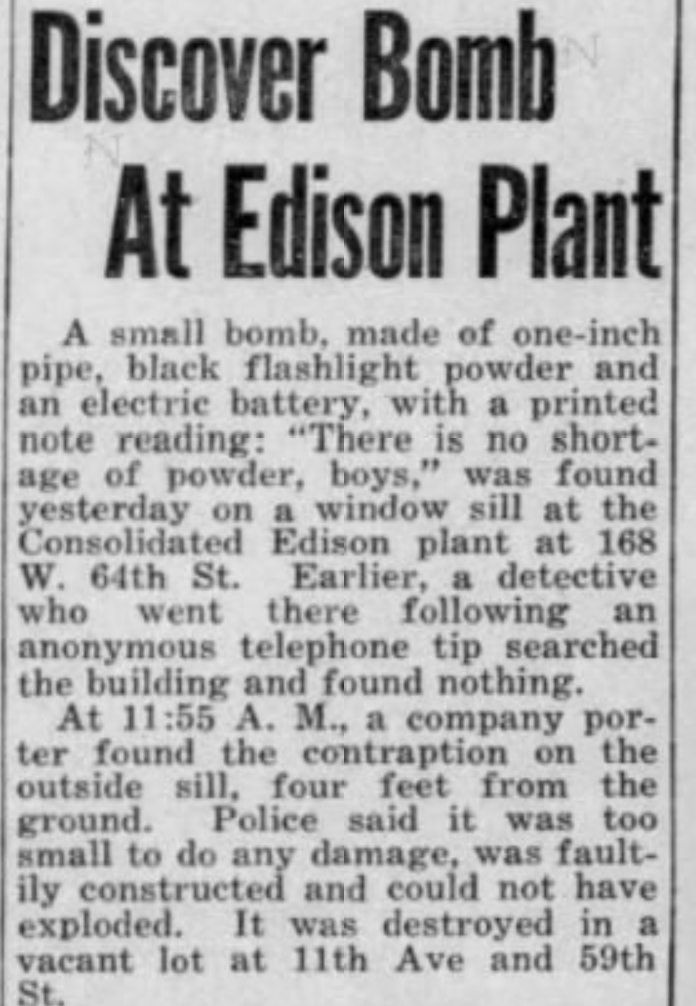
New York Daily News, November 19, 1940
The first explosive, ultimately a dud (as many were), was placed at Con Ed’s 64th Street office on November 18th, 1940, accompanied by a carefully constructed note, “CON EDISON CROOKS, THIS IS FOR YOU.”
One year later, another device, wrapped in a woolen sock, was hastily dropped in front of Con Ed’s 19th Street offices, without a missive this time. In both cases, investigators were befuddled: were the bombs even meant to go off or was it a scare tactic?
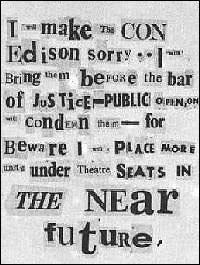
Metesky was feeling ignored yet again by Con Ed. Whether out of frustration or some kind of twisted, legitimate patriotic duty, however, he decided to call off future bombings due to World War II and sent a ‘kidnapper-style’ note(left, one such example), made from cut newspaper letters, to the press informing them so.
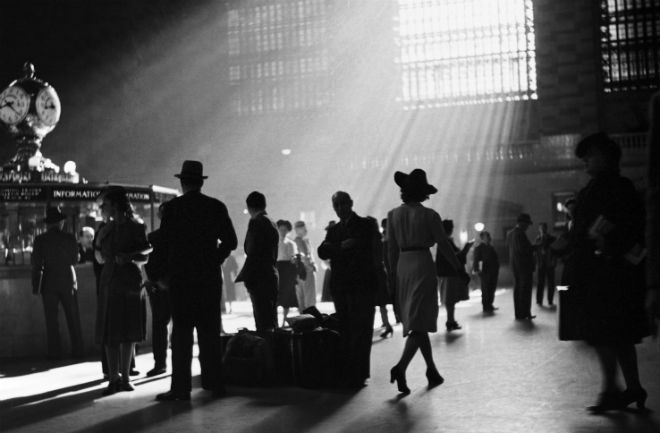
Feeling some acceptable amount of time had passed, Metesky decided on a different tactic on March 29th, 1950, planting a bomb at crowded Grand Central Terminal. Another note from George warned of an explosion there, and police were able to locate and defuse the device in time.
Thus began a bizarre game of cat-and-mouse as Metesky laid dozens of bombs throughout the city, unbelievably without detection. (The “see something, say something” mantra was clearly not in effect in the 1950s.)
A fourth device, in front of the New York Public Library, was the first to actually detonate, but it injured no one, the fortunate outcome of many of Metesky’s oddly made devices.
Despite dropping off pipe bombs in such places as Penn Station and the Port Authority Bus Terminal, despite targeting movie houses by scooping out the seats and implanting bombs there — despite some of these weapons actually exploding, nobody had been hurt. He had even thrown a pipe bomb into the Oyster Bar at Grand Central Terminal, with no serious harm.
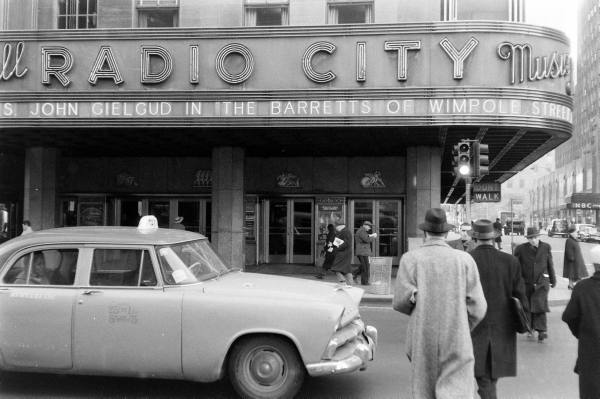
His devices in 1954, however, began to hurt people — minor injuries in a detonation at a Grand Central men’s room, then during a November screening of White Christmas at Radio City Music hall, where five people were hurt. (You can find pictures of the aftermath of one such bombing at Radio City in this Life Magazine article.) Amazingly, Metesky set off three bombs in total at Radio City. Once, a bomb went off with the bomber still in the theater; an usher stopped him as he was escaping but merely “apologized for the disturbance” and let him go.
He also sent a series of letters to the New York Herald Tribune, all in that same exact block-letter styling. Stating in these letters that he was seriously disturbed, George apologized for any potential injuries he might cause but proclaimed, “IT CANNOT BE HELPED—FOR JUSTICE WILL BE SERVED.” Metesky would sign his letters F.P., which investigators would later learn meant ‘Fair Play.’
Two explosions in 1956 ramped up the intensity and urgency of stopping Metesky. One device planted in a Penn Station bathroom seriously injured an elderly attendant. And Metesky left a Christmastime bomb in the Paramount Theatre in Brooklyn that detonated and injured six people, three seriously. (The film playing? War and Peace with Audrey Hepburn.)
The police were frantically piecing together a profile of Metesky, and dozens of people were apprehended and questioned, including one man who frequently drove into the citywith a suspicious trunk in his backseat. It was not Metesky; the trunk contained a pair of sexy fetish boots that the man paid prostitutes to wear.
During this time, dozens of bomb scares were called in throughout the city and there were even other copycat bombers likeFrederick Eberhardtwho sent a ‘sugar bomb‘ in the mail to Con Edison. He too was a former employee….and mentally disturbed.
It’s a bit difficult to get a grasp on the true on-the-street reaction to these bombings, which were numerous but rarely deadly. Slight panic may have passed through the thoughts of commuters passing through Grand Central or riding the subway, but over time, most people seem to have dismissed the danger. These events are sometimes brought up in comparison to the Son of Sam killings of the 1970s, which held the city in a far greater hysteria.
But, as they’re well equipped to do, the newspapers kept reminding New Yorkers of the danger. According to a 1957 Time Magazine article: “Hearst’s Journal-American thoughtfully provided a do-it-yourself spread on how to make a pipe-bomb…..The papers, thirsty and cunning in a news-dry holiday period, were still going strong.”
The Mad Bomber case is a textbook example of early profiling techniques of the day, and the first with a forensics psychologist (Dr. James Brussel) at its forefront.
In January 1957, a Con Edison secretary discovered similarities between letters from ‘F.P.’ published in newspapers and wording in Metesky’s old personnel files. Police were at Metesky’s doorstep in Waterbury a couple days later, where he almost readily spilled the beans about his identity.
Metesky was declared insane and sent to upstate’s Matteawan Hospital for the Criminally Insane. Believe it or not, he was freed on December 13, 1973, and lived for twenty more years back at his home in Waterbury. He claimed to the end that he designed his bombs not to hurt people. And yet, of course, many did.
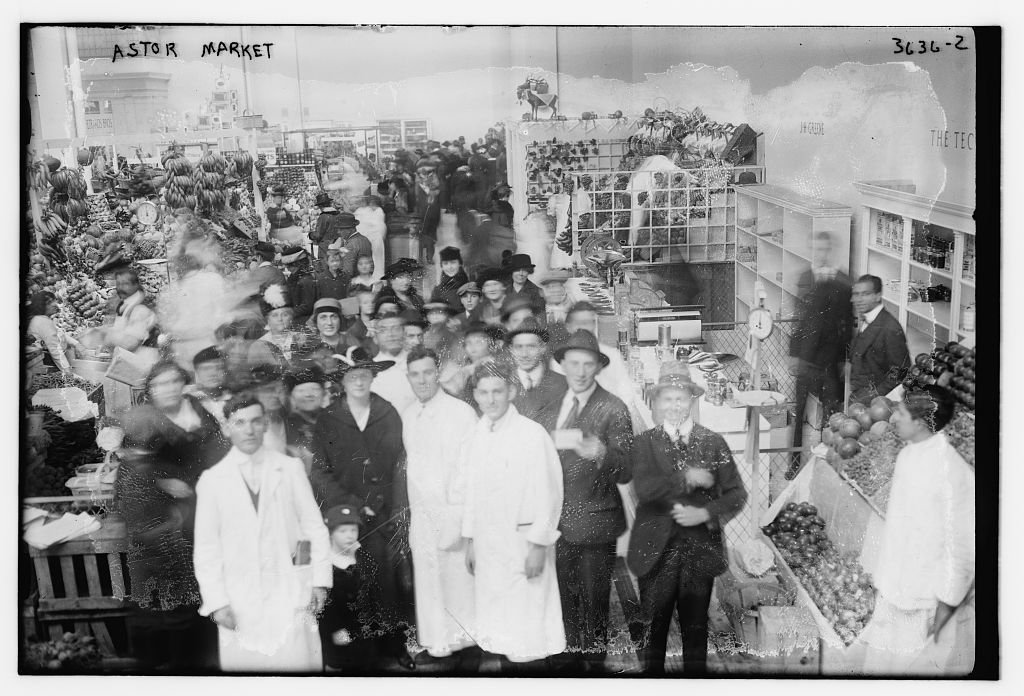
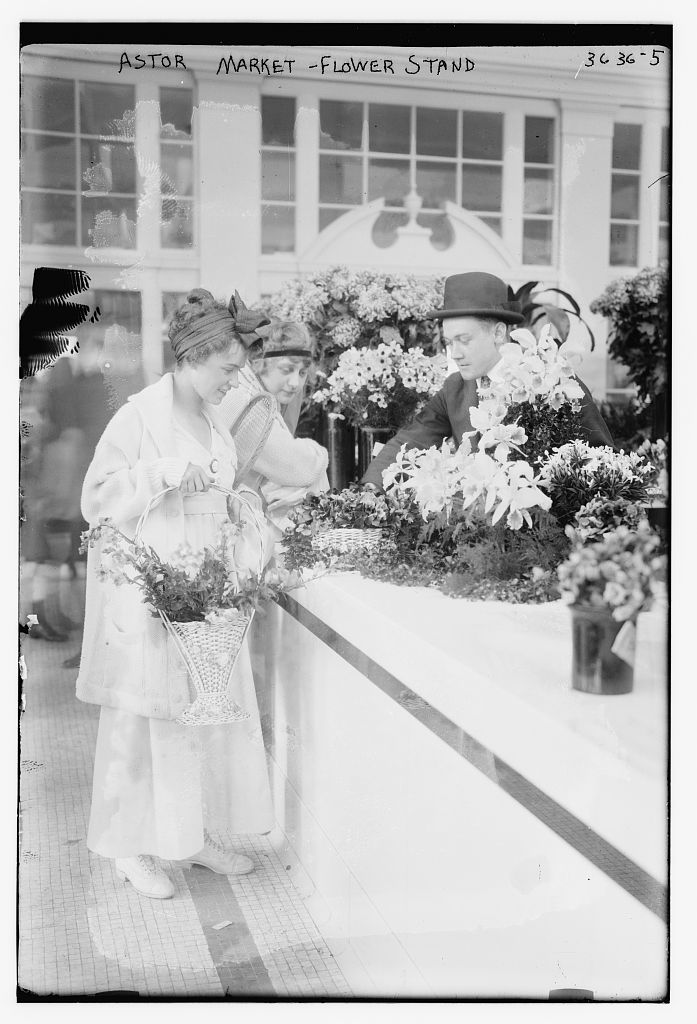
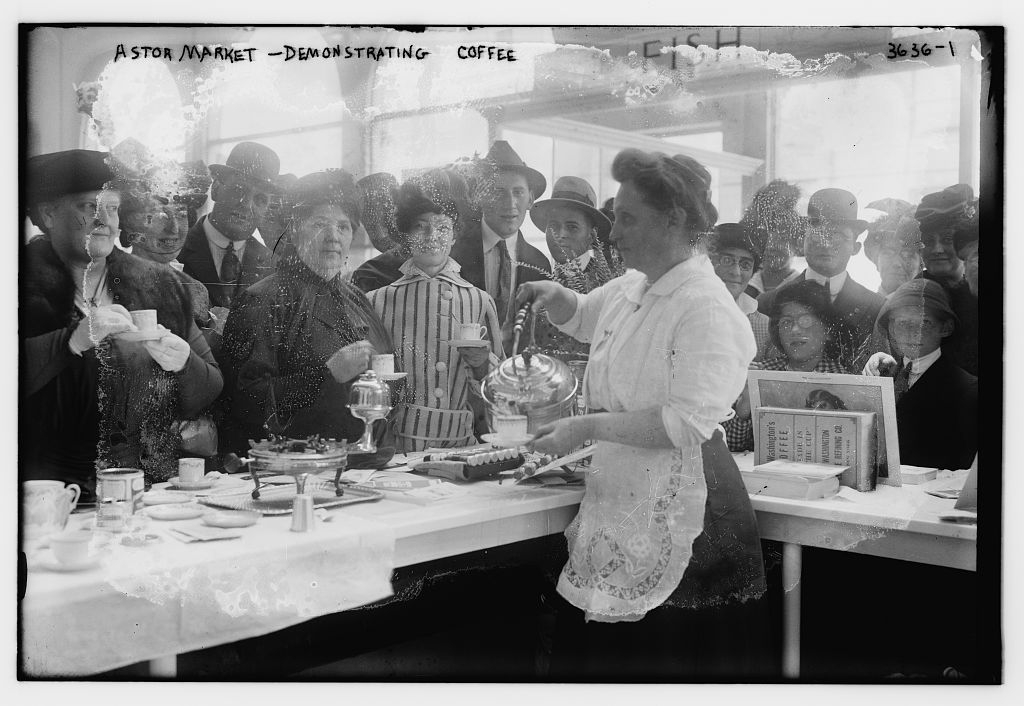
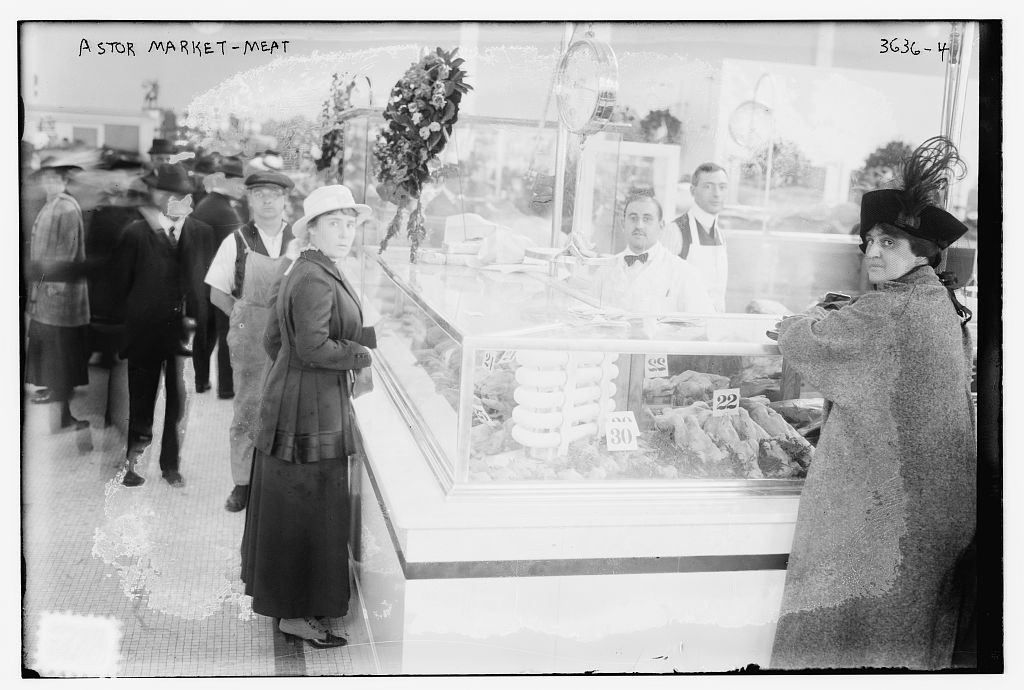
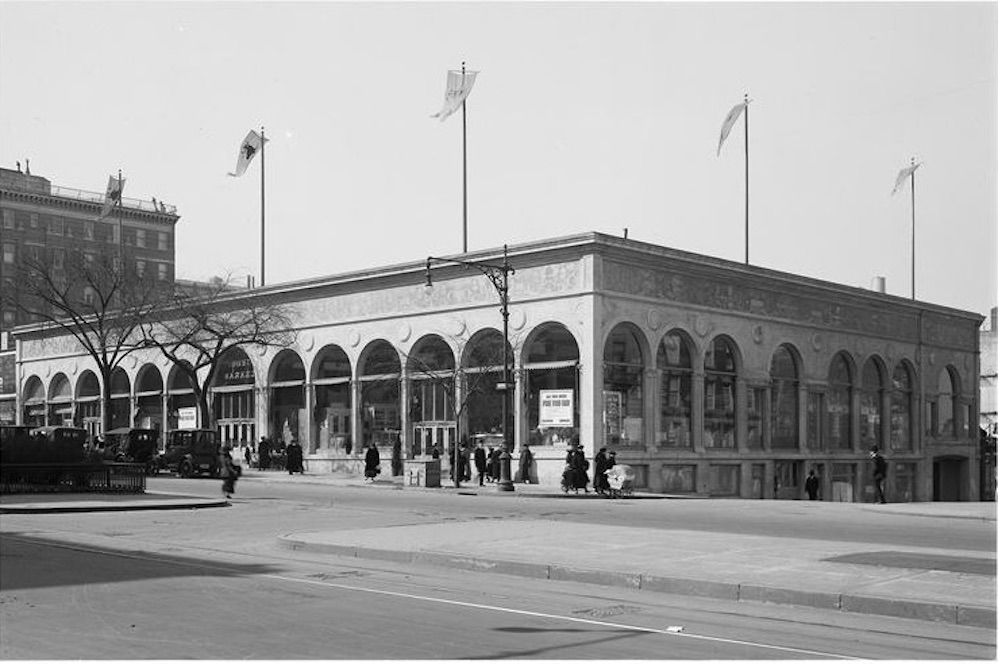
The Astor Market once sat on the corner of 95th Street and Broadway, a ‘model’ market built in 1915, devised by Vincent Astor, son of John Jacob Astor IV(and whose wife Brooke Astor may be better known to you) to combat some of the high food prices brought on by World War I.
Astor was on Mayor John Purroy Mitchel‘s market commission to solve this very problem. (Read more about New York’s wartime market woes here.)
Markets were being heavily re-conceived in New York in the 1910s. Astor would have a guiding hand in the new project. The space was to be both practical and ornate, designed by Tracy & Swartwout, better known by this time for the Yale Club.
According to the New York Times, “under the cornice ran a 290-foot-long frieze by William Mackay depicting a market procession, with farmers and dealers carrying meat, fish, poultry, fruit and vegetables in everything from medieval carts to motor trucks. “
Library of Congress
It was renown for its ultra-clean interior with nary an insect or vermin to disrupt shopping. “Mr. Tracy, the architect, boasts that a fly would starve in this market.” [source]
The city had great hopes that the Astor Market would set the standard for others in the city. “This is the last word in market building,” said the city’s commissioner of markets.
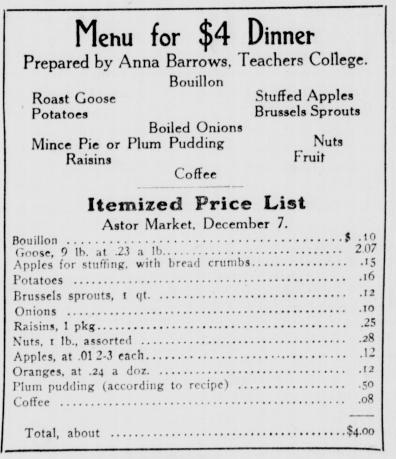
Here’s a standard Christmas menu that one could purchase at the market, printed in the 1915 New York Tribune. Coffee for eight cents!
The Astor Market is sometimes called the first supermarket. But it was a bit too experimental for its day and the market closed in 1917.
Simply put — people still preferred small and local vs. wide selection at a distance.
“Most people, on account of service and convenience, prefer to buy at the neighborhood corner grocery, with the result that in this country there is one grocery store for every 400 people.” [source]
Grocery stores of massive size would become quite popular of course — sometimes driving those neighborhood corner groceries out of business — once they offered lower prices and most people could get to them in automobiles.
Indeed the shopping revolution had already begun in the South with the opening (in 1916) of the first Piggly Wiggly, considered the first self-service grocery store.
Our latest podcast explores the early history of radio in celebration of the 100th anniversary of the first commercial radio station (KDKA in Pennsylvania) and its first broadcast — the announcement of presidential election results. (Harding wins!)
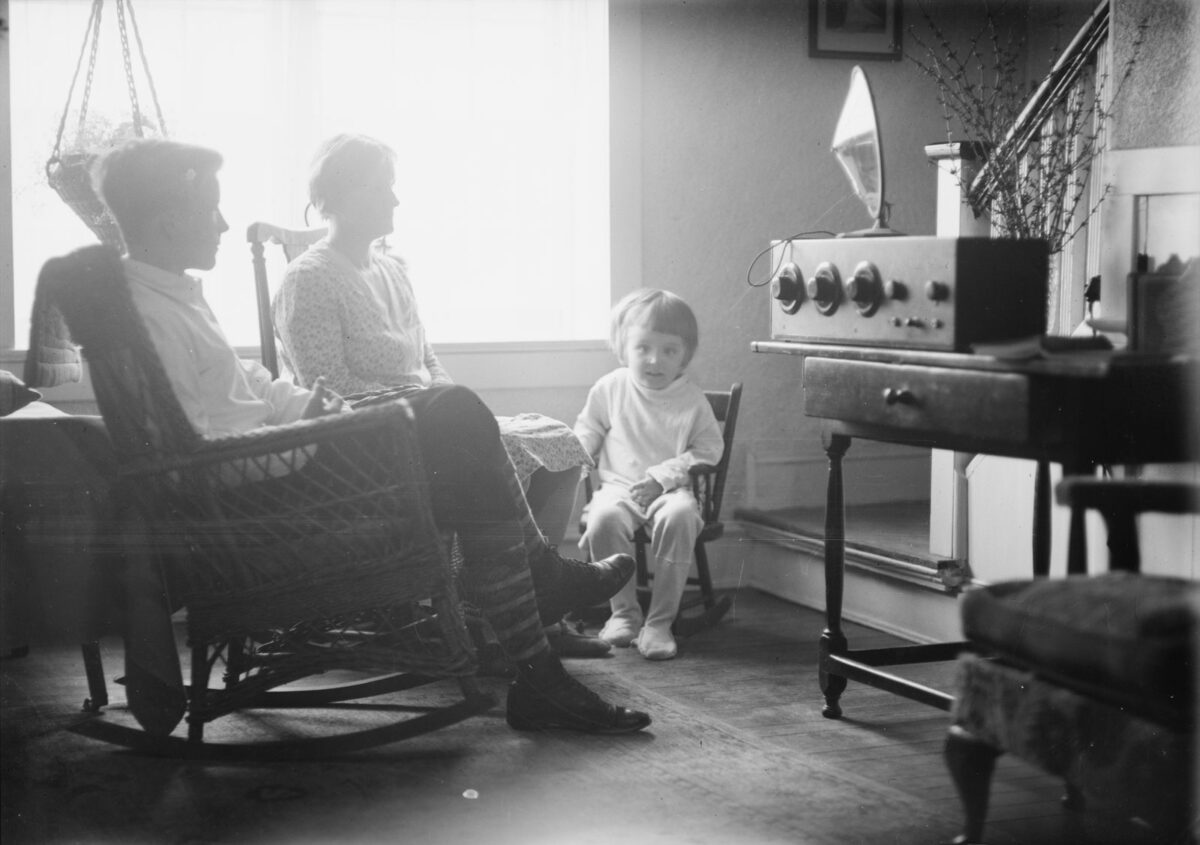
Amateur radio operators at the 92nd Street Y on the Upper East Side, 1940. Courtesy the Milstein Archives
PODCAST The discovery of radio changed the world, and New York City was often front and center for its creation and development as America’s prime entertainment source during the 1930s and 40s.
In this show, we take you on a 50-year journey, from Marconi’s newsmaking tests aboard a yacht in New York Harbor to remarkable experiments atop the Empire State Building.
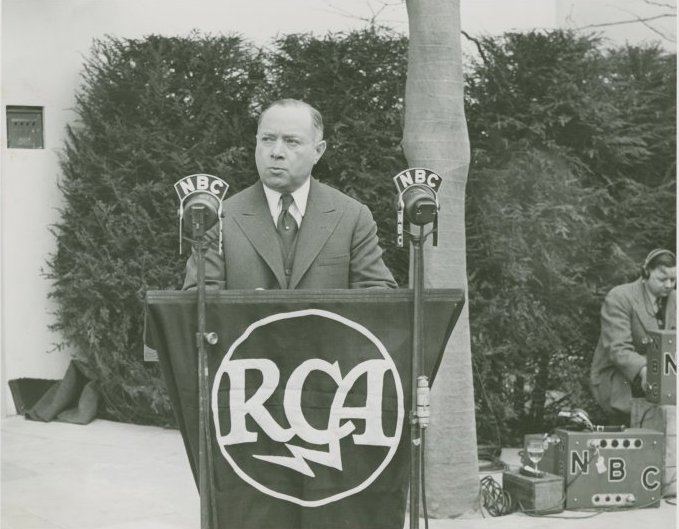
Two of the medium’s great innovators grew up on the streets of New York, one a fearless inventor born in the neighborhood of Chelsea, the other an immigrant’s son from the Lower East Side who grew up to run America’s first radio broadcasting company (RCA).
Another pioneer with a more complicated history made the first broadcasts that featured the human voice, the ‘angelic’ tones of a Swedish soprano heard by a wireless operator at the Brooklyn Navy Yard.
What indispensable station got its start as a department-store radio channel? What borough was touted in the very first radio advertisement? What former Ziegfeld Follies star strapped on a bonnet to become Baby Snooks?
Featuring tales of the Titanic, the rogue adventures of amateur operators, and a truly scary invasion from outer space!
Listen today on your favorite podcast player:
This episode was originally released in April 2012.
MINOR CORRECTION: The radio show of yore was obviously called Everready Hour, not Everready House!
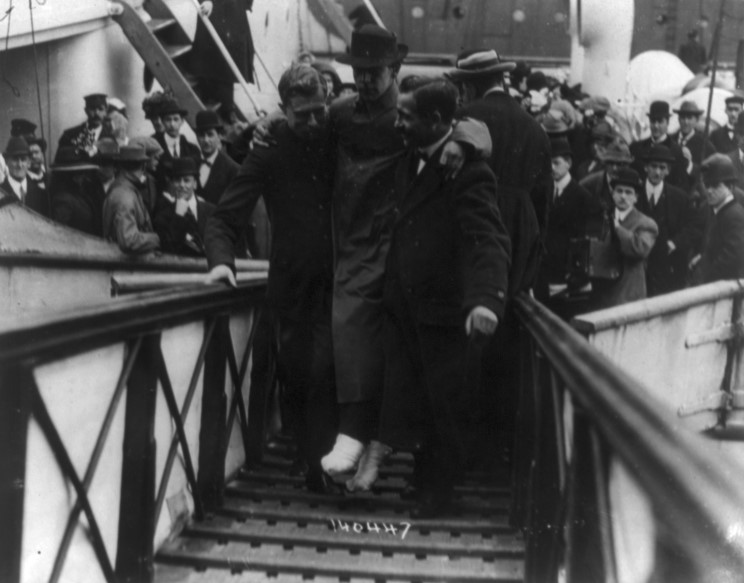
Harold Bride, the only surviving wireless operator from the Titanic, is escorted off the rescue vessel Carpathia.
Lee de Forest, one of the first inventors in New York to practice with broadcasting human voices. He eventually set up an experimental station in the Bronx. (NYPL)
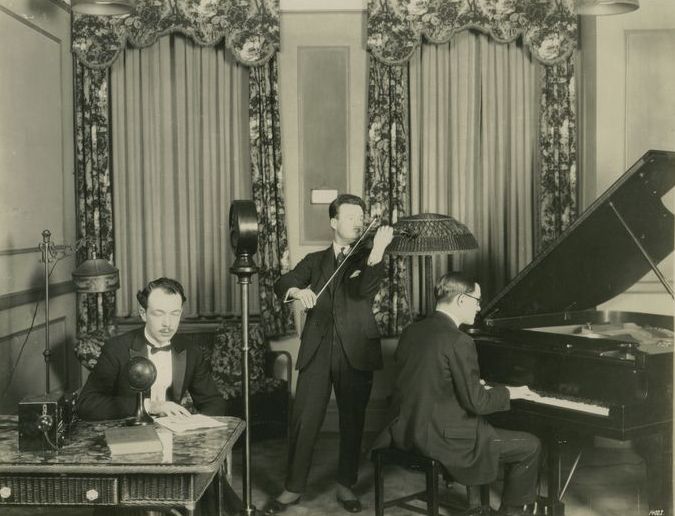
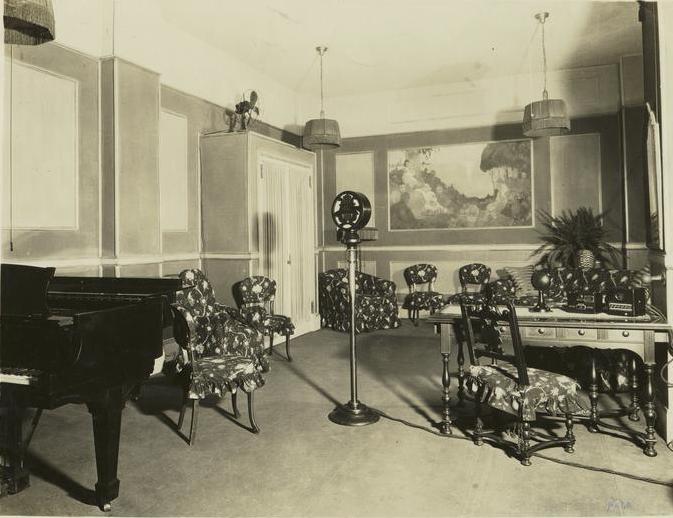
The rather cozy studios of WJZ, date unknown. WJZ, originally a Newark station (notice the JZ for Jersey), moved to New York by the mid-1920s and became the anchor station for the NBC Blue network.
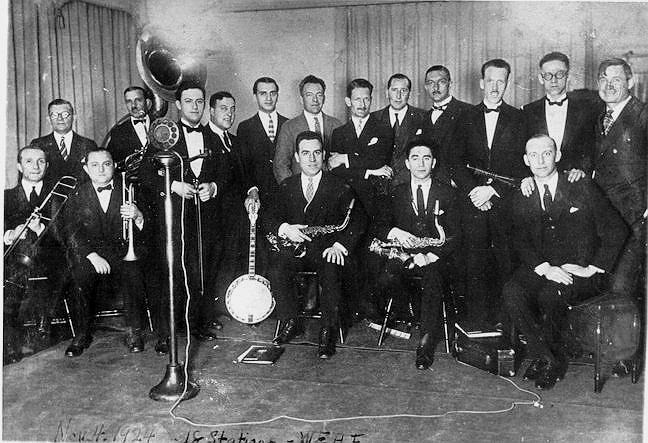
Stars of the Eveready Hour, broadcast on WEAF, featuring Will Rogers and the Waldorf-Astoria Orchestra. (Courtesy PDX Retro)
David Sarnoff at the World’s Fair in 1939 out in Flushing Meadows. (NYPL)
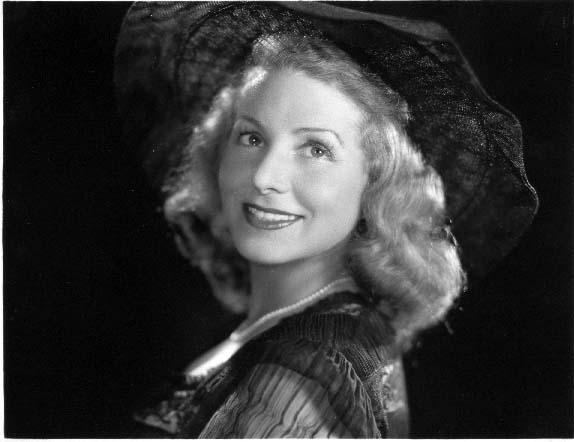
Songstress Jessica Dragonette, one of the most successful stars of the NBC stable during the 1930s, and one of many stars who struggle to find fame once television came along.
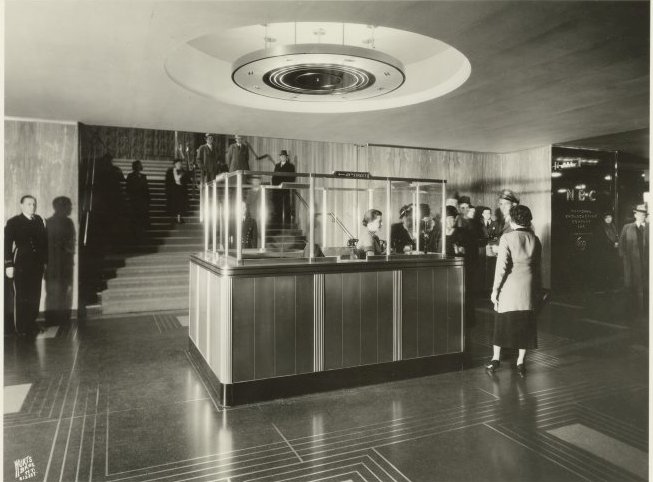
The lobby of 30 Rockefeller Plaza, the home of studios for the National Broadcasting Company. Photo by the Wurts Brothers
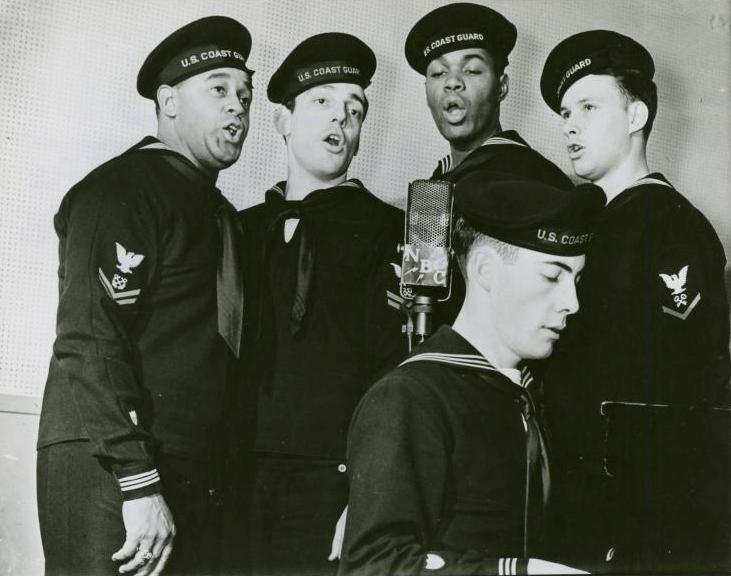
Manly music: The robust tones of U.S. Coast Guard Quartet, recording at an NBC affiliate station in New York
The complete broadcast of ‘War of the Worlds’, broadcast by the Mercury Theater on the Air from the CBS Studios at 485 Madison Avenue.
The Bowery Boys: New York City History podcast is brought to you …. by you!
We are now producing a new Bowery Boys podcast every week. We’re also looking to improve and expand the show in other ways — publishing, social media, live events and other forms of media. But we can only do this with your help!
We are now a creator on Patreon, a patronage platform where you can support your favorite content creators.
Please visit our page on Patreon and watch a short video of us recording the show and talking about our expansion plans.
If you’d like to help out, there are six different pledge levels.Check them out and consider being a sponsor.
We greatly appreciate our listeners and readers and thank you for joining us on this journey so far.
For once, the biggest news story in America in 1915 was not about the war waging in Europe.
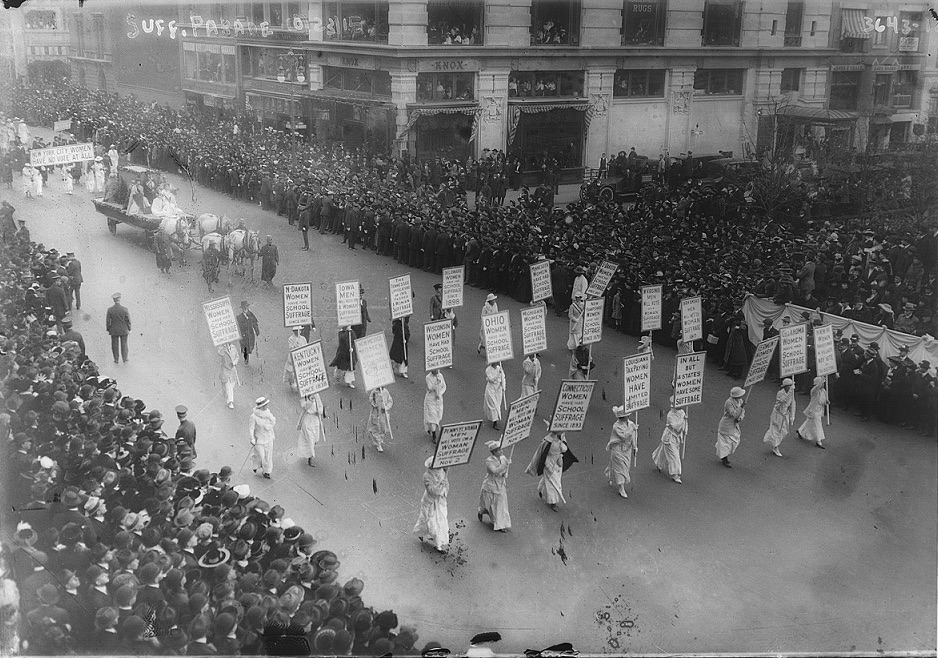
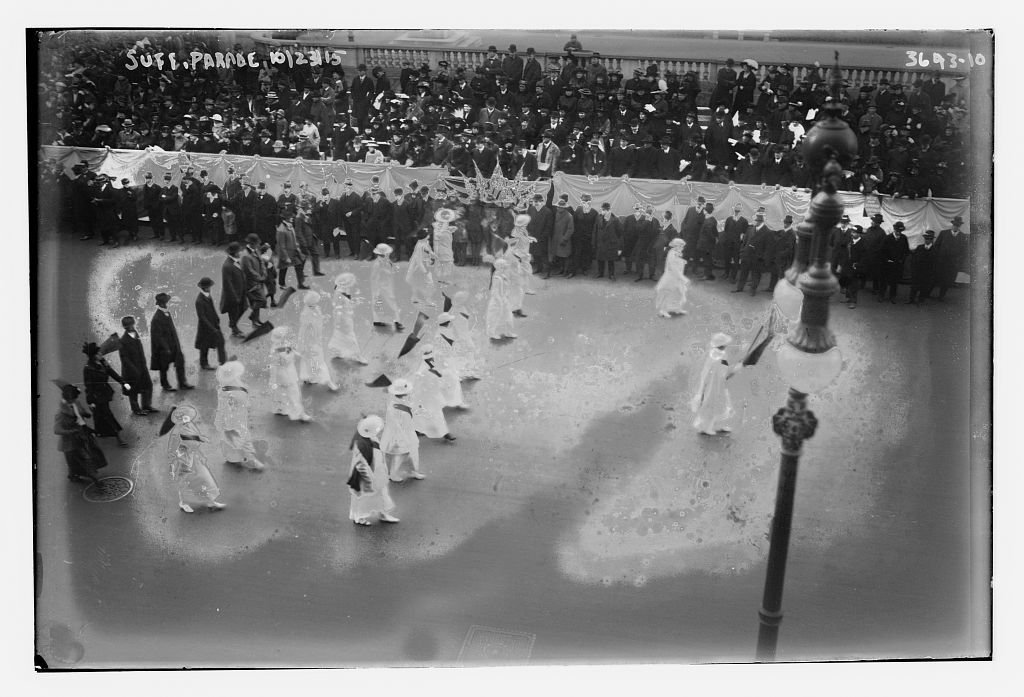
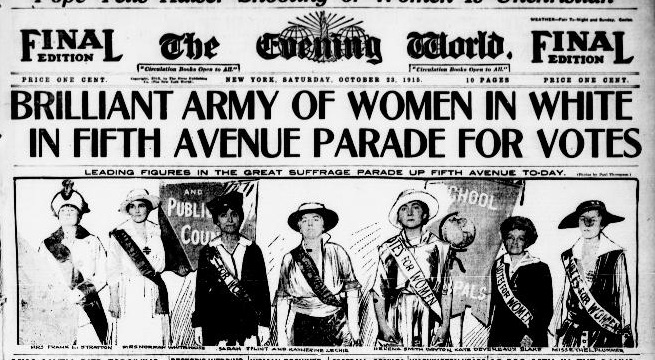
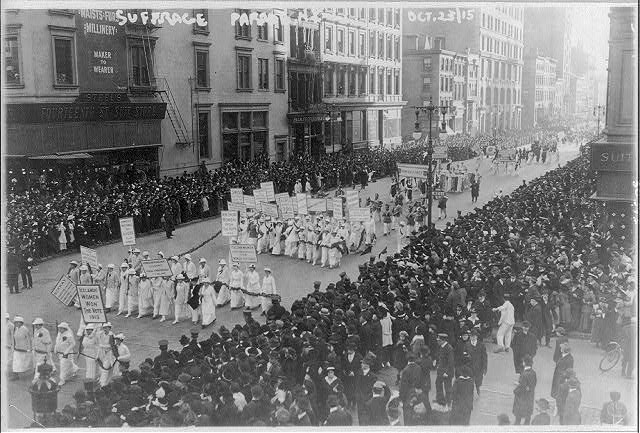
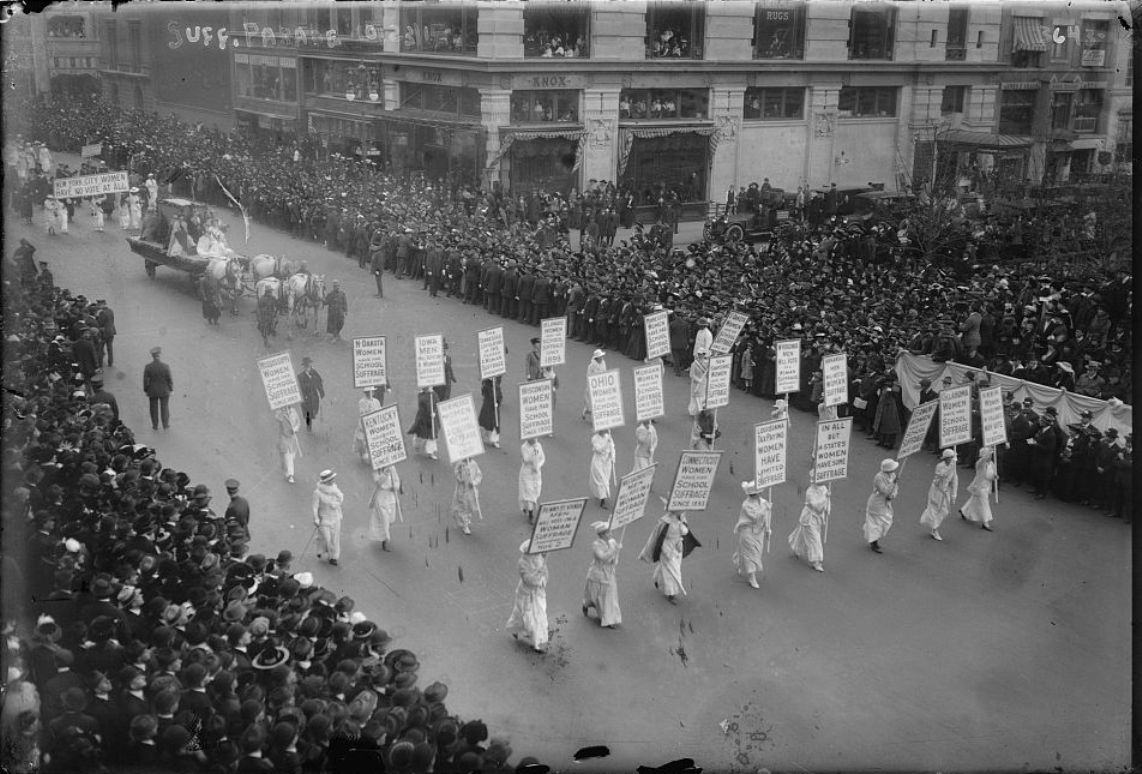
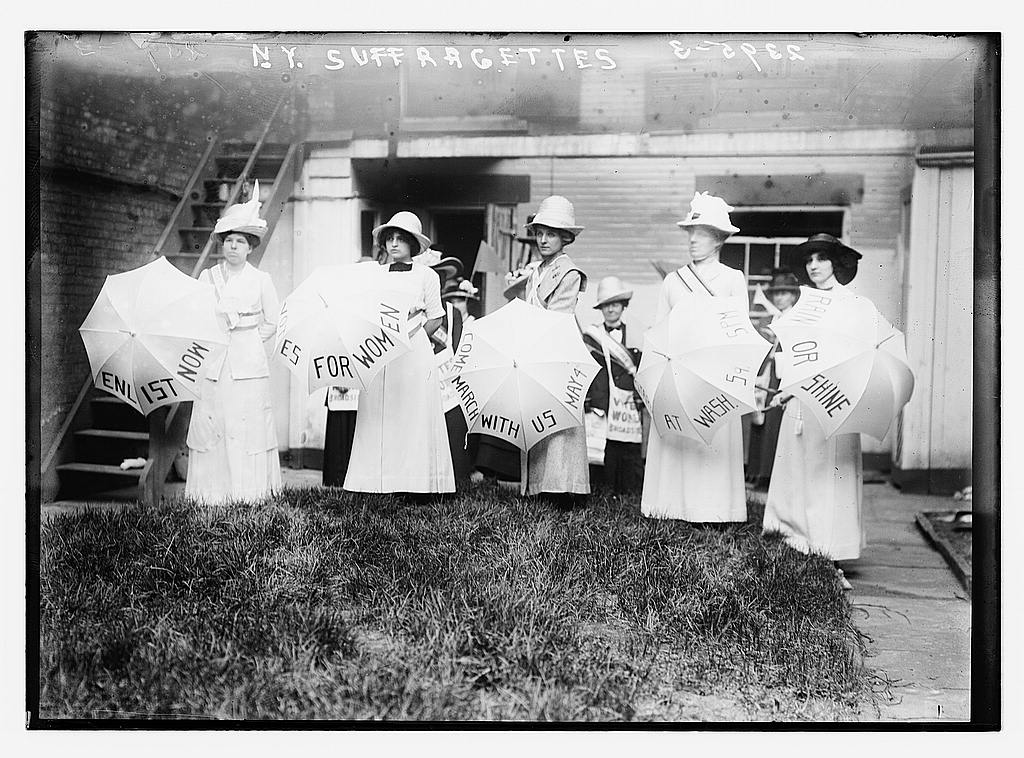
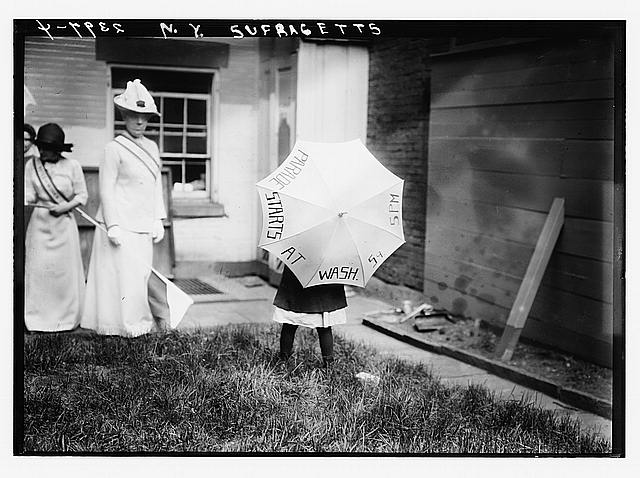
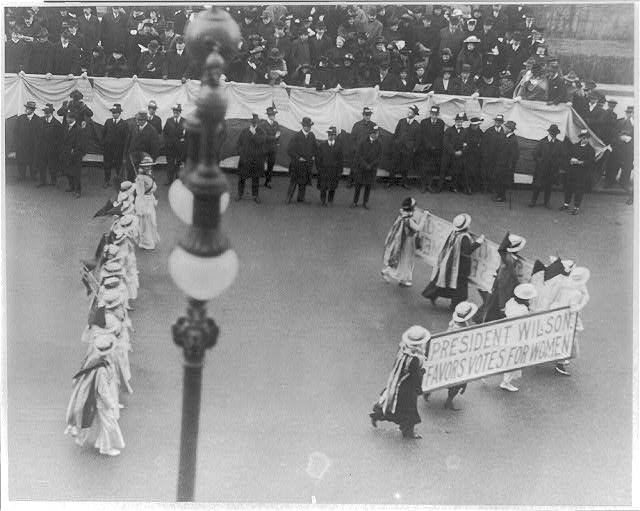
On October 23, 1915, the forces of the women’s suffrage movement mobilized to create the most ambitious gathering to date, a parade of thousands to force the issue into the consciousness of New Yorkers and American at large.
Here are some clips from newspaper articles of the day, celebrating their efforts, chastising and trivializing in part, but recognizing that a corner had been turned and that the right to vote for American women was now an inevitable (if not immediate) outcome:
“The latest, biggest and most enthusiastic of suffrage parades, and the one which, according to the leaders of the suffrage forces, will be the last ever needed to plead their cause in New York, marched up Fifth Avenue from Washington Square to Fifth-Ninth Street yesterday afternoon, blazoned the whole city with the yellow of its banners, and brought out what seemed to be the larger part of the population of Manhattan to look at them.” — New York Times, October 24, 1915
“It was a three mile argument for equal rights — a dignified, splendid argument — and every vantage point along the gay colored way was covered with men and women who saw its force. Through the chill of a windy afternoon, though the sun shone on the mighty host, the great army of women passed, the white costumes of many glittering in the sunlight, defying the cold wind that the onlookers felt to their spines as they stood to see it all.” — New York Sun, October 24, 1915
“Some whose names are to be found all through the Social Register marched side by side with working mothers with babies in their arms. A large proportion of the marchers were young girls who would not be old enough to vote were they enfranchised. They made up in beauty what they lacked in years and were cheered all along the crowded Fifth Avenue sidewalks.” — New York Evening World, Late Edition, October 23
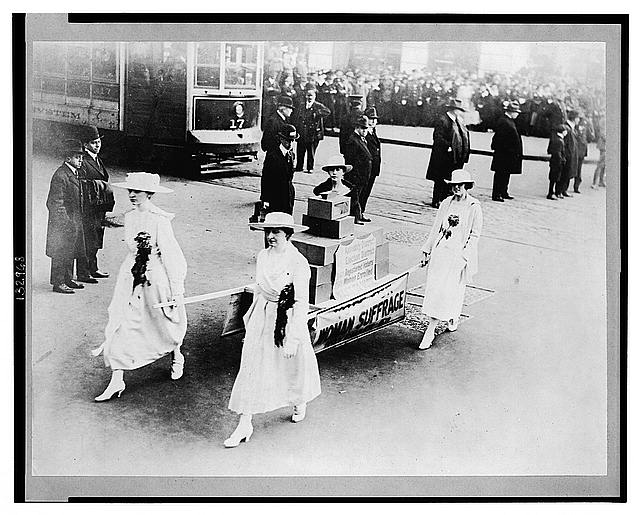
“Old women, as old as suffrage, marched. Often beside them were little girls barely in their teens. And there were even tiny babies in carts, making their appeal for their mothers’ votes.
There was little applause all along the route for the women marchers. But this was not strange, for it could be seen that the spirit of the parade had made itself felt on the sidewalks. It was no laughing matter, this parade. The women in it did not smile or giggle. They were serious and determined. And this mental characteristic was contagious.” — New York Tribune, October 24
Above: Four women carrying ballot boxes on a stretcherÂ
“Is Dame Nature a suffragist? At any rate, she was kind yesterday. In golden sunlight and keen air the great parade went its triumphal way, to the satisfaction of participants and spectators. With no disrespect to the men in it, the female marchers and riders, as always, showed the hopeless feminine superiority in grace, decorative effect, art of representation.” —editorial, New York Times, October 24
“The spectators laughed in good natured sympathy with the struggles which the wind caused the marchers.
Unruly skirts demanded attention from those who bore the militantly inscribed banners.
Nearly all the flag carriers had to call for help upon heir companions and sometimes four or five women struggled with brave laughter with a single standard to keep it from being swept to the street.” — NY Evening World
“[S]igns were a cardinal feature of the parade. One which attracted attention everywhere and appealed significantly to the male onlookers was, “We talk with you, we eat with you, we dance with you, we marry you, why can’t we vote with you?” Another read: “Oh, men, please do give us the vote.” — NY Tribune
“King Albert of Belgium favors votes for women,” “Australian women have the ballot,” “Queensland women vote,” “Bohemia was the first in the world to pass a law for women’s suffrage in 1861,” “Oestreichischer Komite fur Frauenstremrecht” were some of the inscriptions on the banners. In all the languages of the earth they proclaimed the advance women have made in the various countries in gaining the vote, and scattered through the division were banners asking: “Women vote in Australia, why not in New York?” and “Women vote in twelve Western States, why not in New York?” — NY Sun
“It was a long parade — begun in mid-afternoon and finished by moonlight. And while thousands had drifted away, the avenue was still packed with onlookers when the men’s brigade — some thousands this time in place of the valorous ninety-two who were jeered in the first parade only four years ago — came along just in front of the army of automobiles that ended the procession.” – NYT
“The parade ended with a concert of thirty bands and a giant chorus singing patriotic songs at the Central Park Plaza. Â There were several battalions of men in sympathy with the cause which were noisily greeted by the people along the curb.” — Evening World
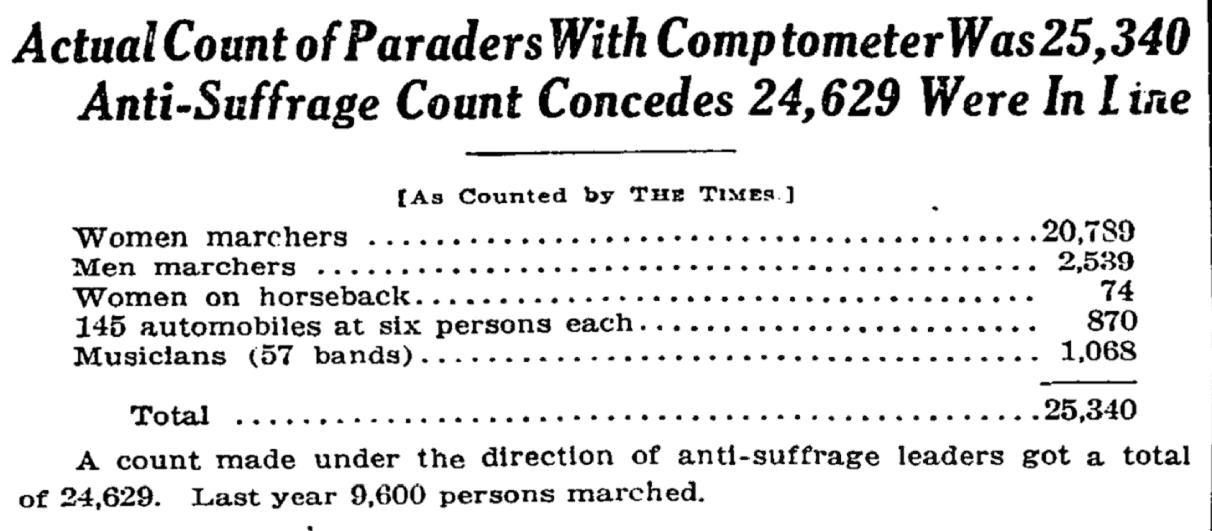
Graphic from the New York Times, October 24
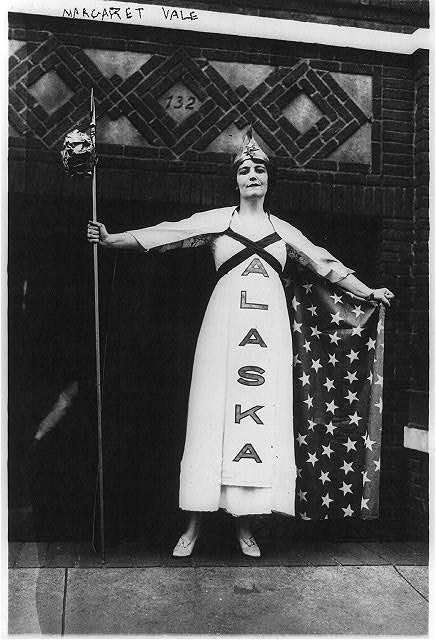
Margaret Vale, niece of President Woodrow Wilson, at the Suffrage parade. Alaska had granted women the right to vote in 1913.
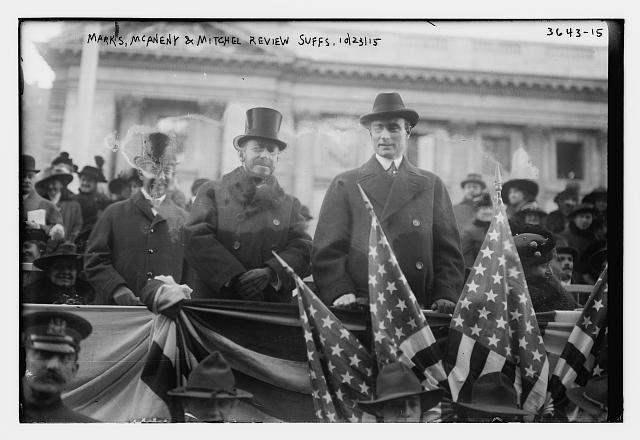
The appearance of Mayor John Purroy Mitchel (‘the boy mayor of New York‘) was considered a big boost for the marchers although it certainly would have been a major snub if the mayor has skipped such a major parade!
Absent from all of the news coverage (at least the articles I reviewed) was the participation of African-American suffrage advocates. They played an active role in the movement but were most likely absent from the parade.
Despite this grand parade, New Yorkersdefeated a referendumon suffrage the following month. A little over two years later — on November 6, 1917 — the women of New York state would win the right to vote.
The Nineteenth Amendment, ensuring the vote for all American women, was ratified on August 18, 1920.
All photographs on this page courtesy Library of Congress
EPISODE 344 We’ve now made our Bowery Boys Movie Club episode on the film Ghostbusters available for everyone. Listen to it today wherever you get your podcasts.
This episode is brought to you by those who support the Bowery Boys Podcast on Patreon. Join us there to get additional episodes of the new Patreon-only Bowery Boys Movie Club — including the latest episode on When Harry Met Sally.
This episode is partially based on this in-depth article on the New York City history moments featured in the film, originally written in 2013. Give it a read while you listen along!
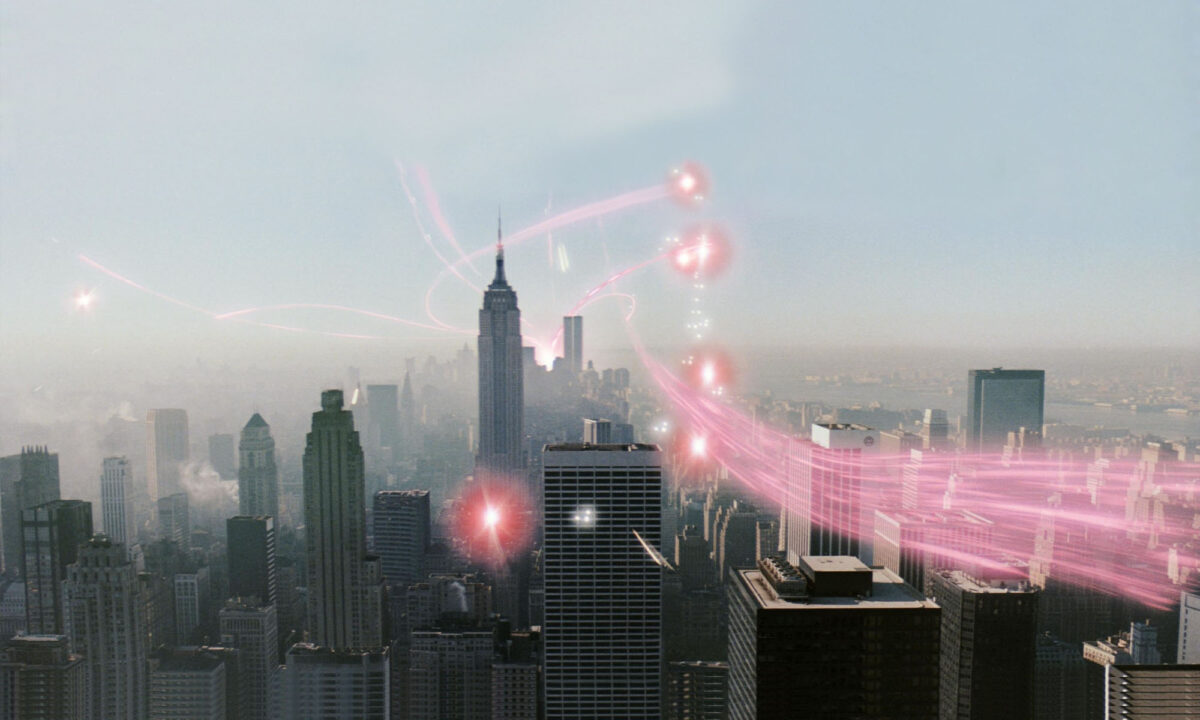
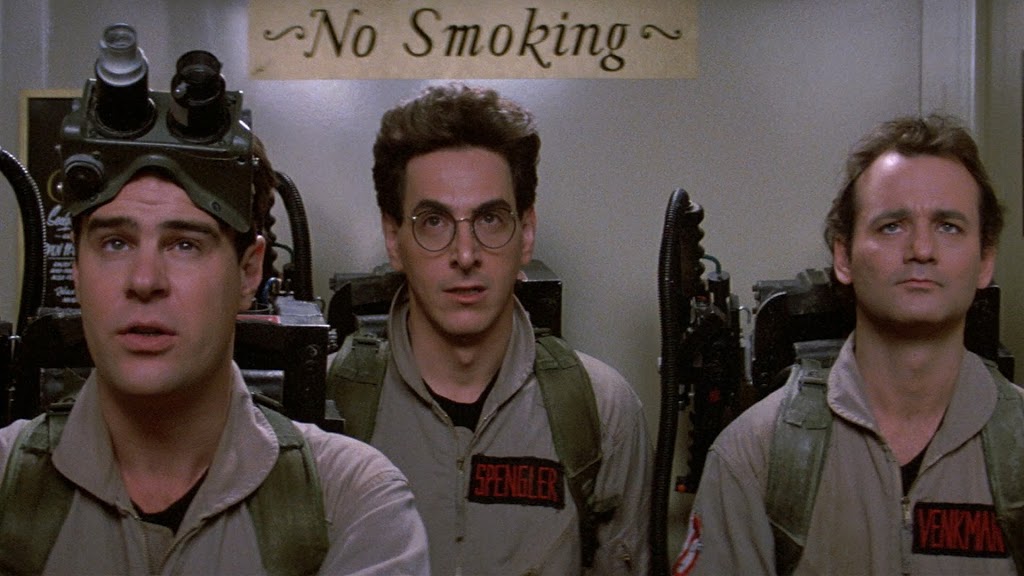
Ghostbusters, the goofy, supernatural tale starring Bill Murray, Dan Ackroyd, Harold Ramis, Ernie Hudson, and Sigourney Weaver, was one of the biggest hits of 1984, a rare blend of wry comedy, special effects and spectacular New York City landscapes.
Despite its preposterous premise — that ghosts look either like oozing fat blobs or Sheena Easton-ish supermodels — the film flawlessly displays the easy comic talents of its stars and reveals a New York City with only monsters as its greatest threat.
There have been both believers and cynics from New York history who have attempted to prove the existence of supernatural forces and have even tried to purge them from the city.
From there, I took a deeper look into the historical people, places and events depicted in the film, if not only to find evidence of New York’s ghostbusting forefathers, then at least to enjoy the pop culture references of the early 1980s.
Ghostbusters was a mainstream offering, so it goes very light on its urban commentary of a city picking itself up out of withering debt.
Its ghosts are quite democratic, in fact, terrorizing libraries, public places, ethnic neighborhoods and wealthy condominiums alike.
Here are 25 fascinating pieces of trivia about Ghostbusters, putting the film within the context of New York City history. Obviously there are a ton of spoilers here, in case you haven’t yet seen it.
But hopefully I’m giving you a good excuse to catch on television this Halloween!
1)Ghostbusters is set in 1984, late October-early November, judging from the dates on newspapers and magazines which appear midway through the film. But the film’s release date was in June 1984, so technically the film documents future events.
The appearance of Sumerian gods on the Upper West Side and a team of wise-cracking ghost exterminators certainly would have been the top story of the year.
Real life is not as magical. The big story in New York City that year came over a month later, when Bernhard Goetz shot four men who tried to mug him in the subway.
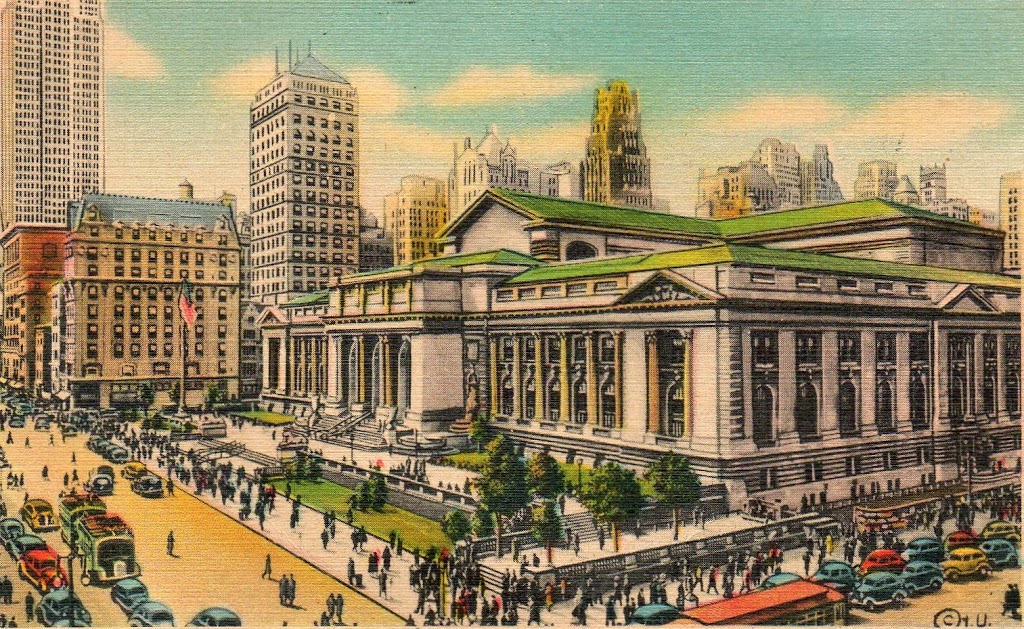
2) The New York Public Library, setting for the delightfully shushy spectre in the opening scene, may actually be haunted. After all, it sits on land that was once a burial ground.
According to historian Charles Hemstreet, writing in 1899, “The ground between Fifth and Sixth Avenues, Fortieth and Forty-second Streets, now occupied by Bryant Park and the old reservoir, was purchased by the city in 1822, and in 1823, a potter’s field was established there, the one in Washington Square having been abandoned in its favor.”
By the way, the two lions (named Patience and Fortitude) are prominently featured in the opening, a sly parallel to the stone monsters which will appear later.
Photo courtesy Bain News Service
3) Our ghostbusting heroes are originally located at Columbia University, in Weaver Hall (actually Havemeyer Hall). Although there is no actual department of paranormal psychology, Columbia does have a connection to one of New York’s earliest institutes of paranormal study.
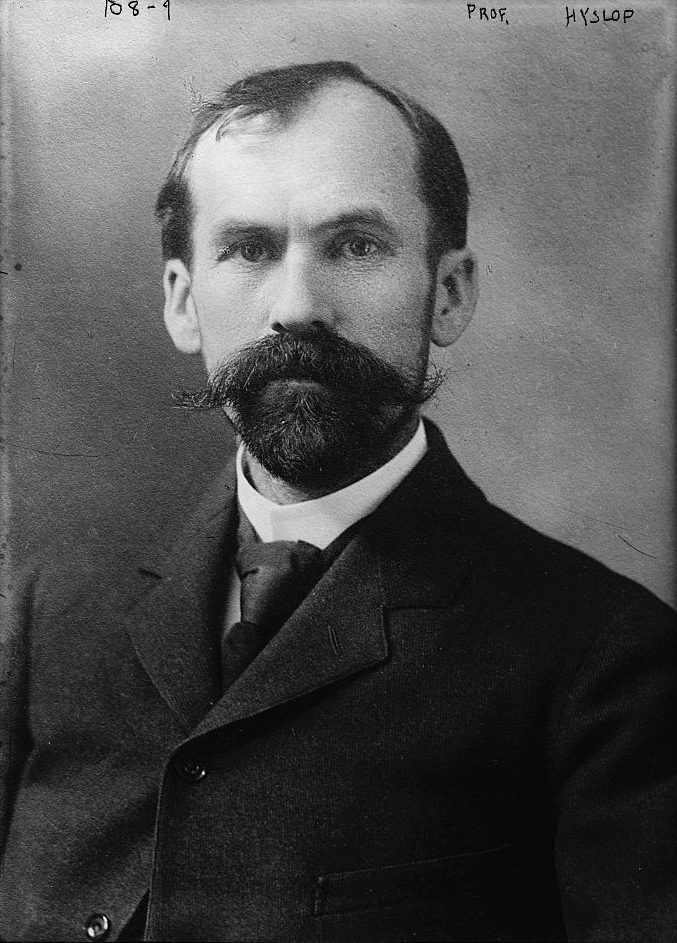
The American Society for Psychical Research was founded in 1884 — exactly one century before Ghostbusters — as a legitimate organization looking to separate spiritualist quacks from actual supernatural phenomena.
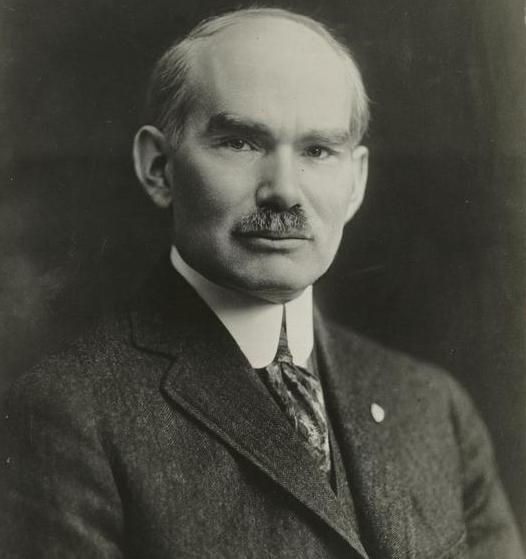
Its most prominent leader was James H. Hyslop (above), a former professor of ethics and logic at Columbia University. Â His early studies read like a jazz-age X-Files, investigating ghosts, spiritual possession and a strange variety of mental abilities. Â (We speak of Hyslop in two of our old ghost story podcasts, investigating a case of spiritual harassment and contact via a Ouija board.)
4) While no hauntings are actually displayed at Columbia University in the film, they certainly could have been.
The campus is located on the site of old Bloomingdale Insane Asylum, where more than a few mentally disturbed individuals met their end.
Columbia bought the facility in the 1880s and demolished most of it to make way for their McKim, Mead and White-designed campus. But one structure still remains — the Macy Villa, a home for mentally-troubled rich gentlemen, in today’s Buell Hall, home of La Maison Francaise.
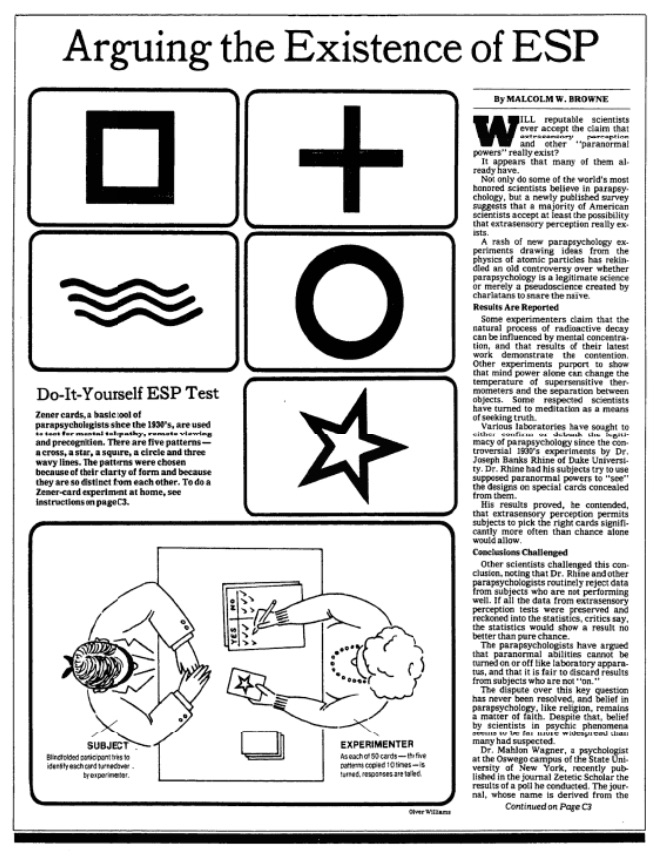
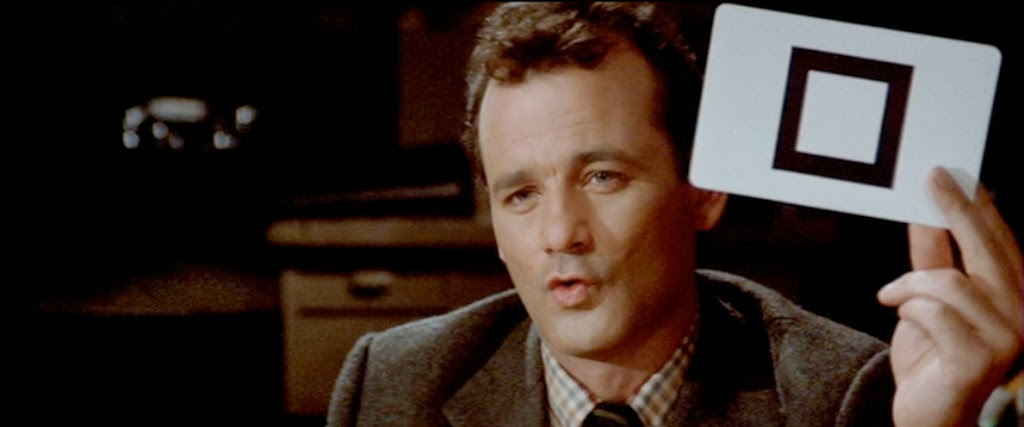
5)The deck of cards used by Dr. Venkman (Bill Murray) to test the telepathic abilities of his patients (and to flirt with the pretty blonde) are called Zener cards, invented by Karl Zener and J. B. Rhine, who was inspired to enter psychical research after listening to a lecture by author and paranormal cheerleader Sir Arthur Conan Doyle.
In 1980, the New York Times printed a set of Zener cards in its January 29, 1980 edition. “The reader may judge for themselves.”
6) Dr. Venkman’s continued skepticism gives Murray a host of excuses to stare at the camera and mug sardonic. But his character probably has the most in common with New York’s original ghostbusters, especially adventurer and conjurer Joseph Rinn.
He and his childhood friend Harry Houdini basked in debunking frauds while keeping alive the illusion of magic and mystery for their acts.
Rinn most famously held a demonstration at Carnegie Hall where he taunted mediums and mystics to exercise their powers for a prize pot of $10,000. Nobody ever won the money.
7)Manhattan City Bank, depicted in the film, is not real. Â Coincidentally, the scene was filmed at another bank directly across the street from the New York Public Library at Fifth Avenue/41st Street. In fact, you can see that the library is surrounded by scaffolding in the movie.
What was the scaffolding for? In 1982, the library embarked a $20 million renovation project. It’s difficult to imagine today, but this classic New York institution had been badly abused over the years.
The 1982 renovation was meant to return the building to its original glory. “It is a restoration in some ways, a modernization in others,” said the Times. “[T]his ambitious plan emerges out of the conviction that this building is as much a part of our cultural heritage as the billions of words that it contains.”
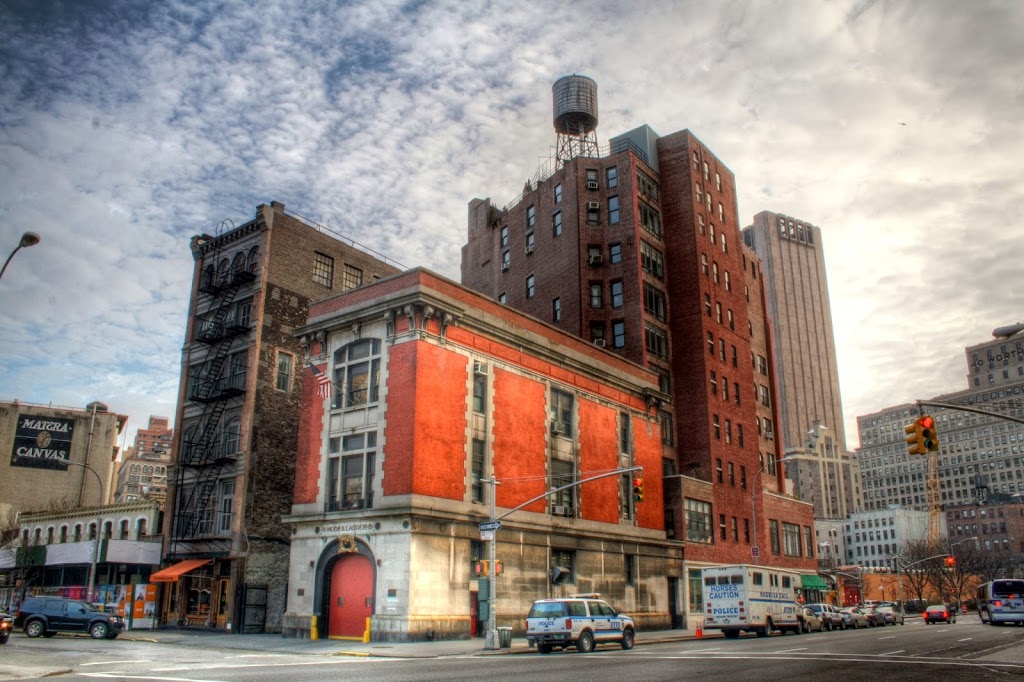
Ghostbusters headquarters — the TriBeCa fire house on North Moore. Pic courtesy Phillip Ritz
8) Perhaps the most beloved New York site from the film is Ghostbusters headquarters, the Hook and Ladder Company No. 8 fire station at the corner of North Moore Street and Varick Street.
If the building looks awkwardly slender to you, there’s a good reason — half the building was demolished in 1914 when Varick Street was widened. Several other buildings, including St. John’s Chapel, owned by Trinity Church, were not so lucky, wiped out entirely by Varick’s expansion.
Spengler (Harold Ramis) says of the firehouse. “I think this building should be condemned….The neighborhood is like a demilitarized zone.”
In fact, the converted lofts and warehouses of TriBeCa (Triangle Below Canal) — the name was slightly over a decade old in 1984 — were a haven for artists, designers and musicians by this time and probably deemed ‘gritty’ by the standards of 1980s American film goers.
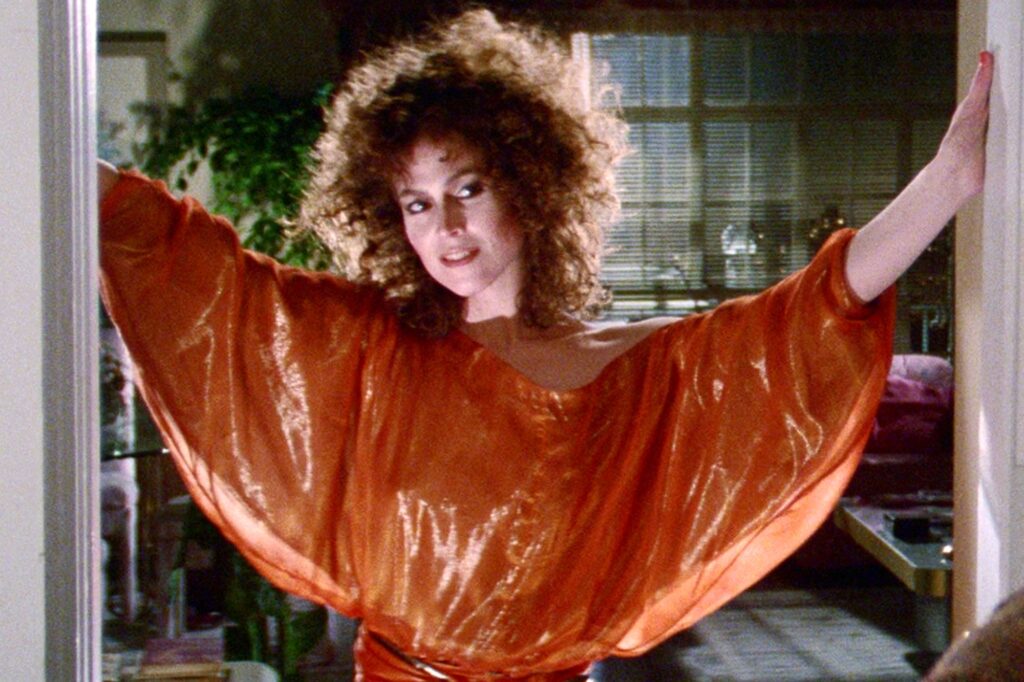
9)Sigourney Weaver is probably the most New York-centric star of Ghostbusters and a perfect choice for the role of Dana, the sophisticated lady possessed by an ancient God. (Dana’s in the New York Philharmonic after all!)
Weaver was a regular on the off-Broadway stage, an offbeat star who once starred in a Christopher Durang play about the Titanic. Her first two film performances are in two 1970s New York film classics — Serpico and Annie Hall. 10) As Sigourney arrives at her apartment building, you can clearly identify Checker Cabs passing on the street, even though that were already a dying breed by this time, the last rolling out from its Michigan plant in 1982.
11) The Sedgewick Hotel, site of the Ghostbusters’ most conspicuous catch, is one of several Los Angeles locations pretending to be in New York.
However, if they wanted a haunted hotel near the New York Public Library, they could have looked no further than the Algonquin Hotel, two blocks north on West 44th Street, notoriously famous for the ghosts of the Round Table.
The Sedgewick is played in the film by L.A.’s Biltmore Hotel, site of several Academy Awards ceremonies and itself haunted by a famous ghost, that of Elizabeth Short, aka the Black Dahlia.
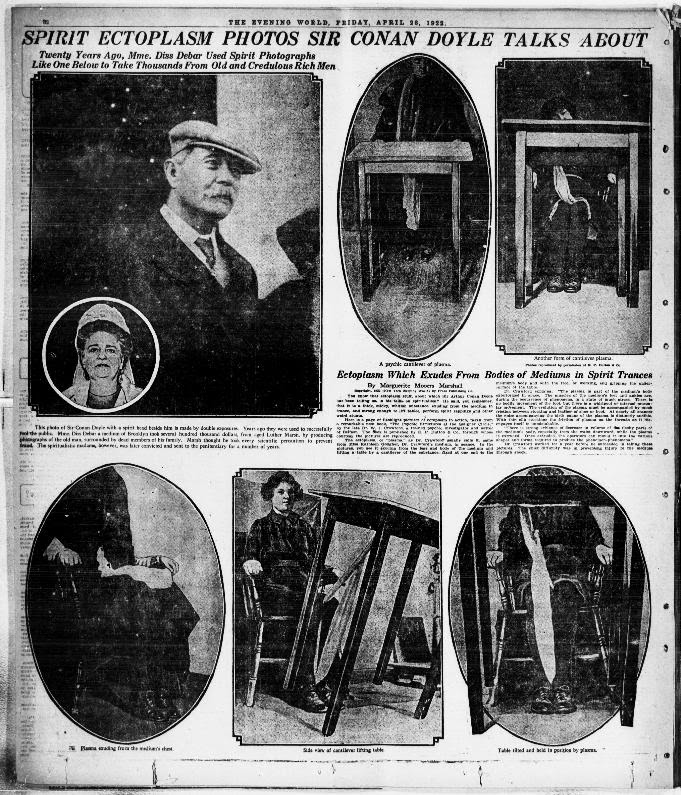
12) Ectoplasm isn’t just a cool word for ‘slime’. In 1922, the New York Evening World ran photographs of mediums coated in ectoplasm.
Sir Arthur Conan Doyle described it as “thick, sticky, whitish substance exuding from the medium in trance and strong enough to lift tables, perform spirit rappings and other weird stunts.”
13) A New Jersey high school student named Jeff Nichols found momentary fame when he accidentally appeared as an extra in the film, during the brief scene in which Bill Murray and Dan Ackroyd storm through Rockefeller Center. (Did they not sign release forms back then?) The scene appears in a montage of the crew’s many ghost-exterminating antics.
”I got a bunch of phone calls from friends who saw it, saying, ‘Hey, Jeff, you’re in the movie,’ ” said a surprised Jeff last week. ”It’s strange to think that I’m in a movie that’s playing all over the country…… I guess it’s like being part of history.”
No offense to Jeff, but I’m kinda more fascinated in another brief scene during this montage, when the Ghostmobile speeds past Umberto’s Clam House in its original location (the corner of Mulberry and Hester).
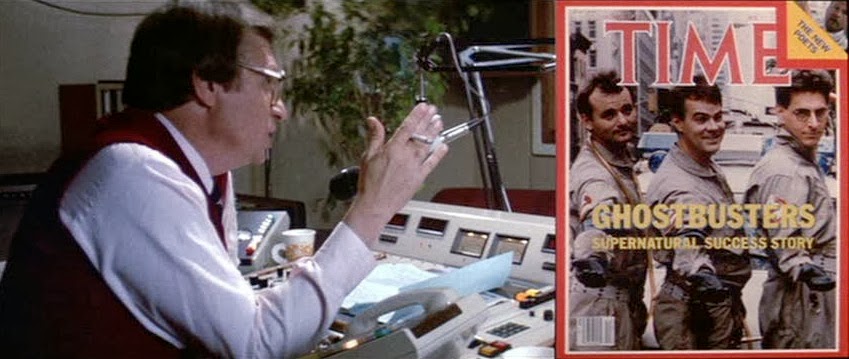
14)Larry King on the radio in Ghostbusters in 1984:
15) There’s a silly montage of 1984 publications that go swirling by. People Magazine touting the trio also reveals “Princess Di Expecting Again!” The magazine (supposedly from October 1984) is a little off — Prince Harry was born on September 15, 1984.
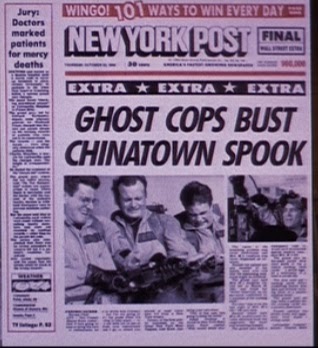
The New York Post also celebrates one off-screen Ghostbusters’ victory: GHOST COPS BUST CHINATOWN SPOOK.
In the early 1980s, the Post gave $50,000 a week in its WINGO! lottery promotion. According to author and former Post reporterCharlie Carillo, the contest illicited some rather mysterious winners:
“One Wingo winner showed up soaked in sweat and literally looking over both shoulders. He wouldn’t even tell me his real name, and he covered his face with his hands when the photographer lifted the camera. ‘No pictures!’ he cried through his fingers. ‘Can’t have my picture in the paper!'”
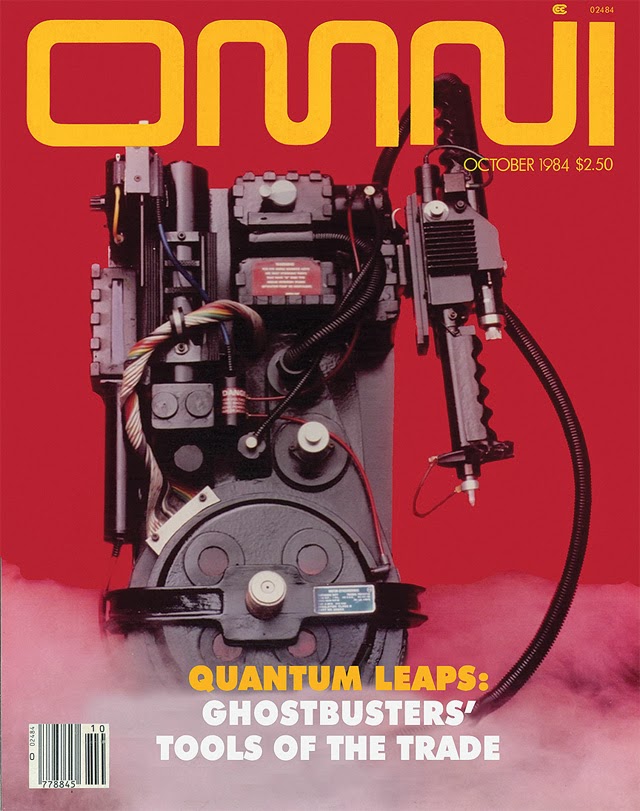
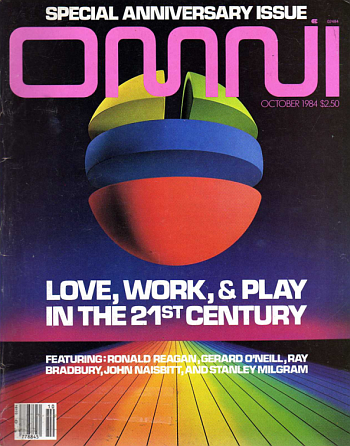
16) Also given credible prominence during this montage is the long-gone OMNI Magazine, a science publication with the unique distinction of being one of the first magazines to simultaneously publish a digital edition (in 1986).
Here’s a copy of the October 1984 issue from the movie, and the actual October 1984 issue:
17) Dana listens to Casey Kasem gab about the Ghostbusters during his Top 40 countdown show. His wife Jean Kasem appears later in the movie as Rick Moranis’ ditzy date.
Had we been privy to the entire broadcast, we would have heard that the top five songs that week were (in Kasem countdown order): 5) “Lucky Star” by Madonna, 4) “Purple Rain” by Prince, 3) “Hard Habit To Break” by Chicago, 2) “Caribbean Queen (No More Love On The Run)” by Billy Ocean, and 1) “I Just Called To Say I Love You” by Stevie Wonder.
18) Veteran New York broadcaster Joe Franklin appears on television, asking Murray, “I’m sure there’s one big question on everybody’s mind, and I imagine you are the man to answer that. How is Elvis, and have you seen him lately?”
Franklin, presumably recording from WWOR‘s brand-new studios in Secaucus, NJ, was touching on a hot-button issue in 1984. That year, some believers found proof that Elvis Presley was actually still alive, due to an infamous photograph that emerged in the press of Elvis with Muhammed Ali. A video of that investigation is below:
19) A supernatural upheaval of godlike forces emerges from Dana’s icebox, located in a penthouse at 55 Central Park West. In the film, this building, constructed in 1929, was made with cosmic connections in mind, with a super-conductive antenna, “pulling in and concentrating spiritual turbulence.” Stantz (Dan Ackroyd) adds, “The architect was either a certified genius or a pathetic wacko.”
In Ghostbusters lore, the architect is Ivo Shandor. In reality, the building was constructed by the less immortal architectural firm of Schwartz and Gross, best known before then for their building The Majestic on West 75th Street. 55 Central Park West has been home to Rudy Vallee, Ginger Rogers, Donna Karan and Calvin Klein.
There does appear to be something strange going on with the building. According to the latest AIA Guide: “[I]f the sun seems brighter at the top than the bottom, it is brighter. Â A flush of brick from red to yellow rises from the second floor to the sun.” Gozer is impressed.
20) Louis Tully (Rick Moranis) just wants somebody to like him. Although a “nerd” in the classic 1980s nerd style, he’s pretty much a prototype for the modern hipster. In a futile effort to get Dana to his party, he proclaims that they will “play some Twister, do some breakdancing.”
1984 was the year that this form of street dancing went mainstream, with films, fashion and music that year monopolizing on the trend. Breakin‘ was in theaters for a month already when Ghostbusters opened on June 8, 1984. It handily beat a competing film making its debut that same week — Beat Street (see below).
Believe it or not, Beat Street debuted on more screens than Ghostbusters, but lost in the box office battle.
21) Louis runs into Central Park to escapes Gozer’s demon minion but is cornered at Tavern On The Green. It would have been quite a party that Louis and the hellbeast were crashing, as the fancy restaurant was celebrating its 50th anniversary that very month.
Tavern On The Green opened on October 20, 1934, with a lavish dinner attended by Mayor Fiorello LaGuardia and parks commissioner Robert Moses (pictured below, image courtesy New York Times)
22) Later, a possessed Louis (as the Key Master) streaks through Times Square in a demoniacal rage, looking for the Gate Keeper.
It’s a fairly nondescript early 80s midtown landscape, but look for the curious chain restaurant WienerWald in the background.
The German franchise had several locations throughout the United States but was unable to turn Americans on to its menu — mostly chicken, despite the name.
One intrepid Ghostbusters fan has successfully located the precise block on Seventh Avenue where this WienerWald was located.
23) With the city in crisis, the Ghostbusters are invited to City Hall for a meeting. As they enter the building, you can clearly see the banner for an exhibit in the rotunda called “Furnishing the Streets: 1902-1922.”
Because the banner could not be removed for some reason, the filmmakers cleverly obscure the exhibition’s date with a flagpole. However you can still make out that it says 1983.
24) The Stay Puft Marshmallow Man in his deliciously savage rage stomps up Central Park West from Columbus Circle. The most significant landmark destroyed by this sugary-sweet demon spawn is Holy Trinity Lutheran Church which sits next to 55 Central Park West.
The picturesque Gothic building has been a magnet for chaos from the very beginning. Over 3,000 people filled the street when its cornerstone was laid in November 1902, causing a traffic meltdown.
According to the New York Tribune, “It was as much as the police could do for a time to prevent people from being run down by trolley cars and automobiles, as many people were compelled to stand in the middle of the street.”
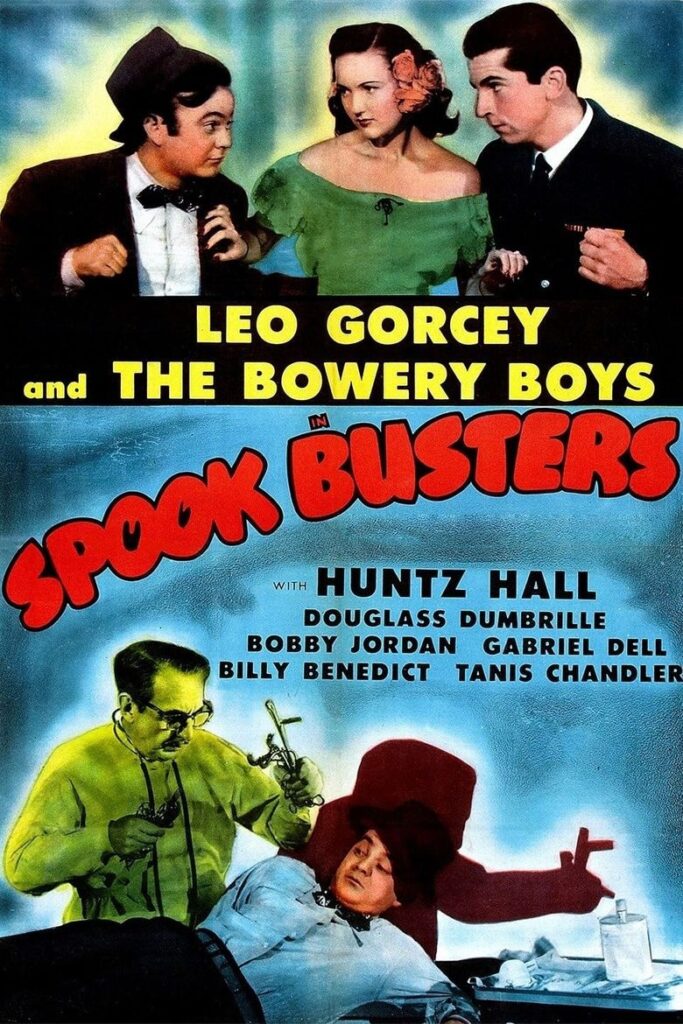
25) Our brave heroes vanquish Gozer and return to the street, greeted to the applause of grateful New Yorkers. I would be remiss, however, if I didn’t mention another set of Ghostbusters who once scoured Manhattan of its supernatural nuisances: the 1940s wacky Bowery Boys comedy troupe made a film in 1946 called Spook Busters.
Instead of a fire station, these exterminators of unwanted phantoms set up shop in a candy store.
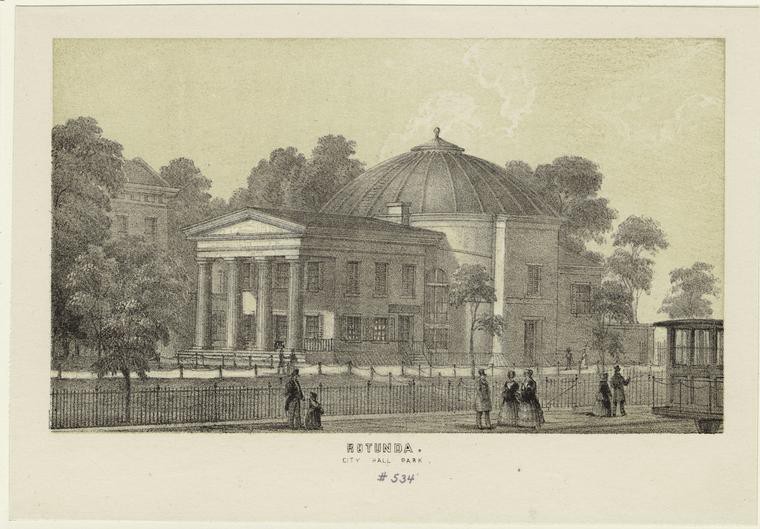
The Metropolitan Museum of Art contains a very unusual piece of art tied to the early history of City Hall. In fact, this piece is responsible for what is sometimes considered New York’s very first art museum — decades older than the Met itself.
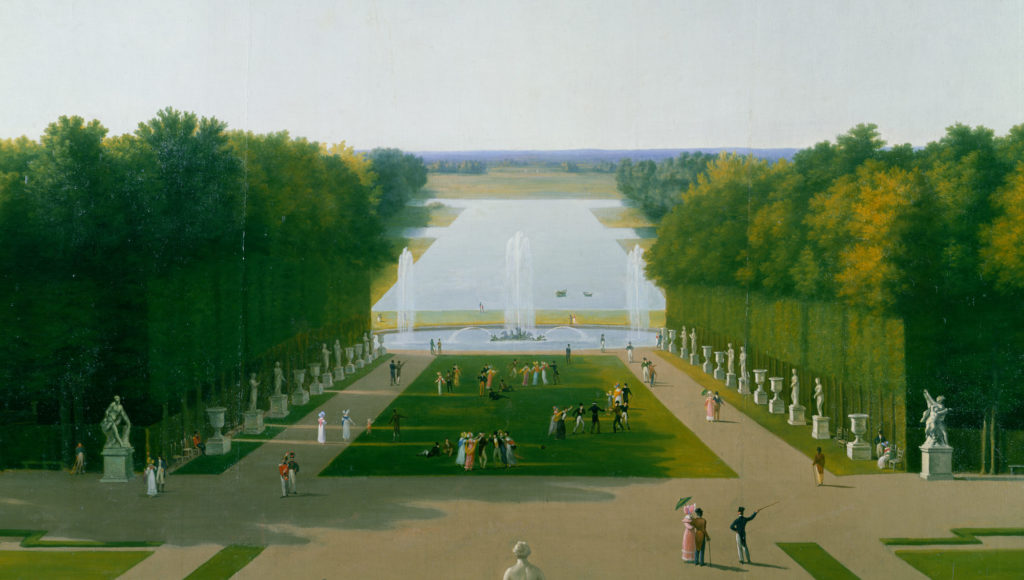
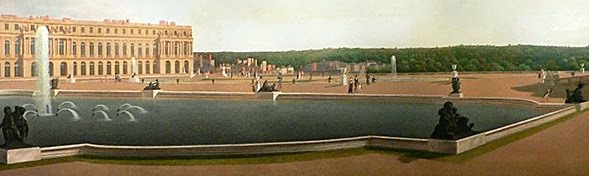
The strange oil painting is called Panoramic View of the Palace and Gardens of Versailles by John Vanderlyn (pictured below). Strange, because it’s a circular work of art, requiring its own room in the American wing of the Met, where it is broken into two pieces that immerse the viewer who walks between them.
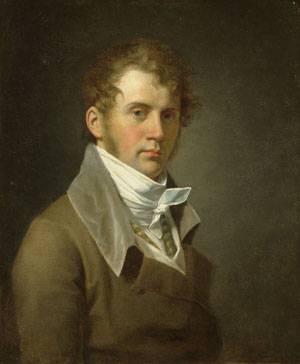
Vanderlyn was a painter of great renown at the start of the 19th century, despite being a protege and close friend of disgraced vice president Aaron Burr. He went on to create portraits of many great men of the age, including several presidents.
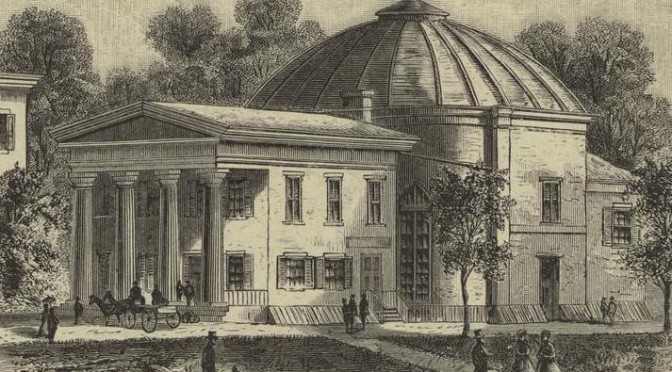
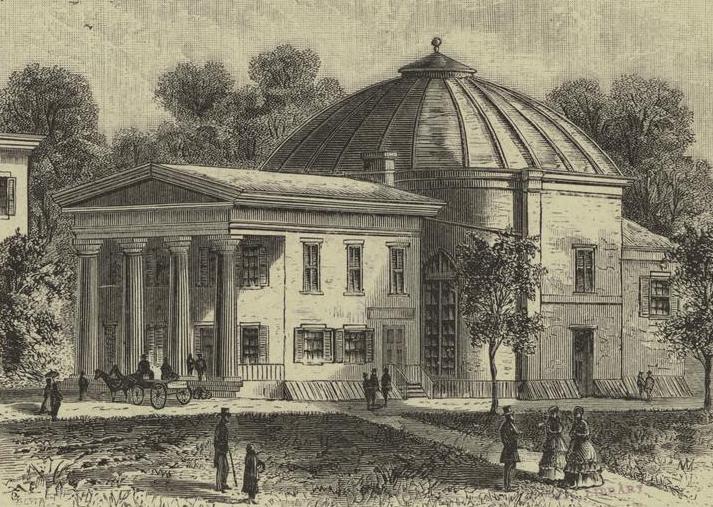
The artist painted the Versailles panorama in 1818 in his childhood home of Kingston, New York, about a 100 miles north of the city. With the support of some wealthy New York patrons (including John Jacob Astor), Vanderlyn received permission from the city to build a small rotunda in which to properly display this odd, grandiose canvas. And prime real estate it was, located just a few steps north of the newly built City Hall at Chambers Street and Cross Street (or, today’s Centre Street).
It was also next door to an abandoned almshouse; the residents of this facility had been shipped off to the newly created Bellevue Hospital by this time and the building’s hallways were filled with loftier organizations, like the New-York Historical Society and Scudder’s American Museum. Classy, and perfect for a neighboring vanity museum.
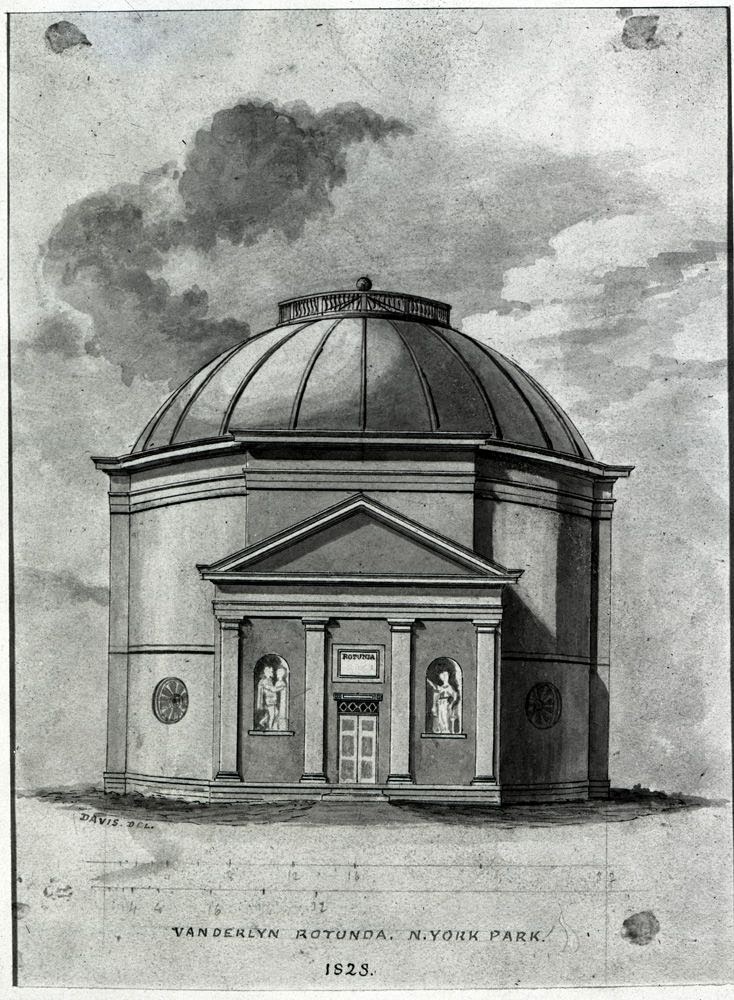
Vanderlyn’s self-designed gallery* was tiny but intense, a miniature Pantheon with domed roof 40 feet overhead. Uniquely, it was an art museum designed to focus on one artist — Vanderlyn. However, the piece was not completed in time for the Rotunda opening, and another panorama was displayed — a presentation of the city of Paris by Robert Barker, an Irish artist who allegedly invented the panoramic painting.
Eventually Vanderlyn brought Versailles to the Rotunda on May 26, 1820, as well other panoramas of Athens and Geneva, enhanced of course by the presence of more traditional paintings. The stipulation was that the artist could use the space as his own personal showroom for nine years, when it would pass over to the city for their own purposes.
Below: a segment of Vanderlyn’s panorama, courtesy the Met
However, it appears he grossly overestimated his own appeal. Vanderlyn was constantly owing money for the building’s upkeep and audiences never flocked to the gallery in numbers that would make it profitable. The artist would have to take some pieces on the road to boost interest in them.
Well before his nine years were up, Vanderlyn was interested in renewing his lease, but New York City had other plans. Despite the pleas of some of Vanderlyn’s wealthy friends, the building was refitted as a small courthouse — for a Court of Sessions (county-run criminal court) in 1829 — and morphed, for a time, into New York’s naturalization office and a neighborhood post office.
Drawing by Alexander Jackson Davis
Art returned briefly to the Rotunda in 1845 when it was used in the inaugural display from the New York Gallery of the Fine Arts, a consortium of art collectors who pooled together a stagger rent of “$1 a year” to shhow off their collections of European paintings. The Gallery only stayed at the Rotunda for a short time, moving to a more elegant gallery at 663 Broadway in 1848 and dissolving entirely when they donated their entire collection to the Historical Society ten years later.
By then, the classic glory of the Rotunda had been muddied by additions mandated by the city to turn the domed structure into government offices. Where once the glories of Greece and France once hung, New York plopped down its water board and home of the Almshouse Commissioner. Despite an attempt at appropriate alternations — including a “propylaeum, having a portico and four Doric columns” — the Rotunda never again returned to any sort of aesthetic glory. It was ripped down entirely in 1870, in time for the city to start construction of the Tweed Courthouse.
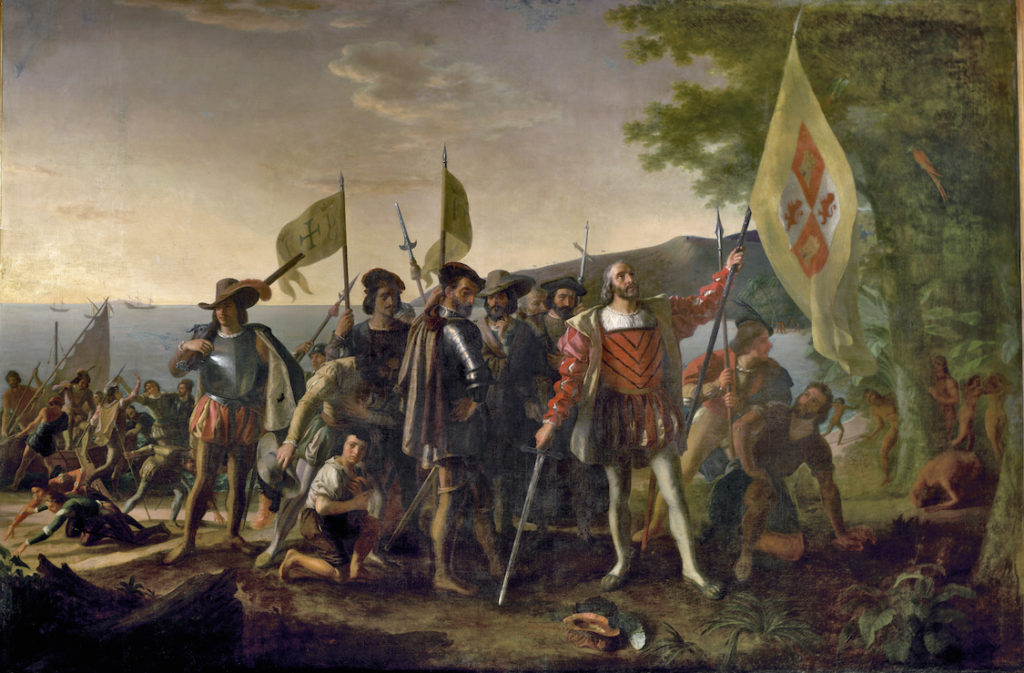
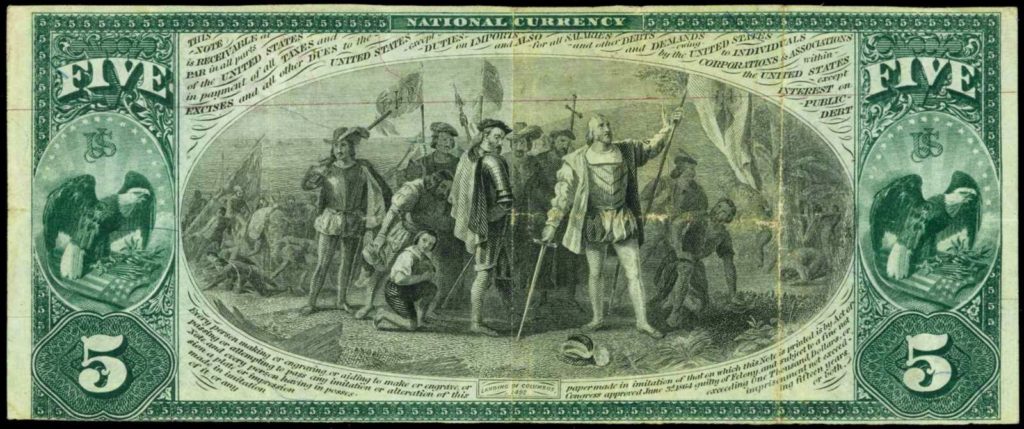
As for Vanderlyn, true success continued to evade him. In 1842, he would paint one of his most well-known pieces, The Landing of Columbus, a commission from the U.S. government that was used on the five-dollar bill. Yet, just ten years later, Vanderlyn would alledged die in poverty back in his home in Kingston, where he had created the Rotunda panoramas.
Below: Vanderlyn’s painting and the money it appeared on
Architect of the Capital
His Versailles painting would receive a grand reception when it was donated to the Met in 1956. The museum built a special circular room just contain it.
Click here for a nice review of Vanderlyn’s Versailles panorama and an overview of the entire panoramic phase of painting.
* Many sources seem to grant Vanderlyn the honor of designing the Rotunda himself, although one source lists a more-likely candidate — Martin Euclid Thompson, who was actually an architect.
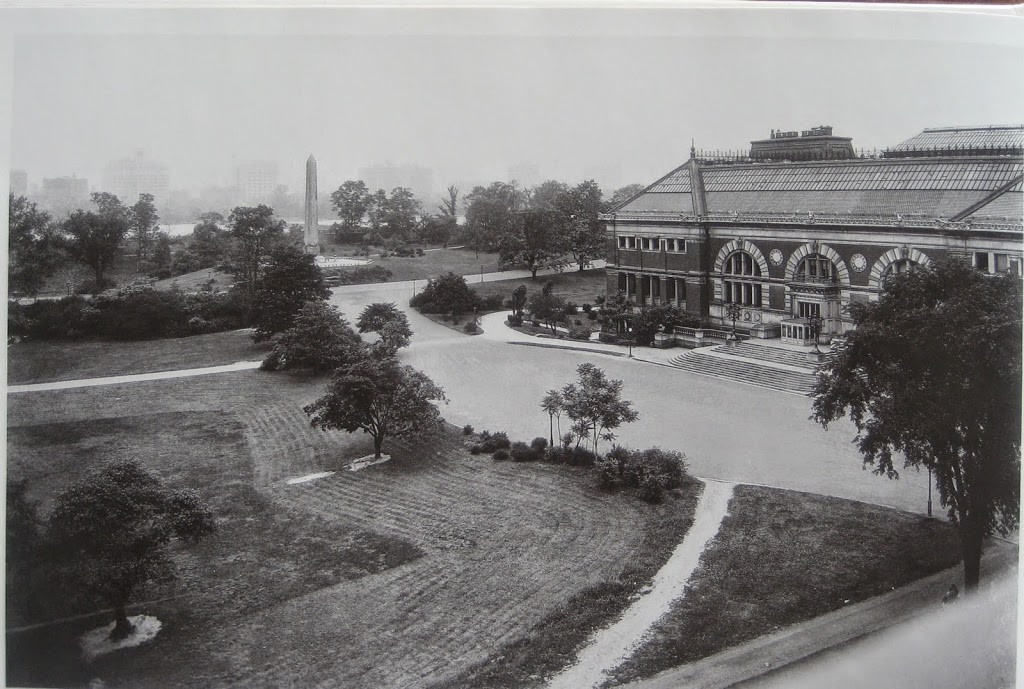
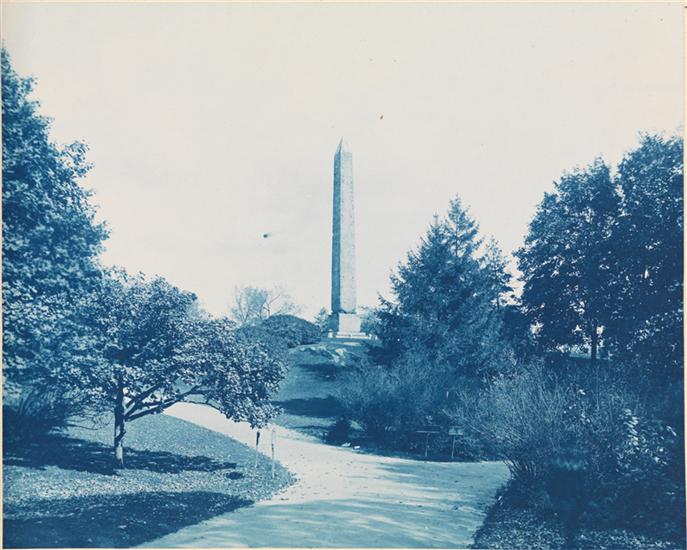
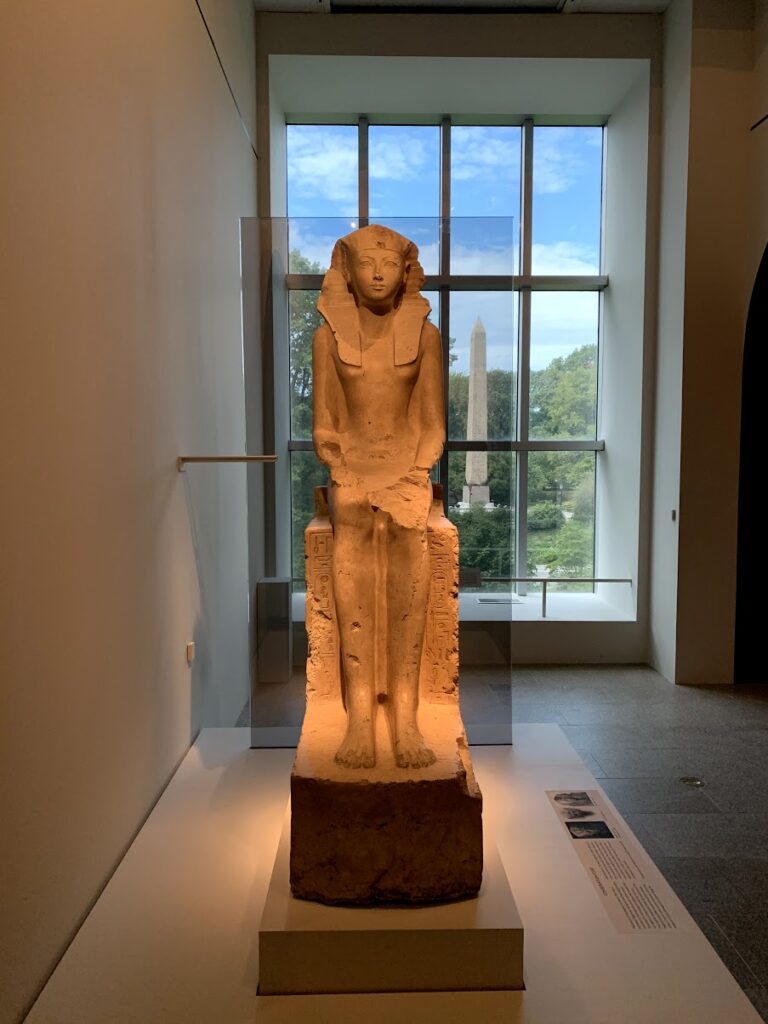
PODCAST Cleopatra’s Needle is the name given to the ancient Egyptian obelisk that sits in Central Park, right behind the Metropolitan Museum of Art.
This is the bizarre tale of how it arrived in New York and the unusual forces that went behind its transportation from Alexandra to a hill in the city’s most famous park.
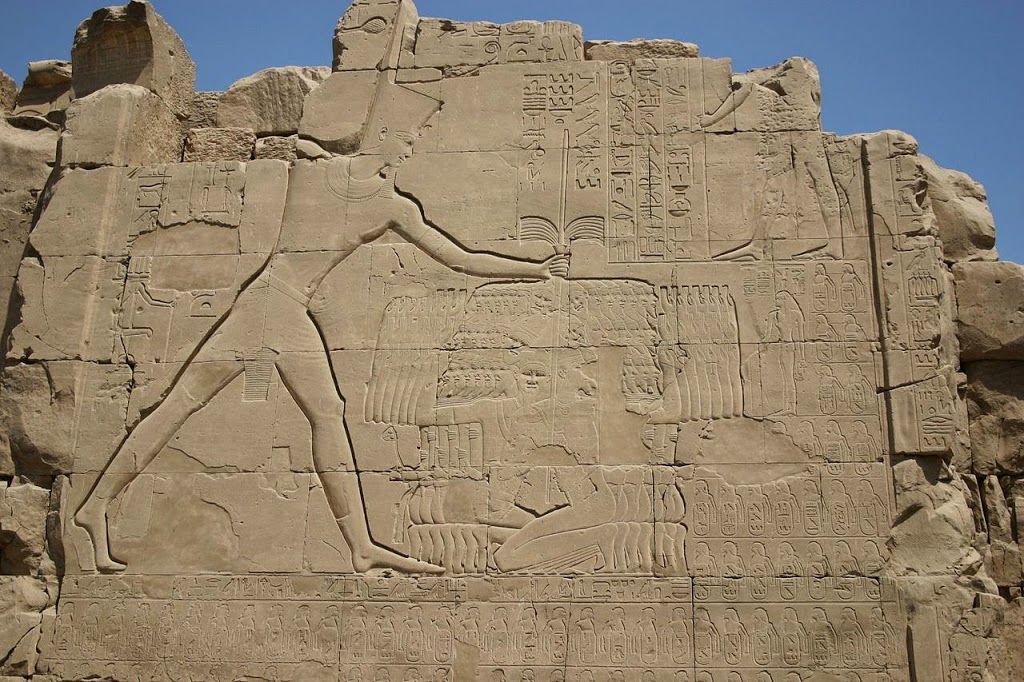
The weathered but elegant monolith known as Cleopatra’s Needle was created thousands of years ago by the pharaoh Thutmose III.
Thanks to the great interest in Egyptian objects in the 19th century — sometimes called Egyptomania — major cities soon wanted obelisks for their own, acquired as though they were trophies of world conquest.
France and England scooped up a couple but — at least in the case of the ill-fated vessel headed to London — not without great cost.
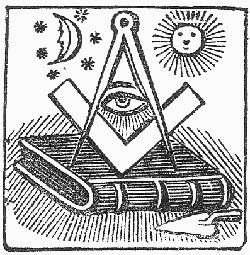
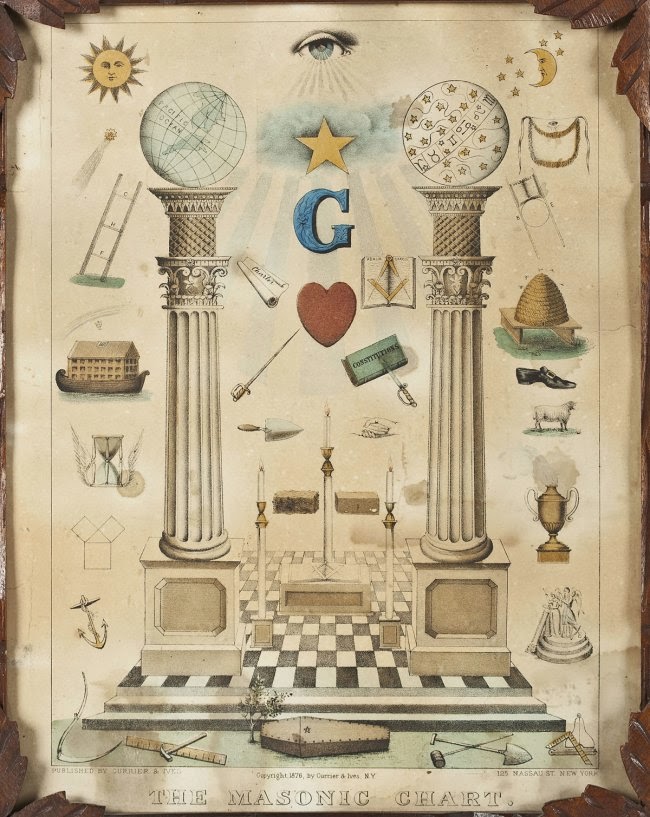
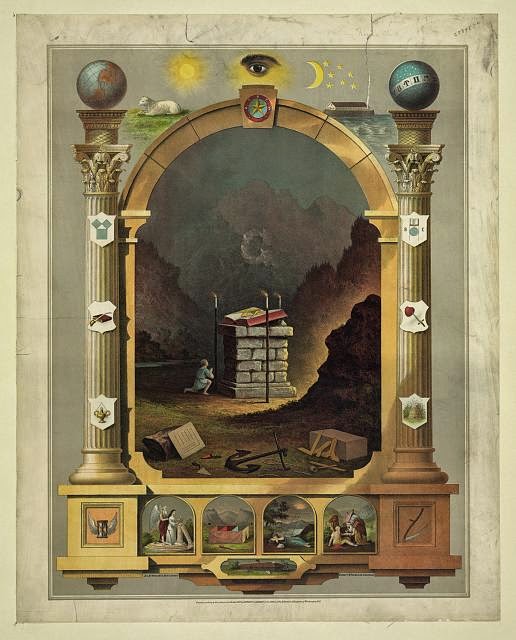
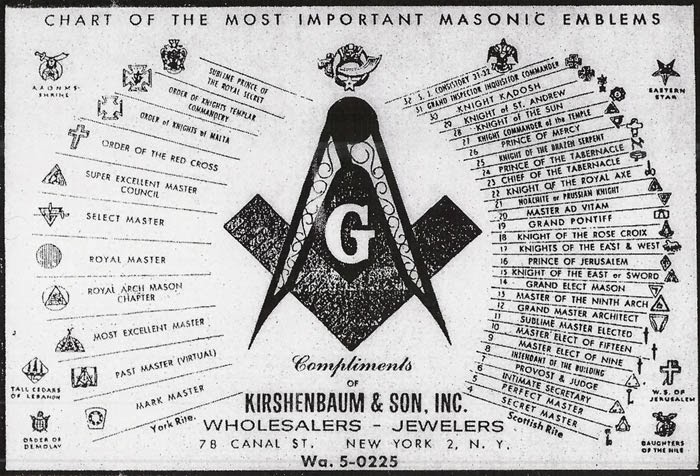
One group was especially fascinated in the Alexandrian obelisks. The Freemasons (their symbols at right) have been a mysterious and controversial fraternity who have been involved in several critical moments in American history (including the inauguration of fellow Mason George Washington.)
A Mason engineer and adventurer named Henry Honeychurch Gorringe discovered an incredible secret on the remaining Alexandria obelisk, a secret that might link the secretive organization to the beginning of human civilization.
Museum of the City of New York
But how do you get a 240 ton object, the length of a 7-story building, across the Atlantic Ocean and propped up in New York’s new premier park?
We let you in on Gorringe’s technique and the curious Freemasons ceremony that accompanied the debut of the obelisk’s cornerstone.
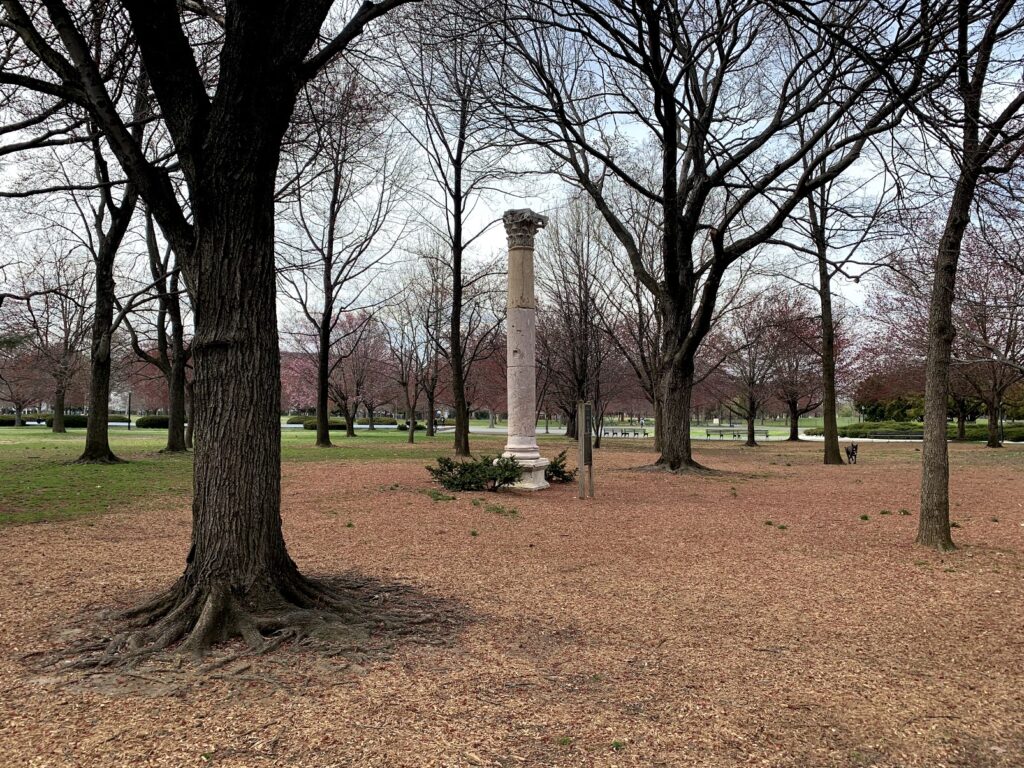
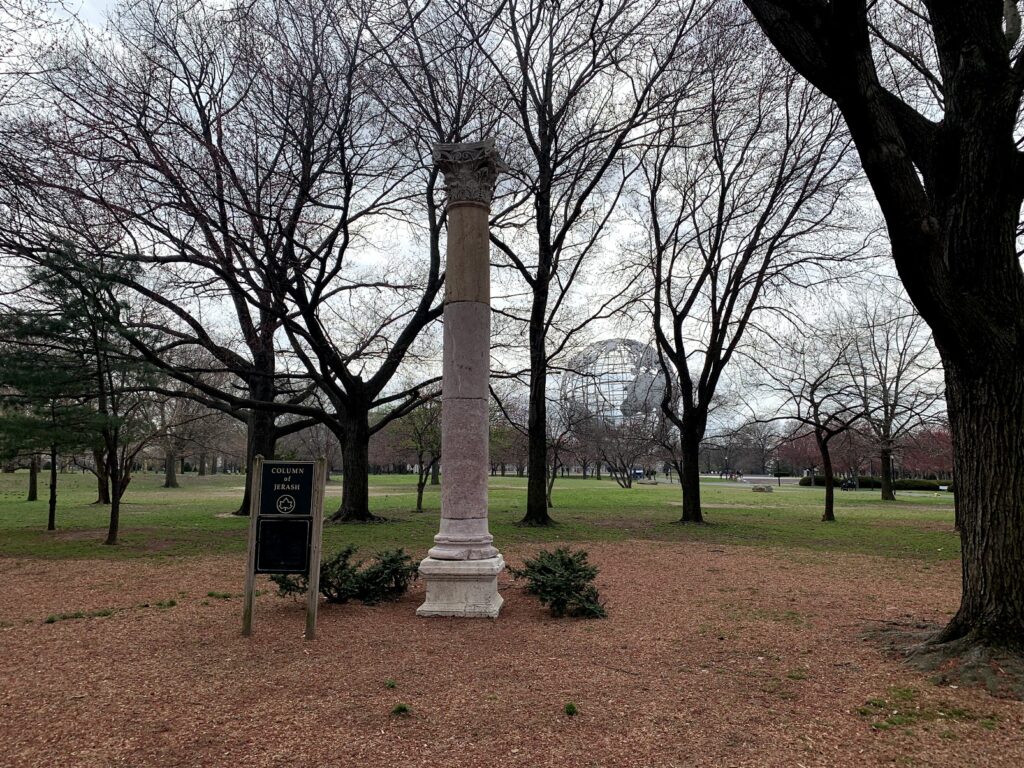
PLUS: A newly recorded tale about another ancient landmark that has made its way to New York City — a column from the ancient city of Jerash, brought here because of … Robert Moses?
This is a re-presentation of a show originally released on June 26, 2014 with new 2020 bonus material recorded for this episode.
Listen today on your favorite podcast player:
The Bowery Boys: New York City History podcast is brought to you …. by you!
We are now producing a new Bowery Boys podcast every week. We’re also looking to improve and expand the show in other ways — publishing, social media, live events and other forms of media. But we can only do this with your help!
We are now a creator on Patreon, a patronage platform where you can support your favorite content creators.
Please visit our page on Patreon and watch a short video of us recording the show and talking about our expansion plans.
If you’d like to help out, there are six different pledge levels.Check them out and consider being a sponsor.
We greatly appreciate our listeners and readers and thank you for joining us on this journey so far.
Cleopatra’s Needle as seen from the inside of the Metropolitan Museum of Art. Photo by Greg Young
Thutmose III, who commanded thousands to construct his obelisks, pictured in a relief in Karmac:
The Masonic Chart by Currier & Ives, 1876, created a few years before the arrival of the obelisk. And another below it, from 1872
From a jewelry advertisement, meant to clarify some of the levels and organizations within the Freemasons, although I’m sure this equally confused or frightened some people! [source]
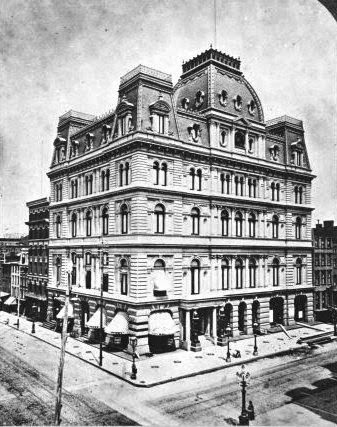
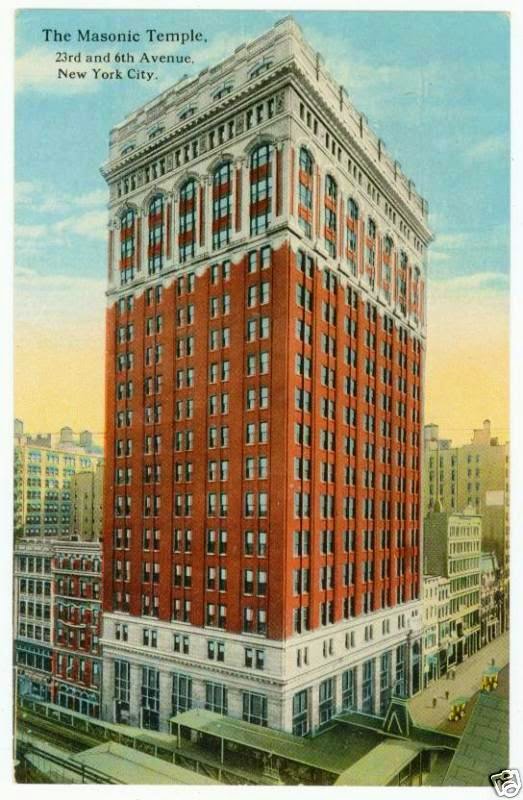
The New York Masonic Hall on 23rd Street and Sixth Avenue — the original hall (which stood at this corner during the retrieval of Cleopatra’s Needle) and the later 1911 structure which still stands there today. (Pictures courtesy NYPL)
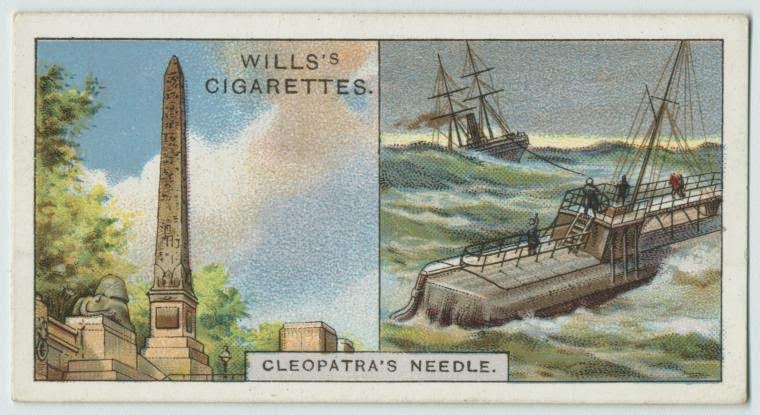
A cigarette card recounting the terrible tale of the London obelisk. (NYPL)
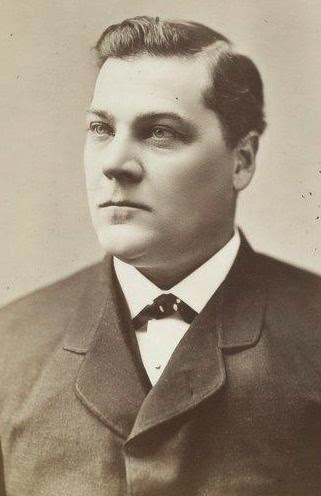
The hero of this episode — Henry Honychurch Gorringe
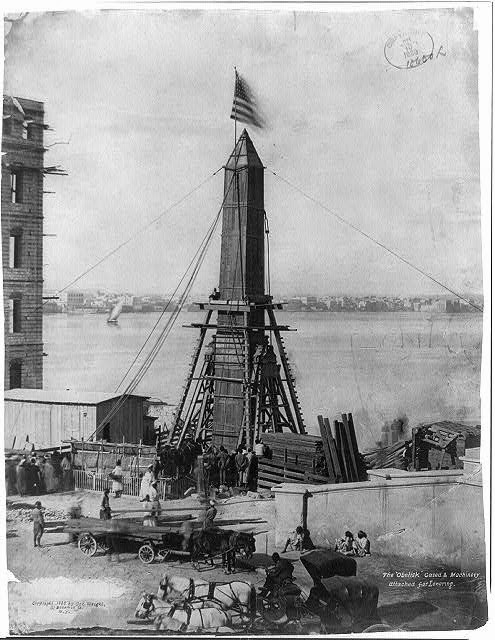
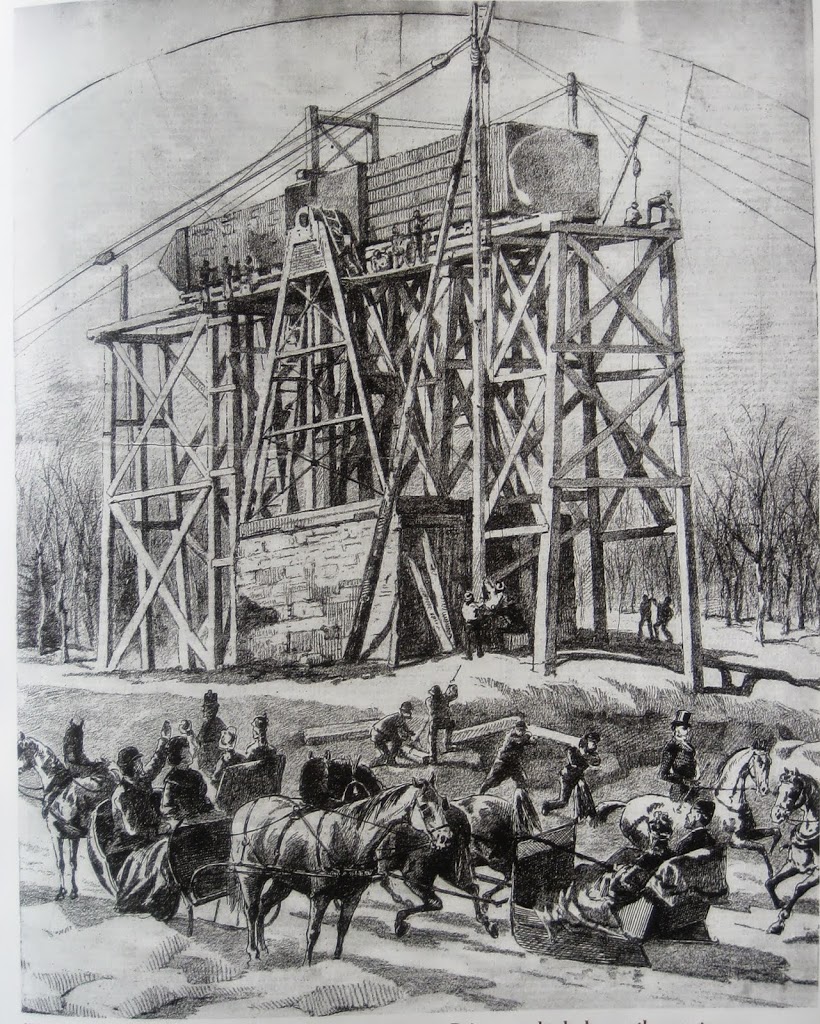
Gorringe prepares the obelisk for transportation. Even though it holds aloft an American flag, the treasure was actually a gift to the City of New York. (LOC)
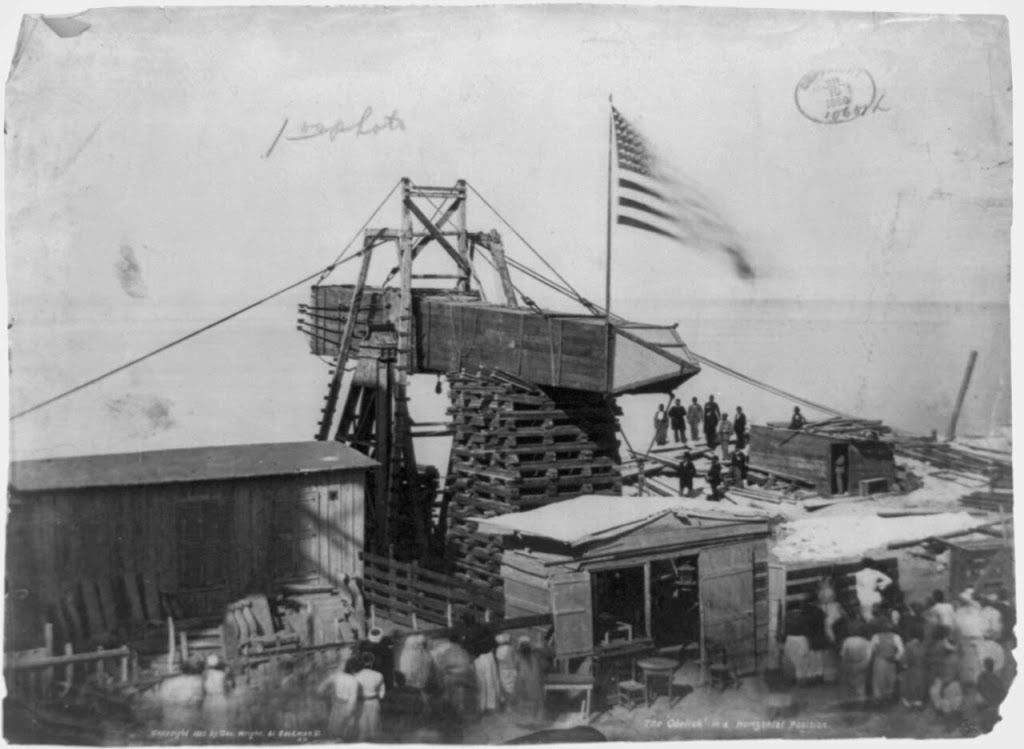
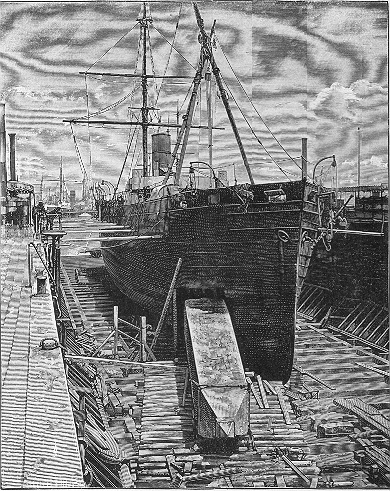
Sliding the obelisk into the hatch of a refitted Egyptian postal ship.
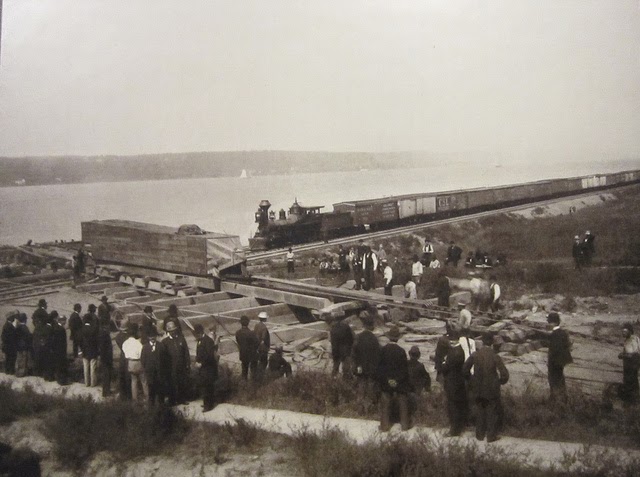
Getting the obelisk past the trains of the Hudson River Railroad! Thankfully, a Vanderbilt was in charge of both the tracks and the obelisk project.
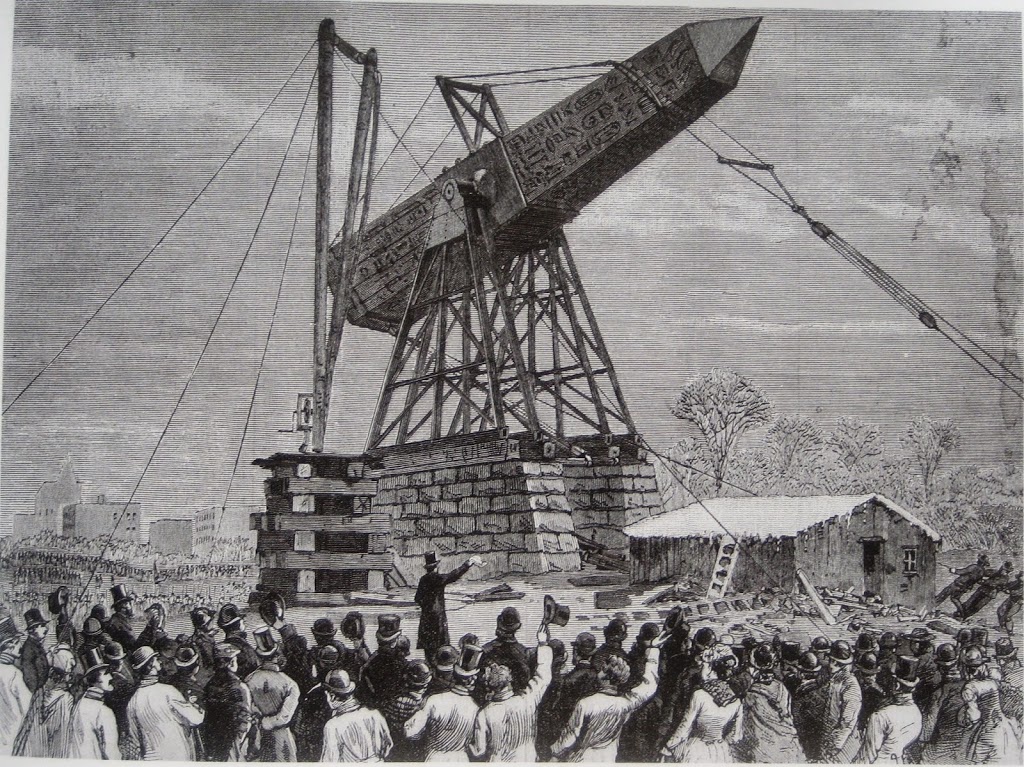
The ‘bridge’ which slowly took the obelisk across Manhattan, dismantled and rebuilt as the object moved eastward. (The following images are courtesy Torben Retboll)
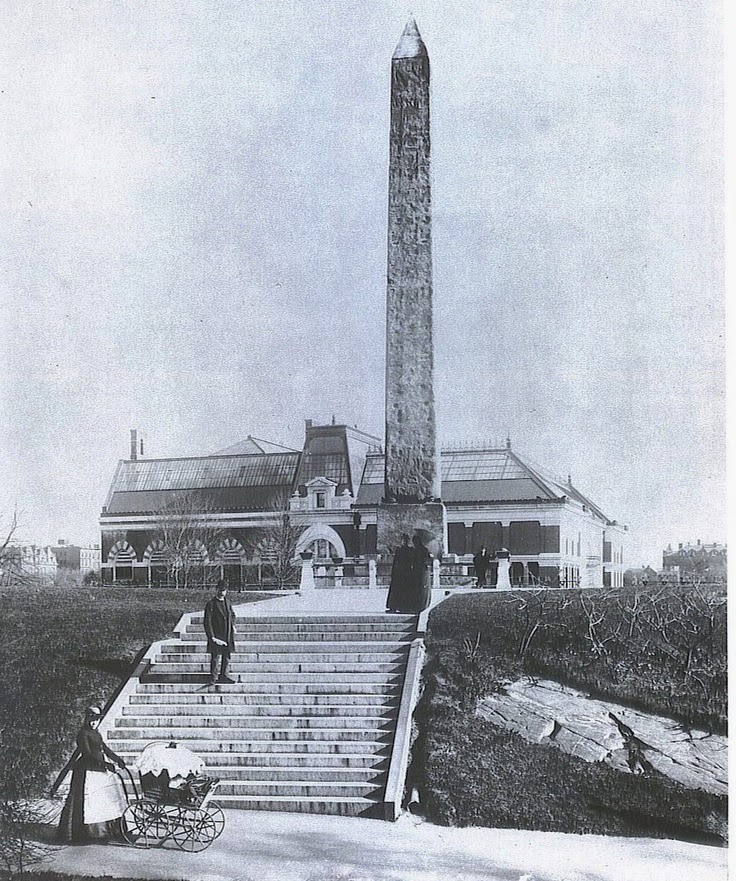
Both the obelisk and the Met were new features to Central Park in 1880.
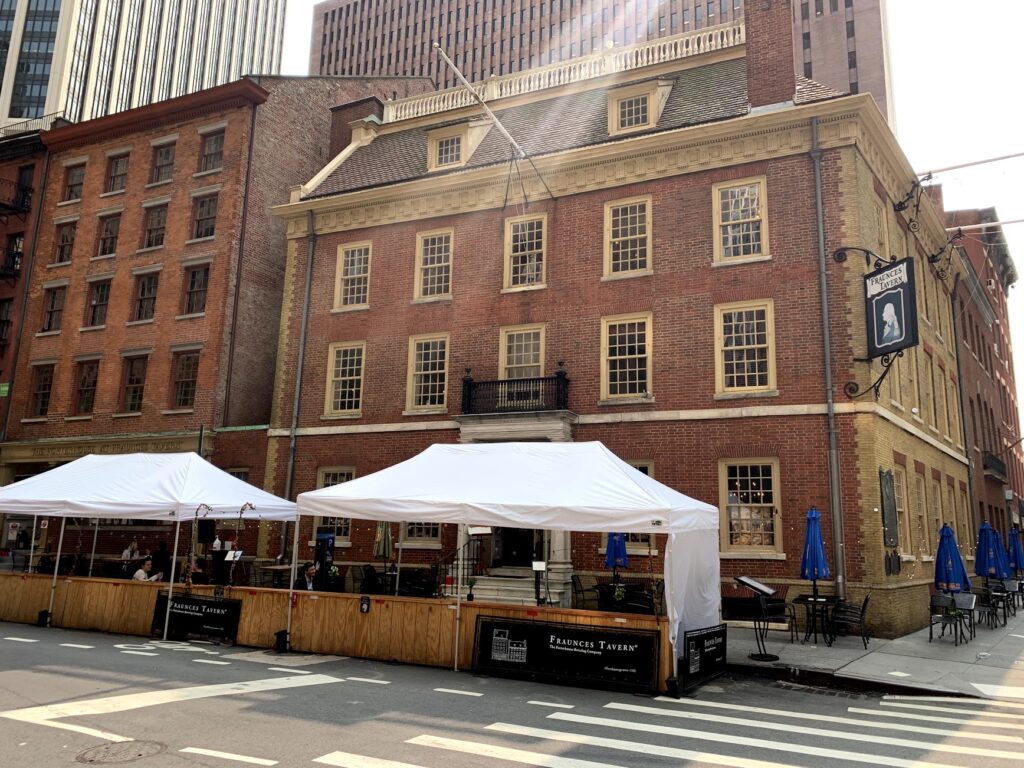
PODCASTFraunces Tavern is one of America’s most important historical sites of the Revolutionary War and a reminder of the great importance of taverns on the New York way of life during the Colonial era.
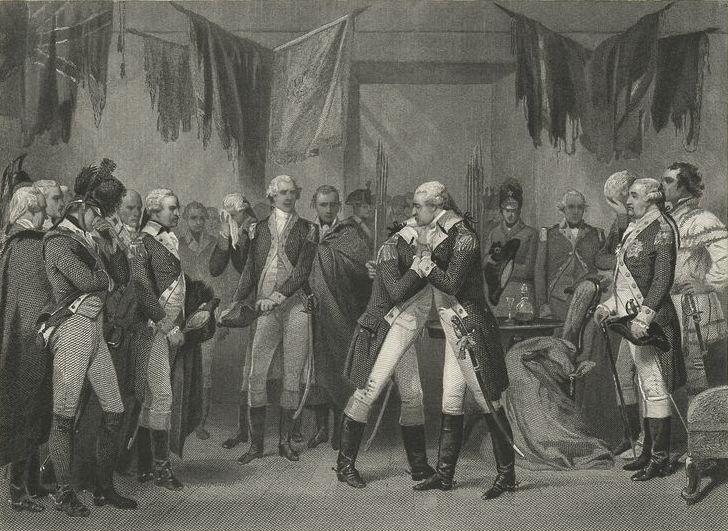
This revered building at the corner of Pearl and Broad Street was the location of George Washington‘s farewell address to his Continental Army officers and one of the first government buildings of the young United States of America.
John Jay and Alexander Hamilton both used Fraunces as an office in their first official capacities with the new federal government.
As with many places connected to the country’s birth — where fact and legend intermingle — many mysteries still remain.
Was the tavern owner Samuel Fraunces one of America’s first great black patriots? Did Samuel use his position here to spy upon the British during the years of occupation between 1776 and 1783?
Was his daughter on hand to prevent an assassination attempt on the life of Washington? And is it possible that the basement of Fraunces Tavern could have once housed … a dungeon?
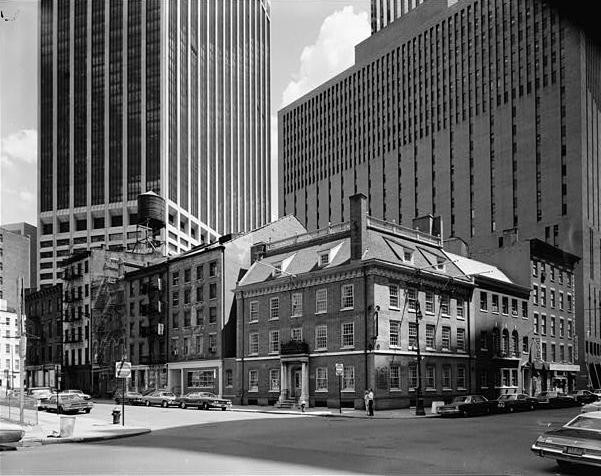
Fraunces Tavern in 2020
ALSO: Learn about the two deadly attacks on Fraunces Tavern — one by a British war vessel in the 1770s, and another, more violent act of terror that occurred in its doorway 200 years later!
PLUS: Where to find the ruins of Lovelace’s Tavern, dating back to the days of New Amsterdam.
This is a re-presentation of a show originally released on March 18, 2011 with bonus material recorded in 2020.
Listen today on your favorite podcast player or just press play here:
Listen to Fraunces Tavern’s new podcast Tavern Talks, hosted by Allie Delyanis and Mary Tsaltas-Ottomanelli. This week’s episode come features the Queens classic Neirs Tavern, in honor of Tavern Week.
The museum also has special virtual lecture coming up in October called Preserving the Past: The Restoration of Fraunces Tavern, in conjunction with Archtober. The presentation will feature rarely seen artifacts from the collection. Get your tickets here!
The museum encourage visitors to make reservations online, however they will accept walk-ins if not at capacity.
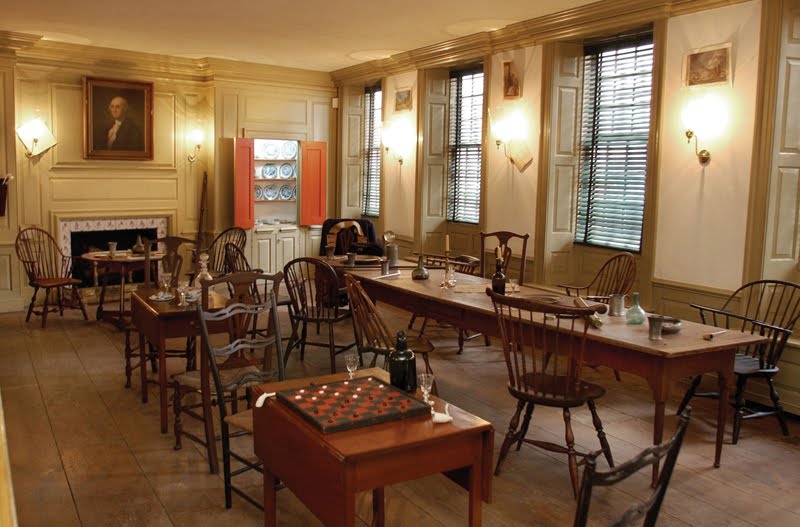
One of the oldest, diverse and historic rooms in New York City, the Long Room played host to Colonial Era dance classes, George Washington’s farewell speech (pictured below), decades of guests as a boardinghouse, and now a replica of tavern life in early America. [Columbia U]
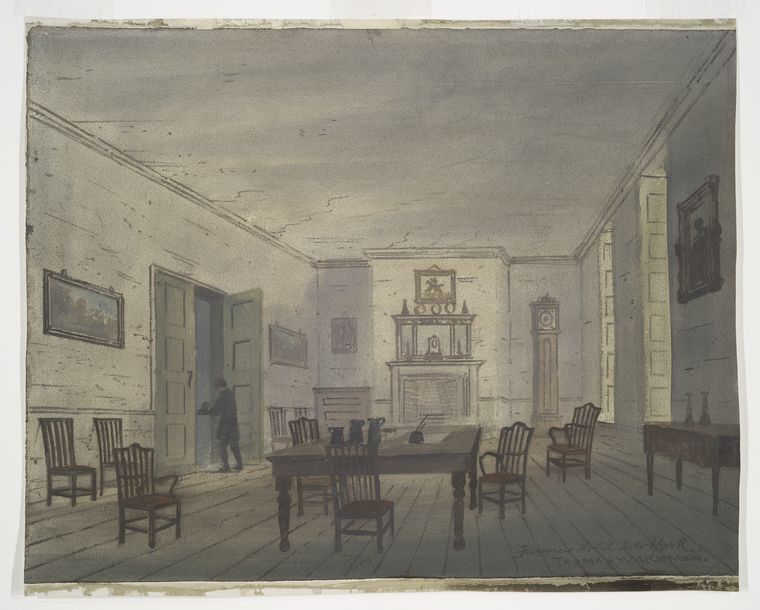
How the interior may have looked in the 19th century, as Fraunces became more a lodging house frequented by longshoremen, sailors and dock workers. [NYPL]
NYPL
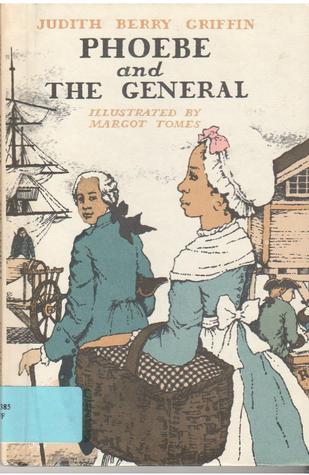
A 1977 children’s book about Phoebe Fraunces, furthering the popularity of this intriguing story.
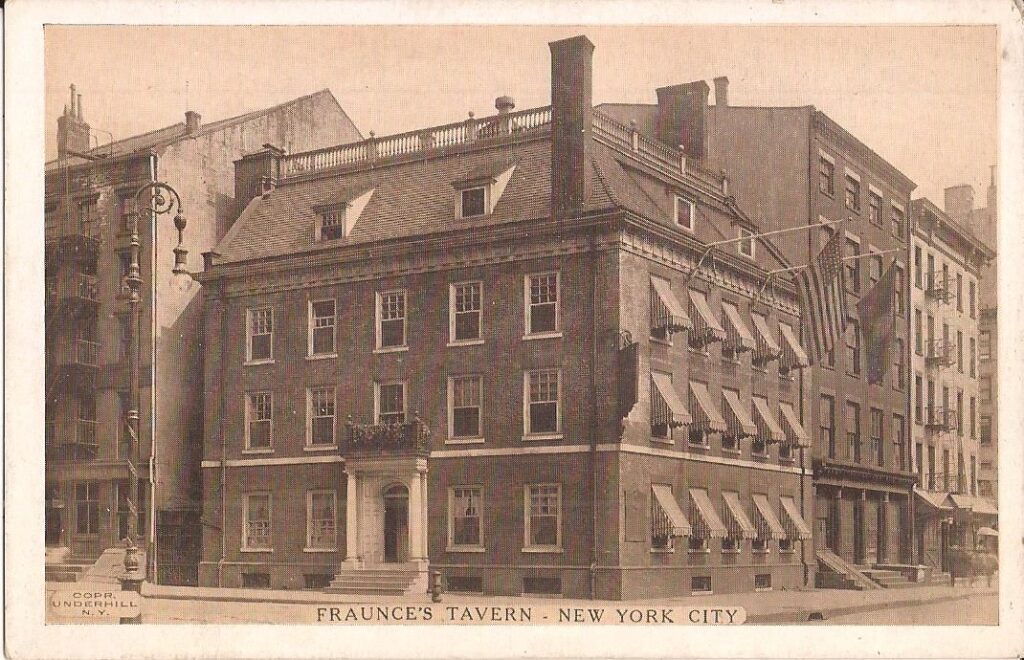
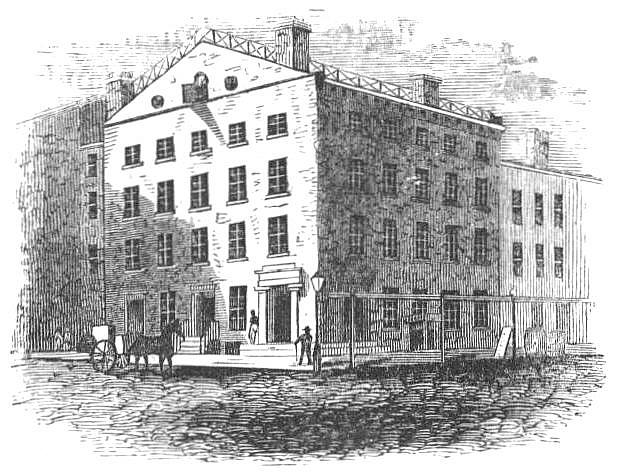
The changing facades of Fraunces: this sketch is from some point in the 19th century, when additional floors were added to the original structure. You can see the difficulty architect William Merserau might have faced in the 1900s when trying to reconstruct the building to reflect its original condition.
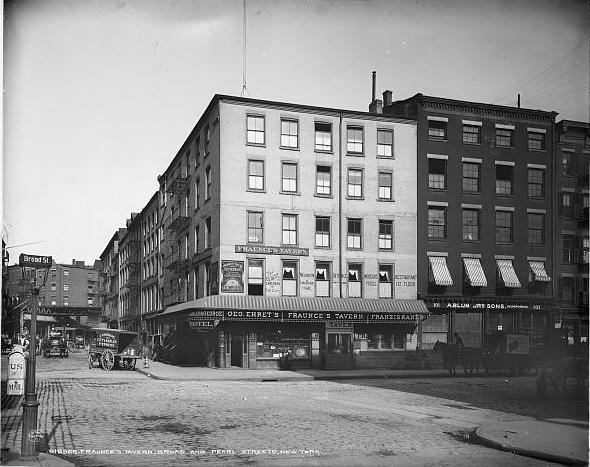
This doesn’t seem like it could even be the same building, and yet, there’s the sign for the tavern hanging over the second floor and a street sign for Broad Street to the left. This picture is between 1890 and 1904, before the structural changes. [LOC]
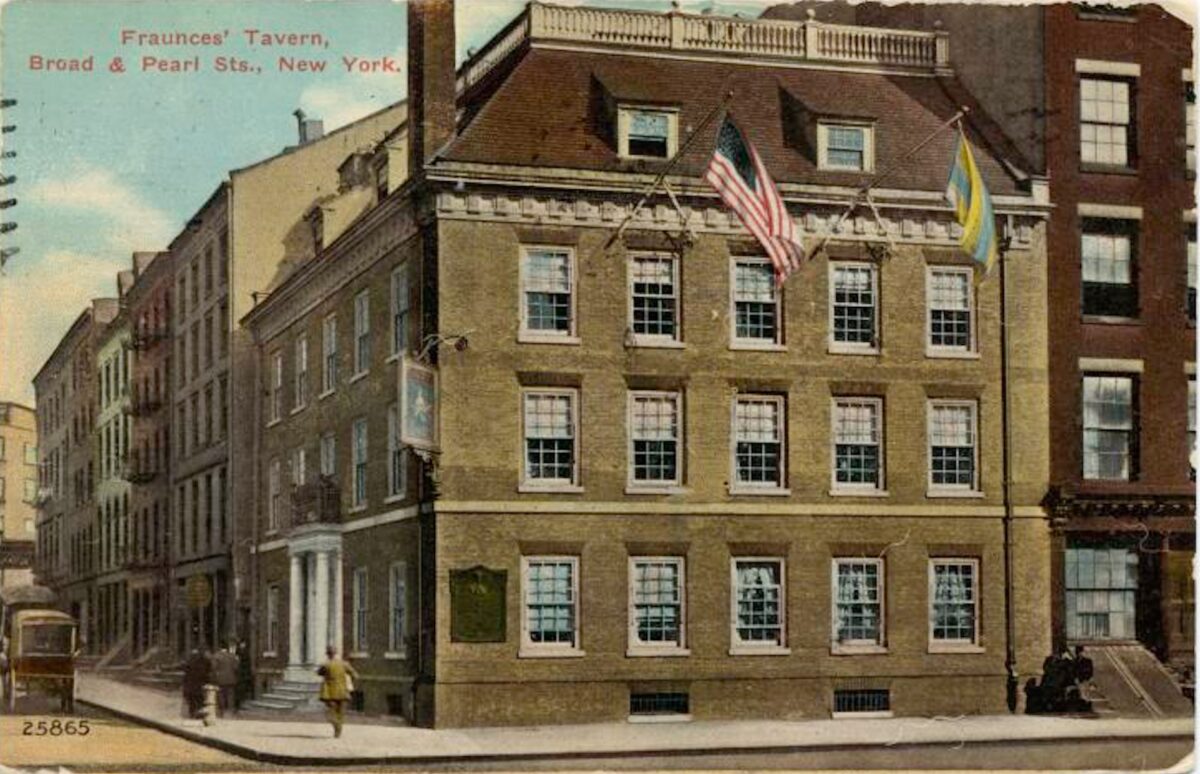
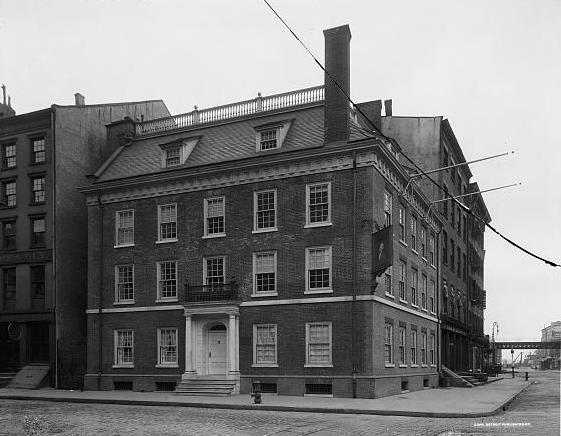
After reconstruction, somewhere between 1910-1920, looking almost as it does today. In the distance to the right you’ll see a bit of the elevated train line. [LOC]
By the 1970s, modern skyscrapers permanently change the feel of the Financial District, but Fraunces holds firm.
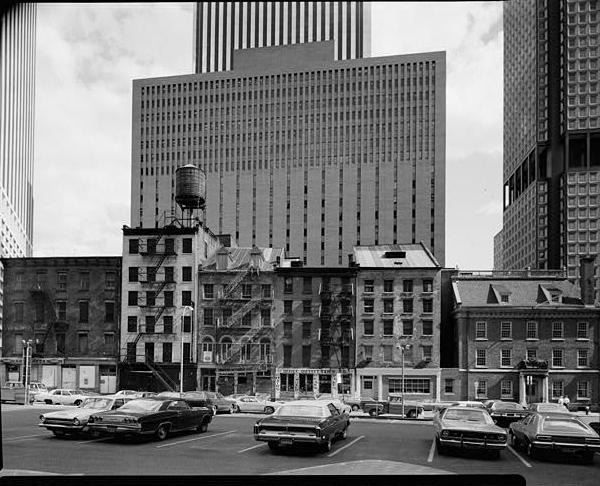
The parking lot across the street would soon be replaced by the towering 85 Broad Street (the former Goldman Sachs building). Interestingly, underneath these cars lies the remnants of Dutch New Amsterdam, including the earlier Lovelace’s Tavern. [LOC]
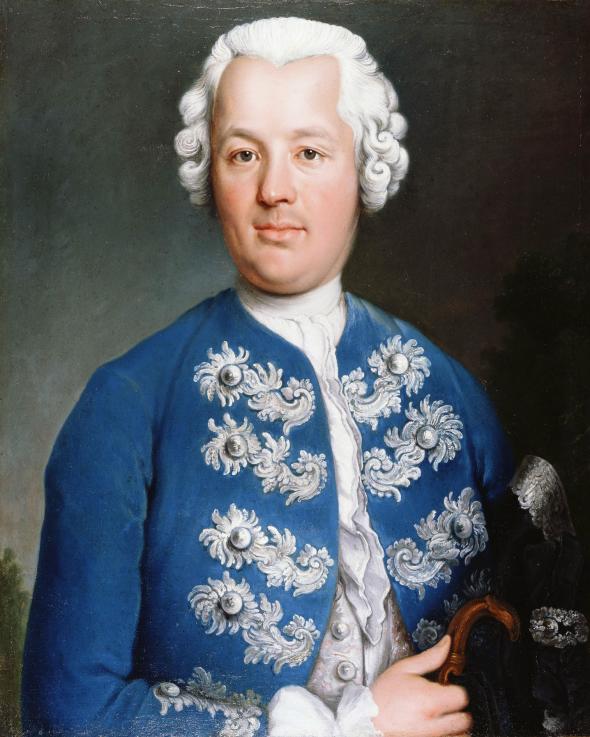
Samuel Fraunces, in a portrait of the tavern owner painted between 1770-1785, giving little clue to what many consider to be his real racial identity. The lineage of the man nicknamed ‘Black Sam’ continues to be debated to this day.
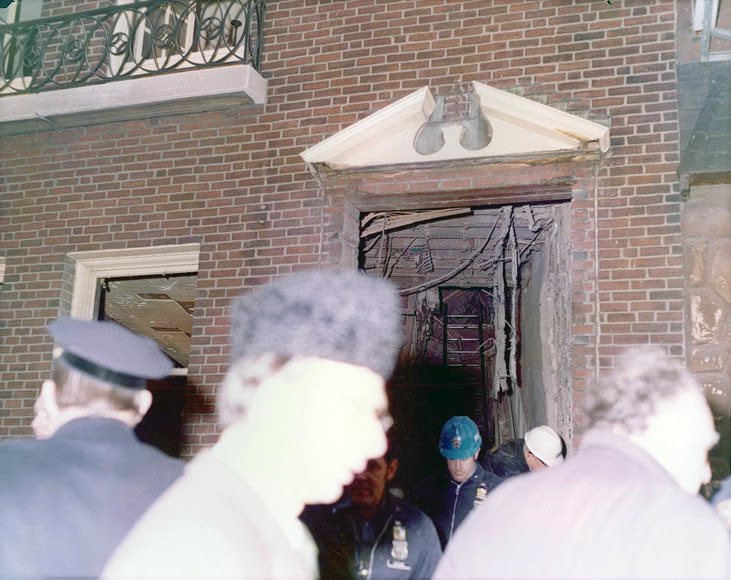
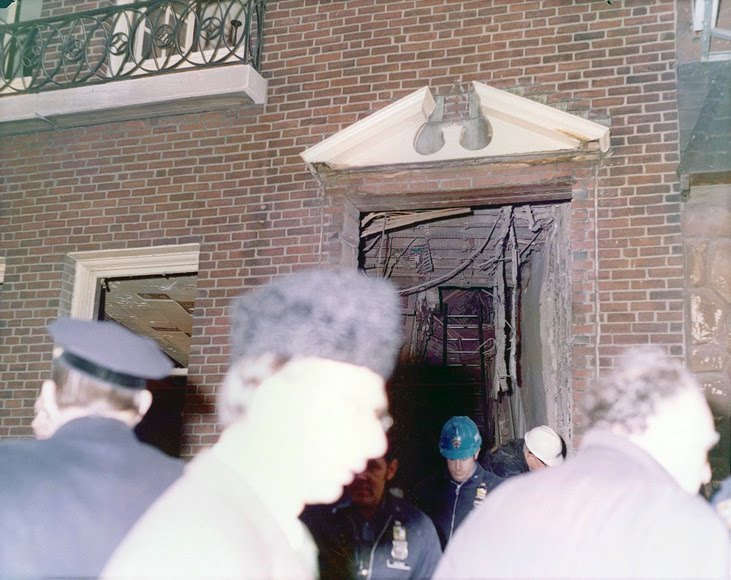
Fraunces was the scene of a relatively recent attack in 1975 when members of the Puerto Rican nationalist group Fuerzas Armadas de Liberación Nacional Puertorriqueña (FALN) placed a bomb in one of the tavern’s doorways, killing 4 people and seriously injuring many others.
You can find the picture below and many others — including the note left at the scene taking responsibility for the attack — at this Latin American studies website.
The Bowery Boys: New York City History podcast is brought to you …. by you!
We are now producing a new Bowery Boys podcast every week. We’re also looking to improve and expand the show in other ways — publishing, social media, live events and other forms of media. But we can only do this with your help!
We are now a creator on Patreon, a patronage platform where you can support your favorite content creators.
Please visit our page on Patreon and watch a short video of us recording the show and talking about our expansion plans.
If you’d like to help out, there are six different pledge levels. Check them out and consider being a sponsor.
We greatly appreciate our listeners and readers and thank you for joining us on this journey so far.
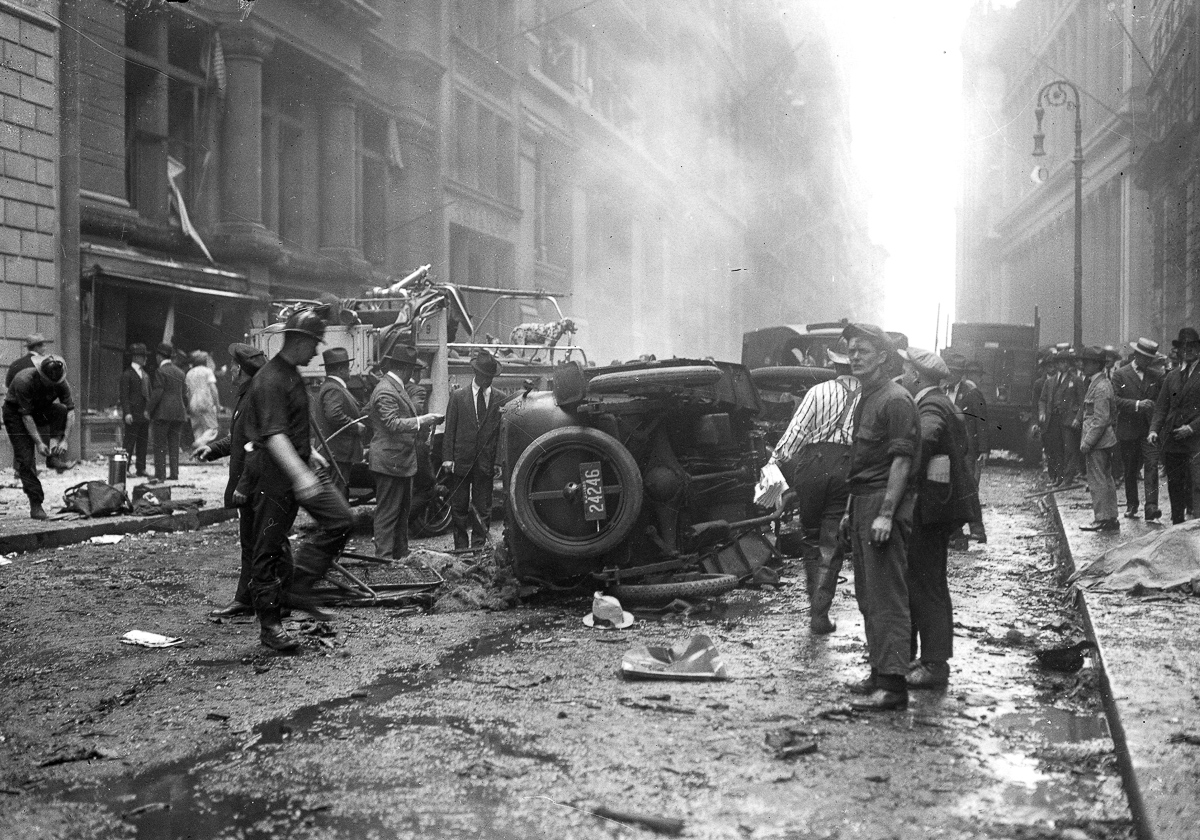
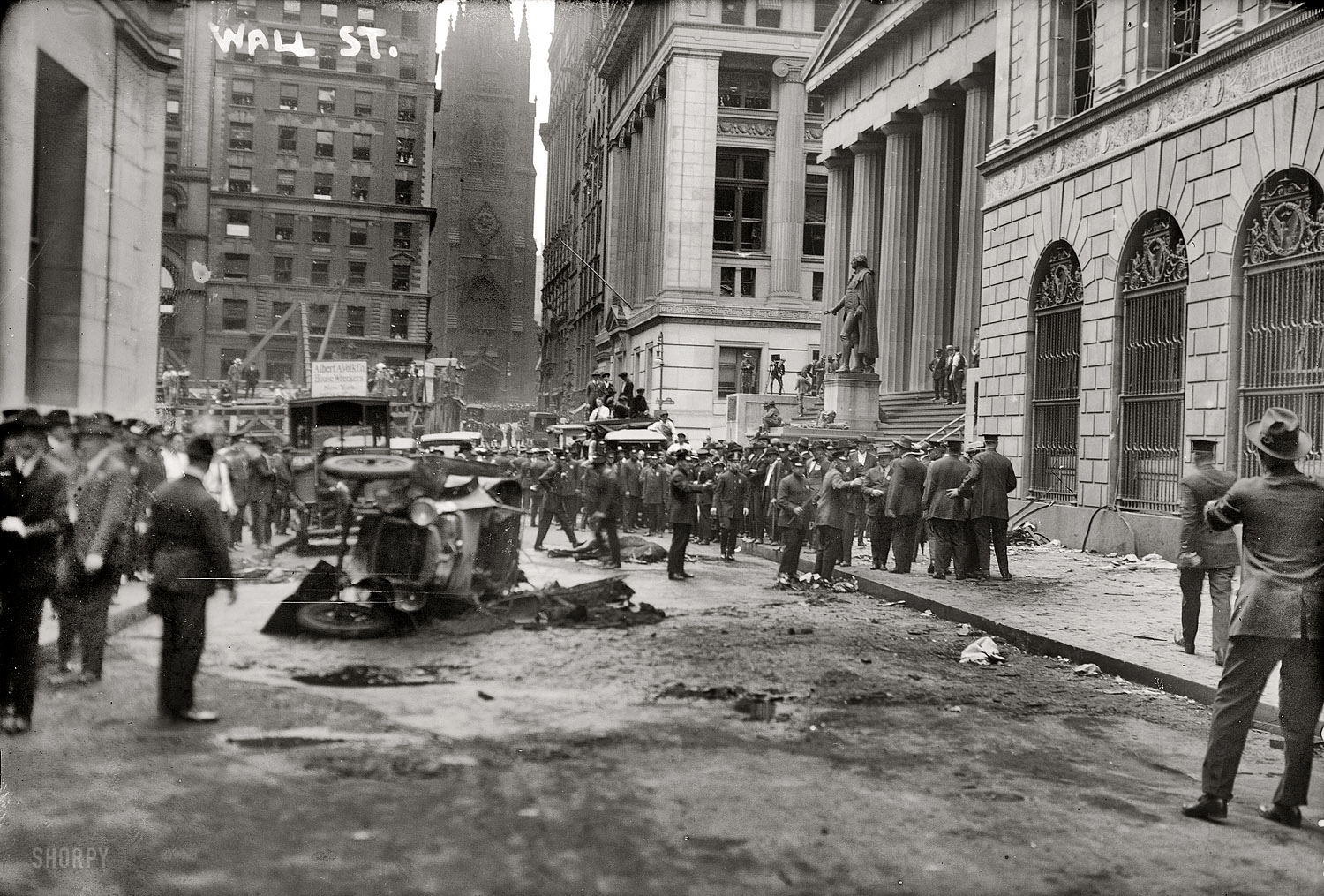
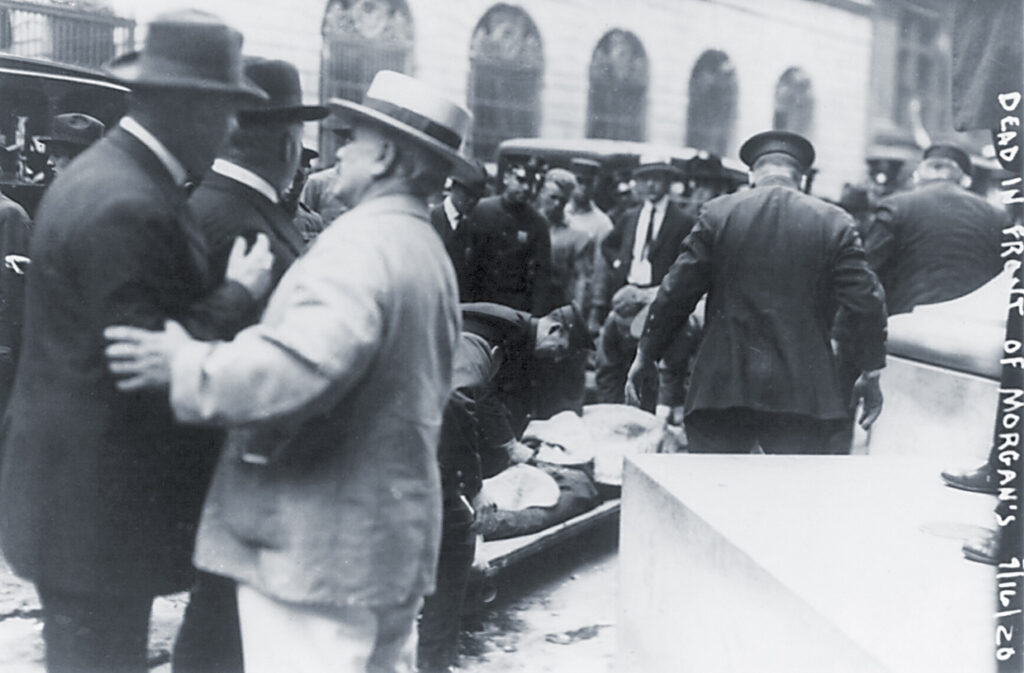
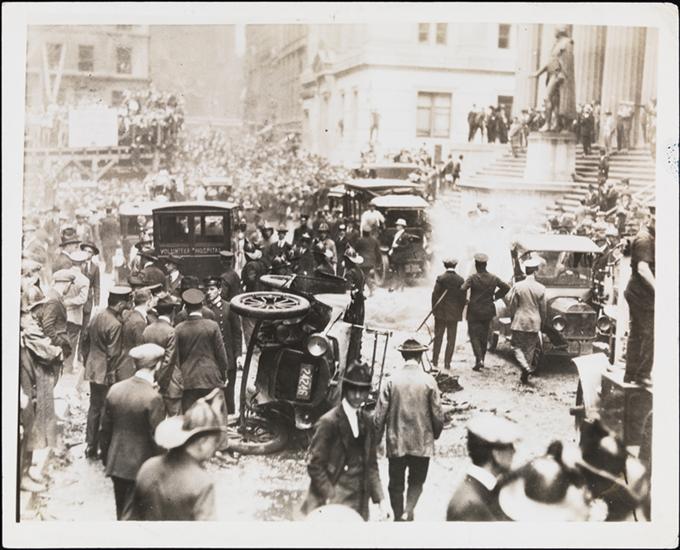
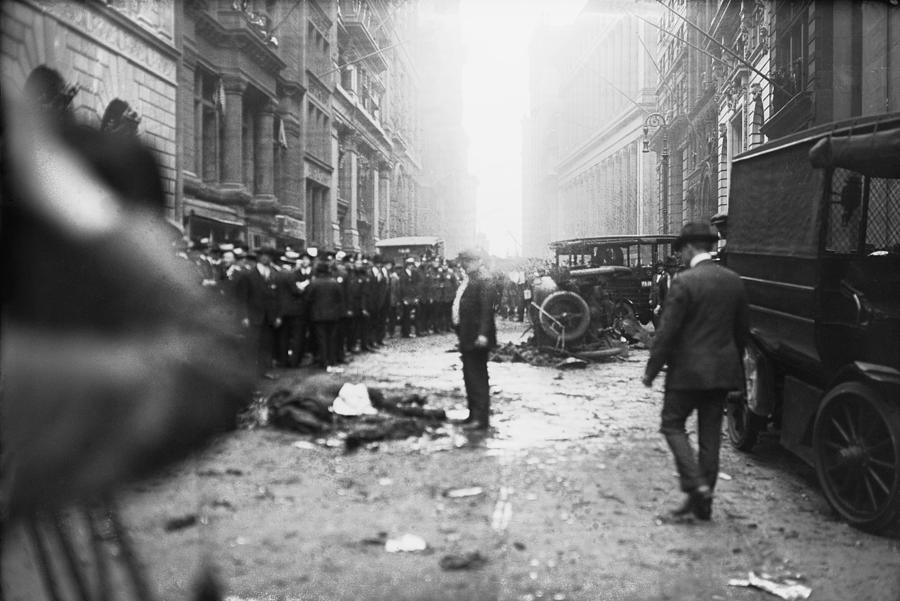
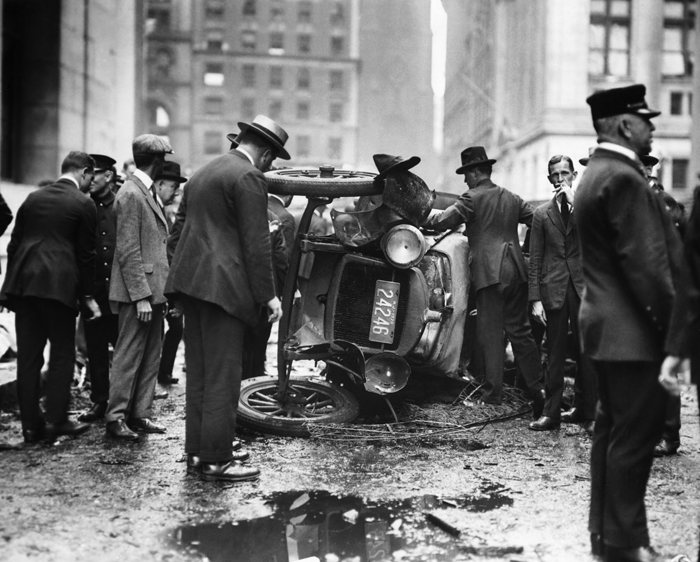
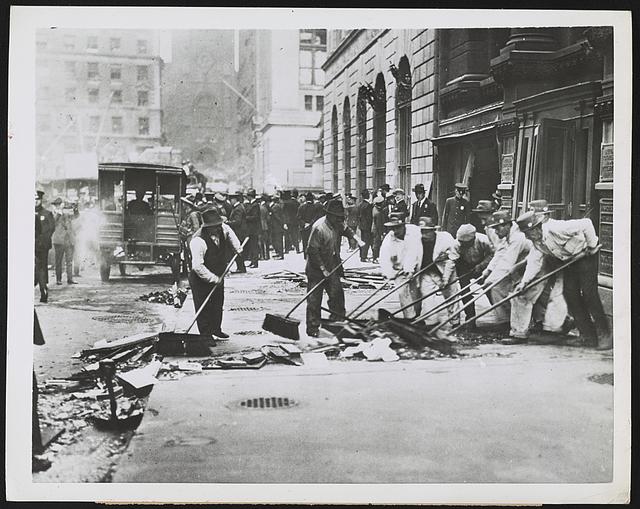
Wall Street bombing explosion - Overturned auto and crowd (Photo NY Daily News via Getty Images)
On a usual day, lunchtime down on Wall Street today is chaotic mess of brokers and bankers on cell phones, tour groups, messengers on bikes, police officers, construction workers, people delivering lunch and perhaps a stray older lady walking her dog.
One hundred years ago today, in 1920, it would have practically been the same, sans the cell phones.
So it’s particularly disturbing how easy it is to imagine the noontime scene on September 16, 1920.
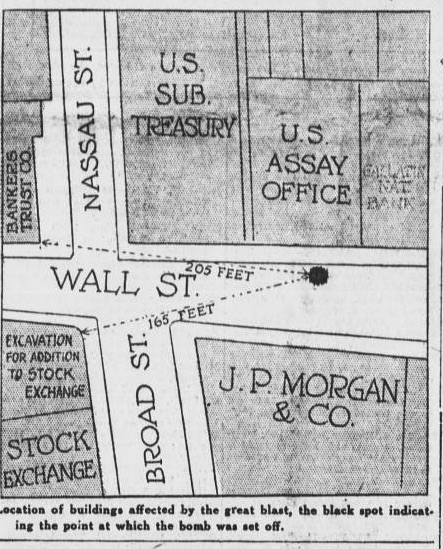
An unidentified man led a horse and carriage down the congested street, fighting to get past crowds, until it rested at the corner about 100 feet east of Broad Street. As theTrinity Church bells rang, the man dropped the reins and fled, never to be seen again.
One minute later, the wagon exploded with 100 pounds of dynamite, eradicating everything in its sphere, then sending dozens of iron slugs through the air to create a horrific scene of carnage.
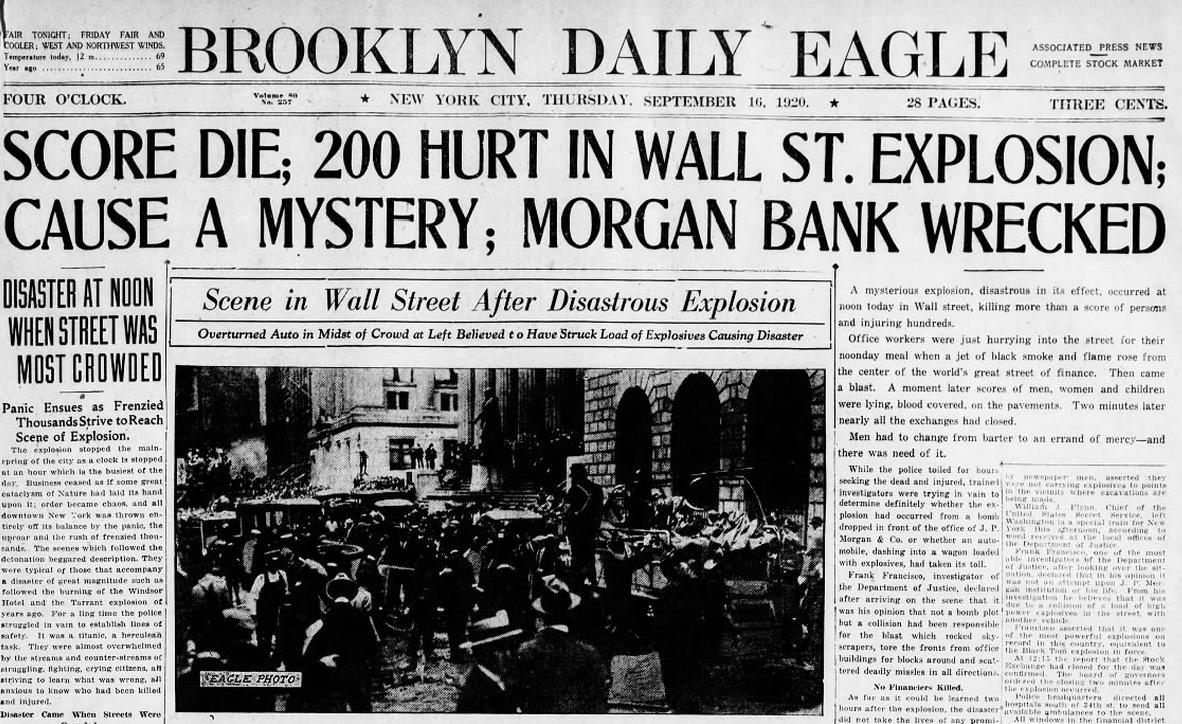
From the Sun and New York Herald
The best way to really tell this story is to quote a few contemporary accounts from the New York newspapers. NOTE: Some of the accounts are quite graphic.
A 22-year-old woman named Ella Parry survived and was interviewed by the Evening World:
“The glass of our windows fell into the office and the ceiling fell all about us. Where I had just been sitting was covered with heavy plaster. I did not wait to get my hat, but with others rushed into the street.
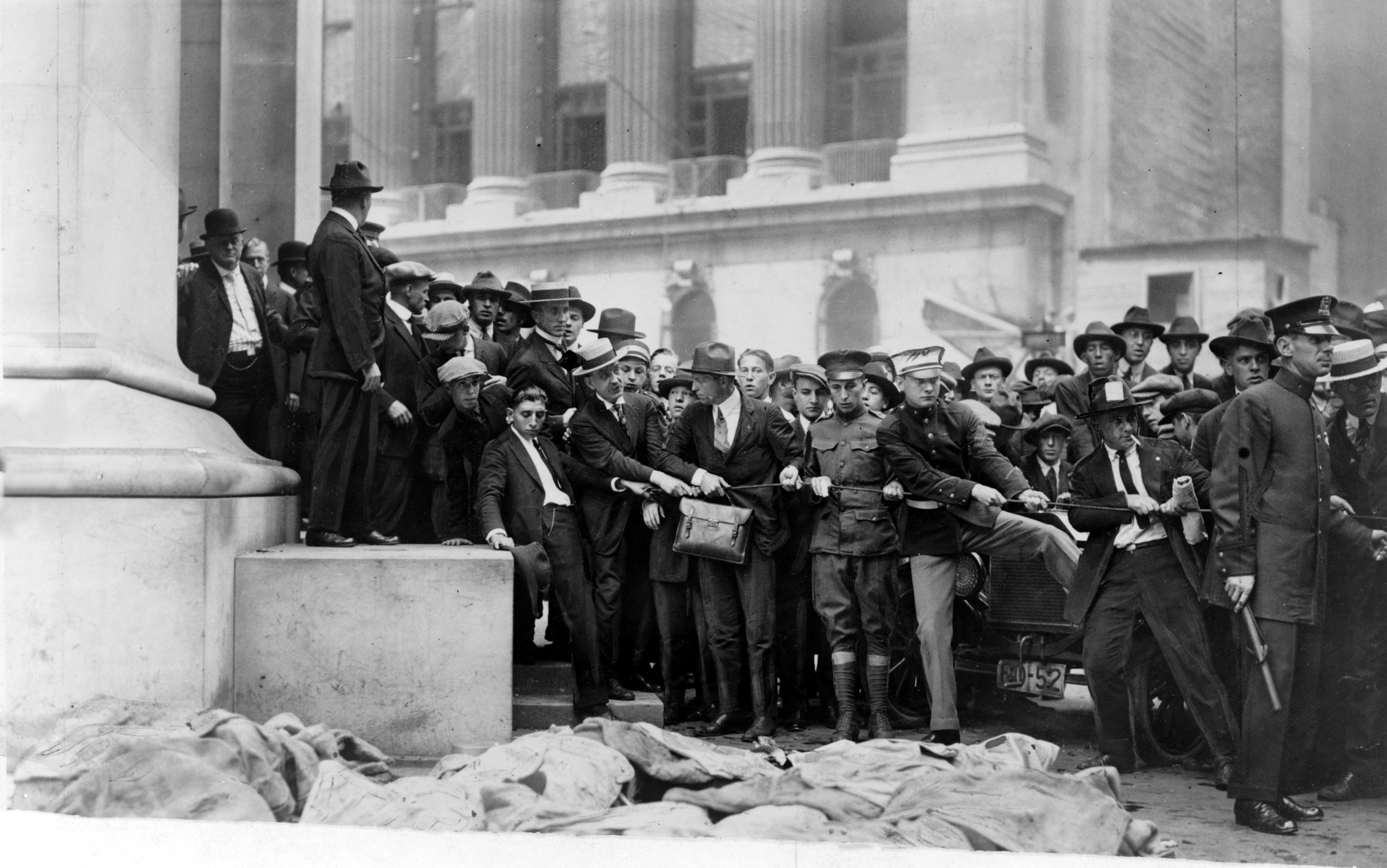
There were not less than a dozen dead persons on the sidewalk in front of tour building and the Sub-Treasury. Some of them had their faces almost completely blown off and their clothing had either been blown from their bodies or burned off. The police threw sheets over the bodies as fast as they could get them.”
“I was just about to enter the Morgan Building when the concussion knocked me down on the sidewalk. I arose after I had collected my thoughts and saw broken glass covering the street. All about me men and women were lying bleeding.
Above fifty feet down Wall Street there was an auto in a mass of flames. Across the street from it there was a shattered wagon and a horse lying dead. I saw several men cut almost in half from the large plate glass which fell from the building.”
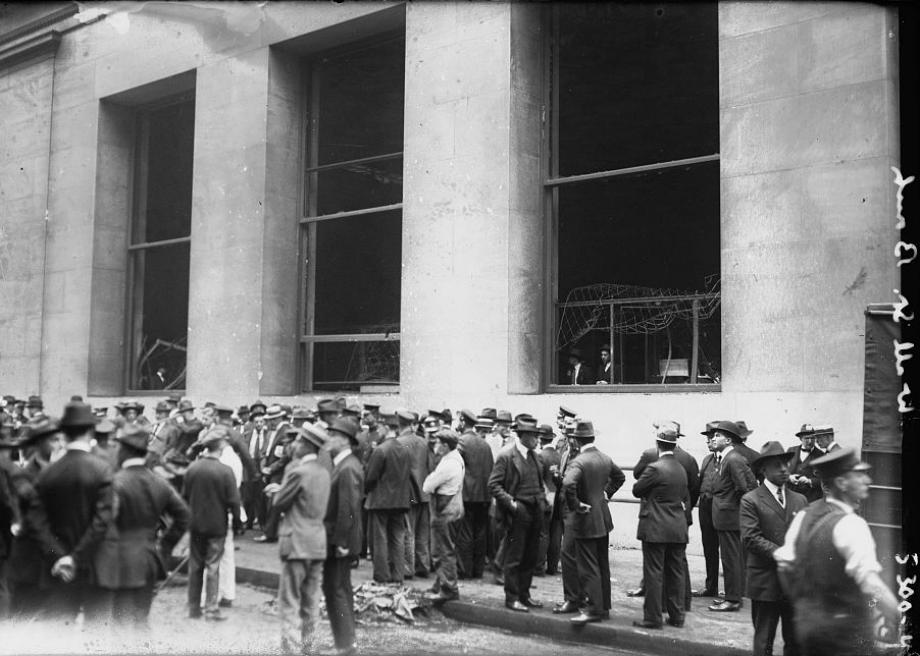
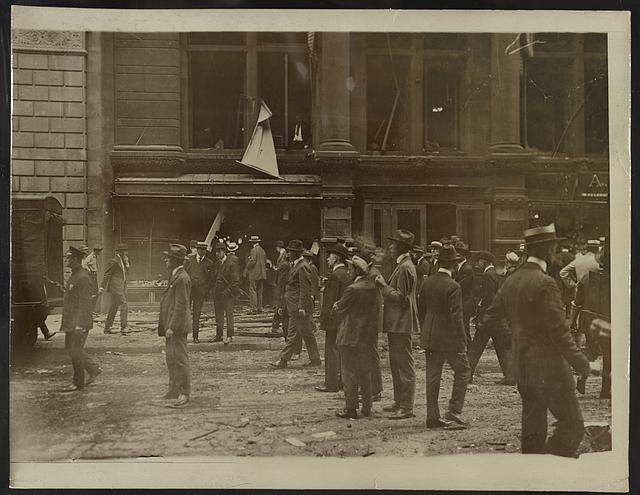
“Not a sound pane of glass remained in the Morgan Building. Screens of copper mesh which were set inside the windows were bent and twisted but had fulfilled their mission of protecting those within.
Fragments of the glass dome above the main office lay on the floor, and one of these, or some similar bit of falling debris, is believed to be responsible for the single death that occurred there. The streets were covered with broken glass, some of it finely powdered, like sugar.
The heroic statue of Washington on the steps of the Sub-Treasury was not so much as scratched by the explosion, and stood firmly, with hand outstretched in a quelling gesture.”
One unusual story of bravery emerged the following day. A teenage office boy named James Saul grabbed a random automobile and began driving injured victims to the local hospital. Fearing the owner of the automobile was among the injured, he then drove the car to a police station.
By the end of the day, 38 people would be dead from the attack, many while sitting at their desks. (An additional man with a “nervous condition” would take his own life due to the event, making the total 39.) And over 400 more would be injured.
Below: The late edition of the Brooklyn Daily Eagle: “A mysterious explosion, disastrous in its effect, occurred at noon today on Wall Street, killing more than a score of persons and injuring hundreds.”
Following the attack, the Madison Avenue mansion of J.P. Morgan (site of the Morgan Library and Museum) was heavily guarded. Morgan himself was actually in England, enjoying a relaxing vacation.
With a little morbid imagination and some amateur CSI work, one can probably trace the trajectory of wall’s injuries to the very spot where the poor horse and wagon exploded.
Below: Crowds gather to witness the destruction.
Despite a federal investigation which led to dozens of arrests, in fact the culprits were never caught.
Largely assumed to be Italian anarchists, any evidence was unfortunately lost when, in an effort to appear unfazed, the city cleaned the street and kept Wall Street open for business the next day, even seeing a rally of thousands pour into the street that Friday.