Categories
Those Were The Days

Millionaire aviator crashes into Central Park one hundred years ago!

An airplane crashing into Central Park? Believe it or not, in the early days of flight, these sorts of stories were somewhat frequent, although in this case, the pilot and passenger got out okay.

Quote from newspaper coverage. From the New York Evening World, March 6, 1916:

Alexander H. Thaw, the millionaire aviator, and John Kane, his mechanician, dropped 4,000 feet with a hydroaeroplane into a tree in Central Park this morning.  The machine was almost a total wreck but both aviators slid to the ground with hardly a scratch.  Thousands who had witnessed the flying machine drop from its dizzy height rushed into the park expecting to find the two flyers crushed to death.”

The New York Times puts the plane even higher in the sky!

Screen Shot 2016-03-05 at 12.23.19 PM

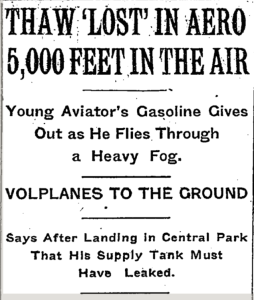
“While circling the heavens, hoping to get some glimpse of Governors Island, the gasoline in the biplane’s tank gave out and the engine stopped.  The youthful aviator did not lose his head, however, but started volplaning to the earth in long spirals, both he and Kane on the lookout for a safe landing place.

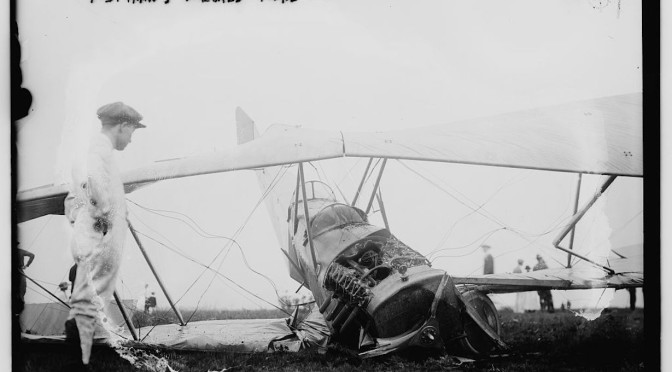
Soon they were about to pick out Central Park, and Thaw guided the biplane to the sheepfold, where it is likely he would have landed without mishap had not the left wing of his machine caught in a tree. The car tipped then, but neither occupant was thrown out, and the biplane came to rest on the earth, with both wings badly broken, the tipping having broken the right one against the earth.” 

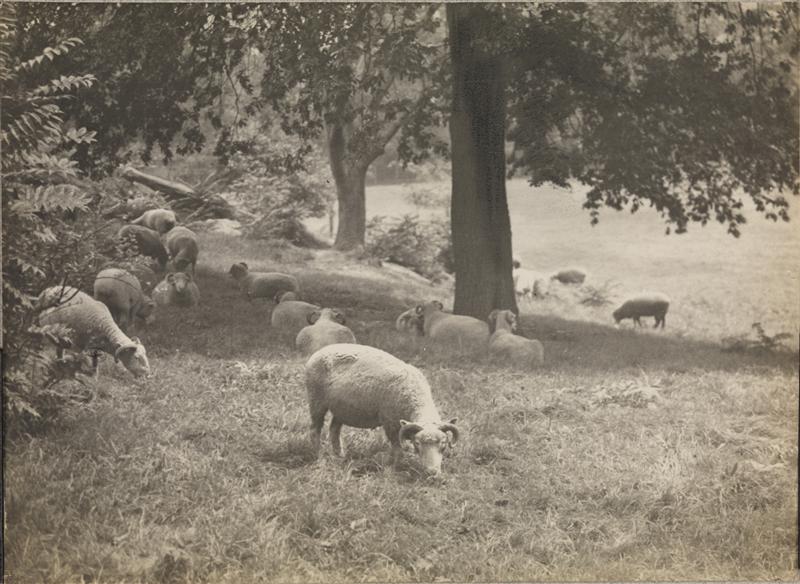
The airplane crash would have startled not just Central Park’s human patrons, but the actual sheep of Sheep Meadow (pictured below in 1910, picture courtesy Museum of the City of New York)

MNY215508

From the Evening World:

Thaw and Kane found they had no broken bones and when they were surrounded by the crowds that had watched their fall they were ruefully gazing aloft at their broken bird.

‘Well it might have been worse,’ remarked the young aviator and then he set to work to have the hydroaeroplane taken out of the tree and shipped back to Garden City [to Roosevelt Field on Long Island].”

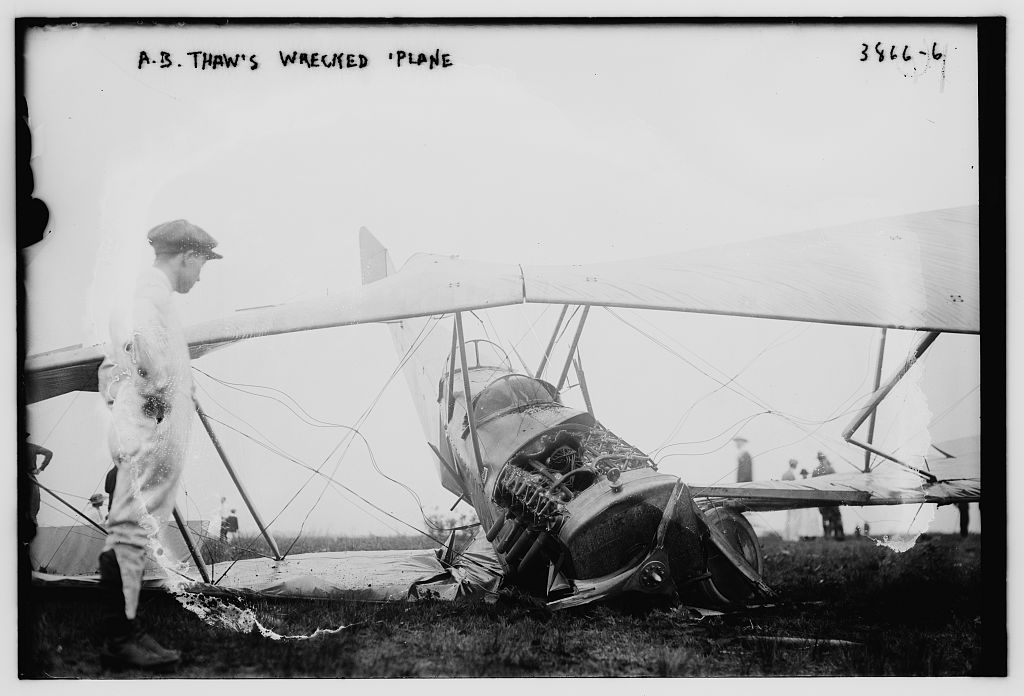
A photograph (from the Library of Congress) of the dramatic aftermath:

Library of CongressLibrary of Congress

Thaw would distinguish himself as one of America’s boldest and bravest young flyers, entering into America’s inaugural aviation service during World War I. Tragically he was killed in France on August 22, 1918, when his plane experienced engine failure. He was not as lucky then as he was on that day in Central Park.  “The engine trouble developed at an altitude of 2,000 feet and the machine when it fell struck a number of telephone wires and collapsed, upside down.” [source]

His brother William Thaw was also a pilot and became renown during World War I. He’s generally considered to be the very first American aviator to engage in battle during the conflict. Thaw survived the war and died in 1934 a decorated hero.

And if you’re wondering about that last name Thaw. Yes, indeed the murderer of Stanford WhiteHarry K. Thaw — is indeed from the same family.


Categories
Pop Culture

HBO’s Vinyl: Getting Into The Groove

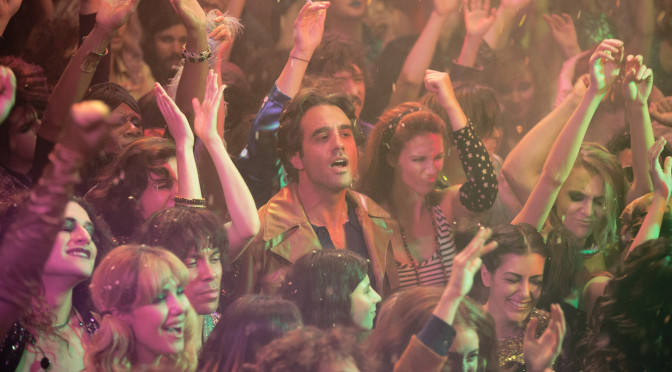
The music industry is the focus of Martin Scorsese’s new HBO show Vinyl just as the mob-run liquor business was the focus of his last show Boardwalk Empire, but in many ways, the two are pretty much the same.

Richie Finestra (Bobby Cannavale) runs his record label American Century Records out of the Brill Building with the same amount of wild swagger that Nucky Thompson ran his Atlantic City operation. By the end of the first episode, there was even a bloody murder.

My interest, of course, is the history, and Vinyl compacts historical events in vivid, fairly unrealistic but very enjoyable way. (A glacially paced romp through 1970s New York City history wouldn’t make good television.) In the first episode alone, Finestra magically predicts the success of ABBA, stumbles into the first hip hop party in the Bronx, then witness the collapse of the Mercer Arts Center from the inside.

If you happen to be watching live on Sunday nights (9pm EST), follow along with me on Twitter (@boweryboys) where I’ll be watching alongside and throwing out some interesting trivia bits. It’s the 1970s in Times Square so the potential for some scandalous history is high!


Categories
Bowery Boys Bookshelf

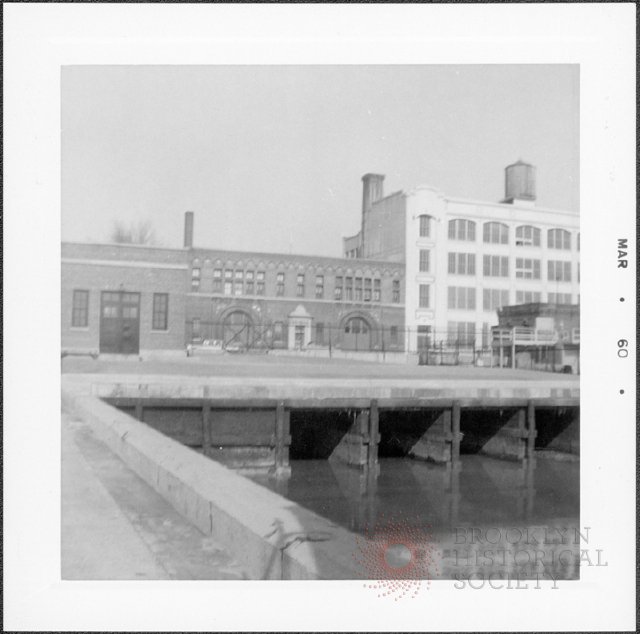
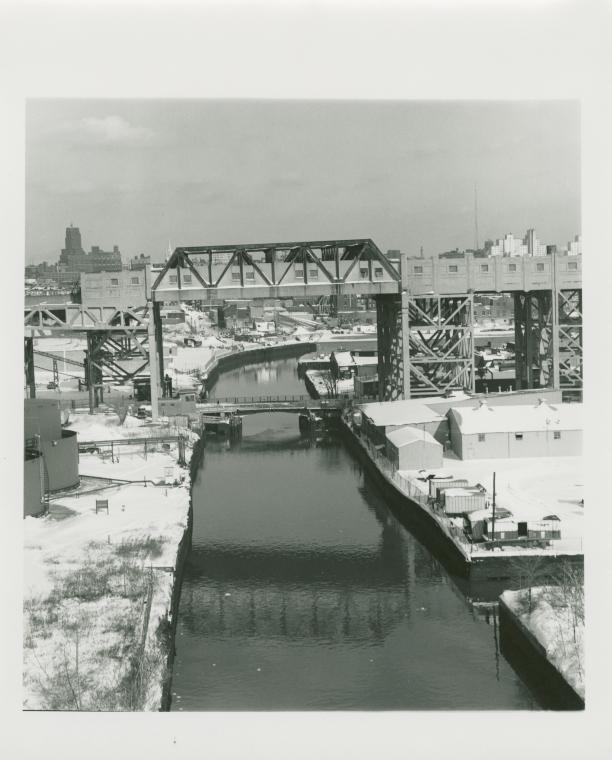
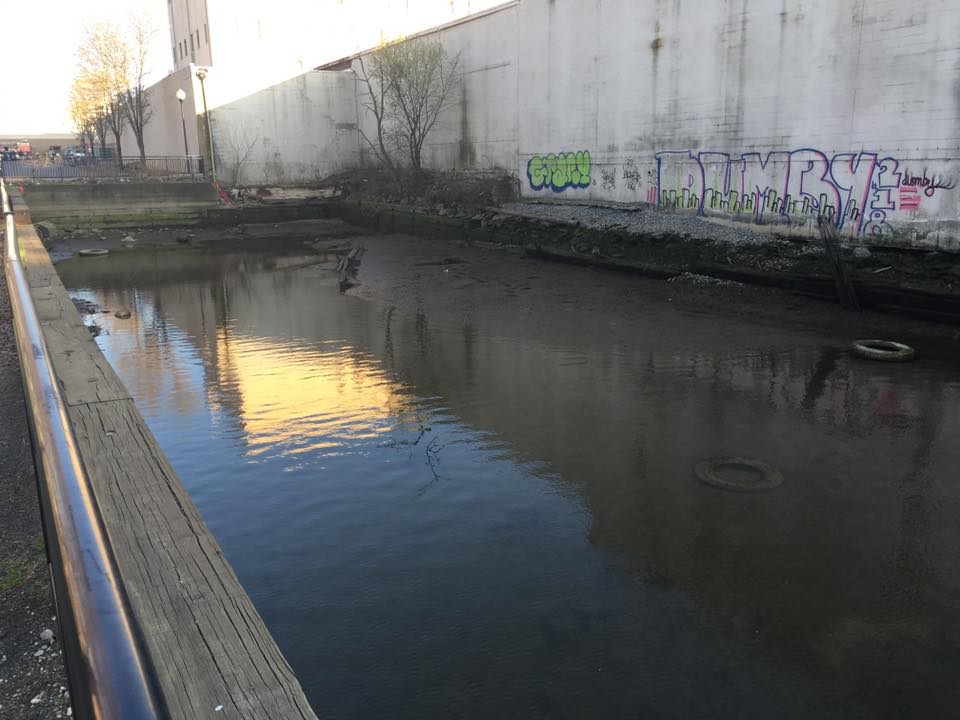
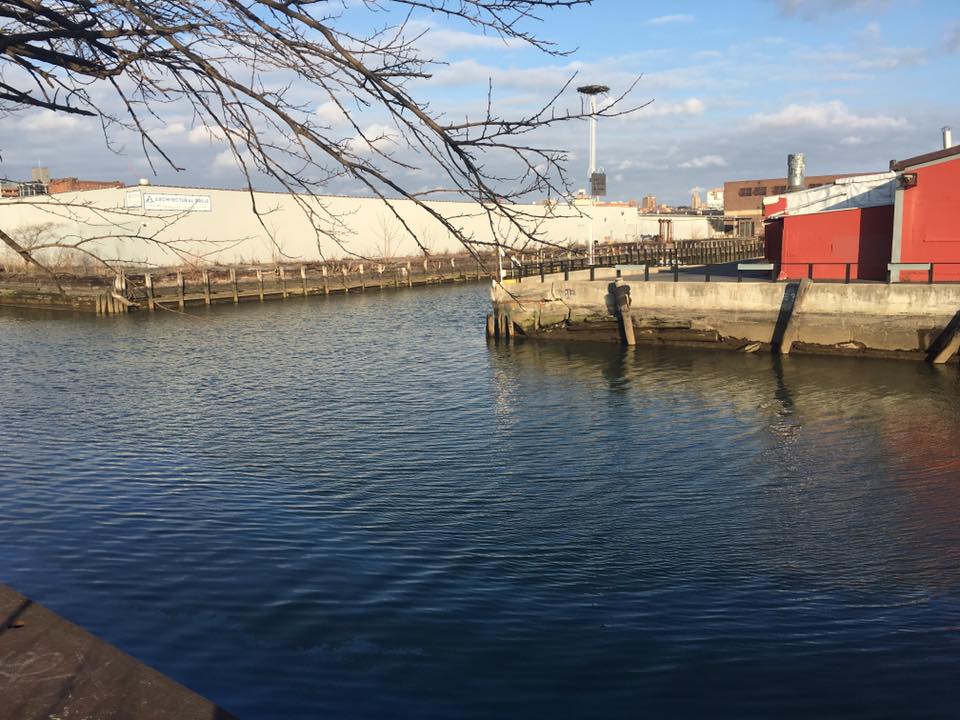
The history and future of Gowanus: Interview with author Joseph Alexiou

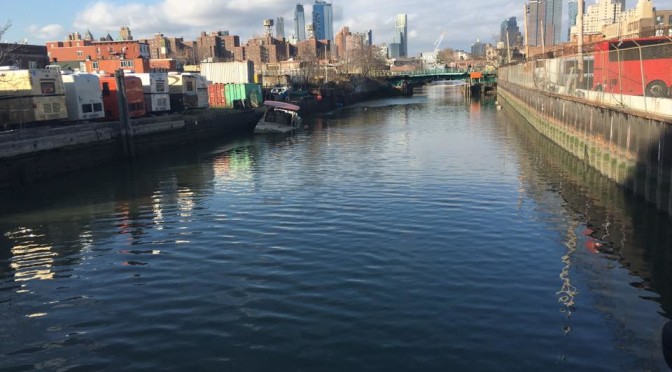
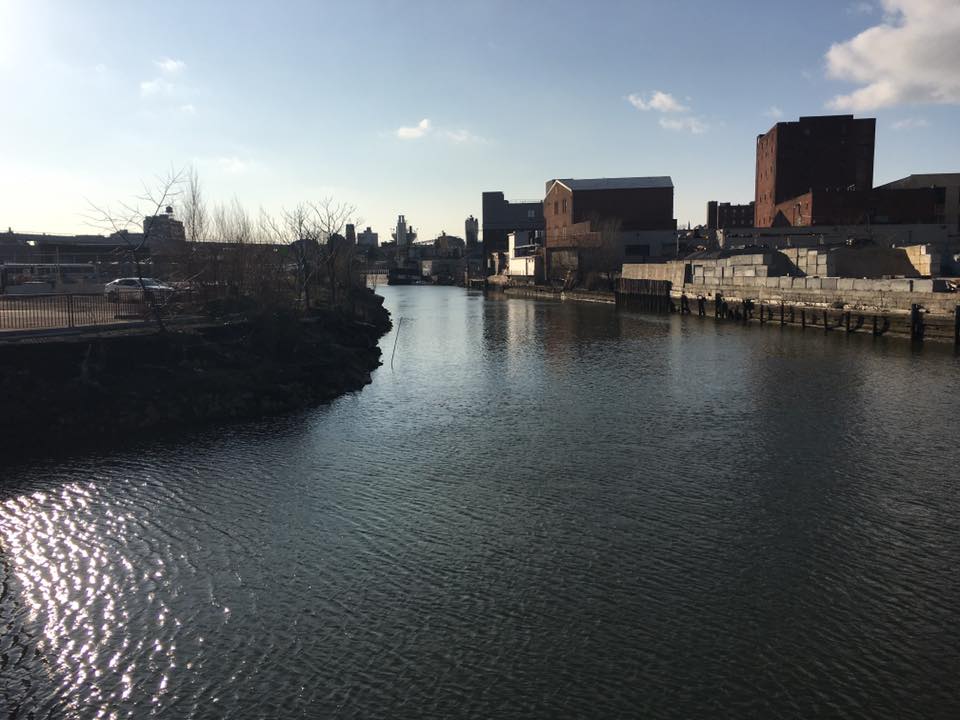
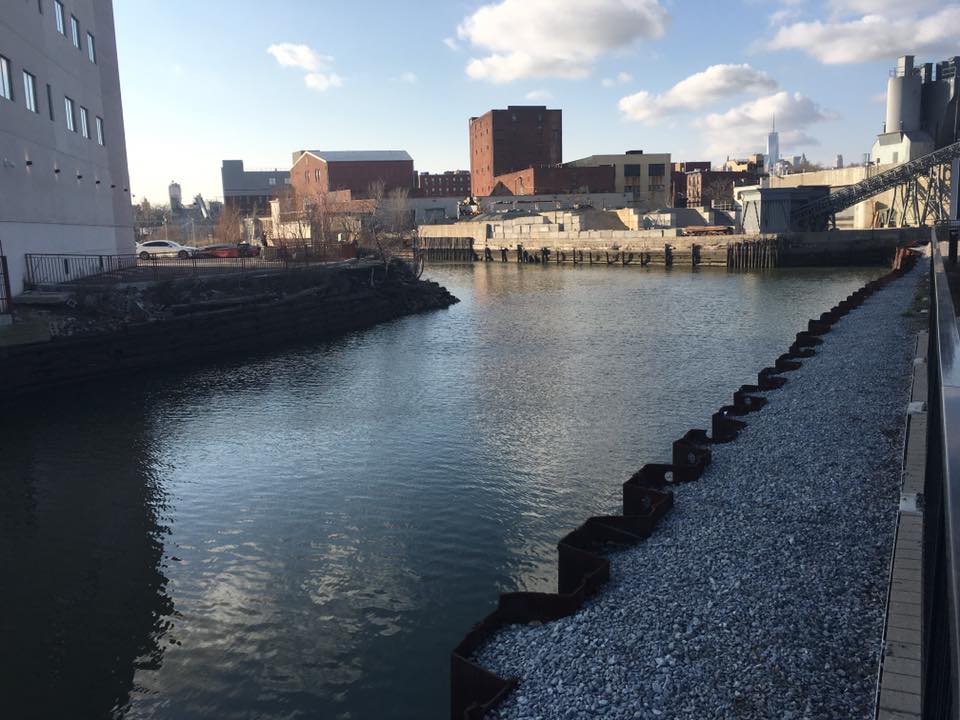
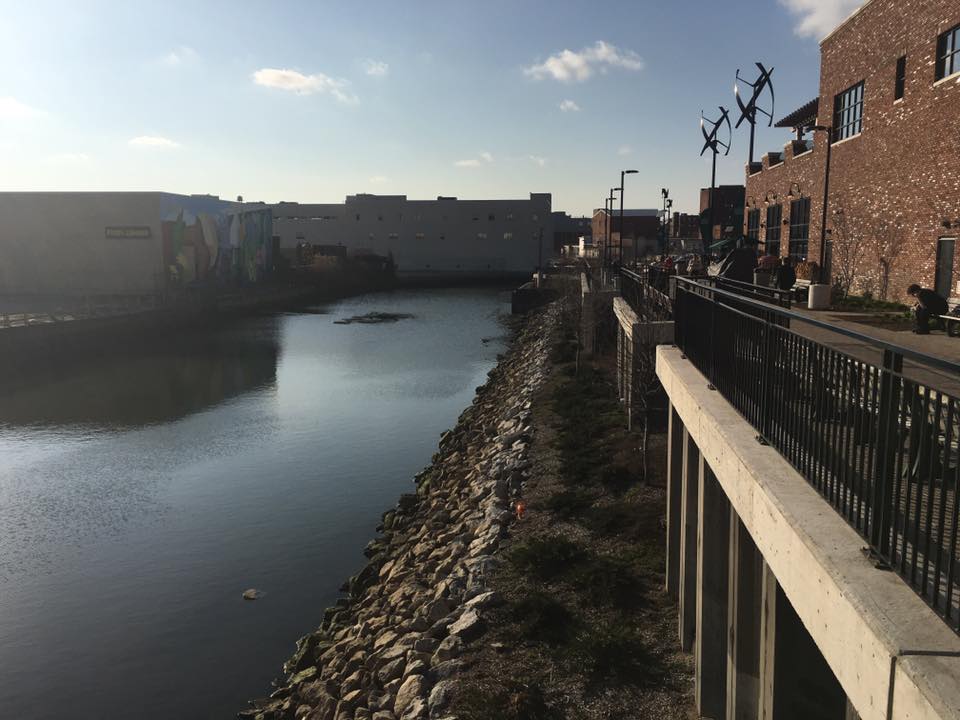
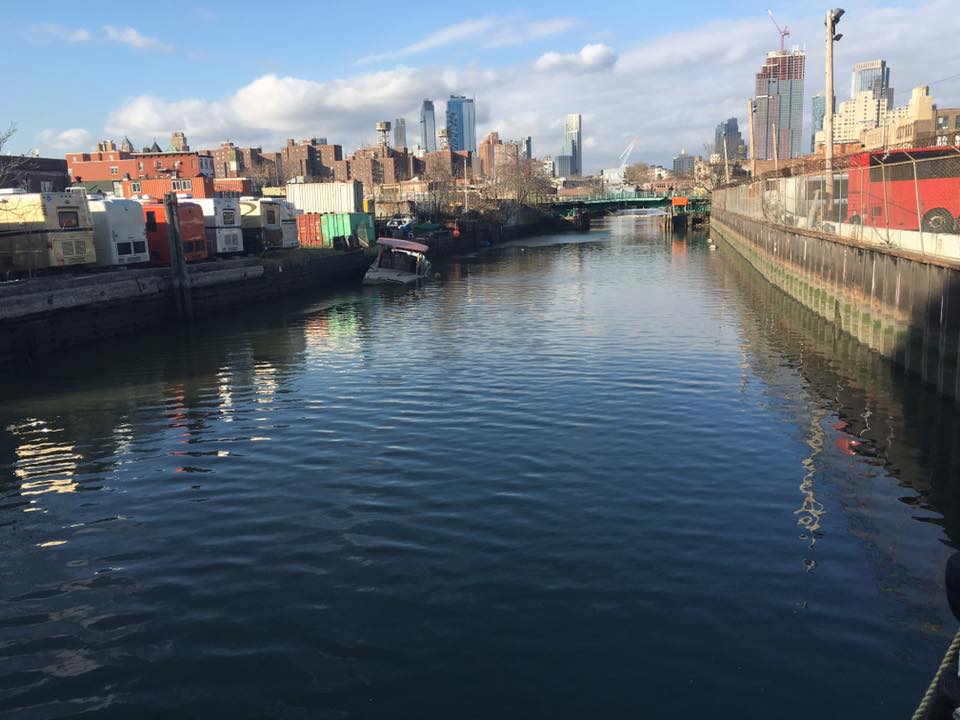
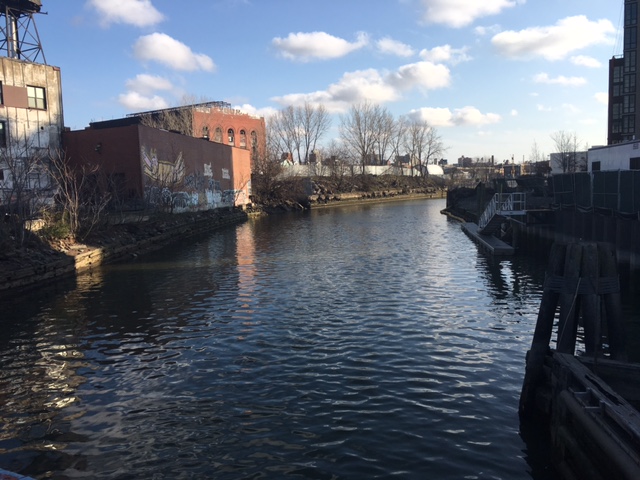
Brooklyn gentrification has reached a curious impasse — the Gowanus Canal.

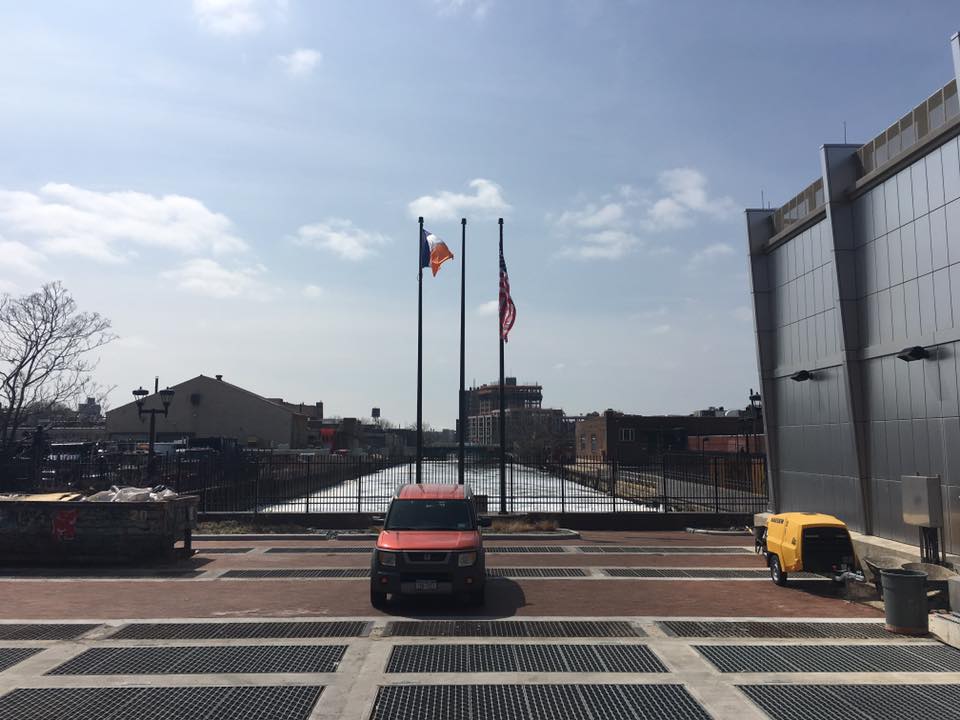
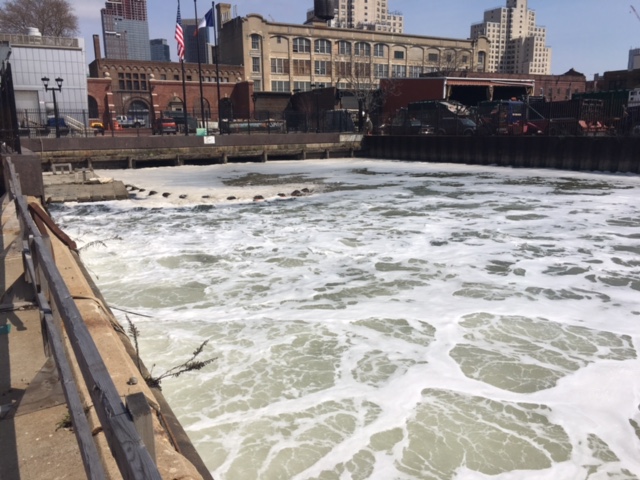
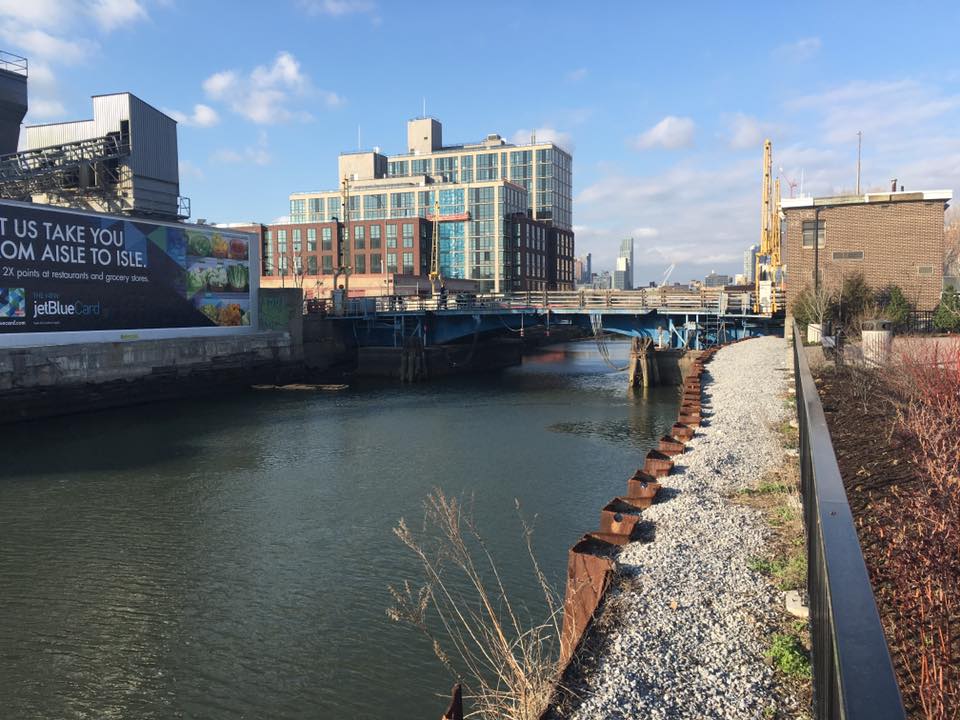
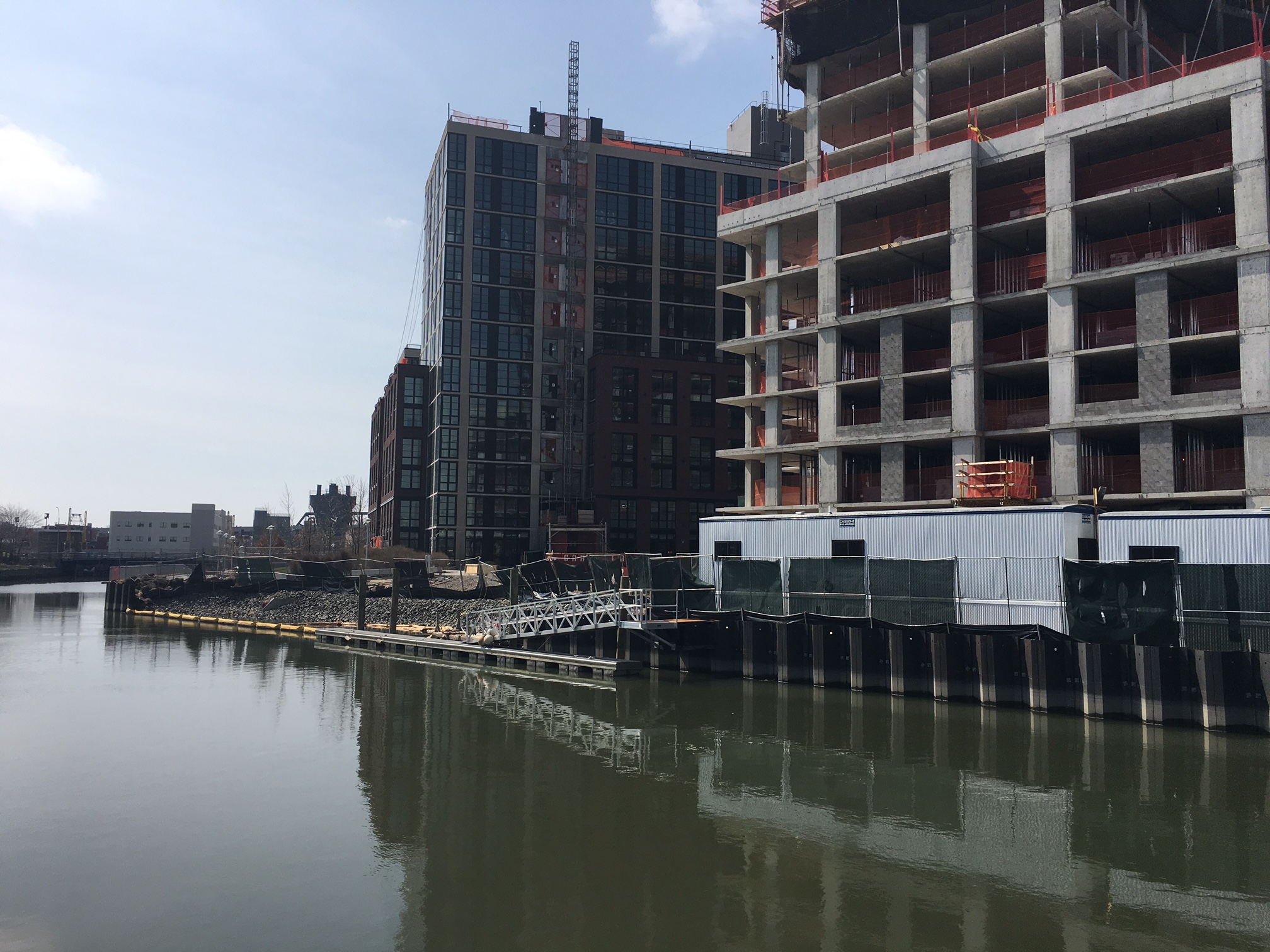
The neighborhood surrounding it thrives with new housing developments, trendy restaurants and bars, music venues, shuffleboard clubs and even a Whole Foods. Curbed just named it neighborhood of the year. It’s now a destination for foodies. Pity about that fetid and uniquely aromatic body of water then, a SuperFund site since 2010 and a problem that has vexed Brooklyn for decades. (Black mayonnaise anyone?)

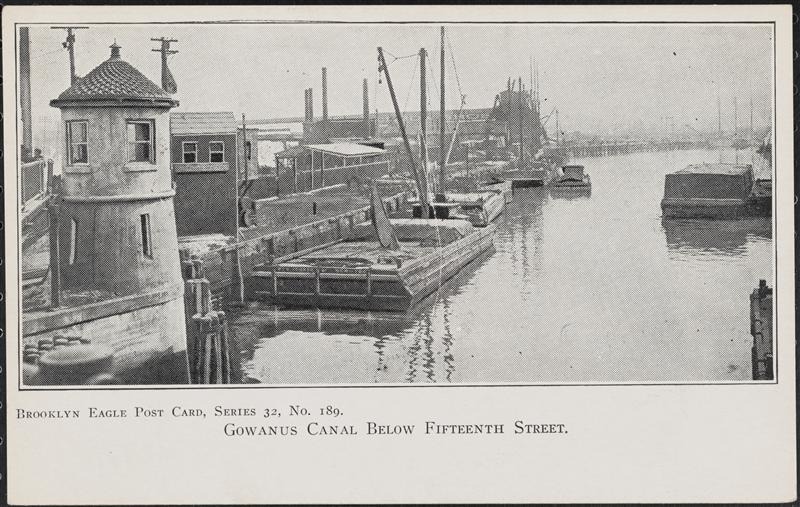
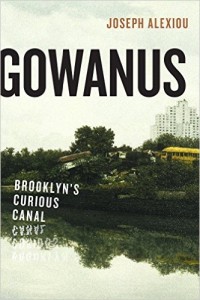
The Gowanus is also pivotal to the history of Brooklyn — and all of New  York City — as enjoyably laid out by author Joseph Alexiou in his new book Gowanus: Brooklyn’s Curious Canal.

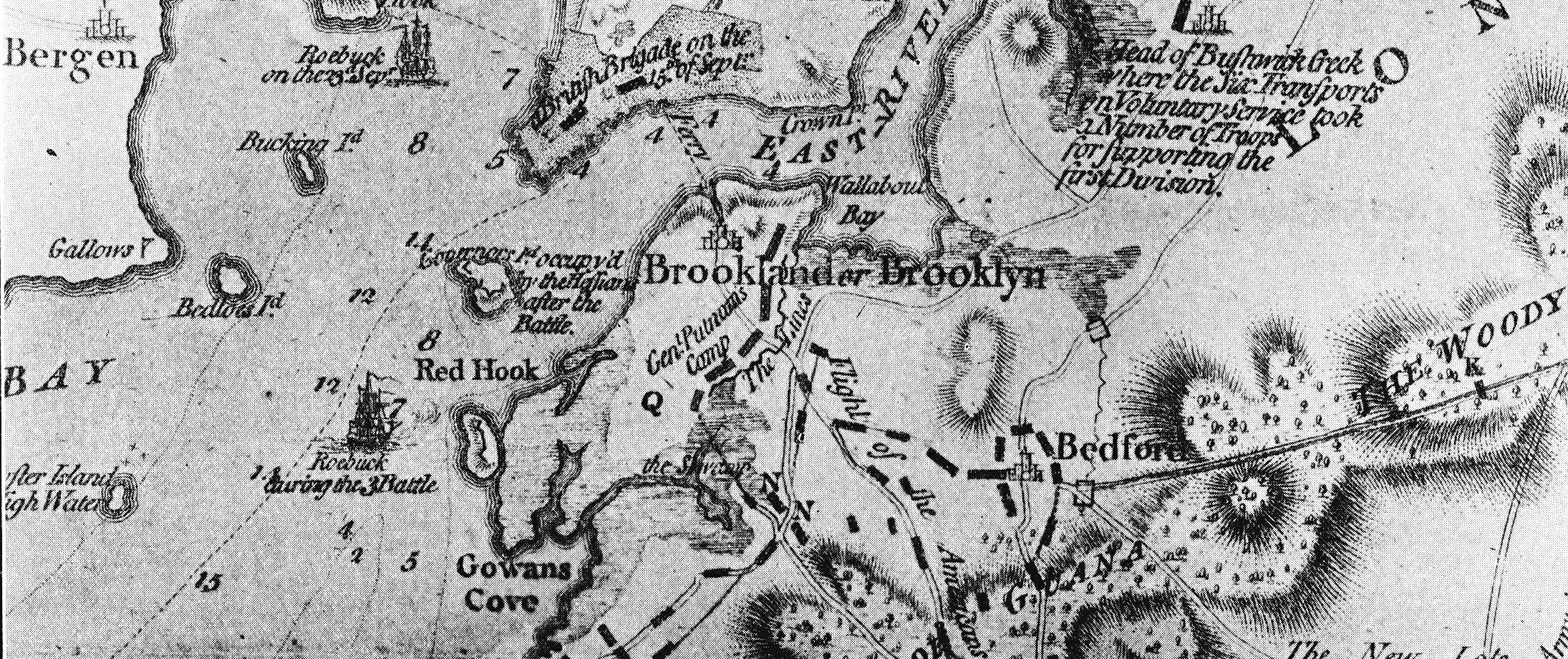
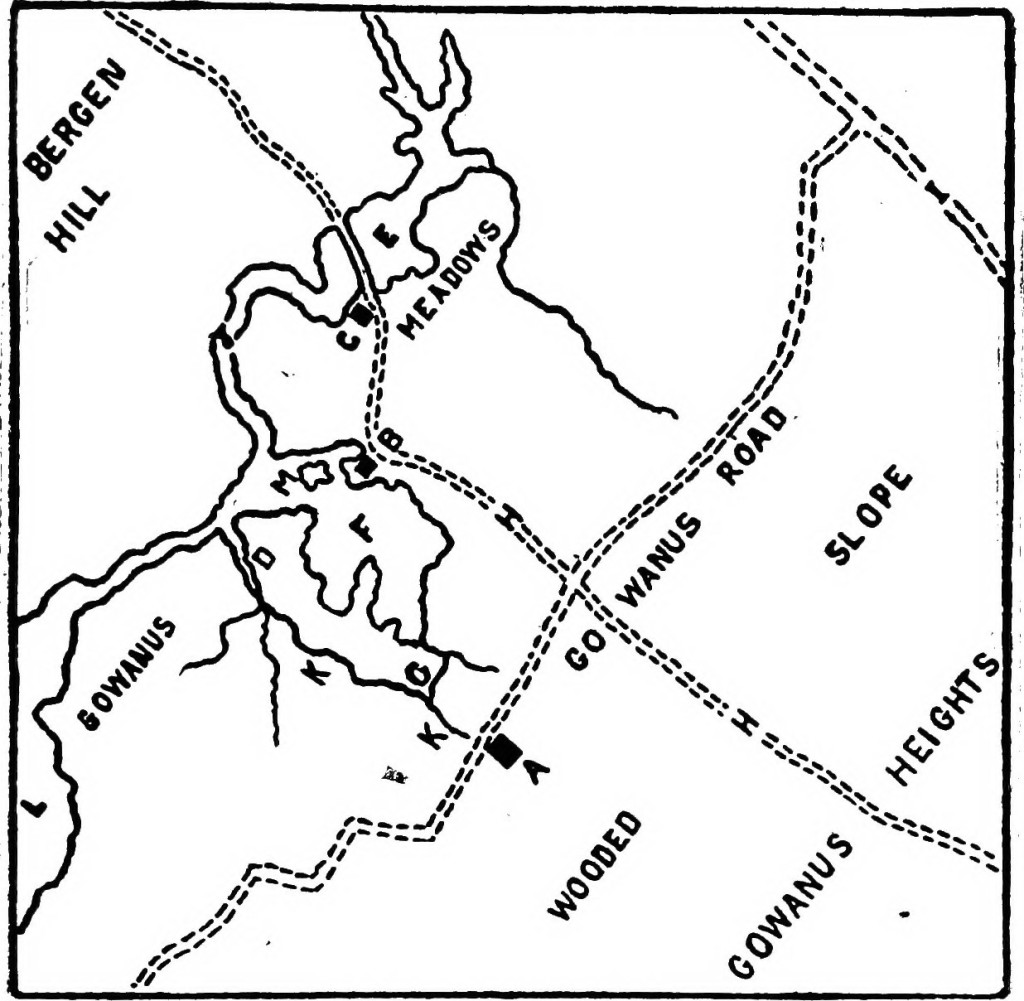
The shores of Gowanus Creek have been critical to Brooklyn’s growth since the early Dutch days.  Its story is surprisingly thrilling and robust, from the bloody Revolutionary War battle fought on its shores to its transformation into an artery for industry.  Residents  have struggled with the Gowanus’ toxic qualities — both in the water itself and the criminal life it seems to regularly attract — for over a century and a half.

I wish there was a book like this for every foul, troublesome thing in New York.  Gowanus feels like a biography with an engaging protagonist — plucked from innocence and slowly corrupted — that you want to help save by the end.

Given the current situation in the neighborhood — anybody looking for a cheap apartment?Gowanus is an important and urgent read.  Plus the book is nominated for a GANYC Apple Award for outstanding achievement in non-fiction book writing! (Check out the full list of nominees here.) On the eve of the awards ceremony this Monday, I asked Alexiou a few questions about his experiences researching this curious creek:

Greg Young: What’s your particular connection to the Gowanus? How did you decide to develop this as a book subject?

Joseph Alexiou: I lived in Gowanus from 2006–2011, and happened upon the canal quite by accident, but it was love at first sight. I spent  several years  in the neighborhood  before making my foray into freelance writing, when I realized the area was a goldmine of funny stories and and weird characters.
The pollution was also so extreme and kind of surprising, which I learned about thanks to the appearance of Sludgie the Whale in 2007. Eventually, I ended up in journalism school, where my obsessions and nerdish love of history became the subject for a book proposal class.
 1


GY: Since your book is really arranged like a biography of the Gowanus, what would say has been its personality over the decades?

JA: The Gowanus has always been stubborn and dependable, and muddy. Definitely thoughtful— a calm, earthly reminder of the powers of nature with that occasional tendency to overflow. But the beginning it was a lot more crunchy and pastoral, full of wildlife and pleasant breezes. But as industry arrived, the Gowanus became stinky, smelly, exciting and unsavory—perhaps just a little bit dangerous. The foreboding sense of doom was its personality for a long time. But with the dynamic nature of cities and waterways, that grittiness is evolving yet again.
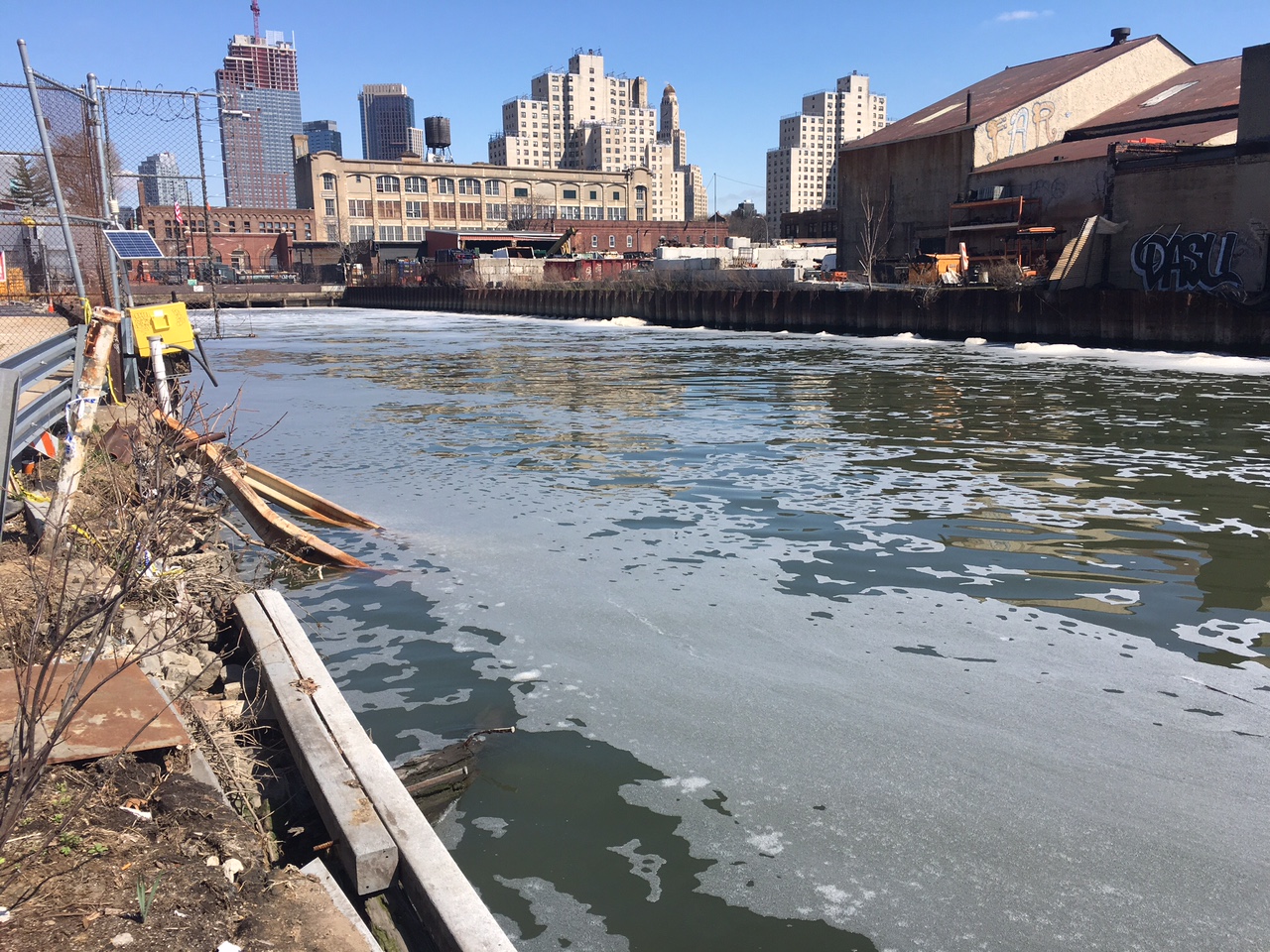
 

Illustration from The Stone House of Gowanus, Scene of the Battle of Long Island (1909) by Georgia Fraser
1


GY: Were you surprised to find how important the Gowanus has been to the overall history of Brooklyn? It seems like its story reflects many of the changes that have happening to the city (and borough) over the decades?

JA: When I discovered that the name “Gowanus” appeared in some of the oldest documented history of New York—dating back to 1636—that’s how I knew there was a particular history to be told. It was a surprise, but also a relief when I discovered how often the name “Gowanus” appeared across newspaper pages and old documents, once I had started really researching the book. So many people used it for business, pleasure, crossed its banks, complained about the traffic, fell into it!
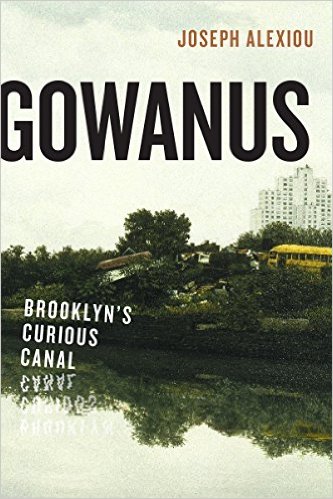
 

It’s a really unique kind of New York waterway—naturally occurring, then industrialized, then neglected. It’s difficult to move and get around, and often caused much trouble because of the flooding. So many people have invested in it, cursed it, pondered its existence, and written about Gowanus throughout history because it was weird and offbeat, a wrinkle in the map. That proved to be quite a boon, and a great vantage point from which to observe the history of Brooklyn.


GY: Is there anything truly ‘natural’ about the Gowanus anymore? I confess to strolling around it sometimes, trying to picture it as a natural body of water. Is there anything about it at all that remotely resembles the creek that you introduce us to at the beginning?

JA: Well, the rise and fall of the tide is one of the remaining original aspects of the canal. There’s no real wetland left around the canal, although if the walls were knocked down it would start to rebuild itself. Perhaps I should give a nod to little snippets of nature that pop up at street ends (Second Avenue comes to mind) that sort of mimic the original landscape. But imagination is helpful!


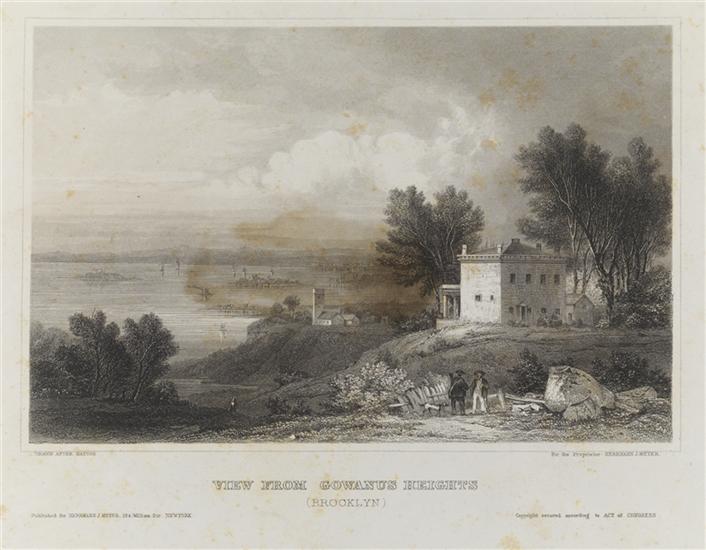
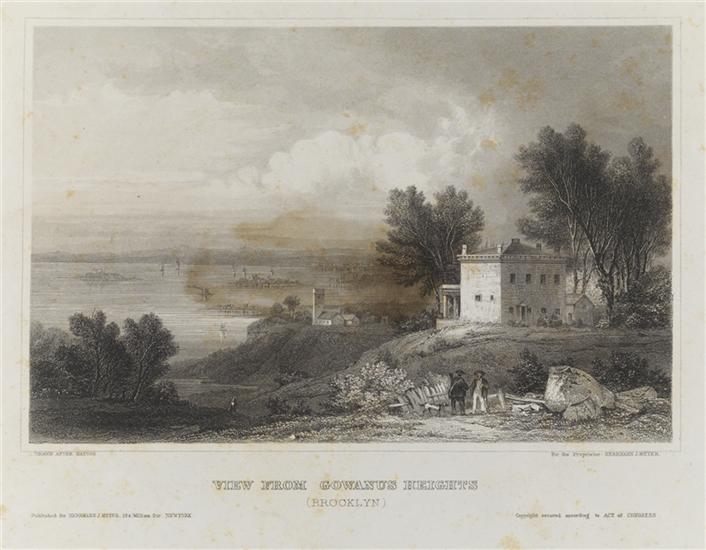
View from Gowanus Heights, Brooklyn, 1840, painted by Herrmann Julius Meyer (courtesy Museum of the City of New York)
M3Y29255


GY: The community has a fondness and love for the Gowanus, even considering the health concerns that have vexed it for decades. What do you think is the specific appeal to living near here?

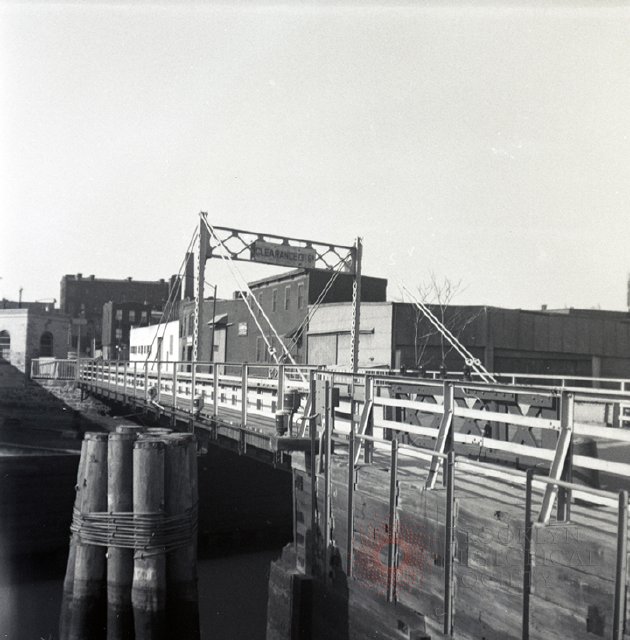
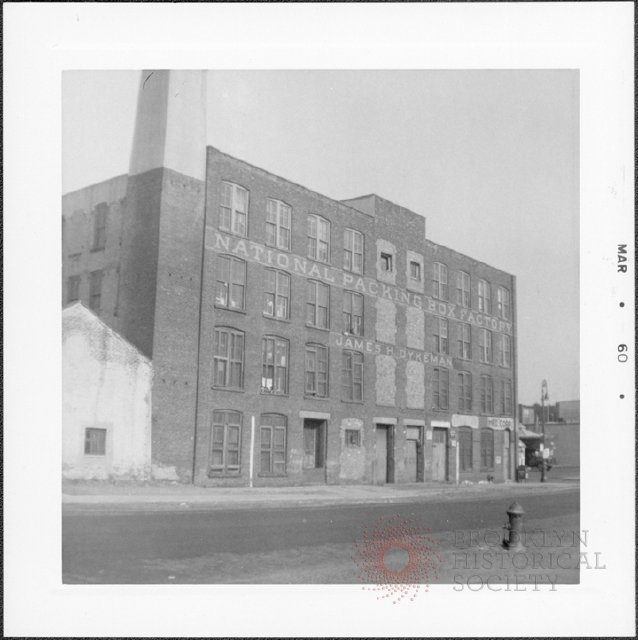
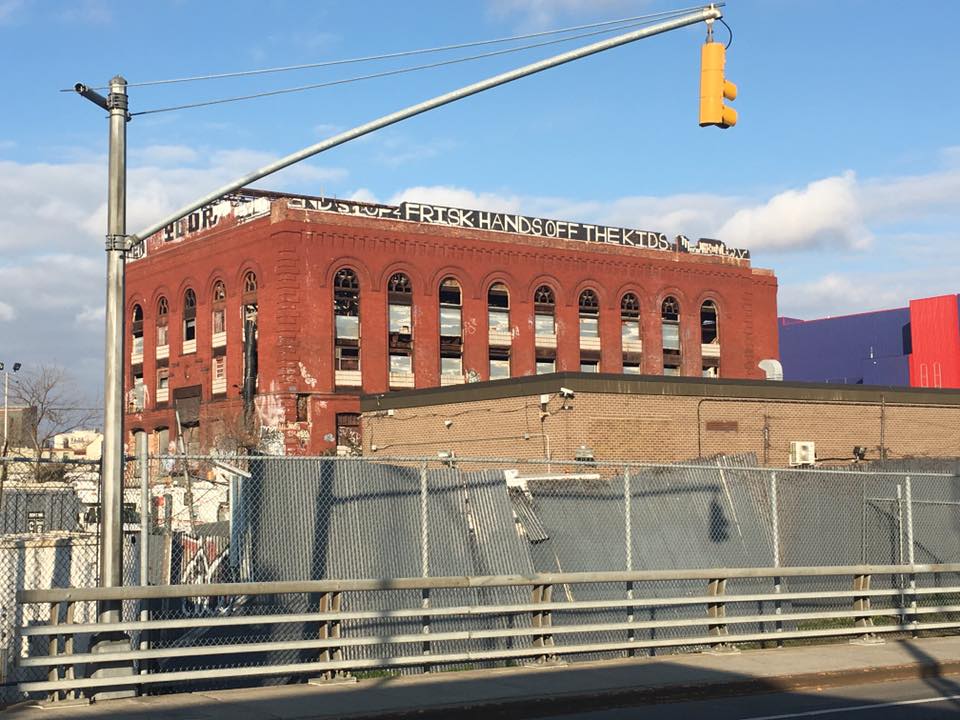
JA: For a very long time it was simply that it didn’t cost very much. But lately, for the more visually-minded, the neighborhood has a unique shape apart from the grid. The industrial architecture, bridges, funny signs, graffiti—all of this gives the neighborhood great character and personality. A soaring warehouse building or an unusual edifice gives a break from the monotony of endless streets. It’s very Jane Jacobsian, but strange breaks in the city grid, or old buildings repurposed, allow for newly creative use and exploration. This particular appeal has long existed in contemporary Gowanus.

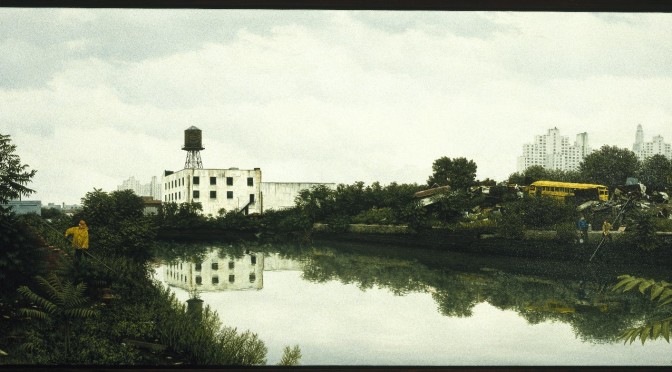
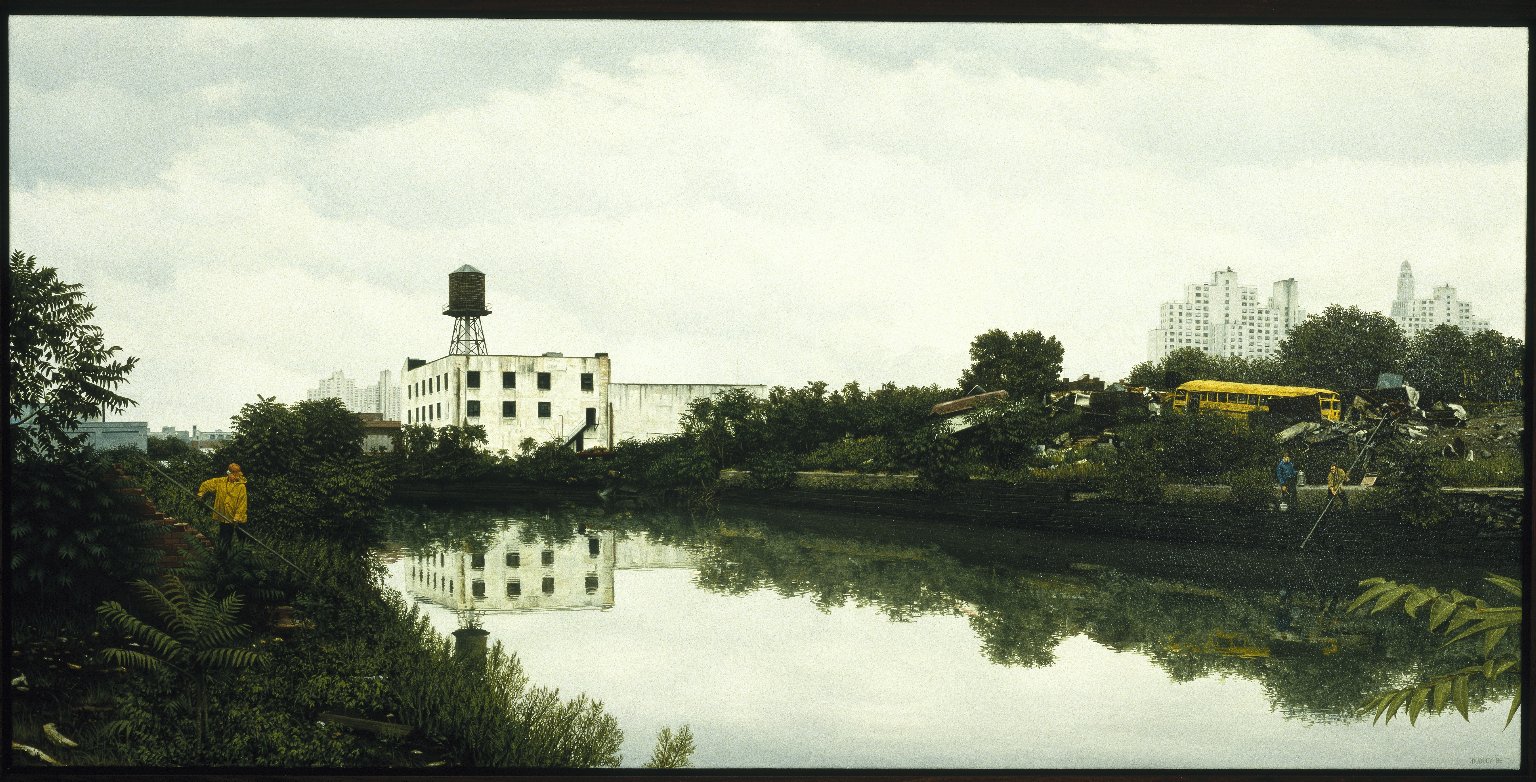
 Gowanus Canal from Second Street, 1986, Randy Dudley, from the Brooklyn Museum collection1

GY: Your book explores the struggles to clean up the Gowanus over the decades. There’s obviously a great urgency now due to the residential boom in the neighborhood.  Do you think it’s really possible to rehabilitate the Gowanus at this point, at least in a cost effective way? Do you think it will ever be considered ‘safe’ in our lifetimes?

JA: “Safe” is a relative term, and within the next two decades I do believe it will become much cleaner, and safer. I don’t know if the canal will ever be swimmable though, as raw sewage will always be in danger of spilling into the water (albeit much less than now, if the EPA plans go accordingly)—some problems are just too immense to totally solve.


GY: And, out of concern for your safety – just how much time did you actually have to spend near the Gowanus itself? God forbid you didn’t actually go anywhere close to the water?!

JA: I’ve been down to the Gowanus quite a bit, and gone out on a boat, no less than three times! I can’t say I felt totally safe during any of the voyages, but it was exhilarating! It’s a fantastic and totally unique way of seeing Brooklyn, and the city!

Categories
Landmarks Podcasts

Battle for the New York City Skyline: How Tall Can It Go?

PODCAST The story of growing tall in New York City and the two pivotal laws that allowed for the city’s dynamic, constantly evolving skyline.

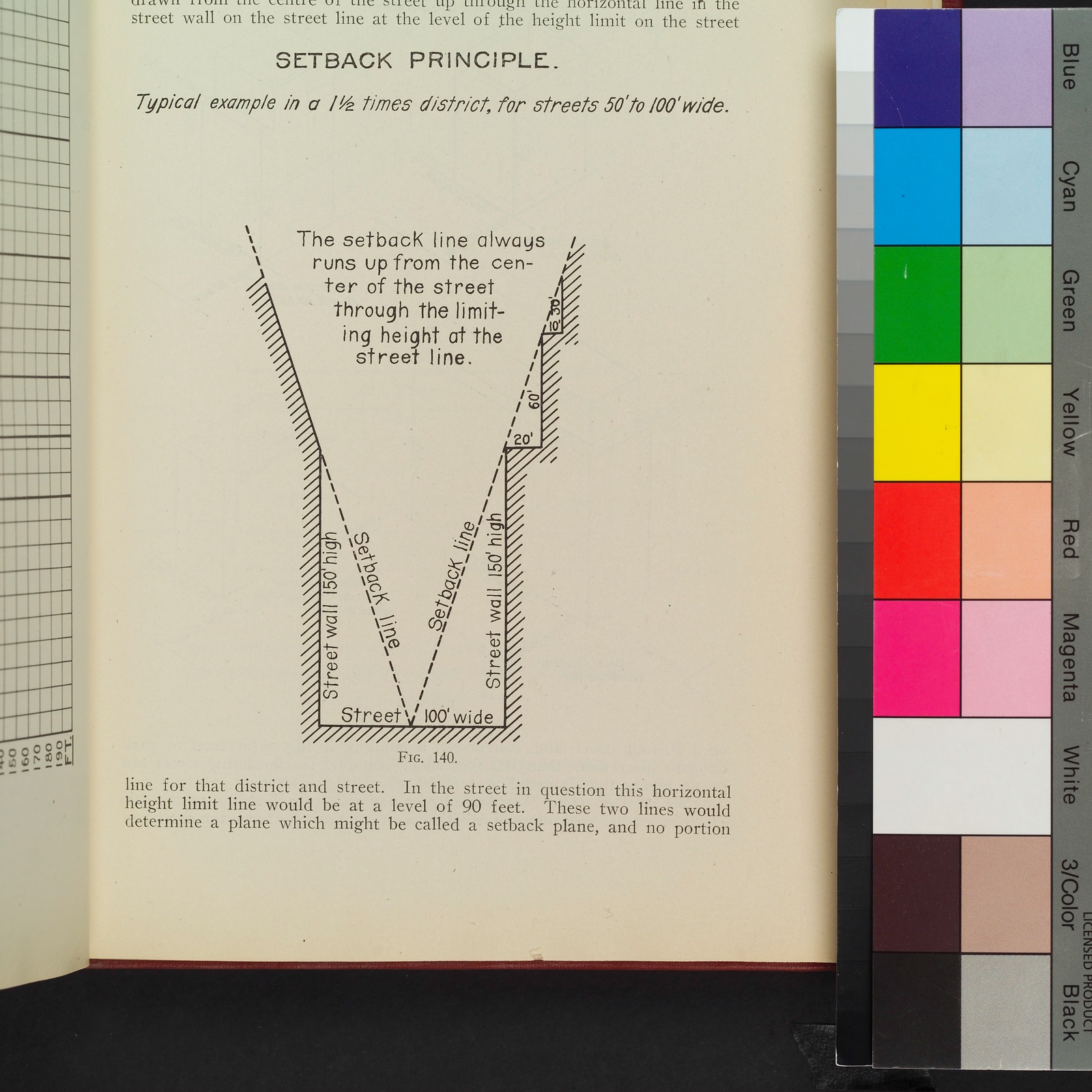
This year is the 100th anniversary of one of the most important laws ever passed in New York City — the 1916 Zoning Law which dictated the rules for building big and tall in the city. So we thought we’d take this opportunity to ponder on the many changes to New York’s beautiful skyline via the unique technical changes to construction rules.

Why are areas of lower Manhattan darkened canyons, and why are there huge public plazas inside buildings in Midtown? Why do older buildings have graceful and elegant set-backs but newer structures feel like monoliths from 2001: A Space Odyssey? This is a layman’s history of building tall — our apologizes to architects for simplifying such sophisticated concepts — and the important laws that changed the face of NYC forever.

PLUS: This is our craziest podcast yet. We’ve decided — as our 199th episode — to hit the road! This entire show is recorded outside in front of the very spots that have most affected the city’s decision. From downtown Manhattan and the Equitable Building to a surprising corner of Hell’s Kitchen.


The Bowery Boys: New York City History podcast is brought to you …. by you!

We are now producing a new Bowery Boys podcast every two weeks. We’re also looking to improve the show in other ways and expand in other ways as well — through publishing, social media, live events and other forms of media. But we can only do this with your help!

We are now a member of Patreon, a patronage platform where you can support your favorite content creators for as little as a $1 a month.

Please visit our page on Patreon and watch a short video of us recording the show and talking about our expansion plans. If you’d like to help out, there are five different pledge levels (and with clever names too — Mannahatta, New Amsterdam, Five Points, Gilded Age, Jazz Age and Empire State). Check them out and consider being a sponsor.

We greatly appreciate our listeners and readers and thank you for joining us on this journey so far. And the best is yet to come!


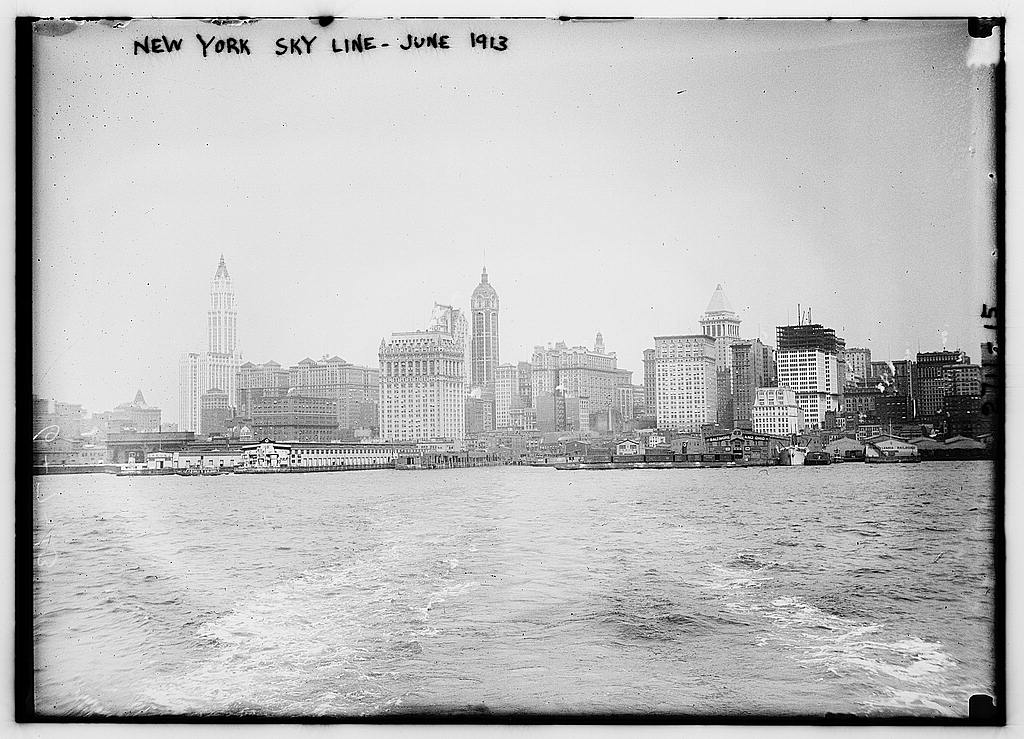
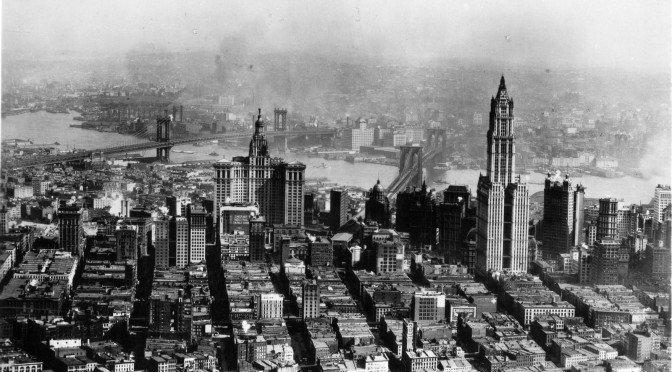
The New York skyline circa 1913 with the newly built Woolworth Building. None of these structures were constructed with a mandated setback.

Library of Congress
Library of Congress
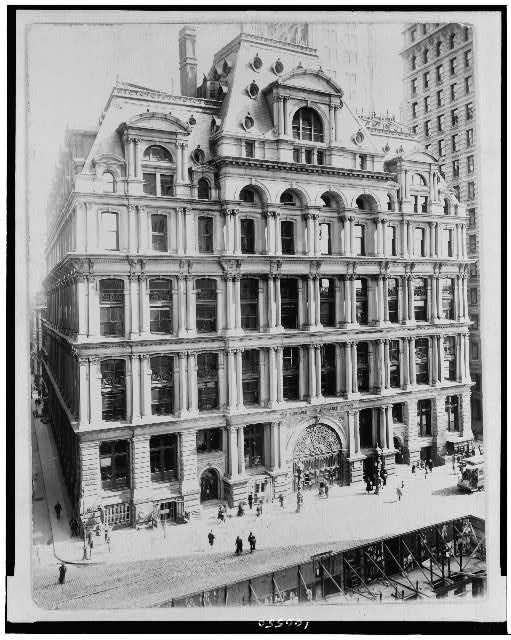
The first Equitable Building, constructed in 1870 (and seen here in 1906), considered New York’s first skyscraper.

Library of Congress
Library of Congress
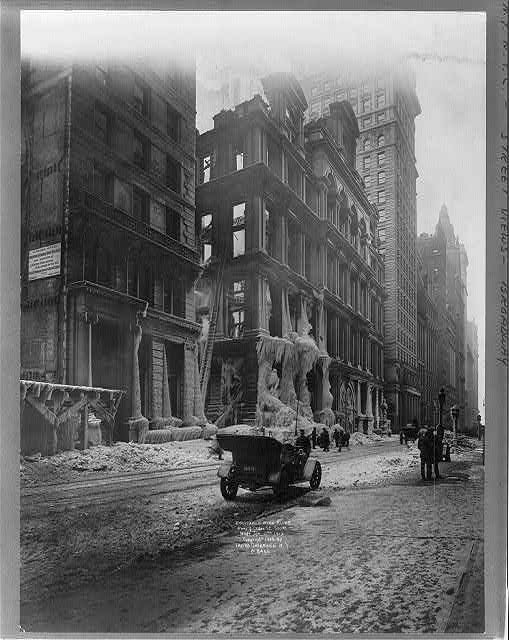
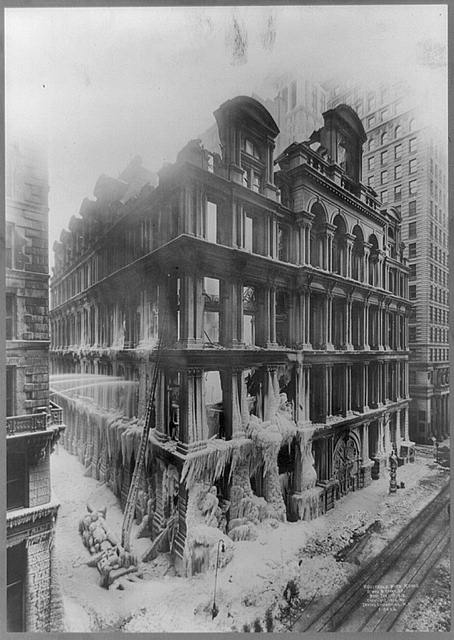
The Equitable was destroyed in a dramatic fire on a cold January 9, 1912.

Library of Congress
Library of Congress
3

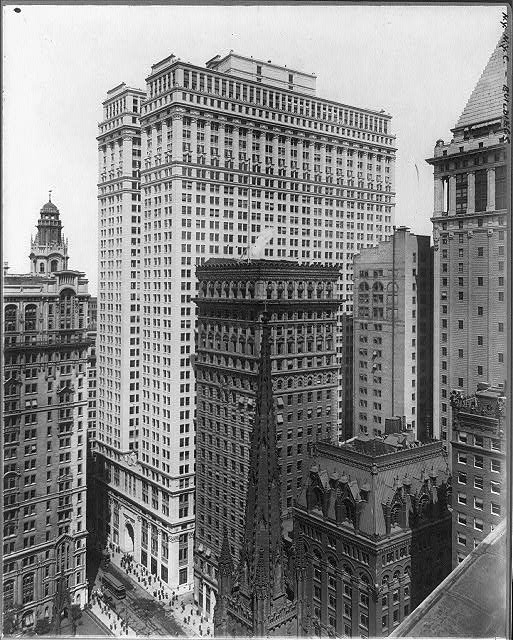
The new Equitable Building was a monster of a bulky skyscraper, casting dark shadows onto the surrounding buildings.

Library of Congress
Library of Congress
This image is the property of The New York Public Library. For each use, you must contact: The New York Public Library, Photographic Services & Permissions, Room 103, 476 Fifth Avenue, New York, NY 10018; 212-930-0091, fax: 212-930-0533, email: permissions@nypl.org. Using an image from The New York Public Library for publication without payment of use fees and official written permission is strictly prohibited.
Courtesy The New York Public Library.

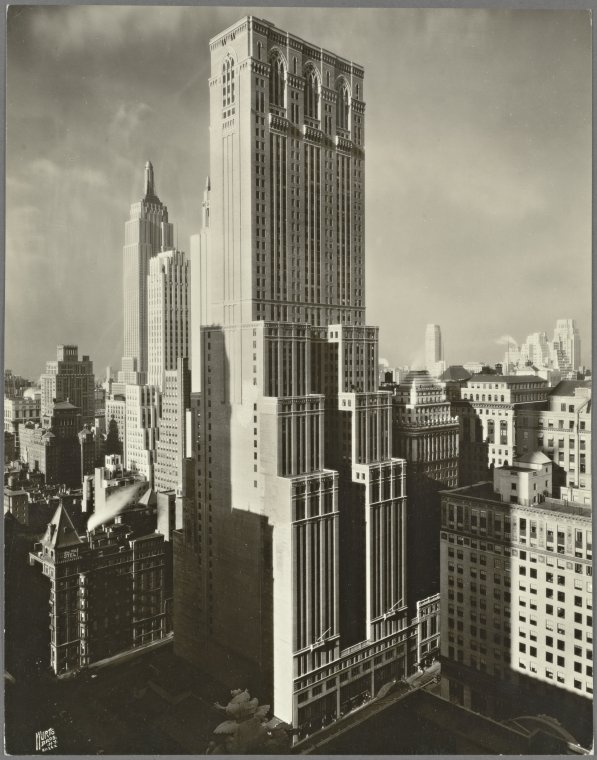
Midtown Manhattan was a sea of setbacks by the late 1930s. (Photo by the Wurts Brothers)

New York Public Library

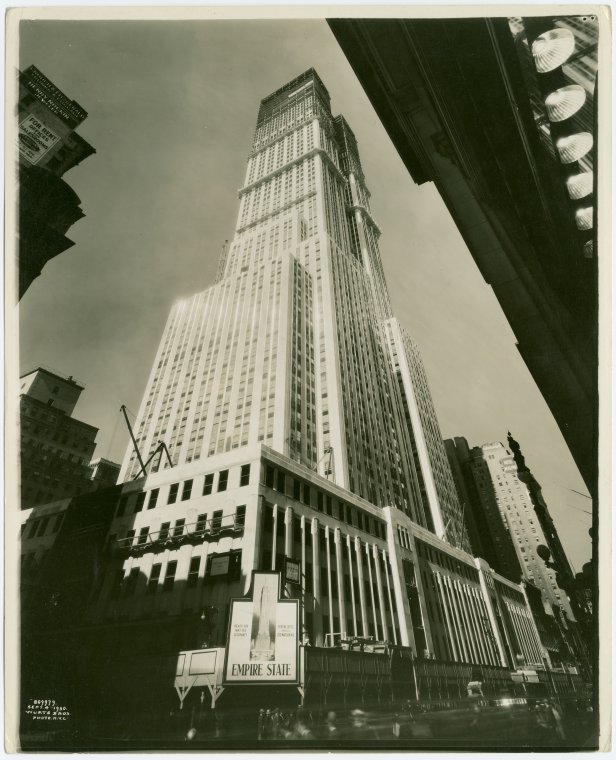
The Empire State Building under construction. From this angle, the dramatic effect of the setbacks can be seen. (Photo by the Wurts Brothers.)

NYPL
NYPL

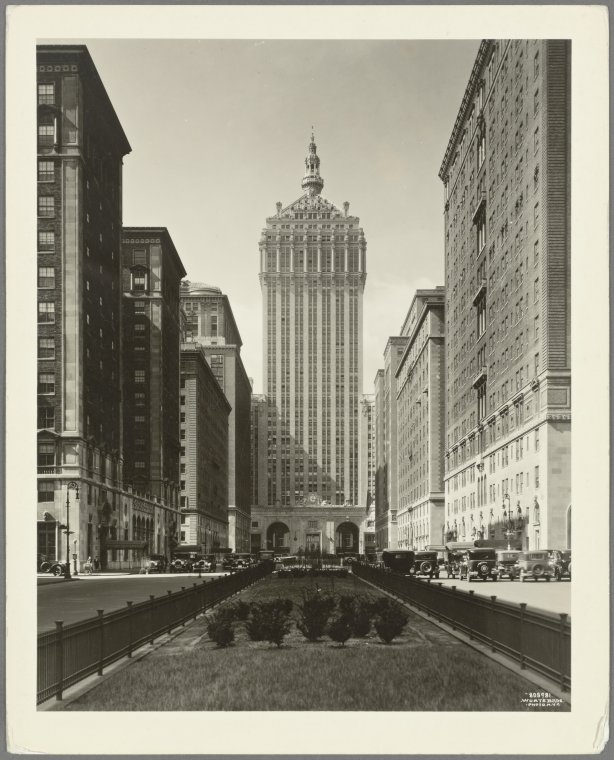
How Park Avenue looked before the arrival of the Lever House. Photo by the Wurts Brothers

NYPL
NYPL

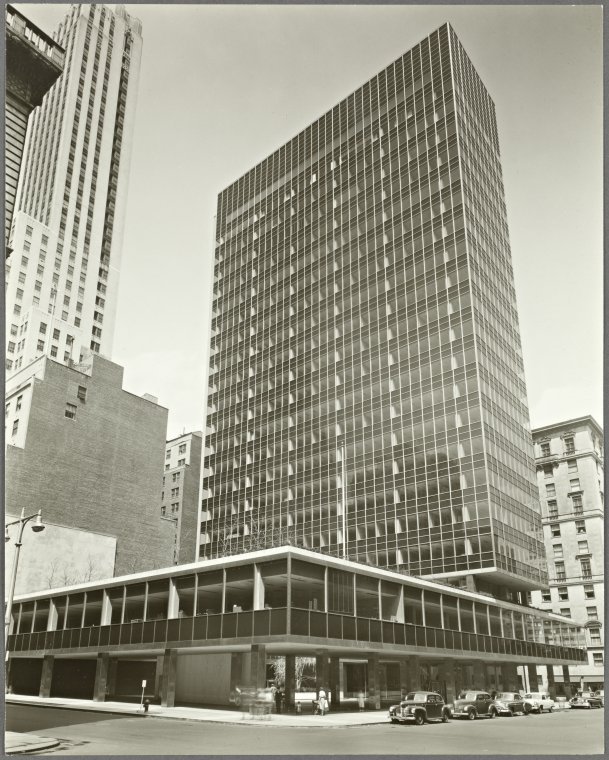
The Lever House transformed the area of Park Avenue with its unique approach to the 1916 zoning laws. (Photo from 1952)

NYPL
NYPL

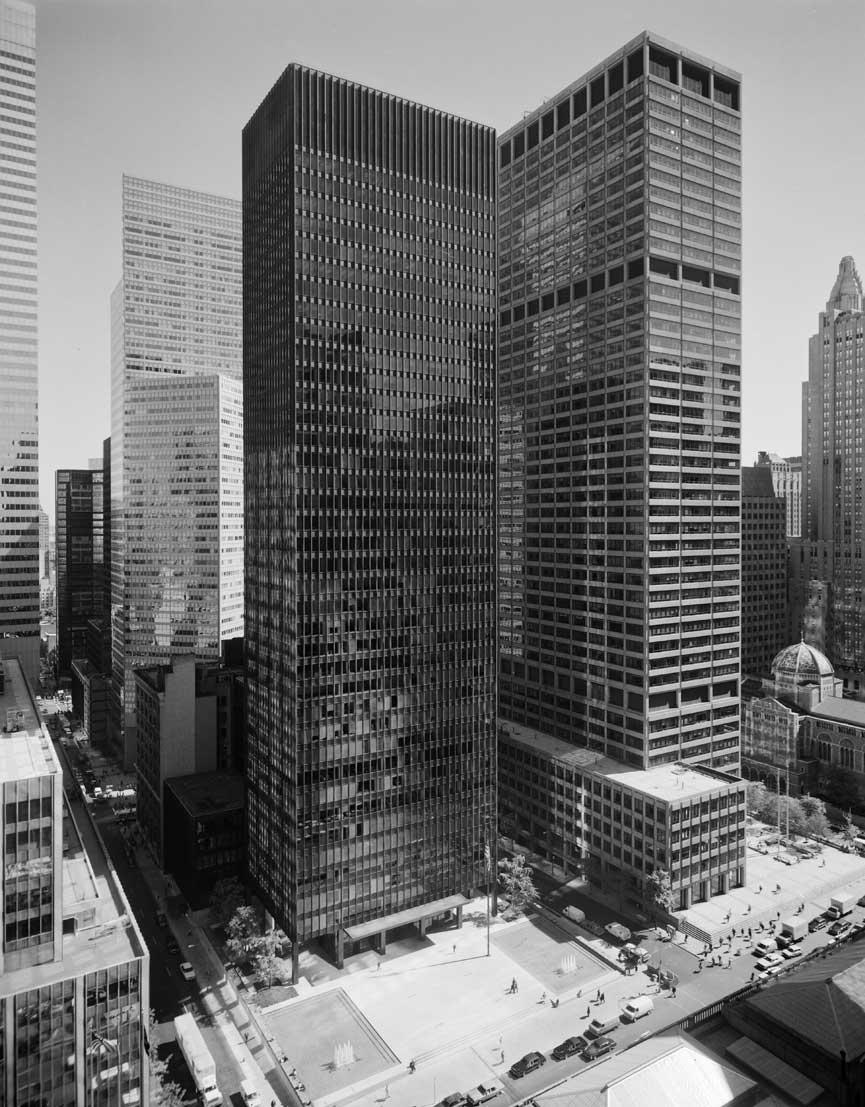
The Seagram Building, completed in 1958, is the very best example of the glass-curtain style monolith, More excellent pictures of this classic skyscraper at their website.

Courtesy 375 Park Avenue

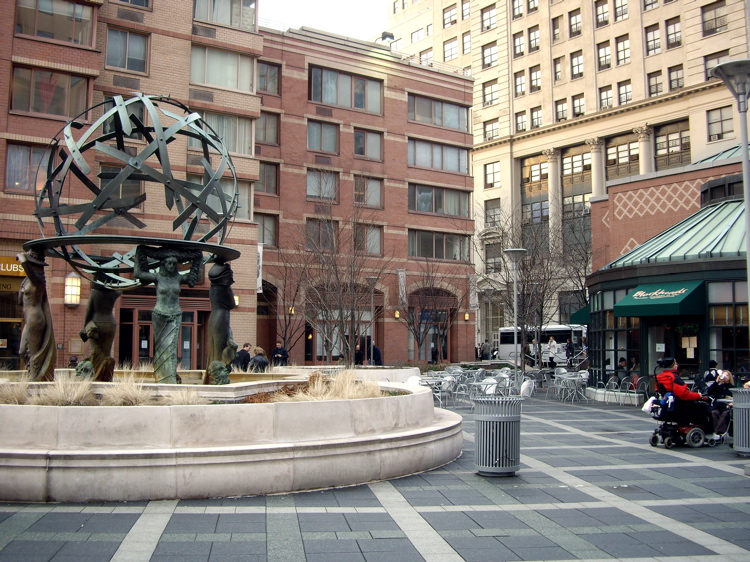
The courtyard at Worldwide Plaza, a massive office/residential complex completed in 1989.

Courtesy Wikimedia
Courtesy Wikimedia
Categories
Preservation

The Second Annual Apple Awards! Honoring the Best of New York

The Second Annual 2016 GANYC Apple Awards, honoring the best in New York City preservation, tourism and culture, arrives this March again to the Leonard Nimoy Thalia Theater at Symphony Space.  We were honored to be chosen for an award last year in the category of Outstanding Achievement in Radio Program/Podcasts. And this year, we’re showing up to present an award!

This year’s ceremony is on Monday, March 7, 2016 at 8 pm.  There are some tickets left so get yours directly from Symphony Space here.

Here are this years honorees. Congratulations, good luck to the nominees and we’ll see you all on March 7:


Outstanding Achievement in Support of New York City  — Culture


Outstanding Achievement in Support of New York City — Tourism


Outstanding Achievement in Support of New York City — Preservation


Outstanding NYC Website


Outstanding Achievement in Radio Program/Podcast (Audio/Spoken Word)


Outstanding Achievement in NYC Food (focusing on anniversaries and special accomplishments)

  • Yonah Schimmel Knishery: Celebrating 125 Years
  • Danny Meyer, Union Square Hospitality Group: Hospitality Included Program started November, 2015
  • Marcus Samuelsson: Bringing the quality food scene back to Harlem starting with Red Rooster, 2010
  • Lou, Salvatore & Marie Di Palo, Di Palo’s: Celebrating 90 years on Mott & Grand streets


Outstanding Achievement in Non-Fiction Book Writing 


Outstanding Achievement in Fiction Book Writing 


Outstanding Achievement in Essay/Article/Series Writing 


Outstanding Achievement in NYC Museum Exhibitions 


Outstanding Achievement in NYC Photography (singular image, published October 2015-15)

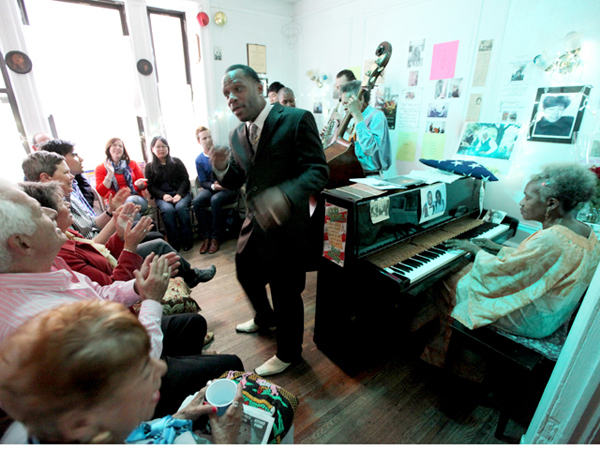
PLUS:  A special lifetime achievement award will be presented to Marjorie Eliot, best known for her Sunday afternoon parlor jazz concerts at 555 Edgecombe Avenue, one of the most historic address in Harlem.

“A writer, actress and pianist, Eliot began the parlor jazz concerts as a tribute to her son Philip, who died in 1992. In addition to memorializing her son and helping ease the pain of his loss, these sessions keep alive the tradition of parlor jazz and rent parties from the bygone days of Harlem. The concerts have attracted jazz lovers from around New York and around the globe, who cram 50 at a time into apartment 3-F to hear world-class jazz each and every Sunday — she has yet to miss a Sunday since starting the series.

1

Photo by Paul Lomax/Uptown Collective

Categories
Those Were The Days

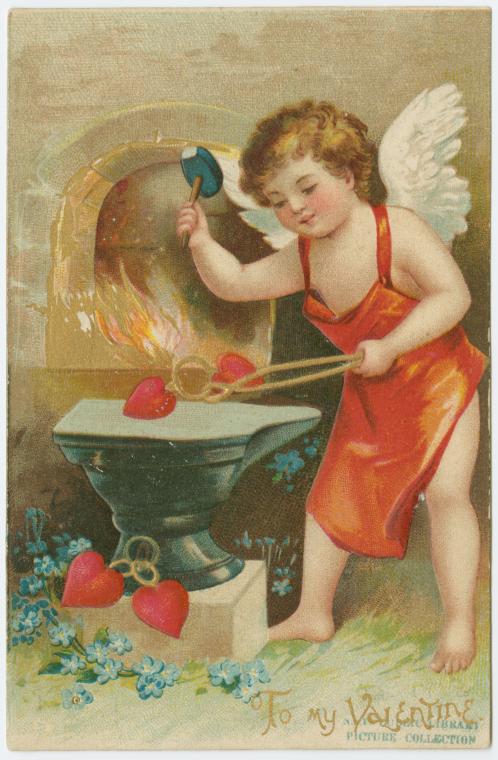
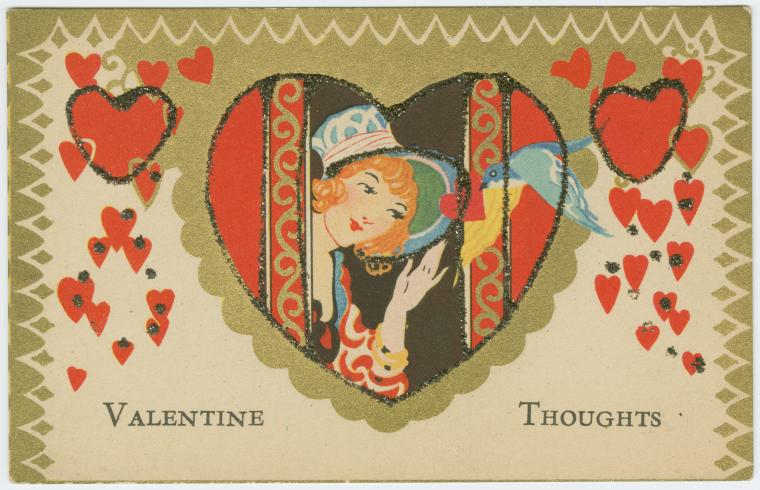
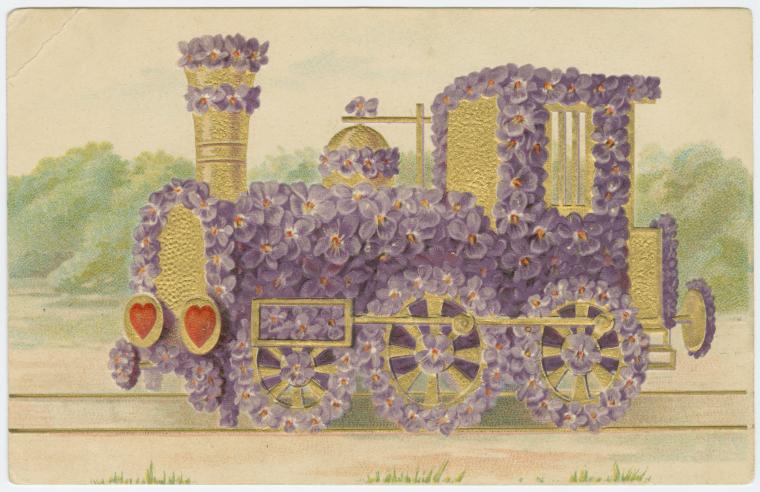
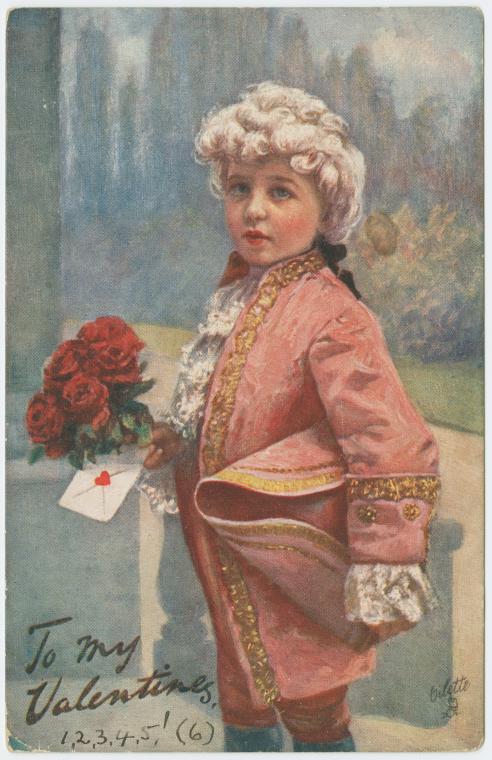
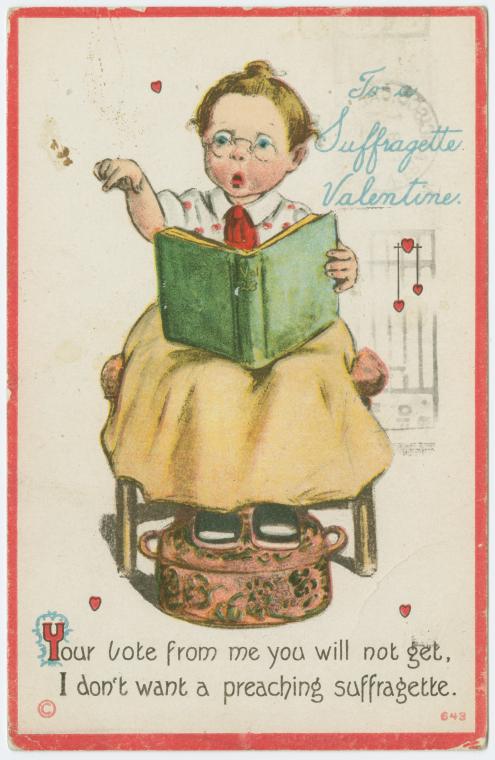
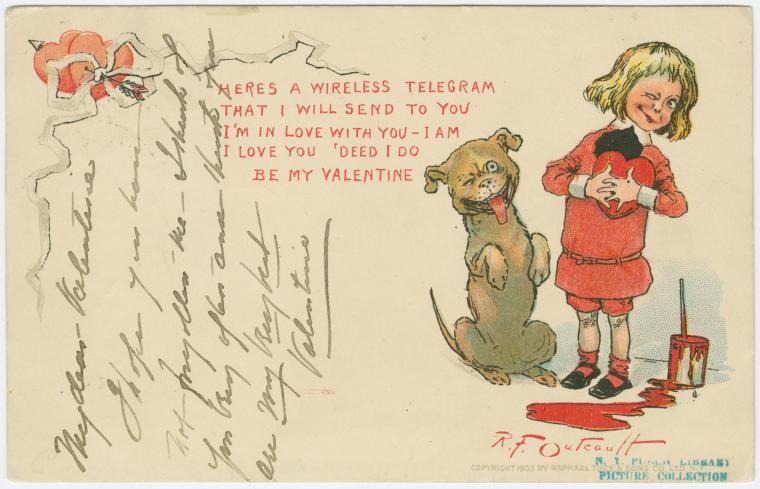
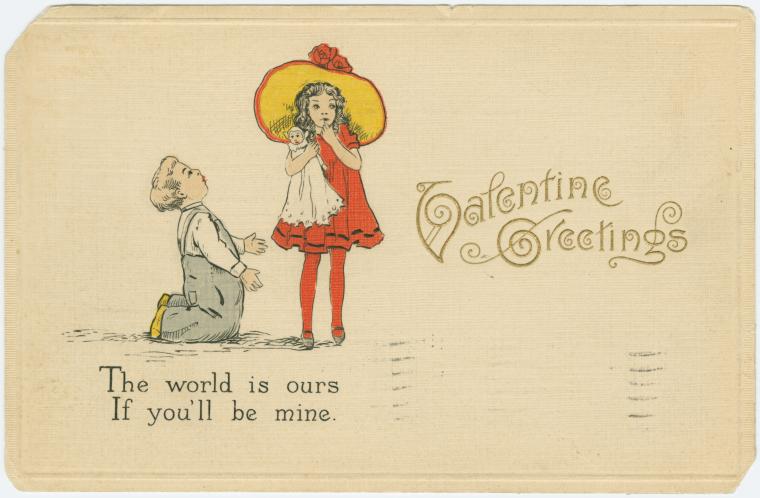
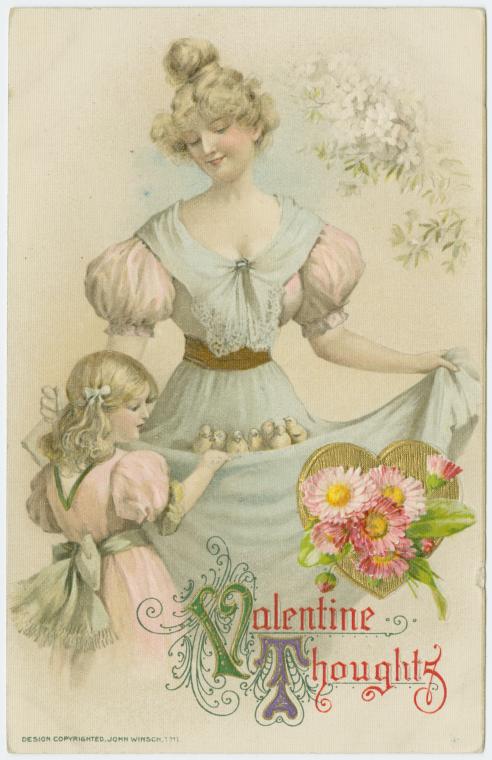
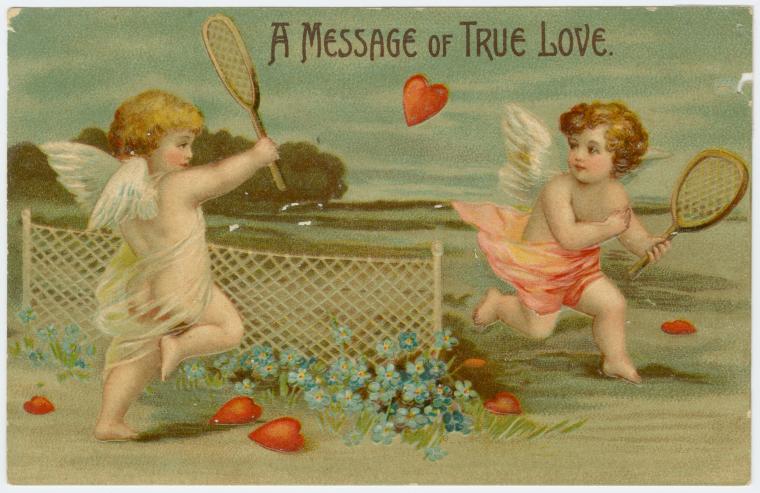
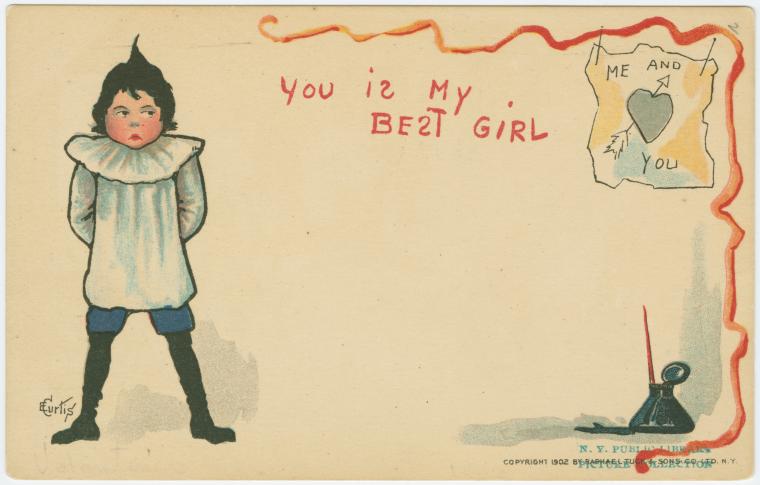
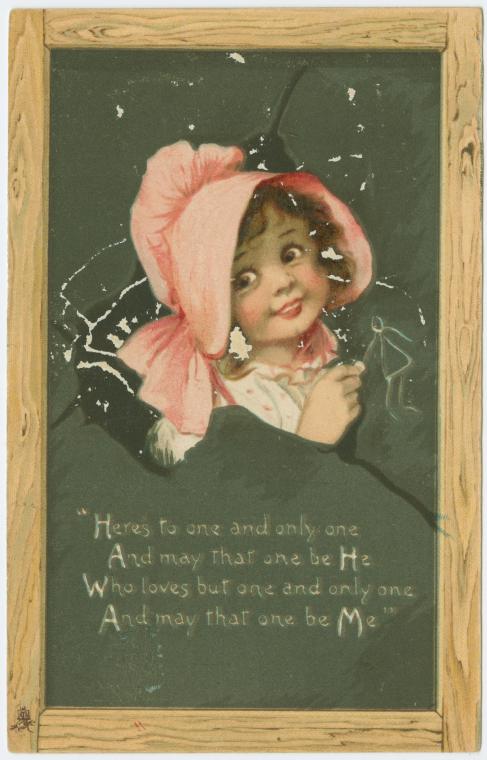
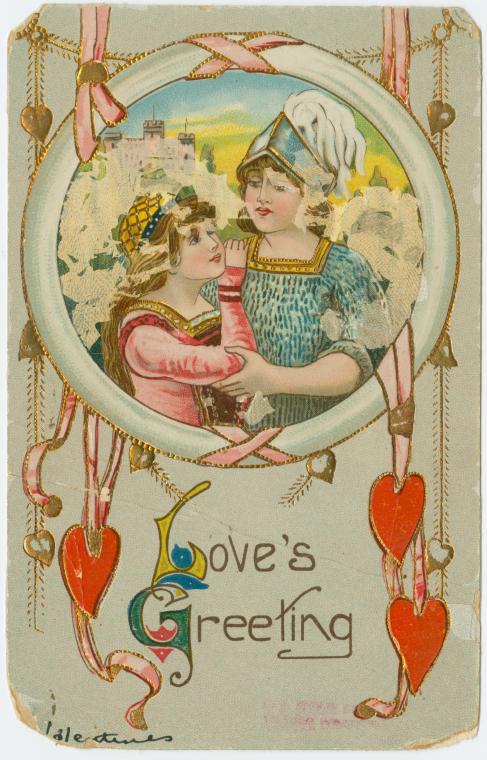
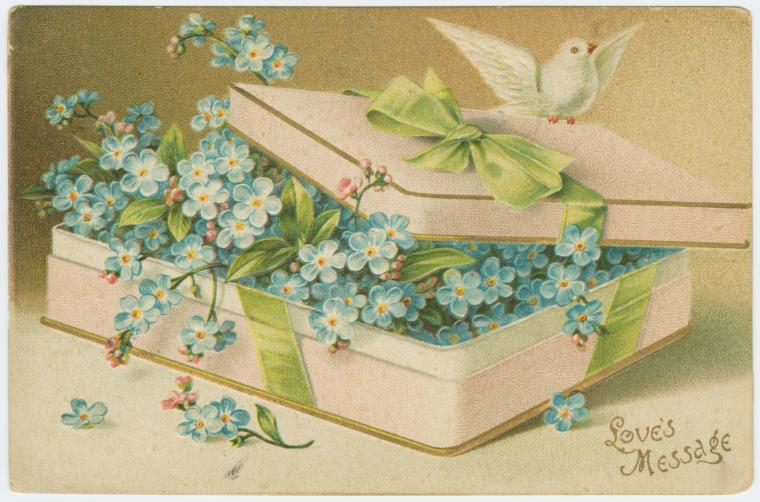
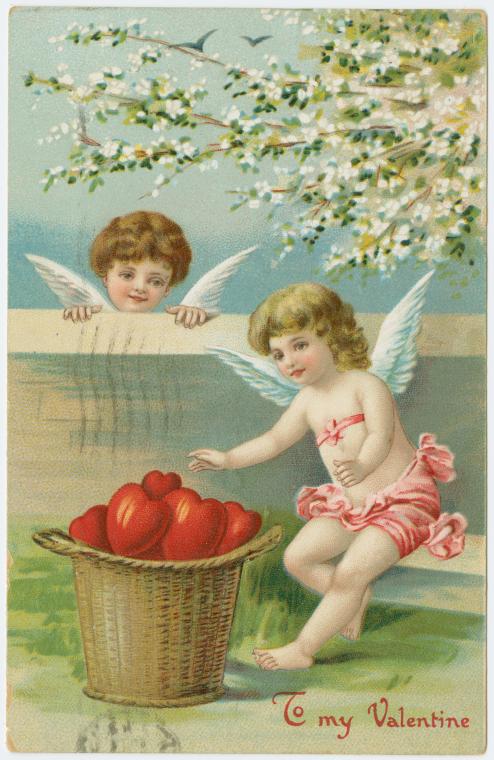
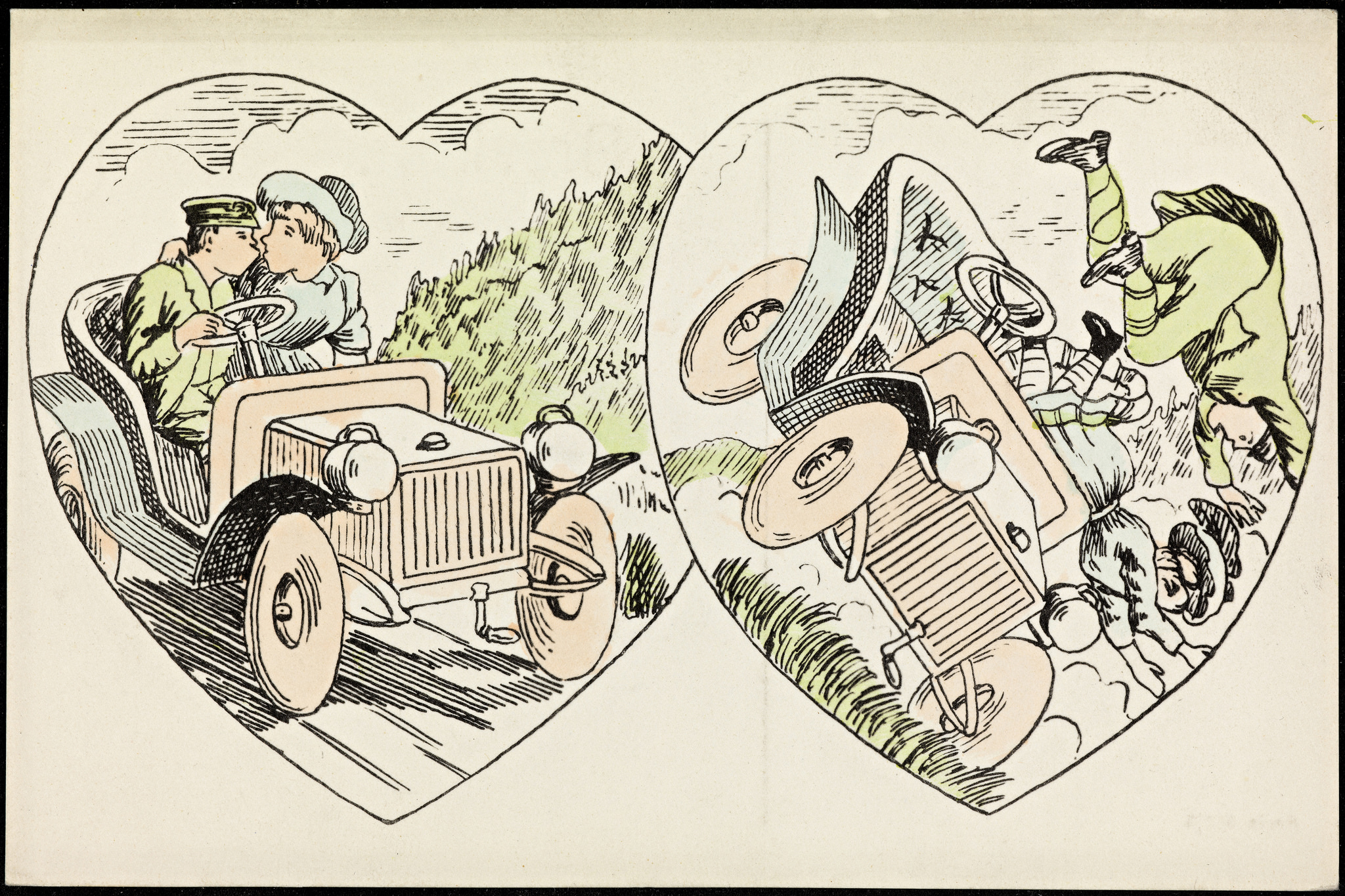
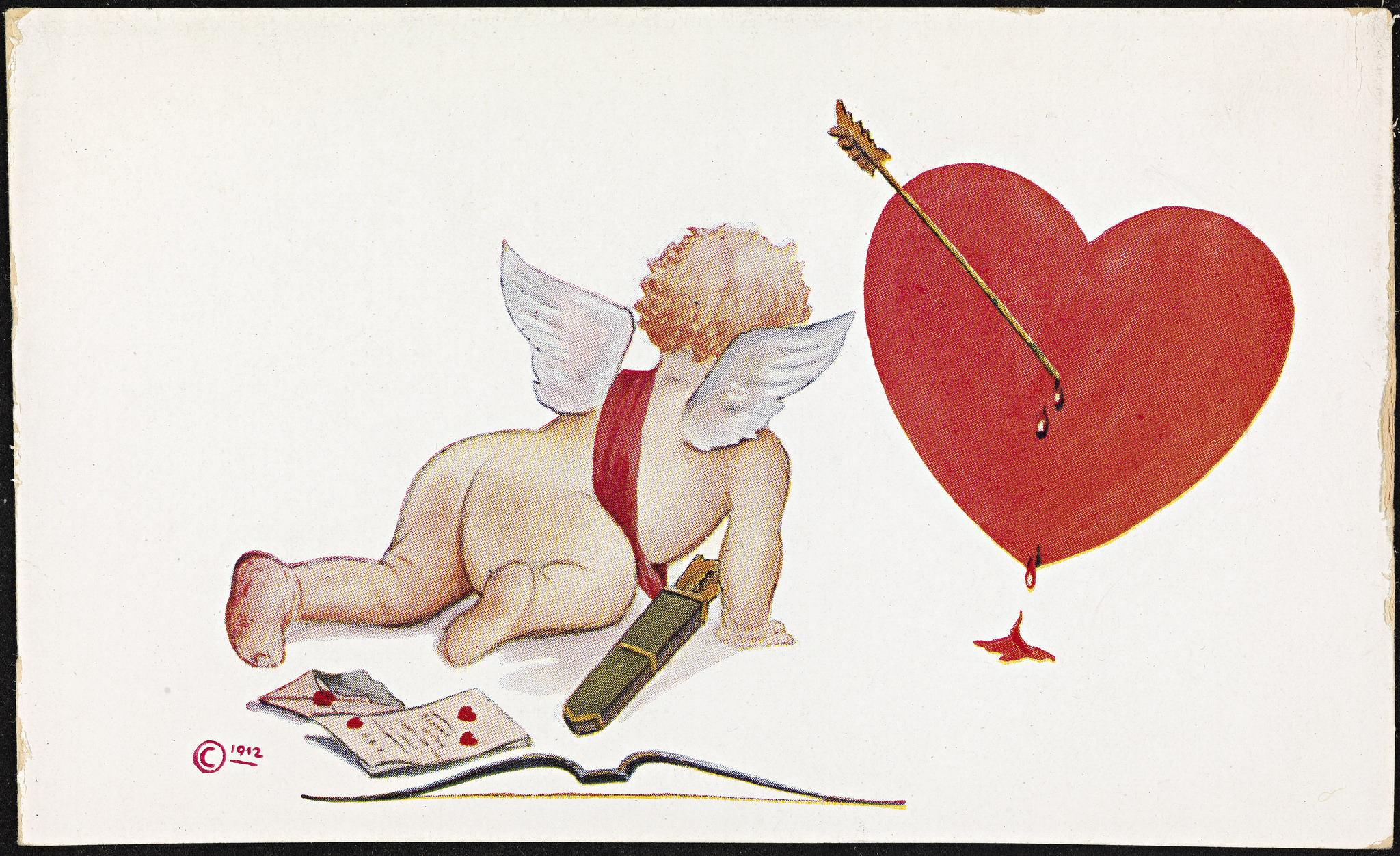
Let’s look at some old-timey Valentine’s Day cards!

“In observing St. Valentine’s Day we conform to a heathen custom which obtained long before the martyr, St. Valentine, was born,” wrote the New  York Daily Tribune in February of 1908.

Like Christmas, the celebration of Valentine’s Day became explicitly commercial in the late 19th century with the mass manufacture of cards and candy.  Massachusetts businesswoman Esther Howland is considered the mother of the Valentine’s Day card, making a fortune producing them for her father’s stationary store in Worchester.  She improved upon the conservative English valentines cards with flowery verse upon various card stock, embroidered with lace and color embossing.

By the 1880s, Valentine’s Day cards were being mass produced. Today over 150 million cards are delivered, making it the second busiest holiday for card makers.

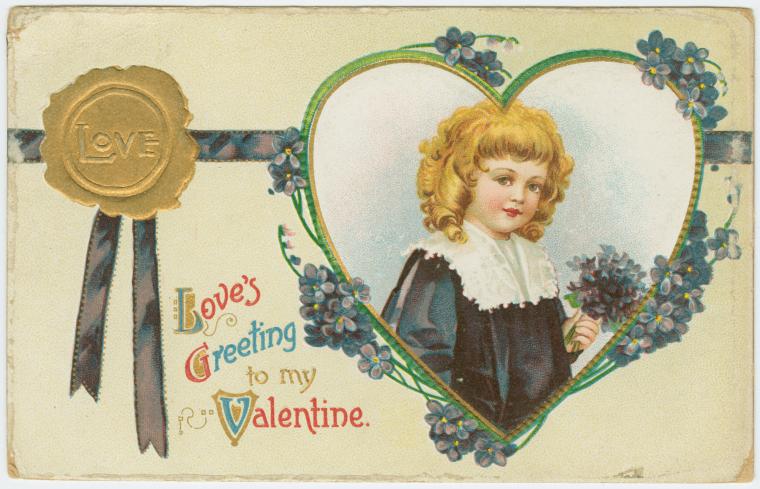
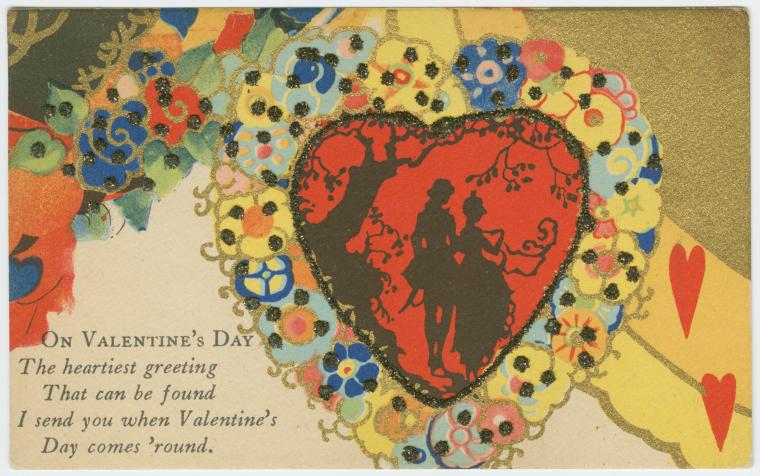
Here’s a great selection of old Valentine’s Day cards from the collection at the New York Public Library.  They certainly don’t make them like they used to!


2

1

3

4

5

6

7

8

9

10

11

12

13

14

15

16


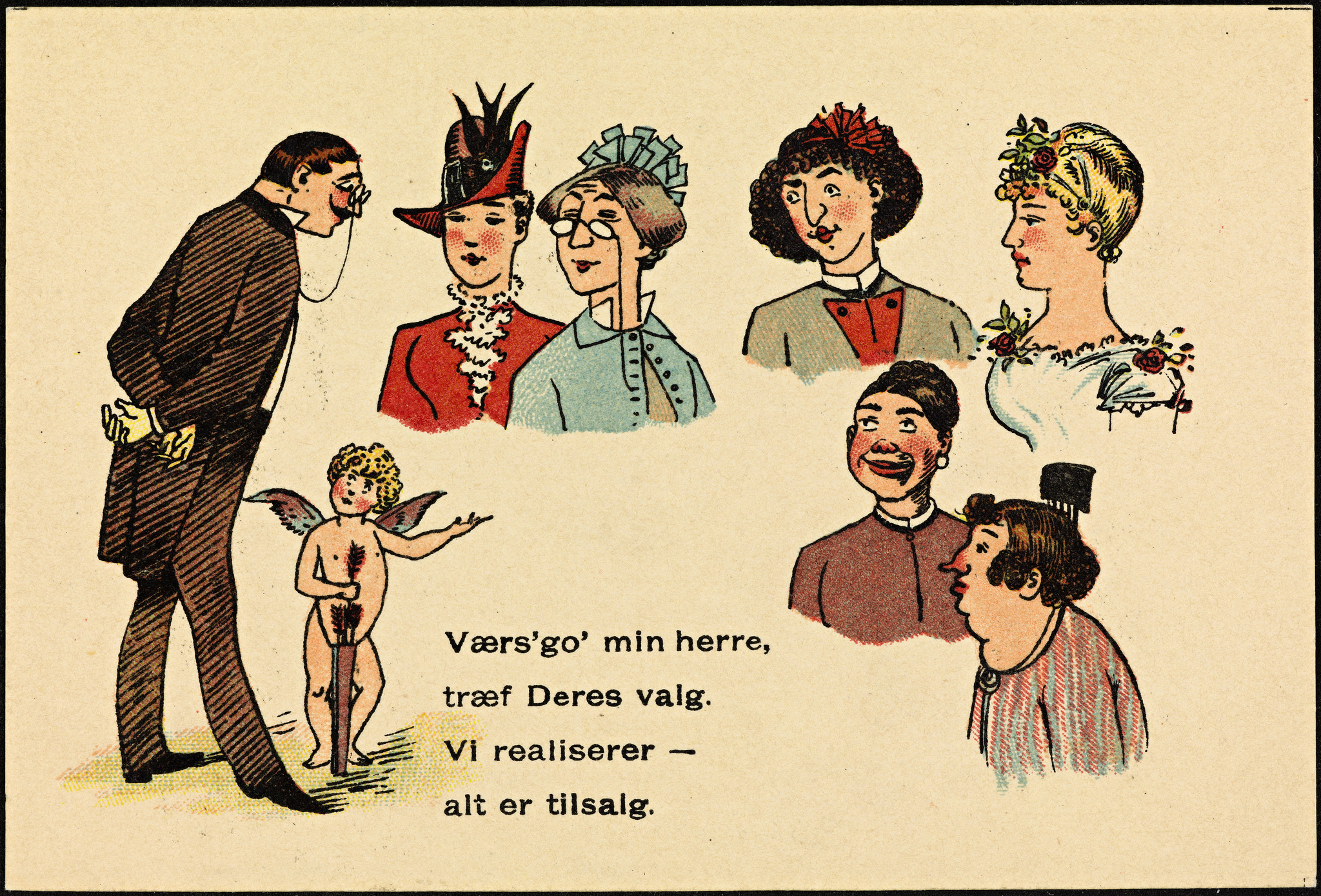
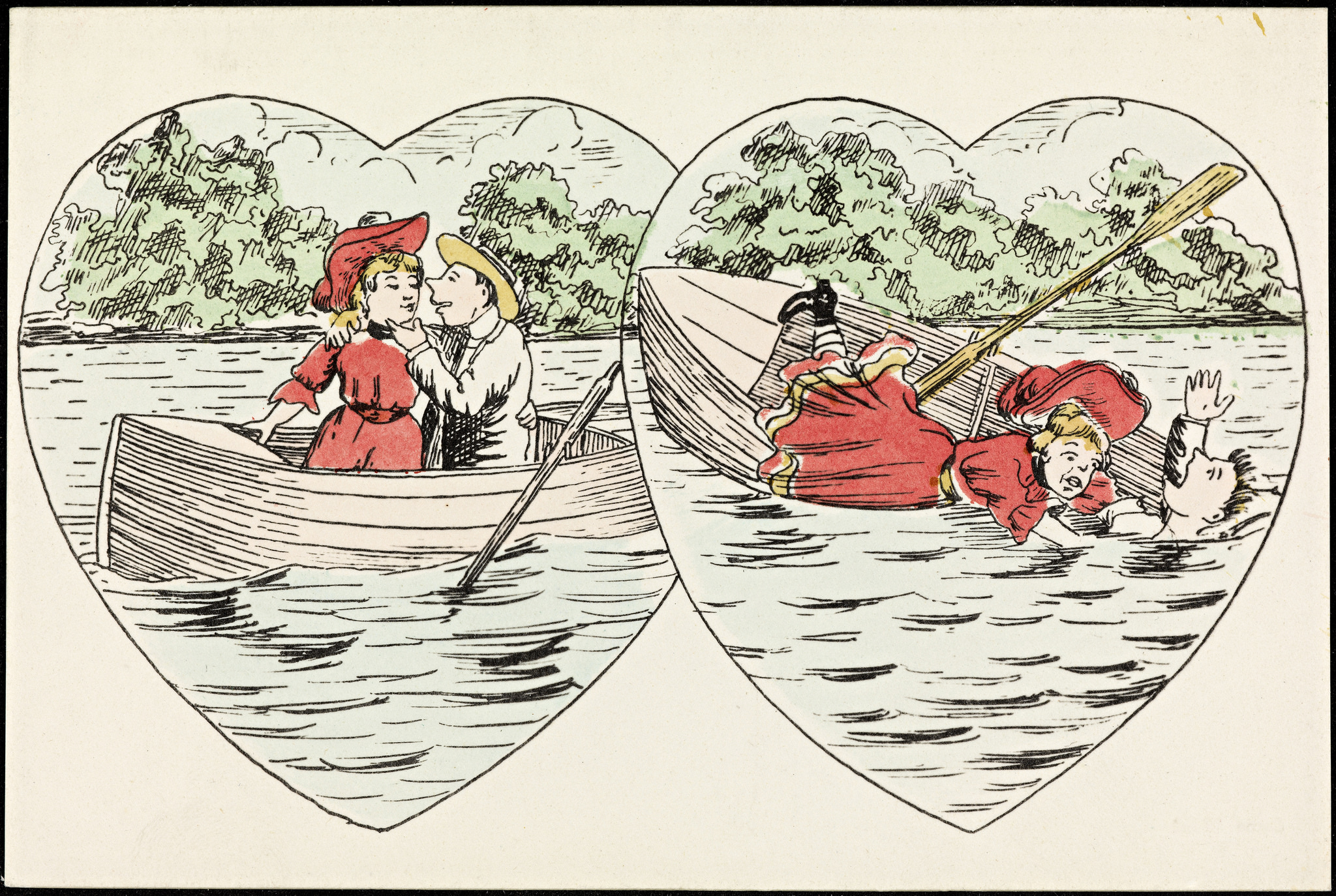
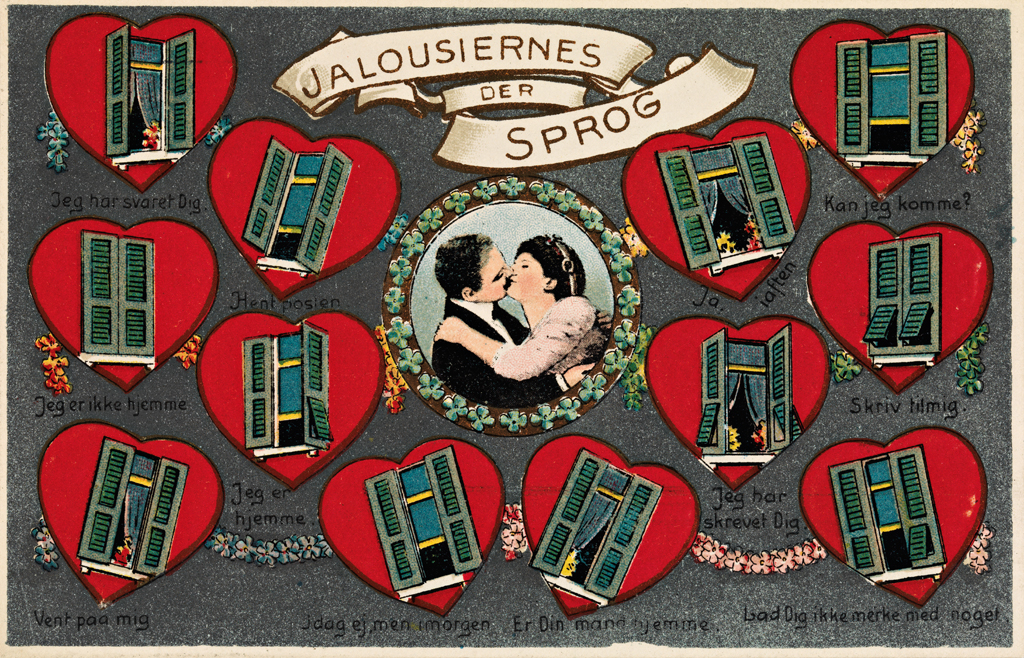
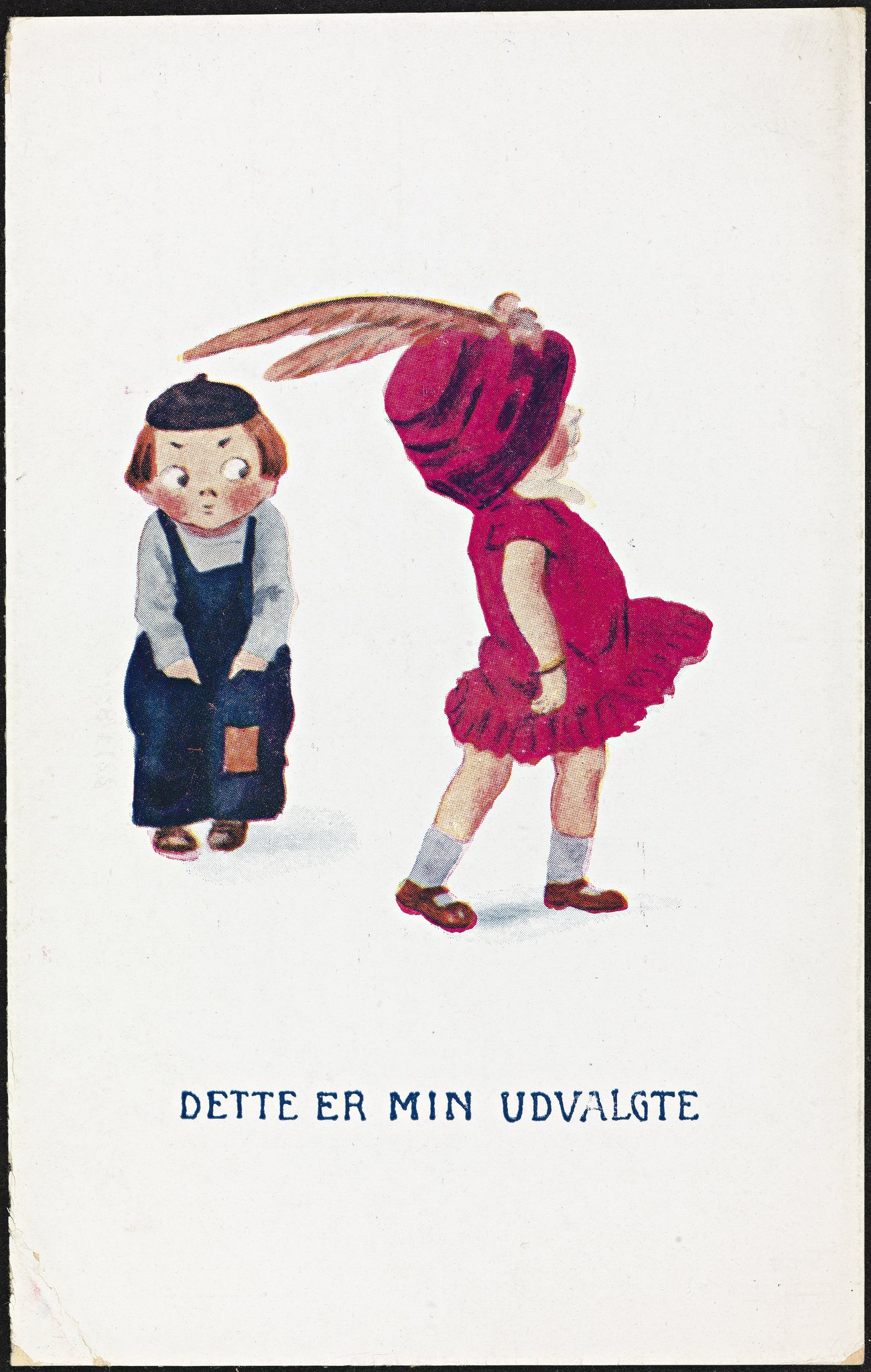
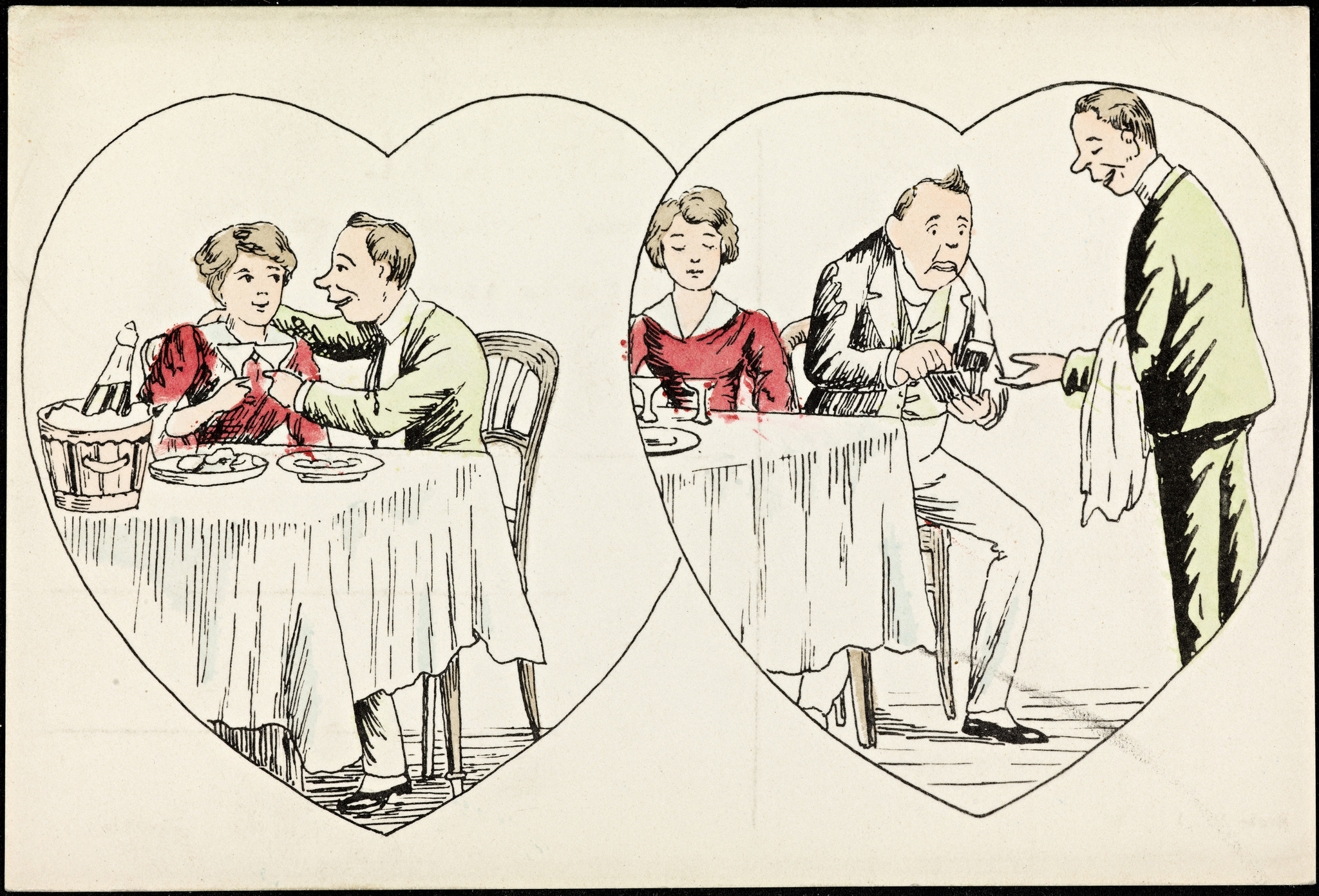
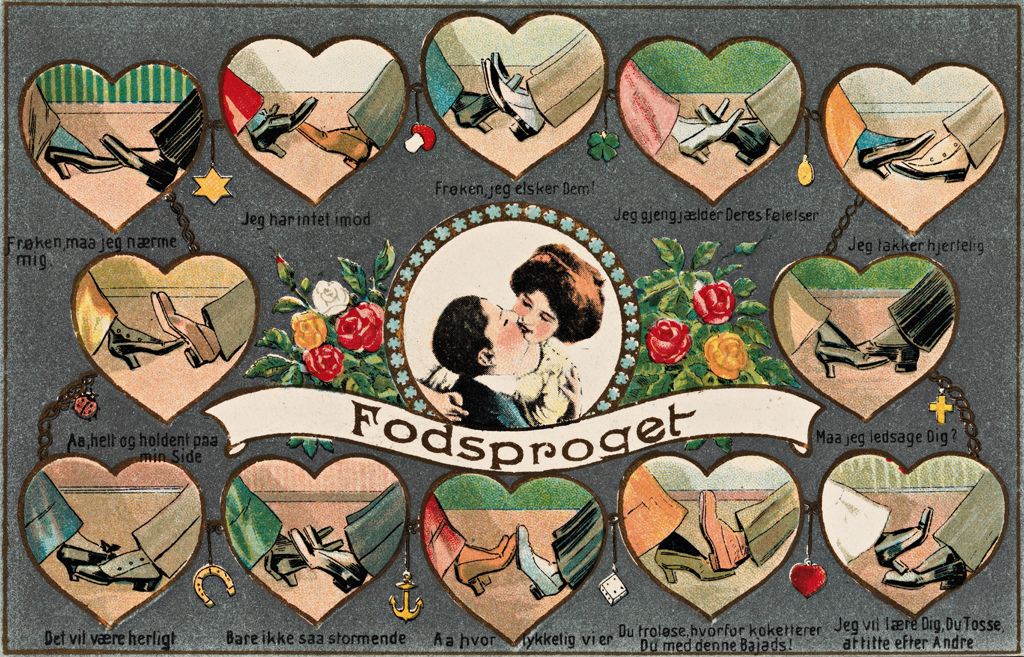
And finally here’s a few incredibly amazing vintage cards from Norway, just in case you want to really shake it up (and perhaps generally confuse) your valentine! Let’s just say the Norwegians seem to have more of a sense of humor back then.

1

2

3

4

7

7

8

1


Categories
Brooklyn History Podcasts

The History of Greenpoint, Brooklyn: An Industrial-Strength Story

PODCAST The history of the Brooklyn neighborhood of Greenpoint and the oft-polluted Newtown Creek.

Greenpoint, Brooklyn, has a surprising history of both bucolic green pastures and rancid oil patches. Before the 19th century this corner of Brooklyn was owned by only a few families with farms (and the slaves that tended them).

But with the future borough of Brooklyn expanding at a great rate, Greenpoint (or Green Point, as they used to call it) could no longer remain private.

Industries like ship building and petroleum completely changed the character of Greenpoint’s waterfront, while its unique, alphabetically-named grid of streets held an extraordinary collection of townhouses.

By the late 19th century, Polish immigrants would move on the major avenues, developing a ‘Little Poland’ that still characterizes the neighborhood.

Today big changes are coming to Greenpoint thanks to new housing developments. How will these new arrivals fare next to the notoriously toxic Newtown Creek, a body of water heavily abused by industry?

FEATURING: Charles Pratt, Margaret Wise Brown, Pat Benetar and the alarming smell of cinnamon toast!

The Bowery Boys: New York City History podcast is brought to you …. by you!

We are now producing a new Bowery Boys podcast every two weeks.  We’re also looking to improve the show in other ways and expand in other ways as well — through publishing, social media, live events and other forms of media.  But we can only do this with your help!

We are now a member of Patreon, a patronage platform where you can support your favorite content creators for as little as a $1 a month.

Please visit our page on Patreon and watch a short video of us recording the show and talking about our expansion plans.  If you’d like to help out, there are five different pledge levels (and with clever names too — Mannahatta, New Amsterdam, Five Points, Gilded Age, Jazz Age and Empire State). Check them out and consider being a sponsor.

We greatly appreciate our listeners and readers and thank you for joining us on this journey so far. And the best is yet to come!

___________________________________________________________

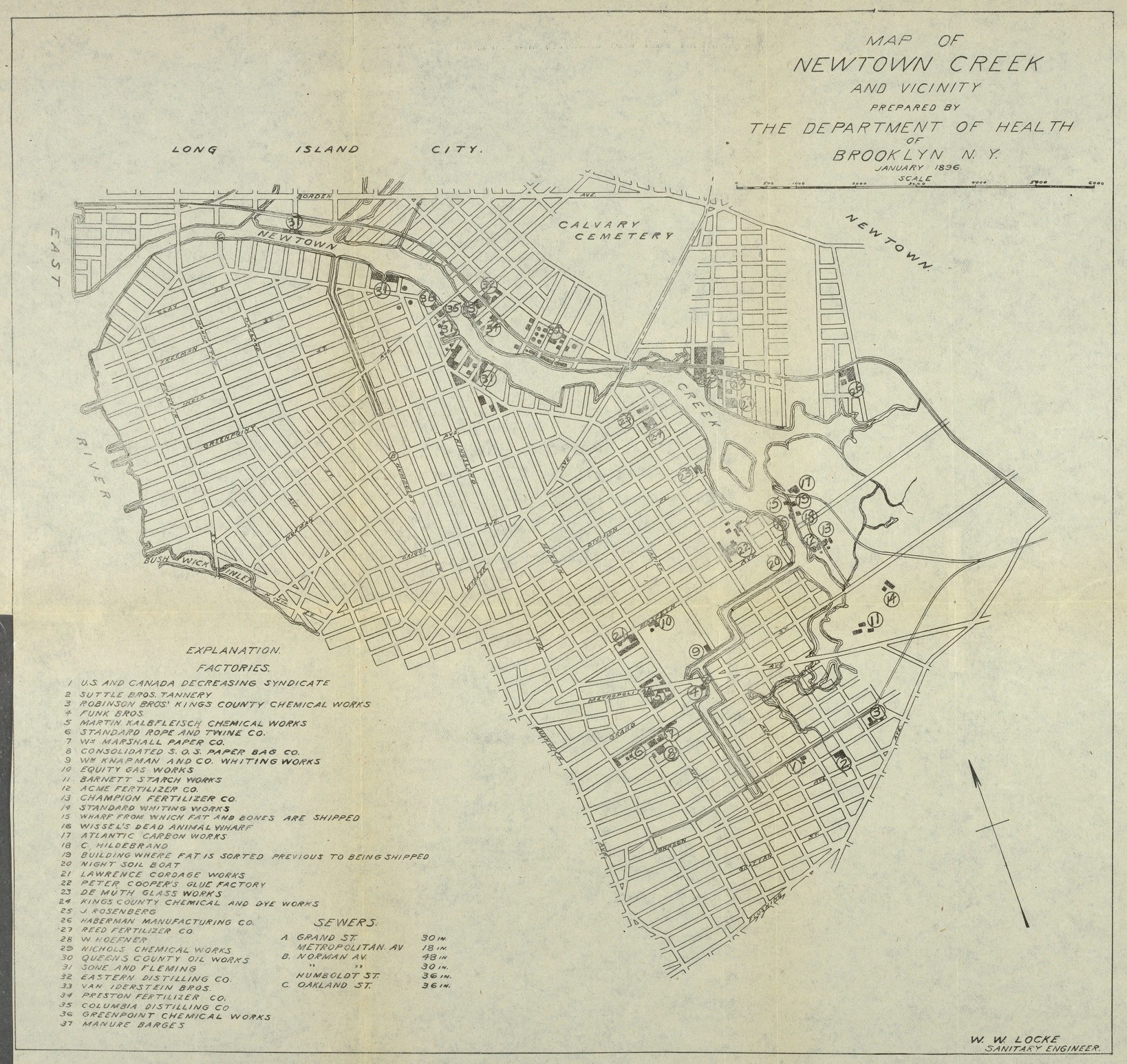
A map of Greenpoint from an 1896 survey. A list of industries are marked along the waterfront including tanneries, rope and twine manufacturers, a glue factory, glass works and “Wissel’s Dead Animal Wharf.”

Courtesy New York Public LIbrary

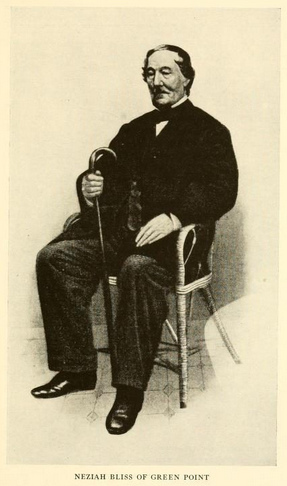
Neziah Bliss, the ‘godfather’ of Greenpoint due to his marriage into the Meserole family and subsequent development of their former farm and shoreline property.

2

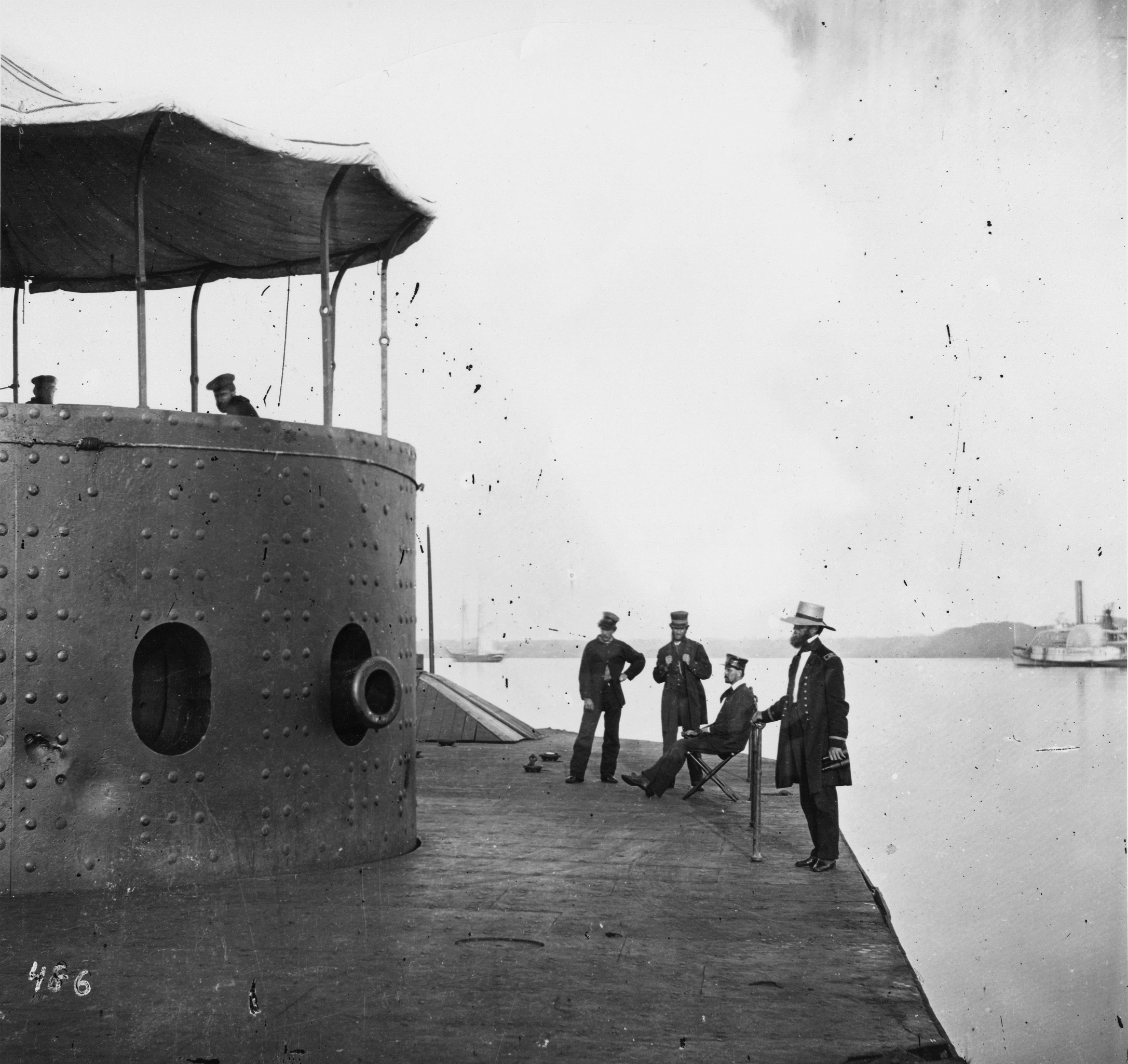
The USS Monitor, made at an iron works in Greenpoint, pictured here July 9, 1862, by Union photographer James F. Gibson.

monitorofficersondeck
Courtesy Library of Congress

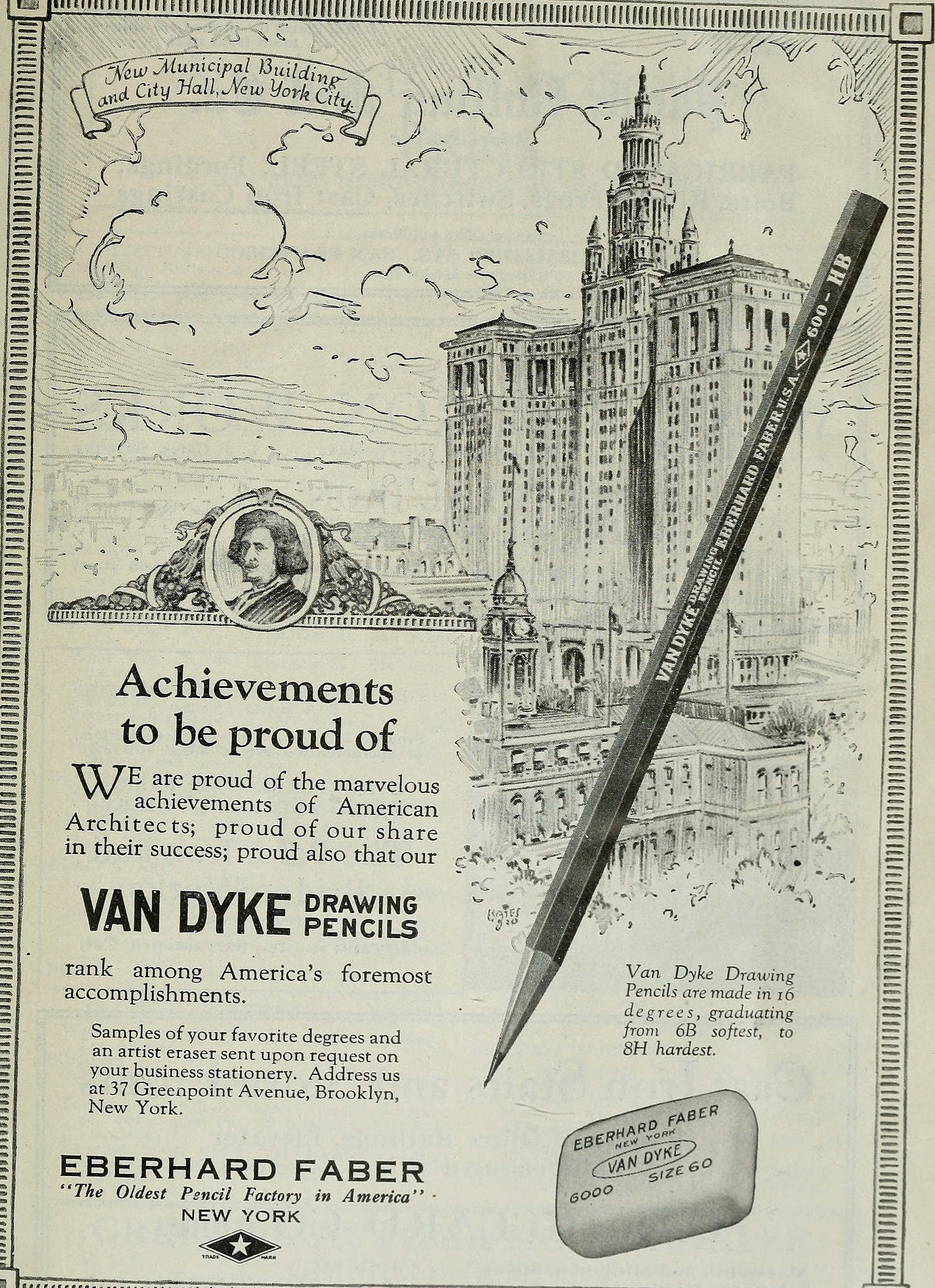
An ad for Eberhard Faber pencils from the 1905 journal Architect and Engineer.

Internet Book Archive

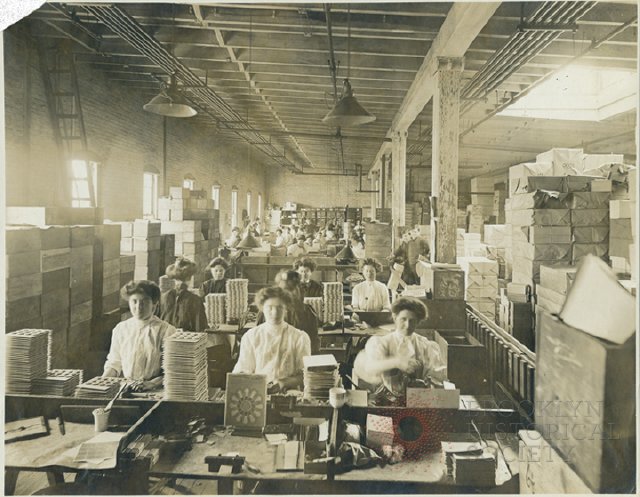
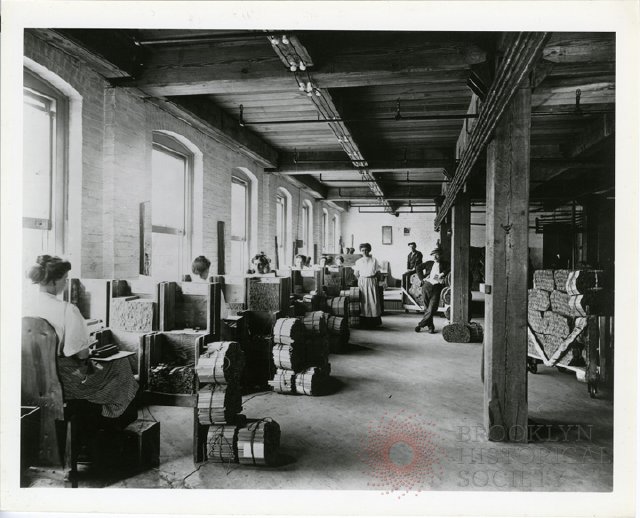
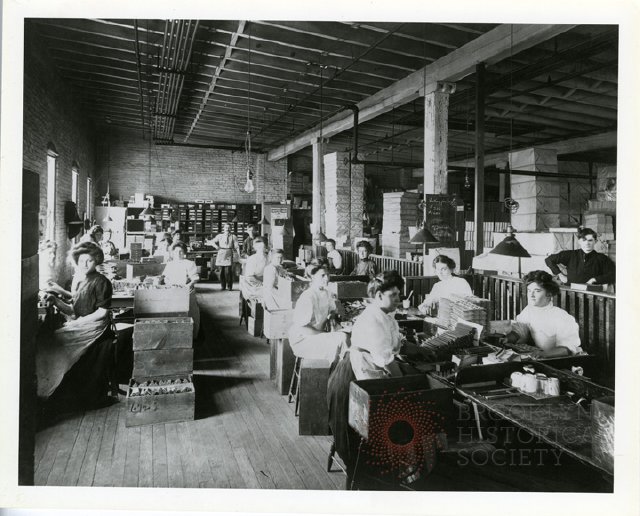
Employees at the Eberhard Faber pencil company in Greenpoint, circa 1915, courtesy Brooklyn Historical Society

2
Courtesy Brooklyn Historical Society
4

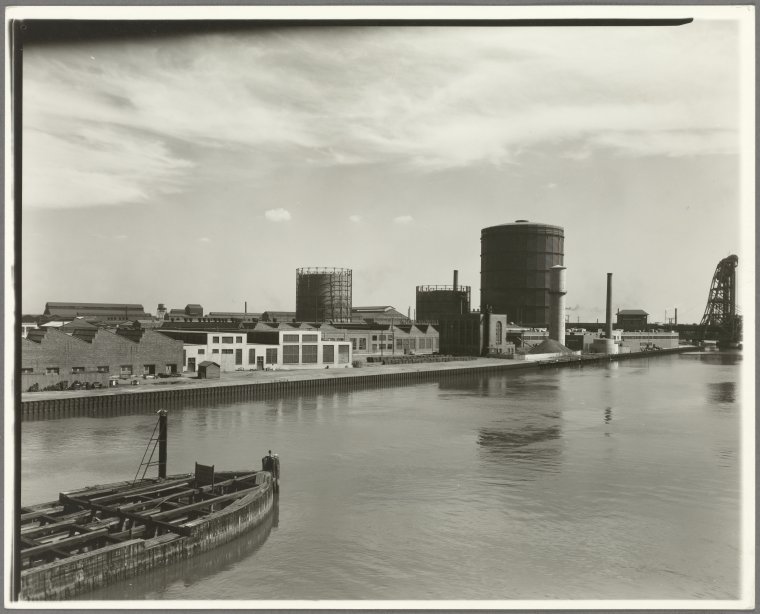
Your standard view of Newtown Creek in the early 20th century.

Courtesy New York Public Library

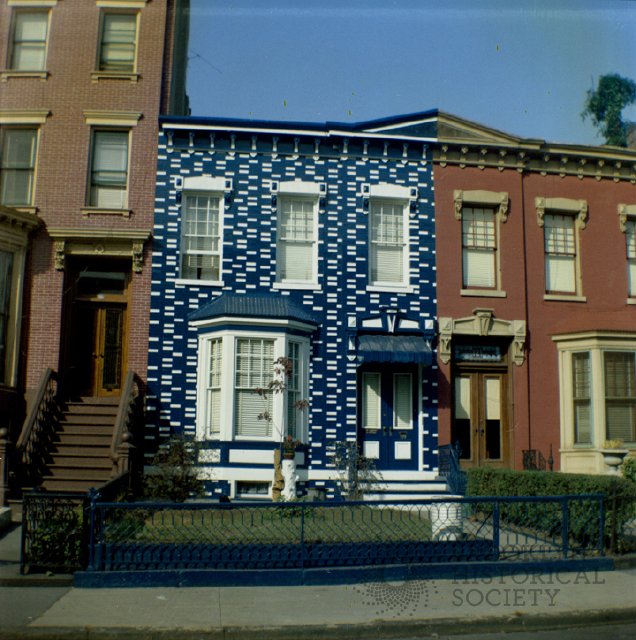
One unusual house at 112 Milton Street. The house is still there but, as part of the Greenpoint Historic District, it’s no longer blue.

Courtesy Brooklyn Historical Society

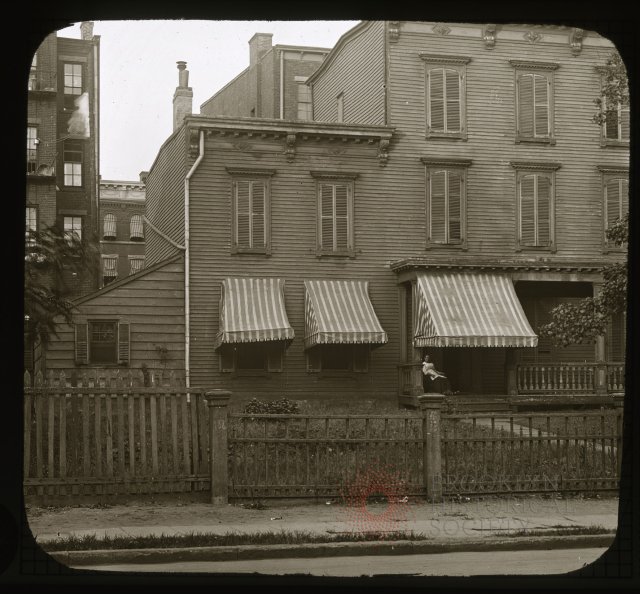
The old Meserole house at 1000 Lorimer Street

Courtesy Brooklyn Historical Society

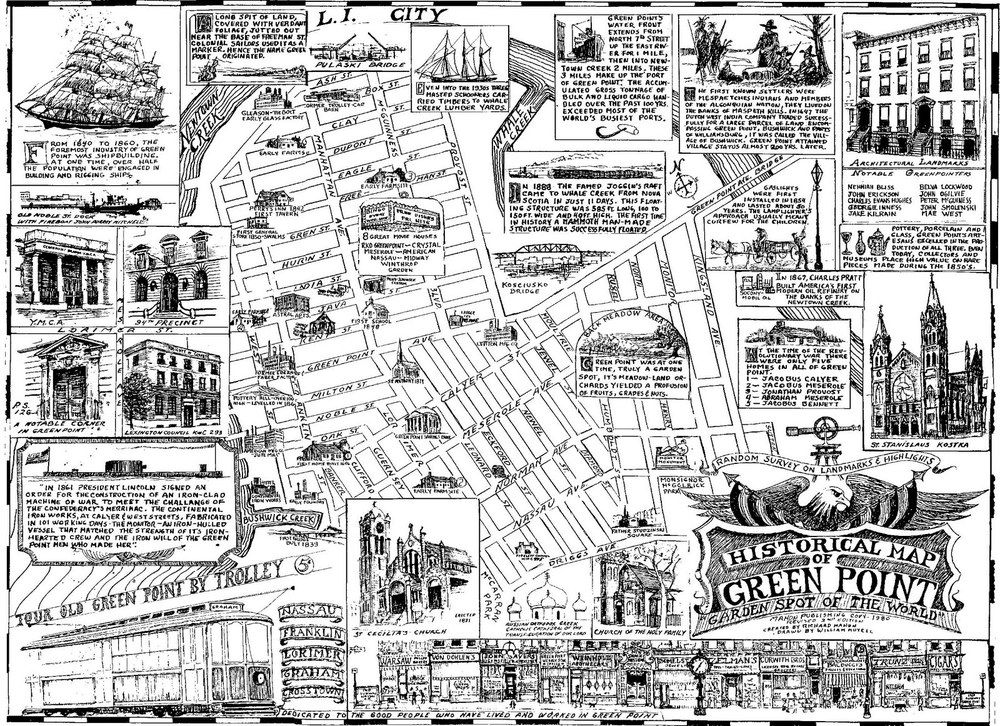
A very fanciful ‘place mat’ map of Greenpoint Brooklyn. I’m not sure what the original source for this is, but it’s courtesy the Box Hotel.

greenpoint

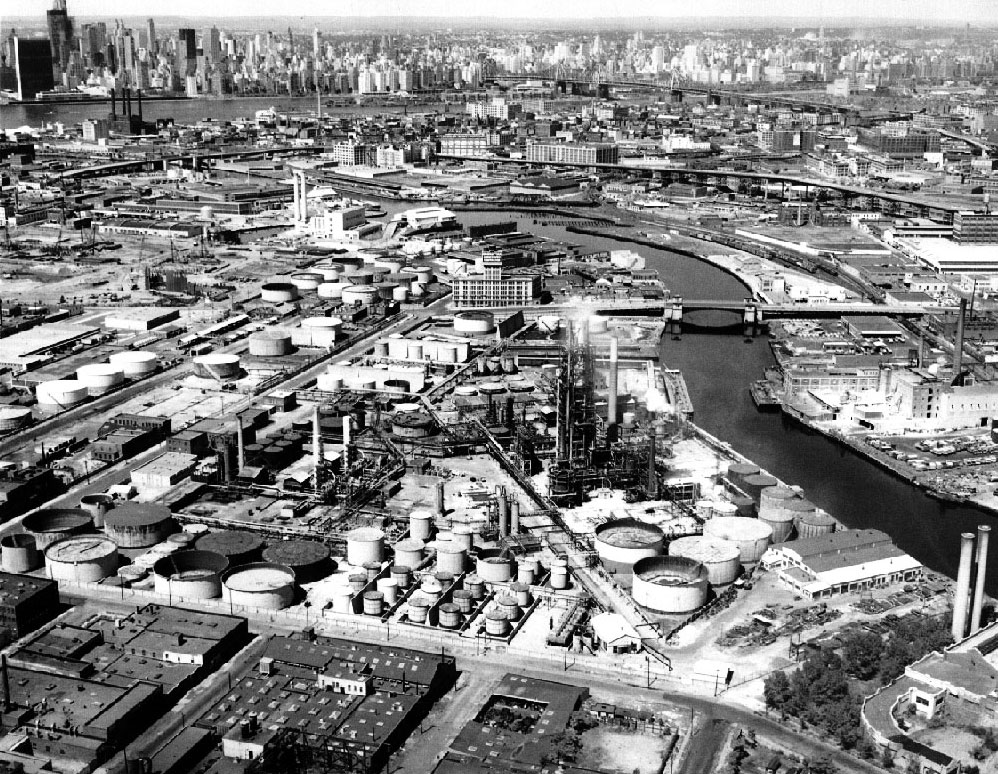
A rather ghastly look at Newtown Creek in 1960, from Apollo Street looking towards the East River.

Courtesy Newtown Creek Alliance

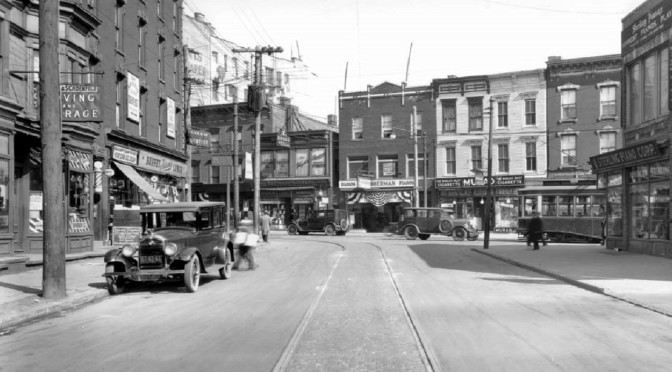
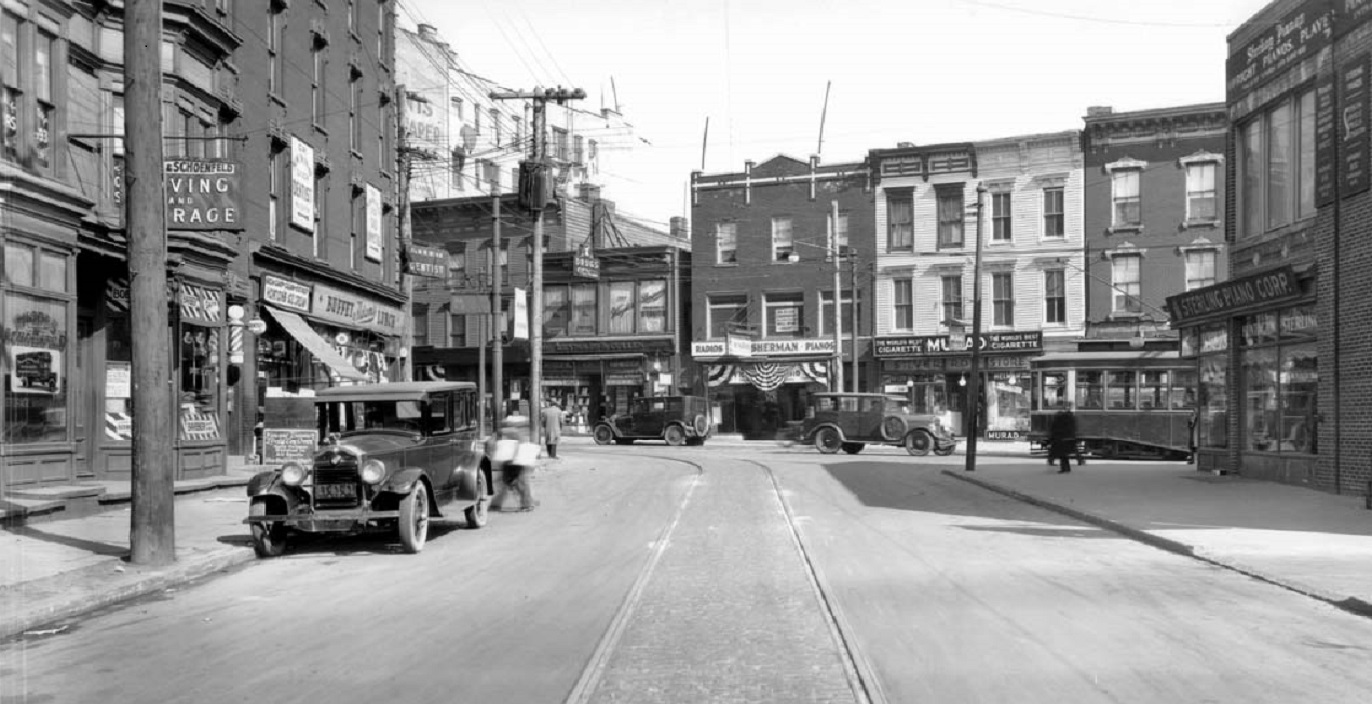
Picture at top: Manhattan Avenue and Bedford Avenue

1
Categories
Neighborhoods Podcasts

Ready-to-Wear: The lofty history of New York’s Garment District

PODCAST The history of the New York City fashion industry and how it found its home south of Times Square aka The Garment District.

The Garment District in Midtown Manhattan has been the center for all things American fashion for almost one hundred years. The lofts and office buildings here still buzz with industry of making clothing — from design to distribution.

New York’s long history with the ready-to-wear apparel industry has an ugly beginning — the manufacture of clothing for Southern slaves. Garment production thrived here by the middle of the 19th century thanks to thousands of arriving immigrants, skilled in the production of making clothes.

By 1900, most of the clothes in the United States were made below 14th Street, in the tenement neighborhoods of New York. The disaster at the Triangle Factory Fire in 1911 brought attention to the terrible conditions found in New York’s new loft-style factories

Fears of the clothing industry encroaching upon Fifth Avenue provoked some New York businesses to stop working with garment sector unless they moved to particular area of the city. And so, by the mid 20th century, hardly a stitch was sold in the United States without it coming through the blocks between 34th Street and 42nd Street west of Sixth Avenue.

Listen in as we describe the Garment District’s chaotic flurry of activity — from the fabulous showrooms of the world’s greatest designers to the nitty-gritty bustle of the crowded streets.

FEATURING: Ed Koch, Lauren Bacall, the Brooks Brothers and more puns that you can possibly stand.

WARNING: Our show intro is bursting at the seams with clothing puns!


The Bowery Boys: New York City History podcast is brought to you …. by you!

We are now producing a new Bowery Boys podcast every two weeks. We’re also looking to improve the show in other ways and expand in other ways as well — through publishing, social media, live events and other forms of media. But we can only do this with your help!

We are now a member of Patreon, a patronage platform where you can support your favorite content creators for as little as a $1 a month.

Please visit our page on Patreon and watch a short video of us recording the show and talking about our expansion plans. If you’d like to help out, there are five different pledge levels (and with clever names too — Mannahatta, New Amsterdam, Five Points, Gilded Age, Jazz Age and Empire State). Check them out and consider being a sponsor.

We greatly appreciate our listeners and readers and thank you for joining us on this journey so far. And the best is yet to come!


Fashionable streets: hats in the Garment District, photo by Margaret Bourke White

Courtesy Life Magazine

There were as many trucks in the Garment District as models, taking supplies to the busy workshops and finished garments to retailers. Photo is from Nov. 29, 1943.

Courtesy AP Photo
Courtesy AP Photo

Another common site — racks of clothing being pushed down the street.

Museum of the City of New York

The Garment District at lunchtime, 1944. We told you it was insane!

Museum of the City of New York
Museum of the City of New York/US Office of War Information

The following are a series of pictures capturing workers in a clothing factory on 36th Street and Tenth Avenue, 1937

Museum of City of New York/Federal Art Project
4
5
6
7
8
9
10

Behind the scenes at a Gimbels Fashion Show, 1949

Photo by Stanley Kubrick/Museum of the City of New York

Racks of clothing, 1955

Library of Congress/WikiMedia

The unique brutalist architecture of the Fashion Institute of Technology 1964

Wurts Brothers/Museum of the City of New York

From ‘Press Week’ aka Fashion Week,  Jan. 7, 1972. (AP Photo/Ray Stubblebine)

Fashion Hats


The naming of “Project Runway Avenue” 2012

Categories
Bowery Boys

The Bowery Boys 2015 Podcasts: From Billie Holiday to New Year’s Eve

Thank you for making 2015 our greatest year ever! Much excitement on the way for 2016 including the release of the first-ever Bowery Boys book. Relive the year by re-visiting some of our shows from the past 12 months..  You can find them all on iTunes, on streaming services like TuneIn and Stitcher or you can listen to them straight from our Libsyn satellite site.

Episode #176
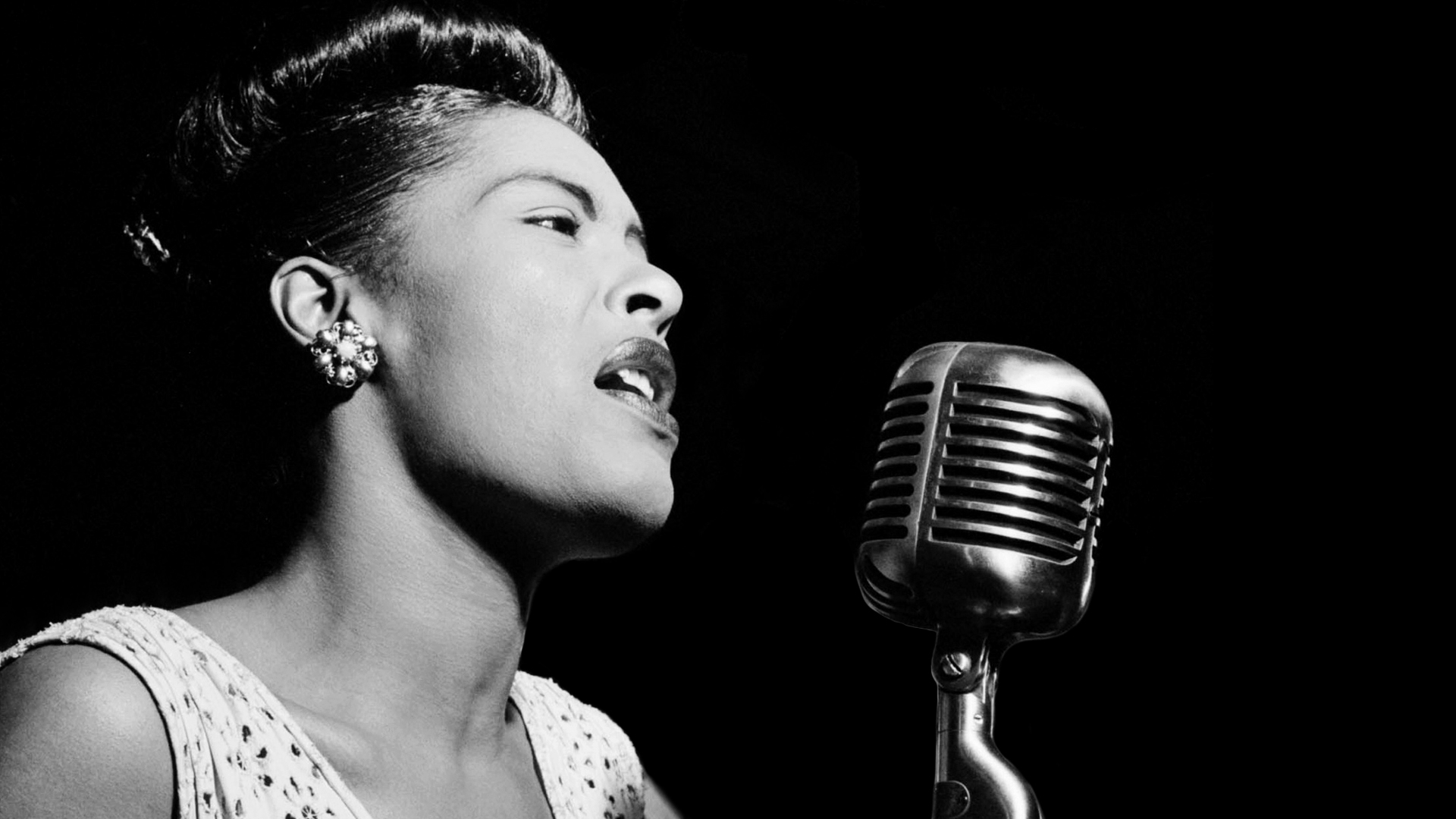
Billie Holiday’s New York

[Download here] [Original blog post]

Courtesy Columbia Records

Episode #177
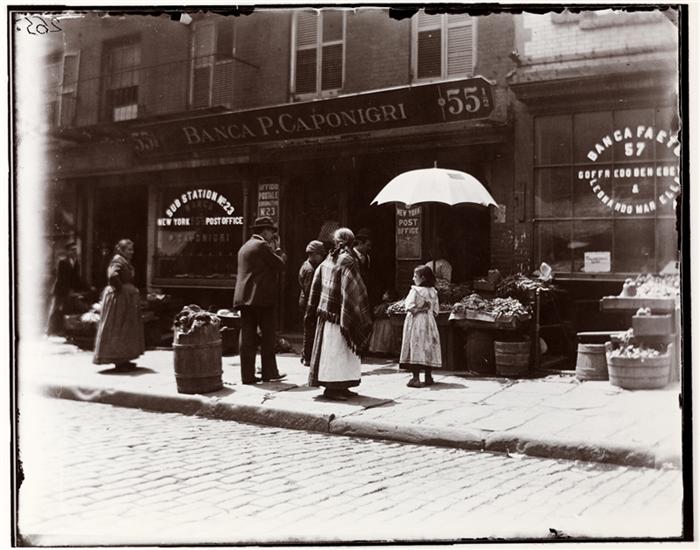
The Big History of Little Italy

[Download here] [Original blog post]

Photo by Jacob Riis, 1895, courtesy Museum of City of New York

Episode #178
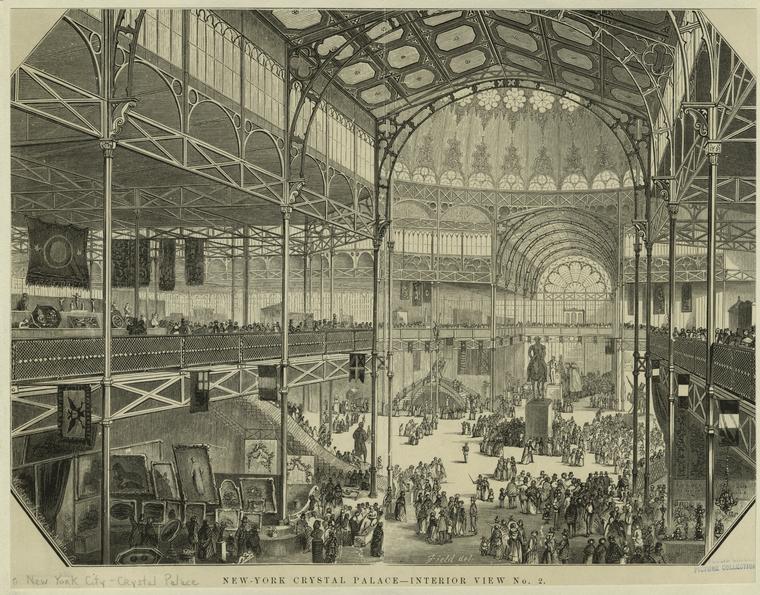
The Crystal Palace: America’s First World’s Fair

[Download here] [Original blog post]

The view from one of the naves, looking towards the George Washington statue. Courtesy New York Public Library

Episode #179
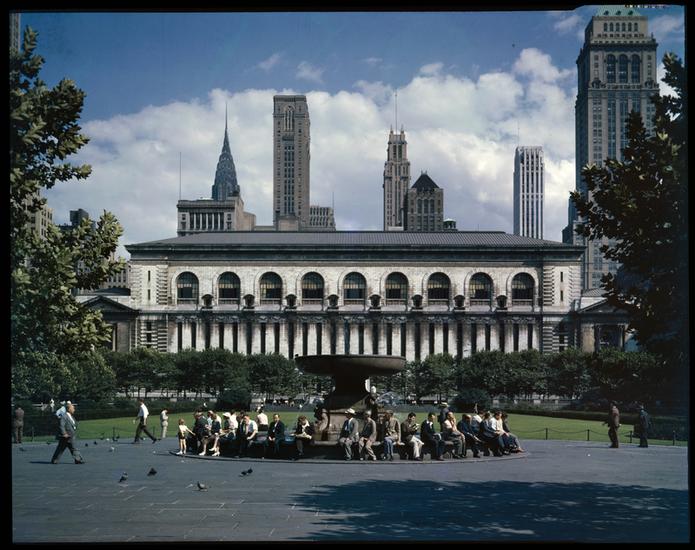
The Fight for Bryant Park

[Download here] [Original blog post]

Wurts Brothers, 1955-1965, Courtesy Museum of the City of New York

Episode #180
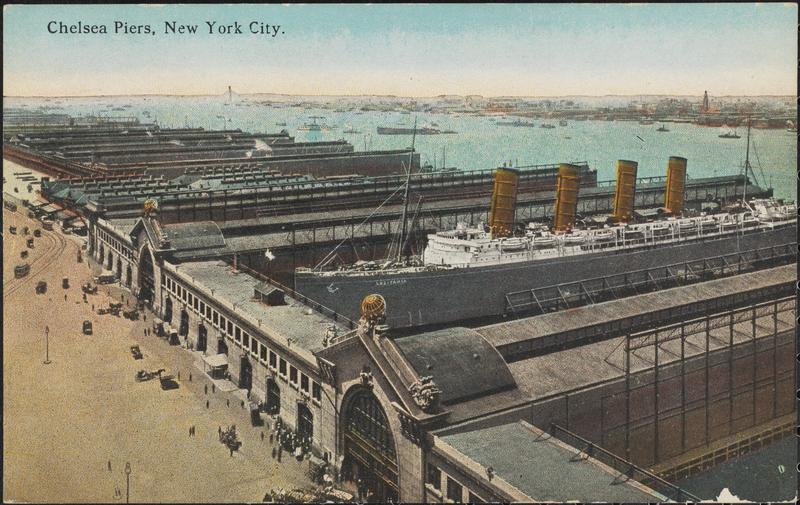
The Chelsea Piers and the Age of the Ocean Liner

[Download here] [Original blog post]

4

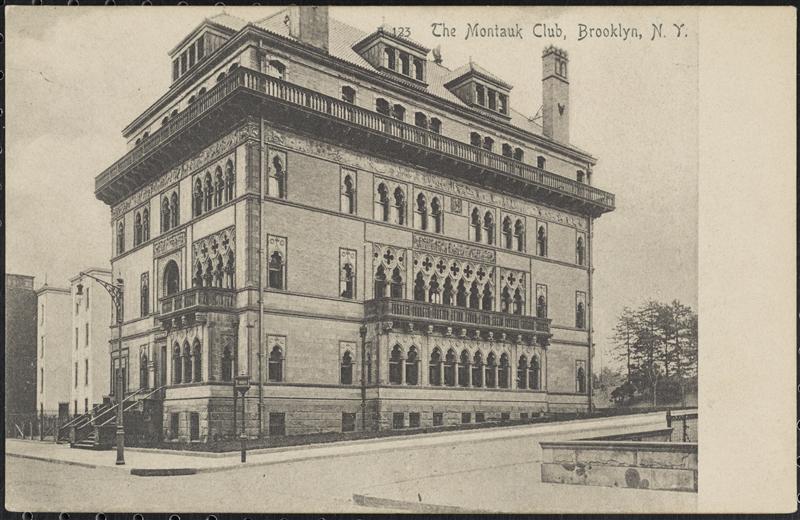
Episode #181 Park Slope and the Story of Brownstone Brooklyn
[Download here] [Original blog post]

Montauk Club, 1905, Courtesy Museum of the City of New York

Episode #182
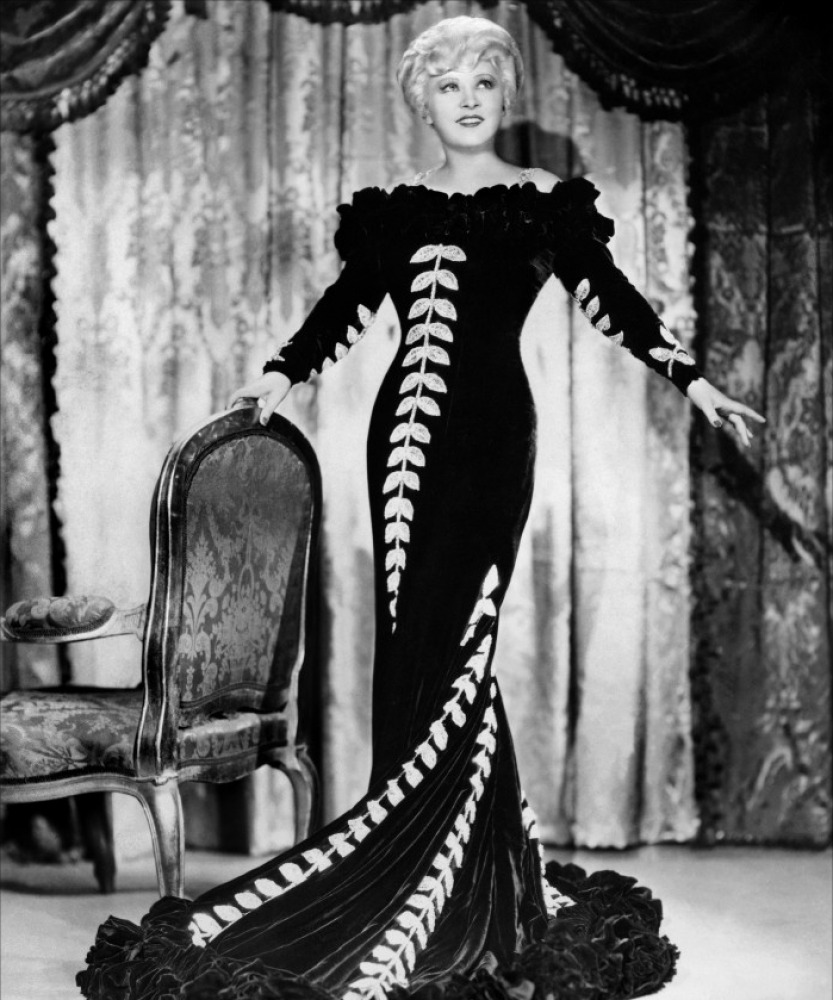
Mae West: Sex on Broadway

[Download here] [Original blog post]

mae

Episode #183 
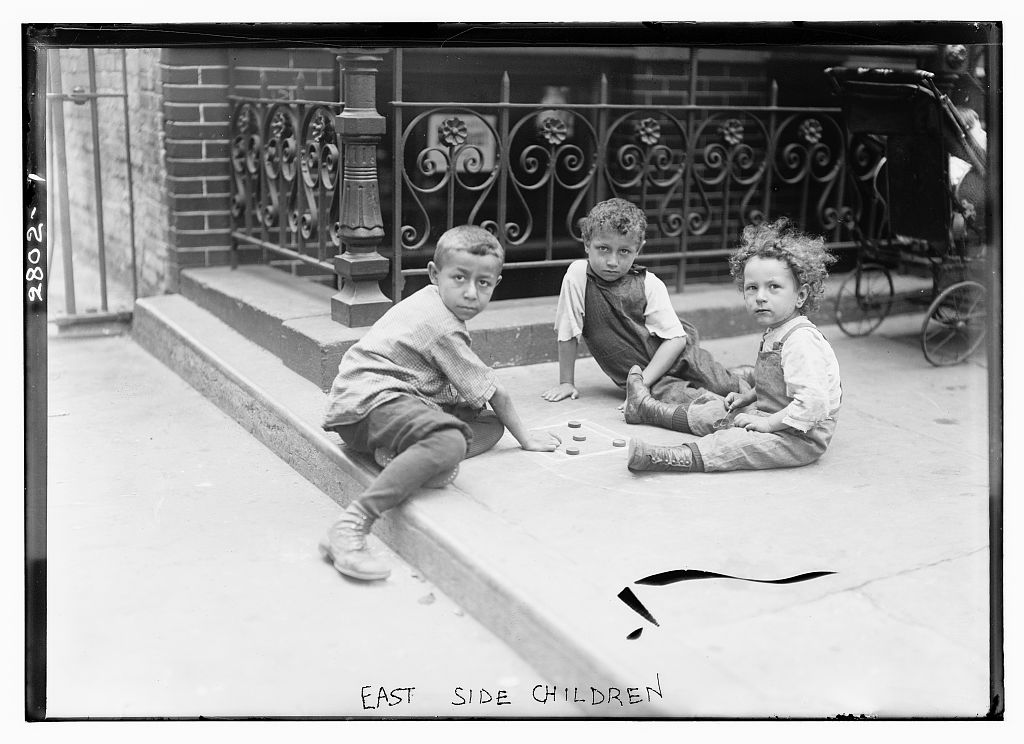
Orchard Street: Life on the Lower East Side

[Download here] [Original blog post]

Courtesy Library of Congress

Episode #184 
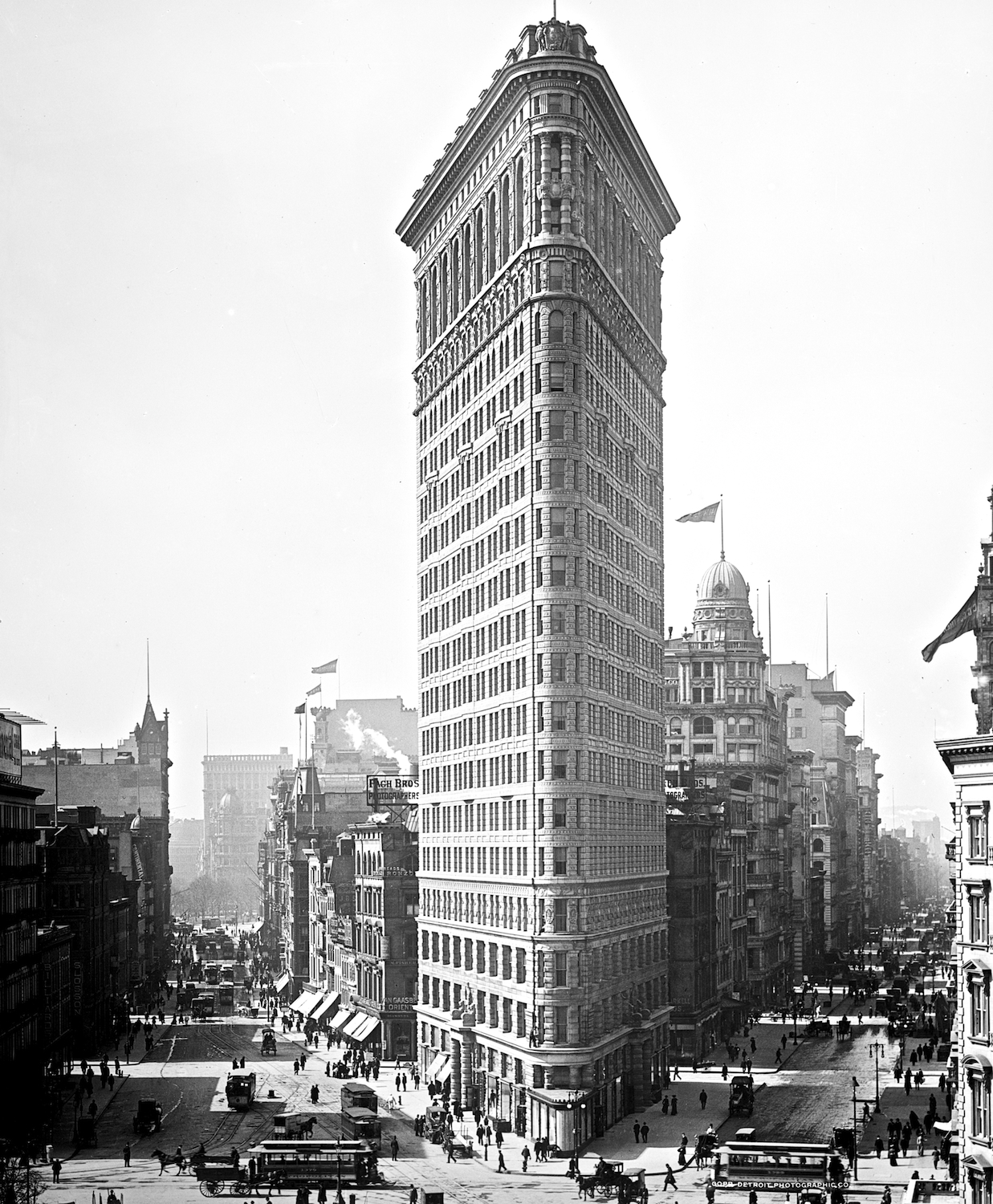
The Flatiron Building: A Story From Three Sides

[Download here] [Original blog post]

flat

Episode #185 
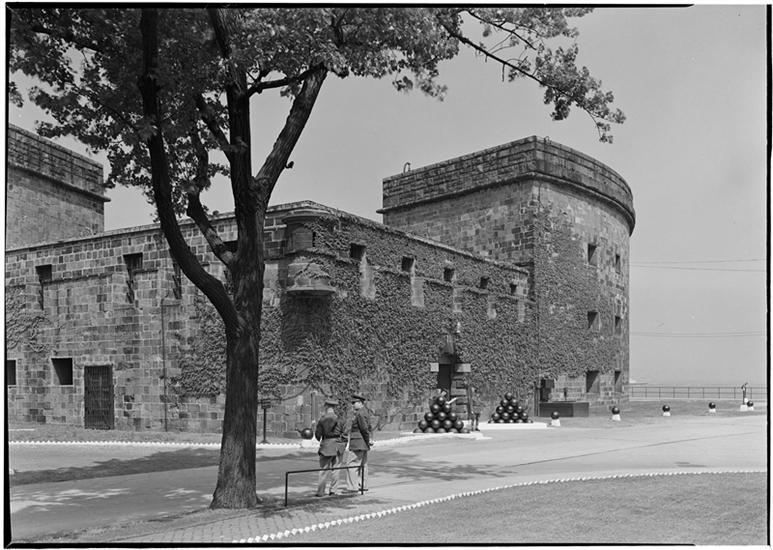
Adventures on Governors Island
[Download here] [Original blog post]

Courtesy Museum of the City of New York

Episode #186 
Hell’s Kitchen: New York’s Wild West

[Download here] [Original blog post]

1

Episode #187 
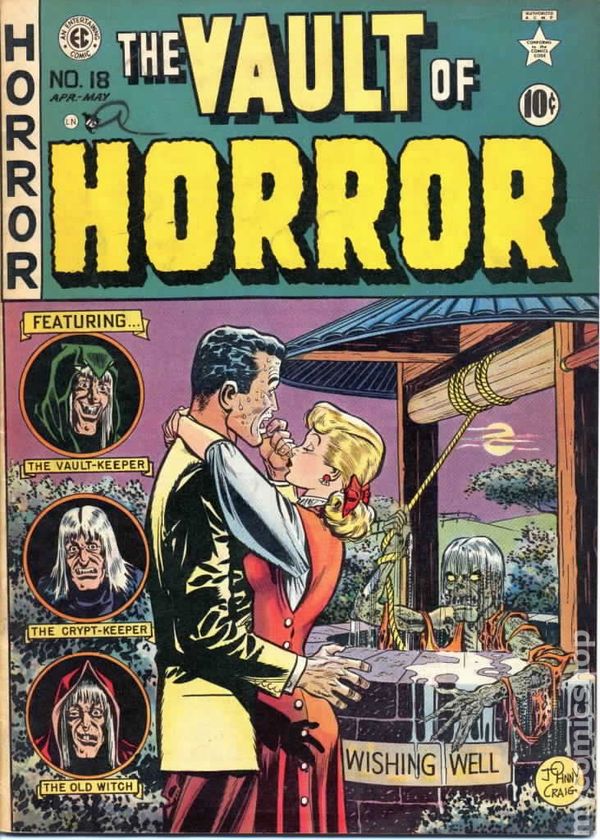
Super City: NYC and the History of Comic Books
[Download here] [Original blog post]

1

Episode #188 
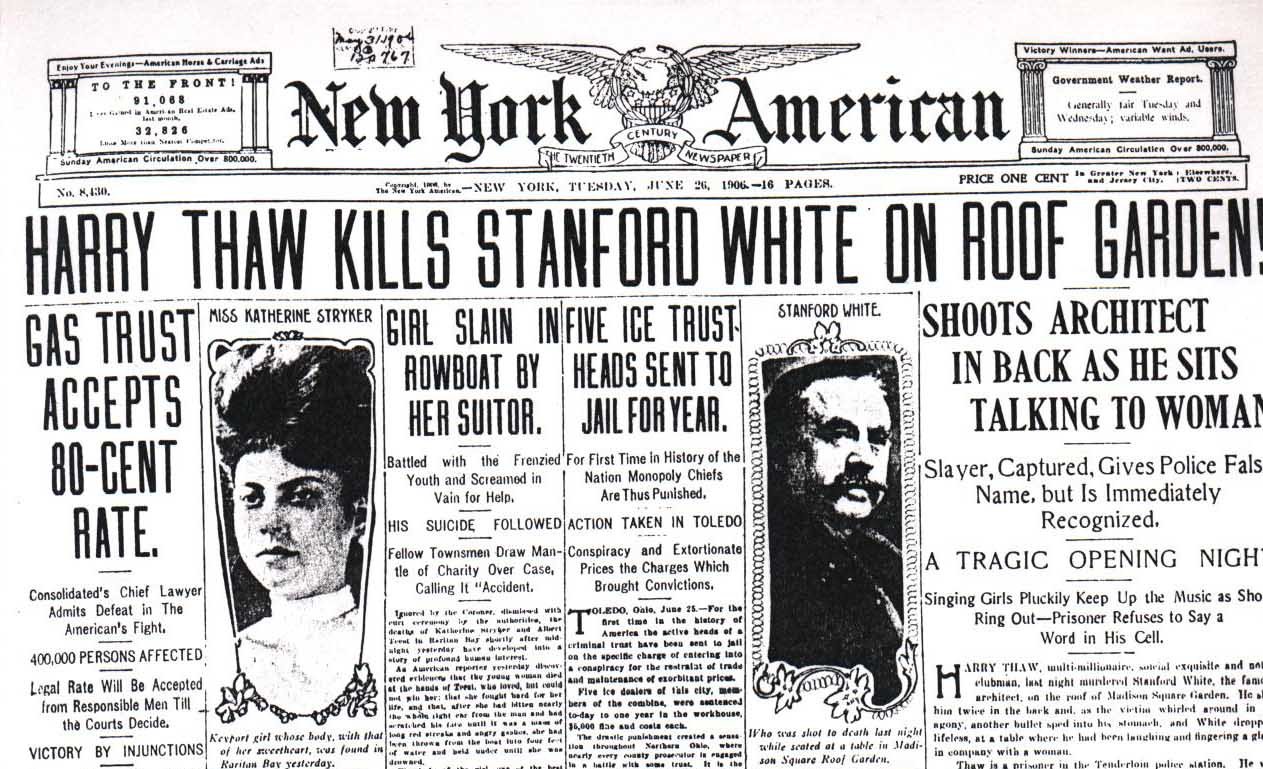
The Murder of Stanford White
[Download here] [Original blog post]

1

Episode #189 
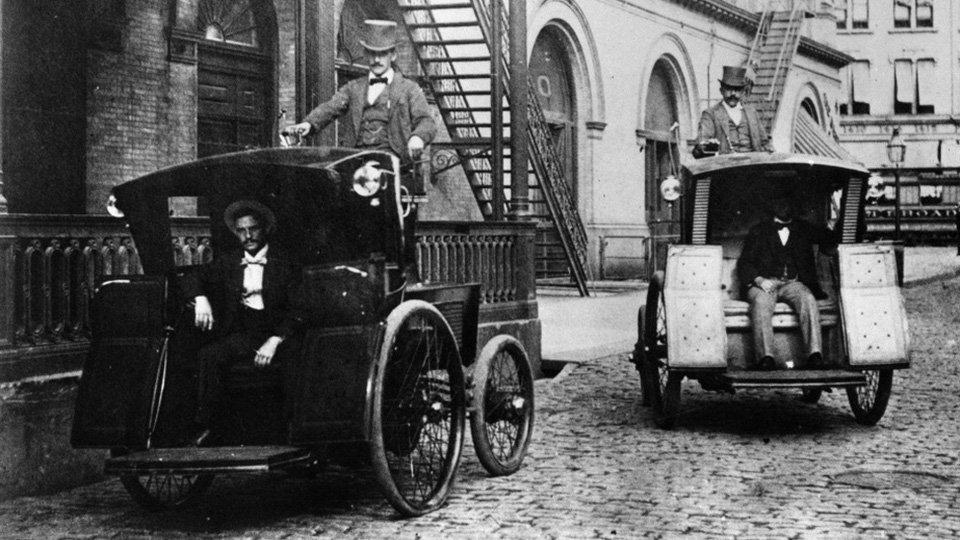
TAXI: A History of the New York City Taxicab
[Download here] [Original blog post]

CRfBgc3WoAA9R66.jpg-large

Episode #190 
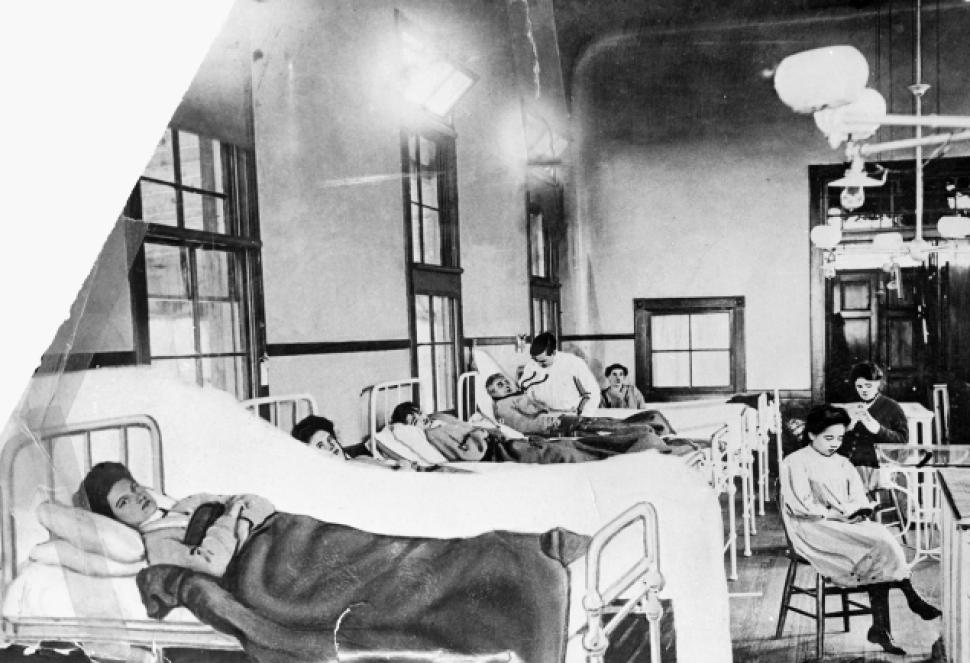
The Curious Case of Typhoid Mary
[Download here] [Original blog post]

u1183097inp

Episode #191 
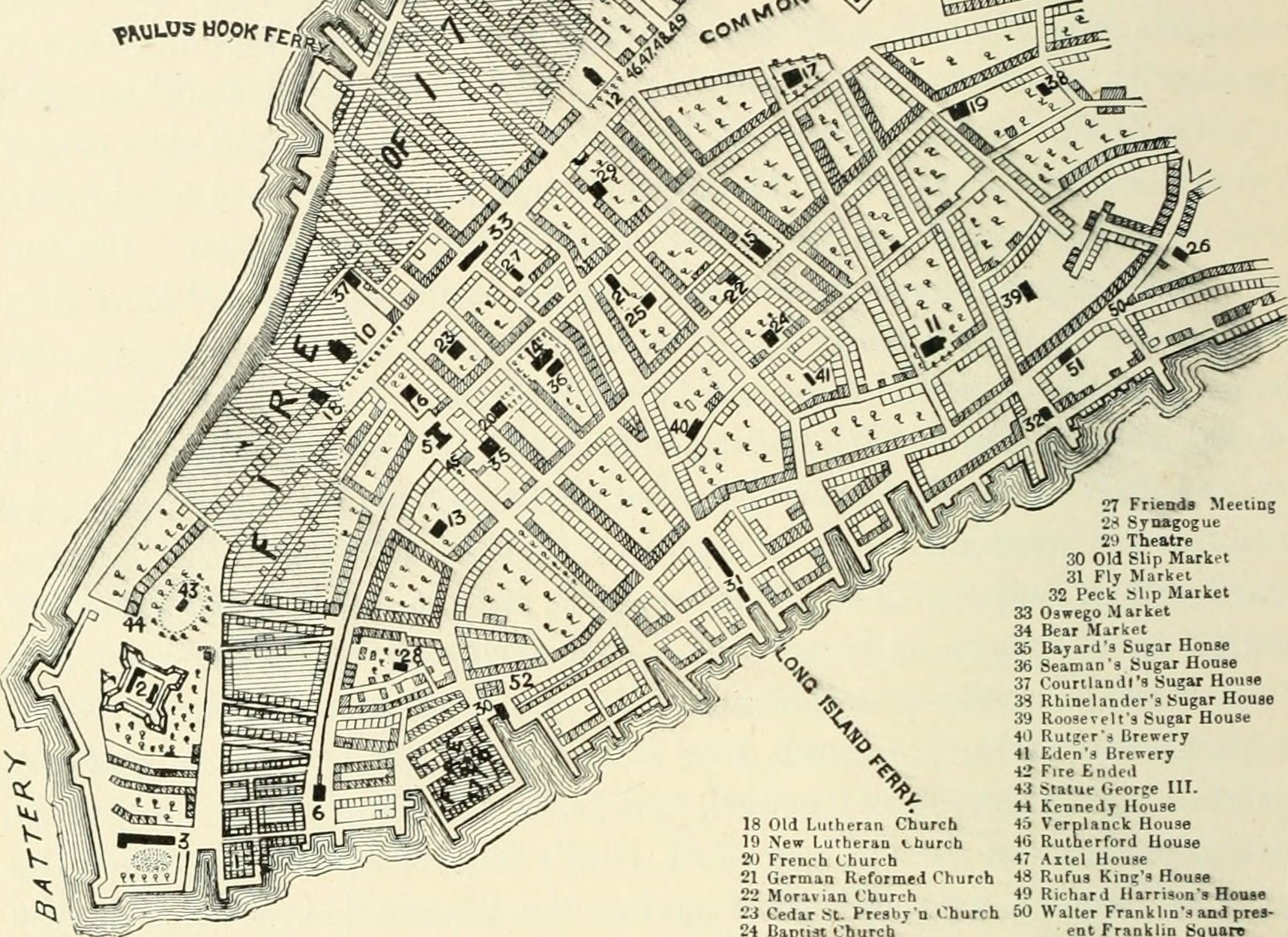
The Great Fire of 1776
[Download here] [Original blog post]

1

Episode #192 
Haunted Landmarks of New York
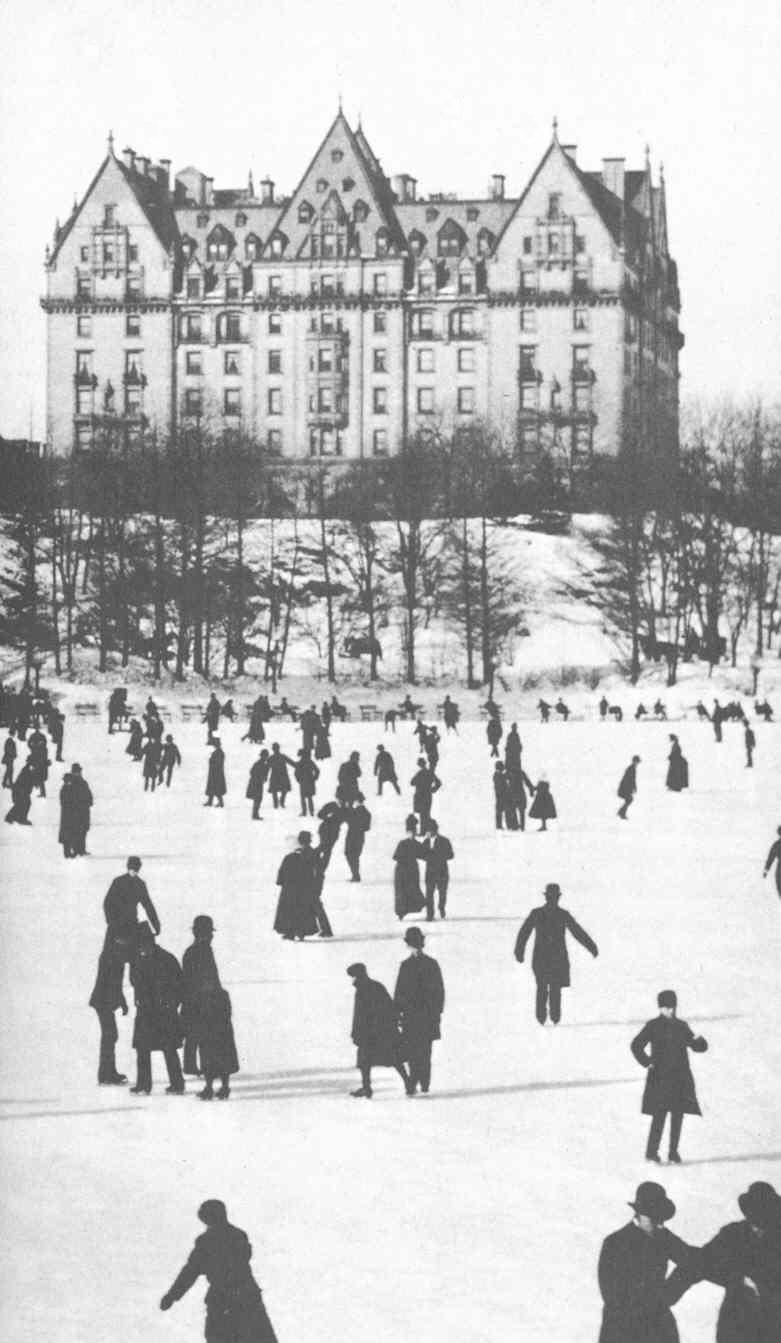
[Download here] [Original blog post]

The_Dakota_1880s

Episode #193
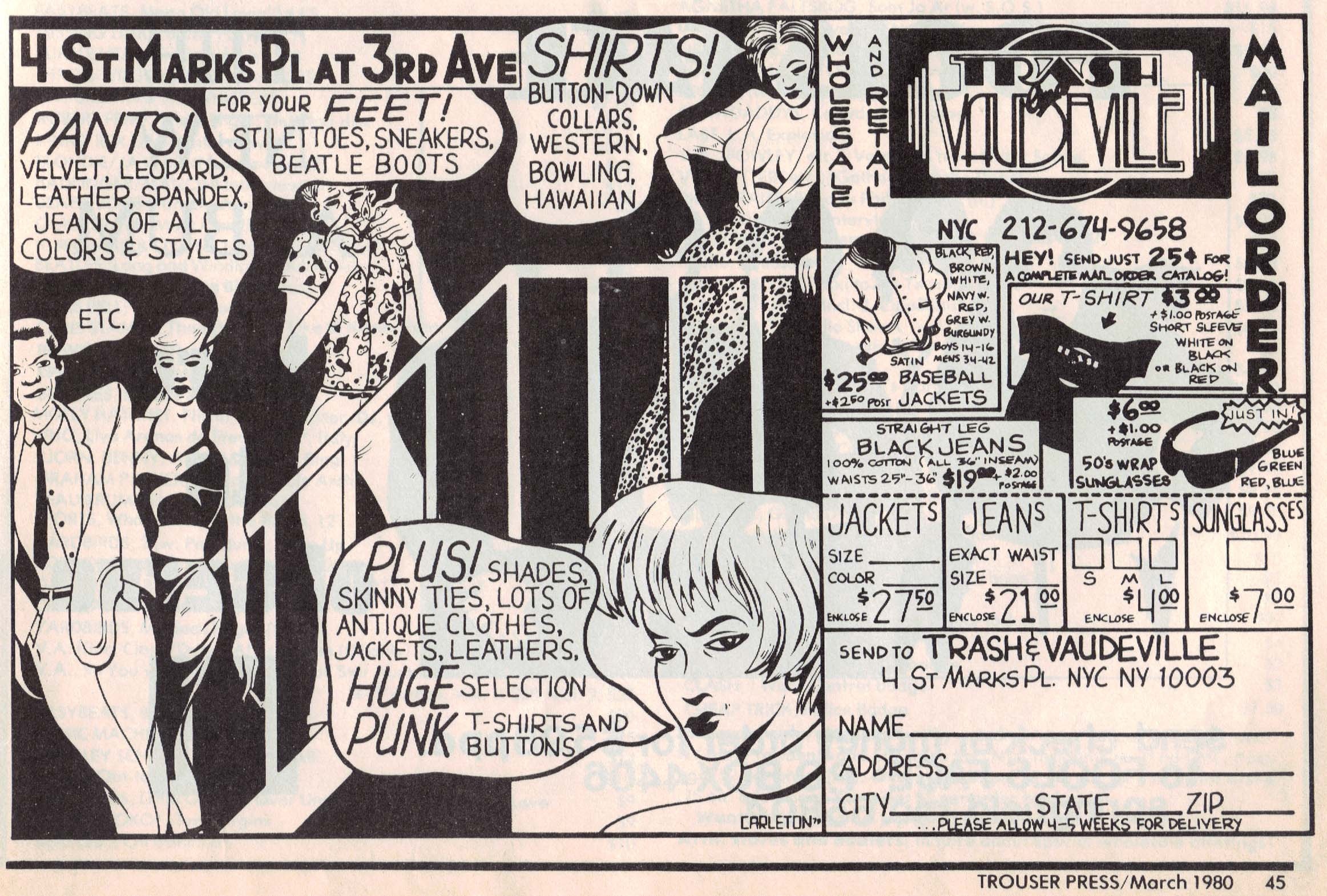
Party on St. Mark’s Place!
[Download here] [Original blog post]

trash

Episode #194 
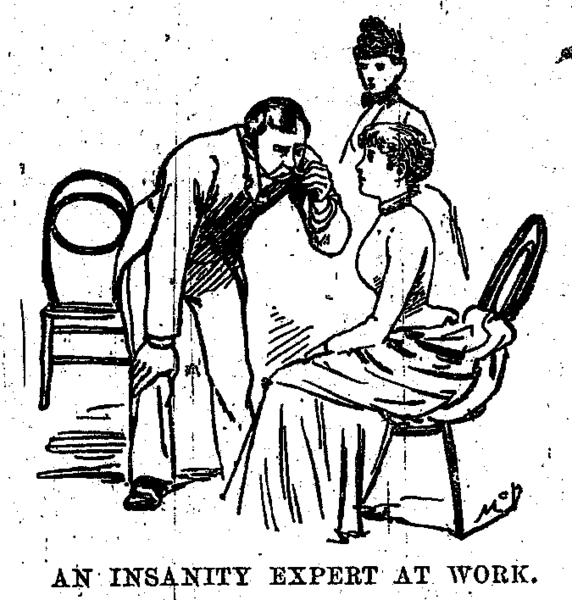
Nellie Bly: Undercover in the Madhouse
[Download here] [Original blog post]

3

Episode #195
Midnight in Times Square: New Year’s Eve in New York City
[Download here] [Original blog post]

new-year-eve-1940

Categories
Pop Culture

NYC history in pop culture: “Who Lives, Who Dies, Who Tells Your Story”

It was a pretty spectacular year for history lovers in pop culture this year as the year’s best film, television and theater all seemed to take inspiration from the New York City of old.  Here are ten moments that I particularly loved that expressed the unending bounty of ideas from the people, places and events of this big ole city:

Saoirse Ronan in Brooklyn

“I wish that I could stop feeling that I want to be an Irish girl in Ireland.”

1 BROOKLYN

A rich and appealing look at one of New York’s greatest resources — its immigrants. A young Irish woman (Saoirsie Ronan) leaves behind her family to find work in a Brooklyn department store. She is quickly torn between an engaging Italian boyfriend (Emory Cohen) and obligations back home. This is not a story merely about the struggles of foreign transplants but relates to pretty much anybody who’s ever been stuck between two worlds. My favorite movie of the year.


Sara Krulwich/The New York Times

“I may not live to see our glory! But I will gladly join the fight! And when our children tell our story, they’ll tell the story of tonight.”

2 HAMILTON

The sound and the fury of the world’s hottest musical, from the genius mind of Lin-Manuel Miranda, changed not only the fate of Broadway, but the perception of the Founding Fathers and even the notion of biography itself. Can you stay true to a person’s memory and core beliefs while making a clear and ambitious statement on his time period with a multi-cultural cast, an innovative music style and pop cultural references? Yes you can.

NOTE: This is not number one on my list because I actually haven’t seen it. (Hey, don’t judge; we were busy writing a book this year!)


Mad-Men-Season-7-Peggy-and-Harry

“I’m jealous of your ability to be sentimental about the past. I’m not able to do that. I remember things as they were.”

3 MAD MEN – FINAL SEASON

By the end, the deck had been reshuffled, but Don Draper was somehow still king. A beautiful ending for the irritable drunks and stiffs we’ve come to love over the years.  And who knew it would be Betty Draper that would get the most beautiful most perfectly heartfelt send off?


carol-image-rooney-mara-cate-blanchett-1

“Just when it can’t get any worse, you run out of cigarettes.”

4 CAROL

This romance between a shop girl (Rooney Mara) and an older woman (Cate Blanchett) in a broken marriage meticulously recreates 1950s Brooklyn.  (I suspect that Ronan’s character from Brooklyn works in another department.) Everything has a graceful, considered touch, less bright than Brooklyn perhaps but perfectly in place. New York in this movie curiously represents the status quo here, middle America being the place for exploration and personal discovery.

Brooklyn lawyer James Donovan (Tom Hanks) is an ordinary man placed in extraordinary circumstances in DreamWorks Pictures/Fox 2000 PIctures' dramatic thriller BRIDGE OF SPIES, directed by Steven Spielberg.
Brooklyn lawyer James Donovan (Tom Hanks) is an ordinary man placed in extraordinary circumstances in DreamWorks Pictures/Fox 2000 PIctures’ dramatic thriller BRIDGE OF SPIES, directed by Steven Spielberg.


“Standing there like that you reminded me of the man that used to come to our house when I was young. My father used to say: “watch this man”, so I did, every time he came. And never once did he do anything remarkable.”

5 BRIDGE OF SPIES

This is the year for 1950s Brooklyn in amazing films! In this case the year is 1957, and James Donovan, the Brooklyn insurance attorney played by Tom Hanks, is assigned to represent a captured KGB spy in a case that made its way to the U.S. Supreme Court. But the first third of the film uses Brooklyn Heights in some of the best location shooting of the year.  This one of Steven Spielberg’s best films in years.

knick-the-season-2-teaser_article_story_large

“There’s no point in going through all my wrongs. Besides, God’s already seen them.”

6 THE KNICK

Everything perfectly wicked and bad about 1901 came roaring into the lives of the staff of Knickerbocker Hospital.  Dr William Thackery (Clive Owen) both battled and studied his own addictions, Dr Algernon Edwards (Andre Holland) further attempted to negotiate through the racism inside the hospital rank-and-file, and Cornelia Robinson (Juliet Rylance) does a little detective work and uncovered some political corruption close to home.

CV-AUmeWcAA6tQf

“I wanted to write a whole book about New York that would never appear in the history books.”

7 CAPITAL

What is Kenneth Goldsmith’s Capital you ask? Almost four pounds, for one.  It’s also a mysterious, rambling look at New York City history from the pauses and discards, bits and pieces of recollections, wisdom and kitsch all tossed together like a salad.  It’s endlessly fascinating and annoying all once. Yet I can’t help love it not as a book, but as a terrific experiment in evaluating history (well, mostly counter-culture 20th century history) through a visual representation of information overload.

Jamie Bell as Abe Woodhull - TURN: Washington's Spies _ Season 2, Episode 4 - Photo Credit: Antony Platt/AMC
Jamie Bell as Abe Woodhull – TURN: Washington’s Spies _ Season 2, Episode 4 – Photo Credit: Antony Platt/AMC


8 TURN: WASHINGTON’S SPIES

The Revolutionary War as a messy game of cat-and-mouse, cloak-and-dagger intrigue with more bodice ripping sexual intrigue than you were taught in high school. Turn continues to do a great job weaving the actual events of the Revolution into an imagined parallel dramas of Abraham Woodhull (Jamie Bell).  Thankfully it had no problem presenting a real George Washington, situated far from the iconic image later generations would render him.

Public Morals

“I don’t want our kids walking home from school and talking about the different street corners where this one was killed and that one was stabbed.”

9 PUBLIC MORALS

Well, it got cancelled so we’ll never see the 1960s New York Public Morals division tackle encroaching Times Square prostitution or the events of Stonewall. But for what it’s worth, Edward Burns’ well-acted look at crime fighting against the ethnic backdrop of Hell’s Kitchen had some of the best looking cars I’ve ever seen in a TV show. And unlike most depictions of old New York City (namely, almost everything on this list) it actually filmed on the streets of New York.


431237109

“The map of Sapokanikan is sanded and beveled, the land lone and leveled”

10 SAPOKANIKAN
And finally Joanna Newsom takes inspiration from the Lenape Indians with a song title that named for an old Lenape village, meaning ‘where the tobacco grows’.


Categories
The Knick

The Knick Season 2: A History Recap from the brothel to the freak show

Pictured above: Dr. John Thackery (Clive Owen) explore several experimental procedures in the second season of The Knick, some more successful than others.

This post contains light spoilers of general themes from this season of The Knick although there are no specific plot twists discussed. You can use this as a primer for the second season before you begin, or review this list of historical moments before watching this evening’s finale.

Cinemax’s period hospital drama The Knick, now finishing its second season, spends a serious amount of time hunched over an operating table.

The able and ambitious surgeons of Knickerbocker Hospital cut open flesh, severed body parts, injected experimental serums and performed delicate incisions on brains, faces, throats and abdomens.

The special effects teams should be applauded for making me want to throw up on at least five occasions this year.

But The Knick is more than a procedural about a turn-of-the-century hospital although those watching for medical drama (or horror) will come away satisfied.  

With Season Two (set in 1901) this hospital drama rose to become a detective story about New York City itself.

In Season One historic figures populated a story about a growing hospital. In Season Two the show finally found its footing within the messy patchwork of the Gilded Age.

Below are some historical highlights from the season, taken from some of my Tweets from the show’s original broadcast over the past several weeks.

There are no plot spoilers here — in fact, I’ve chosen to not even mention any characters’ names — and some of you might even find this helpful before you watch.

ELECTRIC AUTOMOBILES

New Yorkers raced to find faster, more efficient solutions to horse-drawn vehicles. In the early years of automotive conveyance, it appeared the electric variety would lead the charge; however the earliest models were expensive and entirely inefficient.

Meanwhile oil refiners like the ones in Lima, Ohio, concerned that Edison’s electric light bulb was killing the kerosene market, began looking for other uses for their product.

THE CENTRAL PARK APARTMENT BOOM

Apartment living was all the rage with the upper middle class in the 1880s and developers around Central Park monopolized on the craze with lavish apartment complexes, bringing the amenities of upper crust life to those who couldn’t afford the upkeep of a mansion.

In particular, the Upper West Side was rapidly developed, becoming one of New York’s trendiest residential neighborhoods by 1900.

FEARS OF THE NEW SUBWAY

The ground was broken on New York’s ambitious new subway system on March 25th, 1900, but not everybody considered it progress. Miles of underground tunnel required unprecedented investment which tore into busy streets, creating nuisance and danger.

Those of the more sheltered class flinched at the idea of immigrant workers ripping into their streets. Most New Yorkers were certainly unsettled at the sound of dynamite explosions and feared that whole city blocks might blow up.

ADDICTION

Medical practice and scientific thought were expanding in the 1900s, but new modes of treating complicated conditions like drug and alcohol addiction were having a difficult time in the morality based institutions of the day.

Most physicians still believed that addictions exposed flaws of the human character and had little connection to the processes of the brain.

EUGENICS

Deteriorated or stunted moral character was also seen as endemic of new arriving immigrants especially those from southern Italy.

The study of eugenics — belief in the improvement of the human race through selective reproduction — rapidly grow in colleges and universities in the 1900s. Naturally the eugenics argument was also used against African-Americans and wielded as a threat against any who attempted to upend the status quo.

“DOING BUSINESS IN NEW YORK”

Although the scandals of Boss Tweed were almost 30 years old by 1901, Tammany Hall still held a viper’s grasp upon New York City infrastructure — from the ports to the construction projects.

A standard building project would often require many layers of ‘greased palms’, and expensive materials were often used because a corrupt middle-man could hide more layers of kickbacks there.

THE WORLD OF DRUGS

While the dangerous qualities of many common drugs were well known, few were actually banned in 1901. Cocaine and heroin were still used in the operating room, and even substances we consider deadly poisons today were available over the counter.

THE REALITIES OF ‘THE FREAK SHOW’

Inspired by P.T. Barnum’s American Museum and the popular cabinet of curiosities of Europe, ‘dime’ museums became a popular pastime for New Yorkers in the late 19th century. They were a hodgepodges of exhibits, from people with extraordinary abilities to exotic foreigners.

In places like Huber’s Museum in Union Square, some of the most popular attractions were humans with various deformities, the individuals who would make up the freak shows of Coney Island. Few considered these people in need of care, and they were often harshly abused by their handlers.

ABORTION AND SEXUALLY TRANSMITTED DISEASES

In a society so clearly judgmental of non-reproductive sexual behavior, STDs were poorly understood.

Syphilis remained a deadly illness running rampant through hundreds of New York brothels. Some protection, like condoms, did exist at the time, but they were terribly uncomfortable and not consistently made.

Pregnant girls were forced into the treacherous world of back-alley abortions. Many died during procedures — or afterwards due to unregulated and filthy conditions — and their bodies dumped into the river.

THE BIRTH OF HARLEM

Violent racial tensions in neighborhoods like Five Points and the Tenderloin forced many black New Yorkers to move north — to the largely Jewish neighborhood of Harlem.

By the year 1900 thousands of African-American lived here, creating a foundation for the huge wave of new residents who would arrive a couple decades later, turning Harlem into the center of American black culture.

THE SICILIAN BOOM

The greatest waves of immigration into America came in the early 1900s, and the largest group among them were southern Italians. Unlike the earlier wave of Italians, Sicilians were poorer and less educated. Difficulties in understanding led many New Yorkers to consider them a vastly inferior class and even dangerous.

THE GILDED AGE DELIGHTS

While the modern restaurant was essentially invented by Delmonico’s in the early 19th century, it wasn’t until the Gilded Age that the delights of public dining were properly indulged. With the influx of opulent life came the finest hotels and eateries, all equipped with modern conveniences. Most were situated on Broadway, from Union Square to Herald Square. Longacre Square (not yet Times Square) was a few years away from becoming the center of New York nightlife.

For more historical Tweets of The Knick and other television shows, just follow me on Twitter at @boweryboys.
Categories
Holidays

Midnight in Times Square: The history of New Year’s Eve in New York City

PODCAST The tale of New York City’s biggest annual party from its inception on New Years Eve 1904 to the magnificent spectacle of the 21st century. 

In this episode, we look back on the one day of the year that New Yorkers look forward. New Years Eve is the one night that millions of people around the world focus their attentions on New York City — or more specifically, on the wedge shaped building in Times Square wearing a bright, illuminated ball on its rooftop.

1

In the 19th century, the ringing-in of the New Year was celebrated with gatherings near Trinity Church and a pleasant New Years Day custom of visiting young women in their parlors. But when the New York Times decided to celebrate the opening of their new offices — in the plaza that would take the name Times Square — a new tradition was born.

Tens of millions have visited Times Square over the years, gazing up to watch the electric ball drop, a time-telling mechanism taken from the maritime tradition. The event has been affected by world events — from Prohibition to World War II — and changed by the introduction of radio and television broadcasts.

ALSO: What happened to the celebration which it reached the gritty 1970s and a Times Square with a surly reputation?

PLUS: A few tips for those of you heading to the New Years Eve celebration this year!


The Bowery Boys: New York City History podcast is brought to you …. by you!

We are now producing a new Bowery Boys podcast every two weeks. We’re also looking to improve the show in other ways and expand in other ways as well — through publishing, social media, live events and other forms of media. But we can only do this with your help!

We are now a member of Patreon, a patronage platform where you can support your favorite content creators for as little as a $1 a month.

Please visit our page on Patreon and watch a short video of us recording the show and talking about our expansion plans. If you’d like to help out, there are five different pledge levels (and with clever names too — Mannahatta, New Amsterdam, Five Points, Gilded Age, Jazz Age and Empire State). Check them out and consider being a sponsor.

We greatly appreciate our listeners and readers and thank you for joining us on this journey so far. And the best is yet to come!


New Years Day celebrations have evolved since the days of New Amsterdam when visitations symbolized a ‘fresh start’ to the year.

Courtesy NYPL
Courtesy NYPL

A decorative cigar box from the 1890s, ringing in the new year with a winsome damsel and wholesome scenes of winter beckoning you to smoke a cigar.

Courtesy Museum of the City of New York

The crowds outside Trinity Church on 1906 gathered to usher in the new year. The church was traditionally the place people gathered before the Times Square celebration took off.

1

Fated to be the centerpiece of New Years Eve, One Times Square once wore some beautiful architecture until much of it was ripped off to accommodate a frenzy of electronic signs.

Courtesy NYPL
Courtesy NYPL

Times Square in 1905 for the very first New Years Eve celebration albeit one with fireworks, not a ball drop.

Courtesy NYPL
Courtesy NYPL

The party offerings at the Hotel Astor in Times Square in 1926.

Courtesy Museum of the City of New York

The view of Times Square from the Empire State Building.

Courtesy NYPL
Courtesy NYPL

New Years Eve 1938

AP photo
AP photo

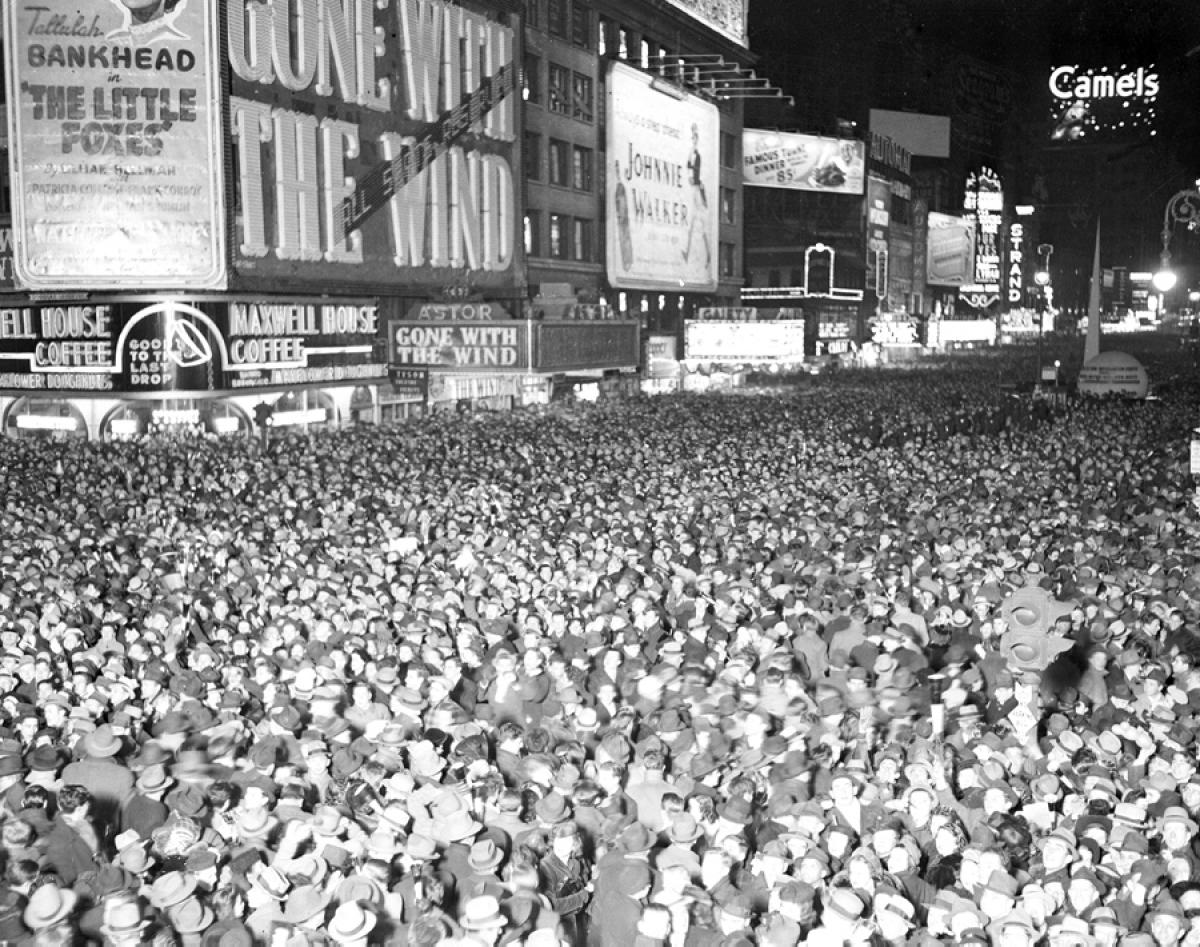
The throngs in 1940 with the Gone With The Wind marquee in the background (not to mention Tallulah Bankhead in the play The Little Foxes!)

Courtesy New York Daily News

Ushering in 1953:

9

Celebrations were also held for a time in Central Park, like this festive group from 1969:

Courtesy New York Parks Department

An electrician from the Artkraft Strauss Sign Corporation tests out the lighting effects that will greet the new year in 1992.

MARTY LEDERHANDLER/ASSOCIATED PRESS

And here’s some videos of New Years Eve countdown past!

Mr New Years Eve himself — Guy Lombardo — here at the Roosevelt Hotel, ringing in 1958

From 1965-66:

A clip from Dick Clark’s first appearance in Times Square. It cuts away to Three Dog Night in California!

CBS’s New Years Eve program featuring Catherine Bach from The Dukes of Hazzard.

The absolutely bonkers ball drop for the new millennium.

Last year’s commentary by those wacky cards Anderson Cooper and Kathy Griffin.

Categories
It's Showtime

Mr. Wonderful: A 90th birthday tribute to Sammy Davis Jr.

Frank Sinatra‘s 100th birthday is December 12 but you probably didn’t know that his fellow Rat Pack cool cat Sammy Davis Jr. was also born on the second week of December, 90 years ago today in Harlem.


sam


Davis was born on December 8, 1925, at Harlem Hospital on Lenox Avenue and 135th Street and his fate would lean closely to the popular entertainment venues nearby. His mother was a chorus girl who worked for many years at the Apollo Theater.

My first birthday was celebrated in a specially-contoured crib made up of  suitcases in a dressing room at the old Hippodrome Theater in New York.” — Ebony Magazine interview, 1960

From his 1990 obit:  “The showman was born in a Harlem tenement, grew up in vaudeville from the age of 3 and never went to school. His talents as a mime, comedian, trumpet player, drummer, pianist and vibraphonist as well as singer and dancer were shaped from his childhood and made him one of the nation’s first black performers to gain mainstream acclaim.”

Courtesy Global Grind


Photo by Bob East
Photo by Bob East

In performance in the early 1950s:
1


The above picture may be taken at the Copacabana. In my very old podcast on the history of the Copacabana, you may remember the tale of Davis’s performance that was heckled by a group of bigoted bowlers. Unfortunately for the bowlers, in the audience were Yankees legends Yogi Berra, Hank Bauer, Mickey Mantle and Whitey Ford who gave them a good dusting up.

Sammy Davis Jr. on the 1960 Frank Sinatra Timex Show singing a song from Porgy and Bess:

Davis, 1966, on the Perry Como Show for NBC

Davis, 1966, on the Perry Como Show for NBC


Davis had his own NBC variety show in 1966 which ran 14 episodes. It filmed at Rockefeller Center.  The March 11th broadcast featured the Supremes:

supremes

Diahann Carroll appeared on Sammy Davis’ variety show in 1966, so he returned the favor ten years later for her own variety show. (I love that people had variety shows!)


Check out the Getty Images archives for a lot of amazing photos of Davis with other icons. Here’s one from 1989 with Dean Martin and Frank Sinatra. Davis would die the following year of complications from throat cancer,

1
Getty Images. Credit: Kevin Winter

And finally, his rendition of ‘Music of the Night’ from The Phantom of the Opera from 1988,  one of last performances.


Categories
Holidays

Making Green: The history of New York’s Christmas tree market

For many, the Christmas holiday in New York City finally comes to life when the sidewalks sprout evergreens. The sight and smell of curbside Christmas tree sellers ushers in the season in the most pleasing way. (Pleasing for the passerby; on a rather cold day, I can’t imagine it too pleasing for the seller.)

As history has it, the presence of streetside Christmas trees in the city actually predates Christmas as a national holiday (1870).

In the mid-19th century, hardly any modern Christmas traditions existed. One that did was the Christmas tree, a pre-Christian ritual incorporated into holiday festivities in German-speaking European countries (Those traditional settlers, the Puritans, didn’t much care for Christmas at all.)

Although the tradition did exist in the United States thanks to the Dutch, it was German immigrants who popularized it. As a huge surge in German immigration began in the 1840s, it’s not surprising that New York’s first Christmas tree market — in fact, the first mass-market sale of Christmas trees in the United States — came along shortly after, in 1851.

Unloading Christmas trees, photo from 1901-1915

Courtesy Library of Congress

It doesn’t appear that ‘jolly woodsmanMark Carr, living in the lush Catskill Mountains, even celebrated Christmas, but he certainly heard tales of families driving outside of town and chopping down evergreen trees to drag into the city. The go-out-and-get-it-yourself approach probably only benefited the wealthy or anybody with a horse and wagon and the time and energy to travel into the forest and find one. Carr, finding the spirit of the holidays (capitalism) deep within him, thought he’d bring the forest to the city folks.

So a couple weeks before Christmas in 1851 — things didn’t start so early back then — Carr and his sons chopped down a couple dozen fir and spruce trees, shoved them into two ox sleds, carted them over to Manhattan on a ferry and set up shop in the Washington Market paying one dollar for the privilege of taking up a sidewalk at Washington Market with his rather ungainly merchandise.

Holiday revelers were thrilled to be spared the journey out of town, and Carr’s entire stock of evergreens sold out within the day. No surprise this financial opportunity was mimicked by other farmers the next year, and within a few years, the open-air Christmas tree market was born.

Below: A Christmas tree seller on Catherine Street, 1941, photo by Beecher Ogden

MNY215421
Courtesy Museum of the City of New York

Carr, of course, became the Vanderbilt of the Christmas tree, raking in the dough year after year, selling trees for decades. Carr’s sons were still selling trees in the city as late as 1898, in a city quite transformed, or as the old House Beautiful magazine put it, “Mark Carr’s little sidewalk stand now rents for several hundred times what he paid for it.”

His innovation may be responsible for a whole host of domestic decoration, delivered fresh to the customer. “It is safe to say that 200,000 Christmas trees will be on the market here this year,” said the New York Times in 1880, “besides many tons of Christmas greens.”

Below: Christmas tree sales at Barclay Street, near the site of today’s World Trade Center

1


By the 1870s boatloads of evergreen trees from Maine were pulling into New York. The task of moving a forest into crowded Manhattan required additional greased palms.

From an 1878 New York Tribune article: “A preliminary trip to the city is … necessary to engage a position on the street or dock, and the rent for this varies from $10 to $75. Then comes the night-watchman and tips (it is whispered) to harbor-masters and police sergeants, so that a dealer who invests $1,000 often realizes little for his labor which extends through three solid months.”

For decades, well into the 20th century, it was easiest to get the trees near the waterfront.  “West Street is now the Christmas tree market in the city,” said the Times in 1908. “Not only is the city’s entire demand supplied practically from this one market, but thousands of Christmas trees are shipped by the West Street dealers to all the surrounding towns and cities in New York State, New Jersey and even to points much further away.”

4

West Street was still the central location of prime Christmas tree sales by the 1930s, but sellers were increasingly bringing their wares onto city streets. Tree markets were a regular seasonal site by the 1950s, with the deterioration of the New York waterfront.

What has drastically changed is the time of year that trees have become available.  “Prospective buyers … feigned surprise at seeing Christmas trees this time of year,” claimed an article published on December 19, 1951. “Most householders, it is well known to Christmas tree retailers, put off buying a tree in the hope that frantic merchants will have to unload at a low price just before Christmas when the market is glutted.”

Within a New York lodging house, 1910-1915

Library of Congress
Library of Congress
 

Note: This is an expanded version of an article which originally ran on this blog in 2009.


Categories
Newspapers and Newsies

Jacob A. Riis: The Power of the Flash

The daredevil antics of Nellie Bly (subject of our last podcast) proved that investigative journalism could prove a benefit to society while also selling stacks of newspapers (specifically, those of Joseph Pullitzer’s New York World).

A few months after Bly’s trip to Blackwell’s Island, Jacob Riis published his first investigation for the New York Sun, revealing the wretched conditions of New York’s worst slum neighborhoods by employing an experimental technology — flash photography.  The startling pictures, by Riis and a team of other photographers, were at first rendered in line drawings, but the effect was nevertheless profound.

In the Museum of the City of New York’s fascinating new show on Riis — Jacob A. Riis: Revealing New York’s Other Half (on view until March 20, 2016) — we get to see his photos on an intimate scale, in original prints, stereographs and glass negatives, their subjects trapped forever in meager situations.

The pictures are more than social activism; they’re history themselves, the first flash photography ever to be used in this fashion. Riis was showing New Yorkers a vivid glimpse of poverty — orphans in the gutter, street gangs in the alleyway — using a technique that few were regularly exposed to apart from portraiture.

5389943368_0d7affb02e_b

Riis never considered himself a professional photographer. Later in his career, he even farmed out the photographic work to others as he focused on writing and social activism. And yet modern photojournalism wouldn’t really be what it was today without his first forays into slums, opium dens and beer halls with his bulky and costly equipment.  His early work influenced an entire field of social photographers seeking to prove the adage “a picture is worth a thousand words” (a phrase which debuted near the end of Riis’ lifetime),

With that in mind, it seems shocking that Revealing New York’s Other Half is the first museum retrospective of Riis’ work in over fifty years, culling from their own massive collection of photographs and papers from the Library of Congress and New York Public Library.  The show is complete but not over-crowded, starting with artifacts from his private life, then methodically spanning his career.
5389336131_c4873359a7_b

The Museum’s show also pays tribute to the 125th anniversary of Riis’ How The Other Half Lives, a landmark examination of New York’s lower classes which provoked many city improvements in housing and labor.

I was particularly taken with the original books and newspaper clippings of Riis’ work. We’re used to engaging closely with older photography, presented relatively largely and with the ability to study detail. But his first impactful images weren’t actual photos at all, but pencil engravings of his photos.  It would take many years after Riis’ debut for newspaper printing processes to effectively reproduce photographic images.

MNY31478

One very useful feature of the exhibit is a large map indicating the many locations in Manhattan from Riis’ photographs. He’s principally associated with the old Five Points neighborhood (mostly demolished due to work), but his work spans the entire island. In fact many of his most famous photographs were actually taken a short distance south of Five Points in the slum called Gotham Court.

You may be tempted to skip the exhibit’s final section — a slide-show lecture with a stern Jacob Riis-style voiceover — because it seems at first rather unpleasant. But in many ways, this is the best part of Revealing New York’s Other Half, a reenactment of Riis’ magic lantern show, the first illustrated TED Talks if you will, and the method in which he brought his messaging closest to the audience. The presentations were stark and eye-opening, not to mention stilted at times. But you can’t deny their effectiveness.


Jacob A. Riis: Revealing New York’s Other Half
October 14, 2015 – March 20, 2016
Museum of the City of New York
1220 Fifth Avenue (at 103rd Street)