Categories
Health and Living Newspapers and Newsies Podcasts

Nellie Bly: Undercover in New York’s Notorious Asylum for the Insane

The story of New York World reporter Nellie Bly as she poses as a mental patient to report on the abuses of Blackwell’s Island’s Lunatic Asylum.

PODCAST Nellie Bly was a determined and fearless journalist ahead of her time, known for the spectacular lengths she would go to get a good story. Her reputation was built on the events of late September-early October 1887 — the ten days she spent in New York’s most notorious insane asylum.

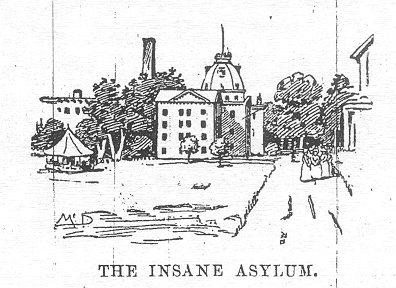
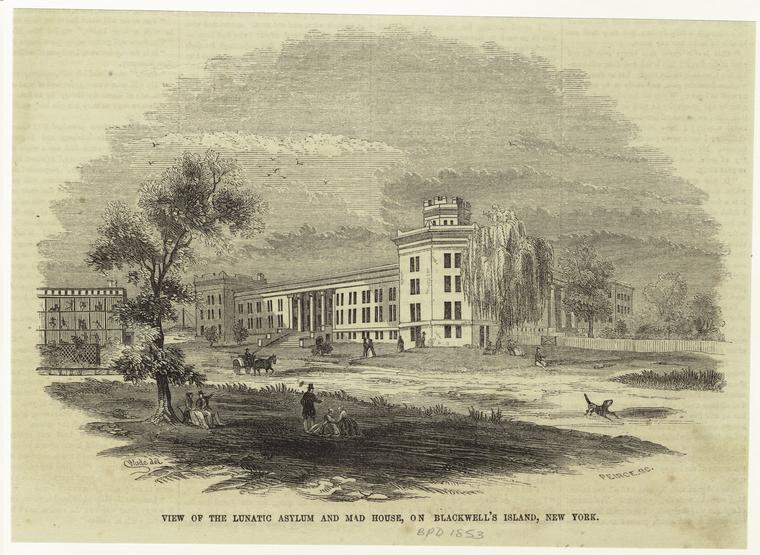
Since the 1830s Blackwell’s Island had been the destination for New York’s public institutions of an undesirable nature — hospitals for grave diseases, a penitentiary, an almshouse, even a quarantine for smallpox. There was also a mental institution — an insane or lunatic asylum — rumored to treat its patients most cruelly.

51

The ambitious young reporter decided to see for herself — by acting like a woman who had lost her mind. Her ten days in this particular madhouse — the basis of her newspaper articles and a book — would expose the world to the sinister treatment of the mentally ill and the loathsome conditions of New York institutions meant to care for the most needy.

But would the process of getting this important story lead Nellie herself to go a little mad? And once she got inside the asylum, how would she get out?

ALSO: Not only is a vestige of the asylum still around today, you can live in it!


The Bowery Boys: New York City History podcast is brought to you …. by you!

We are now producing a new Bowery Boys podcast every two weeks. We’re also looking to improve the show in other ways and expand in other ways as well — through publishing, social media, live events and other forms of media. But we can only do this with your help!

We are now a member of Patreon, a patronage platform where you can support your favorite content creators for as little as a $1 a month.

Please visit our page on Patreon and watch a short video of us recording the show and talking about our expansion plans. If you’d like to help out, there are five different pledge levels (and with clever names too — Mannahatta, New Amsterdam, Five Points, Gilded Age, Jazz Age and Empire State). Check them out and consider being a sponsor.

We greatly appreciate our listeners and readers and thank you for joining us on this journey so far. And the best is yet to come!


Nellie Bly, the bold journalist with extraordinary will and panache, tackled a number of strange assignments in her life, starting with her virtuoso performance getting into the Blackwell’s Island insane asylum.

7f5ab10e286c50902324b51b1b1a3a51

Blackwell’s Island Lunatic Asylum from 1853, rendered by William Wade

Courtesy NYPL
Courtesy NYPL

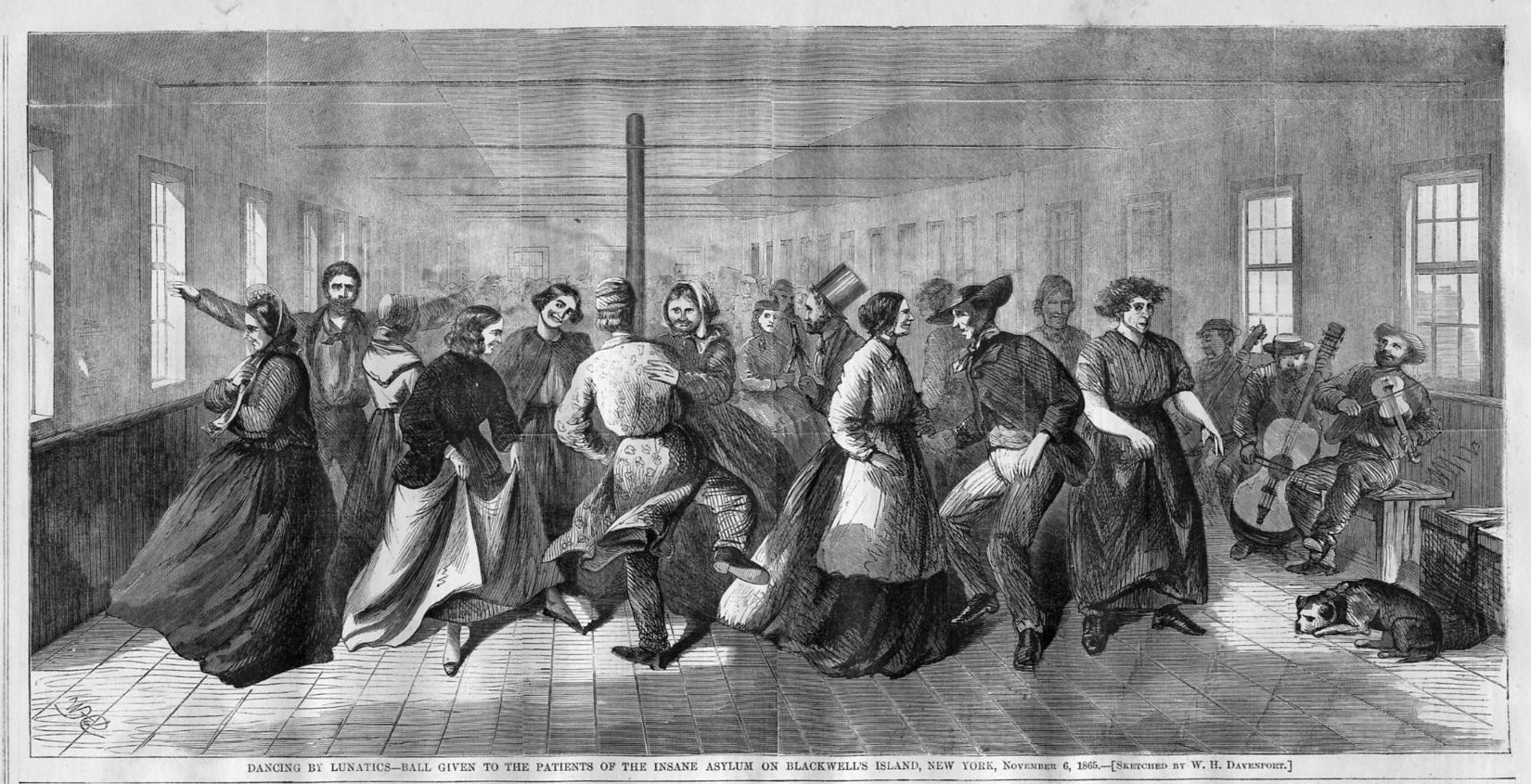
A newspaper clipping from 1865 — “Dancing by lunatics — Ball given to the patients of the Insane Asylum on Blackwell’s Island”

1

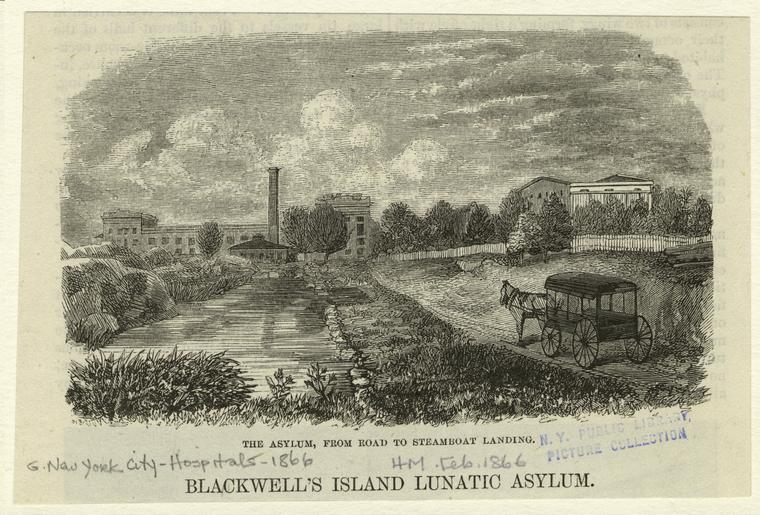
Another view of Blackwell’s Island Lunatic Asylum, pictured here in 1866 “from road to steamboat landing.”

Courtesy NYPL
Courtesy NYPL

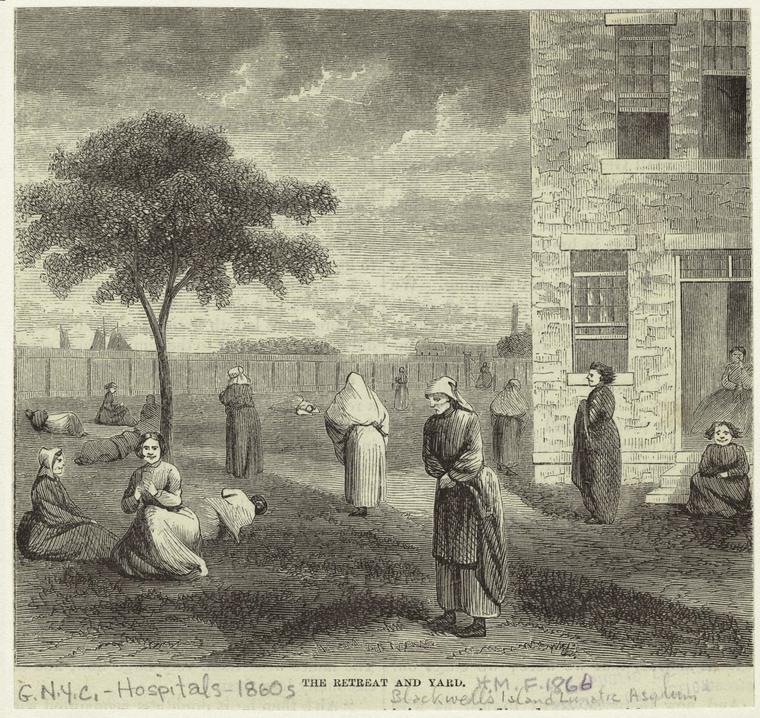
On the grounds of the asylum the ‘Retreat and Yard’, where Nellie would later roam with the other patients.

Courtesy NYPL
Courtesy NYPL

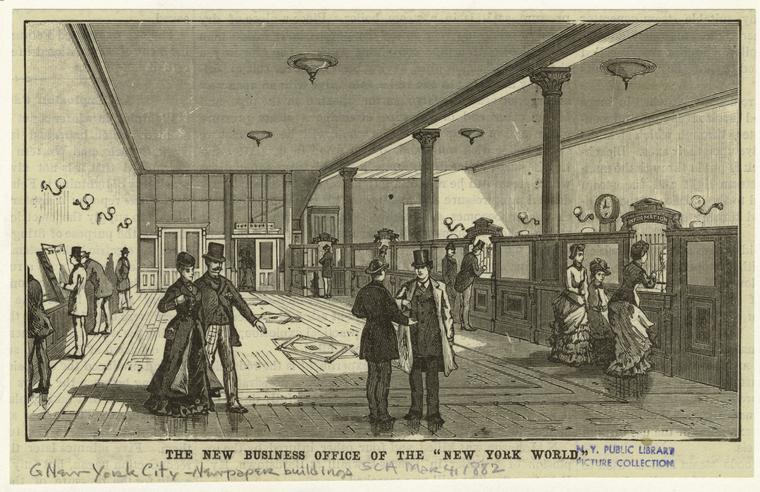
Inside of the offices of the New York World in 1882

Courtesy NYPL
Courtesy NYPL

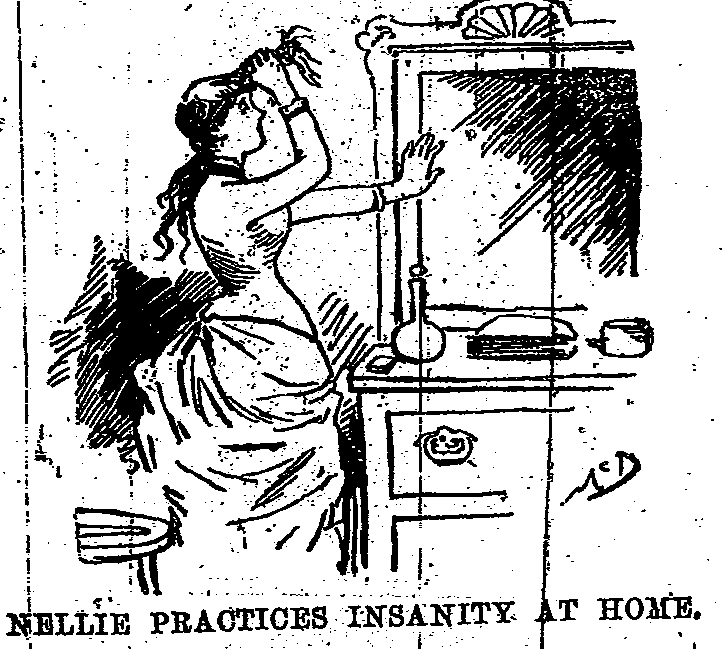
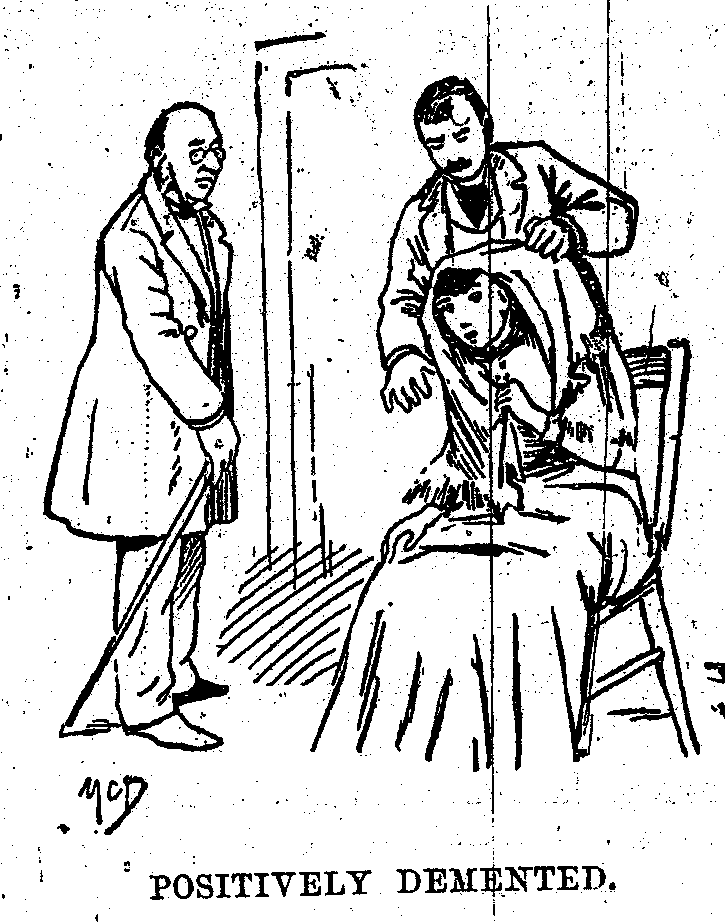
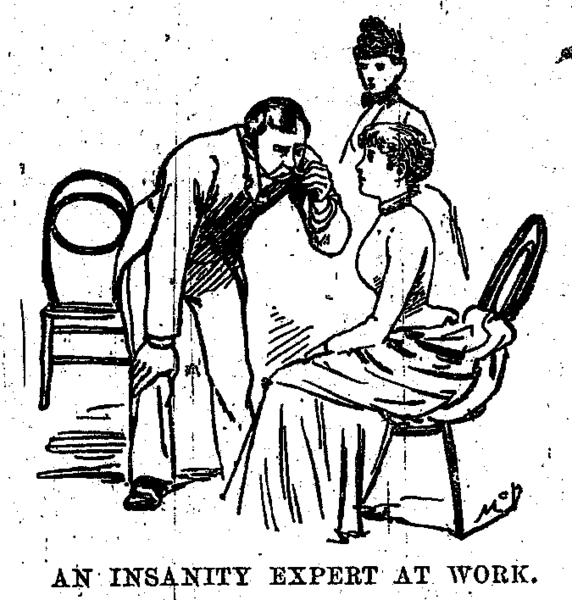
Some images from the New York World and the book Ten Days In A Madhouse

1

2

3

From the first article which ran on October 9, 1887

1

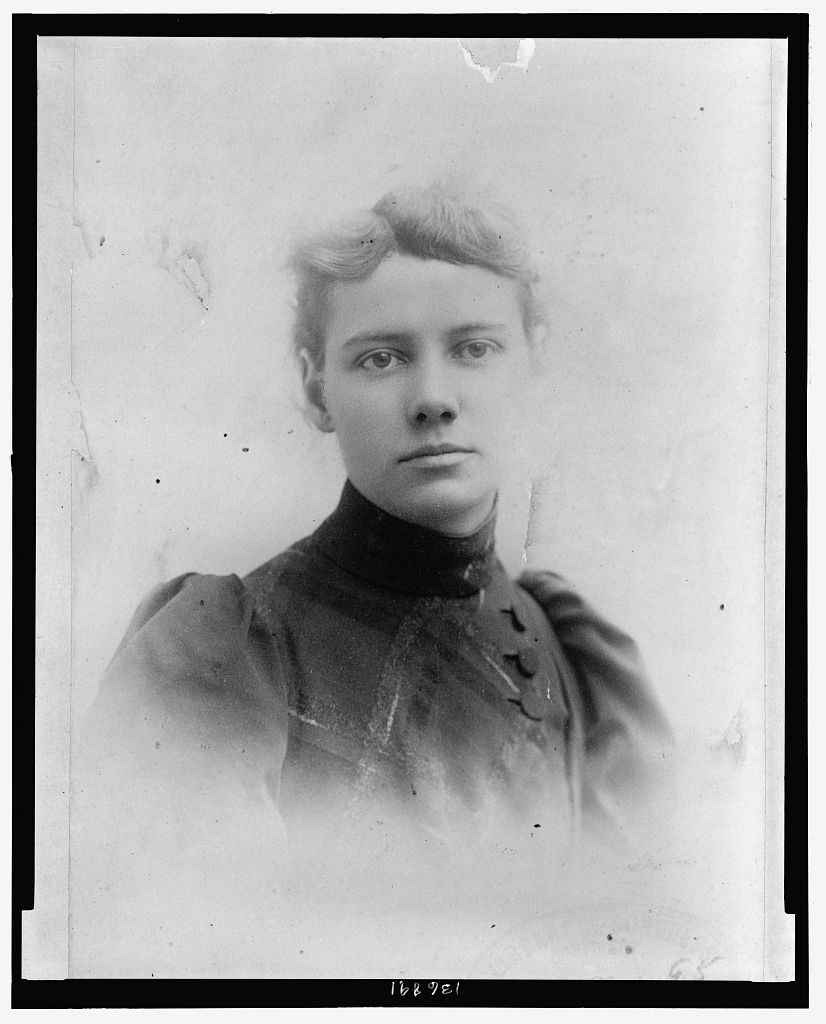
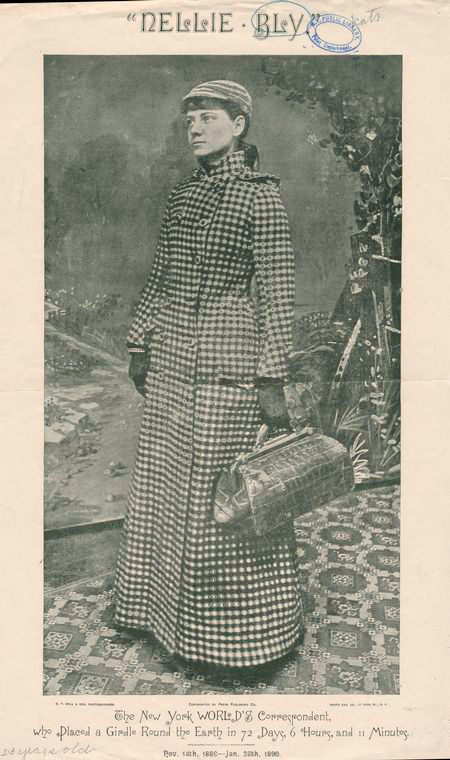
A famous photo of Nellie Bly taken during her trip around the world.

Courtesy New York Public Library

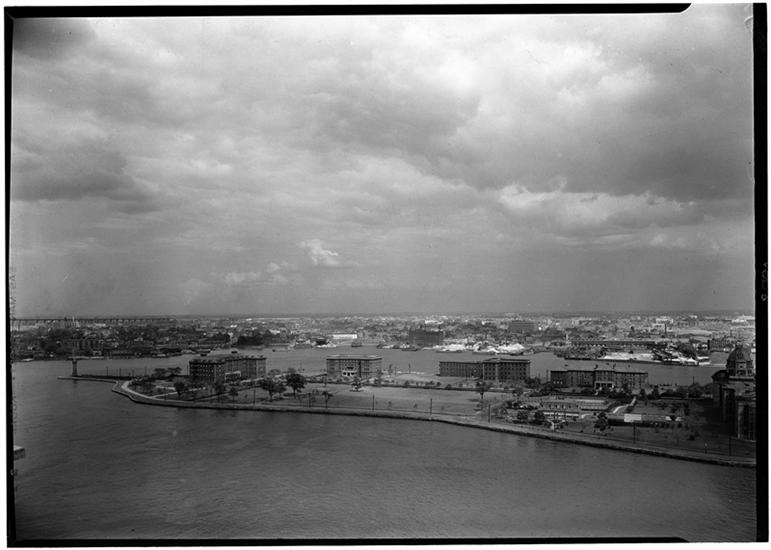
Blackwell’s Island was later named Welfare Island (before its following name change to Roosevelt Island in the 1970s). Below you can see the Octagon at the far right of this image.

Samuel H. (Samuel Herman) Gottscho, photographer, Courtesy Museum of the City of New York

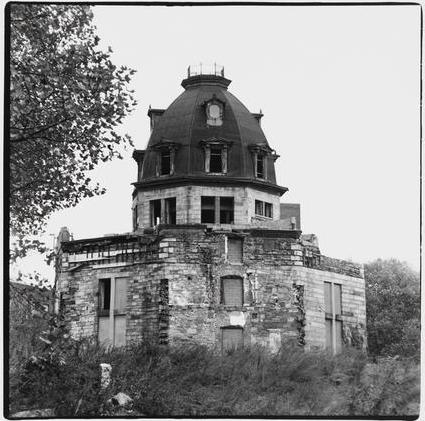
The remaining ruins of the mental asylum. It was later turned into a condominium and apartment building.

ruin
Edmund Gillon photographer. Courtesy Museum of the City of New York
Categories
Bowery Boys Bookshelf

Modern Family: Black and Latino Alliances in New York City

The political landscape of modern New York City is a stew of neighborhood, borough, financial and ethnic interests built upon over two centuries of experience and tradition.  The most interesting story of the past fifty years — both locally and nationally — is the ascension of minority voices into the public sphere, reflecting population changes but also rising strategies of organization.

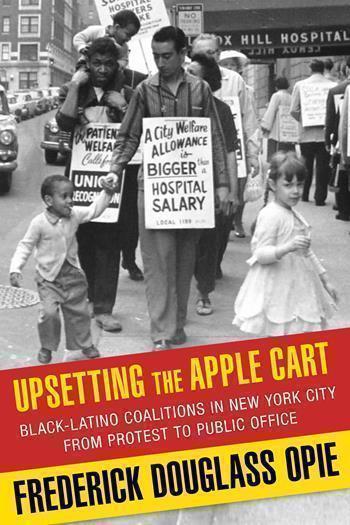
How did non-white New Yorkers first find their voice in modern politics? In Upsetting the Apple Cart, an impressive navigation through late 20th century politics by Frederick Douglass Opie, the answer comes from seemingly surprising places — the hospital, the classroom, the kitchen table.

1

Opie, a professor at Babson College, inspects the particular relationship between New York’s black and Latino communities as they find ways to align at the workplace and in the voting booth. Today it seems obvious that two large minority interest groups might team up to achieve common goals, but it wasn’t until after labor and student activists explored the relationship in the 1950s and 60s that alliances were forged in the major political spheres.

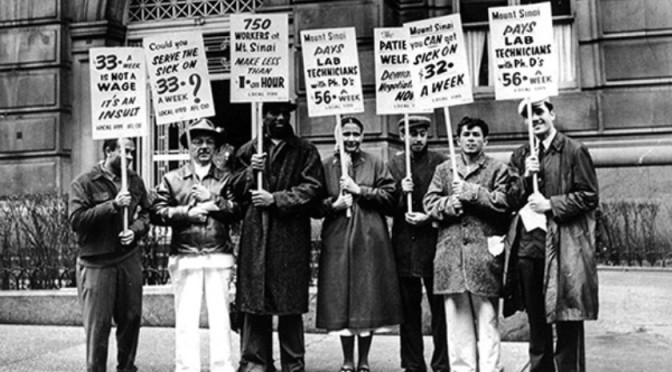
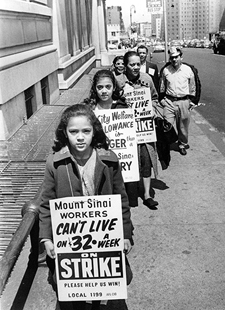
The first half of Upsetting the Apple Cart traces the influences of both the unions and the civil rights movement upon minority workers at local hospitals and students at universities.  Frustrated by lower pay and unfair hours in comparison to their white counterparts, black and Puerto Rican New Yorkers found common ground and successfully organized. This culminated in a massive, ultimately successful city-wide strike on May 8, 1959, lasting almost two months.

2

Minority higher-education students at Columbia University, Hunter College and other school found other reasons to work together — to improve enrollment and educational needs. At Columbia students successfully closed the campus in protest over a new gymnasium being built in Morningside Heights, seen by many as an encroachment into the majority black neighborhood.

Personally I found the second half of Upsetting the Apple Cart more intriguing, but then, I love rooting around in the history of New York backroom political alliances.  Opie’s book excellently explains the early history of black and Latino political organization, from the rise of power in Harlem by the Gang of Four (including David Dinkins and Charlie Rangel) to the first politicians of Puerto Rican, Mexican and Dominican descent in New York.

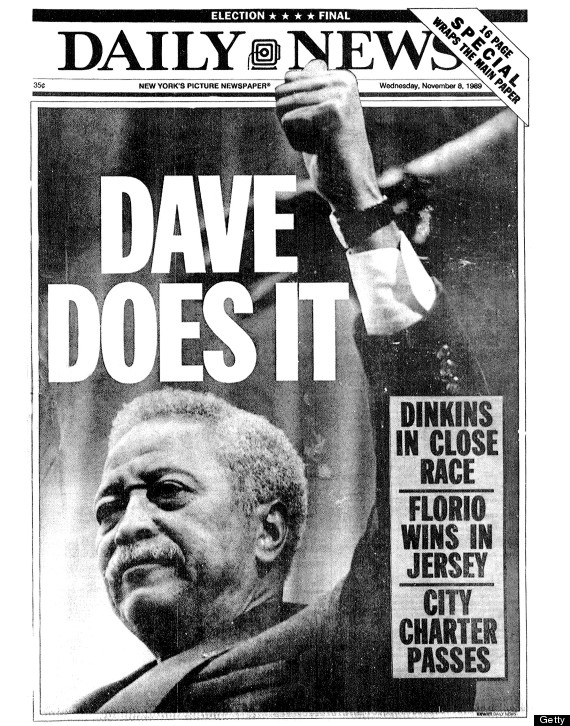
UNITED STATES - NOVEMBER 08: Daily News front page dated Nov. 8, 1989, Headlines: DAVE DOES IT, Dinkins in close race, Florio wins in jersey, City Charter passes, David Dinkins elected Mayor of New York City (Photo by NY Daily News Archive via Getty Images)
UNITED STATES – NOVEMBER 08: Daily News front page dated Nov. 8, 1989, Headlines: DAVE DOES IT, Dinkins in close race, Florio wins in jersey, City Charter passes, David Dinkins elected Mayor of New York City (Photo by NY Daily News Archive via Getty Images)

Politics is made from shifting alliances but it wasn’t until the victory of Harold Washington as mayor of Chicago in 1983 that the united front of African-American, Hispanic and Latino-American activists made itself felt in a major political race. Such unification of goals made its way to New York through the presidential aspirations of Jesse Jackson and the various (ultimately unsuccessful) attempts to unseat New York mayor Ed Koch.

The apex of minority political alliances occurred with the election of David Dinkins, famous for his appeal to the “gorgeous mosaic” of New York ethnicities. Dinkins won because, in the end, he appealed to a majority of New Yorkers. But Opie makes note of the unique organizations of outer-borough Hispanics that helped get him elected.

Wait, did I mention that Upsetting  the Apple Cart is also a cookbook? Somewhat incongruously, traditional recipes for tamales, arroz con pollo, fried chicken and other dishes pop up throughout the chapters. Opie, a food traditions professor, emphasizes the role of social interaction in creating these unique coalitions.  To paraphrase a popular adage, the best way to a neighbor’s heart is through her stomach.  The success of these early alliances lends some credence to food as the great uniter.

Upsetting the Apple Cart:
Black-Latino Coalitions in New York City from Protest to Public Office
by Frederick Douglass Opie
Columbia University Press


Strike pictures courtesy 1199SEIU

Categories
Museums

Photographs of wonder from the American Museum of Natural History

One hundred years ago, the American Museum of Natural History received a massive visitor, one so mighty that the doors of the museum’s delivery room “had to be removed and [the] partition openings enlarged” in order to accommodate it.

Was it a dinosaur? A meteorite? Perhaps the remains of a great whale?

No, the new visitor was a bush chrysanthemum,  with over 1,500 blooms, 17 feet in diameter, wider, the New York Times notes, than the largest meteorite on the property.

The massive plant, grown north of the city at Ardsley-on-Hudson, was the star of an impressive plant and flower show at the museum with thousands of chrysanthemums and a so-called ‘rose gorgeous’ which “changes color as it opens.

While looking for a picture of this notable flower, I stumbled into something equally as magical — the American Museum of Natural History digital library of images.  While I never found the flower, I did find some stunning and lovely images of visitors and students enjoying the museum in its early days.

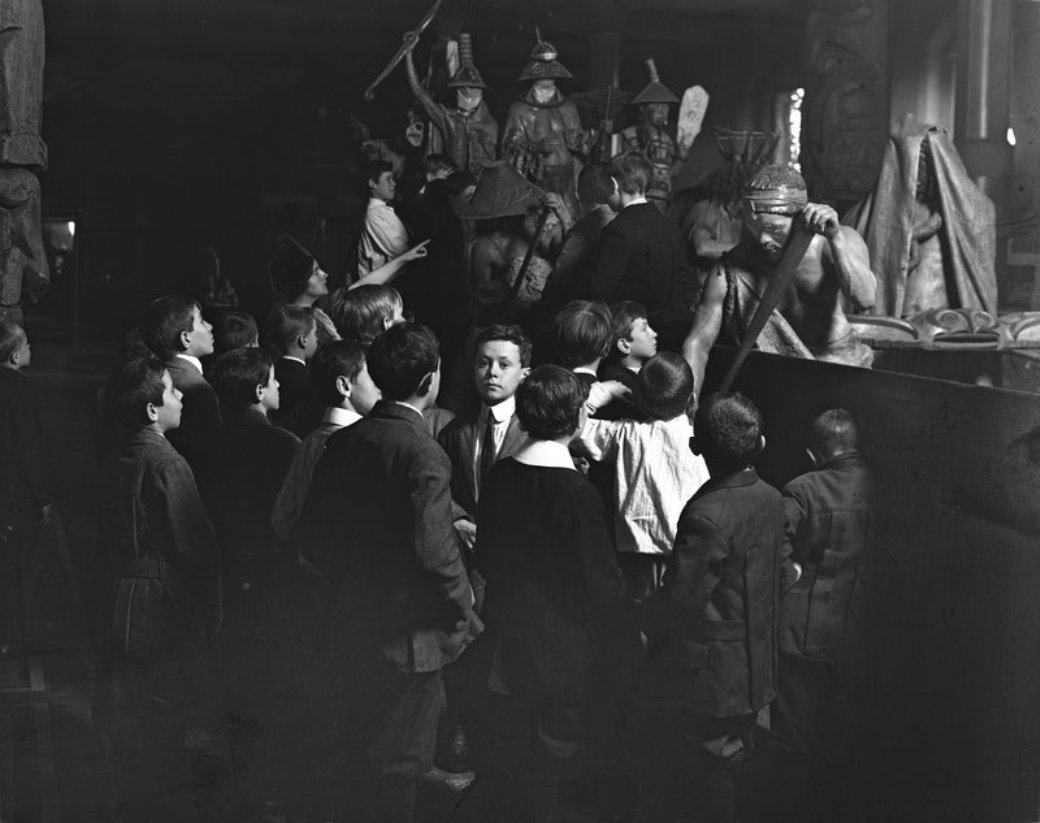
What is it about old museum pictures that I find so interesting? Most of the exhibits would today be considered politically incorrect, and modern advances have improved our knowledge about many of the objects being pictures. But the faces filled with wonder and imagination could be taken from museum images today.

So enjoy these pictures and visit the archives to view more:

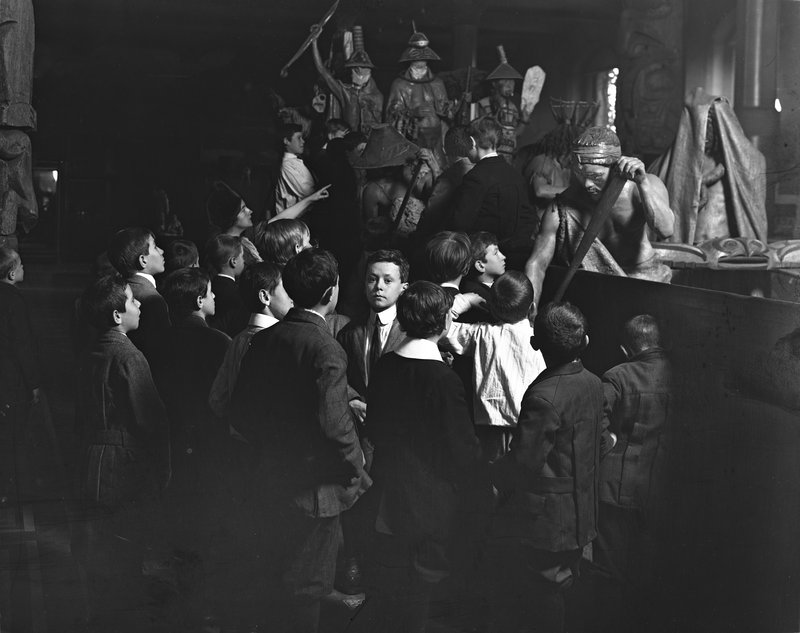
School children viewing Indian canoe exhibit, 1911:

 Julius Kirschner, courtesy AMNH
Julius Kirschner, courtesy AMNH


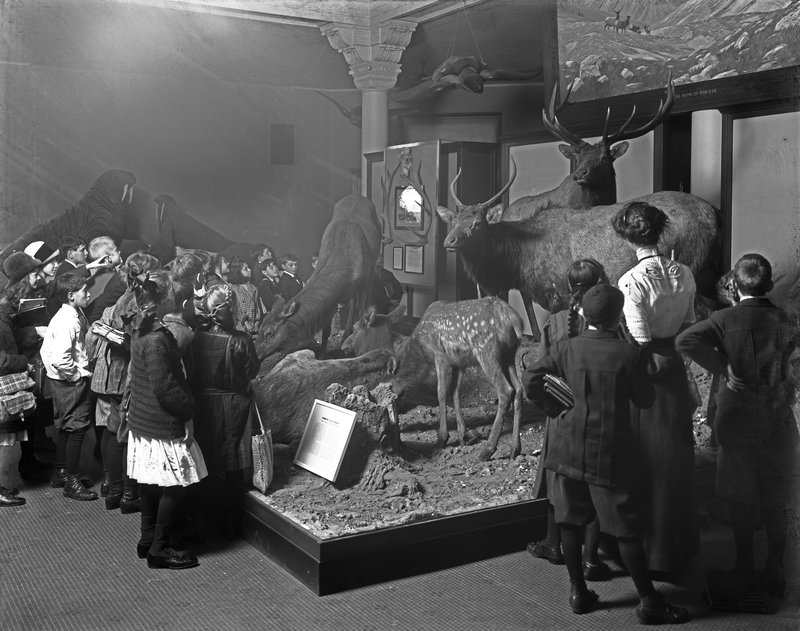
Students and teacher at a mammal display, October 1911

2007 METRO Project | ImageDigitizationSpecifications v1.0 | Epson Perfection V750 Pro
Julius Kirschner, courtesy AMNH


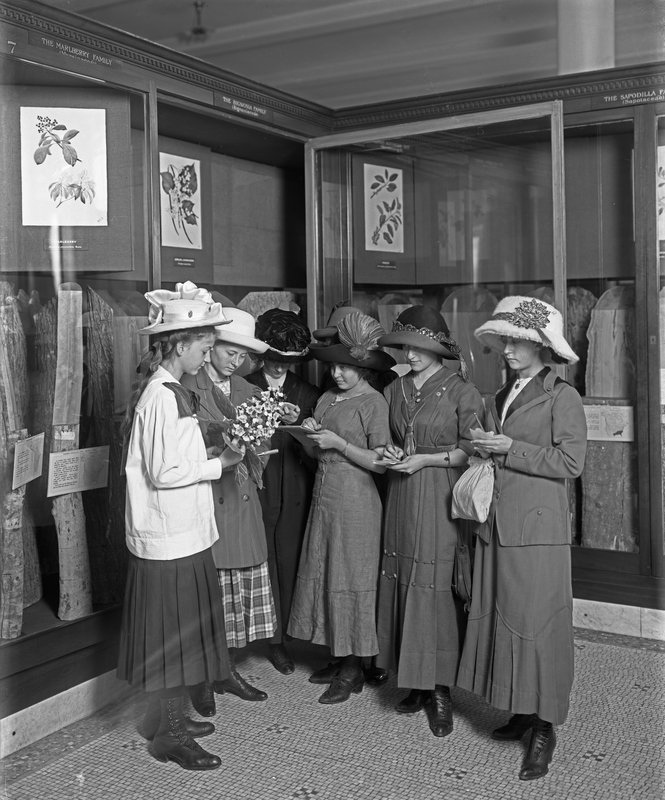
Young ladies in Forestry Hall, October 1911

Julius Kirschner, courtesy AMNH


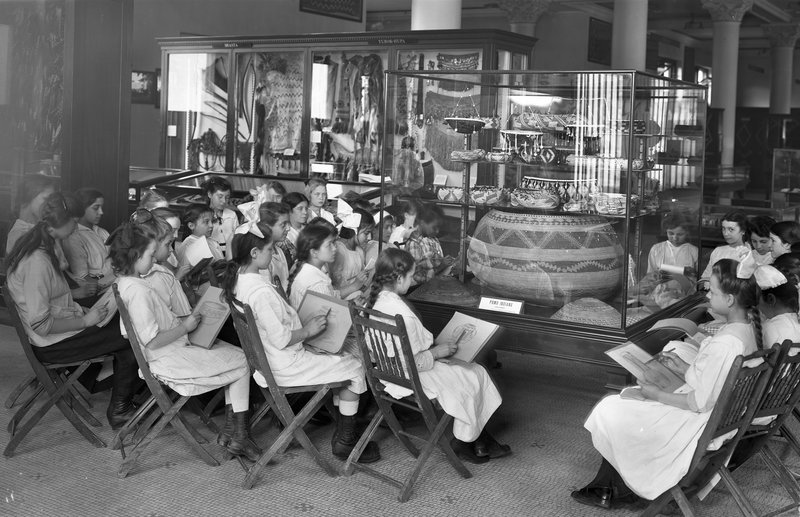
Schoolgirls from Public School 94 drawing items on display in Southwest Indian Hall, May 1916

Julius Kershner, courtesy AMNH


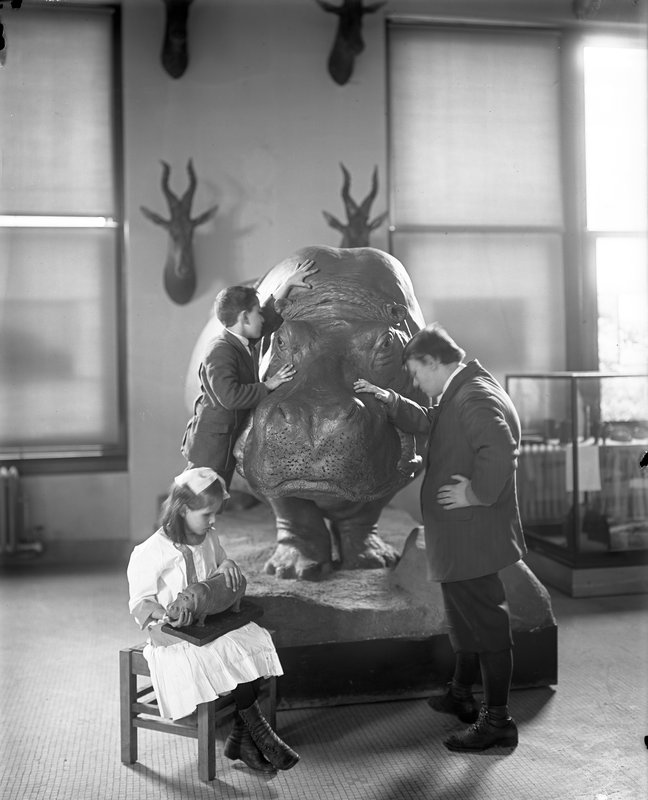
Blind children studying the hippopotamus, May 1914

Julius Kershner, courtesy AMNH


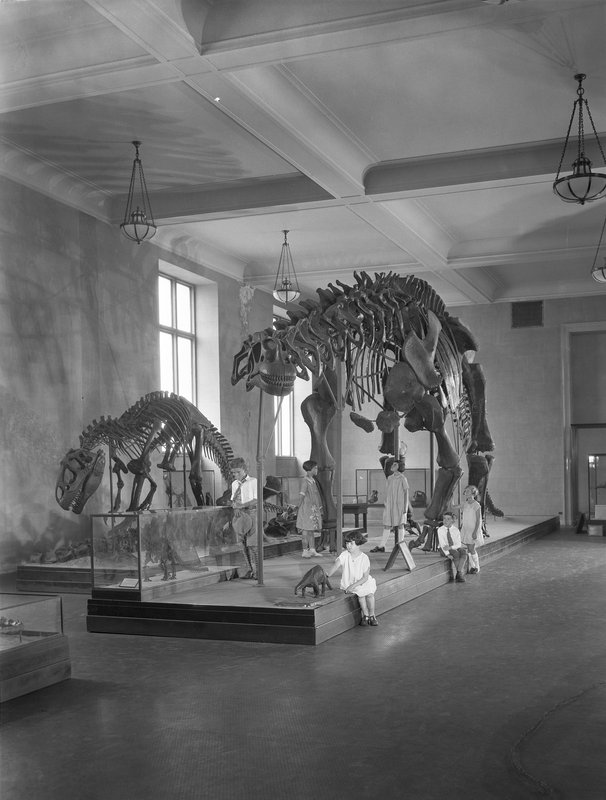
Kids in Dinosaur Hall, July 1927

Courtesty Irving Dutcher, courtesy AMNH


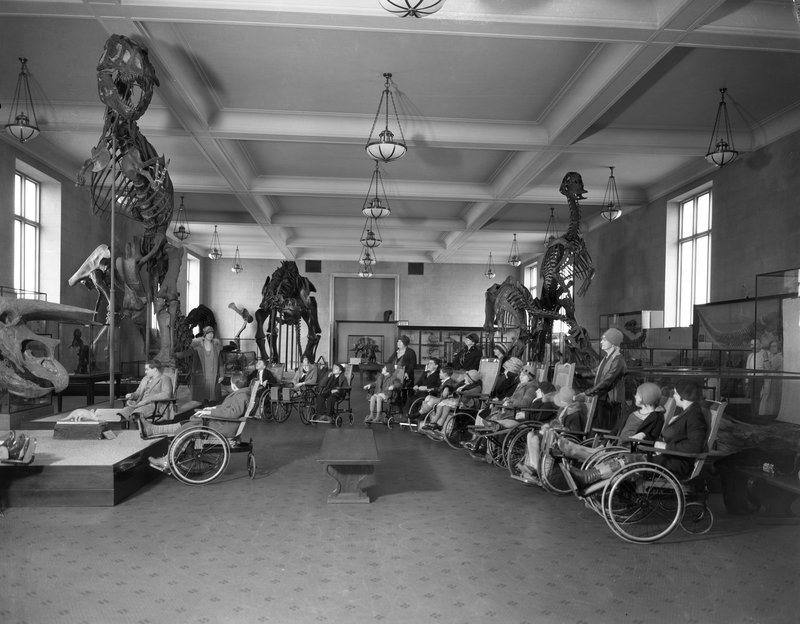
More students in Dinosaur Hall, this time in December 1929

Julius Kirschner, courtesy AMNH


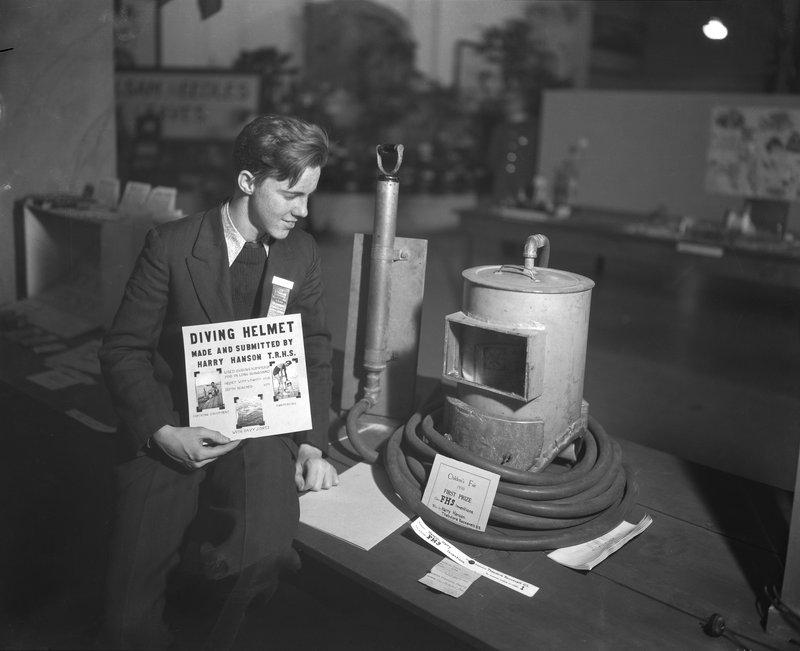
Diving helmet made and submitted by Harry Hanson of Theodore Roosevelt High School, Children’s Fair, December 1930

Julius Kirshner, courtesy AMNH


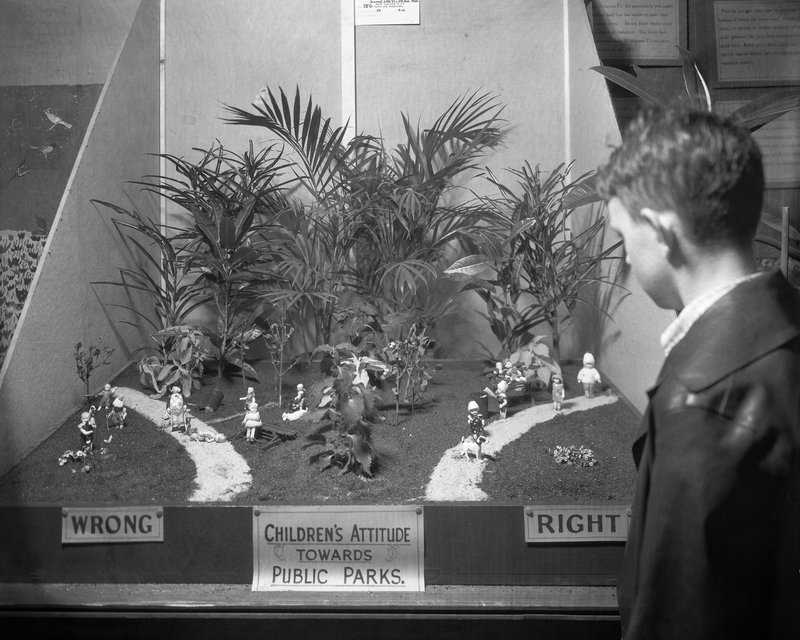
How to do parks the right way! A boy views a display showing Children’s Attitude Toward Public Parks at the Children’s Fair, December 1931

Julius Kirshner, courtesy AMNH


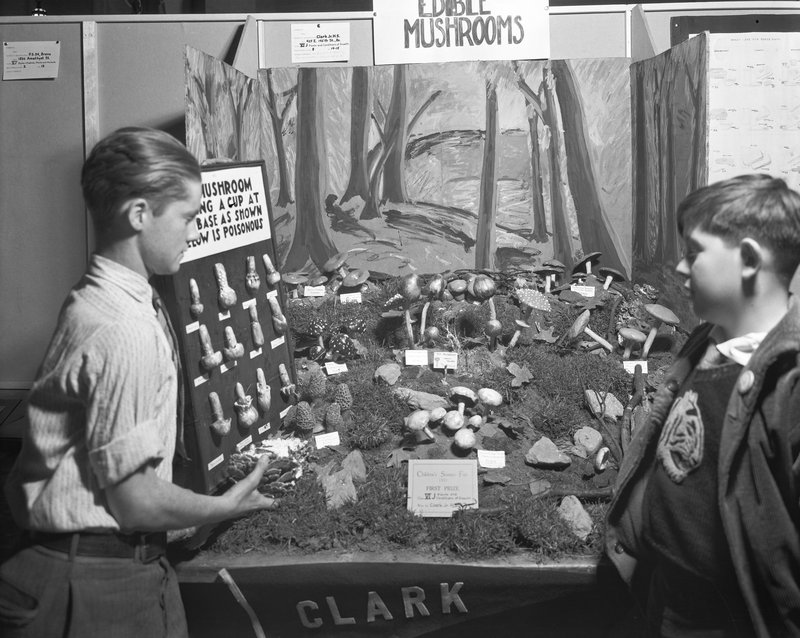
Good advice for campers! Boys viewing display showing Edible Mushrooms at the Children’s Fair, December 1931

Julius Kirshner, courtesy AMNH


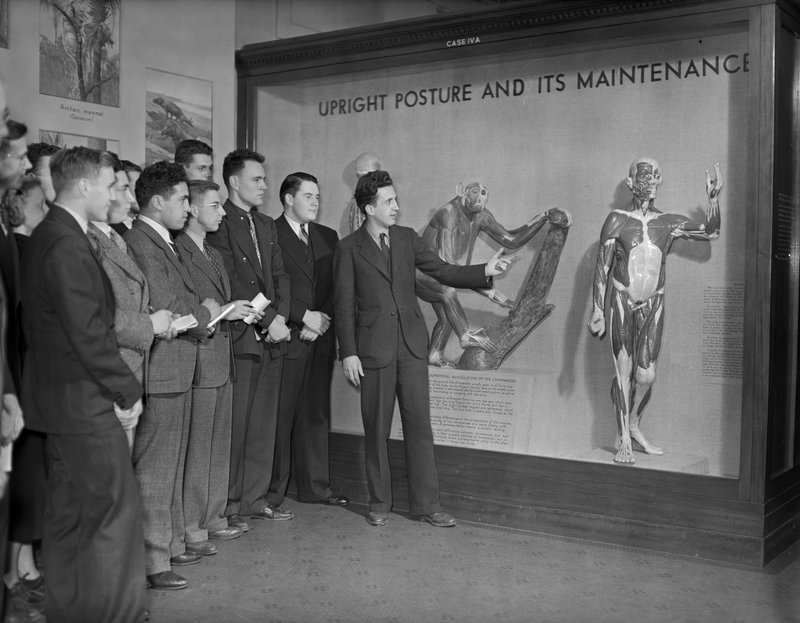
Students on guided tour of the Natural History of Man, December 1937

Photo by Charles Coles, courtesy AMNH


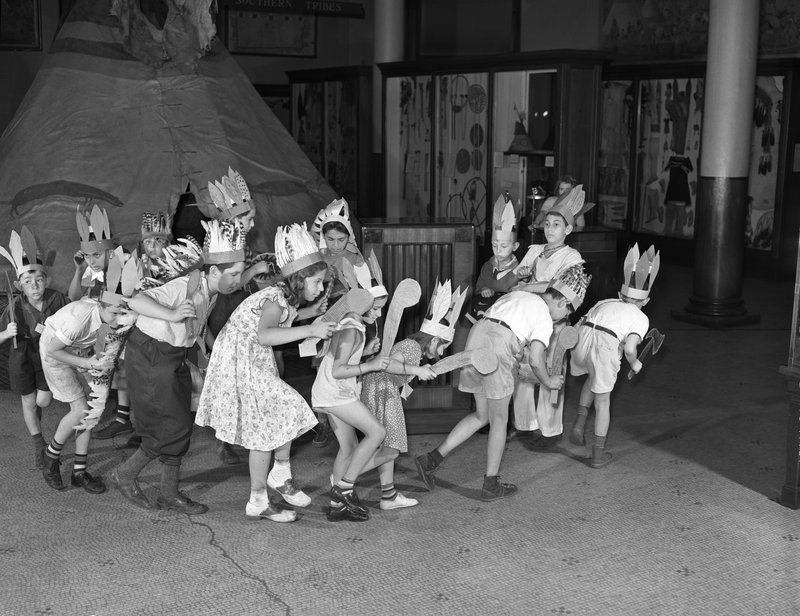
Children doing Native American dances in the Plains Indians Hall, July 1939

Photography by Thane L. Bierwert, Courtesy AMNH


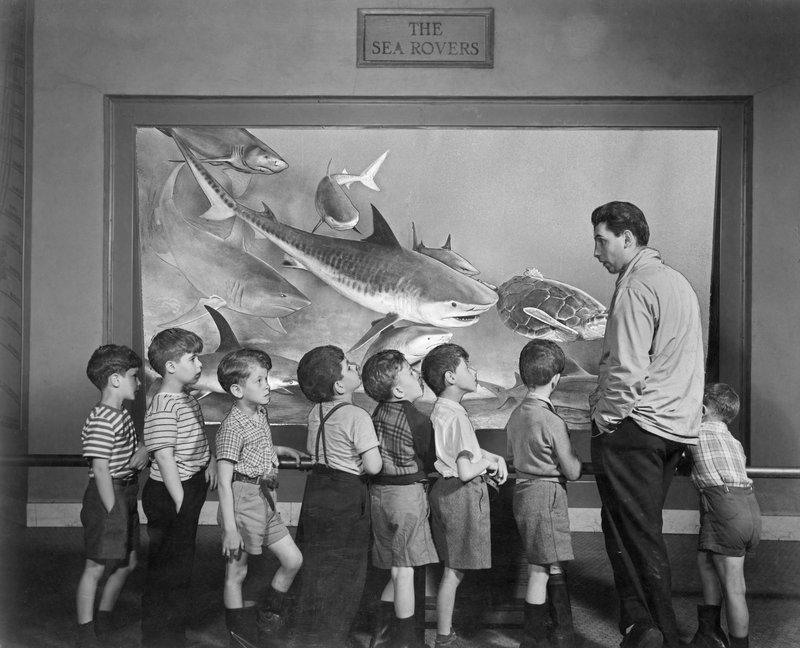
Kids have loved sharks for decades. Here’s a picture from the Sea Rovers display, Hall of Fishes, 1948

Thane Bierwert, courtesy AMNH


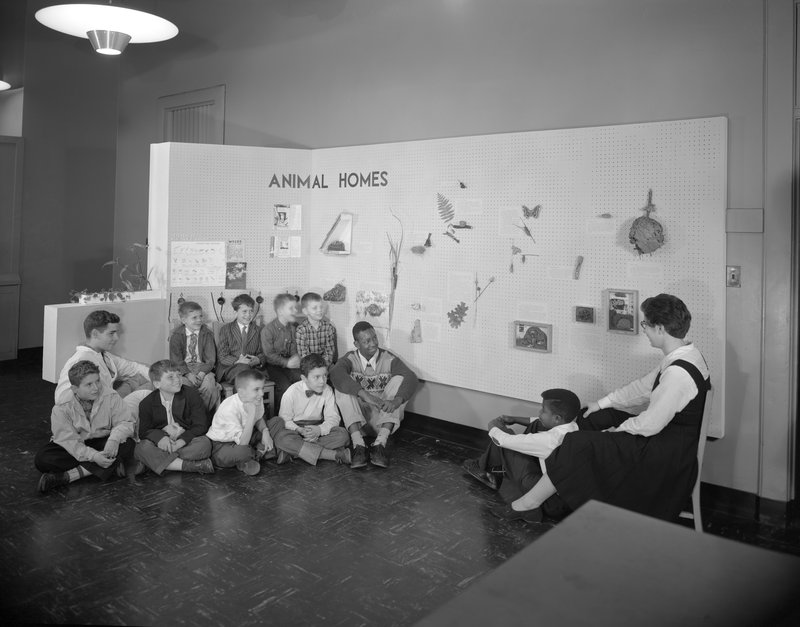
October 1957 — A group of children receiving instruction at the Natural Science Center

Morton Yourow, courtesy AMNH


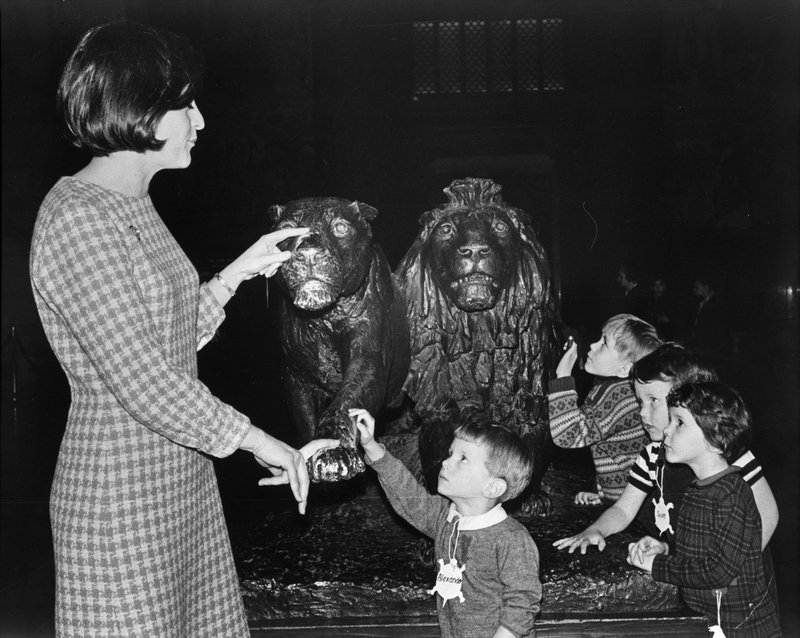
Children viewing bronze lions in Akeley African Hall, 1965

Photo New York Times, courtesy AMNH


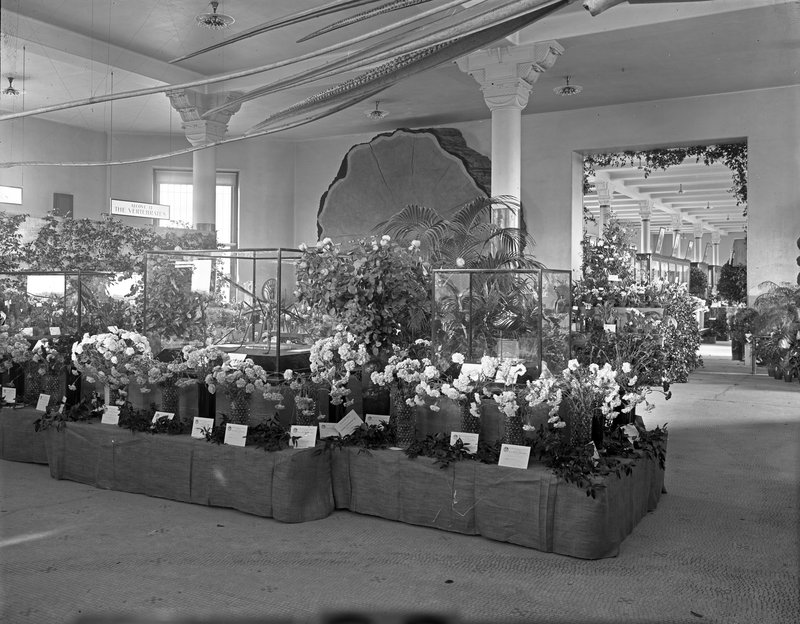
I never did find that historic chrysanthemum but the exhibition would have looked like this one from the Fall Exhibition of the Horticultural Society of New York, November 17-20, 1908.

32145.tif
Photo by Thomas Lunt, courtesy American Museum of Natural History

Categories
Neighborhoods Podcasts

St. Mark’s Place: It’s Party Time in the East Village!

PODCAST: The big, brash history of St. Mark’s Place, the East Village’s most interesting street.

St. Mark’s Place may be named for a saint but it’s been a street full of sinners for much of its history.

One of the most fascinating streets in the city, St. Mark’s traces its story back to Peter Stuyvesant, meets up with the wife of Alexander Hamilton in the 1830s, experiences the incredible influx of German and Polish immigrants in the late 19th century, then veers into the heart of counter-culture — from the political activism of Abbie Hoffman to the glamorously psychedelic parties of Andy Warhol.

And that’s when the party really gets started! St. Mark’s is known for music, fashion, rebellion and pandemonium. In the 1970s and 80s, clothing stores like Limbo and club nights like Club 57 helped define its character — punk, new wave, alternative, raucous.


The Bowery Boys: New York City History podcast is brought to you …. by you!

We are now producing a new Bowery Boys podcast every two weeks. We’re also looking to improve the show in other ways and expand in other ways as well — through publishing, social media, live events and other forms of media. But we can only do this with your help!

We are now a member of Patreon, a patronage platform where you can support your favorite content creators for as little as a $1 a month.

Please visit our page on Patreon and watch a short video of us recording the show and talking about our expansion plans. If you’d like to help out, there are five different pledge levels (and with clever names too — Mannahatta, New Amsterdam, Five Points, Gilded Age, Jazz Age and Empire State). Check them out and consider being a sponsor.

We greatly appreciate our listeners and readers and thank you for joining us on this journey so far. And the best is yet to come!


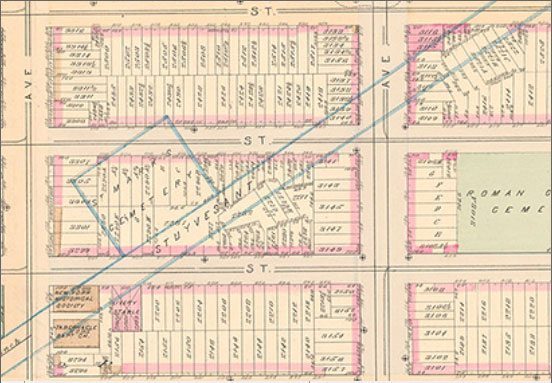
Stuyvesant Street superimposed over the planned grid. Ultimately the street was allowed to remain, breaking the grid. By the way, see that green patch at the far right? That was also a cemetery.

Courtesy EV Transitions

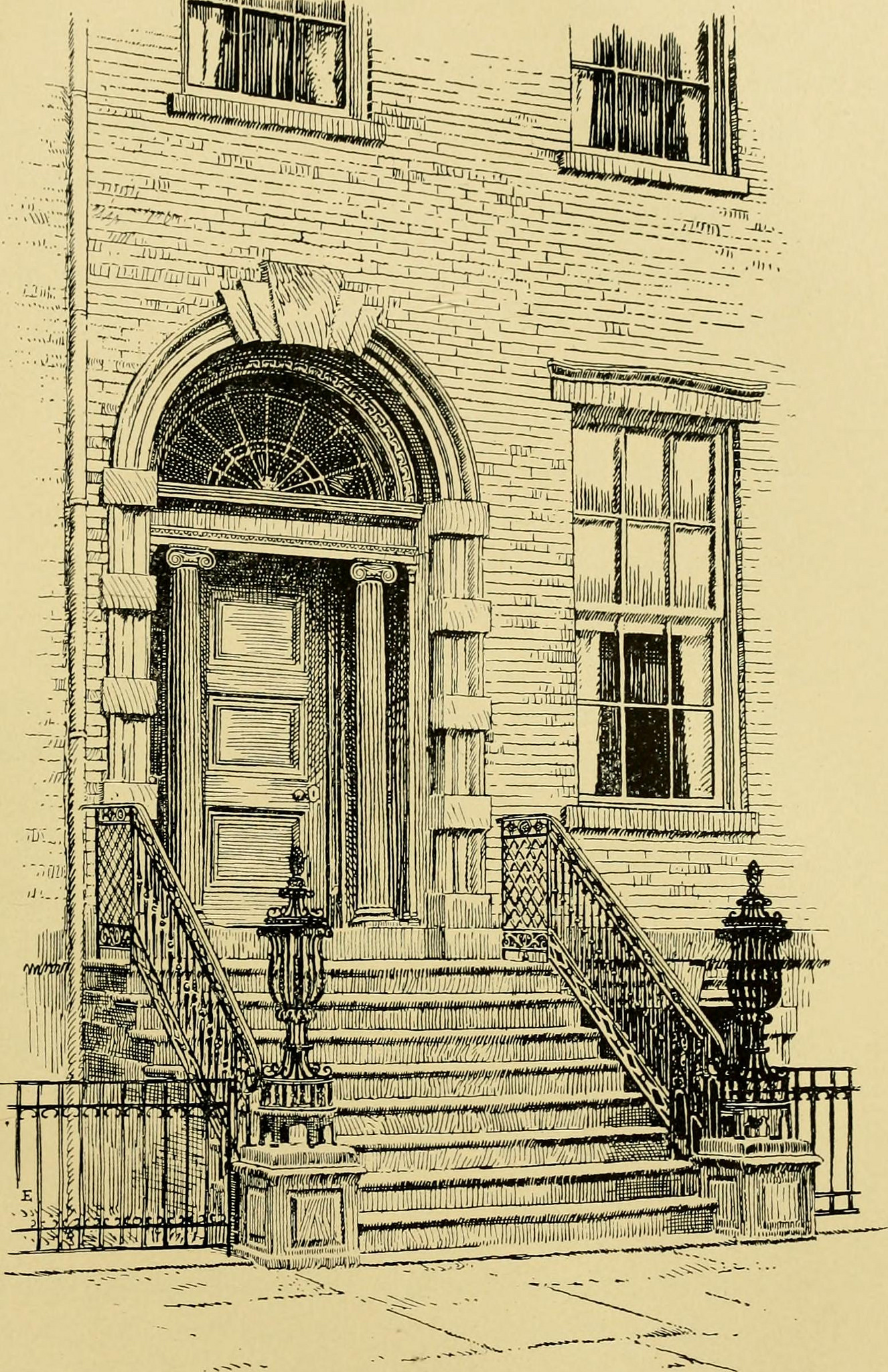
The front of 22 St. Mark’s Place from a 1914 history book. (It looks almost identical to 20 St. Mark’s, the old Daniel LeRoy House, which is still there.). “It had a tea room in the rear of the first floor, which [the tenant] altered into a library, constructing a bathroom in connection with it. A new bedroom was added above the library, and in the basement was installed a cook.” [source]

1

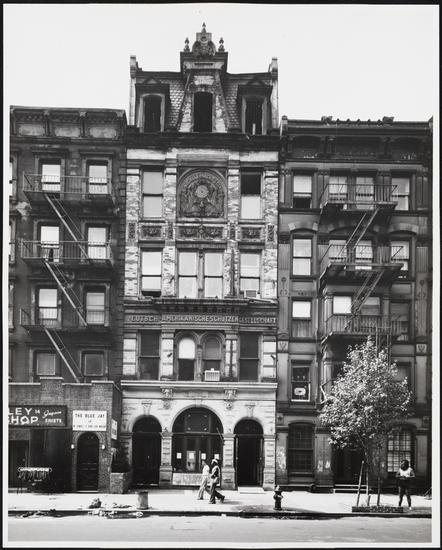
Deutsch-Amerikanische-Schützen Gesellschaft (German-American Shooting Society) building, 12 St. Mark’s Place, pictured here in 1975 in a photograph by Edmund Gillon

Courtesy Museum of the City of New York

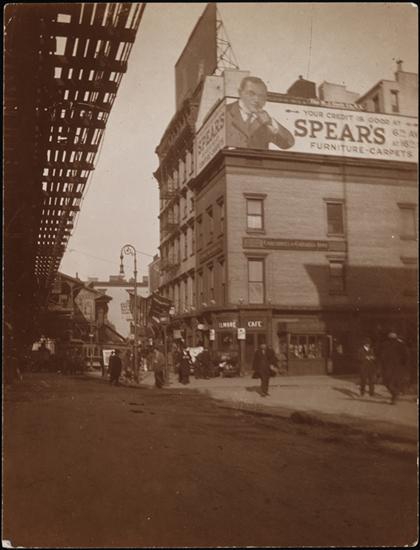
St. Mark’s Place and Third Avenue in 1914, the same year as the shootout at Arlington Hall! The Third Avenue elevated train framed St. Mark’s on the west end, the Second Avenue elevated (which actually ran along First Avenue in the East Village) to the east.

Courtesy Museum of the City of New York

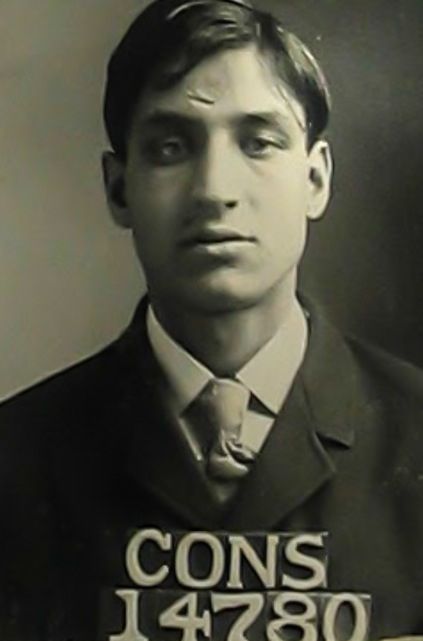
The mugshot of Dopey Benny whose gang was involved in the shootout which killed a city official.

dopey

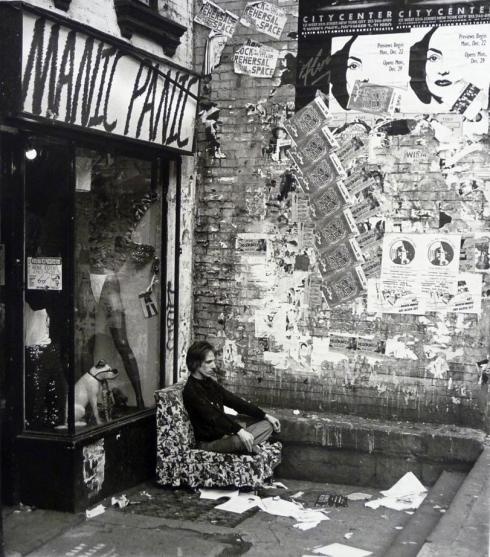
A photo by Victor George Macarol of the boutique Manic Panic (and a man in meditation), 1975

3

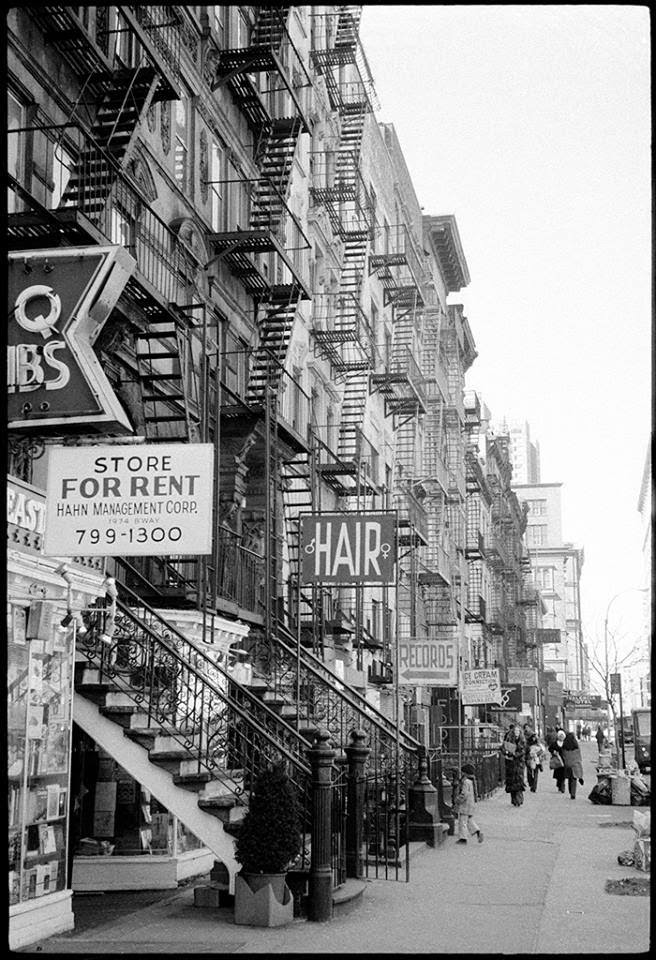
The south side of St. Mark’s Place, 1975

EV Grieve
EV Grieve

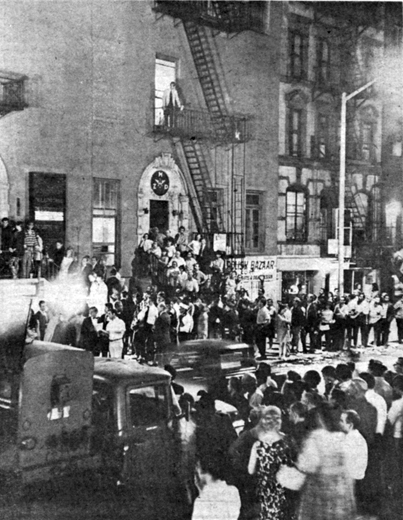
Crowds waiting to get into the Electric Circus

courtesy Alex Ross
courtesy Alex Ross

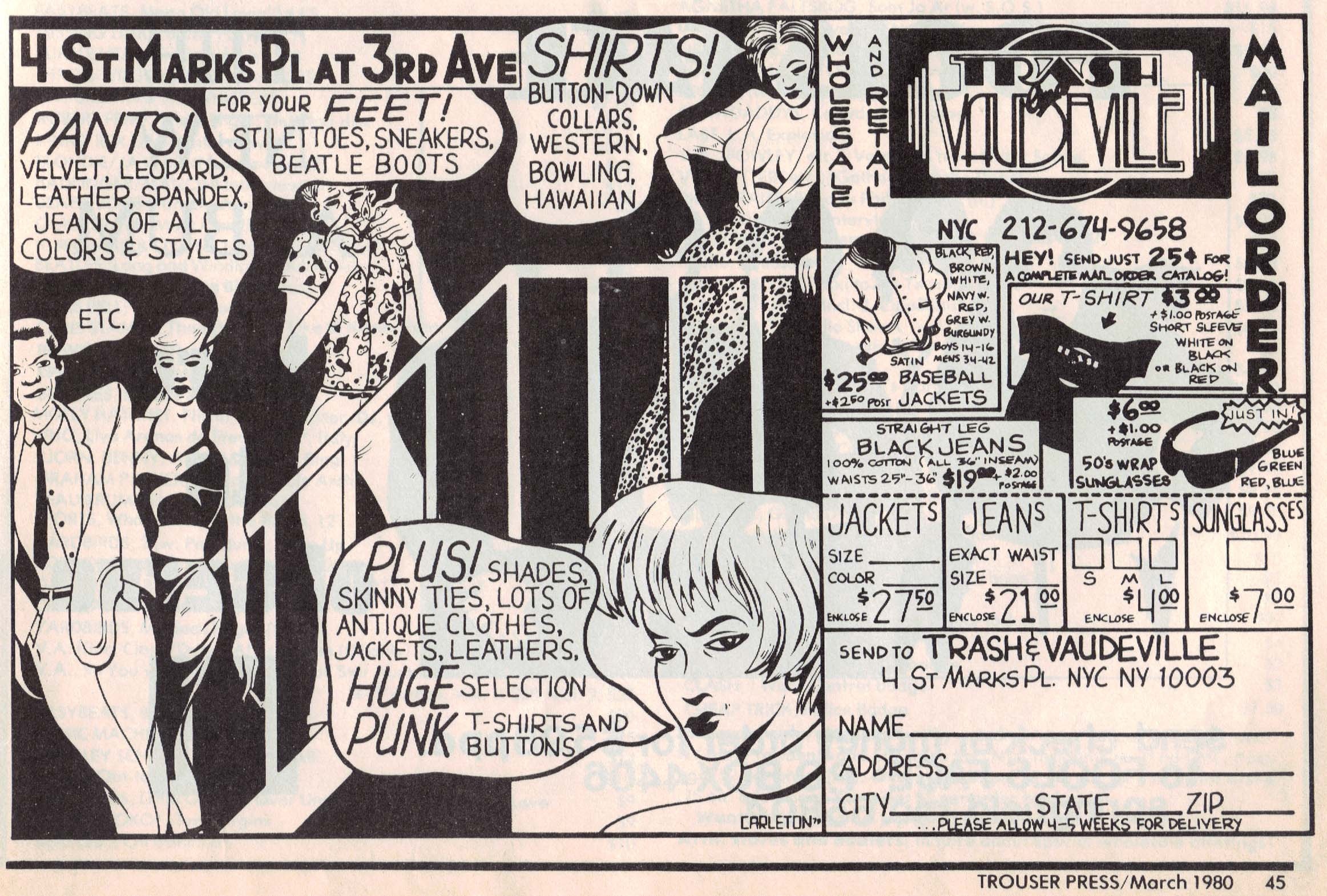
A flyer for Trash and Vaudeville…

trash

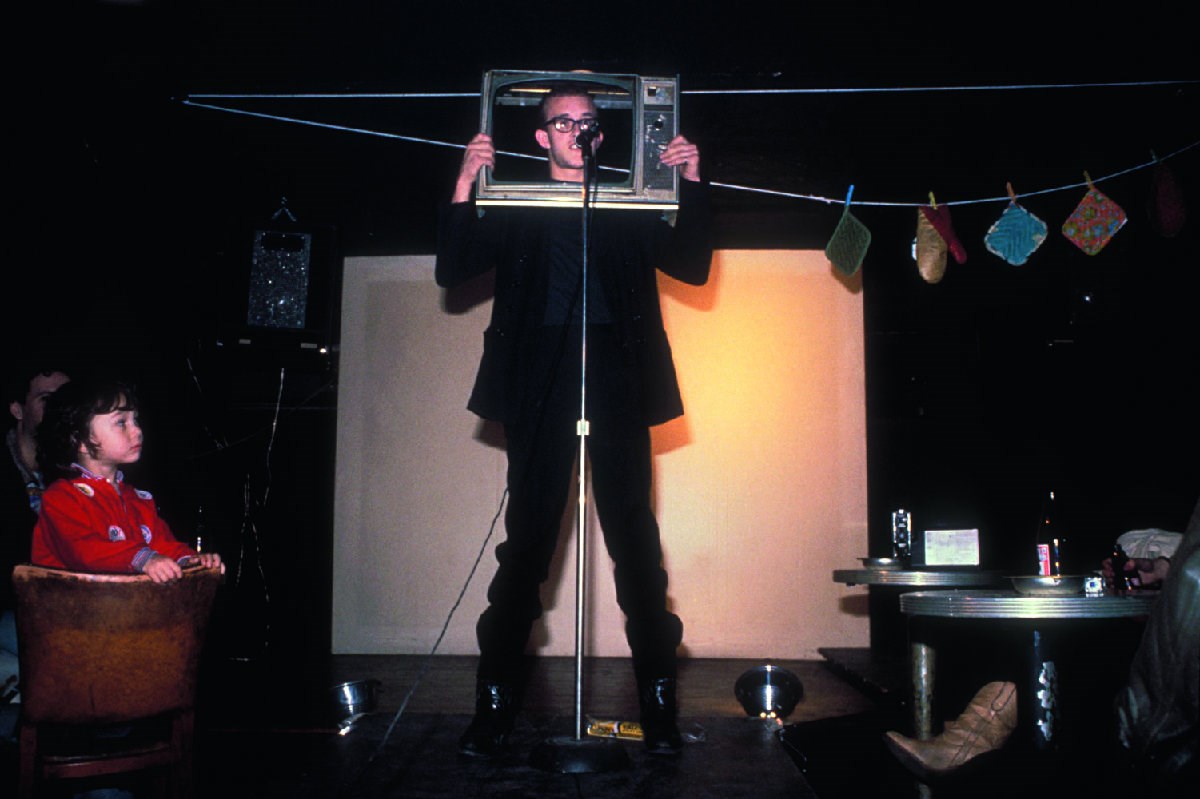
Keith Haring performing at Club 57 in a themed evening called Acts of Live Art. For more information on Club 57, you can read my earlier article about this extraordinary club here. Dazed has a pretty great article about the place here.

Photo by Joseph Szkodzinski

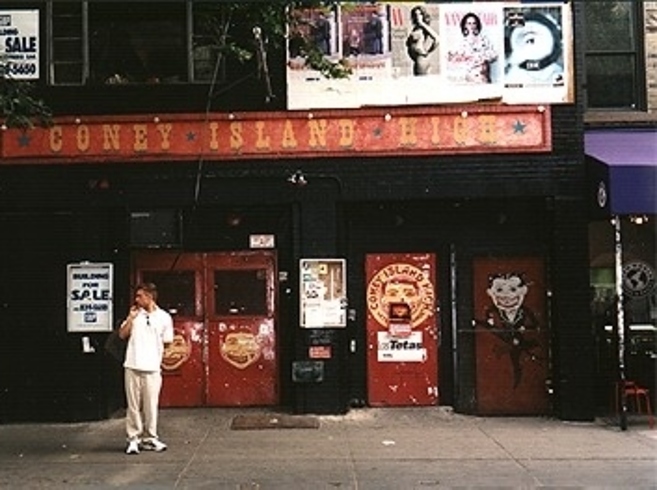
Coney Island High, a pivotal East Village venue during the 1990s.

Courtesy Buzzfeed
Courtesy Buzzfeed

Top photo — St. Mark’s Place in 1978, Photos by Leonard Freed / Magnum Photos, care of Vintage Everyday

Categories
Landmarks Mysterious Stories

The Ghost of Peter Stuyvesant May Still Haunt the East Village

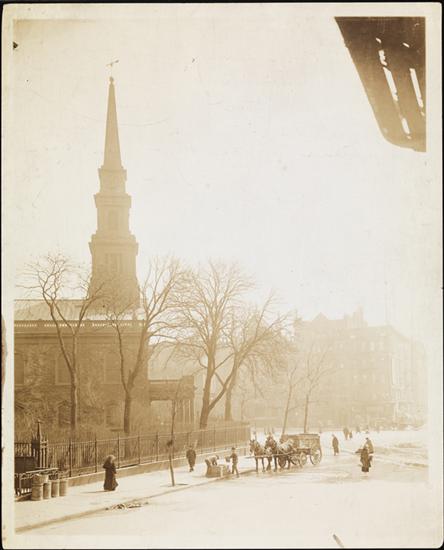
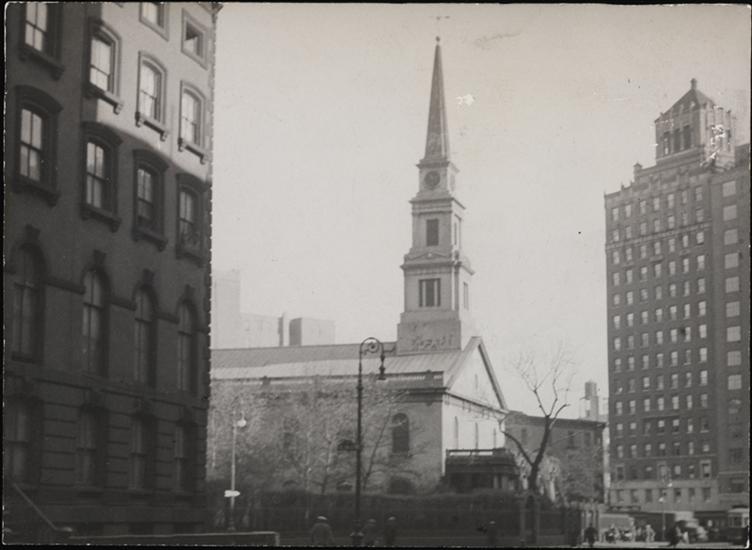
St. Mark’s Church-in-the-Bowery is the oldest standing structure in the East Village. Upon seeing it, you’re almost forced to reevaluate where you are.

It’s intriguing even to those who pass by it everyday. It’s mysterious even to those who work and worship here.

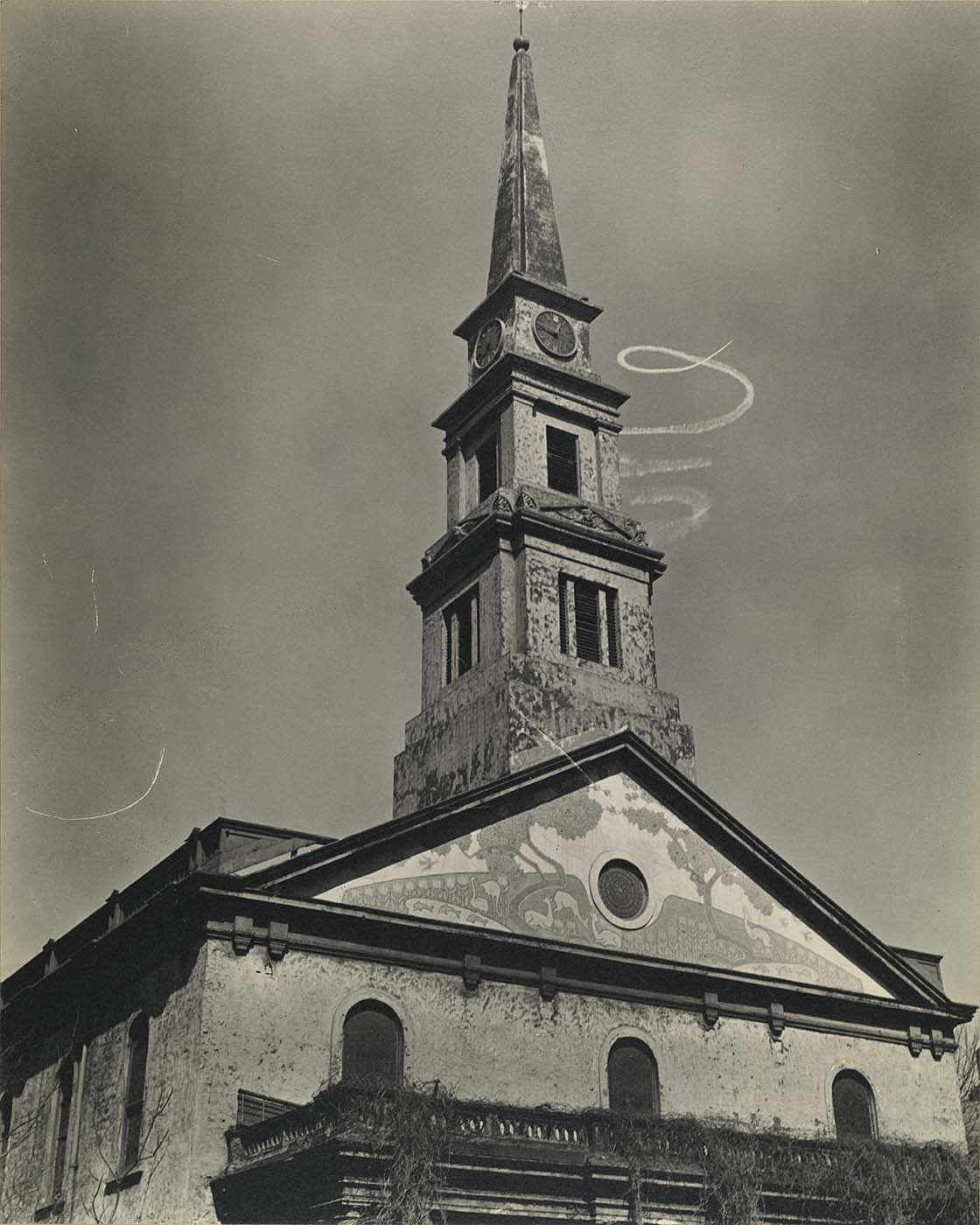
Built in 1799 by the Stuyvesant family, St. Mark’s chapel and cemetery conformed to a street grid plan unique to their farmland. Today the only street that exists from the old Stuyvesant plan is Stuyvesant Street, running diagonally through New York’s standard street grid.

The Stuyvesants planned the street on a true east-west access.  It’s the rest of the island that’s askew with the compass.

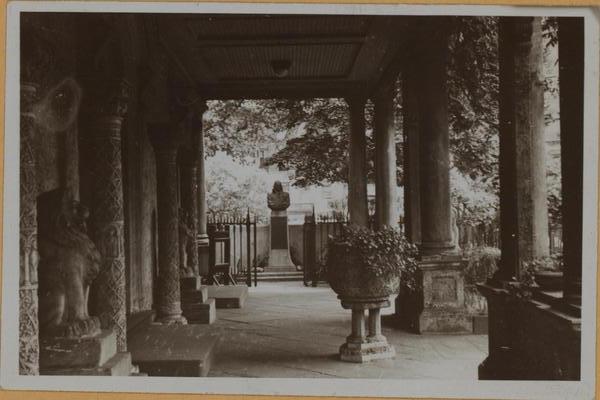
Photo by Berenice Abbott

Buried under the church ground are vaults of some of New York’s greatest civic leaders and social notables. Daniel D Tompkins, Vice President under James Monroe, is here, although the park that bears his name Tompkins Square Park is a couple avenues over. The department store king A.T. Stewart used to be here before his remains were stolen in a bizarre ransom attempt.

Philip Hone, the so-called ‘party mayor’ of New York, is interred in a vault here. From my profile of the mayor a few years ago:  “Mostly, he’s remembered as a cultural ambassador, even commissioning artwork for City Hall, approving of a developing theater district in the not-yet-seedy Bowery and encouraging the city’s growth as an American capitol of arts and sciences.”

Courtesy Museum of the City of New York

But of course the most famous individual beneath St. Mark’s is that of the original Stuyvesant — Petrus Stuyvesant, the director-general of New Amsterdam whose farms comprised much of today’s East Village and give the Bowery (Bouwerij) its name.

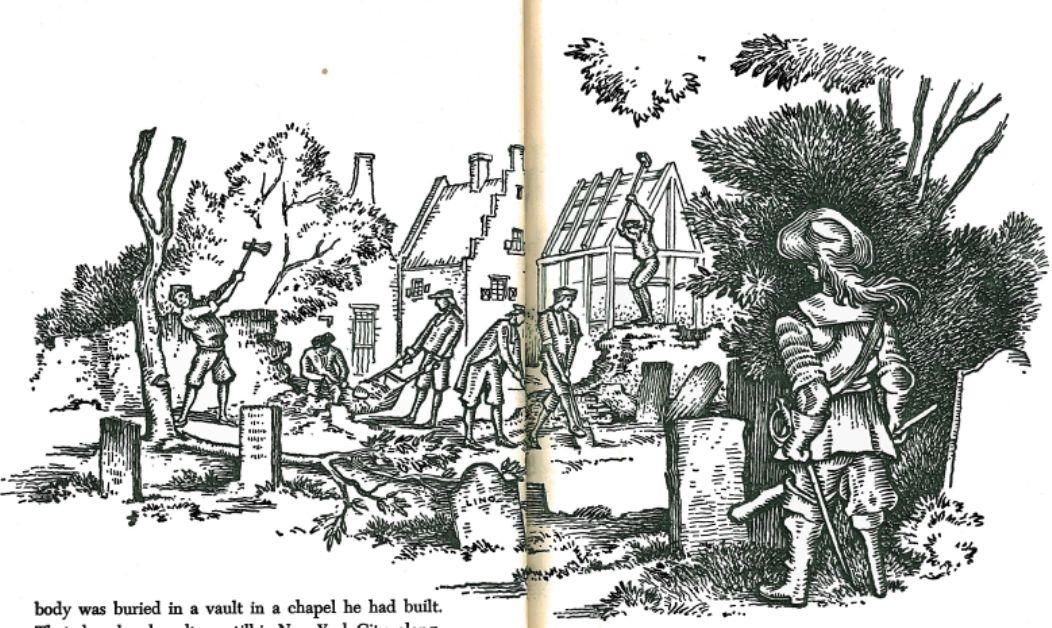
Stuyvesant died in 1672 in the British controlled colony of New York. From an 1893 history on Stuyvesant: “His remains were interred in a vault beneath the chapel which he had built near his house.  When the present St. Mark’s Church was erected, on the site of the old chapel, the vault was preserved, and a commemorative stone was placed upon its wall.”

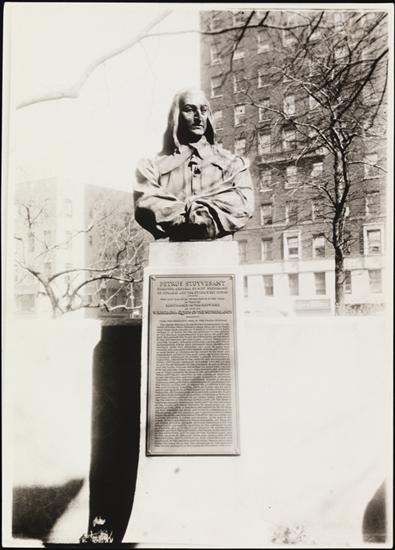
Today his vault marker can be easily seen along the side of the church, and a bust of Petrus sternly greets visitors into the church yard.

Courtesy Museum of the City of New York

The bust by Dutch sculptor Toon Dupuis is 100 years old, placed at St. Mark’s on December 6, 1915. Speaking at the ceremony, oddly enough, was General Leonard Wood, chief of staff of the U.S. Army. “Peter Stuyvesant was a headstrong, positive character with intolerance of lack of interest in the welfare of his company or colony.”

So headstrong that he’s still around perhaps? Legends of the ghost of Peter Stuyvesant have been associated with St. Mark’s since the 19th century.

Courtesy New York Public Library

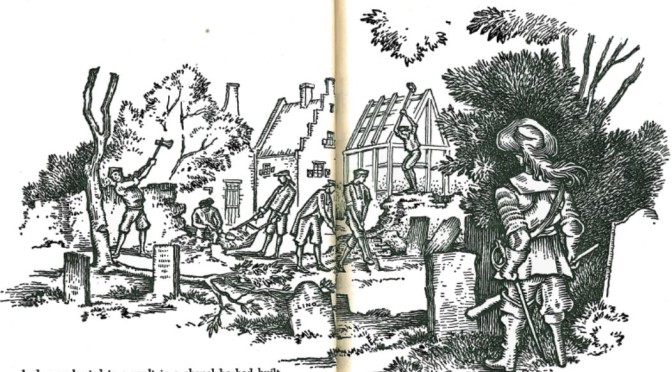
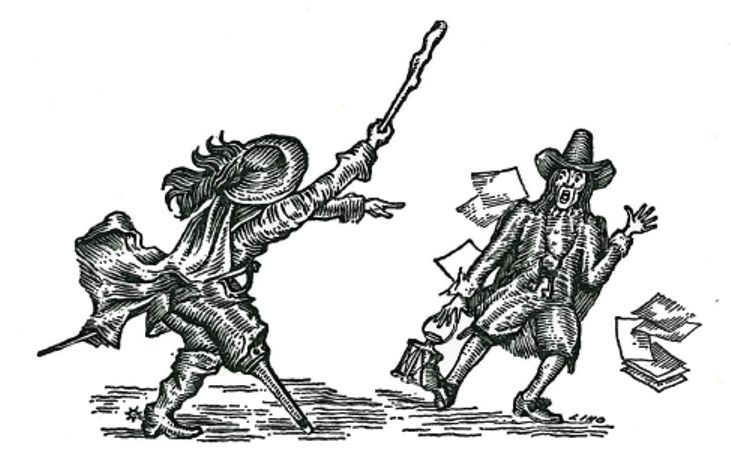
One version of his ghost story recounted in the 1966 children’s book The Ghost of Peg-Leg Peter by M.A. Jagendorf, with illustrations by Lino S. Lipinsky (reprinted here):

“His body had been put into a closed vault.  But that did not stop the ghost of the governor from stomping around on black or moonlit nights in his old haunts; his farm and the city hall where he had once reigned.  Folks heard his stomping peg leg with the silver band, and saw him — and ran away in fear. That pleased him, particularly if they were English. He wanted no one around his grave, least of all the enemy who had robbed him and the Dutch Government.”

st marks

The growth of New York up Manhattan island so that it soon included all of Stuyvesant’s farm apparently enraged his spirit to such an extent that his apparition was reported in locations surrounding the church.

One fateful night a sexton entered the church late at night to fetch something for the rector.

The moon was only half full, but bright enough to show church, trees … and ghost.

When the ghost saw the sexton, he raised his stick threateningly. The sexton raised his eye, took one look and ran off.

1

“The governor-ghost looked after the fleeing fellow with contempt and then stomped to the locked church door. He walked through it into the church and stomped up to the hanging bell rope. Taking it in his hands he began pulling it savagely. “

Ringing a church bell two hundred years ago meant an emergency — a fire in the region, perhaps, or a major announcement. According to legend, when neighbors ran to the church to inspect the sound, they found nobody inside. The bell rope had been torn off and its lower section was completely gone.

Over the years stories of his ghost crop up, usually tied with tales of a rapidly changing city.

One can only imagine how he’s taken to the  gentrification of the East Village!

Sometimes the ghost of the governor still comes out again and looks around sadly. But he never rings the bell any more, for he knows it will be of little use.”

Courtesy Museum of the City of New York

Another disturbing event occurred at the church in 1903 although the resolution to this mystery was a bit more mundane.

One day the old clock atop St Mark’s began to act very mysteriously. “Churchgoers and others noticed last Sunday that the clock was acting in a manner befitting neither its age nor its position as hour marker over the historic graveyard. Not only was its course unreliable, but its actions were positively skittish, the minute hand having been seen to wiggle in a most undignified manner.” [source]

After several days of peculiar operation, a repairman climbed to the tower to fix the clock, only to find the culprit — “a kite string and pigeon were found to be responsible for the charges of horological misconduct lodged against the ancient timepiece.”

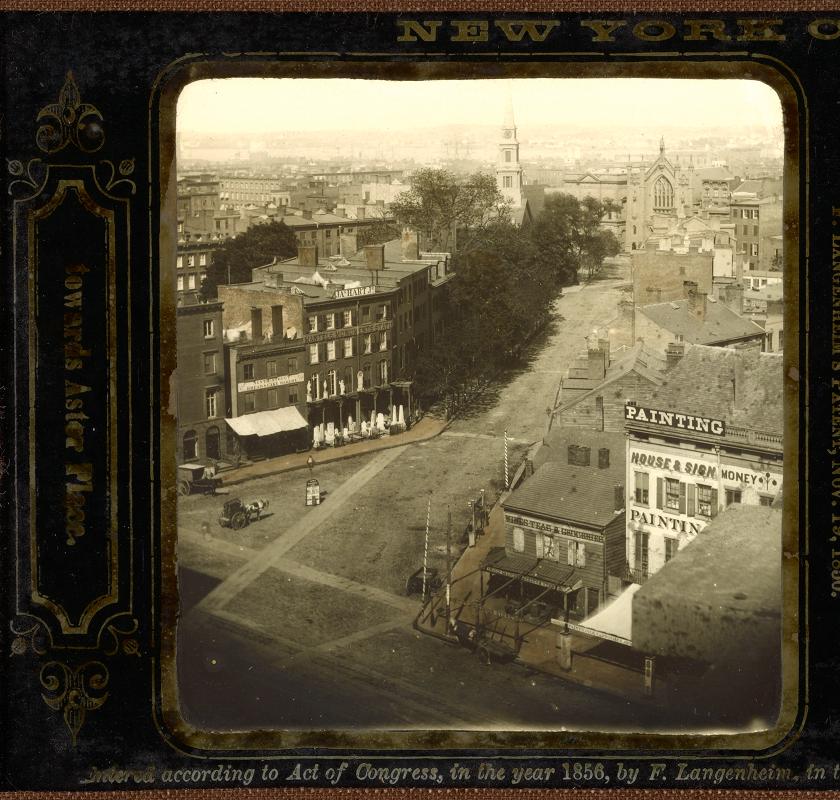
Below: Stuyvesant Street in 1856, an aberration to the city grid plan thanks in part to the presence of St. Mark’s Church and its well-established churchyard

1

For more information on St. Mark In-The-Bowery, check out our podcast on its amazing history.  And the ghost of Peter Stuyvesant pops up in our very FIRST ghost stories podcast.

Categories
Sports

Meet the Mets! The Metropolitans, that is, an early NY baseball team

The New York Mets, 2015 National League Champions and New York’s perpetual baseball underdogs, are only 53 years, formed in 1962 to fill the void after the departure of the Brooklyn Dodgers and the New  York Giants* to California. But in name, at least, they’re older than even the Yankees.

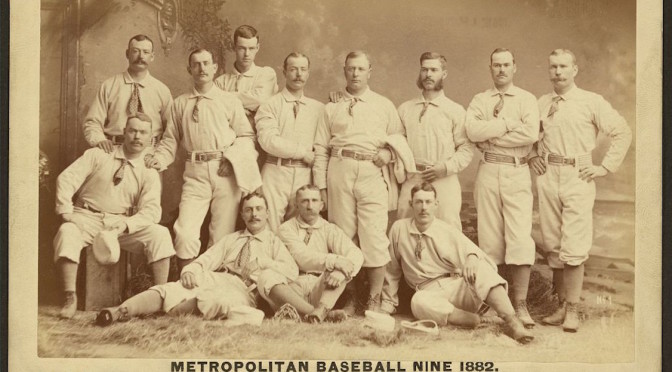
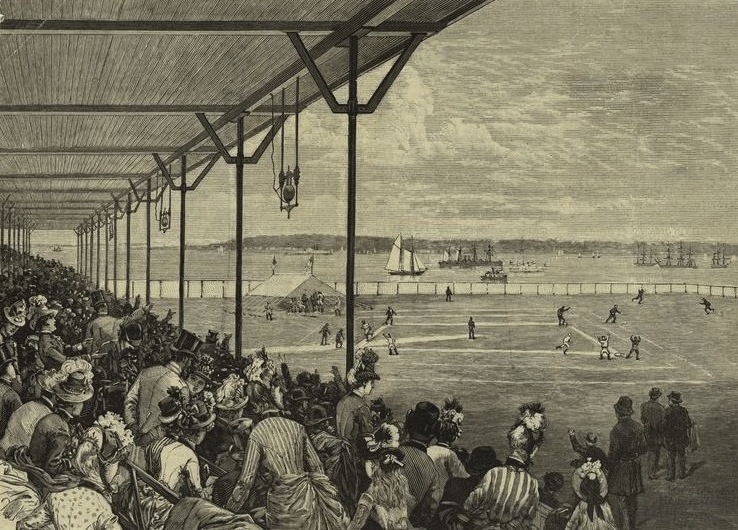
The first New York ball club to call themselves the Mets — or really, the Metropolitans, if we’re being fancy — made their first appearance 130 years ago.  They burned bright for many years, inaugurated New York’s first great sports venue, then faded away.

To be metropolitan in 1880 did not merely suggest a team representative of a city and its surrounding area.  It was code for the finest — from the Metropolitan Opera (which formed the same year) to the Metropolitan Museum (whose Central Park building also opened that year).

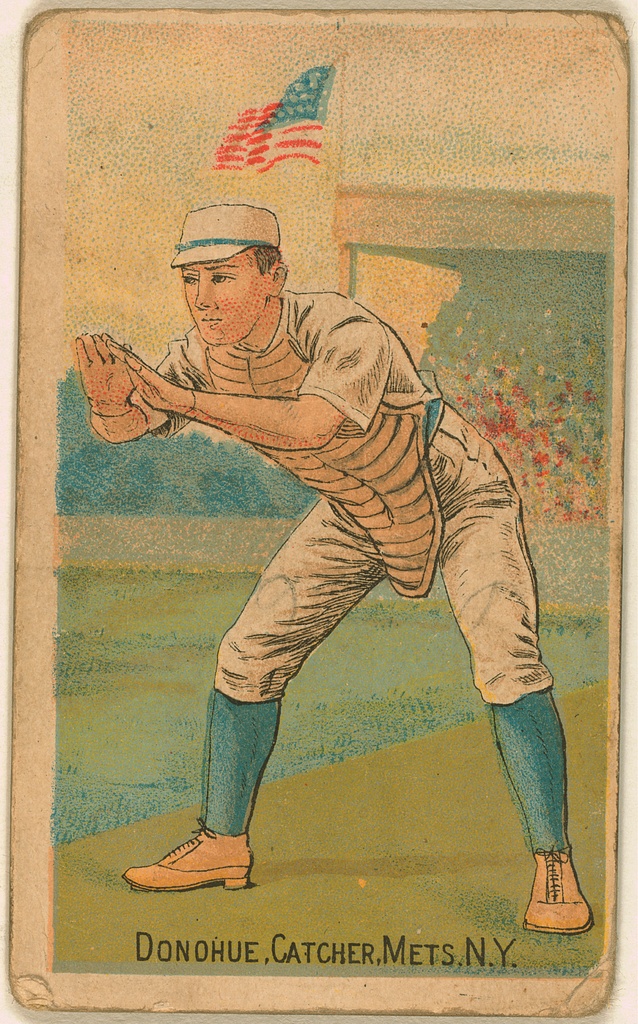
Jim Donahue, catcher

1

Baseball, however, was not a prestige sport by any means in 1880, but this did not matter to John Day, baseball fanatic and owner of a large tobacco plant on the Lower East Side. One day Day met Jim Mutrie, a shortstop from Boston, and agreed to fund a new team. In September, the New York Metropolitans made their debut on a field in Brooklyn.

A few weeks later they would take over a playing field used mostly for polo matches, located at the northeast corner of Central Park. While it would later be known as the Polo Grounds, it would soon host a variety of sports. A larger version of the Polo Grounds, further north on 155th Street, would later be home to the modern Mets franchise.

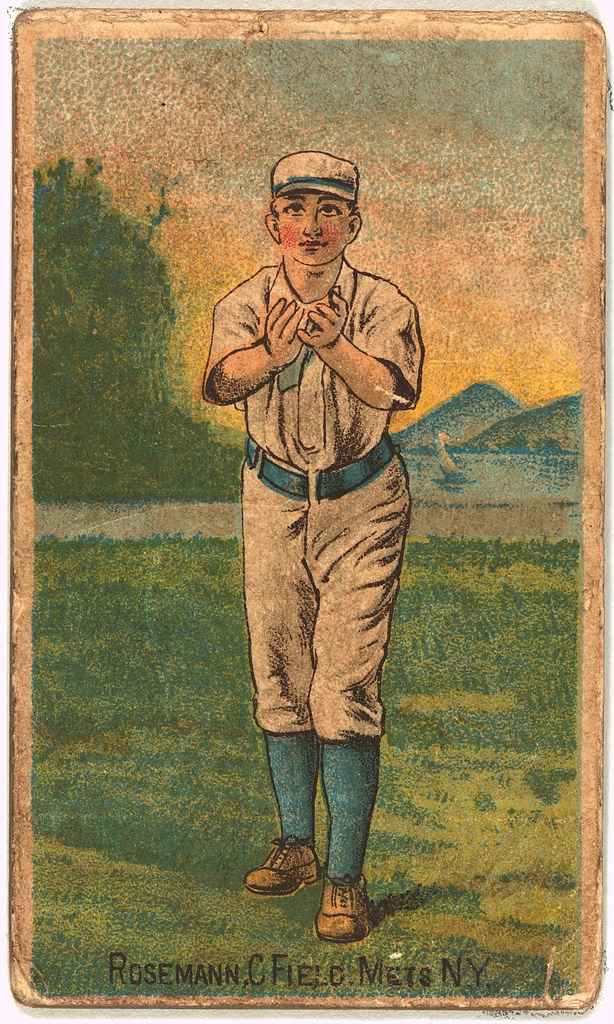
James John ‘Chief’ Roseman

Courtesy Library of Congress

Day and Mutrie had also formed a second team — the New York Gothams — who proved to be more lucrative. In 1885 they sold the Metropolitans to  land developer Erasmus Wiman who then moved the team to Staten Island as a way to encourage growth for the underpopulated future borough. (Wiman also owned a ferry service.) The Metropolitans went from a polo grounds to a cricket’s ground — the St. George Cricket Grounds.

Below: The Metropolitans in Staten Island

mets

To no one’s surprise by Wiman’s, this idea didn’t work, and the Metropolitans were soon sold for $15,000 to their rivals the Brooklyn Dodgers who dismantled the team by recruiting its best players.  Their last game was 1887.

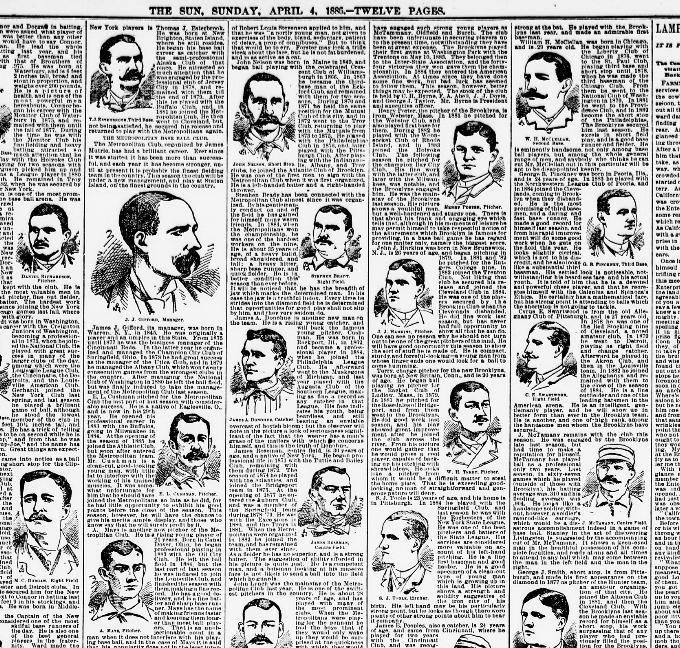
Below: At the pass off to Wiman, The New York Sun profiles all the players of the Metropolitans. You can read the entire article here.  “The Metropolitan Club, organized by James Mutrie, has had a brilliant career.  Ever since it was started it has been more than successful, and each year it has become stronger, until at present it is probably the finest fielding team in the country.”

1

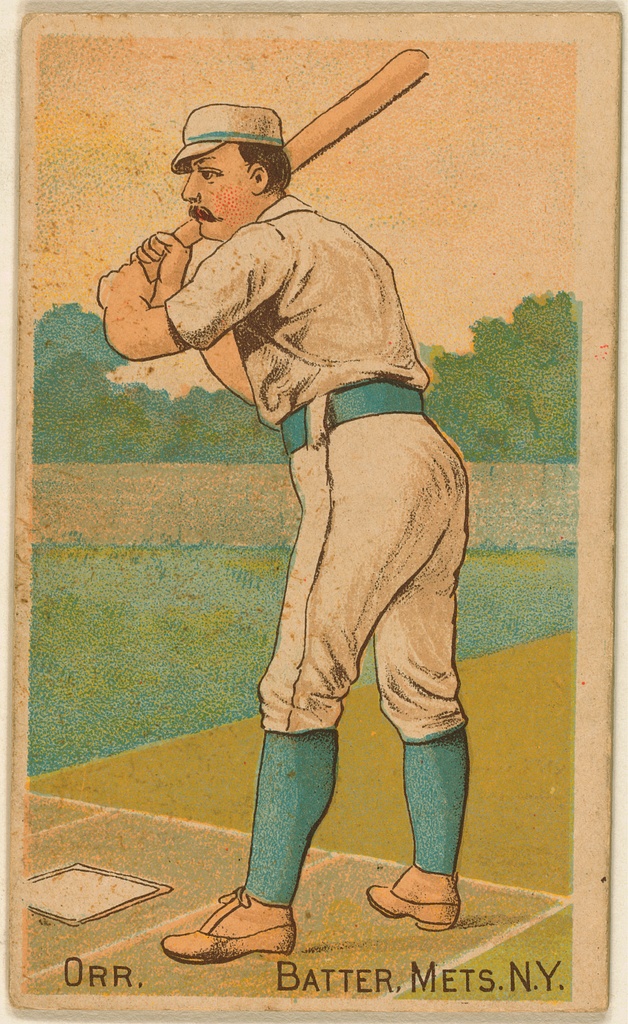
Another reason the Metropolitans may have disappeared — their weight. The New York Sun, reporting on one of their last games, played on October 30, 1887: “The old men of the Metropolitan have grown very stout. Troy, with his 195 pounds is running a close race with Orr for avoirdupois, while Brady and Kennedy have gained remarkably in weight.” [source]

Dave Orr, first baseman

orr
Courtesy Library of Congress


**The original article neglected to mention the Giants.

Categories
American History

Life in New York City 1935-1945: Heavenly images from Yale University

Yale University has sprung a beautiful present onto the Internet — a searchable database of over 170,000 public-domain photographs created by the United States Farm Security Administration and Office of War Information, documenting the aftermath of America of the Great Depression and World War II. The photos, dating from between the years 1935 to 1945, include of the greatest American photographers from the period (such as Gordon Parks, Walker Evans and Dorothea Lange).

These images aren’t really new; they’ve been available at the Library of Congress for many years. I’ve even ran a couple of these on the blog before.  But Yale has done an outstanding job of sorting and cataloging. Their site even comes with a map if you want to look at images from a particular area of the country.

Take a look at this particular images from New York City during this period, then head over to the database and lose yourself inside these captivating, sometimes harrowing pictures. Thank you Yale!


3

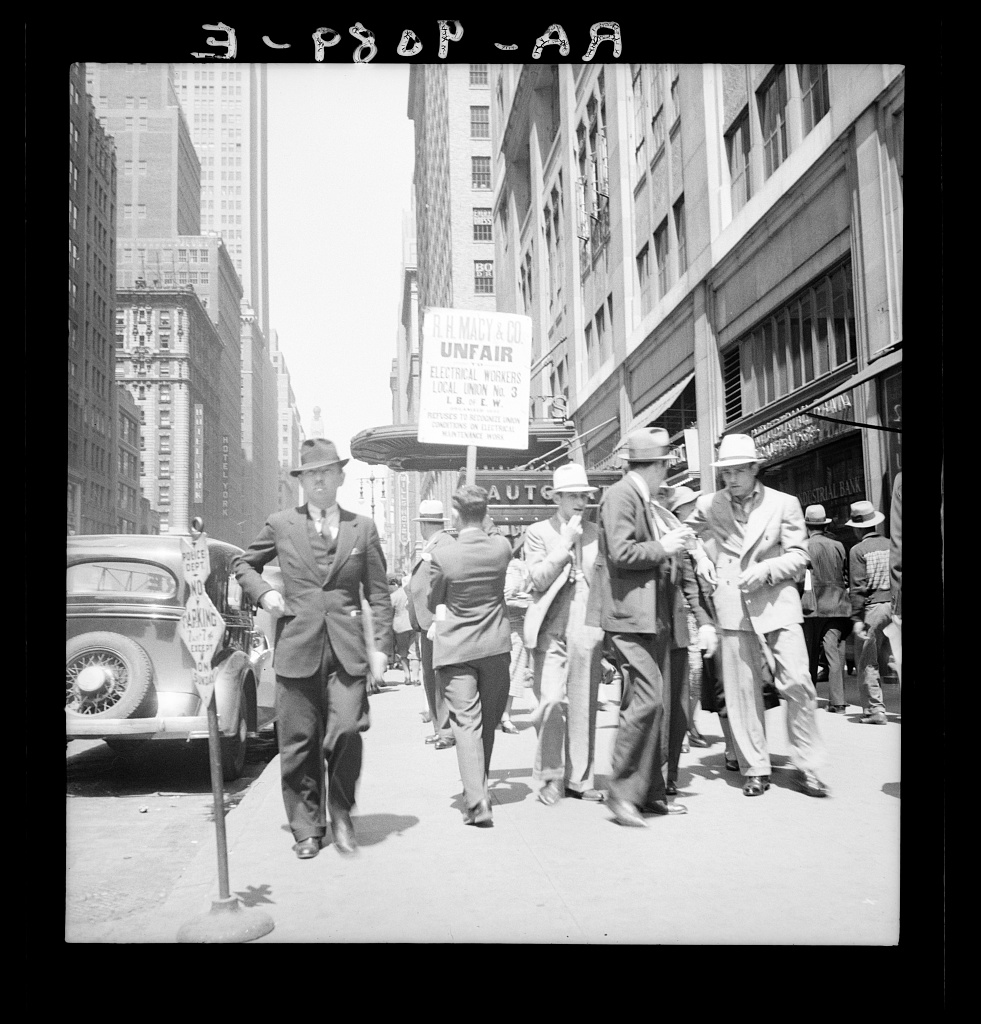
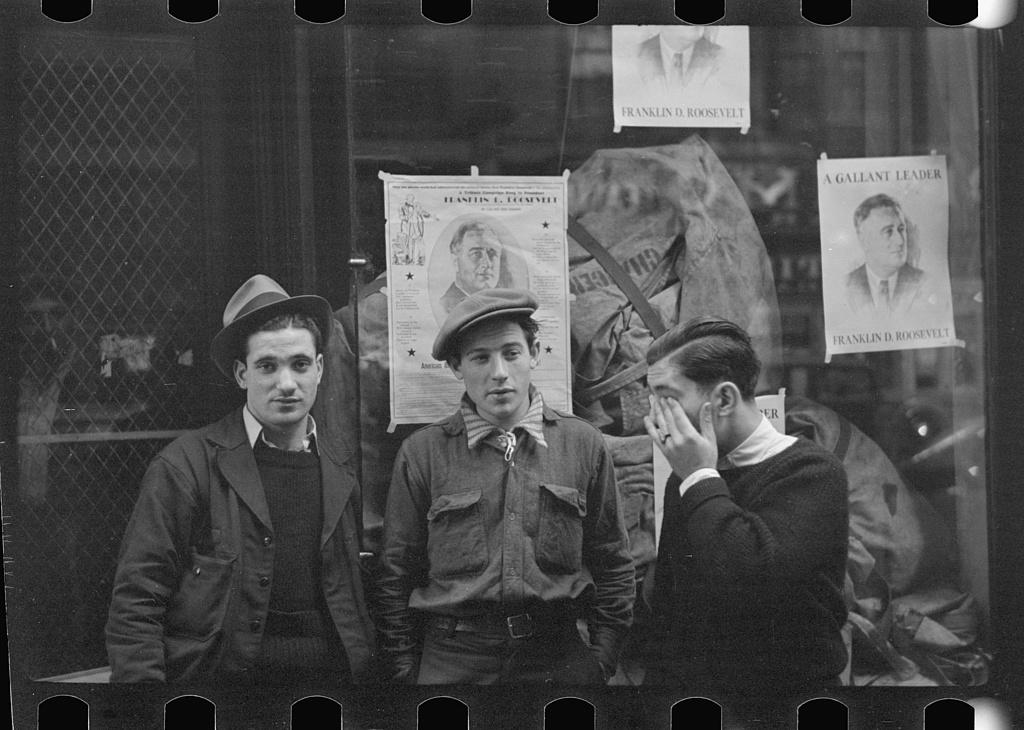
June 1936 “New York street scene: striking in front of Macy’s” Photographer Dorothea Lange


4

November 1936 “Street scene at 38th Street and 7th Avenue” Photographer Russell Lee


5

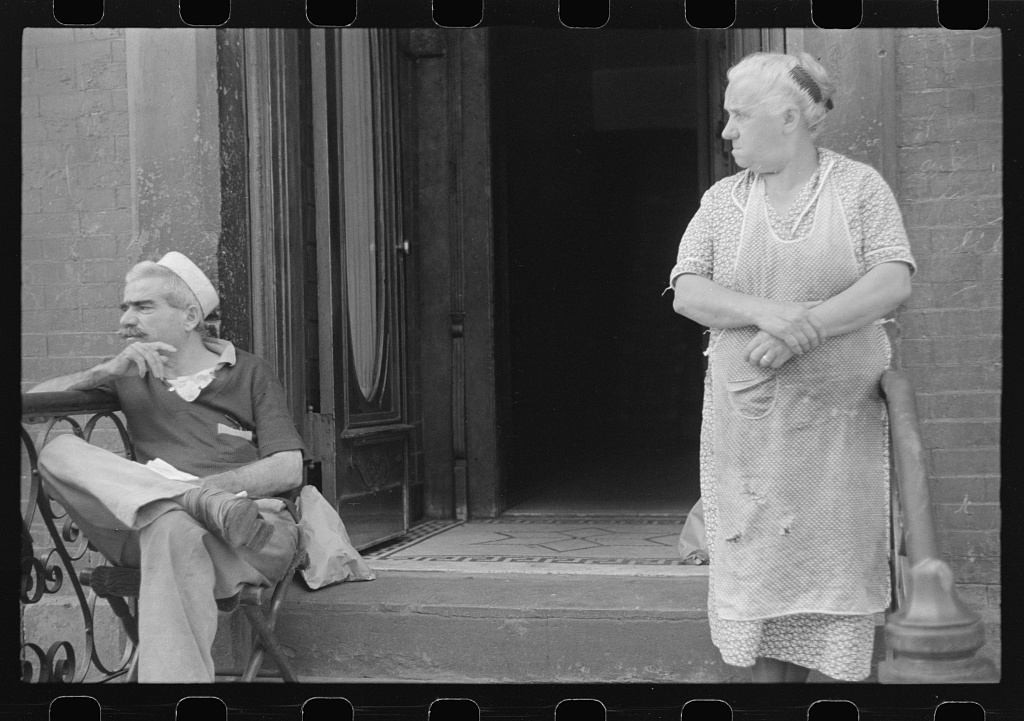
1938 “New York, New York. 61st Street between 1st and 3rd Avenues. Tenants” Photographs by Walker Evans


6

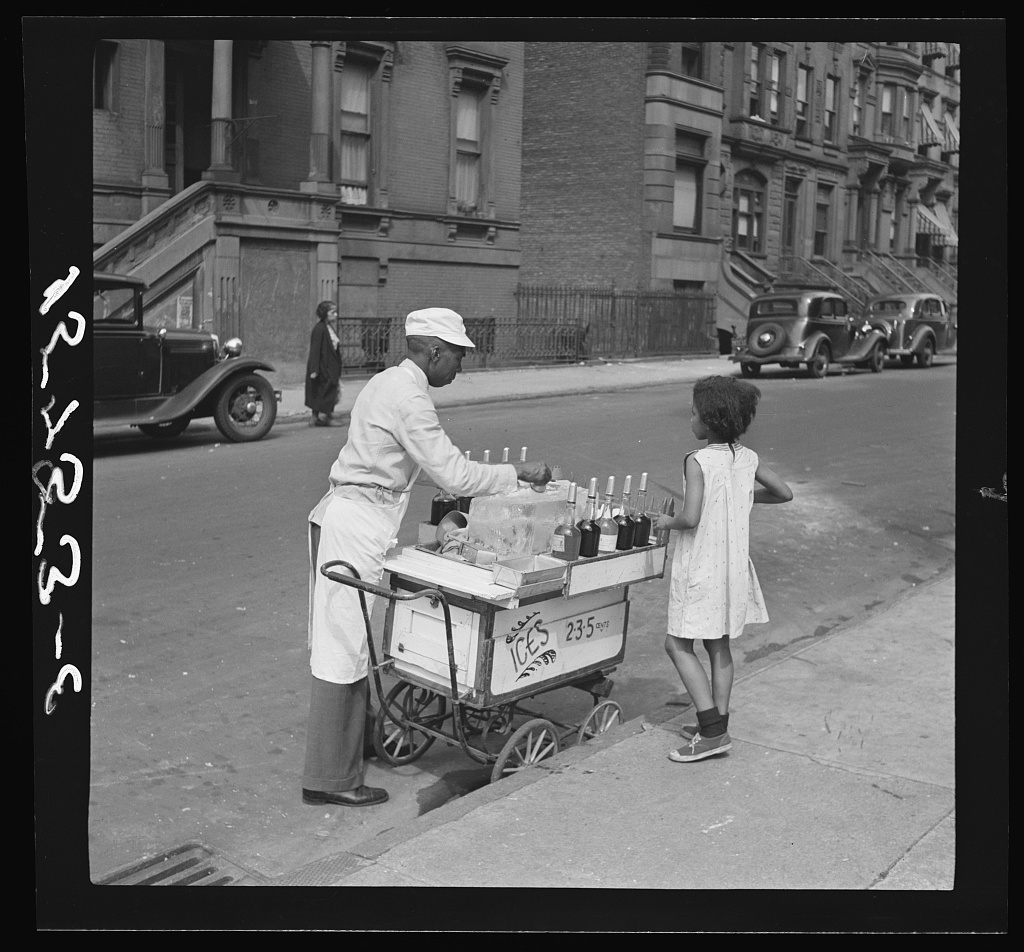
1938 Photographer Jack Allison (no caption on photo)


7

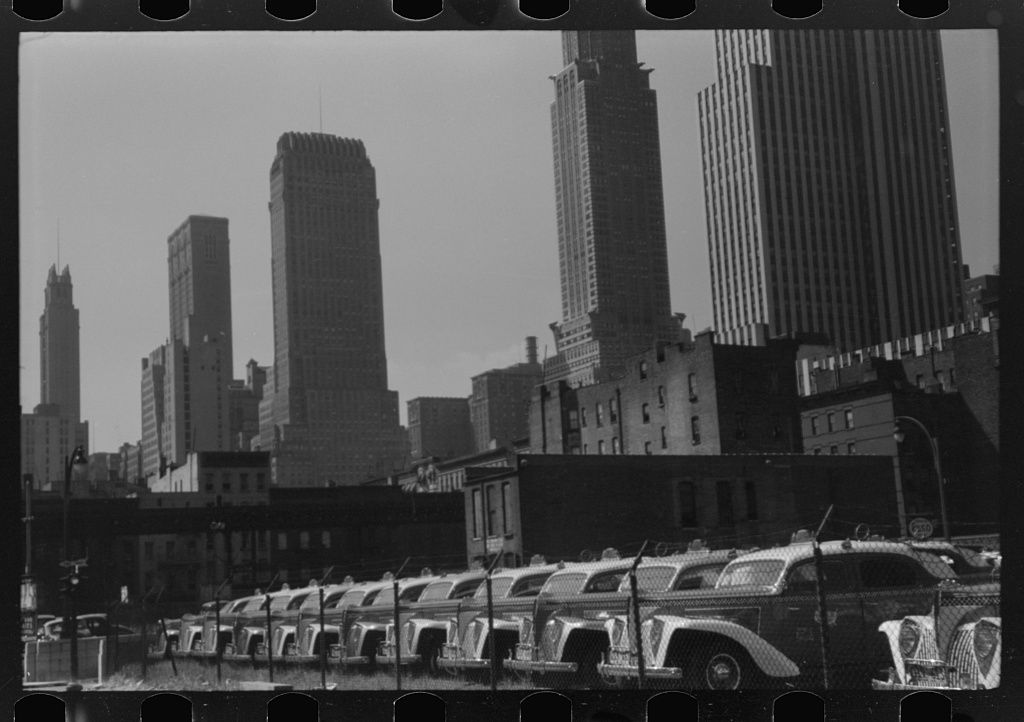
June 1941 New York City, East Side, Sunday morning, photographer Marion Post Walcott


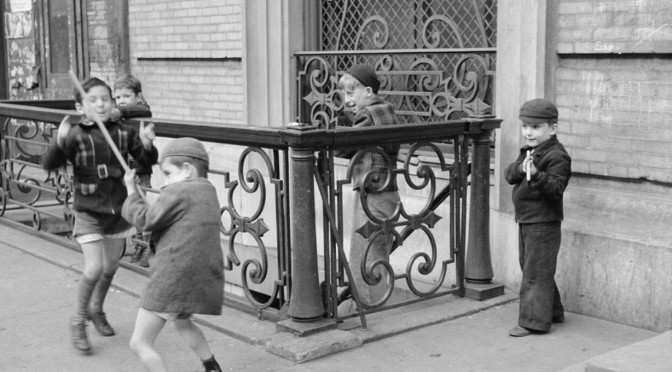
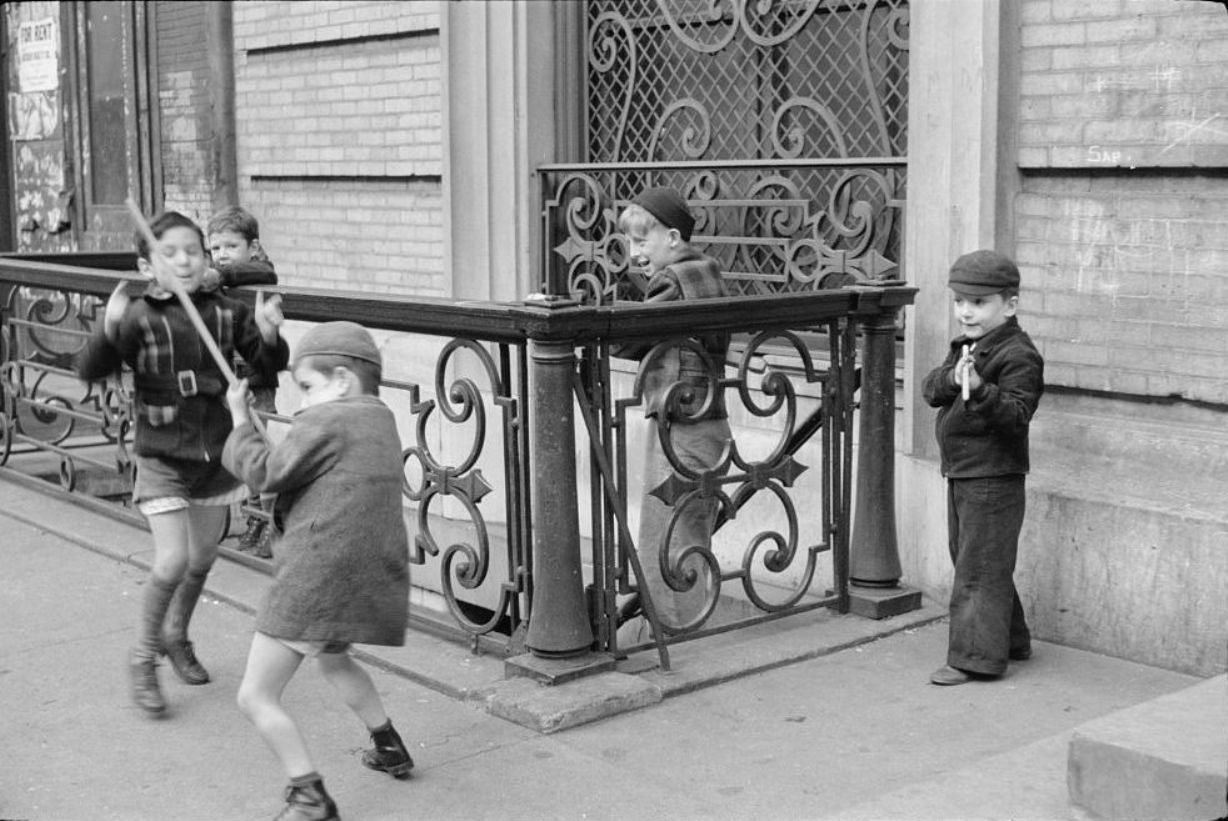
picDecember 1941 :Children playing, New York City: Photographer Arthur Rothstein


1

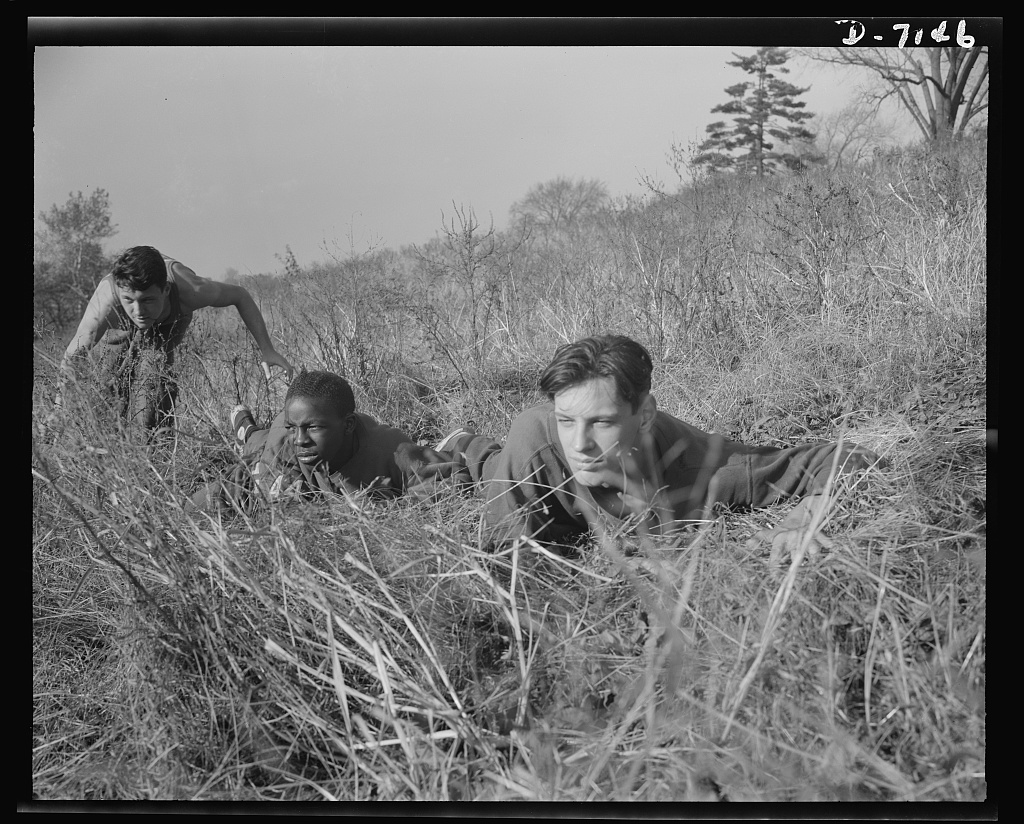
October 1942 “High school Victory Corps. Learning the rudiments of advancing on an enemy will prove valuable to these boys if they are called to join their older brothers in the armed forces. This is part of the “commando” training given in physical education courses at Flushing High School, Queens, New York” Photographer William Perlitch


2

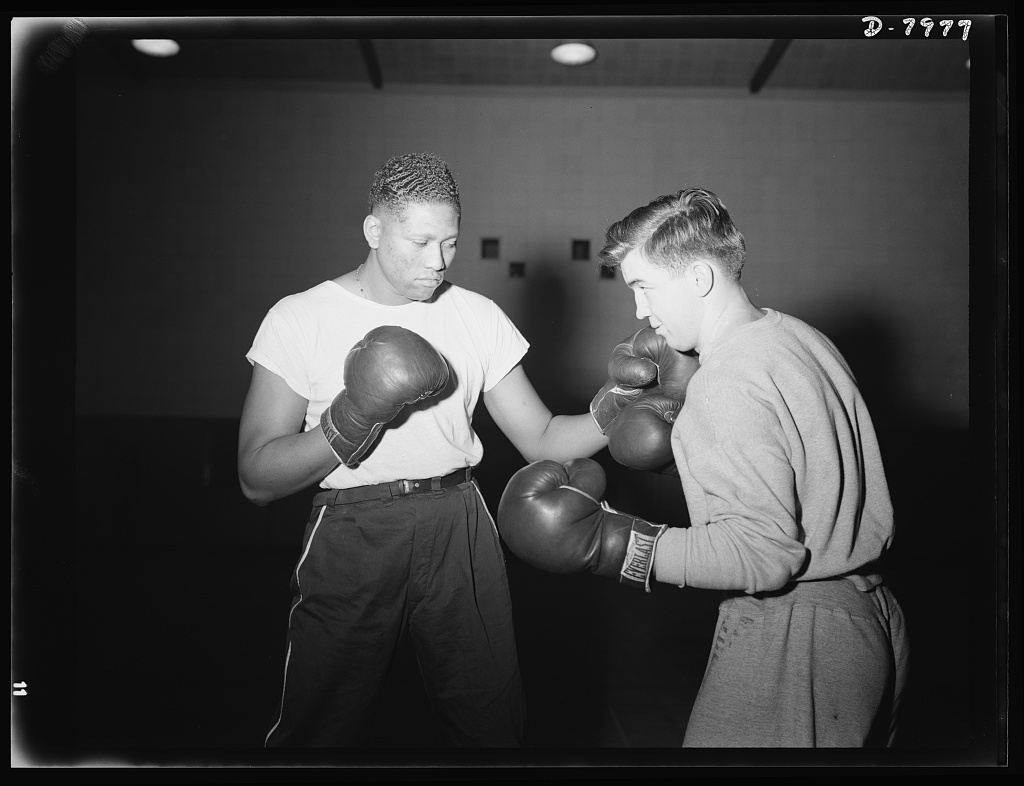
January 1943 “Manhattan Beach Coast Guard training station. The gymnasium is one of the busiest places at Manhattan Beach Coast Guard training station. The physical education program is handled by many noted exponents of boxing, wrestling, track and judo. Paul (Tiny) Wyatt, one-time leading contender for heavyweight boxing honors, is shown sparring with Hart Kraeten, former Golden Gloves champ.” Photographer Roger Smith


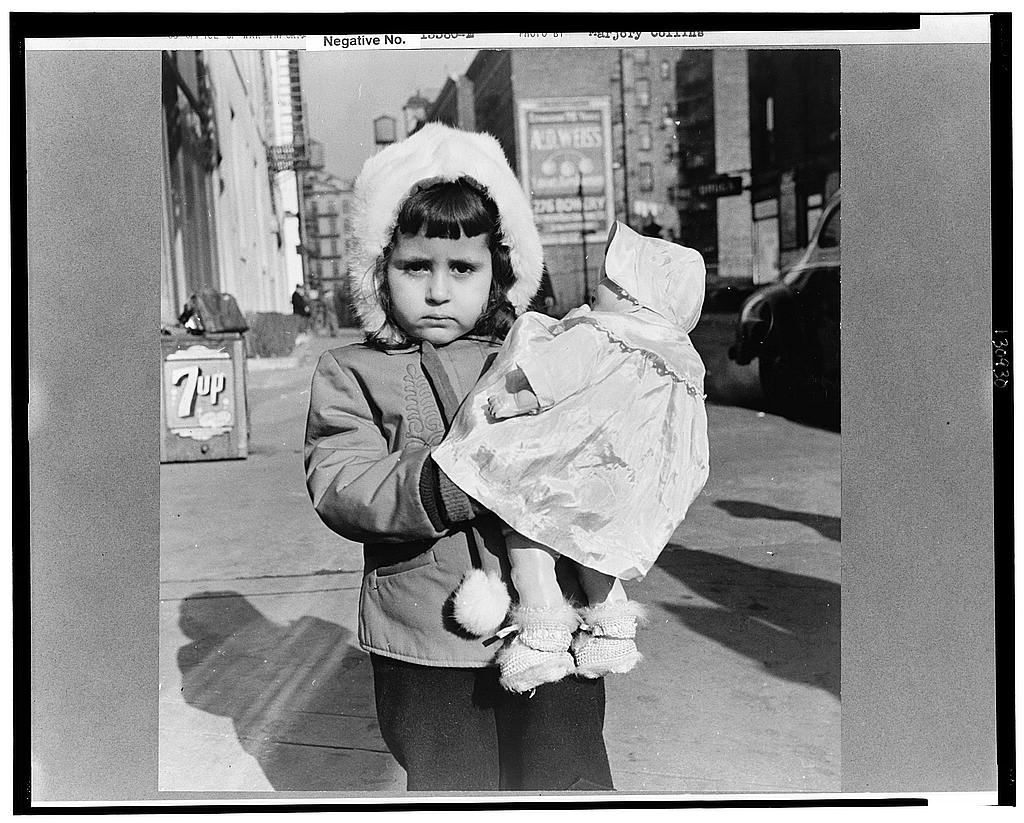
mott

January 1943 “New York, New York. Child on Mott Street on Sunday” Photograph by Marjory Collins


8


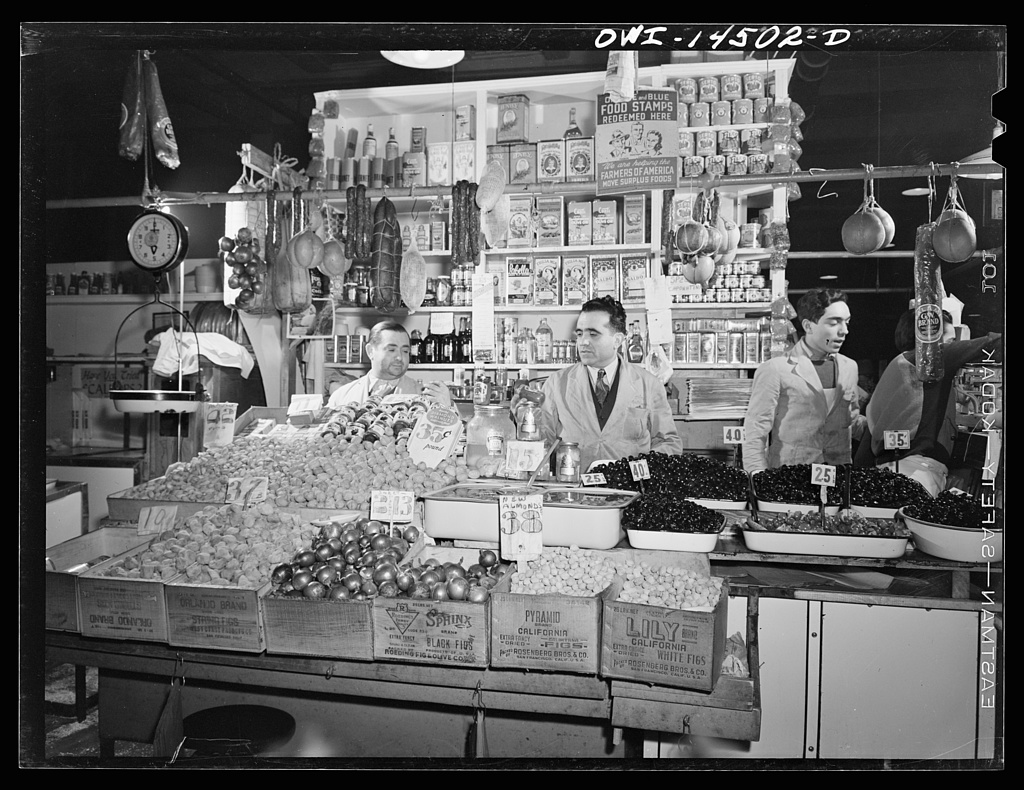
January 1943  “Italian grocer in the First Avenue market at Tenth Street” Photograph by Marjory Collins

10


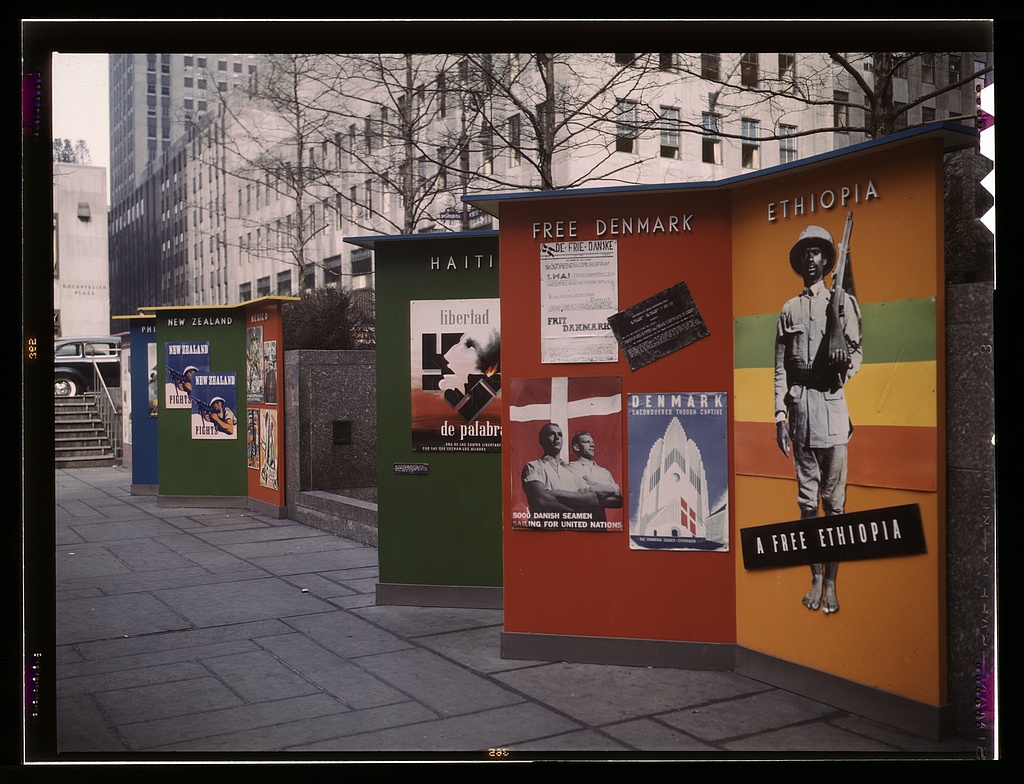
March 1943 “Rockefeller Plaza, exhibit [for] United Nations by OWI, New York, N.Y. Between photographic displays is [the] Atlantic charter in frame with transmitters at each end and where voices of Roosevelt, Churchill and Chiang Kai-Shek are heard each half hour; surrounded by statues of the four freedoms.” Photograph by Marjory Collins

times


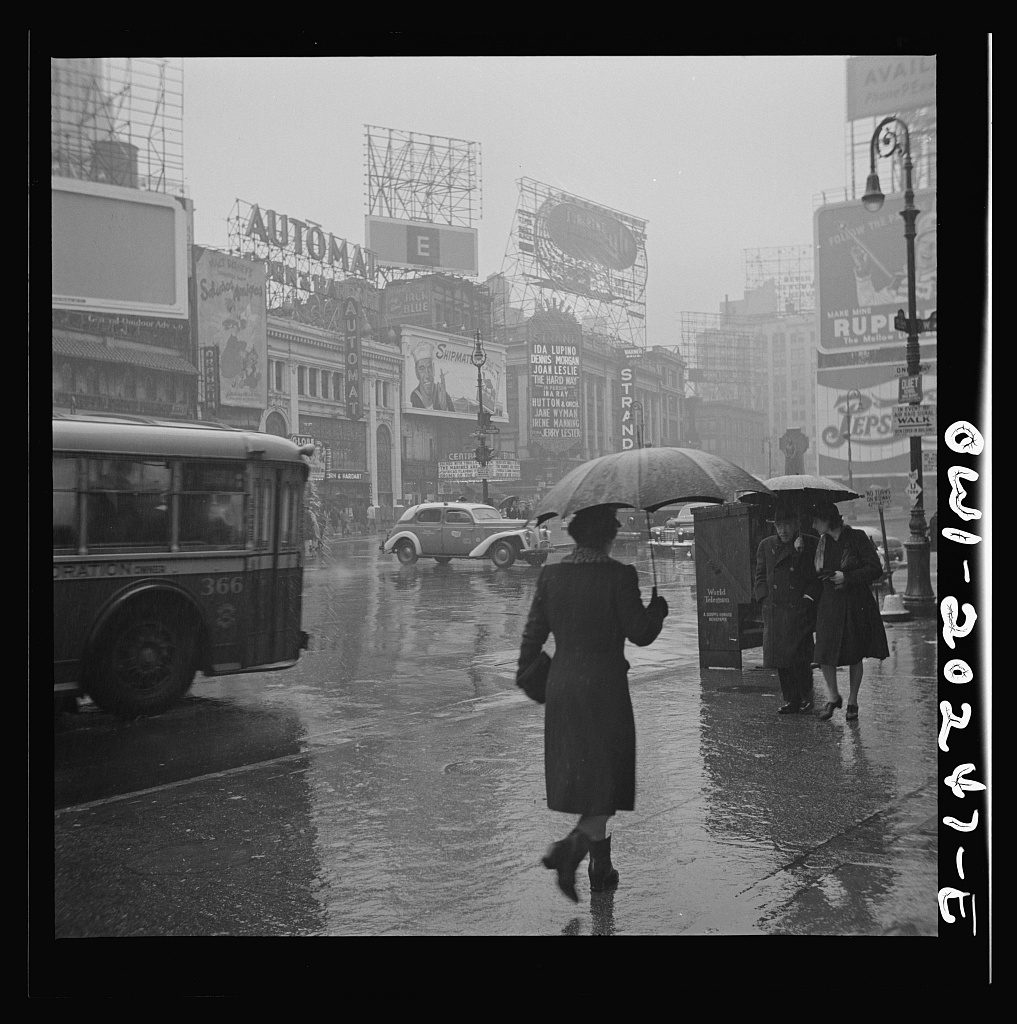
March 1943 “New York, New York. Times Square on a rainy day” Photographer John Vachon

last


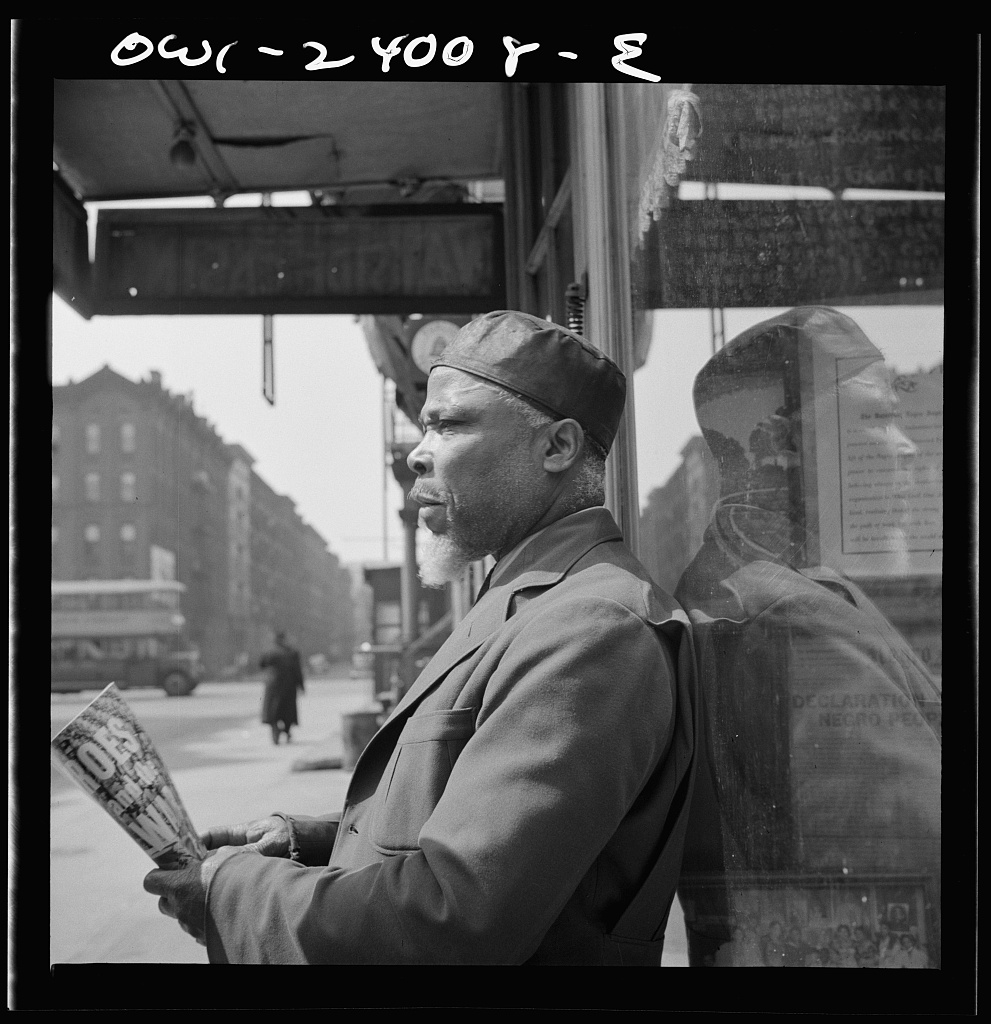
April 1943 “A follower of the late Marcus Garvey who started the “Back to Africa” movement” Photographer Gordon Parks

eye


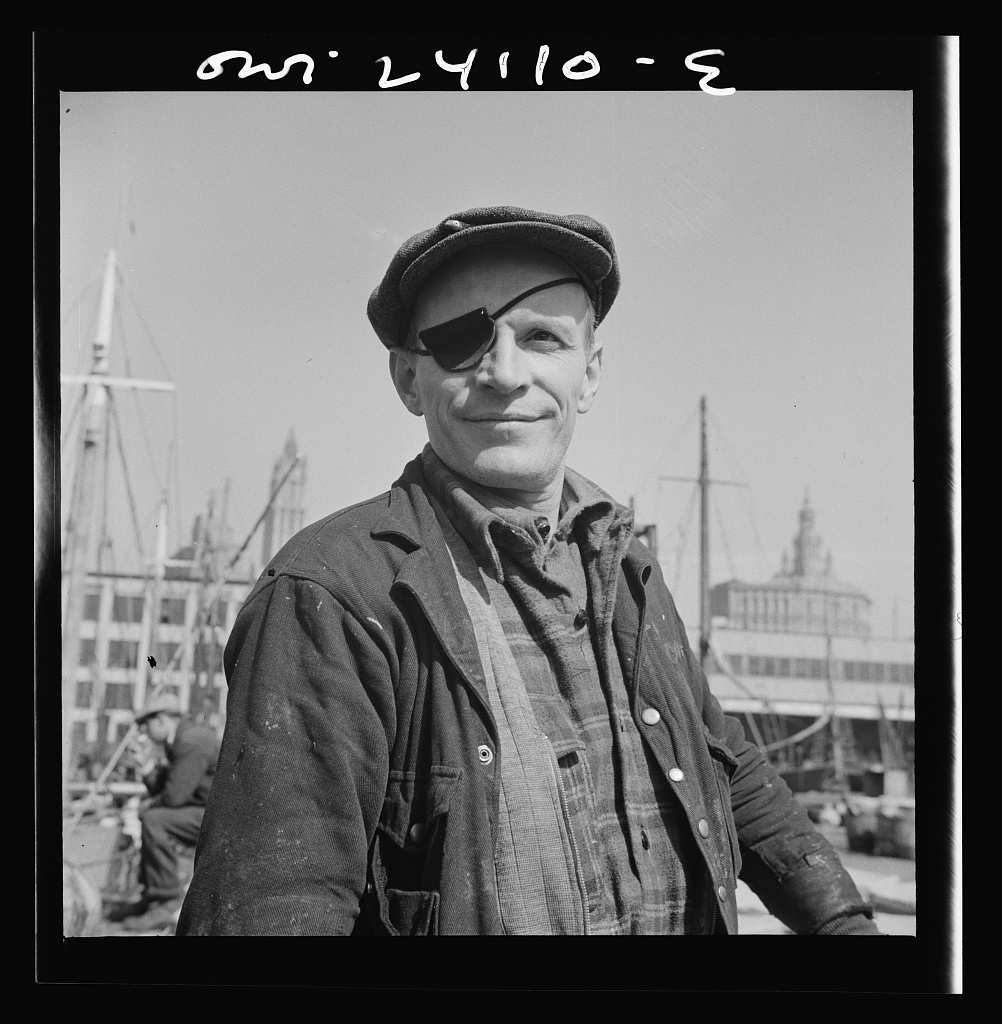
June 1943 “New York, New York. Dock stevedore at the Fulton fish market” Photographer Gordon Parks

victory


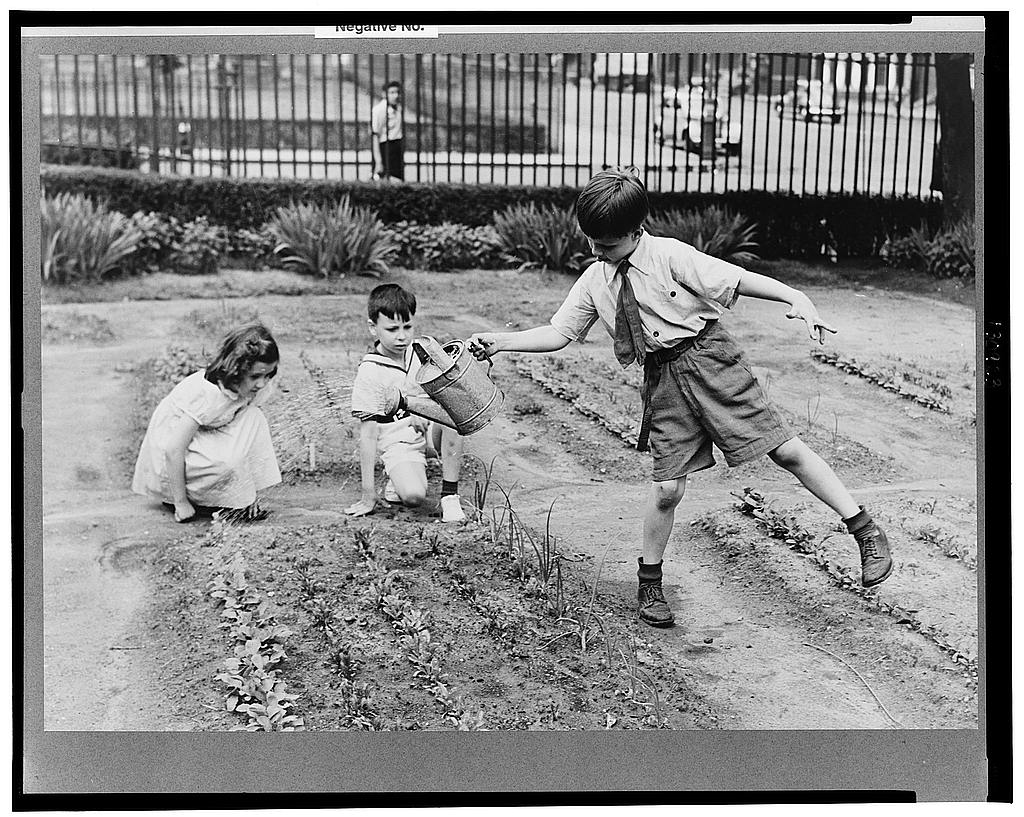
June 1944 “Children’s school victory gardens on First Avenue between Thirty-fifth and Thirty-sixth Streets” Photographer Edward Meyer


d-day

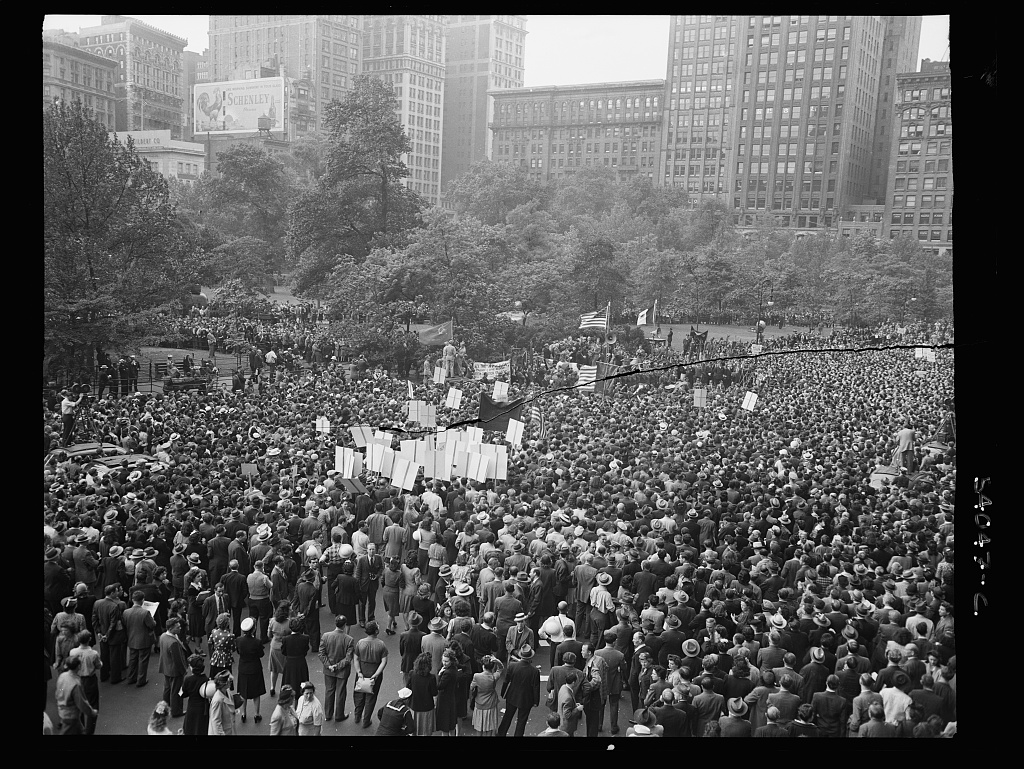
June 1944 “A crowd on D-Day in Madison Square” Photographer unknown

Categories
Mysterious Stories Podcasts

Haunted Landmarks of New York : Tourist Terrors in the Big Apple

PODCAST It’s the ninth annual Bowery Boys ghost stories podcast, our seasonal twist on history, focusing on famous tales of the weird and the disturbing at some of New York’s most recognizable locations.

Don’t be frightened! We’re here to guide you through the back alleys … OF TERROR!

In this installment, we take a look at the spectral lore behind some of New York City’s most famous landmarks, buildings with great reputations as iconic architectural marvels and locations for great creativity.

But they’re also filled with ghost stories:

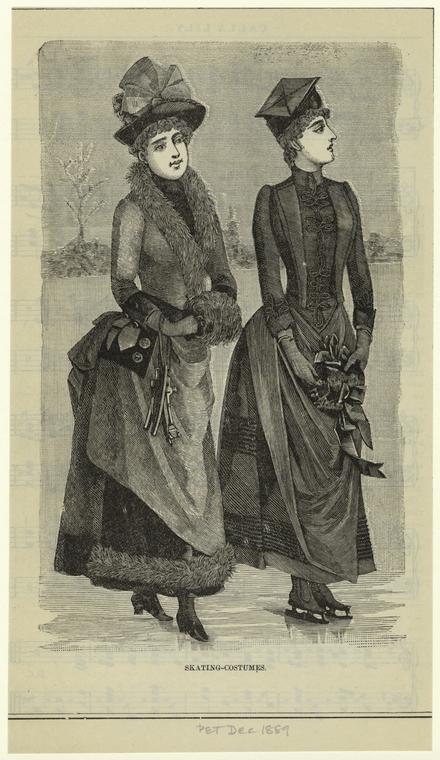
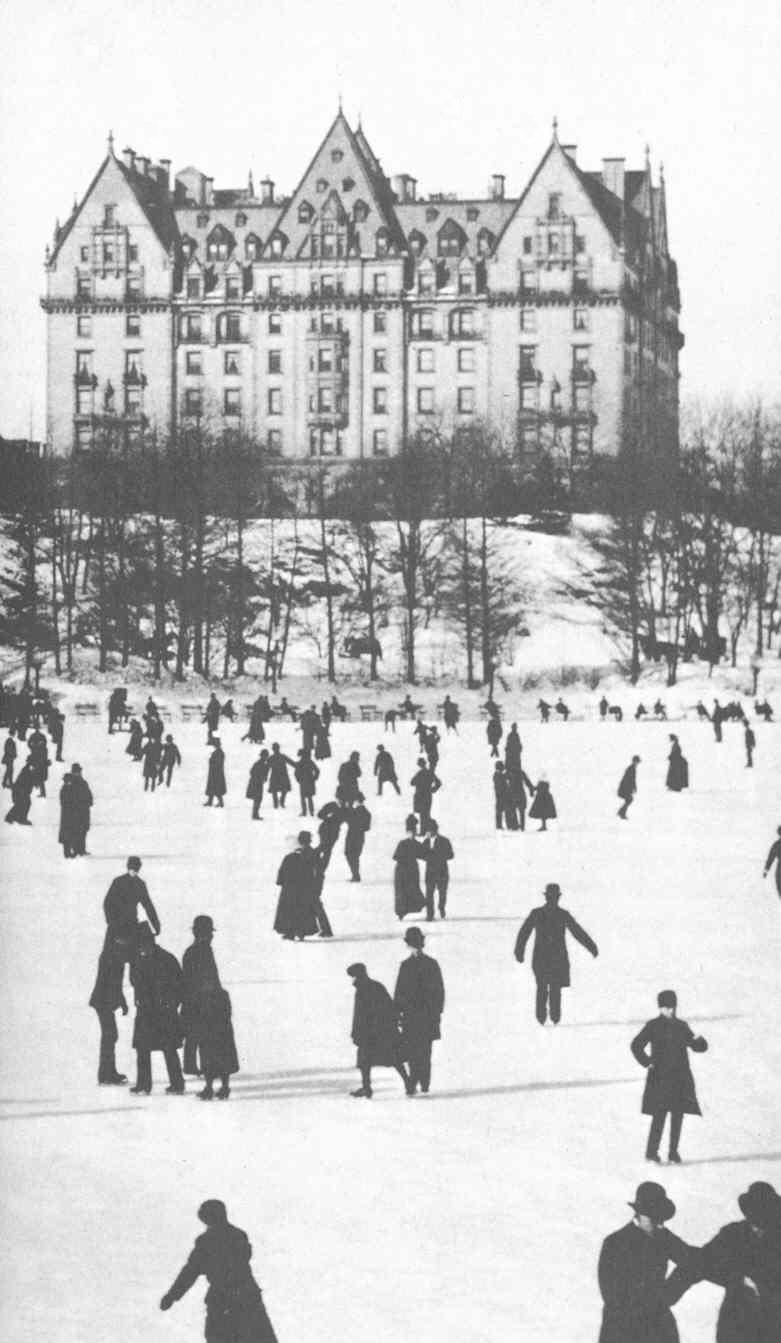
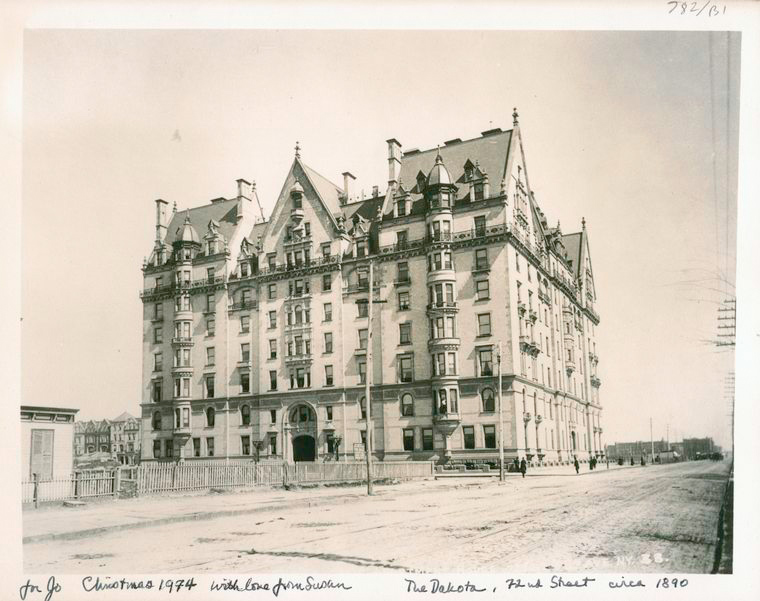
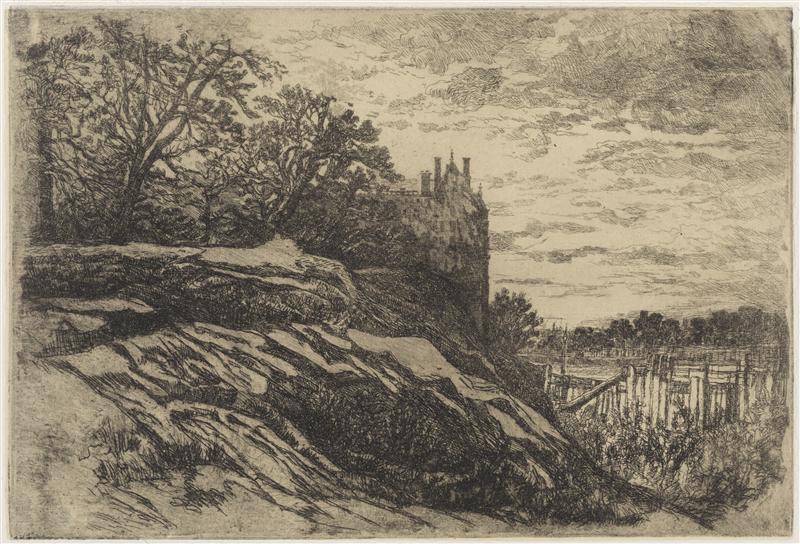
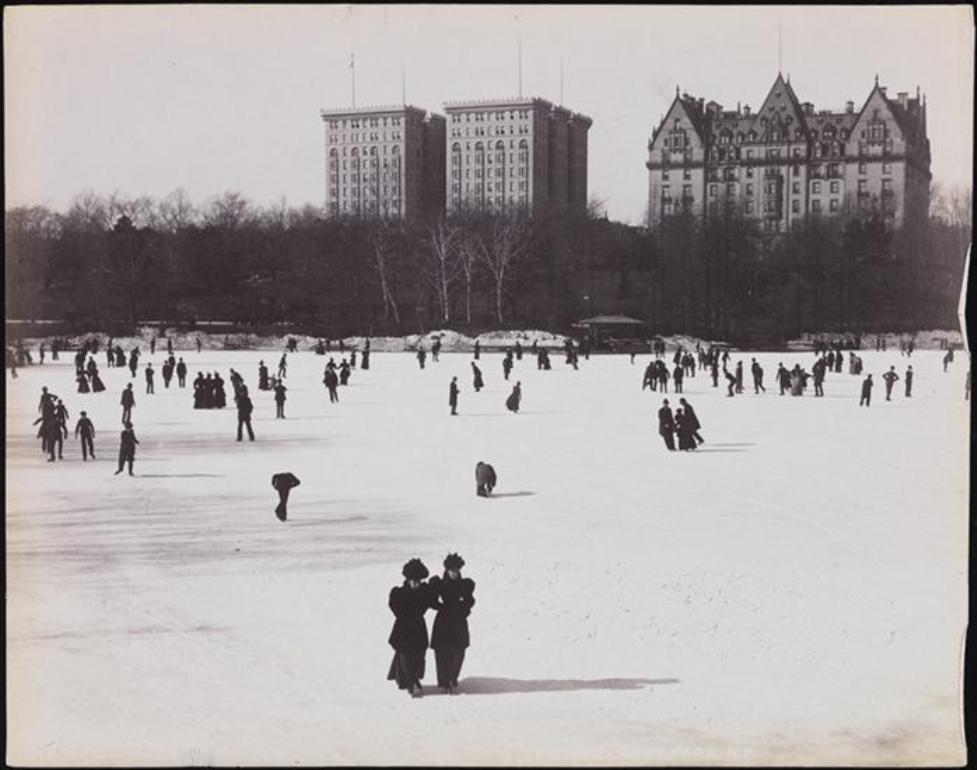
Who are the mysterious sisters in colorful outerwear skating on the icy pond in Central Park? And why are there so many uninvited guests at the Dakota Apartments, one of the first and finest buildings on the Upper West Side?

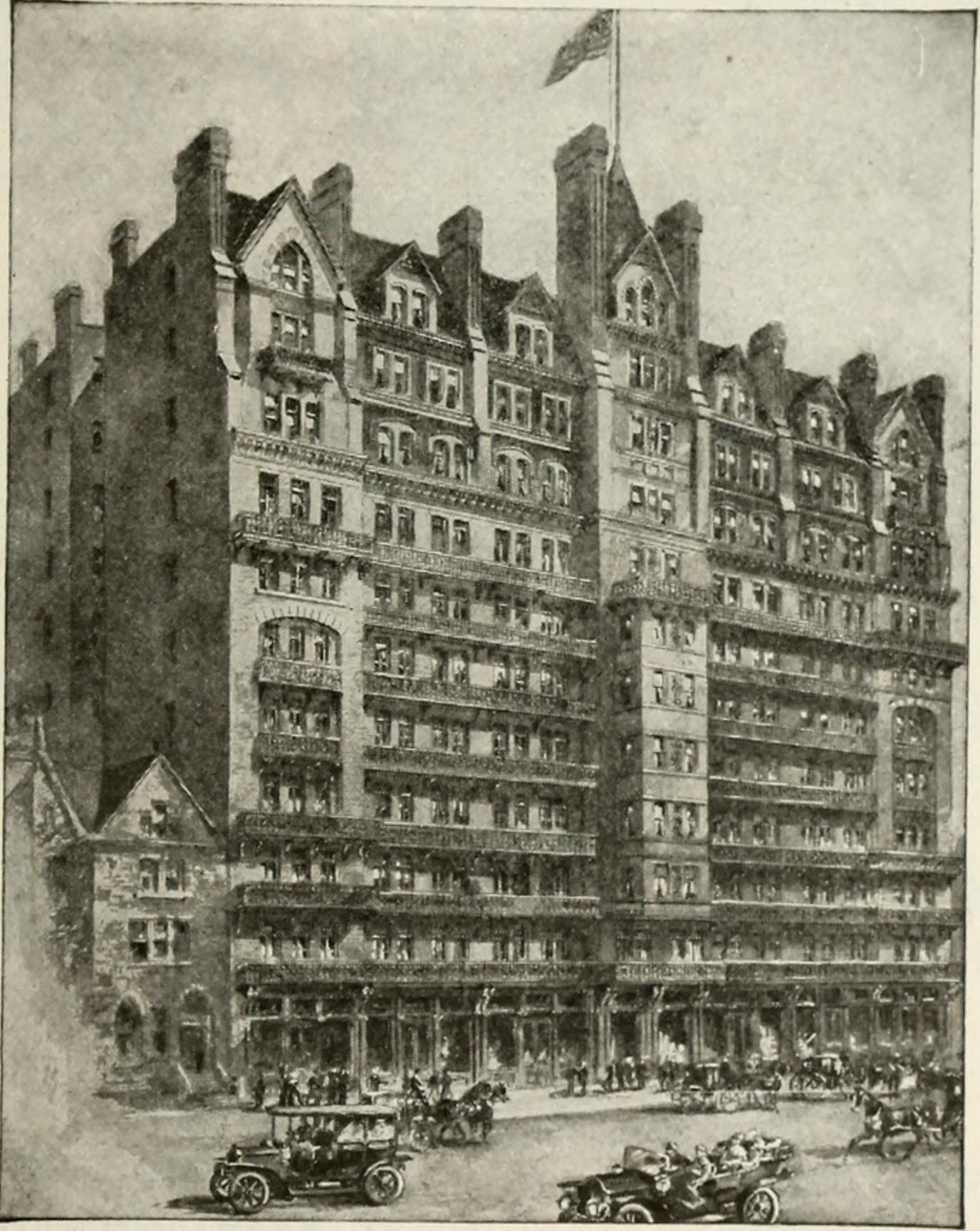
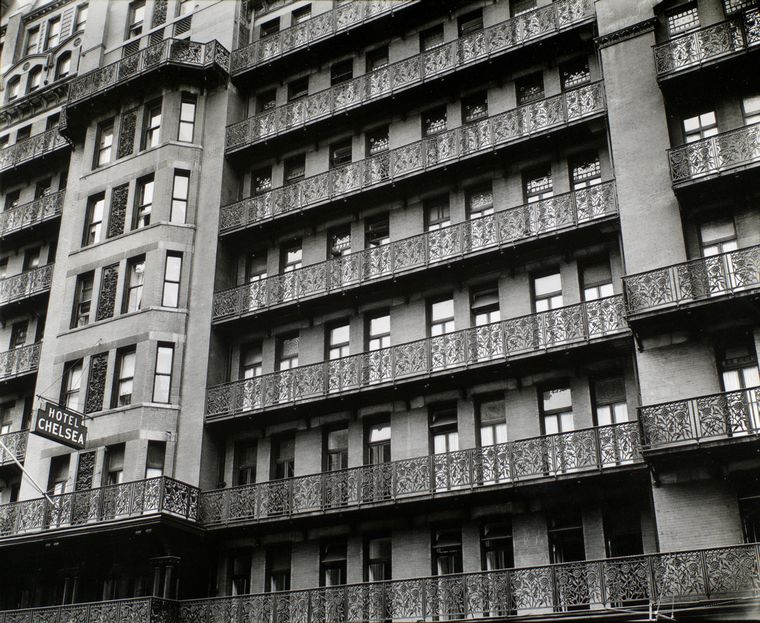
Meanwhile, at the Chelsea Hotel, all the intense creativity that is associated with this great and important location seems to have left an imprint of the afterworld upon its hallways.

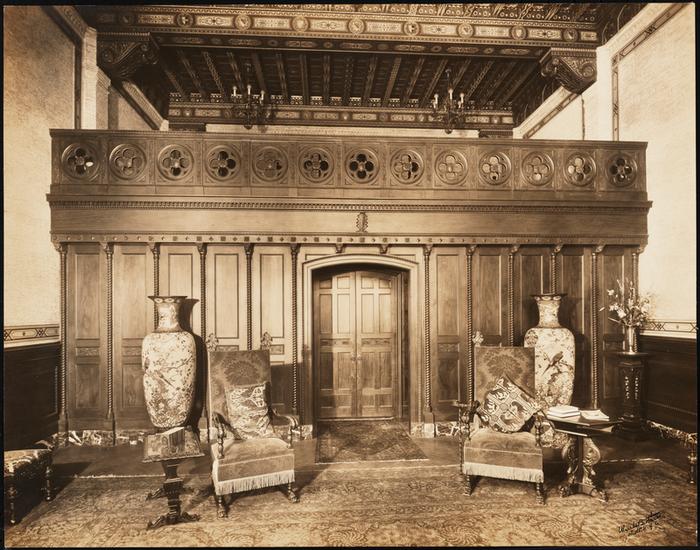
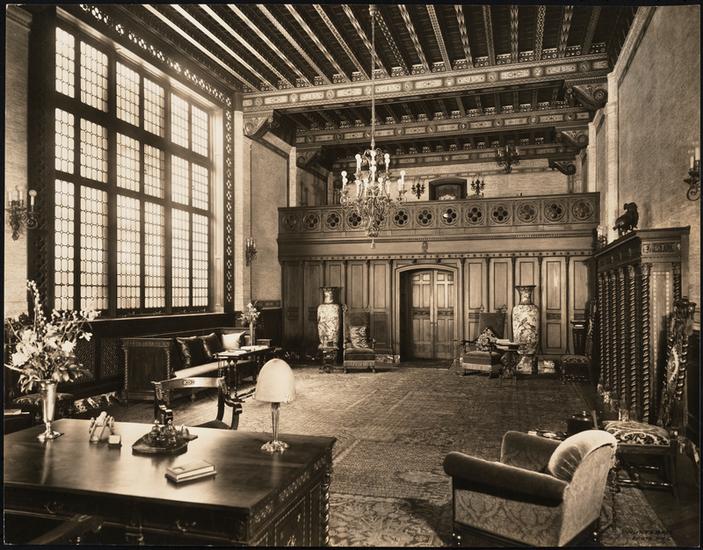
Over at Grand Central Terminal, the Campbell Apartment serves up some cocktails — and a few unnatural encounters with Jazz Age spirits.

Finally, on the Brooklyn Bridge, a tragedy during its construction has left its shadow upon the modern tourist attraction. Who’s that up ahead on the pedestrian pathway?

A little spooky fun — mixed with a lot of interesting history — and a few cheesy sound effects!


The Bowery Boys: New York City History podcast is brought to you …. by you!

We are now producing a new Bowery Boys podcast every two weeks. We’re also looking to improve the show in other ways and expand in other ways as well — through publishing, social media, live events and other forms of media. But we can only do this with your help!

We are now a member of Patreon, a patronage platform where you can support your favorite content creators for as little as a $1 a month.

Please visit our page on Patreon and watch a short video of us recording the show and talking about our expansion plans. If you’d like to help out, there are five different pledge levels (and with clever names too — Mannahatta, New Amsterdam, Five Points, Gilded Age, Jazz Age and Empire State). Check them out and consider being a sponsor.

We greatly appreciate our listeners and readers and thank you for joining us on this journey so far. And the best is yet to come!


Two women in fashionable skating garments 1889. Perhaps similar to the ensembles worn by Janet and Rosette Van Der Voort during their ghostly figure eights in Central Park.

New York Public Library


A famous image of the Dakota Apartment — all alone on the Upper West Side landscape — with skaters enjoying the frozen pond on a cold winter’s day.
The_Dakota_1880s

The Dakota photographed in 1890/

Courtesy New York Public Library


A haunting illustration by Eliza Greatorex from 1885 showing “The Dakota behind a rock at 72nd Street and Bloomingdale Road.”

1
Courtesy Museum of the City of New York


The Chelsea Hotel in 1903, one of the premier apartment houses in New York City which eventually became a destination (both short and long-term) for the city’s artistic circles. It also attracted its share of eccentric and even disturbed individuals over the decades.

Internet Book Archvies

Oh what these floors have seen! The Chelsea in 1936.

Courtesy Berenice Abbott

The interiors of the Campbell Apartment, back when it was an actual office. Are the ghosts of former party guests still enjoying the room’s luxurious trappings? More information at this blog post at the Museum of the City of New York. All photos, taking in 1923, by the Wurts Brothers.

Courtesy Museum of City of New York


2
Courtesy Museum of City of New York


Courtesy Museum of the City of New York

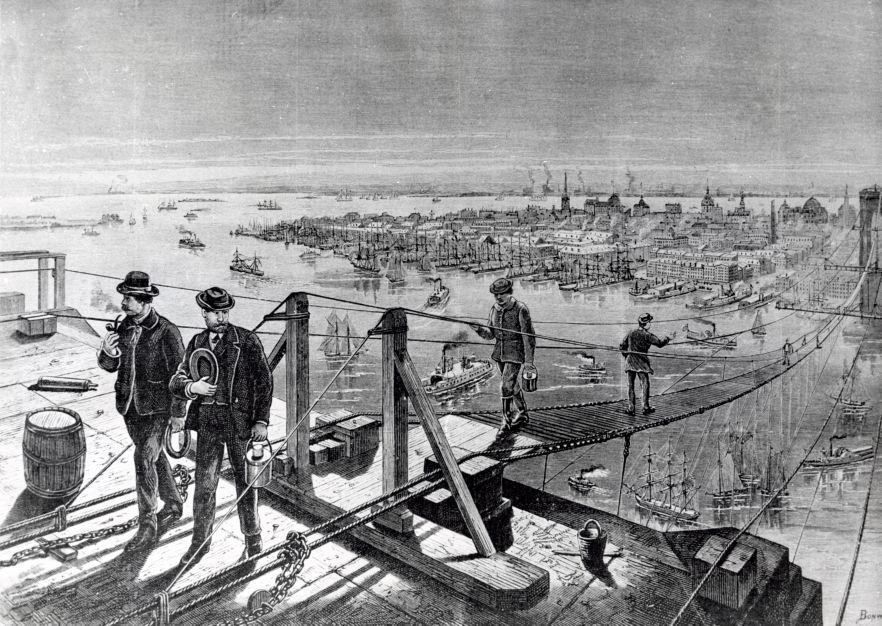
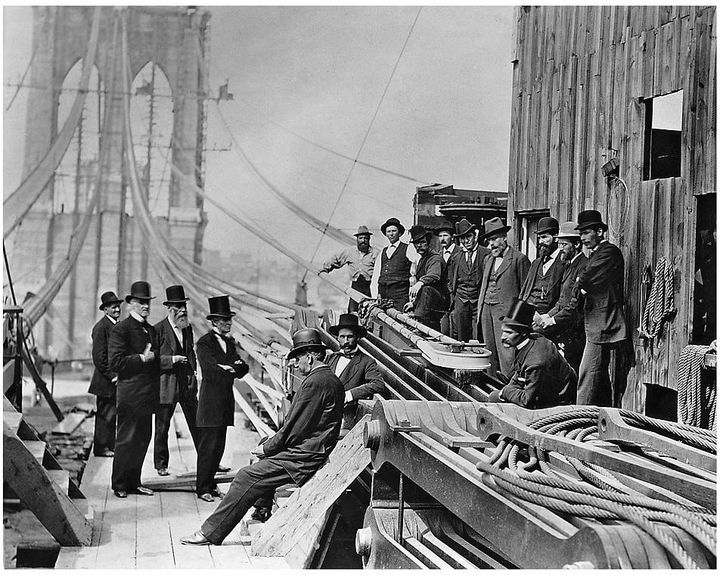
Workers upon the Brooklyn Bridge, a dangerous work environment where dozens of men were injured over the course of its construction.

1

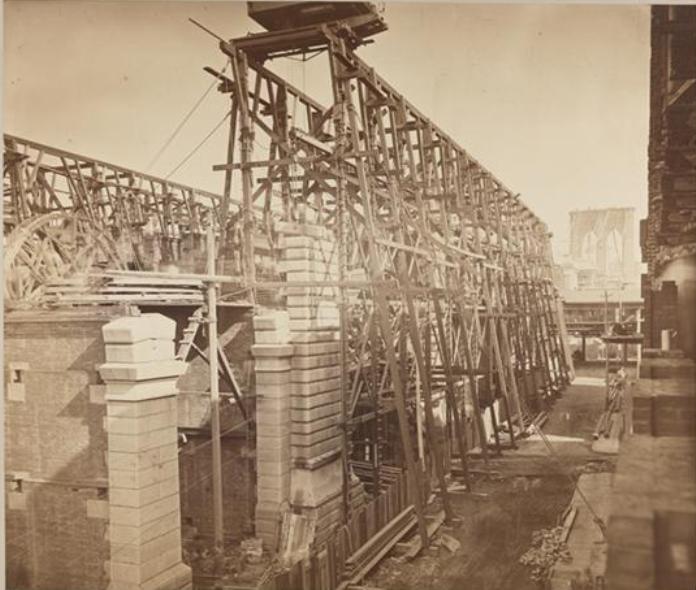
Construction of the approach to the bridge on the New  York side.

MNY146544
Courtesy Museum of the City of New York


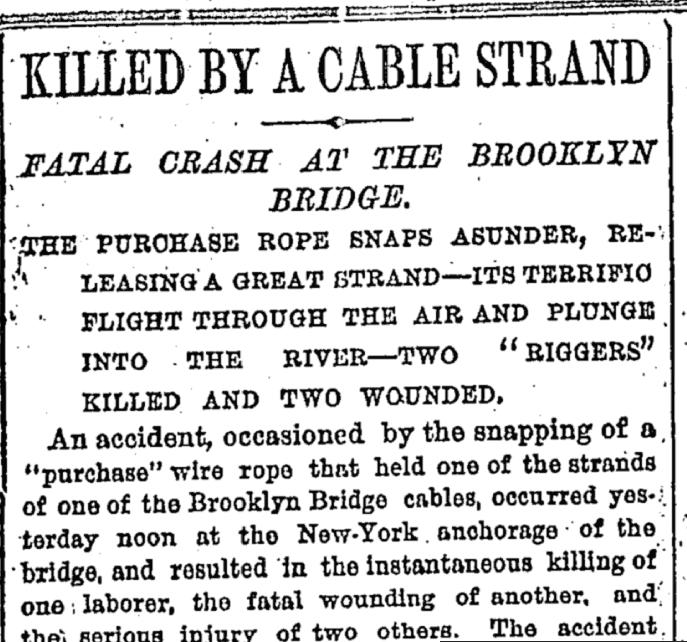
From the New York Times article regarding the unfortunate tragedy on the Brooklyn Bridge. Read the whole article here.

Courtesy New York Times

The scene at the bridge a few months after the accident — October 1878.

Courtesy New York Times


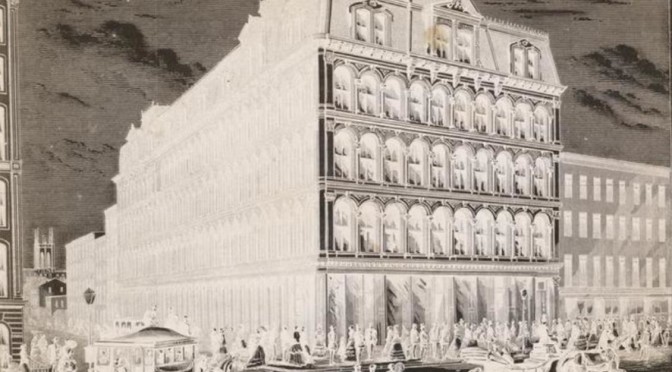
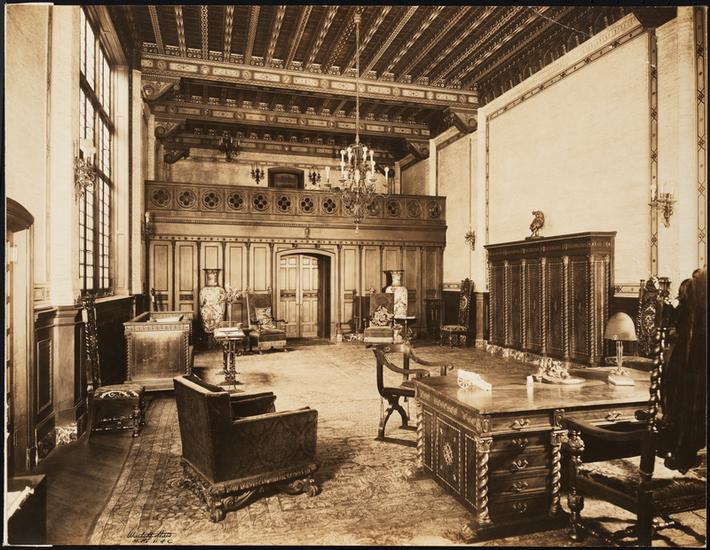
The picture at top is a reversed negative of the Methodist publishing and mission buildings, corner of Broadway and 11th Street, New York. [source]

Categories
Those Were The Days

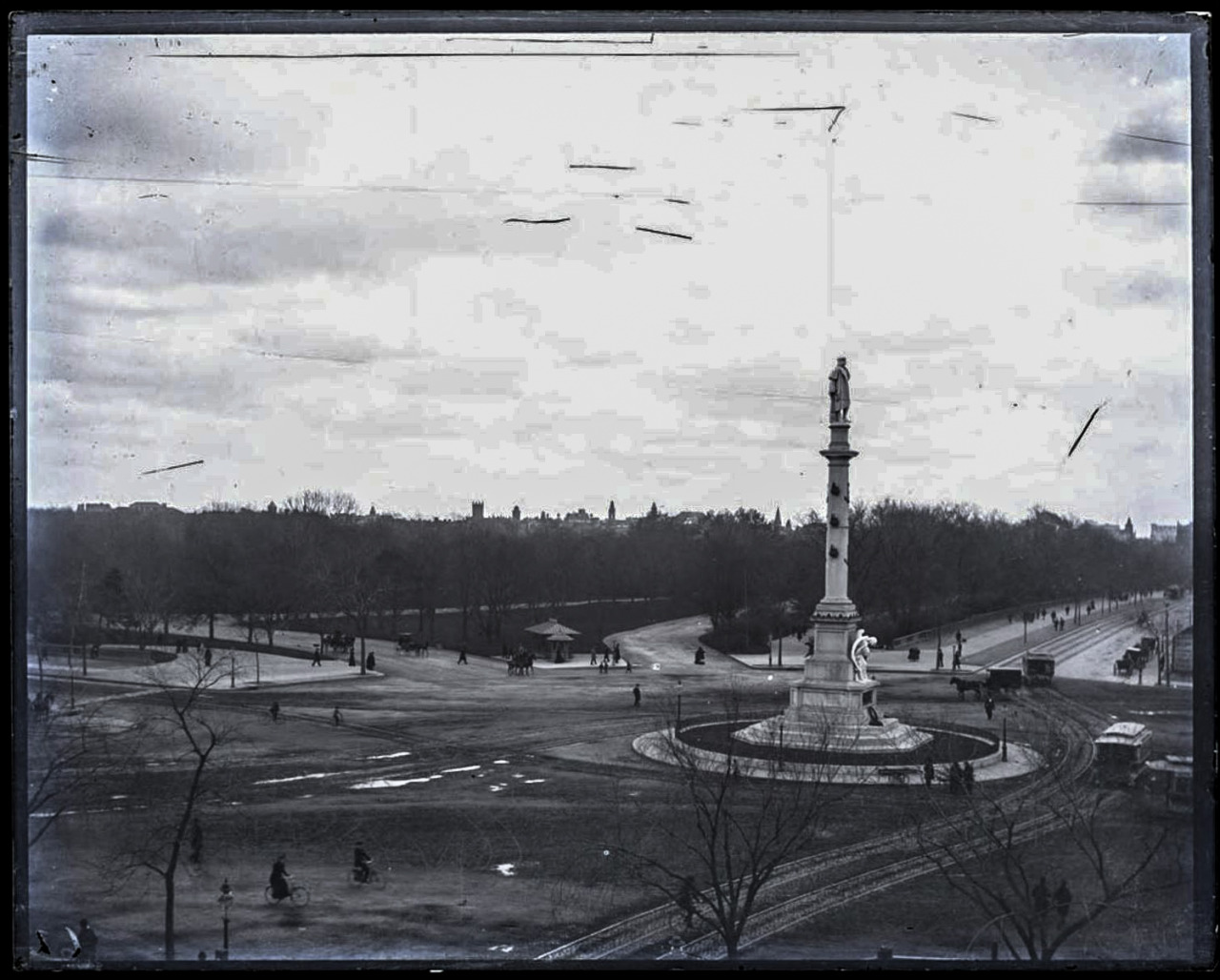
Columbus Discovers Columbus Circle

There are a great many statues in New York City of the Italian explorer Christopher Columbus, a rather controversial figure today who many consider to be a sadist and a bumbling idiot who destroyed indigenous cultures in the name of European glory.  He was obviously more celebrated at the end of the 19th century when colonization and violent conquest were still on the menu of empire expansion.

In many ways, Columbus’ iconography has become removed from his legacy. Some of New York’s Columbus representations — including the most prominent one in Columbus Circle — arrived in 1892, the year New Yorkers celebrated the 400th anniversary of Christopher Columbus’ ‘discovery’ of the New World with a variety of commemorative events. Given that this was the Gilded Age, this required all manner of sculptural representation laced with symbolic meaning.

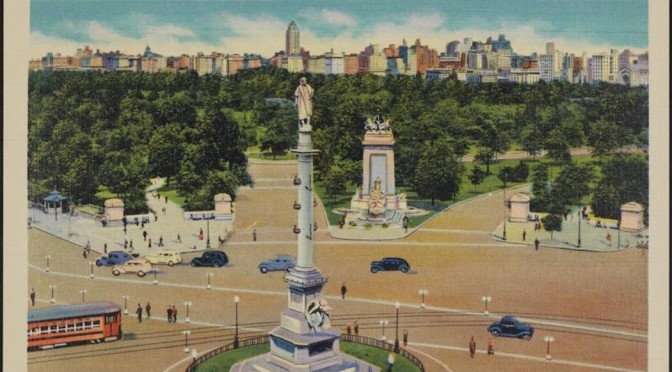
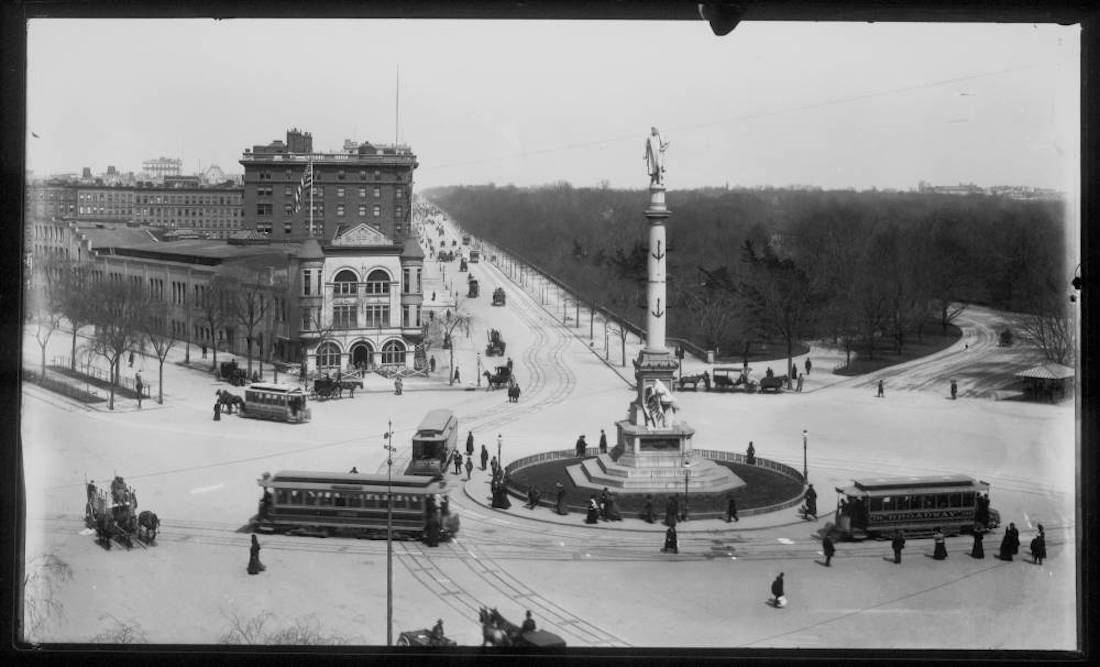
Below: Columbus Circle in 1905

1905 Courtesy George Eastman House


More importantly, the ceremonies marked a unique time in this country’s history with the increased prominence of new Italian immigrants. Italians were arriving in America at a rapid rate starting in the 1880s and increasing well into the new century.  Today, the idea of Columbus as a proud representation of European conquest has diminished, but his stature as a icon of Italian pride remains. In fact the Columbus statue at the heart of Columbus Circle was funded entirely by Italian Americans — or, at least, readers of the Italian American newspaper Il Progresso.

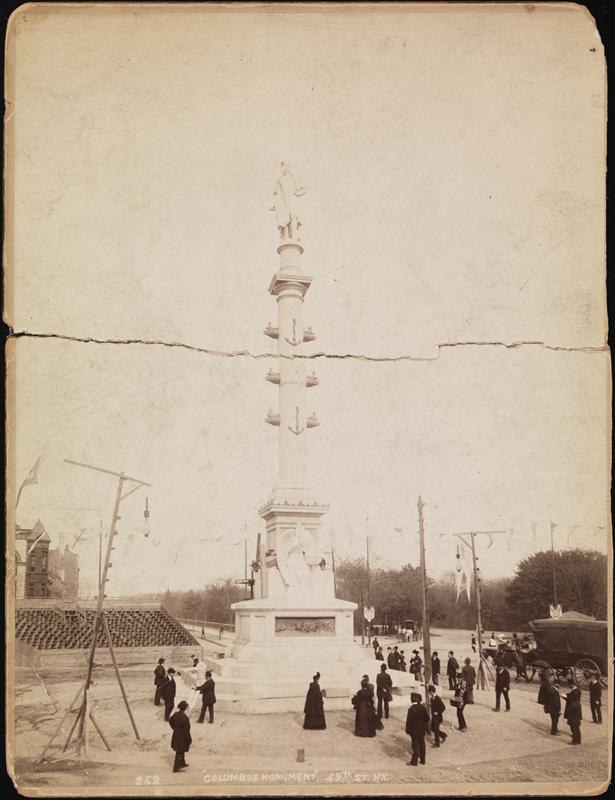
The largest was planned in the “big circle” at the southwest gate of Central Park, featuring a great column and a granite depiction of Columbus by Gaetano Russo, entirely created in his studio in Rome and shipped over in August.

1895, JS Johnston, Museum of the City of New York

The statue was in a competition of sorts with a Spanish-American tribute to Columbus, a massive fountain to be designed by Fernando Miranda. But there was no room for Miranda’s 100-foot-wide fountain by the time Columbus and his column were erected on October 12, 1892.

It’s interesting to compare the two southern corners of Central Park and how they were perceived.  The southeast side ran along Fifth Avenue — lined with mansions — and was essentially a carriage entrance for the wealthy. The southwest side was used by the residents of the Tenderloin and Hell’s Kitchen although sumptuous new apartment buildings were going up along Central Park’s west side.  Thus it might have been considered a more ‘democratic’ entrance.   Many years later, the Columbus column would be joined by the Maine monument.

Below:  How the area looked around the circle when Columbus was first installed in 1892

tumblr_nmd6ktRLAZ1sdzmuoo1_1280

Christopher Columbus’ journey — his statue’s journey, that is — was closely followed by the press.  “A ship belonging to the Italian Navy is now on the Atlantic Ocean headed for this port with a beautiful and nobel gift for this city,” according the New York Tribune on August 21, 1892.

The Statue of Liberty, a gift from France, had only been dedicated in 1886, and some saw parallel in the two foreign presents.  “From the time the movement was first started to the present time it has been forwarded enthusiastically by Italians of all conditions and circumstances, not only in this city, but also in Italy.”

Some prominent guests arrived from the official unveiling on October 12, 1892, including the Vice President of the United States Levi P. Morton, the Archbishop of New York Michael Corrigan, and the mayors of both New York and Brooklyn.

Whatever happened to Miranda’s Columbus fountain? Other homes were sought for the creation but none were found, so the project wasn’t installed in any public plaza. Fountains would eventually join the Columbus Circle column but not for several decades. In 2005 a dramatic new fountain was installed at the column’s base, recalling the water features of Rome.

Meanwhile a statue to Columbus was also planned for Central Park. Originally slated to stand next to William Shakespeare’s statue, park commissioners soon thought otherwise, objecting “to having too many memorials of Columbus in and about Central Park,” according to the Times. They changed their minds, and Jeronimo Sunol’s statue of Columbus was finally placed here on May 12, 1894.

You can spend the day looking for Columbus all over New York City! Here’s a list of places you can find Columbus in at least four of the five boroughs.


Categories
Mysterious Stories

Nine Years of New York Ghost Stories!

Here is the complete collection of Bowery Boys Halloween specials. Creep yourself out while listening to these spooky legends of New York City. From the haunted woods of Van Cortlandt Park to spirits haunting Captain Kidd’s treasure on Liberty Island. Psychics at Carnegie Hall, unsettling spirits in Cobble Hill, undead party animals at Grand Central!

Download them at the links below or from these two Bowery Boys pages on iTunes: [Main feed] [Archive feed]


2015 Haunted Landmarks of New York
Ghost stories associated with the city’s most popular and recognizable places from baby-faced spooks at the Dakota Apartments to spirited revelers at Grand Central Terminal. What’s still lurking in the hallways of the Chelsea Hotel? And whatever you do tonight, do not linger too long on the Brooklyn Bridge at night! A figure from the bridge’s past may still be looking for his head.
Episode #192 Download it here
Haunted Landmarks of New York: Tourist Terrors In The Big Apple

1

2014 Ghost Stories of Brooklyn
Four tales of spirits haunting Brooklyn back in the 19th century when it was still an independent city.  A horrific gangly ghost on the railroad tracks, a historic Clinton Hill home with an invisible hand that would not stop knocking, a Coney Island hotel in 1894 with a secret in room 30, and the wacky wraiths of Bushwick’s Evergreens Cemetery.
Episode #172: Download it here
Haunted Hipsters: Four Ghost Stories of Brooklyn blog post

2

2013 Ghost Stories of Old New York
Tales set mostly before the 1840s featuring sinister stories of murder, shipwreck and death by fright!  Spirits of dead Lenape Indians may haunt the forest of Van Cortlandt Park. A romantic West Village restaurant finds its home inside the former carriage house of Aaron Burr. Might the vice president still be visiting?  We bring you the legend of an old Brooklyn fort that once sat in Cobble Hill and terrified those who traveled along on old Red Hook Lane.  And finally, over at St Paul’s Chapel,  a respected old actor wanders the churchyard, looking for his body parts.
Episode #157:  Download it here 
Ghost Stories of Old New York:  Tales From The Revolution, Restless Indians, Haunted Forts and a Headless Actor

3


2012 Mysteries and Magicians of New York 
Grab a drink at the Ear Inn, one of New York’s most historically interesting bars, and you might meet Mickey, the drunken sailor-ghost.  A frightening story of secret love at old Melrose Hall conjures up one of Brooklyn’s most popular ghostly legends.  A woman is possessed through a Ouija board, but while she accept the challenge by one of New York’s first ghostbusters?  And a tale of Harry Houdini, Sir Arthur Conan Doyle, and the line between the supernatural and mere sleight of hand.
Episode #144:  Download it here 
Mysteries and Magicians of New York: Whimsical Spirits, Scary Legends, Strange Magic and the Original Ghost Busters


2011 Haunted Histories of New York 
What’s horrors are buried at the foot of the Statue of Liberty? What’s below a Brooklyn Catholic church that makes it so dreadfully haunted? What ghost performs above the heads of theatergoers at The Palace? And what is it about the Kreischer Mansion that makes it Staten Island’s most haunted home?
Episode #130: Download it here
Haunted Histories of New York: What Horrors Lie Beneath The Foundations of the City’s Treasured Landmarks?

seance

2010 Supernatural Stories of New York 
The scary revelations of a New York medium, married Midtown ghosts who fight beyond the grave, a horrific haunting at a 14th Street boardinghouse, and the creepy tale of New York’s Hart Island.
Episode #114: Download it here
Supernatural Stories of New  York: Spooky Seances, Violent Jazz Age Ghosts and an Island of Despair


2009 Haunted Tales of New York
The secrets of the restless spinster of the Merchants House, the jovial fright of the Gay Street Phantom, the legend of the devil at Spuyten Duyvil Creek, and the spirit of a dead folk singer.
Episode #91: Download it here
Haunted Tales of New York: Urban Phantoms

ghost

2008 Spooky Stories of New York 
The drunken spirits of the Algonquin, the mysteries of a hidden well in SoHo, the fires of the Witch of Staten Island, and ‘the most haunted brownstone in New York’.
Episode #65: Download it here
Spooky Stories of New York

1

2007 Ghost Stories of New York
The ghosts of a tragic Ziegfeld girl, a scandalous doyenne of old New York, a bossy theater impresario and the ghoulish bell-ringer of St. Mark’s-in-the-Bowery.
Episode #16: Download it here

Here are the locations mentioned in all of our ghost podcasts:


  1. Mark Twain’s Sketches, New and Old, 1887 (Internet Archive Book Images)
  2. The Bells, 1920 (Internet Archive Book Images)
  3. Mémoires récréatifs, scientifiques et anecdotiques du physicien-aéronaute E.G. Robertson (Internet Archive Book Images)
  4. “Rhyme and Reason” (1901) (Internet Archive Book Images)
  5. Seance, source unknown
  6. “Two of William Hope’s friends lean on their motor car whilst a figure – the couple’s deceased son – is revealed at the wheel.” Photo by William Hope (1920) (National Media Museum)
  7. Ghosts, The Oracle (1919) (Internet Archive Book Images)
  8. The funny side of physic : or, The mysteries of medicine, presenting the humorous and serious sides of medical practice. An exposé of medical humbugs, quacks, and charlatans in all ages and all countries” (1874) (Internet Archive Book Images)

TOP PHOTO: Source here


Categories
Bowery Boys Bookshelf

The Magic of 1930s New York Through a Child’s Eyes

I don’t often review children’s books on this blog, but then again, there are few that use New York City history in such a spellbinding way as Oskar and the Eight Blessings, a winter’s tale spun from nostalgia.

Oskar, a waif with wide eyes and curly hair, is sent to New York by his parents under troubling circumstances. They are Jews in Nazi-controlled Europe and have sent their son away to an aunt who lives in upper Manhattan.

Courtesy Macmillan Publishers

Nobody knows he’s arrived in New York. It’s during a snowstorm (albeit of the very best kind). He has to get to his aunt’s house before sundown. Oskar just needs to walk 100 blocks by himself through a completely foreign and bewildering city.

His journey is the basis of an extraordinary story about generosity and kindness that, believe it or not, can still exist in New  York, can still exist, maybe, in humanity. Authors Richard Simon and Tanya Simon aren’t setting Oskar out on a random landscape, but one uniquely tied to a specific time — the seventh day of Hanukkah 1938, which also happens to be Christmas Eve.

Through a gauze of magic realism, the New York Oskar experiences is a real New York. Oskar visits Trinity Church, Central Park, Carnegie Hall, the Dakota Apartments and other places, running into a host of New Yorkers (including a couple famous ones) who teach him a little something about being a decent human being.

I was brought to this book because of my interest in the work of illustrator Mark Siegel who I’ve been a fan of since Sailor Twain, his terrific graphic novel about Hudson River steamships and enchanted mermaids. His work here wonderfully captures New York as a sort of wistful historic mirage, a child’s distorted gaze over a city, enchanting and endless.  His illustrations seem to generate warmth as the story progresses towards its poignant and beautiful ending.

Oskar and the Eight Blessings
Richard Simon and Tanya Simon
Illustrated by Mark Siegel
Roaring Brook Press
Macmillan Publishers


Categories
Religious History

Happy Pope Day! A history of the holiest of New York tourists

Pope Francis arrives in New York City today — part of his first-ever trip to the United States — and the city is rolling out the red carpet. In fact, all available carpets are being rolled out and even some throw rugs.

New York loves Popes. (Not always of course.) Only the Marquis de Lafayette and the Beatles have been treated to more rapturous displays of welcome by New York City residents.

The city has been host to four previous papal visits, and in each case, Saint Patrick’s Cathedral has naturally been the manic center of activity. In fact three such visits have been immortalized on plaques in front of the cathedral.

But with each trip, the pope in question managed to find a couple other unique corners of the city to visit as well.

THE FIRST POPE

Perhaps the strangest visit of all was the very first — Pope Paul VI, the controversial leader who presided over the Second Vatican Council and made a name for himself traveling all over the world. Finally in an era where a man could be both pope and jetsetter, Pope Paul arrived in New York in October of 1965 and promptly went to visit his old roommate, who was performing in a fair.

Courtesy Delcampe.net

That roommate would be Michelangelo’s Pieta, on loan from St. Peter’s hallways to the Vatican pavilion at the 1964-65 World’s Fair.

The Pope visited the Fair on October 4, 1965, on a busy day that also included mass at Yankee Stadium (the first papal mass ever in the United States), an address to the United Nations, and a meeting in the city with president Lyndon Johnson at the Waldorf-Astoria.

5th October 1965: Photo by Harry Benson/Express/Getty Images

Many will remember the thousands of people who greeted the Pope in the original Pope-mobile (“a closed, bubble-top limousine”) during its 25-mile procession through the city. Here’s a fact to delight your friends and neighbors — the first American bridge ever crossed by a Pope in all of history was the Queensboro Bridge.

Today a rounded bench, or exedra, sits in Flushing Meadows park honoring the moment Pope Paul visited the Pavilion. (It seems that whenever a Pope hovers in a place for more than a few minutes, a plaque or monument springs up in its place.)

By the way, I found this extraordinary page full of great photos about that first Pope-mobile.

Length of his visit: 13 1/2 hours

AP Photo/Courtesy New York Daily News

THE SECOND POPE — FIRST VISIT

But it’s Pope John Paul who’s the real New York favorite; he held the papal throne for so long that he managed two trips to Gotham City — in 1979 and 1995.

His October 1979 trip was like a rock concert tour, also swinging through Philadelphia, Boston, D.C., Chicago and Des Moines. Part of the enthusiasm was because John Paul, at 58 years old, had just been appointed the year before.

In 1969, as a cardinal, he had held mass at Yankee Stadium, so by the time he did it again on October 2, 1979 — as the Pope — he was as much a fixture as Reggie Jackson. Rain greeted over 9,000 cheering worshippers — or fans — and, according to legend, when the Pope mounted the ballfield to address the crowd, the rain showers stopped. And as a blessing for Mets fans, the next day the Pope also held rapt an audience of 52,000 at Shea Stadium.

Below: the Pope at Yankee Stadium

Courtesy US News and World Report

But like all rock stars, the Pope couldn’t complete his New York odyssey without a performance at Madison Square Garden. Although John Paul also addressed the U.N. and a Saint Patrick’s audience during that trip, he’s best remembered by many for his inspirational address on October 3rd to 19,000 city children.

Saint Patrick’s honored his Holiness’s visit in 1979 by installing a bust. But he would be back. On almost exactly the same day, sixteen years later.

Length of his visit: Almost 48 hours

THE SECOND POPE — THE SECOND VISIT

New York City in 1995 was a vastly different city and John Paul returned for a longer visit — four days in total in the entire New York area — on October 4th. This time, instead of just delivering messages to the clergy gathered at Saint Patrick’s, he spontaneously decided he wanted to walk around the block. And why not? You’ve got shopping, Saks, street vendors selling Pope souvenirs!

Below: In the Pope-mobile, riding by Saks Fifth Avenue

Courtesy Wall Street Journal

The Pope also finished off his collection of performing in gigantic venues for mass — holding court in Giants Stadium, the Aquaduct Racetrack in Ozone Park and eventually to 100,000 people on the great lawn in Central Park.

From there, the elderly leader of the Catholic Church gave the city the ultimate shout-out: “This is New York! The great New York! This is Central Park. The beautiful surroundings of Central Park invite us to reflect on a more sublime beauty: the beauty of every human being, made in the image and likeness of God. Then you can tell the whole world that you gave the pope his Christmas present in October, in New York, in Central Park.”

Length of his visit: Almost four days! He couldn’t get enough.

Courtesy Chris Hondros/Getty Images./New York Daily News

THE THIRD POPE

Pope Benedict XVI came to New York for three days, two nights (April 18-20), arriving in Manhattan on a military helicopter and breaking the apparently holy tradition of visiting New York in the early Fall.  (Still would have needed a light sweater or vestment.)  But Benedict, as the cardinal formerly known as Joseph Ratzinger, actually visited the city in that lesser role in 1988, where apparently he was met with protest from gay activists and shunned by some prominent Jewish leaders.

He hit all the “usual” Pope spots — Saint Patricks, the United Nations, Yankee Stadium — but added a couple interesting detours: Park East Synagogue, St Joseph’s Seminary in Yonkers, and the World Trade Center site.

Below: The Pope viewing the World Trade Center site

 April 20, 2008 Courtesy MSNBC
April 20, 2008 Courtesy MSNBC

Length of his visit: Almost 72 hours

THE FOURTH POPE

Pope Francis’ exhausting itinerary can be found here.  He’ll make stops first for evening prayer at Saint Patrick’s Cathedral, then to the residence of the Apostolic nuncio at the United Nations to sleep.

He speaks to the U.N. Assembly in the morning, then down to the National September 11 Memorial & Museum by lunchtime.

Perhaps the most intriguing stop will come in the afternoon, meeting with students from Our Lady Queen of Angels School in East Harlem. Whereas the first Pope to come New York fifty years rode through East Harlem in his covered Pope-mobile, Pope Francis will chat with a third-grade class filled with children who will have quite a story to tell their grandkids.

Afterwards he will travel through Central Park and arrive at Madison Square Garden for Mass. At rush hour! Oh right, all the streets are closed. In fact, Fifth Avenue right now is contained in a large fence, easily the tightest security I’ve ever seen here.

12042997_10154366542979852_7760758446010311988_n

But Pope Francis is a man of many surprises. Could he decide that he wants to walk the High Line? And how can he visit New York and not even visit Brooklyn? Is the Pope a Girls fan?

This is a heavily revised version of an article that originally ran in 2008 when Pope Benedict visited New York City.
Categories
Planes Trains and Automobiles

100 years ago today: Seventh Avenue collapsed under rush hour traffic

One hundred years ago today, — a horrifying disaster on Seventh Avenue endangered the lives of New Yorkers on their way to work.

Excavations for the new Seventh Avenue subway line (the IRT Broadway-Seventh Avenue line, aka the 1-2-3 trains) were proceeding well below an active thoroughfare.

On the morning of September 22, 1915, two detonations inside the tunnel dislodged planking that was holding up the street between 24th and 25th Streets. Dangerously weakened, the temporary roadway folded into the earth, creating a chasm and swallowing up everything on the surface.

The men working below didn’t stand a chance, buried beneath a deluge of automobiles and debris. Among the vehicles thrown into the 30-foot hole was a streetcar filled with passengers. “Heads and arms were thrust from the windows, and those who looked on helplessly could hear the cries of the ones caught in the wreckage.” [NY Sun, 9/23/15]

Courtesy Library of Congress

Both the water main and gas pipes burst open in the tumult, and trapped streetcar passengers panicked as the enclosure began filling with water.

“Witnesses of the accident quickly recovered from the shock of seeing nearly two blocks of city street sink from sight, carrying down all traffic within reach of the cave in.” [NY World, 9/22/15 late edition]

2
Courtesy Library of Congress
8497177295_80e9a8634f_o

Seven people were killed in the disaster with dozens injured. Most of the deaths were workers in the tunnel although two passengers in the streetcar also died.

Eyewitnesses describe a scene of utter chaos and total confusion. A man named Joseph Urban was standing on the street and got pulled into the hole.

“There was a funny feeling on the planking — a trembling, jerking sort of sensation — and then the whole street seemed to slide down into the hole. There was so much dust that I couldn’t see anything for two minutes. When I could see I appeared to be in a forest of tangled timbers, pointing every which way.” [source]

Police went searching for the culprit. Although it was later deemed an accident, an intentional detonation could not be ruled out especially given the fact that terrorist bombs were going off all over the city. (Back in March, detectives thwarted a second attempt to bomb St. Patrick’s Cathedral.)

Below: Seventh Avenue as it looked 100 years ago

7th

Fingers quickly pointed to the IRT’s inadequate ‘cut-and-cover’ method, identifying other possibly deadly roadways along Seventh Avenue. Mayor John Purroy Mitchel ordered additional supports be constructed at many excavation sports, and ‘heavy trucking’ was banned from these problem areas.

This wasn’t the city merely being over anxious. In fact, just three days later, another excavation collapsed at Broadway and 38th Street, swallowing a taxicab and killing its passenger. What makes this especially hazardous was its proximity to the popular Knickerbocker and Casino theaters.

As you might imagine, the collapse snarled street traffic for weeks with street closures and detoured routes turning the Tenderloin and Herald Square districts into a mass of congestion.

Below: An illustration from the New York Sun, showing the location of the 24th Street street collapse and a Google Maps screen capture of this street today.

1
1
Categories
Mysterious Stories

The Mystery on North Brother Island: A story told in news clippings

A thousand unsolved mysteries live within a newspaper’s archives, little forgotten events that have faded into history. Sometimes you can search deeper, and the answers to those mysteries may emerge.

This is what happened in a series of three articles I found the other day while doing some research on North Brother Island (the fruits of which will be revealed in tomorrow’s new podcast!)

I present to you the three complete clippings as they provide a tragic tale told in a methodical manner. I have been able to find no further information about the central figure other than these three articles.

1
Courtesy Museum of the City of New York

The Lighthouse

But first — Some context on North Brother Island, that little area of land (with its companion South Brother Island) between the Bronx and Riker’s Island. The island was uninhabited until 1869 when a lighthouse was built here to help navigate the traffic of the East River and Long Island Sound past the treacherous waters known as Hell’s Gate.

According to the book Lost Lighthouses, “The square, wooden residence contained a kitchen, pantry, dining room and sitting room as well as four bedrooms and an oil storage area. The 50-foot tower rose from the front of the building and was equipped with a fourth-order Fresnel lens.”

Courtesy Museum of the City of New York

The Quarantine Station

The lonely lighthouse would soon be joined by a hospital specializing in smallpox and other serious diseases. It was to become, in essence, a quarantine station, operated by Riverside Hospital. “The reconstructed smallpox pavilion, on North Brother Island, is ready to receive about forty patients,” reported the New York Tribune in February 1881.

That August, as city officials visited the island to plan the construction, the Tribune reported on its present occupants. “[North Brother Island] has a surface area of about of about thirteen acres. It is at present occupied only by a lighthouse-keeper and his assistant, and by a woman who entertains occasional picnic parties.”

Courtesy Museum of the City of New York

The Lighthouse Operator

Flash forward to the cold winter of 1884 — January 2, 1884, in fact. The picnic woman was undoubtedly gone, and the hospital pavilions were newly completed. Administrators and patients may have just moved in by this time.  We do know, however, that the lighthouse operator was at his helm — a man named Daniel Kelly. I’ll let the news clippings now take over:

From the New York Sun, January 3, 1884:

1

A MYSTERY OF THE SOUND

Finding the Body of a Woman — A Wound on the Head

“Robert Parker, a stepson of Daniel Kelly*, keeper of the lighthouse on North Brother Island, noticed a flotilla of canal boats about 8 o’clock yesterday morning in tow of one of Starin’s tugs**, going up the Sound.  Immediately in the wake of the boats he saw something bobbing up and down in the water.  He put out in a boat, and as he drew near he discovered the body of a woman.  After he took it ashore he found it was still warm.  Blood was oozing from a wound on the head.

Parker went to Long Island City*** and notified Coroner Robinson, and the body arrived at Long Island City at 6 o’clock last evening.

The woman was about 45 years old, and 5 feet 3 inches in height. She had long dark hair, and was dressed in a calico waist, black overskirt, dark underskirt, lined with red flannel, white apron, dark stockings, and black cloth gaiters.

There was a large lump under her left jaw. A wound on top of the head had the appearance of having been inflicted by some blunt instrument.  Parker saw no attempt to rescure the woman by any one on the canal boats.”

*Not sure who this Daniel Kelly is. Any guesses?

**The tug boat concern of John Henry Starin, a “leading marine operator in the United States,” owning everything from excursion boats to industrial barges. (Pictured above)

***Still an independent city within Queens County as the Queens borough was not yet created

1

Foul Play?

An article in the New York Times from the same day repeats most of the same information — including that thing about Daniel Kelly — but brings up the opinion of the coroner:

1

“The Coroner thinks that it is a case of foul play, and he has ordered City Physician William Barnett to hold an autopsy.  Parker says that no attempt was made to rescue the woman by any one of the canal-boats.  At Mr. Starin’s office last night nothing was known as to the canal-boats which the tug had in tow, and no information had been received as to the woman’s death.”

The Story of Matilda

By the following day, the woman had been identified. Here is an excerpt from the article. (You can find the original here.) The entirety of the text is below.

1

THE EAST RIVER MYSTERY SOLVED

IDENTIFICATION OF THE BODY FOUND FLOATING IN THE WATER

“The body of a woman found floating in the East River, below North Brothers Island, on Wednesday morning, proved to be that of Mrs. Matilda Meyer, wife of Charles B. Meyer, who lives at No. 219 East 75th Street.*

The woman was a mother of five children and a native of Germany.  For some time past, since the death of a son, she had suffered from melancholia, which was aggravated by the financial troubles of her husband, who was at one time a prosperous brewer.

Mrs. Meyer left her home at 6 o’clock on Wednesday morning, without telling anyone where she was going.

Her husband instituted inquiries among her neighbors and friends when her prolonged absence aroused his fears as to her safety. He feared suicide because of signs of temporary insanity which she had shown at intervals.  Inquiries were made at the Morgue in this City., but no trace of the missing woman was found until Mr. Meyer read in yesterday morning’s papers the accounts of the finding of the body of a woman floating in the wake of a canal tow.

With a friend he went to the Long Island City Morgue, and at once identified the body as that of his wife. To Coroner Robinson, who had summoned a jury of inquest, he told the facts recited above.

An examination of the body made by Dr. William J. Burnett revealed the fact that the wounds on the woman’s head were superficial and such as might be made by the paddle-wheel of a steamboat.  The inference is that Mrs. Meyer after leaving her home plunged into the river.  The tide was running at the flood, and was about full flood when she was discovered.

Her clothing had served to buoy her up, and so she had floated out to the point where she was discovered by Robert Parker.”

*The building at that address is no longer there.

While the story deems the ‘mystery solved’, to me it opens so many more. Did Matilda really kill herself? What were the circumstances surround her husband’s failed financial fortunes, and those of her son’s death? What of the fate of the other children?

Unfortunately, the answer of these mysteries from the tragic tale of Matilda Meyers may forever be unanswered.

Categories
It's Showtime

Stage Magic: Oh-What-A-Beautiful History of the St. James Theatre

On Sunday The Bowery Boys join up with The Ensemblist to present a special cabaret event at 54 Below — a tribute to the great St. James Theatre!

Perhaps some of you may be asking — why do a live show about a individual theater?

The St. James Theatre (246 West 44th Street) was prominently featured as the principal set in this year’s Academy Award winner for Best Picture Birdman or (The Unexpected Virtue of Ignorance) starring Michael Keaton, Edward Norton and Emma Stone.

The underlying theme of the film is that ‘serious’ theater was a reinvigorating, respectable medium that could renew the career of Riggan Thomson (Keaton) whose Hollywood successes have diminished his credibility.

Below:  The exterior and entrance of the St. James in character for Birdman.  More images at Eric Helmin / Design + Media who worked on the film’s terrific graphic design can be found at his website. He’s also worked on The Knick and Inside Llewyn Davis so we’re clearly fans of his work.

Courtesy Eric Helmin / Design + Media

Courtesy Eric Helmin / Design + Media


The St. James was one of a handful of stages which estabished the supremacy of the American theater. To film Birdman here was to set the bar near-impossibly high for the lead character.  The history of the St. James runs parallel to Broadway’s own dramatic highs and lows. It was here that Hello Dolly!, Oklahoma, The King and I and The Producers all made their New York debuts.

Here’s a selection of other quirky facts about the St James Theatre, some big, some small, some weird:

1) The plot of land where the St. James Theater stands today — that’s 246 West 44th Street, between the Helen Hayes Theatre and John’s Pizzeria —  was home to the first incarnation of Sardi’s Restaurant. Called the Little Restaurant (or Sardi’s Sidewalk Cafe), this first incarnation of the famous theatrical eatery opened in 1921.  A frequent sight was that of proprietor Melchiore Pio Vincenzo Sardi Sr. standing in the doorway, flipping a twenty-dollar gold coin.  In 1927, the restaurant moved to its present location – just a couple doors down from the St. James.

Below: The outdoor garden at Sardi’s original spot

garden


2) What does the St. James Theatre have in common with the Chelsea Piers and Grand Central Terminal? They were all designed by the same architectural firm Warren and Wetmore. But when it opened with its first show — a George M. Cohan romp called The Merry Malones — it was called Erlanger’s Theater, named for one half of the theatrical production juggernaut of the 1920s — Klaw & Erlanger. (By the way, there was also a Klaw Theatre just a block away.)

Below: Anthony Dumas sketches from 1932 of the Erlanger Theatre and the Little Theatre (later the Helen Hayes). Later that year the name would switch to the St. James in tribute to a famous London theater of that same name.

Courtesy the Museum of the City of New York


3) In 1943 the Rodgers and Hammerstein musical Oklahoma made its debut here, changing the face of musical theater forever. But, many years before, the St. James very nearly celebrated the debut of another major epoch-making musical– Showboat. It was even considered for the inaugural performance at the St. James! However its producer Florenz Ziegfeld wasn’t ready in time, and it eventually debuted at Ziegfeld’s own theater on December 27, 1927.

Below: A dance-filled play presented by the Federal Theatre Project called Trojan Incident played for a limited run in 1938

Courtesy Library of Congress

4) The St. James was a vital component of the so-called ‘Golden Age of Broadway’, delivering debut musicals such as Pal Joey, Where’s Charley?, The King and I and The Pajama Game. Countless successful Shakespeare and Gilbert & Sullivan productions graced the stage as did original ballets and even the first play production of Richard Wright’s Native Son in 1941.

So the place has gotta be loaded, right? During the run of Oklahoma, burglars broke into the St. James to steal the evening’s hefty receipts, only to be foiled when they were unable to open the main safe. “They escaped with a small amount of change,” said the Times.

5) In 1958, the theater went through a massive renovation, almost a rebuilding really.  Most of the interior was replaced with modern theatrical amenities like a state-of-the-art sound system and air conditioning unit.  The lighting equipment was now “completely enclosed in Plexiglass” and “the asbestos curtain has a mural-like design on it.” [source]

Courtesy NYC Architecture


6) A peculiar set of shows hit the St. James Theatre during the 1970s, most notably a Nashville-themed jamboree called Broadway Opry ’79 featuring a rotating roster of country music greats! Sadly it played only two shows after four previews — the first featuring Don Gibson, Floyd Cramer and Tanya Tucker, the second Waylon Jennings and the Crickets.

7) A lot of shows celebrating New York City history have played at the St. James, and in  1980  came a tribute to the city’s greatest showman — P. T. Barnum. The musical Barnum, with music by Cy Coleman, featured the subjects of real-life Barnum spectacles like Joice Heth, Jenny Lind and Tom Thumb.  Barnum died in 1891, many years before any theater would have made an appearance above 42nd Street.

Below: Jim Dale in Barnum

dale

8) In 2005 an extraordinary feedback loop occurred at the St James Theatre when the musical movie version of The Producers (itself based on a non-musical film) was filmed at the St. James on the very set of the Broadway theater version.  Said one of the extras from the film, standing on stage that day  “Basically, I’m supposed to applaud the play-within-the-play in a movie about a play that was based on a movie,” [source]

9) The past ten years at the St. James have been rewarding indeed — with musical versions of rock albums (American Idiot), children’s books (How The Grinch Stole Christmas), Woody Allen movies (Bullets Over Broadway), and even one Shakespearean comic farce (the current Something Rotten!)

A few lucky individuals even got to see Barry Manilow here in a one-man concert show in 2013. From one review:  “The 1-hour-50-minute concert, performed without an intermission, revealed Mr. Manilow’s brand to be intact. That brand might be described as musical chicken soup for the soul.”

 (Photo by Astrid Stawiarz/Getty Images)
(Photo by Astrid Stawiarz/Getty Images)


10) With Birdman‘s big win at the 2015 Academy Awards, the St. James Theatre becomes the second Broadway theater prominently featured in a Best Picture winner.   All About Eve, Best Picture winner in 1951, features scenes from the John Golden Theatre on West 45th Street.  The Great Ziegfeld also won Best Picture (in 1937) but it was all filmed in Hollywood.


Wanna know more about the history of the St. James Theatre with an overview of Times Square and Broadway history — all while festively dining and drinking in a superb cabaret setting? Come to our show this Sunday!

Tickets are still available for our two shows at 7pm and 9:30pm. 

To get your tickets, please visit the 54 Below site here or click on the links below

Sun, Sep 13 7:00pm Doors: 5:15pm $30/35/40/70 Tickets
Sun, Sep 13 9:30pm Doors: 8:45pm $25/30/35/60 Tickets


The good folks over at the Broadway musical Something Rotten! are kindly offering a discount code for tickets.

11990397_10154322923099852_3378911279269639552_n