Categories
Neighborhoods Podcasts

The sumptuous story of Ladies’ Mile: Cast-iron grandeur and Gilded Age architecture


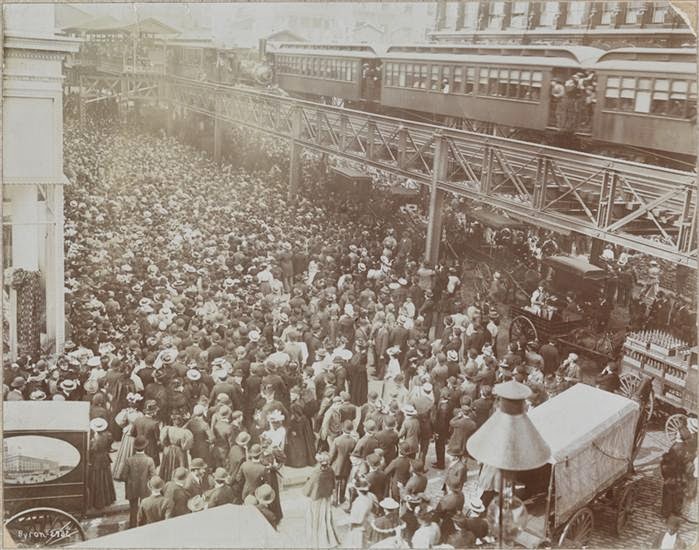
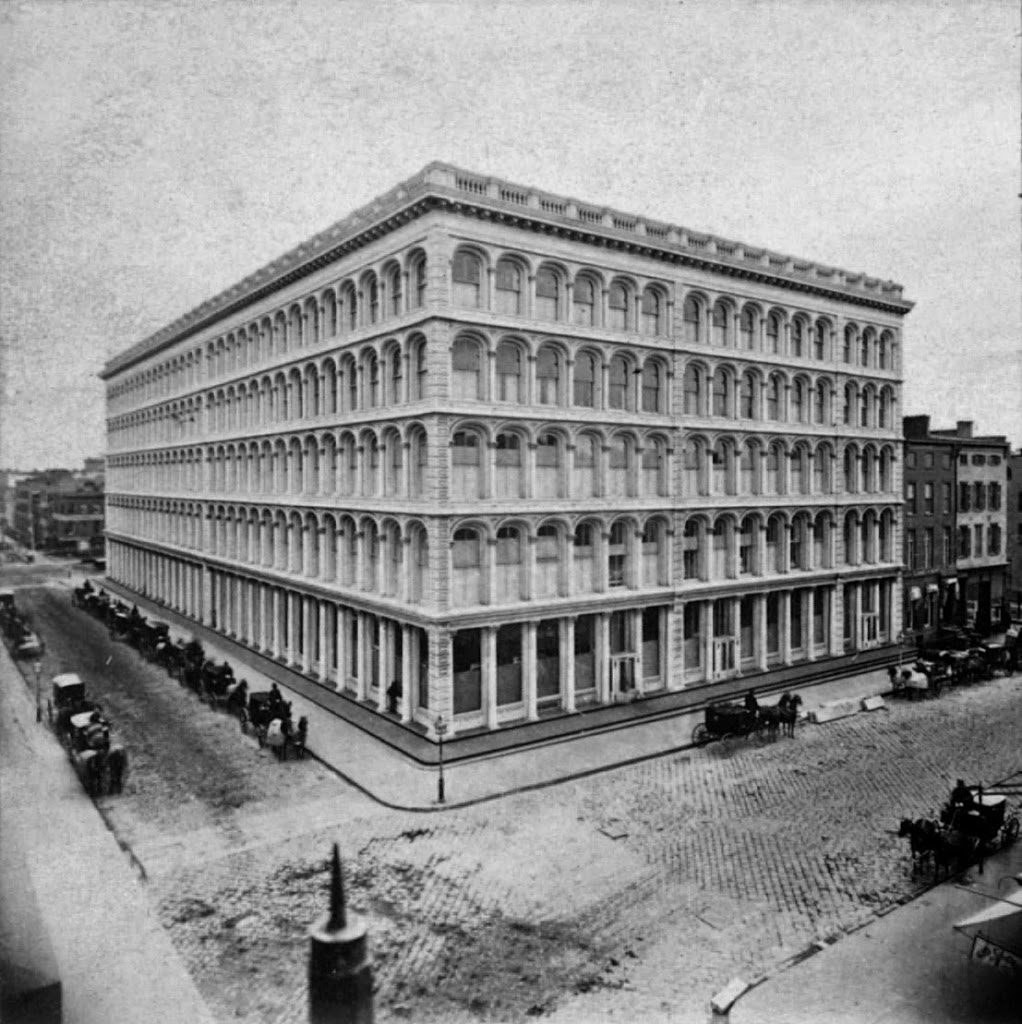
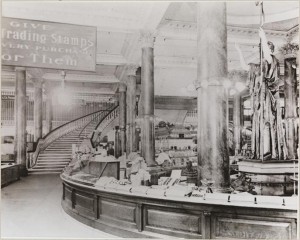
The opening of Siegel-Cooper department store, 1896, created one of the great mob scenes of the Gilded Age.  Today, TJ Maxx and Bed Bath and Beyond occupy this once-great commercial palace.  

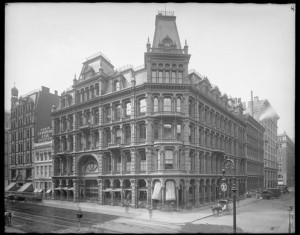
PODCAST  Ladies’ Mile — the most famous New York shopping district in the 19th century and the “heart of the Gilded Age,” a district of spectacular commercial palaces of cast-iron. They are some of the city’s greatest buildings, designed by premier architects.

Unlike so many stories about New York City, this is a tale of survival, how behemoths of retail went out of business, but their structures remained to house new stores. This is truly a rare tale of history, where so many of the buildings in question are still around, still active in the purpose in which they were built.

We start this story near City Hall, with the original retail mecca of A.T. Stewart — the Marble Palace and later his cast-iron masterpiece in Astor Place. Stewart set a standard that many held dear, even as his competitors traveled uptown to the blocks between Union Square and Madison Square.

Join us on this glamorous journey through the city’s retail history, including a walking tour circa 1890 (with some role play involved!) of some of the district’s best known buildings.

PLUS: Why is Chelsea’s Bed Bath and Beyond so particularly special in this episode? You’ll never buy towels there the same way again!


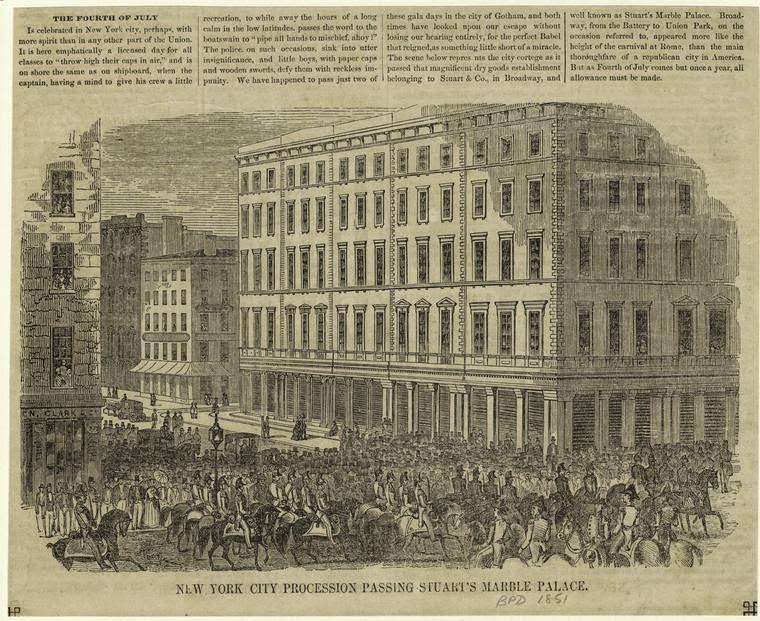
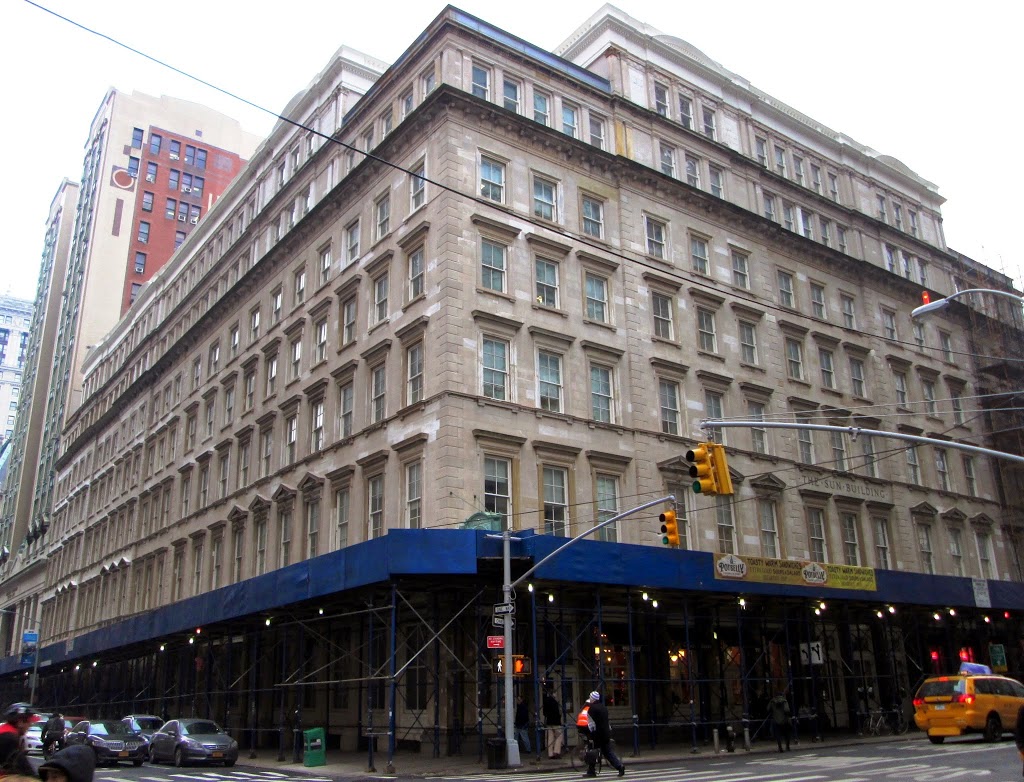
America’s first department store — A.T. Stewart’s Marble Palace, near City Hall. The building is actually still there today! The address is 280 Broadway. (Courtesy NYPL)

Stewart’s even more celebrated department store at Astor Place, nicknamed the Iron Palace with its cast-iron construction. Unlike Stewart’s first store, this one is no longer there. (NYPL)

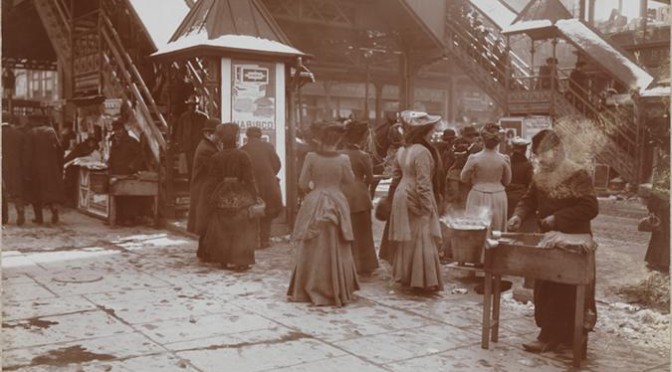
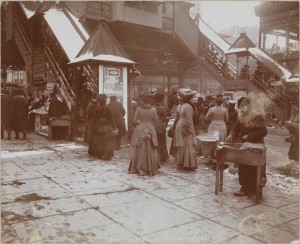
1903: Ladies on a freezing day, surrounding the 23rd Street entrance to the Sixth Avenue Elevated Railroad, placing them just a few blocks from the biggest department stores in the world. (Courtesy Museum of the City of New York)

6th Ave & 23rd St.

The entrance to Stein Brothers on 23rd Street. There’s a Home Depot in this building today, but you can still see the SB insignia over the door. And below, the street scene in 1908.(Photo: Edmond V Gillon, MCNY)

[32-46 West 23rd Street.]
[West 23rd Street from 6th Avenue East.]

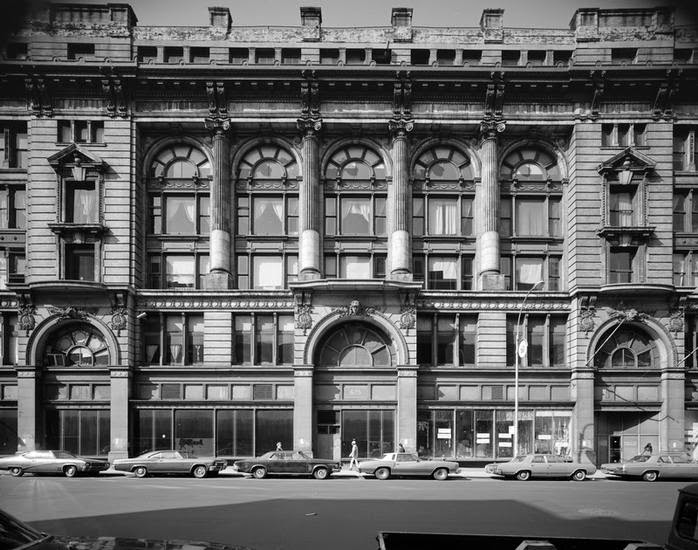
Adams Dry Goods, decades after the shop at closed. In later years, it was a Hershey’s plants and a military storage space. Today, on the ground floor, there’s a Trader Joe’s grocery store. (Photo: Edmond V Gillon, MCNY)

[675 Sixth Avenue.]

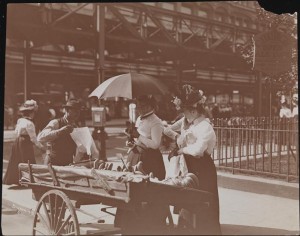
1901: Women in front of the Church of the Holy Communion, the elevated train in back of them. (MCNY)

Street Scenes, Sixth Avenue at 20th Street.

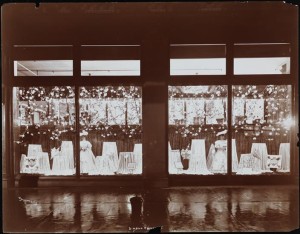
The windows at Simpson Crawford Co. at Sixth Avenue and 20th Street, 1904. (MCNY)

Simpson Crawford Co.

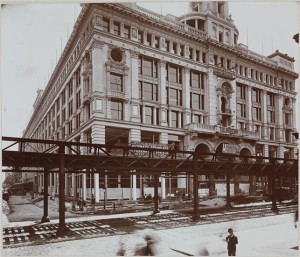
The Siegel-Cooper department store fountain, with a statue of Republic (by Daniel Chester French) and electric lights in a kaleidoscope of colors. And, below it, another view of Siegel Cooper from the opposite side of the tracks. (MCNY)

Siegel Cooper
Retail Trade - Dept. Store 1896. Siegel Cooper Co. (Exterior) 6th Ave at 18th St.

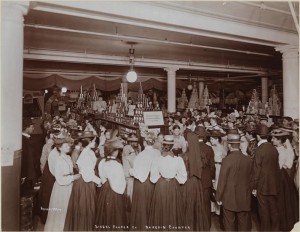
Ladies in the Siegel Cooper canned goods department. The store canned its own food. Very organic! (MCNY)

Retail Trade Dept. Store.

An overhead shot of Macy’s at 14th Street and the Sixth Avenue elevated railroad station. (MCNY)

[6th Avenue and 14th Street.]
Broadway and East 20th Street. Lord and Taylor, old building.

Lord & Taylor’s, at Broadway and 20th Street, 1904. (Wurts Brothers, MCNY)

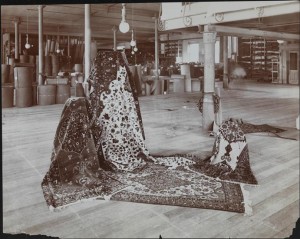
Inside WJ Sloane, Carpets Rugs and Furniture, at Broadway and 19th Street (MCNY)

W.J. Sloane, Carpets Rug & Furniture, 19th St. & Broadway.

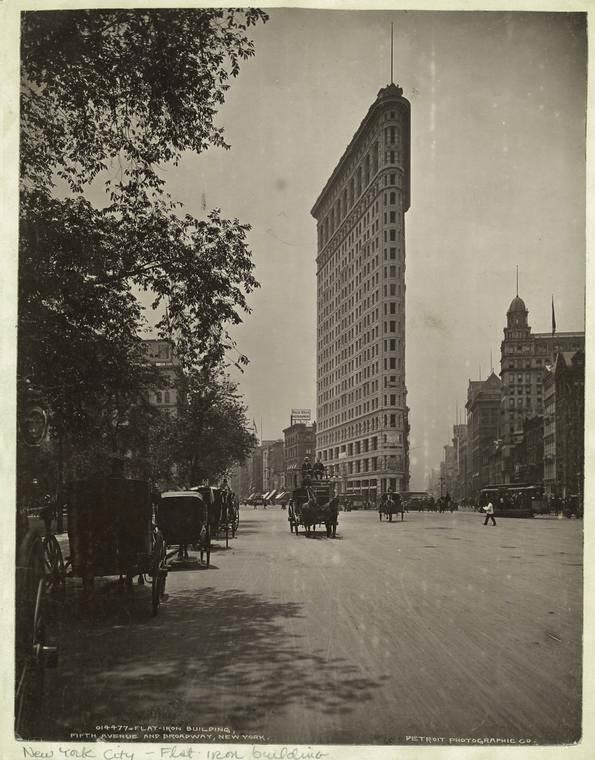
The Flatiron Building, completed in 1902, is considered part of the Ladies Mile Historic District, even though it was never a department store.

Categories
Gilded Age New York Neighborhoods

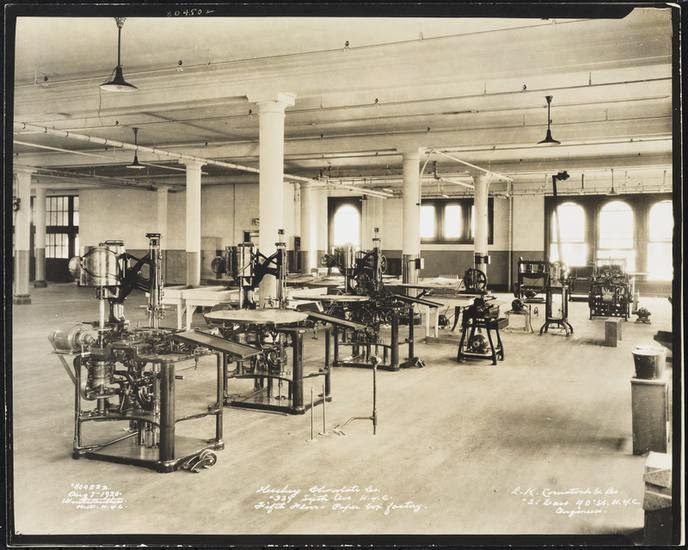
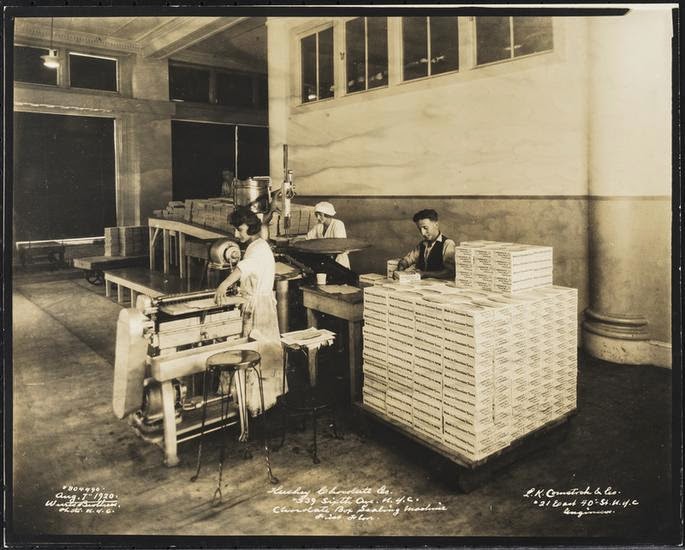
Chelsea and the Chocolate Factory (or rather, Hershey and his Sixth Avenue chewing gum plant)

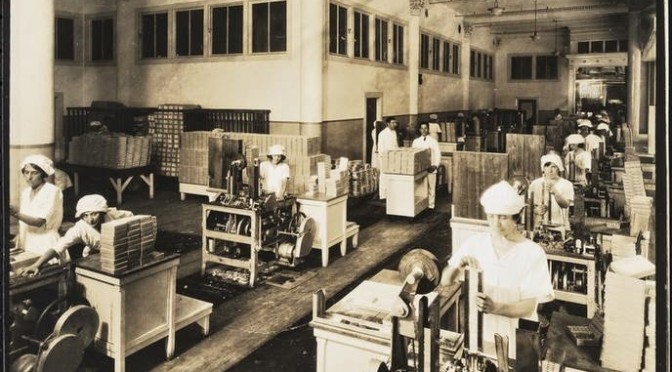
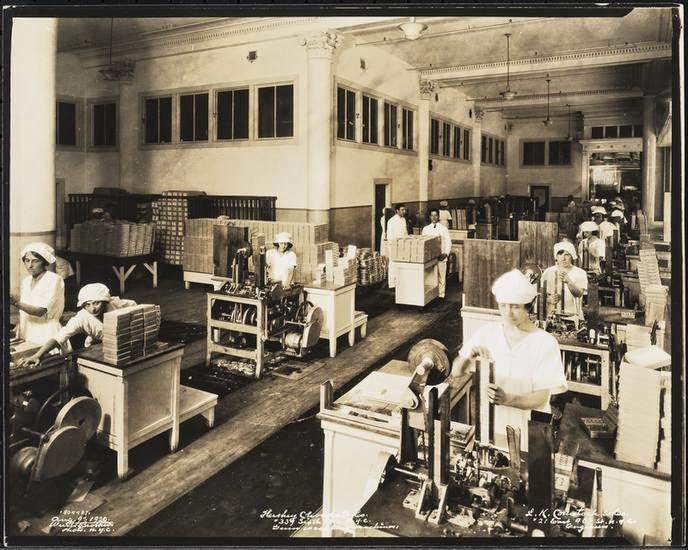
Hershey’s employees cut and pack chewing gum at Sixth Avenue and 21st Street.

For five glorious years in the early 1920s, Hershey’s Chocolate operated a candy plant at Sixth Avenue, in the neighborhood of Chelsea. While chocolate bars and chocolate coating for other candies were produced here, the Chelsea plant primarily focused on a new confection, one that ultimately failed — Hershey’s Chewing Gum.

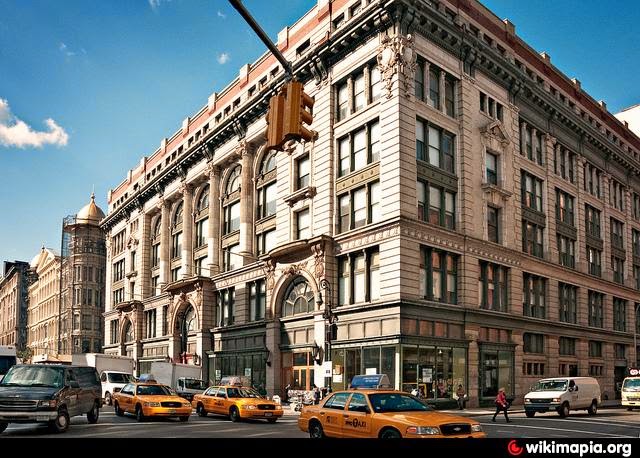
But let me back up. The grand building that sits there today — one of the prominent members of Ladies Mile Historic District and the current home of Trader Joe’s — was originally built for the department store Adams Dry Goods.  Founded in the mid-1880s, Adams Dry Goods had been slowly expanding along this block, enjoying a surge of business thanks to the Sixth Avenue elevated train.

Below: The Adams Dry Goods building in 1978 (photo by Edmund V Gillon, MCNY): 

Other department stores sprouted up along the street, most notably the Siegel-Cooper department store in 1896.  (That building is home today to Bed, Bath and Beyond.)  Siegel-Cooper was a sparkling Beaux-Arts treasure, 750,000 square feet with dozens of departments for shoppers, and its ambition and size drew headlines and the curiosity of New Yorkers.

Naturally, Samuel Adams, the proprietor of Adams Dry Goods, wanted to compete with this retail behemoth, so in 1899 he hired Siegel-Cooper architects DeLemos & Cordes to design a massive new store with an opulent interior central court.  Large second floor windows offered views to elevated train passengers of the store’s most notable trade — men’s clothing.  (Much of Ladies Mile, in contrast, catered to women.)

Below:  Adams Dry Goods today. After a period in the 1990s-2000s as a Barnes and Noble bookstore, today it holds a Trader Joe’s:

But Adams’ timing was rather poor.  For just a few years later, the more successful department stores (including Lord & Taylor and B Altman) fled to Herald Square and Fifth Avenue.  Hugh O’Neill’s, the department store one block south, bought Adams Dry Goods and prepared to merge the businesses, even planning an underground tunnel under West 21st Street to link to two large structures.  This never came to fruition, and both O’Neill’s and Adams Dry Goods went out of business for good.

The abandoned building was briefly used by the US Army for storage before being acquired by a most unusual new tenant — Hershey’s Chocolate.


Candy man Milton S. Hershey had been successfully manufacturing treats in his hometown of Derry Church, Pennsylvania (which now took the mogul’s name — Hershey) and was looking for a another hit after the success of the Hershey’s Kiss.  He thought chewing gum was the logical next step.

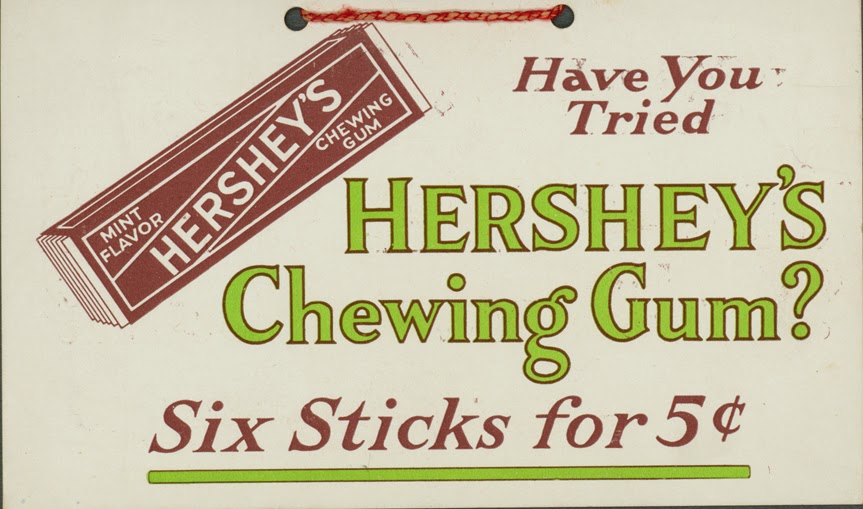
In New York he bought some gum-making equipment and had it shipped to his Pennsylvania plant where production began on Hershey’s Chewing Gum. “Six sticks for a nickel” went the slogan.

In January 1918, Hershey leased Adams’ former department store on Sixth Avenue and eventually moved elements of his candy production there, including his entire chewing gum business.

I haven’t been to locate the exact reason why.  Early in his career, Hershey operated a candy shop on Sixth Avenue and 42nd Street, and his wife had been a clerk at B Altman’s a few blocks down.  With his chief competitor Wrigley’s located in Chicago, perhaps his return to New York was his official stab at planting roots in an urban market.

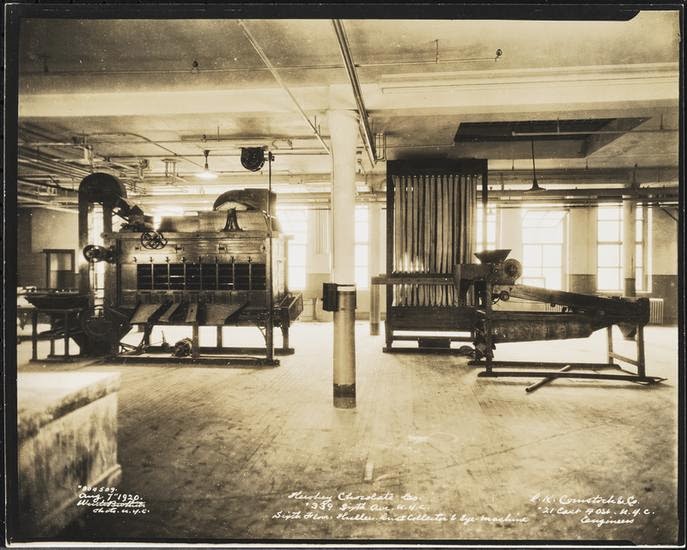
Soon the Sixth Avenue shop was whirring with the sound of boilers, mixers, candy presses and wrapping machines, sending out five thousand boxes of chewing gum a day, and a lesser amount of other candy items.  Wheat was carried in from the Pennsylvania plant and added to the gum to make it more chewy.

As you can see here, the implements of candy-making fit oddly into the cavernous Sixth Avenue department store:

Sadly, future residents of Chelsea would be robbed of the delightful aromas of chicle and chocolate, as Hershey’s chewy offering did not take off.  With raw ingredients being hard to obtain in the early 1920s, the product was discontinued, and Hershey eventually closed the plant in 1924.

However I’m sure you can buy gum at Trader Joe’s that currently occupies the building.

Hershey’s plant photographs courtesy the Museum of the City of New York (see originals here)

Categories
Those Were The Days Wartime New York

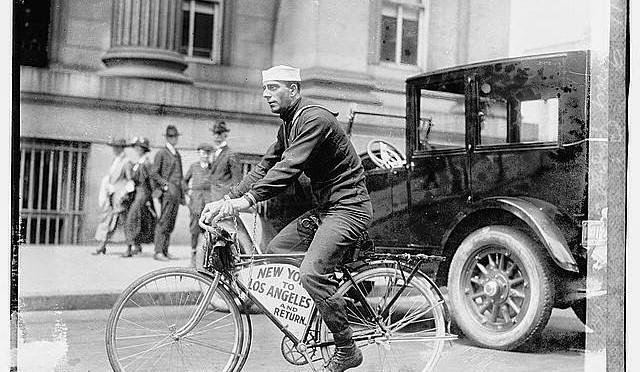
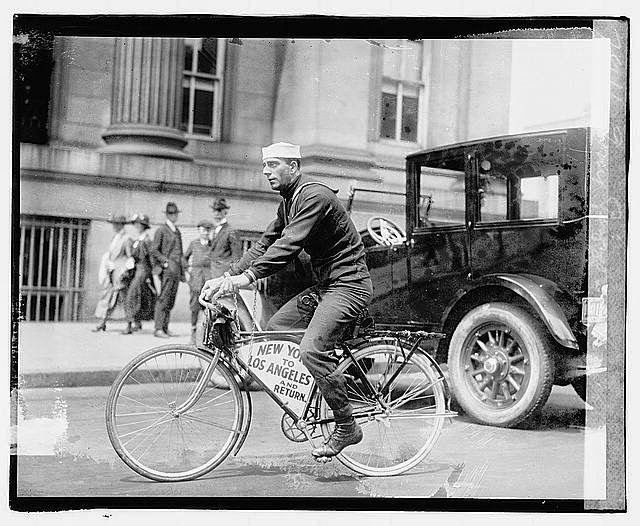
The adventures of Tony Pizzo, the sailor handcuffed to a bike

It’s Fleet Week!  The streets of New York are filled with hundreds of Marines and sailors who arrived yesterday in New York Harbor.  I’m pretty sure, however, that none of them hit the streets handcuffed to a bicycle.

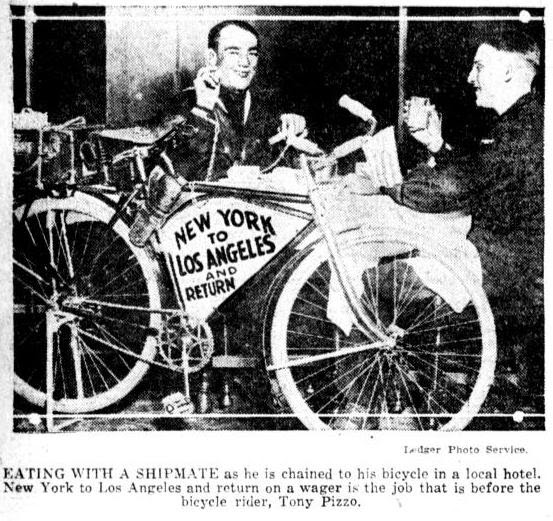
That distinction goes to the enigmatic Tony Pizzo who, in 1919, rode his bicycle from Los Angeles to New York City.  And then, the following year, he rode it back again.

Pizzo set off from Los Angeles in grand style 95 years ago this week (May 21, 1919), joined by fellow sailor C.J. Devine who was attached to another bicycle.  The men were handcuffed to these specially designed bikes during a ceremony in Venice Beach by none other that Hollywood’s greatest star — Fatty Arbuckle.

Pizzo embarked on the trip as a dare from Arbuckle, who wagered the sailor $3,500 that he couldn’t make it to New York by November 1.  Why a military man was wiling away his time doing this in the months after World War I is beyond me.  (One press clipping describes him as “a discharged sailor.”)  In reality this was an elaborate advertising stunt.  One newspaper reports that “[t]he men were advertising the Fisk tire, Morrow brakes and Crown bicycles.”

“One can hardly realize the trouble that these two riders were put to,” remarked the League of American Wheelmen, “for they had to eat, drink, wash and take care of themselves generally while handcuffed to their wheels.”

The two men made their way across America, selling souvenir postcards to fund their cross-country journey.  Unfortunately, in Kansas, Devine was hit by a car, so Pizzo went the rest of the way alone.

He finally arrived in New York on October 30, greeted by guests at the Hotel McAlpin in Herald Square. He checked into a room still handcuffed to his bicycle and was only separated from the device a day later by Mayor John Hylan.

Pizzo “regarded his bicycle with dislike,” according to the New York Times. “[H]e would not do it again for one million dollars.”

But, in fact, he did do it again, re-chained to the same bike, riding back to Los Angeles the following year.  Fortunately, Devine had recovered from his injuries and accompanied Pizzo as his manager.

Below: From a Philadelphia newspaper, May 1, 1920

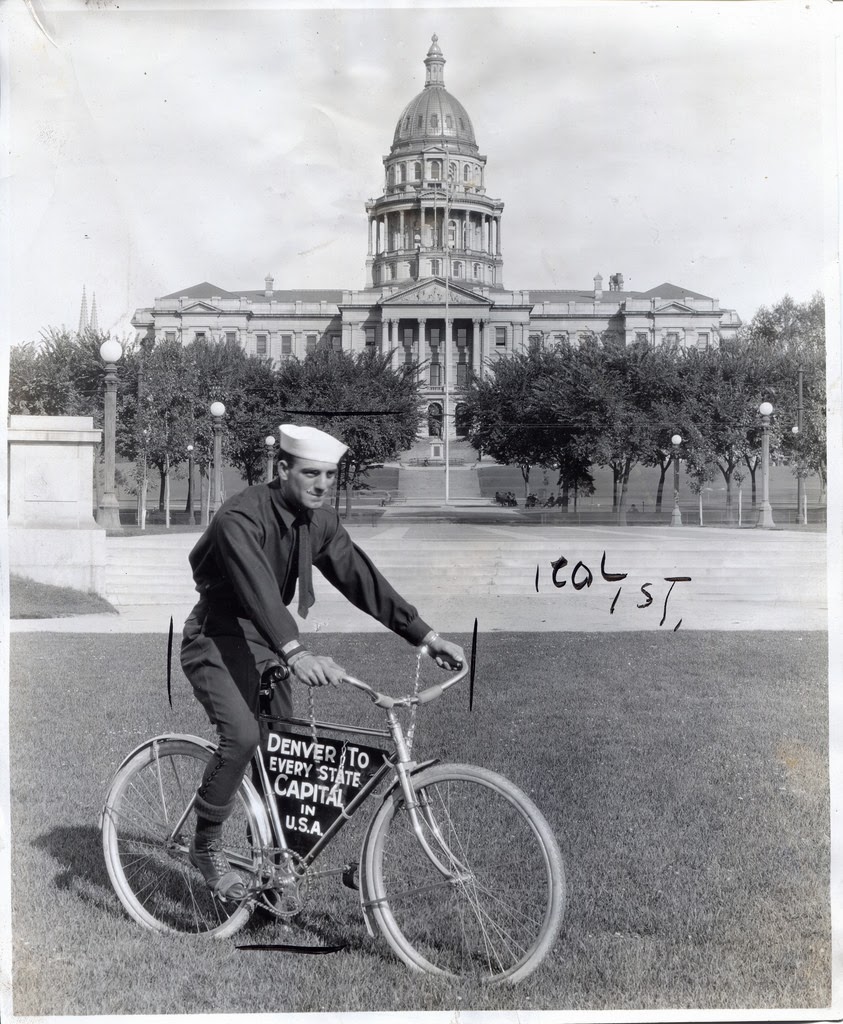
Apparently Pizzo just couldn’t stop biking.  In 1921, he embarked on another dare, the intent of which is indicated on his retooled bicycle below — to visit the governors of all 48 states. (picture courtesy Flickr/Zaz von Schwinn)

Categories
Amusements and Thrills

Coney Island’s many death and destruction amusements

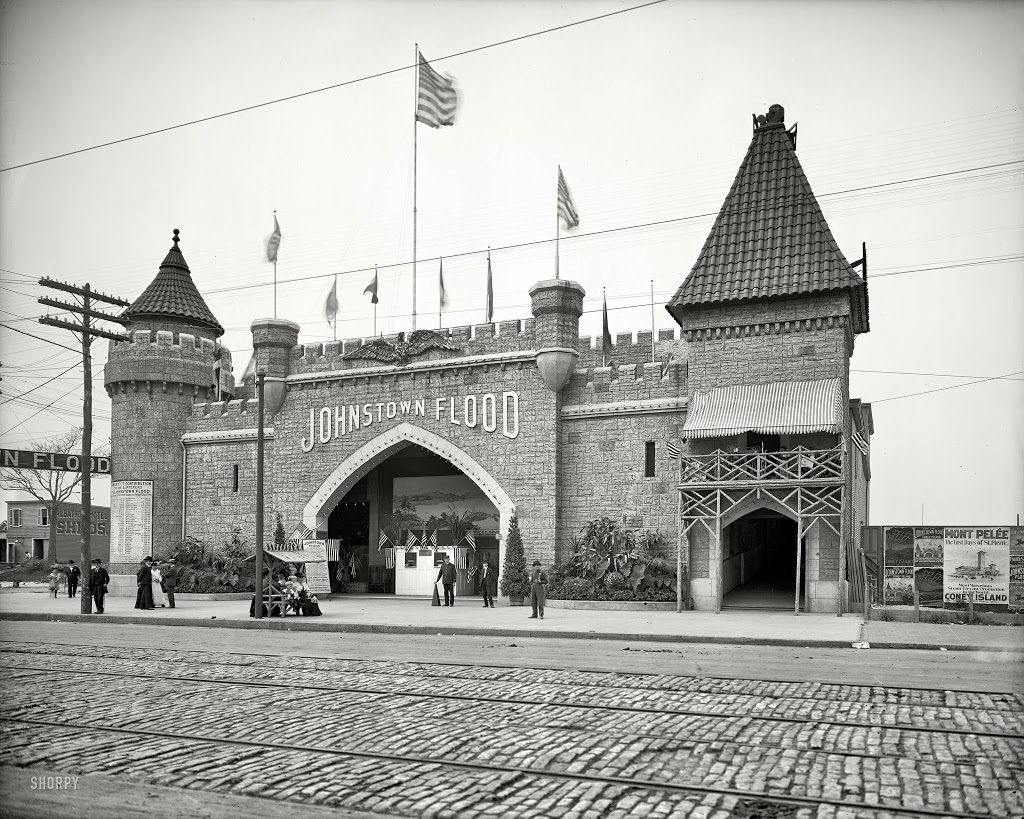
The entrance to the Johnstown Flood presentation (Cleaned-up photo courtesy Shorpy)

On May 31, 1889, a dam near the town of Johnstown, PA, collapsed after a brutal day of torrential rain, flooding the valley with 20 million tons of water and destroying everything in its path. There was virtually no escape, and 2,209 people died in the deadly flood.  Railroads, bridges and iron works were wiped off the map.  It remains one of the greatest disasters in America history.

Several years later, in 1905, on the Coney Island boardwalk, visitors could relive the danger in a bizarre reenactment set upon one of the biggest stages in the United States.  That’s entertainment!

The elaborate amusement, touted as “the greatest technical production in the world,” was only one of several theatrical presentations offering death and destruction, vivid dioramas of history and horror, for the pleasure of summer audiences.

These strange amusements were a precursor to the modern Hollywood disaster film, but they also served a more demonstrative purpose.  They provided Coney Island with a way to compete with Broadway, using new technologies and sophisticated stagecraft to recreate nature’s most horrifying scenarios.  Crowds marveled at the trickery, often rendering events with a macabre beauty.

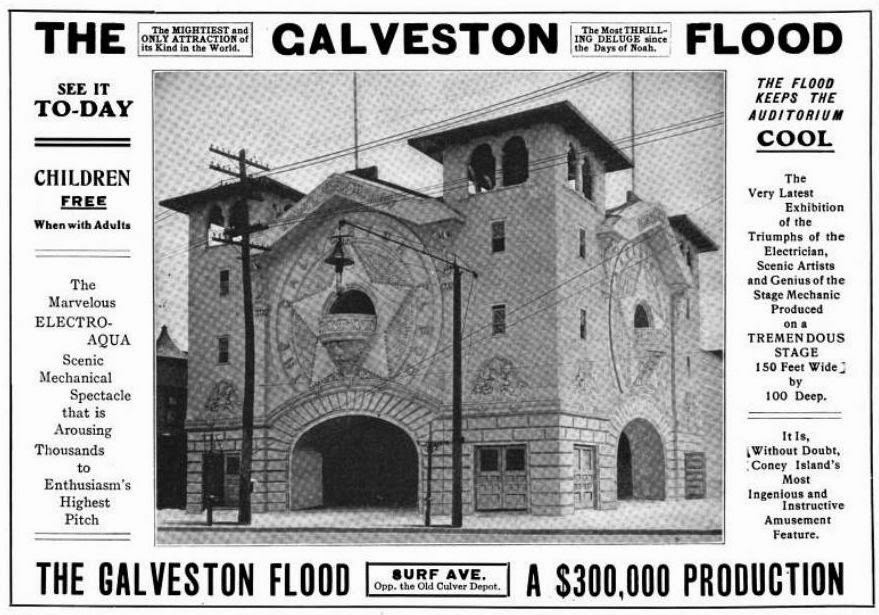
On Surf Avenue and 17th Street, one could visit the horror of the Galveston Flood, recounting the 1900 disaster (actually a hurricane) that killed over 8,000 people.  The Evening World declared, “How the very spirit of the horrible hurricane can be caught by mechanical and electrical devices is the secret that will make the Galveston flood famous.”

Down on Fifth Street, audiences delighted to a revival of the eruption of Mount Pelee, which killed almost 30,000 people in 1902.  Opening just two years after the disaster, the Pelee attraction was particularly luscious and comfy — “cooled by six big ventillators and ventillating fans run by electric motor” — as audiences witnessed the effects of faux lava catching houses on fire. [source]

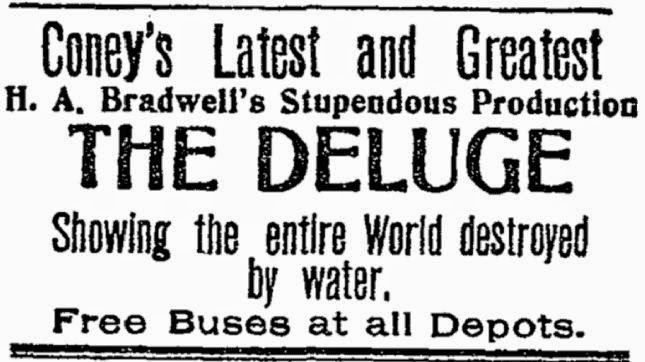
Not to be outdone, in 1906, impresario Herbert Bradwell, the producer of the Johnstown Flood attraction, expanded the water and light effects to recreate Noah’s Biblical flood.  The Deluge was both cheap spectacle and a morality play in five scenes, employing a flagrant water and light show to retell the ancient Biblical story, from the construction of the Ark to a host of tableaux outlining a possible future of “universal peace.” [source]

Coney Island’s most famous amusement parks certainly got in on the apocalyptic action.  Luna Park presented the thrill of fire-fighting with the 1904 show Fire and Flames.  Dreamland also joined the fray that year with Fighting The Flames where patrons could witness the horror of burning tenement.

Later that year, Dreamland replaced its fire fantasy with a vivid retelling of the San Francisco Earthquake, mere months after it killed almost 3,000 people and leveled the city.  The Earthquake featured a cast of 350 people within a stage creation of pyrotechnics and smoke effects, leveling the city on a nightly basis.

Below: Luna Park’s Fire and Flames and Dreamland’s Fighting the Flames were both featured in separate films.  


Perhaps the most dazzling of the many death and destruction features were the various incinerations of the ancient city of Pompeii.

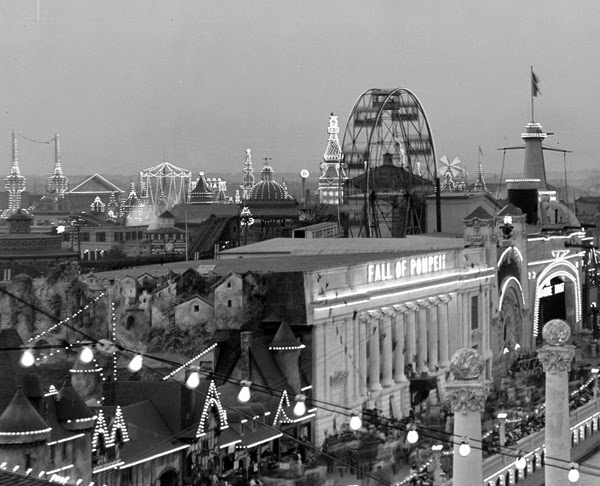
The first came in 1903 down near the Manhattan Beach Hotel with The Last Days of Pompeii, which nightly decimated the ancient Greek city, using a host of firework tricks and various maudlin theatrics. A year later, Dreamland brought the Fall of Pompeii, with a thrilling simulacrum of fire, ashes and lava. [picture source]

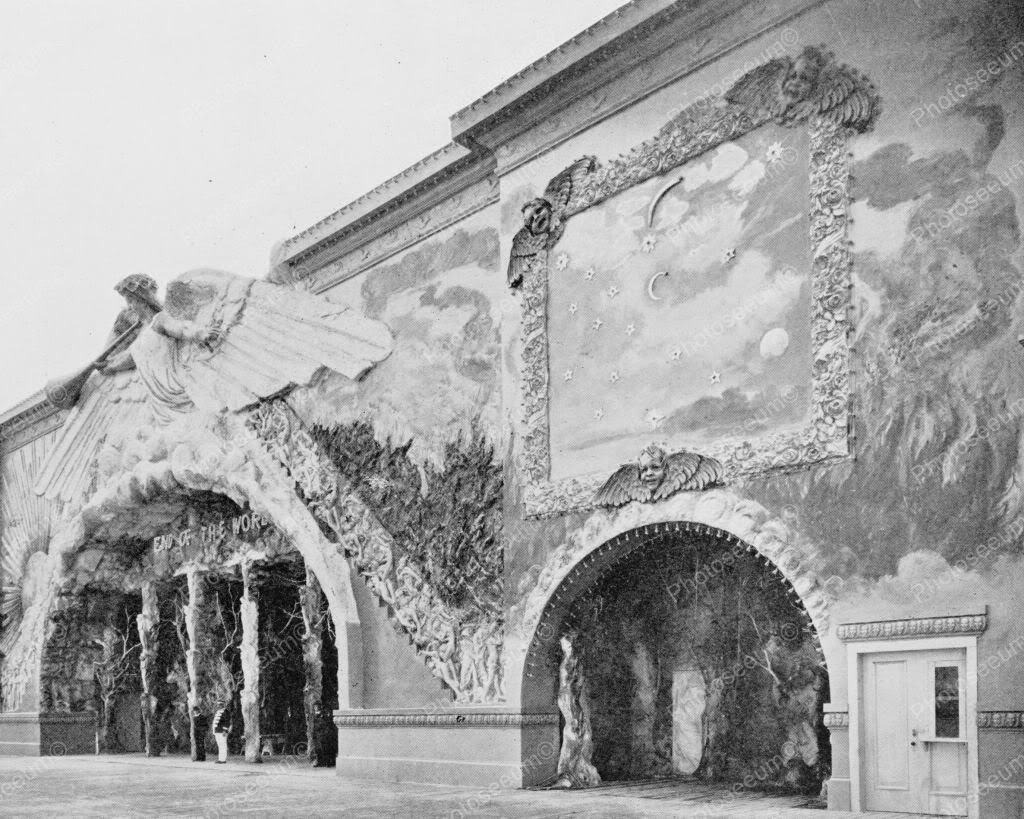
But in terms of the sheer amount of destruction imaginatively depicted, nothing could top Dreamland’s 1906 show called The End of the World, which destroyed all of mankind in an auditorium seating 1,200 people.

“The expulsion of Adam and Eve from Paradise and the destruction of the world by fire are the principal episodes in the production in which … more than a hundred people, a large choir and an organ take part.” [source]

Below: The entrance to the End of the World

Categories
Neighborhoods

Five items from the Village Voice, 50 years ago this week

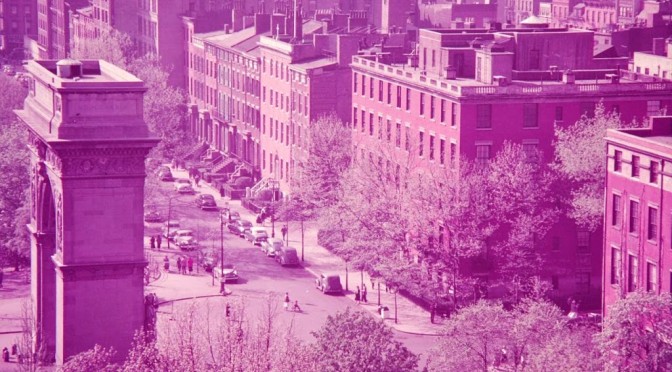
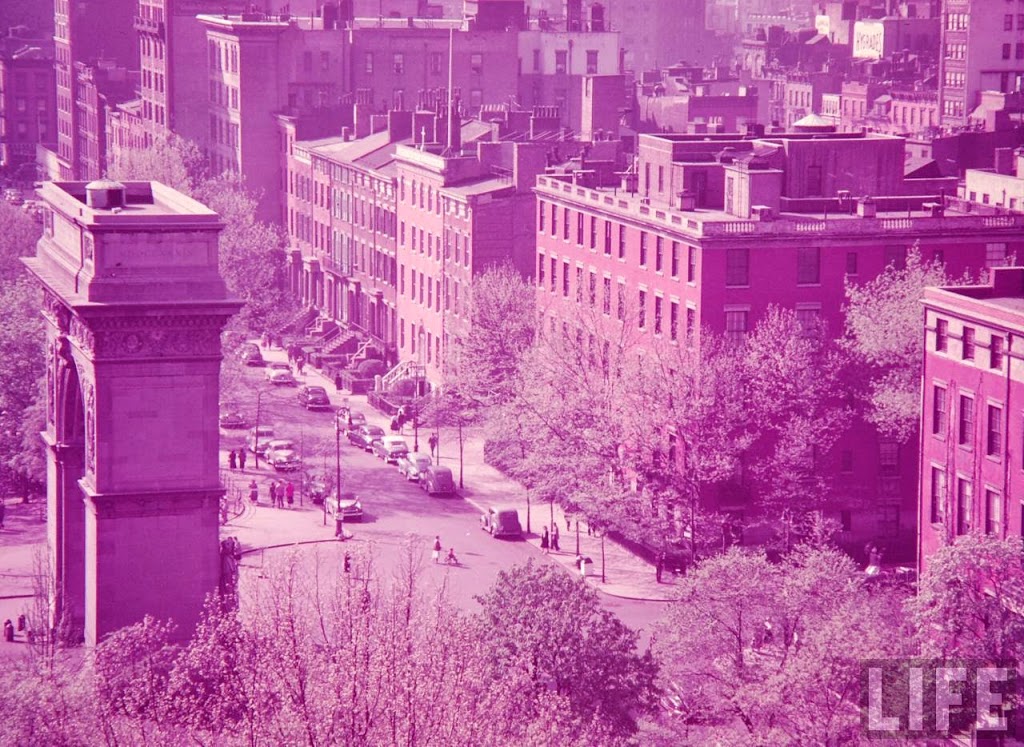
Washington Square North, looking west, 1950, photo by Walter Sanders, Life Magazine

The entire back catalog of the Village Voice, New York’s original alternative weekly, is available online through Google News.  The early issues are especially full of character, a scrappy counter-culture organ which provides an interesting window into downtown Manhattan.  Here are some highlights from an issue which came out fifty years ago this week:

1) Washington Square Park, both the physical epicenter of Greenwich Village and the gathering place for the Village’s various cultural factions, faced a possible makeover by the city in 1964.  “This plan has two objectives.  The first is to clean up the park, which is now physically run-down and neglected.  The second, in response to complaints by adjacent property-owners, is to discourage beatniks and other ‘undesirable elements’ from congregating there.” [source]

The park had been a magnet for the beatnik scene since the early 1950s.   The folk singers who would gather on Sunday afternoons had won a major victory in 1961 after a so-called “beatnik riot” convinced the city to allow musical crowds to congregate there

The park was eventually altered that year, but one major change would have been applauded by all — the traffic lane that cut under the Washington Square Arch and through the park was officially closed.

2) Sara D. Roosevelt Park in the Lower East Side, meanwhile, remained a disheveled dump, and the Voice clearly saw it as a symbol of the city’s neglect of the poor. “While the Parks Department is champing at the bit to pour $750,000 into Washington Square …. Sara Delano Roosevelt playground resembles a post-war Berlin.  The latter, at Forsyth and Chrystie Streets, has been the scene of unrelieved wreckage for almost six years.  It was torn up to make way for a subway and no one one thought to put it back together again.

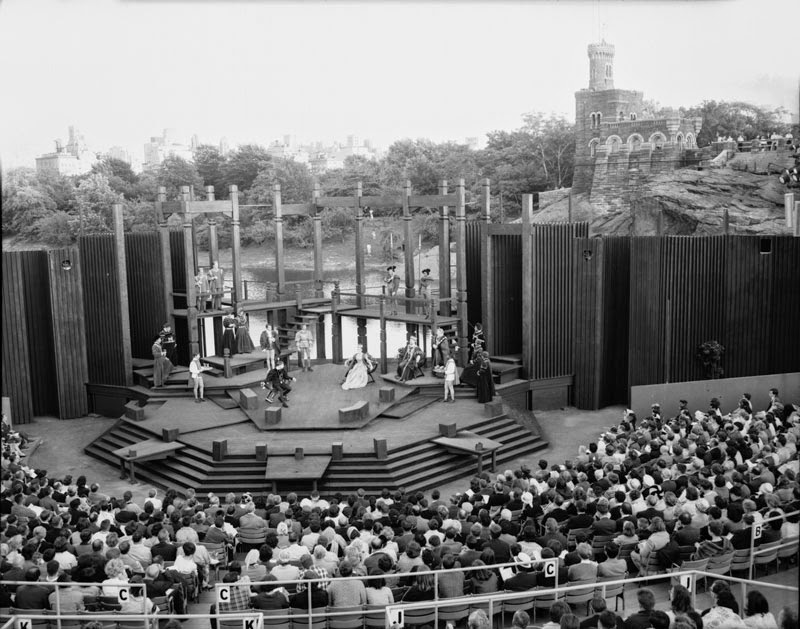
The Delacourte Theater, June 1964, a performance of Hamlet (courtesy NYC Parks)

3) The New York Shakespeare Festival has a new home at the Delacourte Theater in Central Park, but writer John Wilcock, author of the Village Square column, pines for the festival’s shaggier, less respectable days.  Respectability has rendered it commonplace, according to Wilcock. Now you have to line up to grab a seat!  “This is an improvement?”

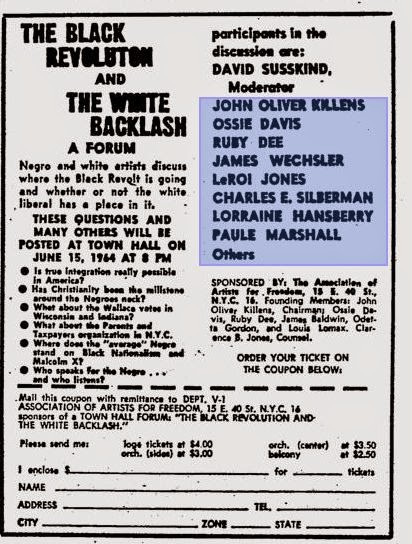
4) The Black Revolution and The White Backlash, a lecture at Town Hall, featured an interesting group of guests, including LeRio Jones (aka Amiri Baraka):

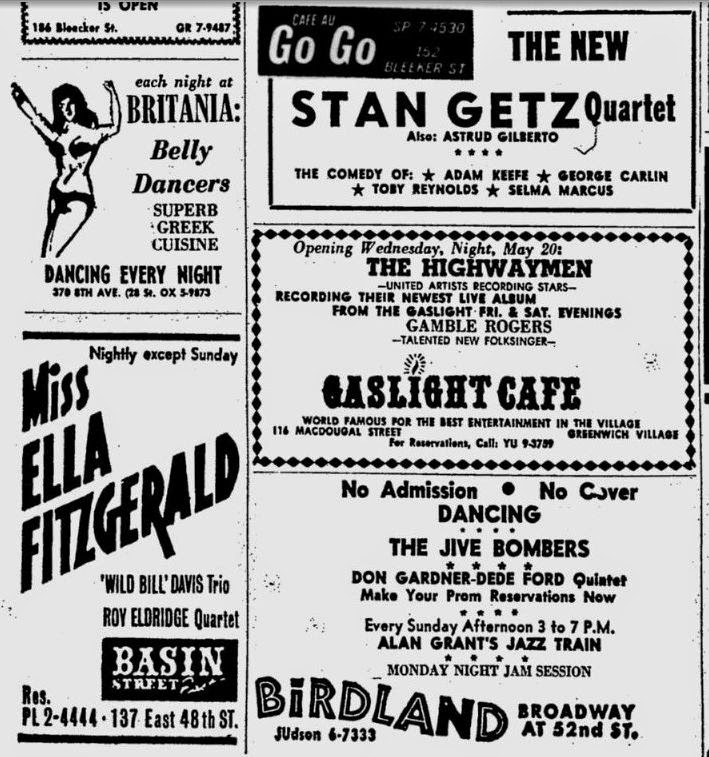
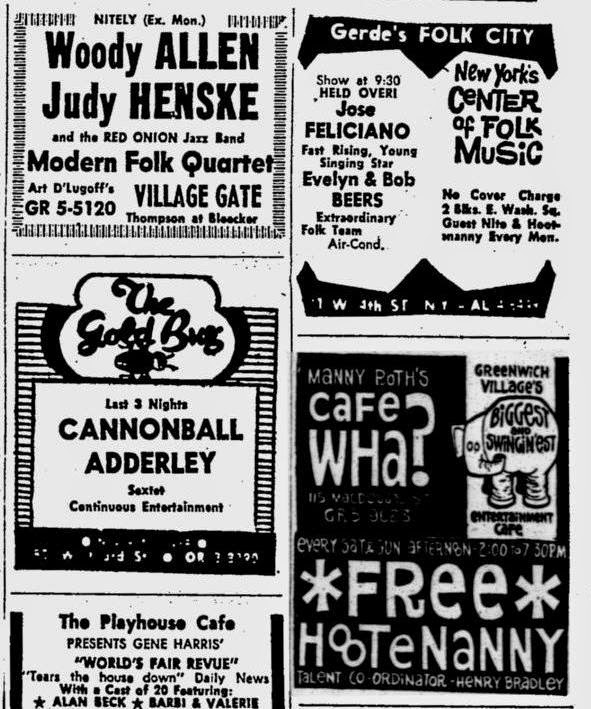
5) The jazz and folk clubs: A glorious sampling of musical icons that week — Ella Fitzgerald, Stan Getz, George Carlin, the Highwaymen, Woody Allen, Jose Feliciano, Cannonball Adderley

Categories
Brooklyn History Sports

The short shelf life of the Tip-Tops, the Brooklyn baseball team situated near the Gowanus River and named for bread

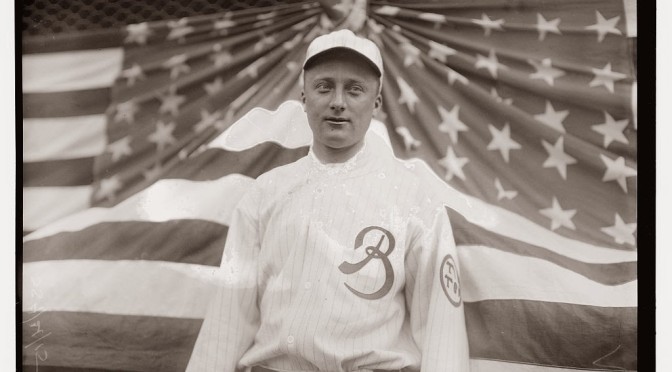
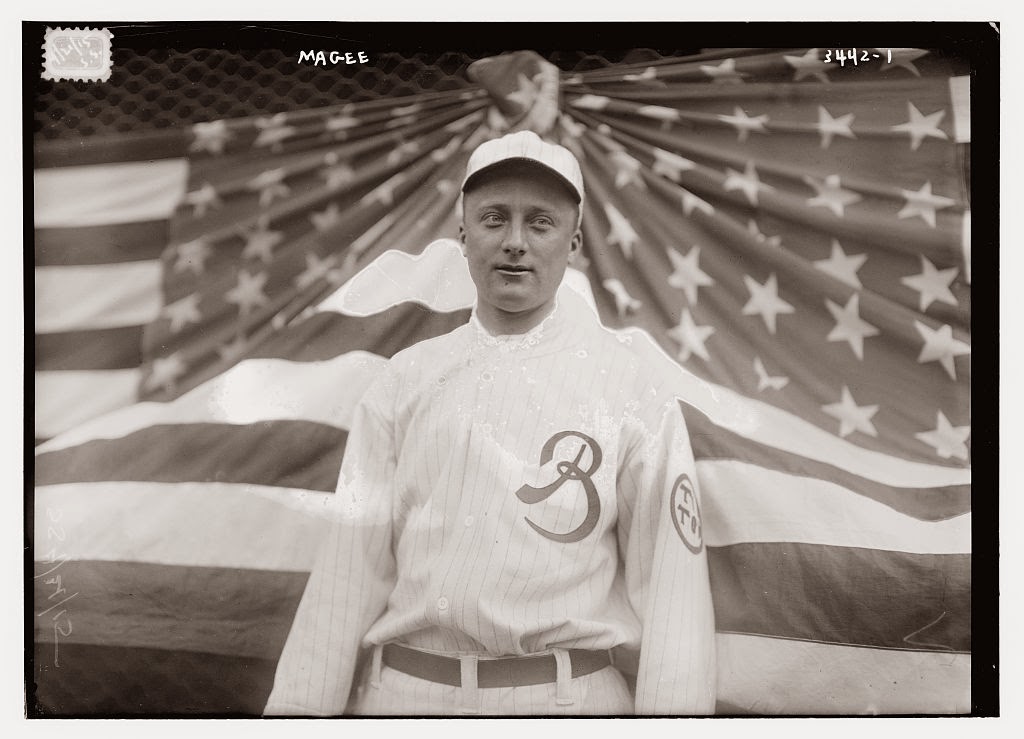
The piping hot uniforms of the Brooklyn Tip-Tops, worn by baby-faced manager Lee Magee

For a brief shining moment between 1914 and 1915, Brooklyn had two major league baseball teams — the legendary Brooklyn Dodgers and the not-so-legendary Brooklyn Tip-Tops.

Baseball has long been a sport of two parallel sports leagues — the National League and the American League — which have gotten together at season’s end to play the World Series since 1903.  But for an unusual moment in 1914 and 1915, there was a third baseball league called the Federal League.

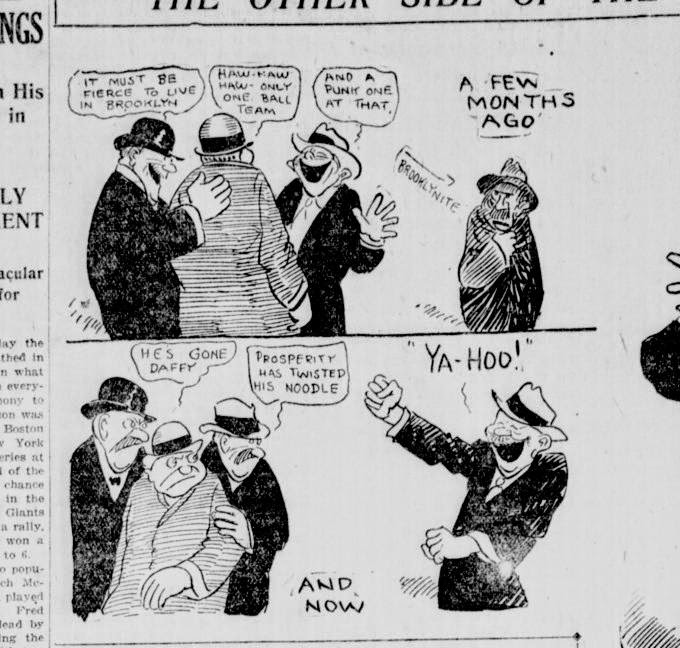
A cartoon from the May 12, 1914 New York Tribune:


The Federal League was formed specifically in protest to the signing practices of the two dominant leagues, doing away with pesky reserve clauses (binding players to certain teams for almost their entire careers) and offering higher salaries.  For a second, it seemed possible that the Federal League might provide a new way to organize a major sport.

There were eight teams in the Federal league which such unusual names as the Chicago Whales, the Newark Peppers and the Baltimore Terrapins. (Yes, somebody named a ball team after a turtle.)

Within the New York area, one franchise was awarded to Brooklyn, owned by a baker named Robert Ward.  His bakery for Tip-Top Bread (centered at 800 Pacific Street in today’s Prospect Heights) was obviously so lucrative that he eventually sank one million dollars in funding the team that eventually took the name of his baking enterprise — the Brooklyn Tip-Tops.

Brooklyn’s other team, the Dodgers, had conveniently vacated their old wooden field, Washington Park, for their brand new home Ebbets Field in Flatbush.  Ward hastily prepared to move the Tip-Tops into the Dodgers’ old home by paying for a spectacular upgrade to the dilapidated Gowanus park.  It was located between 1st and 3rd Streets at Fourth Avenue.

The baker, with his brother George S. Ward, sunk more than $250,000 into the new concrete-and-steel ballpark, situated so near the Gowanus that fans got a good whiff of its toxic odors on summer days.

The new park itself was rather flawed with bleachers extremely close to the field.  According to author Daniel Levitt: “[T]he tiny foul territory caused nearly all foul balls to end up with the spectators.  At the time fans were not allowed to keep foul balls … leading to a tacky atmosphere as team officials constantly wrestled balls away from fans.”

Another set of cheap sets, derisively called ‘sun bleachers’, which provided an unpleasant scorching experience during the summer, were quickly closed after some bad publicity.

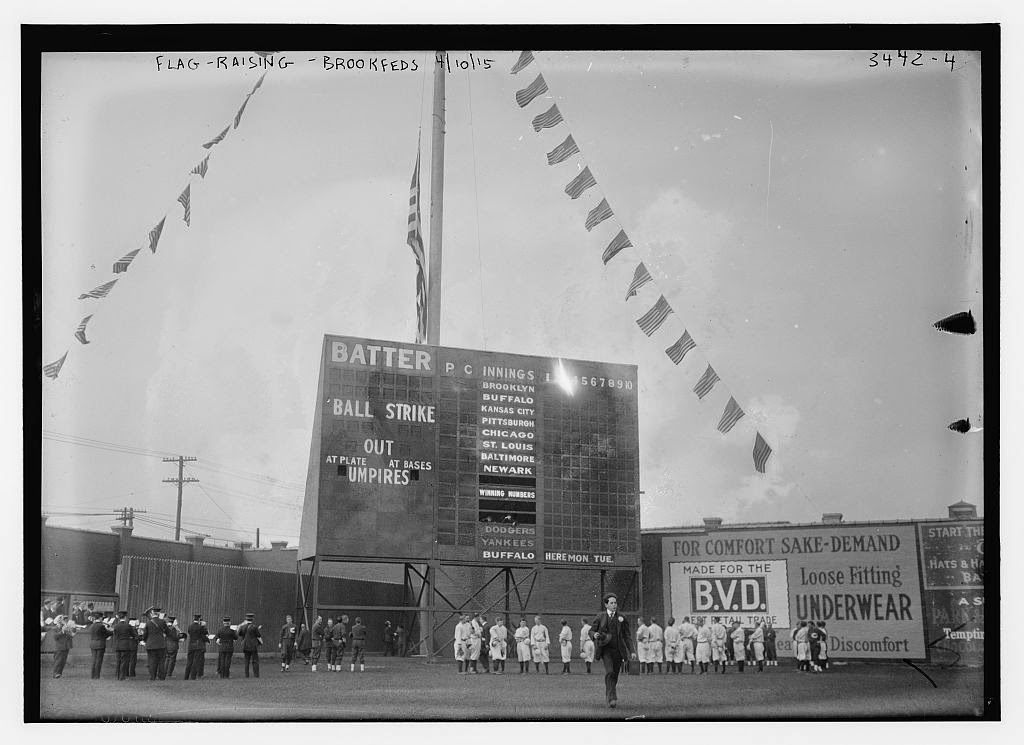
Below: Inside the refurbished Washington Park on opening day of their second (and final) season

Construction equipment still darted the grounds when they opened on May 11, 1914.  “The Federal League opened here with a bang,” said the Evening World.  “Bands, horns, sirens and vocal assistance from 16,000 fans gave New York’s fourth baseball club a noisy welcome.” (The other three being the New York Giants, the New York Yankees, and, of course, the Dodgers.)

At first, Brooklynites emphatically supported their new team, quickly nicknamed the BrookFeds.  But it soon became obvious that the team was nothing to write home about.

They finished their inaugural season with an unimpressive record of 77 wins, 77 losses.  In comparison, the Giants, located at the Polo Grounds, made it to the World Series.  However, the young team did finish better than the Yankees (57-94). And even managed to best the Dodgers (65-84)!

Given Ward’s religious beliefs, he instructed that no Sunday games be played at the park, a serious blow given that it was the only day off for many potential working-class fans.

Another strike against the team occurred during the winter when the team was unable to sign away more successful players from the other two leagues.  The one exception was the outstanding Lee Magee (pictured above in a Tip-Top uniform) who was hired away from the St. Louis Cardinals and even managed the team during the 1915 season.  He would later join the Yankees.

“If hustling, hard work and ambition among the players make a winning team, the Brooklyn fans will see one in Washington park this year,” Magee claimed.

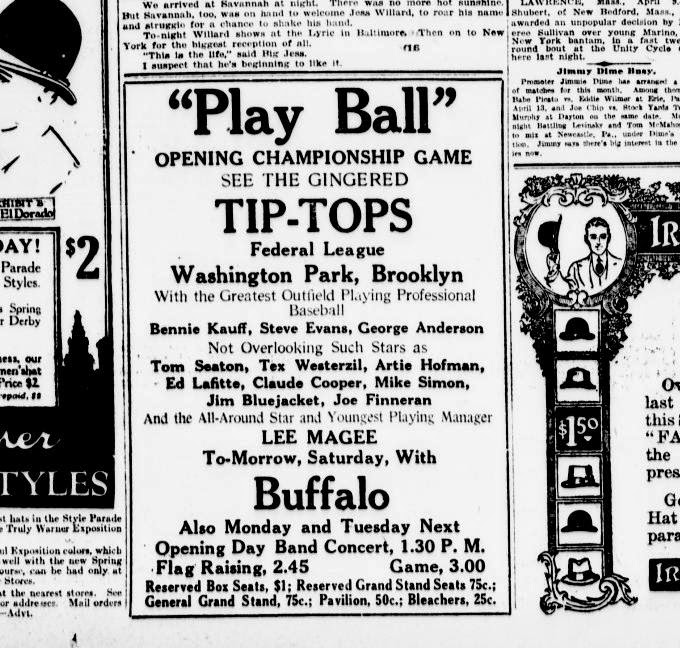
An ad for second season opening day, from the Evening World.  The flag raising mentioned below is pictured above:

The fans showed up for the beginning of season two, but enthusiasm quickly ebbed.  In fact, that first game against the Buffalo Buffeds (yes, that’s their name!) seemed to auger a host of frustrations for the rest of the season;  it went unusually long almost into night — the park was not lit — with “three hours of errors and wrangling.”

Behind the scenes, the two other leagues were busy trying to dismantle the Federal League who had filed an anti-trust suit in January.  It did not help the mood in New York that the Tip-Tops were doing worse under Magee.  They completed their season 70-82, second to last behind the scathingly terrible Baltimore Terripins.

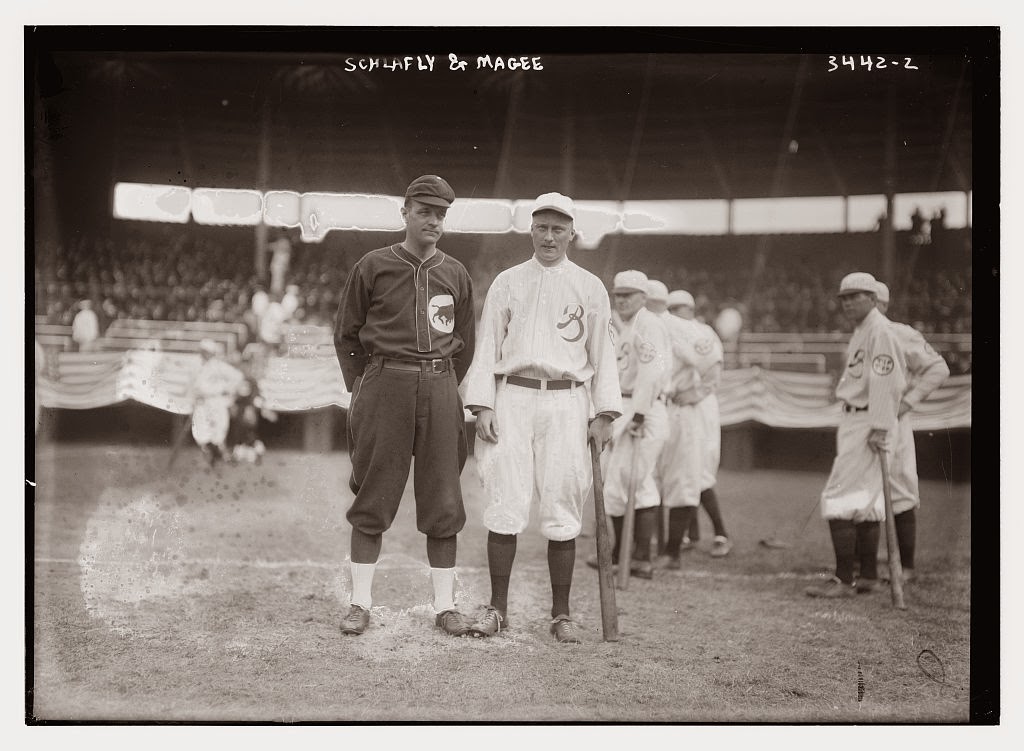
Below: Magee with the manager from the Buffalo Buffeds:


Machinations outside New York doomed the team.  The National and American Leagues managed to eradicate its rival through series of brokered deals and buyouts.  One of these deals changed the face of American baseball, when the owner of the Chicago Whales was allowed to buy the Chicago Cubs and move them into the Whales’ new stadium — Wrigley Field.

The only team that remained to battle back against the two leagues was the Federal League’s least successful team — the Baltimore Terrapins.  They sued the leagues saying it was a violation of the Sherman Antitrust Act.  The case went all the way to the Supreme Court who, in the landmark case Federal Baseball Club vs. National League, handed Baltimore something they were very familiar with — defeat.

On December 18, 1915, the Tribune revealed the fate of Brooklyn’s second baseball team:

“The Brooklyn Tip-Tops will withdraw from Washington Park, leaving the site barren of baseball and the city in the hands of the Superbas [Dodgers].  Organized baseball will reimburse George S. Ward annually with 5 percent of the assessed value of Washington Park for twenty years.”

By 1916, Tip-Top went back to meaning fresh white bread.

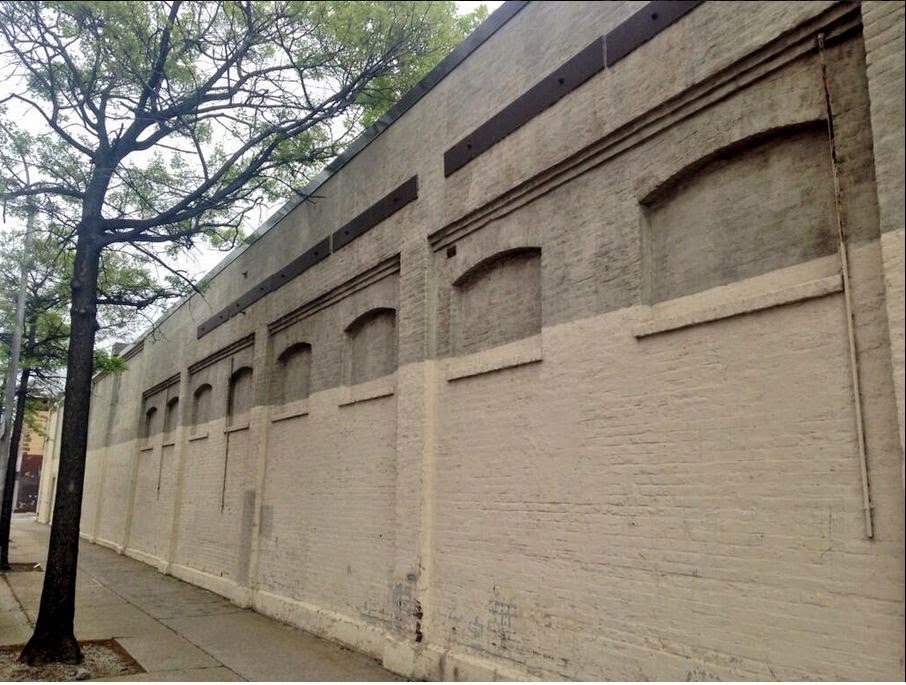
While Washington Park was eventually dismantled, a part of it still exists.  Today on the site is a yard for Con Edison.  The western wall along Third Avenue was once part of the ball park.  Perhaps if you go over to the Gowanus Whole Foods, you can walk over a block or two and check out this incredible piece of sports history!


Categories
Staten Island History

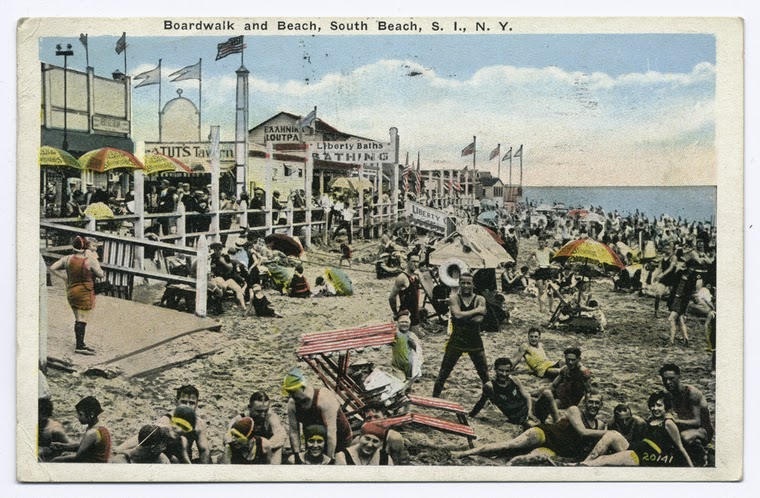
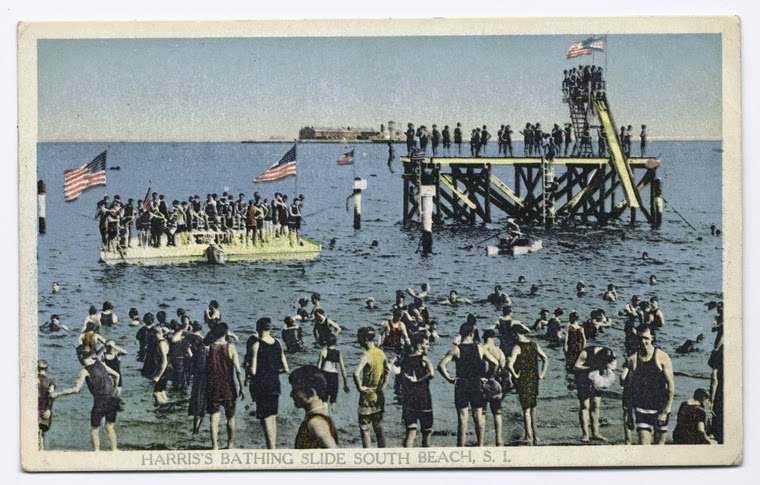
Forgotten paradise: Welcome to South Beach, Staten Island

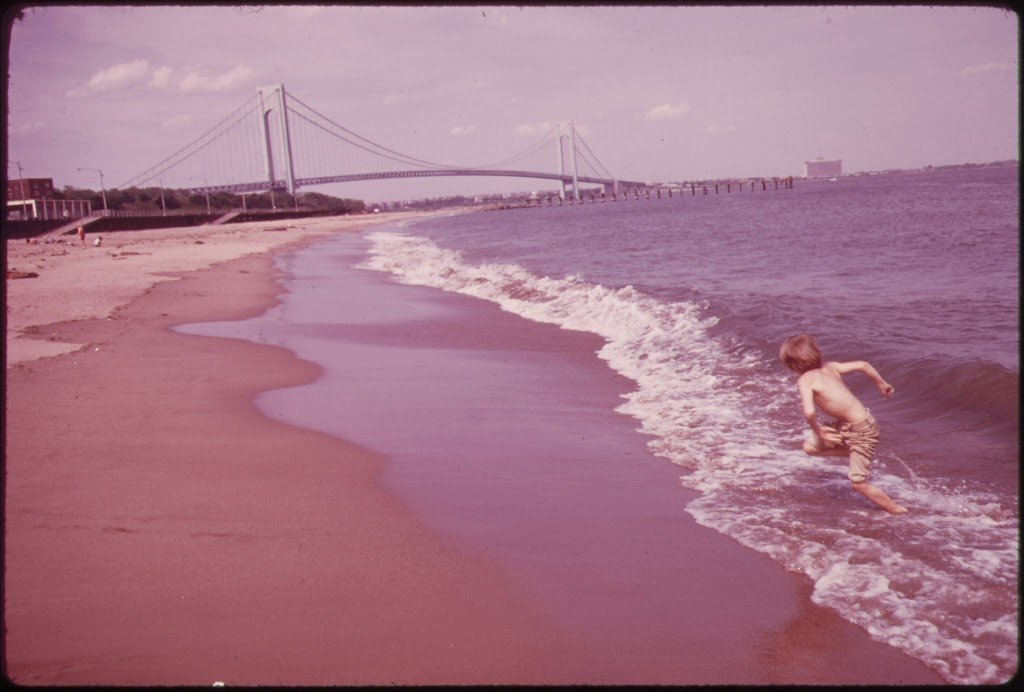
South Beach, Staten Island, 1973, photographed by Arthur Tress

As a resort and amusement mecca, the time of Staten Island’s South Beach has come and gone.  The waterfront community south of the Verrazano-Narrows Bridge still has a classic old boardwalk, built in 1935 as New Deal project and appropriately called the Franklin Delano Roosevelt Boardwalk.  And there are still recreational facilities for baseball and hockey found just off its old boards.

But priorities have changed here. Similar to the fate of Rockaway Beach, most of the amusements were gone by the 1970s,  Several sections of neighborhoods along the shore were gravely damaged in 2012 by Hurricane Sandy.

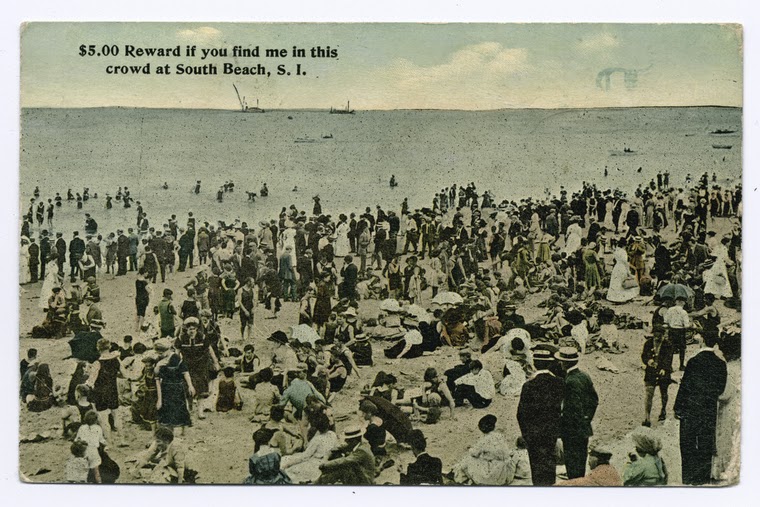
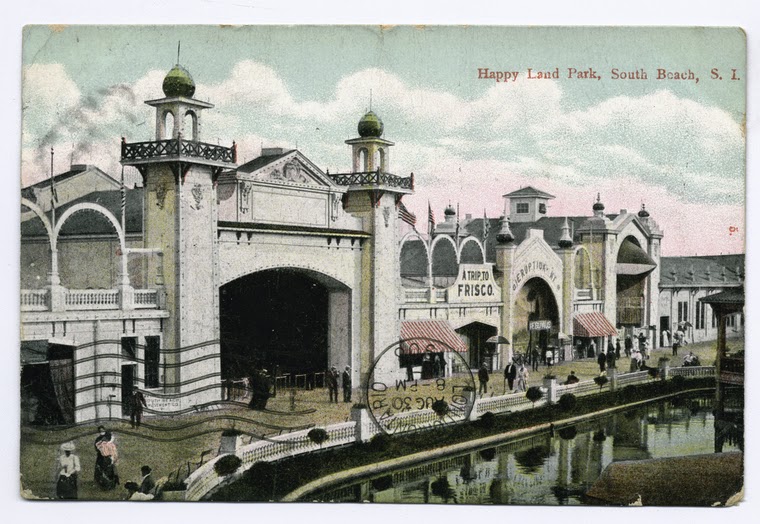
Its doubtful this area will ever return to its glory days of the early 20th century when Happyland Amusement Park brought a bit of Coney Island magic to the shore.  Further inland, real estate developers were changing the landscape with planned communities that eventually appealed to New Yorkers of Italian, Irish and Hispanic descent.

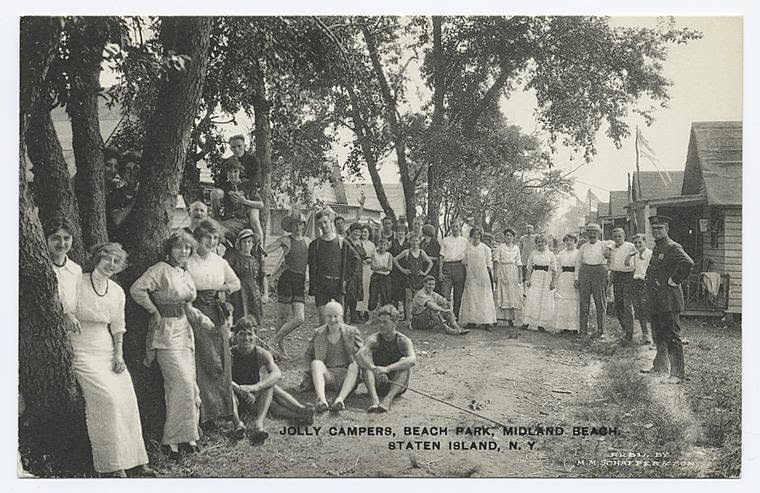
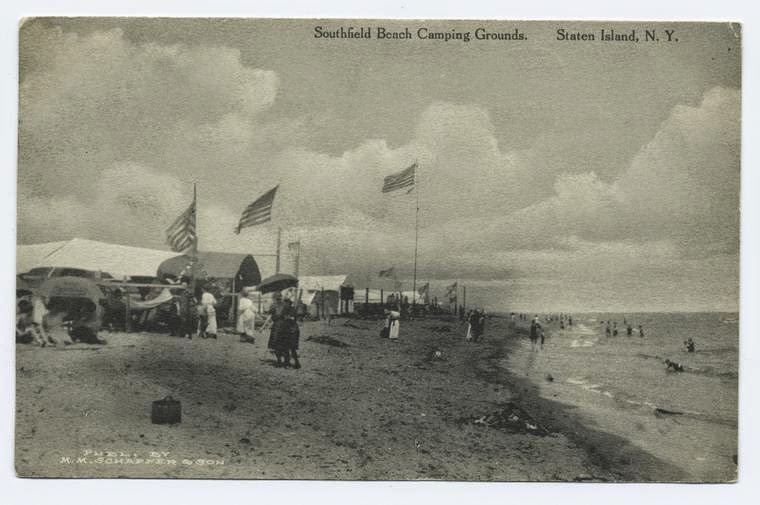
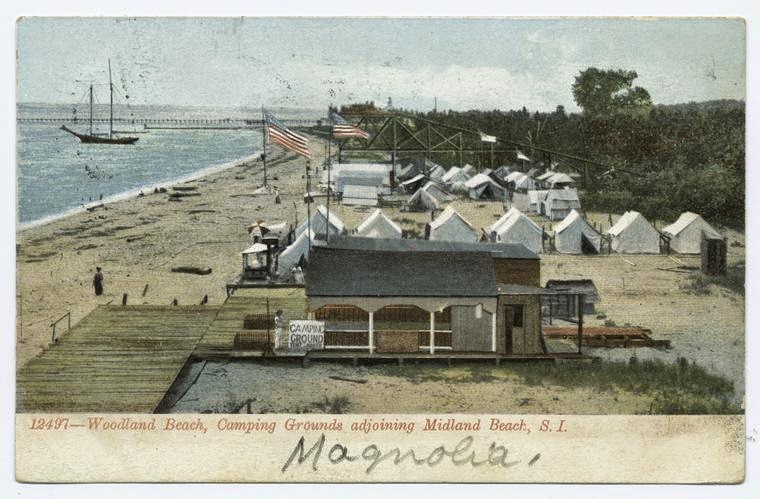
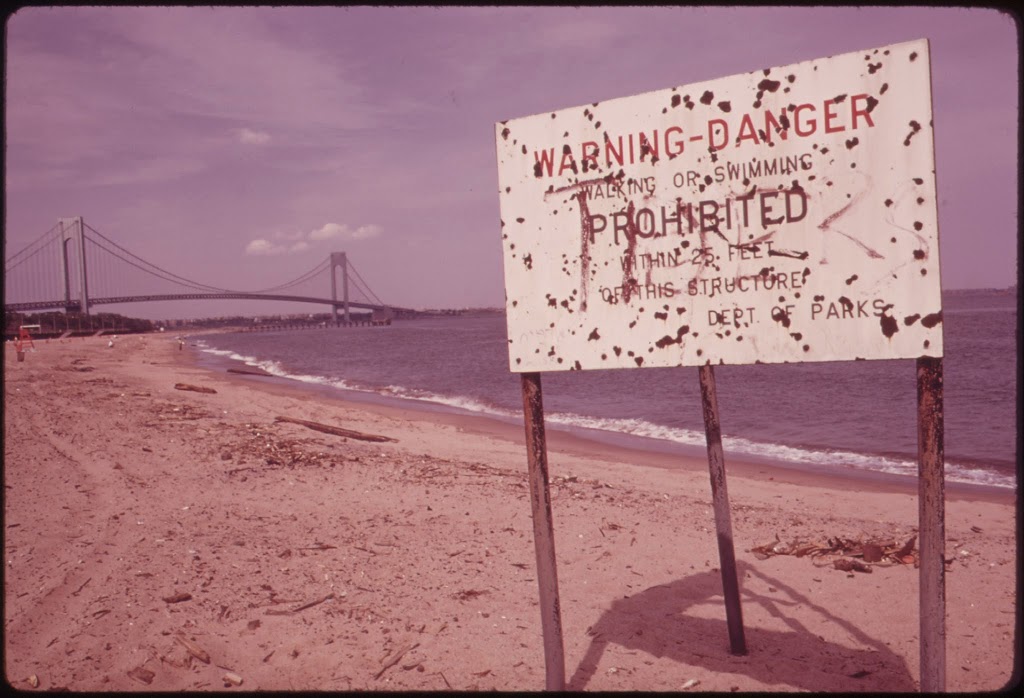
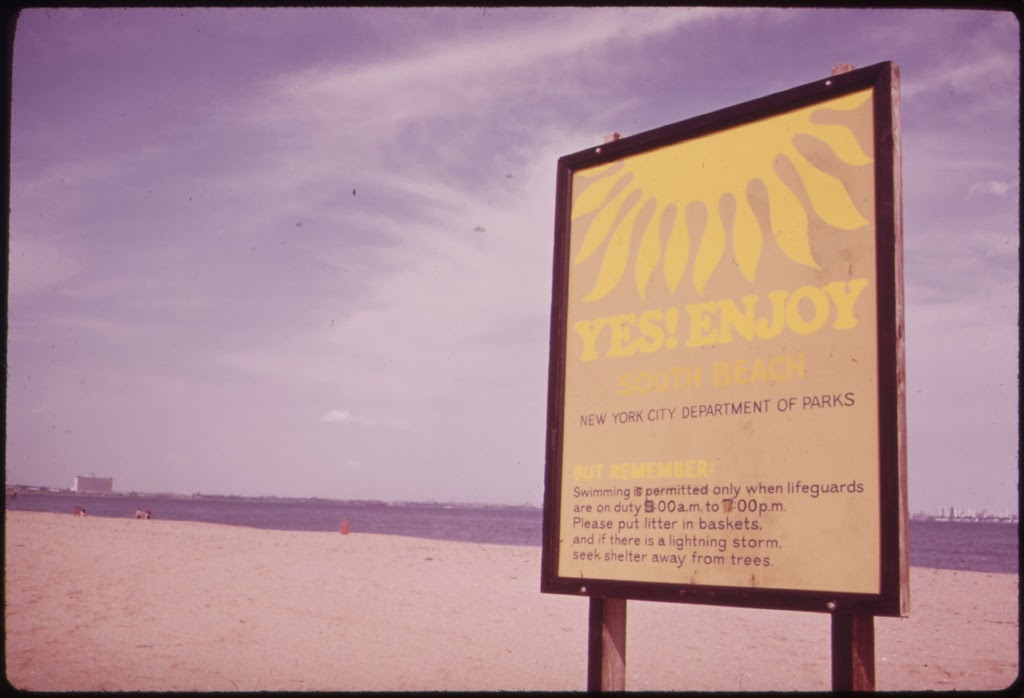
Here’s some views of South Beach and adjacent Midland Beach from early in the century and then some drastically different views from the 1970s. Photos are courtesy the Library of Congress and the New York Public Library:

From a 1908 advertisement: “A delightful ferry sail down the bay and trolley ride through Staten Island’s verdant hills will bring you to HAPPYLAND, on South Beach, looking out toward the ocean.  The new combination ticket feature provides, for a quarter, admission to the park, vaudeville, dancing pavilions, Bill’s Ladder, Paris by Night, Foolish House, Georgia Minstrels, Dib Dab Slide, Electric Slide, Hippodrome, Circle Swing, Fat Saidy and the Human Roulette Wheel.”

Brooklyn Daily Eagle ad from 1913 (courtesy the blog wagnerowitz)

Below the beaches in 1973, photographed by Arthur Tress

Categories
Bowery Boys Bookshelf Skyscrapers

Supreme City: The ascent of Midtown Manhattan in the 1920s


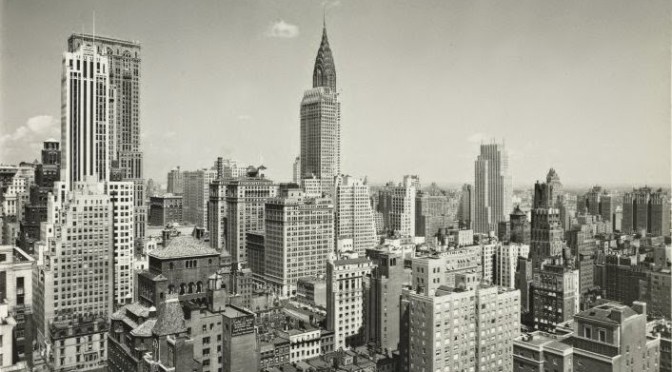
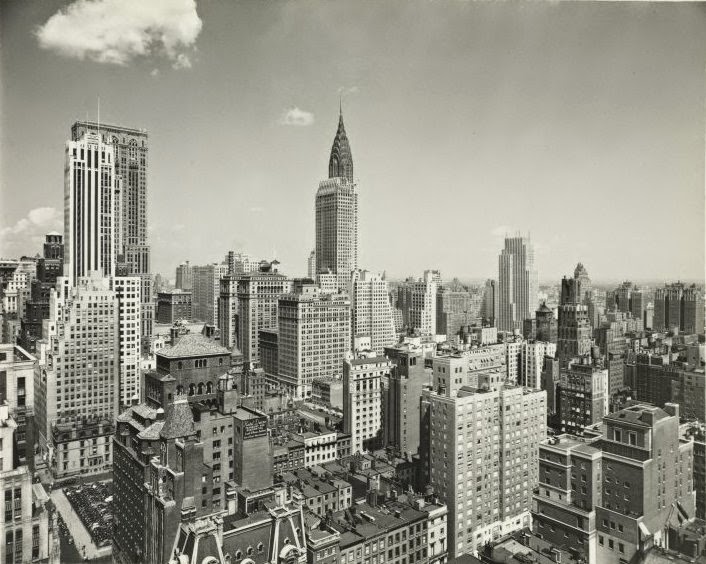
A view of Midtown Manhattan, looking southeast, by the Wurts Brothers (NYPL)

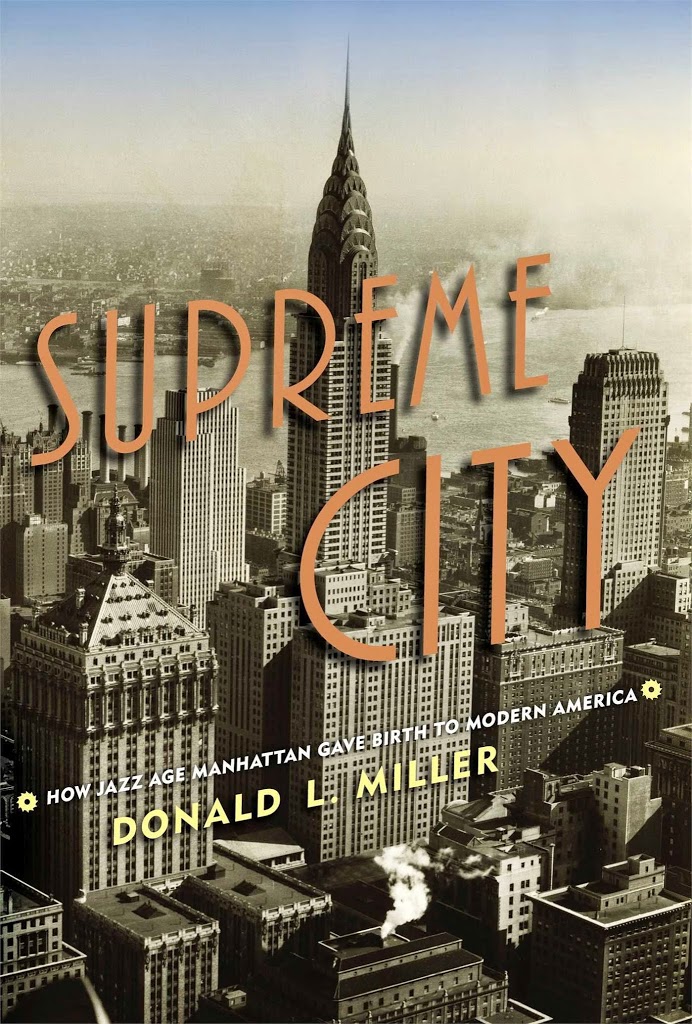
Supreme City
How Jazz Age Manhattan Gave Birth to Modern America
by Donald L. Miller
Simon & Schuster

Supreme City, by Donald L. Miller, certainly one of the most entertaining books on New York City history I’ve read in the past couple years, is also one of the strangest.  Almost as an obligation, New York’s Prohibition-fueled nightlife and the rowdy administration of Jimmy Walker are conjured up front, and colorfully so, only to then be placed aside.

This is not a book about the standard subjects of the 1920s.  This is indeed an epic about New York City in the Jazz Age, but it’s a wildly different tune than the one in which you’re familiar.

This is a tale of architecture and invention, of a boldness and proportion that New Yorkers take for granted today.  Supreme City recounts the invention of Midtown Manhattan, but it’s also about a spiritual shift in urban life.  This is the story of how New York City became not only a supreme city, but a supersized one.

Miller, a professor of history at Lafayette College perhaps better known for his works on World War II, approaches the sprawl of New York’s most ambitious decade almost like a mathematician. He ties this epic — a swirl of large personalities and impossible ideas — into a specific intersection of time and place.

It’s as though a slew of particles (comprised of ambitions and personalities) just slammed into each other one day, creating a new form of urban environment.

Industrial visions and personal journeys alike culminate in the year 1927, a watershed date for New York history, and arrive within the Manhattan grid system, mostly along 42nd Street between Eighth Avenue and Lexington Avenue, the nucleus of a new urban vision.  The story ventures out through the entire city of course but always to the beat of this new Midtown.

From here, Miller brings in the components of growth, the great innovators and personalities, plotted in relation to each other and to the great city blossoming under their feet.

These aren’t just the standard innovators, the expected cast — David Sarnoff, Duke Ellington, Charles Lindburgh. Sure, you get a bit Texas Guinan‘s drunken swagger, a little of Jack Dempsey‘s scrappiness.  But Miller gives equal prominence to perhaps less colorful real estate gurus and planners whose contributions created the playing field of modern New York. While it’s always nice to relive the 1920s through a lens of champagne and The Great Gatsby, Miller’s concern is with the players who actually built the city.

The engineer William Wilgus receives deserved placement in Supreme City for his innovations of covering the unpleasant tracks of Grand Central to create acres of new land, “taking wealth from the air” and inventing New York’s ultimate canyon of wealth — Park Avenue.

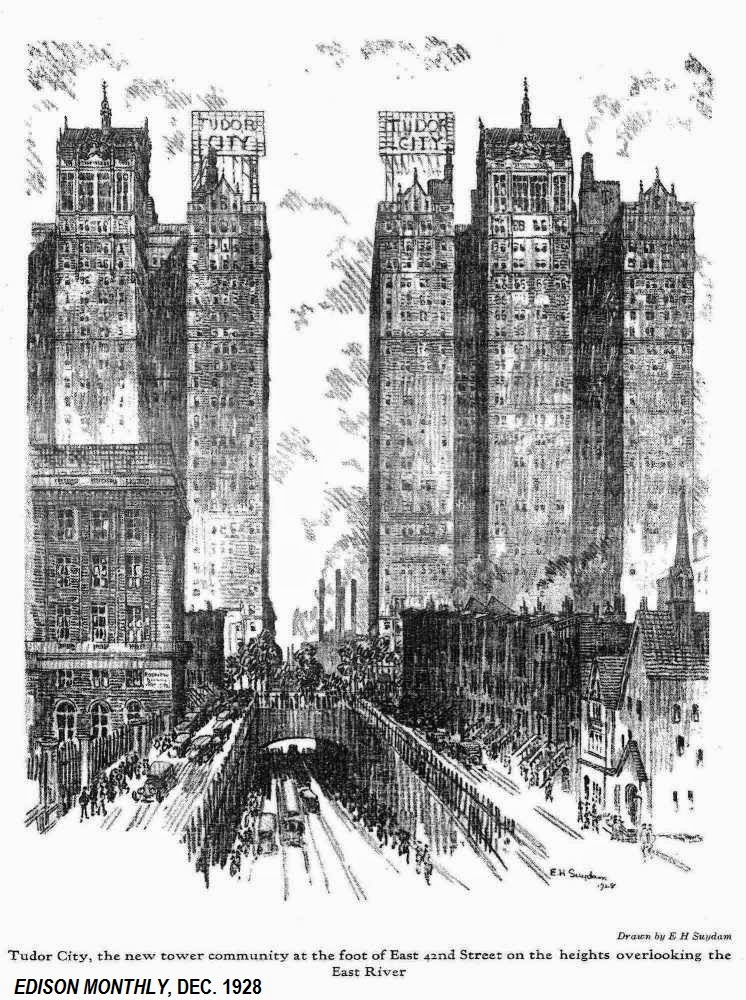
Architect Emery Roth brought the apartment skyscraper to Midtown and practically invented the allure of the penthouse.  The almost faceless Fred French — his section is actually called “Who on Earth was Fred French?” — turned the apartment complex into a swanky, thematic thrill with such Midtown projects as Tudor City (a 1928 illustration pictured at left).

Of course, it took the wealthiest New Yorkers to fuel these changes. New money sparked the new playing field.  The old families hastened their migration up Fifth Avenue, their mansions abandoned, torn down and replaced with the high-end shops in which they would later shop.

While department store masters like Edwin Goodman swept out the socialites to build his Fifth Avenue temple of commerce Bergdorf-Goodman, the pleasant rivalry between Helena Rubenstein and Elizabeth Arden helped generate the avenue’s reputation of social perfection and high glamour.

Sensing the upward surge of Midtown — its almost-amoral infinite rise — impresarios like Samuel “Roxy” Rothefeld, Florenz Ziegfeld and George “Tex” Rickard rose to create venues to corral the masses.  Midtown became home in the 1920s to the industries of entertainment — publishing, radio, television.  Even Seventh Avenue below Times Square found purpose in the swell as America’s Garment District.

As Midtown grew in the 1920s, the instruments of getting there also rose to the challenge, finally conquering the Hudson River, from the Holland Tunnel to the George Washington Bridge.

The story is so big that Miller can’t contain all of it. Supreme City captures that place before the Great Depression, perhaps New York’s single most decadent moment. He does not venture out into the other boroughs and rarely even ventures below 42nd Street. From the vantage of the Chrysler Building — the treasure most indicative of the age — those places are hazy and distant.  By the last page of this heavy tome, Midtown Manhattan creates everything, drives everything, almost entirely is everything.  That energy is certainly infectious, making Supreme City is an rich, propelling read.

Categories
True Crime

That rascal Daniel Sickles, the beloved politician and veteran who killed the son of Francis Scott Key

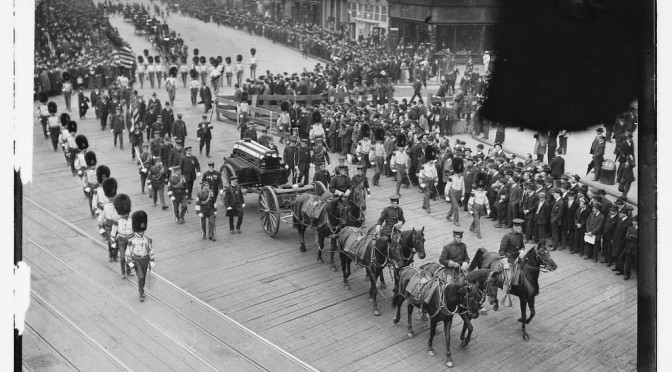
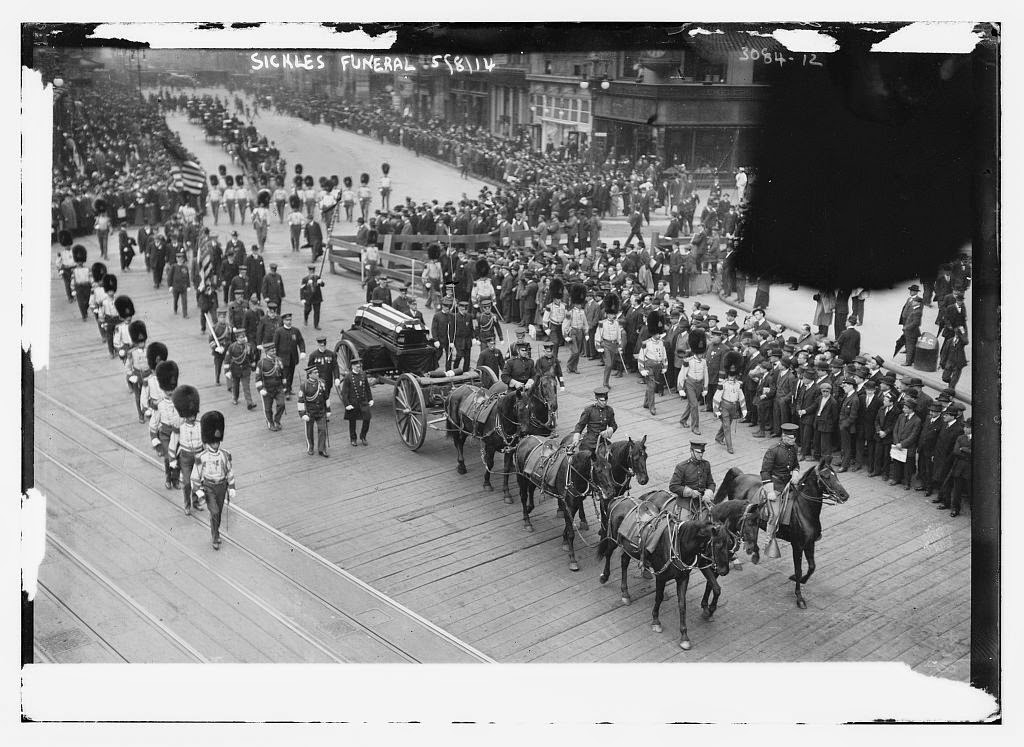
We don’t have large, parade-like funeral processions marching up the avenues as they once did during the Gilded Age and in the early years of the 20th century.

These events were times of public mourning and a bit of festivity.  Most often they involved the passing of a well-connected political leader or a popular entertainers.  They were somber and reverent affairs; afterwards the saloons along the side streets benefited graciously, tributes and toasts into all hours of the night.

1914

One hundred years ago today, on May 8, 1914, New Yorkers filled the streets — from Fifth Avenue up to St. Patrick’s Cathedral — to mourn the passing of Daniel E. Sickles, one of the city’s most heralded war veterans.

Having marshaled up volunteers in New York in the early days of the Civil War, Sickles distinguished himself as a bold and commanding general, gathering military promotions through sheer ambition. (He was one of the few commanders in Abraham Lincoln’s army without a West Point education.)

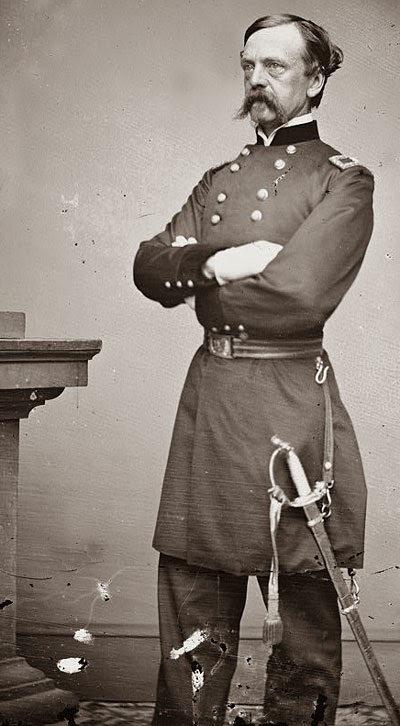
During the Battle of Gettysburg, Sickles was severely injured and had his right leg amputated. (At right: Sickles posing for Matthew Brady, clearly before the events of Gettysburg.)

He spent his years after the war polishing his war credentials and maneuvering from one political appointment to another.  Sickles belatedly received the Medal of Honor and, situated from his home at 23 Fifth Avenue, was acclaimed in later life in one of New York’s greatest living veterans.

Sickles’ military career, however, was built as an exercise in reputation rehabilitation.  When the war with the South arrived, he saw an opportunity to change the conversation about himself.  His bravery in service to the Union, never questioned, served a dual purpose for Sickles.  Today we might call this “re-branding.”

For in the years preceding the Civil War, the young politician was also known as a cold-blooded murderer who held a unique distinction in the history of legal proceedings.

1859
In April of 1859, New York Congressman Daniel Sickles became the first person in history to ever be acquitted of a crime due to temporary insanity.

The crime in this case was the February murder of Philip Barton Key II, the son of Francis Scott Key, author of “The Star-Spangled Banner,” the national anthem of the United States.

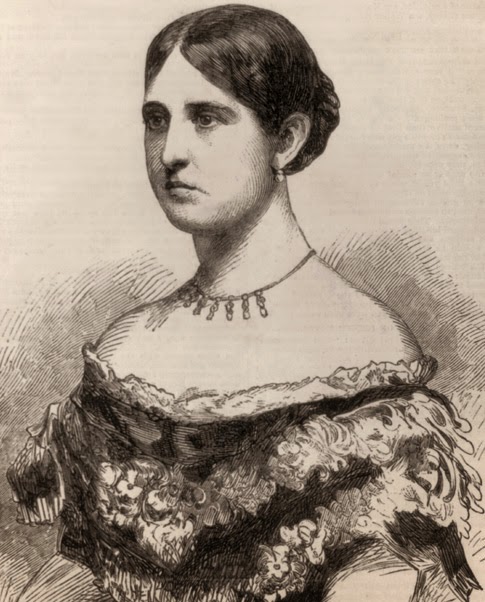
Their lives almost resemble an episode of House of Cards.  Key had been having a very open affair with Sickles’ wife Teresa. (Pictured at right)

Daniel, however, was something of an epic rake himself.  With no thought to his own or his wife’s reputation, Sickles was once passionately obsessed with the New York prostitute Fanny White, going so far as to take her into the Albany assembly chamber for a tour.  There were even rumors that some of Sickles’ campaign election costs were covered by White.

But Key was hardly a wallflower; the famous son was a charming widower who bewitched the women of Washington DC with his intelligence, elegance and wealth.  He and Teresa met in 1857 and began their affair soon after, meeting often once a day and openly flirting with each other at a society balls.

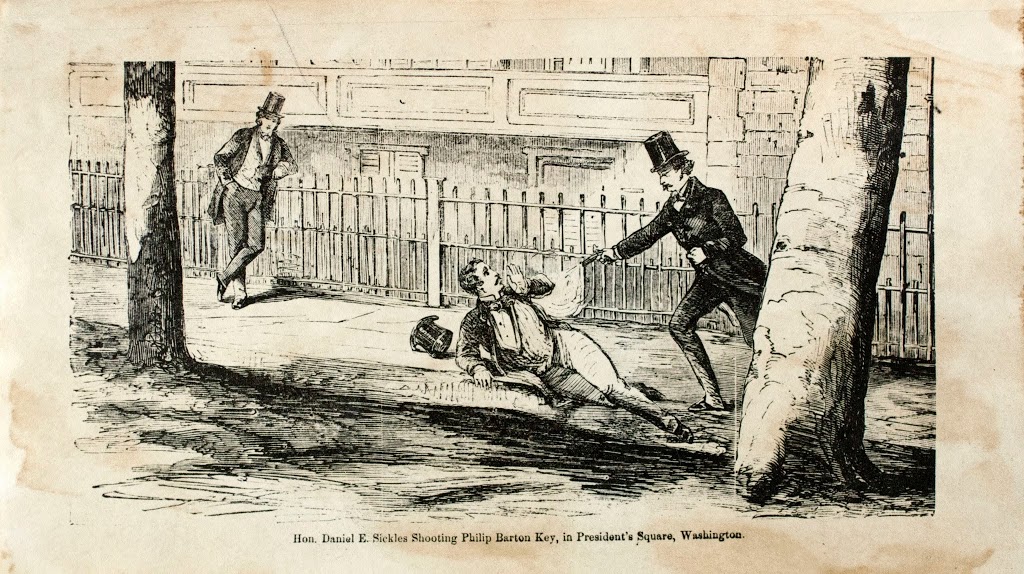
When Sickles did finally discover the affair, he was distraught and sickened, before turning violently angry.  On February 27, 1859, Sickles approached Key in DC’s Lafayette Squarea short distance from the White House — and shot him in the groin.

“You villain, you have dishonored my house, and you must die!” Sickles reportedly said.

He shot Key again in the chest and would have shot him directly in the head had the gun not misfired.

Said the New York Times the following day, “The vulgar monotony of partisan passions and political squabbles has been terribly broken in upon to-day by an outburst of personal revenge, which has filled the city with horror and consternation.”

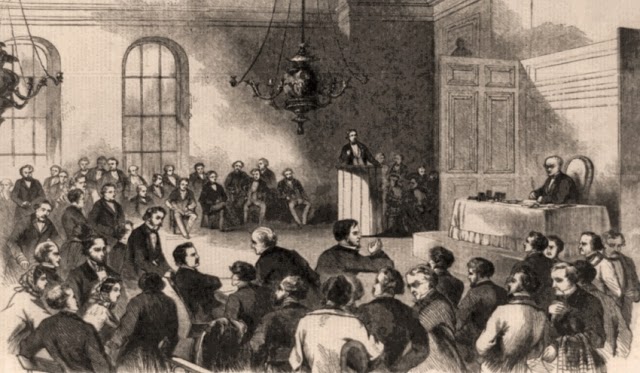
Above: An illustration of the Sickles trial, courtesy Library of Congress

The condition of Sickles’ mental state during and following the murder would be closely dissected in court. A colorful swath of testimony described Sickle as everything from disturbingly serene to a raging lunatic.

According to authors Michael Lief and H. Mitchell Caldwell, “These conflicting stories may be exaggerations on the part of creative witnesses, or they may be evidence that Sickles was driven to the edge, past the breaking point, entirely out of his mind.”

One of the lawyers who helped craft the insanity defense was Edward M. Stanton, later to be Abraham Lincoln’s Secretary of War.  Their defense of temporary insanity — never successfully tried in a U.S. court — was sprung upon the jury, nested within an extravagant bed of prose, classical quotations and moral quandary.

“It is folly to punish a man for what he cannot help doing?” asked associate defense attorney John Graham.  Apparently so, it seems, for in April, a jury acquitted Sickles, taken with the plight of a man wronged by his unfaithful and deceitful wife. (His attorneys did a spectacular job of burying Sickle’s own unfaithfulness and deceit.)

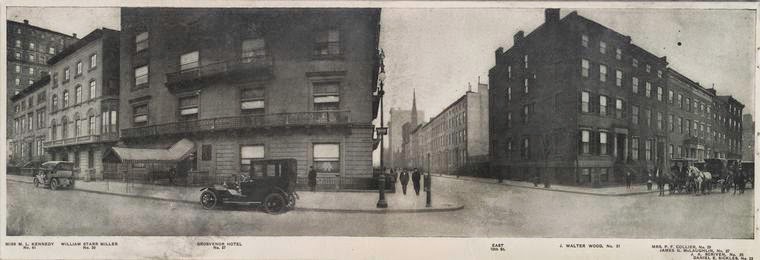
At left: 23 Fifth Avenue, the home of Daniel Sickles and the location of his death on May 5th, 1914

1914
Fifty-five years later, Sickles’ many legitimate accomplishments (and, let’s be honest, his relentless self-promotion) assured that this unusual crime was rendered a footnote when he died on May 5.

His New York Times obituary is an extraordinary bit of word play:  “Philip Barton Key … paid attention to Mrs. Sickles, and Sickles shot and killed Key on the street in Washington D.C. on February 27, 1859.”

The focus then turns on Sickles’ “gracious” forgiveness of his wife: “I am not aware of any statute or code of morals,” said Sickles to his critics, “which makes it infamous to forgive a woman….I shall strive to prove to all that an erring wife and mother may be forgiven and redeemed.”

In reality, the two never reconciled.  Teresa died in 1867 at age 31, her reputation destroyed.  A few years later, Sickles became the ambassador to Spain, returned to his legendary womanizing and eventually married a well-connected daughter of a Spanish official.

He spent his final years at his Fifth Avenue home nearly bankrupt, his only means of support coming from his children and his now-estranged second wife.  “[S]everal attempts were made to seize the art treasures  in his Fifth Avenue home because of debt,” noted the Times.

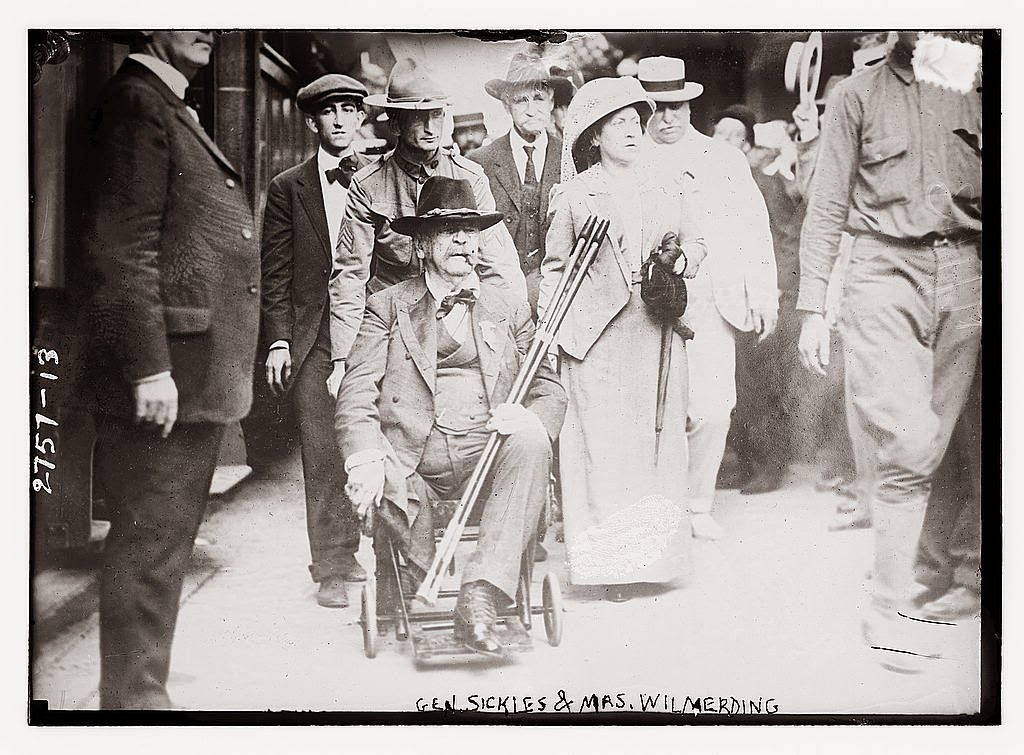
Below: Daniel Sickles at a 1913 Gettysburg reunion, accompanied by his live-in secretary Eleanora Wilmerdirg


Categories
Brooklyn History Those Were The Days

The hottest place to listen to records in Brooklyn

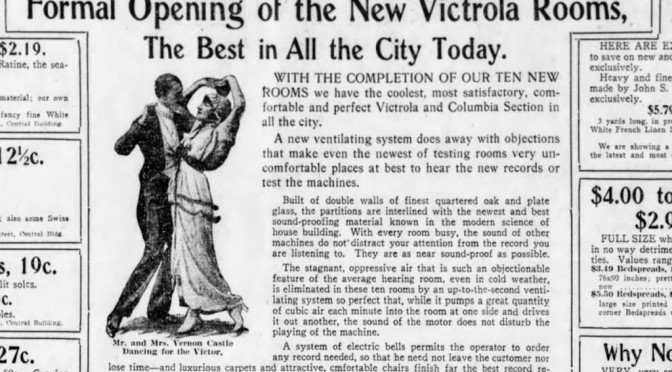
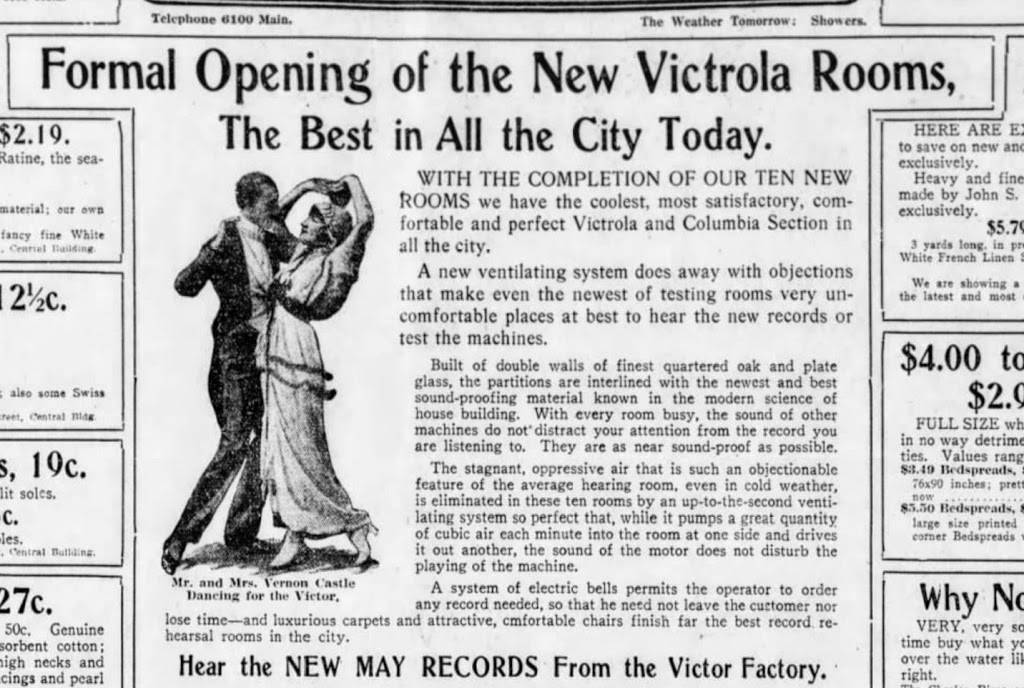
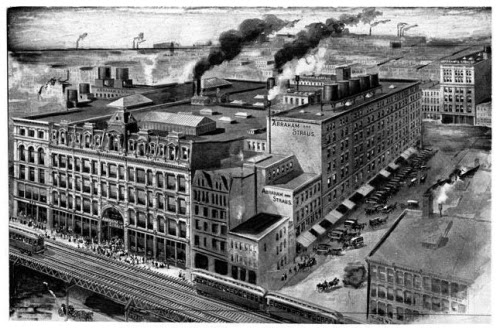
One hundred years ago today, the Abraham & Straus department store on Fulton Street (today’s Brooklyn Macy’s location) kicks off the borough’s deep affection for record albums with newly designed listening stations, touted in this Brooklyn Daily Eagle advertisement as the best in the city (and it probably was).

As the advertisement proclaims: “With the completion of our ten new rooms we have the coolest, most satisfactory, comfortable and perfect Victrola and Columbia Section in all the city.

A new ventilating system does away with objections that make every the newest of testing rooms very uncomfortable places at best to hear new records or test the machines.

Built of double walls of finest quartered oak and plate glass, the partitions are interlined with the newest and best sound-proofing material known in the modern science of house building….. They are as near sound-proof as possible.”

Below: Abraham & Straus on Fulton Street, 1904 (courtesy Brooklyn Public Library)

By 1914, many discs could be played on both Victor Talking Machines and Columbia Grafonolas, so no CD-vs-vinyl format decisions to make!

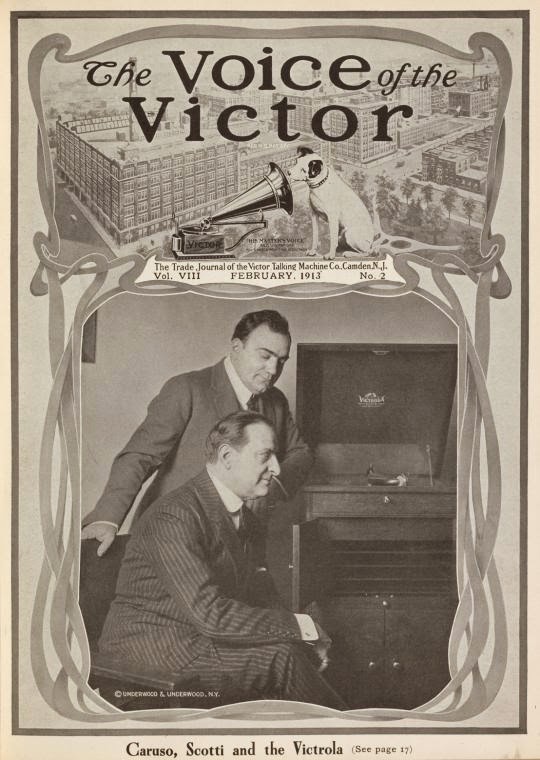
Among the newest album releases that month were instructional dance albums by Vernon and Irene Castle, starring later that year in the hit Broadway musical Watch Your Step, written by Irving Berlin.  There’s also a new album by Victor favorite Enrico Caruso (pictured below on the cover of a 1913 trade magazine):

You can find the advertisement above in the Brooklyn Daily Eagle (April 28, 1914 issue).

Categories
Queens History Robert Moses

Assorted mishaps from the 1964 New York World’s Fair — in its first month and before it even opened

Certainly Robert Moses expected there to be a few little problems to arise at the opening of the 1964 World’s Fair on April 22, 1964.  And for the most part, the most popular attractions launched without a hitch.  But a host of bad press on opening day and a litter of minor issues created a sense of unease among some organizers.

The fair was already a controversial venture by Moses — unsanctioned by the official World’s Fair organizers and sold wholesale to a bevy of corporations as a way to fund the hugely expensive endeavor.  Moses’ own reputation was on the wane by 1964; the fair would further tarnish it.

Whatever enthusiasm New Yorkers had for the fair in 1964 evaporated with its completion in the fall of 1965, with reports of ludicrous financial mismanagement and a gradual indifference by fair-goers to its line-up of generally un-amusing amusements.

So these first few mishaps from the months before and after opening, in retrospect, seem to be a harbinger for the greater fiascoes which followed.

Money issues, faulty machinery, injuries, lack of planning — welcome to the World’s Fair of 1964!

1) The World of Food never opens
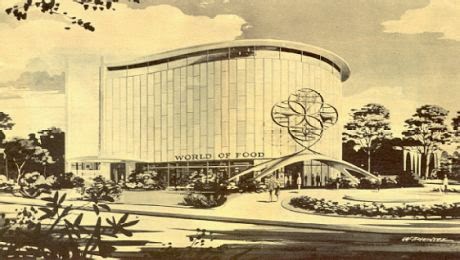
With hundreds of new temporary structures going up, you wouldn’t think that a single building lagging behind would be much of an issue.  But the prominently placed World of Food  — standing 75 feet from the fair’s entrance — was one of the largest pavilions on the fair, and little work had been done on it since ground-breaking in January.

The building was to celebrate cooking and gardening, with weekly festivals devoted to a particular food (shrimp, apples), a rooftop ‘edible garden’ and a model kitchen with the most innovative home appliances.  A teen center on the ground floor would host cook-outs and clam-bakes with appearances by the hottest young stars of film and television.

It would have, that is, except the organizers ran out of money, and a large gaping construction site sat like an open sore marring the fairgrounds.

Moses and fair organizers wanted to level the site immediately, fighting it out in court with the World of Food organizers.  Finally, two weeks before the opening, the uncompleted venue was finally torn down.

But there was no time to fill the lot, so on opening day, an odd gap in an otherwise tightly organized grounds greeted visitors.  Gift shops sold World of Food souvenirs anyway.  Meanwhile, the fair paid thousands of dollars to store the unused construction materials off site. [More information at Bill Young’s excellent World’s Fair site. Image above is also from there.]

2) Ceramic catastrophe
The most spectacular displays were often at the pavilions hosted by foreign countries. The Pieta at the Vatican Pavilion, for instance, would become one of the most popular attractions.

The organizers from Spain, however, would have to scramble when they opened crates containing a 50-foot ceramic relief by Antonio Cumella called ‘Homage to Gaudi,” only to discover that much of it had been crushed in transport.

Welders furiously labored to repair the work before the fair opened. Some semblance of the work was eventually displayed.

Courtesy New York Daily News

3) Rain on Opening Day
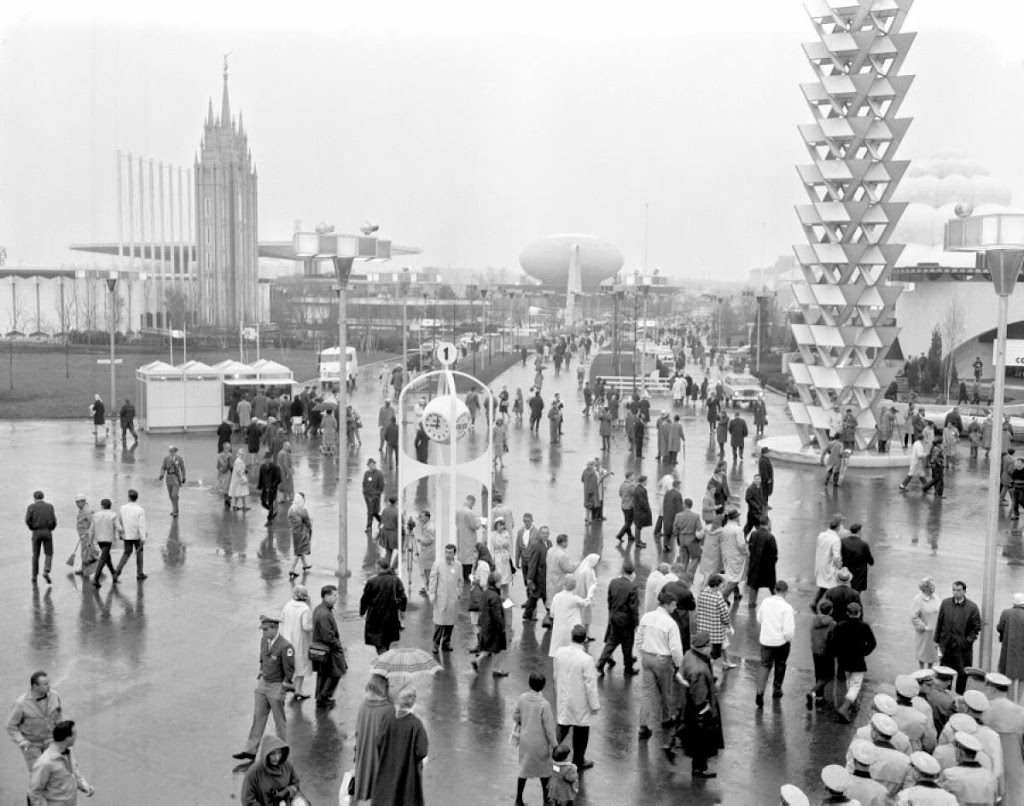
The April 22nd opening was to be one of the greatest events in New York City history, and in volume, it certainly was. Ten of thousands clogged the highways in one of New York’s ugliest traffic days. Over 90,000 made it to the fairgrounds to witness opening ceremonies that included a speech by president Lyndon B. Johnson, president for only a few months after the assassination of John F. Kennedy.

But fair organized had planned for 250,000 attendees. Â Keeping people away was the “November-like weather,” torrential morning rain and a chilly, cloudy afternoon.

The New York Times reported: “The World’s Fair opened yesterday morning with a parade that had everything. But mostly it had rain, and 4,000 sodden marchers outnumbered the hundreds of sodden bystanders.”

4) Protesters and arrests
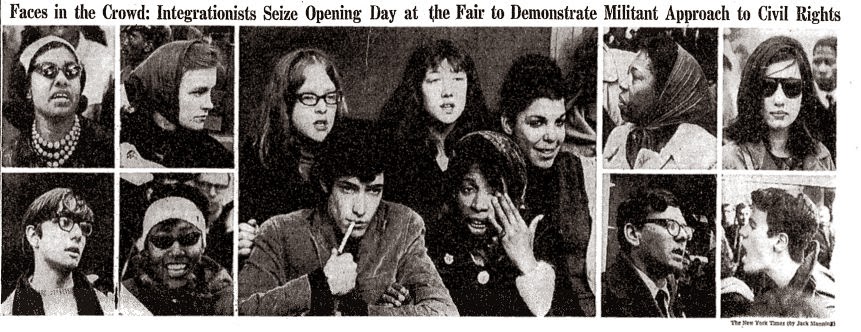
President Johnson and fair organizers were met with picketers and sit-ins, mostly civil rights organizers. They managed to heckle Johnson through his entire speech at the Federal Pavilion and sit in at several fair venues.

In particular, protesters camped out in shrubbery outside the pavilion and had to be forcibly removed. Â “It was dreadful, dreadful,” said one state official.

By the end of the day, over 300 people had been arrested by police. What had particularly incensed protesters was a variety show at the fair called “America, Be Seated,” a “minstrel-style” show that meant to turn the derogatory stereotypes of old into something fun and jazzy for the 1960s.

“I think we’ll start a whole new wave of minstrel shows,” hoped producer Michael Todd Jr, (stepson of Elizabeth Taylor), promising no “burnt cork” and that every performer in the integrated cast would be wearing “his own face.”

It was still deemed too offensive for many and quickly closed within two days, raking in a grand total of $300.

Below: From the New York Times, April 23, 1964

5) City locked down
If you weren’t at the fair, you were probably cursing it out. Â A planned “stall-in” by demonstrators to stop traffic throughout the city failed to materialize, but the city planned for it anyway, created a veritable police state that day.  “Police cars and tow trucks waited sometimes as close as every half mile along Grand Central Parkway.”

This tension led to a near-disaster at one subway station, when four protesters and three police officers were injured “when a crowd tried to stop one morning subway train.” [source]

6) No hospital
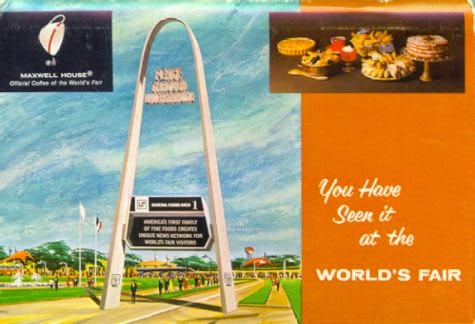
Five days after opening, seven fair goers were injured inside fair transportation sponsored by Greyhound Bus Lines. One of these “Glide-a-Ride” vehicles hit one of the eleven General Foods arches (pictured above), causing minor injuries.

But there was no hospital facility on the fairgrounds — “[T]he hospital was expected to open late next month” — so the injured were treated at the employee’s dispensary and advised to see their own doctors at once. [source]

Leonidoff’s Wonder World. Pic courtesy Randy Treadway at World Fair Community. There are many more rare photos of this event there.)

7) Water and Ice Catastrophes
Two big-name entertainments at the fair were plagued with constant accidents and delays before they opened.  Leon Leonidoff, famed producer at Radio City Music Hall, watched as his “Leonidoff’s Wonder World” befell perpetual mishaps, mostly associated with a faulty mechanical swimming pool.  The show was hugely expensive and not a big draw (see photo above).  It closed within two months.

Meanwhile, Olympic champion Dick Button was having similar issues over at Dick Button’s Ice-Travaganza. His woes involved transportation costs and salaries associated with his mostly European cast. This show, too, was considered a failure, closing a few weeks after its opening opening.

However it did have a skating chimpanzee in a dress, so that’s something to celebrate.

8) Elephant Attack
Six days after the fair opened, a trainer was “stepped on” by a chained elephant named Anna Mae.  Again, as no fair hospital had been opened, the trainer was rushed to Elmhurst Hospital.

You can imagine what the conditions for this poor animal were probably like.  The animal, known for “her erratic temperament,” was chained to two other elephants at the time of the attack.

Above: the Ford Pavilion (NYPL)

9) Ford Pavilion Smoked Out
Nine days after it opened, a transformer at the Ford Pavilion — featuring Walt Disney’s Magic Skyway — caught fire, issuing smoke into the attraction and causing 2,000 people to be evacuated.  The conveyor belt Skyway was also prone in its early days to malfunctions, leaving fair-goers trapped in late-model Ford vehicles in front of caveman and space-age dioramas. [source]

10) The World’s Fair Bus “Riot”
May 16 was a day of record attendance at the fair, so it should be assumed that it was also a day of high tensions and long lines.

People were especially impatient that evening while waiting to board shuttles back to the parking lot.

“A shoving, yelling crowd of 15,000 persons went into near panic,” creating four blocks of mayhem as people attempted to squeeze into an inadequete number of vehicles. A “riot call” was made on the fairgrounds, with additional police and several ambulances called to treat minor injuries and several women who had fainted.

“They acted like animals,” commented one bus inspector. Said another, who had been grabbed and lifted by his tie:  “If we lived through [Saturday] night, we can live through anything.” [source]

Top image courtesy Flickr Marsmett Tallahassee

Categories
Wartime New York

Charlie Chaplin on Wall Street: The tale behind the 1918 photo

The comedy legend Charlie Chaplin was born 125 years ago today in London, so I thought I’d use the opportunity to re-post one of my favorite photographs of Wall Street.

 
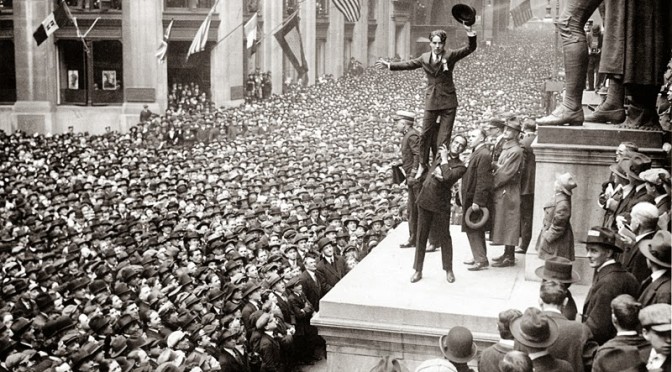
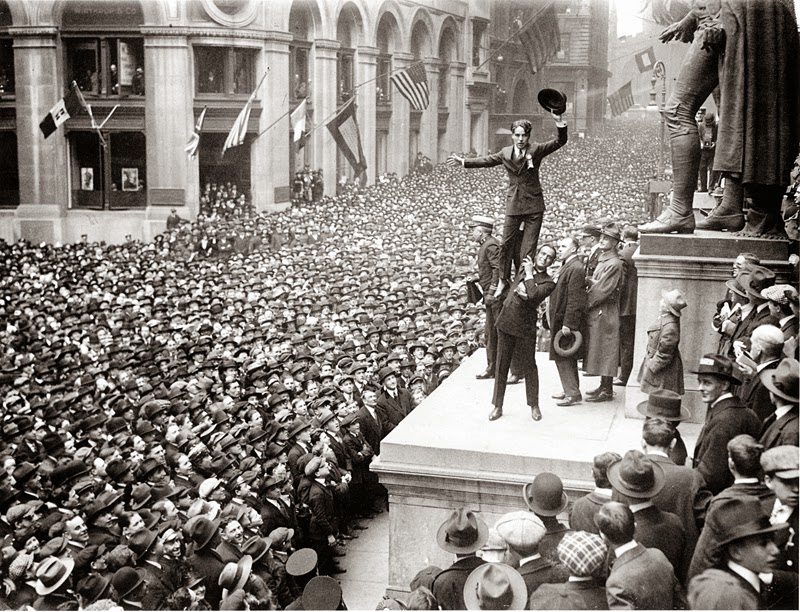
In the 1918 photo above, Charlie Chaplin and Douglas Fairbanks draw tens of thousands to Wall Street and the foot of the United States Sub Treasury building (i.e. today’s Federal Hall) to drum up support for World War I war bonds (or, more precisely, Liberty Bonds).
 
The United States had entered the conflict the prior year, on April 6, 1917, and began selling bonds to raise funds for the war effort.  Although many Americans were caught up in a patriot fervor, war bond sales were initially quite weak.  Most Americans in the late 1910s had never bought a bond of any kind.
 

To promote sales, the government began enlisting celebrities from several fields of entertainment, most notably motion pictures.  Since the New York area was filled with film stars — Hollywood not yet being the center of the film business — its streets were soon filled with dutiful movie stars, extolling the patriotic and moral virtues of supporting their county through bond sales.

 
My favorite instance of this was the sale of doughnuts — considered a symbol of wartime — on the street by glamorous movie stars like Martha Mansfield.  The Sub Treasury building, New York’s largest bond repository, was often the center of such rallies and fund drives.  (There were even doughnut auctions held on the steps here.)  It made sense to bring the biggest stars to the Sub Treasury to drum up the most publicity.
 
And so, on April 9, 1918, as the New York Tribune headline goes, “20,000 Throng Wall Street to Hear Movie Stars Tell How To Win War.”
Chaplin threw himself into the war effort, embarking on a nationwide tour to promote the sale of bonds.  That year he would make a propaganda film called The Bond:
 
 
But there may have been a bit of self-promotion in his appearance at the Sub Treasury.  His film A Dog’s Life would conveniently open in movie theaters five days later.


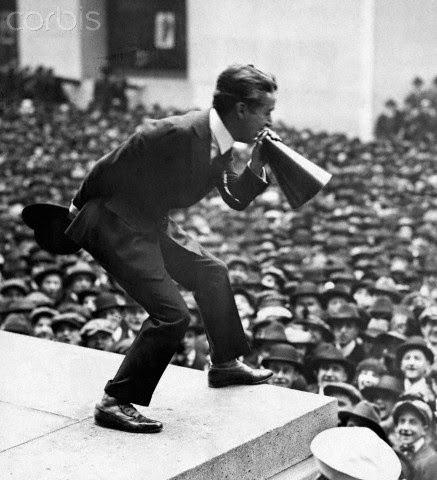
People weren’t used to hearing their movie stars speak in 1918.  “I never made a speech before in my life,” he proclaimed through a megaphone that noon, standing in front of the statue of George Washington. “But I believe I can make one now.”

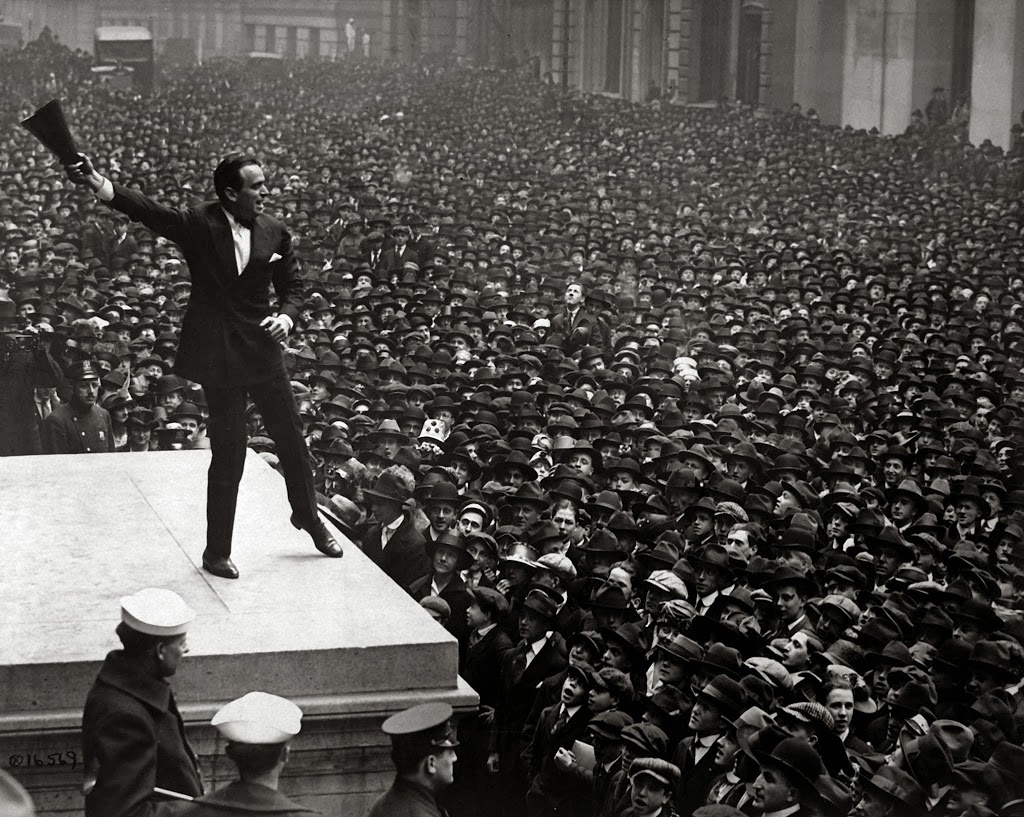
The dashing Fairbanks — known for swashbucklers and romances — happily broke character, goofing around with Chaplin to the delight of the crowd.  “Folks, I’m so hoarse from urging people to buy Liberty bonds that I can hardly speak.”

As eager as audiences were to hear their matinee idols, it was their horseplay that caused the greatest satisfaction:

“It was difficult for the lay ear to determine whether Chaplin or Fairbanks got the most enthusiastic reception.   But there one was feature that got more than either. That was the combination of Chaplin and Fairbanks.   The later carried the former around on his shoulders, and the 20,000-odd crowd howled with delight.”

Afterwards, Fairbanks and vocalist Harvey Hindemeyer led the crowd in a rendition of “Over There,” the American war anthem written by Broadway impresario George M. Cohan the previous year. (The story behind that song was featured in our podcast on the birth of the Broadway musical.)

Mary Pickford was also on a war bonds tour through America at this time.  The following year, Pickford, her secret lover Fairbanks, Chaplin and the film director D.W. Griffith would start the film studio United Artists.


Categories
Neighborhoods

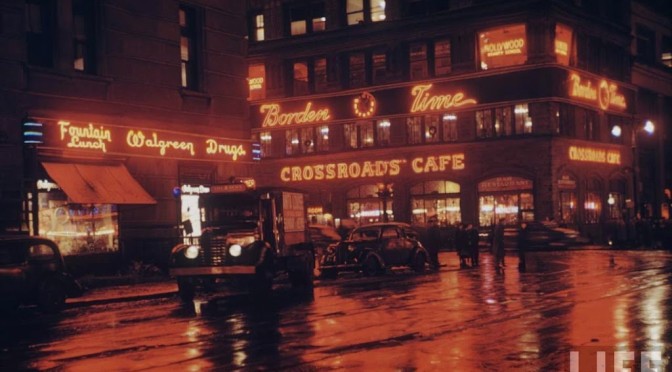
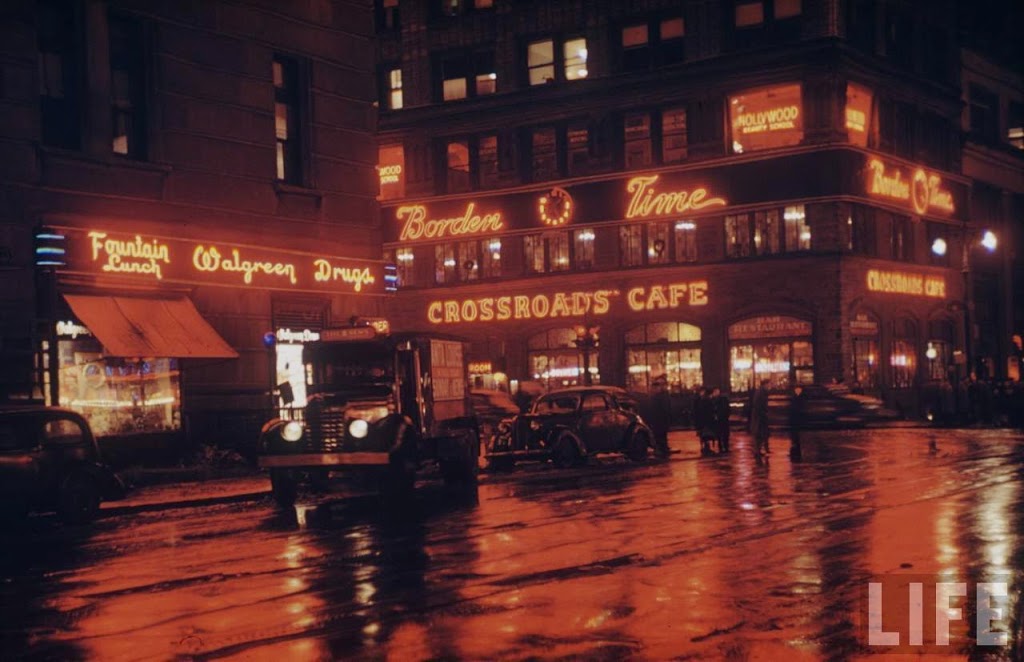
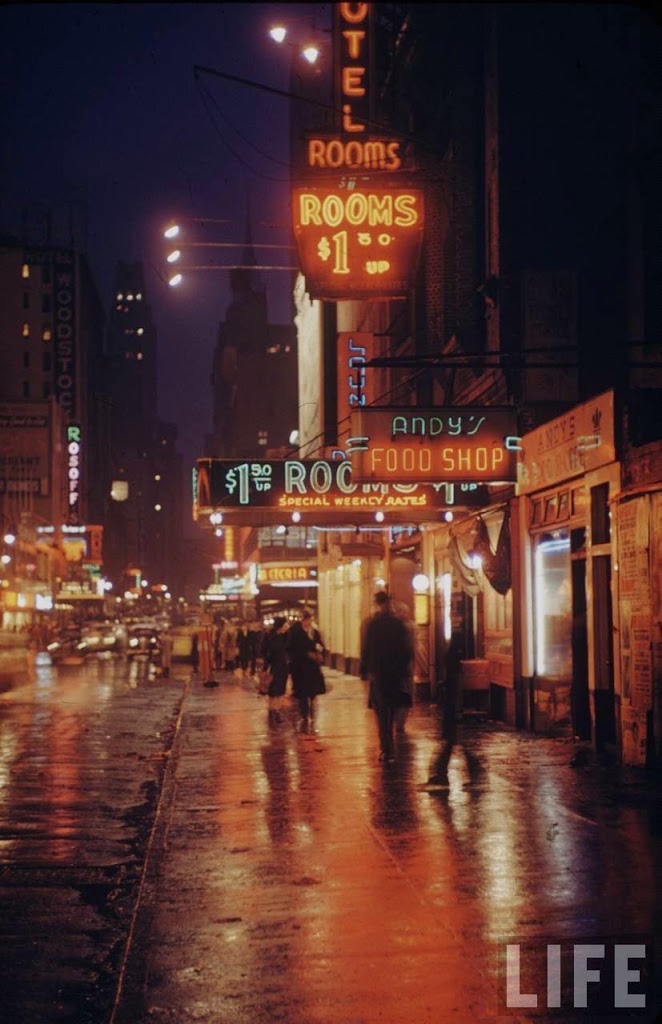
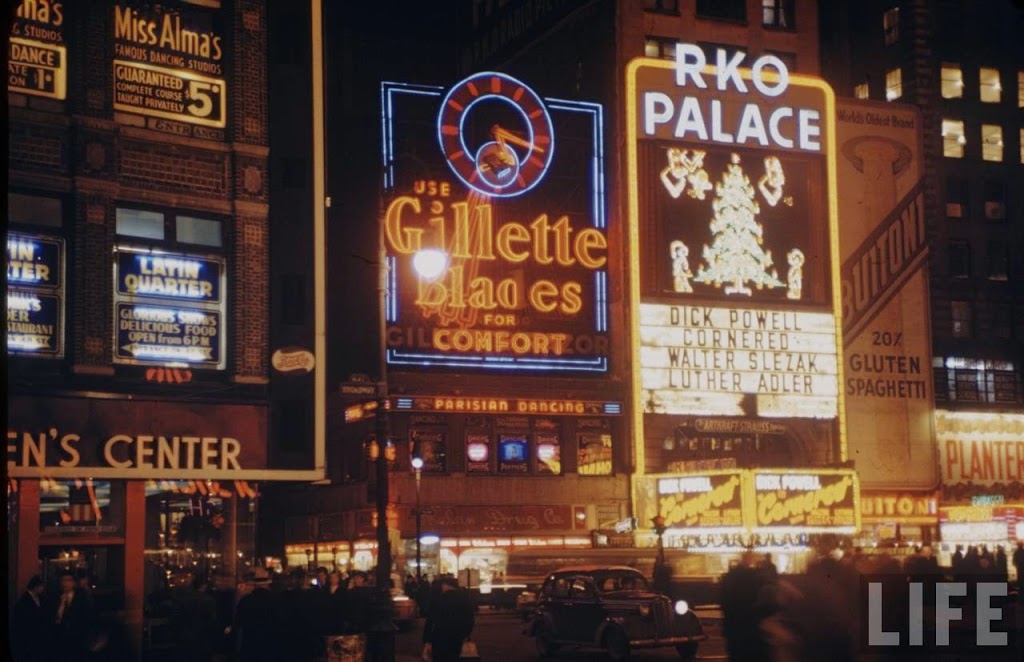
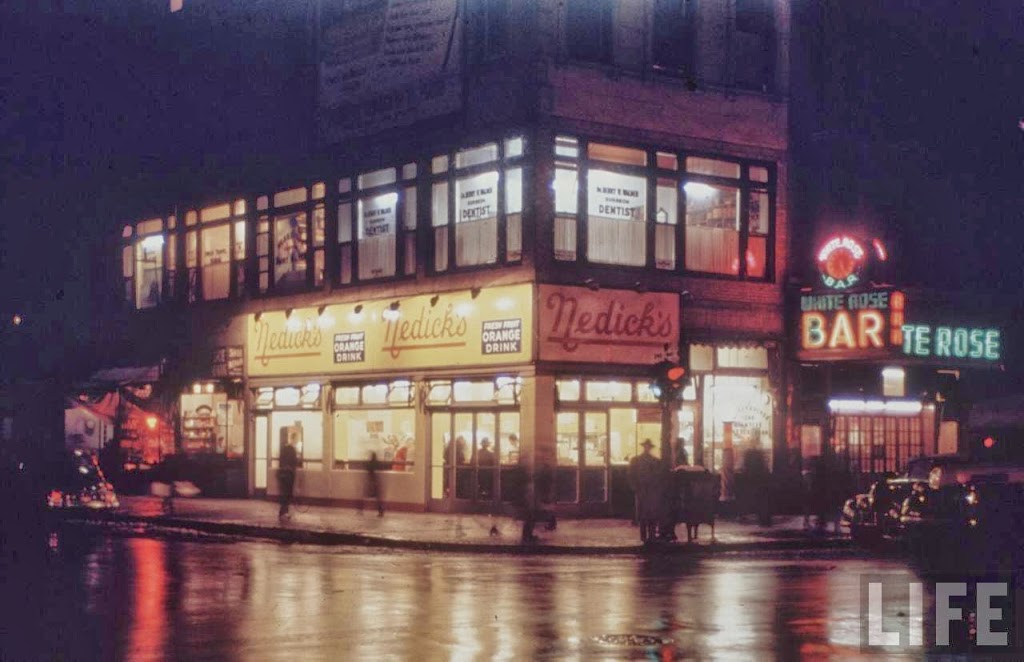
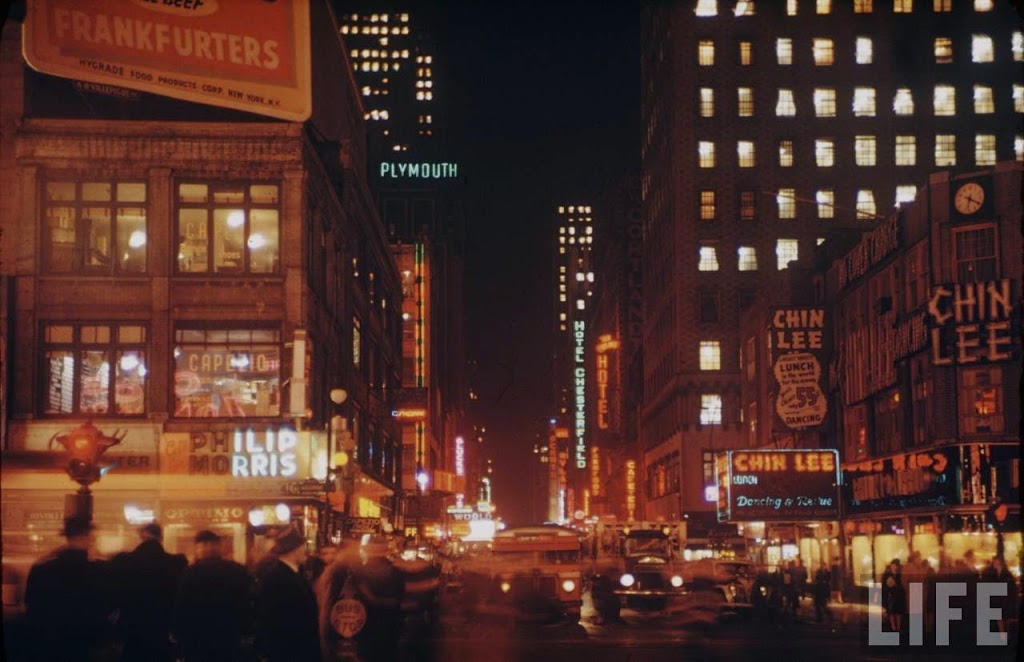
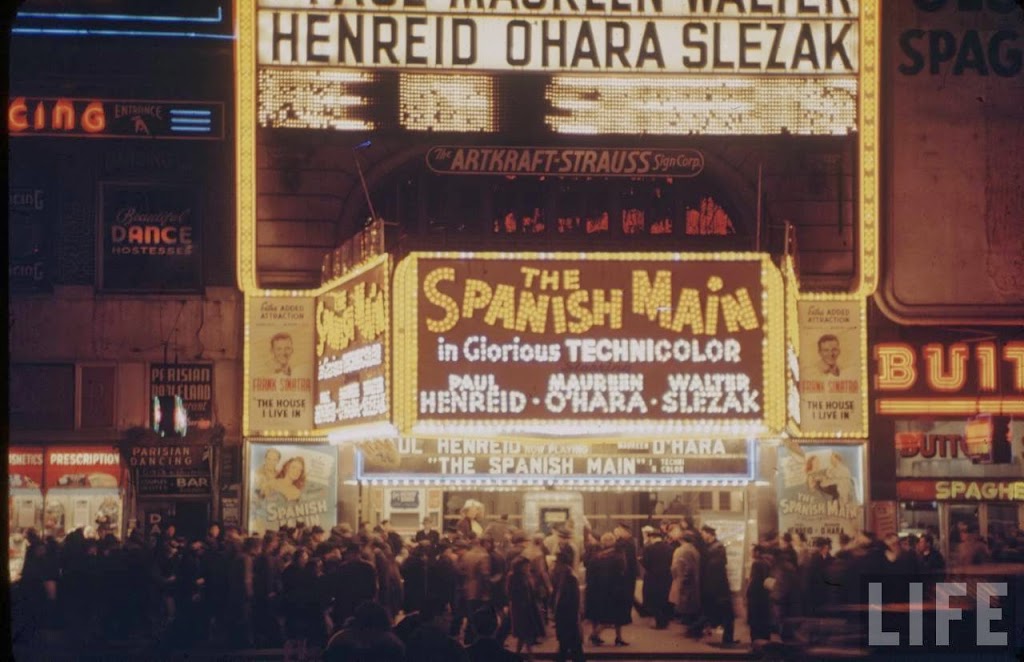
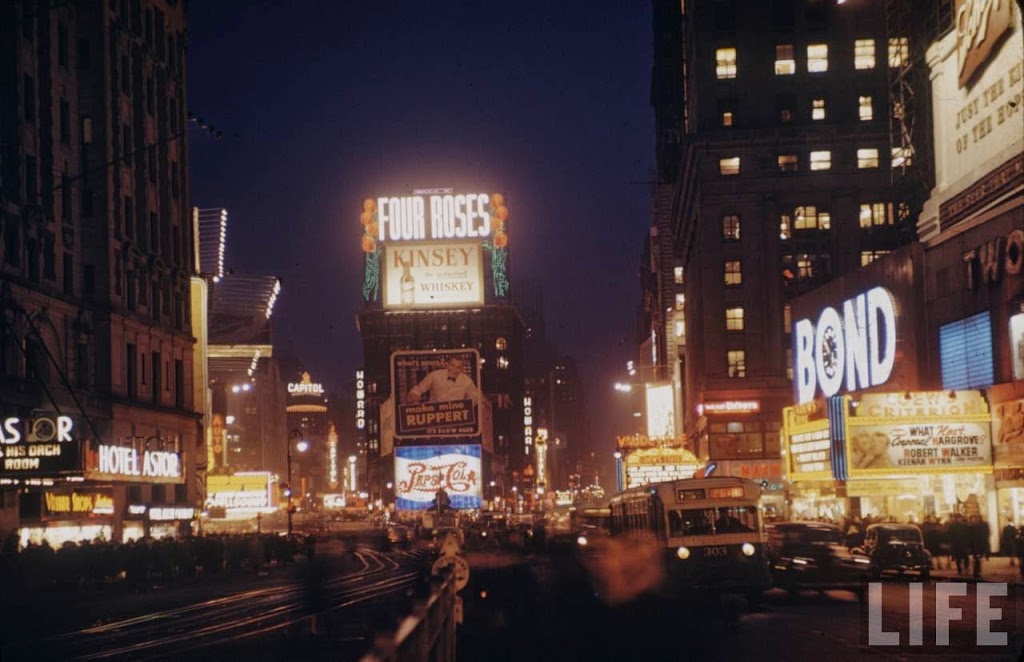
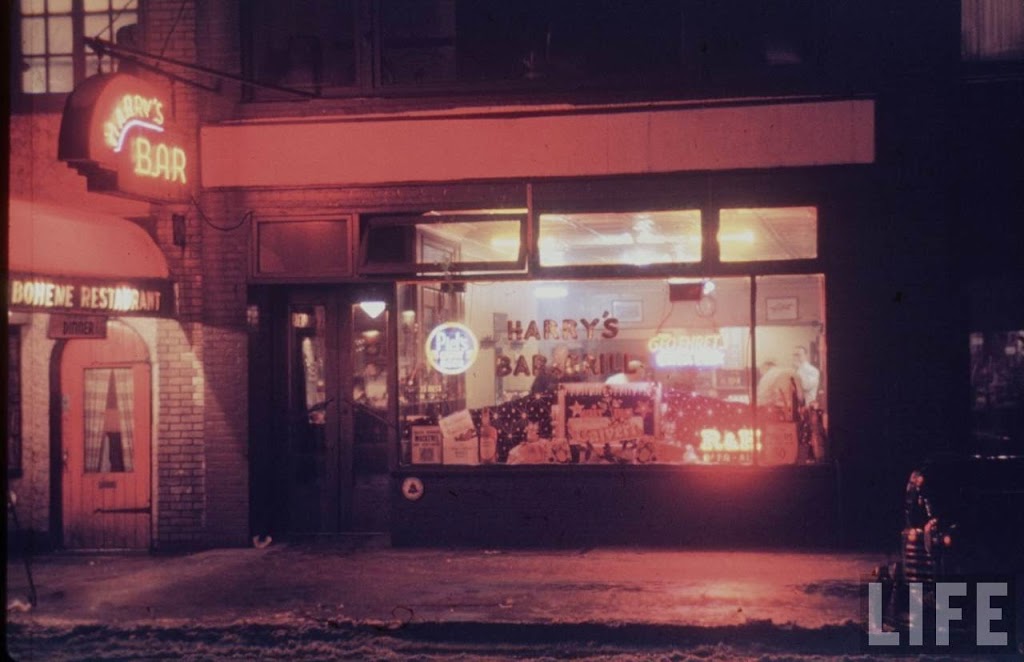
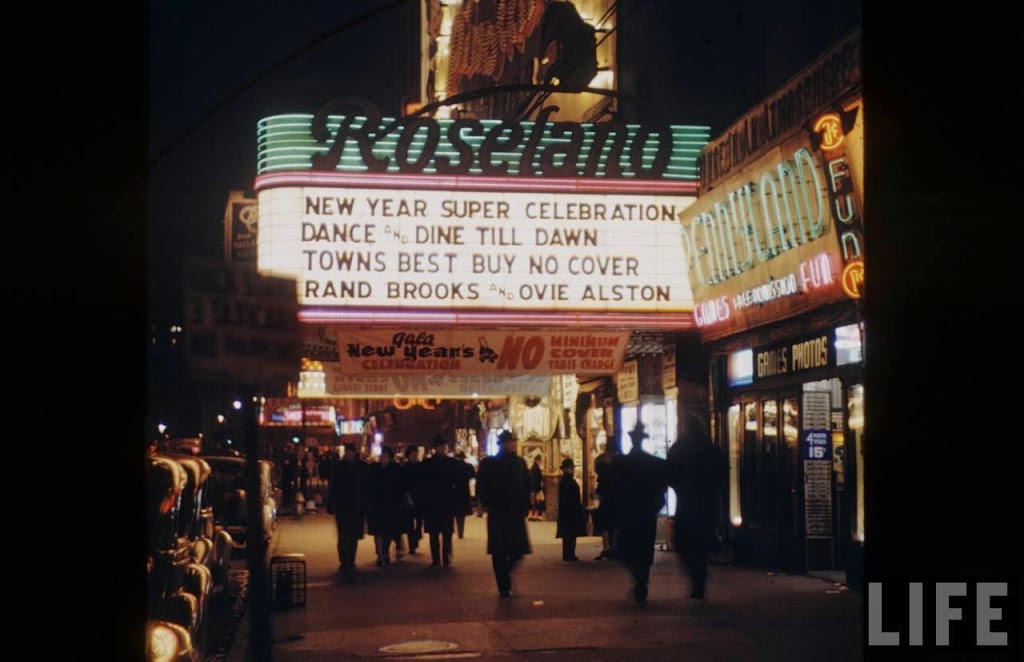
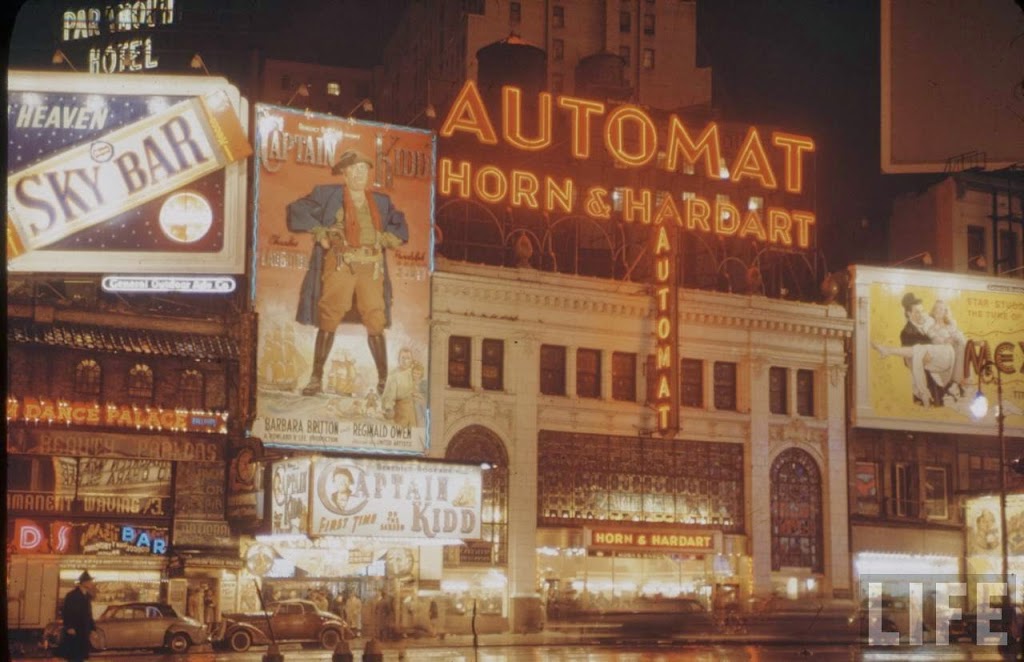
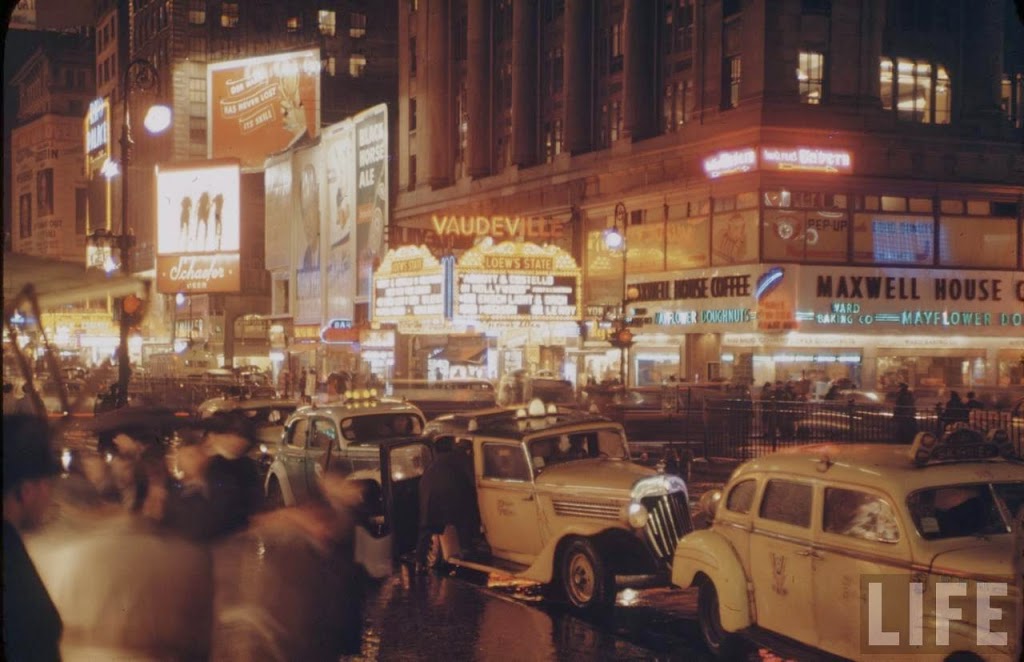
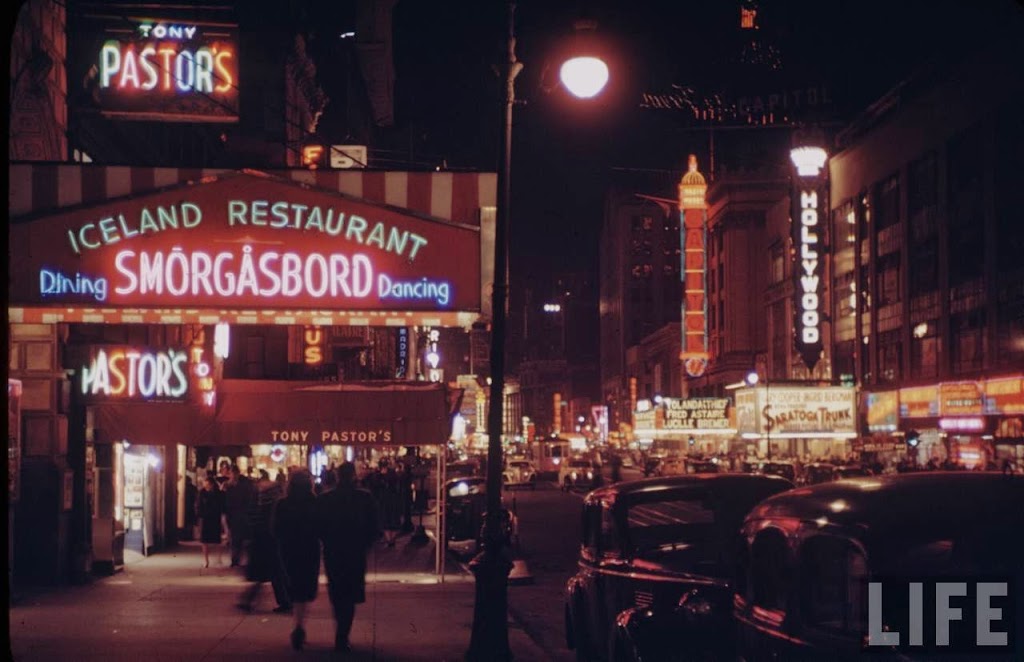
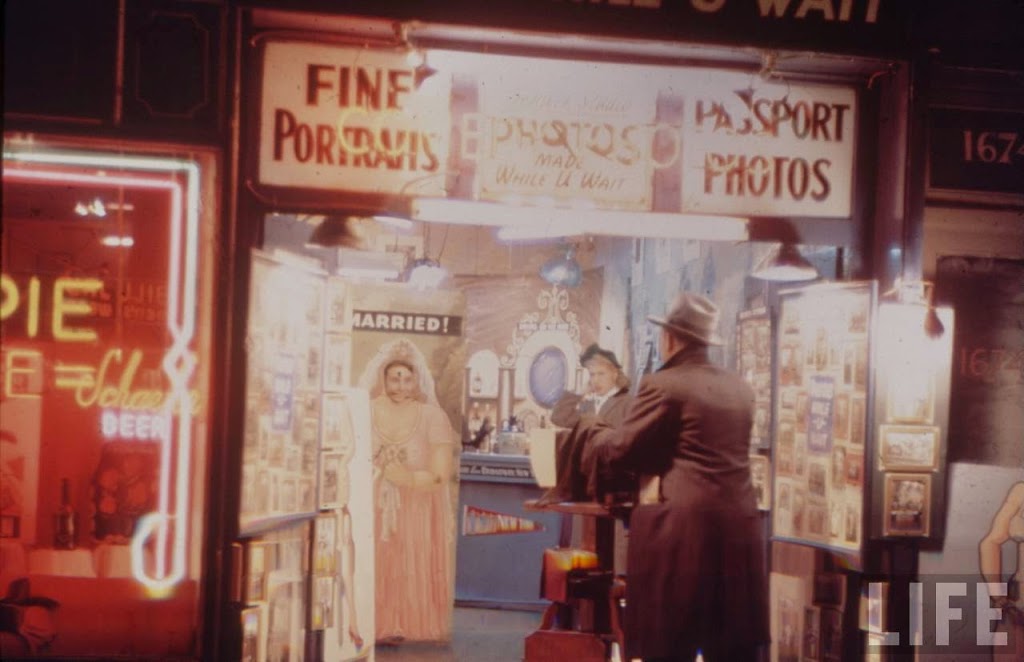
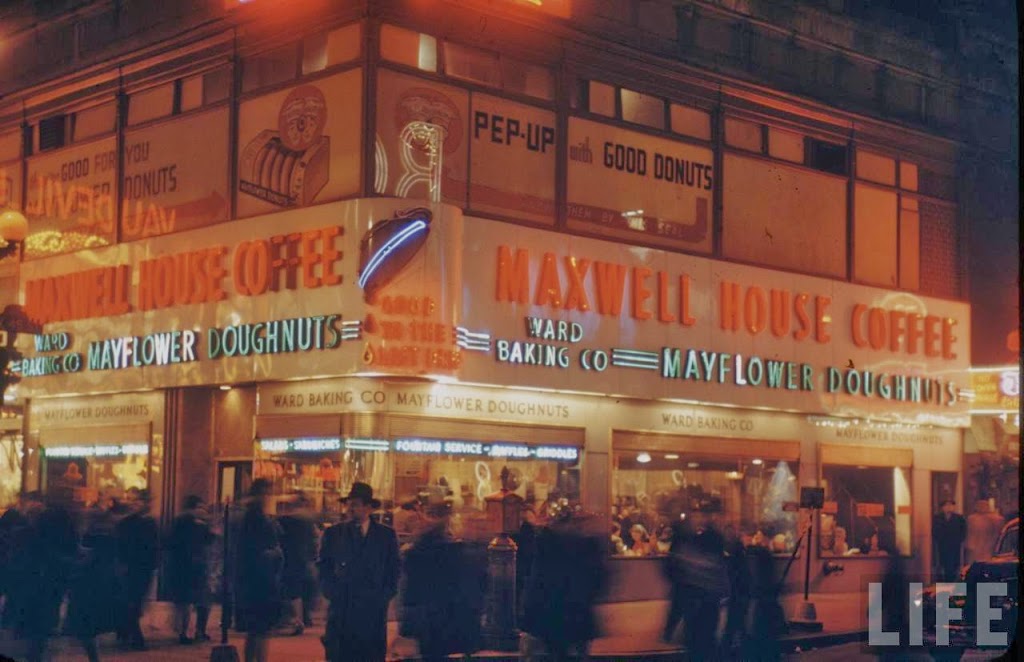
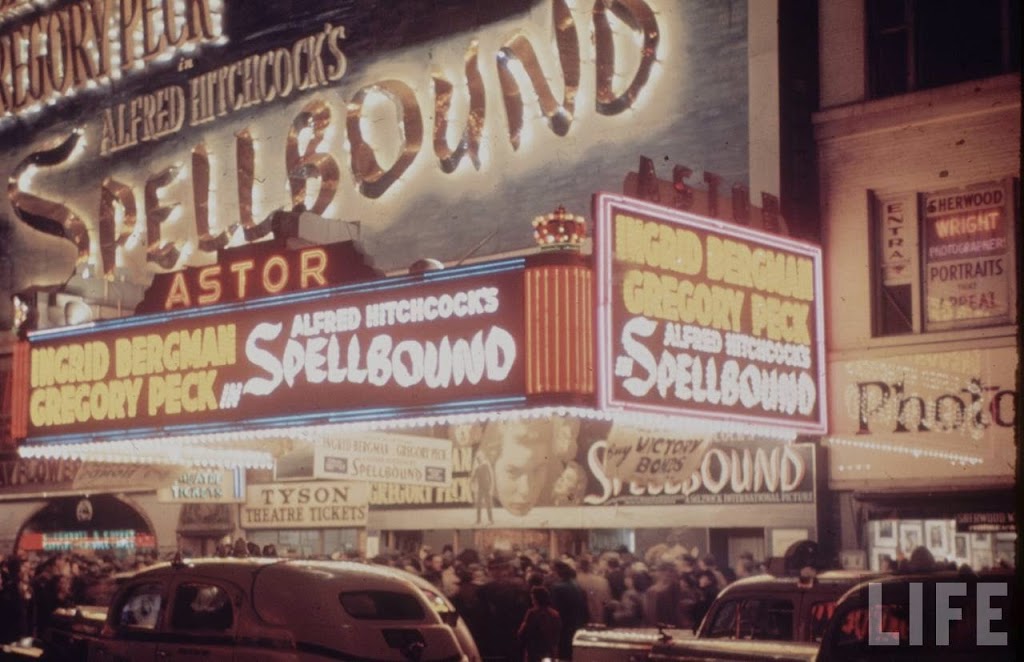
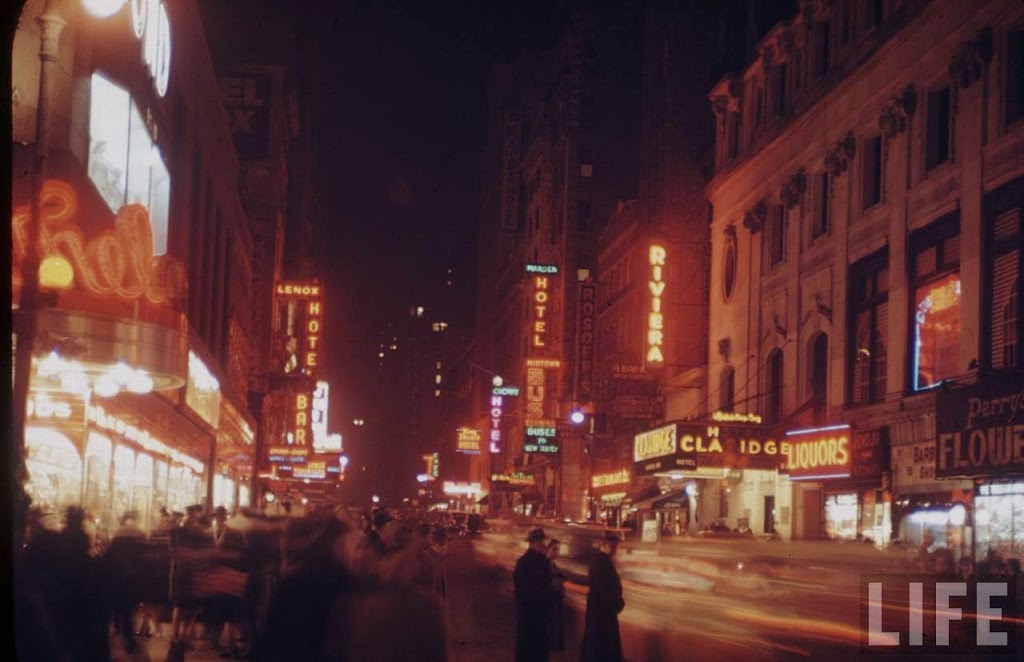
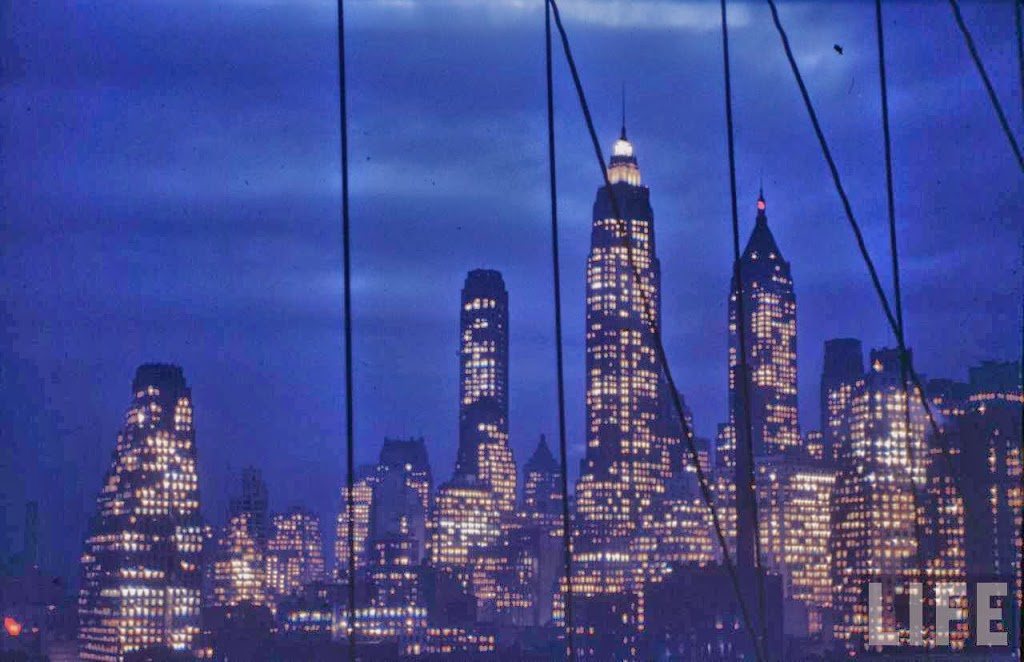
The Neon Beautiful: Images of New York at Night 1946

“In New York the first lights start to come on at night long before the last light has gone out of the sky.” 

 In 1939, a young Paris-born photographer named Andreas Feininger moved from his home in Germany to the United States. He took a job at Life Magazine in 1943, a few years after the publication’s retooling by publisher Henry Luce into a showcase for photojournalism.

Feininger would become one of America’s great photographers of the 20th century. He didn’t document places. He transformed them. In the era before frequent photo manipulation, Feininger could make the ordinary mythical. He could photograph a building and make it look like a rocket ship.  His vision was painterly, finding the iconic within the simple. And when he photographed extraordinary things — like his favorite subject, New York City — the result was often transcendent.

On August 5, 1946, Life ran a photo essay by Feininger called “New York At Night.”  It’s extraordinary for several reasons.  Most Life photography up until this time — in fact, most Feininger’s finest work —  was in black-and-white.

In fact that issue is all black-and-white — except the advertisements and “New York at Night.”

Just a few years before, New York was a darkened city at night due to wartime precautions.  But in the summer of 1946, the city was again abuzz.  Color photography itself had seen startling innovations but it was still a dazzling rarity then.

A revitalized New York City rendered in color prints by one of Life’s brightest talents?  It was the closest a print publication could come to conjuring magic.

Here’s several images from “New York at Night,” courtesy Life Magazine.  You can view the entire issue here for some context. (It’s worth a read, especially the article on a kids radio station!)

You can click into each image for greater detail.  And see if you can identify where in Midtown each of these photographs were taken!

And some music to put you in the mood, a song that was near the top of the charts in the summer of 1946:

Categories
Neighborhoods

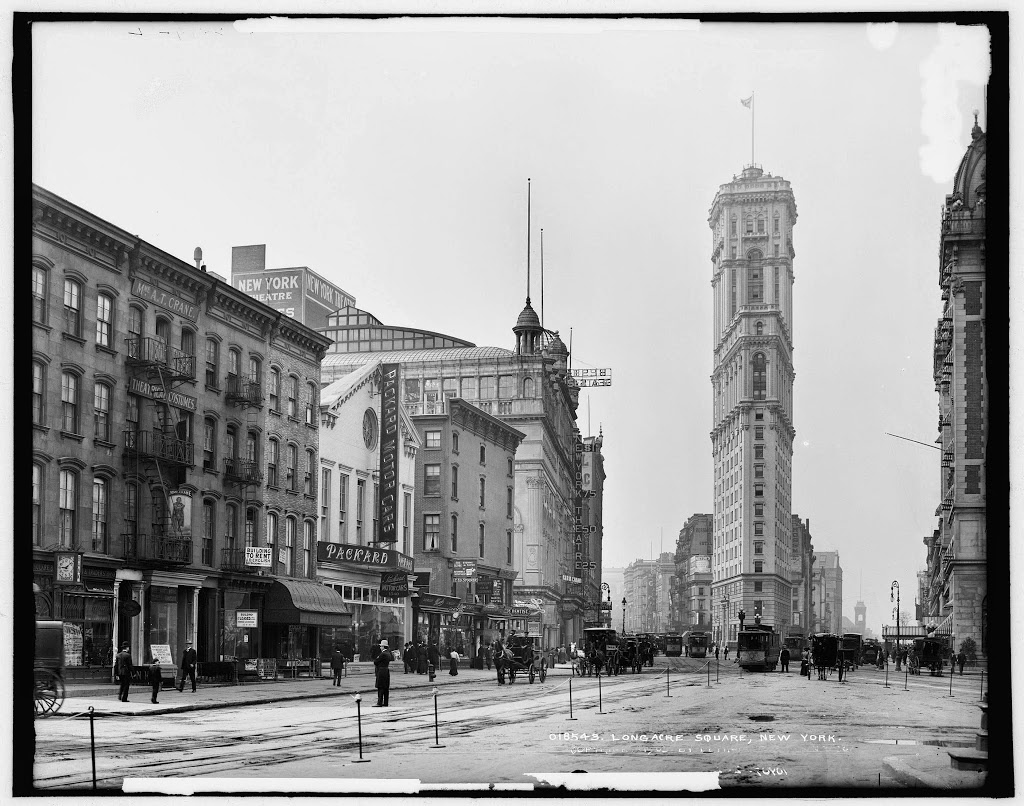
The naming of Times Square — 110 years ago today!

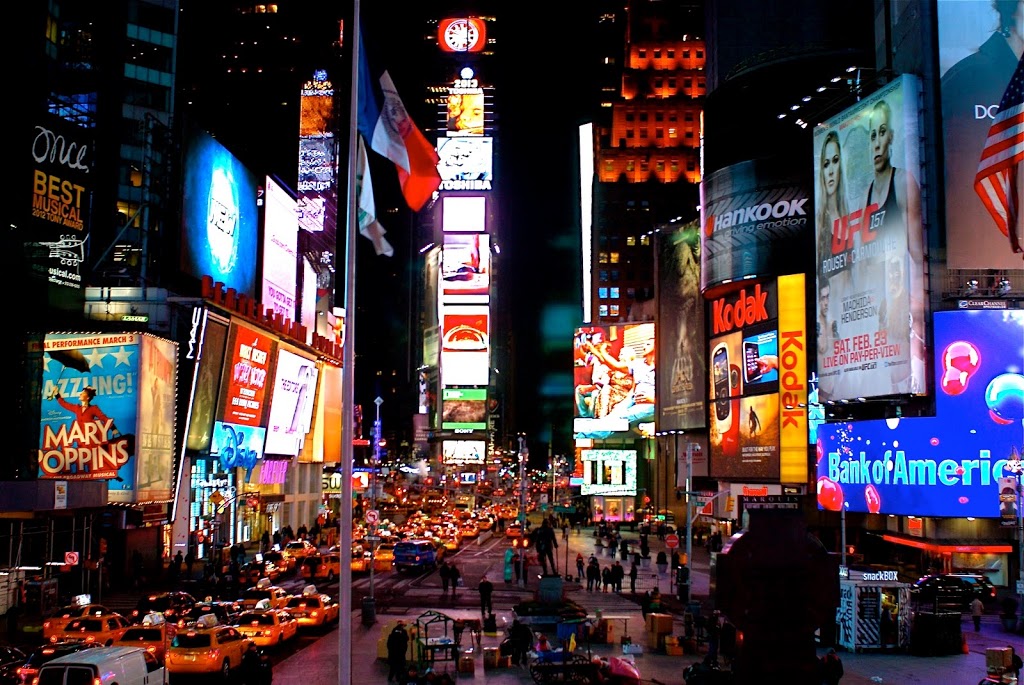
Looking south towards the Times Building, 1904 and 2013: Top pic courtesy Library of Congress; Bottom pic courtesy nyclovesnyc

From the New York Times, April 9, 1904:

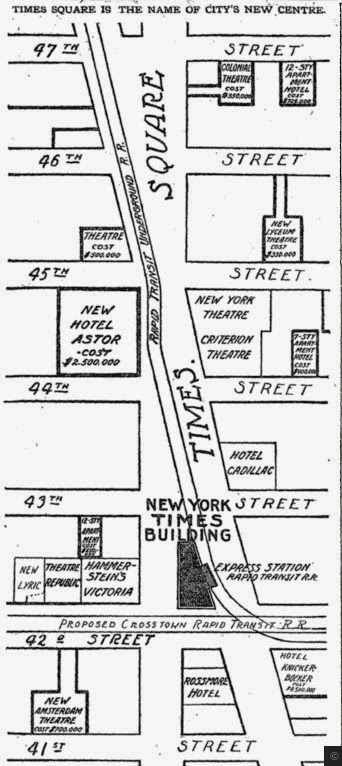
Mayor [George B.] McClellan yesterday signed the resolution adopted by the Board of Aldermen on Tuesday last changing the name of Long Acre Square to that of Times Square.  This follows out the recommendation of the Rapid Transit Commission and of the Interborough Rapid Transit Company, which is to operate the subway, and it is intended by the Rapid Transit Commission at its next meeting to call the subway station at Broadway and Forty-Second Street Times station.

The resolution with Mayor McClellan has signed becomes operative at once, and authorizes the President of the Borough of Manhattan to take such steps in the matter as may be proper and necessary.  This includes the alteration of street signs.  Times Square takes in the triangle on which the new building of The New York Times is situated, and the name applies to the entire section between Forty-Second and Forty-Seventh Streets, Broadway and Seventh Avenue.”

You can check this entire 1904 issue of the New York Times on their snazzy, endlessly fascinating new TimesMachine, which gives you access to their entire array of back issues.

Below: The illustration of Times Square which ran in the April 9th issue:

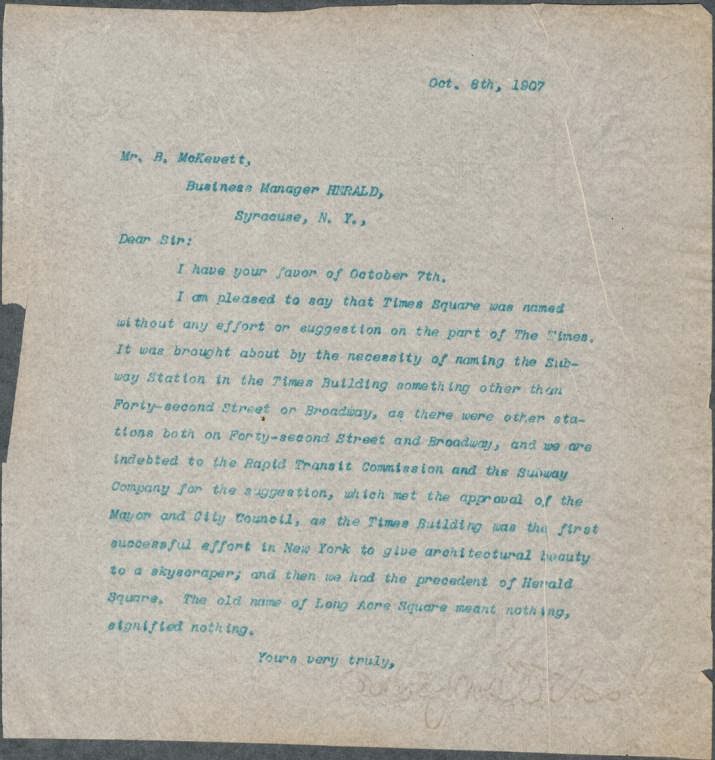
Below: A letter written by publisher Adolph Ochs to the New York Herald (Courtesy New York Public Library)

“I am pleased to say that Times Square was named without any effort or suggestion on the part of the Times.  It was brought about by the necessity of naming the Subway Station in the Times building something other than Forty-second Street or Broadway, as there were other stations both on Forty-second Street and Broadway…….”

“The old name of Long Acre Square meant nothing, signified nothing.”

Newspaper content courtesy the New York Times

Categories
On The Waterfront Podcasts

The history of the South Street Seaport: A robust story of economic power, historic preservation, rat fights and fish guts

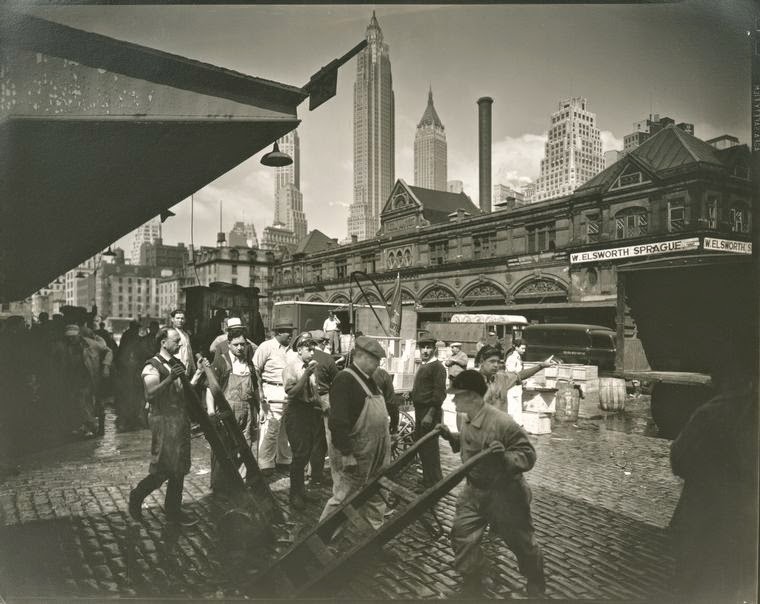
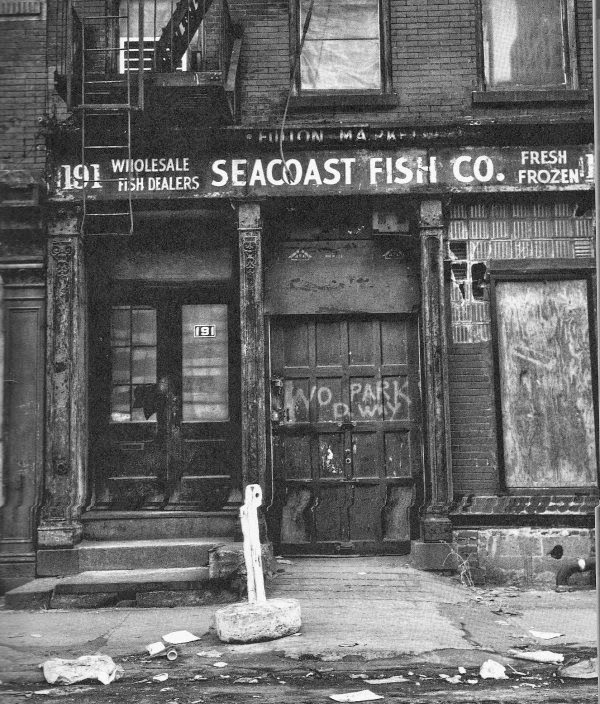
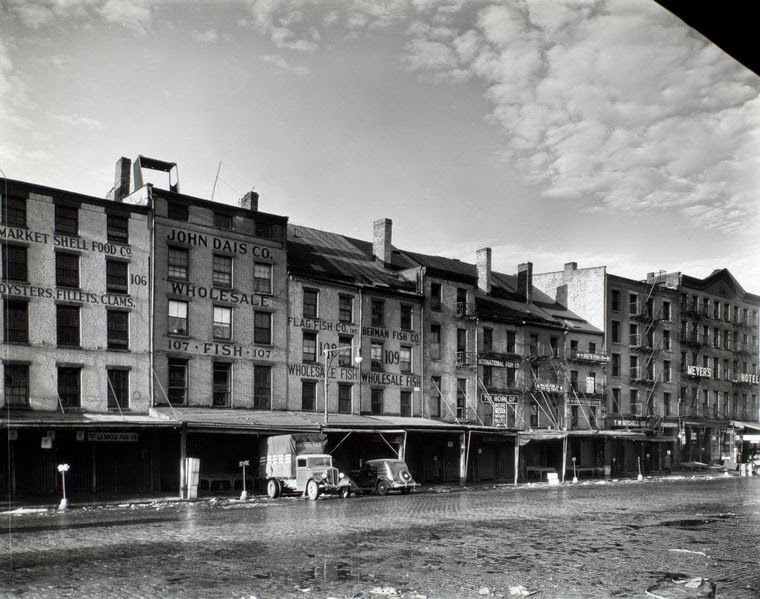
The daily bustle at the Fulton Fish Market, 1936, photographed by Berenice Abbott (NYPL)

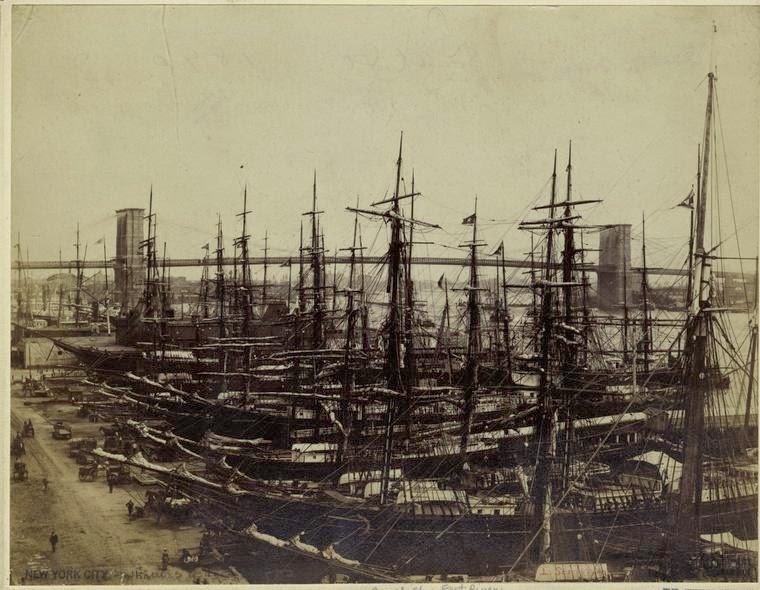
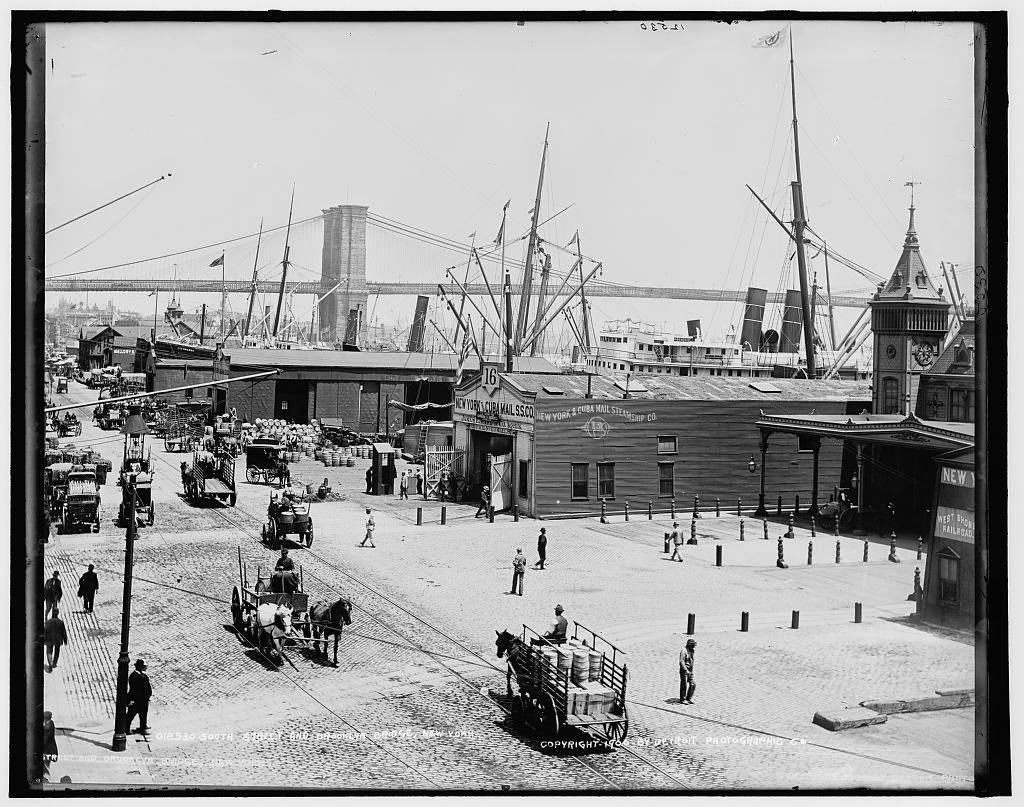
PODCAST  The glory of early New York came from its role as one of the world’s great ports.  Today the South Street Seaport is a lasting tribute to that seafaring heritage, a historical district beneath the Brooklyn Bridge that contains some of New York City’s oldest buildings.

But there are many secrets here along the cobblestone streets.  Schermerhorn Row, the grand avenue of counting houses more than two centuries old, is built atop of landfill.  Historic Water Street once held a seedy concentration of brothels and saloons. Not to mention a very vibrant rat pit! And the Fulton Fish Market, the neighborhood’s oldest customer tradition, once fell into the river.

The modern South Street Seaport, a preservation construct of concerned citizens, become popular with tourists during the 1980s but saw severe damage during Hurricane Sandy.  It’s now the subject of some potentially dramatic changes.  How much of an adherence to the traditions of the past will determine the Seaport’s future?

ALSO: The FDR Drive — How it almost went below the Seaport!


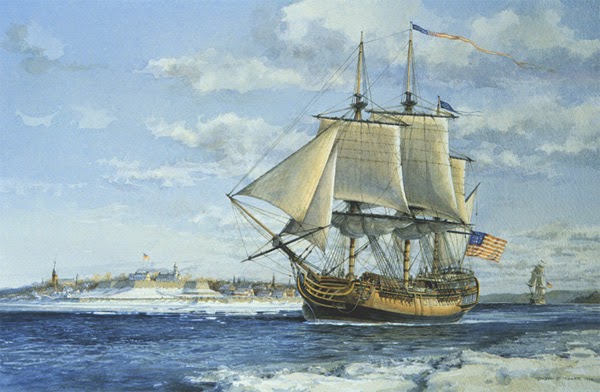
A painting of the Empress of China, the vessel probably most responsible for the growth of New York’s trading power. (Courtesy nyhistorywalks)

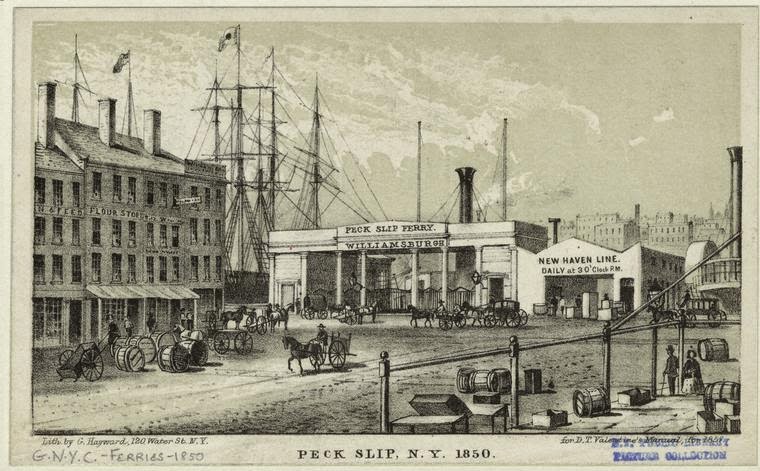
Peck Slip, providing ferry service to Brooklyn. The very first ferry service to Brooklyn was launched from this spot over two hundred years before the era depicted in this image. (NYPL)

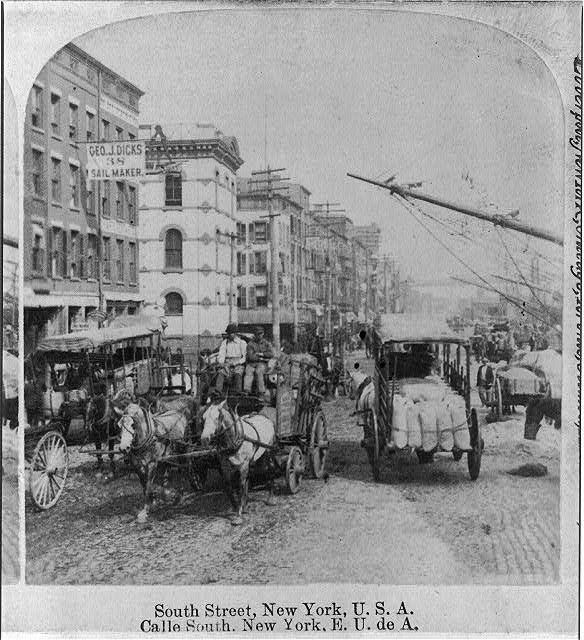
South Street, circa 1892, via stereograph (courtesy Library of Congress)

A different world: The glory of South Street in 1890 and 1900, respectively, still a non-stop churn of unloading, delivering and transport, even as the Brooklyn Bridge in the distance marks big changes to come for the neighborhood. (courtesy NYPL and Library of Congress)

The Fulton Fish Market, as photographed by Berenice Abbot, November 26, 1935 (NYPL)

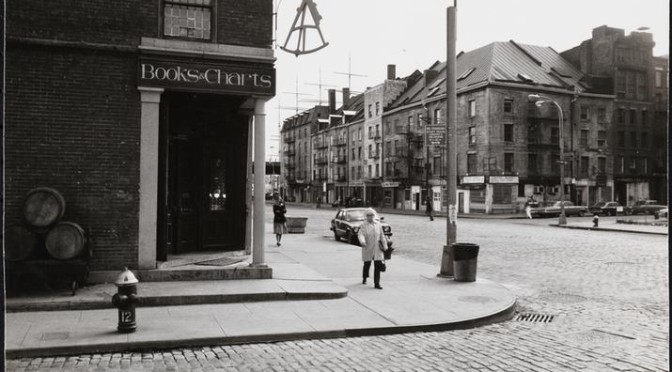
Fulton and Water Streets, 1975 (Courtesy the Museum of the City of New York)

[Fulton and Water Streets.]

Richard Haas’ trompe l’oeil excellently masking a Con Edision substation. (Museum of City of New York)

[Trompe l'oeil concealing a Con Ed substation at 237-257 Front Street, and the Jasper Ward house, 45 Peck Slip.]
 
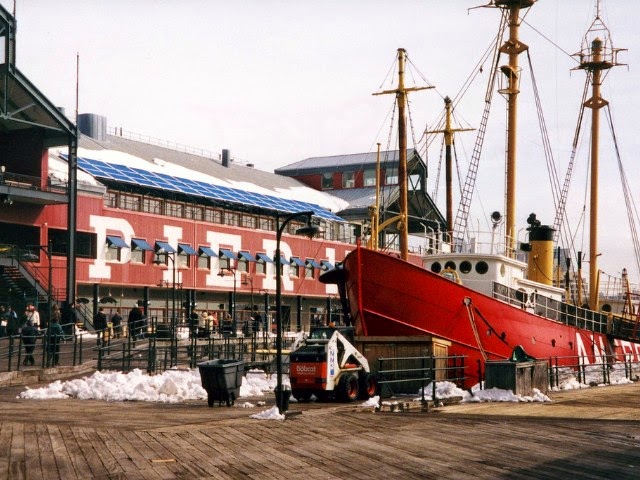
Pier 17, the ambitious 1980s project that transformed this once-vital economic center into a viable tourist attraction.  But it didn’t exactly appeal to large masses of regular New Yorkers. (Pic courtesy Wired New York)