Categories
Wartime New York

Decorating the Flatiron Building with cannons and silver coins

At the very first-floor corner of the Flatiron Building once sat the trusty United Cigar Store.  Being so striking a location in such an unusual building, the cigar store was often decorated occasions.

For instance, one hundred years ago today (April 1, 1914), the windows were filled with 7,150 silver dollars as part of a promotion by the New York Tribune for a newspaper quiz.

“The money is in shining, new silver dollars, and the glittering pile possessed marked magnetic qualities, drawing thousands of shoppers and business men.  The situation of the window gave Broadway and Fifth Avenue equal and simultaneous opportunities to gaze at the treasure.” [source]

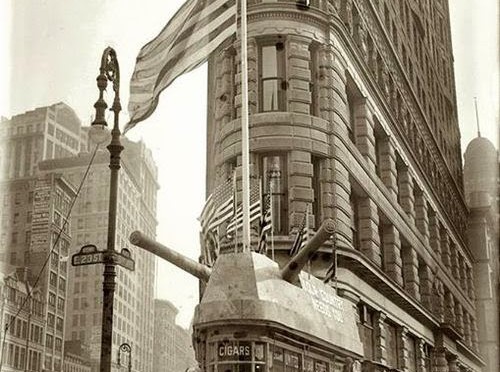
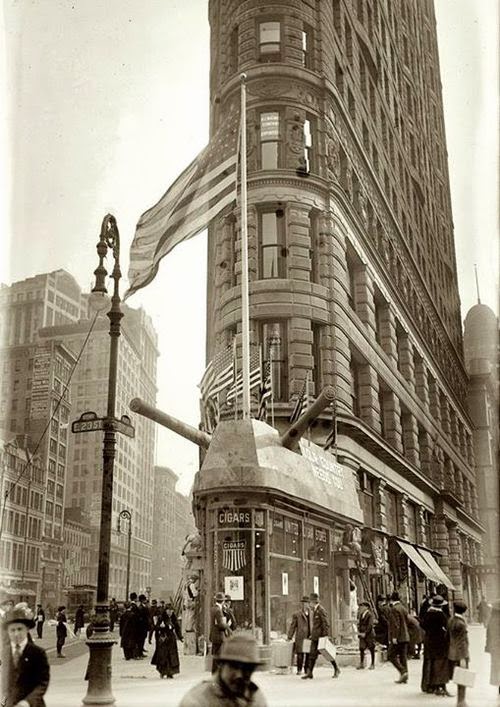
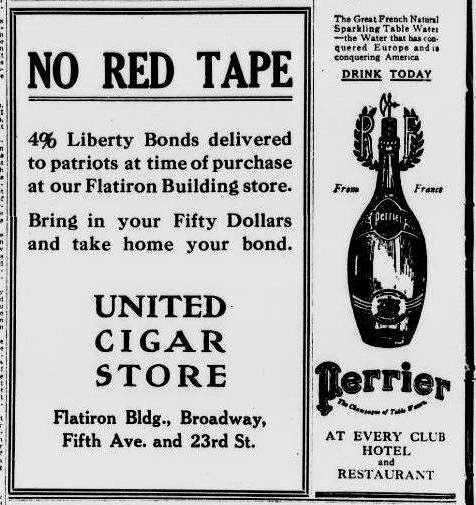
Something more unusual arrived atop the little cigar store a few years later.  With America’s entry into World War I, the patriotic owner of the cigar store donated the space for a recruiting center for the U.S. Navy.  Atop the store were decorative flags and replicas of naval cannons.  A war-stamps salesman would stand astride the cannons and beckon pedestrians to purchases war stamps.

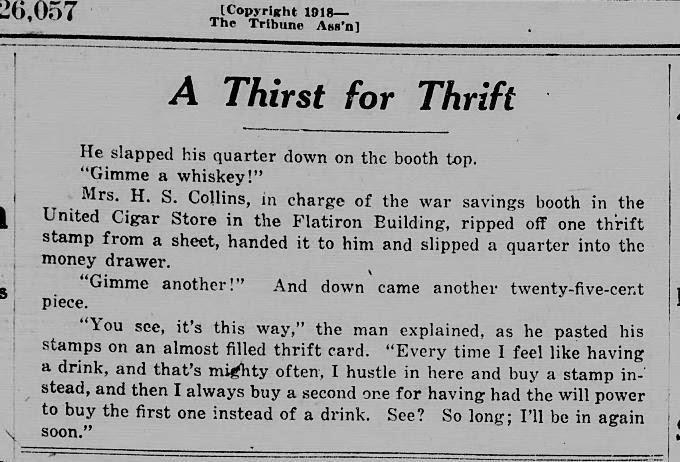
The flamboyant show had a profound effect, as illustrated in this front-page anecdote from March 20, 1918

For a time, the cigar store was one of New York City’s centers for the war effort, an ideal and attractive spot in one of New York’s busiest intersections.  During one such campaign drive, society ladies operated the booths inside while the military band played on the roof, between the cannons.  During the day, there were various demonstrations on front of the cigar store, including one for the Browning machine gun!

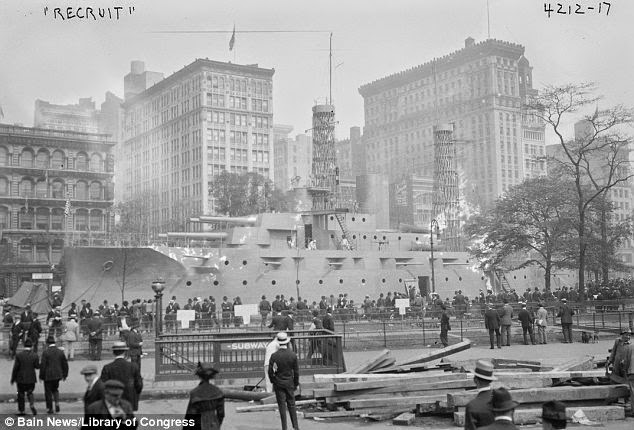
To give you a little bit more context of how dramatic this all was, down the street in Union Square sat a wooden Naval battleship, the U.S.S. Recruit.  (Read more about New York’s World War I efforts in my article last year on the history of the wartime doughnut.)

Categories
Friday Night Fever

Recalling the opening of Roseland Ballroom at the start of Prohibition, the ‘phantasmal’ atmosphere, the private dancer

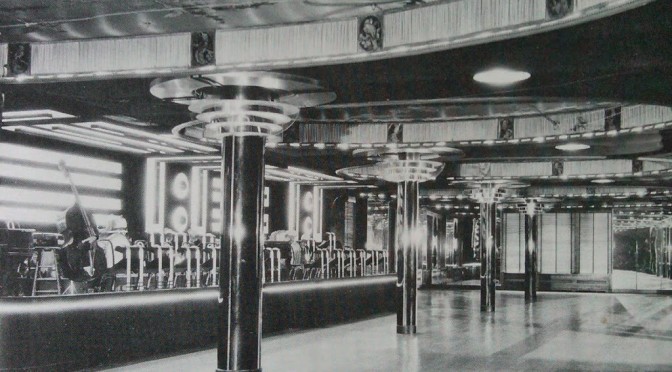
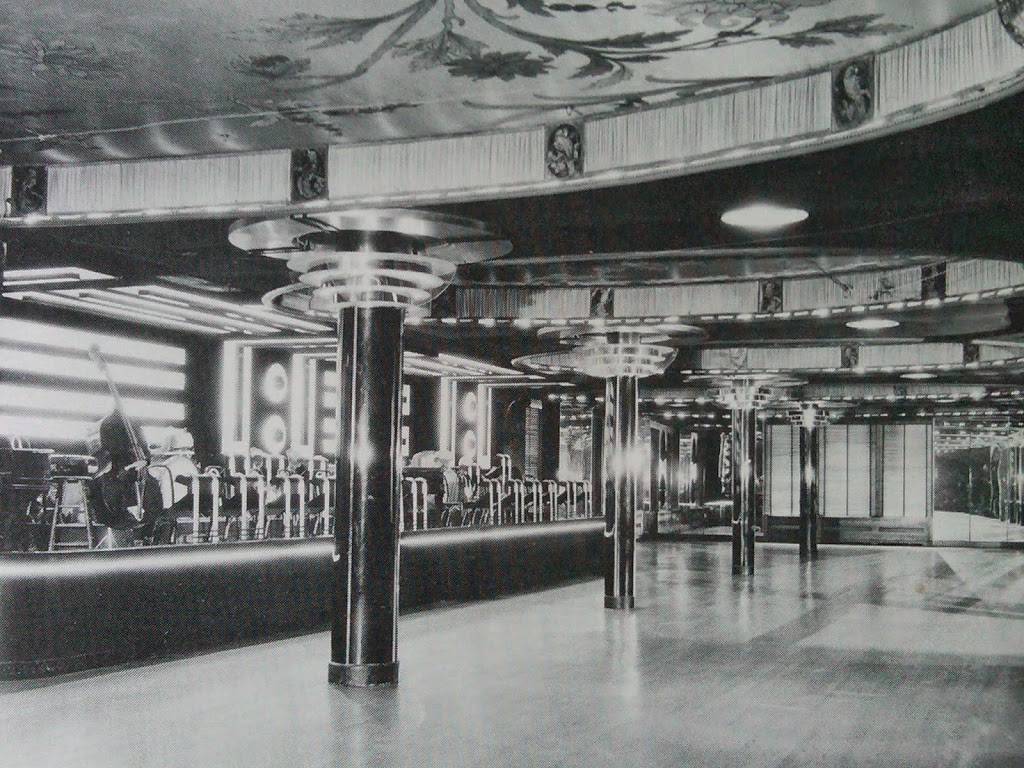
The Roseland Ballroom closes its doors next month on April 7th after a round of Lady Gaga concerts.  The storied big band venue — the ‘world’s foremost ballroom cafe’ — originally opened on December 31, 1919 at 1658 Broadway (at 50th/51st Street).  In the 1950s, it moved to its present location on 52nd Street, a former ice and roller-skating rink.

On the surface, opening a dance club a few weeks before the start of Prohibition doesn’t seem to be especially wise.  But New Yorkers ate it up.  After all, there would eventually be hundreds of speakeasies surrounding it!”

From the January 17, 1920 edition of the New York Evening World, headlined ‘Broadway Finds Joy In Roseland‘:

“The shadow of the camel, i.e. the presence of Prohibition, has not robbed Broadway of all its pleasures.  The dancers still find a way to have a good time, as may be attested by the thousands who attend the sessions at Roseland, the new dancing place at Broadway and 51st Street.

During the ’20s, the Roseland was the scene of many dance marathons for prize money.  In 1923, when the city reminded him that state codes authorized only twelve-hour endurance contests, he arranged for competitors to be whisked away on a boat — called the Roseland — to complete the contest.

The Roseland took aim at dismissing the blues at the height of the Great Depression.   “At Roseland Ballroom, ‘Old Man Depression’ will be tried and found guilty of murdering Prosperity and sentenced to death.  A scaffold will be erected for him and his ‘death’ will be a signal for merry-making.” [from the December 31, 1931, New York Times]

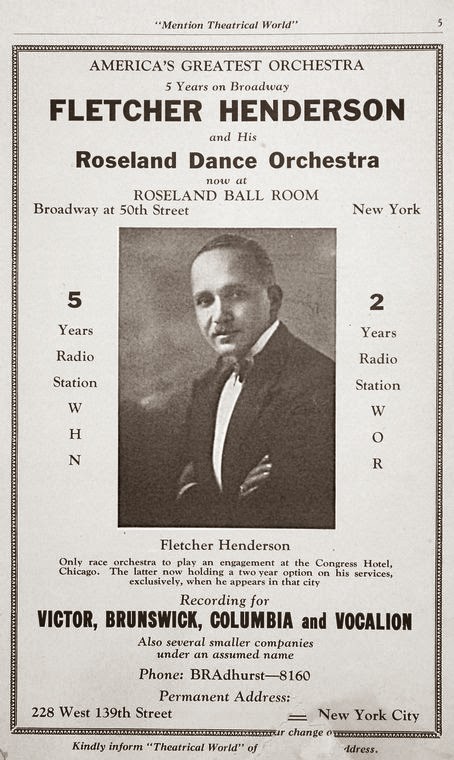
At right: Regular Roseland bandleader Fletcher Henderson (courtesy NYPL)

The Roseland was never the Rainbow Room.  During the 1940s it was nicknamed ‘the poor man’s nightclub’ which apparently didn’t stop it from being “the most famous dance hall in the world,” according to the New Yorker in 1942.  (It was also, back when it opened, a whites-only establishment.)  Always popular, the Roseland of the 1940s was charming and sometimes mysterious, regimental and rarely lewd.  Its owner Louis Brecker always referred to it as “the home of refined dancing.”

People accustomed to night-club life often find the atmosphere slightly phantasmal. The ceiling is hung with dark-blue muslin studded with tiny electric bulbps give a night-sky effect. The roomis lit by neon lamps, graduating in shade from deep pink to lemon yellow. In their dim rays knots of patrons drift to and from the dance floor with a curiously delicate air, fluorescing a bit as they go.” [New Yorker, 1942]

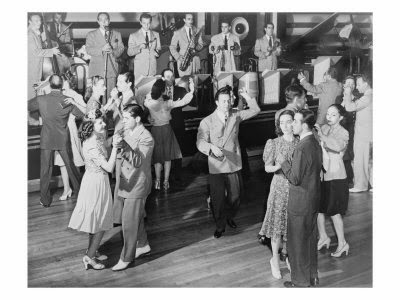
Roseland dancers, 1941 (Library of Congress)

The Roseland was also known for hostesses (or taxi dancers) who would dance with gentlemen for $1.50 per half hour.  They were beautiful and well behaved, never drinking alcohol if their patrons offered. And they never solicited business, sitting politely in a roped-off dias by the dance floor, waiting for an interested man to come along.

“Each hostess tried to build up a clientele by thoughtful attention to masculine interests and hobbies. Many hostesses read books in order to increase their conversational range,” according to the New Yorker. “[E]lderly gentlemen who like to surround themselves with hostesses, sometimes  [bought] out the entire platoon for the evening.”

The hostess/taxi dancer, hugely popular during the World War II era, had mostly faded out by the time the Roseland moved to its present location at 52nd Street.

 Here’s a Henderson tribute to the venue, entitled “Rose Room (In Sunny Roseland)”:


Categories
Brooklyn History

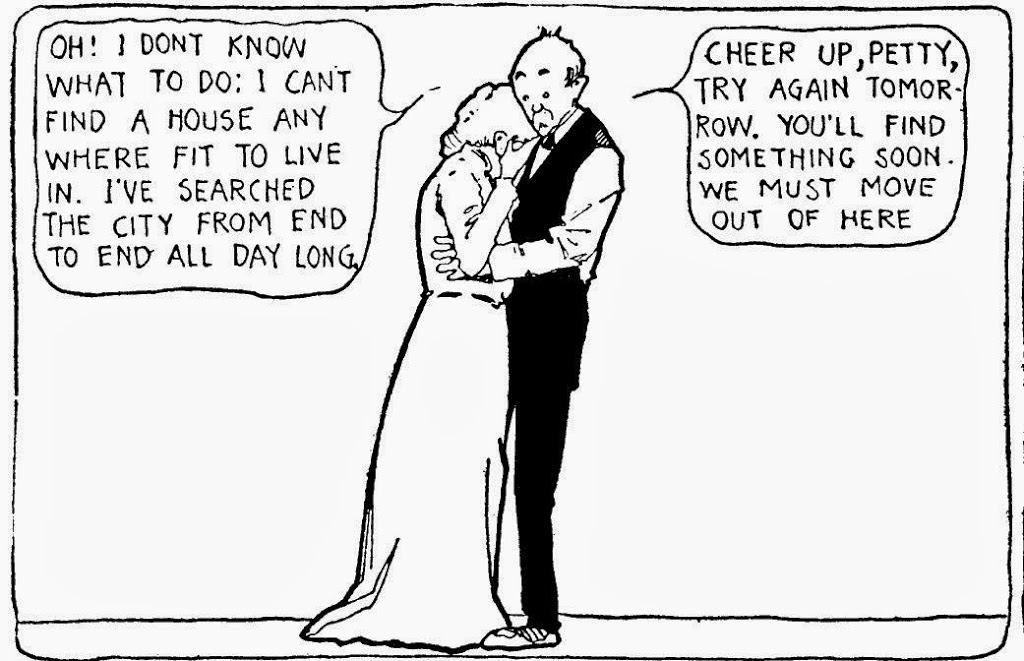
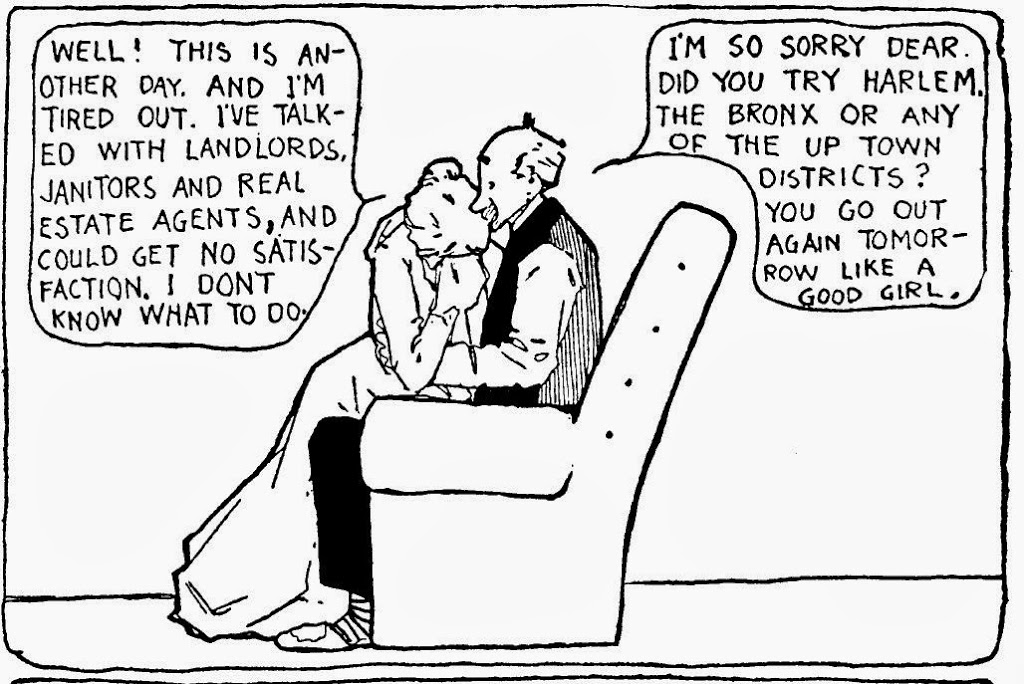
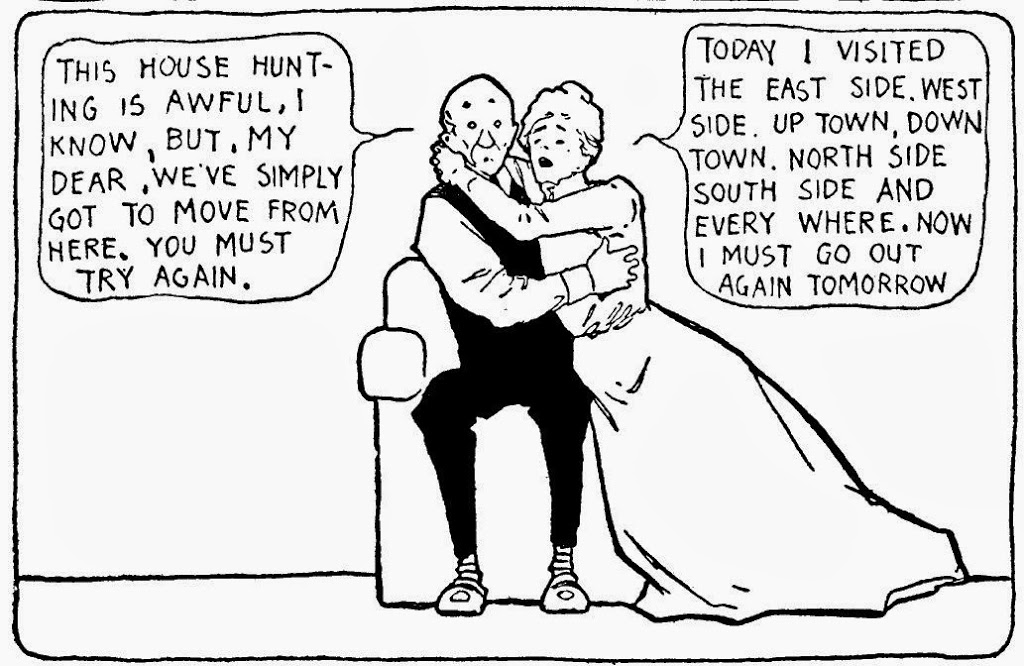
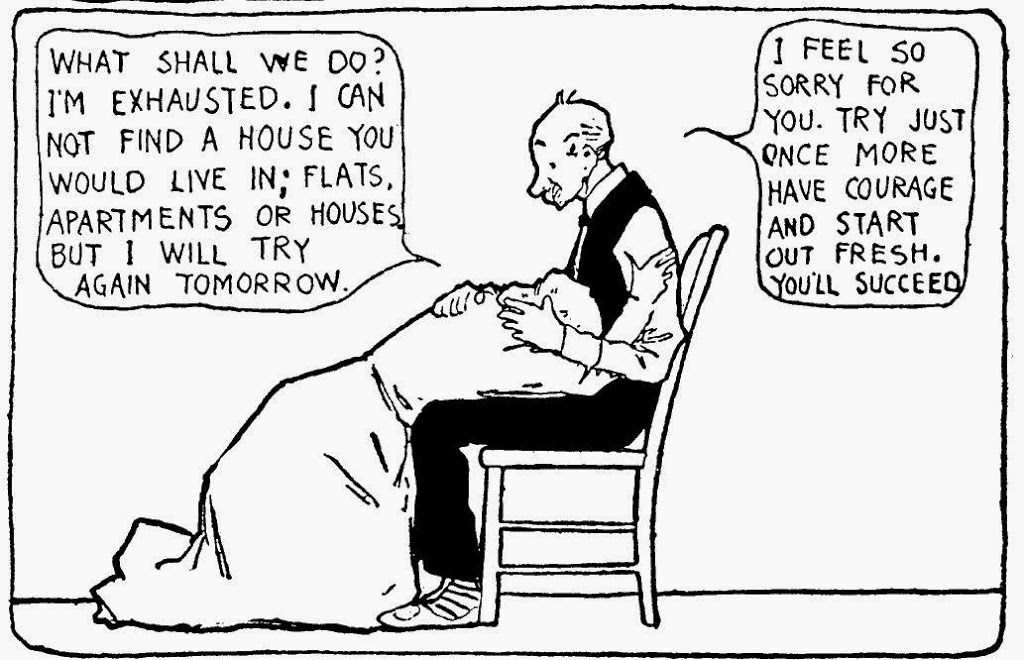
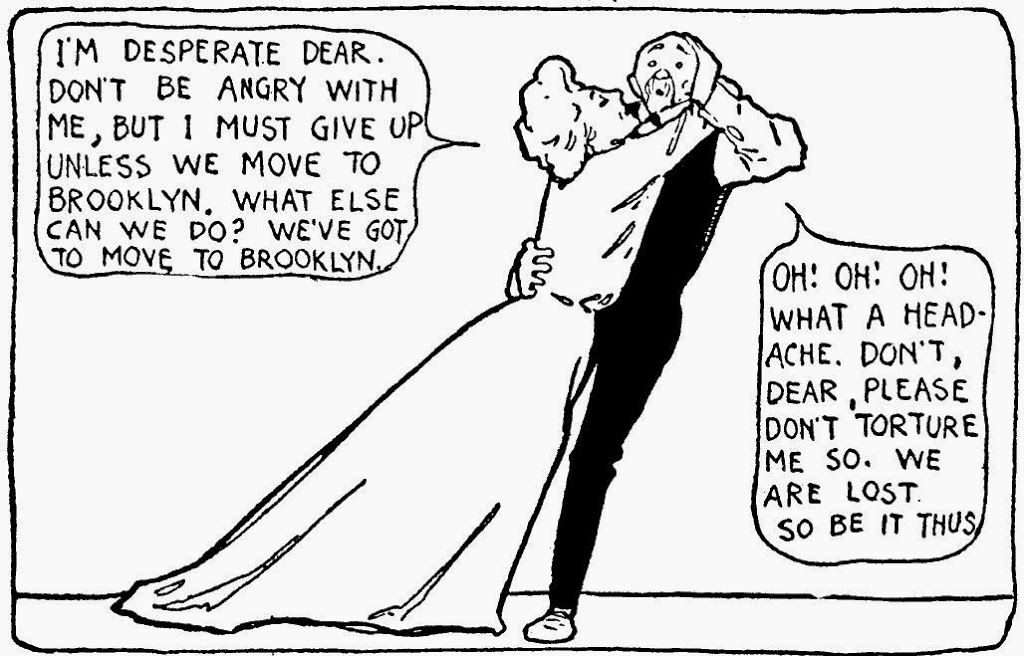
The horror of moving to Brooklyn — from a 1905 comic strip

Above: Food can do strange things to you at night: an excerpt from McCay’s January 7, 1905 strip, published two days after the one printed in full below.

Dream of the Rarebit Fiend was one of America’s first great comic strips and easily one of the weirdest. Each eight-panel or nine-panel strip featured an individual trapped within a situation nightmarish for its day, only to be woken up in the final panel.  The cause for the dream was almost always the same — a meal of rarebit the night before.

Written by Winsor McCay (of Little Nemo fame), this extraordinary oddity ran in various New York newspapers starting in 1904, with various spin-offs and revivals well into the 1920s.  McCay was a favorite of publisher William Randolph Hearst, who often stifled the illustrator’s unrelated endeavors to keep the popular artist loyal to Hearst’s publications.

You can find the entire collection of these fascinating little adventures here.

Rarebit — a hot cheesy sauce poured over toasted bread — seems to have had profound effects on the subconscious.  It was able to vividly extract the fears of New Yorkers at night.  While most were magnificently surreal, others touched on modern issues like crowded trains, uncontrollable automobiles and fast streetcars.

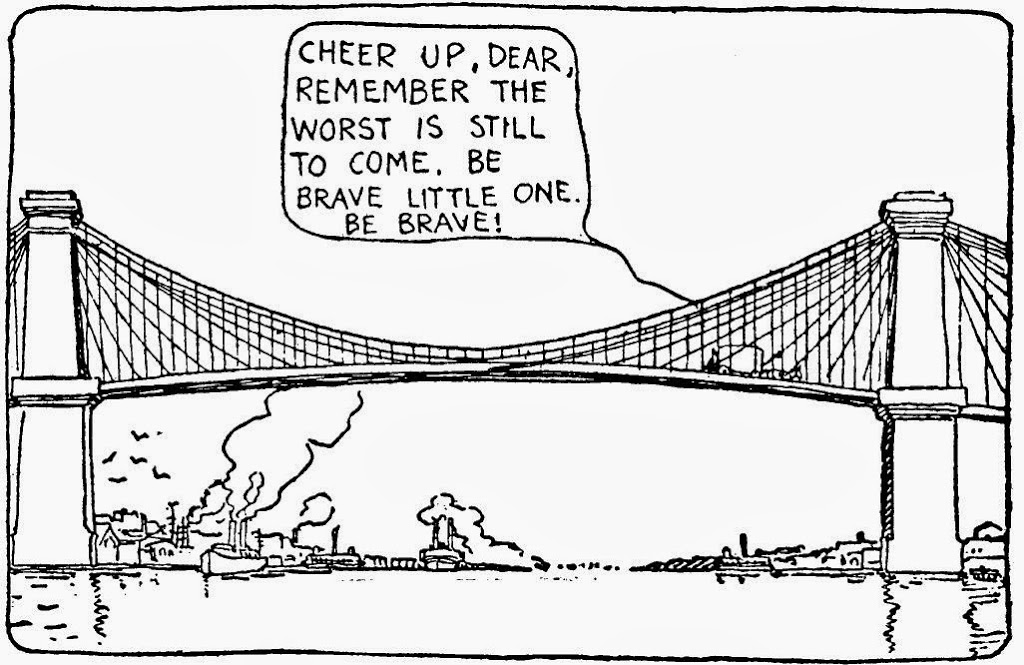
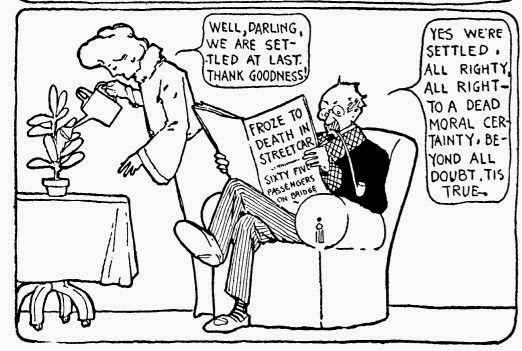
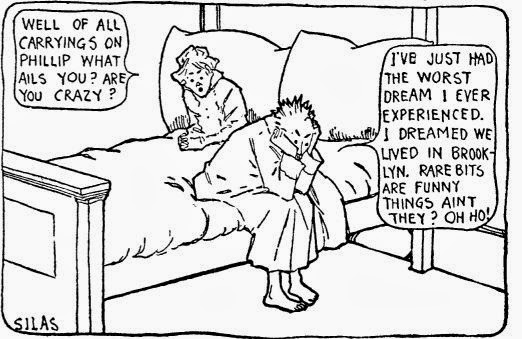
Another such fear, according an entry from January 5, 1905, was the disgrace of moving to Brooklyn.

You can read this particular strip below with the panels broken out.  Read the strip in its original form here.


I found this comic thanks to the guidance of Gawker commenter raincoaster. Thanks for the inspiration!

Categories
Gangs of New York

The 1867 St Patrick’s Day riot: No peace in the Lower East Side

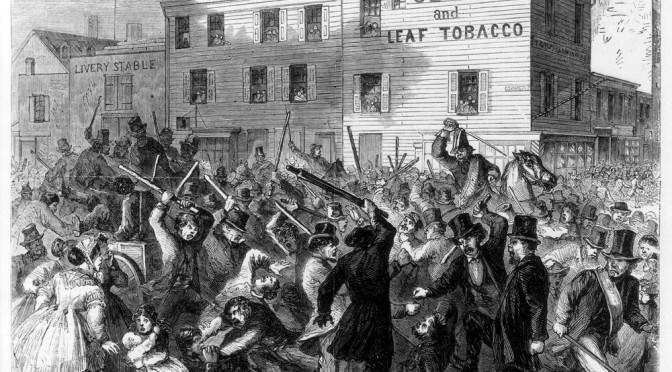
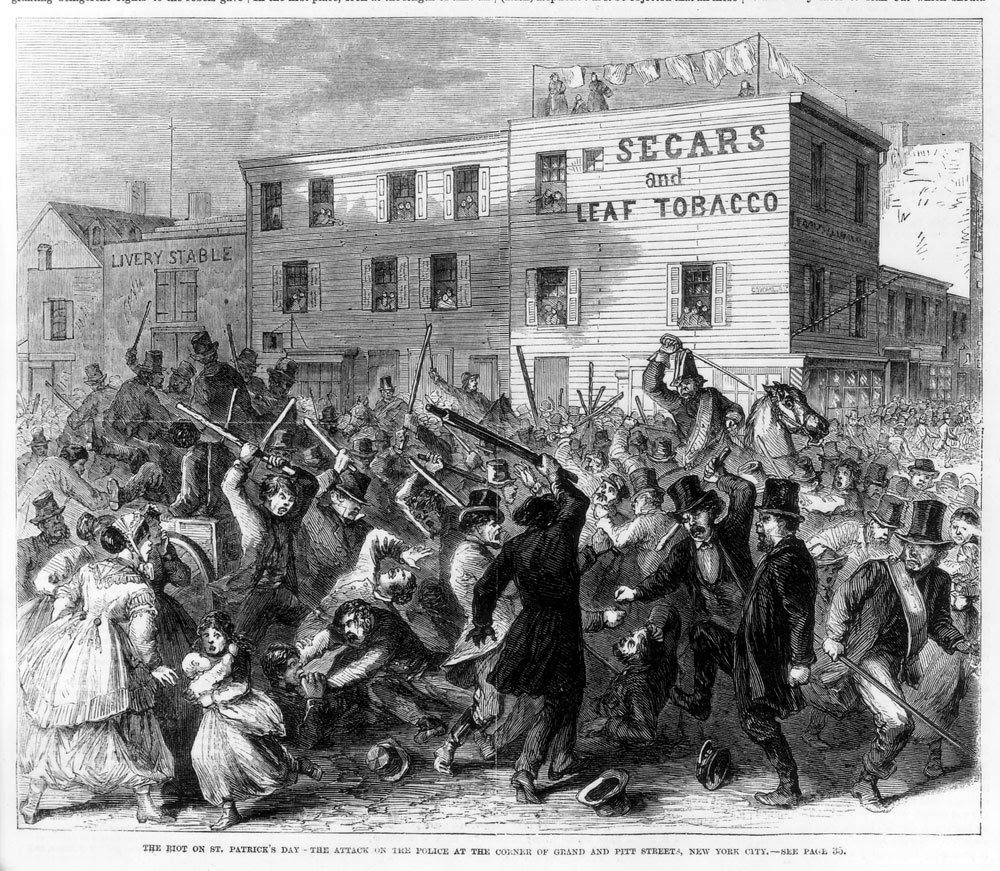
Frank Leslie’s Illustrated Newspaper reported on a ‘riot’ which occurred on Saint Patrick’s Day 1867 at the intersections of East Broadway, Grand and Pitt Streets, one block below Delancey Street and the Williamsburg Bridge (which was decades from being built by that date).

The parade began on East Broadway, with regiments assembling here (“slush and snowdrifts … disregarded”) to march throughout the city.

A bit after noon, a wagon driver, hemmed in by mounds of snow, got caught at Grand and Pitt street, blocking the parade route.  He was immediately set upon by angry marchers.  When a police officer interceded to protect the driver, he, too, was assaulted, “knocked down and severely injured by being trampled upon.”

Other officers arrived, and soon Grand and Pitt was the scene of senseless violence.  “The Hibernians broke their staves of office and used the fragments as shillelaghs and clubs, with such effect, that the officers were the recipients of several ugly scalp wounds and bruises.”  Another report lists the unique weaponry as “sword canes, society emblems and other missiles.”  One officer was wounded with a sabre. Soon the street corner filled with policemen, and the violence subsided. [source]

The whole event seemed to last no more than thirty minutes.  But the New York Times, a fairly anti-Democrat, anti-Irish paper in the mid 19th century, was truly outraged: “We trust there is no Irishman or Irish American, outside of a small lawless minority, that does not feel keenly the disgrace brought upon such celebrations as that of yesterday, by the wanton and brutal assaults upon the Police.”

Categories
Bowery Boys Bookshelf

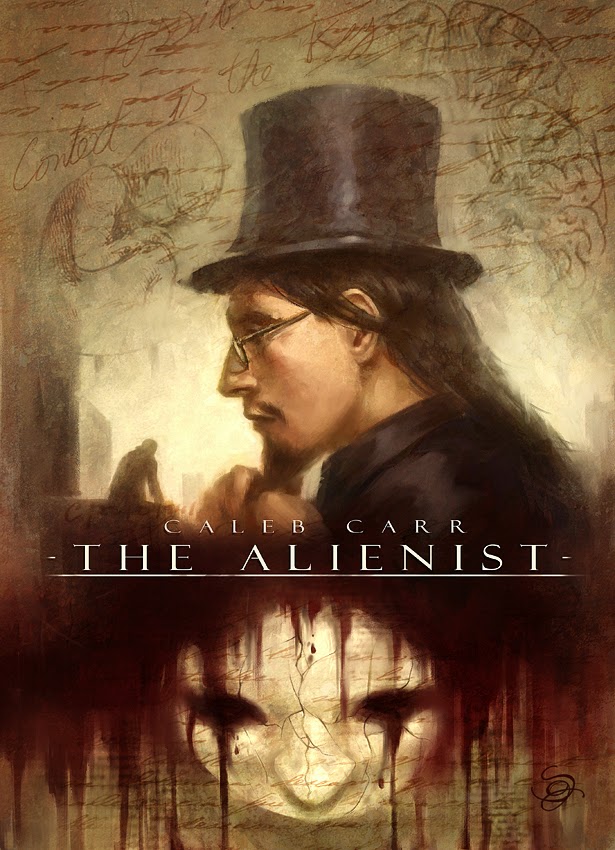
The Alienist by Caleb Carr, released 20 years ago this week: Retracing the steps of this Gilded Age murder mystery

NOTE: This article has a few plot spoilers but no major twists are revealed or discussed.  I’ve tried to write the descriptions within the interactive map as vaguely as possible.

The Alienist by Caleb Carr was published 20 years ago this week, an instant best-seller in 1994 that has become a cult classic among history buffs.  Despite some creakiness uniquely inherent to early ’90s fiction thrillers, it remains today a page-turning and utterly spellbinding adventure.

Although the Jack the Ripper murders were an obvious inspiration for Carr, perhaps The Alienist‘s biggest influence is The Silence of the Lambs by Thomas Harris.  Carr completed his tale of serial murders in the Gilded Age just as a slew of Silence knockoffs began hitting the bookshelves.  The Alienist stands far above the pack, of course, but you can’t deny its success in 1994 was partially inspired by reader’s cravings for murderers with perverted tastes and body parts in formaldehyde jars.

The Alienist follows a quirky team of investigators in 1896 as they follow the bloody trail of a killer with a peculiar penchant for boy prostitutes, often dressed as girls to the delight of their clientele.  Dr. Laszlo Kreizler is the alienist (or psychologist) in charge of the case, stitching together a profile of the loathsome figure, conveniently using soon-to-be standard analytic techniques.

At right: Alternate artwork for The Alienist (Courtesy Nerd Blerp)

As protagonist John Schuyler Moore, a reporter for the New York Times, explains it “[W]e start with the prominent features of the killings themselves, as well as the personality traits of the victims, and from those we determine what kind of man might be at work. Then, using evidence that would otherwise have seemed meaningless, we begin to close in.”

Carr’s book is finely detailed, perhaps overly detailed, which won’t be a problem if you love New York City history.  There are over two dozen scenes at various notable landmarks throughout Manhattan, some in various states of construction.  Several real-life figures make appearances, although the most entertaining characters are Carr’s own, including the intrepid proto-policewoman Sara Howard and scrappy errand boy Stevie ‘Stovepipe’ Taggart.

When I first read The Alienist back in 1994, I was struck by its preciseness, an expertly placed breadcrumb trail through old Gotham.  There is no romantic gloss, as in another history classic Time and Again. He makes it seem possible to retrace almost every step of our heroes. (In researching this article, I tried to do so.)  The original New York Times review noted that “[y]ou can practically hear the clip-clop of horses’ hooves echoing down old Broadway.”  They’re still echoing.

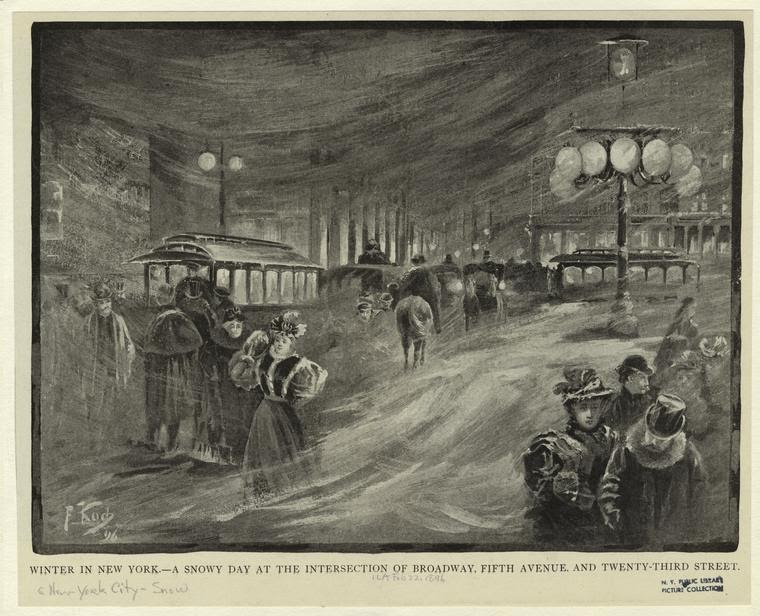
The story begins in the early months of 1896 during a robust winter. Below, from the Illustrated American, a depiction of a snowy Madison Square that year (NYPL):

His depiction of old New York is still glorious.  The book’s polite take on certain social issues, however, read a bit wobbly today.  To his credit, Carr tackles police corruption, gender discrimination, racial prejudice and the plight of homosexuals, all while elaborating on complicated psychological theories in service of an entertaining story.  He has stuffed a hidden epic of New York into the framework of a modern murder mystery.  That he chooses to handle hot-button social issues with kid gloves is not a misstep, but merely a symptom of its genre and day.

The Alienist is still greatly enjoyable, perhaps slightly more so now.  Thanks to renewed interest in New York City history, the details here are even more shimmering and vital.  This is not an old New York emerging from a mysterious fog, but a world that seems to exist alongside our own.

And to prove that — below you will find a detailed, interactive map of the pivotal locations used in the book.  You can click into various points for further details.  A few of these pins have pictures and other links. Just zoom in and choose a location!  (NOTE: Some locations are approximate and a couple are speculation.)


A little elaboration on certain elements of the book’s bigger places and themes:

Paresis Hall 
Most of the murder victims are boy prostitutes employed as several houses of ill repute throughout the city.  Paresis Hall, located steps from Cooper Union, sounds like it was both a place where gay men could congregate in private clubs and a place of sexual transaction, often (as in the book) with underage boys dressed up as girls.  This boy, Nathaniel ‘ The Kid’ Cullen, may have worked there, or may have just a habitue of the club. (He appears in this collection of photographs from Paresis Hill.)

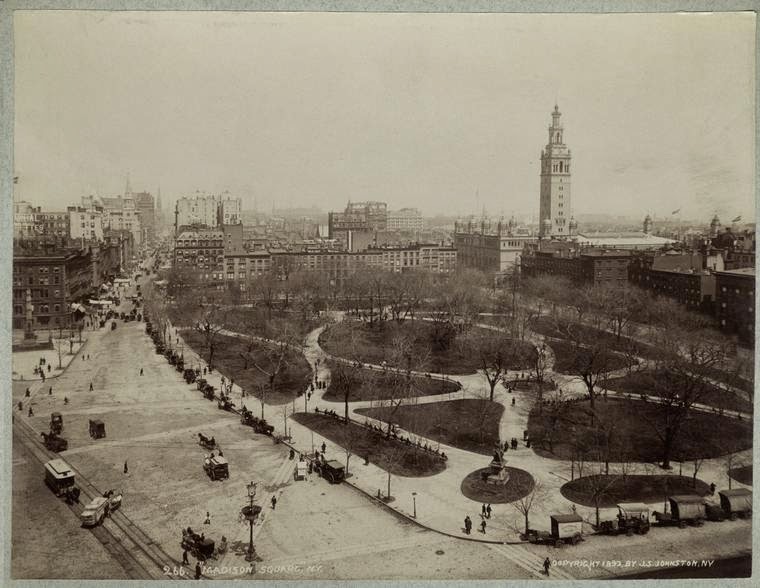
Madison Square 
This was still a thriving center for culture and dignified entertainments in 1896. Many theaters clustered around the park, although newer stages were making their way up Broadway to Herald Square.  If Delmonico’s (on the northwest corner) is too crowded for you, head over to the tea room at Madison Square Garden on the northeast side.  Pictured here in 1893, three years before the events of the Alienist. (NYPL)

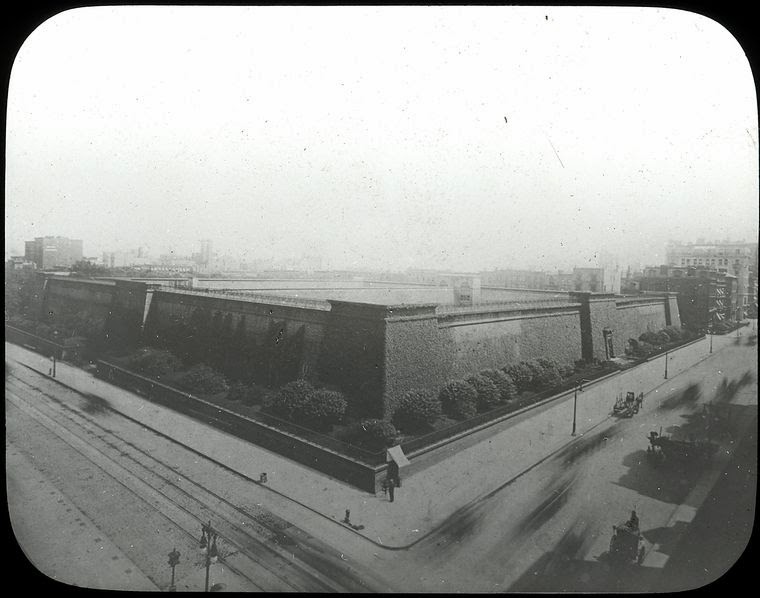
Murray Hill Distributing Reservoir
In 1896, New York still relied on this reservoir to provide most people with water.  But it was also a tourist destination in itself, with walking paths along the top.  Shortly after its appearance it the book, the Egyptian-inspired reservoir was torn down to make way for New York’s new public library. (NYPL)

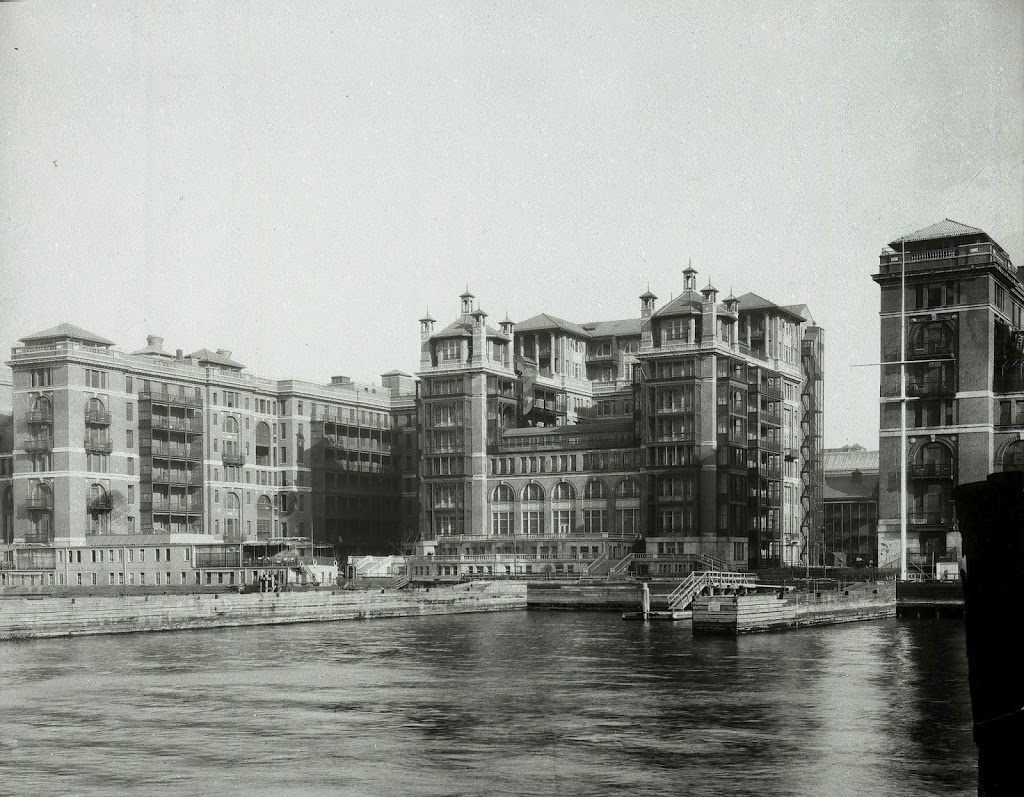
Bellevue Hospital and Morgue
Check out our podcast and blog posting on the history of Bellevue Hospital, as many of the details mentioned there appear in this book.  Below: Bellevue in 1879.

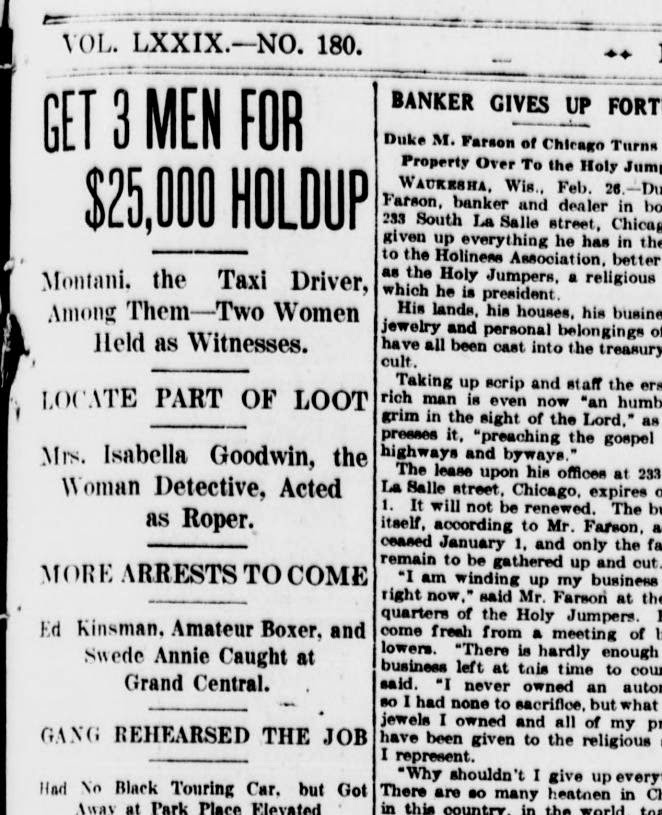
Isabella Goodwin
Sara Howard seems to be a little bit Nellie Bly, and a lot Isabella Goodwin, the first female office promoted to detective in 1896 (the year the book is set).  Below: A front-page case cracked by Goodwin from February 1912.

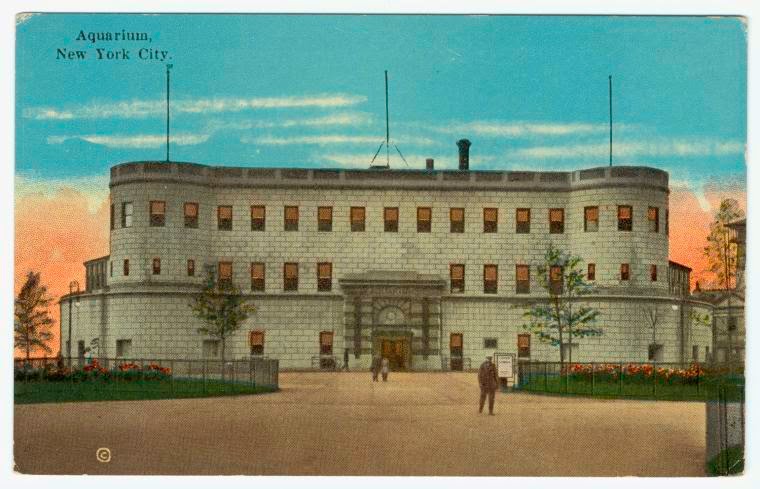
New York Aquarium
Carr’s narrative features several New York landmarks in construction.  Two of those places take a morbid center stage in the book — the Williamsburg Bridge and the nearly completed New York Aquarium (the former Castle Garden) (NYPL)

Theodore Roosevelt
Carr weaves several real life figures into the storyline, from J.P. Morgan (who comes off quite ominous) to Jacob Riis (not a flattering portrait of him either).  But future president Roosevelt gets a glowing supporting role as New York’s police commissioner who directs Dr. Kreizler, Moore and Howard to investigate the murders using powers of psychological deduction.

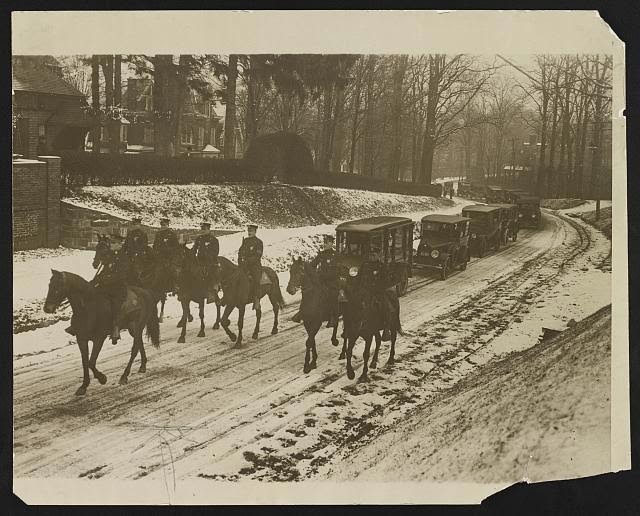
In fact, the book is actually a flashback by our hero Moore, recalled when he visits the Oyster Bay funeral of his dear friend in 1919 (pictured below). (LOC)

True Crime
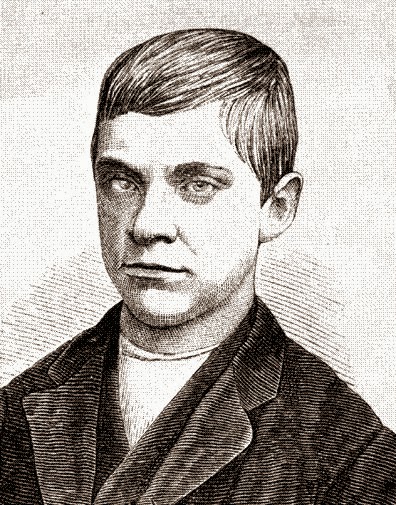
And there are a great many real-life figures from New York’s criminal underworld as well.  In fact, most of the lecherous and notorious figures depicted in the book are real folks, from early gangsters like Paul Kelly to brothel owners such as Biff Ellison.  Carr also finds a few disturbing mental cases to bring into the story, including the young killer Jesse Pomeroy (pictured below), considered one of the most brutal of murderers at a ripe age of 14.

Grand Central Depot
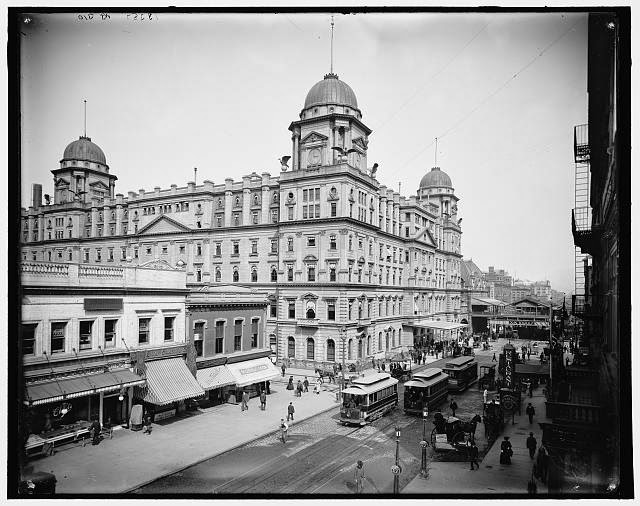
The characters do venture to places outside the city for further clues, but they always come through Grand Central Depot, the most hectic place in New York.  (Pennsylvania Station had not yet been built.)  Within a few years, this too would be ripped down and replaced with the present Grand Central Terminal. (LOC)

And finally, there are three central locations from the book that are still around today:

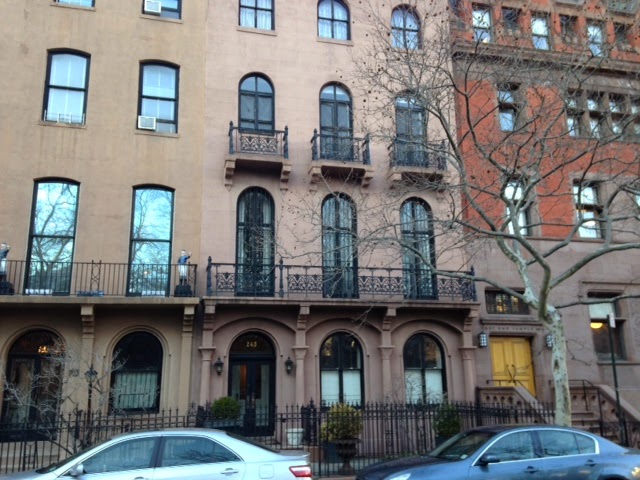
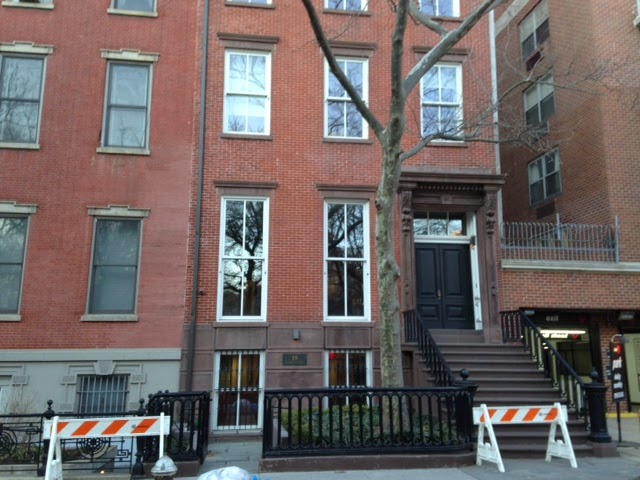
Dr. Laszlo’s residence at Stuyvesant Park. Actually the address in the book doesn’t really exist.  But based on a couple descriptions — and its proximity to St. George’s Church, which is mentioned as close by — this building at 237 East 17th Street may be what Carr had in mind:

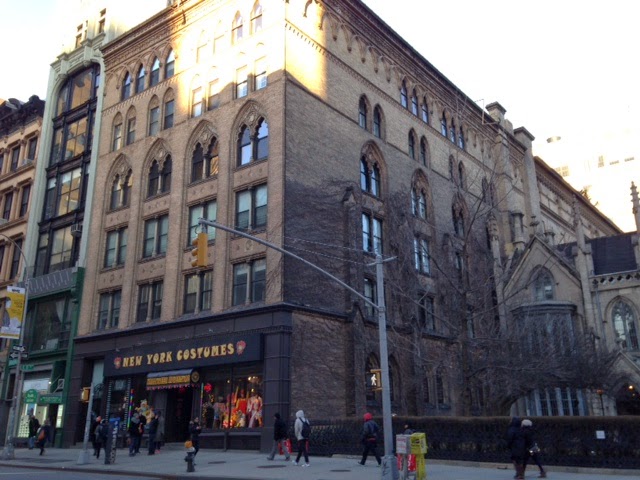
Murder headquarters at 808 Broadway — This exceptionally handsome building was constructed by James Renwick, playing nicely off its neighbor Grace Church.  It’s actually called the Renwick!  The team was located on the sixth floor.  Today, on the first floor, is one of New York’s most popular costume shops.

John Schuyler Moore’s home at Washington Square Park North, facing the park:


(My thanks to Dixie Roberts for the story idea!)

Categories
Health and Living

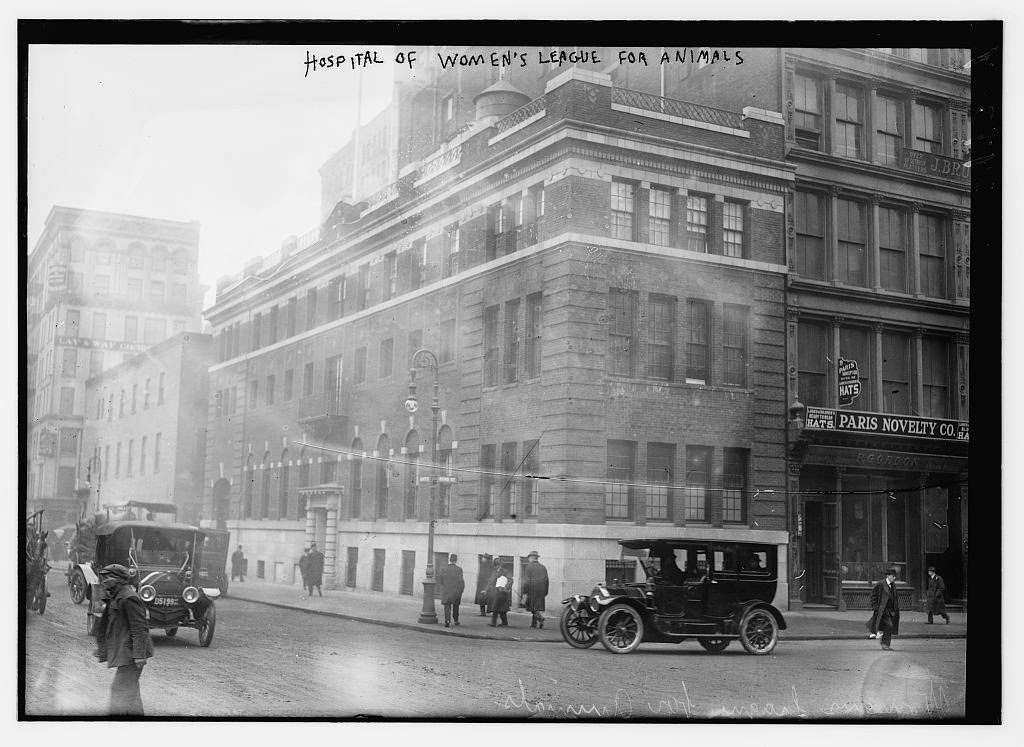
America’s first free animal hospital, at 350 Lafayette Street, with a roof garden for sick horses

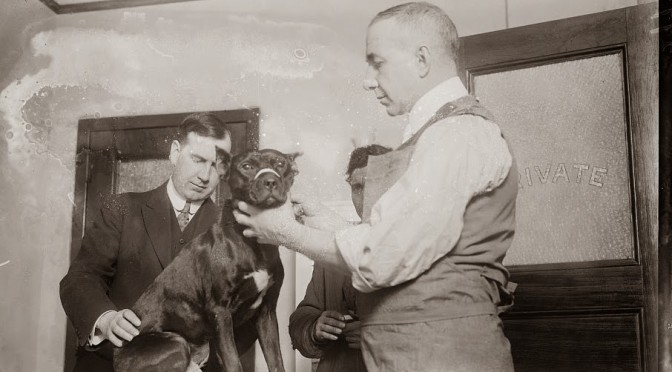
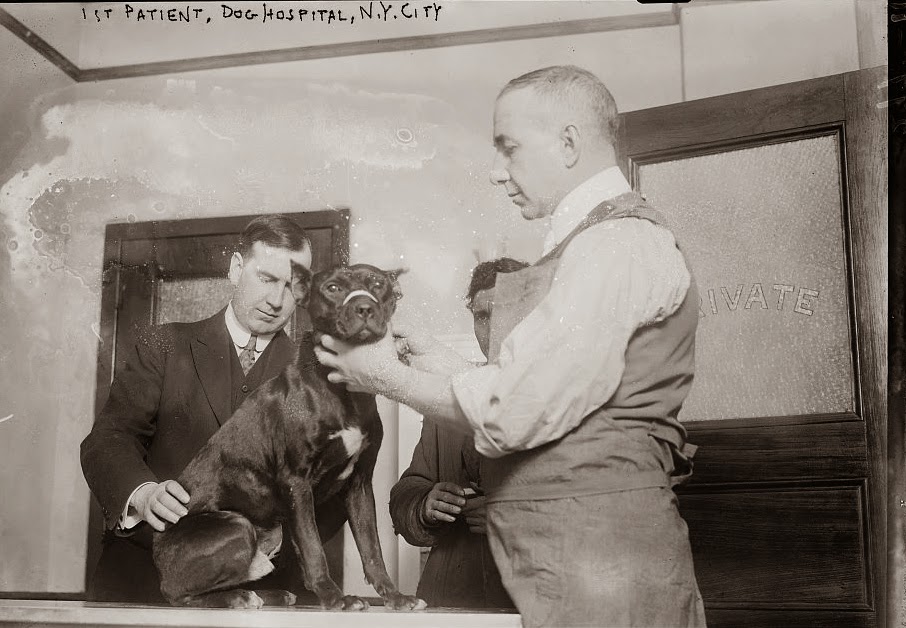
The first official patient of the Free Hospital and Dispensary for Animals at 350 Lafayette Street, under the care of veterinarian Bruce Blair.

The American Society for the Prevention of Cruelty to Animals (ASPCA) was formed in 1866 by philanthropist Henry Bergh.  Eight years later, he helped co-found the New York Society for the Prevention of Cruelty to Children.

Yes, animals came first.  Animals were not only better understood than children, they were instrumental to the daily flow of the city.  Almost every vehicle on the street was horse powered.  The skills of animal husbandry and veterinary medicine were adequately developed in a country that was mostly rural, while the psyches of the human adolescent were only just being appreciated.

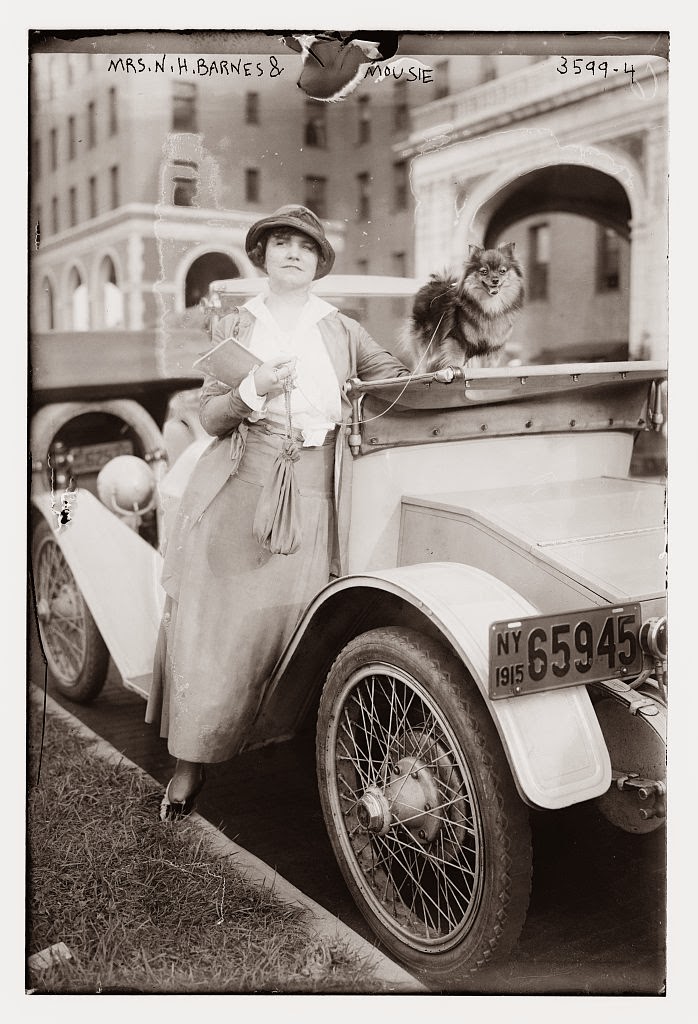
At right: Mrs. N.H. Barnes and her dog Mousie, circa 1910-1915, courtesy Library of Congress

And don’t underestimate the power of the upper crust and their favorite luxury items — exotic pets.  New Yorkers were perhaps empathizing with animals, if not exactly knowing how to treat them.

After all, the menagerie of the Central Park Zoo was created from the bad decisions made by wealthy people, regretting their decisions in bringing unusual animals into their homes.  In 1907, New York even experienced a bit of a monkey craze, with dozens of small primates becoming adorably mischievous fashion accessories.

Animal rights became an interesting tangent of New York’s progressive movement, a focus on the well-being of four-legged creatures that culminated, one century ago this week, in the opening of the Free Hospital and Dispensary for Animals (at 350 Lafayette Street), the first institution of its type in the United States.

Like many progressive institutions of the day, the animal hospital was a life’s ambition for a wealthy socialite — in this case, Ellin Prince Speyer, the wife of railroad banker James Speyer (founder of the Provident Loan Society.)

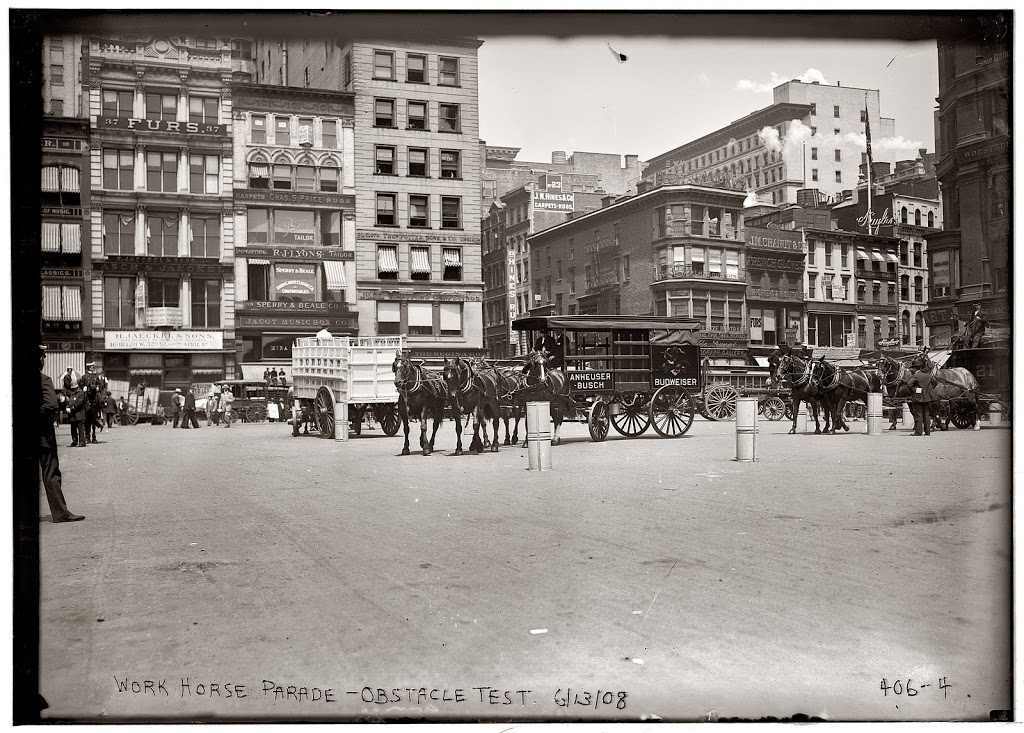
Above: Work horses compete in an obstacle course in Union Square, during the Work Horse Parade of 1908. Picture courtesy Shorpy

Speyer formed a Women’s League of the ASPCA in 1906 and quickly organized public displays that would bring attention to the plight of work animals.  The following year, on Memorial Day, she organized the first annual Work Horse Parade with contests and exhibitions, all in an effort to bring attention to the condition of horses on city streets.

People were given prizes if their old horses were in good shape!  “An effort has been made to induce the peddlers and hucksters of the city to enter,” said the New York Times.

The Women’s League provided watering station for horses during the summer and even free “horse vacations,” renting a farm in upstate New York for the care of older animals.

But the League was concerned with the health of all animals, not just horses.  (Indeed, the New York Sun takes note of Mrs. Speyer’s favorite animal — “the life saving Japanese spaniel Trixie.”)  Members visited area schools to lecture on the proper care and feeding of pets, speaking to the young owners of dogs, cats and birds.

They believed that beneficence to the animal kingdom was a signal to a healthy, moral household.  “You don’t find wife-beaters who are fond of pets and lovers of animals,” said the League in an editorial in 1912.

This sophisticated devotion to animal care was considered truly unique. For instance, when an impressive animal clinic opened at Cornell University in 1911, the New York Times replied with the headline, “Where Sick Animals Are Cared For Like Humans.

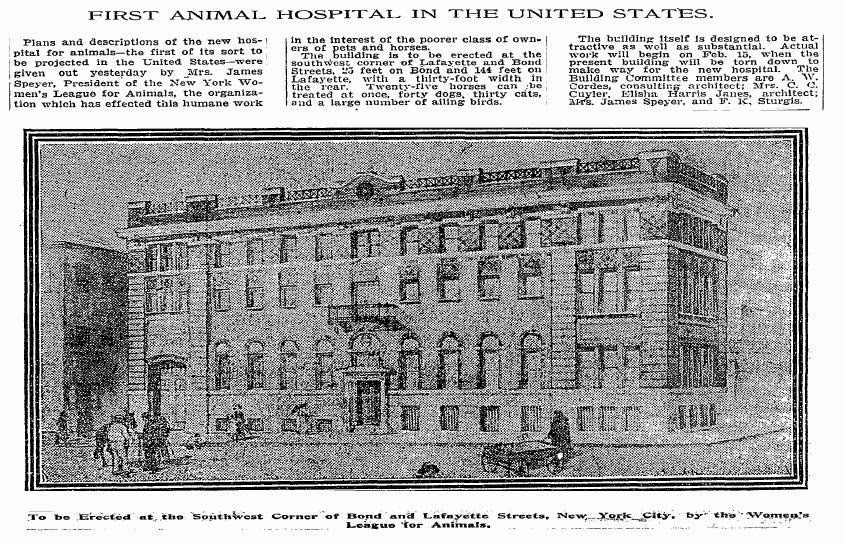
From the New York Times, February 1913

Speyer opened a small animal clinic in New York that same year, but it was woefully inadequate to the needs of New York’s animal population.  So, with the help of lavish benefits and donations from other wealthy families (including many of her banking friends), the Women’s League raised $50,000 and opened up a proper animal hospital on March 14, 1914, the first animal hospital of its kind in the United States.

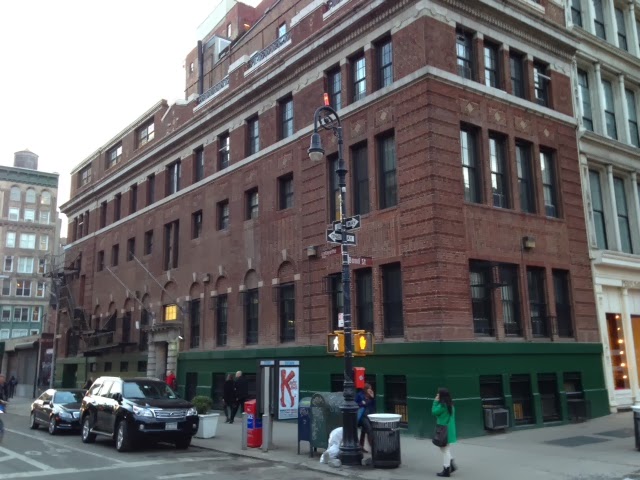
The five-story building is still there today.  New York’s first free animal hospital could accommodate fifty horses and 150 cats and dogs. “There are also operating rooms where every modern appliance for animal surgery is at hand.” [source]

Horses were mostly kept and operated upon on the second floor.  But a rooftop garden accommodated the most sickly horses in need of fresh air and sunshine, lifted there by a large, state-of-the-art elevator.  I suppose it was also used for patients from the third floor — dogs, cats and birds.  Autopsies were also conducted on the roof, and dead animals were disposed of in a basement incinerator. (The Times actually calls it ‘the death room.’)

Perhaps most curious of all — an entire floor was given over to a new apartment for the hospital’s lead veterinarian Dr. Bruce Blair (pictured at top) and his new bride.

On its opening on March 14, Speyer showed the waiting dignitaries a mysterious envelope which contained a $1,000 bill, anonymously donated for the purposes of buying the hospital’s first animal ambulance.

Perhaps the hospital’s most famous patient on opening day was not not a horse, but a green parrot named Abe, who was a bit of a minor film star in 1914.  I believe this was the star of the 1914 Oliver Hardy film The Green Alarm.

Today, the Animal Medical Center  traces its lineage to this first animal hospital and to Speyer’s organization.  It moved to its current location on the Upper East Side in 1962. (You can read more about their history here.)

Here’s the building as it looks today:

Categories
Bridges Podcasts

The Bridge to Everywhere: The George Washington Bridge strangely political, unexpectedly naked, undeniably beautiful


PODCAST  The George Washington Bridge is best known for being surprisingly graceful, darting between Washington Heights and the Palisades, a vital connection in the interstate highway system.  

Figuring out a way to cross over the Hudson River (not using a boat or ferry) between New York City and New Jersey has been a challenge that engineers and builders have tried to solve for over two hundred years.  With the formation of the Port Authority in 1921, there was finally an administrative body with the ability to bring a Hudson River bridge to life.

At the core of this story is a professional disagreement (or betrayal, depending on how you see it) between Gustav Lindenthal, the dreamer of a monumental crossing linking New Jersey with Midtown Manhattan, and his protegee Othmar Ammann who envisioned a simpler crossing in a less populated part of town.

The final bridge was eventually built thanks to a few strategic political moves by New Jersey’s Jazz Age governor George S. Silzer. But the original bridge design was quite ornamental, a bridge close in appearance (if twice the size) to the Brooklyn Bridge. The bridge you see today is technically unfinished.

ALSO: The story of the little red lighthouse and the great big flag!


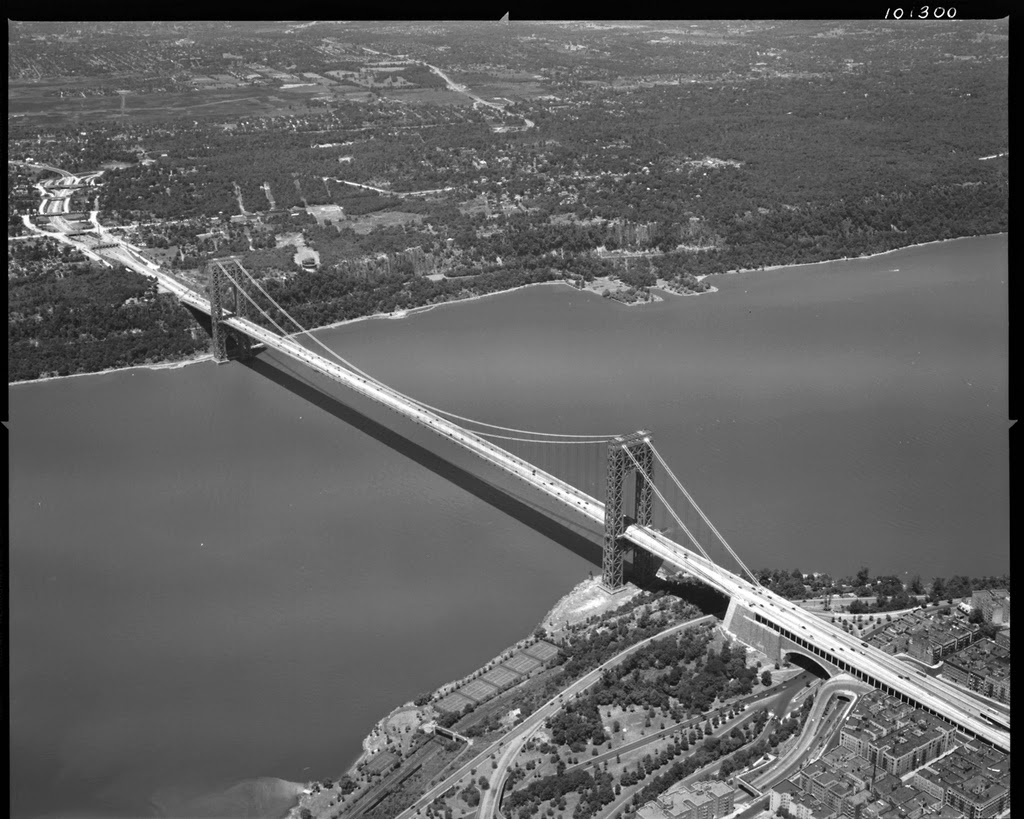
A view of the landscape around the George Washington Bridge, clearly illustrating the two different sets of conditions on both sides of the bridge.  The New York side abuts an existing neighborhood, while the New Jersey side retains a bit more of its natural beauty.  July 4, 1947 (Courtesy New York State Archives)

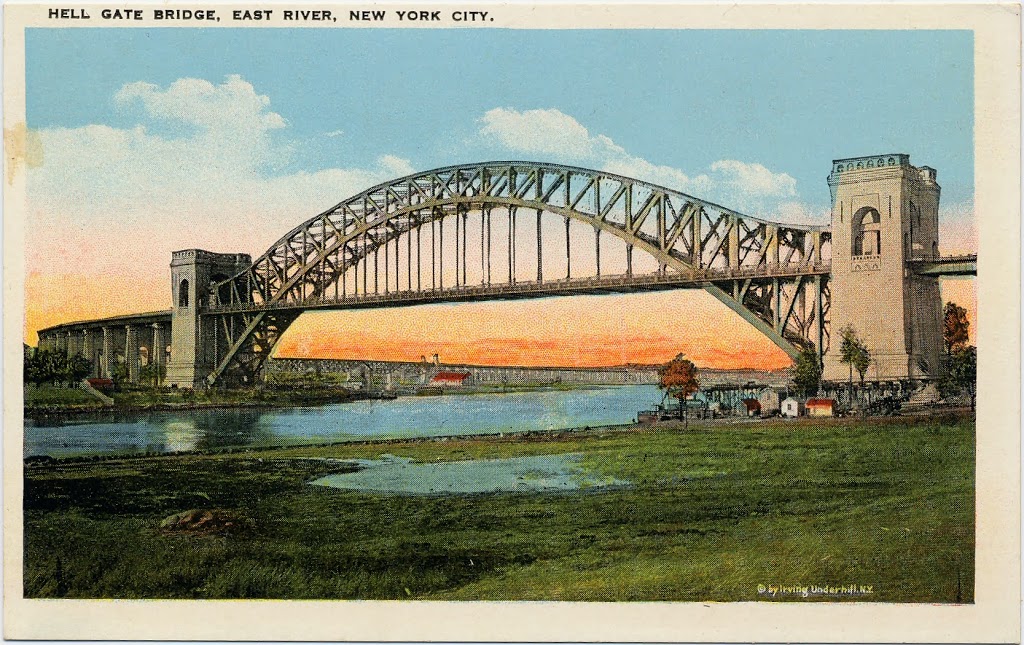
Gustav Lindenthal worked with Othmar Ammann on the construction of the Hell Gate Bridge, completed in 1917….

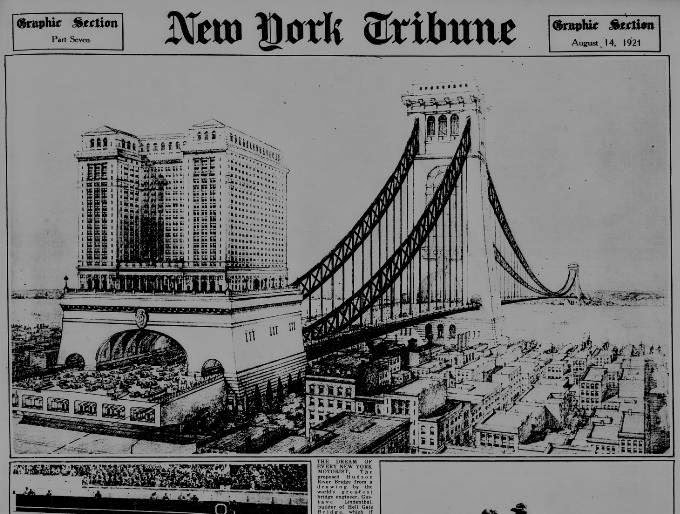
…but his ultimate dream of building a colossal Hudson River bridge, with a entrance point on the Manhattan side in Midtown, was never realized.  His vision of a dramatically large span was illustrated in the New York Tribune in 1921:

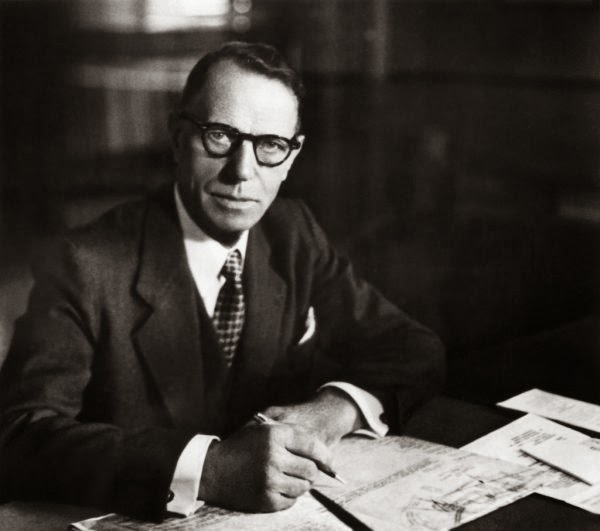
Othmar Ammann, whose bridge design eventually won out, due to its relative economy (compared to Gustav’s design) and choice of location:

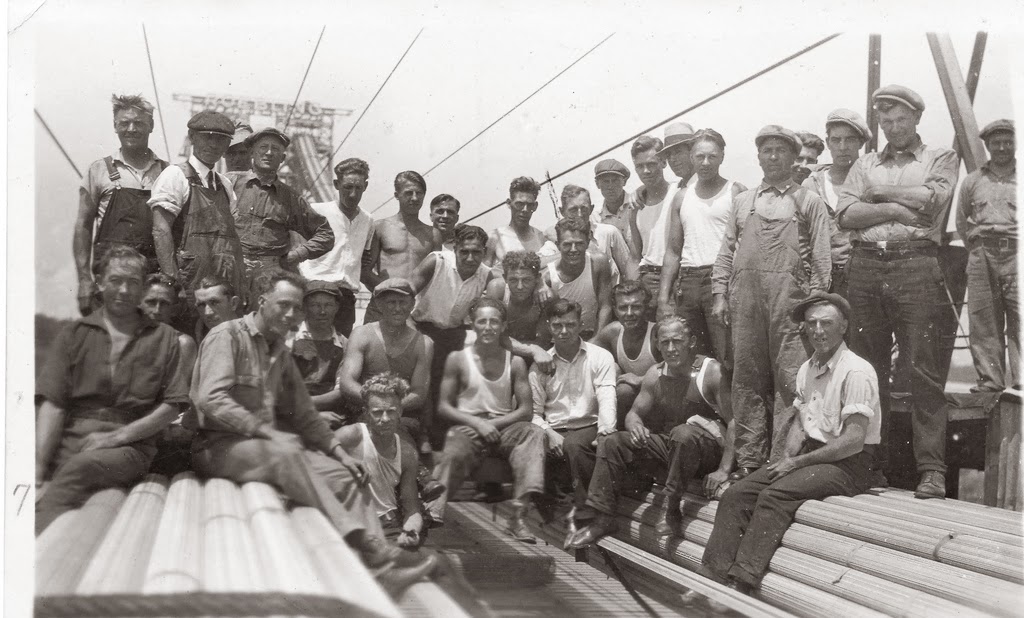
The cable crew of the George Washington Bridge. The daunting construction job was completed ahead of time. (Courtesy Flickr/dsearls whose father appears in this picture!)
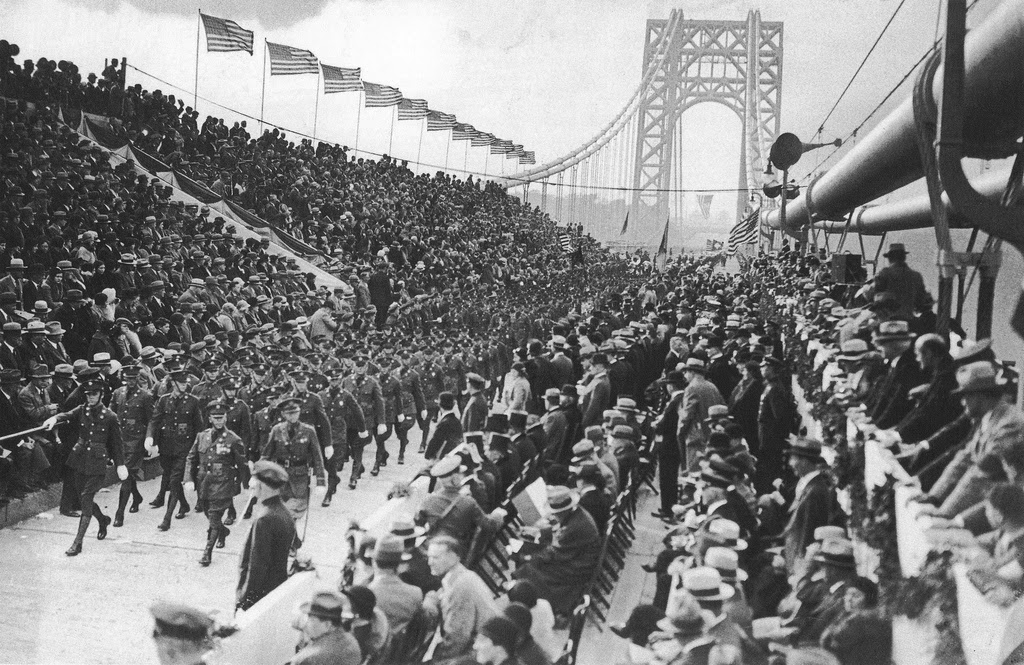
Opening day on the bridge, 1931, with 5,000 people in the stands and thousands more gathered around the New York and New Jersey sides.  New York governor Franklin D. Roosevelt was there, as with Lindenthal and Ammann.  Who was not there? The mayor of New York City Jimmy Walker, who was attending an NYU football game. (Flickr/wavz13)
 

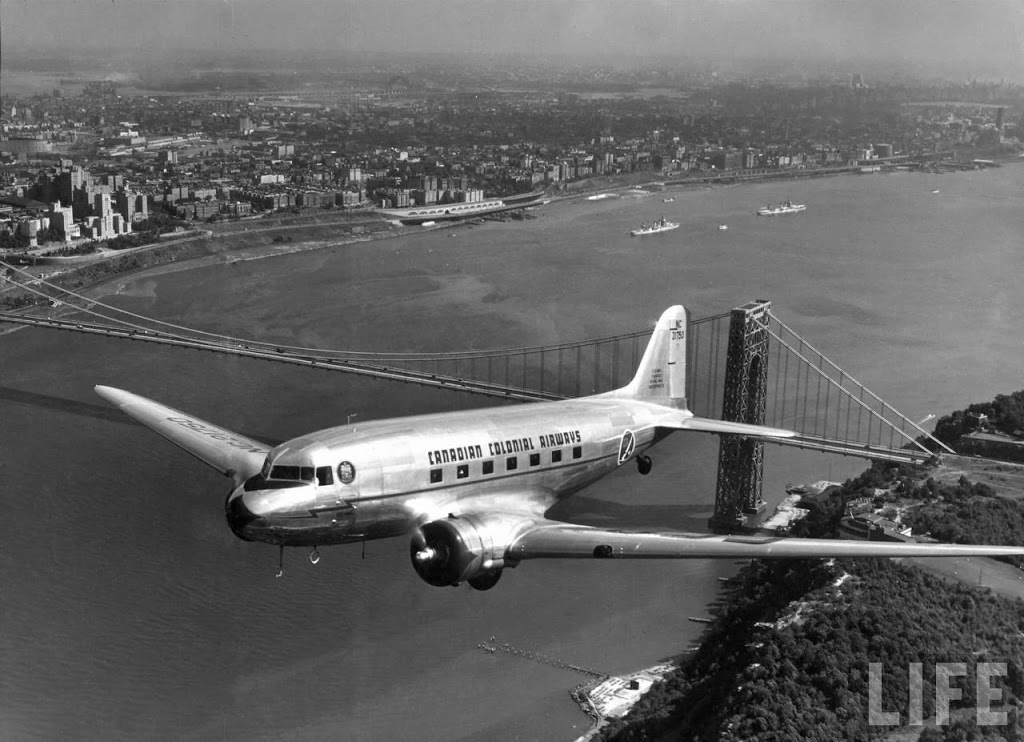
Margaret Bourke-White captures a Canadian Colonial Airways aircraft flying up the Hudson, October 1939.

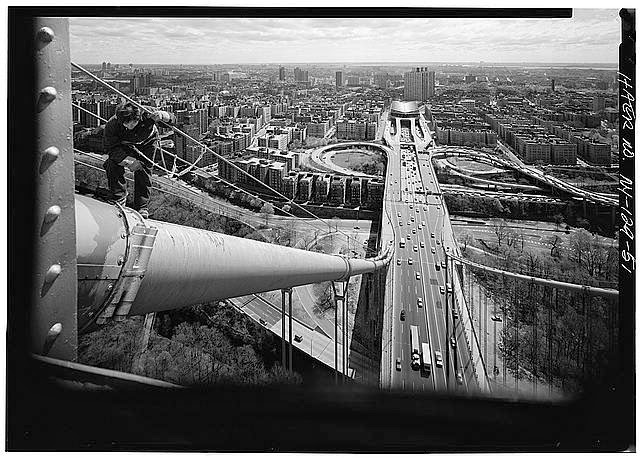
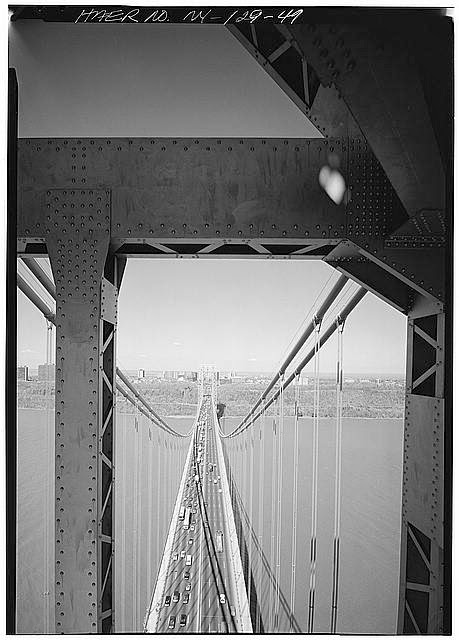
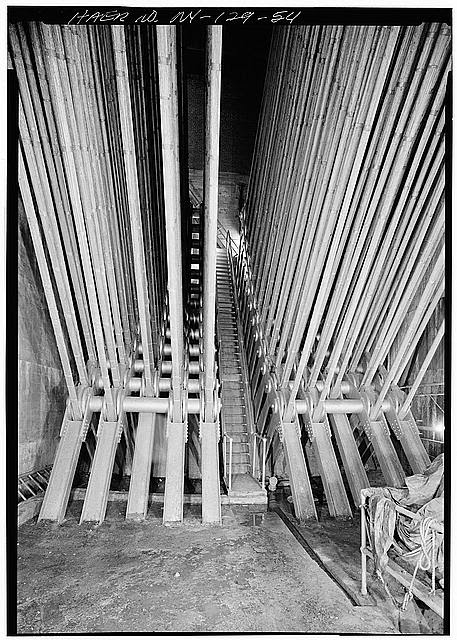
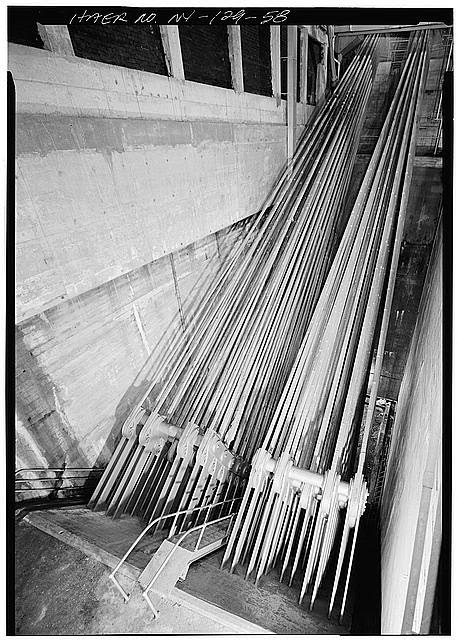
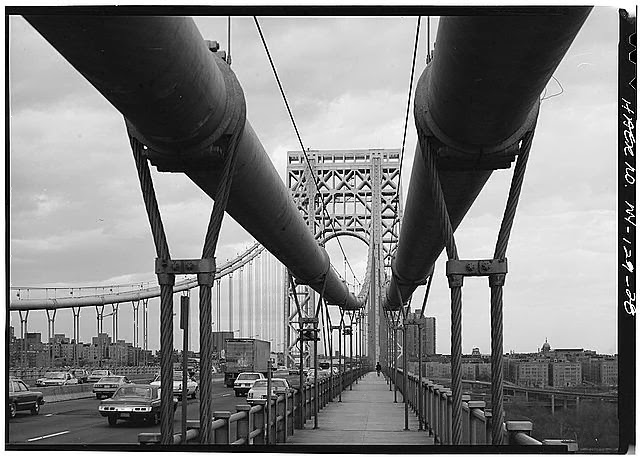
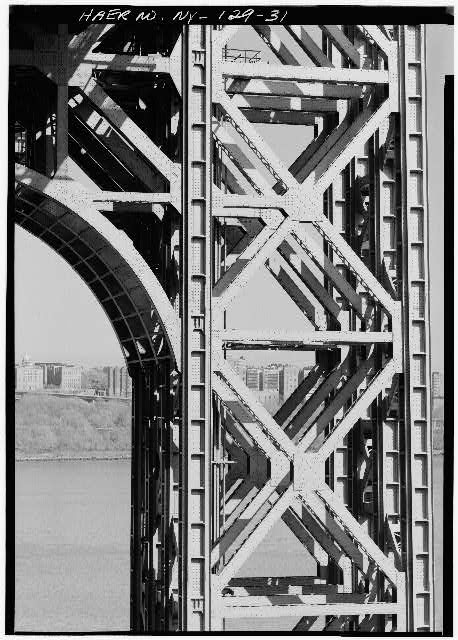
Inside the bridge: a selection of photos from the Library of Congress from atop the tower, inside the anchorages, way extremely overhead and incredibly close:

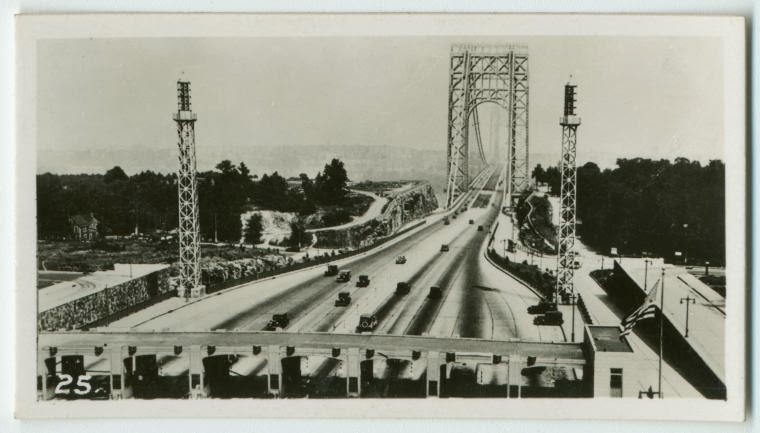
From a cigarette card, showing the New Jersey toll booths:

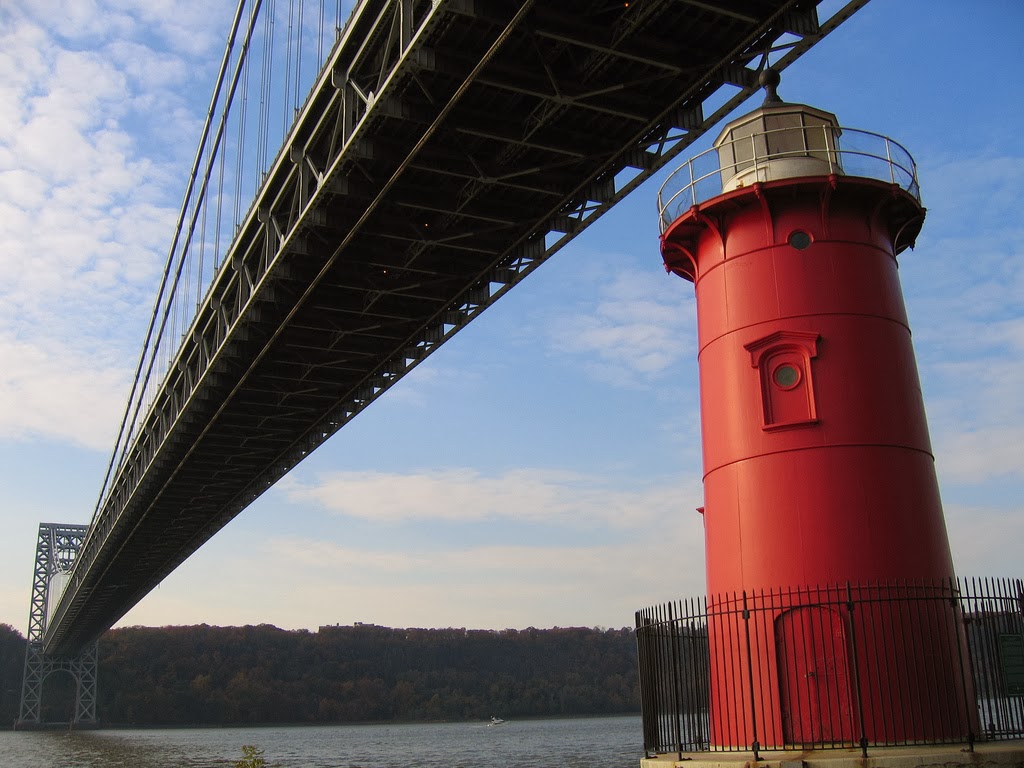
The Little Red Lighthouse and the Great Grey Bridge….(Flickr/CPWview)


Footage from the bridge’s opening day featuring FDR in a top hat:

This is how a crossing would have looked in the late 1940s-early 1950s!

Categories
Pop Culture

Meryl Streep, New York City and theater of the 1970s

Meryl Streep is one of New Jersey’s greatest natural resources. She was born in Summit, NJ, also the hometown of Ice-T, and grew up nearby in the town of Bernardsville.

You may not otherwise associate Streep with New Jersey (at least, not in the same way we look at Bruce Springsteen) because, in 1975, after graduating from Vassar and developing her dramatic skills at Yale, she moved to New York City to begin her career in theater. The Meryl we know, the movie star and acting icon, grew up here.

Almost forty years later, Streep is considered one of the world’s greatest and most accomplished living actresses.

She’s been nominated for more Academy Awards than any other actor. In fact, she’s considered a benchmark for many thespians to aspire to. She’s so revered that she’s occasionally a punchline. (The Onion: “Court Rules Meryl Streep Unable To Be Tried By Jury As She Has No Peers.”)

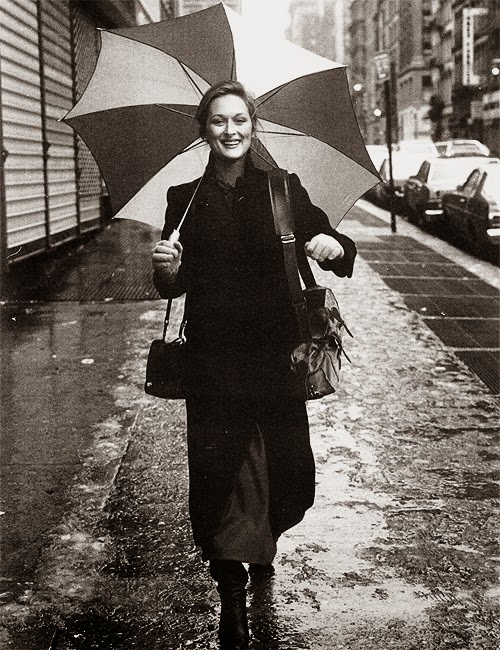
It’s Meryl in the rain, 1979! From the tumbler ingridsbergman (If anybody knows the name of the photographer, please let me know!)
But her early work on the New York stage — much of it with The Public Theater — cemented her reputation as a performer of uncommon ability. She became a fixture of both Broadway and off-Broadway at the moment when the creative revolutions of the 1960s were beginning to sink into mainstream productions.

She often worked in classical drama, retooled with unconventional direction.

Her formal training mixed with the spirit of off-Broadway innovators such as Joseph Papp.

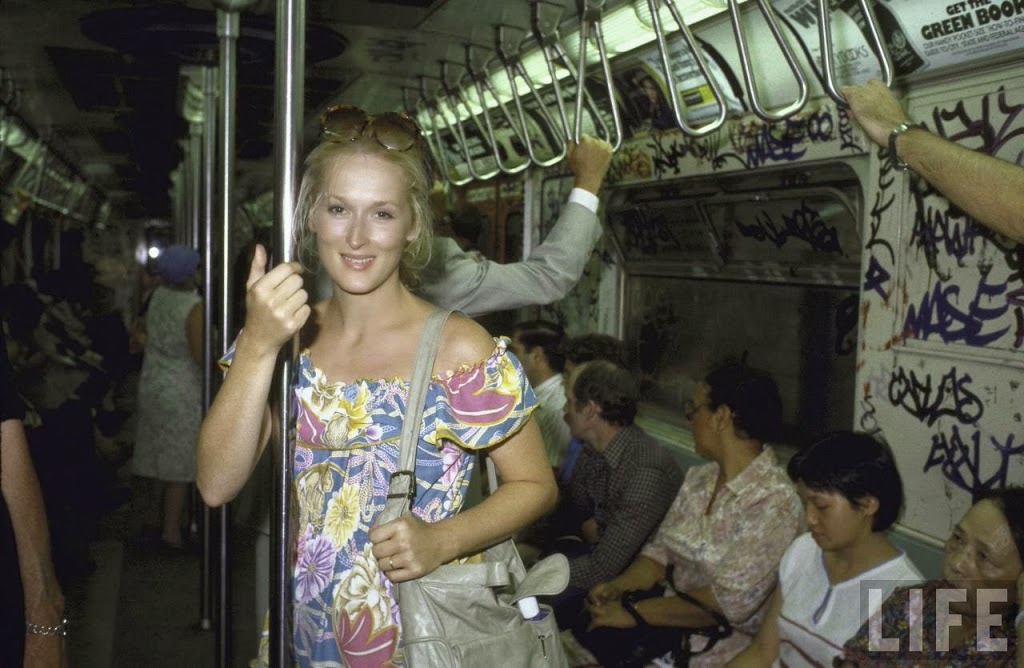
It’s hard to imagine Streep in a world parallel to that of A Chorus Line (which debuted the summer of her arrival in New York), hoofing it to Midtown auditions, cramming onto crowded subways to get to her performances in Shakespeare plays at the Delacorte Theater in Central Park.

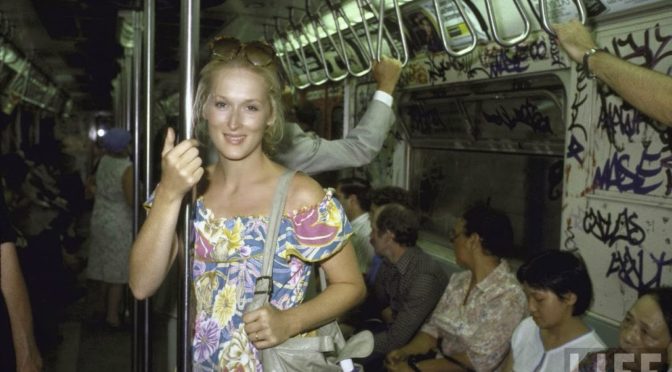
Below: Meryl on the subway, 1981 (Courtesy Google Life images)
“For those who believe that stars are born overnight only in old movies like Stage Door on the late, late show, let me present Meryl Streep.  She is on the threshold of stardom,” wrote the prescient Syracuse Herald-Journal in 1976.

Here is a look at some of her early New York stage successes from the 1970s, both off and on Broadway, accompanied by a few quotes from her first reviews:

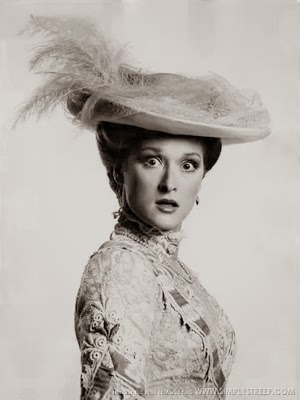
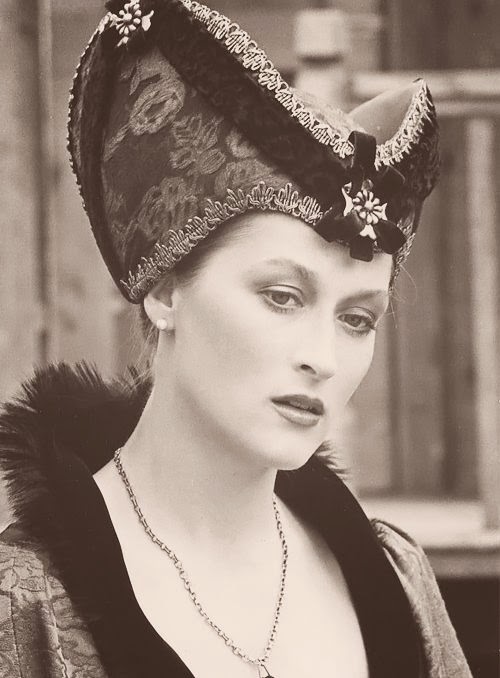
Trelawny of the Wells (October-November 1975)
Vivian Beaumont Theatre/Lincoln Center
Playing: Miss Imogen Parrott (at left)

In her professional stage debut, Streep was praised by the New York Times: “tart, level headed, stunningly decked out in salmon gown and white plumes.”  The play itself was only modestly received.  “A Chorus Line soars, Trelawny falls flat.” [source]

(The Times didn’t see the appeal in her early years. Her first mention there, for a play by the Yale Repertory Theater, described her performance as “perhaps too giddy and high strung.“)


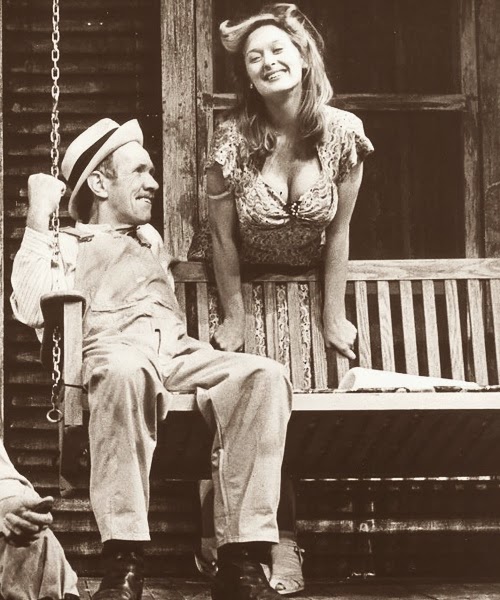
27 Wagons Full of Cotton by Tennessee Williams (January-March 1976)
performed with A Memory of Two Mondays by Arthur Miller
The Phoenix Theatre in the East Village (today the Village East Cinemas)
Playing Flora (pictured below)

Writes Walter Kerr: “We can settle down now, locked in the girl’s dilemma, to let actress Meryl Streep studiously slap away most believable mosquitoes, splay her legs like a rag doll, twist an evasive but sinuous toe to keep the porch swing rocking rhythmically, count her thoughts on her fingers, clutch her oversize white purse as she weighs inadvertent betrayal against what is happening to her flesh.” [source]

This was her breakthrough, and the very first of thousands of awards and nominations that would come her way for her work.

When it transferred to Broadway, she received a Tony Award nomination for Best Featured Actress In A Play. (She was nominated up against Mary Beth Hurt, her co-star from Trelawny. They both lost to Shirley Knight.)

Secret Service (April-May 1976)
The Playhouse Theater
Playing Edith Varnay
“Streep was all heaving anguish, startled eyes and passionate stances.” [review]

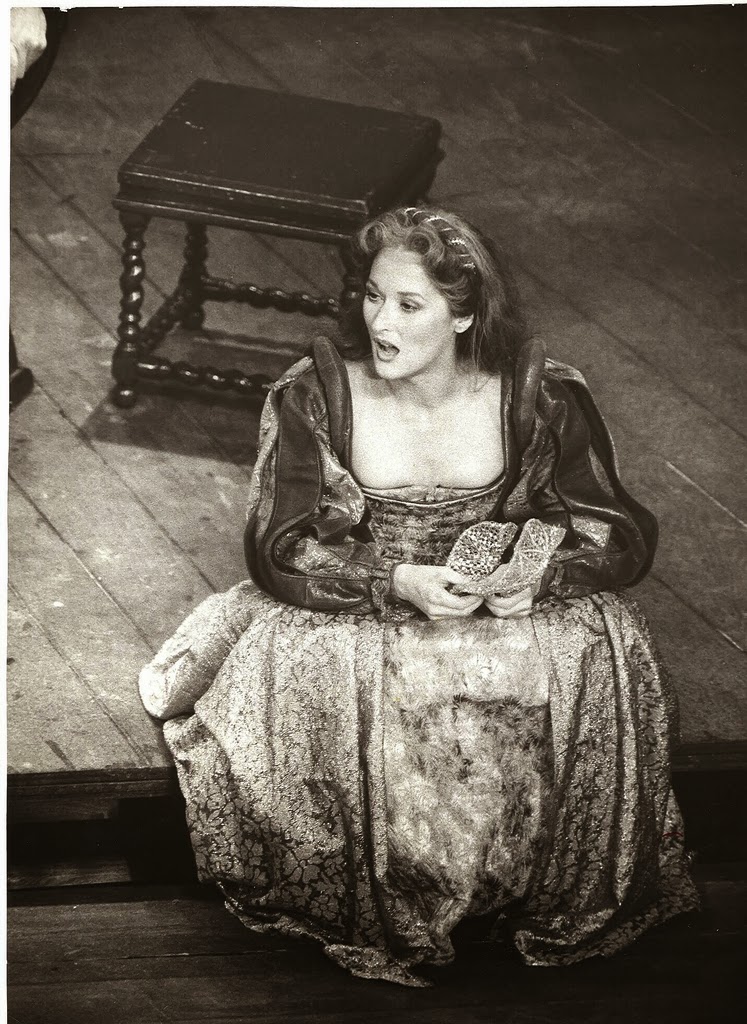
Henry V (June-July 1976)
Shakespeare In The Park
Playing French princess Catharine, pictured below (“I cannot tell vat is dat.”)

This is her first appearance in the New York Shakespeare Festival and the way she spent America’s Bicentennial. New Yorkers also got to hear her first non-English accent.  “[T]hough Meryl Streep tends to be stiff in her first scene –the English lesson — she displays lovely bite and timing when Mr. [Paul Ryan] Rudd courts her.” (Picture courtesy Public Theater)

Measure for Measure (August 1977)
Shakespeare In The Park
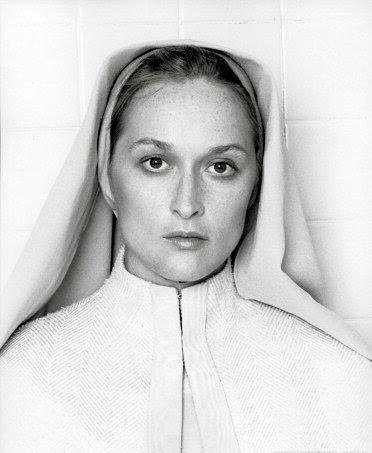
Playing: Isabella (“And have you nuns no farther privledge.“)

This is her for first nun role. She would return to the habit in the Oscar-nominated film Doubt. Reviews were mixed, the Times questioning the chemistry between Streep and her co-star John Cazale.  The reviewer Kerr suggests her timing is off.


She took a break from the theater to star in her first work for television and film.

From an interview in the New York Times: “Miss Streep, who was drinking a Heineken at the Algonquin, gestured with her hand…. ‘Last summer I did all those things in the Park … and then I went and made a movie in London — Julia. I were a red dress in every scene and I look bizarre.”

The Cherry Orchard (February-April 1977)
Vivian Beaumont Theatre/Lincoln Center
Playing: Dunyasha (“I must tell you at once, I can’t bear to wait a minute.“)

Happy End (May-July 1977)
Martin Beck Theater
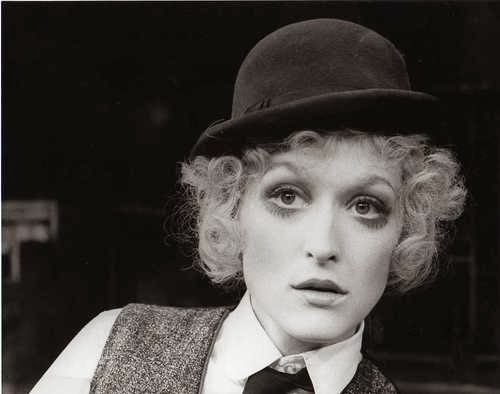
Playing Lieutenant Lillian Holiday (“Hallelujah Lil”)

For this short-lived musical, Streep sang for the first time on the Broadway stage, and looking like a mix of Liza Minnelli and Charlie Chaplin:

Here’s an interview she did for that show:


The Taming of the Shrew (August-September 1978)
Shakespeare In The Park
Playing — who else? — but Katarina

She’s featured in this behind-the-scenes video with her co-star Raul Julia:

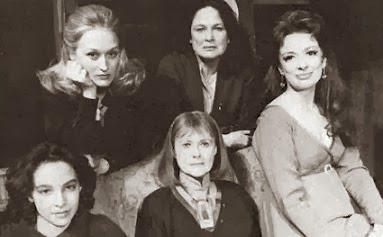
Taken In Marriage (February-April 1979)
The Public Theatre/Newman Theatre
Co-starring with Dixie Carter, Colleen Dewhurst, Kathleen Quinlan and Elizabeth Wilson

“Meryl Streep, as Andrea, is a series of prisms, breaking the character’s pale light into flashes of misery, remorse, frustrated love and self-hatred…..[S]he is the most wretched member of her family.” — Richard Eder. (Picture courtesy Public Theatre)

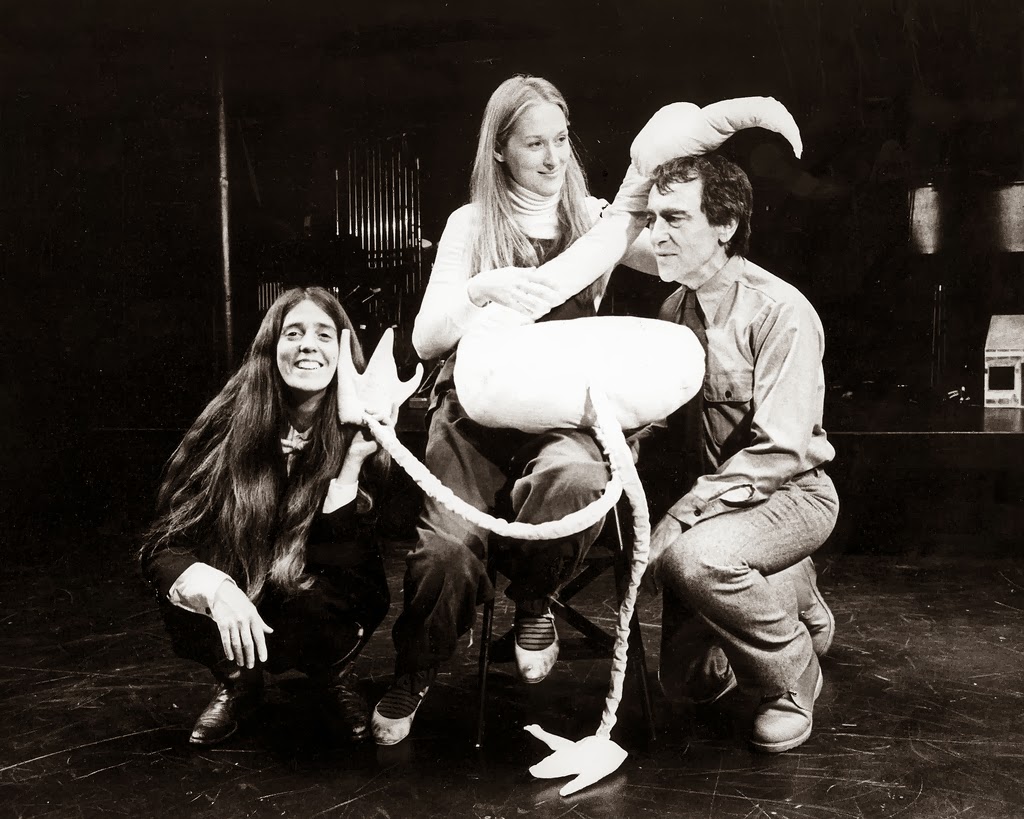
Below Meryl Streep in the rather unusual rendition of Alice In Wonderland, originally called ‘Alice In Concert’ (later retitled ‘Alice In The Palace’). According to the Public Theater, this was from an early 1978 showcase which ran for three performances. She’s pictured here with Elizabeth Swados and Joe Papp.

Most pictures here courtesy the Public Theater, unless otherwise noted. You can already visit their website for information about this season’s Shakespeare In The Park.

And thanks to Simply Streep for help on the dates of the productions.

Categories
Mysterious Stories

Get Rich Magic: The astral adventures of Madame La Viesta and the Occult School of Science on Lexington Avenue

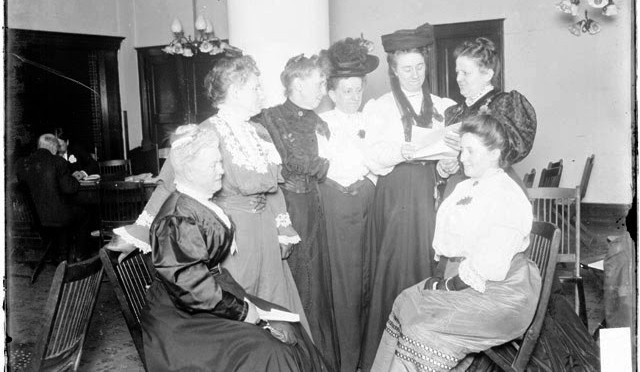
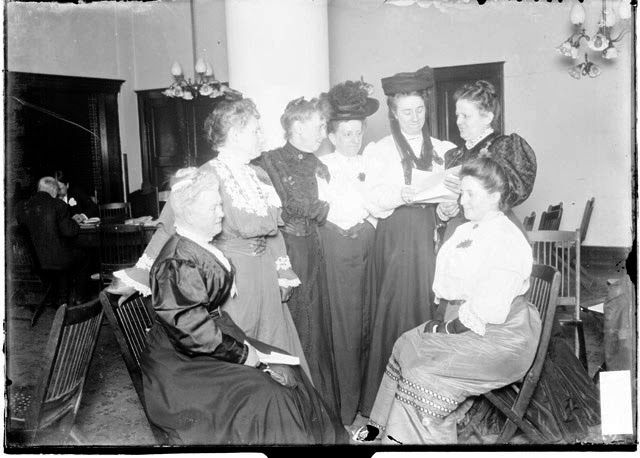
Above: Famed spiritualists gather in Chicago, 1906. The names weren’t listed, but perhaps Mme. La Viesta is pictured here? (Courtesy Chicago Daily News/Library of Congress) 

The Gilded Age brought us human beings of impossibly vast wealth.  It also brought us a mainstream appreciation of spiritualism, an exploration of  magic and the afterlife as a way of understanding a quickly changing world.

And sometimes it brought us both.   Frank W.Woolworth, builder of a retail empire and a legendary skyscraper, was a proponent of Egyptian occult practices, so much so that his mausoleum in Woodlawn Cemetery is an ode to the Egyptian theories of the afterlife.  The Chicago meat mogul Philip Armour was a rumored spiritualist.  The wives of robber barons frequently attended seances and psychic readings.  Few were immune to the lure of the spiritualism and the possibilities of otherworldly assistance in becoming rich.

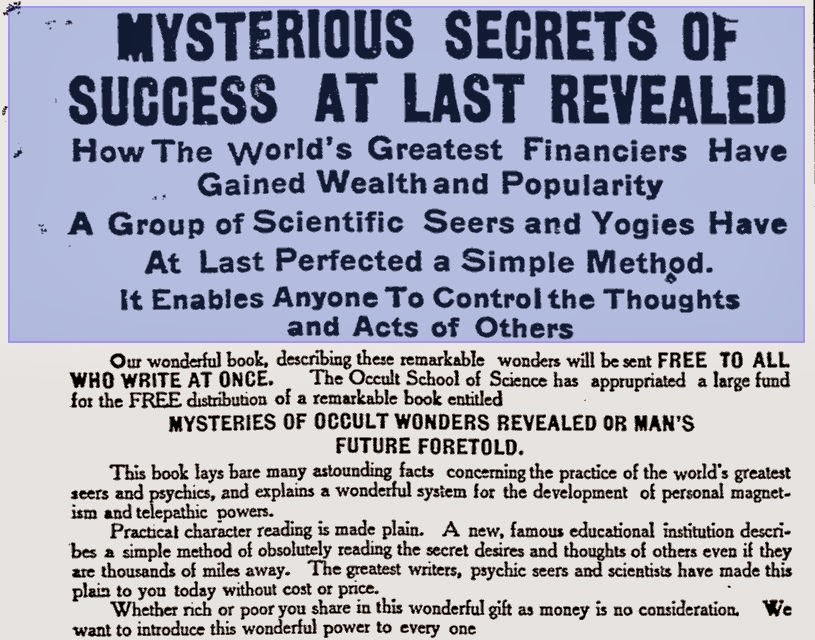
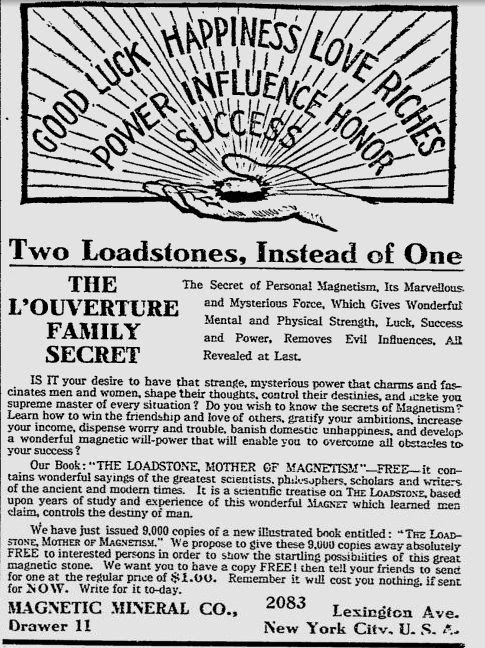
Do you want to be rich like Woolworth?  In 1913, the same year as the completion of the Woolworth Building, a series of curious advertisements ran in newspapers across the country:

The ad promoted a free book that revealed the secrets of a “great psychic force which learned men claim rules the destinies of man,” produced by the Occult School of Science, located at 2075 (or 2083) Lexington Avenue at 125th Street.**

At this unusual institution, a student could discover a gamut of psychic and magical practices in service of practical life, from finance to marriage.  Among its offerings included divination (“instructions for making a gold vibrator, for locating gold and silver ore”), fortune telling (course name: Methods of Successful Mediums) and the subconscious (“The Egyptian Interpretation of Dreams”).

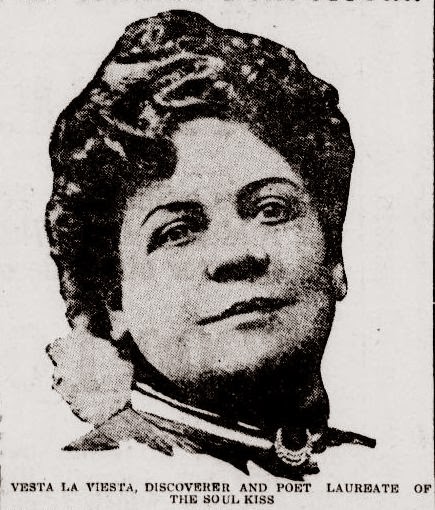
The writer of these curious lectures was none other than Madame Vesta La Viesta (at right), a well-known mystic and traveler of the galaxy.

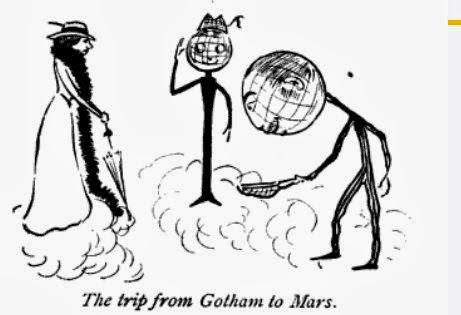
La Viesta was well known to spiritualism enthusiasts, as well as to those who mocked them.  In 1904, at a place called the Cosmological Center, La Viesta described her recent visit to Mars and Venus via a projection of  her astral self.

Her descriptions predate John Gray’s famous book by decades.  Inhabitants of Venus “are associated most happily in soul mated couples, for they have a flexible astral or psychological tubing which invisibly connects their bodies.” [source]

In 1907, she revealed to the world the secret of the ‘soul kiss’, a rapturous and strangely indescribable form of love — taught to her on a recent astral voyage to Neptune — involving an aroused nervous system, cellular breathing and ‘wireless’ transmission of love from miles away.  She was so passionate about this shimmering new form of love that she wrote a song about it called “Description of a Soul Kiss.”

Below: Frank Leslie’s American Magazine mocked an earlier lecture La Viesta in this 1902 article:

She was known for unusual lectures given from her Upper West Side apartment where she resided over a room of both corporeal and astral students. (Meaning that it looked like a fairly uncrowded room.)  She suggested that both disease and finance were mere “states of mind” that could be controlled using vibrational or astral techniques.  It was possible to let life’s many inconveniences “evaporate into the nowhere and melt into the astral ethers.” [source]

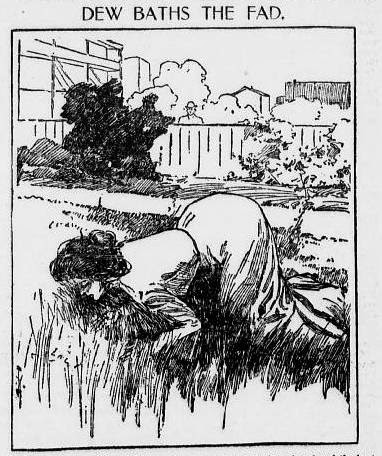
La Viesta was also a fan of the dew bath, involving women rubbing against morning grass which supposedly contained the secrets of age-defying beauty.

Said La Viesta:  “I have removed my clothing and have stood in the yard at the rear of my home in the darkness of the night and allowed the dew drops to collect over me until I was happy.” [You can read more on the curious dew-bath craze here.] At right: Illustration of a woman luxuriating in a dew bath, from 1902 NY Evening World

By 1912, at age 50, La Viesta became associated with the Occult School of Science, founded by Frederic Nugent.  Had she been clairvoyant, she might have known to stay away from Nugent, a notorious grifter.

Nugent, also known as Professor John D’Astro, seemed to approach spiritualism from a more cynical place; in short, he wanted to get rich himself.   Through his advertisements, he coerced people into ‘free’ spiritual guidance, then sent them catalogs full of useless and costly items.

The trickster specifically targeted poor people, placing hundreds of advertisements throughout the United States with trumped-up or falsified testimonials.  He also joined Madame La Viesta at the podium of the Occult School, offering courses of palmistry and phrenology that could cost up to $12.50 (or almost $300 today).

The Occult School wasn’t Nugent’s only scam.  He was apparently the mastermind behind at least six other mystical ruses, including the Iridescent Order of Iris, which purported to have over a thousand members, and a separate mail-order lodestone business, the Magnetic Mineral Company, which claimed to share the secrets of 18th century Haitian leader Toussaint Louverture.

Nugent’s lodestones granted good luck to their bearers, or so claimed his advertisements.  He bought the rocks from an unknown source at 12 cents a pound (today about $3), then re-sold the magic stones for up to $25 a pound (or about $570).

It was this scam that brought Nugent to the attention of U.S. Post Office inspectors who arrested him for using the mail system to defraud.  They seized “hundreds of pamphlets advertising Nugent’s schemes and thousands of testimonials.”  After spending a time in the Tombs, Nugent was indicted and sent to prison.

But whatever became of Vesta La Viesta, Nugent’s prized instructor?  Since that was not her real name (are you surprised?), it’s been difficult to track her later antics down.  It does appear she continued to share spiritual guidance, sometimes with people of some renown, such as the aviator Stanley Yale Beach.  In 1923, she wrote up her experiences in the book People Of Other Worlds.  Perhaps she finally left for the orbiting planets?

**They have several addresses listed, most of them on or around this intersection.  I also found 147 East 125th Street as a possible address.  Most likely, the mystics moved around!

Categories
Pop Culture

On Nina Simone’s birthday, a look at her breakout Town Hall performance from September 1959

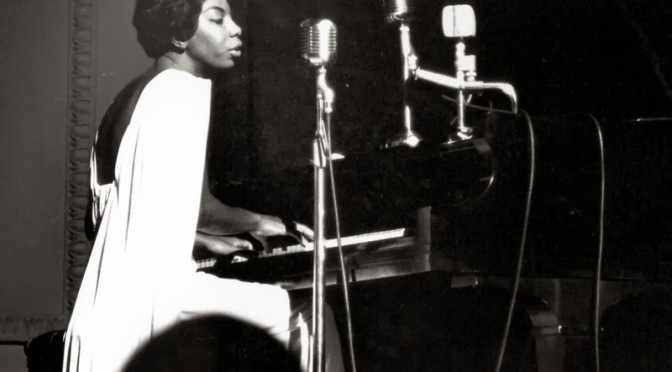
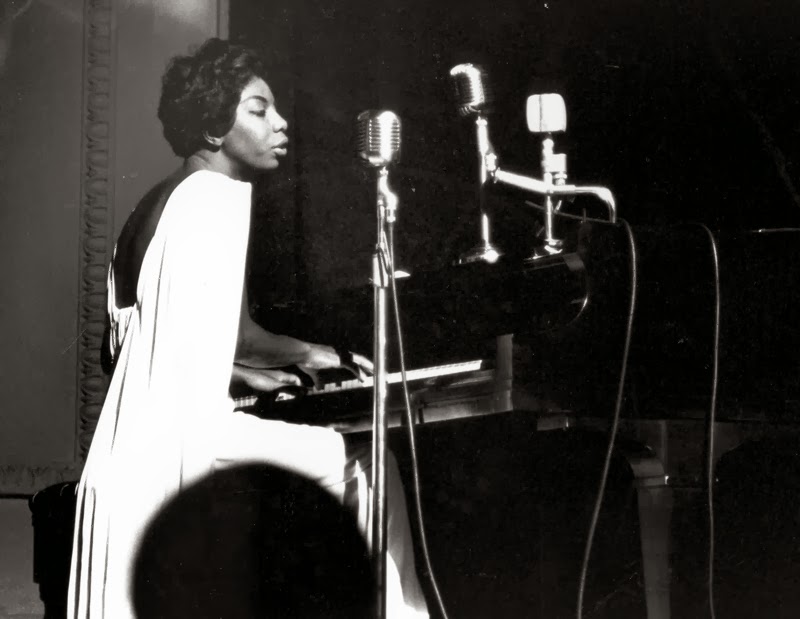
Nina Simone was born on this date in 1933 in Tryon, North Carolina.  She came to New York as a student of the Julliard School, but her unique blend of genres came from her experiences in the nightclubs and cabarets of Harlem and Greenwich Village.  She wowed audiences with a memorable New York debut at the Village Vanguard on July 20, 1959.  “Miss Simone is a real talent who can go far,” said Billboard of her performance.

Less than three months later, she made a more formal debut to audiences on September 12, 1959, at Town Hall, an elegant stage in the heart of the theater district.  The ironic thing about this show was that the regal, classically trained performer was used to singing in places where the patrons were drinking and smoking, venues with a bit of commotion and energy.

She brought a bit of everything to her performance that evening, confounding those who pegged her as a simple classical artist.

From Simone’s autobiography:  “[C]ritics started to talk about what sort of music I was playing and tried to find a neat slot to file it away in.  It was difficult for them because I was playing popular songs in a classical style with a classical piano technique influenced by cocktail jazz.  On top of that I included spirituals and children’s songs in my performances, and those sorts of songs were automatically identified with the folk movement.”

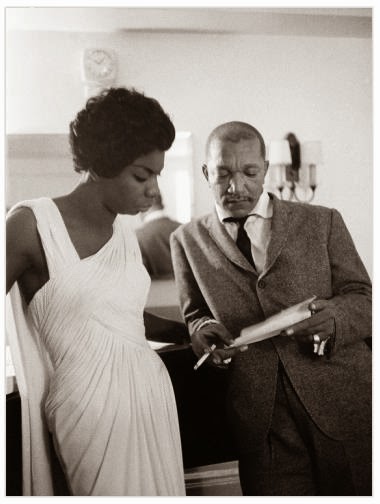
At right: Nina from that same evening with Redd Foxx (Photo courtesy Ebony Magazine, G Marshall Wilson photographer)

The New York Times review was hesitant in its praise, but concluded “both her singing and playing are carried off with such consummate assurance, skillful pacing and attractive good nature that she proved an extremely winning performance.”

Although she had recorded two previous albums by this time (and a third was cobbled together without her knowledge), the Town Hall live album released in 1959 is notable as being the first to include one of her signature masterpieces — “Black Is The Color Of My True Love’s Hair.”

Simone would release three more live albums recorded in New York venues — one at Village Gate and two at Carnegie Hall.

Categories
Brooklyn History Neighborhoods

No sheep in Sheepshead Bay, but lots of fish with human teeth

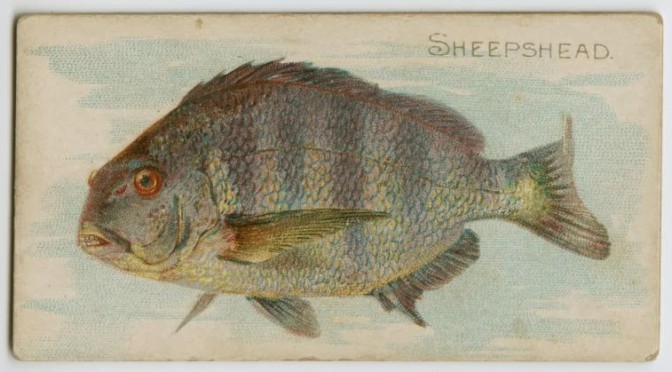
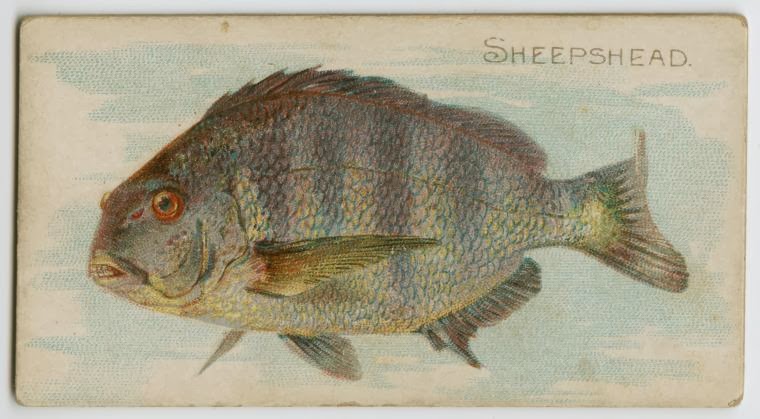
The sheepshead is a common variety marine fish known for its distinctive black stripes and a very scary looking set of teeth.  If you look too long at it, you will have nightmares tonight.  Some believe the fish’s unusual name comes from the notion that its teeth actually look like those of adult sheep.  I personally don’t see it, but you can compare here and here.

What we do know, however, is that the Sheepshead lends its name to one of Brooklyn’s loveliest places — Sheepshead Bay and the adjoining neighborhood.of the same name.

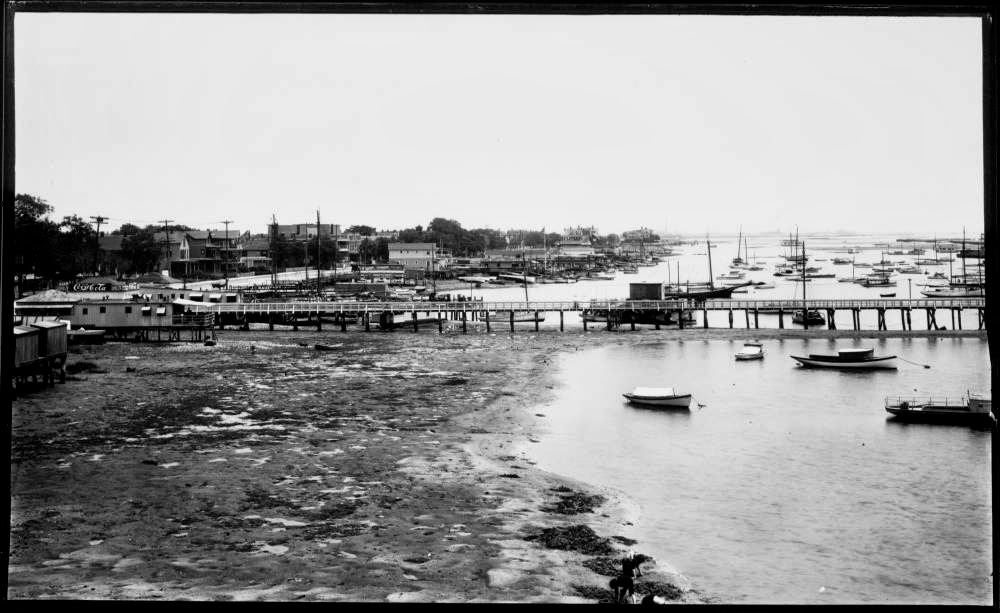
Below: Sheepshead Bay in 1905 (courtesy George Eastman House)

But who thought to name the area after one of its common aquatic residents?  We can probably bestow that honor onto Benjamin Freeman, who owned much of the land around the bay and became one of the first entrepreneurs to open a hotel here in 1844.  He called his establishment The Sheepshead, adorning the front with a large picture of a sheepshead.  This decision by Freeman would forever give the area its unusual name.

During the mid and late 19th century, the bay area would never hold the same luxurious reputation as Brighton Beach and Manhattan Beach to the south.  Its hotels and recreation spots had a less respectable appeal, though not without certain charms.

 A 1870 roundup in the Brooklyn Daily Eagle of Sheepshead Bay offering sings the praises of  the Union, “the largest hotel in the bay,” owned by a Brooklyn congressman Patrick Burns, a place of rambunctious entertainments.  From an 1873 report in the New York Tribune:  “[N]umerous roughs from New York and the Fifth Ward of Brooklyn were leaving in coaches to Burns Hotel in Sheepshead Bay to witness a prize-fight.”

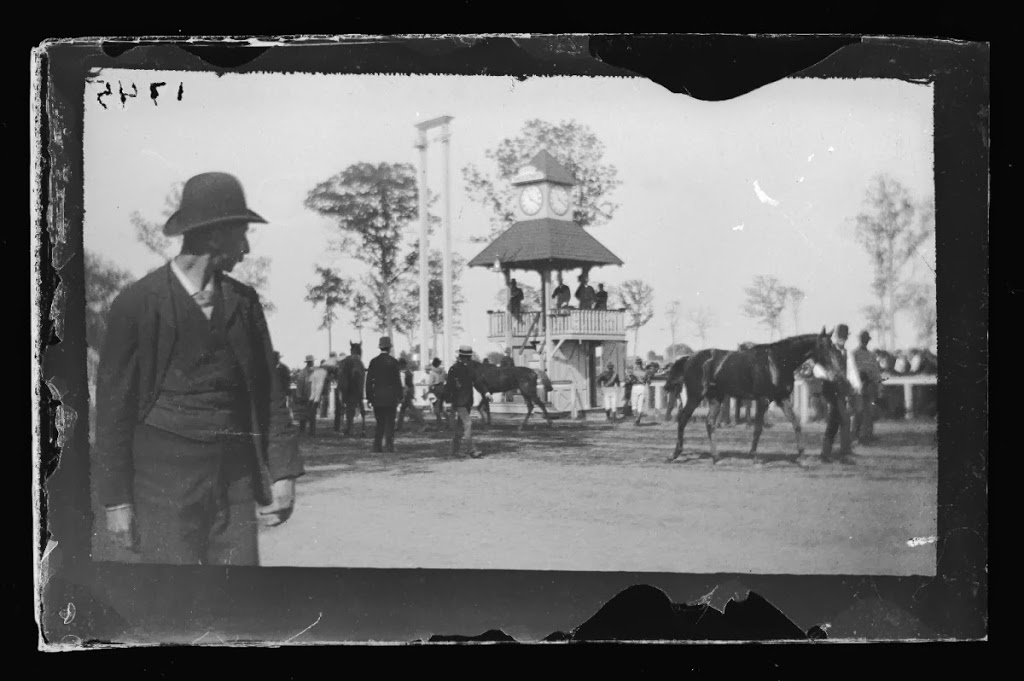
Below: The Sheepshead Bay racetrack, taken by George Bradford Brainard, courtesy the Brooklyn Museum

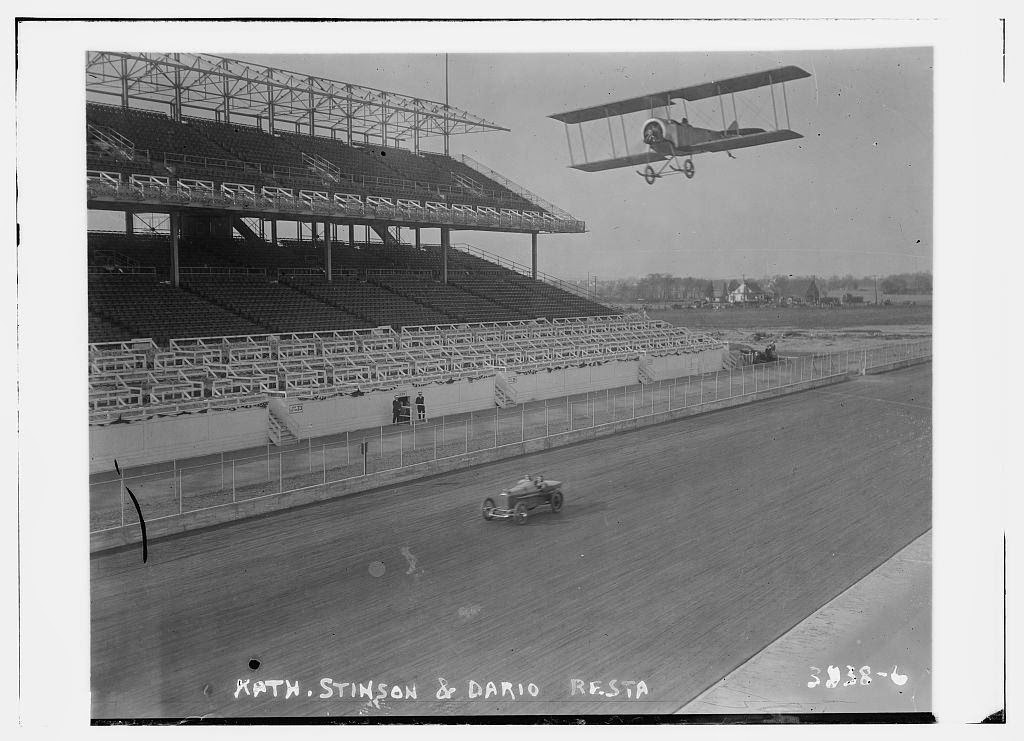
Sports would always define the early recreations of Sheepshead Bay, and not just fishing and boating pleasures.  In 1880, one of America’s great horse-racing tracks was constructed here, a popular draw due to the Gilded Age moguls who funded the venture, including the godfather of horse racing August Belmont Jr.  When racetrack betting became illegal in the 1910s, the track was refitted for auto racing.

And, as you can see below, sometimes stunt airplane acrobatics!  This image, from the Library of Congress, shows a Sheepshead Bay ‘race’ between two very modern devices — an automobile driven by Italian racing legend Dario Resta and an airplane steered by pioneering pilot Katherine Stinson.

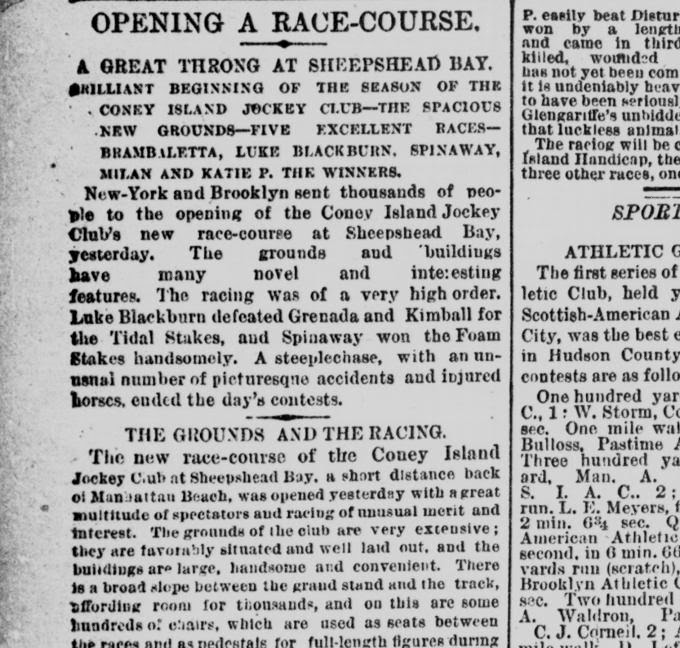
Below: From the June 1880 opening of the Sheepsead Bay Race Track.  Note this disturbing sentence: “A steeplechase, with an unusual number of picturesque accidents and injured horses, ended the days contests.”

Fish picture at top from a cigarette card, courtesy NYPL

Categories
Planes Trains and Automobiles

History in the making 2/18: Pennsylvania Station edition

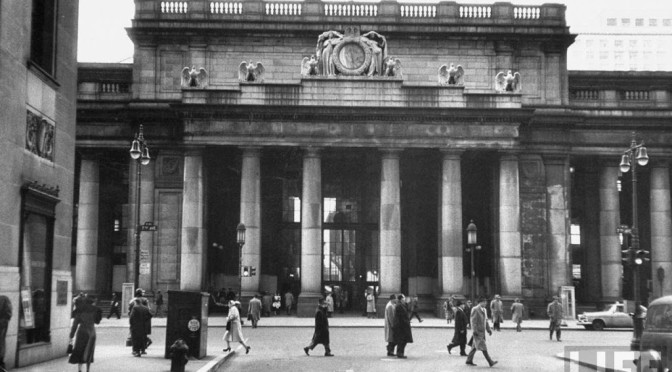
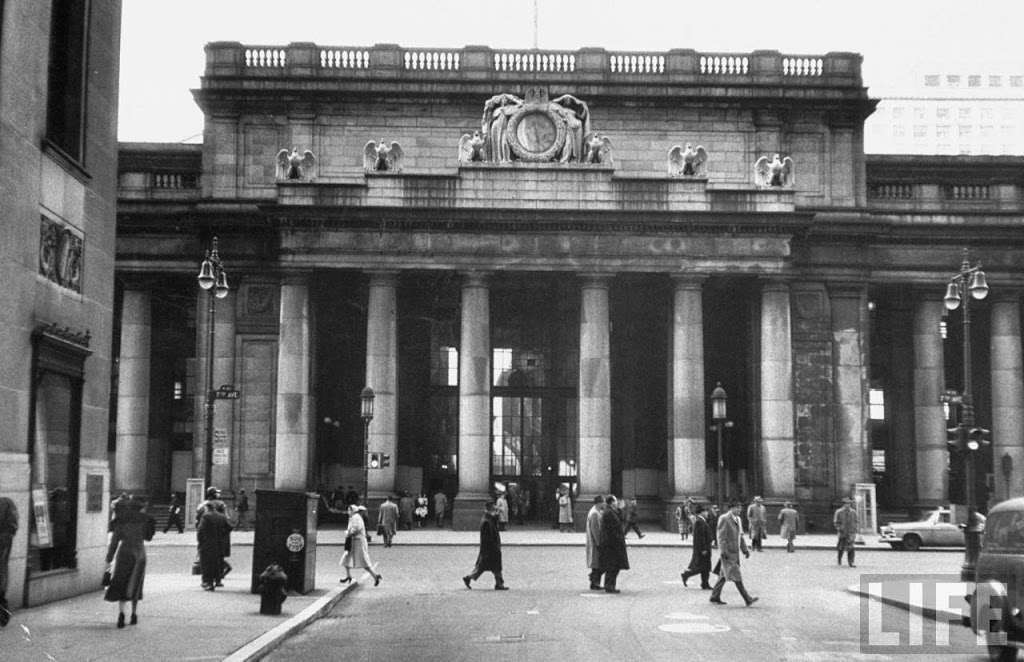
Aging beauty: The entrance of Penn Station, photographed by James Burke in 1957 for Life Magazine.

— Tonight on PBS’s American Experience: The Rise and Fall of Penn Station, the story of McKim, Mead and White’s Midtown masterpiece and how its tragic demolition in the 1960s forced New Yorkers to consider the importance of historic preservation.  [American Experience]

Barry Popik brings up an interesting anniversary — John J Fitz Gerald’s newspaper column “Around the Big Apple” began 90 years ago this week.  Fitz Gerald helped popularize New York’s nickname ‘the Big Apple’.  Read more at Popik’s excellent and exhaustive site of urban etymology: [Barry Popik]

— The secret at 58 Joralemon Street:  The Brooklyn Heights tunnel disaster that forever changed how the city handled destructive construction work.  [Brownstoner]

Ghost signage: The remnants of former businesses are all around us, their old signs living long past the establishments themselves.  Photographer Gary Fonville has found some beautiful examples all through the five boroughs, some of which you’ve probably walked by a thousands times without noticing! [Forgotten New York]

East Village monsters: What are those things guarding this home on St. Marks Place? [Ephemeral New York]

The Velvet Caps, the Scalpeens and the Jackson Hollow Gang: A fascinating rundown of the oddly named ruffians that ruled the streets of Brooklyn, most in the years before Consolidation. [artofneed]

Categories
Podcasts

At The Ready: The History of the New York City Fire Department


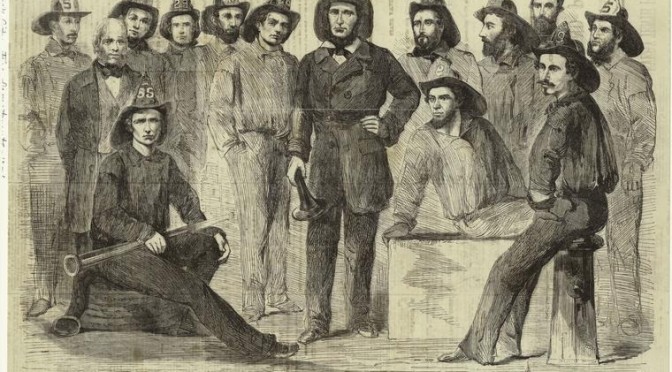
The distinguished members of New York’s various volunteer fire brigades, posing for the photographer Matthew Brady in 1858

PODCAST  The New York City Fire Department (or FDNY) protects the five boroughs from a host of disasters and mishaps — five-alarm blazes, a kitchen fire run amok, rescue operations and even those dastardly midtown elevators, always getting stuck!  But today’s tightly organized team is a far cry from the chaos and machismo that defined New York’s fire apparatus many decades ago.

New York’s early firefighters — Peter Stuyvesant‘s original ratel-watch — were all-purpose guardians, from police work to town timepieces.  Volunteer forces assembled in the 18th century just as innovative new engines arrived from London.

By the 19th century, the fire department was the ultimate boys club, with gangs of rival firefighters, with their own volunteer ‘runners’, raced to fires as though in a sports competition.  Fisticuffs regularly erupted.  From this tradition came Boss Tweed, whose corrupt political ways would forever change New York’s fire services — for better and for worse.

Volunteers were replaced by an official paid division by 1865.  Now using horse power and new technologies, the department fought against the extraordinary challenges of skyscraper and factory fires.  There were internal battles as well as the department struggled to become more inclusive within its ranks.

But the greatest test lay in the modern era — from a deteriorating infrastructure in the 1970s that left many areas of New York unguarded, and then, the new menace of modern terrorism that continues to test the skill of the FDNY.  From burning chimneys in New Amsterdam to the tragedy of 9/11, this is the story of how they earned the nickname New York’s Bravest.

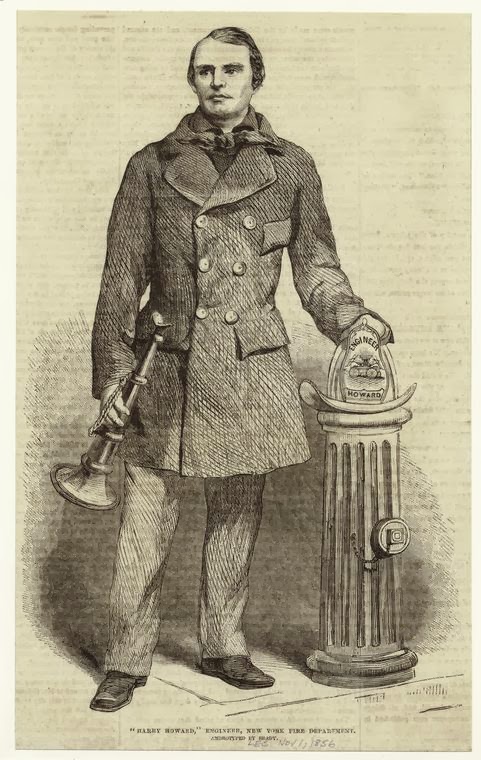
Above:  That’s Harry Howard, one of the FDNY’s greatest firemen and a former member of the Bowery Boys volunteer fire unit!


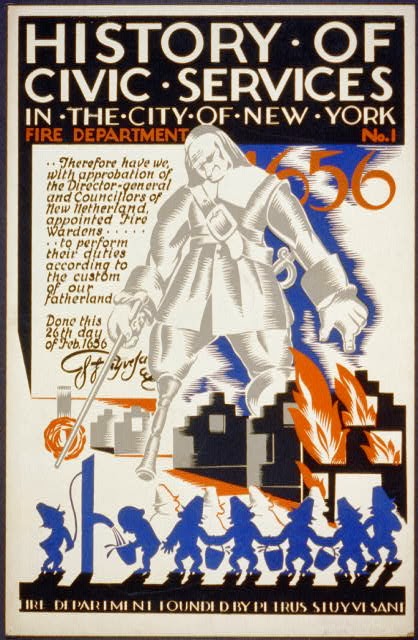
A poster by Vera Bock from 1936, created for a series by the Federal Art Project, touts the contributions of Peter Stuyvesant to the history of New York firefighting. (LOC)

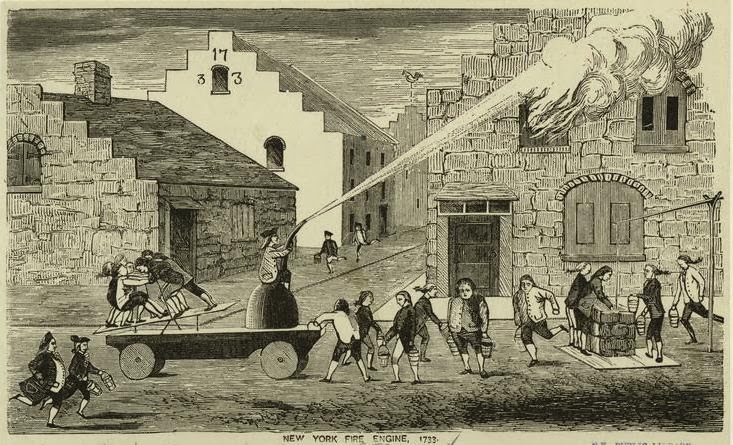
One of two fire engines first received by New York in 1733 (from an 1872 illustration) Courtesy NYPL

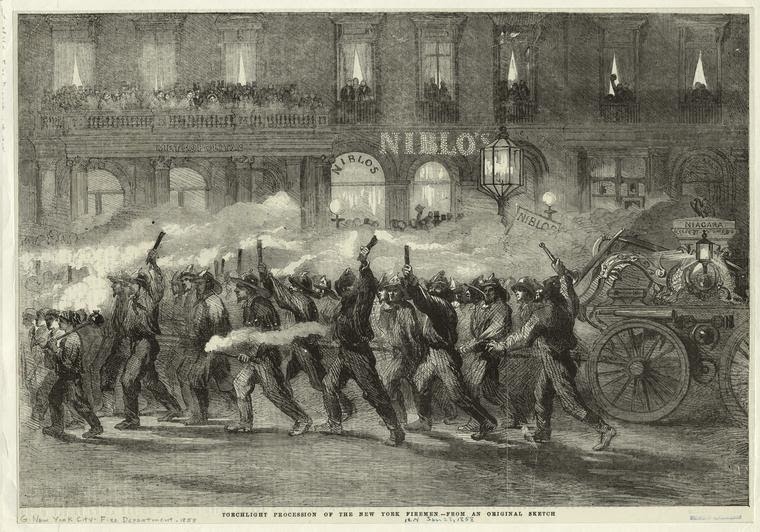
A firefighters’ procession at night, marching past Niblo’s Garden. 1858   Courtesy NYPL

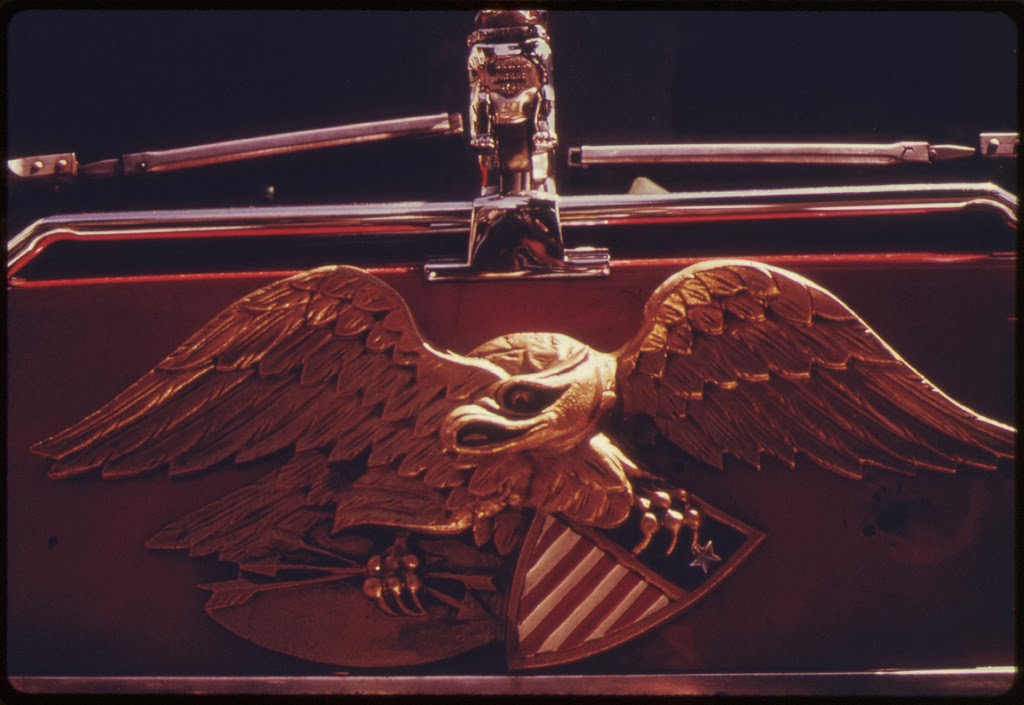
Eagle insignia from a New York fire truck, 19th century, courtesy the US National Archives

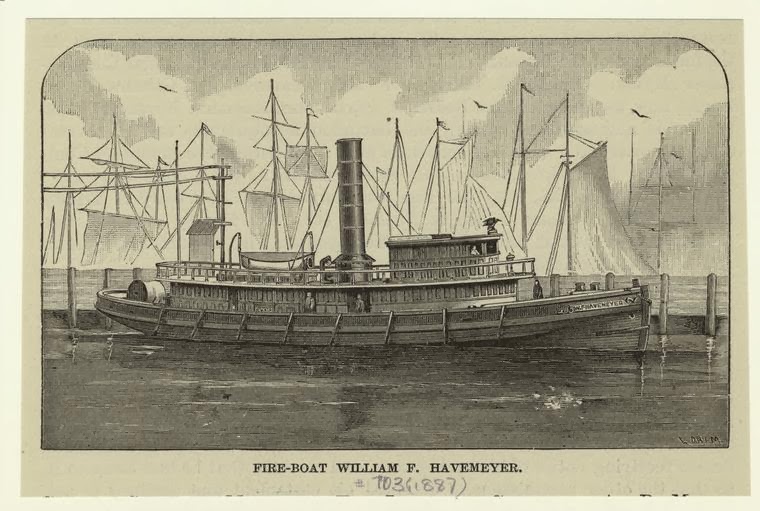
The first official fire boat of the FDNY (although others had been rented before this), named for former mayor William F. Havemeyer.


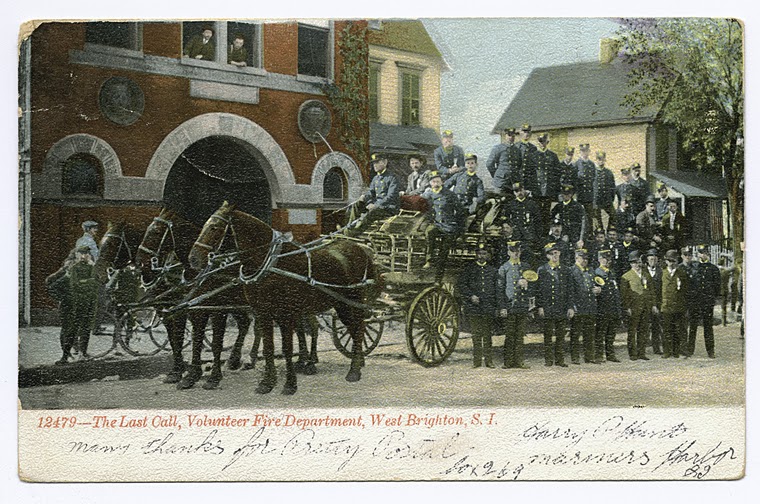
Volunteer fire divisions were slowly fazed out after the introduction of an official paid company.  This was expanded when the five boroughs were created in 1898.  This postcard commemorates the final run of a volunteer fire department in West Brighton, Staten Island. (NYPL)

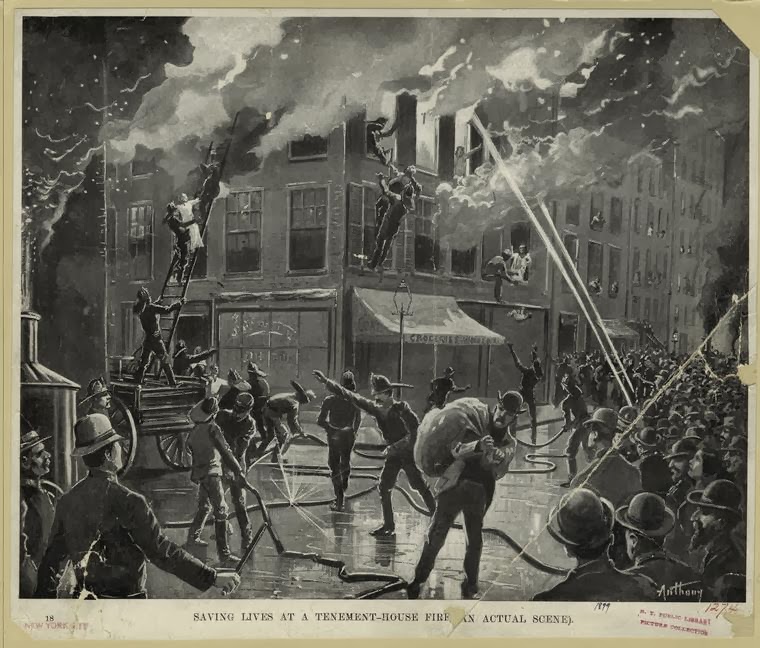
Firefighters battled a tenement blaze in this illustration from 1899, one of thousands that occurred in the poorer districts of town.  Improved fire regulations would ensure newer buildings were more fire proof. (Courtesy NYPL)

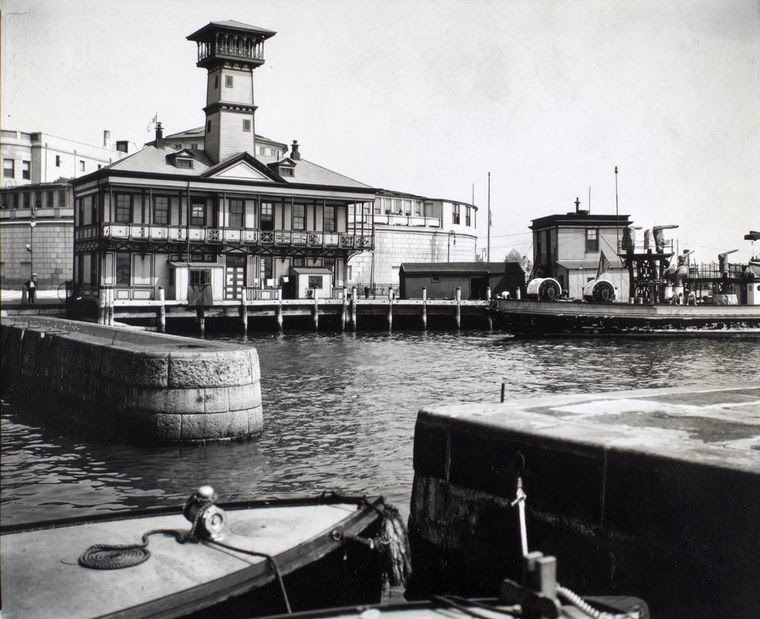
One of New York’s more interesting firehouses — the one for fireboats at the Battery. Photo by Berenice Abbott (courtesy NYPL)

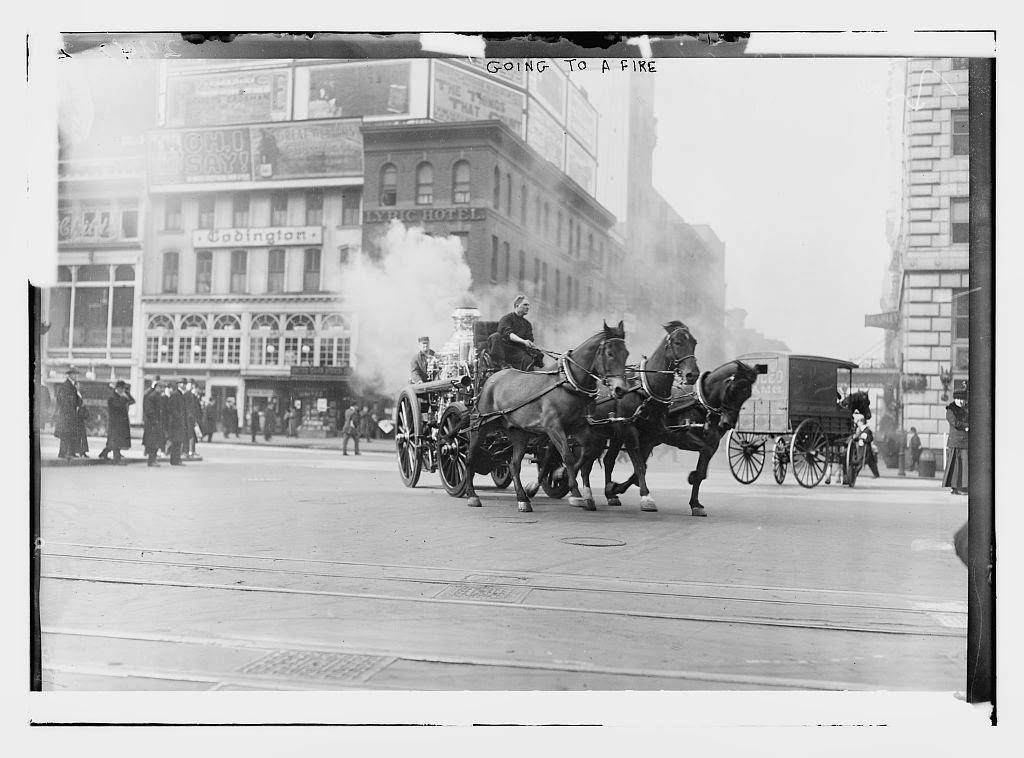
Horses were a hotly contested inclusion to the fire departments during the 19th century.  They were eventually banished during the volunteer years, but re-introduced after 1870 and soon became essential for getting quickly to fires.

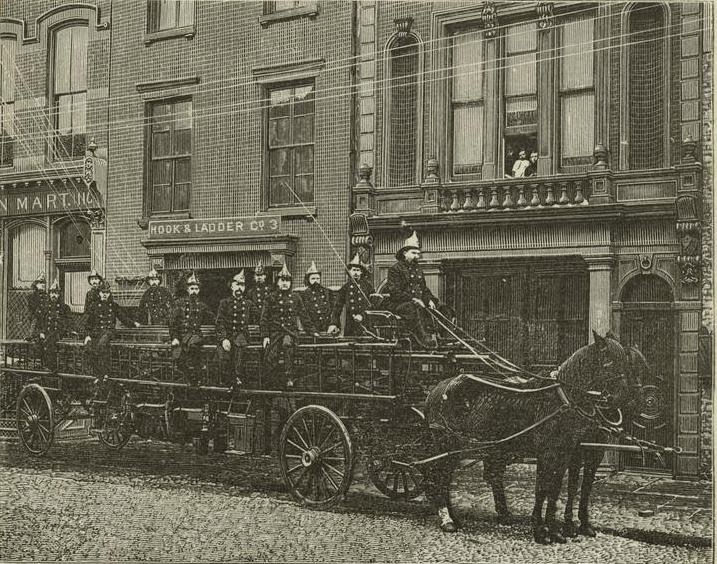
Hook and Ladder Co. No. 8, from 1887


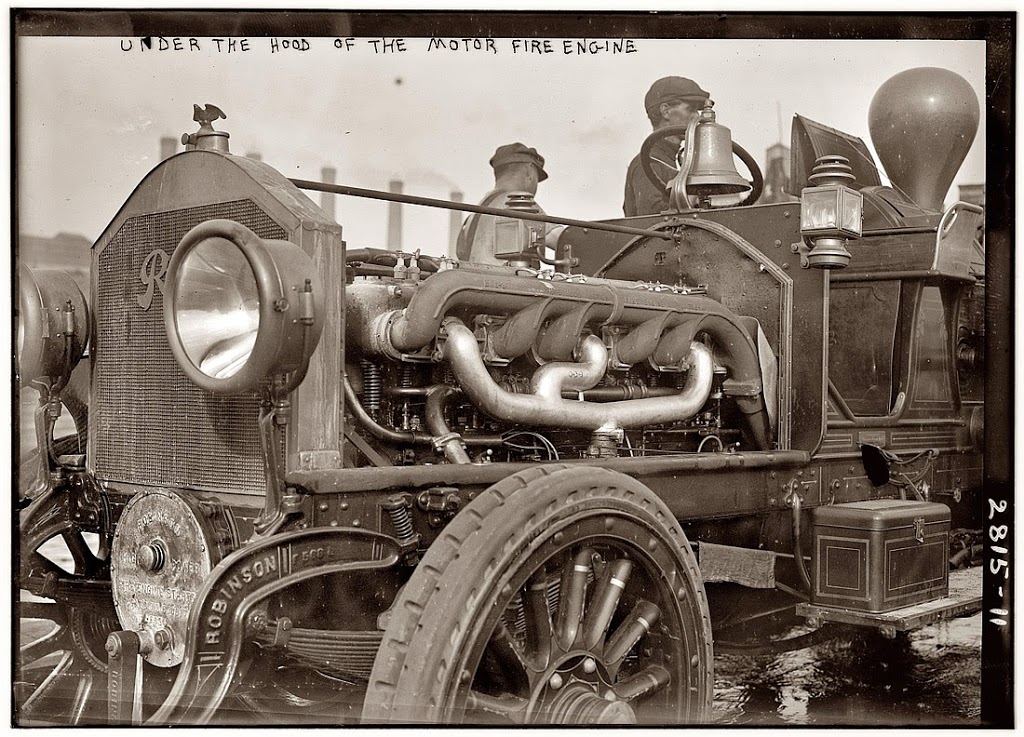
Motorized fire engines and trucks replaced the horse-drawn varieties in the 1910s.  Here’s one model that was used by the FDNY in 1913 (Courtesy Shorpy)

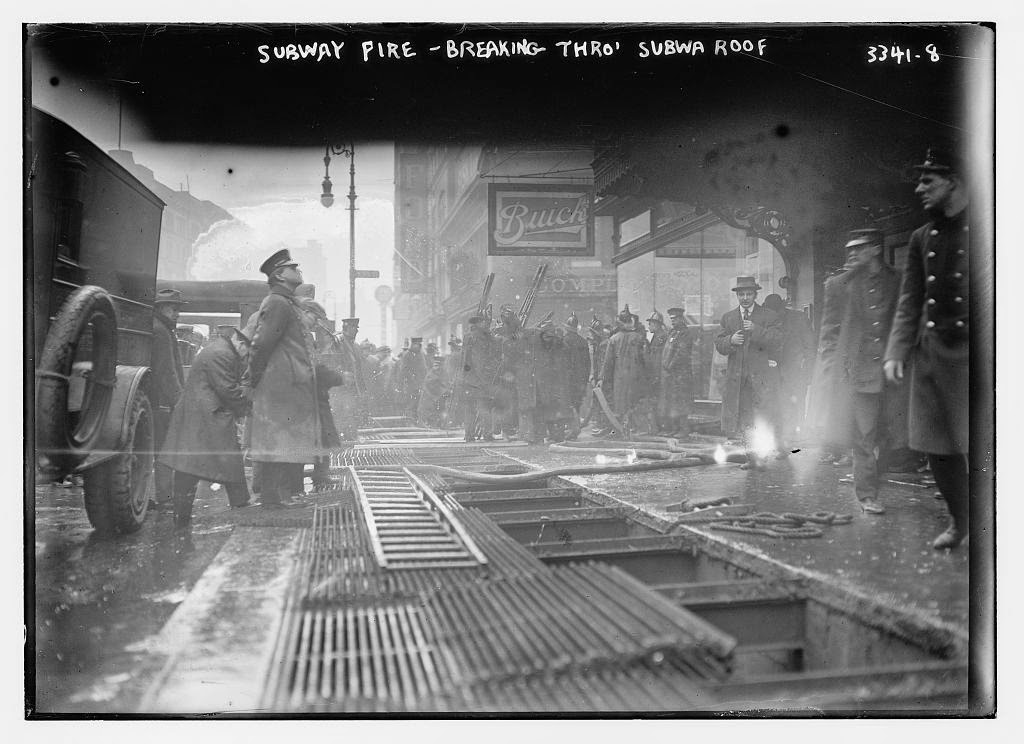
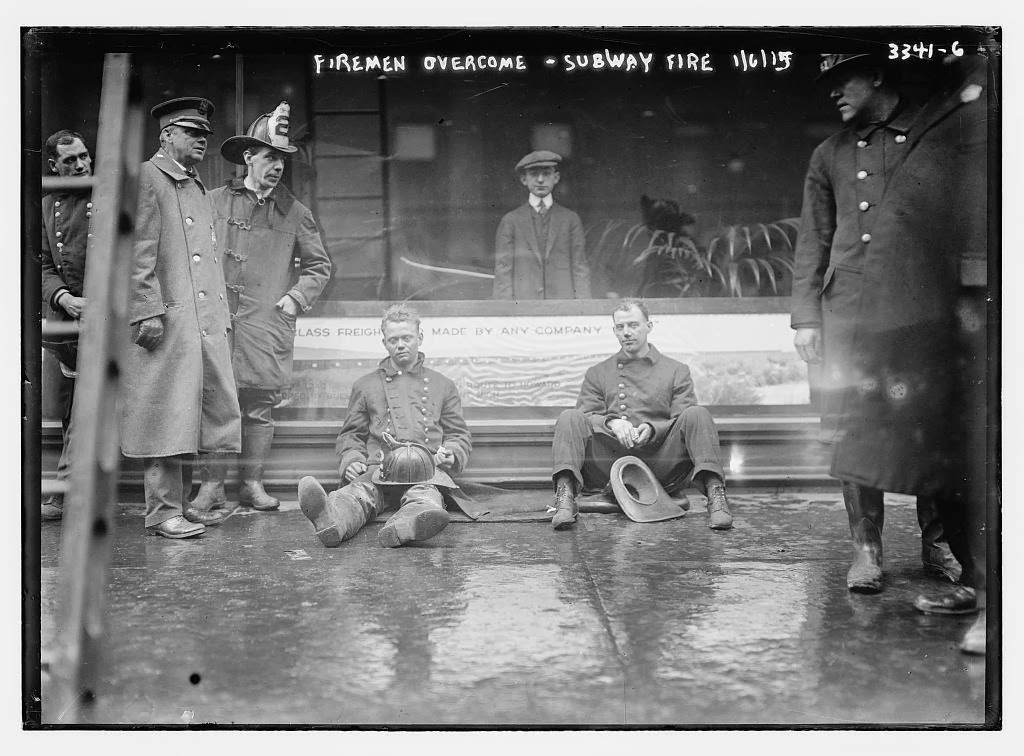
The city’s growth created new challenges for the FDNY.  With the new subway, there was the potential for dangerous fires underground.  Here a team of firefighters battle a subway fire in midtown in 1915, and a couple firemen who braved the inferno underfoot. (LOC)


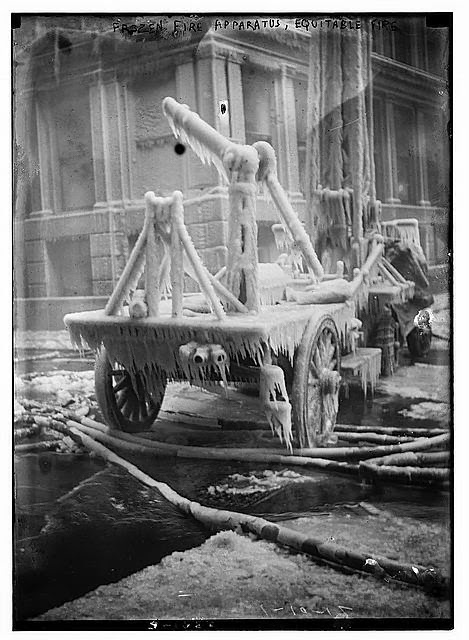
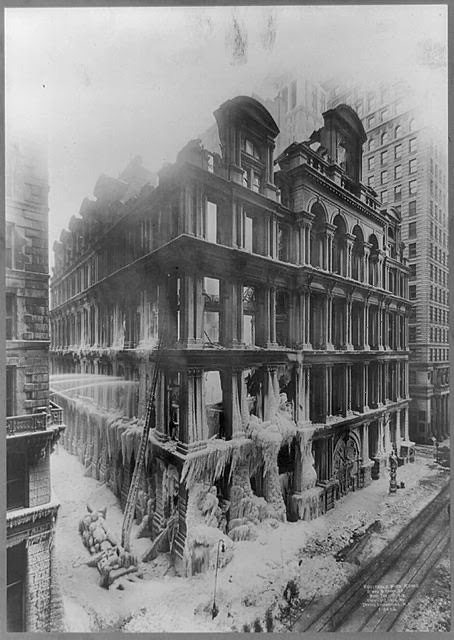
The difficult blaze at the Equitable Building in 1912 produced a bizarre aftermath of icy ruins.


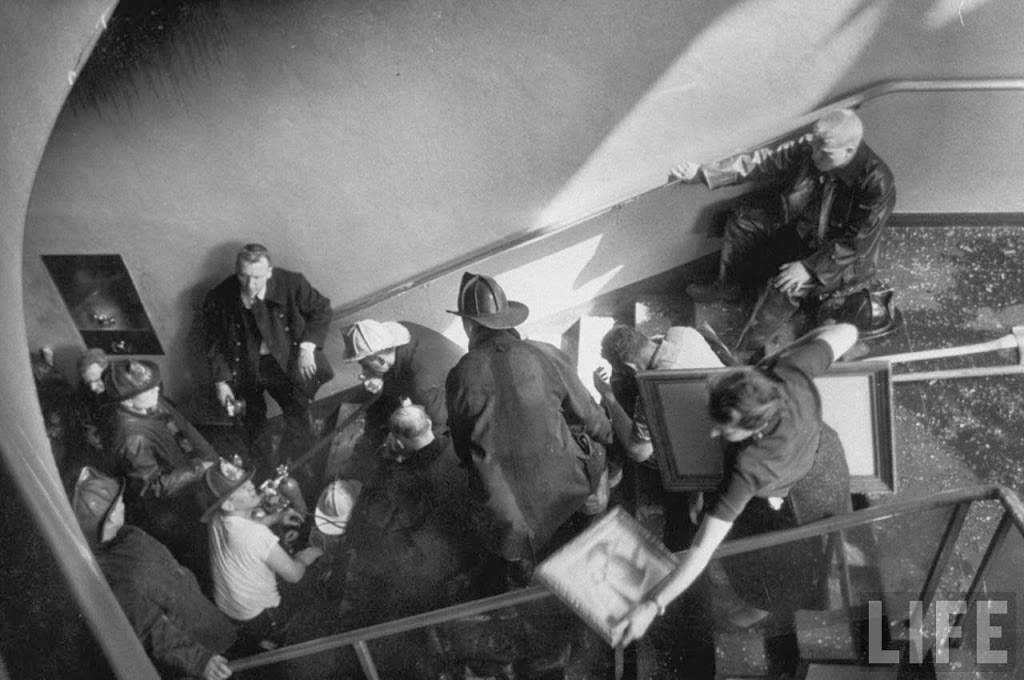
Firefighters rescuing people (and paintings!) from a fire at the Museum of Modern Art, 1958. (Courtesy Life)

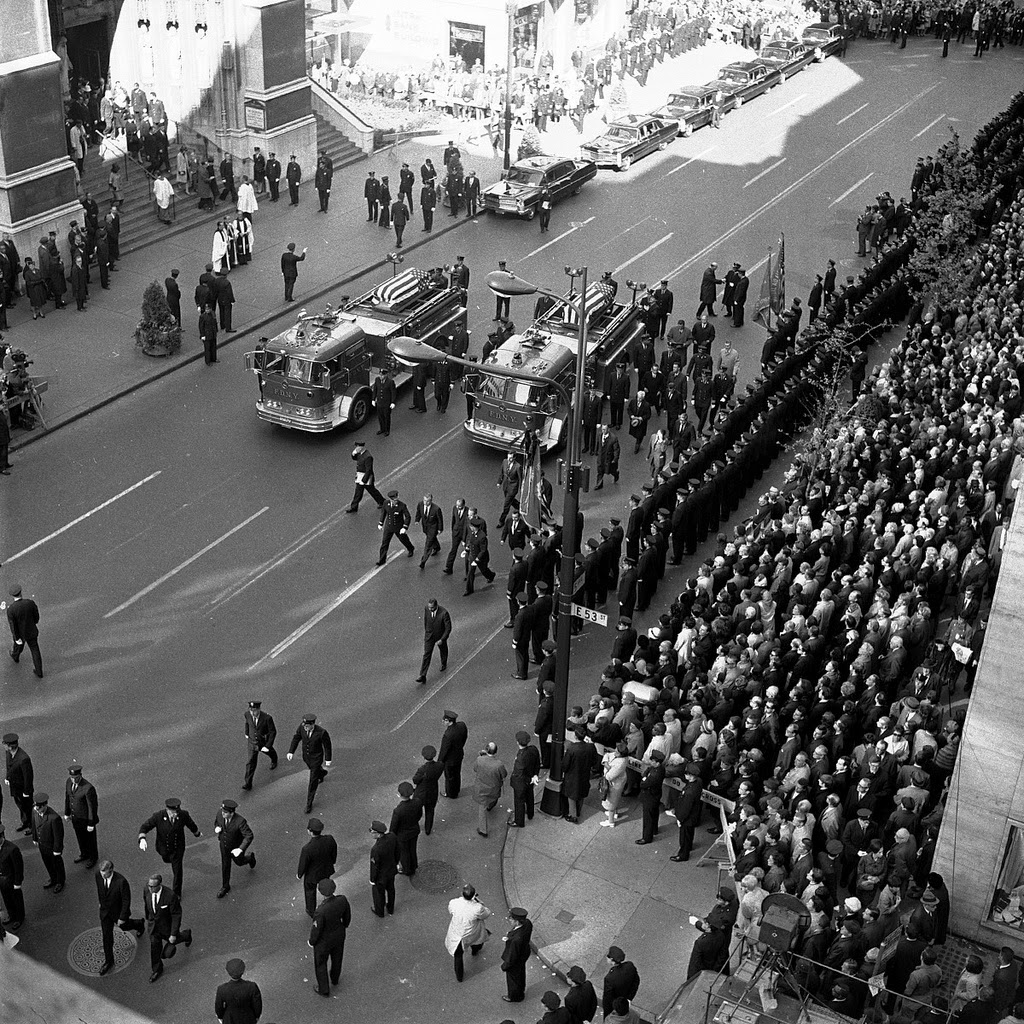
A sorrowful day:  Thousands come out to mourn the 12 firefighters who died fighting a terrible blaze that erupted across from the Flatiron Building on October 21, 1966. (Picture courtesy FDNY)

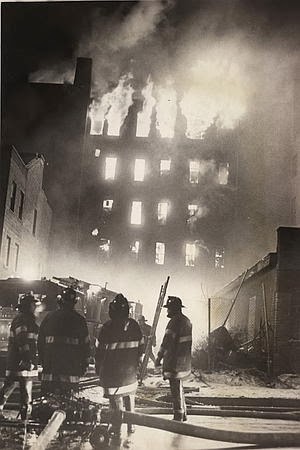
Total mayhem erupted in New York City in the 1970s, as whole districts like the South Bronx, Bushwick, Harlem and the Lower East Side saw a massive increase of fire-related disasters due to the city’s financial woes. (Photo courtesy New York Post/Vernon Shibla photographer)

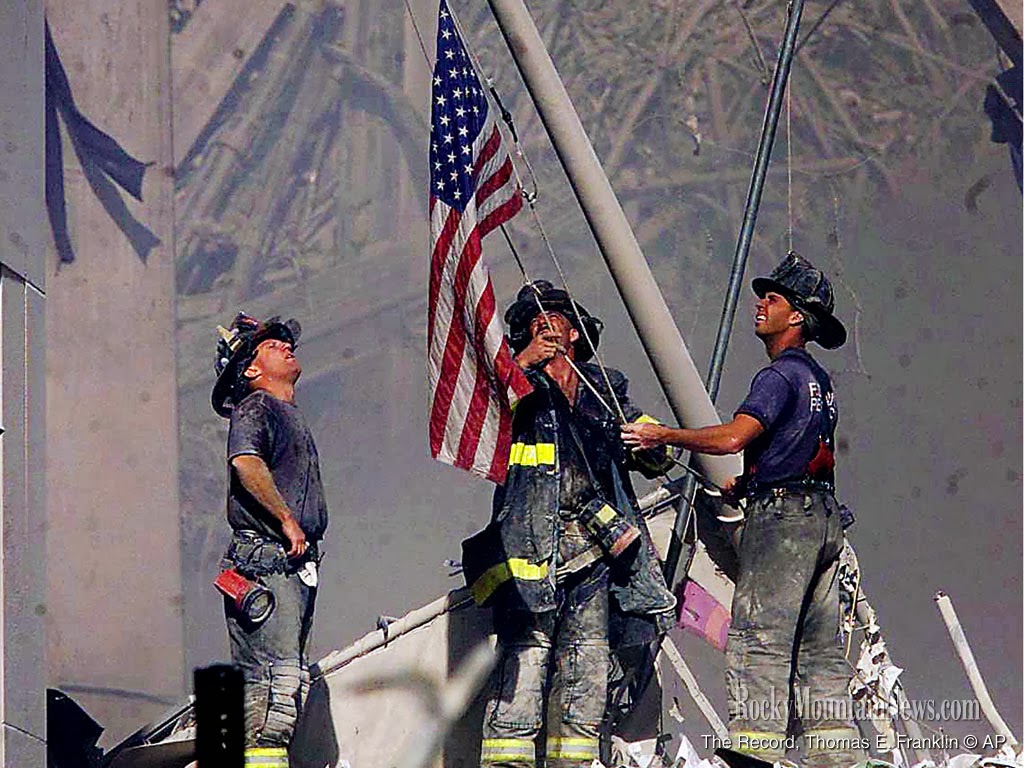
Three hundred and forty-three firefighters and FDNY paramedics died in the September 11, 2001, terrorist attack on the World Trade Center.  But the force, along with the police and other emergency workers, managed to save tens of thousands of people on that day, making one of the largest rescue operations in American history.  In total, 2,977 people were killed that day, 2,606 of them in New York, on the ground and in the towers.

And finally, a rather amazing film documenting the fire department’s emergency response process in 1926, with a breathless dash-cam vantage point!

Categories
Bridges

The patriotic story of how the Kosciuszko Bridge got its name


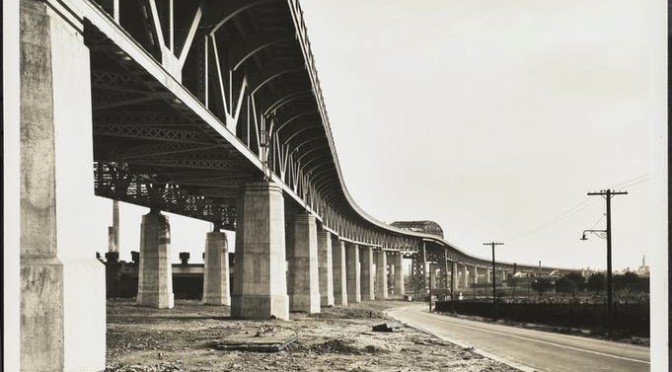
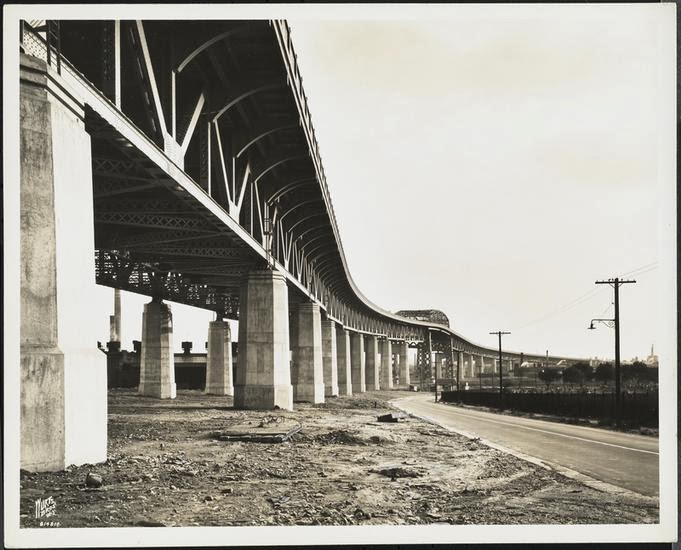
The approach to the Kosciuszko Bridge, photographed in 1939 by the Wurts Brothers.  Photo courtesy the Museum of the City of New York


“That sound that crashes in the tyrant’s ear – Kosciuszko!” — Lord Byron

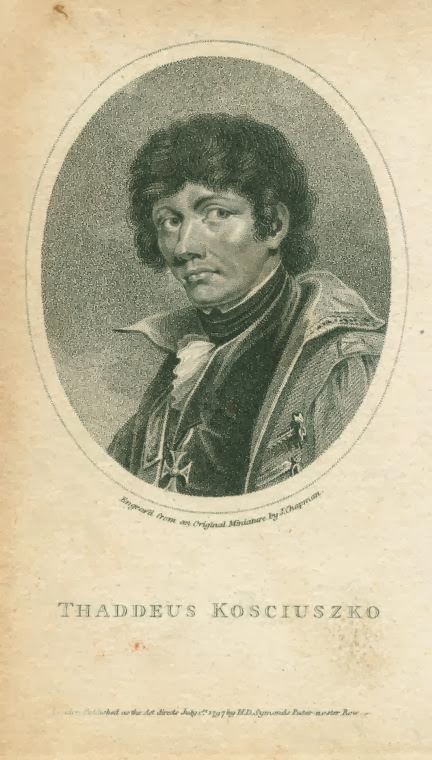
Byron was talking about Polish hero Tadeusz KoÅ›ciuszko, who was (most likely) born on this date in 1746.  Hopefully, within a couple months, the bridge that bears his name — and bears the grievances of those stuck upon it during rush hour — will begin a much-needed makeover.

But how did the span over the Newtown Creek, connecting Brooklyn to Queens, get named the Kosciuszko Bridge in the first place?

Kosciuszko wasn’t just Poland’s most famous revolutionary.  In 1776, he sailed for America to fight alongside George Washington and the Continental Army.  He was a brilliant strategist and engineer, helping bolster many American forts, and was greatly admired by Washington’s generals.  In one of his more clever displays, the man who would one day have a bridge named after him actually blew up several bridges to hamper British advances in upstate New York.**
After the war, he returned to Europe and led the fight for Poland’s independence (although his storied uprising against Russia was ultimately a failure).

Kosciuszko died in 1817 and has been celebrated the world over as the greatest of revolutionaries and perhaps the best known historical figure in Polish history.  But that alone doesn’t get one a bridge in Long Island.

The new automobile bridge, eventually part of the Brooklyn-Queens Expressway, was completed in 1939, replacing a smaller one called the Meeker Avenue Bridge.  The new crossing opened in August. Germany invaded Poland nine days later.

New York City’s affinity with Poland was strong by this time. The city had thousands of Polish-Jewish residents.  The Polish pavilion at the World’s Fair in Flushing-Meadow was among the most striking, featuring a bold statue of the Polish monarch Wladyslaw Jagiello.  (That statue was eventually moved to Central Park, where it sits today near the Turtle Pond.)  Some New Yorkers feared a similar invasion upon its own shores.

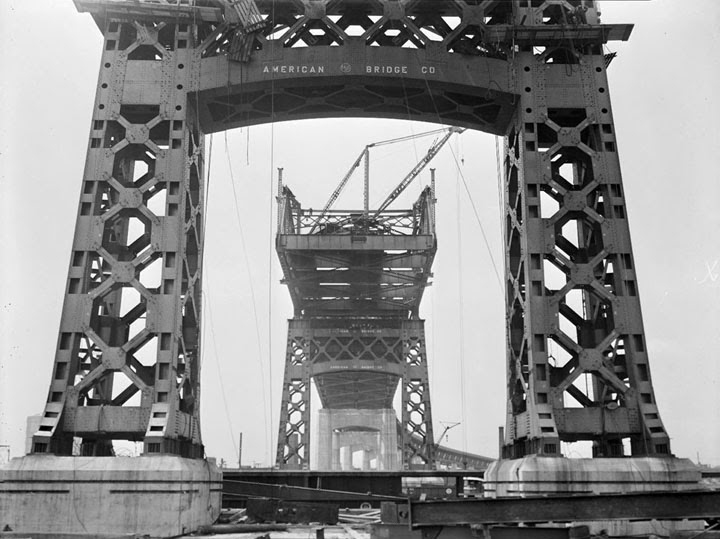
Below: Construction of the new Meeker Avenue Bridge in June 1939, later to be named Kosciuszko. (Courtesy NYC Municipal Archives) 

In July 1940, the Meeker Avenue Bridge was renamed the Kosciuszko Bridge, as a sign of the revolutionary spirit that bonded America and Poland.  It certainly made sense given that the Brooklyn anchorage rises from Greenpoint, a vibrant Polish neighborhood.

At an official ceremony on September 23 — a year after the German invasion — thousands of Polish-Americans cheered along to a rousing patriotic speech by Mayor Fiorello La Guardia.  On either side of the bridge were parades featuring revelers in traditional Polish costumes.

“[I]n so far as the American people and the American government are concerned,” said La Guardia, “the free government of Poland still lives and will continue to live.”

The crowd roared with applause at the mention of President Franklin D. Roosevelt.  America would not be officially engaged in World War II until the following year with the attack on Pearl Harbor.

Ah, but that name!  It remains one of the more perplexing bridge names to say.  It’s correctly pronounced kohsh-CHOOSH-koh, although several slight variations are accepted.  At first, many people simply refused to say it.  In 1945, the New York Times mentioned that “Kosciusko Bridge the people will not have and they call it the Meeker Avenue Bridge to this day.”

Of course, many people preface the name today with an expletive, as the bridge is better known for its traffic entanglements and its lack of any kind of shoulder for stalled cars.  There have been plans for years to replace the bridge, plans which finally look to be rolled out this year.

The Kosciuszko’s younger brother bridge — the Pulaski Bridge, named for another Polish hero, Kazimierz Pulaski — spans the same body of water just a couple miles to the west.

**Tadeusz Kościuszko actually blew up and booby-trapped many bridges during the Revolutionary War on the command of Colonel Philip Schuyler, the father-in-law of Alexander Hamilton.

Categories
Pop Culture

The first Sherlock Holmes film ever was made in Union Square. And the second? In Flatbush, Brooklyn

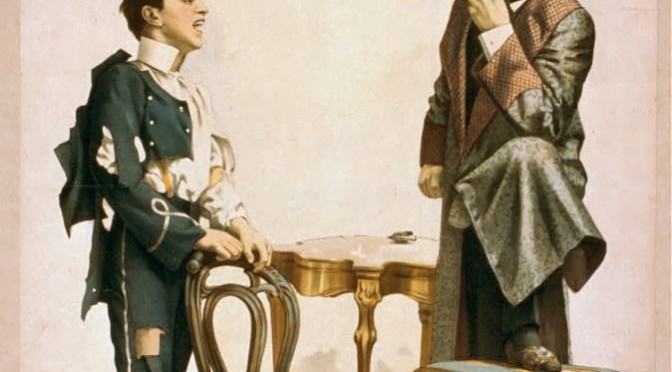
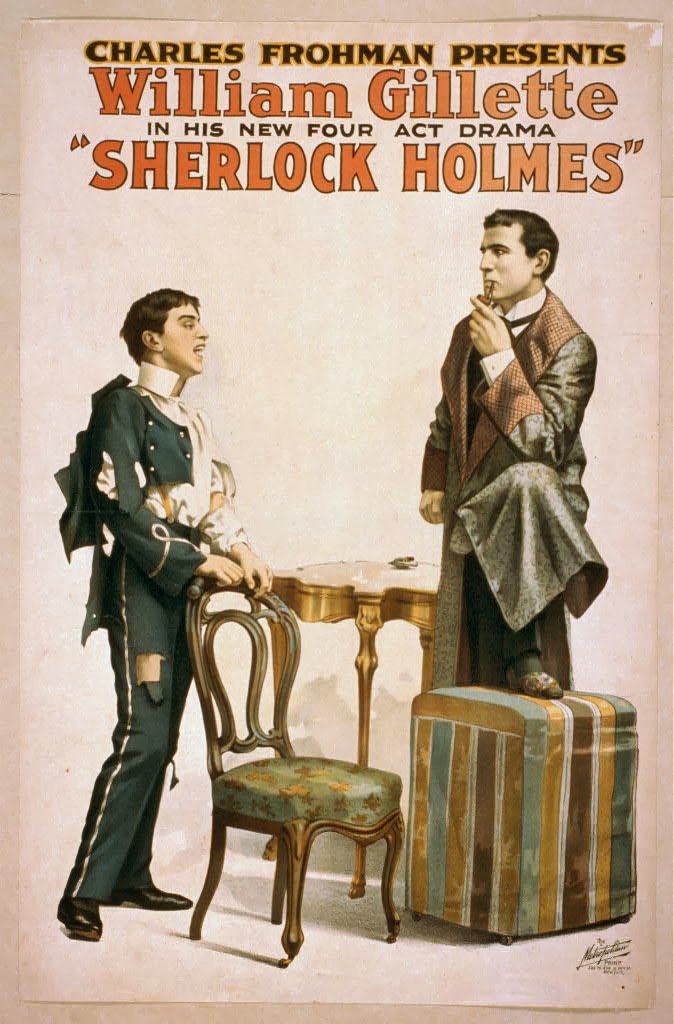
Above: While Sherlock Holmes made his film debut in 1900, he hit the stage a bit earlier.  William Gillette was the most acclaimed Sherlock of the day, touring the United States in a play he co-wrote with the detective’s creator Sir Arthur Conan Doyle.  After a tryout in Buffalo, the play made its debut at the Garrick Theatre (67 West 35th Street) in New York on November 6, 1899.

There are two varieties of Sherlock Holmes these days — the British alternative kind (Sherlock, with Benedict Cumberbatch) and the New York variant (Elementary, with Jonny Lee Miller).  You might naturally assume that Cumberbatch’s Sherlock Holmes is closer in spirit to the original stories by Sir Arthur Conan Doyle.  But the modern-day CBS variation, which is filmed in New York City, actually brings the classic detective stories back to its original roots in the cinema.

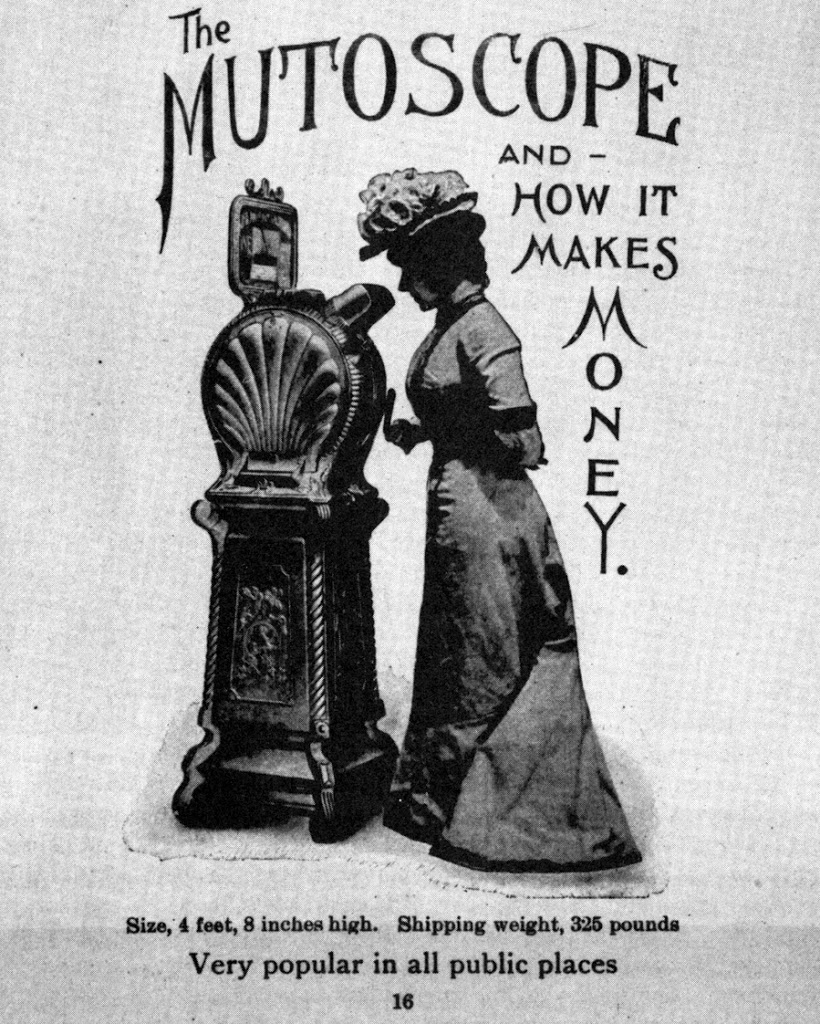
The first attempt to bring Sherlock Holmes to the film medium was in the year 1900 with Biograph-Mutoscope’s Sherlock Holmes Baffled.  Mutoscope films were not projected, but rather, displayed in a stand-alone box for a single person to view, the images moving with the help of a hand crank.  (At right: An 1899 trade advertisement for the Mutoscope).

Most early Mutoscope films were documentary in nature (often boxers or acrobats), similar to those for Thomas Edison‘s Kinetoscope.  The very first movie made in the city of New York was a boxing match featuring Young Griffo, made for another competing film device, the Eidoscope, and filmed atop old Madison Square Garden.

Due to the short running time of films made for these private viewing consoles, the first narrative films were crude, silly and often confusing, throwing viewers into an action scene that abruptly stops.   That is the case with Sherlock Holmes Baffled, seen here in its entirety:

Outside of the title card, the move bares no traits of Sherlock Holmes whatsoever.  It seems to merely borrow the name to present a wacky narrative involving the detective discovering a thief who then disappears and re-appears at a whim.

The movie was made at Biograph’s revolving rooftop studio at 841 Broadway in Union Square.  That original building was demolished at some point to make way for the Roosevelt Building.  In an accidental tie to its movie heritage, across from the Roosevelt is the Regal Union Square Stadium multiplex, which has undoubtedly seen more sophisticated Sherlock Holmes movies (such as the Robert Downey Jr. version) since it was constructed in 1998.

The identity of the actor who played the first Sherlock Holmes is apparently unknown.

Biograph would continue using Union Square as a site for film production.  They moved to another studio in 1906 — just up the street, at 11 14th Street — where they produced ever more extravagent movies, including a reinactment of the San Francisco earthquake, rushed into theater just months after the disaster struck the West Coast city on April 18, 1906.

From my original article:  “What seems especially brazen about this fabrication is that it was being created in New York’s Union Square, even as San Francisco’s public square of the same name sat in ruins.”

Five years later, a slightly more recognizable Sherlock Holmes can be seen in The Adventures of Sherlock Holmes, or Held For A Ransom.  In this version, Sherlock is played by vaudeville star Gilbert Anderson, best known for his appearance in The Great Train Robbery. (He was later renamed ‘Bronco’ Billy Anderson due to his later fame as an early cowboy film star.)  

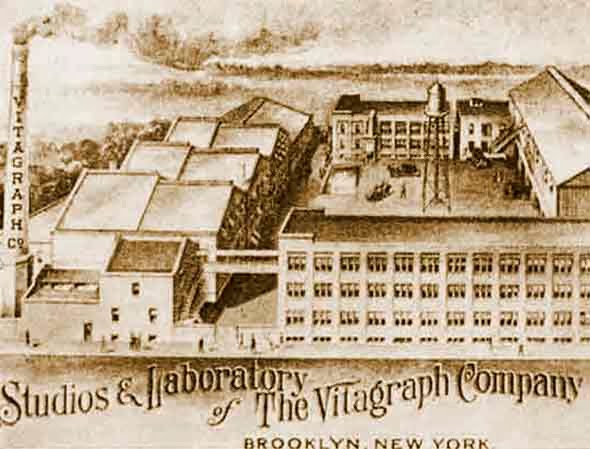
This, too, was filmed in New York — at Vitagraph Studios in Flatbush, Brooklyn!  Pictured below:

Top picture courtesy the Library of Congress