Categories
Uncategorized

The forgotten New York museum of Rubens Peale

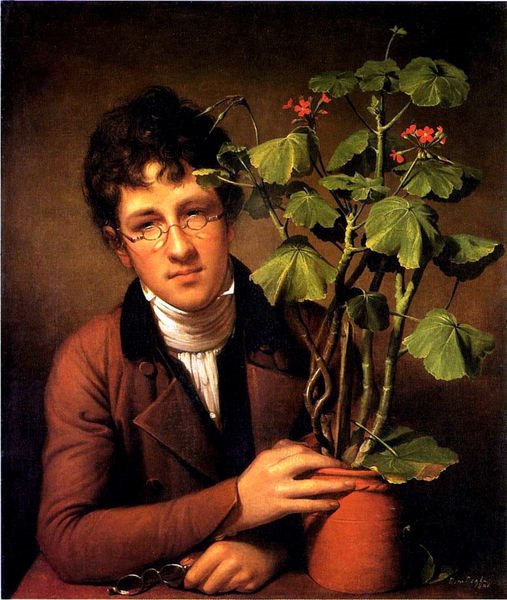
What if your best known accomplishment in this world was the fact that you posed for a well-regarded American masterpiece by your more talented older brother? Welcome to the world of Rubens Peale!

Philadelphians and American art lovers in general should be quite familiar with Rubens’ father Charles Wilson Peale, one of early America’s pre-eminent painters, portraitist to Washington and Jefferson, and patron of what would become the Philadelphia Museum. Peales museum for Philly, opened in 1786, is not only one of this country’s most important natural history institutions, it set the stage for pioneering museums across the country.

Peale graced his children with some truly loaded first names — Raphaelle, Rembrandt, Titian and of course Rubens. And they all attempted to follow in their father’s footsteps, both as painters and as curators of their own museums.

Raphaelle tried to open one in Charleston. Rembrandt set one up in Baltimore (unfortunately timed for the War of 1812). Baby brother Titian took the reins in Philadelphia and became the family’s most prolific naturalist.

Rubens, at first more interested in the sciences than the arts, operated the Philadelphia museum before coming to New York City in 1825 to set up his version of his father’s dream. The address for the Peale Museum of New York City was 252 Broadway (across from City Hall on the west side) in a building then known as the Parthenon.

The museum opened on October 26, 1825, to monopolize on a huge city celebration occurring that day: the opening of the Erie Canal. By 1840, Peale would change the name to the New York Museum of Natural History and Science.

Rubens’ museum would have had much the same makeup as the one in Philadelphia : great displays of stuffed animals in natural settings, display cases of butterflies and insects, postulations of pre-Darwinian scientific theories laid out over several rooms and supported with lectures and even theatrical productions. One book refers to Rubens as a “popularizer of scientific discoveries and a manager of theatrical attractions.”

In 1826, Rubens imported two mummies from Cairo for display; after 16 days of presenting the draped bodies, he presented for the interest of the “scientific and the curious” the unwrapping the age-old corpses in the museum lecture room.

His museum also featured fine arts and historical portraits, some by his own family members, others by respected painters as Bass Otis.

Rubens was sensitive to some of the cheap ploys of the Philadelphia Museum (live animals, displays of human deformities) and tried to keep his New York museum a dignified affair, although today we would find its use of waxworks and flashy lectures rather silly.
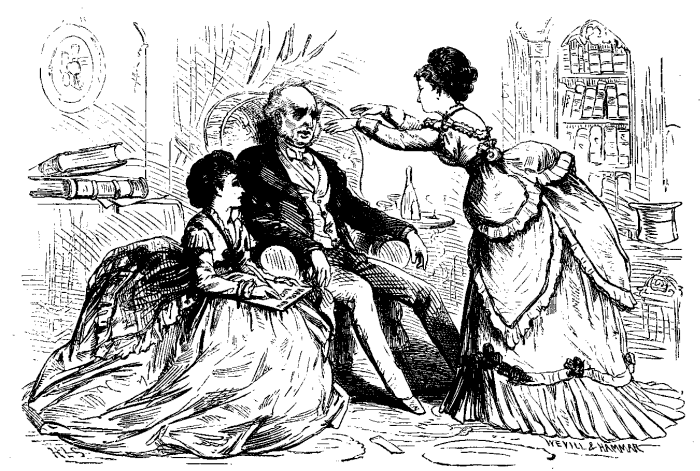
Above: an illustration entitled ‘Mesmerism on Wall Street’

Rubens adherence to the scientific led him into some unusual directions. He became mesmerized, if you will, by the theories of Fredrich Anton Mesmer, who believed a magnetic fluid in the body controlled the personality. A precursor to hypnotism and later the intellectual embrace of clairvoyance, mesmerism was such a popular distraction that Rubens placed a New York newspaper advertisement on February 8, 1841, claiming “a demonstration on the principle of animal magnetism” would be presented at his museum.

“The time is not far off when it will be said where is the person that doubts its existence” he later said in a letter to his brother Remington.

Unfortunately he could not quite predict the financial disaster that was the Panic of 1837 which sent his museum into debt, later unable to keep up with the flamboyant American Museum just opened down on Broadway and Ann Street by showman P.T. Barnum. Rubens had to eventually sell his entire collection — to Barnum — in 1843. Included in the sale: one of the surviving mummies that had been brought from Cairo.

Almost as a slap in the face, Barnum actually kept Peales’ museum open under the original name as a faux rival to the much more popular American Museum on the other side of City Hall. Eventually its contents were absorbed in the bigger museum

Rubens retired after the failure of the museum, turning first to his love of taxidermy then to a dalliance in painting. He did achieve a certain amount of renown for his excellent still lifes, and when he died in 1865, he had literally just finished the aptly named work The Artist’s Last Birthday.

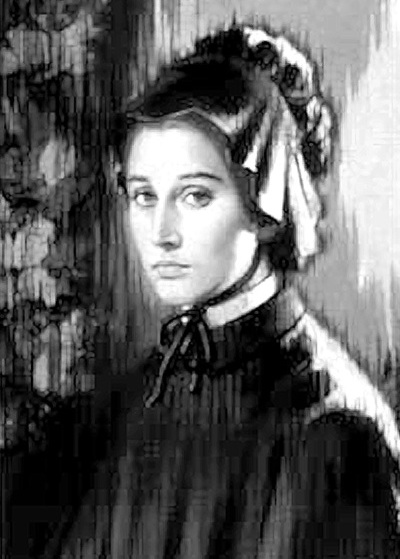
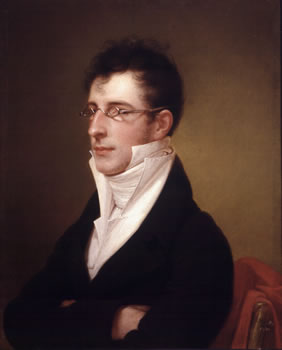
Rubens’ earnest collection set the stage for the world-class museums that we have in our city today. However, art historians probably know him best as the subject of his brother Rembrandt’s portrait Rubens Peale With Geranium (below).
Financial District’s little piece of heaven


Of all the people who lived in New York City during the Revolutionary War, of all the great Americans who helped shaped history here in the city, [cue deep-voiced announcer] only one can be called America’s first U.S.-born saint.

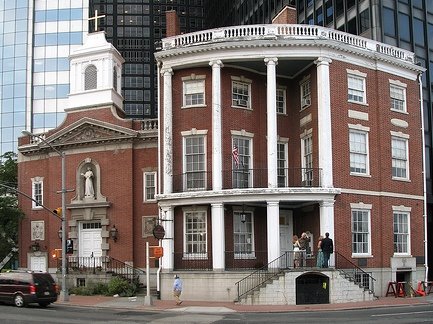
Commuters who zip on and off the Staten Island ferry and tourists gallivanting through Battery Park probably skip past the red brick Federal Style structure across the street, which serves as a church on Sundays and a rare reminder of early history on other days. Frankly, even been an unusually geeky history buff like myself, I have rushed by this building at least a hundred times before realizing what it was.

But it was here that Elizabeth Ann Seton, the charitable Catholic woman who became New York (and America’s) first saint, in honored in a shrine whose presence has helped save a spectacularly unique building.

Seton’s actually from Staten Island (born August 28, 1774) but lived in the house here for a few years. Whether or not you believe in the holy powers of the sainthood, you can definitely say that Seton’s former presence here saved this extraordinarily out-of-place home from the wrecking ball.

This home, originally built in 1794 by wealthy merchant James Watson, once stood with a row of similar Federal Style buildings facing a harbor clogged with shipping vessels.

NYC Architecture has some fantastic photos of the the Watson home’s former neighbors. Seriously, how this place somehow remained standing over the years is a testament to the sometimes random choices of the flippant New York real estate world.

Seton, born a protestant, became Catholicized at the former St. Peter’s Church on Barclay Street but made her name in Maryland by founding the Sisters of Charity, America’s first congregation of nuns. Seton’s strong draw to religious fate is attributed to living in New York City during its yellow fever epidemic of the late 19th century.

She was canonized on September 14, 1975. Seton Hall University, among many schools, is named in her honor.

Elizabeth Ann Seton fun facts:

— Like the cast of Gossip Girl, Elizabeth Seton was born into a prominent New York family and hobnobbed with the elite — which, in Revolutionary era New York, was centered at Trinity Church

Seton and her family lived upstairs at 61 Stone Street, where her husband ran a business into the ground, and they were evicted. Although the original building was destroyed in the Great Fire of 1835, today the space is occupied by the cute Wall Street Inn on one of the most picturesque streets in downtown Manhattan.

— After confirmation, she slapped a Mary in front of her name thus Seton would later sign everything merely with the initials M.E.A.S.

— In her final days, she drank only port wine

The Eiffel Tower of the East Village: R.I.P.


The East Village is loaded with great buildings, famous homes and pieces of New York’s history that reflect its ethnic diversity. But my favorite landmark has always been the Toy of Towers.

The corner of Avenue B and Sixth Street has looked almost the same as it did when I moved to Manhattan in the early 90s. The same, however, cannot be said of the East Village in general. Although trendy bars and restaurants had begun infiltrating the neighborhood then, it was only modestly gentrified. The East Village still had squatters, “Rent” seemed fresh and different, and ‘Seinfeld’ could still make jokes about Kramer getting lost there, as it if were a different world.

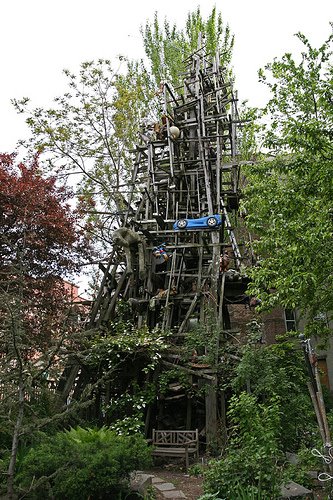
The Eiffel Tower of the East Village was always the peculiar found-art sculpture at the 6th Street Community Garden, a 65-foot tower of toys created by Eddie Boros, who lived a block away for most of his life. The garden opened in 1983, and Boros began building the massive homage to discarded toys a couple years afterwards.

The tower was precarious like the East Village itself, made of junk Boros found around the area and attached in various, sometimes tenuous ways. Dirty toys dangled like hanging fruit; one frequently expected that a teddy bear might fall to its death with a prevailing wind.

Although at first not a neighborhood favorite, it quickly became a beloved fixture. However Boros could only grow the monument so high, and when he died last year, he said he didn’t care if it were preserved or not.

This week, the Parks Department will slowly begin the process of tearing the Tower of Toys down. There was a memorial to the tower on Sunday.

Okay, so maybe it did look a little horrifically dirty. And maybe it would have even collapse at some point. Maybe preserving it was even a little beside the point. But anybody looking for a symbol to the changing character of the city need look no further

PODCAST: Old St. Patrick’s Cathedral

We don’t have a new podcast this week, so I thought I’d take an old one and pull a George Lucas on it, re-cutting it, improving the sound quality and taking out some of the dumb sound effects. I guess you’d say — it’s the Bowery Boys remastered!

Here’s our ninth episode on old St Patrick’s Cathedral in Little Italy (or Nolita). Why this one?

Next week the Museum of the City of New York opens their new exhibition ‘Catholics in New York 1808-1946’ so why not go back to the heart of the Catholic scene in the 19th century? Learn about the Hibernians, Martin Scorsese, the naming power of the 90s real-estate market and all those spooky graves.

Listen to it here exclusively:

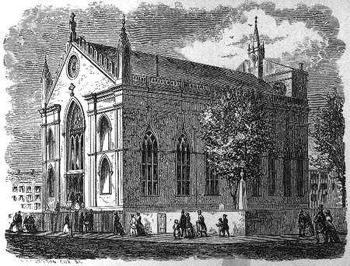
How St Patrick’s looked before the fire:

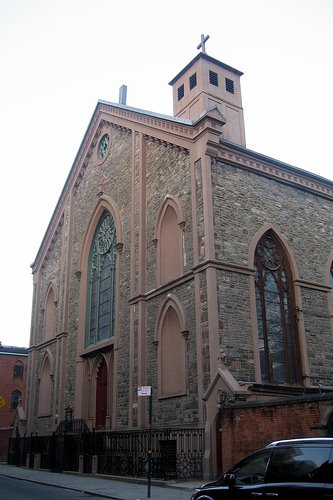
And after:

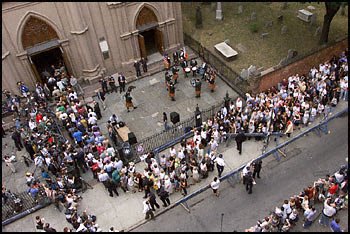
Mourners gathered at old St Pat’s for a memorial to John F Kennedy Jr in 1999

Spawn of the Statue of Liberty

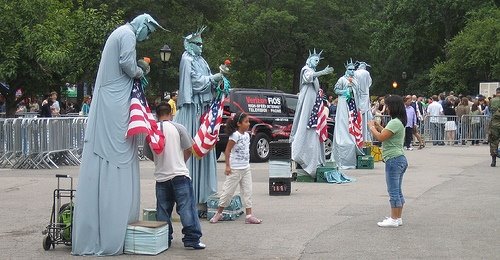
You know an area of New York has achieved tourist saturation when the first ten people you see are all identically dressed as the Statue of Liberty.

Performance artists regularly delight audiences near the city’s marquee tourist attractions — South Street Seaport, Central Park, Times Square. Most are truly worthy of the attention: the charismatic juggler, the dance troupe, even (though I hate to admit it) that person who acts like a robot making hydraulic noises.

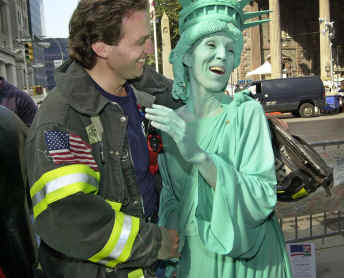
But the army of Liberty impersonators are different. First of all, there’s usually a group of them, the largest number collecting themselves outside Castle Clinton, greeting visitors who are awaiting to see the real Liberty. Seeing four or five Lady Libertys is startling, surreal, even nauseating. It’s even exhausting looking at so many people draped in green wearing masks or face paint on a hot spring day.

Bonnie, a New York blogger, pinpoints exactly what it is that’s so ominous about them:

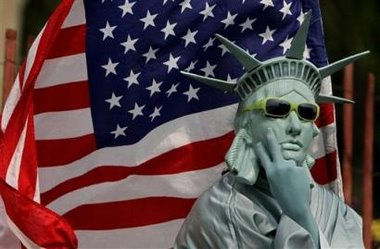
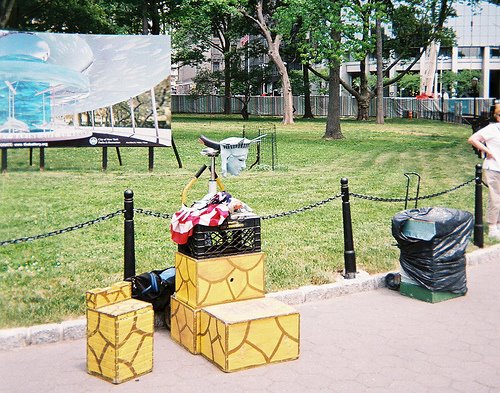
“The effect is actually rather eerily reminiscent of the killer from the “Scream” movies (actually I think somebody needs to make a horror movie set in NY and featuring one of these guys) …. on a dreary day like today you get the even weirder scenes of a busker who’ve gone on break leaving a small heap of folded green robe, and a Statue of Liberty heads (wearing shades) stuck on a pole”

Of course, Statue of Liberty replication is not a new phenomenon. In fact, you could say the replicates came before the real thing.


France’s gift to the United States — probably the best gift ever — was wholly funded by French citizens. Creator Frédéric Auguste Bartholdi devised a host of creative fund-raising ideas, including a concert series and a Liberty themed lottery. But he also created Lady Liberty souvenirs, miniatures of his design, as a way to boost enthusiasm and raise money. By 1889, Liberty was in New York harbor, but she had already started to spawn.

The French have their own Liberty which stands a little under 38 feet tall (or about the combined length of all the Statue of Liberty impersonators you can find in Battery Park at one time) within sight of the Eiffel Tower, planted near the Granille Bridge on the same date as New York’s. Later, her original formative model, a bronze Bartholdi had used to impress investors and demonstrate the statue’s scale, was donated to the Jardin du Luxembourg in 1900. Since then various other versions have been spotted through France, including Bartholdi’s hometown.

The Statue’s first and perhaps only legitimate American sister sat for decades atop the former Liberty Warehouse at 43 West 64th Street. Mini Liberty, close in design to one of Bartholdi’s actual fund-raising miniatures, sat overlooking the Upper West Side from 1891 to 2002, when she removed and given an honorific spot at the Brooklyn Museum.

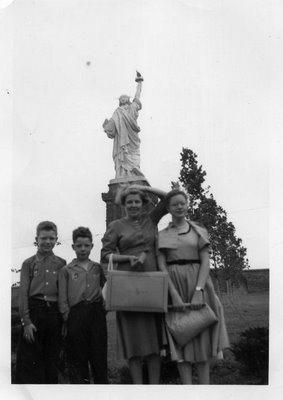
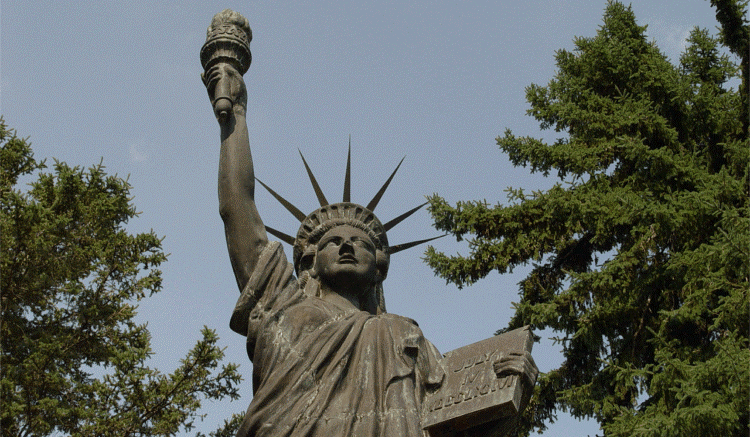
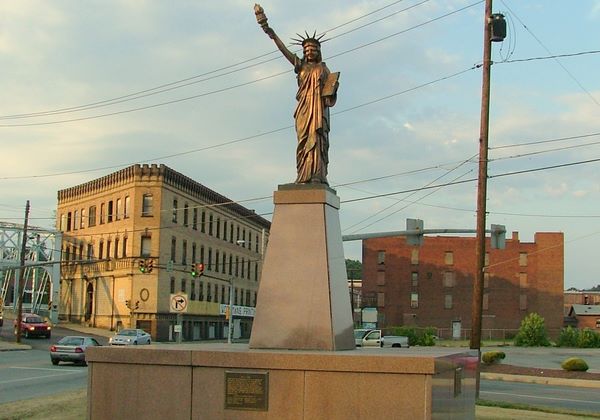
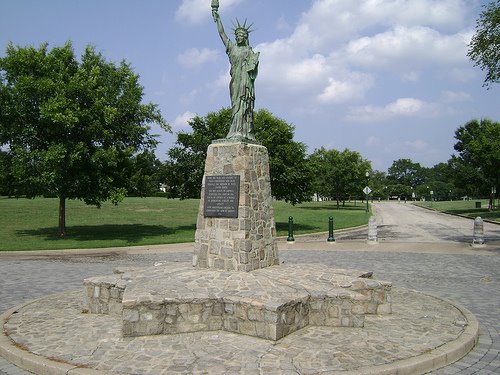
You can thank the American proliferation of Libertys on the Boy Scouts. During the 1950s, the Scouts donated over 200 ‘little sisters of Liberty’ to towns across 39 states and several territories. Kansas alone allegedly received 26 Liberty statues, possibly because the whole initiative was started by a Scout volunteer in Kansas City, Mo.

These replicas were usually not sculpted with the same care that Bartholdi brought to his replicas, with haphazard faces, odd scale and imprecise detailing on the 8’4″ copper statues. Of the dozens dispersed across the nation, at least a 100 have been identified today. After Sept. 11, many communities have taken great pride in restoring their li’l Libertys.

Here’s Liberty in Columbus, Nebraska:

In New Castle, Pennsylvania:

And Richmond, Virginia:

Liberty is a victim of her own symbolic nature. As small town America now had their copies, Liberty was spawning herself on Liberty Island in the form of souvenirs that allowed you to become the Statue of Liberty, using foam crowns and torches. Once, immigrants sailing into New York harbor could hope to take advantage of the values that Liberty embodied; now, people could simply embody Liberty herself as a way of taking advantage of some of those values.

It may be impossible to truly identify the first Statue of Liberty impersonator, but I think there’s little argument about who is the best: Jennifer Stewart.

Stewart began donning Liberty drag in 1989. One clue that she might be one of the very first is her feelings to donning the green in public for the first time: ”I felt stupid. I thought, ‘The only consolation is that no one will recognize me.’

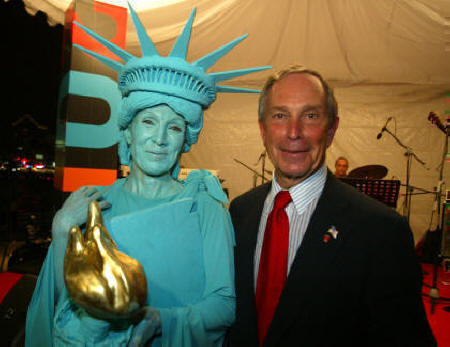
Stewart seems to be the ‘official’ Liberty impersonator, meeting with Rudy Guiliani, Michael Bloomberg and Hillary Clinton and appearing on national magazine covers. But it was that success that brought on the wave of imitators.

Photo credit: Kristen Artz / Office of the Mayor, 2005

Ms. Stewart may disagree, but one enticement to impersonating a statue is the ability to do so without any real displays of traditional talent. You don’t have to do backflips or breathe fire or pretend you’re Robbie the Robot. She’s stoic in her static. Although I would chime in here and ask, have you ever stood in one place for a really long time with your arm in the air?

And thus came the horde of Statue of Liberty impersonators, at first in performance make-up and stylized robes, later just in masks and sprayed-green sheets. Often she is given sunglasses or any number of patriotic embellishments.

Does repetition dilute meaning, or reinforce it? Interestingly, knowing who is behind the robes might give this borderline annoying trend a bit of resonance. According to an article in the Tribeca Tribune last year, the group of Libertys on a given day at Castle Clinton were all immigrants –“four Colombians, an Ecuadorian, a Honduran and a woman from China.” They were also mostly male performers. Who can’t appreciate a man who stands in a park dressed in drag all day to make a few bucks?

The Statue of Liberty has been duplicated in other, less disturbing ways. Check out our previous history of Lady Liberty on album covers. Or dive back into our older podcast on the Statue of Liberty from last September, with accompanying photo gallery.

And finally, this is just right on so many levels:

Robert Moses’ ridiculously large parking lot

Photo:Claudio Papapietro for http://ontheinside.info

Starting Monday, May 12, New Yorkers will have another way to transport themselves between boroughs with a new ferry service shuttling between Queens, Brooklyn and Manhattan.

You’re probably familiar with at least one of its three stops: Pier 11’s sleek Wall Street Ferry Terminal, just a few steps away from Staten Island Ferry Terminal and the Battery Maritime Building. Between Queens and Manhattan it will pick up Brooklyn passengers at the Brooklyn Army Terminal in Sunset Park, already one port of the New York Water Taxi.

The new ferry will begin by loading up Queens commuters at Riis Landing in Far Rockaway, Queens.

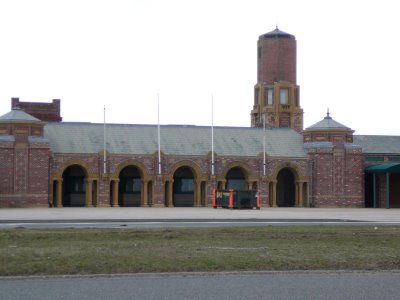
As a part of the Gateway National Recreation Area in the most remote area of Queens (if not arguably the whole city), Riis Landing is best known for its Colonial style Coast Guard station, built in 1937. It sits in the middle of Breezy Point peninsula, a residential area once dotted with shipwreck rescue stations. Now owned by the National Park Service, the ferry terminal was recently upgraded in anticipation of the mayor’s announcement; however it’s still surrounded by many unused buildings.

More important to many New Yorkers, it’s also close to Jacob Riis beach, a hidden treasure of the Breezy Point peninsula and often referred to as ‘the people’s beach’. Riis Beach is a relic of the Robert Moses era, who created the beachfront in the 1930s by destroying a historic World War I Naval Air station (liftoff point of the very first transatlantic flight in 1919) and intending the artificial getaway specifically for locals with cars, an alternative to Jones Beach.

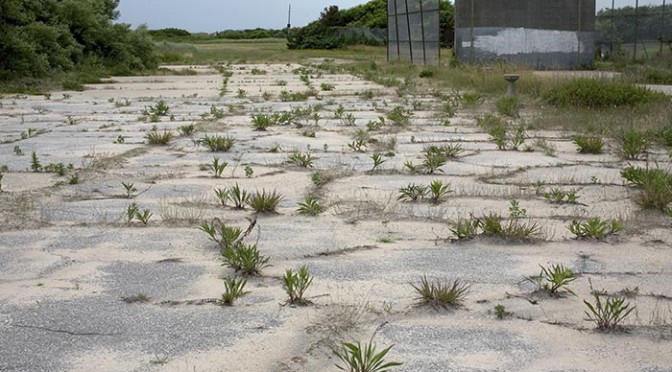
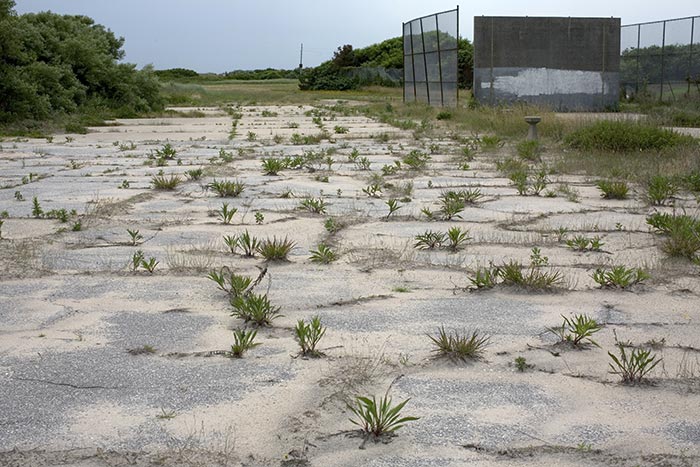
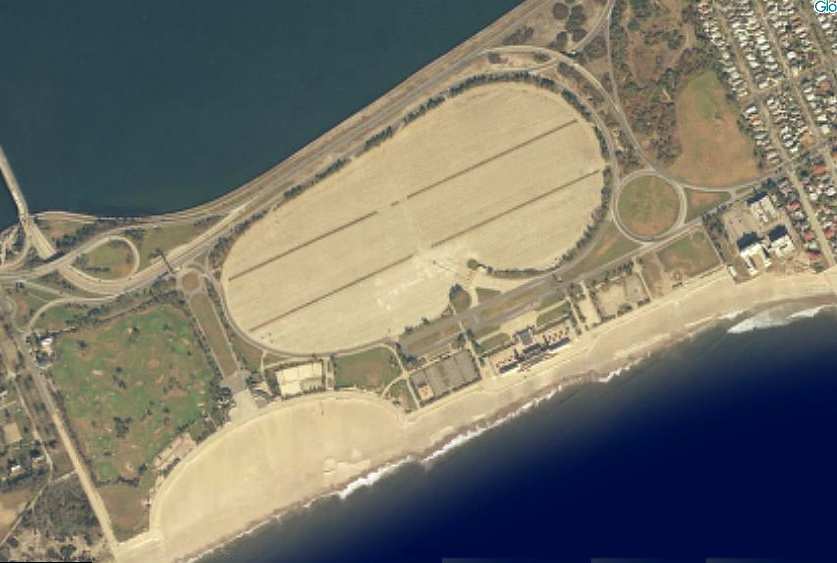
To that end, in addition to constructing public beach and park space, he also commissioned a gigantic parking lot, at the time the largest parking lot in the world. Many sources call it a 5,000-car lot; Riis Landing’s own site claims room for 9,000 cars!

Here’s an aerial view. Beautiful, is it not?

While the, er, rustic Jacob Riis beach is popular in the summer months mostly with locals, that parking lot is never, ever full. The new ferry service which begins here will presumably put that abandoned slab of pavement to better use.

With new attention now being brought to the area, now maybe they can fix up the beach, which features a gem of an art-deco bathhouse.

Riis Landing’s official website is an outstanding layout of proposed improvements of the area, many interesting, a couple downright left-field. (Their recommended proposal is to develop a dorm-style budget hostel!)

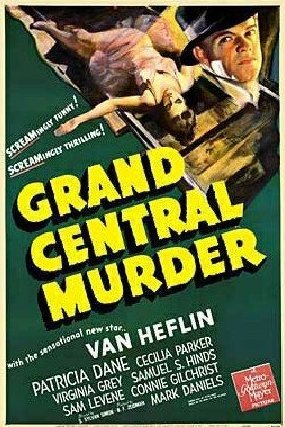
Grand Central Murder: Glamour on the third rail!

BOWERY BOYS RECOMMEND is an occasional feature where we find an unusual movie or TV show that — whether by accident or design — uniquely captures an era of New York City better than any reference or history book. Other entrants in this particular film festival can be found HERE.

During research for our Grand Central podcast, I had seen several references to the 20th Century Limited, the ultra-deluxe passenger train that terminated at Grand Central, as being the best known train behind the Orient Express, host to an Agatha Christie whodunit. In the totally glamorous and ridiculous ‘Grand Central Murder’, we get to imagine them all wrapped up in one.

First, I should get out of the way the fact that not a single scene (except for the titles) is actually filmed at Grand Central, or in New York for that matter. With American soldiers on their way to Europe joining the thousands of commuters, Grand Central hardly had any room for a studio film filled with B-list stars. But although its filmed entirely on an MGM lot, this zany mystery spectacle does give you an interesting insight of what people might have thought of Grand Central in 1942.

A two-timing, arrogant Broadway star Mida King is found murdered in her private train car before the train can leave its platform. Coincidentally her convicted ex-boyfriend just happened to have escaped his captors who were also in Grand Central; in fact, a multitude of people with motives to kill the little shrew all managed to somehow find themselves around Grand Central at this odd hour of the night.

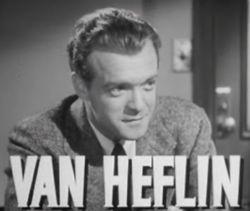
Sassy private eye Rocky Custer (Van Heflin) and his wife just happened to also be around, and they assist in the interrogation of the suspects, which include Mida’s occultist uncle, her dim-bulbed millionaire boyfriend and a gum-smacking dancer named Baby Delroy (“of the South Brooklyn Delroys.”)

Everybody is dressed to the nines, and ‘Murder’ features scene after scene of men in tuxes darting over Grand Central’s underground tracks, not a rat or homeless person in sight. In fact, most of the action takes place with trains coming and going underground. One suspect happens to be an employee of Grand Central; our brief look at the control room consoles reveals an operation equally designed and no more complex than the set of an old game show.

Grand Central’s labyrinthine track system does figure into the solving of the murder, as the detectives hover over a diagram of system rails with flashing lights (again, like game show buzzers) indicating the car with the murdered starlet.

You get a sense of how luxurious these private train cars are, with liquor cabinets and running showers figuring into the plotline. And in the gruesome finale, Grand Central’s deadly third rail makes an appearance!

I don’t believe ‘Grand Central Murder’ is on DVD quite yet, but its frequently shown on Turner Classic Movies and seems custom-made for late night television.

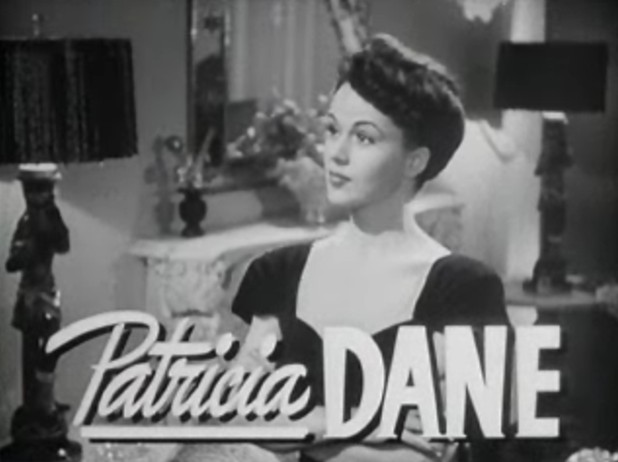
By the way, Patricia Dane, the actress playing Mida, was a renown New York party girl and would go on the next year to marry bandleader Tommy Dorsey.

Categories
Podcasts

PODCAST: Grand Central

Join the Bowery Boys for a trip through the history of Grand Central — the depot, the station, and the terminal.

Listen to it for free on iTunes or other podcasting services. Or you can download or listen to it HERE

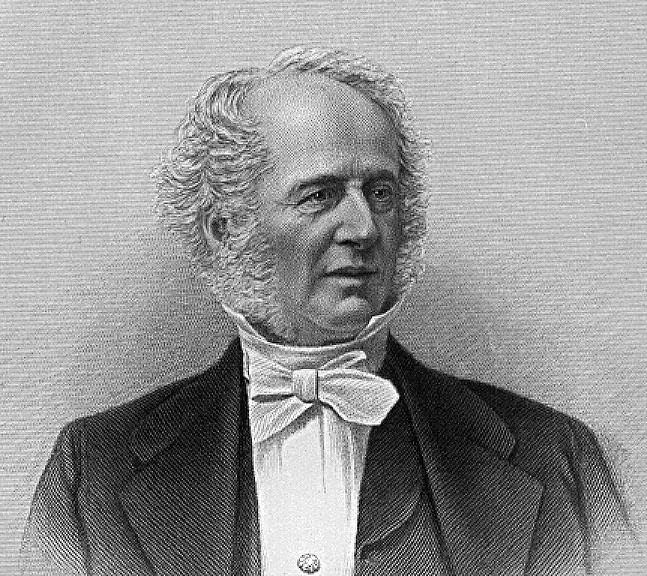
Cornelius Vanderbilt, railroad baron and mastermind of the original Grand Central Depot

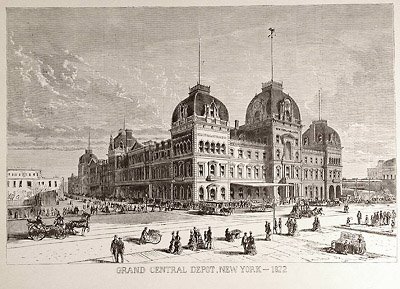
Vanderbilt’s Grand Central Depot in 1873

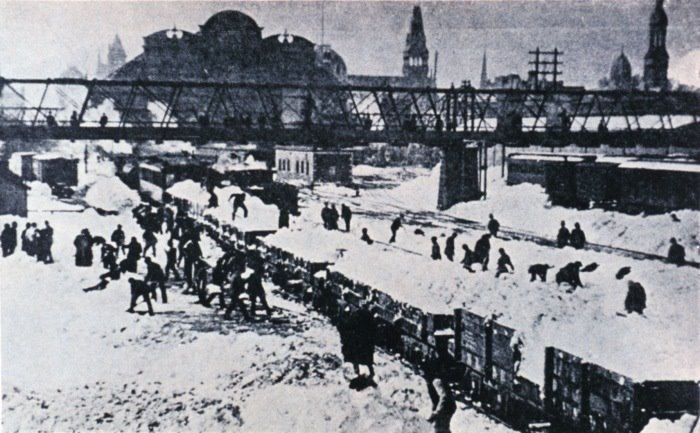
Behind the Depot during the blizzard of 1888. The walkways over the tracks are easily seen from this vantage.

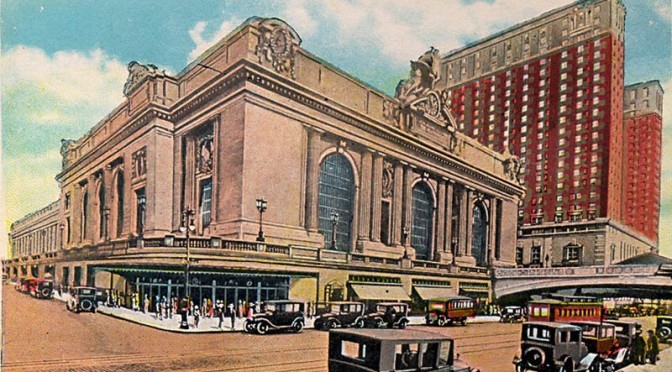
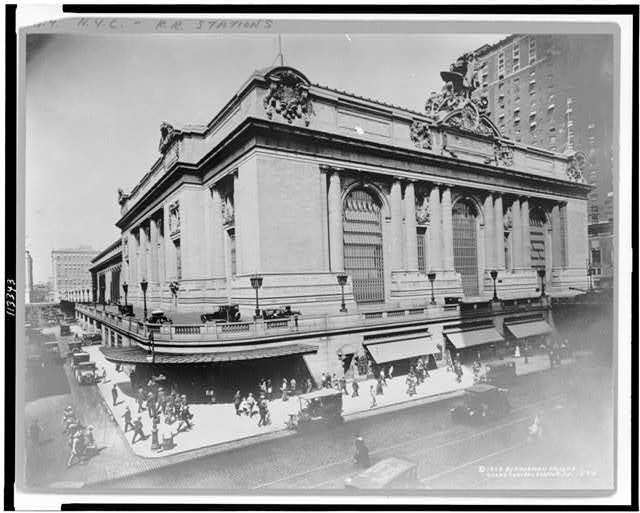
An interesting angle of Grand Central from the 1920s. Notice the big nothing behind it.

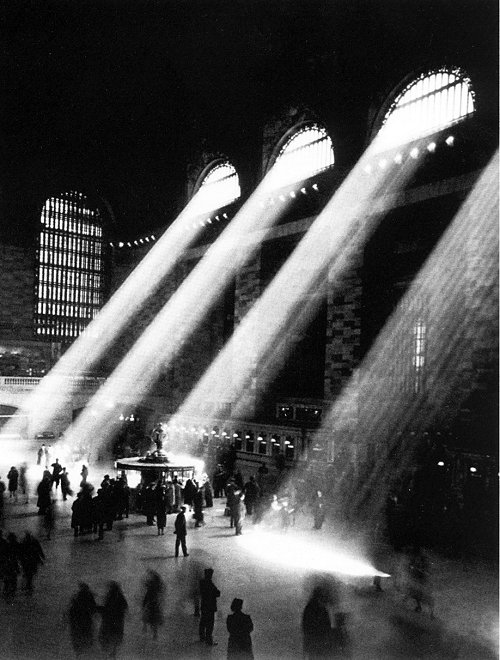
Probably the most famous image of Grand Central Terminal is this one from 1935

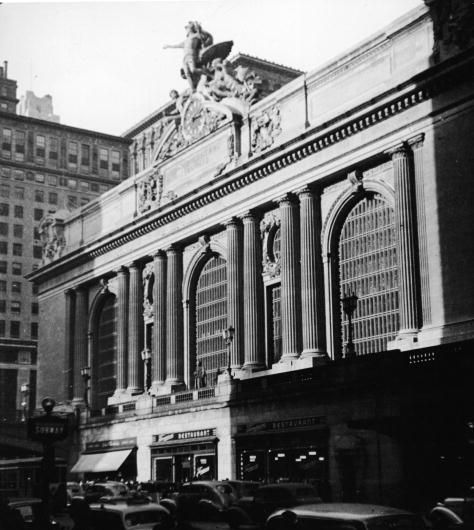
The exterior, from the 1940s

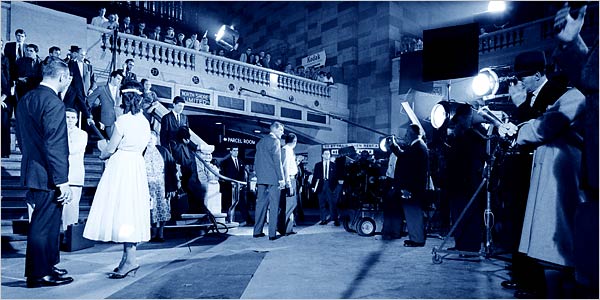
Alfred Hitchcock films Cary Grant in the Main Concourse for his film ‘North By Northwest’

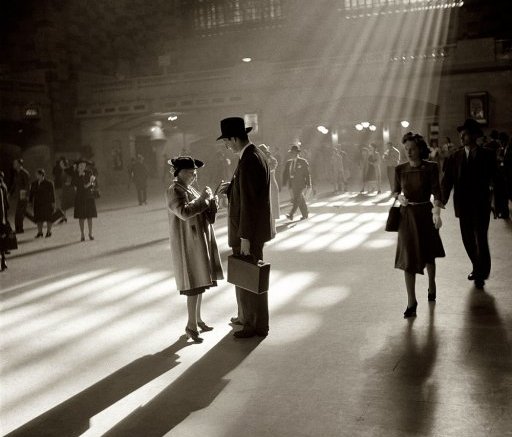
Mid-day, 1941 (Pic courtesy of Shorpy’s)

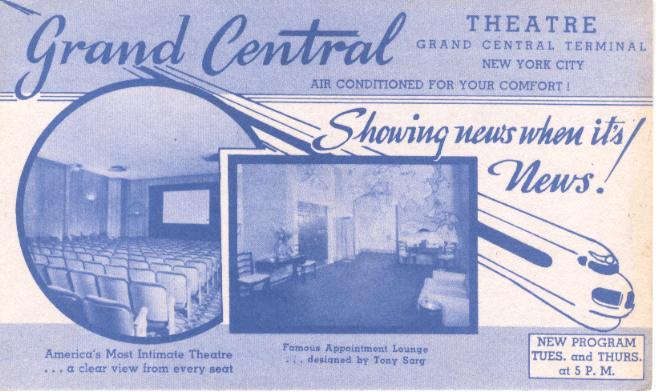
For a short time, Grand Central hosted a movie house

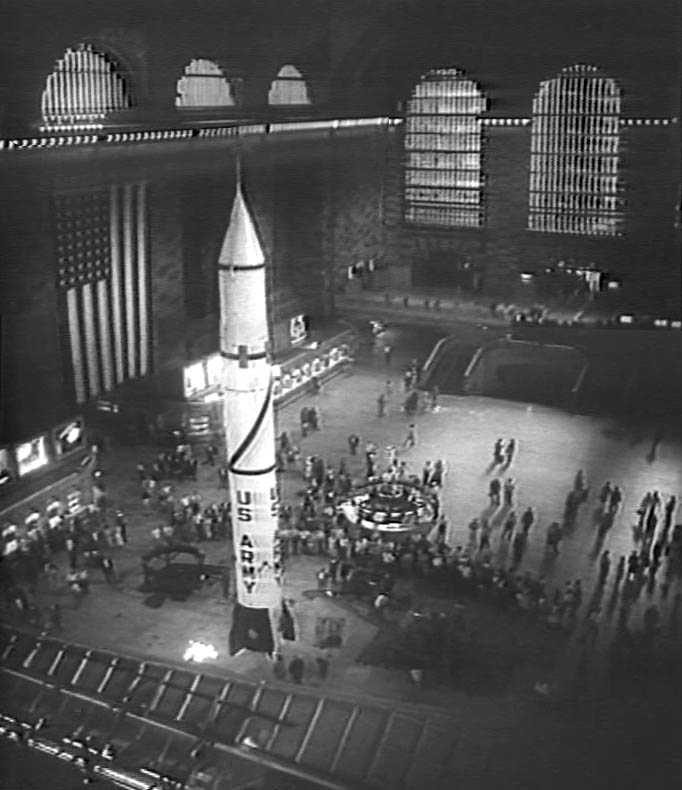
Grand Central becomes a host to a lot of unusual objects, including this Redstone rocket, in an apparent sign of U.S. strength during the Cold War

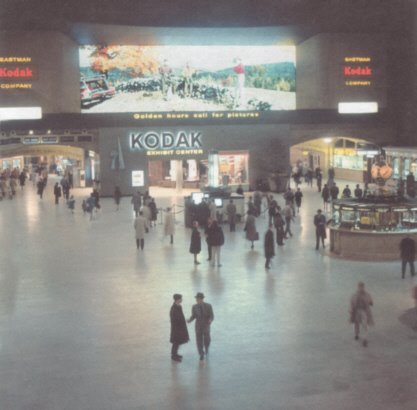
Advertising dominated the main concourse by the 50s, including this well known (and rather garish) Kodak sign

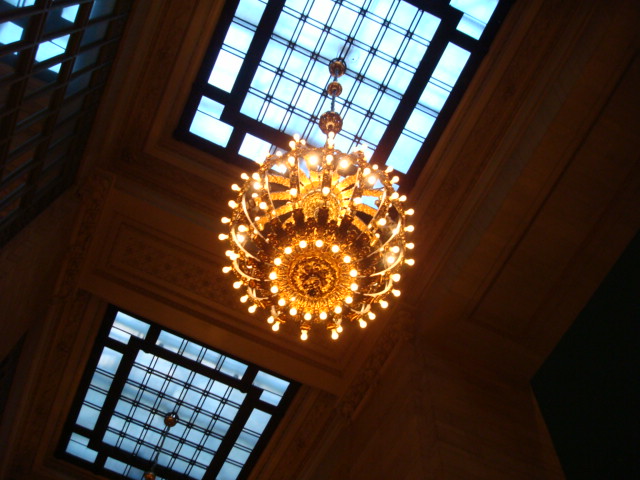
Inside the Terminal today: the glittering spherical chandeliers, their gold lustre rediscovered during the extensive renovation of the 1990s

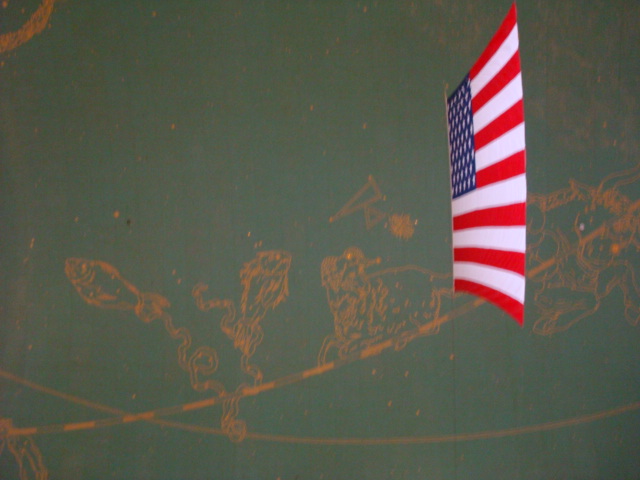
The vast astrological themed ceiling, lit with fiber optics to highlight the constellations

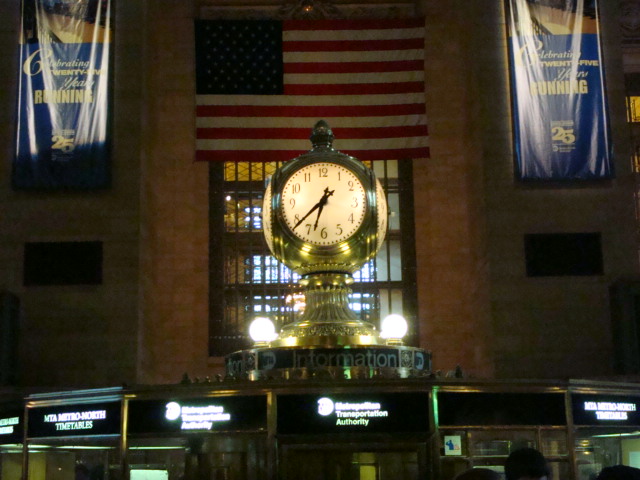
The opal timepiece which sits above the information desk has an estimated worth between $10 and $20 million dollars

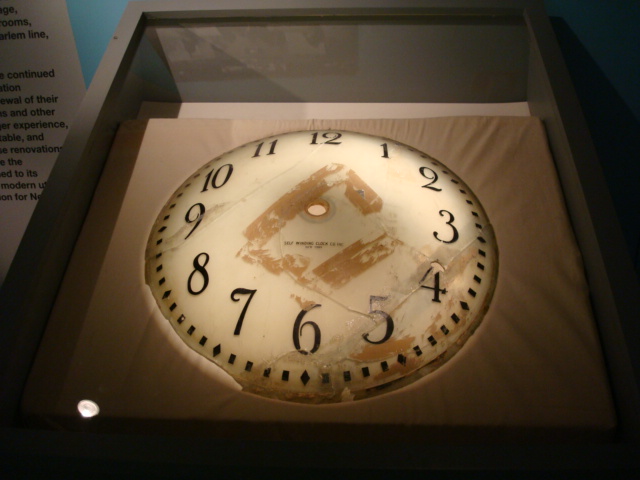
On original face of the opal clock sits in the Grand Central Transit Museum. The hole you see in the face is purported to be a bullet hole!

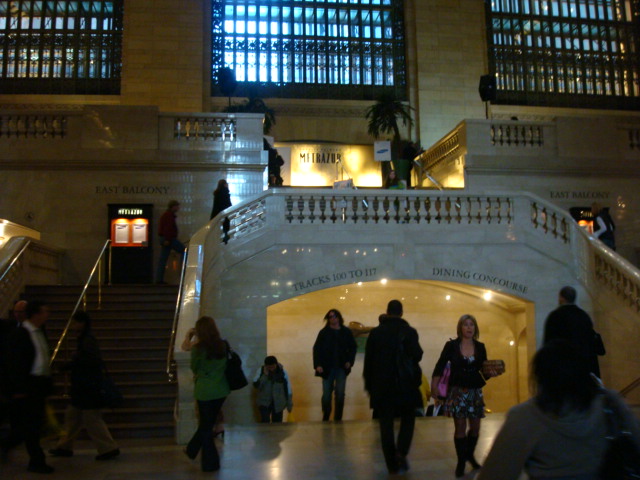
The eastern staircase, in near perfect symmetry with its older western companion, was actually just built during the renovation. It was in the original plans but was never built, probably because nobody considered there would be much activity on the building’s east side.

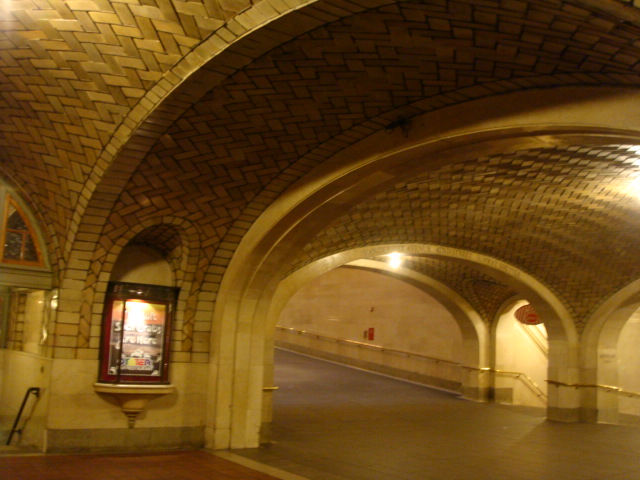
The famous Whispering Gallery

Know Your Mayors: John F. Hylan

Our modest little series about some of the greatest, notorious, most important, even most useless, mayors of New York City. Other entrants in our mayoral survey can be found here.

Fiorello Laguardia has his airport. James Duane has a drug store. Abram Hewitt is immortalized by the Cooper-Hewitt Museum. Robert Van Wyck has an expressway named after him.

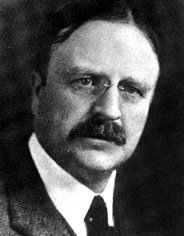
But the former mayors of New York City are not always lionized in monuments or objects they would necessarily be proud of. Take John F. Hylan, the mayor of New York from 1918—1925. He may be the only mayor on planet Earth to have a gigantic hole named after him. Two holes, actually.

When Hylan stepped into the mayors seat in 1918, he brought the Democratic machine Tammany Hall back into city government after four years of Tammany-free leadership by idealistic ‘boy mayor’ John Purroy Mitchel. But Hylan would surprise many by devoting his two terms in office with a single-minded goal — the New York subway.

Hylan was a product of New York locomotive culture. Moving to Brooklyn from upstate New York at an early age, he became a train conductor with the Brooklyn Union Elevated Railroad (later the Brooklyn Rapid Transit Company, or BRT) which operated streetcars trains in Brooklyn and Queens, including the storied Coney Island trains, carrying thousands of passengers out to the beach each summer. Later the BRT would team with the early subway system of Manhattan’s Interborough Rapid Transit System to create a “dual contract” system of unregulated, privately-controlled transportation.

It should be noted that Hylan was fired from the train company after almost accidentally running down his supervisor. His bitterness towards the privately-owned BRT clearly fueled his later actions.

Hylan then became a lawyer and, after initially fighting the advances of Tammany Hall, eventually became one of their loyal candidates. His victory over Mitchel in the 1918 election was partially helped by the powerful William Randolph Hearst.

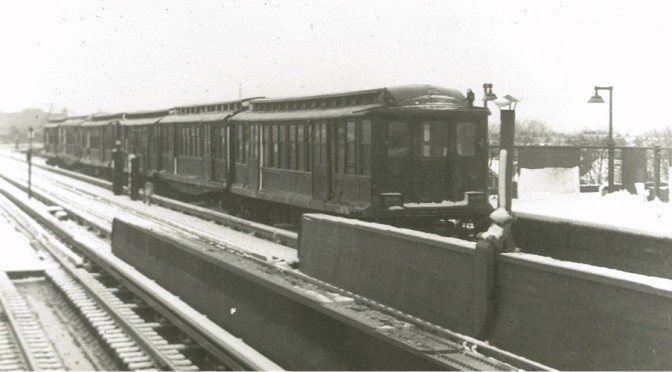
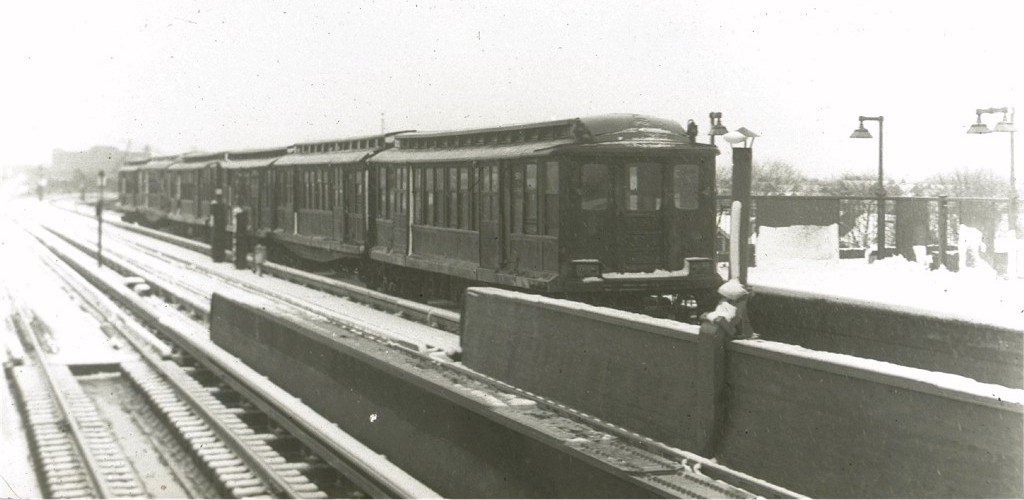
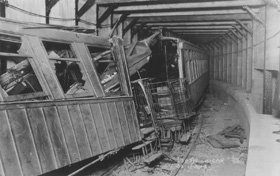
In the first year of Hylan’s term, a BRT train on the Brighton Beach line derailed at Malbone Street (today’s Empire Boulevard) near Prospect Park. The horrific accident (seen below) left 93 passengers dead and virtually destroyed the BRT system overnight.


Meanwhile, the IRT was planning on raising its fares. Uniting the city required miles of more tracks, and it was leasing land from the city. So they decided it needed to bump up the astronomical five cents that customers currently paid.

Hylan had quite enough. Already an advocate against private interests, he often decried organized private power. Here’s an example of his wrath against private banking, a crusade that went unfulfilled: “The real menace of our Republic is the invisible government which like a giant octopus sprawls its slimy legs over our cities states and nation. At the head is a small group of banking houses generally referred to as ‘international bankers.'”

Of course, Hylan is one to speak; he was in Hearst’s back pocket throughout his entire tenure and never swayed from the calls of dear ole Tammany.

Hylan battled the train companies for most of his two terms. He was re-elected in 1921 by effectively thwarting the fare increase and creating a transit commission to refigure a transportation system under city control. By the end Hylan had effectively retooled New York’s transportation industry by creating his own city-run operation, christening the new Independent Subway System (ISS), in his last year of office, on March 14, 1925.

That November however he was swept out of office by Jimmy Walker, who would guide New York as one of its most powerful and influential leaders, leaving Hylan’s legacy virtually forgotten. Hylan died eleven years later of a heart attack. Four years after that, his dream was fully realized; the ISS merged with the other subway lines to create one complete city-run subway system.

But what about that hole? Well, Hylan had another bright idea: a tunnel between Brooklyn and Staten Island. The project began in 1923, with holes began on both sides of the Narrows, at Fort Wadsworth on the Staten side, and Bay Ridge on the Brooklyn side. The project, however, was abandoned. What remains on both sides is affectionately known as ‘Hylan’s Holes’.

The whereabouts of these abandoned holes, as far as I can tell however, remains a mystery.

When Jupiter aligned with Mars: Hair on Broadway


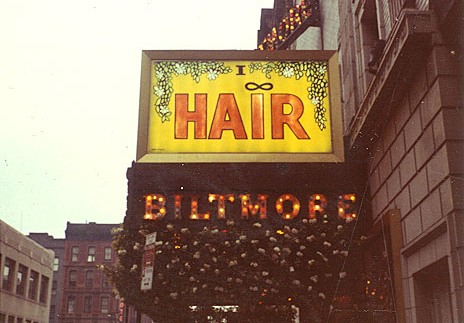
Forty years ago today, April 29, 1968, the musical Hair debuted on Broadway and basically changed New York’s theater industry — where shows come from, how they’re staged, what you can even doon stage.

Here’s ten reasons why Broadway’s first rock musical is so important, and why today you should probably fish out your Fifth Dimension CD or original cast album in tribute to this one of a kind groovy show:

1) Hair made the Public Theater. The show made its debut on October 17, 1967 at the Public, which was itself making its debut. In fact, the theater in which is was being performed — in the former Astor Library — wasn’t even finished yet! The Public Theater would have course to go on to become off-Broadway’s leading theatrical producer.

2) After six weeks, Hair would foreshadow Studio 54’s own transformation into a Broadway house by moving the remainder of its off-Broadway run into the Cheetah discotheque.

3) Hair is the very first musical to be transferred from off-Broadway. At the time an extremely risky proposition, it’s today considered a logical move for the most critically popular of shows. Rent, Avenue Q and Spring Awakening — like Hair, all off-center shows with sexuality and rebellion at their core — also made the jump to the big stage and all won Tonys for Best Musical.

4) Hair brings Tom O’Horgan to Broadway. A regular at the off-off-Broadway La Mama — the East Village’s most venerated experimental theater — O’Horgan brought an uncompromising edge to his staging that was entirely shocking to mainstream theatrical audiences. O’Horgan would stay on Broadway throughout the 70s with pivotal work in Jesus Christ Superstar, Futz!, and Lenny.

5) Hair doubles the number of songs ‘allowed’ in a musical. The sheer number of songs in Broadway restaging made it unique, over thirty. The big musical from the previous year, Cabaret, barely featured half that number

6) O’Horgan also brings the nudity. The uptown redux features one of the most influential scenes in all of Broadway history — at the end of the first act, when the entire cast, in low lights, appear completely unclothed, the first stage nudity to hit the Great White Way.

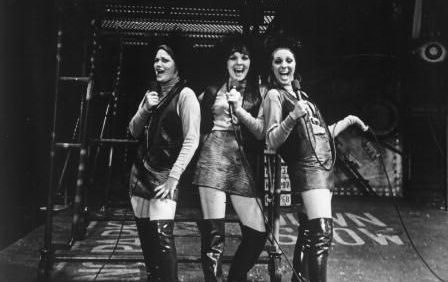
7) A New York icon debuts. Diane Keaton (above, in the middle) becomes an understudy in the show but refuses to do the nude scenes. After several months with the cast, Keaton goes on to her next show — Play It Again, Sam — where she makes the acquaintance of a young director, Woody Allen.

8) Up for two awards (Best Director and Best Musical) at the 1969 Tony Awards, it lost both to the musical 1776. Interestingly, Diane Keaton is up for her Tony that year for Play It Again Sam and also lost.

9) Hair closes July 1, 1972 after 1,750 performances. It is the 38th longest running musical in Broadway history, between La Cage Au Folles (at 37) and The Wiz (at 39).

10) An unbelievable one-night revival of Hair, in 2004, for an Actors Fund benefit, mounted at the New Amsterdam and featured the following cast: JM J. Bullock, Harvey Fierstein, Ana Gasteyer, Annie Golden, Jai Rodriguez, RuPaul, Michael McKean, Laura Benanti, Adam Pascal and future Oscar winner Jennifer Hudson

Here’s about a comprehensive list of some of Hair ‘s original review. Both the New York Post and the New York Times gives the original off-Broadway production a condescendingly mixed review.

The Village Voice? Hated it. “As for Hair, I loathed and despised it. Described as ‘an American tribal love-rock musical’ it turned out to be all phony.” Wow, some things never change!

We’ll see how the critics like it this summer when the Public Theatre restages Hair for its Shakespeare In The Park program at Delacorte Theatre, from July 22 to August 17. Diane Keaton won’t be in it, but will there be nudity?

Categories
Podcasts

PODCAST: Rikers Island

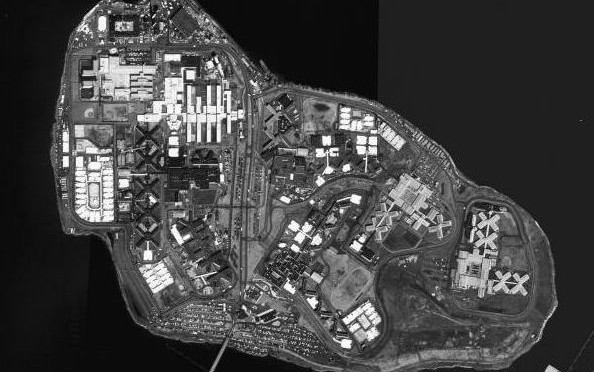
What do Salvador Dali, John Jacob Astor, Peter Stuyvesant, the Civil War, and a big pile of trash have to do with the world’s biggest penal colony? We connect the dots in this history of Rikers Island.

Listen to it for free on iTunes or other podcasting services. Or you can download or listen to it HERE

Categories
Uncategorized

The history of New York City in video games

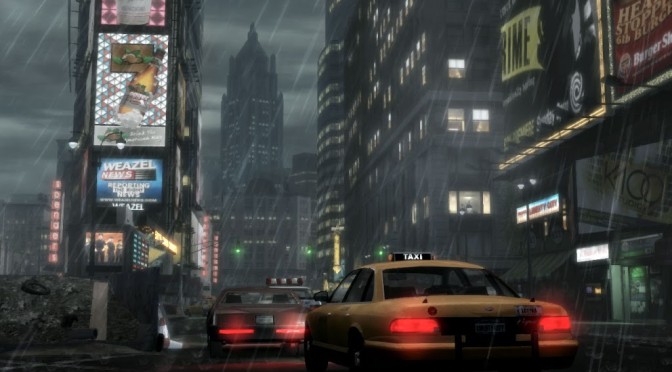
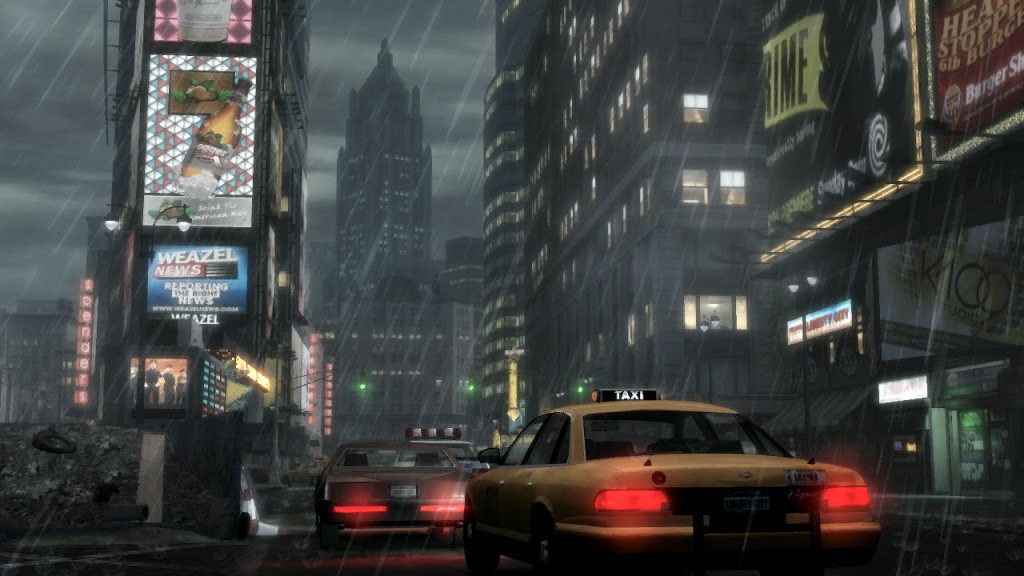
Above: Grand Theft Auto IV’s version of Times Square

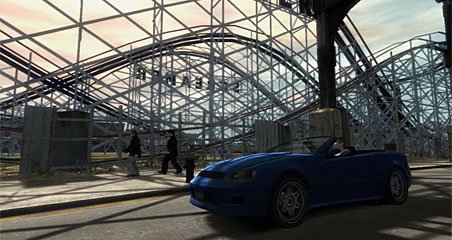
Next Tuesday, the world stops for millions of Americans as they finally clutch copies of the hotly anticipated Grand Theft Auto IV. As in a few other incarnations of this bloody, aggressive adventure, the action takes place in Liberty City, an Earth-2 version of New York City. But forget the rampant crime and streetwalkers that will presumably be haunting every street corner; this one is supposedly the most lifelike New York yet. Manhattan has become Algonquin, Lady Liberty is renamed the Statue of Happiness. Four of the five boroughs are represented (sorry Staten Island). You can even visit Coney Island:

Here’s the complete list of comparisons between Liberty City and the real thing.

While I’m sure the designers of this game were too busy rolling up $100 bills and smoking them like cigars, hopefully they recognized their achievement in a long line of New York City themed video games.

It’s probably futile to do so, but here’s my partial history of New York City in video games. The difficult part is actually figuring out, in fact, if a game takes place in New York. For instance, Frogger could take place in New York, if the West Side Highway straddled a Hudson River full of logs and turtles. Pac-Man is certainly a metaphoric representation of the Financial District. If Donkey Kong is an homage to King Kong, wouldn’t that mean he’s throwing barrels from the Empire State Building?

As far as I can tell, the first video game to be circumstantially set in New York City is the original Mario Brothers game from Nintendo. Not the Super edition, involving Mario and Luigi in an acid-trip world of fire flowers and dragons, but the regular arcade version.

The Mario Brothers are Brooklyn plumbers who clearly take their jobs seriously, scouring the sewers of the city for pesky critters transformed by an unexplained ooze. When the game debuted in 1983, the plump Mario was already a well known barrel hurdler who could wield a mean hammer in Donkey Kong. In that game, Mario was a carpenter (thus the hammer); apparently he decided to change careers after that death-defying adventure.

Their cartoonish and stereotypical Italian flavor was meant to evoke ‘working class Brooklyn men of immigrant descent’, certainly an odd choice for hero during the golden age of video games.

The game was only tepidly received and was soon overshadowed by the greater success of Super Mario Brothers, supplanting the Brooklynites into the ‘Mushroom Kingdom’.

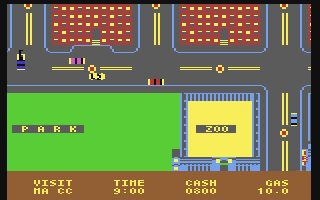
The next year, in 1984, anxious Atari and Commodore 64 owners got their hands on a more literal tribute to the city — The Big Apple. In the simple game, a player maneuvers through a traffic free midtown Manhattan, careening through sizable lanes to achieve such goals as going to the store or to the bank. Simple mazes greeted players within poorly animated bodegas. This game looks a bit like a malfunctioning digital watch and was appropriately forgotten. Take a look here to witness the wonder.

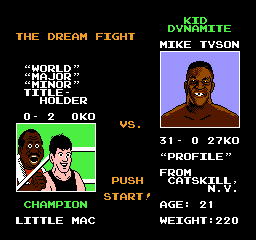
By the late 80s, New York City had yet to really break out as the star of a video game. 1984’s Punch Out!! presumably used Madison Square Garden as the location of its fights, and many combatants were from New York, like Brooklyn’s Kid Quick and 17 year old Little Mac from the Bronx (frequently pummeled by ear-nibbling Mike Tyson in his branded version of Punch Out!! in 1987).

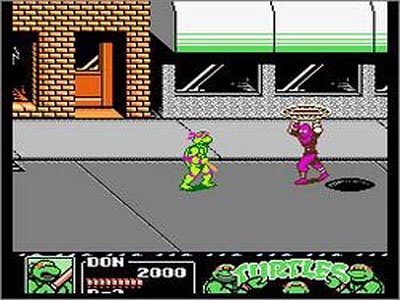
New York is a literal and metaphorical sewer throughout the 1980s. The 1989 Teenage Mutant Ninja Turtles features dramatic swordplay with the quartet through New York’s apparently endless chasms of empty sewers and warehouses. By 1992, in the game Teenage Mutant Ninja Turtles III: The Manhattan Project, the island of Manhattan is actually hoisted into the sky, and the Turtles must interrupt their vacation in Key West to save it.

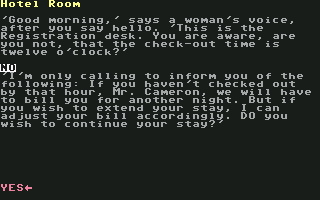
Perhaps the only notable exception — the only game to really use New York’s actual geographical identity in service of a plot — might be 1986’s Amnesia . Like XIII (which I’ll mention later) the story involves the lead character awakening in New York with no memory; in Amnesia, the character fumbles through memory haze in midtown Manhattan. The game even came with a nifty map of Manhattan to guide your character through. Fun, right? The only drawback to Amnesia? Its an all text game. (More amusing screenshots here.)

It was technologically impossible to set early video games in real places like New York City. Partially this had to do with the graphic complexity of presenting a big city with distinguishing features.

Backgrounds were little more than two-dimensional assortments of blips which moveable characters danced over. It wouldn’t be until the technological advances of the mid-90s that backgrounds could flesh out and breathe with the flow of animation — and a recognizable New York could emerge.

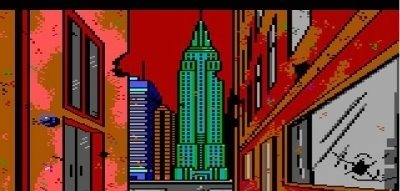
The first to make a real attempt at a identifiable and visual New York landscape was probably 1989’s Manhunter: New York, a clunky and mostly unexciting action game set in the post-apocalyptic future of 2002. However it did manage to depict city landmarks in ways that were at least recognizable, if primitive (see below):

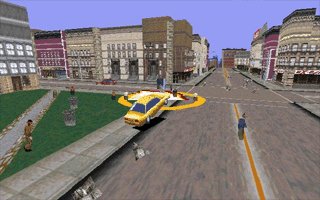
Games based on movies set in New York turn the city into a more realized, if still generic canvas for character adventure. For instance, the 1996 Die Hard Trilogy devotes its third half to a clumsy taxi simulation (below) with a computerized Bruce Willis.

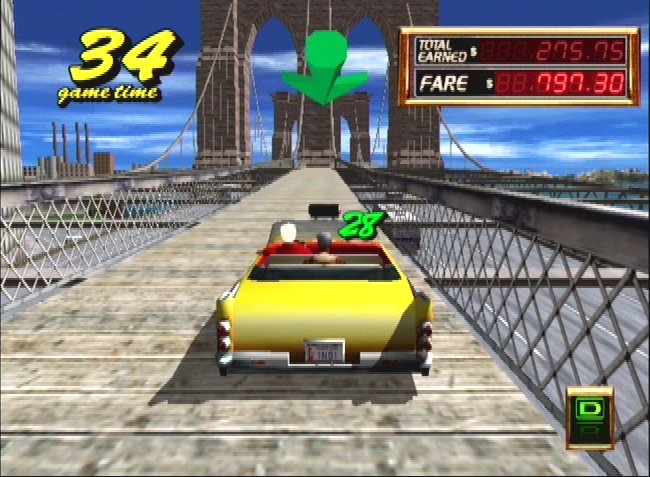
Despite the traffic congestion that most of us are familiar with, New York became a popular setting for driving games. The immensely popular 1989 Turbo Outrun begins in New York City and present a cross-country race across America. However, by 1998, the driving game Driver: You Are The Wheelman, a loosely modeled New York is entirely featured, including some character interaction in Grand Central Terminal. In 2001, a sequel to Crazy Taxi transported a player into the work-a-day life of a clearly frazzled cab driver with the ability to pick up multiple fares:

The shift to New York as a major video-game destination came in 1997, with the original Grand Theft Auto. New York in the GTA series plays the fictional Liberty City, but during the first incarnation, the city had little resemblence to reality and shared the stage with fictional representations of Miami (Vice City) and an amalgam of California cities under the name San Andreas. The geographical make-up of Liberty City would be fleshed out in subsequent GTA sequels.

More importantly, it would be the idea of gritty urban reality, throwbacks to New York City circa the 70s and 80s, with streets choked with guns and gangs, that would be the most influential nature of the series and inspire other game developers to create gaming adventures that used a host of different New Yorks, each more grim and unusual than the next.

Duke Nukem: Zero Hour from 1999 throws the titular ultra-masculine lead character into a New York taken over by time-tripping aliens. The dark techno role-playing adventure Deus Ex, first rolled out in 2000, begins with a Manhattan fifty years in the future, starting at Battery Park before embroiling the player in a shootout in Hell’s Kitchen, then escaping to Laguardia Airport.

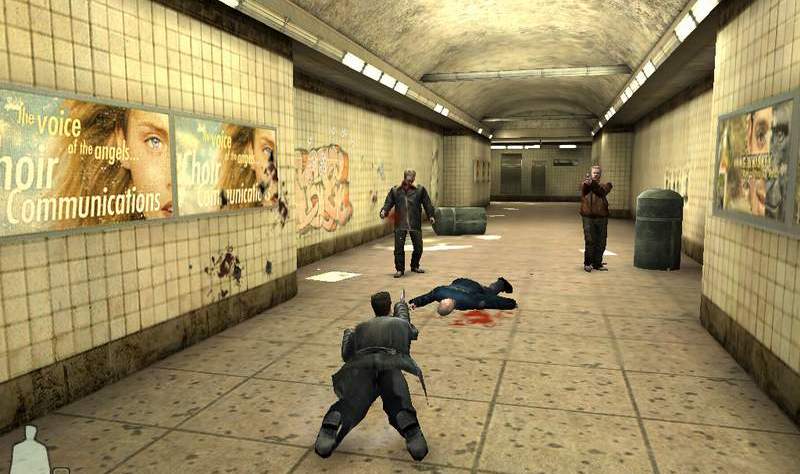
The successful 2001 series Max Payne (pictured above), often compared to the Matrix, often featured New York’s backalleys and underground elements, with one level “New York Minute” a breathless haul to beat the clock. My personal favorite, the beautiful XIII (Thirteen) from 2003, begins with the main character waking up on Brighton Beach with his memory erased.

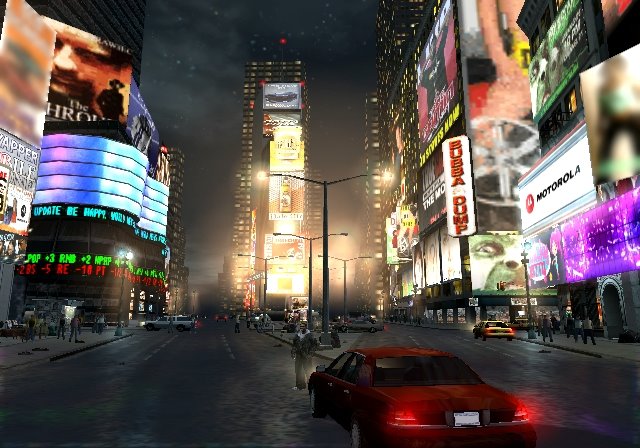
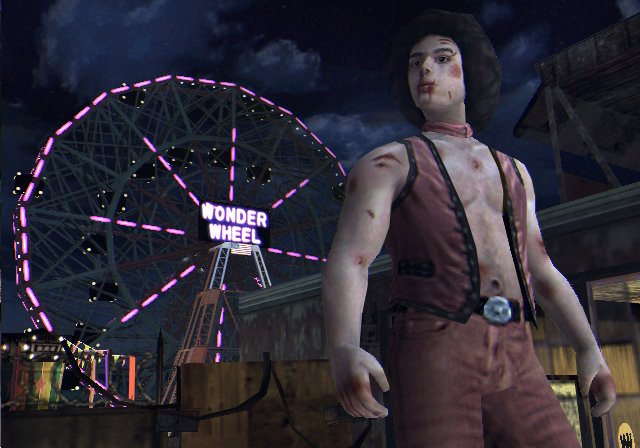
The tipping point came with True Crime: New York City, released in 2005 by Activision, the most serious attempt yet to create a rich cityscape in service of a gangster style plotline. As critically acclaimed for its visuals as it was denounced for its violence, True Crime gave players a run of fairly accurate Manhattan streets and subways. So accurate, you can even see the Naked Cowboy in daytime scenes of Times Square. Nighttime is below:

Video game film adaptations have followed suit with impressive displays of New York City in game versions of Spiderman, The Warriors and The Godfather.

My expectations are very high with Grand Theft Auto IV. I fully expect to be able to drive by a video-game version of my own apartment building and, given the game’s theme, either rob myself or beat up random people walking by.

Below: Video game ‘Warriors’ come out and play on Coney Island

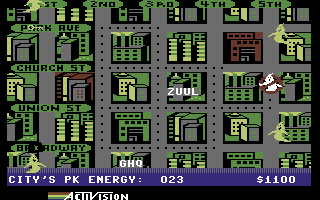
By the way, some commenters have added some notable New York games I couldn’t fit in, including the 80s Activision Ghostbusters game (as opposed to the new one), which I completely blanked on! It even had a cute but entirely inaccurate grid of downtown Manhattan!….

Categories
Podcasts

PODCAST: Studio 54

Join us as we step behind the velvet ropes to explore the history of Studio 54, legendary dance club.

Listen to it for free on iTunes or other podcasting services. Or you can download or listen to it HERE

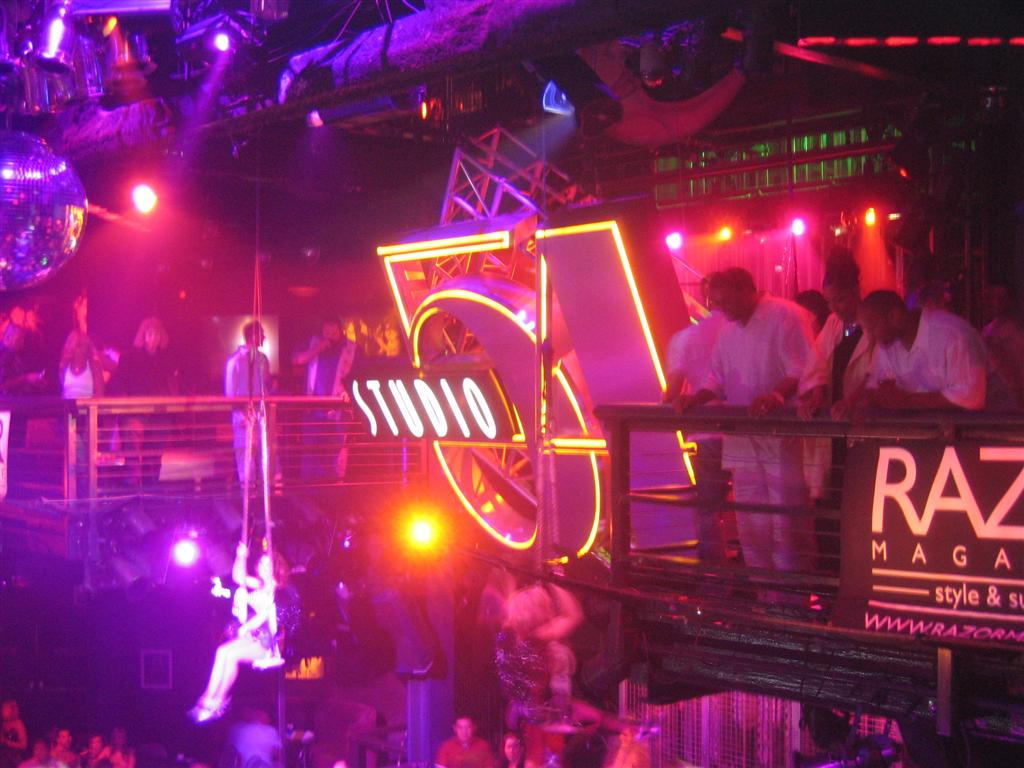
April 26 marks the 31st anniversary of the opening of Studio 54

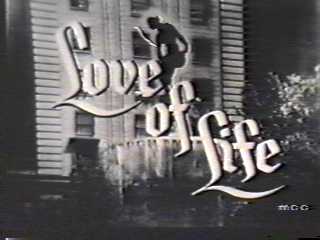
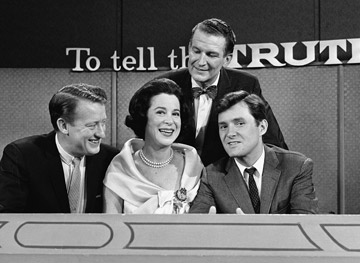
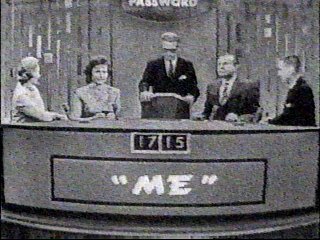
Before it was Studio 54, Studio 52 was one of CBS’s premier recording studios for a wide variety of programs. It was the home of such shows as Password, To Tell the Truth and the soap Love Of Life.

Steve Rubell and Ian Schrager

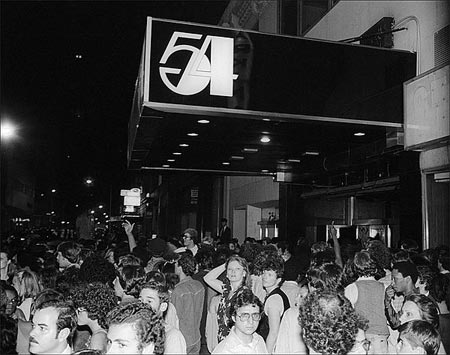
A typical scene outside the club

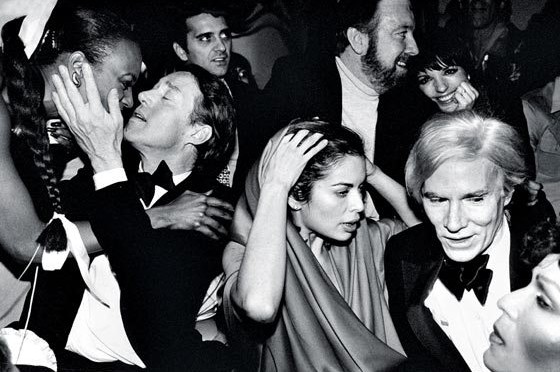
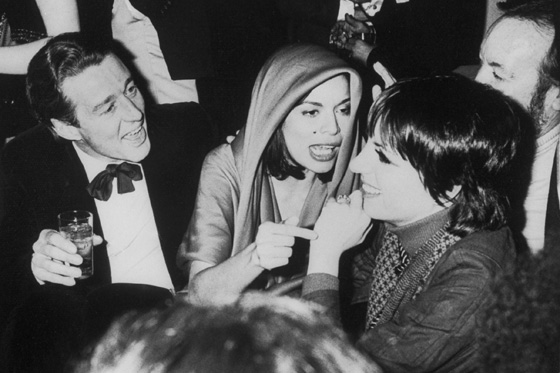
Halston, Bianca Jagger and Liza Minelli at 54

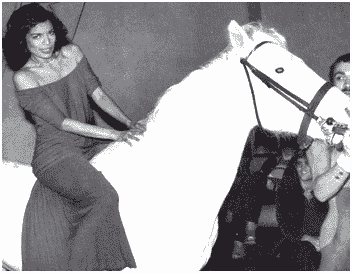
Bianca … on horseback!

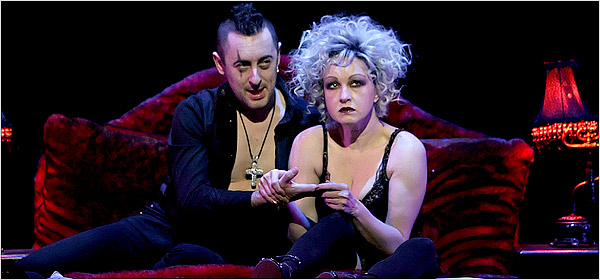
A different Studio 54 as the Roundabout Theatre moves in. Here’s Alan Cumming and Cyndi Lauper from the edgy production of Threepenny Opera
(Photo Sara Krulwich/The New York Times)

An entirely different Studio 54, this time in Las Vegas

Disco Disco has a warm look back at the club. New York Magazine did a where-are-they-now? And check out some of Ian Schrager’s elegent properties — the Hudson and the Gramercy Park Hotel

Pope-fest 2008: The Holy (Sight) See

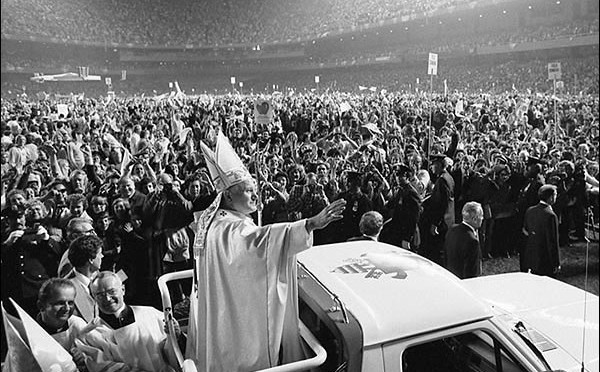
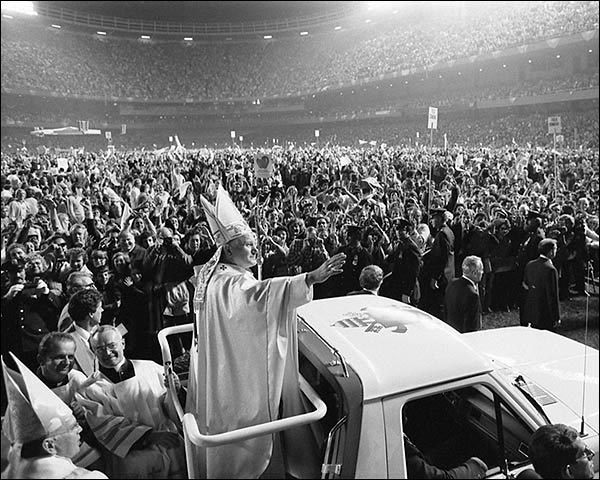
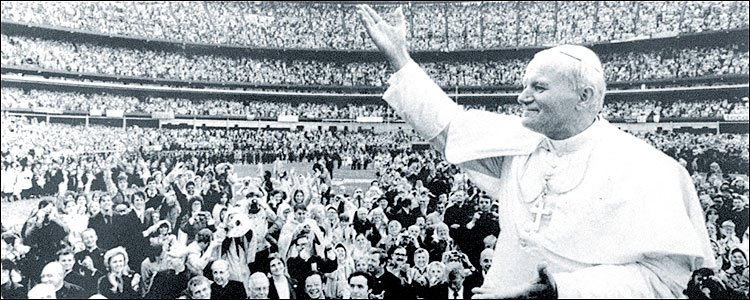
Pope John Paul greets the crowds at Yankee Stadium

Welcome Benedict! I’m not Catholic, but I do love a good papal visit to New York City. Nothing could be more absurd. The leader of the Catholic Church, a man who traces his spiritual lineage all the way back to the apostles — delivering mass at Yankee Stadium, traipsing Fifth Avenue in his sacred robes. I hope that person who dresses as Sesame Street’s Elmo in front of Rockefeller Center waves to Benedict as he enters St. Patrick’s Cathedral on Friday.

Only the Marquis de Lafayette and the Beatles have been treated to more rapturous displays of welcome by New York City residents. The city has been host to three previous papal visits, and in each case, St. Patrick’s has naturally been the manic center of activity. In fact each visit is immortalized on a plaque in front of the cathedral. Although with each trip, the pope in question managed to find a couple other unique corners of the city to visit as well.

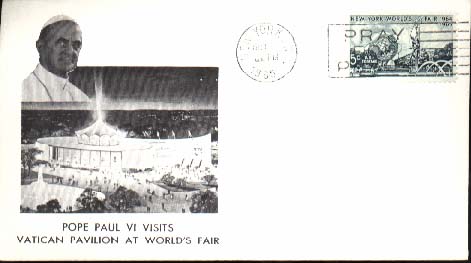
Perhaps the strangest was the very first — Pope Paul VI, the controversial leader who presided over the Second Vatican Council and made a name for himself traveling all over the world. Finally in an era were a man could be both pope and jetsetter, Pope Paul arrived in New York in October of 1965 and promptly went to visit his roommate, who was performing in a fair.

That roommate would be Michelangelo’s Pieta, on loan from St. Peter’s hallways to the Vatican pavilion at the 1964-65 World’s Fair. The Pope visited the Fair on Oct 4, 1965, on a busy day that also included mass at Yankee Stadium (the first papal mass ever in the United States), an address to the United Nations, and a meeting in the city with president Lyndon Johnson at the Waldorf=Astoria.

Today a rounded bench, or exedra, sits in Flushing Meadows park honoring the moment Pope Paul visited the Pavilion. (It seems that whenever a Pope hovers in a place for more than a few minutes, a plaque or monument springs up in its place.)

By the way, I found this extraordinary page full of great photos about the Pope-mobile, the superfine limousine used by the Pope during his visit.

But its Pope John Paul who’s the real New York favorite; he held the office for so long that he managed two trips to Gotham City — in 1979 and 1995.

His October 1979 trip was like a rock concert tour, also swinging through Philadelphia, Boston, D.C., Chicago and Des Moines. Part of the enthusiasm was because John Paul, at 58 years old, had just been appointed the year before.

As a cardinal, he had already held mass at Yankee Stadium, so by the time he did it again on October 2, 1979, he was as much a fixture as Reggie Jackson. Rain greeted over 9,000 cheering worshippers — or fans — and, according to legend, when the Pope mounted the ballfield to address the crowd, the rain showers stopped. And as a blessing for Mets fans, the next day the Pope also held rapt an audience of 52,000 at Shea Stadium (pictured below).
But like all rock stars, the Pope couldn’t complete his New York odyssey without a performance at Madison Square Garden. Although John Paul also addressed the U.N. and a St Patrick’s audience during that trip, he’s best remembered by many for his inspirational address on October 3rd to 19,000 city children.

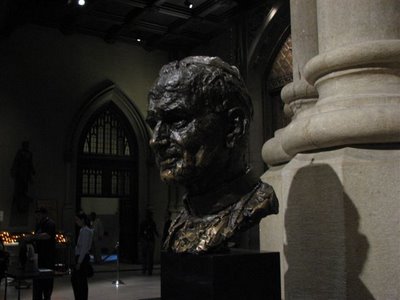
St Patrick’s honored his Holiness’s visit in 1979 by installing a bust (see below). But he would be back. On almost exactly the same day, sixteen years later.
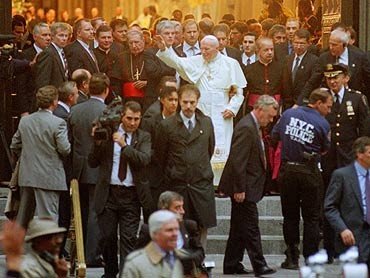
New York City in 1995 was a vastly different city and John Paul returned for a longer visit — four days in total in the entire New York area — on October 4th. This time, instead of just delivering messages to the clergy gathered at St. Patrick’s, he spontaneously decided he wanted to walk around the block. And why not? You’ve got shopping, Saks, street vendors selling Pope souvenirs!

Below: the Pope prepares for his light stroll

The Pope also finished off his collection of performing in gigantic venues for mass — holding court in Giants Stadium, the Aquaduct Racetrack in Ozone Park and eventually to 100,000 people on the great lawn in Central Park.

From there, the elderly leader of the Catholic Church gave the city the ultimate shout-out: “This is New York! The great New York! This is Central Park. The beautiful surroundings of Central Park invite us to reflect on a more sublime beauty: the beauty of every human being, made in the image and likeness of God. Then you can tell the whole world that you gave the pope his Christmas present in October, in New York, in Central Park.”

Pope Benedict, here for two days (April 19-20), has broken the apparently holy tradition of visiting New York in the first week in October. But Benedict, as the cardinal formerly known as Joseph Ratzinger, actually visited the city in that lesser role in 1988, where apparently he was met with protest from gay activists and shunned by some prominent Jewish leaders.

This year, he intends to hit all the “usual” Pope spots — St. Patricks, the United Nations, Yankee Stadium — but has added a couple surprising detours: Park East Synagogue and Ground Zero. At this rate, he might even stop in to see an off-Broadway show! Is Nunsense still playing?

Boycott the Olympic Games!


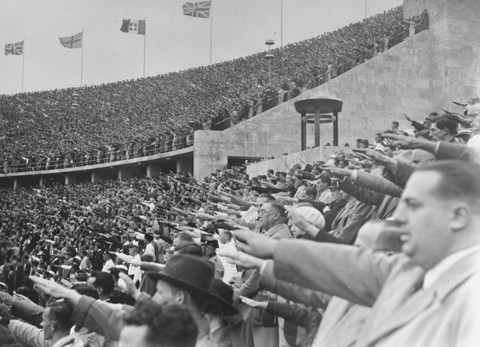
It’s been awhile since America faced the potential of an Olympic Games boycott. The debate about Beijing is still being waged in the press. America withdrew from the Moscow Olympics in 1980. And in 1936, there was an equally emphatic cry to boycott the Olympics in Berlin, Germany — and New York City led the protest.


This seems logical, as New York was America’s center for Jewish culture; many Jewish athletes (most notably, world record hurdler Milton Green) would eventually sit out these Olympics anyway, in protest to Hitler’s purging of his Olympic team of Jewish athletes. Hitler had relented in his original dictate to ban all Jewish athletes from all countries, but who could blame any athlete from wishing to avoid such an event fraught with toxic politics?

But in fact it was prominent New York Catholic politicians that headed the effort to convince the New York Olympic committee to pull out of games. Leading the charge was former New York state supreme court justice Jeremiah Titus Mahoney, who also just happened to be the president of Amateur Athletic Union. Mahoney had run for mayor of New York in 1934 but lost to Fiorello LaGuardia.

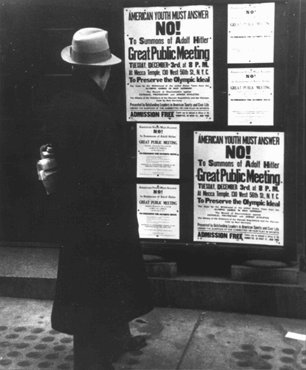
So imagine the impact of a rally on Dec 3, 1935, where both Mahoney and Laguardia took to the stage, urging Americans to support a boycott of the Berlin Olympics. The rally was held at the former Mecca Temple for Shriners on W. 55th Street.(Today, its the New York City Center concert hall.) Pictured above: announcements of the Mecca rally

According to Jeremy Schaap, a host of political leaders urged on a boycott and read letters from supportive state governors and Senators. But it a speech from the diminutive but charismatic LaGuardia, himself of Jewish descent, that moved the crowd. “Athletic contests imply good sportsmanship and fair play, two qualities which are unknown to the Hitler regime.”

But boycotters faced two insurmountable roadblocks. The first was Avery Brundage, president of the United States Olympic Committee, who was firmly in Hitler’s pocket after a carefully orchestrated wine-and-dine tour through the country convinced him of above-board German intentions that would “promise … the greatest sports festival ever staged anywhere.” Brundage also happened to be the former president of the Amateur Athletic Union, pitting him directly with Mahoney.

The other was endemic of America itself. Many wondered how America could boycott the games out of political protest, when African-Americans were hardly being treated any better in our own country. Jesse Owens originally signed on to the notion of a boycott, but the general concensus was that a diverse American team could undermine Hitler’s racial policies by showing him up at his very doorstep.

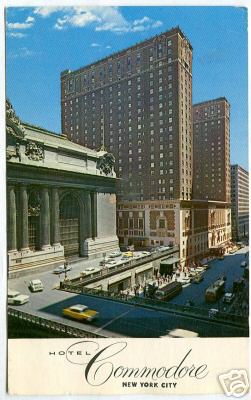
So it was no surprise that at a Dec. 8 meeting of the Amateur Athletic Union, held at the Hotel Commodore on Lexington and 42nd Street, Brundage was able to convince the voting body of the organization to vote to stay in the games.

Despite the bad blood with city leaders, New York City hosted the Olympic trials the next year in July on Randalls Island at the former Downing Stadium. (Downing was ripped down in 2004 and replaced with Icahn Stadium.) New Yorkers got to witness firsthand the now-legendary prowess of Jesse Owens who then went on to snatch four gold metals from Hitler’s games.


But while Owens was busy showing up the Nazis, a ‘protest’ Olympics were being held at Downing that same summer. The World Labor Athletic Carnival or ‘Counter-Olympics’ featured over 400 American athletes in a display more of solidarity than actual competition. Although it was organized by the Jewish Labor Committee, its no surprise to find as co-chairs of the ‘counter-Olympics’ the two former rivals who had desperately tried to boycott the games in the first place — Mahoney and LaGuardia.

As for the former Hotel Commodore (pictured at left), now the Grand Hyatt , it holds another place in sports history; it was here on June 6, 1946, that the precursor the the National Basketball Association was formed.