Categories
Know Your Mayors

Hey kids! Wanna be president? Don’t be New York mayor.

(This story was originally published in June 25, 2008)

Yesterday was the opening of Campaigning For President at the Museum of the City of New York, a look at the city’s participation in some of the most famous and contentious presidential elections in history. The exhibit will focus on the city’s role in deciding the outcomes, as well as some of the famous New Yorkers who once coveted the White House.

It got me thinking about the recent phantom campaign of Michael Bloomberg and colossally failed one of former mayor Rudy Giuliani. Is it possible for the leader of the biggest city in America to step up to the role of Commander In Chief?

The answer is a big, fat NO, at least so far. Not one New York mayor who ever actively tried or hinted at being interested in the job ever got it. And the list of also-rans is long indeed:

Michael Bloomberg – Excessive hints to the contrary, Bloomberg never officially threw his hat in the ring.

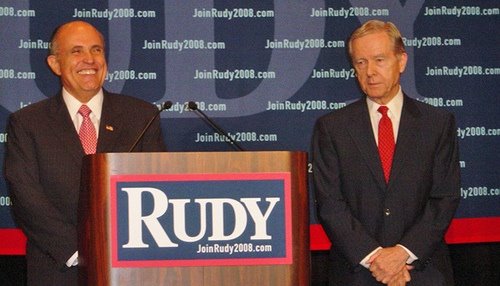
Rudy Giuliani — He did run for President in 2008 but stumbled almost immediately after a major Florida miscalculation and never recovered, withdrawing on January 30, 2008.
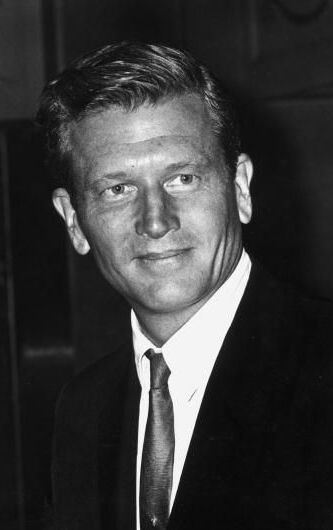
John Lindsay (mayor from 1966 to 1973, pictured at right) didn’t fare much better than Rudy in the quest for the 1972 Democratic nomination. Starting out of the gate strong, like Rudy he stalled in Florida and eventually dropped out. Given the catastrophic changes to the city in the 1970s, I’m surprised anybody thought having ‘mayor of New York’ on their political resume would have garnered national favor.

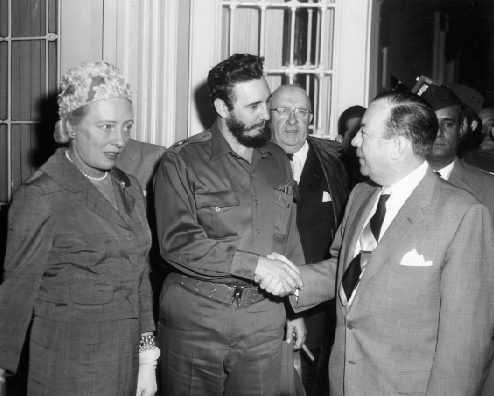
Robert F. Wagner (1954 to 1965) never ran for president but was short-listed to be Adlai Stevenson’s vice president in 1956. Wagner was eventually beaten in balloting by Al Gore Sr. and John F Kennedy Jr. But, in the end, they were ALL beat for the spot by the clearly more popular, always reliable Estes Kefauver.)

Below: Robert Wagner meets Fidel Castro during his visit to New York in 1959.
Courtesy La Guardia and Wagner Archives

William Jay Gaynor (mayor 1910-1913) was widely considered a potential presidential hopeful, even with an assassin’s bullet lodged in his neck. Had he actually lived through his term as mayor, who knows?

George Brinton McClellan Jr (mayor 1904-1909) was never a presidential candidate but his father and Civil War icon George B. McClellan Sr certainly was. Dad ran in 1864 against Lincoln in his second term, promising to end the war in the South.
f2012-58-813

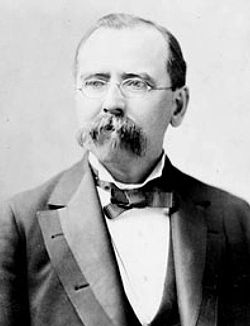
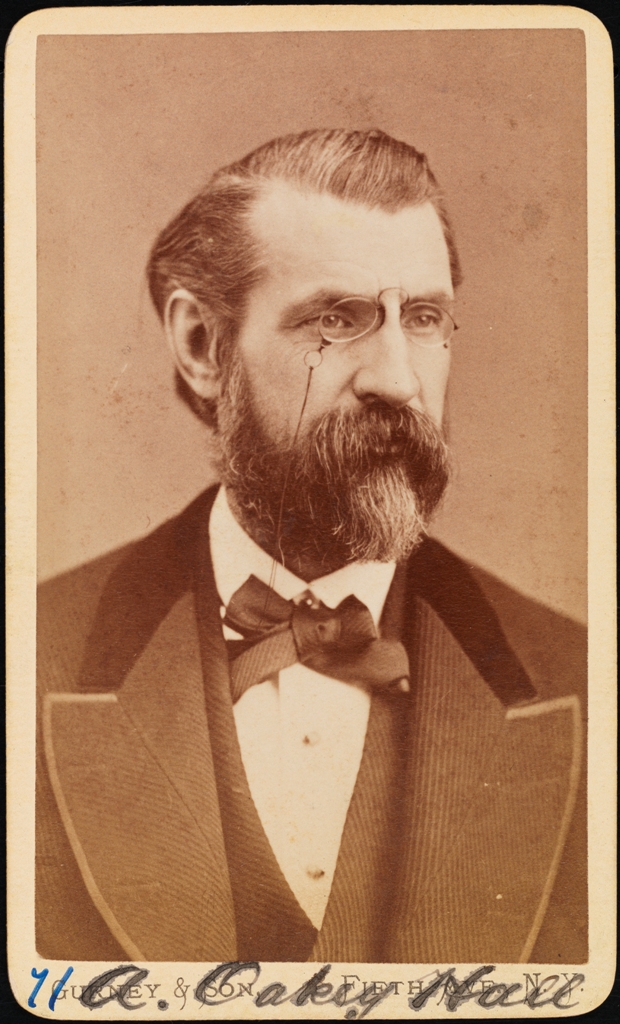
A Oakley Hall (mayor 1869 from 1872) (pictured at left) was as closely tied to the Boss Tweed Ring as a politico could be, but even he harbored presidential hopes. Considering he had to temporarily resign from mayor due to the Tweed scandal, I can’t imagine how much luck he would have had.

DeWitt Clinton (mayor for ten non-consecutive annual terms starting in 1803 ending 1815) collected political positions like butterflies, but the one he could never catch was the presidency, defeated by incumbent James Madison in 1812. By June, Madison had declared war on England and later fled the White House when the Brits torched it.

The closest a mayor ever got to the top job was Edward Livingston, who became Secretary of State to Andrew Jackson. Which is interesting, as Livingston was literally ran out of Manhattan after his stint as mayor several years previous due to debts and scandals.

The real road to power is through the office of New York state governor. Four former governors have become president (Martin Van Buren, Grover Cleveland, Theodore and Franklin Delano Roosevelt), four more were vice president (George Clinton, Daniel Tompkins, Levi P. Morton and Nelson Rockefeller) and two have even become chief justice of the Supreme Court (John Jay and Charles Evans Hughes).

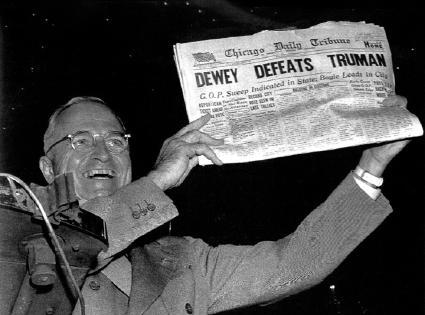
Heck, even those governors who failed to become president did so in a dramatic and historic fashion, such as former governors Al Smith, Samuel Tilden and Thomas Dewey (of the particularly famous photo below).
Manhattan’s first taverns: Wooden Horse and City Tavern

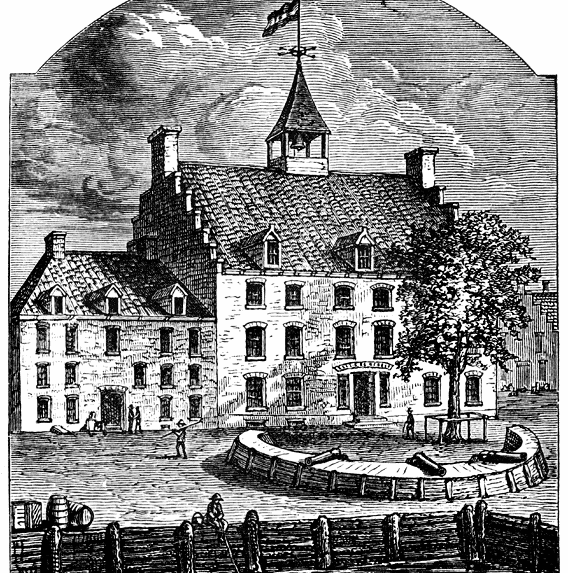
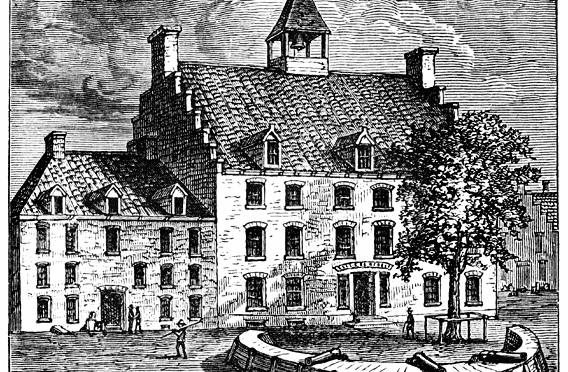
New Amsterdam city hall, once one of Manhattan’s very first taverns

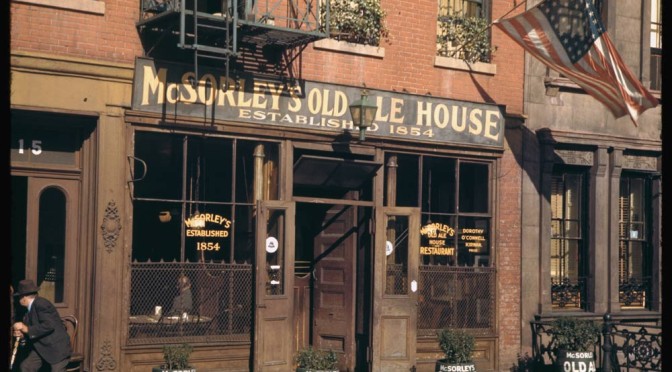
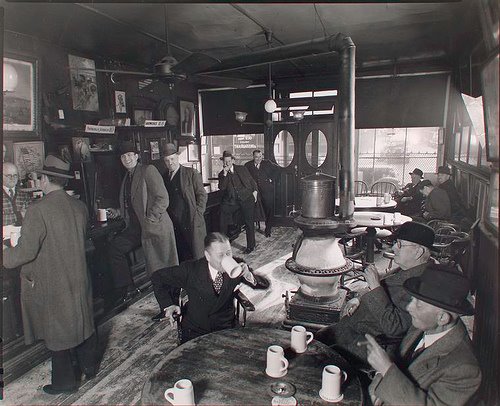
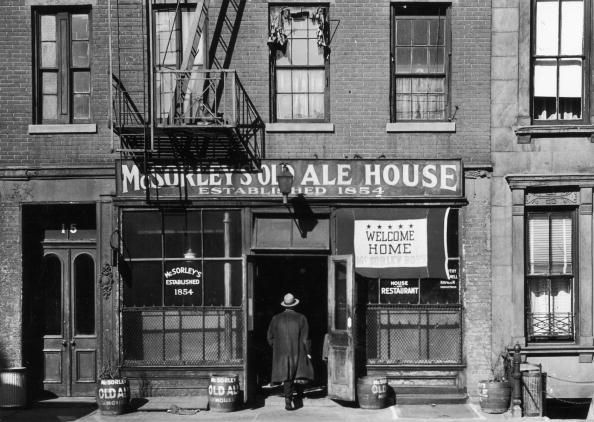
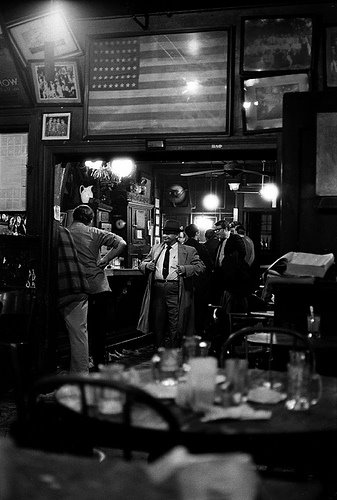
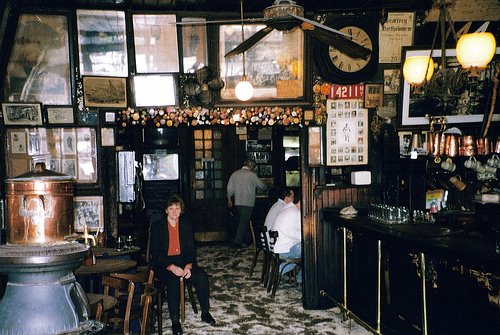
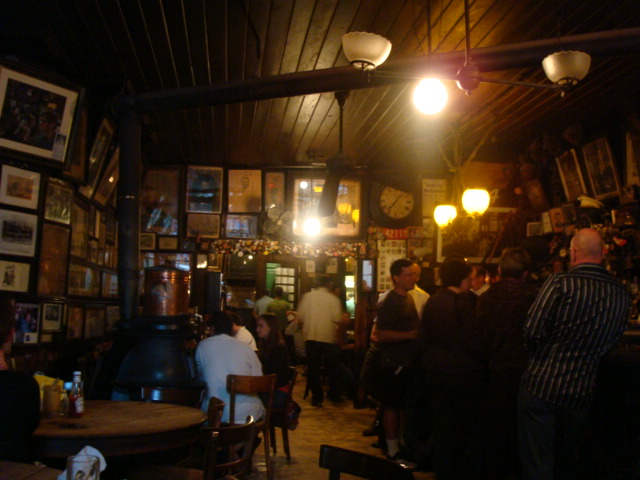
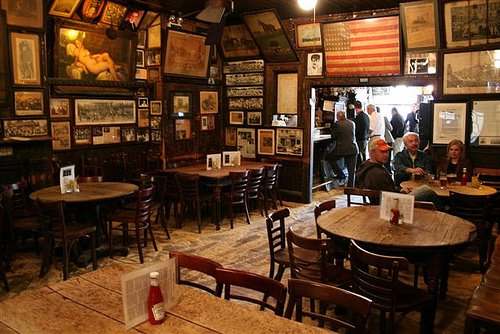
McSorley’s Ale House certainly deserves to throw that Old in its title, happily swilling the devil’s juice for 154 years. But it’s positively a youngster compared to evidence of Manhattan’s first two taverns, opened in the days when New York was just barely even New Amsterdam.

Henry Hudson first set eyes on Mannahatta in 1609. Fifteen years later, the Dutch came into New York harbor to begin their permanent settlement. In 1625, work began on Fort Amsterdam, which served as protection from the Indians and as the heart of the developing town. But by that time, New Amsterdam already had a brewery, which began production in 1612!

This young settlement was filled with young traders and shipmen who enjoyed their drink. Their liquor requirement was most likely fulfilled by captains selling it out of their own boats or residents from their own homes. But it’s fur trader Philip Geraerdy that wears the distinction as first private tavern owner. He was granted a lot on “Stone street, between Whitehall and Broad Street,” in 1641 (or possibly 1642, depending on which source you look at) to open his Wooden Horse Tavern (Het Houten Paard).

According to author Mark Caldwell, the name was probably a jab at punishment he had received as a soldier, forced to straddle “two boards nailed together to form a sharp wedge that rested on four legs” due to some sort of subordination.

Geraerdy most likely served no more variety than what can be found at McSorley’s today, ale and possibly wine.

A more official tavern also opened in the same year. Governor of New Amsterdam William Keift had a costly stone structure built at what is today Coenties Slip and Pearl Street and called it City Tavern. Taverns of course were far more than booze dispensaries. They served as inns, meeting halls, social networking places and sometimes even offices. It makes sense then that when the city was incorporated in 1653, City Tavern morphed into what would be New Amsterdam’s very first city hall (Stadt Huys or State House).

By that time, many other taverns had opened with names like Three Small Pigeons and the Blue Grape. In fact, the Dutch brewery business was booming by this time, supplying local ales to Dutch settlements throughout New Netherland.

Categories
Podcasts

PODCAST: McSorley’s Old Ale House

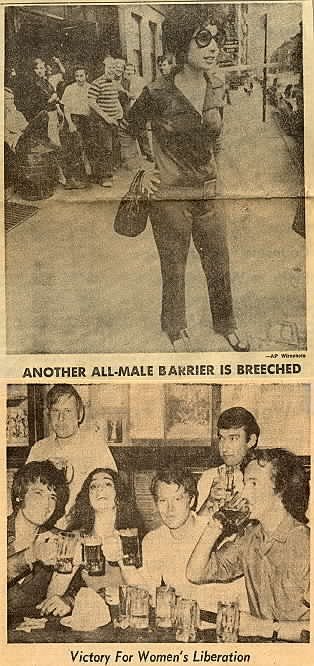
Grab yourself a couple mugs of dark ale and learn about the history of one of New York City’s oldest bars, serving everyone from Abraham Lincoln to John Lennon — and eventually even women!

Listen to it for free on iTunes or other podcasting services. Or you can download or listen to it HERE

McSorley’s through the ages. Here’s one from 1937:

The outside from 1945

1969:

1998:

And McSorley’s today

The backroom:

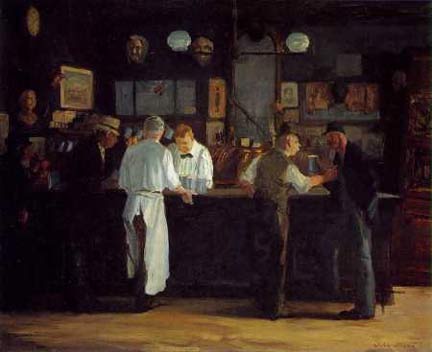
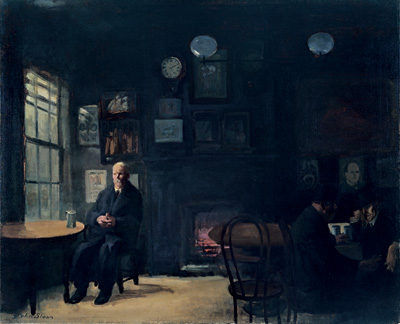
Two of John Sloan’s most famous works, with McSorley’s as its subject:

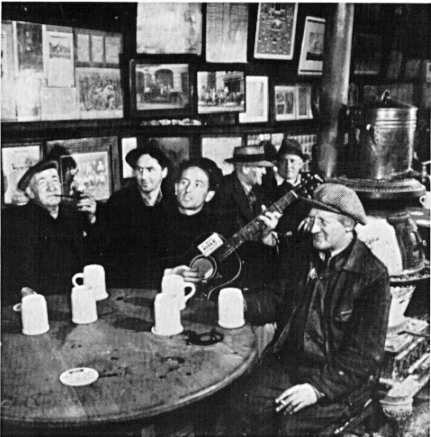
Woody Guthrie hams it up by the coal burning stove.

Women win the right to vote: dark ale or light ale!

All hail the Coney Island Mardi Gras parade!

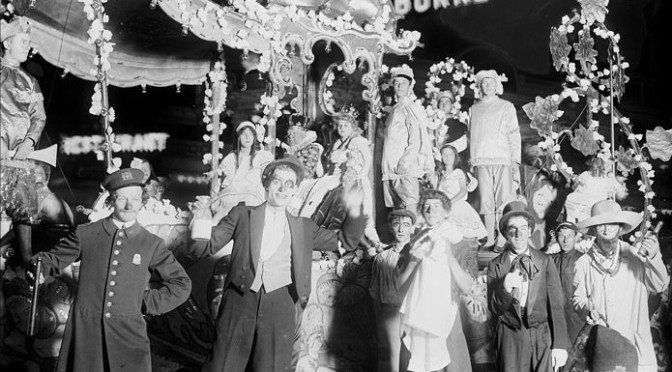
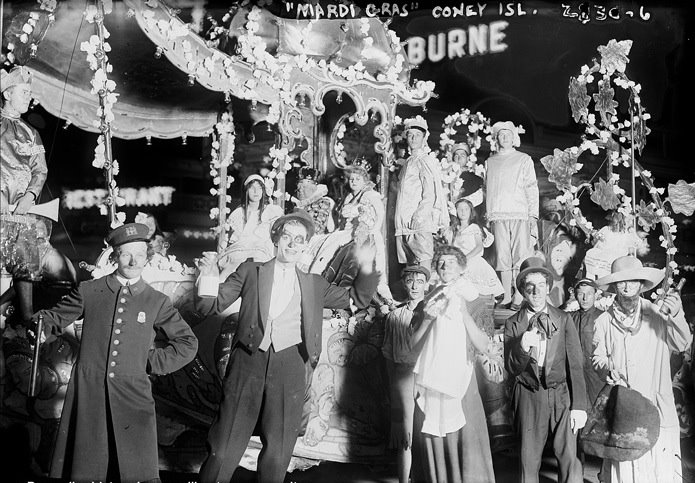
Before there were Mermaids, there was Mardi Gras. Above: ghoulish revelers from the 1911 parade

An even larger collection of freaks and aquatic oddities than Coney Island’s everyday normal assortment will come slithering down Surf Avenue this Saturday with the 26th annual Mermaid Parade.

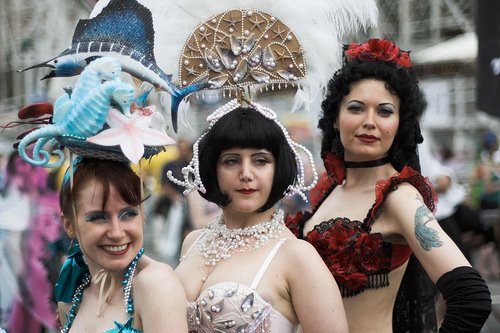
The parade is the heart of Coney’s modern freak-show aesthetic, Christmastime for the tattooed and glittery. Most people think that, unlike most New York City parades, the Mermaid parade celebrates nothing specific, only a joy of costume, summertime and silliness. In fact, Coney Island ‘mayor’ Bill Zigun and Coney Island USA created the parade in 1983 as an homage to an even more legendary seaside tradition: the Coney Island Mardi Gras parade.

Let that stew in your mind a bit. Coney Island meets New Orleans.

The annual Mardi Gras celebration lasted from 1903, the heart of Coney’s heyday, until 1954 — the heart of the Robert Moses years. Curiously, it always took place in mid-September, which I suppose is a nicer time for a parade than a seaside New York February. The parade coincided with the end of the season and the annual shuttering of the amusement parks.

In 1906, the great parks of Coney Island like Dreamland were still standing. Nathan’s famous hot dog stand wouldn’t be open for another ten years. And the Mardi Gras parade that year managed to attract 500,000 people. “Police Commissioner [Thomas] Bingham visited the Island and had [his] full share of attention from confetti throwers and wielders of the ‘tickler’.”

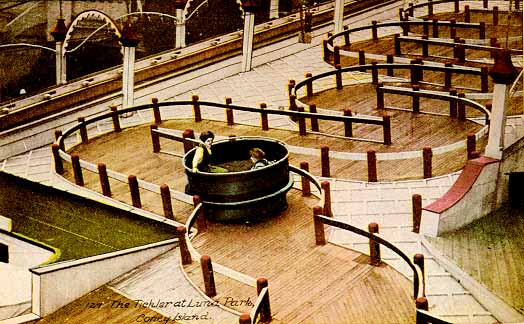
I don’t know what a tickler was back then, but the idea of what I think it is being thrust at a police commissioner is absurd. Probably a souvenir from a Luna Park ride called the Tickler (which doesn’t look that fun, see image from 1906):

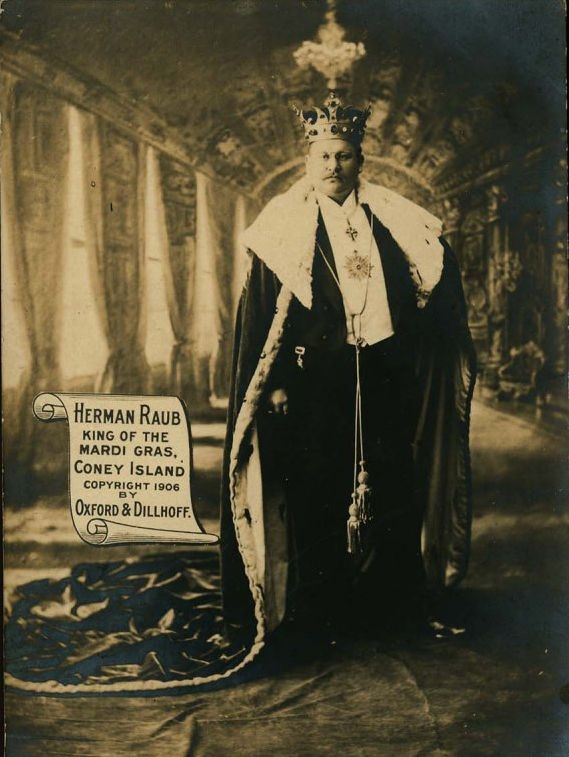
That same year brewery mogul Herman Raub (pictured below), founder of the Coney Island railway, was anointed king of the parade.

The Mardi Gras parade sounds like it was a horrifying, chaotic, fabulous mess. In 1911, the celebration also gathered about a half million people to view the tenuously religious celebration. “Gangs March Through Street Insulting Women and Wrecking Stores And Restaurants” shouts the Times. “Several Hundred Arrested.”

It seems part of the fun of the original Mardi Gras involved drunken displays of violence.

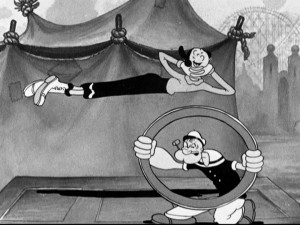
Despite rampant (probably exaggerated) violence, the parade became the star of a wacky Fatty Arbuckle-Buster Keaton film, the 1915 ‘Coney Island’. It hit celluloid later in 1935 in the Popeye the Sailor Man short ‘King of the Mardi Gras’.

By 1921, the parade had to deal with a new menace — Prohibition. “It was agreed that Prohibition had struck Coney Island a staggering blow.” Many revelers dressed in costumes that “referred satirically to blue law advocates.”

One popular event at the parade was the annual ‘prettiest baby’ competition. In 1921, the winner was “Rita Murphy, 6 years old, of 2,005 Sixty-Third Street, Brooklyn, dressed as a jockey.” The tot was awarded “a ninety-two-piece silver set which she can use to start housekeeping when she gets married.” What a future young Rita had in store for her!

The parade sadly petered out thanks to Robert Moses’s ridiculous plan to turn the area into “an area of predominantly residential character.” Brooklyn Pix has a good shot of the final spectacle, that looks alarmingly similar to today’s Mermaid Parade.

I can only imagine what horror Moses would experience by glimpsing the Mermaid Parade today. He may get the last laugh. With an overhaul of Coney Island beginning next year — or already beginning, depending on how you look at it — the parade’s role may be greatly affected. So go down to Coney Island this Saturday and make sure you appreciate it in all its goofy and charming glory. (Check here for all the details.)

Bowery Boys get older! Plus: 200 years of fire hydrants

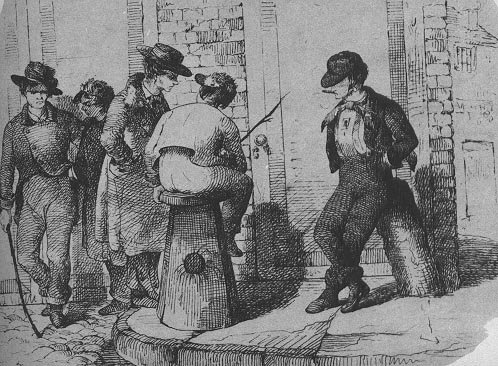
Early engraving of some Bowery b’hoys lolling about a fire hydrant, up to no good

Tomorrow is the one year anniversary of our very first podcast. We just want to say thank you to everybody who has subscribed on iTunes and other podcast services. Our first year has been a huge success and we have a lot of exciting plans coming up for year two!

I know we have some rather massive topics that we’ve yet to cover (Empire State Building, the subway system, Central Park) but we’ll get to most of them in the coming months, as well as experimenting with some more obscure topics.

I’ll try and keep updating this blog 4-5 times a week depending on my schedule.

Again, it’s been a blast so far and we’ve got lots of great ideas to keep improving the show. Thanks for letting us go ballistic geeky about this city that we love.

And now, more old New York City fire hydrant pictures. Why you ask? This year is the 200th anniversary of the very first hydrant in the city. Go here for a fairly comprehensive history of these invaluable street features:

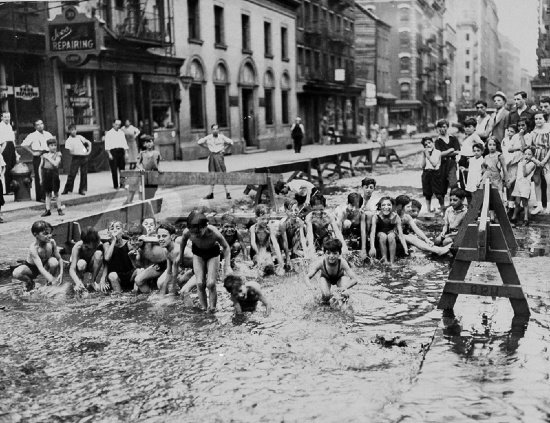
Below: more fire hydrant shenanigans, this time from some wacky Lower East Side kids, picture dated July 9, 1936

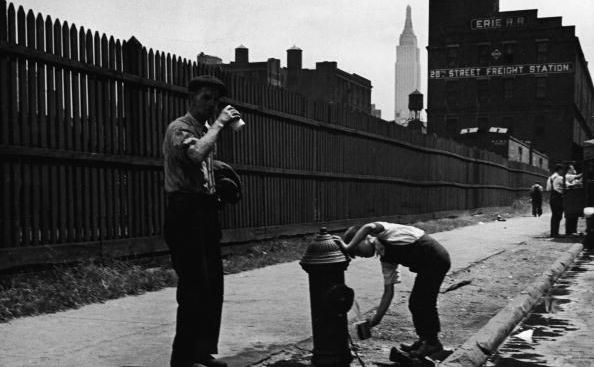
Also from the 30s, a more sedate usage of a hydrant, a father and his son take a sip with the five-year-old Empire State Building in the background

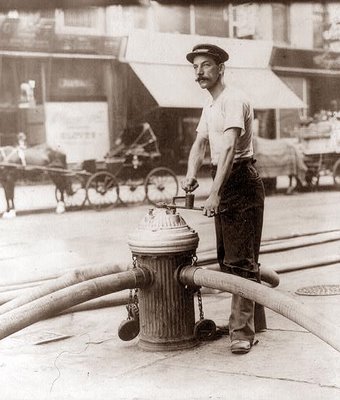
A fireman from 1908 (Photo courtesy Old Picture of the Day)

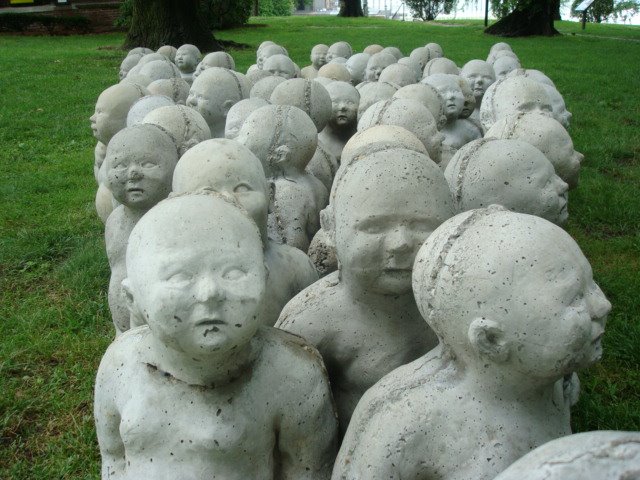
Scary sculpture babies: JOIN US on Governors Island

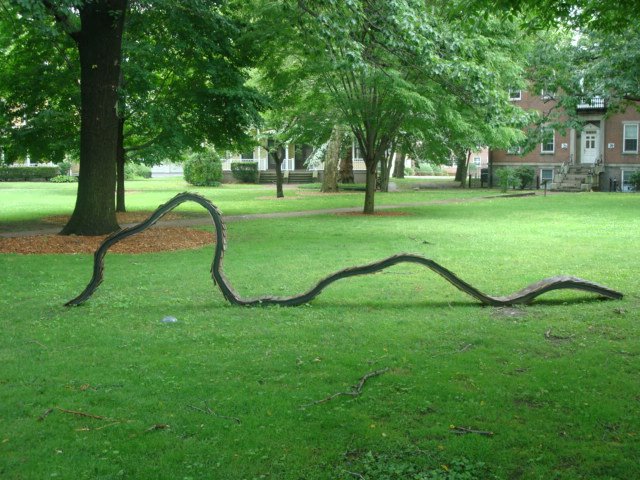
Governors Island has been open for a few weeks now and greeting people as they wander this historic military base are dozens of sculptures and installations, certainly the most comprehensive display of public art in the city outside a museum.

The Sculptors Guild takes to the grounds of Nolan Park on its 70th anniversary with a wide variety of unusual pieces. In ‘Building 408’, observe a group of artists as they make a collection of watercolors on site.

But the most spectacular concentration of artistic weirdness is in ‘Building 14’, where the Governors Island art collective Figment displays several installations alongside the building’s traditional room settings.

Nolan Park was for decades the quiet residence of military officers, living in rustic two-floor Victorian homes, a five minute ferry ride from downtown Manhattan. Nolan Park is already a rather surreal place to stroll around; you’re allowed to enter many of the empty homes and imagine who the people were who once lived here. Of course, the experience is intensified with the inclusion of modern art:

And of course, Governors Island joins the rest of the city next Friday as one of the four artificial waterfalls by Olafur Eliasson are finally switched on.

Categories
Podcasts

PODCAST: Collect Pond and Canal Street

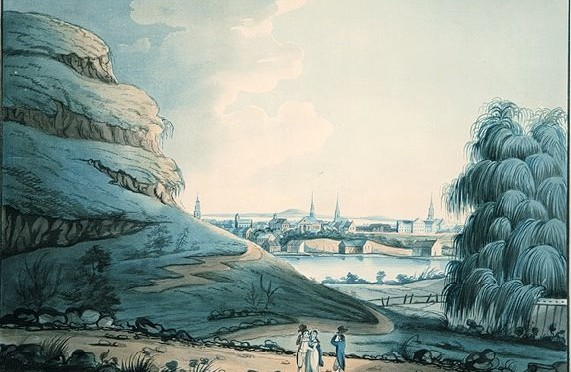
Collect Pond (and what I assume to be Bunker Hill) as depicted in watercolors by artist Archibald Robertson in 1798

We celebrate a year of New York City history podcasting by re-visiting the topic of our very first show.

Downtown Civic Center used to have a big ole pond in the middle of it which provided drinking water for the island’s first inhabitants.

What happened to it, why is it important today and how did it give rise to Canal Street, New York’s biggest traffic thoroughfare?

From the Mannahatta Project, a visualization of downtown Manhattan, with Collect Pond and acres of forest

Hard to believe, but this is downtown Manhattan and Collect Pond

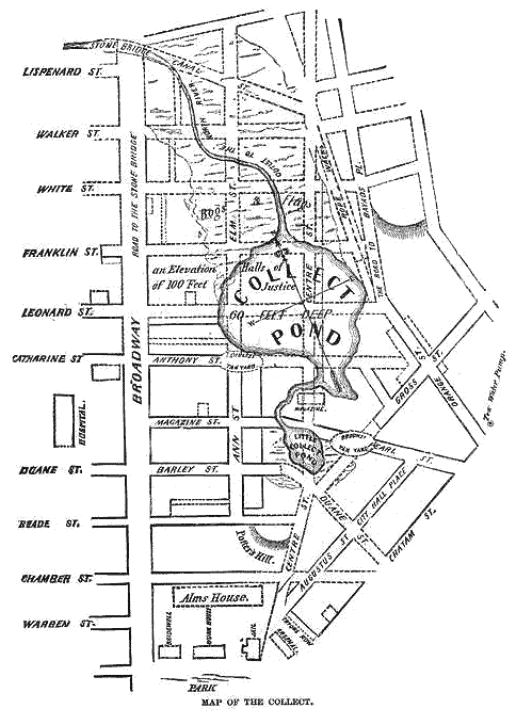
An early 19th century map of Collect Pond and the streets that usurped it. (Click into it to see details.)

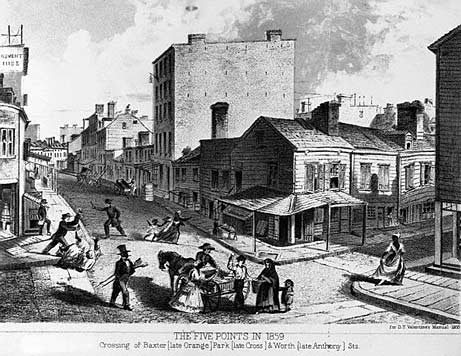
A mid-century depiction of Five Points, this corner in particular being where Paradise Square sprang up, an ambitious residential project doomed by soggy land and noxious odors

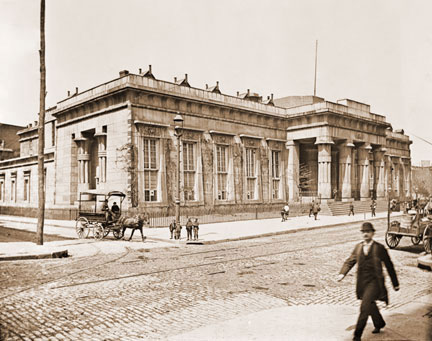
The Tombs Prison, in 1890, before being condemned. Its squalid conditions are legendary and are due in part to unsatisfactory construction over the former Collect Pond area

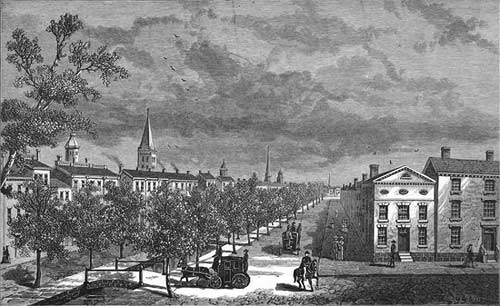
The early days of Canal Street. The actual foul-smellin canal was concealed with a row of lovely trees shielding the new tenements and businesses surrounding it

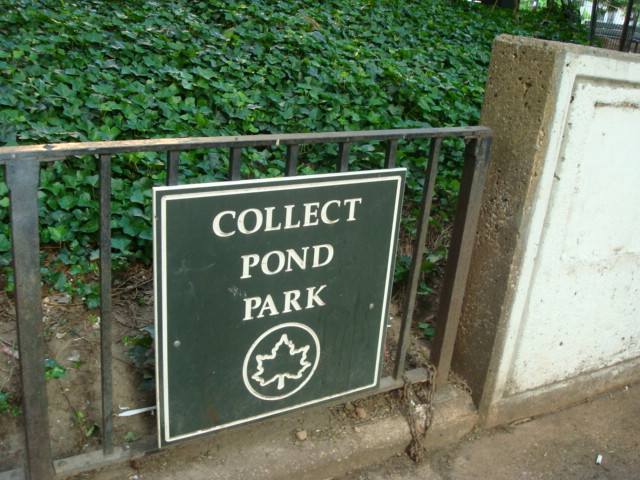
A tiny park surrounded by government buildings pays homage to the early (and far more natural) days

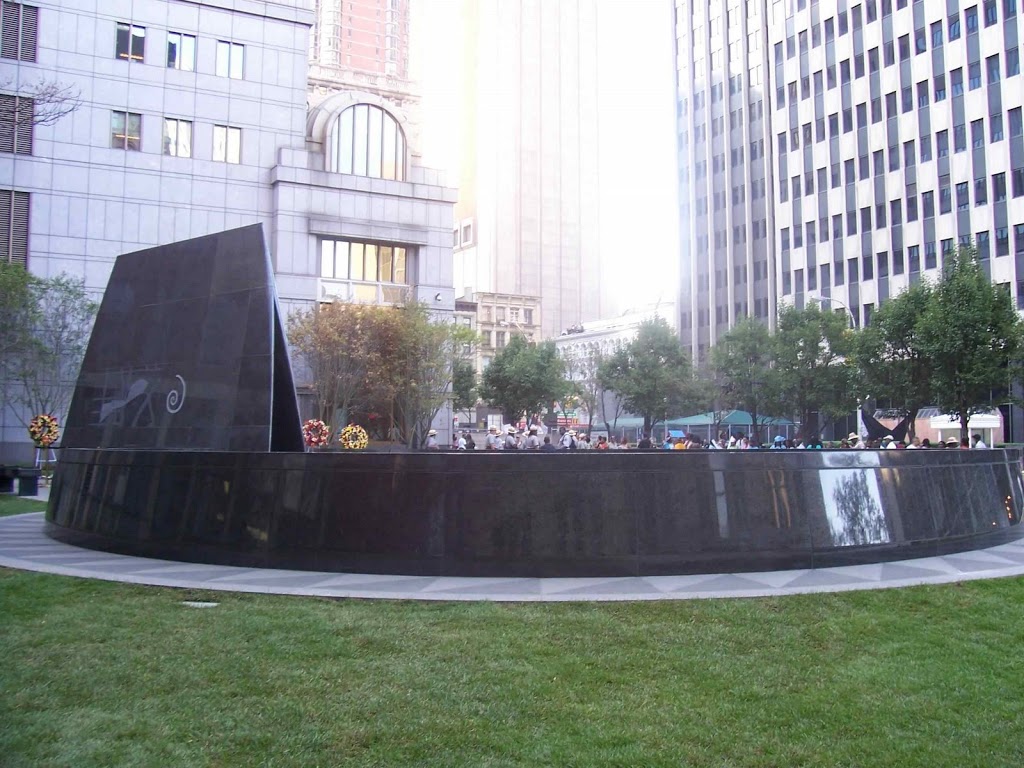
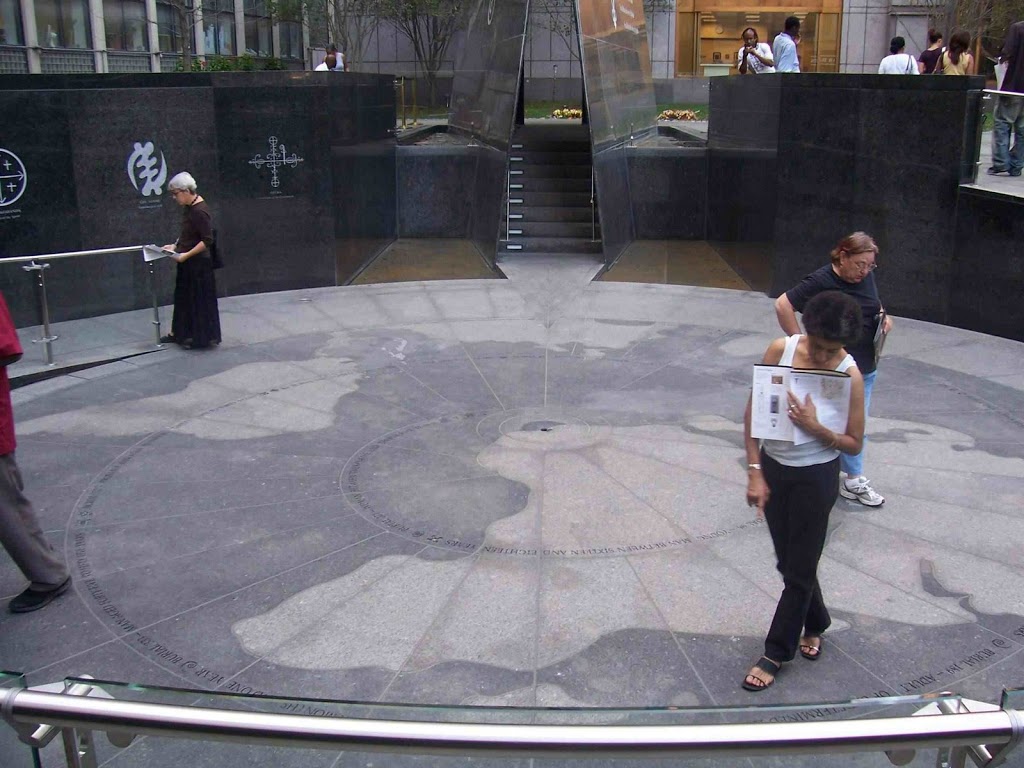
The most dramatic reminder of the neighborhood’s early days, however, is the African Burial Ground Memorial, which opened last year

Categories
Podcasts Uncategorized

PODCAST: LaGuardia Airport

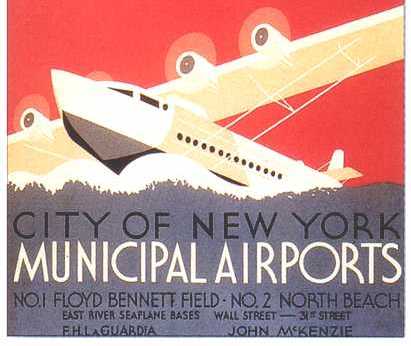
We embark on the tale of the birth of New York City flight — featuring a Wright brother on Governor’s Island, the site of a glue factory turned Brooklyn air strip, Queens’ forgotten first airport, and finally to the baby of mayor Fiorello LaGuardia.

PODCAST TAKEN DOWN TEMPORARILY, WILL BE REPOST SOON!

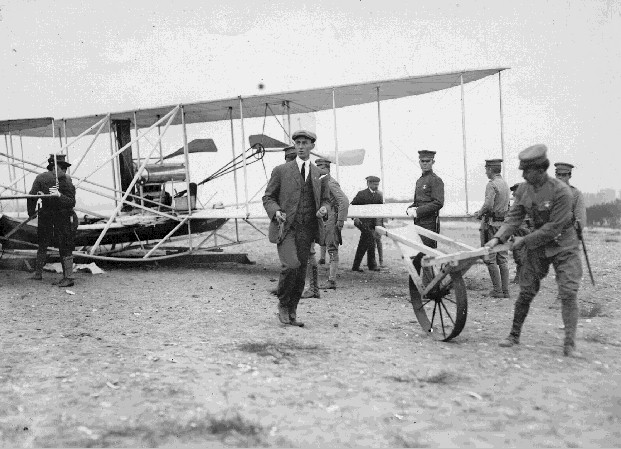
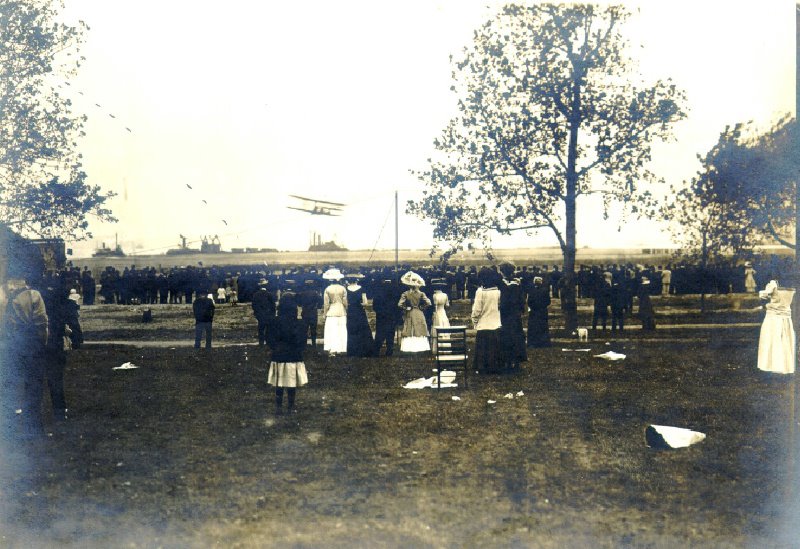
Wilbur Wright on Governor’s Island, preparing his plane for its historic flight

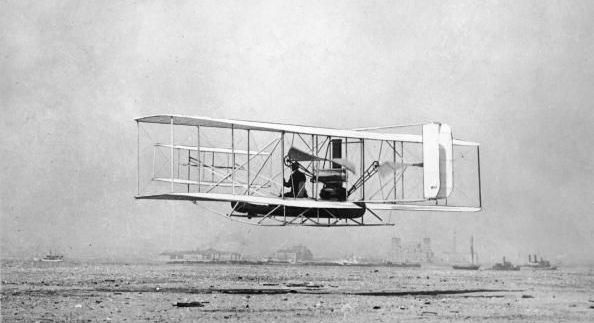
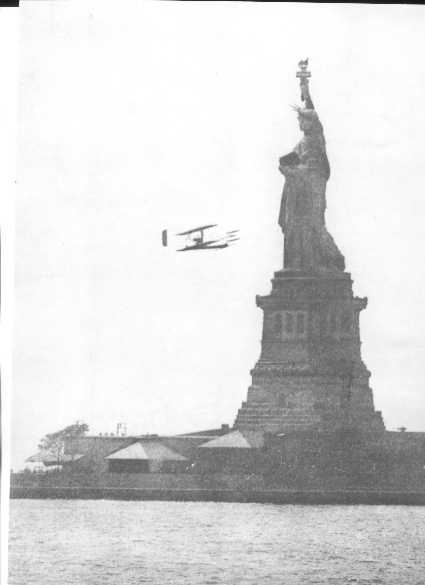
Wilbur Wright flying over New York Harbor. You can clearly see the canoe attached at bottom, the very first lifeboat.
(Photo by Hulton Archive/Getty Images)

All of New York stood entranced by the waterfront as Wright took to the skies above the city.

Wright’s first flight only took him around the perimeter of the Statue of Liberty. A voyage a few days later took him all the way up the Hudson River to Grant’s Tomb.

You can find a great many more pictures of Wilbur and his first New York flight at the website First To Fly. For more info on visiting Governor’s Island, go to their official website or check out our podcast.

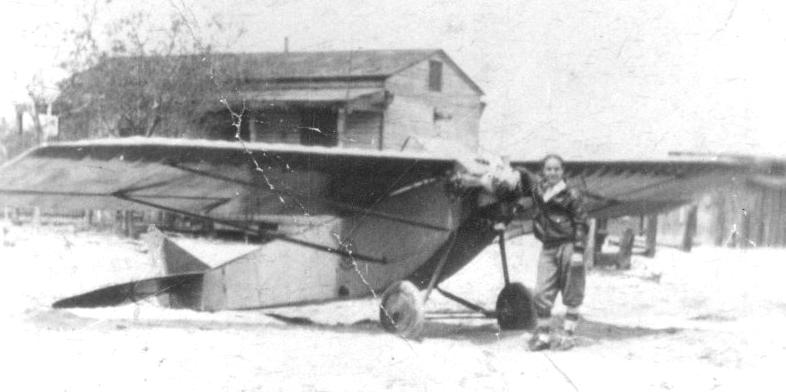
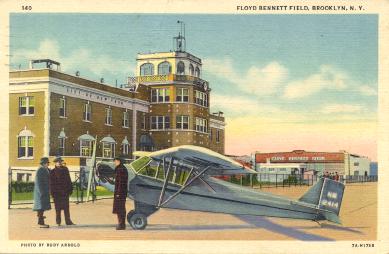
Before it was Floyd Bennett Field, a pilot named Paul Rizzo took joyrides from a tiny dirt airstrip here. This picture, from 1928-29, is of a 1924 monoplane. That may be Rizzo!

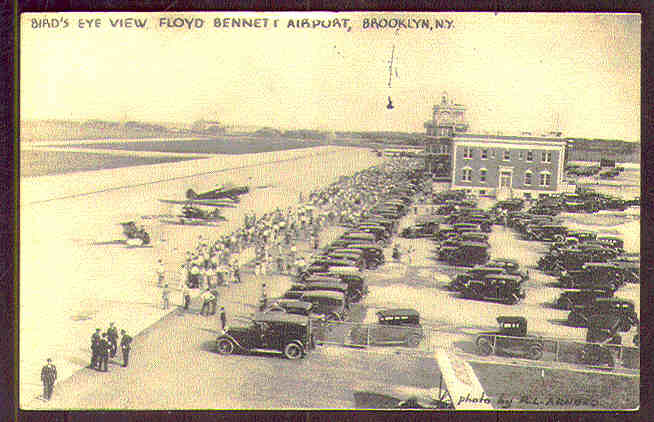
Floyd Bennett Field, too small for the growing size of commercial aircraft, but plenty big enough for the daredevils of early American aviation like Amelia Earhart, Wiley Post and ‘Wrong Way’ Corrigan

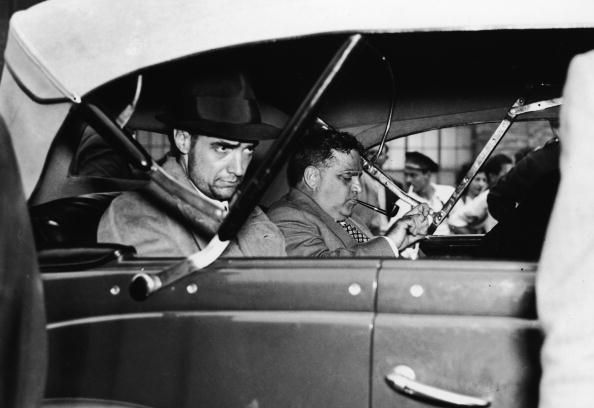
After his deathdefying around the world journey, Howard Hughes is personally escorted from Floyd Bennett Field by mayor Fiorello LaGuardia (Photo by Hulton Archive/Getty Images)

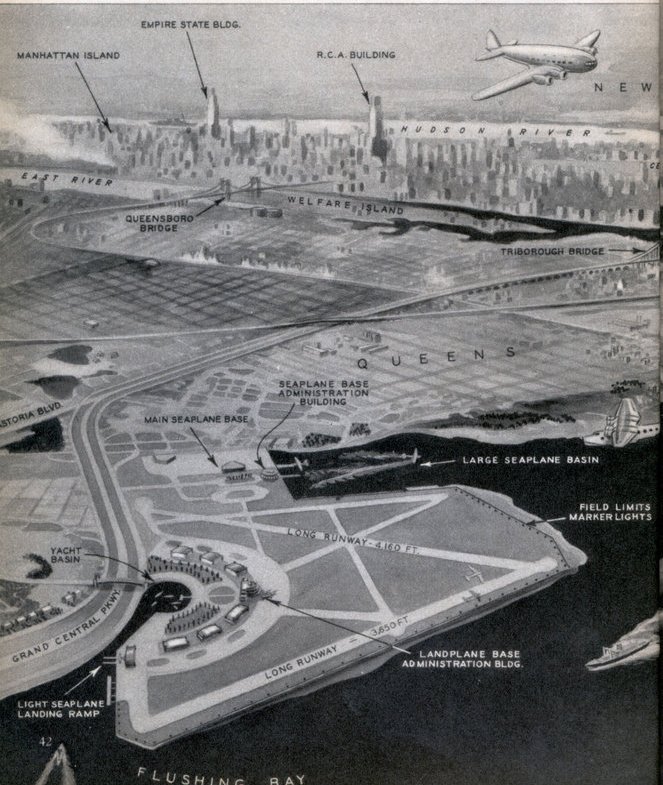
An early illustration from Modern Mechanix extoling the virtues of the new airport in Queens

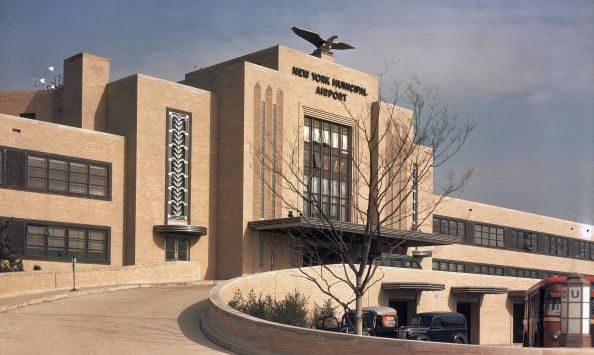
The old central terminal at LaGuardia, circa 1940

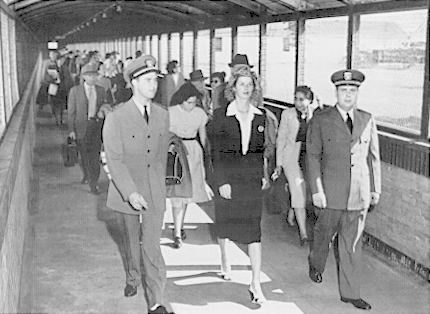
Passengers and crew arrive at a 1947 Laguardia airport terminal

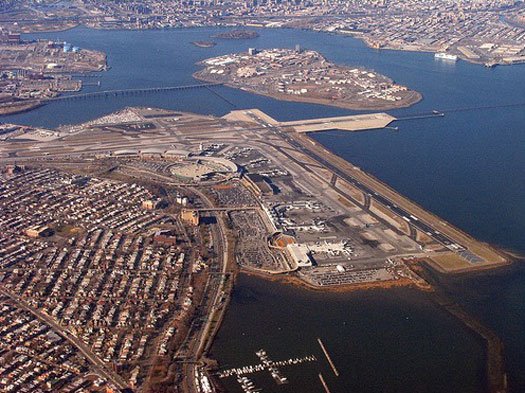
On overhead view of LaGuardia, highlighting its proximity to Rikers Island and the Bronx

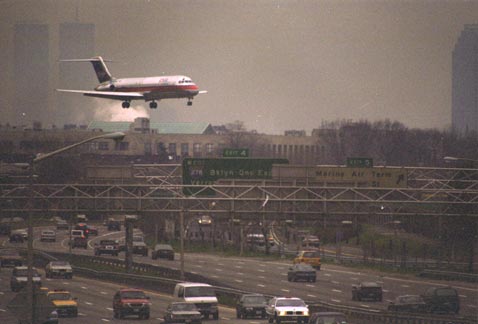
A picture that oozes congestion. From OddballNY

Forgotten New York naturally has some terrific photographs of what Flushing Airport and Floyd Bennett Field look like today.

CORRECTION: I have a massive brain freeze and incorrectly state that the RMS Lusitania was torpedoed by Nazis. Clearly, Nazis didnt exist in 1915. It was however, brought down by a German U-20 submarine during World War I. The corrected version is now available for download.

Dinosaurs of the New York skyline

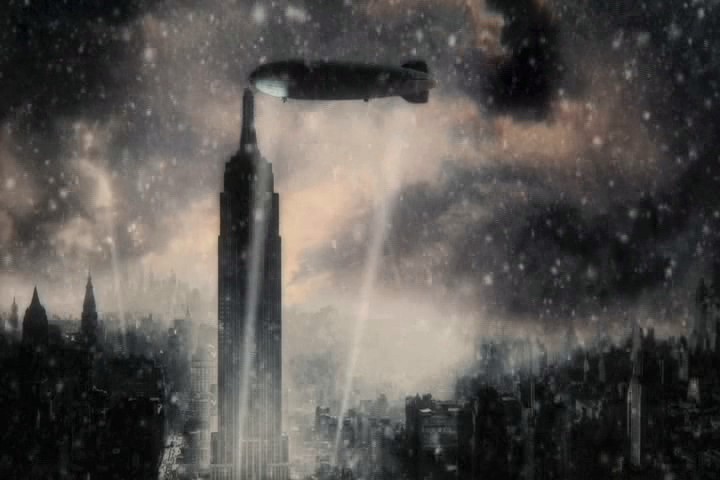
The Empire State Building’s proposed airship dock, as depicted in the movie Sky Captain and the World of Tomorrow

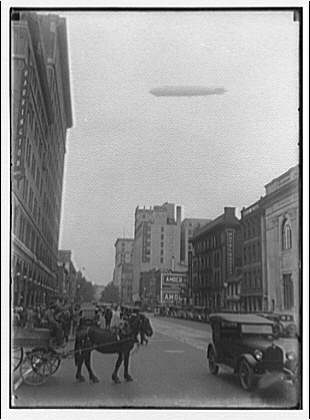
Airships (or dirigibles or Zeppelins, take your pick) were frequent flyers at the start of the century, and naturally many found themselves near or over New York City. In fact this almost defunct form of air travel was nearly (and disastrously) moored to the city’s tallest building.

The air above the city wasn’t as loaded with these flying conveyanes as our run-amok retro-futuristic notions of the city might like to envision. Even in 1911 during what’s considered the “Golden Age of Airships” a single airship above Times Square was enough to make headlines. “250 feet above the lights of Broadway,” proclaims the New York Times, “Frank W. Goodale, a boy aeronaut, in a new dirigible balloon made his third annual night trip to the Times Building through the air last night from the Palaisades Amusement Park, over on the Jersey side.”

And although they look cool in old photographs today, even then they were seen as mostly curiousities, elephants in the sky, compared to the smaller, more extraordinary aeroplanes of Glenn Curtiss and Wilbur Wright, which made their debut on Governor’s Island during the citywide 1909 Hudson-Fulton Celebration. “Aeroplanes fly, Dirigibles fail, in City’s Celebration,” proclaims the New York Press.

In 1924, the Graf Zeppelin, Germany’s rigid-balloon passenger air liner, made such a splash when it arrived over New York at the end of a 12-day voyage that the Graf’s tenacious commander Dr. Hugo Eckener — “the Magellan of the Air” — received his own personal ticker tape parade through downtown Manhattan in celebration.

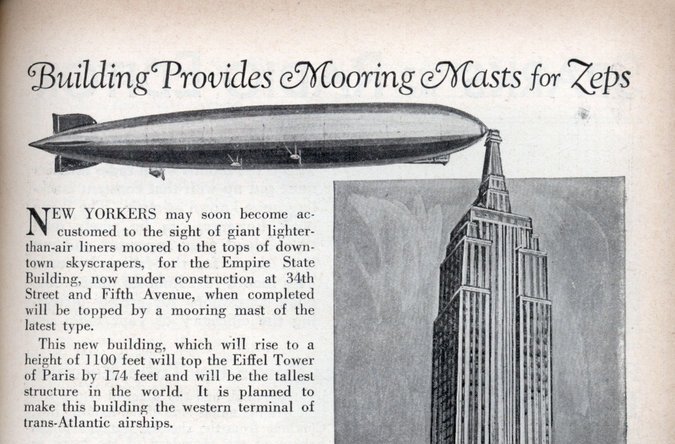
The most popular docking station for these massive vessls was the port in Lakehurst, New Jersey. However, in one of the more romantic anecdotes of our most famous landmark, the Empire State Building’s majestic spire was originally designed to dock airships.

With the enthusiastic support of former governor Al Smith, the Empire State opened in 1931 installed with wench and docking equipment and fortified to hold large aircraft in place. He even called in the Navy to assist in the high-profile project.

Modern Mechanix extoled the virtues of this aerial midtown terminal.

But the Navy was naturally sceptical, as was Eckener, whose Zeppelins would have used the Empire’s mast. The reason, of course, was the massive windgust created by the buildling canyons from so high up, the release of water ballast onto city streets and the deathdefying route in which passengers would have to disembark.

Eventually no more than a couple airships ever docked at the Empire State Building, and those delivered no human cargo, only newspapers, thrown from the dirigible window.

Had things gone Smith’s way, Eckener’s great Hindenberg might have attempted to dock high above the city on May 6, 1937.

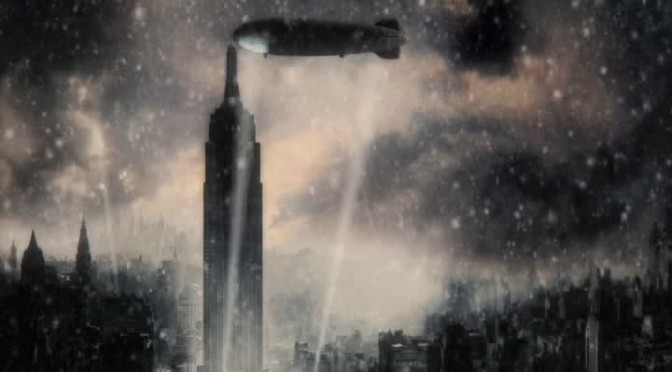
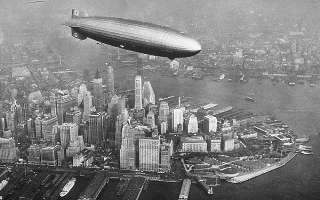
Instead, the destruction of the Hindenberg in Lakehurst, New Jersey, on that day drew a curtain on commercial airship service. Most of us remember the extremely dramatic footage of the Hindenberg melting into flame, and that emotional newscaster. What most don’t know is that the Hindenberg was cruising over Manhattan moments before the terrible explosion (below).

Blimps are still very much an occasional feature of the skies over the city today, mostly over the sports stadiums. The era of the airship is far from over. In fact, out in the Queens neighborhood College Point, location of one of New York’s first airports Flushing Airport, a blimp company is proposing to built the world’s first blimp port.

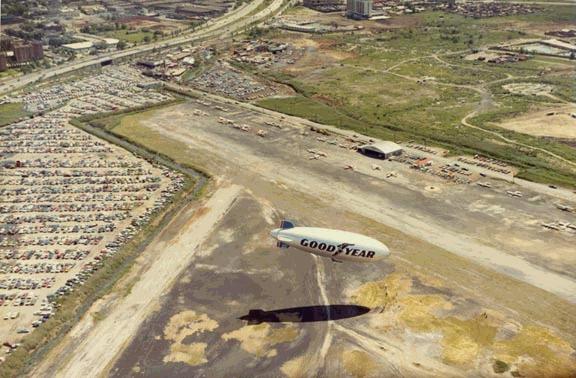
A spectacular shot of the Goodyear Blimp hovering over Flushing Airport, from 1976. Goodyear still makes blimps, but Flushing Airport has long since closed:

Beauty queens and boricua: the Puerto Rican Day Parade

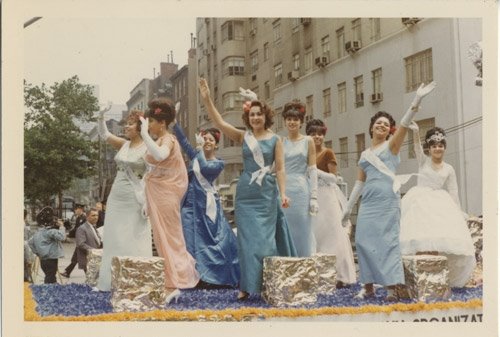
A very different Puerto Rican Day parade, in 1966

Manhattan’s largest parade happens this Sunday, June 8th: the annual National Puerto Rican Day Parade, an event that yearly brings national pride, festivity, chaos and anxiety to most of the city.

The first Puerto Rican Day parade occured all the way back in 1958, a replacement to a modest Hispanic Day Parade. (Which would return on its own in 1965 and still marches every year in the city in the fall.) The separation from the rest of the Hispanic community would be a contention the following year, but now it seems natural that Puerto Rican organizations would break off into their own celebration. After a huge migration during the 30s and 40s, Puerto Ricans were the largest Hispanic community in New York — 600,000 by 1960. (They have recently been eclipsed in New York population by Dominicans.)

The paradees have always been popular since the first one down Fifth Avenue, in April 1958, with 5,000 marchers and almost 125,000 onlookers. By 1962 it would move to the second Sunday in June and remain there until today. Why June? Organizers wanted politicians from Puerto Rico to attend the parade and most would not be finished with local government business until May 30th.

The name of the parade would expand in the 1990s as the National Puerto Rican Day Parade, recognizing a united front with similar parades in other cities.

Recently the city has been dogged by violence from parade revelers, including a 2000 ‘wilding’ attack on over 50 women in Central Park. The parade itself however, while as chaotic as any marching through the city, is a wonderful burst of music and energy featuring pop stars, celebrities and politician — from Hillary Clinton and Tego Calderon to 2006 grand marshalls Marc Anthony and Jennifer Lopez. (Last year “king” of the parade was Ricky Martin.)

The New York Post ran a rather exhaustive history of the parade last year which you should check out for some tantalizing details about political uprising, tenacious beauty queens, and stubborn mayoral candidates.

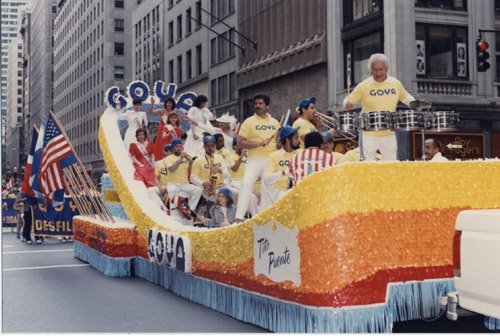
Below: Tito Puente in 1987

Pics courtesy the Smithsonian National Museum of American History archives

Who is Christopher? The story of a street

The events of the Stonewall Riots so reverberate within the international gay community that the thousands-strong Pride Parade every June ends here every year, while over in Europe (specifically major cities in Germany), their annual celebration is actually called Christopher Street Day. But the Christopher of Christopher Street would most likely be scandalized to learn the how his name is being used.

As we mentioned in this week’s podcast, the quirky street patterns of the West Village are a preservation of many original footpaths from the neighborhood’s early days as farm land. When the 1811 Commissioners’ Plan neatly divided the city into an easily navigable grid, the citizens of the village bucked the city’s advances and kept most of its jagged character intact.

The path that would become Christopher Street passed along the edge of the estate of British admiral Sir Peter Warren, an Irish daring-do from the early 18th Century whose fervid support of imperial England belied a equal love for the town of New York. He also owned one of the largest mansions in New York’s rich countryside, i.e. today’s Greenwich Village.

Warren’s wife kept reign over the manor (and their many slave holdings) while Warren was away on war adventures, and her daughters married well, including her youngest who was betrothed to another Manhattan landowner James De Lancey, who provides his name to Delancey Street today. Another daughter married a British colonel William Skinner, and the Warrens honored the engagement by naming the path that bordered their property Skinner Road.

The descendants of Warren clan kept their countryside property even in post-Revolutionary New York, but as the city crept past its original border, their lands became more valuable and they were eventually parceled into smaller lots. In 1799 the property that included Skinner Road fell into the hands of a trustee of the Warren estate Richard Amos.

Amos was quick to lob off sections of the property and sell to others. But he kept a sizable portion and passed it to his relative Charles Christopher Amos, who then apparently took to the unoriginal idea of giving the roads on his property various parts of his own name — Amos Street (today’s 10th Street), Charles Street (which still exists today), and the former Skinner Road, now newly named Christopher Street. By the 1820s, the former farmland had lost its bucolic character and became a part of the New York urban landscape, with Christopher Street, lined with businesses, the Village’s commercial center.

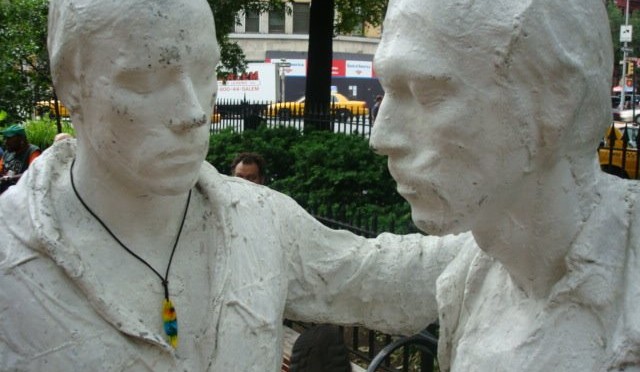
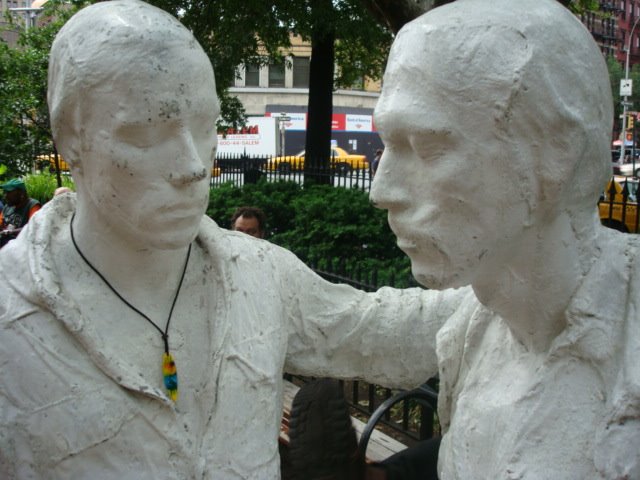
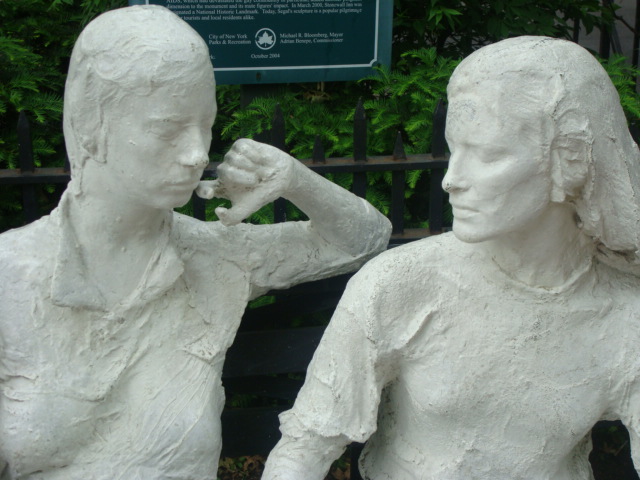
By the way, the white sculpture of Christopher Park are designed by George Segal and were placed in the park in 1992. The piece entitled Gay Liberation features two gay male figures standing next two seated lesbians. Depending on the time of day, the sculptures are either extremely charming or a little creepy.

Hamilton Grange: Movin’ on up!

Pic courtesy of Friends of St Nicolas Park

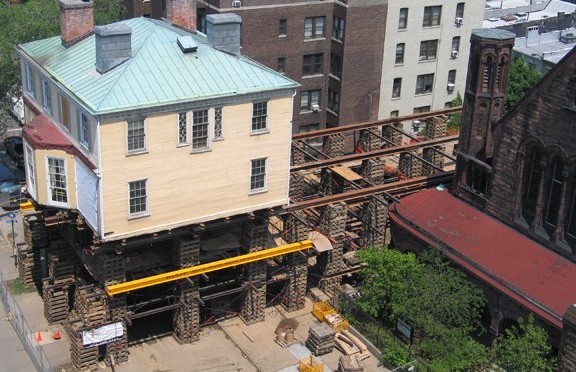
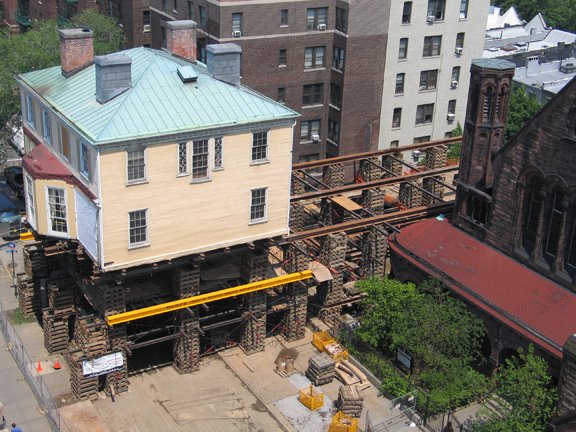
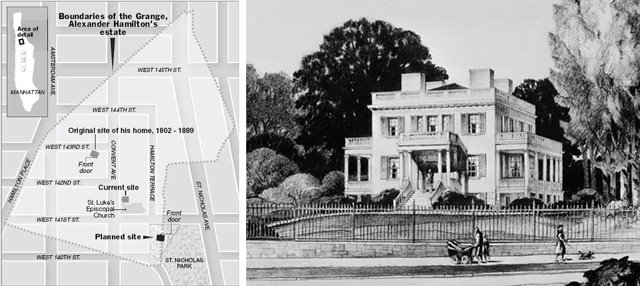
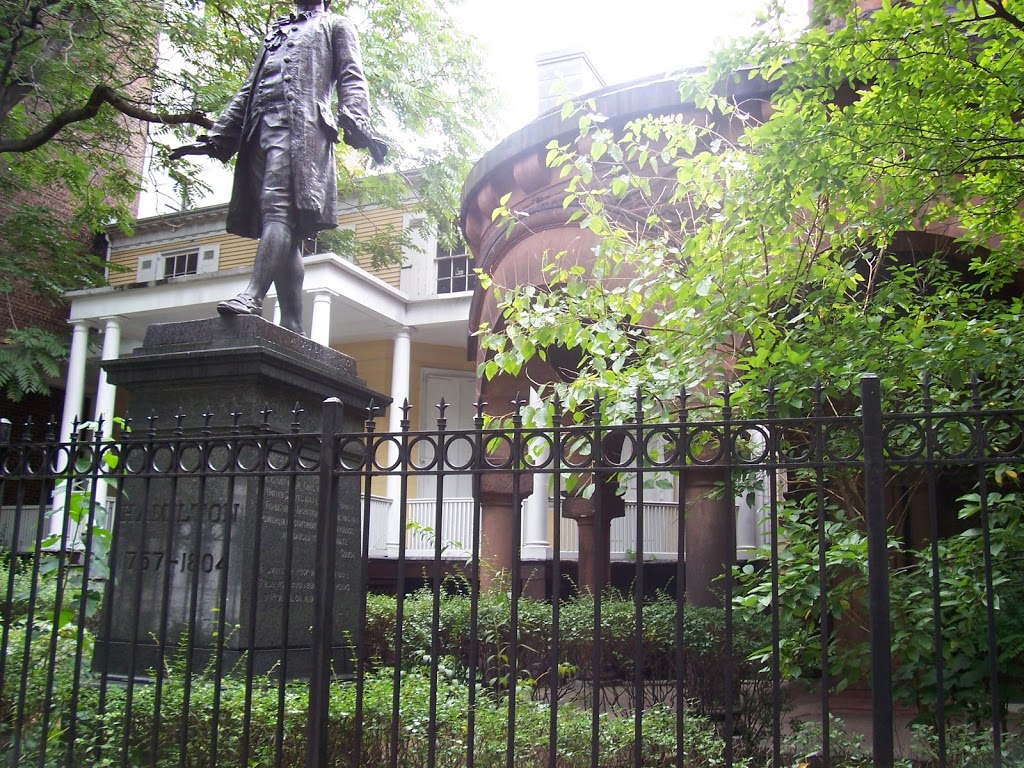
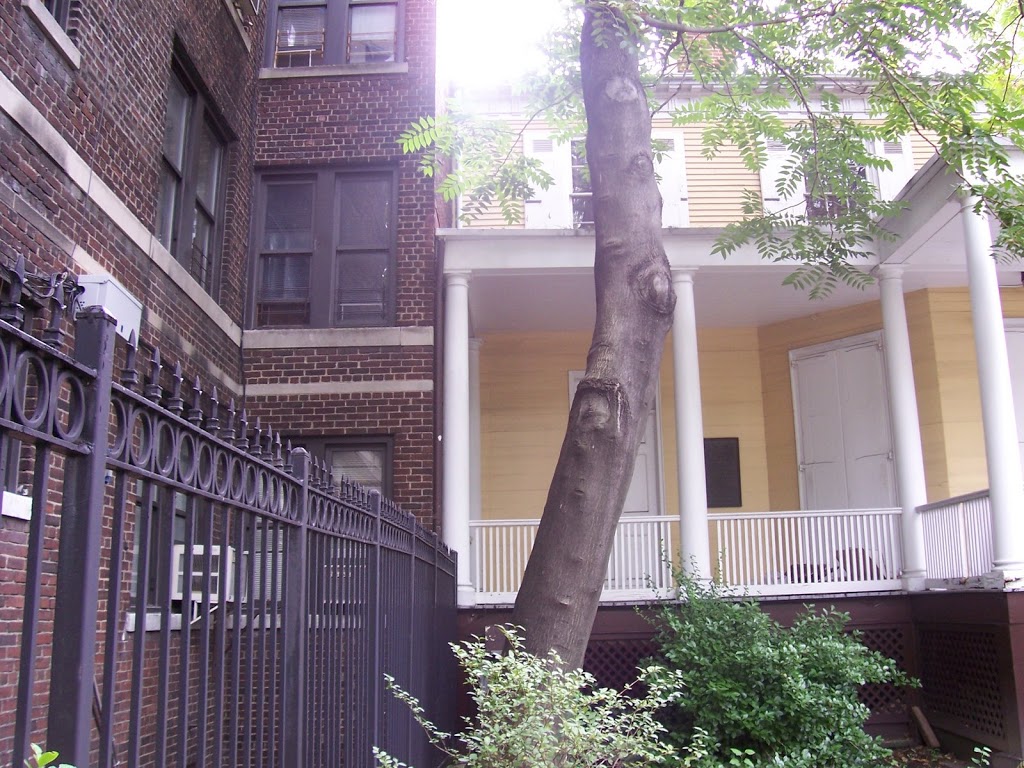
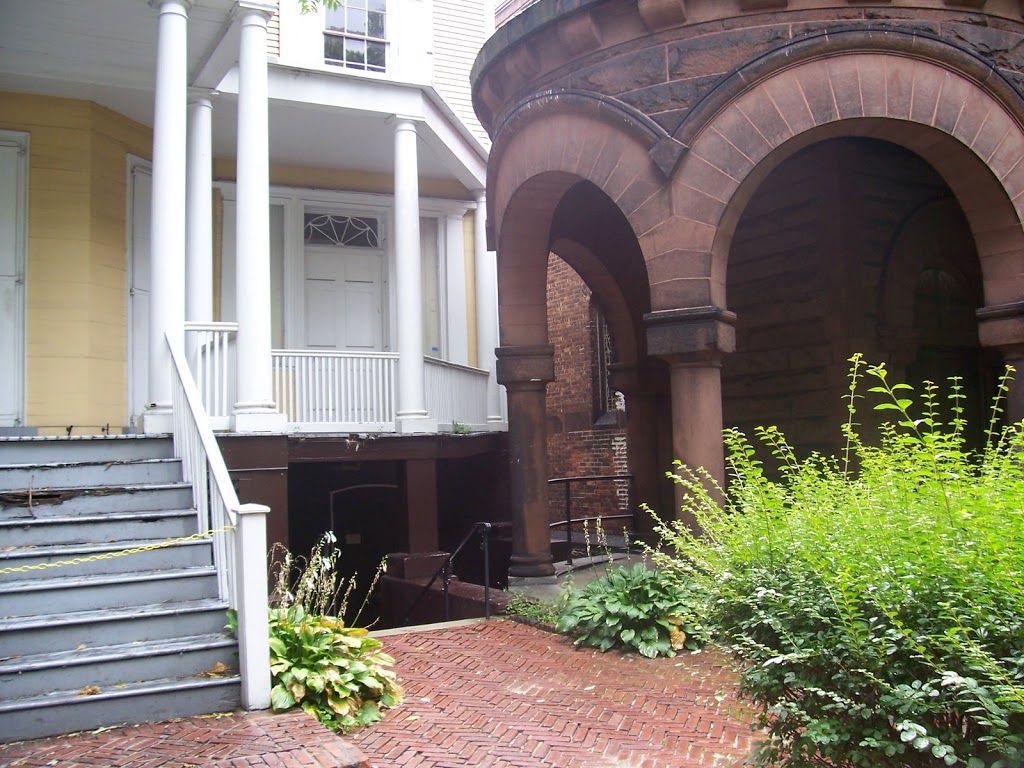
The Hamilton Grange National Monument is finally on the move! The home of Alexander Hamilton, built in 1802 and inhabited by the Founding Father for all of two years before his fateful duel with Aaron Burr, is being slowly lifted from its cramped, ingracious little spot next to St. Luke’s Episcopal Church.

As you can see from the website, the house had to actually be lifted over part of the church that had been built blocking the Grange front porch. Once at the proper height, the entire home was moved into Convent Avenue where it will slowly be lowered. On June 7th, it will be moved to its new digs at St. Nicolas Park, where it will be crowded by nothing but shrubs, picnic tables and trees.

What the Grange used to look like and where it was situated;

What the scene at the Grange was like a few months ago:

And here’s the graphic of what the new Hamilton Grange arrangement will finally look like, courtesy the National Park Service:

Obviously they will have to rebuild the side porches, the original entrance and other features that were stripped off when the house was moved next to St. Luke’s in 1889.

I highly recommend a trip up to the neighborhood of Hamilton Heights to check out this very unusual sight. You may not see a national monument hoisted up into the air for quite some time!

Sarah Jessica Parker: her New York City history


Above: the sun comes out for Sarah Jessica Parker

New York City usually spends the summer movie season being destroyed by aliens or scarred by car chases. So despite what you may think of the upcoming Sex And The City movie, consider this — not only does the Big Apple make it out alive, it actually transforms back into that place of fantasy and romance that made you fall in love with it in the first place.

All the Sex And The City actresses have New York connections, especially native New Yorker Cynthia Nixon. But lead star Sarah Jessica Parker developed her acting chops here and maneuvered through many notable Broadway and off-Broadway performances to somehow become the quintessential young New York actress.

Although Sarah was born in Nelsonville, Ohio, in 1965, her father was a Brooklyn native so the city was always in her blood. Even almost removing Sex And The City entirely from the equation, you can still trace her early history through the streets of the city at these sites:

Roosevelt Island
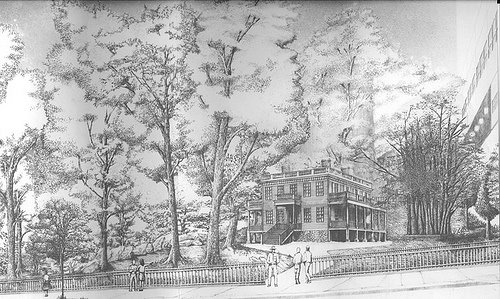
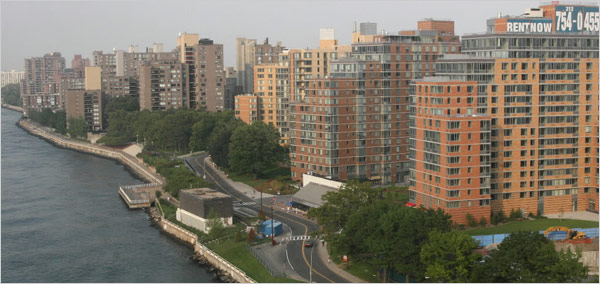
In 1977 Sarah’s family packs up a VW van and moves to the burgeoning social experiment known as Roosevelt Island. From here, she is able to go to performance schools in the city and audition for shows at an early age. The island had only been named after Roosevelt for four years and many were still calling it Welfare Island. Sarah most likely took the Roosevelt tram, which had just been built the year before.

Professional Children’s School (132 West 60th Street)
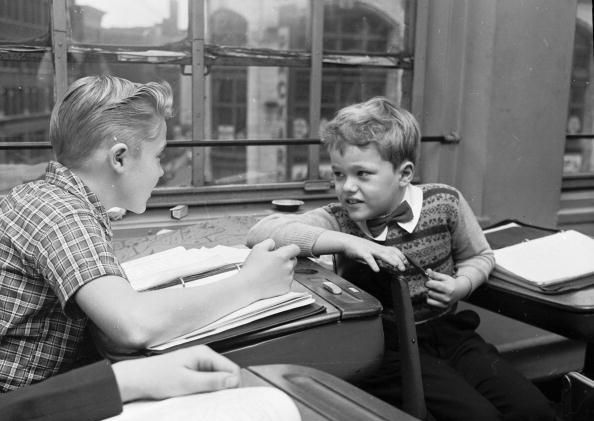
Sarah attended this performing arts school in her early years. The Professional School has fostered hundreds of precocious young performing arts students since 1914, including another famous Sarah (Michelle Gellar). The photo above is of PCS students in 1955. Sidenote: the Professional Children School spawned most of the Culkins (Macaulay, Rory, et al)

Neil Simon Theatre (W. 52nd Street)
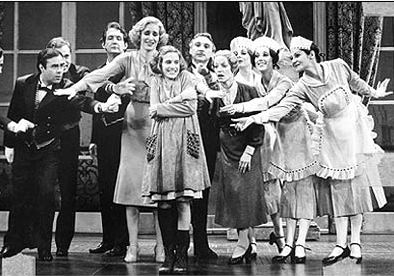
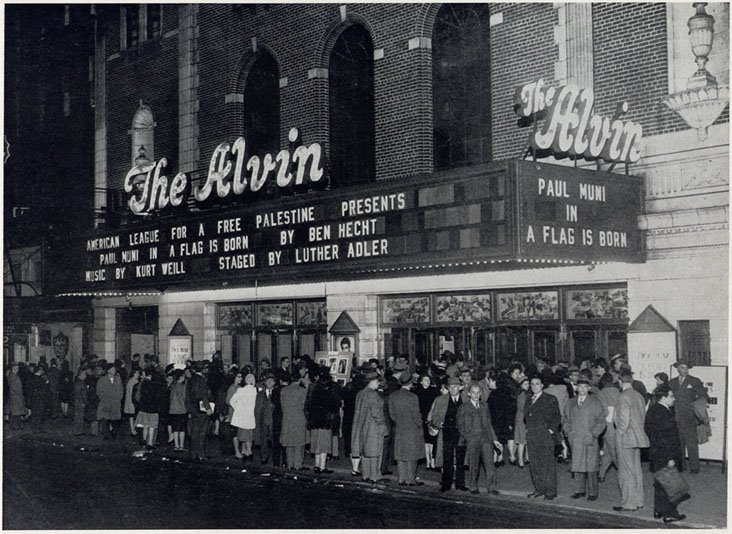
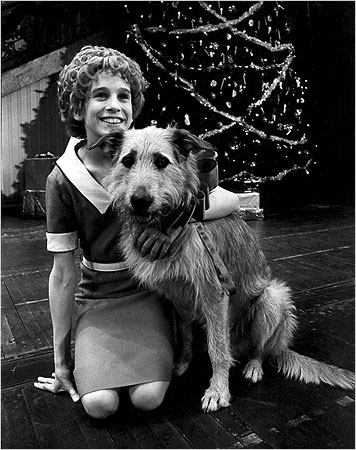
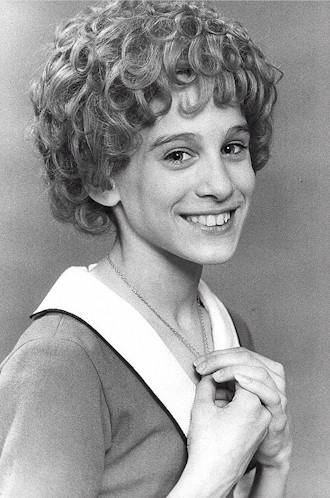
Formerly the Alvin Theatre (pictured above in 1947), this was where Annie made its Broadway debut, and from 1978-80 featured a young Sarah Jessica, in latter years as the title character (below), in what looks to be a horrendous fright wig. Four years later the Alvin would be renamed for playwright Simon, and its first production — Brighton Beach Memoirs — would star Sarah’s future husband Matthew Broderick.

Sarah performs a song from Annie in a 1982 television special here.


Manhattan Theater Club (at City Center, 131 West 55th Street)
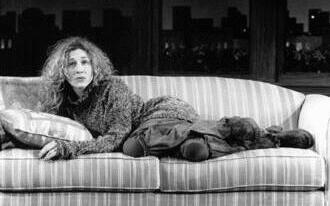
City Center, a former Shriners hall, welcomed the renown theater company to its location in the 1980s. Sarah spent many great years during the 90s on the stage of the MTC, most notably playing a dog in the 1995 comedy Sylvia. Her co-star Nixon frequented the stage many times as well.


Richard Rodgers Theatre (226 W 46th Street)
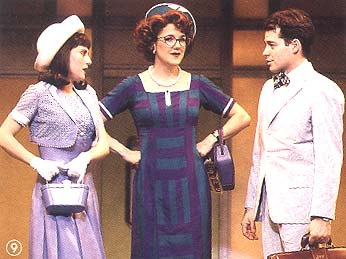
Sarah met her future husband Matthew Broderick (above) through her association with the Naked Angels theatre company, but the two would take to the big stage together in the revival of How To Succeed In Business Without Really Trying, a show which would garner Broderick a Tony Award. Sarah Jessica marries Broderick in 1997 in civil ceremony in a former Lower East Side synagogue.

66 Perry Street
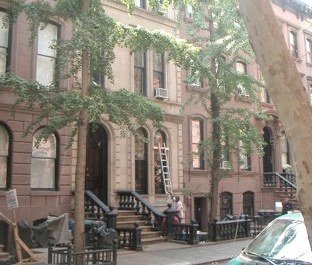
Sex And The City, which debuted in 1998 and scoured the city during its seven year run for trendy and romantic locations, placed Sarah’s character Carrie Bradshaw at the address 245 East 73rd Street, although the actual building where exteriors were shot was located at 66 Perry Street in the West Village, nearby her present home. (You may want to avoid this location for the next few weeks.)

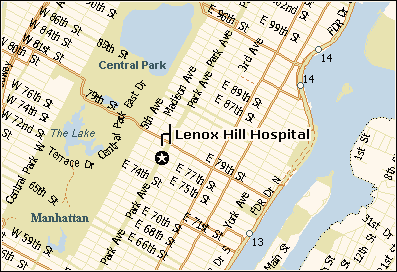
Lenox Hill Hospital (100 East 77th Street)
Sarah gave birth to her first child here, in one of Manhattan’s oldest hospitals, in 2002. The facility opened in 1857 as the German Dispensary but moved to its present location in 1862. In 1918 it was renamed after the Upper East Side neighborhood where it resides. Perhaps Sarah delivered her son James Wilkie Broderick in a room near where Winston Churchill was treated after he was hit by a car in 1931.

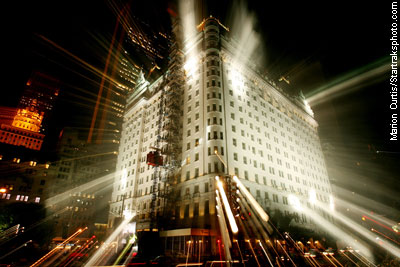
Plaza Hotel (5th Ave and 59th Street)
Turned 40 years old at a lavish birthday party at the Plaza Hotel, which was at the time 97 years old. The whole cast celebrated with her, as did that other New York City comedy icon — Jerry Seinfeld.

Below: Sarah as Annie

By the way, in 1971, when Sarah was only six years old, a young designer by the name of Manolo Blahnik came to New York City with his portfolio, looking for work. He met with the legendary Diana Vreeland at Vogue Magazine, who suggested he focus strictly on making shoes.

Your shoes in these drawings are so amusing,” she said as she thumbed through his sketches.

Less than 30 years later, Manolo’s shoes would become famous worn on the feet of the former child star.

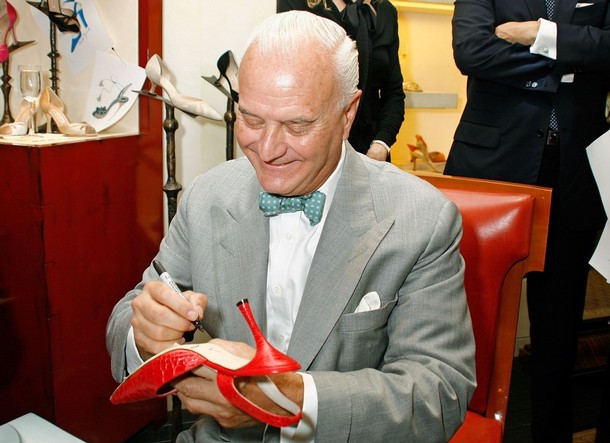
Below: Manolo, signing a shoe in New York Fashion Week in 2006


Photo by Amy Sussman/Getty Images

Know Your Mayors: William Russell Grace

Our modest little series about some of the greatest, notorious, most important, even most useless, mayors of New York City. Other entrants in our mayoral survey can be found here.

You can divide the mayors of New York into at least five different groups, with some obvious overlapping into one or more groupings:

1) Ladder climbers who use the mayor’s seat as a mere spoke to greater political power

2) Puppet mayors of Tammany Hall, driven by corruption, though occasionally by sudden late-day resistance against the powerful Democratic machine that put them into power

3) Idealistic one-shots, who rise to power during flashes of mass community unrest, then often disappear shortly afterwards

4) City workhorses, who spend their lives rising through the ranks to achieve the mayor’s seat almost as a finish line to their careers

Then there is the fifth kind, one that our current Michael Bloomberg embodies, as does this week’s Know Your Mayor topic, William R. Grace — the mogul mayor, a powerful businessman with astute vision who pursue civic leadership almost like a hobby.

Like Bloomberg, Grace entered New York politics only after establishing a business empire that spanned the globe. In fact, Grace’s resume hardly seems to foretell a future in local politics at all.

Born on May 10, 1832, in Cork, Ireland, young William and his family fled the potato famine in 1846 and eventually found themselves in Peru. Grace became a successful merchant to the shipping and delivery vessels mining South America’s natural resources, particularly bat guano, whose flexible chemical properties made it as desirable as precious metals.

By 1854, Grace and his brothers had their own operation — W.R. Grace and Company — which initiated steamship lines traveling between North and South America. By the time the young entrepreneur decided to relocate to his North American office in New York City in 1866, he had become independently wealthy and one of the most powerful men navagating the Atlantic Ocean.

Like many of the nouveau riche, Grace lived in Brooklyn Heights with his wife where he could observe his burgeoning shipping empire in New York harbor, his vessels traveling between Latin America and Europe. His office was at 47 Exchange Place and, later, the India House.

His new financial powers granted him avenues into New York’s political scene. At first entirely uninterested in civic matters, he ran for mayor in 1880, and won, incredibly as a Democrat who also happened to be foe to the Tammany Hall forces. (If you’re going to fight Tammany Hall, it helps to have money and influence already in the bank.)

If that wasn’t enough, Grace become the first Irish-American and Catholic mayor in an age where when many city residents still distrusted Catholics. In fact, Republican opponents had claimed that Grace would “make this City subordinate to the Holy Father in Rome.

Grace was mayor for two non-consecutive terms. From 1880-1882, his battles were with Tammany’s ‘Honest’ John Kelly and the city’s deteriorating infrastructure. Although Boss Tweed had been dead for two years, and Tammany’s corrosive readily exposed, Grace still devoted most of his first term battling his fellow Democrats over such things as street cleaning.

After returning to business for a couple years, he was brought back into the mayoral world in 1884 (until 1886) after the Republican and traditional Tammany candidates proved too divisive. Less dramatic years in terms of political battles, Grace would be involved with ensuring New York two of its most famous monuments.

He was mayor when the Statue of Liberty came to town, officially accepting the gift from the French in 1885. That same year he successfully secured the permission to have the body of Ulysses S. Grant buried in the city, in the ostentatious mausoleum that would be known as Grant’s Tomb.

According to the Catholic Encyclopedia, Grace went to Mass every morning before heading to City Hall. Grace’s latter days were devoted to philanthopical gestures, including the Grace Institute, which educated immigrant women, in 1897. He died in 1904.

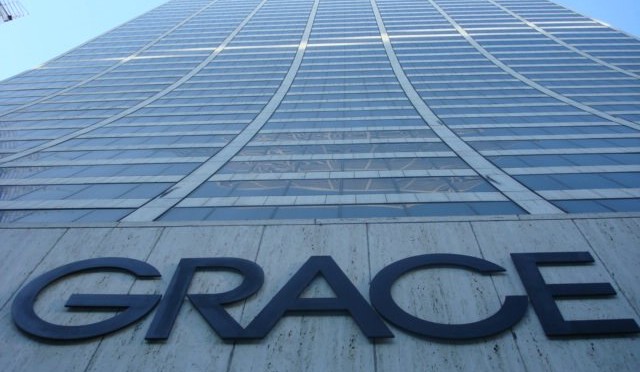
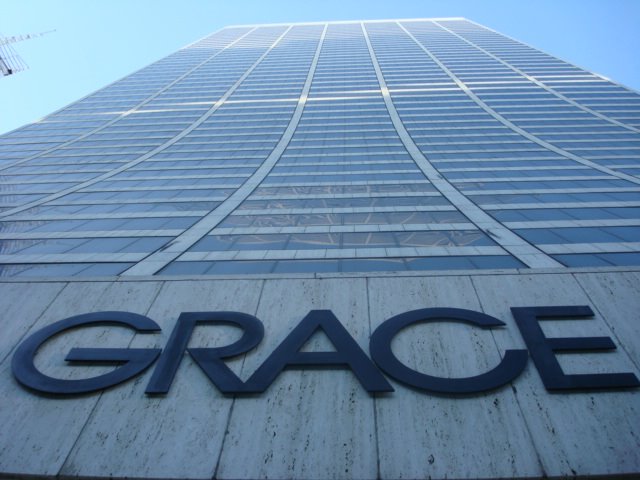
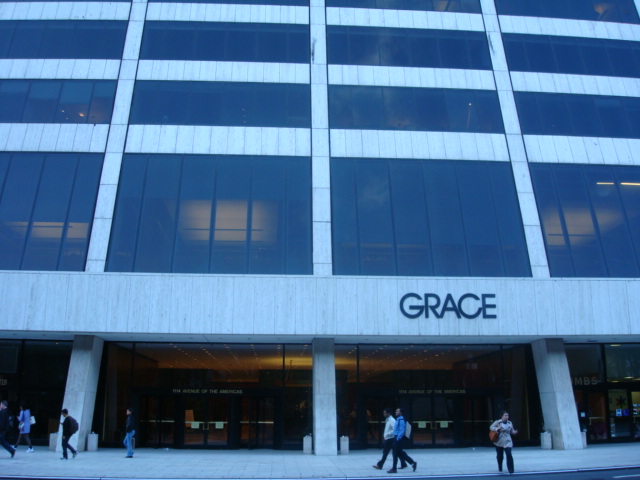
However, his company W.R. Grace and Company would grow, from its salad days in bat guano, to become one of the world’s biggest chemical conglomerates. Their New York corporate headquarters was built in 1971 on the north side of Bryant Park and is generally known for its white sloping facade. At present it is the 61st tallest building in New York City.

Categories
Podcasts

PODCAST: Barnum’s American Museum

You know PT Barnum from his circus, but he was bringing the freakshow to New York long before then. Come take a tour with us of the craziest museum to ever hit New York City.

Listen to it for free on iTunes or other podcasting services. Or you can download or listen to it HERE

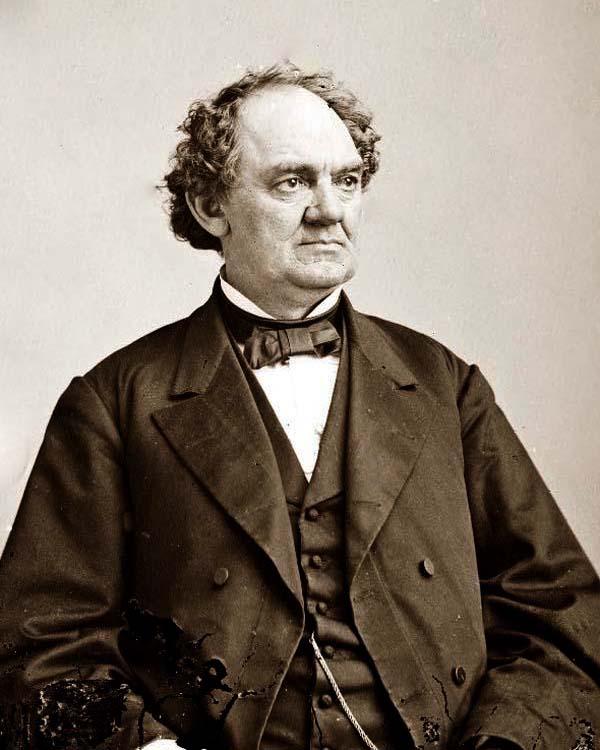
P.T. Barnum, godfather of the spectacle

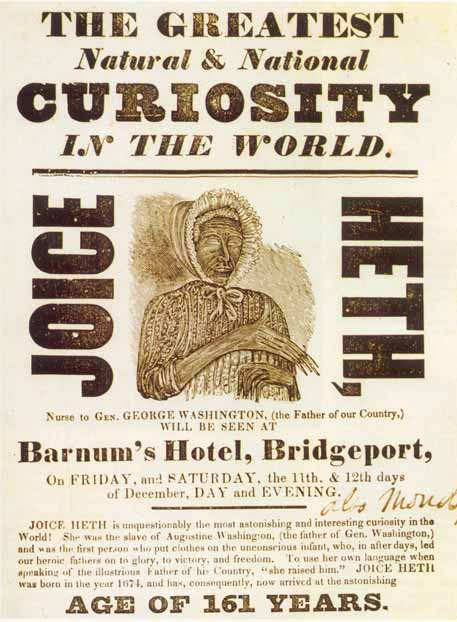
Barnum’s first hit, his ‘the 161 year old’ find

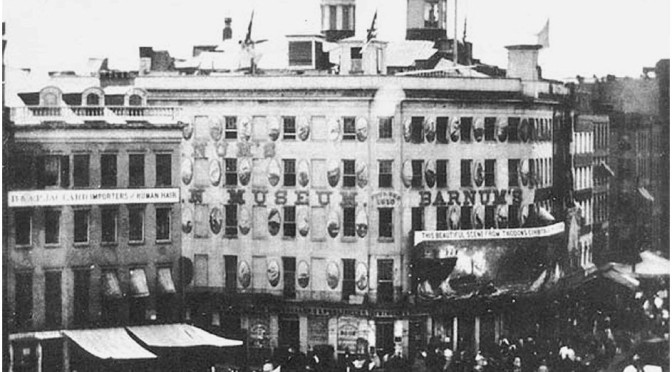
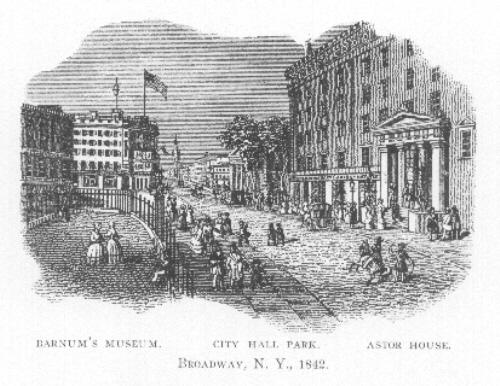
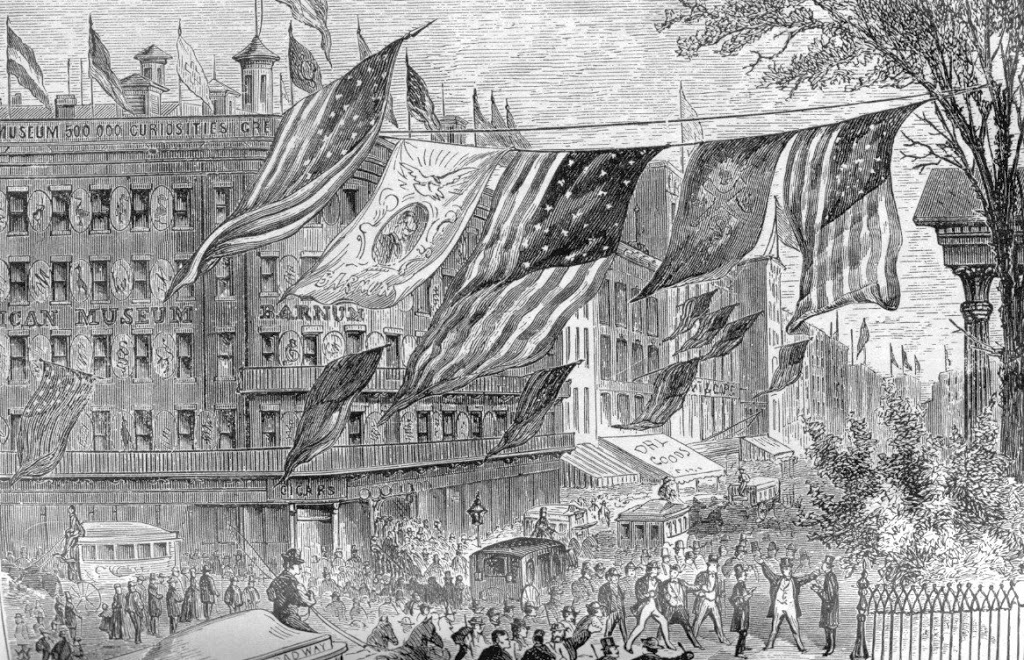
The scene around City Hall Park in 1842. The Barnum Museum is the building with the flag:

Another illustration of the wild scene in front of the museum

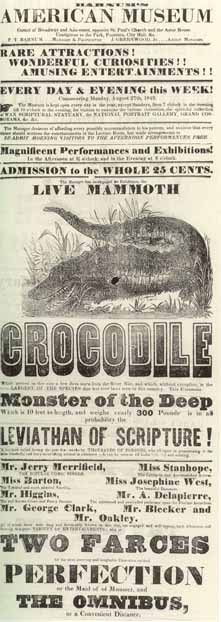
A typical Barnum advertisement:

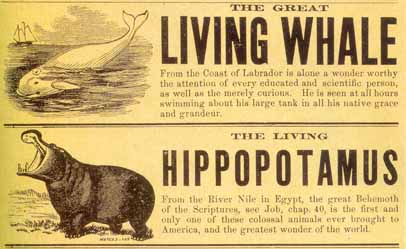
Unbelievably, Barnum’s hosted a wide variety of aquatic creatures, including whales:

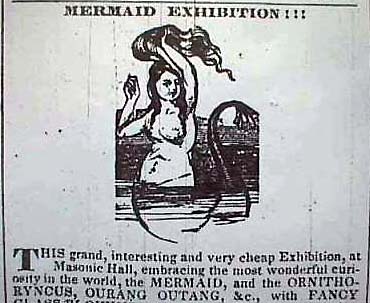
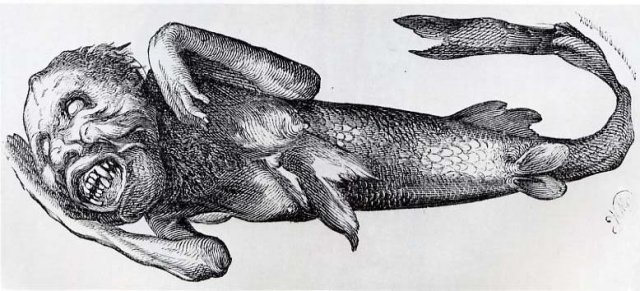
An advertisement for the Fejee Mermaid:

And the real thing:

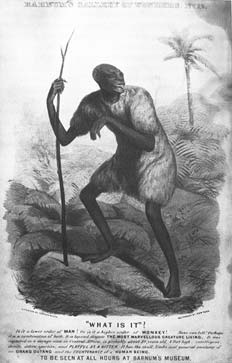
An illustration — by Currier and Ives, no less — of the ‘What Is It’

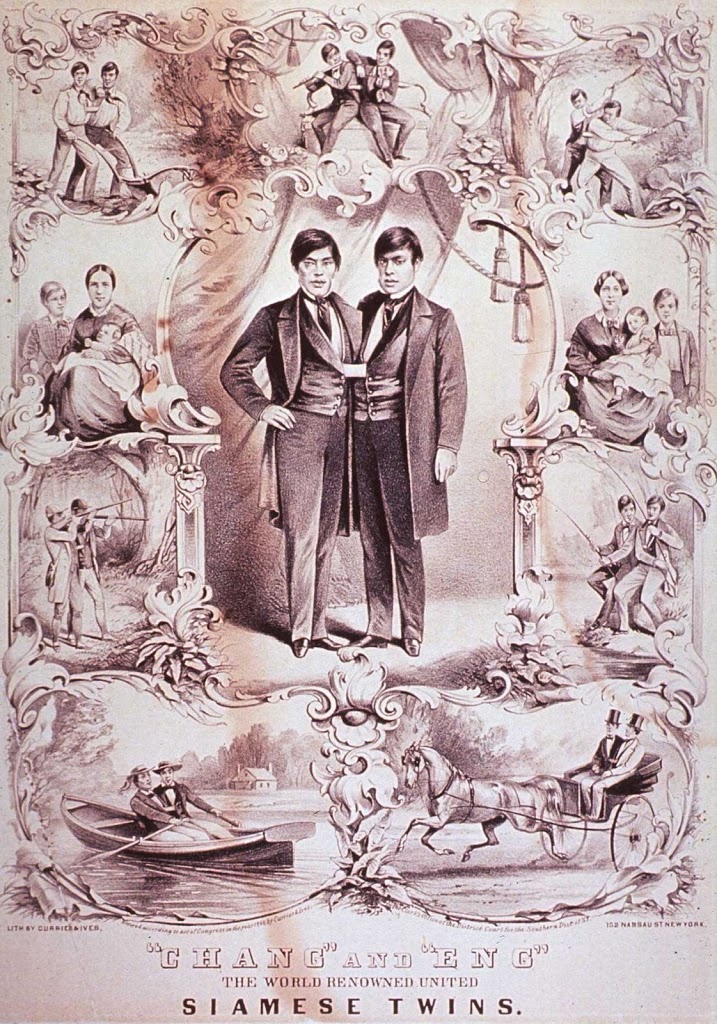
The Siamese Twins, Cheng and Eng

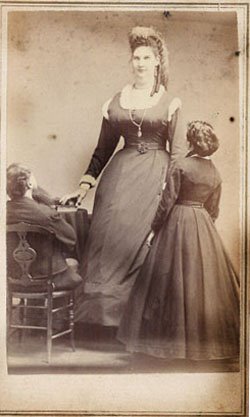
Another attraction: Anna Swan, the Nova Scotia giantess, who had to be rescued from the fire that burned the museum down in 1865

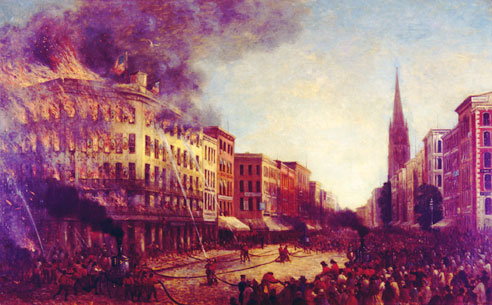
The museum burns, 1865

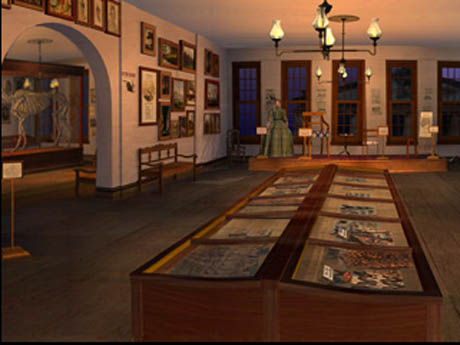
The City University of New York has an extraordinary website devoted to Barnums, which includes a very Myst-like simulated walkthrough of the American Museum and a thorough archive of information. I highly recommend you check it out.