Categories
Podcasts

Hoaxes and Conspiracies of 1864: The Confederate Plot to Torch New York

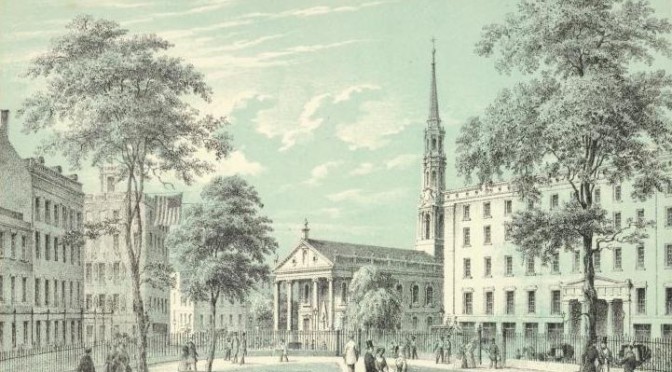
Barnum’s American Museum at left (the building with the flag) and the Astor House at right, from the vantage of City Hall Park, circa 1850. Both buildings were victims of the Confederate plot of 1864 to burn the city.

PODCAST We’re officially subtitling this ‘Strange Tales of 1864’, presenting you with a series of odd, fascinating stories from one pivotal year in New York City history. With the city both fatigued by the length of the Civil War and energized by Union victories, New Yorkers were often at their best — and their worst.

The city unites around an unusual parade — the first regiment of African-American troops — even as it elects a pacifist mayor sympathetic to the Southern cause. A grand and flamboyant fair, uniting the community, offers up a surprising New York tradition — the theme restaurant. Meanwhile, a local newspaper editor devises an elaborate hoax to get rich quick off the gold market.

But with the November re-election of Abraham Lincoln also comes a deadly threat — a Confederate conspiracy aimed at New York’s luxury hotels. Tune in as we recount the botched plot to destroy New York in an conflagration of ‘Greek fire’.

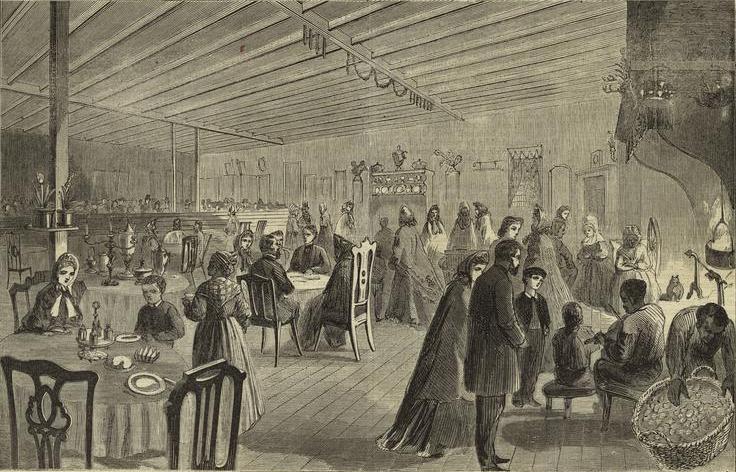
The Knickerbocker Kitchen, a featured restaurant at New York’s Metropolitan Fair. Women dressed in traditional Dutch and Colonial garb and served items believed to be popular with the residents of old New Amsterdam. [NYPL]

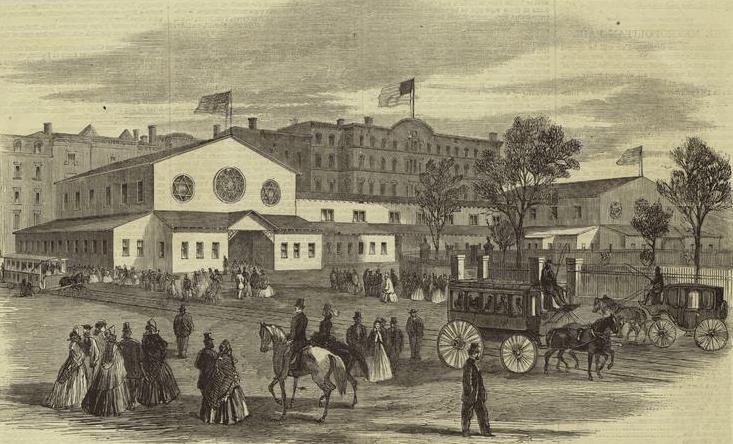
Pavilions were specially constructed around Union Square for the Metropolitan Fair, which raised money for the U.S. Sanitary Commission.

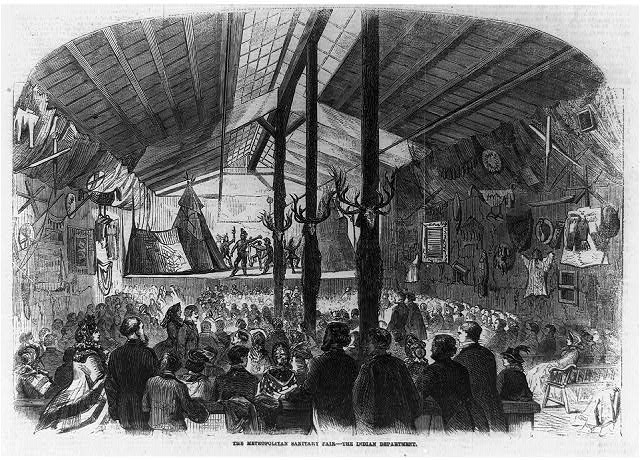
The ‘Indian Department’ at the Metropolitan Fair. [Library of Congress]

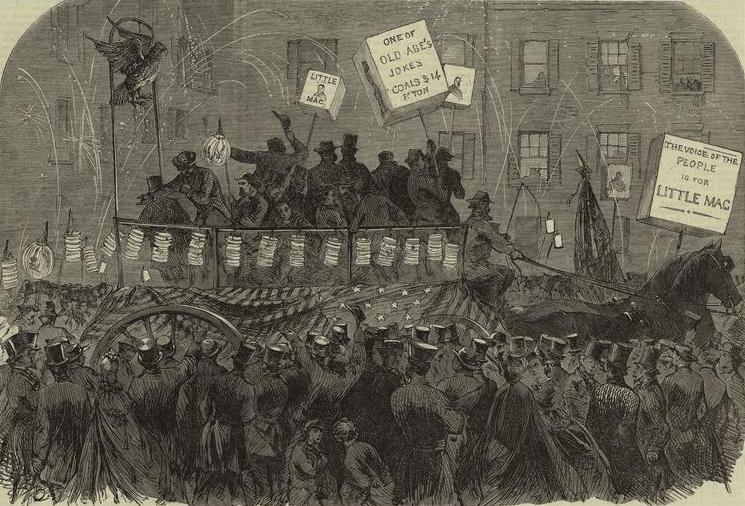
A nighttime ‘torchlight’ rally for presidential candidate George McClellan, the clear choice for New Yorkers in 1864. For a Democratic stronghold like New York, the former general was an especially appealing alternative to Abraham Lincoln. [NYPL]

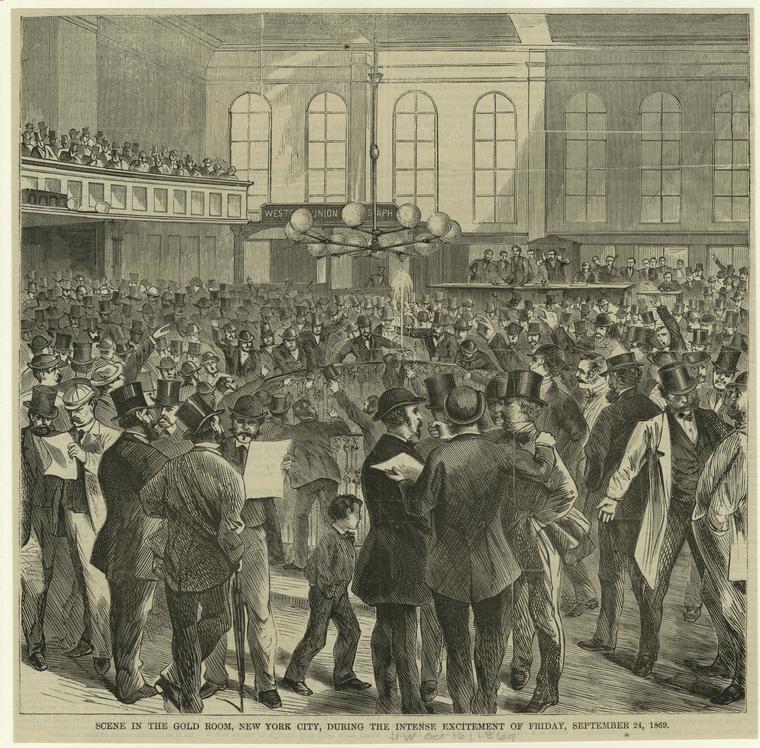
A scene from the New York Gold Room, epicenter of American gold speculation. During the Civil War, traders would buy and sell based upon Union victories and defeats. The trade was also susceptible to false information, such as the events of the Gold Hoax of 1864. (NYPL)

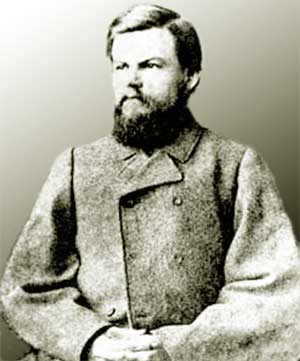
Robert Cobb Kennedy, the only one of the Confederate conspirators to be caught. He was executed at Fort Lafayette in 1865, a couple weeks before the end of the Civil War.

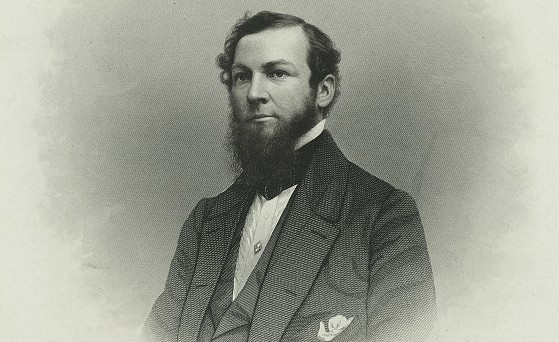
C. Godfrey Gunther: the other Civil War, pro-South mayor

Continuing with the theme of ‘1864’, here’s a revised and expanded version of an article I wrote back in 2009 on the man who was mayor of New York during that crazy year:

KNOW YOUR MAYORS Our modest little series about some of the greatest, notorious, most important, even most useless, mayors of New York City. Other entrants in our mayoral survey can be found here.Mayor C. Godfrey Gunther


In office: 1864-1865

His past glories were built on a mountain of fur pelts, and his future would wash up on the half-developed shores of Coney Island. But in 1961, it was Civil War that nearly derailed the political career of Charles Godfrey Gunther.

The groundwork was laid in 1857 by former mayor Fernando Wood, who rebelled against Tammany Hall, the Democratic machine he formerly led, to form his new political organization called Mozart Hall. This assemblage of working class reformers and Wood devotees returned him to City Hall in 1960, foisting from office the German paint mogul Daniel Tiemann who had first unseated Wood back in 1857.

Back in business, Wood heralded a feisty pro-South, anti-abolitionist stance, pitting himself against Albany and threatening to secede Manhattan from the state.

By the election of 1861 however, a swell of national support for the Union cause turned against Wood. The Democrats were in a precarious spot, splintered between rival Democratic groups. It’s here in our story where we introduce Charles Godfrey Gunther, Tammany’s official candidate for mayor in 1861.

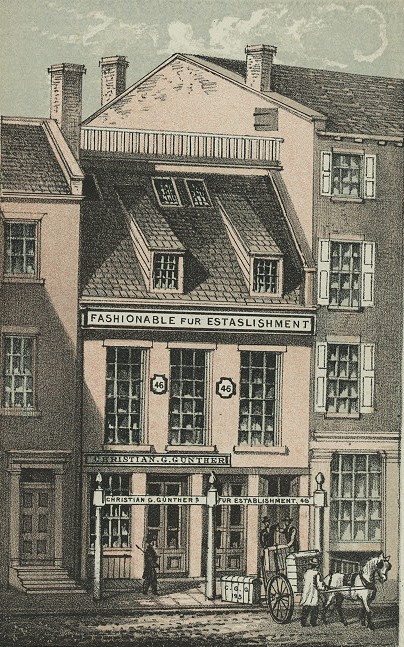
Gunther was born at Maiden Lane and Liberty Street, on Feb 7, 1822 — into a German family that had made its fortunes in the fur trade, rivals of the city’s true fur king, John Jacob Astor. Charles spent his youth in his father Christian’s tutelage, taking over the family mercantile business C.G. Gunther & Co. (pictured at left)

Charles was active in Democratic politics at an early age, sharpening his teeth during party squabbles. In 1855, he was elected an almshouse governor, overseeing the city’s prison and pauper populations. (The blog Correction History has a nice rundown of this unusual elected job function.)

His backroom political successes, paired with his wealth, attracted the attentions of Tammany Hall. The furrier’s son worked his way up through the political lodge, eventually becoming sachem (or district leader) in 1856.

He was Tammany’s candidate for mayor in 1861, against the rebellious Wood, and it would have made for a fine contest between them. Wood still had his Irish supporters, but Gunther’s inclusion lured German voters away from him. In fact, Gunther did beat Wood in that election, scoring 600 more votes than Wood.

But of course, there was another contestant, the Republican George Opdyke. With Wood and Gunther appealing to the same constituencies, they split the traditional Democratic vote, and Opdyke ascended to office.

Perhaps Charles should have been grateful. The years 1862 and 1863 were not gracious times to be mayor of a major city. Opdyke’s execution of military conscription angered poorer New Yorkers, and his fumbled handling of the ensuing draft riots permanently damaged his political reputation.

By the fall of 1863, New Yorkers craving a change in leadership were given a strange buffet of choices. The Republicans, shedding Opdyke and at a serious political disadvantage, brought forth alderman and gun-maker Orison Blunt, inventor of the ‘pepper box gun’. Tammany meanwhile offered up Francis I. A. Boole, a rather corrupt city official notable for heading the street cleaning department.
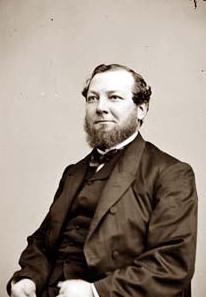
With these weak choices at such a pivotal period in history, rebels from both parties — and heavily peopled with disenfranchised former Wood supporters — split to form a temporary coalition of working class Irish and Germans.

With the strong support of the city’s surging German newspapers, Gunther was chosen as their candidate. That November he swept past Blunt and Boole to become New York’s 77th mayor. Boole took it especially hard; he “became insane and died shortly afterwards.”

Was the Gunther an effective mayor in 1864? His reviews have always been mixed. An “honest, pleasant gentleman, with frank and cordial manners,” he’s praised for his penny pinching tactics, at one time even cancelling a celebration of George Washington’s birthday as it was thought to be too extravagant. In 1964, on the verge of a national election, he clamped down on any serious city celebrations of Union victory as being too ‘political’ in nature.

Many, however, saw a darker reason for Gunther’s actions. He was also pro-South and anti-war, but practically so and far less treasonous sounding than Wood. “He was probably a genuine pacifist,” according to author Ernest McKay. “His opposition was a matter of principle that appeared to be closely connected with his religious beliefs.” Let’s just say, I doubt either Fernando or Benjamin Wood considered Gunther much of a political ally.

Regardless, throughout his term, Gunther attempted to curtail renewed draft efforts in the city and tried to deter ‘brokers’ from hanging around Castle Garden and signing up green young men from off the immigrant boats. He made public strides to prevent a potential anniversary of the Draft Riots, although it is unclear whether such violence would have reoccurred in 1864, with the war clearly gaining steam for the Union.

The new mayor also strived to clear the streets during his tenure, with the removal of slaughterhouses and roaming herds of cattle all over the city.

Ultimately, Gunther was seen as a rather weak political figure, with little influence over other city offices. Perhaps this was because he was comparatively honest — living “by his principles” according to McKay — and the bureaucracies of city government dreadfully corrupted. Running for re-election in 1865, he was crushed in the polling, with three other candidates out voting him. The victor that year was true-blue Boss Tweed crony John Hoffman.
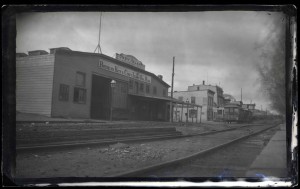

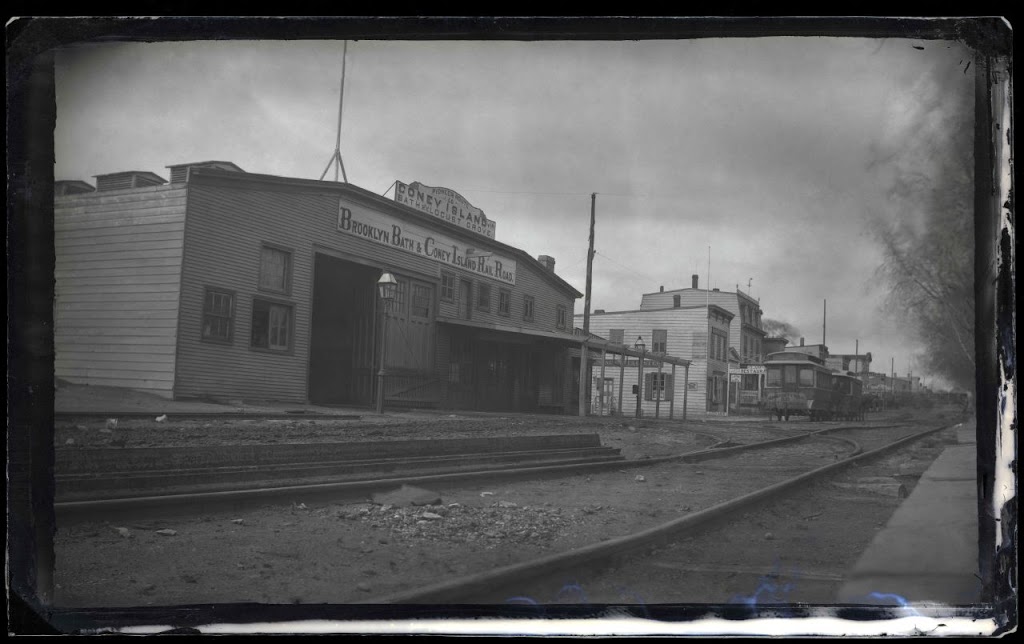
Above: the Coney Island terminal for the Brooklyn, Bath and Coney Island Railroad line

Gunther’s story doesn’t end here. He became a prominent leader in New York volunteer fire department and eventually even a partner in a very lucrative venture — the Brooklyn, Bath and Coney Island Railroad. It was this rail line that allowed thousands of New Yorkers to escape the city, eventually transforming Coney Island into a popular resort and amusement palace.

The train line, nicknamed Gunther’s Road, operated “six steam locomotives and 28 passenger cars” and “carried almost 400,000 passengers” in 1882 alone. Gunther would even own his own resort out on Coney Island, although it burned down a few years later.

And I end with a rather colorful anecdote from a 1906 article about Mr. Gunther and his railroad, from The Third Rail:

“There was one engineer who had served in the war of the rebellion, and who was particularly patriotic, who painted his engine red, white and blue.

Gunther saw it from a distance, on its first trip, tearing across the country, and he was frantic.

“For God’s sake, Drummond,” he said, when he overtook his engineer, “whatever possessed you to paint that engine red, white and blue?’

“You’re a true American, ain’t you?” said Drummond.

“Yes, but-but-“

“Well, so am I.”

“Yes, but that engine looks like a traveling barber shop.”

Gunther could not convince Drummond, however, and the latter quit his job rather than submit to any alterations.

The engine was afterwards painted according to Mr. Gunther’s ideas.

It was painted a flaring yellow.”

Mr. Gunther died on January 22, 1885 and is buried at Green-Wood Cemetery.

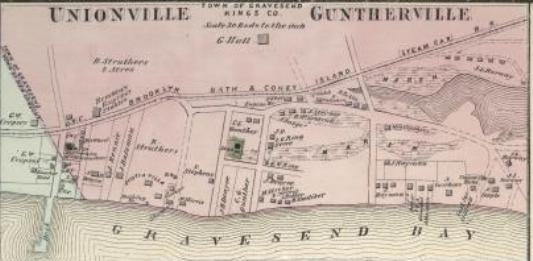
ADDED: One of our Facebook fans reminded me of an even more spectacular fact about Mr. Gunther — there was actually a short-lived Brooklyn neighborhood named after him. Guntherville was actually part of the pre-consolidation town of Gravesend and naturally featured many properties owned by C. Godfrey. The map below from 1873 illustrates its place along the Gravesend shore. Judging from comparing maps, it appears that part of Guntherville would later comprise the fleeting, beach side amusement venture Ulmer Park.

Pics courtesy of the New York Public Library

New York City Hall: Open for business for 200 years!

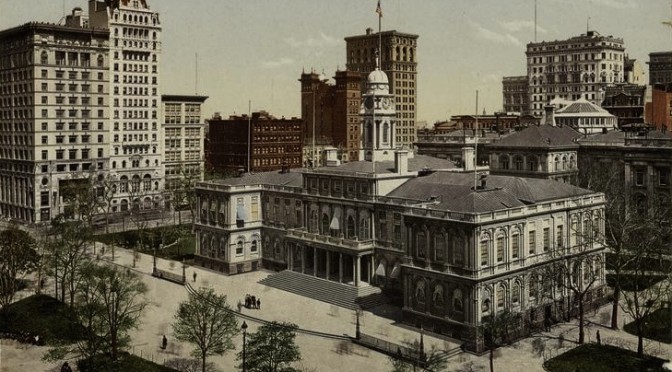
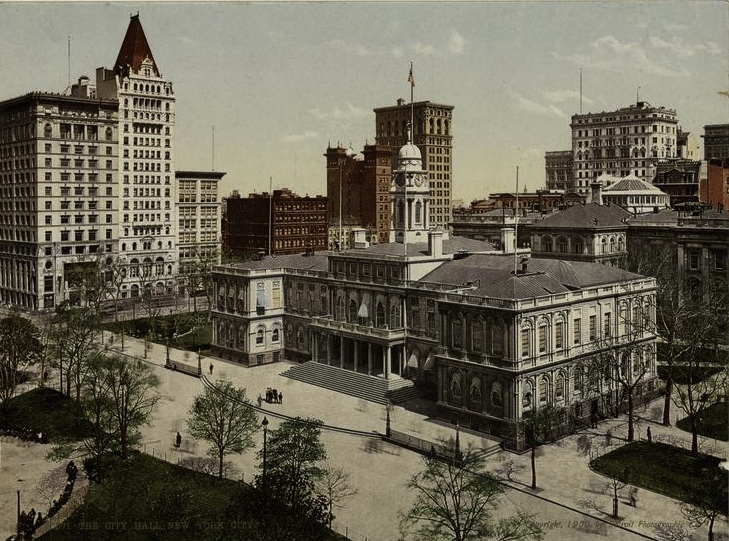
Above: City Hall in 1900 (Courtesy NYPL)

Never have I been more elated to write about a City Council meeting.

At the start of the 19th century, city affairs were still being conducted on Wall Street at Federal Hall. For many years they shared the corridors with George Washington and the first American Congress.  By 1800, the federal offices were long gone, but that ‘old City Hall’ was no longer an adequate structure for the affairs of a fast growing city.

So a new City Hall was planned in 1803 by New York’s most notable designers of the day, Joseph Mangin and John McComb, to be placed at the site of the city’s old common grounds. After years of delays, however, it seems city leaders grew a tad impatient. Although the new City Hall building would not officially be completed until 1812, the mayor and the Common Council moved in anyway.

According to state records, the very first meeting between Mayor DeWitt Clinton and the council was held on August 12, 1811.

“The Common Council met agreeably to adjournment in the new City Hall in the room designed for the Mayor’s office.” Mayor Clinton was joined in his chambers by a recorder and the 17 members of the Common Council, including both Caleb and John Pell, whose family holdings would become the basis of Pelham Bay Park.

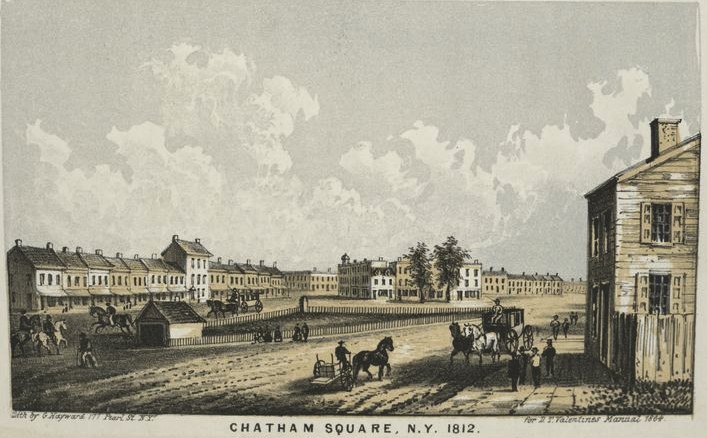
And what, you may ask, was the big item on their agenda? The proposal to fence in Chatham Square.

That open patch of land, on the Bowery and to the west of City Hall, had become an open air livestock market. The famous old Bull’s Head Tavern was located nearby, and farmers from all over Manhattan came to this area to sell their wares to merchants and to factories located around Collect Pond. Some on the council believed a fence around this place of business would constrict farmers attempting to move in and out of the property.

Still, a fence brought the promise of cleanliness. Collect Pond was being drained and levelled, and city leaders expected the land values surrounding it to increase. Thus the fence was approved. You can find a picture of Chatham Square and the newly constructed fence below.

But more importantly, with this decision, two hundred years of civic bureaucracy were well underway!

For more information, check out our podcast on the history of City Hall and City Hall Park (Episode #93).

Courtesy the New York Public Library Digital Image gallery
Who won the Great Gimbels Air Race of 1911?

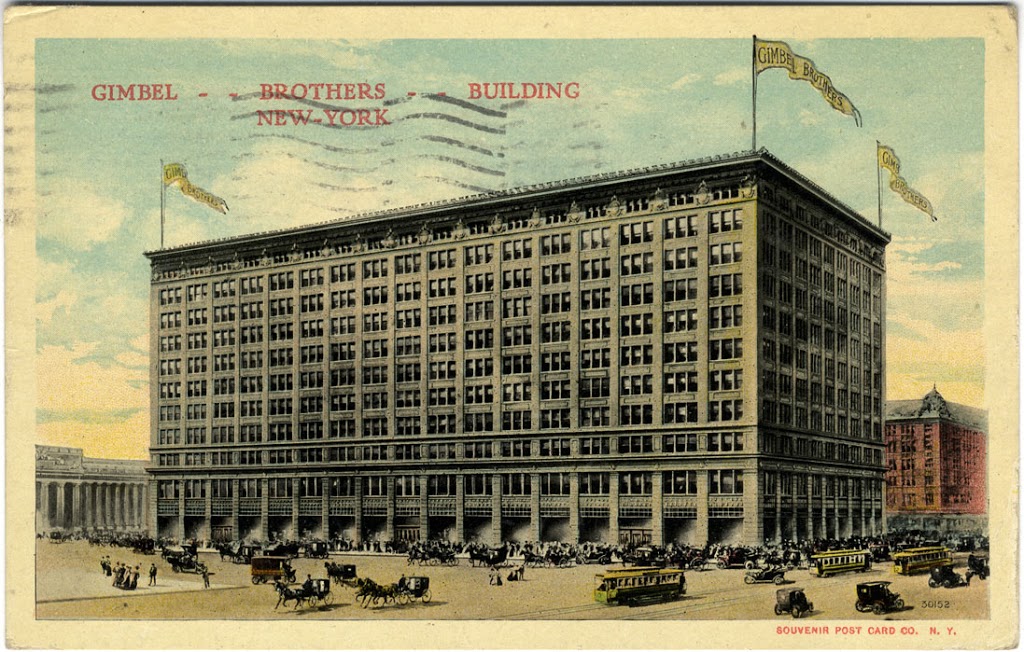
The place to be one hundred years ago today was Greeley Square, that bustling public space just south of 34th Street from Herald Square. Thousands of people crowded the sidewalks outside the department stores that afternoon, and many hundreds more shoved themselves into the elevated subway station.

These crowds were centered around Gimbels department store at 33rd and Broadway, but nobody was there to look for bargains. No, they were simply looking up.

Below: Gimbels store on 33rd Street. Today the building houses the Manhattan Mall, but you can still see vestiges of the old store in its copper green traverse. Courtesy the CUNY archive.

Imagine a century ago when air flight was so novel that just the sight of a plane zipping through the heavens could elicit shock and amazement. Now imagine three aeroplanes racing across the sky, right over your head. Most buildings in midtown Manhattan were no more than a few stories tall in 1911, allowing crowds an unencumbered view of something historic.

In the early days of flight, pilots were often driven by cash rewards. The Gimbels Brothers, the chief rival of Macy’s department store across the street, had opened their new emporium here at 33rd Street just the year before. As a publicity stunt, they offered $5,000 to the pilot who could fly between their New York store and their Philadelphia location the fastest.

Three airmen took up the offer: Hugh Robinson, a young engineer working for early aviation pioneer Glenn Curtiss; Lincoln Beachey, a stunt flyer known for his dapper fashion sense, and another pilot, Charles Hamilton. On the morning of August 4th, 1911, the three pilots headed to the busiest air field in New York — Governor’s Island — to prep their new flying machines.

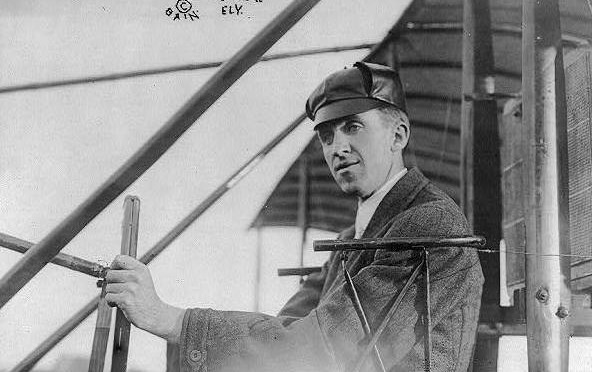
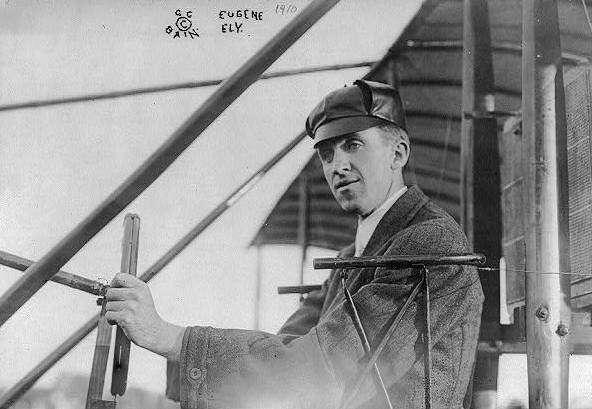
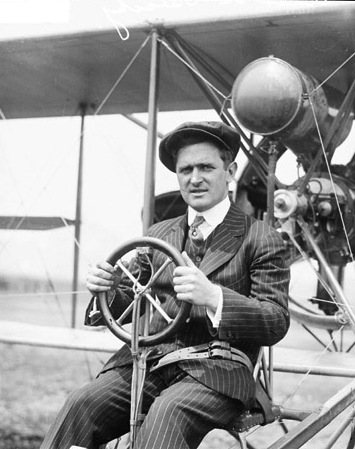
The Gimbels were not the only ones benefiting from publicity that day. All three men would be flying crafts made by Curtiss, who never missed a chance to grab headlines from his bitter rivals, the Wright Brothers. But as flight time approached, the skies above New York appeared overcast, and Hamilton — fearful of flying a new craft in windy conditions — dropped out. No matter! On hand to replace him was faithful Curtiss flyer Eugene Ely. (He’s the one pictured at top, pictured in 1911, photo courtesy LOC.)

At 2:30 that afternoon, the three planes lifted off from Governor’s Island and headed over Manhattan. All over the city, New Yorkers craned their necks to stare at the three specks streaking over the sky. According to the Evening World, “Every window of every hotel and office building which opened towards the route of the flyers were full of faces.” The best seats in the city were atop the Gimbels building itself, where VIPs sipped liquid refreshment and fanned themselves as studious members from the Aero Club of America timed the competitors.

The three planes flew over Manhattan then circled the Gimbels store, to the delight of the crowds, before heading off over the Hudson River and into New Jersey.

Only two planes made it to Philadelphia that day. At one point, Beachey (pictured at right, impeccably dressed) landed his craft in Trenton, becoming momentarily disoriented. He quickly made it back up in the air. Robinson ran out of gas around Princeton Junction; luckily for him, some cheerful motorists sped into town and retrieved additional fuel for the pilot. Robinson was back up in the air in less than 20 minutes.

Eugene Ely, the replacement derring-do, wasn’t as lucky. Having flown dangerously within feet of Beachey, Ely’s fuel tank began to leak, and he was forced out of the sky. 

The remaining two air crafts arrived in Philly a little over two hours after leaving Governor’s Island. It was raining, but the enthusiastic crowds still filled the streets. Lincoln Beachey got there first, encircling Philadelphia City Hall and the statue of William Penn before flying past the Gimbels store and landing in Fairmount Park. Robinson was close behind and both pilots “were drenched to the skin, having passed through thundershowers between Trenton, NJ, and Philadelphia.” [source]

Brooklyn baseball: the Superbas and the worst batter ever

The New York Times this morning had an intriguing story about a unfortunate fellow who plays for the Chicago White Sox named Adam Dunn — nicknamed ‘the Big Donkey’.  This has been a banner year for Mr. Dunn as he is about to make the list as one of the worst players in the history of the sport.

It’s that list that brings the story back to New York. Dunn has a current batting average of .165. For you complete novices, that the number of hits Dunn has scored divided by the number of times he’s been at bat. (Ed.: I’m obviously one of those novices. Check the notes below for a clearer definition.) That is roughly my batting average when I played for my church softball team when I was nine years old.

According to writer Sam Borden, “a number like .165 will put his name in the record books for the lowest single-season batting average by an everyday player since 1909, when Bill Bergen, a catcher, hit .139 for the Brooklyn Superbas.” With a basic average of almost 9 outs for every 10 at-bats, who is this Bill Bergen and why was he allowed to play at all?

The history of baseball would be nothing without Brooklyn. Not only were some of the first leagues formed in the former independent city, but perhaps the sport’s most legendary team (the Brooklyn Dodgers) played here at Ebbets Field. The first enclosed ballfield, the Union Grounds, was built in 1862 in today’s Williamsburg.

Brooklyn’s first professional National League team in the 1890s went by many unofficial names. At one point, they were called the Brooklyn Bridegrooms — not the most rousing name — then the Brooklyn Robins. By the time Brooklyn consolidated with New York in 1898, the team received a new nickname, and from a surprising source.

A couple weeks ago I wrote about the daredevil vaudevillian acrobats the Hanlon Brothers, known for extraordinary feats of human agility mixed into theatrical extravaganzas. They made their debut at Niblo’s Garden in 1858, and fifty years later, their sons were still carrying on the tradition of thrilling audiences with their mix of fantasy, theater and gymnastics.

In the 1890s, the Hanlon sons focused their energies on two popular traveling variety shows, elaborate productions akin to a stadium rock show, often employing revolving stages, costumed casts, and sophisticated harnesses and props. The first, Fantasma!, would later be the subject of Thomas Edison’s early films. Their second, Superba!, would accidentally inspire the world of baseball.

In 1899, scrappy baseball superstar Ned Hanlon — who made his career in the 1880s in Cleveland and Pittsburgh — moved to Brooklyn to manage the then-named Brooklyn Bridegrooms.  Ned Hanlon was not related to the flamboyant Hanlon brothers in any way.  However, simply by confusion or a cheeky name-play by journalists, the team was soon called the Brooklyn Superbas, borrowing the title of the popular theatrical show. (You pronounce it the Su-PER-bas.)  The name stuck until the early 1910s, when the borough’s primary form of transportation inspired another nickname — the Trolley Dodgers, soon shortened to just the Brooklyn Dodgers.

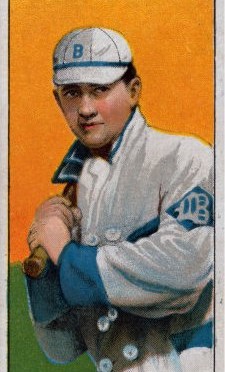
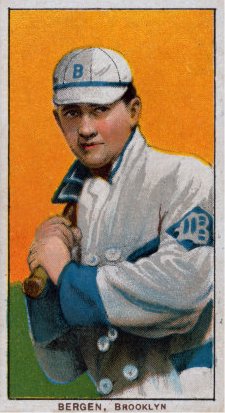
Bill Bergen (at left), the man with the lowest batting average in professional baseball history, was a catcher for the Brooklyn team during much of its Superbas era. Bill was a superb catcher — in fact, still considered one of the best by baseball historians — but a lousy batter. In 1909, he set that rather infamous batting average, and over the course of his entire eleven year career, he hit just two home runs.

Let us not criticize Bergen too harshly. Several years earlier, his big brother Marty Bergen, also a baseball star, suffered from devastating mental issues. In 1900, Marty murdered his own wife and kids with an axe, before taking his own life with a straight razor. That certainly makes a crappy batting average seem rather trivial.

And no, Brooklyn did not name its Bergen Street — which runs a dozen blocks north of Ebbets Field — after this early baseball star. The name of that lovely street has a far older history.

Super Local: Captain America and New York’s other heroes

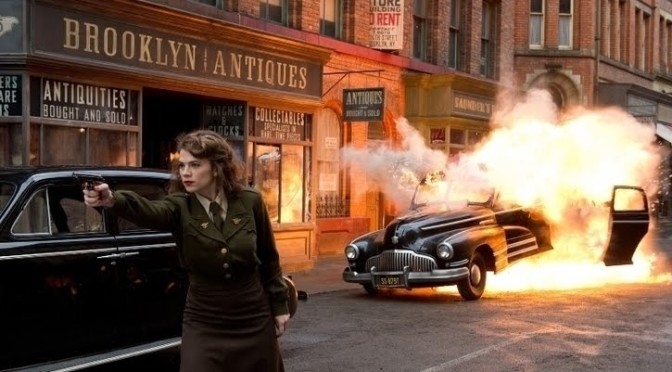
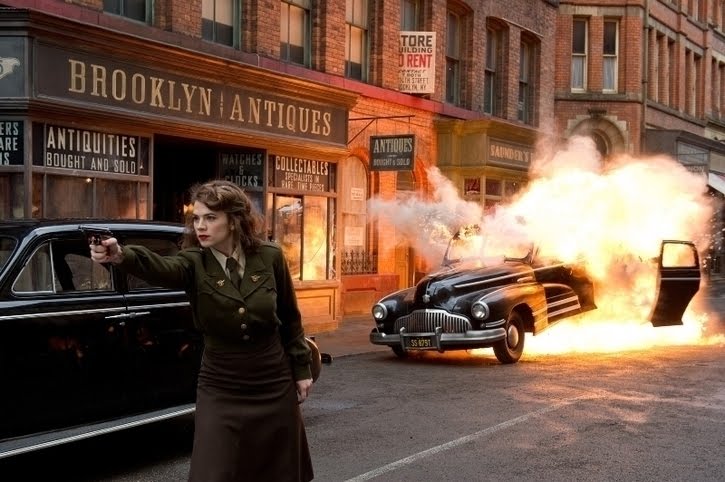
A 1940s antique store carries more than dusty lamps in the summer superhero film, ‘Captain America: The First Avenger,” which transplants its hero’s origins from the Lower East Side to downtown Brooklyn.

I know I can be a bit fanatic in my New York-centeredness, but this statement I can make with fact — the comic book industry was born in New York City. One of the earliest publishers, George Delacorte (familiar to visitors at the Central Park Zoo), founded Dell Publishing in 1921, producing pulp magazines and, eventually, comic strip collections. The publishing precursors to both DC and Marvel Comics got quiet starts in small offices in New York, and both slowly grew to dominate and define the superhero universe.

More importantly, several key comic artists and writers found inspiration in the city. Bob Kane and Bill Finger, the creators of Batman, and the hero’s first artist Jerry Robinson cooked up the character in the Bronx. Martin Nodell dreamt up the Green Lantern from inspiration found at a 34th Street subway station. A bespeckled boy from Brooklyn, Gardner Fox, ditched a law career for a typewriter where he created The Flash.

None are perhaps as famous as Stan Lee, born on the Upper West Side, and the father and co-creator of an entire stable of Marvel Comics’ classics, including Spider-Man, Iron Man and the Hulk. And one of comics’ most influential artists, Jack Kirby, was born and raised in the tenements of the Lower East Side.

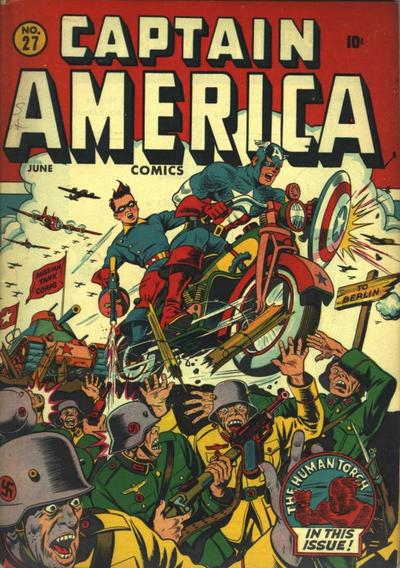
At the start of World War II, Kirby met writer Joe Simon, a photo retoucher living in Morningside Heights, and the two found success in creating a host of classic comic creations. Chief among them was the patriotic themed Captain America. Steve Rogers, a meek young illustrator, wants to fight for his country but suffers from classic comic-book weakling syndrome. A government experiment grants Rogers superhuman powers and a flamboyantly bright uniform, the better to fight Nazi and various supervillians.

Now, after all that set up about New York’s importance to comic-book creation, Rogers actually represents the top of a rarer class — superheroes who are actually born in New York City, according to their origin tales. Rogers, much like his creator Kirby, is from the Lower East Side.

In the new movie, “Captain America: The First Avenger,” the creators have transplanted the origin of the hero — as well as his sidekick Bucky — to Brooklyn*. Not only is Rogers from the mean streets of downtown Brooklyn, but the Army has a super-secret laboratory hidden within a dusty old antique store. (Talk about adding some pizazz to the Fulton Street Mall!)

In the film, 1940s Brooklyn is actually played by Manchester, England, and quite well in my opinion. But it does beg a question — in the various fictional comic book realms, how many superheroes are actual New Yorkers?

The first place to look is amongst the roster of Marvel Comics heroes. DC Comics originally set many of its tales in fictional cities — Metropolis, Gotham City, Keystone City, Star City — and many of its greatest characters are from otherworldly locations (Krypton, Mars, the island of Themyscira). Lee’s philosophy with the creation of Marvel Comics was to root heroes in realistic places and problems, a reaction to DC’s fantastical remove.

The Lower East Side’s Captain America was inherited by Marvel in the early ’60s, but the company created many of its own local heroes. A small sampling includes:

— Peter Parker, transformed by radioactive insect bite to become Spider-Man, is perhaps New York’s most famous native, a resident of Forest Hills, Queens

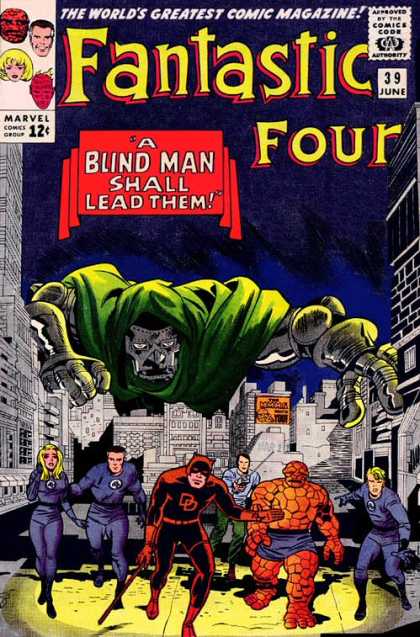
— Another Lower East Side native was scrappy young Benjamin Grimm. He befriended Columbia University college student Reed Richards, who had fallen in love with Long Island girl Sue Storm. Along with Sue’s brother Johnny, the quartet were bathed in cosmic rays to become the Fantastic Four, who donned fabulous blue costumes and set up headquarters in midtown Manhattan at the Baxter Building, overlooking Grand Central. (By the way, Tony Stark, aka Iron Man, is also a Long Island native.)

— Meanwhile, over in Hell’s Kitchen, more radiation — how is it safe to live here?! — blinds the son of a noted boxer who is later killed by gangsters. (I haven’t seen the original issue, but I’m guessing he fought at Madison Square Garden, located in Hell’s Kitchen in the 1960s.) That child, Matthew Murdock, grows up to develop extra-sensory powers and a taste for red spandex, as the Daredevil.

— I’m imagining that young Daniel Rand grew up on the Upper East Side somewhere when his wealthy father took him to the mystical disappearing city of K’un L’un, where Rand develops superhuman martial arts abilities and renames himself Iron Fist. Back in 1970s New York, quite naturally he pairs with Harlem gangster-turned-dogooder Luke Cage. Occasionally, the duo run into that Brooklyn-born hothead Ghost Rider.

— Then there’s that constant reminder of the dark, crime-infested side of 1970s New York with the vigilante called The Punisher, avenging the death of his family in Central Park at the hands of a bloodthirsty mob boss.

By the late 1970s, there were at least a good couple dozen superheroes flying over the heads of New Yorkers. And other heroes from other comic companies soon joined them. DC Comics saw the benefit in entering the world of actual cities by the early 80s. The popular Teen Titans housed their curious T-shaped headquarters on an unnamed island in the East River. In the alternate universe inhabited by the Watchmen, this team not only watched over the city, one of them eventually destroyed it!

By the mid-’80s, independent publishers began to creep into territory dominated by DC and Marvel, presenting starker, edgier tales. The most successful of these, the Teenage Mutant Ninja Turtles, were characters literally born in the New York sewer system. The comic itself, however, was created in Massachusetts.

With the development of companies like Dark Horse and Image, the modern comic book industry has developed far afield of New York.  But just in case all of New York’s caped crusaders are otherwise engaged, we always have Professor Xavier’s School for Gifted Youngsters — the headquarters for the X-Men — just up in Westchester County!

*Apparently, Steve Rogers actually does moves to Brooklyn at some point in his long career. Red Hook, in fact! Perhaps they sell one of those nifty shields at IKEA

Notes from the Podcast (#127) The Civil War Draft Riots

The New York draft riots of 1863 were both a distraction to the actual battles of the Civil War and the purest embodiment of underlying Northern viewpoints, violently displayed. Producing this show was not a lighthearted task, and we clearly needed to check our usual conversational demeanor at the door. Hopefully we presented the riots in a believable and respectful manner.

The other draft riots: Given the New York-centric nature of our program, I should note that draft riots occurred throughout the North that week, and even earlier. Yet none were of the intensity as those that occurred in Manhattan. In Boston, for instance, mobs stormed the famous Faneuil Marketplace and an armory on Cooper Street. But troops quelled the violence early, and only eight people died. [Read more about this even in the Boston Phoenix.]

And events were sparked in the future boroughs of Brooklyn, the Bronx, Queens and Staten Island as well. You can read more about them in this blog post.

Morbid misspeak: Thankfully I said the phrase ‘Invalid Corps.’ correctly twice before mis-pronouncing it a final time where I say ‘invalid corpse’. Ick. And, to my ears anyway, it appears I said ‘a computation fee’ instead of a ‘commutation fee’, but the context should have made the mis-statement obvious. Did I mention we were recording this without air conditioning?

Further Reading: For more information on the Draft Riots, you can turn to several sources, based on your level of interest. My favorite is Barnet Schecter’s ‘The Devil’s Own Work’ which gives a gripping chronological retelling of events. He really manages to tame a chaotic tale in a way that neither confuses nor oversimplifies. I used Schecter’s ‘Mrs. Hilton’ anecdote from this book, and his book is chockful of other individual tales like that one.

If you prefer something a bit more analytical, there’s Iver Bernstein’s ‘The New York City Draft Riots’ which tries to parse who exactly the rioters were. Of course ‘Gotham’ by Edwin G Burrows and Mike Wallace have a nice, compact recount with plenty of context. The City University of New York’s ‘Virtual New York’ web resource has a timeline with maps.

The Gangs of New York: Perhaps the most famous depiction of the riots occurs in Herbert Asbury’s classic ‘The Gangs of New York’. The film version, directed by Martin Scorsese, takes quite a few liberties with the facts of course. The placing of candles in windowsills and the fire at Barnum’s American Museum, for instance, did not happen during the riots. But those are based on true events that happened in New York a year later. We’ll cover those events in our next show.

Next Podcast: Due to some scheduled vacation time and an upcoming apartment move for myself, the last entry in our Bowery Boys Go To War! series will be available on August 26. If the sober tone and raw nature of this current show bummed you out, don’t worry — humor as well as some genuine oddness returns with the next one!

Image above courtesy Library of Congress
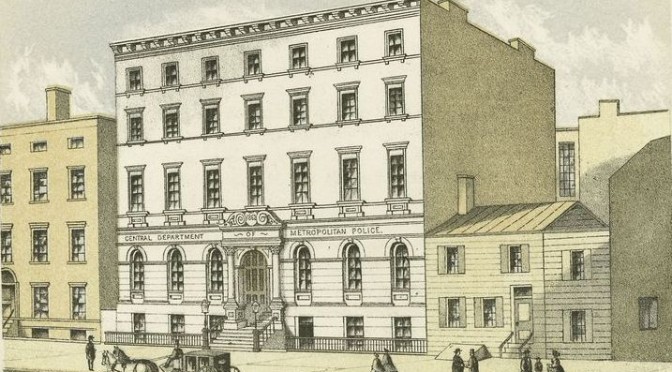
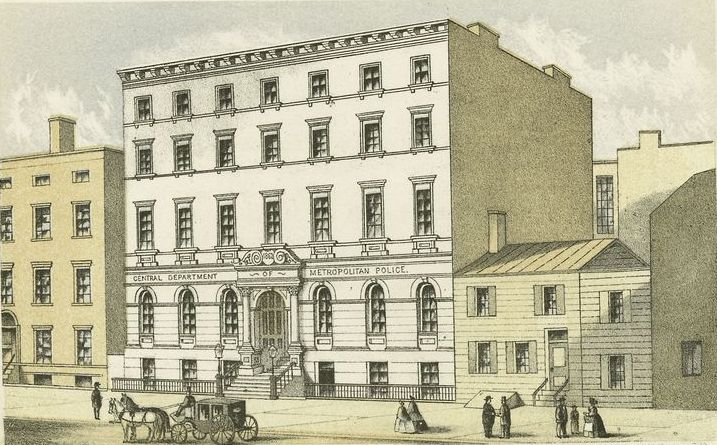
The legendary police headquarters at 300 Mulberry Street

There is nothing extraordinary at 300 Mulberry Street anymore, just a standard five-story apartment complex and a parking garage, hugged to its south by a Subway sandwich shop. But for much of the Gilded Age, this address was the grand headquarters for New York’s police department.

The Mulberry Street building was New York’s center of law enforcement from 1862 to 1909. Not surprisingly, it was located close to the densest concentrations of tenements and just eight blocks down Mulberry to the heart of Five Points. And this spot is directly between Broadway and the Bowery.

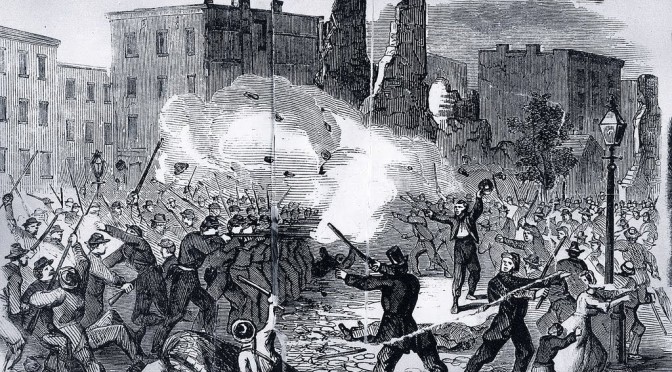
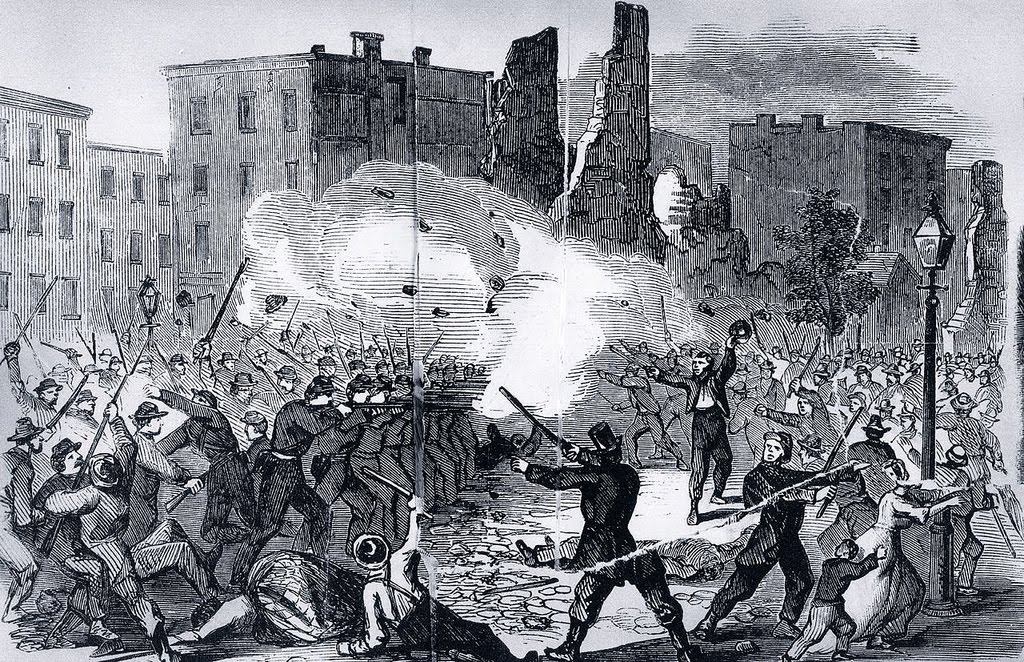
The building had an unfortunate inauguration as the year after opening came the summer of the Civil War draft riots. The superintendent of police, John A. Kennedy, was savagely beaten and deposited at headquarters nearly dead. Rioters targeted telegraph poles throughout the city, leaving officers there in a 19th century version of a communication dead zone.

No doubt, overseeing the criminal behavior of a quickly multiplying populace in one of the world’s richest cities in the 19th century was no ordinary achievement. “No other building in the city, probably, is richer in memories than 300 Mulberry Street,” said the New York Times in 1909. “It is famous the world over.” In an other article, the paper triumphantly calls the force “America’s Scotland Yard.”  Notable among its many rooms was the famed ‘Rogue’s Gallery’, a collection of photographs of the city’s most notorious criminals.

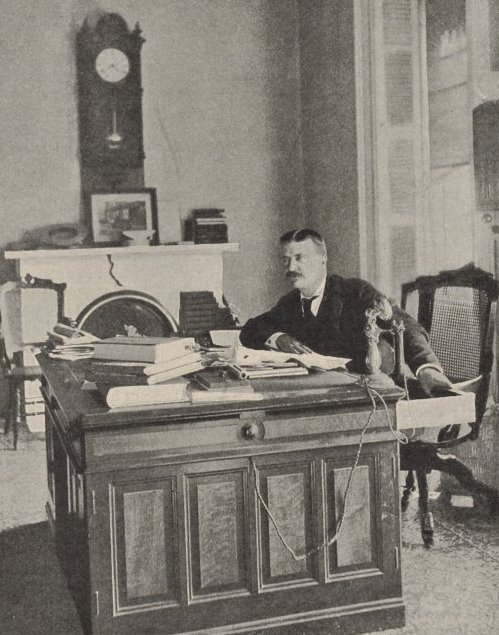
But during the 1870s and 80s, the department was mired in corruption; mayors throughout this period usually ran for election on the mantle of police reform, only to cave to the organization’s impossibly deep infrastructure of bribery and kickbacks.  It would take the state-run Lexow Committee in the 1890s and later, in 1895, a reform commissioner named Theodore Roosevelt to clean up the shenanigans here. At right: Roosevelt in his Mulberry Street office.

According to a 1901 issue of the Evening World: “Today No. 300 Mulberry Street is the centre and disseminator of laziness, corruption, contempt for all the right standards of police duty. And the once superb detective branch, the pride of New York, has become feeble and almost ridiculous.”

The force used the excuse of expansion — and the needs of a consolidated five-borough city — to rehabilitate its image. It needed a larger, modern structure, one untainted by the reputation of corruption. And so, in 1909, after a flirtation with relocating to Times Square, the force moved to the elegant Beaux-Arts palace on Broome and Centre streets. That structure, at 240 Centre Street, still stands as a luxury condominium.  The old headquarters at 300 Mulberry, however, were torn down and have been long forgotten. Not even a plaque!

A reconstruction of the interior can be briefly seen in the Draft Riots scene of Martin Scorsese’s ‘Gangs of New York’:

By the way, a few months ago, I wrote about a very notable saloon experiment from 1904 called the Subway Tavern, a non-alcoholic church-owned saloon which opened around the same time that the New York subway did. It was located on the corner, just a couple doors up from the police headquarters. [Read more about it here.]

The other Draft Riots: Brooklyn infernos, Queens bonfires

You probably know something about the Civil War draft riots that kept New York paralyzed during the week of July 13, 1863. But New York only meant Manhattan back then. What about the rest of the future boroughs?

The conscription act initiated draft lotteries throughout the area as, by 1863, the Union struggled to fill its quota of volunteers. Many thought the state of New York had contributed enough; hundreds were already dead after two years of bleak and depressing battle.

Then there was that troublesome little exemption clause. Those chosen in the ‘wheel of misfortune’ could either find a substitute or pay a $300 commutation fee. According to the Inflation Calculator, that’s about $5,250.00 today. Look at your bank account. Could you afford to pay that?

People revolted violently when the drafts were held in New York on July 13. There were also seismic reactions in the surrounding counties as well, chain reactions of the anger quelling in New York. In the surrounding regions, local law enforcement were often better prepared to handle disruptions amongst their less concentrated populations. Even still, the horror of New York’s draft riots did spread.

The homes of many black residents on Staten Island were torched. According to historian Richard Bayles, “From its proximity to New York City this county could not help but feel every pulsation of popular emotion that disturbed the bosom of the city.” Mobs attacked black shopowners in Factoryville, surrounded a black church in Stapleton and threatened parishioners inside, and burned down a railroad station owned by Republican and Union supporter Cornelius Vanderbilt.

Residents from the village of Astoria and the farmlands of Sunnyside and Ravenswood could see New York burning across the water. But Queens County caught the loathsome riot fever when the draft commenced in nearby Jamaica, on July 14. Riled crowds gathered at dusk and nearly torched the village but for the intervention of a few Democratic community leaders.

The draft office in Jamaica was eventually destroyed and number of buildings filled with government property were vandalized. Rioters stormed one building and stole piles of garments intended for the battlefield. According to an 1882 history of Queens County, it was an apparel Armageddon, the rioters “taking out some boxes of clothing which they broke open, piled in heaps and set on fire. The largest pile, which they derisively called ‘Mount Vesuvius’ was about ten feet high.”

In Westchester County, towns along the Bronx River reacted similarly to their own draft lotteries, with rioters in Morrisania and West Farms destroying telegraph offices and yanking railroad ties from the ground. However, other local towns, like Yonkers, were successfully insulated from violence, due to better living conditions and the entreaties of an especially popular local leader, the Rev. Edward Lynch. A mass gathering on July 15th in the village of Tremont eventually snuffed out violence in the region.

Although it was one of the country’s largest metropolises, the independent city of Brooklyn never saw the intensity of violence that New York did. Indeed, some black New Yorkers escaping violence in the city fled to the countryside in Kings County, to places like Weeksville. However the county did see a good share of bloodshed and destruction, particularly in the Eastern District (the areas of Williamsburg and Greenpoint).

The Brooklyn Eagle, solidly Democratic and in quiet support of the anti-draft agitators, had this to say in a July 16th article, “We could fill columns of the Eagle with exciting stories of anti-negro demonstrations, threatened outbreaks, etc.. So far no disturbance has occurred in Brooklyn which two or three policemen could not surprise [sic]. There has been nothing like any attempt to get up a mob, or create a riot.”

This is preposterous, but even through the Eagle’s glossy lens, it’s apparent that violence never fomented to the degree that it did in New York. This, of course, would be of cold comfort to the dozens of black Brooklynites who did have to flee their homes and businesses that week.

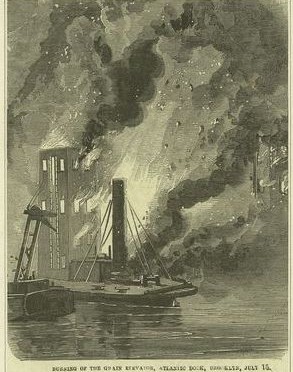
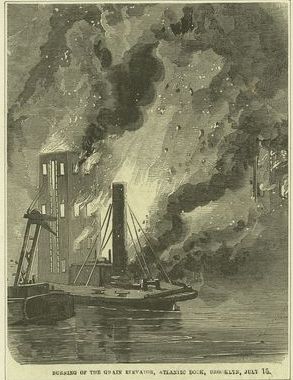
The most dramatic scene in Brooklyn took place before midnight on Wednesday, July 13, with the destruction of two large grain elevators in the Atlantic Basin, in Red Hook. (Pictured at top.)

The Eagle’s reasoning for the blaze demonstrates the reasonless chaos that typified violence in the latter days of the riots. It had nothing to do with racism or with drafts, but rather â€œ[t]he fire was the work of incendiaries, supposed to be grain shovellers who recently had some trouble about a raise on wages, and who have always looked with feelings of animosity on these elevators because they dispensed with a large amount of manual labor.”

The burning elevators, facing into the East River, made a grim bookend to the burning structures across the water in New York. Luckily, within 24 hours, the riots would be calmed throughout the region.

Purging ‘Evil’: New York vs. the Concert Saloon!

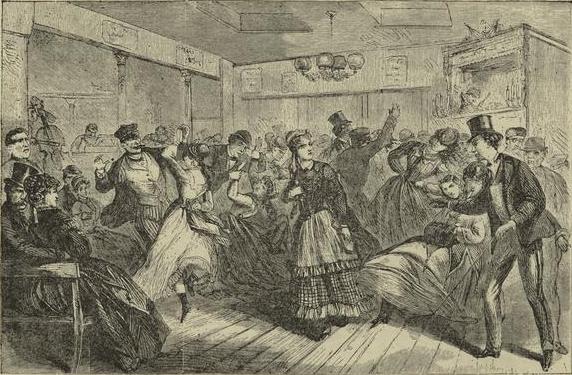
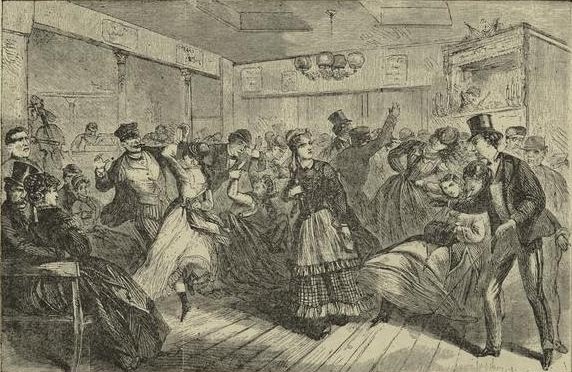
A torrid night at Harry Hill’s concert saloon on Houston Street. Naturally, such fun must be stopped! (Pic courtesy NYPL)

Yes, yes, the Civil War began 150 years ago this year. I hope you have not grown tired of hearing that fact, as I’ve got an entire summer of posts and podcasts relating to it! But for purveyors of New York nightlife, something else occured during that same time period — the peak of the concert saloon. While this particular performance venue does not have a specific date of birth, by 1861, this new form of nightlife rose to such prominence that, quite naturally, cultured people sought to close them down.

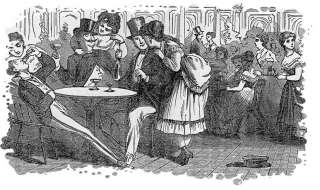
The concert saloon combined many entertainment pastimes into a single experience, but its true objective was merely to sell booze. This type of venue developed over a series of years, combining the austerity of the English music hall with the ribald and often debauched leanings of the American musical theater. Think of the Bowery theaters, filled with rowdy audiences and prostitutes going about their business in the balconies, and combine it with the lust for alcohol found in basement grog houses and corner taverns.

As Brooks McNamara notes in his book on the New York concert saloon, the more fashionable concert saloons were found near Broadway, while the more notorious variety found homes near the Bowery. The two streets were often viewed as twins — one good, one evil — but on certain nights, it might have been difficult to tell the two apart.

Vaudeville and cabaret trace their lineage to the concert saloon, with musical acts, ‘waiter girls’, and drink served in vibrant excess. The saloons reflected the character of their neighborhoods, although all would have a touch of debauchery about them. Or perhaps a few touches. They would eventually be associated with prostitution and general lascivious behavior. In the 1880s, perhaps the grandest descendant of the city’s concert-saloon tradition, the Haymarket dance hall, was so synonymous with the ancient profession that it was nicknamed ‘the prostitute’s market’.

The concert saloon was a thriving venue by the 1850s, so much so that reformers and prohibitionists made it the concentrated focus of their ire. On their side were owners of so-called legitimate theaters, who saw their clientele drift into these more lustier establishments.

It came to a head in 1861, with petitions circulated throughout the city to shut down the concert saloons, to eliminate “the abominations of Pretty-waiter-gallism and dram-selling, against which the decency and morality of the City have revolted.” Believe it or not, reformers made serious headway with the Republican-controlled state government. A bill was introduced in January of 1862 “to preserve the peace and order of public places” by forcing venues to seek a license if they intended to feature spoken or sung performances of any kind.

Why were reformers so mobilized in 1861? New York was a station for Union militias, both New York’s own volunteer militias and those from New England states. By the spring, hundreds of young troops were stationed here, awaiting orders and transportation to battlelines. What would be more distracting to a group of young men from out of town than a lively concert saloon filled with pretty girls?

The bill was passed in April of 1862, and the New York Times proclaimed “its effect will be to purge our places of public amusement of most of their evils, and to make respectable and popular those that are properly conducted.”

Many concert saloons did go under. Others turned into traditional saloons without the dazzle. Some venues went the opposite route, throwing out the booze and becoming legitimate variety stages albeit, with the same bawdy entertainments. By the 1870s, these stages produced the first American stars of burlesque and vaudeville.

However, many concert saloon simply shrugged off the law. City lawmakers were often at odds with the state anyway, and constituents for in Democratic-leaning wards preferred to look the other way. Some saloon owners took advantage of the law’s ambiguous language, providing music without vocals and encouraging ‘spontaeous’ song. (“Sorry, officer, they just broke out in a chorus!”) And of course, many others, perhaps protected by Tammany Hall or other political ties, simply flaunted their antics in open violation.

The concert saloon would continue to exist into the next decade, and now it had the element of elicitness attached to its very existence. The battle between New York’s two instincts was far from over.

For many other articles on New York City nightlife, check out my part articles titled Friday Night Fever, which survey the city’s great drinking and dancing venues throughout its history.

New York and “Night Vision: Photography After Dark”

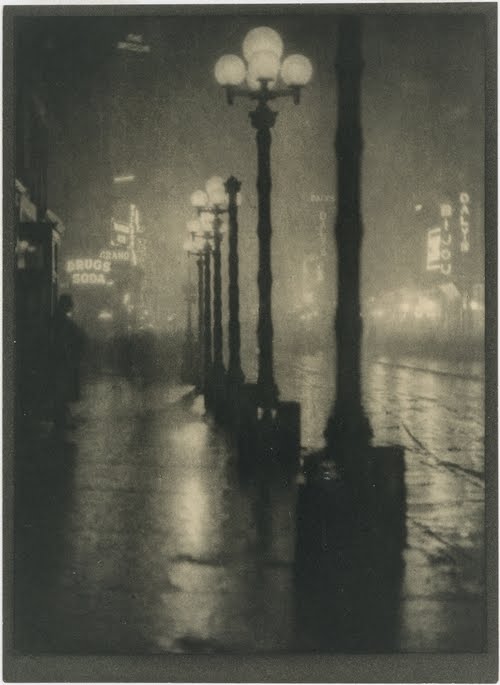
Albert Langdon Coburn sees mystery on ‘Broadway at Night’

While you rush to join the thousands of museumgoers checking out the Metropolitan Museum of Art’s fantastic Alexander McQueen exhibition ‘Savage Beauty’ — now in its last few weeks — may I recommend you check out a small room near the back of that long hallway where you’ll be standing in line? This small gallery contains a treasure of a show — a collection of illuminating nighttime photographs, “Night Vision: Photography After Dark.”

Naturally, images of New York City feature prominently in this compact and sophisticated little exhibit. After all, what city looks better at night than ours? (The films ‘Midnight In Paris’ and ‘Lost In Translation’ might form the basis of a rebuttal to that previous statement.)

The show surveys both subject and technique through a variety of periods, although the earliest days of night photography are most prominently featured. And, honestly, they’re the most engaging, capturing a distant past through a once gauzy, imperfect medium.

The curators have not made obvious choices. Of their New York portraits, they lead with a dazzling Sid Grossman image of the San Gennarro festival from 1948. It’s not the bright signs that catch your attention, but a boy caught in the glow, the dizzying brightness whipping around him. There’s a Times Square marquee here, of course, but it’s in a soft blur (William Klein’s 1954 ‘Man on Ladder Working on Theater Marquee, at Night’).

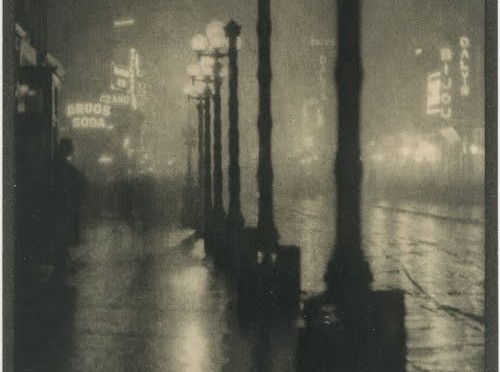
This is nighttime as reflected through faces and bodies — a man passed out on the beach in Coney Island, well-to-do gentlemen at the opera, a menacing loner on a park bench. Then you also have your images more classically noir-ish (Weegee’s infamous ‘human head’ photo) and gaslit (Alvin Langdon Coburn’s impossibly beautiful image of ‘Broadway at Night’, pictured above).

The show runs for the rest of the summer, until September 8th.  Visit the Met’s website for more information.

Defying gravity: New York’s most famous daredevils

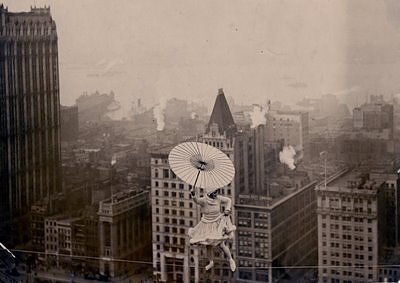
Bird in the sky: The delicate Ms. Millman makes it look easy

Last night on my walk home, I observed something you just don’t always see everyday — a renegade acrobat dangling from the top of the Williamsburg Bridge! The perilous pair, Seanna Sharpe and Savage Skinner, performed this foolhardy trapeze as traffic whizzed by below them, and the two were later apprehended by police. Will this stunt place them in the annals of great stuntwork performed by others who have used New York landmarks as their own personal stages?

1 Jules Leotard
This young French performer, renown in his home country, performed at New York’s Academy of Music in 1868 where he essentially debuted the art of the flying trapeze to startled New Yorkers. While we would not consider his feats particularly compelling today, audiences went wild, with local papers calling him a ‘dazzling, plumed bird’ and the Tribute referred to him as ‘tremendous, as a son of thunder’. He would return to Europe, where his tight, one-piece uniform would be mass produced and eventually bear his name.

2 Hanlon Brothers
The lofty endeavors of tightrope walking and trapeze acrobatics were forever changed on November 1, 1869, when an acrobatic troupe brought an aerial show to New York so ambitious for its time that it required one of its members to invent the aerial safety net! (William Hanlon eventually held the patent for it.) But here’s the odd part. The venue for that performance? Tammany Hall, at the time at 141 East 14th Street — and nearby the Academy of Music — making the block a sort of revolutionary spot for 19th century stuntwork.  [source]

Steve Brodie
A teenage newsie looked over at the Brooklyn Bridge as it slowly rose over the East River during its construction in the 1870s. He looked and thought, “I’m going to jump off that one day!” And so he did, on July 23, 1886 — or so he claimed — and the single event transformed him into a minor celebrity. He toured in a stage show recounting the event and opened a popular saloon at 114 Bowery (at Grand Street) in honor of his claim to fame. Today most people attempting such a ridiculous stunt are hardly considered heroic.

Harry Houdini
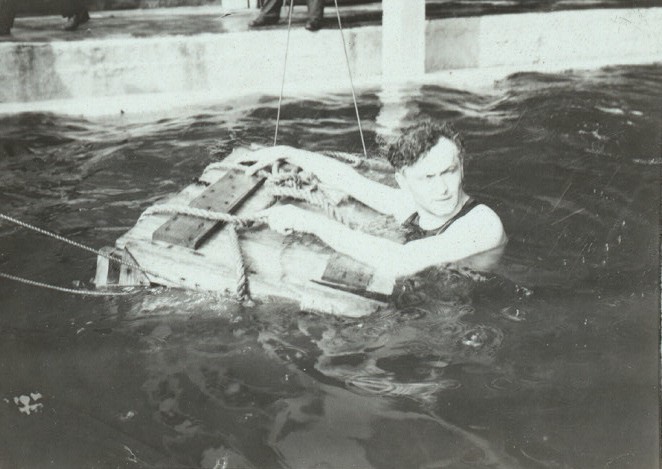
The legendary magician moved to New York at an early age  in the 1880s, and as he honed his crafts of illusion, he frequently used the city as a backdrop to heighten the drama. He was thrown into the East River on July 7, 1912, locked in a crate and bound in handcuffs and leg-irons. (Time it took him to escape: 57 seconds.) And in another rather famous trick in 1916, the escape artist, bound in a strait-jacket, hung precipitously from a crane over an excavation for the New York subway in the middle of Times Square. (Escape time: 2 minutes, 37 seconds.)

Below: Houdini, coming up for air (Pic courtesy NYPL)

Bird Millman
The lovely queen of the tightrope (pictured at top) was a favorite of the Ringling Brothers and Barnum & Bailey Circus, not to mention a featured performer for Florenz Ziegfeld. She performed hundreds of times within vaudeville theaters in New York well into the late 1920s, but occasionally she performed outside, dancing across tightropes stretched between buildings.

Evel Knievel
Garbed in his trademark patriotic colors, Knievel leapt over nine cars at Madison Square Garden during a series of shows in July of 1971 — his only major New York appearances. But the stuntman’s real dream never got off the ground:  the desire to jump his motorcycle from one great skyscraper to another. The city wouldn’t have approved of something so dangerous….

Philippe Petit

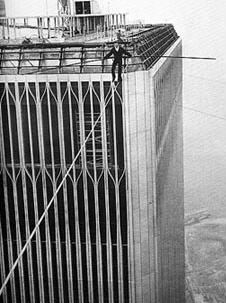
…which is why you don’t ask them. The eccentric French high-wire performer snuck into the World Trade Center several times to plan the specifics of an extraordinary display of daredevilry. And on August 13, 1974, this ‘Man on Wire’ walked a narrow cable from one tower to the other. A masterful display of personal courage, and a rather embarrassing on the Twin Towers’ lax security.

Alain Robert
This modern daredevil — the ‘modern Spider-man’ as the press has dubbed him — has scaled all sorts of tall surfaces throughout the world, including the Empire State Building in 1994. When the new New York Times headquarters was completed in 2008, it was like a red cape to a charging bull, and Robert took to the building on June 5, 2008, and unfurled a banner about global warming.

ALSO: Coney Island has been the site of a great many deathdefying performances over the decades. An August 14, 1904 issue of the New York Tribune marvels at the amazing stunts at the theme park Dreamland — “Men Must Do Much to Thrill The Public Now” — and notes one performer who fell off a rusty 725-foot sliding cable, tumbling into the ‘Shoot the Chutes’ ride!

A ragtime tribute to the New York Hippodrome

I hope you’ve had a chance to play around in the Library of Congress’s National Jukebox was recently launched on their website. It’s an incredible catalog of old music, from a variety of genres, and could easily play as a soundtrack to many of the posts on this page.
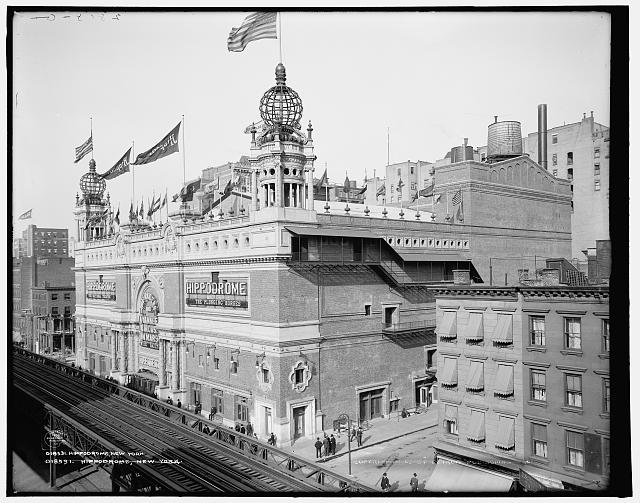
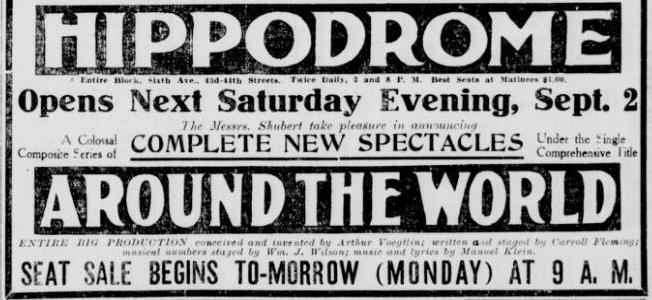
One old tune I happened to find is a medley of songs popularly performed at the New York Hippodrome, and performed here by the Victor Military Band. The Hippodrome, once located on Sixth Avenue and 44th Street, was one of New York’s largest and most popular live venues. It was among the most successful theaters owned by the Shuberts.

The Victor Military Band was a collection of musicians hired by the Victor Talking Machine Company, one of the earlier makers of phonograph records and later incorporated into RCA Records. The band was specifically formed to record dance records, a rarity in the early recorded music era, which was dominated by classical and opera.

The songs in the medley include these forgotten gems: The Girl In The Gingham Gown, Ragtime In The Air, Dark Eyes Are Now A-Shinin’ For You.

The Hippodrome opened its fall season in 1911 with the hugely successful musical extravaganza ‘Around the World’, which ran until 1913. The ambitious program featured numbers set in exotic destinations, including Egypt, Constantinople, Venice, India, Ireland and the islands of Hawaii (well before they joined the United States).

Both the song and the photo courtesy the Library of Congress
Notes from the Podcast (#126) Fernando Wood

Somebody should make a movie about Fernando Wood, and the role should be played by Johnny Depp. Wood is endlessly fascinating, not only as a shady character of political theater, but as a example of bald tenacity. He was written off as finished at many occasions — and saddled with mounting corruption charges — only to return to ever greater public office.

He was blatantly ambitious as a young man, in an era where such naked power grabbing was frowned upon in proper society. By the end of his career, such ambitions were a requirement of New York politicians. Fernando strengthened Tammany Hall style politics even in those occasions when he was blatantly against them. He perfected every despicable element of New York politics as though he were a craftsman.

This was also the ‘set up’ show for our next two episodes, which Tom and I will record later this summer. There’s a lot of coverage of the Civil War this year, but you might be surprised to see the directions we take with these upcoming shows.

Correction: I stated that the amount of business brought to New York per year by just five Southern states equaled $300 million. I overstated; the amount is actually “at least $200 million” according to author Ernest McKay. However, Southern states are estimated to have owed somewhere between $150 to $200 million in New York creditors. Needless to say, from a financial perspective, it’s easy to understand New York’s sympathies to the seceded states.

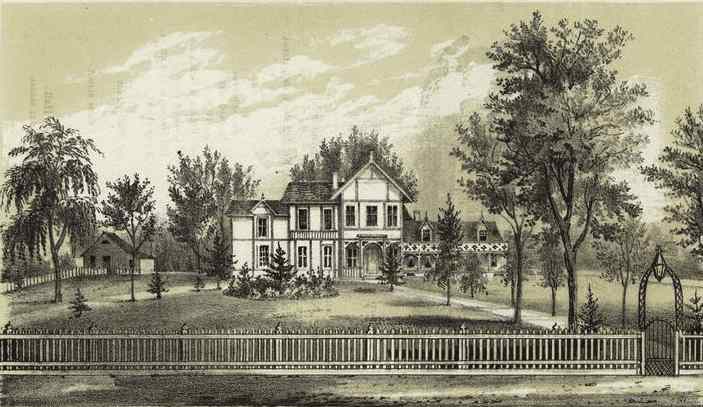
Places to Visit: Fernando Wood was a rather saavy real estate investor as well. In fact, he profited handsomely from leasing a building he owned — at 115 and 117 Nassau Street — to the city government! But his most lucrative acquisition was most likely his own estate of Woodlawn. The borders of his property were between Broadway and the waterfront on the west, running north to south from 76th Street  to 78th Street. That’s some pretty lofty acreage today. Part of Wood’s land was acquired for the development of Riverside Park during his lifetime.

What To Read: Fernando pops up in all the great histories of the city, including Herbert Asbury‘s ‘Gangs of New York’. Jerome Mushkat’s ‘Fernando Wood: A Political Biography’ takes you through the intricacies of the man’s politicking. But challenge for biographers is that Wood wrote very little about his private life. What we do know certainly alludes to details as salacious as some of his public shenanigans

Listen In: Wood figures in greatly to two of our prior podcasts. The details of the Police Riot of 1857 were presented in our show Case Files of the NYPD (episode #103). And he makes his first appearance in a Bowery Boys podcast way back in episode #40, in our Union Square show.

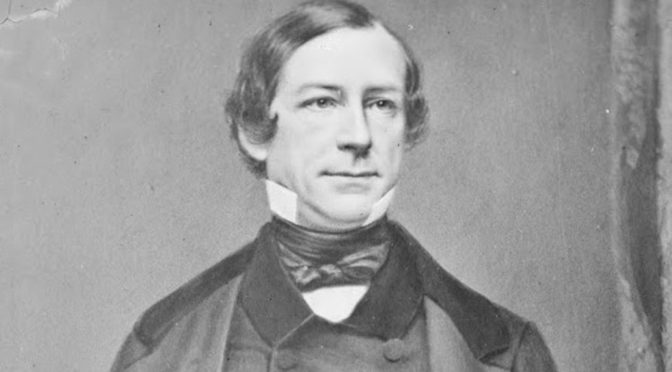
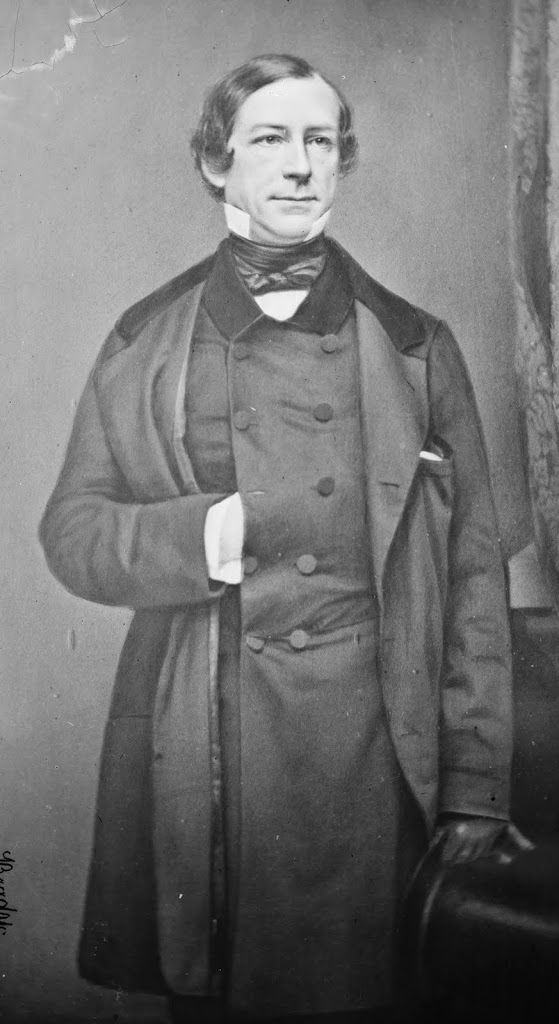
Above: Another portrait of Wood by Matthew Brady, courtesy Library of Congress
Categories
Podcasts Wartime New York

Fernando Wood, the scoundrel mayor during the Civil War: Will New York and Brooklyn secede from the Union?


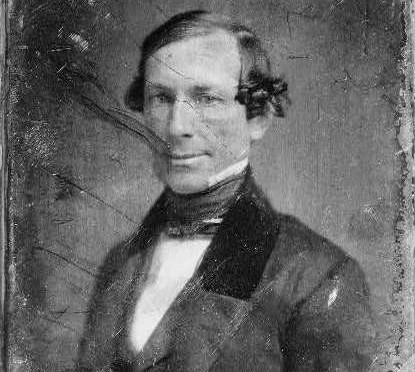
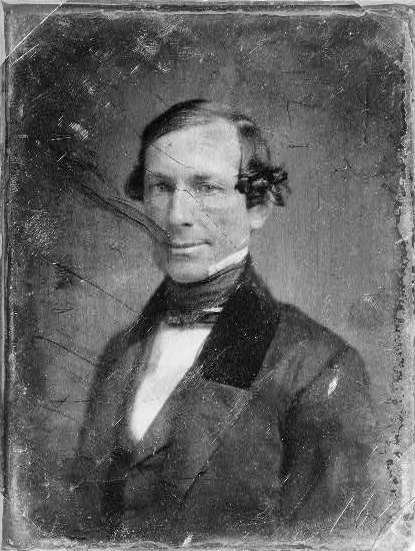
His Honor, one of the most ambitious, most duplicitous leaders of New York in its history — as photographed by no less than Matthew Brady.
PODCAST The first part of our Bowery Boys Go To War! trilogy of podcasts set during the years of the American Civil War.

Fernando Wood, New York’s mayor at the dawning of the war, was the South’s best friend. The rascally politician, famous during his first term for inciting a police riot, drummed up pro-slavery support amongst his Irish and German constituents and even suggested New York secede from the Union itself! But once the war began and public support for the conflict swelled, the nefarious Fernando tried to have it both ways, both leading the Union cry and undermining it.

Click here for notes, corrections and other details on this podcast.

Wood’s ornate mansion at Broadway and 77th Street, called Woodlawn, bought with his newly acquired wealth obtained from the results of a suddenly successful shipping business and advantageous political fortune. (NYPL)

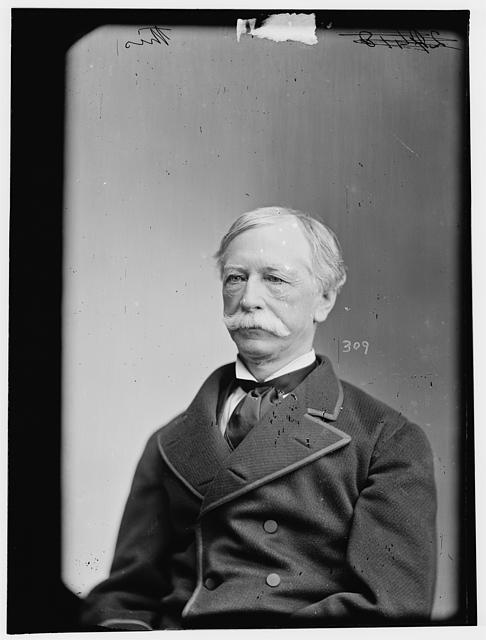
U.S. Representative Wood, near the end of his life, taken sometime in the 1870s.