Categories
Film History Mysterious Stories

Scream Time: Ten Fun Horror Films Set In New York City

Horror movies normally go for nameless suburbs, dark woods or remote Victorian-style haunted houses for their scary settings, so it’s a wonderful treat when New York City and its recognizable landmarks get to host a few cinematic monsters.

Ever since King Kong traipsed up the Empire State Building, filmmakers have used the city’s architecture as a way to heighten thrills and even comment on the real-life horrors of urban living. This week the Scream franchise brings its mix of murder mystery and slasher to New York City in Scream VI starring Melissa Barrera and Jenna Ortega.

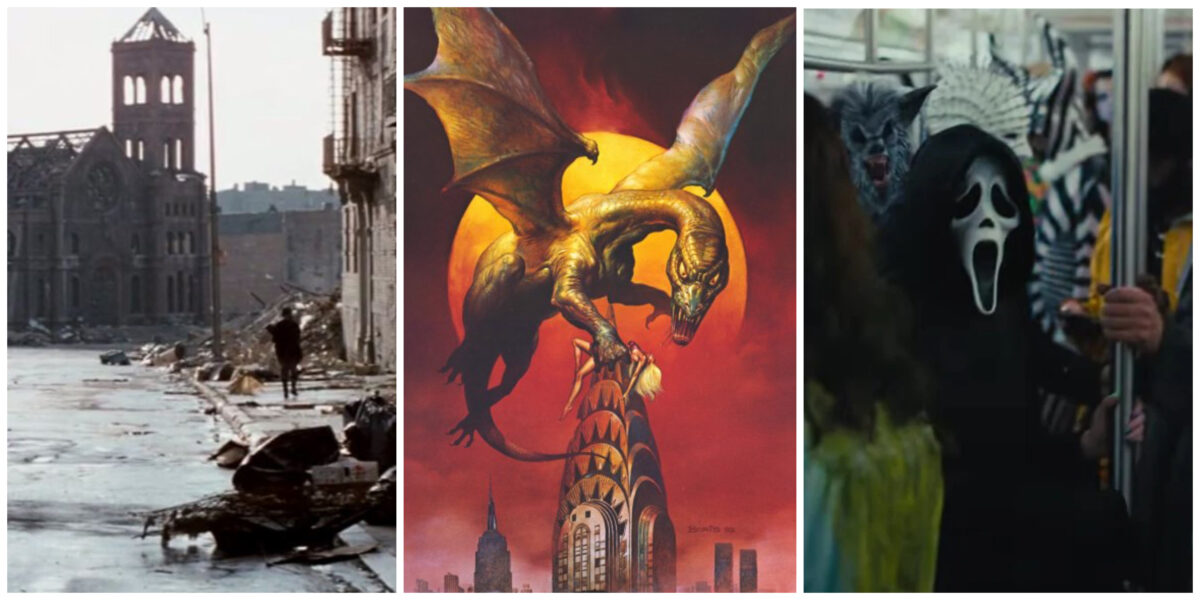
The latest film finds Ghostface walking the same streets once terrorized by Friday the 13th’s Jason, the creatures known as C.H.U.D. and a myriad of lesser known maniacs and monsters.

Want to make your own New York City horror film festival? Here are ten of my personal favorite movies set in the big city, from campy treats to genuine frights. Do you have any urban horror favorites? Leave them in the comments.
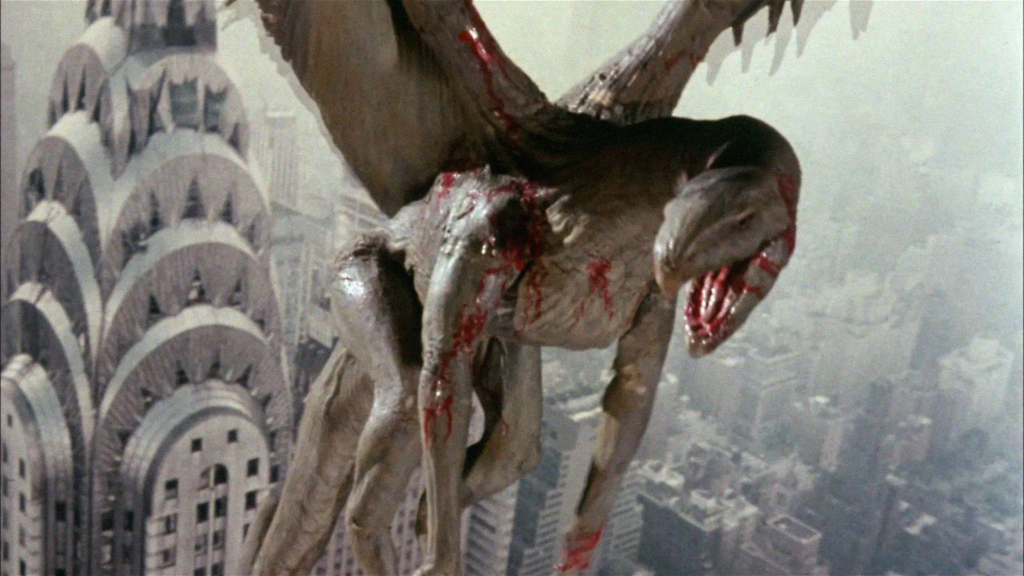
10 Q: The Winged Serpent (1982)

Before Q was a conspiracy theory, it was an ancient beast terrorizing the New York skyline. Chrysler Building architect William Van Alen would be horrified to learn that the graceful tapering top hat of his most famous building becomes home of a loathsome flying dragon and a gigantic nest of eggs.

This movie is one of my all-time favorite camp horror classics, Jaws if the shark were actually just a long, mean pigeon. (Way back in 2007 I wrote about my love of this movie on this website.)
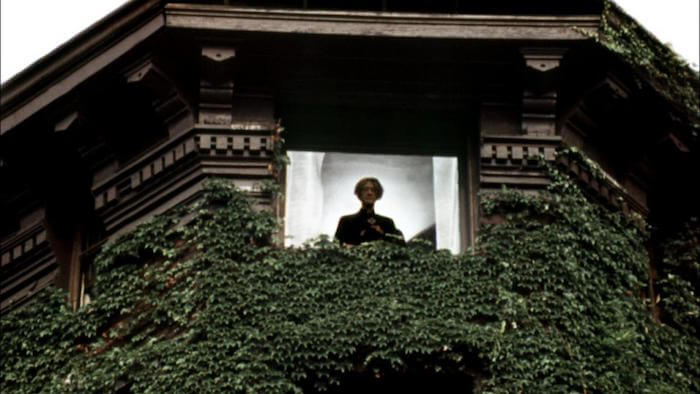

9 The Sentinel (1977)

Horror on the Brooklyn Promenade! A fashion model moves into a historic Brooklyn brownstone only to be tormented by the most peculiar set of neighbors to ever vex the borough. Sure it’s built upon the gateway to Hell, but given the state of real estate today, it might be worth the risk. (We talked a bit about this film in our Ghost Stories of Brooklyn podcast.)
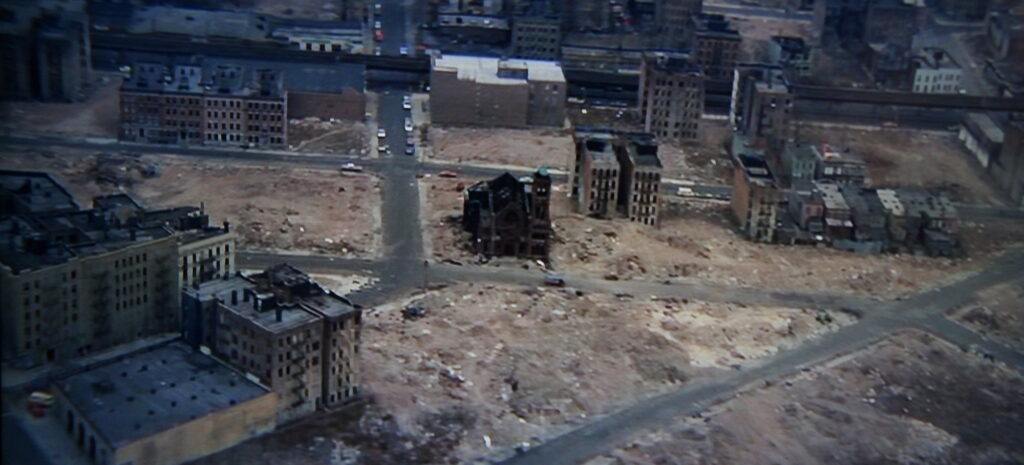

8 Wolfen (1981)

A murder mystery in early 80s New York City that uses both recognizable landmarks like the Brooklyn Bridge and the rubble of the Lower East Side to great chilling effect.

Something very wolf-like is killing people in gruesome ways, from Battery Park to the Central Park Zoo. There are literally wolves on Wall Street! There are also some definite cringe-worthy moments (using Native American mythology in the most trivial way) but seeing New York as an apocalyptic landscape is eye-opening. Bonus points for the bloody nod to New Amsterdam.
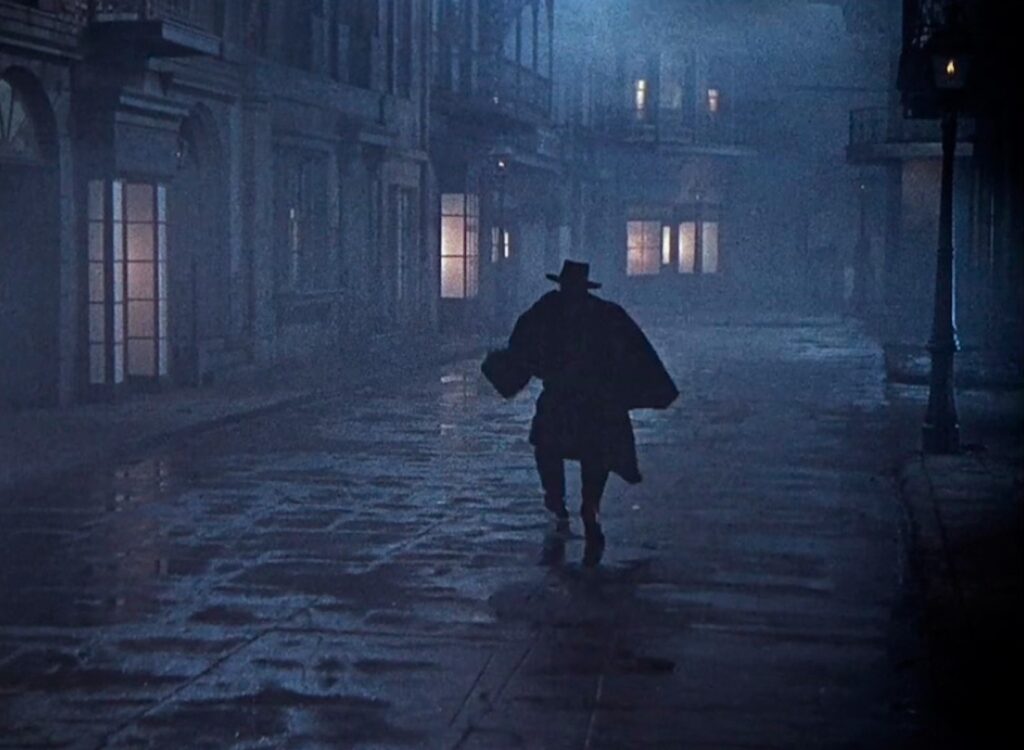

7 House of Wax (1953)

A rich and campy celebration of the city’s once ubiquitous wax museum scene — in particular a glorious nod to the Eden Musée — in a morbid mystery along the dark streets of turn-of-the-century New York. Vincent Price is at his very best as a sculptor with a dark method of creating new exhibitions.
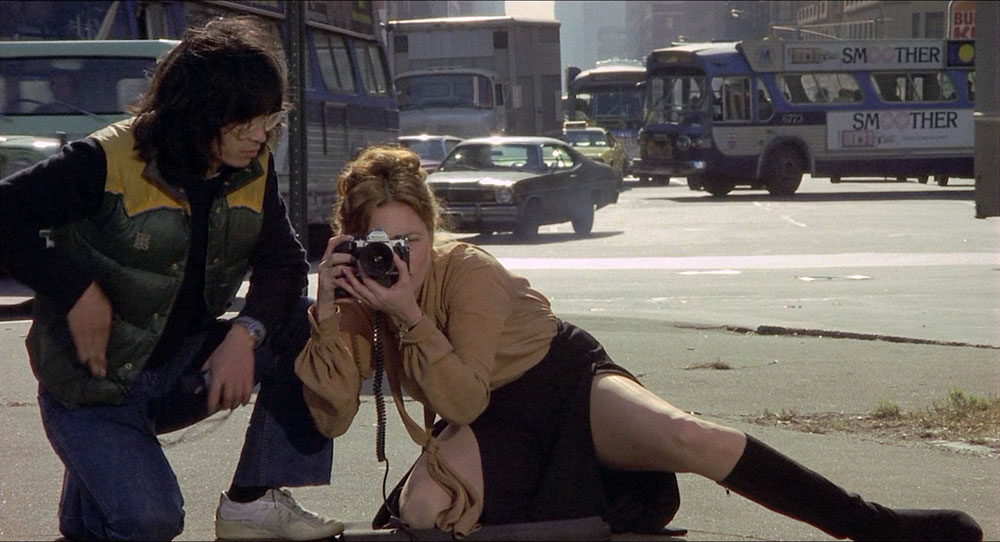

6 Eyes of Laura Mars (1978)

The world of high-fashion New York, set to soundtrack of disco and Barbra Streisand, is the backdrop for this serial killer thriller starring Faye Dunaway as an extremely macabre photographer who begins seeing horrifying visions. Absurd and sometimes silly, the film nonetheless features an exquisite look at 1970s SoHo. We loved it so much that we recorded a Bowery Boys Movie Club about it.
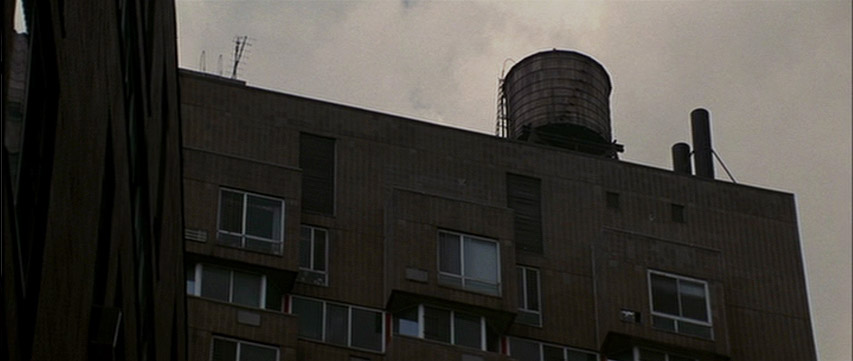

5 Dark Water (2005)

And now we turn to Roosevelt Island and a remake of a Japanese film, made during the height of the Western fascination with Japanese horror. (Think Ring; in fact Dark Water is a variation on a short story by Koji Suzuki, author of Ring.) Here Jennifer Connelly fights back against a leaky ceiling — haunted, of course — and a ghostly child. I kept wanting the movie to reach back further into the island’s dark history but it’s a fun, little jump-scare fest regardless.
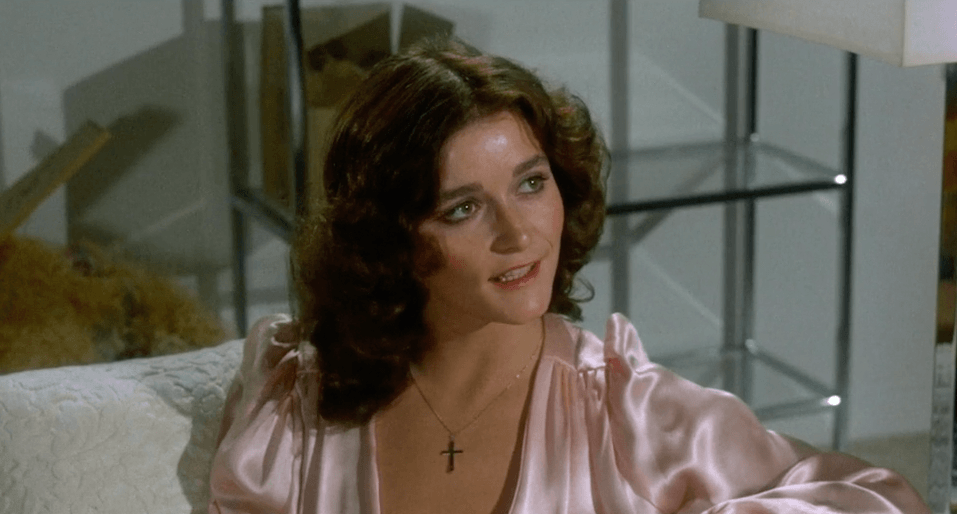

4 Sisters (1972)

Brian De Palma in Staten Island! Plus a very troubled Margot Kidder playing a fashion model and, well, something more. This strange little indie artifact is the first of many tributes to Alfred Hitchcock in De Palma’s career, a murder mystery and a psychosexual terror that may permanently change the way you see the neighborhood of St. George.
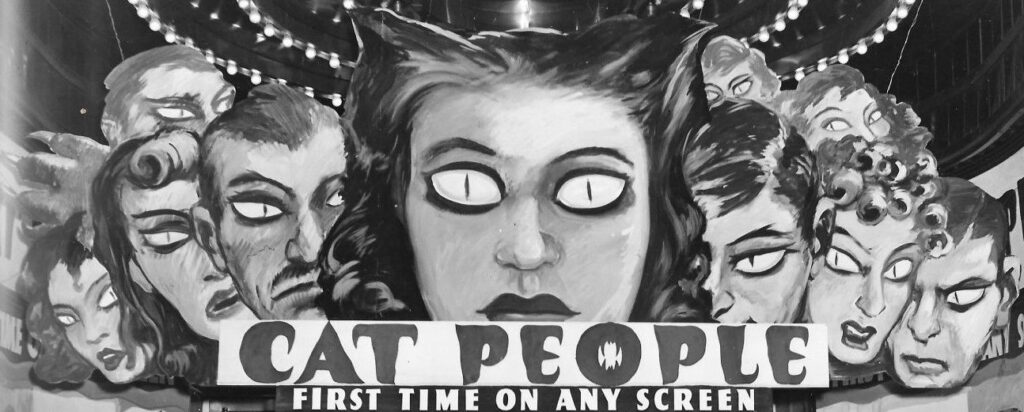

From the Rialto Theater premiere in New York, December 1942

3 Cat People

This sinister creeper actually has very little violence or gore, and it’s not even filmed in New York! But director Jacques Tourneur manages to turn Fifth Avenue interiors into shadowy horror landscapes and the brilliant Simone Simon perfectly embodies a glamorous international socialite who might also be the original catwoman. Central Park Zoo is the scene of much of the melodrama but the most terrifying scene is an effective trick of light-and-shadow at an apartment building swimming pool.
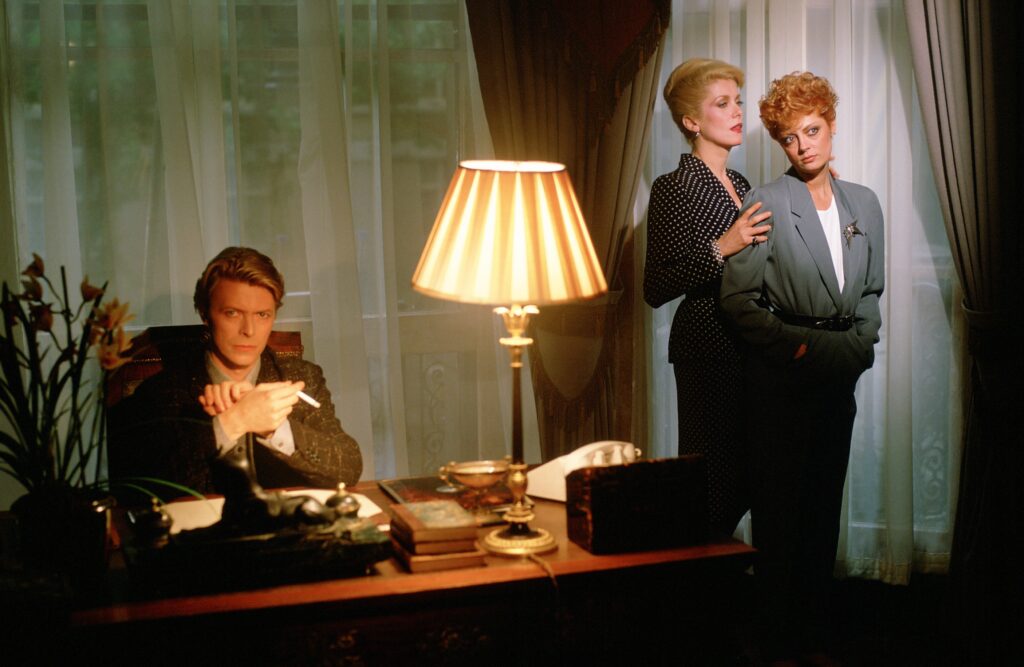

2 The Hunger

So dramatic, pretentious and beautiful. Two New Wave vampires (Catherine Deneuve and David Bowie) hit the town looking for new victims and eternal youth. When Bowie discovers the downsides of making an evil, immortal pact with the undead, Deneuve turns to Susan Sarandon as her new unholy companion.

Filled with so much eyeliner and a great many shoulder pads, this sexy horror melodrama spawned a million baby goths and still stands as an LGBT midnight classic. It also makes a perfect double feature with Martin Scorsese’s After Hours, both movies a celebration of New York City after dark.
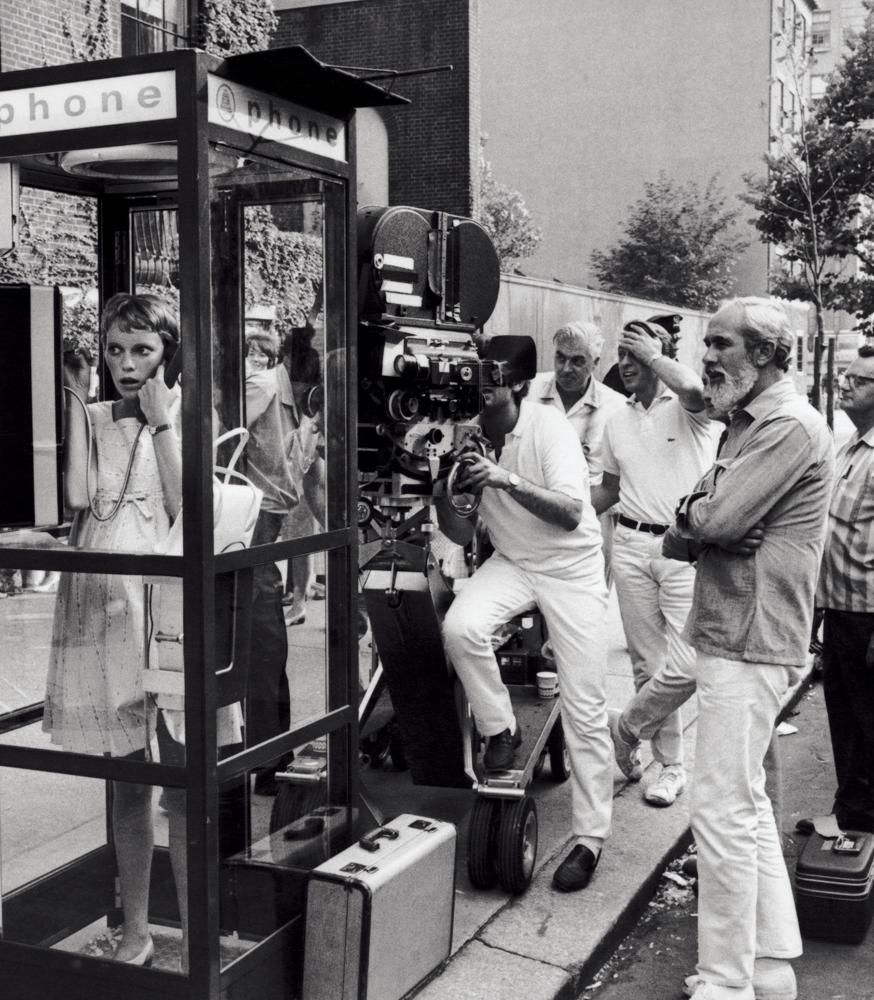

BOB WILLOUGHBY/MPTV IMAGES/REEL ART PRESS

1 Rosemary’s Baby

This is the ultimate marriage of story and location and essentially a horror movie about nosy neighbors and a co-op board. You’re certainly familiar with the story — a young woman (Mia Farrow) becomes impregnated under mysterious circumstances in her tony new home at the Dakota Apartments. But even if you don’t care for horror (or for director Roman Polanski), watch it just for the New York City locations, an embodiment of both the chic and unusual.

Also I want you to watch this movie knowing that Dakota resident Lauren Bacall, friends with producer William Castle, was often watching them film the movie here.
Categories
Health and Living Podcasts

The Ruins of Roosevelt Island: The macabre history of New York’s “city of asylums”

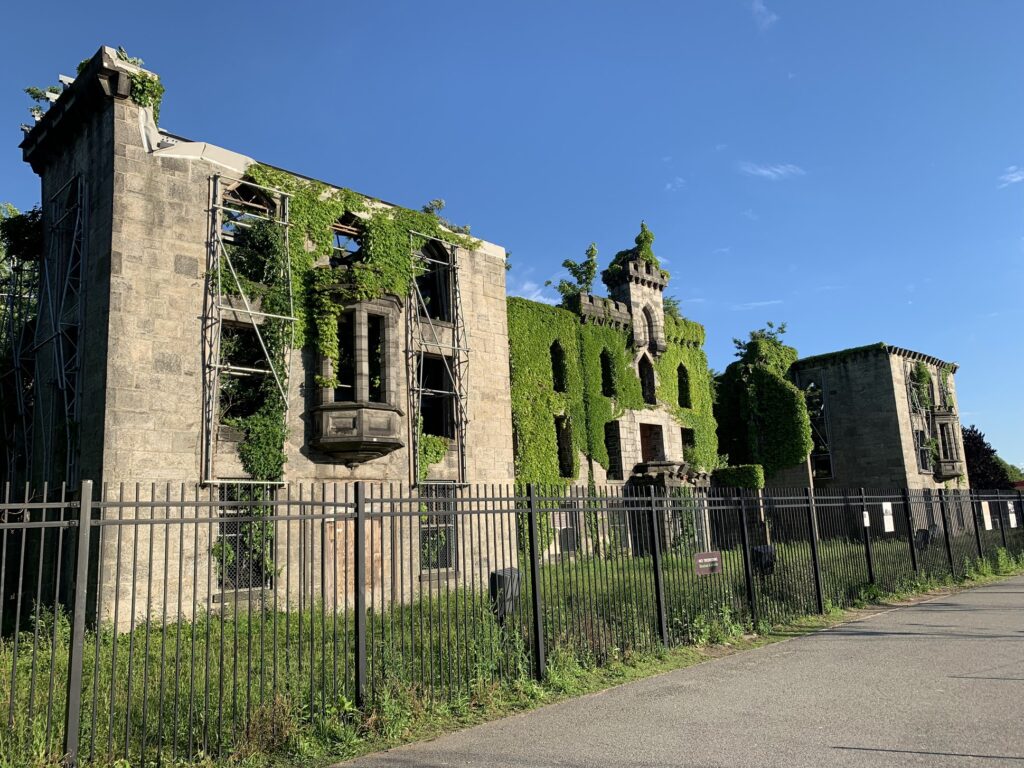
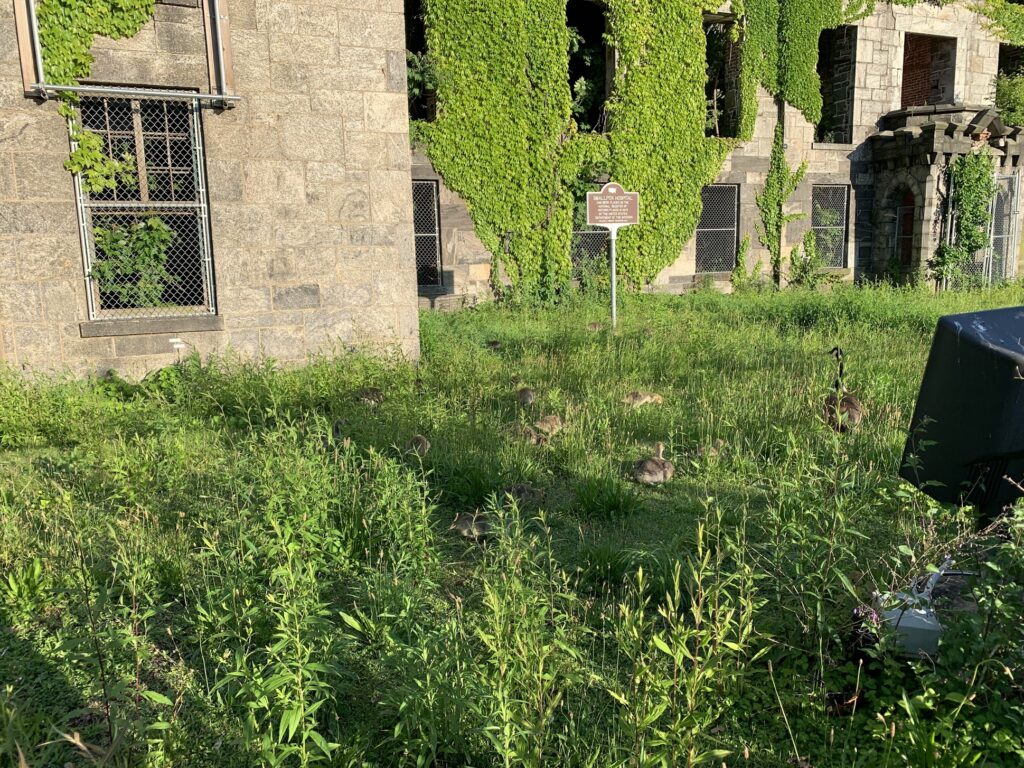
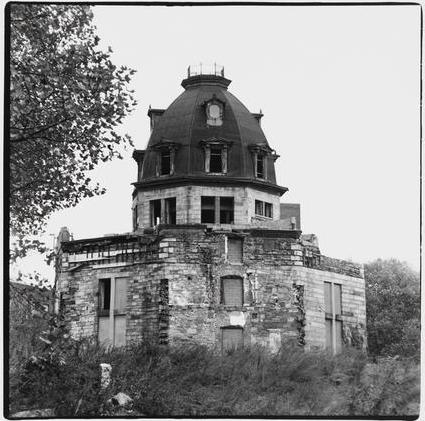
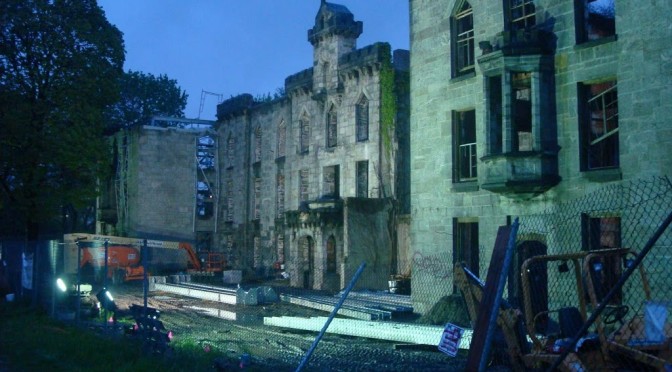
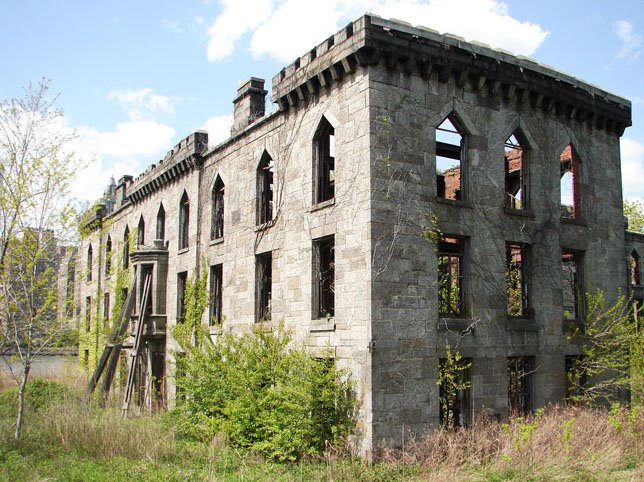
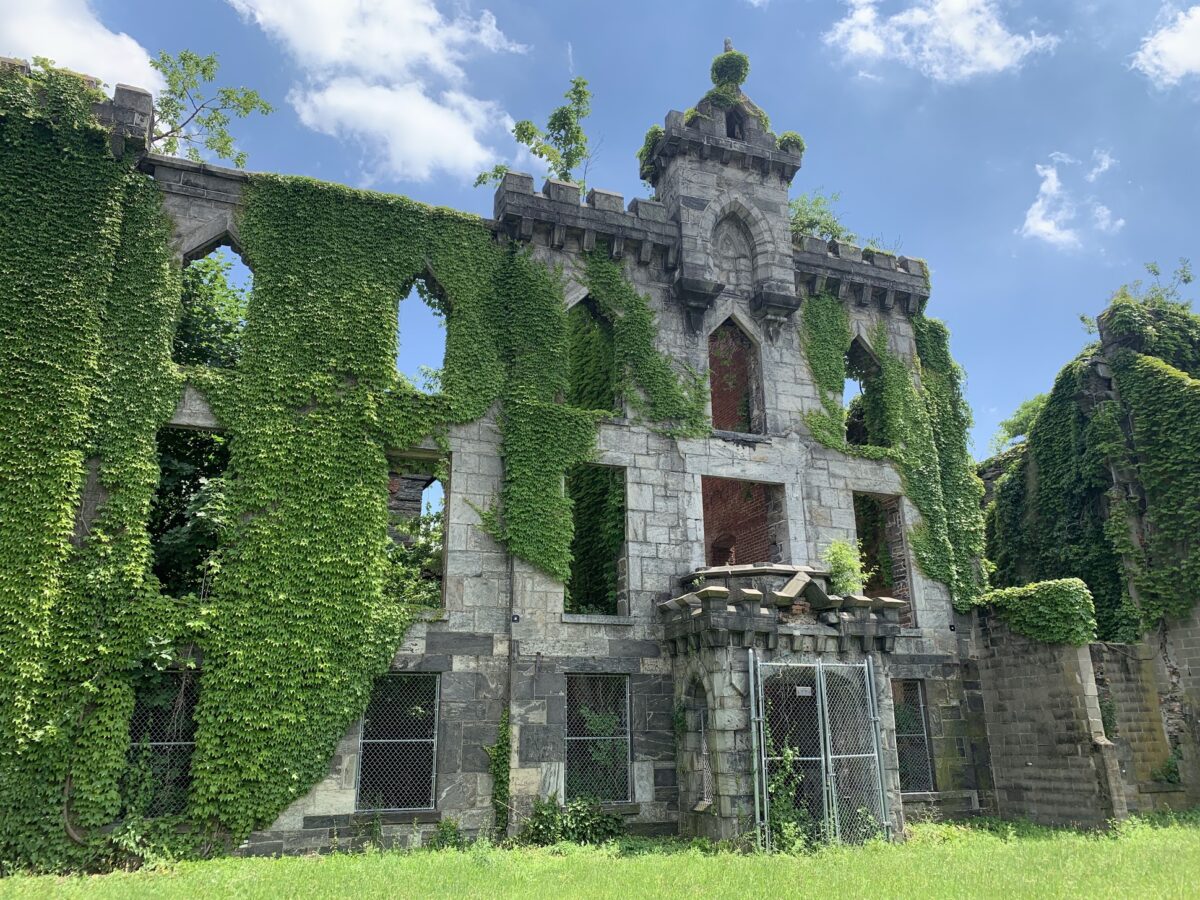
The Renwick Ruin, resembling an ancient castle lost to time, appears along the East River as a crumbling, medieval-like apparition, something not quite believable.

Sitting between two new additions on Roosevelt Island — the campus of Cornell Tech and FDR Four Freedoms Park — these captivating ruins, enrobed in beautiful ivy, tell the story of a dark period in New York City history.

The island between Manhattan and Queens was once known as Blackwell’s Island, a former pastoral escape that transformed into the ominous ‘city of asylums’, the destination for the poor, the elderly and the criminal during the 19th century.

New. York Municipal Archives

During this period, the island embodied every outdated idea about human physical and mental health, and vast political corruption ensured that the inmates and patients of the island would suffer.

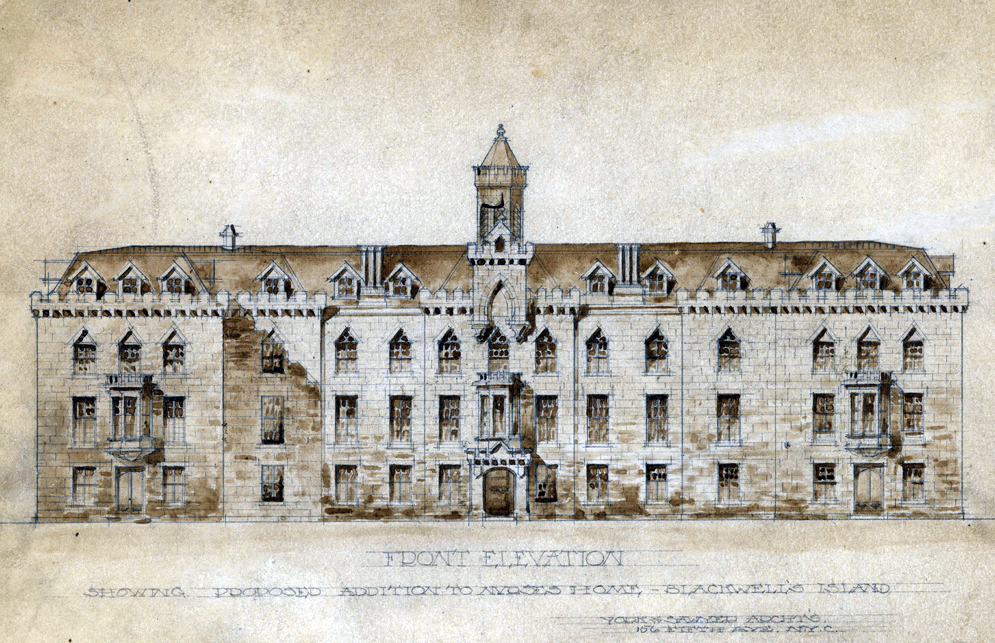
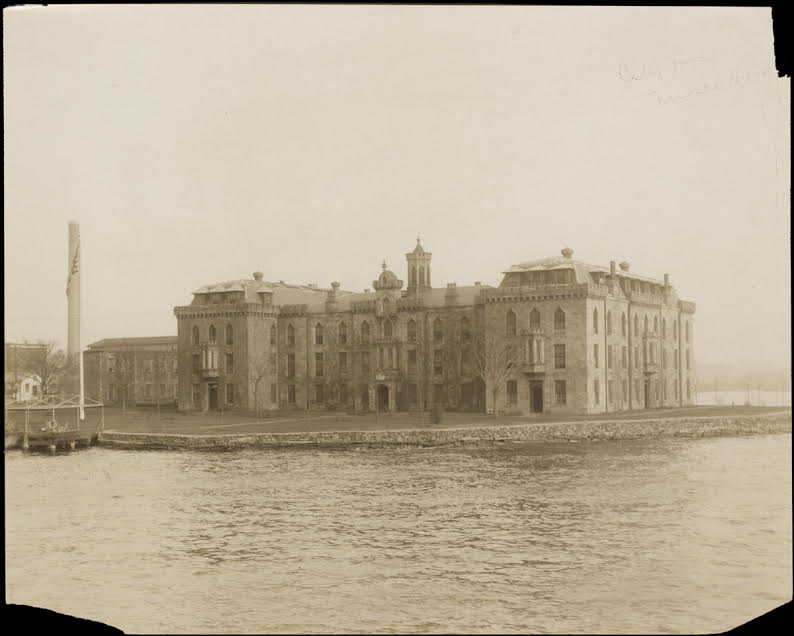
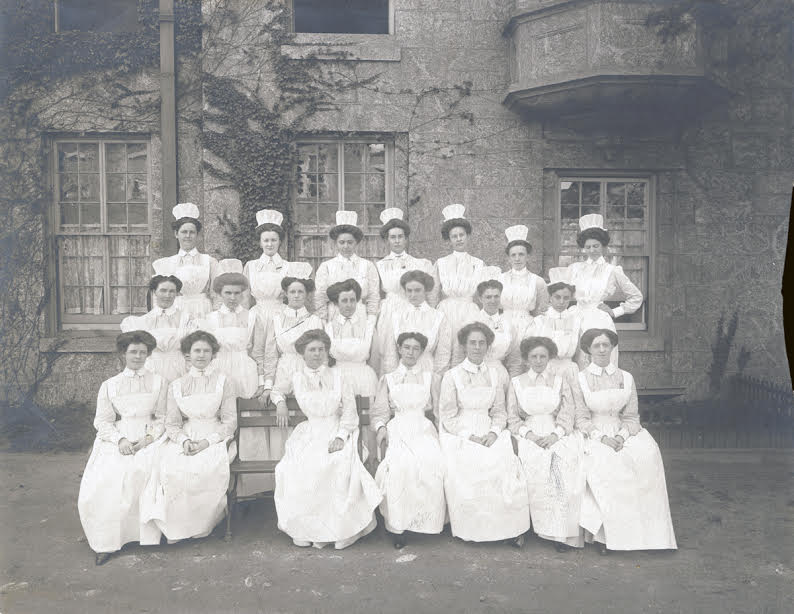
In 1856 the island added a Smallpox Hospital to its notorious roster, designed by acclaimed architect James Renwick Jr (of Saint Patrick’s Cathedral fame) in a Gothic Revival style that captivates visitors to this day — even if the building is in an advanced state of dilapidation.

New York City Municipal Archives

What makes the Renwick Ruin so entrancing? How did this marvelous bit of architecture manage to survive in any form into present day?

PLUS: The grand story of the island — from a hideous execution in 1829 to the modern delights of one of New York City’s most interesting neighborhoods.


For more information on Roosevelt Island history:

Friends of the Ruin

Roosevelt Island Historical Society

I also highly recommend the book Damnation Island: Poor, Sick, Mad, & Criminal in 19th-Century New York by Stacy Horn which tells the story of Blackwell’s Island, institution by institution.

And please check out this great video about Roosevelt Island from 1978:


Historic sites on Roosevelt Island to visit (from north to south):

Roosevelt Island Lighthouse

Nellie Bly Monument “The Girl Puzzle”

The Octagon

Chapel of the Good Shepherd

The Blackwell House

Historic Visitor Center Kiosk and Roosevelt Island Tram

Southpoint Park

Strecker Memorial Laboratory

Smallpox Hospital (aka Renwick Ruin)

FDR Four Freedoms State Park


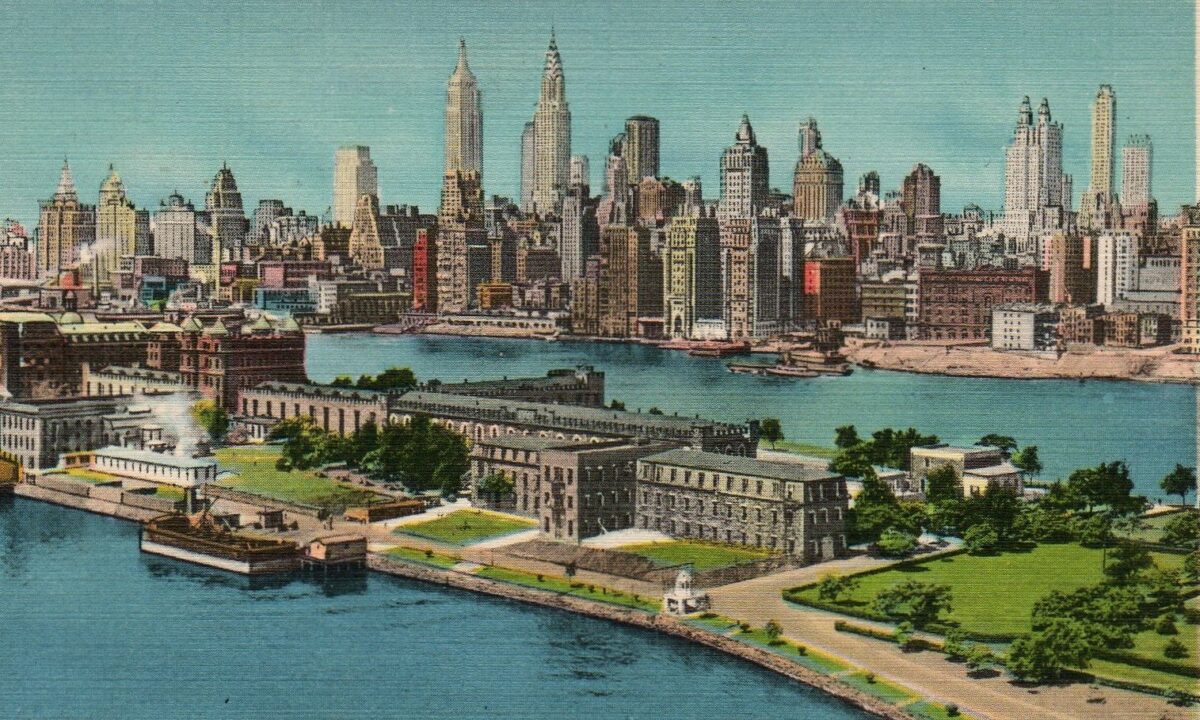
The entire site of FDR Four Freedoms State Park is located on landfill. Want proof?

New York Municipal Archives
The Renwick Ruin
The Smallpox Hospital grounds with grazing geese.
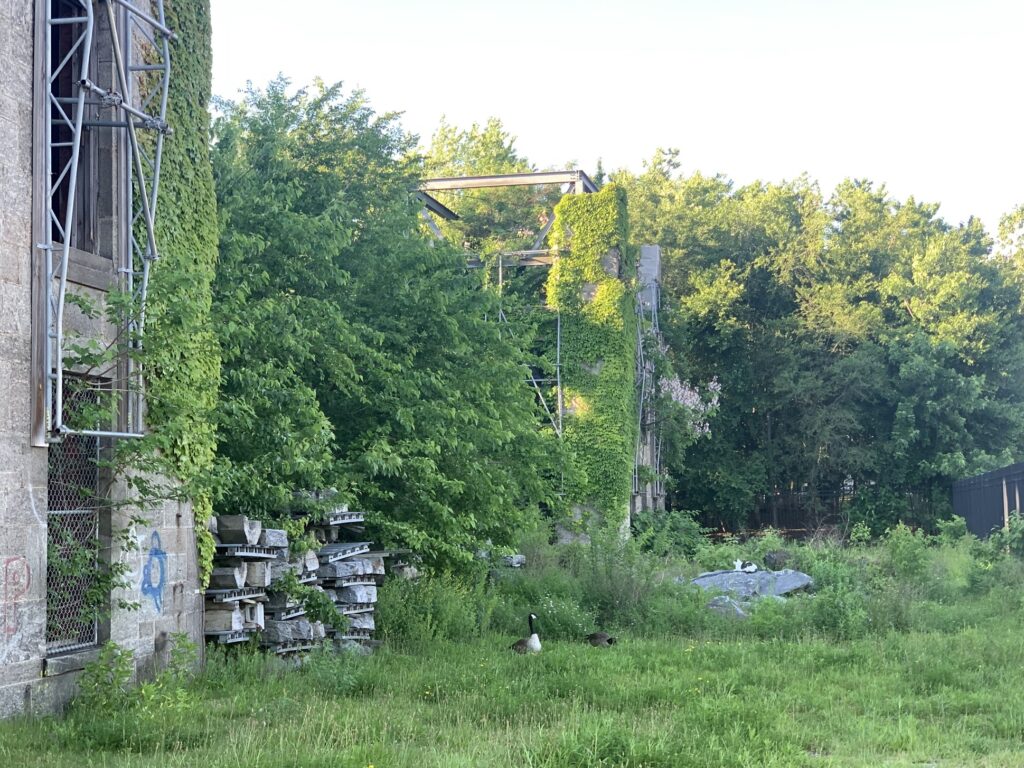
Behind the ruin, guarded by geese and cats.
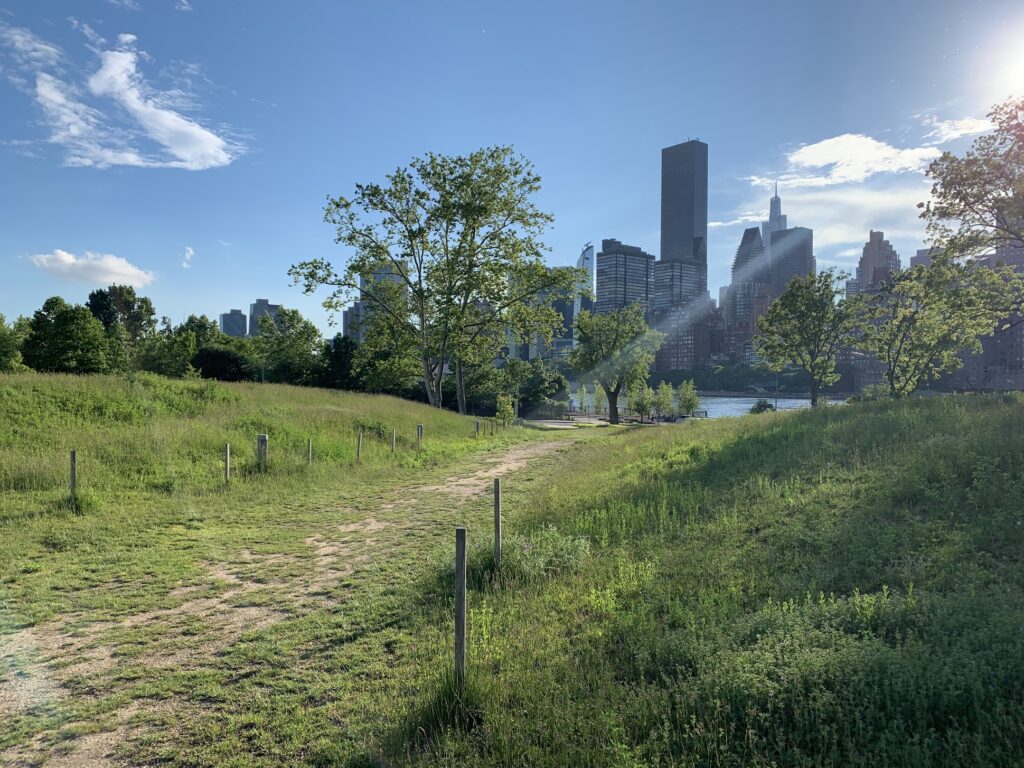
Southpoint Park, photo by Greg Young

FURTHER LISTENING

After listening to this episode on the Renwick Ruin on Roosevelt Island, jump back into these earlier Bowery Boys podcasts which discuss similar themes or situations from the show:


The Bowery Boys: New York City History podcast is brought to you …. by you!

We are producing a new Bowery Boys podcast every other week. We’re also looking to improve and expand the show in other ways — publishing, social media, live events and other forms of media. But we can only do this with your help!

We are creators on Patreon, a patronage platform where you can support your favorite content creators.

Please visit our page on Patreon and watch a short video of us recording the show and talking about our expansion plans. If you’d like to help out, there are several different pledge levels. Check them out and consider being a sponsor.

We greatly appreciate our listeners and readers and thank you for joining us on this journey so far.

Categories
New York Islands

Whatever happened to Franklin and Eleanor Roosevelt Island?

Welfare Island (once the more enticingly named Blackwell’s Island) was New York’s depository of human services, once a dour place of horrifying asylums and miserable workhouses.

In the 1960s Mayor John Lindsay was preparing to revitalize the East River island with new housing and increased support for the hospitals there. Architects Philip Johnson and John Burgee were brought in to rethink the urban space as a largely automobile-free community.

For this grand experiment, all they needed was a name. Luckily there seemed be a couple prominent figures being egregiously ignored in the city — Franklin Delano Roosevelt and his wife Eleanor:

From a New York Times editorial, January 30, 1972:

It is astonishing, and becomes more disgraceful with every passing year, that within the city there is still no memorial to this great New Yorker (except for FDR Drive, a dubious honor).  

The opportunity is, however, immediately at hand. Welfare Island, now slowly undergoing a total reconstruction and rebirth, would take on a new symbolic significance if its name were changed to Franklin D. Roosevelt Island — or, better yet, to Franklin and Eleanor Roosevelt Island in honor of that extraordinary woman who was even more closely identified with New York City than was the president himself.”

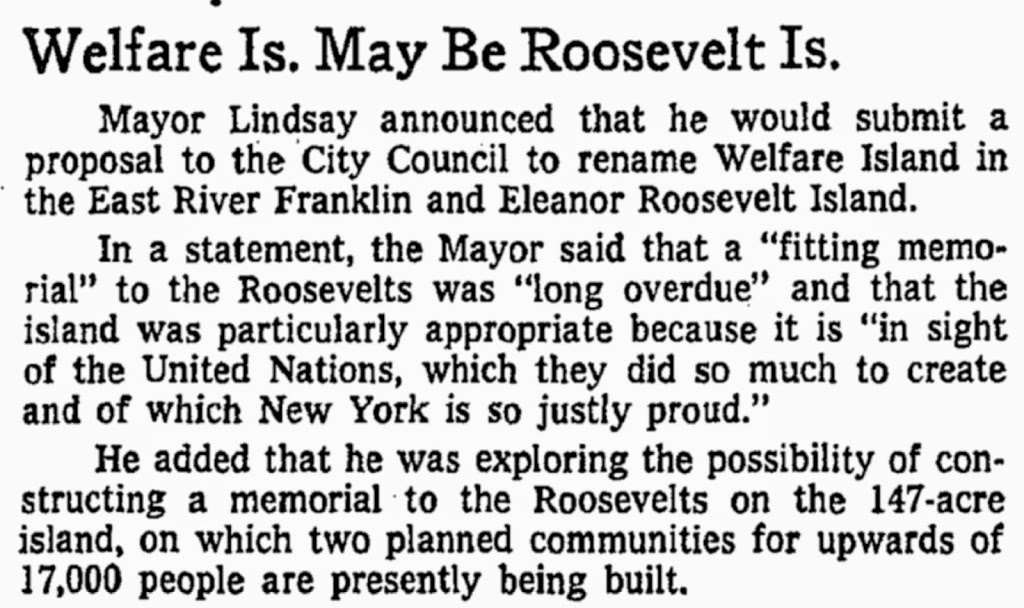
By the following year Mayor Lindsay submitted a proposal to re-name Welfare Island for the president and the first lady.

From Jan. 21, 1973:

It was officially approved later that summer but with a revised name — Franklin Roosevelt Island.

To the Council, “a witness testified that the name of Welfare Island should be dropped because plans were under way to start marketing this September the thousands of apartments already built and still under construction as part of a $300-million ‘new town’ designed to replace outdated medical facilities.” [source]

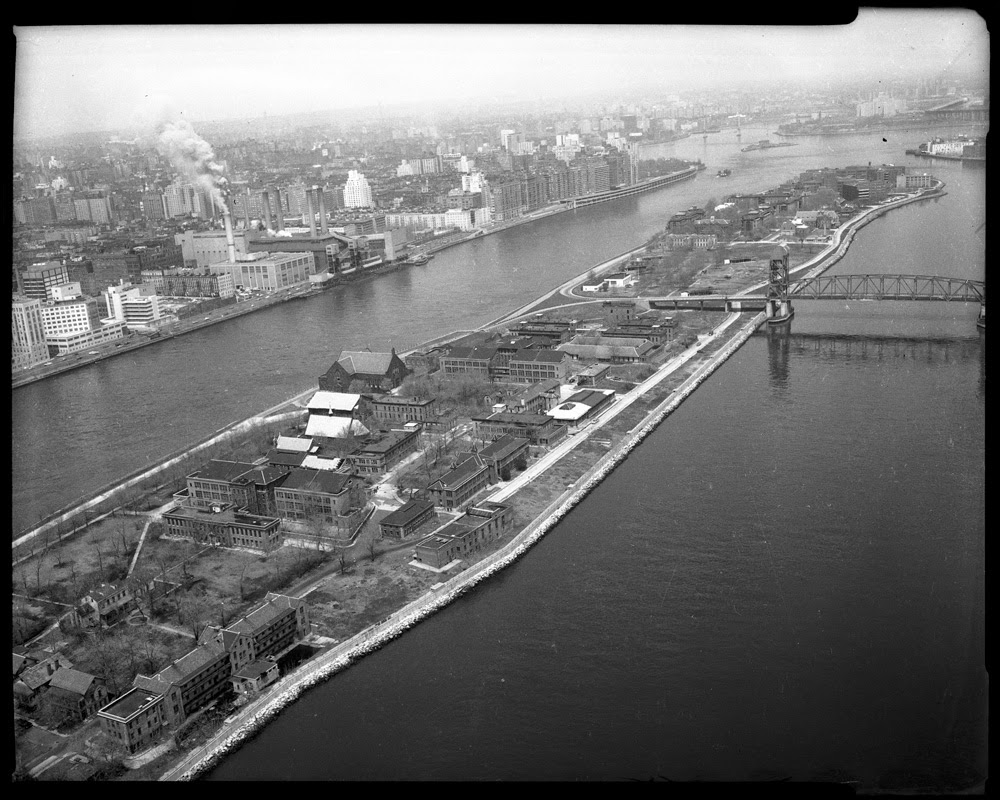
Below: The island in April 1961, photo courtesy the New York Fire Department

A Louis Kahn memorial to Franklin Roosevelt was to be built at the south end; it would take over four decades, but the Franklin D. Roosevelt Four Freedoms Park would finally open in 2012.

Wither Eleanor?

She finally did get her own memorial in New York City — an understated statue tucked away in Riverside Park.

It was unveiled on October 5, 1996 by Hillary Rodham Clinton.

Oddly enough, Hillary regaled the crowd with a story of imaginary conversations she liked to have with Eleanor. “When I last spoke to Mrs. Roosevelt, she wanted me to tell all of you how pleased she is by this great, great new statue.”

Top picture courtesy Museum of the City of New York

Categories
Bridges Podcasts Queens History

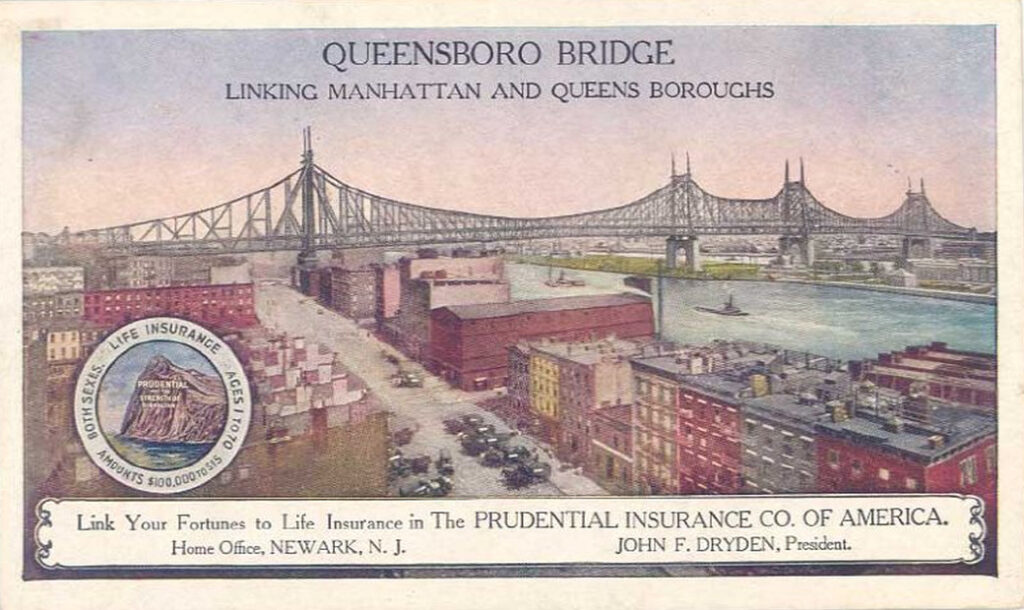
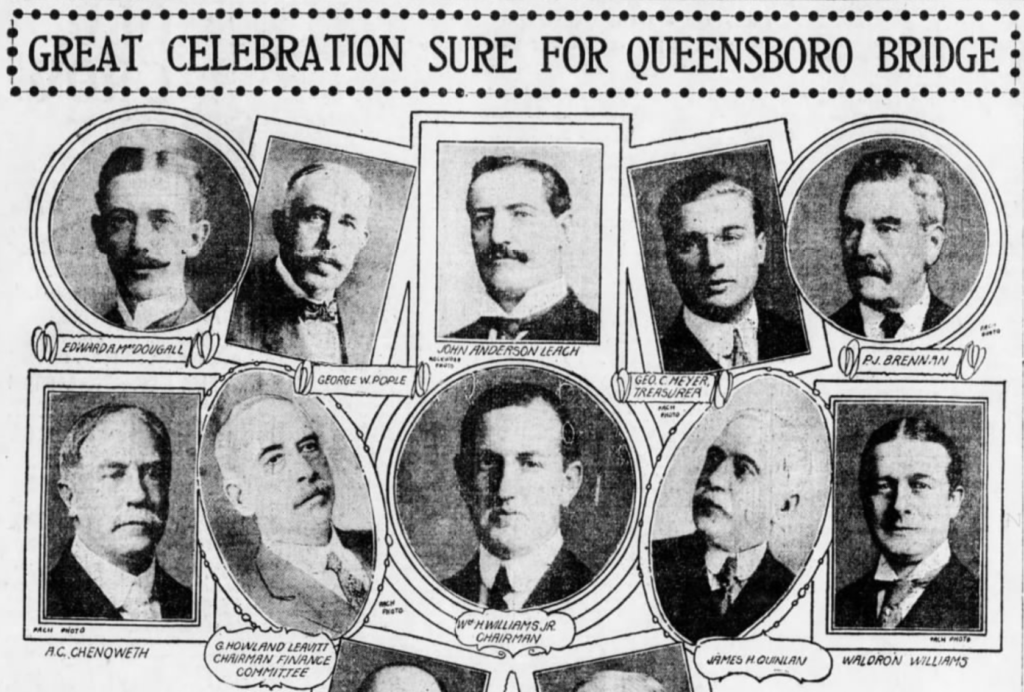
The Queensboro Bridge and the Rise of a Borough

“The city seen from the Queensboro Bridge is always the city seen for the first time, in its first wild promise of all the mystery and the beauty in the world.” — F. Scott Fitzgerald

EPISODE 349 This is the story of a borough with great potential and the curious brown-tannish cantilever bridge which helped it achieve greatness.

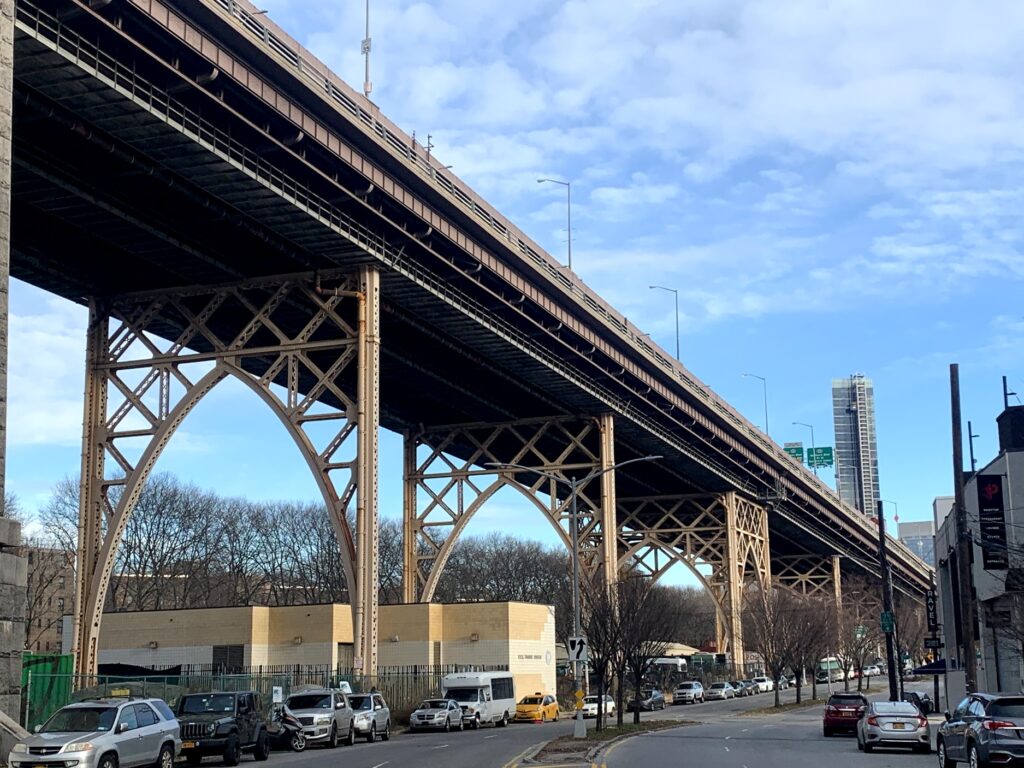
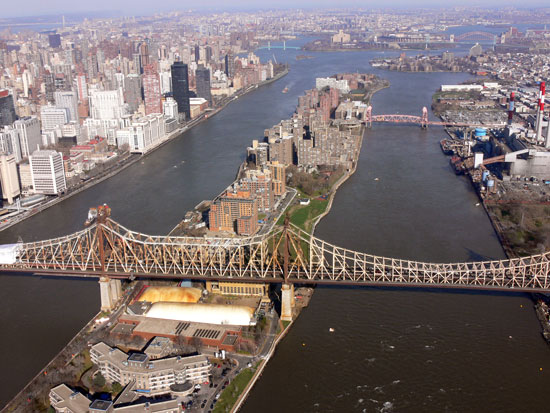
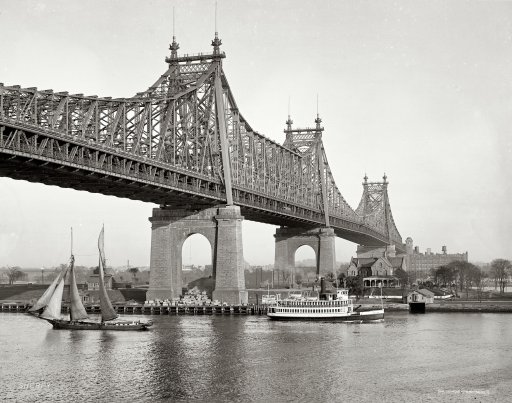
The Ed Koch Queensboro Bridge (sometimes known as the 59th Street Bridge) connects Manhattan with Queens by lifting over the East River and Roosevelt Island, an impressive landmark that changed the fate of the borough enshrined in its curious name.

In 1898, before the Consolidation of 1898, which created Greater New York and the five boroughs, much of Queens was sparsely populated — a farm haven connected by dusty roads — with most residents living in a few key towns, villages and one actual city — Long Island City.

With Brooklyn and Manhattan already well developed (and overcrowded in some sectors) by the early 20th century, developers and civic leader looked to Queens as a new place for expansion. But in 1900 it had no quick and convenient connections to areas off of Long Island.

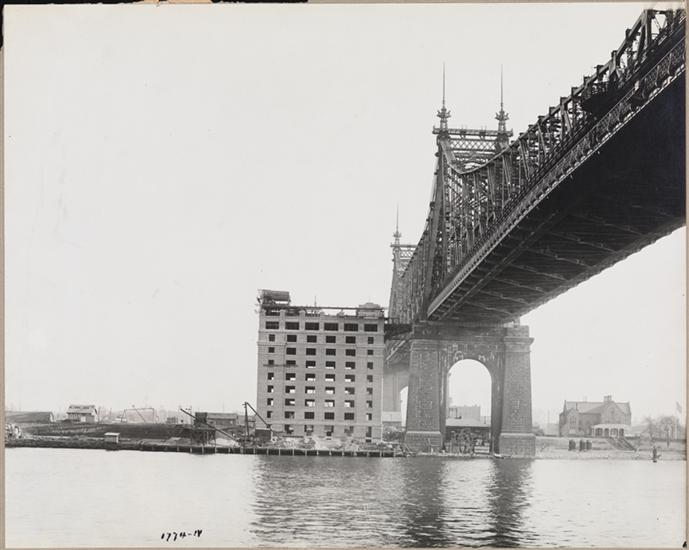
The bridge in 1917 with the elevator storehouse, Museum of the City of New York

With the opening of the bridge in 1909, rich new opportunities for Queens awaited. Communities from Astoria to Bayside, Jackson Heights, Flushing and Jamaica all experienced an unprecedented burst of new development.

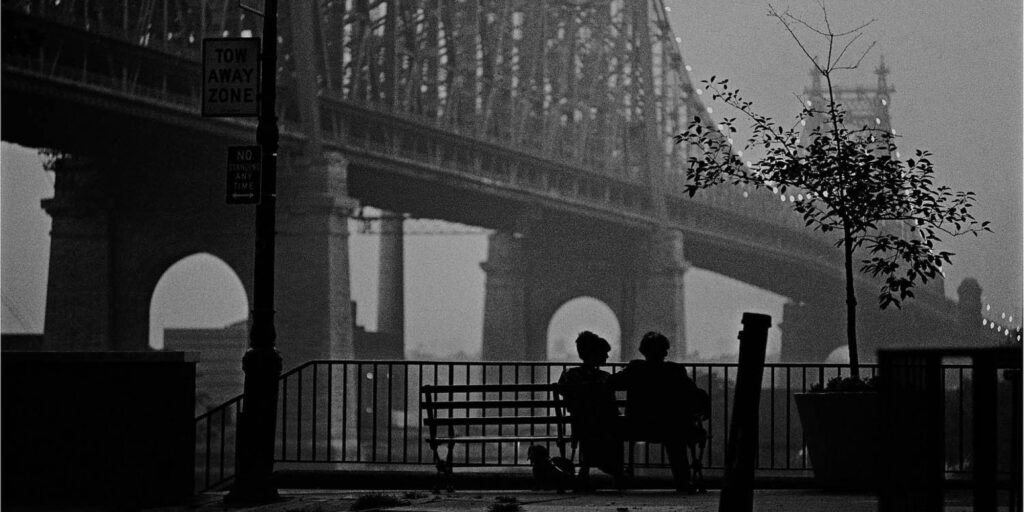
Thanks in small part to the bridge so famous that it inspired a classic folk song and became the cinematic backdrop of a 1970s film classic.

Listen here or from your favorite podcast player:


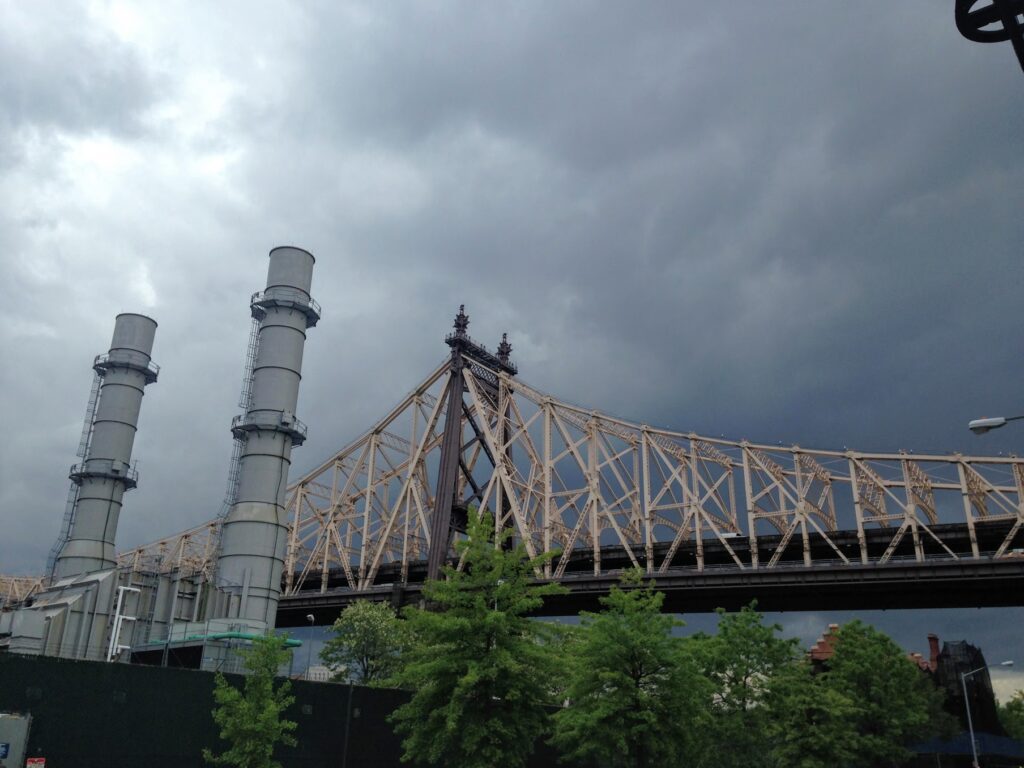
From a stormy Spring day in 2014. Photo by Greg Young
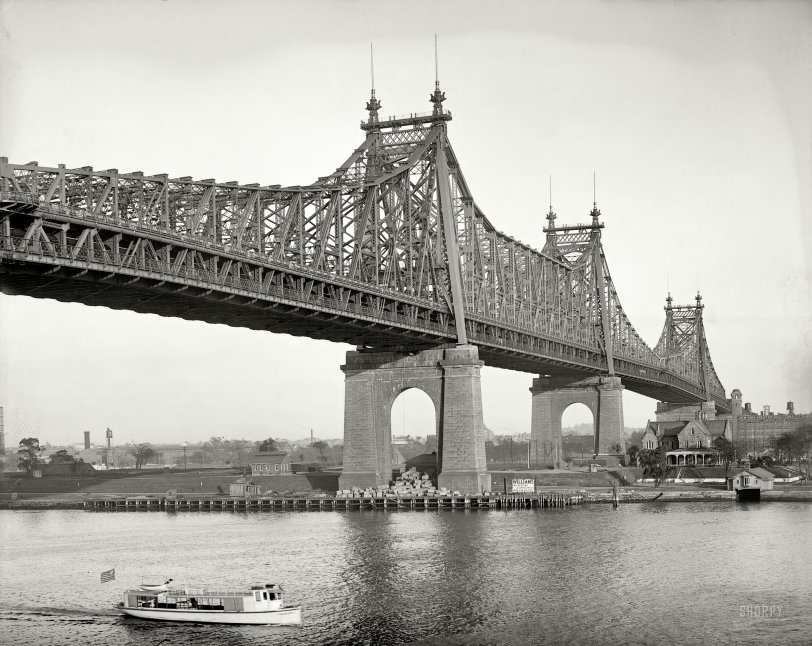
(Courtesy Shorpy)
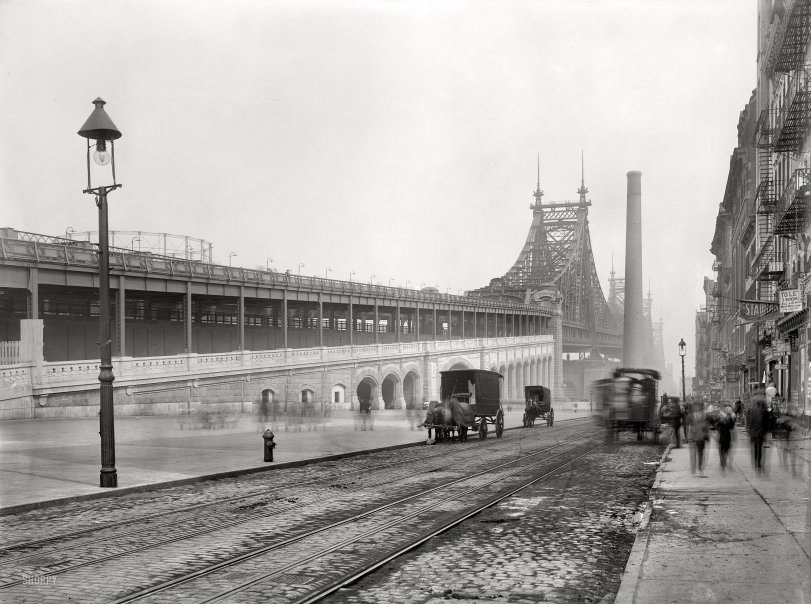
Courtesy Shorpy)
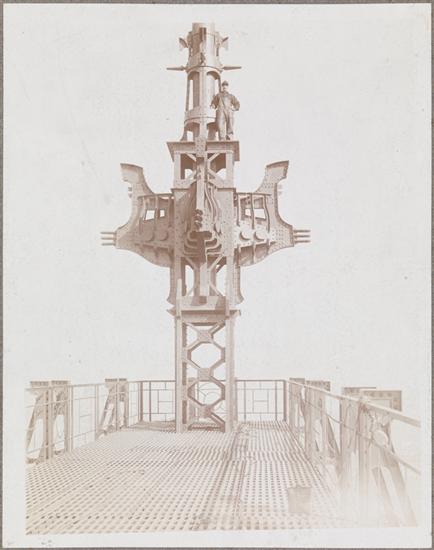
The unique finials at the top of the bridge, 1905. Courtesy Museum of the City of New York
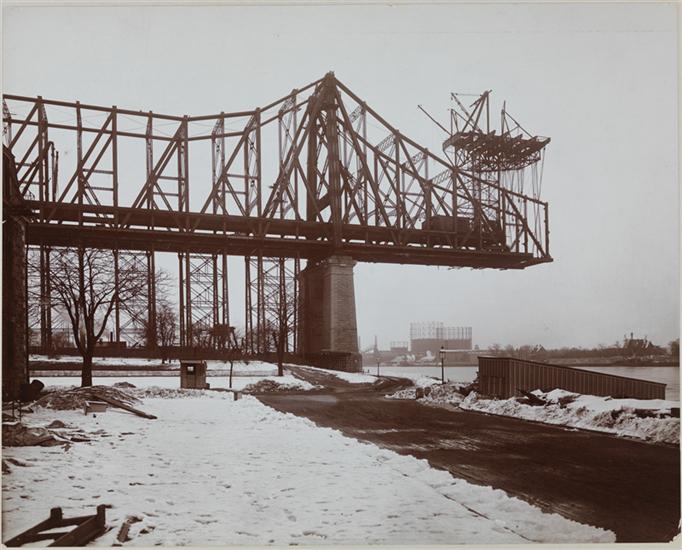
The bridge near complete, 1908. Courtesy the Museum of the City of New York
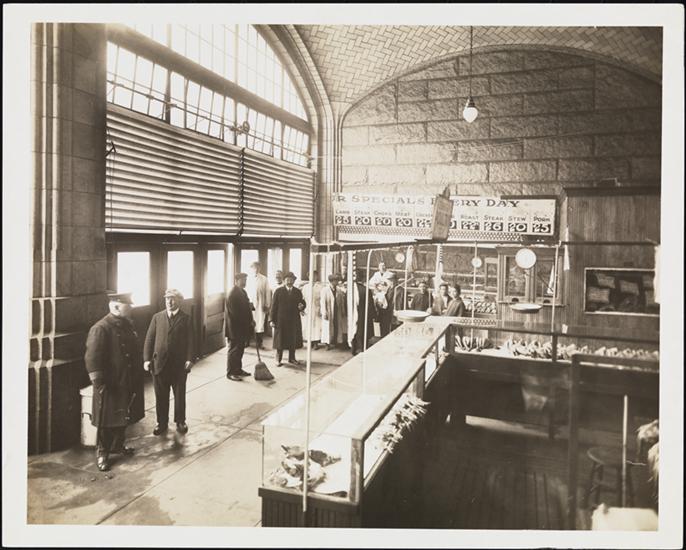
The marketplace with Guastavino tile, 1915. Courtesy Museum of the City of New York

The Bowery Boys: New York City History podcast is brought to you …. by you!

We are now producing a new Bowery Boys podcast every other week. We’re also looking to improve and expand the show in other ways — publishing, social media, live events and other forms of media. But we can only do this with your help!

We are now a creator on Patreon, a patronage platform where you can support your favorite content creators.

Please visit our page on Patreon and watch a short video of us recording the show and talking about our expansion plans. If you’d like to help out, there are six different pledge levels. Check them outand consider being a sponsor.

We greatly appreciate our listeners and readers and thank you for joining us on this journey so far.


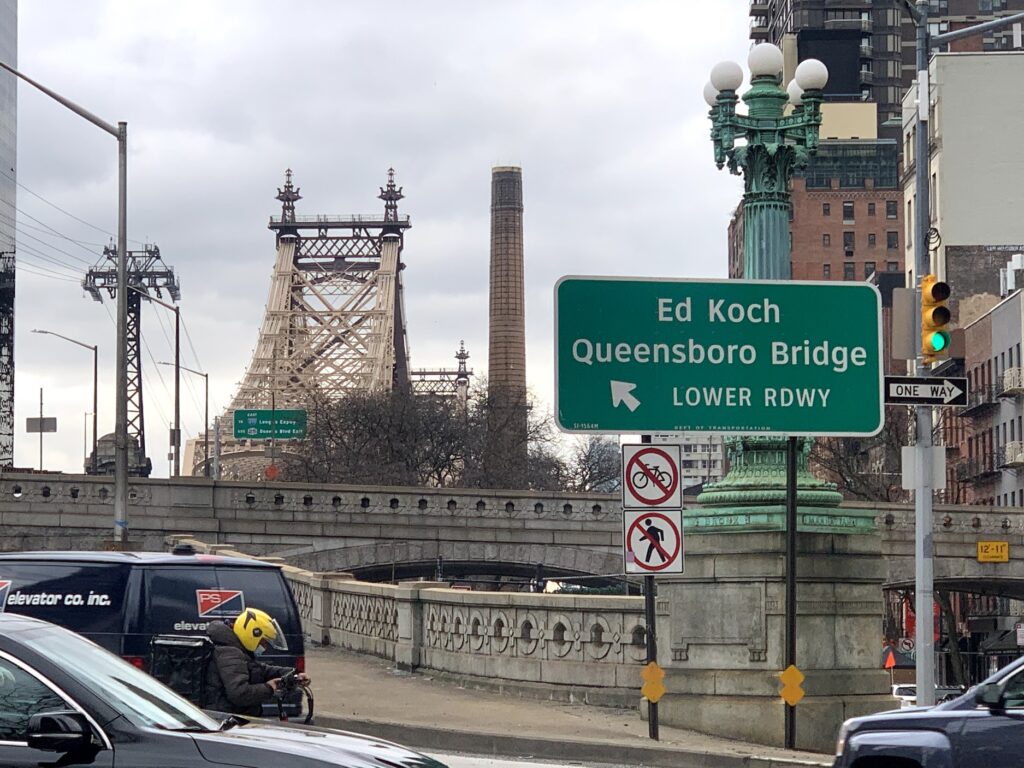
Approaching the bridge at street level on the Manhattan side. Photo Greg Young
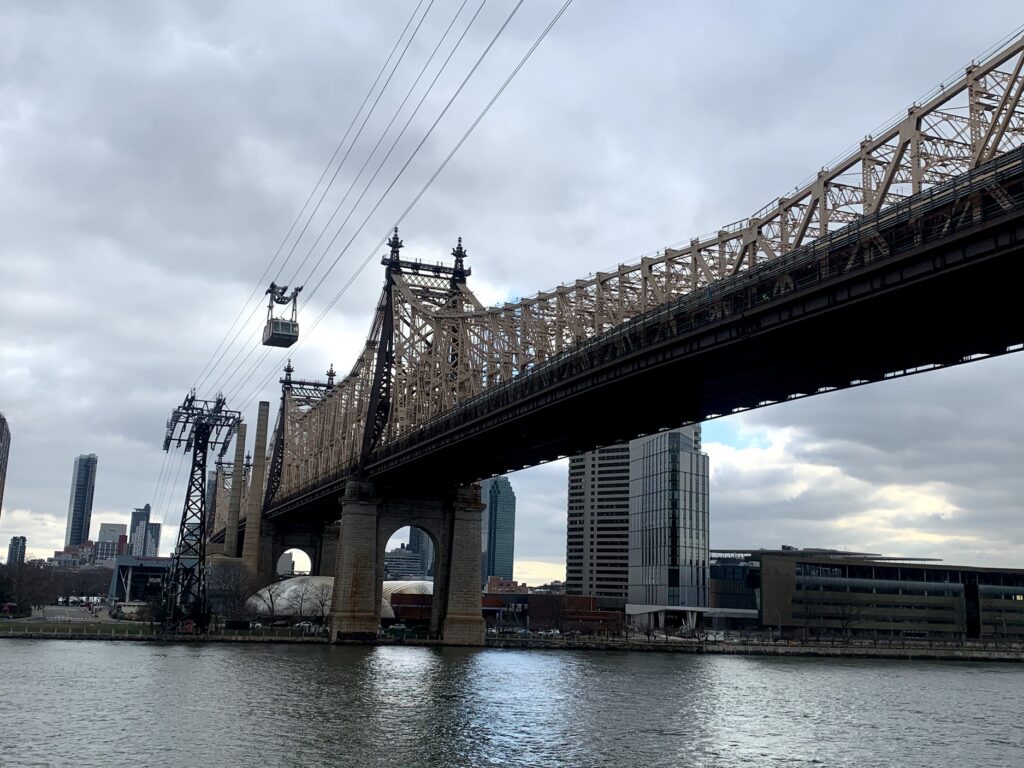
The bridge as the Roosevelt Island Tramway crosses. (GY)
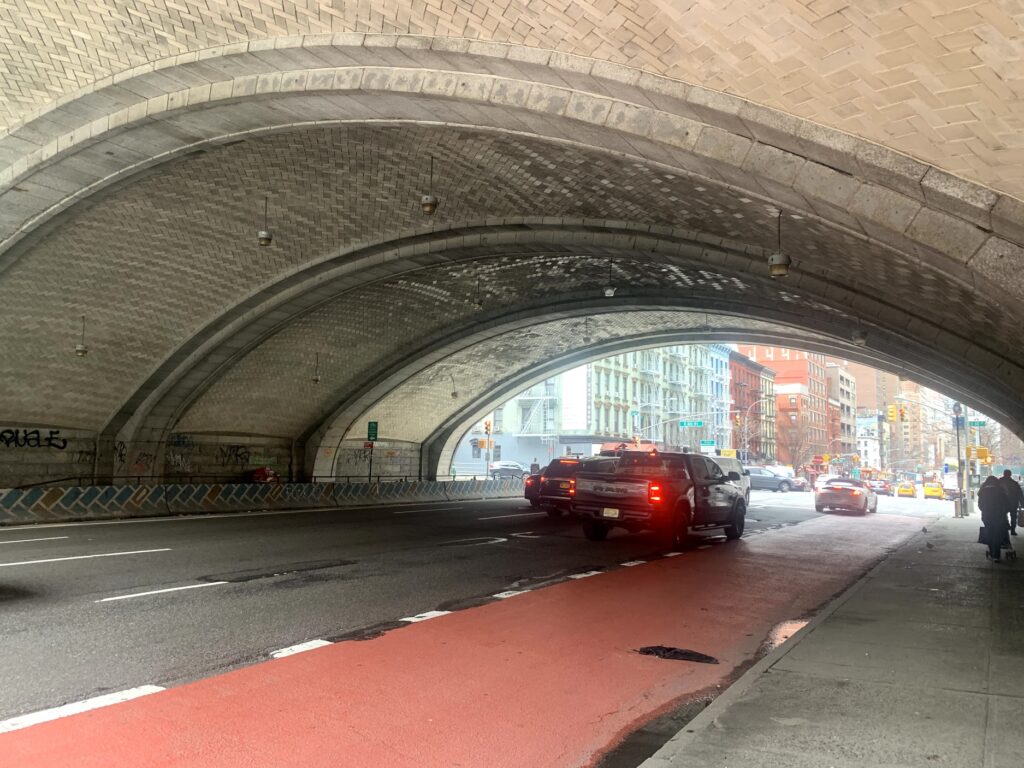
Guastivino tile on the First Avenue archway beneath the bridge. (GY)
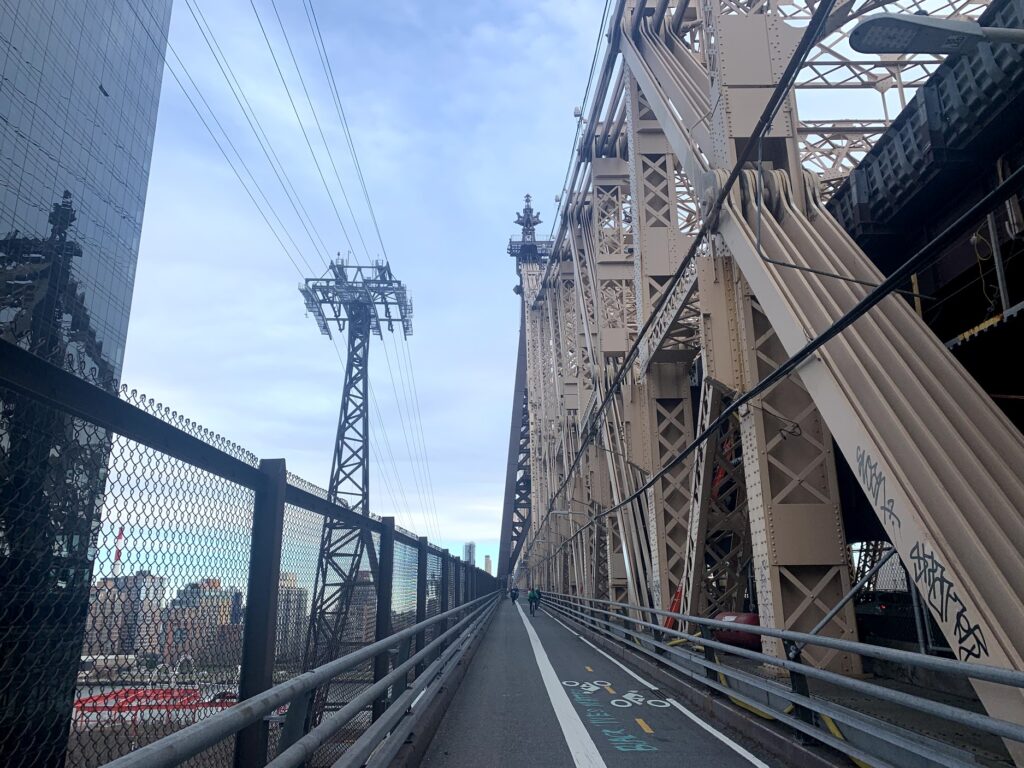
Across the bridge….. (GY)
On the Queens side, the bridge takes on a different character, dominating the waterfront blocks. (GY)
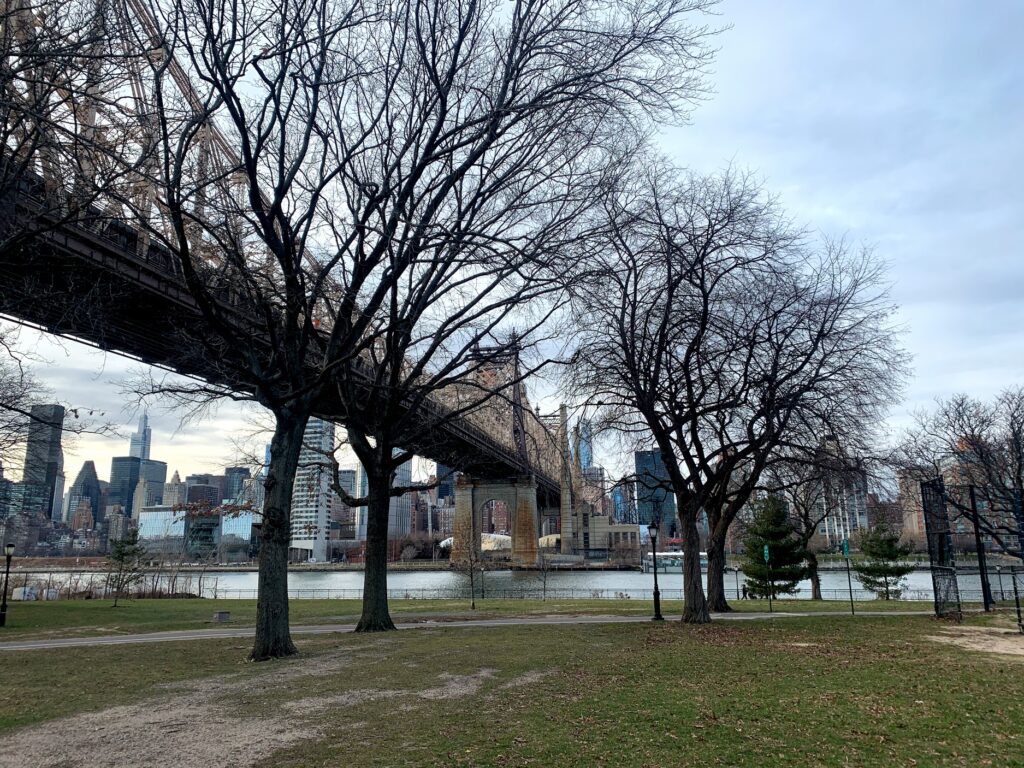
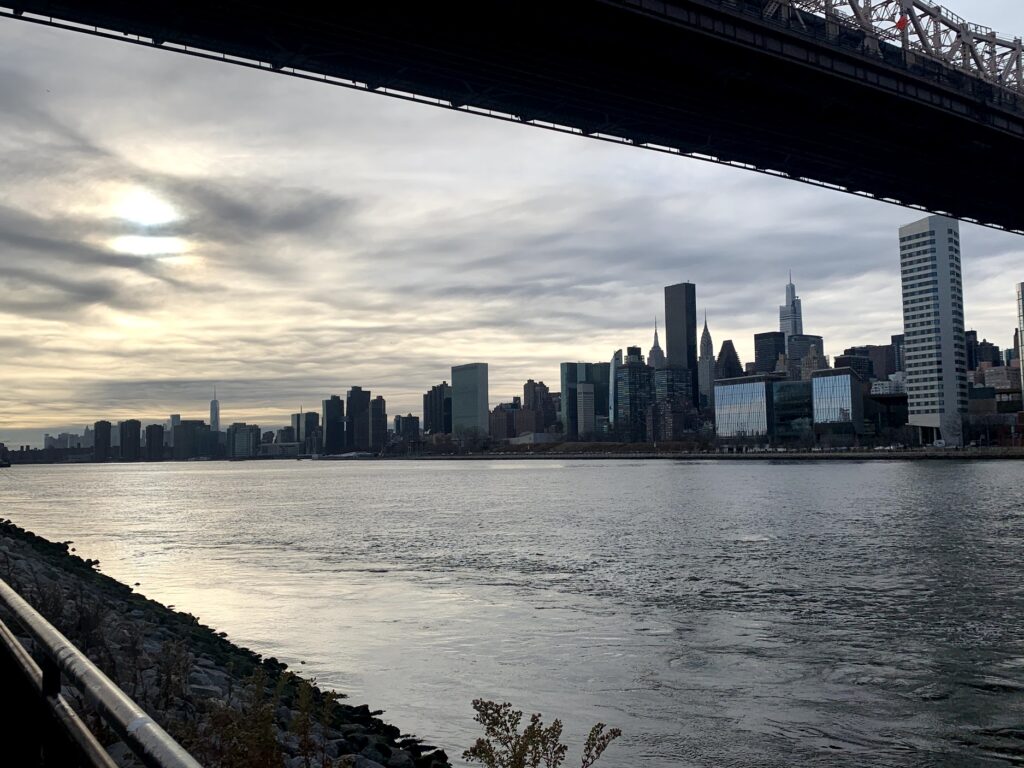
Views from Queensbridge Park. (GY)

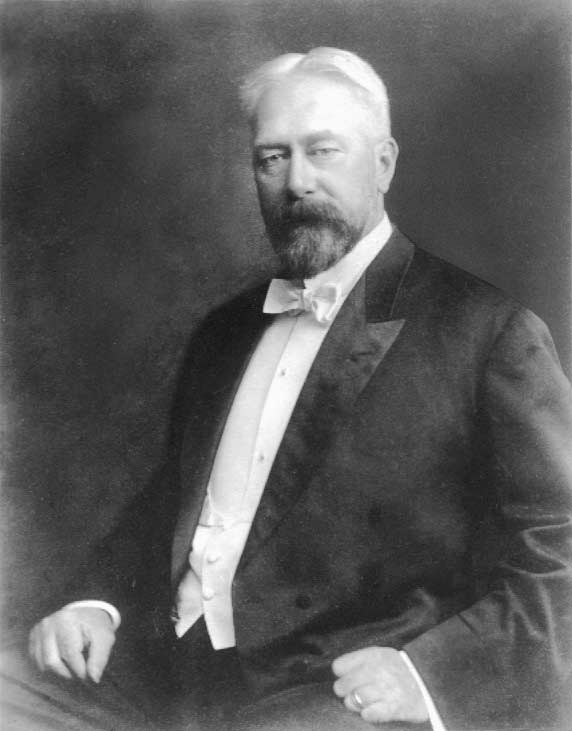
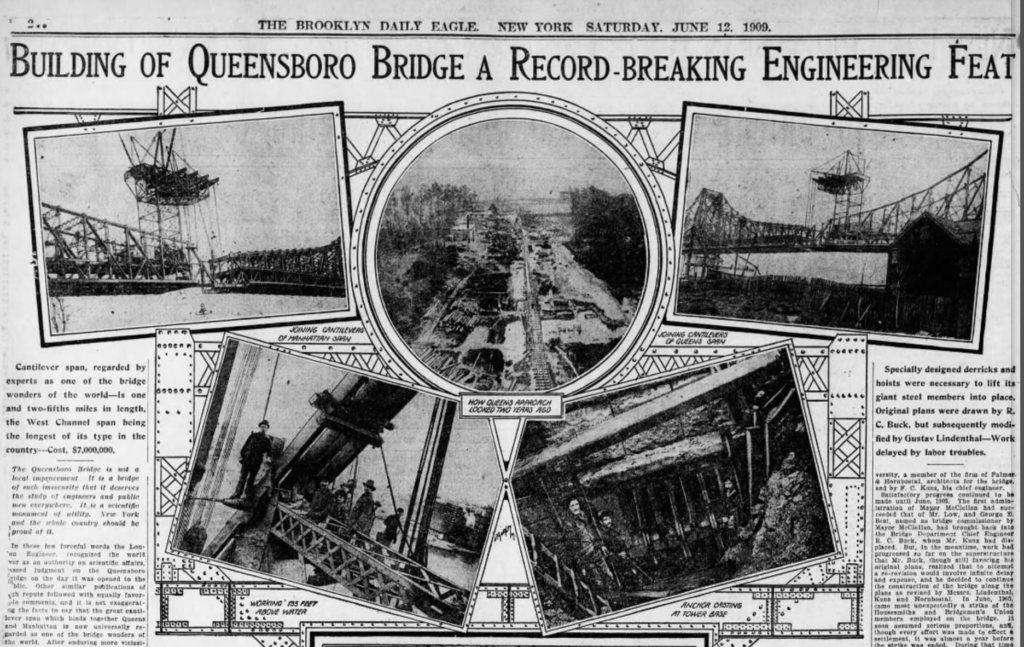
Gustav Lindenthal in 1909, the year the bridge opens.
From the June 12, 1909 Brooklyn Daily Eagle

RELATED LISTENING

Categories
Health and Living Newspapers and Newsies Podcasts

Nellie Bly: Undercover in New York’s Notorious Asylum for the Insane

The story of New York World reporter Nellie Bly as she poses as a mental patient to report on the abuses of Blackwell’s Island’s Lunatic Asylum.

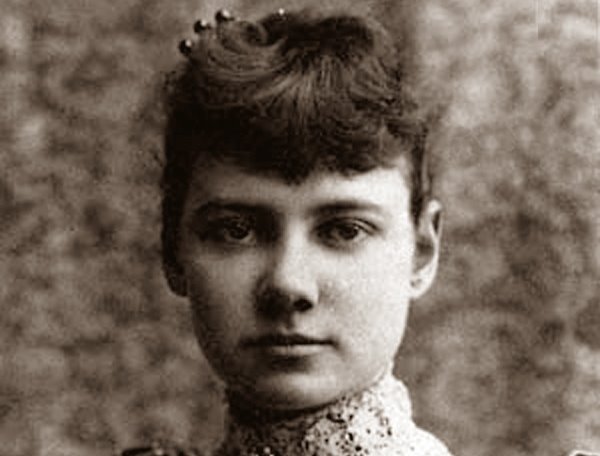
PODCAST Nellie Bly was a determined and fearless journalist ahead of her time, known for the spectacular lengths she would go to get a good story. Her reputation was built on the events of late September-early October 1887 — the ten days she spent in New York’s most notorious insane asylum.

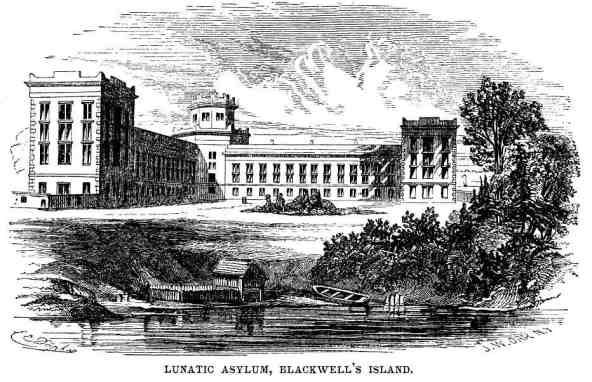
Since the 1830s Blackwell’s Island had been the destination for New York’s public institutions of an undesirable nature — hospitals for grave diseases, a penitentiary, an almshouse, even a quarantine for smallpox. There was also a mental institution — an insane or lunatic asylum — rumored to treat its patients most cruelly.

51

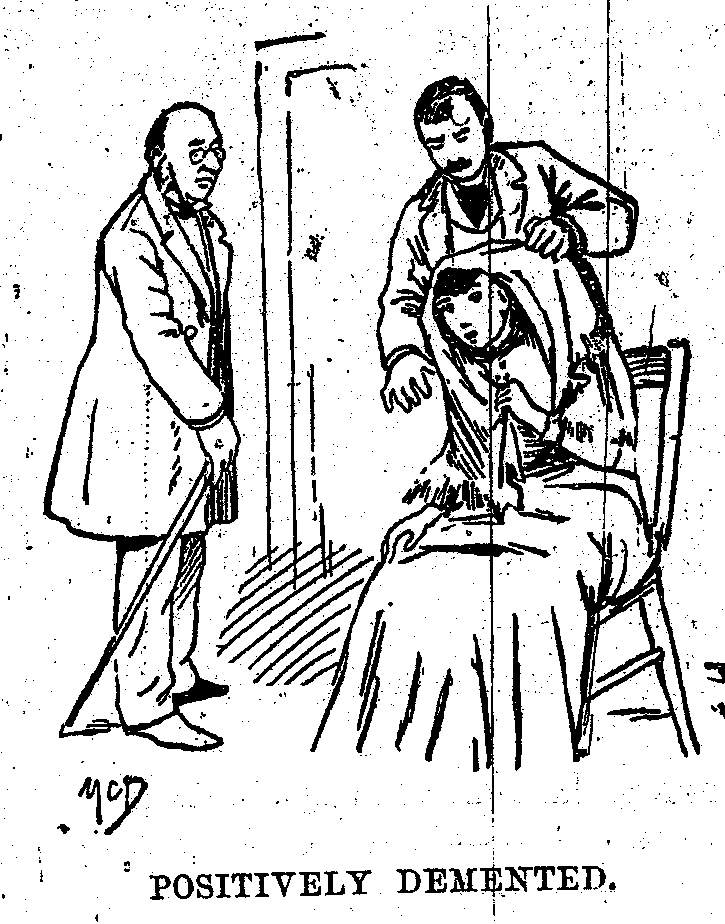
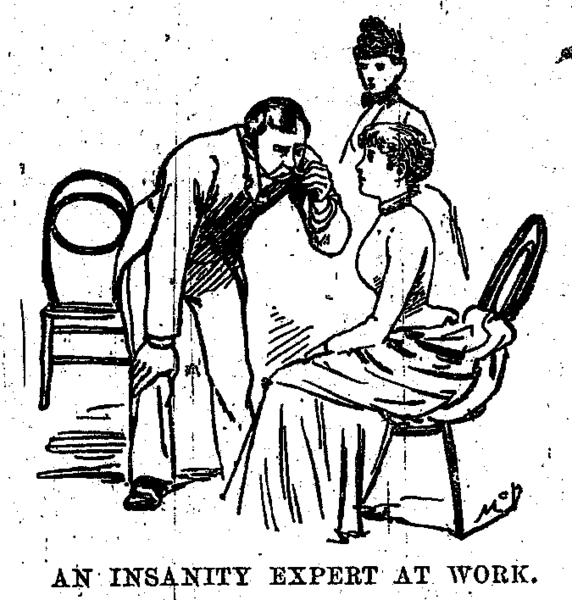
The ambitious young reporter decided to see for herself — by acting like a woman who had lost her mind. Her ten days in this particular madhouse — the basis of her newspaper articles and a book — would expose the world to the sinister treatment of the mentally ill and the loathsome conditions of New York institutions meant to care for the most needy.

But would the process of getting this important story lead Nellie herself to go a little mad? And once she got inside the asylum, how would she get out?

ALSO: Not only is a vestige of the asylum still around today, you can live in it!


The Bowery Boys: New York City History podcast is brought to you …. by you!

We are now producing a new Bowery Boys podcast every two weeks. We’re also looking to improve the show in other ways and expand in other ways as well — through publishing, social media, live events and other forms of media. But we can only do this with your help!

We are now a member of Patreon, a patronage platform where you can support your favorite content creators for as little as a $1 a month.

Please visit our page on Patreon and watch a short video of us recording the show and talking about our expansion plans. If you’d like to help out, there are five different pledge levels (and with clever names too — Mannahatta, New Amsterdam, Five Points, Gilded Age, Jazz Age and Empire State). Check them out and consider being a sponsor.

We greatly appreciate our listeners and readers and thank you for joining us on this journey so far. And the best is yet to come!


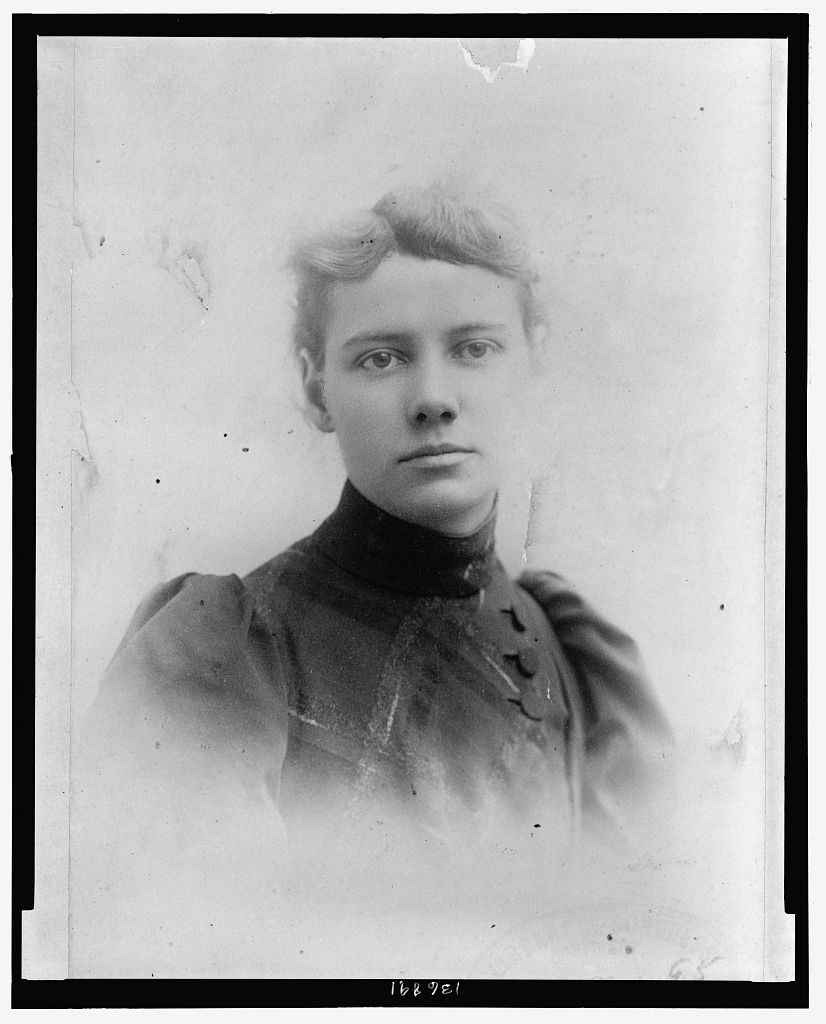
Nellie Bly, the bold journalist with extraordinary will and panache, tackled a number of strange assignments in her life, starting with her virtuoso performance getting into the Blackwell’s Island insane asylum.

7f5ab10e286c50902324b51b1b1a3a51

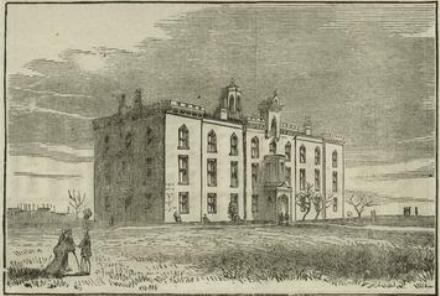
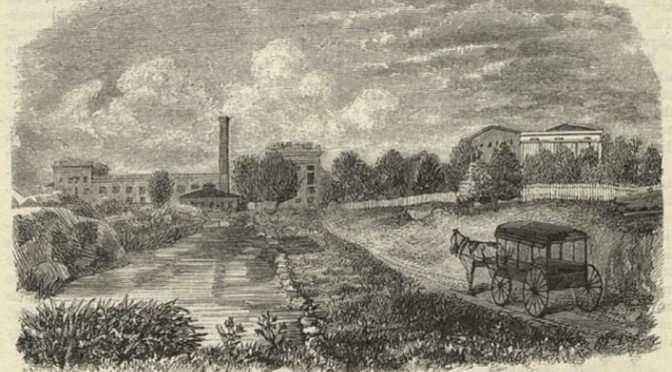
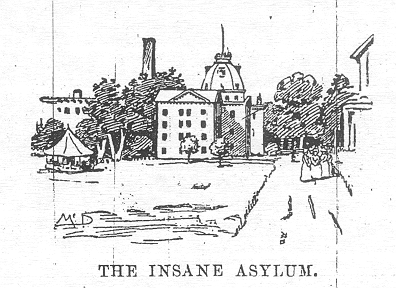
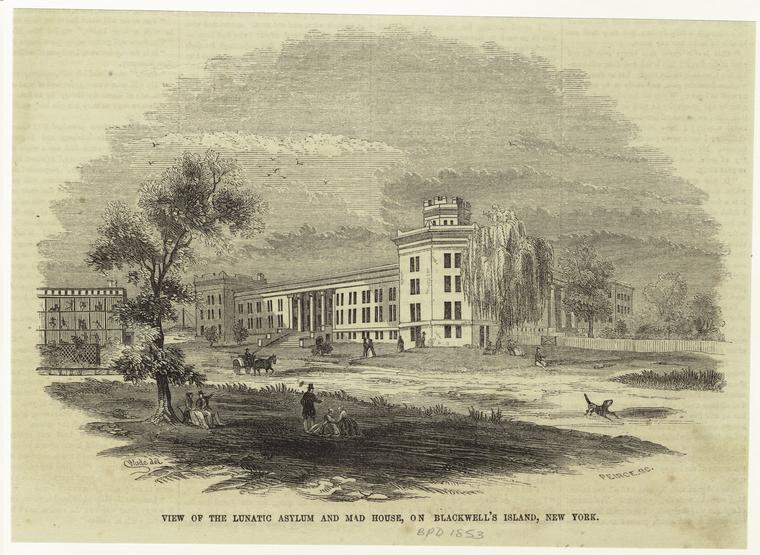
Blackwell’s Island Lunatic Asylum from 1853, rendered by William Wade

Courtesy NYPL
Courtesy NYPL

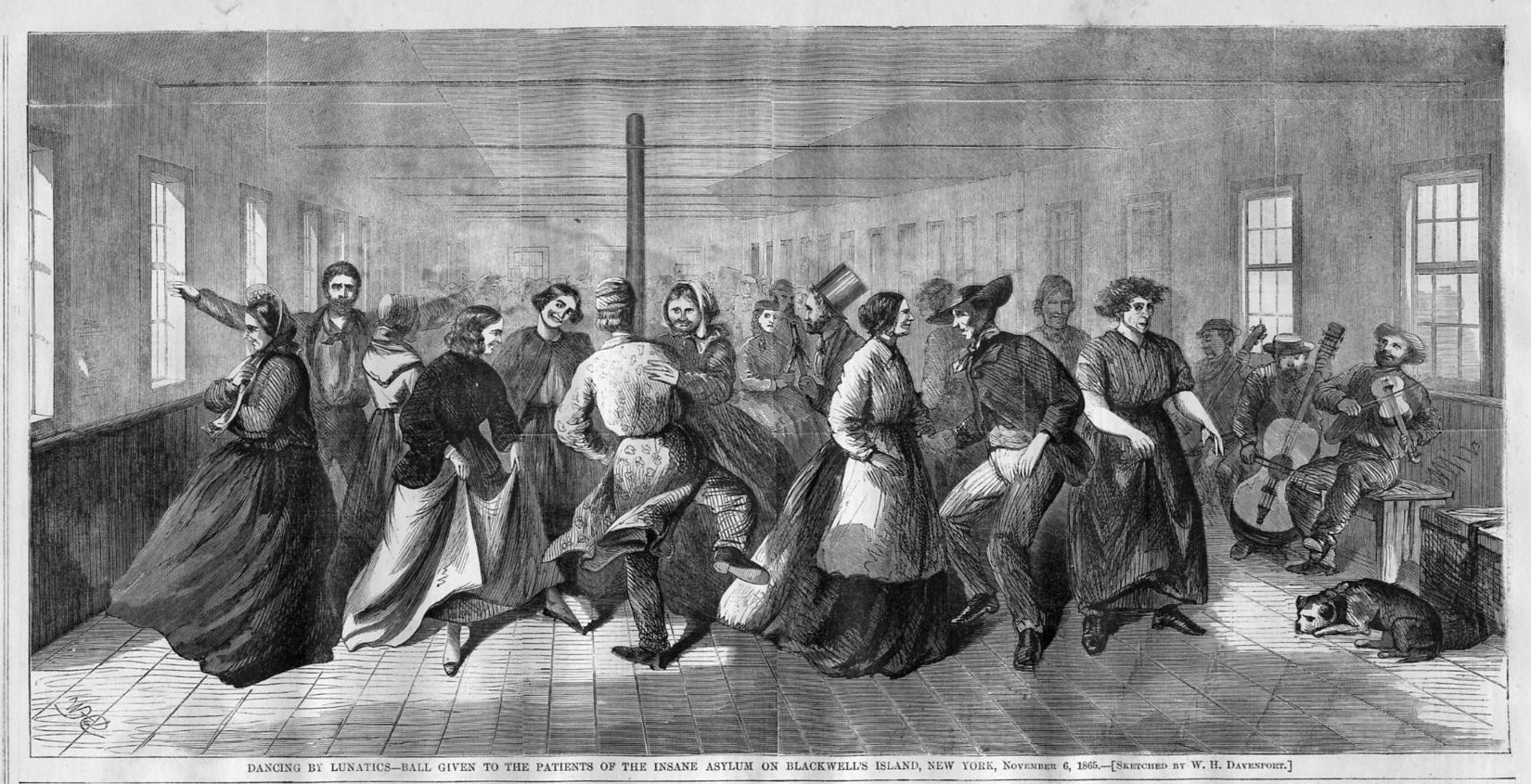
A newspaper clipping from 1865 — “Dancing by lunatics — Ball given to the patients of the Insane Asylum on Blackwell’s Island”

1

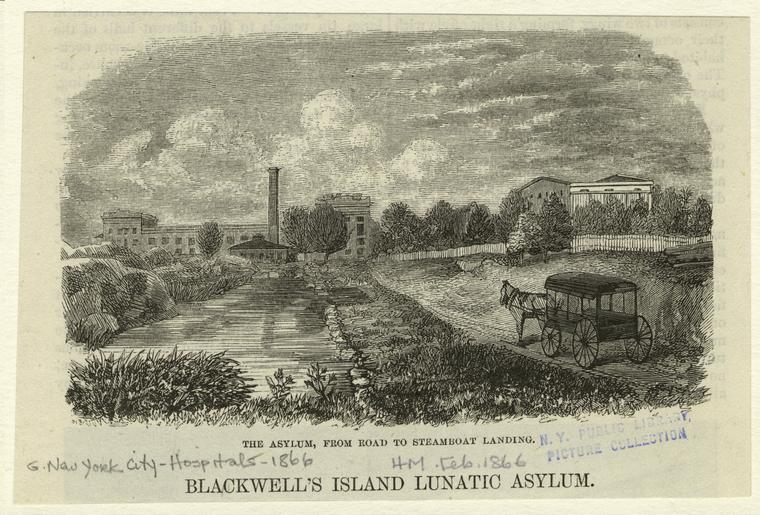
Another view of Blackwell’s Island Lunatic Asylum, pictured here in 1866 “from road to steamboat landing.”

Courtesy NYPL
Courtesy NYPL

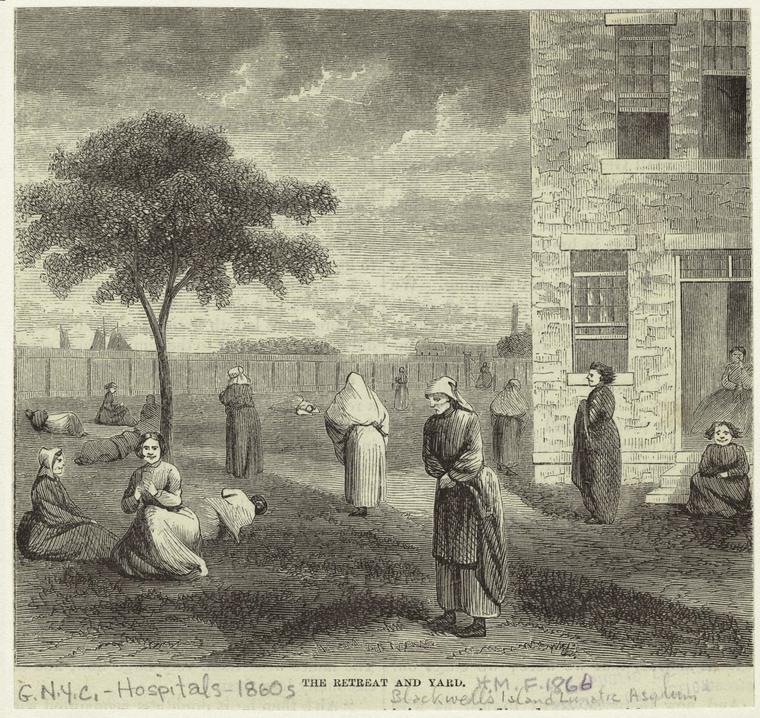
On the grounds of the asylum the ‘Retreat and Yard’, where Nellie would later roam with the other patients.

Courtesy NYPL
Courtesy NYPL

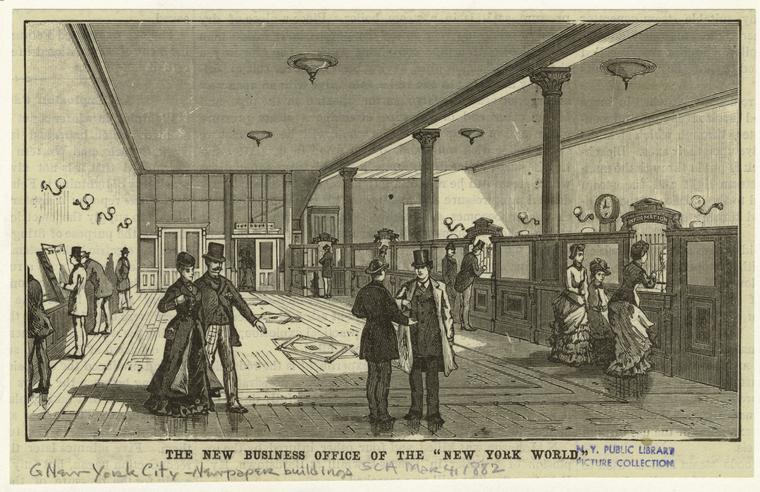
Inside of the offices of the New York World in 1882

Courtesy NYPL
Courtesy NYPL

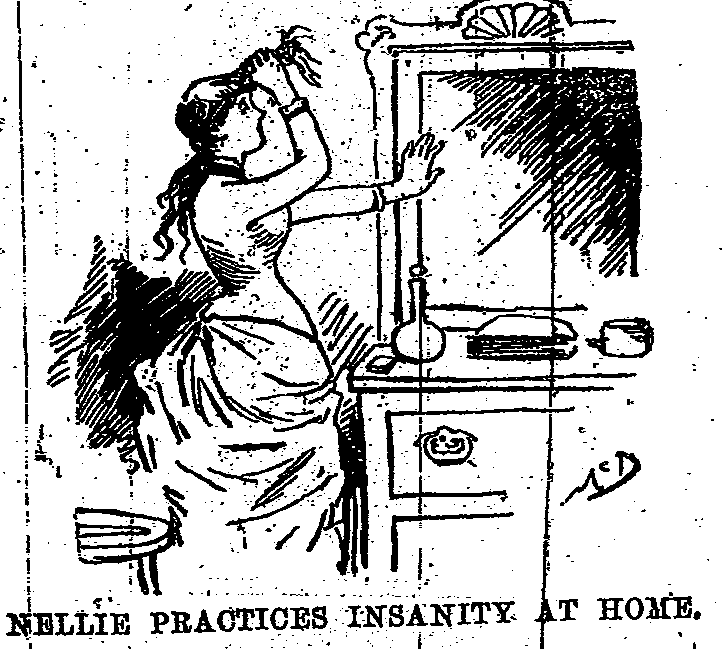
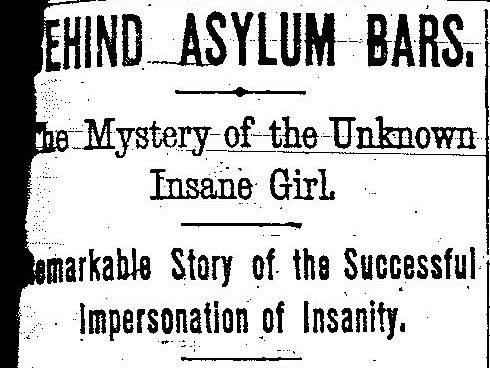
Some images from the New York World and the book Ten Days In A Madhouse

1

2

3

From the first article which ran on October 9, 1887

1

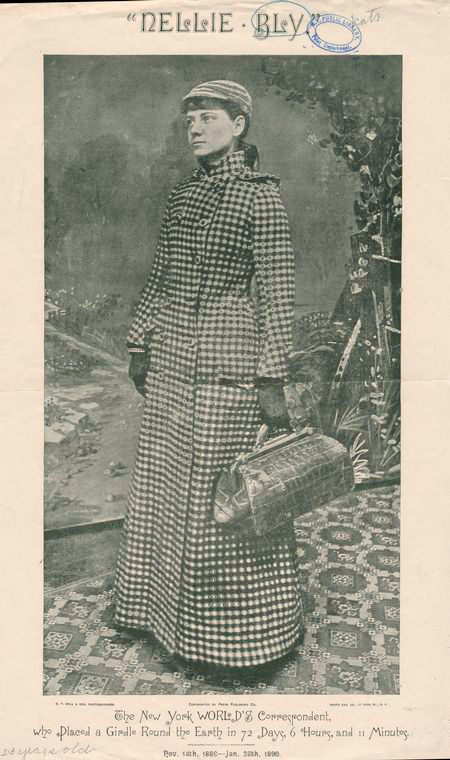
A famous photo of Nellie Bly taken during her trip around the world.

Courtesy New York Public Library

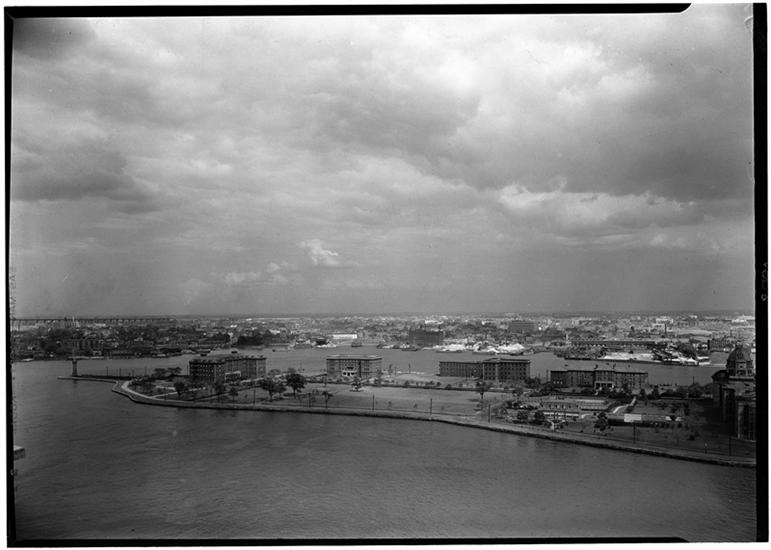
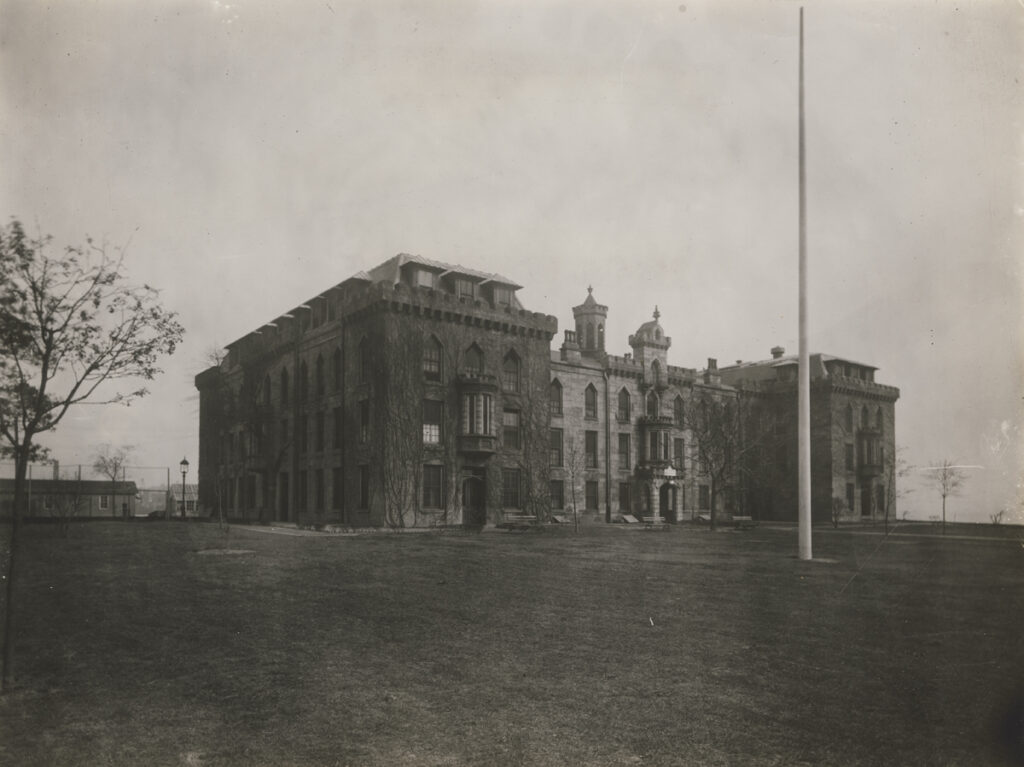
Blackwell’s Island was later named Welfare Island (before its following name change to Roosevelt Island in the 1970s). Below you can see the Octagon at the far right of this image.

Samuel H. (Samuel Herman) Gottscho, photographer, Courtesy Museum of the City of New York

The remaining ruins of the mental asylum. It was later turned into a condominium and apartment building.

ruin
Edmund Gillon photographer. Courtesy Museum of the City of New York
Categories
It's Showtime Podcasts

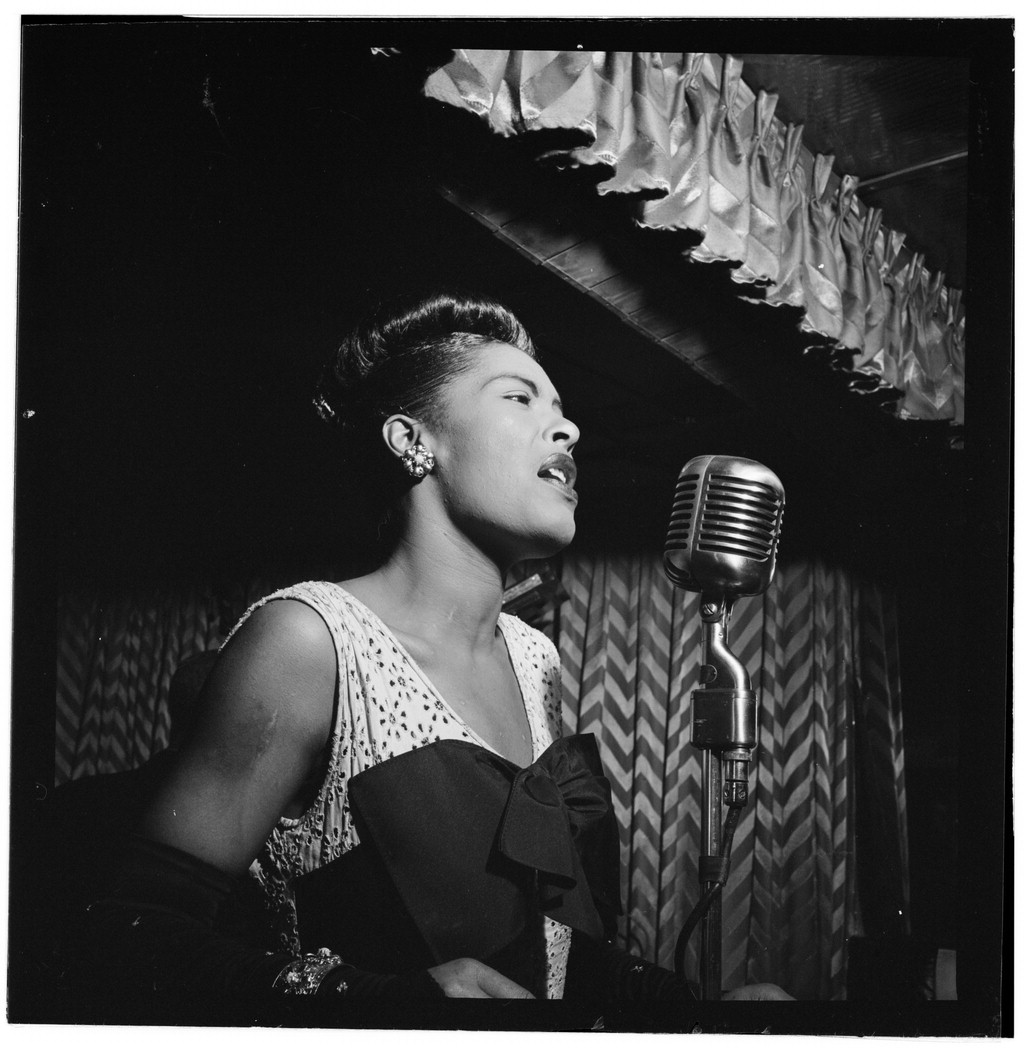
Billie Holiday’s New York: Here’s to Swing Street, Harlem’s 133rd Street and other landmarks of jazz

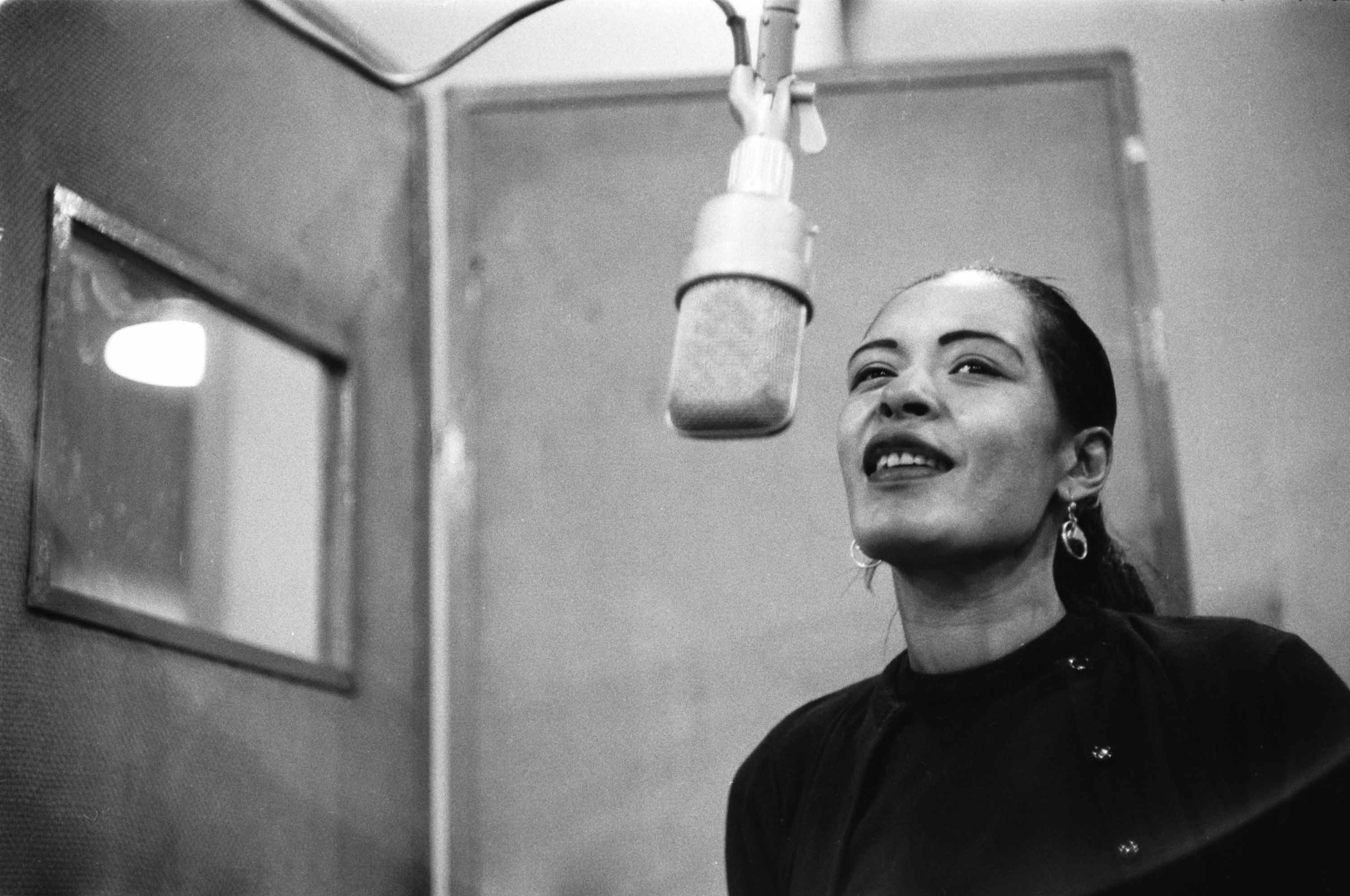
Courtesy Columbia Records

PODCAST Grab your fedora and take a trip with the Bowery Boys into the heart of New York City’s jazz scene — late nights, smoky bars, neon signs — through the eyes of one of the greatest American vocalists who ever lived here — Billie Holiday.

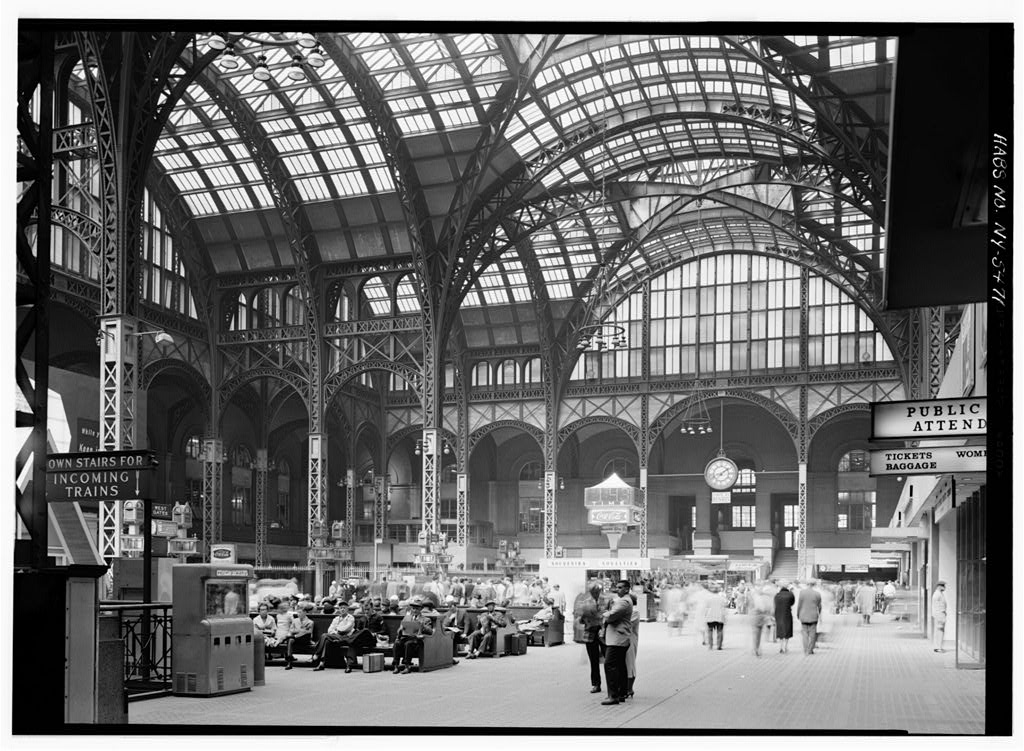
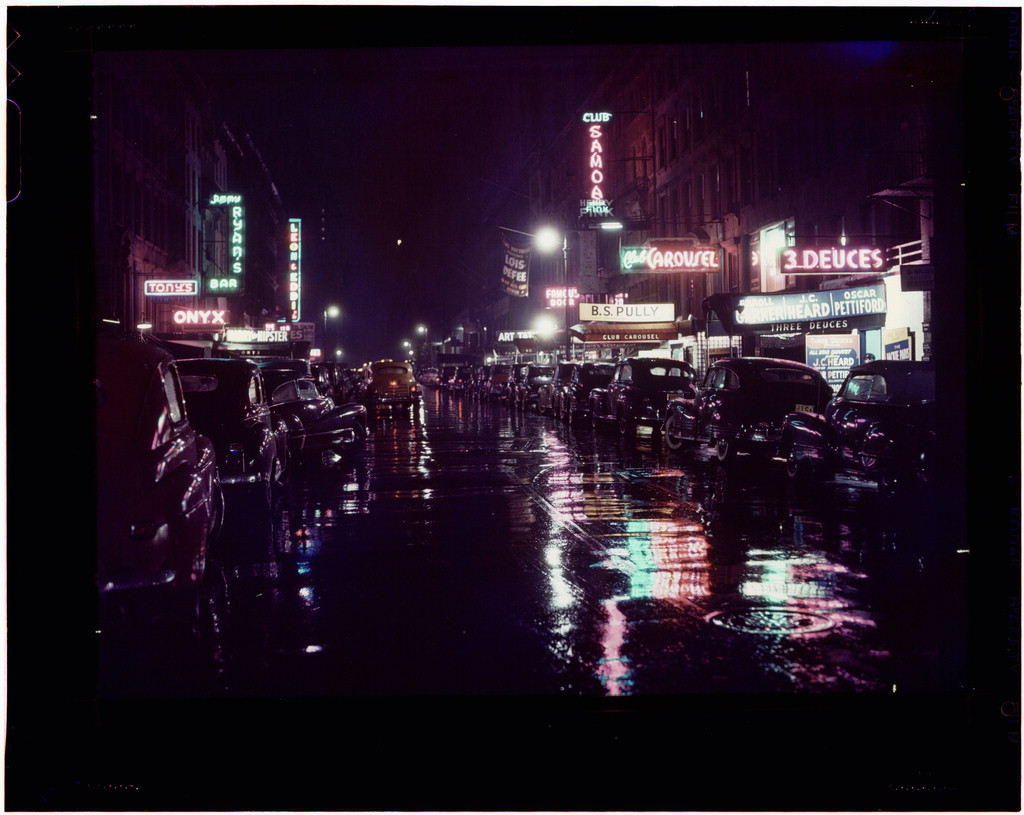
Eleanora Fagan walked out of Pennsylvania Station in 1929 and into the city that would help make her a superstar. Her early years were bleak, arrested for prostitution and thrown into the Welfare Island workhouse. But music would be her savior, breaking out in Harlem first in the nightclubs on 133rd Street, then in the basement clubs of ‘Swing Street’ on 52nd Street.

Her recordings make her an international star, but the venues of New York helped solidify her talents — from the Apollo Theater to Carnegie Hall. But one particular club in the West Village would provide her with a signature song, one that reflected the horrible realities of racism in the mid 20th century.


Billie Holiday at Club Downbeat, 1947

5020399920_ccd948ba9c_o

Locations featured in this episode:

1) Pennsylvania Station (circa 1930s-40s)

Courtesy Library of Congress

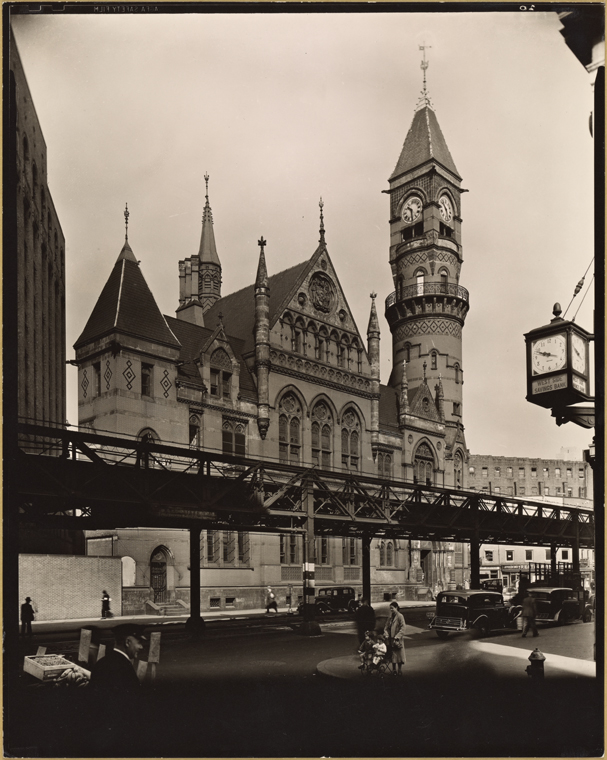
2) Jefferson Market Courthouse, pictured here in 1935

1
Photographed by Berenice Abbott, courtesy New York Public Library

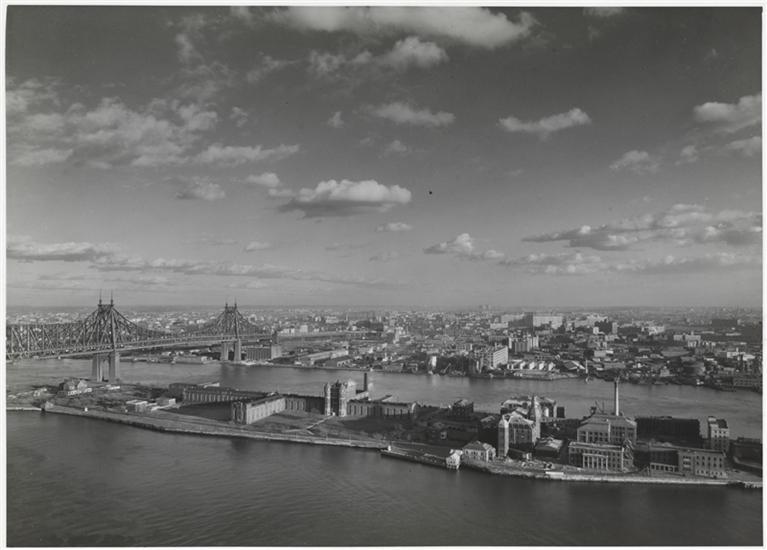
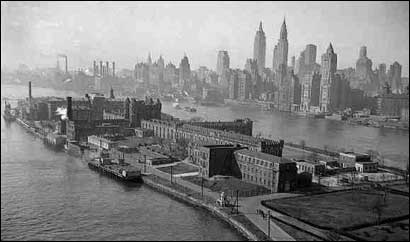
3) Welfare Island, pictured here in 1931

Photographed by Samuel H Gottscho, courtesy Museum of City of New York

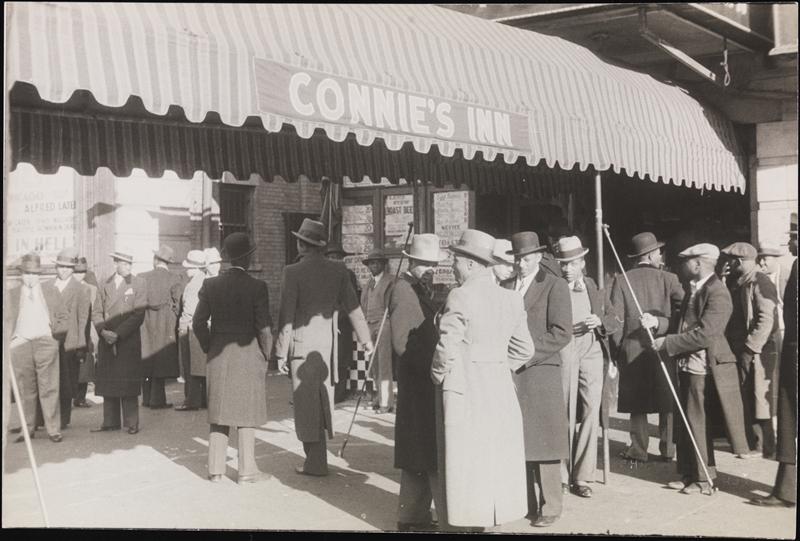
4) 133rd Street — “Jungle Alley” or The Street — outside Connie’s Inn

Courtesy Museum of the City of New York

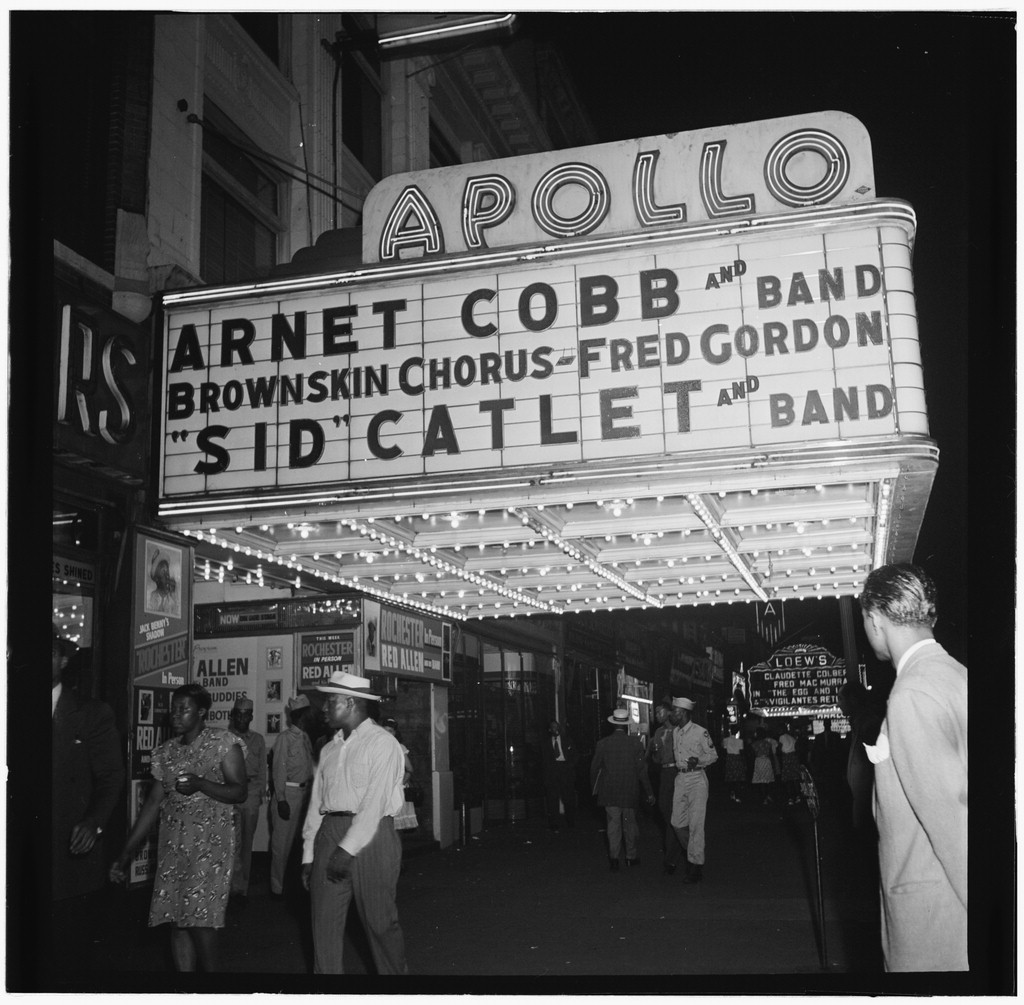
5) Apollo Theater, pictured here in the mid 1940s

Courtesy Library of Congress, photographer William Gottlieb

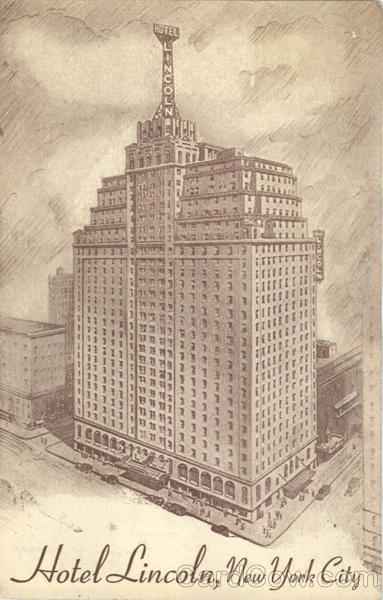
6) Lincoln Hotel

Hotel Lincoln, 44th to 45th Street at 8th Avenue New York City

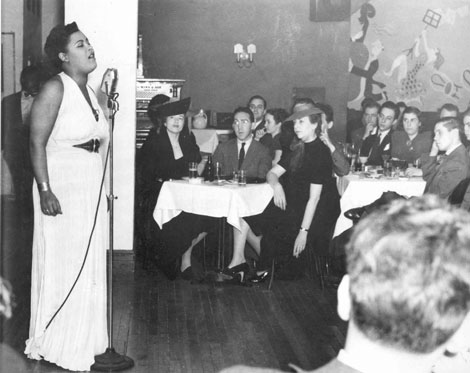
7) Billie Holiday at Cafe Society 1939

Photo by Charles B. Nadell

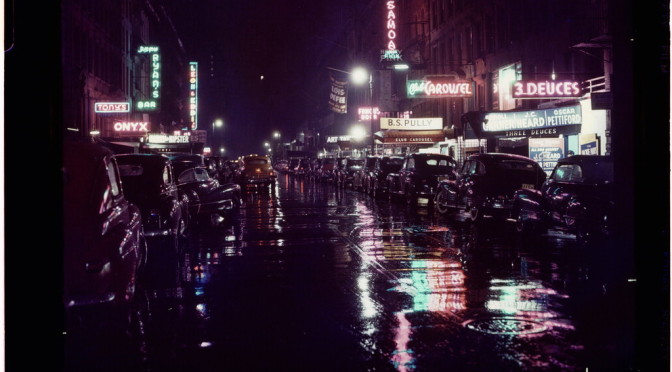
8) 52nd Street aka Swing Street

5268914553_ca77a01af0_o

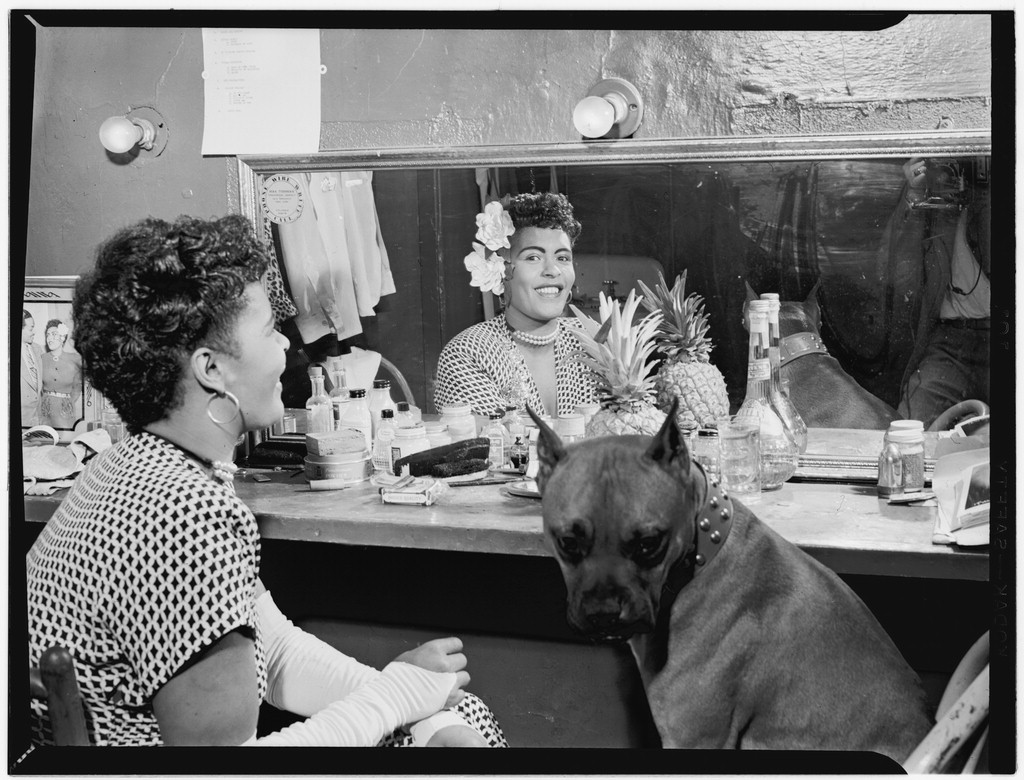
Billie at Club Downbeat (with her dog Mister) — June 1946

Courtesy Library of Congress

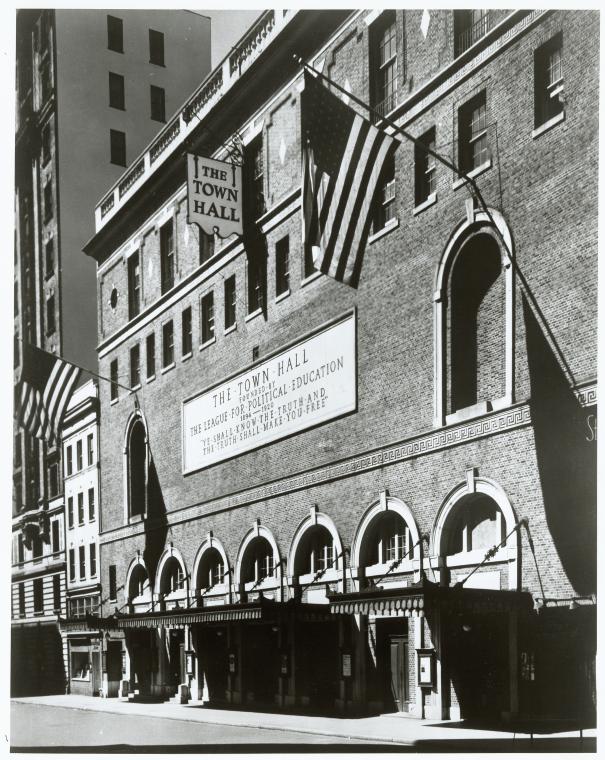
9) Town Hall, sometime in the 1940s

Exterior view of The Town Hall, courtesy New York Public Library

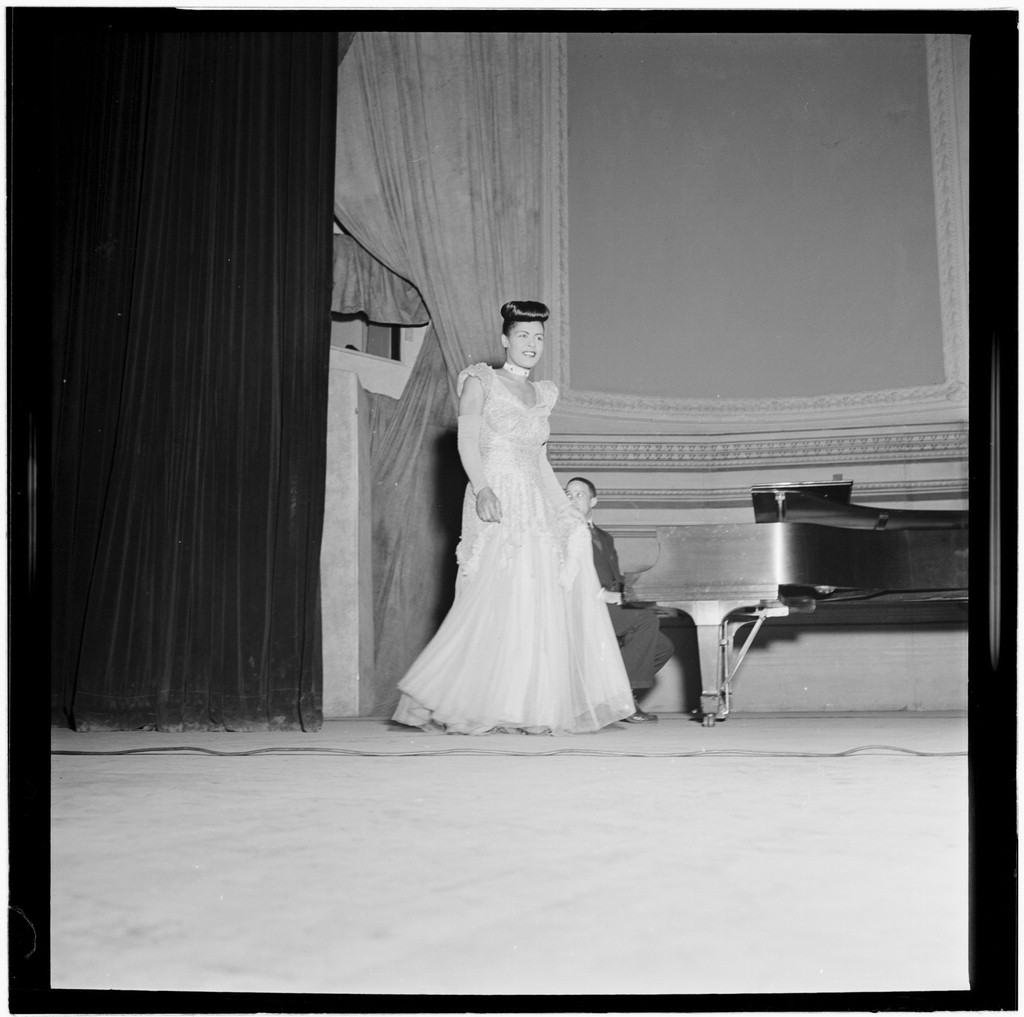
10) Billie Holiday at Carnegie Hall for her rave 1948 concert

Courtesy Library of Congress

An extraordinary performance of ‘Strange Fruit’, performed in February 1959, months before she died. This was recorded for a British television show called ‘Chelsea At Nine’.

https://www.youtube.com/watch?v=h4ZyuULy9zs

Billie Holiday — playing a maid — in the 1947 film New Orleans

And a live performance of one of her greatest songs — well, really, one of the greatest songs — “God Bless The Child”

http://youtu.be/U-3O-X6UUpY

Categories
Health and Living

The Strangers Hospital: Your special home on Avenue D, brought to you by Boss Tweed’s plumber king

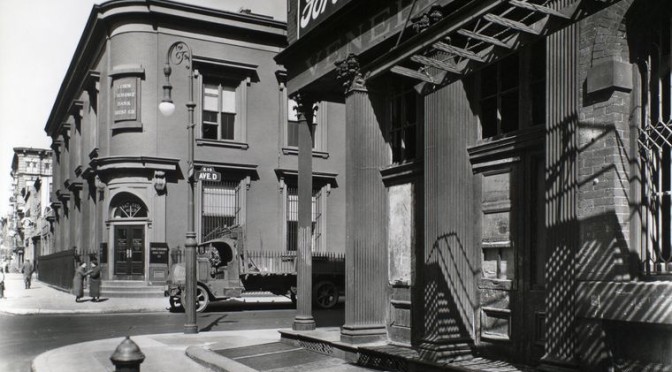
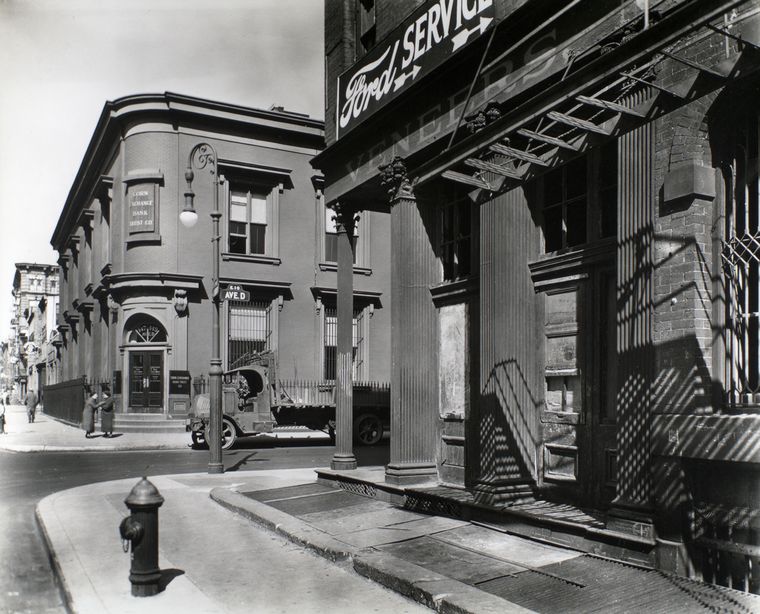
A genuine survivor: The building to the right was once the Strangers Hospital in the 1870s.  This picture, by Berenice Abbott, was taken many decades later, in 1937.  And the building is still around today! (Picture NYPL)

New York used to lump the sick, the poor and the homeless into one mass of needy unwanted.  Since its founding, the city has struggled take care of the growing dual problems of poverty and plague, but in a way that kept the unwanted safely invisible to its wealthier classes.

With the rise of immigration starting in the 1840s, the problem became too pervasive to simply throw people into large catch-all institutions like Bellevue Hospital (which, in its early years, served as almshouse, hospital, quarantine, prison and morgue).  Soon Blackwell’s Island became the solution, with a string of grim institutions lining the East River island.

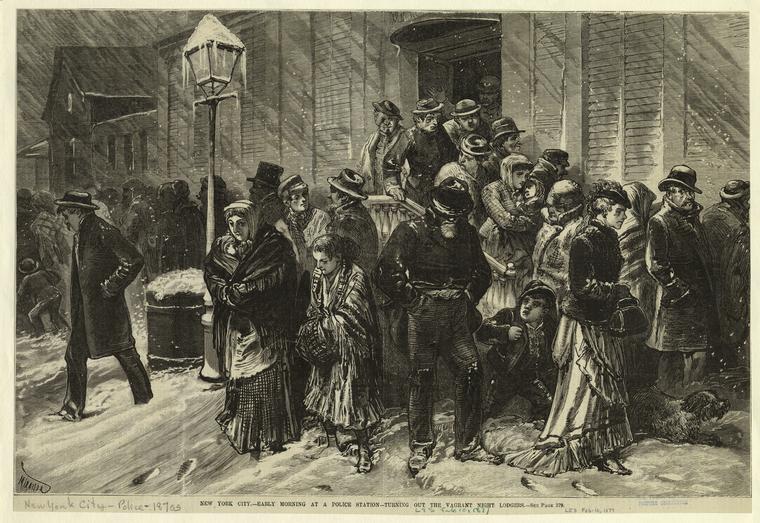
Below: For those less ‘worthy’, a cold night might have meant sleeping in the local police station. In the illustration below (1877), the homeless are turned out into the street at morning’s light. (NYPL)

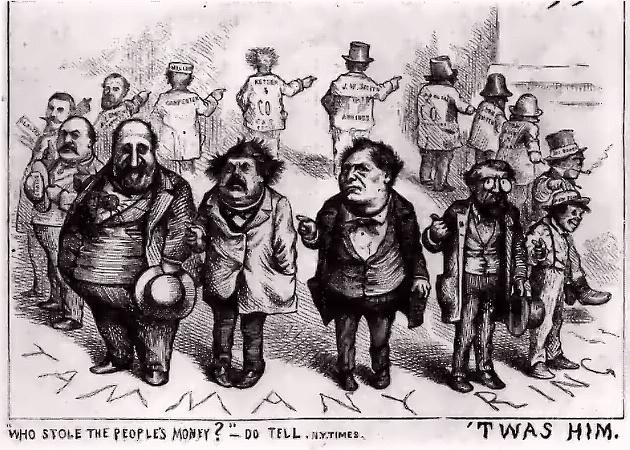
Another solution for the homeless arose in 1870s in the delirious days of the scandals of the Tweed Ring.  John H. Keyser made his fortune in the growing new field of indoor plumbing; in fact, he seemed to be wildly successful at it, a sudden millionaire in an era were certain men — with certain connections — grew wealthy overnight.

Keyser may have had friends in high places, but he expressed an unusual need for the common man. Perhaps his outreach was a tad cynical; the poor he helped often voted the way Keyser preferred.  But with the city facing a severe poverty crisis, even the baited gesture had beneficial results.

The plumber king operated a ‘Strangers Rest’ at 510 Pearl Street in 1869, a boarding house for vagrant men and women.  The vagrant house was situated halfway between City Hall and Five Points, and it operated on that spirit as well, an abode of good will and a little favoritism.  You could stay if you were deemed “worthy,” meaning either good behavior or an unofficial pledge of allegiance to the Democratic Party.

The following year, Keyser purchased a building for $8,000 owned by the New York Dry Dock Company and transformed it into the Strangers Hospital, a vagrant home and care center in the vastly crowded Lower East Side.  The building is still standing today at 143-145 Avenue D.  Across the street is the Dry Dock Playground.

The Strangers Hospital opened in January 1871 with dozens of bed in several wards, a reading room, Russian and Turkish baths, a recreation room, and a chapel, with walls made of “India rubber, to avert the absorption of any infectious materials.”

An opening day blessing announced its unique mission: “It is not intended for the benefit of the wealthy, who in times of sickness can command the comforts of a well-ordered home and the attendance of a skillful physician or surgeon.  Nor yet the beggar, who leads a life of dissolute idleness, rotating in winter and in sickness about the charitable institutions of this city.  It is intended for the succor and restoration of the deserving poor……strangers — strangers to the home of plenty and comfort in which they have been born and nurtured, and from which misfortune and disease have parted them.”

In other words, you were worthy if they deemed you to be so.

It was an odd differentiation.  As an accommodation for up to 200 people, it served not only as a regular treatment hospital for the ‘deserving poor’, but as a convalescent home and halfway house.  Most likely, you had to be recommended but a tenant in good standing and, as I mentioned, it probably helped if you were a Democrat.

I underscore that because the Strangers Hospital didn’t last very long, closing in 1874. And this is why — Keyser was known as the ‘Ring Plumber’, a crony of William ‘Boss’ Tweed who enjoyed thousands of dollars in kickbacks and special favors.  Tweed went to trial in 1873 for his crimes, and his cronies, although never formally charged, were disgraced.

Below: Keyser would have been one of the links of this chain of favoritism, envisioned by illustrator Thomas Nast 

Contemporary sources of the day are not kind to Keyser, with one account call him “a real live Oily Gammon [arch-villian, from an English phrase which meant fatty ham], an Americanized specimen of the article — revised and improved in order to fit him to be a bright and shining light in the fraternity of which he is a member.”

By 1877 Keyser went bankrupt.  Still, his obituary lists several more philanthropic efforts by Keyser, including a “free eating house” in Washington Square in 1888.  From the headline: “Thousands were aided by Man Accused to Being Tweed’s Partner.” So whether or not his actions were sincere, he did manage to fund the feeding and caring of thousands of poor and sick New Yorkers.  Where does such a legacy stand?

Categories
Podcasts

Roosevelt Island: New York’s former ‘city of asylums’

The original Smallpox Hospital, designed by James Renwick, still stands today thanks to diligent restoration. (Click pic for detailed view)

Looking north over Roosevelt Island, which cleanly splits the East River. Picture the buildings gone, the bridges wiped away, replaced with fruit trees and a small farm. The island has adopted several names over the years, including Minnahanonck (‘It’s Nice To Be Here’), Varkens Island (aka Hog’s Island), and Manning’s Island.

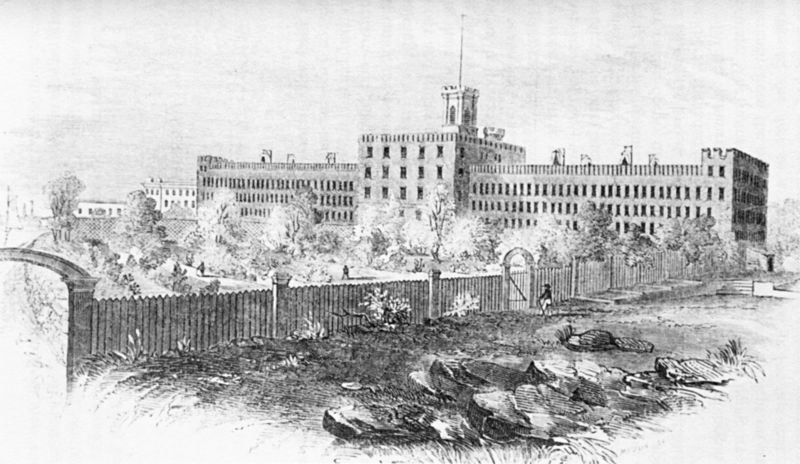
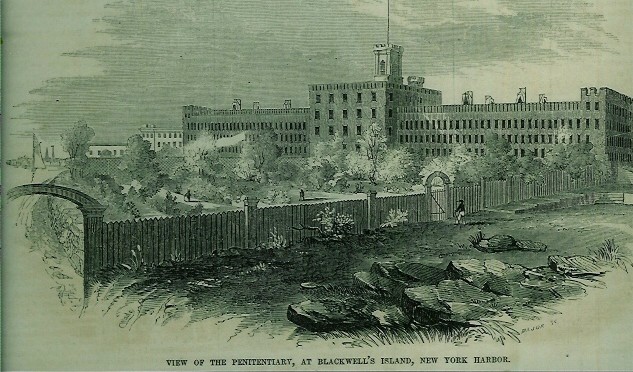
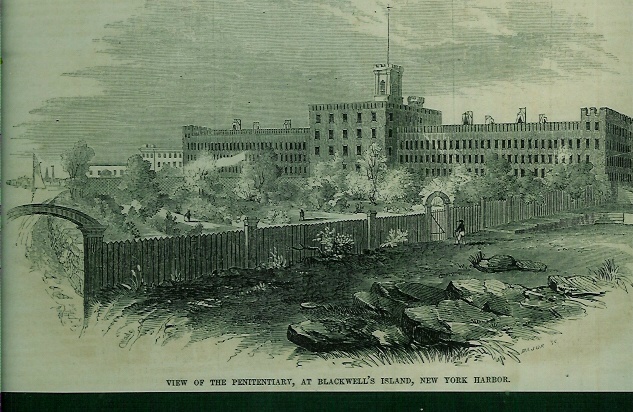
The penitentiary, opening on the now-named Blackwell’s Island in 1832, defined the next 100 years on the island — overcrowded, chaotic, inadequate facilities, grim and corrupted

Another illustration of the prison, this from 1853, showing a rather unusual feature to its side: a garden, which would be kept by inmates to feed themselves

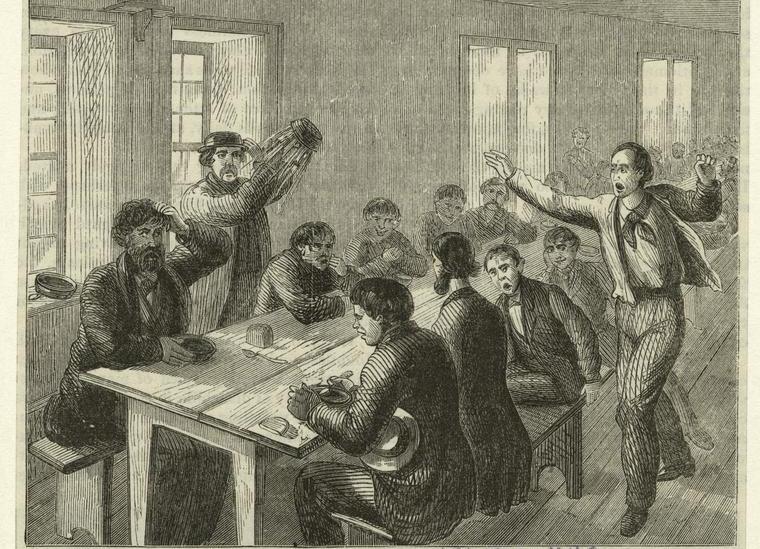
Food fight! Conditions inside the prison — as in most places on the island — were guided by mischief and chaos. Harpers Magazine 1860 (courtesy NY Public Library)

The Lunatic Asylum, aka ‘the Octagon’, became as overcrowded as the island’s prisons, often with people who would not have been considered ‘crazy’ today. Only two wings of the asylum were ever completed. Today, the Octagon is a luxury apartment complex.

Intrepid reporter Nellie Bly exposed the wretched conditions within the asylum when she went undercover there in 1887.

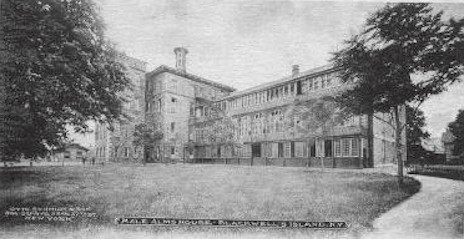
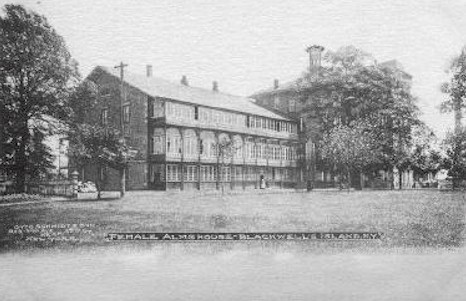
Male and female almshouses, catering to the homeless, the desperately poor and the elderly. Some residents would spend time at the penitentiary or work house, check out, and check back in here. (Images from here)

The Smallpox Hospital came to the island in 1856, a Gothic structure by James Renwick that saw thousands of diseased patients a year.

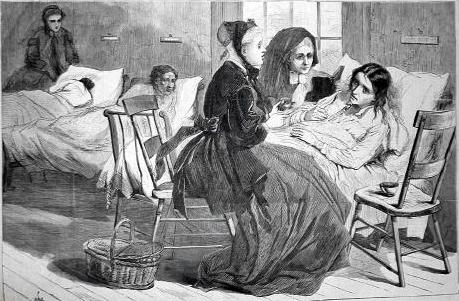
An illustration from 1868 expresses the dire scene at one of the island’s many hospitals. Confining all manner of sick and injured to one island might have been good for the general population, but was often a dangerous proximity for the sufferers, especially during epidemic time.

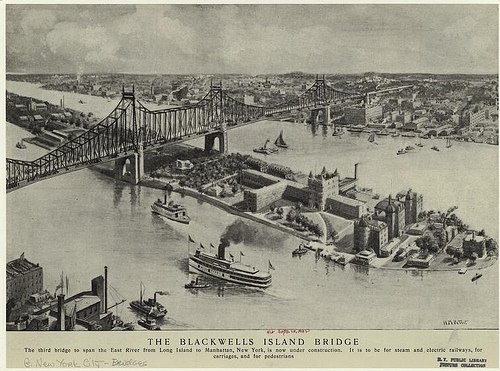
A dramatic change came in 1909 with the construction of the ‘Blackwell’s Island Bridge’, better known today as the Queensboro or 59th Street Bridge. A trolly stopped at the middle of the bridge, letting passengers off who then took an elevator down to the island. The elevator was dismantled by 1970.

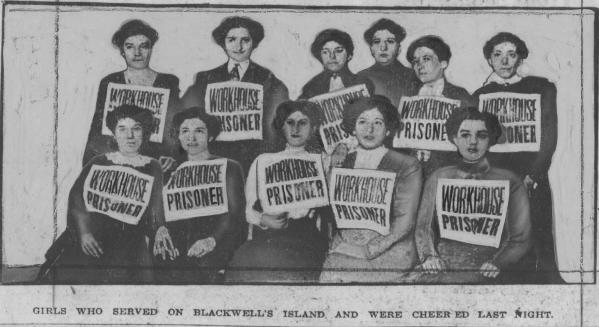
The workhouse, home to prostitutes and drunks, was also a popular place to dump protesters and labor reformers, as evidenced by this group of brave looking women.

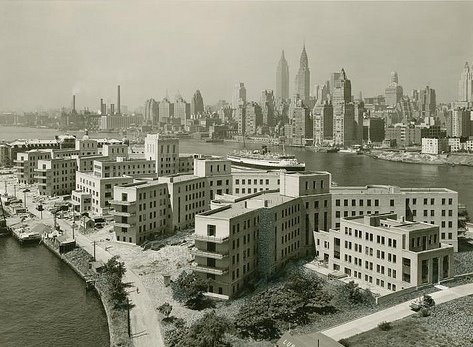
As Welfare Island, many of the major institutions would soon leave (to other New York islands) leaving on chronic care hospitals and a whole lot of abandoned property.

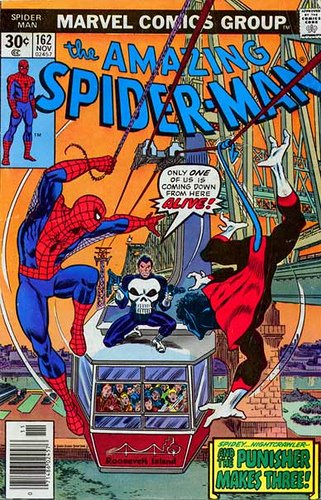
The Roosevelt Islamd Tram was an instant hit when it debuted in 1976, inspiring romantics and comic book writers alike.

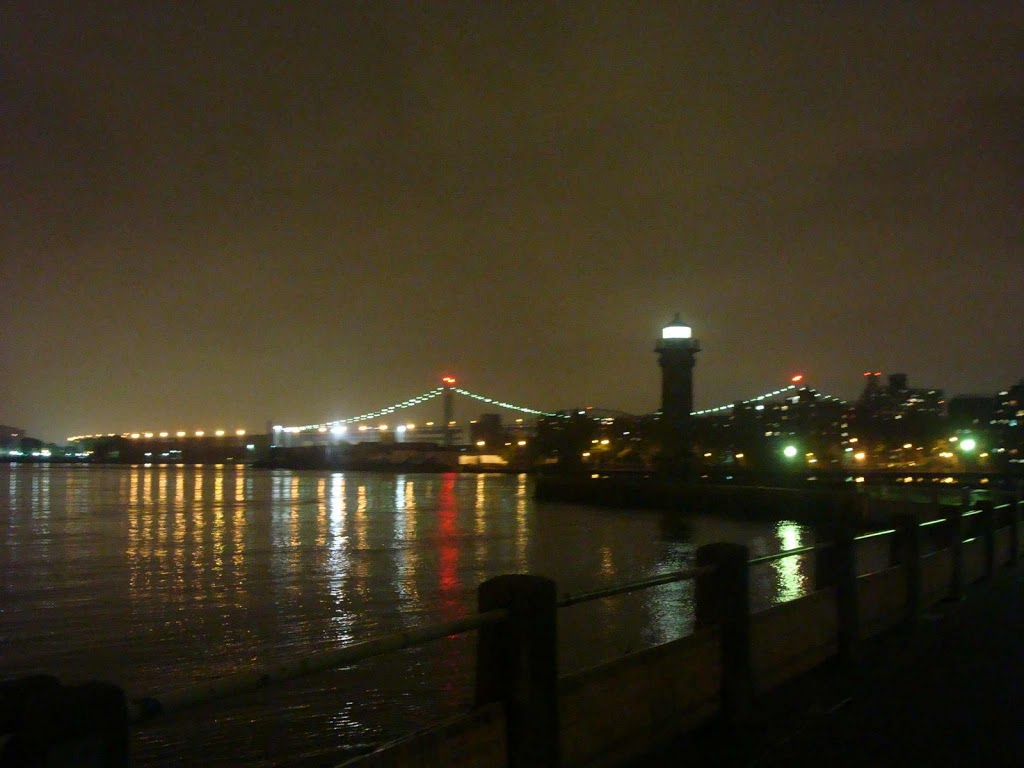
The haunting lighthouse at night, built by island inmates and still illuminating the East River, though the dangers of ships smashing against the rocks of Hell Gate are long gone.

The Renwick Ruins still stand at the south end of the island, the former smallpox hospital still managing to give people a bit of a chill when seen close up (and preferably at night).

An extraordinary look at the island: in 1903, Thomas Edison made a short film using the island as a backdrop. The views include the lighthouse, the Octagon, the penitentiary and the construction work of what would become the 59th Street Bridge

You can find anything you want to know about Roosevelt Island at two excellent blogs, Roosevelt Islander and Roosevelt Island 360. The Main Street Wire, the RI community newspaper, has a great website with an exhaustive history timeline. And naturally, the always reliable Correction History, for all you prison history buffs, has some great info as well.

Click here for some prior articles we’ve written on this blog about Roosevelt here, include Charles Dickens’ visit to the island and an article about the late godfather of RI, ‘Grampa Munster’ Al Lewis.

Charles Dickens’ guide to New York City low life


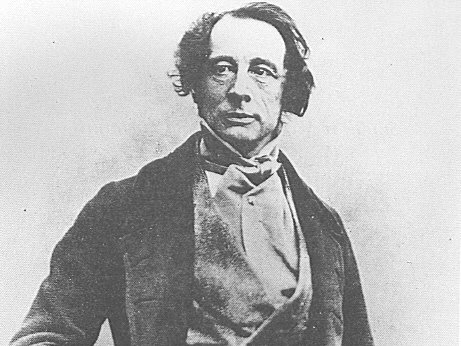
Dickens in 1850

What is this dismal-fronted pile of bastard Egyptian, like an enchanter’s palace in a melodrama! – a famous prison, called The Tombs. Shall we go in?

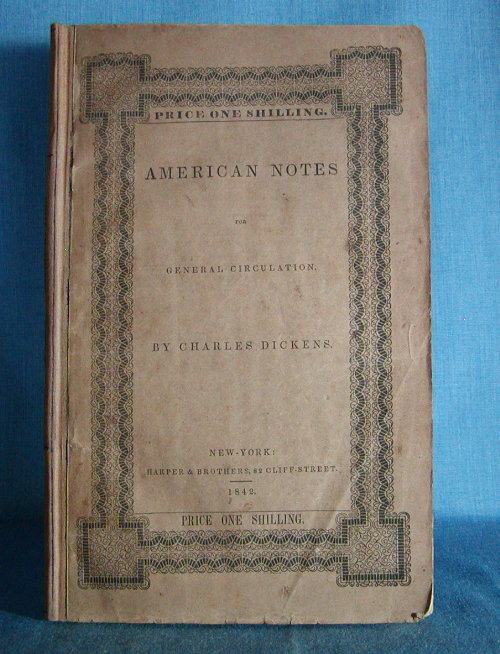
And thus in this voice continues the eager, fey, often condescending but spectacularly written account of Charles Dickens’ New York excursion as captured in his “American Notes for General Circulation,” written in 1842. (Read the entire thing here.)

Dickens’ was among the first published travelogues about America for European audiences, and among his travels through the states he devotes an entire chapter to young New York.

How young precisely? Dickens gives us a yardstick to measure it: “The great promenade and thoroughfare, as most people know, is Broadway; a wide and bustling street, which, from the Battery Gardens to its opposite termination in a country road, may be four miles long.” During the 1840s, the city would have ended at 42nd street, so this sounds accurate.

Dickens’ tone throughout “American Notes” is ebullient but persnickety, as if he’s smiling and curling his nose at the same time as the sights and sounds of the city. In real life, Dickens was treated like royalty, feted in sumptuous celebrations at the Park Theatre and Delmonico’s, courted by literati such as New York Evening Post editor William Cullen Bryant and aging Washington Irving.

Dickens had an ulterior motive to his American journey: to discuss international copyright laws, presently being violated with American reprints of Dickens novels. Surprisingly he turned most Americans off with what they considered to be ungrateful sniping. A bit of that shared animosity seeps through some of Dickens depictions, especially those in New York, which was doing a bulk of the copyright violation.

The book’s most famous descriptions come in his colorful look at Five Points, already a legendary neighborhood of filth and vice by 1842. These passages could have been ripped from any of his most famous novels:

“Ascend these pitch-dark stairs, heedful of a false footing on the trembling boards, and grope your way with me into this wolfish den, where neither ray of light nor breath of air, appears to come….”

“Here too are lanes and alleys, paved with mud knee-deep, underground chambers, where they dance and game; the walls bedecked with rough designs of ships, and forts, and flags, and American eagles out of number: ruined houses, open to the street, whence, through wide gaps in the walls, other ruins loom upon the eye, as though the world of vice and misery had nothing else to show: hideous tenements which take their name from robbery and murder: all that is loathsome, drooping, and decayed is here.”

And as if that wasn’t enough gothic material for him, he ends his New York piece by touring Blackwell’s Island (today’s Roosevelt Island), home of the city’s various asylums for lunatics and criminals:

“…everything had a lounging, listless, madhouse air, which was very painful. The moping idiot, cowering down with long dishevelled hair; the gibbering maniac, with his hideous laugh and pointed finger; the vacant eye, the fierce wild face, the gloomy picking of the hands and lips, and munching of the nails: there they were all, without disguise, in naked ugliness and horror.”

The New York chapter is reprinted in full here.

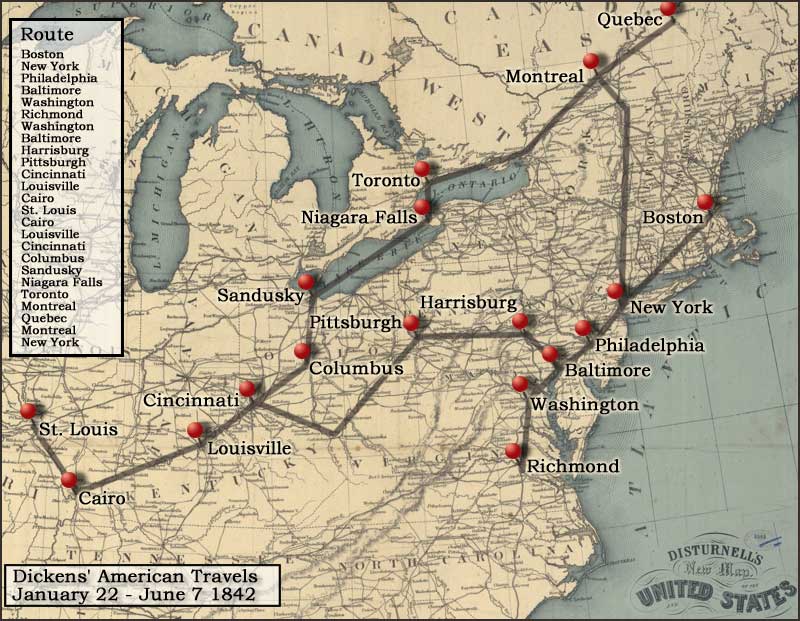
Below from the Charles Dickens Page, a list of all the places he visited during his American stay. They also feature a thorough description of his entire journey.

Sarah Jessica Parker: her New York City history


Above: the sun comes out for Sarah Jessica Parker

New York City usually spends the summer movie season being destroyed by aliens or scarred by car chases. So despite what you may think of the upcoming Sex And The City movie, consider this — not only does the Big Apple make it out alive, it actually transforms back into that place of fantasy and romance that made you fall in love with it in the first place.

All the Sex And The City actresses have New York connections, especially native New Yorker Cynthia Nixon. But lead star Sarah Jessica Parker developed her acting chops here and maneuvered through many notable Broadway and off-Broadway performances to somehow become the quintessential young New York actress.

Although Sarah was born in Nelsonville, Ohio, in 1965, her father was a Brooklyn native so the city was always in her blood. Even almost removing Sex And The City entirely from the equation, you can still trace her early history through the streets of the city at these sites:

Roosevelt Island
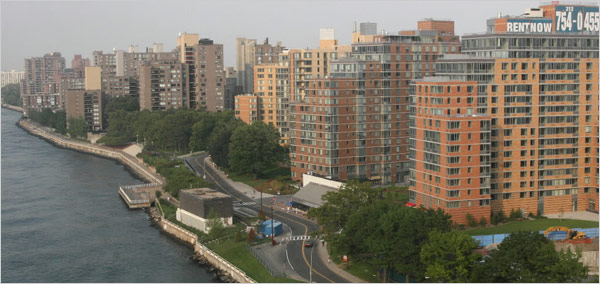
In 1977 Sarah’s family packs up a VW van and moves to the burgeoning social experiment known as Roosevelt Island. From here, she is able to go to performance schools in the city and audition for shows at an early age. The island had only been named after Roosevelt for four years and many were still calling it Welfare Island. Sarah most likely took the Roosevelt tram, which had just been built the year before.

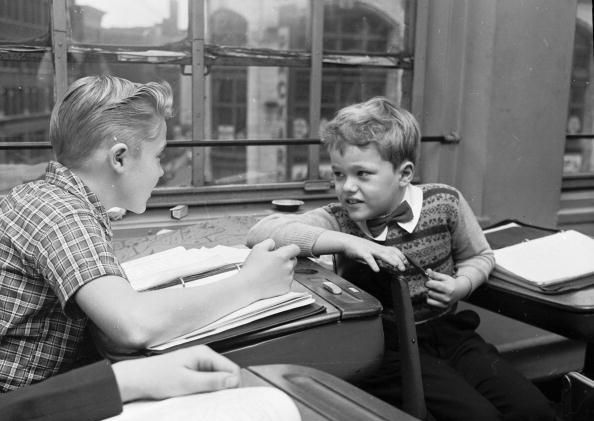
Professional Children’s School (132 West 60th Street)
Sarah attended this performing arts school in her early years. The Professional School has fostered hundreds of precocious young performing arts students since 1914, including another famous Sarah (Michelle Gellar). The photo above is of PCS students in 1955. Sidenote: the Professional Children School spawned most of the Culkins (Macaulay, Rory, et al)

Neil Simon Theatre (W. 52nd Street)
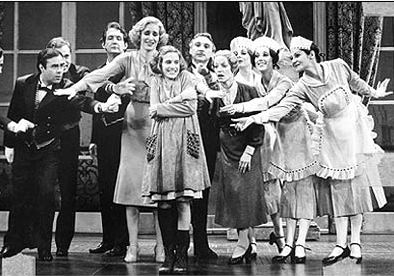
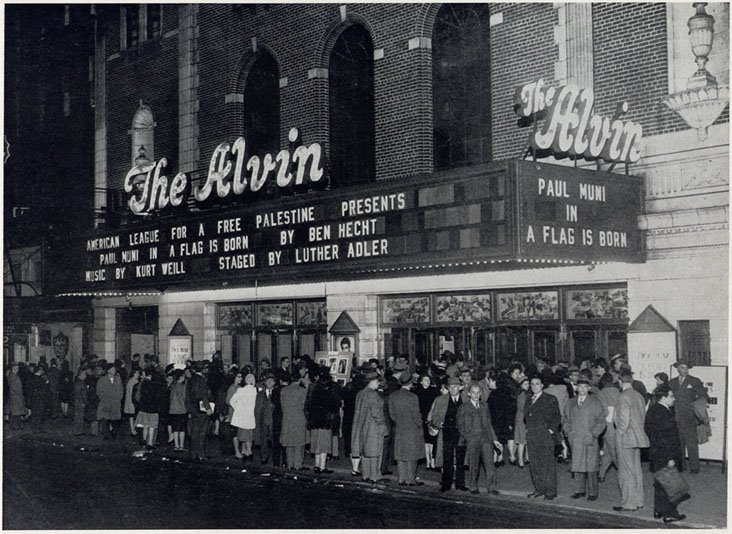
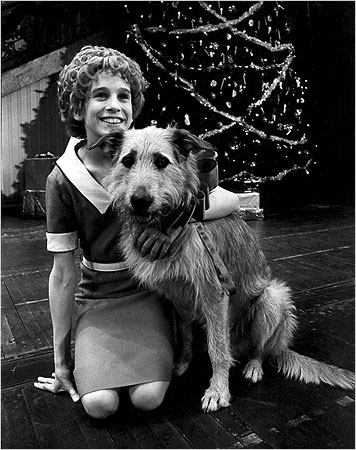
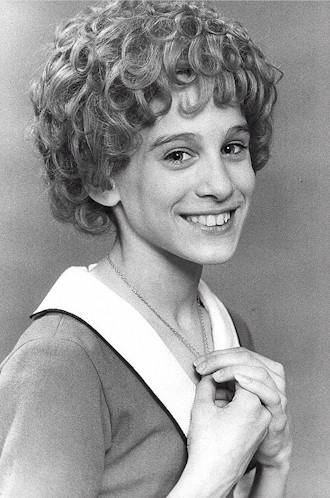
Formerly the Alvin Theatre (pictured above in 1947), this was where Annie made its Broadway debut, and from 1978-80 featured a young Sarah Jessica, in latter years as the title character (below), in what looks to be a horrendous fright wig. Four years later the Alvin would be renamed for playwright Simon, and its first production — Brighton Beach Memoirs — would star Sarah’s future husband Matthew Broderick.

Sarah performs a song from Annie in a 1982 television special here.


Manhattan Theater Club (at City Center, 131 West 55th Street)
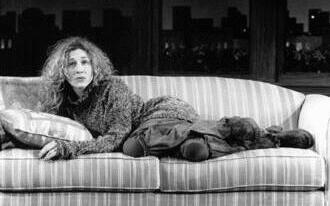
City Center, a former Shriners hall, welcomed the renown theater company to its location in the 1980s. Sarah spent many great years during the 90s on the stage of the MTC, most notably playing a dog in the 1995 comedy Sylvia. Her co-star Nixon frequented the stage many times as well.


Richard Rodgers Theatre (226 W 46th Street)
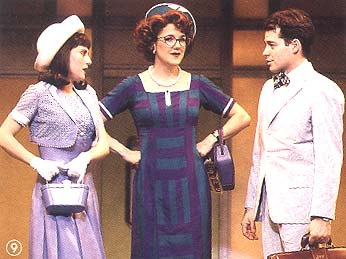
Sarah met her future husband Matthew Broderick (above) through her association with the Naked Angels theatre company, but the two would take to the big stage together in the revival of How To Succeed In Business Without Really Trying, a show which would garner Broderick a Tony Award. Sarah Jessica marries Broderick in 1997 in civil ceremony in a former Lower East Side synagogue.

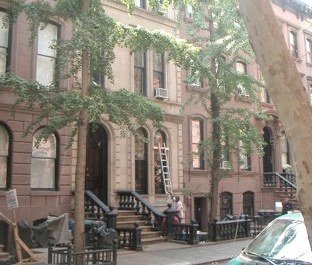
66 Perry Street
Sex And The City, which debuted in 1998 and scoured the city during its seven year run for trendy and romantic locations, placed Sarah’s character Carrie Bradshaw at the address 245 East 73rd Street, although the actual building where exteriors were shot was located at 66 Perry Street in the West Village, nearby her present home. (You may want to avoid this location for the next few weeks.)

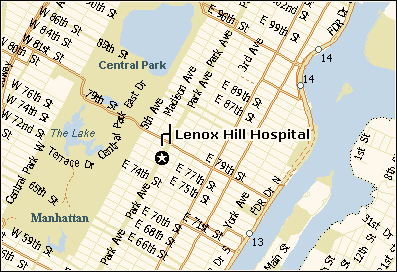
Lenox Hill Hospital (100 East 77th Street)
Sarah gave birth to her first child here, in one of Manhattan’s oldest hospitals, in 2002. The facility opened in 1857 as the German Dispensary but moved to its present location in 1862. In 1918 it was renamed after the Upper East Side neighborhood where it resides. Perhaps Sarah delivered her son James Wilkie Broderick in a room near where Winston Churchill was treated after he was hit by a car in 1931.

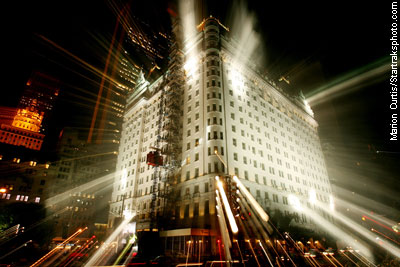
Plaza Hotel (5th Ave and 59th Street)
Turned 40 years old at a lavish birthday party at the Plaza Hotel, which was at the time 97 years old. The whole cast celebrated with her, as did that other New York City comedy icon — Jerry Seinfeld.

Below: Sarah as Annie

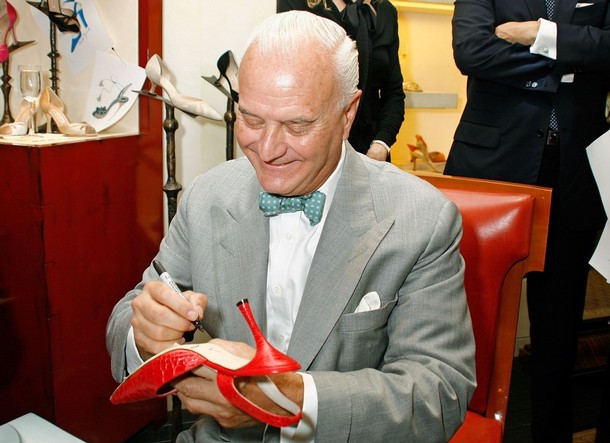
By the way, in 1971, when Sarah was only six years old, a young designer by the name of Manolo Blahnik came to New York City with his portfolio, looking for work. He met with the legendary Diana Vreeland at Vogue Magazine, who suggested he focus strictly on making shoes.

Your shoes in these drawings are so amusing,” she said as she thumbed through his sketches.

Less than 30 years later, Manolo’s shoes would become famous worn on the feet of the former child star.

Below: Manolo, signing a shoe in New York Fashion Week in 2006


Photo by Amy Sussman/Getty Images

History in the making – 1/5

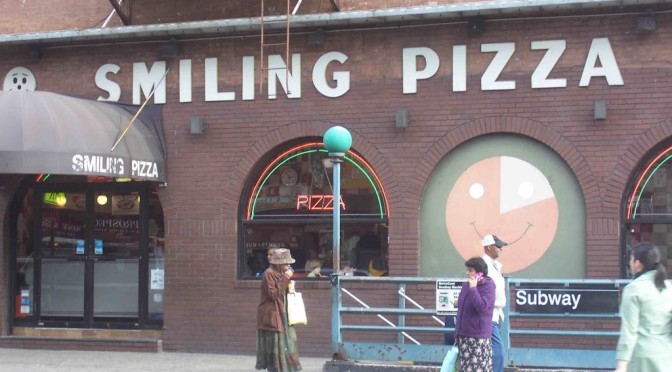
Pizza in Park Slope

Jeremiah gives us a (wonderful but depressing) rundown of all the New York history destroyed by redevelopment in 2007. [Vanishing New York]

Roosevelt Island’s super-spooky Renwick Ruin, New York’s former smallpox hospital turned haunted mansion, is falling apart. [City Room]

Corona, Queens’ Jewish community may get landmark status bestowed on its 97 year old synagogue. [Queens Crap]

Thomas Edison electrocutes an elephant on Coney Island 105 years and one day ago [Gothamist] and watch the bizarre video [Kinetic Carnival]

Are the days of chain stores and coffee shops finally numbered in the East Village? [The Villager]

Mysteries of Roosevelt Island: Jailhouse jitters


We’ve got some more on that wacky, wonderful place called Roosevelt Island. We highlighted some of the spookier stuff last week. Read it all here.

I mentioned earlier that Roosevelt Island was named for a Franklin Delano Roosevelt memorial that was never built there. Perhaps the reason that doesn’t bother anybody is that’s a far more attractive name than its last one, Welfare Island. In the continuum of names in the island’s history, Welfare is worse than all of them, although slightly better than Hog Island.

(The best name it’s ever had? The original Canarsie tribe name Minnahannock, meaning ‘it’s nice to be on this island’.)

Welfare Island might seem a rather unappealing name these days, but at the time it was changed from Blackwell’s to Welfare in 1921, the connotation was less onerous. By that time, the island was crammed with institutions that benefited “the welfare” of the public, while at the same time sequestering society’s most undesirable. It’s held an almshouse, various hospitals, a workhouse, an asylum. Yet none of these public projects grabbed as many headlines as the island penitentiary, which stood there for over a hundred years.

A prison was one of the first things built on then-Blackwell’s Island in 1832. A north wing was added to the prison to accommodate inmates transported from a facility next door to Bellevue Hospital. (The mental patients of Bellevue would make a similar journey to Blackwell’s asylum at around the same time.) The five-story L-shaped building had a granite, medieval-looking facade and 800 cells, much of it filled to capacity through most of its existence.

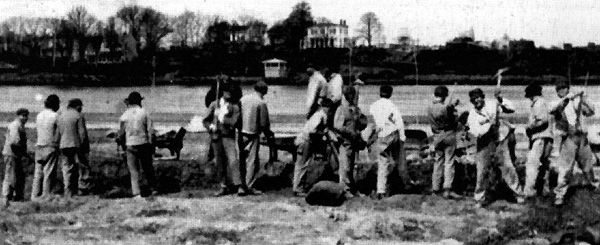
The prison fomented little idleness. Male inmates from there and the adjoining 220-cell workhouse (essentially a correctional facility for “drunks and disorderlies”) were used either in the quarry or to build many of the island’s structures, including a seawall around the perimeter. (Below: a picture from the book Images From America: Roosevelt Island of some of Blackwell Island’s prison laborers.)

This takes the notion of a chain-gang to a whole other level. But then, where would they escape to? Even if they could find a boat, the closest dock was heavily guarded. And although swimming was a possibility, the waters of the East River were far more crowded than they are today. Although some criminals — like ‘Oily’ Rockford — managed escape quite easily.

While the men were outside, women prisoners would do more ‘womanly’ chores, like sewing and laundry. I can’t help but think many of these women could have been better served in the quarries than in the sewing circles.

The prison and workhouse has seen its share of celebrity lawbreakers; one could imagine Paris Hilton feeling at home here. (I’m kidding; she wouldn’t last a day.) Many of the purported crimes wouldn’t even get you a slap on the wrist today.
Margaret Sanger’s sister Ethel Byrne was locked up for providing birth control advice to women in Brooklyn. Anarchist Emma Goldman was a frequent ‘guest’ for incendiary remarks and inciting riots, joining other frequenter Madame Restell, an early 20th century abortionist. Well before her singing career took off Billie Holiday spent four months here for a “vagrant and dissipated adult” (code for prostitution), although she was still a minor.

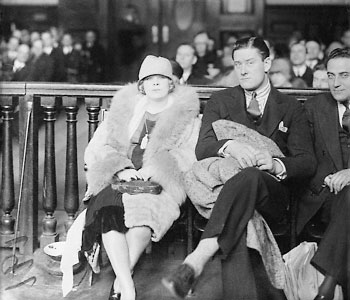
However its two most recognizable residents to the public at the time stand at either end of the justice scale; Boss Tweed served there for a year as the instigator of New York’s corruption woes, while comedian Mae West was locked up for eight days in 1927 on public obscenity charges, due to the ‘salacious’ nature of her Broadway show ‘Sex’. She received so much media attention that she was allowed to wear silk underpants at night and was eventually let off for good behavior. (The picture above is Mae in court, possibly on the day receiving her sentence.)

The celebrity element also helped shine spotlights on the prison’s squalid conditions — a sorry hall of overcrowding, drug addiction and corruption. By the 20th century, gangs of prisoners virtually ran the place. It would become the inspiration for dozens of pulp novels and films, including one actually called Blackwell’s Island.

After a few sorry reforms — including the name change to Welfare Island — produced few results, it was up to can-do mayor Fiorello Laguardia and his hire for corrections commissioner Austin H. MacCormick to raid the prison and transport its remaining inmates to the newly built Rikers Island. The Welfare Island prison was quickly torn down and replaced by Goldwater Hospital, today the Coler-Goldwater Memorial, which still serves the city in an environment far more inviting that anything that ever stood there before. has some of the best medical facilities in the city.

That’s it for Roosevelt Island this week! If you want to know more, the best online resources I could find include those at the Roosevelt Island Historical Society and a spectacular in-depth timeline at NY10044. (I know, I know, I didnt even get to the Blackwell house, fifth oldest building in all of New York City, or the ruins of old Strecker Laboratory.)

By the way, if you want to see what Blackwell Island might have been like, Roosevelt Island 360 has a video stream of the 1903 panoramic film reel that surveys the island in all its gloom and gray.

Mysteries of Roosevelt Island: The Madman’s Lighthouse

We’ve got some more on that wacky, wonderful place called Roosevelt Island. We highlighted some of the spookier stuff last week. Read it all here.
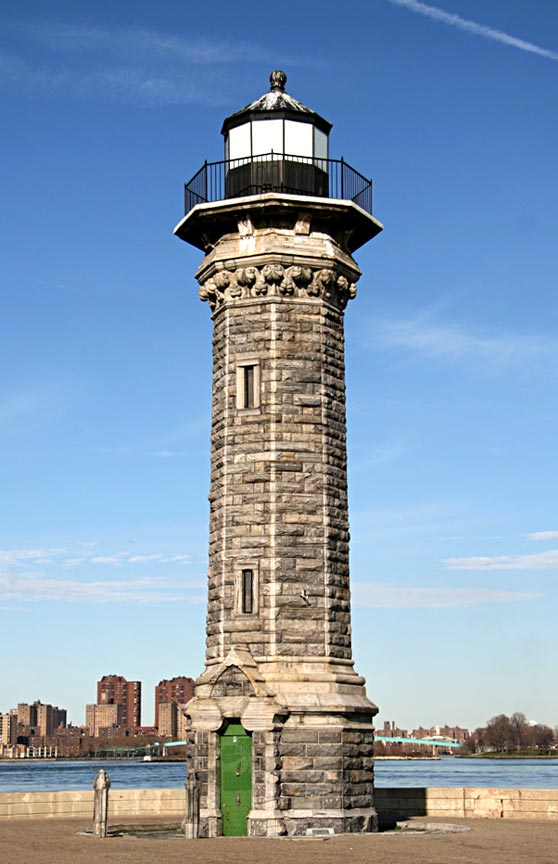
After the Renwick Ruins (which on most days aren’t open to the public) and the tramway (which takes all of five minutes to enjoy), the landmark which people associate with Roosevelt Island the most is the lighthouse on its northernmost point, built back when the isle was called Blackwell Island.

There are certainly more famous lighthouses in New York City. The ‘Little Red Lighthouse‘ underneath the George Washington Bridge was made famous by a classic children’s story. The stumpy lighthouse at the South Street Seaport serves as a memorial to the Titanic. And technically, the Statue of Liberty was lighthouse-ish, serving as a beacon for ships into the harbor.

But none had as ominous a purpose — or as peculiar an origin — as the Blackwell Island lighthouse, Roosevelt’s homage to the determination of the clinically mad.

As we mentioned last week, a sanitarium was built on Blackwell Island on 1839 to house mental patients previously stranded in various wards unsuited to their particular needs.

Many years after its notorious fire in 1858 and subsequent rebuilding, the relatively petite 50 foot tall lighthouse was planned to illuminate the waters filled with ships exiting from the perilous Hell’s Gate, the waterway between the Bronx and Queens. Presumably there had been a problem with vessels running aground on the relatively dark island, illuminated only by the lights of the asylum.

James Renwick, he of the smallpox hospital, was tasked in 1872 to design the lighthouse, a Gothic octagon cut from dark gray gneiss originating from the island’s own quarries, stone that would adorn many of the island’s most prominent structures.

The only thing holding back the construction was one particularly conscientious inmate of the asylum named John McCarthy. (Or, at least, this is how the legend goes.)

Whatever his maladies, McCarthy was deathly afraid of an attack by the British. Although New York was indeed under fear of such an attack in 1812, it never happened. By 1872, it was very unlikely to ever happen. This did not deter McCarthy, who, in his delusions, just wanted to protect the island from eventual attack. So, as the story goes, he built a fortress-like wall from river clay on the north end.

According to an asylum warden, the “industrious but eccentric” man “is very assiduous, and seems proud of his work, and he has reason to be, for it is a fine structure, strong and well built.” Apparently it was ‘fine’ enough to fortify some of the marshy land that would be used later for the lighthouse and adjoining platform.

He seems like a good but very misdirected citizen, in my opinion. However, such a fort would be no match for a warship and besides, there were no warships. The city, possibly through bribery, convinced McCarthy to demolish the fort.

Not surprisingly, labor from the asylum was used to build the lighthouse, and design shifted slightly from Renwick’s intentions. It is unclear who among the asylum laborers was involved in actually constructing the lighthouse. Another inmate Thomas Maxey is also attributed to the construction.

Whoever it was, McCarthy was the one attributed on a plaque that stood in front of the lighthouse until the 60s:

This work
Was done by
John McCarthy
Who built the light House
from the bottom to the Top
all ye who do pass by may
Pray for his soul when he dies

Serving the harbor admirably for almost 70 years, the lighthouse was decommissioned in the early 40s, then restored to its quaint, haunted lustre in 197s. It’s joined on the north side by a 147-acre park highlighted by the lovely white ‘meditation steps’, where you can bask in views of Gracie Mansion and the skyline of Manhattan, as well as ponder the invisible border of McCarthy’s former noble fort. I can personally attest to this being a perfect place for a picnic.

(Lighthouse photo courtesy of one of my favorite New York blogs New York Daily Photo)

Mysteries of Roosevelt Island: Terror on the tram!

We’ve got some more on that wacky, wonderful place called Roosevelt Island! We highlighted some of the spookier stuff last week. Read it all here.
One of the more intriguing aspects to Roosevelt Island is the notion of even getting there at all.

For most of its existence, people used ferries to get to and from Manhattan and Queens. Boatloads of prisoners, smallpox patients, the mentally insane, and, yes, residents of the island crossed the East River daily.

Later, when the Queensboro Bridge sprung up on its north side, a trolley would stop in the middle of the bridge, allowing people to then enter a small elevator which would take them down to the island. According to NY Roads, this was the only way for the public to get to Roosevelt (then Welfare Island) in the 50s. I can’t imagine this inconvenient form of commute brightened the island’s reputation any.

A lift bridge spanning 2,877 feet to Queens was opened in 1955, finally allowing automobiles on the island. Its also the only way you can walk there. Those odd Queensboro elevators were dismantled in 1970.
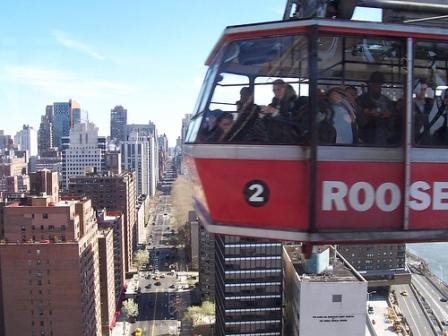
However Roosevelt Island is often defined by its most popular method of conveyance, the Roosevelt Island Tramway. This unique way of getting to and from home, taking less than five minutes one way, is a picturesque and perfectly European way of experiencing the city. The aerial tram, made by the Swiss company Vonroll, is the only one of its kind on North America to be used as actual mass transit. (Many vacation destinations obviously use trams, including mountains in Oregon and New Mexico.)

The Tram was built in 1976 as a temporary relief for residents impatient with the slow development of the subway out to the island. By the time the subway (now the F line) reached Roosevelt in 1989, the Tram had become such a signature of the midtown skyline that it was retained.

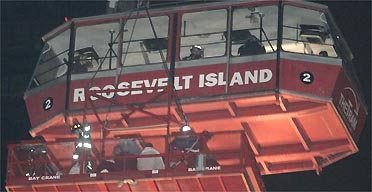
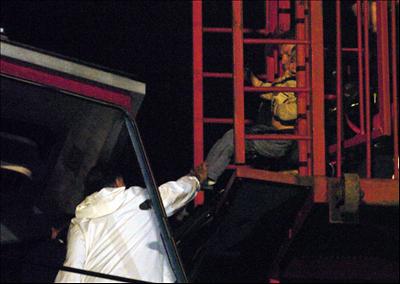
Some passengers in 2006 might have wished they had hopped on the subway. On April 18, 2006, the two operating cars abruptly stopped moving, leaving almost 70 people stranded above the East River. It took almost six hours, well into the early morning, for rescue workers to extract the passengers ten at a time using an industrial crane and rescue gondolas. According to a 12 year old passenger, who had to leap from the tram doorway to the gondola: “I was just a little scared because, one, what if I miss it; two, what if I slip, I might fall into the river.”

(Go to WNBC to see some of the vivid coverage.)

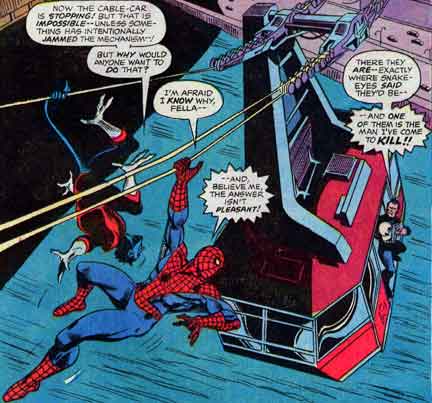
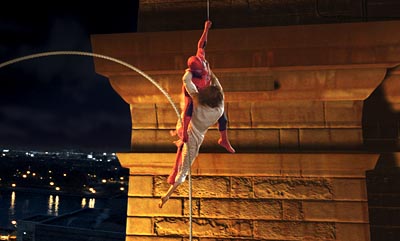
Of course the Tram isn’t foreign to use by malevolent types and rescues by bonafide heroes, at least in the fictional realm. Spider-man seems to be the tramway’s personal security guard, in comic books and in film.

You can take a far safer virtual tram ride with the Roosevelt Islander.

The subway seem to be the easiest way to travel, but even that has an odd distinction — at a little over 100 feet deep, its the second deepest subway stop in the entire city. (That’s still 80 feet shorter than the 191 Street station in Manhattan.) After a series of steps and escalators, it can seem like you’re emerging from a subterranean city.

“Horrors” of Roosevelt Island: Lunacy!

(ABOVE: Metropolitan Hospital, at the turn of the century, the former site of Blackwell Island’s asylum)

Is there anything more frightening than a insane asylum on fire? Nope.

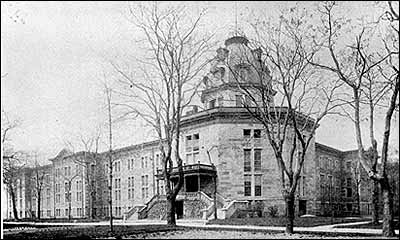
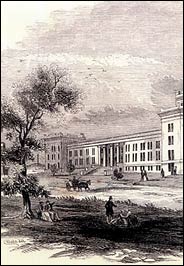
Welcome to America’s first municipal lunatic asylum, its home — you guessed it — on Roosevelt Island in the 19th century. The 1839 facility was designed by Alexander Jackson Davis, one of the most influential architects of his day and best known for decorating the northeast with austere, ornate homes. His best known New York building is Federal Hall (actually the Custom House when it was finished in 1942). The center tower of the asylum with its two L-shaped wings created an internal campus and had more in common structurally with a university or hotel.

The early 19th century was not the best time to be labelled a lunatic. The medical profession was not terribly prepared to treat mental patients; however at the time of the asylum’s construction, attitudes were shifting somewhat. As Blackwell Island, its isolation and relative calm were seen as conducive to the treatment of the mentally ill.

Good intentions were overtaken by reality, overcrowding and rather poor managerial decisions, such as the notion to leave part of the care of the asylum’s patients to the attentions of the inmates at the neighboring penitentiary. (I’ll focus more on the Roosevelt Island’s prison life next week.)

The asylum swiftly entered the public imagination. Charles Dickens, on his tour of America, visited the asylum and found “…everything had a lounging, listless, madhouse air, which was very painful. The moping idiot, cowering down with long disheveled hair; the gibbering maniac, with his hideous laugh and pointed finger; the vacant eye, the fierce wild face, the gloomy picking of the hands and lips, and munching of the nails: there they were all, without disguise, in naked ugliness and horror.”

Part of the asylum was lost in an inferno in 1858. One can only imagine the pandemonium of evacuating mental patients without the modern medications and restraints of today. And the sounds of the blaze mixed with the shouts and howling of the patients.

It was swiftly rebuilt but the conditions were no better. Intrepid reporter Nellie Bly then steps into the story at this time, in a move that would inspire budding Geraldo Rivera’s well into the future. In 1887, already well known for evocative articles on social reform, Bly took an assignment for Joseph Pulitzer’s New York World newspaper to enter the asylum disguised as a patient. (Why some actress like Charleze Theron has not played her in a film is quite beyond me.)
Bly’s reporting of conditions there are as shocking today as they are melodramatic. “From the moment I entered the insane ward on the Island, I made no attempt to keep up the assumed role of insanity. I talked and acted just as I do in ordinary life. Yet strange to say, the more sanely I talked and acted, the crazier I was thought to be by all….” Laughably misdiagnosed, Bly was tormented with rotted food, cruel nurses and cramped and diseased conditions for ten days before released with Pulitzer’s help.
Her reporting did more than shine a light on poor conditions for the mentally ill; it apparently also spelled the end of Blackwell Island’s asylum. By 1893, the patients were transferred further up the East River to Ward’s Island and the building given to more traditional medical services, becoming Metropolitan Hospital. It made the former asylum home for more than fifty years, leaving in 1955 and essentially abandoning Davis building to deteriorate.
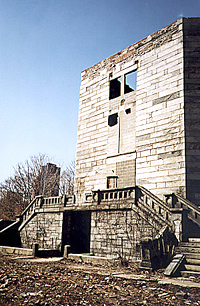
For years the only remaining vestige of the asylum was the Octagon, with the entrance tower and once spectacular spiral staircase. Certainly it must has inspired Batman writers to create Arkham Asylum, Gotham City’s home for the mentally insane and frequent home of most of the caped crusader’s rogue gallery.
Hmmm, ancient site of mental and physical horrors? I know, let’s build a condo! That’s exactly what the developers of The Octagon have done, completed last year. They have however preserved the octagonal tower and stairwell, leading me to suspect that at least they’re not hiding from the location’s wild, unsettling history, despite the promises of their website — “a Midtown venue with small-town values.” *shudders*

NEXT WEEK: More on Roosevelt Island’s peculiar and disquieting history