Categories
Podcasts

The Stuyvesant, New York’s first apartment building: Imported luxury style for a new middle class

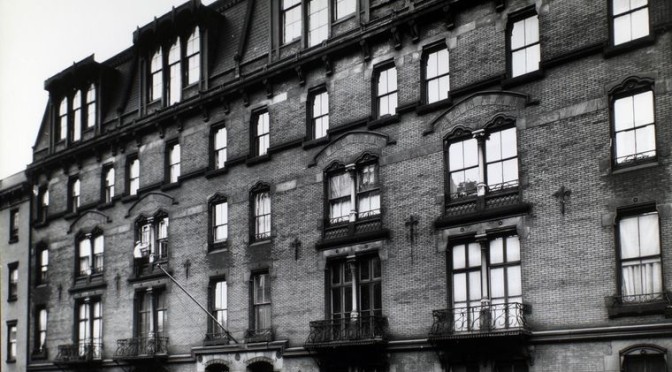
The creation of ‘acceptable’ communal living: The Stuyvesant Flats, at 142 East 18th Street, designed by Richard Morris Hunt, photographed by Berenice Abbott.

PODCAST Well, we’re movin’ on up….to the first New York apartment building ever constructed. New Yorkers of the emerging middle classes needed a place to live situated between the townhouse and the tenement, and the solution came from overseas — a daring style of communal and affordable living called the ‘apartment’ or ‘French flat’.

The city’s first was financed by Rutherford Stuyvesant, an old-money heir with an unusual story to his name. He hired one of the upper class’s hottest architects to create an apartment house, called the Stuyvesant Apartments, with many features that would have been shocking to more than a few New Yorkers of the day.

The building’s first tenants were sometimes well-known, often artists and publishers, and almost all of them with a fascinating story to tell. Listen in to hear about the vanguard first renters of this classic, long-gone building.

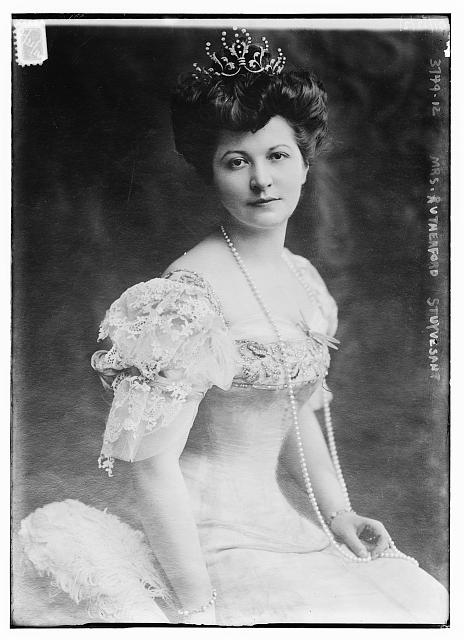
I have been unable to find any portraits of Mr. Rutherford Stuyvesant (aka Stuyvesant Rutherford), the man who financed the Stuyvesant for $100,000. However I have found a picture of Mrs. Rutherford Stuyvesant, who doesn’t look like the kind of lady to mettle around in her husband’s affairs. She would not have found the apartments which bore her name very accomodating. Many, many others did. (Courtesy LOC)
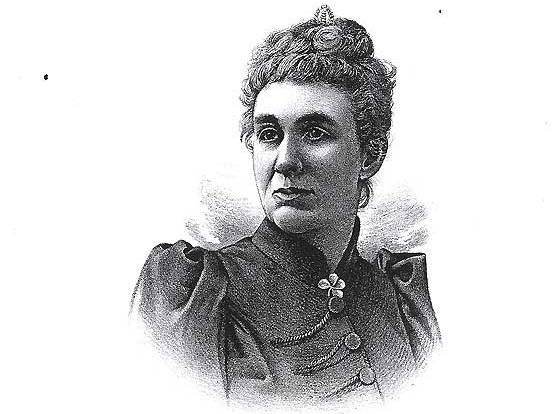
The tenacious Elizabeth ‘Libby’ Custer, photo taken in 1876, the year her husband was killed at the Battle of Little Bighorn. Mrs. Custer moved into Stuyvesant and successfully led her crusade to rehabilitate her husband’s reputation.
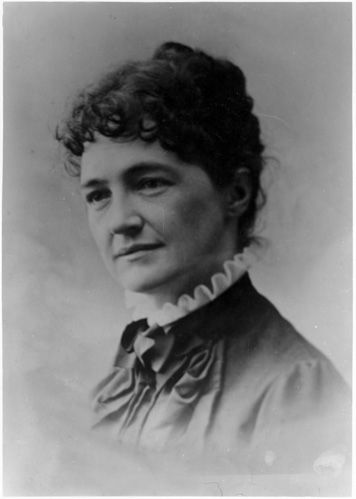
Maggie Custer Calhoun, younger sister to General Custer, lived with her sister-in-law at the Stuyvesant before embarking on a successful career as an elocutionist.
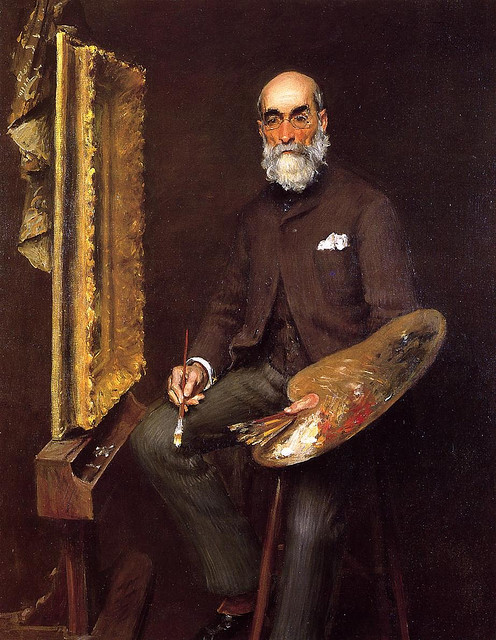
The landscape painter Worthington Whittredge also resided here. In fact, he beamed about it in his autobiography: “I was one of the first to subscribe for an apartment in this house, which was to be erected in 18th Street near Third Avenue and Stuyvesant Square.”

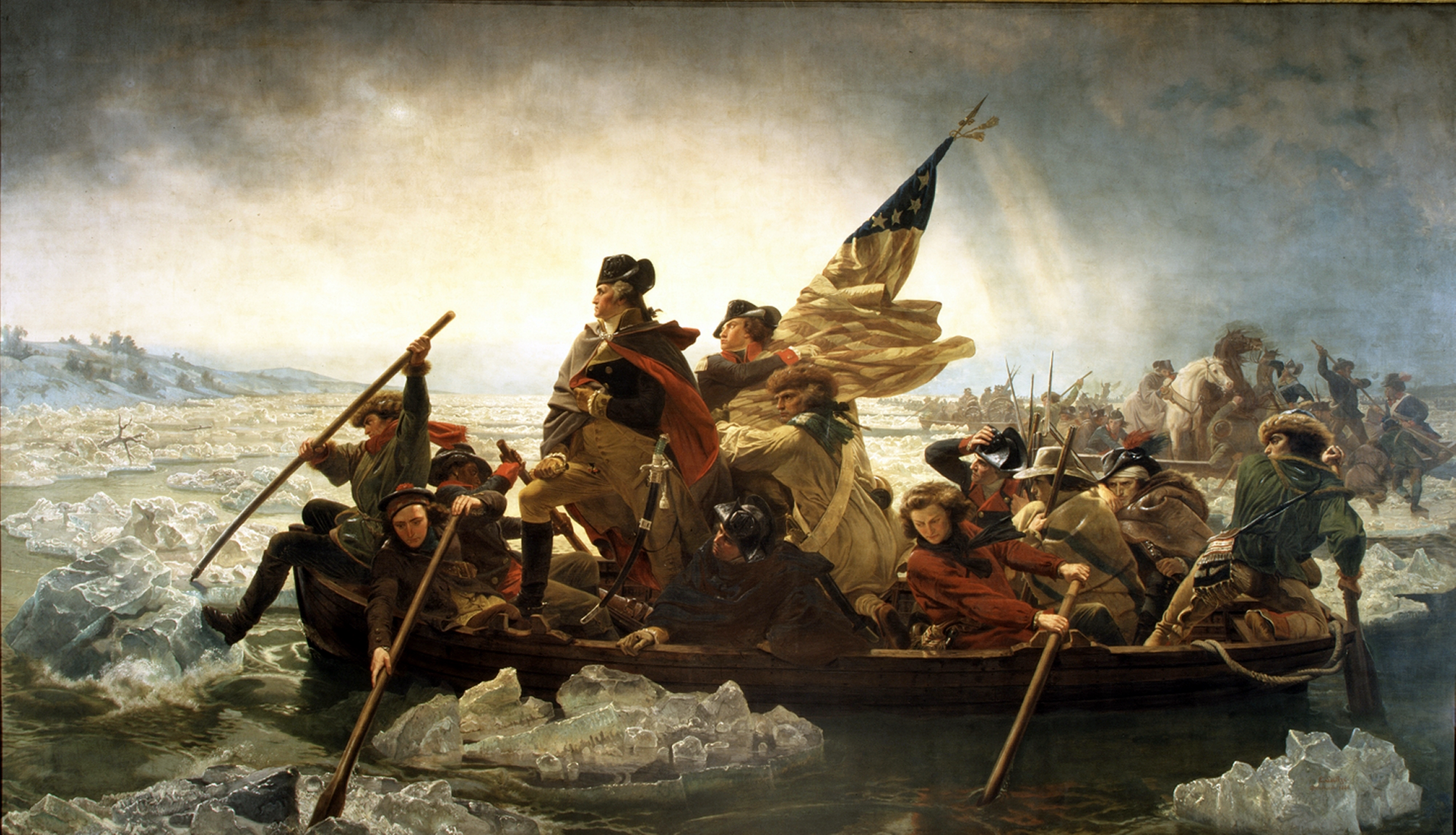
Earlier in his career, Whittredge posed as George Washington while Emanuel Leutze painted ‘Washington Crossing The Delaware’. (Worthington is quite comfortable on both sides of the easel The painting below is by William Merritt Chase.)
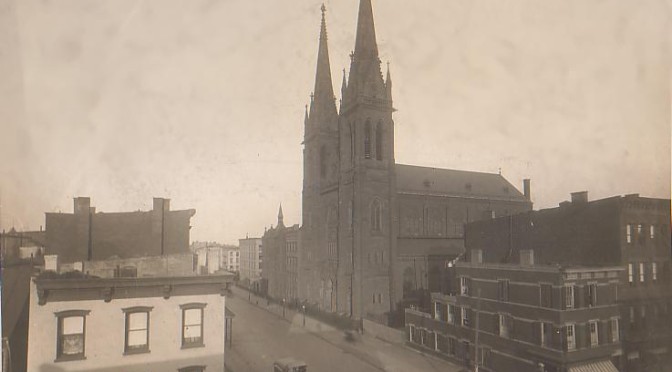
In its later years, the Stuyvesant was used as the set for a pivotal scene in the Oscar-nominated film noir ‘Kiss of Death’ starring Richard Widmark. Needless to say, this sort of activity very rarely went on at the Stuyvesant.
View Larger Map

Categories
Mysterious Stories Podcasts

Haunted Histories of New York: What horrors lie beneath the foundations of the city’s treasured landmarks?

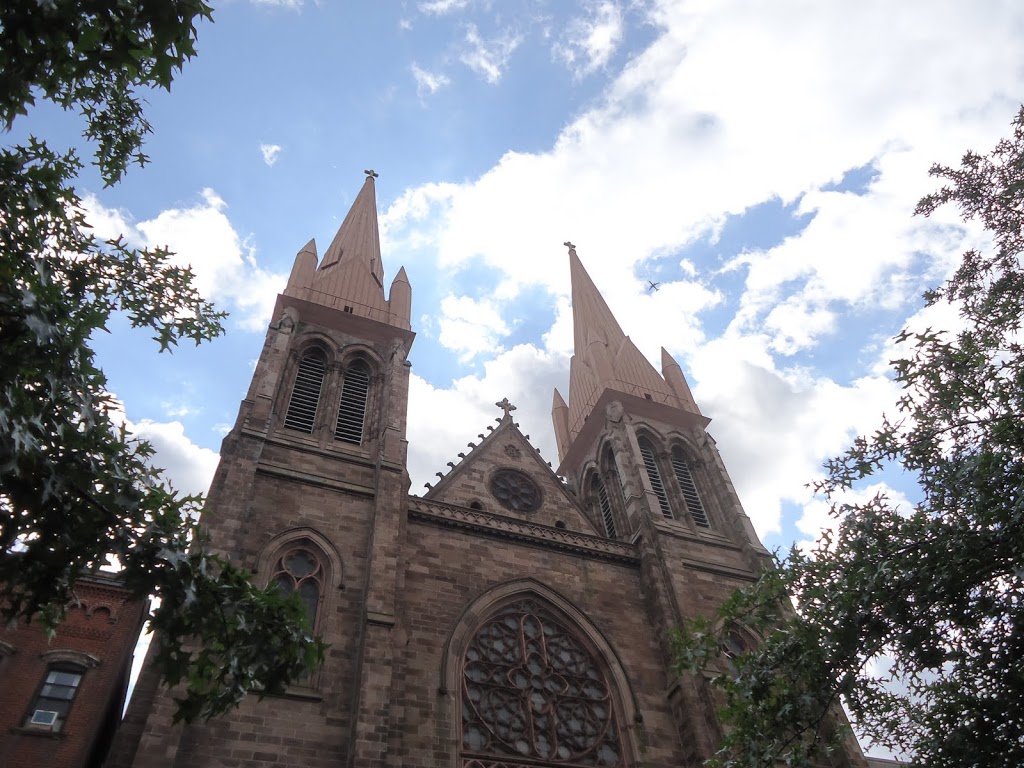
Most Holy Trinity in Bushwick, Brooklyn, shrouded in shadow, a place where the ghosts of former clergy are alleged to lurk the halls and other spirits may torment the nearby school.

PODCAST What mischievous phantoms and malevolent spirits haunt the streets of New York City today? In our fifth annual podcast of local ghost stories, we bring you the histories of four very haunted places from three boroughs and a small island in the harbor.

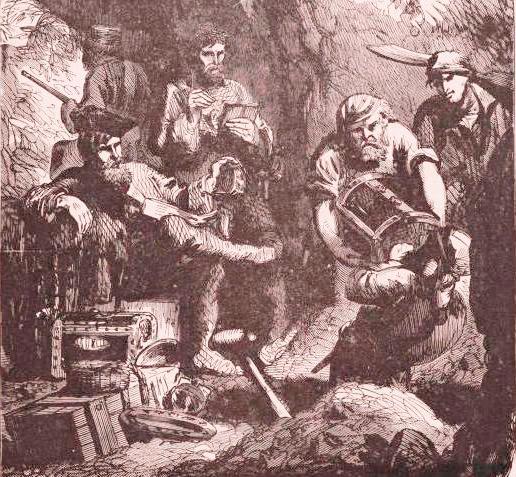
The legend of Captain Kidd‘s buried treasure — alleged to be buried in the New York region — inspires our first ghost tale of two ambitious soldiers on a quest during a full moon, on an island that today contains the Statue of Liberty! Meanwhile, out in Brooklyn, a congregation gathers at a new Catholic church, but maybe they shouldn’t have built it over a graveyard. Do the spirits of dead clergy haunt the halls today?

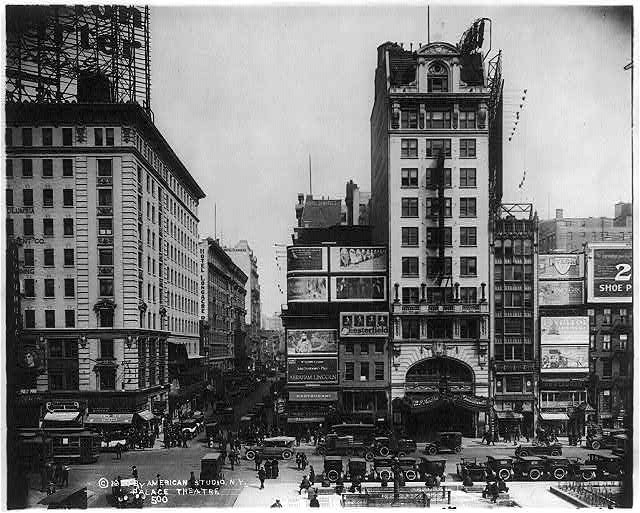
The Palace Theatre in Manhattan has hosted the greatest names in entertainment — and continues to play host to the undead. And finally, we hesitate to bring you the malevolent events at the Kreischer Mansion in Staten Island. What is it about this house that has inspired stories for over a hundred years, and did ghosts from a century ago have something to do with a horrifying and gory crime that took place here just a few years ago?

Click here for more notes on this podcast.

Bedloe’s Island: Below is a depiction of its southern shore in 1831. It was on the northern end during this period that two sentries at Fort Wood had a most unfortunate encounter while searching for buried treasure. (Image courtesy NYPL)

Legends of Captain Kidd’s treasure have possessed New Yorkers for centuries. It’s rumored that he killed one or two of his men and buried their bodies with the treasure to ‘guard’ it. Do these bodies lurk underneath the shadow of the Statue of Liberty? (NYPL)

Most Holy Trinity in Bushwick, Brooklyn, site of alleged hauntings from a variety of spirits.

The Palace Theater rises over Times Square, hosting the greats of vaudeville. But the stage has also attracted its share of ghost sightings over the year, including that of one very tenacious acrobat.

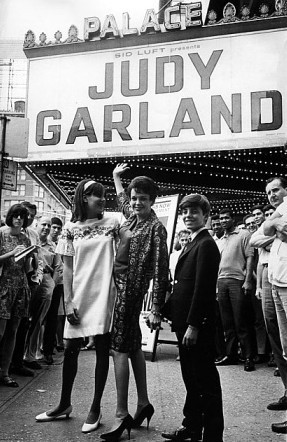
The legendary Judy Garland appeared here in the 1960s. Does she still lurk backstage today?

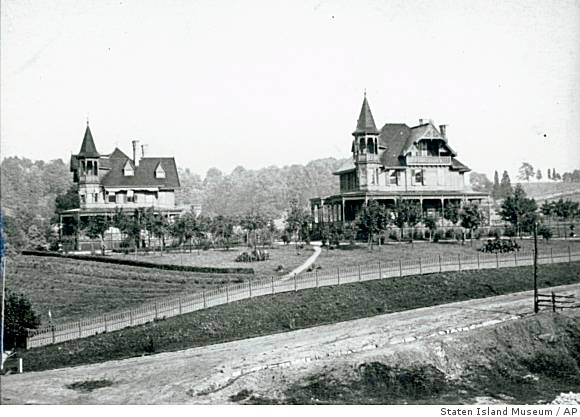
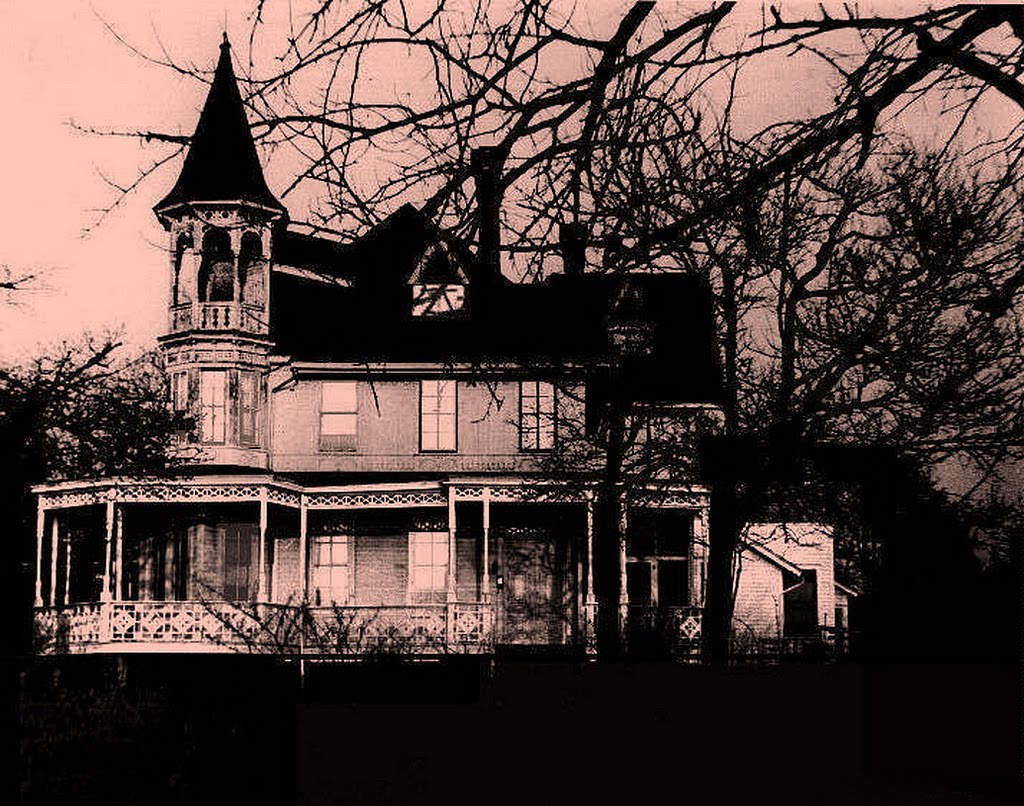
The Tale of Two Houses: The Kreischer Mansion in southern Staten Island, famous among generations of children as being an iconic haunted house, was actually once two houses. Or rather, a parallel house, mirroring the other in every way, once stood nearby, home built for the sons of a prominent German brick maker.

The mansion in the mid 1980s (Courtesy Flickr/Revup67)

Video filmed of the Kreischer Mansion in 1983:

In 2003, some amateur ghost hunters were allowed to photograph the property, escorted by the house’s caretaker at the time. From description, I believe the caretaker is the same person who committed a gory and terrible murder here just a few years later!

Categories
Podcasts

Manhattan’s Chinatown: a tribute to the old neighborhood, and to the temptations of rich delicacies and basement vices


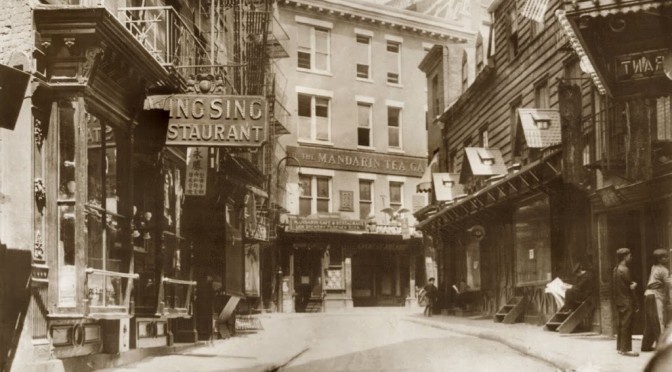
PODCAST Manhattan’s Chinatown is unique among New York neighborhoods as its origins and its provocative history can still be traced in many of the buildings and streets still in existence. Two hundred years ago, the sight of a Chinese person would have astonished New Yorkers, and the first to arrive in the city were either sailors or the subjects of tacky exhibition.

But with the first Chinese men setting on Mott Street, a new community was born, with thriving variety shops, cigar businesses and gambling dens alongside establishments of a more sensuous nature — opium dens and brothels. This mini-economy produced social clubs and secret societies (the legendary ‘tongs’), and rival gangs soon spilled blood along the neighborhood’s quirkiest lane.

And still today, modern Chinatown hides a few dark, startling secrets of its own.

ALSO: We give you a rundown of addresses along Mott Street and other places nearby. You can use this podcast as your official walking tour of the neighborhood!

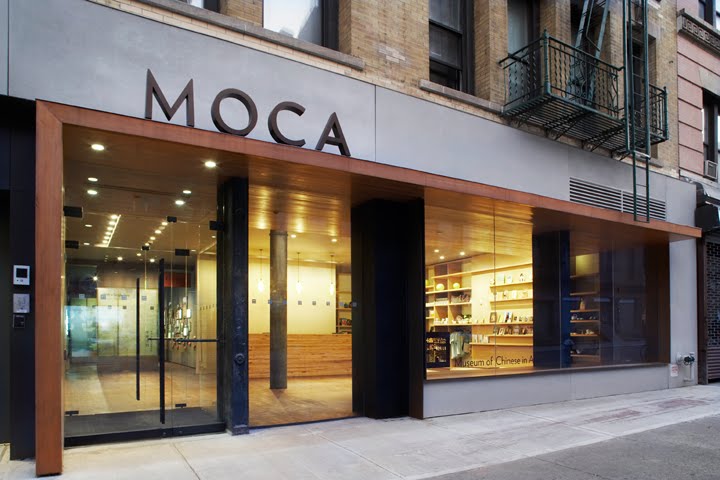
For a lot more information on the Chinese experience in America, I urge you to visit The Museum of the Chinese In America, located at 215 Centre Street. It’s free on Thursday and close to Chinatown. (Photo courtesy CUNY)

And here’s the addresses of places we mentioned in the podcast, as well as a couple other locations of interest. There are other places on these streets of great interest, so please meander freely:

1. 50 Spring StreetQuimbo Appo’s tea shop
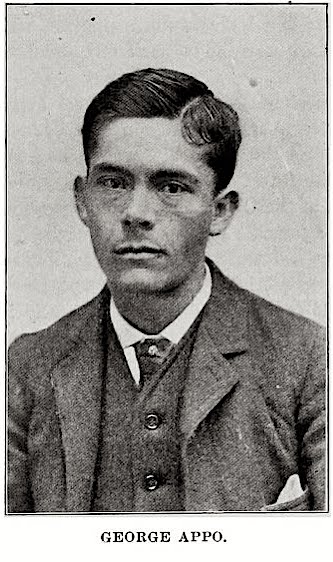
Quimbo, an early Chinese success story in New York was in and out of prisons and mental wards later in his life. His son George Appo (below) was an equally notorious presence in the Five Points slums.

2. 62 Cherry Street Ah Sue’s tobacco and Chinese Candy shop
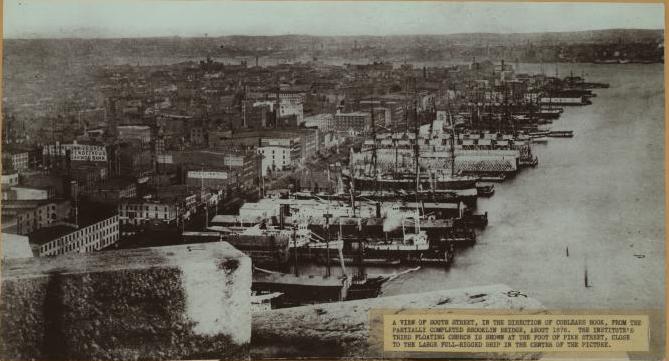
The East River docks stretching to Corlears Hook, where the first Chinese men (sailors) stayed in boardinghouses. This image is from 1876; Ah Sue’s waterfront business was at 62 Cherry Street, near Catherine Slip.

3. Corner of Catherine Street and East Broadway
New York’s first Chinese laundromat

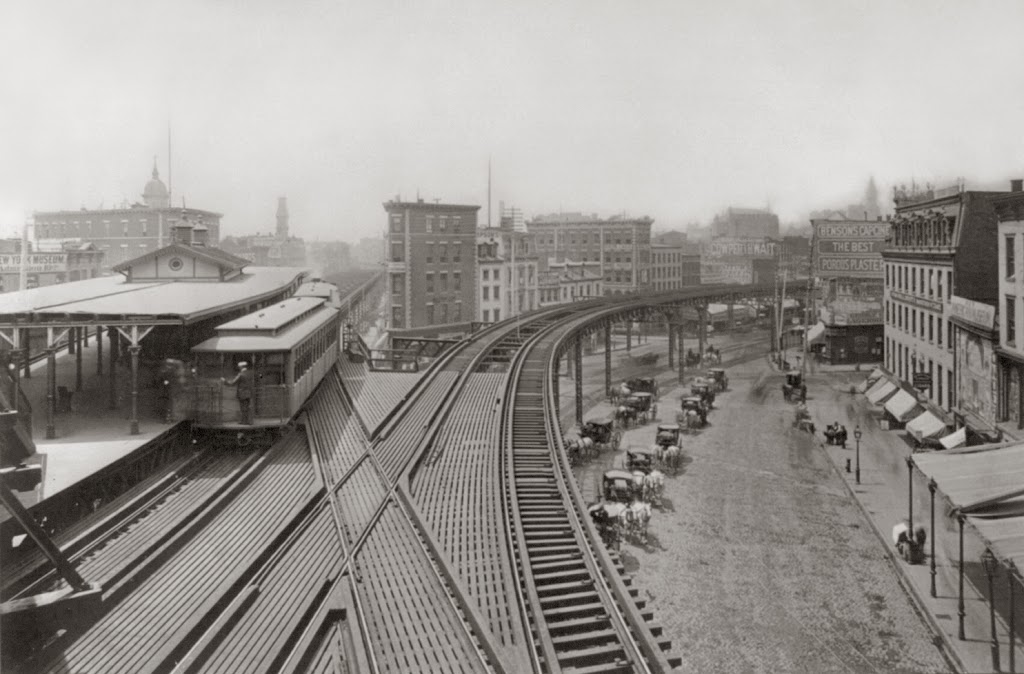
4. Chatham Square
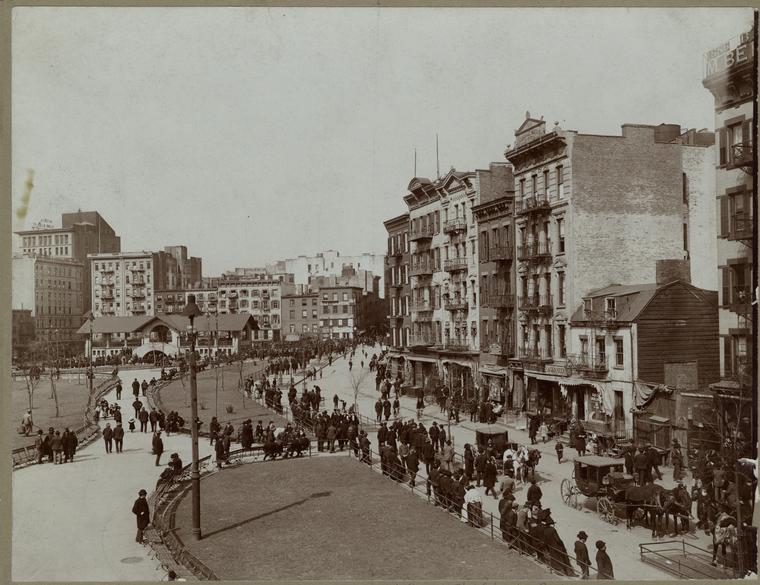
In the 1880s, the open area was consumed with elevated railroad tracks, quite a

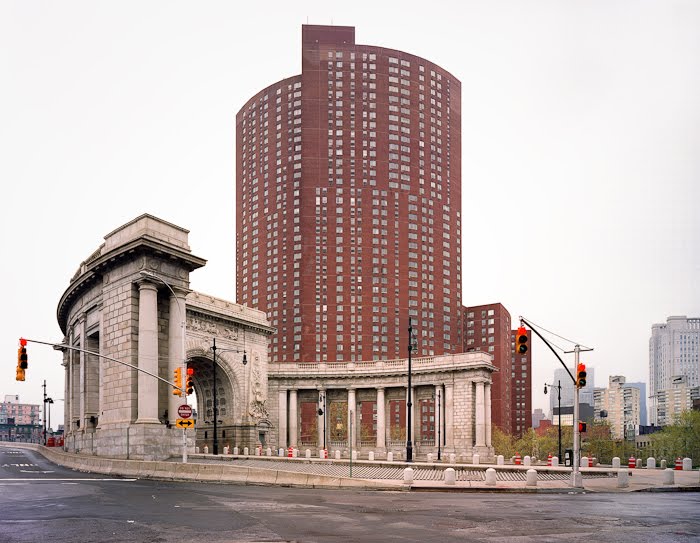
5. Confucius Plaza
Built in 1975 and one of the largest buildings in downtown Manhattan outside of the Financial District. (Picture courtesy the pretty fabulous blog Iconic Facades)

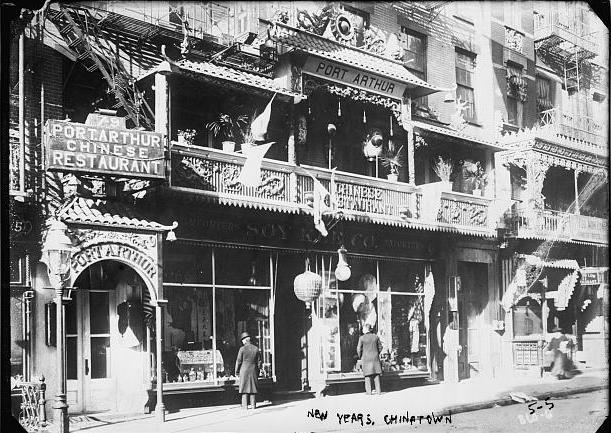
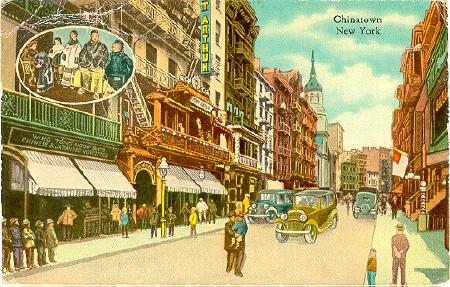
Not mentioned in the podcast, Port Arthur Chinese Restuarant, at 7-9 Mott Street, circa the 1900s, one of the first banquet halls of Chinatown

6. 11 Mott Street – the brothel owned by Tom Lee
7. 16 Mott Street – original home of the Chinese Consolidated Benevolent Association
8. 18 Mott Street – the first Chinese-owned building, and one of the earliest Chinese gambling dens

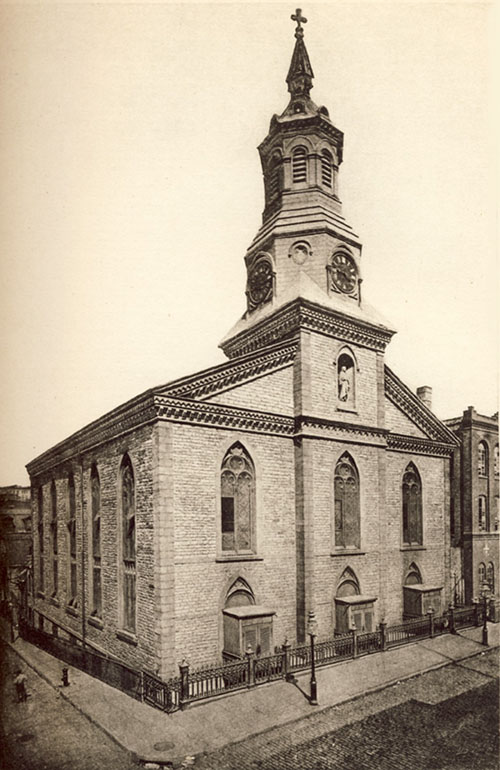
9. 25 Mott StreetChurch of the Transfiguration
Easily the oldest structure in the neighborhood, and home to early congregations that weren’t exactly welcoming to Mott Street’s early Chinese residents.

10. 62 Mott Street — current home of the Chinese Consolidated Benevolent Association, the unofficial ‘town hall’ of Chinatown

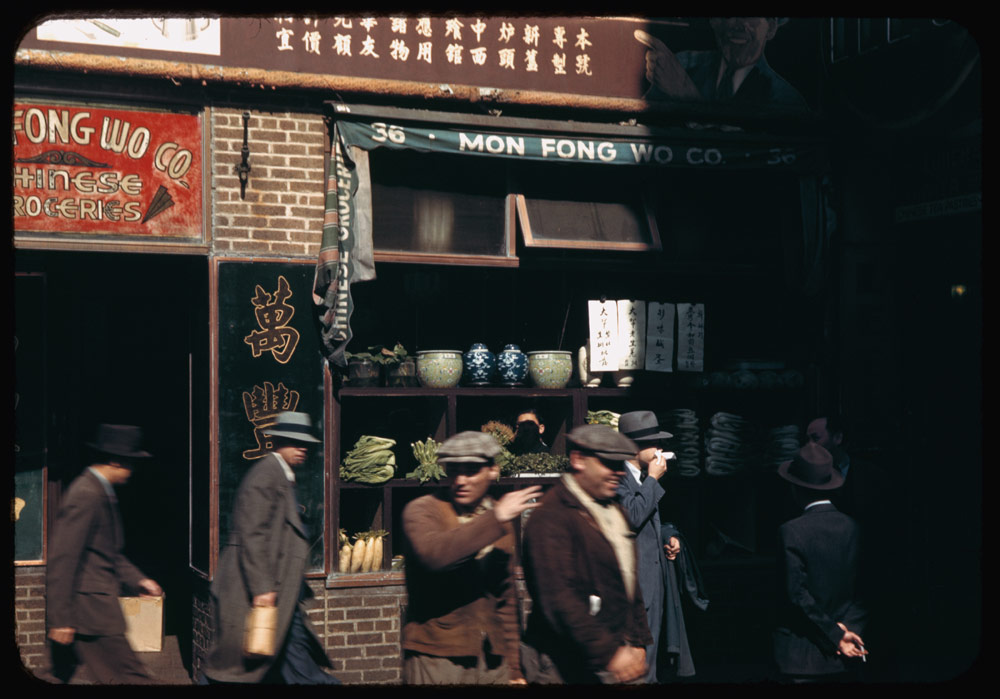
Mott Street in 1942: (Courtesy the Charles W. Cushman Photography Archive)

11. Columbus ParkMany of Five Points most decrepit tenements were eliminated to make way for this park created by Calvert Vaux. The park is a lively part of Chinatown today, particularly on the weekends. [source]

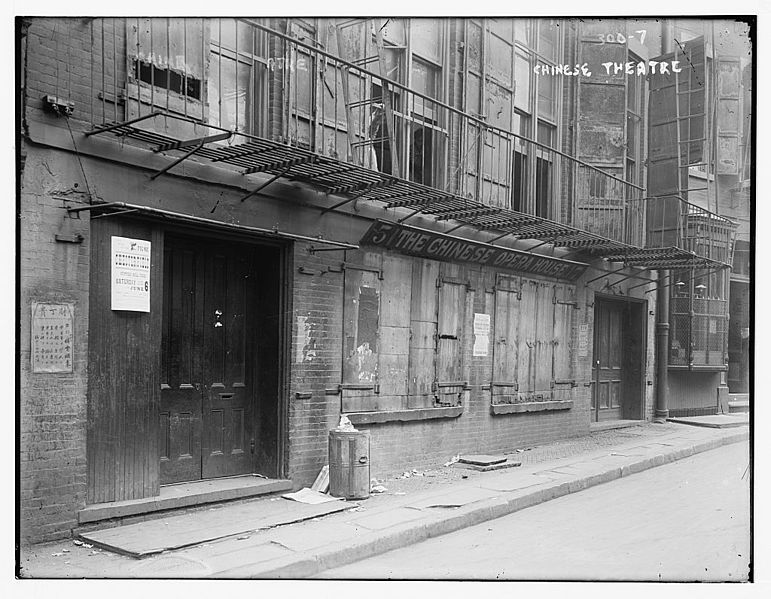
12. 5-7 Doyers Street – Chinese Theater
A regular source of entertainment for locals and the sight of more than few altercations between rival tongs. Bodies were allegedly buried in the basement.

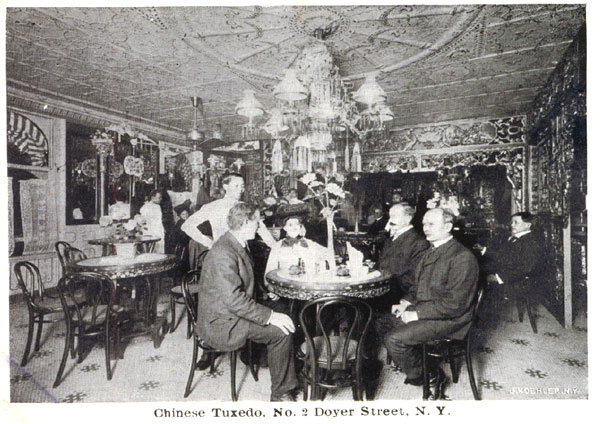
2 Doyers Street — Chinese Tuxedo Restaurant
Chinese had a powerful allure to the non-Chinese and to ‘bohemians’. This restaurant attracted businessmen looking for an ‘exotic’ night on the town. It helped that the Tuxedo was near the elevated train. (Courtesy Flickr/straatis)

13. 9 East Broadway – Former home of the Golden Star Bar
14. 47 East Broadway – Yung Sun Restaurant, once operated by Sister Ping

 
Categories
Podcasts

Hoaxes and Conspiracies of 1864: The Confederate Plot to Torch New York

Barnum’s American Museum at left (the building with the flag) and the Astor House at right, from the vantage of City Hall Park, circa 1850. Both buildings were victims of the Confederate plot of 1864 to burn the city.

PODCAST We’re officially subtitling this ‘Strange Tales of 1864’, presenting you with a series of odd, fascinating stories from one pivotal year in New York City history. With the city both fatigued by the length of the Civil War and energized by Union victories, New Yorkers were often at their best — and their worst.

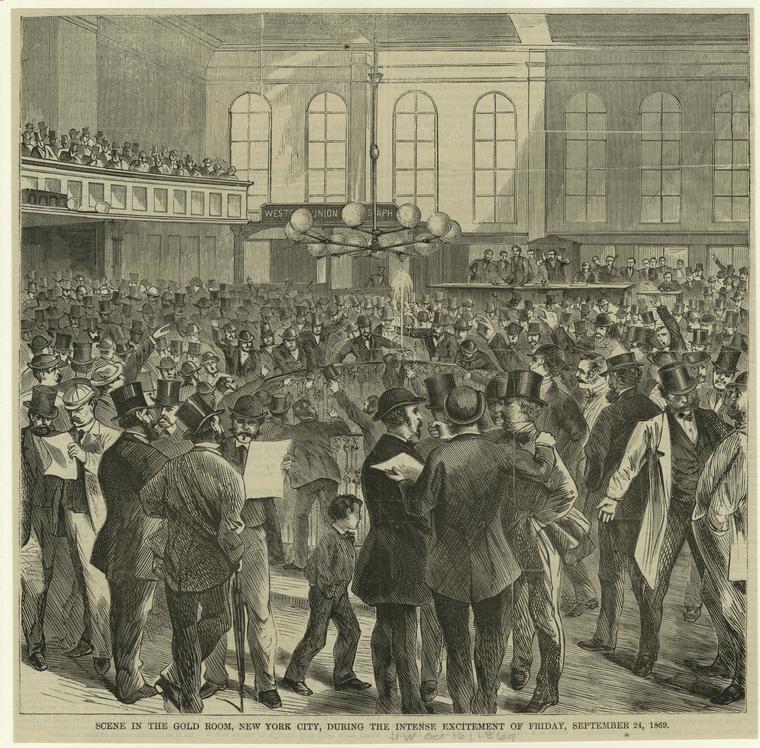
The city unites around an unusual parade — the first regiment of African-American troops — even as it elects a pacifist mayor sympathetic to the Southern cause. A grand and flamboyant fair, uniting the community, offers up a surprising New York tradition — the theme restaurant. Meanwhile, a local newspaper editor devises an elaborate hoax to get rich quick off the gold market.
But with the November re-election of Abraham Lincoln also comes a deadly threat — a Confederate conspiracy aimed at New York’s luxury hotels. Tune in as we recount the botched plot to destroy New York in an conflagration of ‘Greek fire’.

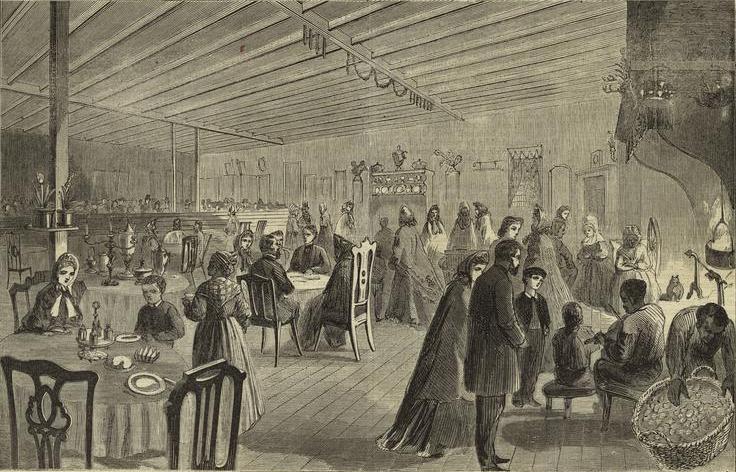
The Knickerbocker Kitchen, a featured restaurant at New York’s Metropolitan Fair. Women dressed in traditional Dutch and Colonial garb and served items believed to be popular with the residents of old New Amsterdam. [NYPL]

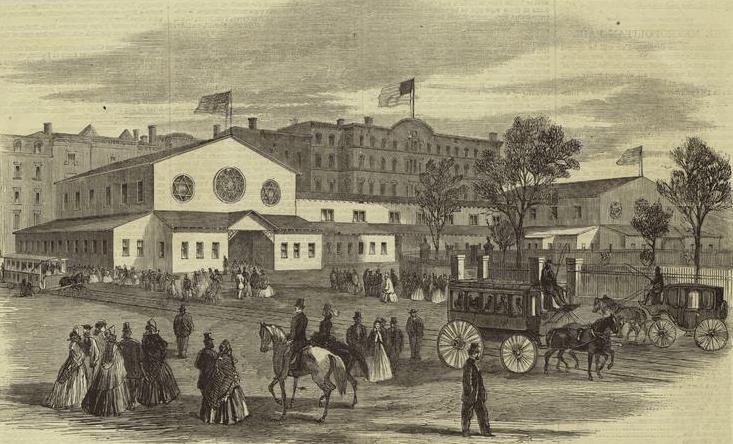
Pavilions were specially constructed around Union Square for the Metropolitan Fair, which raised money for the U.S. Sanitary Commission.

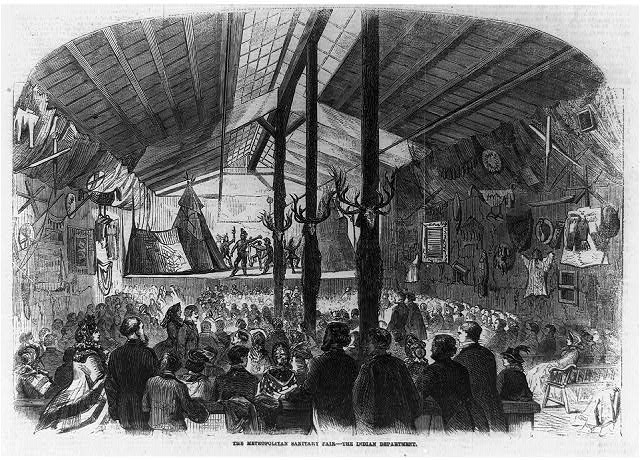
The ‘Indian Department’ at the Metropolitan Fair. [Library of Congress]

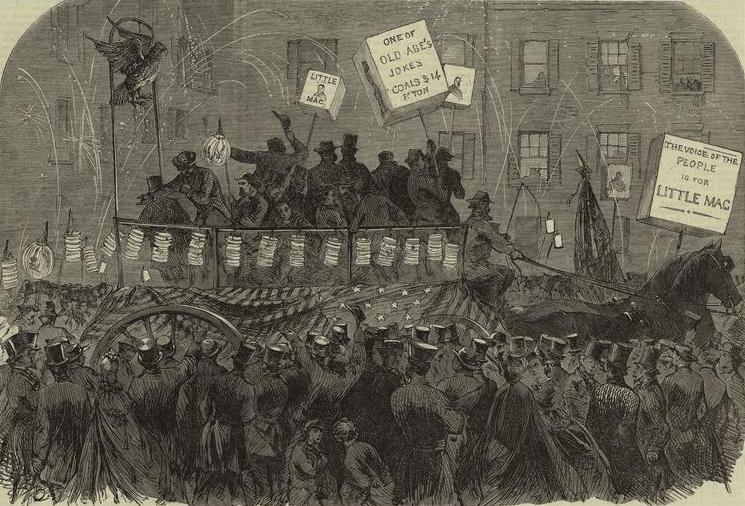
A nighttime ‘torchlight’ rally for presidential candidate George McClellan, the clear choice for New Yorkers in 1864. For a Democratic stronghold like New York, the former general was an especially appealing alternative to Abraham Lincoln. [NYPL]

A scene from the New York Gold Room, epicenter of American gold speculation. During the Civil War, traders would buy and sell based upon Union victories and defeats. The trade was also susceptible to false information, such as the events of the Gold Hoax of 1864. (NYPL)

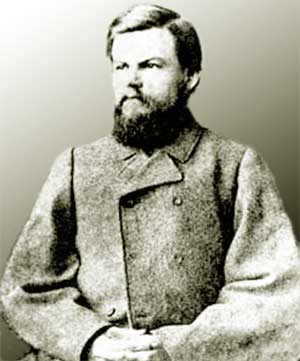
Robert Cobb Kennedy, the only one of the Confederate conspirators to be caught. He was executed at Fort Lafayette in 1865, a couple weeks before the end of the Civil War.

Categories
Podcasts Wartime New York

Fernando Wood, the scoundrel mayor during the Civil War: Will New York and Brooklyn secede from the Union?


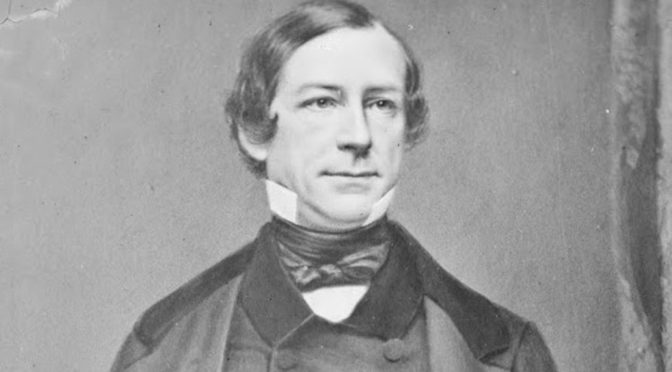
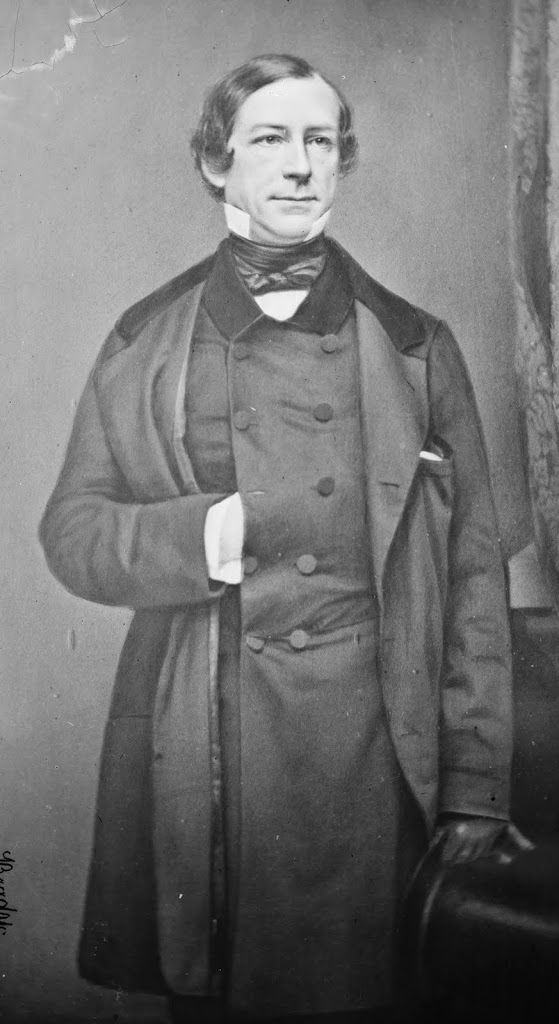
His Honor, one of the most ambitious, most duplicitous leaders of New York in its history — as photographed by no less than Matthew Brady.

PODCAST The first part of our Bowery Boys Go To War! trilogy of podcasts set during the years of the American Civil War.

Fernando Wood, New York’s mayor at the dawning of the war, was the South’s best friend. The rascally politician, famous during his first term for inciting a police riot, drummed up pro-slavery support amongst his Irish and German constituents and even suggested New York secede from the Union itself! But once the war began and public support for the conflict swelled, the nefarious Fernando tried to have it both ways, both leading the Union cry and undermining it.

Click here for notes, corrections and other details on this podcast.

Wood’s ornate mansion at Broadway and 77th Street, called Woodlawn, bought with his newly acquired wealth obtained from the results of a suddenly successful shipping business and advantageous political fortune. (NYPL)

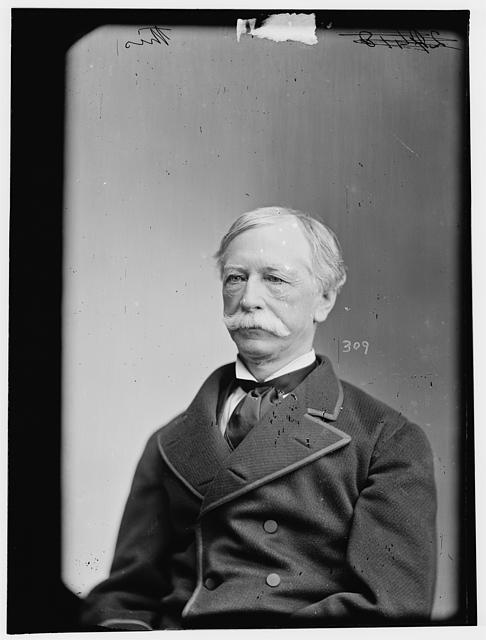
U.S. Representative Wood, near the end of his life, taken sometime in the 1870s.

Categories
Podcasts

Idlewild Airport/John F Kennedy International Airport: from a golf course to a motley crew of classic architecture

PODCAST Come fly with us through a history of New York City’s largest airport, once known as Idlewild (for a former golf course) and called John F. Kennedy International Airport since 1964. Mayor Fiorello LaGuardia wanted a new and improved facility to relieve the pressure from that other Queens airport (you know, the one with his name on it), but a greater challenge faced developers of the Jamaica Bay project — the coming of the jet age and the growth of commercial travel.

The solution for Idlewild was truly unique — a series of vastly different and striking-looking terminals assigned to individual airlines. This arrangement certainly had its critics, but it has provided New York with some of the most inventive architecture found within its borders.

From stained glass to zodiac sculptures, from the out-of-this-world dramatics of the Pan Am WorldPort to the strangely lifting concrete masterpiece by Eero Saarinen, we take you on a tour of the original ’60s terminals and the airport’s peculiar history.

With guest appearances by Robert Moses, Martin Scorsese, the Beatles and a pretty awesome dog named Brandy.

Click on the pictures below to enlarge. And these demand to be enlarged!

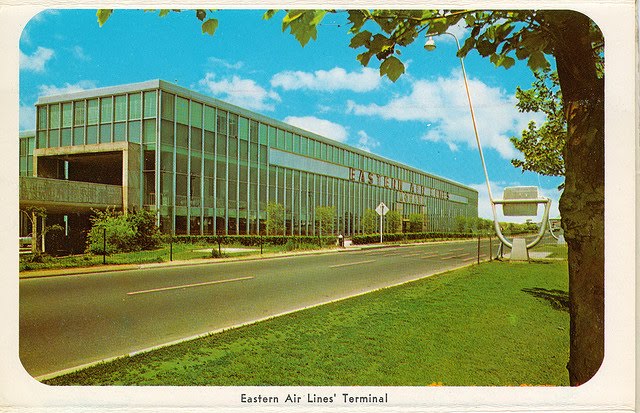
The Eastern Airlines building (“Terminal 1”) for the once-powerful airline that brought Robert Moses an early public defeat in the contentious battle for funding Idlewild Airport.

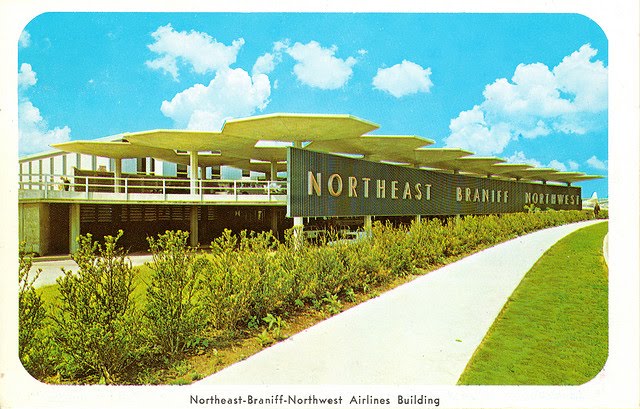
A large sequence of toadstool like concrete awnings adorn the entrance of Terminal 2, which serviced Northwest, Northeast and Braniff airlines.

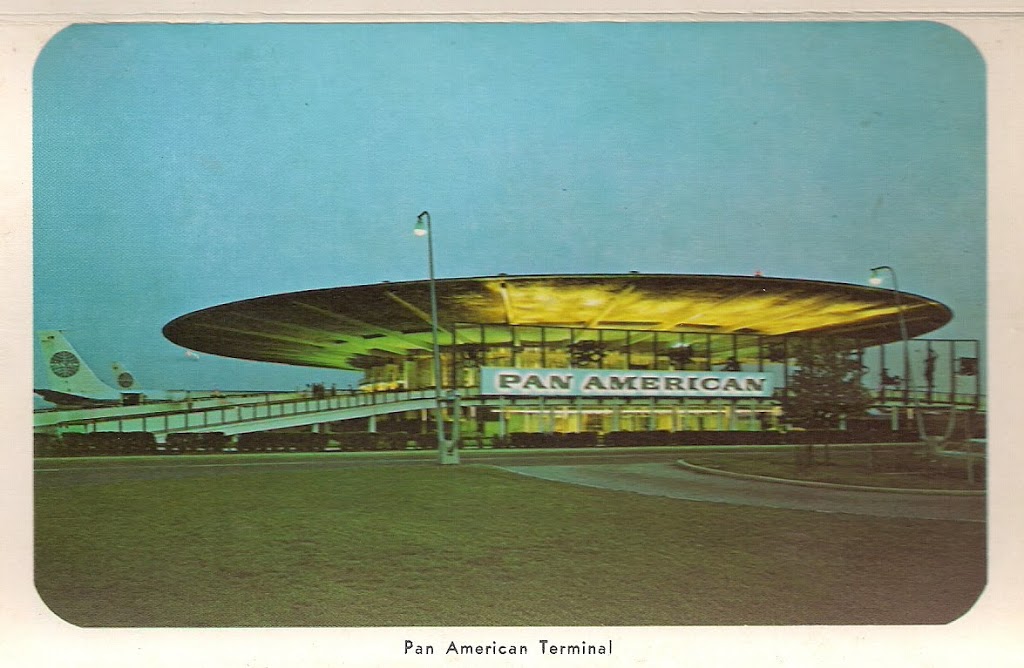
The spaceage Pan American terminal, later called WorldPort. These postcards are courtesy DavideLevine/Flickr. He’s got a great many more JFK postcards to check out as well.

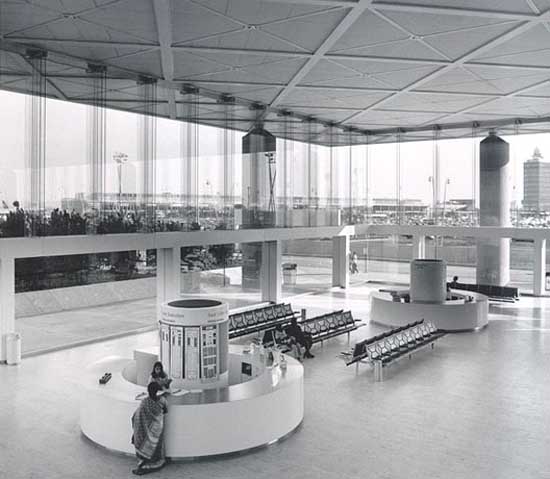
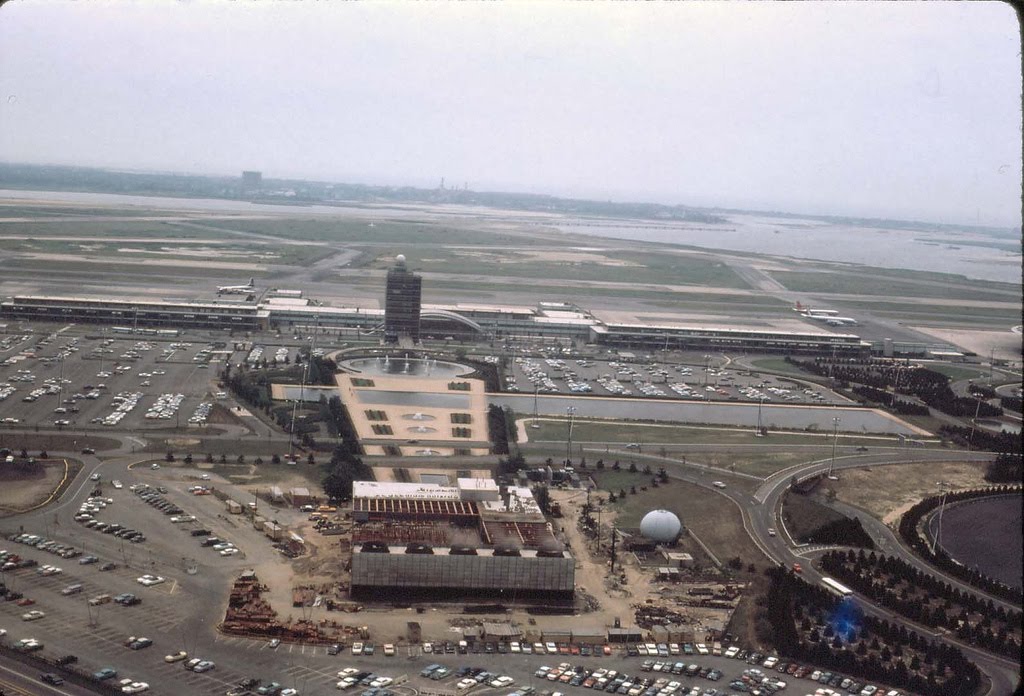
Overlooking the International Arrivals Building. From this vantage, you can see the ‘Versailles’ like gardens and fountain that briefly ruled the airport grounds until the demand for parking became too great. (avaloncm/Flickr)

Outside the International Arrivals Building, 1960 (rjl6955/Flickr)

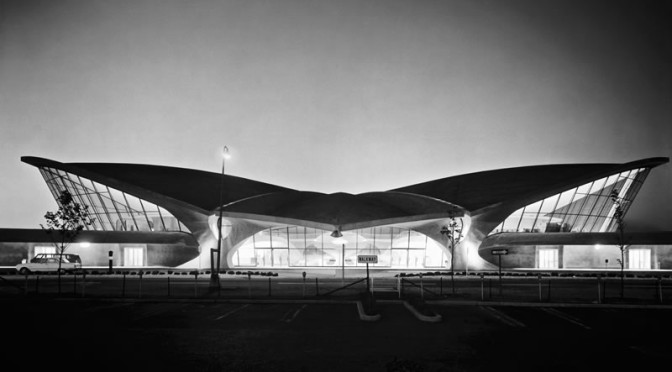
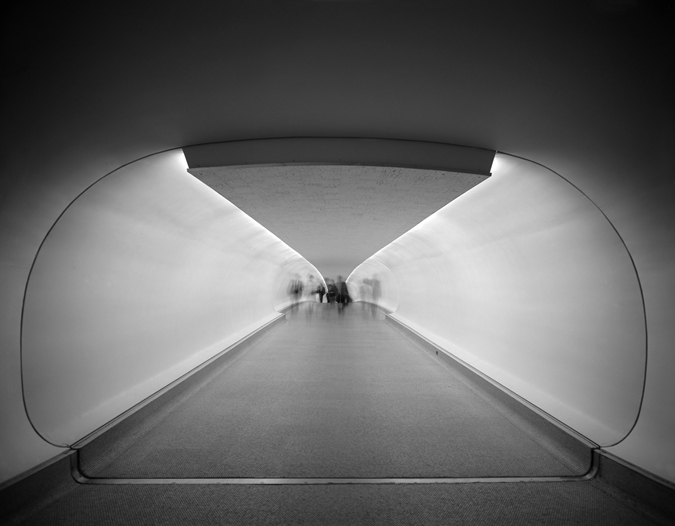
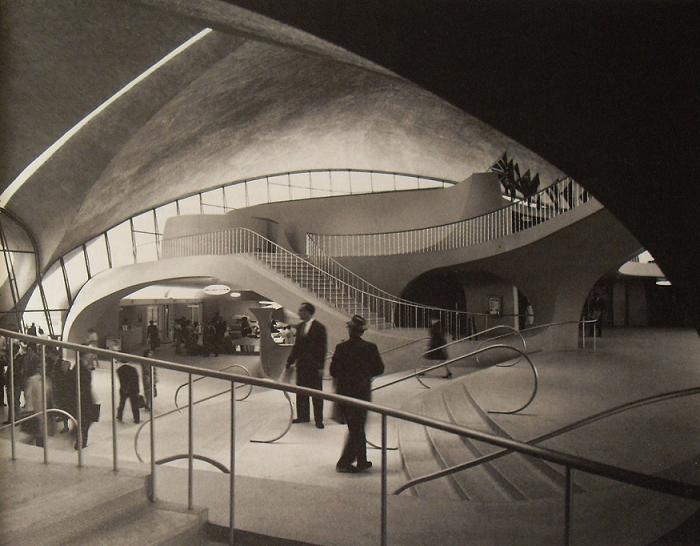
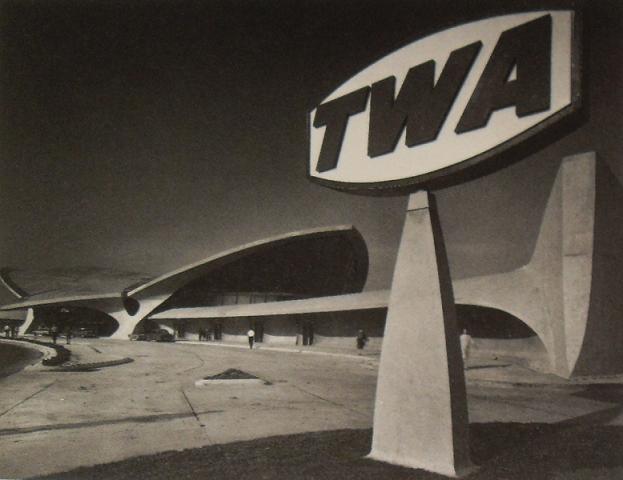
Inside and outside the TWA Flight Center, designed by Eero Saarinen. Pictures by Ezra Stoller

The interior of I.M. Pei’s Sundrome for National Airlines, with walls that seem to melt away with the sunlight. Currently unused, the building is slated to be demolished.

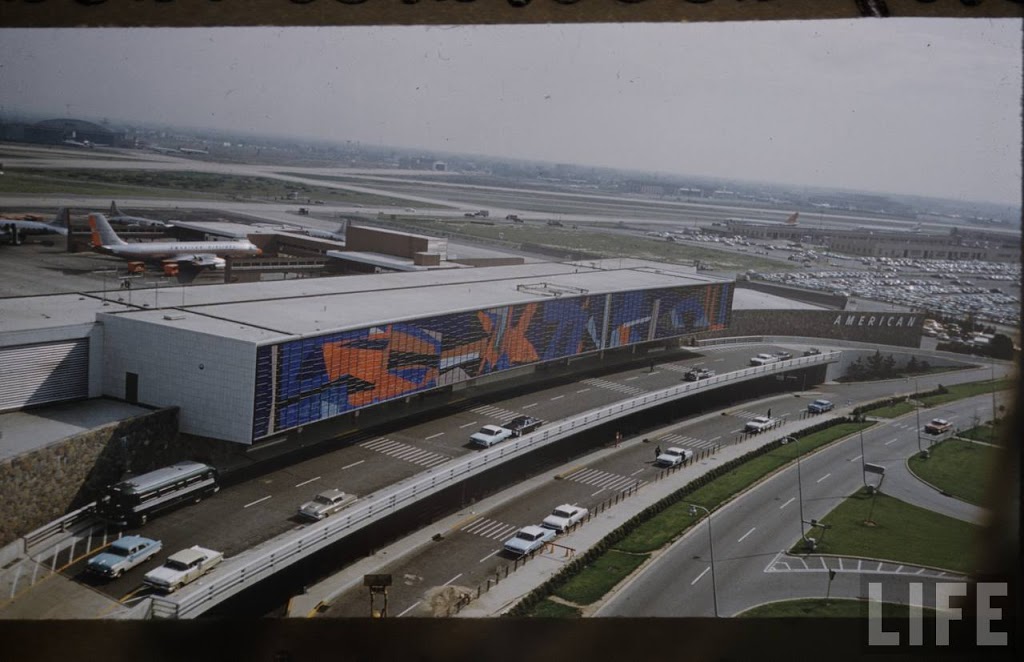
American Airlines terminal, distinguished by its extraordinary face of stained glass. (Photo Dmitri Kessel/Google Life)

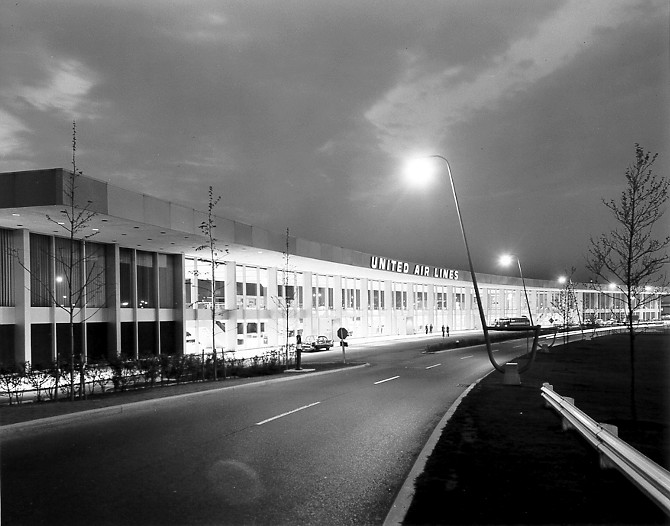
The simple but sleek United Airlines terminal.

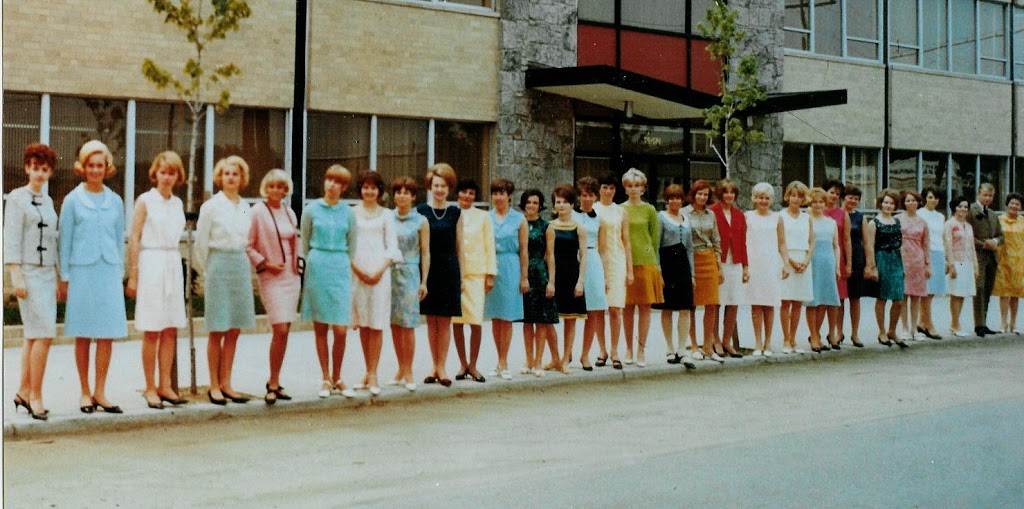
The style of the jet age was partially defined by airline flight attendants. Airlines used sex appeal in their marketing and garbed their female employees in trendy (and often revealing) uniforms. These women were graduates from Overseas National Airways training school in Queens, June 1966. (More information here.)

Idlewild/JFK would see as many movie and music stars than any other location in New York. Here’s Marilyn Monroe and Arthur Miller in 1954…

… and the Beatles arrive at JFK to screaming fanfare, 1964

Children could pretend to be air traffic controllers with this 1968 toy. Many years later, an actual air traffic controller would bring his children in to direct real planes.

Categories
Current Events Podcasts Queens History

A short history of Trump: the roots of Donald’s wealth, from quiet Queens beginnings to glitzy Midtown excess


PODCAST Sick of Donald Trump yet? (Probably.) Figured him out yet? Is he a financial wizard, reality sideshow, or political distraction? Or all of the above? The solution may be contained in the roots of his fortune — a saga that stretches back to the 1880s and begins with a 16-year-old boy named Drumpf who made his living in a barber shop. The story unfolds during the early days of Queens, a borough once sparsely populated but by the 1920s, a land ripe for growth.

By the 1960s, Donald’s father Fred had built thousands of middle-class homes throughout Queens and Brooklyn and embroiled himself in some controversy regarding the remains of two Coney Island theme parks. The Donald built upon his father’s reputation to become a successful Manhattan developer and a flamboyant celebrity with seemingly bottomless levels of lucre. But of course everyone has their limit.

FEATURING: Trump Tower marbles, a miracle on 34th Street, and the magic that would have been Television City.

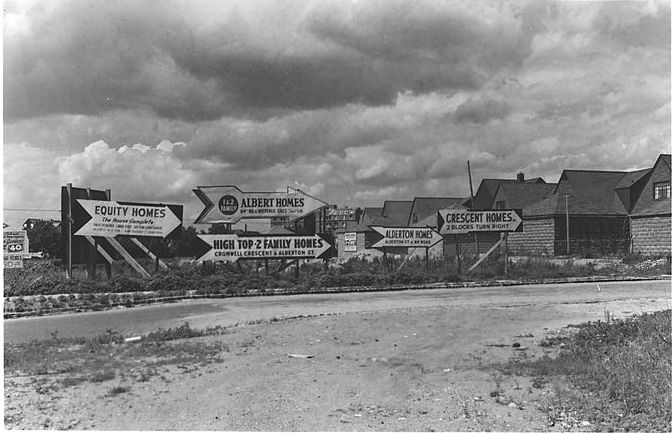
A home building frenzy in Woodhaven, Queens, at the corner of 64th Road and Woodhaven Boulevard. A massive population influx into the borough induced home development at a rapid pace. Fred Trump’s first constructed homes were in the neighborhood in the 1920s.

woodhaven
 

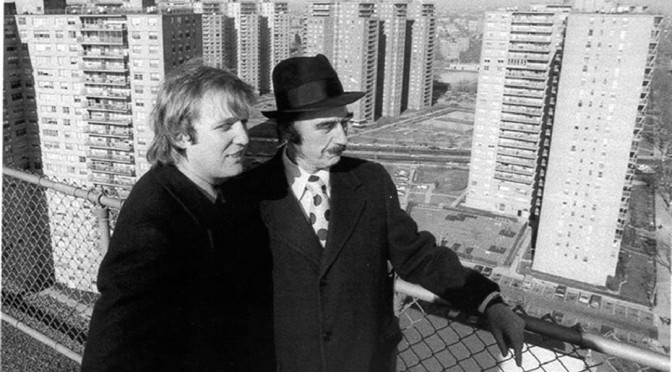
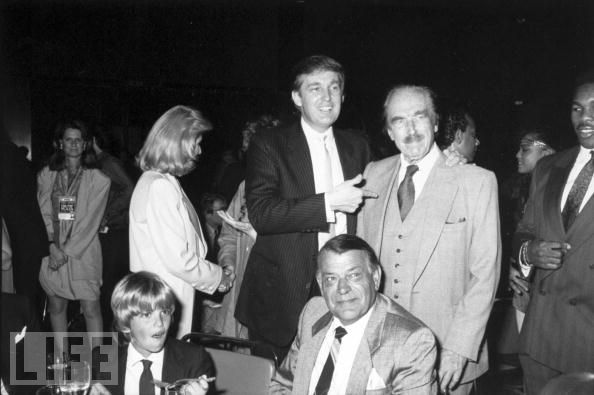
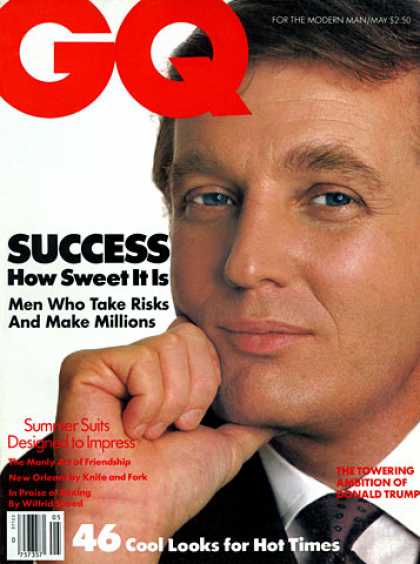
Donald and his father Fred Trump, two of the most powerful developers in the city by the 1970s and 80s. Of course, the elder Trump constructed mostly dwellings for the middle class, while Donald focused on the wealthiest New Yorkers.

50580899
 

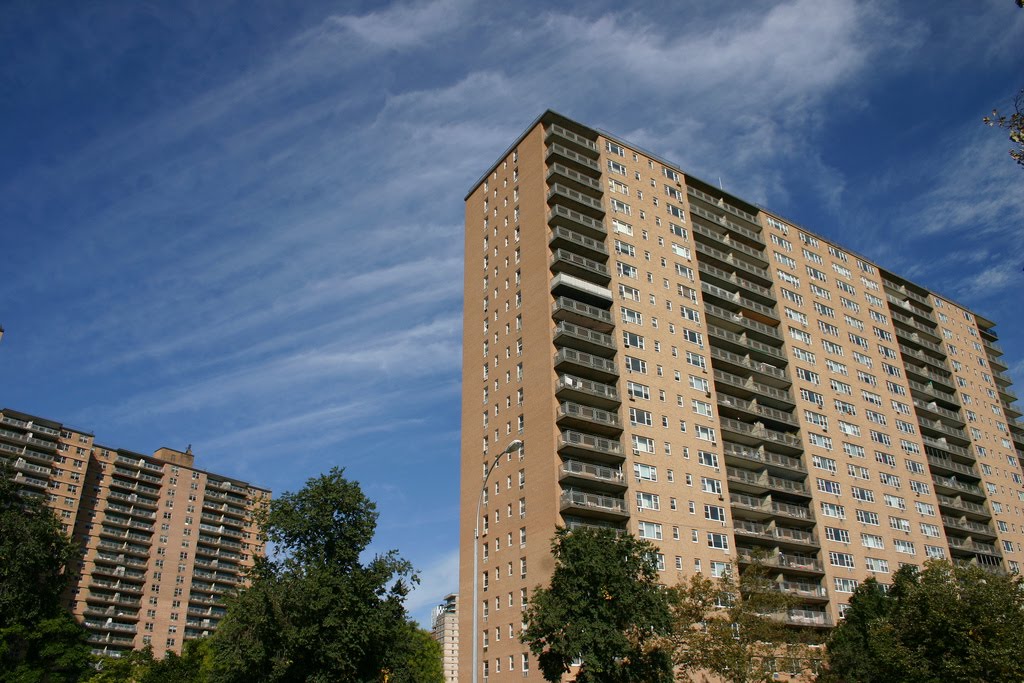
Trump Village, Fred Trump’s largest apartment co-op when it opened in 1964. (Courtesy flickr/TheFadedPast)

village
 

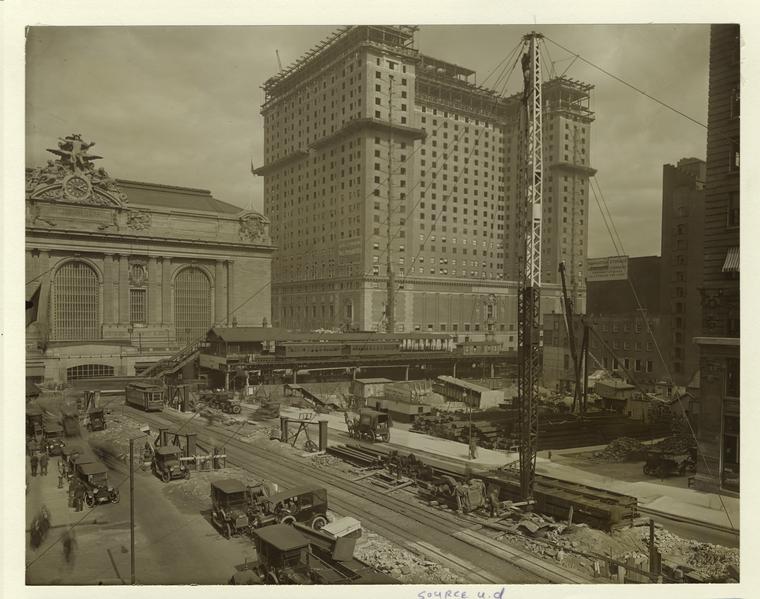
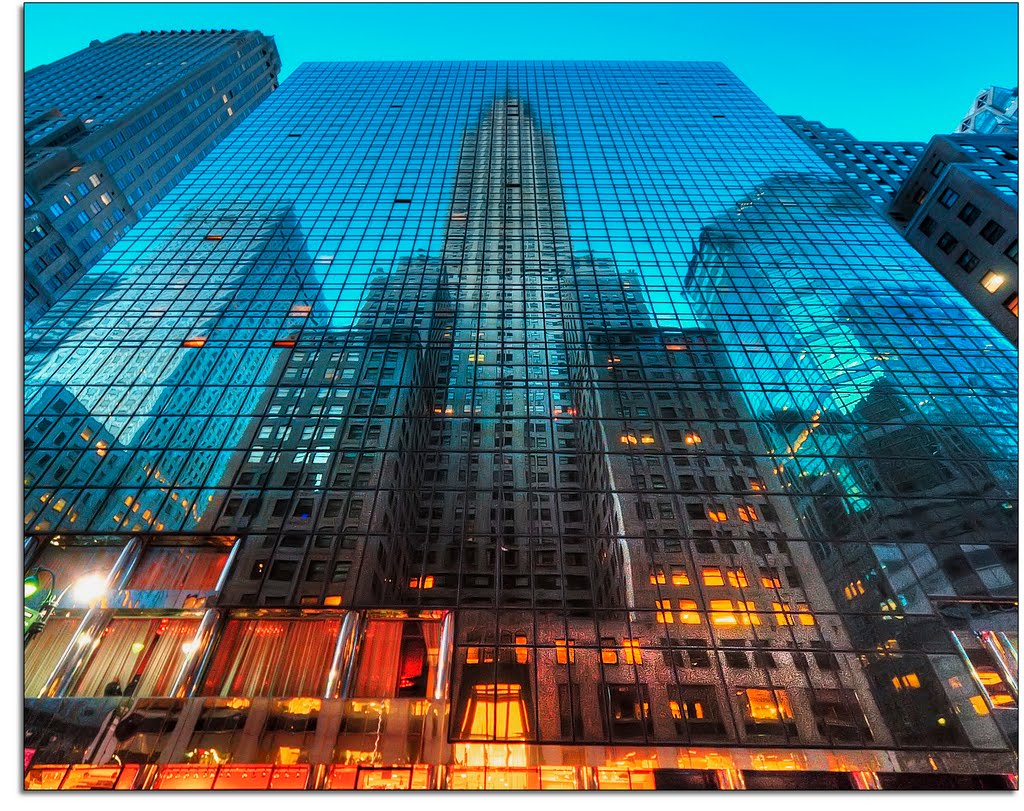
The Hotel Commodore under construction in 1918. Sixty years later, young Donald Trump would redevelop the property to become the Grand Hyatt, encasing the stripped-down hotel in a sleek glass tower that literally reflects Grand Central on one side, and the Chrysler Building on the other (below). (1918 pic courtesy NYPL; modern pic courtesy flickr/kw-ny)

commodore
 
grand-2Bcentral

Trump rode a wave of personal connections, business drive and opportunity to become New York’s hottest developer by the 1980s, fueled by media attention and spectacle to become one of New York’s most ubiquitous celebrities.

241-1
 

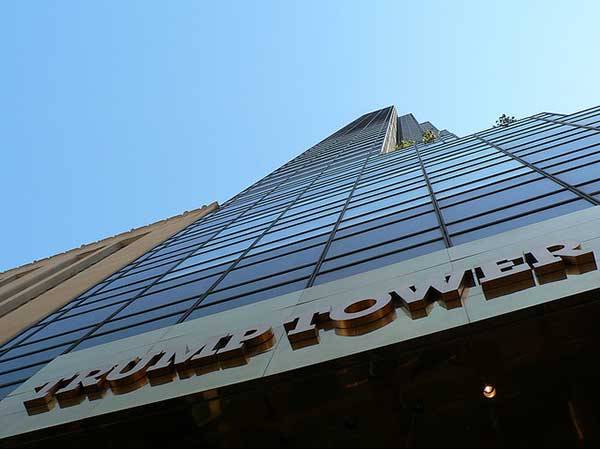
Does anything typify New York in the 1980s more than Trump Tower, that fortress of wealth gleaming with imported marbles, finished in 1983 and offering the most expensive apartments in the city?

Bonwit Teller, the luxury department store that had the misfortune of having an address that Trump wanted for his Trump Tower.

Behold — Television City, the Trump plan for the west side involving a 152-story skyscraper and a studio for NBC, originally at a total of 16 million square feet of space.

Trump the Game! From 1988. “It’s not whether you win or lose. It’s whether you win!”

Photos at Wollman Rink and of Donald/Fred courtesy Google Life images

Categories
Health and Living Podcasts

Building Blocks: The Commissioners Plan of 1811, inventing a New York grid of streets and avenues

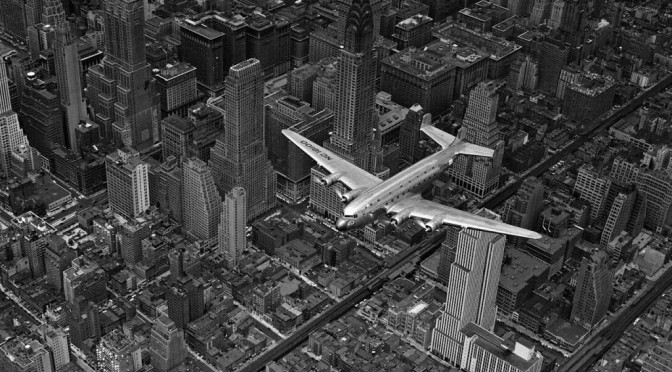
The simplicity of the New York grid system, seen overhead in a 1939 classic photo by Margaret Bourke-White.

PODCAST The Commissioners Plan of 1811 How did Manhattan get its orderly rows of numbered streets and avenues? In the early 19th century, New York was growing rapidly, but the new development was confined on an island, giving city planners a rare opportunity to mold a modern city that was orderly, sophisticated and even (they thought at the time) healthy. With the Commissioners Plan of 1811, uniform blocks were created without regards to hills and streams or even to the owners of the property!

Join us as we recount this monumental event in New York’s history — how land above Houston Street was radically transformed and also how the city revolted in many places. What about those avenues A, B, C and D? Why doesn’t the West Village snap to the grid? And why on earth did the early planners not arrange for any major parks?!

ALSO: A podcast within a podcast as we focus on the biography of one of those commissioners. Give it up for Gouverneur Morris, the casanova with Constitutional connections, a Bronx estate and a wooden pegleg.


CORRECTION: Due to my complete misreading of my own handwritten notes and in the flurry of wrapping up the show, I said that Manhattanhenge occurs on March 28 and July 12 or July 13. I meant MAY 28, not March 28. Chalk this one up to my senility. I apologize for the error.

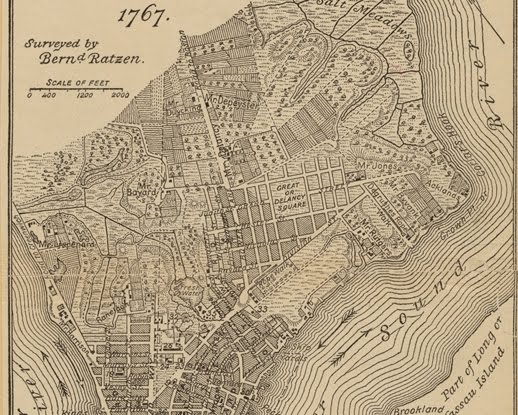
An early view of the area that would one day become the Lower East Side, SoHo and Chinatown: a network of farms and jagged roads, with some organization on individual properties. This map features details of James DeLancey’s farm. That property would be carved up after the war. (You can check out the whole 1767 map here.)

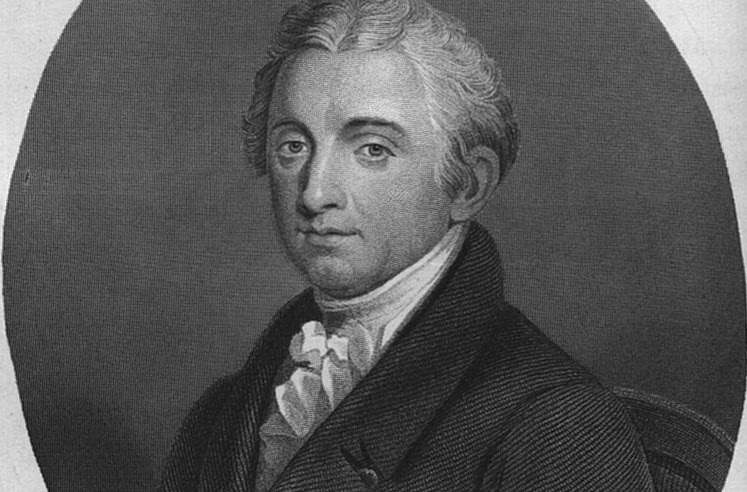
Gouverneur Morris, the Founding Father who led the commission to plan New York’s future streets and avenue.

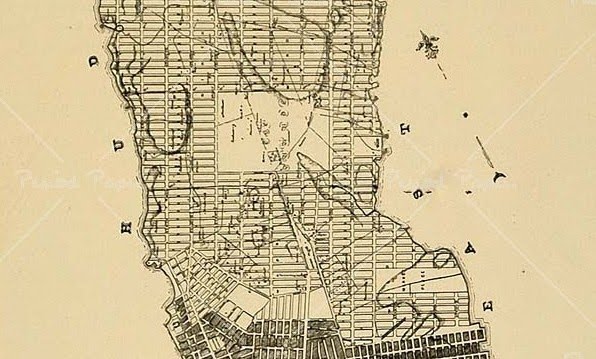
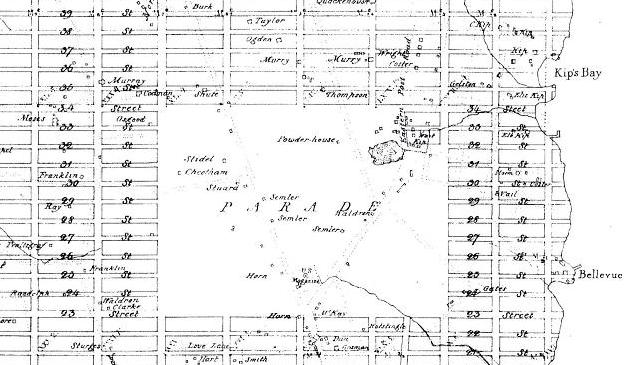
A detail from the original 1811 grid plan map of John Randel. The grid starts at irregular intervals due to keeping Greenwich Village intact, but begins right about Houston Street to the east. As it heads north, two big interupptions were planned — a market place in east around 10th-11th Street and a ‘parade ground’ about 23rd Street.

A close-up on the parade ground.

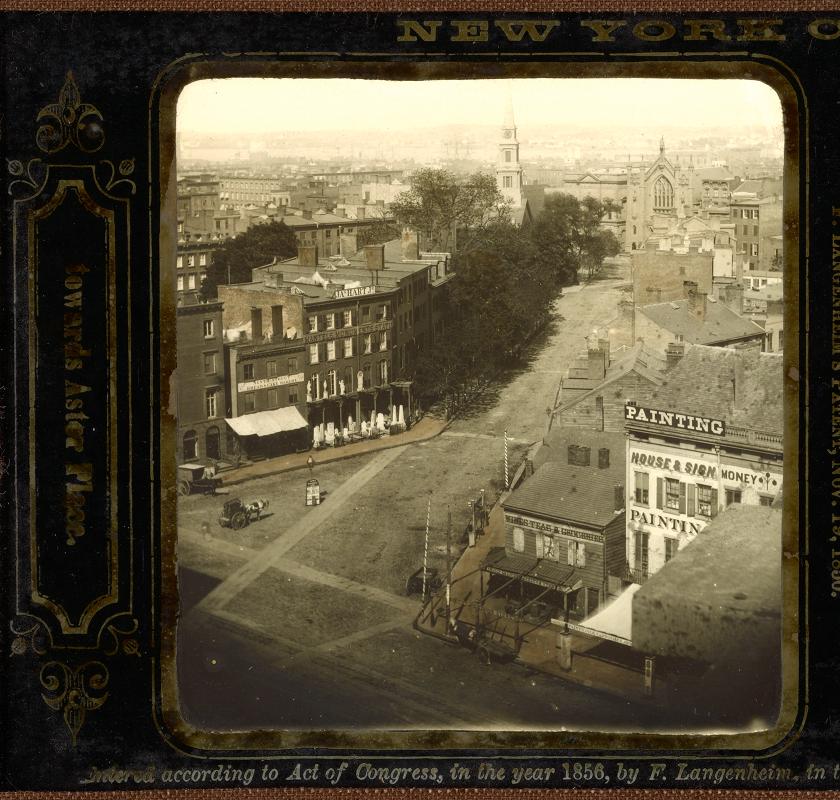
Not everything conforms to the original plan. Take Stuyvestant Street in the East Village. A main thoroughfare into the original estate of the Stuyvesant family, the small road was allowed to break the block between 9th and 10th streets. The street is hardly recognizable in this extraordinary photo from 1856, but the top of St. Mark’s Church gives away the location. (Courtesy East Village Transitions)

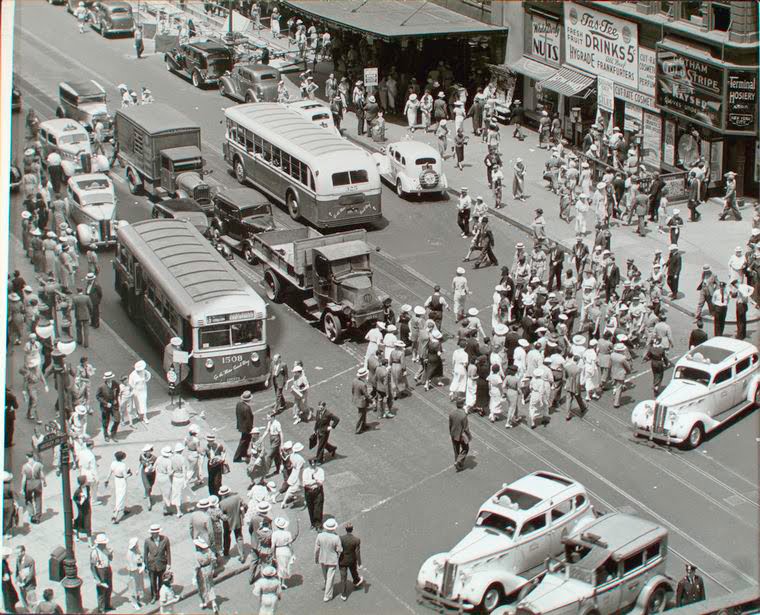
Crossroads: Herald Square, on a hot summers day in 1936. The intersection was partially created by the grid plan (the intersection of 34th Street and Sixth Avenue) and by one feature that later city planners ignored: Broadway which, according to the plan, was never supposed to extend past 23rd Street. (NYPL)

Here’s a look at the entire Randel map in color.

Check out the New York Times wonderful interactive map, overlaying the original plan on top of modern changes to the city.

Categories
Podcasts

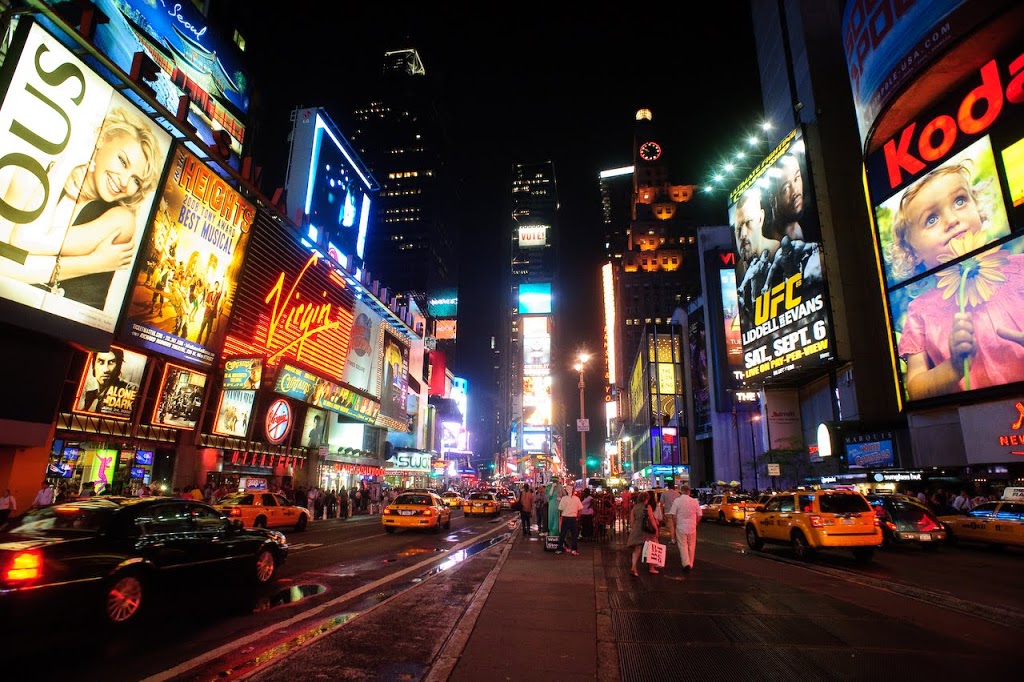
Times Square: History in stages, chronicled in lights

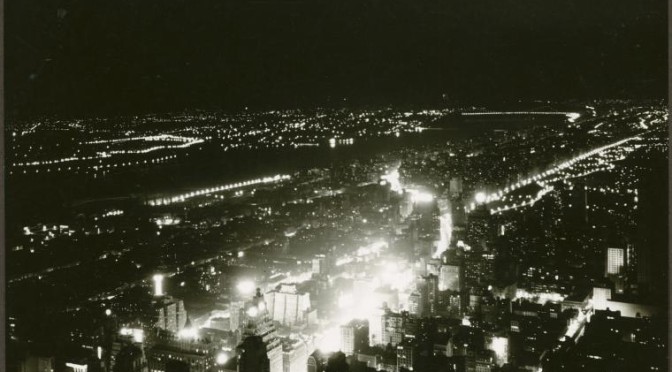
The canyon, as seen from the Empire State Building. (Photography by the Wurts Brothers, courtesy NYPL)

PODCAST: Times Square is the centerpiece of New York for most visitors and a place that sharply divides city residents. Nothing about it sits still. Even its oldest buildings are severely transformed and slathered with electronic imagery.

In 1900, the neighborhood surrounding the intersection of Broadway and Seventh Avenue was the drab Longacre Square, the heart of the horse and carriage industry, and few dared put a legitimate theater or restaurant so far north. But with the construction of the subway came big changes, and when the new headquarters for the New York Times arrived, so did a new name.

Listen along as we travel through the decades, through Times Square’s glory days of lobster palaces and celebrities, the introduction of electric advertisements, its gritty slide and eventual rebound. Is the new Times Square an extraordinary transformation? Or a travesty?


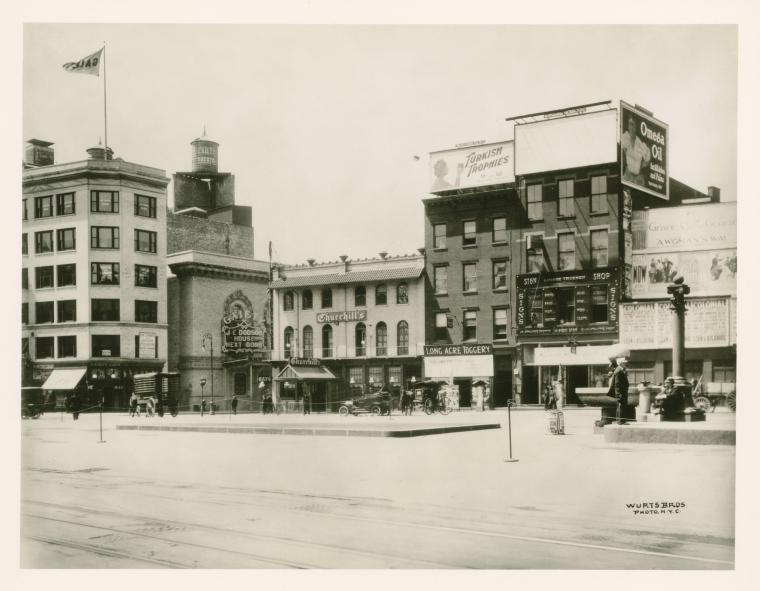
1909, when things weren’t quite so insane. I believe this is Broadway between 46th and 47th Streets. You see the Gaiety Theater on the left, as well as Churchill’s Restaurant. Long Acre Riggery sits next door, proving that the neighborhood’s transformation wasn’t as quick as you might have thought. There’s also an ad for Turkish Trophies cigarettes.
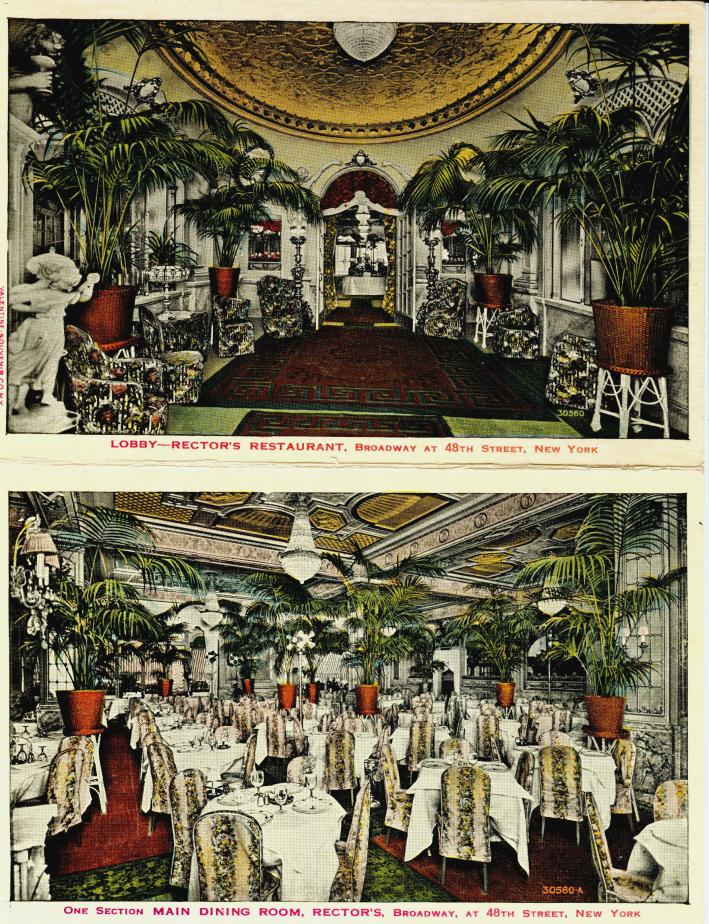
Rector’s Restaurant, the greatest of the so-called ‘lobster palaces’, where opulance and celebrity mixed with musical entertainment in an occasionally rowdy environment.
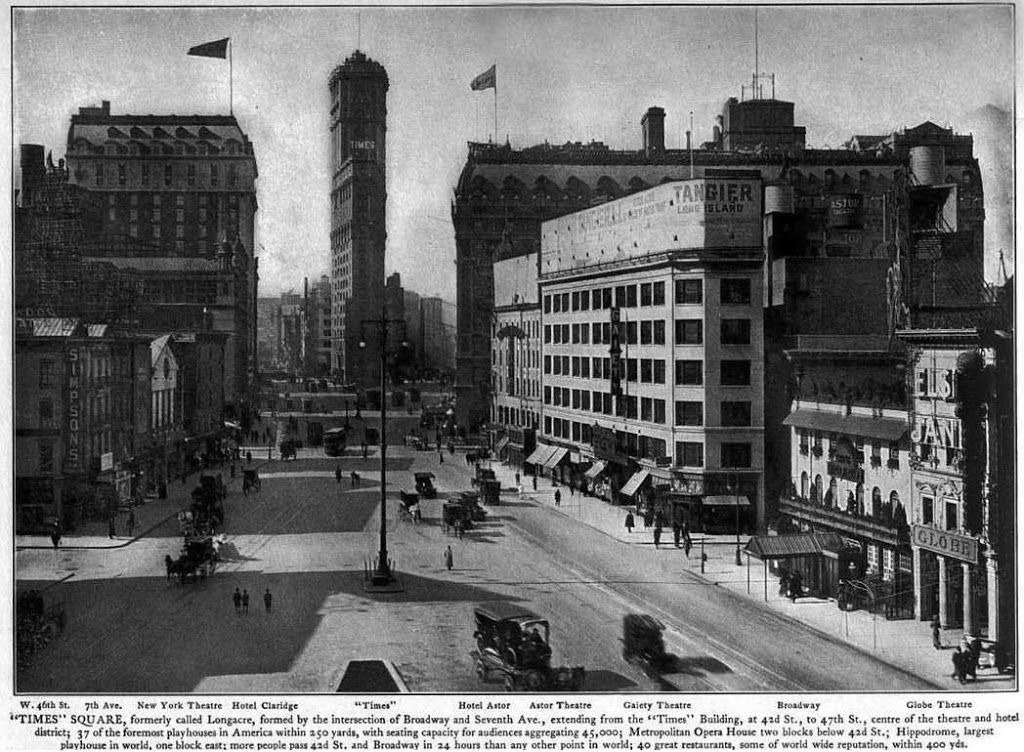
1910: The strangely orderly streets are still mostly filled with horse-drawn carriages and trolleys. Theaters have worked there way in by this time, including the New York Theatre on the left, and the Gaiety and Globe theaters on the right. (Courtesy Spooner Central)
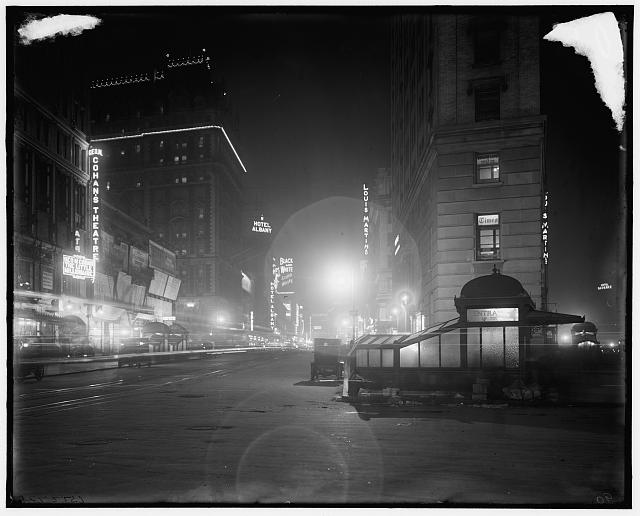
Between 1911-1915: Standing on 42nd Street, looking north, the Times Building and the subway entrance to the right. The theater built and named for George M. Cohan was completed in 1911. (Courtesy LOC)
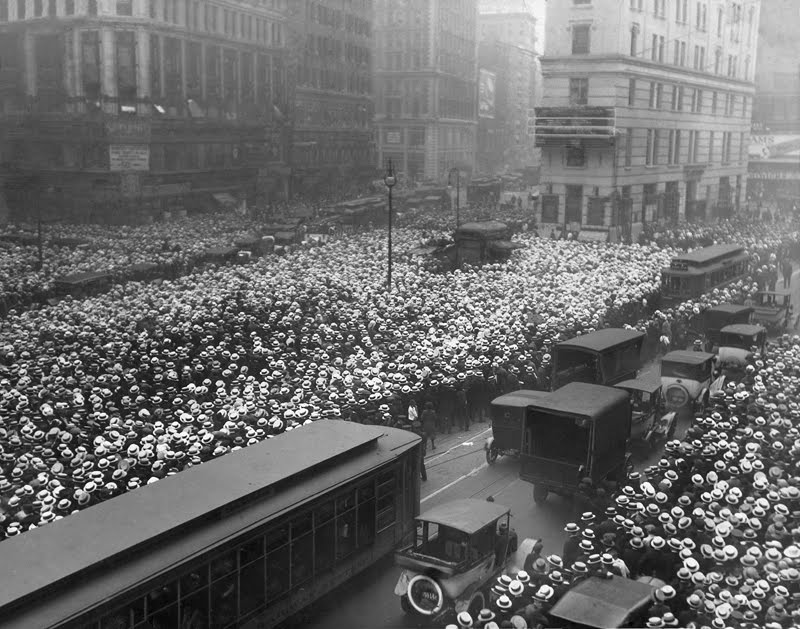
1921: People readily embraced Times Square as a place for instant news information. Thousands of similarly dressed men wait impatiently outside the Times Building on a hot July afternoon awaiting news of the Jersey City boxing match between Jack Dempsey and Georges Carpentier.

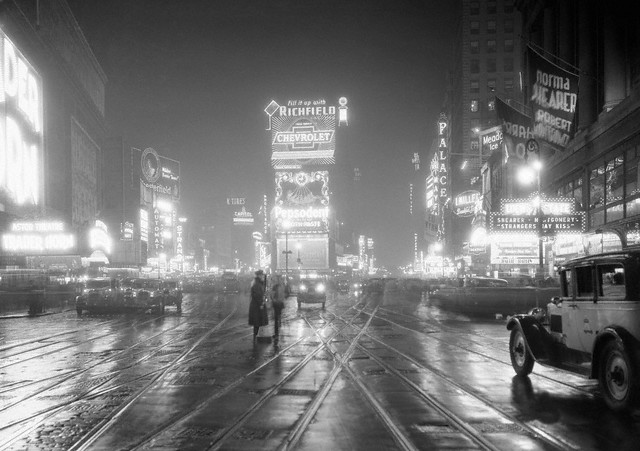
1931: No sign of a Great Depression here. Trolley tracks are still very much in evidence. (Courtesy Flickr/straatis)

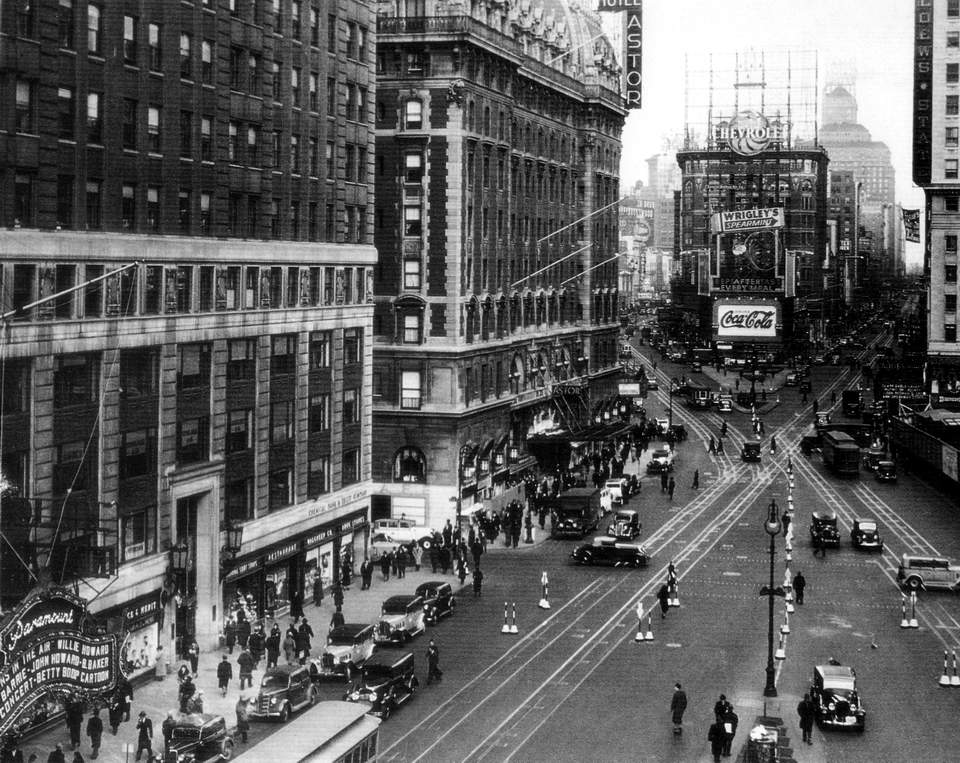
1935: The Paramount Building astride the Hotel Astor dominate the plaza. I’m not sure I would like negotiating this seemingly chaotic cross street.

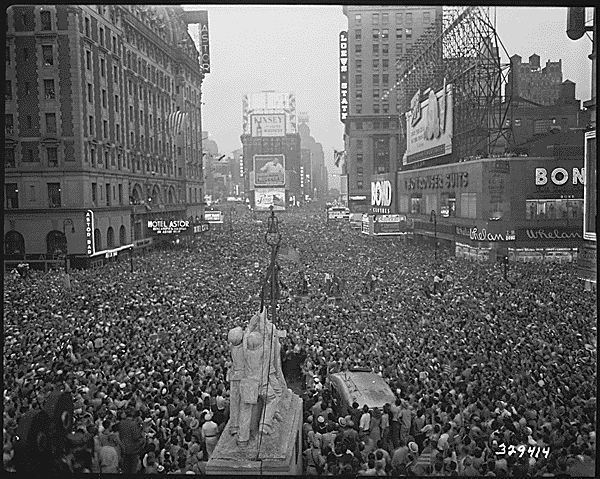
1945: Thousands arrive in Times Square to celebrate the end of the surrender of the Japanese and the end of World War II.

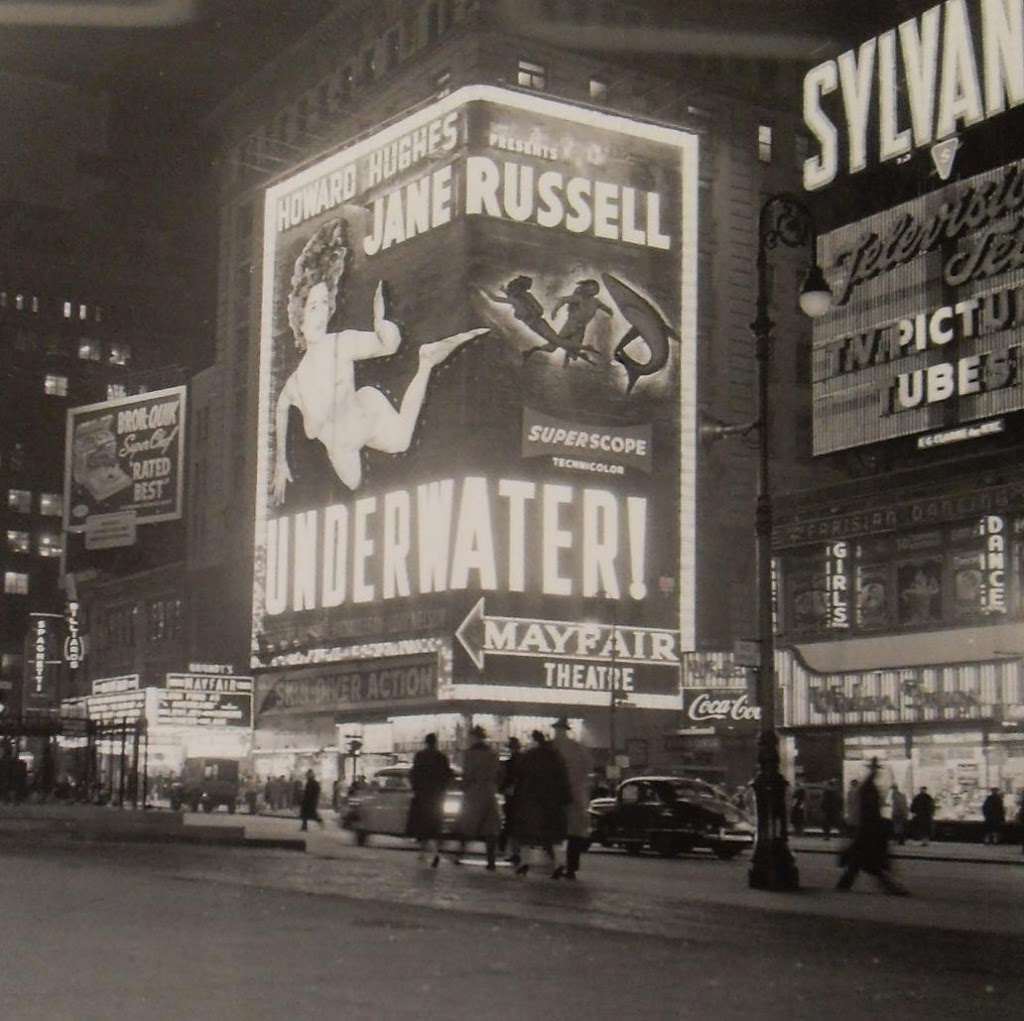
1955: Times Square’s subtle shifts can be seen here — larger than life electric beauties overhead, dancing girls across the street. The RKO Mayfair (later the DeMille sat at Seventh Avenue and 47th Street. (Courtesy Flickr/Christian Montone)

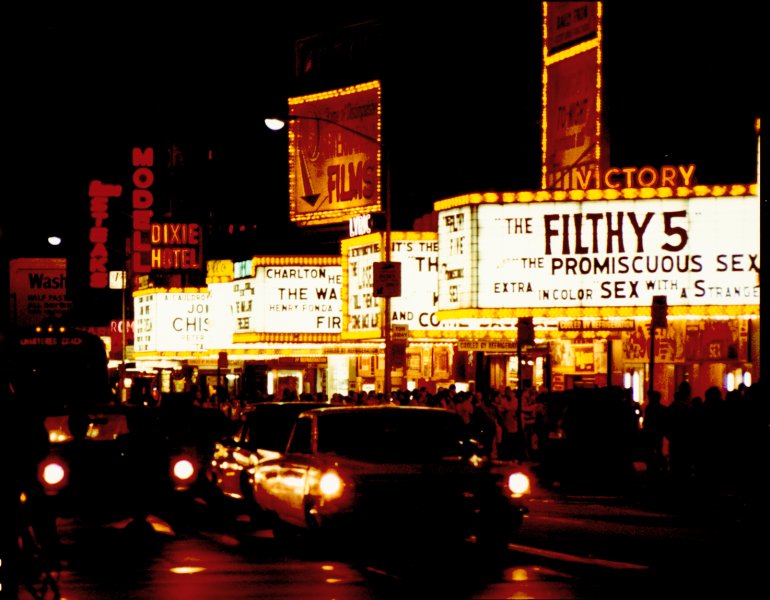
By the 1960s, old stages and movie theaters were giving way to a new form of entertainment, the adult kind.

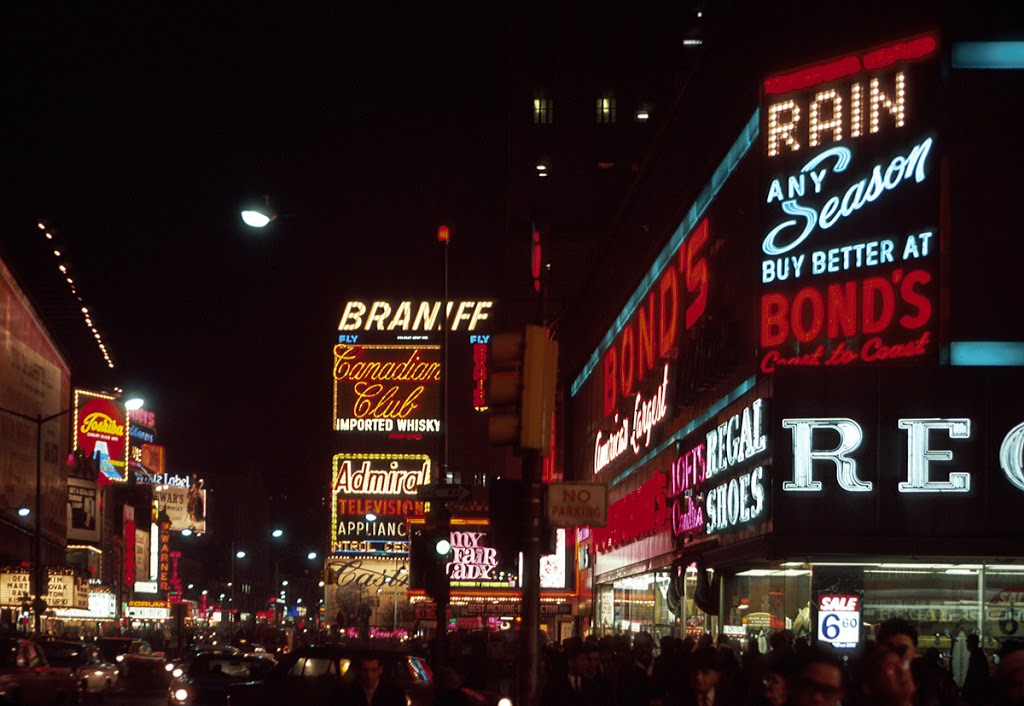
1965: The neon shines as bright as ever. Bonds Clothing Store thrived for years at this central location and provided one of its most memorable sign. Previously the space had been the swanky nightclub International Casino. In the late ’70s, the clothing store closed, and, in some clever combination, it became the nightclub Bond International Casino, home of the Times Square Riot of 1981. (Courtesy Panoramio)

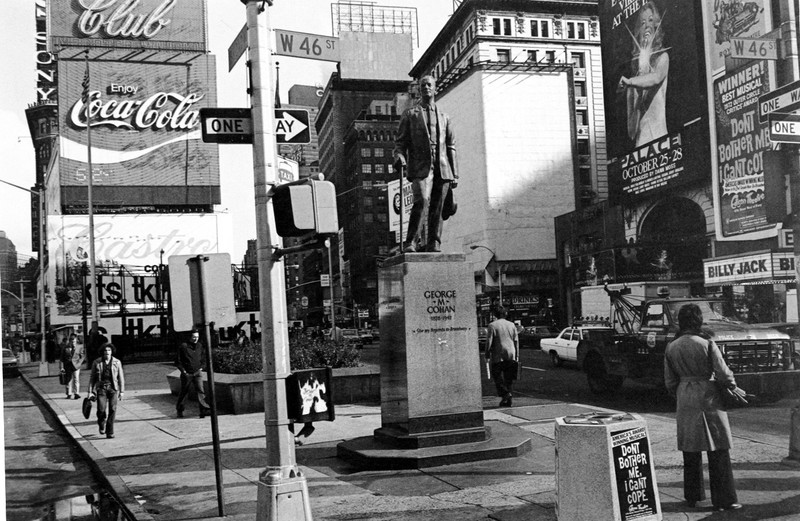
1970s: A strange mix of entertainments and ideas now permanently intermingle in Times Square. Cohan represents the past, while TKTS booth (which opened in 1973), providing discounted Broadway tickets and a safe haven for visitors, presents a possible key to its future.

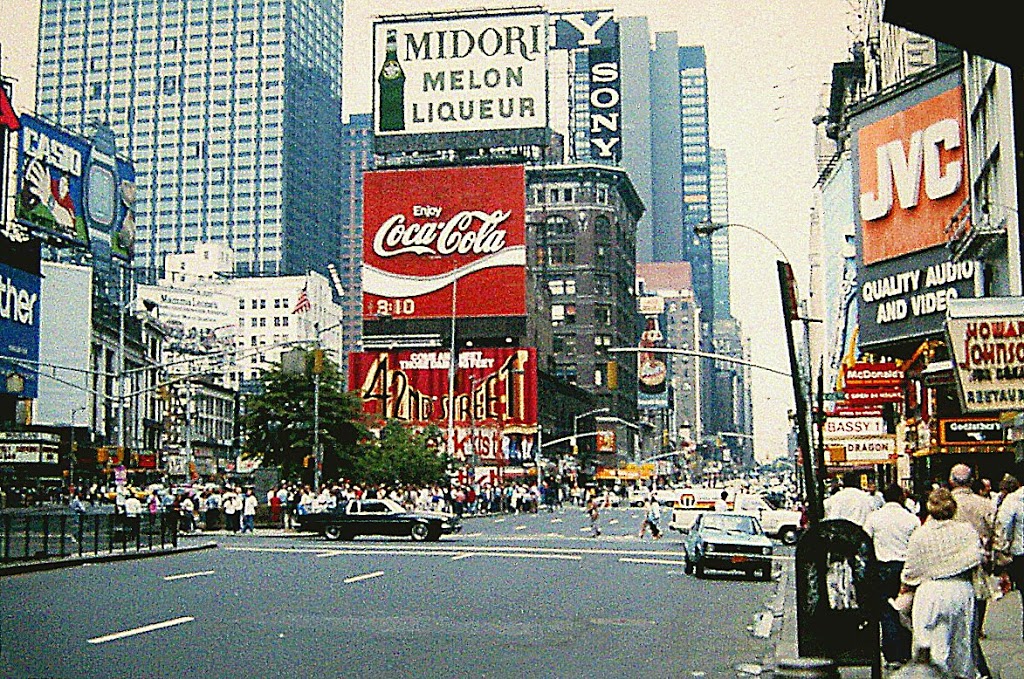
1985: By this time, the city had worked through almost two decades of improvement ideas for Times Square. (Courtesy Flickr/Jim In Times Square)

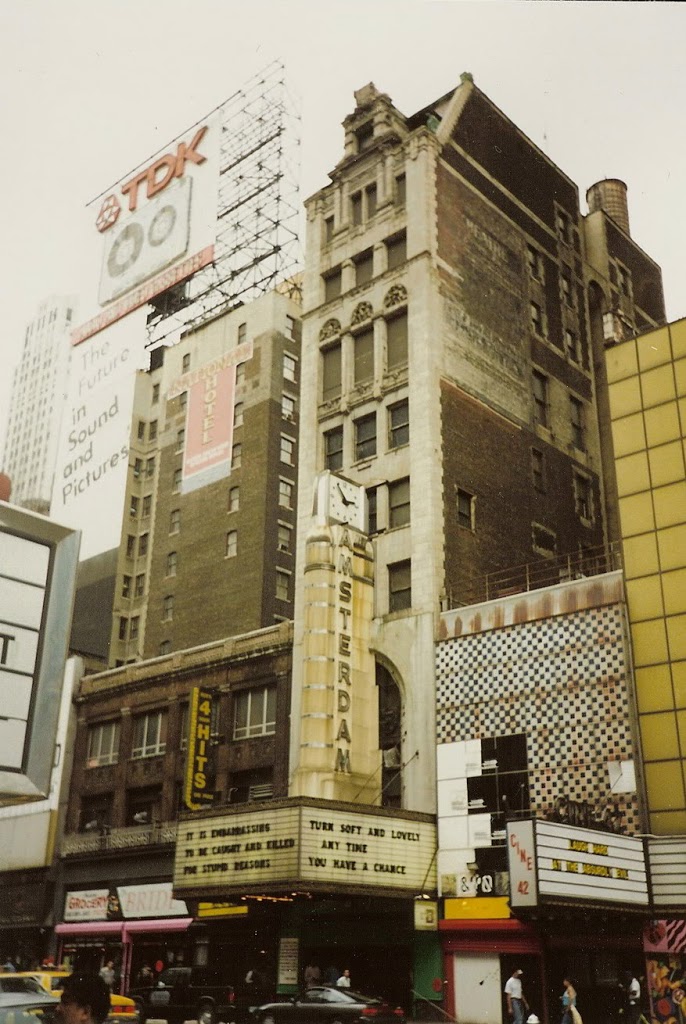
The New Amsterdam Theater, before it was renovated by Disney. (Courtesy Flickr/GuanoReturns)

2008: Most of the seedier element of Times Square was eradicated by this time. (Courtesy zero null)

A fabulous video of various New Years Eve ball drops throughout the years, starting in 1978:

And to tie it all back to the beginning, here’s an Edison film shot from the top of the Times Building, from 1905. Most interesting, actually, is the view of Bryant Park and the large, stately Hippodrome.

This episode was so packed, we barely even talked about New Year’s Eve! For some historical nuggets on that annual event, you might like to listen to our old show on One Times Square. Also, if theater history interests you, check out out podcast on Florenz Ziegfeld.

Categories
Gilded Age New York Podcasts

Mark Twain in New York, or His Adventures on Fifth Avenue

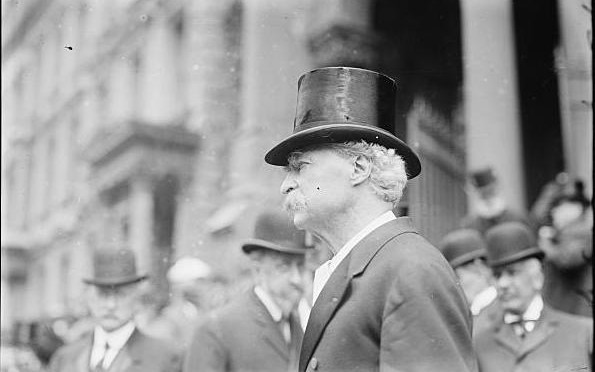
Photo courtesy LOC

PODCAST You hear the name Mark Twain and think of his classic characters Tom Sawyer and Huckleberry Finn, his locales along the Mississippi River and his folksy wit. But he was equal parts New York as well, and the city helped shape his sharp, flamboyant character. Follow his course, from his first visit as an opinionated young man in 1853, to his later years in 1906 as a Fifth Avenue tenant, decked out with a cigar and signature white suit.

His tale offers a glimpse into the glamorous life of turn-of-the-century New York, from the smoke-filled billiard room at the Players Club to late nights at New York’s dining palace Delmonico’s. Tune in and find out which parts of Mark Twain’s city are still around and which of his old homes you can still visit today.

Co-starring Ulysses S. Grant, Helen Keller, Edwin Booth and other toasts of New York during the Gilded Age.

A slight correction: I mentioned in the show that Mark Twain only worked on one play in his lifetime, called ‘Is He Dead?’. That might have been his only solo attempt, but he did try many years earlier to pen one in collaboration with Bret Harte. The play, called “Ah Sin: The Heathen Chinee”, opened and closed in 1877. It was an unmitigated flop and a total creative failure. He worked on another collaborative play called “Cap’n Wheeler” the next year.

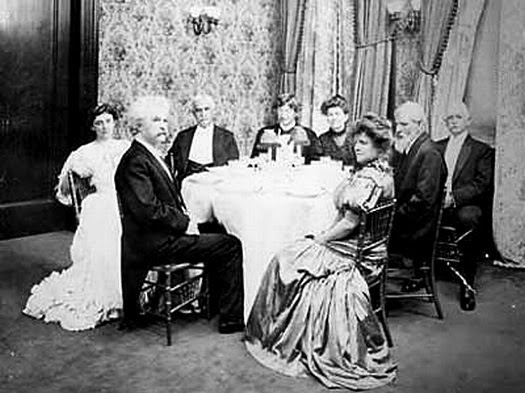
Dinner at Delmonico’s with a few of his closest friends (or at least his fanciest ones) at a celebration for Mark Twain’s 70th birthday.

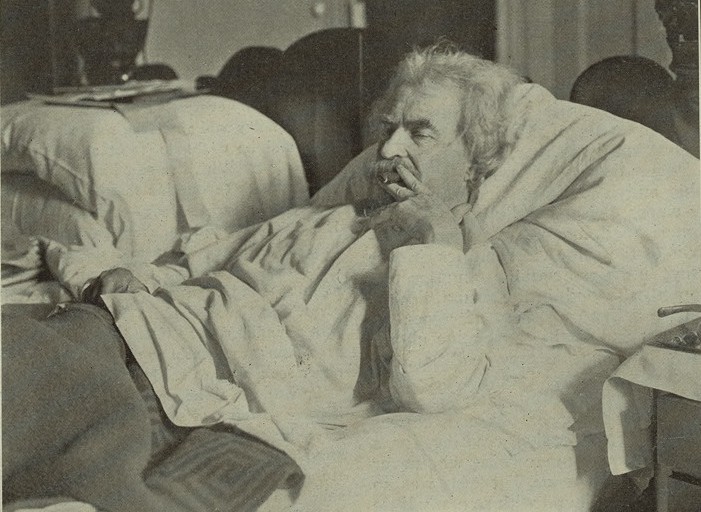
Smoking in bed: Twain’s two favorite places to do business in his Fifth Avenue home was at the pool table and in bed. This wasn’t laziness; in fact, during his final years in the city, the author was constantly out on the town, oftentimes as a guest of honor or featured speaker. He deserved a little time off his feet. (Pic NYPL)

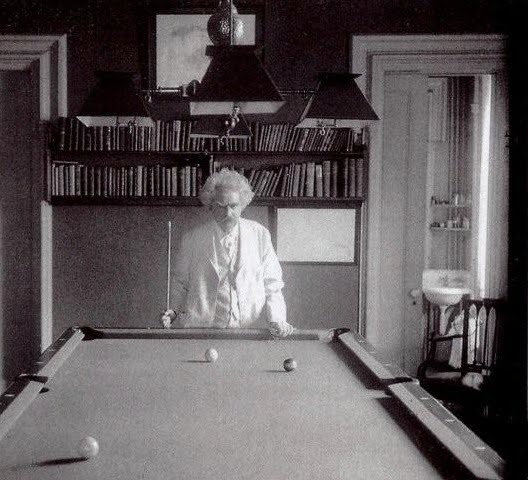
A menacing Mark Twain behind his pool table. (I’m not sure whether this is the Fifth Avenue townhouse or his place in Redding, Connecticut.) Due to his white suit and the photographic process in the 1900s, the writer often looks ghostly and pale.

This extraordinary video is pretty much the only moving images we have of Mark Twain, taken by Thomas Edison in 1909 at Clemens new home Stormfield, in Redding, CT. It’ll give you some idea of Twain’s appearance when he lived in New York the year previous.

If you’re a fan of walking tours — and why shouldn’t you be? — there’s a interesting tour led by author Peter Salwen specializing in Mark Twain’s New York. You can check out their website for more infromation.

For more general information on the life of Mark Twain, I recommend some of the books I used as sources for this show, including Ron Power’s fantastic ‘Mark Twain: A Life’, Michael Sheldon’s ‘Man In White: The Grand Adventure Of His Final Years’ and, of course, the massive, labyrinthine first volume of The Autobiography Of Mark Twain.

And finally, here’s a map of some locations pivotal to Mark Twain’s life in New York — places where he lived and lectured. And you can see, he certainly got around!


View Mark Twain in New York in a larger map

Categories
Podcasts

African Burial Ground: History from underneath the city, and the secret tale of New Yorkers once forgotten

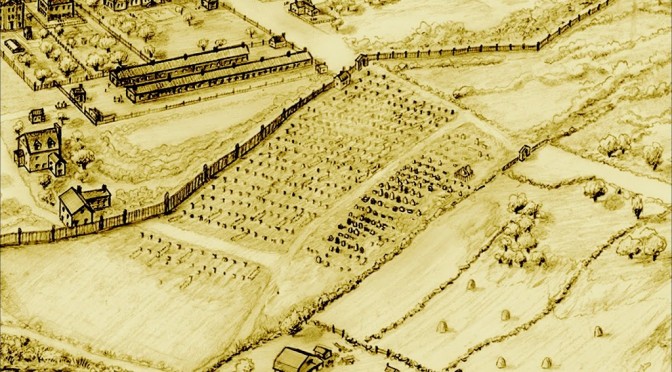
A small cemetery for African slaves and free black New Yorkers developed along the southern edge of Collect Pond. But when that filthy body of water was drained and filled, the burial ground disappeared underground with it. (Image courtesy Preserve America)

PODCAST During the construction of a downtown federal administration building, an extraordinary find was discovered — the remnants of a burial ground used by African slaves during the 18th Century.

In the earliest days of New Amsterdam, the first Africans were brought against their will to build the new Dutch port, slaves for a city that would be built upon their backs. Later, forced to repress the cultural expressions of their forefathers, the early black population of British New York did preserve their heritage in the form of burial rites, in a small ‘Negro Burial Ground’ to the south of Collect Pond (and just a couple short blocks to today’s City Hall).

How did this small plot of land — and its astounding contents — become preserved in the middle of the most bustling area of the most bustling city in the world? And why is it considered one of the most spectacular archaeological finds in New York City history?

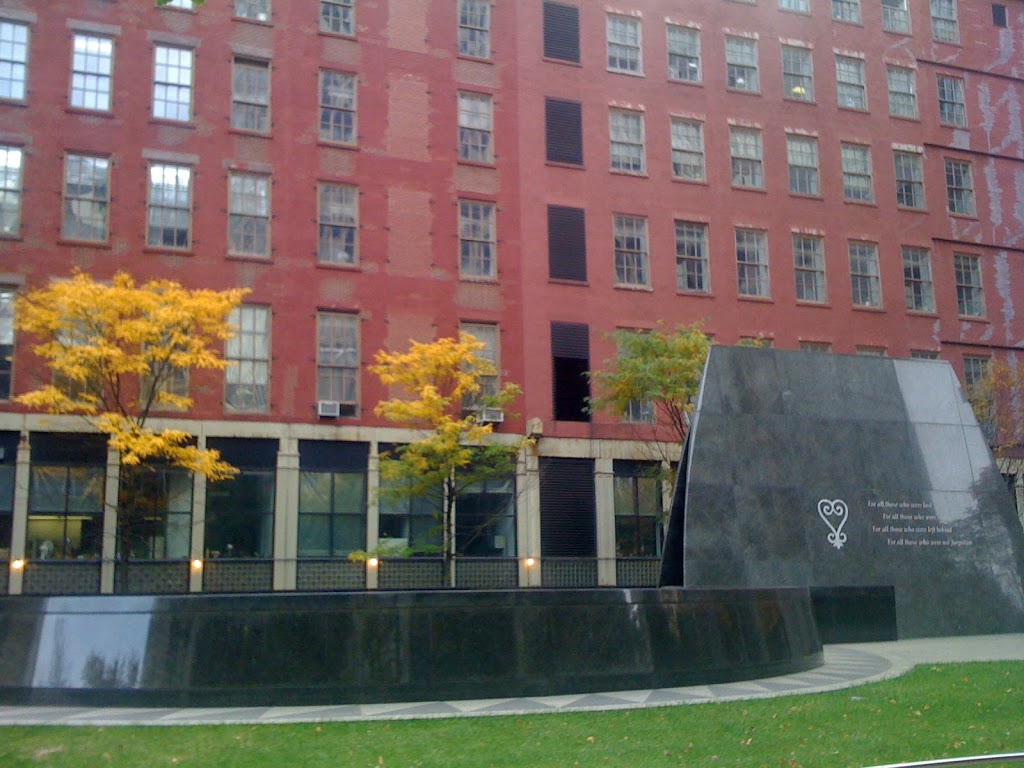
The African Burial Ground monument, at street level. Designed by Rodney Leon, the monument in contained on a quiet patch of land that seems to escape the bustle of the city around it.

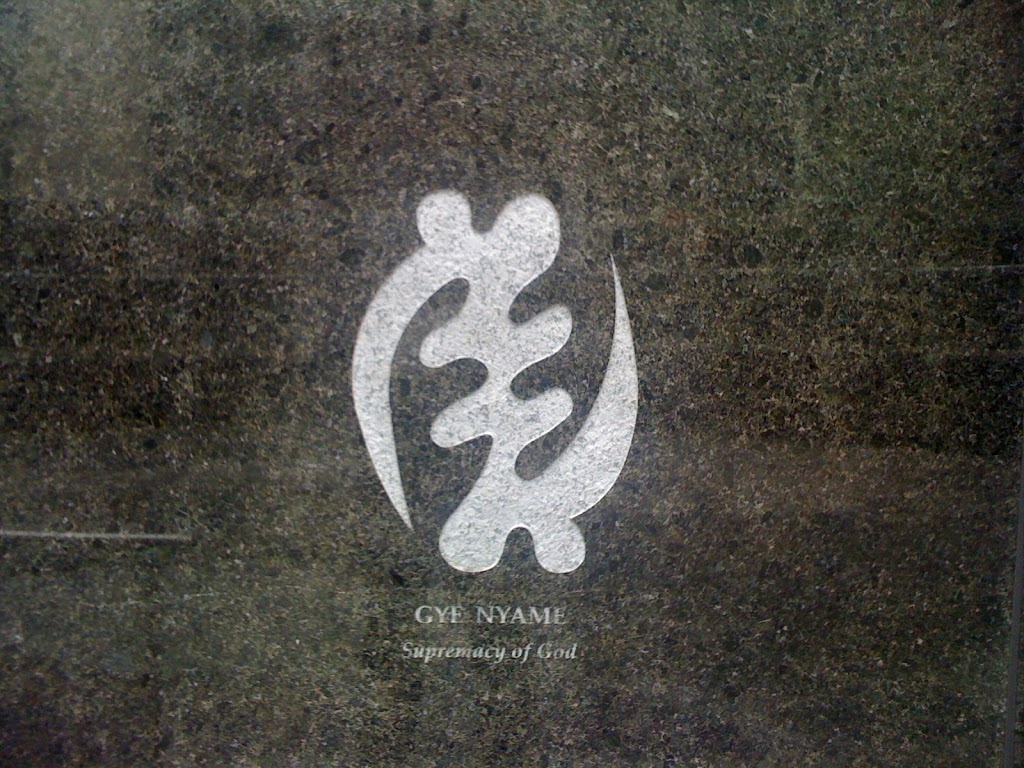
Within the ‘Circle of Diaspora’ are various spiritual and religious symbols, many quite exotic.


There’s no shortage of information about the history of slavery in New York. I would definite start with the materials related to the New York Historical Society’s extraordinary show from a few years ago. The GSA’s site on the African Burial Ground is a treasure trove of information as well.

For hours and directions, check out the National Park Service, not only for the Burial Ground, but New York’s many other national monuments.

Categories
Mysterious Stories Podcasts

Supernatural Stories of New York: spooky seances, violent Jazz Age ghosts and an island of despair

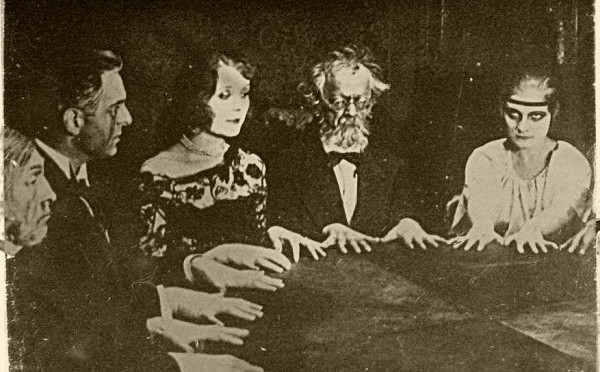
PODCAST It’s our fourth annual Halloween history special, and we’ve got four bloodcurdling stories for the season. The first three are spooky ghost tales — a haunted boardinghouse on 14th street with violent, vain spirits; a short history of New York’s seance craze and a man tormented by the spirit of a dead painter; and a glamorous pair of Jazz Age lovers whose angry spats in their midtown Manhattan penthouse kept up the neighbors, even beyond the grave.

ALSO: A tale with no ghosts at all, but a story with truly spine-tingling facts, featuring the eeriest island in New York and the final resting place for over 850,000 souls. If you ever make it to Hart Island, it means that things have gone very badly for you.

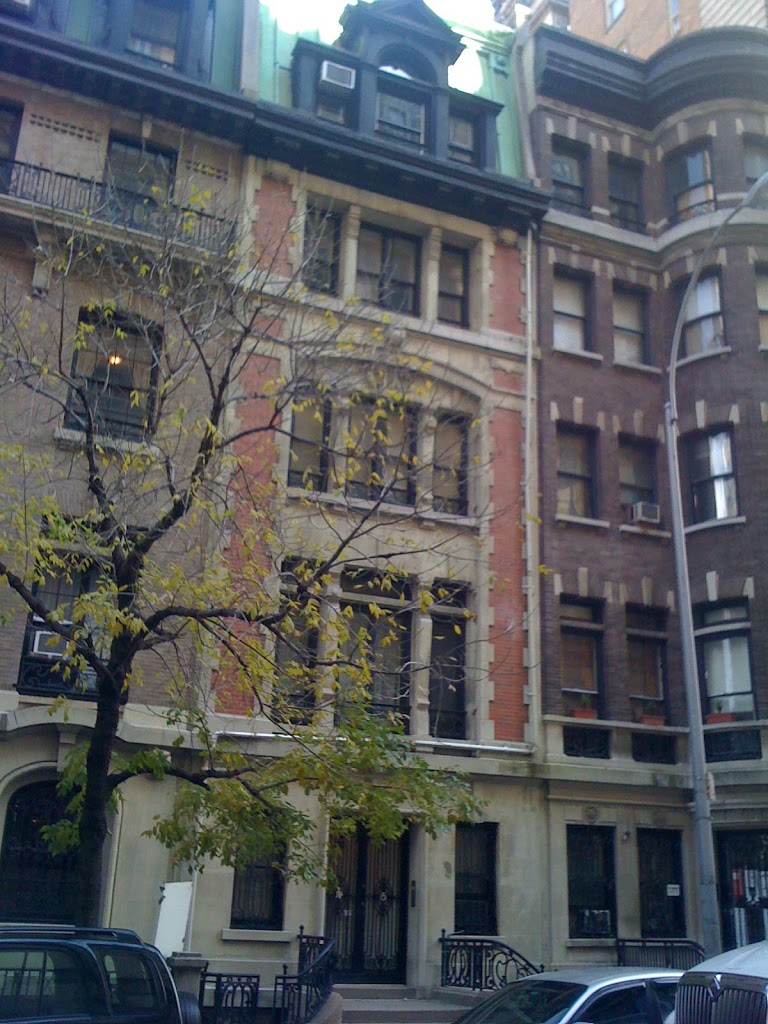
Home to the American Society of Psychical Research on W. 73rd Street, the organization headed by James Hyslop in the early 1900s. Hyslop led the investigation of dozens of reported cases of paranormal and supernatural activity.

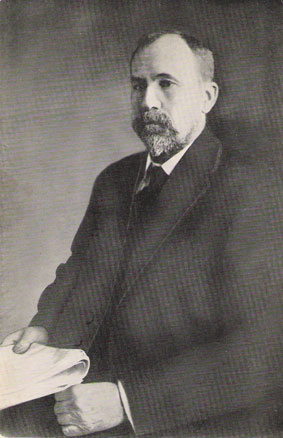
Hyslop, pictured below, believed that he spoke with famous philosopher William James through a medium, and he himself spoke to his secretary via this technique many months after he died.

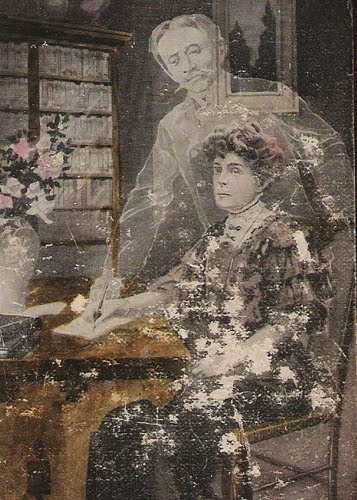
A bizarre image depicting medium Etta De Camp being visited by author Frank Stockton. Ms. De Camp believed her hand was being controlled by Stockton and even wrote a entire book under the control of Stockton.

Looking up at the former penthouses of 57 W. 57th Street, where Edna Champion and her lover Charlie argued their way into the grave, then tormented the unfortunate tenants for many years later. Today, these formerly haunted floors are slated to be occupied by Ford Models.

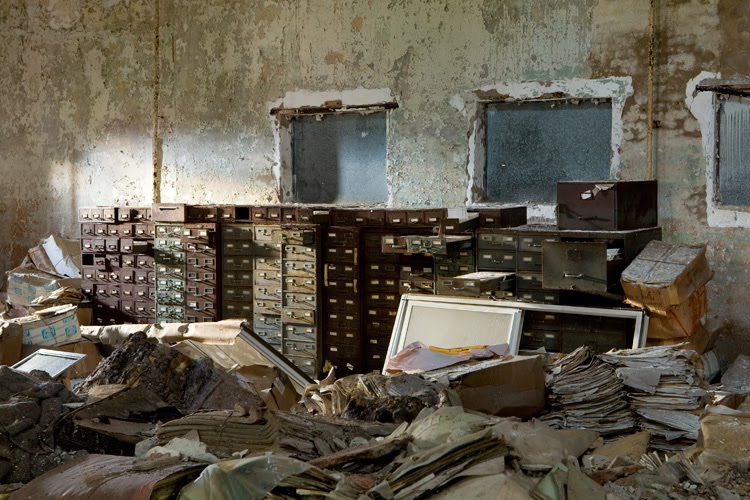
An abandoned records room on Hart Island. This and many other wonderful photographs of Hart Island can be found at Kingston Lounge, bravely venturing to the island in 2008 to witness the strange and forlorn island in person.

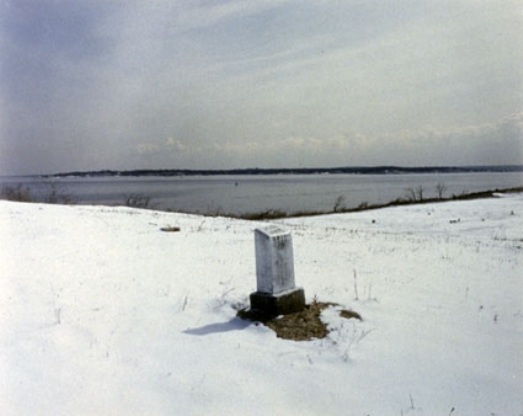
The Hart Island Project has been drawing needed attention the island for years, obtaining lists of people buried there and assisting in families looking for loved ones there. It’s also features a fantastic collection of photographs, such as the one below (of a lonely grave marker) by Joel Sternfeld.

And finally, a fascinating and priceless local news report from 1978 on Hart Island, looking a bit more populated than it is today. Unbelievably, there was talk of actually developing Hart Island for more than just the city’s potter’s field.

If you’re looking to craft your own personal ‘haunted’ walking tour, this map lists all the places we’ve talked about in prior ghost stories podcasts. Simply look up a location and download that particular episode:

View Bowery Boys Ghost Stories in a larger map

1 Ghost Stories of New York
2 Spooky Stories of New York
3 Haunted Tales of New York
4 Supernatural Stories of New York

Categories
Podcasts

Niblo’s Garden: New York’s entertainment complex and home to the first (bizarre) Broadway musical

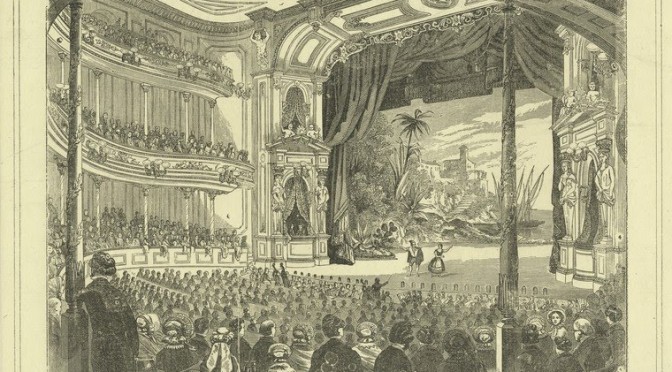
Show-stopping: The interior of Niblo’s Garden Theatre. Illustration by Thomas Addis Emmet, courtesy NYPL

PODCAST It’s the 1820s and welcome to the era of the pleasure garden, an outdoor entertainment complex delighting wealthy New Yorkers in the years before public parks. Wandering gravel paths wind past candle-lit sculptures, songbirds in gilded cages, and string quartets in gazebos, while high above, nightly fireworks spray the sky.

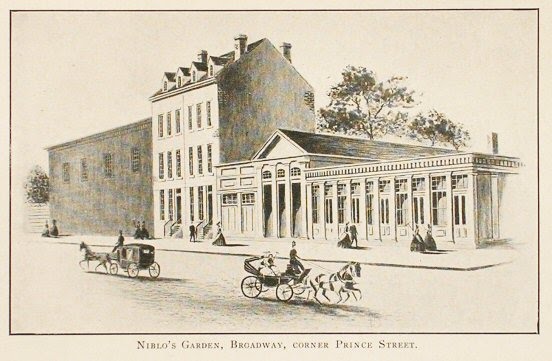
Niblo’s Garden, at the corner of Broadway and Prince Street, was the greatest of them all, with an exhibit room for panoramas and refreshment hall consider by some to be one of New York’s very first restuarants. But it was Niblo’s grand theater, seating 3,000 people, that would make Niblo’s reputation as the venue for both high- and low-brow events. And in 1866, a production debuted there that would change everything — the gaudy, much-too-long spectacle The Black Crook, considered by most as the very first Broadway musical.

Music in the episode is Enigma Variation VI. Ysobel by Elgar. It’s actually from after the time period of Niblo’s, but it’s so very strolling-the-garden, isn’t it? And I had a cold this week, so please forgive my scratchy voice!

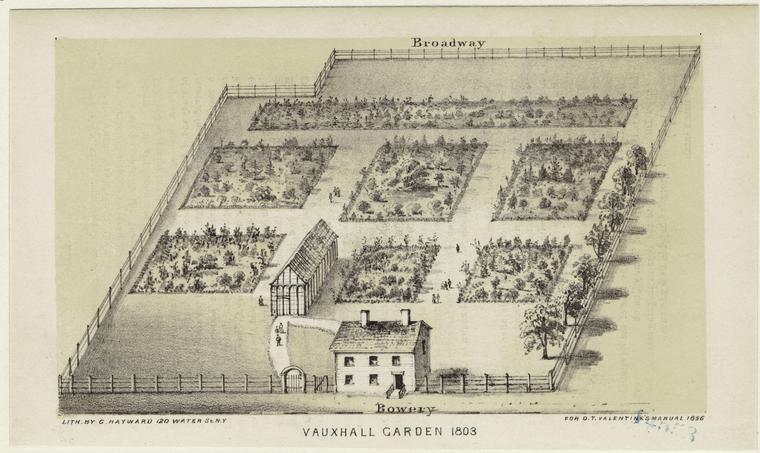
Before Niblo’s, the premier pleasure garden was Vauxhall Garden, derived from a British garden of the same name. The one picture below is from the incarnation before it moved in 1807 to the area just below Astor Place, in what would become Lafayette Street. (NYPL)

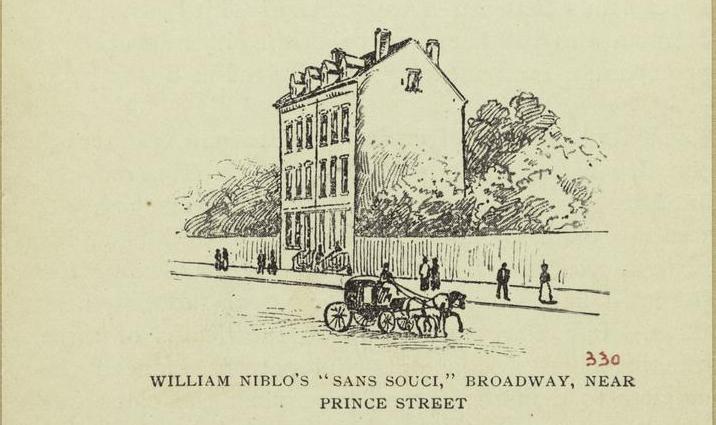
The first theater on the Niblo property was a small stage he called ‘Sans Souci’. Demand soon dictated that a larger venue be built. [NYPL]

From another illustration detailing the block just a few years later. The theater looks the same, but other buildings (possibly the saloon or a greenhouse?) have been built up around it. (from Merrycoz)

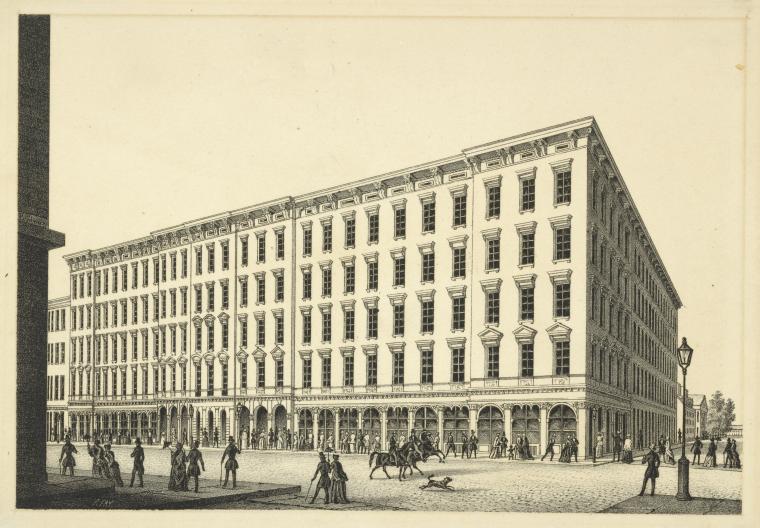
The garden was soon overtaken by a great hotel, the Metropolitan, which opened in 1852. This image is looking east, down Prince Street, with Broadway stretching to the left. NOTE: The original caption on this illustration says 1850, but the hotel would not be open for a couple years later. (NYPL)

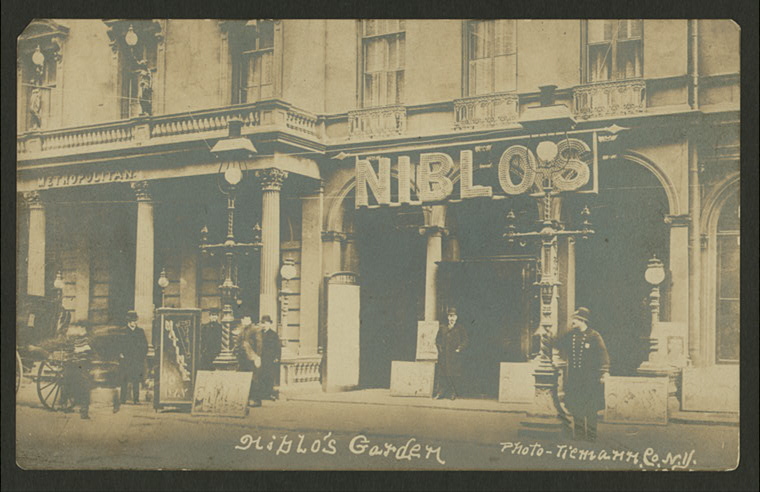
This is one of the only photographs of Niblo’s Theater, certainly from its last years, judging from the fashion of the day. The theater and the hotel were demolished in 1895. [Pic from here]

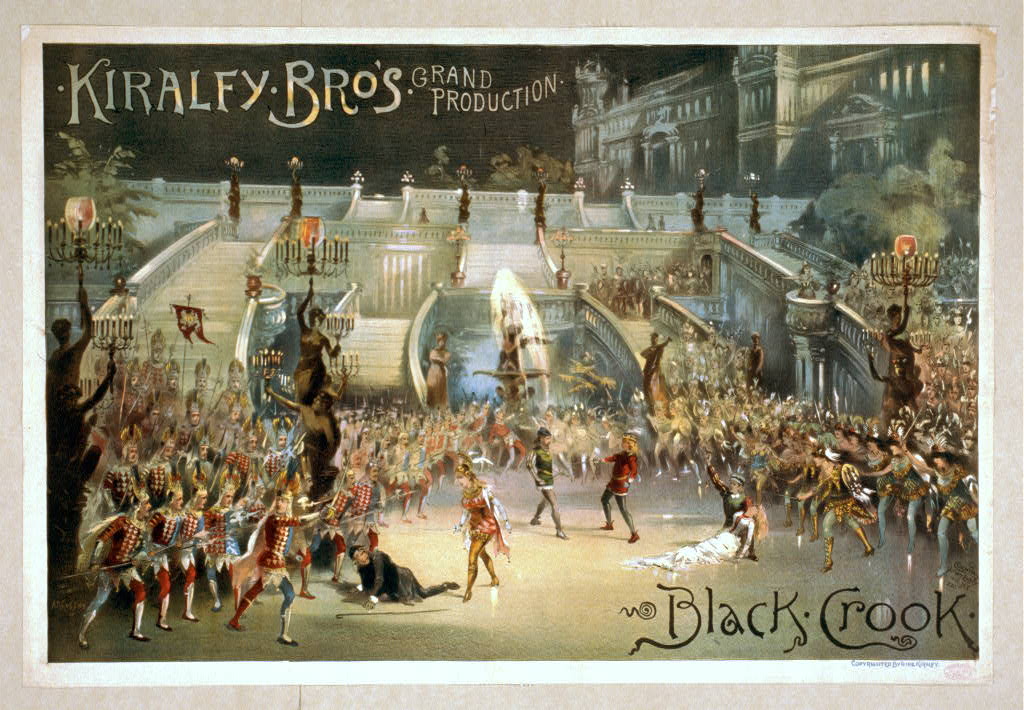
This poster is from a Boston production of ‘The Black Crook’, but it illustrates nicely the scope and theatricality of the production. The show was cobbled together using a poorly written German fantasia, a troupe of out-of-work Parisian dancers, and some original music. The show ran five and a half hours nightly and was a runaway hit. [Image from Kirafly Bros]

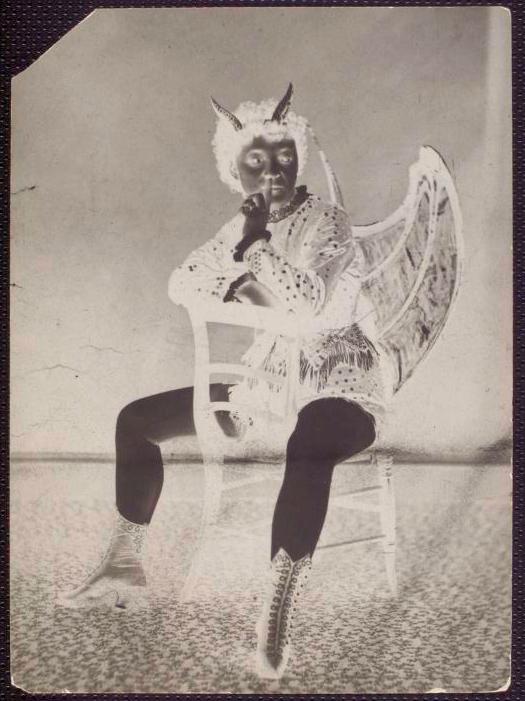
A costumed damsel (in photographic negative) from an early production of The Black Crook. [source]

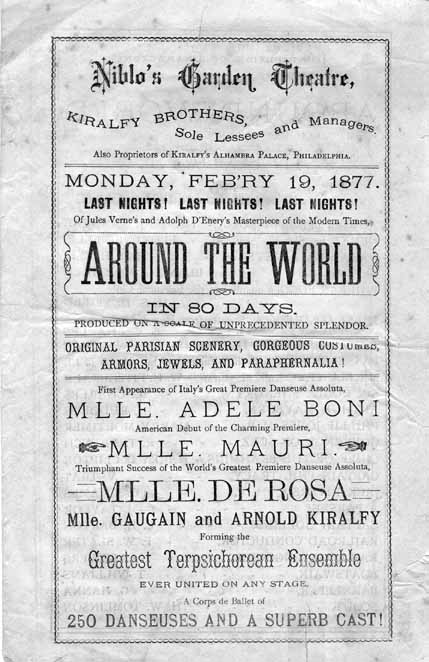
An early program from Niblo’s, from 1877, featuring stage rendition of Jules Verne’s Around The World In 80 Days. I can only imagine the sets for this one! Also featuring the ‘Greatest Terpsichordean Ensemble’ and ‘250 Danseuses and a Superb Cast’.[Courtesy Jules Verne]

Categories
Podcasts

Gracie Mansion: How a bucolic summer home survived a couple wars, a society feud and a few live-in mayors

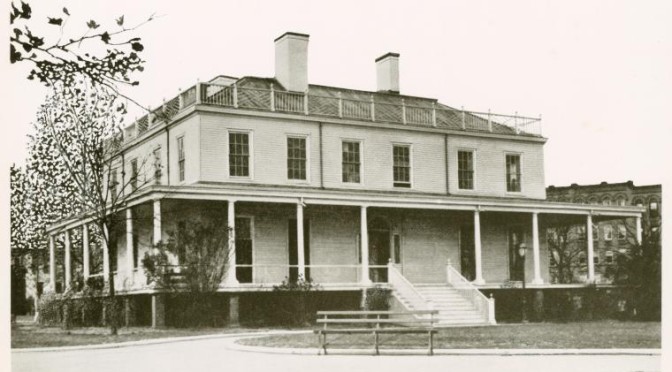
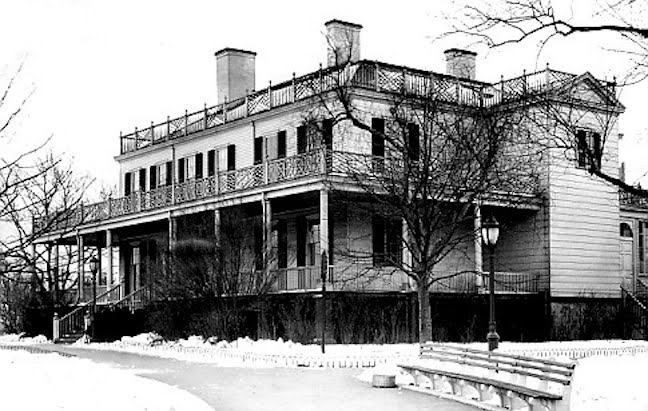
Photo by the Wurts Brothers, date unknown. Courtesy NYPL

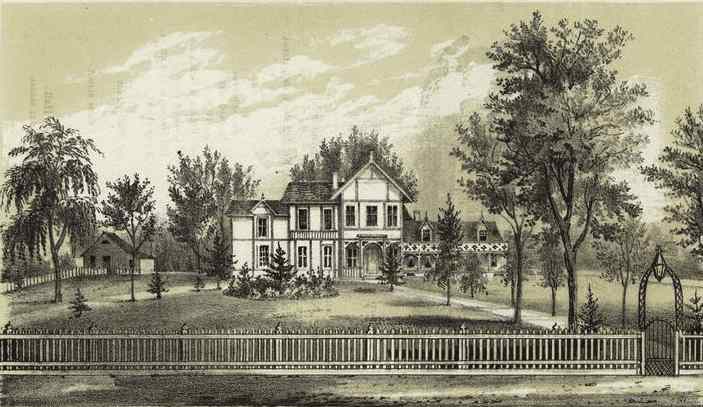
Archibald Gracie admired the extraordinary vistas at Horn’s Hook — overlooking the East River and the churning waters of Hell’s Gate — and decided to build a house here. Little did he know what an extraordinary journey this comfy little Federal home would take over the next two hundred years.

After seeing a lamentable period as a refreshment stand and a place for sewing classes, Gracie Mansion became the first home for the Museum of the City of New York. Then, one day, Robert Moses came along and fell in love with it. Find out how the waterfront mansion became New York City’s defacto White House for over 70 years. And why our current mayor chose NOT to live here.

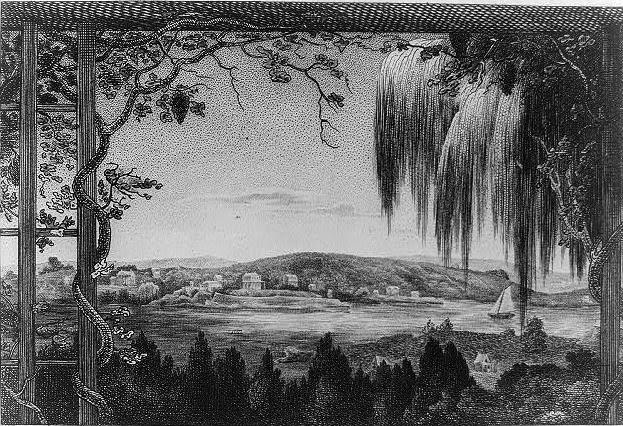
An illustration from May 1808, looking across the waters at Gracie’s mansion, newly built, and other country homes along the shorefront. In between them sits Hell’s Gate, the treacherous confluence of waters that often sank vessels and made travel quite difficult. (Courtesy LOC)


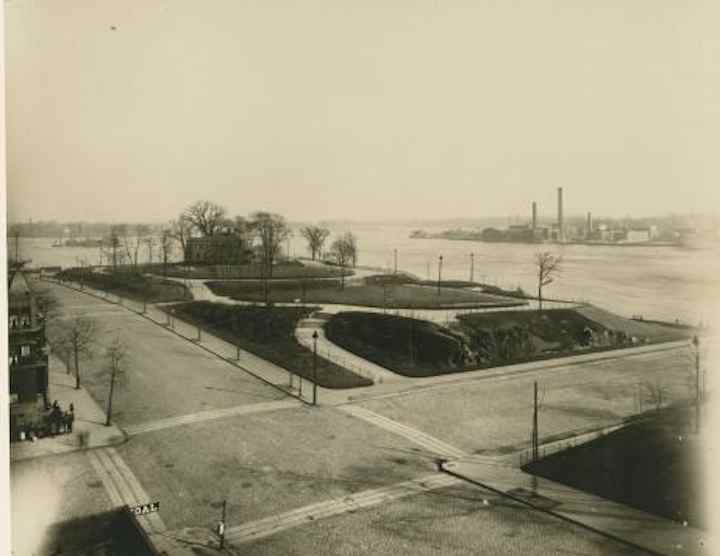
The land around the Gracie property was whittled away during the 19th century, and what remained was turned into Carl Schurz Park. The mansion, however, sat in disrepair and hardly of much use outside of storage and a basement refreshment stand. (Courtesy NYPL)

How it looked in 1942, before the mayors moved in…

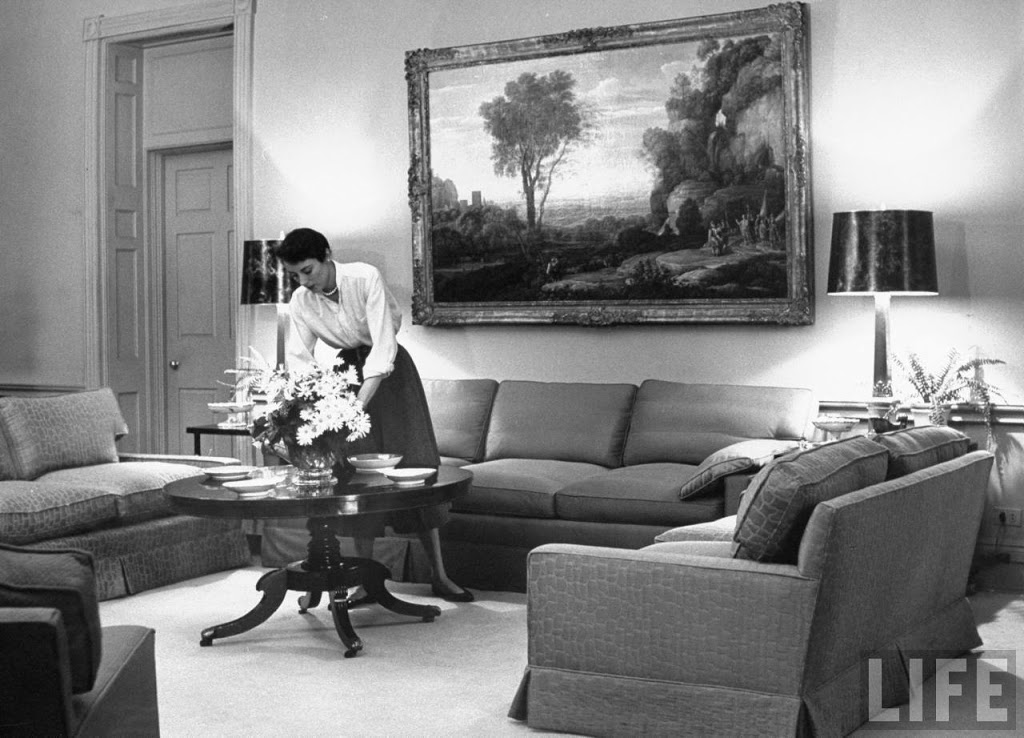
William O’Dwyer‘s new wife Sloan Simpson readies the Gracie Mansion living room for an event, or at least poses for a photo op. O’Dwyer was the second of nine mayors to live at Gracie.
Photo by Alfred Eisenstaedt, May 1950 (courtesy Life images)

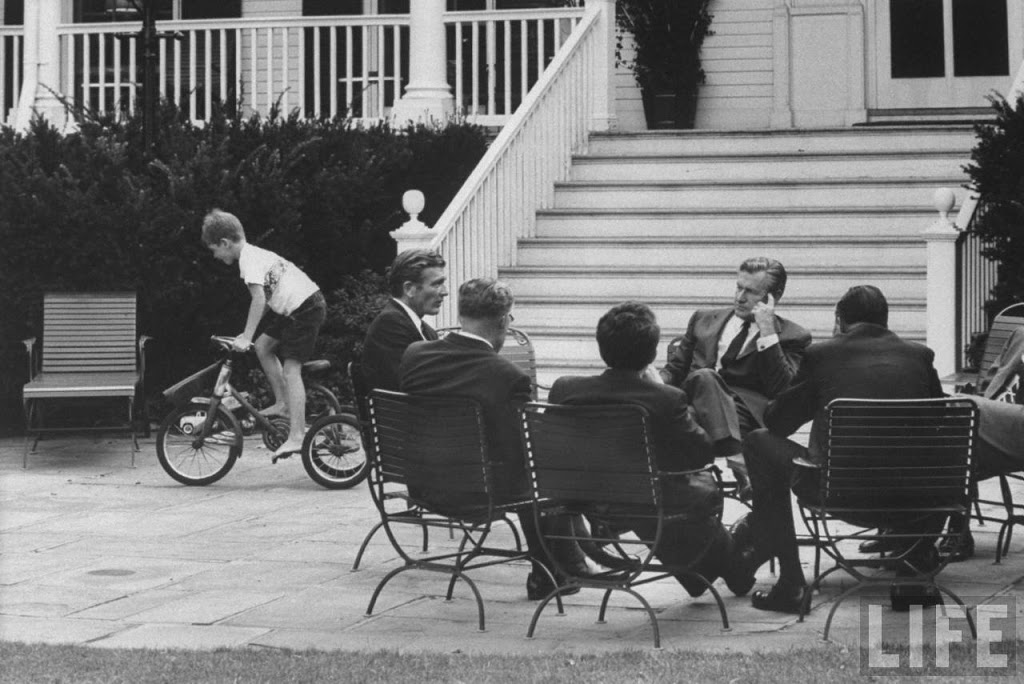
Certainly looks homey from here! A Federalist home is not complete without John Lindsay, G E chairman Gerald Phillippe, and Gov. Nelson Rockefeller sitting on the lawn. John’s son ride by without notice. Photo by John Dominis, May 1968 (courtesy Life images)

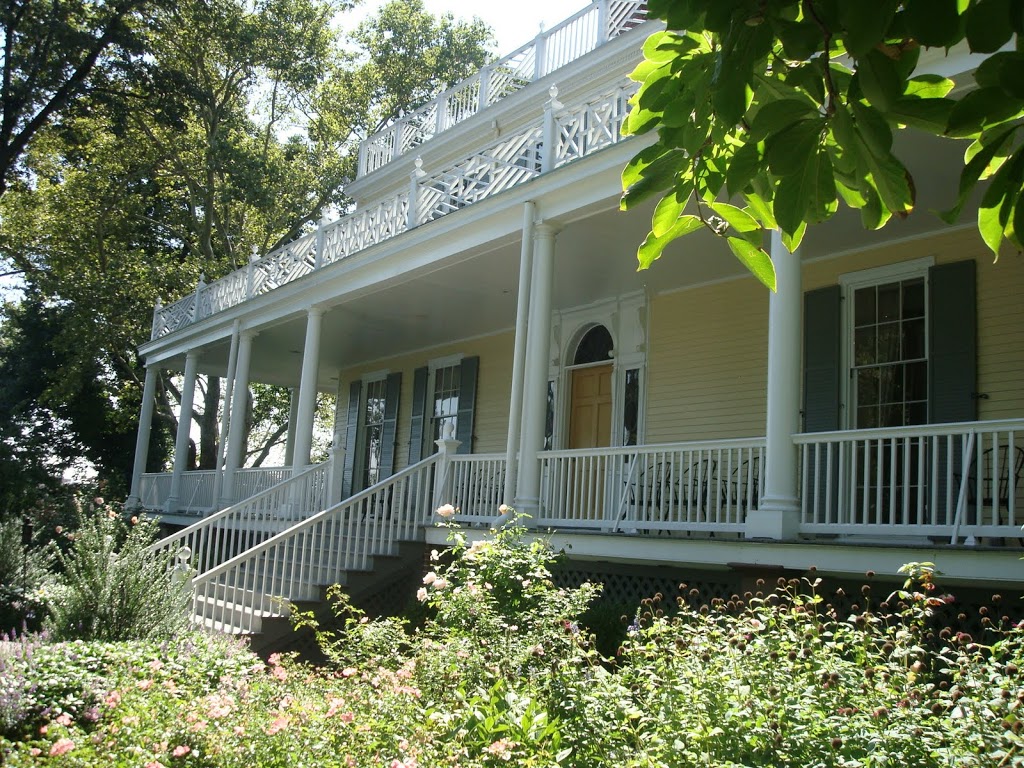
The front of Gracie Mansion today, although most guests use the side entrance. Gracie’s still faces into lovely vista overlooking the East River, but it mostly obscured today by trees.

Visit NYC.GOV’s website about Gracie Mansion to inquire about tours for individuals or small groups. If you have more than 25 people, you can actually have tea at Gracie Mansion. May King Van Rensselaer would have been proud. Our current mayor, by the way, lives here.

Categories
Podcasts Uncategorized

The wild times of the subway graffiti era 1970-1989

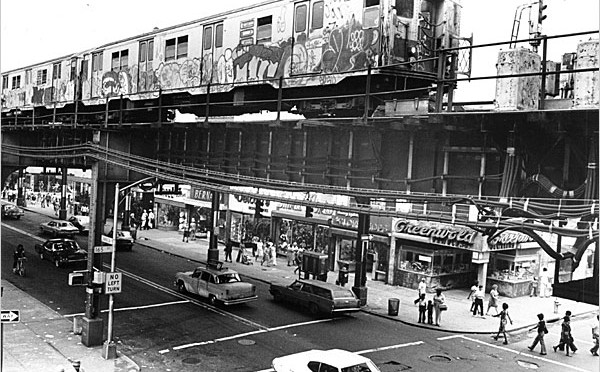
The BMT Jamaica line, late 1970s (Courtesy NYT)

PODCAST #111 Art. Vandalism. Freedom. Blight. Creativity. Crime. Graffiti has divided New Yorkers since it first appeared on walls, signs and lampposts in the late 1960s. Its ascent paralleled the city’s sunken financial fortunes, allowing simple markings to evolve into elaborate pieces of art. The only problem? The best examples were on the sides of subway cars which the city promptly attempted to eradicate, their attempts thwarted by clever, creative artists and a downtown culture that was slowly embracing graffiti as New York City’s defining art form.

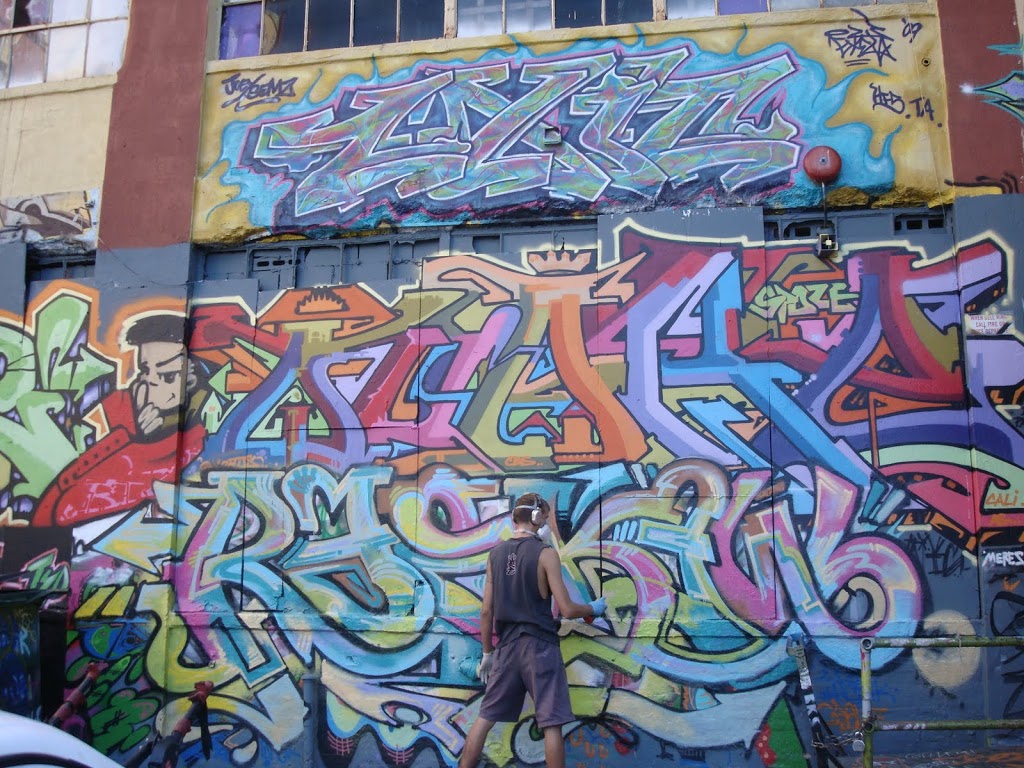
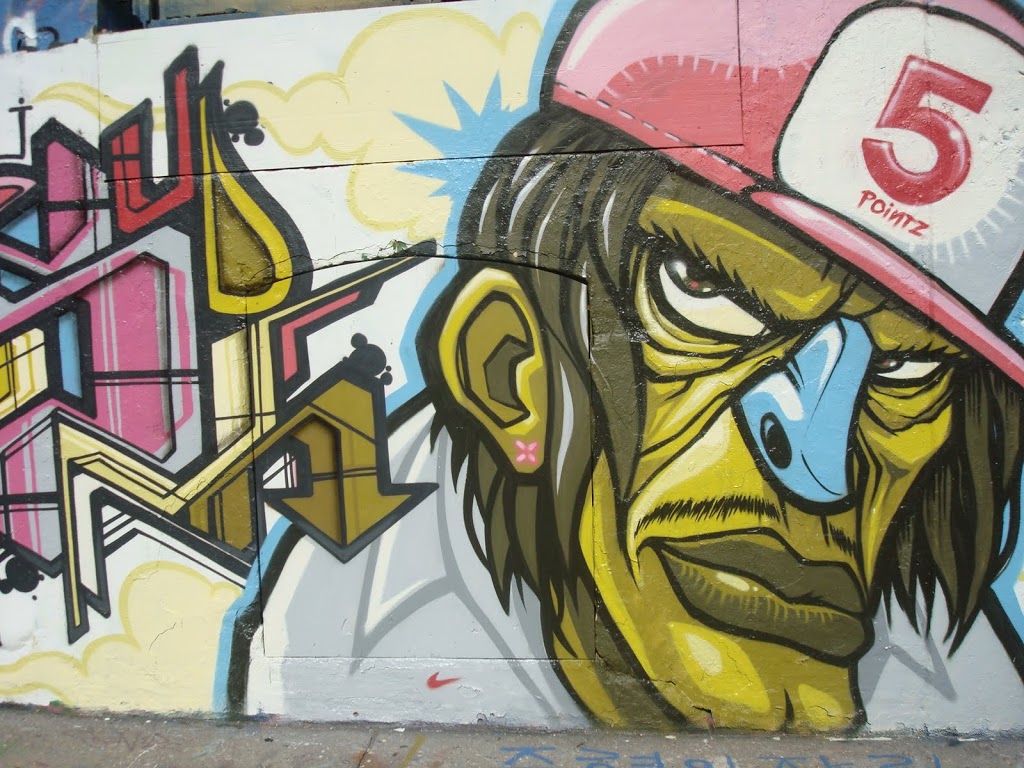
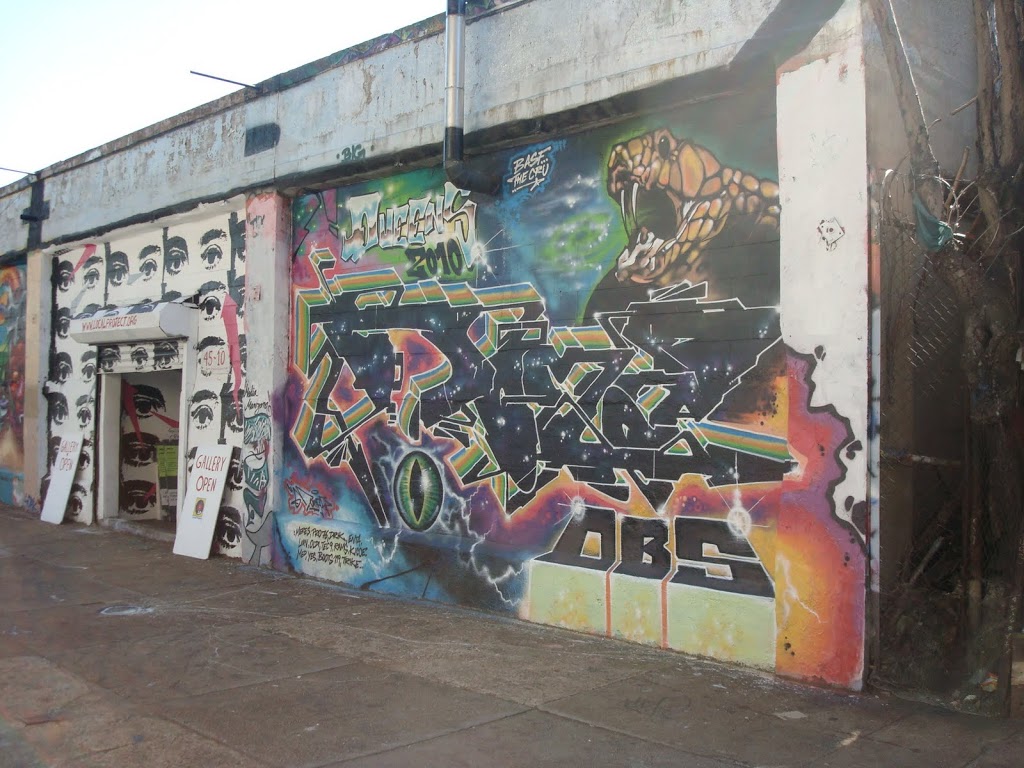
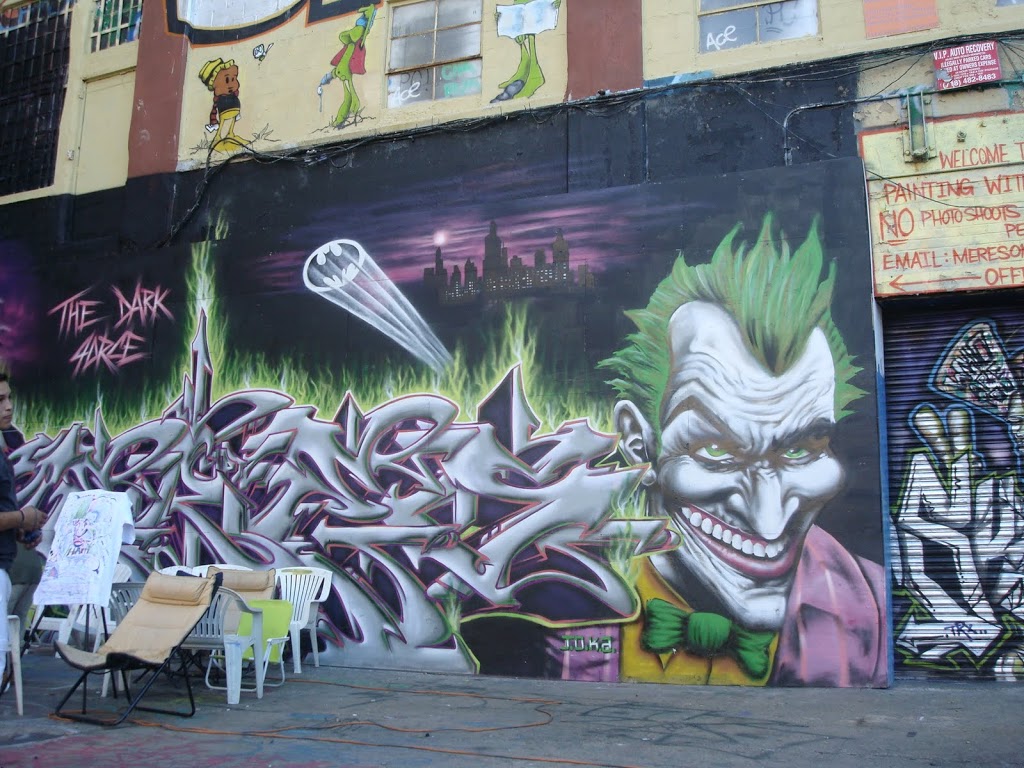
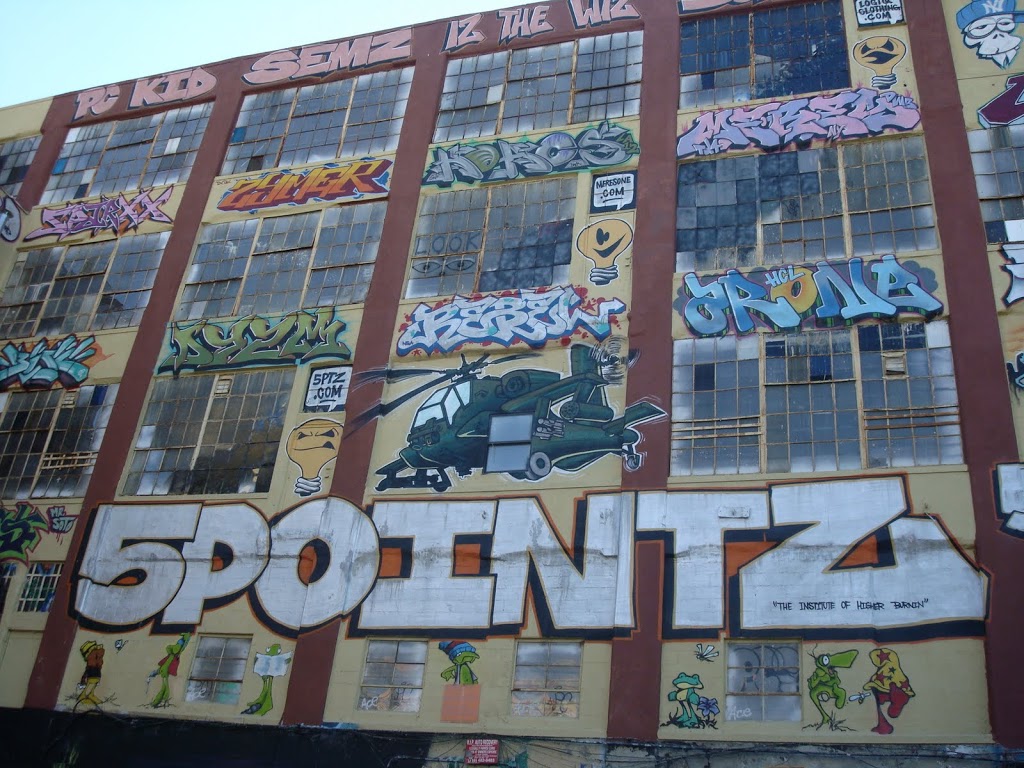
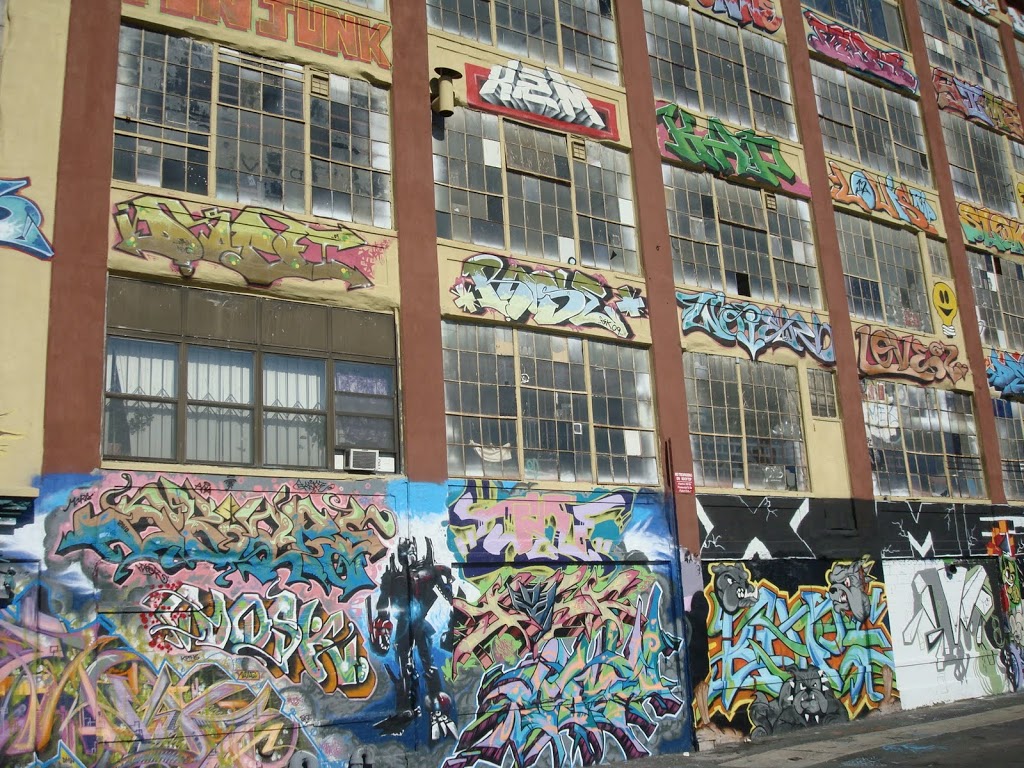
This is a history of the battle between graffiti and City Hall. And a look at the aftermath which spawned today’s tough city laws and a warehouse space in Queens called 5Pointz, where graffiti masterpieces thrive in abundance today.

You can tune into it below, download it for FREE from iTunes or other podcasting services, or get it straight from our satellite site.

Or listen to it here:
The Bowery Boys: Subway Graffiti 1970-1989


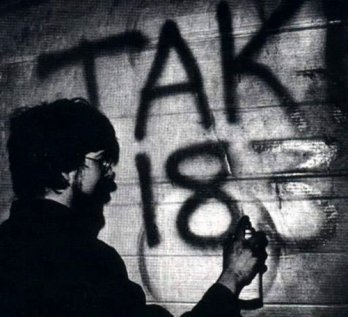
TAKI 183 — he didn’t create the graffiti art movement, but his tags throughout the city inspired a New York Times investigation into the mysterious 17 year old Greek teenanger’s antics, putting other taggers in the spotlight.


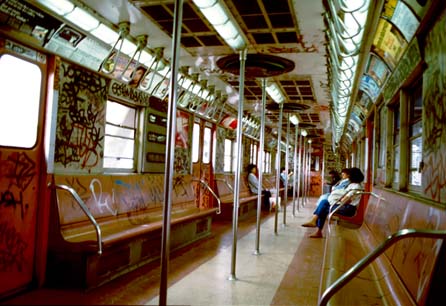
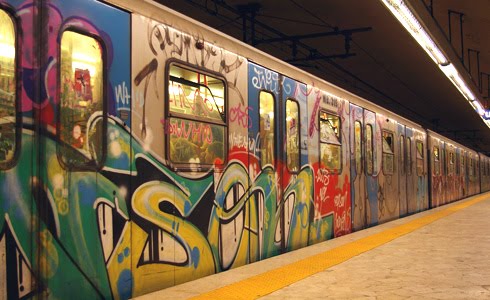
A ride on any subway during the 70s and 80s usually meant containment within a car coated in graffiti tags. The most artistic, colorful pieces (like the one below, by Lee Quinones, 1976) were hung on the outside. (Photo courtesy Second Avenue Sagas)

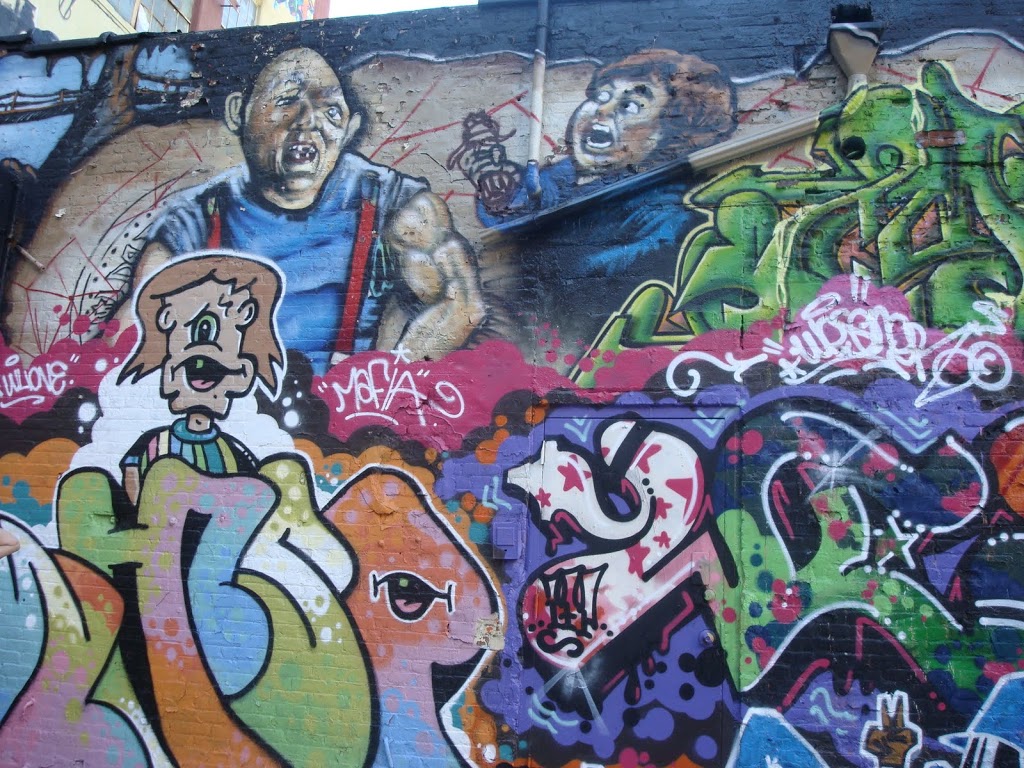
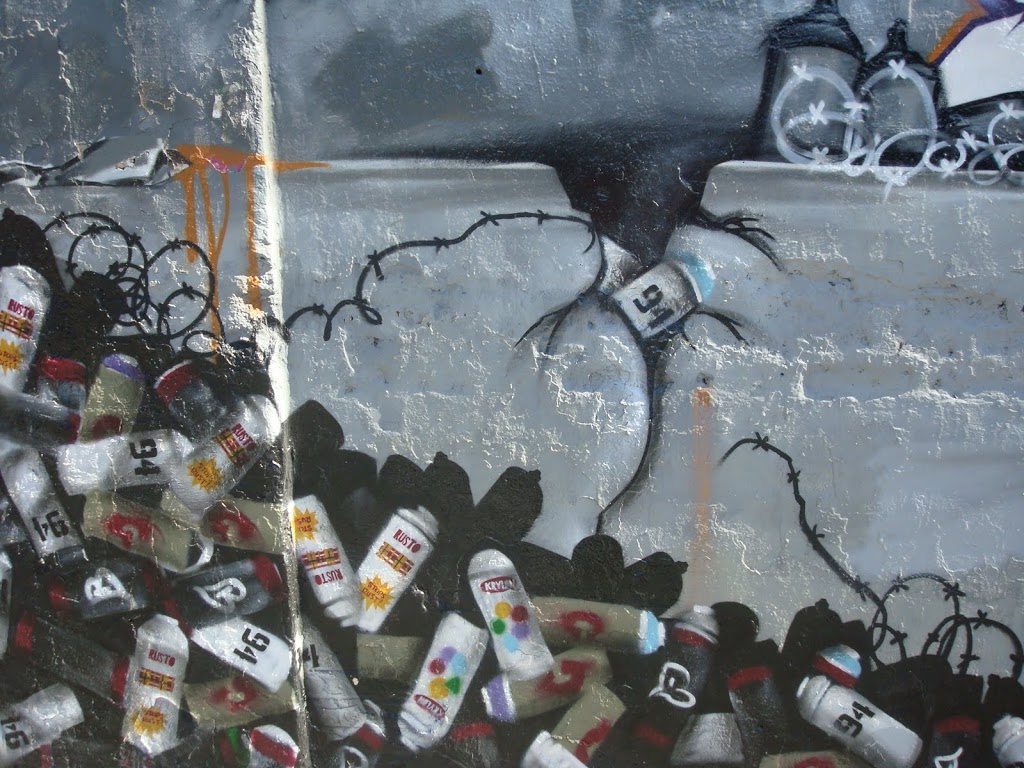
Below: Some of the astonishing work you’ll find out at 5Pointz Aerosol Art Center Inc., subtitled “The Institute For Higher Burnin’.”


For more tales of the 70s-80s graffiti scene, check out the blog @149st with individual profiles of dozens of period artists and taggers. Kings of New York is a spectacular photo blog of past and current work on walls and other surfaces throughout the city.

Two early photographers and writers of the subway graffiti scene have great books on the topic — Jack Stewart (Graffiti Kings: New York City Mass Transit Art of the 1970s) and Keith Baugh (Early New York Subway Graffiti 1973-1975: Photographs from Harlem, South Bronx, Times Square and Coney Island).

And finally, an excerpt of a short film by Steve Siegel, featuring a host of graffitified trains. And gotta love that opening sequence: