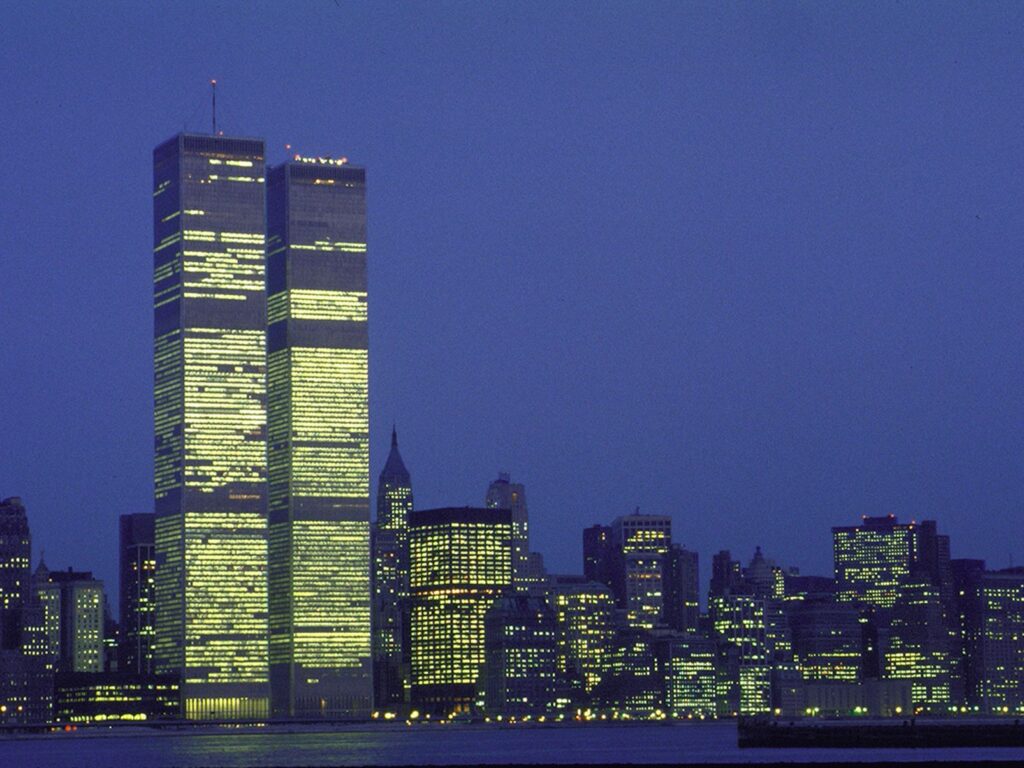
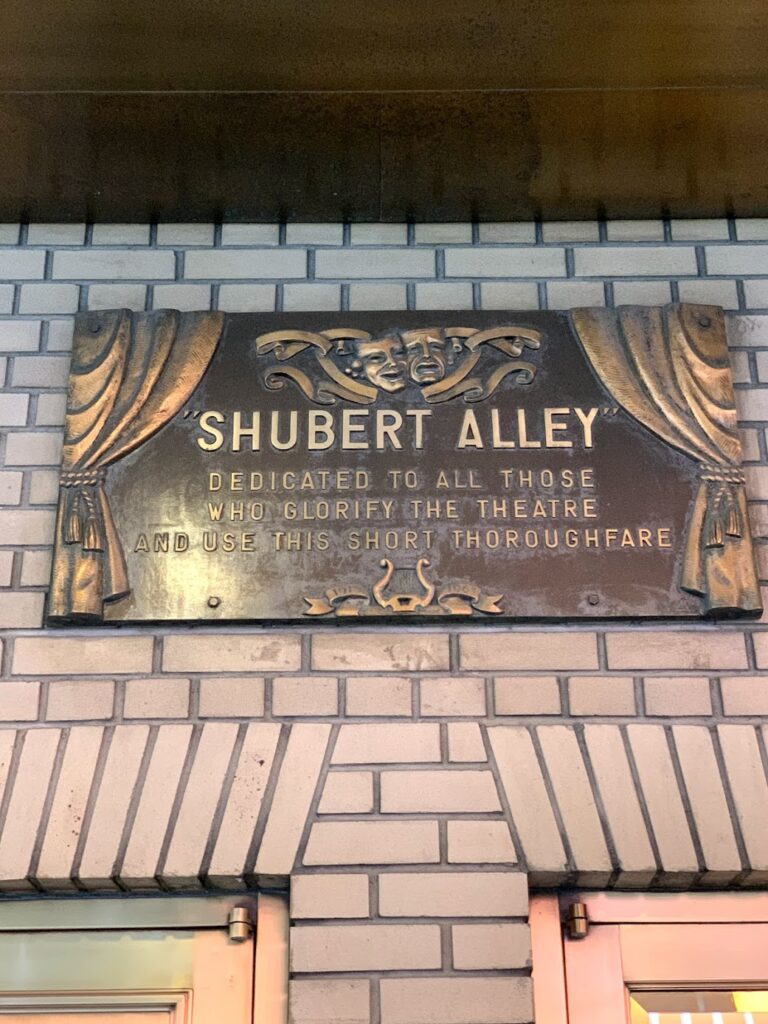
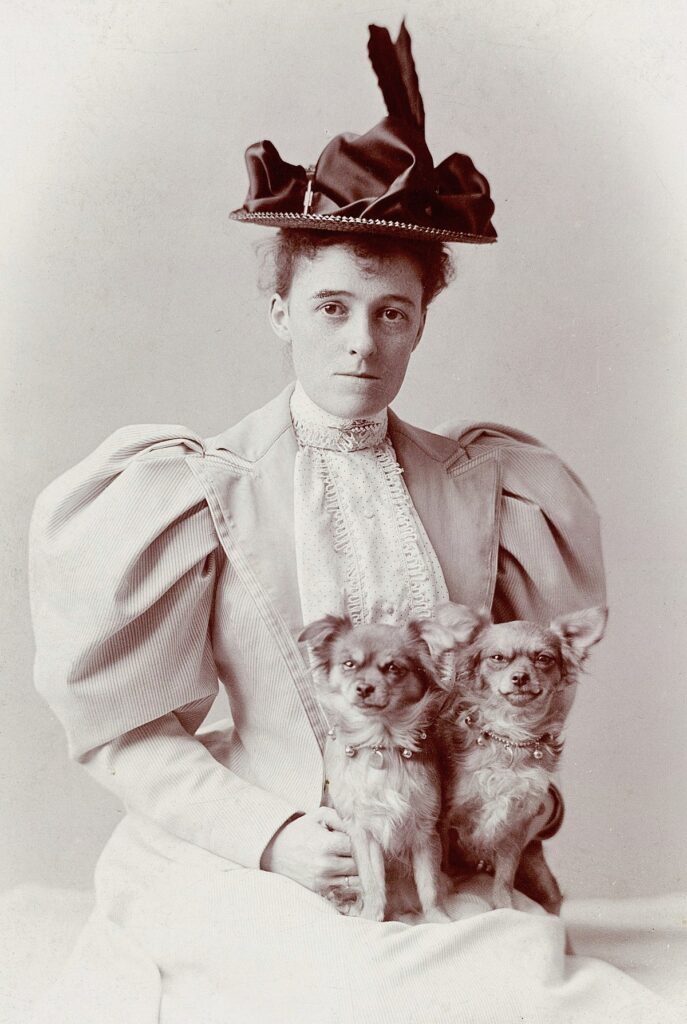
PODCAST What does the Manhattan neighborhood of Chelsea mean to you? Religion and architecture? Art galleries and gay bars? Shopping and brunch after a stroll on the High Line? Tens of thousands of people, of course, call it home.
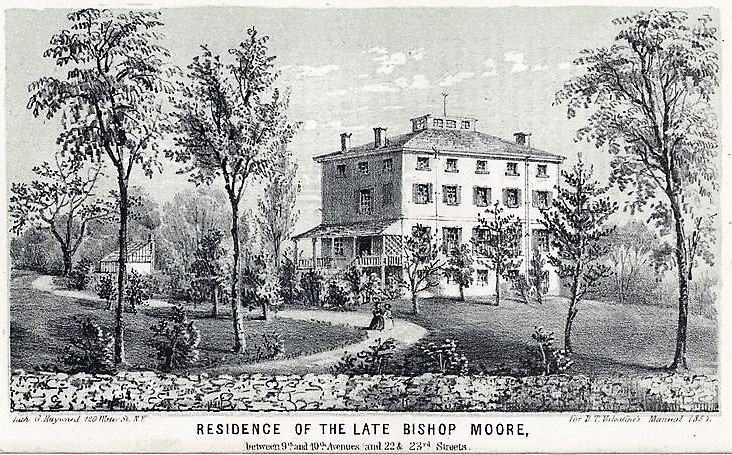
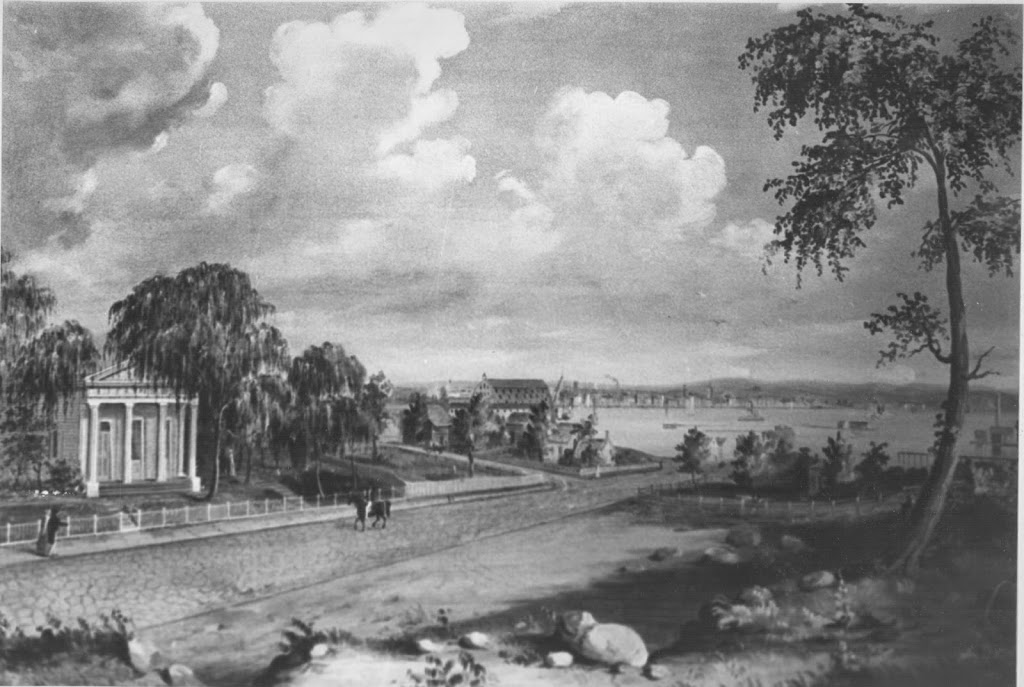
But before it was a neighborhood, it was the Colonial-era estate — the home of a British military officer who named his bucolic property after a London veterans hospital.
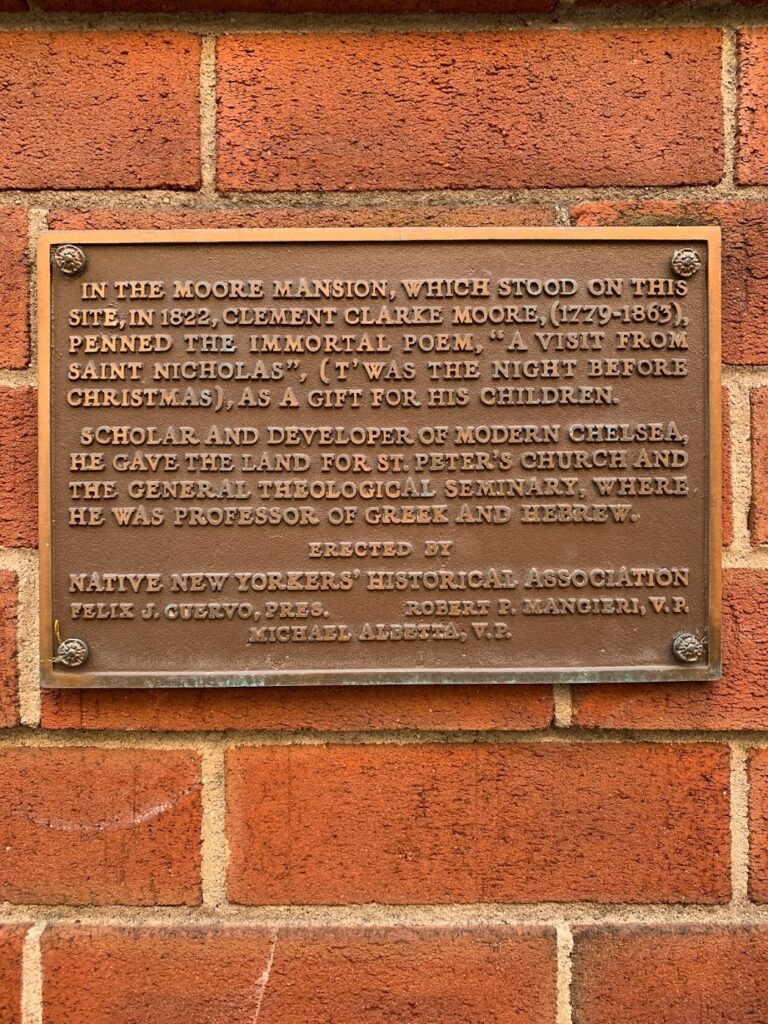
His descendant Clement Clarke Moore would distinguish himself as a theologian and writer; he invented many aspects of the Christmas season in one very famous poem. But he could no longer preserve his family estate when New York civic planners (and the Commissioners Plan of 1811) came a-calling.
Chelsea House, home of Clement Clarke Moore
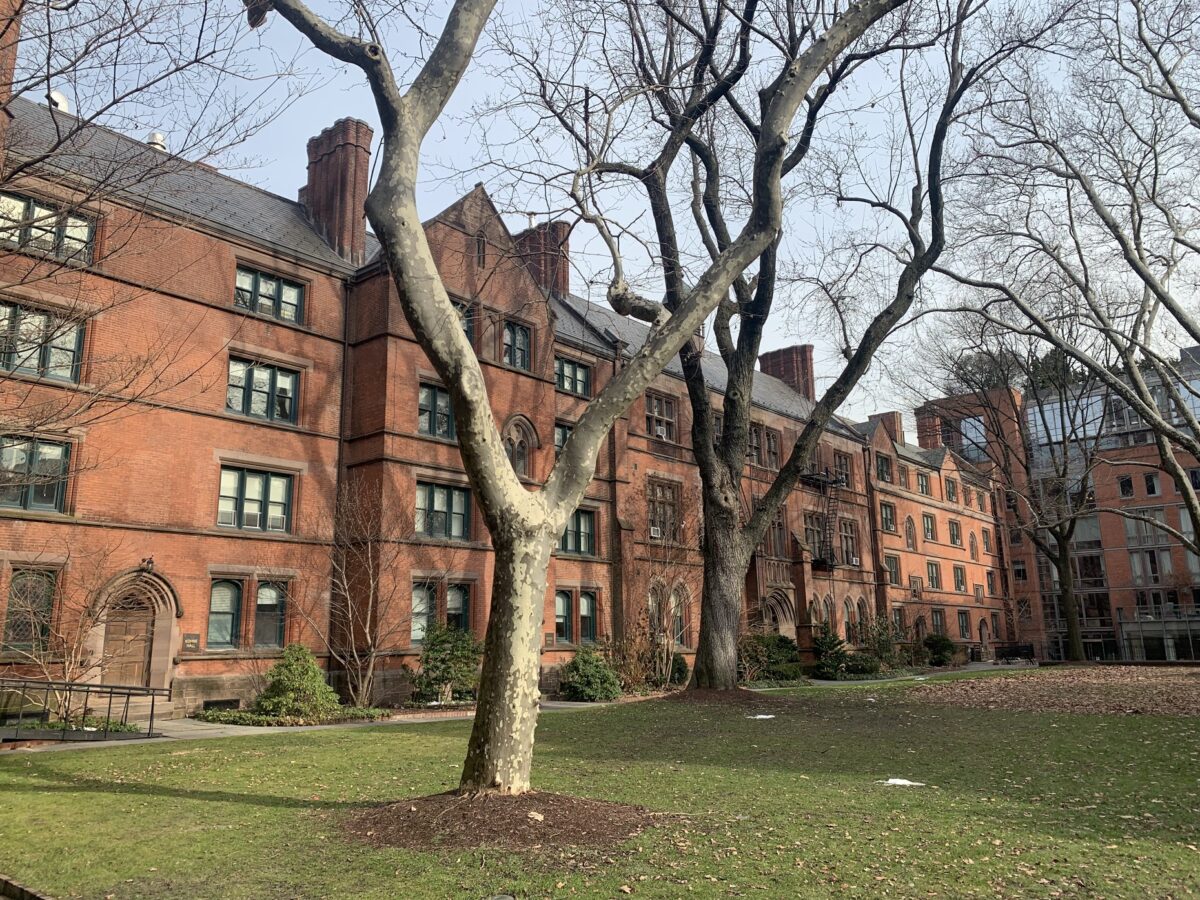
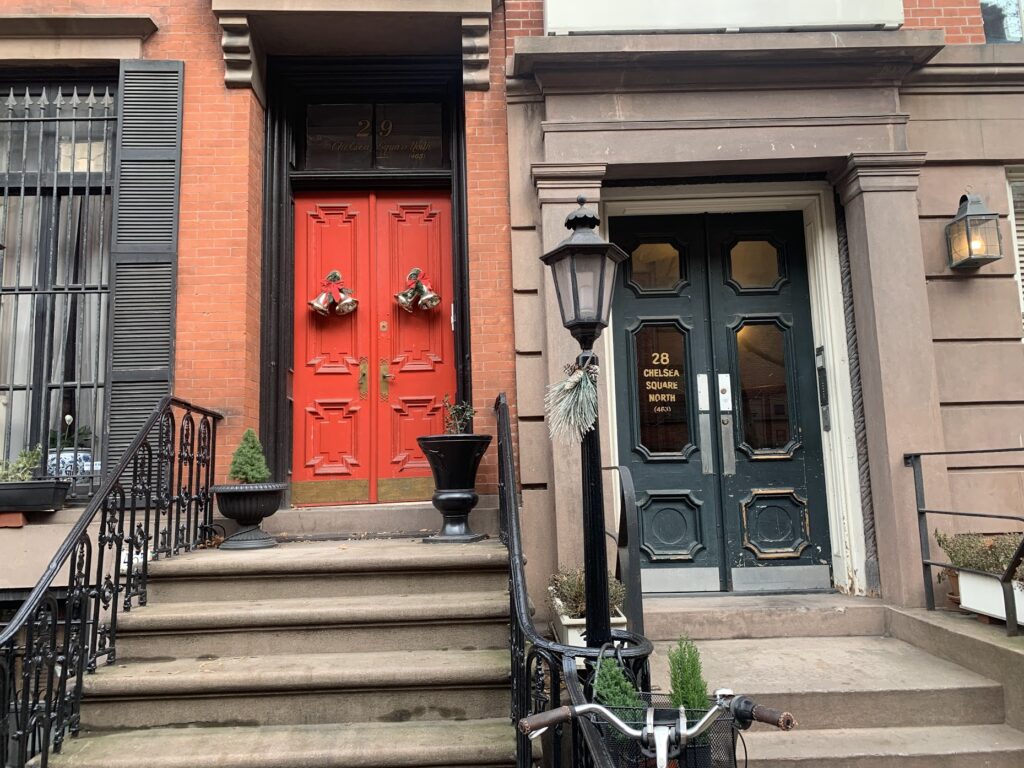
Moore parceled the estate into private lots in the 1820s and 30s, creating both the exclusive development Chelsea Square and the grand, beautiful General Theological Seminary.
Slowly, over the decades, this charming residential district (protected as a historic district today) would be surrounded by a wide variety of urban needs — from heavy industrial to venues of amusement. One stretch would even become “the Bowery of the West Side.”
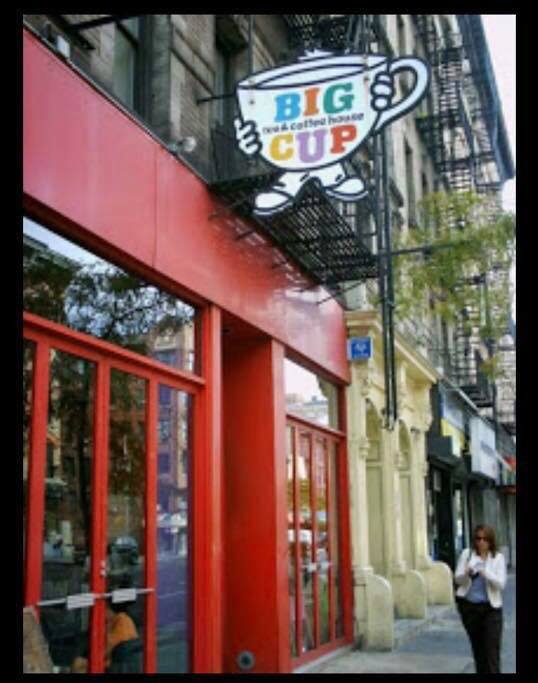
Further change arrived in the late 20th century as blocks of tenements were replaced with housing projects and emptied warehouses became discotheques and art collectives. Then came the Big Cup.
Join us as we celebrate over 200 years of urban development — how Chelsea the estate became Chelsea the neighborhood.
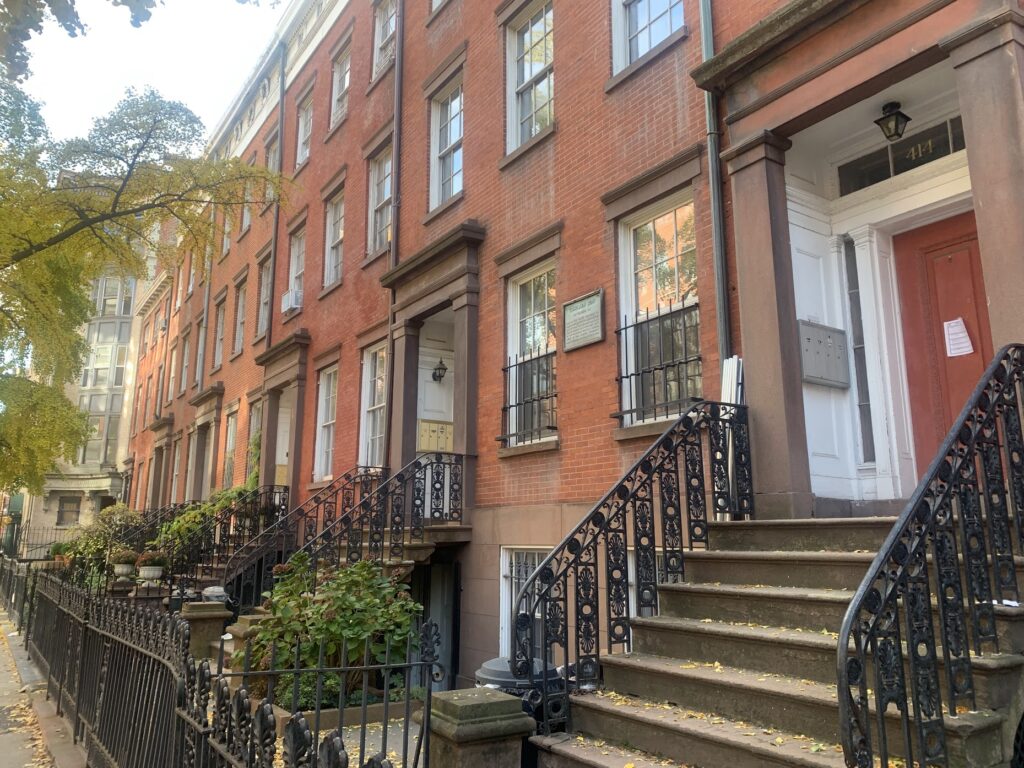
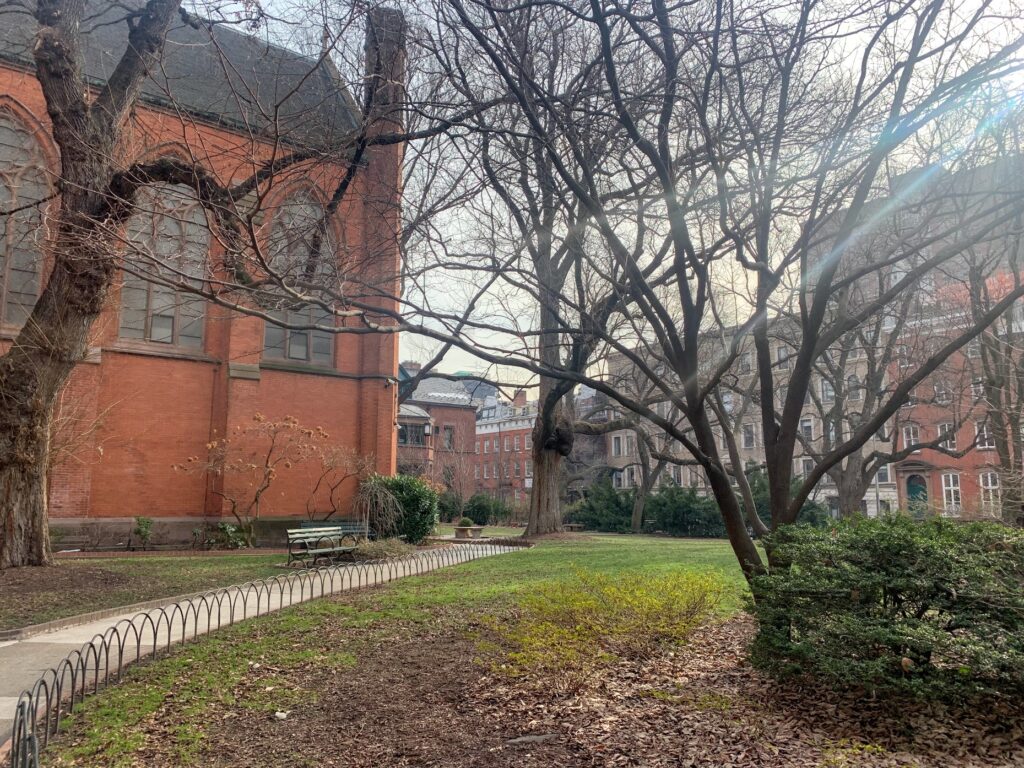
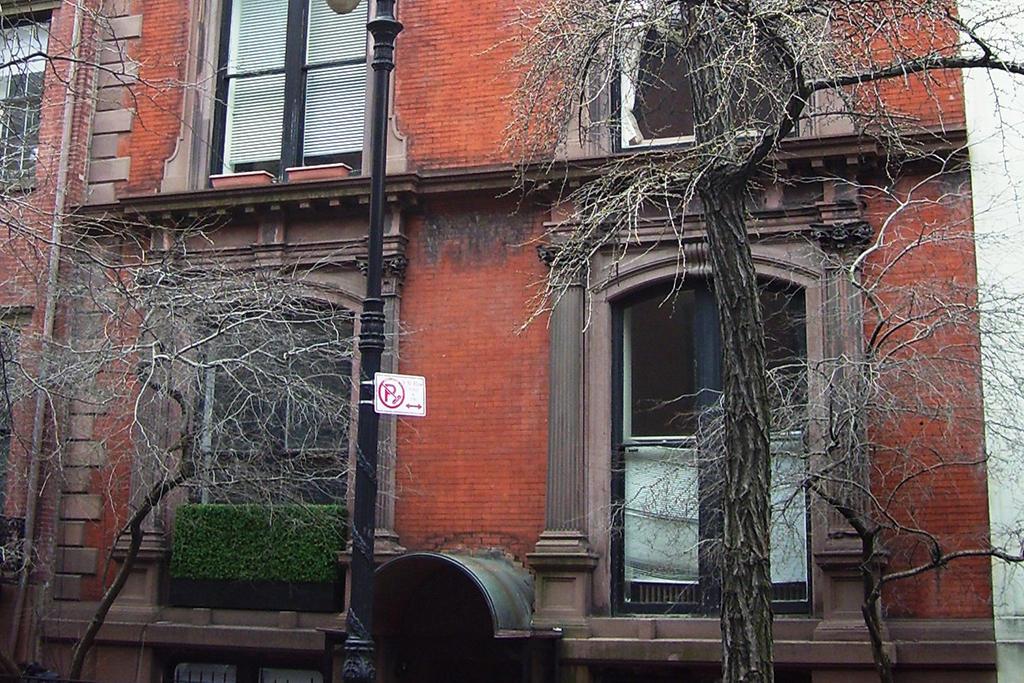
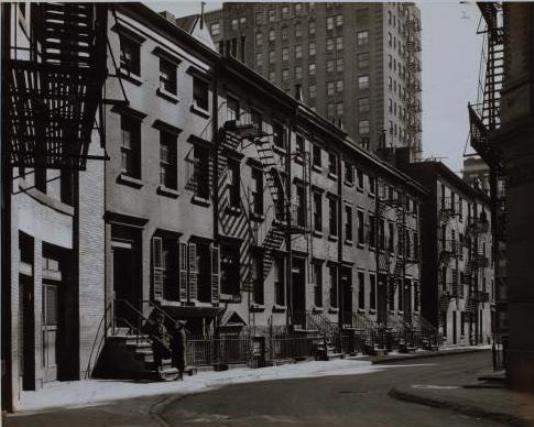
Photo by Greg YoungTwo gorgeous townhouses on Chelsea Square. Photo by Greg YoungPhoto by Greg Young
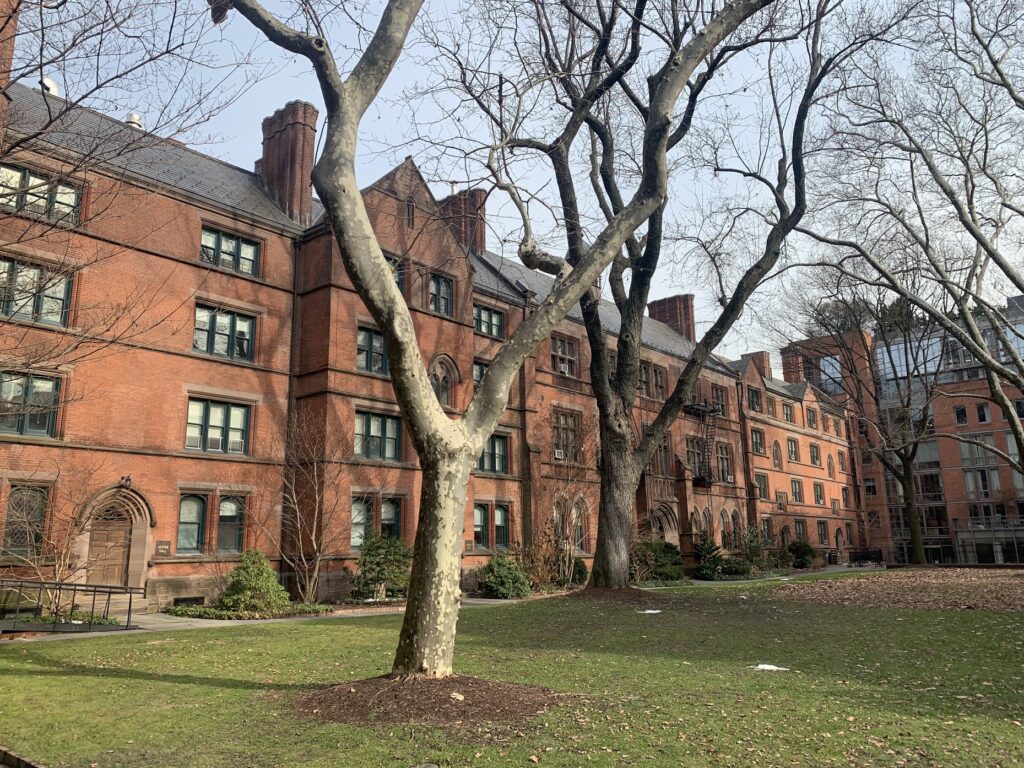
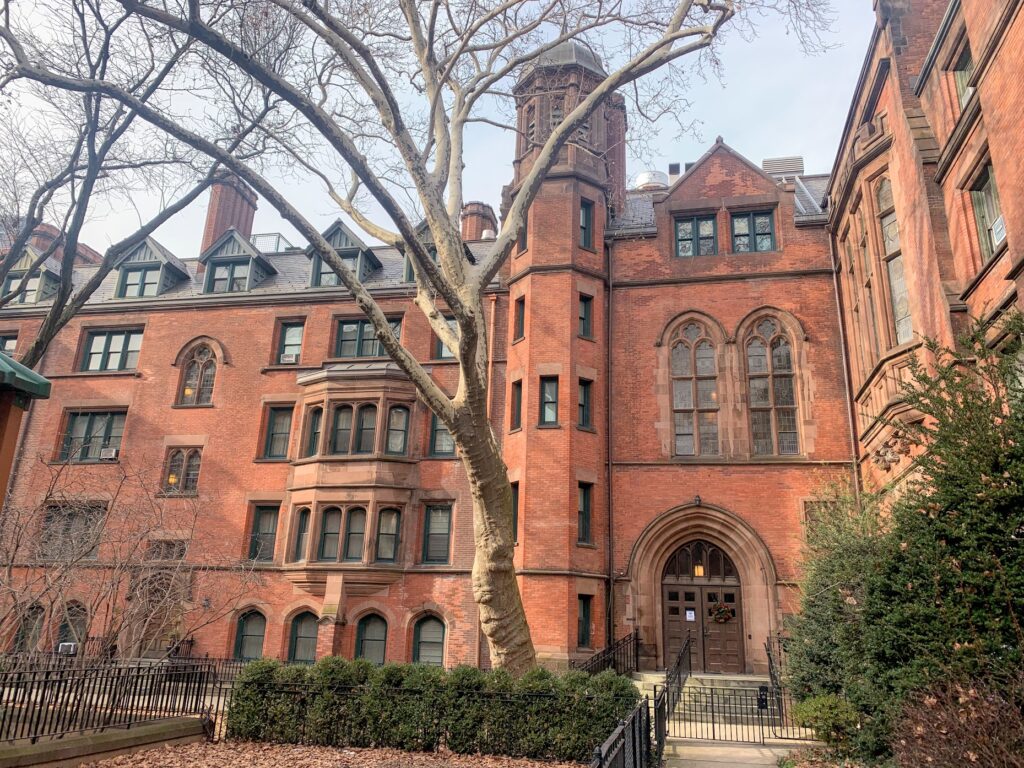
Photos from the General Theological Seminary. Leave your ID at the front desk and you can go on a tour of this lovely site yourself…..
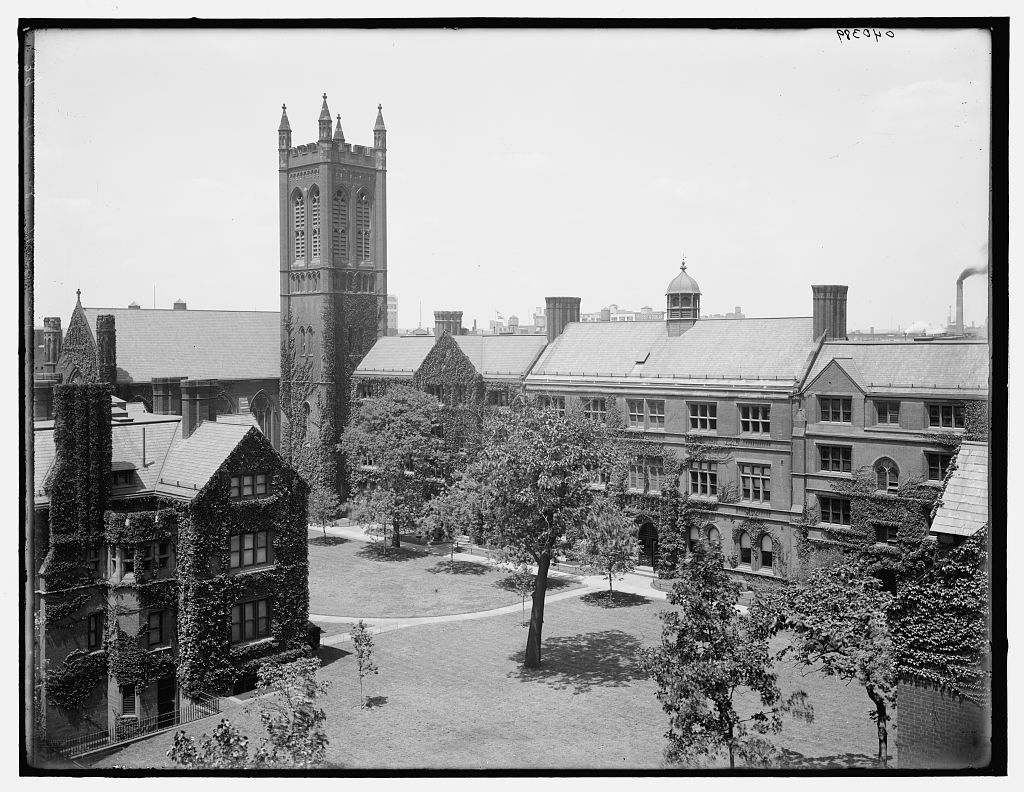
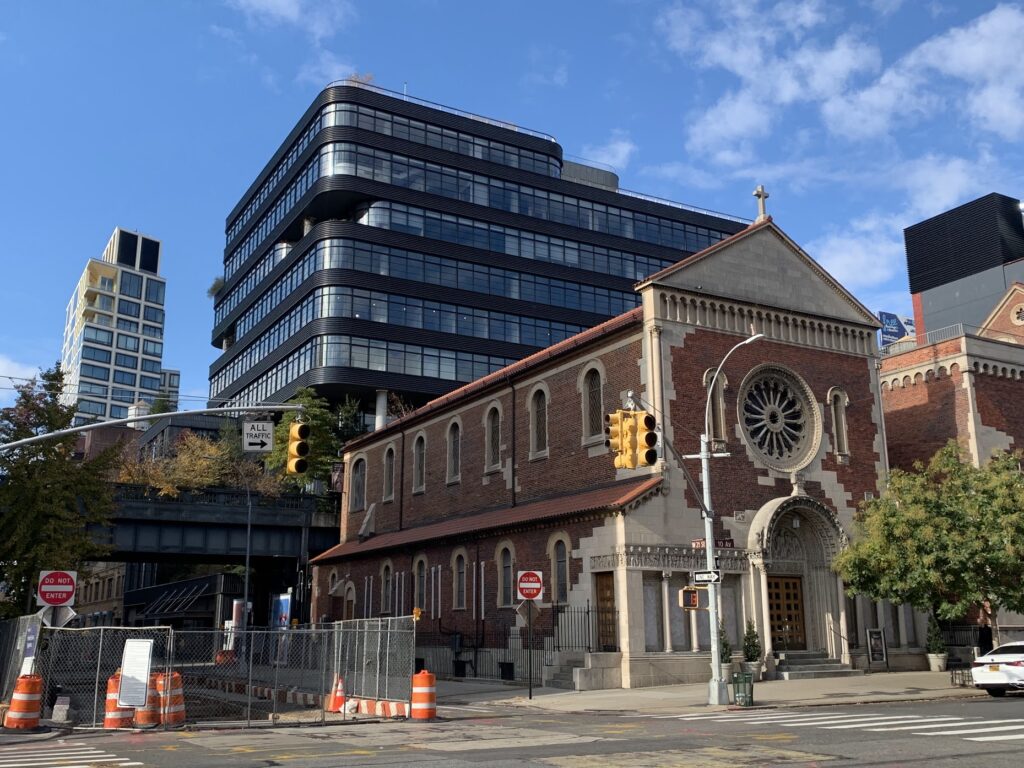
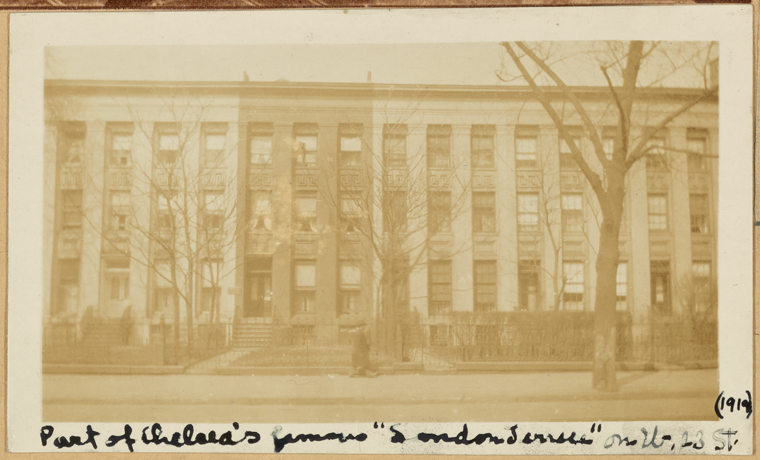
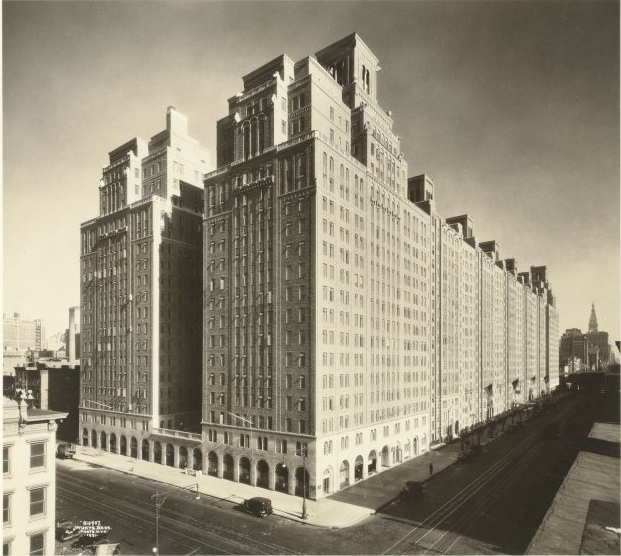
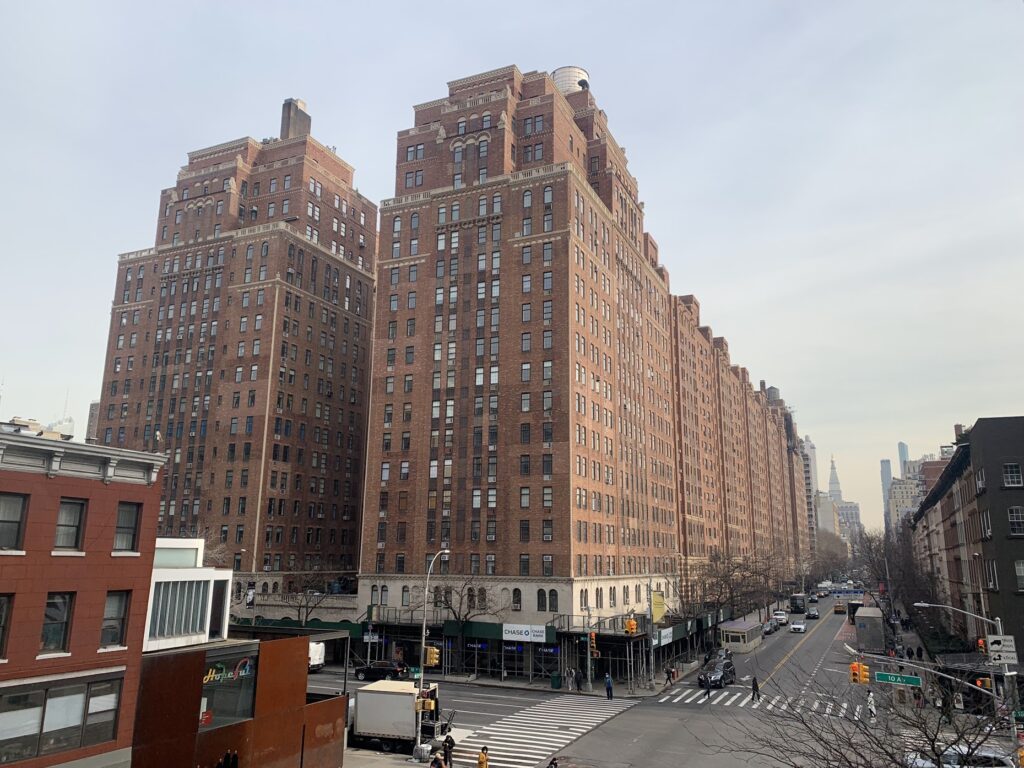
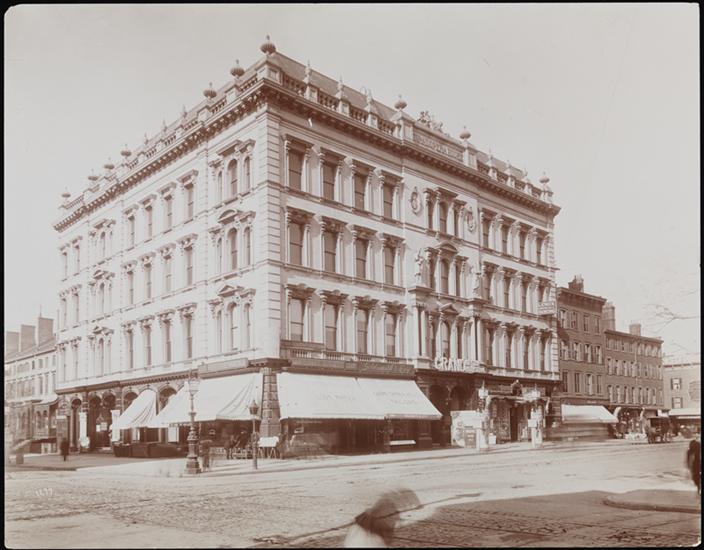
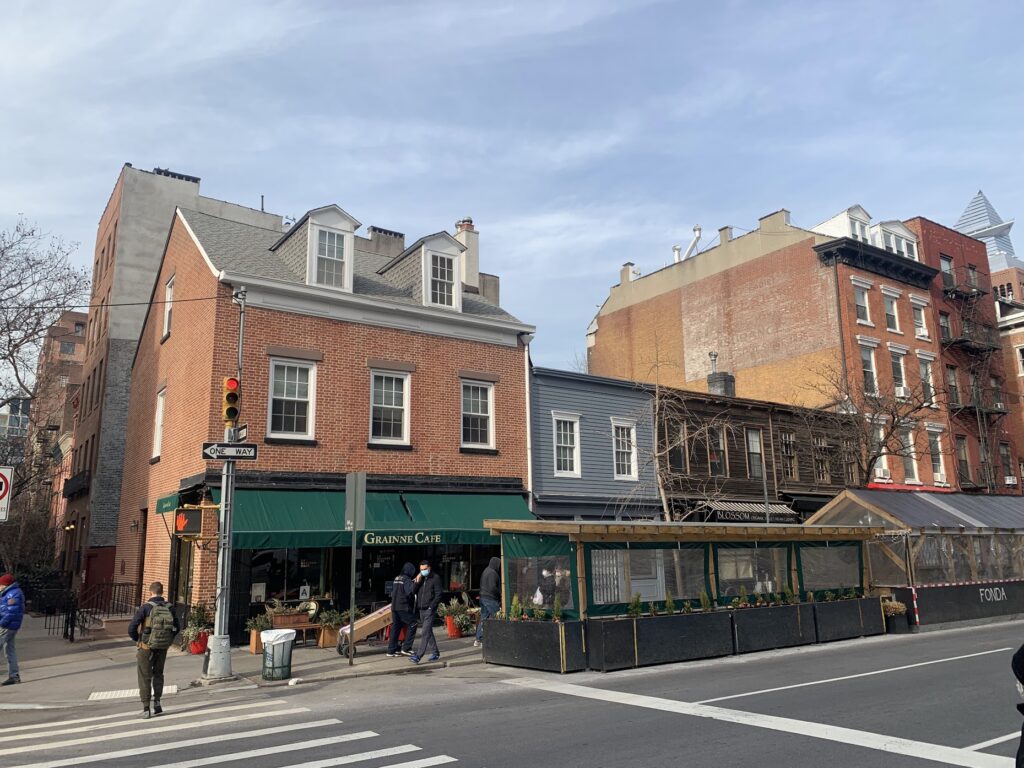
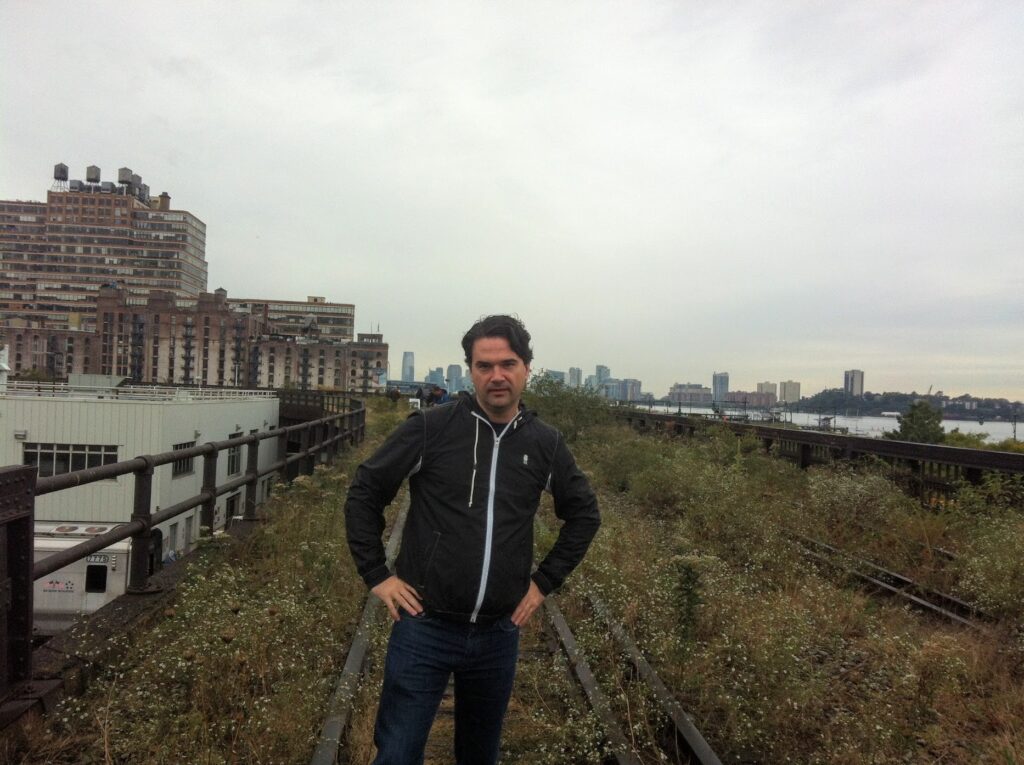
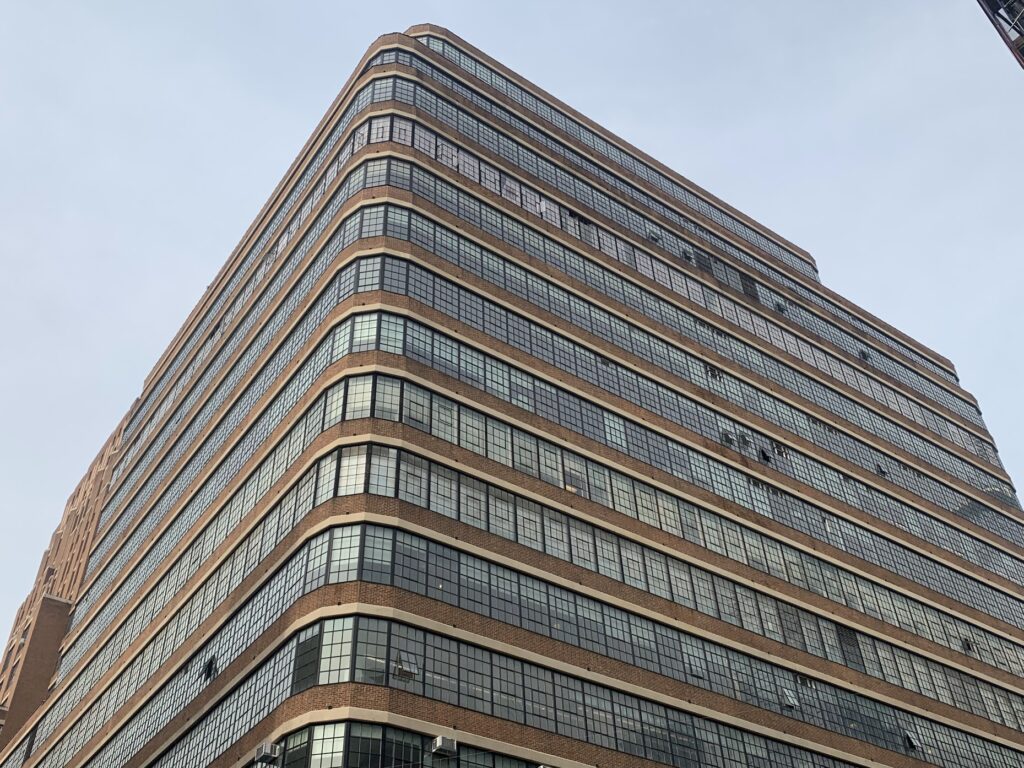
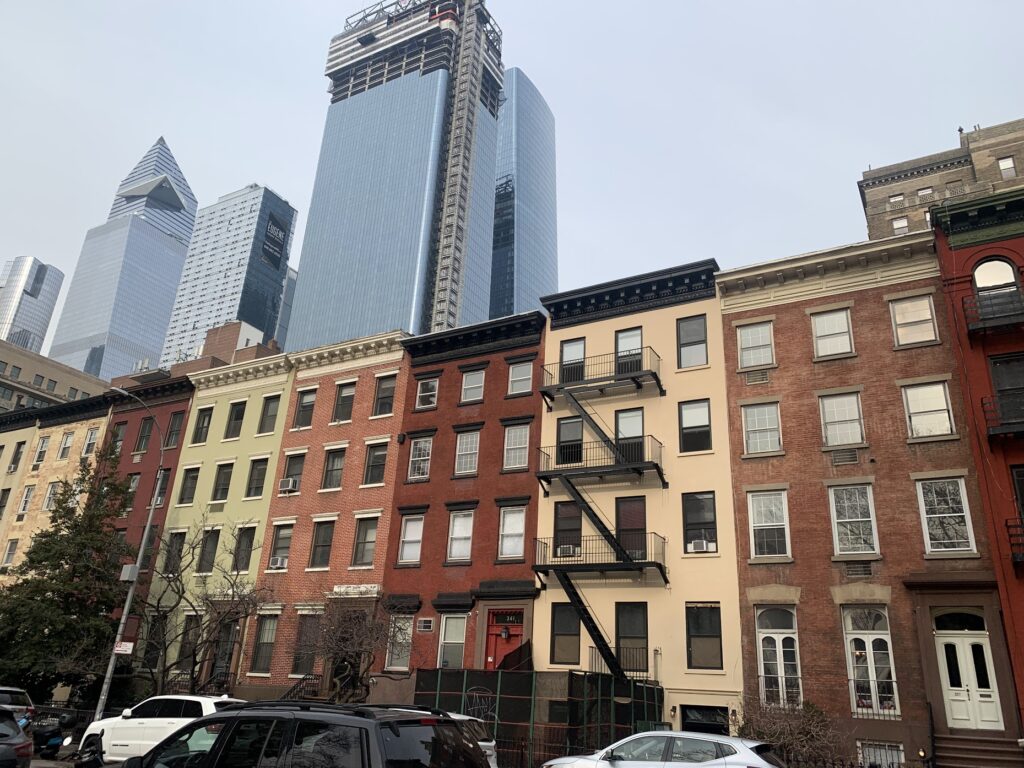
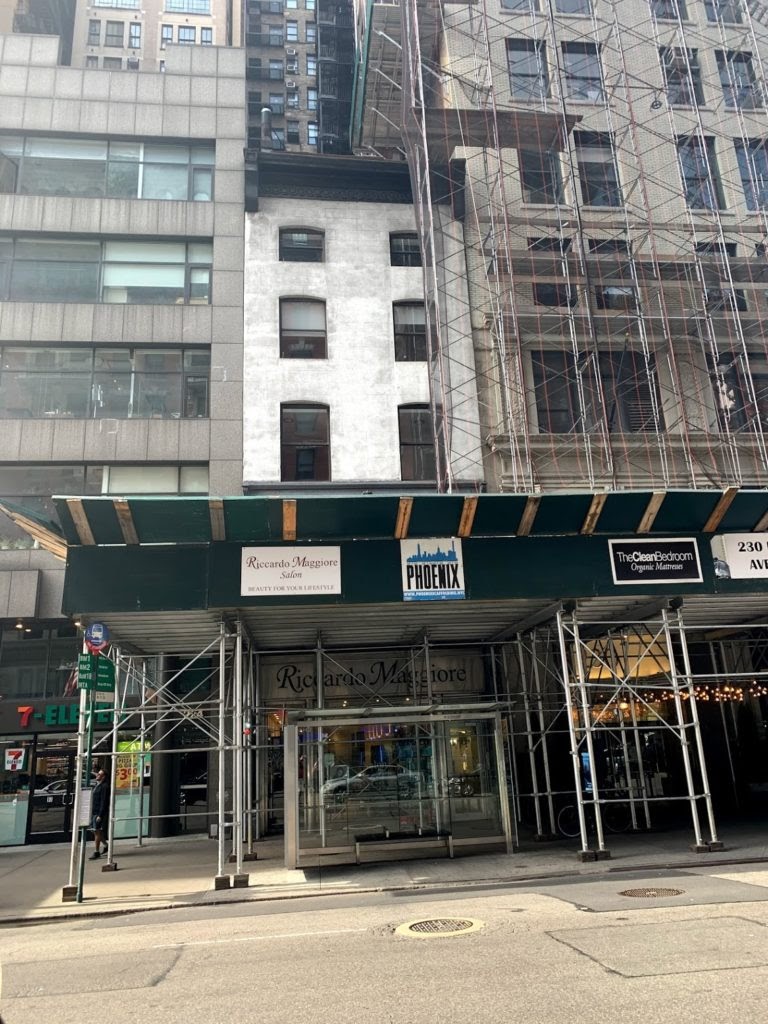
The seminary in 1900, Detroit Publishing Co, courtesy Library of CongressLondon Terrace 1919 / New York Public LibraryLondon Terrace in 1931.London Terrace today. Photo by Greg YoungThe Grand Opera House, 23rd and 8th Avenue, Courtesy the Museum of the City of New YorkSome older structures along Ninth Avenue. Photo by Greg YoungPhoto by Greg YoungGreg on the unfinished part of the High Line with the Starrett-Lehigh Building in the background, 2012Starrett-Lehigh Building todayCaptivating Lamartine Place on West 29th Street with Hudson Yards looming in the distance.The Big Cup on Eighth Avenue. Picture courtesy the Facebook group THEN & NOW: Uncle Charlie Remembers Our LGBT Memories of NYC
A short documentary on the nightclub called Tunnel:
FURTHER LISTENING
After listening to this episode on the history of the Chelsea neighborhood, check out these past episodes with similar themes and subjects
The Bowery Boys: New York City History podcast is brought to you …. by you!
We are now producing a new Bowery Boys podcast every other week. We’re also looking to improve and expand the show in other ways — publishing, social media, live events and other forms of media. But we can only do this with your help!
We are now a creator on Patreon, a patronage platform where you can support your favorite content creators.
Please visit our page on Patreon and watch a short video of us recording the show and talking about our expansion plans. If you’d like to help out, there are several different pledge levels. Check them out and consider being a sponsor.
We greatly appreciate our listeners and readers and thank you for joining us on this journey so far.
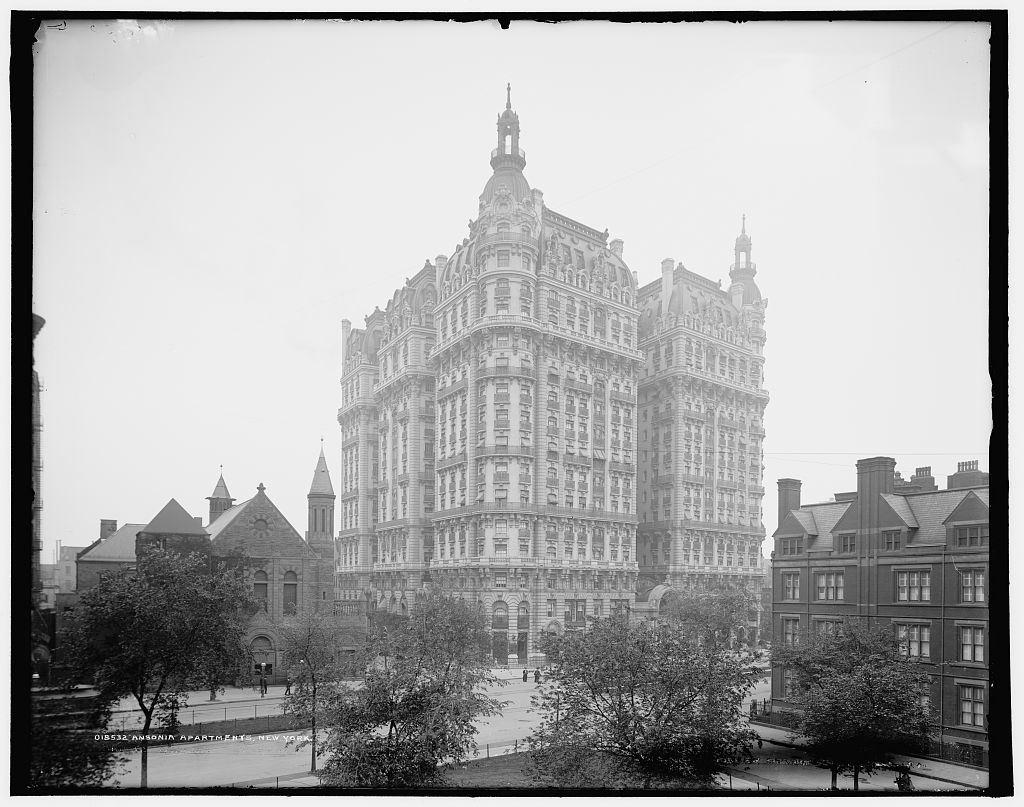
The Ansonia Hotel in 1905, Detroit Publishing Co., courtesy the Library of Congress
PODCAST The strange, scandalous and sex-filled story of The Ansonia, an Upper West Side architectural gem and a legendary musical landmark.
In the television show Only Murders in the Building, Martin Short, Steve Martin and Selena Gomez play podcasters attempting to solve a mystery in a building full of eccentric personalities.
Their fictional apartment building is called The Arconia, a name partially inspired by The Ansonia, a former residential hotel with a history truly stranger than fiction.
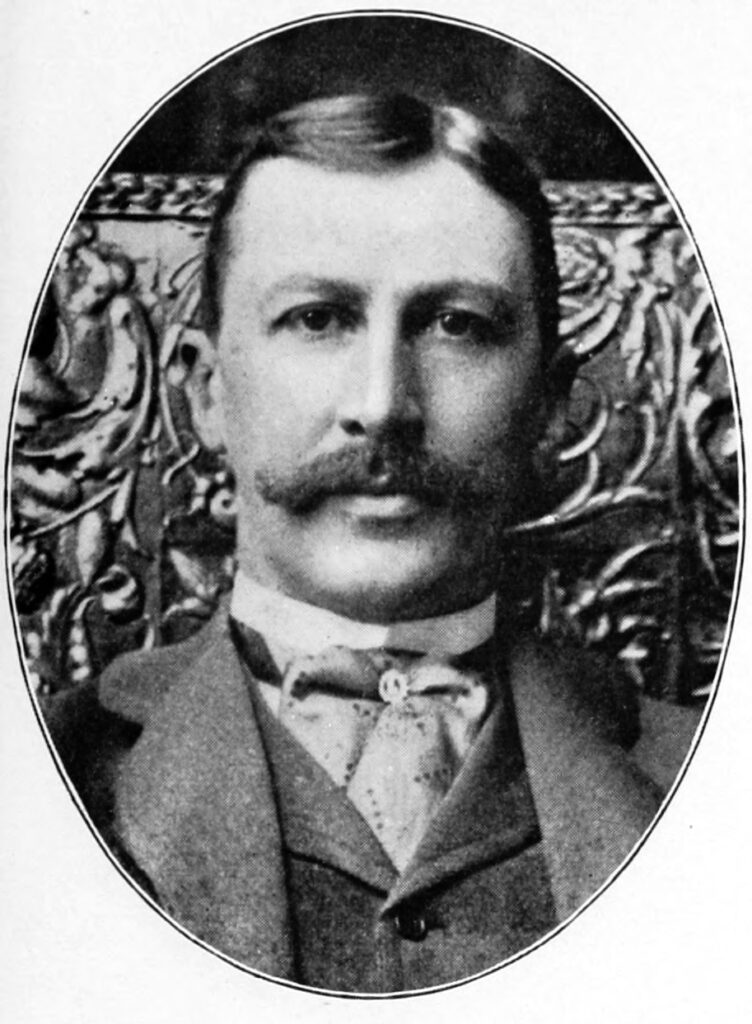
Built by the copper scion W.E.D Stokes, the lavish Ansonia remains one of the grandest buildings on the Upper West Side. But its hallways have seen some truly dramatic events including one of the greatest sports crimes in American history.
Today the Ansonia is still known as the home for great musicians and many of the most famous composers and opera stars have lived here.
But it’s the music legacy of the Continental Baths, a gay bathhouse once in its basement, that may resonate with pop and rock music lovers as the launching pad for one of America’s great performers.
PLUS: The hedonistic disco delights of Plato’s Retreat.
NOTE: This show feature discussions of adult sex clubs and bathhouses. Although the show does not linger on the specifics, parental guidance is nonetheless suggested.
LISTEN NOW: THE ANSONIA
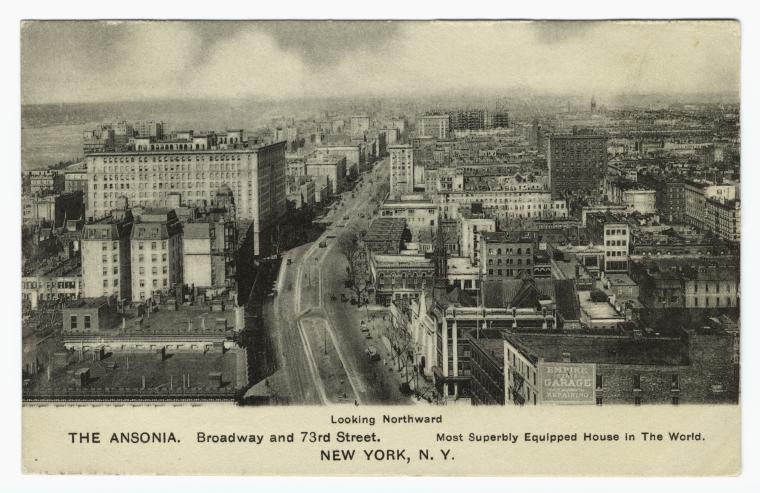
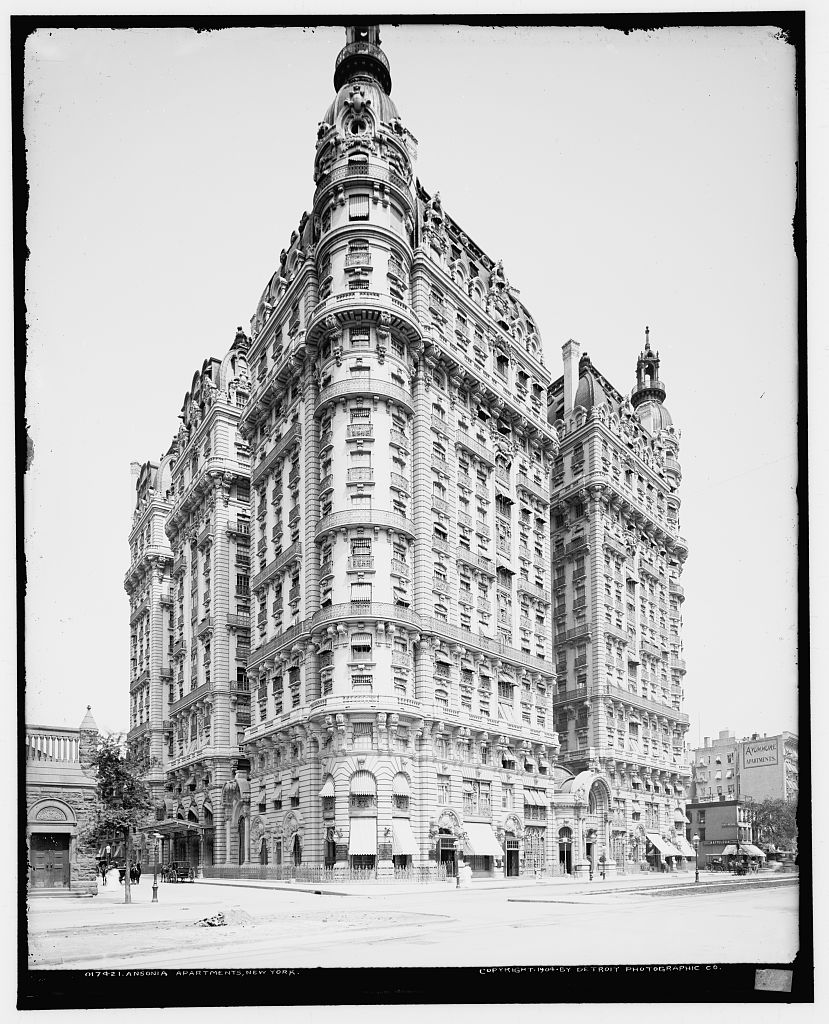
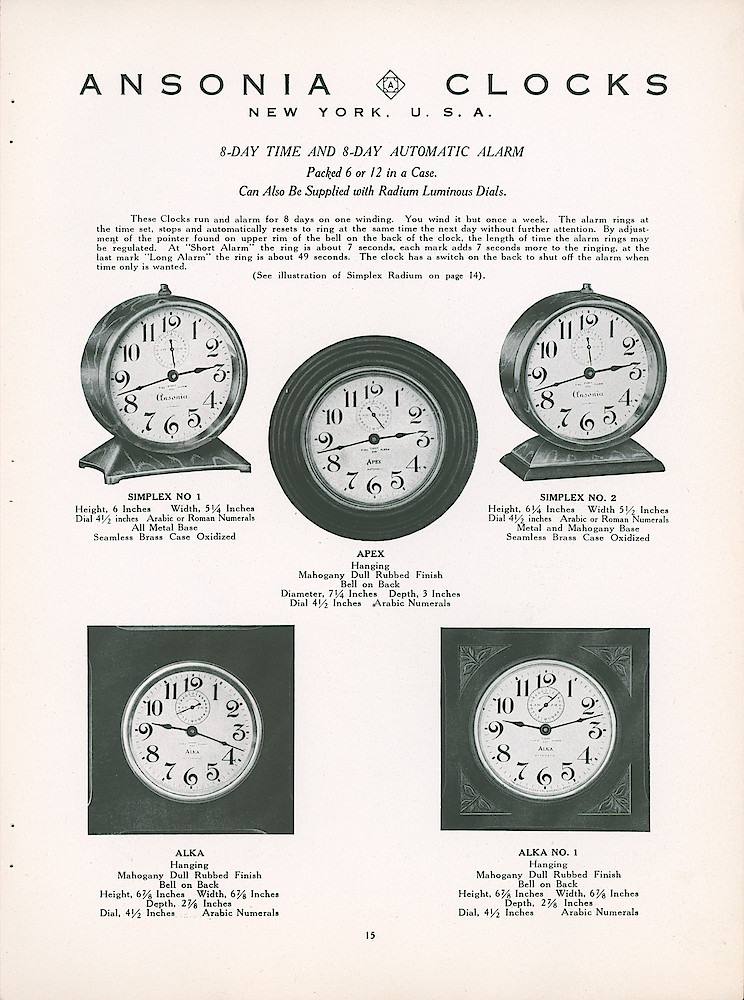
The Ansonia 1904, Detroit Publishing Co., Library of CongressW.E.D. Stokes — Notable New Yorkers of 1896-1899 (1899)1920 advertisement, courtesy Clock History
Bette Midler at the Continental Baths:
A television commercial (!!!) for Plato’s Retreat
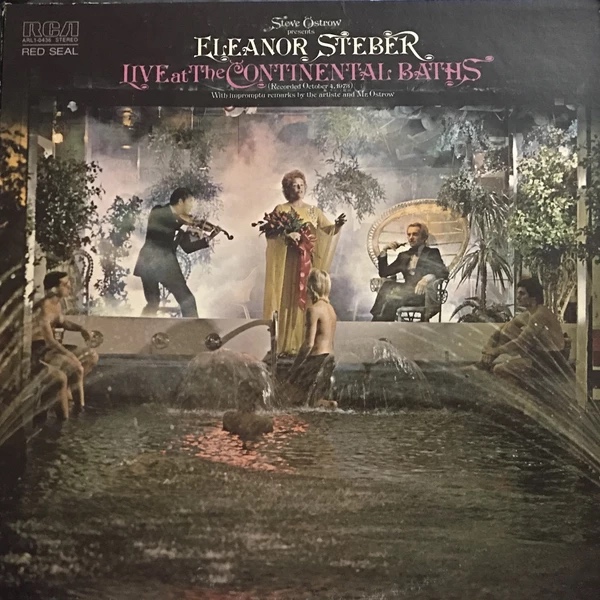
Eleanor Steber’s album recorded at the Continental Baths
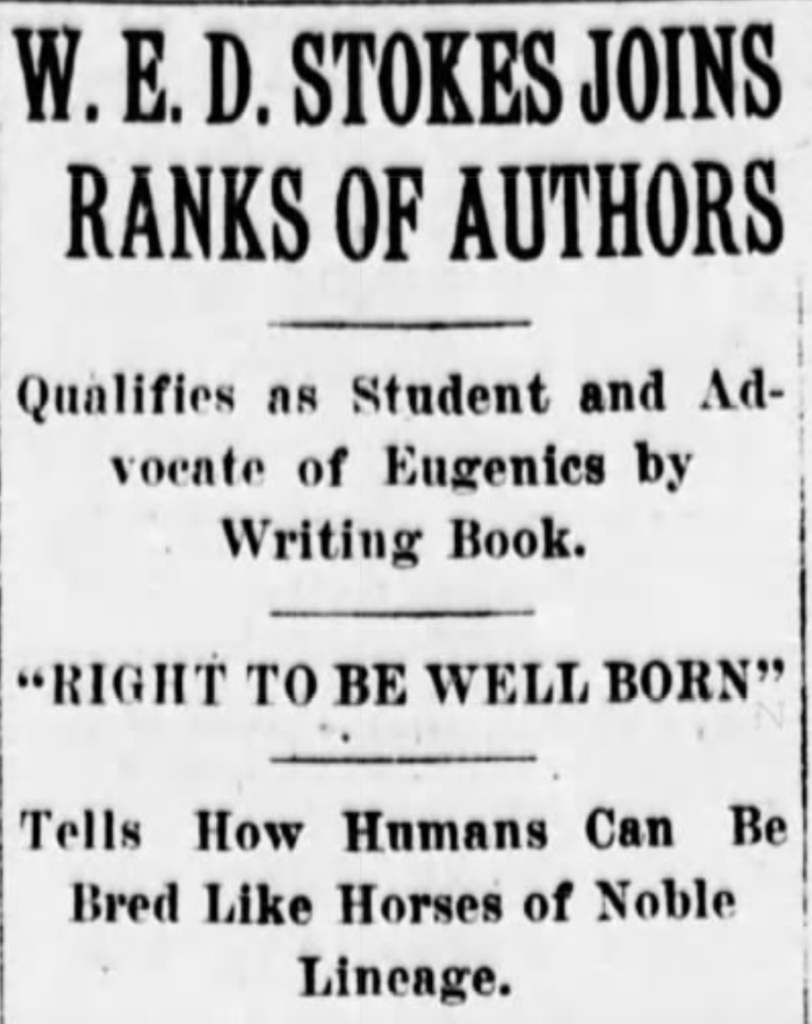
The New York Herald article mentioned in the podcast where Stokes explains why women from Chicago have such large feet.
FURTHER READING
The Ansonia: A Pictorial History of Manhattan’s Beaux-Arts Masterpiece / The Cardinals Built to Last: 100+ Year Old Hotels in New York / Stanley Turkel “Design Notebook: Rescuing the Ansonia from the Rescuers” by Paul Greenberger Eight Men Out: The Black Sox and the 1919 World Series / Eliot Asinof Here Lies the Heart / Mercedes de Acosta Live At The Continental / Steve Ostrow The Sky’s The Limit: Passion and Property in Manhattan / Steven Gaines “That Wacky Little Waif, Bette Midler” by Rex Reed (New York Daily News) “A Troubled Transition for the Ansonia” by Shawn G. Kennedy A View from a Broad / Bette Midler Vision and Enterprise: Exploring the History of Phelps Dodge / Carlos A. Schwantes
FURTHER LISTENING
After listening to this episode on the history of the Ansonia, check out these past episodes with similar themes and subjects
The Bowery Boys: New York City History podcast is brought to you …. by you!
We are now producing a new Bowery Boys podcast every other week. We’re also looking to improve and expand the show in other ways — publishing, social media, live events and other forms of media. But we can only do this with your help!
We are now a creator on Patreon, a patronage platform where you can support your favorite content creators.
Please visit our page on Patreon and watch a short video of us recording the show and talking about our expansion plans. If you’d like to help out, there are several different pledge levels. Check them out and consider being a sponsor.
We greatly appreciate our listeners and readers and thank you for joining us on this journey so far.
There’s one more new Bowery Boys Podcast to come in 2021 (look for it on New Year’s Eve) — but we wanted to take a moment to thank you for making 2021 another fantastic year. Twelve months, 28 brand new episodes and a live show. And of course — a new spin-off!
It’s a pretty special way to go into the new year — where we will celebrate our 15th year of producing the Bowery Boys podcast.
And of course an extra, extra special thank you to those who support us Patreon. We were able to produce these shows because of your support and encouragement.
Our annual holiday history-book gift guide is here! Of course that also means gifts for you. You don’t have to give these away at all. Treat yourself or that history lover in your life to one of these fascinating 2021 releases, some of our favorite reads of the year.
NOTE: Some of them have been reviewed during the year and you can find the full length review in the provided links below.
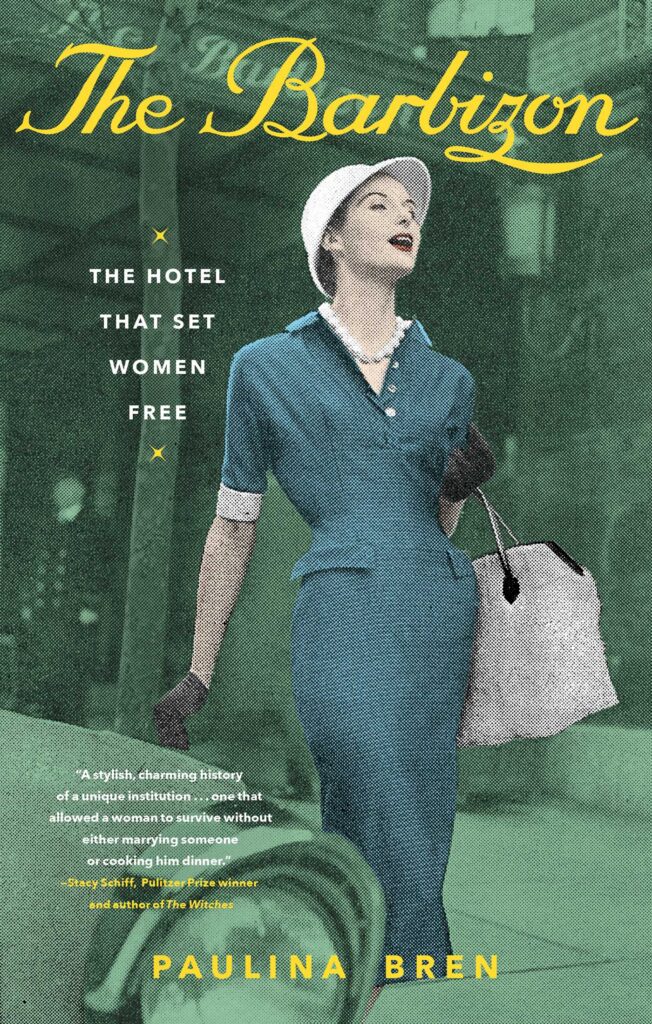
The Barbizon The Hotel That Set Women Free Paulina Bren
So many great women thrived in New York City in the 20th century because of the freedoms afforded by the Upper East Side’s Barbizon Hotel, a residential hotel where no men were allowed. Women from Sylvia Plath to Grace Kelly lived here and thousands more — from the late 1920s to the 1980s.
As Bren writes in this charmer of a book, “Women did not come to the Barbizon to network but that’s what they did anyway. They helped each other find work, they talked over problems with one another, they applauded each other’s success and gave solace to those with disappointment and heartbreak.”
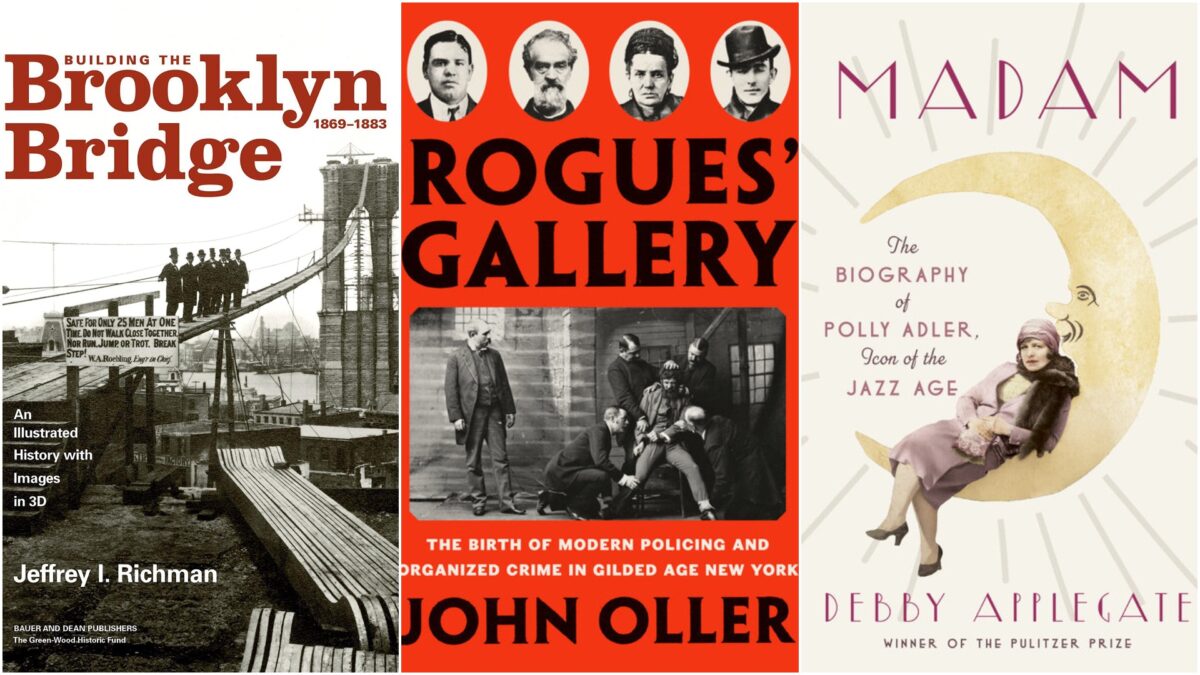
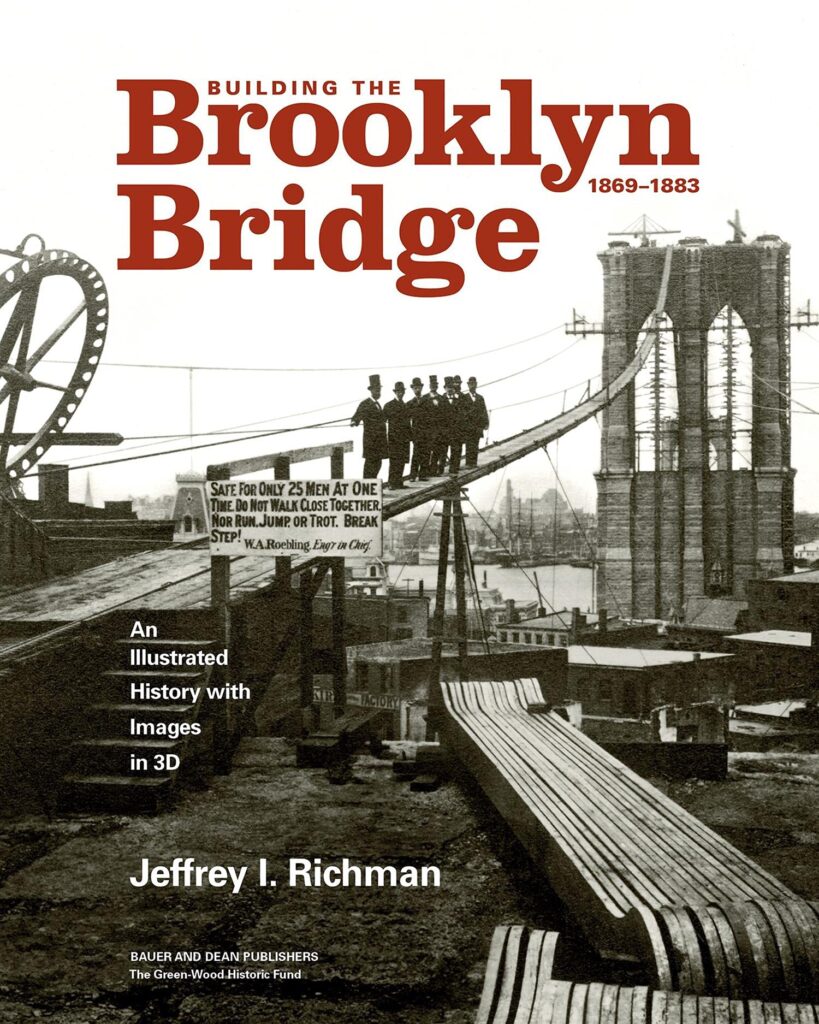
Building the Brooklyn Bridge 1869-1883 Jeffrey I. Richman
This thrilling and richly arranged coffee-table volume by Green-wood Cemetery historian Jeffrey I. Richman with re-ignite your love of the Brooklyn Bridge. Bringing together a trove of archival images, Richman explores the extraordinary story of the bridge’s construction — grand, marvelous and sometimes tragic.
Richman’s epic visual treatment of the bridge’s development rightly centers it as one of the greatest engineering achievements in American history.
Oh and I should add — sections of the book are in 3-D. It even comes with 3-D glasses!
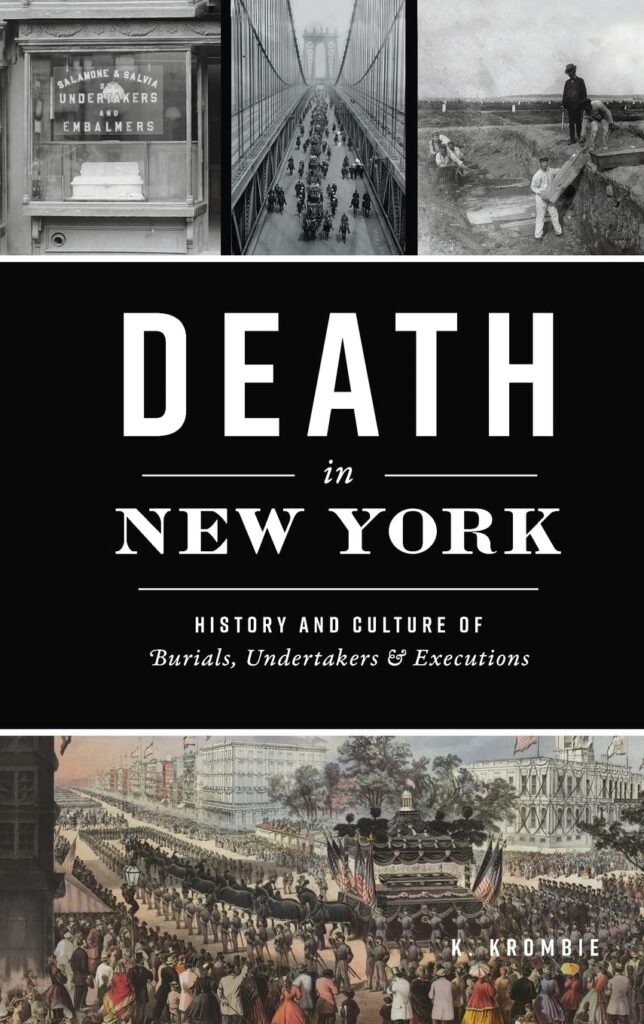
Death In New York History and Culture of Burials, Undertakers & Executions K. Krombie
New York City is full of life surrounded by death, a metropolis of mausoleums and memorials, with ancient burial grounds tucked between apartment buildings and rural cemeteries with classic works of architecture.
Krombie surveys the ways in which city dwellers interact with those who have passed. This is not a depressing read but really a guide to how memory and reverence are interpreted (and sometimes ignored) in a thriving cityscape — from regal tombs in the Bronx to forgotten Black burial grounds in Staten Island. (For just a 190 page book, Death in New York is generously packed with information.)
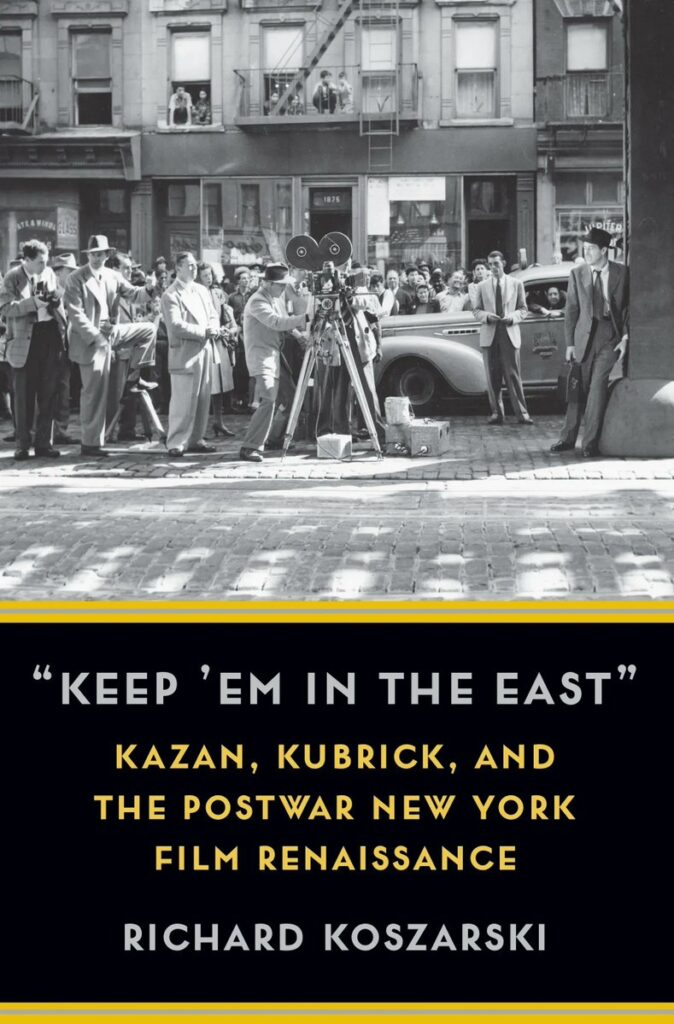
“KEEP ‘EM IN THE EAST” Kazan, Kubrick, and the Postwar New York Film Renaissance Richard Koszarski
“Calling all movie buffs! Koszarski’s latest movie-industry history is an essential resource for your bookshelves, a detailed inspection of critical film work in the New York City area from the 1930s to 1950s and the release of Elia Kazan’s On The Waterfront.
As Koszarski reveals, one key to the continued existence of a local New York film industry was a City Hall friendly to the business, with business-minded mayors like William O’Dwyer attempting to lure filmmakers with financial incentives and streamlined permits.
With the rise of film noir and crime pictures, New York became a perfect physical backdrop and many classic examples (The Naked City being the best known) feature actual city landmarks and locations.”
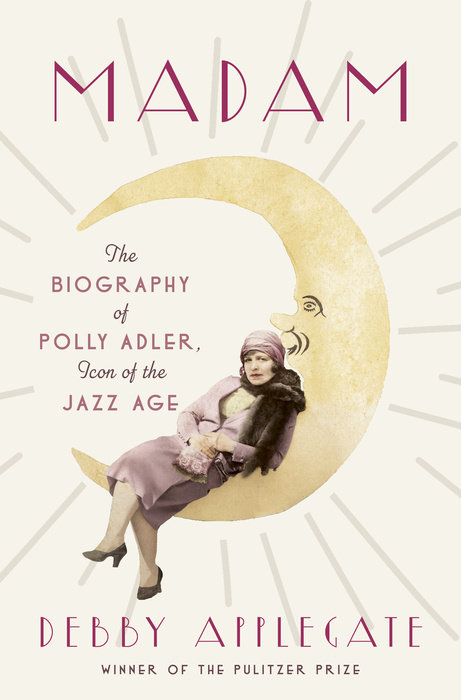
Madam: The Biography of Polly Adler, Icon of the Jazz Age Debby Applegate
A genuine rags-to-riches tale, beautifully told. The Jazz Age is best explored from the perspective of a rule-breaker, and very few people broke the roles quite like Polly Adler, a Polish Jewish immigrant who thrived in Prohibition New York as the city’s most successful madam.
Adler’s clever business acumen allowed her to negotiate both the criminal and legal worlds, and her parlor brothels were filled the most sinful, most famous men of the 1920s.
“Slumming intellectuals and Broadway Bohemians were tickled by her blunt realism and lightly louche wisecracks,” writes Adler. “Everyone, from Park Avenue aristocrats to Lower East Side hooligans, appreciated her ironclad discretion.”
Applegate’s prose has won her honors before — her superb biography on Henry Ward Beecher won the 2007 Pulitzer Prize — and it may do so again. The story dances off the page.
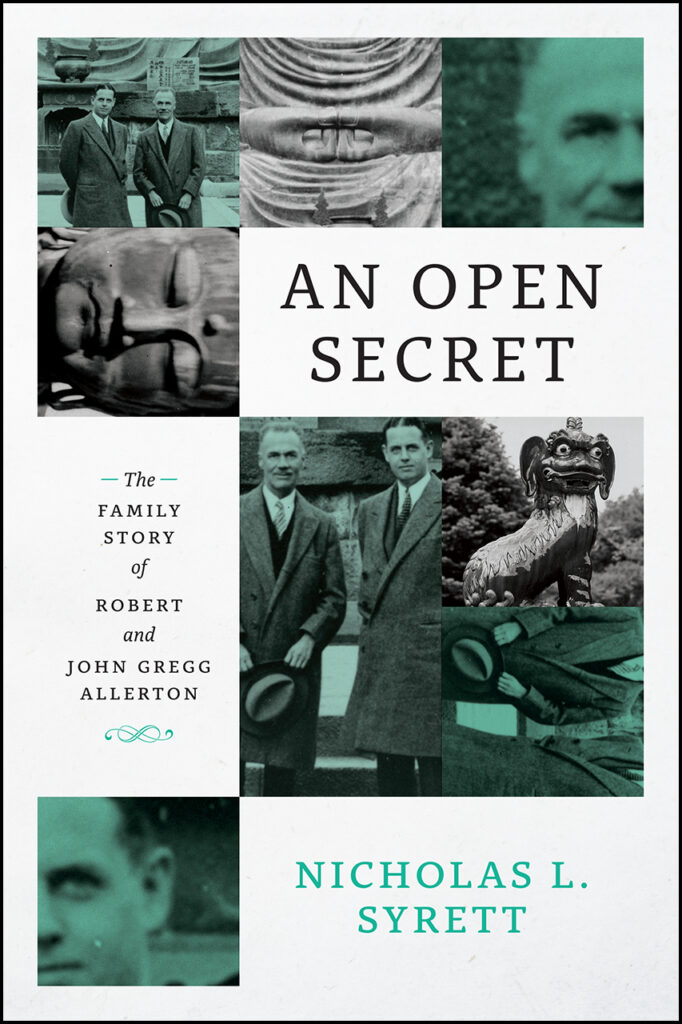
An Open Secret The Family Story of Robert and John Gregg Allerton Nicholas L. Syrett
But the parameters of Allerton’s personal life might be considered obscured today — concealed by the polite vestiges of post-Gilded Age social decorum, cushioned by the privilege of his vast wealth.
In An Open Secret, author Nicholas Syrett takes the reader into a maze of social norms redefined by the comforts of wealth and a collection of personal mysteries as well-kept as a display case of ancient art.
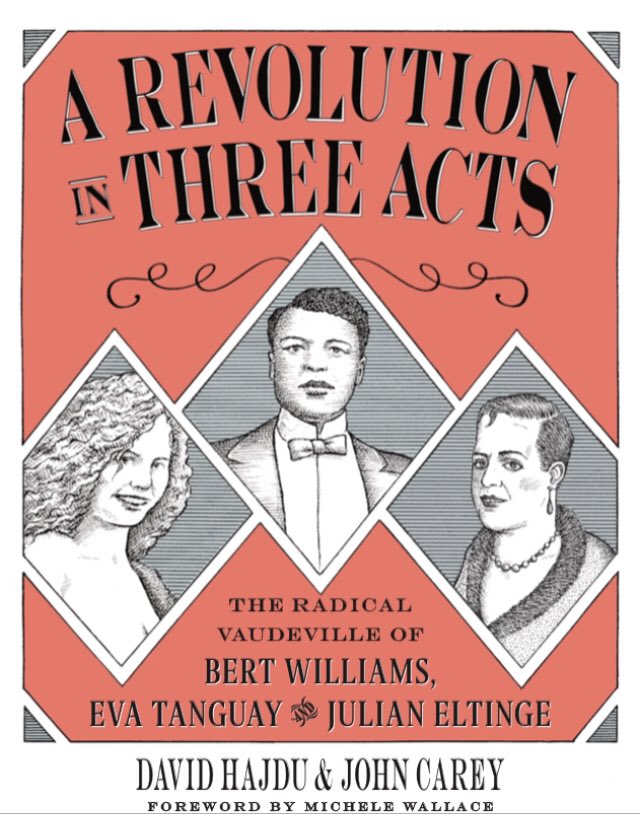
A Revolution in Three Acts The Radical Vaudeville of Bert Williams, Eva Tanguay and Julian Eltinge David Hadju & John Carey
In this fabulously illustrated graphic novel, writer David Hadju and artist John Carey bring to life three of the most enigmatic and unique entertainers of the vaudeville era — gender bending Julian Eltinge, chanteuse Eva Tanguay and Black superstar Bert Williams.
Although I would say it achieves an even loftier goal — capturing the spirit of vaudeville itself, the stage as a laboratory of cultural experimentation.
Above a triumphant image of Tanguay, Hadju writes, “When the Lincoln-head penny was introduced, Tanguay had a costume made of pennies glued onto bodysuit.” On the next page, she flicks the pennies off her form-fitting suit, to the delight of audiences. And the reader.
Republic of Detours How the New Deal Paid Broke Writers to Rediscover America Scott Borchert
Scott Borchert’s fascinating survey of this unconventional New Deal program, packed with literary greats, brings FDR’s optimistic political strides of the 1930s in line with the realities of the American landscape — from the mountains of Idaho to the swamplands of Florida.
The American Guides — tour guides of each state and many cities, often quirky and elegantly written — were the signature achievements of the project, employing thousands of writers from a wide spectrum of talents and ideologies to produce a snapshot of the United States in the late 1930s.
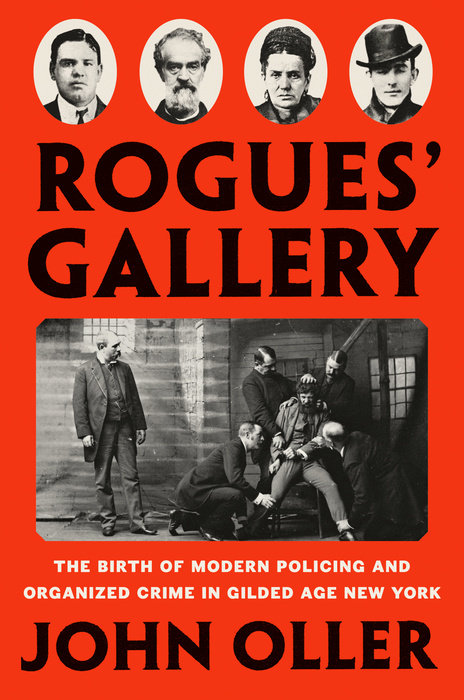
Rogues’ Gallery The Birth of Modern Policing and Organized Crime in Gilded Age New York John Oller
Oh the evils of late 19th century crime in New York! Why are they so fascinating? Oller’s adventure-filled history of the underworld explores Thomas F. Byrnes and a world of criminal activity which inspired his ‘rogue’s gallery’ (an actual collection of photographs used by detectives).
Byrnes’ tenure ushered in a new kind of detective work at a moment when crime itself was beginning to change. “For Gilded Age gang members and thieves,” Oller writes, “crime was just business. The new criminals were low-life mirror images of the more exalted robber Barrons, who cut corners to earn their untold riches.”
By the book’s final pages, a sinister new enterprise would emerge in New York City — organized crime. And you’ll enjoy every scoundrel along the way.
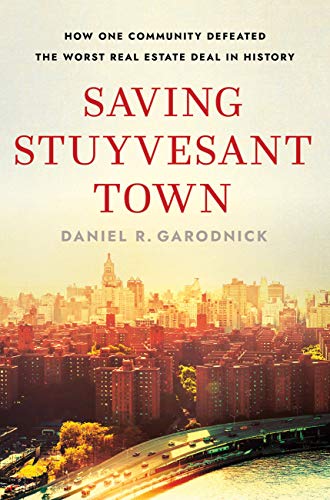
Saving Stuyvesant Town How One Community Defeated The Worst Real Estate Deal In History Daniel R. Garodnick
In 2006, when MetLife announced it was selling Stuyvesant Town (eventually to real estate behemoth Tishman Speyer for $5.4 billion), tenants feared that the complex’s famous middle-class affordability was about to disappear.
Fortunately one of those tenants was Daniel Garodnick, longtime resident and a newly elected city councilman.
In his new book Saving Stuyvesant Town, Garodnick reveals the backstory behind the unexpected and financially complicated events which followed the announcement, a battle between a community and the real estate world during one of the most volatile financial periods in American history.
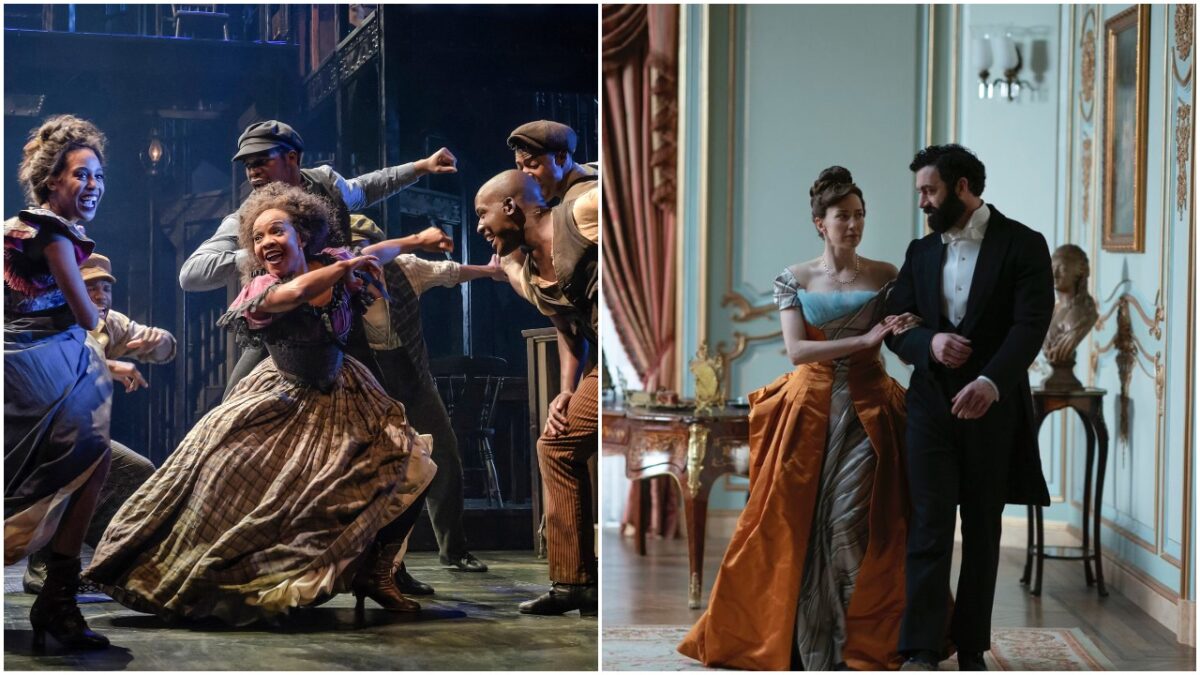
It’s going to be a happy new year! Especially if you’re a history lover. Two gorgeous-looking, culturally expansive takes on New York City in the 19th century — downtown and uptown, on stage and on screen — are headed our way within the first few weeks of 2022.
Alessandra Mello/Berkeley Rep
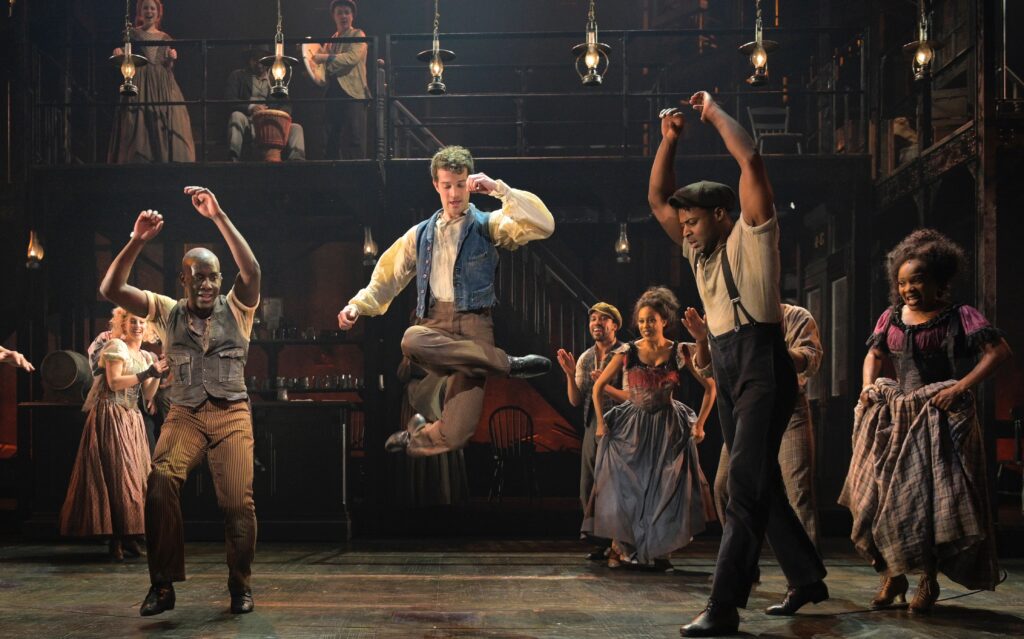
The musical Paradise Squareis coming to Broadway in February, set in the dance halls of Five Points in the year 1863. There will be romance, tap dancing and Draft Riots. The cast is led by Slave Play‘s Tony Award-nominated star Joaquina Kalukango.
The show just finished up a run at the James M. Nederlander Theatre in Chicago and now it finally heads to the city in which it is set.
Here’s the musical number “I’d Be A Soldier” from the show:
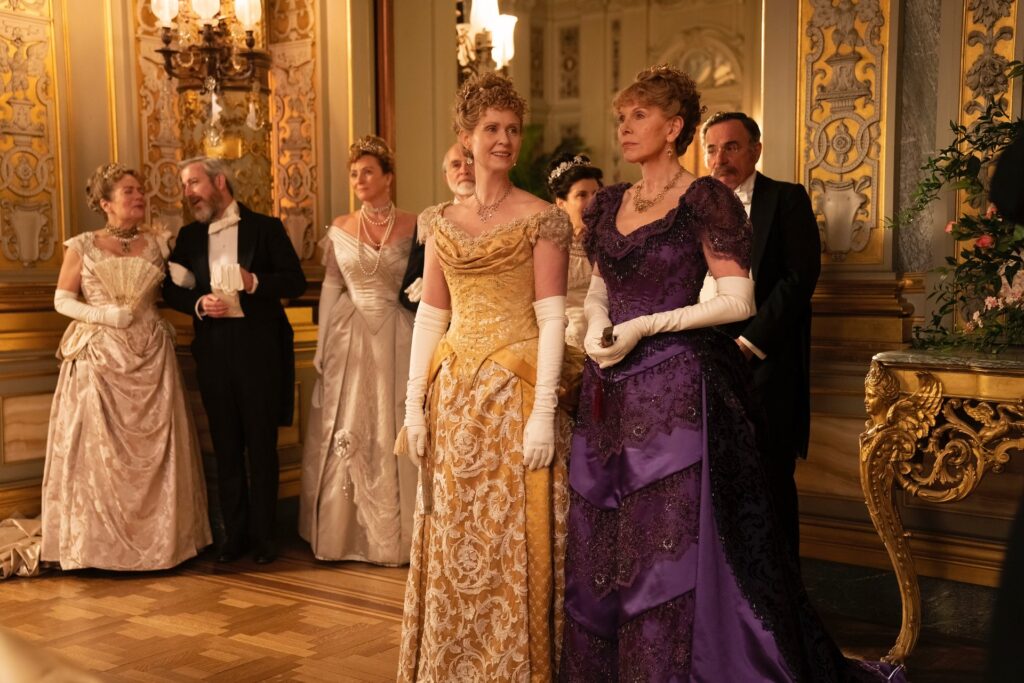
The new HBO show The Gilded Age, Julian Fellowes’ much-anticipated follow-up to Downton Abbey, is set in the year 1882.
Its drawing rooms are filled to the brim with fabulous actresses — Christine Baranski, Audra McDonald, Carrie Coons and Cynthia Nixon (currently in another HBO show And Just Like That…).
Here’s the full-length trailer which was just released this week:
Presenting a new history podcast produced by Tom Meyers and Greg Young from the Bowery Boys: New York City History Podcast.
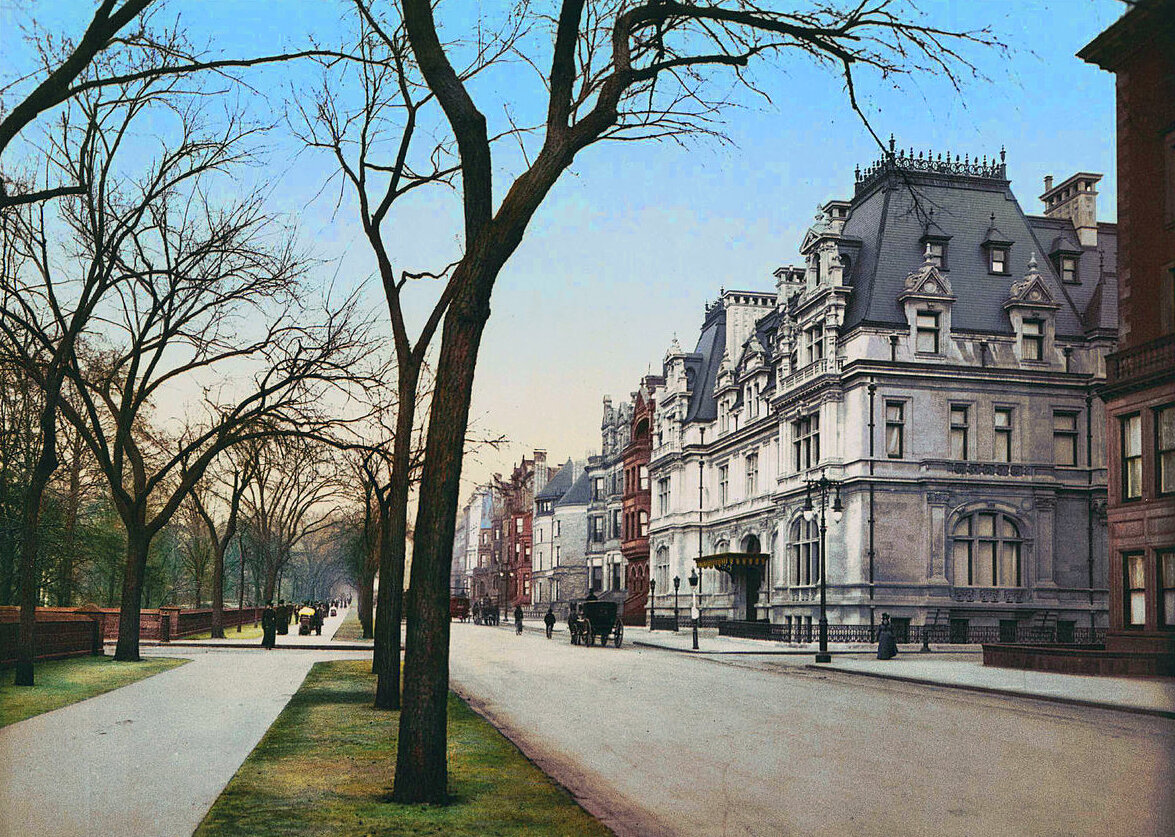
If you’re a fan of Downton Abbey, The Age of Innocence or Upstairs Downstairs, then we know The Gilded Gentleman podcast will be your cup of tea.
You’re cordially invited to join social and culinary historian Carl Raymond for a look behind the velvet curtains of America’s Gilded Age, Paris’ Belle Époque and England’s Victorian and Edwardian eras. The food, the music, the architecture — the scandals!
The Gilded Gentleman will take intriguing journeys into the lives of some of the era’s most fascinating and curious characters from great writers such as Edith Wharton, Henry James, Oscar Wilde and Marcel Proust to royals including the Prince of Wales later King Edward the VII.
Your guide into the world of the Gilded Age.
Upcoming episodes will take you to the dining rooms of Mrs. Astor, the department stores of New York’s Ladies Mile and even into the courtyards of England’s Highclere Castle.
The first two episodes are here:
A new episode will arrive every two weeks. Subscribe to The Gilded Gentlemanwherever you get your podcasts — so you don’t miss future episodes.
Filming The Naked City. Photo courtesy the Criterion Collection
New York City (and the surrounding region) was the capital of movie making at the industry’s inception until the major studios moved out to Hollywood in the mid 1910s.
By the late 1960s, a creative revolution of independently made film — a “New Hollywood” movement, inspired by European filmmakers and driven by film students will bold visions — brought the movie industry back to New York City. Scorsese, Coppola, Allen, Cassavetes.
But in the between years, movie making never went away in New York. In fact the post-war era produced an epic list of classic film, far from the traditional big-studio soundstage.
“KEEP ‘EM IN THE EAST” Kazan, Kubrick, and the Postwar New York Film Renaissance Richard Koszarski
Calling all movie buffs! Koszarski’s latest movie-industry history is an essential resource for your bookshelves, a detailed inspection of critical film work in the New York City area from the 1930s to 1950s and the release of Elia Kazan’s On The Waterfront.
As Koszarski reveals, one key to the continued existence of a local New York film industry was a City Hall friendly to the business, with business-minded mayors like William O’Dwyer attempting to lure filmmakers with financial incentives and streamlined permits.
With the rise of film noir and crime pictures, New York became a perfect physical backdrop and many classic examples (The Naked City being the best known) feature actual city landmarks and locations.
The House on 92nd Street, 1945
But even that post-war surge of gritty movies was built on a small network of filmmakers from the Yiddish and ‘race film‘ scenes which worked on shoestring budgets into the 1930s. Newsreel creators and early documentary filmmakers also had a foothold in New York, leading to the development of a Pathe film studio on 106th Street.
By 1955 — the year On The Waterfront won Best Picture and New York photographer Stanley Kubrick made his second film Killer’s Kiss — the New York region had become a very successful alternative to the glitzy coldness of Hollywood.
Be sure to keep a pen and pad nearby as you read Koszarski dense and delightful work as you’ll have about two dozen new movies you’ll want to watch by the time you’re done.
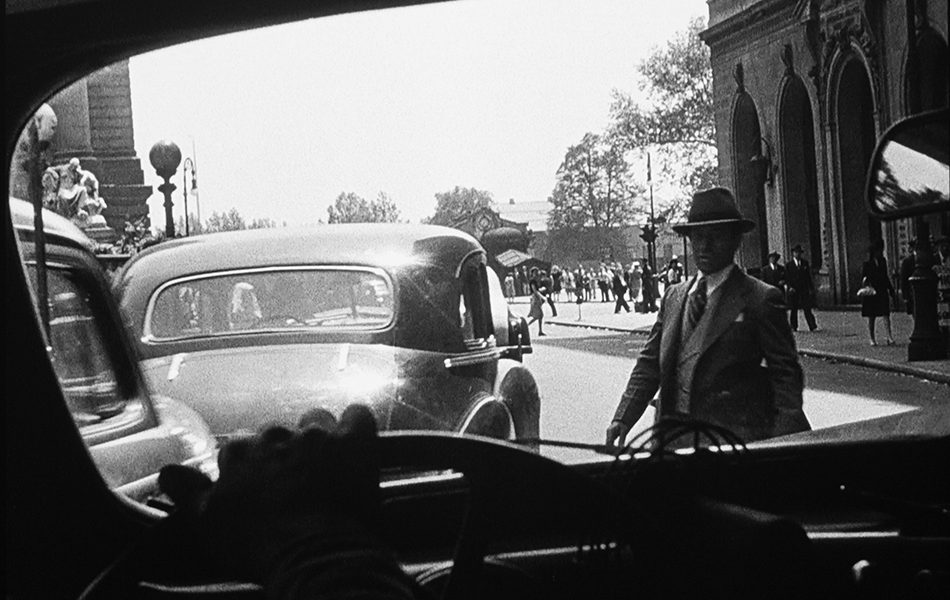
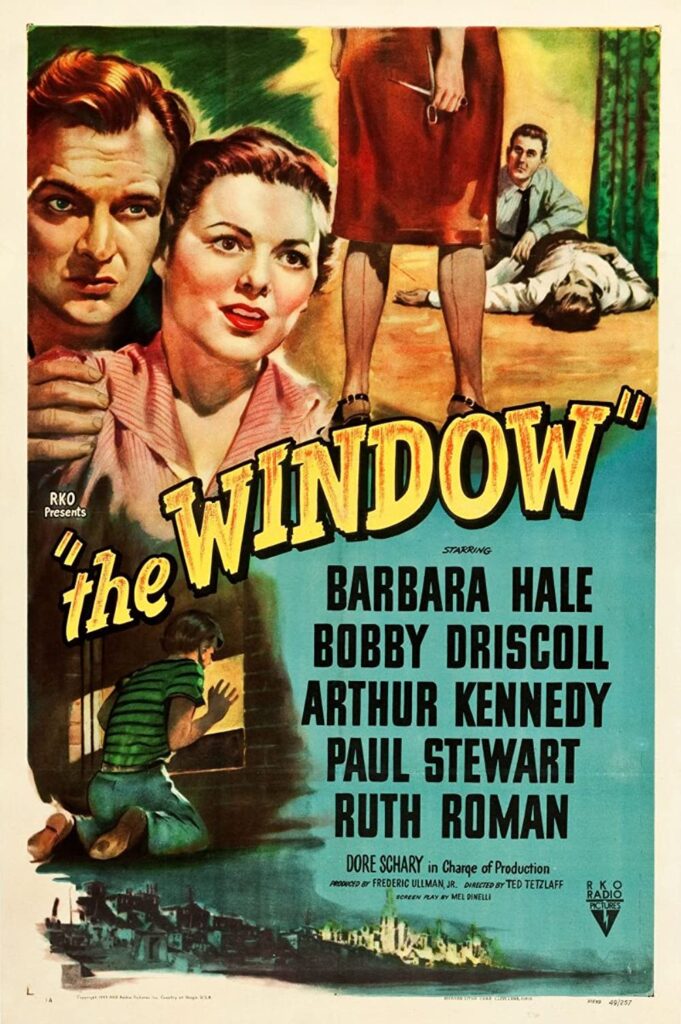
Poster for the 1949 New York nail-biter The Window
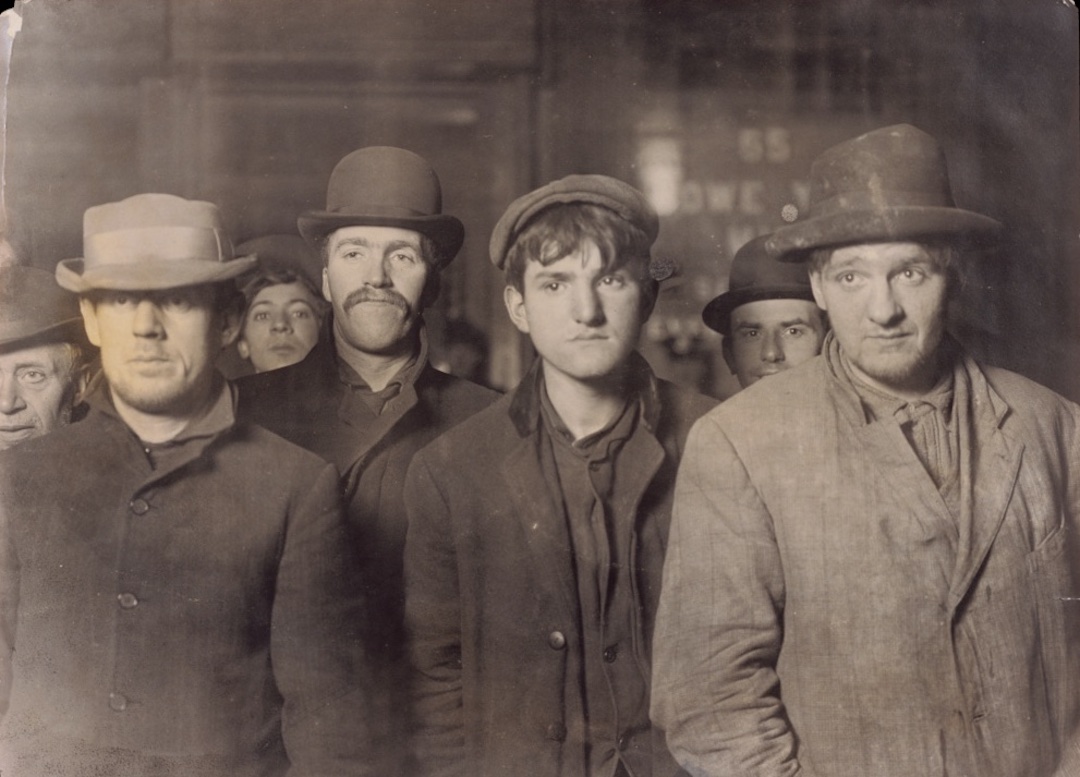
Midnight at the Bowery Mission Bread Line, photographed by Lewis Hine, 1906–7
PODCAST A history of the Bowery in the 20th century when this street became known as the most notorious place in America. And the stories of the lonely and desperate men whose experiences have been mostly forgotten.
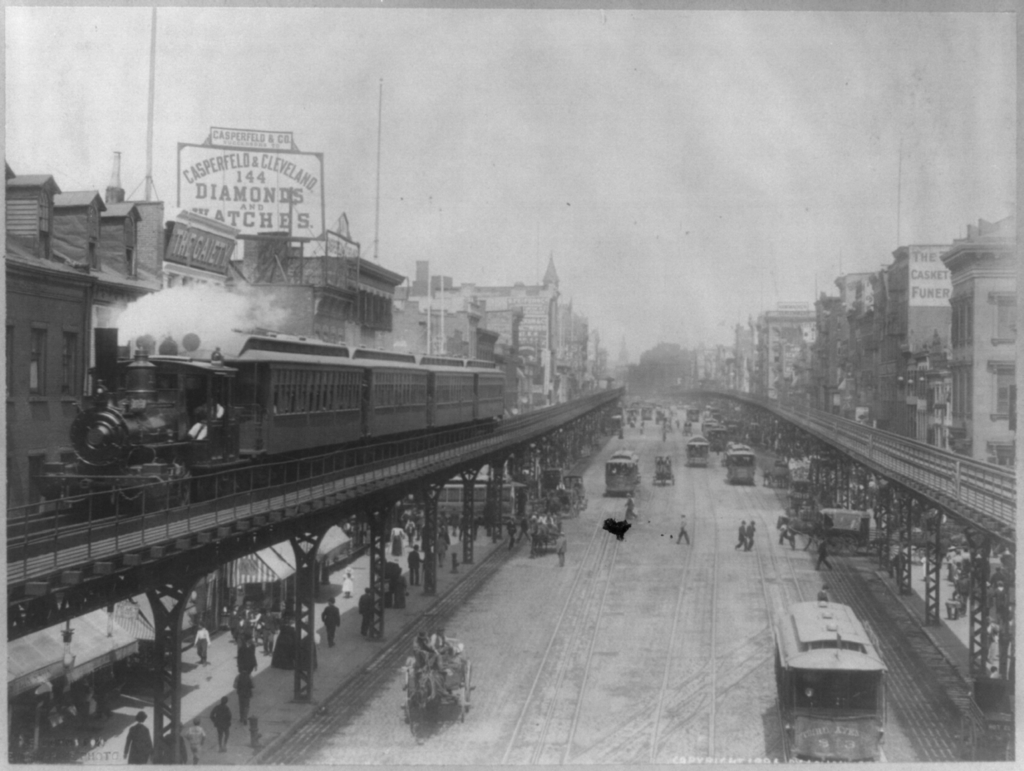
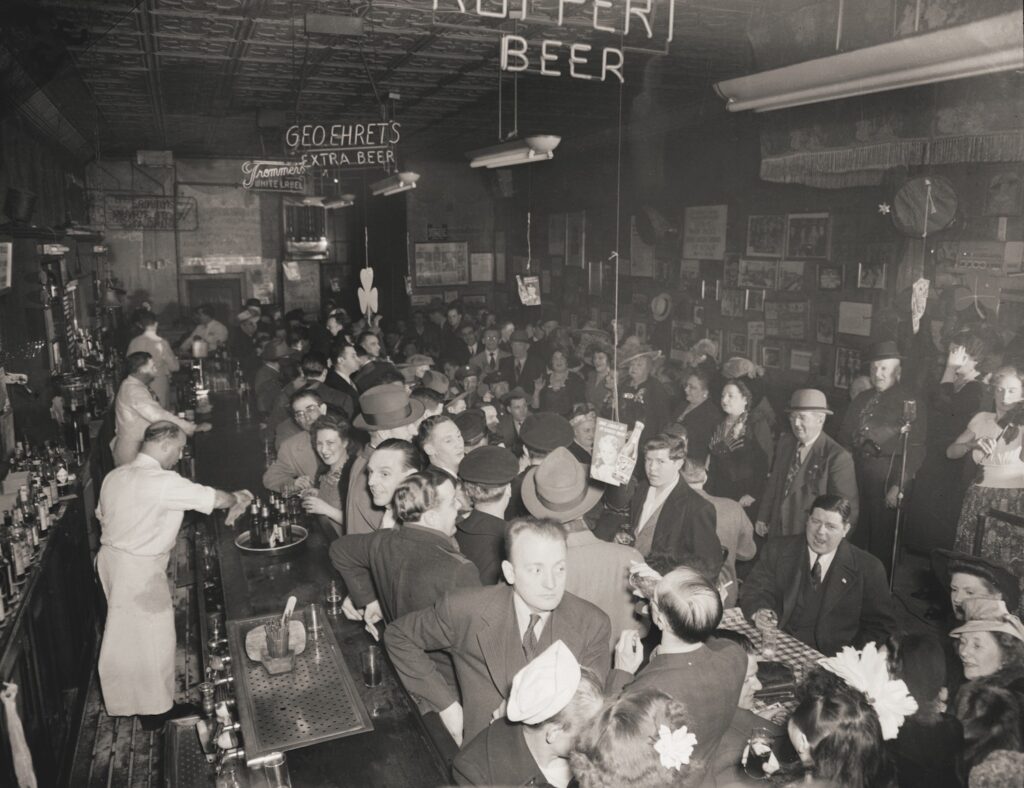
From the moment that elevated train went up in 1878, the historic Bowery became a street of deteriorating fortunes. And by the 1940s, things had gotten so bad that the Bowery had taken on the nickname Skid Row.
For decades it had become the last resort for men down on their luck, filling the flophouses and the cheap gin mills. For most of the people who found themselves here, these were not the ‘good ole days’.
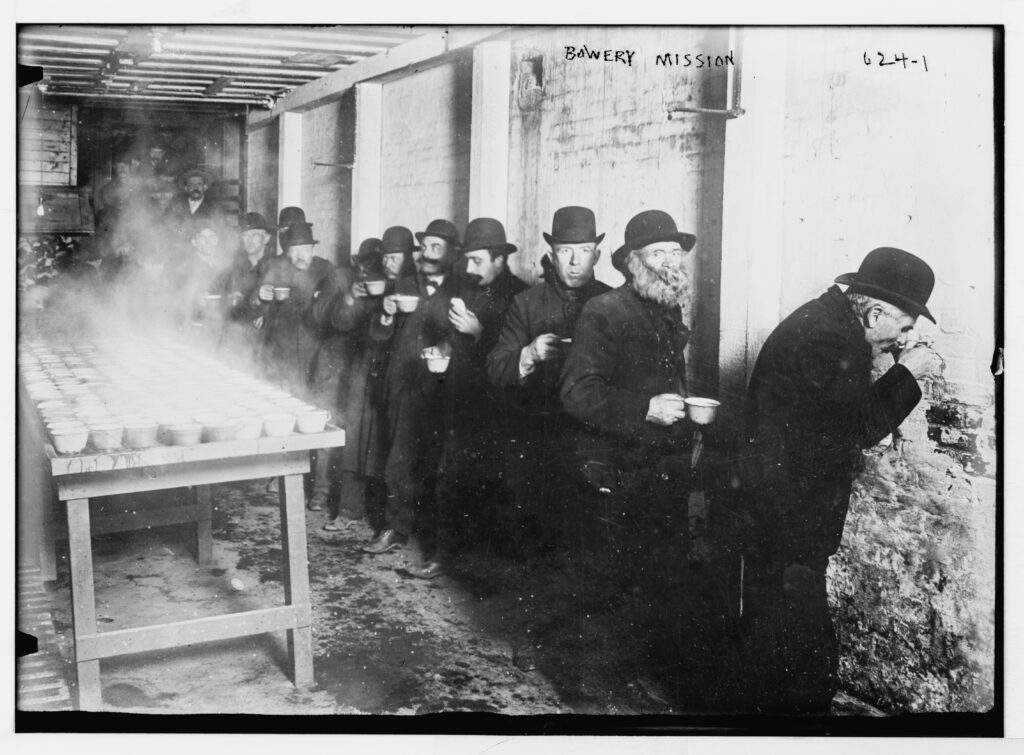
The only thing holding the Bowery back from total ruin were the rescue missions which began sprouting up here in the late 19th century, providing food and shelter for tens of thousands of people.
Men lined up to receive food, 1910s. George Grantham Bain Collection/ Library of Congress
The most renown of these places was the Bowery Mission which was founded in 1879. And is still, believe it or not, on the Bowery. Performing pretty much the same function as it did over 140 years ago.
Greg and Tom take you through the dramatic history of the Bowery, then pay a visit to Jason Storbakken at the Bowery Mission to get a look at the rescue mission’s current challenges and surprising struggles.
LISTEN NOW — SKID ROW: THE BOWERY OF THE FORGOTTEN
Featured in this show: Woody Guthrie’s “New York Town”
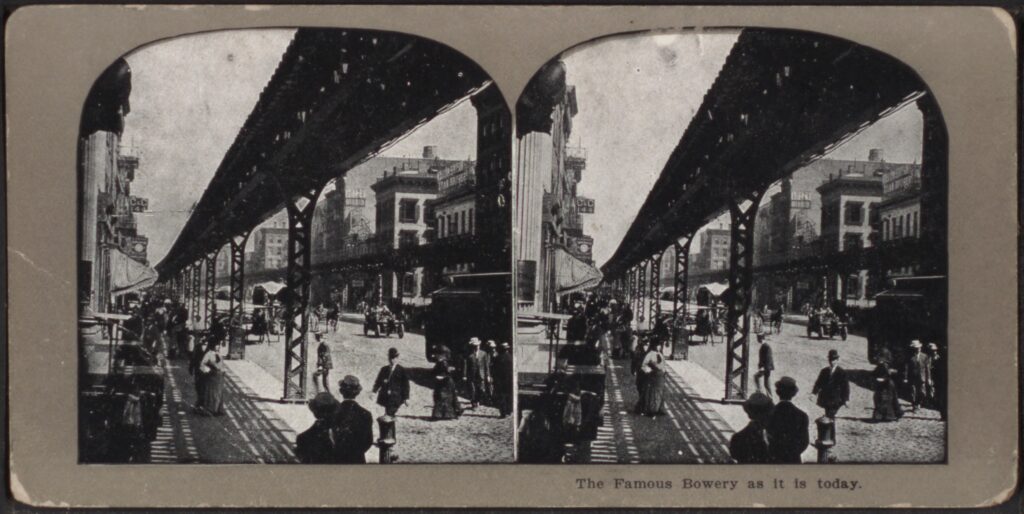
The Bowery, photographed in 1896. Courtesy Library of CongressThe famous Bowery as it is today. Taken in 1900. Courtesy New York Public Library
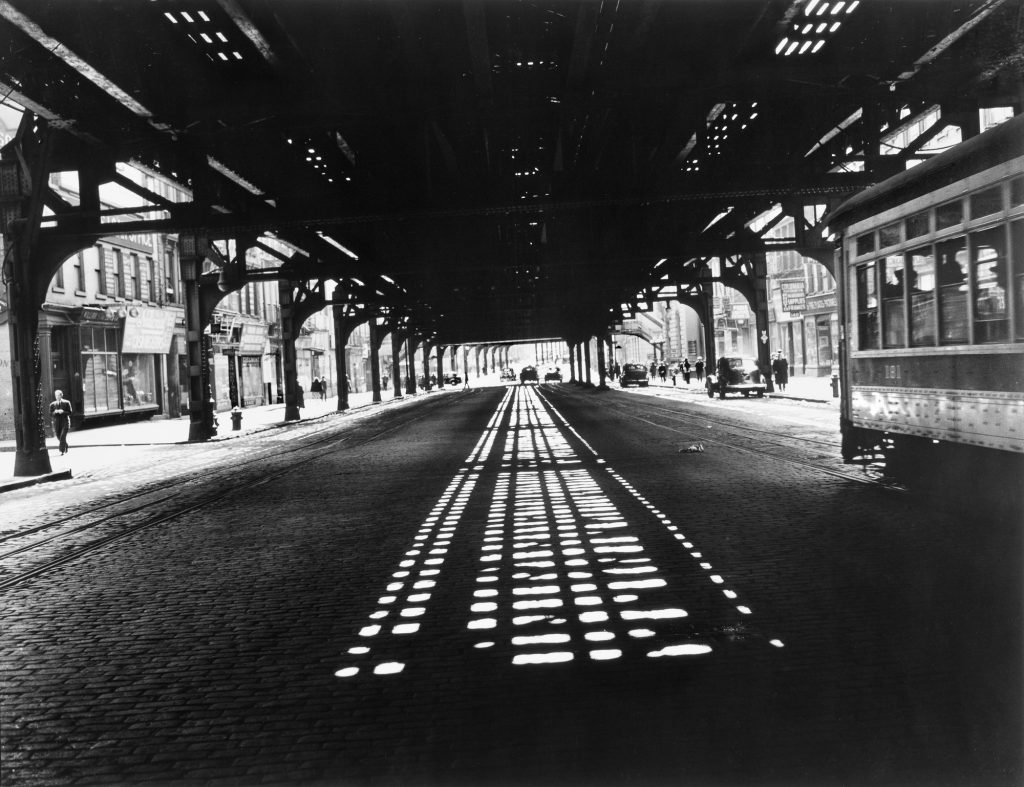
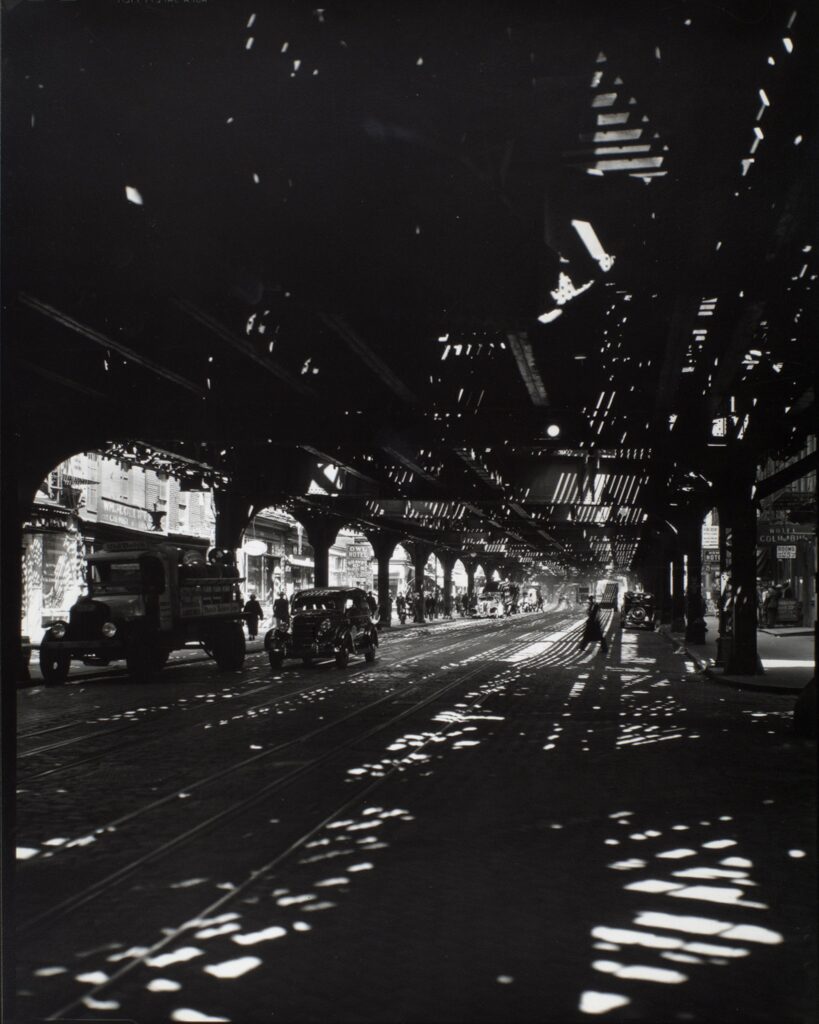
After 1915 the elevated train was expanded to completely cover the street.
Photography by Weegee/Under the Third Avenue El, 1943-1945The elevated train at Bowery and Division Streets, 24 April 1936, New York Public Library
Visit the Bowery Mission website for more information on the mission and its programs.
You can make a financial donation to help the Mission with their efforts to provide Thanksgiving meals to those in need this season.
Inside the Bowery Mission, photo by Greg YoungInside the Bowery Mission, photo by Greg YoungOur interview with Jason was recorded right in front of this window. Photo by Greg YoungWeegee, Sammy’s Bowery Follies, 1944. Image courtesy Damiani Editore and International Center of Photography.
FURTHER VIEWING
Some of the films featured or mentioned on this show:
https://youtu.be/tiHuhUgBmBk
Watch How Do You Like the Bowery? by filmmakers Dan Halas & Alan Raymond here
FURTHER READING
TheBowery Mission: Grit and Grace on Manhattan’s Oldest Street Kindle Edition / Jason Storbakken The Bowery: The Strange History of New York’s Oldest Street / Stephen Paul DeVillo Devil’s Mile: The Rich, Gritty History of the Bowery / Alice Sparberg Alexiou Down & Out, On The Road : The Homeless in American History / Kenneth L Kusmer Holy Humanitarians: American Evangelicals and Global Aid / Heather D. Curtis Up In The Old Hotel and Other Stories / Joseph Mitchell
FURTHER LISTENING
After you’ve listened to this show on the history of the Bowery’s Skid Row, dive back into the back catalog and listen to these shows referred to on the show:
The Bowery Boys: New York City History podcast is brought to you …. by you!
We are now producing a new Bowery Boys podcast every other week. We’re also looking to improve and expand the show in other ways — publishing, social media, live events and other forms of media. But we can only do this with your help!
We are now a creator on Patreon, a patronage platform where you can support your favorite content creators.
Please visit our page on Patreon and watch a short video of us recording the show and talking about our expansion plans. If you’d like to help out, there are several different pledge levels. Check them out and consider being a sponsor.
We greatly appreciate our listeners and readers and thank you for joining us on this journey so far.
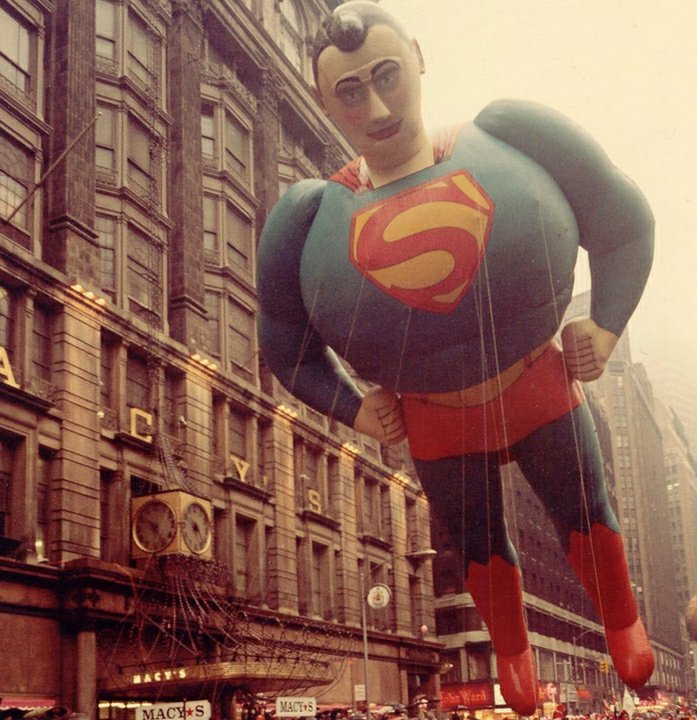
On November 24, 1966, millions of spectators flooded Broadway in New York City to watch the Macy’s Day Parade on Thanksgiving morning.
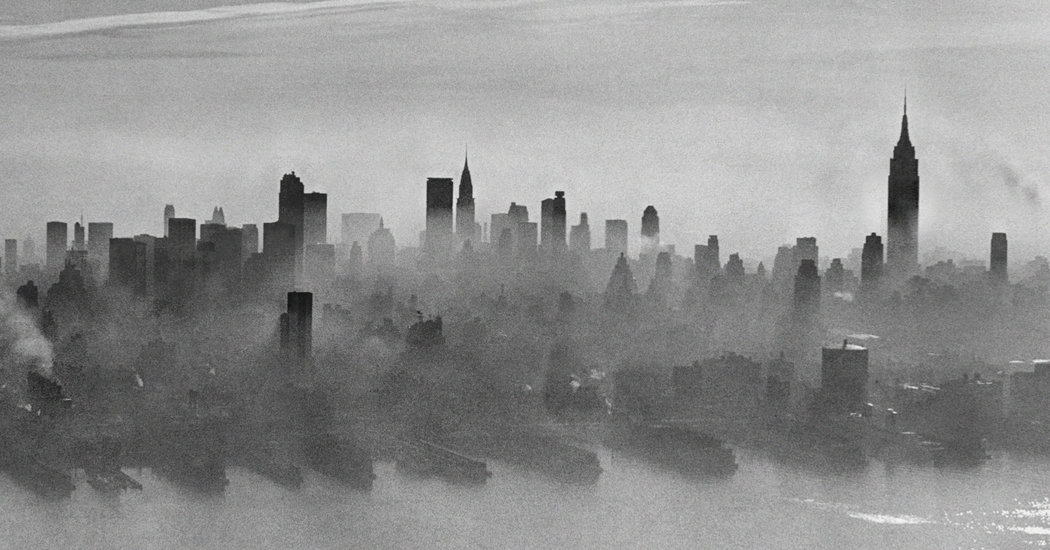
The iconic floats – Superman, Popeye, Smokey the Bear – were set against a grey sky that can only be described as noxious.
A smog of pollutants was trapped over New York City, and it will ultimately kill nearly 200 people.
How did the 1966 Thanksgiving Smog help usher in a new era of environmental protection?
And how have we been thinking about environmental disasters all wrong?
This episode comes from our friends over at the podcast HISTORY This Week from the History Channel. You can listen to more episodes of HISTORY This Week on Apple Podcasts or wherever you get your podcasts.
HISTORY This Week: A Toxic Turkey Day
EPISODE TRANSCRIPT
NOTE: This transcript may contain errors.
Sally Helm: HISTORY This Week. November 24, 1966. I’m Sally Helm. It’s Thanksgiving Day in New York City, and an awkward, top-heavy Superman balloon is floating down Broadway. He’s first up in the annual Macy’s Day Parade. There are a million people watching in the streets: moms in hats and mittens, kids in checkered coats. There are marching bands. Ballerinas. People waving pom poms in front of a castle on the Toyland float. On the Flower Float is the famous Nina Simone. She sings the song “Blue Skies.” But the skies are not blue in New York City today. They’re gray. The clouds look dirty. And after they leave the parade, the ballerinas and the marching band musicians and the pom-pom-wavers—some of them might feel a tickle in their throat. Their eyes might be stinging. They might even find it hard to breathe. Because while the Macy’s day parade is happening in Midtown Manhattan, the city’s air laboratory up in Harlem is recording extremely high levels of pollution. New Yorkers have dealt with pollution before. But nothing like this. Over this Thanksgiving weekend, the smog will turn deadly. By the time all is said and done, close to 200 people will die. The Killer Smog of 1966 forces New Yorkers, and people all around the country, to finally pay attention to the air pollution that they were actually breathing all the time.
Dr. Uekotter: It’s hard to talk about smog and smoke and air pollution dangerous without reflecting on humans, inability to take chronic threats seriously. There seems to be something about the modern mind that longs for this kind of apocalyptic vision, the big disaster. Rather than the toll that your lungs, your eyes, your body suffers each and every day,
Sally Helm: Today: The apocalyptic vision comes true. How did New York City’s killer Thanksgiving smog help usher in a new era of environmental protection for the whole country? And how are we still looking at environmental disasters all wrong? Professor Frank Uekotter grew up in Germany. But in the 1990s, he came briefly to live in the United States. And he made it out to LA. My wonderful hometown. And also, a notoriously smoggy city. Uekotter has read all about the worst years of smog in the 1950s.
Dr. Uekotter: You couldn’t stand at a street corner in Los Angeles in the early fifties, and not have watering eyes.
Sally Helm: He told us, by the time he was there in the early 1990s, things were much better. No watering eyes. But still, he got curious about air pollution. He began looking into the history of smoke, and also its modern cousin: smog. What is smog?
Dr. Uekotter: This is a term coined by a Londoner. Smog is a combination of smoke and fog, which describes the situation in London very nicely. This is 1904. When the treasurer of the coal smoke abatement society in London, England, a sense of Christmas day letter to the times of London
Sally Helm: And with that, this coal smoke abatement treasurer makes up this word that we still use today. Coal smoke is a problem at this time in London. And in other cities, too. The world is industrializing rapidly. Factories everywhere. And a lot of those factories run on coal combustion. So, if you are living in a city that is becoming a center of industry:
Dr. Uekotter: It was dirty in a way that is barely speak able nowadays because the smoke, it was everywhere in the big cities. It intruded into private quarters. It was literally in the air everywhere. You can actually see it from outside that there was a kind of a dark cloud over the city.
Sally Helm: And people were very much against it. But not so much for health reasons.
Dr. Uekotter: Mostly due to the fact that the early 20th century city was unhealthy on so many fronts. This was ranked as a minor issue.
Sally Helm: You gotta deal with your sewer problems before you deal with your smoke problems. But still, people hated the way that smoke just made everything so dirty and ugly and gross.
Dr. Uekotter: It’s mostly a problem of cleanliness. It’s by extension of problem of property values. It’s not good for real estate values.
Sally Helm: That’s what people are upset about. How this would affect their bottom line. Meanwhile, the particulates that they’re breathing are very bad for their lungs. You may have seen an image of the black lungs of a city dweller compared to the nice pink lungs of someone who grew up in the country. That’s beginning to happen for the first time. But doctors and epidemiologists won’t be aware of this kind of damage for years.
Dr. Uekotter: Over the last, three decades, we have learned a great deal about how dangerous fine dust actually is to the lungs. And we, nowadays, know, that fine dust is actually among the top 10 killers in the world. It’s a bit of an irony of history that we only became aware of how dangerous this is, at a time where it was mostly gone, in the Western world. But retrospectively we must say this was a matter of life and death.
Sally Helm: So, no one is doing all that much about air pollution or smog because it’s not seen as a deadly problem. But there is a very particular set of circumstances in which smog can be lethal.
Dr. Uekotter: Smoke becomes a killer. Particularly when weather conditions impede dispersal of pollute and that’s usually the result of an inversion layer.
Sally Helm: An inversion layer. So, normally, air is warmer close to the earth, and it gets colder as you go up. You may have experienced that if you’ve ever climbed a mountain. You may also know the concept that heat rises. So, typically, warm air is rising up from the earth, getting colder as it goes up, and dispersing and flowing and moving around. But sometimes, this whole situation gets reversed. Warm air slips on top of cold air. The cold air doesn’t rise. So, it’s trapped. The warm air acts like a lid.
Dr. Uekotter: That basically traps pollutants. In the place and near the place where they are produced and, causes them to accumulate, in the atmosphere.
Sally Helm: When this happens, pollutants build up and smog can become deadly. In the US, the first major case of smog happens in July of 1943.
[ARCHIVAL]
Sally Helm: LA up until the 40s had been known for its clean air. If you had tuberculosis, you went to LA to breathe those California breezes and clear out your lungs. But now…
Dr. Uekotter: 1943 is when the first LA smoke episode comes and you had watering eyes, you had breathing problems.
Sally Helm: Visibility is terrible. The air smells like bleach. And it all comes on suddenly, on July 26th.
Dr. Uekotter: Nobody really knows what it is. What is the pollutant? Where does it come from?
Sally Helm: It’s World War 2, so people actually think it might be a Japanese gas attack. And this smog is different from London smog–it’s not really about smoke. It’s photochemical smog, where pollutants from car exhaust and factory production cause a chemical reaction in the atmosphere. That creates this particular LA smog. Plus, LA is prone to inversions because of its topography, it’s bordered by mountains. But people won’t figure all this out for almost a decade. The science just isn’t there yet. Thankfully, in 1943, no one in LA dies from the smog. But five years later, in 1948:
Dr. Uekotter: Donora, Pennsylvania was the biggest air pollution disaster until New York city in ‘66. This is an industrial community around a river Valley.
[ARCHIVAL]
Sally Helm: The valley where Donora sits is ripe for inversions, and there are steel mills and zinc plants in the area spewing off pollutants. On Halloween in 1948, pollutants get so concentrated that the local fire brigade has to go door-to-door giving people oxygen. Twenty people die. It’s the deadliest toll per capita of any smog episode before or since. And this gets national attention.
Dr. Uekotter: These major events do, at least pollution gets noticed. What happens in Donora is that the federal medical authority is asked to investigate, well, what happened here?
Sally Helm: The investigators link the pollution and deaths to noxious fumes coming from the local factories. There are a few lawsuits…
Dr. Uekotter: But that’s about it. There was no legislation, the warning system, this is a factory town, and the factory is calling the shots. Of course, the factory makes sure that, next time there is an aversion, there are a bit more careful, you know, factories don’t want to kill their neighbors.
Sally Helm: But there are no real consequences for the factories. There is also very little in the way of a national or a global effort toprevent disasters like this from happening again. And one does happen again, in London. Which, remember, had invented the term smog in 1904. But since that era, they had kind of gotten off scott-free.
Dr. Uekotter: The best guess is maybe they were just lucky for a few decades, but then this returns, in, late 1952.
Sally Helm: This will be the deadliest smog ever. It also came from an inversion that trapped pollutants released by factories and by city residents. Epidemiologist Devra Davis wrote that in London, quote “smoke ran like tap water from a million chimneys.”
[ARCHIVAL]
Sally Helm: The killer smog lasts for months. Thousands of people die. Though, it takes a while to untangle just how many.
Dr. Uekotter: If people die from smoke, it’s not like they’re die immediately. There was no kind of imminent cause that he can identify. But it’s a burden on the respiratory system that may get a heart attack. They may get breathing problems, emphysema. The best estimates that we have suggests that 12,000 people died prematurely during that smog episode of 1952.
Sally Helm: And in this case, there is some regulation. Four years after this killer smog, Britain passes a big law about clean air. Though Dr. Uekotter says, activism had been happening even before the big smog.So, the reality isthat this flashy moment of action after a disaster was just one piece of a larger puzzle. Which brings us to New York. And the United States’ last killer smog. Because of a slow drip of activism and reform and scientific progress, New York wasn’t totally unprepared for something like this. By 1966, meteorologists can sort of predict inversions. And there are some regional pollution monitoring systems. In fact, right before this smog event happens, the US Senate Committee on Public Works puts out this video.
[ARCHIVAL]
Sally Helm: So, officials are beginning to understand what they’re up against. But in New York City, the infrastructure still isn’t ready for the disaster that is about to strike. There’s a city department of air pollution control, but they only control things up to the city limits. There’s an interstate sanitation commission, but they’re mostly focusing on water.
Dr. Uekotter: So, any kind of framework that you need for a comprehensive drive against pollution, it’s just not there.
Sally Helm: New York city does have a smog alert system and a way to monitor and measure pollution. There’s one lab in an old courthouse in Harlem. And a few days before Thanksgiving, it starts recording elevated levels of air pollution.
Dr. Uekotter: It’s a combination of the everyday pollution in New York City. There’s the garbage, there is the car traffic. There is the factories. There is the power plants, and there is a weather situation that traps these pollutions close to the ground.
Sally Helm: An inversion. All this combines to create a deadly smog bubble over New York City, the day before a million people are about to flood the streets…
[AD BREAK]
Sally Helm: One of the first people to be notified about the high air pollution readings in New York is a man named Austin Heller. He’s the city commissioner of air pollution control. And he has to decide whether to declare a smog alert.
Dr. Uekotter: There is a set threshold that people look at very closely, but it’s a decision that is taken, cautiously. Shutting down a city, is no small measure.
Sally Helm: Plus, it’s Thanksgiving. The Macy’s Day parade is a national spectacle. People are expecting the show to go on.
Dr. Uekotter: As an added complication, the mayor of New York city is not in town. He’s vacationing, in Bermuda. So, he’s far away, and, the city ministration is, is pondering this big decision.
Sally Helm: Heller talks to the Deputy Mayor, various medical experts and scientists and decides, the levels are just low enough, that the parade can go on as scheduled. They do take some precautions – Heller spends Wednesday on the phone with Con Edison, the city’s fuel provider, and gets them to switch temporarily from fuel oil to cleaner natural gas. All the city-owned garbage incinerators get turned off. Garbage incineration is a huge source of pollution. But still: New Yorkers are starting to notice that something is off.
Dr. Uekotter: It becomes, a bodily phenomenon. People can actually feel, they breathe it whenever they go outside or even breathe it in their own homes.
[ARCHIVAL]
Sally Helm: On Thanksgiving Day, a million parade-goers–plus dancers and tuba players and people holding the strings of giant Superman balloons–they all come out for the Macy’s Day parade. And as the day goes by, the air quality gets worse. That night, Commissioner Heller calls inspectors away from their Thanksgiving dinners to go around the city and try to crack down on any pollution violations. And around 1 am, the city finally issues a smog alert.
Dr. Uekotter: Nothing meta really happens but it is a warning that is issued. People are encouraged to switch off their garbage incinerators.
Sally Helm: Some hospitals are reporting increased numbers of patients coming in with asthma and other lung problems. Eye doctors tell people not to wear their contact lenses outside. An allergist says that kids under two should stay at home. The New York Times reports a sight that, in the age of coronavirus, is totally commonplace, but in that moment, it was novel: a woman was walking through Midtown Manhattan in a surgical mask. On Saturday, finally, the weather changes.
Dr. Uekotter: There’s a cold front coming that ends this, abnormal aversion layer. And finally, the dirty air can disperse.
Sally Helm: In the end, a task force calculates that the death toll from the smog was 168 people. So, not nearly as high the London Smog or as deadly per capita as the Donora smog. But this happens in a major US city during a major holiday. It gets a ton of press coverage. And by this point, 1966, the dangers of air pollution are better understood. So, it’s becoming clear to the public that the current approach to pollution just isn’t working.
Dr. Uekotter: It’s very much every city, every state defining its own system and often under the control of powerful industries.
Sally Helm: In New York, there’s pretty quick action at the city level. They strengthen the pollution guidelines in the city Administrative Code. That lab in Harlem gets an upgrade, and the city announces that they plan to open 36 more locations to monitor air quality. They buy a fancy new computer system so that all those labs can communicate with each other. But…it’s still just local.
Dr. Uekotter: You need tougher action. You need action that retargets entire regions or the entire nation.
Sally Helm: President Lyndon Johnson is also under pressure. He sends a message to Congress in which he talks at length about the New York Smog of 1966. He says the country needs legislative action. And in 1967, he gets it. He signs the Clean Air Act into law. But it ends up not being that effective–a lot of regulation was still left up to the states, and some of them didn’t do all that much. A few years later, in a Supreme Court decision, Chief Justice Rhenquist calls state response to the law quote “disappointing.” But in 1970, under the Nixon administration, a new version of the Clean Air Act passes. And it moves pollution protections more fully under the control of the federal government:
Dr. Uekotter: So, it’s a shift from a patchwork of local and state regulations towards, let’s say, halfway uniform national approach to pollution problems.
Sally Helm: The Environmental Protection Agency, the EPA, is founded in December of the same year. Among other things, it helps implement the requirements of the Clean Air Act. And finally–almost 70 years after the term was coined across the pond–smog in the US starts to significantly decrease. There are a lot of things that led to this big moment of environmental action in 1970. But one of them is this flashpoint in 1966. When smog was so visible, and deadly. A lot of people watched the Macy’s Day parade on TV. A lot more people read about it. And that helped spur action.
Dr. Uekotter: What do you realize is what captures the public imagination is the disaster, the acute episode. Something you can see, something you can respond to directly and something that you can quantify in precise numbers, something that is very important to the soul of modern people.
Sally Helm: Dr. Uekotter reminded us over and over: the story that one big disaster spurs one big law that fixes everything–That just isn’t right. After 1970, there are still lots of court battles and wrangling back and forth over these regulations. Scientific progress plays a big role in bringing air pollution down, and that takes time. And the regulation that we’ve been talking about is mostly in the US–there are other cities around the world that continue to have major smog problems up to the present day. Solutions just don’t come all at once.
Dr. Uekotter: There’s always this kind of consulting narrative, that comes into place with each disaster. Now we will learn from this disaster. No, it’s more, um, disasters are really more like it opens political opportunities for some time, but the moment passes well sooner than you wish. We are forgetful people when it comes to these disasters, and we should be wary about these kinds of smooth narratives. You have learned our lesson. There is no silver bullet for any of these pollution problems anymore.
Sally Helm: Thanks for listening to History This Week. For more moments throughout history that are also worth watching, check your local TV listings to find out what’s on the History Channel today. And for HISTORY anytime, anywhere, sign up for a 7-day free trial of HISTORY Vault. Where you can stream over 2000 award winning documentaries and series from your favorite device with new videos added every week. To start your free trial visit HistoryVault.com/podcasttoday. This episode was produced by McCamey Lynn. History This Week is also produced by Julie Magruder, Ben Dickstein, Julia Press, and me, Sally Helm. Our researcher is Emma Fredericks. Our executive producers are Jessie Katz and Ted Butler. Don’t forget to subscribe, rate and review History This Week wherever you get your podcasts, and we will see you next week.
New York City has a new mayor — Eric Adams! So we think it is time that you Know Your Mayors, becoming familiar with other men who’ve held the job, from the ultra-powerful to the political puppets, the most effective to the most useless leaders in New York City history.
This longtime feature of this website is being rebooted with new articles and newly researched and refreshed earlier entries in this series. Check back every other week for a new installment. Read past articles here.
Mayor Walter Bowne 1829-1832 (four one-year terms)
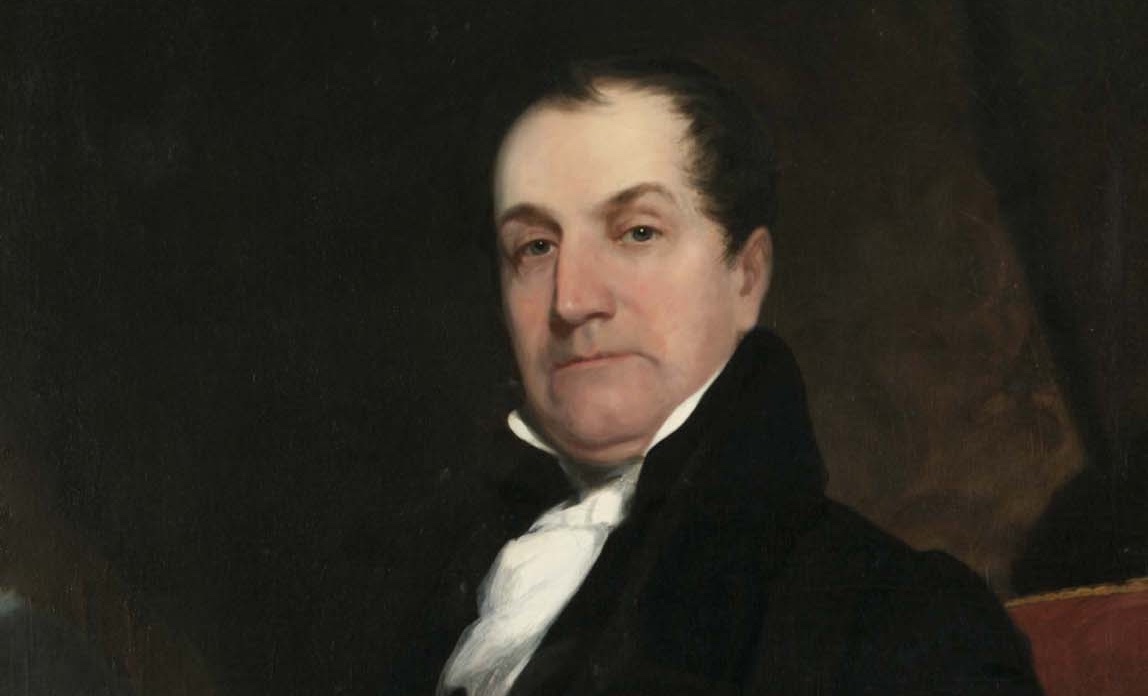
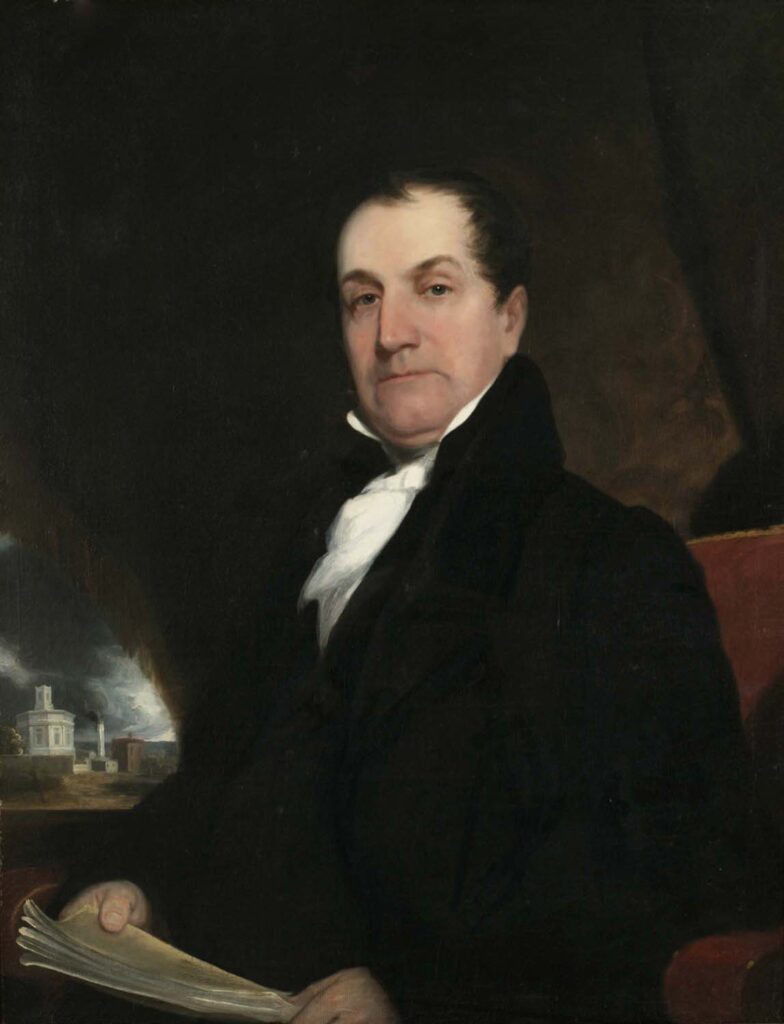
Walter Bowne, mayor of New York City from 1829 to 1832, was born in Flushing in 1770, many years before the region would erupt into a revolutionary war.
But his story really begins well over a century before. Walter would not have been mayor if not for the distinguished reputation of his family name.
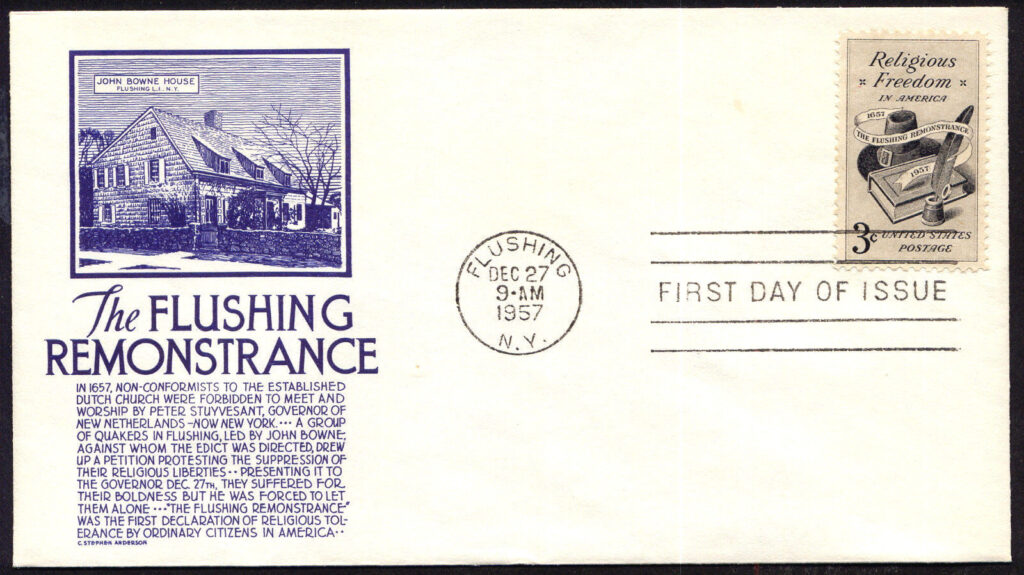
On the 300th anniversary of the Flushing Remonstrance, the US Postal Service issued a commemorative stamp.
A Flushing Revolution
The Bowne family first settled in Flushing (then Vlissingen or Vlishing), Long Island in the 1660s when the region was a part of the Dutch empire, an outpost of New Netherland.
Yet Thomas Bowne, his son John Bowne and their clan were English, and this area of Long Island had been long settled by Quakers.
The Bownes were entering into a religious powder keg. Already by 1657, director-general Peter Stuyvesant considered the religious enclave “a threat to the peace and stability of the colony and probably out of their minds as well,” writes Russell Shorto in The Island At the Center of the World.
The Long Island Quakers responded with an extraordinary document that year called the Flushing Remonstrance, asserting their freedom to worship under Dutch standards of tolerance and “the law of love, peace and liberty.” This only infuriated Stuyvesant further.
By 1662 the home of John Bowne had become a central meeting place for the area’s Quaker population. Stuyvesant had him arrested and deported to Amsterdam — despite the fact that he was English and Holland was not his country of origin.
However Bowne successfully petitioned the Dutch West India Company and in the end, by 1664, he was allowed to return to Long Island.
Stuyvesant, meanwhile, was severely reprimanded and ordered to be more tolerant. (Fortunately for Peter, the English took New Amsterdam that very year so he didn’t have to officially tolerate anybody anymore.)
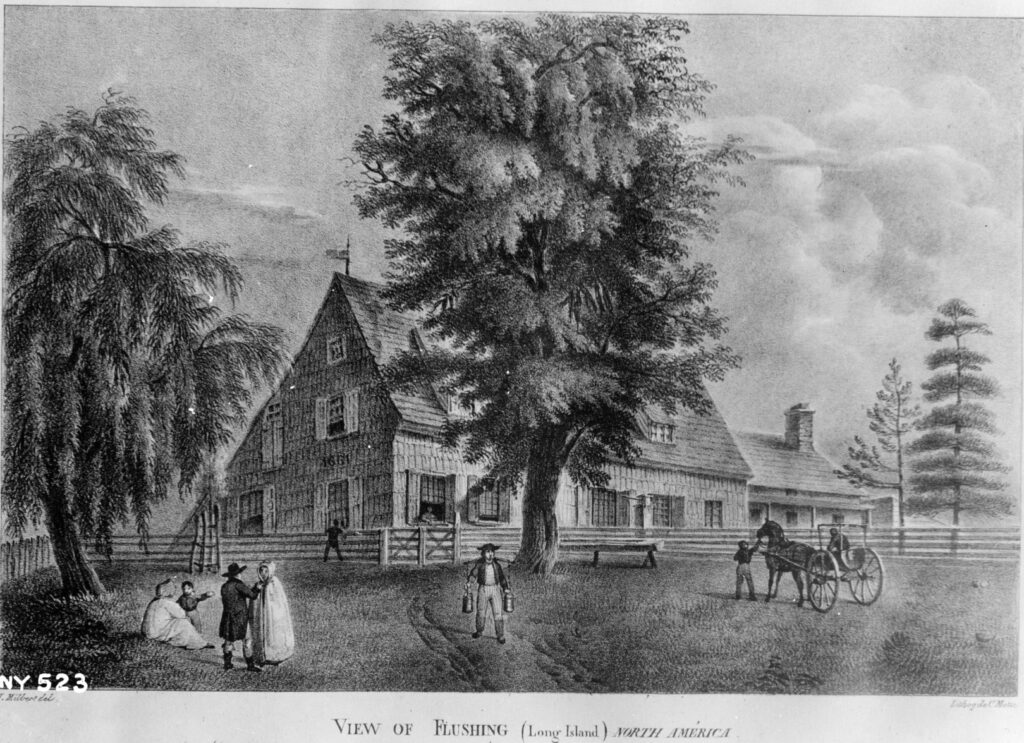
Bowne House, 37-01 Bowne Street, Flushing, Queens County, NY. Image courtesy Library of Congress
The Kings of Queens
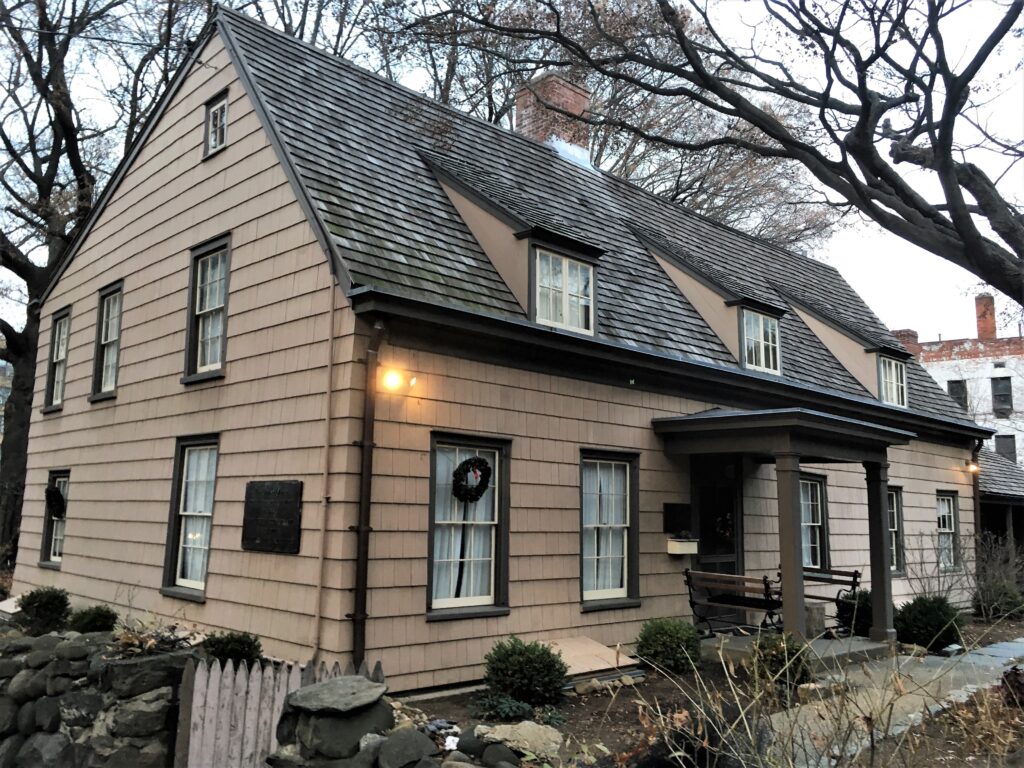
The Bownes would become this region’s [i.e the region that would become Queens] most prosperous and politically important families. John Bowne’s home, built in 1661, still stands, one of New York’s oldest and most valuable historic places, a genuine treasure of preservation.
Thanks to John’s battle for religious freedom, the family name would also become a standard bearer for liberty in the years leading up to the American Revolution. Although applying that reputation more broadly is trickier. (For instance John Bowne “owned at least two slaves and an indentured servant.“)
Later descendants would become known as early American abolitionists including Robert Bowne, a contemporary of Alexander Hamilton and John Jay, who helped to form the Manumission Society of New York and later the African Free School.
But Robert would be better known for a publishing firm he established in 1775 — the financial printing house Bowne & Co, today New York’s oldest operating business under the same name.
All of this is to say — when Walter Bowne was appointed by the Common Council in 1839 to be the mayor of New York City, he brought with him the burden of high expectations.
Walter Bowne was of the genteel class which participated in politics during this period. He had also at one time been the Grand Sachem of Tammany Hall, the rising Democratic machine. So when he was first appointed mayor, serving in the year 1829, he was very much considered a machine politician.
But he was almost a one-and-done mayor. Tammany had narrowly lost the majority of Council members in 1829, placing a second year for Tammany’s leader as mayor in doubt. (Mayors were appointed for one-year terms at this time.)
But then Bowne made a controversial power move. According to Gustavus Myers’s A History of Tammany Hall:
“[In December 1829] Fourteen Aldermen and Assistants were opposed to Bowne and thirteen favored him. There was but one expedient calculated to re-elect him, and to this Tammany Hall resorted.
Bowne, as presiding officer of the Council, held that the Constitution permitted him to vote for the office of Mayor.“I will persist in this opinion even though the board decide against me,” he said.
To prevent a vote being taken, seven of Bowne’s opponents withdrew on December 28, 1829. They went back on January 6, 1830, when Tammany managed to re-elect Bowne by one vote. How this vote was obtained is a mystery.“
Bribery was almost certainly involved in this sudden reversal of Bowne’s fortune.
An investigating committee into the events of January 6 was formed to inquire about this mystery, but as the committee was comprised of those who favored Bowne, no proof was ever discovered of such bribery.
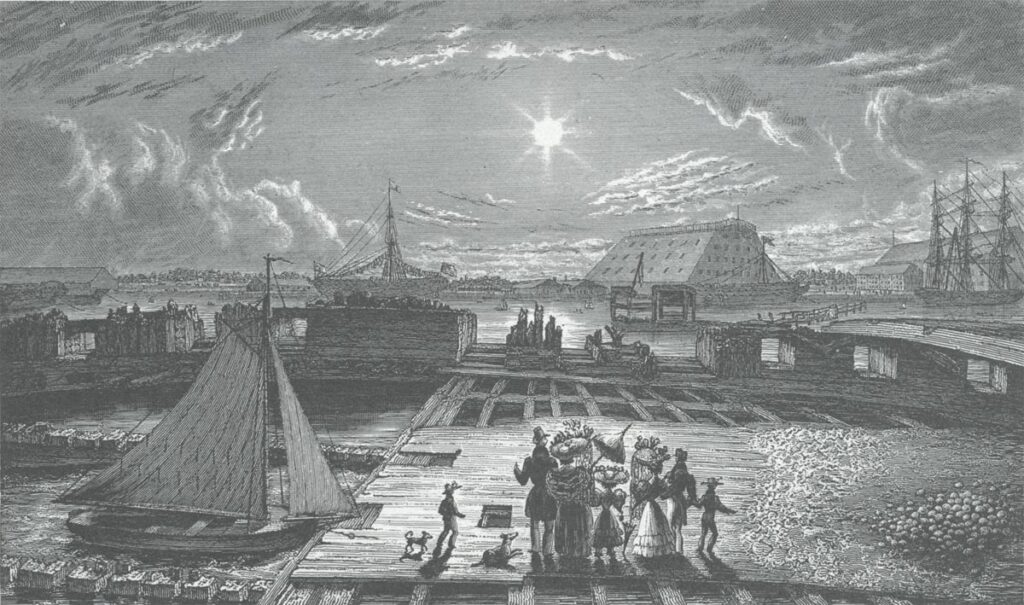
This image of the Brooklyn Navy Yard in the 1830s illustrates the types of pier infrastructure New York was using in these days. From the book Views in New York and its Environs, 1831.
Water and Docks
Bowne’s priorities were pure infrastructure. New York was in the middle of a water crisis with the growing city requiring more supply than its current local wells, cisterns and fresh water ponds could provide.
“We have the opinion of two prominent Civil Engineers that the Byram, Rye and Wompia Ponds will afford such supply,” the mayor declared, then casually mentioning the “Bronx, Saw Mill and Croton rivers” as other options.
But New York was waylaid by funding such a water project at this time, and Bowne was unable to get anything of immediate significance done by the time he left office in early 1833.
Two years later the Great Fire of 1835 underscored the urgency of an improved water system. The Croton Aqueduct system, bringing New York much needed water, finally opened in 1842.
New York’s other great priority was the Erie Canal which had opened in 1825.
Bowne was driven to action by the revered Henry Rutgers who died in Bowne’s first year in office. Rutgers had written to Bowne “expressing great anxiety lest our harbor, which has scarcely an equal in the world should be injured” by the continued building of wooden and dirt piers — ill-equipped to handle the growing international trade.
Under Bowne, work began on constructing an overall improvement of the waterfront for industrial use, with sturdier piers of stone and new warehouses.
This foresight would eventually benefit to growing steamship trade and another transportation revolution arriving soon — industrial railroad freight.
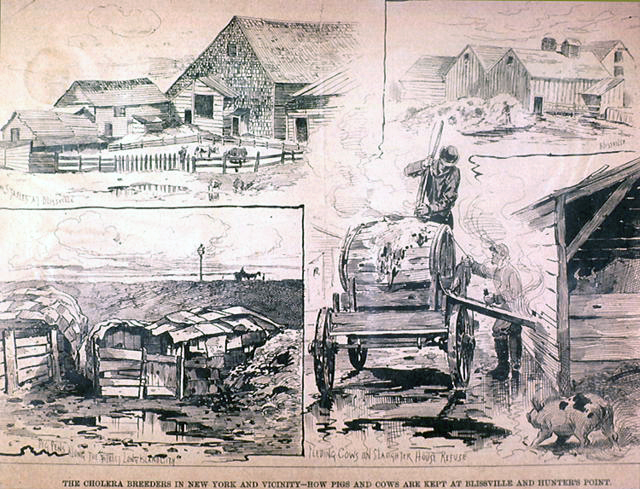
The Cholera Breeders in New York and Vicinity, n.d. (National Library of Medicine via the Merchant’s House)
Cholera Crisis
The ill-preparedness of New York for the full implications of trade were in full effect in 1832, when a major cholera epidemic came to the city.
The state of New York already had a quarantine hospital in Staten Island in place for arriving ships coming through the Narrows. But this did not prevent the disease from coming into the city from other directions.
According to Bowne House historian David Silvernail, “the [cholera] outbreak started in surrounding areas and to prevent it from reaching the city, Walter decided to enact a quarantine for all ships and carriages attempting to enter the city. This included all of the products and people on board.”
Bowne’s quarantine required that all ships keep at least 300 yards from the city’s ports. And carriages arriving from the north were stopped 1.5 miles from the city limits.
Under Bowne the city also engaged in a vigorous clean-up of its streets (although as Bowne House historian Silvernail reveals, the efforts were inadequate):
“Bowne’s well-meaning attempts to prevent a cholera outbreak failed, and hundreds of New Yorkers died of the disease,” according to NYC Parks. “It was not until 1883 that the German physician Robert Koch discovered that cholera spreads through contaminated water or food.”
The Bowne House, photographed in 2018 (Station1, courtesy Wikimedia Commons)
A Lasting Landmark
Bowne left office in early January 1833 and, among other things, became the president of 7th Ward Bank of New York City. At times he also retired to his summer home in Flushing, the location of which is today’s Bowne Park. Bowne died in 1846.
New York enjoys many locations associated with the Bowne family. On top of Bowne Park and the Bowne House — both perfect places to visit this fall — Bowne & Co. Stationers provides a glimpse into America’s printing legacy in a rustic shop at the South Street Seaport.
PODCAST The thrilling tale of a classic heist from the Gilded Age, perpetrated by a host of wicked and colorful characters from New York’s criminal underworld.
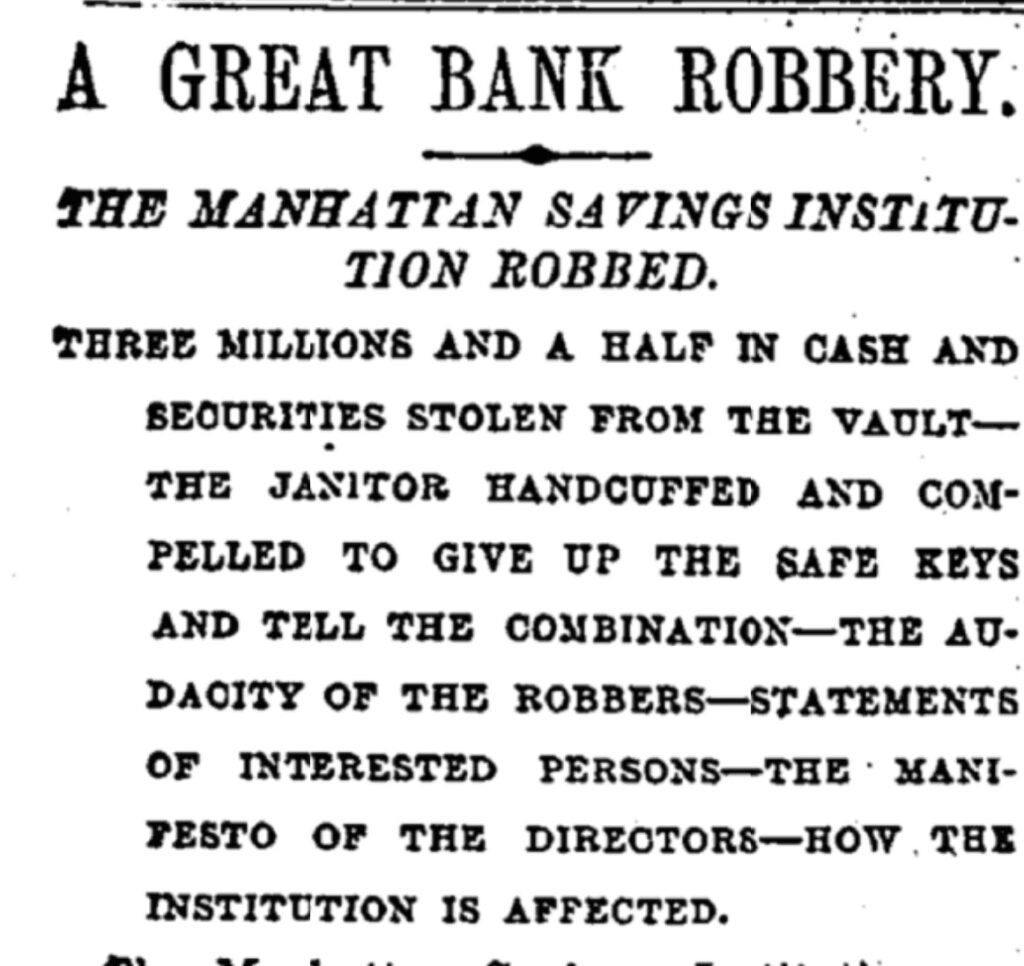
Jesse James and Butch Cassidy may be more infamous as American bank robbers, but neither could match the skill or the audacity of George Leonidas Leslie, a mastermind known in his day as the ‘King of the Bank Robbers’.
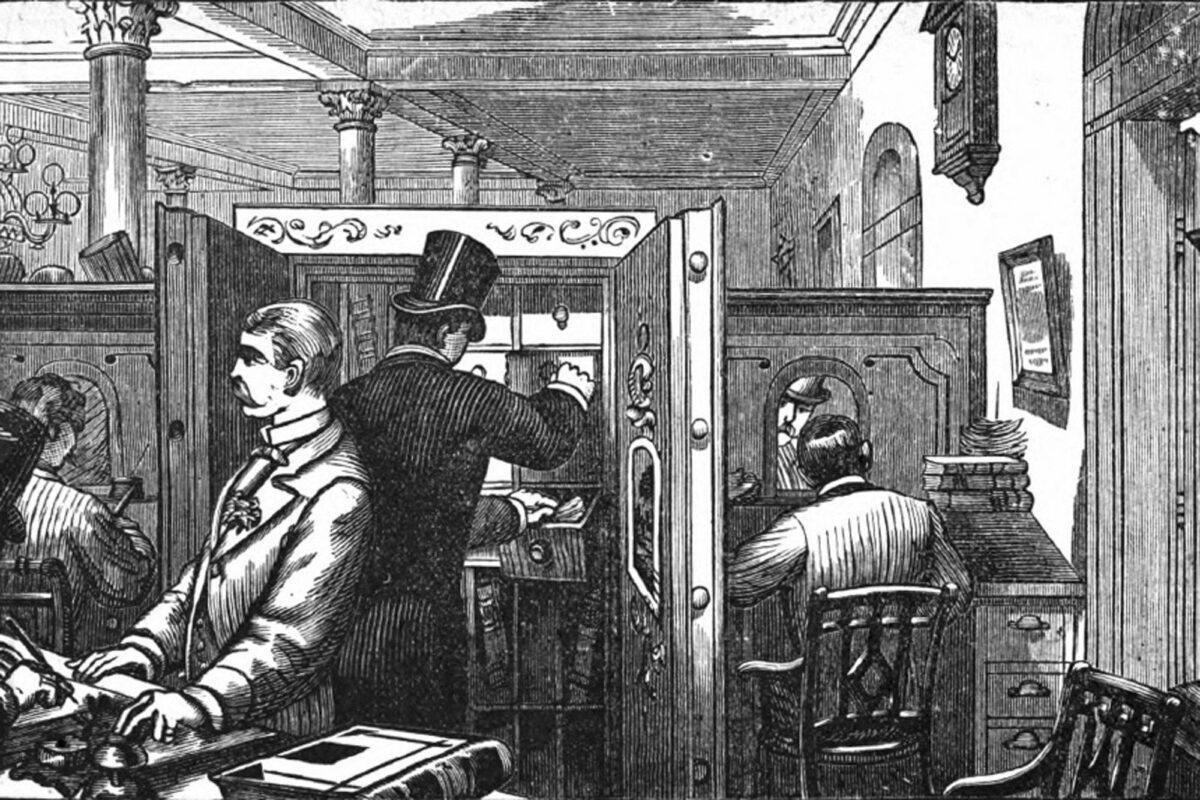
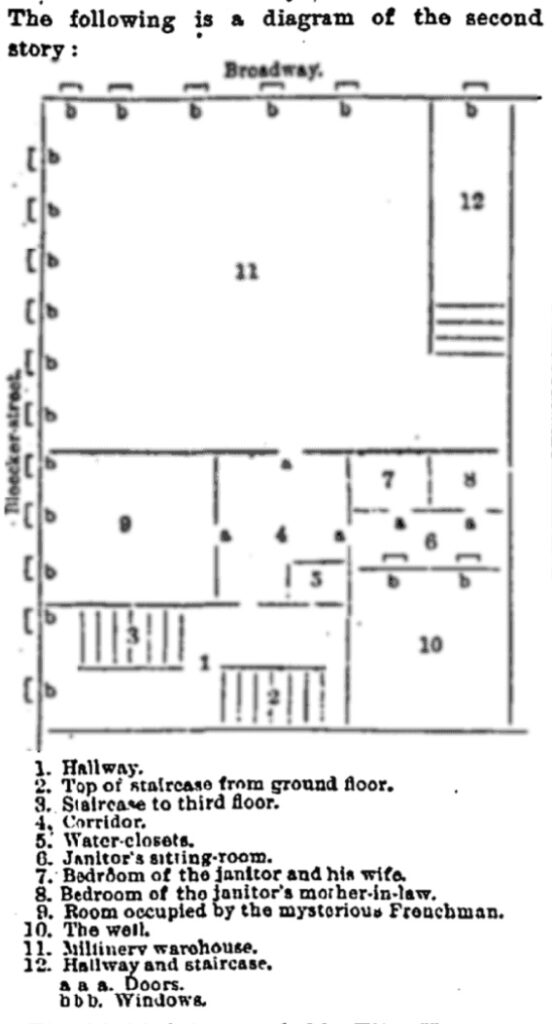
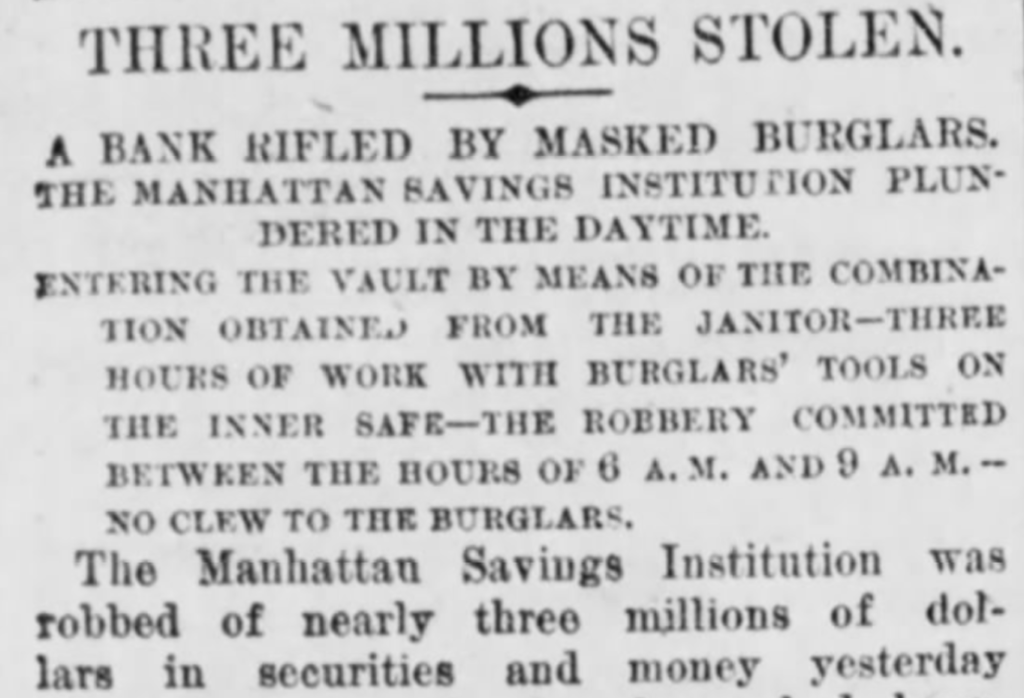
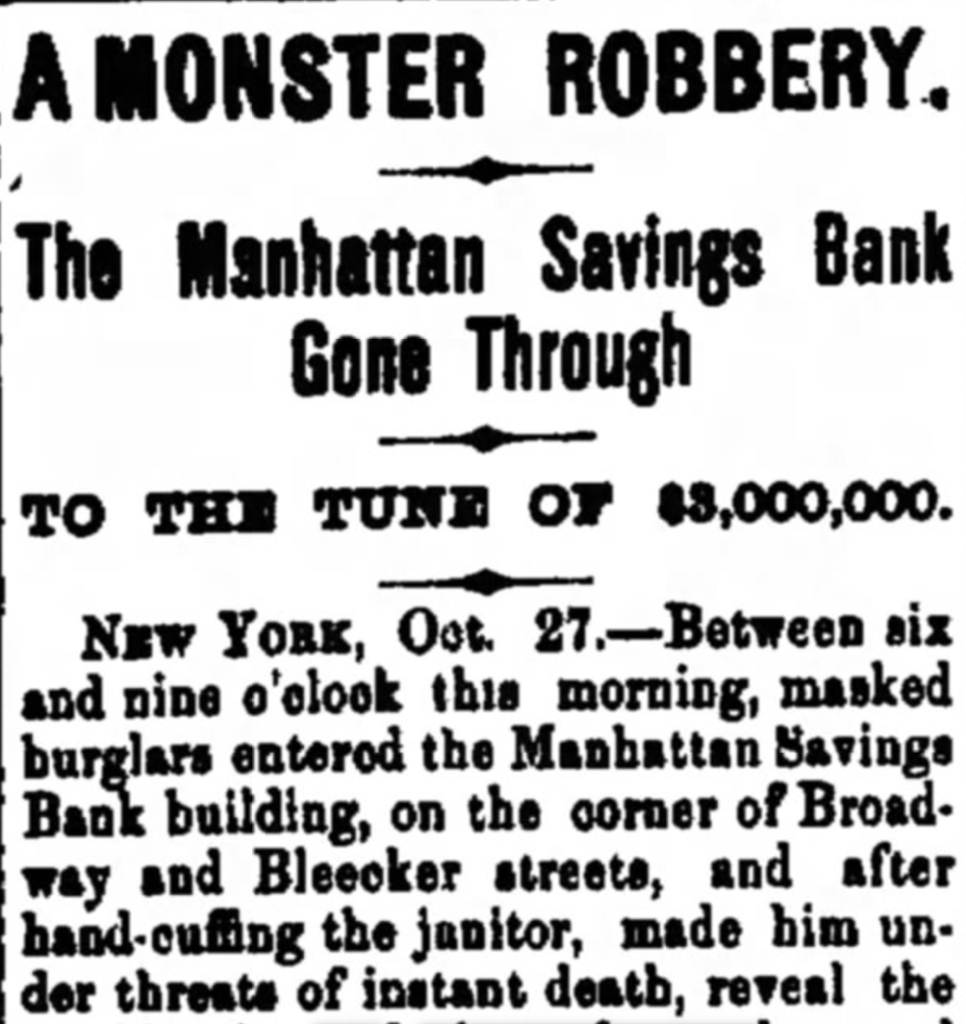
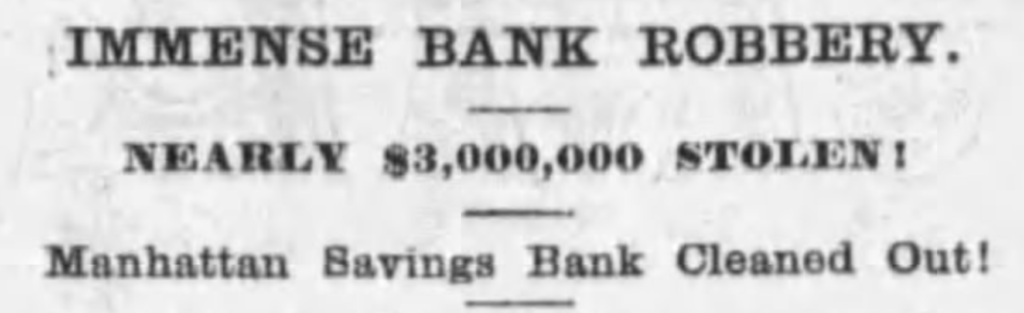
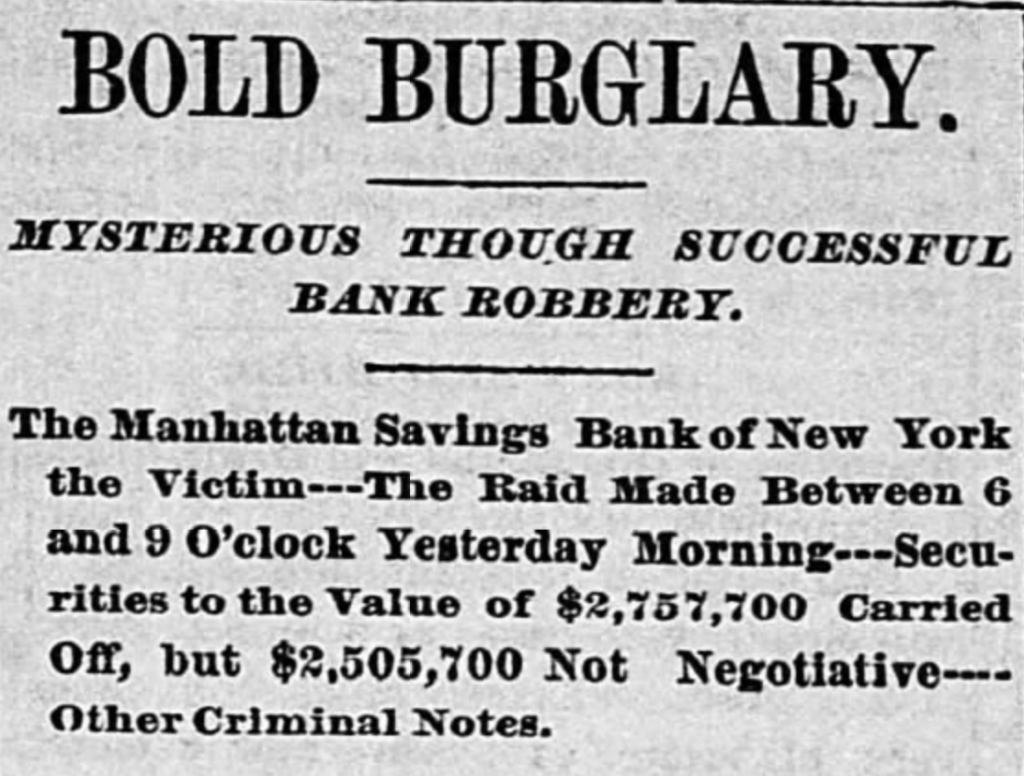
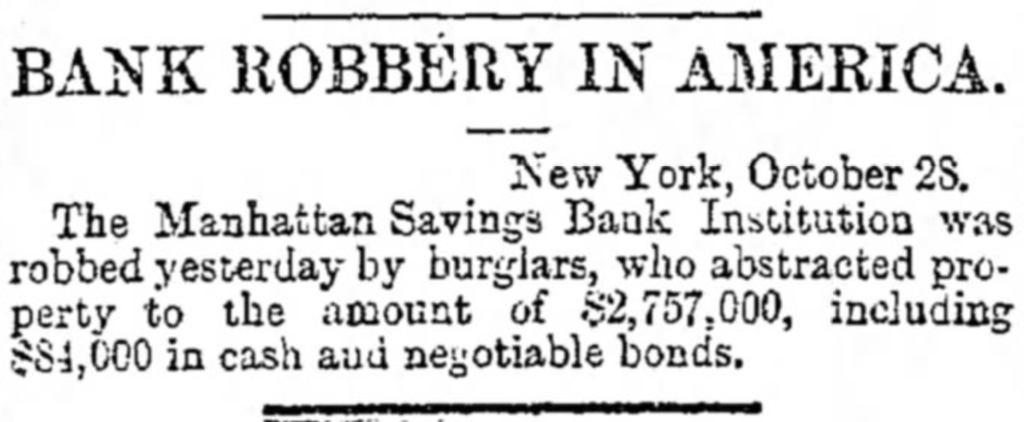
On October 27, 1878, Leslie’s gang broke into the Manhattan Savings Institution and stole almost $3 million in cash and securities (about $71 million in today’s money), making it one of the greatest bank robberies in American history.
This epic heist, which took three years to plan, was only the greatest in a string of high-profile robberies planned by Leslie and perpetrated by a rogue’s gallery of New York thieves and fences.
Many details of the crime remain a mystery, and the legend of Leslie has been immortalized — with some mixture of truth and fiction — in Herbert Asbury’s classic The Gangs of New York.
Who was this suave and mysterious Leslie? And how do you actually go about breaking into a bank in the 1870s? (Hint: Make sure you have a ‘little joker’ handy.)
Listen Now – The Great Bank Robbery of 1878
The Bowery Boys: New York City History podcast is brought to you …. by you!
We are now producing a new Bowery Boys podcast every other week. We’re also looking to improve and expand the show in other ways — publishing, social media, live events and other forms of media. But we can only do this with your help!
We are now a creator on Patreon, a patronage platform where you can support your favorite content creators.
Please visit our page on Patreon and watch a short video of us recording the show and talking about our expansion plans. If you’d like to help out, there are several different pledge levels. Check them out and consider being a sponsor.
We greatly appreciate our listeners and readers and thank you for joining us on this journey so far.
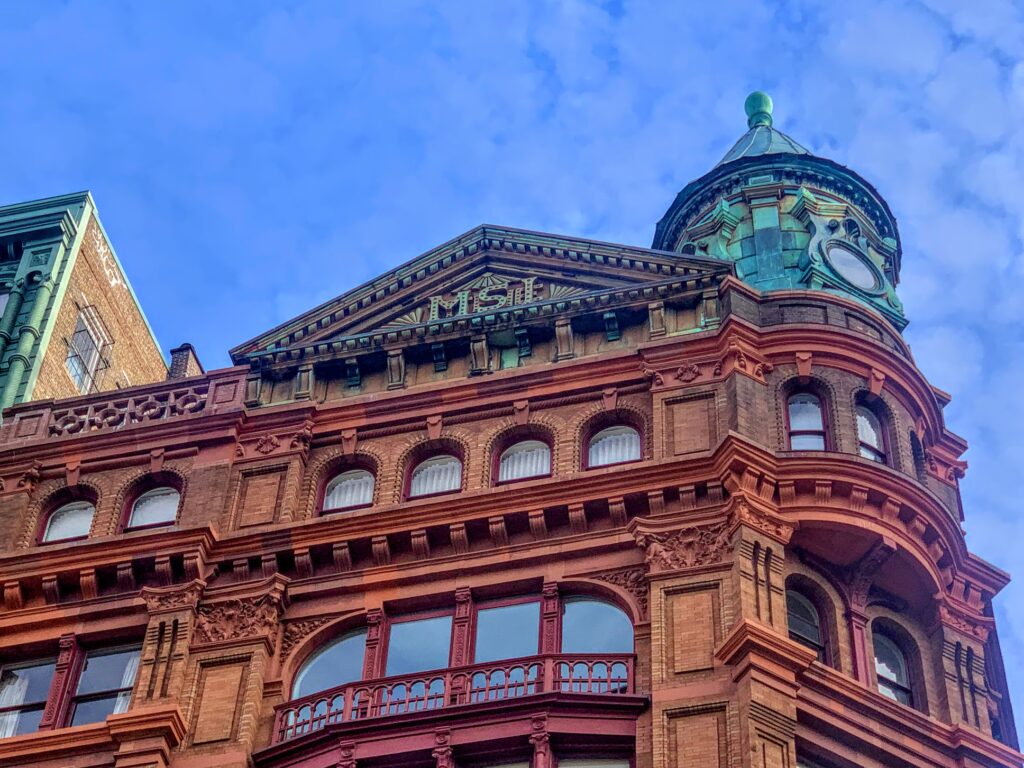
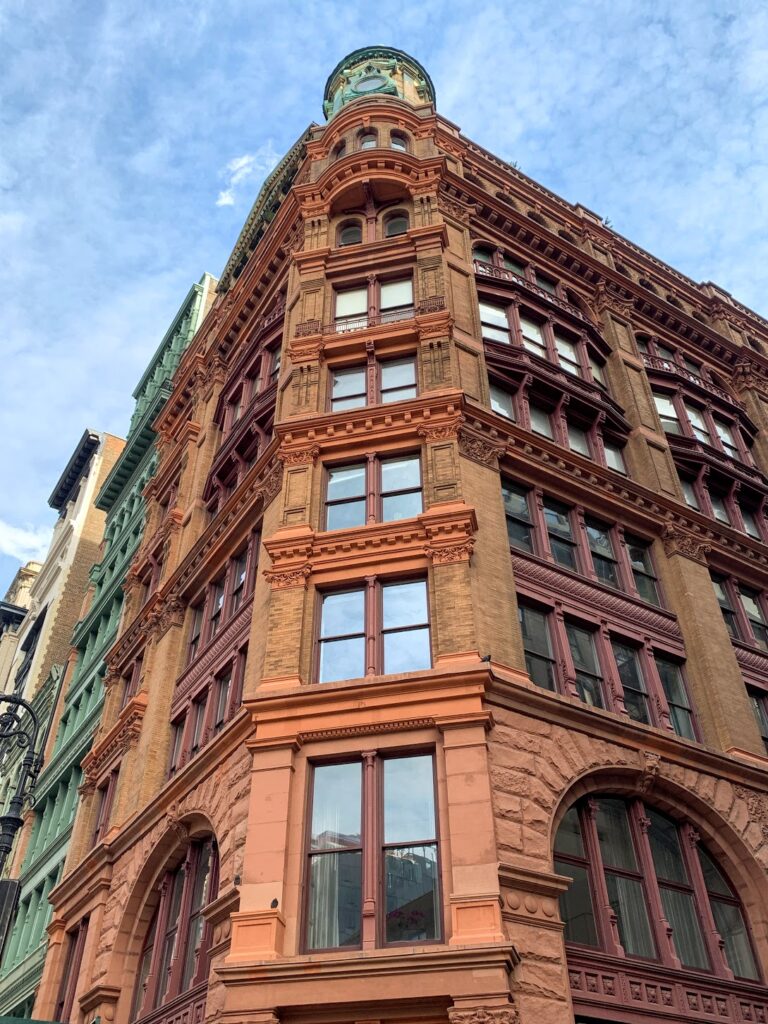
The second Manhattan Savings Institution building, built in 1891 at Broadway and Bleecker Street, on the spot of their first bank — the one targeted by the Leslie gang.
Photo by Greg YoungPhoto by Greg Young
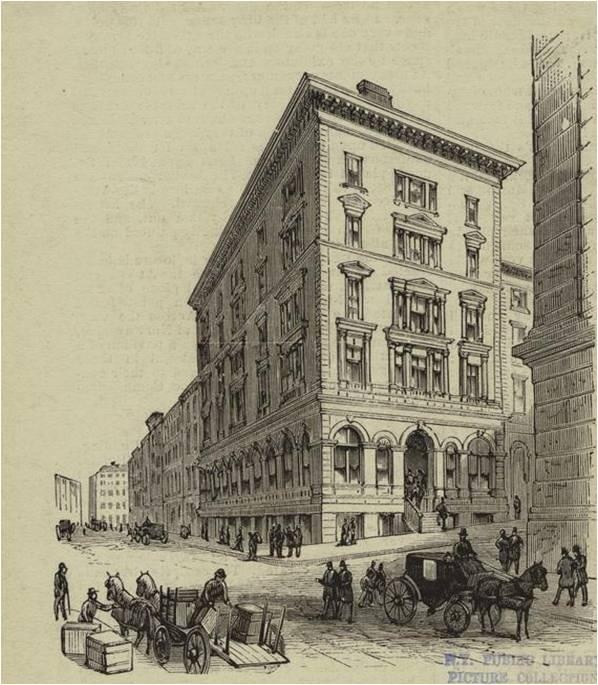
The City Bank of New York which was robbed in 1831.
New York Public Library
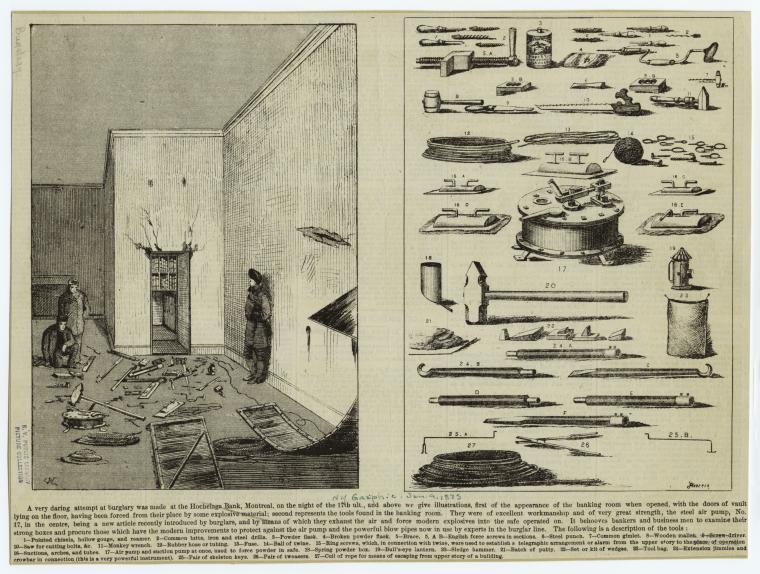
A selection of tools found at a bank break-in in Montreal, 1875.
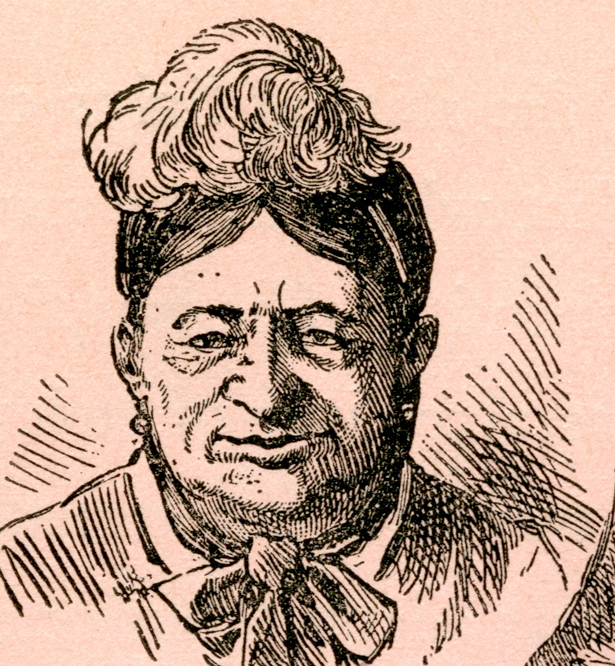
New York Public LibraryMarm Mandelbaum, as depicted in Sins of New York: As Exposed by the Police Gazette by Edward Van Every
FURTHER READING
Herbert Asbury / The Gangs of New York Jerry Clark and Ed Palattella / A History of Heists: Bank Robbery In America J. North Conway / King of Heists Richard S. Grossman / Unsettled Account Stephen Jaffe and Jessica Lautin / Capital of Capitol: Money, Banking, and Power in New York City, 1784-2012 Geoff Manaugh / A Burglar’s Guide to the City
HOLIDAY HISTORY GIFT GUIDE Each week for the rest of the year, the Bowery Boys will recommend a newly released book that you might like to include on your holiday wish list. For other book suggestions, check out other entries on the Bowery Boys Bookshelf.
Pretend GPS was never invented or that man never sent a satellite into order. Imagine going back to a time when people had no idea what continents looked like.
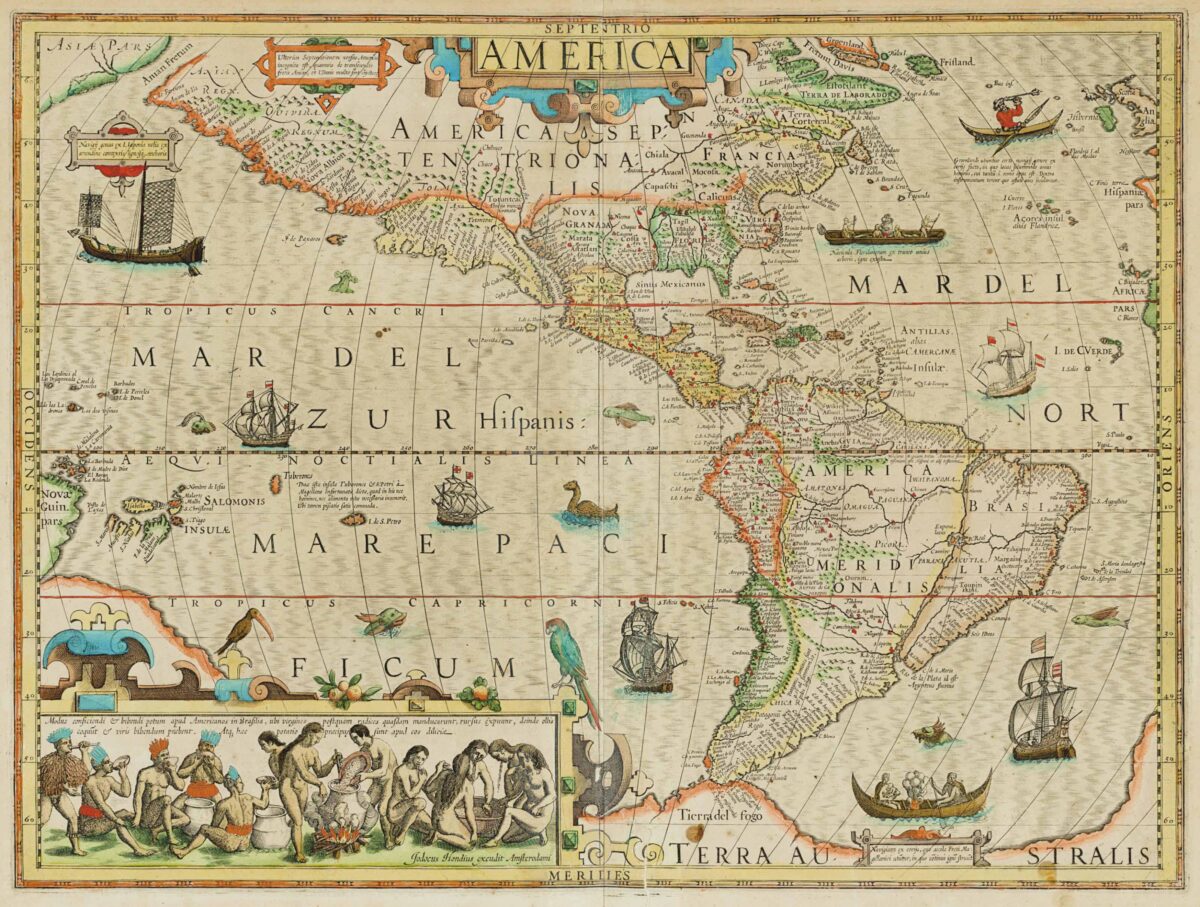
The glory of the most beautiful early maps is that they’re never 100% precise. Early cartographers carefully pieced together observations to create maps that were close to accurate. And where details were not known, artist inspiration filled in the blanks.
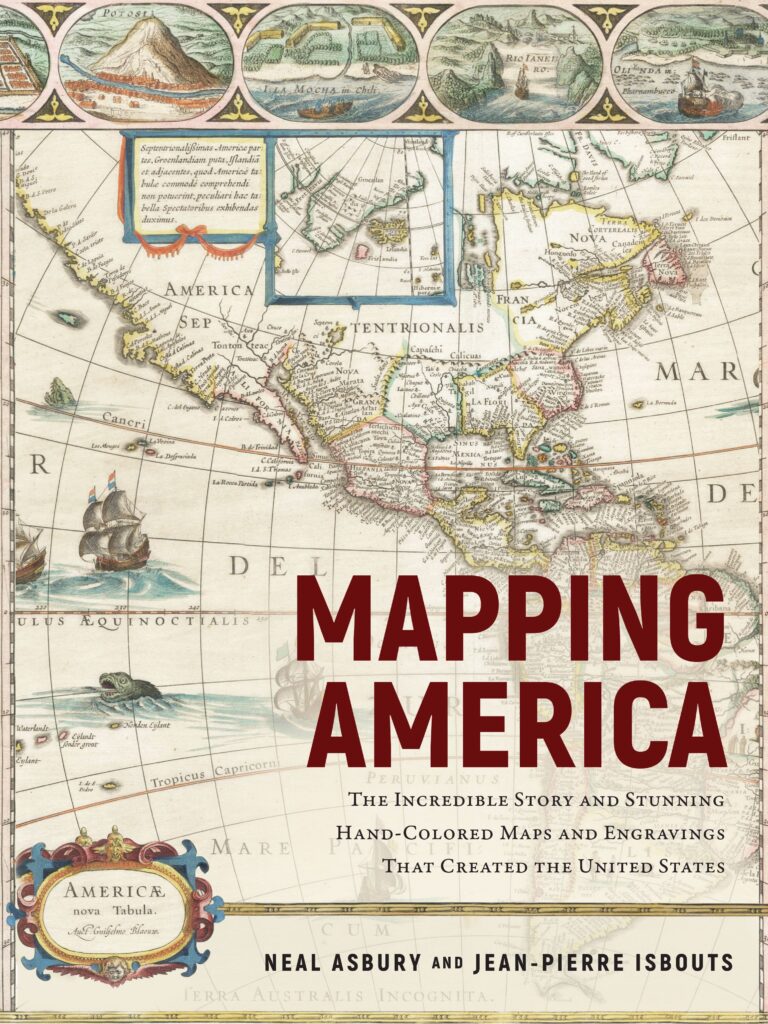
MAPPING AMERICA The Incredible Story and Stunning Hand-Colored Maps and Engravings That Created the United States Neal Asbury and Jean-Pierre Isbouts
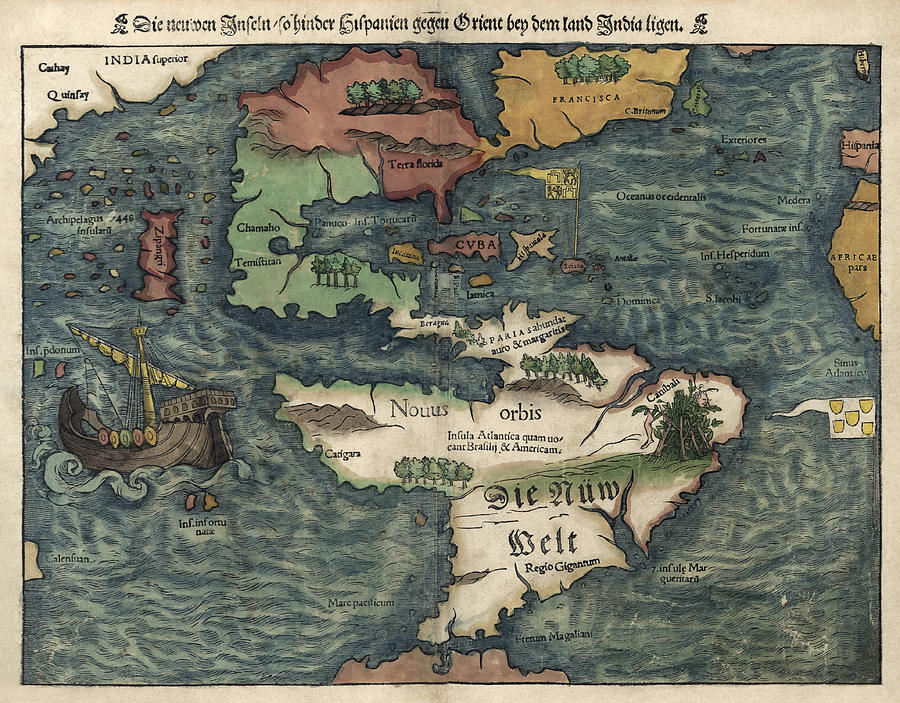
When the great European colonizers first sent explorations out towards the New World, almost nothing was known of the Americas’ size and shape. With each expedition — from Christopher Columbus to Henry Hudson — a bit more of the puzzle was revealed.
In Mapping America, the colorful new history of map making by rare map collector (and radio host) Neal Asbury and National Geographic historian Jean-Pierre Isbouts, the continents reveal themselves slowly in wild and vividly flamboyant illustrations that resonate like the creation of literary fantasy.
1550 map of the Western Hemisphere by Sebastian Münster.
The maps beautifully presented in Mapping America are essentially souvenirs of colonization, and their ravishing and sometimes quizzical charms can belie the dominance of empire which produced them.
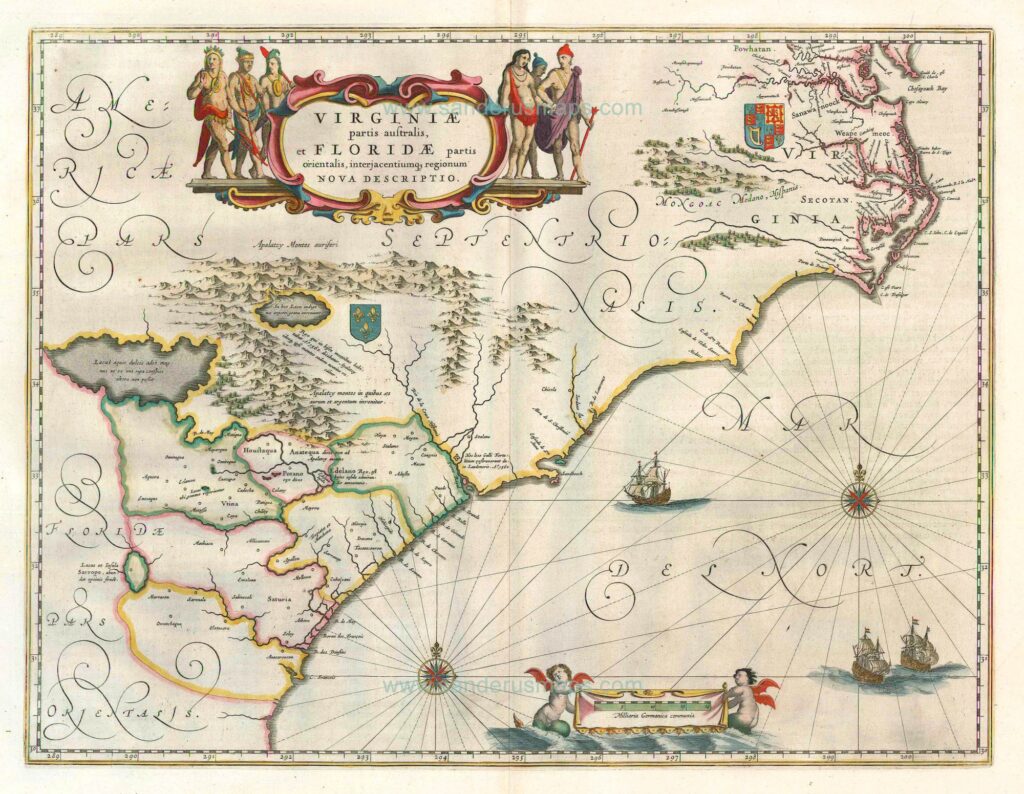
This is especially true of the marvelous Dutch maps of rival cartographers Jodocus Hondius and Willem Blaeu whose depictions of America were deeply detailed — to a point. (“Some of Hondius’s changes,” write the authors, “such as the depiction of the River May [in today’s South Carolina], were erroneous and would confound explorers for the next 150 years.”)
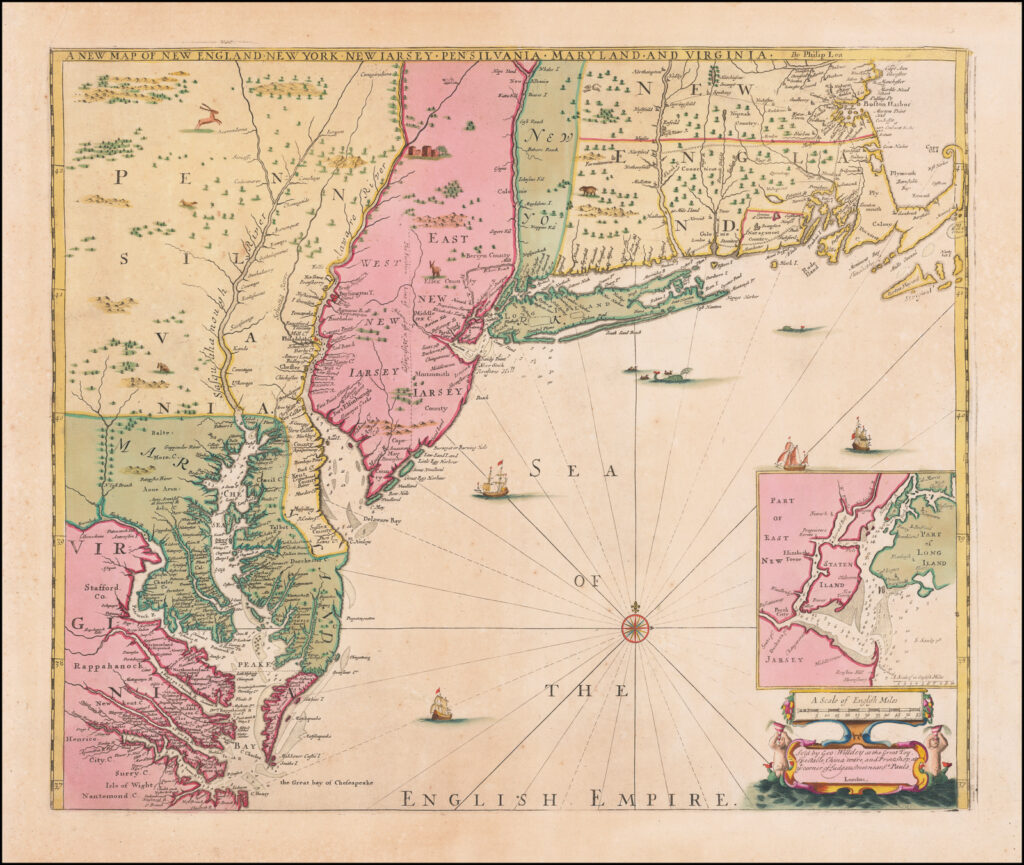
Robert Morden’s 1685 Map of the English Empire in North America
But as collected here, these maps can also feel stunningly revolutionary, watching the shape of the continents change (or rather man’s deduction of the continents’ shape) over time.
Mapping America begins in the 15th century and navigates through the history of map-making until the end of the Revolutionary War when cartographers made their first observations of the North American interior.
The maps range from just slightly inaccurate to completely wrong. The colors and artistry will make Google Maps look dull and depressing.
Willem Blaeu map of Virginia and the Southern east coast, 1649-55
For fifteen years now, The Bowery Boys: New York City History podcast has featured a special Halloween show focusing on some of New York City’s scariest tales. You can find our back catalog of ghost story podcasts here.
Here’s a little tribute to some of our favorite haunted homes — which also just happen to be fascinating historic sites. (After all, isn’t that what we’re here for?)
NOTE: This article is an extensively updated version of a piece I wrote for Huffington Post back in 2012.
New York is a city of eight million stories, and many of them are about ghosts.
You can’t stroll down a sidewalk in New York without tripping over an old ghost story, whether it be the restless spirit of Peter Stuyvesant over at St. Mark’s Church-In-The-Bowery, Gilded Age-era spirits roaming the halls of the Dakota Apartments or even the apparitions of suicide victims at the Empire State Building.
If you are attuned to such things, our parks are haunted, our bars and restaurants, our churches and theaters. Some even claim the Brooklyn Bridge is haunted, although I pity that mournful apparition on a crowded Saturday afternoon.
Old places generally accumulate their share of ghost tales, and New York is certainly old indeed — over 400 years old. But that’s not the only reason the Big Apple is so frightfully haunted.
With the dawning of second Great Awakening — centered in western New York state — the American religious experience became deeply personalized, revising views on the afterlife.
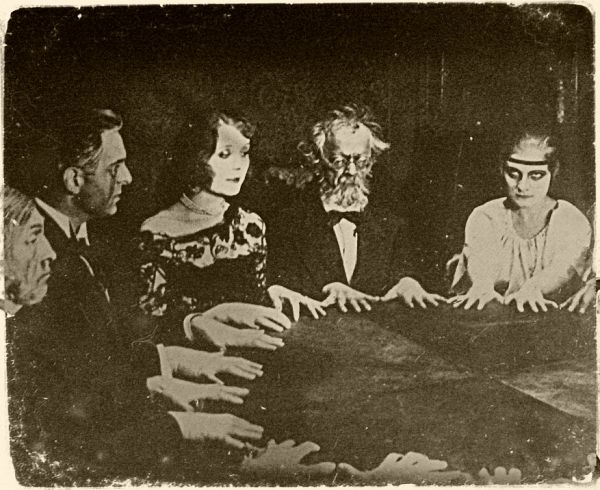
New Yorkers of the late 19th century became entranced by the tools of spiritualism — mediums, magicians, séances, even Ouija boards.
Other realms became accessible, and it seemed believable for some that those who had died might have left unfinished business behind.
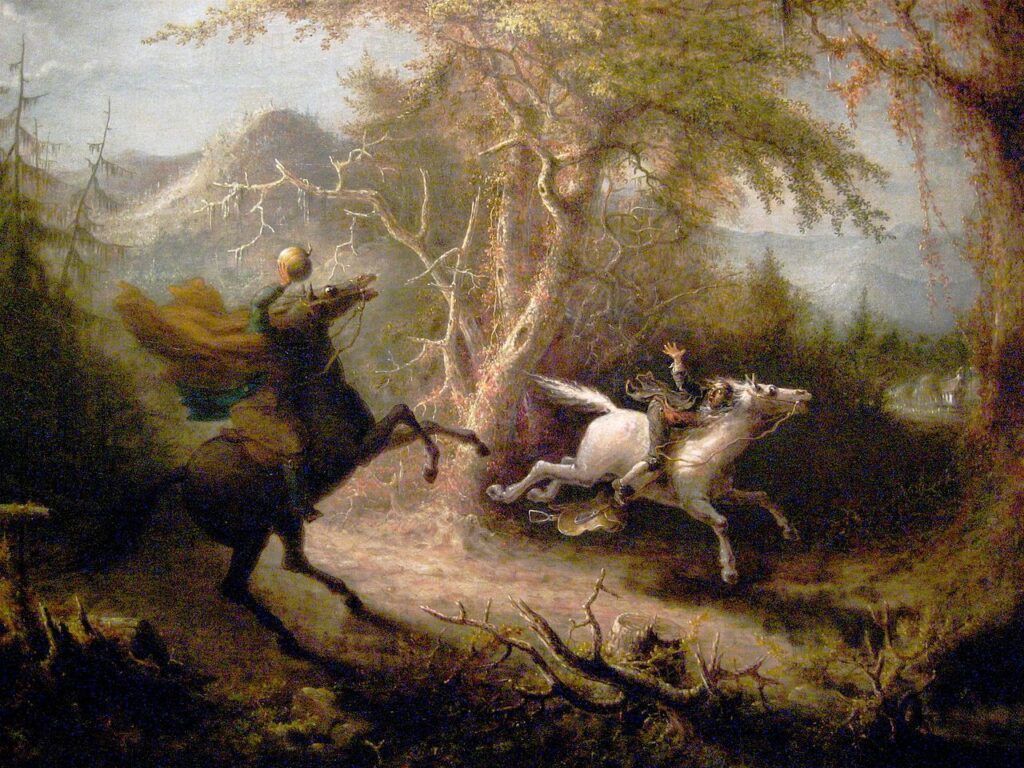
The Headless Horseman Pursuing Ichabod Crane (1858) by American artist John Quidor
The preservation of old historic structures — on streets named for the long-dead — has given certain areas of New York a sense of being trapped in time, ample setting for a spooky story about the people who once inhabited these places.
Washington Square Park may still have many thousands of bodies potentially buried underneath it. In knowing the history of a place, our minds sometimes draw artificial conclusions. If the bodies are there, could their spirits still be hanging around?
But mostly, ghost stories are generally good for business. When has saying some famous landmark was haunted ever driven anybody away from it? In the end, we all fashion ourselves ghost hunters.
Even though New York City has very few free-standing spooky mansions in the traditional horror-movie vein, the city nevertheless possesses a disturbing variety of haunted private residences.
Here are a few of our favorite haunted houses — haunted, that is, according to legend. We’ve limited this list to free-standing homes and townhouses, not apartment towers — many still standing and many still used as private homes and businesses.
If you ever get a chance to stay in any of these places overnight, my advice would be — don’t.
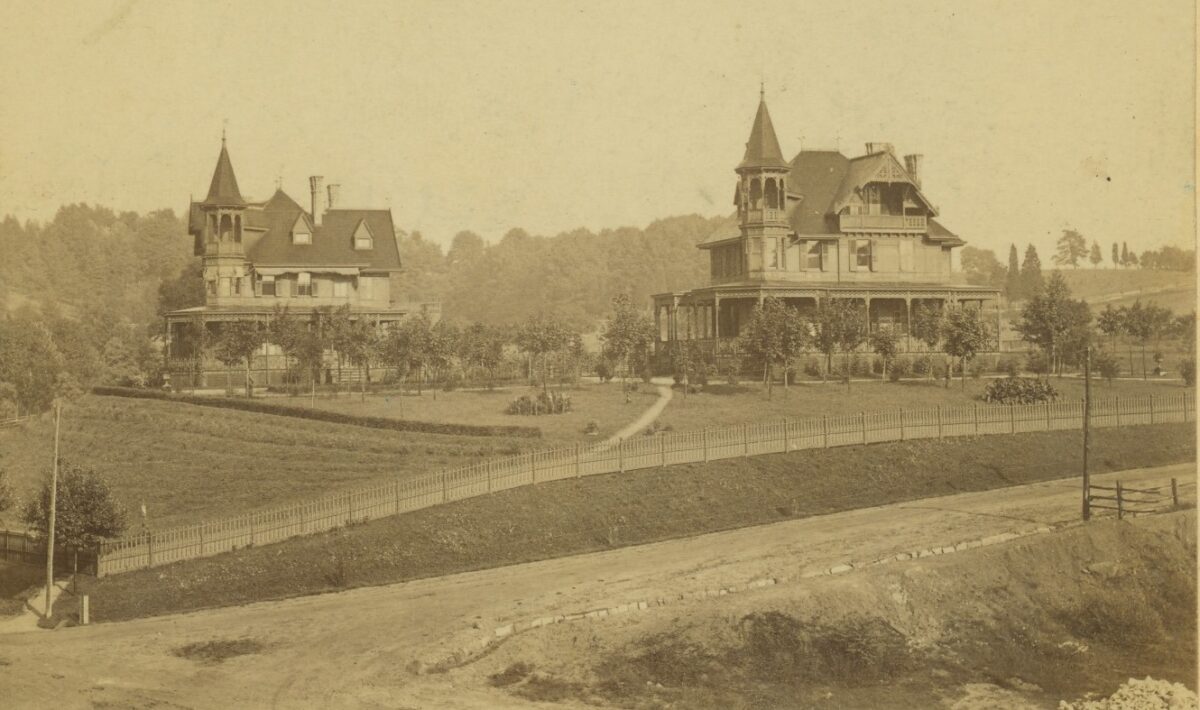
136 Clinton Avenue in Brooklyn back when it was very, very close to the shoreline.
The Bell Ringer 136 Clinton Avenue, Brooklyn
In Clinton Hill, a plantation-style house built in the early years of the Brooklyn Navy Yard has survived hundreds of unusual tenants over the years, but certainly the scariest days in this historic home occurred in 1878 with a relentless, invisible hand that would not stop knocking.
The ‘House of Death’ 14 West 10th Street, Manhattan
This simple brownstone is often considered the MOST haunted place in Manhattan, as a variety of spirits have appeared in the building’s stairwells, including that of a former inhabitant — Mark Twain!
The Ghost In The Attic 226 Fifth Avenue, Manhattan
Near Madison Square Park, an eccentric writer posts a classified ad, hoping to rent out an attic room to a prospective subletter. Unfortunately the room already an occupant — a greenish ghost with a troubling Civil War history.
The Phantom of Gay Street 12 Gay Street, Manhattan
This charming home on quiet, curvy Gay Street in the West Village was a former speakeasy and the home to Mayor Jimmy Walker‘s mistress. The creator of Howdy Doody even lived here. But many believe the party never truly stopped, as ghostly revelers have been seen and heard, including a spirit in an opera cloak affectionately known as ‘the Gay Street phantom’.
This former home of a Revolutionary War veteran is most famous for the taverns that have occupied its ground floor, including today’s jovial Ear Inn. But several decades ago, a sailor named Mickey was killed in an accident in front of the building, and many believe his mischievous spirit still harasses patrons to this day.
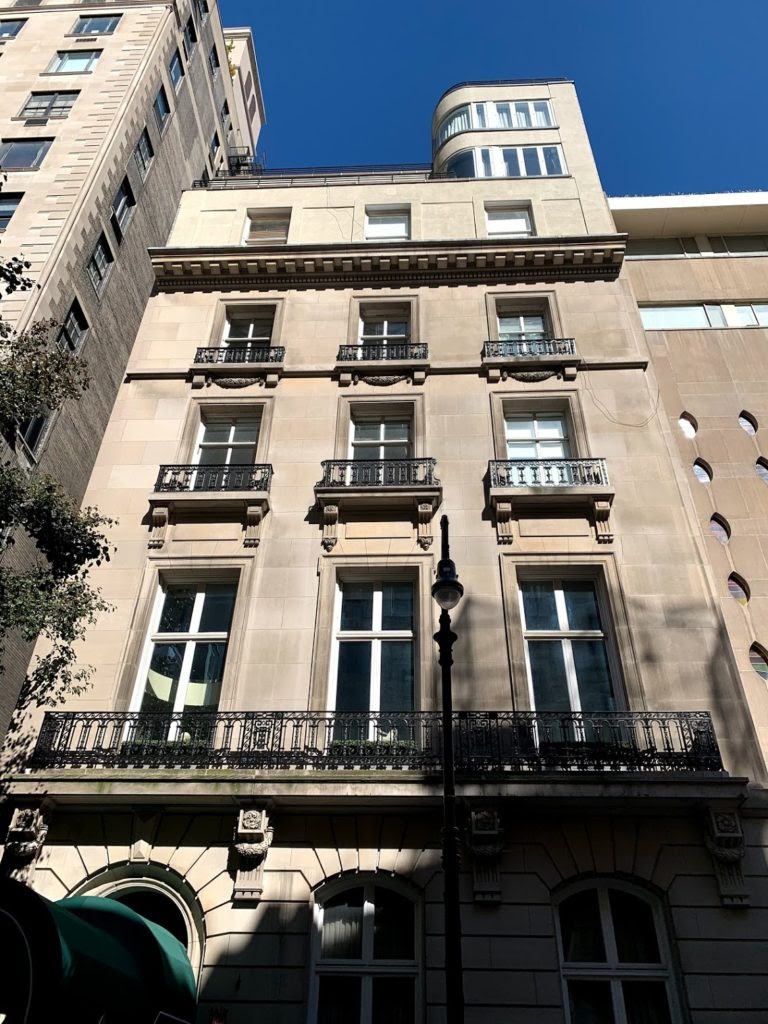
On the Upper East Side, a lavish penthouse ballroom may be permanently vexed with the ghost of a testy spirit named Mrs. Spencer. Can legendary funny lady Joan Rivers and a Vodou priestess manage to keep the ghoul under control?
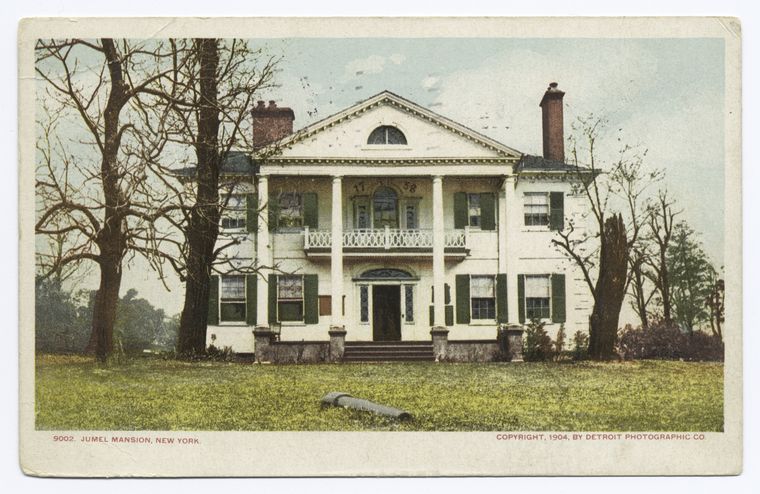
This lovely home, open to visitors, also has Revolutionary War connections – George Washington even slept here — but it’s the ghost of the scary old lady Eliza Jumel that frightens children today with her occasional appearance.
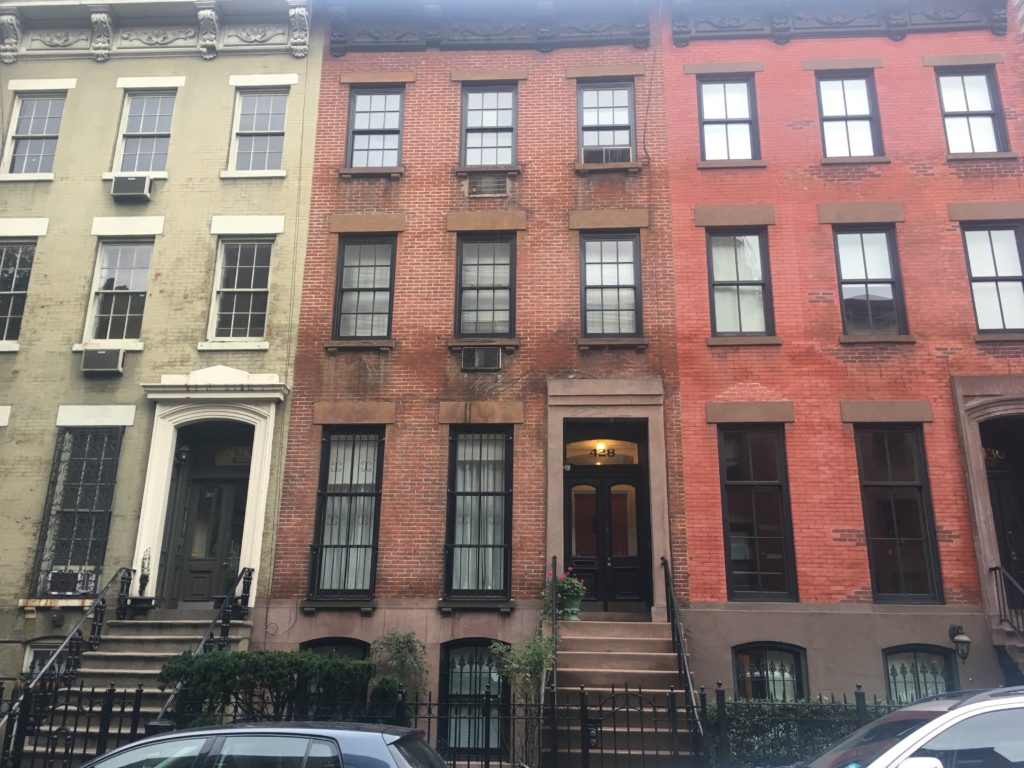
The Haunted Hollywood Star 428 West 44th Street, Manhattan
The glamorous TV and film star June Havoc kept a gorgeous home in Hell’s Kitchen that was unfortunately haunted by a very tormented ghost named Lucy — a ghost that needed to feed.
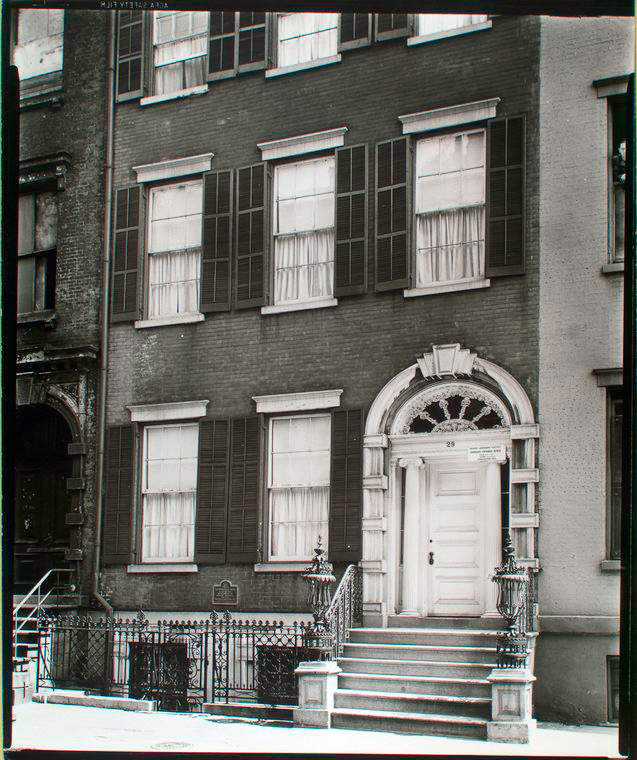
Poor Gertrude Tredwell. A long-time resident of the neighborhood now called NoHo, she lived her entire life here and may still haunt this museum which exhibits many of her original possessions. Trust me, she doesn’t like it when you rearrange things.
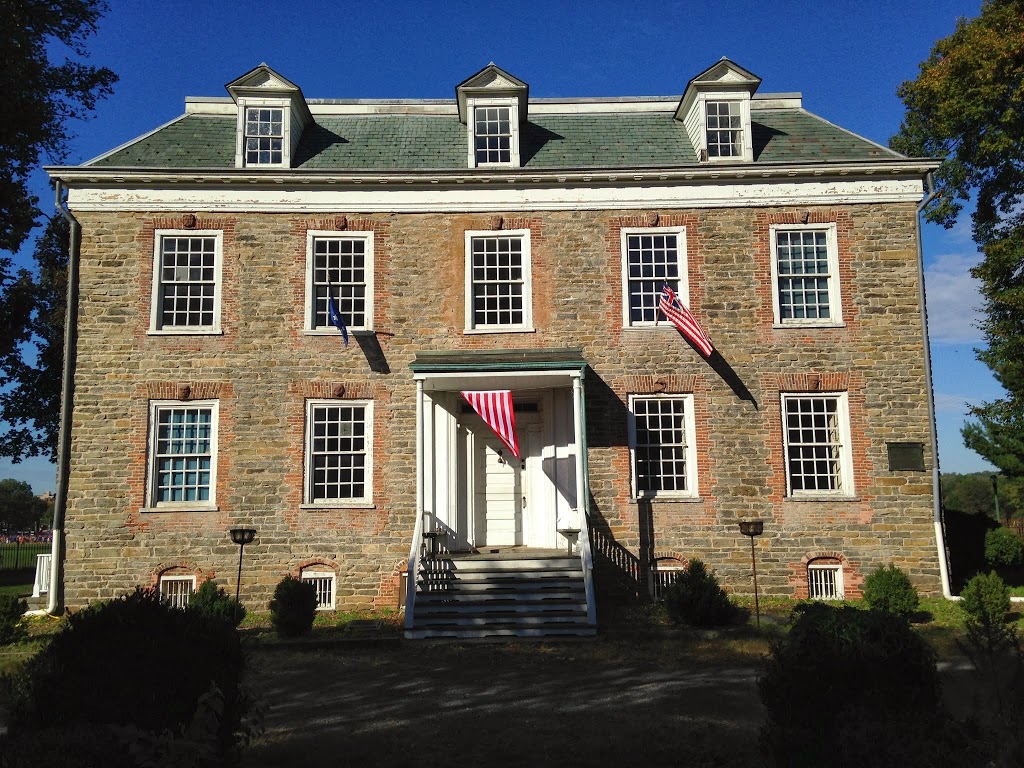
The Revolutionary Spirit Van Cortlandt House, The Bronx
Van Cortlandt Park has several haunted legends accorded to it. And inside the Colonial-era Van Cortlandt House, whispers abound of a forlorn servant girl, still looking for her master’s silver.
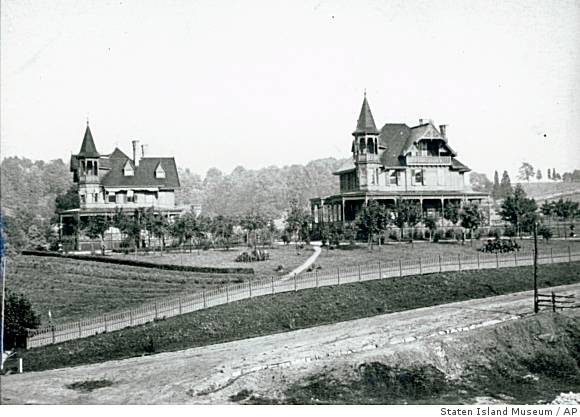
Kreischer Mansion 4500 Arthur Kill Road, Charleston, Staten Island
The Kreischer Mansion was once mirrored by a twin house that stood next door, both constructed by a brick manufacturer for his sons. One burned down several decades later, but the remaining manor is notorious for its many ghostly apparitions. A bloody, mob-related murder in the past decade further lends to the house’s devilish reputation.
The Conference House in Staten Islandplayed an interesting role in the Revolutionary War, and some residents from that period may still wander its ancient hallways.
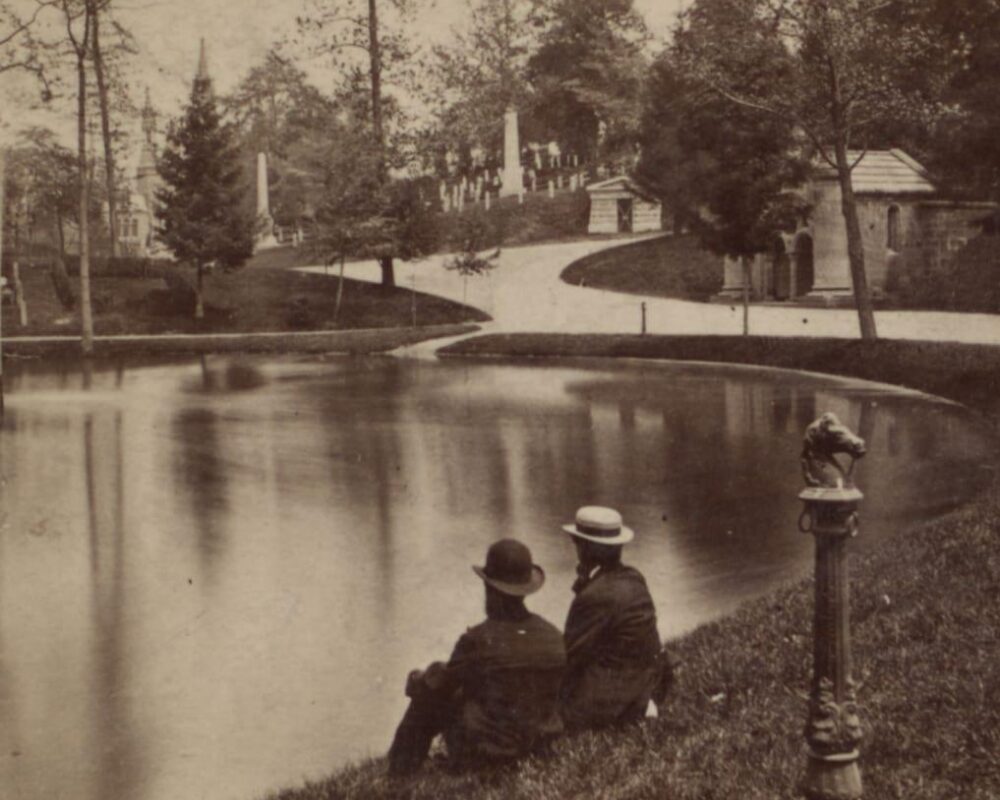
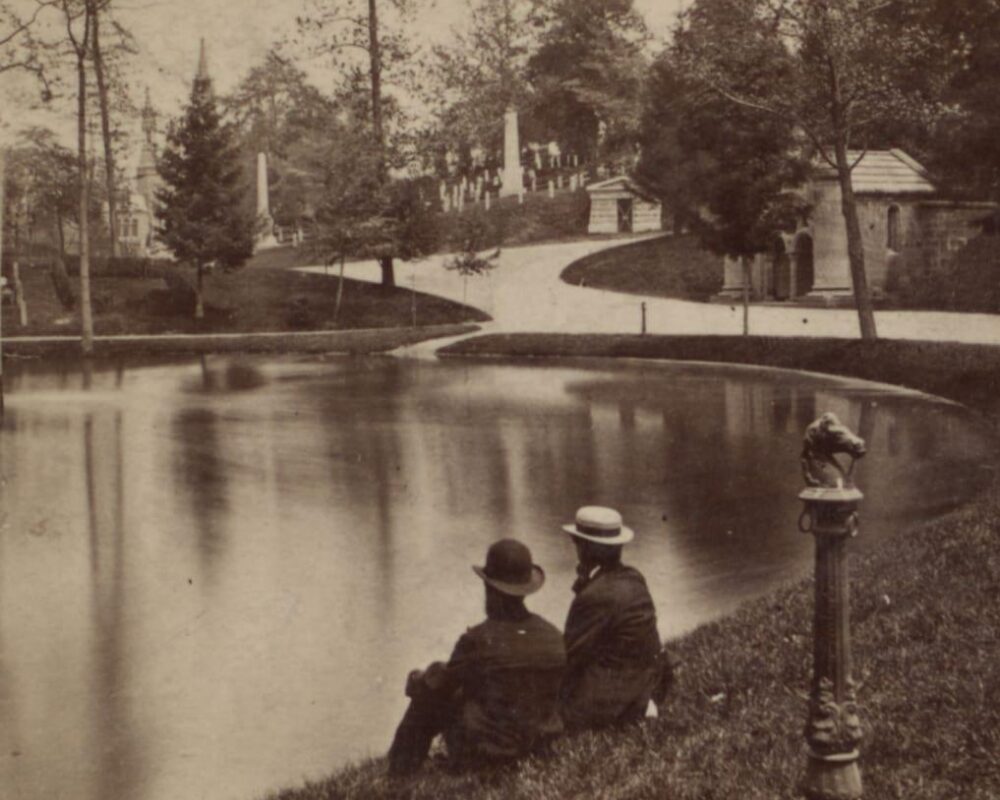
Green-Wood Cemetery in 1873. Courtesy of New York Public Library.
PODCAST The following podcast may look like the history of New York City cemeteries — from the early churchyards of the Colonial era to the monument-filled rural cemeteries of Brooklyn and Queens.
But it’s much more than that. This is a story about New York City itself, a tale of real estate, urban growth, class and racial disparity, superstition and architecture.
Cemeteries and burial grounds in New York City are everywhere — although by design we often don’t see them or interact with them in daily life.
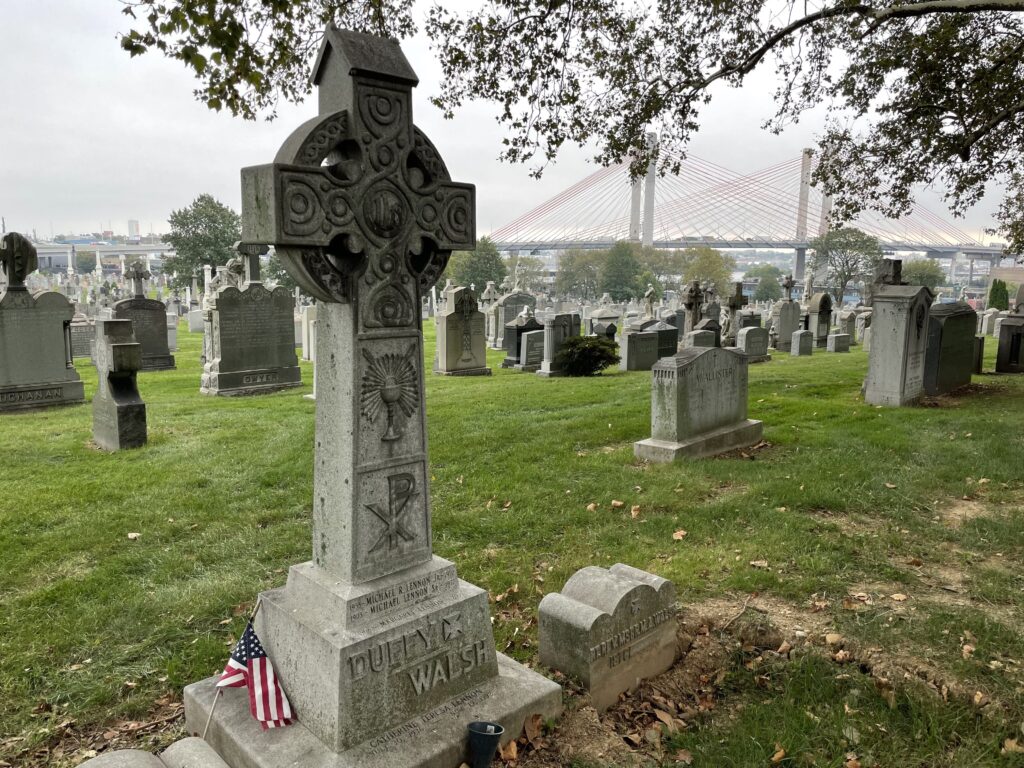
Calvary Cemetery, October 2021. Photo by Tom Meyers
You see them while strolling late night through the East Village or out your taxi window headed to LaGuardia Airport. Some of your favorite parks were even developed upon the sites of old potter’s fields.
Why are there so many cemeteries on the border of the boroughs of Brooklyn and Queens? Why are 19th century mausoleums and tombstones so fabulously ornate? And why are there so many old burial grounds next to tenements and apartment buildings in Greenwich Village?
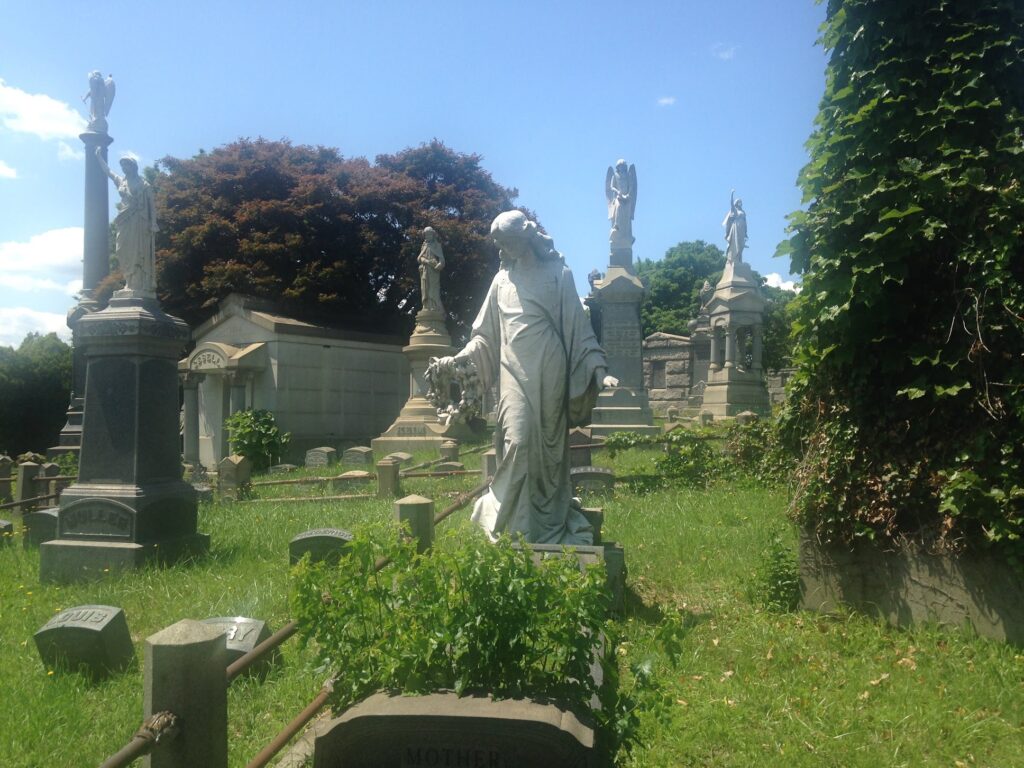
Lutheran All Faiths Cemetery. Photo by Greg Young
Featuring four tales from New York City history, illustrating the unusual relationship between cemeteries and urban areas.
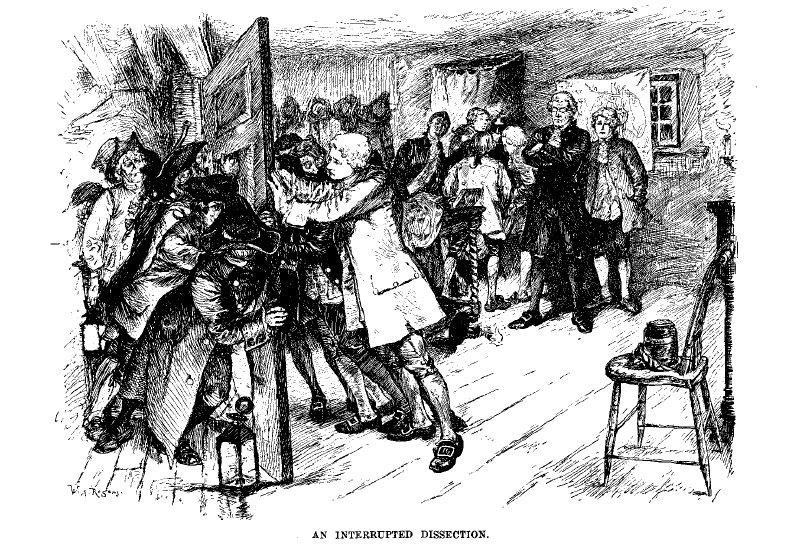
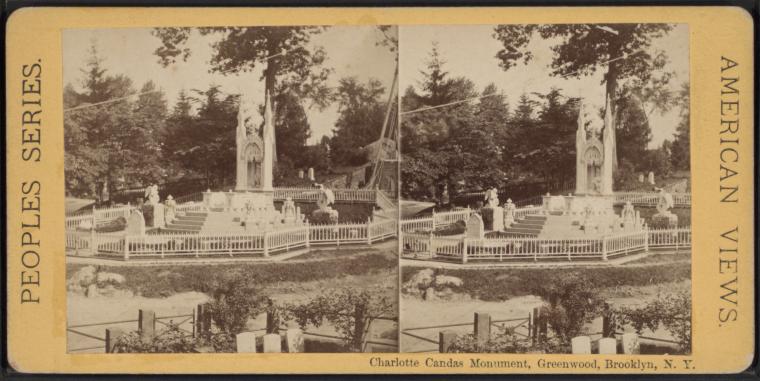
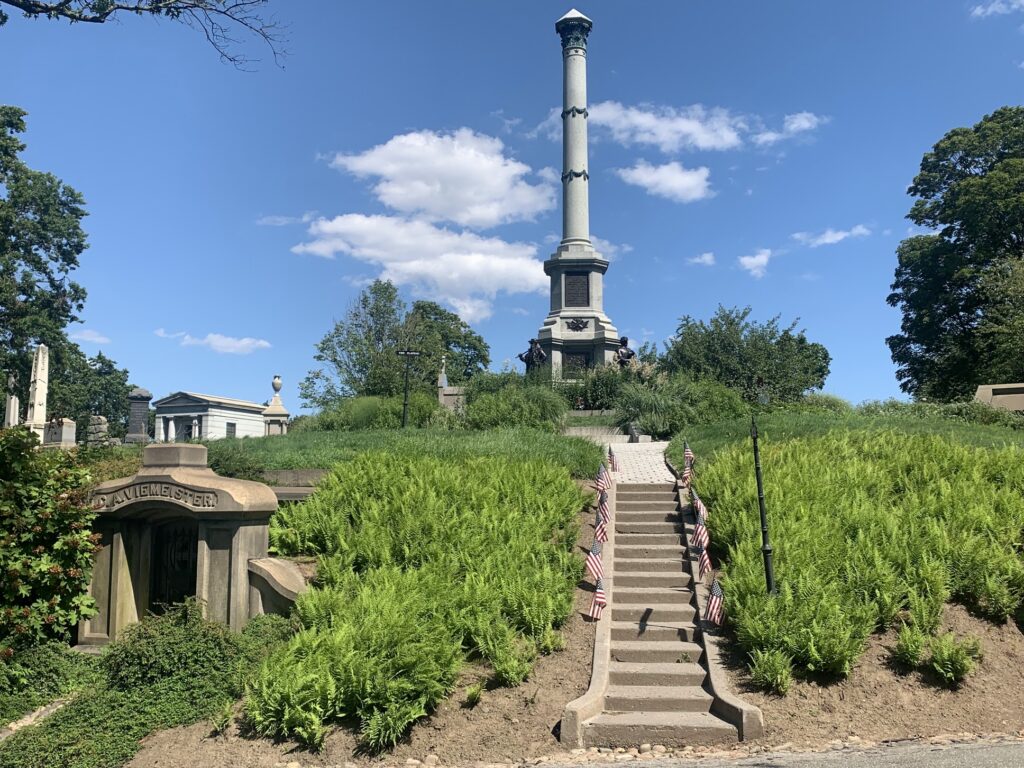
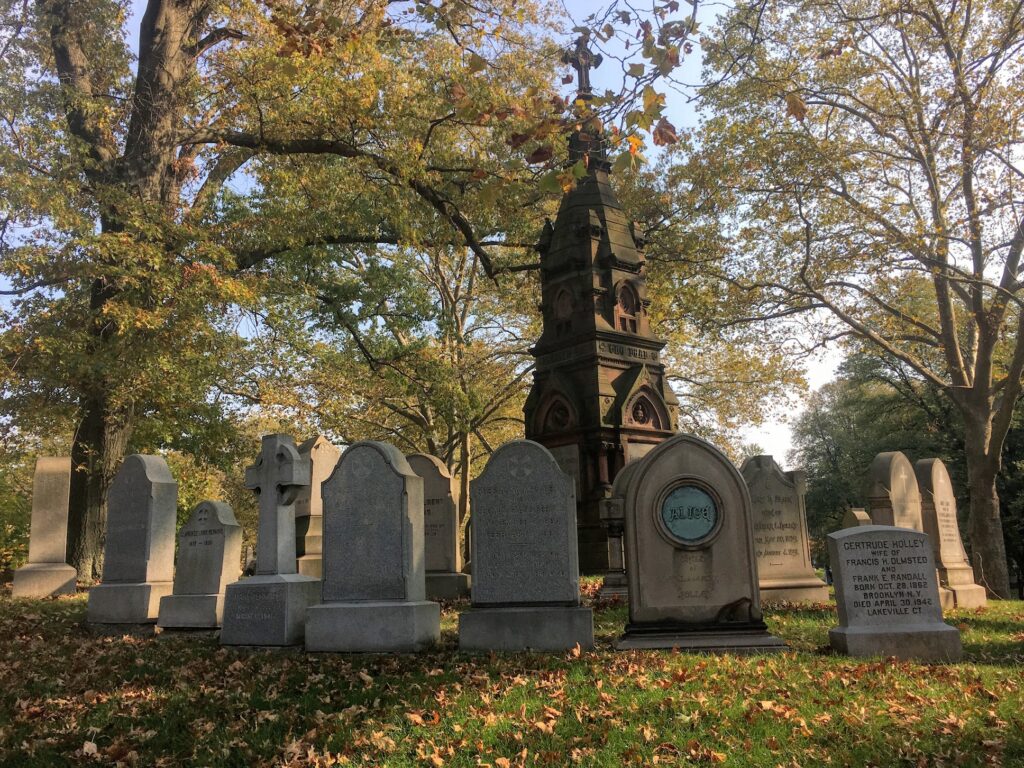
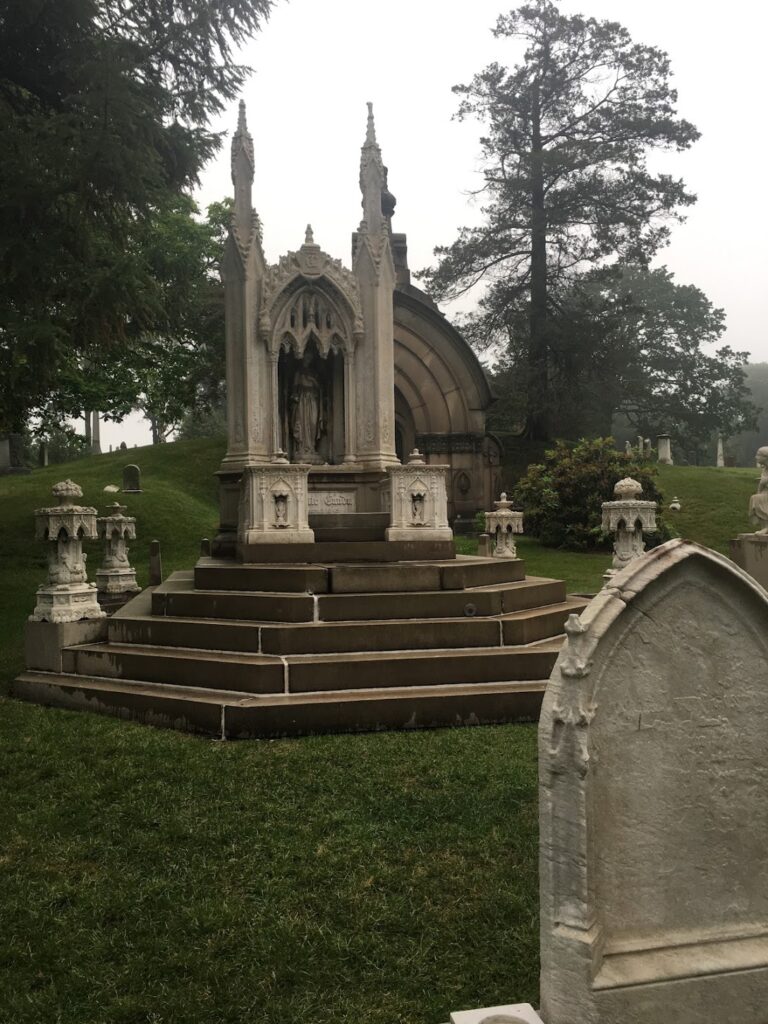
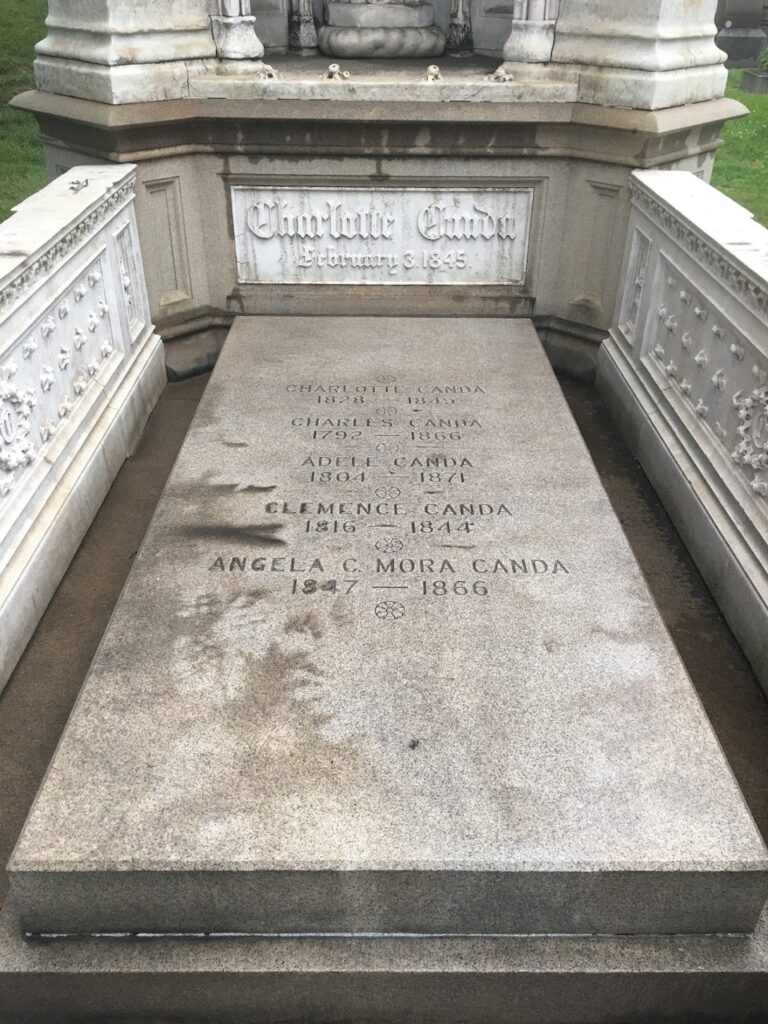
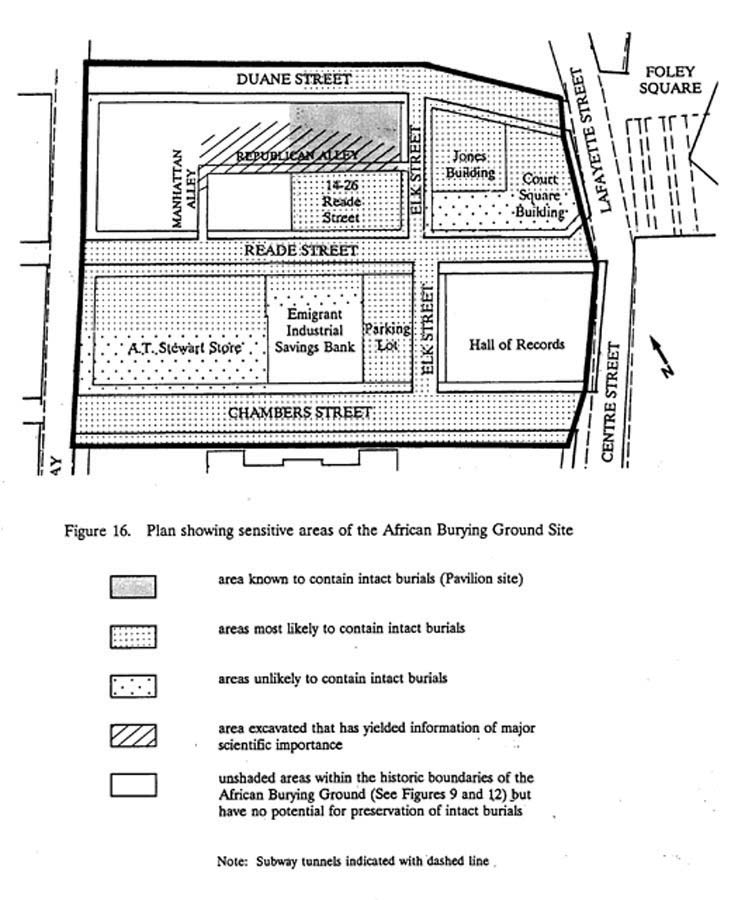
— The Doctor’s Riot of 1788 — The tragic monument of Charlotte Canda — The shocking grave robbery of retailer A.T. Stewart — The remarkable discovery in 1991 of a long-forgotten burial ground
Listen Now – New York Underground
For a vivid look into the individual cemeteries of New York City, we highly recommend you pay a visit to the website Cemeteries of New York City, created and maintained by Elizabeth D. Meade, PhD.
It also includes an interactive map which beautifully illustrates the ‘cemetery belt’ of Brooklyn and Queens. You can also find older, smaller family cemeteries around the city and the sites of burial grounds, now vanished.
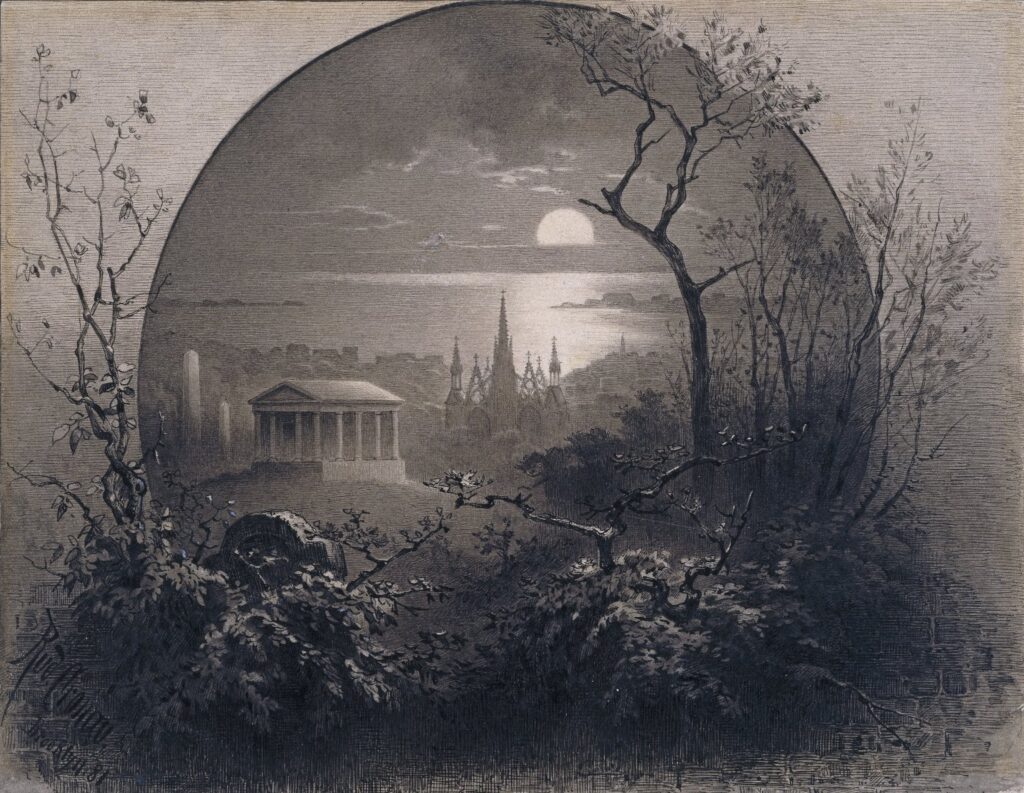
Rudolph Cronau, View from Greenwood Cemetery, 1881. (Courtesy Green-Wood Cemetery)The Doctor’s Riot of 1788 — Wood engraving of New York rioters trying to break their way into a doctor’s dissection area.Stereoscopic view of the Charlotte Canda site, New York Public Library
FURTHER LISTENING
After you’ve listened to this show on the history of New York’s many cemeteries, dive back into the back catalog and listen to these shows referred to on the show:
The Bowery Boys: New York City History podcast is brought to you …. by you!
We are now producing a new Bowery Boys podcast every other week. We’re also looking to improve and expand the show in other ways — publishing, social media, live events and other forms of media. But we can only do this with your help!
We are now a creator on Patreon, a patronage platform where you can support your favorite content creators.
Please visit our page on Patreon and watch a short video of us recording the show and talking about our expansion plans. If you’d like to help out, there are several different pledge levels. Check them out and consider being a sponsor.
We greatly appreciate our listeners and readers and thank you for joining us on this journey so far.
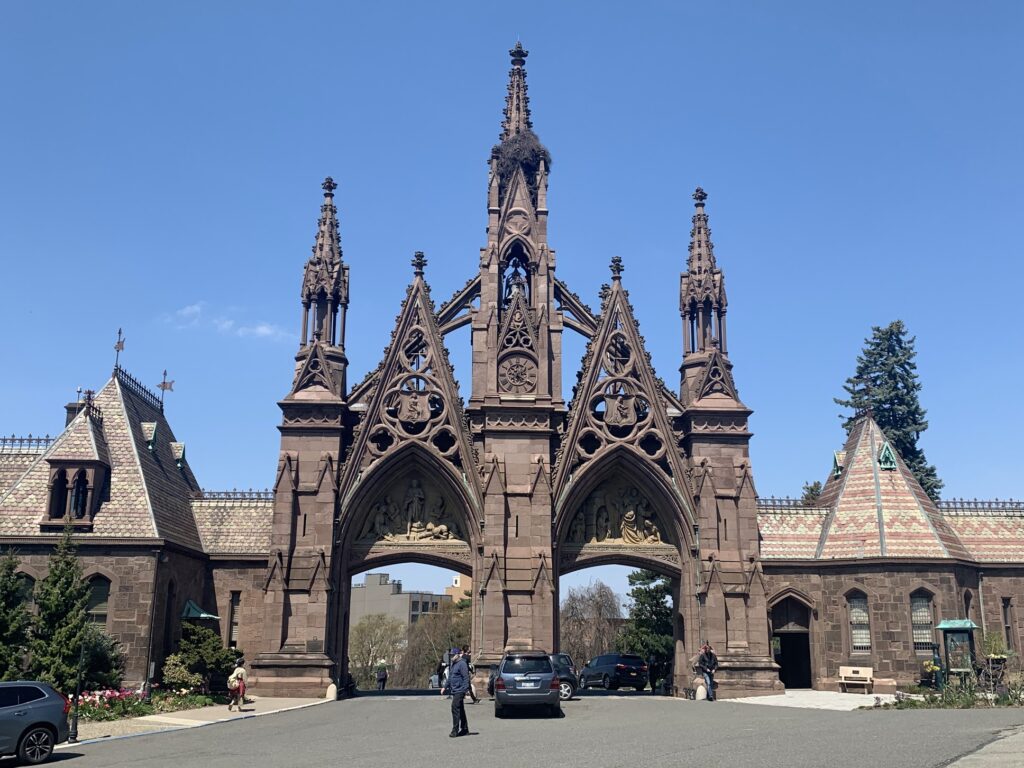
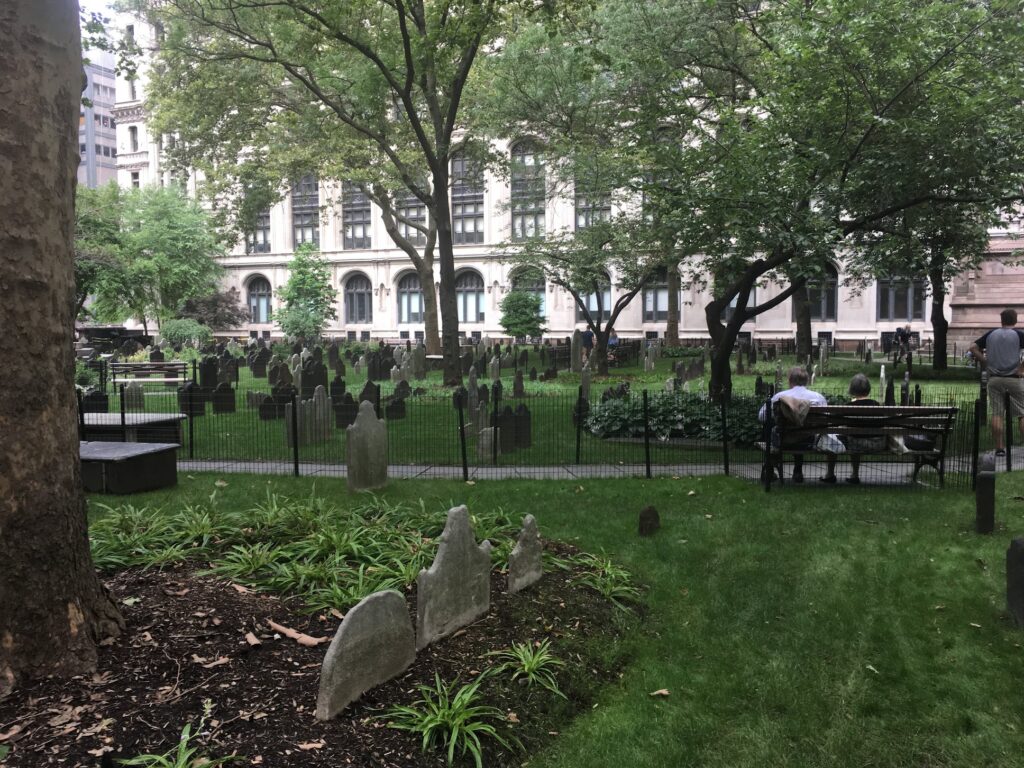
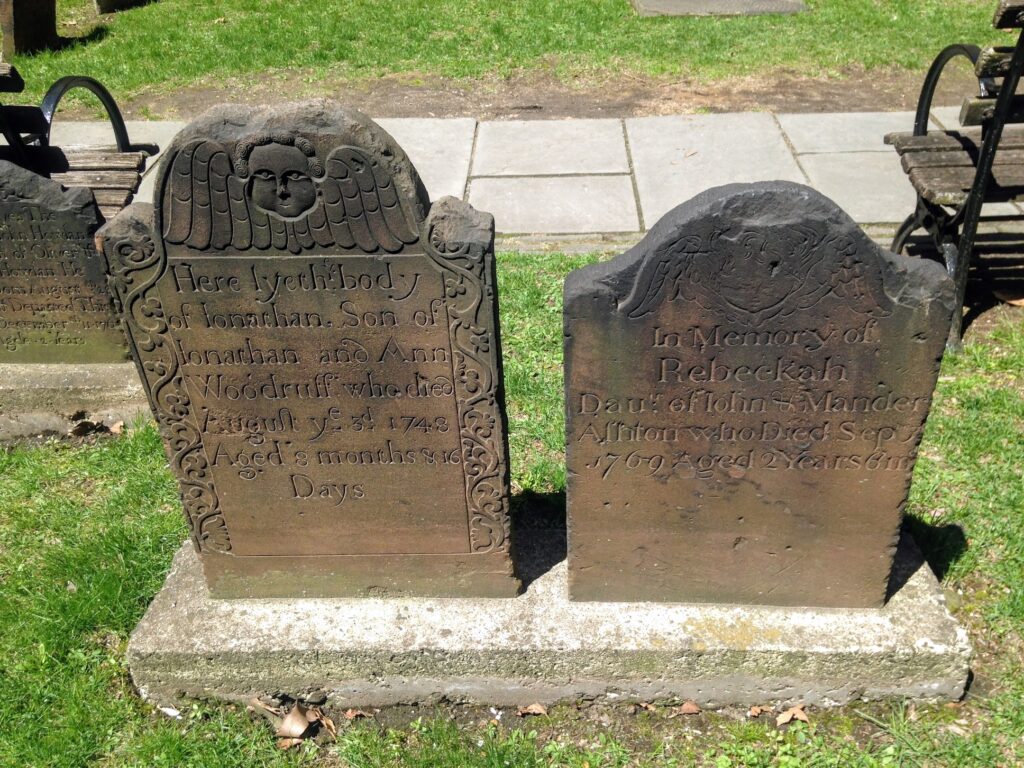
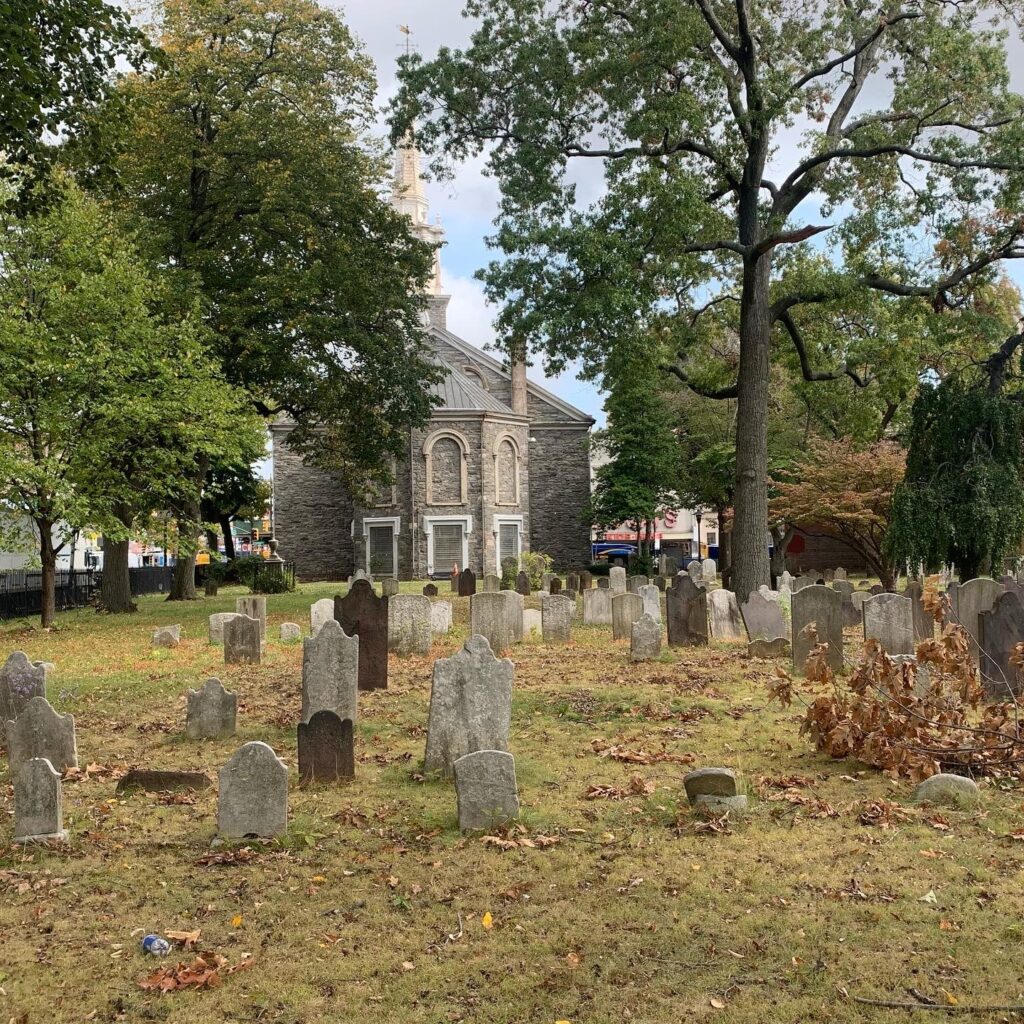
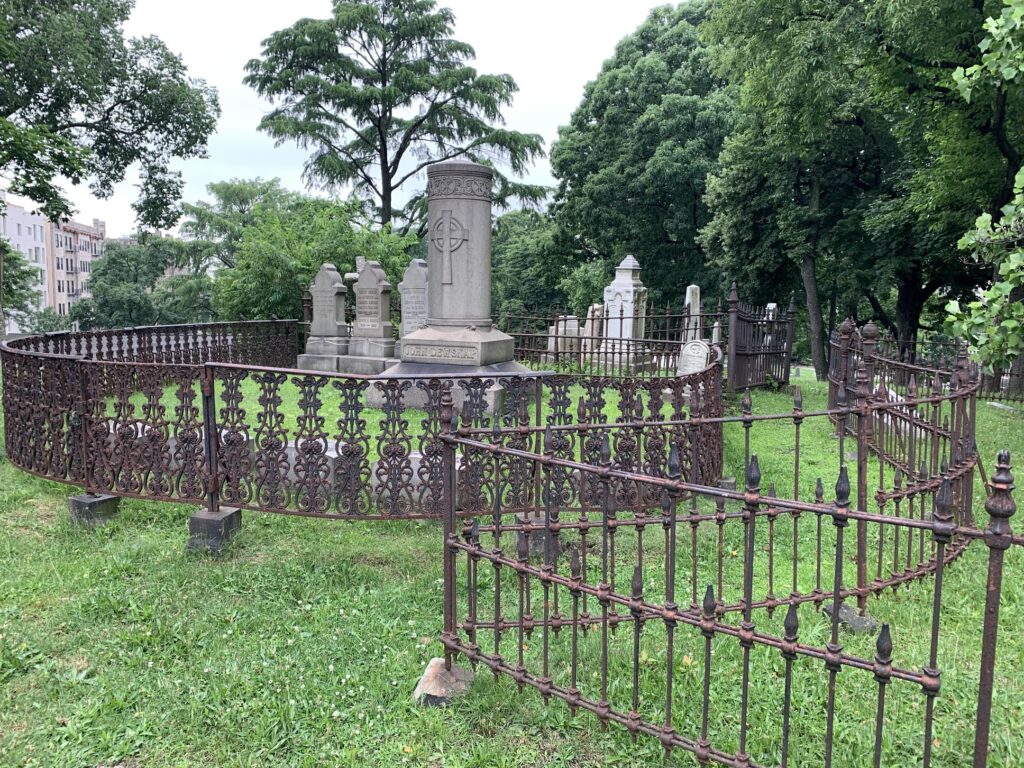
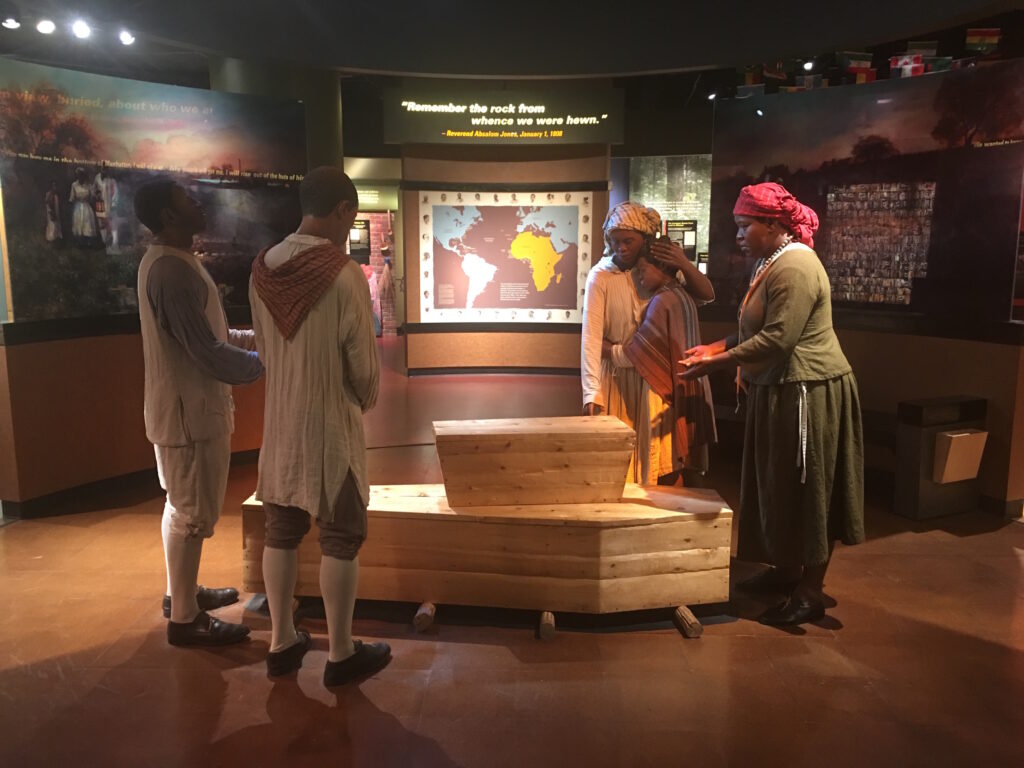
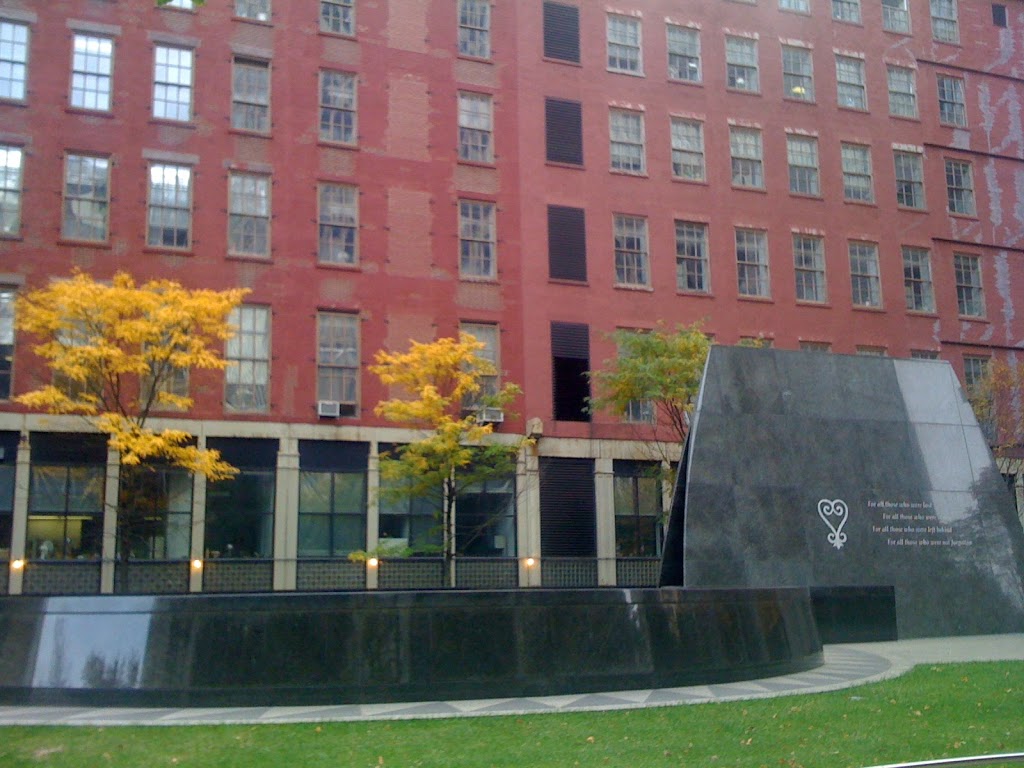
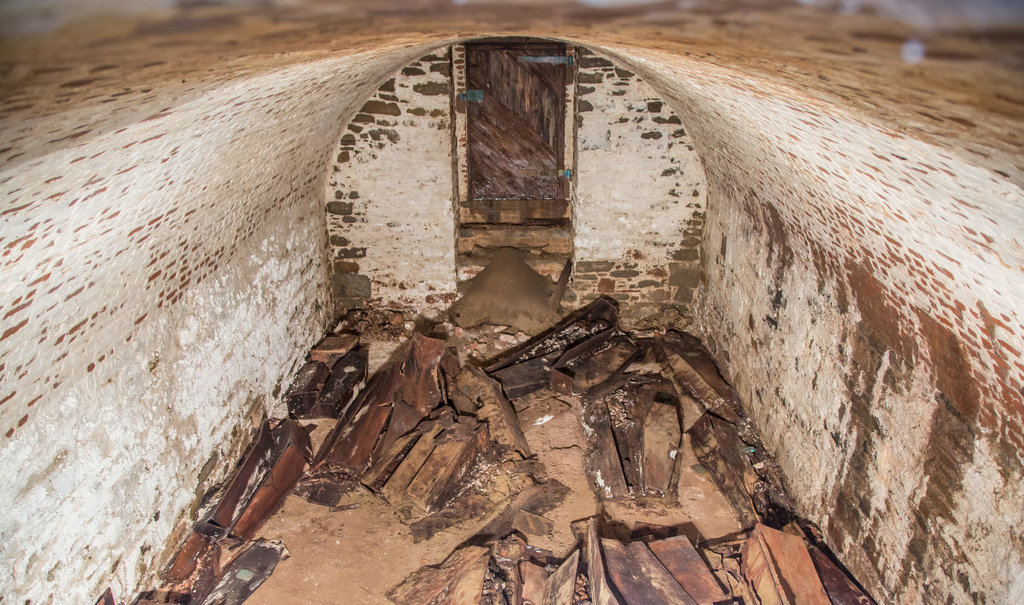
The Richard Upjohn gate at Green-Wood Cemetery. Photo by Greg YoungMarker to the Revolutionary War, Green-Wood Cemetery.Nothing beats Green-Wood Cemetery in the fall. Photo by Greg YoungThe Charlotte Canda monument. Photo by Greg YoungTrinity Churchyard (Photo by Greg YoungAncient gravestones at Trinity. Photo by Greg YoungFlatbush Dutch Reformed Churchyard, taken October 2020. Photo by Greg YoungTrinity Church Cemetery and Mausoleum, located in Washington Heights. Inside the African Burial Ground visitors center. Photo by Greg YoungInside a discovered vault underneath Washington Square Park, 2015. New York City Department of Design and ConstructionGreen-Wood volunteers re-inter remains at Washington Square Park. Read more at Real Estate Weekly.
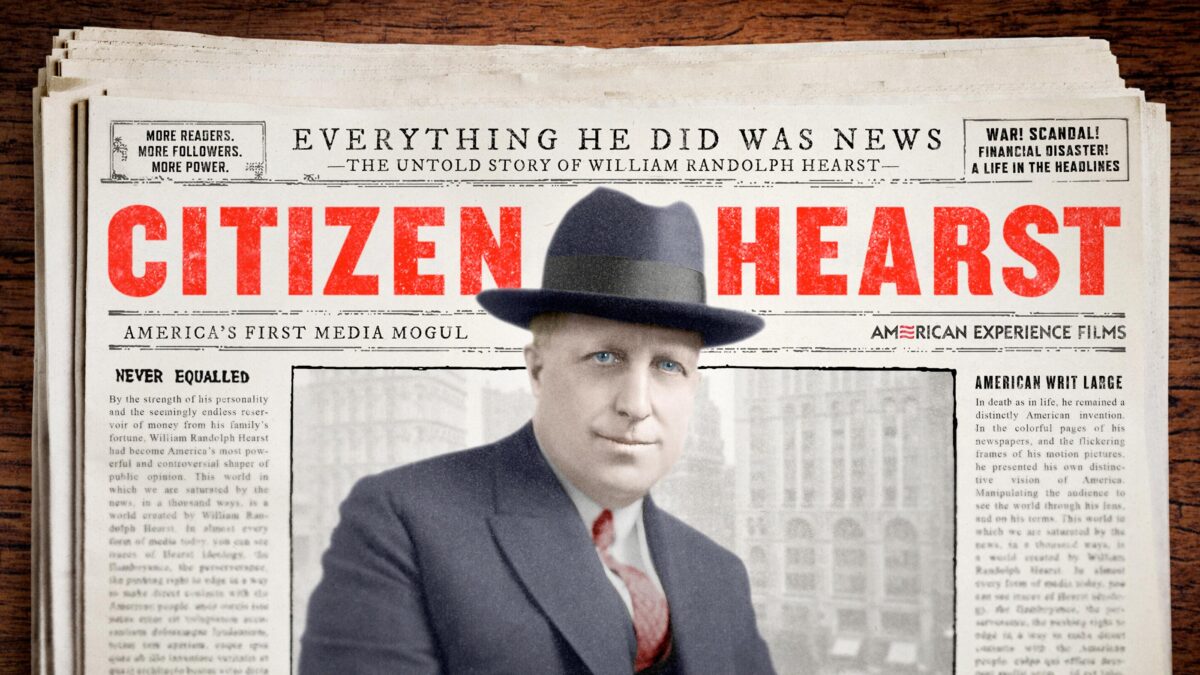
So remember last year when we did a two part show on Joseph Pulitzer and William Randolph Hearst? Here are the shows to refresh your memory:
Part of the reason for that two-part episode last summer was because I was preparing to film my PBS debut for American Experience — a two-part series on the life of William Randolph Hearst — newspaper mogul, politician, rich guy.
Check your local listings but the show will debut on most places on Monday, September 27.
Part 1, Monday, September 27, 2021, 9/8c Part 2, Tuesday, September 28, 2021, 9/8c
Here’s an exclusive clip from the show where I’m chatting about Newspaper Row in lower Manhattan. I’ll be featured in both parts (although most in part one, set in New York City)