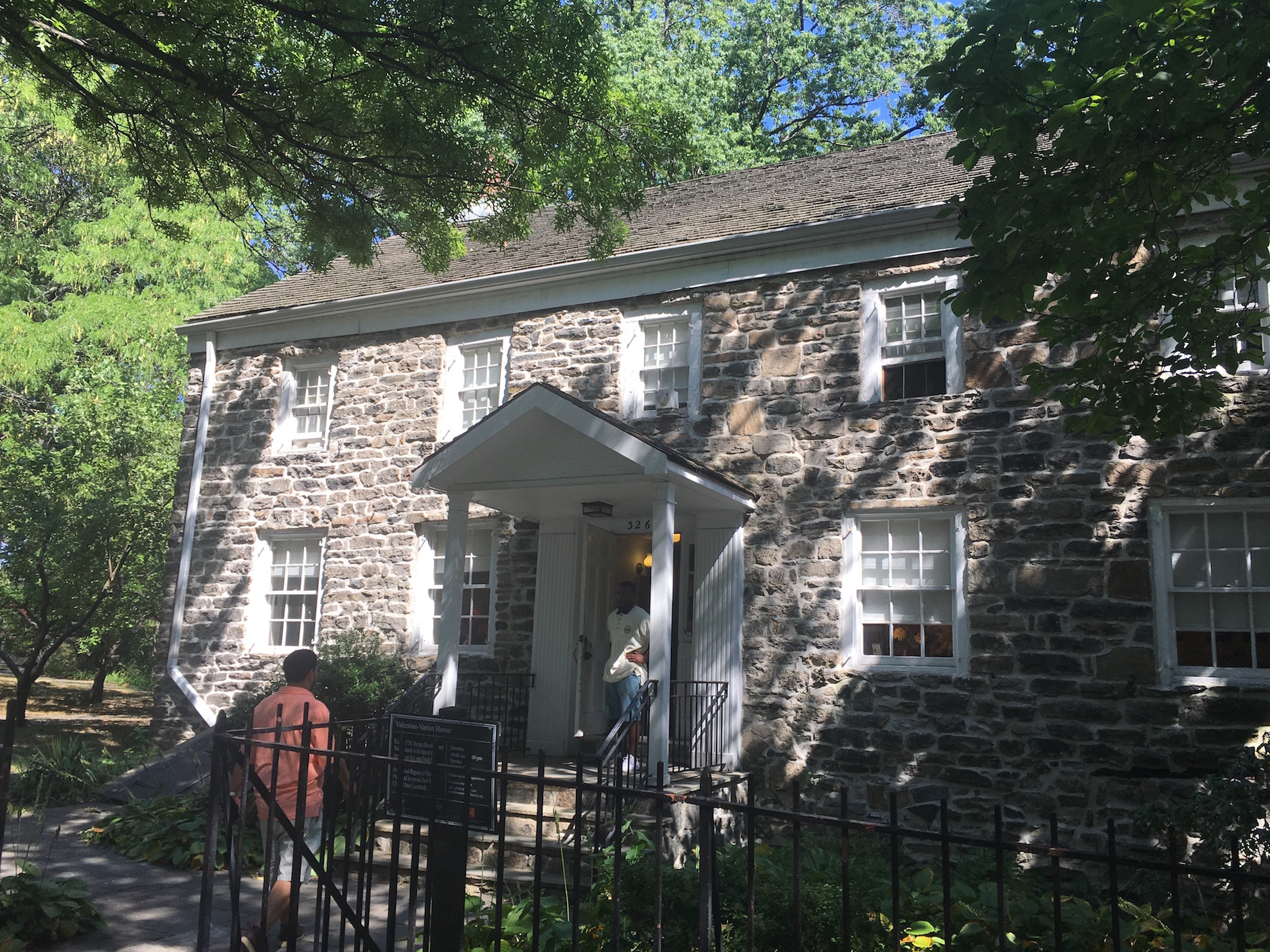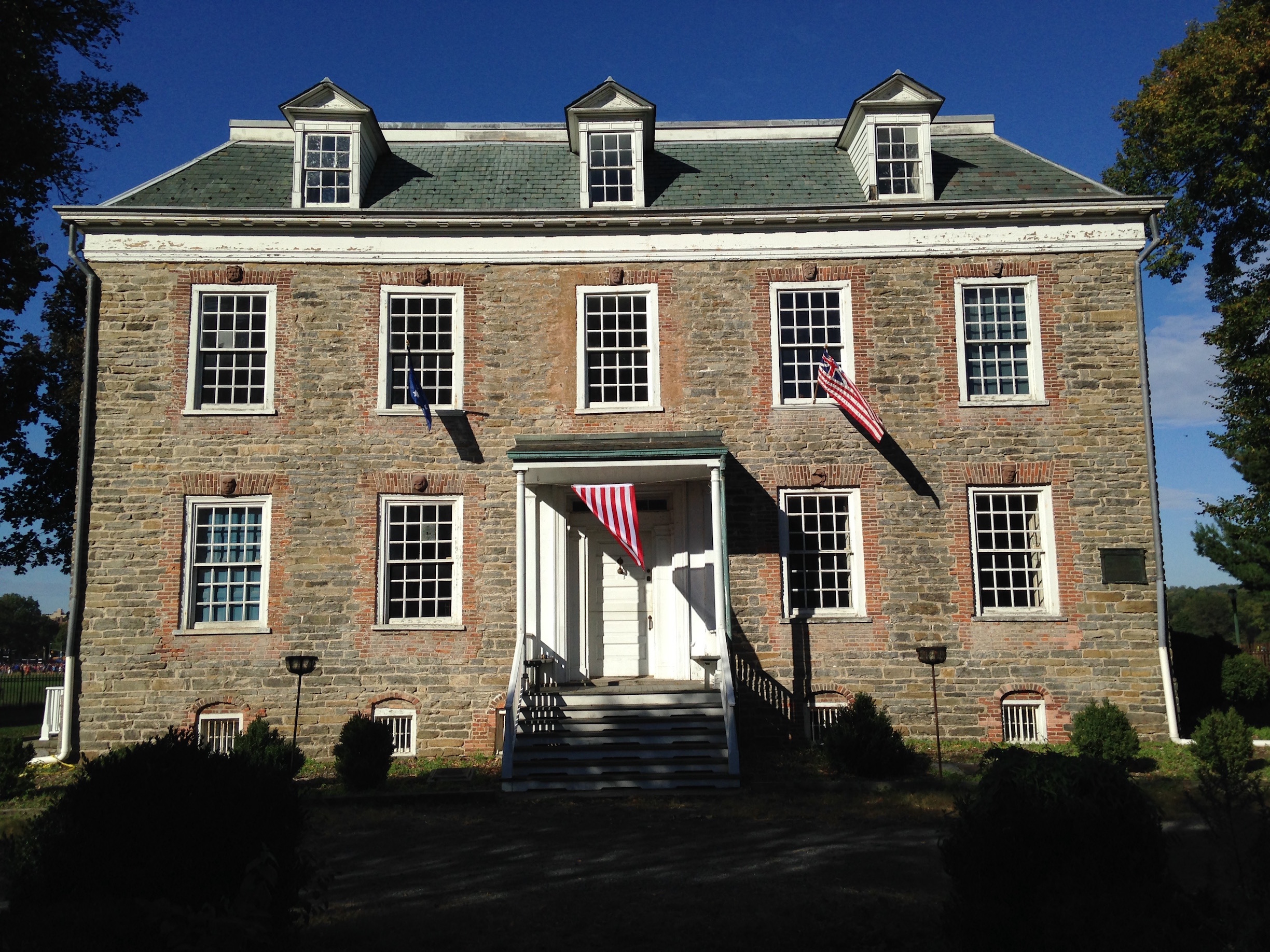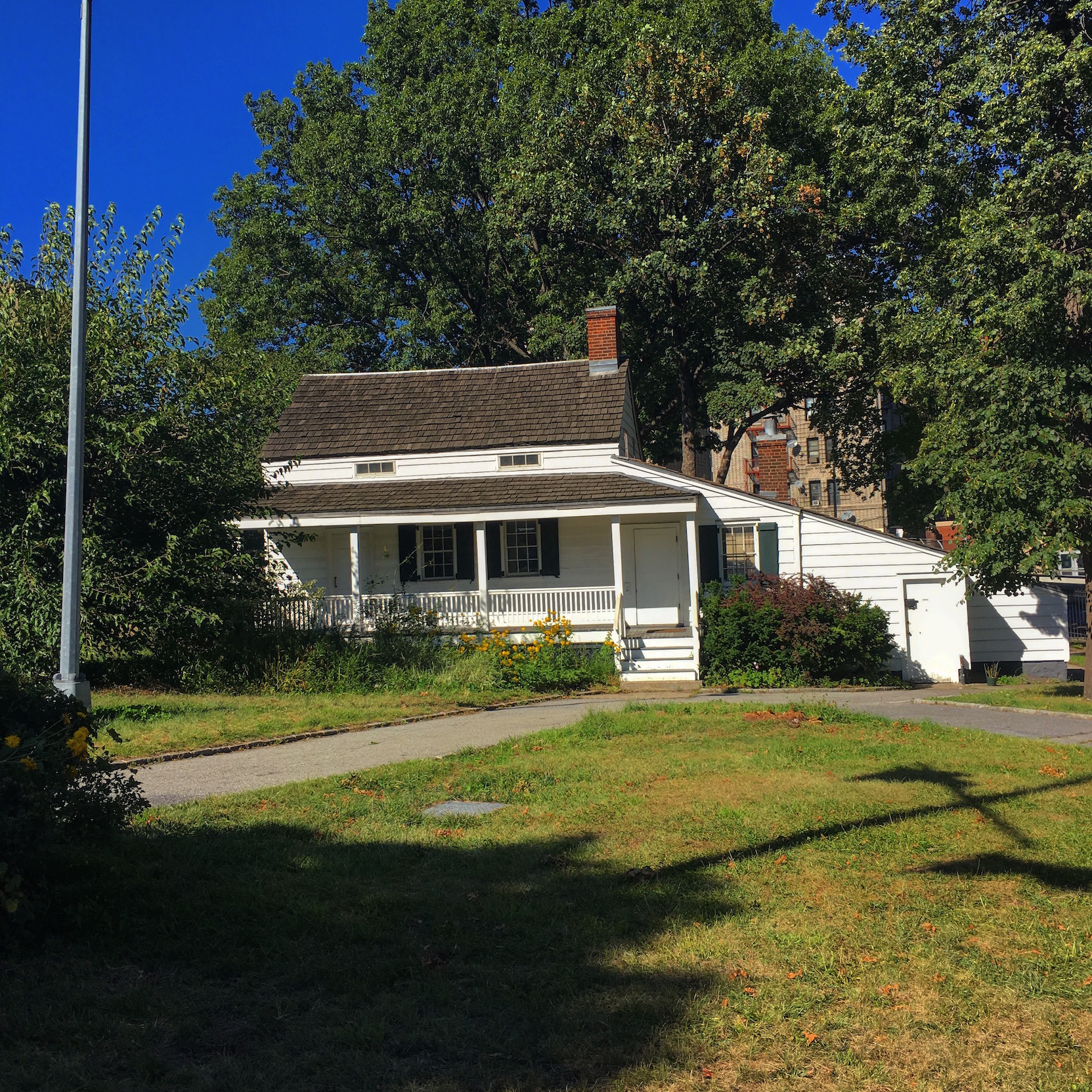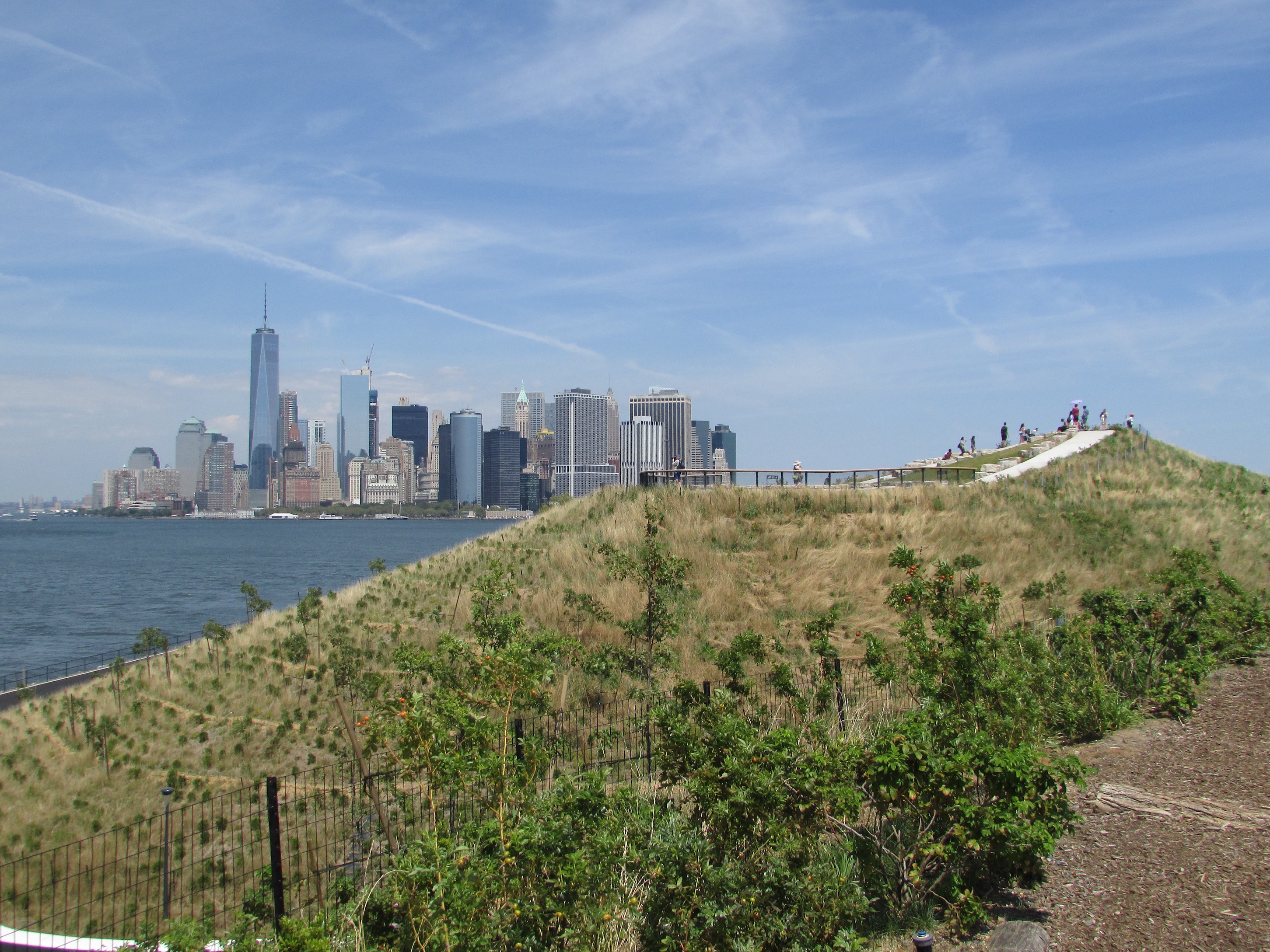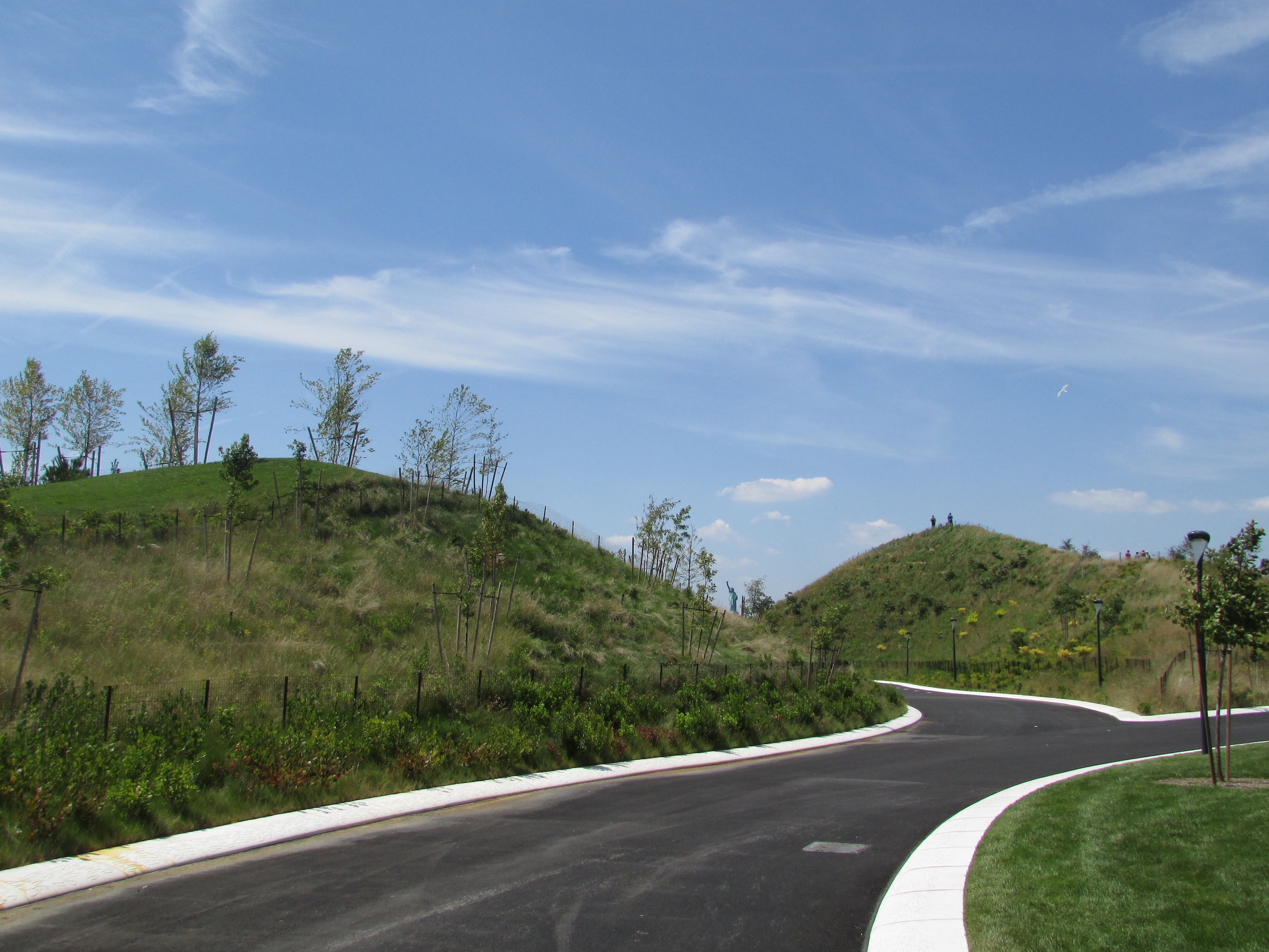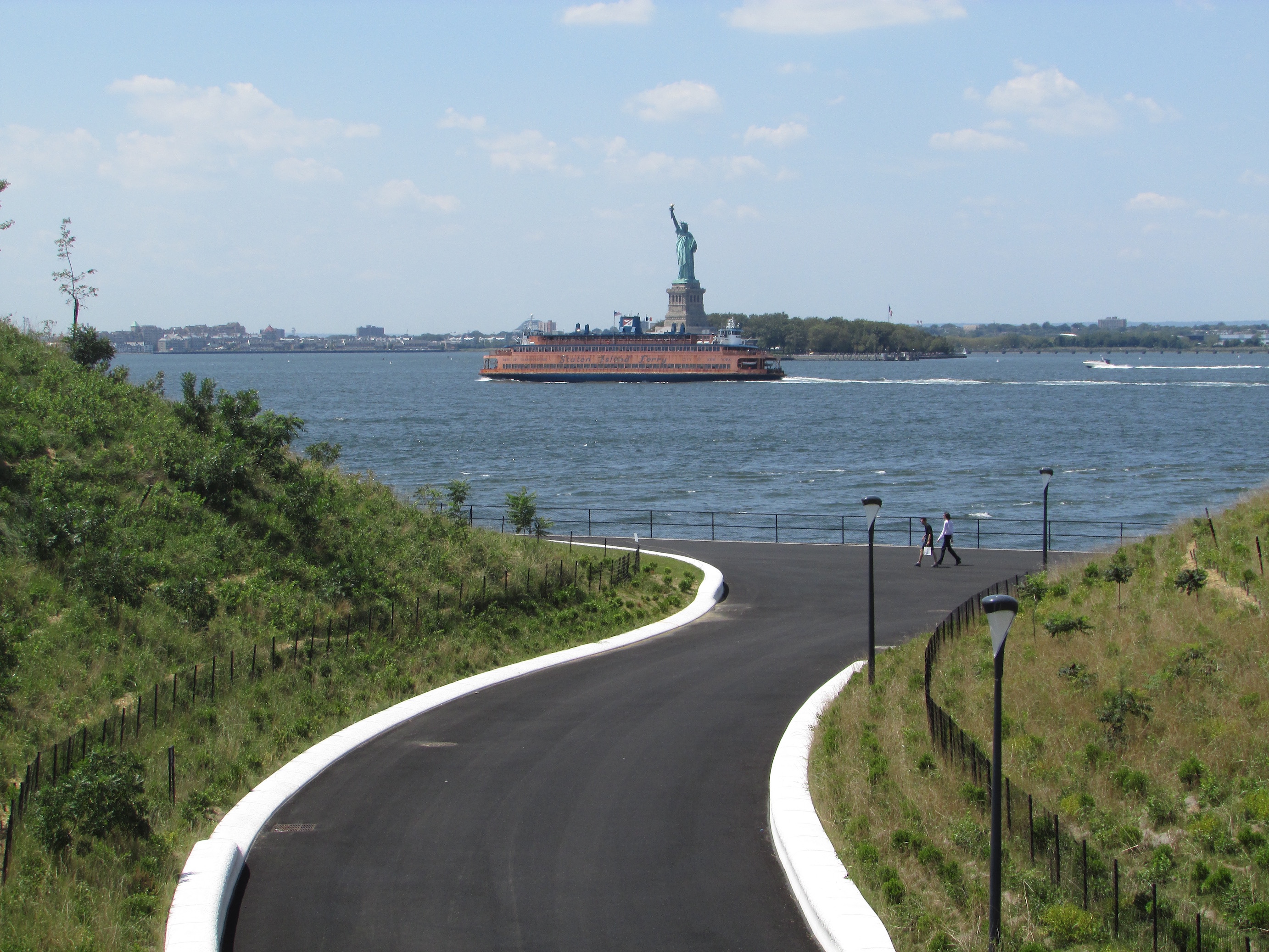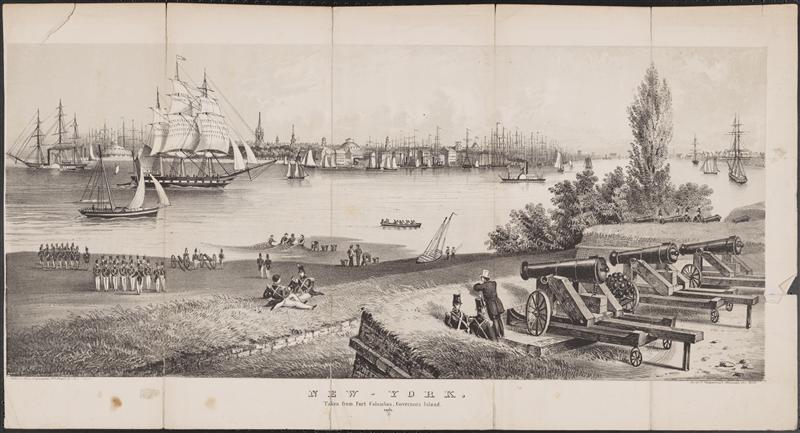
This month America celebrates the 100th anniversary of the National Park Service, the organization which protects the great natural and historical treasures of the United States. There are a number of NPS locations in the five borough areas. Throughout the next few weeks, we will focus on a few of our favorites.  For more information, you can visit National Parks Centennial for a complete list of parks and monuments throughout the country.  For more blog posts in this series, click here.
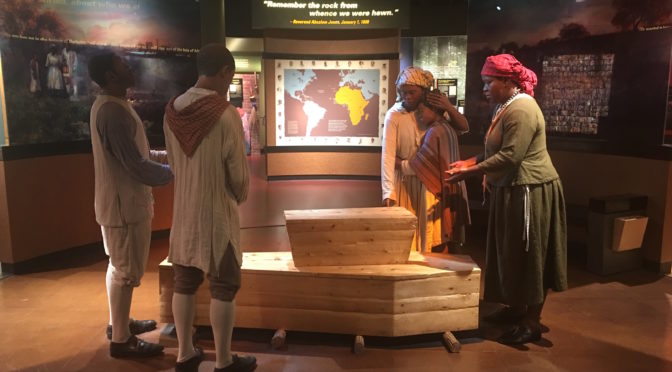
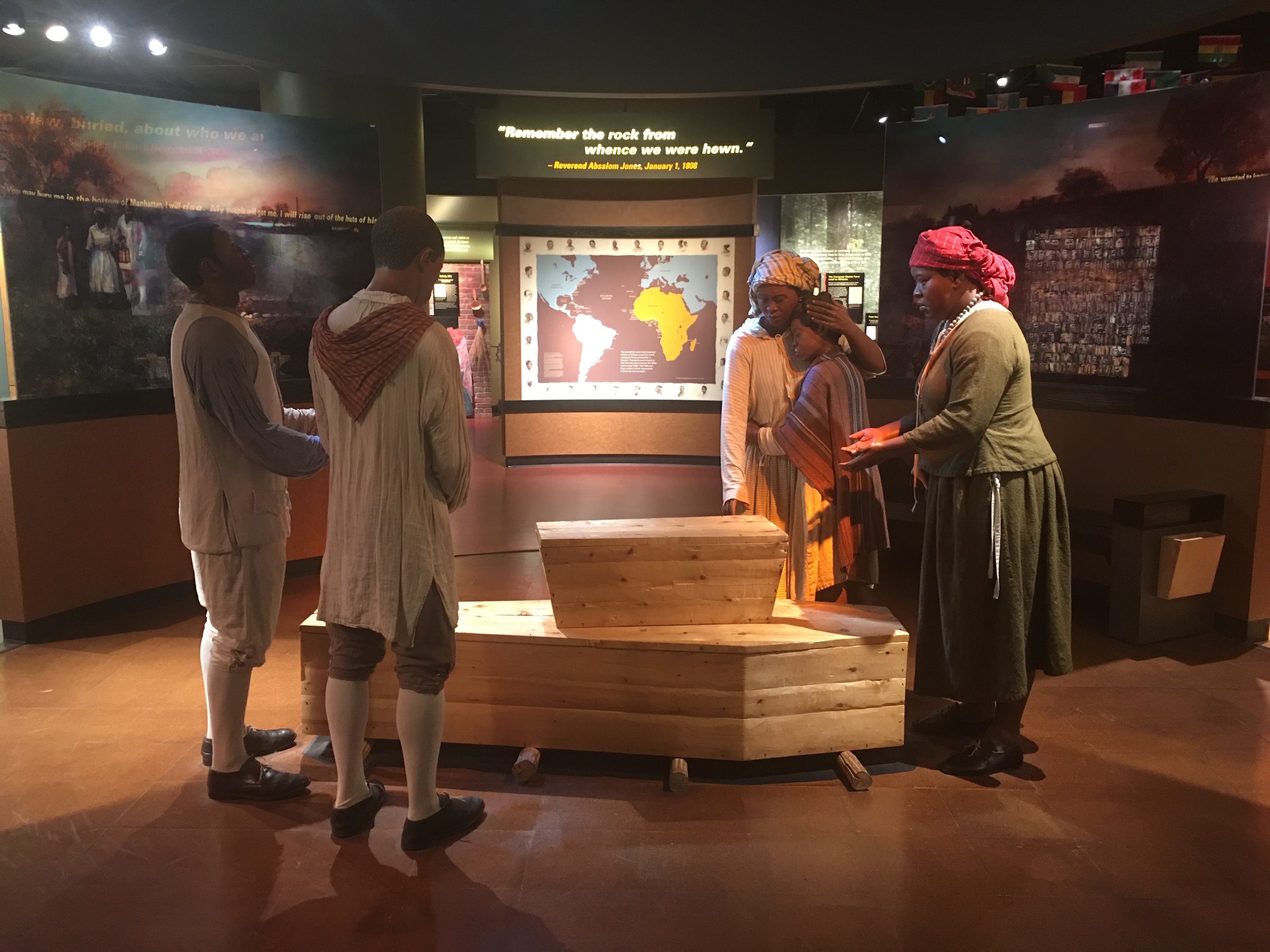
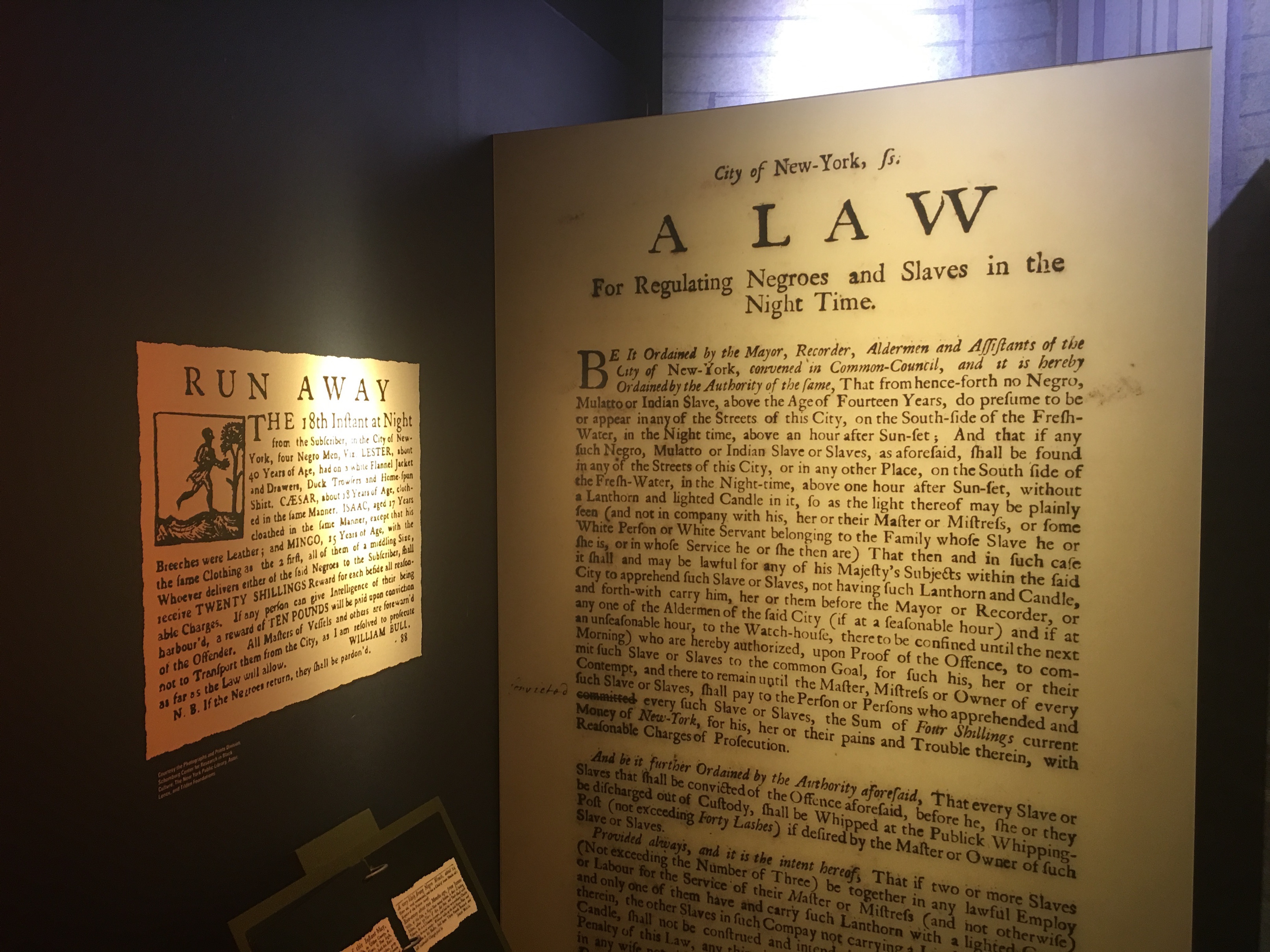
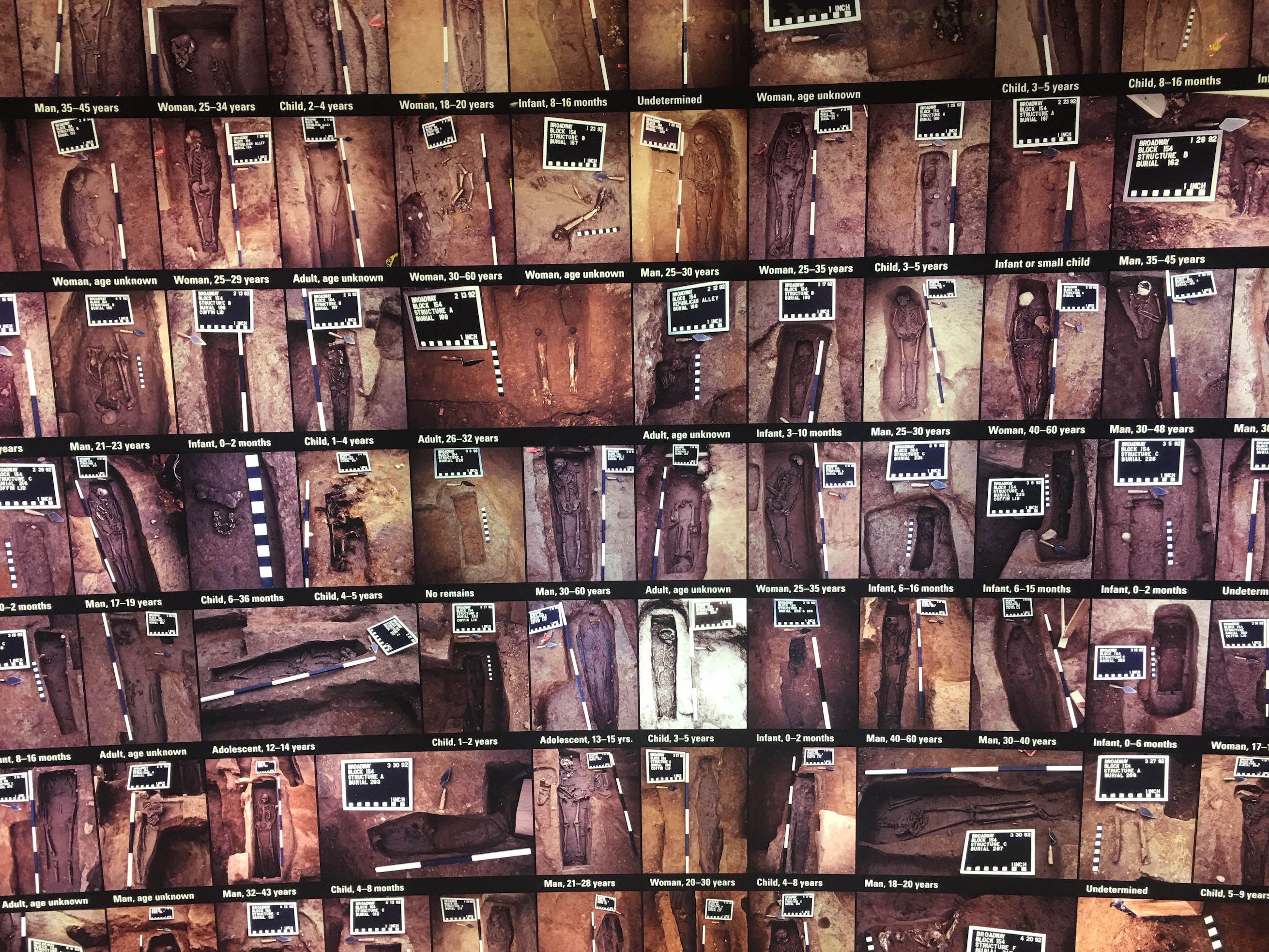
A vivid display inside the visitor center at 290 Broadway.
AFRICAN BURIAL GROUNDÂ NATIONAL MONUMENT DUANEÂ STREET, CIVIC CENTER, MANHATTAN
The African Burial Ground, tucked right into the heart of Lower Manhattan, two blocks north of City Hall, represents one of the greatest archaeological finds and saddest stories in New York’s history. The somber monument, opened in 2007, gives long overdue respect and honor to the remains buried here of New York’s first African and West Indian communities.
 Contrast this with lower Manhattan’s other two burial grounds — at Trinity Church and St. Paul’s Chapel —with their carefully preserved marble tombstones and prestigious roster of permanent residents. Whereas Trinity’s cemetery has a fence to preserve the peace, this burial ground has no such border to keep the city at bay.
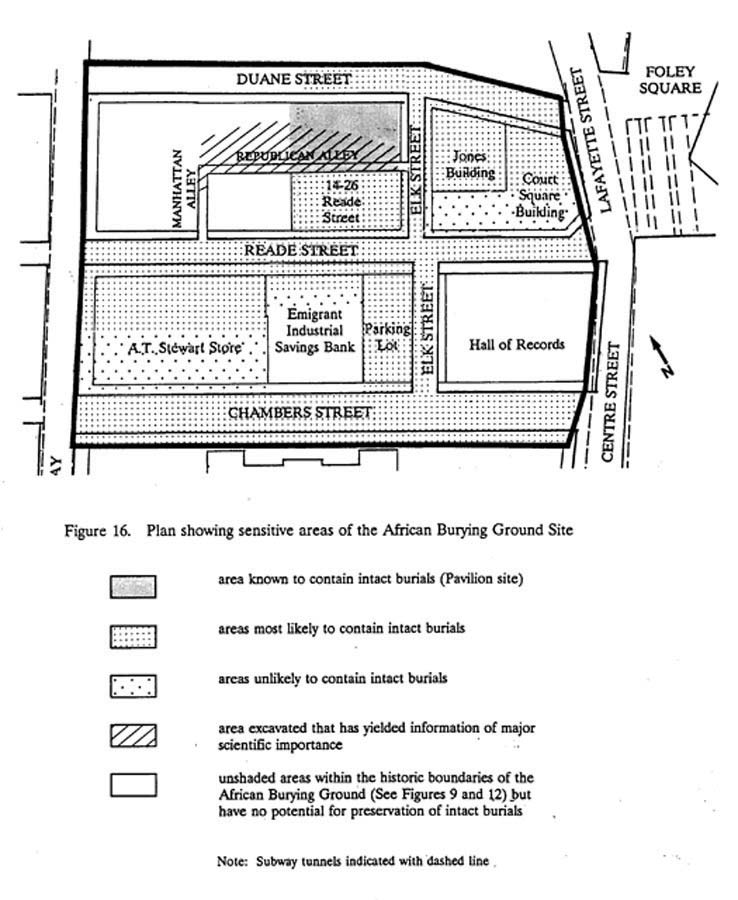
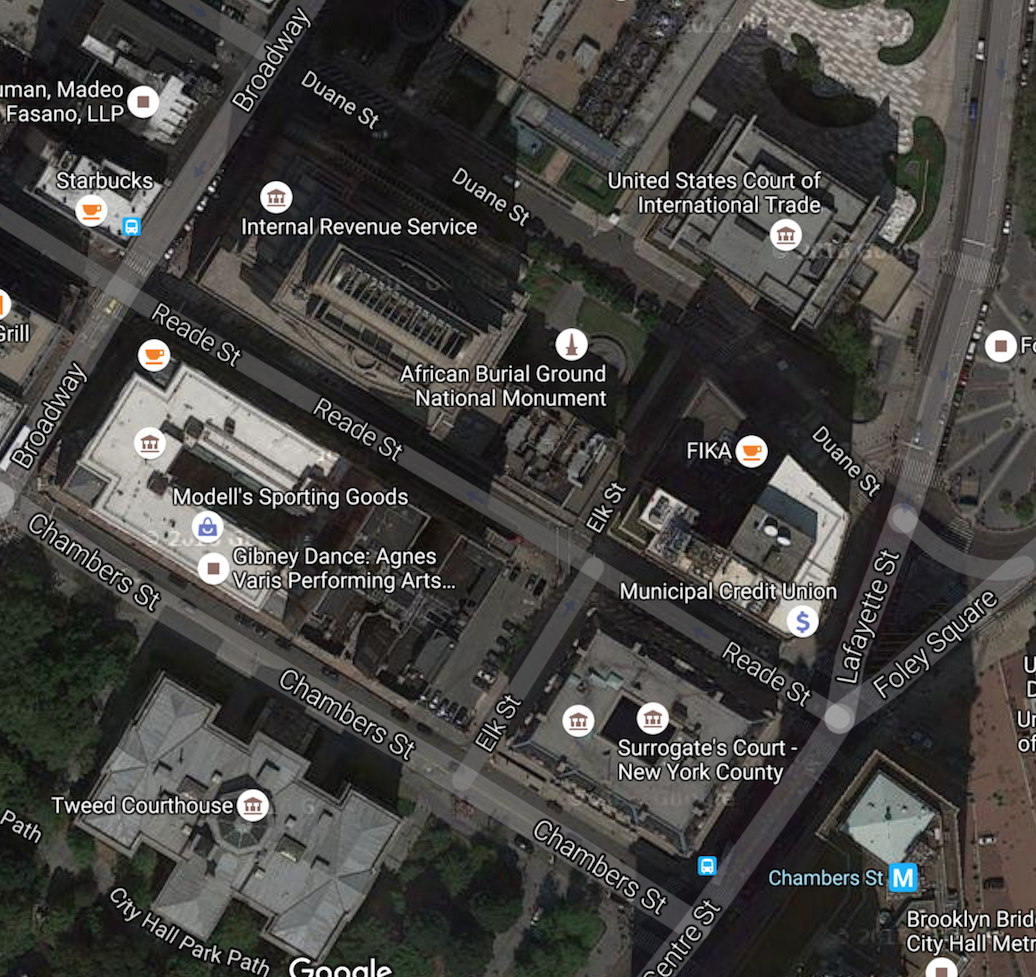
In fact, the African Burial Ground is far larger than the site of today’s monument. Its true size is unknown, although it is believed to cover about seven acres, stretching out under many of the surrounding buildings, including those in Foley Square and along Chambers Street.
The burial ground dates back to the seventeenth century, when New Amsterdam was a company town for the thriving Dutch West India Company, and the town’s early settlers were primarily traders, not builders or town planners. In their eyes, they didn’t sail all the way across the Atlantic from Holland to do menial work.
And so in 1626, to stimulate and facilitate the colony’s growth, the Dutch imported the New World’s first African slaves, a group of eleven people. Early records show that they were assigned names associated with their homelands or original captors: Antony Congo, Dorothe Angola, Jan Negro. Slave labor would be used to build many of New Amsterdam’s major structures, including the large wall that lined the northern edge of town.
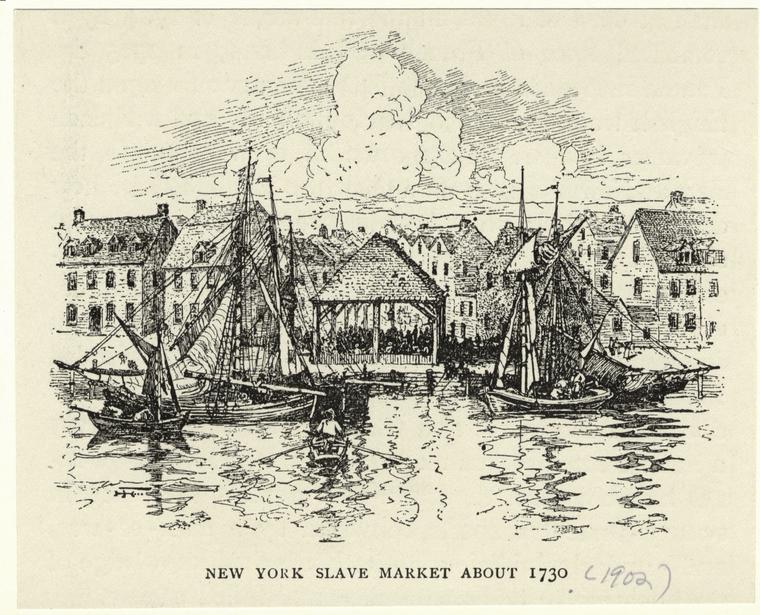
One of the most notorious landmarks of the slave trade sat at the corner of Wall and Water Streets (once the shoreline, back in British New York). The Meal Market was established in 1711 not only for the buying and selling of raw products like grains, but also for the purchase and leasing of “negroes and Indian slaves.â€
Courtesy New York Public Library
It’s interesting to note that under the Dutch, enslaved men and women could earn their freedom and eventually own property. But those who did gain independence were not permitted to reside within the city’s walls. Instead, they were forced out beyond the borders to settle in the “free Negro lots†found around the southern edge of Collect Pond.
Things got worse for the colony’s slave population in 1664, when the British took control and renamed the colony New York.
They brought with them their own stricter slavery traditions and stripped away those meager legal protections that had been afforded by the Dutch. New York was not a plantation town; many families owned one or two slaves and they were usually kept in or near their homes. By the 1740s thousands of enslaved men and women from Africa and the Caribbean lived in New York, more than one-fifth of the city’s population.
The visitor center serves as a museum about slavery and an exhibit to the early black experience in New York
While a diverse number of religions were practiced under English rule, most black New Yorkers eventually converted to the Anglican Church. But Trinity Church did not allow the remains of black people, slave or free, to be buried in its churchyard. And so this population was forced outside the city walls again, this time claiming some land south of Collect Pond as their own private burial ground.
In their burial ceremonies and mourning practices, the city’s African and Caribbean residents were able to display their original religious beliefs, and could come here and bury friends and loved ones according to traditional burial customs.
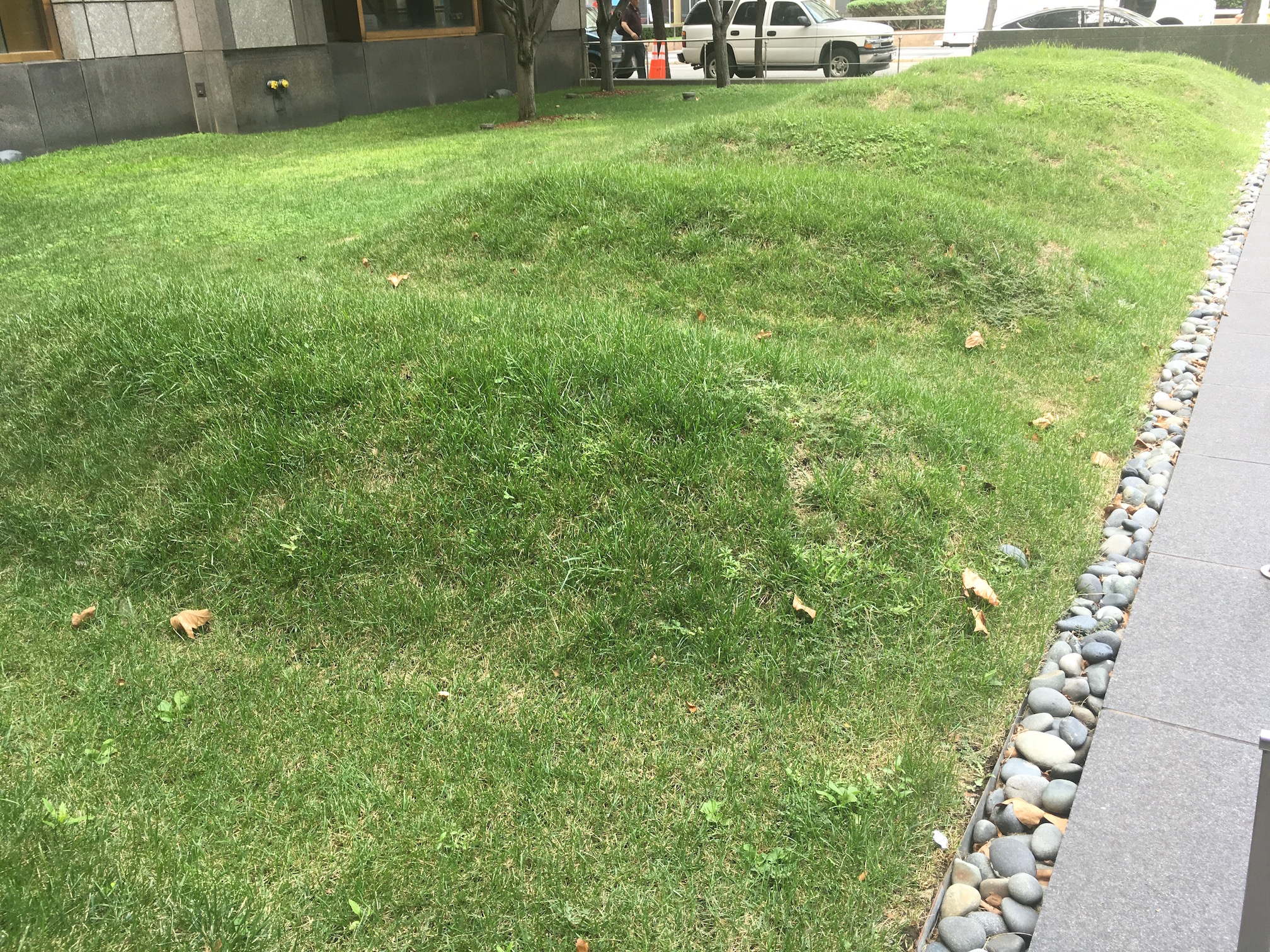
The remains of 419 individuals are contained in mounds outside next to the monument.
In the early years, at dusk, New Yorkers would hear the foreign-sounding music, drum beats, and the sounds of exotic ceremonies drifting down from the burial yard.
Well, that was simply too frightening for some white New Yorkers, and so, starting in 1722, it became illegal for blacks to congregate at night, and a 1731 law prohibited more than twelve people from gathering during the day at the burial ground. These draconian laws against black New Yorkers were instigated due to the events of April 1712, when a group of slaves conspired to burn the city. Twenty-one enslaved and freedmen were put to death in retaliation.
While these laws put a damper on many religious ceremonies, it was still possible to show some freedom of expression in the burials themselves. The dead were buried in wooden boxes, most facing east, as was customary for some African religions, and trinkets of religious or personal value (cowrie shells, pipes, buttons, and pieces of coral and crystal) were placed inside the coffins with the deceased.
Images of the remains found on the site of the very building you’re standing in are displayed inside the visitors center.
With the departure of the British in 1783 and the beginning of the city’s great march northward, this land quickly became much more valuable. By the early 1810s, Collect Pond and its now-spoiled natural surroundings were simply filled in, the marshes drained, the hills leveled.
The graves of many of New York’s early slave and free black population, the resting place of approximately 15,000 bodies here, were covered over in landfill, in some places 16 to 25 feet deep.
Map of the site and the projected location of other burials. Below is a current Google Map satellite view of the site:
Courtesy National Park Service
The early structures built atop the burial ground were not very tall, none more than a few stories high. As a result, the depths of their foundations were no deeper than 20 feet or so. In some places, the burial ground lay below the newly erected buildings, completely preserved by the landfill that had been hastily thrown over it.
Flash forward—way forward—to 1991, when New York City was home to hundreds of skyscrapers, but unbelievably this small seven-acre area still only held structures of modest height. When work began on a nearby government building at 290 Broadway, excavators happened upon the first evidence of human remains. Throughout the next year, excavations would uncover a total of 419 bodies, along with a wide assortment of artifacts.
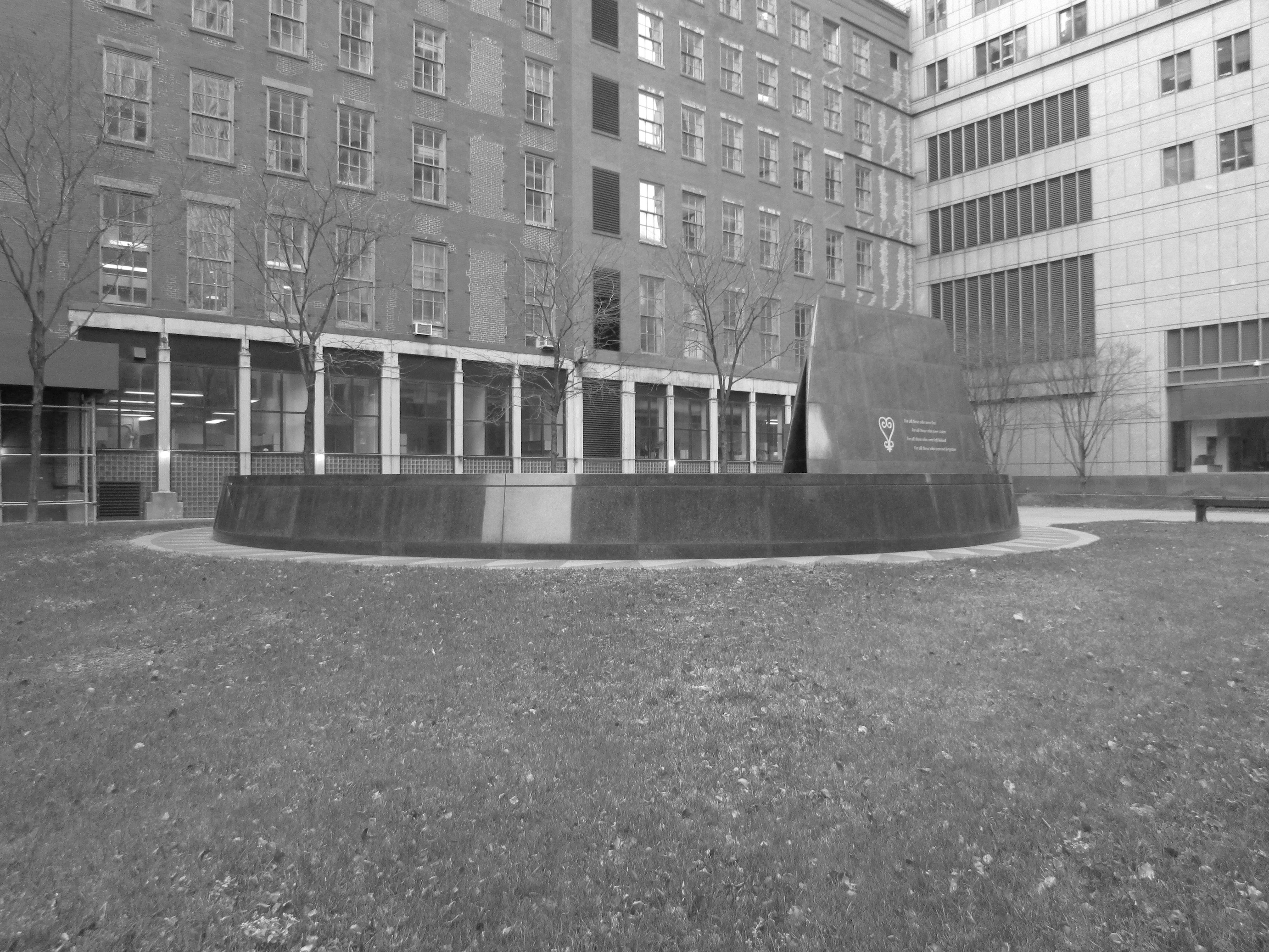
The monument to this discovery, completed in 2007 and operated by the National Park Service, returns a bit of grace and reverence to this site, and focuses on the spiritual beliefs of those who were interred here centuries ago. Immediately to your right is a set of seven evenly and elevated spaced beds of grass, where the bodies of the 419 have once again been buried, collected in hand-carved wooden sarcophagi.
The following words are inscribed upon the monument (Duane Street, between Broadway and Lafayette Street. Visitors’ center at 290 Broadway):
For all those who were lost For all those who were stolen For all those who were left behind For all those who are not forgotten
This month America celebrates the 100th anniversary of the National Park Service, the organization which protects the great natural and historical treasures of the United States. There are a number of NPS locations in the five borough areas. Throughout the next few weeks, we will focus on a few of our favorites.
For more information, you can visit National Parks Centennial for a complete list of parks and monuments throughout the country. For more blog posts in this series, click here.
And listen to our podcast on this subject here:
STONEWALL NATIONAL MONUMENT CHRISTOPHER STREET, WEST VILLAGE, MANHATTAN
On June 24, 2016, President Obama — who had conjured the name of Stonewall Inn in his 2013 inaugural speech — designated the location of the 1969 Stonewall Riots as a National Monument, to be overseen by the National Park Service.
Twelve days earlier, a gunman walked into a gay nightclub in Orlando, Florida, and killed 49 people. It was the deadliest terrorist attack since September 11, 2001, and certainly the greatest single attack upon the American LGBT community in history.
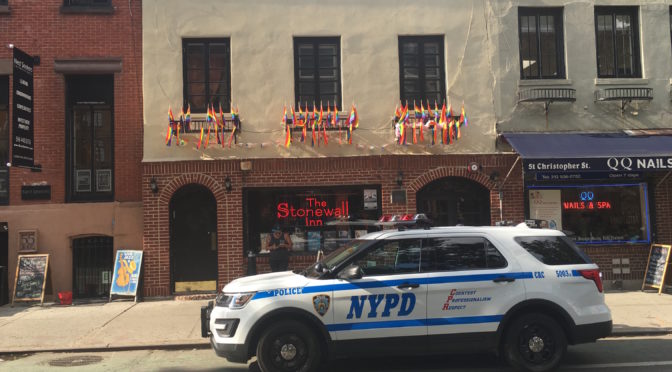
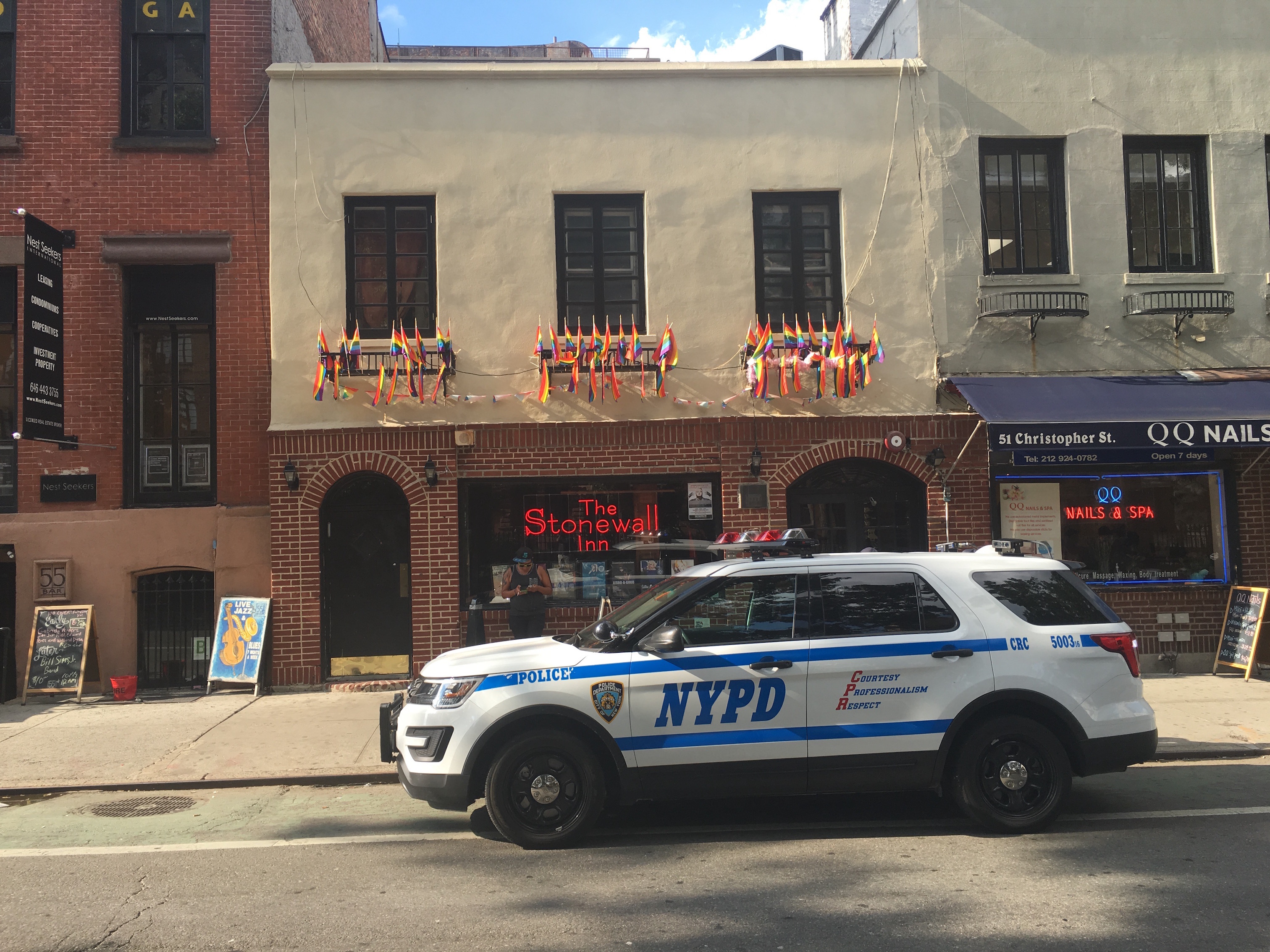
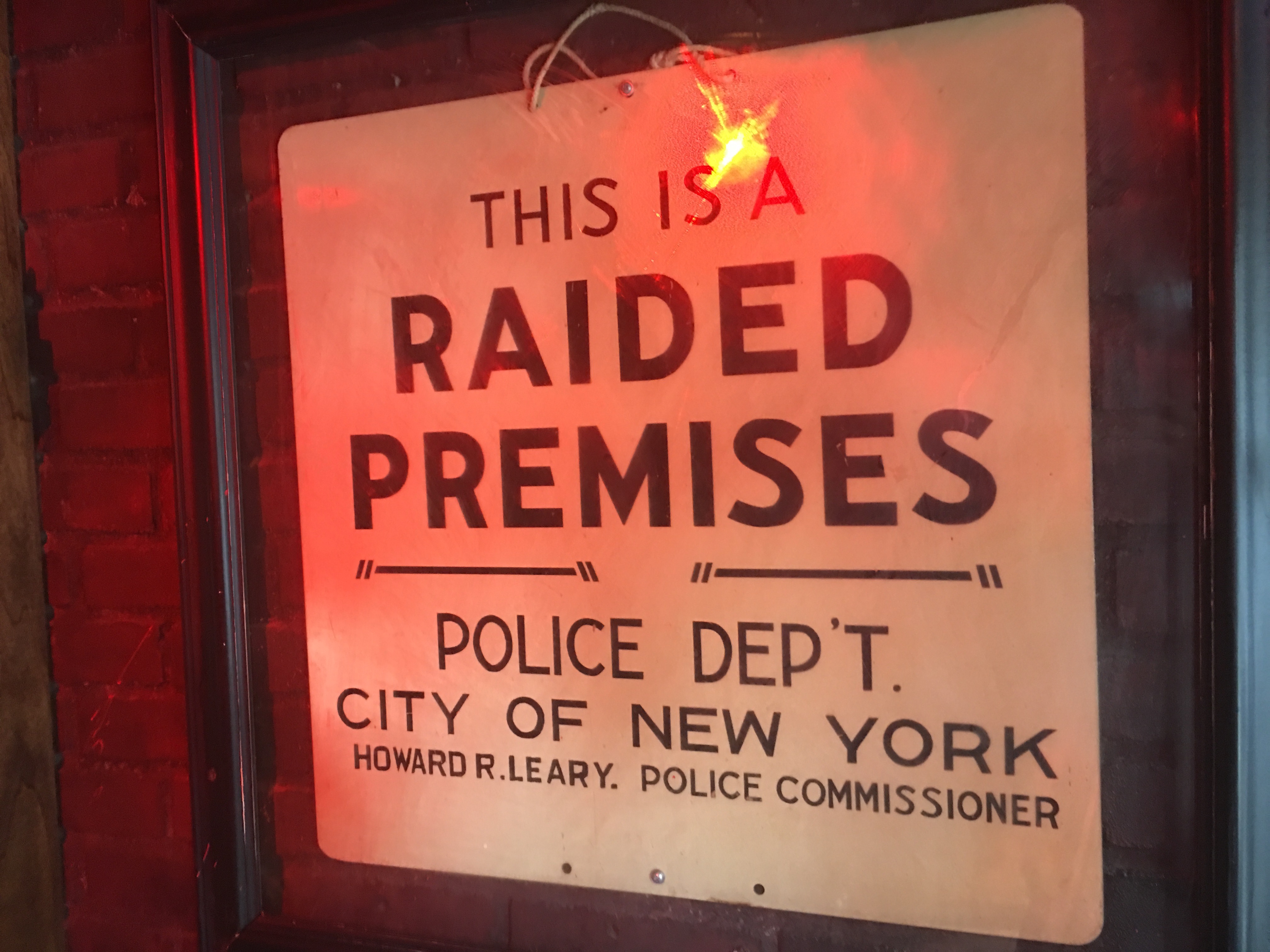
For days after, a makeshift memorial to the Orlando victims sat in front of Stonewall Inn. Even today, as you enter the building, a list of their names greets you upon the wall, next to an older sign that states ‘THIS IS A RAIDED PREMISES’, a vestige of a time when gay bars were diminished, not decorated.
Thus is the power of Stonewall’s symbolism, the dignity and community represented in the air around this stumpy, architecturally unspectacular structure.
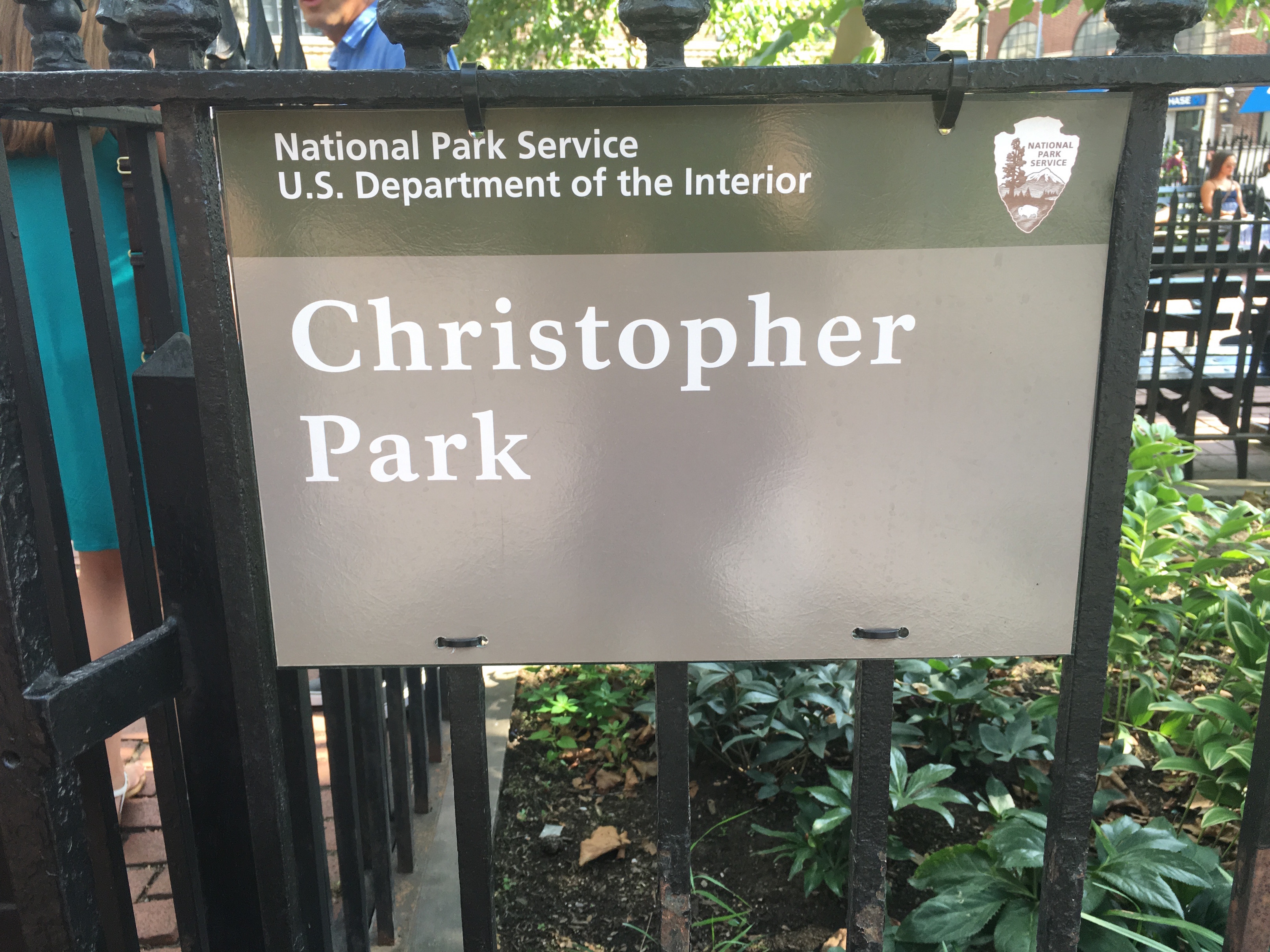
Recognizing the enigmatic atmosphere of this place, Stonewall National Monument is actually the building proper and the portion of Christopher Street which sits in front of it, as well as the entirety of triangular Christopher Park.
This includes one very relevant piece of art — the four human statues known as the Gay Liberation Monument (placed here in 1992) — and one somewhat random inclusion — a statue to Union general Philip Sheridan.
But perhaps the most unusual aspect to the National Park Service’s newest acquisition is that Stonewall Inn is still very much an active bar, even more so now for its fame. Its Big Gay Happy Hours are but one of many things which sets this NPS site apart from, say, Grant’s Tomb.
There’s a constant police presence in front of Stonewall Inn. On a given night you may even see armed guards out in front, a curious dichotomy with the drag queens who perform on the second floor. I cannot wait to see how they incorporate a temporary ranger station and a visitor center.
It’s unfortunate that Stonewall — a historic symbol of safe space — should feel like slightly less of one because of current events. But this situation does provide another, more hopeful optic: the image of an alert and engaged law enforcement, entrusted in keeping a gay bar safe and secure.
If you could somehow go back in time to tell the men and women who were arrested in the early morning hours of June 28, 1969, about this, they would have laughed (and maybe spit) in your face.
In the 1960s the mob had a veritable monopoly on the Greenwich Village gay scene, tucked invisibly down the neighborhood’s side streets.
No bar catering to gays and lesbians could stay open without paying bribes (to both the mob and the police), and complaining bar owners had a funny way of finding themselves arrested or worse. Indeed, police detectives sometimes posed as gay men to corner alleged homophiles.
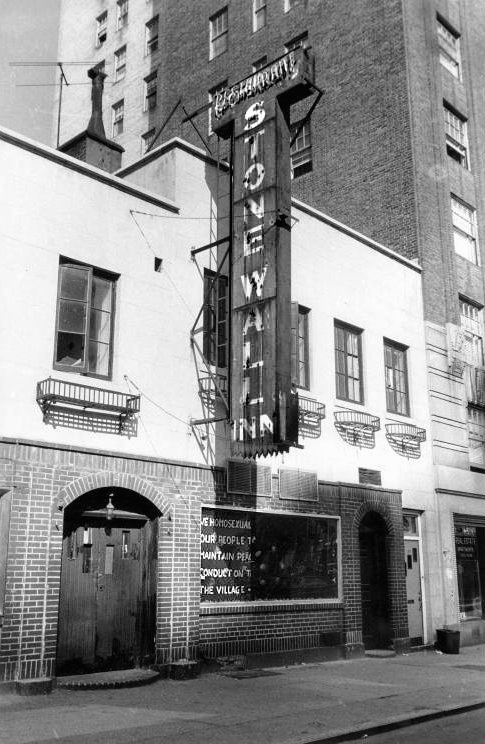
One of these dank and unappealing bars on Christopher Street was the Stonewall Inn. Its history was long and colorful: A former stable, it became a notorious teahouse 1930, then a somewhat respectable restaurant, then was gutted in a fire before becoming a darkened-window dive bar catering to homosexuals in 1967.
There was nothing especially notable about the Stonewall, with its watered- down drinks and its hat-and-coat check. There was dancing and a jukebox and a good mix of white, African American, and Hispanic patrons just looking to have fun. Wouldn’t you be upset if they kept shutting you down for no good reason?
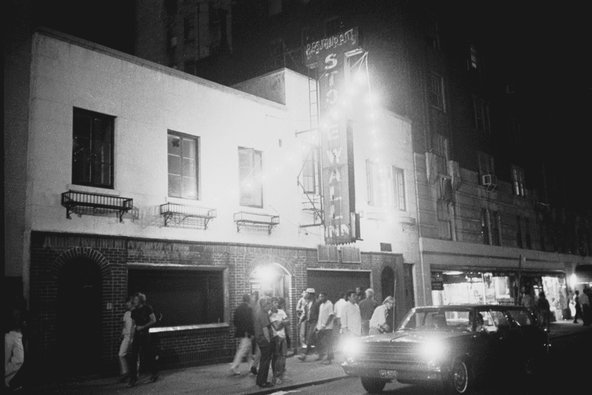
This is precisely what the police attempted just after 1 a.m. on June 28, 1969, when uniformed and undercover cops raided the packed bar and prepared to arrest the patrons.
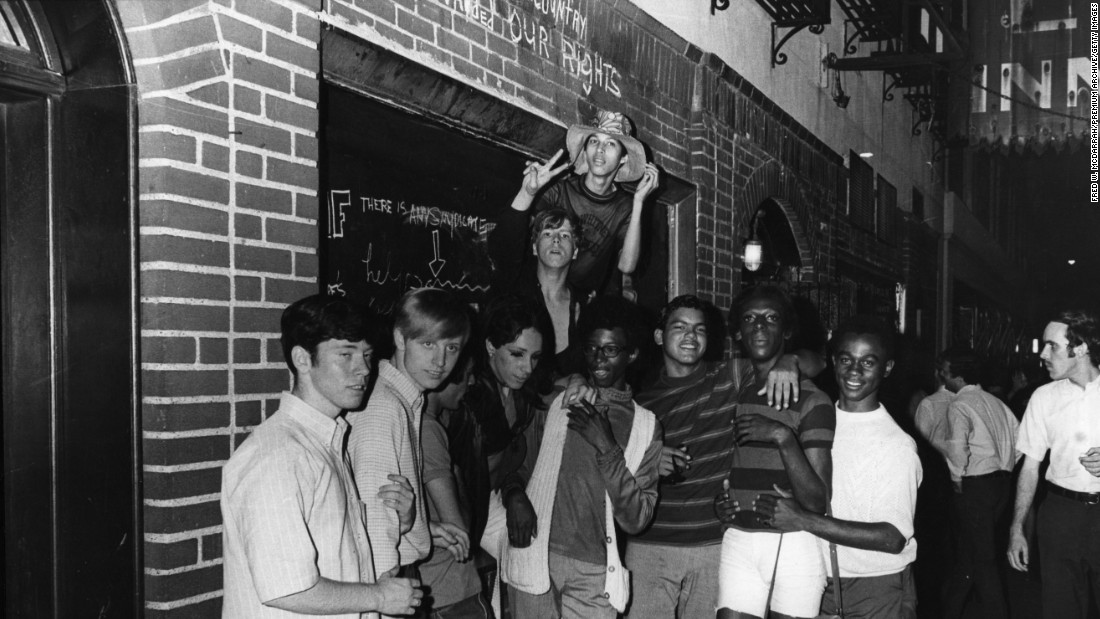
Protesters gathered in the streets outside the Stonewall Inn in the days following the riots on June 28.
Courtesy CNN
But people were not having it. A crowd outside the bar began heckling the officers as they started their arrests, pulling patrons from the bar and loading them into wagons.
One woman in handcuffs fought fiercely, inspiring an extraordinary coalition of street youths and drag queens to push back against restraint. The crowds swelled as patrons from other bars joined the fracas, filling Christopher Street and pushing back against police harassment until well after four in the morning.
What began as proper rioting aimless anger in the streets grew more focused over the next several days, as hundreds of marginalized New Yorkers returned to the street in front of the Stonewall with a newfound sense of solidarity. Their example inspired people throughout the city and around the country.
One year after the raid, activists would gather in front of the Stonewall and march up to Central Park, an event that would become the city’s annual LGBT Pride March.
Today gay pride celebrations and parades in many European countries are referred to as Christopher Street Day celebrations. Although Stonewall Inn has gained national importance today, it is Christopher Street itself that retains the symbolism for many.
And that is why a very small portion of that street — forever associated with struggle — is America’s newest National Monument.
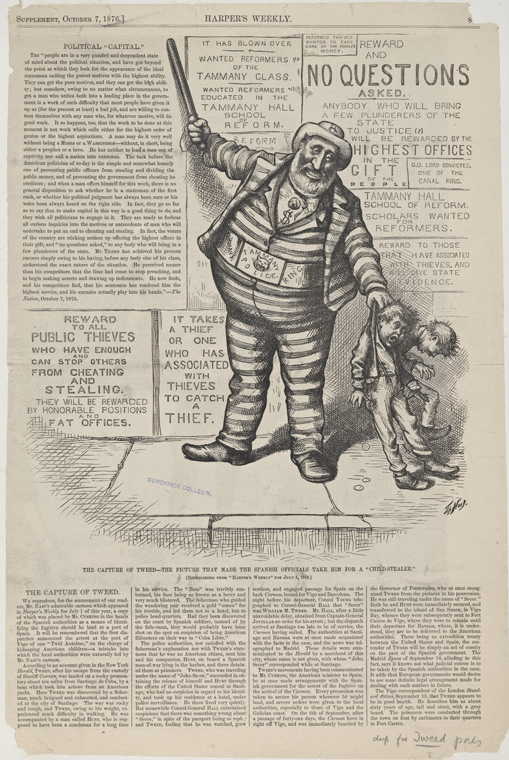
In this week’s podcast, we discuss the tale of Madame Restell, the infamous 19th century abortionist and the moral reformer who brought her down — Anthony Comstock.  Comstock succeeded in destroying Restell in 1878. But the moral crusaders were just getting started.
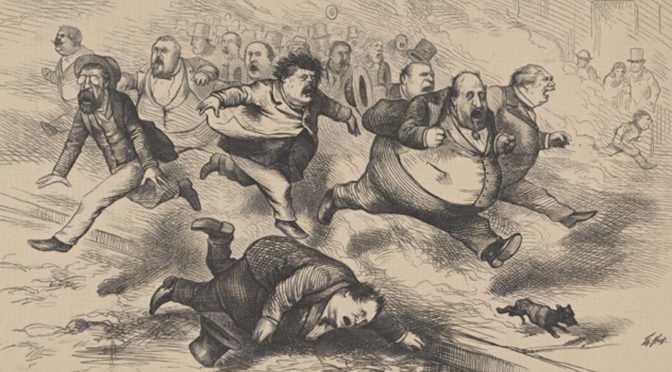
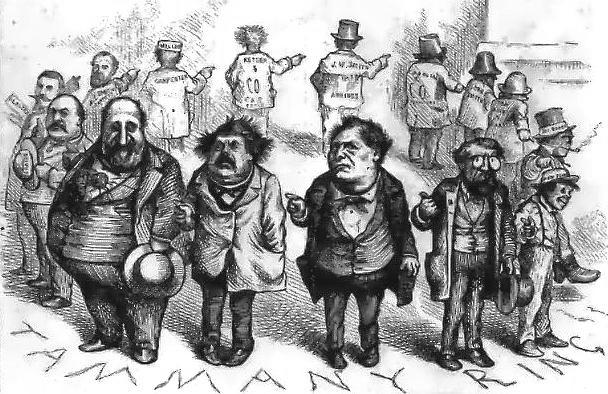
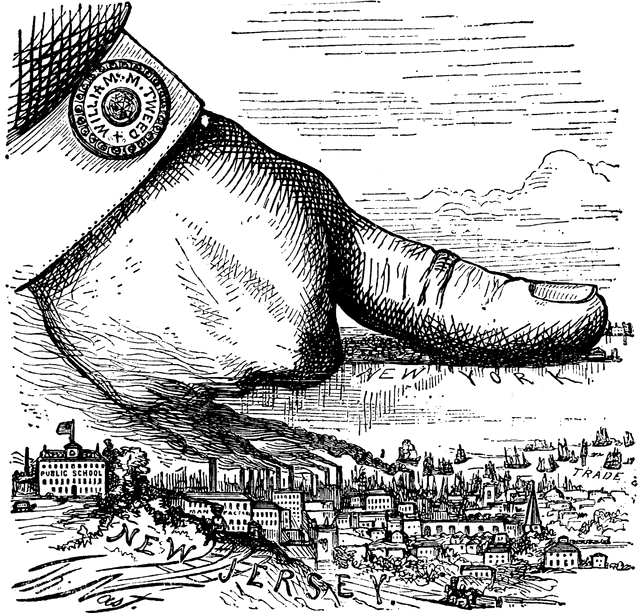
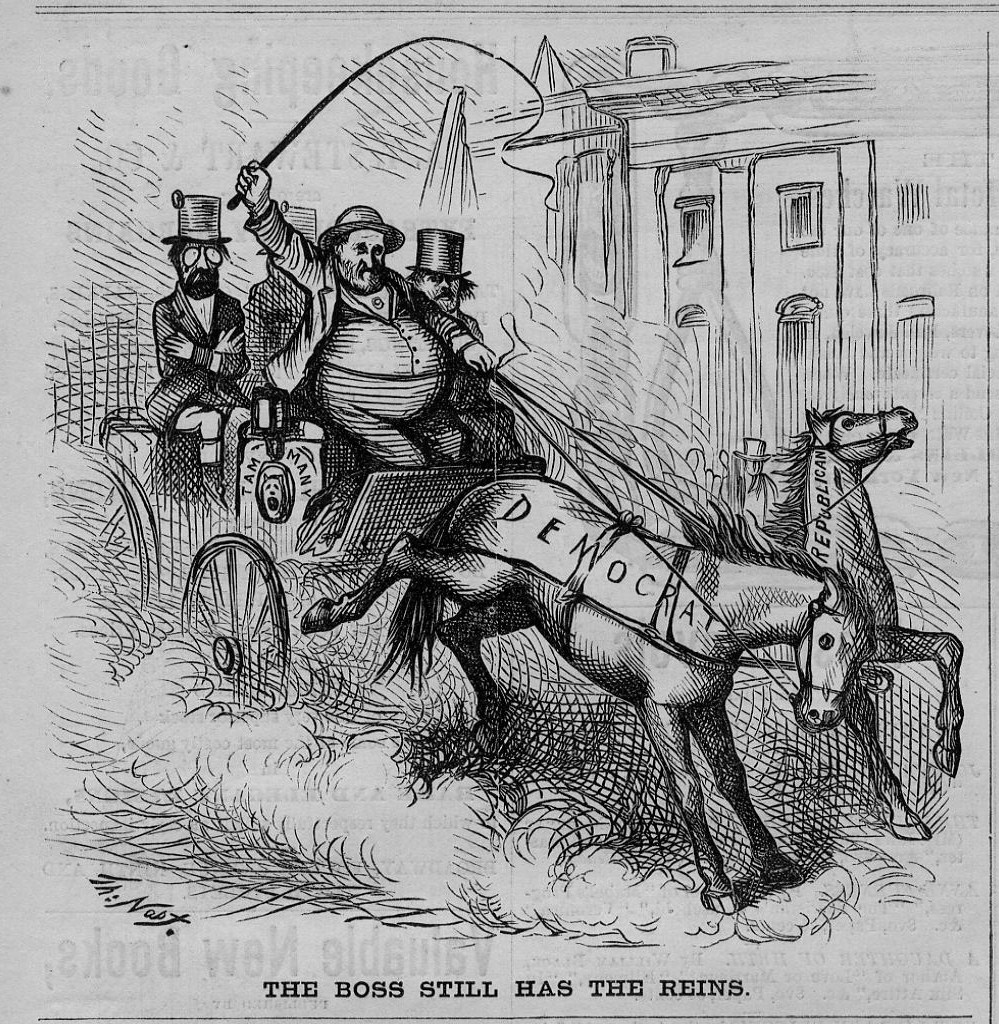
Old New  York luxuriated in a complex system of rewards to protect its vice industries. The takedown of Tammany Hall’s Boss Tweed in the 1870s and illicit providers like Restell only scratched the surface of corruption, held in place by the compromised and easily-bought police department. How could reform-minded New Yorkers even try and fix this problem if it seemed that every other person benefited from it?
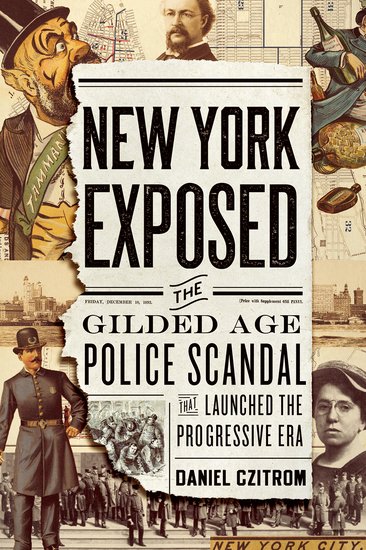
In New York Exposed: The Gilded Age Scandal That Launched The Progressive Era, author Daniel Czitrom reveals the architects of what became known as the Lexow Committee, the state task force which eventually — after a couple rough starts — blew the lid off of New York’s most corrupt practices and sent Tammany Hall, once again, into decline. (The committee is named for New York state senator Clarence Lexow.)
At the center of this story is Dr. Charles H. Parkhurst, the reverend who railed against unchecked vice and the police infrastructure which kept fueling it. Parkhurst sounds a bit like a bore, but New York was in need of his determination and tenacity; he was the Gilded Age’s bulldog. His cries of reform from the pulpit led to his participation in the Society for the Prevention of Crime, a private watchdog group which applied great pressure on New York’s most corrupt elite.
As Czitrom reveals, holding this vice racket in place was Tammany Hall, the Democratic machine who repeatedly defaulted to graft and shadiness after short periods of reform. But the reform leaders on the state level (mostly Republicans) who helped form the Lexow Committee were no angels.  What emerged, however, was a fragile Republican-led attempt at ridding government of excess — and expunging Tammany from power.
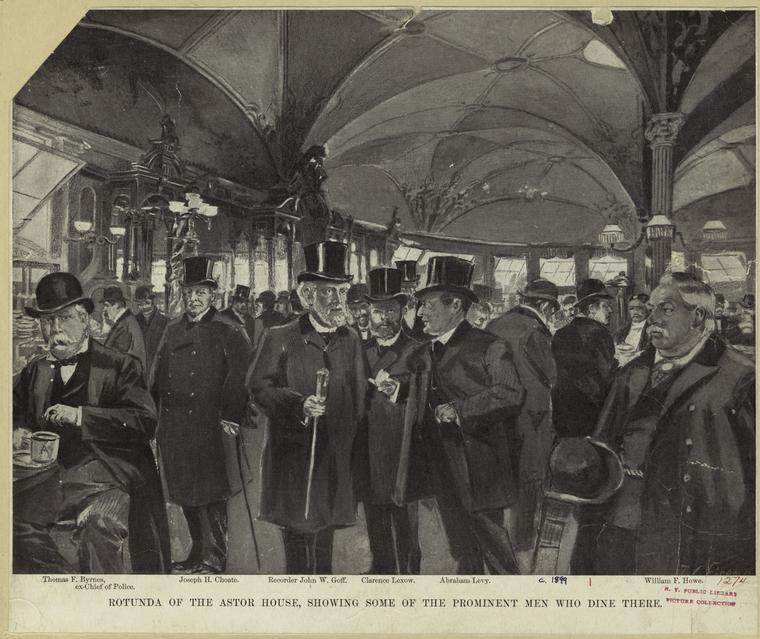
Some members of the Lexow Committee tale are featured in this illustration, including Chief of Police Thomas Byrnes, Joseph Choate, John W. Goff, Clarence Lexow and lawyer William Howe.
Courtesy New York Public Library
Czitrom, a Bronx-born professor at Mount Holyoke College, achieves a startling feat; he expertly untangles a complex web of politics and manages to make board meetings and testimonies sound interesting. This is a crucial and important moment in New York City history, and I’ve never had the pleasure of hearing it described as vividly as it appears in New York Exposed.
The problems of Gilded Age would certainly not be solved by the Lexow Committee, but its bold gestures would come to define the Progressive Era.  And its influence — the rinse-and-repeat cycle of reform, what Czitrom calls the Lexow Effect – echoes into present day.
New York Exposed: The Gilded Age Scandal That Launched The Progressive Era
This month America celebrates the 100th anniversary of the National Park Service, the organization which protects the great natural and historical treasures of the United States. There are a number of NPS locations in the five borough areas. Throughout the next few weeks, we will focus on a few of our favorites.  For more information, you can visit National Parks Centennial for a complete list of parks and monuments throughout the country.  For more blog posts in this series, click here.
HAMILTON GRANGE UPPER MANHATTAN. HAMILTON HEIGHTS. ST. NICHOLAS PARK.
I’m going to write a musical about Hamilton Grange.
This three-hour musical epic will be a complete survey of this historic home, which was built by Alexander Hamilton in an area of Manhattan a good hour and a half from town.
It will be a story of struggle, evolution, change, spirituality, love and melodrama.
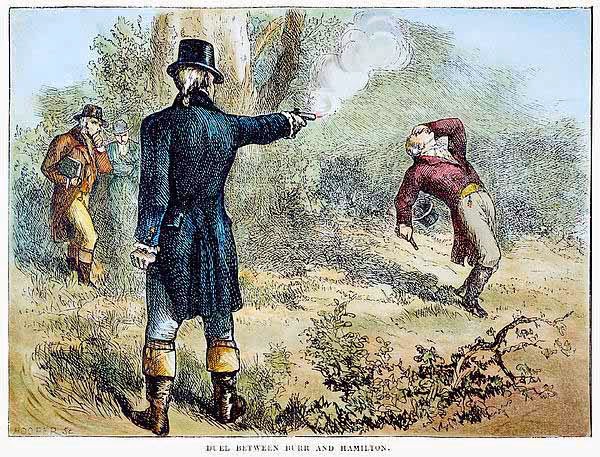
And here’s the catch — this imagined musical would begin with the death of Hamilton in his duel with Aaron Burr. (Far from giving this scoundrel a Tony-winning sized role, Burr would not even make an appearance!)  Because in most ways, that’s when the story of Hamilton Grange really begins.
It will be Hamilton’s home until the cows come home.
Last week I took a free tour of this charming  National Park Service location, newly energized by musical appreciations of Hamilton and his life. My tour of Hamilton’s home was completely booked, and at least two people in the tour wore Hamilton: The Musical shirts. (Two other musical fans were turned away to join a later tour. My advice: Call ahead. Get on the list.)
You will ultimately visit only a small number of decorated rooms and in fact may have a richer educational experience in the Grange’s excellent gallery about Hamilton’s life.  But while several historic homes in the New York City area are larger and more spectacular, few have such an extraordinary tale of survival as Hamilton’s pet project.
Hamilton purchased a set of upper Manhattan lots in 1800 in order construct a fine home for his family. Its name would be inspired by an ancestral Scottish mansion as well as his childhood home in St. Croix.  Designed by John Macomb Jr, (who was also commissioned for fellow NPS landmark Castle Clinton, as well as New York City Hall), the Hamilton Grange was completed in 1802, accompanied on the peaceful landscape by duck ponds, barns and an orchard.
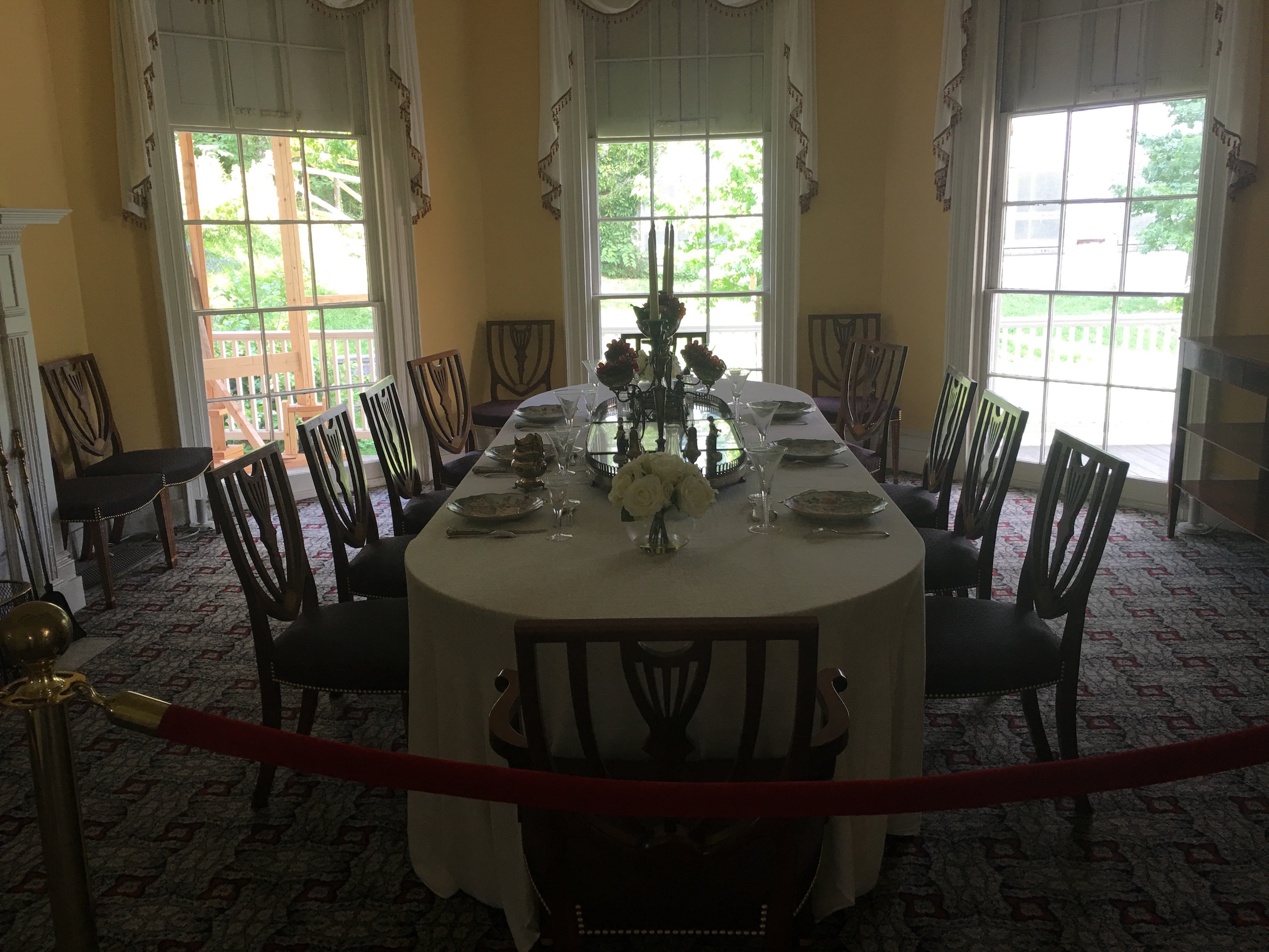
The house feted an extraordinary roster of politicians and dignitaries who ate and drank to their hearts’ content in the Hamiltons’ mirrored dining room (which you get to peek in on during the tour). Indeed, a week before the duel, the Hamiltons threw a lavish dinner party with the likes of John Trumbull and Nicholas Fish.
And like every good piece of New York City real estate, the Grange plunged the family into deep debt.
D’oh!
After Hamilton died in the summer of 1804, Hamilton’s widow Eliza Schuyler Hamilton struggled to maintain the family finances. Â Eventually a group of supporters (led by good ole Gouverneur Morris) bought the home and sold it back to her for half price. She managed to stay there until 1833, at which point she moved into her son’s new home on St. Mark’s Place.
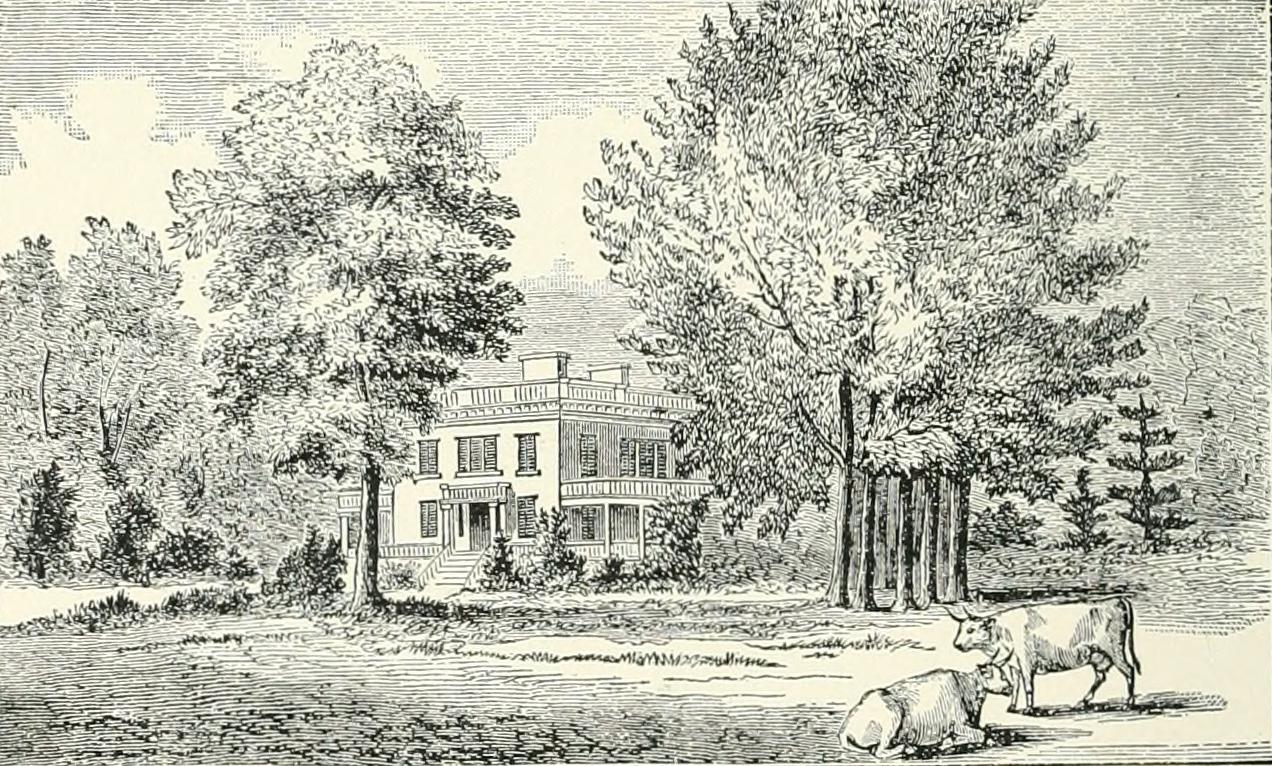
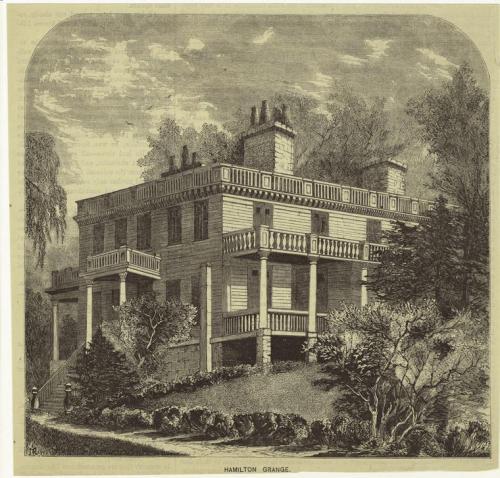
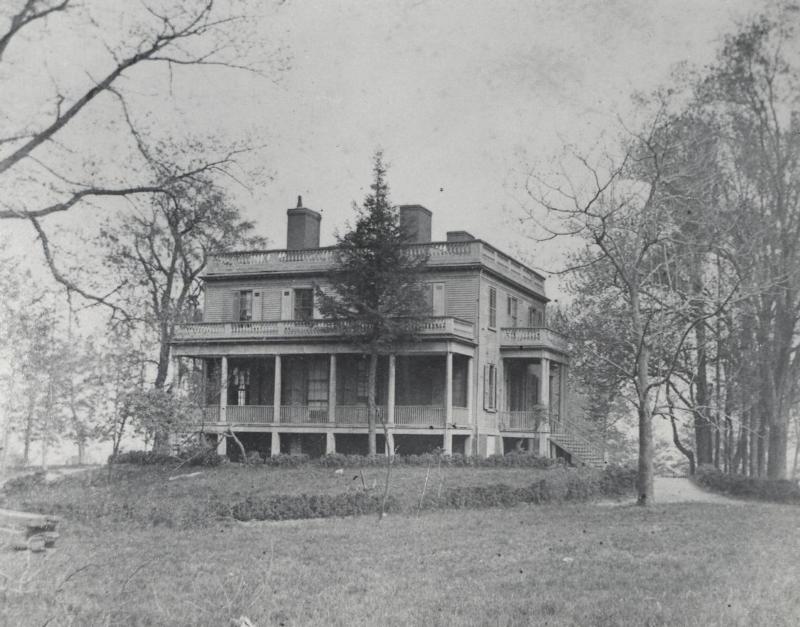
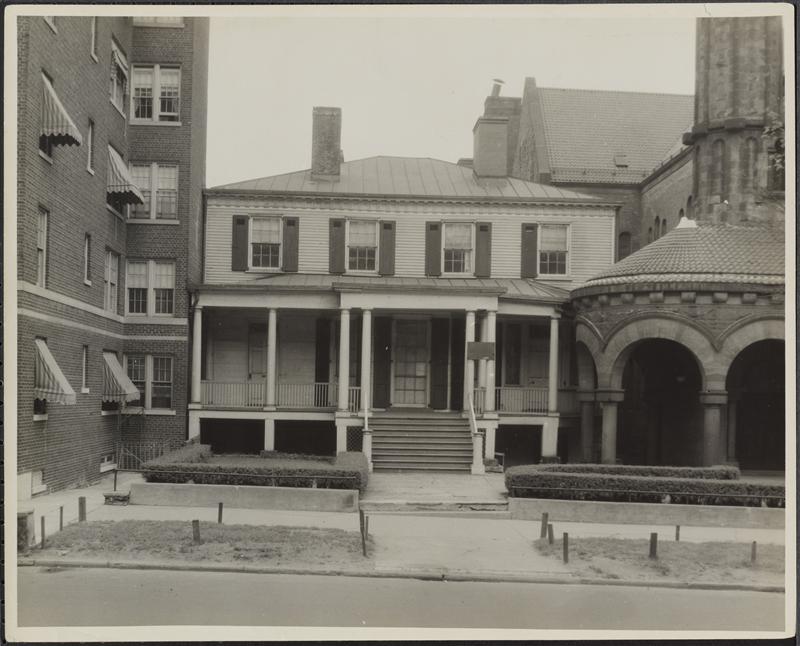
Below: The Grange, left adrift as the city moved up around it. Date of picture unknown, Â but most likely early 1880s.
Courtesy NPS
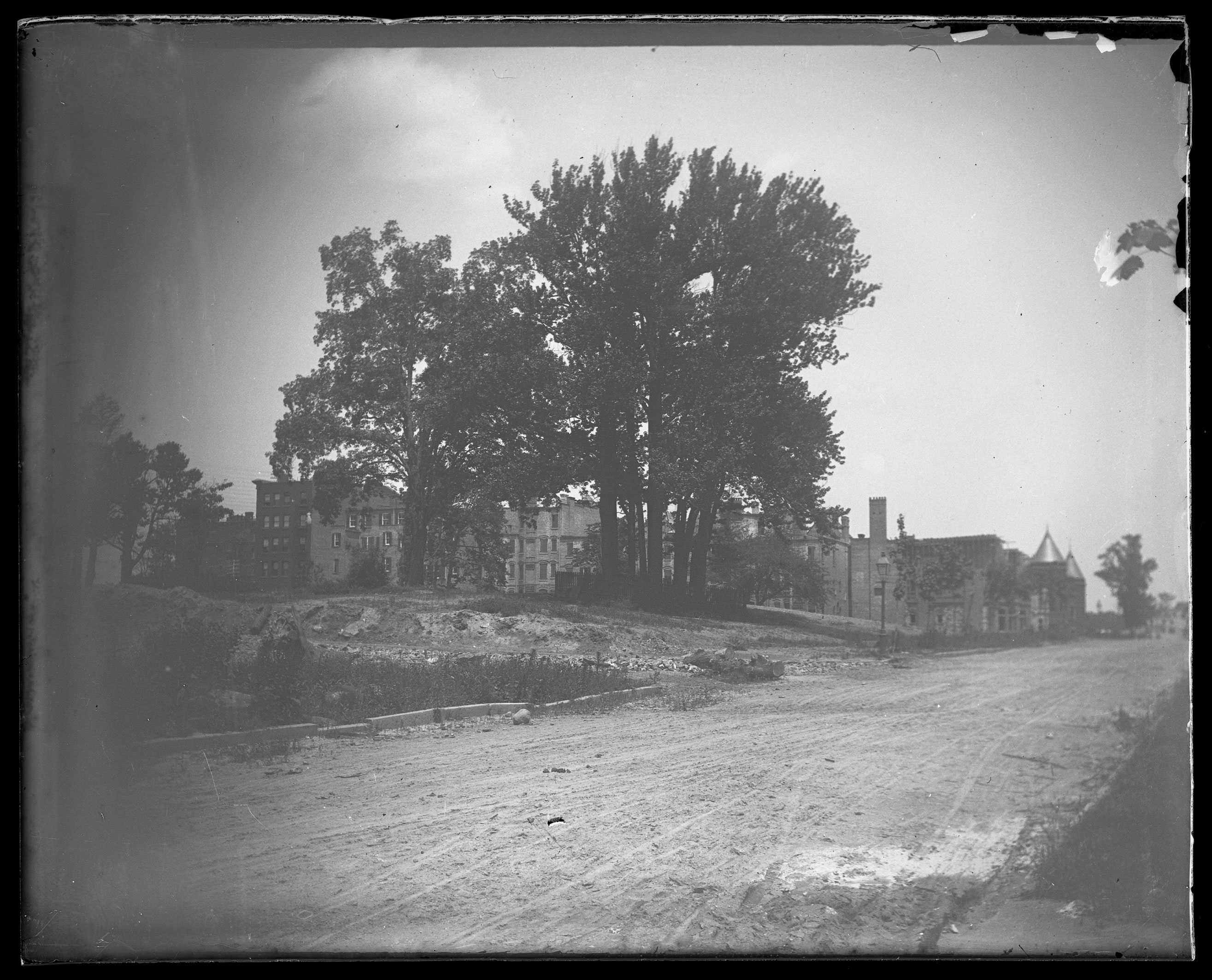
With the new grid plan eventually stretching up into upper Manhattan, farmhouses that were situated at all angles to maximize their glorious views now proved impossible to accommodate. Most were torn down with a few exceptions (such as the Dyckman Farmhouse, the oldest house in Manhattan).
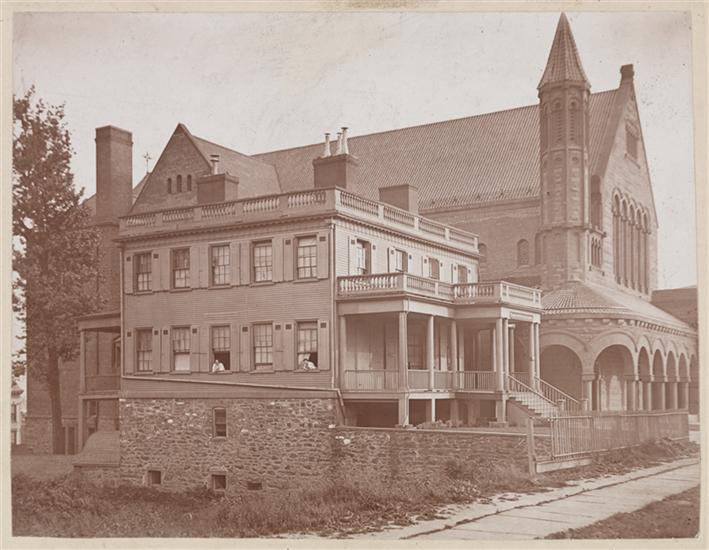
The battered old Grange would certainly have been erased from history if not for the congregation of St. Luke’s Episcopal Church who found use for the structure as an uptown chapel. The catch — it needed to move to their lot a block and a half away, conforming to Convent Avenue. By 1888 the house then became Hamilton Grange Reformed Church.
By the following year, the Grange was joined by a larger church structure which practically enfolded itself around the old house.
Further aesthetic travesties beset the house when an apartment complex was built onto the other side. Have you ever ridden a really, really packed subway? Now imagine riding that subway for almost a century. Thus was the fate of Hamilton Grange, a house-sized collectable artifact now shoved onto a tight shelf.
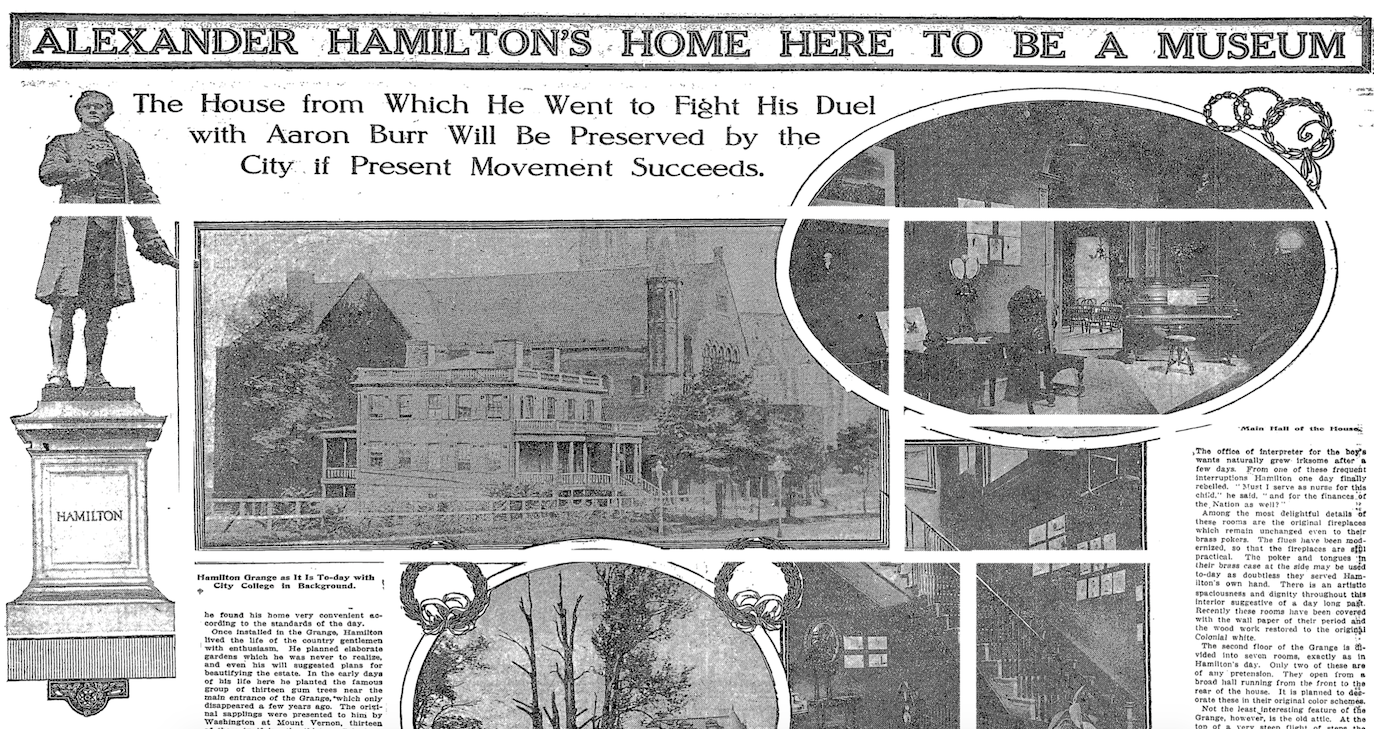
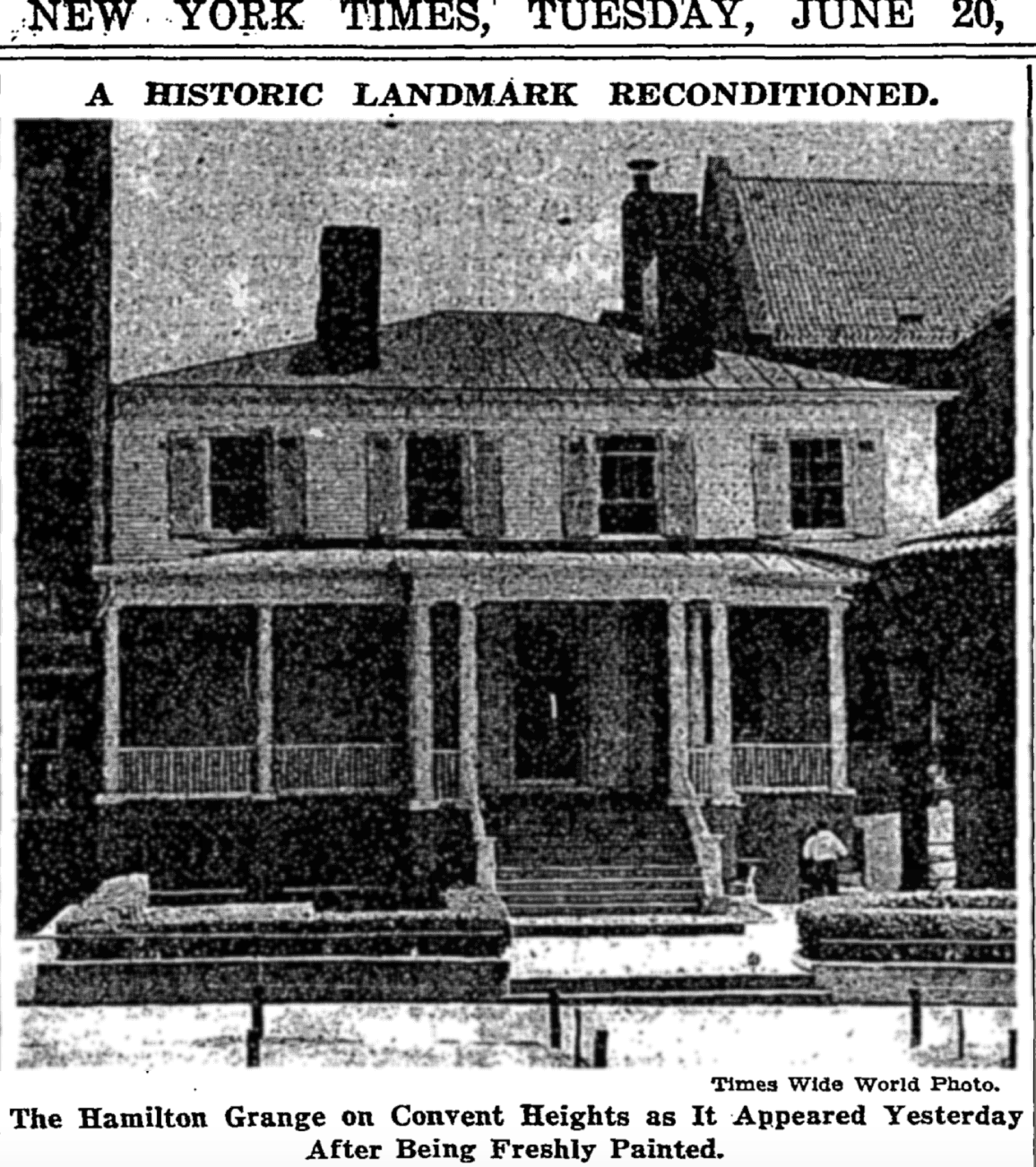
Almost immediately, concerned historians began discussing the rehabilitation of the house. “The Hamilton Grange is the oldest structure in this sector of the city, as it is assuredly the most historic,” observed the New York Times in a full-page spread in 1912. “In its present setting, hemmed in by rows of modern dwellings and apartments, its beautiful lines appear exceedingly incongruous.” Â Daughters of the American Revolution beseeched the city to purchase the property.
Curiously it was first proposed to move the Grange to St. Nicholas Park in 1915 as “it would not obstruct the landscape yet still stand on a portion of the Grange farm.” This prophesy would indeed come to pass almost 100 years later.
In the 1920s, plans were again picked up to transform the squished little house into a museum. Apparently there was some interest in moving the entire thing to Chicago when, in 1924, this glorious announcement was made: Â “The rivalry of New York and Chicago to possess Alexander Hamilton’s historic home has been ended by preserving the stately old mansion as a public museum near its original position on Manhattan Island. Hamilton Grange, as it is generally known, has become the property of the American Scenic and Historic Preservation Society, after some twenty-five years of unremitting effort.” Â In 1933 it finally reopened as a museum.
But even with the church congregation gone, even with the house filled with artifacts that were once owned by the Hamilton, the house’s placement robbed it of any context.
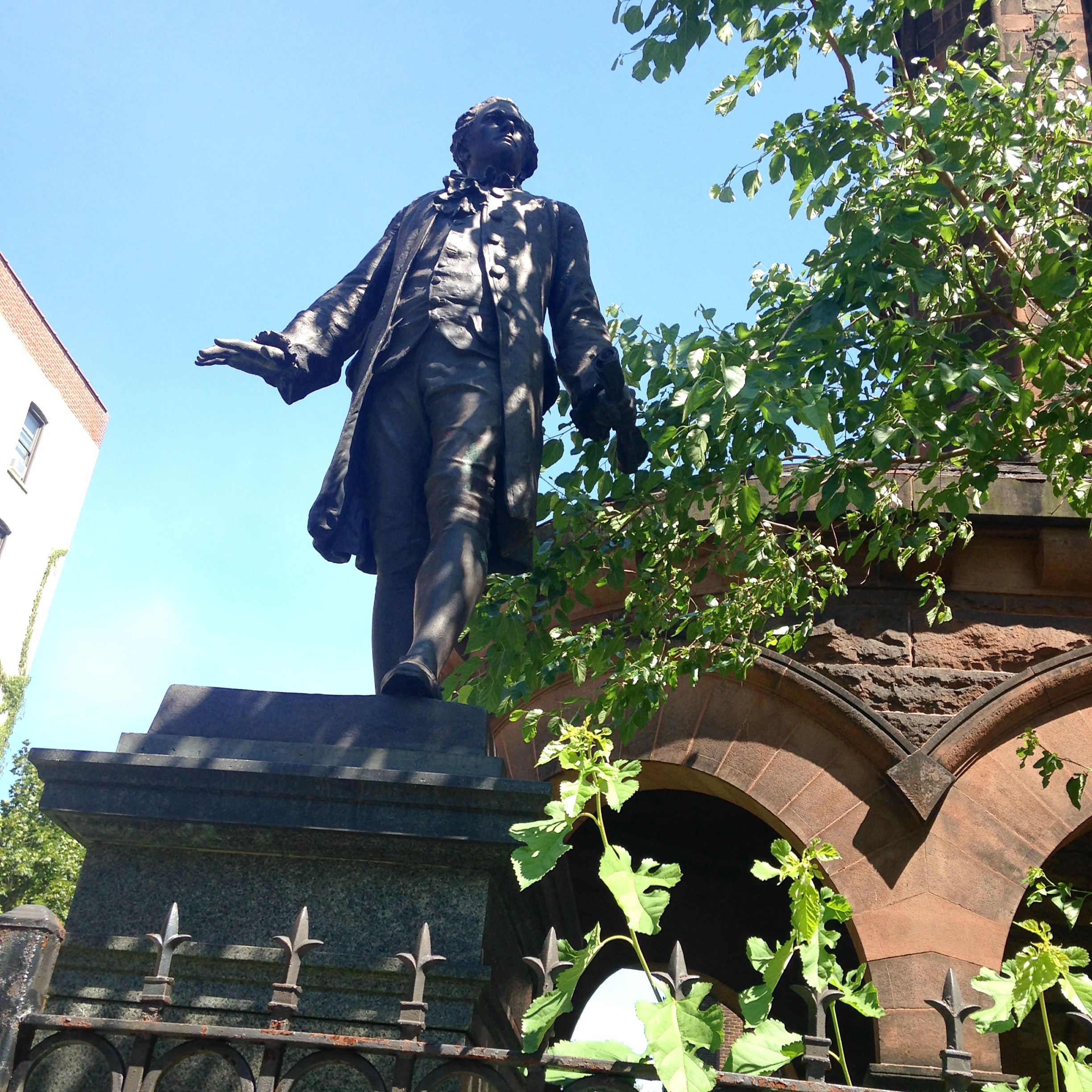
In 1936 a statue of Alexander Hamilton was mounted in front of the building. It was officially dedicated on the very same day that a statue of General Philip Sheridan was dedicated in a ceremony in Christopher Park. Â Today — thanks to Stonewall National Monument— the Sheridan statue now too stands on property operated by the National Park Service.
The statue remains in front of the church even as the house is now gone.
The NPS would finally get its hands on Hamilton Grange after it was declared a National Historic Landmark in 1960 and Congress declared it a National Monument in 1962. Â The house was to be moved to another location and fully restored.
But unfortunately the city’s financial upheaval of the 1960s and 70s threw off any serious work on the house. Or to quote a historic preservation graduate student from a New York Times 1988 article: Â ”’If the Grange were anywhere else, this would be a fait accompli,’ said Michael Adams, a Columbia University graduate student in historic preservation. ‘The only reason it has fallen into this deplorable condition is because it is in Harlem.’ ”
Finally in 2008, efforts were finally made to lift the house from its tucked-in spot near St. Luke’s to its new home in St. Nicholas Park. The newly revitalized house was opened to the public in 2011.
Here’s a dramatic video of its historic move:
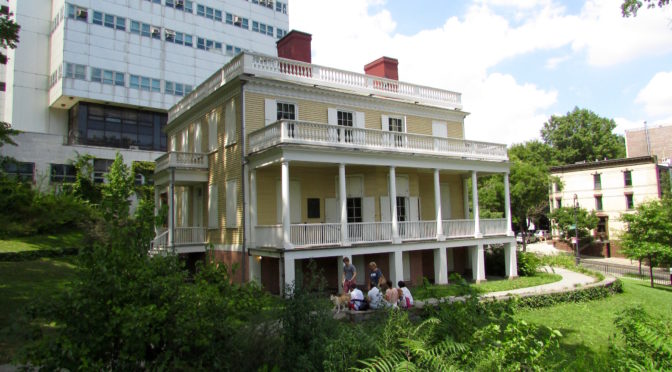
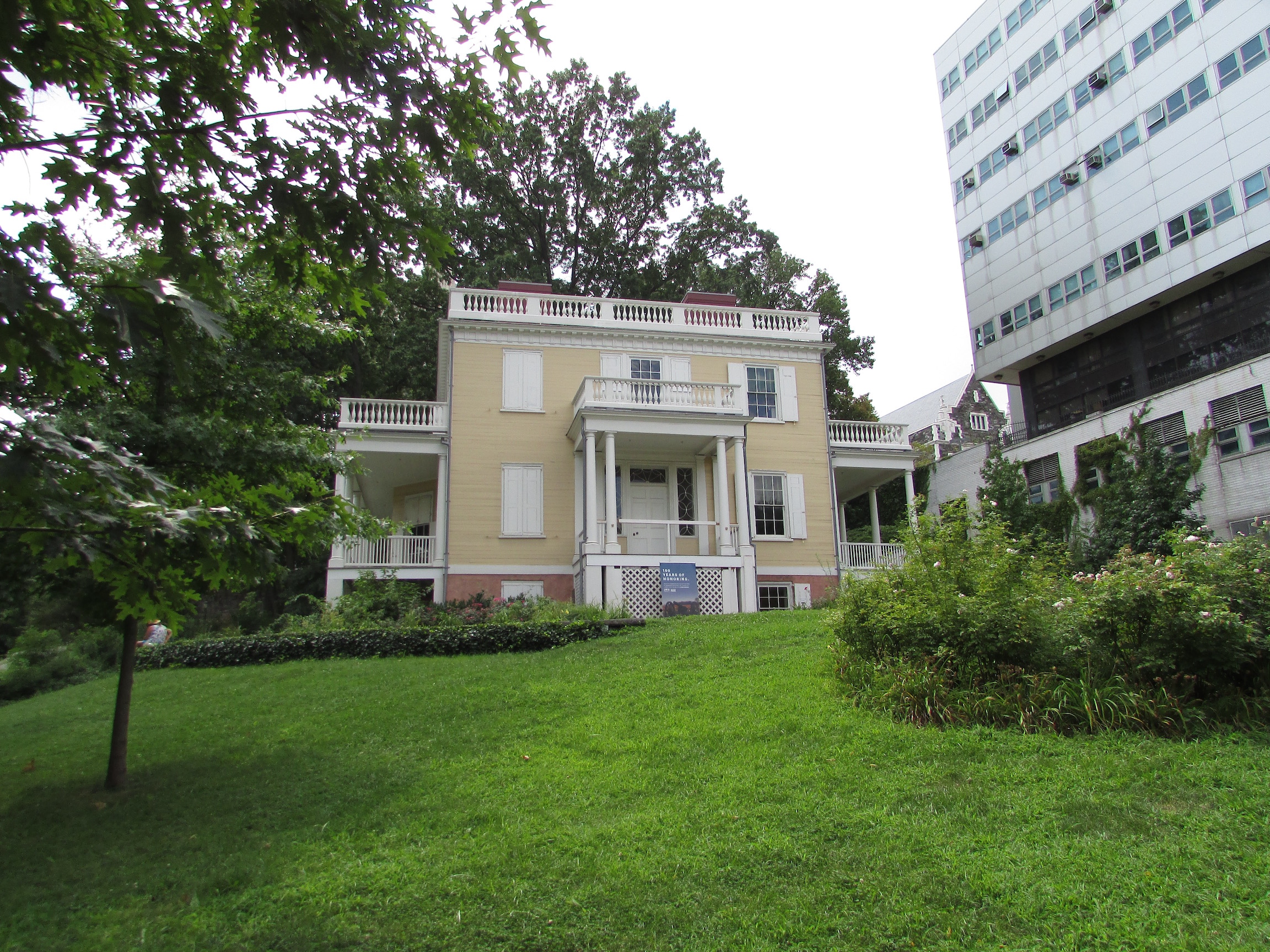
Today the Hamilton Grange feels out of place — but in the right way. Another tall structure hovers over it to the east, but at least it doesn’t smother the house’s natural beauty, restored in a bright canary yellow. Â Surrounded by the rocky terrain of the park, visitors can get a sense of the calm that Alexander and his family might have felt as they gazed out from the porches.
And almost 175 years after his family moved from the house, the Hamilton Grange has finally become a show-stopper.
This month America celebrates the 100th anniversary of the National Park Service, the organization which protects the great natural and historical treasures of the United States. There are a number of NPS locations in the five borough areas. Throughout the next few weeks, we will focus on a few of our favorites.  For more information, you can visit National Parks Centennial for a complete list of parks and monuments throughout the country.Â
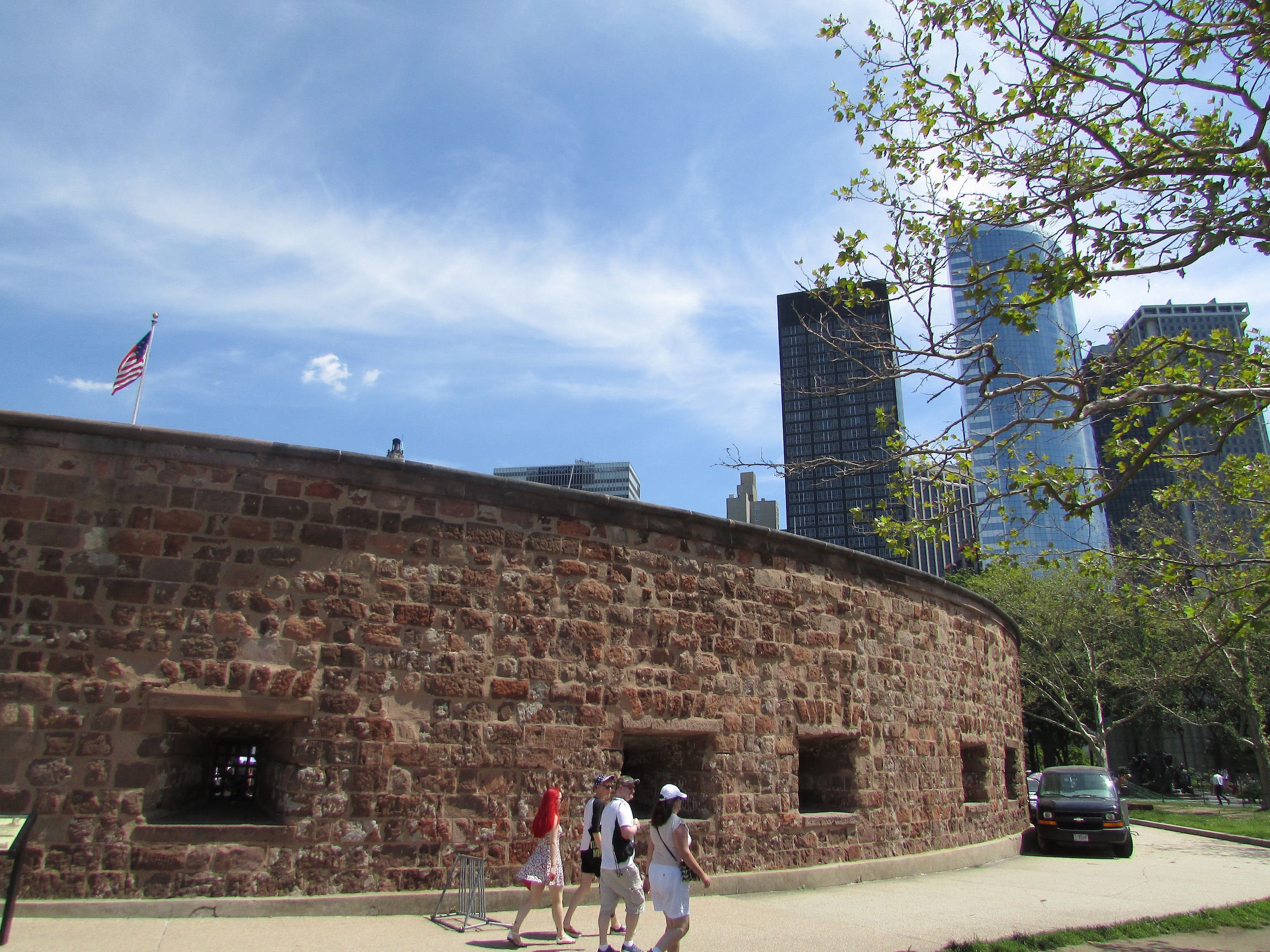
Tourists looking to purchase tickets to the Statue of Liberty and Ellis Island (also two landmarks that are maintained by the NPS) enter an old circular stone structure in Battery Park called Castle Clinton. Ticket selling is by far the least exciting job in the fort’s history, a rather banal function for a building that traces its origins to the founding of the United States.
Back in 1783, fresh from the victories of the Revolutionary War, New Yorkers gathered around the docks on November 25 to forever wave off the British from New York Harbor. When it was soon discovered that one last British flag remained hanging from a greased flagpole—a final goodbye prank, as it were—jaunty patriots shimmied up to remove it. This event would soon become the driving force of New York’s annual Evacuation Day celebrations, a symbolic marker of the end of British rule. (If we could come up with a method to safely secure drunk revelers as they climbed greased flagpoles today, then we’d say let’s bring it back!)
But the threat of an unwelcome British return lingered on. In 1790, the city dismantled Fort George (the dilapidated fort built by the Dutch), and the cannons that gave the Battery its name were removed and replaced with a strolling promenade. But less than two decades later, new saber rattling by British forces so unnerved New Yorkers that they built new, stronger forts at locations scattered throughout the harbor. Some of them—like Fort Wadsworth on Staten Island and Castle Williams on Governors Island (another NPS property) —still stand today.
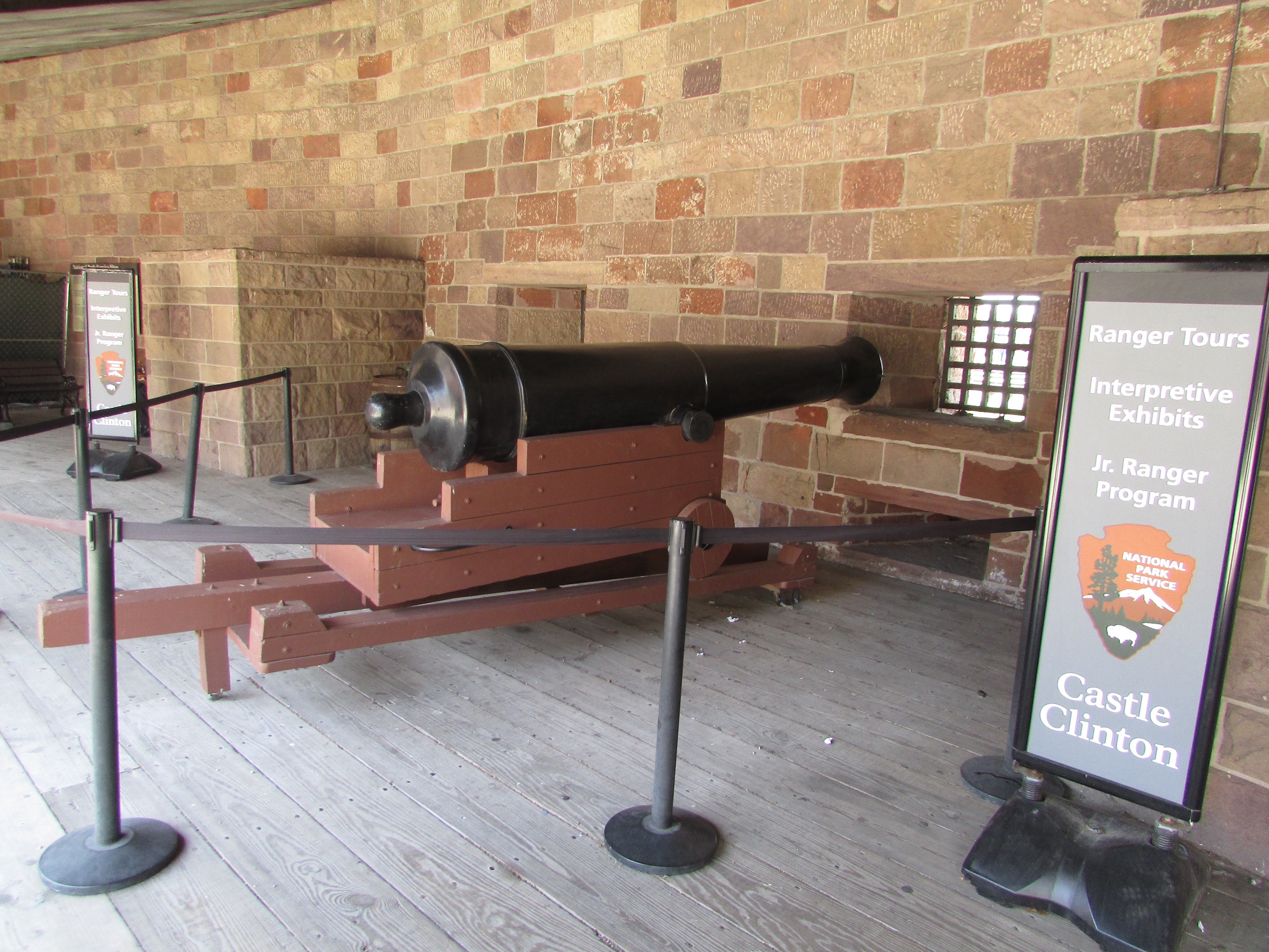
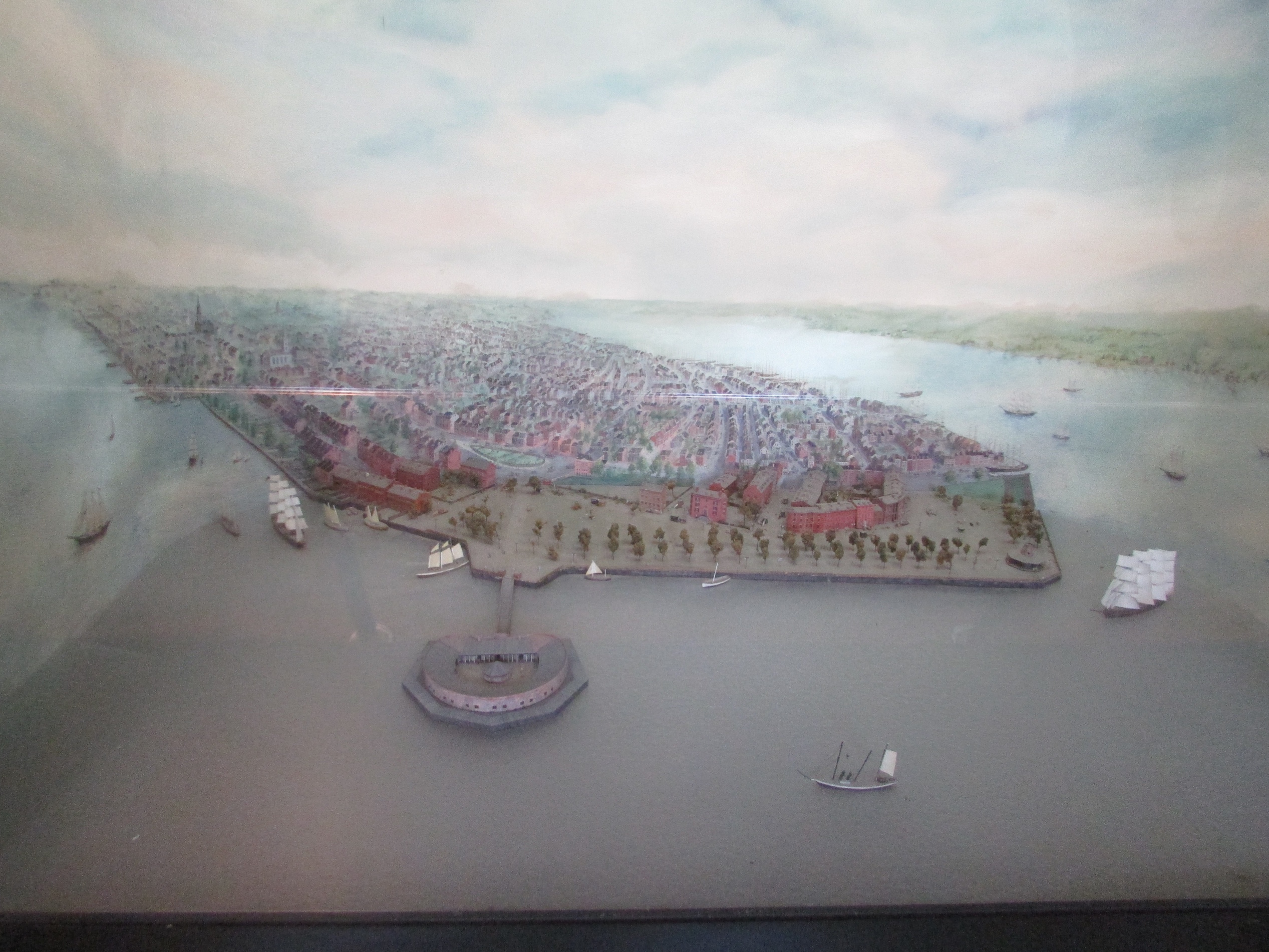
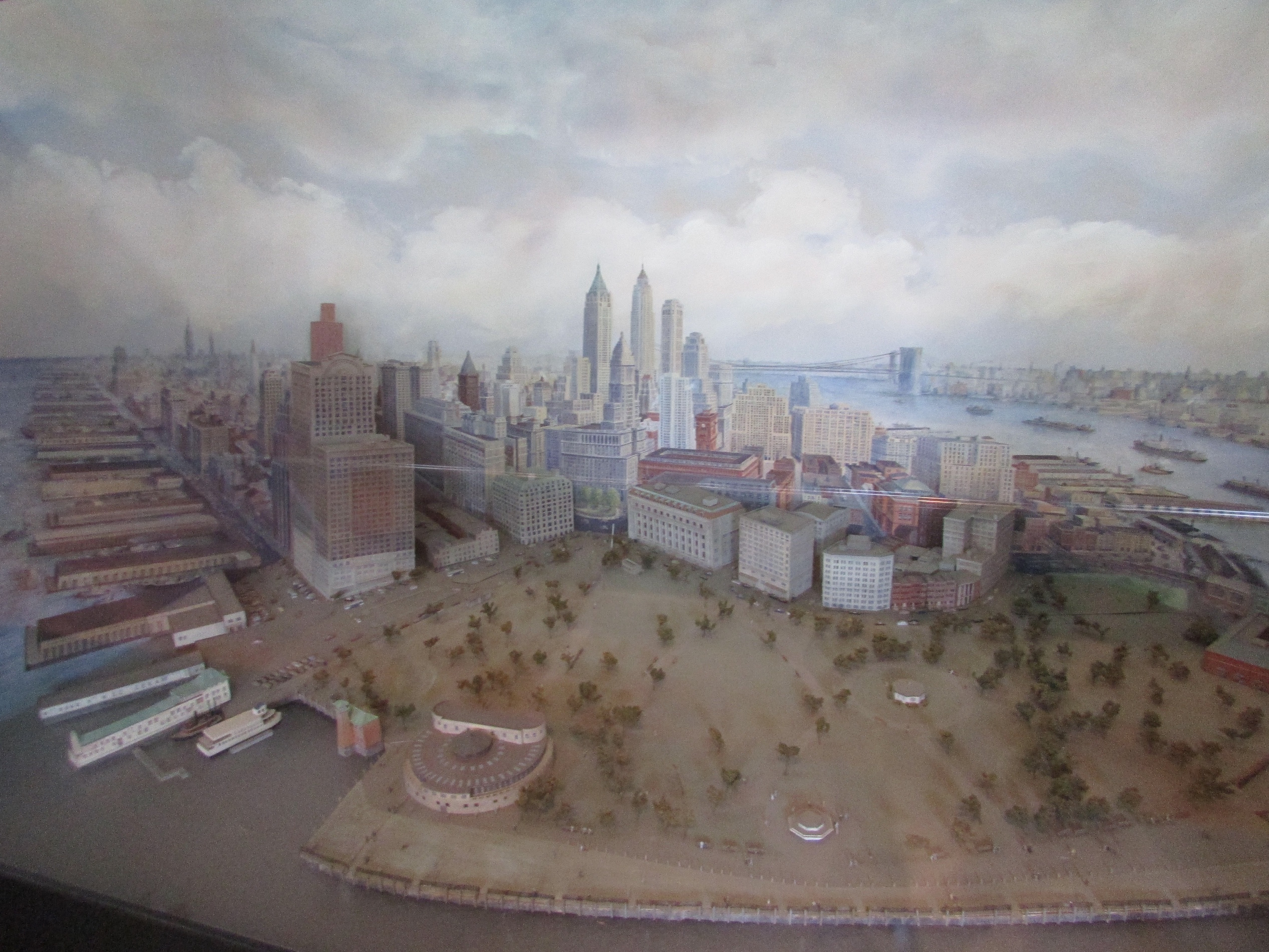
A modest museum inside Castle Clinton features three interesting models of how the structure used to look and how it related to the land around it.
But none has had the inconceivable adventures of West Battery, completed in 1811 as an island fort, located 300 feet from shore and connected to the mainland by a long bridge. Its thick stone walls could withstand a vicious attack, and its 28 guns aimed into the harbor would surely beat back any aggressors. It was later renamed Castle Clinton, after New York’s governor (and former mayor) DeWitt Clinton, a hopeful name, given Clinton’s own political tenacity and endurance.
But while the War of 1812 would come to American shores, it never arrived in New York Harbor. After serving some minor military purposes, Castle Clinton was eventually sold by the federal government to the city in 1823. And it was then that things got decidedly more festive for the old fort.
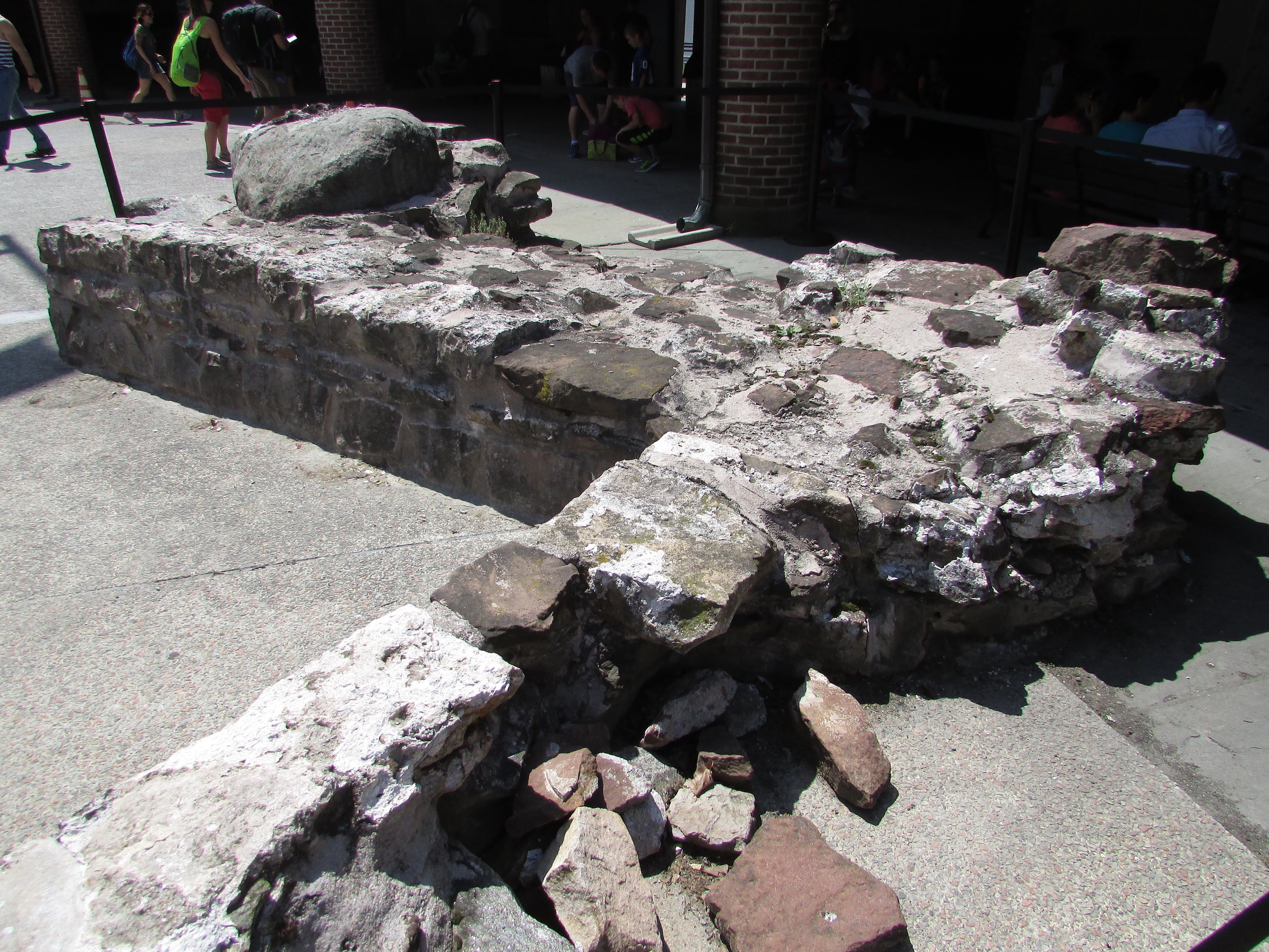
During an excavation in 2006, portions of the old Battery Wall were discovered. Â They are displayed within Castle Clinton today.
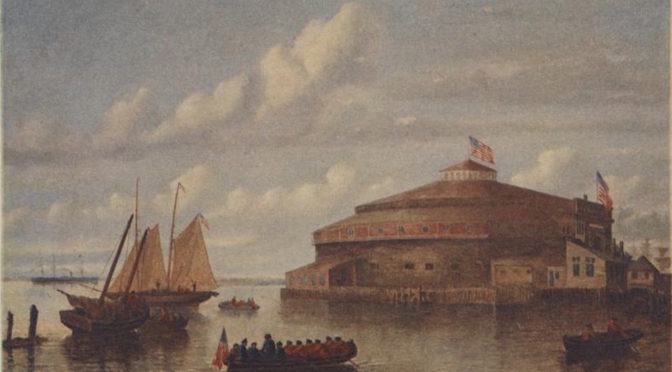
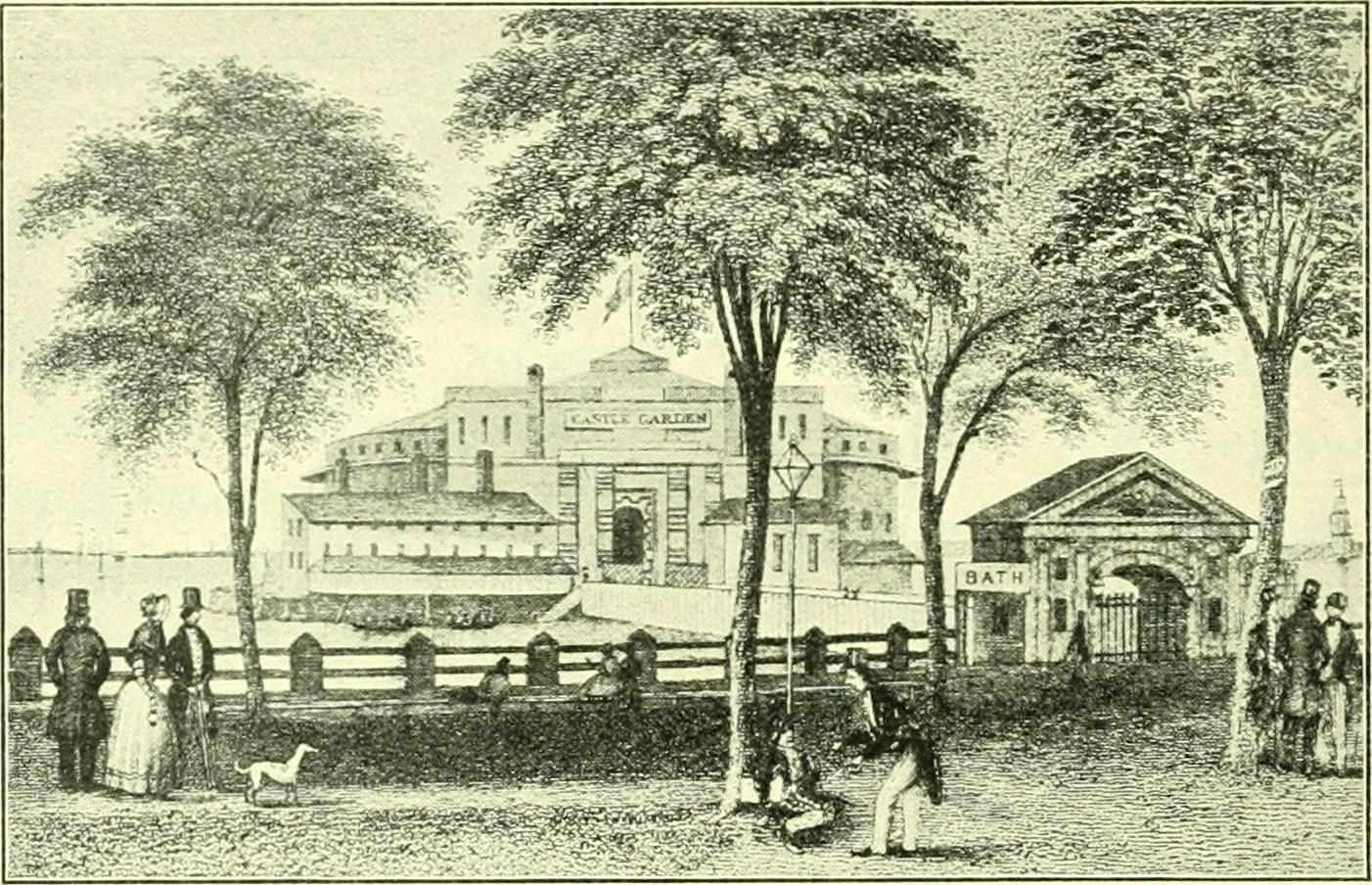
First it was transformed into an entertainment palace, rechristened Castle Garden, and greatly expanded, with a spacious second floor and an ornate fountain at its center. Still accessed by a narrow bridge, the experience was magical and otherworldly for visitors, its gaslight illuminations dancing above the waves.
Image from ‘A Home Geography of New York City (1905).
Castle Garden was a ballroom, concert venue, lecture space, and even beer hall. In 1824, the Marquis de Lafayette, the most exotic still-living embodiment of the Revolutionary era, was feted here by grateful New Yorkers. In 1842 Samuel Morse demonstrated a new gadget that would change the world—the telegraph. (A line was strung between here and Castle Williams; its first message was, rather dramatically, “What hath God wrought?†And they hadn’t even seen their phone bill yet!) For a short time, you could even enjoy luxurious saltwater baths out on the Battery promenade.
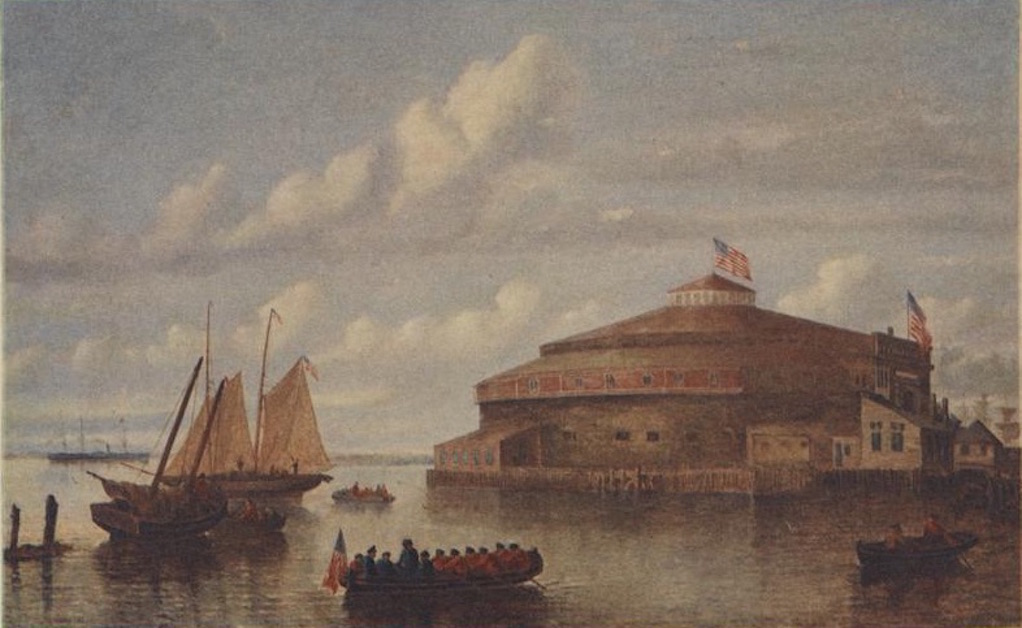
Courtesy Museum of the City of New York
But the most famous evenings at Castle Garden (pictured above in 1850) belonged to the Swedish opera singer Jenny Lind. Extensively hyped by impresario P. T. Barnum, the so-called Swedish nightingale brought New York music lovers to tears here on September 11 and 13, 1850, perhaps the most legendary concert nights in American history (pre–stadium seating, that is). “Jenny Lind has already won a hold on the sympathies of the American public, such as no other vocalist ever obtained,†cooed the New York Daily Tribune. “The audience for which she sang was the greatest ever assembled at a concert in this city.â€
Just five years later, in 1855, Castle Garden would see thousands more foreign imports, albeit less enthusiastically proclaimed. For it was then that the old fort-turned-amusement venue became New York’s first immigration depot, a desperately needed transformation, coming as a tidal wave of European immigrants vexed the ports.
Newly arrived Irish and German immigrants during the 1840s and early ’50s had been taken advantage of by greedy “runners,†unscrupulous characters who led them into scams or false promises of housing and employment, often leaving them with neither (and empty pockets).
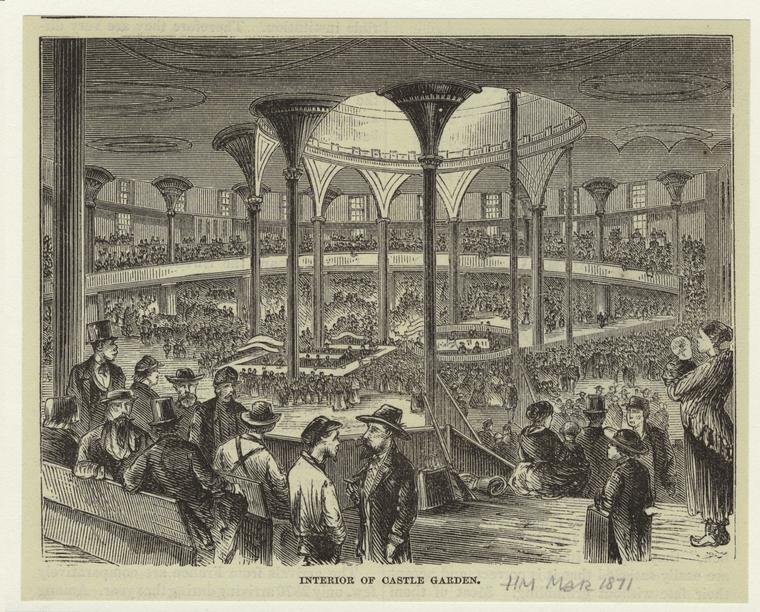
The interior of Castle Garden during its period as an immigration station.
New York Public Library
Castle Garden, as an immigration depot, registered the new arrivals and provided vital connections with immigrant aid societies. It would be a proto–Ellis Island, processing more than 8 million people upon their arrival to America. Most likely some of you reading this have ancestors who passed through the halls of Castle Garden.
Castle Garden as an immigration station, 1861, the former battery swarming with activity. Millions of immigrants arriving in New York passed through this depot.
Another model within Castle Clinton features the landscape as it looks during the period the structure housed the New  York Aquarium.
By 1890 the federal government finally got involved with immigration processing and built a new processing center upon a little island in New York Harbor, long ago owned by Samuel Ellis. This switch freed Castle Garden to occupy itself with some other residents—this time of the underwater variety.
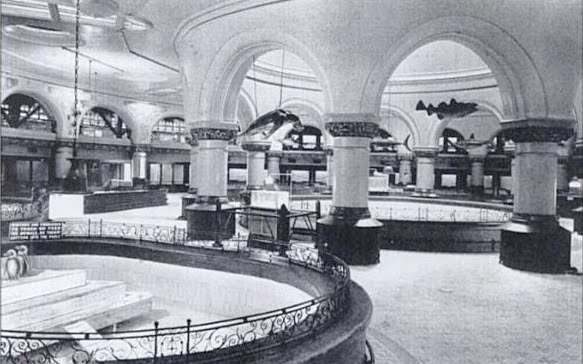
After a redesign by the renowned architectural firm of McKim, Mead, and White, the New York Aquarium would open here in 1896, its former concert hall and processing desks replaced with the latest aquatic technology of the day. By this time, of course, landfill had joined the structure to the mainland. Families could now gallivant through Battery Park and into the front gates to explore a maze of open pools and glass exhibition tanks, filled with a variety of creatures that (more often than not) did not survive the changing of seasons.
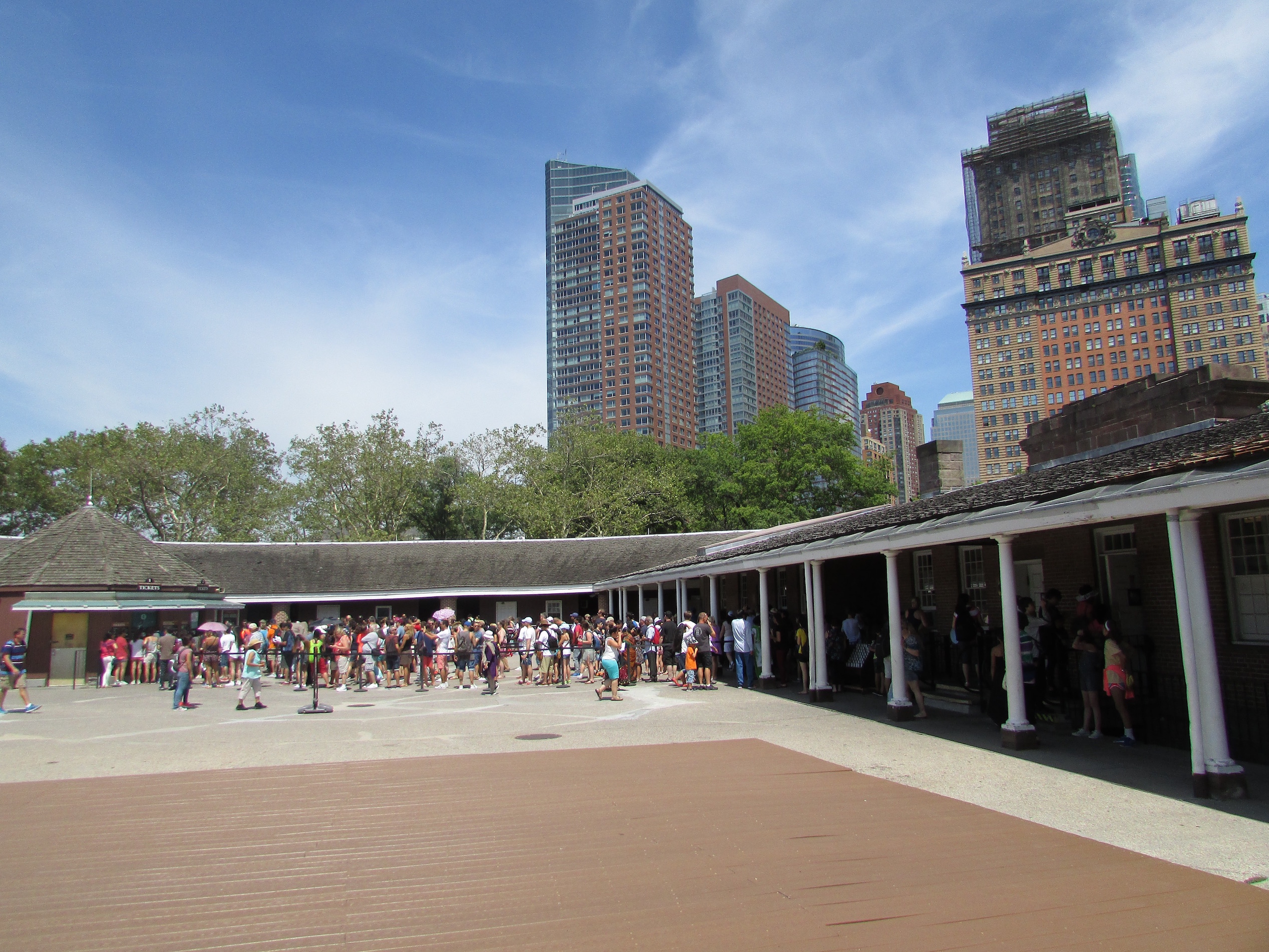
Today there are no aquatic creatures of any variety. However there are plenty of tourists from all over the world, lined up to get their boat tickets to the Statue of Liberty and Ellis Island.
They were a surprising yet appropriate pairing, the old fort and a bunch of tropical fish, replete with harbor waves crashing nearby. Unfortunately, Parks Commissioner Robert Moses was not a fan and decreed that the retrofitted old fort had finally performed her last number. In 1941, Moses used the construction of the Brooklyn–Battery Tunnel as an excuse to move the popular aquarium to Coney Island, snarling that “the Aquarium is an ugly wart on the main axis leading straight to the Statue of Liberty.†The fort should be destroyed entirely, he explained, for “its guns never fired a shot against an enemy.â€
Inside the New York Aquarium at Castle Garden:
Courtesy Castle Clinton
His destructive urges were only partially rebuffed by the community. Most of the frill and finery—almost everything that had been added since 1823—was removed, leaving only the barren stone form of the original fort intact. And that’s exactly how it has remained ever since. Castle Clinton received National Monument status in 1975.
Today the old fort quietly allows New York’s showier landmarks their day in the sun. But we challenge you, Mr. Moses. There may never have been a shot fired from Castle Clinton, but these walls have seen more drama and have been more important to the American experience than almost any other American fort standing today.
LISTEN TO OUR PODCAST! We have an entire show on Battery Park and Castle Clinton. It’s Episode #31. You can find it on iTunes at the Bowery Boys Archive, featuring our older shows. Â Or download it from here.
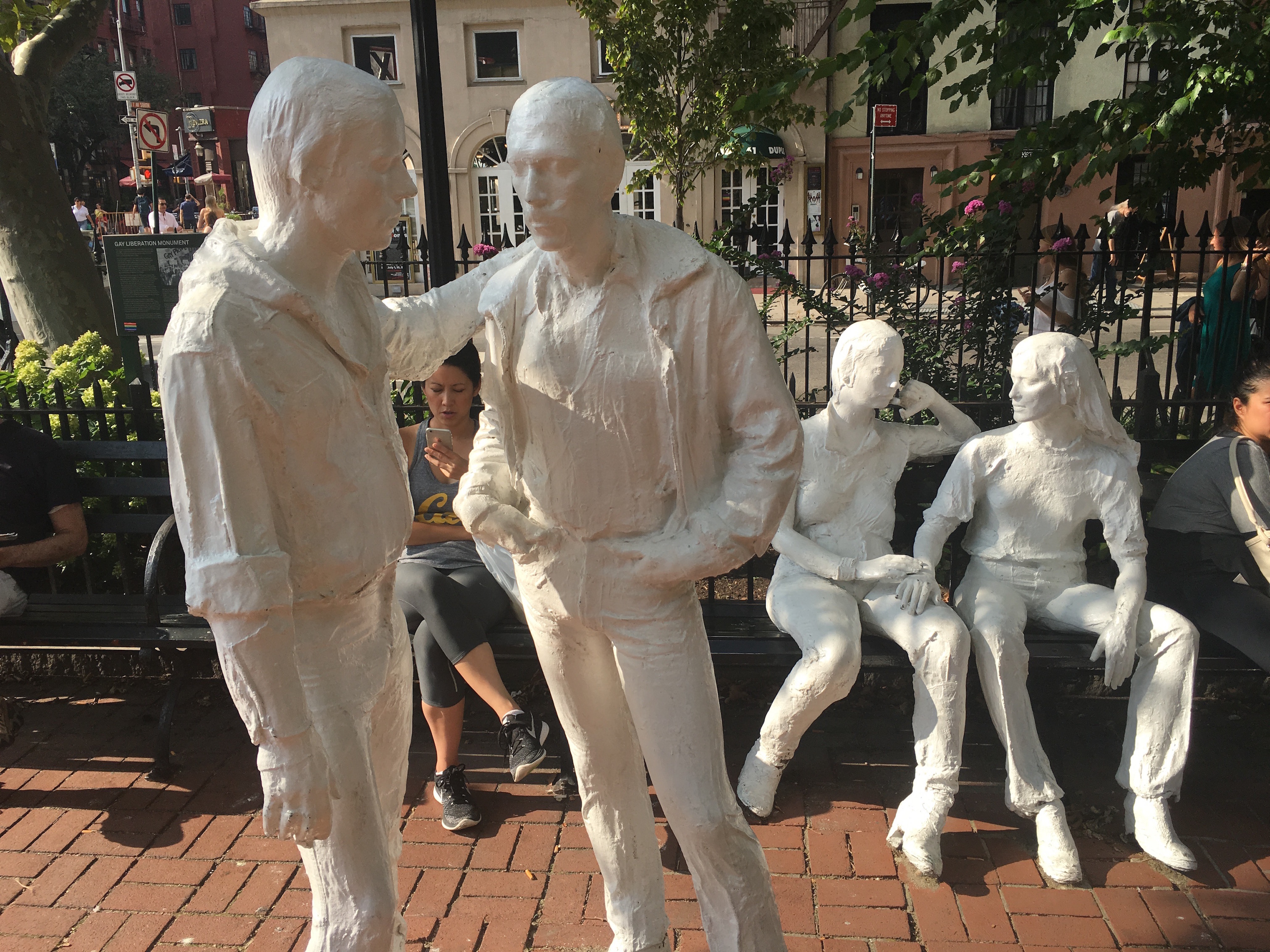
Photo-mechanical postcards were popular during the Gilded Age because they were photographs printed on thick card stock and enhanced with colored inks, turning reality into a Technicolor dreamscape well before the invention of color film.
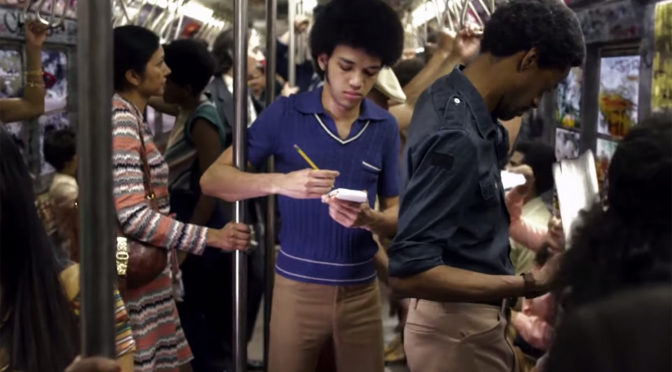
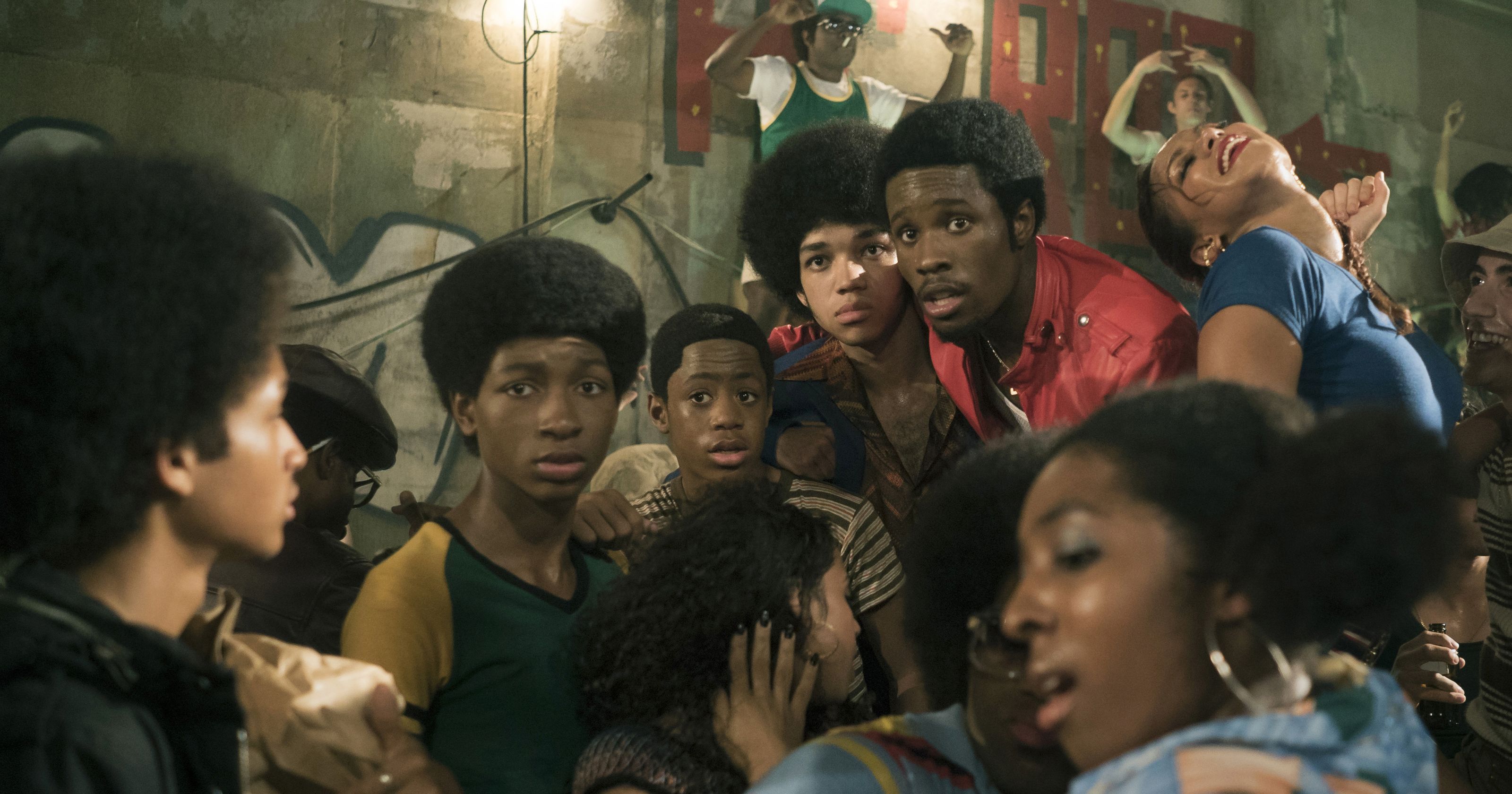
This also describes the film style of Baz Luhrmann, the Australian director known his flamboyant, indulgent visual technique, seen in Strictly Ballroom, Romeo+ Juliet, and Moulin Rouge. So it might take you a few minutes to adjust to his latest work — the Network television series The Get Down, set in the South Bronx in the 1970s.
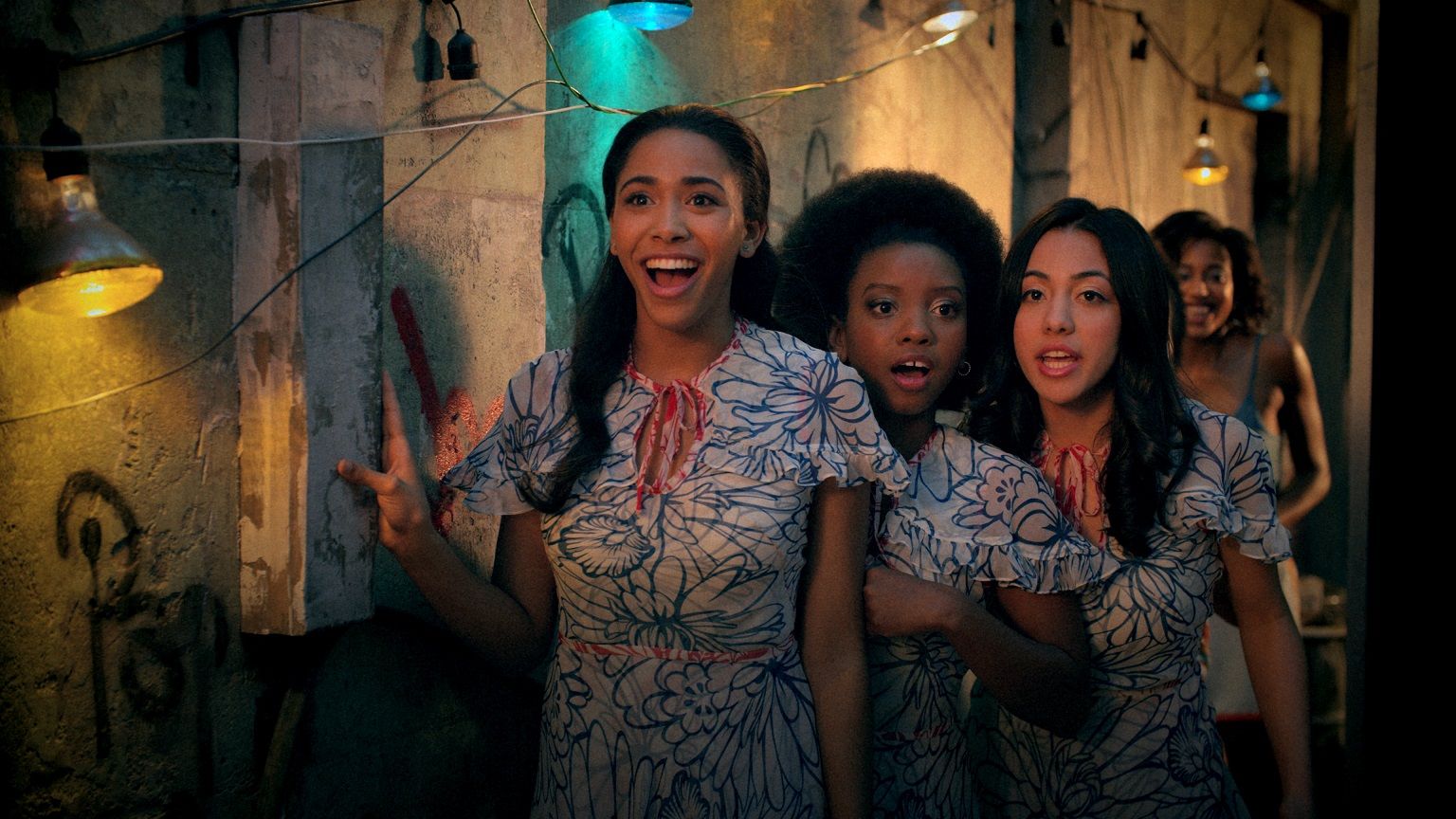
Below: The Fantastic Four Plus One
Courtesy Netflix
Luhrmann has explored New York City history before — in his radical take on The Great Gatsby, a sparkling, dreamlike drama with its details so heightened that it was offered to movie theaters in a 3-D version.
The South Bronx was a wasteland of urban decay by 1977, with a cash-strapped city government employing planned shrinkage onto a poor and ravaged neighborhood. Hardly suitable for gaily colored musical treatment? Weirdly enough, it works. The Get Down is a reminder of the humanity and creativity that kept the South Bronx alive during this period.
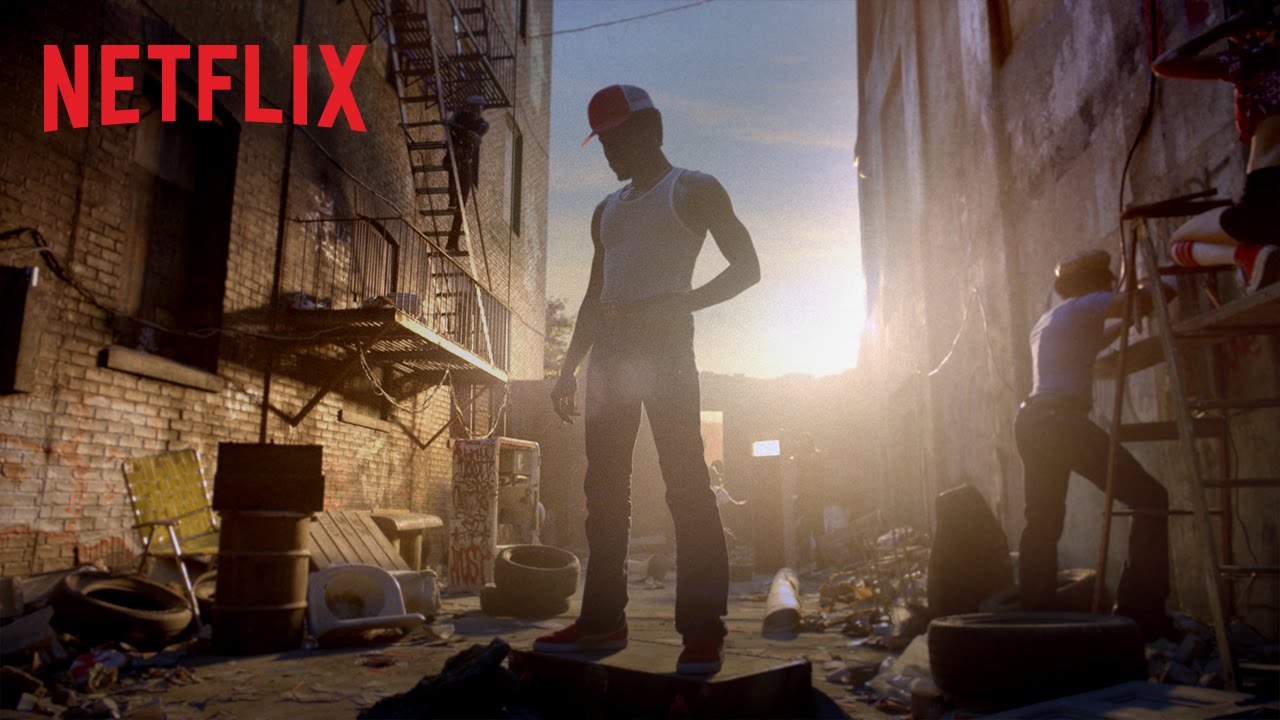
Below: The character Shaolin Fantastic: Treated as a mythical figure (at first)
Courtesy Netflix
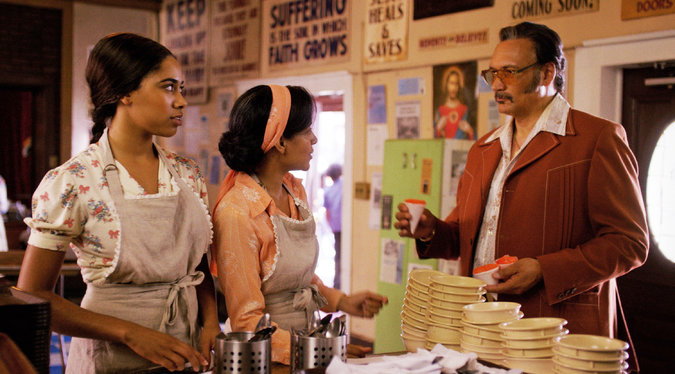
The Get Down focuses first on the exploits of two young lovers. Mylene (Herizen F. Guardiola) is a preacher’s daughter and a star of the church choir with dreams of disco stardom. She reluctantly falls for Zeke (Justice Smith), an earnest poet who she fears will distract her from fame. In fact Zeke’s budding talents for beautiful rhyme keeps his head above the streets, even as he befriends the graffiti-artist turned deejay Shaolin Fantastic (Shammeik Moore), a young man with connections both to the musical future and to the criminal underworld.
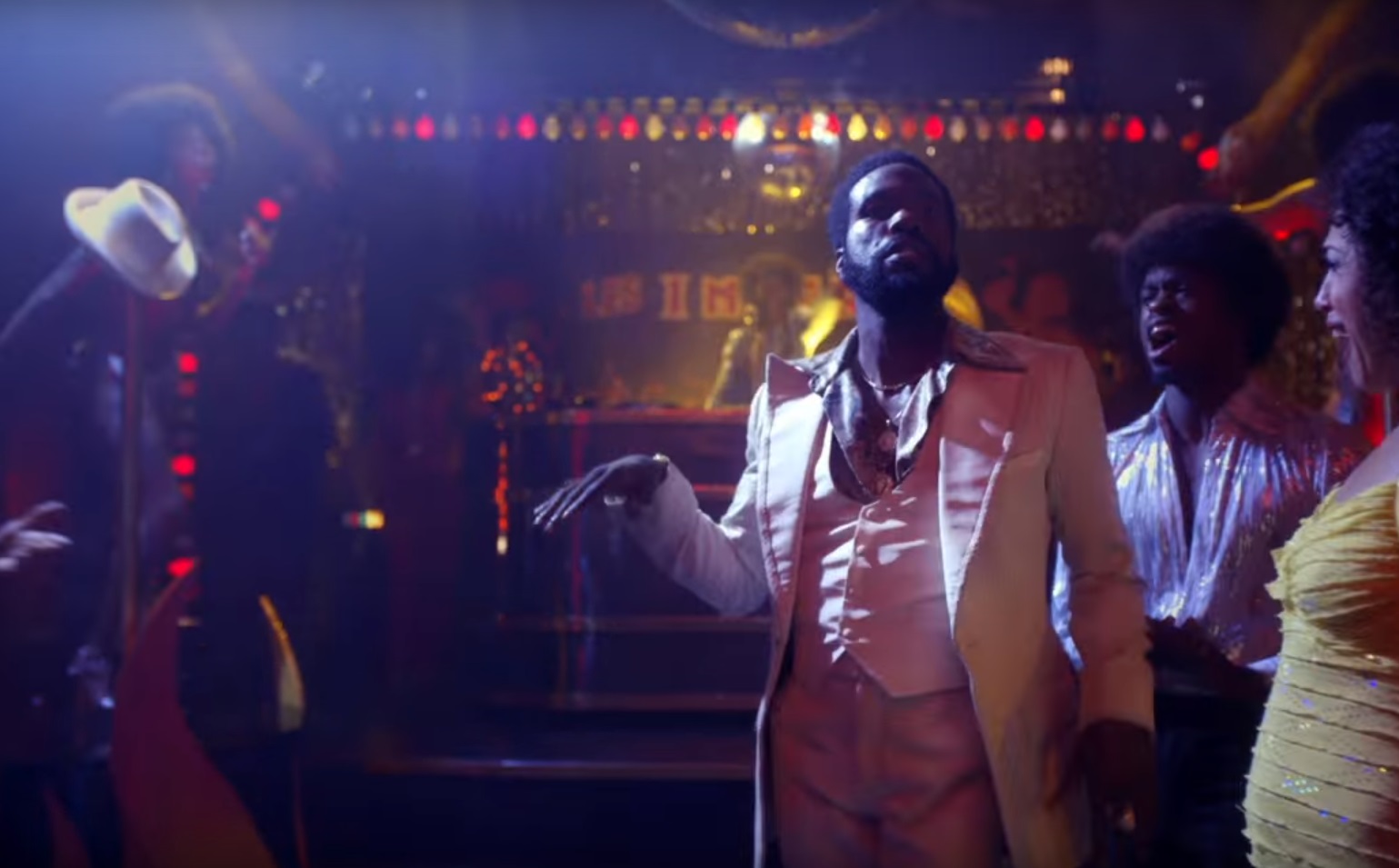
It’s the summer of 1977, and their adventures fall upon a landscape of infinite moral choices. Plots frequently take them to Les Inferno, the hottest disco in the South Bronx (inspired perhaps by the real Disco Fever), owned by queen-pin Fat Annie (played by the terrific Lillias White). They frequently seek the aid of Francisco Cruz (Jimmy Smits playing a role based on real-life political boss Ramon S. Valez), who perhaps has more nefarious reasons for helping out the young lovers.
Below: Cadillac, the flamboyant disco king with an evil side
Courtesy Netflix
The Get Down is a very Luhrmann production: Musical numbers, bright colors, operatic cross-editing, earnest intentions. And yet its handling of real Bronx history is assured, confident and innovative. The show (six episodes so far) is able to turn this troubled era into a sort-of disco West Side Story because of its reverence of those who lived here.
Here are some of my favorite historical details from the first six episode. NO big plot spoilers but definitely a revelation of some of the history used on the show:
Below: Mylene, her conflicted mother Lydia and FranciscoÂ
Courtesy Netflix
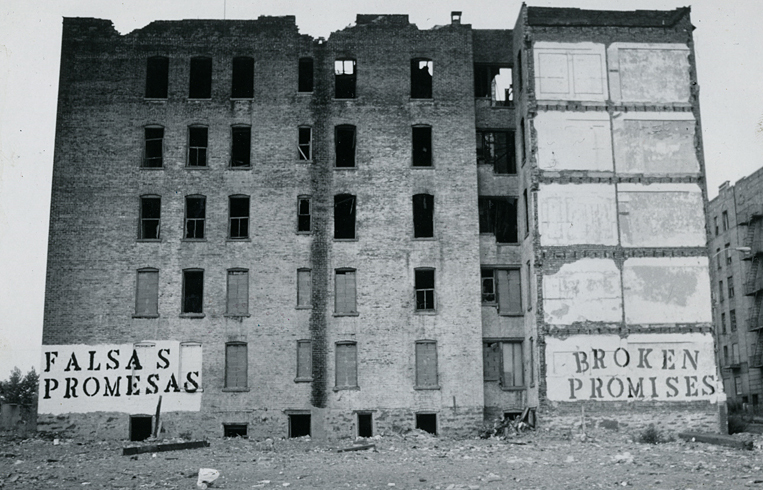
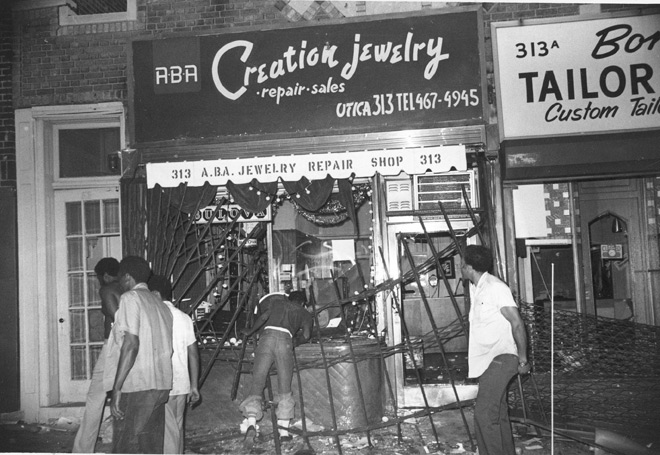
1) Political Wars — The Get Down manages to bring our two heroes into New York’s greater political and social context. One character even gets a job at the World Trade Center! The street dramas are balanced nicely with action at the polls, with Abe Beame running in election that year against congressman Ed Koch, played beautifully by Frank Wood. Charlotte Street, one of the Bronx’s most troubled places in the 1970s, is centerpiece for much of the action. (Below: A burned building on Charlotte Street)
Photo by John Fekner
“Tear down the competition. Wherever you find it!”
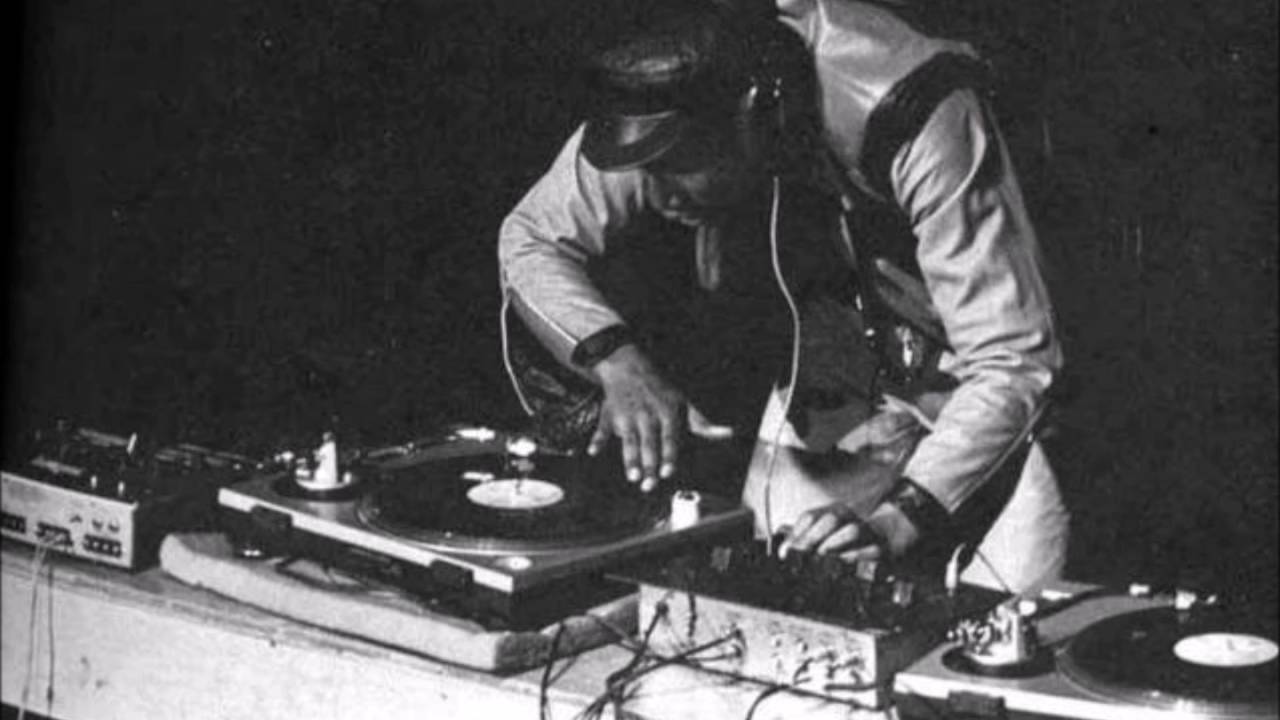
2) Deejay Wars — Even as disco becomes mainstream, a new form of music develops using tricks of the turntable. The musical battles between Grandmaster Flash and DJ Cool Herc are solidified in gang fiefdoms — kings and kingdoms are frequently referenced — while a separate strata of deejays (located mostly in Manhattan) focus on the next disco diva. (Nobody much cares for Brooklyn here; its leading deejay Grandmaster Flowers is laughed away!)
Below: The real Grandmaster Flash
“Above all this? How are we above all this?”
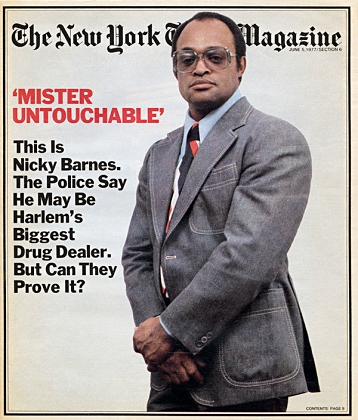
3) Harlem vs the Bronx –Fat Annie is obsessed with Nicky Barnes, the Harlem crime boss threatening to spread his influence into her territory. That summer he appeared on this cover, flaunting his underground power:
4) The Blackout of 1977 — The middle two episodes are set during the infamous blackout with characters, in typical Luhrmann fashion, scattered throughout the borough in various states of drama and distress. This piece of history is brilliantly incorporated into the series, fueling the motivations of the last episodes. In fact, had this been a film instead of a series — and there have been some critics who have suggested that — I imagine it probably would have called The Blackout.
Courtesy The Moderate Voice
5) Musical Diversity — During the course of six episodes, you’ll find yourself wanting to make comparisons with Glee, Empire and, especially HBO’s failed Vinyl. Indeed, Vinyl traipses through the same musical era and with similar characters. But The Get Down does a better job of encapsulating the excitement, the freshness of new music’s infancy. We see the characters learning to turntable and beatbox; we hear musical genres — gospel, salsa, soul, blues — transform into new sounds — disco, rap, hip hop.
Courtesy Second Avenue Sagas
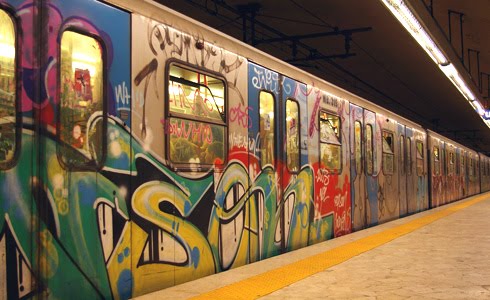
6) Graffiti Kings — It’s impossible to get away from the elevated subway in The Get Down. Pivotal scenes take place beneath it, Les Inferno sits next to it, and the rumbling night train always seems to ambling by in the distance. The trains are coated in graffiti, the embroidery of urban decay for some and symbol of purpose and existence to others (mainly to the kings and their crew). Unfortunately, the plot actually strays anytime it follows Dizzie (Jaden Smith), Zeke’s graffiti artist friend, but the depictions of late-night crews struggling to use spray cans are imaginative. And I loved the unveiling of the “writers bench,” an actual place at the 149th Street subway stop with name artists could meet.
7) Epic use of the Queens PanoramaThe World’s Fair artifact is used as a framing device along with grainy original footage from 1977 (as well as footage made to look like it’s from 1977). Speaking of overarching framing devices, the entire show is in effect a massive flashback. One of our characters grows up to become a major rap sensation, and most episodes begin twenty years later inside a massive arena. (Moulin Rouge and The Great Gatsby have a similar framing device.)
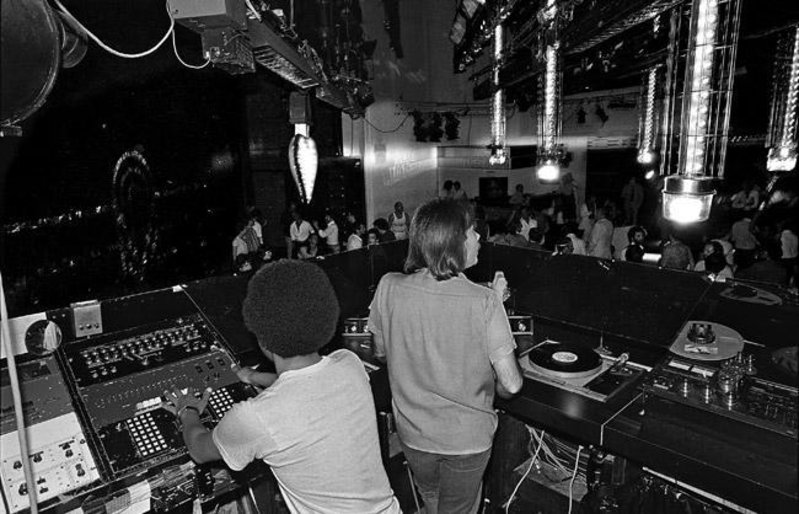
Below: The Studio 54 deejay booth, 1979
“A Latino, Pentecostal, communal Puerto Rican disco hymn record, right?”
8) The Get Down > Vinyl I’m not sure how an Australian filmmaker bested Martin Scorsese, of all people, in depicting a richer, more fuller 1970s music scene, but here it is. The series does journey into the mainstream music scene of Times Square as Mylene attempts to make it big in the world of disco music. We see the typical scenes — executives being grossly casual in business meetings, musicians doing cocaine for inspiration. At the core of this is the excellent Kevin Corrigan as Jackie Moreno, a fading music producer who jus needs one more big hit.
His humiliation at the ‘record pool’ — based on an actual method of distribution for New York’s hottest disco records — could be seen as a commentary on the entire run of Scorsese’s Vinyl (which was cancelled after one season.) And I defy you not to watch his scenes in the Chelsea Hotel — excellently reproduced — without smelling every foul odor that ever wafted down that hallway.
And, even with its faults, that’s the ultimate success of The Get Down — you see history, you hear history and, oh yeah, you smell it.
The Get Down is available for streaming exclusively on Netflix. The first six episodes are available now with the next six coming out in early 2017.
NOTE: This discussion of the film ‘Florence Foster Jenkins’ includes minor location spoilers but no specific plot spoilers that not already in the movie trailer.Â
Florence Foster Jenkins, a New York music philanthropist and society maven of exceeding generosity, was actually a rather fine musician. Unfortunately, her ability to play the instrument in which she excelled — the piano — was taken from her at a young age due to injury, so she took up another passion in which she absolutely did not excel — singing.
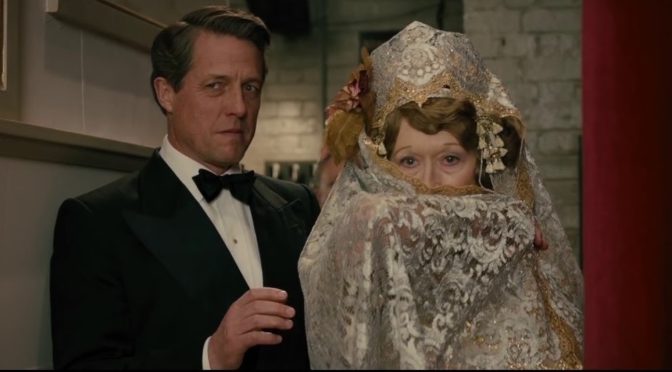
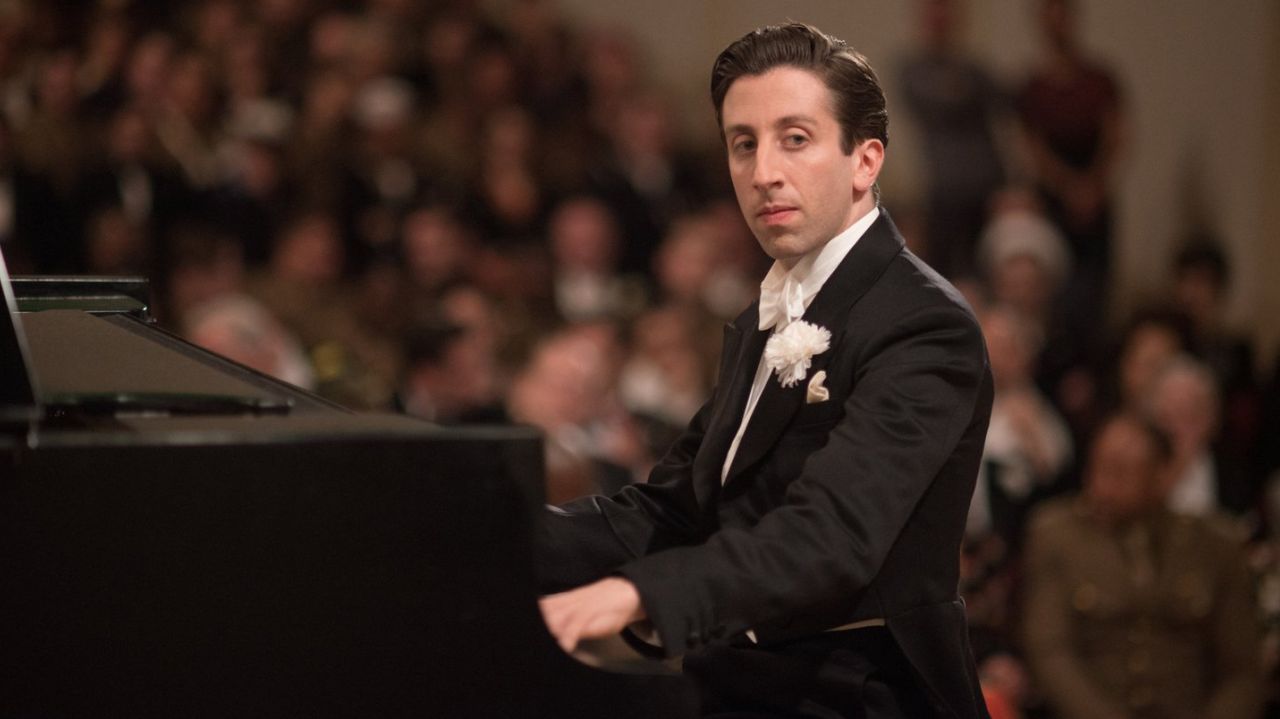
The movie Florence Foster Jenkins, with Meryl Streep in the lead role, picks up the real-life story in 1944 when Jenkins decides to stage a magnificent comeback at Carnegie Hall. Nothing has changed of course. She still can’t sing, and she’s surrounded by a gentle society too polite to persuade her otherwise. But she becomes moved by stories of mothers who have lost their sons in the war and feels compelled to do something charitable.
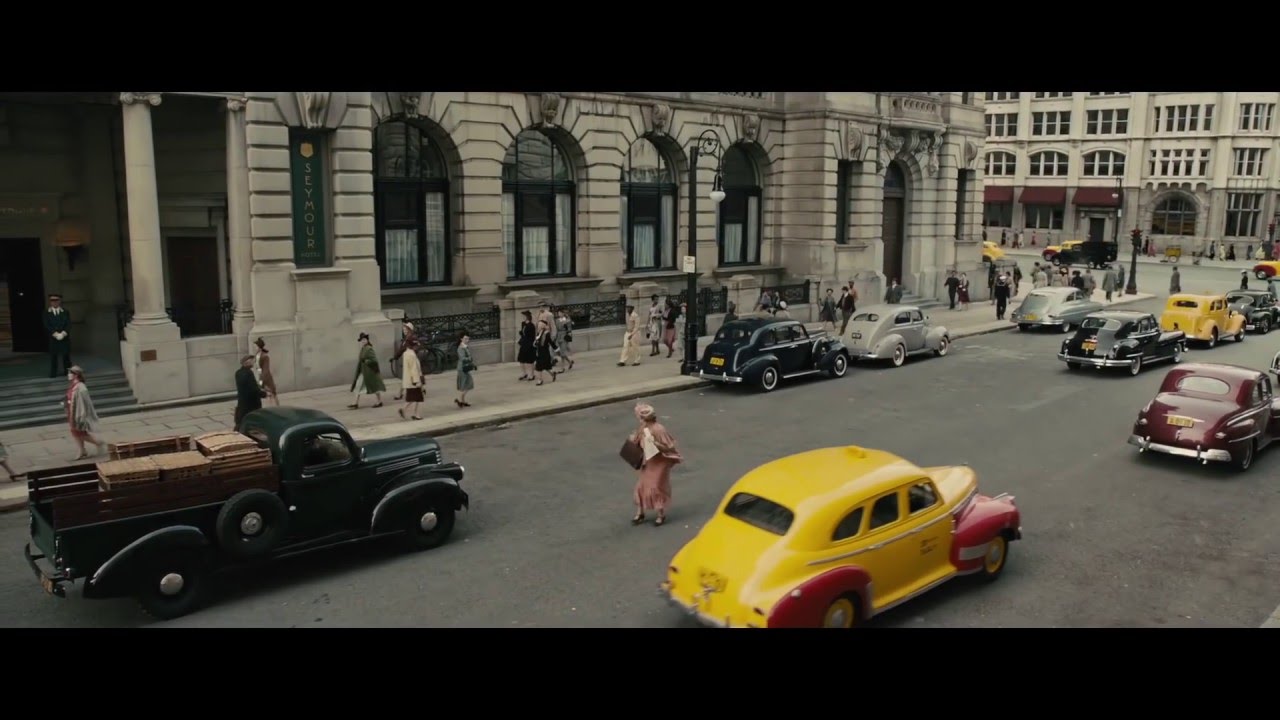
Jenkins, of course was a real New York socialite, and the new film, directed by Stephen Frears, takes place in a unique version of New York City; the street life and casual details are certainly on point, but almost none of the sets feel like New York buildings. (The movie was filmed in Liverpool, England.)
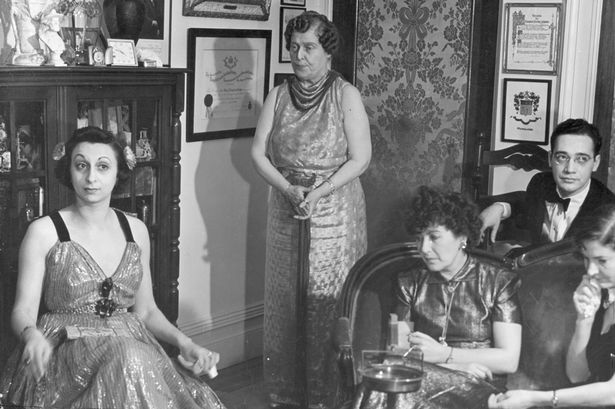
Below: Jenkins delights an audience at her home at the Hotel Seymour.
Courtesy the Mirror
Fortunately the film gets most of the substantive points of the story correct. Here are six details about New York City that you should know before going into the film:
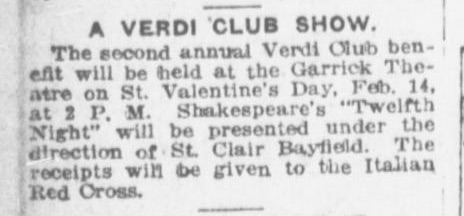
Above: A clip from the New York Evening World, Feb. 4, 1921, featuring Bayfield. He’s not a particularly talented thespian, as the film demonstrates.
THE VERDI CLUB
This music appreciation society was formed by Jenkins in 1917 to enthrall her high-society friends and keep traditional forms of music alive in New York. Â It was originally started specifically as a fan club of sorts to Giuseppe Verdi. “The Verdi Club, under the direction of its founder, Florence Foster Jenkins,” according to Pearson’s Magazine in 1917, “is going about its propaganda work in the most sensible way imaginable.”
Of course Jenkins had accumulated such good will with the group that she was able to indulge  her less-than-sensational singing talents with them. She was so beloved that nobody felt the need to openly criticize her, not even the press. In 1922, the New York Tribune reports that “a group of French songs” were “sung by Florence Foster Jenkins” without waxing on about the performance quality. There are few extant reviews of her performances as Bayfield often paid critics off and it was generally seen as gauche to even talk about it.
New-York tribune, September 20, 1903
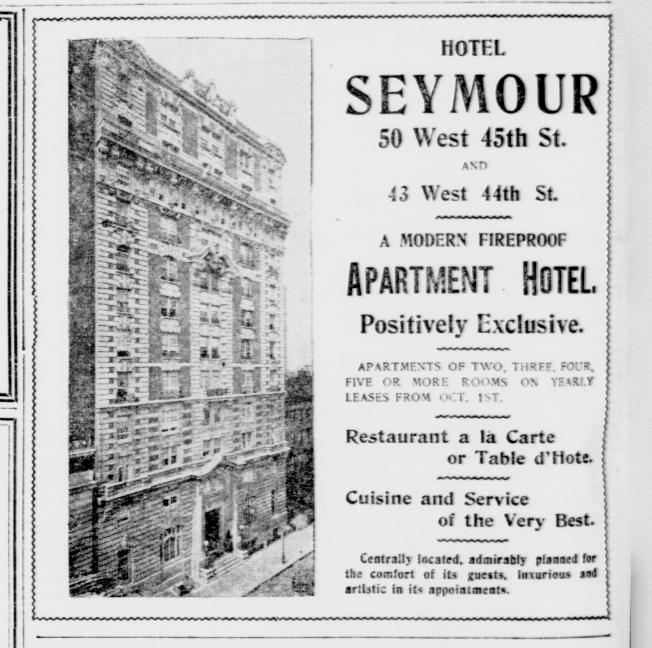
THE HOTEL SEYMOUR
Jenkins lived her later years at the Hotel Seymour, located at 50 West 45th Street. (The Sofitel New York sits on that spot today.) As Daytonian In Manhattan mentions in an excellent article from 2012, “Not only did prominent citizens like former United States Senator John P. Jones and socialite Mrs. Jackson Gouraud live here in 1908; but successful entertainers were drawn by the hotel’s proximity to the theater district.”
This is the primary setting for the film; in fact it’s where Jenkins eventually died. You can read her obituary here.
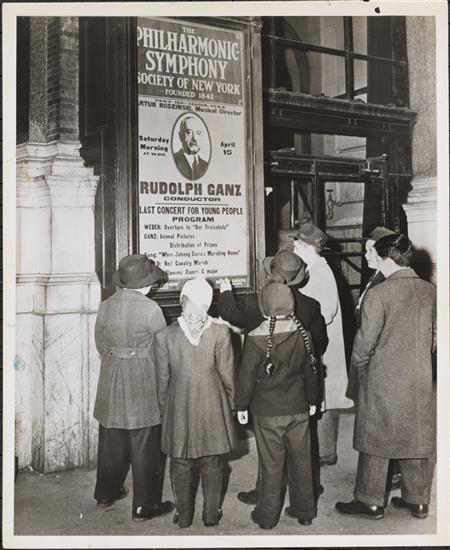
Carnegie Hall in 1944. Courtesy United States. Office of War Information, via MCNY
CARNEGIE HALL
The great music hall of Andrew Carnegie, which opened in 1891, was still very much the center of high cultural affairs by the 1940s. However a certain context is left out of the film which I feel must have driven Jenkins in her love of music. By the 1940s, new forms of music — jazz, big band, swing — had grown in prominence to unseat all others. Jenkins’ operettas, her ballads, even her Verdi, were hopefully outdated. Even at Carnegie Hall.
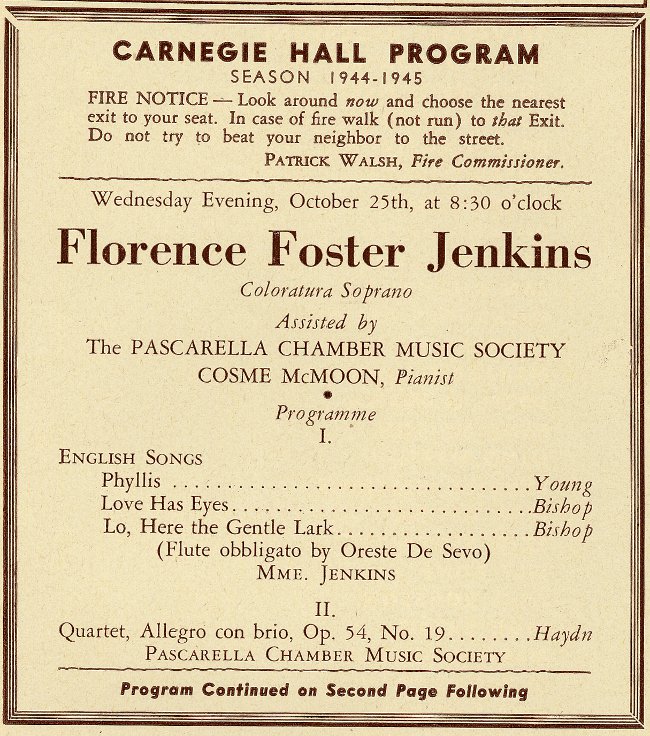
Indeed, the night before her grand performance at Carnegie Hall (the program is below), a political rally for Franklin D. Roosevelt at the venue featured the hot young vocalist Frank Sinatra, literally the opposite of Jenkins in every way. I can imagine Jenkins felt a bit like a surviving standard bearer, hoping to keep the traditional sounds (and a traditional way of life) alive in New York.
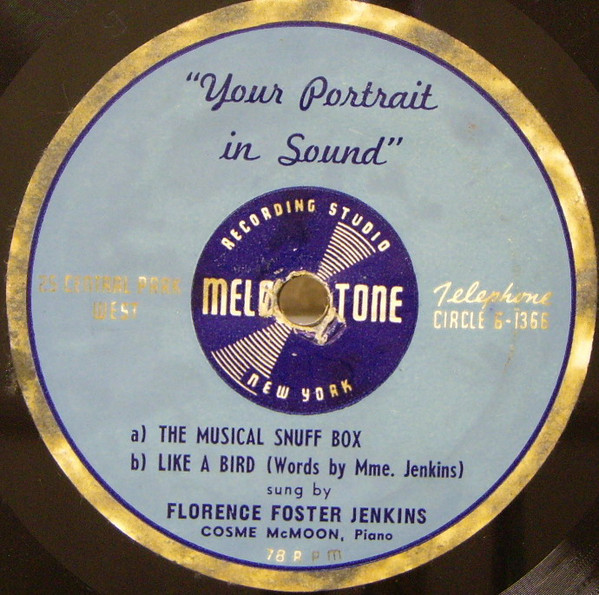
MELOTONE RECORDING STUDIO
This early recording studio for vanity projects is pivotal to the legend of Florence Foster Jenkins and figures prominently in the film.  The studio was located at 25 Central Park West. According to authors Nicholas Martin and Jasper Rees, “although frequented by amateurs, Melotone also attracted substantial clients. It recorded the Metropolitan Opera’s broadcasts as well as those of the New York Philharmonic, whose guest conductor John Barbirolli visited the studio.”
COLE Â PORTER
The film features many famous names — Lily Pons, Tallulah Bankhead — but none as esteemed or as well admired in 1944 as Cole Porter, one of the reigning Broadway composers. The Porter seen in Florence Foster Jenkins in late fall 1944 would have frantically been working on a somewhat forgettable musical review called Seven Lively Arts (opening in December of 1944) that nonetheless gave the world the song “Ev’ry Time We Say Goodbye.”
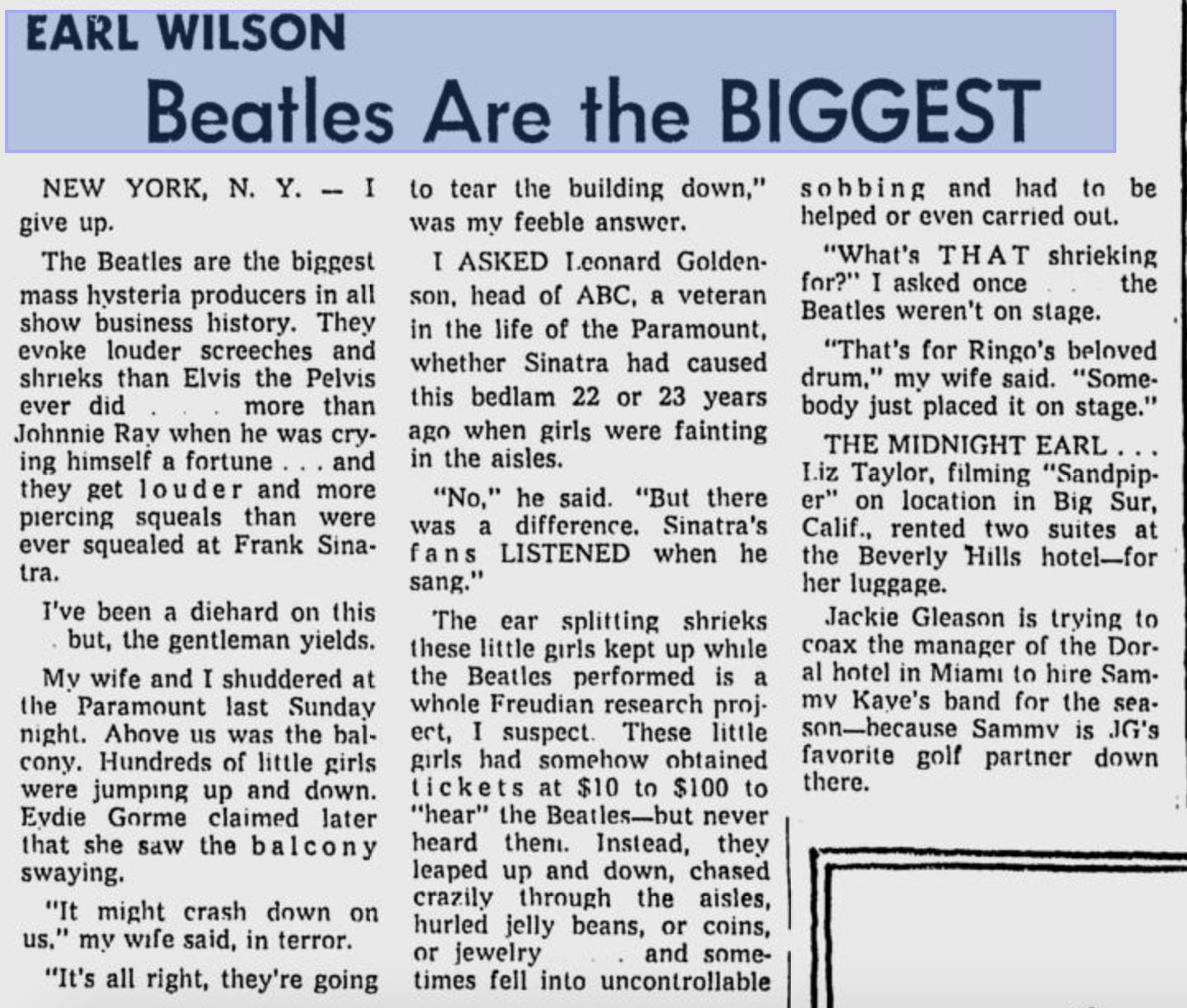
EARL WILSON of the NEW YORK POST
Wilson was one of the most influential newspaper critics of the 1940s and 1950s, having worked at the New York Post since the ’30s.  His columns recounting Broadway’s greatest shows and stars during this period would help define the legends of the day.  He was so famous and influential that the Beatles dedicated their performance on the Ed Sullivan Show to him in 1964 — though mostly because he ‘gave in’ and had become a fan by then. See his column below:
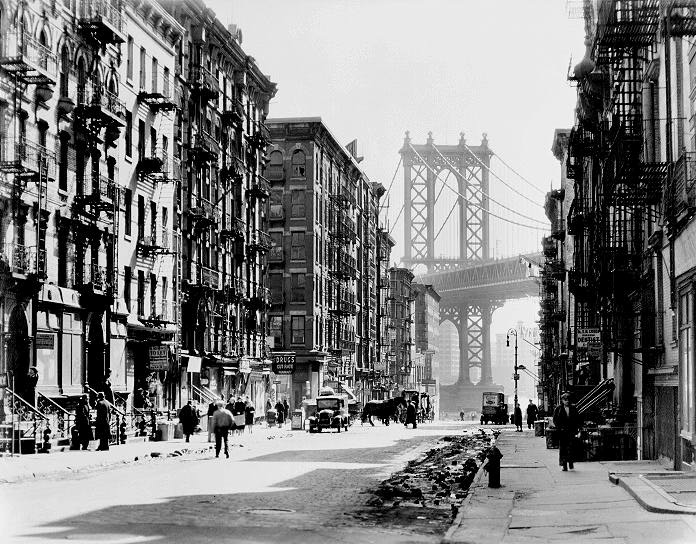
And finally, there’s a sort of confounding shot of Brooklyn in the film where one character has an apartment. Â Can anybody locate the precise whereabouts of where this apartment is supposed to be? Interestingly, the art direction of the shot seems to be inspired by a famous shot of the Manhattan Bridge, but from the Manhattan side (pictured below):
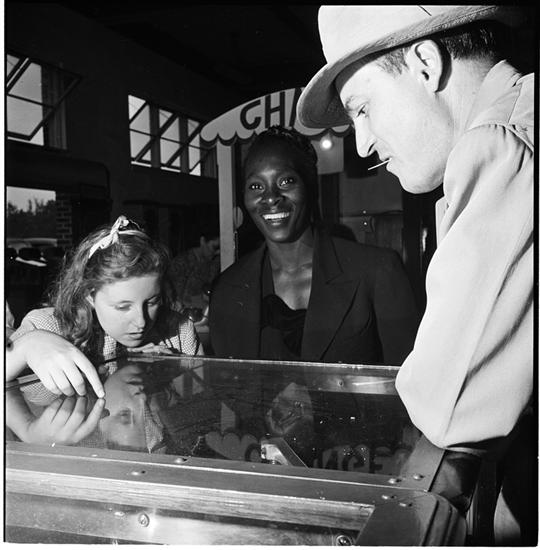
PODCAST The history of video games and arcades in New York City.
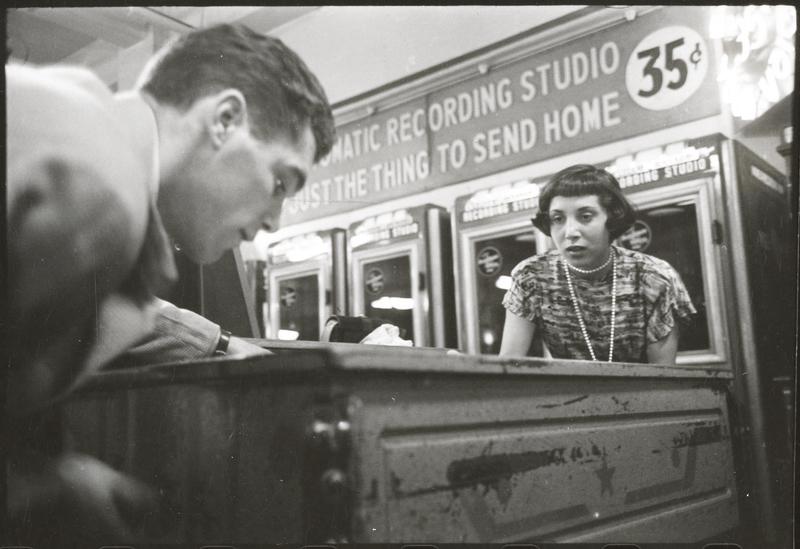
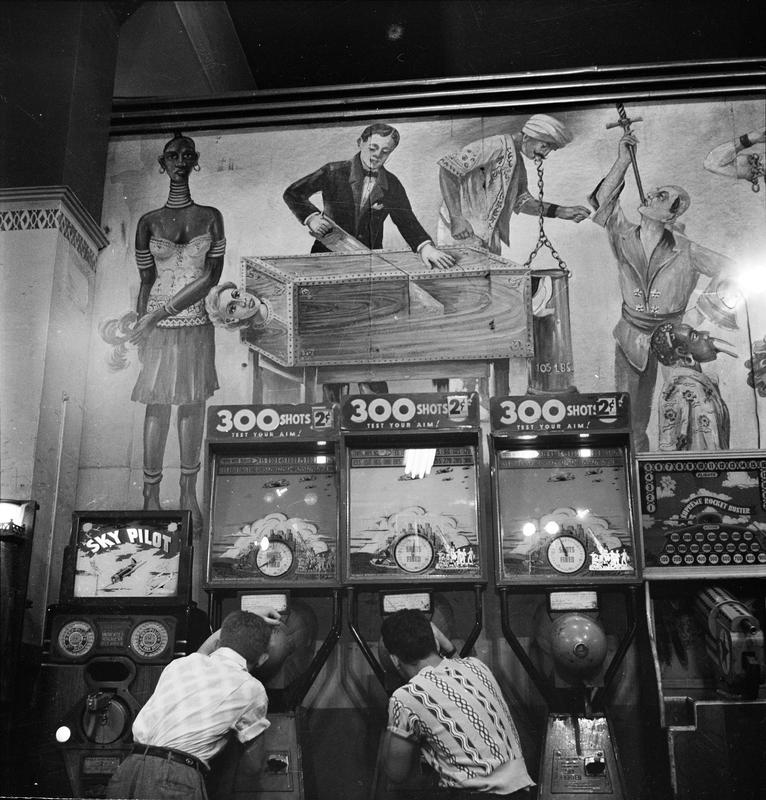
New York has an interesting, complex and downright weird relationship with the video game, from the digital sewers below Manhattan to the neon-lit arcades of Times Square. It’s not all nostalgia and nerviness; video games in the Big Apple have helped create communities and have been exalted as artistry.
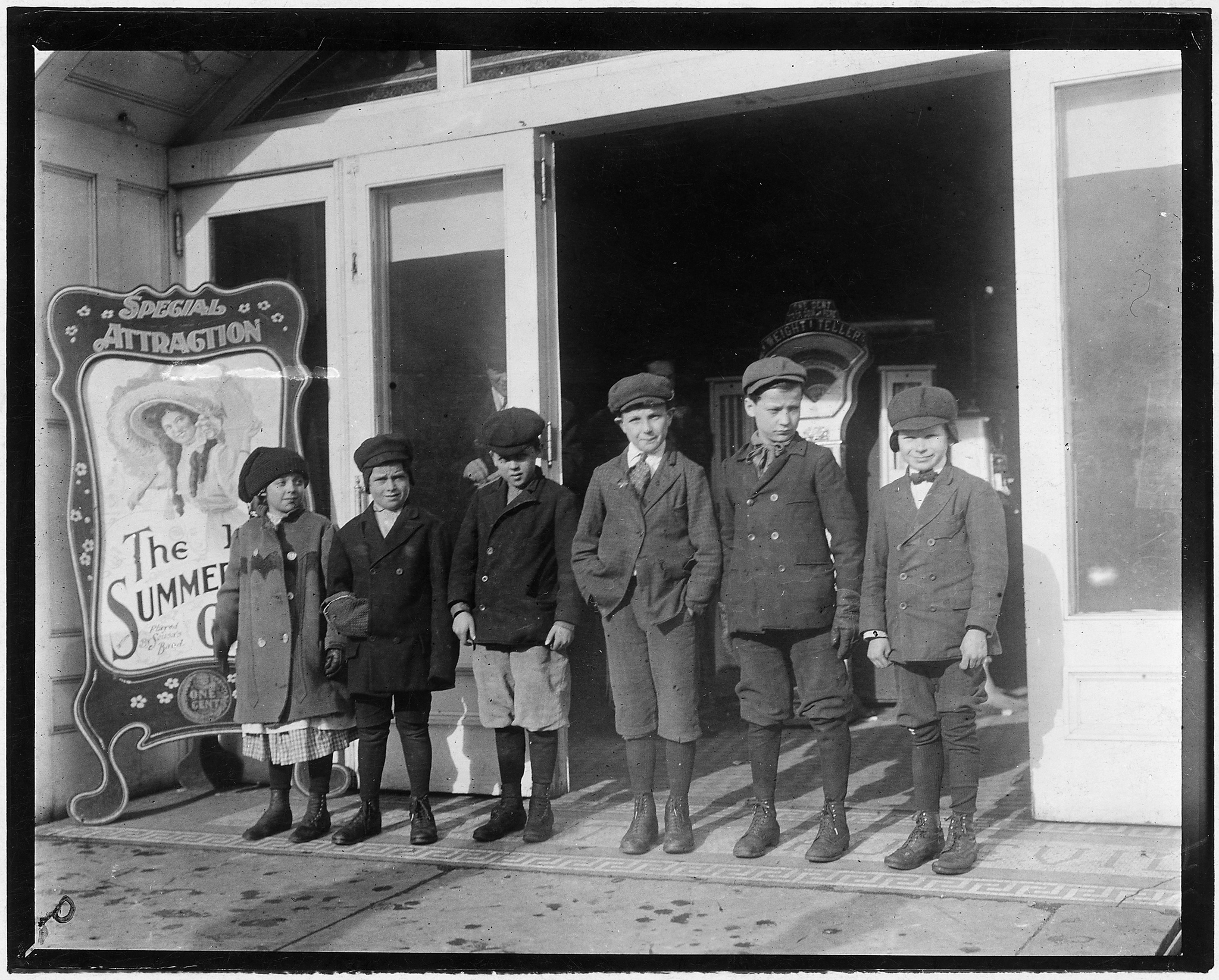
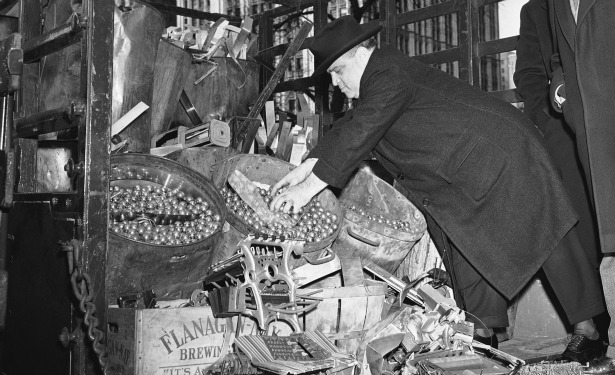
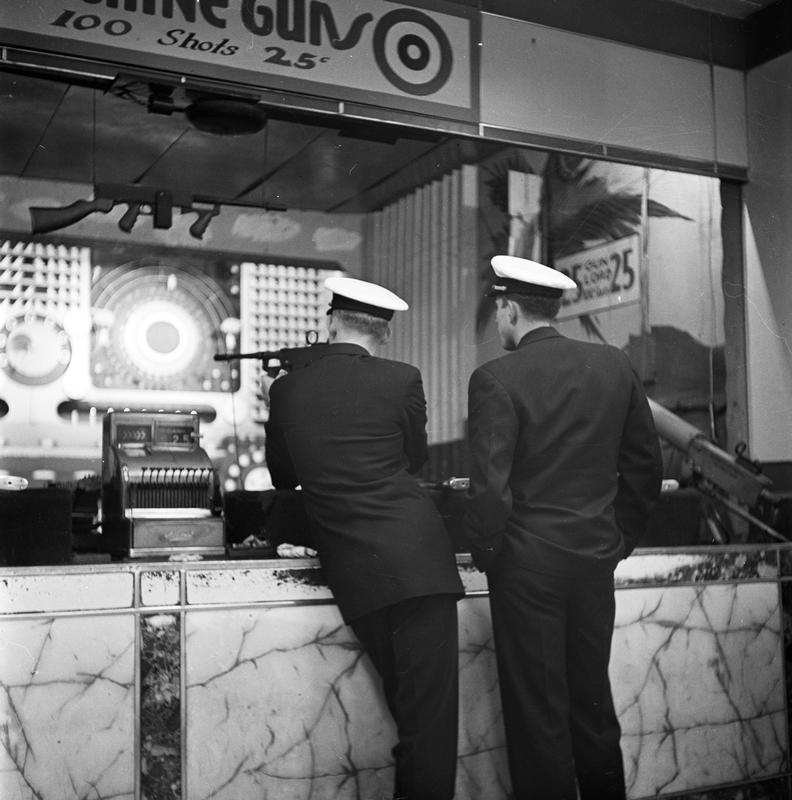
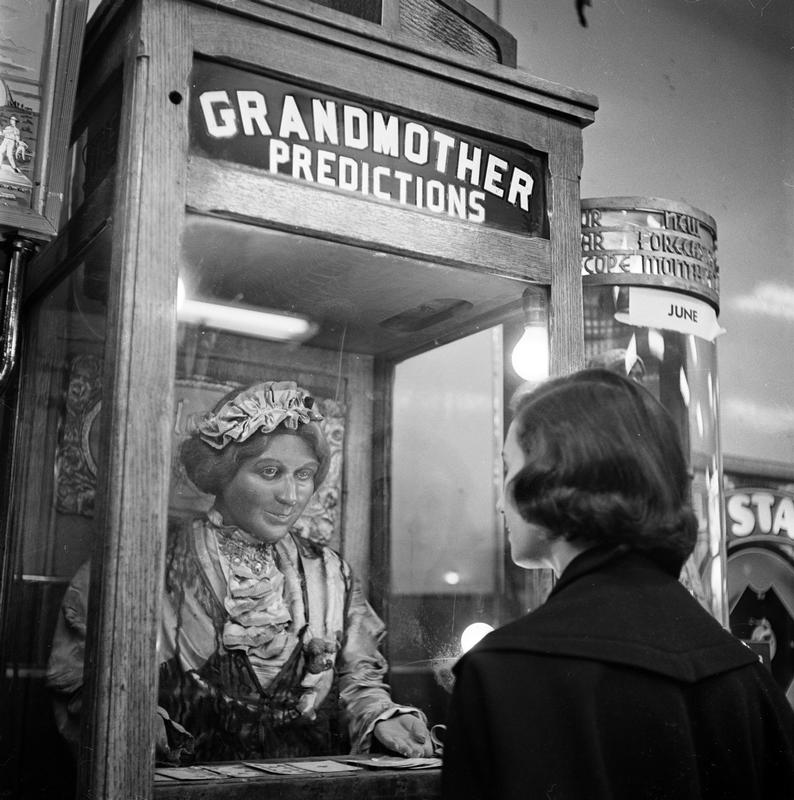
First — the relationship between the city and the arcade itself, once filled with shooting galleries and see ball. When pinball machines were introduced in the 1930s, many saw them as a gateway into gambling. Mayor Fiorello La Guardia personally saw to it that they were taken off the streets.
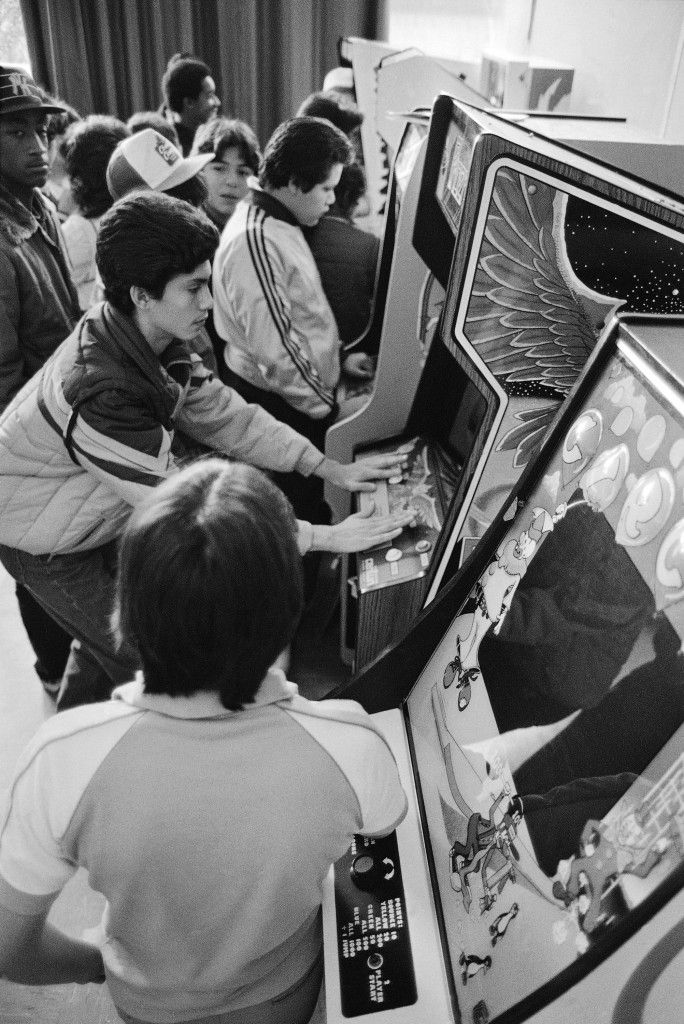
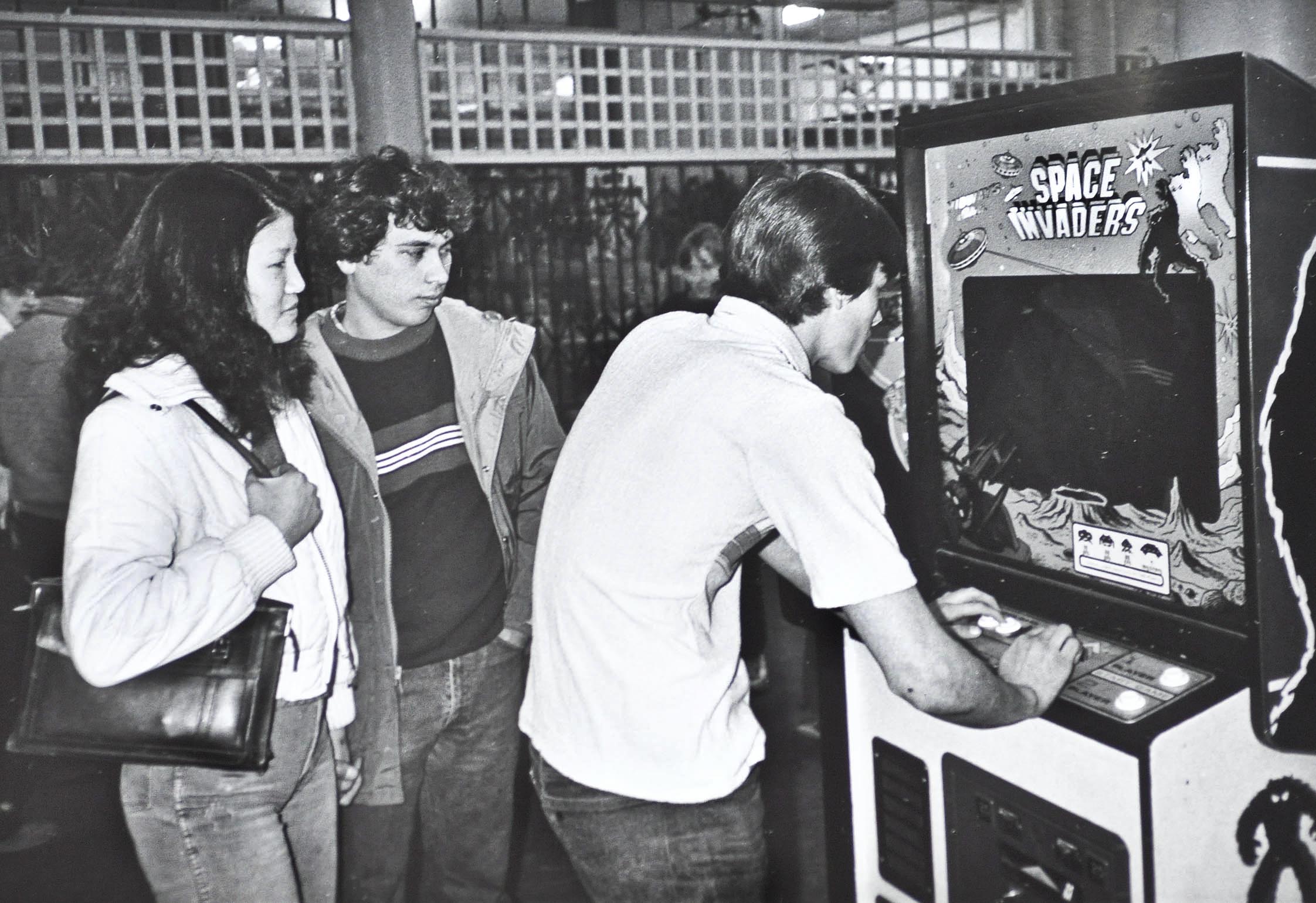
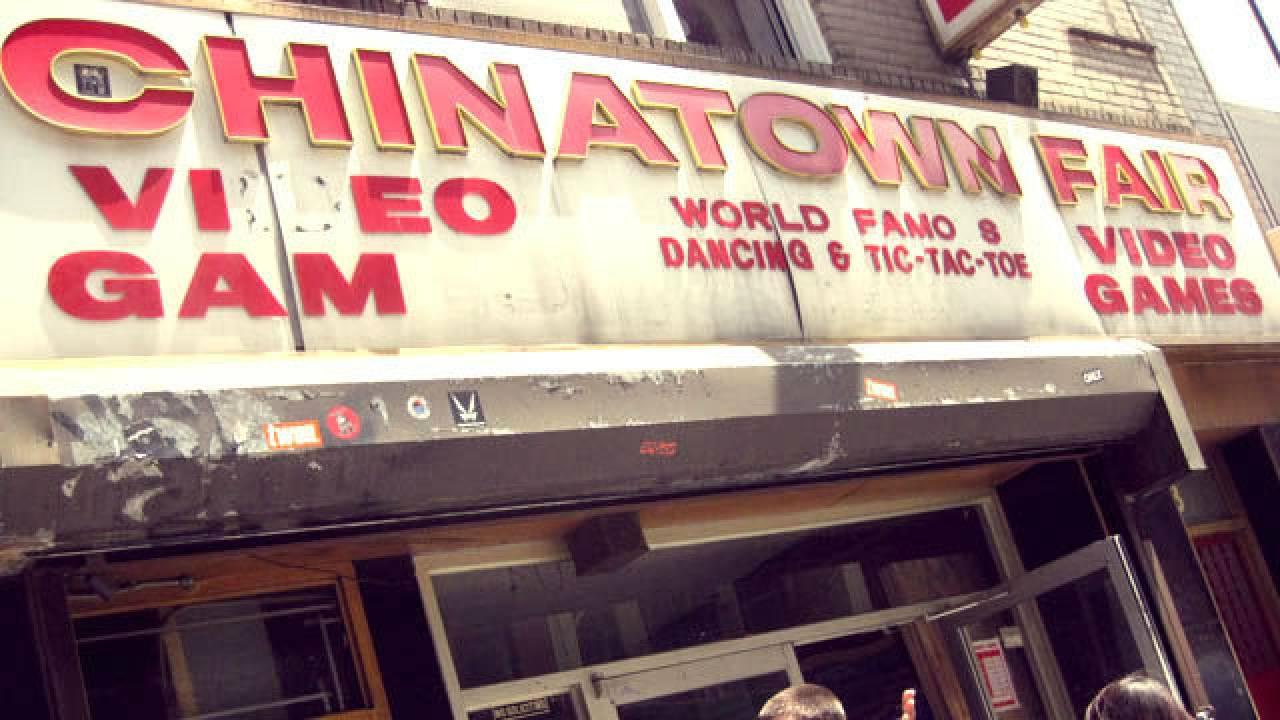
The era of Space Invaders, Pac Man and Donkey Kong descends in New York during its grittiest period – the late 70s/early 80s – and arrives, like an alien presence, into many neighborhood arcades including one of the most famous in Chinatown – an arcade that is still open and the subject of a new documentary The Lost Arcade.
While the video game industry is not something New York City is particularly associated with, the city does in fact set the stage for this revolution of blips and joysticks at the start of the 20th century and from such unconventional places as the West Village and Flushing Meadows-Corona Park.
In Queens you’ll find one of America’s great tributes to the video game, in the spectacular arcade collection at the Museum of the Moving Image.
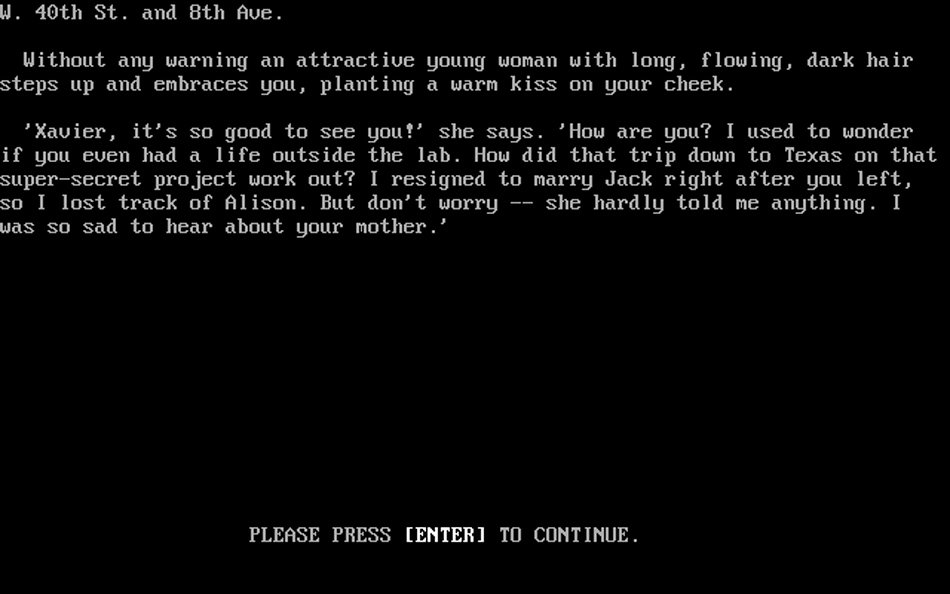
Finally — A look inside the games themselves to explore New York as a digital landscape that continues to be of fascination to game developers and players alike.
So are you ready Player One? Grab your quarters and log in to this New York adventure through the world of video games.
The Bowery Boys: New York City History podcast is brought to you …. by you!
We are now producing a new Bowery Boys podcast every two weeks. We’re also looking to improve the show in other ways and expand in other ways as well — through publishing, social media, live events and other forms of media. But we can only do this with your help!
We are now a member of Patreon, a patronage platform where you can support your favorite content creators for as little as a $1 a month.
Please visitour page on Patreon and watch a short video of us recording the show and talking about our expansion plans. If you’d like to help out, there are five different pledge levels (and with clever names too — Mannahatta, New Amsterdam, Five Points, Gilded Age, Jazz Age and Empire State). Check them out and consider being a sponsor.
We greatly appreciate our listeners and readers and thank you for joining us on this journey so far. And the best is yet to come!
The trailer for The Lost Arcade. It opens today in San Francisco at the Roxie and Friday, August 12, in New York at the Metrograph. Check out their Facebook page for more information about upcoming events and screenings.
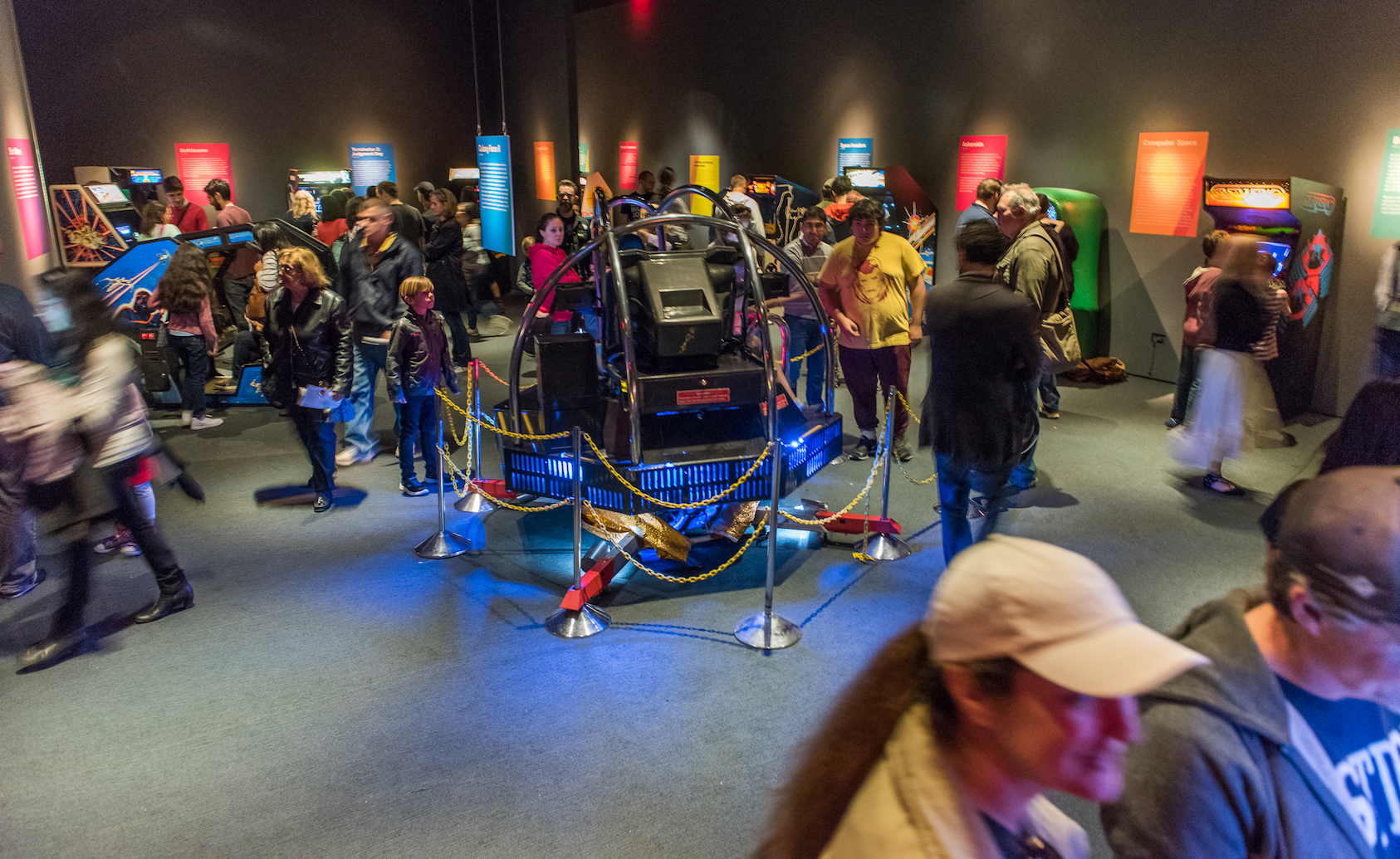
ARCADE CLASSICS, the latest show at the Museum of the Moving Image, pulling from the museum’s regular collection of video arcade games, is indeed an all-star line-up of classics. But without the fussiness of an actual arcade. (For one, the experience is at pleasant decibels.)
The machines will mostly be familiar to anybody who identifies as Generation X, devices of digital merriment released mostly between 1979 and 1984. Asteroids, Pole Position, Defender, Missile Command, Dragon’s Lair, Tron — they stand as sentinels in a Hall of Justice, evenly spaced throughout the third floor. The idea is to remove the machines from the arcade environment just enough so that you become appreciative of their whole artistry, the unity — from the sleek digital landscapes to the cabinet design. On that point, the show is a complete success.
Luckily, you can play most of the games — you get a few complimentary tokens and there’s even a token machine if you want to play more  —  and the echoes through the chamber will certainly bring back childhood memories, even if the presentation is far more austere.
Today a gallery exhibit on video games hardly seems risky. After all these machines are precursors to an entire universe of modern digital images and were themselves influential to later art and fashion.
But the exhibit recalls the Museum’s first attempt at a major retrospective on video game design — 1989’s Hot Circuits, A Video Arcade, considered to be the first-ever video game museum exhibition.
A rare Star Wars game at the current Arcade Classics exhibit.
Sam Branan / Museum of the Moving Image.
At the time, the ‘video game craze’ — fueled by Space Invadersbeginning in 1978 — was a decade old. Most of the consumer focus on video games was on home consoles. The Game Boy, the portable gaming device that would revolutionize game portability, Â debuted on the market a couple months before the exhibit opened.
The New York Times write-up on the exhibition focuses mostly on the difficulty curators had in locating games that were intact. Â “[A]ssembling the exhibition became a yearlong detective story that drew museum curators to arcade warehouses, motel storage areas and basement recreation rooms.
A video game retrospective for a population obsessed with Pokemon Go and Call of Duty seems like an obvious notion. But the idea seemed less obvious in 1989. The Museum’s founding director Rochelle Slovin confessed, “On a general level, I knew that video games were not, as many dismissed them, a trend or fad, but on the contrary, the beginning of something significant. Exactly what, I wasn’t sure.”
Slovan’s original remarks on the show focus on early video games’ similarities to silent film and an appreciation for the elegantly observed artistic choices of the early games.
While stodgier museum goers might have been downright confused by Hot Circuits, it did broaden the Museum’s focus almost immediately into further exploration into digital media. Indeed, in 2016, as you pass the admissions desk into the museum, you will pass a flamboyant wall display on the The Reaction GIF: Moving Image As Gesture. Michael Jackson will eternally eat popcorn and Homer Simpson will continue to sink into the bushes as you enjoy yourself with the digital delights upstairs.
ARCADE CLASSICS, at the Museum of the Moving Image (in Astoria, Queens) runs until September 18. Visit the museum website for more information on the exhibit and visiting hours.
The Bowery Boys Obsessive Guides look very, very closely at a classic movie filmed in New York City, finding buried history, additional context and a few secrets within various scenes and plot points. Filled with film spoilers so read this after you’ve seen the movie — or use it to follow along as you watch it! Check out my previous guides forMiracle on 34th Street, Midnight Cowboy, and The Muppets Take Manhattan.
In 1989 the ghosts returned to New York City streets. Both above and beneath them.
The 1984 blockbuster Ghostbusters holds a unique place in Hollywood cinema, the rare sci-fi comedy to become a genuine classic, due mostly to its terrific cast (Bill Murray, Harold Ramis, Dan Ackroyd, Sigourney Weaver, Ernie Hudson, Rick Moranis, Annie Potts, among others) and to the unique alchemy of theme and location.
The characters run through New York City like kids in a haunted house. In 1984, New York’s reputation was still greatly tarnished by the economic and social crises of the previous decade. Ghostbusters plays upon those perceptions, its heroes battling metaphorical ghosts and demons in historic locations.
The 1989 sequel Ghostbusters 2 takes place in the same city but at the end of an era.  Ed Koch is in his final year as mayor of New York. He had been unseated in the primaries by David Dinkins who, in November, would then defeat  Rudy Giuliani for the office.
Many elements of the city have been ‘cleaned up’ by this time (the once ubiquitous subway graffiti being one casualty) but the high crime rate was still very much the pivotal concern. New Yorkers didn’t need to go to the movies to find terrors in their backyard. The sequel opened less than two months after a jogger was beaten, raped and left for dead in Central Park. According to the New York Daily News, “On a typical day in 1989, New Yorkers reported nine rapes, five murders, 255 robberies and 194 aggravated assaults. Fear wasn’t a knee-jerk reaction; it was a matter of self-preservation. ”
It’s easy to watch Ghostbusters 2 today, disengaged from its historical context. But watch with a close eye and you’ll see bits of a familiar city in the background and hints of the era embedded into the story. Here’s a list of New York historical facts and trivia to watch out for:
CLEARLY THIS ARTICLE CONTAINS SPOILERS. WATCH THIS FILM BEFORE READING OR, BETTER YET, READ ALONG AS YOU’RE WATCHING IT:
1) The opening scene works as a pastiche of New York City life — arguing neighbors, jogger on the sidewalk, a cop giving a parking ticket — along East 77th Street. Dana, played by Weaver, has arrived with a gigantic baby carriage and her bundle of joy Oscar. Her place, at 325 East 77th Street, built in 1940, is your typical co-op of the neighborhood, a far cry from her last home on 55 Central Park West, which became a demonic portal in the last film.
Interestingly, at Dana’s apartment building, Google Map lists one business — Psychic Works — which would have come in handy had it been there in 1989.
Screen capture courtesy The Raffon
2) Baby Oscar is whisked away by a spiritual presence and hurled into traffic at the corner of East 77th Street and First Avenue. While that corner has been much transformed today — note the placement of the diner in the movie, today’s Green Kitchen  — one business is exactly the same — the signage for the cleaners on the northwest corner.
3) Why would this particular corner be haunted? Well, we’ll see what lies beneath in a second. But this particular corner would have been part of old Jones Wood, a 90-acre forest which attracted picnickers and day trippers (including many early German immigrants) long before Central Park was invented.  It was the sight of early ghost stories as the forest contained crypts of prominent families.
Below: The so-called ‘Smuggler’s Tomb’ located at the spot of today’s First Avenue and 71st Street.
Courtesy Museum of the City of New York
In fact, there’s a bar called Jones Wood Foundry on First and 76th Street today.
4) Ghost busting has died down in New York City, and our old friends Ray and Winston must demean themselves by entertaining at children’s birthday parties. All the children greet their guests with “I thought it was gonna be He Man!†and a chant “He-Man! He-Man! He-Man!”
The reference in the film is a bit odd. He-Man and the Masters Of the Universe debuted on television in 1983 and had been the subject of a feature film in 1987 starring Dolph Lungren. But the film was a flop, and the animated series had been off the air by then. Perhaps these were young hipsters, already reveling in their childhood past.
“Ungrateful little yuppie larva!â€
Incidentally, Ghostbusters 2 did spawn a toy line, albeit less successful than He-Man and might have been greeted by children with similar enthusiasm.
5) Venkman has moved on to his own television chat show called World of the Psychic, broadcast on the fictional WKRR-TV Studio.  While this seems like a legitimate television station in the Ghostbusters world, Venkman’s show is very much influenced by ’80s public access television. The zany underground medium started in the early 1970s and reached a sort of ‘golden age‘ by the 1980s. Shows like Telepsychic certainly inspired this. The Saturday Night Live’s send-up of Telepsychic — starring Dan Ackroyd — most certainly did.
SATURDAY NIGHT LIVE — Episode 8 — Pictured: Dan Aykroyd as Ray during the “Telepsychic” skit on December 9, 1978 — (Photo by: NBC/NBCU Photo Bank)
 Just two years after Ghostbusters 2, Dionne Warwick debuted her Psychic Friends Network.
6) On Venkman’s program, there are two guests who predict the end of the world. Â The first predicts the end of the world “at the stroke of midnight on New Years Eve.”
Well, New York survived. Here’s the actual stroke of midnight, ringing in 1990 in Times Square. Many would certainly consider this hellish, if not apocalyptic. “Goodbye to the ’80s!”
Venkman’s second guest believes the end of the world will be on February 14, 2016!
“Valentine’s Day, bummer.â€
She received the information from an alien at the Paramus, New Jersey, Holiday Inn which is a real place.
7) Ghostbusters New York is still led by Mayor Lenny Clotch (played by David Margulies), an obvious stand-in for Mayor Ed Koch.  In Ghostbusters 2, Clotch is running for governor of New York. Koch did indeed attempt that very feat in 1982, but lost in the primary to Mario Cuomo.  Sadly, Margulies, a regular on the New York stage, died earlier this year.
Courtesy Ghostbusters Wikia
8)  One of New York’s finest works of architecture appears in Ghostbusters 2 — but moved uptown.  The Alexander Hamilton U.S. Custom House stands in for the Metropolitan Museum of Art who apparently didn’t give them permission to use their facade — or their name.  The faux museum is called the Manhattan Museum of Art, and both the Custom House and nearby Bowling Green are magically shifted to Central Park.
Courtesy Museum of the City of New York
The Custom House had just gone through some truly thorough preservation work in 1987. It had already become a gallery for traveling exhibitions, such as in 1988 with “Paris Grands Projets 1979-1989.” Several months after the opening of Ghostbusters 2, plans were underway to move a museum to Native Americans (today’s Smithsonian National Museum of the American Indian) into the building.
The Custom House was renamed for Alexander Hamilton in 1990, a year after the structure’s triumphant and central appearance in Ghostbusters 2.
Courtesy The Reffon
9) What have the Ghostbusters been up to since business has been down? Well, Ray has his occult book store on St. Mark’s Place, still a place of vibrant counter-culture in 1989.  Perhaps this a nod to New York’s most famous occult book store owned by Samuel Weisner which originally opened on ‘Book Row’ at 117 4th Avenue. (By the time of the film, it had moved to 132 East 24th Street. It’s been closed for many years.)
At the right of the screen, you can see Manic Panic, the original boutique which spawned the flamboyant hair-color company. (More information in our St. Mark’s Place podcast.)
10) The Ghostbusters regroup to investigate the mysterious street corner on the Upper East Side. While the daytime scenes are clearly filmed at the corner of First Avenue and 77th, the nighttime scenes — as they’re drilling into the street — are clearly not even in New York City at all. (Note the red subway poles).
Residents of the Upper East Side have become quite familiar with nighttime drilling in the street due to the construction of the Second Avenue Subway.  The project began back in the 1970s but had been placed on a (what seemed like a) permanent hold by the 1980s.
Quoting from the September 1989 New York Times: “There are curiously empty spaces in this cluttered city. The Second Avenue Subway tunnel, dug at great expense and never to be finished.”
11) Ah but there is a completed tunnel under the street, now filled with a pink, ghostly ooze — at least in the world of the Ghostbusters. Or, as Ray declares, “It’s the old pneumatic tube tunnel!”
As we spoke about in our recent podcast on Alfred Ely Beach’s Pneumatic Tube, the original tunnel was only carved underground for a single block — near City Hall — in 1870. There were plans to send the pneumatic tube up the entire length of the island (albeit under Madison Avenue, not First Avenue). This is my favorite bit of history from the film and displays a loving nod by the writers to Old New York:
Our gang accidentally takes out some wires which manages to cause a blackout throughout all of New York. The Blackout of 1977 had only occurred a dozen years before, so many audience members might have flinched a bit at that scene.
12) The Ghostbusters are hastily taken to court. Venkman’s defense for the hole in the street: “Well, there are so many holes in First Avenue, we really didn’t think anyone would notice.”
Potholes in the street were a potent symbol for the city’s deterioration and also a way to appease the neighborhood when they were eventually fixed. In 1990, the Times reported in an article ‘Gaining in the Battle on Potholes: “The Department of Transportation claims that the number of potholes in New York City streets dropped 23 percent this year, and the new Commissioner, Lucius J. Riccio, suggested yesterday that potholes ”might have to be put on the endangered-species list.”
The city even opened a phone line for New Yorkers to call in about potholes. From the article: “The pothole hot line – 212-POT-HOLE – expects its 25,000th call this week. The caller will receive a Highway Bureau T-shirt and the dubious honor of filling the pothole of his or her choice.”
13) The sequel features a new version of the Ray Parker Jr. theme song, this time recorded by New York City icons Run-DMC. The rap trio formed in 1981 in Hollis, Queens, and quickly helped develop the basis for modern hip hop music. Â In 1989, they were coming off the success of their massive and mainstream Tougher Than Leather album, produced by Rick Rubin (much later to win a Grammy for producing Adele’s 21).
https://www.youtube.com/watch?v=2Cc5Ikwsg08
Another song from the film actually became a minor hit –Â “On Our Own” by Bobby Brown (who makes a terribly awkward appearance in the film).
14) In a montage of scenes demonstrating the Ghostbusters’ return, we see one ghost running around the Central Park reservoir and another haunting Orrefors fine glassware boutique at  58 E. 57th Street.  Orrefors is no longer there today, but the building sits next to New York’s tallest residential tower — the infamous ‘needle’ building 432 Park Avenue. To quote Wikipedia here: “The building has been much maligned by many city denizens who find it an eyesore and believe it represents New York’s increasing cost of living and ostentatious wealth.”
15) Look closely during the ‘haunted toaster’ scene and you will see a marvelous and obscure site on the wall — a vintage poster for the Hotel Lincoln, a glamorous midtown destination which opened in 1928.  This was the hotel mentioned in our Billie Holiday’s New York podcast as the place she began a (controversial) residency with Artie Shaw in 1938. She was forced to enter through the kitchen as a black woman couldn’t be seen coming in the front door.
Hotel Lincoln, 44th to 45th Street at 8th Avenue New York City
16) This has nothing to do with New York City history, but you must read this extraordinary Deadspin article on Norbert Grupe, the actor depicted in the Prince Vigo painting. Keep in mind Venkman’s words while you read it — “Vigo? He’s a bit of a sissy isn’t he?”
17) Venkman wraps little Oscar in one of his prized possessions — a New York Jets sweatshirt, #12. Â This number, now retired, belonged to Joe Namath, who played with the Jets from 1965 to 1976.
18) Dana and Oscar take shelter in Venkman’s apartment, which just happens to be one of the most glorious apartment buildings north of Houston.  Built in 1891 for the Manhattan Savings Institution Bank Building, 644 Broadway formerly featured the Atrium clothing store on the ground floor. (Read more about this lovely building at Daytonian In Manhattan.)
Photo courtesy Wired NYC
Catch this line: “I’ve got some Laura Antonelli tapes you can watch.” Laura Antonelli was a beautiful Italian sex symbol of the 1970s.
19) As Louis (Rick Moranis) and Janine (Annie Potts) leave Ghostbusters headquarters — the old fire station on North Moore Street — observe the unusual business that sits across the street:Â Hongkong Kowloon Docks Import Inc., a typical example of the sort of business that used to reside in Tribeca during the 1970s and 80s. Â Coincidentally, in China, there was a program called Hong Kong Ghostbusters which took place in a housing development called Kowloon.
20) The Ghostbusters investigate an abandoned subway track whose “lines have been abandoned for 50 years.” They are immediately beset by ghostly figures of all types, from severed heads on sticks to a phantom stream train, the supposed haunted visage of the “New York Central to Albany” which derailed in 1920, killing hundreds.
That disaster, of course, didn’t exist. However they could have chosen to use another tragedy from around that same time period — and much closer to  home.  The Malbone Street Wreck in Brooklyn involved two trains colliding underground, killing 93 people.
21) Our heroes are thrown into the Parkview Psychiatric Hospital in order to get them out of the way. This fictional institution is most likely based upon Manhattan Psychiatric Center on Ward’s Island. Timely news the very summer of Ghostbusters 2? New York City’s psychiatric wards were too crowded.
During a thrilling montage of ghost attacks throughout the city, Â three particular things of historical interest pop out:
22) Massive Ghost in Washington Square Park — The park is notoriously the site of an old potter’s field, and bodies to this day are often discovered during excavations. “Where now are asphalt walks, flowers, fountains, the Washington arch, and aristocratic homes, the poor were once buried by the thousands in nameless graves.†(Kings Handbook of New York, 1893) Read more on Washington Square’s unusual backstory here.
23) Titanic Finally Arrives —  The Titanic was originally supposed to have docked at the White Star Pier 59 (parallel to West 18th Street); instead, the survivors of the shipwreck disembarked from the Carpathia at Pier 54. The framework of the pier still existed today (pictured in 1912 below)
The ghostly passengers actually let out at Pier 34 in the film, to the horror of Cheech Marin in a cameo appearance.
24) The Spirit of Fiorello La Guardia (off screen) — The mayor claims he’s been seeing the ghost of the former mayor “and he’s been dead for 40 years.” Since the events of this scene take place on December 31, 1989, La Guardia would have been gone over 42 years.  He died in his Bronx home of Riverdale. Here’s how the New York Times broke the announcement.
25) The grand finale features the Statue of Liberty pulling a Stay Puft Marshmallow Men, delivering the Ghostbusters to a goo-covered Custom House, er, I mean art museum and saving the day.
This marks the first time that the entire statue has made it to Manhattan. However her arm spent many, many years in New York, well before it was ever attached to the rest of herself.
From a Bowery Boys 2014 article: “….the arm and torch would be displayed in the northwest corner of Madison Square Park, from 1876 to 1882.  On July 4th, 1876, a gigantic painting by Jean-Baptiste Lavastre of the completed statue was displayed on a building across the street from the arm.”
Sergey Kadinsky is our city’s resident Aquaman. His Hidden Waters of New York City was the big New York City exploration guide book of the spring. In a city often characterized by glass, steel and asphalt, it’s magical to consider the metropolis almost like a human body, comprised and reliant upon water for its well-being.
As though armed with a magical divining rod, Kadinsky identifies almost every significant body of water that ever existed in the five boroughs — from ancient reservoirs to the most obscure Staten Island pond — providing modern context and directions for locating them  using public transit.  It’s a combination history book, hiker’s guide and trip planner.  My copy is presently dog-eared in about twenty places with living streams and lakes that I intend to visit this summer for my own personal mini vacations.
But the waterways that are no longer here are, in a way, even more intriguing, highlighting how New York was often sculpted around bodies of water before they were filled in or buried with the modernity of the city.
And there are a surprising number of old waterways that have disappeared relatively recently. For instance Jackson Pond in Queens. According to Kadinsky: “In 1966, the lake was dried and covered with concrete after the city determined it to be an unsafe ice-skating site.” Oh, but a Jackson Pond Playground sits upon the ghostly outline of this forgotten water today!
How do you even begin putting together such an ambitious project? Kadinsky is well suited for the task. He’s a long-time Queens resident, staff member at the New York Parks Department and an adjunct professor of history at Touro College. I asked Kadinsky a few questions about how his project came together:
Your book really identifies New York’s inescapable connection to water in almost every aspect of its history. How did you develop the idea to find every water sources (past and present) and put them together in a guide book?
For more than a decade preceding the book, I’ve worked as a Gray Line tour guide, newspaper reporter and Touro College adjunct. These experiences gave me an ability to tell a story in a an easygoing, detailed, and captivating manner.
In my spare time, I led tours and contributed stories to Kevin Walsh’s Forgotten-NY, a blog that has become a book and subject of tours and lectures. It inspired me to think of a specific hidden city element that I felt was not receiving its due.
That’s how Hidden Waters of New York City came to be. Other Islands is a blend of history, travel, and geology, with a journalist’s eye for detail and research. I followed its method in documenting the hidden waterways.
Silver Lake in Staten Island, photographed here in 1915 (and featured on pgs. 246-248 in Kadinsky’s book. Photo courtesy Museum of the City of New York
Courtesy Museum of the City of New York
Hidden Waters feels something like a hiker’s guide to the city. How much walking around and on-foot exploration did you do while researching it?
When it comes to exploring streams that have become sewers, I’ll leave this task to Steven Duncan. Likewise, when it comes to abandoned properties, I’ve found Nathan Kensinger’s reporting helpful in my research. I took a Circle Line around Manhattan and a Seastreak to Sandy Hook, but have yet to take a boat tour of Newtown Creek or a paddle a canoe down the Bronx River.
I explored the streams on foot and bike, following their banks and recognizing the disparity in public waterfront access. While it is possible to almost entirely circumnavigate the shoreline of Manhattan thanks to ribbons of parkland, places like Bowery Bay and Flushing Bay are not as accessible. Only a few dead-end streets allow for views of the water, and the water is not so fine.
The path of old Minetta Creek from Egbert Viele’s Sanitary & Topographical Map of the City and Island of New York (1865).Â
Perhaps the most famous body of water in Manhattan in one that doesn’t really exist above ground – Minetta Brook. You’ll find its name everywhere and, as you mention, it’s dutifully traced by tour guides. What accounts for its appeal and does it truly exist as strictly an underground stream today as some claim?
Minetta Brook’s place in local lore goes back to the Native period, when it was believed to be possessed by a spirit. The neighborhood’s love of history and storytelling ensured that it would never be forgotten, surveyors laid out the streets and with local culture in mind, Minetta Lane and Minetta Street appeared on the map.
In the 19th century following its burial, flooding in basements built along its former course was a persistent problem. Engineer Egbert Ludovicus Viele dutifully noted and mapped these floods and ascribed them to Minetta Brook. He preceded me by 150 years in tracing Manhattan’s hidden waterways.
The 1938 extension of Sixth Avenue though Greenwich Village created small triangular parks near the brook’s former course- another opportunity to restore it to the map with Minetta Green and Minetta Playground. Historical preservationism, tourism, and a way of imagining a pre-urban Greenwich Village, all appeal to Minetta Brook’s popularity.
I do not think that the brook is flowing today underground along its former course. Its sources in the Flatiron District have been covered entirely with buildings. Streets running atop its course have sewers that do not follow the stream bed’s path. Nevertheless, the soil is much softer where creeks once flowed, and that helps explain for the flooding and groundwater. Even the famous well at Two Fifth Avenue could simply be ground water not necessarily associated with Minetta Brook, though the location makes sense.
Flushing Creek, with the sites of the old World’s Fair in the distance.
Photo courtesy Friends of Flushing Creek
What is personal favorite body of water in the New York five boroughs (exempting the Hudson and East Rivers of course)?
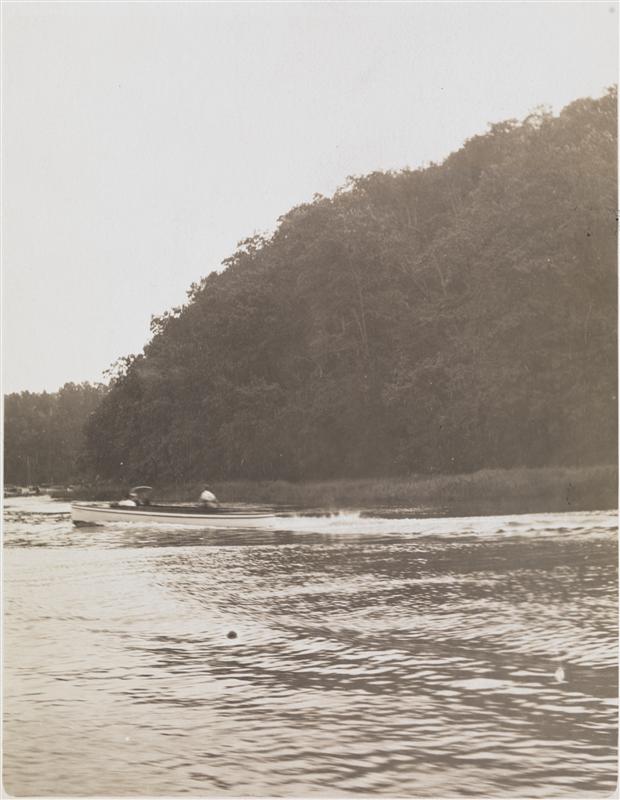
Flushing Creek, because it’s a block away from my parents’ home and a five minute drive from my home. Unlike Gowanus Canal, Newtown Creek and Bronx River, this creek does yet not have a grassroots citizen-led conservancy group. The creek flows through a series of conditions such as a nature preserve, a recreational lake, a canal beneath highways, a tunnel, Willets Point, and into Flushing Bay.
The creek was a former salt marsh turned ash dump turned fairground turned park. There was talk in 2008 of daylighting the underground sections of it, but heavily used soccer fields are in the way. The creek was also slated for a grand prix racetrack in the 1980s and an Olympic venue in the past decade.
Adding to the subject are the creek’s tributaries, Mill Creek in College Point, Kissena Creek, and Horse Brook, which also are worth mentioning considering their rich histories.
You mention a great number of old waterways that were completely unknown to me. What was the most surprising discovery you made in your research?
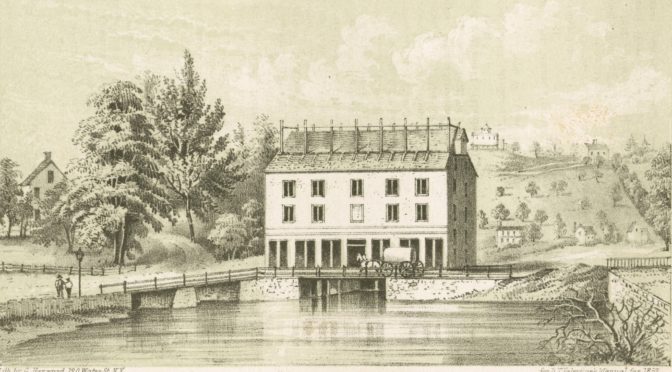
This one is very close to home, Coe’s Mill on Horse Brook, which was demolished in 1930 to make way for what would become the Long Island Expressway.
Not enough books mention the English settlers who lived in New Netherlands having fled England and New England in search of religious freedom. Feeling a lack of respect and recognition from the Dutch, they petitioned England to annex the colony. It was like our own Crimea.
Unlike the Bowne House in nearby Flushing, nothing is left of Coe’s Mill. The mill provided food for the settlement of Newtown, one of the original towns of Queens that is now known as Elmhurst. Seeking a path of least resistance when it came to acquiring land for a road, the city built the Long Island Expressway atop the filled stream bed.
A year ago, I wrote a letter to Councilwoman Julissa Ferreras-Copeland, whose district covers this site, requesting to rename a nearby footbridge after the mill, and I have yet to hear back from her.
Alley Pond Park in 1936, before it was rudely interrupted with highways.
Courtesy Museum of the City of New York
Getting back to the notion of Hidden Waters as a pure nature guide, where would you direct people to go in the five boroughs if they really a little bit of the feeling of ‘getting away from it all’?
Alley Pond Park has the creeks and scenery but because it has highways running through it, it’s difficult to appreciate the place. Even deep in the woods where you can’t see any civilization, you hear cars whooshing nearby. That’s why the Greenbelt in Staten Island is truly the get away park in the city. It has forests, creeks and ponds, but no sounds of motorists driving past.
Check out Sergey’s truly excellent Hidden Waters Blog for more information on New York’s fantastic water sources. His book is currently on book shelves
This weekend I strolled around Carroll Park in Carroll Gardens, Brooklyn, and observed at least 8 or 9 people staring intently at their phones, occasionally wiping their index fingers rapidly at the screen.
In the center of the park is an 18-foot-tall World War I memorial dedicated in 1921, emblazoned with the names of those from the neighborhood who had died in the war. On one side of this monolith are the words: “THEY FACED THE PERILS / OF THE SEA AND THE / HIDDEN FOE / BENEATH THE / WAVES.”
For instance, here was the sight that greeted me yesterday out in front of Trinity Church at Broadway and Wall Street. As tourists were buzzing by and service was just getting out at one of New York’s most famous religious spaces, I was observing the landscape reduced to this:
There were several blue squares contained within Trinity Church graveyard. A player could check out those squares from afar but had to actually walk into Trinity and get close to them to seek their rewards.  Even in death, Founding Father and Broadway superstar Alexander Hamilton was providing his countrymen with guidance as one square was hovering over his grave, as though an otherworldly embodiment of his greatness:
At many sites, a short history is provided with each blue square. Sure, Hamilton is a very popular figure at the moment, so naturally some explanation might be presented here. But how many games primarily geared towards children would have a short history of the building across the street — the Equitable Building?
The game provides silly juxtapositions that only history and New York lovers will really appreciate. For instance, it looks like there’s some Squirtle on the menu at old Delmonico’s Restaurant:
At this point, you may be wondering — doesn’t this all seem sort of dangerous? People wandering the streets, staring at their phones, swiping rapidly to capture a nonexistent entity ghoulishly hovering upon a sidewalk that actual people are walking? Indeed there are manypotentialhazards to this game that many people have already identified.
How did an international game developer identify such specific and locally beloved places for a fantasy game?  Niantic basically took the information from a prior game called Ingress which was created from user submissions.
And that’s what makes this app a particular pleasure for use in a big city, where neighborhoods might have had dozens of users populating Niantic’s databases. (I’d be very curious to see how enjoyable this experience is in a rural area.) Not all the landmarks have historical descriptions attached to them, but almost all were at least identified by a regular visitor to that place, perhaps even a neighbor.
How else to explain such curious oddities as these (from Wall Street and Cadman Plaza, respectively)?
Of course, naysayers might immediately point out that the landmarks are only being used for game purposes and users aren’t expected to really interact in any meaningful way. And should we really be encouraging MORE walking and phone gazing? But even if most people just skitter away after collecting their virtual items, a few people may stop and pay attention. At very least, ignoring the gaming aspect entirely and using the app merely for its locations makes for a great scavenger hunt with your friends.
(You can actually check out all the blue squares from the comfort of your couch, but they can only be used for gameplay if you’re near, thus the message in pink above.)
Today let’s give a little love to New York original mermaid queen — the hideous Fiji (Fejee) Mermaid!
This sickening Frankenstein monster — comprising a monkey’s head sewn onto a fish torso — was displayed in  PT Barnum’s American Museum off and on for almost twenty years.  Believe it or not, Barnum actually leased it from an owner who had bought it off of sailors.  It’s actual connection to the Fiji Islands remains tenuous at best.
“[M]any naturalists and scientific men who have examined it assert that it is absolutely the work of Nature. Others however insist that its existence is a natural impossibility. Â When doctors disagree, the PUBLIC must decide.”
Here’s how the mermaid was advertised in the newspapers:
This is what it actually looked like:
This was classic Barnum bait-and-switch. Â In fact, he relied on the artifact’s somewhat disappointing appearance to give it a bit of authenticity. See, why would I fake something that looked like this? was the implication.
The mermaid first arrived in New York in November 1842 after a smash debut in Boston,”where her ladyship [referring to the mermaid] has astonished thousands of visitors.” Â Thousands flocked to Barnum’s display at a space called Concert Hall (at 404 Broadway) to take in a glimpse of this bizarre creature. Â In its first week at the American Museum, Barnum raked in three times his average revenue.
From Barnum’s autobiography: “The public appeared to be satisfied, but as some persons always will take take things literally, and make no allowances for poetic license even in mermaids, an occasional visitor, after having seen the large transparency in front of the hall, representing a beautiful creature half woman and half fish, about eight feet in length, would be slightly surprised in finding that the reality was a specimen of dried monkey and fish that a boy a few years old could easily run away with under his arm.”
So popular was the exhibit that the old museum of Rubens Peale in today’s City Hall Park debuted its own mermaid, a parody monster called the Fud-Ge Mermaid:
By the 1850s, the Fejee Mermaid was one of a cast of oddities featured at Barnum’s museum. By this point, the grotesque object was probably a commons sight for regular museum goers. Â I imagine it, perhaps, with a light coating of dust, possibly a cobweb. Â Below: An advertisement from the Daily Tribune, 1855:
Whatever became of the mermaid? Â Some say she disappeared during a fire at the museum. Â I’m not sure she was still there when Confederate spies attempted to burn down the museum on November 25, 1864. Â But she lives on as an icon of fabulous hoax, “one of the most scientific fakes ever perpetrated upon the American public.” [source]
And she lives on in our hearts. How can you resist a face like that?
Top image courtesy the Lost Museum (CUNY), an excellent online resource about Barnum’s American Museum.
(This article originally ran on this blog in June 2014)
Pictured: The New York Herald newspaper office (in Herald Square, natch) in a flamboyantly colored postcard from 1907. Â The lights of Broadway theaters — many still below 42nd Street — blaze in the background.
Well, our book Adventures In Old New York is finally out, and we’ve been blessed to have it featured in several newspapers and websites in the past couple weeks. Here’s a rundown of places you can find the Bowery Boys in print and on the web:
I was honored to interviewed by Bill Schulz for his piece for the New York Times on one tragic reminder of the General Slocum Disaster —Small Relics of a Colossal Disaster
And last but not least, Story Trail interviews me about one of the more unusual New York City experiences in my life, regarding a break-up, some cold medicine, and the filming of Godzilla — My CurioCity: Greg Young, Godzilla and Madison Square Park
Â
And more to come throughout the summer of course! Our thanks to these publications for taking time to meet with us and share our joy of New York City history.
Image at top courtesy Museum of the City of New York. Photo of the Bowery Boys courtesy Benjamin Stone Photography
Imagine a city where the High Line isn’t just a novel park, but the primary form of urban conveyance.
In 1913, with the proliferation of the automobile, it seemed humans were being crowded out at ground level.  People were beginning to think of themselves as removed from the street.  Daredevils were experimenting with flight, and small, single-man crafts began appearing over the skies of Manhattan.  The world’s tallest building, the Woolworth Building, had been completed a few months before.  Perhaps the streets themselves could elevate, granting pedestrians a space of their own?
Scientific American suggested the possibilities of a city of elevated layers in its July 26, 1913 issue. “The Elevated Sidewalk: How It Will Solve City Transportation Problems,” written by engineer and science writer Henry Harrison Suplee, posits that humans and automobiles are simply incompatible and opposing engines upon ground level, and that one will have to give way to the other.
“One of the greatest impediments to city transport today is the continuance of the obsolete method of attempting to conduct foot and vehicular traffic upon the same highways.”
Below: Cars and people seem to co-exist peacefully on Fifth Avenue (pictured here in 1913). But, darn it, automobiles are meant to go fast!Â
Courtesy Shorpy
After all, cars are meant to go fast. Â “In nearly every large city today there appears a tendency to enforce traffic regulations intended to permit the most conflicting elements to be operated together and the result is naturally the impeding of the very traffic which it is desired to help.”
By keeping people and automobiles on the same plane, one risks lives, sure, but more importantly, it slows progress by keeping the potential of auto motion on a short leash.
Suplee’s solution: “Take the foot passengers off the surface of the street entirely, and leave the highways solely for vehicles!”
Below: Evidence of the incompatibility of foot and automobile was being amply displayed all over New York City, most notably on “Death Avenue,” the trecherous tangle of roads on Manhattan’s West Side. Eventually the elevated freight railroad today known as the High Line was built to relieve this issue.
New York had many precedents for this. Â The great passages over the East River (the Brooklyn, the Williamsburg and Manhattan bridges) had all been completed with elevated pathways for pedestrians, situated over or alongside those paths for vehicular traffic. Â Trains were either elevated overhead along the avenues, or buried underneath the ground.
Suplee doesn’t imagine a world were pedestrians become smarter, or any type of place with sophisticated traffic lights or crosswalks. Â Instead, elevated sidewalks would hover over the major thoroughfares; “[S]uch sidewalks might be built on Broadway from the Battery to Union Square, there sloping down to the surface level until further extensions were required,” he writes.
In a city of skyscrapers, bridges could be constructed several stories above the street. Â Store fronts would appear on the second or third floors, while the ground floor would be exclusively used for delivery and store. Â Life would essentially reside many feet above the ground.
Bicycles figure nowhere in his model, but he does carve out one exception to his pedestrian only level. Â “The power vehicles should be kept absolutely to the surface, and there given unrestricted facilities for speed, weight, and numbers; and the foot levels maintained for absolute freedom for pedestrians, with the possible exception of carriages for small children.”
As commenter Boris mentions below, while New York City never adhered to this suggestion, other cities certain did — to a certain extent.