Categories
Bronx History Podcasts

Bronx Trilogy: The Bronx Was Burning (1955 to today)

PODCAST The trials and tribulations experienced by the Bronx through the mid and late 20th century.

In the third and final part of our Bronx history series, we tackle the most difficult period in the life of this borough — the late 20th century and the days and nights of urban blight.

The focus of this show is the South Bronx, once the tranquil farmlands of the Morris family and the location of the first commuter towns, situated along the new railroad. By the 1950s, however, a great number of socio-economic forces and physical changes were conspiring to make life in this area very, very challenging.

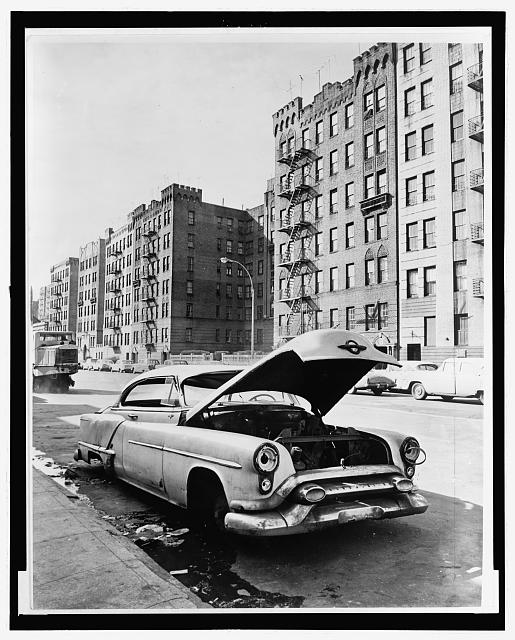
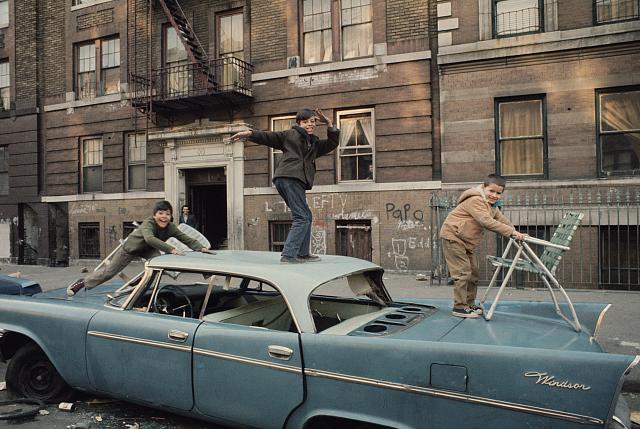
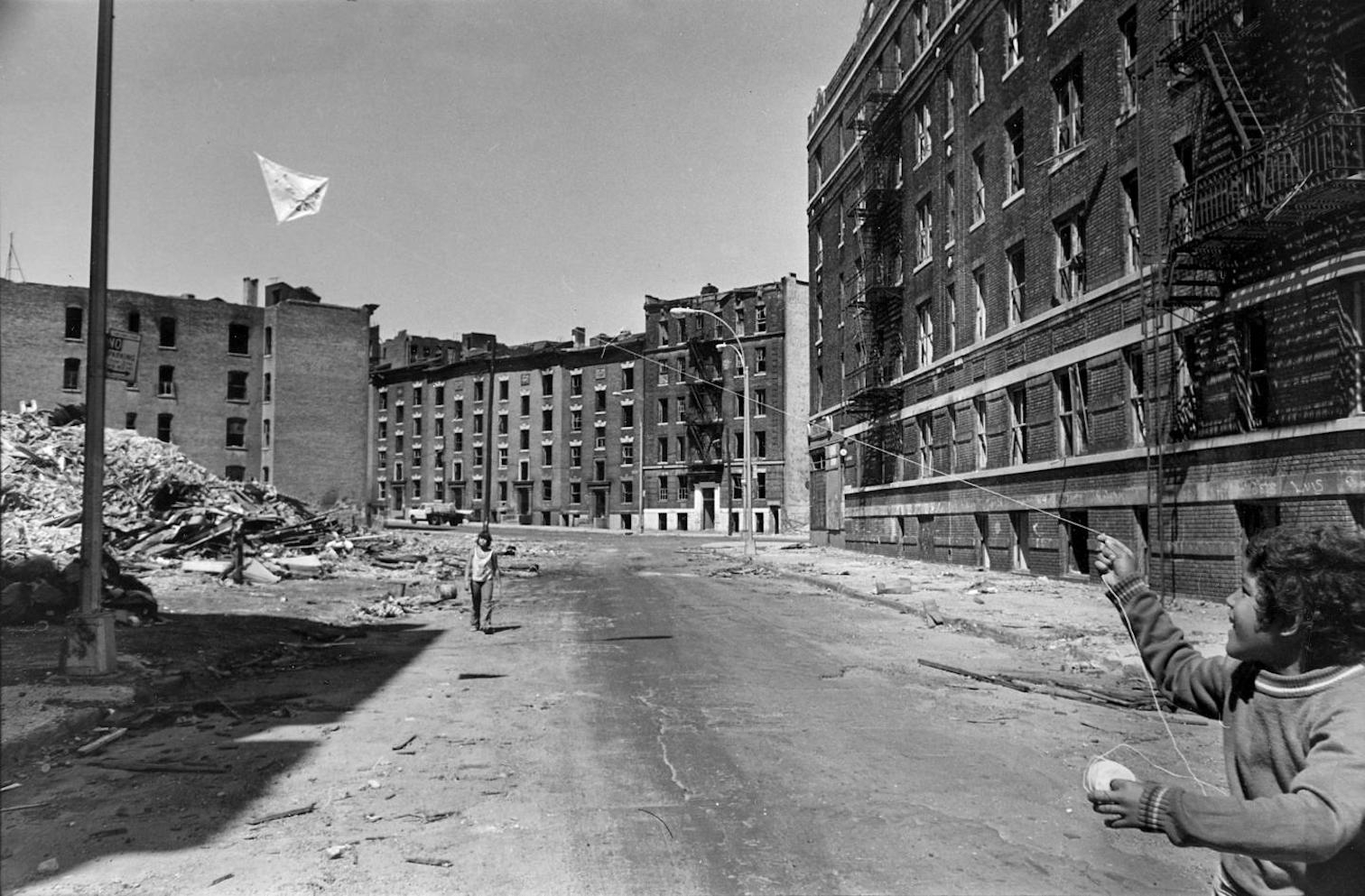
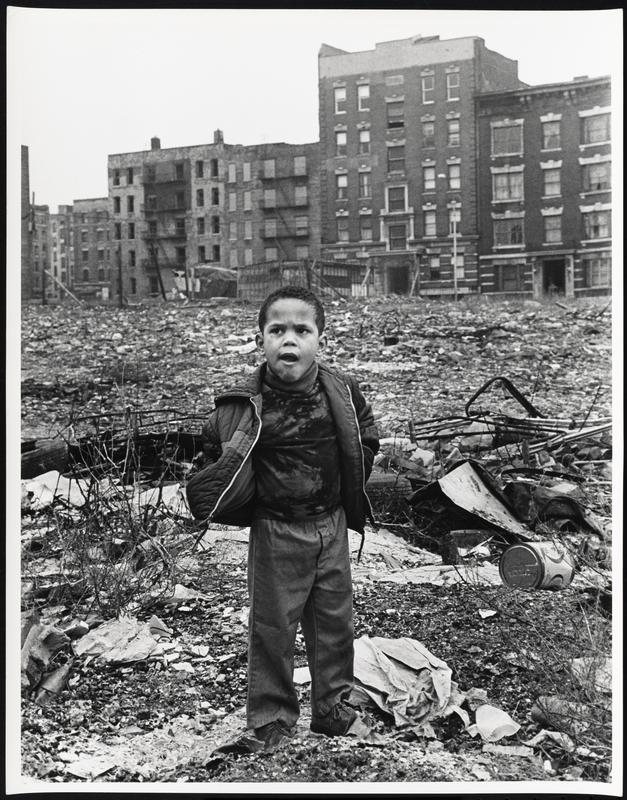
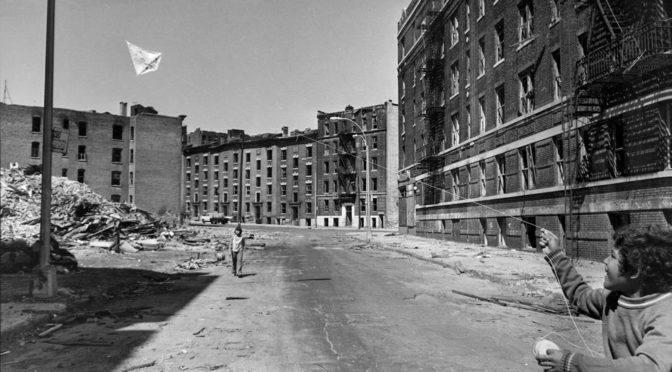
Construction projects like the Cross Bronx Expressway and shifts in living arrangements (from new public housing to the promise of Co-Op City) had isolated those who still lived in the old tenements of the South Bronx. Poverty and high crime rendered the neighborhood so undesirable that buildings were abandoned and even burned.

Mainstream attention (from notable television broadcasts to visits by the President of the United States) did not seem to immediately change things here. It would be up to local neighborhood activists and wide-ranging city and state programs — not to mention the purveyors of an energetic new musical force — to begin to improve the fortunes of this seemingly doomed borough.

FEATURING an interview with Inside Out Tours founder and chief tour guide Stacey Toussaint about the new Bronx renaissance.

ALSO: Appearances by Howard Cosell, Sonia Sotomayor, Robert Moses, Grand Wizzard Theodore, and Jimmy Carter!


The Bowery Boys: New York City History podcast is brought to you …. by you!

We are now producing a new Bowery Boys podcast every two weeks. We’re also looking to improve the show in other ways and expand in other ways as well — through publishing, social media, live events and other forms of media. But we can only do this with your help!

We are now a member of Patreon, a patronage platform where you can support your favorite content creators for as little as a $1 a month.

Please visit our page on Patreon and watch a short video of us recording the show and talking about our expansion plans. If you’d like to help out, there are five different pledge levels (and with clever names too — Mannahatta, New Amsterdam, Five Points, Gilded Age, Jazz Age and Empire State). Check them out and consider being a sponsor.

We greatly appreciate our listeners and readers and thank you for joining us on this journey so far. And the best is yet to come!


Construction of the Cross Bronx Expressway required the mass expulsion of residents from their homes
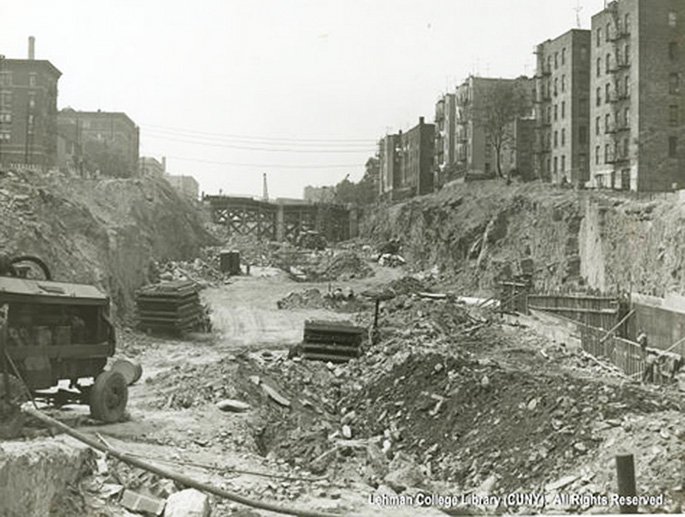
Lehman College
Lehman College

From this overhead view, you can see the areas of the city about to be wiped away by expressway construction. And you can also observe the powerful impact public housing has already had on the landscape
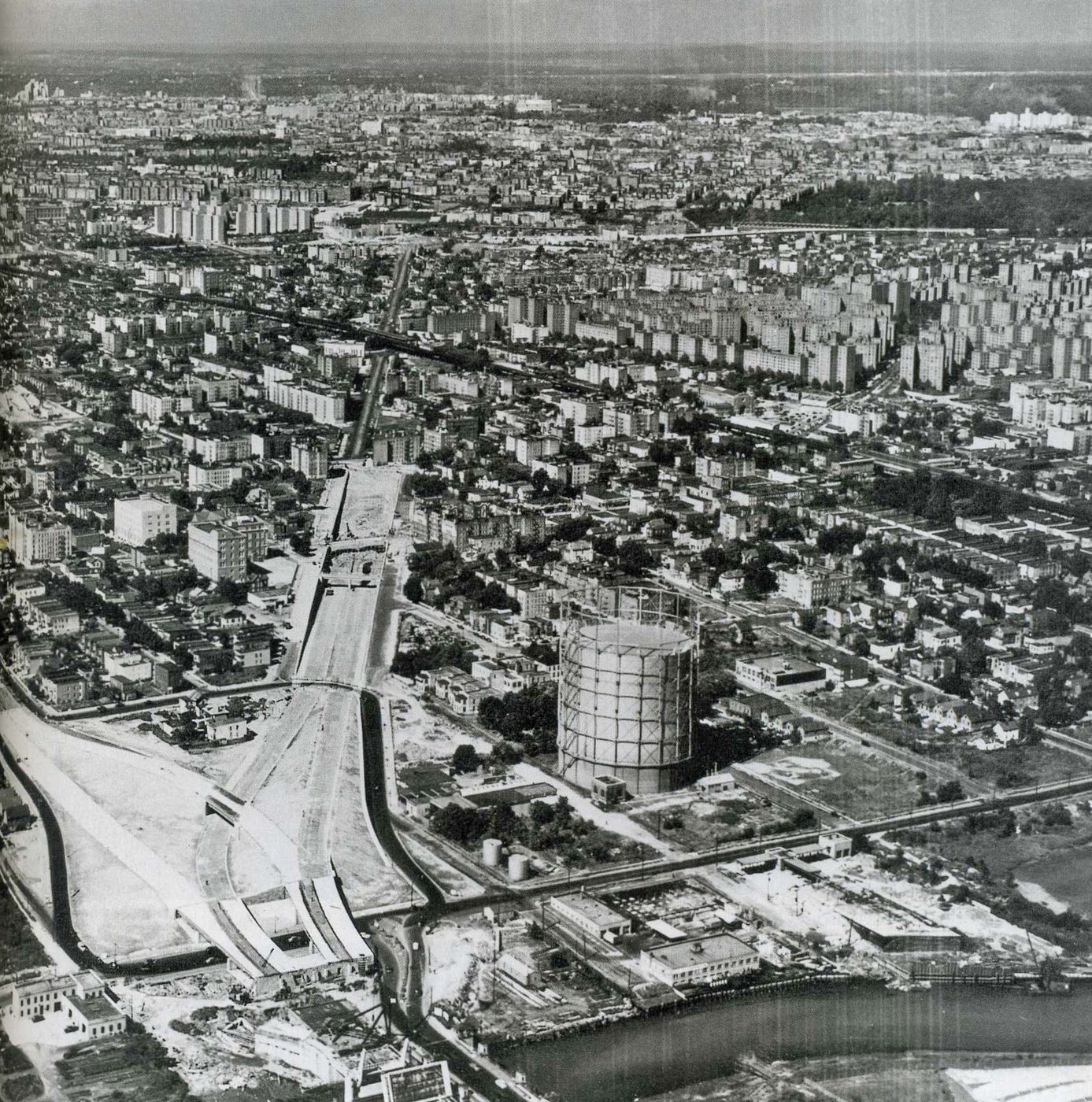
 NYU Forman Center Archives
NYU Furman Center Archives

Life on Arthur Avenue, 1940. The Italian sector of the Bronx would only grow larger in the mid 20th century as more Italians from southern areas of New York City migrated to the Bronx
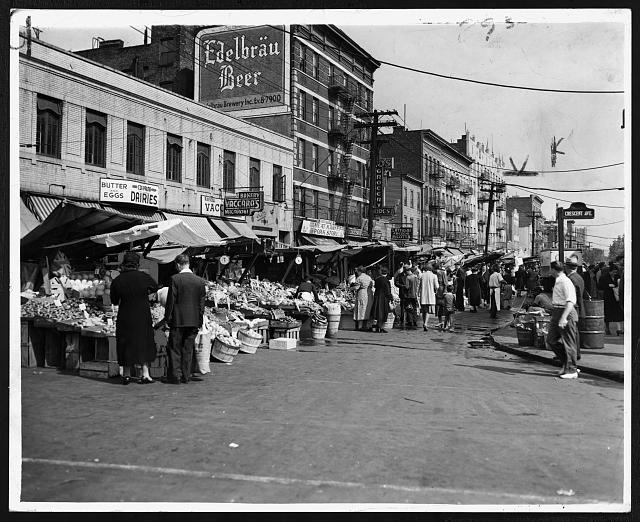
 Stieglitz, C.M./Library of Congress
Stieglitz, C.M./Library of Congress

The scene on Macombs Road, 1964

Macombs Rd., Bronx / World Telegram & Sun photo by Phil Stanziola.

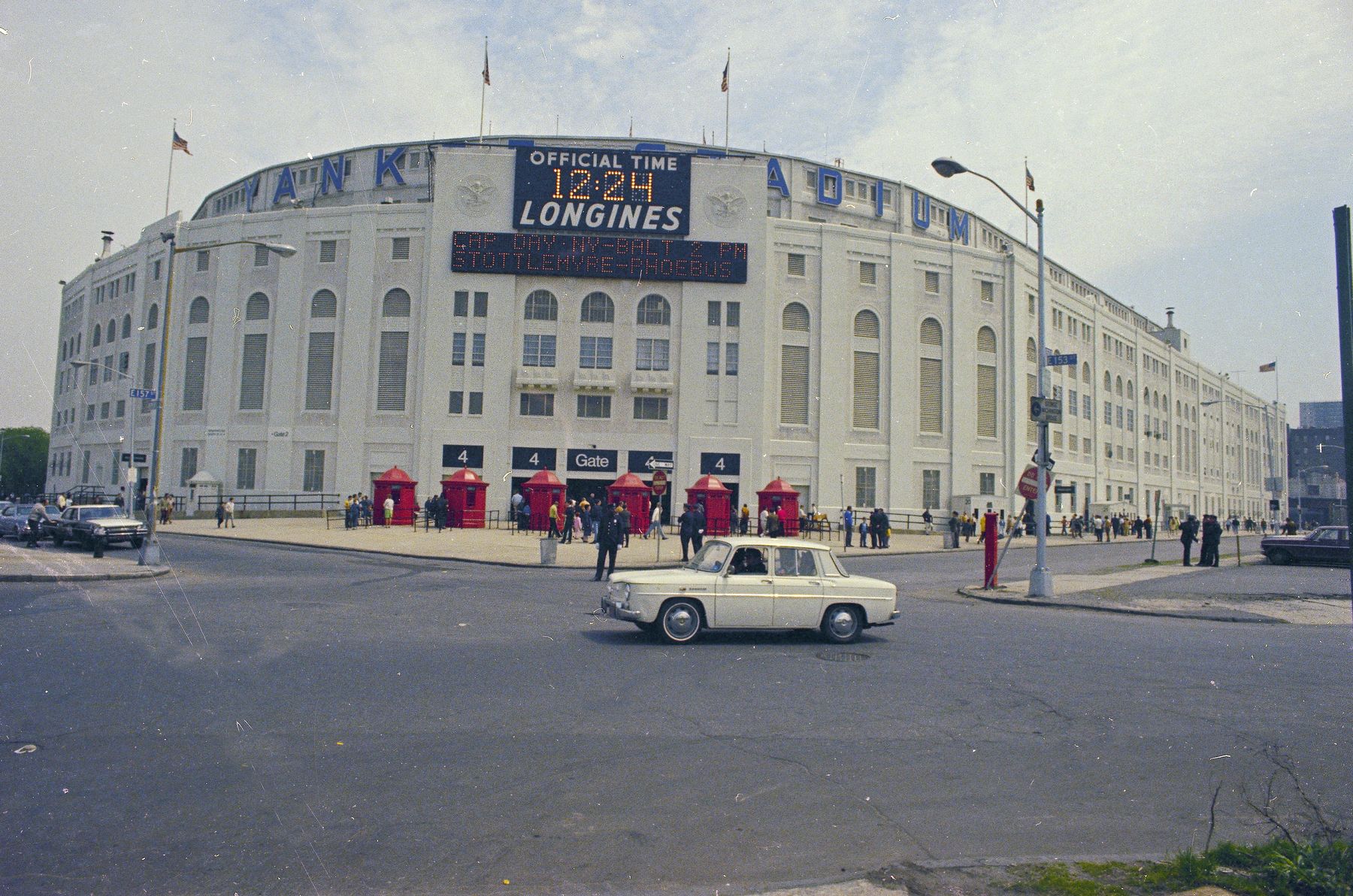
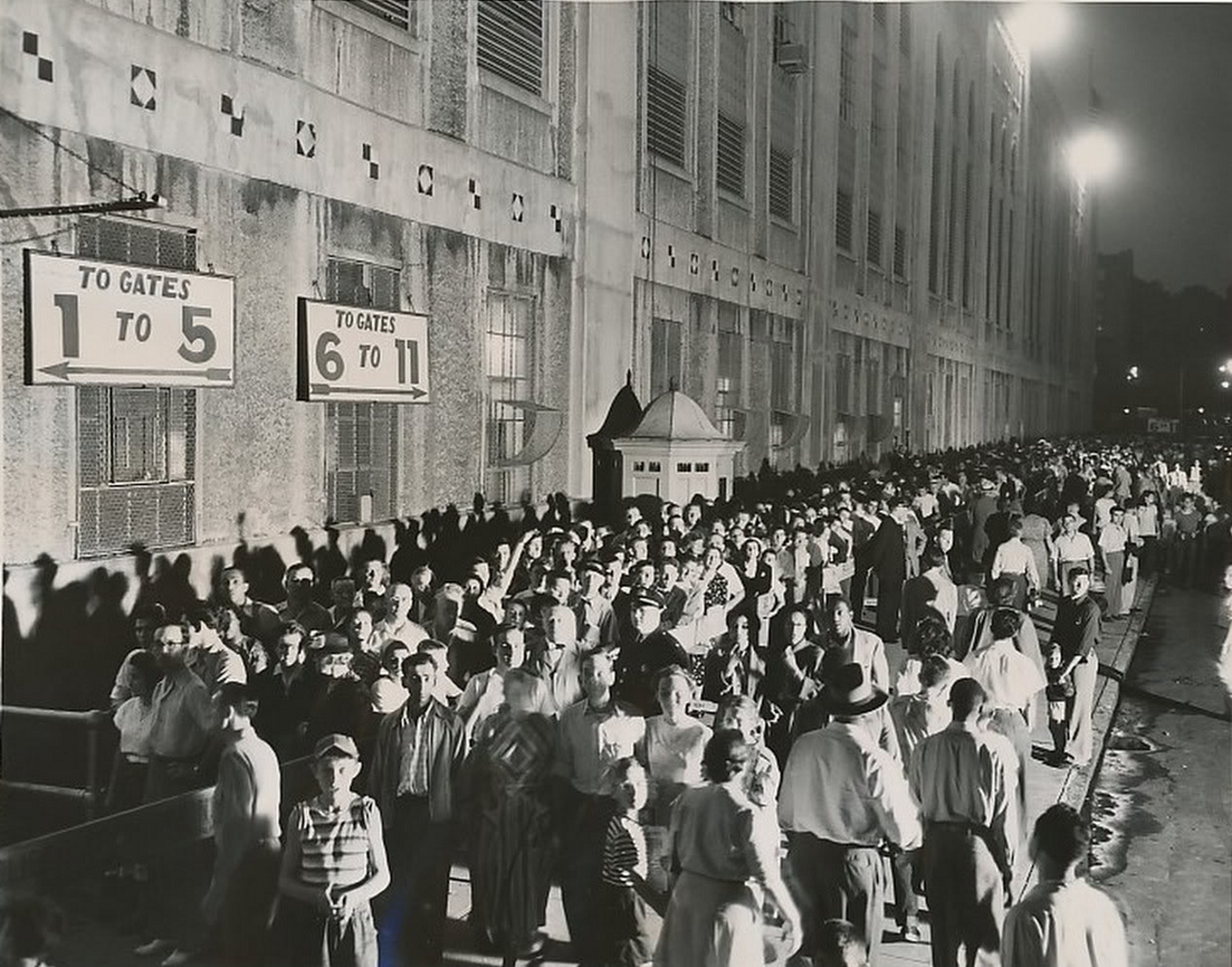
Yankee Stadium in 1969

Photo by AP Images
Photo by AP Images

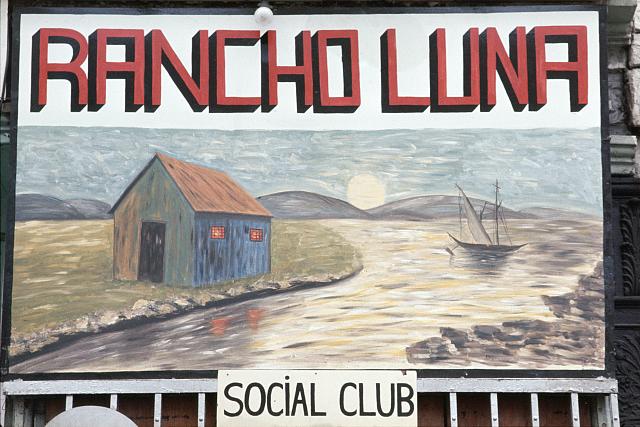
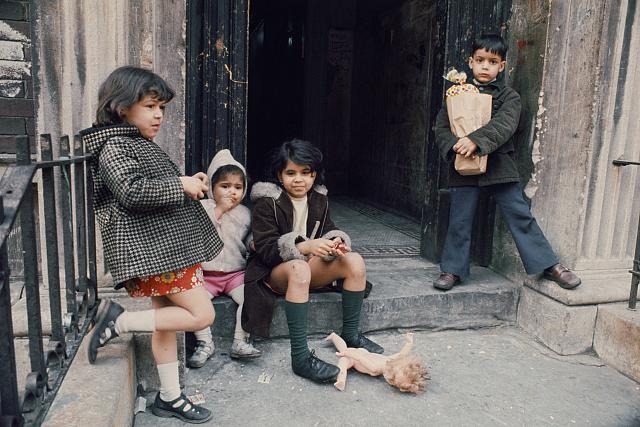
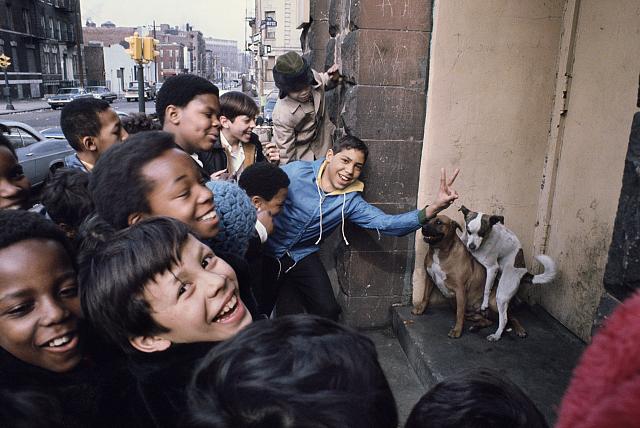
Scenes from the South Bronx, early 1970s, from photographer Camilo J. Vergara, courtesy Library of Congress

Overlooking a portion of the Bronx River, 1970
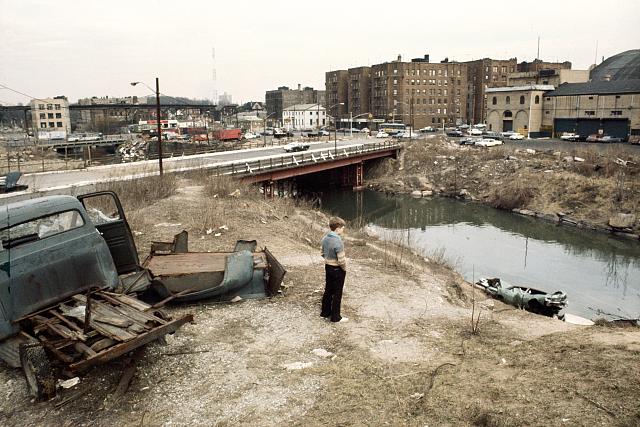
Camilo J. Vergara photographer/Library of Congress
http://www.loc.gov/pictures/resource/vrg.00186/
Camilo J. Vergara/Library of Congress

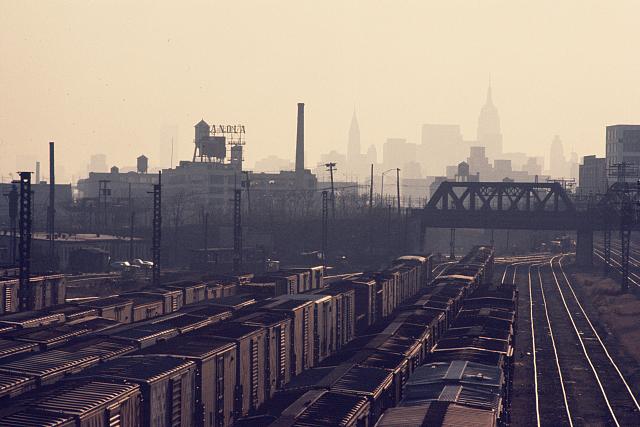
The view from Hunts Point, 1970

Camilo J. Vergara/Library of Congress
East 167th Street, South Bronx, 1973
East 167th Street, South Bronx, 1973, Camilo J. Vergara/Library of Congress

Members of the Reapers gang clean up a lot in the South Bronx, 1972. Photo by Life Magazine photographer John Shearer. Check out the rest of the photos in this series here.
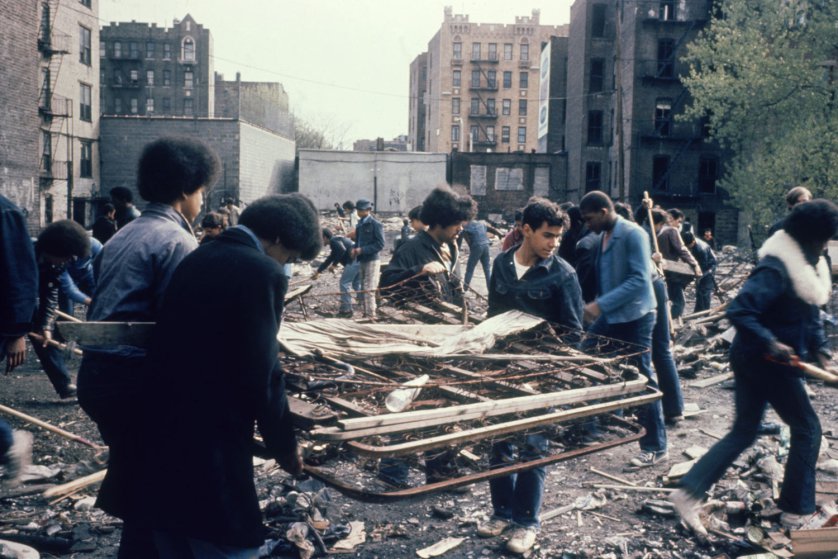
John Shearer—Time & Life Pictures/Getty Images
John Shearer Time & Life Pictures/Getty Images

The termination point of the Third Avenue El (around 147th through 149th) which was torn down in 1977.
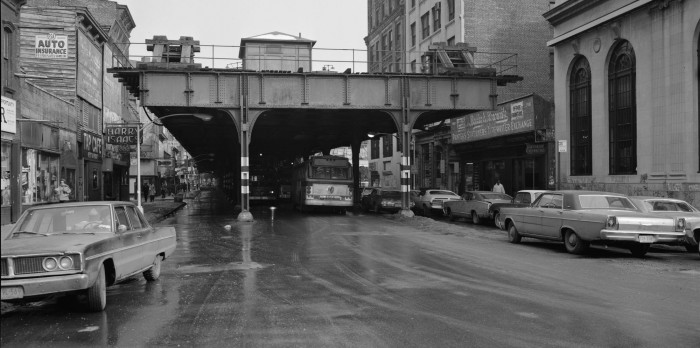
Jack Boucher photographer

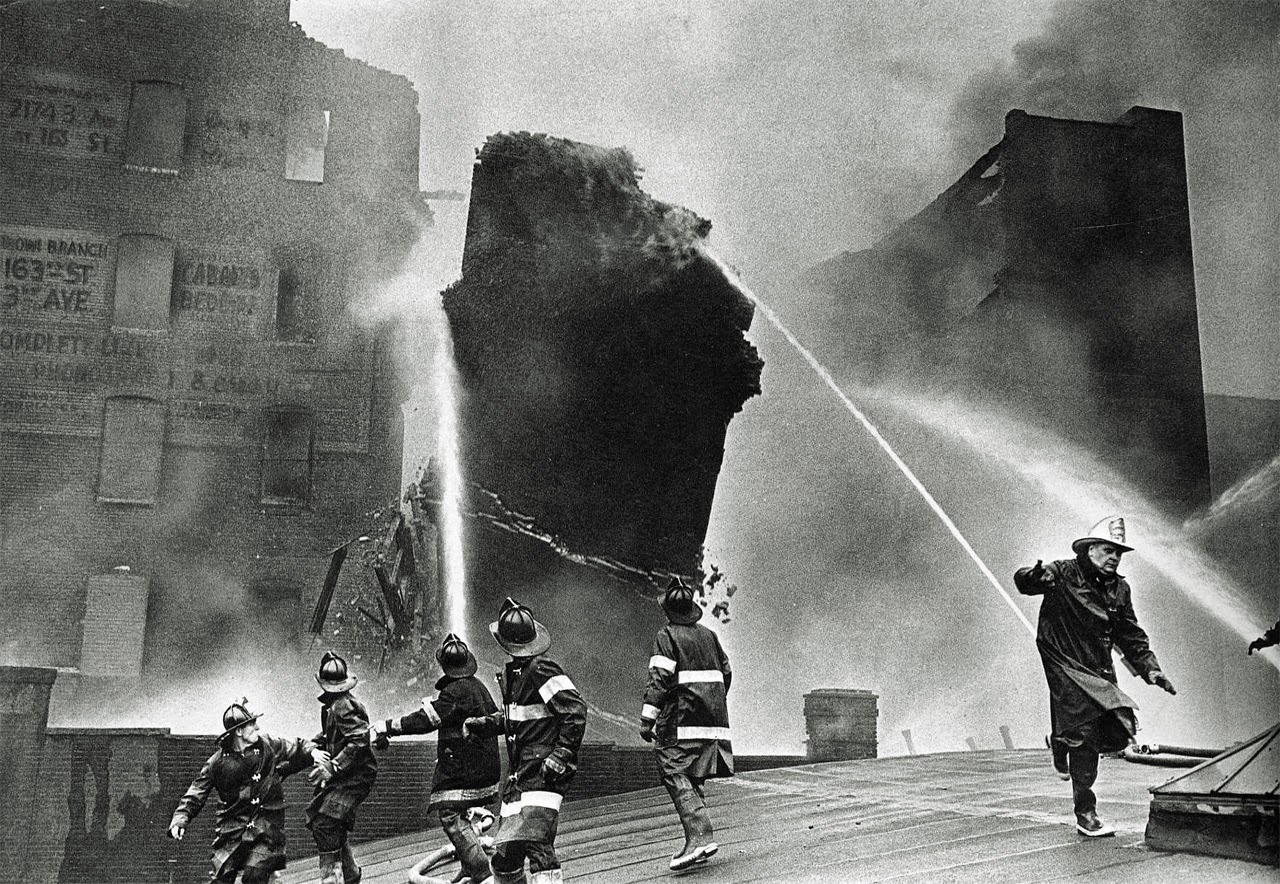
Insanity: One of dozens of fires that occurred in the aftermath of the blackout of 1977.
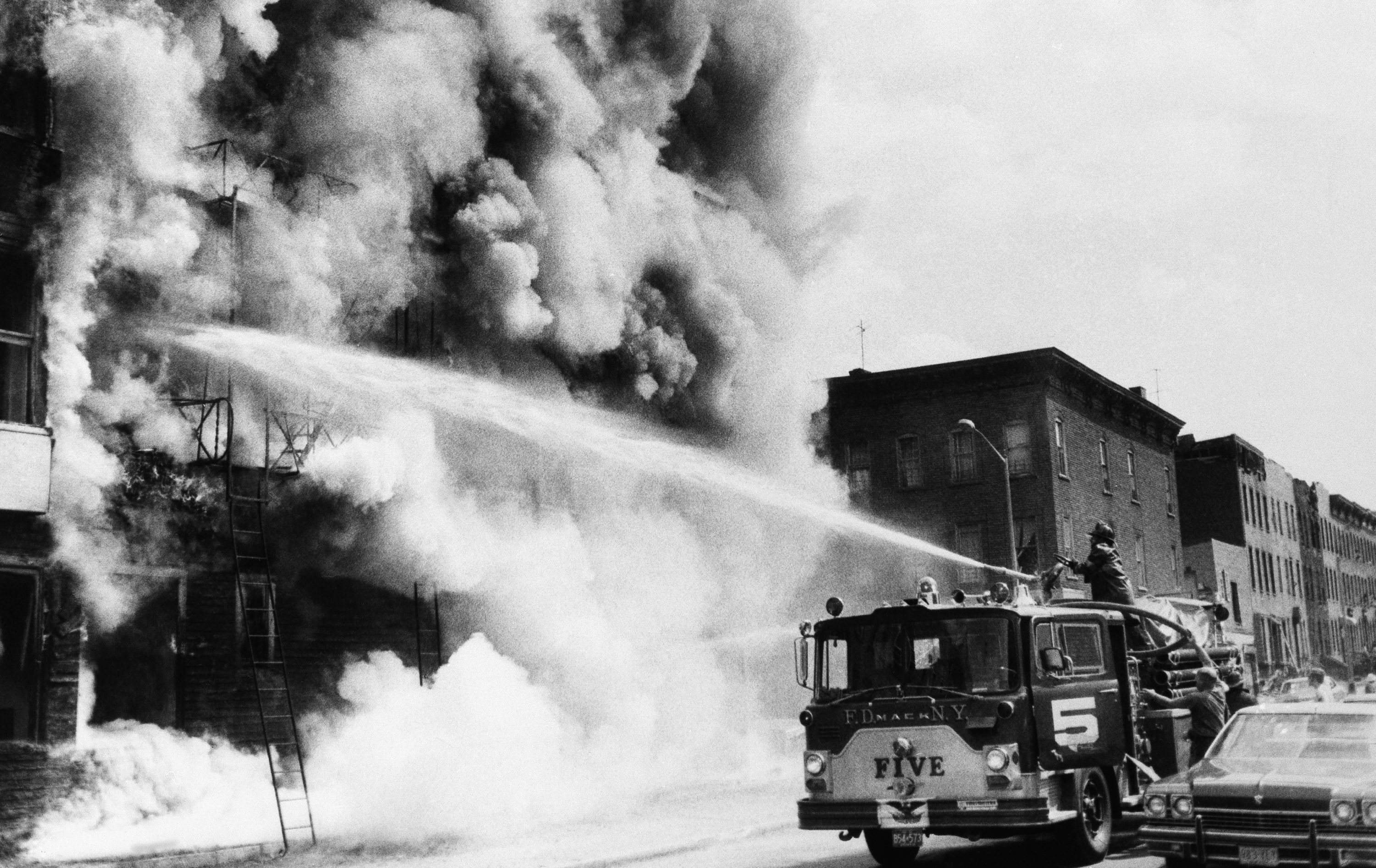
AP Photo/HG
AP Photo/HG

A child’s baptism at St. Jerome’s Church in the South Bronx
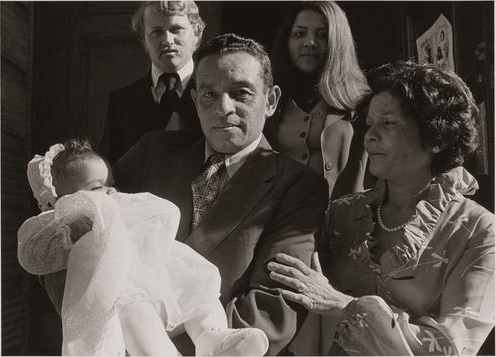
Photo by Susan Lorkid Katz/MCNY
bronxburning

June 1977.

Courtesy AP
Courtesy AP

An abandoned building on Charlotte Street was turned into an art project by John Fekner, Broken Promises/Falsas Promesas, 1980
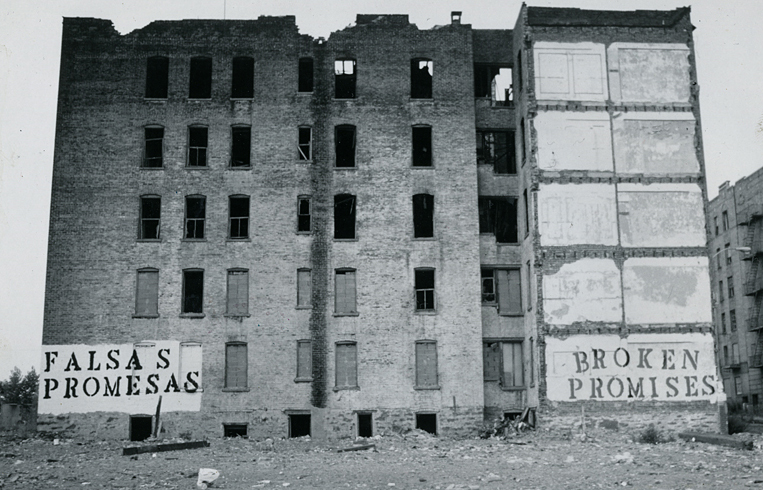
brokenpromises_johnfekner

Planting a community garden in a vacant lot, 1980s
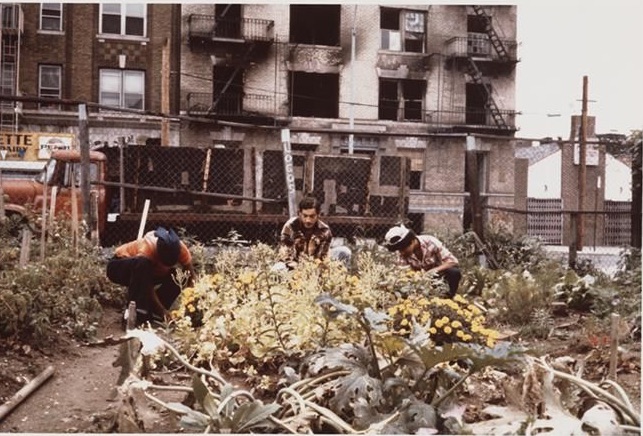
1

A current exhibit at the Museum of the City of New York celebrates the photography of Mel Rosenthal in their show In The South Bronx of America, running until October 16
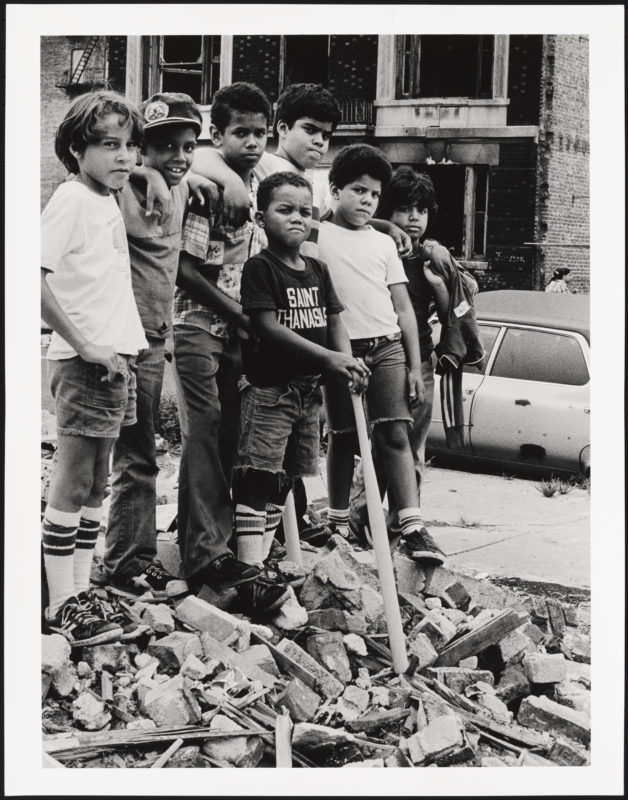
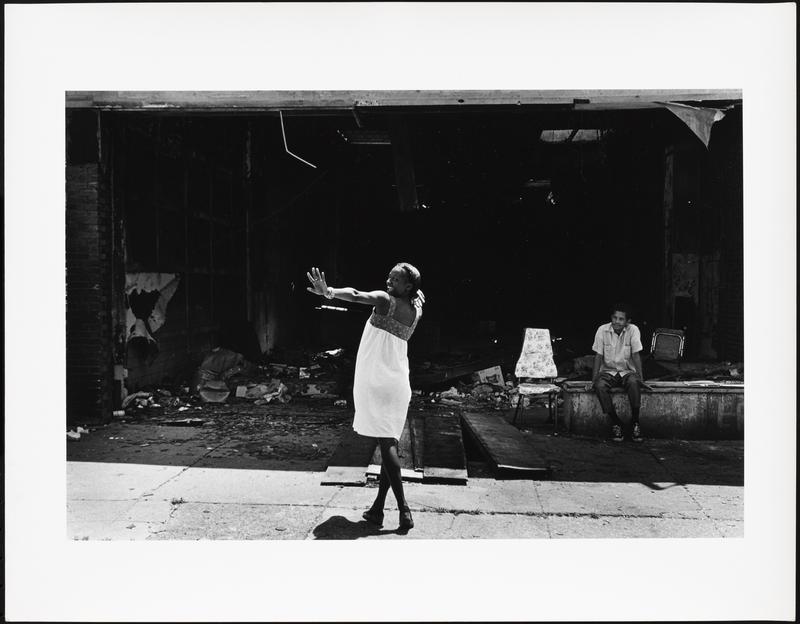
Mel Rosenthal/MCNY
Mel Rosenthal/MCNY
Mel Rosenthal/MCNY
Mel Rosenthal/MCNY
Mel Rosenthal/MCNY
Mel Rosenthal/MCNY

And now a few videos — both of actual events and dramatized, highly exaggerated depictions of the Bronx.

The infamous video from the 1977 World Series between the Yankees and the Dodgers, with Howard Cosell running play-by-play for both the game and the drama outside the stadium.

A film about DJ Kool Herc made in the 1980s

Dramatic video from ABC News of the Bronx as it looked in 1982

A news report about Fort Apache, police precinct in the Bronx. This uses documentary footage (albeit with dramatic music).

Later the film Fort Apache: The Bronx dramatized the events at this police precinct:

The trailer from the exploitation film ‘1990: The Bronx Warriors’ made in 1982
Categories
Bronx History Podcasts

A History of the Bronx Part Two: Building The Borough

PODCAST The story of how the Bronx became a part of New York City and the origin of some of the borough’s most famous landmarks.

In the second part of the Bowery Boys’ Bronx Trilogy — recounting the entire history of New York City’s northernmost borough — we focus on the years between 1875 and 1945, a time of great evolution and growth for the former pastoral areas of Westchester County.

New York considered the newly annexed region to be of great service to the over-crowded city in Manhattan, a blank canvas for visionary urban planners. Soon great parks and mass transit transformed these northern areas of New York into a sibling (or, perhaps more accurately, a step-child) of the densely packed city to the south.

The Grand Concourse embodied the promise of a new life for thousands of new residents — mostly first and second-generation immigrants, many of them Jewish newcomers. The Hall of Fame of Great Americans was a peculiar tourist attraction that honored America’s greatest. But the first time that many outside New York became aware of the Bronx may have been the arrival in 1923 of New York’s most victorious baseball team, arriving via a spectacular new stadium where sports history would frequently be made.

By the 1930s Parks Commissioner Robert Moses began looking at the borough as a major factor in his grand urban development plans. In some cases, this involved the creation of vital public recreations (like Orchard Beach). Other decisions would mark the beginning of new troubles for the Bronx.


The Bowery Boys: New York City History podcast is brought to you …. by you!

We are now producing a new Bowery Boys podcast every two weeks. We’re also looking to improve the show in other ways and expand in other ways as well — through publishing, social media, live events and other forms of media. But we can only do this with your help!

We are now a member of Patreon, a patronage platform where you can support your favorite content creators for as little as a $1 a month.

Please visit our page on Patreon and watch a short video of us recording the show and talking about our expansion plans. If you’d like to help out, there are five different pledge levels (and with clever names too — Mannahatta, New Amsterdam, Five Points, Gilded Age, Jazz Age and Empire State). Check them out and consider being a sponsor.

We greatly appreciate our listeners and readers and thank you for joining us on this journey so far. And the best is yet to come!


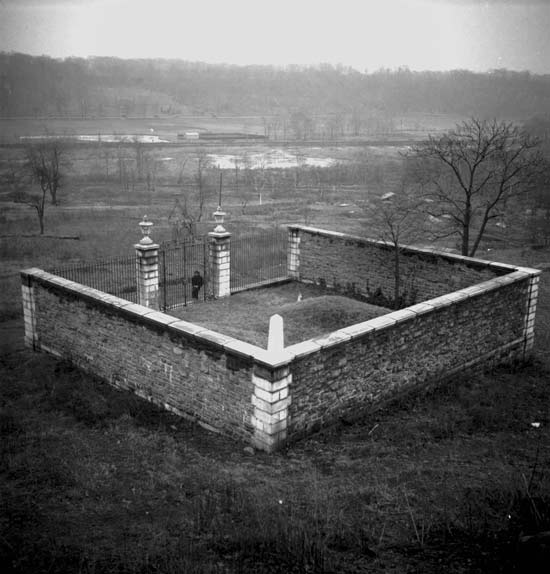
The burial vault of the Van Cortlandts was actually contained within the newly formed park. And it’s still there.

Courtesy New York Park Service

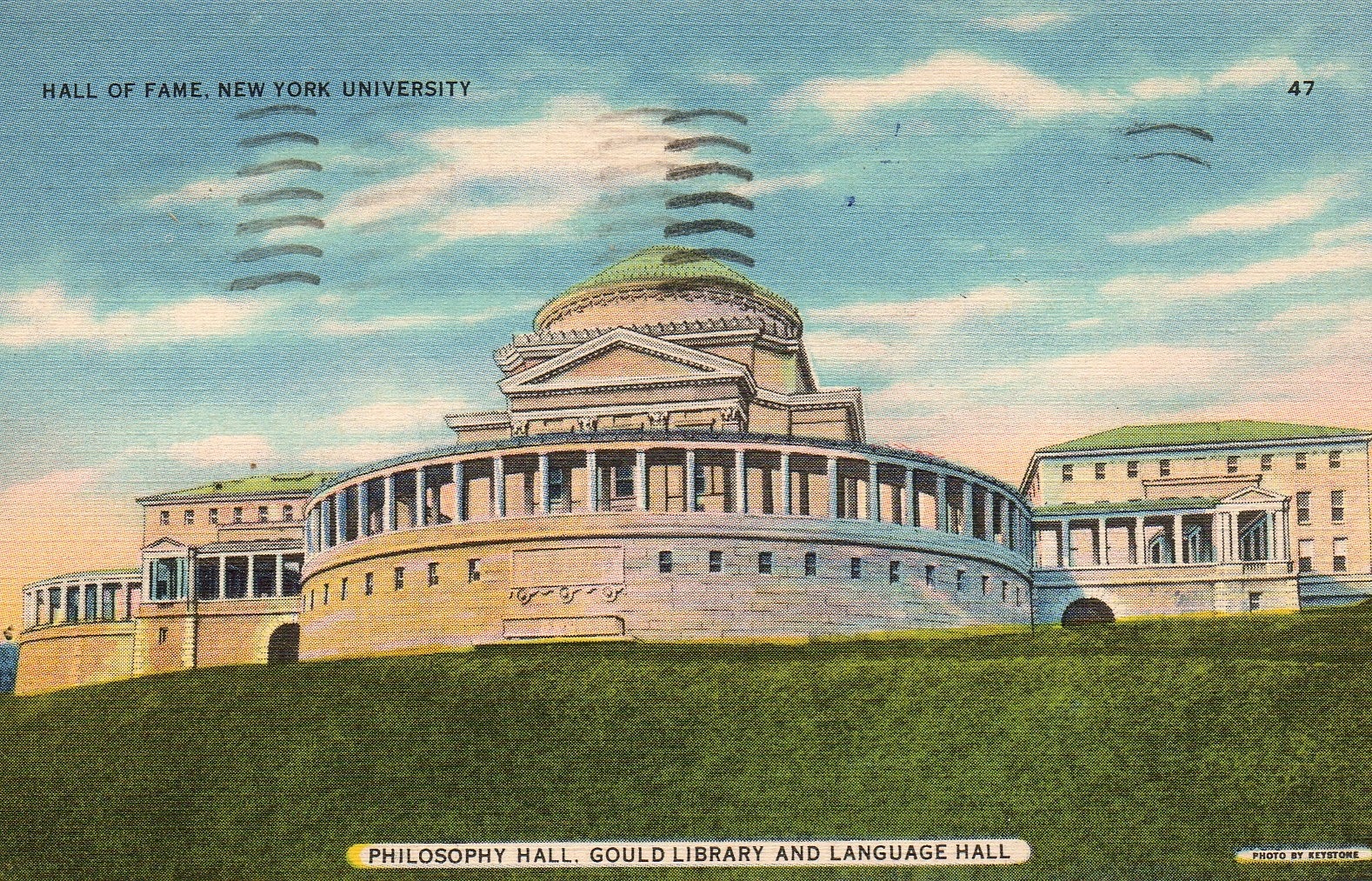
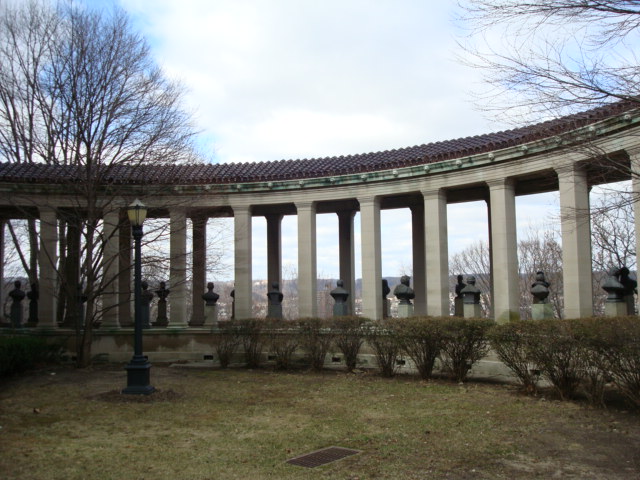
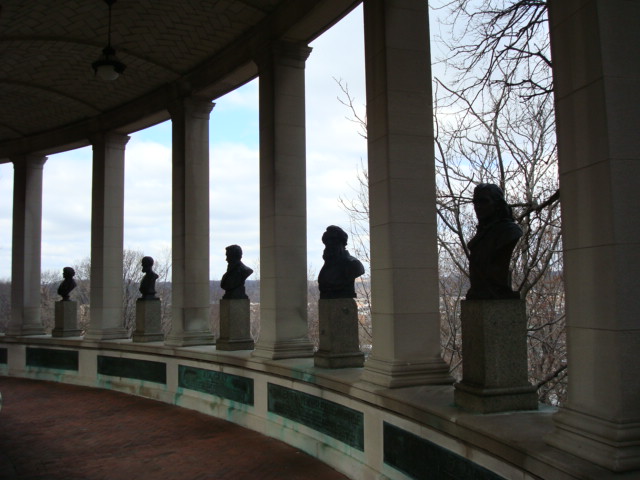
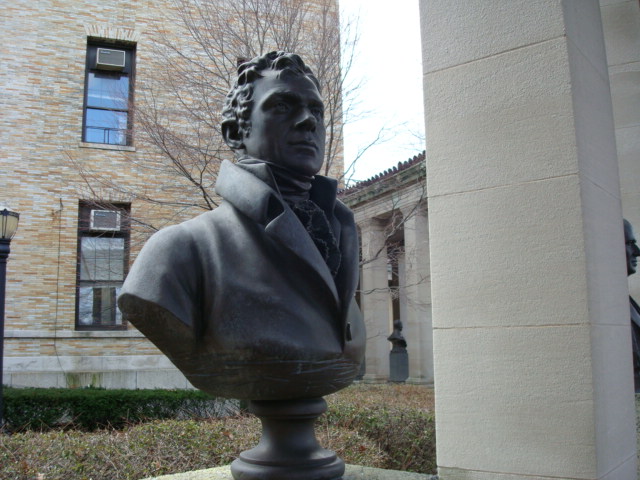
NYU’s former University Heights campus (now the home of Bronx Community College) contains one unusual tourist attraction — the Hall of Fame of Great Americans

nyuinthebronxpostcard

1 2 3

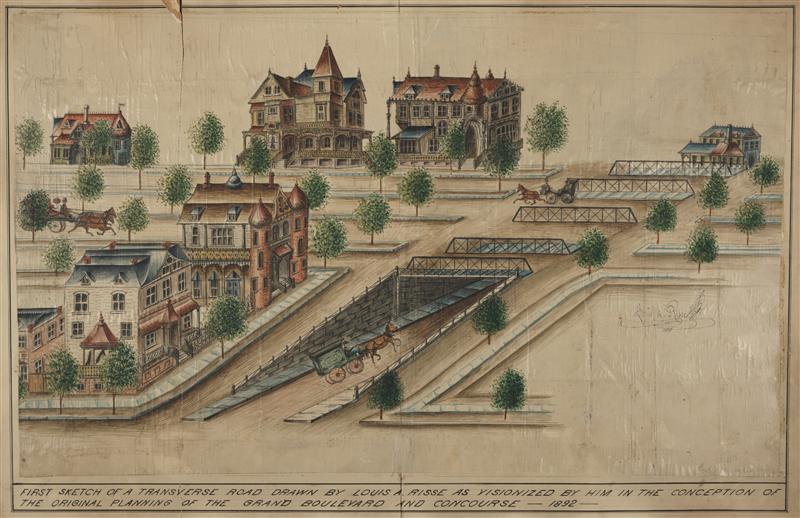
Louis Risse’s vision of the Grand Concourse in 1892 obviously did not imagine automobiles using the boulevard.

MCNY
MCNY

Kingsbridge Road near the Grand Concourse, 1890. It was originally a dirt road of course.

MCNY
MCNY

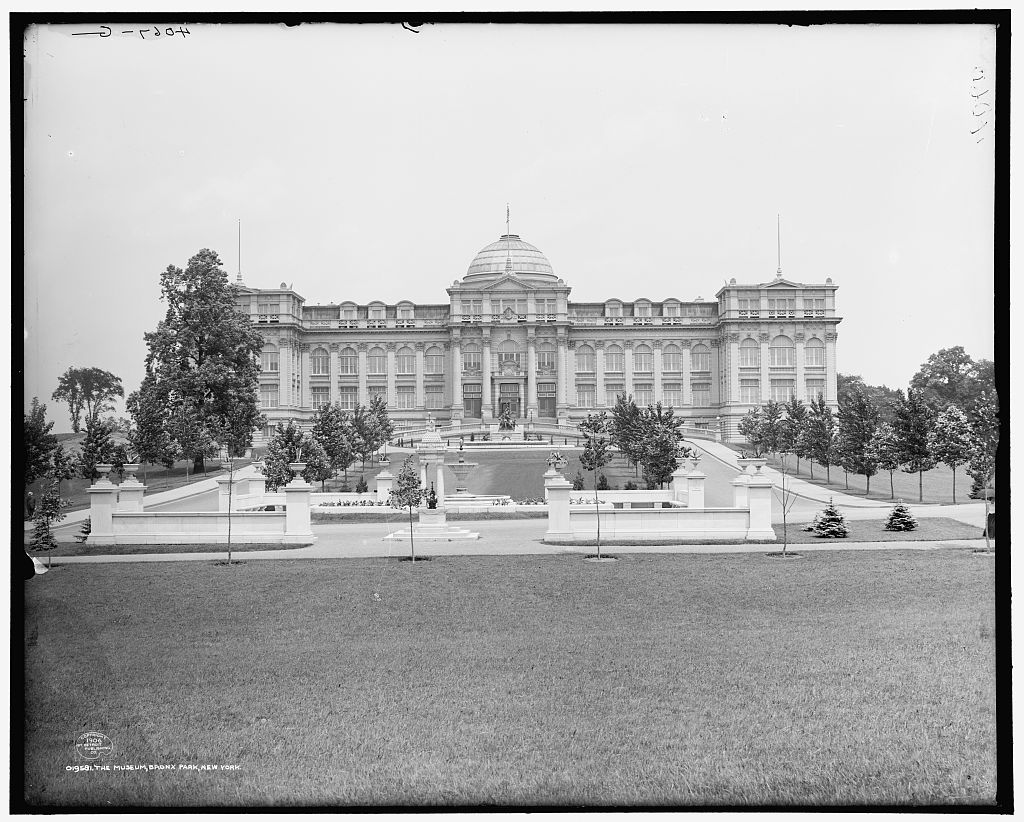
The New York Botanical Garden inaugurated Bronx Park and created another reason for New Yorkers to head up to the vastly evolving area up north.

4a13506v

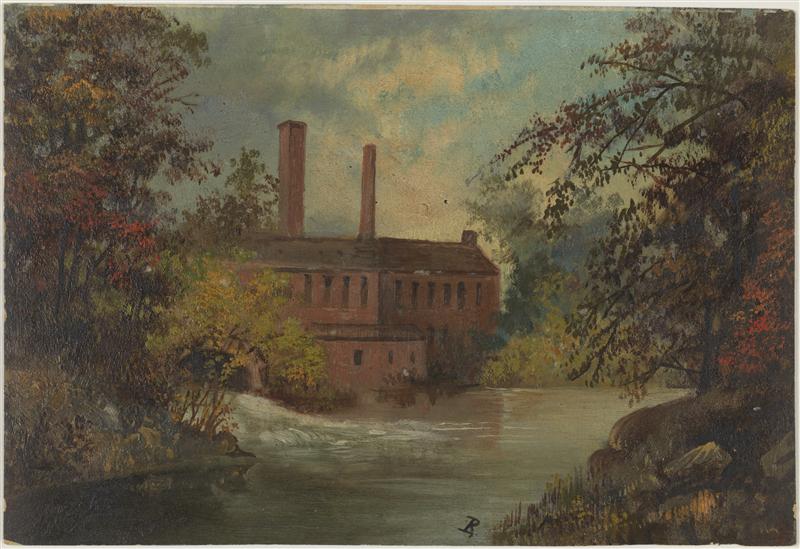
A romantic depiction of the Lorillard snuff mill on the Bronx River. The building is still on the river, contained within the Botanical Garden.

By Frederick Rondel, Jr., courtesy MCNY

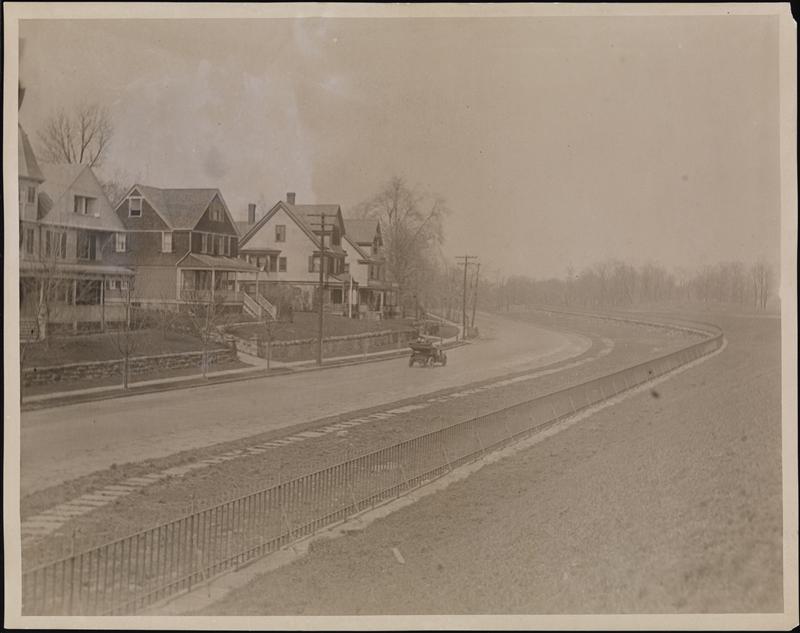
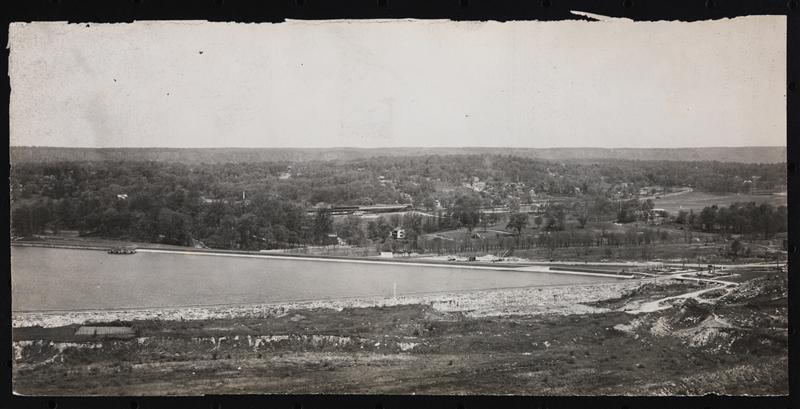
Jerome Park Reservoir, opposite a set of homes, pictured here in 1920 and (below) 1936.

MCNY
MCNY
mny221499
MCNY

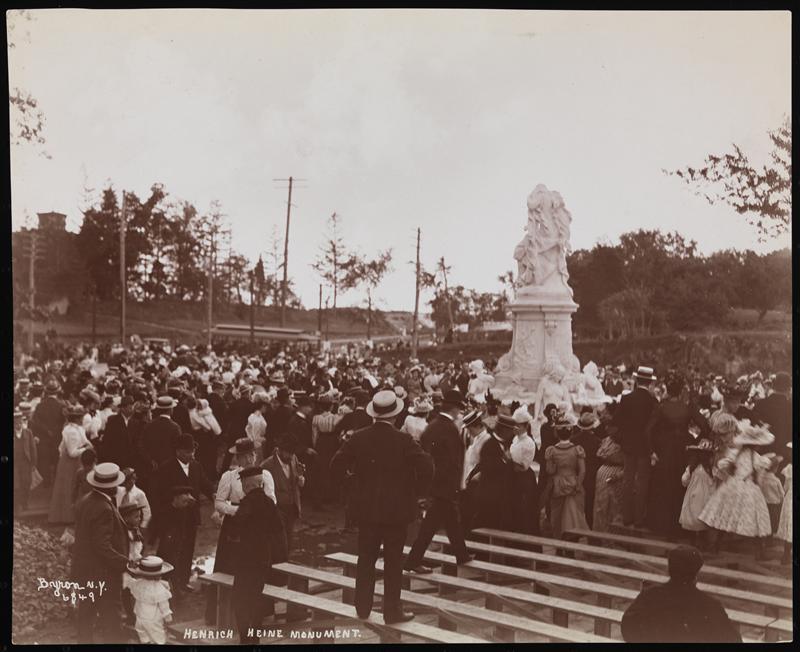
The unveiling of the Heinrich Heine monument in today’s Joyce Kilmer Park on the Grand Concourse.

MCNY
MCNY

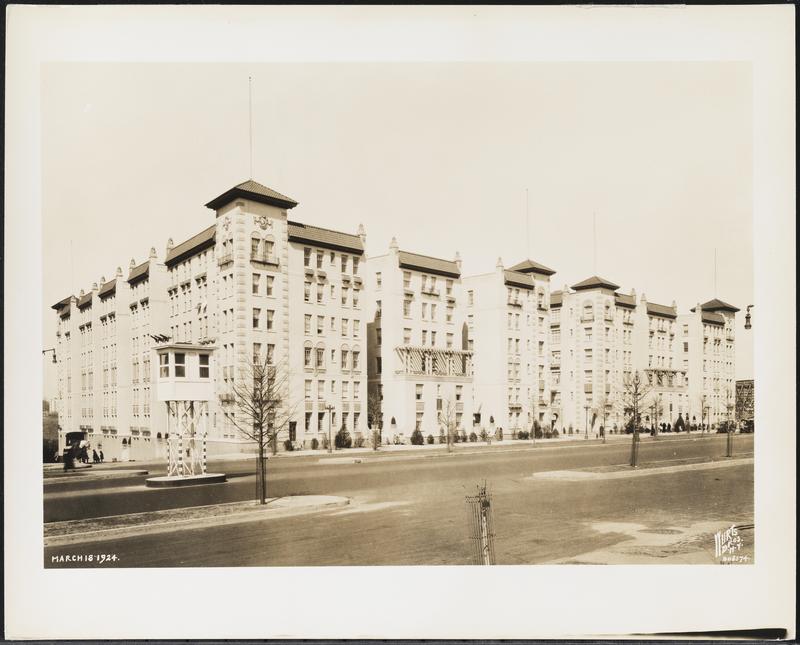
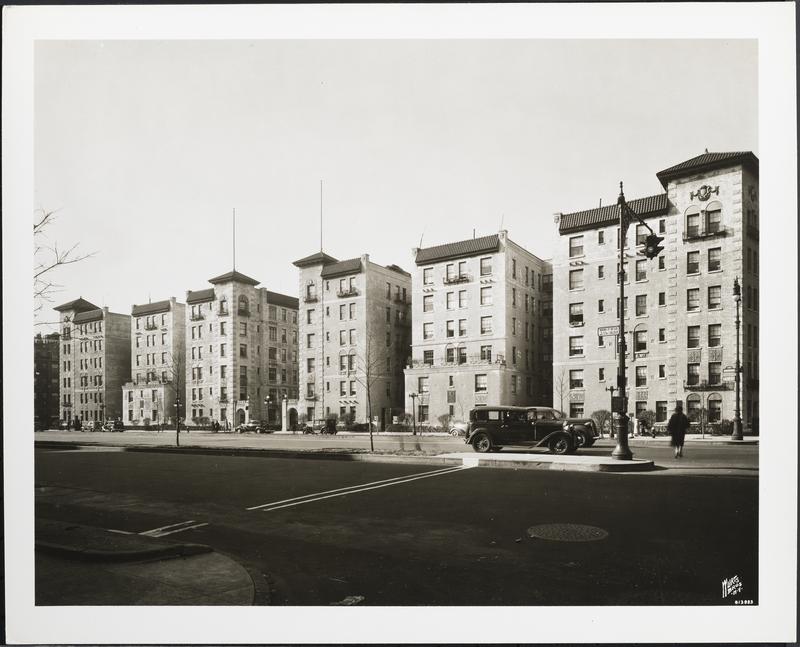
Lavish apartments like the Roosevelt  (pictured here in 1924 and in 1937) were able to attract New Yorkers escaping the overcrowded Lower East Side.

MCNY
MCNY
MCNY
MCNY

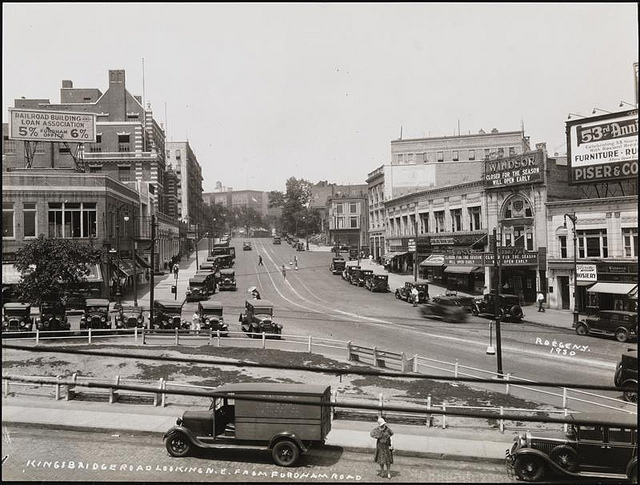
Fordham Road in 1930 with the Grand Concourse East Kingsbridge Road steaming by.

Photo by William Roege (1930)

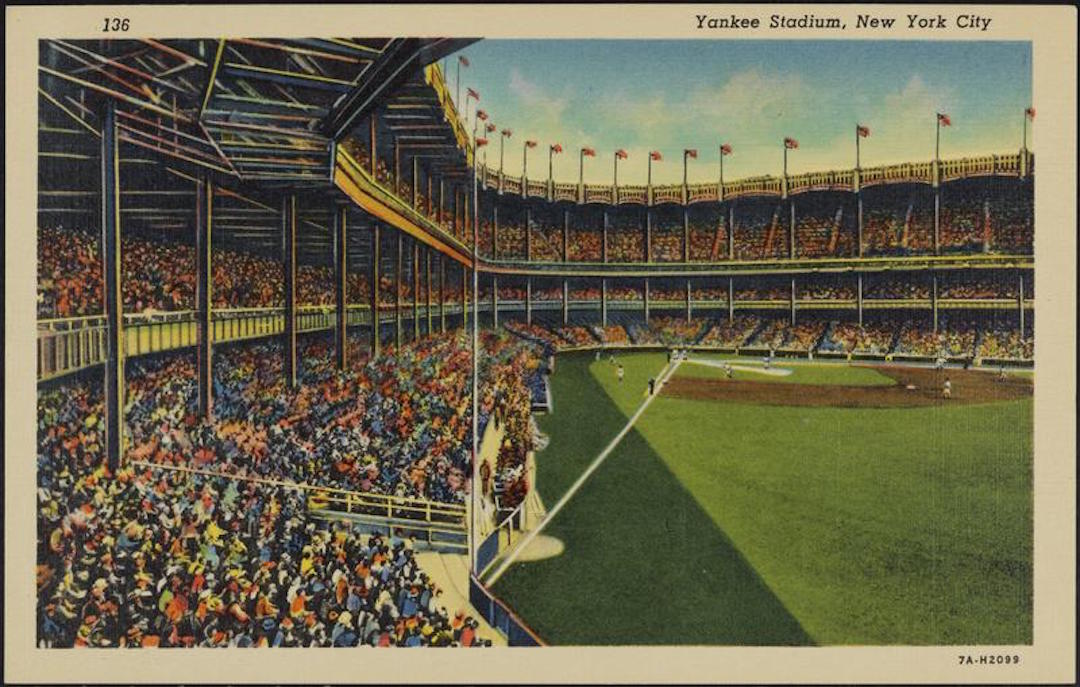
A Yankee Stadium postcard circa 1945

mny285122
Courtesy MCNY

Ruth was so integrally a part of the Bronx and Yankee Stadium that when he died in 1948, his casket was taken to the stadium where tens of thousands of people came to pay their respects.

babe-ruth-funeral-fans-line-up-8-17-1948

A few selections from our Instagram account of things we discussed on this week’s show:


A photo posted by Gregory Young (@boweryboysnyc) on


A photo posted by Gregory Young (@boweryboysnyc) on

From the Grand Concourse:


A photo posted by Gregory Young (@boweryboysnyc) on


A photo posted by Gregory Young (@boweryboysnyc) on


A photo posted by Gregory Young (@boweryboysnyc) on

Here’s Tom and our special guest this week — the great Lloyd Ultan

Categories
Bronx History Podcasts

Bronx Trilogy: The Bronx Is Born — Before It Was A Borough 1638-1874

PODCAST A history of the land which would become the Bronx, from the first European settlement to its debut in 1874 as New York’s Annexed District.

The story of the borough of the Bronx is so large, so spectacular, that we had to spread it out over three separate podcasts!

In Part One — The Bronx Is Born — we look at the land that is today’s borough, back when it was a part of Westchester County, a natural expanse of heights, rivers and forests occasionally interrupted by farm-estates and modest villages. Settlers during the Dutch era faced grave turmoil; those that came afterwards managed to tame the land with varying results. Speculators were everyone; City Island was born from the promise of a relationship with the city down south.

During the Revolutionary War, prominent families were faced with a dire choice — stay with the English or side with George Washington’s Continental Army? One prominent family would help shape the fate of the young nation and leave their name forever attached to one of the Bronx’s oldest neighborhoods. Sadly that family’s legacy is under-appreciated today.

By the 1840s, Westchester County was at last connected to New York via a new railroad line. It was a prosperous decade with the development of the area’s first college, a row of elegant homes and some of its very first ‘depot towns.’ Two decades later, the future borough would even cater to the dead — both the forgotten (at Hart Island) and the wealthy (Woodlawn Cemetery).

The year 1874 would mark a new chapter for a few quiet towns and begin the process of turning this area into the borough known as the Bronx.

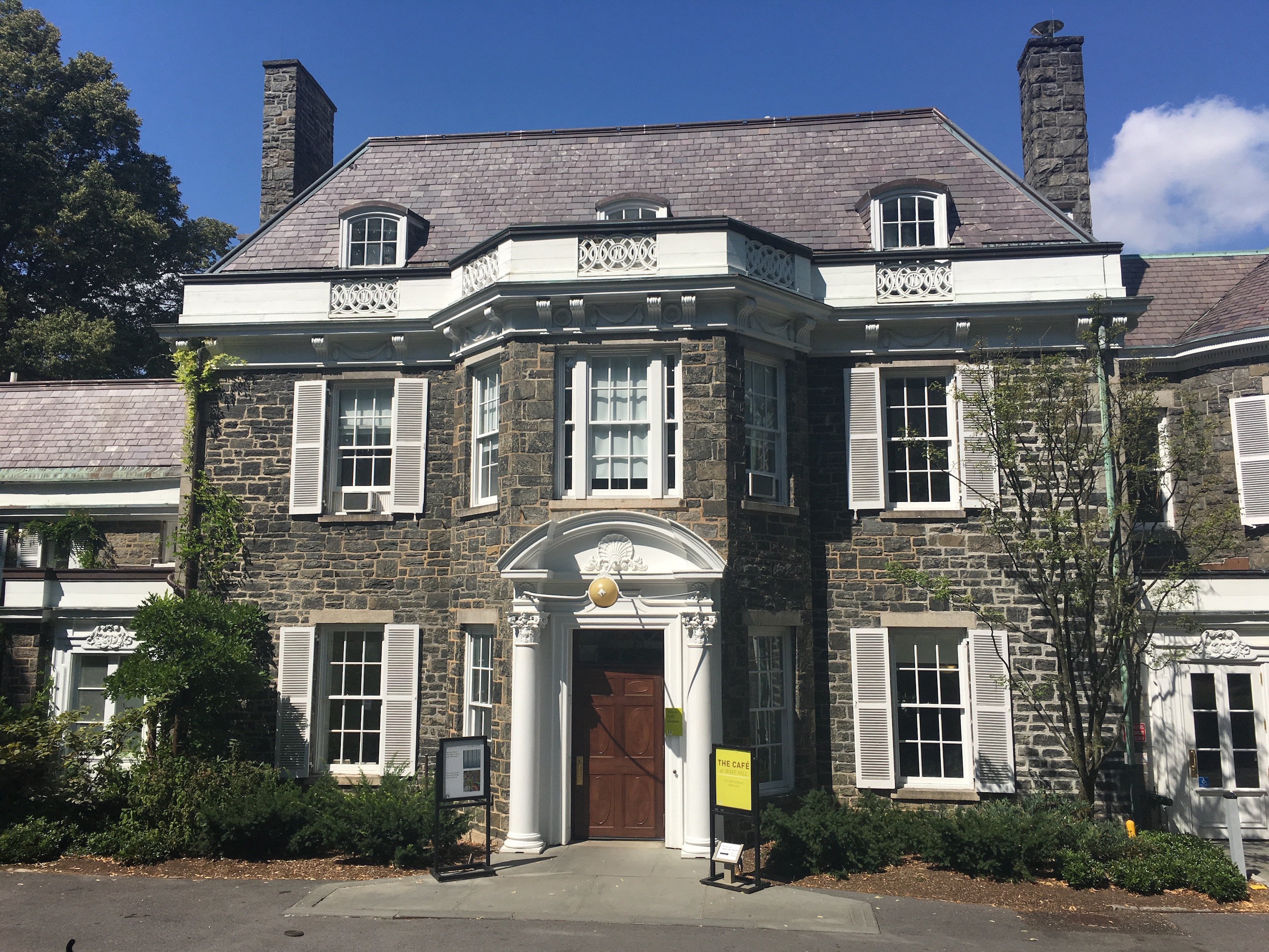
FEATURING: Many places in the Bronx that you can visit today and experience this early history up close, including Wave Hill, Pelham Bay Park, Woodlawn Cemetery, City Island and more.


The Bowery Boys: New York City History podcast is brought to you …. by you!

We are now producing a new Bowery Boys podcast every two weeks. We’re also looking to improve the show in other ways and expand in other ways as well — through publishing, social media, live events and other forms of media. But we can only do this with your help!

We are now a member of Patreon, a patronage platform where you can support your favorite content creators for as little as a $1 a month.

Please visit our page on Patreon and watch a short video of us recording the show and talking about our expansion plans. If you’d like to help out, there are five different pledge levels (and with clever names too — Mannahatta, New Amsterdam, Five Points, Gilded Age, Jazz Age and Empire State). Check them out and consider being a sponsor.

We greatly appreciate our listeners and readers and thank you for joining us on this journey so far. And the best is yet to come!


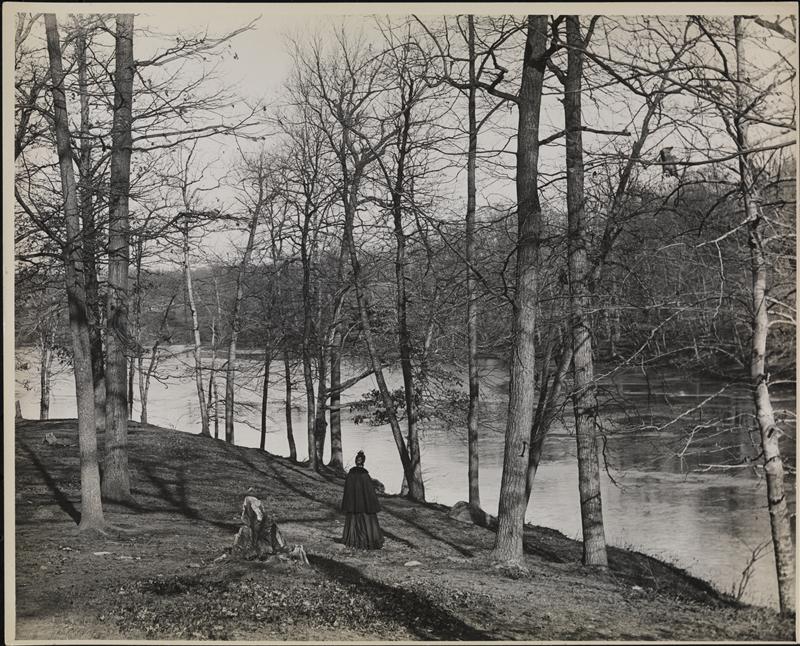
In this 1896 Robert Bracklow photograph, a solitary woman stands by the Bronx River, looking almost completely unchanged from how it would have looked when Jonas Bronck saw it.

MNY16942
Museum of the City of New York

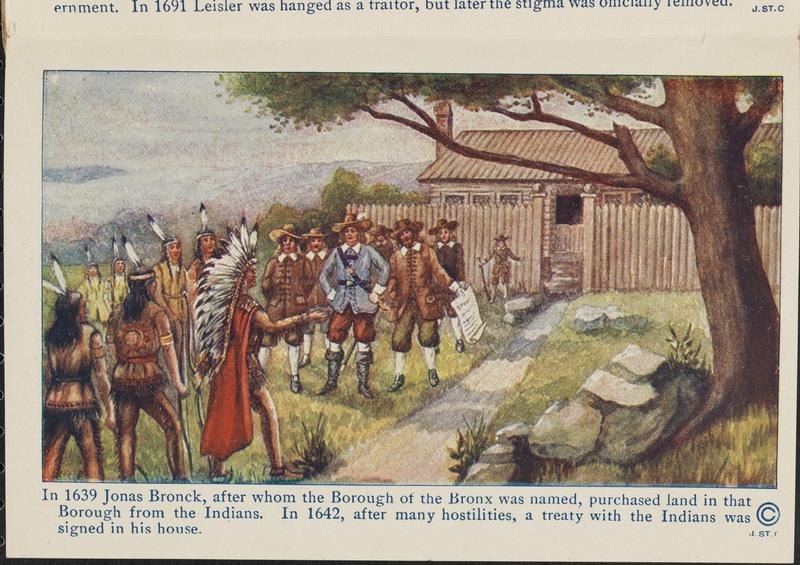
A 1914 illustration recounting the tale of Jonas Bronck:

Museum of the City of New York

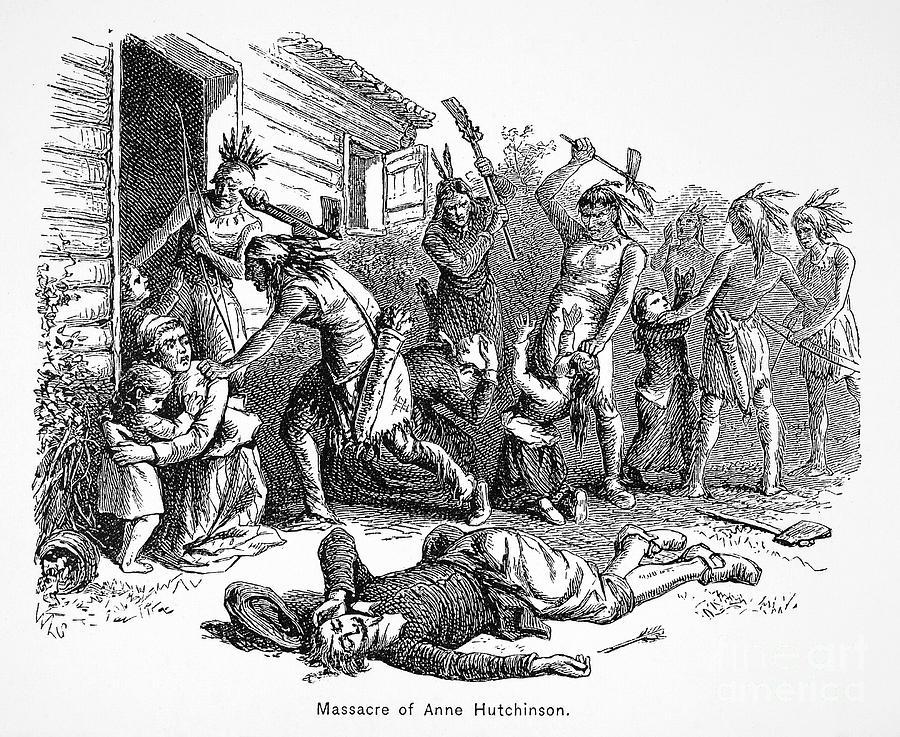
Another book illustration, this one of the massacre of Anne Hutchinson and her family.

NYPL
NYPL

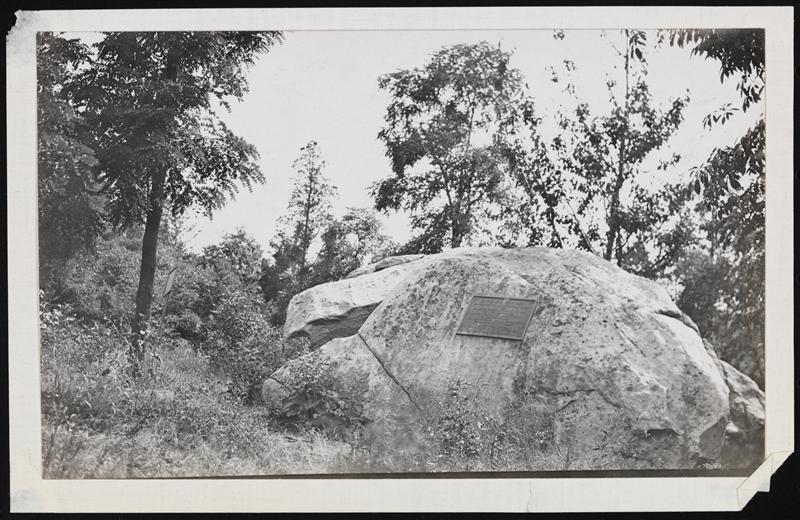
The Split Rock as it appeared in 1910, with a memorial plaque to Anne and her family and no highways anywhere around it. The rock today has no plaque but the impression of one can still be seen.

Courtesy MCNY
Courtesy MCNY

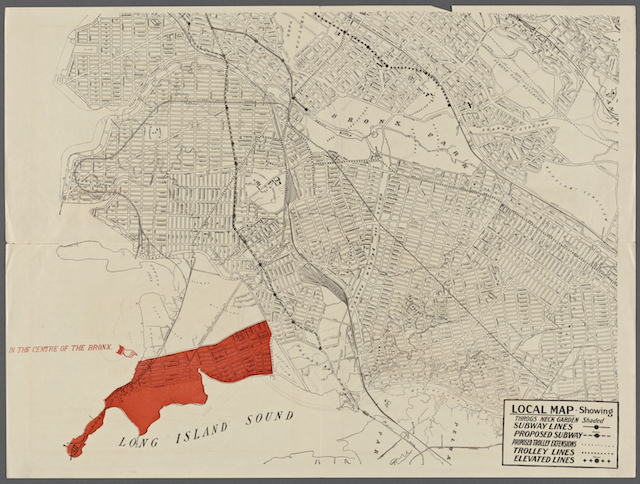
An auction map of the Bronx from 1910, highlighting the area of Throg’s Neck which gets its name from Throckmorton or Throgmorton.

NYPL
NYPL

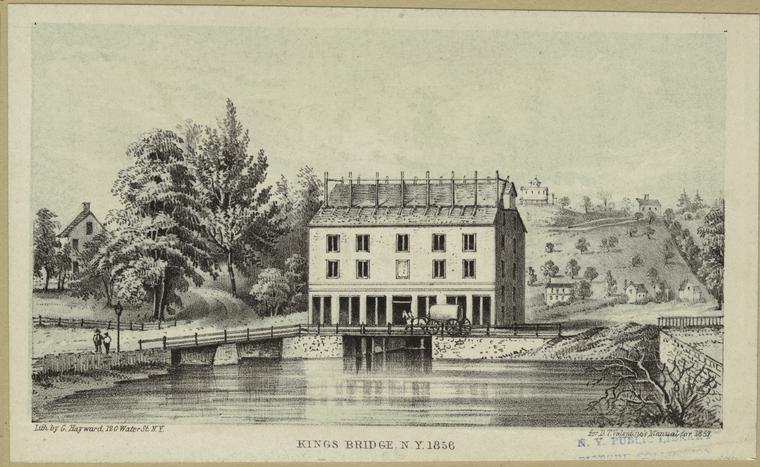
The King’s Bridge from an 1856 illustration.

nypl.digitalcollections.510d47e2-eba4-a3d9-e040-e00a18064a99.001.w
NYPL

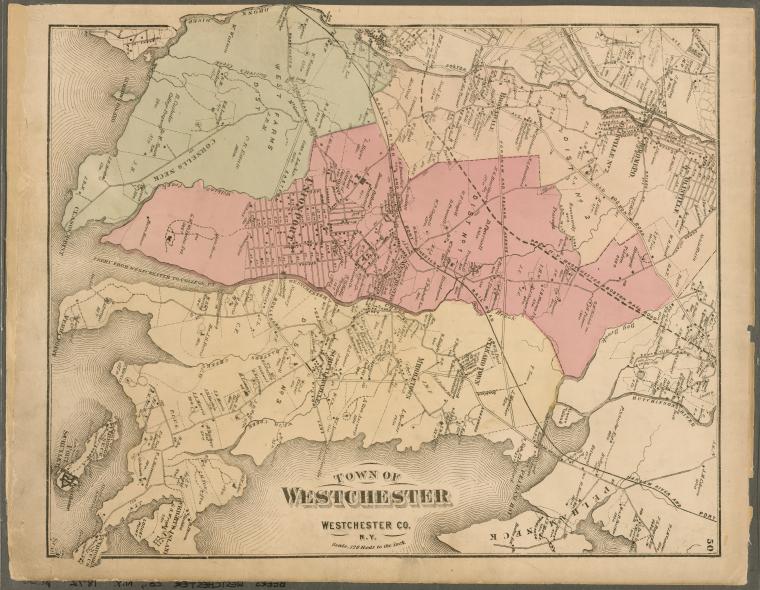
The town of Westchester in the East Bronx, pictured here in 1872. Throg’s Neck is in the lower portion of the map. Today’s neighborhood of Soundview comprises the green portion.

NYPL
NYPL

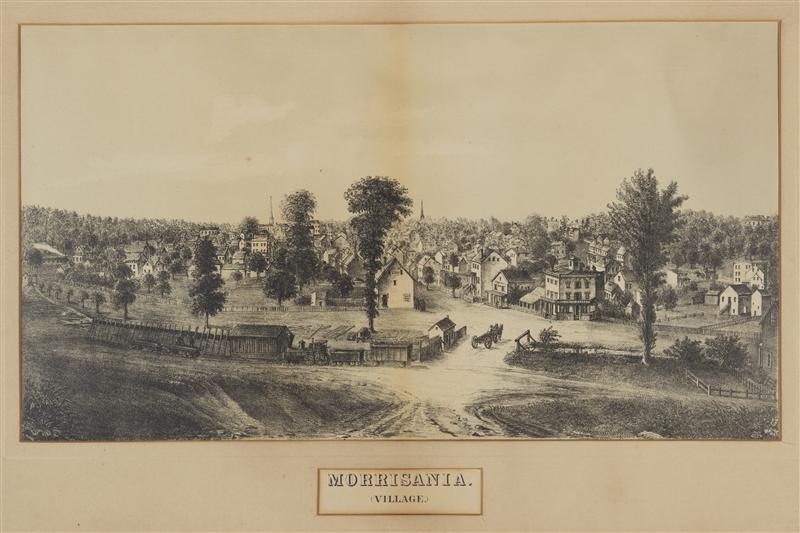
The village of Morrisania, pictured here in 1860, which arose from land owned by the Morrises after the railroad encouraged a row of ‘depot towns.’

MCNY
MCNY

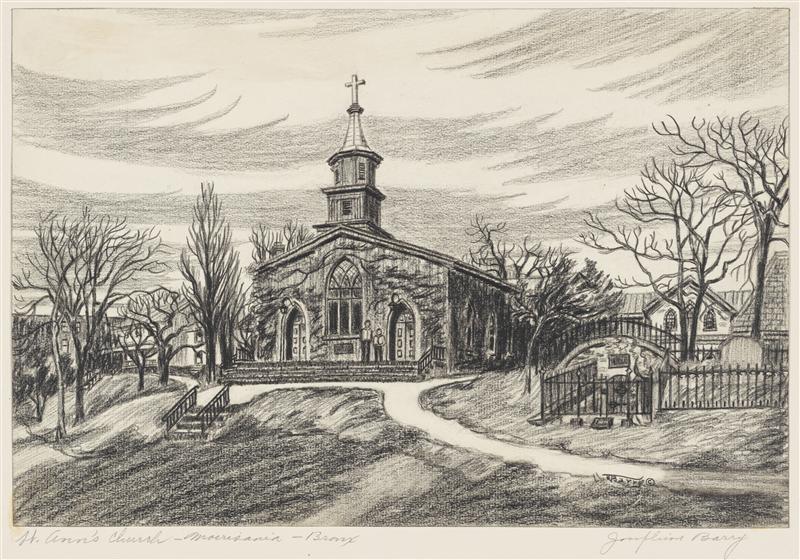
St Ann’s Episcopal Church in Morrisania, where both Lewis and Gouverneur Morris (and Gouverneur’s wife Ann) are buried.

M3Y33813
Courtesy MCNY

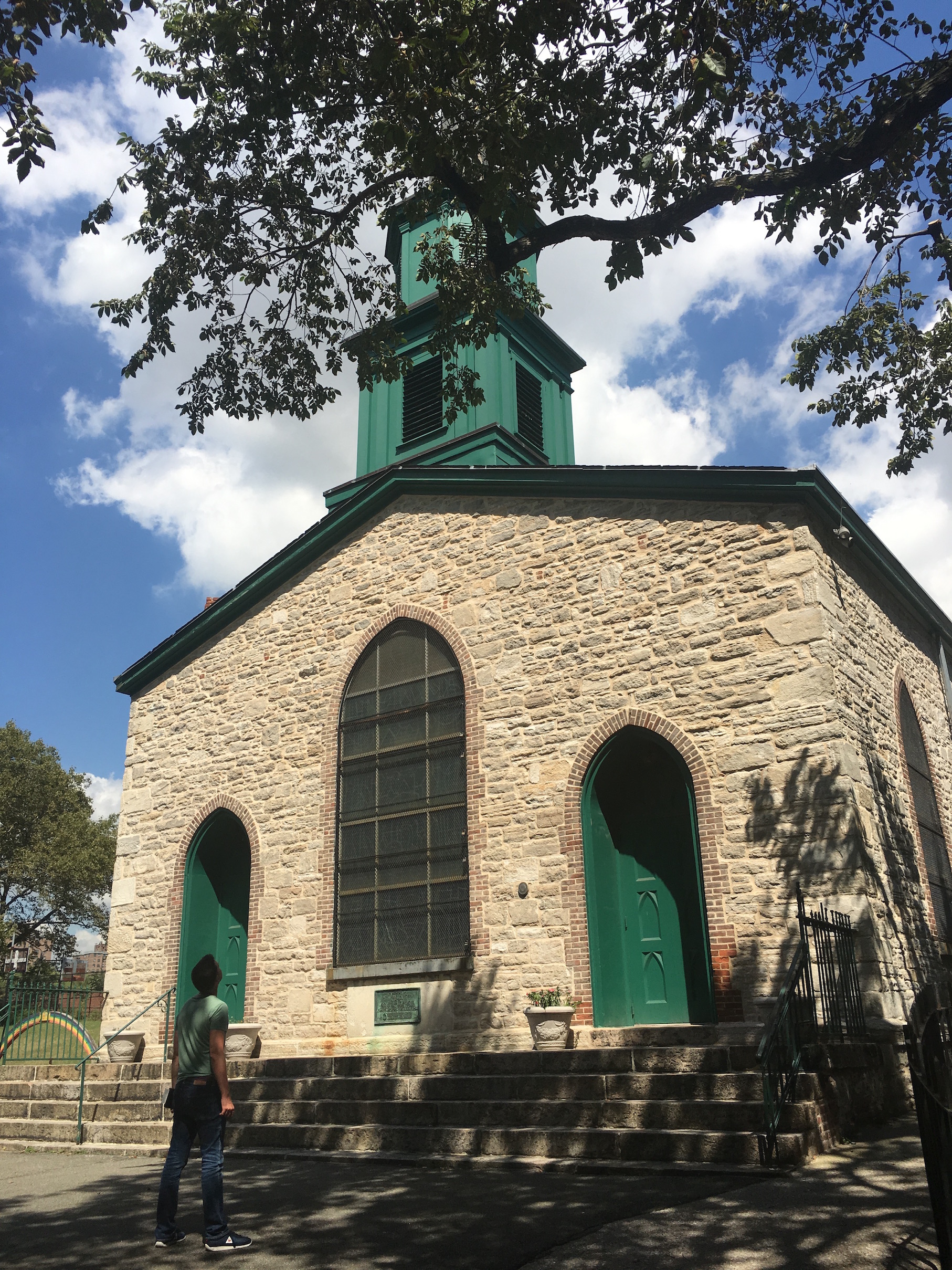
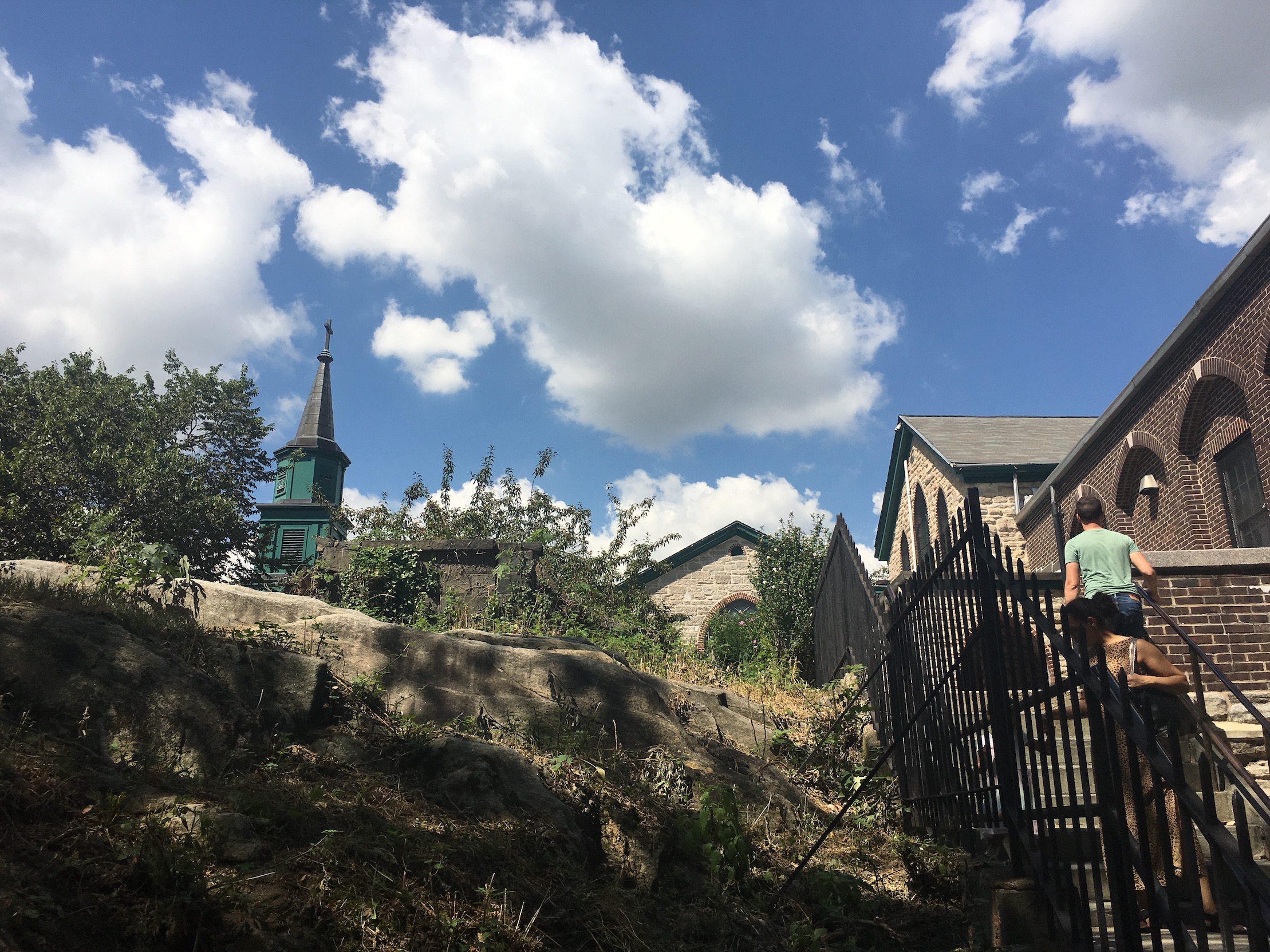
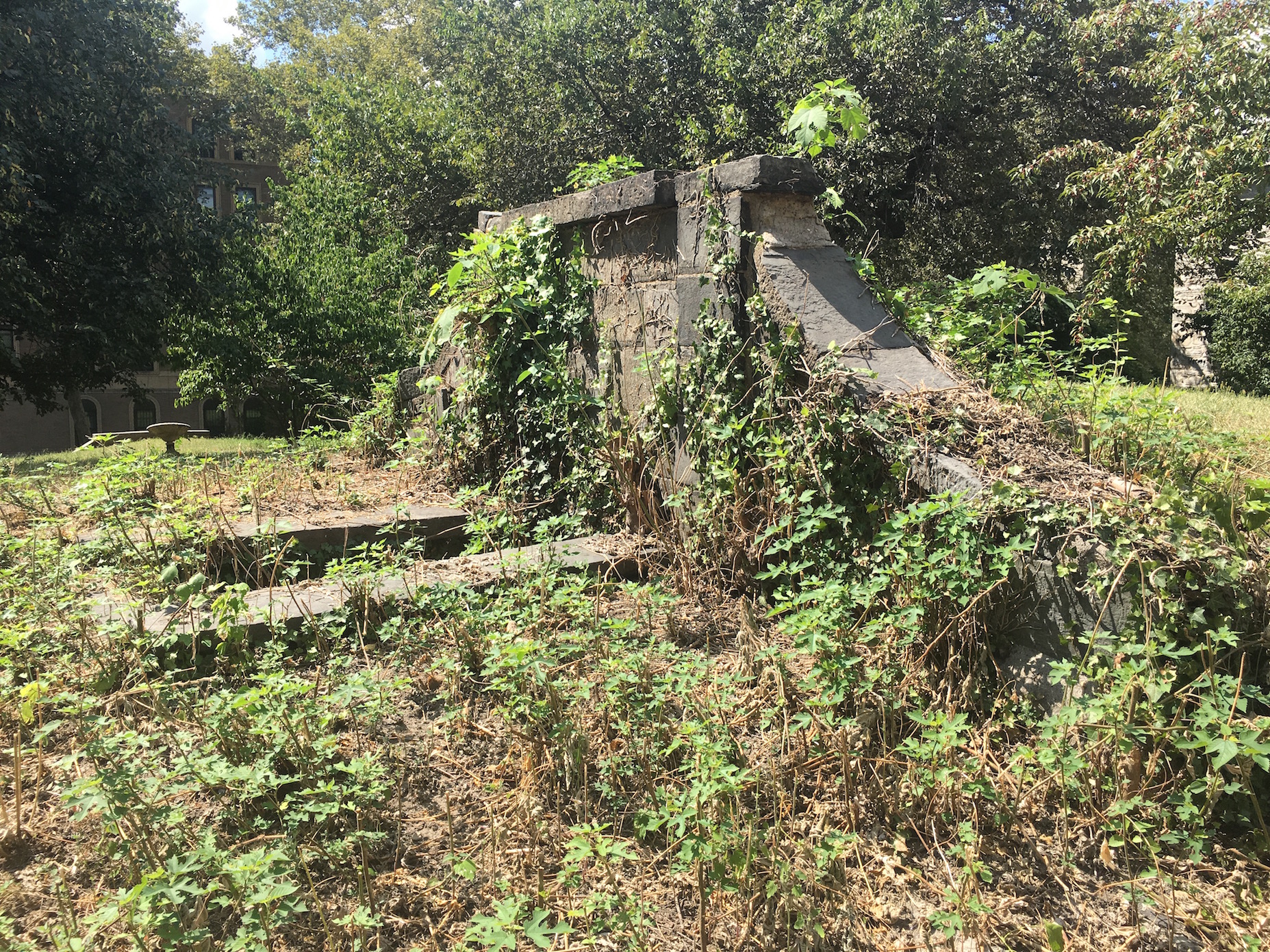
A view of St. Ann’s today:

IMG_0079 IMG_0078 IMG_0081

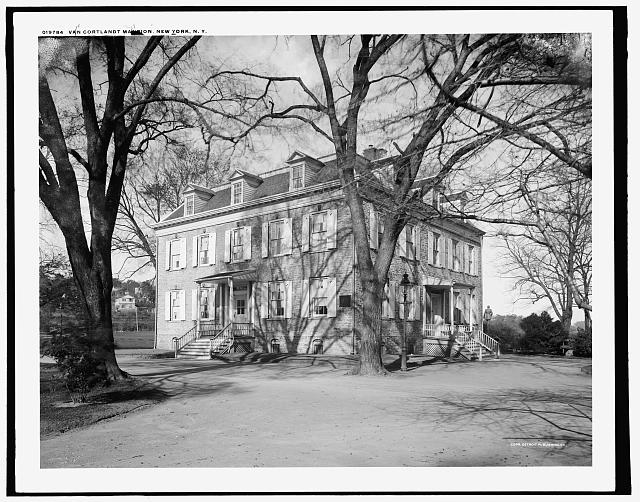
The Van Cortlandt Mansion then (in 1906)…

4a13693r

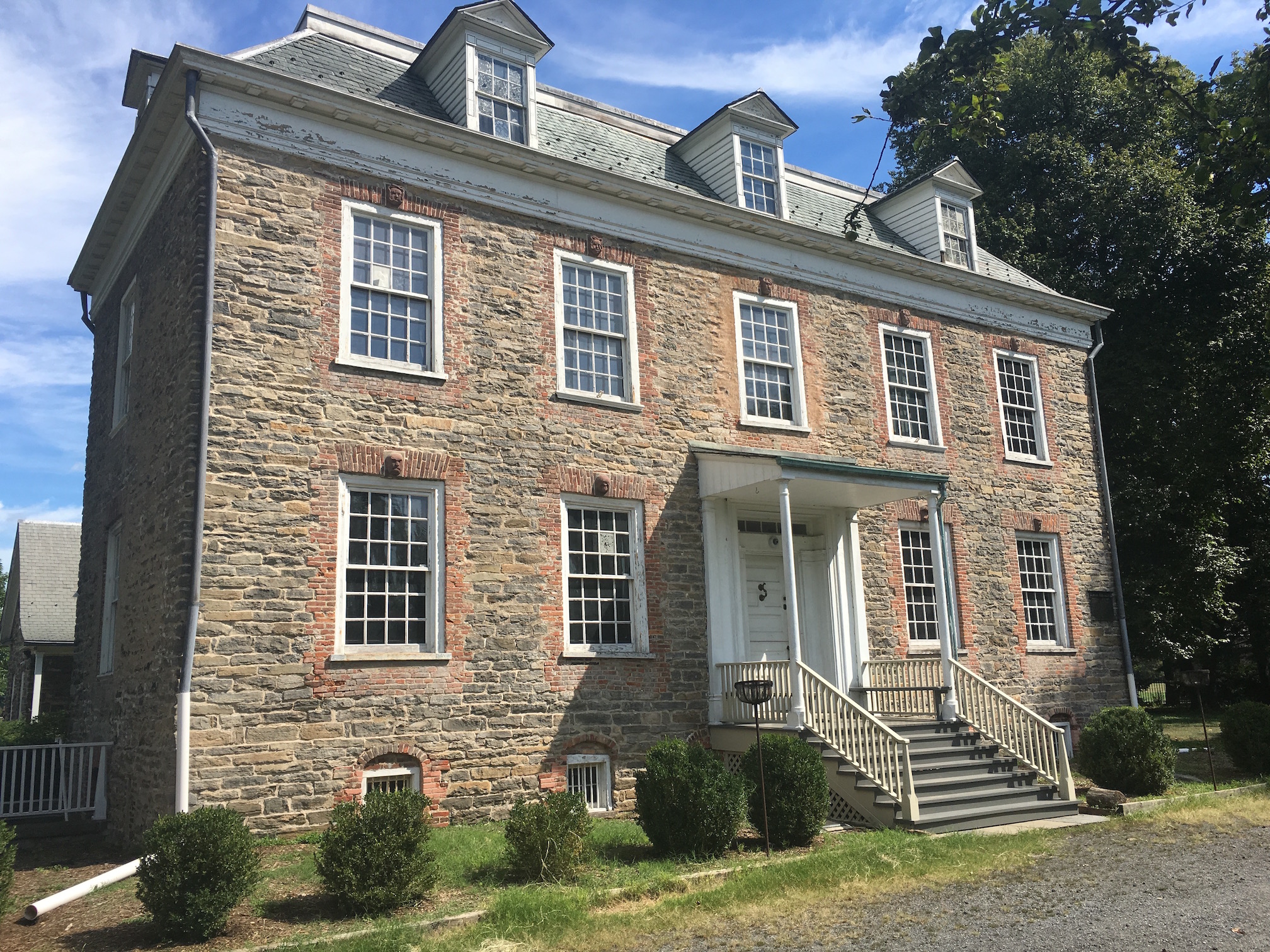
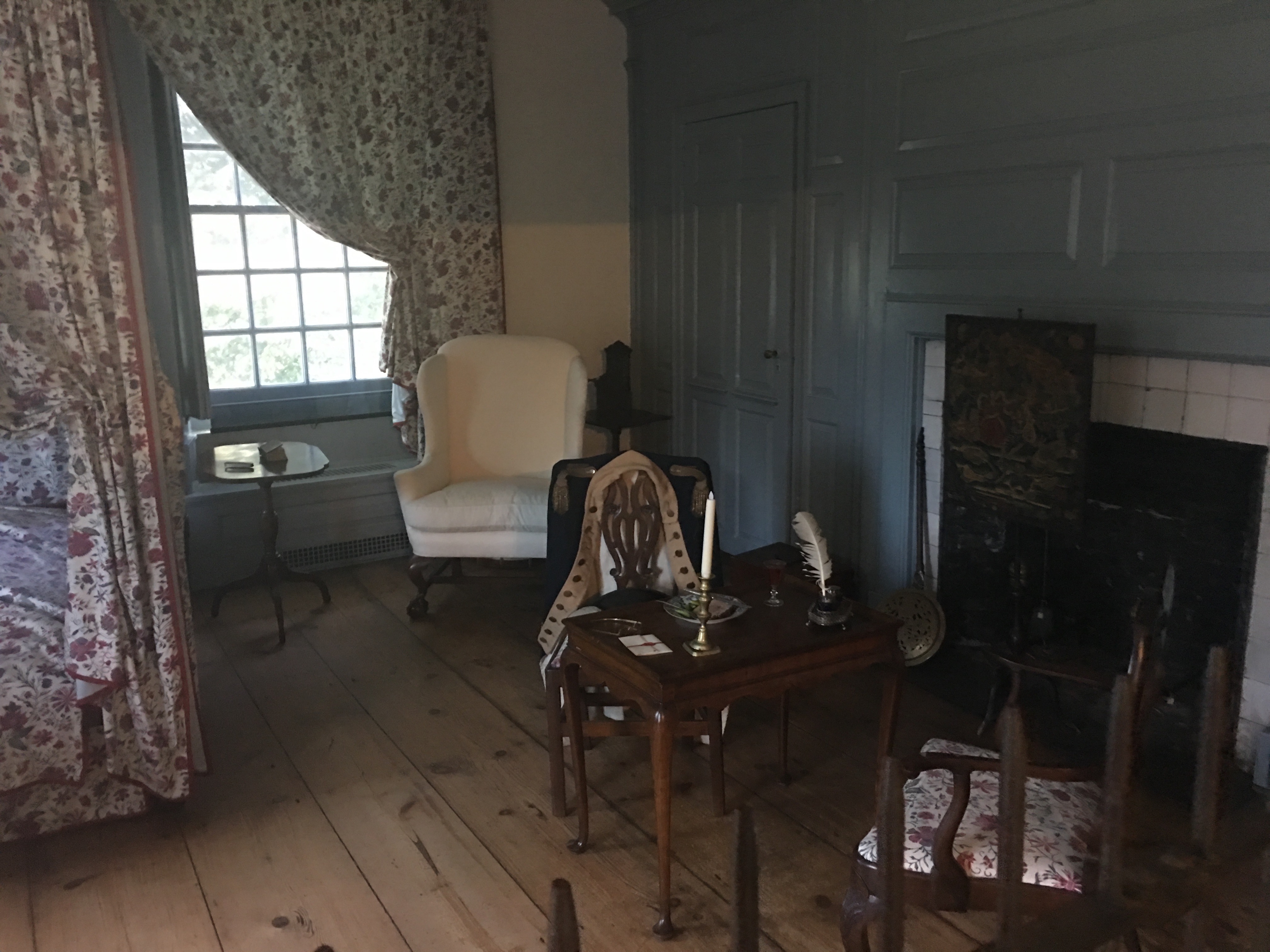
And today (featuring George Washington’s room):

IMG_0057 IMG_0067

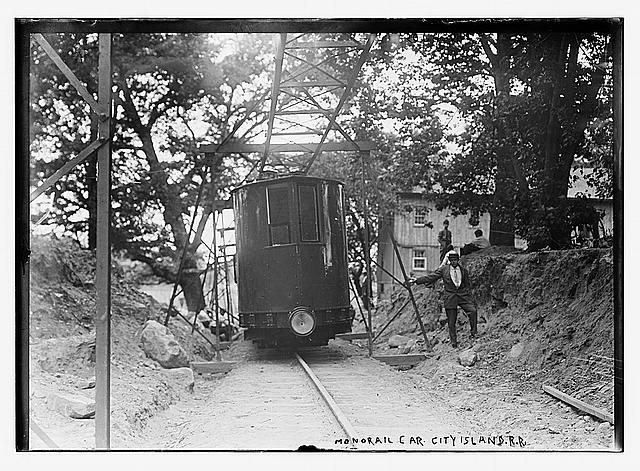
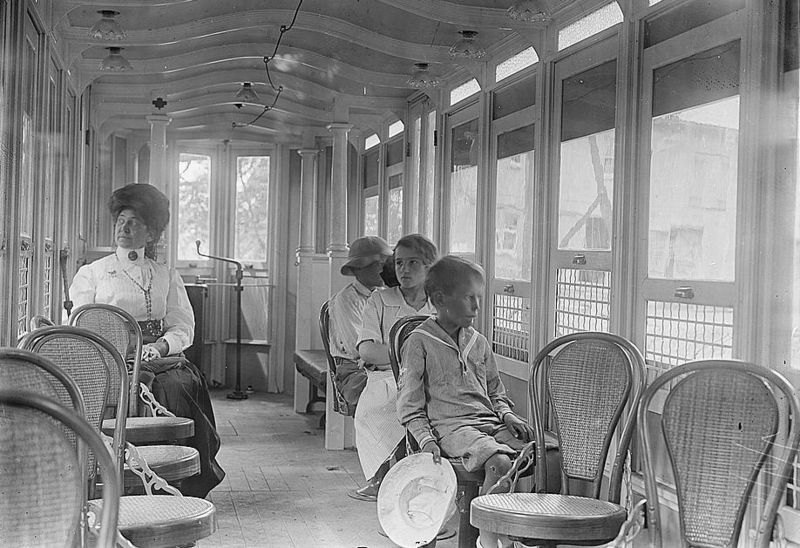
The old City Island monorail from 1910

LOC
LOC

mono

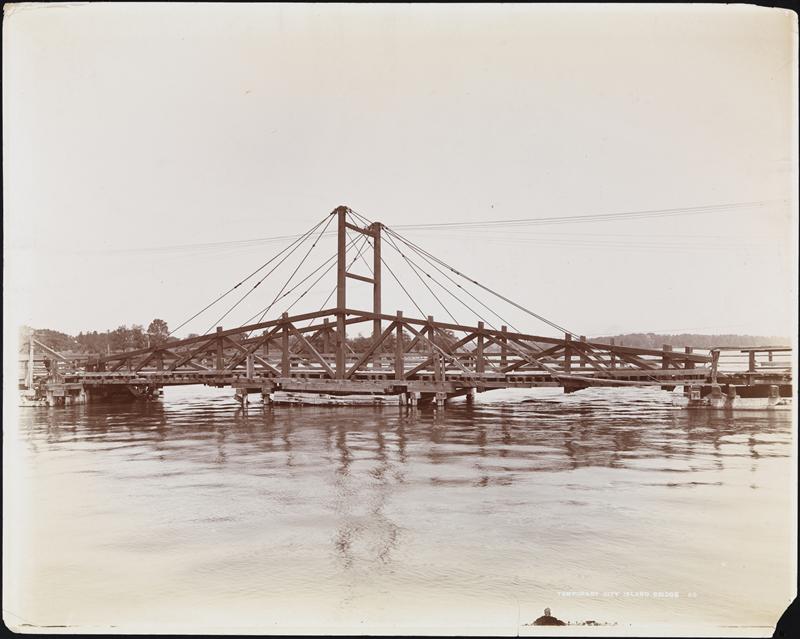
The old City Island Bridge, the only way on or off the island that’s not a boat. That remains true to this day, although the bridge is much sturdier-looking today!

MCNY
MCNY

The old City Island Cemetery with Hart Island in the distance.

IMG_0088

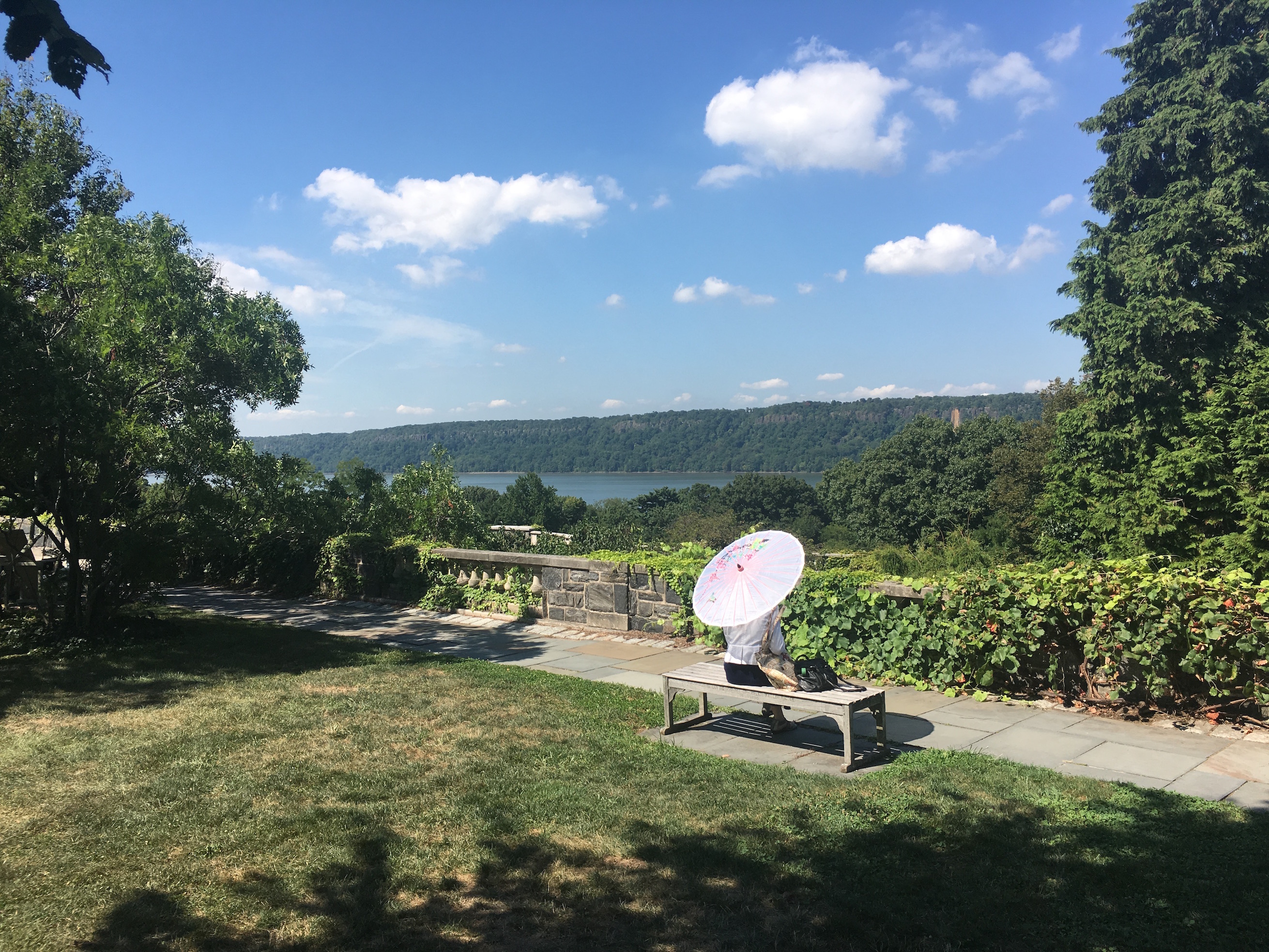
Breathtaking Wave Hill and the grounds which provide an unbelievable view of the Hudson River and the Palisades.

IMG_0024 IMG_0021

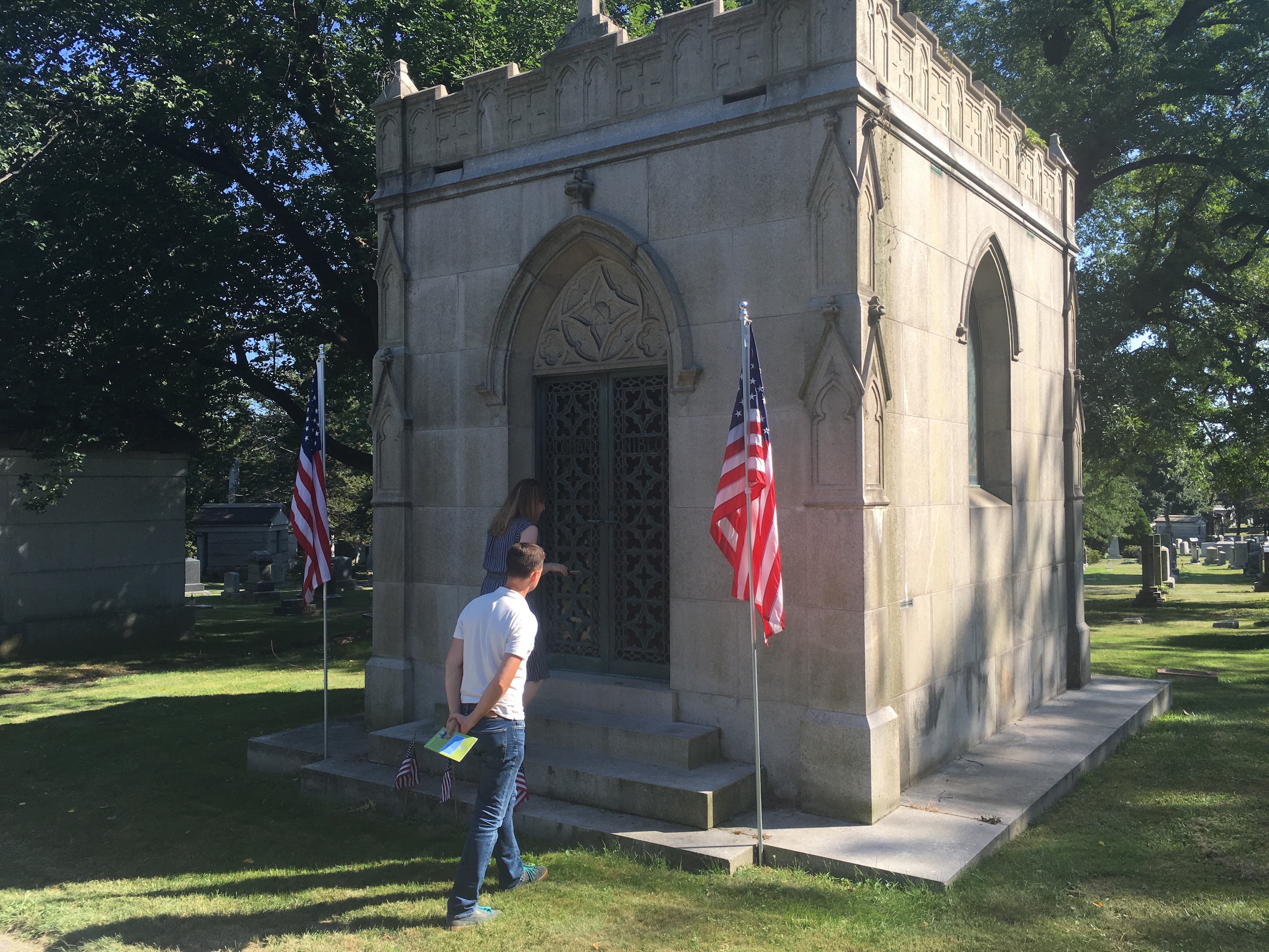
Here’s Tom, getting a peek inside George M Cohan’s mausoleum at Woodlawn Cemetery:

IMG_0039

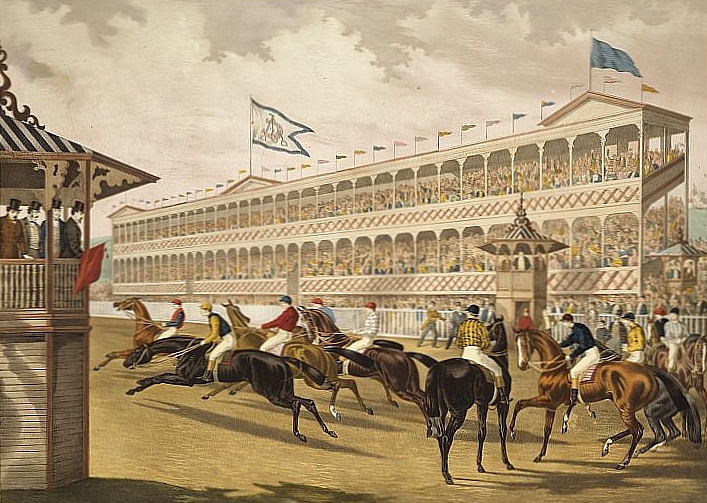
Jerome Park Racetrack where the Belmont Stakes were first run in 1867.

Jerome_Park_Racetrack_1868

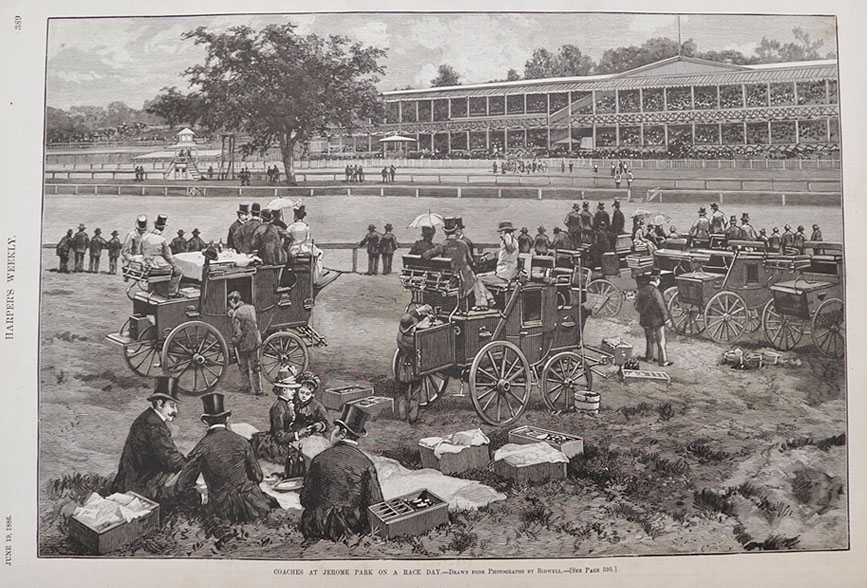
From Harpers Weekly, 1886:

jerome

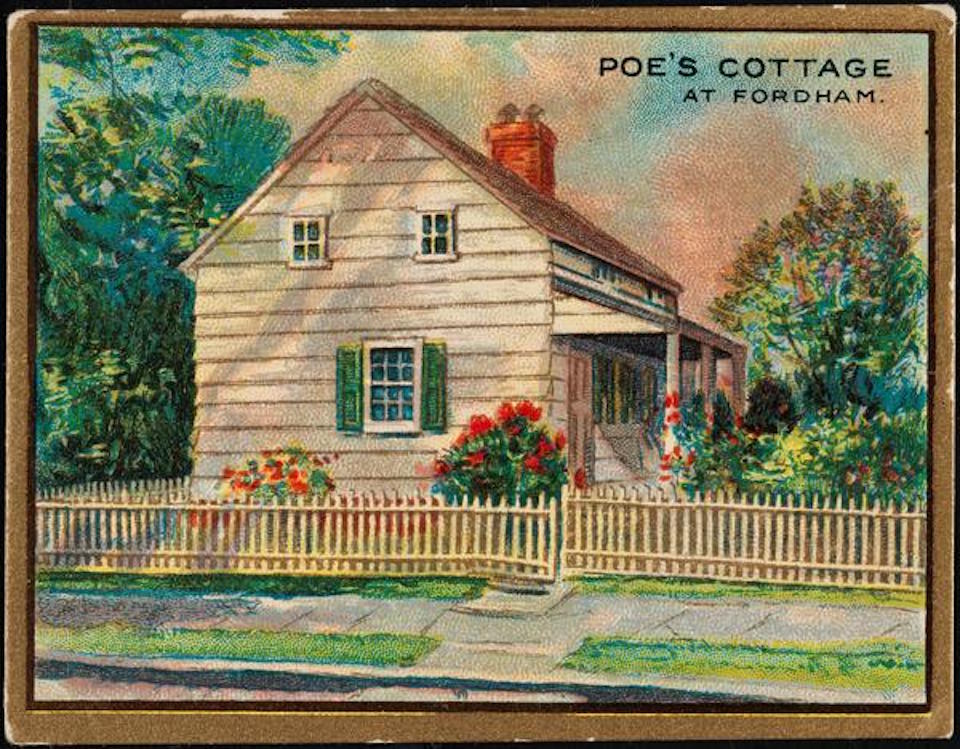
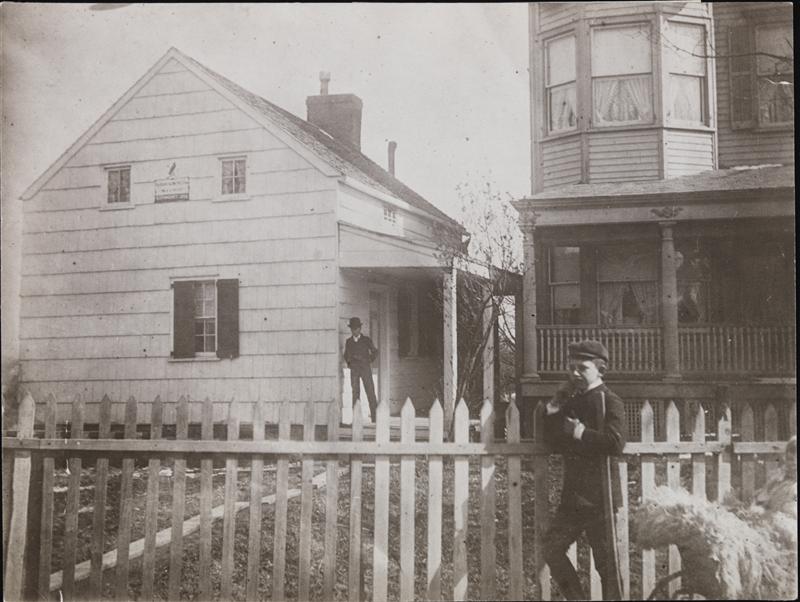
The former (awkward) location of Edgar Allan Poe’s cottage. It has since been moved to the Grand Concourse.

MN162570 MNY220989

And finally — Gouverneur Morris’ mansion which — believe it or not — stood at the foot of St. Ann’s Avenue until the 20th century.

MCNY
MCNY

We want to give a big thanks to the Bronx Historical Society, Wave Hill, Woodlawn Cemetery and St. Ann’s Episcopal Church for helping us with our research. Keep coming back to the blog throughout the month of September as we’ll have additional stories about these places and others.

Categories
Amusements and Thrills Podcasts

Digital City: New York and the World of Video Games

PODCAST The history of video games and arcades in New York City.

New York has an interesting, complex and downright weird relationship with the video game, from the digital sewers below Manhattan to the neon-lit arcades of Times Square. It’s not all nostalgia and nerviness; video games in the Big Apple have helped create communities and have been exalted as artistry.

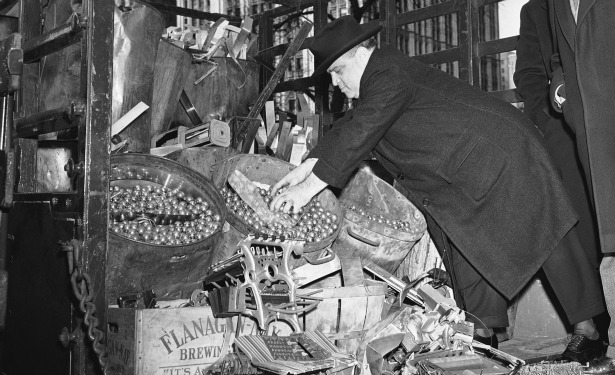
First — the relationship between the city and the arcade itself, once filled with shooting galleries and see ball. When pinball machines were introduced in the 1930s, many saw them as a gateway into gambling. Mayor Fiorello La Guardia personally saw to it that they were taken off the streets.

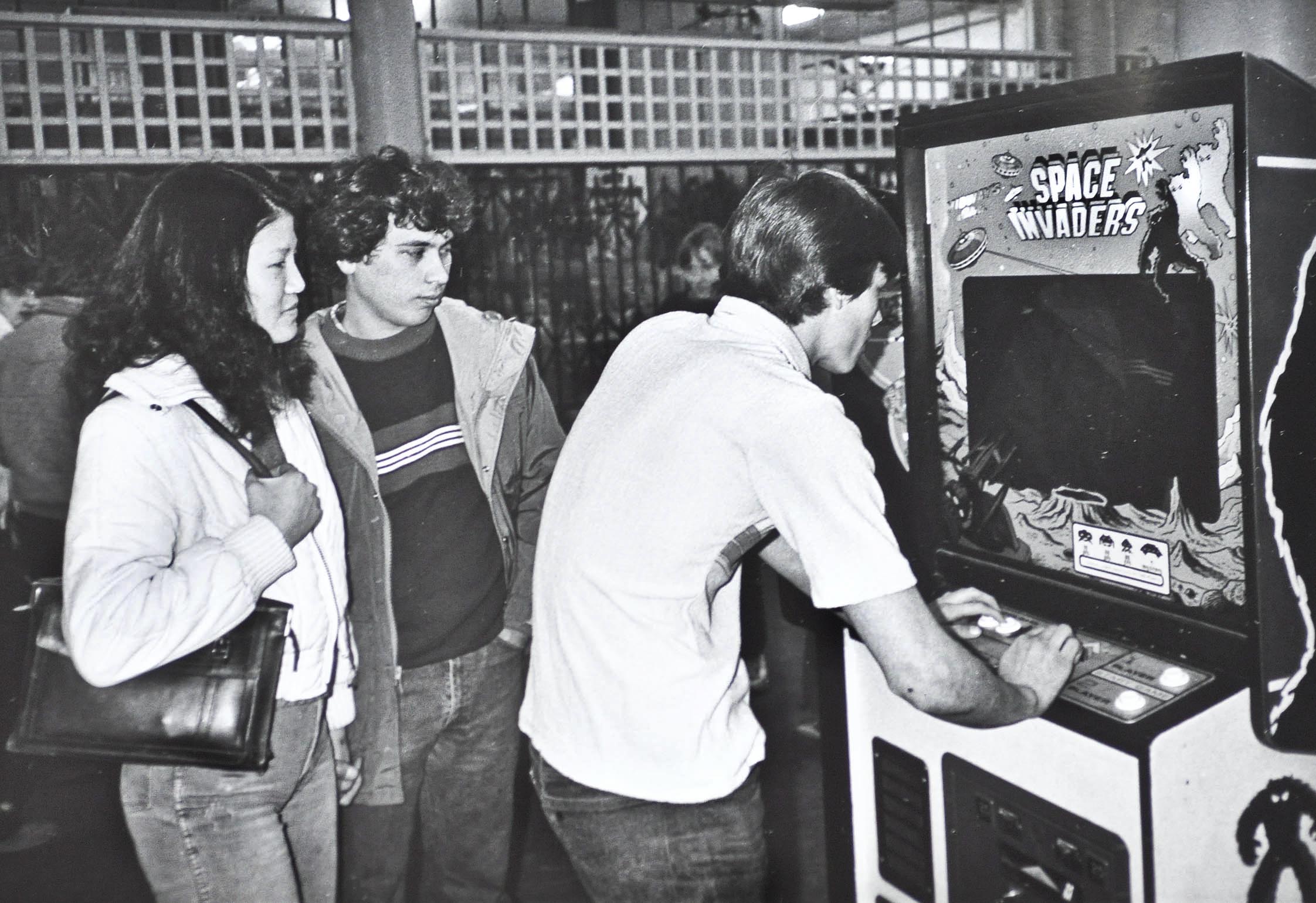
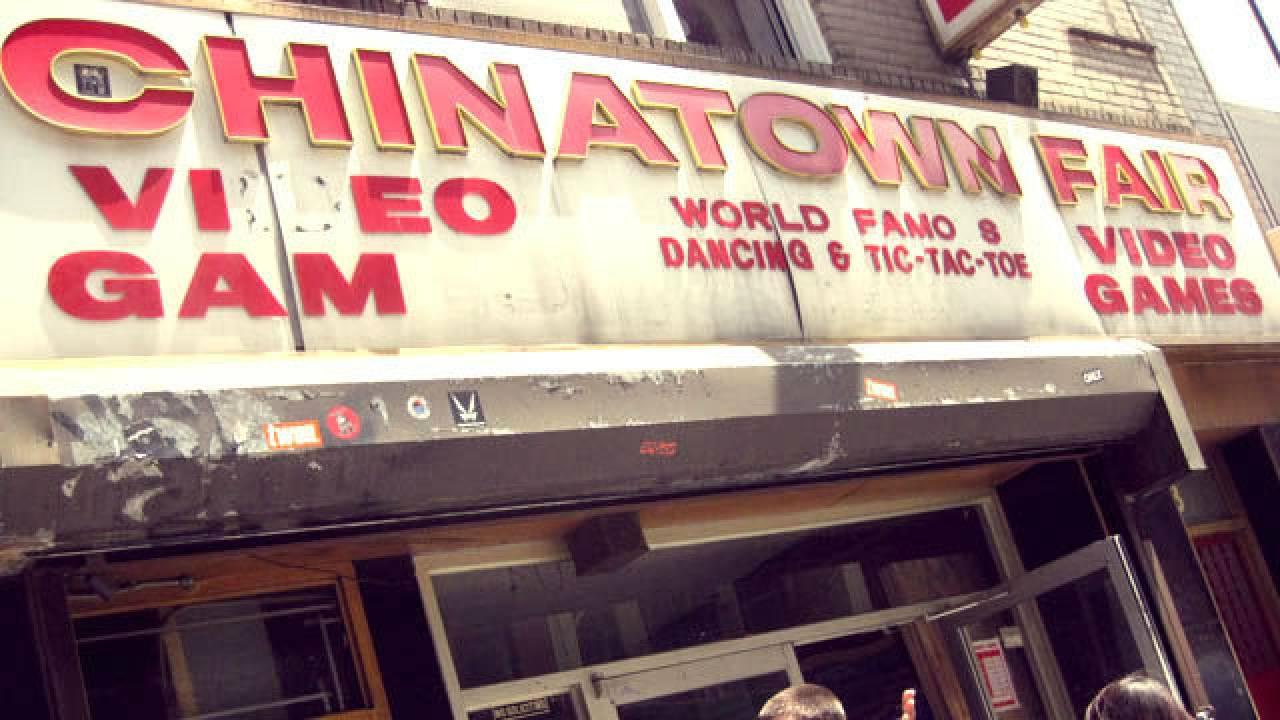
The era of Space Invaders, Pac Man and Donkey Kong descends in New York during its grittiest period – the late 70s/early 80s – and arrives, like an alien presence, into many neighborhood arcades including one of the most famous in Chinatown – an arcade that is still open and the subject of a new documentary The Lost Arcade.

While the video game industry is not something New York City is particularly associated with, the city does in fact set the stage for this revolution of blips and joysticks at the start of the 20th century and from such unconventional places as the West Village and Flushing Meadows-Corona Park.

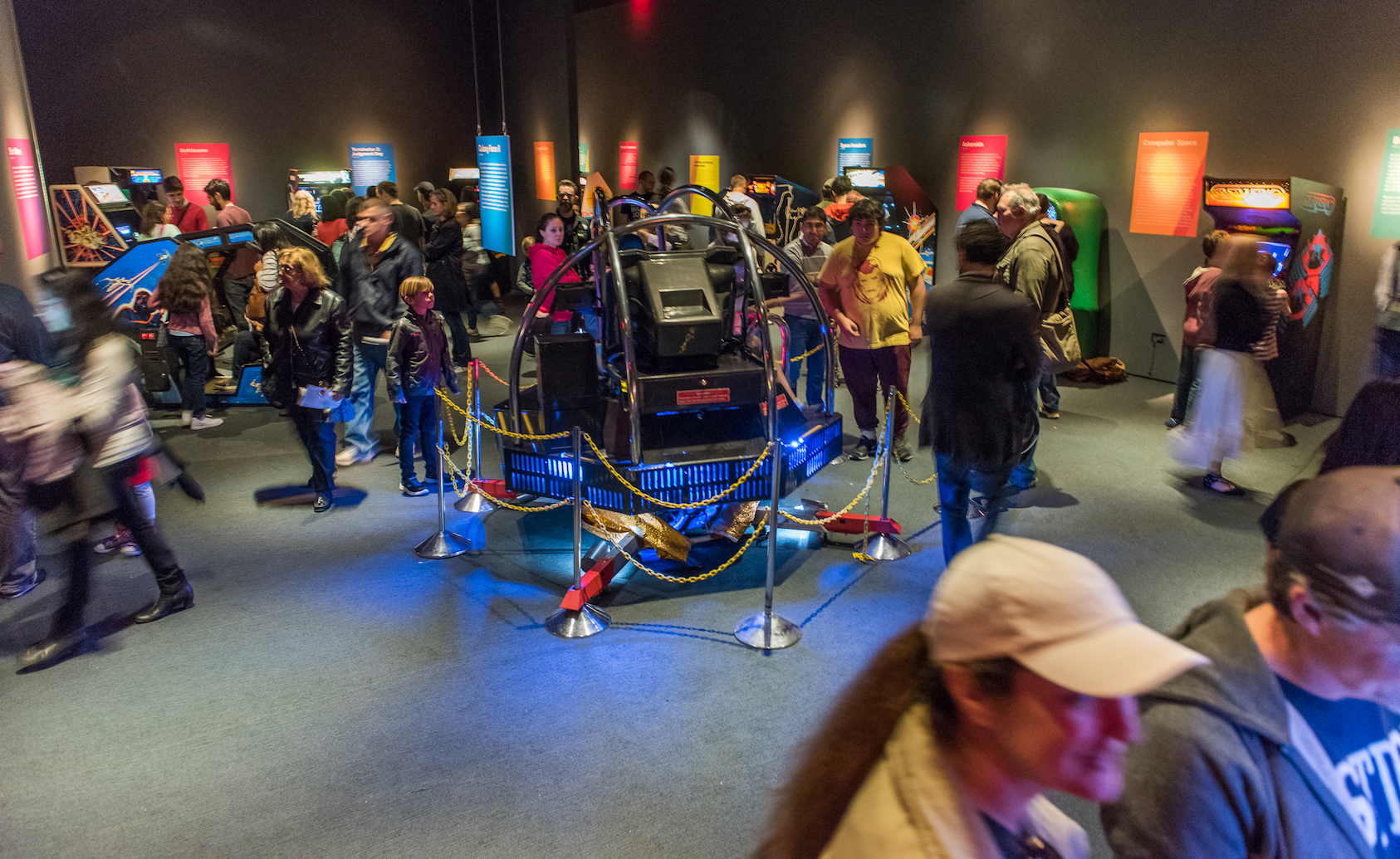
In Queens you’ll find one of America’s great tributes to the video game, in the spectacular arcade collection at the Museum of the Moving Image.

Finally — A look inside the games themselves to explore New York as a digital landscape that continues to be of fascination to game developers and players alike.

So are you ready Player One? Grab your quarters and log in to this New York adventure through the world of video games.


The Bowery Boys: New York City History podcast is brought to you …. by you!

We are now producing a new Bowery Boys podcast every two weeks. We’re also looking to improve the show in other ways and expand in other ways as well — through publishing, social media, live events and other forms of media. But we can only do this with your help!

We are now a member of Patreon, a patronage platform where you can support your favorite content creators for as little as a $1 a month.

Please visit our page on Patreon and watch a short video of us recording the show and talking about our expansion plans. If you’d like to help out, there are five different pledge levels (and with clever names too — Mannahatta, New Amsterdam, Five Points, Gilded Age, Jazz Age and Empire State). Check them out and consider being a sponsor.

We greatly appreciate our listeners and readers and thank you for joining us on this journey so far. And the best is yet to come!


The trailer for The Lost Arcade. It opens today in San Francisco at the Roxie and Friday, August 12, in New York at the Metrograph. Check out their Facebook page for more information about upcoming events and screenings.

The current exhibition at the Museum of the Moving Image — ARCADE CLASSICS: VIDEO GAMES FROM THE COLLECTION — continues until mid-September.

Courtesy Museum of the Moving Image

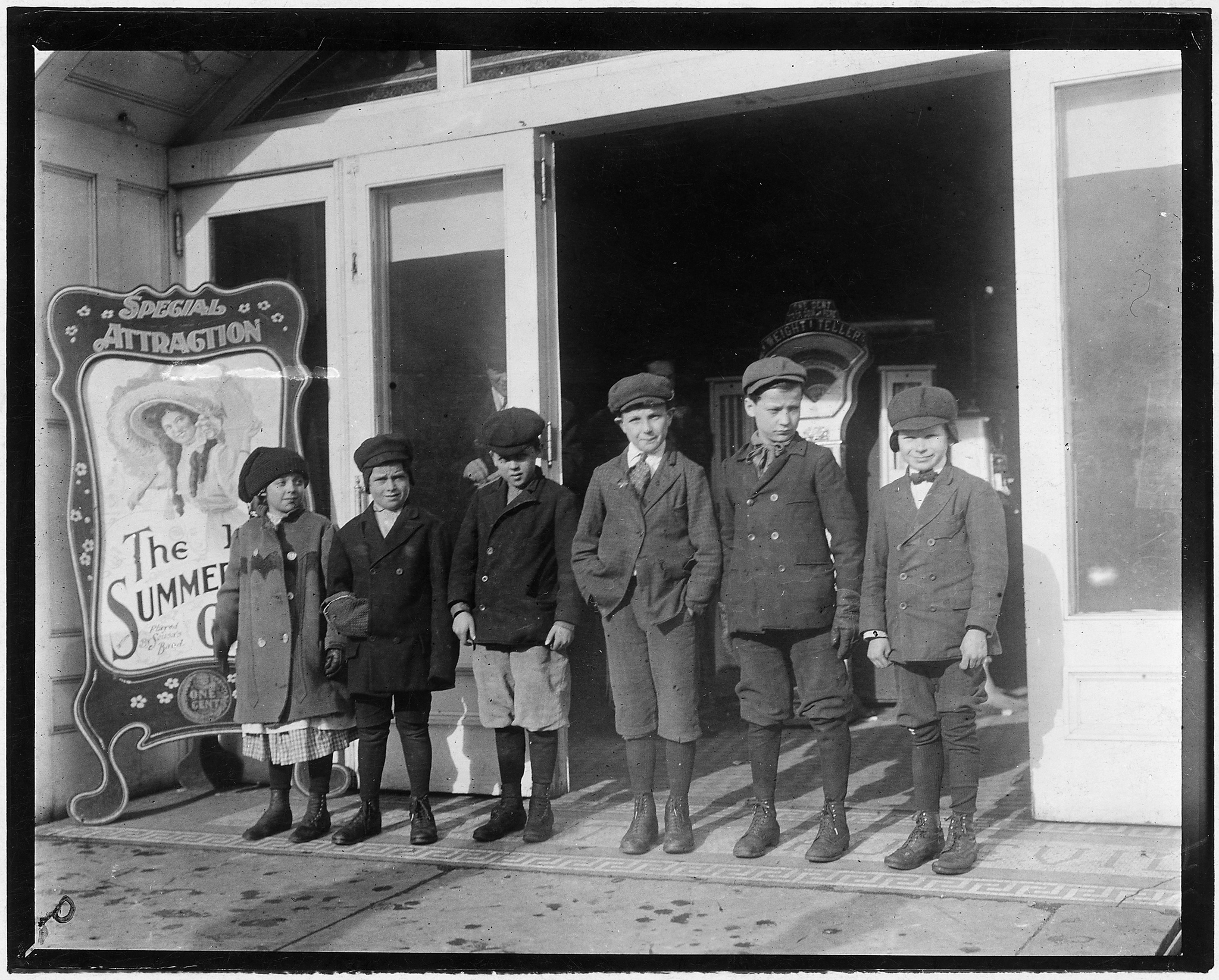
Children at a penny arcade in Schenectady, NY, in 1910

Photo by Lewis Hine, courtesy US National Archives

Mayor La Guardia was not a fan of pinball. Here, in a 1942, he rounds up the pinball balls. Read more in Seth Porges’ article for Popular Mechanics:

laguardiapinball.banner.AP.jpg

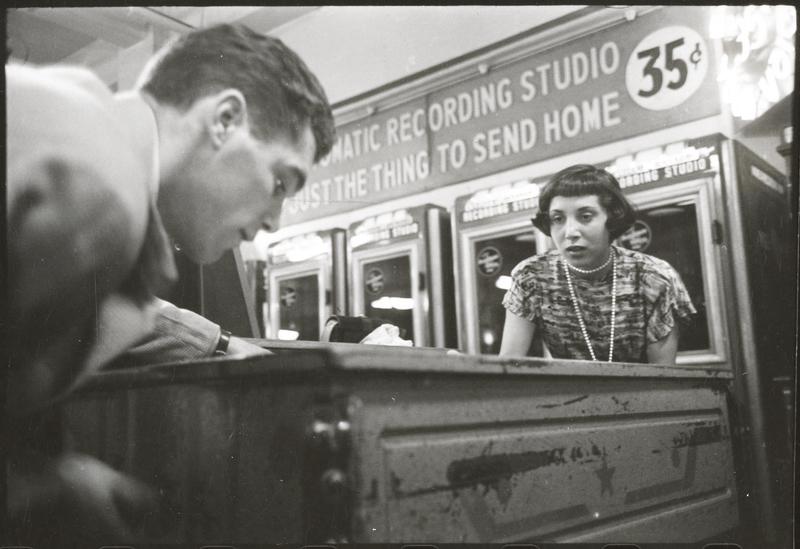
In a photo taken in 1948 by Stanley Kubrick for LOOK Magazine, prizefighter Walter Cartier plays an arcade game with a young woman.

Courtesy MCNY
Courtesy MCNY

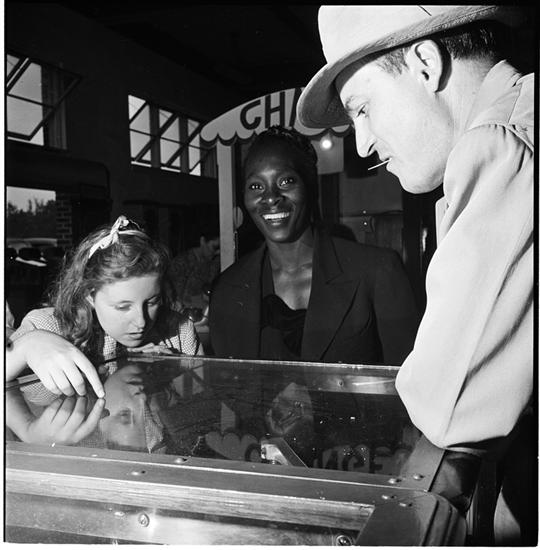
And another by Kubrick, from 1946, at Palisades Amusement Park.

MCNY
MCNY

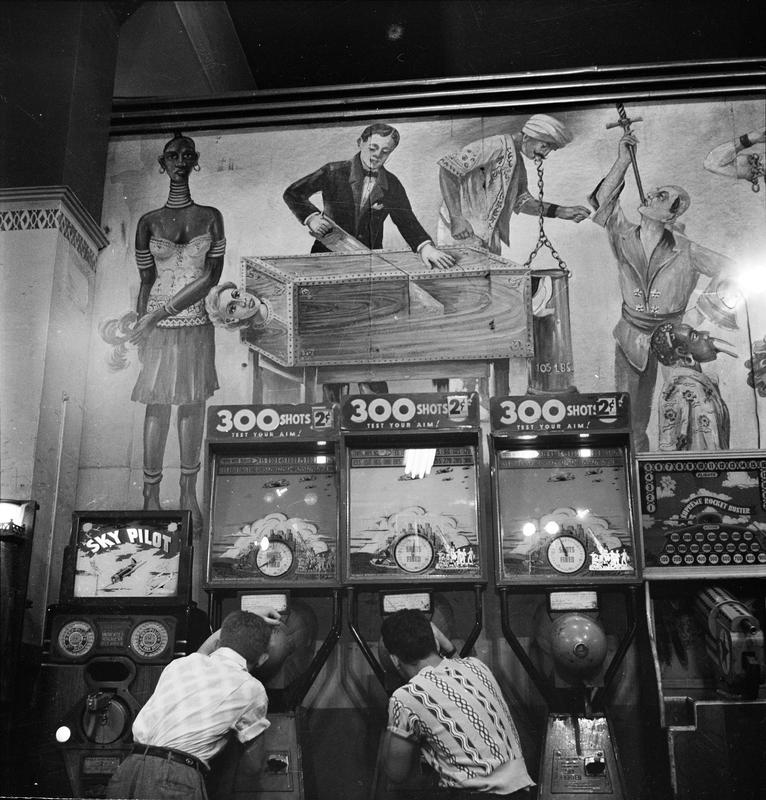
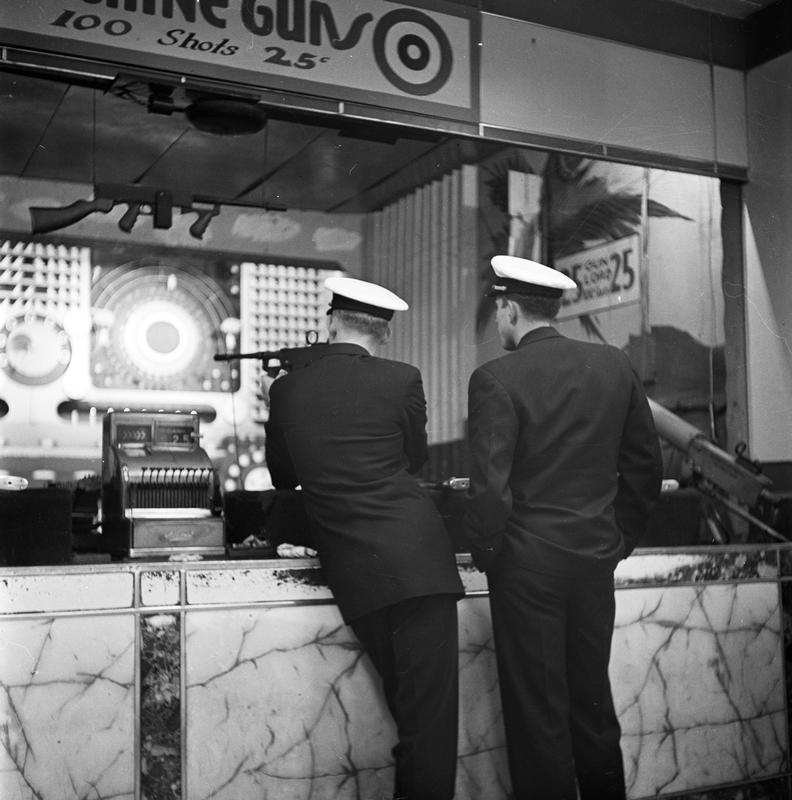
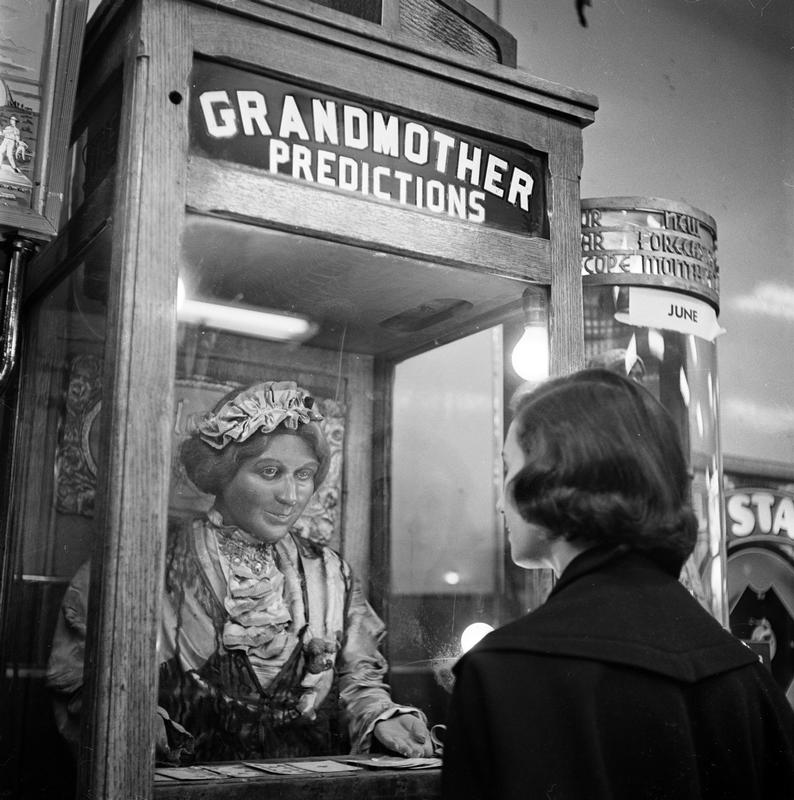
A couple images of a penny arcade and shooting gallery in 1950, photo by Robert Offergeld.

MNY326702

Courtesy MCNY
Courtesy MCNY
Courtesy MCNY
Courtesy MCNY

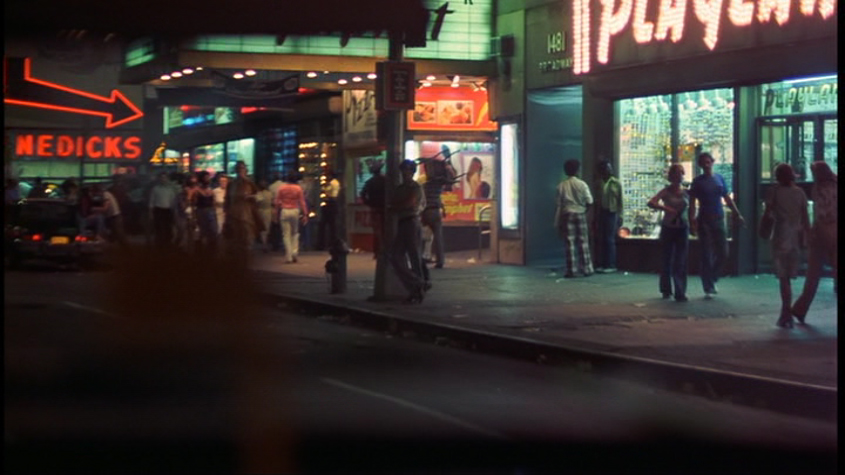
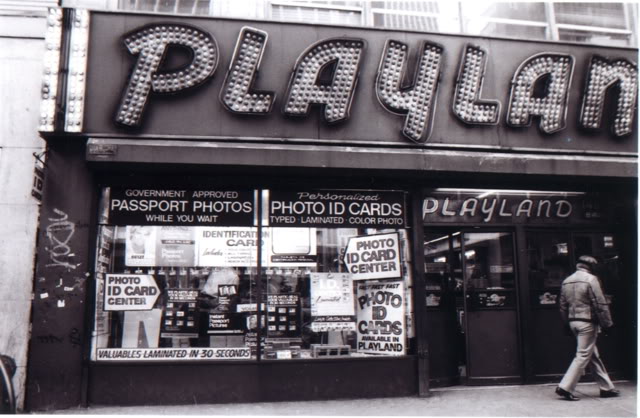
Playland on 42nd Street, courtesy the film Taxi Driver

Courtesy Scouting NY

5334486149_31979077f2_o

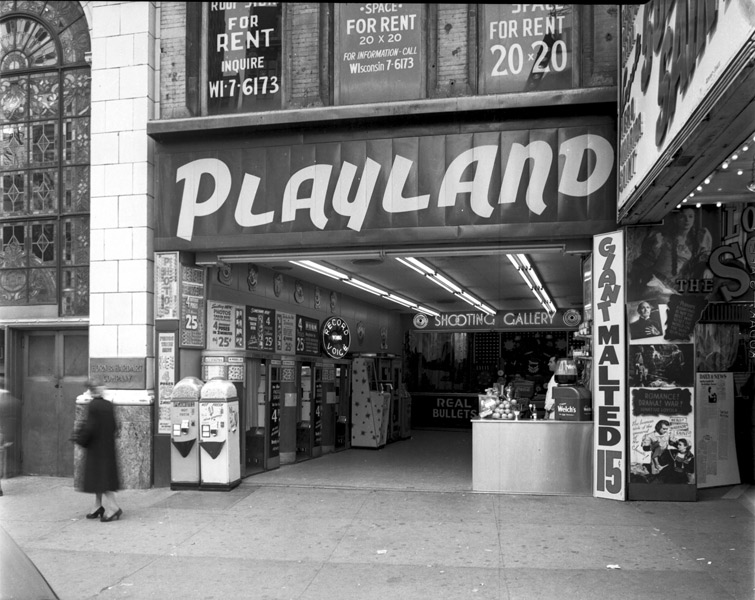
The other Playland at Broadway and 47th Street, pictured here in the 1950s. GIANT MALTED 15 CENTS!

Office for Metropolitan History

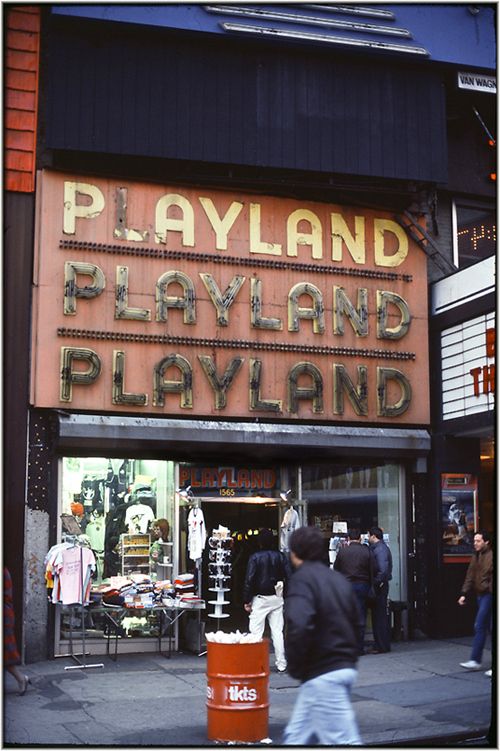
And later from the 1970s….

6a09ef0c0a54d711e169d152edb362b3


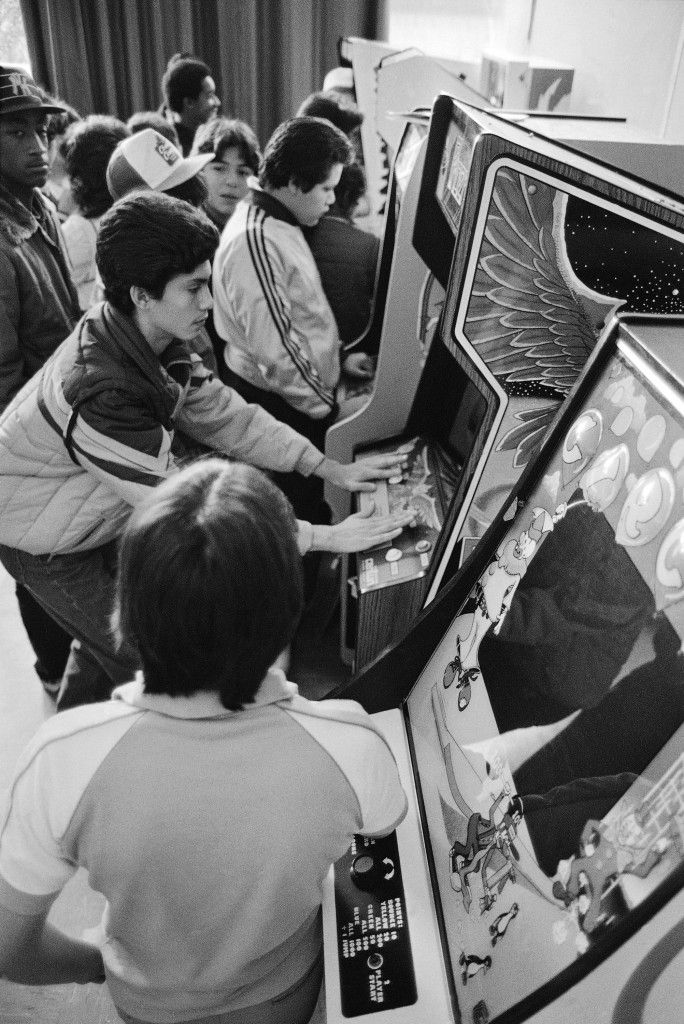
New York City arcade, 1981.

8f73ef985c84aa31fb92eff32c8f520e


Courtesy Twin Galaxies

The original Chinatown Fair sign, near its closure in 2011. It reopened the following year, perhaps a bit more family friendly than its precursor.

Courtesy Giant Bomb
Courtesy Giant Bomb

Screenshot from Mario Bros. (1983)

Courtesy GamesDBase
Courtesy GamesDBase


Screenshot from Amnesia (1986)

Courtesy Hazlift
Courtesy Hazlift


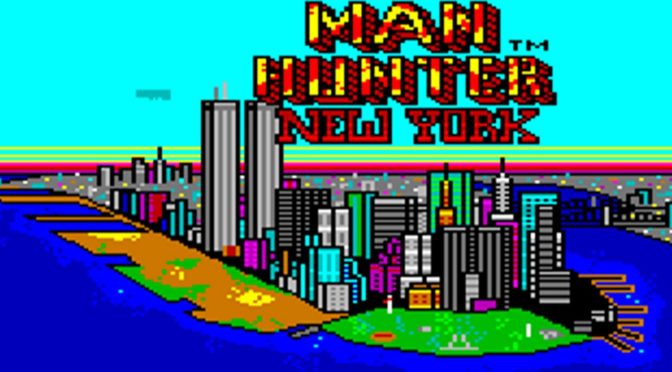
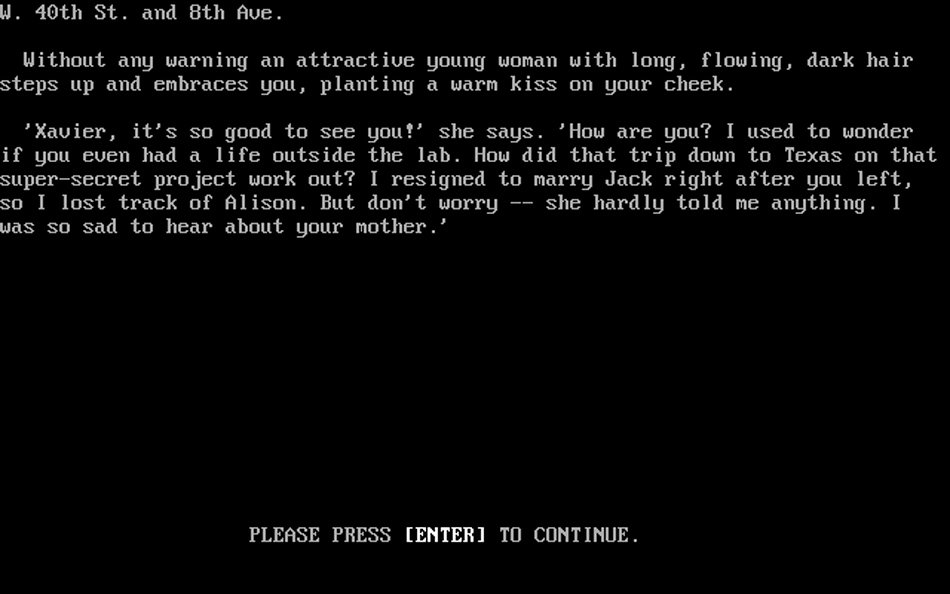
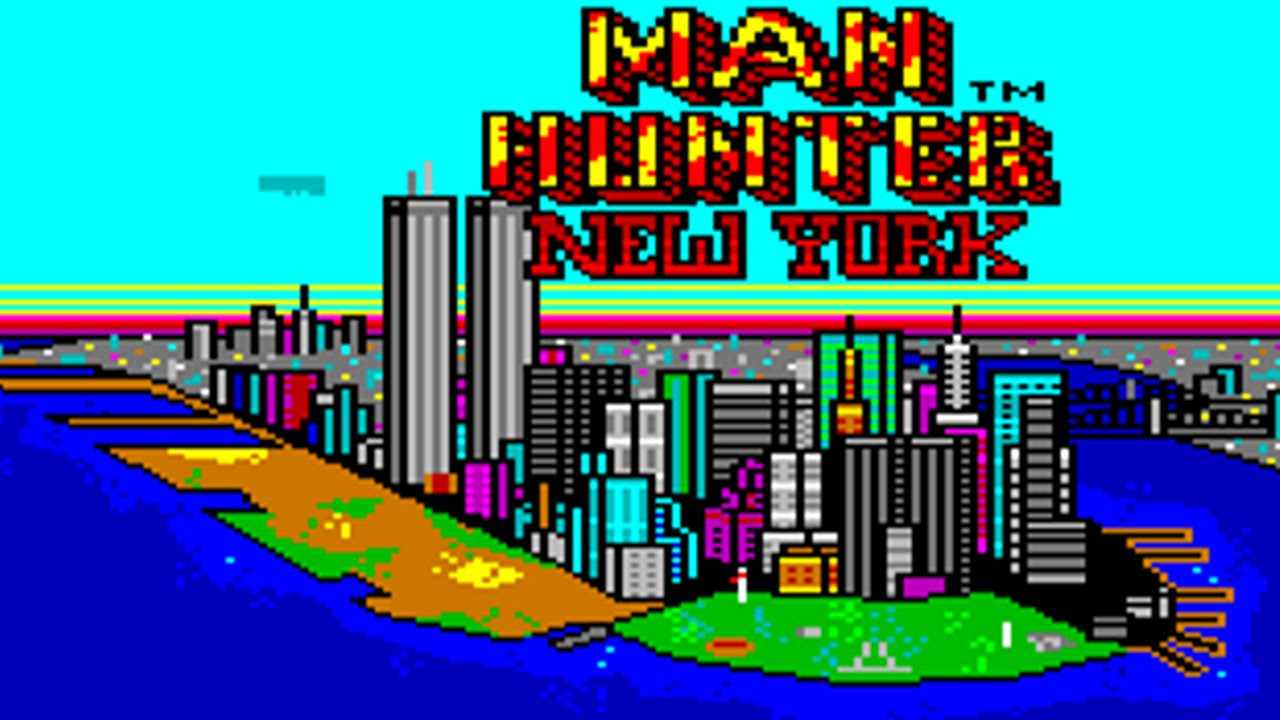
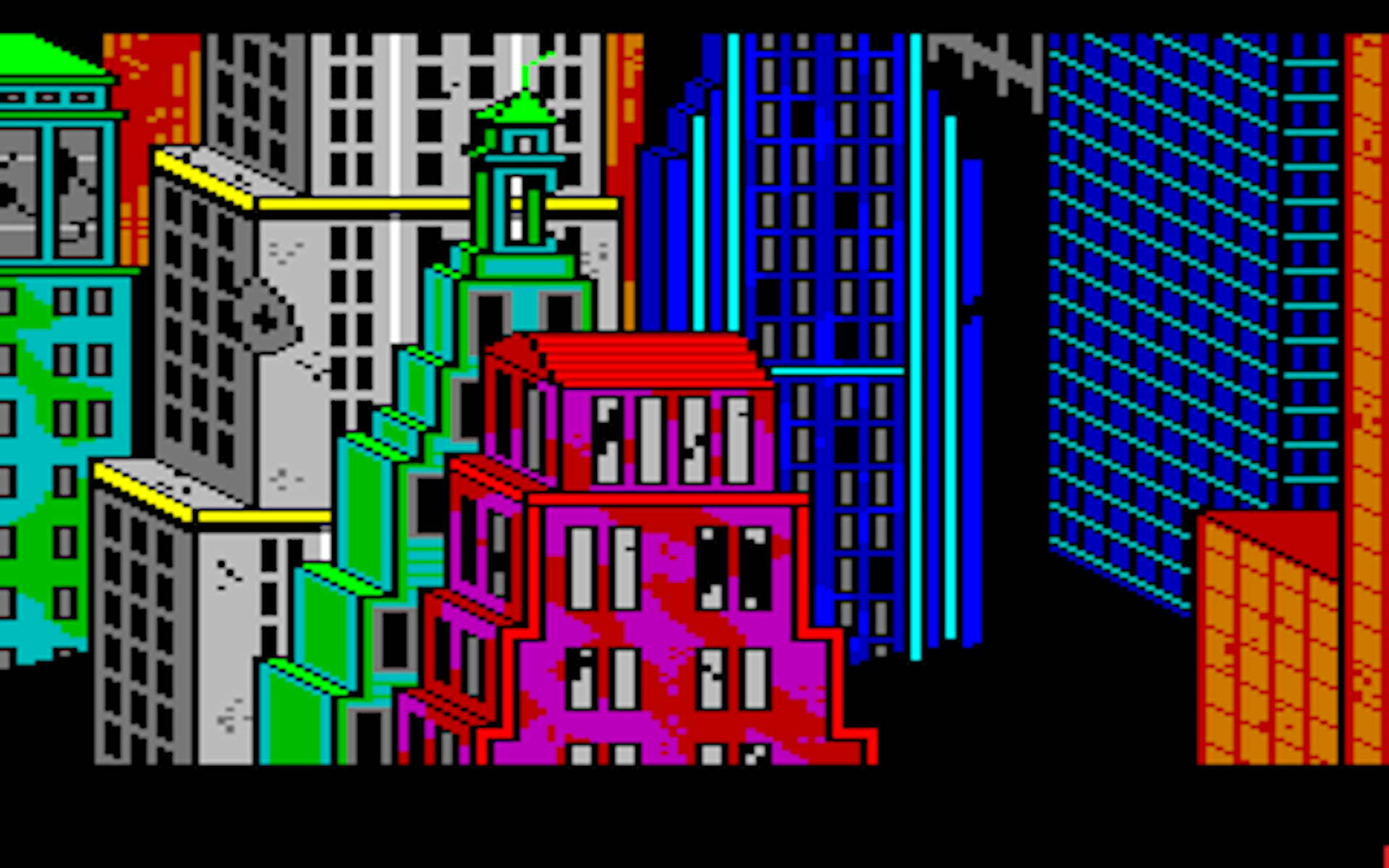
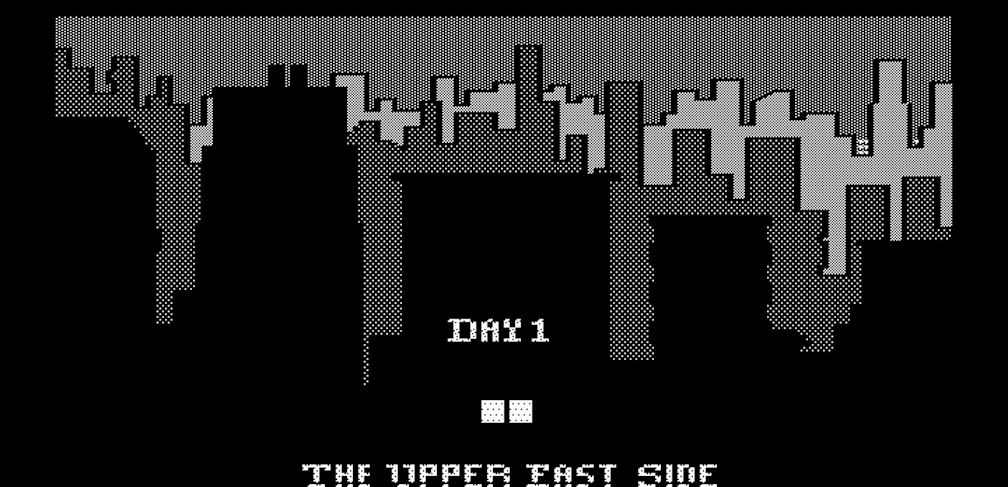
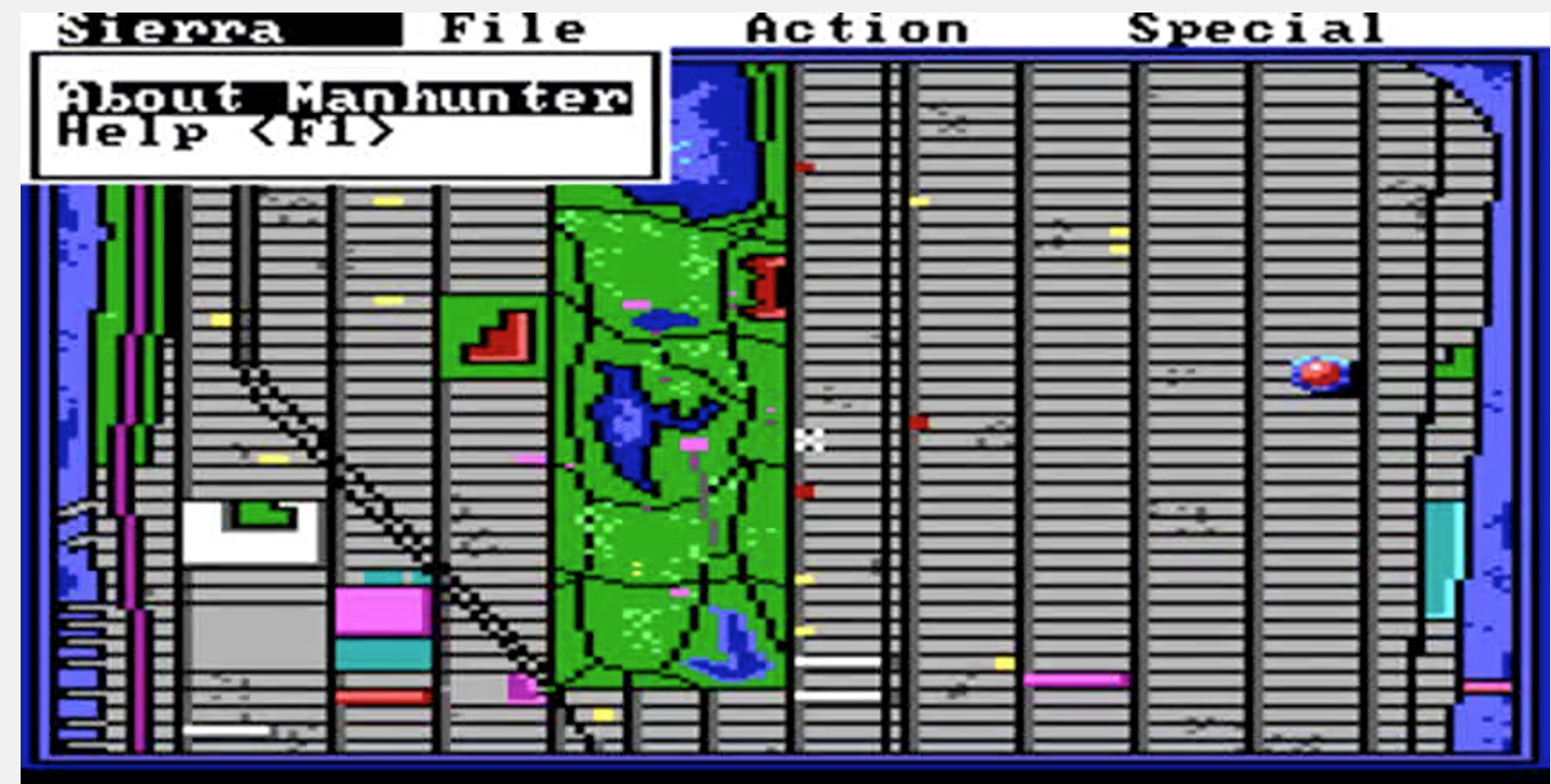
Images from Manhunter: New York (1988)

maxresdefault

335246-manhunter-new-york-amiga-screenshot-intro-new-york-looks-a

181573-manhunter-new-york-dos-screenshot-intro-hercules-graphics

Screen Shot 2016-08-04 at 12.14.12 PM


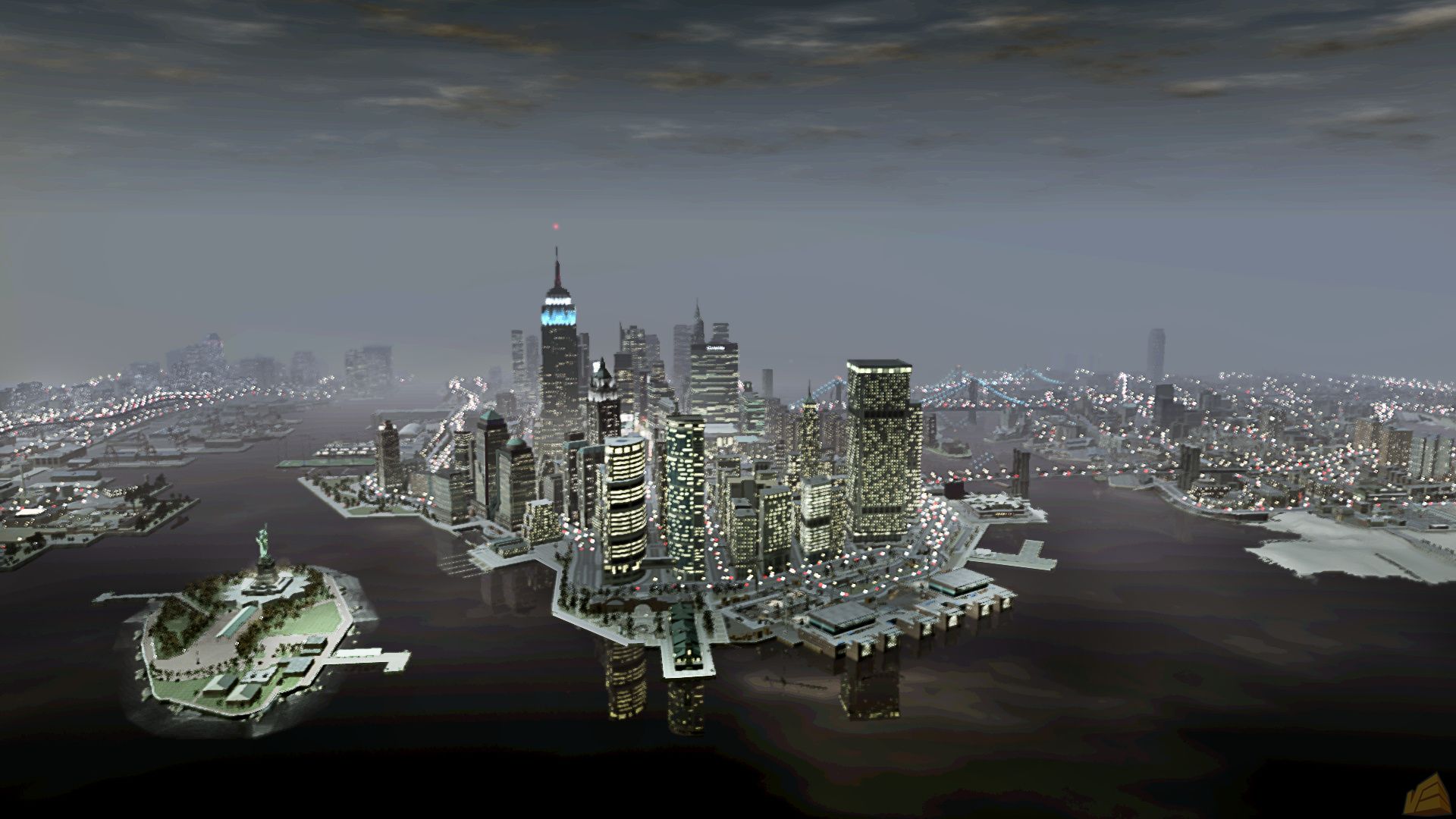
Screenshot from Grand Theft Auto‘s Liberty City

From GTA Wikia
From GTA Wikia

The area of Bowling Green, after the Great Fire of 1776, as depicted in Assassin’s Creed III.

Courtesy Assassin's Creed Wikia
Courtesy Assassin’s Creed Wikia
Categories
Neighborhoods Podcasts

A Culinary Tour of the Lower East Side

PODCAST A flavorful walk through the Lower East Side, exploring the neighborhood’s most famous foods.

Join Tom as he experience the tastes of another era by visiting some of the oldest culinary institutions of the Lower East Side. From McSorley’s to Katz’s, Russ & Daughters and Economy Candy — when did these shops open, who did they serve, and how, in the world are they still with us today? He explores the topic with author Sarah Lohman of the Four Pounds Flour blog.


The Bowery Boys: New York City History podcast is brought to you …. by you!

We are  now producing a new Bowery Boys podcast every two weeks. We’re also looking to improve the show in other ways and expand in other ways as well — through publishing, social media, live events and other forms of media. But we can only do this with your help!

We are now a member of Patreon, a patronage platform where you can support your favorite content creators for as little as a $1 a month.

Please visit our page on Patreon and watch a short video of us recording the show and talking about our expansion plans. If you’d like to help out, there are five different pledge levels (and with clever names too — Mannahatta, New Amsterdam, Five Points, Gilded Age, Jazz Age and Empire State). Check them out and consider being a sponsor.

We greatly appreciate our listeners and readers and thank you for joining us on this journey so far. And the best is yet to come!


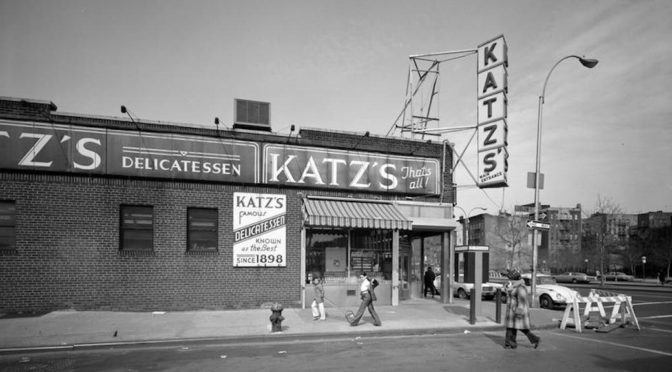
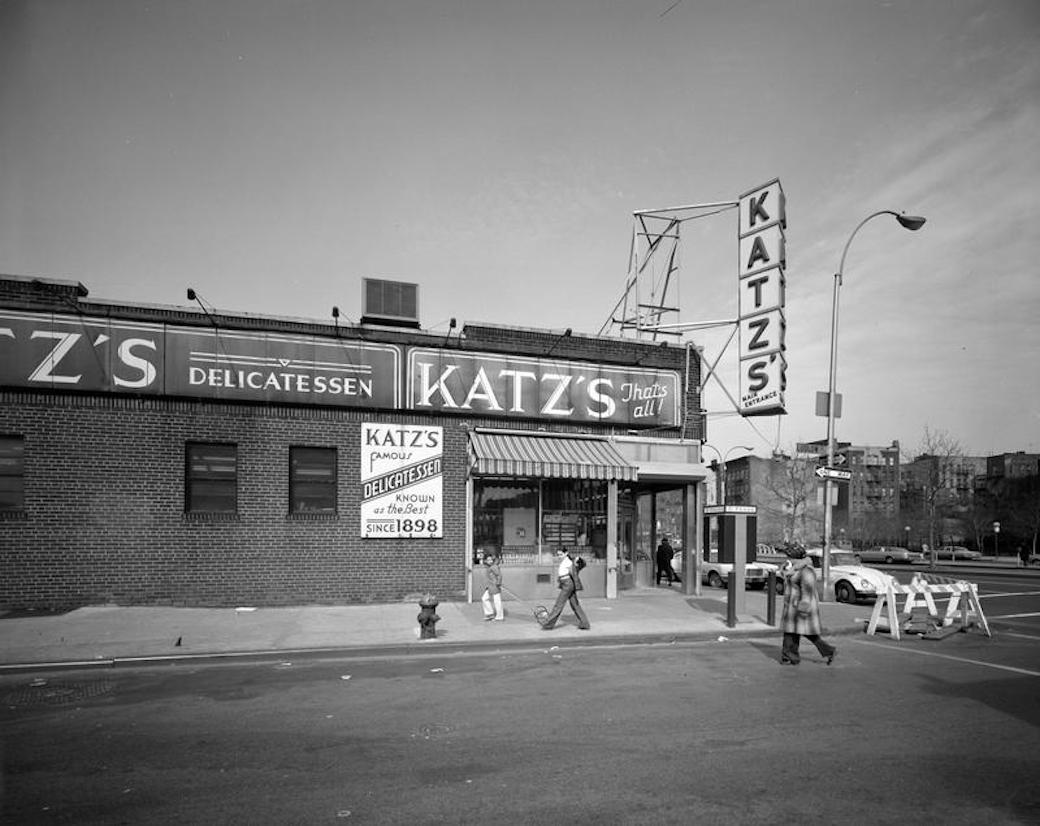
A groovy bite: How has Katz’s Delicatessen managed to last so long? This picture was taken in 1975 but it could have easily have been taken today with a black-and-white filter slapped over it.

MN124408

(Photo by Edmund Vincent Gillon, 1975, courtesy Museum of the City of New York)

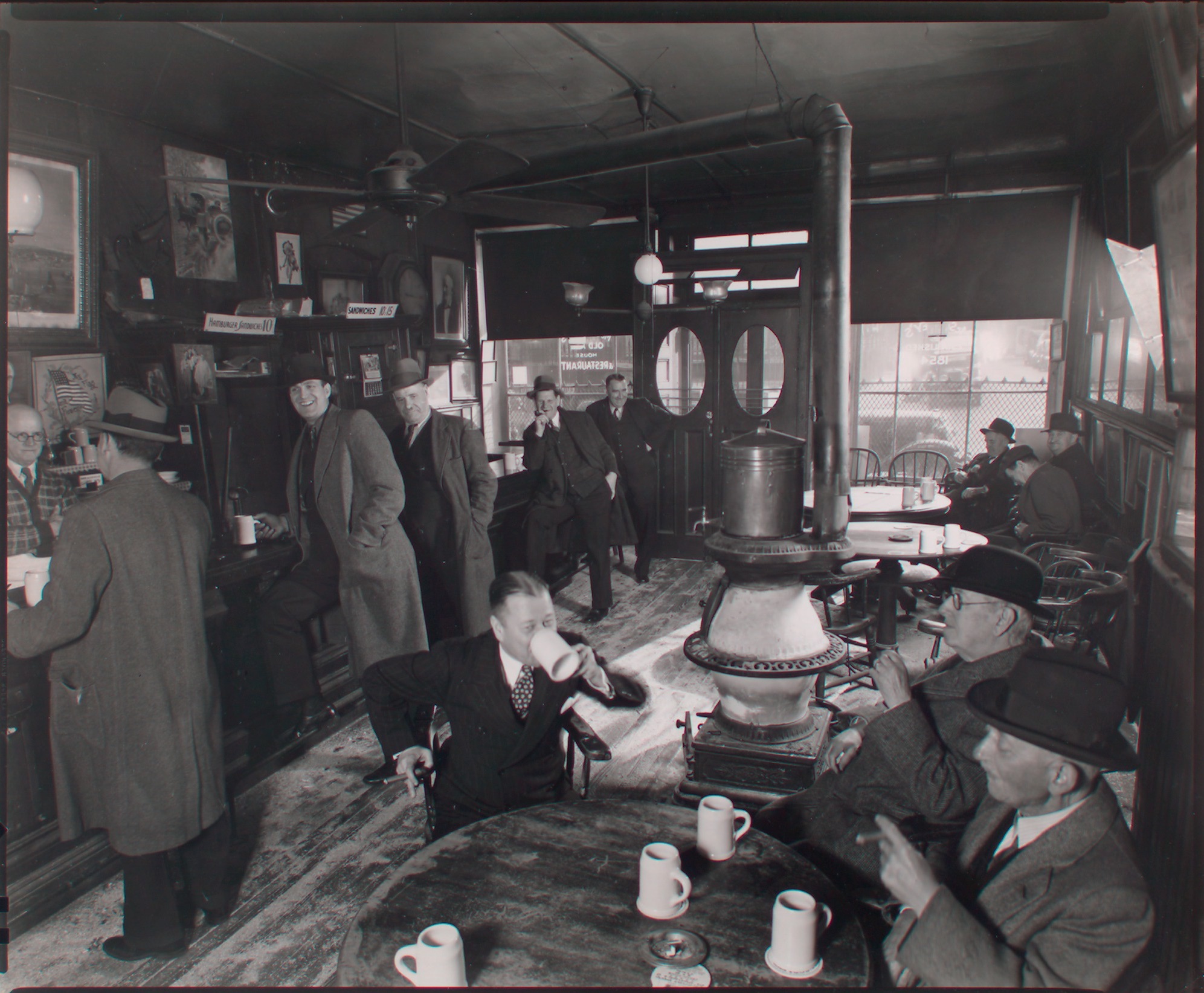
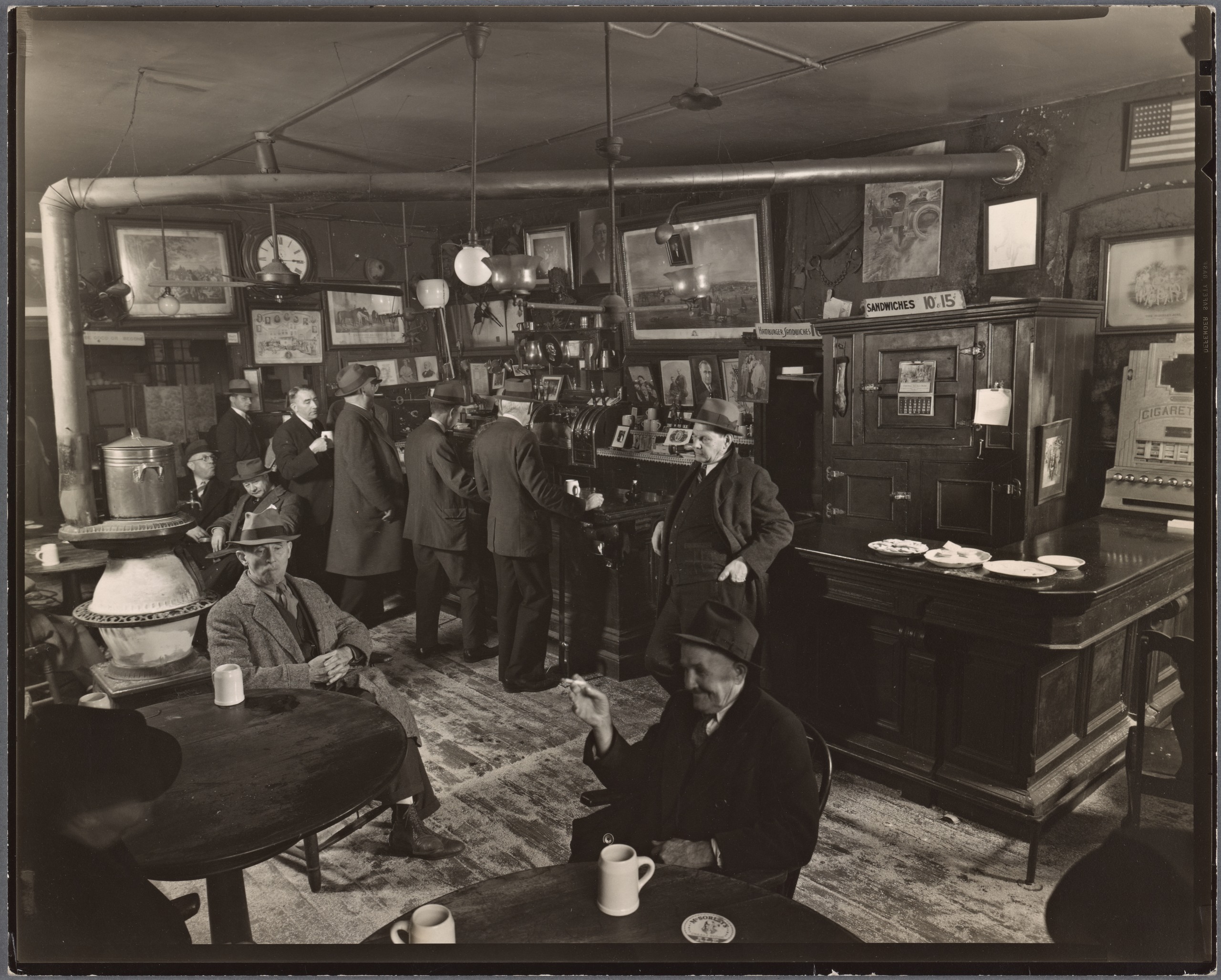
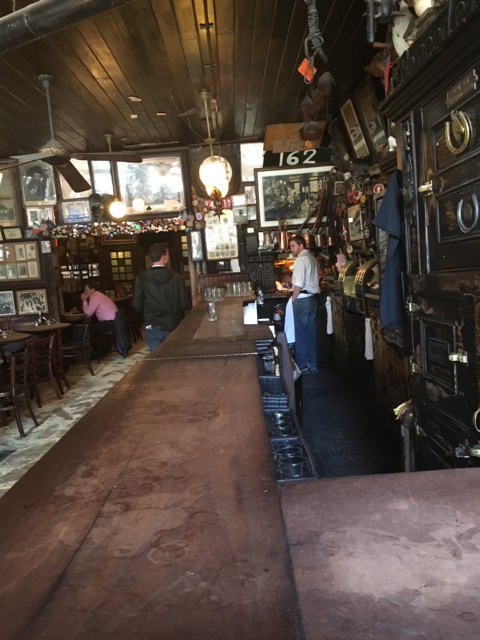
Another timeless classic — McSorley’s Old Ale House, in a photo taken by Berenice Abbott, 1937. (Ms. Abbott would have been one of the only women even allowed into McSorley’s in 1937!) How has this bar managed to stay open — and look virtually the same for over a century?

1

nypl.digitalcollections.510d47d9-4fca-a3d9-e040-e00a18064a99.001.v

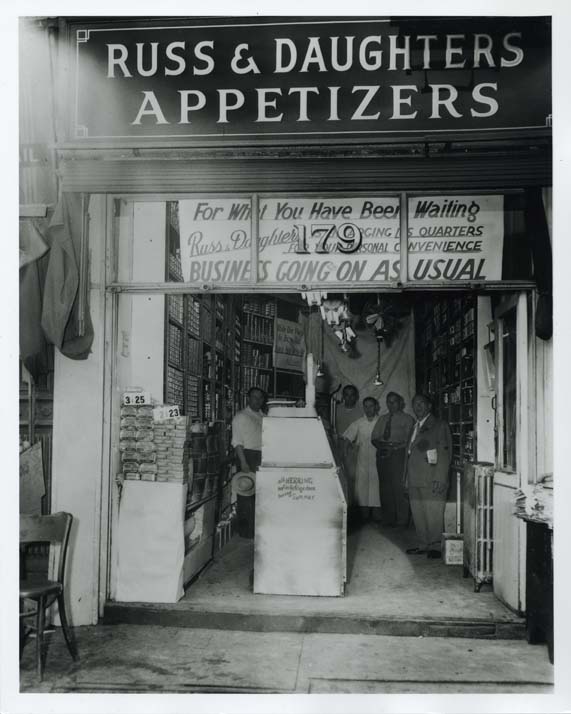
The Russ and Daughters interior before a renovation that widened the store.

Courtesy Russ and Daughters

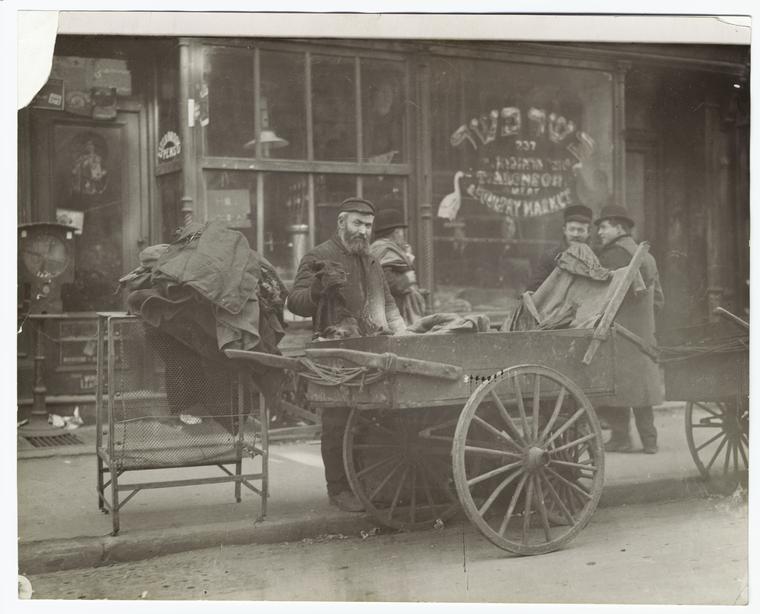
A potato merchant in the Lower East Side. It was because of the proliferation of these peddlers that the city eventually opened the Essex Street Market in the 20th century.

Courtesy New York Public Library

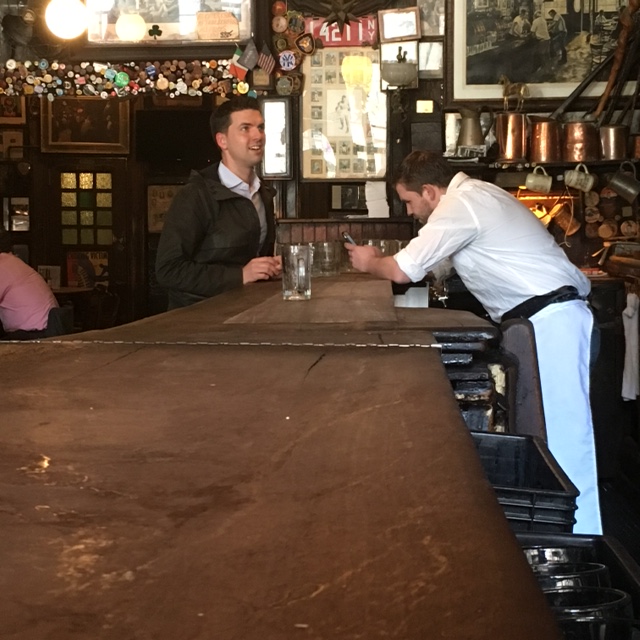
Tom, recording on the road at McSorley’s Old Ale House, being a day drinker!

image1

image3

For more information on guest host Sarah Lohman‘s upcoming book Four Pounds Flour, check out her website.

And for more information on the history of a few of the locations mentioned in the show, check out these other Bowery Boys: New York City History podcasts:

PODCAST: McSorley’s Old Ale House

https://www.boweryboyshistory.com/2010/03/bowery-boys-greatest-hits-back-to-katzs.html

Categories
Brooklyn History Neighborhoods Podcasts

GOWANUS! Brooklyn’s Troubled Waters

PODCAST The history of the Gowanus Canal, at the heart of a trendy Brooklyn neighborhood today, once used to be quite beautiful and non-toxic.

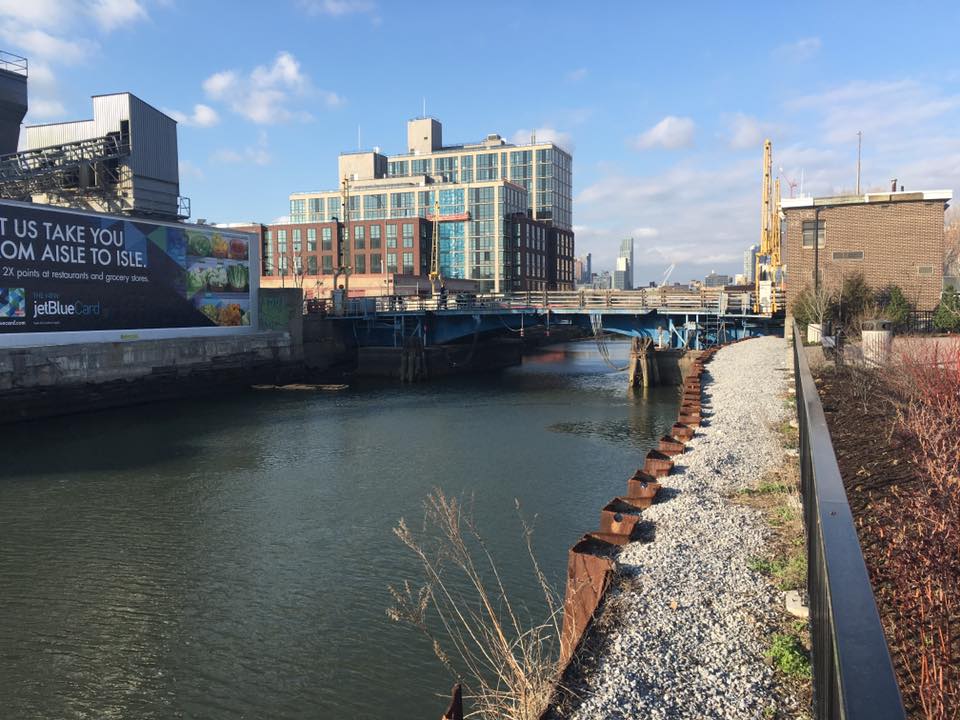
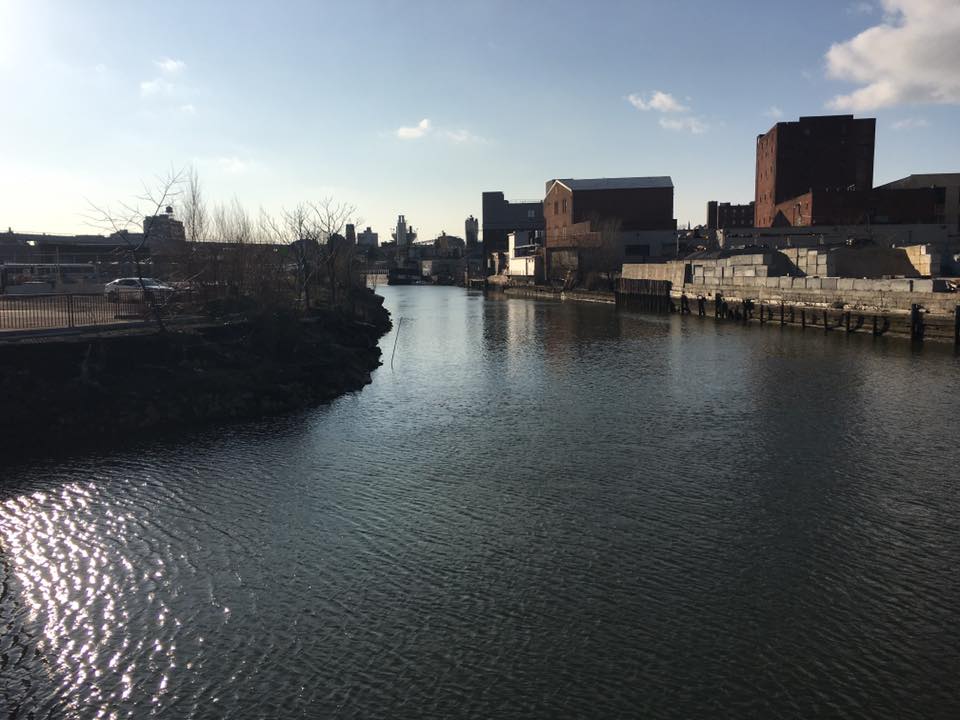
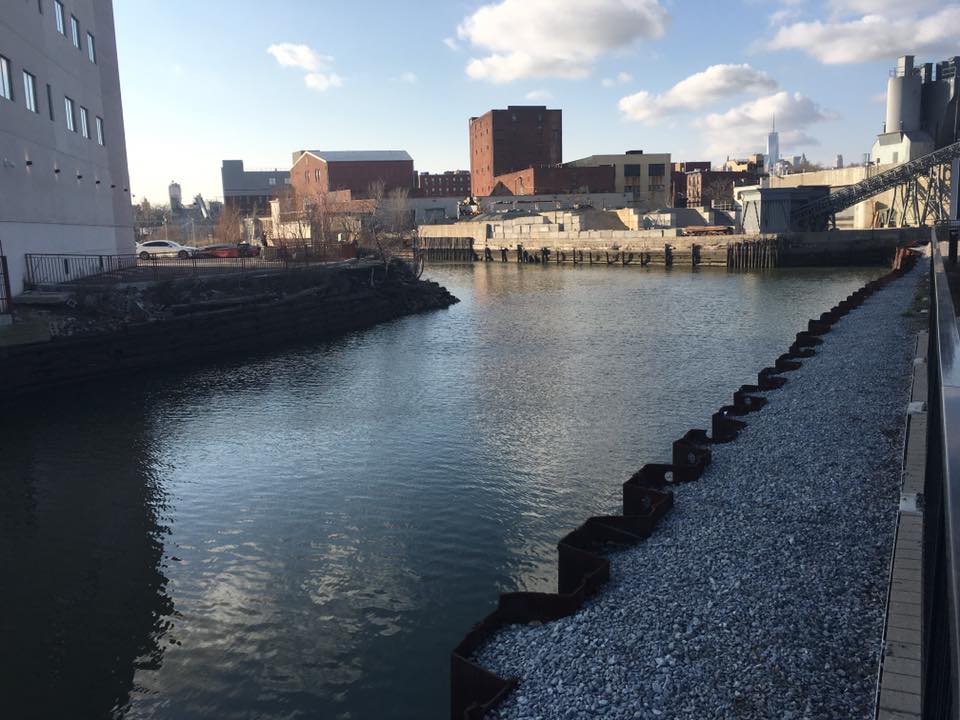
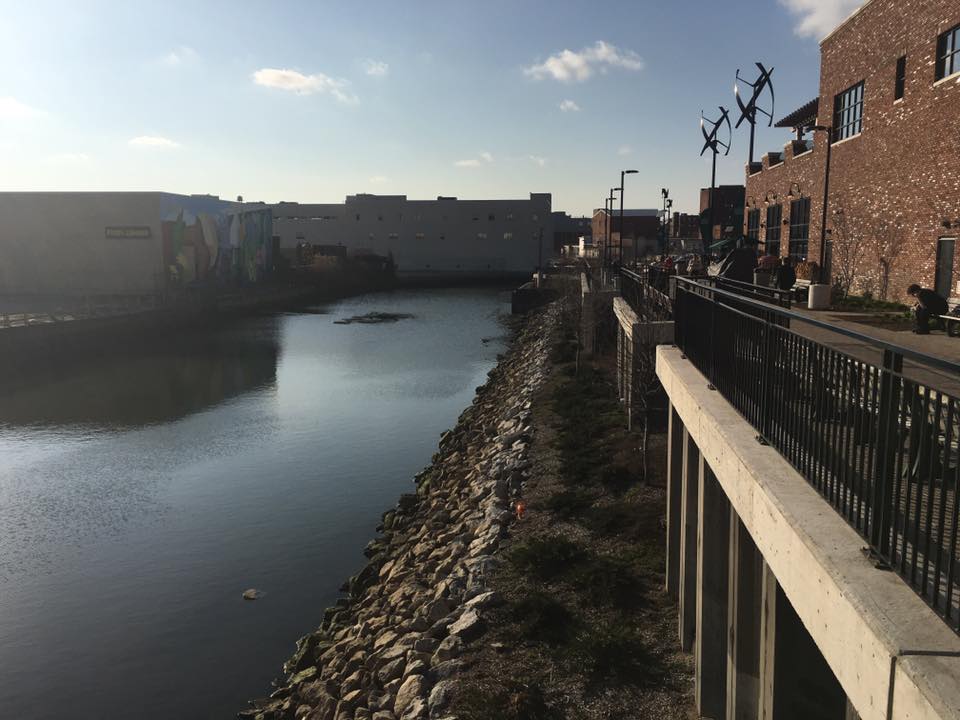
Brooklyn’s Gowanus — both the creek and the canal — is one of the most mysterious and historically important waterways in New York City. By coincidence, it also happens to be among its most polluted, shrouded in frightening tales of dead animals (and a few unfortunate humans) floating along its canal shores. Its toxic mix is the stuff of urban legends (most of which are actually true).

But this was once the land of delicious oysters. This was the site of an important Revolutionary War battle. This was part of the property of the man who later developed Park Slope.

But, in current times, it ALSO happens to be one of New York City’s hottest neighborhoods for real estate development. How does a neighborhood go from a canal of deadly constitution to a Whole Foods, condos and shuffleboard courts?

With the Gowanus’ many personalities (and with Tom gone this week) I needed a special guide for this fraught and twisted journey — writer and historian Joseph Alexiou, author of Gowanus: Brooklyn’s Curious Canal, bringing his expertise to help me wade through the most toxic portion of the show.


The Bowery Boys: New York City History podcast is brought to you …. by you!

We are now producing a new Bowery Boys podcast every two weeks. We’re also looking to improve the show in other ways and expand in other ways as well — through publishing, social media, live events and other forms of media. But we can only do this with your help!

We are now a member of Patreon, a patronage platform where you can support your favorite content creators for as little as a $1 a month.

Please visit our page on Patreon and watch a short video of us recording the show and talking about our expansion plans. If you’d like to help out, there are five different pledge levels (and with clever names too — Mannahatta, New Amsterdam, Five Points, Gilded Age, Jazz Age and Empire State). Check them out and consider being a sponsor.

We greatly appreciate our listeners and readers and thank you for joining us on this journey so far. And the best is yet to come!


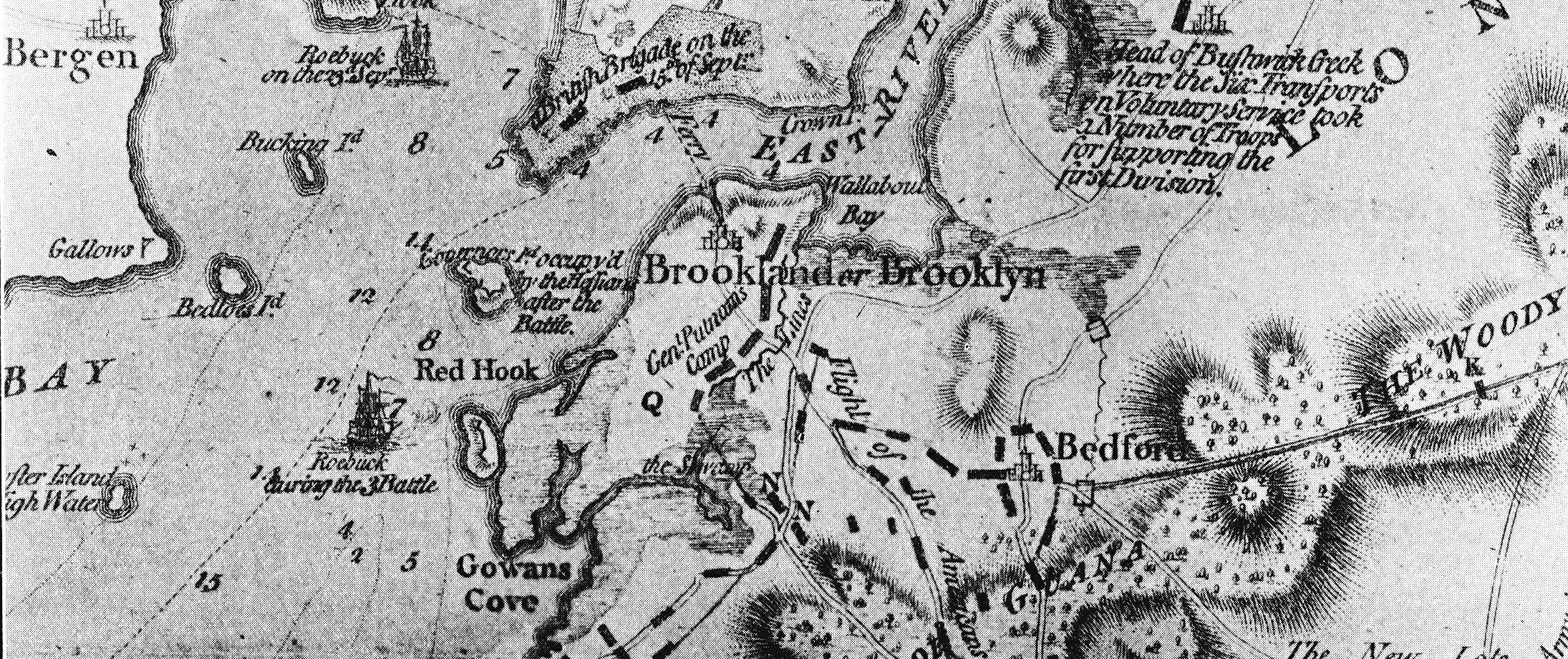
Further to that Lord of the Rings comparison, here’s a map from a 1909 history of the Old Stone House, documenting the moves of British troops in the summer of 1776.

3


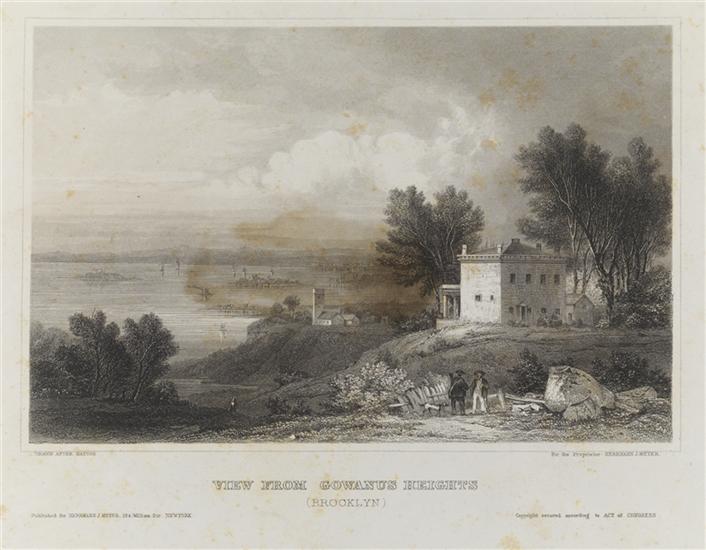
The view from Gowanus Heights, or the Heights of Guan. Print by Hermann Julius Meyer, 1840.

Courtesy Museum of the city of New York

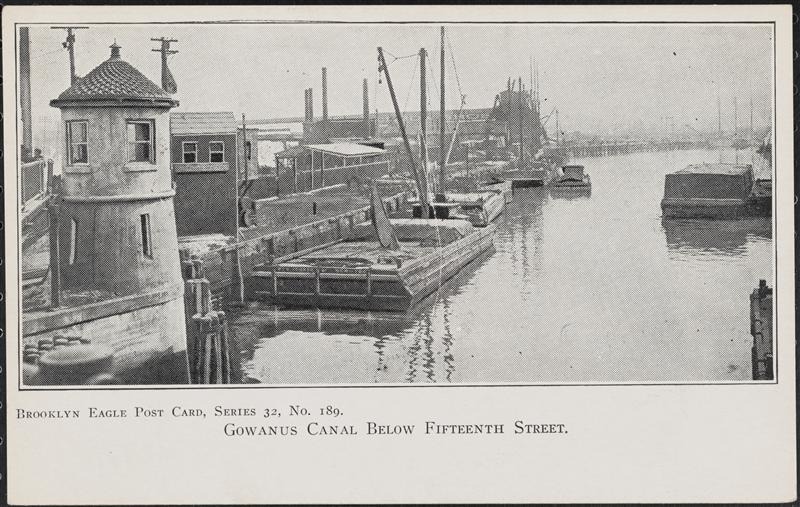
By 1910, the banks of the Gowanus were no more natural than the dankest tenement slum.

Courtesy Museum of the City of New York

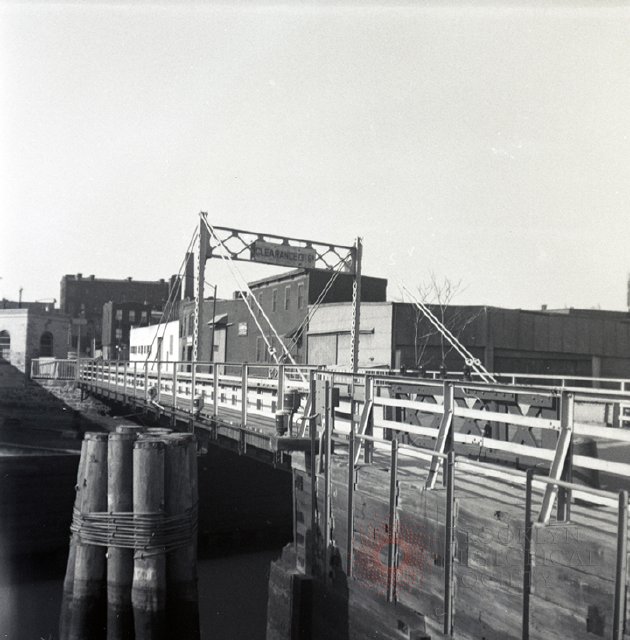
The Carroll Street Bridge, pictured here in 1960, originally built in 1889. It’s one of only two retractable bridges in New York City.

Courtesy Brooklyn Historical Society

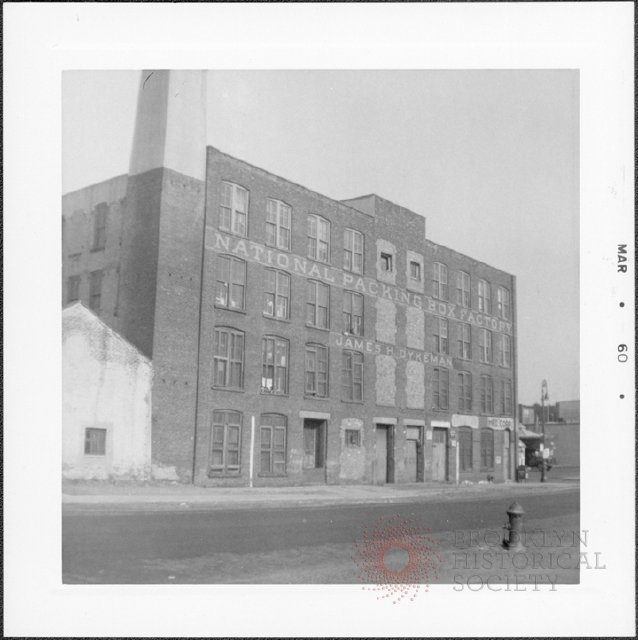
National Packing Box Factory at Union and Nevins Streets, pictured here in 1960.

courtesy Brooklyn Historical Society

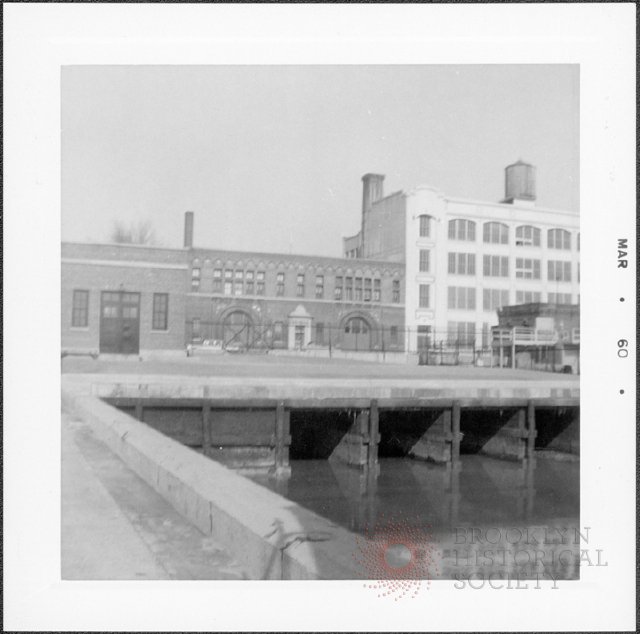
The site of the ‘flushing tunnel’ at Butler Street in 1960.

Brooklyn Historical Society

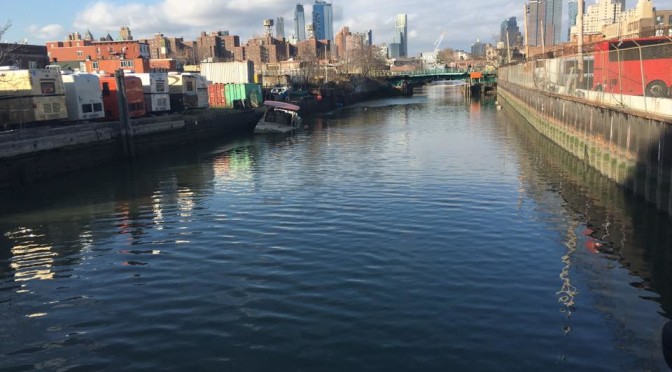
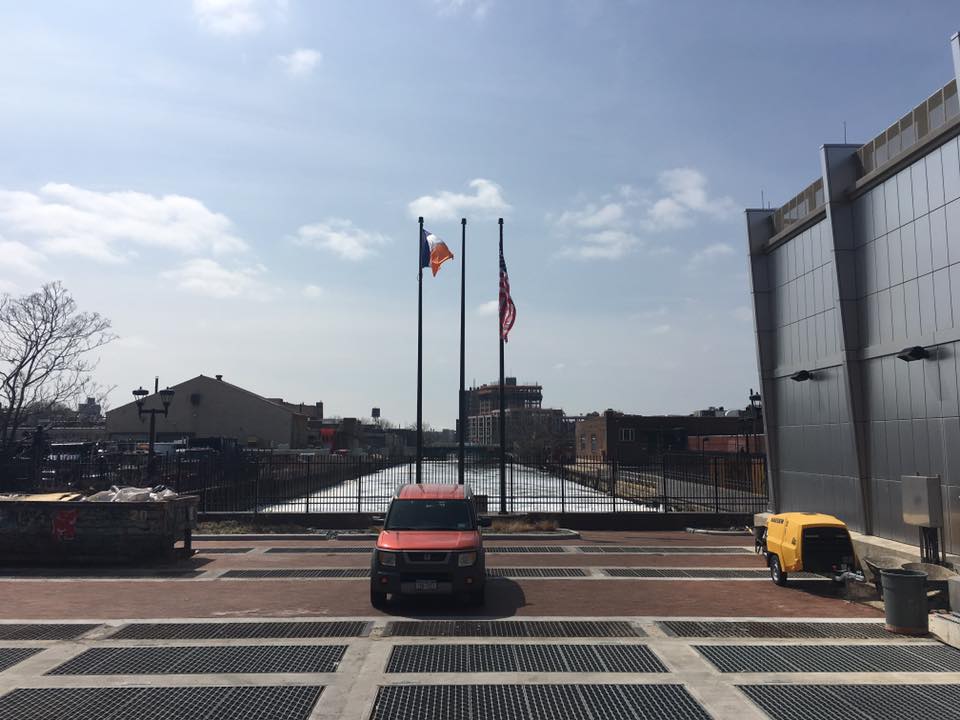
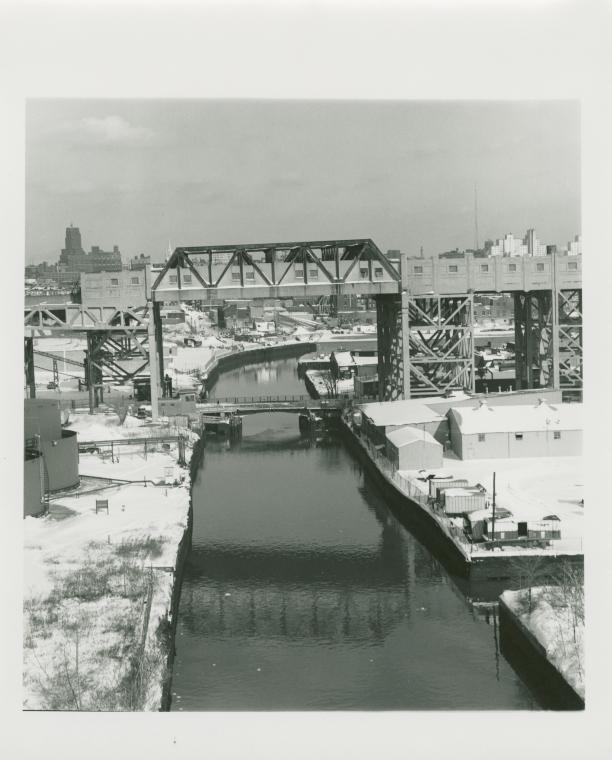
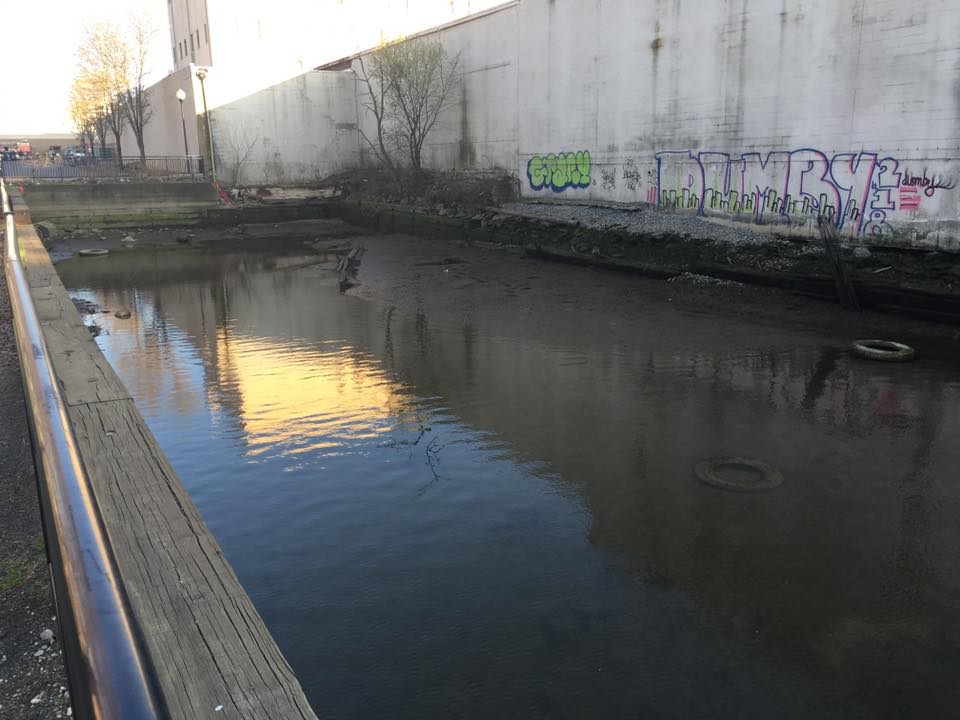
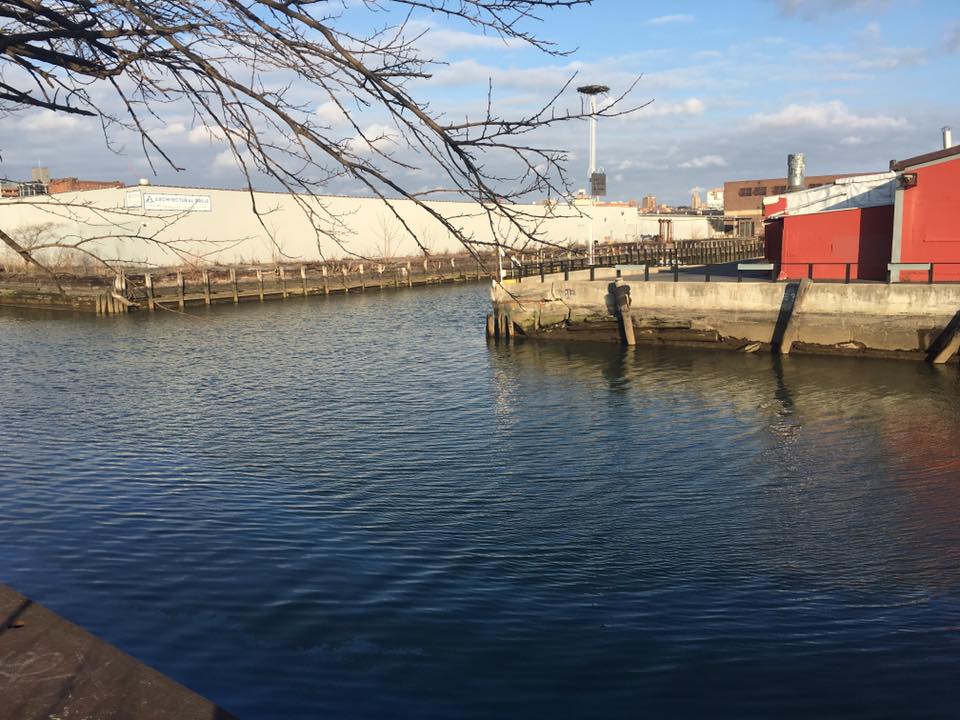
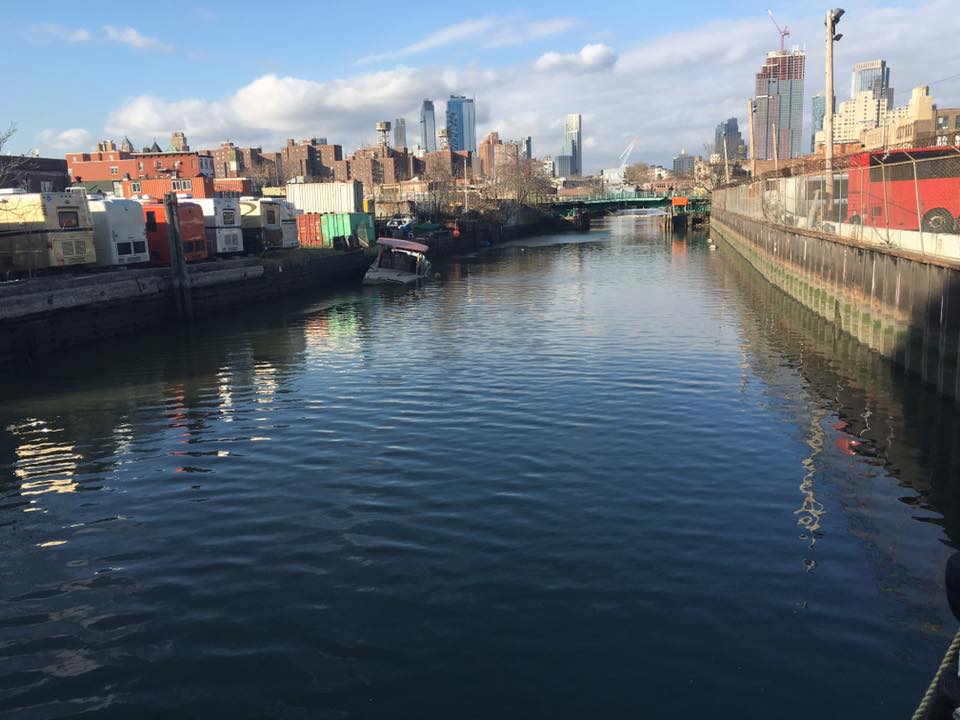
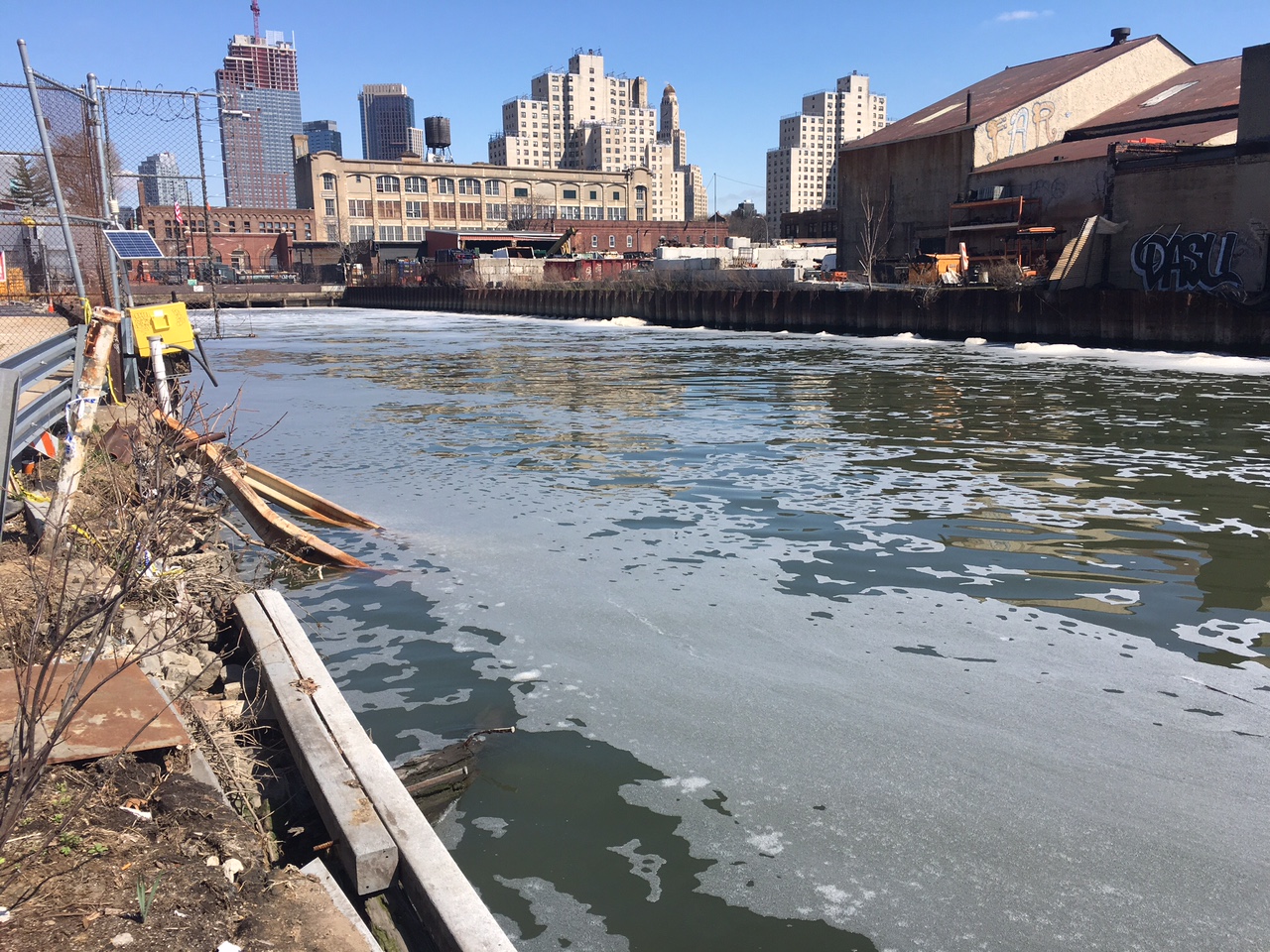
Here’s the view from the other side, looking south, taken last weekend:

1

IMG_9018


The Gowanus at Smith and Ninth Street, 1978. (Photograph by Dinanda Nooney

New York Public Library

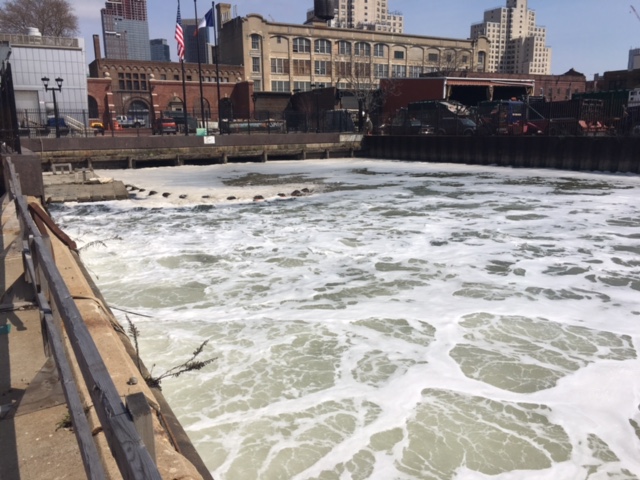
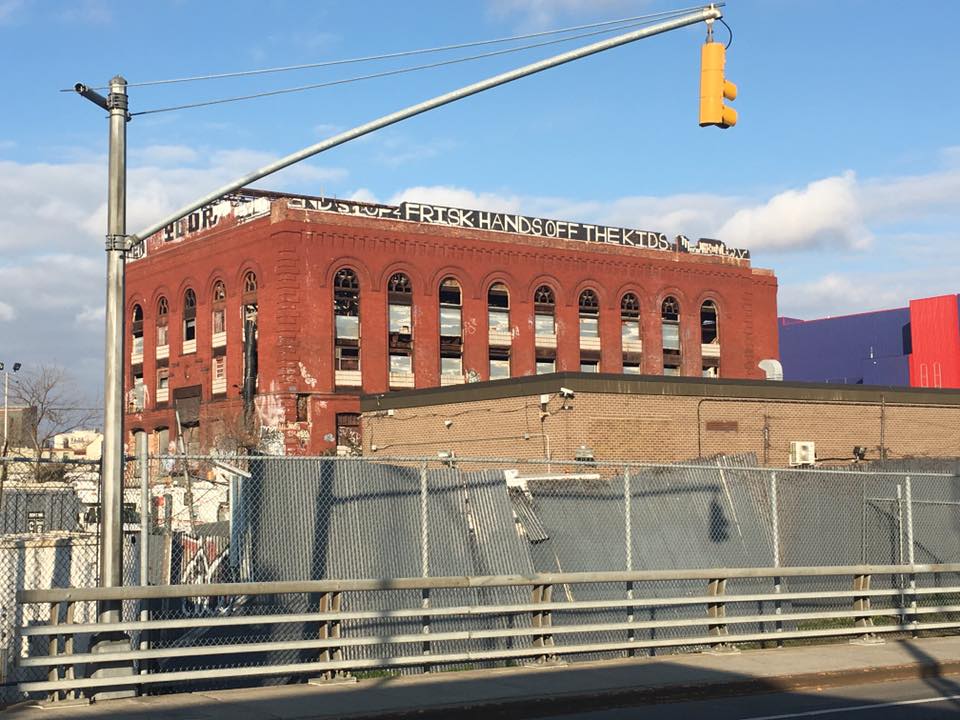
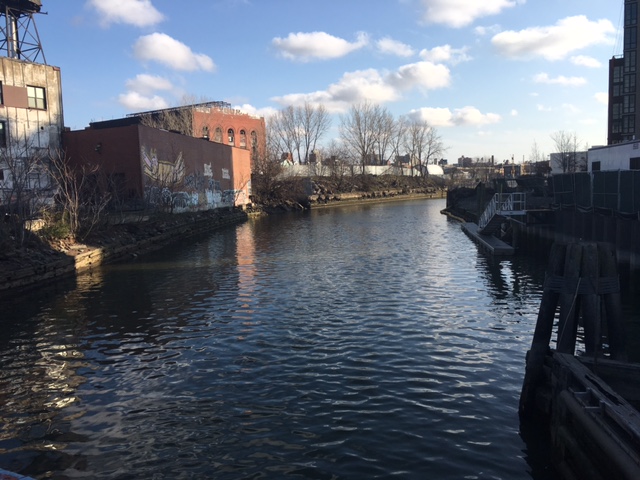
Some views along the Gowanus from last weekend, admiring the glory of its dingy, busted architecture.
2 3 4 5 6 7 8 9

IMG_8965

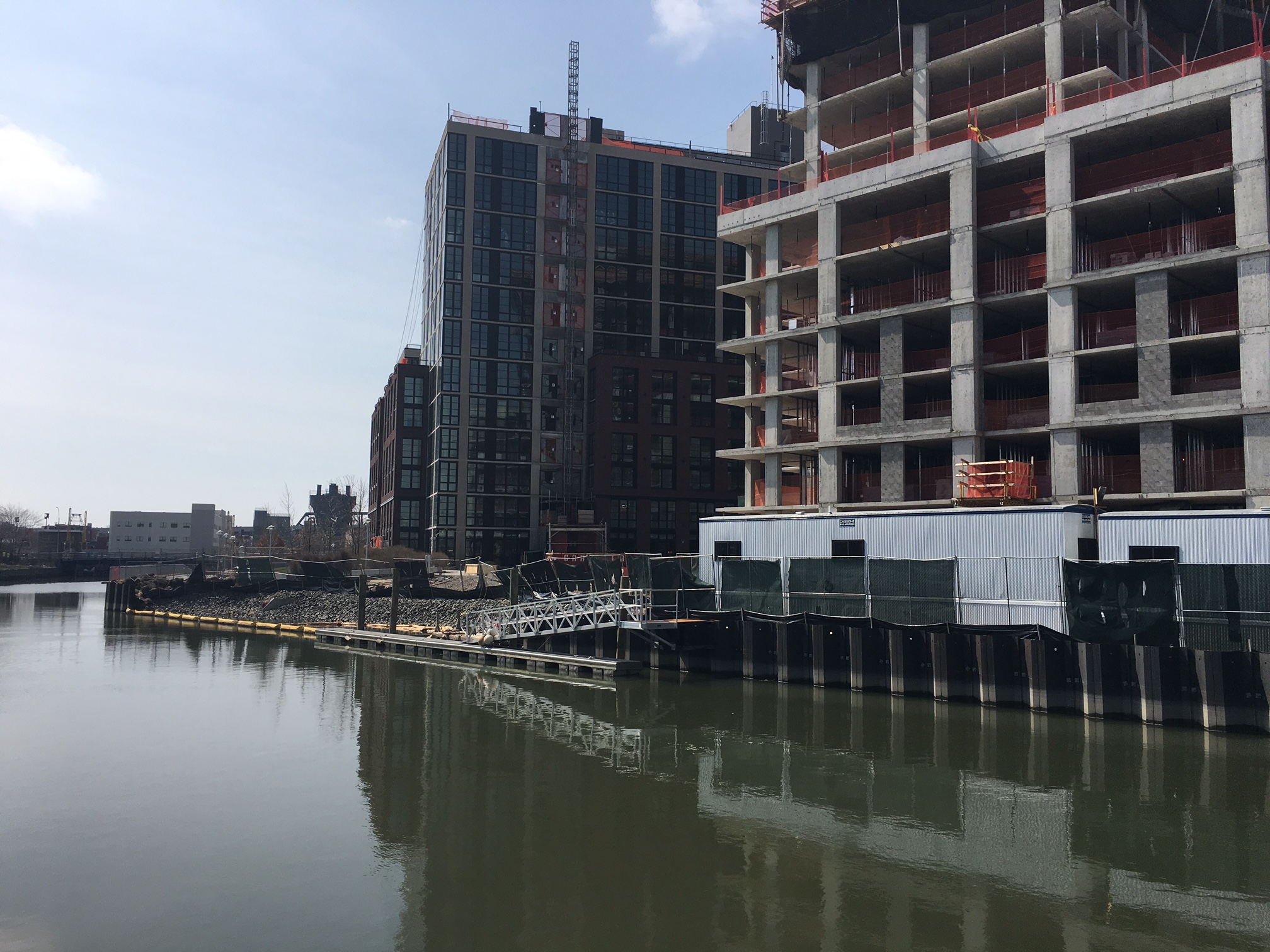
Current residential construction, right along the Gowanus.

IMG_9029

I wasn’t joking about the doll parts. There’s a whole motley collection of weird junk around the Gowanus. Luckily, no deformed Gowanus rats in sight.

IMG_8991

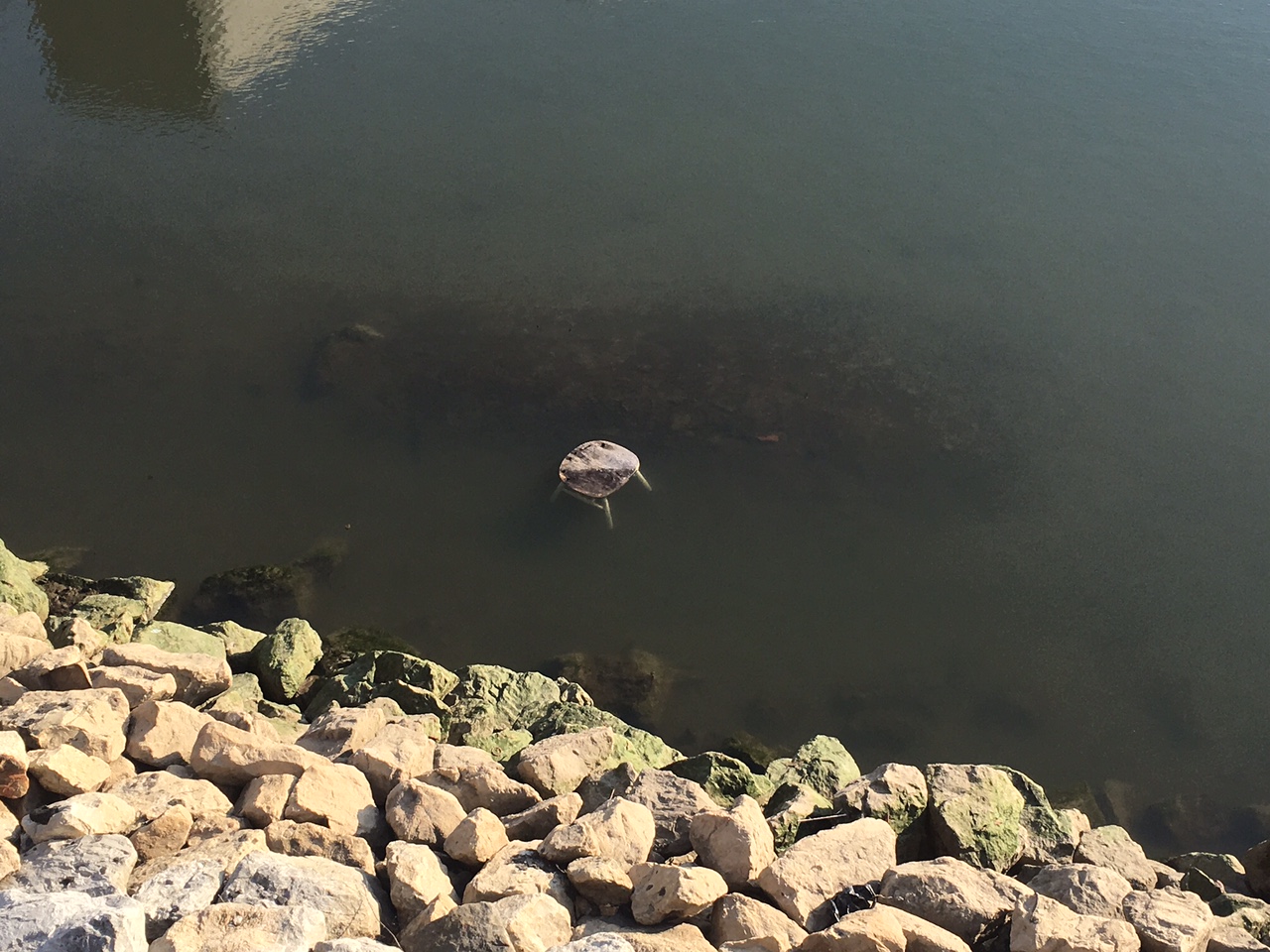
Here’s a four legged fellow in the Gowanus — a table.

IMG_8970

IMG_8958

A couple views of the Gowanus from the Bowery Boys Instagram page:


Out exploring in strange places for next week’s new podcast! #boweryboys

A photo posted by Gregory Young (@boweryboysnyc) on


Gowanus alleyway on Nevins Street. #boweryboys

A photo posted by Gregory Young (@boweryboysnyc) on


For more information on the happy, shiny of the Gowanus Canal, check out Alexiou’s new book Gowanus: Brooklyn’s Curious Canal from NYU Press. Here’s the interview I did with Joseph on the blog a few weeks ago.

51qsMSqTVBL._SX331_BO1,204,203,200_


Categories
Podcasts Preservation

Jane Jacobs: Saving Greenwich Village

PODCAST The story of Jane Jacobs, the urban activist and writer who changed the way we live in cities and her fights to preserve Greenwich Village in the 1950s and ’60s.

Washington Square Park torn in two. The West Village erased and re-written. Soho, Little Italy and the Lower East Side ripped asunder by an elevated highway. This is what would have happened in New York City in the 1950s and 60s if not for enraged residents and community activists, lead and inspired by a woman from Scranton, Pennsylvania.

Jane Jacobs is one of the most important urban thinkers of the 20th century. As a young woman, she fell in love with Greenwich Village (and met her husband there) which contained a unique alchemy of life and culture that one could only find in an urban area. As an adroit and intuitive architectural writer, she formed ideas about urban development that flew in the face of mainstream city planning. As a community activist, she fought for her own neighborhood and set an example for other embattled districts in New York City.

Her legacy is fascinating, often radical and not always positive for cities in 2016. But she is an extraordinary New Yorker, and for our 200th episode, we had to celebrate this remarkable woman on the 100th anniversary of her birth.

FEATURING: Mrs. Jacobs herself in clips interspersed through the show.

PLUS: ROOOOBERT MOOOOSES!


The Bowery Boys: New York City History podcast is brought to you …. by you!

We are now producing a new Bowery Boys podcast every two weeks. We’re also looking to improve the show in other ways and expand in other ways as well — through publishing, social media, live events and other forms of media. But we can only do this with your help!

We are now a member of Patreon, a patronage platform where you can support your favorite content creators for as little as a $1 a month.

Please visit our page on Patreon and watch a short video of us recording the show and talking about our expansion plans. If you’d like to help out, there are five different pledge levels (and with clever names too — Mannahatta, New Amsterdam, Five Points, Gilded Age, Jazz Age and Empire State). Check them out and consider being a sponsor.

We greatly appreciate our listeners and readers and thank you for joining us on this journey so far. And the best is yet to come!


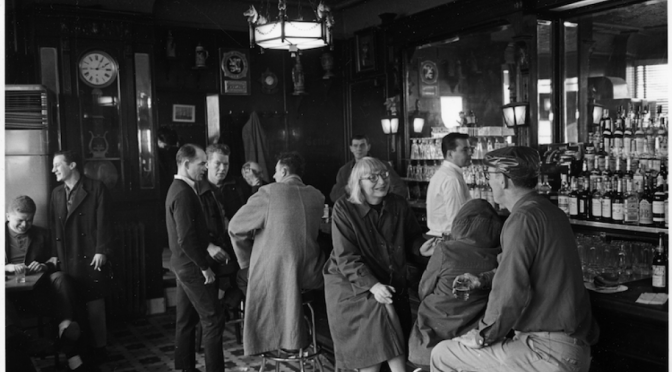
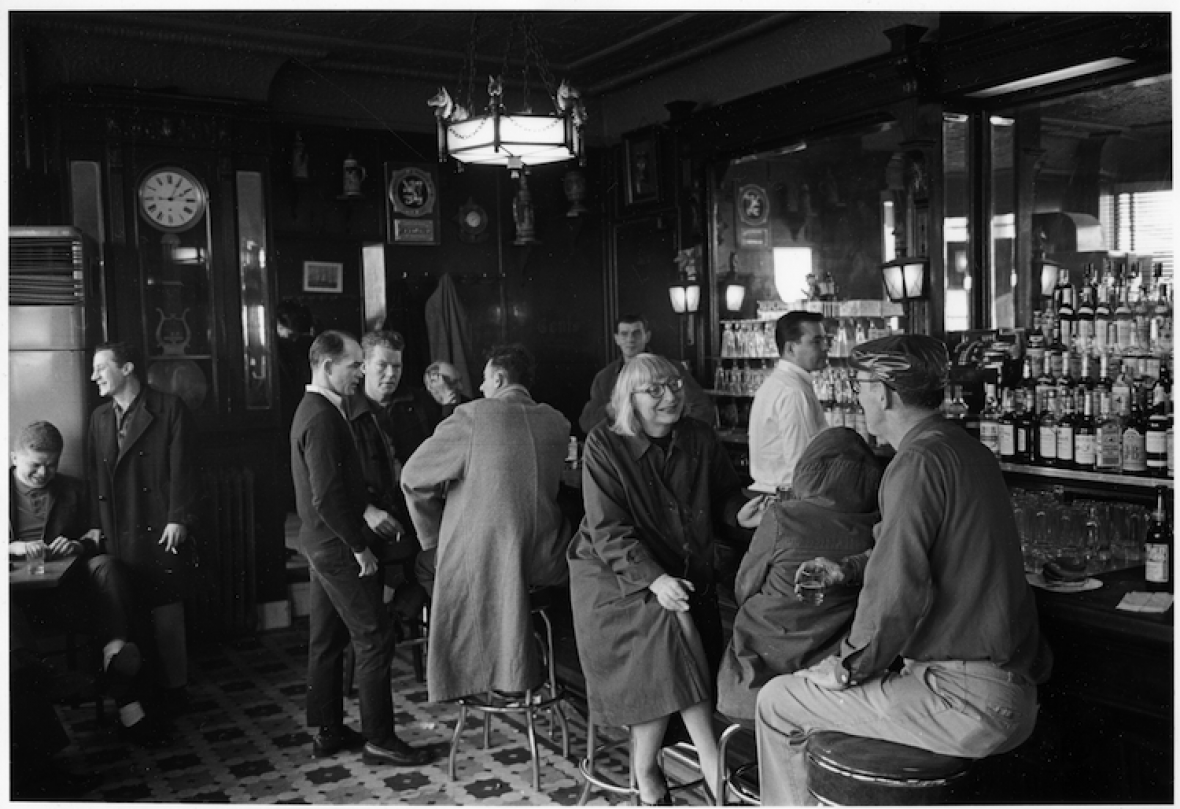
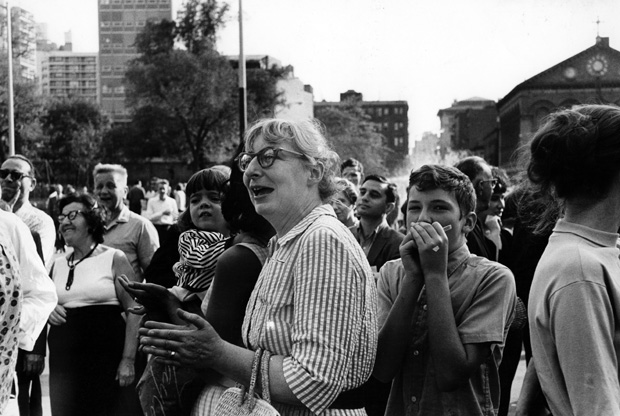
Jacobs at the White Horse Tavern, sometime in the 1960s. Jane lived on the block!

Cervin Robinson/New York Times (http://cervinrobinson.com/)
Photography by Cervin Robinson/New York Times. Visit his website for more extraordinary images of New York City (http://cervinrobinson.com/)

Jacobs in Washington Square Park (though I believe this is 1963 and not during the 1958 protest).

Fred W. McDarrah/Getty Images

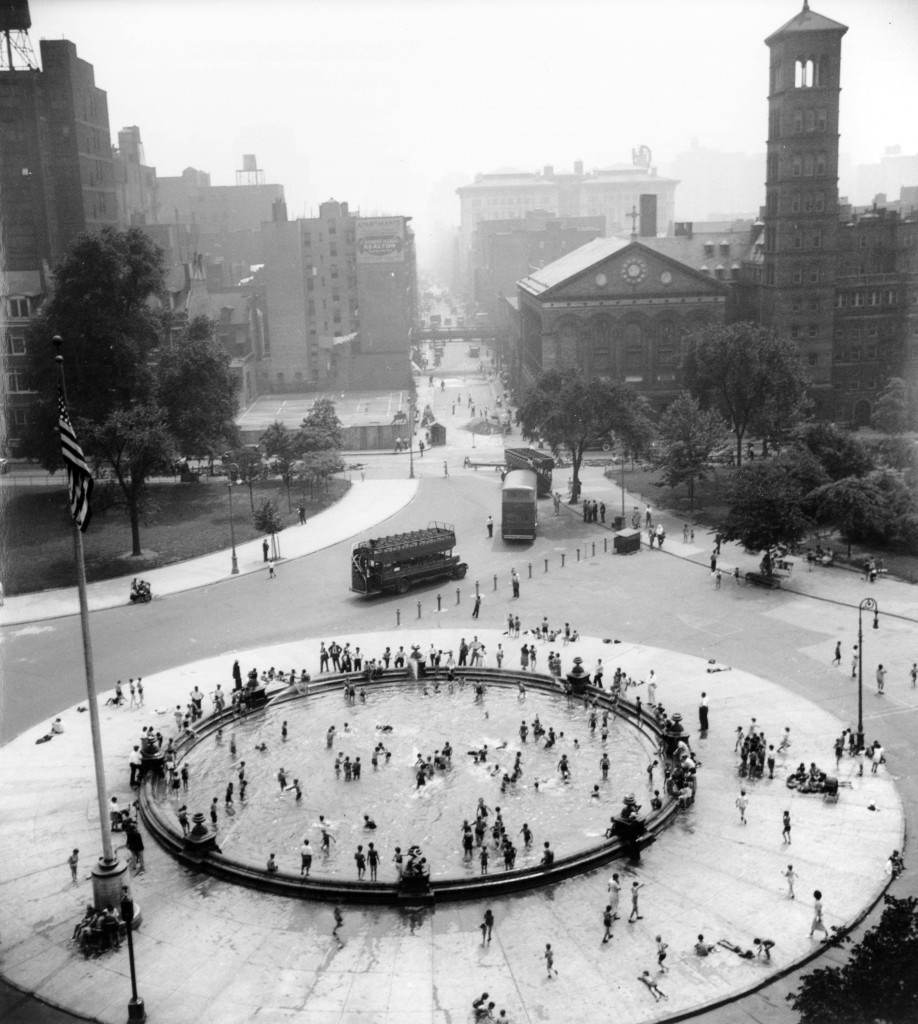
Washington Square Park in 1935. The 1958 activists were so successful in their goal of saving the park that they were able to banish automobile traffic from it entirely.

New York Parks Department

What Moses had planned for the park:

NYPL
NYPL

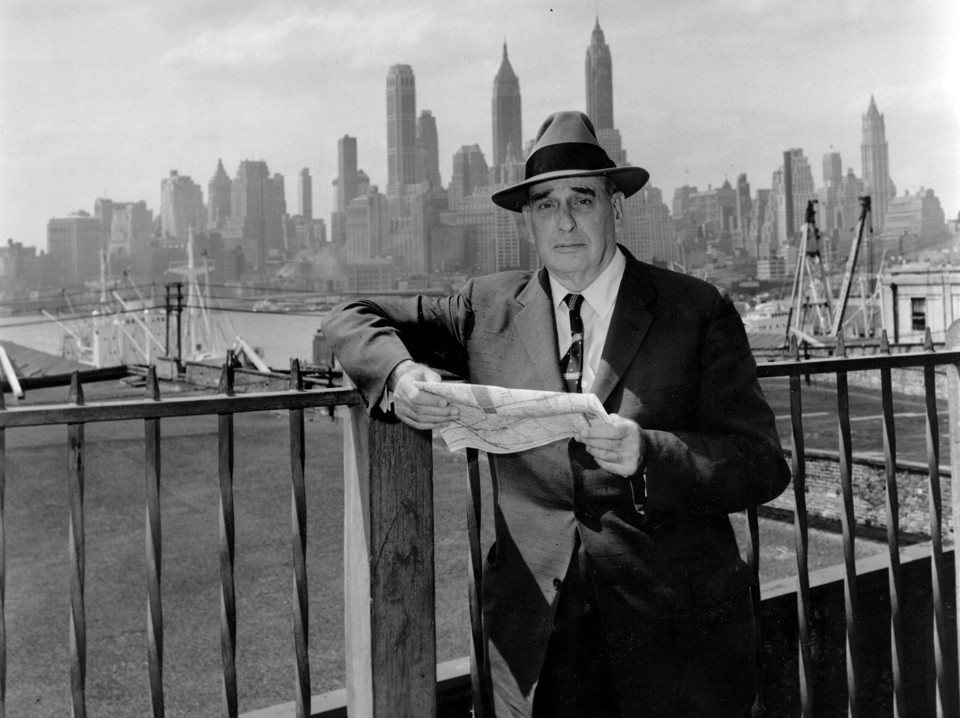
Robert Moses, pictured here in Brooklyn in 1956. Although he frequently situated as the arch-nemesis to Jane Jacobs, in fact they were rarely in the same room together. Their battles were fought in the press and in City Hall.

AP
AP

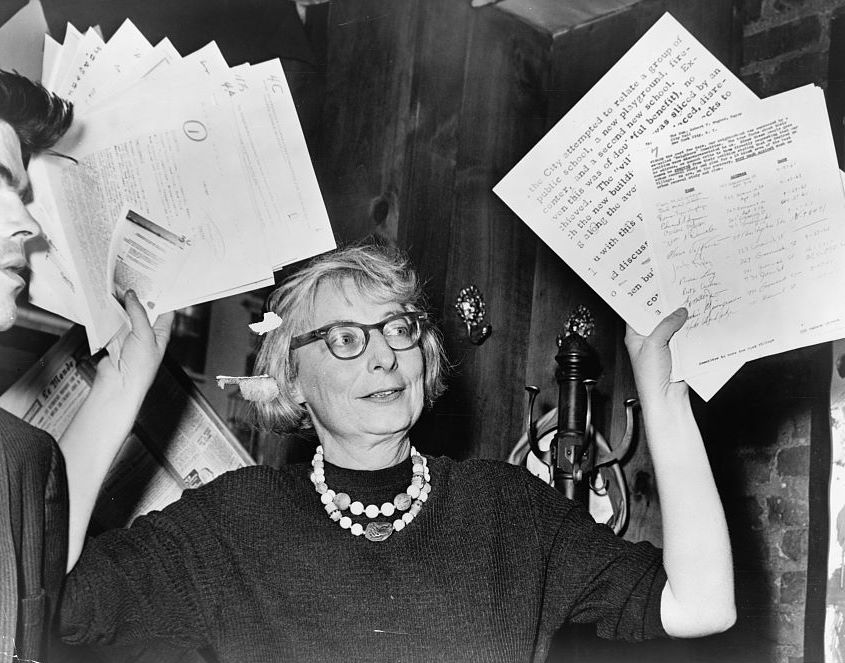
Jacobs presenting damning evidence about the proposed West Village demolition, taken at their main headquarters the Lion’s Head, in 1961 at the corner of Hudson and Charles Streets.

Jane_Jacobs

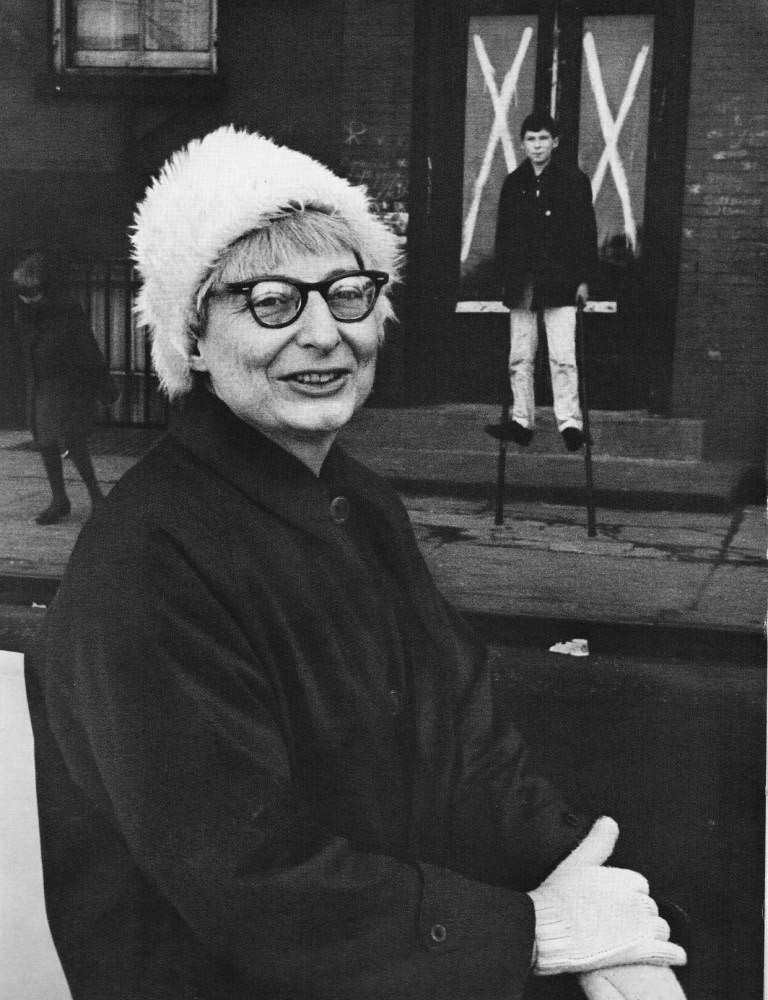
Jane Jacobs and her son Ned in 1961, during the West Village protests. The Xs were placed on buildings to be condemned. Activists wore sunglasses with Xs on the lenses in protest.

1
Photo courtesy Aesthetic Realism

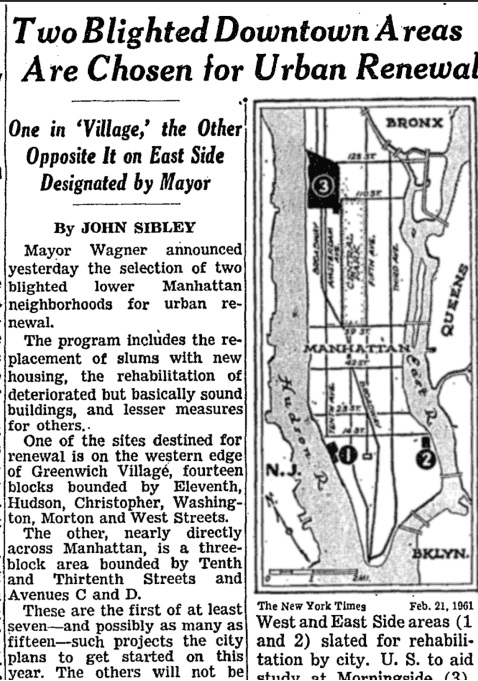
The February 21, 1961, article from the New York Times which riled up the West Village. The East Side project would eventually become Haven Plaza Apartments, but residents would fight off the designation in the West Village.

Untitled

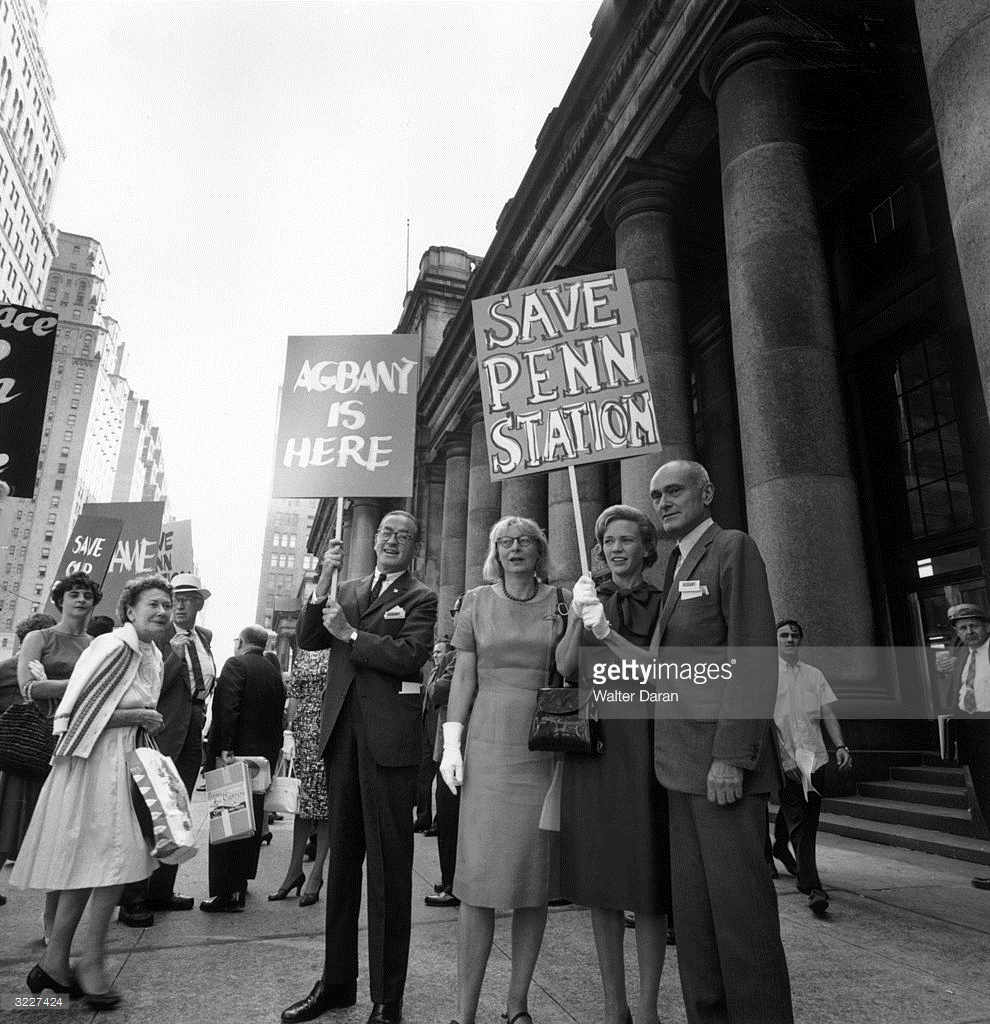
January 01, 1963 — Jacobs protests the destruction of Pennsylvania Station with architect Philip Johnson.

14

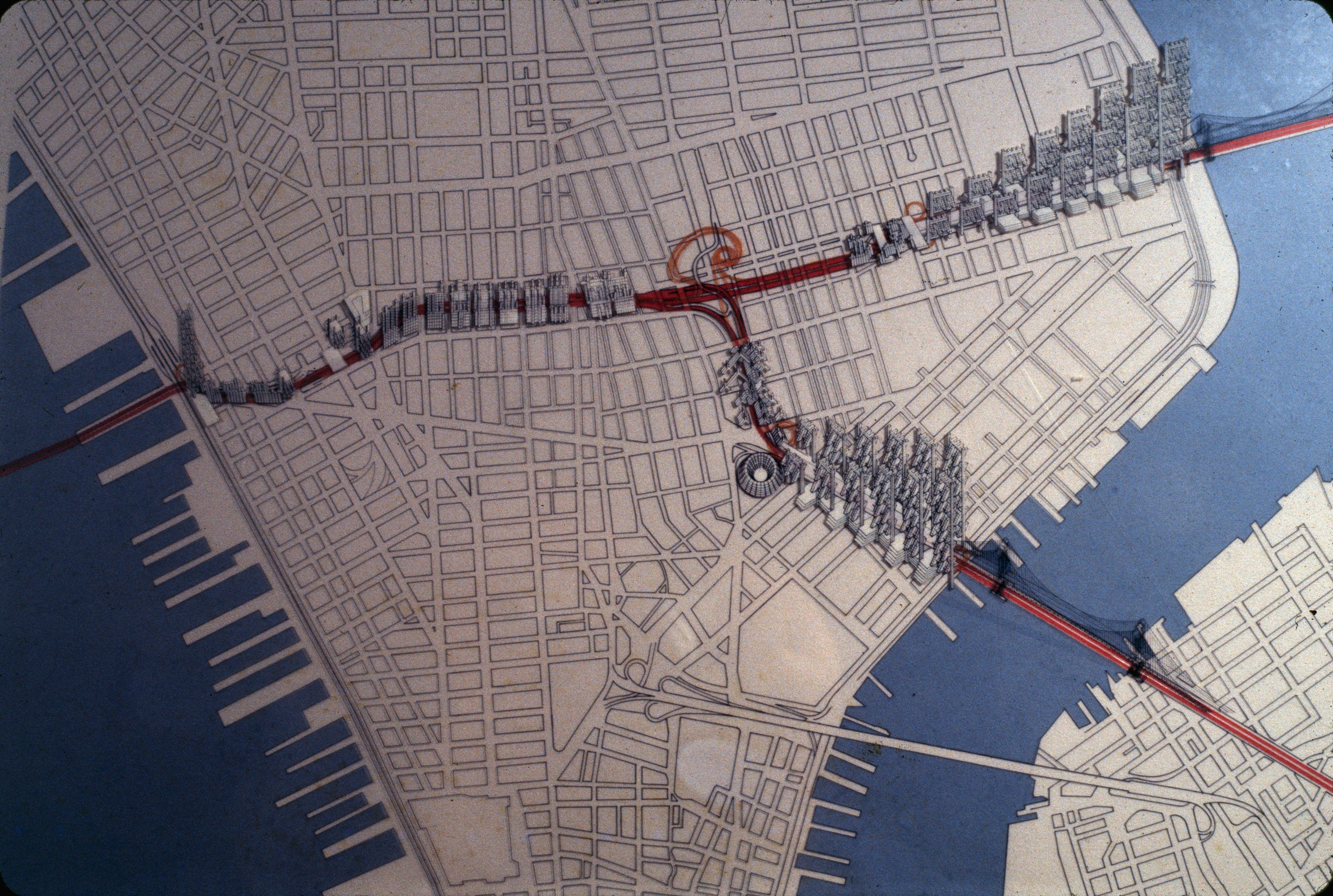
A map of the Lower Manhattan Expressway. Although this plan never came to fruition, the stack of buildings near the bridges seems to be coming to pass — on the Brooklyn side!

Library of Congress
Library of Congress

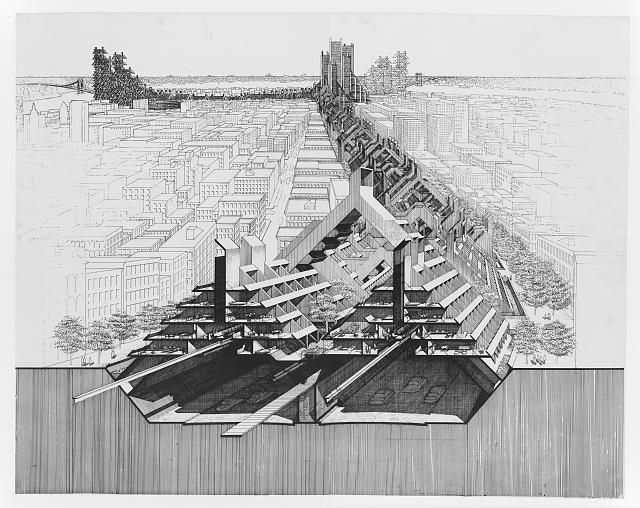
Another sketch by Paul Rudolph of the Lower Manhattan Expressway, showing the new construction from the Holland Tunnel as it enters through Manhattan.

paul

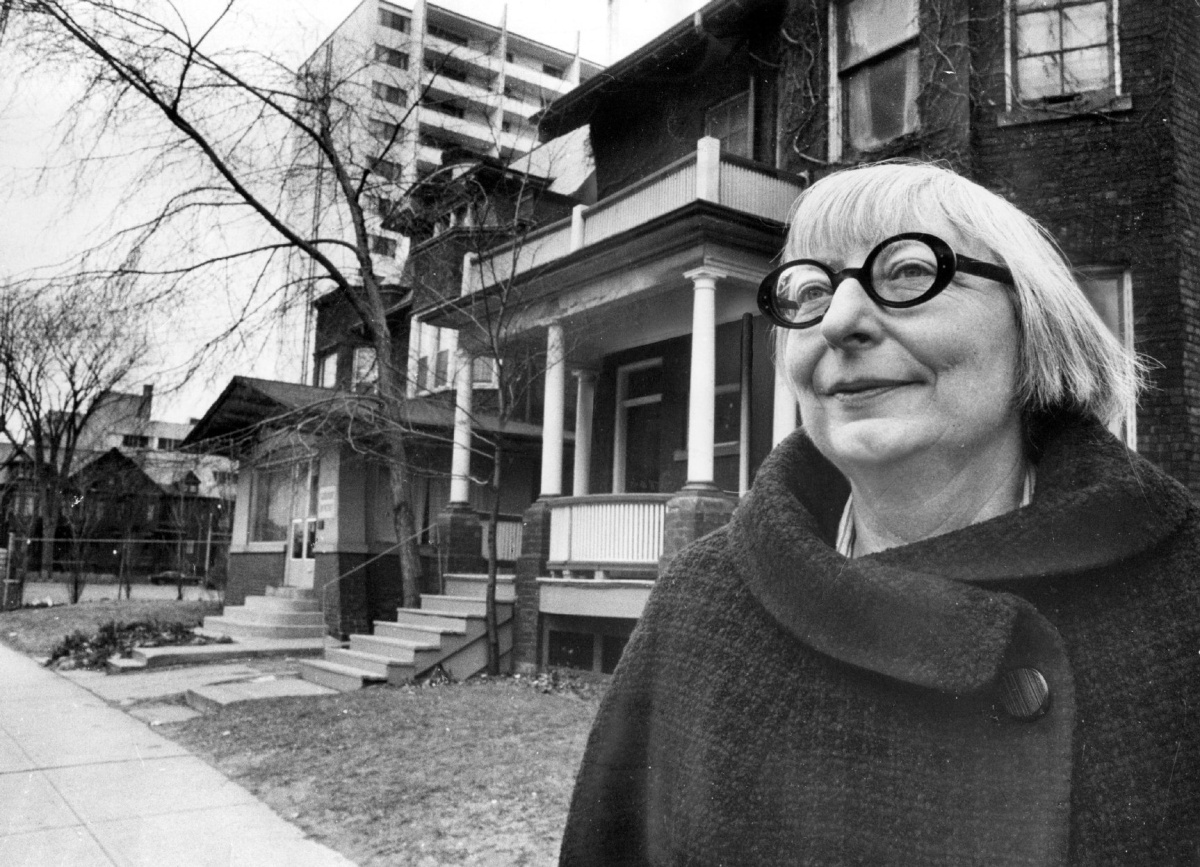
Jane Jacobs in Toronto, Dec. 21, 1968. She would continue her activism there, helping other community activists in foiling plans to build the Spadina Expressway.

SCANNED FROM THE TORONTO STAR LIBRARY *U42 GRAPHIC Jane Jacobs outside her home on Spadina Road just north of Bloor Street. Photo taken by Frank Lennon/Toronto Star Dec. 21, 1968. Also published 19730425 with caption: Jane Jacobs. Urban affairs expert. Also published 19740520 with caption: Toronto's in good shape, says author Jane Jacobs, but "We've got to be thinking about how we make sure it stays that way." Just being Canadian gives it some advantage, she says, but she fears amalgamation will bring some of the problems of cities like New York.
TORONTO STAR LIBRARY
Categories
Landmarks Podcasts

Battle for the New York City Skyline: How Tall Can It Go?

PODCAST The story of growing tall in New York City and the two pivotal laws that allowed for the city’s dynamic, constantly evolving skyline.

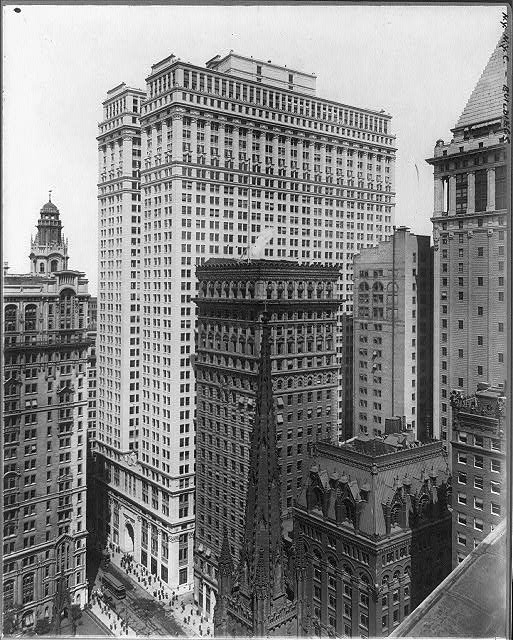
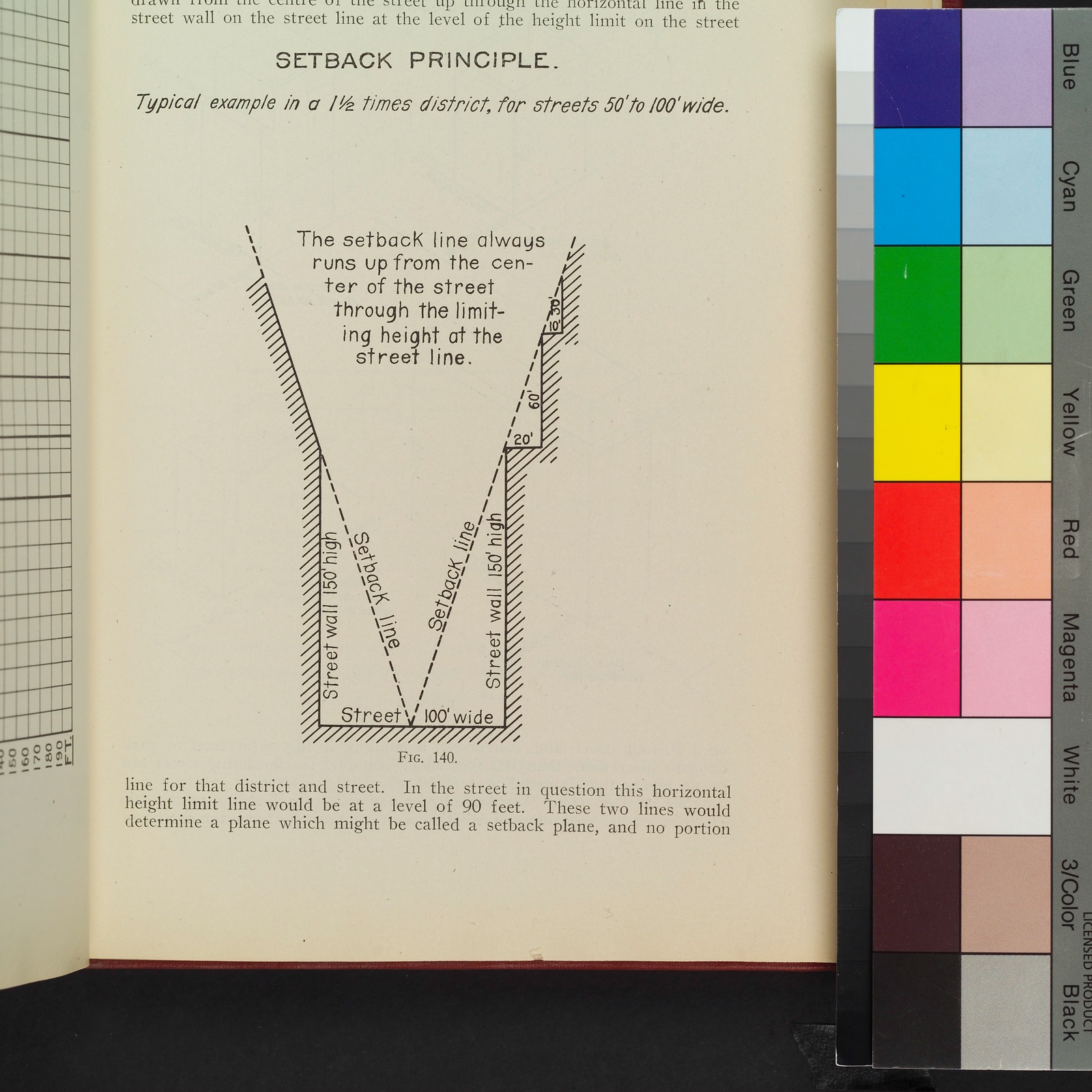
This year is the 100th anniversary of one of the most important laws ever passed in New York City — the 1916 Zoning Law which dictated the rules for building big and tall in the city. So we thought we’d take this opportunity to ponder on the many changes to New York’s beautiful skyline via the unique technical changes to construction rules.

Why are areas of lower Manhattan darkened canyons, and why are there huge public plazas inside buildings in Midtown? Why do older buildings have graceful and elegant set-backs but newer structures feel like monoliths from 2001: A Space Odyssey? This is a layman’s history of building tall — our apologizes to architects for simplifying such sophisticated concepts — and the important laws that changed the face of NYC forever.

PLUS: This is our craziest podcast yet. We’ve decided — as our 199th episode — to hit the road! This entire show is recorded outside in front of the very spots that have most affected the city’s decision. From downtown Manhattan and the Equitable Building to a surprising corner of Hell’s Kitchen.


The Bowery Boys: New York City History podcast is brought to you …. by you!

We are now producing a new Bowery Boys podcast every two weeks. We’re also looking to improve the show in other ways and expand in other ways as well — through publishing, social media, live events and other forms of media. But we can only do this with your help!

We are now a member of Patreon, a patronage platform where you can support your favorite content creators for as little as a $1 a month.

Please visit our page on Patreon and watch a short video of us recording the show and talking about our expansion plans. If you’d like to help out, there are five different pledge levels (and with clever names too — Mannahatta, New Amsterdam, Five Points, Gilded Age, Jazz Age and Empire State). Check them out and consider being a sponsor.

We greatly appreciate our listeners and readers and thank you for joining us on this journey so far. And the best is yet to come!


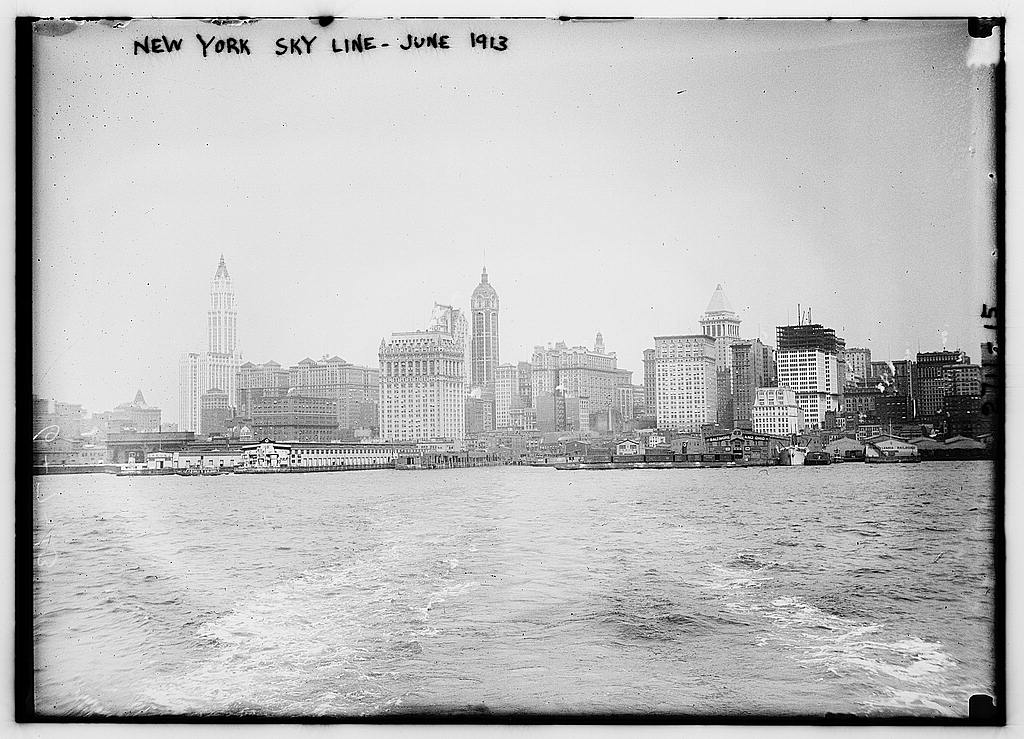
The New York skyline circa 1913 with the newly built Woolworth Building. None of these structures were constructed with a mandated setback.

Library of Congress
Library of Congress

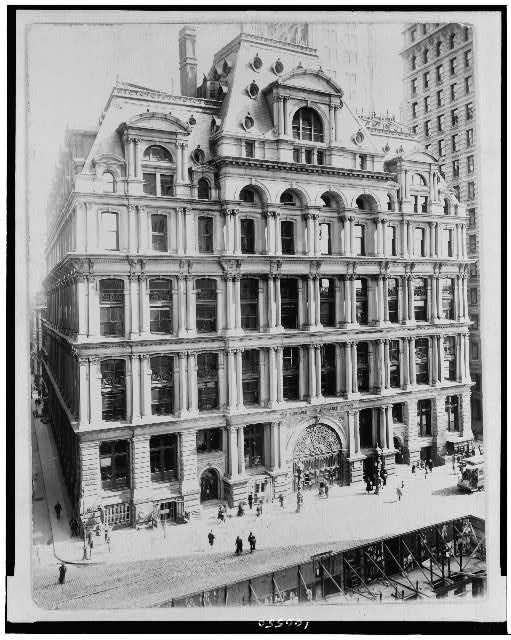
The first Equitable Building, constructed in 1870 (and seen here in 1906), considered New York’s first skyscraper.

Library of Congress
Library of Congress

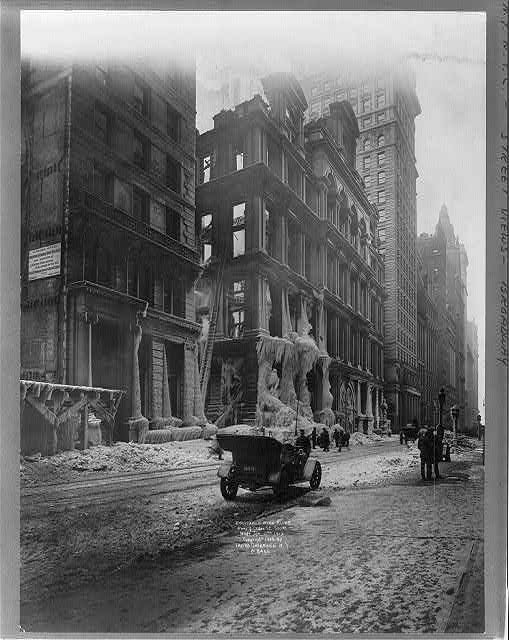
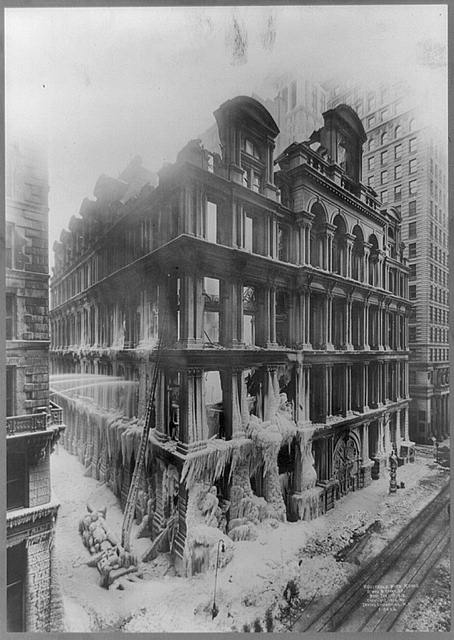
The Equitable was destroyed in a dramatic fire on a cold January 9, 1912.

Library of Congress
Library of Congress

3

The new Equitable Building was a monster of a bulky skyscraper, casting dark shadows onto the surrounding buildings.

Library of Congress
Library of Congress

This image is the property of The New York Public Library. For each use, you must contact: The New York Public Library, Photographic Services & Permissions, Room 103, 476 Fifth Avenue, New York, NY 10018; 212-930-0091, fax: 212-930-0533, email: permissions@nypl.org. Using an image from The New York Public Library for publication without payment of use fees and official written permission is strictly prohibited.
Courtesy The New York Public Library.

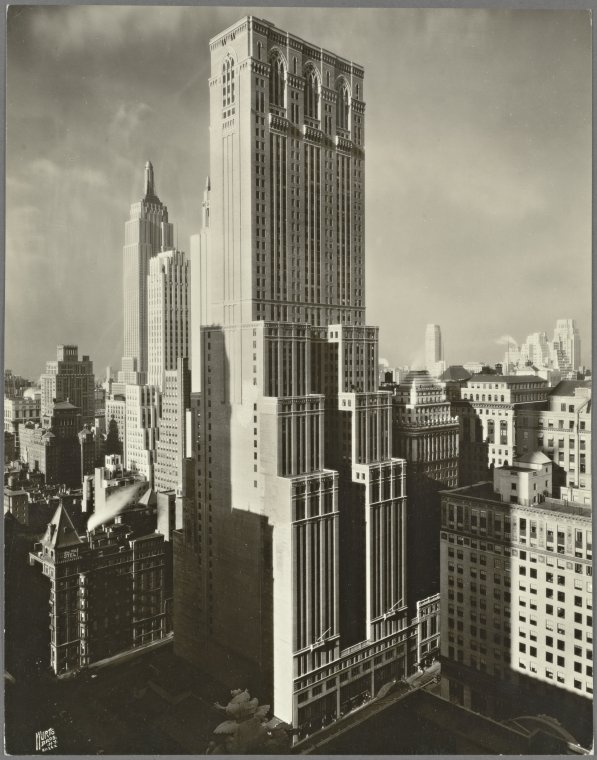
Midtown Manhattan was a sea of setbacks by the late 1930s. (Photo by the Wurts Brothers)

New York Public Library

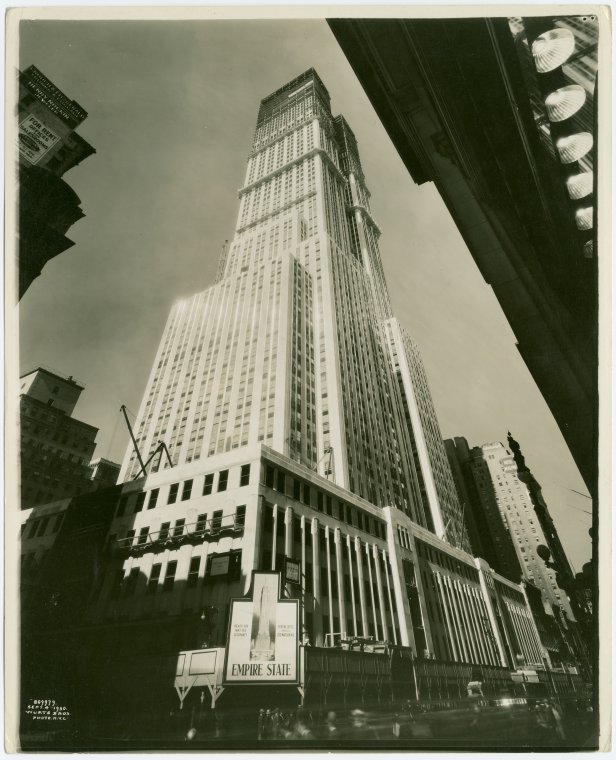
The Empire State Building under construction. From this angle, the dramatic effect of the setbacks can be seen. (Photo by the Wurts Brothers.)

NYPL
NYPL

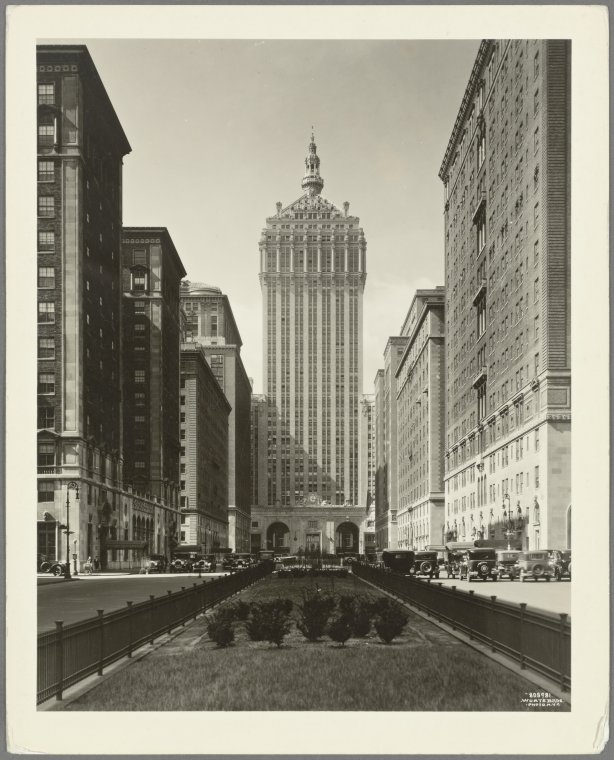
How Park Avenue looked before the arrival of the Lever House. Photo by the Wurts Brothers

NYPL
NYPL

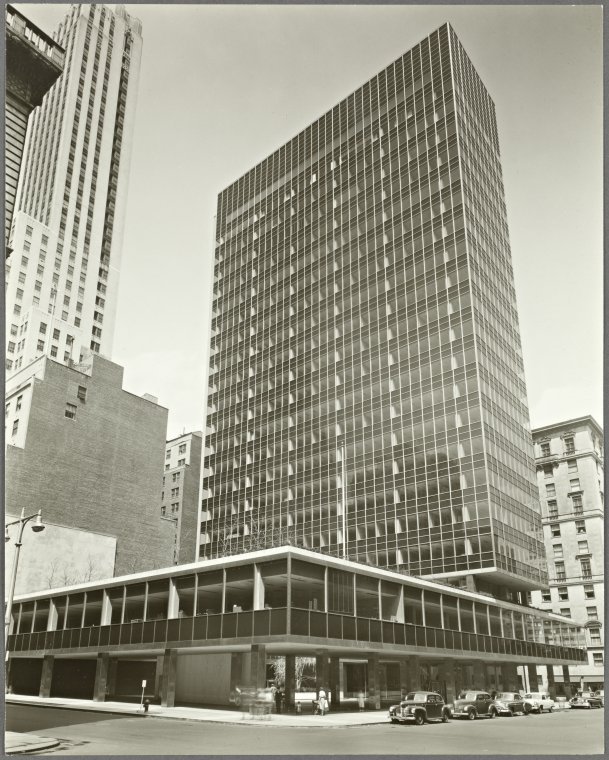
The Lever House transformed the area of Park Avenue with its unique approach to the 1916 zoning laws. (Photo from 1952)

NYPL
NYPL

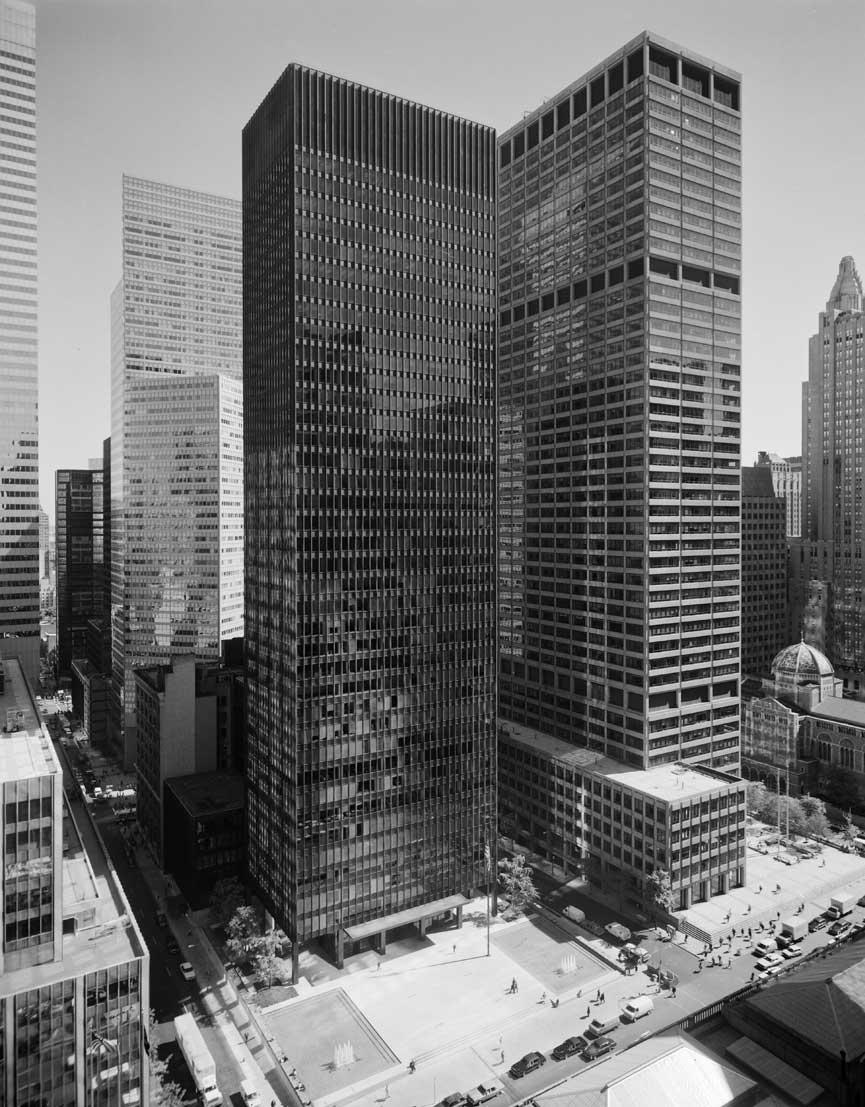
The Seagram Building, completed in 1958, is the very best example of the glass-curtain style monolith, More excellent pictures of this classic skyscraper at their website.

Courtesy 375 Park Avenue

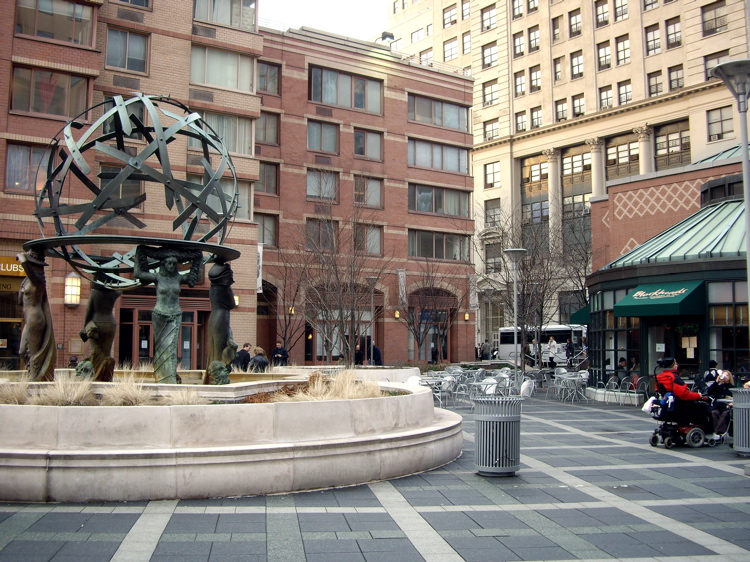
The courtyard at Worldwide Plaza, a massive office/residential complex completed in 1989.

Courtesy Wikimedia
Courtesy Wikimedia
Categories
Brooklyn History Podcasts

The History of Greenpoint, Brooklyn: An Industrial-Strength Story

PODCAST The history of the Brooklyn neighborhood of Greenpoint and the oft-polluted Newtown Creek.

Greenpoint, Brooklyn, has a surprising history of both bucolic green pastures and rancid oil patches. Before the 19th century this corner of Brooklyn was owned by only a few families with farms (and the slaves that tended them).

But with the future borough of Brooklyn expanding at a great rate, Greenpoint (or Green Point, as they used to call it) could no longer remain private.

Industries like ship building and petroleum completely changed the character of Greenpoint’s waterfront, while its unique, alphabetically-named grid of streets held an extraordinary collection of townhouses.

By the late 19th century, Polish immigrants would move on the major avenues, developing a ‘Little Poland’ that still characterizes the neighborhood.

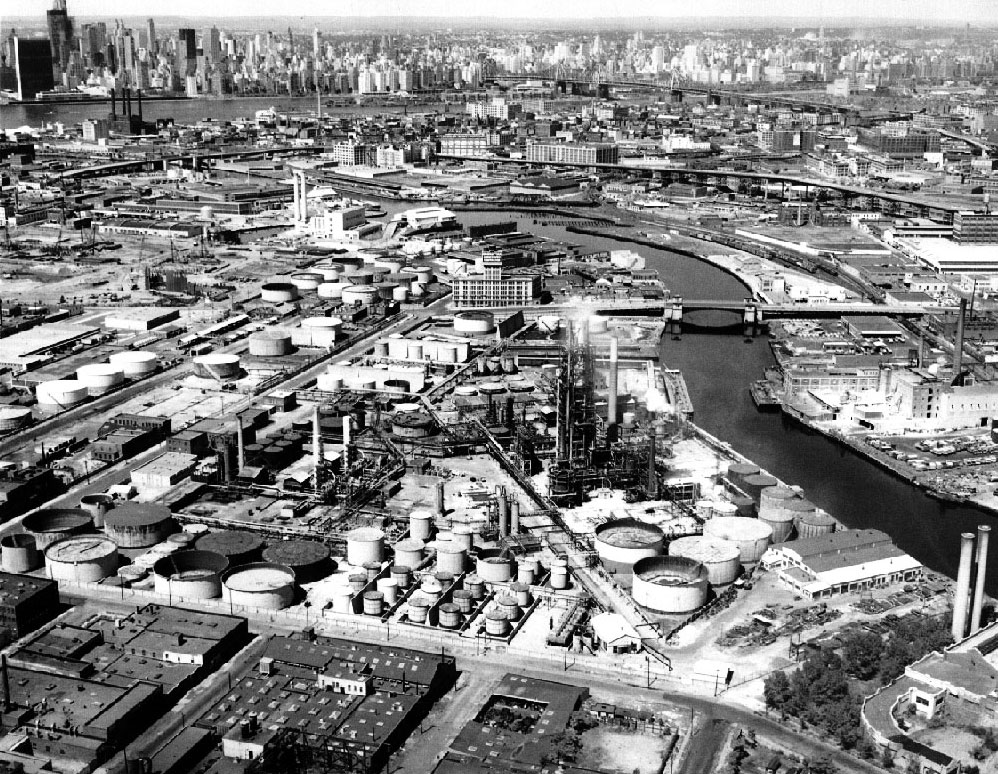
Today big changes are coming to Greenpoint thanks to new housing developments. How will these new arrivals fare next to the notoriously toxic Newtown Creek, a body of water heavily abused by industry?

FEATURING: Charles Pratt, Margaret Wise Brown, Pat Benetar and the alarming smell of cinnamon toast!

The Bowery Boys: New York City History podcast is brought to you …. by you!

We are now producing a new Bowery Boys podcast every two weeks.  We’re also looking to improve the show in other ways and expand in other ways as well — through publishing, social media, live events and other forms of media.  But we can only do this with your help!

We are now a member of Patreon, a patronage platform where you can support your favorite content creators for as little as a $1 a month.

Please visit our page on Patreon and watch a short video of us recording the show and talking about our expansion plans.  If you’d like to help out, there are five different pledge levels (and with clever names too — Mannahatta, New Amsterdam, Five Points, Gilded Age, Jazz Age and Empire State). Check them out and consider being a sponsor.

We greatly appreciate our listeners and readers and thank you for joining us on this journey so far. And the best is yet to come!

___________________________________________________________

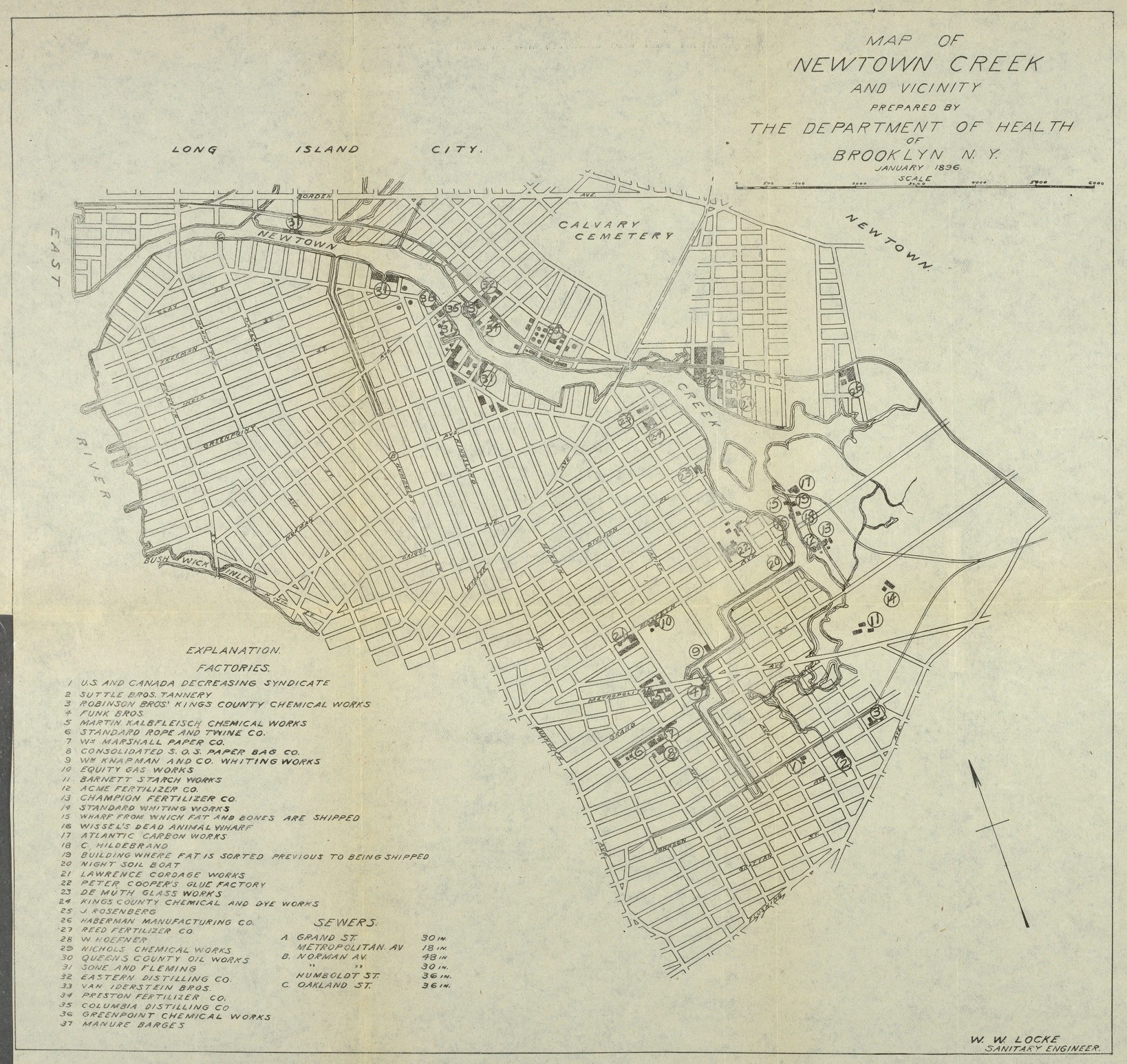
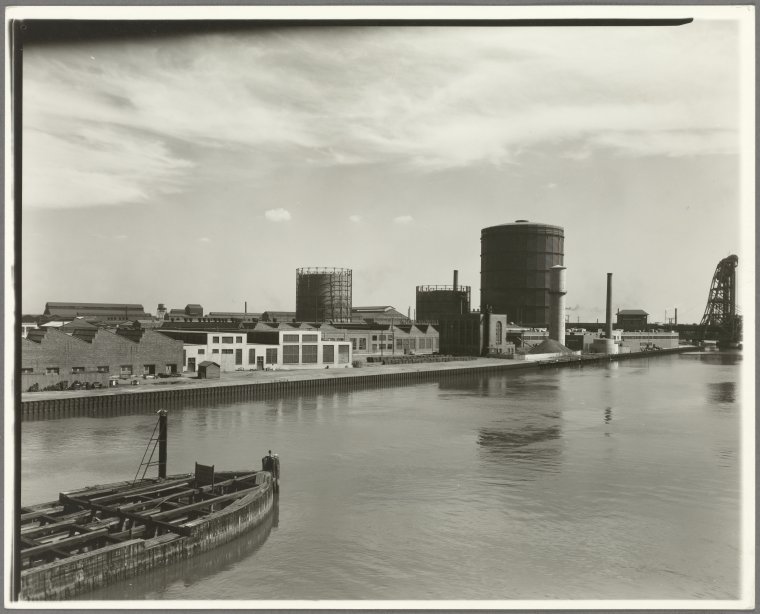
A map of Greenpoint from an 1896 survey. A list of industries are marked along the waterfront including tanneries, rope and twine manufacturers, a glue factory, glass works and “Wissel’s Dead Animal Wharf.”

Courtesy New York Public LIbrary

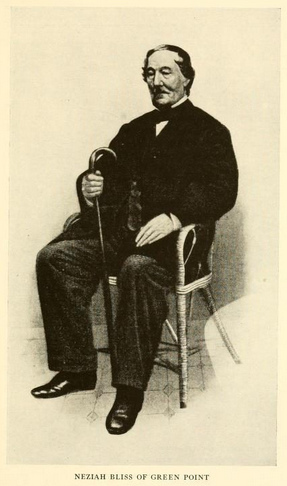
Neziah Bliss, the ‘godfather’ of Greenpoint due to his marriage into the Meserole family and subsequent development of their former farm and shoreline property.

2

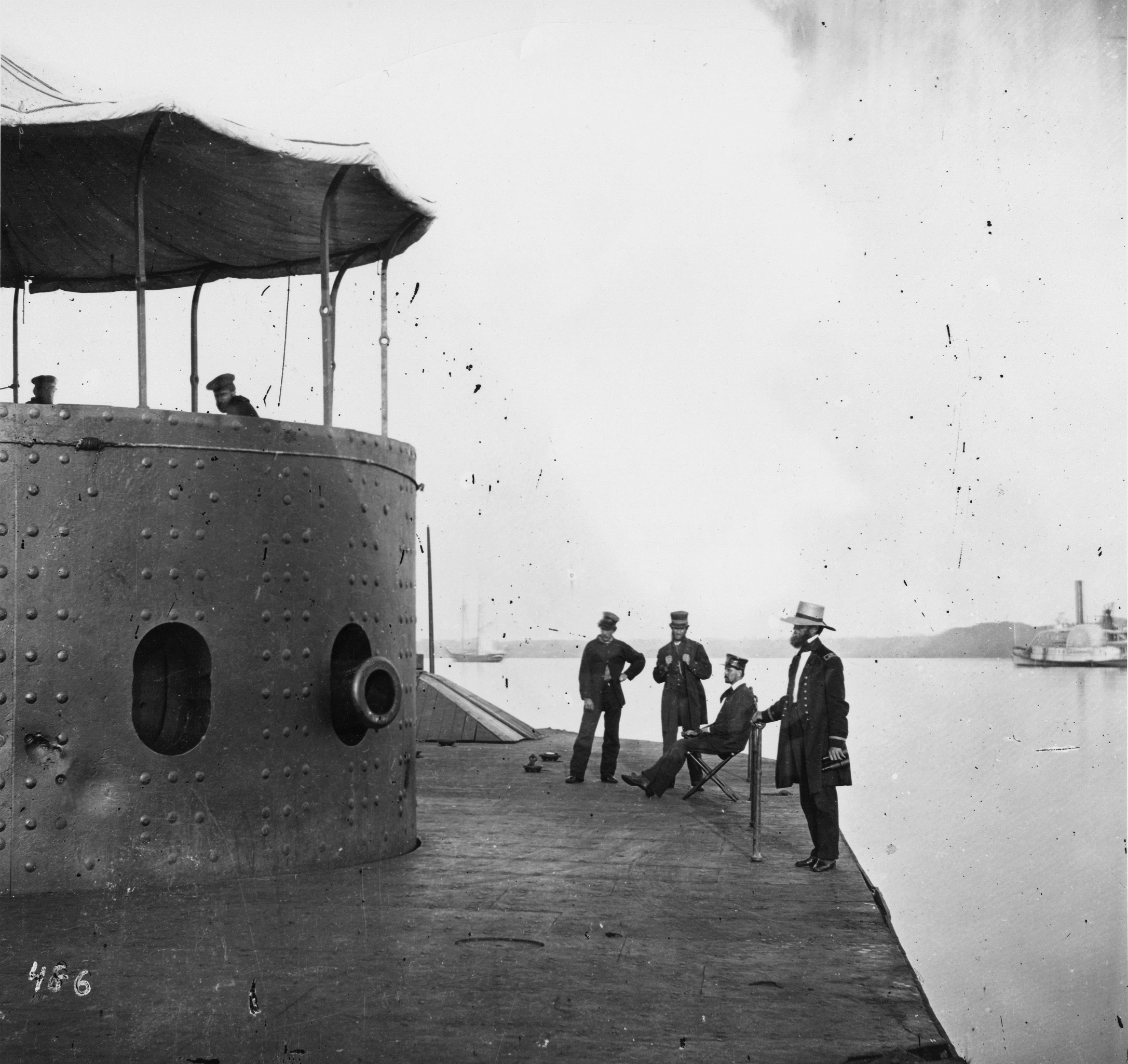
The USS Monitor, made at an iron works in Greenpoint, pictured here July 9, 1862, by Union photographer James F. Gibson.

monitorofficersondeck
Courtesy Library of Congress

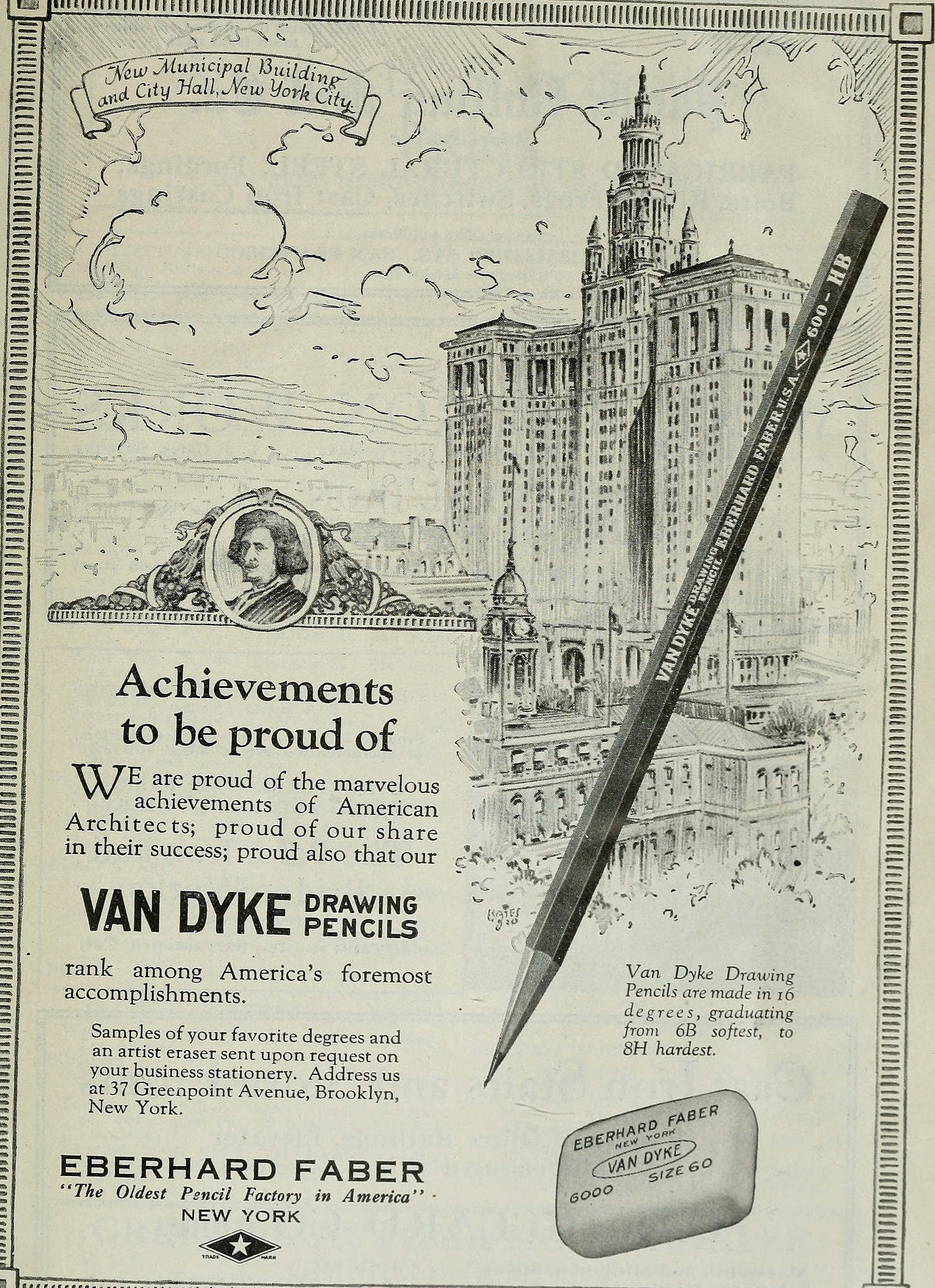
An ad for Eberhard Faber pencils from the 1905 journal Architect and Engineer.

Internet Book Archive

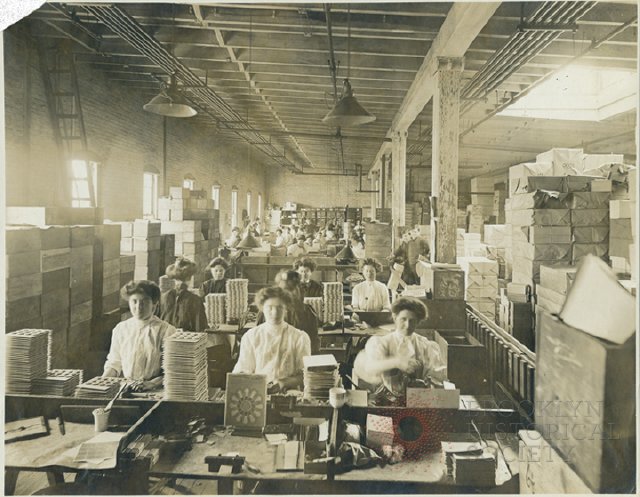
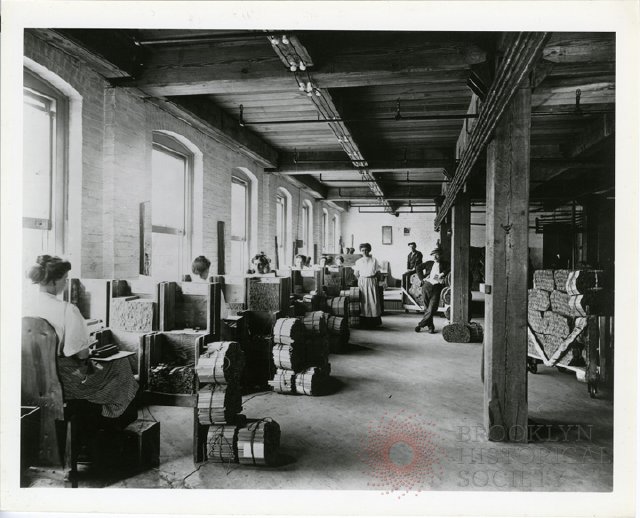
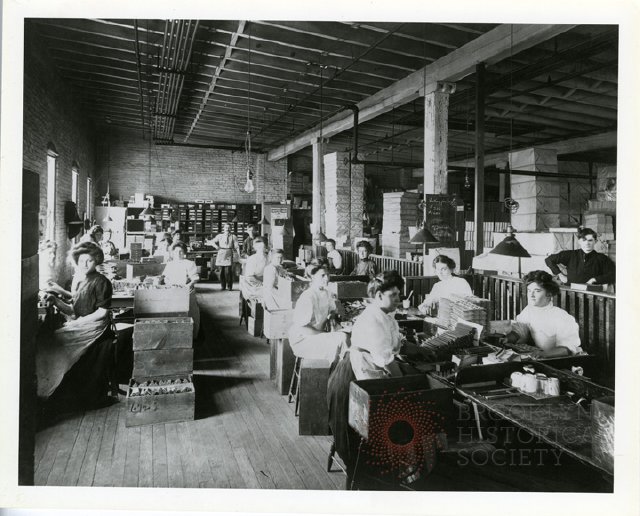
Employees at the Eberhard Faber pencil company in Greenpoint, circa 1915, courtesy Brooklyn Historical Society

2
Courtesy Brooklyn Historical Society
4

Your standard view of Newtown Creek in the early 20th century.

Courtesy New York Public Library

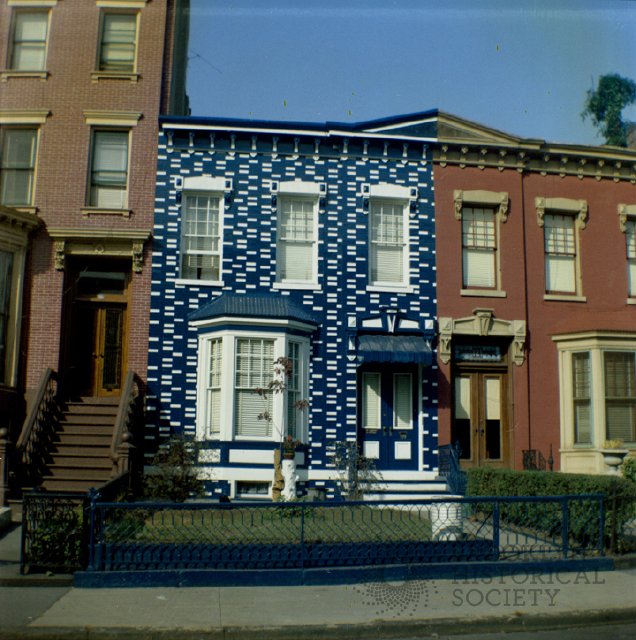
One unusual house at 112 Milton Street. The house is still there but, as part of the Greenpoint Historic District, it’s no longer blue.

Courtesy Brooklyn Historical Society

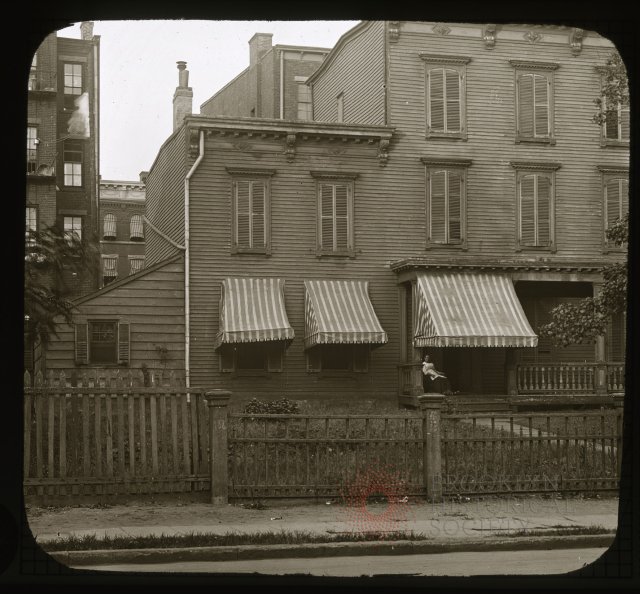
The old Meserole house at 1000 Lorimer Street

Courtesy Brooklyn Historical Society

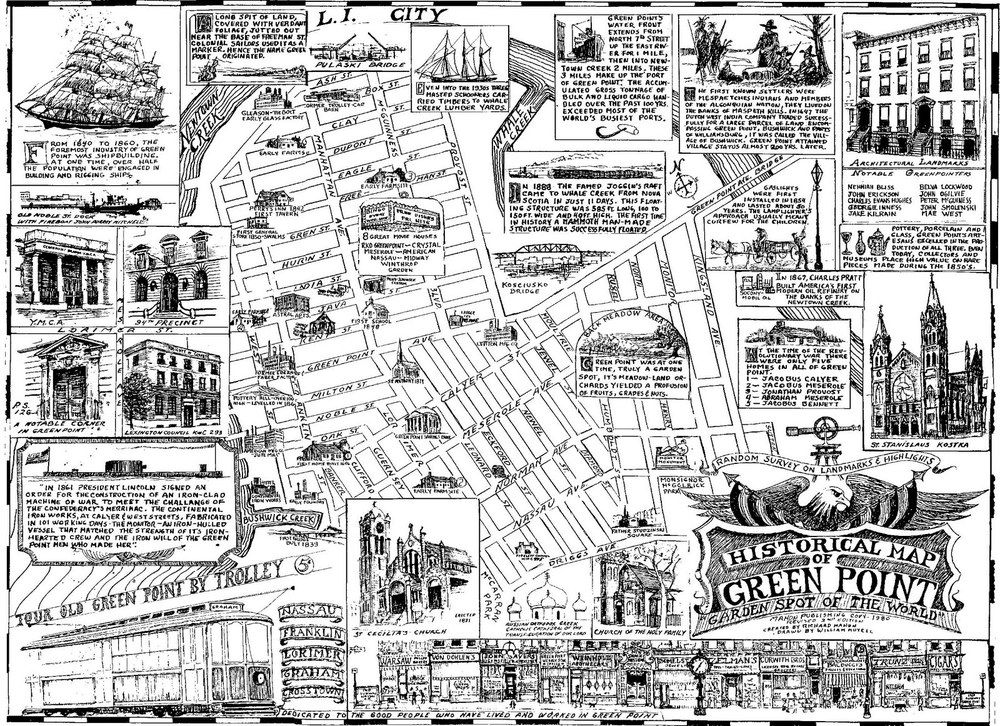
A very fanciful ‘place mat’ map of Greenpoint Brooklyn. I’m not sure what the original source for this is, but it’s courtesy the Box Hotel.

greenpoint

A rather ghastly look at Newtown Creek in 1960, from Apollo Street looking towards the East River.

Courtesy Newtown Creek Alliance

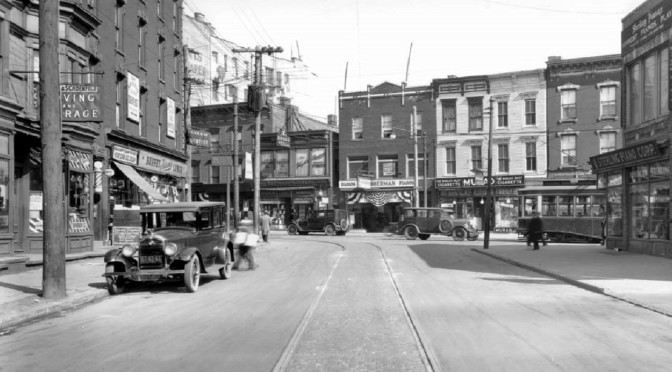
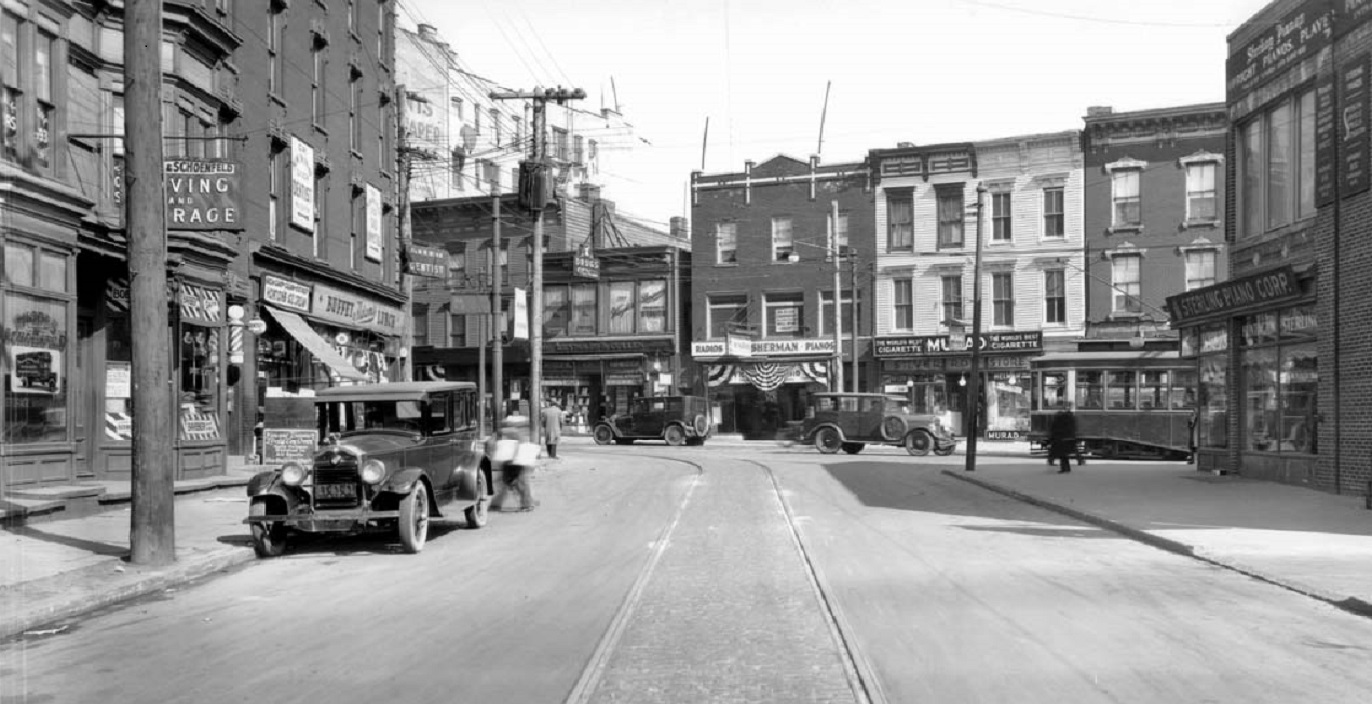
Picture at top: Manhattan Avenue and Bedford Avenue

1
Categories
Health and Living Newspapers and Newsies Podcasts

Nellie Bly: Undercover in New York’s Notorious Asylum for the Insane

The story of New York World reporter Nellie Bly as she poses as a mental patient to report on the abuses of Blackwell’s Island’s Lunatic Asylum.

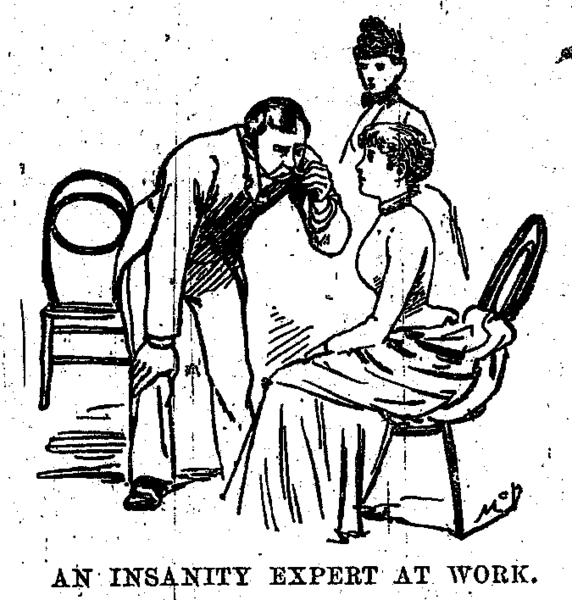
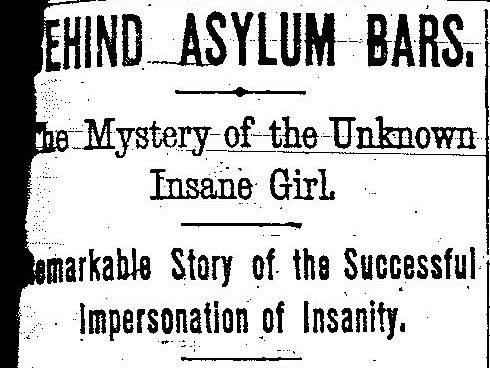
PODCAST Nellie Bly was a determined and fearless journalist ahead of her time, known for the spectacular lengths she would go to get a good story. Her reputation was built on the events of late September-early October 1887 — the ten days she spent in New York’s most notorious insane asylum.

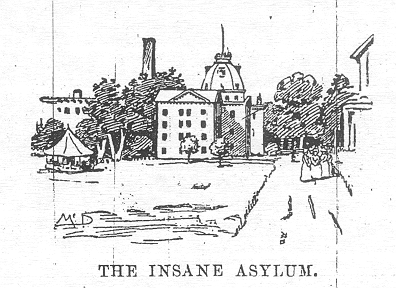
Since the 1830s Blackwell’s Island had been the destination for New York’s public institutions of an undesirable nature — hospitals for grave diseases, a penitentiary, an almshouse, even a quarantine for smallpox. There was also a mental institution — an insane or lunatic asylum — rumored to treat its patients most cruelly.

51

The ambitious young reporter decided to see for herself — by acting like a woman who had lost her mind. Her ten days in this particular madhouse — the basis of her newspaper articles and a book — would expose the world to the sinister treatment of the mentally ill and the loathsome conditions of New York institutions meant to care for the most needy.

But would the process of getting this important story lead Nellie herself to go a little mad? And once she got inside the asylum, how would she get out?

ALSO: Not only is a vestige of the asylum still around today, you can live in it!


The Bowery Boys: New York City History podcast is brought to you …. by you!

We are now producing a new Bowery Boys podcast every two weeks. We’re also looking to improve the show in other ways and expand in other ways as well — through publishing, social media, live events and other forms of media. But we can only do this with your help!

We are now a member of Patreon, a patronage platform where you can support your favorite content creators for as little as a $1 a month.

Please visit our page on Patreon and watch a short video of us recording the show and talking about our expansion plans. If you’d like to help out, there are five different pledge levels (and with clever names too — Mannahatta, New Amsterdam, Five Points, Gilded Age, Jazz Age and Empire State). Check them out and consider being a sponsor.

We greatly appreciate our listeners and readers and thank you for joining us on this journey so far. And the best is yet to come!


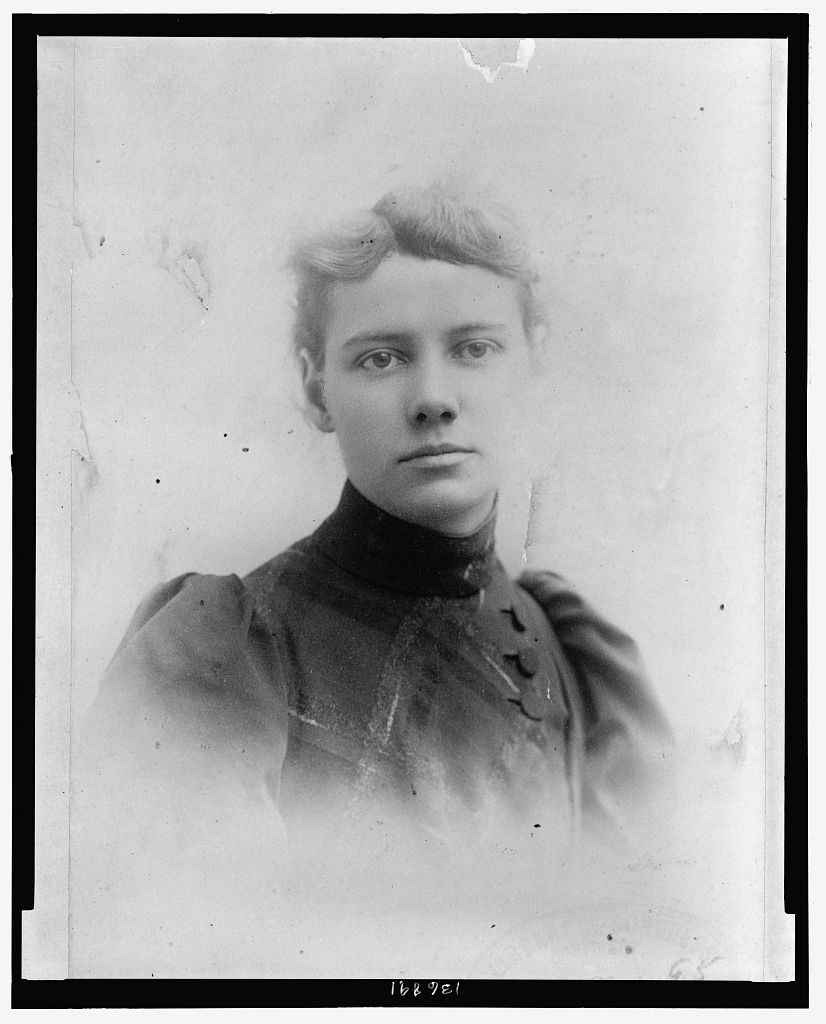
Nellie Bly, the bold journalist with extraordinary will and panache, tackled a number of strange assignments in her life, starting with her virtuoso performance getting into the Blackwell’s Island insane asylum.

7f5ab10e286c50902324b51b1b1a3a51

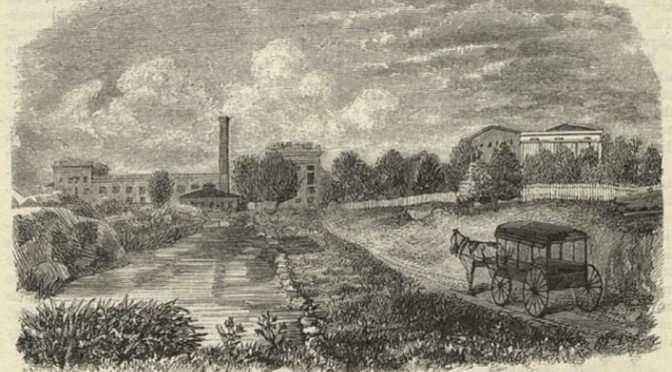
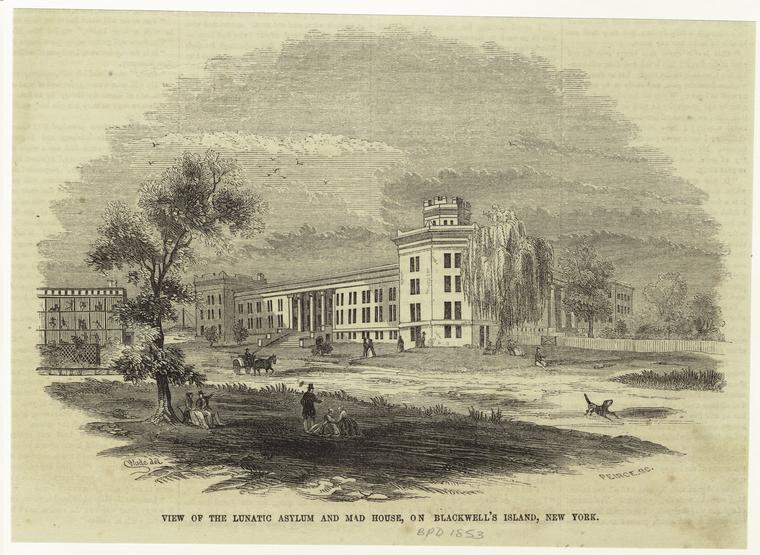
Blackwell’s Island Lunatic Asylum from 1853, rendered by William Wade

Courtesy NYPL
Courtesy NYPL

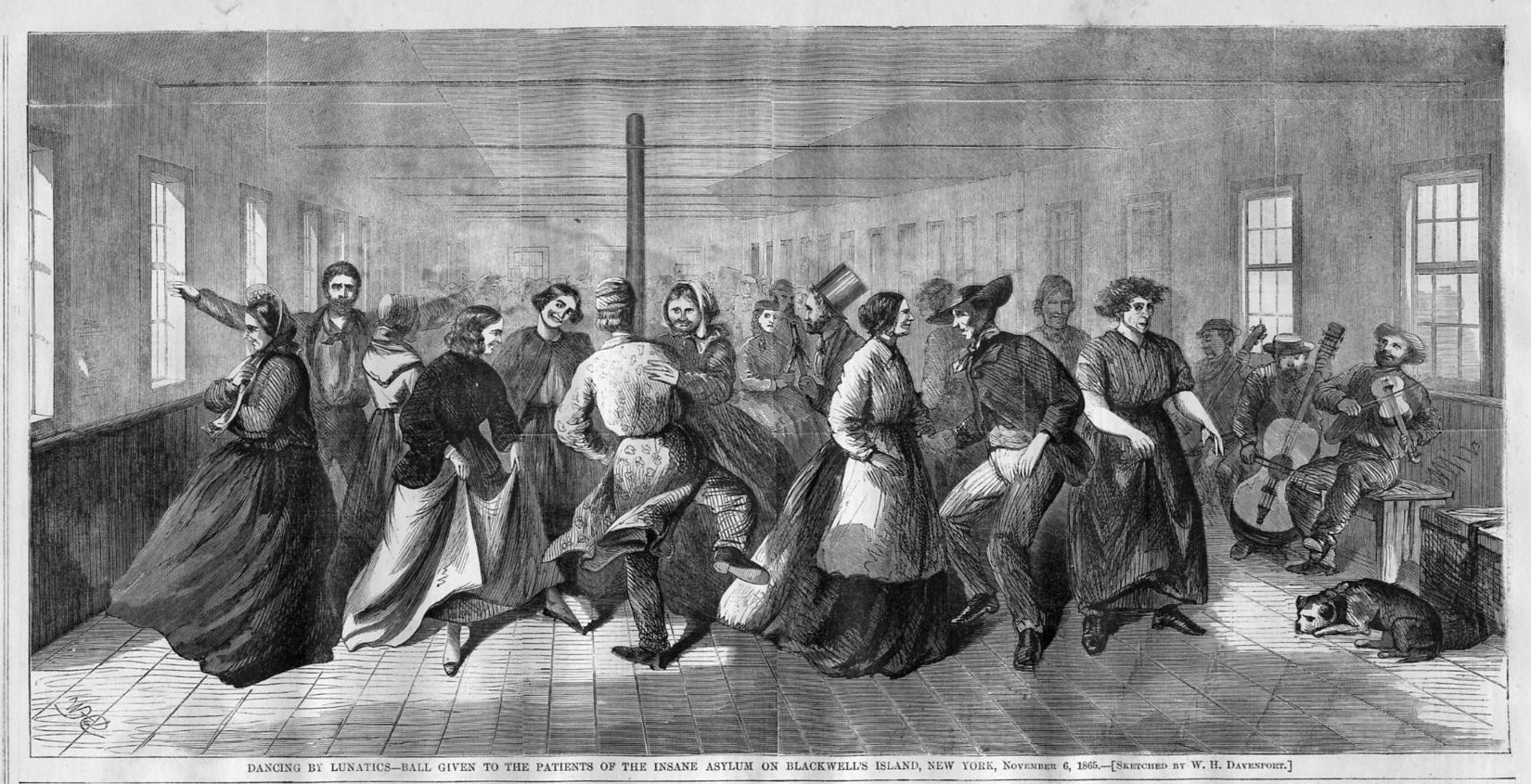
A newspaper clipping from 1865 — “Dancing by lunatics — Ball given to the patients of the Insane Asylum on Blackwell’s Island”

1

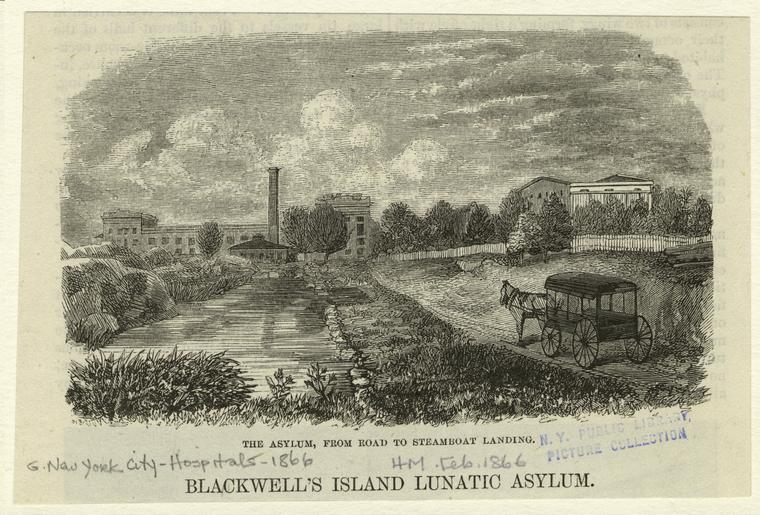
Another view of Blackwell’s Island Lunatic Asylum, pictured here in 1866 “from road to steamboat landing.”

Courtesy NYPL
Courtesy NYPL

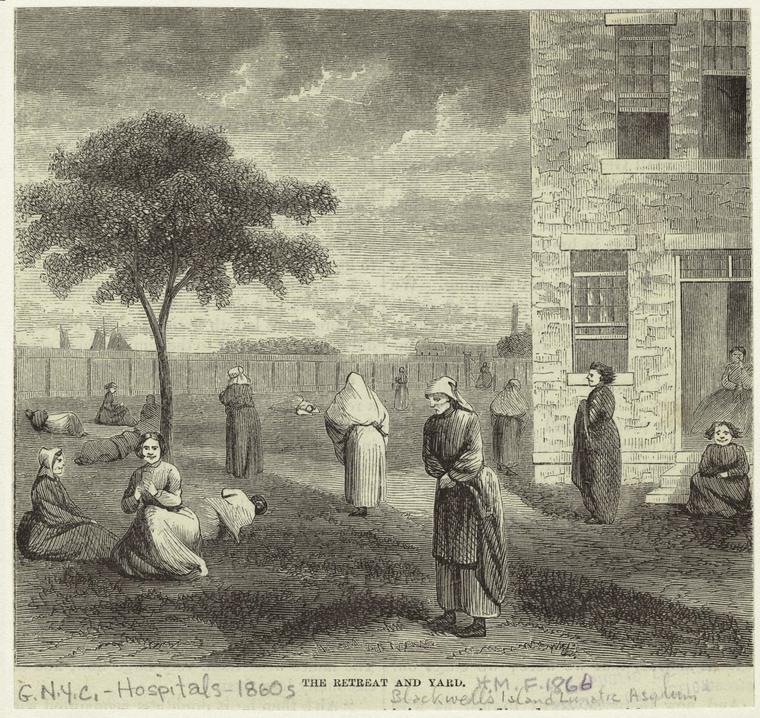
On the grounds of the asylum the ‘Retreat and Yard’, where Nellie would later roam with the other patients.

Courtesy NYPL
Courtesy NYPL

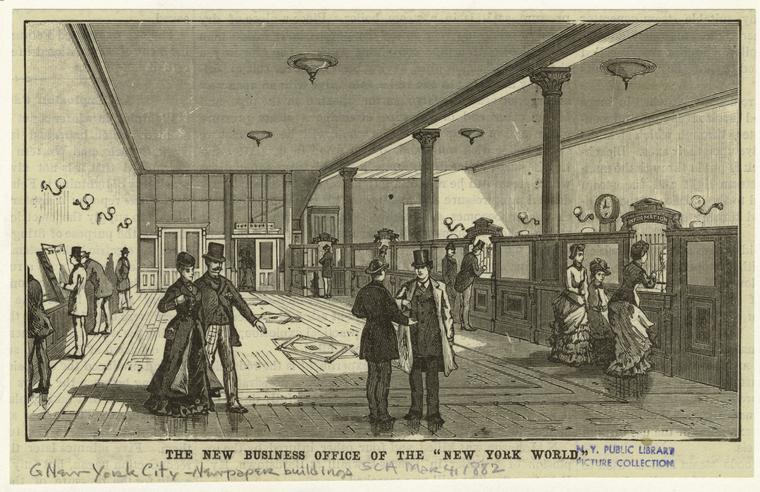
Inside of the offices of the New York World in 1882
Courtesy NYPL
Courtesy NYPL

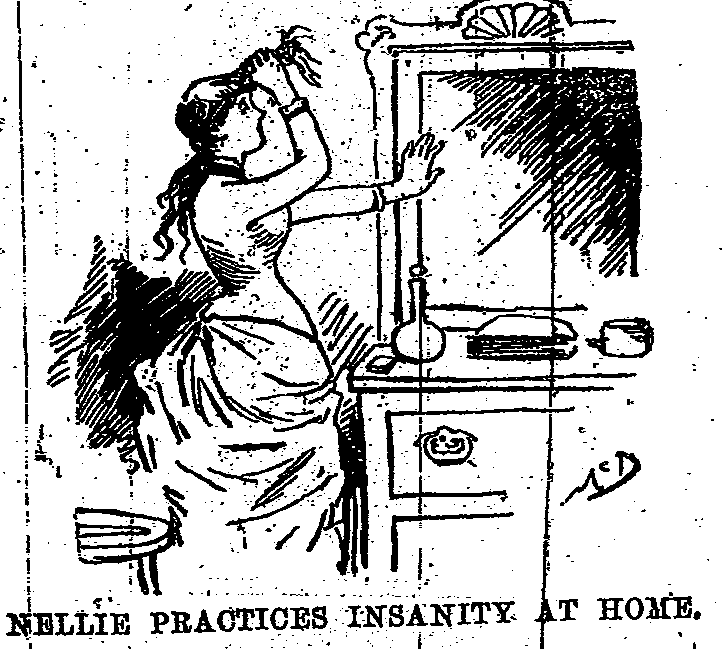
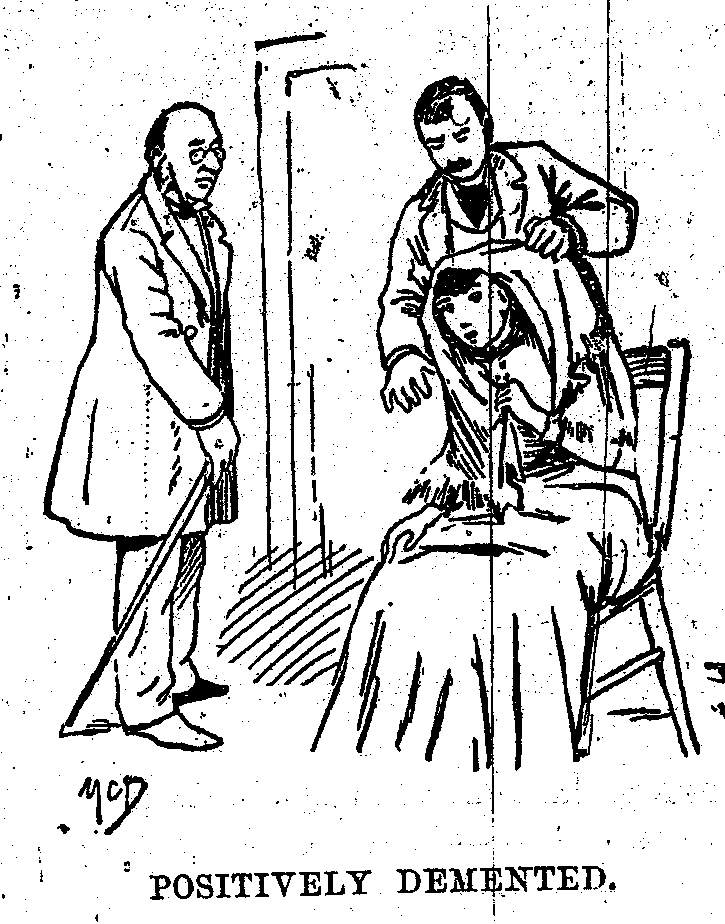
Some images from the New York World and the book Ten Days In A Madhouse

1

2
3

From the first article which ran on October 9, 1887

1

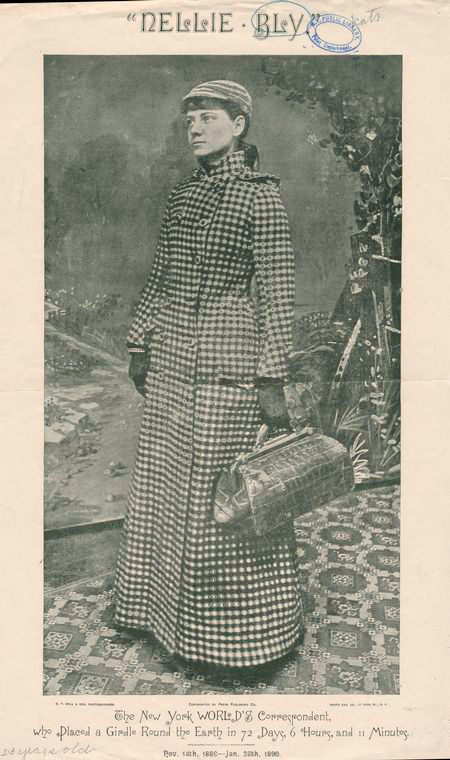
A famous photo of Nellie Bly taken during her trip around the world.

Courtesy New York Public Library

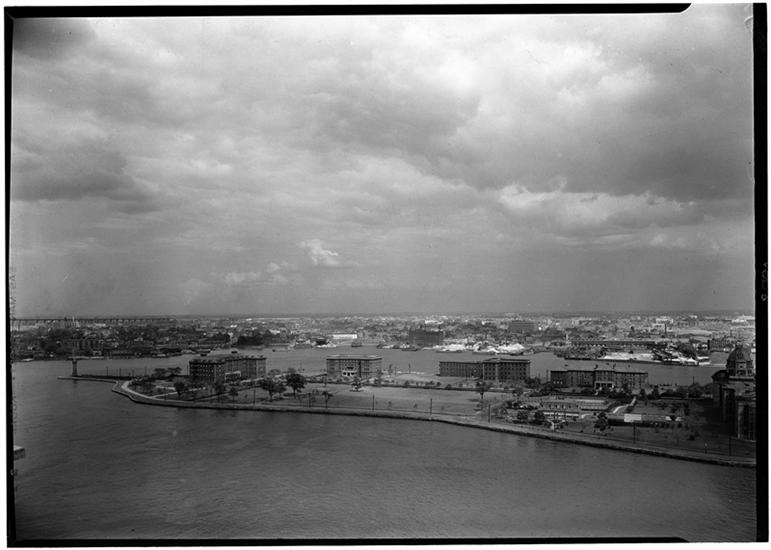
Blackwell’s Island was later named Welfare Island (before its following name change to Roosevelt Island in the 1970s). Below you can see the Octagon at the far right of this image.

Samuel H. (Samuel Herman) Gottscho, photographer, Courtesy Museum of the City of New York

The remaining ruins of the mental asylum. It was later turned into a condominium and apartment building.

ruin
Edmund Gillon photographer. Courtesy Museum of the City of New York
Categories
Neighborhoods Podcasts

St. Mark’s Place: It’s Party Time in the East Village!

PODCAST: The big, brash history of St. Mark’s Place, the East Village’s most interesting street.

St. Mark’s Place may be named for a saint but it’s been a street full of sinners for much of its history.

One of the most fascinating streets in the city, St. Mark’s traces its story back to Peter Stuyvesant, meets up with the wife of Alexander Hamilton in the 1830s, experiences the incredible influx of German and Polish immigrants in the late 19th century, then veers into the heart of counter-culture — from the political activism of Abbie Hoffman to the glamorously psychedelic parties of Andy Warhol.

And that’s when the party really gets started! St. Mark’s is known for music, fashion, rebellion and pandemonium. In the 1970s and 80s, clothing stores like Limbo and club nights like Club 57 helped define its character — punk, new wave, alternative, raucous.


The Bowery Boys: New York City History podcast is brought to you …. by you!

We are now producing a new Bowery Boys podcast every two weeks. We’re also looking to improve the show in other ways and expand in other ways as well — through publishing, social media, live events and other forms of media. But we can only do this with your help!

We are now a member of Patreon, a patronage platform where you can support your favorite content creators for as little as a $1 a month.

Please visit our page on Patreon and watch a short video of us recording the show and talking about our expansion plans. If you’d like to help out, there are five different pledge levels (and with clever names too — Mannahatta, New Amsterdam, Five Points, Gilded Age, Jazz Age and Empire State). Check them out and consider being a sponsor.

We greatly appreciate our listeners and readers and thank you for joining us on this journey so far. And the best is yet to come!


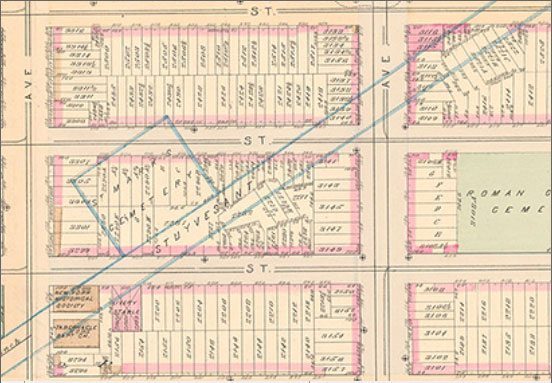
Stuyvesant Street superimposed over the planned grid. Ultimately the street was allowed to remain, breaking the grid. By the way, see that green patch at the far right? That was also a cemetery.

Courtesy EV Transitions

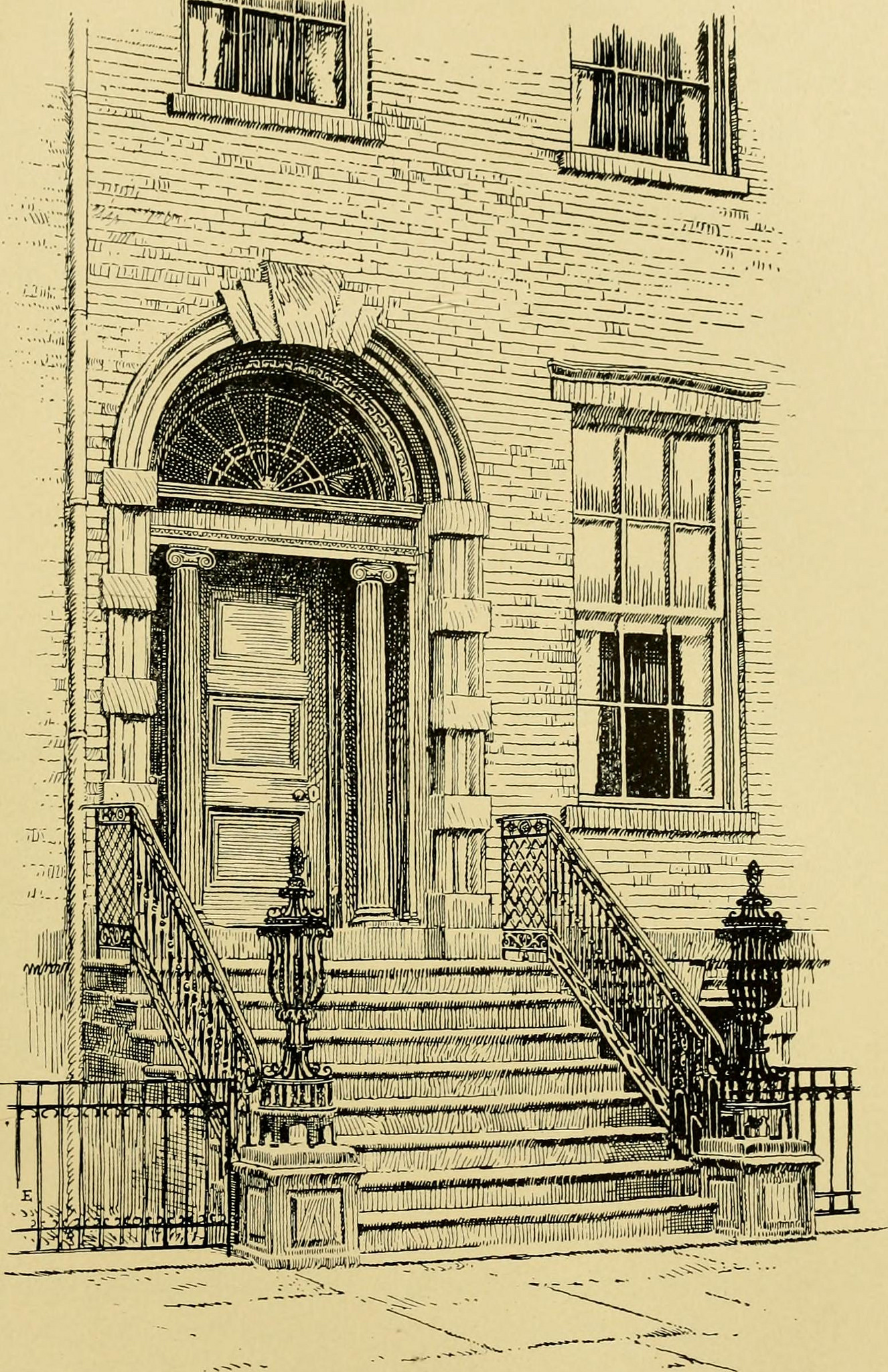
The front of 22 St. Mark’s Place from a 1914 history book. (It looks almost identical to 20 St. Mark’s, the old Daniel LeRoy House, which is still there.). “It had a tea room in the rear of the first floor, which [the tenant] altered into a library, constructing a bathroom in connection with it. A new bedroom was added above the library, and in the basement was installed a cook.” [source]
1

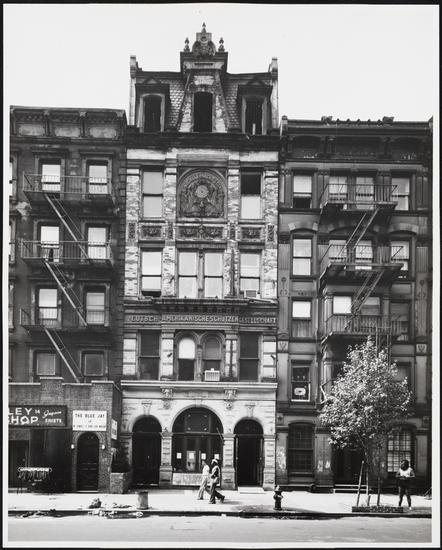
Deutsch-Amerikanische-Schützen Gesellschaft (German-American Shooting Society) building, 12 St. Mark’s Place, pictured here in 1975 in a photograph by Edmund Gillon

Courtesy Museum of the City of New York

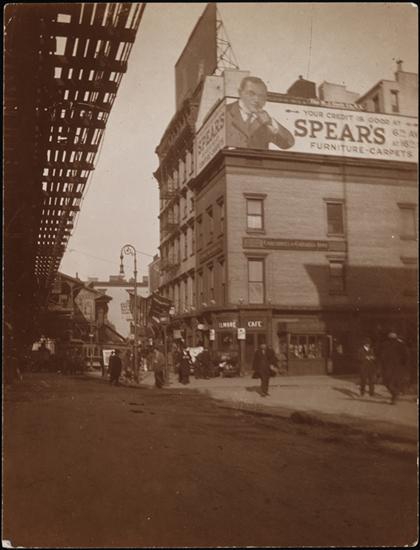
St. Mark’s Place and Third Avenue in 1914, the same year as the shootout at Arlington Hall! The Third Avenue elevated train framed St. Mark’s on the west end, the Second Avenue elevated (which actually ran along First Avenue in the East Village) to the east.

Courtesy Museum of the City of New York

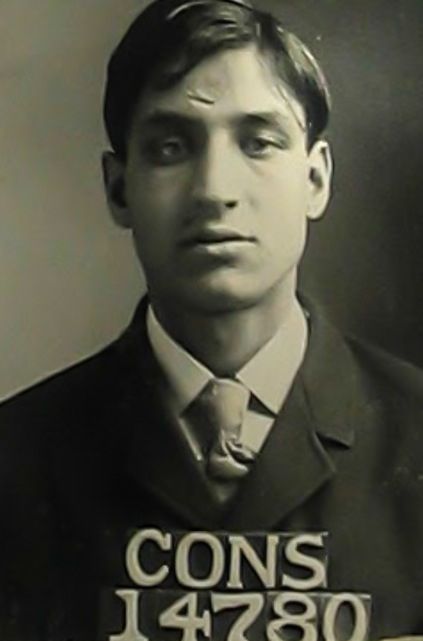
The mugshot of Dopey Benny whose gang was involved in the shootout which killed a city official.

dopey

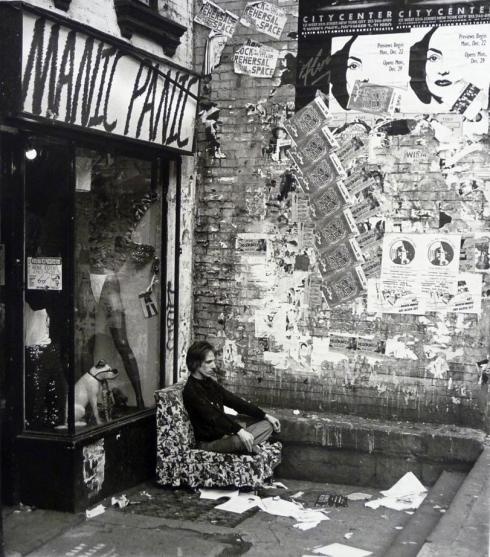
A photo by Victor George Macarol of the boutique Manic Panic (and a man in meditation), 1975

3

The south side of St. Mark’s Place, 1975

EV Grieve
EV Grieve

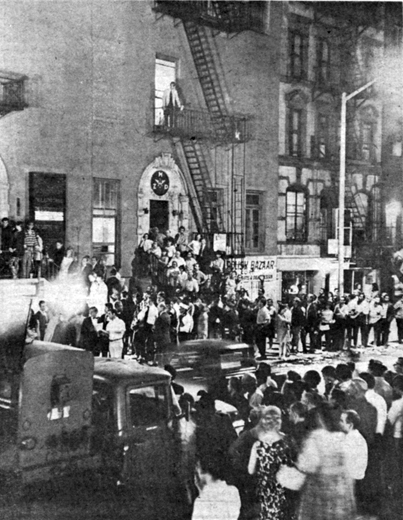
Crowds waiting to get into the Electric Circus

courtesy Alex Ross
courtesy Alex Ross

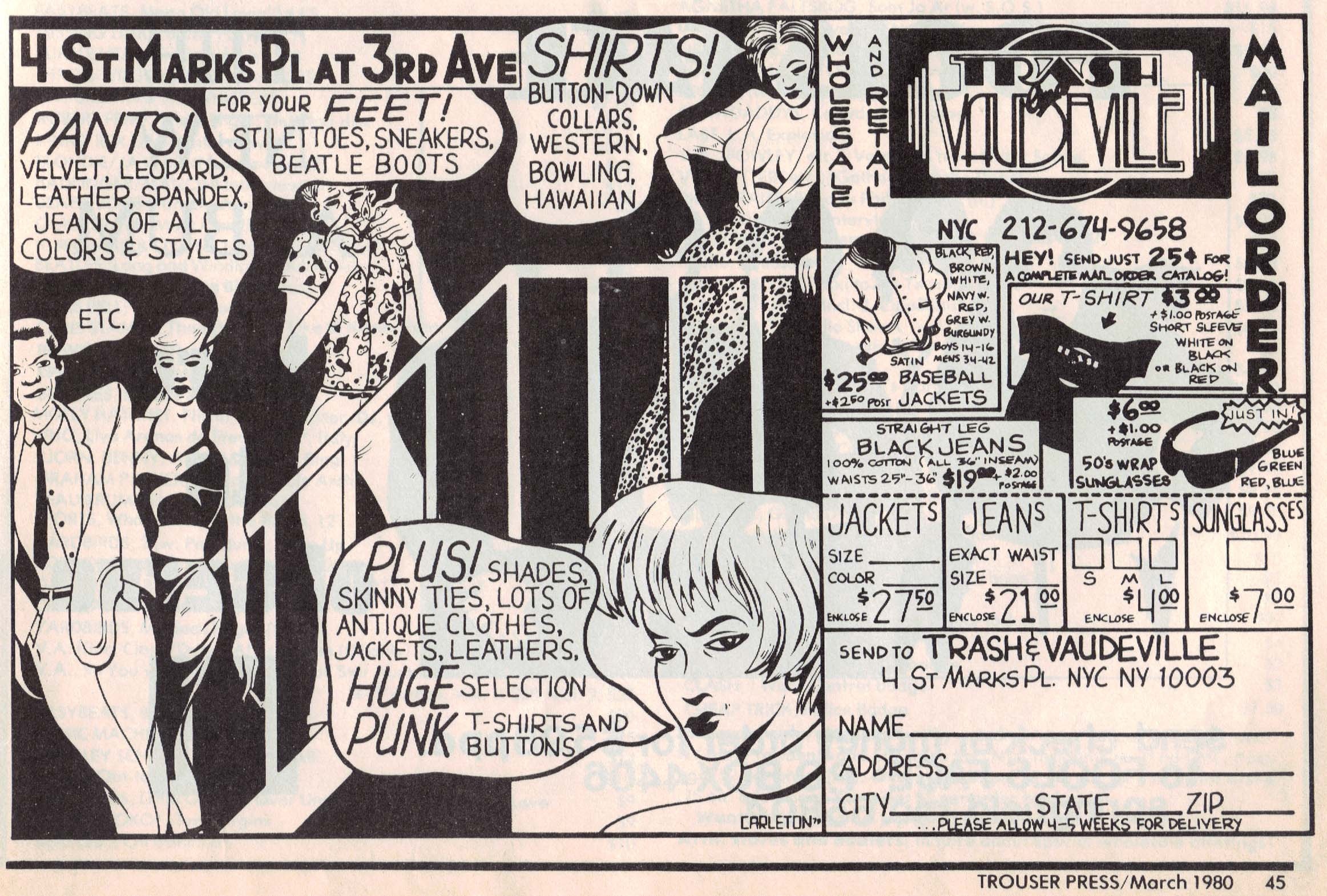
A flyer for Trash and Vaudeville…

trash

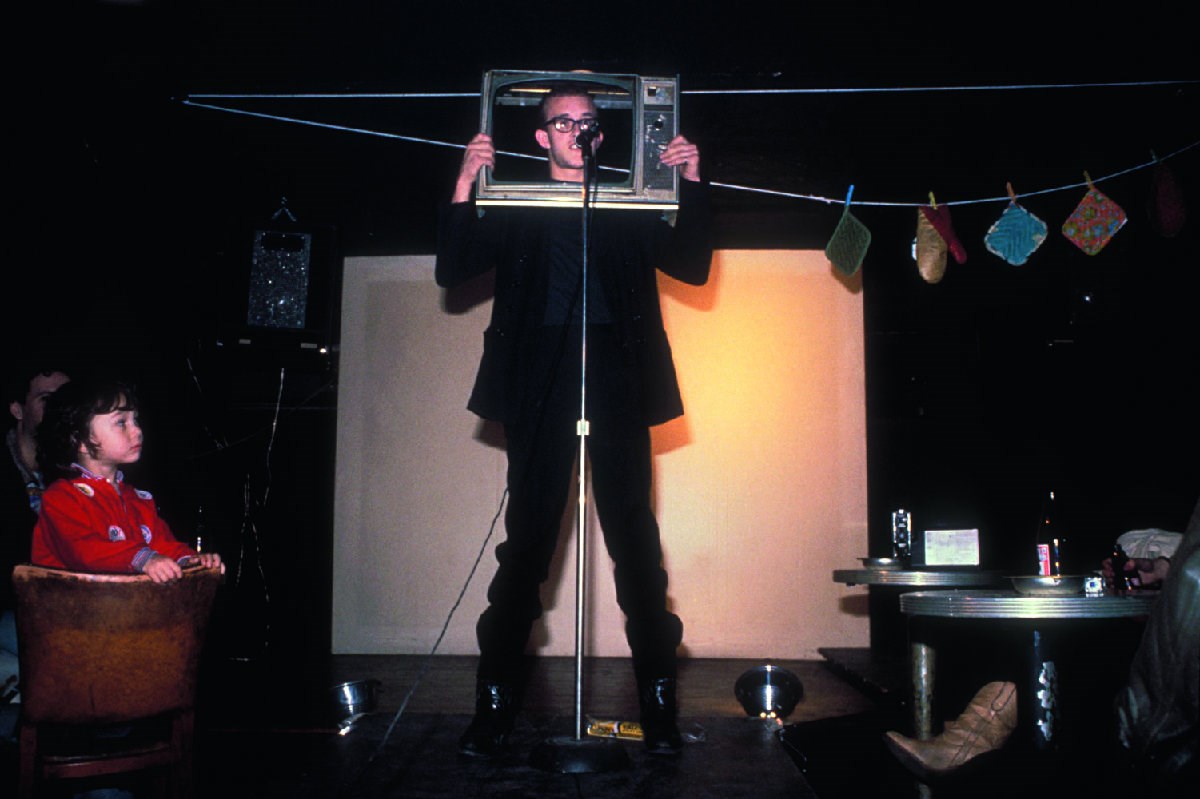
Keith Haring performing at Club 57 in a themed evening called Acts of Live Art. For more information on Club 57, you can read my earlier article about this extraordinary club here. Dazed has a pretty great article about the place here.

Photo by Joseph Szkodzinski

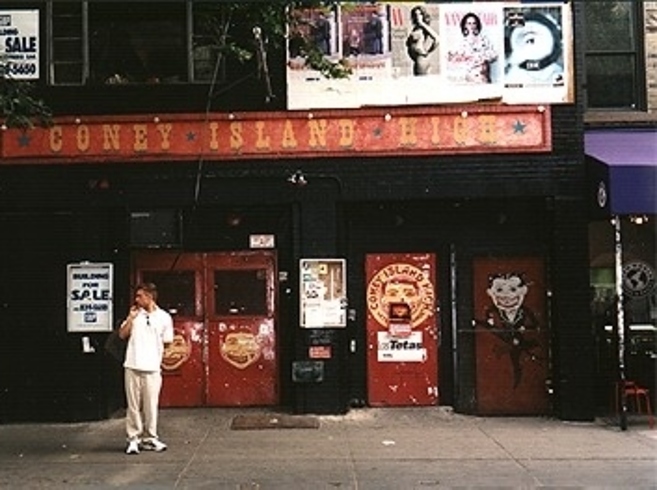
Coney Island High, a pivotal East Village venue during the 1990s.

Courtesy Buzzfeed
Courtesy Buzzfeed

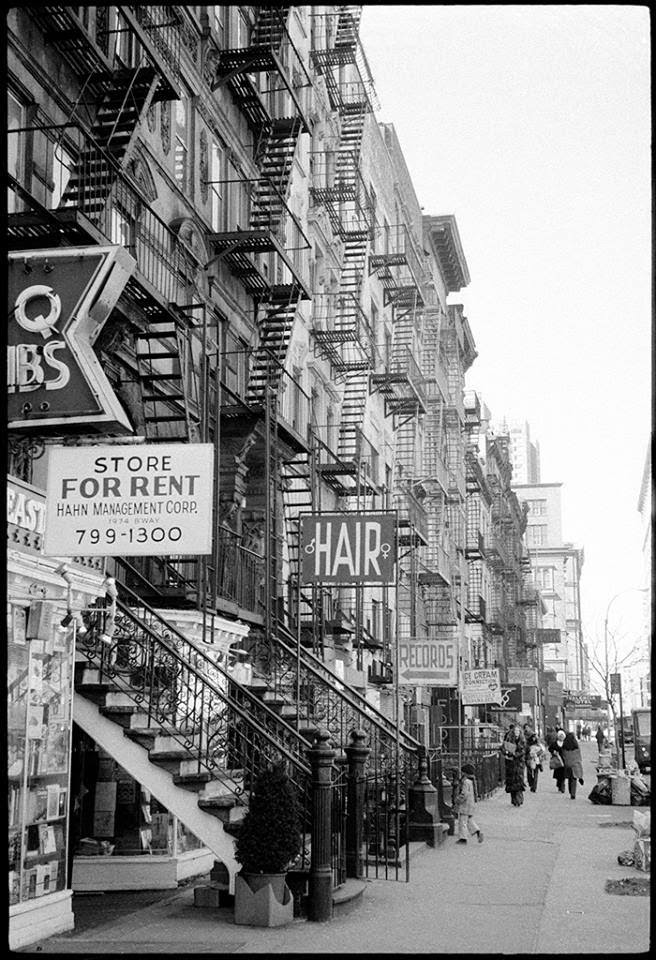
Top photo — St. Mark’s Place in 1978, Photos by Leonard Freed / Magnum Photos, care of Vintage Everyday

Categories
Mysterious Stories Podcasts

Haunted Landmarks of New York : Tourist Terrors in the Big Apple

PODCAST It’s the ninth annual Bowery Boys ghost stories podcast, our seasonal twist on history, focusing on famous tales of the weird and the disturbing at some of New York’s most recognizable locations.

Don’t be frightened! We’re here to guide you through the back alleys … OF TERROR!

In this installment, we take a look at the spectral lore behind some of New York City’s most famous landmarks, buildings with great reputations as iconic architectural marvels and locations for great creativity.

But they’re also filled with ghost stories:

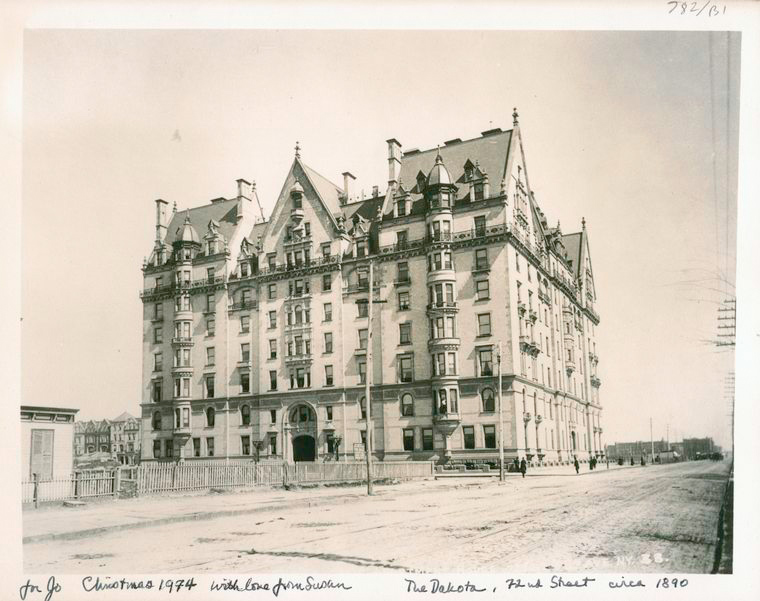
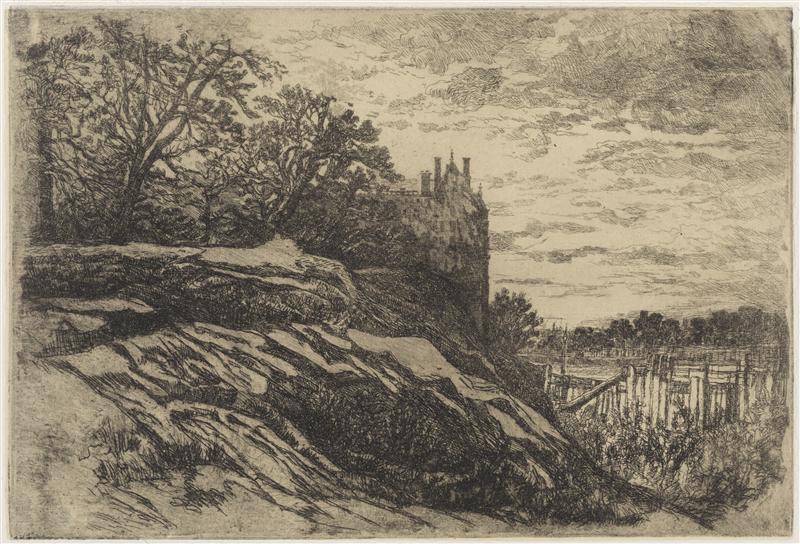
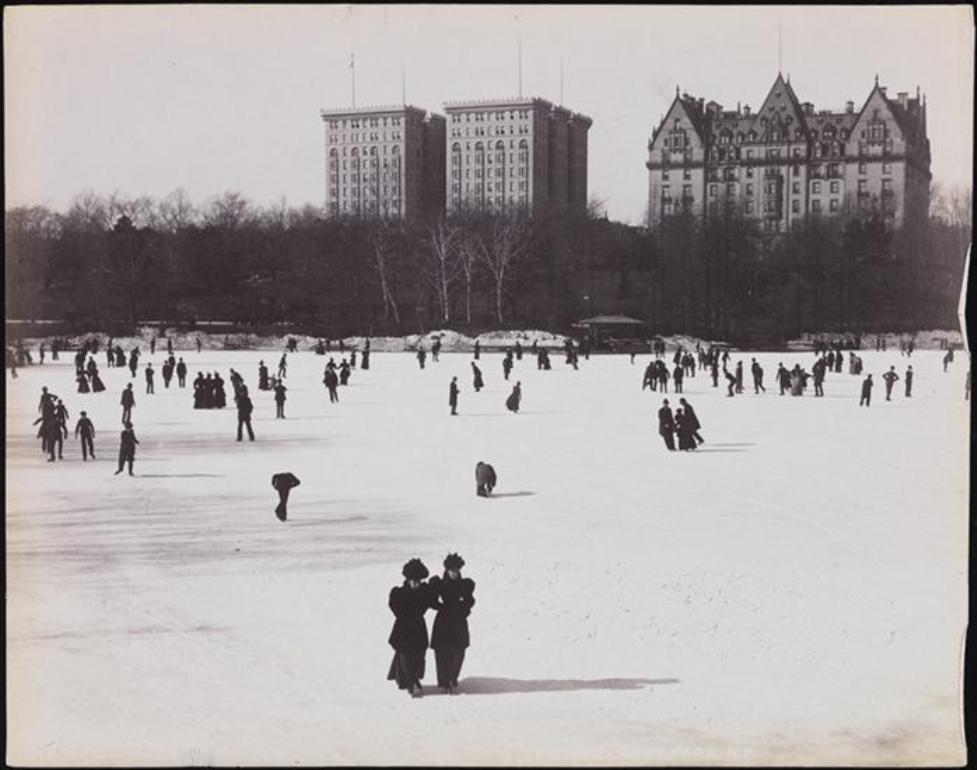
Who are the mysterious sisters in colorful outerwear skating on the icy pond in Central Park? And why are there so many uninvited guests at the Dakota Apartments, one of the first and finest buildings on the Upper West Side?

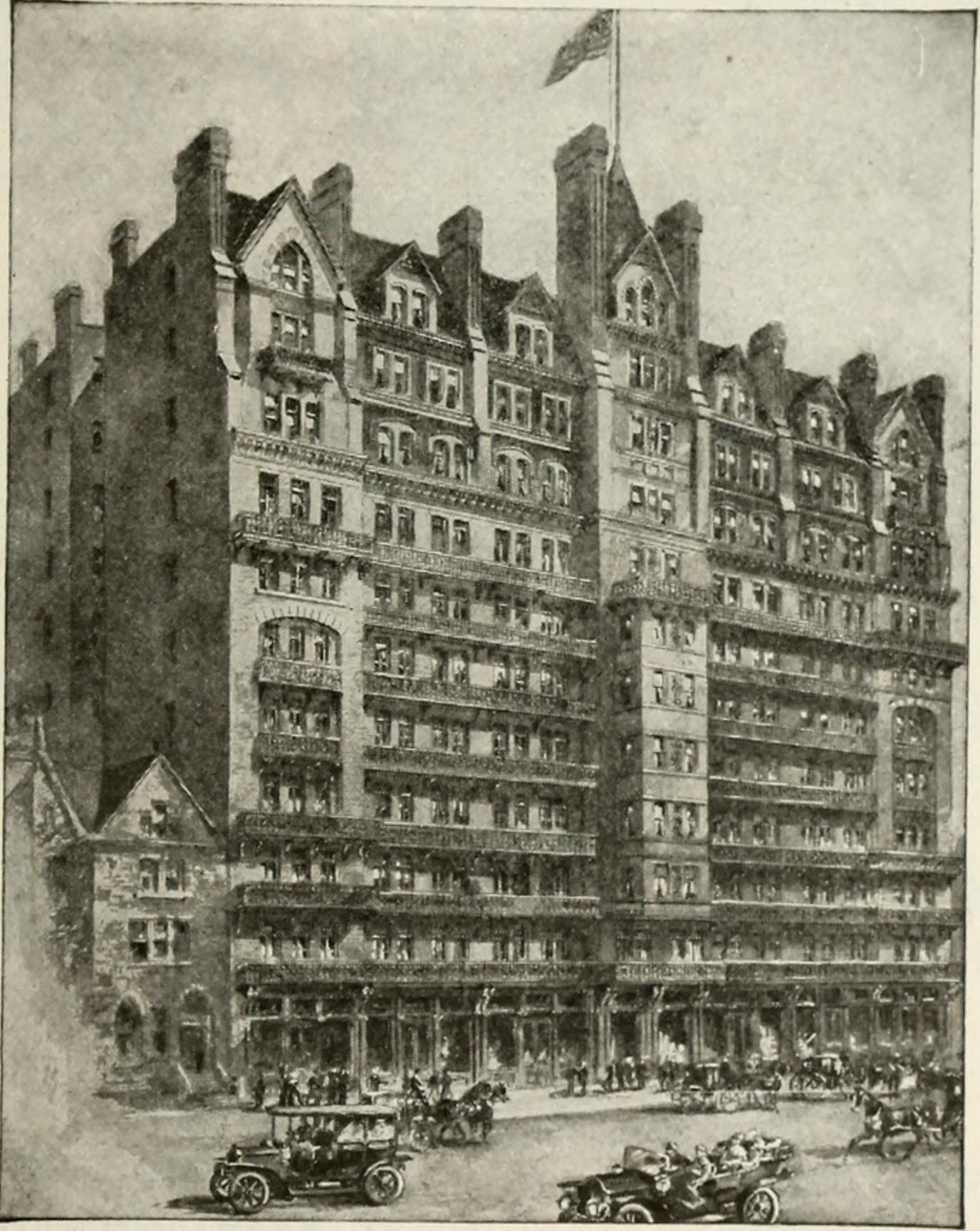
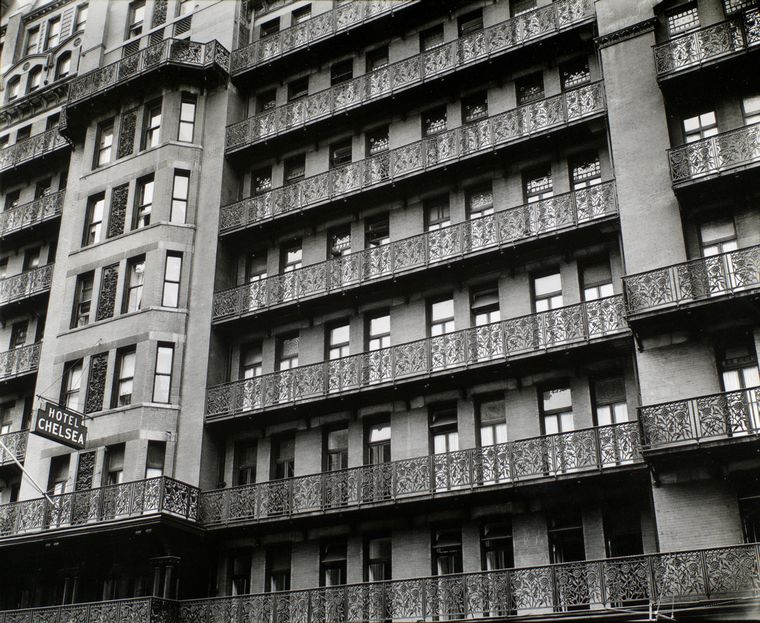
Meanwhile, at the Chelsea Hotel, all the intense creativity that is associated with this great and important location seems to have left an imprint of the afterworld upon its hallways.

Over at Grand Central Terminal, the Campbell Apartment serves up some cocktails — and a few unnatural encounters with Jazz Age spirits.

Finally, on the Brooklyn Bridge, a tragedy during its construction has left its shadow upon the modern tourist attraction. Who’s that up ahead on the pedestrian pathway?

A little spooky fun — mixed with a lot of interesting history — and a few cheesy sound effects!


The Bowery Boys: New York City History podcast is brought to you …. by you!

We are now producing a new Bowery Boys podcast every two weeks. We’re also looking to improve the show in other ways and expand in other ways as well — through publishing, social media, live events and other forms of media. But we can only do this with your help!

We are now a member of Patreon, a patronage platform where you can support your favorite content creators for as little as a $1 a month.

Please visit our page on Patreon and watch a short video of us recording the show and talking about our expansion plans. If you’d like to help out, there are five different pledge levels (and with clever names too — Mannahatta, New Amsterdam, Five Points, Gilded Age, Jazz Age and Empire State). Check them out and consider being a sponsor.

We greatly appreciate our listeners and readers and thank you for joining us on this journey so far. And the best is yet to come!


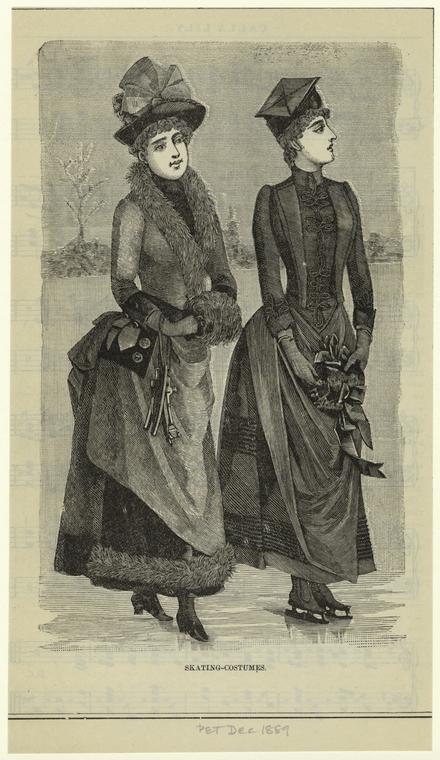
Two women in fashionable skating garments 1889. Perhaps similar to the ensembles worn by Janet and Rosette Van Der Voort during their ghostly figure eights in Central Park.

New York Public Library


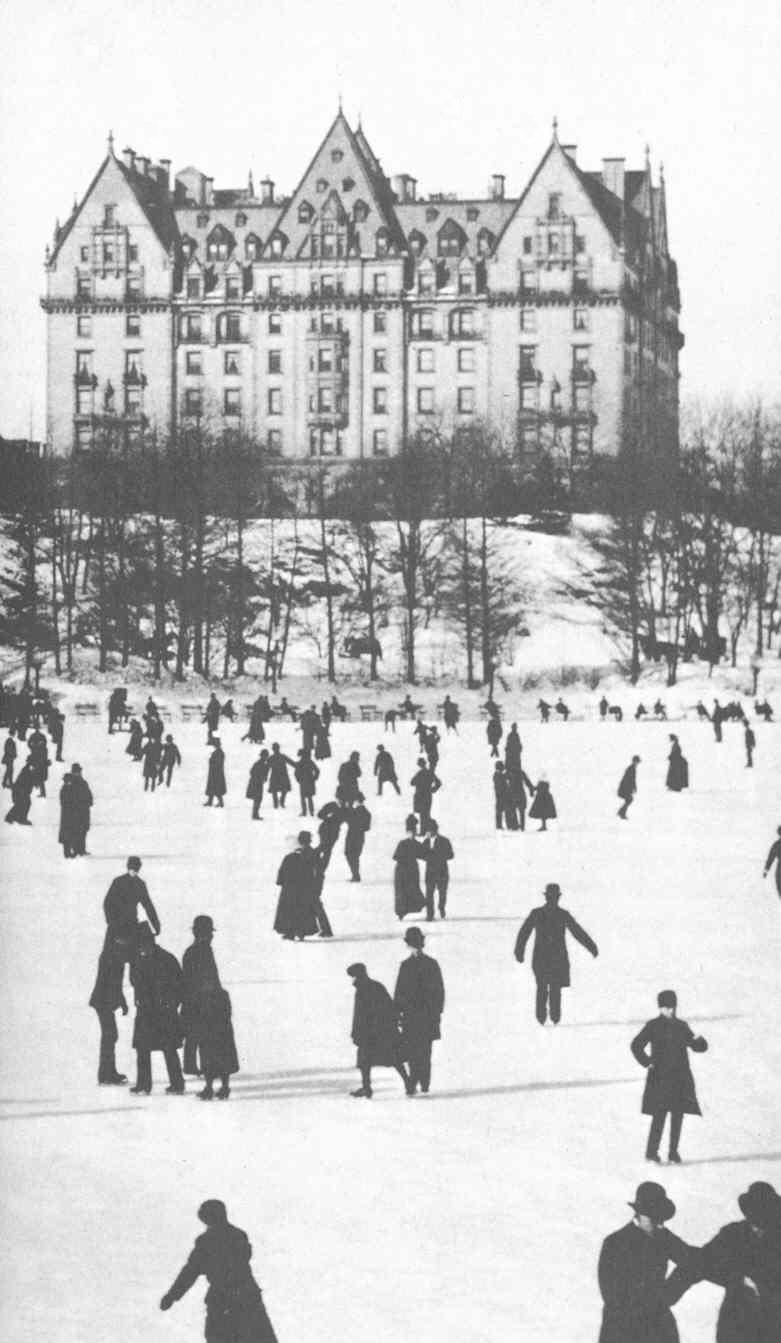
A famous image of the Dakota Apartment — all alone on the Upper West Side landscape — with skaters enjoying the frozen pond on a cold winter’s day.
The_Dakota_1880s

The Dakota photographed in 1890/

Courtesy New York Public Library


A haunting illustration by Eliza Greatorex from 1885 showing “The Dakota behind a rock at 72nd Street and Bloomingdale Road.”

1
Courtesy Museum of the City of New York


The Chelsea Hotel in 1903, one of the premier apartment houses in New York City which eventually became a destination (both short and long-term) for the city’s artistic circles. It also attracted its share of eccentric and even disturbed individuals over the decades.

Internet Book Archvies

Oh what these floors have seen! The Chelsea in 1936.

Courtesy Berenice Abbott

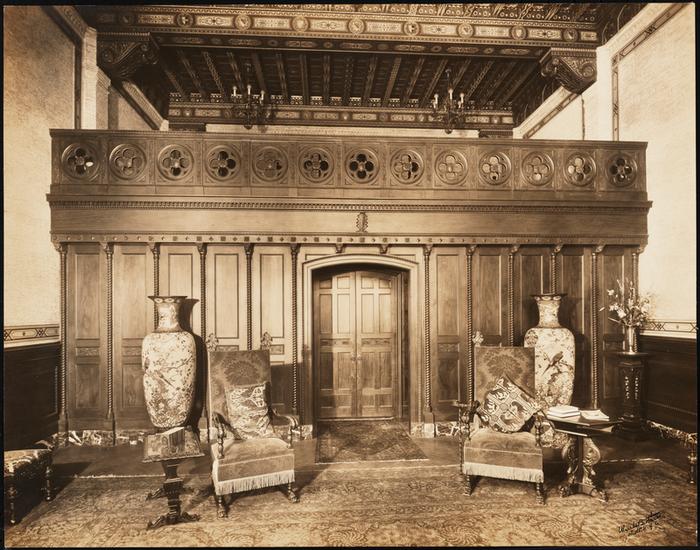
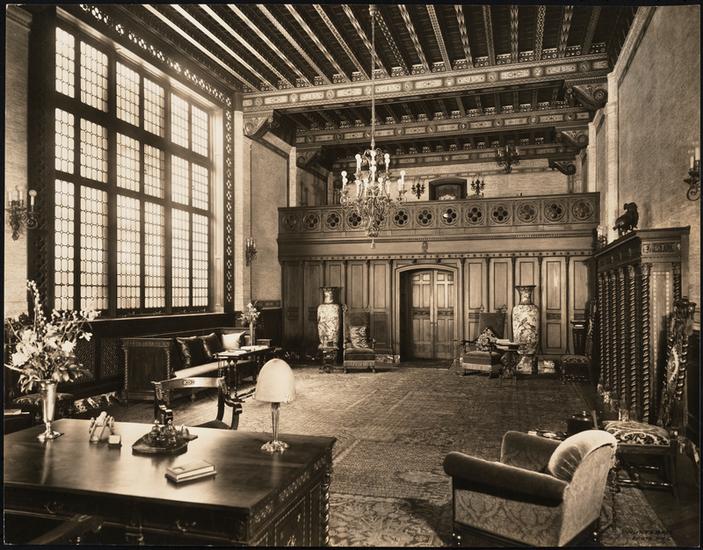
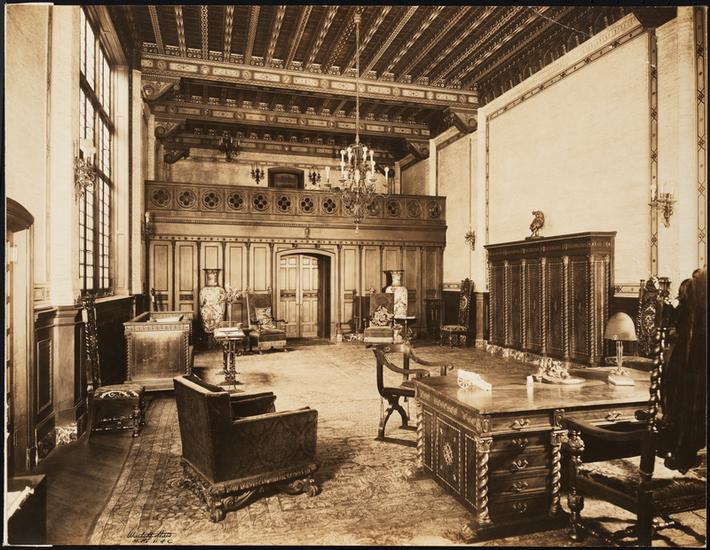
The interiors of the Campbell Apartment, back when it was an actual office. Are the ghosts of former party guests still enjoying the room’s luxurious trappings? More information at this blog post at the Museum of the City of New York. All photos, taking in 1923, by the Wurts Brothers.

Courtesy Museum of City of New York


2
Courtesy Museum of City of New York


Courtesy Museum of the City of New York

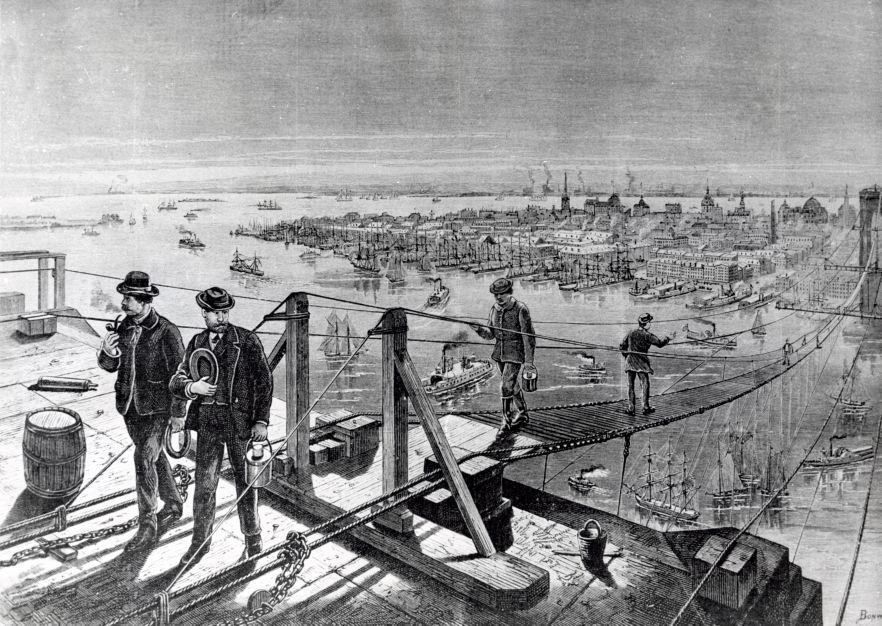
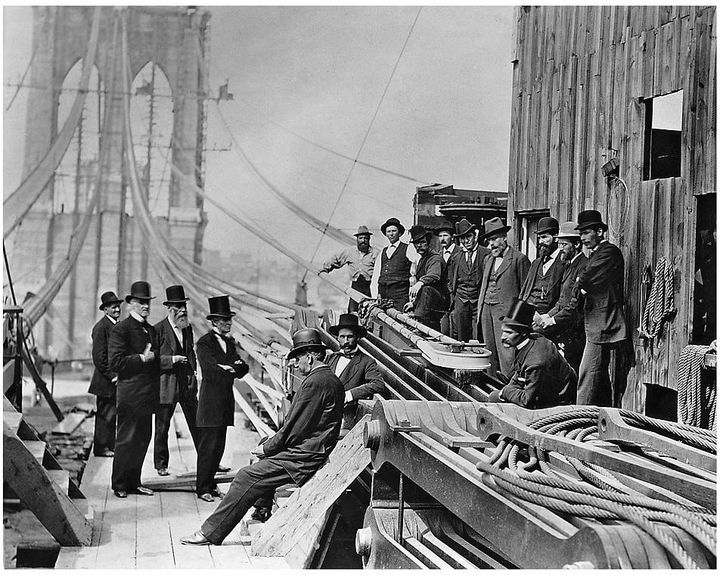
Workers upon the Brooklyn Bridge, a dangerous work environment where dozens of men were injured over the course of its construction.

1

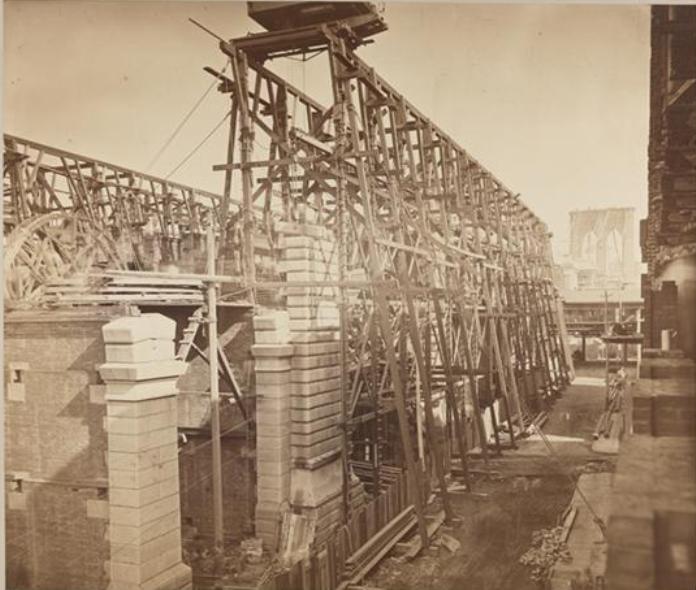
Construction of the approach to the bridge on the New  York side.

MNY146544
Courtesy Museum of the City of New York


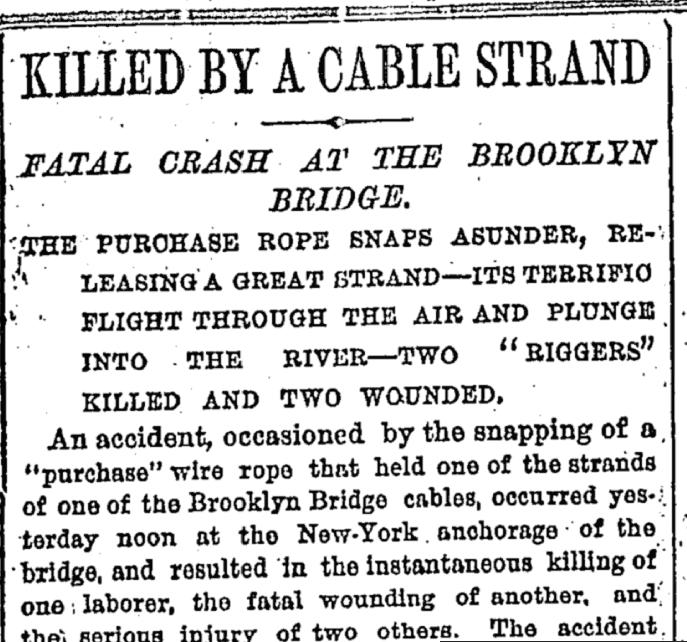
From the New York Times article regarding the unfortunate tragedy on the Brooklyn Bridge. Read the whole article here.

Courtesy New York Times

The scene at the bridge a few months after the accident — October 1878.

Courtesy New York Times


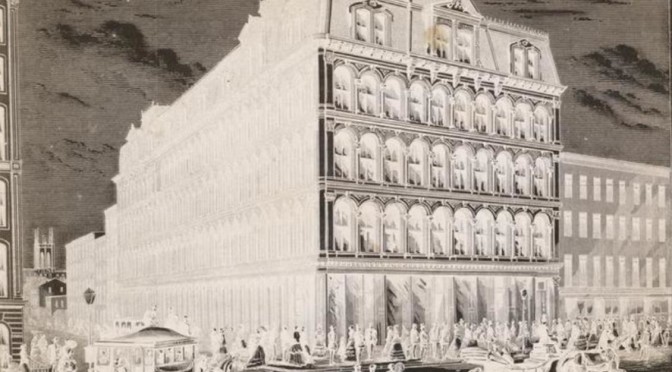
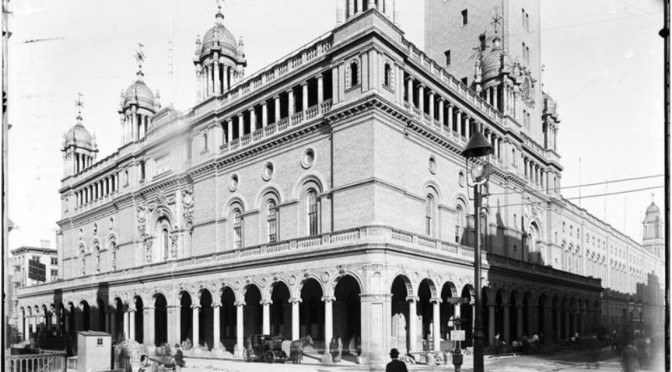
The picture at top is a reversed negative of the Methodist publishing and mission buildings, corner of Broadway and 11th Street, New York. [source]

Categories
Gilded Age New York Podcasts

The Murder of Stanford White

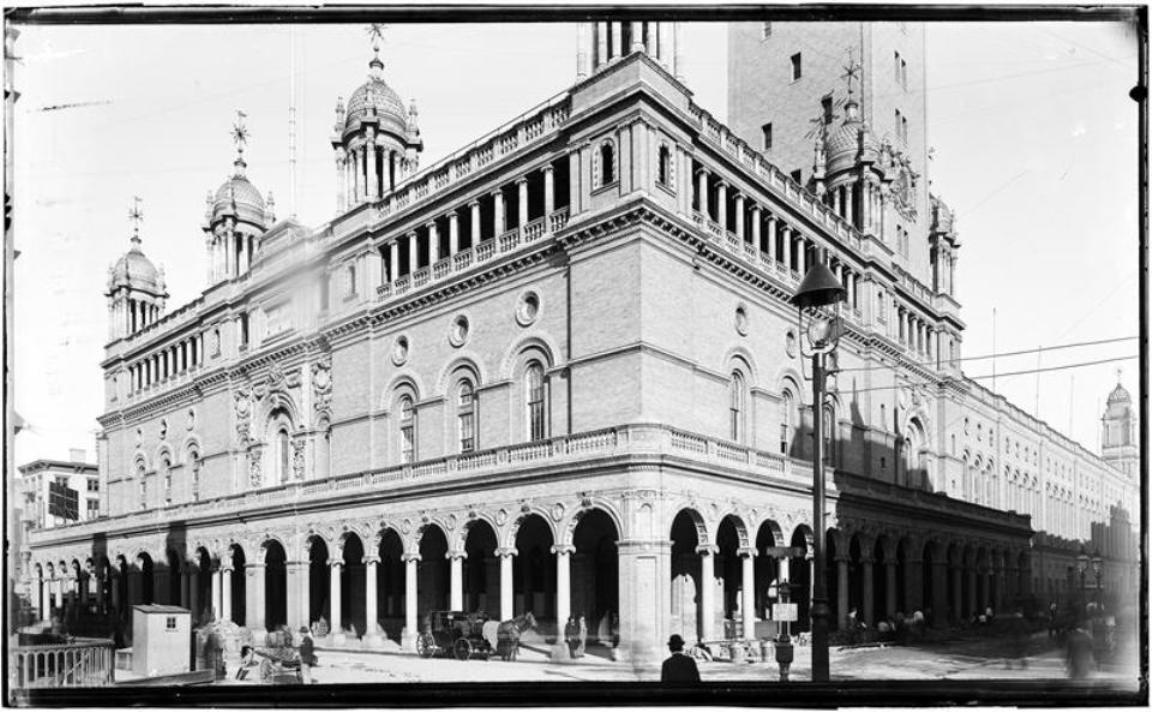
PODCAST The tale behind the brutal murder of renown architect Stanford White on the roof garden of Madison Square Garden, the building that was one of his greatest achievements.

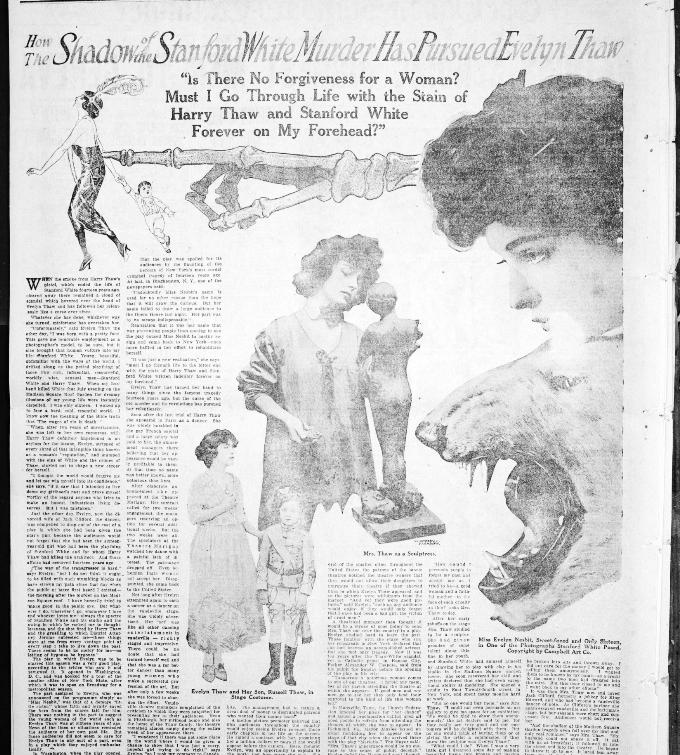
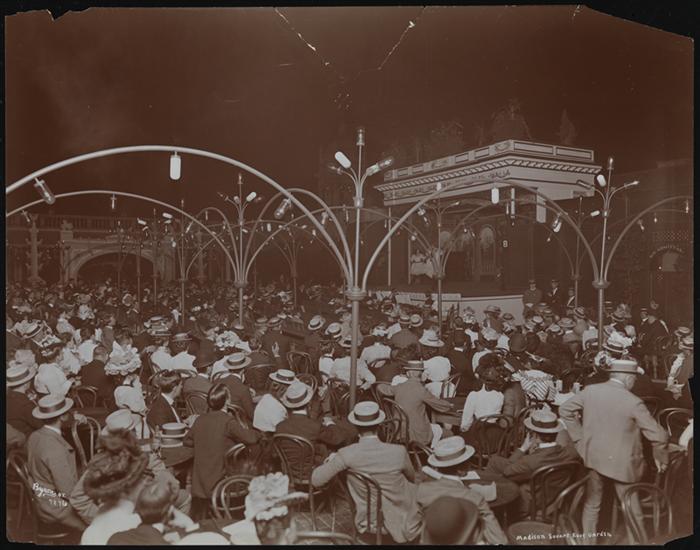
On the evening of June 25, 1906, during a performance of Mam’zelle Champagne on the rooftop of Madison Square Garden, the architect Stanford White was brutally murdered by Harry Kendall Thaw. The renown of White’s professional career — he was one of New York’s leading social figures — and the public nature of the assassination led newspapers to call it the Crime of the Century. But many of the most shocking details would only be revealed in a courtroom, exposing the sexual and moral perversities of some of the city’s wealthiest citizens.

White, as a member of the prestigious firm McKim, Meade and White, was responsible for some of New York’s most iconic structures including Pennsylvania Station, the Washington Square Arch and Madison Square Garden, where he was slain. But his gracious public persona disguised a personal taste for young chorus girls, often seduced at his 24th Street studio, famed for its ‘red velvet swing’.

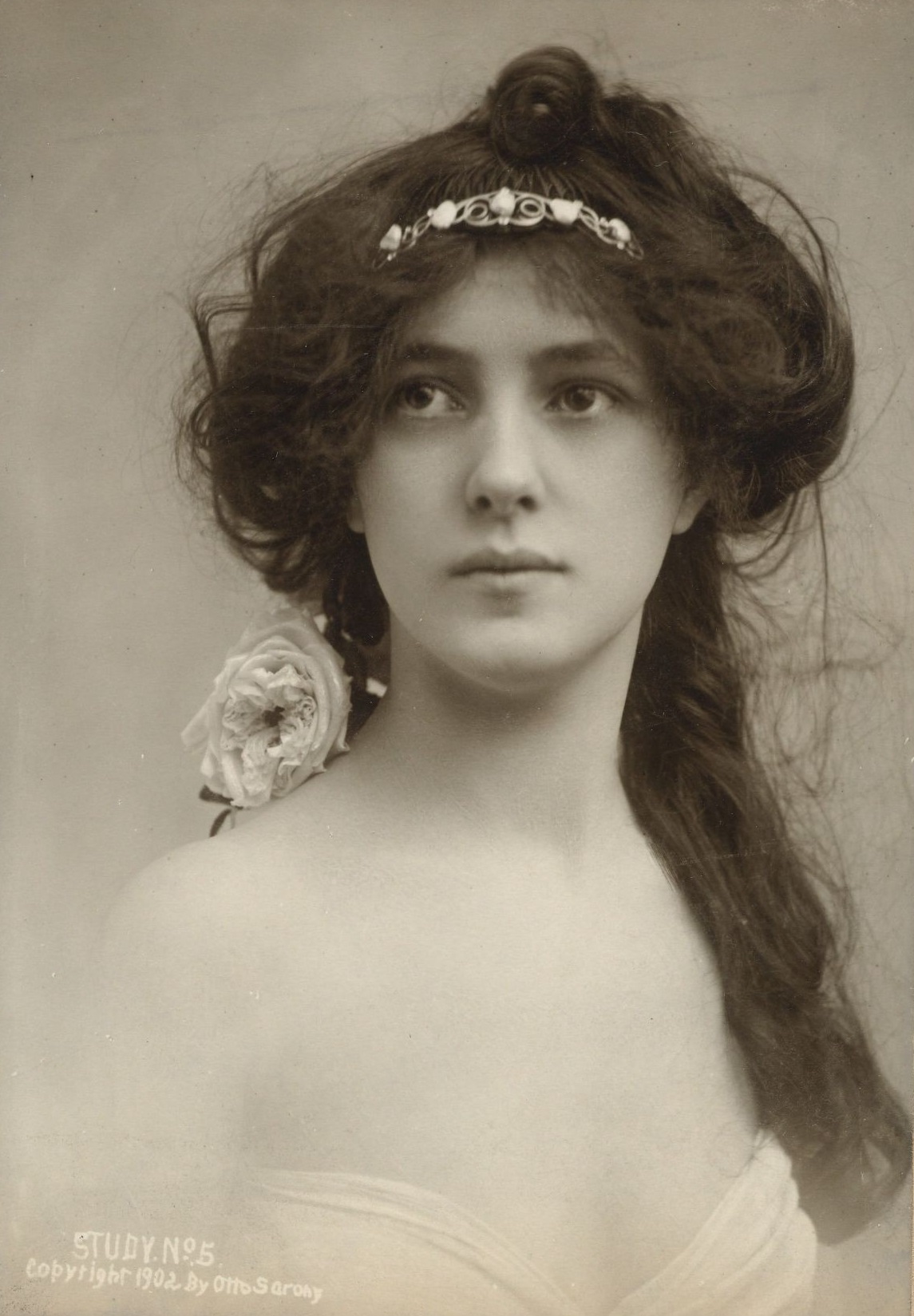
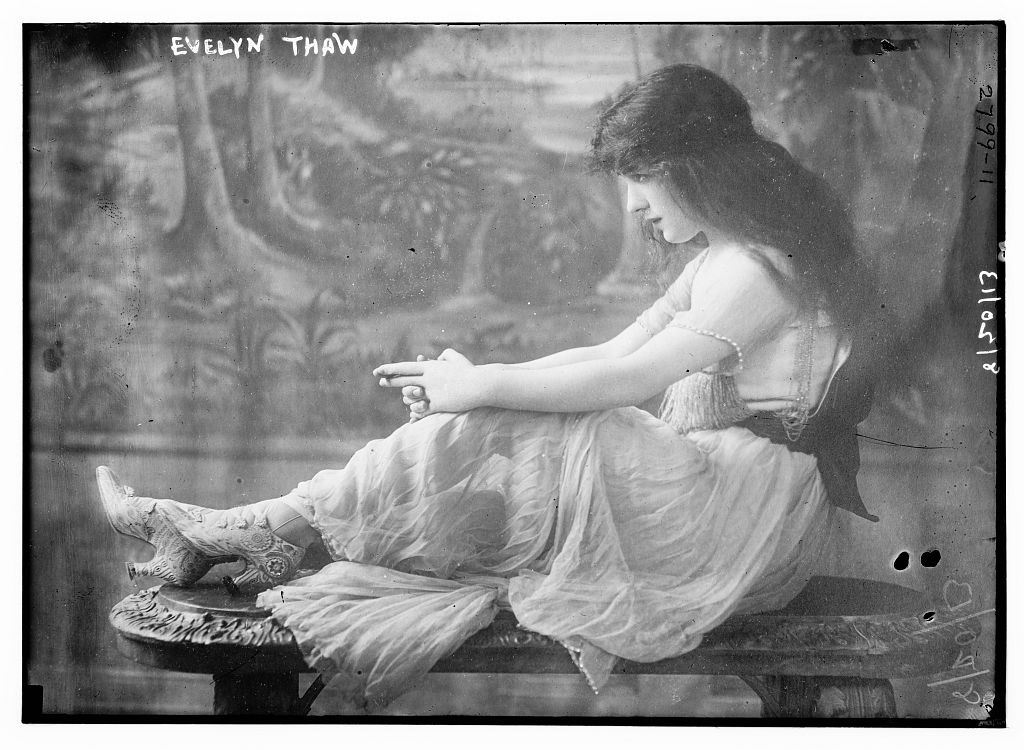
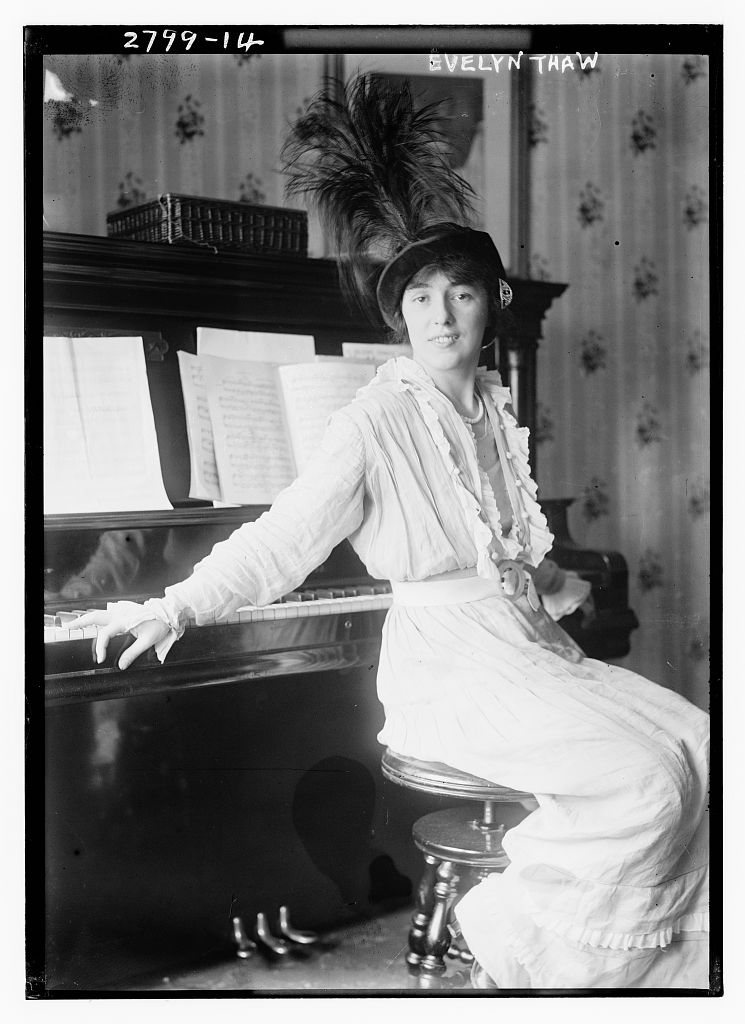
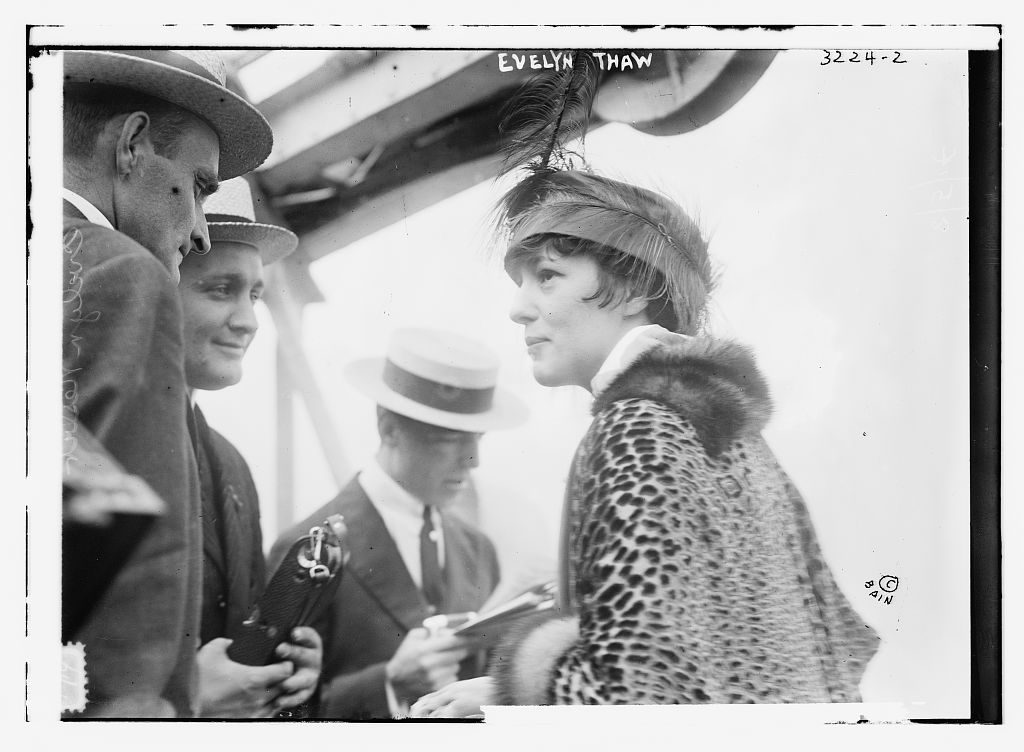
Evelyn Nesbit was only a teenager when she became a popular artist’s model and a cast member in Broadway’s hottest musical comedy. White wooed her with the trappings of luxury and subsequently took advantage of her. The wealthy playboy Harry Thaw also fell for Nesbit — and grew insanely jealous of White. Soon his hatred would envelop him, leading to the unfortunate events of that tragic summer night.


The Bowery Boys: New York City History podcast is brought to you …. by you!

We are now producing a new Bowery Boys podcast every two weeks. We’re also looking to improve the show in other ways and expand in other ways as well — through publishing, social media, live events and other forms of media. But we can only do this with your help!

We are now a member of Patreon, a patronage platform where you can support your favorite content creators for as little as a $1 a month.

Please visit our page on Patreon and watch a short video of us recording the show and talking about our expansion plans. If you’d like to help out, there are five different pledge levels (and with clever names too — Mannahatta, New Amsterdam, Five Points, Gilded Age, Jazz Age and Empire State). Check them out and consider being a sponsor.

We greatly appreciate our listeners and readers and thank you for joining us on this journey so far. And the best is yet to come!


THE UNFORTUNATE TRIO

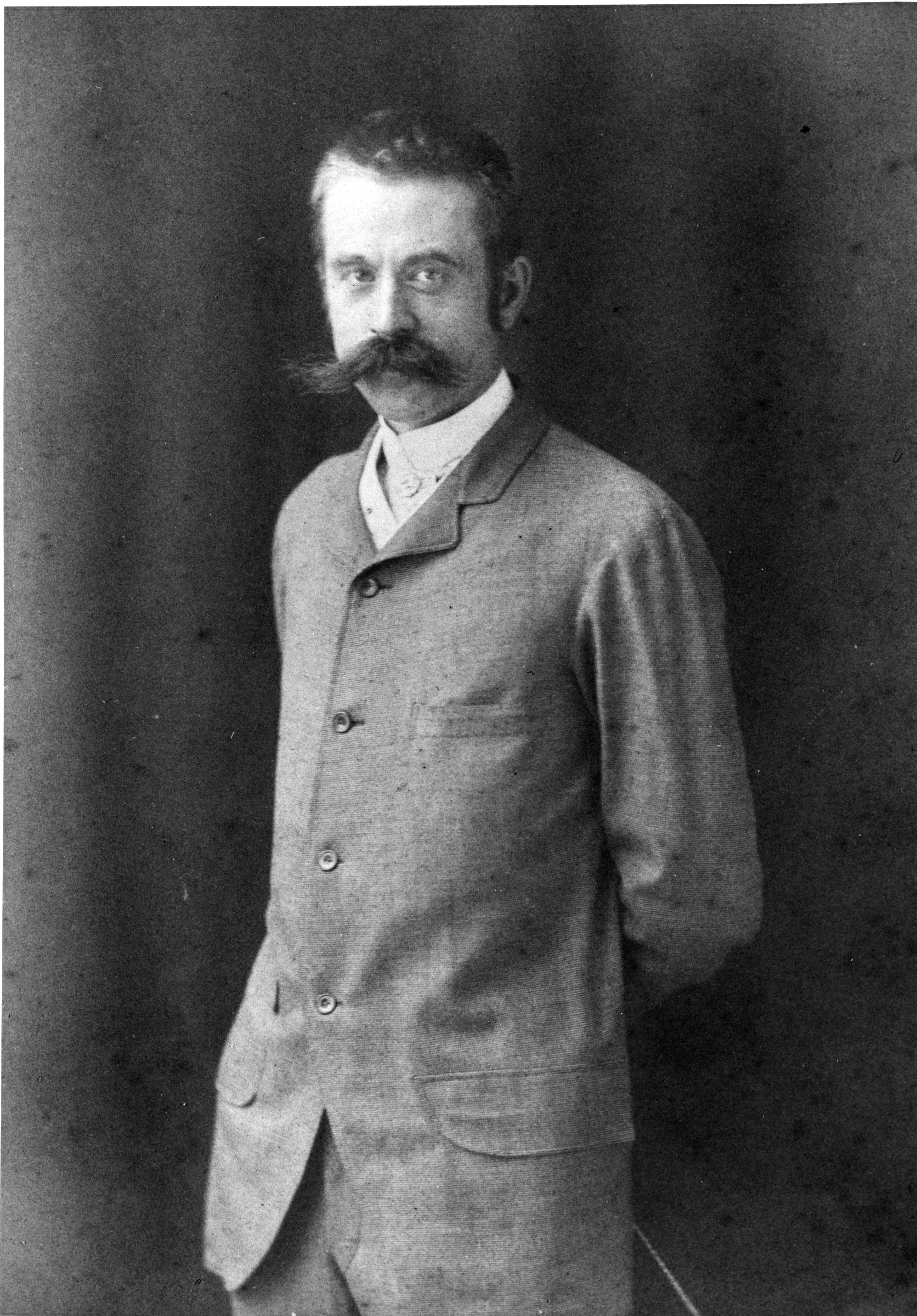
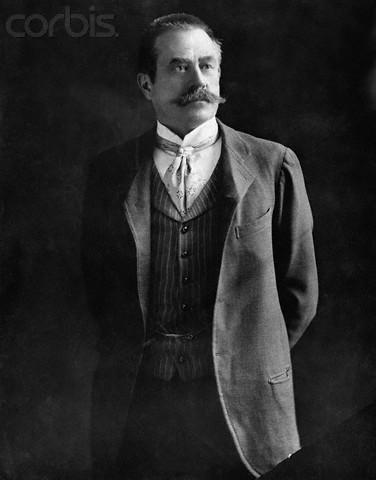
Stanford White

White as a young man (with an enormous mustache!)

9

Stanford White — date unknown but presumed to be 1906, the year he died.

stanford_white_012

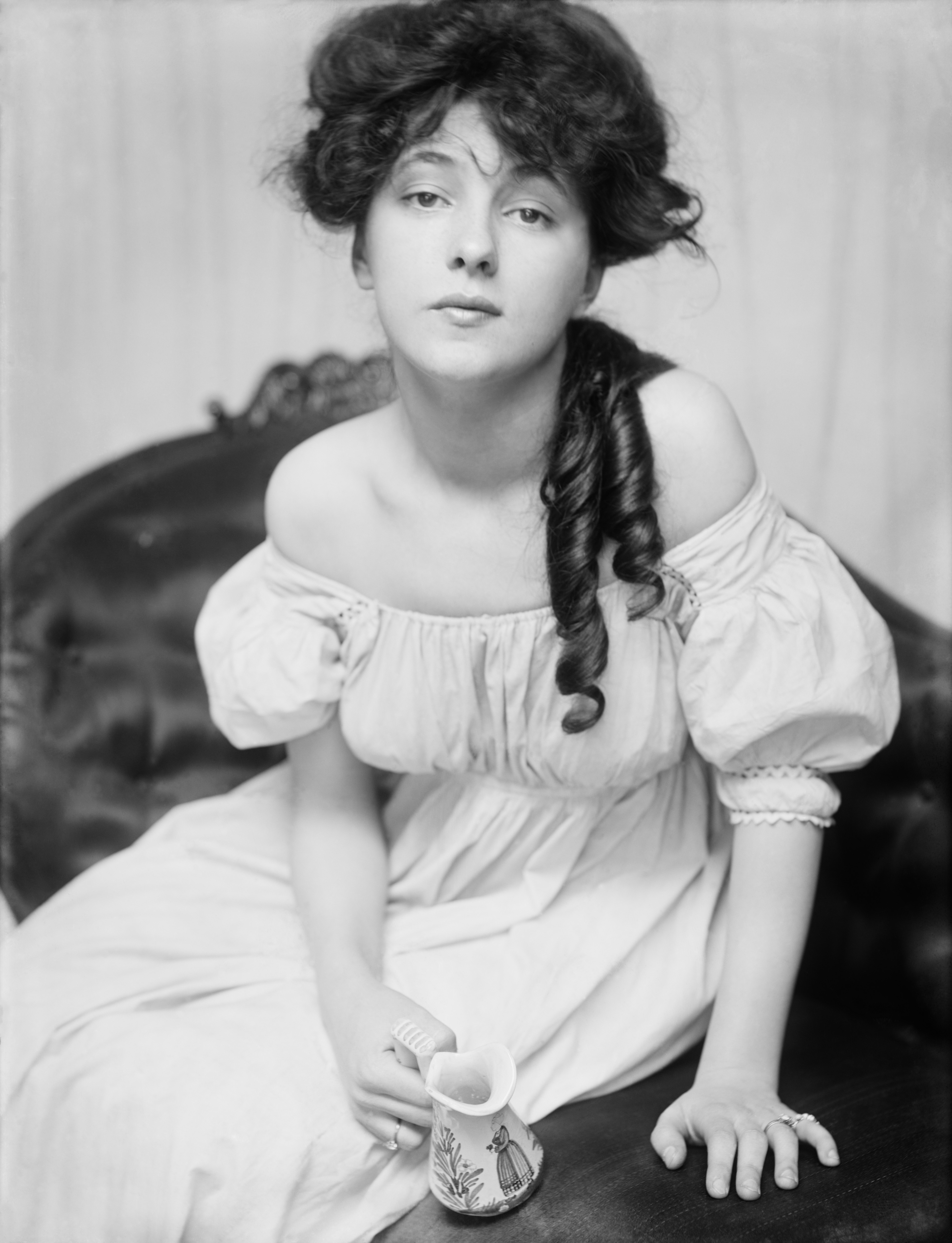
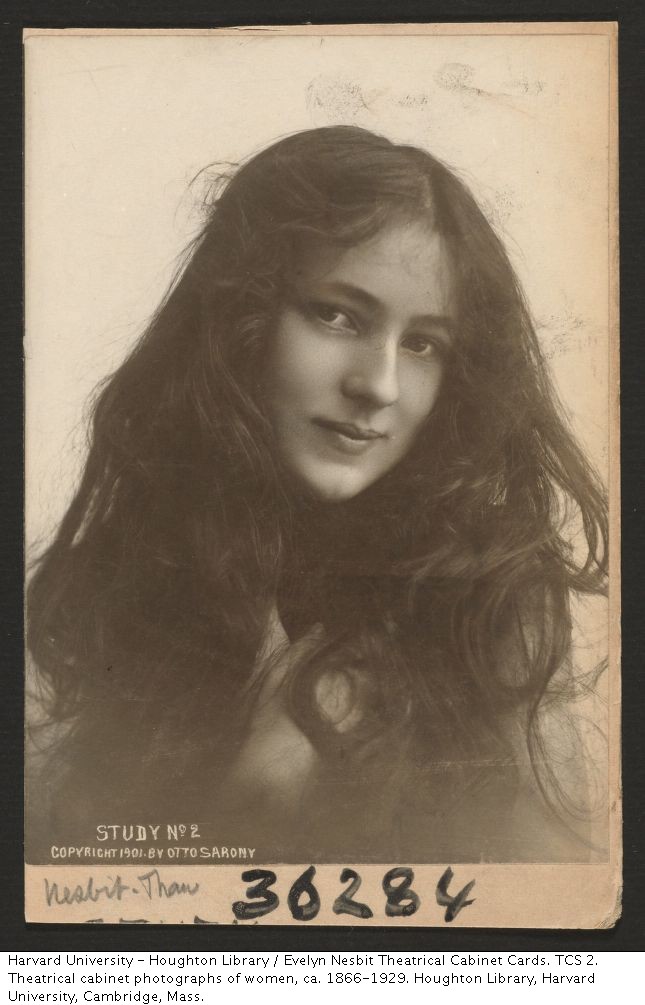
Evelyn Nesbit

Evelyn in 1900, photo taken by Gertrude Käsebier.

Library of Congress
Library of Congress

A 1901 theatrical card (possibly for Floradora?) taken by Otto Sarony

Harvard University - Houghton Library
Harvard University – Houghton Library

Evelyn in 1902, photo taken by Otto Sarony

Harvard Theatre Collection, Houghton Library, Harvard University

The following photographs of Evelyn Nesbit were taken in 1913. She would be divorced from Harry Thaw in less than two years.

1
Library of Congress
Library of Congress
Library of Congress
Library of Congress
Library of Congress

From the Ogden Standard-Examiner, November 14, 1920

ogden

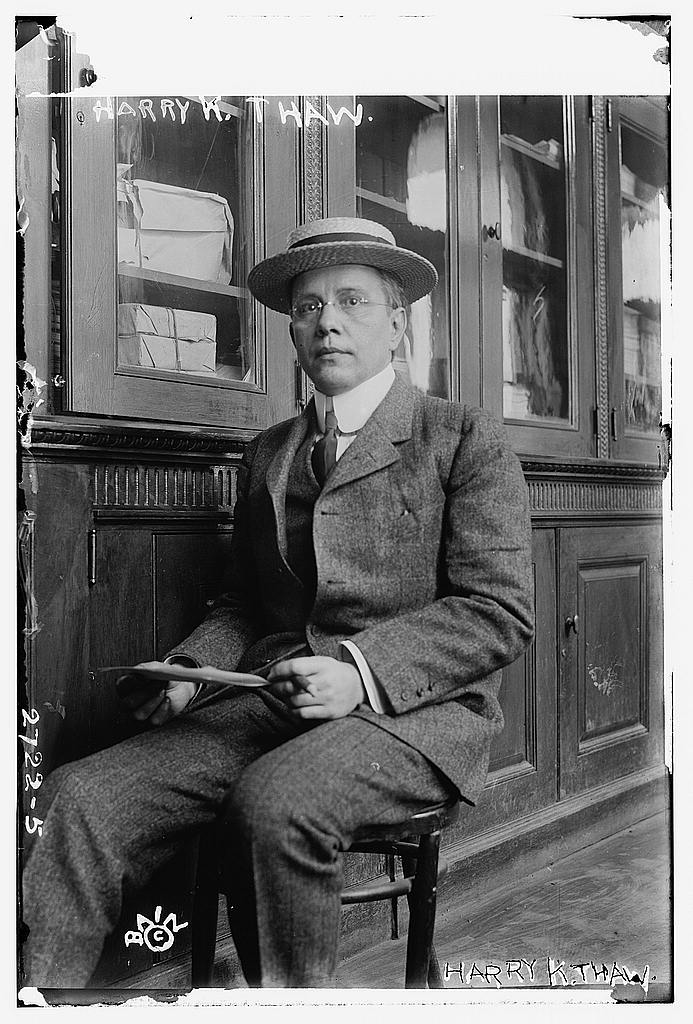
Harry Kendall Thaw

14

Thaw in 1910

jail

in September 1913, Thaw escaped from the institution to Canada. He was eventually captured and brought back to the states. Here he is in New Hampshire, awaiting transportation back to Matteawan.

Library of Congress
Library of Congress

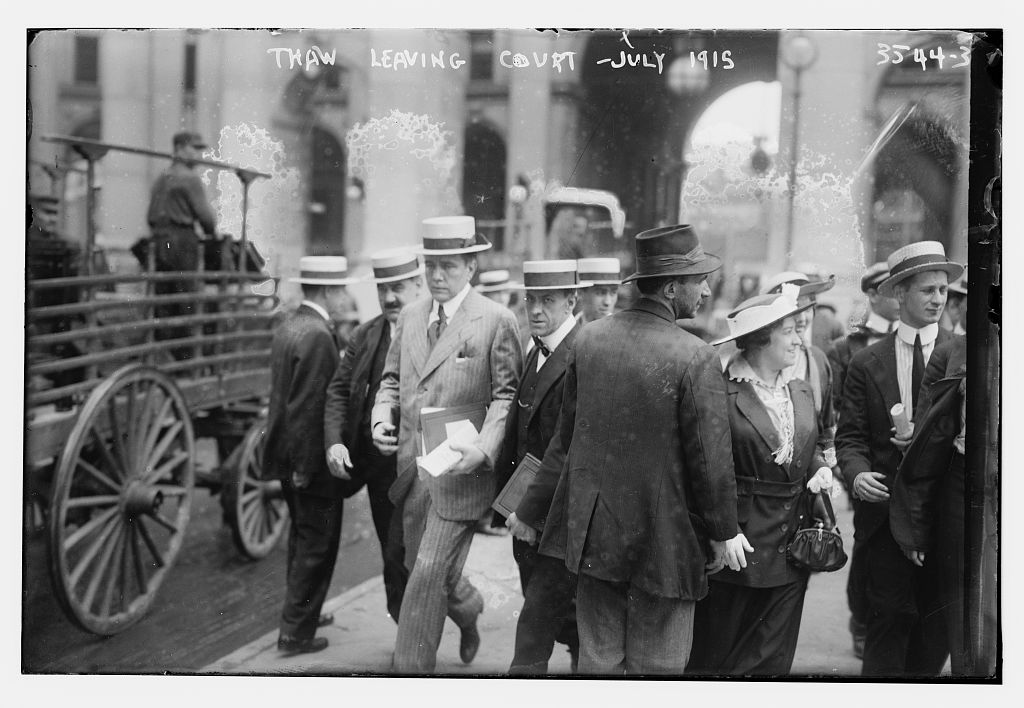
Thaw leaving court in July 1915 after he was declared mentally sane.

Library of Congress
Library of Congress

SCENE OF THE CRIME

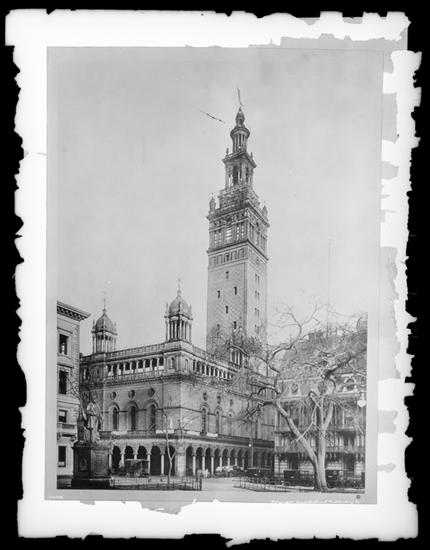
Madison Square Garden, taken in 1905 from inside the park

Museum of the City of New York

The rooftop theater at Madison Square Garden, pictured here circa 1900

Courtesy the Museum of the City of New York

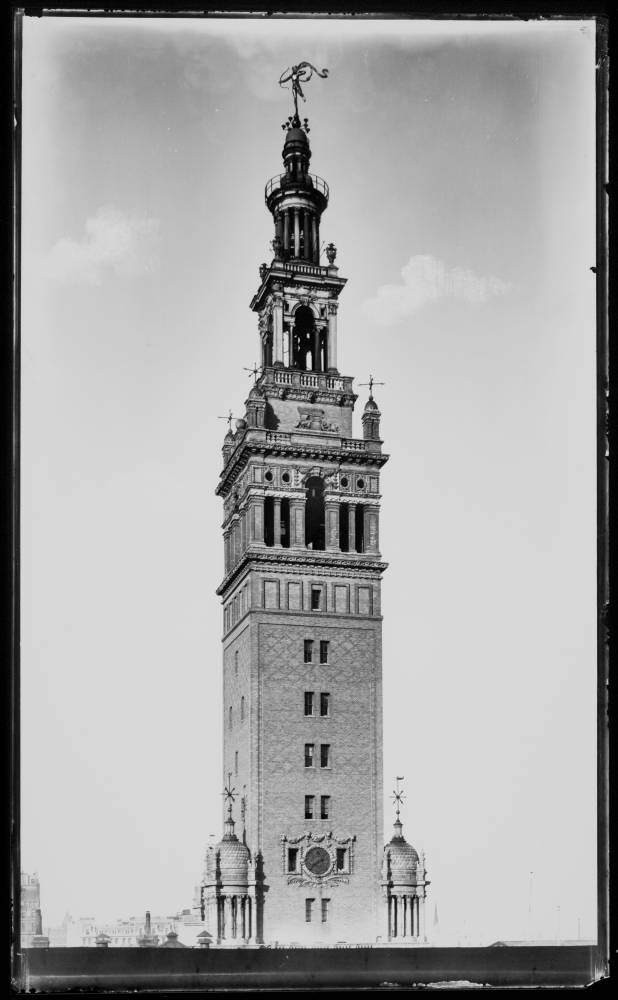
The tower at Madison Square Garden, topped with the scandalous Diana weather vane.

Courtesy George Eastman House

OTHER SETTINGS

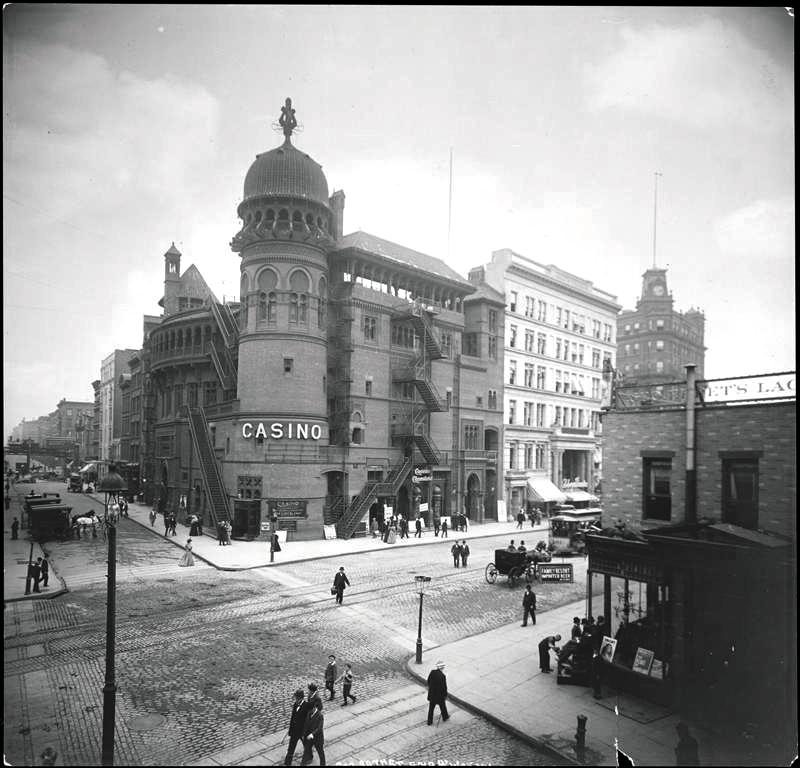
The Casino Theatre, home of the show Florodora, where Evelyn Nesbit was featured, despite her young age

casino theater 1896

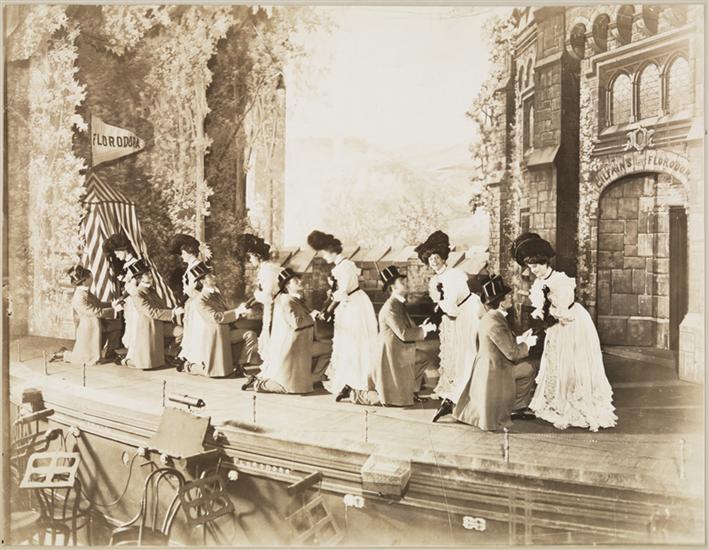
A scene from Florodora in 1900

floro

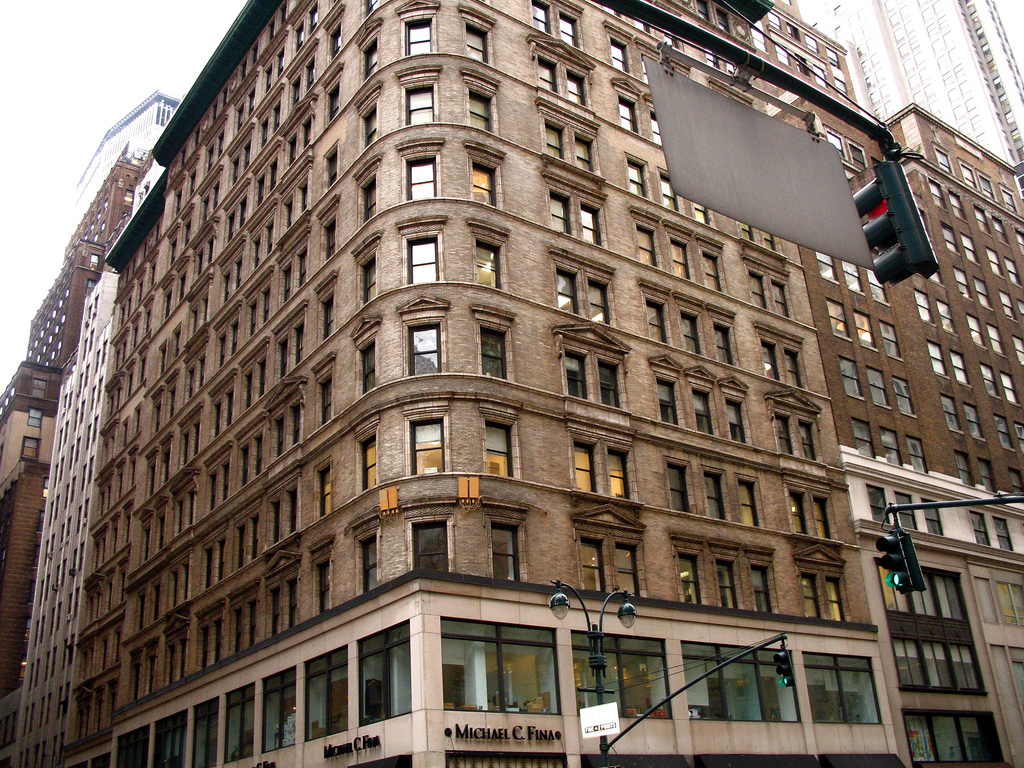
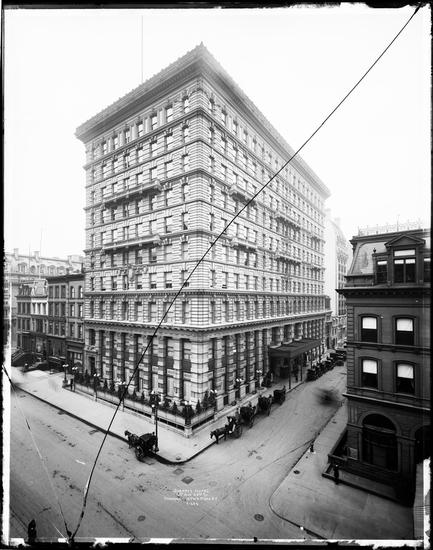
The former Hotel Lorraine, where Nesbit and Thaw were staying on the night of the murder. The address is 545 Fifth Avenue.

Courtesy Flickr/Anonymous A

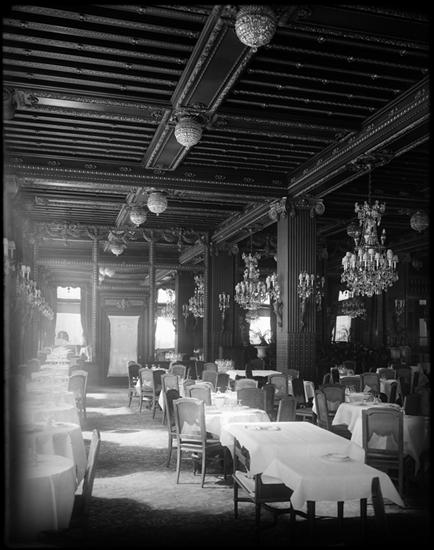
Inside the dining room of Sherry’s Restaurant (44th and 5th Avenue), where Harry Thaw got boozed up before meeting with Evelyn.

MNY210712
sherry

Sherry’s in 1905 — 44th Street and 5th Avenue

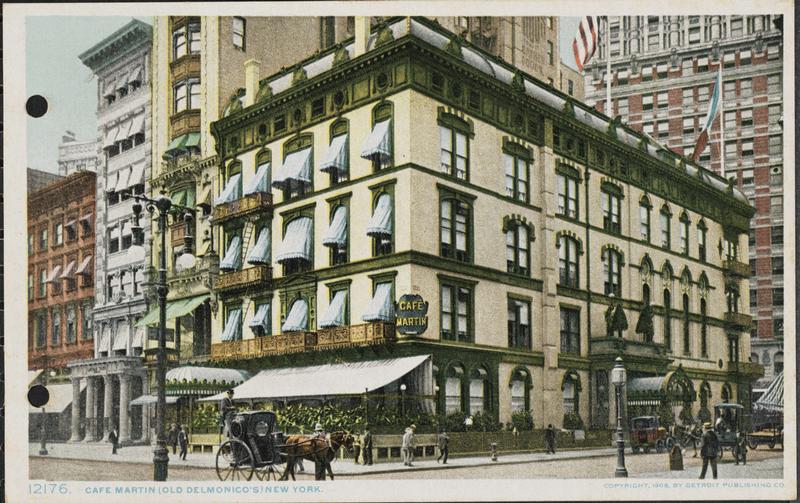
Cafe Martin in 1908, where Evelyn and Harry had dinner before the show

Museum of the City of New York

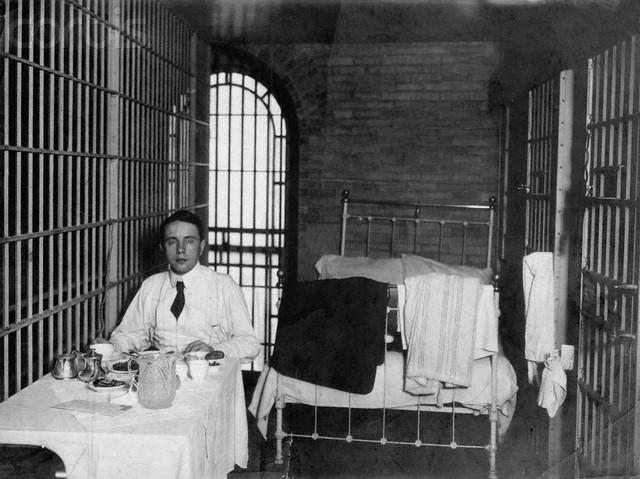
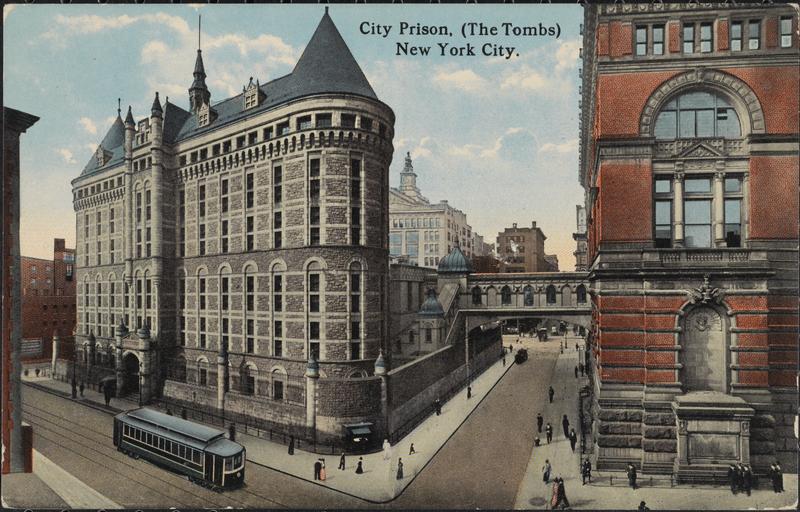
The Tombs — Where Harry Thaw was imprisoned during the original trial

tombs

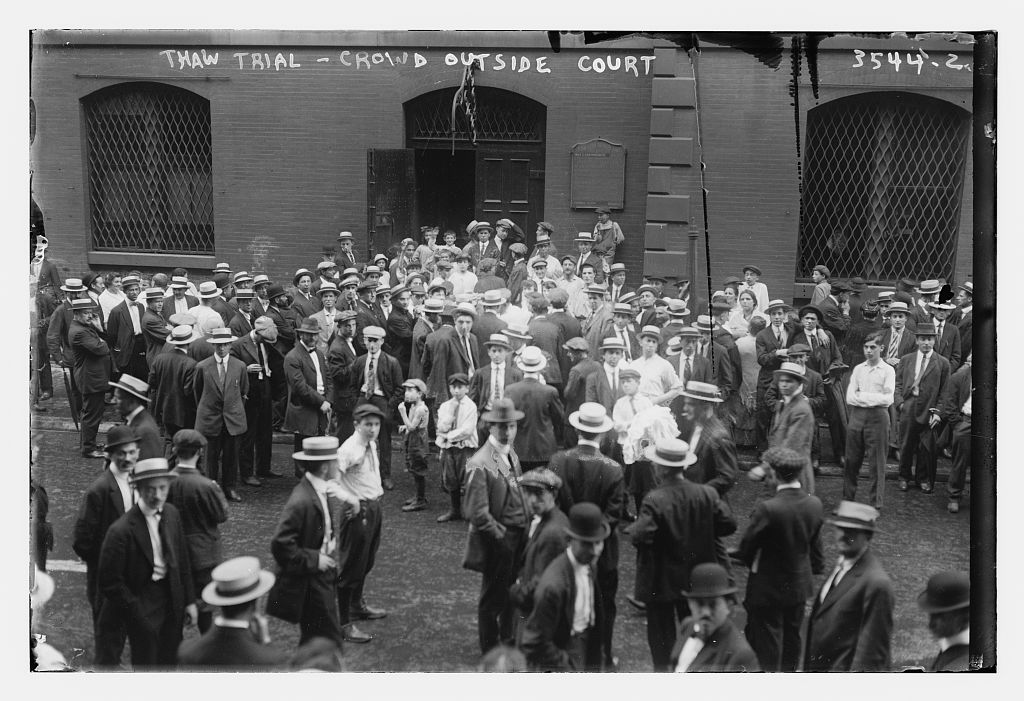
Ludlow Street Jail — Crowds linger outside during the last of the many Thaw trials. For most of his jail time, he was held in the Tombs. According to a Library of Congress commenter: “His lawyers successfully asked the court to move him from The Tombs to the Ludlow Street Jail, on the basis that he was not charged in a criminal matter, but that he was to have a jury trial only as to his present sanity.”

Library of Congress
Library of Congress

A 1907 nickelodeon film called The Unwritten Law about the crime.

https://www.youtube.com/watch?v=6rE2WjXqf7U

Newsreel footage from 1915 of Thaw’s release.

Evelyn Nesbit performing in a nightclub in the 1930s (not sure of the club). Start the video at around 2:15:

The trailer to The Girl In The Red Velvet Swing, a highly fictionalized account of the crime. Nesbit was a consultant for the film.

Categories
Podcasts Wartime New York

Adventures on Governors Island

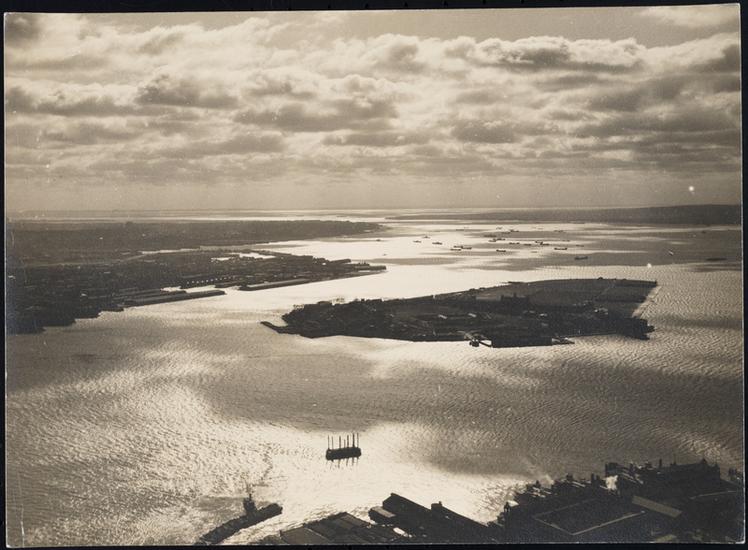
PODCAST What can you find on Governors Island? Almost 400 years of action-packed history! This island in New York Harbor has been at the heart of the city’s defense since the days of the Revolutionary War, and its story takes us back to the very beginnings of European occupation in America.

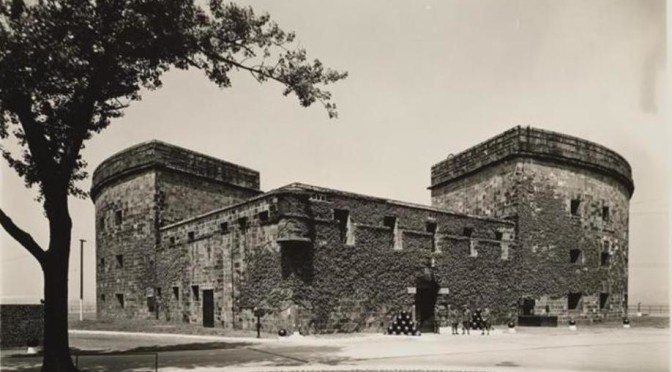
Its two fortifications — Castle Williams and Fort Jay — still stand there today, evidence of a time when New York was constantly under threat of attack and invasion. During the Civil War, these structures served as prisons for Confederate soldiers.

The rest of the island was a base for the U.S. Army for almost 150 years before ceding to the Coast Guard in the 1960s. Their community transformed the island into a charming small town, quite the contrast with the city across the water!

Today Governors Island has become an exciting park ground and events area, hosting art, music festivals and Jazz Age picnics. But its history remains evident all around. In this show, we head out to Governors Island for an exploration of its magnificent story firsthand.


The Bowery Boys: New York City History podcast is brought to you …. by you!

Starting this month, we are doubling our number of episodes per month. Now you’ll hear a new Bowery Boys podcast every two weeks. We’re also looking to improve the show in other ways and expand in other ways as well — through publishing, social media, live events and other forms of media. But we can only do this with your help!

We are now a member of Patreon, a patronage platform where you can support your favorite content creators for as little as a $1 a month.

Please visit our page on Patreon and watch a short video of us recording the show and talking about our expansion plans. If you’d like to help out, there are five different pledge levels (and with clever names too — Mannahatta, New Amsterdam, Five Points, Gilded Age, Jazz Age and Empire State). Check them out and consider being a sponsor.

We greatly appreciate our listeners and readers and thank you for joining us on this journey so far. And the best is yet to come!


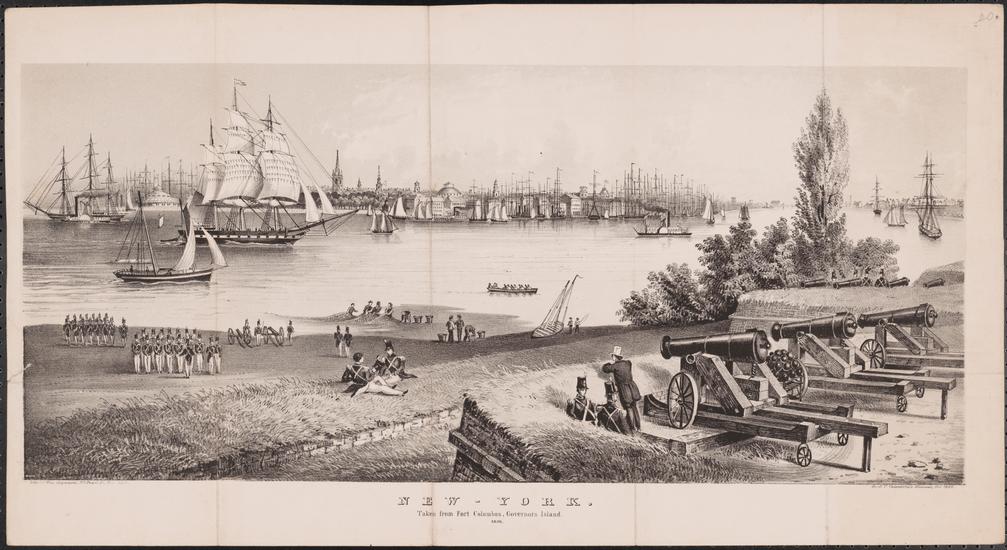
A depiction of Fort Columbus (Fort Jay) in 1816. Published in D.T. Valentine’s Manual, 1860.

Courtesy the Museum of the City of New York

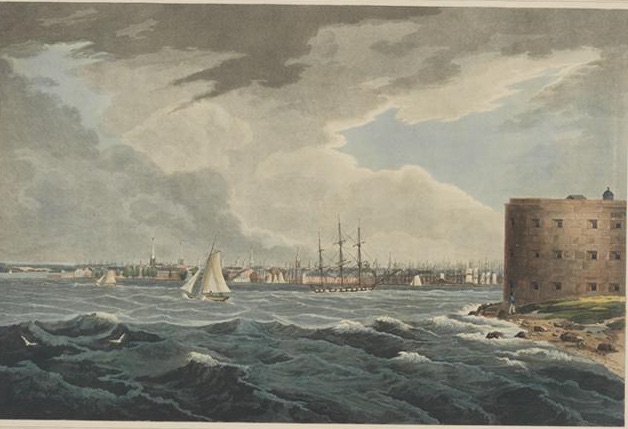
A view of Castle Williams and New York Harbor, painted in 1820

Courtesy Museum of the City of New York

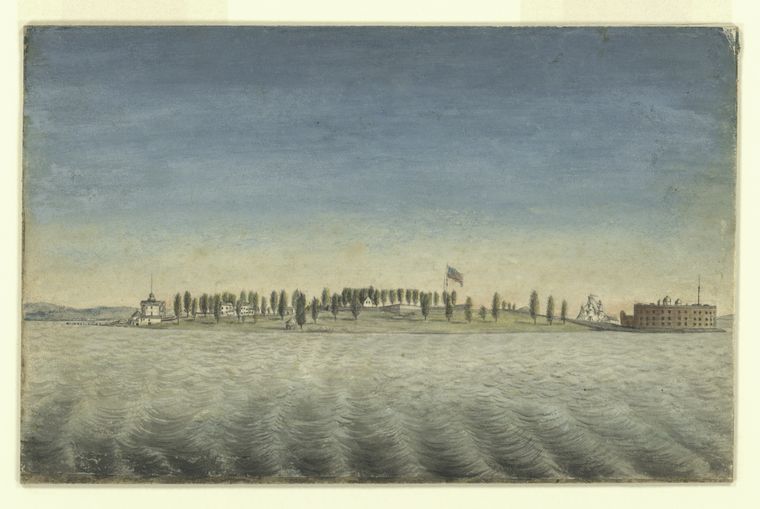
Another view of Governors Island, this time from Manhattan, a watercolor made in 1825

Courtesy New York Public Library

Governors Island in a photograph taken by Matthew Brady sometime during the Civil War.

Library of Congress
Library of Congress

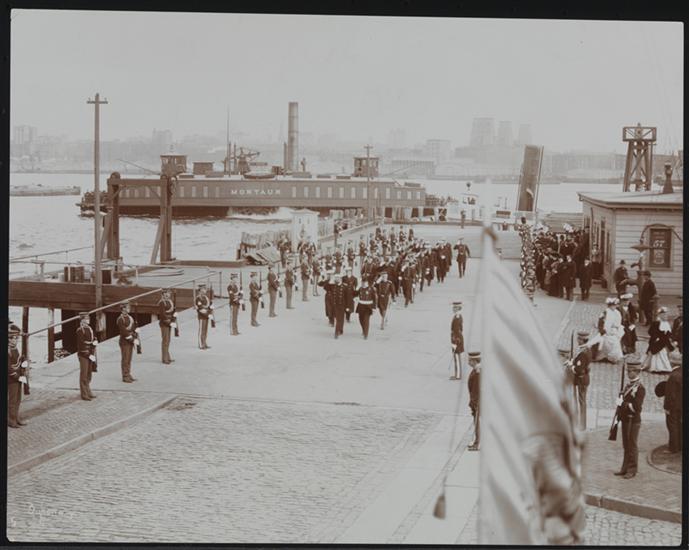
Prince Louis of Battenberg arriving at Governor’s Island with Rear admiral Robley Evans during his 1905 visit to New York.

Museum of the City of New York

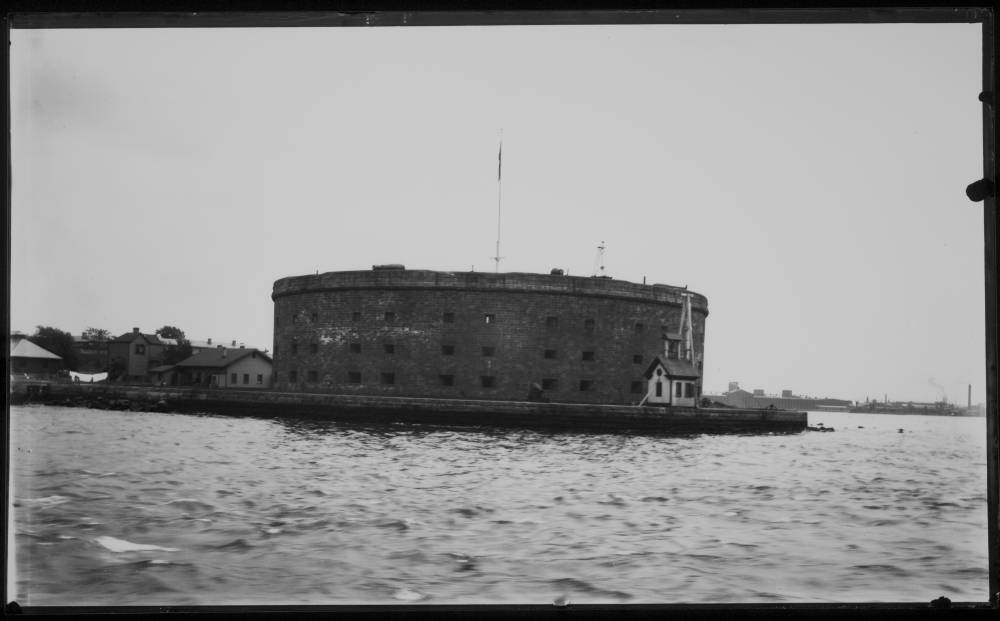
Castle Williams, seen in 1905

Photo by the George Eastman House, courtesy Library of Congress

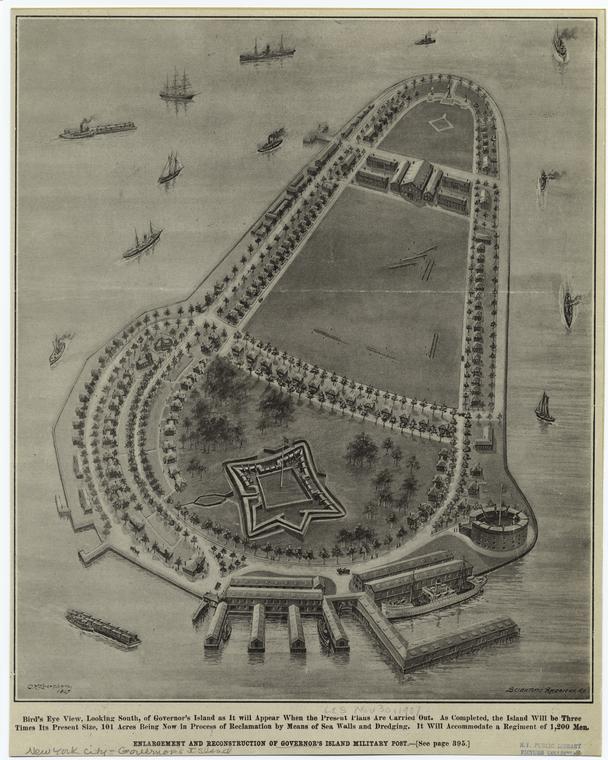
An illustration made in the 1910s laying out what Governors Island would look like after its landfill expansion. As you can see Liggett Hall has not yet been conceived!

New York Public Library

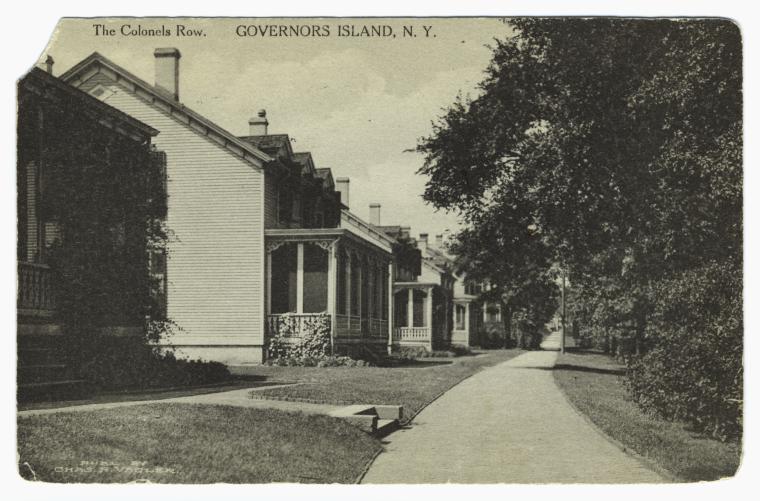
Colonels Row, photo taken in 1913. This area pretty much looks exactly like this today!

New York Public Library

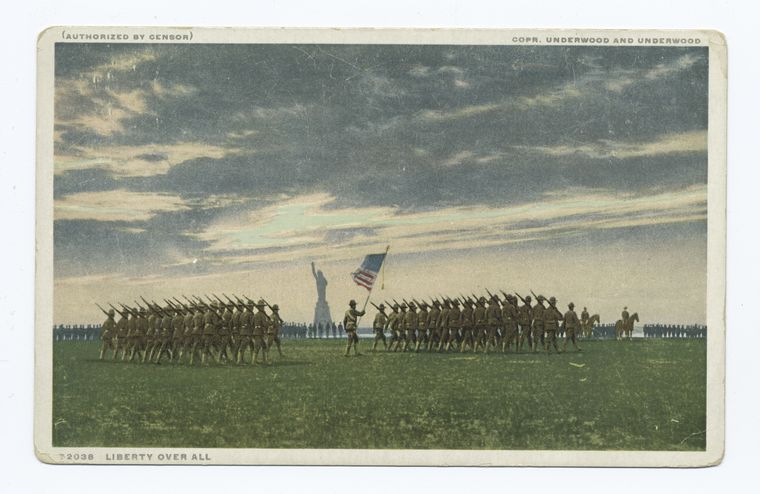
Troop training on Governors Island, with Lady Liberty positioned neatly in the background.

nypl.digitalcollections.510d47d9-9e65-a3d9-e040-e00a18064a99.001.w

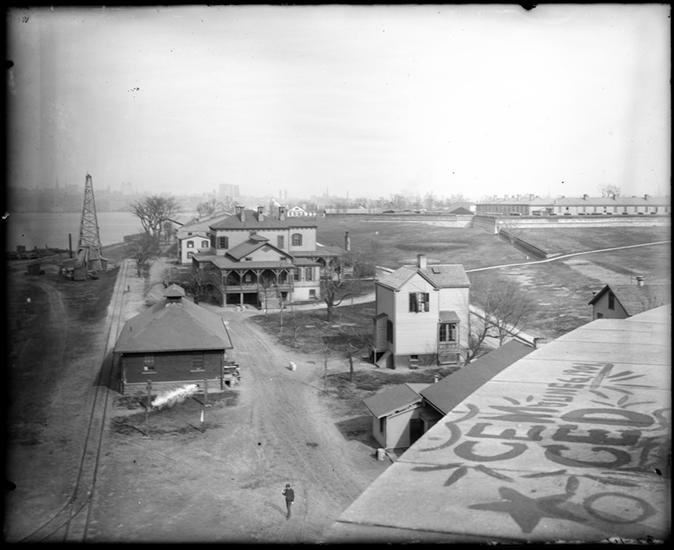
Here’s an interesting view of the south side of island from 1924.

Museum of the City of New York

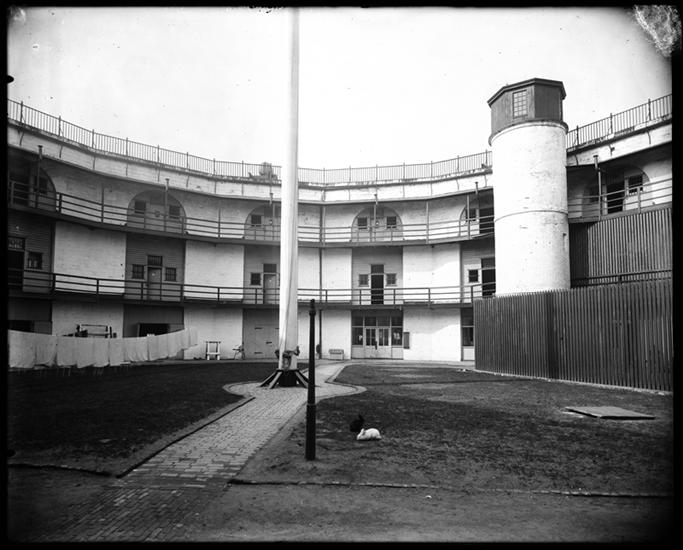
Inside Castle Williams in the 1920s

MNY203502

Governors Island made a striking contrast to the city even in the 1930s!

Museum of the City of New York
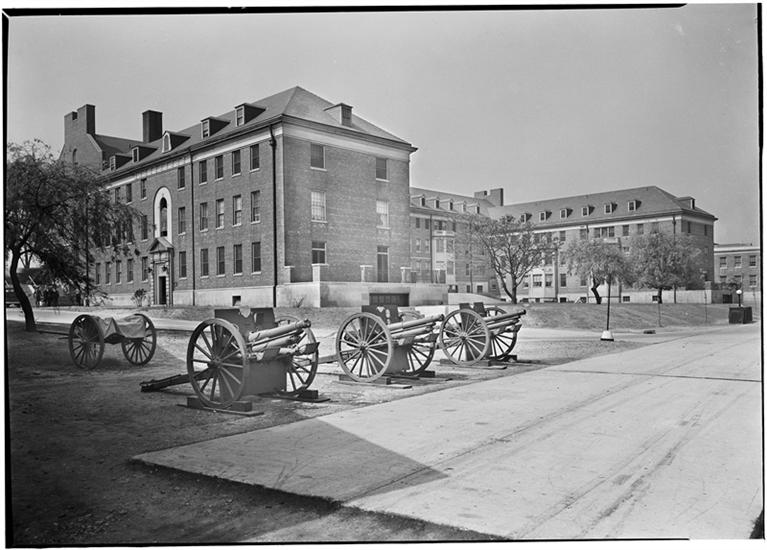
Photo by Samuel H. (Samuel Herman) Gottscho.  Officer's apartments, Governors Island, N.Y. 3/4 view cannon foreground. Courtesy Museum of the City of New York
Photo by Samuel H. (Samuel Herman) Gottscho.
Officer’s apartments, Governors Island, N.Y. 3/4 view cannon foreground. Courtesy Museum of the City of New York

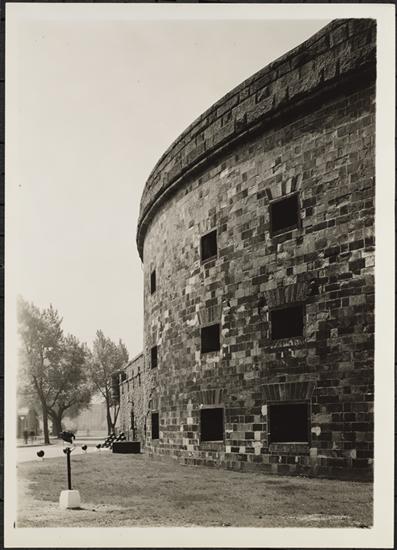
The exterior of Castle Williams in 1936, still serving as a disciplinary barracks at this time.

M2Y3062

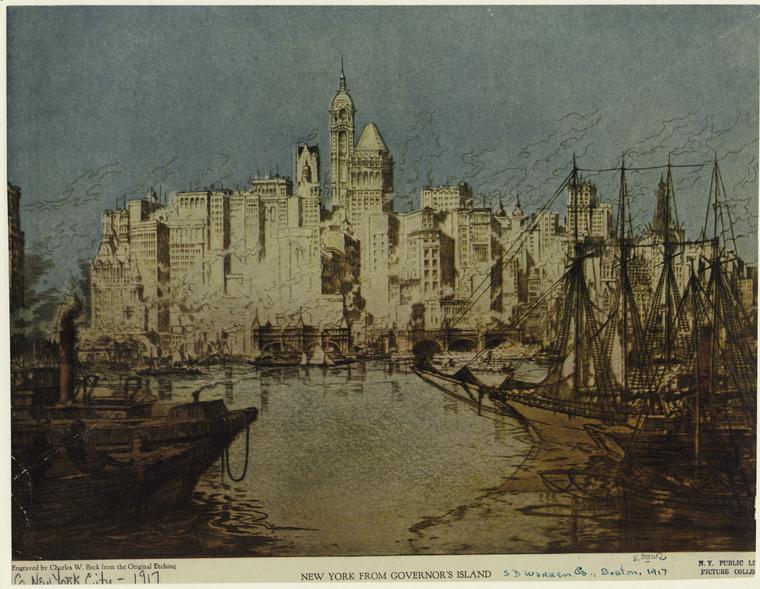
A beautiful engraving by Charles W. Beck of Manhattan from the vantage of the Governors Island shoreline (although it looks a bit too close if you ask me!)

New York Public Library

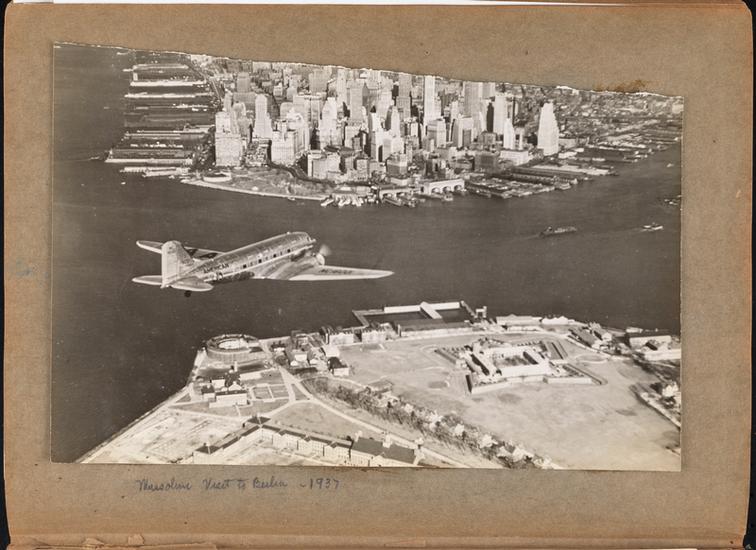
Flying over Governors Island in 1937, the two forts in view and a clear dividing line seen between the old section and the new section of the island.

MNY20716

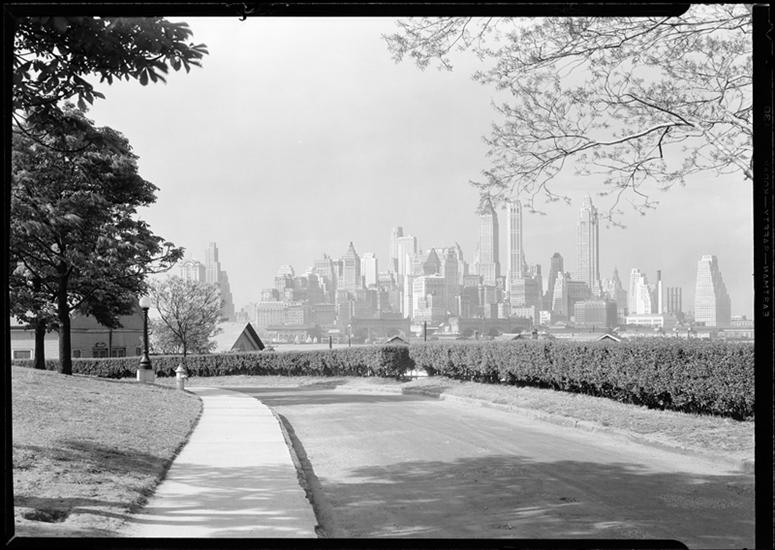
From the vantage of 60 Wall Street, looking south toward New York Harbor and Governor’s Island. Taken by the Wurts Brothers.

MN119265
Museum of the City of New York
Categories
Landmarks Podcasts

Flatiron Building: A Three-Sided Story

PODCAST For our 8th anniversary episode, we’re revisiting one of New York City’s great treasures and a true architectural oddity — the Flatiron Building.

When they built this structure at the corner of Madison Square Park (and completed in 1902), did they realize it would be an architectural icon AND one of the most photographed buildings in New York City?

1

The George A. Fuller Company, one of the most powerful construction firms in Chicago, decided to locate their new New York office building in a flashy place — a neighborhood with no skyscrapers, on a plot of land that was thin and triangular in shape. They brought in Daniel Burnham, one of America’s greatest architects, to create a one-of-a-kind, three-sided marvel, presenting a romantic silhouette and a myriad of optical illusions.

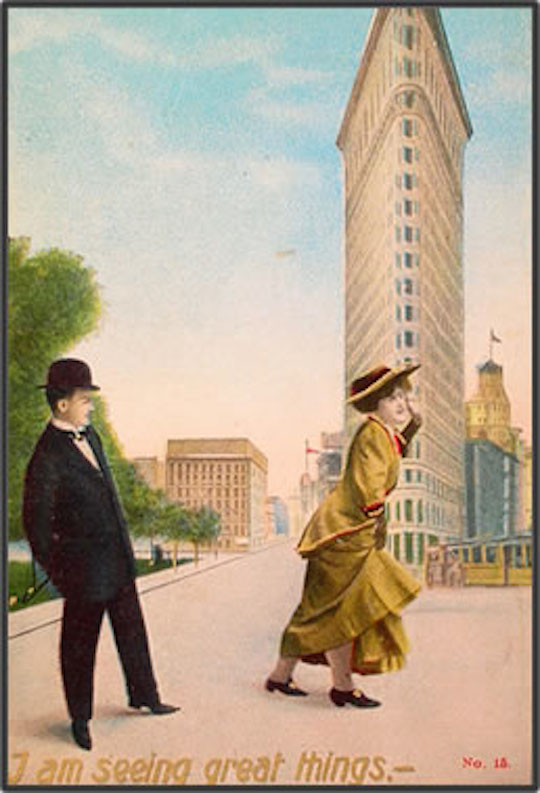
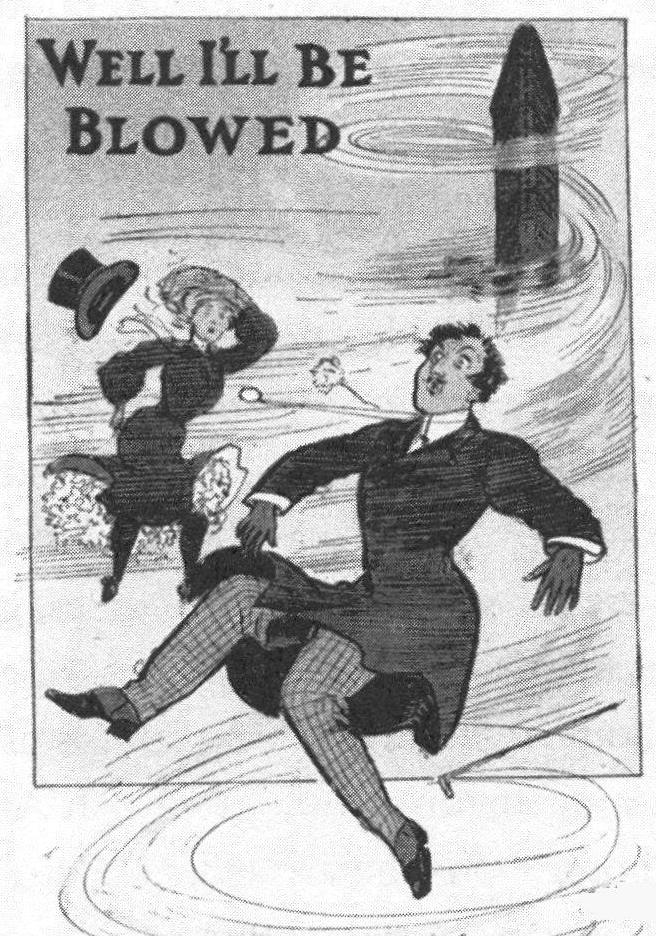
The Flatiron Building was also known for the turbulent winds which sometimes blew out its windows and tossed up the skirts of women strolling to Ladies Mile. It’s a subject of great art and a symbol of the glamorous side of Manhattan.

In this show, we bring you all sides of this structure’s incredible story.


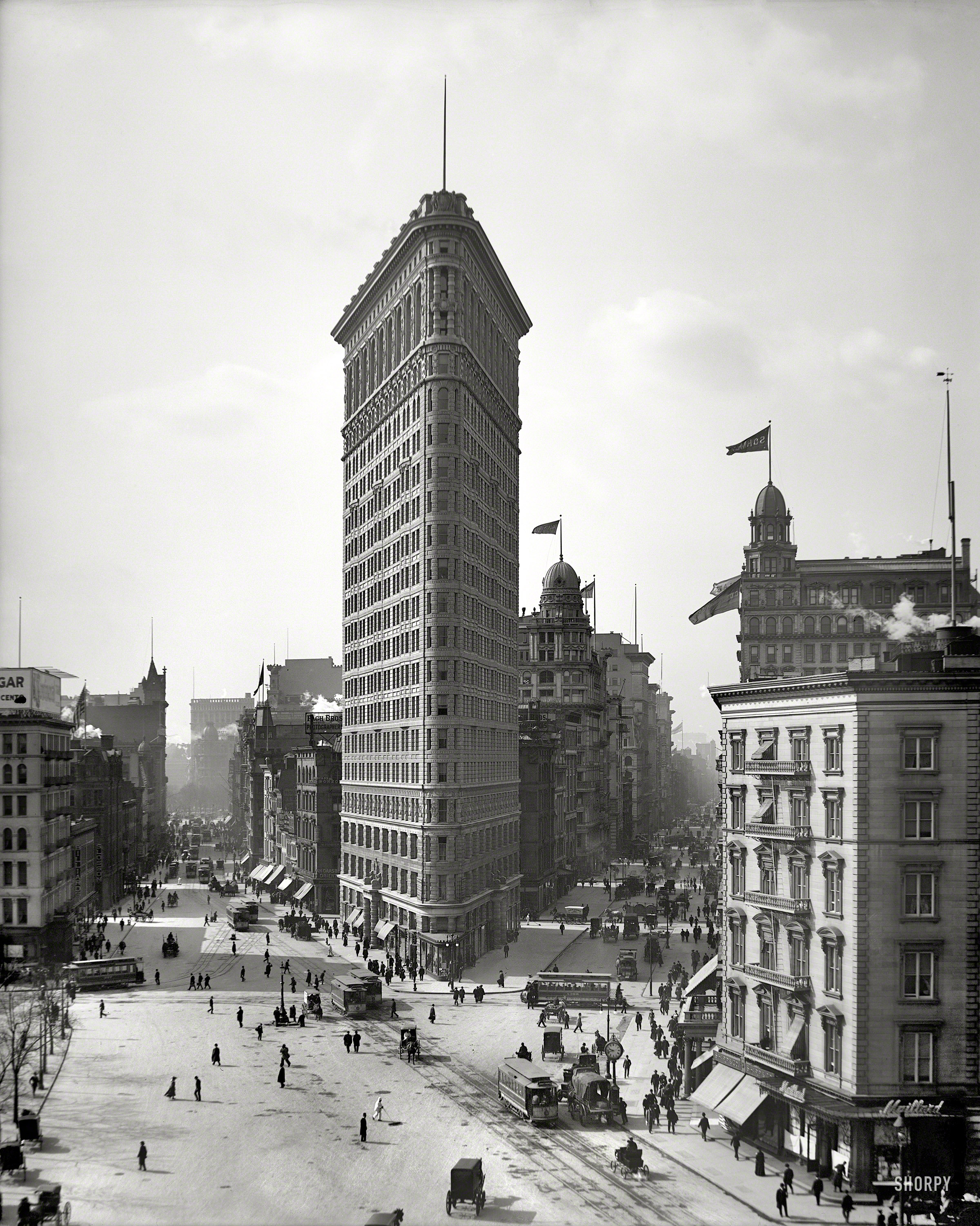
Below: A cleaned up look at the Flatiron Building, courtesy Shorpy. Click here for a look at the details!

Courtesy Shorpy
Courtesy Shorpy

The Bowery Boys: New York City History podcast is brought to you …. by you!

Starting this month, we are doubling our number of episodes per month. Now you’ll hear a new Bowery Boys podcast every two weeks. We’re also looking to improve the show in other ways and expand in other ways as well — through publishing, social media, live events and other forms of media. But we can only do this with your help!

We are now a member of Patreon, a patronage platform where you can support your favorite content creators for as little as a $1 a month.

Please visit our page on Patreon and watch a short video of us recording the show and talking about our expansion plans. If you’d like to help out, there are five different pledge levels (and with clever names too — Mannahatta, New Amsterdam, Five Points, Gilded Age, Jazz Age and Empire State). Check them out and consider being a sponsor.

We greatly appreciate our listeners and readers and thank you for joining us on this journey so far. And the best is yet to come!


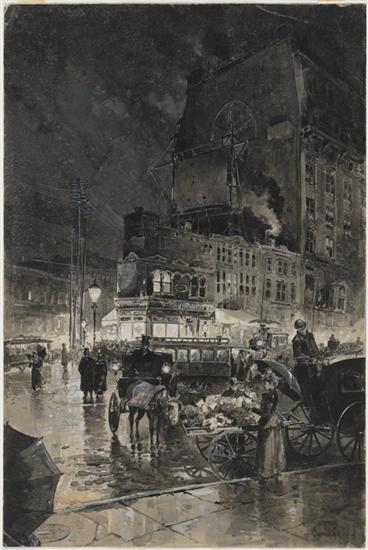
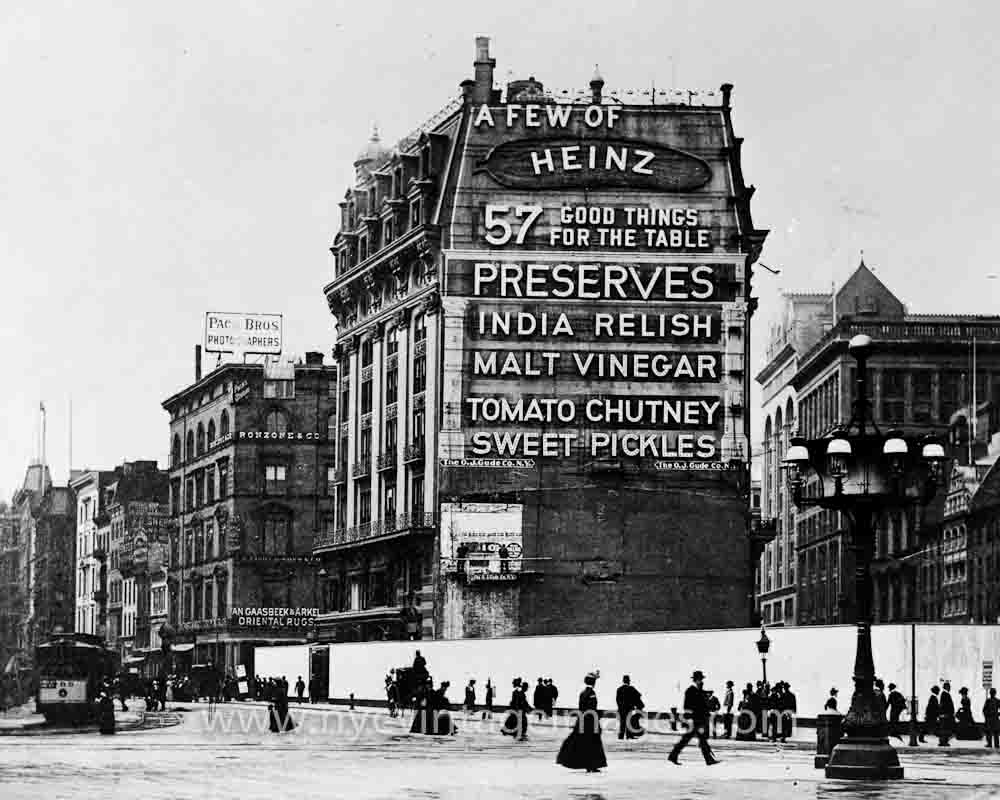
A dramatic illustration of 23rd Street and Fifth Avenue, where the Flatiron Building would soon stand. From here you can see the taller Cumberland building which would be used for billboards.

5

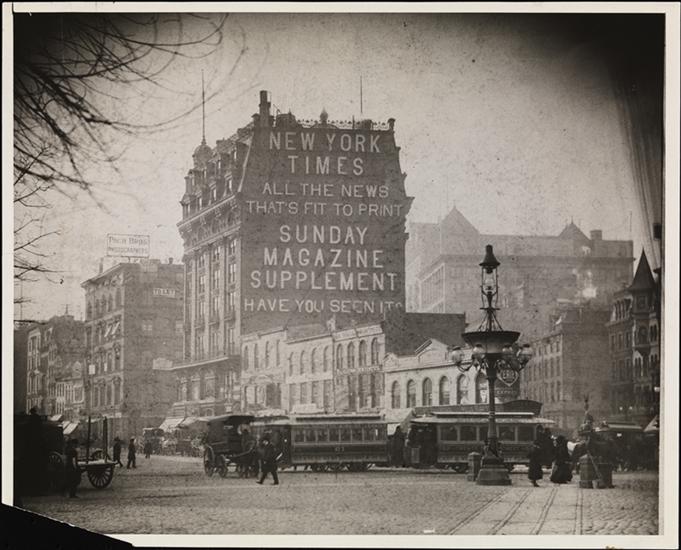
The structures that pre-dated the Flatiron Building, pictured here in 1897.

Courtesy Museum of City of New York
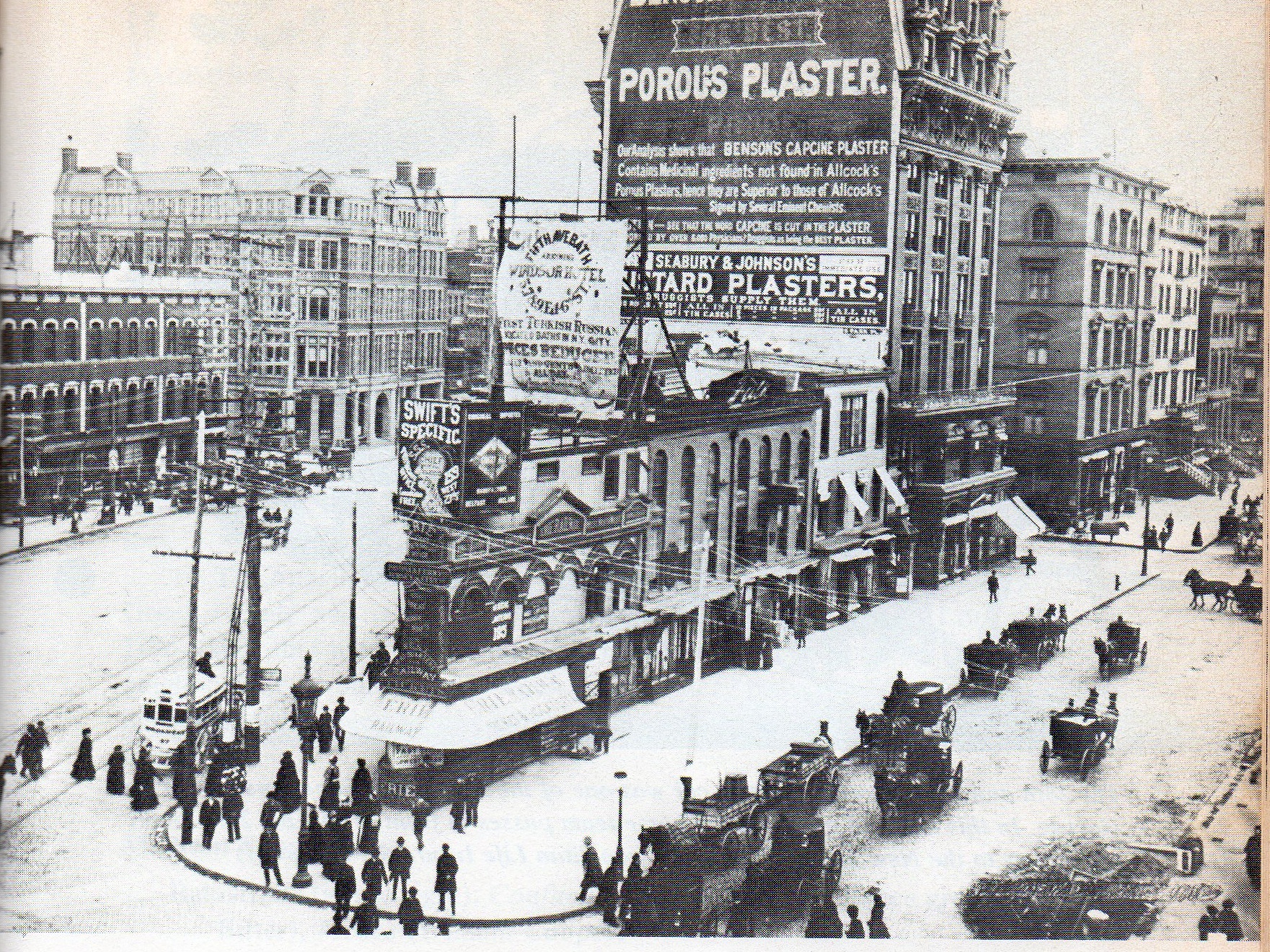
1

The smaller buildings have already been cleared away for the construction of the Fuller/Flatiron Building, but the taller building remains to some promotion of Heinz products.

Courtesy vintageimages.com

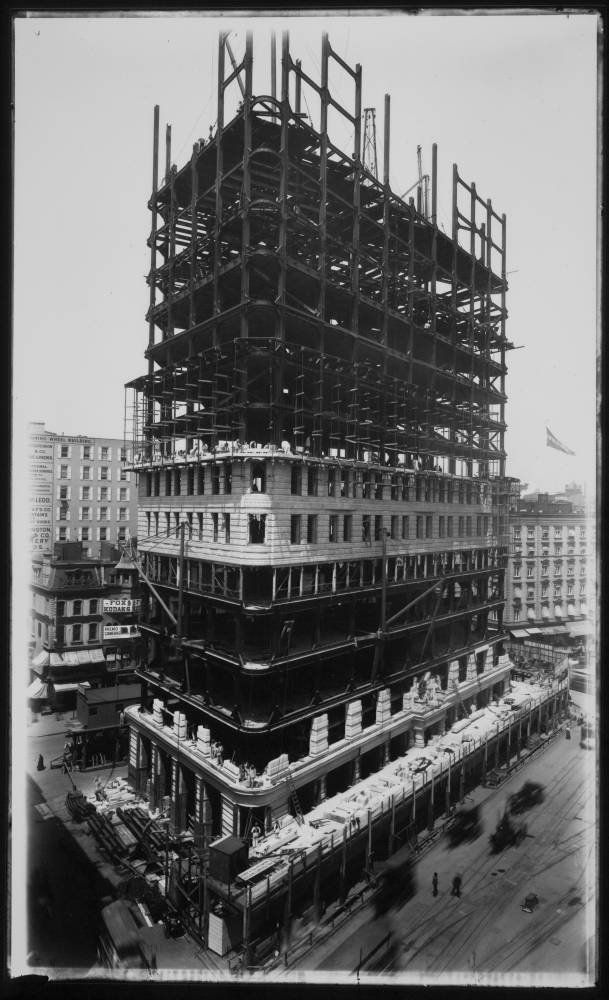
Construction of the Flatiron, picture from late 1901 or early 1902.

6
Courtesy Library of Congress

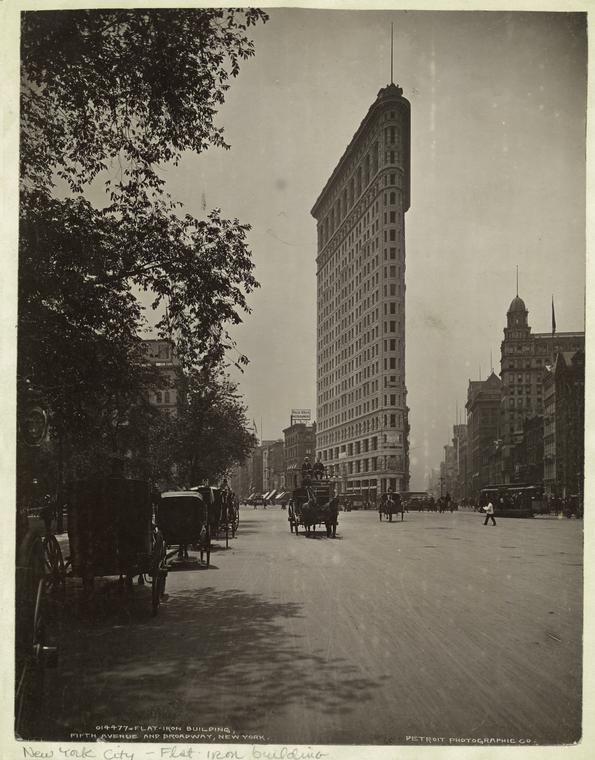
From every angle, the Flatiron takes on a new shape…..

Courtesy New York Public LIbrary

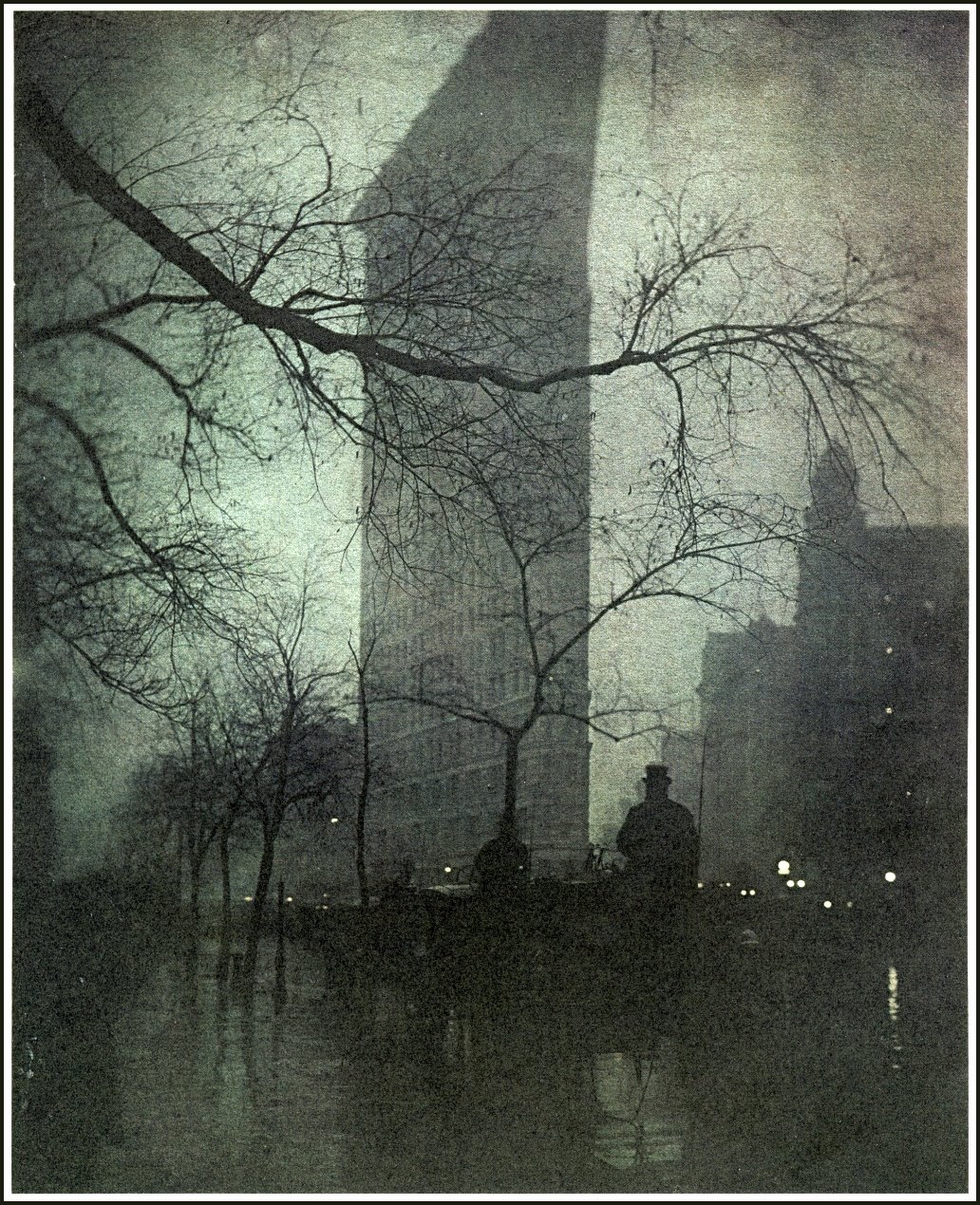
…inspiring artists like Edward Steichen to frame the building in romantic and even mysterious ways (such as his iconic shot from 1904)

edward

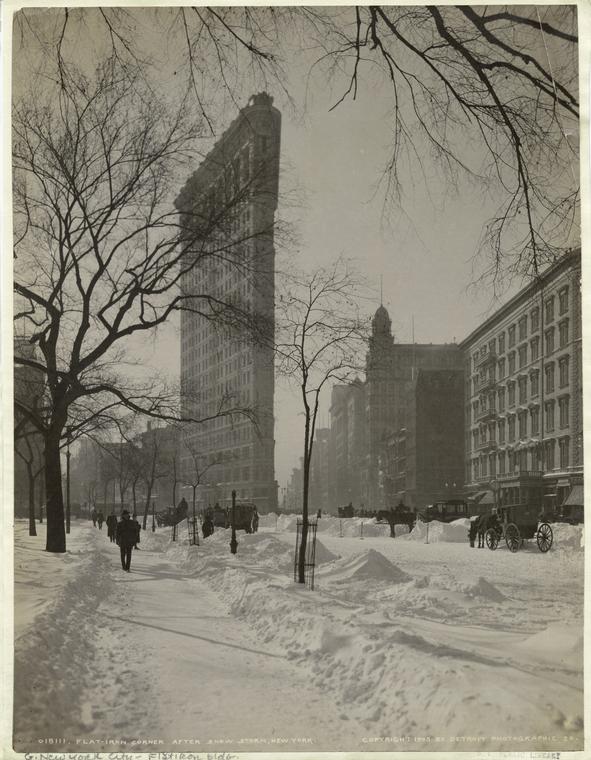
A view, similar to the classic one above, of the Flatiron after a snowstorm in 1905

Courtesy New York Public Library

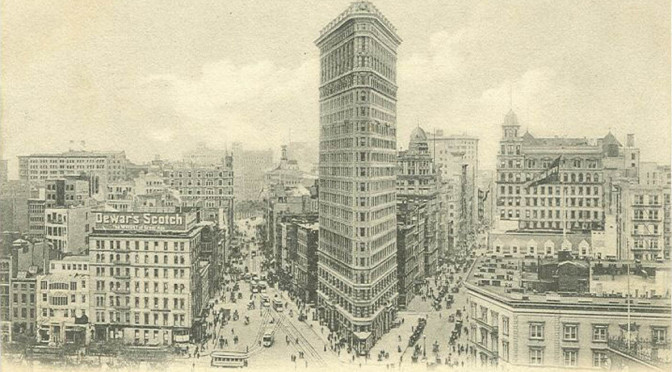
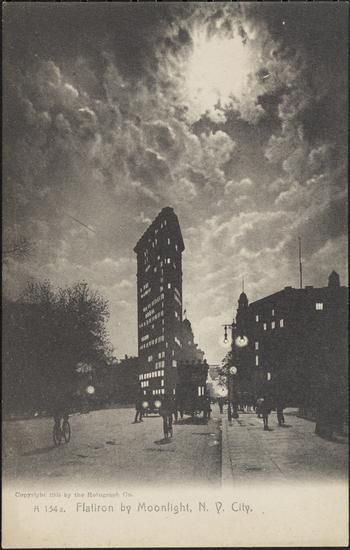
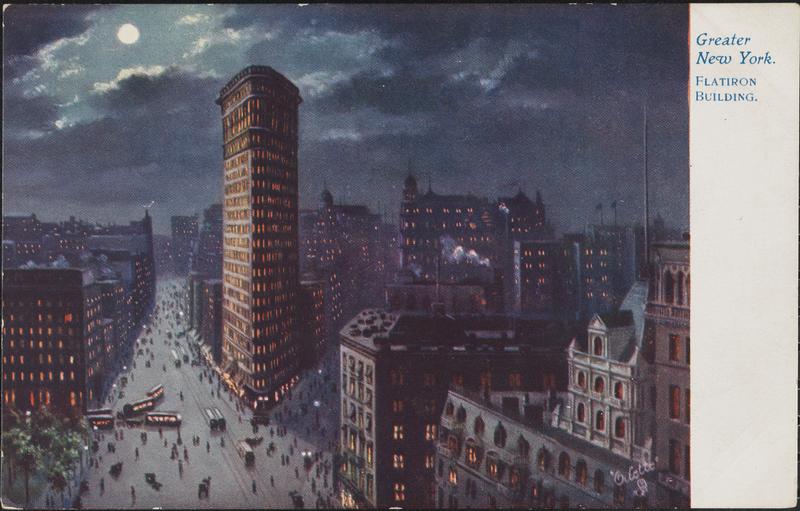
The Flatiron has inspired thousands of photo-mechanical post cards back in the day, highlighting its alluring shape-shifting form upon the changing New  York skyline.

2
Courtesy Museum of the City of New York

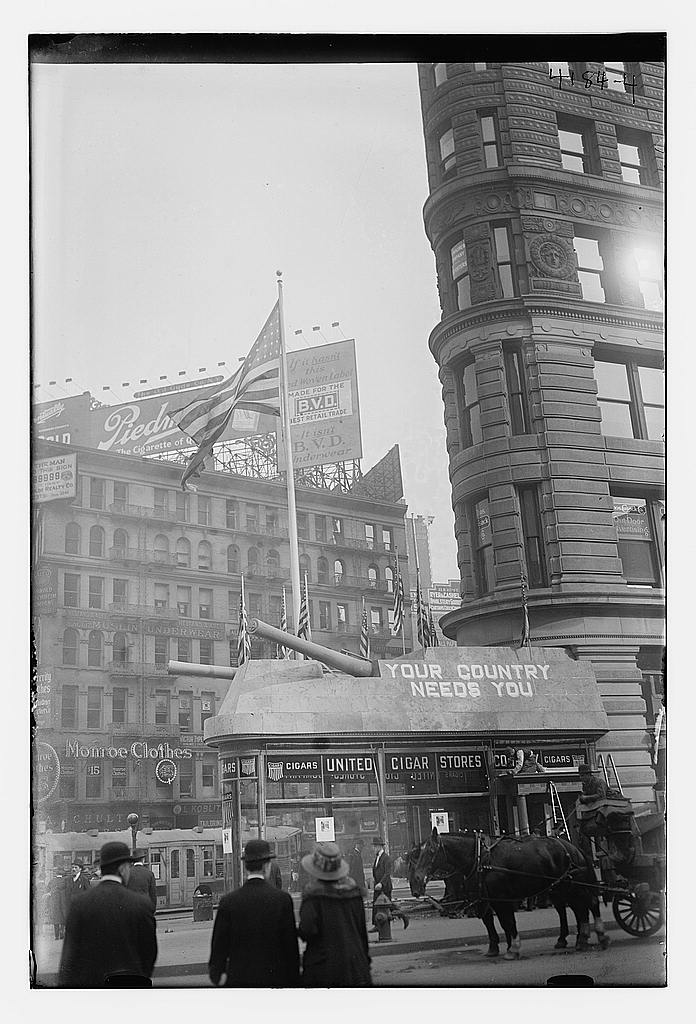
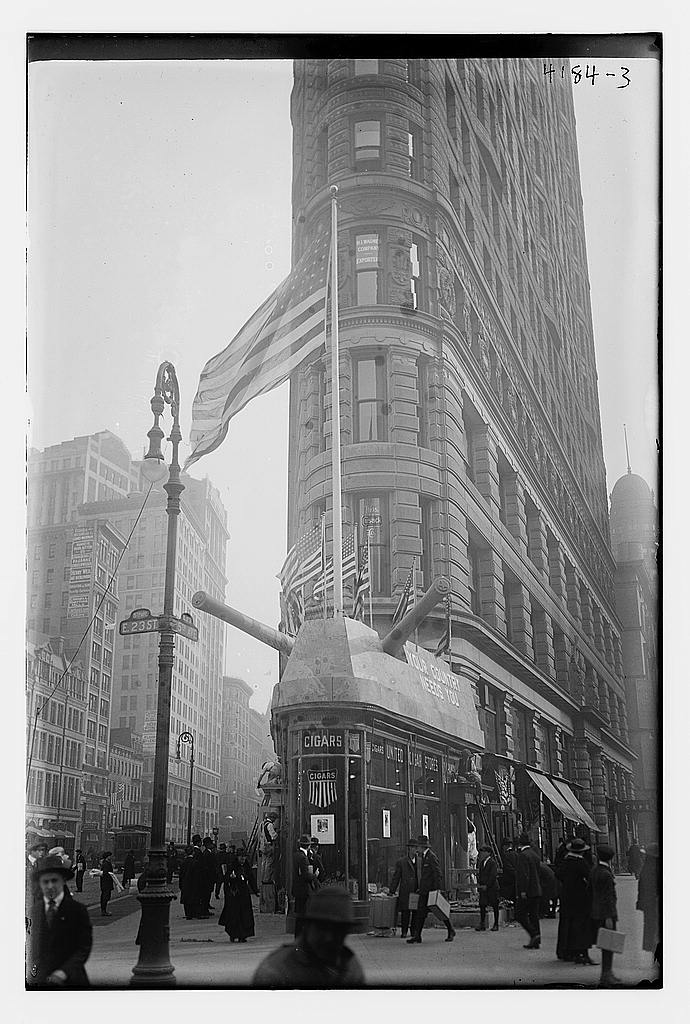
The cigar store in the narrow ‘cowcatcher’ served as a recruitment office during World War I, topped with military weaponry.

Courtesy Library of Congress

Another postcard focused on the Flatiron’s particularly windy properties!

wind

American Mutoscope and Biography Co. filmed this humorous look at ladies in the wind on October 26, 1903:

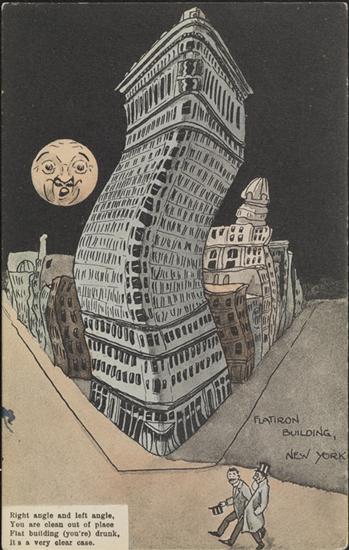
A Max Ettlinger illustration from 1915 — Flatiron, you’re drunk!

Courtesy Museum of City of New York

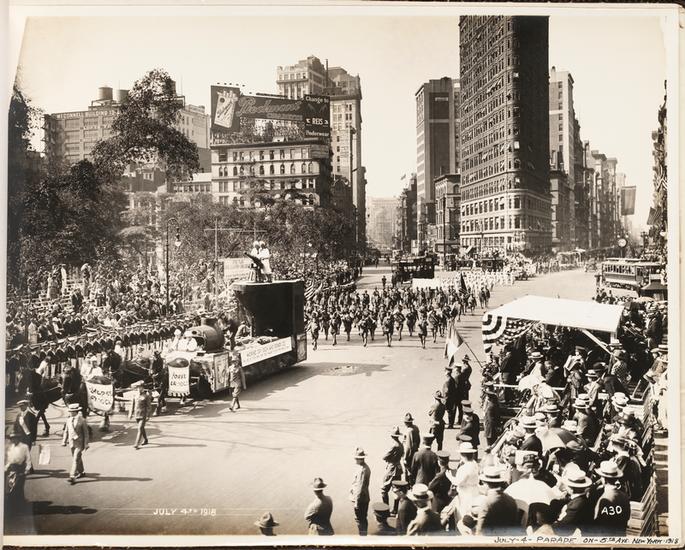
A July 4th parade, passing up Fifth Avenue.

Courtesy Museum of the City of New York

The Flatiron in 1935, from an angle that makes it appear almost two dimensional.

1935

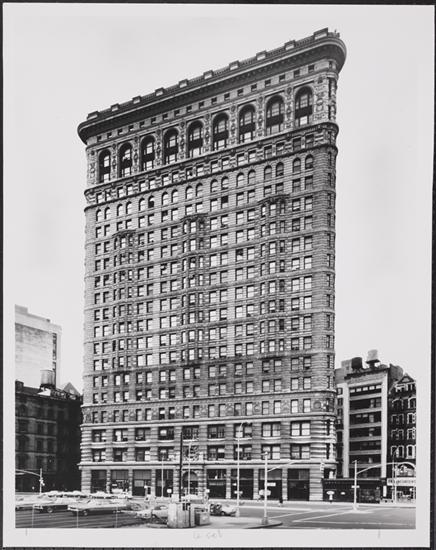
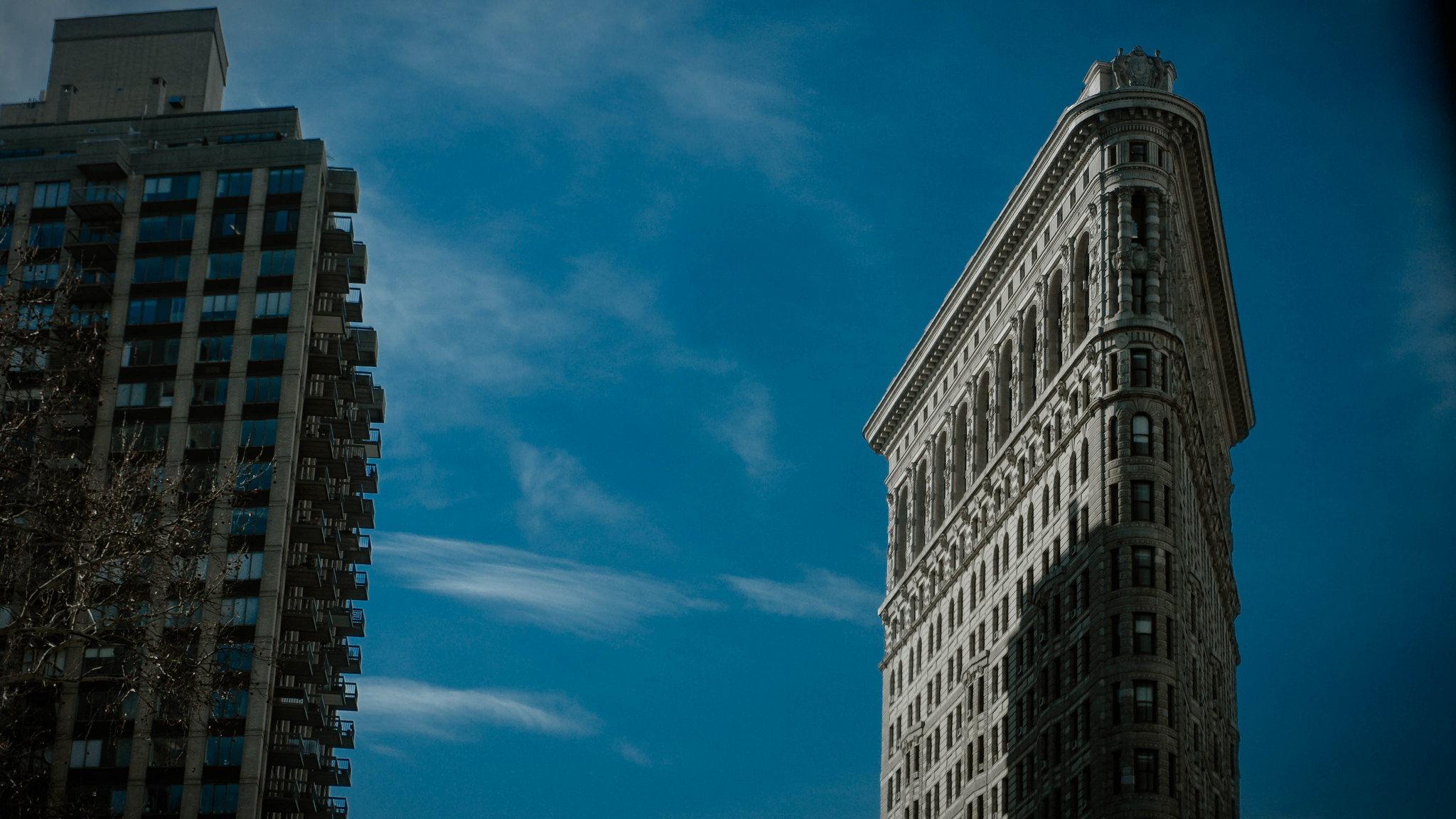
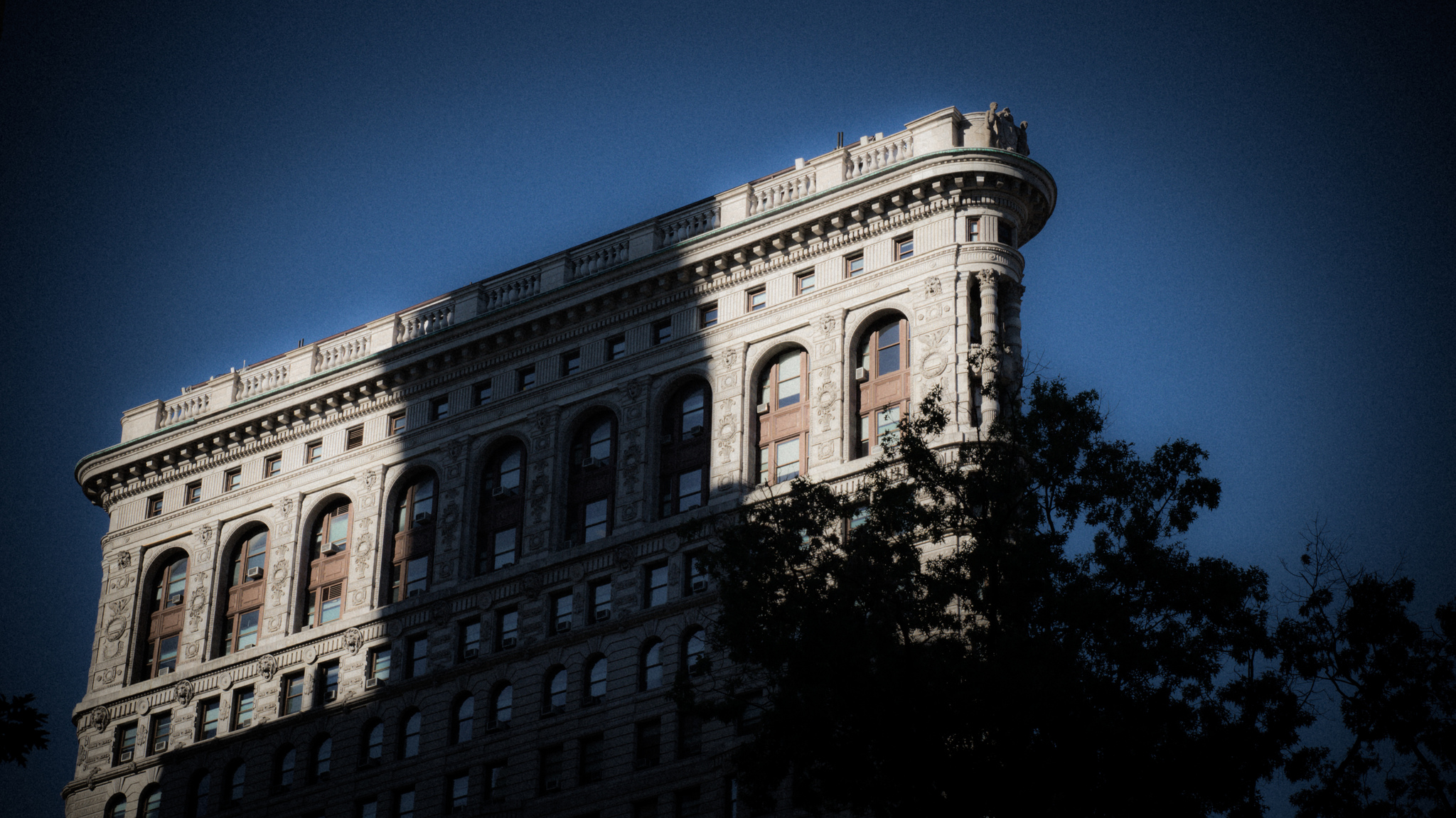
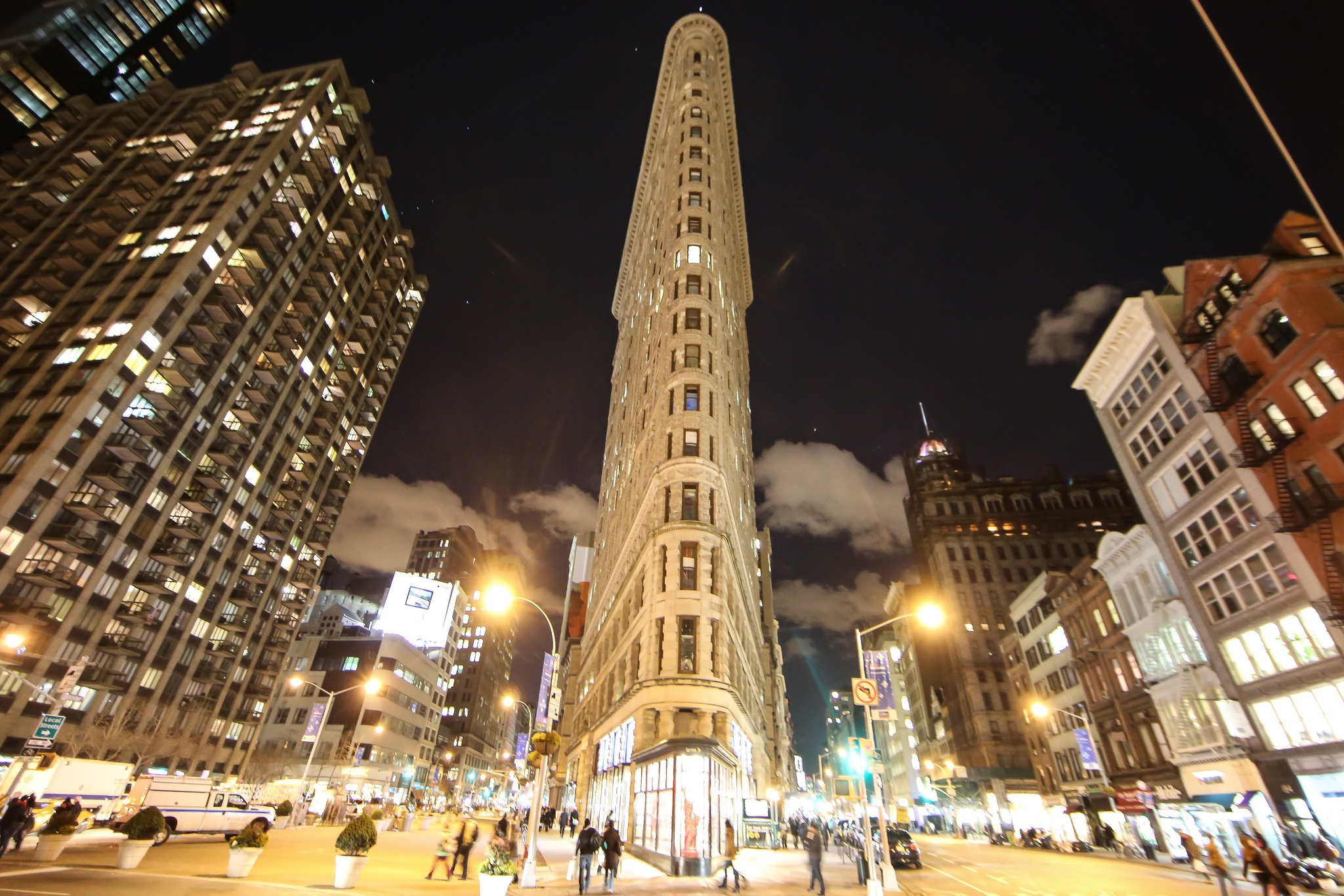
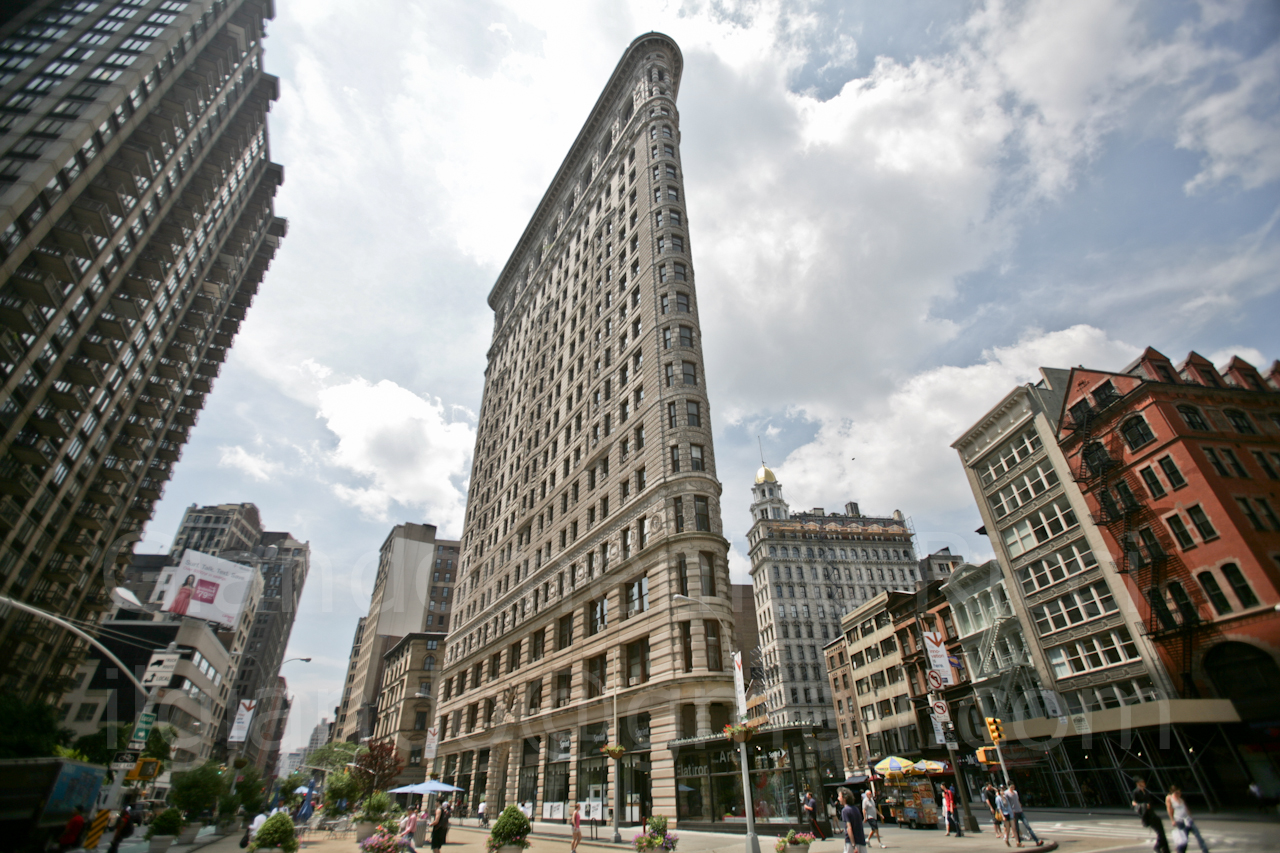
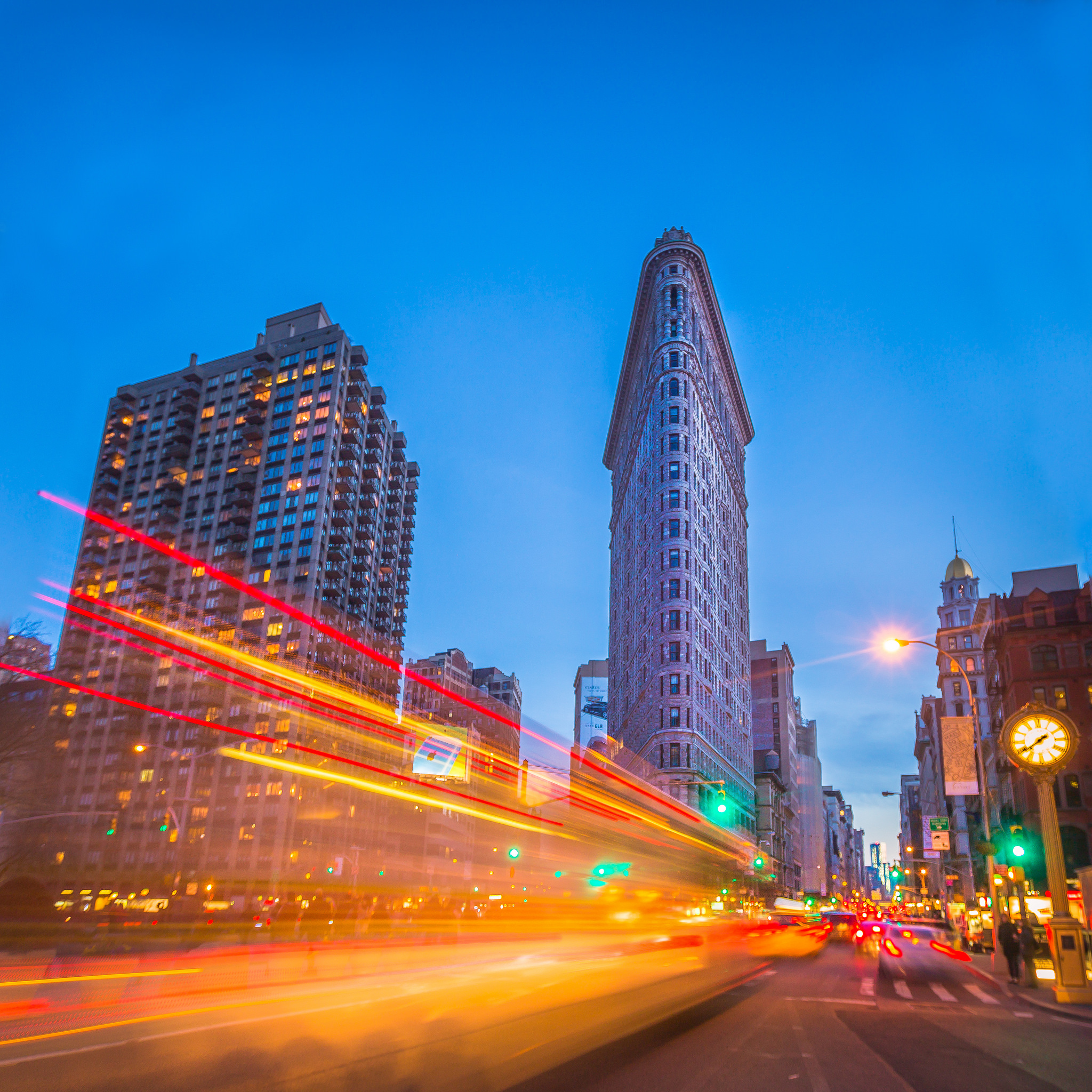
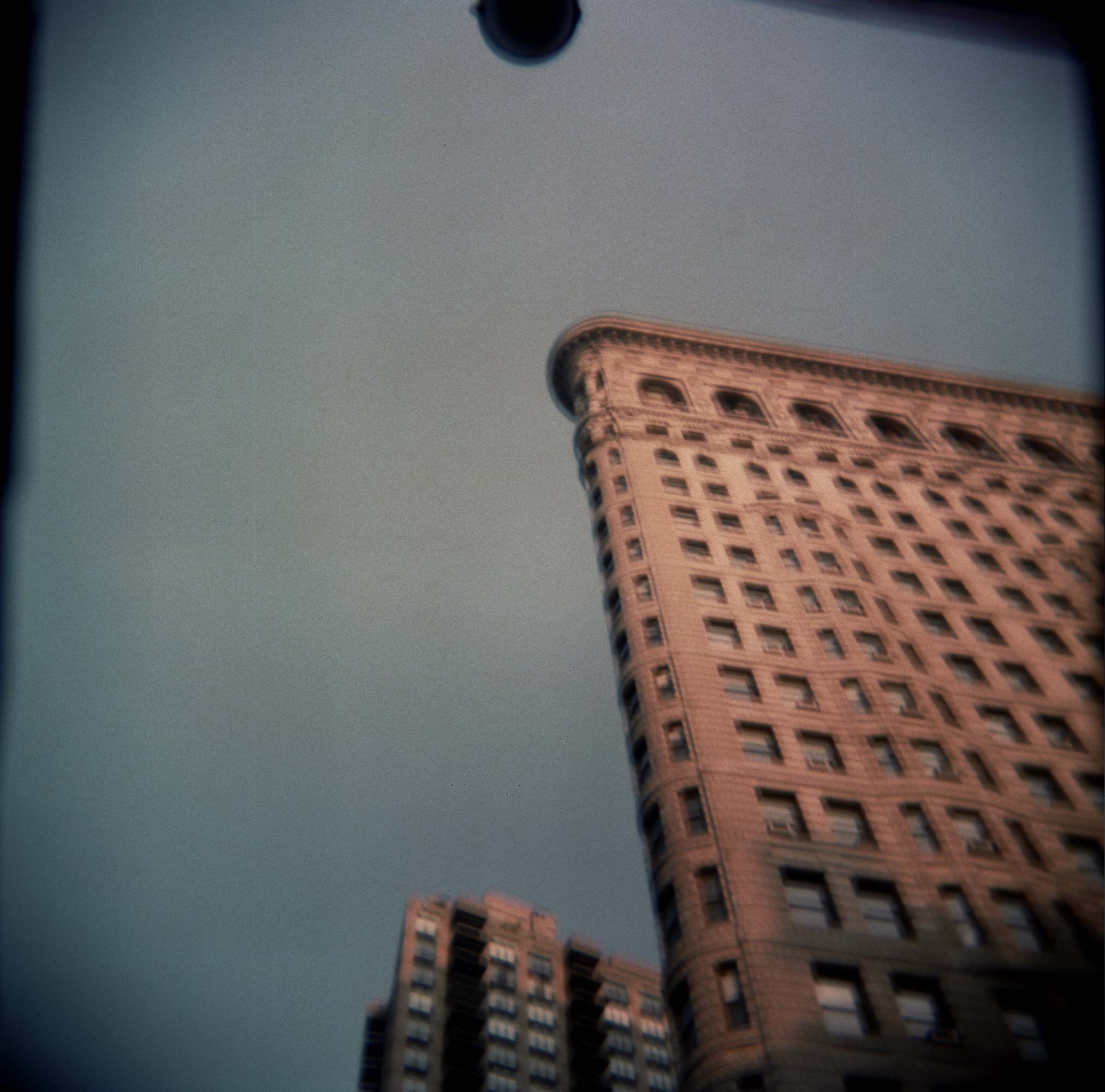
The Flatiron — still a magnet for budding photographers everywhere! Here a couple modern images from photographers Jeffrey Zeldman, Thomas Hawk, Giandomenico Ricci, Anurag Yagnik, and eric molina.

Courtesy Jeffrey Zeldman/Flickr
Courtesy Thomas Hawk/flickr
Courtesy Giandomenico Ricci/Flickr
Courtesy Anurag Yagnik/Flickr
Autosave-File vom d-lab2/3 der AgfaPhoto GmbH

CORRECTION: A small correction to this week’s show. The beautiful Madison Square Garden tower — with the nude Diana statue — is actually in a Spanish style, not an Italian style.