Blue Bell Tavern: War and romance in Washington Heights


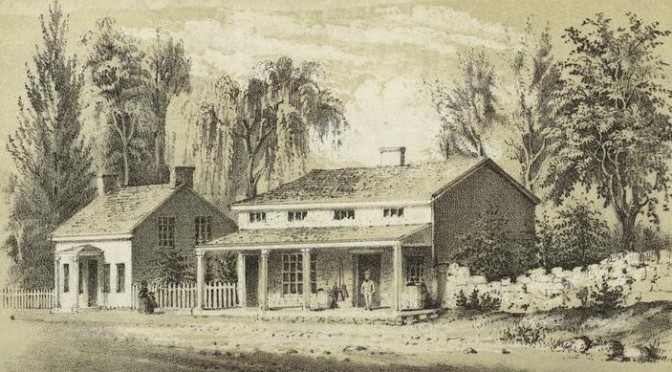
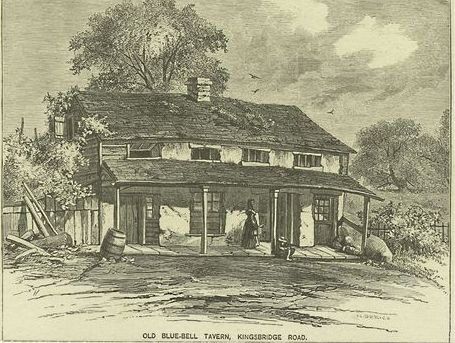
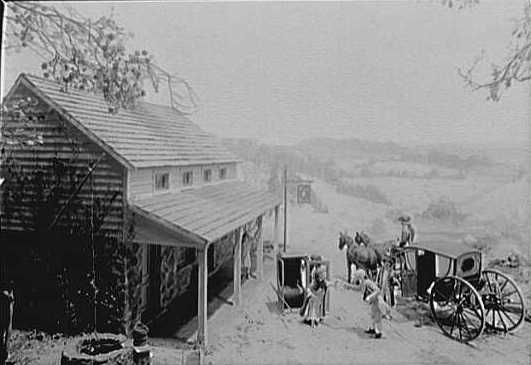
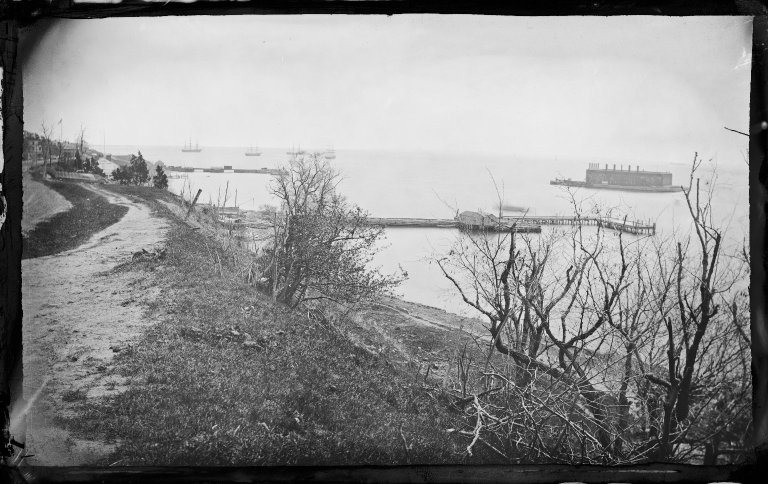
The Blue Bell Tavern, a rustic pit stop along Bloomingdale Road, witness to the changing fortunes of war. (Courtesy NYPL)

FRIDAY NIGHT FEVER To get you in the mood for the weekend, on occasional Fridays we’ll be featuring an old New York nightlife haunt, from the dance halls of 19th Century Bowery, to the massive warehouse clubs of the mid-1990s. Past entries can be found here.

LOCATION: Blue Bell Tavern
181th Street and Broadway, Manhattan
In operation Early 1720s-1915(?)

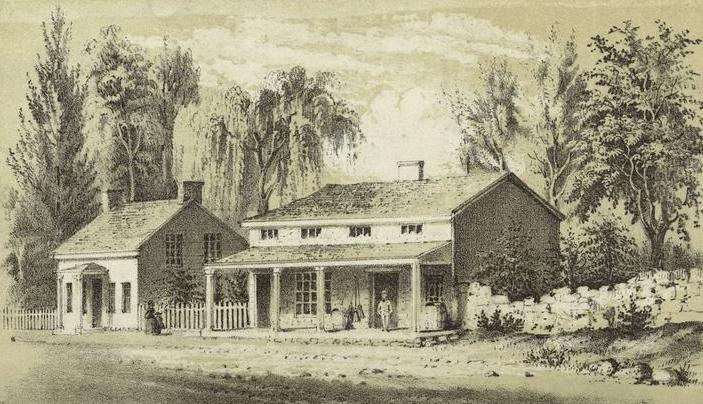
An old stone tavern once stood high upon the bluffs of Upper Manhattan, in an area many years later referred to as Washington Heights. The Blue Bell Tavern sat off Bloomingdale Road (where Broadway stretches today) nestled in a grove of trees, a modest two-story dwelling alit at all hours with wanderers.

One cold, stormy night some evening in November 1783, a damp and exhausted figure strode up to the door, a young woman who had escaped from her home many miles away. She was there to meet her lover who had already arrived at the Blue Bell, a man soaked, in disarray and wearing what certainly would have been a common sight for the day — a British uniform.

This man was a sergeant in the British military stationed in the Hudson River Valley. But the army was now retreating. Indeed, they were leaving New York that very month.

But he had fallen in love with this woman, who (as these sort of stories go) we know little about. We do know her parents disapproved of the British sergeant and would only relent to their marriage if he agreed to desert the army and remain in the United States.

On that rainy evening, the sergeant and his beleaguered love were married, here at the Blue Bell Tavern. As the story goes, it was a Quaker ceremony, for there were no other officiators that night at the tavern.

The Blue Bell, situated at today’s intersection of 181st Street and Broadway, was built in mid 1720s as a home and renovated into the type of pleasant inn that, by 1753, the venerable Cadwallader Colden (not the former mayor, but his grandfather and later governor of New York) could find “very comfortable” food and lodging with his friend James Delancey, the state’s lieutenant governor.

The tavern might have faded peacefully into oblivion if not for the Revolutionary War. When angry New Yorkers attacked the King George statue in Bowling Green at the foot of the island, his stone head ended up on a pole in front of the Blue Bell.

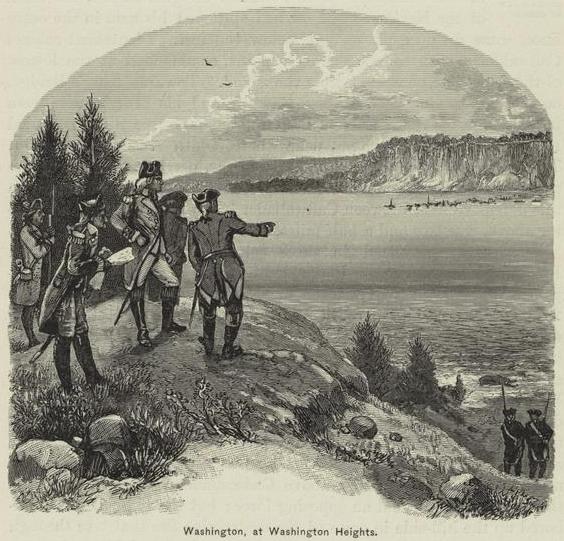
While the Continental Army fled from Manhattan during the month of September 1776, officers stationed here at the Blue Bell assessed their grim situation and coordinated the army’s next steps. With the tavern located so close to a key pathway out of town, it also became a headquarters and lodging for British officers after Washington’s army left. At one point, even Colonel William Howe, head of the British forces, himself stayed here.

It was during early battles in New Jersey that one British officer, one Colonel Ralle, found true love at the Blue Bell in the form of the innkeeper’s sister, and he married her there within the day. It would not be the last torrid romance to blossom here.

In November of 1783, George Washington and his victorious army re-entered New York, this time to push the British out of town and experience a new, free American nation from the vantage of the ravaged port city. “I remember well our march up the hill, and the noble appearance of George Washington as he sat on his big bay horse,” said a ‘veteran’ of the war in Appleton’s Journal.

George would even stay for an evening at the Blue Bell, awakening early to prepare his army’s grand entry down Bloomingdale Road and into the city. (Another important tavern of the day, the Bull’s Head, would also play a prominent role in Washington’s arrival into the city.) But on that day, they would add two more people to their procession.

The colonel and his new bride — the ones whose rendezvous at the Blue Bell led to their Quaker marriage — emerged from behind the building and called out Washington’s name. Given his rumpled British uniform, I imagine this created quite an uproar. The pair were taken into custody, and the British officer recounted his romantic tale. He wished to desert the army and join the Americans if only they would provide protection for him and his young bride. Indeed, with so many Loyalists still in the city, the soldier’s betrayal would certainly have been met with retaliation.

The tale apparently amused the troops, flush with the excitement of victory. Somebody even wrote a poem in the couple’s honor. You can read the whole thing here, though it begins: “A soldier and a maiden fair, Helped by shy little Cupid, Fled from the camp and momma’s chair, (Such guardians, how stupid!), And to the Blue Bell did repair, To have themselves a-looped.” We can assume with the lighthearted tone of the poem that things turned out well for the happy couple.

Below: A miniature of the Blue Bell, displayed at the Museum of the City of New York when it opened the doors to its new Fifth Avenue home in 1930. (Courtesy LOC)

The old tavern passed through many owners (and many names) through the 19th century and eventually returned to its original purpose as a residence. One old source suggests that the building burned to the ground in 1876, though it may have survived this blaze into the new century. Whatever structure stood here then was torn down by 1915. But tales of the Blue Bell entered nostalgic accounts of the Revolutionary War almost immediately, as 19th century historians struggled to piece together the American narrative from those who still remembered it.

The Blue Bell lived on long after its demolition in a most curious way — as a well-known miniature housed at the Museum of the City of New York. An issue of Popular Science Magazine from 1930 observes the construction and installation of the Blue Bell exhibit, which made its debut that year in the museum’s new home on Fifth Avenue and 103rd Street.

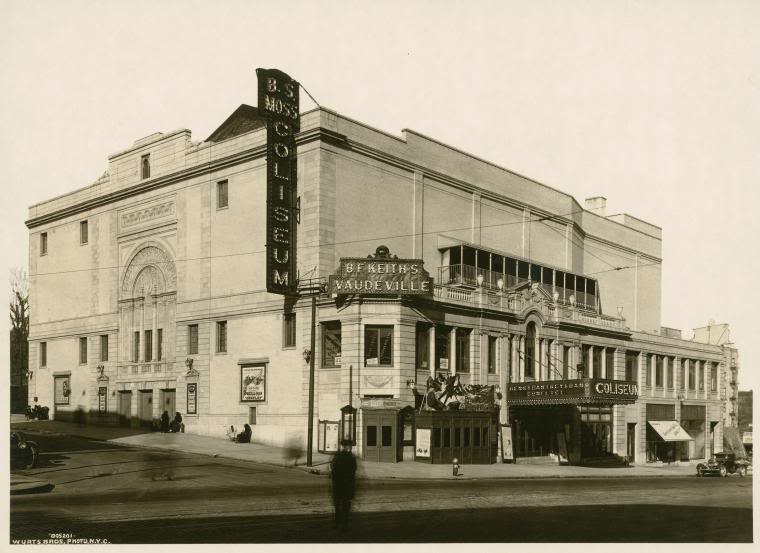
On some days, you can go to the former spot of the Blue Bell Tavern and experience a Gothic romance of your own. Standing there today is the RKO Coliseum, once one of Manhattan’s largest movie theaters, still operating as Coliseum Cinemas. (Here’s a street view of that corner.)

Below: The Coliseum in Washington Heights, date unknown (but there’s a vaudeville bill on one of the marquees!)

Mrs. Bigge Trout: On the passing of Barnum’s prized fish

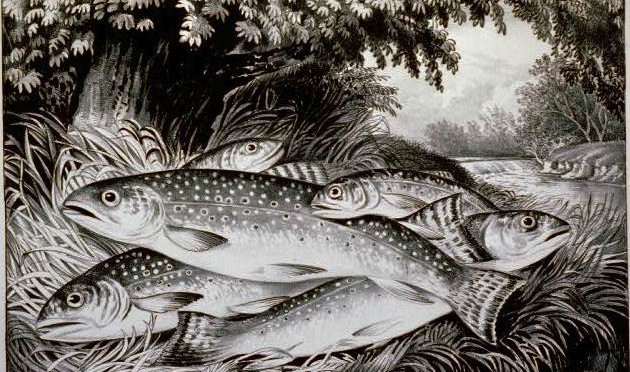
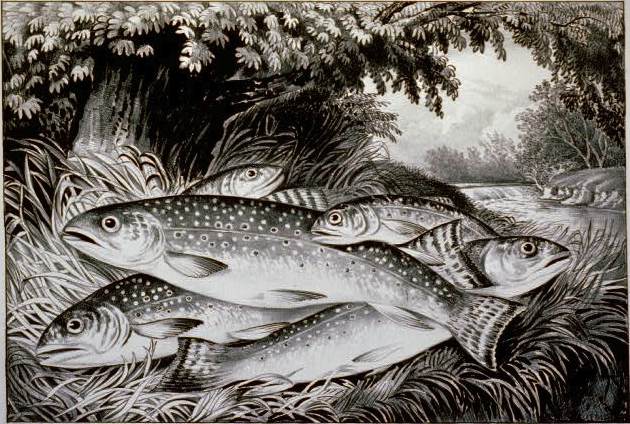
Trout by Currier & Ives, 1872. Sadly there are no extant images of Mrs. Trout.

I could not let this week pass without mentioning a sadness that fell over lower Manhattan 150 years ago today. A lament over the number of Southern states seceding from the union? The grief of Democrats over the inauguration that very day of a new American president, that uppity Illinois lawyer Abraham Lincoln? Concerns over the raucous administration of Mayor Fernando Wood?

No! It was the death of New York’s best known trout, known to all by her regal name, Mrs. Bigge Trout.
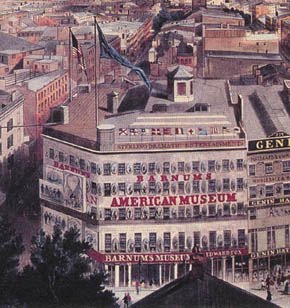
Mrs. Trout has been all but forgotten in the annals of both fish and human history. She would have been one of dozens of ill-kept aquatic creatures in the basement of Barnum’s American Museum, at the corner of Broadway and Ann Street, at the foot of City Hall Park.
The museum was an amalgam of delights, from wax figures to ‘freaks’ of nature, murals of historical reenactments to temperance entreaties in the lecture hall. But showman P.T. Barnum also specialized in a few live animals.
Fish were an especially popular delight to mid 19th century New Yorkers in a world without private aquariums. The museum featured a range of exotic fish such as “the angel, peacock, four-eyed cherub, cow, sturgeon, porcupine, and Spanish Lady as well as the squirrel, crimson cavaretta, parrot, grouper, zebra and yellow snapper.” Long after the passing of Mrs. Trout, Barnum would expand the aquatic feature to briefly include two doomed Beluga whales.
In 1861, the large, beloved Delaware trout would have been quite the popular attraction because she was pregnant. Very pregnant. According to the New York Daily Tribune, Mrs. Trout received her fatal injuries while attempting “to bring into the motley world seven thousand and sixty eggs at once.” The paper applauds her gusto in her attempt to increase “the census of the piscatorial kingdom by a number almost fabulous.”
The writer speculates: “Probably the odd sixty proved her ruin, but she is by no means the first who has fallen a victim to overweening ambition.”
Let me be clear here. I was reading this old issue of the Tribune looking for a more serious subject, and this, the death of Mrs. Bigge Trout, came before articles on the country’s impending strife, events that would lead to the Civil War. Urgency was apparently not a requirement for story placement in 1861.
Although Bigge — may I call her Bigge? — died on February 28th, her passing was reported in the March 4th issue with great fanfare (and some serious tongue in cheek).
If descriptions are to be believed, museum workers wore black, including the man in the box office with “crape on his hat.” Even the other animals, trapped in their confines and plaster dioramas, were reportedly sullen that day.
In all seriousness, Barnum’s would have offered New Yorkers the closest approximation to a modern ‘natural history’ experience, although proper care of the animals would have been a principal concern only to the extent that living creatures sell more tickets than dead ones. (Although there were plenty of those as well, stuffed and mounted throughout.)
The Tribune mentions that Mrs. Trout was “interred with all the honors” but does not list her final resting place. Morbidly, I wonder if that interment might have been the dinner plate of another museum inhabitant. “Her mourning friends, the other fishes, were prevented, by prior engagements, from following the remains to their last resting place.”
So this weekend, pour a little out for Bigge on this, the 150th anniversary of her passing to that great Barnum spectacle in the sky.
You can read the original article here. If you want more information on Barnum’s American Museum, check out our podcast on the subject from 2008.
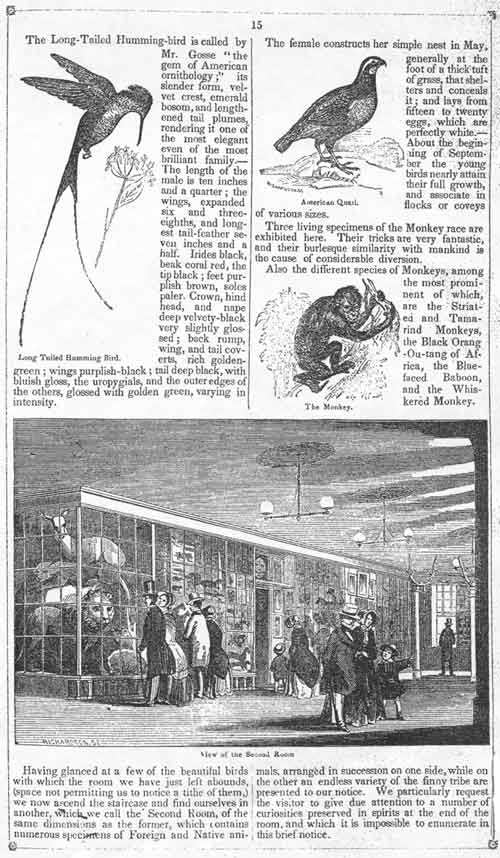
Below: A page from the 1850 Barnum’s Museum guide, from CUNY’s excellent interactive website on the museum

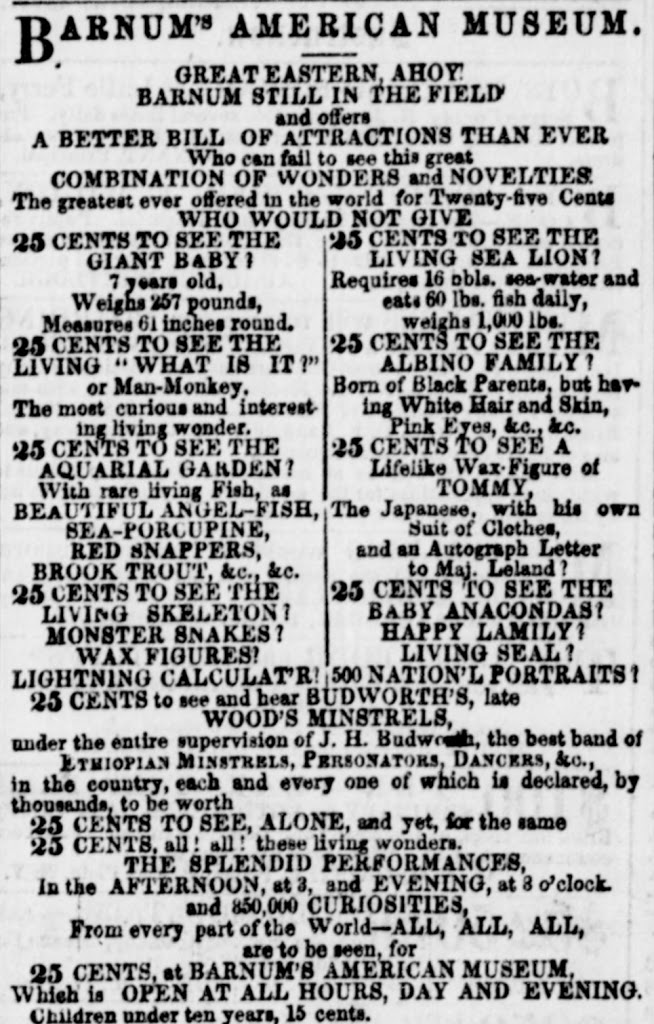
And finally, an advertisement from July 1860, unveiling some of the delights that would have been in the museum at around the time of Mrs. Trout’s death. It’s really worth your time to click the image and read through these. Don’t miss the Giant Baby!

Categories
Brooklyn History

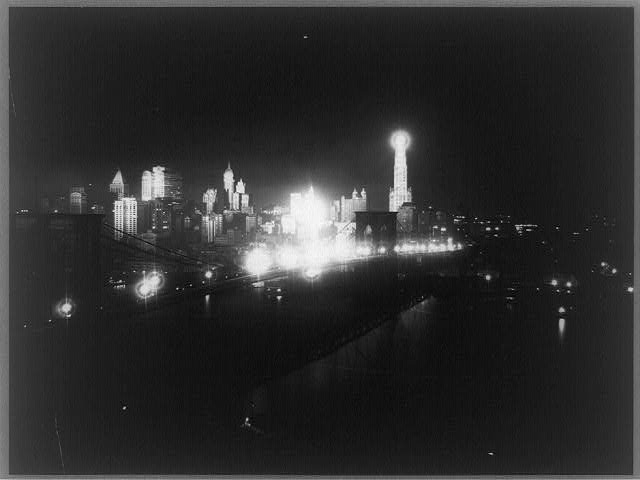
Let There Be Light: Brooklyn illuminates Manhattan with a spotlight that ‘will burn your skin at three hundred feet’


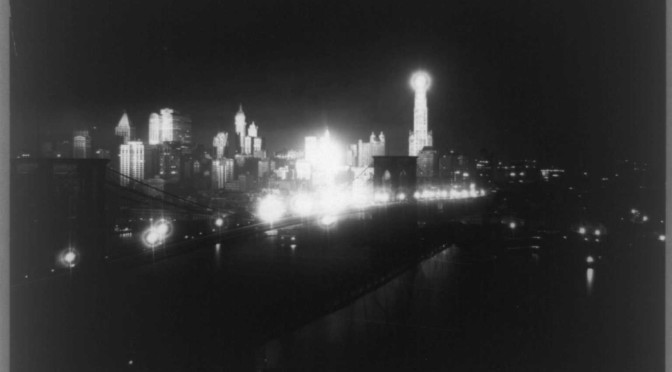
That Gotham glow: The powerful Sperry searchlight drapes the dark city in light. The Woolworth Building is lit up like a candle.

A thin, bright streak of light brushes across the sky and dances off the clouds above. With few buildings over fifteen stories and the city’s electrical lights at a fraction of the intensity that they are today, the white piercing beam would have awakened the night sky, the most powerful illumination in the sky with the exception of the moon.

It was March of 1919, and the device creating this expressionistic Gotham nightscape was the Sperry Searchlight.

Since the first arc lights installed along Broadway in 1880, New Yorkers had grown accustomed to electric light. In fact, Times Square and the stretches of Broadway had become New York’s entertainment capital because of it. But searchlights were still a bit of a novelty, devices more associated with wartime. Innovations in electrical light changed how wars were even fought; combatants in World War I aimed spots to the skies to search for enemy zeppelins and scoured the grounds below for encroaching forces.

New Yorkers would have been used to seeing searchlights atop the city’s newest, tallest buildings. The first New Year’s celebration at One Times Square used a searchlight to blanket stunned crowds below. Both the Flatiron Building and the Metropolitan Life Tower in Madison Square were equipped with searchlights during elections. They were an effective way to present information. For the 1908 presidential election, the New York Herald announced that a searchlight atop the Met Life building would swing north if William Howard Taft won and south if the victory went to William Jennings Bryan. That night, the beam turned north.

But the Sperry Searchlight was different. The powerful device, created in the mid 1910s, was described by a science journal of the day in 1917 as ‘the world’s most powerful searchlight’ and as bright as ‘the fiercest sunlight’. “The heat of its focused beam is so intense that it will set paper afire at a distance of two hundred and fifty feet …. It will burn your skin at three hundred feet.’

This intense searchlight was the product of Brooklyn innovator Elmer Ambrose Sperry, whose greatest invention, the gyrocompass, was quickly adopted by the United States Navy and almost immediately changed sea travel forever.

From the Sperry Gyroscope Companythe ten-floor building still stands at 40 Flatbush Avenue Ext. by the Brooklyn entrance to the Manhattan Bridge — the inventor and his team created a host of new items, many for the military. (Did you know that the Sperry Company created the first airplane autopilot?)

In 1919, one version of his new and improved searchlight made a test run, presumably atop the roof of the Sperry building. If you look at where the building is on a map, you can almost trace the beam from the roof along the line of its projection.

Over the Brooklyn Bridge, bouncing off the first line of buildings along the east of Manhattan, and illuminating three of New York’s tallest and best known buildings of the day — the Singer Building (center left), the Park Row building (center right), and the majestic Woolworth Building (the tallest beacon-like structure, center right).

Images like this one weren’t just documents of technological success. (Although good night photography itself was a pretty nifty trick, even in 1919.) They helped build the mythology of the city, which in 1919 was about to go down the rabbit hole of Art Deco and inspire new architects to populate the skyline with more ambitious and futuristic towers.

Triangle Shirtwaist Factory Fire: Some basic information


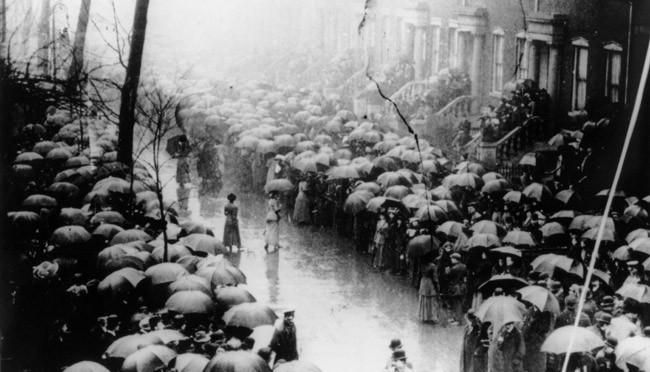
Mourners filled the streets of New York on April 5th, 1911 , in honor of the victims of the Triangle Factory Fire. This March, modern New Yorkers will get their turn to commemorate the tragedy.

Next month is the 100th anniversary of one of the most horrific tragedies in New York City history — the workplace fire at the Triangle Shirtwaist Factory east of Washington Square. The swift and destructive blaze killed 146 workers on March 25, 1911, the greatest loss of life in a New York workplace until the attack on the World Trade Center.

What will certainly add poignancy to the conservation, given recent headlines, is the tragedy’s importance in the growth of worker’s unions and the improvement of workplace conditions and building codes.

Here’s some ways to get yourself caught up on the facts of the event, in time for memorial ceremonies on March 25:
TV: Tonight on PBS is the debut of the one-hour American Experience ‘Triangle Fire’, giving a dramatic narrated recount of events. Check your local listings, but this will undoubtedly be repeated throughout the month.

Watch the full episode. See more American Experience.

Press: Lots of articles will be generated about the fire, but I recommend you start with the New York Times story last week about researcher Michael Hirsch and his quest to identify the last six remaining victims of the fire whose names until now had been unknown. [New York Times]
Books: There are several books in print, both non-fiction and narrative retelling, but the one I can most passionately recommend is Dave Von Drehle‘s ‘Triangle’ The Fire That Changed America‘, focusing on some of the early voices for worker’s rights and unrest prior to the tragedy. And Von Drehle’s depiction of the fire itself is both methodical and heartbreaking.

Websites: The School of Industrial and Labor Relations at Cornell University has organized an extraordinary repository of information about the event and the aftermath, including a huge collection of photographs and audio interviews from some of the survivors. Remember The Triangle Factory Fire]

Podcast: And finally, I recorded a podcast on the Triangle Factory Fire back in April 2008 (Episode #42) that gives a dramatic overview of the event. I’ve always been particularly proud of this one. You can check it out by downloading it straight from this link or getting it on iTunes from our back catalog feed Bowery Boys: New York City History Archive.

The Academy Awards in New York: NBC experiments, as Audrey Hepburn wins an Oscar after a long day of work

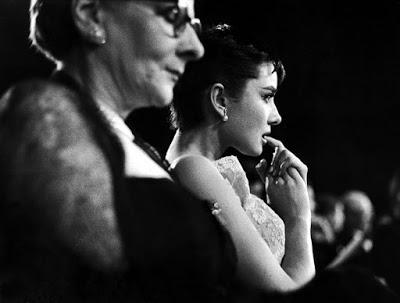
Audrey, off Columbus Circle: Hepburn sits in nervous anticipation at the New Century Theatre, moments before she wins for Best Actress.

Despite the Academy Awards being a celebration of all things Hollywood, New York has actually hosted the Oscar ceremony on more than one occasion. Or rather, they co-hosted the event — from 1953 to 1957 — in a rare and quickly abandoned bi-coastal ceremony that taxed the mechanics of television’s earliest production crews.

There were two reasons for this complicated arrangement. NBC, who was broadcasting the event, had most of their principal stages in New York. After all, the first NBC studios were at Rockefeller Center, where they still remain. Even The Tonight Show, perhaps NBC’s first and most famous Burbank production, filmed in Manhattan until the early 1970s.

More importantly, many film stars were in New York, unable to get out of theatrical commitments on Broadway. And frankly, in the years before international television viewership, the Oscars simply did not have the same urgency as they do today. Thus, the award show came to them.


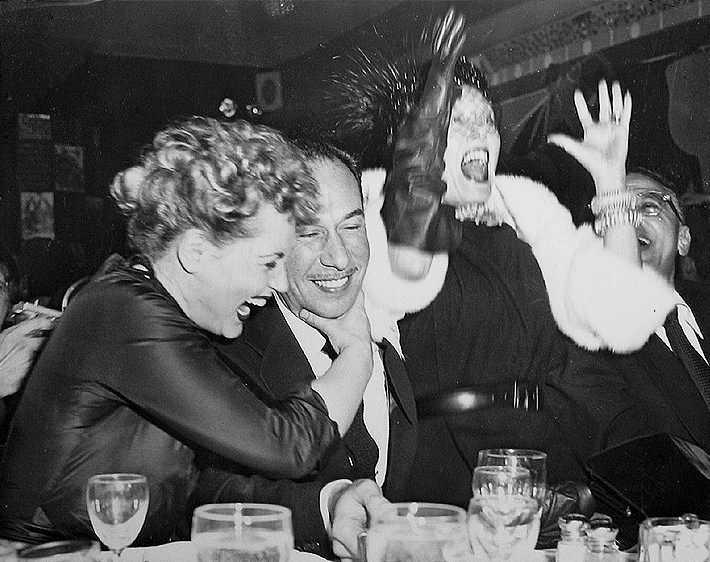
Judy Holliday gives Jose Ferrer a friendly squeeze — and Gloria Swanson bursts with joy — as Ferrer’s name is announced as the winner of Best Actor, at the La Zambra in midtown. (Getty Images)

23rd Annual Academy Awards
Best Picture winner: All About Eve
March 29, 1951

Before splitting the broadcast, the Oscars once tried a very strange live radio remote from a New York nightclub.

For the 23rd Annual Academy Awards, held on March 29, 1951, many nominees like Judy Holliday and Gloria Swanson remained in New York. Both Swanson and Jose Ferrer, starring in the Broadway comedy Twentieth Century, were nominated that year.

Instead of disappointing a sell-out theater audience, Ferrer invited all the nominees to an after-theater party at the La Zambra Cafe (127 W. 52nd Street), a nightclub owned by Spanish guitarist Vincente Gomez. A live radio link was set up among the tables, and nominees wined and dined waiting for their categories to be announced out in Los Angeles.

Believe it or not, Ferrer won Best Actor (for Cyrano), and Holliday won Best Actress (for Born Yesterday), giving their speeches into a radio microphone as champagne corks popped in the background. (Swanson, who thought she might win for Sunset Blvd., was less enthusiastic for Judy’s win.) It’s appropriate they were in New York, as Ferrer and Holliday both won for film adaptations of Broadway shows in which they had starred. And clearly underscoring the power that the New York stage still had on the film business, Best Picture went to the stage drama All About Eve.


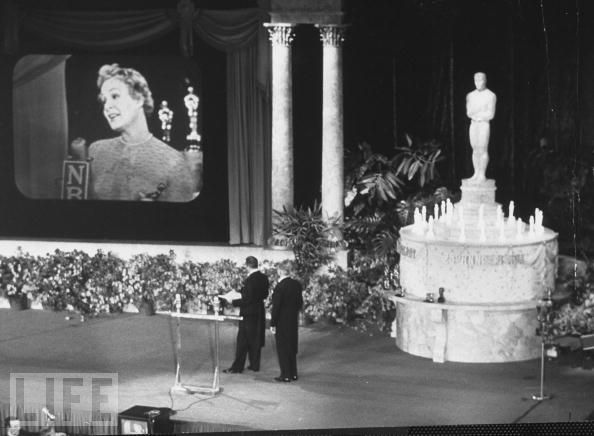
Above: Shirley Booth accepts her Oscar in New York, as the audience in Los Angeles watches on. (LIFE images)

25th Annual Academy Awards
Best Picture winner: The Greatest Show On Earth
March 19, 1953

While the Los Angeles crowd were entertained by host Bob Hope, the attendees to the first official bi-coastal New York ceremony were met by co-host Fredrick March, a two-time Academy Award winner. The event was broadcast from 5 Columbus Circle, at the International Theatre.

In 1953, the International was a worn out, tired New York stage, having gone through a host of different owners and renovations since it first opened — as the Majestic Theatre — in 1953. At different periods of time, it was owned by Florenz Ziegfeld and William Randolph Hearst, and its stage played hosts to virtually every form of entertainment, from burlesque to ballet.

So definitely an odd setting for an awards program given that this was also the first Oscar show to be broadcast on television. But the International was owned by NBC, who had agreed to fund the inaugural broadcast. And NBC’s fees to broadcast the program were especially valuable to Academy of Motion Picture Arts and Sciences, as the film studios refused to fund an elaborate bi-coastal show.

The broadcast began 7pm PST and 10 p.m. here, to accommodate the Broadway stars just stepping off the stage. Due to staggered entrances, many of the seats at the International were empty for much of the ceremony.

Among the nominees sitting in the Columbus Circle theater was Best Actress nominee Shirley Booth, who was starring in the Broadway play The Time Of The Cuckoo on 40th and Broadway at the now-demolished Empire Theatre. She won the Oscar for the film version of Come Back, Little Sheba; she had won a Tony Award for the stage version in 1950.

Given the limitations of early television technology, it’s amazing they were able to broadcast simultaneously between two coasts at all. Glitches did cause for a few amusing gaffes for television audiences. When the universally reviled film The Greatest Show On Earth somehow won Best Picture over the favorite High Noon, the camera switched to the New York audience, who sat there not clapping and in mild confusion.

There would not be another Oscar telecast at the International, or anything else for that matter. The very next year, NBC moved out, and the theater was finally torn down, replaced with one of Robert Moses’ pet projects, the Coliseum convention center.


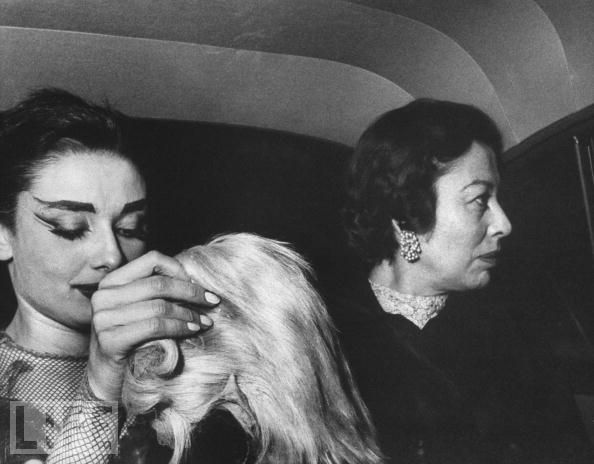
Above: Audrey snatches off her blonde Ondine wig as her limousine races her to the Oscar ceremony uptown.

26th Annual Academy Awards
Best Picture Winner: From Here To Eternity
March 25, 1954

For the remainder of the Oscars’ short stay in New York, they were broadcast from the New Century Theater*, at Seventh Ave. and 58th Street, right off Columbus Circle and best known before then as the theater that Orson Welles and his spirited cast stormed in 1937 to perform his musical The Cradle Will Rock.

Film fans were set up in bleachers outside, just as they’re popularly done out in Los Angeles. But one New York nominee didn’t get there in time to meet her fans. Audrey Hepburn was down at the 46th Street Theatre performing the play Ondine, costumed in a blonde wig. After the show, she raced to the Century in a limousine (with police escort, no less), ripped off her wig, rushed to bathroom to wipe off her stage makeup, then settled to her seat for less than ten minutes before standing again to accept the trophy for Best Actress for Roman Holiday.

Here’s video of Audrey’s win. You can see the ‘switch off’ between the Los Angeles and New York feeds.

The show, hosted in New York again by Fredric March, had another New York icon receiving an Oscar that year — Frank Sinatra, Best Supporting Actor for his role in the Best Picture that year. However, he was in Los Angeles to accept it.

(You can find tons of pictures of Audrey in her post-Oscar glow at the NBC Photo Bank.)

27th and 28th Academy Awards
Best Picture Winners: On The Waterfront, Marty
March 30, 1955; March 21, 1956

It became obvious to most viewers that the bi-coastal productions were becoming lopsided. After all, it was early evening in Los Angeles, and most of the young, fresh talent was there. In New York, it was post-theater time, and attracted the older stars — some exhausted from stage productions. Nothing exemplifies this more than the 28th ceremony, hosted in New York by proper Claudette Colbert and Joseph Mankiewicz and in Hollywood by the hot new comedian Jerry Lewis, whose ribald antics made the New York cutaways seem drab.

But the awards were all about the East Coast. The Best Pictures these two years were for films set in Hoboken, NJ and the Bronx, respective. Much of the cast of On The Waterfront were actually at the New York ceremony, including Best Supporting Actress winner Eva Marie Saint, her pregnancy concealed by a jacket as she mounted the stage to accept her award. (Here’s the video of her win, again highlighting the difference between the New York and the L.A. ceremonies.) Best Director Elia Kazan was also here to accept his trophy. Marlon Brando, however, was out in Los Angeles, apparently where the fun was.

The following year, Best Picture went to Marty, another show originating in New York. But not from a Broadway stage. As a symbolic move towards the importance of the small screen, the Ernest Borgnine vehicle was based on a teleplay from the Goodyear Television Playhouse.

29th Academy Awards
Best Picture Winner: Around The World In 80 Days
March 27, 1957

It was clear by this time that the two coast production was more trouble than it was worth. While Hollywood had Jerry Lewis again, the sparsely interested New York audience had the lovely but comparatively unexciting Oscar winner Celeste Holm as hostess.

This would be the last year New York hosted the Oscars. And this would be the last hurrah for the New Century Theatre as well. It would be torn down in 1962 and replaced with the rather sleek, curvy 200 Central Park South co-op.

*NOTE: The official Academy Awards website actually has the Academy Awards ceremony in 1954 held at the Center Theatre, the former RKO Roxy Theatre that was originally built as a smaller companion to Radio City Music Hall. However most sources have the New Century (often just called the Century or the NBC Century) as the location. Additionally, the Center Theatre was torn down in 1954. The announcement of its demolition was in October 1953, before the ’54 Oscars ceremony. If I find further validation that the Center was the location, I’ll make the correction….

To make it even more confusing, New York also had a Century Theatre on the other side of Columbus Circle that was demolished in the 1930s. Hopefully I’ve gotten these theaters all straightened out!

ALSO: You might like to see the Life Magazine photographs of Audrey pictured above in the context of the original Life Magazine article.

The San Francisco Earthquake, as recreated in New York


San Francisco burns — in New York

The first American newsreel debuted just over one hundred years ago, representing the first real attempt to contextualize the moving images of actual events into a stream of information that could emulate a newspaper. The French film company Pathe and the New York-based Vitagraph both debuted edited silent newsreels in the city in 1911.

Before this time, actual events where contained in straightforward ‘news films’ or actualities that were presented at Nickelodeons and other exhibition spaces alongside narrative fiction shorts. As a result, there wasn’t a strict need to display accuracy in filming real life.

Biograph Studios was especially guilty of this. From its studios at 11 East 14th Street in New York’s Union Square and in locations nearby, the film company recreated a variety of news events. Audiences could be easily fooled in 1906; real events, from moving trains to boxing matches, already seemed fantastic to eyes untrained to cinema. And so, sometime in the spring of 1906, it didn’t seem like a bad idea to the Biograph production team to simply recreate the San Francisco earthquake, one of the worst natural tragedies in American history.

The devastating quake that rocked the California coast on April 18, 1906, killed over 3,000 people and nearly wiped the young city off the map. But with one exception (which I’ll mention), nobody was filming it, much less capturing it in a way that could encapsulate the horror and damage it caused.

Enter Biograph general manager George E. Van Guysling. He and his crew produced an elaborate model of San Francisco at their 14th Street studio, a mini-metropolis of cardboard and clay, replete “a yawning cavity which appeared to split the city in two.” As a camera took note, the New York film crew pulled San Francisco asunder, setting it ablaze.

It seems to be this must have looked spectacularly fake to our eyes today, a regular Ray Harryhousen-type production from a 1960s monster movie. But the eye of the film goer was not as explicitly trained to spot fabrication in 1906, nor were audiences jaded enough to expect it.

What seems especially brazen about this fabrication is that it was being created in New York’s Union Square, even as San Francisco’s public square of the same name sat in ruins.

Biograph quickly put the film into circulation, and the footage was a hit with shocked and amazed audiences. Allegedly, both the mayor of San Francisco and one of California’s senators thought the footage to be real. (Of course, that would have required a fortuitous placement of camera at just the right time and place.) Had it been taken for the fake that it was, the studio’s cavalier recreation of a disaster that killed over 3,000 people would probably not have been as warmly received.

A San Francisco filmmaker named Henry Miles did in fact record some of the earthquake in action. (The earthquake actually destroyed his own film studio in the process.) Being real footage, it was apparently not as perfectly framed as Biograph’s fake movie. As a result, when Miles released it for distribution, it was not a success, according to author Raymond Fielding and his book on the history of the newsreel.

Faking the events would not be the norm. Edison’s film studio, of course, was adept at successful ‘news films’, and clearly unstaged events — from European coronations to parades down Broadway — would be hits with audiences. In fact, Edison even filmed the aftermath of the San Francisco earthquake, and the footage provides some of the most powerful images of the tragedy:

Not surprisingly, one of the first disasters to be filmed in New York was the blaze that destroyed the Powers Film Studio in the Bronx in June 1911. After all, the cameras were already there! The New York Times proclaimed: “MOVING PICTURE FIRE CAUGHT BY CAMERA; Man Behind the Film Snaps the Players as They Escape from Canned Drama Plant.”

But even with the introduction of journalistic standards and the somewhat legitimate format of the newsreel, filmmakers still frequently fudged real news events. (After all, don’t they sometimes do that today?)

Even the renown March of Time newsreels, produced by Henry Luce at their midtown offices at 460 West 54th Street, was known to fabricate events in the 1940s. During World War II, according to author Richard Koszarski, producers regularly had the New York area stand in for Nazi Germany. “When suitable footage of Nazi beer halls was unavailable, a brauhaus in Hoboken served just as well; ‘concentration camp graveyards’ were constructed on Staten Island; the newsreel’s own offices doubled as Nazi Party headquarters.”

Notes from the podcast (#120): NYC early film history


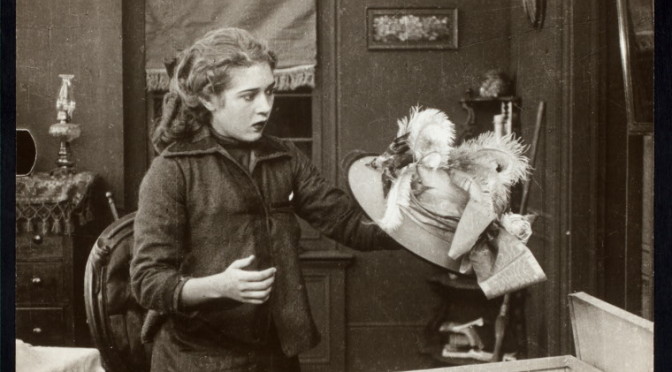
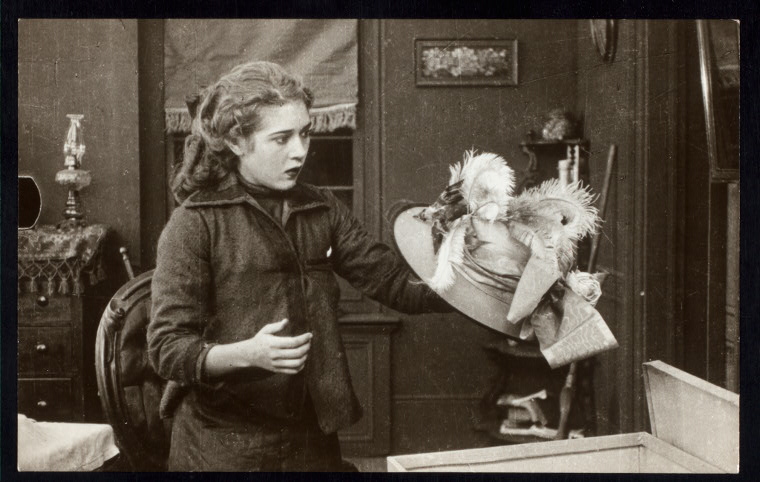
Fashion weak: Mary Pickford finds millinery mischief in the 1912 feature ‘The New York Hat’, a Biograph film by D.W. Griffith.

This was an especially unusual show to arrange and represents a closely cultivated tour through New York City’s early film history.

But early movie studios spread beyond New York’s borders. Most notably, Fort Lee, NJ, became as active as New York in the 1910s, especially as the sophistication of filming processes allowed more productions to be shot outdoors and long running times meant story lines with multiple sets. D.W. Griffith’s first film, Rescued From An Eagles Nest, for Edison, was shot on the Fort Lee Palisades. But this wasn’t his directorial debut; he was the star of that film.


Soon all the major studios would have locations in Fort Lee and other places along the New Jersey coast. You can find more information on Fort Lee’s contributions to cinema at the Fort Lee Film Commission.

We had to cut off our coverage of New York’s film history at the early 1920s, or else it would have been an endless show, and one of us would have collapsed in exhaustion! But obviously we plan to pick up the topic again from this point in a later show.

One note of clarification: I mention that Fox ‘got his start’ in Staten Island. I meant to state that Fox would get his start in film production in Staten Island; indeed, in 1914, the ambitious film distributor began his very own studio and began making movies from his three small studios in Fort Lee, Jersey City, NJ, and a place called Scott’s Farm, in the neighborhood of Grasmere, Staten Island. Within a year, that studio would be named Fox Film Corporation and move out to Los Angeles. Less than twenty years later, weakened by debt, Fox merged with Twentieth Century Pictures to form Twentieth Century-Fox (yes, with a hyphen, which was later dropped).

Places To Visit:
Your first stop should be the Museum of the Moving Image in Astoria, Queens, to check out their displays of early film productions. Next door is the Kaufman Astoria Studios, New York’s oldest and still active movie studio. According to their website, there are no tours. But the famous studio commissary in the basement has been turned into a swanky restaurant and lounge.

Edison’s laboratory in West Orange, NJ, is definitely worth the trip, and not just to see the replica of the Black Maria. The National Park Services operates the Thomas Edison National Historical Park with tours of the laboratory complex and the Edison home Glenmont, where the inventor himself is buried.

Tom mentioned that Edison’s first demonstration of his kinetoscope — and its first film ‘Blacksmithing Scene’ — was exhibited as the Brooklyn Institute of Arts and Sciences on May 9, 1893. That organization was the forerunner to the Brooklyn Museum.

We planted a few specific addresses in the podcast for you to search out during one of your wandering adventures through the city. See if you can find the plaque at Macy’s honoring the theater that once stood there, Koster and Bial’s Music Hall, and occasion of the debut of Edison’s Vitascope. One of the first modern movie houses, the Regent Theatre in Harlem, is still around, but it’s no longer a theater. It’s owned by the First Corinthian Baptist Church.

Other Sources:
For a clearer picture of early film history, you should supplement this podcast with the first three parts of the TCM documentary Moguls and Movie Stars, their mini-series on the history of the movies. The best place find some of these very early films is the Library of Congress, which includes a wonderful page on early on-location pictures, The Life of a City: Early Films of New York 1898-1906.

Richard Koszarski’s extensive survey of the region’s contribution to the movies, ‘Hollywood On The Hudson‘, essentially starts where we leave off. David Robinson’s ‘From Peep Show To Palace’, with an introduction by Martin Scorsese, puts New York’s role into international context. You can also check out Paul Clee’s ‘Before Hollywood: From Shadow Play To Silver Screen‘.

Brooklyn invents the movie magazine, a century ago

The Motion Picture Story Magazine, the first American magazine devoted exclusively to motion pictures, released its first issue one hundred years ago this month.

The deluge of movie periodicals that would debut afterwards would help define Hollywood movie stars, foster their fan bases, promote studio films and sculpt the mythology of film history. And it all began from a tiny magazine produced in Brooklyn, at 175 Duffield Street, to be exact.

The magazine wasn’t entirely born without ulterior motive. It was produced by two partners, one of which, John Stuart Blackton, was the head of the young Vitograph Studios. Blackton, a former news reporter turned early film mogul, produced and even starred in pictures filmed from the Vitagraph rooftop soundstage at 140 Nassau Street in Manhattan.

By 1906, Blackton had a Brooklyn location in mind and moved there — Avenue A and East 15th Street in Midwood, to be exact.

Blackton didn’t produce the magazine as a mere mouthpiece for his studio, but to help promote the entire industry. In fact, the cover of the first issue, from February 1911, featured not a movie star, but the man most influential to the entire business at the time — Thomas Edison. The New Jersey inventor who had launched the film industry with his Kinetescope had given Blackton a tour of his Black Maria studio in West Orange, NJ, which inspired him and his business partner Albert E. Smith to later form the rival film studio.

Edison’s appearance was a nod to his influence. Not to mention that Vitagraph was also a partner in Edison’s Motion Picture Patents Company, a trust that kept the young movie industry under the monopolistic control of a few companies.

As the title hints, the Motion Picture Story Magazine reiterated the storylines of several movies of the day. Considering this was early in the silent era — with few title cards and no film over 20 minutes long — the magazine used writers to flesh out the stories. In essence, the descriptions would have enhanced the story, and few would have considered the articles as ‘spoiling’ the action.


More importantly, the magazine also featured photographs from the films themselves. And in a greater innovation, some of the stars themselves would be featured in closeup, full-page portfolios. This swiftly became the most popular part of the magazine as actors became name movie stars that audiences began seeking out.

It didn’t just provide pretty pictures. The magazine soon began playing along with the film studios, reinforcing the images studio head wished to convey of their early film stars. Motion Picture Story Magazine was more a precursor to a polish-and-shill, People Magazine-style publication than it was to a gossip rag or a serious film journal.

At left: The December 1912 issue, featuring a still from the long forgotten film The Kerry Gow

The magazines would be sold at nickelodeons and movie theaters around the country. To get a sense of what a typical issue would look like the Internet Archive has a copy of the December 1912 that you can read online and even download. (You can find it here.) The issue is stuffed with portraits of current stars, several story descriptions, and lots of early industry ads, most from movie businesses based in New York.

By 1914, the magazine changed its named to simply Motion Picture Magazine and moved its offices to 26 Court Street, across the street from old Brooklyn City Hall. A whole crop of movie magazines had debuted as a result of Motion Picture‘s success, including the Chicago-based Photoplay Magazine. And Variety, a weekly tabloid launched in Manhattan in 1905 that reported on the vaudeville industry, had greatly expanded its film coverage over the years. (It had made film history years before, publishing in 1907 the first movie review.)

The principal driver of the magazine’s content seems to have been Blackton’s original partner, Eugene Valentine Brewster, a rather colorful character himself. Brewster was a lawyer, politician and occasional film director who left his wife (after a messy divorce) for film star Corliss Palmer. Eugene has flaunted his affair with the actress in front of his wife, even inviting Palmer to live in the couple’s Long Island home “on account of the work in which they were engaged in.” Mrs Brewster received payback, not only from her now ex-husband, but in the form of a successful damage lawsuit against Palmer herself.

At left: Eugene Brewster with Corliss Palmer

Spicy Bit, My Own Brucie and other odd Best In Show dog names


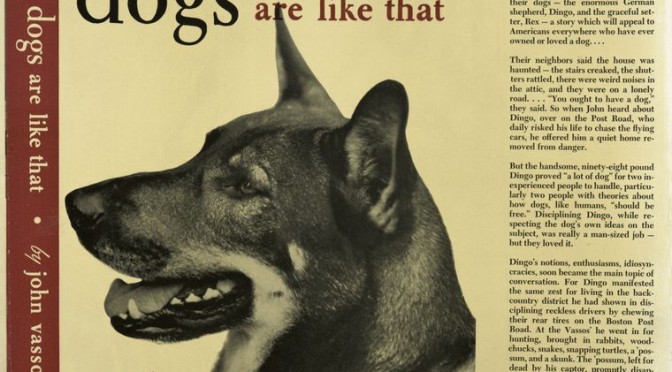
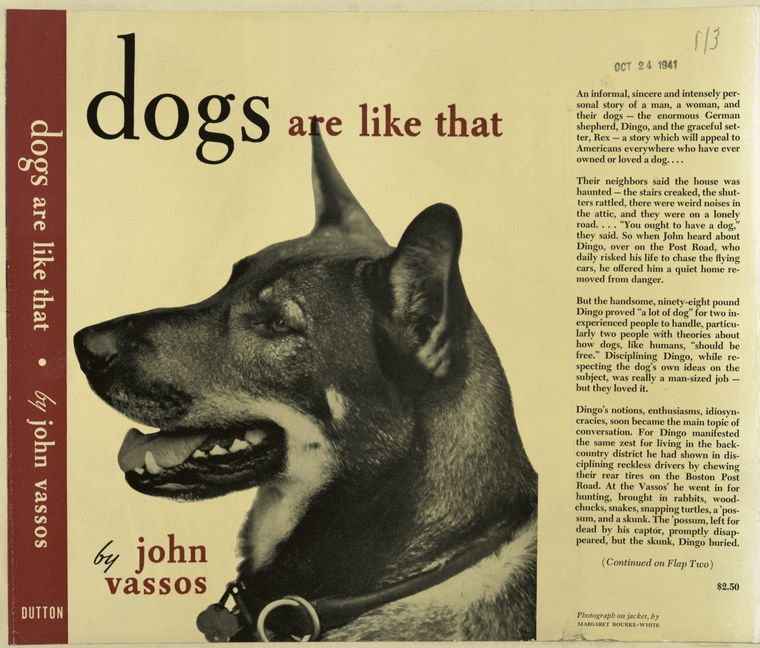
Yes, they are: from a book by noted New York graphic designer and dog breeder John Vassos. [source]

Hickory, the winner of last night’s Westminster Kennel Club dog show, might seem to embody a refreshing return to normalcy when it comes to dog names. In fact, the deerhound’s full name is a bit more exotic — Foxcliffe Hickory Wind.

When I was kid, I had dogs named Snoopy, Max and Dutch. Clearly, these common, pedestrian names would never have got these pets into the storied Westminster Kennel Club dog show, where the finest of animals are given the most extraordinary and absurd names.

The Westminster show seems like it might have connections to the British Isles, but in fact the annual canine carnival got its start in New York City in December 1877, amongst a group of wealthy sportsmen who gathered at the Westminster Hotel. An old train shed owned by musician Patrick Gilmore (and formerly run by P.T. Barnum) became their first home. When it changed owners and its name — to Madison Square Garden — the dogs and the purple ribbons remained, tagging along through the Garden’s various locations.

Below: St. Bernards on display at the Westminster show in 1908. No representative of that breed has ever won Best In Show, but they’ve gotten close many times.

Thousands of dogs have graced the competition floor, sparring for group prizes and the coveted Best In Show. For some reason, these prized dogs are given wildly strange, humorous or even mysterious names. These are not rock stars, action heroes or drag queens; they are Westminster’s Best In Show. Amongst the hundreds of victories won at Madison Square Garden over the years in a variety of sports, these are some of my favorites of the most unusually named winners in its history:

1907-09: Warren Remedy — I wrote about this dog last year, a female fox terrier from New Jersey who won three years in a row, “the fantastic bitch whose major achievement has yet to be duplicated.

1910 Sabine Rarebit — Animals were frequently referred to by the kennel in which they were raised. The first male winner came from Sabine Kennels in Orange, Texas.

1911 Tickle-Em-Jock — Not every dog went the dignified route. This terrier was a butcher’s dog in London and was literally scouted out by an English dog breeder. No word on whether he barked with a cockney accent.

1917, 1920 Wycollar Boy — The most extraordinary comeback in the dog world, this terrier crawled back to the winner’s circle three years after his first win, at a relatively old six years of age.

1922 Barkentine — Named for a type of ship but sounds like a Westminster pun.

1924 Bootlegger — In the age of Prohibition, Bootlegger really did beat out other dogs named Home Brew and Tom Collins.

1925 Governor Moscow — From Pittsburgh, not Moscow, he was the first Pointer to win in the history of the show.
1934 Spicy Bit — Lived up to her name when, after her victory, “she slipped her leash and frisked across the ring as saucily as though her name were Gyp.” [Time]

1940, 1941 My Own Brucie — With war ensuing, people clung to their pets ever tighter. Thus, Brucie, a ‘silky cocker spaniel’, was proclaimed as the most popular dog in America by Time Magazine.

1951 Bang Away of Sirrah Crest — The most influential boxer in the history of dogs (if breeding websites are to be believed), Bang Away won a total of 121 Best in Shows worldwide and even caused a small riot at the one show he lost. The judge that delivered that negative verdict was permanently banned from the Kennel Club.

1965 Carmichael’s Fanfare — But for some reason, the Scottish terrier’s nickname was ‘Mamie’.

1975 Sir Lancelot of Barvan — A lovely sheepdog, Sir Lancelot made the cover of Sports Illustrated after his win: ‘Big Itch In the Dog World’

1987 Covy Tucker Hill’s Manhattan — Despite the name, the Westminster’s first German Shepherd winner and the ‘winningest German Shepherd in history’ has a Long Island owner, and the Covy Tucker Hill Kennel is in California.

1999 Supernatural Being — A tiny, successful Papillon along the dog circuit, his official name is actually quite average compared to his parents (Supercharger and Denzel Fortuneteller). Supernatural Being would also answer to ‘Kirby’.

Thanks to William Stifel’s ‘The Dog Show: 125 of Westminster’ for some of the info.

Auf Wiedersehen to a well-travelled World’s Fair original


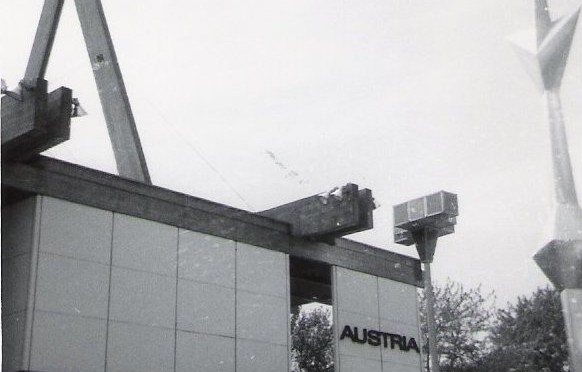
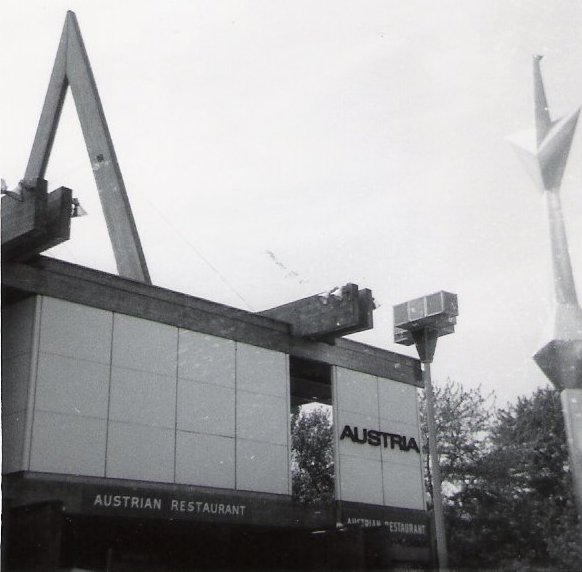
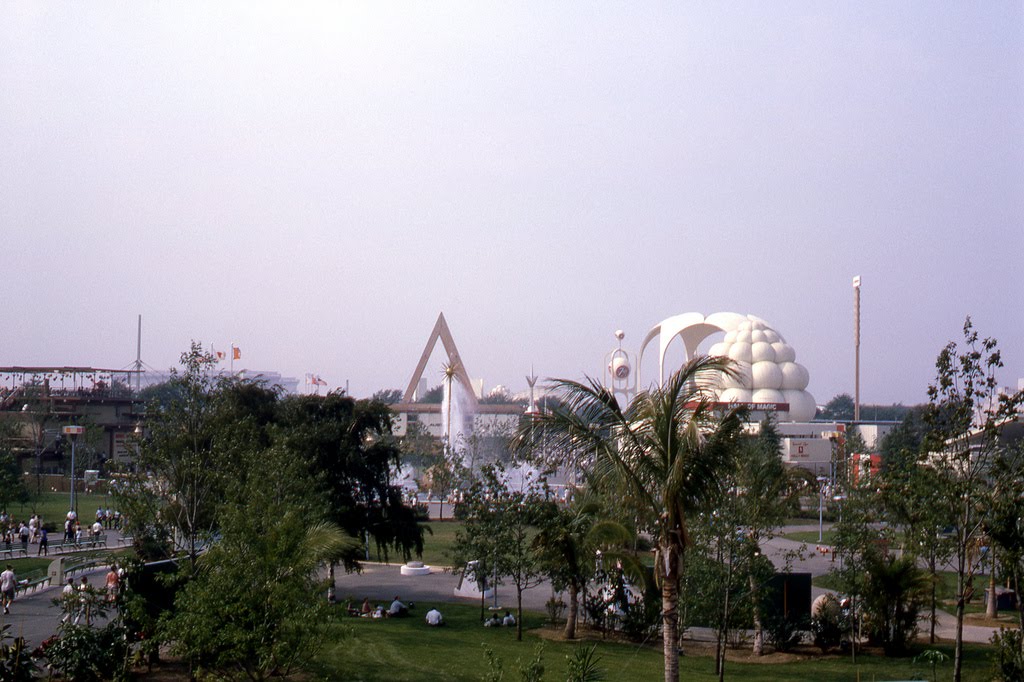
In 1965, at the completion of the World’s Fair in Flushing-Meadows, many components like fountains, sculptures, lighting features and even whole pavilions were moved to other areas of the world. Most famously, the ‘It’s A Small World’ collection of animatronics made their way west to Disneyland. The Spanish pavilion moved to St. Louis and became a hotel. Parts of the New England pavilion decorated a shopping mall in Danbury, Mass.

But the Austrian pavilion seemed to win the prize for best post-fair afterlife. The entire structure was moved to a ski resort in western New York, where its unusual angular design seemed to fit quite nicely as a remote, snow-covered lodge. The Cockaigne Ski Resort paid just $3,000 for the used building, but spent a great deal more (nearly $200,000!) to transfer it almost 400 miles to its new home.

Unfortunately, the great, kitschy lodge was destroyed in a fire a couple weeks ago. Images taken in the smoldering aftermath don’t look pretty. The signature angle is completely gone. [Click here to see video of the blaze.]

According to a dedication booklet from the fair, the pavilion’s unusual triangle shape bear a symbolic purpose, “to symbolize Austria as a land of mountains and tourism, and constructed of wood to symbolize the richness of the timber and industry.” I’ll bet they’re really regretting that wood construction now!

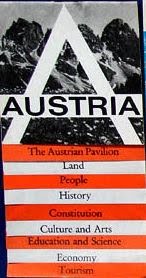
You would have received the brochure to the right upon entering.

The pavilion was always closely tied to the skiing industry; in fact Austrian-made ski products were displayed inside during the Fair’s duration, serenaded by classical music from Austrian composers. And then there’s this, according Jeffrey Stanton’s excellent World’s Fair website Westland: “Beneath the pavilion were other contemporary sculptures and a large photographic exhibit of the SOS Children’s Villages, which were settlements for homeless children.”

Below: the Austrian pavilion prominently sticks out on the strange World’s Fair skyline. (epicharmus/Flickr)

Categories
Know Your Mayors

Where are New York’s mayors buried? An (almost) complete list

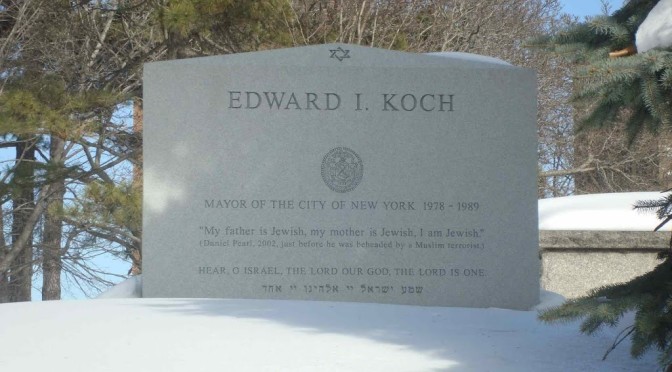
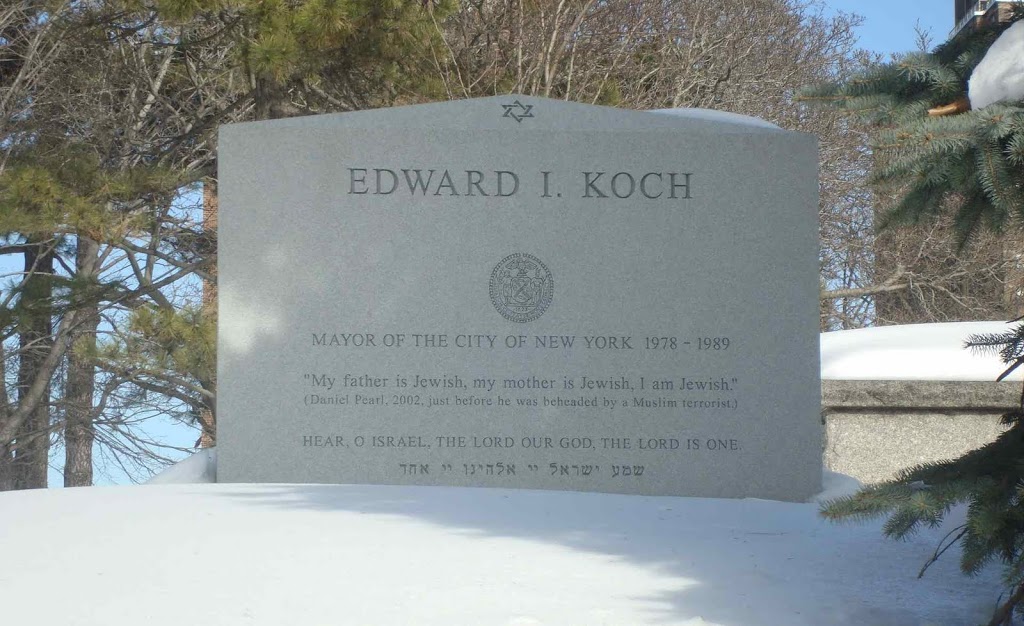
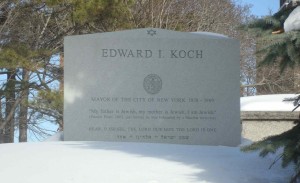
Koch’s tombstone, bearing the inscription: “‘My father is Jewish, my mother is Jewish, I am Jewish.’ (Daniel Pearl, 2002, just before he was beheaded by a Muslim terrorist.)”

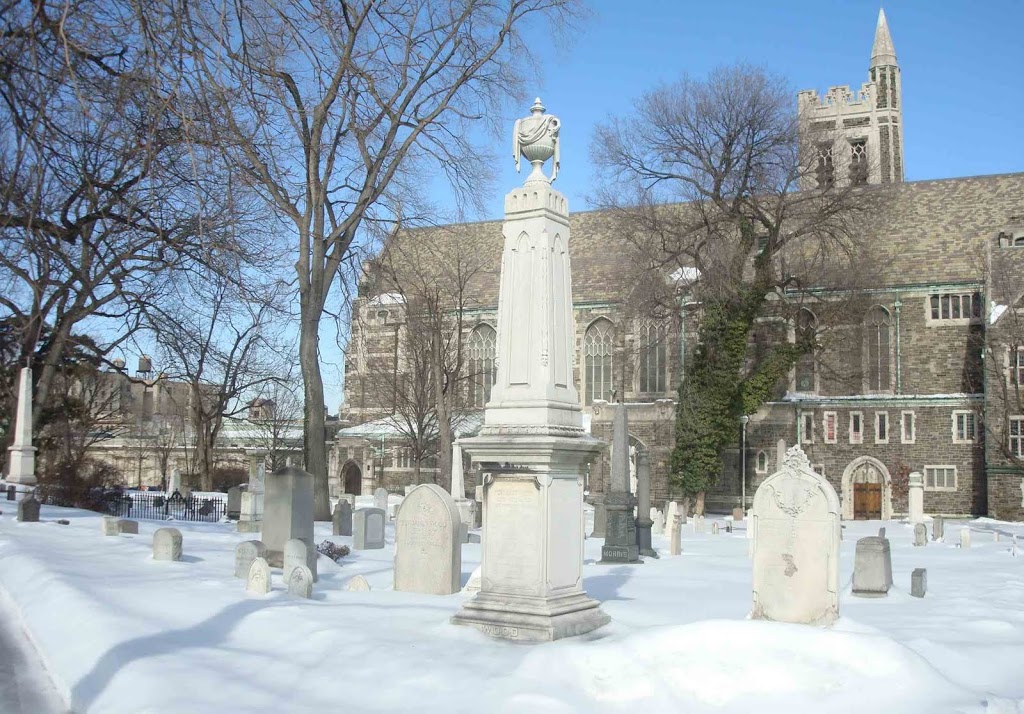
Ed Koch likes to get a jump on things. The former mayor, who served as mayor of New York City from 1978 to 1989, went ahead a couple years ago and got himself a plot and a gravestone all arranged at the uptown Trinity Church Cemetery. You can actually visit his grave there and pay your pre-final respects.

He recently recounted his decision for the Huffington Post [What’s On My Tombstone, and Why], and it got me wondering if any other mayors were already buried at Trinity. (There’s two.) That soon developed into an investigation into how many former New York mayors are still buried in Manhattan. (Answer: seven so far.) Which then led to the following admittedly macabre project before you:

Here is a near-complete list of final resting places of (almost) all the mayors of New York City, from 1783 to present, a catalog of the various cemeteries and burial grounds where these former leaders of the city have been entombed, buried or otherwise interred.

Okay, I recognize I’ve gotten a little morbid on the blog recently (what with this and this, for instance), but this survey shouldn’t bum you out. The results of this little scavenger hunt actually say much about the priorities of New Yorkers past, the co-mingling of high society and politics and the rise and fall of egotism and pomp in the celebration of famous figures.

Most all these burial places are within a reasonable traveling distance of the city. Even the men who became mayors in the city’s early days were often tied to the region by familial connections. The one who went the most far afield (Edward Livingston, who made his reputation in Louisiana) came back to his family estate in Rhinebeck at the end of his life.

Only a handful (like Livingston and Dewitt Clinton) ever held a political position more powerful than mayor. Even when they were mayors, many weren’t very powerful at all, mere figureheads of strong political machines. Their business connections made some quite rich and internationally successful. But in the end, most came back to New York or the surrounding region.

I should preface by saying that I did not include any British appointed mayors from before the Revolutionary War. New York really became a new city on Evacuation Day 1783 when the British left the harbor, and the city’s leaders faced fresh challenges as an American port. It truly was a city anew when the first post-British mayor (James Duane) took office.

And practically speaking, it’s difficult to trace the final destinations of mayoral appointees from that far back anyway. Many left the colonies after their tenure. For instance, the British appointed mayor David Matthews, presiding over the city during the entire war (1776-1783), is buried somewhere in Canada, probably Nova Scotia.

There are four mayors I was not able to locate. I list those at the bottom of this post. Some of this data comes from single sources and thus, as with any crush of information like this one, if you see any errors, please email me or send me a comment. I will continue to update this as I discover more information.
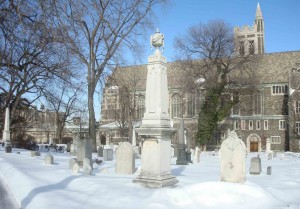

Above: A mighty obelisk to Fernando Wood, a man who once said, “The Almighty has fixed the distinction of the races; the Almighty has made the black man inferior, and sir, by no legislation, by no partisan success, by no revolution, by no military power, can you wipe out this distinction.”

MANHATTAN
Dear ole Ed Koch will have some unique companions at
the Trinity Church Cemetery at West 153rd Street, sharing the location with two of New York’s most notorious office holders of all time. Fernando Wood (mayor from 1858-1858 and 1860-62), who famously recommended that the city secede with the South, is interred here, as is ‘Boss’ Tweed’s most elegant right-hand man, Abraham Oakey Hall (1869-1872). Nice company, Ed!

Downtown Manhattan cemeteries keep a few mayors around as well. In the East Village, at the New York Marble Cemetery, the “oldest public non-sectarian cemetery” in the city, you’ll find the remains of Whig representative Aaron Clark (1837-39), while the man who succeeded him as mayor, Isaac Varian, (1839-1841), resides down the street at its similarly named cousin, the New York City Marble Cemetery, along with sailmaker-mayor Stephen Allen (1821-24).

Philip Hone, known more for his observant diaries on New York than for his mayoralty (1826-27), gets a treasured spot at St.Marks-On-The-Bowery, entombed close to the vault of fabulous New Amsterdam tyrant-leader Peter Stuyvesant.

Finally, Trinity’s original churchyard at Wall Street and Broadway — the final home to Alexander Hamilton, Albert Gallatin and Robert Fulton, among others — has one New York mayor among its population: the Revolutionary War hero Marinus Willett (1807-1808). The stone marking his vault, the size of a brick, is quite easy to miss.

BROOKLYN
To the surprise of few, the place which hosts the most deceased New York mayors is
Green-Wood Cemetery, which became the burial place of choice for the upper class in the mid-19th century. But when it first opened in 1838, Brooklyn still felt a bit too bucolic for some. Other families shied from its less than sacred credentials. After all, Green-Wood would become a place for a picnic or a nice stroll on a summer’s day; more pious folk preferred the reverence of a church yard.
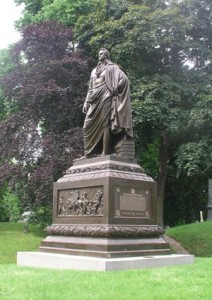
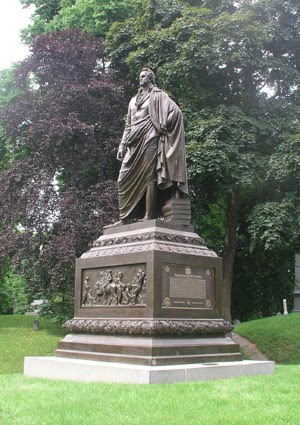
That is, until the body of former New York governor DeWitt Clinton (and mayor of New York from various periods: 1803-1807, 1808-1810, 1811-1815) was transferred from his resting place upstate to Green-Wood. Now a bonafide celebrity lay here: a child of the Founding Fathers’ generation and the driving force behind the Erie Canal. Society felt comfortable leaving their loved ones next to such a charming man for eternity. (Right: Clinton’s monument.)

A host of lesser mayors soon joined Clinton here. First came Andrew Mickle (1846-1847) and the anti-Irish mayor James Harper (1844-45), founder of a publishing empire.

Back-to-back mayors Ambrose Kingsland (1851-53) and shipping magnate Jacob Aaron Westervelt (1853-55) came along in the 1870s. Charles Godfrey Gunther (1864-65), the inspiration for the shortlived Brooklyn neighborhood Guntherville, is buried close to his more famous contemporary, publisher and reformer Horace Greeley.

The close ties between the Cooper and the Hewitt families remains even after death; you’ll find Peter Cooper’s son Edward Cooper (mayor from 1879-80) next to his brother-in-law and early subway proponent Abram Hewitt, the man who beat Theodore Roosevelt to become mayor from 1887-88. Both men were certainly acquainted with another Green-Wood resident, Seth Low, who was mayor of Brooklyn during Cooper’s tenure and eventually the mayor of the consolidated New York City in 1903-4.

Finally, the mayor who survived an assassin’s bullet to the throat, William Jay Gaynor (1910-13), has an odd marker in Green-Wood, according to the cemetery’s website, “a large open granite circle, on the ground. It is a variation on the Victorian symbol for eternity–a globe or circle that has no beginning and no end.”

Brooklyn is the borough with the most deceased New York mayors. And I’m not even counting Brooklyn’s own mayors, from before the 1898 consolidation*! You can find two more in Flatbush at the Catholic Holy Cross Cemetery. I imagine they’re very honored to have New York’s very first Irish Catholic mayor, the business savvy William Russell Grace (1880-82 and 1885-86), as well as the Col. Ardolph Loges Kline, the man who served briefly (a little more than three months in 1914) after Gaynor succumbed from his long-festering bullet wound.

*Brooklyn’s first mayor, George Hall, is buried at Green-Wood, as are several others.

BRONX
Woodlawn Cemetery was developed over 30 years after Green-Wood, but a great many wealthy and well-connected New Yorkers preferred its serene and pastoral setting. It’s the final home for businessmen (Rowland H. Macy), moguls (Jay Gould), authors (Herman Melville) and musicians (Miles Davis). And more than a few mayors.

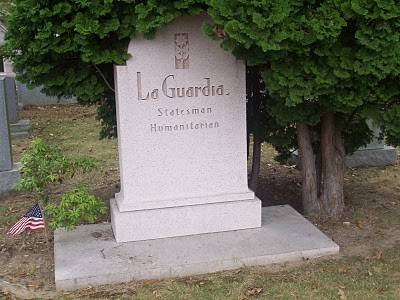
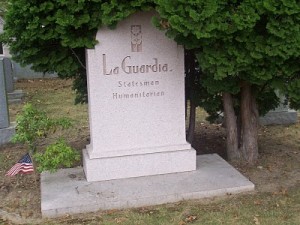
The man sometimes considered the greatest mayor of all, Fiorello LaGuardia (1934-45), is buried here with a modest tombstone hidden under a bush. It makes a striking statement compared to the elaborate and monolithic vaults scattered around it.

Woodlawn also has the unique distinction of containing the burial of Robert Van Wyck (1898-1901), the first mayor of the five-borough New York area. And the last two mayors of pre-consolidated New York (when it was just Manhattan and a few areas of the Bronx) are also around here: the “striking looking” pro-Tammany Thomas Gilroy (1893-94) and stern, anti-Tammany William Strong (1895-97), best known for hiring Theodore Roosevelt as police commissioner.

There are 19th century industrialists galore at Woodlawn, so it’s no surprise to discover Williamsburgh sugar king and three-time New York mayor William Havemeyer (1845-46, 1848-9) here, as is the man who served between Havemeyer’s two terms, William Brady (1847-48).
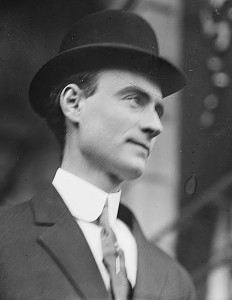

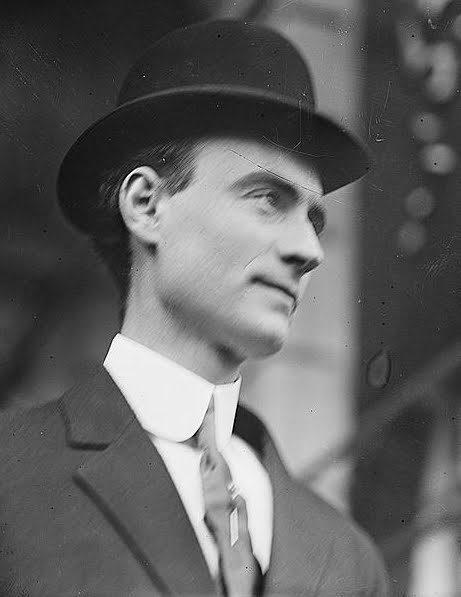
Finally, no visit to this quiet outlet in the Bronx is complete without searching out the ‘boy mayor’ John Purroy Mitchel (1914-17), an enigmatic figure in New York political history, who became mayor at age 35 and tragically fell out of a plane during military training before his 39th birthday. He’s also honored with an unusual gold bust in Central Park near the reservoir. (At left: Mitchel as mayor)

Mitchel’s stone has the curious inscription: “May His angels lead thee into paradise, which is thy home, for in Israel there is corruption.”

Further south from Woodlawn you’ll find Robert Morris** (1841-1844), a member of the famous Morris clan (as in Gouverneur Morris), buried in the family plot at St. Ann’s Episcopal Church in Mott Haven, the oldest church in the Bronx.

**This is something I need to confirm. Morris’ wife Ann Eliza Morris is buried at Green-Wood. There is a Robert Morris buried nearby, but the date of death does not match the former mayor’s.

QUEENS
Calvary Cemetery in Woodside, Queens, is closely tied to the parishioners of Old St. Patrick’s in Manhattan, who purchased a bit of farmland out in Queens County in 1846 to bury members of its large Irish congregation. In the last century, it was made famous for its afterworld connections to organized crime, both real (many famous mafioso are interred here) and imagined (it’s in The Godfather).

Two very different mayors are interred here, both born in Manhattan and both closely aligned with Tammany Hall: New York’s youngest mayor ever, Hugh J. Grant (1889-92), and Robert Wagner Jr. (1954-65).

Go a little ways east to Middle Village and to another Catholic grave site, St. John’s Cemetery, where you’ll find John F. Hylan (1918-25), a man of the railroad world who was pivotal in the creation of the IND, the first rapid transit line wholly owned and operated by the city.

Three other early 19th century mayors from well connected families are found in surrounding neighborhoods. At the small, colonial Grace Church Cemetery in Jamaica, meet up with good ole Cadwallader D. Colden (1818-21) next to a signer of the Constitution (Rufus King). Walter Bowne (1829-33), with deep family connections to the area, is buried at Flushing Cemetery, east of the home of his Quaker ancestor John Bowne.

But the most mysterious site is in Bayside. Here, at a small, sparsely wooded grave site, you can find a cluster of tombstones, many with the same name. The Lawrence Cemetery is on land owned by the family since the Dutch era. A small, bare obelisk marks the place where Cornelius Lawrence (1834-37) lays. He’s the first man every popularly elected mayor; before Lawrence, the job was appointed or voted on only by the Common (City) Council.

LONG ISLAND
Beyond the borders of the city and along the north shore of Long Island, you can locate a few other resting places of past city leaders. From west to east we have:
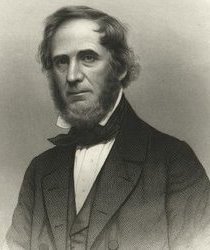
Daniel F. Tiemann (1858-60), “the paint king of New York and a member of the Peter Cooper clan by way of marrying Peter’s niece, is not buried in Green-Wood with the rest of Cooper/Hewitt dynasty. Instead you can find him in the old village of Hempstead, at Greenfield Cemetery. However I’ve not yet figured out why he would be interred all the way out here. (Tiemann at right)

John Lindsay, the ‘fun’ dashing, ambitious and often controversial mayor from 1966-1972, rests along a winding road near Cold Spring Harbor, in a small rustic cemetery near St. John’s Church.

William H. Wickham (1875-76), an anti-Tweed Democrat and an early president of the formative New York Fire Department, was born in Smithtown and was returned for burial there in the town’s small and very lovely cemetery.

Caleb Smith Woodhull (1949-51), who ineffectively looked on during the Astor Place Riots, was a landowner in Miller Place on the north shore and is buried nearby at Ceder Hill Cemetery overlooking the fantastic Port Jefferson. Fun fact: a member of the local historical society dressed as Mr. Woodhull during the burial ground’s 150th anniversary last year. [There’s even a picture!]

UPSTATE
A large number of former statesmen are scattered throughout the state, with a large concentration in the Hudson River Valley, close to the modern borders of the city.

For afficianados of Prohibition era politics, look no further than the Gate of Heaven Cemetery in Westchester Country, which opened in 1917 and quickly attracted some big name interments. One of the first was that of actress Anna Held, former companion of Florenz Ziegfeld. Other iconic New Yorkers like Babe Ruth, James Cagney and Conde Nast are also here.

Jimmy Walker (1926-1932), the posh ‘Beau James’ and symbol of New York’s roaring ’20s, died in 1946 several years after resigning from politics due to corruption charges. He’s buried at Gate of Heaven under a tombstone he might have considered far too modest. Coincidentally, the two men who briefly filled the mayors seat after him, Joseph McKee (1932) and John O’Brien (1933), also followed him here.

Sleepy Hollow contains one of the oldest cemeteries in the country, the rustic Old Dutch Burying Ground, and within it, one mayor of New York, the brigadier general William Paulding Jr. (two terms 1825-26, 1827-29), who fought in the War of 1812. A short drive north is the lovely riverside town of Ossining and its 160-year old Dale Cemetery, the final home for former mayor and governor John Hoffman (1866-68), whose close associations with the Tweed Ring corroded his political career.

Due north, in Rhinebeck, you’ll find the family vaults of the Livingston family, including that of Edward Livingston (1801-03), who reinvented himself after his tenure, becoming the U.S. Secretary of State under Andrew Jackson.

Other old mayors buried throughout the state include leather-maker Gideon Lee (1833-34) in Geneva, NY; Tammany pawn John Ferguson (1815) in Sullivan, NY; and father of the Bronx park system Franklin Edson (1883-84) in Menands, NY, near Albany.

Finally, New York’s first post-British mayor, James Duane (1784-89), the namesake of Duane Street, also gave his name to an entire town, Duanesburg, near Schenectady. Duane had hoped the town would become New York’s capital city, before Albany was chosen in 1797 (the year Duane died). Appropriately, he is interred here, at the rustic, old Christ Episcopal Church.
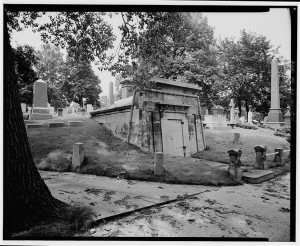
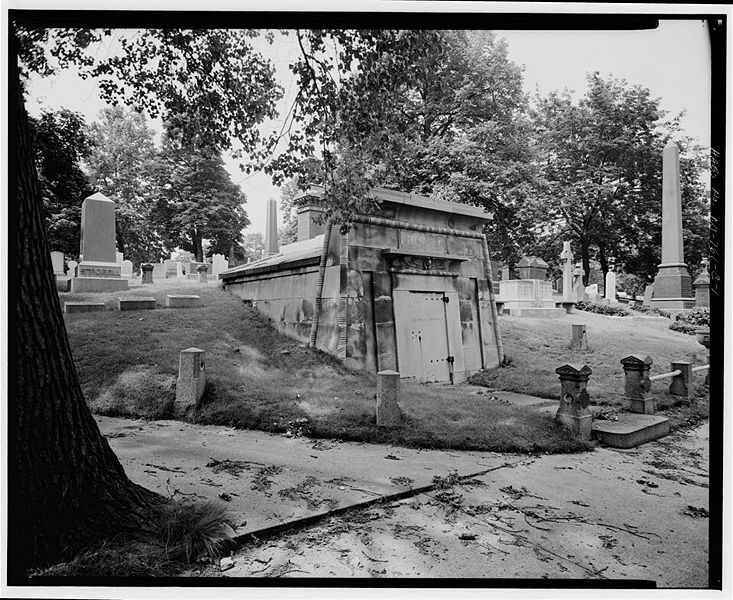
Above: the vault of George Opdyke, in Newark, NJ

OUT OF STATE
Finally, at least six former mayors are buried out of state but remain a short trainride away. For instance, the Sicilian-born Vincent Impellitteri (1950-53), moved to Connecticut after his tenure and is buried in a Catholic cemetery in Derby (Mount St. Peters).

In New Jersey, you’ll find the vault of Civil War mayor George Opdyke (1862-63) at Mt. Pleasant Cemetery in Newark, and the unsuspecting former aide to Benedict Arnold and long-lasting mayoral figure Richard Varick (1789-1801) at the historic First Reformed Dutch Church burial ground in Hackensack.

The slight figure of Smith Ely Jr., may have been New York mayor from 1877-78, but he’s New Jersey born, and he died there one hundred years ago, in 1911. Ely ruled the city the year Boss Tweed died, and he famously refused to lower the flags to half-mast for the Tammany Hall trouble maker. The former mayor and commissioner of Central Park is buried under an imposing monument on his family’s estate, now the Ely Cemetery, in Livingston, NJ.

And finally, we come to two men whose final resting place is the furthest from the city, but its location is an honor indeed — Arlington National Cemetery. William O’Dwyer (1946-1950), actually ran for New York mayor in 1941. When he lost to LaGuardia, he enlisted in the army, becoming a brigadier general, thus making him eligible for burial at Arlington. (I guess they overlooked all that nastiness about his alleged mafia connections.)

George McClellan (1904-09) ruled the roost during the height of New York’s gilded era and was there — literally driving the train — at the opening of the New York subway in 1904. George never fought in any wars, but his father George B. McClellan sure did. And it’s that connection that puts him in the most prestigious cemetery in America.

AND STILL LOOKING FOR….
There are a few that I was unable to locate, and if you have any information regarding any of them, just leave me a note below and I’ll update this article. I’m afraid I may never find the locations of lesser figures like either
Thomas Coman (1868) and Samuel B.H. Vance (1874). Coincidentally, both men were interim mayors, serving only one month apiece.

But two full-term mayors have eluded me as well. One is Jacob Radcliff (1810-11, 1815-18), one of the first true Tammany Hall puppets. And believe it or not, information regarding the location of New York’s first Jewish mayor Abraham Beame (1974-77), who just died in 2001, escapes me.

MAP IT!
I’ve put most of the locations above on a Google map. Most markers are approximate and in the case of some small towns, I’ve placed the marker in town center instead of the cemetery in questions — sometimes hard to find in a satellite view.

View Burial sites of New York City mayors in a larger map

You’ve come a long way, baby! But now it’s over. Extinguishing 102 years of women’s public smoking rights

Write that man a ticket! This rebel might have had a different cause had he been at yesterday’s New York city council meeting.

The big news in the city yesterday was the massive smoking ban passed by the City Council that prohibits smoking in public places like Times Square and Central Park, a total of “1,700 parks and 14 miles of public beaches plus boardwalks, marinas and pedestrian plazas” in the city. [source]

Mark Twain, Humphrey Bogart and Fiorello La Guardia must surely be rolling in their graves today. This represents the most far-reaching ban on smoking that New York gentlemen have ever had to face.

New York ladies who smoke, on the other hand, have been down this path before. In fact, the new ban caps a period of roughly over 100 years of public smoking freedoms. Women who light up have been punished for it before.

Men have been legally allowed to smoke mostly where they like for much of the city’s history, and anybody who tried to stop them was met with resistance. Director-general Williem Kieft tried to outlaw the practice in New Amsterdam in the 1640s. As Washington Irving once colorfully described it: “He began forthwith to rail at tobacco as a noxious, nauseous weed, filthy in all its uses; and as to smoking, he denounced it as a heavy tax upon the public pocket, a vast consumer of time, a great encourager of idleness, and a deadly bane to the prosperity and morals of the people.” But nobody was going to give up their tobacco, and Kieft backed off.

Below: Smoking in some sizzling swimwear, on a public beach, which in New York, will now get them arrested.

Smoking was a sign of prosperity in Gilded Age New York, the most common activity within the corridors of New York’s finest social clubs. Public transport was off limits, of course, but that didn’t stop everybody. (Lighting up a cigar in a streetcar, for instance, would earn you a hefty fine.) Posh restaurants in the late 19th century often required men to smoke in separate rooms. But with the rise of lobster palaces like Rector’s — rollicking, casual restaurants with a festive atmosphere — older restaurants like Delmonico’s had to loosen their policies.

Eventually men were allowed to smoke in the dining rooms. And sometimes, women would light up too, though such flagrant social rebellion was often met with polite shock. Places like the Plaza Hotel and Delmonico’s would put folding screens in front of tables that sat such bold women. It wasn’t the smoke itself that scandalized patrons. It was the sight of ladies enjoying such a male pastime. (Perhaps they should have done more; at least two members of the Delmonico clan died of smoking related illnesses.)

The sight of a woman enjoying a good cigarette flew in the face of proper etiquette, thus becoming a handy display of rebellion in a age when women were fighting for other rights, most notably the right to vote. From Meta Lander’s 1888 book-length tirade called ‘The Tobacco Problem’ :”On a crowded boat, between New York and Boston, a lady (?) passenger, unable to sleep, rose at three, virtuously mended her gloves, and then, O shade of Minerva! leaning back in her arm-chair, gave herself up to a cigarette; while, stretched on mattresses around her, many looked on with undisguised amazement and disgust.”

Indecent? Or independence? The debate came to a head in 1908 when, for two weeks at least, it was actually illegal for women to smoke in public. ‘NO PUBLIC SMOKING BY WOMEN NOW’ read the New York Times on January 21, 1908. “Will the Ladies Rebel? As the Ladies of New Amsterdam Did When Peter Stuyvesant Ordered Them To Wear Broad Flounces?”

The mayor, George McClellan, quickly revoked the unpopular law. Twelve years later, women would have the right to vote and the freedom to smoke. (But not to raise a toast; alcohol was prohibited by 1920.)

Smoking went relatively unabated until the 1989 Clean Indoor Air Act dictated that restaurants set aside “70 percent of the seating capacity as a nonsmoking area” and to designate a smoking section. Further restriction, such as the statewide ban from March 2003, eliminated smoking from restaurants and bars entirely.

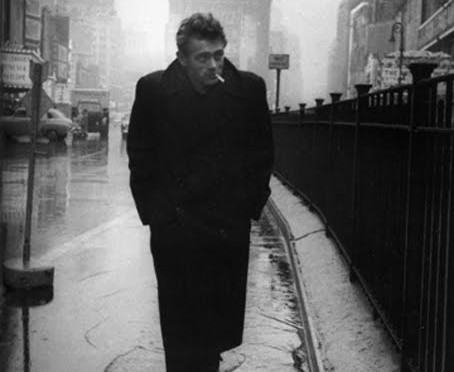
This new law seriously undermines decades of accomplishments by beatniks, poets, film noir icons, jazz musicians and gang members who have worked tirelessly to make smoking cool.** James Dean, we have betrayed you!

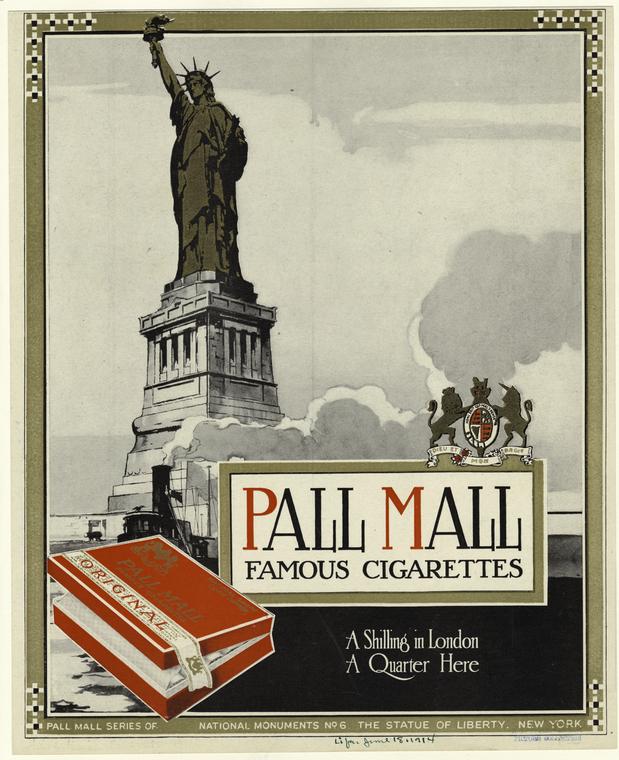
Above: a 1914 Pall Mall advetisement, using Lady Liberty to exemplify the American freedoms that smoking brings!

**Of course, many of them died of lung cancer.

Scenes from a snowstorm: Clearing streets in old New York


Above: The slow, bitterly aggravating work of clearing the streets of New York during the blizzard of 1888.

The second largest snow-filled month in New York City history! The snowiest January ever! The eighth biggest snowstorm ever! These are some of the records being thrown out this morning after last night’s wild thunder-filled snow apocalypse.

Most of New York’s big snow and cold weather records have actually happened in February and the infamous Great Blizzard of 1888 was even in March.

The biggest snowstorms of all time are all a part of recent history, including the largest on Feb. 11 and 12, 2006, with almost 27 inches of snow. Coming in a close second was the mess that fell upon New York the day after Christmas in 1947, delivering 26.4 inches of snow.

But I really think we need to factor in degree of difficulty when talking about horrible snowstorms. Would you rather endure the massive storm last night, or the 24 inches of snow that fell upon New York exactly 206 years ago today in 1805, over the course of three days? Can’t exactly clear the roads very well with a horse-drawn carriage, can you? Can’t salt a sidewalk that doesn’t exist!

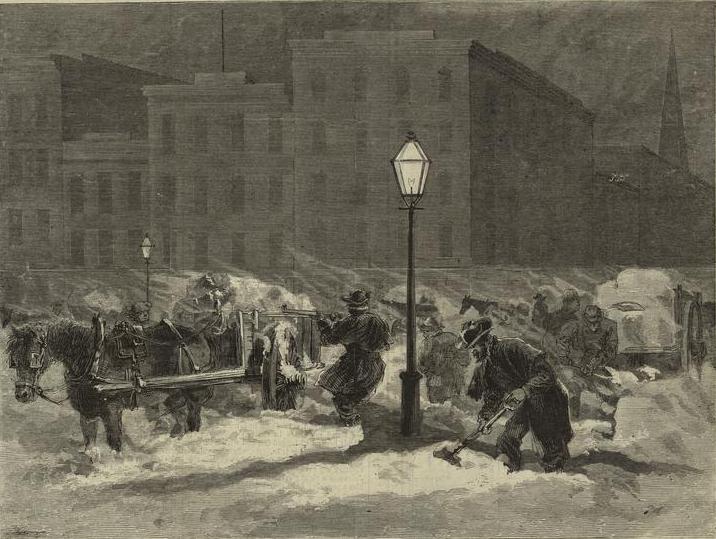
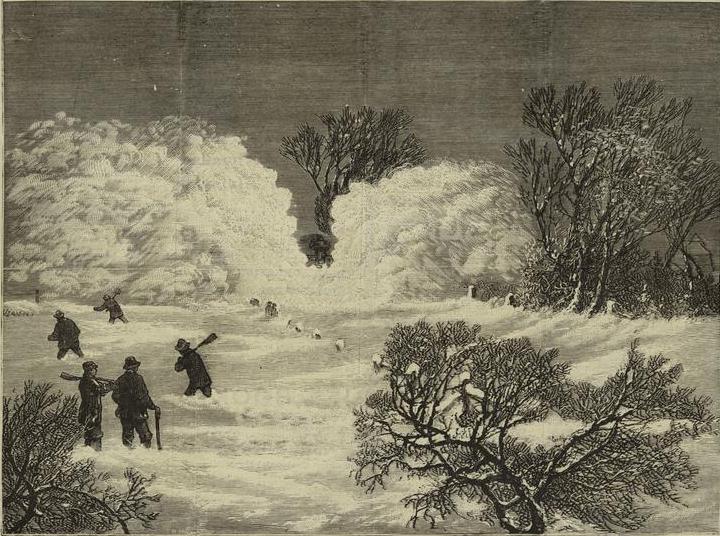
Not for lack of trying. The Harper’s Weekly illustration below details a snow clearing effort from 1867, with men slowly making their way down an impassible road, shoveling the snow into carts pulled by beleaguered horses.

Early trains just pushed through the mush. During the storm of 1888, a train aiming for Grand Central Depot derailed while attempting to shove aside mounds of snow. In the picture below, from an 1877 “January snow blockade“, a Long Island Railroad locomotive hopefully has better luck:

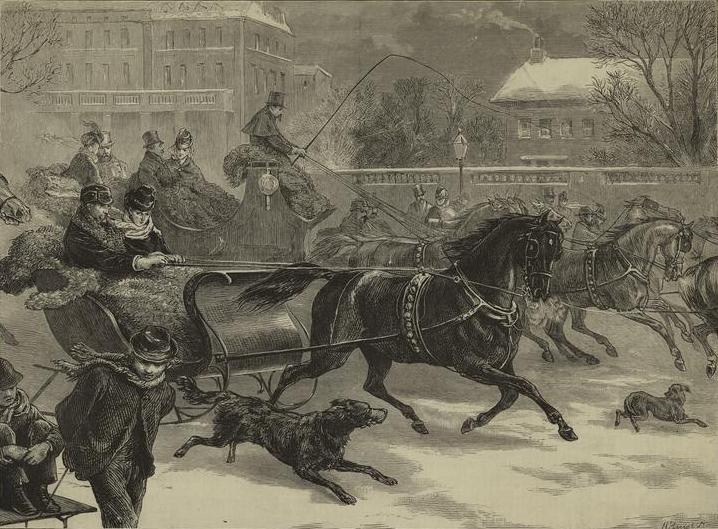
If you chose to go outside during a wretched 19th century storm, most likely you took a ferry — if you could get to one and the waters weren’t frozen — or you braved it on a sleigh, not exactly the safest form of transportation.

The illustration below, from 1872, depicts the street scene in Harlem, several years before the elevated railroad spurred on massive growth for the former village. It still would have been very remote; during the summer, horse-fancying businessmen would take their steeds to the streets in races. (This was a particular pastime of Cornelius Vanderbilt.) The sleighs below are clearly wealthier people from lower Manhattan, enjoying the village’s relatively untouched icy paths. (NYPL)

(Interestingly, it was the death of one of Boss Tweed’s bookkeepers in a sleigh accident in Harlem in December 1870 that set in motion the corrupt politician’s downfall. So watch yourself there, kids!)

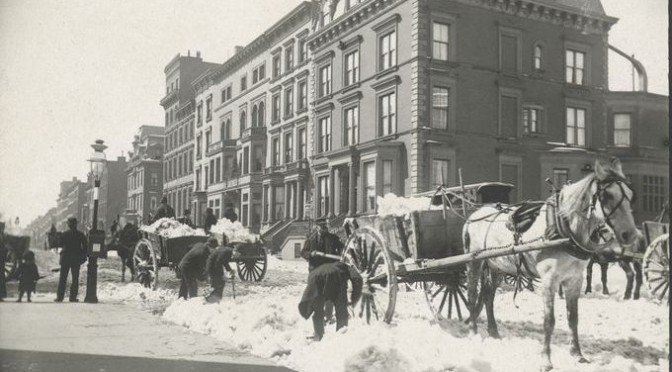
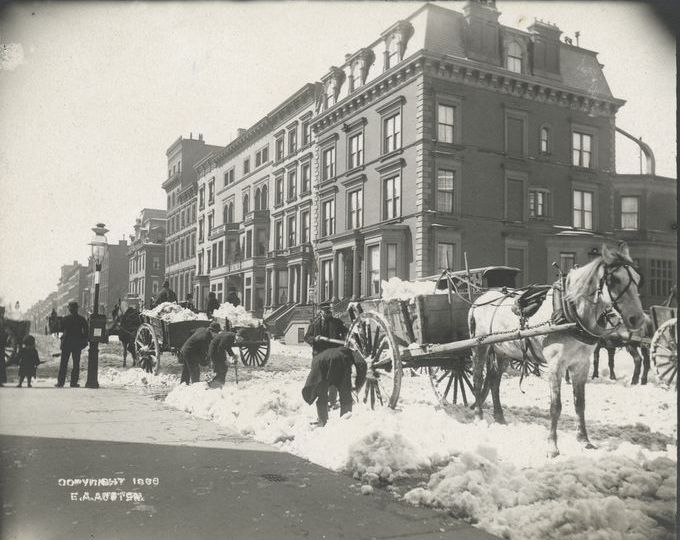
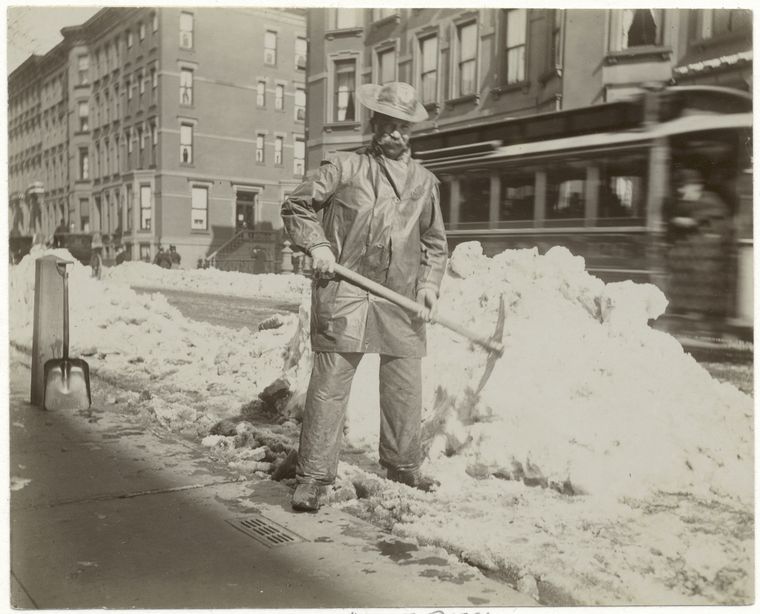
Clearing sidewalks hasn’t gotten easier over the years, although I suppose building owners have a greater responsibility now to clear the ways in front of their properties. The gentleman below, from an 1896 Alice Austen photo, tackles the frozen mush with a unique tool — is there gold in that there snow? — as a streetcar makes its way past. (source)
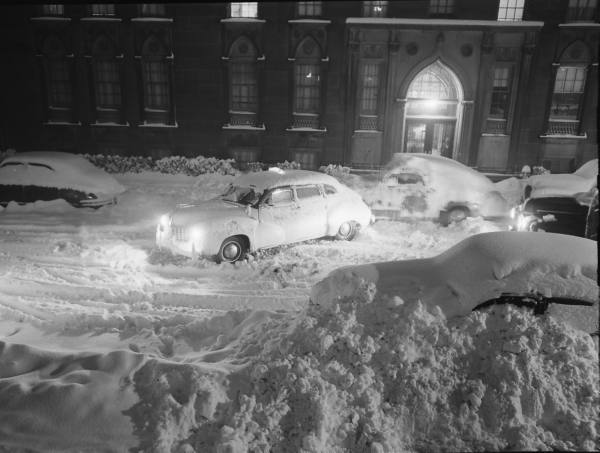
With the introduction of the automobile, the city has been able to clear streets more efficiently. But it creates another problem: pushing snow to the side creates small iceberg-like mountains that make it challenge to park and impossible to handle if you’re the unfortunate owner of a parked car in its wake. Below: A cab struggles to handle a messy street in 1948. (Photographer Cornell Capa, LIFE)

Most images above courtesy the New York Public Library digital collection, except for the last, from Life Google images..

The original Farmville; or putting the ‘green’ in Greenpoint

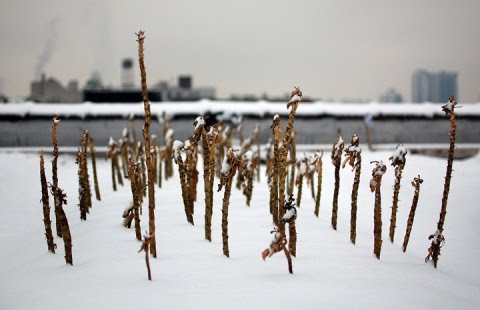
Frozen farm: The Eagle Street Rooftop Farm waits out the weather for a better day. (Courtesy Scott Nyerges)

NAME THAT NEIGHBORHOOD Some New York neighborhoods are simply named for their location on a map (East Village, Midtown). Others are given prefabricated designations (SoHo, DUMBO). But a few retain names that link them intimately with their pasts. Other entries in this series can be found here.

NEIGHBORHOOD: Greenpoint, Brooklyn

Last month I took in a terrific exhibition of photography by my old friend Scott Nyerges, documenting a year in the life of the Eagle Street Rooftop Farm in Greenpoint, Brooklyn. The farm (all 6,000 square feet of it) sits atop an old warehouse near the mouth of Newtown Creek as it spills into the East River.

Typical farming may not lend itself to photographic opportunity, but add a view from a few stories up, and you get something rather surreal. The rooftop farm, one of several sprouting up on top of New York buildings, offers local restaurants and budding farmers an opportunity to use organically grown produce and even grow their own food.

But the Eagle Street farm actually brings Greenpoint back to its roots. Literally. And nods to the origin of its name.

I’ve always associated Greenpoint with industry, its shores dominated by dockyards and its rows of streets, running in alphabetical order from north to south, defined by factories and warehouses. Its rich Polish community traces its development to immigrants who moved here to work in those very places.

But the original settlers to the area had a very good reason to call it Greenpoint. This was once a vigorous and fertile farming community, with ideal soil conditions and access to a waterway that could get farmers to the thriving markets of New York.

There was even an actual point of green, so to speak, a slender neck of land covered in grass that jutted into the East River at this location. (One source says the point was actually planted with green wheat.) Those travelling along the river in the early days called it as they saw it — Green Point. I’m not sure what happened to this long-gone natural feature, but eventually it lent its name to the entire neighborhood.

Also gone is a third body of water, filled in long ago, that helped define (and segregate) the region — Bushwick Creek (sometimes known as Norman Kill), which ran south, and separated it from the town of Williamsburgh to the south. For some idea of where this creek might have sat, simply erase everything between the Bushwick inlet and McCarren Park and replace it with a marsh.

The region became part of the Dutch town of Boswijck (Bushwick) in 1638 and would not become distinguished by its current name for almost 200 years. During the time, the area was noted for large farms, many in the early days worked by slave labor. One of the first farmers was the Nordic implant Dirck Volckertsen whose nickname, Dirck de Noorman, gave the creek its alternate name. By the age of the Revolutionary War, farmers with familiar names like Meserole, Calyer and Provoost all set up stakes here.
During these years, Greenpoint earned its nickname as the ‘garden spot’ of the region; but with the growth of New York, Brooklyn and Williamsburg in the early 19th century came the industrialization of the shores. The old farms were replaced with factories. Its name became a bit of a farce as oil refineries and shipyards soon defined the area. Bushwick Creek was filled in by the early 20th century.

The Eagle Street Rooftop Farm brings urban agriculture back to the neighborhood after almost 150 years. Too bad it’s the dead of winter here in New York and currently snowing, because a lovely stroll through some tended fields, high in the skyline, sounds like a really good idea right now.

You can see more of Scott’s rooftop photography at his website. The Eagle Street Rooftop Farm reopens in April.

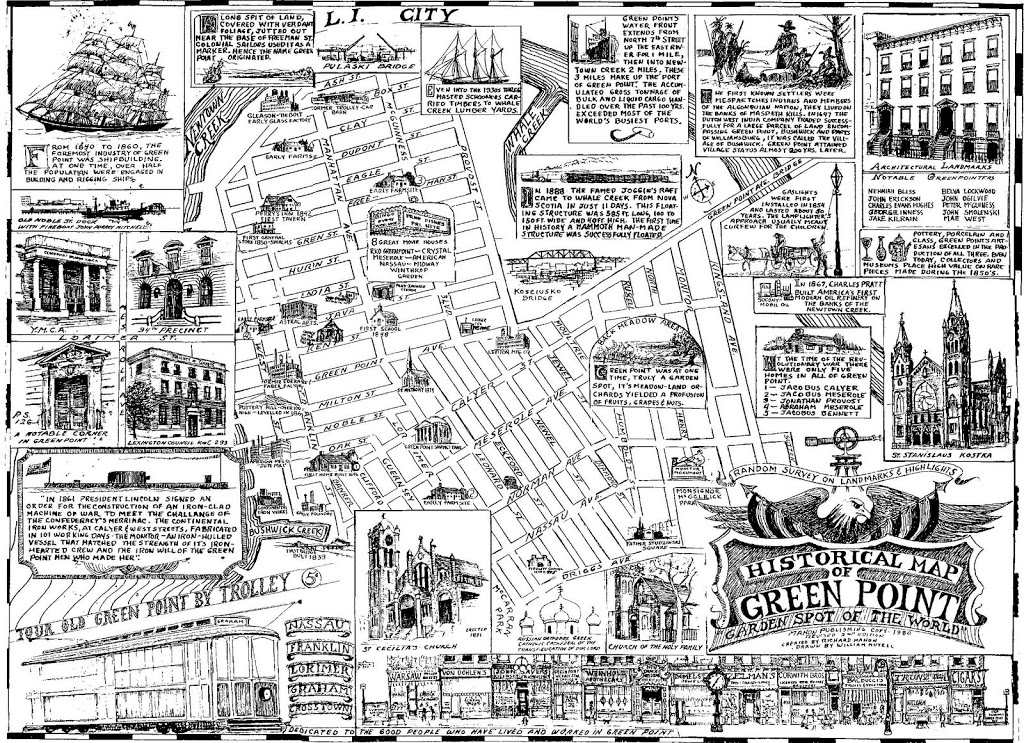
I found the best little ‘old time’ map of Greenpoint history which pinpoints the exact area of this original ‘green point’. But you’re going to want to click into this to see the details (Map courtesy Greenpt):

Categories
Bridges Podcasts

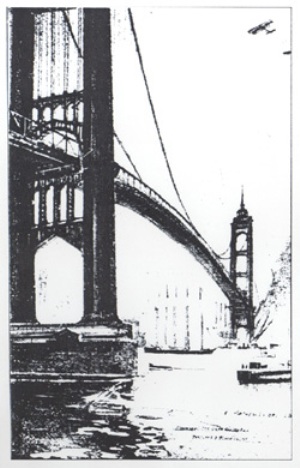
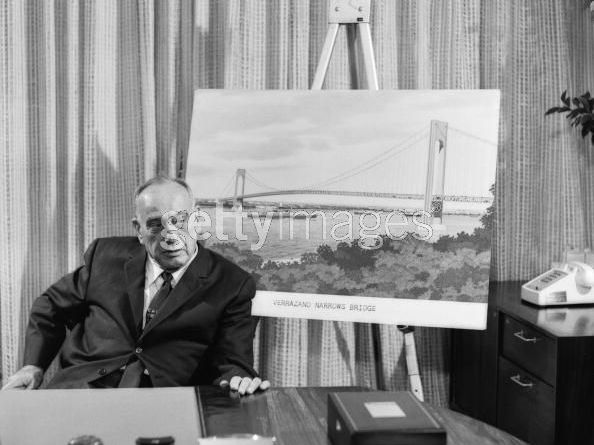
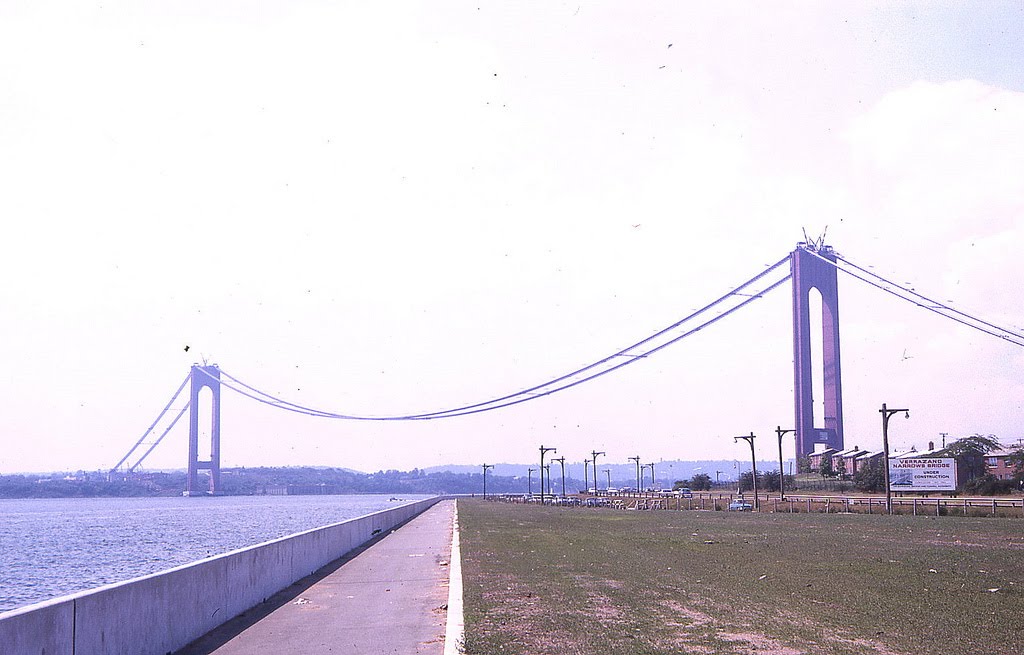
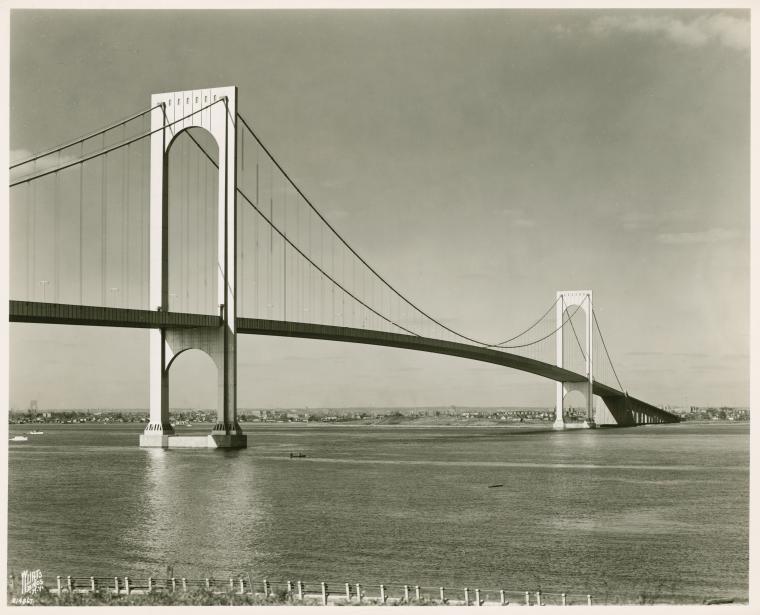
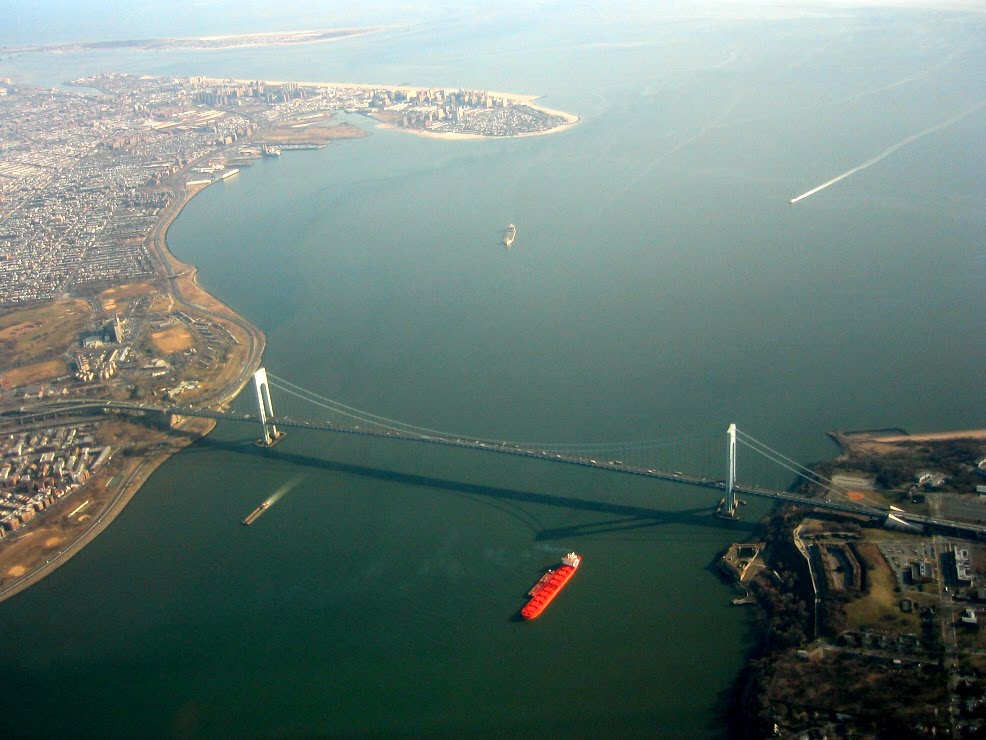
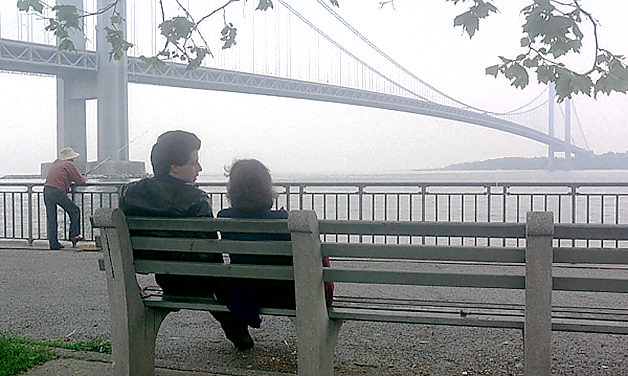
The Verrazano-Narrows Bridge: Robert Moses, Bay Ridge, and the birth of America’s longest suspension bridge

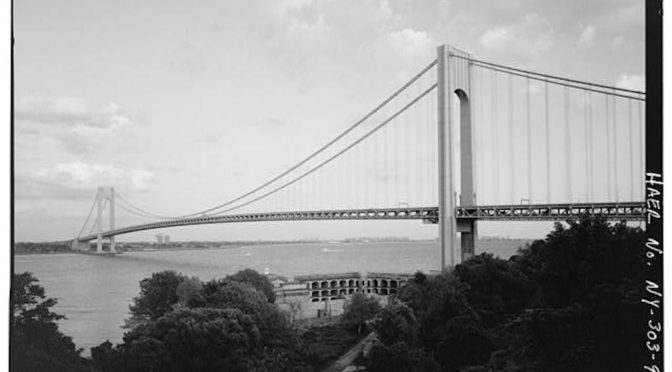
With Fort Wadsworth to its side, the last of Othmar Ammann’s New York bridges jets out over the Narrows.

PODCAST The longest suspension bridge in the United States, the Verrazano-Narrows Bridge was one of Robert Moses’ most ambitious projects, a commanding structure that would finally link Staten Island with Brooklyn. Today it soars above New York Harbor as one of the finest examples of architecture from the 1960s. But it didn’t get built without some serious community outcry, from a neighborhood that would be partially destroyed in its wake — Bay Ridge, Brooklyn.

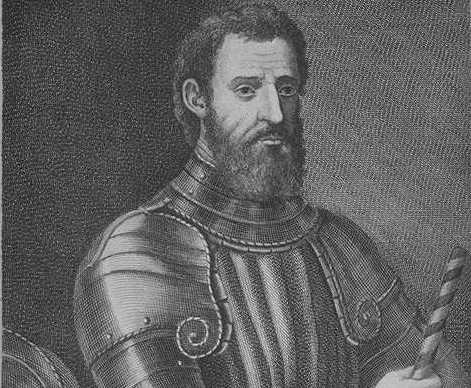
This is the tale of a 16th century explorer, a 20th century builder and a timeless marvel of the harbor, with a design that takes the curvature of the earth — and one very, very large boat — into consideration.

ALSO: The bridge’s finest film performance, with co-star John Travolta.

You can tune into it below, download it for FREE from iTunes or other podcasting services, or get it straight from our satellite site.

Or listen to it here:
The Bowery Boys: The Verrazano-Narrows Bridge

This is Italian explorer Giovanni da Verrazzano, who sailed into the Narrows in 1524, decades before Henry Hudson. Unfortunately, he miscalculated and thought the harbor was a big lake, so he left.

An existing sketch of David Steinman’s proposal for the Narrows span. Called the Liberty Bridge, it was a hybrid of the Golden Gate and the Brooklyn Bridge and features bells that would ring out periodically through the harbor. This came very close to being implemented, but the project died in Congress thanks to a New York representative: young Fiorello LaGuardia.
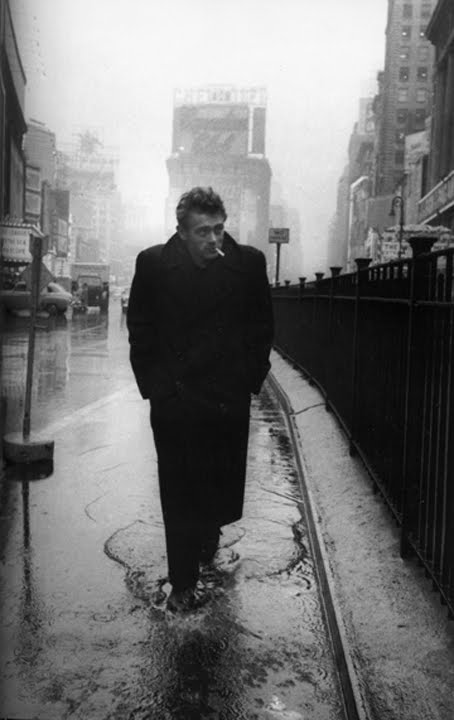
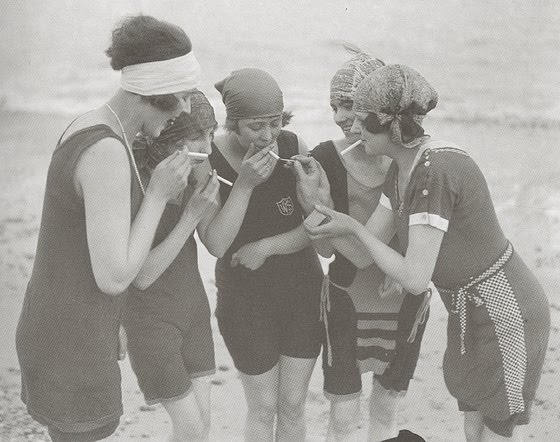
From a Getty Image we find the all-powerful Robert Moses discussing his project on the eve of its opening, November 1964. Many dreamed of spanning the Narrows, but only Moses had accumulated enough influence the see the project to fruition. (CBS Photo Archive/Getty Images)

Along the Brooklyn shore in 1914 with old Fort Lafayette out on an old reef. The fort was demolished to make way for the base of the bridge. (Courtesy the Brooklyn Museum)

The view in 1963 and the bridge without its roadway, which would be delivered by barges in specifically crafted pieces and hoisted in place. (Courtesy petepix75/Flickr, and has some other great old New York pics in his photostream)

When the bridge opened in November 1964, it was the longest suspension bridge in the world, overtaking the Golden Gate Bridge in San Francisco. The Verrazano-Narrows held that title until 1981 when the Humber Bridge in the UK overtook it. (Pic courtesy NYPL)

From overhead, it’s easy to see the challenges faced by Ammann and engineers in designing and constructing the bridge.

A newsreel from 1963, outlining the construction of the bridge and illustrating the dangers workers faced in building it.

The bridge plays a prominent role — and a tragic one — in the 1977 film Saturday Night Fever.

A deleted scene from the film prominently highlights the main character’s obsession with the bridge:

There are some terrific photos and additional history at Forgotten New York on the opening of the bridge. There’s even some aftermath photos of Bay Ridge, Brooklyn, after the city ripped away several homes.

You can take a preview peek of Gay Talese’s The Bridge here.

And if you ever wondered what it looks like to ride the Queen Mary 2 underneath the bridge, here you go:

NOTE: We mention the Outerbridge in the podcast, the official name of which is ‘the Outerbridge Crossing’ to sidestep that Outerbridge Bridge issue. Many refer to it as just ‘the Outerbridge’ to save the syllables.