Categories
Bowery Boys Bookshelf

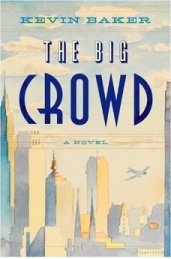
‘The Big Crowd’: Kevin Baker takes on an unsolved mystery, the murder of Kid Twist and the secrets of a fallen mayor

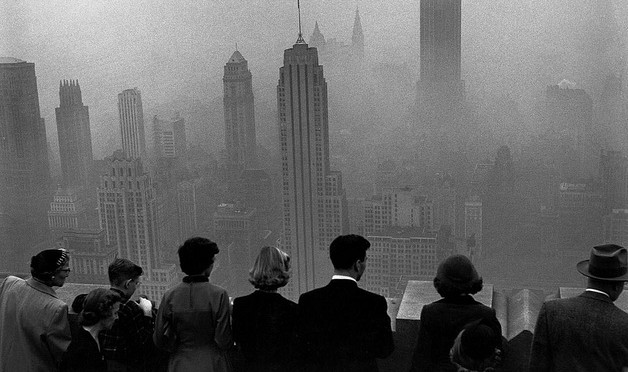
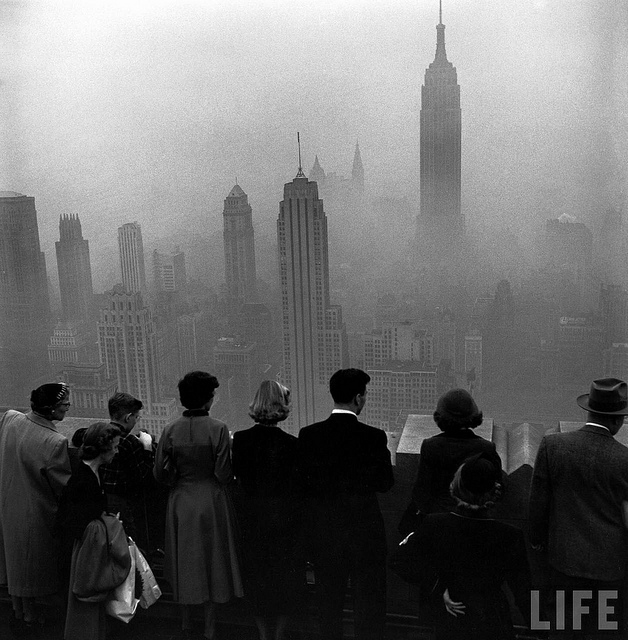
New York City, 1953, the setting for Kevin Baker’s The Big Crowd. Photo by Eliot Elisofen, courtesy Life/Google images

BOWERY BOYS BOOK OF THE MONTH Each month I’ll pick a book — either brand new or old, fiction or non-fiction — that offers an intriguing take on New York City history, something that uses history in a way that’s uniquely unconventional or exposes a previously unseen corner of our city’s complicated past.  You can find some our past selections here and links to purchase them from Amazon at the bottom of this post.

The Big Crowd: A Novel
by Kevin Baker
Houghton Mifflin Harcourt
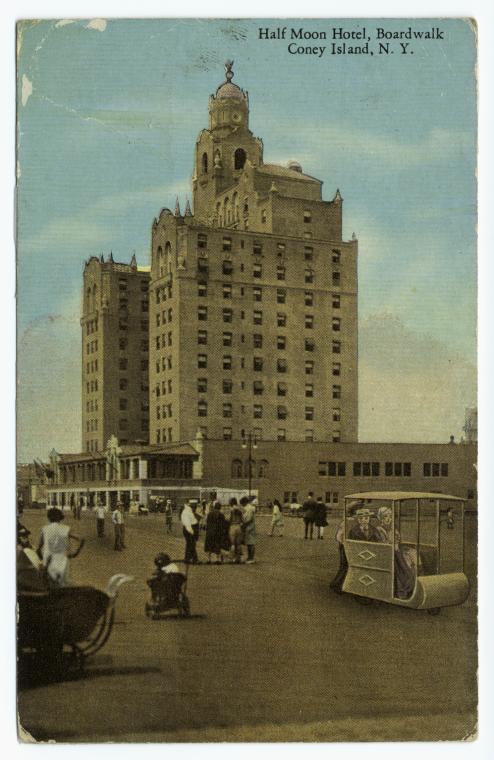
The Half Moon Hotel (pictured at left), named for Henry Hudson’s ship, was Coney Island’s most glamorous accommodation when it was built in 1927.

In the fall of 1941, the mob informer Abraham Reles, nicknamed Kid Twist, was being held here, heavily guarded by police officers.  Reles had information on dozens of murders, putting away some of Brooklyn’s most notorious gangsters.

Next on his list was Albert Anastasia, better known in the press as the leader of Murder Inc.  On November 12, Reles plummeted out the window to his death.  Was Reles trying to escape?  Or was he murdered?

This real life mystery is at the heart of Kevin Baker’s new historical novel The Big Crowd, a brassy noir of New York City in the post-LaGuardia era.

Baker is one of the more thrilling historical novelists working today, latching colorfully and with epic flourish into specific New York eras, obsessed with the seedier elements which make the city tick.  He is unafraid of embracing real-life characters and emboldened by difficult, abrasive eras.  In Paradise Alley, his imagination ran wild through the Civil War Draft Riots.  In my favorite Baker novel, Dreamland, gangsters and freaks collide amid famous Coney Island landmarks.  He somehow even fits in Carl Jung and Sigmund Freud along the way.

He’s written about the life of Kid Twist, too, in Dreamland.  But it’s his death that sits in the smoldering center of The Big Crowd, exposing the connection between waterfront gangland activity and the upper reaches of New York government, reaching, in fact, all the way to the very top.
While Baker has fictionalized the lives of real-life people in the past (a young Malcolm X being the most ambitious, in his novel Strivers Row), for his latest, he’s transformed Mayor William O’Dwyer into Mayor Charlie O’Kane.

While their biographies are nearly the same — an Irish mayor brought down by scandal — O’Kane is a lustier, more mysterious figure, escaping America and becoming an almost godlike figure in Mexico City.  His brother Tom works for the New York district attorney’s office, attempting to clear his brother’s name while solving the mystery of Reles’ death.

The Big Crowd often feels like an unmade gangster film, its beat cops and waterfront roughs rendered from a world of cinematic grays.  At the core is Baker’s relentless attention to historical detail, even when it seems impossible to believe, manifesting into occasional weirdness.

For instance, O’Kane’s lascivious wife, who incidentally sleeps with his brother, fancies herself a bull-fighter. (O’Dwyer’s real wife Sloan Simpson did become a bull-fighter in Mexico.)

Some of my favorite 20th century figures are successfully evoked, including Toots Shor and racketeer Joe Ryan.  Robert Moses is glimpsed without apology as a menace;  a powerful passage late in the book envisions the wreckage of a demolished Bronx neighborhood, “the cityscape melted into a pile of pure, mindless wreckage.”

Like other Baker adventures, The Big Crowd rewards history buffs with dozens of recognizable signposts, but not so many as to seem like an over-researched theme park.

The underlying story of Reles’ murder languidly ebbs and flows through the book, unspooling gradually, via interrogations and in few eloquent monologues.  (In real life, the mystery was never solved.)  But The Big Crowd is the type of book where the distractions are often the most entertaining.  Baker has once again created a magnificent alternate New York of exacting, glamorous detail.

PAST BOWERY BOYS FEATURED BOOKS:
 

Categories
Know Your Mayors

One hundred years ago today, the mayor of New York died

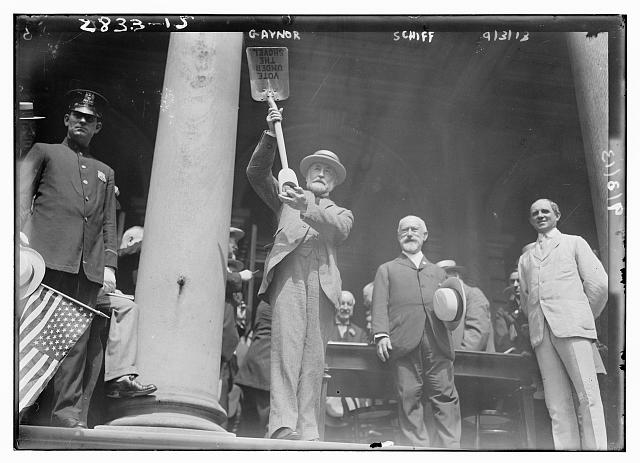
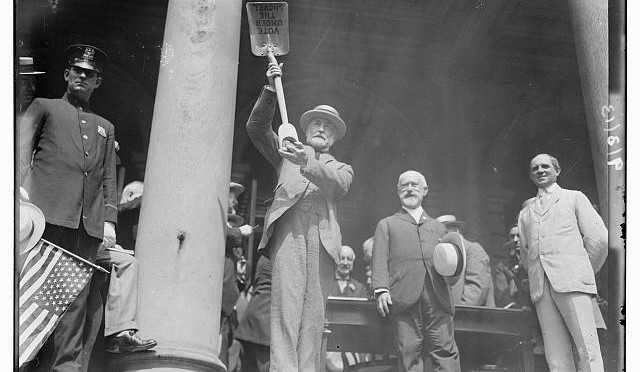
Mayor William Jay Gaynor’s final appearance at City Hall was at a notification rally, declaring his independent candidacy.  He brandishes a shovel as a symbol of a new era of subway construction (the eventual fruits of the so-called ‘dual contracts’ which had finally be agreed to earlier that year.)

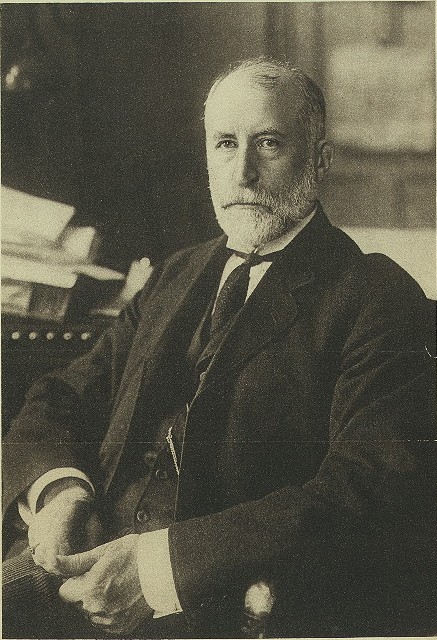
Today’s mayoral primary falls on a very grim anniversary in New York City political history.  One hundred years ago today, Mayor William Jay Gaynor collapsed and died while on a voyage to Europe, succumbing to an assassin’s bullet which had been lodged in his throat for over three years.

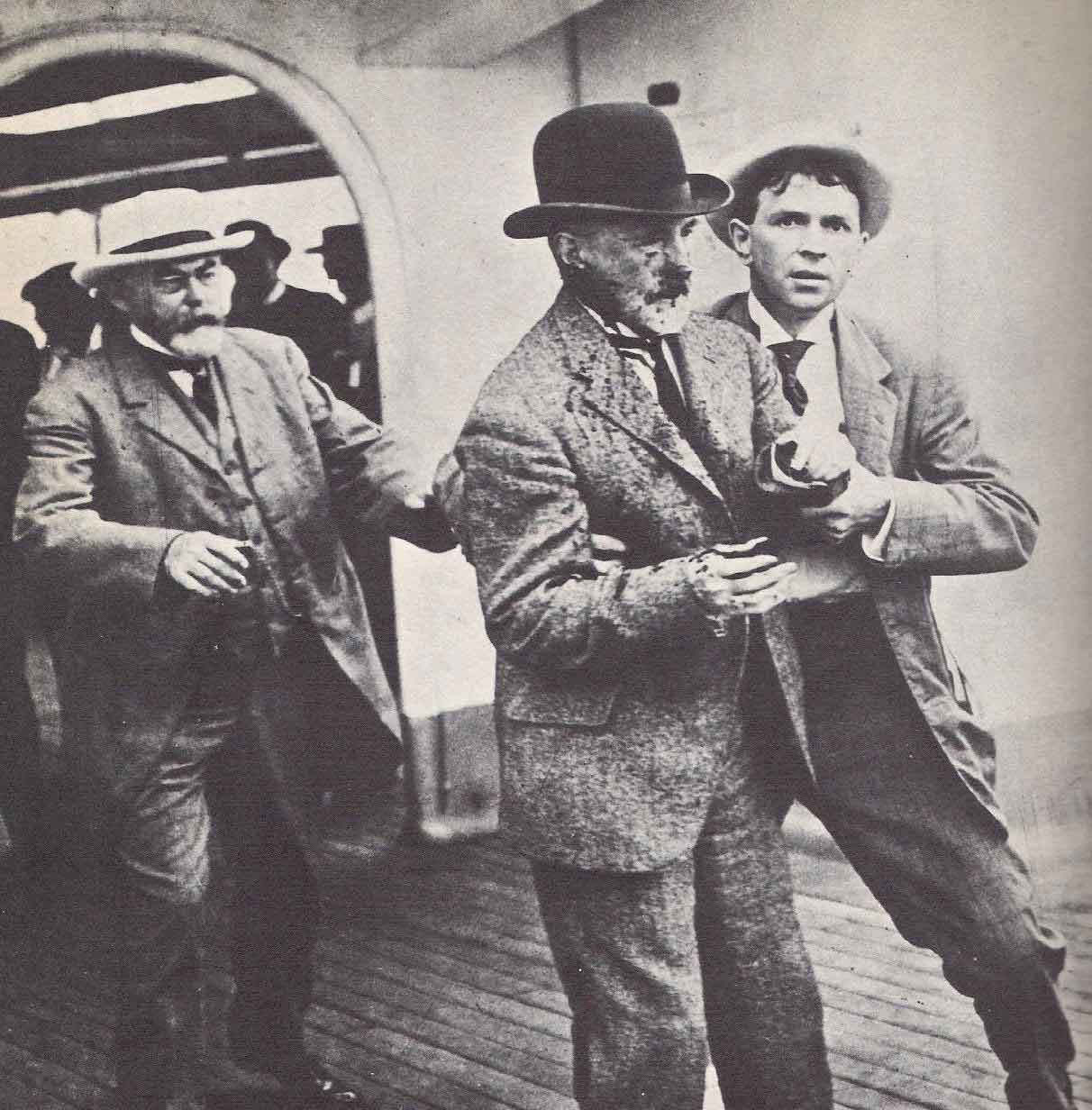
Gaynor was not in New York when he was shot, and he was not in New York when he finally succumbed to its effects years later.  On August 9, 1910, he boarded a German ocean liner in Hoboken, New Jersey, for a planned trip to Europe. A disgruntled dock worker James J. Gallagher approached and shot him through the neck.  The moment was gruesomely captured by a New York World photographer.

Although the injury derailed Gaynor’s presidential ambitions, it did not prevent him from leaving office.  The bullet remained stuck in his neck, slowly weakening his health and eventually deterioriating his ability to speak.

But he remained a feisty opponent of city corruption. So much so that corruption-fueled Democratic machine Tammany Hall refused to support his re-election bid in 1913, throwing their support to judge Edward E. McCall, a more pliant candidate to their whims.  McCall would run against Fusion candidate John Purroy Mitchel, the firebrand reformer and president of New York’s Board of Aldermen (city council).

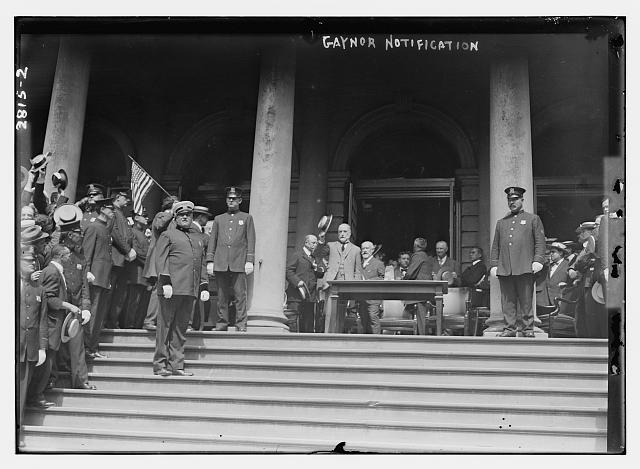
Gaynor would not be sidelined.  On September 3, he announced an independent run for the mayor from the steps of City Hall.  To a crowd of 5,000 supporters, Gaynor’s secretary had to read his speech for him as he was unable to raise his voice due to his injuries.  At the very end, however, as his secretary declared the mayor’s intention to eradicate graft, Gaynor leaped to his feet and cried, “Yes, that is what we are going to do — shovel all those miserable grafters into the common dump!”

Gaynor at his candidacy announcement, buffered by supporters

The following day, he boarded another ocean liner with his son, intending to convalesce for two or three weeks.  It was unannounced voyage — Gaynor naturally wanted to keep his deteriorating condition quiet —  although the newspapers found out and splashed it upon their front pages.  “It was a feeble figure that went slowly up the gangplank leaning heavily on the arm of his son Rufus,” said the Evening World.

He was intending to return on September 21.  However, six days into his voyage, on September 10, the mayor finally succumbed to his wounds, aggravated by other afflictions in his stomach and lungs.

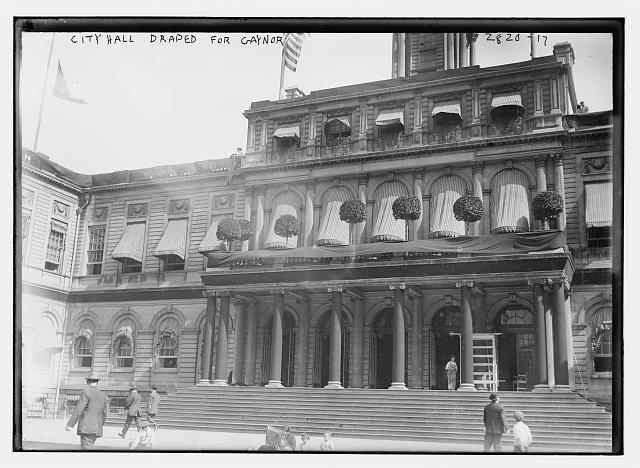
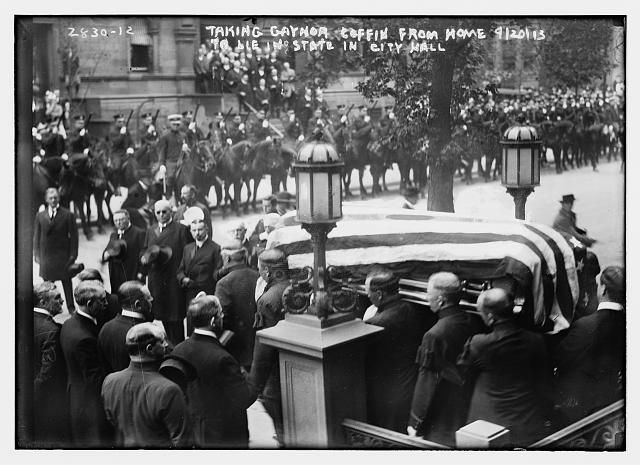
His body was returned to New York on the RMS Lusitania nine days later.  The following day, his body lay in state at City Hall as thousands of mourners paid their last respects.

Gaynor would be the second New York mayor to die in office — William Havemeyer died of a heart attack while in office in 1874 — and the fifth to die in office if you count those from before the Revolutionary War.

Gaynor’s passing turned the coming election into a free-for-all, with the remaining candidates scrambling to appeal to the former mayor’s moderate voting base.  In the end, Mitchel was elected that November, becoming the city’s second youngest mayor in history.

A memorial for Gaynor was placed in Cadman Plaza in Brooklyn in 1926, inscribed with the anti-corruption slogan “Ours is a government of laws not men.”  Gaynor lived in Park Slope at 20 Eighth Avenue.

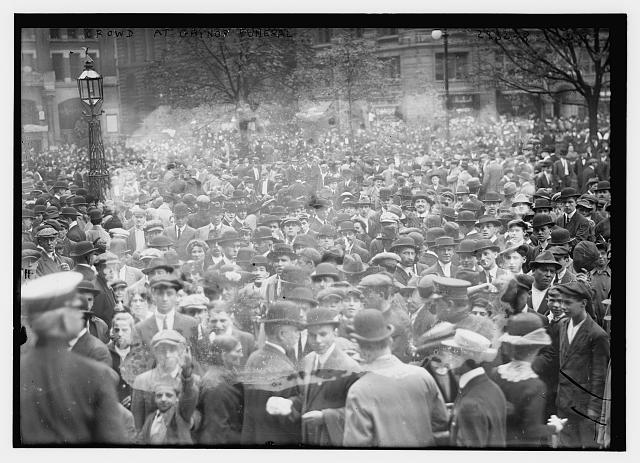
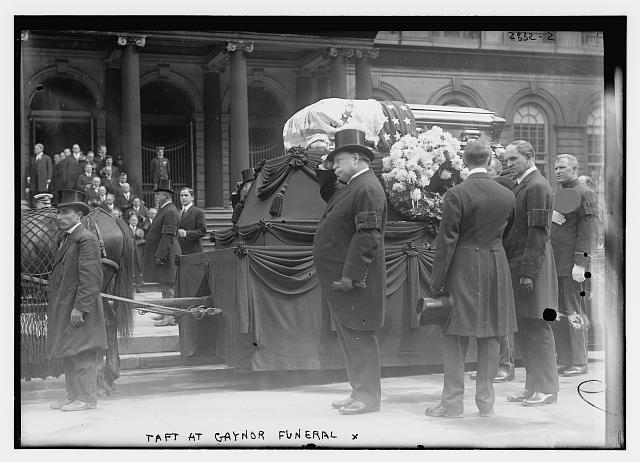
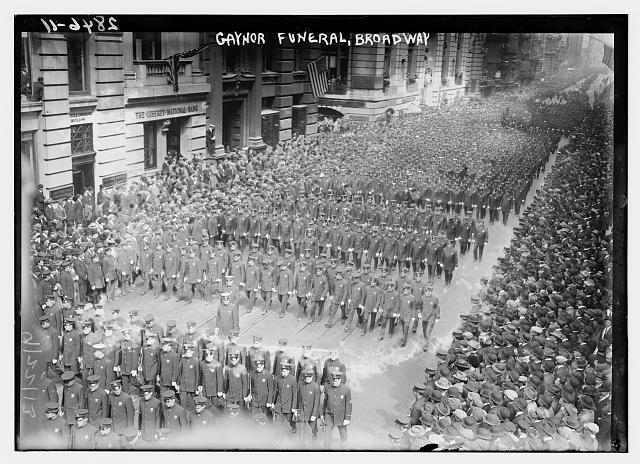
Below are some images from his funeral at City Hall, September 20, 1913

All images courtesy the Library of Congress

Mourners at City Hall (LOC)

Former president William Howard Taft at Gaynor’s funeral (LOC)

Categories
Know Your Mayors

Meet Andrew H. Mickle, perhaps the least qualified man to ever serve as the mayor of New York City


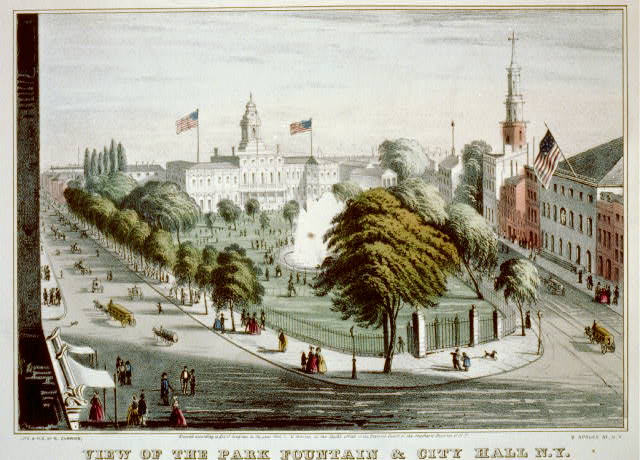
New York City Hall and its brand new water fountain, in 1846, courtesy Currier and Ives (LOC)

KNOW YOUR MAYORS A modest little series about some of the greatest, notorious, most important, even most useless, mayors of New York City. Other entrants in the Bowery Boys mayoral survey can be found here.

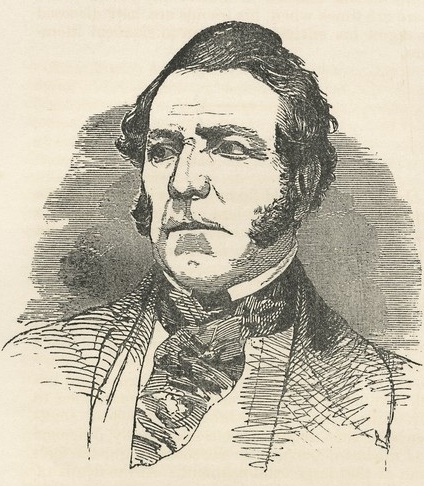
Mayor Andrew H. Mickle
In office: 1846-1847

New York City has had many useless and incompetent mayors.  To be fair, that legion of forgettable and unspectacular men is bloated by the ways in which mayors were chosen in the early days.

Before 1783, mayors were assigned to the city by the governor of the New York colony.  The hand-picked mayor presided over a board of aldermen that were elected by the people.  He operated at the behest of the British crown, often overseeing a group very much opposed to British rule.

This curious arrangement carried on even after the Revolutionary War, with New York governors continuing to assign mayors to the city until 1821, when the Common Council (today’s City Council) received the authority to appoint mayors themselves.

The role of mayor was not powerful at this time.  Before 1821, they were essentially a mouthpiece for the will of the state government. After 1821, mayors were beholden to the Common Council for their very existence. The job frequently went to well-liked merchants with unsullied reputations, uncontroversial men who rarely rocked the boat.

When the New York state charter was amended in 1834, mayors became popularly elected.  (The first was Cornelius Lawrence, in a violent, chaotic election.)  But this did not necessarily alter the quality of office holders.  Mayors now became the puppets of both powerful council members and thriving political machines like Tammany Hall.  Corruption ensured that the position of mayor be considered a valuable but neutered prize.

Further minimizing their role in 1834 was the reduction of the mayoral term to one year (until 1849, when they were given two).  Even the most savvy and adroit politician would wither in frustration under these limitations.  Men questing for substantive political power sought other prizes. The office of mayor became, in essence, a beauty pageant.

And thus enters into the picture one Andrew H. Mickle, tobacconist and mayor of New York City from 1846 to 1847.

Andrew was born in 1805 to a Scottish couple in New York’s Sixth Ward, the future Five Points.  Of course, this was in the era when Collect Pond was being drained, and new residences around this area weren’t yet considered notorious slums.  However it seems later biographers gave his back story a bit of that Five Points patina. “He was born in a shanty in the ‘bloody aude Sixth’, in the attic of which a dozen pigs made their habitation,” claimed Gustavus Myers.

As a young man, he began working for the tobacconist George B. Miller at Water and Wall Streets.  He would eventually fall in love with Miller’s daughter, marry her, then take over the business entirely.

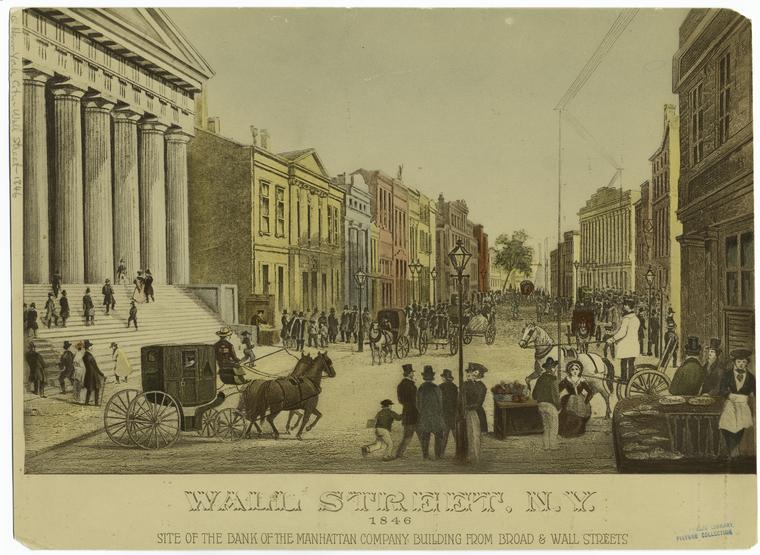
Below: Wall Street in 1846. Mickle’s tobacco shop would have been located in the distance, near the tree. (NYPL)

A 40-year-old tobacco seller might not fit the profile of mayoral candidate today, but it did in 1845.  The mayor of New York at the time was sugar manufacturer William Havemeyer, who had actually tried doing something in office (namely, reforming the Common Council), to the consternation of Tammany.

With a surge of immigration adding new voters, Democratic leaders looked for a relatable candidate, somebody who was “one of the people,” but one with little political motivation.  These were the years of the Native American party, a drive to flush America of the thousands of Irish immigrants who were arriving in New York.  Mickle, though fully unsuited for a life of politics, represented the opposition, the surge of new voters and the core of the Democratic party.

It also helped that Andrew, with his modest upbringing, was known as the son-in-law of a popular tobacco concern, one that many political men visited on a weekly basis.

But if we are to believe the eyewitness of Nathaniel Hubbard, Mickle’s entry into city politics was engineered almost entirely by a different source — his mother-in-law.

Mrs. Russell* was one of the most powerful women in early Tammany Hall history.  She was known, according to Hubbard, for giving her employees the day off at the tobacco counter, “a holiday for electioneering purposes,” the writer claims.

Desiring a bit of power for herself,  Mrs.Russell essentially bribed Tammany Hall.  “She sent a letter to the rulers of Tammany with a pledge to give them $5,000 on condition they would nominate and elect her son-in-law to the office of mayor of this city,” wrote Hubbard.

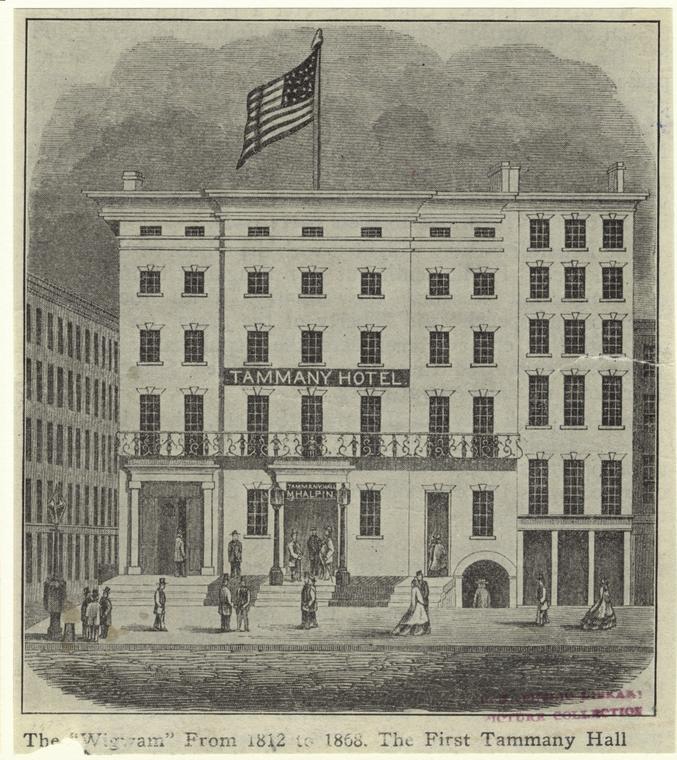
At right: The first Tammany Hall, at Frankfurt and Nassau Streets, their first official home after moving from Martling’s Long Room

Perhaps it says something about the office of the mayor that Tammany Hall took the bait willingly, placing this non-entity Mickle at the top of the ticket.  Political machines, especially in the early years, felt strongly about holding offices, with few concerns about who went into them.

Hubbard describes Mickle as “an uneducated man,” with abilities of “a very common order.”  But in 1845, perhaps, a man of middling skills could properly govern, if he represented the right things. And so Andrew Mickle was resoundingly elected, receiving more votes than his competitors in the Whig and Native American parties combined.

For somebody accustomed mostly to cigars, Mickle did not embarrass himself in his new task.  Tammany Hall was pleased with their purchase;  Mickle would be considered a “tried and conservative Democrat.” Hubbard would only say that Mickle “passed through his duties … quite satisfactorily to the political party which elected him.” [source]

He exhibited no amount of political acumen, nor was any required of him.  The city prospered of its own accord under Mickle.  Telegraph poles began appearing in this city in 1846, connecting New York with Albany and Washington DC, and New York’s first great department store, owned by A.T Stewart, opened that year, just a block from City Hall.  Richard Hoe‘s innovation of the rotary press that year revolutionized journalism.

Mickle encouraged the construction of a new workhouse and insane asylum, leading eventually to Blackwell’s Island becoming a sort of one-stop for all of New York’s undesirable industries.  After the Great Explosion of 1845, Mickle also saw to developing New York’s fire-fighting infrastructure, although it would remain in the hands of private operators until the 1860s.

He announced his retirement at the end of his term in 1847 and retired once again to the world of tobacco, officially renaming the family business A. H. Mickle & Sons.  He remained well-liked in Tammany circles up until his death in 1863.

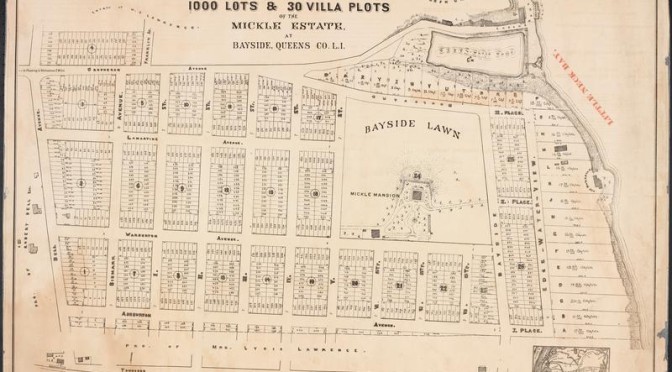
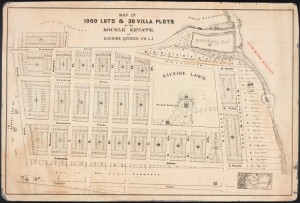
As a curious side note to his later life, Mickle took up residence in the area of Bayside (today, the neighborhood of Bayside, Queens), “situated on one of the most commanding elevations in that section of Long Island.”  His spacious manor here was called Bayside Lawn.  Many years after his death, in October 1890, the mansion was destroyed in a fire.

Below: A map of the Mickle estate (MCNY)

Map of 1000 Lots and 30 Villa Plots of the Mickle Estate, at Byaside, Queens County, Long Island.

*I have no clue why she’s Mrs. Russell and not Mrs. Miller, but I’m still researching this fact.

EDIT: An earlier version of this story stated that Mickle was preceded as mayor by Philip Hone. In fact, it was William Havemeyer.

Categories
Amusements and Thrills

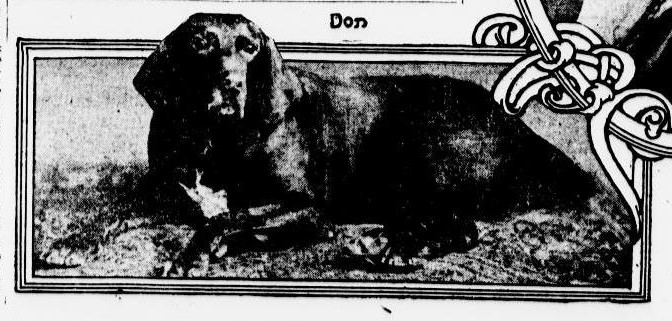
Don the Talking Dog, German vaudeville sensation, saves a drowning man in Brighton Beach

There once was a talking dog named Don.

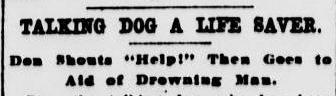
One hundred years ago today, he saved a man from drowning in Brighton Beach.  Don shouted or barked the word ‘Help!’ then ran to the waters to save him.

But perhaps I should explain.

In December 1910, the New York Times ran a startling announcement that a dog in Germany had been discovered that could pronounce certain human words.  The setter from Theerhutte was owned by an eastern German gamekeeper and possessed several human qualities, not the least of which was the name Don.  The dog had beautiful eyes “sometimes almost human in their expression” and was an “uncommonly intelligent animal,” according to the Times.

Naturally, Don spoke only in German.  Being a dog, among the six words at his command were ‘haben’ (want), ‘kuchen’ (cakes) and ‘hunger’.  You had to use your imagination, of course, but one could detect a slight difference in Don’s barks that could be interpreted as separate words.

Despite some understandable cynics out there, Don was on his way to a career in the theater.

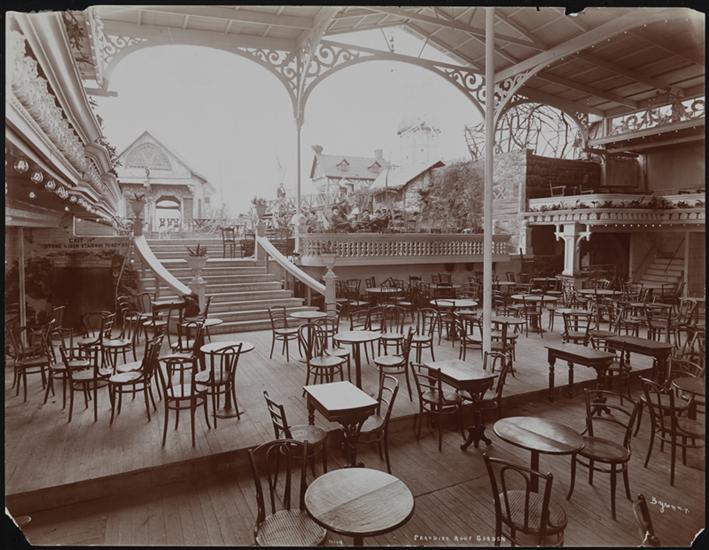
Above: Hammerstein’s rooftop garden at the Victoria Theatre in Times Square, the stage where Don the Talking Dog made his debut.

Generally speaking, dogs were a definite novelty among the stars of the vaudeville stage. A troupe of animals called Wormwood’s Dogs and Monkeys held court on the stages of Coney Island in the 1910s.  More renowned, perhaps, was the cross-dressing pooch Uno the Mind Reading Dog , who wowed theater crowds in 1910.

But the highest paid dog act up to that time was Dan the Drunken Dog, an animal who emulated the wobbling demeanor of an alcoholic, to the delight of audiences at the Oscar Hammerstein‘s Victoria Theater rooftop garden in Times Square.

None of these would reach the fame of Don the Talking Dog.  Hammerstein was so sure New Yorkers would love him that he posted a $50,000 bond to have Don brought to the United States.  The dog arrived in America on July 9, 1912 aboard the German steamship Prinz Friedrich Wilhelm, “absolutely refus[ing] to be interviewed at the pier, and indeed, had been too seasick on the way over to converse with anybody.” [source]

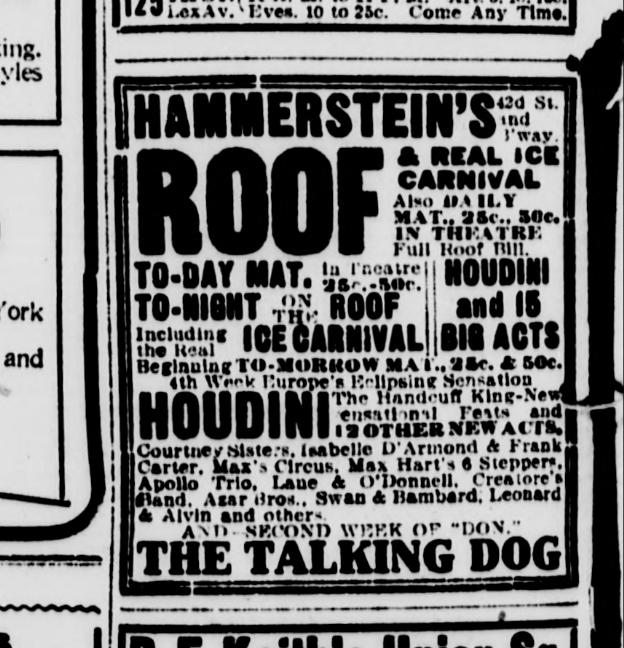
At right: On the bill with Harry Houdini, from the New York Sun, July 21, 1912

A few weeks later, the German canine would make his debut on Hammerstein’s rooftop garden, alongside master of ceremonies Loney Haskell.  “The trained growls which emanate from his throat can readily be mistaken for words,” claimed a Variety reviewer.  “On the roof the audience, skeptical in the first place, became more so at Loney’s [introduction], but after the dog had made its first try they became interested and later enthusiastic.”

His salary was allegedly $1,000 a week, paid, of course, to his owner Martha Haberland.  Like many temperamental divas, Don disliked the roof garden lifestyle due to the sounds of traffic, preferring to perform inside theaters, not atop them. But he was huge success that year, touring to other Hammerstein stages before returning to Germany that fall, a bonafide American star.

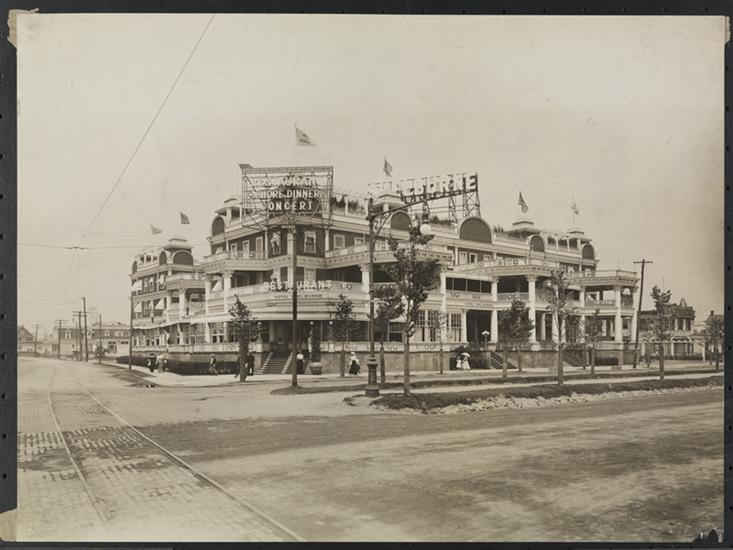
Above: The Hotel Shelburne in Brighton Beach, where Don the Talking Dog saved a man from drowning

Don returned to Hammerstein’s Times Square stage in 1913, this time performing alongside the likes of young comedian Sophie Tucker.  Later that summer he arrived in Brighton Beach to delight Brooklyn audiences.  It was here, on one of his afternoons off, that he rescued a drowning man with his famed ubiquitous voice.

The man was a waiter for the Hotel Shelburne who was actually out walking Don that afternoon.  The man jumped in the water for a swim and instantly lost his footing.  Don saw the man flailing in desperation in the ocean foam and, then, according to the New York Sun, allegedly unfurled one of his new words — “Help!” — startling everyone on the beach.*  The performer then swam over to the drowning man and began pulling on his bathing suit.

A passing policeman leaped into the water on his horse to rescue Don and the waiter.  This whole scene — dog, horse, waiter, policeman — was in turn rescued by three lifeguards in a boat. [source]

This was perhaps Don’s shining moment. He shortly retired from the stage and finally died in 1915 back in Germany.  His final words, according the Evening World:  “Say goodbye to my old pal Loney Haskell.”

*The Tribune reports the same event but does not mention this magical ‘Help!’

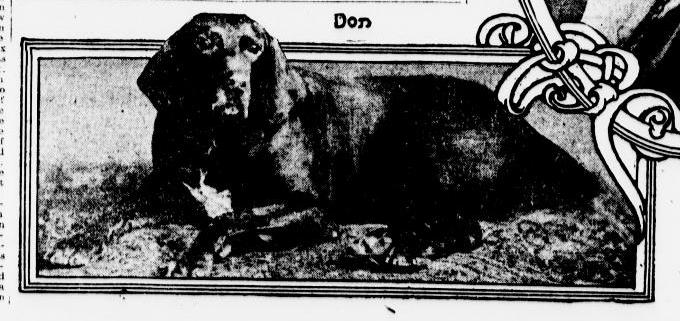
Top pic courtesy New York Evening World. Bottom two images courtesy Museum of the City of New York.

Categories
Podcasts Pop Culture

NYC in the modern TV age, from Sesame Street to Seinfeld, as the arrival of cable brings new production to the city


PODCAST
In the third part of the Bowery Boys Summer TV Mini-Series, I give you a grand tour of the New York City television production world from the 1970s to today, from the debut of Sesame Street in the Upper West Side to the new productions which flourished in the 1990s.

Along the way, hear about the debuts of public access, HBO, MTV, NY1 and, of course, the TV show that employed thousands of New Yorkers during its two-decade run — Law and Order.

PLUS: A few locations used on Seinfeld, Sex and the City and The Cosby Show!

To get this week’s episode, simply download it for free from your favorite podcast player.

Or listen to it straight from here:
The Bowery Boys #155 New York City in the Modern TV Age

——

A COUPLE CORRECTIONS:  I gleefully went off my notes on a few occasions this show, accounting for some mis-statements. For instance, The Cosby Show is obviously a ‘family comedy’, not a ‘family drama’. And New York cable viewers could get MTV within a month of its debut, not a couple months.

OMISSIONS: To make this a 20-minute show, I did have to lose mentions of a few shows that featured New York City, such as NYPD Blue. But there was no excuse to breeze past the 1975 debut of Saturday Night Live, although it was briefly mentioned in part two in our discussion of 30 Rockefeller Center.  Also: while not as iconic show as the others mentions, many in the industry look to the moment in 2008 when Ugly Betty left Los Angeles for New York as another significant turning point.
—————–

The first episode of Rapid T Rabbit and Friends from 1983, which debuted in February 1983.


When actor Will Lee died in 1982, Sesame Street producers decided to have his character, Mr. Hooper, die on the show.

How Home Box Office looked in the 1970s:

A scene from Seinfeld featuring Keith Hernandez:

The original opening for Law & Order from its debut in 1990:

Carrie Bradshaw’s first encounter with that bus and water puddle from the first season opener of Sex And The City:

Kaufman Astoria Studios opened in the 1920s as a silent film studio; today it hosts both TV and film productions. It’s also the home of Sesame Street! (Photo courtesy Kaufman Astoria Studios)


Categories
Know Your Mayors

George Opdyke: The mayor during the Civil War Draft Riots and his unsavory connection to New York’s fashion industry

KNOW YOUR MAYORS A modest little series about some of the greatest, notorious, most important, even most useless, mayors of New York City. Other entrants in the Bowery Boys mayoral survey can be found here.

Mayor George Opdyke
In office: 1862-1863

The wealthy merchant and politician George Opdyke died on June 12, 1880, attended to by his family from their lavish home at Fifth Avenue and East 47th Street, just a few blocks from where the violent Draft Riots had ignited back in 1863.

In the 17 years since those terrible days, New York had grown mightier with vast wealth, in an explosion of prosperity that would inaugurate the Gilded Age.  But while the scars of the Draft Riots had faded from the city streets, they never quite faded from Opdyke, who had been mayor of New York during the violent outbreak.

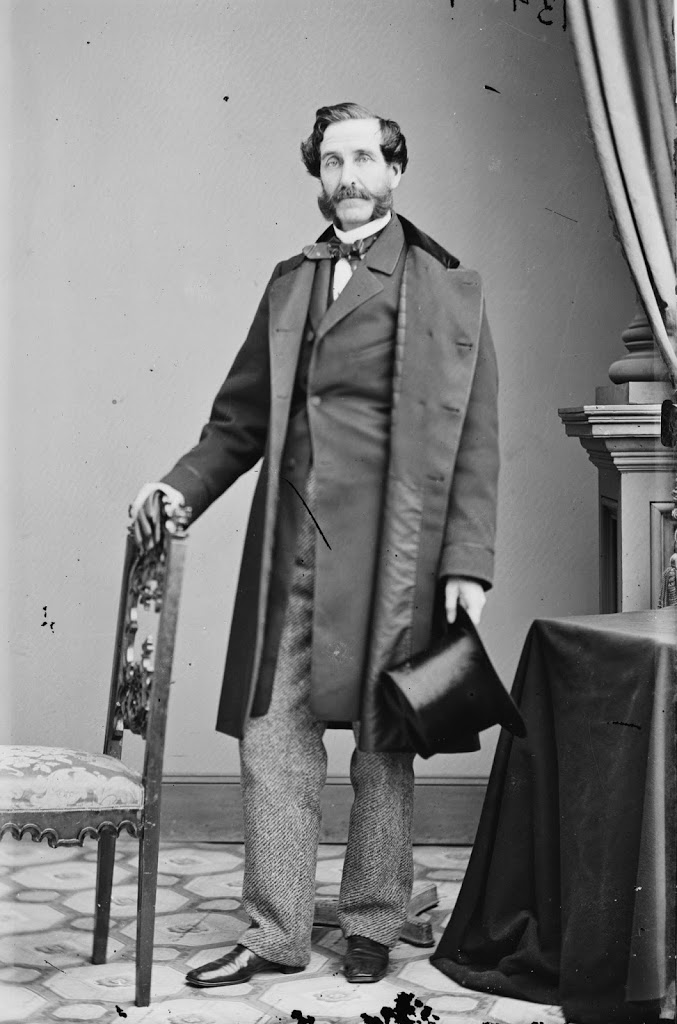
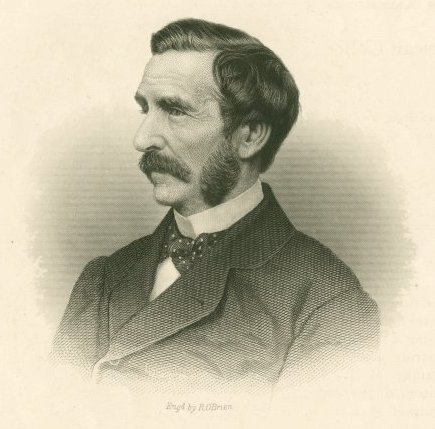
At right: George Opdyke, in a photo taken by Matthew Brady

Some of the violence that week in July had been directed towards Opdyke, one of the most prominent Republicans in a city of Democrats. His former home at 57 Fifth Avenue had been attacked twice by rioters.  He was considered the face pro-Lincoln, pro-war, and, thus, pro-abolitionist forces in New York

Yet had it not been for the institution of slavery in the South, Opdyke might never have even made his fortune.

George Opdyke was born to a large New Jersey farming family in 1805, working his way from the fields to the classroom, becoming a young school teacher at an early age.  Like so many teenagers in the early 19th century, job opportunities out West spoke to his sense of adventure.  With $500 in their pockets, Opdyke and a friend settled in Cleveland, Ohio, opening a clothing store and tailor for workers of the newly constructed Erie Canal.

Opdyke soon found a more profitable application for his young business — the high mark-up manufacturing of cheap slave clothing.  He moved to New Orleans and began an incredibly profitable plant there, making inexpensively produced clothing for the plantations of the deep South.

In fact, Opdyke became so successful that, in 1832, he moved to New York to open a larger clothing factory on Hudson Street.  According to historian George Lankevich, Opdyke “built the city’s first important clothing factory, selling his goods largely to southern plantations and creating the basis of a new industry.”  It was the first large-scale, ready-to-wear clothing establishment in New York, soon employing thousands; so, yes, this is how the New York fashion industry begins.

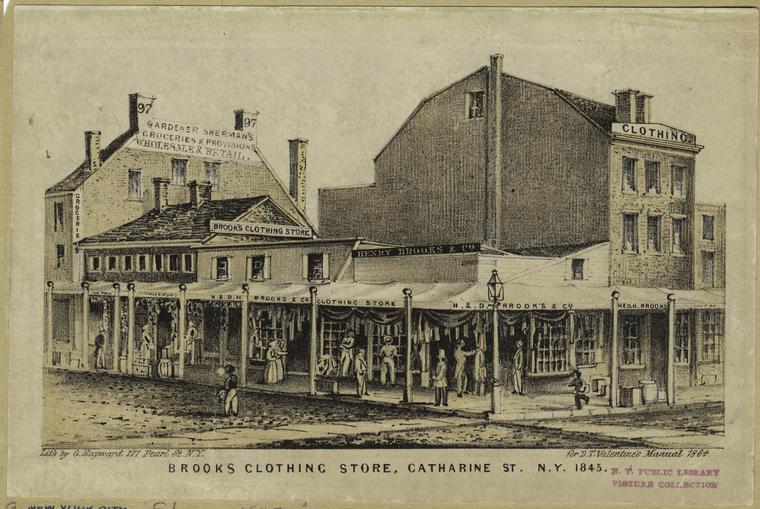
Below: Brooks Clothing Store in 1845, a rival of Opdyke’s clothing business. Opdyke would have some rather controversial connections for Brooks Brothers during the Civil War. (NYPL)

And a successful political career begins as well.  By 1846, Opdyke, now a millionaire and a well-connected member of mid-19th century New York society, entered a life of politics.

Interestingly, he was originally associated with the Free Soil Party, an early anti-slavery effort, illustrating how businessmen often separated certain moral beliefs from their business practices. (Early on, he would become one of Abraham Lincoln’s most ardent supporters.) The Free Soilers were soon be incorporated into the burgeoning Republican Party, and Opdyke’s first appearance in New York state assembly, in 1859, was as a Republican.

That same year, Opdyke became the Republican’s best chance at winning the mayor’s seat in New York. However, he vied for the job with two other seasoned politicians — unscrutable Democrat Fernando Wood and former mayor and sugar king William Havemeyer.  Thanks to machine politics and the uncertainty of war with the South, Wood prevailed that fall, becoming mayor of New York at the start of the Civil War. (I have an entire podcast on Wood’s roller-coaster career in politics.)

But tides would change in Opdyke’s favor.  Pro-Union sentiment surged through the nation and in New York City by the start of the war.  And by the time of the next mayoral election in 1861, situations were ideal for a Republican to take charge.

It helped that Democrats were divided — Tammany Hall went with C. Godfrey Gunther, while Wood formed his own alternative political machine Mozart Hall.  But it was Opdyke that prevailed, although barely.  He beat Gunther by a whopping 613 votes. (But he did beat Wood in Wood’s own ward.  That must have felt good.)

Part of Opdyke’s appeal at that moment was his deep connections to the Lincoln administration. When the flags were waving in New York, Opdyke was an ideal representative, encouraging support for the war, hosting troops in the city, raising money for the effort.  But when enthusiasm for the war withered, so did Opdyke’s reputation.

Below: The draft riots, which paralyzed New York in July 1863

Opdyke’s unwavering support for the draft backfired severely in the summer of 1863. When New Yorkers took the street on July 13, 1863, burning the draft offices and taking out their anger on black citizens and prominent Republicans, Opdyke topped the list of most despised New Yorkers.  He had very little power to quell the violence; the police department was placed under state control, and state militia had been called away.

While his home was nearly destroyed, it was his political reputation that took the greatest hit. At first, he had vetoed a plan by the Common Council to pay for substitutes for any drafted New Yorkers. But a month later, working with Tammany Hall, he essentially endorsed a similar bill to avoid more violence.

This saved New York, but it did not save him.  On election day, that December in 1863, he was replaced with the Democrat Gunther, whom he had narrowly beat just two yeas before.

His woes weren’t quite over. A political feud with newspaper editor Thurlow Weed revealed some unpleasant information about Opdyke in the press. “[H]e had made more money out of the war by secret partnerships and contracts for army clothing, than any fifty sharpers in New York,” claimed the irate newspaper editor.

At right: Opdyke in later life (NYPL)

Opdyke had profited handsomely from the war through his own clothing plant and in deals with rival clothing manufacturer Brooks Brothers.  Opdyke took Weed to court for libel in December 1864, but the jury essentially exonerated Weed, delivering an indecisive verdict “as to whether Weed should pay nominal damages of six cents, or be acquitted.” [source]

In later life, Opdyke took up banking with his sons, representing the concerns of various railroad companies. He “retired a few months before his death with a large fortune.” [source]

After his death, the Opdykes would sell their house to railroad tycoon Jay Gould.

Categories
Those Were The Days

Blackout 2003: Where were you when the lights went out?

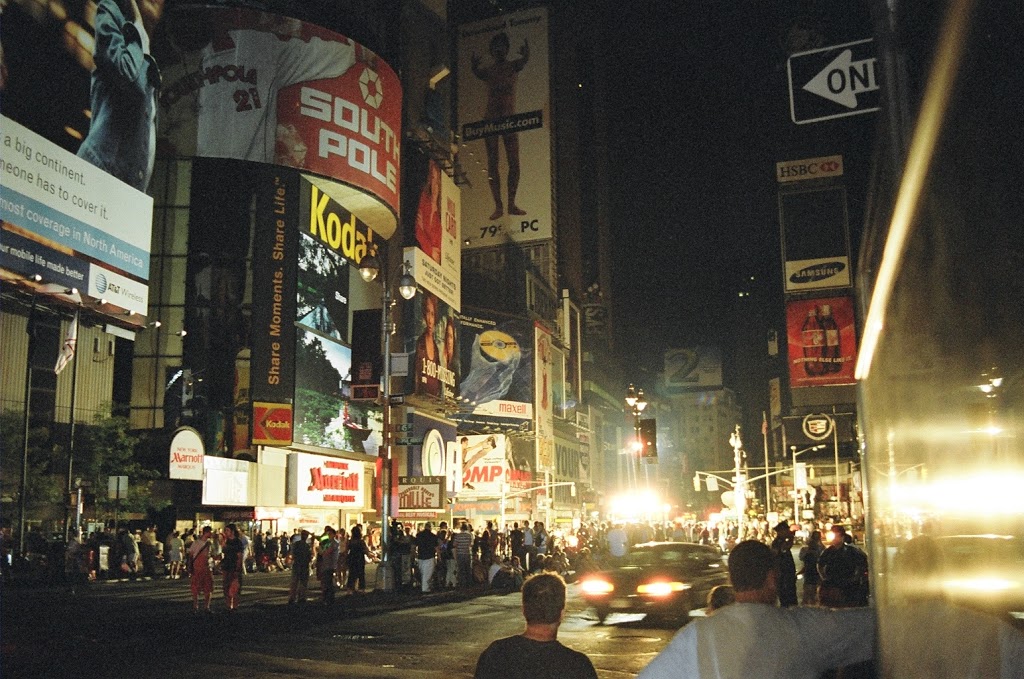
Photo above courtesy Drew Dies/Flickr He has a cool set of pictures from that day here.

Today is the tenth-year anniversary of the Northeast Blackout of 2003 which shut down power for most of New York City (and much of the Northeast) for almost 24 hours, with some areas experiencing outages well into the second day.

I was on the 35th floor of the Bertelsmann Building in the middle of Times Square. My co-workers and I traipsed down 35 floors under the glow of emergency lighting.

As ATM machines were offline, I had a grand total of $5 in my pocket, so I was unable to enjoy any of the cheap-beer and bbq fests that were underway in the East Village, as bars and restaurants rid themselves of items before they spoiled.  Down in the Lower East Side, it was a lonely night under candlelight, trying to tune in updates on my old battery-operated portable television.

We still didn’t have electricity the next day, so I walked the Manhattan Bridge over to Cobble Hill, where power had been restored, and there I hung out at my friend’s shop Halcyon the entire day, a place filled with Manhattan refugees that day. I returned over the bridge in the evening, but the Lower East Side still did not have power.

The heat was slowly driving people insane; I remember seeing a woman carrying groceries for some place a few miles away and almost collapsing on the street.  Had the power not returned then that evening at 10 pm, it probably would have gotten a bit messy in the LES. (It all seems so relatively manageable, of course, in light of the Sandy blackout.

Here’s a few more recollections from Twitter. If you lived in the northeast United States then, where were you ten years ago during the blackout?  Leave your recollections in the notes here, or on Twitter of Facebook:

Where were you during the 2003 blackout, ten years ago today? I was on 35th floor, Times Square, $5 in pocket (no ATMs working). #blackout
— The Bowery Boys NYC (@BoweryBoys) August 14, 2013

@BoweryBoys I was escorting 2 female coworkers uptown from 39st to 172nd.
— Adam Vale (@Adamvale) August 14, 2013

@BoweryBoys At work, 11th floor, Midtown. Walked home to the Lower East Side with free ice cream and beers along the way.
— J Cajigas (@pusher17) August 14, 2013

@BoweryBoys at work walked home. Ran into some people on the way who were in a subway tunnel when it happened glad I wasn’t on the train.
— Abbie NYC (@AbbieLicious07) August 14, 2013

@BoweryBoys Stuck in New Brunswick, NJ. Spent the night at a friend’s house, then walked from Penn Station to Prospect Heights the next day.
— Sunny Stalter (@slstalter) August 14, 2013

@BoweryBoys At work, midtown. Emergency lights in stairwell out, so co-worker & I used cellphone glow until rescue by person with flashlight
— Amy Roth (@aimster215) August 14, 2013

@BoweryBoys Celebrating our son’s 3rd birthday. We never knew about the blackout until TV went off as our buildings have own generators.
— Des Brownlie (@Desb65) August 14, 2013

Some links on the blackout:

Gothamist: Flashback — Massive Blackout Hit NYC 10 Years Ago Today
New York Times: Original coverage from August 2013
WNYC radio piece of the tenth-anniversary of the blackout

Categories
Friday Night Fever

The Incident at Healy’s: Wild nightlife in Columbus Circle, police brutality and spirited protests against ‘cafe curfew’

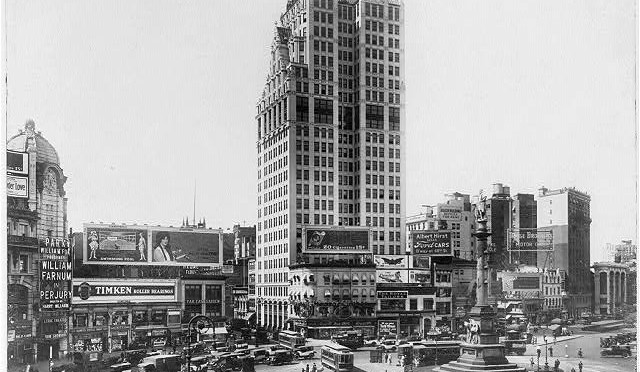
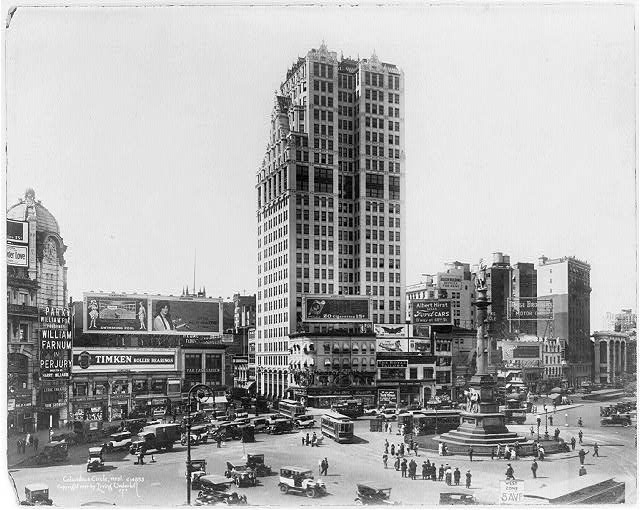
Columbus Circle in 1921, looking west. Healy’s was a few blocks north of this scene.

Many of New York’s most popular restaurants and cafes a century ago were located around Columbus Circle, lively hot spots that drew in the theater and burlesque patrons well into the late hours.  Crowds would exit the Park Theater and head over to Reisenweber’s Cafe to take in some champagne and cabaret, years before it would be associated with bawdy star Sophie Tucker.  Others might partake of the beefsteak at the Morgue on West 58th Street or Child’s Restaurant a block over.

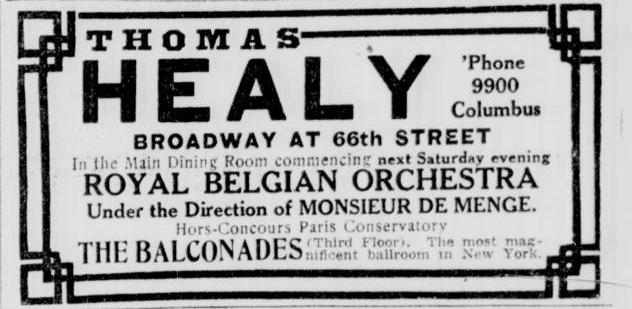
One of the busiest spots was Healy’s (slightly north, at Broadway and 66th Street), a spacious dining and dancing spot,  featuring an indoor ice-skating rink and enormous ballroom, among its many indulgences. It was one of New York’s most trendy dining palaces in 1913, the site of a celebratory dinner by artists from the Armory Show just a few months before.

Below: An advertisement for Healy’s from 1914

But nobody was exactly celebrating at 1 a.m. on August 13, 1913, when the police burst into Healy’s and violently threw out all the patrons.  Men were grabbed by their collars and thrown to the sidewalk. Women screamed as they were separated from their tables, “shoved, pushed and dragged” to the doorway. Thousands of people had gathered outside, both curious and perturbed, shouting at the police and cheering on the discarded diners.

The drama made the front page of every newspaper the next morning. “Diners Thrown From Healy’s,” said the Sun. “Many Are Dragged Away Carrying Dishes and Table Cloths.”

So what was the problem exactly? Naturally, it had to do with liquor.

The fun began several days before, when Mayor William J. Gaynor instigated a new ‘cafe curfew’ for the wild lobster palaces and nightclubs that were turning Midtown into an all-night soiree.  Establishments holding proper liquor licenses must now close at 1 a.m. unless granted an exemption or extended license (often given to hotels).

This did not make Broadway proprietors happy, as it greatly cut into profits. However most restaurant and cafe owners along the White Light zone planned to comply with the order, fearing fines or police reprisals.

But Thomas Healy was ready to fight the law.  His lavish cafe at Broadway and 66th Street thrived on the after-theater, late-supper crowd, a party crew who liked their champagne.  Although Healy’s regularly closed at 2 a.m., that one lost hour would have greatly hurt business, Healy claimed.

He also contested the wording of the law. It stated that “any room which liquor is sold during lawful hours must be closed and the doors locked during the prescribed hours, whether for the sale of liquor and foods.” If his bar room was indeed locked up, why couldn’t his patrons stay and enjoy themselves in the dining room?

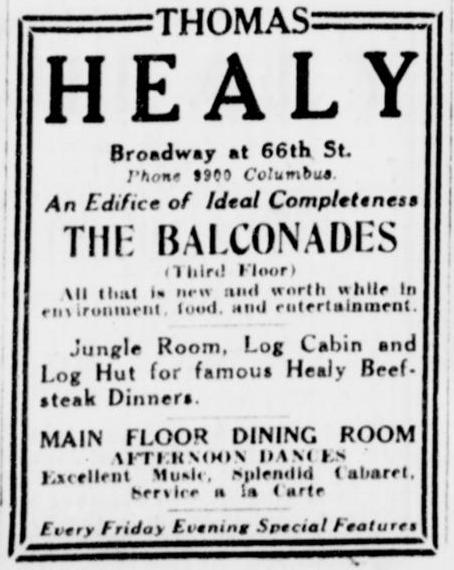
At left: An ad from 1915. Note the ‘Jungle Room, Log Cabin and Log Hut for famous Healy Beefsteak Dinner’

Healy stood ready to combat the mayor, keeping his place open while filing an injunction to keep the law at bay.

For several days, police entered the restaurant and asked patrons to leave at 1 a.m.  On Tuesday, August 12, police barricaded patrons in the restaurant, announcing that none of them could leave until 6 a.m.  But a defiant Healy removed his remaining diners out a back entrance, foiling the police.

This is certainly explains why the police were especially hostile the following day, August 13.  At 1 a.m, police officers mounted the orchestra stage and announced that everybody must leave the restaurant. Drunken patrons laughed and even booed the officer, many proclaiming they had no interest in leaving. Most likely, it was this stubbornness that ignited the rough-handling that followed.

“The recalcitrant guests found themselves enfolded in the uniformed arms, lifted into the air, rushed down the disordered aisles and literally thrown into Columbus Avenue,” reported the New York Times. “In the scramble, tables went over, chairs were smashed, electroliers were damaged, glasses and crockery were broken into fragments. There was pandemonium for a time.”

Violence returned the following night, Thursday, August 14, as rebellious New Yorkers were now insolently dining past the allotted time.  Promptly at 1 a.m., an increased force of fifty police officers rushed the restaurant. “Three hundred men and women were led, pushed, shoved, carried, clubbed and thrown out.” [source]

One of those patrons was New York District Attorney Charles S. Whitman (pictured above in 1910), a rumored candidate for mayor and one of the city’s most popular politicians. (In 1916, he would be elected governor of New York.) His appearance at Healy’s was clearly to draw attention. Thousands of people crowded the streets; the nearly elevated train station was filled with people trying to get a better look, and ‘automobile parties’ cruised by, desperate for a peek at the violence inside.

Whitman’s appearance had done the trick.  Gaynor backed down, allowing Healy’s to remain open if it wished. In fact, warrants were then issued for police detective John. F. Dwyer and two dozen police officers.

But Healy had created a bit of an unwieldy beast. Crowds gathered the next night and cars lined the street, anticipating more excitement, building uncontrollable mess that the proprietor actually called the police himself!  In the end, Healy did end up closing at 1 a.m., just for the protection of his own restaurant and staff.

Categories
Bowery Boys Bookshelf

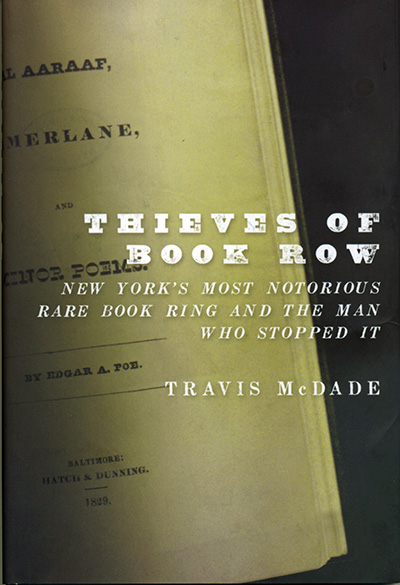
Thieves of Book Row: Strange treasure among the stacks inspires New York’s most intellectual black market


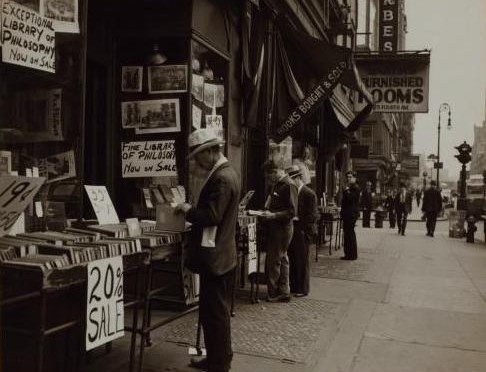
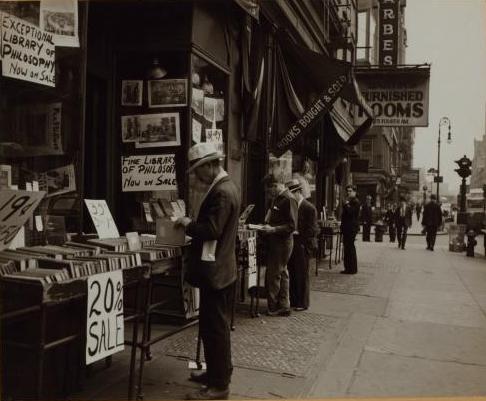
The used bookstores of Book Row, the above shot from Fourth Avenue and 10th Street, 1938 (courtesy NYPL)

BOWERY BOYS BOOK OF THE MONTH Each month I’ll pick a book — either brand new or old, fiction or non-fiction — that offers an intriguing take on New York City history, something that uses history in a way that’s uniquely unconventional or exposes a previously unseen corner of our city’s complicated past.  You can find some our past selections here and links to purchase them from Amazon at the bottom of this post.

Thieves of Book Row
by Travis McDade
Oxford University Press

You probably own a book that you consider priceless, not for its physical value, but for the knowledge it imparted upon you, or the adventure it provided.  Books can bring you into their worlds, and they can capture who you once were when you first read them.

Now separate those meaningful values and see your favorite book as nothing but an object — a precious, rare artifact, hoarded like jewels by wealthy collectors. A one-of-a-kind bound volume as desirable as fictional literary treasures like the Maltese Falcon or the Holy Grail.

From the late 19th century until the end of the jazz age, criminals worthy of a film noir backdrop were on the prowl for these objects, spiriting them away in coat pockets and sprinting through the streets of Manhattan to deliver them to book-buying fences.  It was in this manner that hundreds of books changed  hands from the advent of mass-market publishing to the end of the jazz age, creating New York’s most intellectual black market.

Welcome to the world of Thieves of Book Row, an intriguing new historical investigation by Travis McDade that uncovers an unusual criminal undercurrent that thrived in New York upon the increasing stature of books as exotic, desirable artifacts.

The rare book market exploded in the late 19th century as Americans became wealthier and created their own personal libraries.  The development of American identity after the Civil War turned obscure, small-run volumes of Americana by local historians into highly sought-after items.  Early editions by famous poets and novelists, manufactured in modest runs, were hunted down by Gilded Age millionaires who could spend months seeking one particular book.

But the value of books went beyond particular authors and titles. Public lending libraries, such as the Astor and Lenox libraries, made old books available for the general public.  The concept of a ‘rare book’ room was still many years in the future, so older books frequently went into circulation. By the early 20th century, the New York Public Library and associated neighborhood libraries sprang up throughout the city, and for the first time, regular New Yorkers could experience great works of writing themselves.

With mass production of books came the advent of used bookstores, which clustered in New York City north of Astor Place in an area called Book Row and later in areas of midtown Manhattan.  As McDade illustrates, it was here that the book thief thrived, as crooked book sellers went into overdrive to provide rare, valuable objects for a growing number of wealthy book lovers.

In fact, a ring of book thieves terrorized book stores and libraries up and down the East Coast, common criminals often led by a book seller with connections to wealthy buyers. Hardly a trifling crime, book thieves were considered “the meanest thief God ever let live” by 1907 and were harshly prosecuted. A few thieves you will meet in McDade’s engrossing investigation will end up in Sing Sing Prison.

Below: Outside of the New York Public Library central branch on 42nd Street, early 1920s 


Robbing from a public library was akin to snatching a book from a poor child’s hands. “Stealing books from the libraries of the public is one of the unspeakable crimes — like stealing coins from the eyes of a dead man,” said a judge in 1904.

The centerpiece of this tale is the theft of a particular volume: Al Aaraaf, Tamerlane and Minor Poems by Edgar Allan Poe, an author whose book value skyrockets during the Gilded Age.  What makes this book theft so intriguing is where it was stolen from — the virtual fortress of the New York Public Library’s main branch.  The best passages in Thieves of Book Row describe the methodical heist of this and other precious volumes from NYPL’s Reserve Book Room, walking you step-by-step through this criminal enterprise.

If you love books, it will be McDade’s backdrop that may appeal to you more, a world of bookstores that has disappeared, dozens of stores stocked with thousands of old book, clustered along a few city streets.  Today, the Strand BookstoreAlabaster Bookstore and a couple others are all that remain of this once remarkable district in the Village.

Along the way, you’ll meet the New York Public Library’s jazz-age investigator G. William Bergquist and a shifty assortment of book thieves, some of middling intelligence. It seems many of these desperate men were simply too busy shoving volumes into their coats to actually read any of them.

PAST BOWERY BOYS FEATURED BOOKS:
 

Categories
Podcasts Pop Culture

New York City in the Golden Age of Television: Behind the scenes with nine classic TV shows filmed in the city


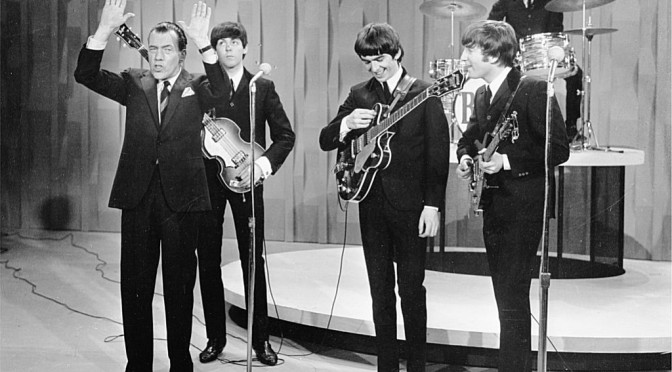
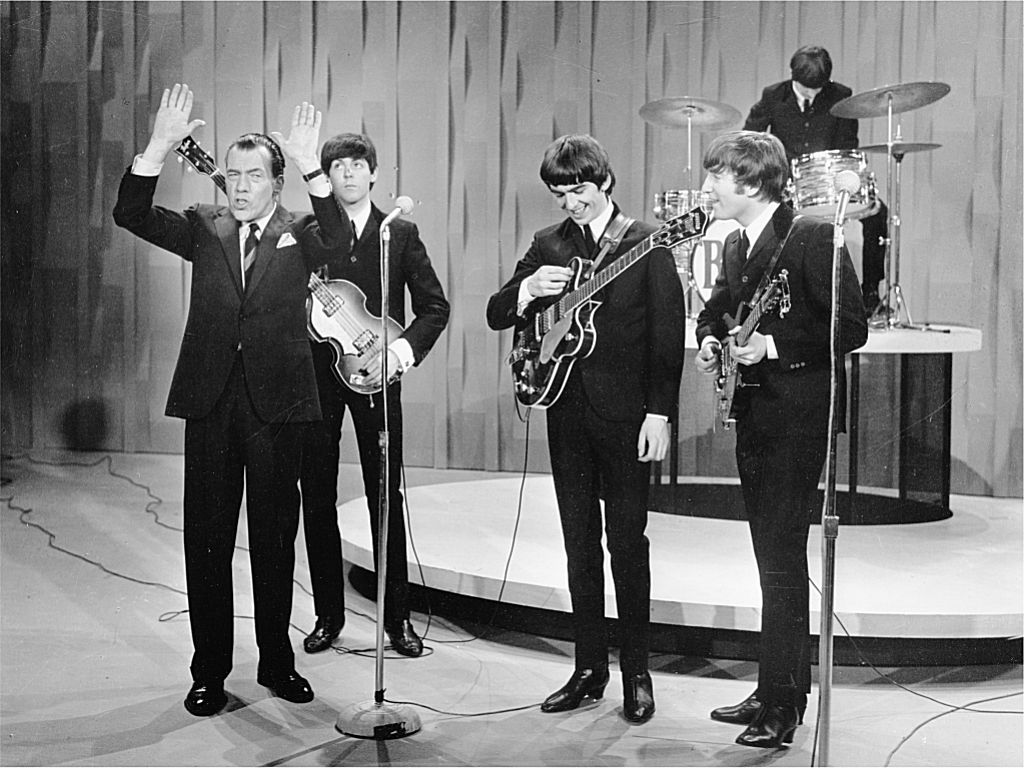
The Beatles in one of their many appearances on the Ed Sullivan Show. [source]

PODCAST This is the second part of the Bowery Boys TV Mini-Series, covering the years of New York City television production from the late 1940s to the 1960s.  Some of the most classic television shows ever made — and many still around today — were filmed from various locations in midtown Manhattan.

The insatiable appetite for television programming in the United States after the war created a new industry out of the roots of radio, with the television networks NBC, CBS, Dumont and ABC trying out almost every conceivable form of entertainment.  Their efforts in the late 40s and 1950s created many standard forms of programming — the morning show, the late show, the situation comedy and the game show.

This podcast is arranged a little bit like a leisurely Midtown walking tour, taking you past four of the greatest locations in NYC television history.  We give you the back story behind nine television shows that were filmed in New York City in this period — Howdy Doody, Texaco Star Theater, the Today Show, the Tonight Show, What’s My Line?, The $64,000 Question, Life Is Worth Living, The Honeymooners and the Ed Sullivan Show.

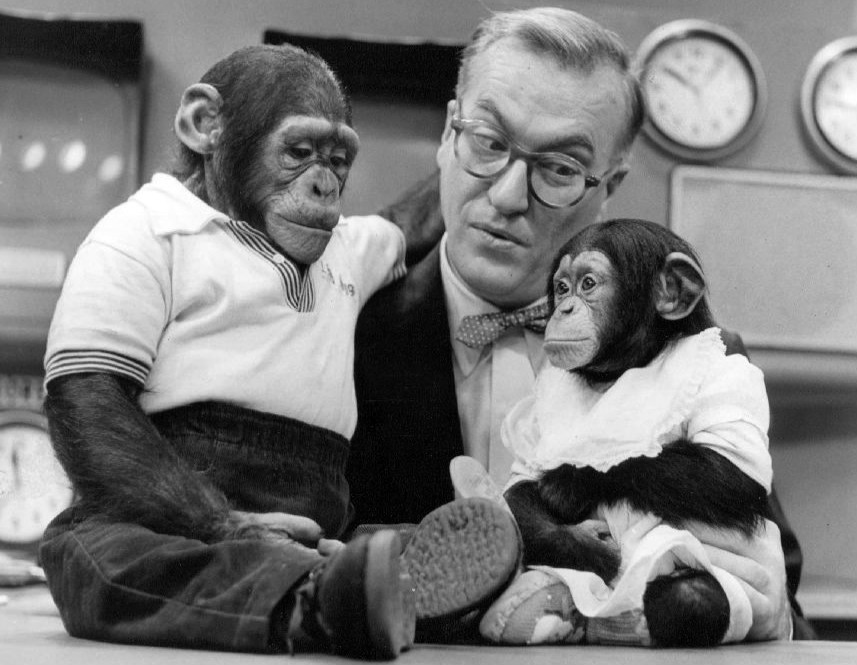
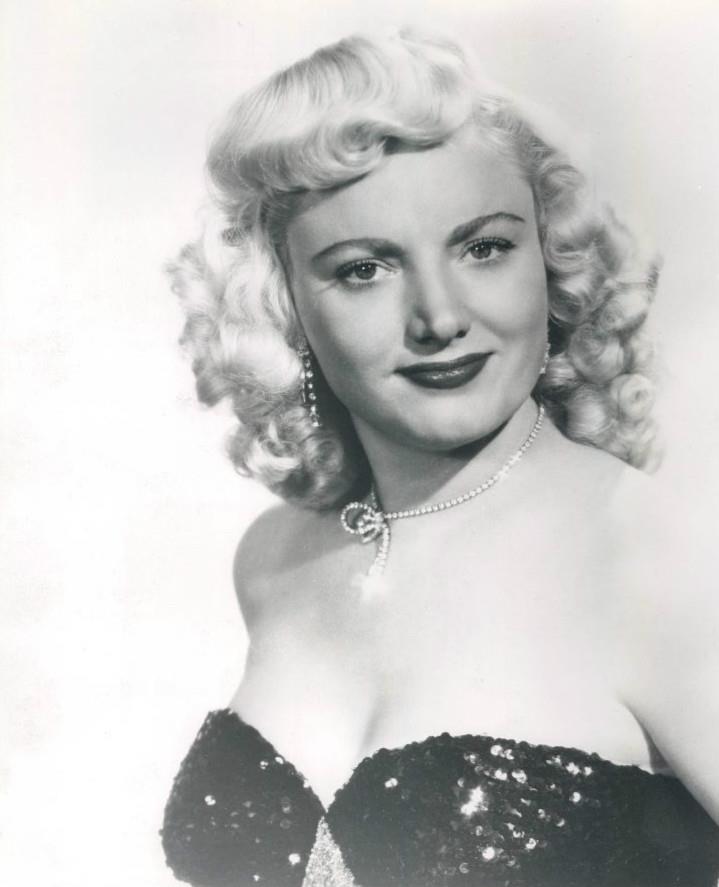
This show definitely features the strangest cast of characters we have ever discussed — television’s most influential chimpanzee, a regal bishop superstar, a freckled marionette, a buxom blonde, and the father of Sigourney Weaver!

LISTEN HERE: THE GOLDEN AGE OF TELEVISION

 _____________
  CORRECTION: In this week’s show, I say that the Blizzard of 1947 occurred on the exact date as the debut of Howdy Doody (December 27, 1957). The storm actually hit in the two days before that date — December 25-25. But the city was a total mess for days after.
_____________

J. Fred Muggs, Dave Garroway and Phoebe B. Beebe on the Today Show. Courtesy NBC Television

The glorious Dagmar from ‘Broadway Open House’! [source]

A few episodes of some of the show’s we talked about in the podcast:

 The $64,000 Question

 Life Is Worth Living with the Bishop Fulton Sheen

 Texaco Star Theater from November 1949

What’s My Line? — with an episode featuring Eleanor Roosevelt!

The Honeymooners — the episode called “The Bensonhurst Bomber”

Categories
Amusements and Thrills

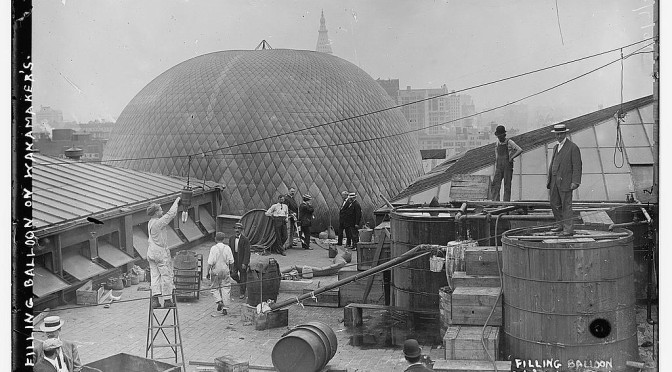
Wanamaker’s Airship: That one time in 1911 they launched a hydrogen balloon from Astor Place

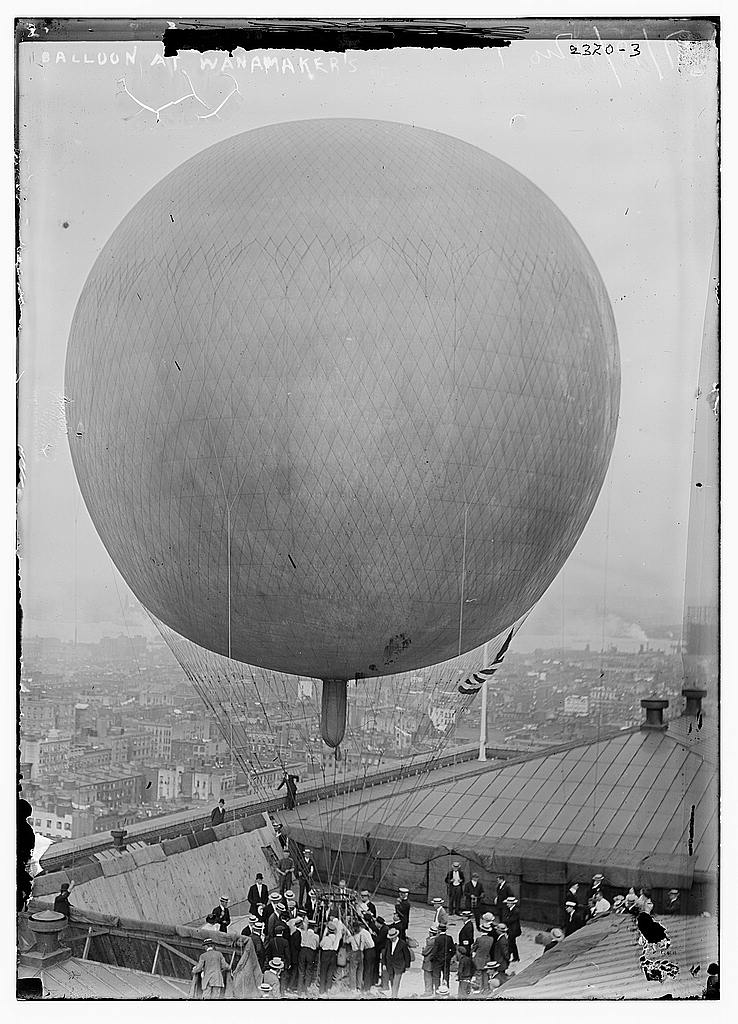
A view of the balloon launch, looking north towards the Metropolitan Life Tower, which can be seen jutting up in the background. The Met Tower was the world’s tallest building in 1911.

Philadelphia retailer John Wanamaker turned an abandoned train station in Philadelphia into the lavish department bearing his name in 1876, just in time for America’s 100th anniversary.  He would become one of Philadelphia’s largest employers, with 5,000 people working in the store, “the most valuable piece of property of its size in the city.” [source]

Meanwhile, in New York City, when shoppers weren’t flocking to Ladies Mile, they headed to A.T Stewart‘s equally grand ‘Iron Palace’ department store in Astor Place, with over thirty departments specializing in every sort of modern necessity, making it one of the largest stores of any kind in America.

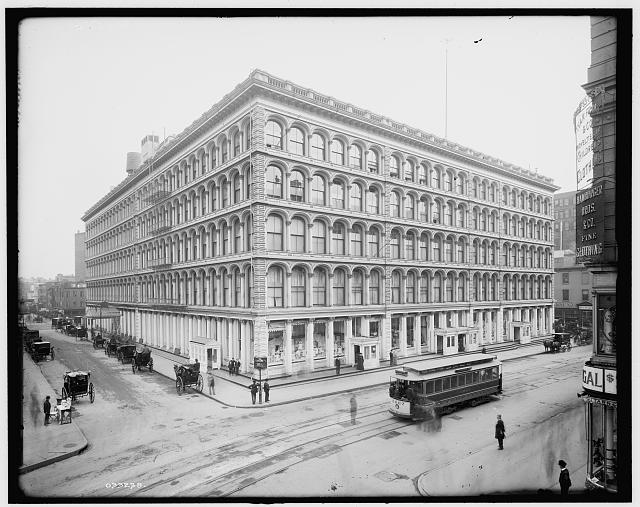
Stewart’s store was located on Fourth Avenue between 9th and 10th Streets and was called the ‘Iron Palace’ as it was New York’s largest cast-iron building at the time.  (But not the first; that title goes to its neighbor, the American Bible Society building, at 51 Astor Place.)

Below: The original Wanamaker’s between 9th and 10th Streets. The building no longer exists.

It would take two decades for Wanamaker to make his way to New York, eventually buying up an old Iron Palace in 1896 and reopening it as New York’s first Wanamakers.

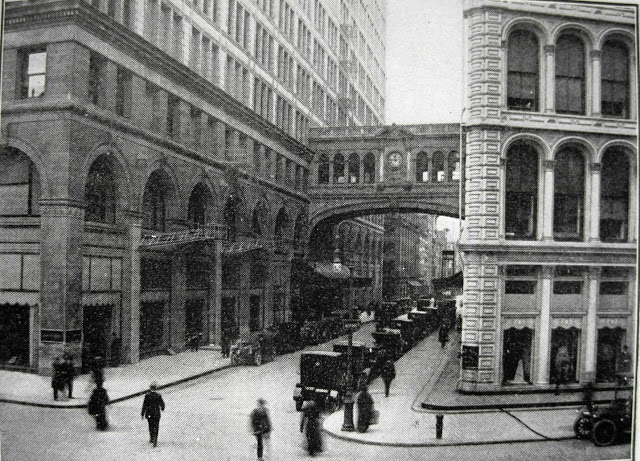
But a man who had filled an entire train station in Philadelphia would not simply be content with one lavish store; across the street, between 8th and 9th, he built another in 1902, using one of the world’s most revered architects — Daniel Burnham, who had just completed work on the Flatiron Building.  Customers could go between the buildings using a fanciful ‘bridge of progress’.

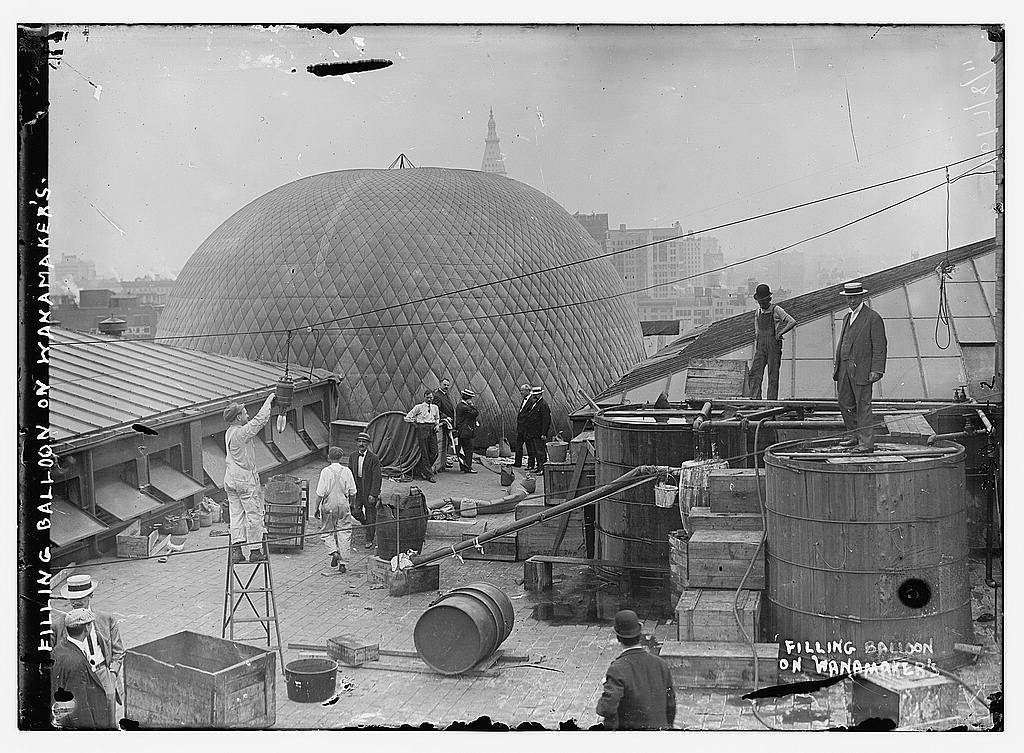
That is all, of course, to set this scene for the curious publicity stunt which occurred on the rooftop of Wanamaker’s on July 8, 1911.  For three days, a large hydrogen balloon (48 feet in diameter) sat tethered upon the rooftop of the new building, filling up with copious amounts of gas for a journey to Philadelphia — with a planned landing near Wanamaker’s other store.

In 1911, that old train-station store would be replaced with a new Wanamaker’s in Philadelphia’s Center City, also built by Burnham.  No better way to grab headlines for his new store in Philadelphia than to float a gigantic eye-catching object from one store to the other!

The balloon (called the Wanamaker No. 1), imported from Paris, was launched at 6 pm and gracefully floated over the city, across the Hudson, fadeing into the mists of Weehawken.

Unfortunately for the balloon’s two pilots, things went immediately awry, the balloon being a tricky one to control.  Instead of floating southwest, it headed due north.  After an hour and a half of wandering blindly through the clouds, the balloon ungraciously came down — in Nyack, New York.

But it wasn’t considered a failure by any means. Wanamaker’s wanted a publicity stunt and got one.  The launch made the front page of newspapers.  For a moment, the whole region seemed transfixed.  “Crowds turned out to gaze at the big airship as it passed over the Hudson River villages,” crowed the New York Times.

Some even claimed this was the beginning of a new phase in New York travel.  Rooftops could regularly be used to launch airships of all sorts.  “This is the first step towards making the roofs of the Wanamaker buildings in New York and Philadelphia into permanent aerial stations,” claimed the Evening World.  “Landing platforms and hangars for balloons and aeroplanes are to be built on the roofs of the department stores in both cities.”

Not to be outdone, the following month, Gimbels Department Store would stage a marvelous airplane race over the streets of Manhattan.

By the way, Mr. Wanamaker wasn’t even in the country when all this happened.  He rolled into town the following week aboard the White Star liner Oceanic, having celebrated his 73rd birthday in style by traveling to England and meeting King George and Queen Mary.

The original Wanamaker’s building is no longer there, but the south building, the one designed by Burnham and the one from which the balloon was launched, still exists today as the home of K-Mart.

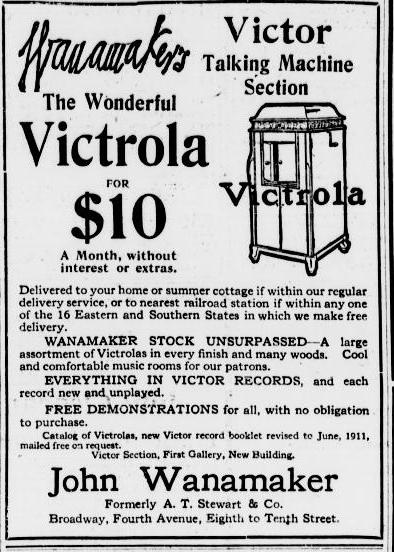
Below: That same week, one could run into the store below the balloon and purchase this swell Victrola. This ad is from the July 10, 1911 issue of the Evening World

Pictures courtesy the Library of Congress.

Categories
Those Were The Days

Ten cool facts about ice cream and New York City history PLUS: where was New York’s first frozen yogurt shop?
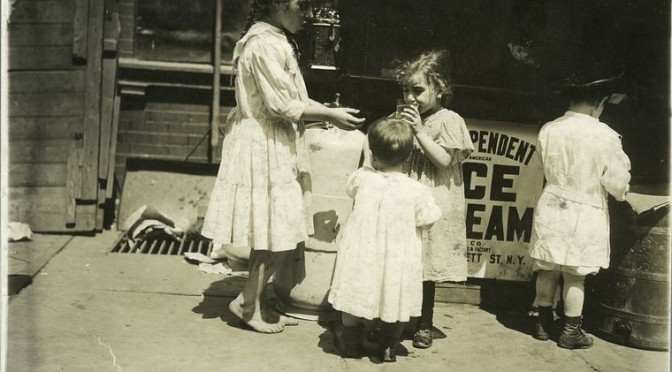
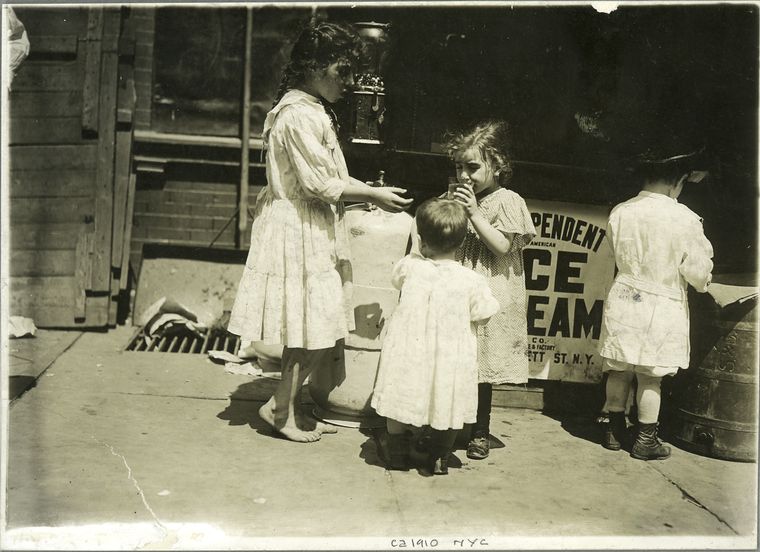
Lewis Wickes’ photograph of a few children enjoying a bit of ice cream on a hot day, 1910. (NYPL)

1. America’s first ice cream shop was located on Dock Street** (roughly today’s Pearl Street) in 1774.  The British confectioner Philip Lenzi advertised ice cream of “any sort”, along with a host of treats, including sugar plums, jams and sweetmeats.

2.  Hanover Square (near Stone and Pearl streets) was the center of commerce in colonial New York, and apparently of confections as well.  In 1777, in the midst of British-occupied New York during the Revolutionary War, Lenzi moved his shop up into Hanover Square next to another ice cream shop owned by Joseph Corree at 120 Hanover Square. [source]

3. George Washington and his wife Martha were huge fans of ice cream.  During the first year of Washington’s presidency, back in 1789, when the seat of government resided in New York, Martha would make several batches of it from the Washington’s home at One Cherry Street She sometimes complained of the lack of fresh cream, sometimes serving “unusually stale and rancid” desserts at her weekly tea parties.  One well-repeated legend states that the Washington’s spent over $700 on ice cream desserts in the summer of 1789.

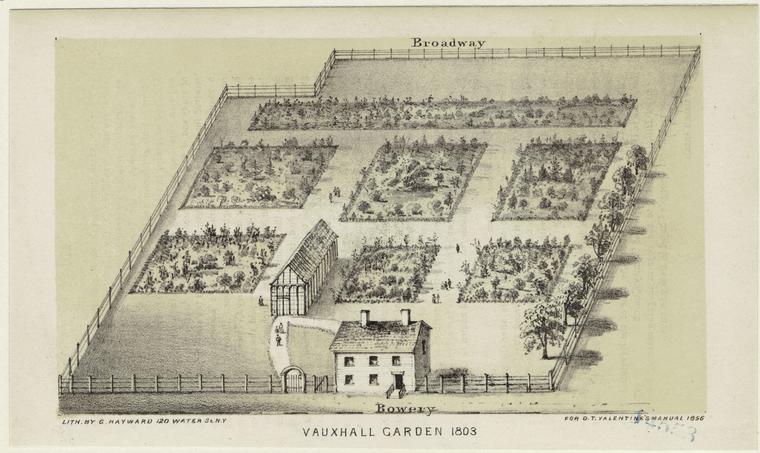
Above: A 1803 map of Vauxhall Garden, at Broome Street between the Bowery and Broadway, a lovely place to enjoy a bowl of ice cream in early New York
4. Manhattan’s pleasure gardens — early precursors to the modern park — became instrumental in spreading the joy of ice cream.  The aforementioned Joseph Corree opened the Mount Vernon Garden at Broadway and Leonard Street in 1800, a few months after ice cream-lovin’ Washington died at his estate in Mount Vernon.

On top of the many festive entertainments at the garden — fireworks, theatricals, topiary, tableaux vivant — Corree also offered ice cream for sale.  Other popular pleasure gardens of the day, such Vauxhall Garden and Niblo’s Garden, would follow suit.

5. Delmonico’s, before it became the finest name in restaurant dining in New York in the 19th century, got its start as a small confectionery shop on 23 William Street in 1827 which featured ice cream on its menu. (Learn more about Delmonico’s from my podcast on its history.)

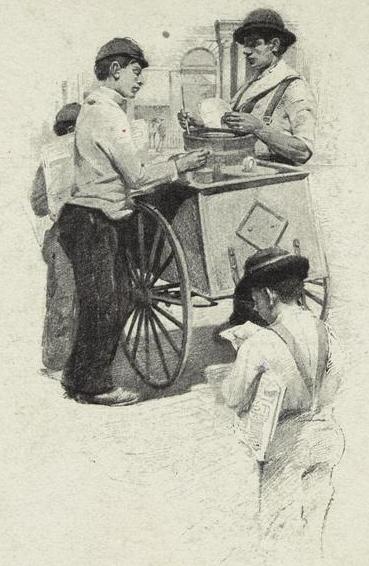
6. Ice cream vendors were on the streets of New York as early as the 1820s, the best way for less affluent people to enjoy the dessert.  Within a couple decades, of course, the ‘pleasure gardens’ would lose their patina of class and become playgrounds for poorer New Yorkers.  In 1852, one garden near the Bowery was described as “a sort of ice-creamery, and general rendezvous for the Bowery fashionables.” [source]

At right: A Century Magazine illustration from 1901 of a New York ice cream vendor or ‘hokey pokey man’ (NYPL)

7. Ice cream saloons, by mid-19th century, were aplenty along the main thoroughfares of New York, experimenting with different kinds of production.  One saloon, Parkinson’s on Broadway, claims to have invented pistachio ice cream.  Another, the Patent Steam Ice Cream Saloon, named for its steam-operated freezing unit, catered to the women of the middle class, “the wives and daughters of the substantial tradesmen, mechanics and artisans of the day,” according to New York by Gas-Light.

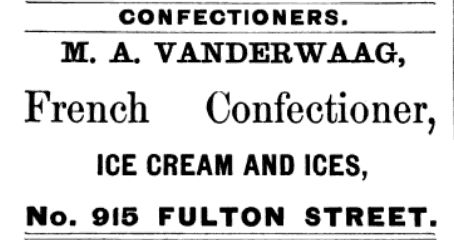
A Brooklyn confectioner ad from 1876:

8. The hokey pokey men, the nickname for one-cent ice cream street vendors, were briefly hindered by the Ice Cream Strike of 1913, a walkout by all 2,500 members of the Ice Cream Workers Union in New York, effectively shutting down the production of ice cream, especially in the Lower East Side.  The strike lasted several weeks.

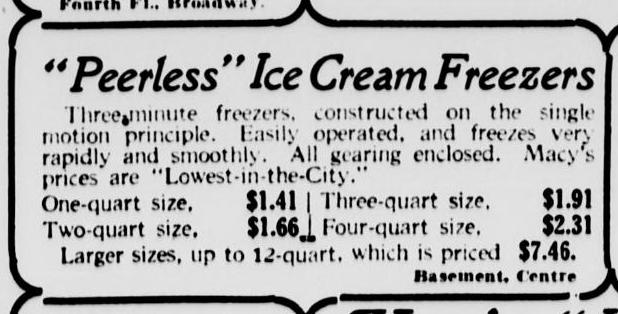
Below: A Macy’s ad in 1913 for a home ice-cream maker:

9. Ice Cream Profiteering or Newspaper Self-Promotion?  After the war, many merchants continued to sell massively overpriced ice cream.  The Evening World reported in 1921 that “profits from ice cream range from 500 to 1,000 percent” at a survey of local ice cream vendors.  “In few articles of food has there been found any greater evidence of extortion from the consumer.” [source]

A few days later, the newspaper extolled upon its own crack reporting, claiming that ice cream prices were going down because of their investigations.  “Hundreds of manufacturers and retails have already cut prices,” the World boasted.

10. Haagen-Dazs Ice Cream was not created anywhere near Scandinavia, but rather in the Bronx, the product of two Polish-Jewish confectioners Reuben and Rose Mattus.  The official reason for the name was “to convey an aura of the old-world traditions and craftsmanship to which he remained dedicated.” Reuben later admitted, “We wanted people to take a second look and say, ‘Is this imported?'”

The first Haagen-Dazs ice cream shop, which opened in 1976, is located at 120 Montague Street in Brooklyn Heights. The store is still going strong.

EXTRA: Frozen yogurt was the original cronut The trendy dessert was first sold over the counter in New York at Bloomingdale’s Department Store in the early 1970s.  As far as I can tell, the first actual yogurt store in the city — the first of many — was the Dannon Yogurt Store at 207 East 86th Street, opening in February 1975.

That was the year that New Yorkers first went WILD for frozen yogurt, well at least according to the New York Times (but you know how they are with trend stories!)

Yogurt: “It’s the biggest thing since hamburgers and chicken,” according to one fast-food executive in 1976.

**There were two Dock Streets back in old New York, so it’s possible (although more unlikely) the original shop could have been on the other one, which is near today’s Water Street and Coenties Slip.

For more sweet New York City history, check out my prior articles on:
New York and the history of soda fountains
New York, World War I and the history of the doughnut

Categories
Neighborhoods Preservation

The neon bible: A chat with ‘New York Neon’ author Thomas E. Rinaldi about the city’s most stylish signs


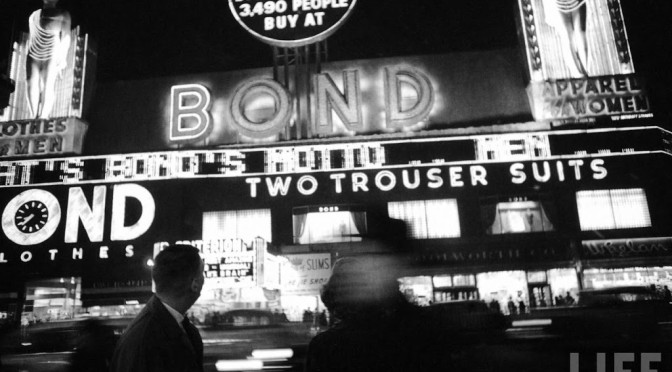
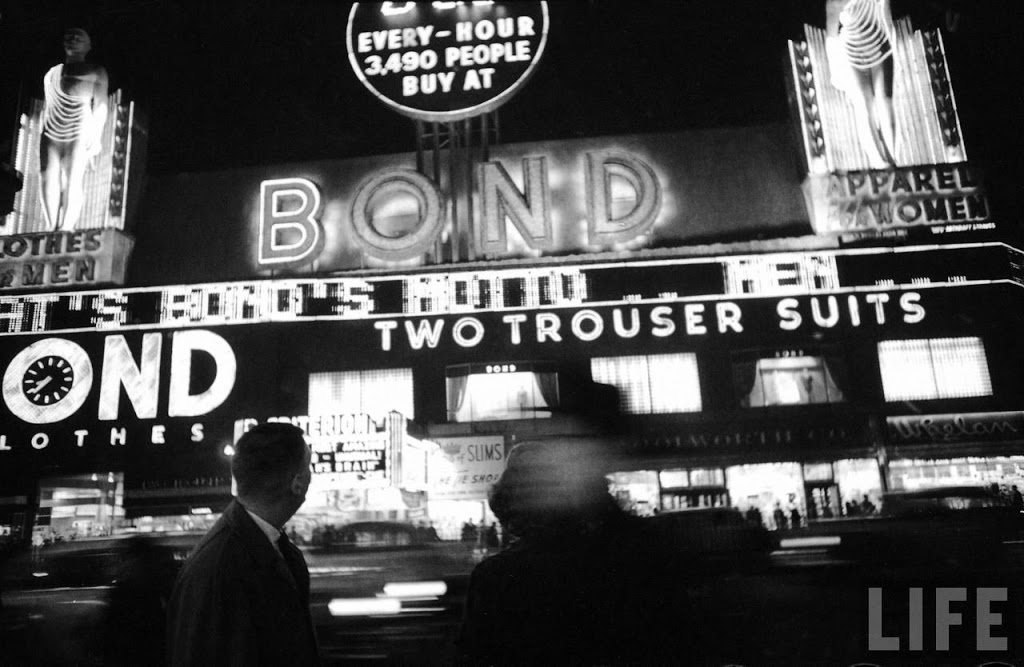
Bond Clothing Store sign was a mainstay of Times Square in the 1940s and 50s. For more on Bond’s unusual transition after that, read my article from 2007 on Bond International Casino. Picture courtesy Life Magazine, Lisa Larsen photographer

New York Neon is the Bowery Boys Book of the Month for July, a superb review of the history of neon signs in New York City and a delectable catalog of some of the finest neon works still in the city today.  My full review is here.

The author Thomas E. Rinaldi also runs a great website on the subject.  I asked him a few questions about the current state of New York’s most classic form of signage:

Why does the glow of a neon sign continue to endure and fascinate people over other architectural forms from the same period of the early-mid 20th century? 

Thomas Rinaldi: I think a large part of the appeal of old signs is their rarity.  The odds of any commercial sign lasting more than a few years are incredibly slim; for this reason, old signs really stand out, in a way that turns out to be of widespread appeal.  This is especially true in NYC today, where old signs have added appeal by way of their association with old, independent businesses that have become almost an endangered species in the city of late.

How does New York’s representatives in neon compare to those in other neon-friendly cities like Las Vegas or Los Angeles? 

TR: The old neon signs one finds around New York today are actually very modest compared to those of Vegas or LA, or the kind of “roadside Americana” signs one associates with Route 66.   I find this interesting in and of itself.  Sure, New York had its extravagant signs in places like Times Square.  But most of the neon that went up in New York was relatively humble, for a variety of reasons.

First of all, there are the obvious space constraints of any urban storefront.  While some pretty imaginative storefront signs appeared before WWII, the signs became increasingly spare after the War, partly because of restrictive zoning, partly because of labor costs (most of the New York sign shops were union), and – my belief – partly because of the general postwar trend away from urban centers and toward suburban development and roadside culture.

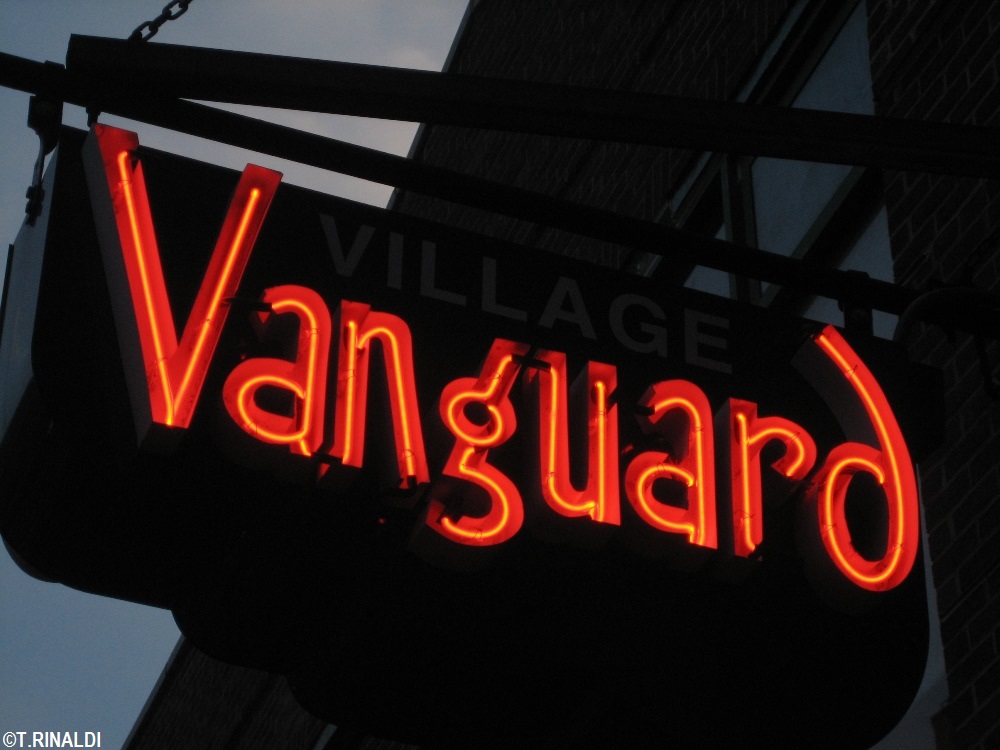
Below: The neon sign at the Village Vanguard in Greenwich Village, a facsimile of one that originally appeared here in the 1940s.

Neon lends its appeal to a certain nostalgic image of New York. Are there any uses in classic print, TV or film that stand out to you as particularly striking?

TR: I found that the classic, iconic image of New York neon noir is spread out in little scattered fragments.  There are a handful of classic noir films set in New York in which you’ll see neon in the backdrop – films like I Wake Up Screaming and Where The Sidewalk Ends.  But some of the best cinematic depictions of New York’s neon heyday aren’t noir films at all:  Pillow Talk, for instance, is a goofy comedy, or The Sweet Smell of Success, which is probably the single best go-to for shots of midcentury, neon-festooned New York.

Neon storefront signs were so incredibly ubiquitous in cities like New York that they crop up just about everywhere – in noir films, yes, but not just those set in New York. I would suggest that the popular association of neon with the nocturnal cityscape is not something born unto any one city, medium or genre, but a composite of scattered fragments that add up to a collective ideal.

Below: The trailer to Murder My Sweet, a wild, smoky film noir starring Dick Powell that effectively uses neon to help set the mood. 


It seems the most difficult task you laid out for yourself in ‘New York Neon’ is tracking down the stories of dozens of still-extant individual signs. What’s the secret to many of these classic signs surviving for so long?

TR: To a large extent, it’s luck of the draw. But also, I found that old signs tended to be more densely collected in certain kinds of neighborhoods, like the Upper West Side or Greenwich Village. Places that could still sustain little family-owned businesses, even through the period of New York’s financial crisis. Places not too rich but not too destitute either. Now, however, they’ve become scarce even in those neighborhoods.

What’s your personal favorite New York neon sign, both of those presently existing and those from the past?

TR: Depends on what day you ask me!  Ones that usually come to mind, though, are Nathan’s Famous and the Wonder Wheel out in Coney, the Dublin House on West 79th Street, Radio City Music Hall and Patsy’s Restaurant in Midtown.

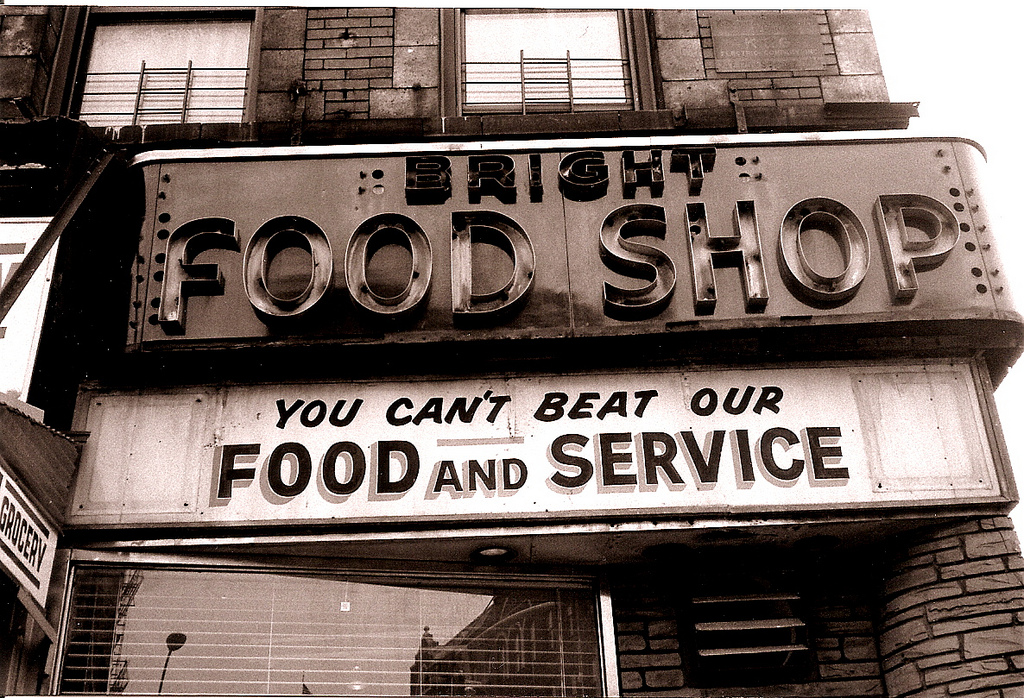
The P&G Bar sign, formerly on the Upper West Sign, is my favorite of the signs that have disappeared in recent years. I also really miss the Bright Food Shop‘s sign in Chelsea.

 There were some great relics that disappeared just a little before my time – places like the Terminal Bar, across from the Port Authority Bus Terminal, or the Penn Bar & Grill, by Penn Station, that I wish I’d photographed. And then there are those that vanished long, long ago – a funny place called the “Barrel Of Fun” nightclub in the West 50s comes to mind, but really, of the thousands and thousands of neon signs that have come and gone from Manhattan alone, the list could go on almost forever.

Below: The old Bright Food Shop sign on Eighth Avenue (Photo courtesy verplanck/Flickr)

Having devoted so much time to the classic beauty of neon, does it make you a little nauseous to even look at LED sign by this point?

TR: Actually, it’s sort of the opposite.  Maybe it’s just wishful thinking, but I find that LEDs have facilitated some fairly decent, interesting new signs, sort of like the early days of neon all over again – much more creative stuff than the boring, fluorescent-and-vinyl signs that have been the norm for the last few decades. 

Still, LEDs have a tremendously long way to go before they could give us illuminated signage that holds a candle to typical neon storefront signs of the 1930s or 1950s, in terms of creativity and craft.  Whereas neon signs were designed to be repaired rather than replaced, LEDs are essentially disposable, and it’s heartbreaking that they’ve taken such a huge toll on the neon industry around the world.

The flip side is that LEDs are an incredibly versatile artificial light source, so – maybe there’s hope for better signs down the road.  But neon is still so unique that I expect it will always have a niche, even though we’ll likely be seeing less and less of it in the years to come.

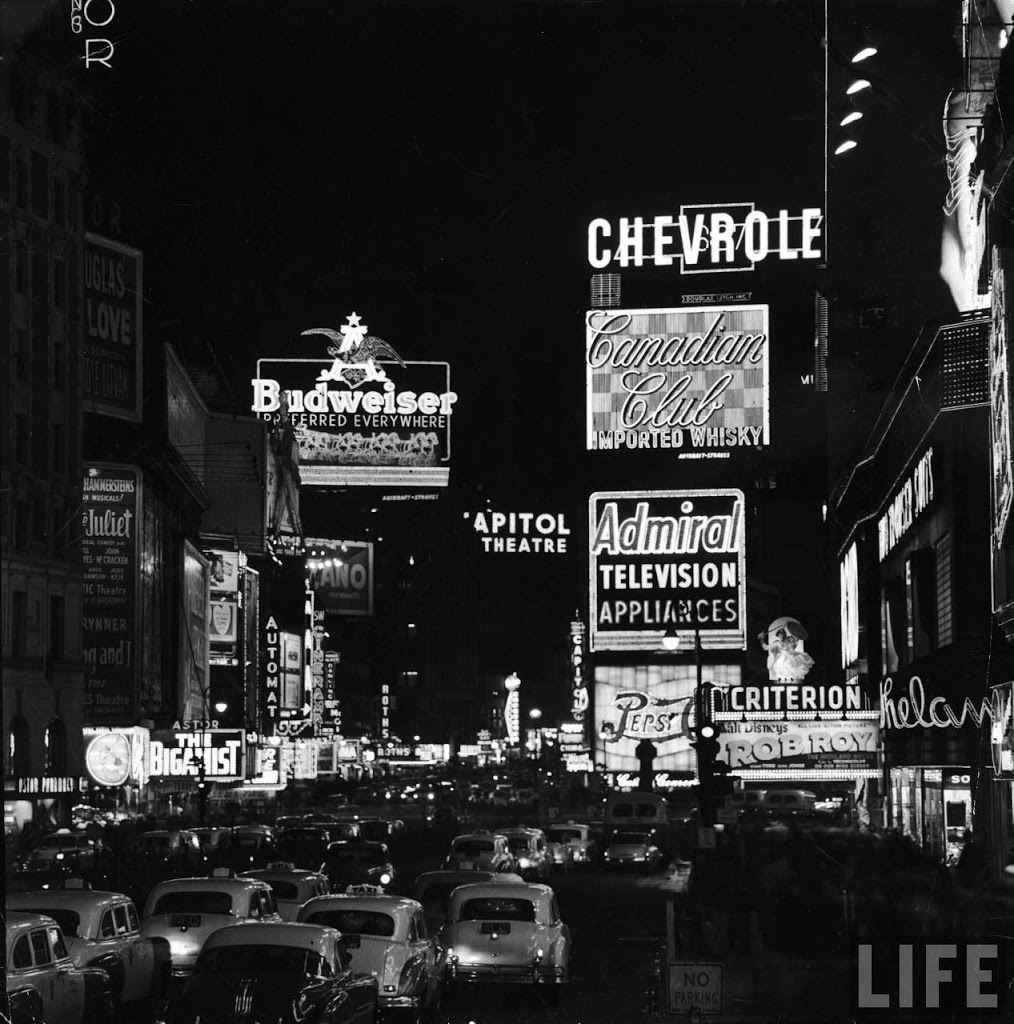
Below: Times Square 1954, photo by Andreas Feinginger (Courtesy Life)

You can hear Rinaldi discuss all things neon at his upcoming talk on Monday, July 22, at the New York Public Library’s Mid-Manhattan branch. More information here.

Categories
American History Wartime New York

It’s the 150th anniversary of the 1863 Civil War Draft Riots. Why should we care?

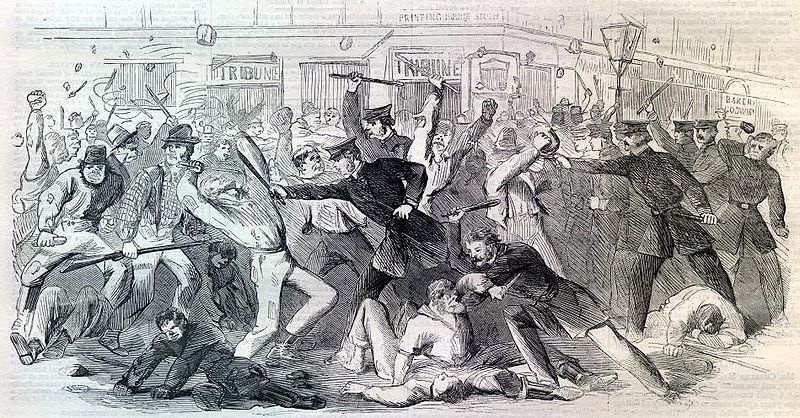
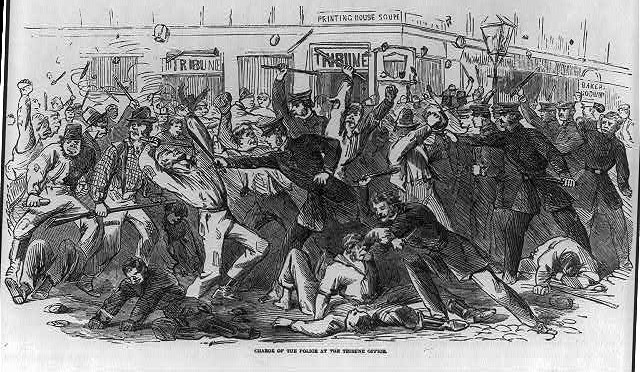
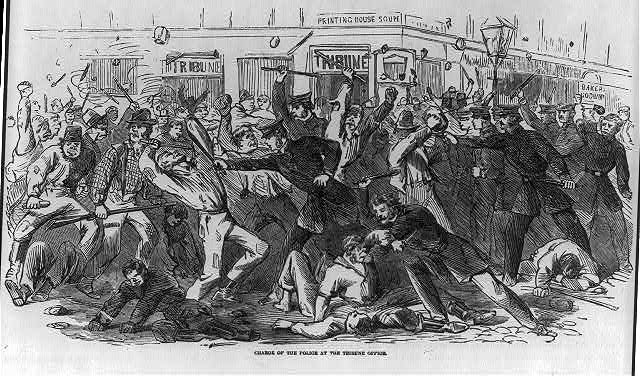
Police try to restore order in front of the New York Tribune building, a pro-Lincoln publication being attacked by rioters.

Why are there no permanent remembrances of any significant kind in New York City to the Civil War Draft Riots?   It was the most grave, the most tumultuous event in New York City history between the Revolutionary War and September 11, 2001.  Doesn’t it merit some mention?

The leading answer, of course, is that New Yorkers don’t end up looking very good.  This isn’t New York’s finest moment; in fact, it’s probably its worst.  Many of the hundreds who died during that week were rioters, lawbreakers, killers.  The racism of many was laid bare, exposed brutally.  On the first day of rioting, firemen — the Black Joke Engine Co. — were actually complicit in kicking off the violence.  Even the leaders of the period had ulterior motives.

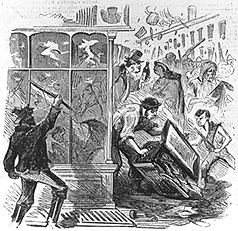
At right: The Black Joke firemen help plunder the draft office

For almost five days, the angered and the desperate rampaged through the streets of New York. The violence was only superficially fueled by anger over the actual conscription act, an excuse to vent other frustrations, some understandable, others reprehensible.  For several days, nobody was safe — from the moment the Ninth District Draft Office was incinerated on Monday morning to the final sweep of barricaded streets by state militia and federal troops on Thursday night.

It’s a complicated, ugly, confused time in New York City history.  But how does a city acknowledge a self-inflicted tragedy?  Who wants to remind America of how duplicitous many New Yorkers were during the Civil War?

The Draft Riots are a nuisance of fact, sometimes serving to obfuscate the sacrifice of the many thousands of New Yorkers who gave their lives in service of the Union Army.  New York holds up its reputation as a melting pot, as a place where people of different ethnicities co-exist, if not always peaceably.  The images of the Draft Riots — black families fleeing the city in terror, lynched bodies from trees and streetlamps — serve only to remind you that the spirit of inclusiveness is merely a modern notion and possibly a mirage.

Anniversaries are important.  They reflect how we want to present our past and illustrate our present frame of mind.  On the one hundredth anniversary of the sinking of the Titanic, people re-watched the James Cameron movie and took a (strangely morbid) memorial voyage along the same watery path the original ship was to have taken.  On the centennial of the Triangle Factory Fire, hundreds marched through the street and chalked memorials on the sidewalk in front of the homes of the victims.

On America’s bicentennial, New York briefly awoke from its bankrupt, gritty slumber to present a shimmering display of patriotism featuring Queen Elizabeth, festive parades, and battalions of ships in the harbor.  Every September, we revisit the horror and suffering of the attacks upon the World Trade Center because the idea of forgetting about it is simply unimaginable.

The Draft Riots fit none of the criteria of something we’d like to remember. It’s for that reason we should.

Today we remember the Civil War in iconic terms, good and evil, right and wrong.  The Draft Riots presents a nuanced reinterpretation of that story line.  It places New York City not outside the significance of the battlefield, but squarely within it.  The Union was not united, but an assortment of different viewpoints.  That Lincoln and the Union Army succeeded is even more remarkable when you realize the dissension from within.

For that reason, I hope one day the city of New York will take upon itself to memorize this event in the same way it has so many others.  Until then, I’m at least grateful to those various private institutions around the city who will ensure that future New Yorkers will continue to be stunned, horrified and otherwise amazed at the extraordinary events which took place in this city on July 13-16, 1863.

———–

According to this article from the New York Times in 1963, there were once three temporary plaques placed in significant places for the centennial marking — at Fifth Avenue between 43rd and 44th (site of the Colored Orphanage), Third Avenue and 46th Street (site of the Ninth District Draft Office) and, oddly, at Tenth Avenue and 46th Street (site of the home of Willy Jones, the first person chosen in the draft lottery).  I do not believe these plaques to still be in existence, but if you know otherwise, please email me.

Here’s a few ways to commemorate the 150th anniversary of the Civil War Draft Riots over the next few days:

Reading:  I highly recommend Barnet Schecter‘s “The Devil’s Own Work: The Civil War Draft Riots and the Fight To Reconstruct America“.  For a more academic analysis, you can also try “The New York City Draft Riots: Their Significance for American Society and Politics in the Age of the Civil War,” by Ivar Bernstein.

Exhibit: There are no Draft Riot exhibits currently in New York, but the Metropolitan Museum of Art has two must-see shows about the Civil War that would make a fine substitute — ‘The Civil War and American Art’  and ‘Photography and the American Civil War

Discussion: The Museum of the City of New York is presenting a panel discussion on Monday, July 15, with a superb line-up, including Craig Stephen Wilder, filmmaker Ric Burns, historian Joshua Brown and author Kevin Baker.  Check here for more information.

Podcast: Then of course there’s our 2011 podcast on the Civil War Draft Riots.  You can find it on iTunes or download it from here.  And I’ve finally uploaded it onto SoundCloud, so you can listen to it right here!


And if you’d like more information on how the Draft Riots affected the future boroughs of New York City, you can check out my article on Huffington Post: The Many Civil War Draft Riots: Violence From 150 Years Ago, in New York and Beyond.

NOTE: If you know of any events relating to the Draft Riots, please email me and I will include them in the list above. Thanks!

Categories
American History Wartime New York

Calm before the storm: Saturday before the Draft Riots, an ominous silence before New York’s most violent days


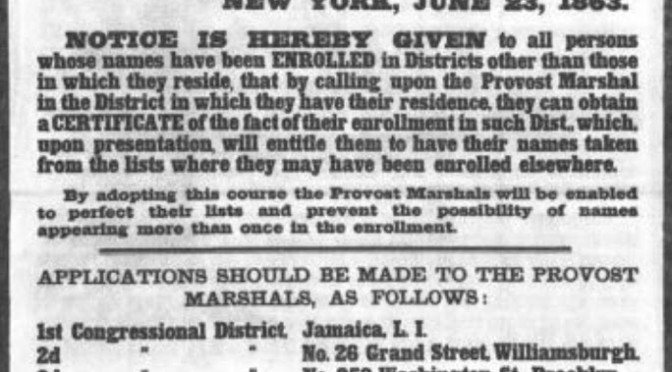
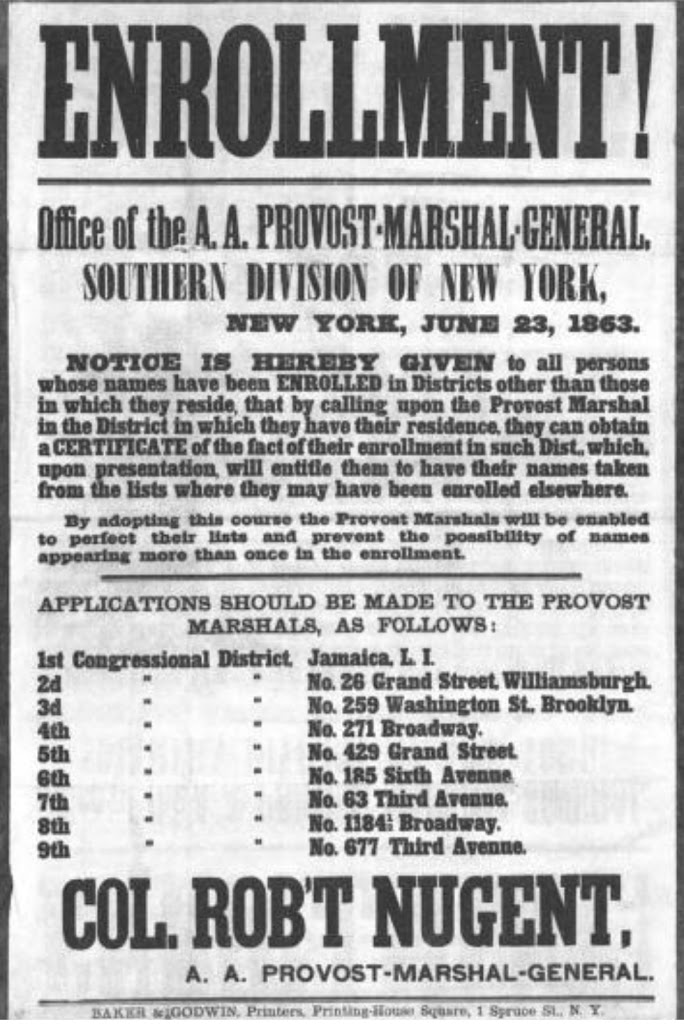
A list of the nine draft offices where lotteries would occur that Monday, July 13th. It would have already begun in Jamaica and at the Ninth District Office that Saturday.

One hundred and fifty years ago today, on July 11, 1863, the first round of lotteries to select able-bodied men for conscription into the Union Army began rolling out in New York.

It was a Saturday.  The day of the week is rather important to history. For on that day — the day that brought the draft that would inspire the horror of the notorious Draft Riots 48 hours later — the draft lotteries would arrive without violence.  Nobody in New York would die that day because they were following federal orders or because of the color of their skin.

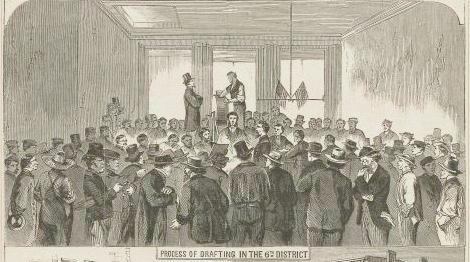
Below: The draft in New York in simpler times.  When a draft lottery was called two years earlier, in 1861, there was no such tension or violence.  A spirit of patriotism and a lack of cynicism about the war greeted the provost marshals as names were selected. [NYPL]

A few factors went into this surprising peace. Federal and state law enforcement knew there would be some trouble. The newspapers had grumbled about it and anti-draft factions gathered in halls around New York in the preceding days. Draft riots had already erupted in places like Buffalo, New York.

As a result, they decided to roll out the draft slowly, starting in less densely populated areas.  Thus, the first names were read out from the Ninth District draft office at Third Avenue and 46th Street which, in 1863, was neither the most fashionable neighborhood, nor the most squalid.  Being first, however, made it a prime target for agitators when it reopened on Monday.

Anger in New York was delayed.  Many assumed that a Democratic controlled state government and its Democratic governor Horatio Seymour would delay or even block the draft.  Many of those leaders campaigned on that very fact.  Yet as the ‘wheel of misfortune’ was turned that Saturday morning and names were selected for the draft, the horror began to sink in.

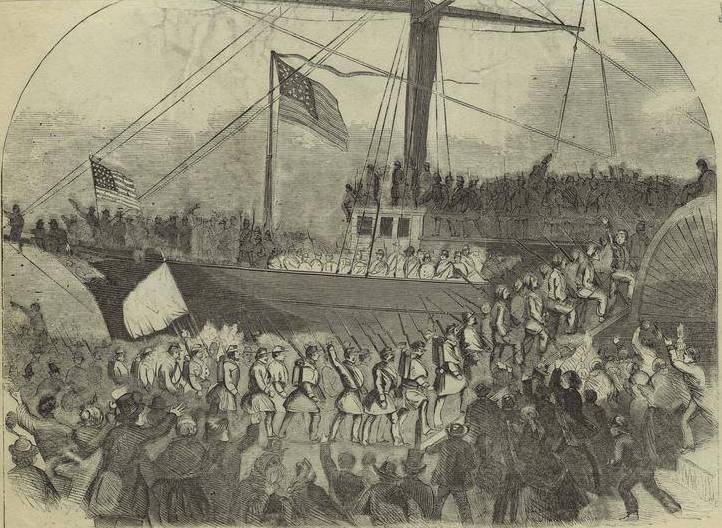
Below: The 69th Regiment leaves New York harbor, April 1861.  A largely Irish regiment, they are one of New York’s great military units.  They were so decimated during the Battle of Fredericksburg and the Battle of Gettysburg — which took place just two weeks before New York’s draft — that they were temporarily disbanded.


This is why Saturday is so important — the gestating anger that led to the draft riots that Monday broke out in the taverns of lower Manhattan that Saturday night, as news spread of friends and loved ones in other districts whose names had been chosen.

James Gordon Bennett of the New York Herald wrote: “Those who heard the scattered groups of laborers and mechanics who congregated in different quarters on Saturday evening, and who canvassed unsparingly the conscription law might have reasonably augured that a tumult was at hand.” [source]

In typical understated fashion, the New York Sun remarked, “Considerable feeling and warm discussion was manifested throughout the city as soon as it became generally known that the draft had actually commenced.”   Those words were published on July 13, the first and most incendiary day of the draft riots..

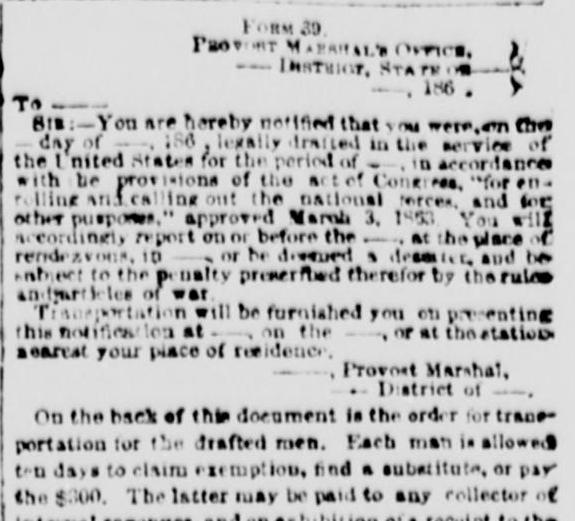
Had the draft actually proceeded without incident, those chosen would have received the following letter, reprinted in the same issue of the New York Sun mentioned above:

If you were chosen for the draft, you would have had ten days to “claim an exemption**, find a substitute, or pay the $300” commutation fee. Barring that, you were to report to Rikers Island for immediate training.

Prepping from some dissension on Monday, five hundred soldiers from Governors Island were summoned into the city to stand guard over the draft offices. Little did they know then that a mere 500 men would be no match for the surge of rabid mobs that would greet them on Monday.

** What were the various draft exemptions? The July 13, 1863 issue of the New York Daily Tribune had a list available for its readers which included 1) being the son of a widow or ailing parent; 2) being the only brother of a child dependent on him for support; 3) being the only parent to children under the age of 12; 4) having two family members already serving in the Union army; and 5) “unsuitableness of age,” meaning you were too old or too young to serve.