Categories
Uncategorized

Airwaves beware: The Bowery Boys television debut!

Illness and a crazy schedule this week have conspired to delaying this weeks podcast, but we promise to have it ready to download by Wednesday morning.

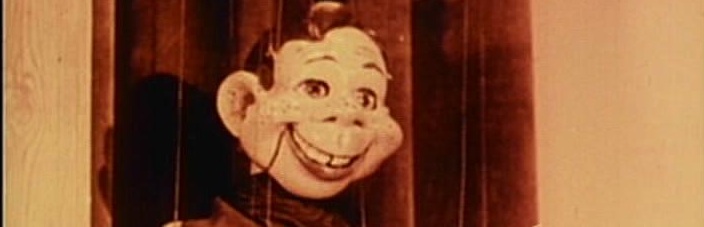
In the meantime, you can check out our television debut on the Brian Lehrer Show, which was recorded on Wednesday. It’s running throughout the week on CUNY TV, Channel 75.

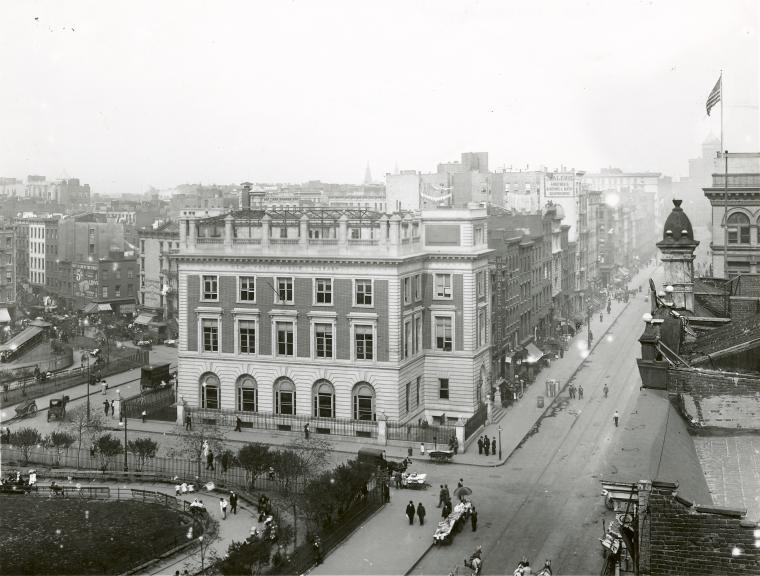
We talk about Robert Moses, Union Square, the birth of the subway and debut a lot of old videos.

S07E10c from Brian Lehrer Live on Vimeo.

Categories
Uncategorized

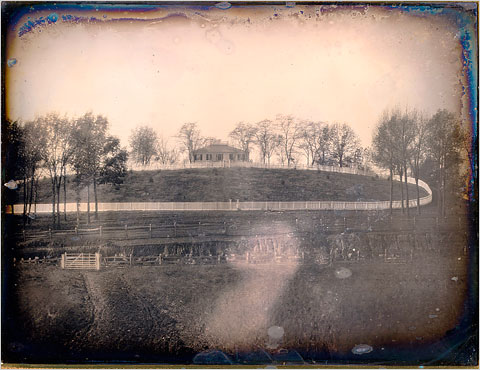
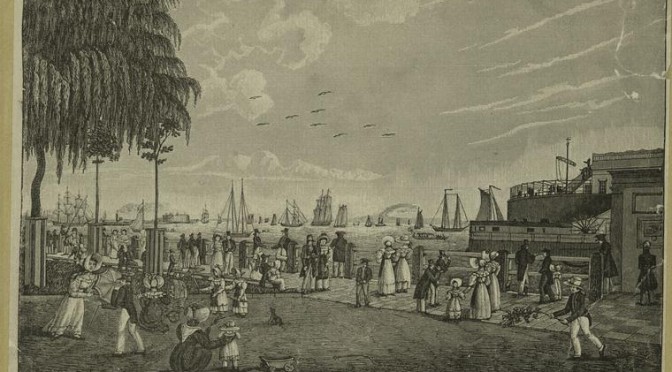
Jones Woods: A Gothic picnic getaway in upper Manhattan

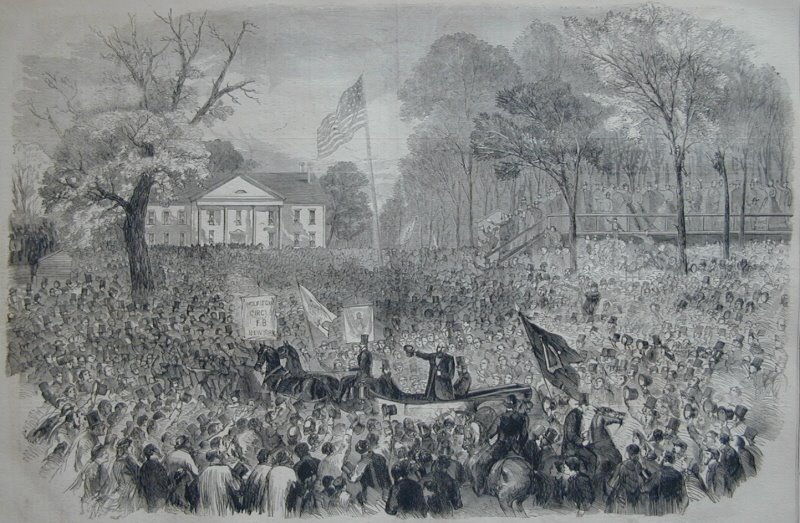
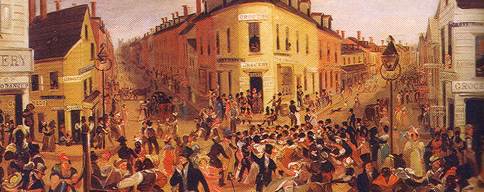
Over 15,000 Irish Americans gathered in Jones Wood in 1856, to greet countryman James Stephen

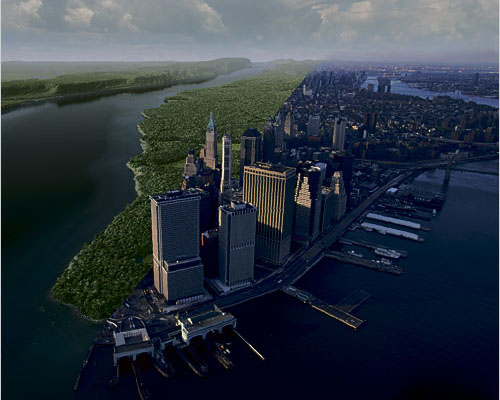
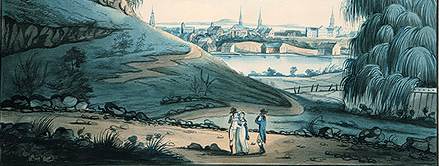
Once upon a time, back when Fifth Avenue was a dirt path and Bloomingdale was literally a blooming dale, there stood a haunted and most mysterious forest located on bluffs overlooking the East River, far east of the area today known as Lenox Hill in the Upper East Side. (Basically between 66th-88th streets to 75th-77th street.)

Back in the 1700s this was one of the most densely forested areas of the island, miles from the city of New York. Prominent families moved here, settling in secluded homes overlooking the crashing waters of Hells Gate below. And not surprising, ghost stories and legends took root here as well.

As an early account describes it: “It was the last fastness of the forest primeval that once covered the rocky shores of the East River, and its wildness was almost savage. In the infant days of the colony it was the scene of tradition and fable, having been said to be a favorite re-sort of the pirates who dared the terrors of Hell Gate, and came here to land their treasures and hold their revels.”

At the heart of this forest was a small, pioneering 90-acre farm called the Louvre, its owner unknown today, or why it shared its name with a famous French museum. Later, two famous New York families owned manors in this once out-of-town thicket. The Schermerhorns kept the family crypt here until it was nothing but broken tombstones, protruding underfoot when later the area would become better known for picnics and family outings.

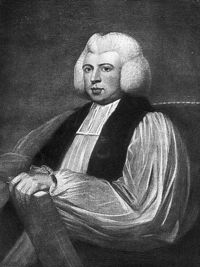
The second family was the Provoost clan, who bought the Louvre in 1742 and transformed it into an elegant home. Although prominent, the Provoosts were supporters of the American cause at the time of the Revolutionary War. Samuel Provoost (that dapper man to the right) later became president of King’s College, the pre-Revolutionary precursor to Columbia University. His cousin David, who fought with Washington’s army, took a more notorious path to fame, become a legendary smuggler nicknamed Ready-Money Provoost.

When Ready-Money died, he too was entombed in the family crypt here. Later, the site of Provoost’s grave attracted ghost seekers, who would “gather there and tell each other wonderful stories of the unearthly doings of the old man’s ghost. Not one of them could have been persuaded by all the ready money in the city to keep a night’s vigil under the trees that overhung the lonely, desolate grave.”

Later still the home was sold to a John Jones, who lent the forest his name. By the 19th century, the woods had become a popular destination for nearby city dwellers. The Provoost’s family chapel was soon turned into a clubhouse and adjoining manor grounds into places of recreation. Stories of its mysterious past and recent days as a retreat for prominent families drew recreationers of all sorts, until it became an what some have called the ‘first major U.S. amusement park’, with beer gardens, sporting events and great spaces for large gatherings.

It was still an untamed, wooded area, but now people arrived for “billiards, bowling, and donkey rides,” for general outdoor carousing and drinking.

Jones Wood was pegged to become the very first site for ‘a great park’, the land to be purchased by the state on 1851, to be transformed into an area worthy of the lavish public spaces of Europe. Proponents for an official park here claims the lush riverfront and rich “dense growth of forst trees” made it ideal for immediate conversion to a formal park.

But there was strong opposition by those who maintained that a ‘central’ park on the island would be preferred, both for its aesthetic symmetry and attractiveness to landowners surrounding it. And at only 150 acres, Jones was also deemed too small. Despite this, in June 1853, the state approved BOTH Jones’ Wood and the area that was to become Central Park.

Landowners around the Jones Wood area and merchants benefiting from sporting events and beer gardens had their day a year later, when city plans for Jones Wood were entirely abandoned.

It still remained popular for much of the late 19th century, particularly used by Irish and Germans from nearby Yorkville, although it was chipped away by new properties tenements. In 1894, a devastating fire swept through destroying properties over eleven acres. By this time, more sophisticated amusement parks began appearing out in a distant area of Brooklyn named Coney Island. Meanwhile, developers looked hungrily at the remaining area of Jones’ Wood. By the light of 20th century, all traces of this jovial and mysterious forest had vanished.

This article is a reprint from my blog post dated July 22, 2008. Read the original post here.

Categories
Uncategorized

Triangle Factory Fire: 99 years later

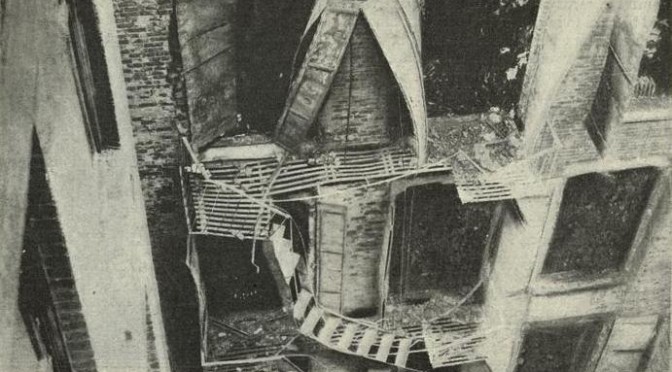
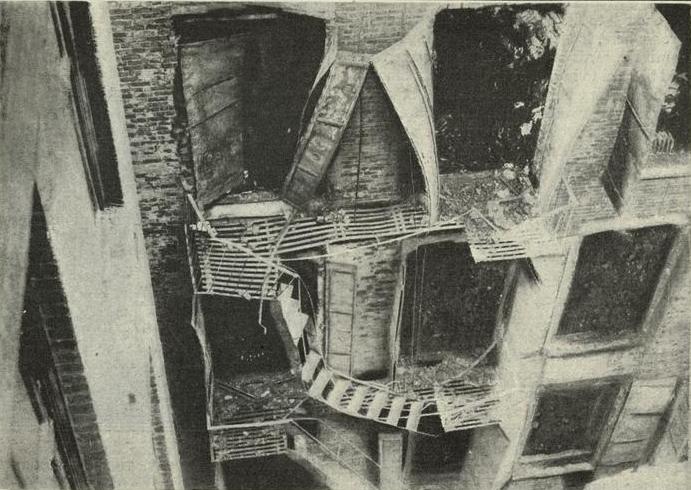
Above: the mangled remains of a flimsy fire escape which sent many Triangle Factory workers to their death

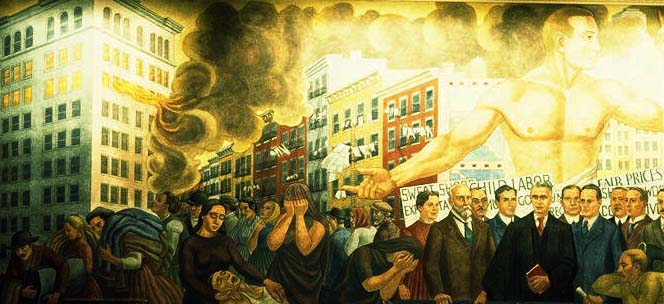
A tragic marker in New York City history: the devastating fire that swept through the upper floors of the Asch Building in 1911, through the sweatshops of the Triangle Shirtwaist Factory, killing 146 people.

Today, March 25th, is the 99th anniversary. I suspect there will be some marking of this grim anniversary today at the corner of Greene Street and Washington Place.

You can download my podcast on the Triangle Factory Fire from our NYC History Archive page on iTunes or you can get it directly from here.

Photo courtesy NYPL

Categories
Uncategorized

A History of New York City in 100 Buildings (Nos. 51-100)

THE FINAL PART UPDATED BELOW – THE FUTURE CITY
See map below for all the locations mentioned in this story
I’m splitting the second half of this series off into a separate posting for easier navigation. Please see the post below this one for the introduction and entries 1 through 50.

————————————————————————-
PART SIX: SUBWAY CITY
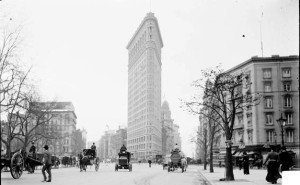

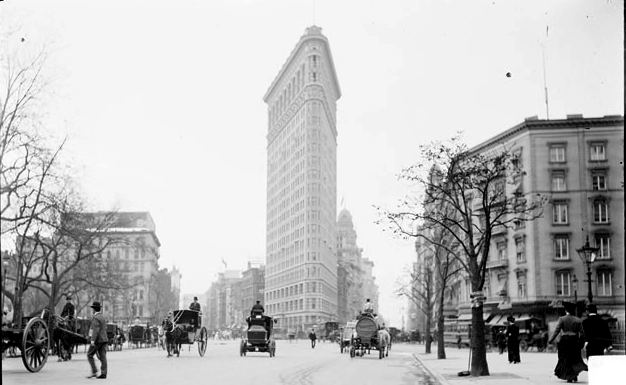
51 Flatiron Building (Manhattan)
At the start of the new century, a lust for building tall — now anchored in technologies like steel-beam construction and the invention of the elevator — firmly possessed the world. Before 1890, the tallest building in Manhattan had been a church; in the buildup to 1900, three other took the title, of which only one (the Park Row building) still survives. The Flatiron (1902) was never New York’s tallest, but it was — and still is — it’s most graceful. Chicago’s most famous architect Daniel Burnham took on the challenge of creating a 22-storey, stretched Italian Renaissance office building on a odd triangular sliver of land. The resulting structure (through its near-infinite reproduction on postcards) would almost become a brand representing the nostalgia of New York’s glory days.

52 Sherman Square Subway Station (Manhattan)
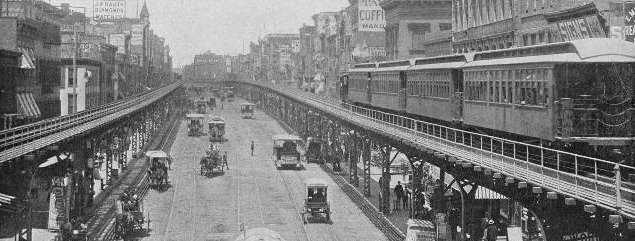
In the 19th Century, mass transit meant trains and trolleys, both limited and costly means of transportation always fated to mar the landscape. But New York in the 1900s was in the throes of a new aesthetic: the City Beautiful movement. So in that respect, the introduction of the subway (first opened in 1904) wasn’t just a convenience or a technological marvel. It allowed for the slow elimination of ugliness.

Evidence of this remains in one of the last original subway stations still existing, the entrance for the original Interborough Rapid Transit Company station sitting at Sherman Square on the Upper West Side. Here, the past meets the future, Beaux-Arts trappings for a new form of transportation.

ALSO: Built the same year, the subway entrance at Bowling Green near Battery Park is smaller. Opened in 1905, it wouldn’t be used for Brooklyn traffic until a few years later. The station today still features some unused platforms.
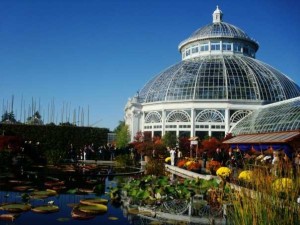

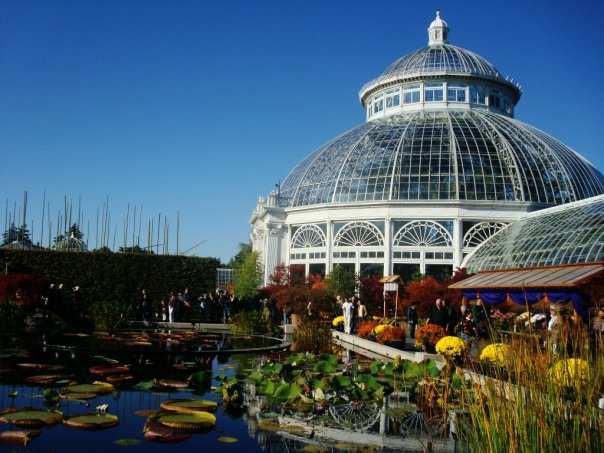
53 Haupt Conservatory (Bronx)
The 1900s was a decade of gigantic public endeavors. The opening of the subway allowed for new projects to be built further afield. And since there was no room in Manhattan anyway, the immediate benefactor were the two boroughs most closely connected by new subway track that decade — Brooklyn and the Bronx.

Both the Bronx Zoo and the New York Botanical Gardens had been opened in the Bronx shortly after the five-borough consolidation in 1898 and would expand greatly in the new century. The Enid A. Haupt Conservatory, completed in 1902, reflects the park’s nod to Victorian era formality, where the rich friends of the garden’s creators could feel at home and the general public could be wowed with a world-class collection of flora.

54 Andrew Carnegie Mansion (Manhattan)
And the upper class didn’t have to travel quite as far to get there. Over the decades, a cluster of great mansions had been floating up Fifth Avenue. In lower Fifth Avenue neighborhoods, the old mansions would be ripped down to make apartment buildings (such as those below 14th Street) hotels and department stores. But the richest families were now installed along Central Park, with Andrew Carnegie throwing down the gauntlet at the most northern locale yet, a monster 91st Street estate, built in 1901.

The 64-room mansion enjoyed “such state-of-the-art features as a water filter system, the first residential elevator, and a rather sophisticated ventilation system akin to an early form of central heating and cooling.” Today, the palatial space houses the Cooper-Hewitt National Design Museum.
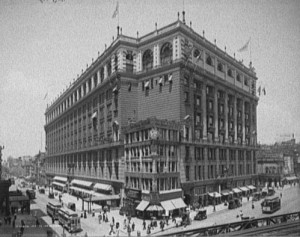

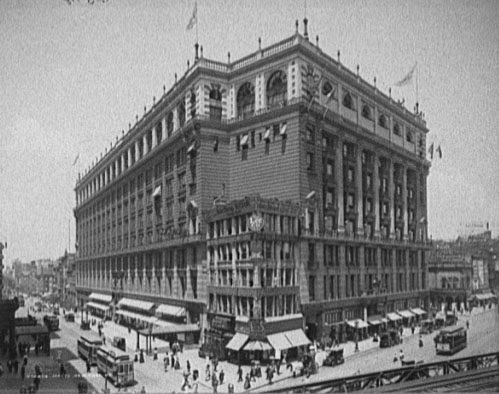
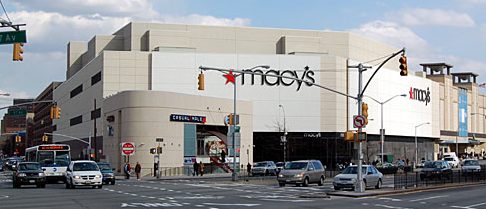
55 Macy’s Department Store (Manhattan)
Retail and entertainment also witnessed a slow migration north, and in that thrust towards mid-Manhattan, the area around one particular elevated train stop — Herald Square — soon became the busiest shopping point in the city. Macy’s, moving from the heart of old Ladies Mile, was not the first department store to lay a claim in Herald Square, but its choice corner location (opening in 1902), reputation for innovative new products and clever promotional opportunities (including a certain yearly parade) made the Straus family business the unofficial gateway to the new Midtown.
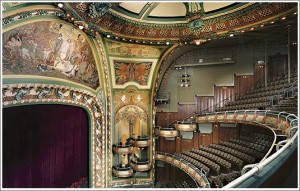
courtesy Times Square NYC

56 New Amsterdam Theater (Manhattan)
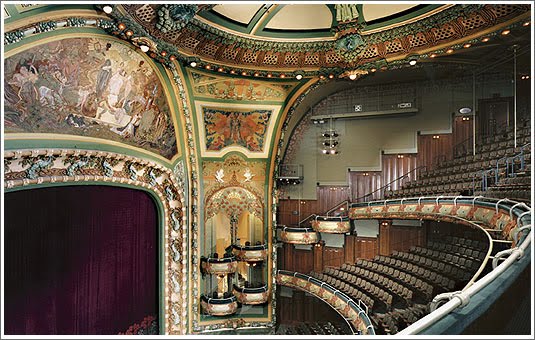
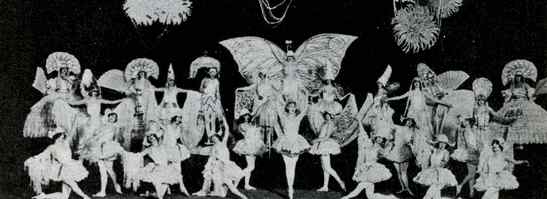
Entertainment venues were making a similar trek. Theater producers had already transformed the area around Broadway and 42nd Street into the unofficial new theater district when two members of the powerful Theatrical Syndicate opened the New Amsterdam in November 1903. It became one of Broadway’s most successful theaters, hosting the first few Ziegfeld Follies and many of the biggest stars of the pre-film days. It’s one of the few survivors of the Great White Way, a critical stage at the center of 20th century American entertainment. After some sorry days as a movie house, Disney rescued the decrepit house and its renovation became a key part of the ‘clean up’ and revitalization of 42nd Street in the late 1990s.

57 One Times Square (Manhattan)
Opening night crowds at the New Amsterdam could see the silhouette of a new tower rising just to the west, the new home (1905) for one of the city’s most influential newspapers, the New York Times. They only used it for a few years; its significance lies in its superficial qualities. It’s one of the first skyscrapers built over a subway line (with a station constructed right underneath it), and its surfaces were soon covered with electronic bulletin boards and news tickers broadcasting breaking news. An embodiment of the neon-electric revolution that took over the city, it’s no surprise that the most illustrious light show of all — New York’s annual New Years Eve celebration — debuted on its rooftop in 1907.
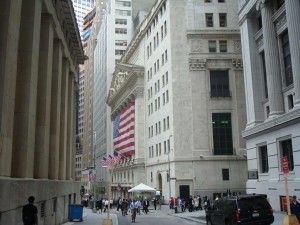

58 New York Stock Exchange (Manhattan)
It’s remarkable that so many structures that define classical notions of New York City are from this slender period (1898-1910). The prior decade had experienced a devastating depression, the result of banking and railroad financing catastrophes leading to the Panic of 1893. By the new century, America had recovered and then some.

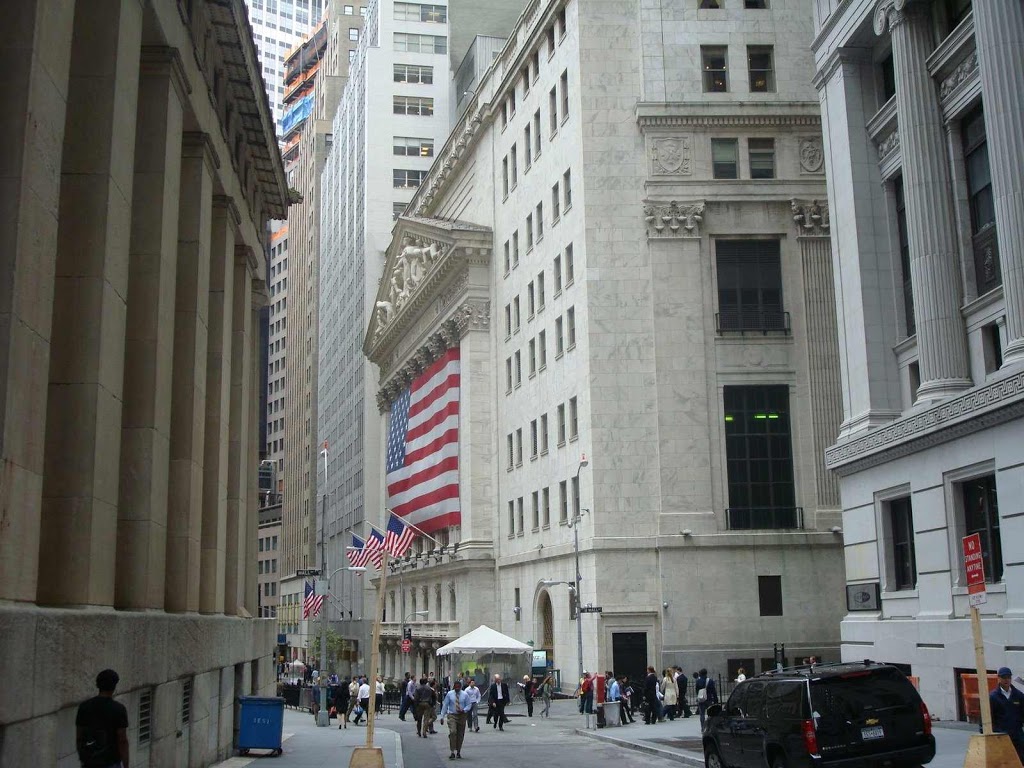
Even Wall Street, one of the sources of the meltdown, benefited from the upswing, with a dazzling new home for the New York Stock Exchange (1903) by the master of neo-classical architecture George Post. The fate of America’s financial future runs through this building’s trading floor. Wealth is bred here, as is misery — namely recessions and depressions, including that Great one, on October 29, 1929 (aka Black Tuesday).
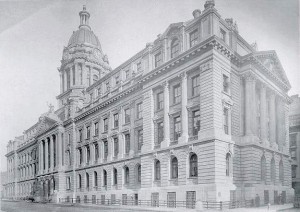

59 New York Police Headquarters (Manhattan)
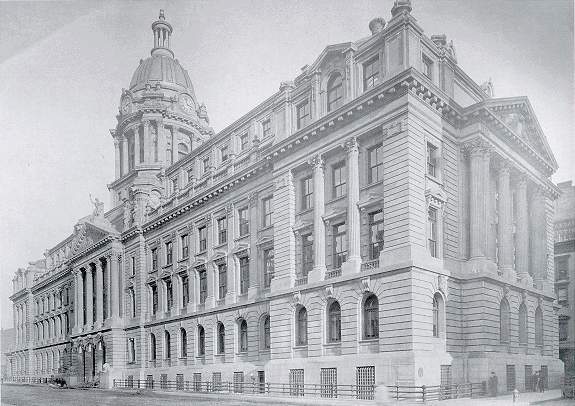
The shenanigans of corrupt men weren’t relegated to the moguls. The elegant 1909-10 headquarters built for the New York Police Department may have been a way to shake off the force’s shaky reputation for being too pliable to corrupt political winds. In the last decade, the Lexow Committee exposed widespread malfeasance, leading to the installment of police reformer Theodore Roosevelt as new commissioner. With its old boss now in the White House — and the force now comprising officers for all five boroughs — they were given a lavish new home on Centre Street. They stayed until 1973; the building was later converted into luxury apartments, popular with supermodels in the 1990s.
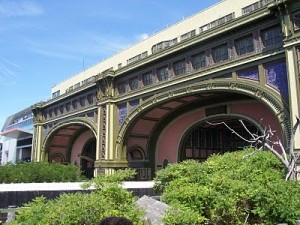

60 Battery Maritime Building (Manhattan)
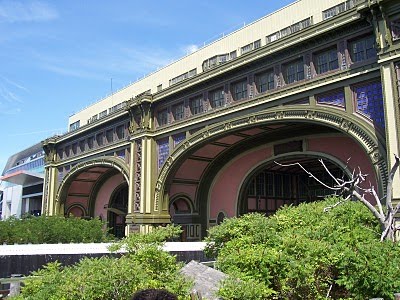
The Staten Island Ferry has always been a crucial transportation hub for New Yorkers, the only way most Staten Islanders ever commute into Manhattan, even today. The brand new terminal leaves no trace of its history, but the building next to it, the lumbering green Battery Maritime Building (1907) gives you some idea of how the earlier terminal might have looked and operated. And luckily, after years of abuse, the terminal is open for business as a ferry terminal for Governor’s Island and its future may hold some rather extravagant twists.

61 Brooklyn Academy of Music (Brooklyn)
There were fears by those critical of consolidation that any borough not named Manhattan would lose their cultural vitality, becoming neglected suburbs. The criticism was muted the day that the new hall for the Brooklyn Academy of Music opened in 1908, replacing their old home which had been destroyed in a blaze five years earlier. BAM remains Brooklyn’s central cultural organization. Everyone from Enrico Caruso to Nirvana has played here.
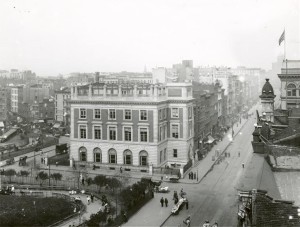

62 Seward Park Library (Manhattan)
Despite the best efforts of cultural organizations and charitable endeavors, the residents of neighborhoods like the Lower East Side still did not have access to many basic city services. The city was get a grand central library in 1911 (built by Carrere and Hastings), but it would be smaller community libraries that would have greater effect over the daily lives of New Yorkers.

Andrew Carnegie, in his later years a philanthropist, built hundreds of libraries around the country, often in neighborhoods most in need of them, and New York was recipient of dozens throughout the city. The one at Seward Park, from 1909, is one of the city’s oldest, replacing an older structure with a virtually flawless Beaux-Arts gem facing into the park — which, as a two-for-one for history lovers, houses the city’s oldest municipal playground.

And yes, the Seward Park area desperately needed a library, especially one filled with newspapers and books in the foreign languages of the neighborhood’s occupants. In 1913, it had the highest circulation of any library in the city.

ALSO: Right across the street, the Jewish Forward newspaper would build a stunning new headquarters in 1913 where it would remain for six decades. Or if you’re looking for a more regal library, turn your attention uptown to the book repository built for J.P. Morgan in 1906 which actually outlived the owner’s mansion next door.

FOR MORE INFORMATION: Listen to our podcasts on the Flatiron Building, Macy’s Department Store, the Ziegfeld Follies, One Times Square, the New York Stock Exchange and the New York Public Library

————————————————————————-
PART SEVEN: METROPOLIS
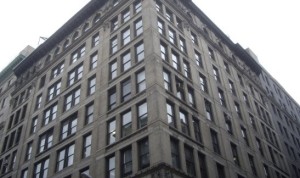

The ugly story behind the plain, upper floors of the Asch Building

63 Asch Building (Manhattan)
There are two buildings from the 1910s that hold a very practical importance to the daily lives of New Yorkers still today — places that aren’t necessarily classics in any aesthetic sense, but serve as object lessons to a growing city.

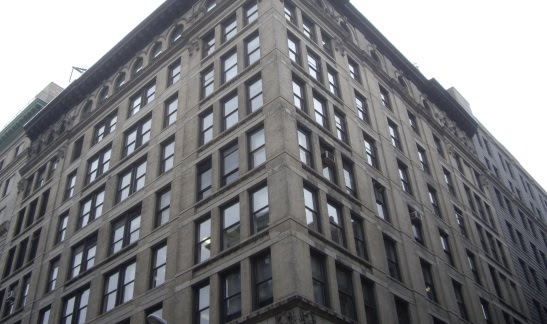
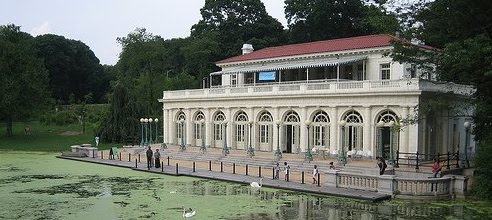
Today known as NYU’s Brown Building of Science (at Greene and Washington Place, off Washington Square), the Asch Building held the sweatshop factory of the Triangle Shirtwaist company on its top three floors. On March 25th, 1911, a fire sparked in a bag of rags quickly built into an unstoppable inferno, trapping hundreds of workers, many who fatally leapt to the sidewalk below. The 146 dead, mostly women newly immigrated to the United States, were mourned by the city, and tragedy forced an improvement in radical new building fire and safety codes.

64 Equitable Building (Manhattan)
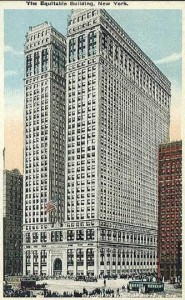
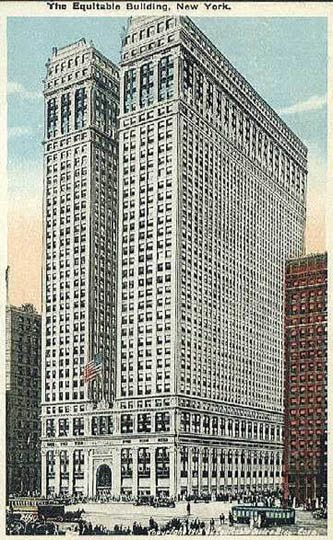
The other ‘lesson’ represents something of a crisis averted — a new home at 120 Broadway for a life insurance company (who was moving here because a fire had destroyed their last office) that represents a metaphorical slamming of the brakes, the moment when New Yorkers realized that they actually had to live in a city of skyscrapers. Maybe new skyscrapers shouldn’t all be block-length, 38-story uninterrupted slabs that blocked out the light.

The Equitable colossus (at left,1915) sent a shiver through the spine of the city. Within a year, new zoning laws would dictate how future skyscrapers should be made — beginning an era of ‘wedding cake’ setbacks and the birth of innovation in the New York City skyline.

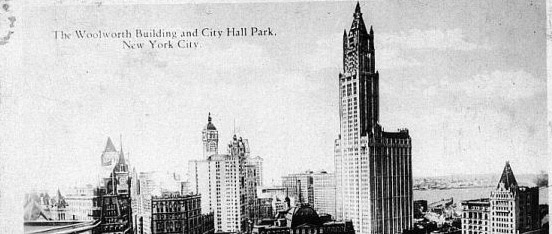
65 Woolworth Building (Manhattan)
The new headquarters for Frank Woolworth’s retail chain was completed in 1913, three years before the zoning laws. Yet it was rapturously received by New Yorkers, both for its classic beauty (a Cass Gilbert original) and iconic stature, for it was now the tallest building in the world.

66 Grand Central (Manhattan)
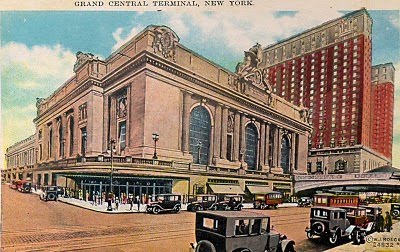
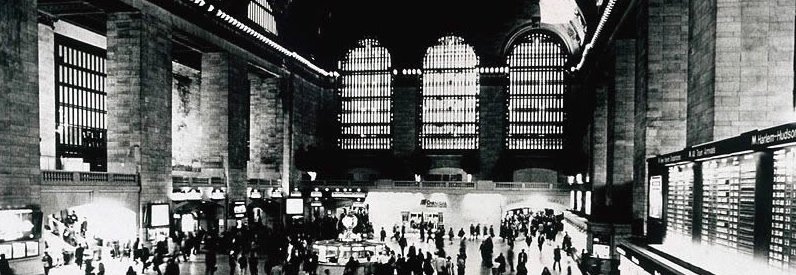
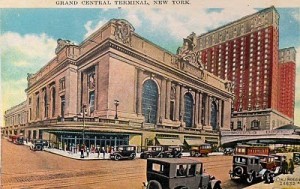
I’ve stated in our podcast for Grand Central Terminal that I thought this was New York’s most important building (1913), and I stand by that. Not only is it essential as a transportation hub for millions of travelers, but its dramatic rescue from developers wanting to rip it down in the 1970s went all the way to the U.S. Supreme Court, empowering the New York Landmarks Preservation Commission and saving countless other buildings in the process.

And forget that it’s New York’s greatest example of Beaux-Arts architecture! Grand Central’s key contribution to the city rolls out in front of it northward; sinking New York Central Railroad’s tracks under the ground created the midtown section of Park Avenue, soon to become one of the most expensive streets in America.

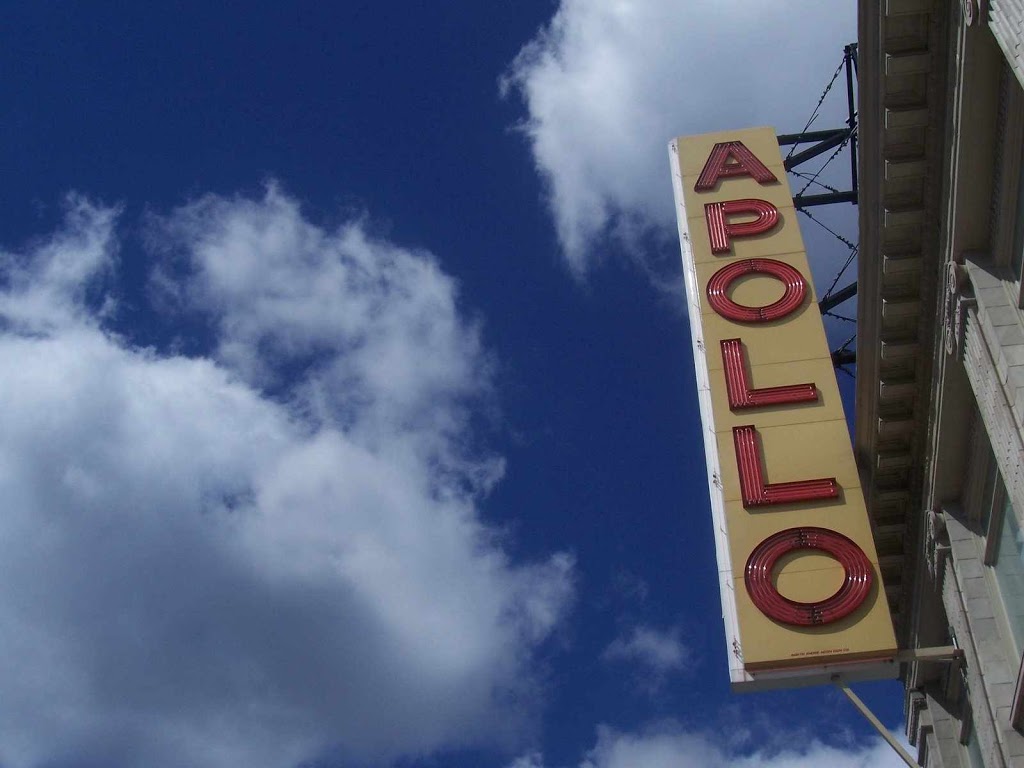
67 Apollo Theater (Manhattan)
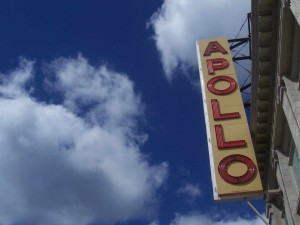
Next to perhaps only the long-gone Savoy Ballroom, the Apollo Theater is the largest venue most associated with the Harlem Renaissance, a cultural explosion of black writers, artists and musicians which electrified the Roaring ’20s and beyond, the product of one of the city’s most significant population shifts.

Harlem was a neighborhood in flux in the 1910s, displayed nicely within the Apollo’s own history. The theater opened as a burlesque house for white audiences in 1914, although by the ’20s Harlem was fast becoming a mecca for new African-Americans in the city. The neighborhood evolved, but many of its closed-minded businesses paid no heed. Apollo wouldn’t reopen for black audiences until 1934 — missing much of the early musical talent of this American Renaissance, but launching the careers of many more stars (Ella Fitzgerald, Billie Holiday, James Brown).

68 Kaufman Astoria Studios (Queens)
Cinema, probably more than any other medium, has helped form the exotic allure of New York City. But there was a period when New York’s entertainment venues — its vaudeville and flashy Broadway stages — feared the coming of movies, a medium that would eventually bleed from them their audiences.

For a brief time before the era of motion picture talkies, New York’s film cred wasn’t merely as a city of plush cinemas. It helped make most of the pictures too. Adolph Zukor’s Famous Players Film Company (a precursor to Paramount Pictures) opened a movie studio in Queens in 1920, one of several major film companies based in the New York metropolitan area. Today, as Kaufman Astoria Studios, it still produces entertainment, though mostly for television.

ALSO: Zukor had a second space in Chelsea at West 26th Street which also still functions as a soundstage and rehearsal studio (Chelsea Studios).
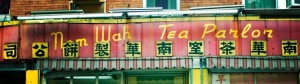

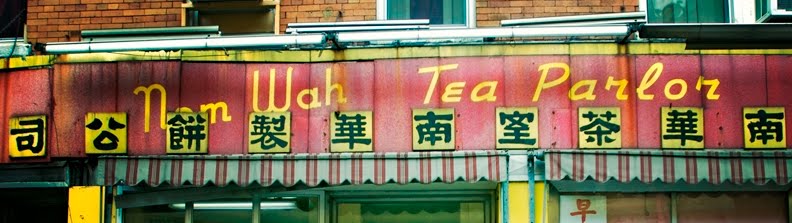
69 Nam Wah Tea Parlor (Manhattan)
This tiny, beaten-up shop at the hook of Doyers Street is a real survivor, a window into the early days of Chinese life in New York. The slums of Five Points had been paved into a park, and municipal buildings were soon to be built to the west. But just north and east of the former slum were the homes and businesses of thousands of new residents — Italians and a small but growing number of Chinese.

Reportedly open since 1920, Nam Wah would have been witness to some remarkable history on its street — to the shadowy speakeasy across the street where Irving Berlin and Al Jolson regularly performed; hatchet-wielding tongs wars that gave this crooked street the nickname the ‘Bloody Angle’.

70 Colonial Court, Sunnyside Gardens (Queens)
We know the 1920s as the Jazz Age, of Prohibition, flappers, gangsters and Times Square. But in the course of New York City history, the big story of the decade was the population explosion in Queens. With the construction of the Queensboro Bridge in 1909, the door were thrown open to a virtually untouched area of the city.

Between 1920 and 1930, the population more than doubled. Making this possible were experimental new housing projects like Sunnyside Gardens, an extension of the British ‘garden city’ movement, with affordable apartment rentals scattered around large, well-kept outdoor spaces. Colonial Court (1924) were the first buildings erected and were so marvelous for the day that pioneering urban theorist Lewis Mumford immediately moved in.

ALSO: Manhattan also received its share of this new, fleeting style of apartment complexes, as evidenced by the playful towers in Tudor City on midtown’s east side, beckoning new residents with promise of “tulip gardens, small golf courses, and private parks.”

71 Williamsburgh Savings Bank Tower (Brooklyn)
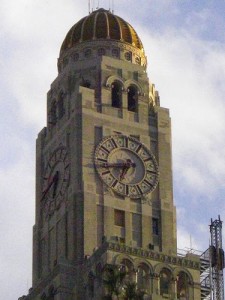
The skyscraper craze, like a floating seed gone astray, landed in the middle of Brooklyn and spawned a home for a bank steadfastly keeping that H in the name of Williamsburgh. It stood out like a beautifully sore thumb for other reasons: built in 1927, it was one of the first large examples of art deco architecture in the city. And its fabulous interior, gold and blue and framed in signs of the Zodiac, rivals almost anything in Manhattan.

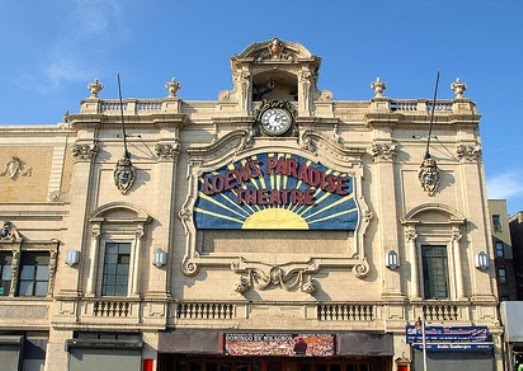
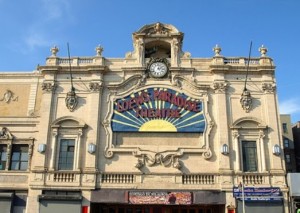
72 Loews Paradise Theater (Bronx)
Yes, consolidation was truly proving its point: the city was expanding from all sides. In the Bronx, that growth is best viewed from the Grand Concourse, a wide, Parisian style boulevard that marches up through the center of the borough. Along it sprung luxury apartment buildings, tony businesses and, in 1923, even Yankee Stadium.

The glamour of the boulevard’s early days can best be seen at its finest existing movie palace the Paradise Theater (1929), recently renovated to match its former glory. How this building managed to survive the 1970s and 80s, I’ll never know.

ALSO: A parallel movie house, St. George Theater in Staten Island (1928) was rare not for its location and its dazzling, gilded interiors, but for the fact that it was built by an independent theatrical producer, during the days when film companies and theatrical syndicates made their own venues.

Below: The Paradise Theater, the Bronx
73 Waldorf-Astoria Hotel (Manhattan)
The greatest hotels in New York City have been associated with the Astor family, including the old Astor House near City Hall and the original Waldorf-Astoria, a product of familial rivalry that set the standard for elegance and attracted New York’s wealthy classes like a flame.

The Waldorf-Astoria on Park Avenue is associated with the family in name only, but its reputation as New York’s most famous hotel, while faded, remains unblemished. FYI, they’ve recently decided to hyphenate themselves with a ‘=’ today.
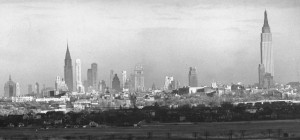

74 Chrysler Building and
75 Empire State Building (Manhattan)
The Depression hit in October 1929, an economic apocalypse that threatened to slow the momentum of New York’s growth. Curiously, at that very moment, the two greatest buildings in New York City were just rising into the sky.

The Chrysler Building was the victor of a race between the car mogul William Chrysler and the Bank of America, who was racing to make the world’s tallest building down at 40 Wall Street. While the downtown building was finished first, it was dwarfed (in both height and appearance) when William Van Alen’s art deco, automobile-inspired masterpiece lifted up its silver spire in October 1929.

Several blocks away, work began on a tower to surpass Alen’s, in a pit that had once been the original Waldorf-Astoria. It rapidly rose into the sky, completed in May 1931 — and pretty much stayed empty. New York had its Empire State Building, the structure which would define it for generations, and for years, all people could do it look at it and see a monumental failure. Few associate this tourist mecca with underachievement today. But its current might is tinged with grief; on September 11, 2001, it returned to being New York’s tallest building.

Picture above by Andreas Feininger, Sept 1946 (courtesy Life Google Images)

For more information: listen to our podcasts on the Triangle Factory Fire, the Woolworth Building, Grand Central, the Apollo Theater, the Astor family, and the Chrysler Building.

————————————————————————-
PART EIGHT: THE MODERN CITY
Courtesy Liberty Stone

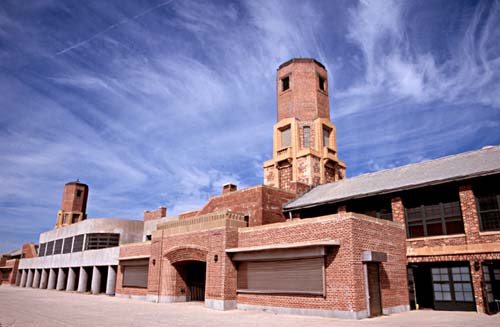
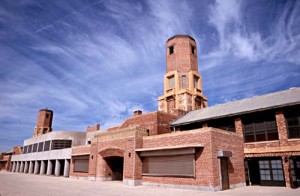
76 Jacob Riis Bathhouse (Queens)
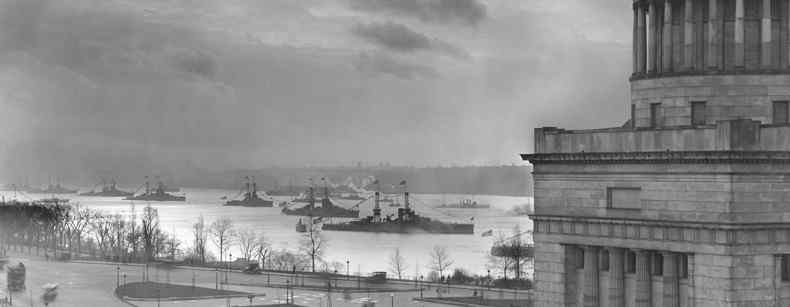
Although he wouldn’t be named parks commissioner by mayor Fiorello LaGuardia until 1934, Robert Moses was already remaking areas of New York City as a member of Governor Al Smith’s state parks team. Nowhere as spectacular as his work at Jones Beach, Moses’ Jacob Riis Park — named for the journalist and social reformer — brought the verisimilitude of beach life to this former naval base on the Rockaway Peninsula.

The classic art-deco bathhouse (1932) reflects Moses’ early attention to beautiful detail, a proclivity that would fade over the years. Setting nearby is another special touch of the powerful commissioner — a massive parking lot.

77 Robert Moses Administration Building (Randall’s Island)
This nice but fairly plain little building on Randall’s Island belies its importance in the history of New York. It’s from here, in the shadow of his triumphant Triborough Bridge (1936), that Robert Moses conducted the development of hundreds of new projects — parks, highways and housing. As Robert Caro famously summed it up, “Moses’ decision to built his main office there was, intentionally or not, symbolic of his independence of the city.”

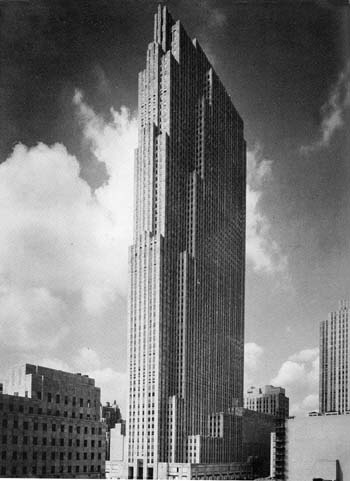
78 RCA Building (Manhattan)
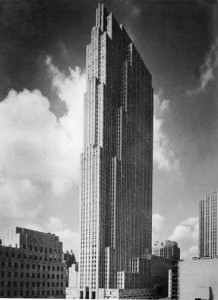
Before the FDR’s New Deal programs and the adrenaline of Moses, virtually the only game in town during the Great Depression was the construction of Rockefeller Center. Junior’s multi-block complex in midtown Manhattan was a true risk, opening new retail and office space when the city’s pre-existing spaces were going empty.

30 Rock, the former RCA Building, became midtown’s center of gravity when it was completed in 1933. Within a few years, both it and the other Rockefeller Center offices were filled to capacity.

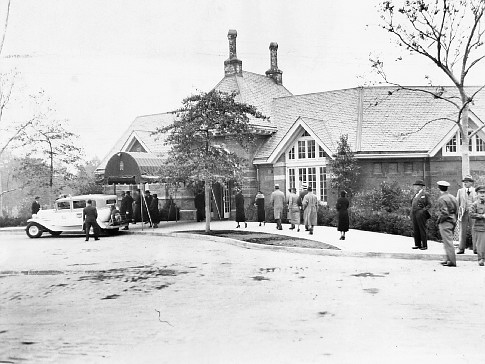
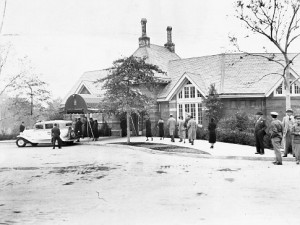
79 Tavern on the Green (Manhattan)
If you’re looking for a defining building that embodies Moses’ park philosophy, you’ll find it in this oft-troubled restaurant in Central Park. Olmsted and Vaux’s vision of natural respite seemed old-fashioned to Moses, who thought parks should provide venues, playgrounds and sporting courts. Tavern-on-the-Green (1934) was originally created as an ‘affordable’ dining alternative for the middle class. To build it, Moses threw the sheep (actual sheep) out of nearby Sheep Meadow and transformed their sheepfold into this privately-owned restaurant. Later, in the 1950s, when Moses tried to expand its parking lot by paving over a playground, the public revolted.

Below: Tavern on the Green in 1934
80 Arthur Avenue Retail Market (Bronx)
Speaking of sheep, the land below Arthur Avenue’s busy market was also once a sheep’s grazing meadow. (It’s also on the former estate of the Lorillard tobacco family, see No. 22.) When Mayor LaGuardia dictated that unregulated pushcart salesmen, the lifeblood of many ethnic neighborhoods, move their wares indoors, he commissioned indoor markets throughout the city, including this one (1940) in what was becoming a booming new Italian neighborhood.

Inside, you’ll find one of Arthur Avenue’s most famous vendors, Mike’s Original Deli, which moved here in the early ’50s and never left.

ALSO: The same strategy was applied to La Marqueta (1936), which provided for the neighborhood’s growing Latino and Puerto Rican communities. A shadow of its former self today, the market at its height housed stalls for over 500 merchants.

81 New York City Building (Queens)
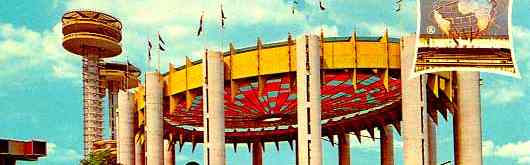
Flushing Meadows-Corona Park’s only surviving structure from both the 1939-40 and 1964-5 World’s Fairs, this home to the Queens Museum today (1939) holds the Panorama, a miniature replica of the city of New York. For a short time, the United Nations even met here. Moses had hoped that the international delegation would choose Flushing Meadows Park, one of his closest pet projects, as their permanent home…..
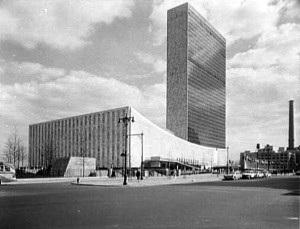

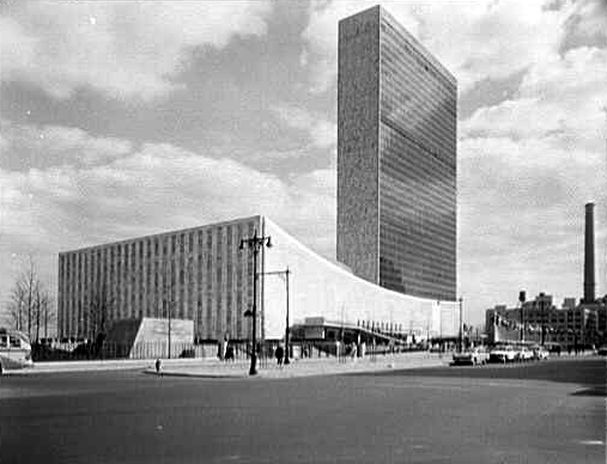
82 United Nations Building (Manhattan)
…but they recoiled at that thought, choosing instead this customized property on the east side of Manhattan (1950). The U.N. Headquarters is globally significant, of course, but its an innovative architectural marvel as well, the first of dozens of towers in the glass-curtained International Style. For better or worse, it keeps New York City front and center as a focal point for international politics.

83 Seagram Building (Manhattan)
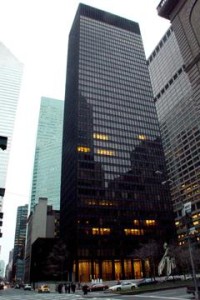
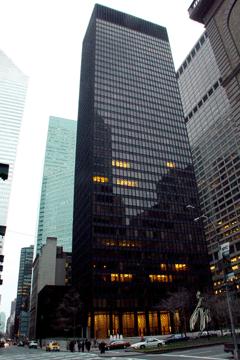
That modern style would be used and abused for the next two decades, as modern commerce embraced tall, boxy high-rises as the critical form of construction. The cleanest example is Mie Van Der Rohe’s graceful black monolith (1958), powerful and utterly lacking in ornamentation. The key to the building, constructed for the alcoholic distiller, is the large public plaza in front of it, reinterpreting the old zoning laws to such an extent that the laws themselves were changed, in 1961.

As lovely as the Seagram Building is — and its companion across the street, the Lever House, from 1952 — those zoning alterations have doomed Midtown to a host of ugly, darkened ‘communal spaces’ and glassed-in plazas.

84 La Luz Del Mundo Church (Brooklyn)
Williamsburg, a former industrial heart of Brooklyn, saw a unusual population shift after World War II, with white residents moving out to be replaced by Puerto Ricans families living next to a tightknit Hasidic enclaves. As New York became a true melting pot after the war, divergent communities grew used to living side by side.

Many 19th century buildings were repurposed by this modern mixture. One hundred years after Congregationalists worshiped here at this brownstone chapel, the Spanish Penecostal congregation La Luz Del Mundo moved in (1955).

Courtesy MAS

85 Trans World Flight Center (Queens)
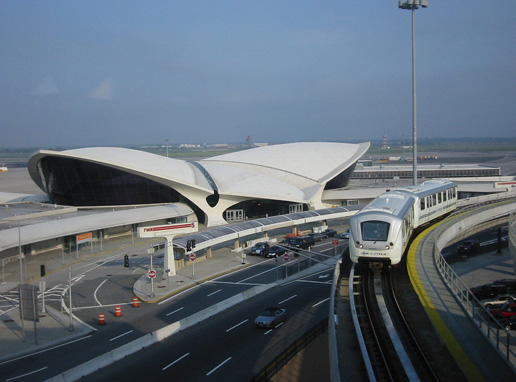
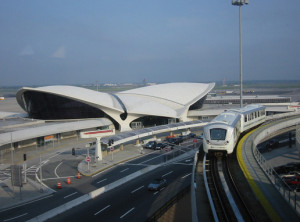
Idlewild Airport represented the future of flight when it was proposed in the late 1940s, utilizing a single, gigantic terminal that would ease traffic at the beleaguered LaGuardia Airport. Flash forward 20 years — the completed airport is now named John F. Kennedy International Airport, LaGuardia is still busy, and instead of one terminal, there were several, of innovative modern design. The best was made for TWA (1962) by Eero Saarinen, reflecting an almost innocent outlook towards the possibility of air travel, an archetype of public design. Reflect on the halcyon days of commercial flight as you’re sitting at JFK today, waiting for your delayed flight.

86 Guggenheim Museum (Manhattan)
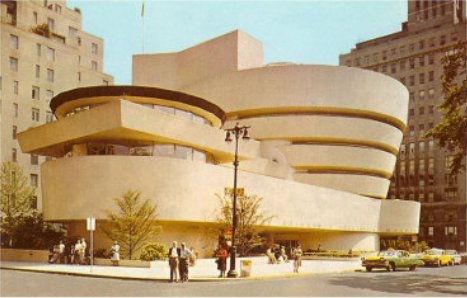
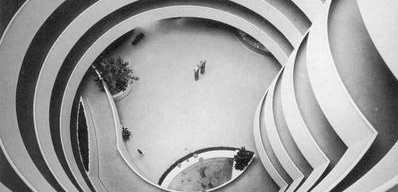
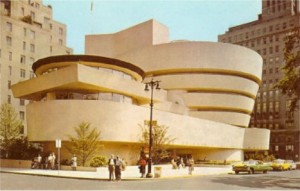
Presaging the work of modern artists who would define the city’s cultural tastes in the 1960s, aging architect Frank Lloyd Wright displayed a goofy flourish with the construction of the Guggenheim Museum (1959).

87 Park West Village (Manhattan)
This cluster of ordinary-looking apartment dwellings (1960) sit on top of the former slum of Manhattantown — an unspectacular place if not for the shady machinations of developers Caspert and Company. Empowered by the federal government’s Title 1 housing act, Moses sanctioned Carpert in 1947 to clear away slums and develop new apartments. Instead, the land sat there — countless delays — while the developers scooped up the rent. The press had a field day, tarnishing Moses’ public image.

The land was eventually transferred to other developers who built Park West Village — of a gloomy standard that would become commonplace with new dwellings.

ALSO: But for something extraordinary, check out the largest ‘building complex’ on my list, Co-Op City (finished between 1968-71), the largest ‘building complex’ on my list. For despite being surrounded by highways, despite housing available for 50,000 residents, the city within a city remains virtually remote, with no convenient subway access.

88 Stonewall Bar (Manhattan)
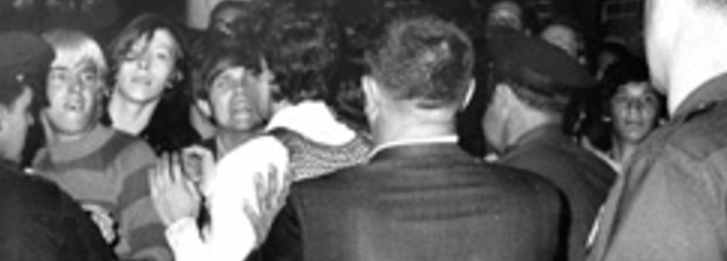
Luckily, this was the 1960s, and communities protested, students protested, everybody protested. Sometimes, people in power even listened. But one revolt decidedly not on City Hall’s radar was the riots outside Stonewall Bar (1969) between police on a routine shutdown of West Village gay bars and a clientele (and rabble from the park across the street) reaching their breaking point. Within a year, the events at this shoddy, mafia-run bar had united a community and jump-started the gay movement.

89 Madison Square Garden (Manhattan)
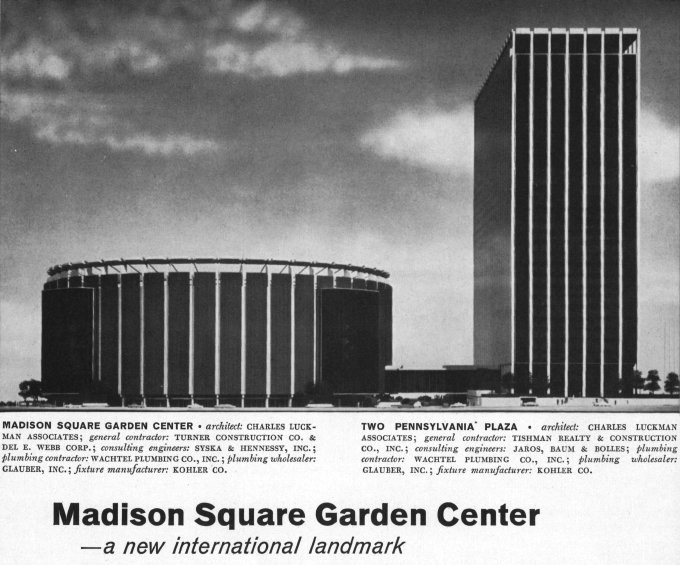
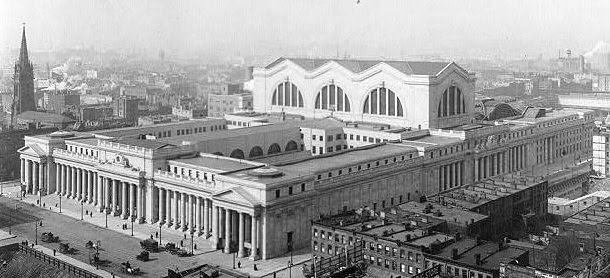
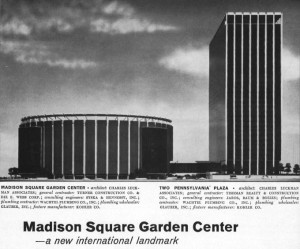
*Sigh* And finally we get to the enormous bundt cake pan that calls itself Madison Square Garden (1968) after the three prior, spectacular incarnations of the same building. Not disparaging any of the wonderful entertainment that goes on inside, the Garden and the subterranean Penn Station are testaments to a mindset of the 1960s, a short-sighted vision of the future that through its lumbering, brutalist qualities threatened to dynamite any glimmer of livability.

The city is currently figuring out how it wants to transform Penn Station into Moynihan Station using the 1912 James Farley Post Office building across the street, an ironic move that would allow the ‘modern’ train station to slither out of the shadows via an old Beaux-Arts structure similar in form to the building that was demolished to build the Madison Square Garden/Penn Station combo in the first place.

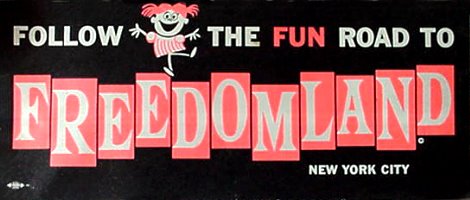
For more information, listen to our podcasts on Randall’s Island, Rockefeller Center, the World’s Fair of 1964-65, the United Nations Headquarters, Freedomland U.S.A., the Guggenheim Museum, Penn Station and Madison Square Garden

————————————————————————-
PART NINE: THE FUTURE CITY
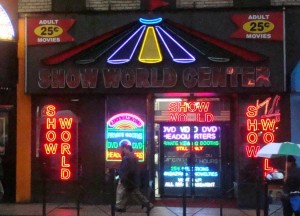

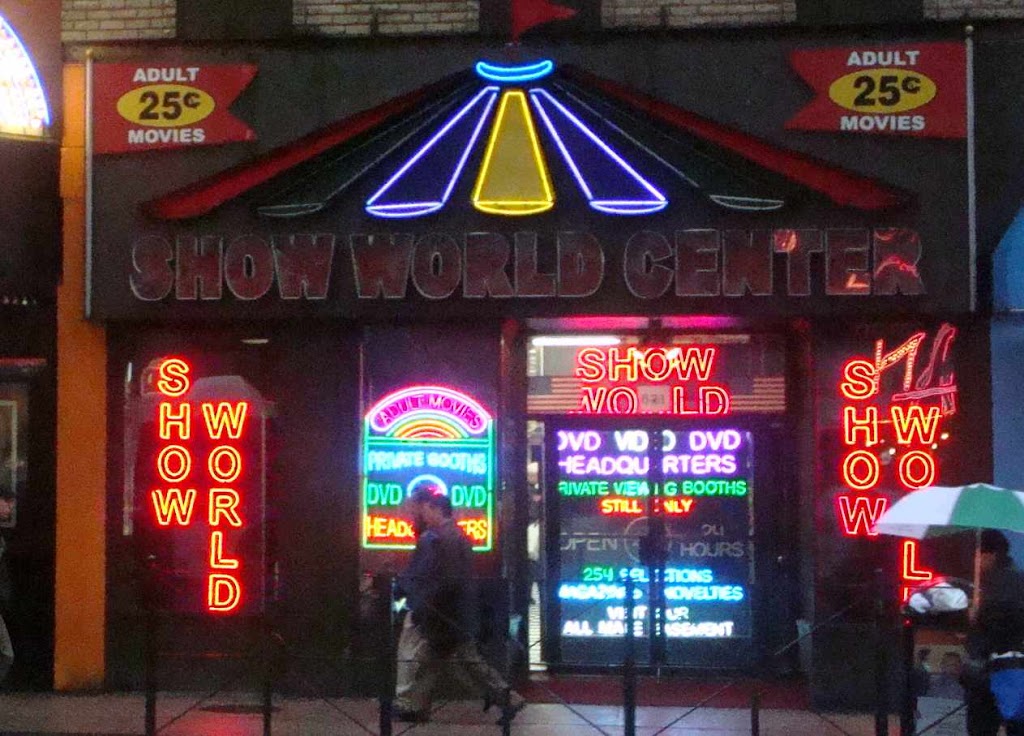
91 Show World Center (Manhattan)
Ah, New York City in the 1970s. People wax nostalgic about it even though nobody in their right mind would take a time machine and return there, except maybe to go to CBGBs. Crime, blackouts, poverty, filth, disco.

But the course that 42nd Street took in the 90s — going from sleazeland to Disneyland — was so dramatic and final that one can’t help be slightly wistful, for that street of lonely marquees, interspersed with poop booths and neon signs for EXOTIC GIRLS. Not the drugs or prostitution, but a street, in the center of Manhattan, that wasn’t so primly cultivated.

Show World Center, right off 42nd on Eighth Avenue, is a holdover from this gritty world, a flashy, trashy video store from 1975 that’s emblematic of Times Square’s days of deterioration, a place that the Times mentions that “burlesque historians say was once a widely imitated model for the industry.”

ALSO: You can find another reflection of Times Square further east, at the TKTS booth, which originally opened in 1973, though the high-tech, staircase-laden revision, which opened two years ago, is a jewel case version of the bombast currently inhabiting the Square today.
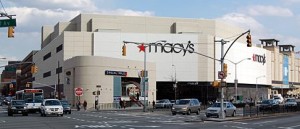

92 Queens Center Mall (Queens)
A hundred years before, it was Ladies Miles. In the 1970s, it was shopping malls. New York City generally shuns some of the standardizations of modern America, but with the blooming of larger residential areas, the lure of modern conveniences like fast food restaurants and shopping malls soon infiltrated. New York’s first McDonald’s opened in 1973. That same year, a humongous shopping mall opened in Elmhurst, a staple of suburbia refitted for the big city.

ALSO: Snooty Manhattan would not be immune; the strangely depressing Manhattan Mall opened in 1989.

93 41st Precinct Station aka “Fort Apache” (Bronx)
FORD TO CITY: DROP DEAD cried the Daily News in 1975, a rebuff by the federal government to New York City’s financial woes. Buckling at its knees, New York spent years consumed with urban blight, catastrophic crime statistics, an abysmal public image and even a roaming serial killer.

During the blackout of 1977, there was probably no place less safe to be than the South Bronx (although Crown Heights, Brooklyn, might win honorable mention). Construction of the Cross Bronx Expressway, widespread poverty and inadequate resources led to a vast crime wave. The officers at the Bronx 41st Precinct (1086 Simpson Street) personified the city’s remaining shreds of determination to fight back, so much so that it even became a melodramatic Paul Newman film, “Fort Apache, the Bronx.” The cops are gone, but the 1914 structure still stands as a reminder of grimmer times.

94 Jacob Javits Convention Center (Manhattan)
The late 1970s and early 1980s weren’t a watershed age for architecture, but at least it was oftentimes functional as with the Jacob Javits Convention Center (completed 1986), a valiant if unsuccessful attempt to reaffirm New York as the home for big business. In its own modest, boxy way, it recalls the city’s great spaces of old, both the grand (the Crystal Palace) and the unsightly (the New York Coliseum).

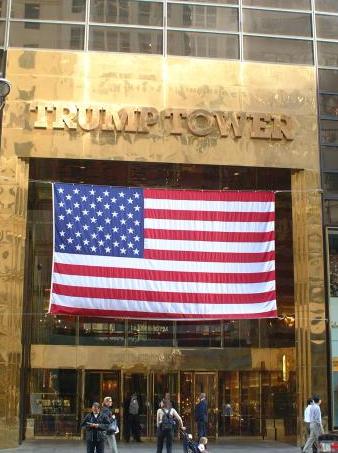
95 Trump Tower (Manhattan)
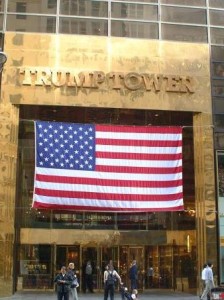
Has one building ever typified an entire decade more than this gaudy palace to Donald Trump? Even as the city began picking itself up, its flashiest developer was embodying a greed-is-good mantra in his decision to throw a gold monolith onto Fifth Avenue (1983).

ALSO: Another tower of wealth, the Citicorp Building becomes the tallest building outside Manhattan (1990).

96 Fresh Kills Methane Treatment Plant (Staten Island)
If you have to point to one thing that symbolized the uneasy relationship between Staten Island and the rest of New York, it would be the former site of the Fresh Kills Landfill, a disastrous Robert Moses idea that turned 2,200 acres of calm, bucolic farmland into the largest garbage dump in the world.

Closed in March 2001, the city has been transforming this toxic site into a future park, a task that will literally take a generation to complete. Industrial structures like the methane treatment plant reform the soil as the former mounds of garbage are transformed into a charming meadow.

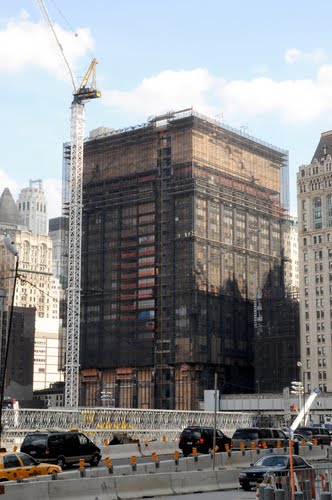
97 Deutsche Bank Building (Manhattan)
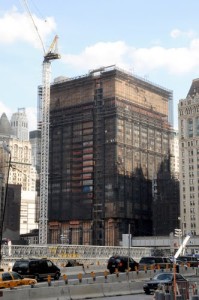
Even as new construction finally rises from the site of the World Trade Center, the terrorist attack still has one more victim to take. The Deutsche Bank Building was heavily damaged by the September 11, 2001 attacks, but, unlike the buildings surrounding it, did not immediately collapse. However it’s been deemed unsalvagable and, after years of delays, is finally in the process of being deconstructed — a couple floors at a time.

By next year at this time, the building should be gone. (Barring delays, of which there’s been a few.)

98 The New York Times Building (Manhattan)
The New York skyline welcomed a bevy of new skyscrapers courtesy of the publishing world, just in time for the pending death of that very industry. Conde Nast (2000) stands over Times Square like Anna Wintour staring at a sales rack, and the hive-like Hearst Tower (2006), planted on top of the base of the old building, looks like its crushing it.

But none seem as strangely cursed as the new offices for the New York Times (2007); the newspaper took a loan out on the new building a year after they moved in, and the sleek design by Renzo Piano has encouraged adventurers and nuts alike to climb along the side of it.
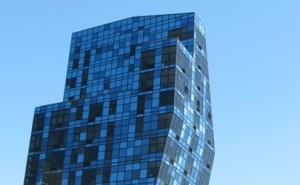

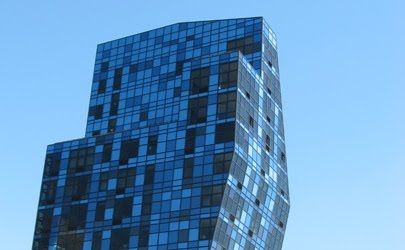
99 The Blue Condominum (Manhattan)
The past decade saw many formerly middle- or low-income neighborhoods with the occasional maverick artist enclave in the process of gentrification — from Manhattan’s Lower East Side to Greenpoint in Brooklyn and well beyond. While one effect of this has sometimes been a richer appreciation of local history, some changes stand in bold contrast, as luxury hotels and pre-bust condos sprout up casting shadows and a foreboding sense of takeover.

The Blue Condominium (2006) is representative of architectural hipsterism, a model of strange proportional absurdity; being so blue, it would stand out anywhere, but especially on Norfolk Street, in sight of the Williamsburg Bridge. And yet, in a city that prides itself on structural diversity, where Beaux-Arts and brutalism stand hand in hand, it’s not necessarily a cause for alarm (as long as people can afford to live here).
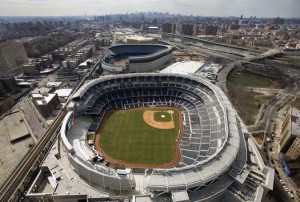
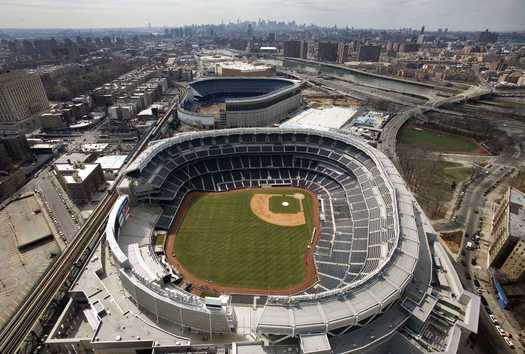
The new stadium, next to the old, courtesy of umpbump

100 Yankee Stadium (Bronx)
Tradition and consistency are key components to the love of professional sports, and those two forces are at work in the new Yankee Stadium (2009). It’s both a stadium and a theme park to the past. Although the new home for Derek Jeter mirrors trends popping up in other nostalgia-inspired ballparks, it nicely contrasts as an opposite of the Blue building in finding ways to preserve the past and live in the present.

What’s the balance between being false to the spirit of a neighborhood and being so technically exact that it’s like architectural drag? Eh, who cares, let’s play ball!

For more information, check out our podcasts on the New York City Blackout, a short history of Staten Island and the New York Yankees


View History of New York in 100 Buildings in a larger map

Categories
Uncategorized

A History of New York City … in 100 Buildings (Nos. 1-50)

PART FIVE UPDATED BELOW – CONSOLIDATED CITY
See map below for all the locations mentioned in this story

One of the truly great podcast pleasures of the past two months has been the BBC’s A History of the World In 100 Objects, a daily chronological journey through human history via carefully selected items from the British Museum. Stone axes! Golden toothpicks! If you haven’t listened to it, give it a try, especially if you enjoy history conveyed through very proper British accents.

Since we’ve begun work on our 100th podcast (to be released on March 19th), I thought I’d take on a wacky experiment here on the blog, to try the same concept in charting New York City’s history, but using its bulkiest commodity — buildings.

Generally speaking, history is never kind to buildings. With a story filled with great fires, draft riots, urban renewal projects, terrorist attacks and greedy developers, New York City changes its landscape often, with financial downturns, community activism and landmark designations often the only forces stemming the tide.

But with a little creativity, it is possible to chart the city’s entire history from currently standing structures (or in certain cases, reconstructions of original buildings). These 100 buildings and complexes represent just my own perspective, based on my work here on the blog and the podcast. Another person could attempt this same task using a completely different list of buildings. This is not meant to be in anyway authoritative, just my opinion based on stuff I’m picked up thus far on this little trek through history.

There’ll be an update once a day (or so) so check back every day for more. At the bottom of this post will be a Google map of all the locations mentioned. Hopefully this will inspire you to visit a landmark you’ve never heard of or plan a self-guided walking tour around a favorite neighborhood

I’m crunching a lot of data here, so if you see any errors with dates or other information, just drop me a note here or at boweryboysnyc@earthlink.net. Also, if you have a favorite place to add, feel free to leave a note in the comments section. Hope you like it!
_______________________________________________________
PART ONE: NEW CITY


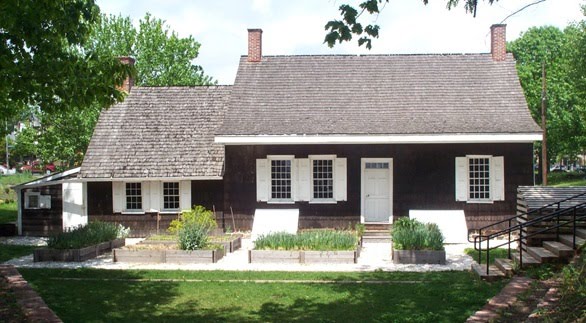
Photo courtesy Wyckoff Association

1 Wyckoff Farmhouse (Brooklyn)
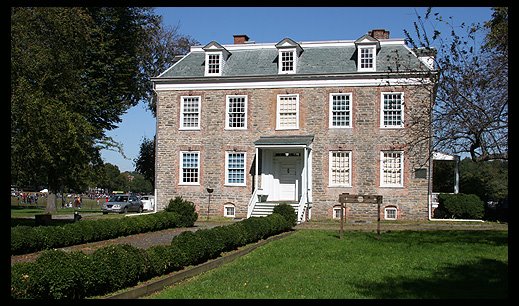
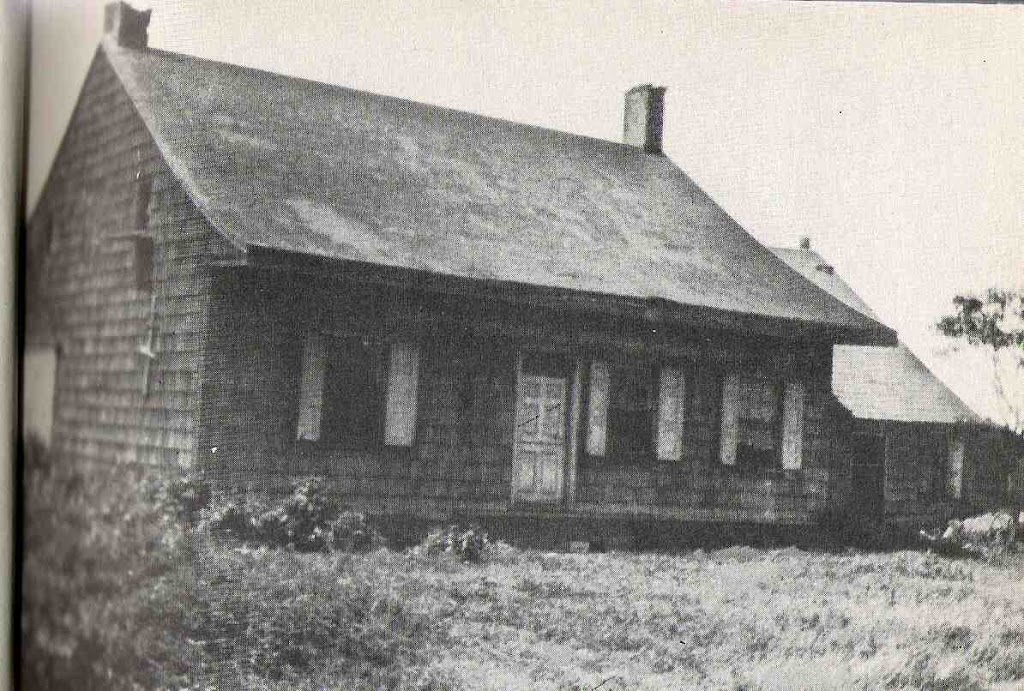
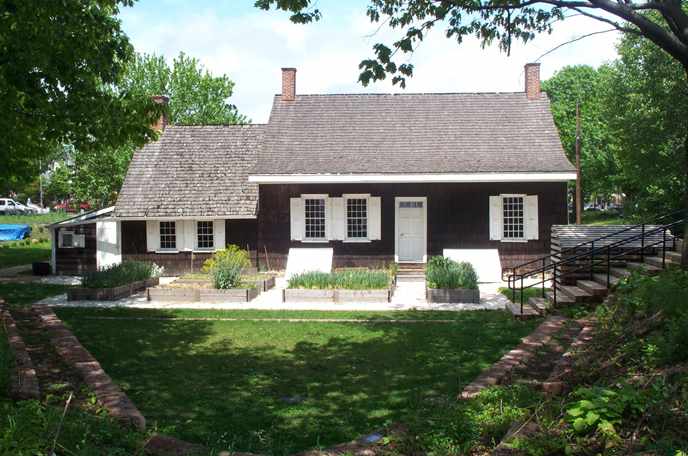
In the beginning, there was the Pieter Claessen Wyckoff House (above). At least, that’s what the Landmarks Preservation Commission, borne of the destruction of old Penn Station, thought in 1965 when they named this modest saltbox frame abode the very first New York City landmark.

No traces outside of a museum exist of old New Amsterdam, but the mark of the Dutch farmers who came along for the ride are still with us. Pieter Claesen was granted this land directly from Wouter van Twiller after the director-general of New Amsterdam bought it from the Lenape inhabitants in the late 1630s. A few Dutch farmers had already ventured onto this wild patch by the time Claesen (who would take the surname Wyckoff after the British took over) built his farm here.

Part of the current structure is from this original home, built in 1652. Many changes came to the house over the years, but the Wyckoff family in some form stayed until 1901. It takes virtually little imagination to stand in front of his sturdy brown house and envision a open, wild Brooklyn landscape behind it.
2 John Bowne House (Queens)
Bowne’s house, in Flushing, is significant to me for one big reason: it was witness to Peter Stuyvesant. Or rather, his temper.

Quaker Englishman John Bowne and his family settled in Dutch territory mostly to escape the Puritanism of his former residence, Boston. No luck here however. Stuyvesant arrested for holding Quaker gatherings (wild, dangerous Quakerism!) in his home. Sent to Holland for trial, he was acquitted and came back to Flushing with a reprimand to Stuyvesant — a reinforcement of New Amsterdam’s religious tolerance.
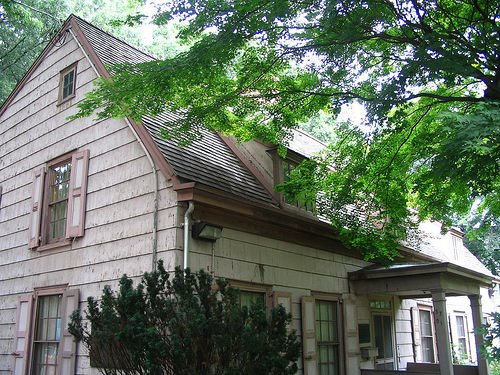
3 Voorlezer’s House (Staten Island)The transition from Dutch to British rule is easily seen in this simple two-story building (at right) in the vicinity of Historic Richmondtown. Built sometime between 1680 and 1696 by the Dutch Reformed Church, this home for a ‘voorlezer’ (reader and instructor) is considered the oldest elementary school in the United States. Despite British control over the newly named Richmond Country, society would still have leaned heavily Dutch-inspired for decades after.
4 Conference House (Staten Island)
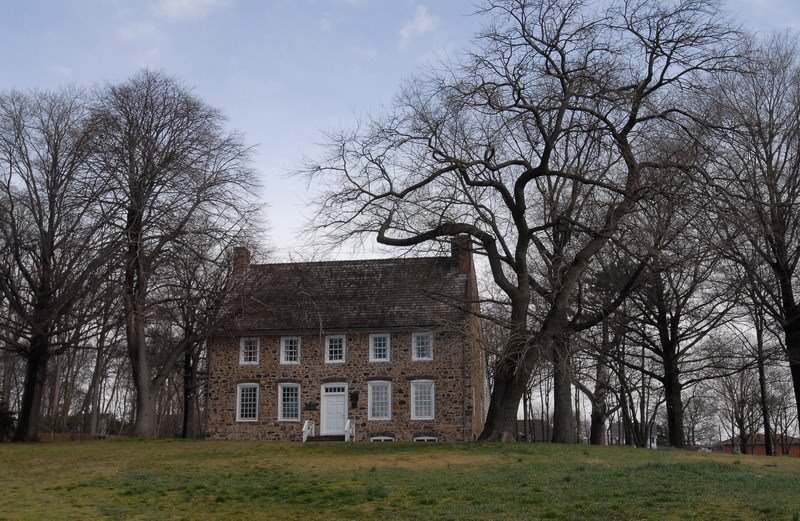
Although Richmond County was very pro-British by the 1760s, it was pulled into the conflict between the crown and American rebels by the island’s situation in New York harbor, across from rebellious New York. This home of Christopher Billopp, built in 1675, would take center stage in the conflict a hundred years later, when Continental Congress representatives John Adams, Benjamin Franklin, and Edward Rutledge met with British military to fend off an encroaching war. To no avail.
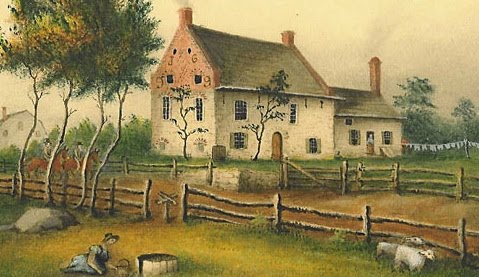
Courtesy Old Stone House/NPS
5 Old Stone House (Brooklyn)
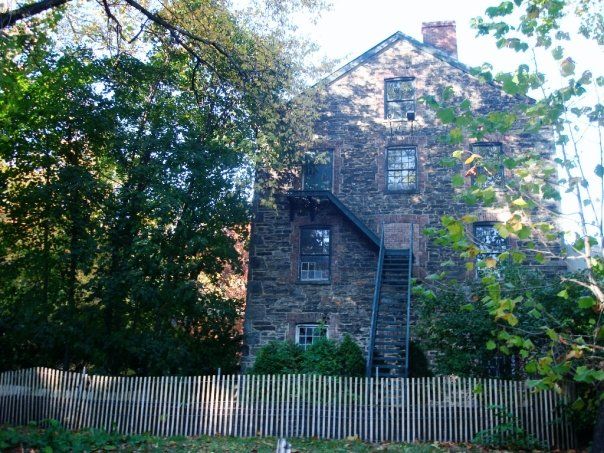
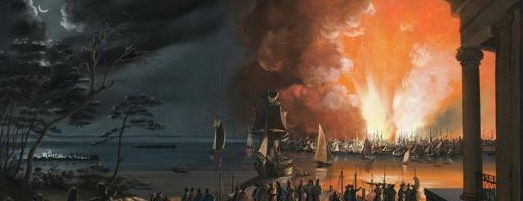
Within the month, British forces swept into Long Island, turning back George Washington’s men at every bend. Here at a simple stone farmhouse overlooking Gowanus Creek, Washington’s troops briefly rallied, holding the old house and firing against the British. “What brave men I must this day lose,” George reportedly said as he look down upon the beleaguered little building. (Pictured above in more bucolic times.)

This current house is actually a reconstruction from 1930 — using materials from an original Dutch home from 1699 — and it may be difficult to see redcoats whizzing by from its vantage near Park Slope.
6 Fraunces Tavern (Manhattan)
This too is a reconstruction of the original tavern which sat here, a key meeting point before, during and well after the Revolutionary conflict. Artifacts in the second-floor museum will give you a good idea of life in Colonial New York, but even having a drink in Fraunces’ darkened bar downstairs, one can envision hushed conversation from impassioned revolutionaries or perhaps a brawl between drunken British soldiers.
Courtesy Jumel Terrace
7 Morris-Jumel Mansion (Manhattan)
The oldest home in Manhattan (1765) is pretty much how the other half lived; British colonel Roger Morris built this palatial estate well outside New York in tumbling, secluded hills and hosted his superiors here after they succeeded in rushing George Washington and his men out of Manhattan. (Washington himself even took over the home briefly on the army’s way out.)

Post-British era, the home’s dining room entertained many of our country’s founding fathers. However, its history only gets more absorbing when the house is purchased by merchant Stephen Jumel and his scandalous Eliza, who took up with Aaron Burr after Stephen’s mysterious death.
8 St. Paul’s Chapel (Manhattan)
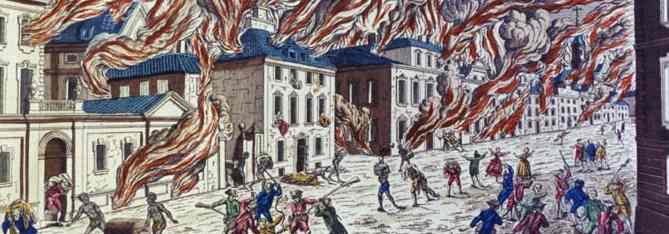
This chapel (from 1766) is, in my humble opinion, New York’s greatest colonial landmark. Surviving the fire of 1776 which wiped clean most of New York’s early historic structures, St. Paul’s is the only true surviving witness of the years when the seat of federal government sat a few downs down at Federal hall. Alexander Hamilton trained as a soldier outside in the churchyard; Washington worshipped here as president of the new country. The chapel is such a symbol of fortitude that even during the Sept 11 attack in 2001, just blocks away, nary a window was even broken.
9 Fort Jay (Governor’s Island)
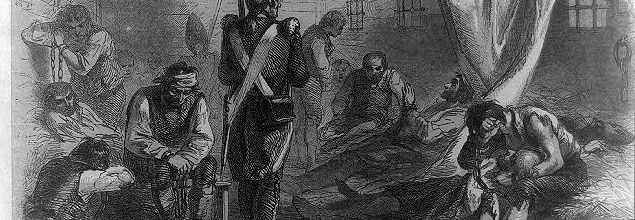
The current fort structure was built in 1806, but it was constructed over an original earth fortification used first by the Americans, then by the British during their occupation from late 1776-1783. One example of dozens of such primitive forts, now lost to redevelopment, the original placement of these early can be seen in the ripples of earth inside the fort. It was rebuilt in 1806 — and originally called Fort Columbus — and served as one of many harbor defenses. The fort held upper-tier Confederate officers during its years as a Civil War prison.
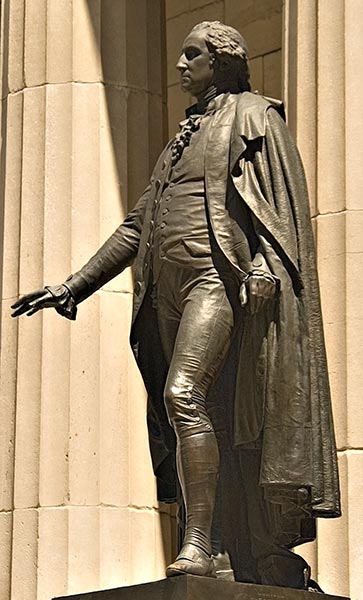
10 Federal Hall (Manhattan)Nothing exists of the original hall (demolished in 1812), so from the perspective of a chronological history, this building is disappointing. This current structure (1842) was New York’s original custom house, processing the flow of imports and exports into one of the busiest ports in the world. However it would revert to a shrine of the earlier Hall within a few decades; today, you cannot get a physical sense of the original building, but the museum inside and the lustrous 1882 Washington statue outside will give you a virtual sense of New York’s importance in 17th century Colonial America.
For more information: try our two podcasts on the Revolutionary War (The British Invasion: New York 1776 and Life In British New York) or a listen to everybody’s favorite director-general, Peter Stuyvesant
_______________________________________________________
PART TWO: PORT CITY


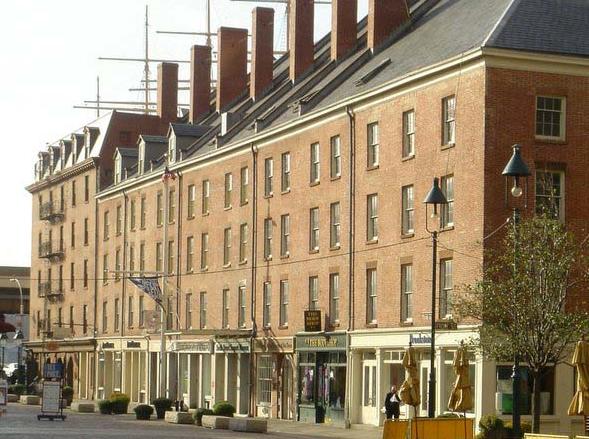
11 Schermerhorn Row (Manhattan)
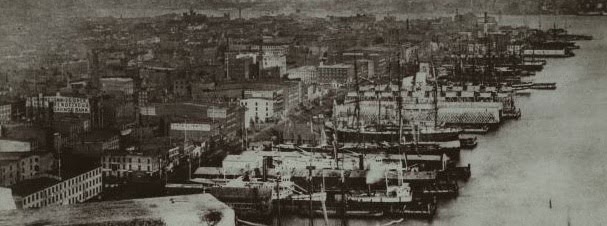
After the war, New York flourished as an international port of commerce, the harbor filling with foreign merchandise to be distributed throughout the new country, the waterfront lined with boat slips all along from the bottom of Manhattan island up to South Street. With the opening of the Erie Canal in 1825, the floodgates of wealth opened further. Schermerhorn Row (1810-12) is one of the few remaining survivors of this early period of ship-based commerce.

In 1810, Uber-wealthy merchant Peter Schermerhorn began work on this row of plain storeroom buildings to lease out to prospective counting houses. They were north of the core merchant area, which saved them from destruction when the Great Fire of 1835 swept through lower Manhattan. They barely survived an even greater disaster — the 1970s — when they were given landmark status in 1977. A skyscraper stands just a few feet away to remind visitors of the alternative. Today the row of Federal Style buildings house the Seaport Museum and various shops and restaurants.
12 Castle Clinton (Manhattan)
New York’s preeminence as a port also made its residents understandably skittish about another invasion, and rumbles of another war with the British convinced New Yorkers to built fortifications all along the harbor. Although the events of the War of 1812 never quite made it to New York, the city was prepared, building Castle Williams on Governors Island, and out in the water right at the tip of Manhattan, Castle Clinton (
1811), named for governor DeWitt Clinton.

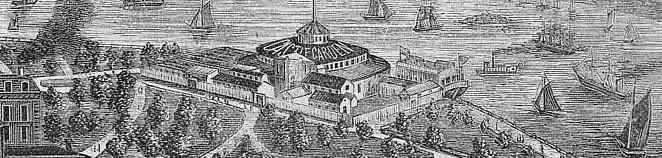
The noble brown shell housing tourists today hints but slightly at its glory days as the grand performance hall Castle Garden, as New York’s pre-Ellis Island immigrant station, and, as a home for penguins and seals, the New York aquarium. Although not a shot was fired at the elderly fort, it still managed to survive its greatest villain, Robert Moses, in his quest to rip it down in the 1940s.
ALSO: On the opposite shoreline, the U.S. government builds the Brooklyn Navy Yard in 1806. Although you can’t go inside, you can sneak a peek at the gated, wonderfully out of place Commandants House (built 1805-6) in the neighborhood of Vinegar Hill.

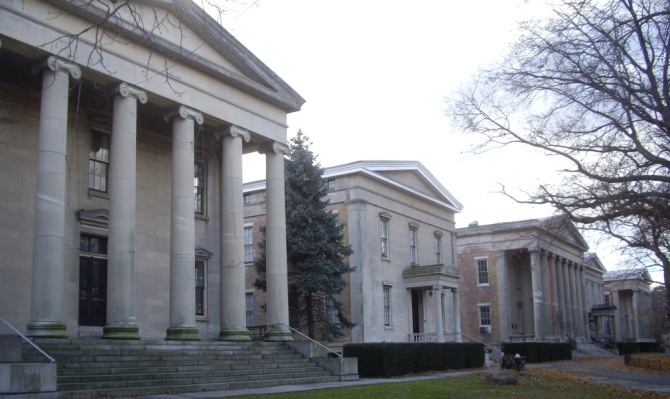
13 Building C, Sailors Snug Harbor (Staten Island)
Perhaps the fact most greatly underscoring New York’s naval importance is the way in which the city honored and took care of its
retired sailors and seamen. The Staten Island estate of Robert Richard Randall was transformed into a sumptuous retirement home, a quiet respite within sight of the harbor where many of its elderly residents spent their careers. The new Sailors Snug Harbor (above), opened in 1833, featured the greatest selection of Greek Revival architecture outside Washington D.C., with Building C (1831-33), the centerpiece, its most lavish survivor.
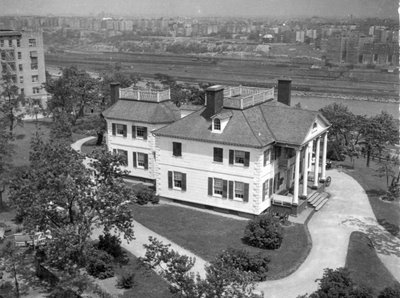
14 Archibald Gracie Mansion (Manhattan)
The kings of shipping, the new merchant princes, built their homes along the water as a testament to their growing wealth. Shipping tycoon Archibald Gracie plants his estate (at left) just north of the
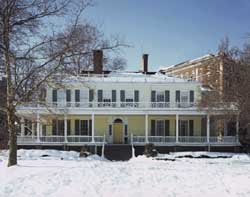
supposedly haunted Jones Wood in 1799. Although he had to later sell it to pay off debts, the rustic, Federal Style home later became the official mayor’s residence, from Fiorello LaGuardia to Rudy Guiliani (who moved out mid-term).
ALSO: On a small island strip in the East River, the island’s owner James Blackwell builds his home here in 1794, the oldest structure standing on today’s Roosevelt Island. Another house, the Hamilton Grange, is constructed in 1802 near on the Hudson River side of the island; its owner, Alexander Hamilton, would only enjoy it a few years before his untimely death.
15 St. Marks Church in-the-Bowery (Manhattan)
St. Marks Church (built
1799) stands on former farmland of Peter Stuyvesant, sitting at an angle next to tiny Stuyvesant Street — vestiges of the original lay out on the estate. The rest of Stuyvesant’s farm was carved up by the 1811 Commissioners Plan, a visionary work of urban planning, taking Manhattan island and mapping out hundreds of streets and avenues over land that was mostly undeveloped wilderness. The plan was so successful in creating uniformity that it’s difficult to envision the rambling disorder of streets before they were carved into need orderly rectangles. At St. Marks, you can take solace imagining the former layout while visiting the crypt of ole Stuyvesant (who might still be haunting here).

16 St. Patrick’s Old Cathedral (Manhattan)
An altogether different house of worship lower down the Bowery, St. Patrick’s (built
1809) catered to the lowest rung of New York society of the time — the first wave of Irish Catholic immigrants. St. Patrick’s (above) was often a church under siege; in 1835, anti-Catholic mobs stormed the place, its parishioners rushing to the chapel’s defense. The cathedral would become safe haven for different ethnics, most notably the growing Italian community at the start of the 20th century.
17 65 Mott Street (Manhattan)
In the 1820s, the area around St. Patrick’s was still considered the outskirts of town. With New York’s center becoming overcrowded, the poor clustered in communities of cheaply made structures. To the south of St. Pat’s, crumbling townhouses sinking into marshy land would soon give way to the darkened slums of the Five Points neighborhood.

These homes would be refitted for multiple families. Constructed in 1824, the plain structure (by today’s standards) at 65 Mott Street would become the first specifically made for multiple tenants — the first tenement building. Within years, these tenements would become the standard style of living, each packed with hundreds of poorer residents.
18 Washington Square North 1-3 (Manhattan)
Not everybody lived this way naturally. The poor may have had little choice where to live. But wealthier New Yorkers could venture further north and west, and when yellow fever epidemics made cramped urban living unsafe, many ventured to newly affordable plots in the area of Greenwich Village.

When the city landscaped the new Washington Square Park in 1826, it naturally attracted the wealthiest of New Yorkers, who built row houses along its northern rim. The oldest surviving buildings here, 1-3 Washington Square North (built in 1833), would be iconic representations of early American comfort, over the decades becoming home to well-connected families, dignitaries and artists. And they would kick off the triumphal upper-crust procession up Fifth Avenue.
ALSO: For some visitable interiors, you can get a fuller sense of how ‘the other half’ lived further east at the Merchant House Museum (1832). The even older building at 326 Spring Street — known as the James Brown House, (1817) — was a former boardinghouse and home to Brown, an ex-slave Revolutionary War hero. Today, you can delight in its history while having a beer as the Ear Inn, its incarnation since the 1970s.
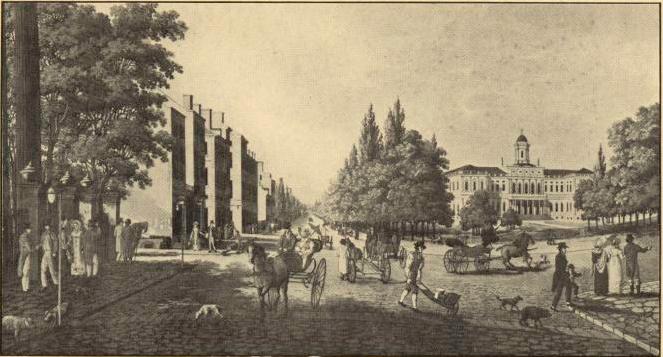
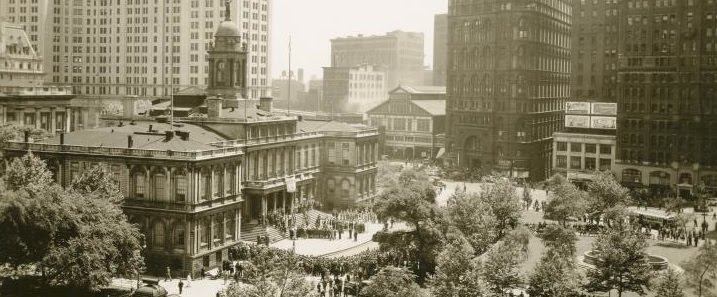
City Hall and environs in 1820
19 City Hall (Manhattan)
With great fanfare, city leaders decided to move city offices from Federal Hall on Wall Street up to a new structure built on a worn patch of public ground up north on Broadway. The new building, completed in
1812, reflected the popular feeling of the day; the northern side, facing up the island to a drained Collect Pond, scattered lower class developments, was originally constructed with less quality materials.

City Hall would survive fires, renovations and corrupt administrations to remain the oldest, continuously operating center of city government in the United States.
20 24 Middagh Street, ‘Queen of Brooklyn Heights’ (Brooklyn)
Meanwhile, across the river, speculators were beginning to lure New Yorkers over to the small town of Brooklyn, with spectacular views and a brand spanking new Fulton Ferry service (which began operating in 1814). Within a few years, the first developments would pop up on the bluff later to be called Brooklyn Heights.

The area’s oldest structure, the home built by Eugene Boisselet at 24 Middagh Street (1824), is considered the ‘queen of Brooklyn Heights’. Its woodframe Federal Style glamour are a sharp contrast to the great brownstones that would define the neighborhood many years later. The ‘queen’ would quickly find herself surrounded as the area became popular with eager New York escapees, the first commuters. But not every area of Brooklyn was quite ready to urbanize….
21 Flatbush Dutch Reformed Church (Brooklyn)
The rest of Brooklyn would earn its reputation as a ‘City of Churches’ with buildings like Flatbush’s fine old chapel, completed between 1792-8.

The third church in this very spot — the first sanctioned by Mr. Stuyvesant himself in 1654 — the dark stone chapel held together a quiet, bucolic Long Island farming community, removed from the bustle of the harbor. The independent town of Flatbush, one of six in Kings County, contrasted sharply with Brooklyn and would retain its autonomy from that growing city for most of the century.
For more information: try our podcasts on DeWitt Clinton, Collect Pond, Washington Square, Green-Wood Cemetery (for a brief history of Brooklyn Heights), St. Patrick’s Old Cathedral, Castle Clinton and New York City Hall _______________________________________________________
PART THREE: INDUSTRIAL CITY


22 Lorillard Snuff Mill (Bronx)Throw a rock in the Bronx before 1840, and you’re likely to hit a cow. However, being north of Manhattan, it was only a matter of time before its uninterrupted stretches of farmland were soon met with change. Before the 1840s, it was nothing but cows, wheat fields, and the occasional estate (see below). But the industrial progress of New York soon began to seep into this future borough, and the advent of the railroad and the rise of immigration began to turn the tide for this agrarian outskirt.

The Lorillard tobacco manufacturer, who got their start in Manhattan back in 1760, built its snuff mill here (above( in a Bronx riverbed, using water power to meet up with the growing demand of homegrown tobacco. It’s one of the oldest surviving examples of early American industry. Today, you can find it nestled in the New York Botanical Garden — and currently undergoing renovation.
23 Wave Hill House (Bronx)
Another Bronx landmark of the period has also succumbed to flowering beauty. Wave Hill represents one of the best preserved examples of homes overlooking the Hudson River still within the city today, a modern rarity from a period of dozens of cliffside homes. Lawyer William Lewis Morris, from a family of wealthy Bronx landowners, built his Victorian estate (1843) as a summer retreat; later, the house (below) would entertain the likes of Mark Twain and a young Theodore Roosevelt. The city took it over in the 1960s, and today its a public garden with its breathtaking views intact.
ALSO: Ten years later, railroad magnate Edwin Clark Litchfield had his equally impressive and quite curious Italian-style home, Litchfield Villa, erected on land later bought for Prospect Park.
Below: Wave Hill House, in one of the most beautiful spots in the Bronx

24 Hunterfly Road Houses (Brooklyn)
Slavery was abolished in New York state in 1827, but in practice, black city residents had few of the property rights as their white neighbors. The African-American settlement of Seneca Village was eradicated by the creation of Central Park, and blacks were not welcome in many New York neighborhoods.

But evidence of a seven-block African-American development in Brooklyn still exists at 1698 Bergen Street, the remains of the settlement of Weeksville, a small neighborhood developed (1840) by a black developer for black residences, “the second largest known independent African American community in pre-Civil War America”, according to the Weeksville Heritage Center.
25 Trinity Church (Manhattan)
The tallest building in New York (from its creation in 1846 to 1890) with the wealthiest most power congregants, the third Trinity on this spot would be defining symbol upon a growing New York skyline. Even without the fabulous Richard Upjohn design, the church would remain the city’s most powerful landlord. But it always helps to look good.
ALSO: The uptown Grace Church, consecrated the same year, would grow in prominence as high society began moving up the island. If you weren’t a member of a powerful family, don’t bother looking for a pew.
26 Beth Hamedrash Hagadol (Manhattan)
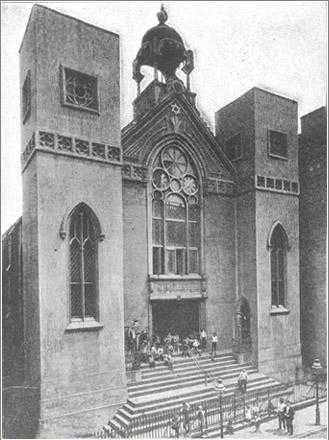
The Lower East Side’s oldest synagogue (1850) is the most spectacular reflection of the neighborhood’s changes of the period, as immigrants from Europe crammed into affordable tenements. Within a few years, the new residents would turn this stretch of land below Houston into the most concentrated Jewish community on earth.
ALSO: Beth Hamedrash is the oldest, but the close-by Eldridge Street Synagogue (1886-7) is probably the most beautiful
27 India House/1 Hanover Square (Manhattan)
Further downtown, New York cleans up from the great fire of 1835 and resumes business. Hanover Square had been a center for publishing and retail since the British days; in the flourishing New York economy, it became an extension of Wall Street with banks and exchanges.

The India House (1851-53) became both — first as Hanover Bank when it was built, then as the first commodity market in 1870 (the New York Cotton Exchange). Given the fervor for skyscrapers in the region, it’s a wonder this great example of mid-19th century commerce still exists.
28 Cooper Union (Manhattan)
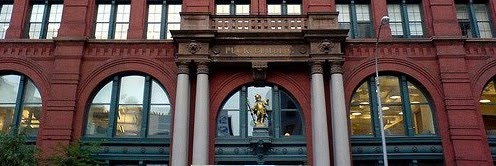
In the right people, economic power and growing population breeds benevolence. Inventor and philanthropist Peter Cooper created Cooper Union (1853-59) as a place for free education — to both men and women. In construction of this brownstone Astor Place anchor, he also provided one of the great auditoriums of the city, which a year hosted a young politician named Abraham Lincoln.

29 Smallpox Hospital (Roosevelt Island)
Sometimes though, economic power and a growing population breeds, well, indifference. New York is best known for putting its undesirables on islands, and in defining those undesirables rather broadly — criminals, orphans, delinquents, infirm, diseased, or just really poor.

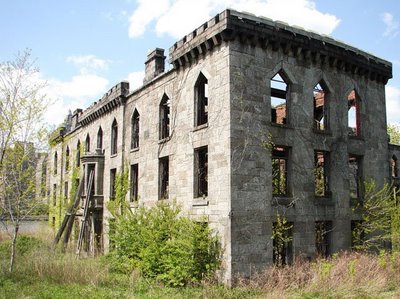
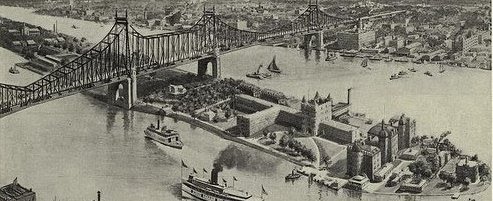
Blackwell’s Island was the most notorious of these, although nearly all of New York’s islands have enjoyed their shares of hospitals and prisons. The ruins of James Renwick’s Smallpox Hospital (1856) are a vivid reminder.
30 Engine Company 204, Cobble Hill (Brooklyn)
As soon as they put stuff up, it was burning down. New York, Brooklyn and the surrounding cities and towns were under constant threat for fire. As a result, in the years before paid firefighting services, the methods became territorial, with competing gang-controlled fire operations. Fighting fire was less a community service than a sign of sporting-man machismo.

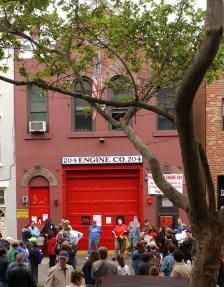
There are excellent architectural examples of still-operating 19th century firehouses throughout the city. The one at 299 Degraw Street in Cobble Hill is not one of them. However, it is the oldest firehouse that I can locate, built in 1855 for the volunteer Montauk Hose Company in the years before Brooklyn had an organized firefighting unit. This structure held the horses; the volunteers slept across the street. After a valiant community effort to save the company, the city decommissioned the building.
ALSO: If you prefer an active firehouse, try Engine Company No. 5 at 340 East 14th Street in Manhattan, designed by Napoleon LeBron in 1880.
31 Plymouth Church (Brooklyn)
Another kind of fire was stirring at the center of Brooklyn high society — Plymouth Church (1849-50). By 1854, Brooklyn had absorbed Williamsburg and Bushwick to become the third largest city in the United States. Its preeminence was embodied by Plymouth’s fiery celebrity preacher Henry Ward Beecher, who was Brooklyn’s defining voice even after scandal knocked him from the podium in the 1870s.

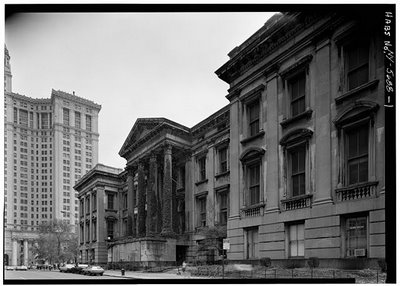
32 Tweed Courthouse (Manhattan)
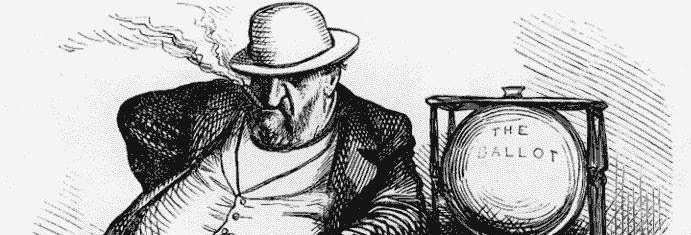
But if it’s scandal you’re looking for, look no further than the exploits of Boss Tweed and his corrupt political machine Tammany Hall. Nothing embodies the excess and wastefulness of Tammany graft than the courthouse unofficially named for the man who kept it filling its contractors’ pockets with money. Taking twenty years to build (1861-1881), it’s one of the most expensive buildings ever built in the 19th century.
Courtesy Flickr
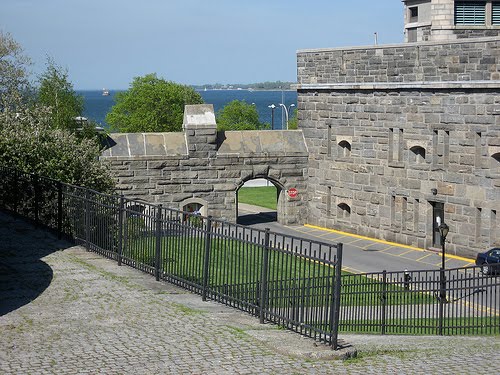
33 Fort Schuyler (Bronx)
New York’s participation in the Civil War was more than just that pitiful and deadly distraction known as the Draft Riots. New York residents became soldiers, financiers, supporters and critics of the conflict. The city played a more direct role as a holding station and hospital base for thousands of militia. Fort Schuyler, began in 1833 and not fully dedicated until 1856, held hundreds of Confederate soldiers and housed thousands more Union troops on their way to battle. Today students wage for battle here as the site of
Maritime College, a branch of SUNY.
For more information check out the following podcasts on the above subjects: Trinity Church, Henry Ward Beecher, Great Fire of 1835, Roosevelt Island and Cooper Union.
___________________________________________

PART FOUR: SOPHISTICATED CITY


Courtesy Tenement Museum
34 97 Orchard Street (now Lower East Side Tenement Museum) (Manhattan)
Rarely do we get to see how people of the past lived, in the place they lived it in, with furniture and items they actually used. This tenement from
1863 fell into the proverbial tar pit in 1935 when the building’s owner, rather than renovating and re-renting, simply closed off the upper floors — contents and all — to remain undisturbed until 1988, when urban archaeologists discovered the place and transformed it into today’s Tenement Museum.

Inside lies the story of thousands, of Eastern European immigrants funneling from the Castle Garden immigrant depot to enclaves in the Lower East Side and beyond. As New York in the 1870s and 80s becomes decidedly extraordinary, how amazing is it to find something from the same period celebrating the little banalities of 19th century life.
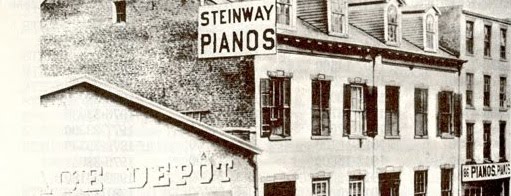
35 Aschenbroedel Verein building (Manhattan)To make those new Americans feel at home, cultural organizations preserving their foreign music and heritage popped up throughout New York. For Germans, who began coming to the United States en masse after 1850, music was a particular cultural touchstone (as evidenced by early German success story of the Steinways.)

To quote a 1896 New York Times article on the German music troupe Aschenbroedel Verein: “A generation ago German-American musicians were not always quite so welcome in musical circles in thsi country as they are now.” In 1873, the organization opened its own clubhouse at 74 E. 4th Street in the East Village — the heart of Kleindeutschland “little Germany” — cultivating a generation of musicians who later dominated the field of orchestral music — favorite of the upper classes.

And the building’s cultural legacy was not over; in 1969, the building reopened as a stage for Ellen Stewart’s La Mama Experimental Theatre Club, without argument New York’s “most influential” off-off Broadway stage.
ALSO: For a more fanciful theatrical transformation, go around the corner to the former Bouwerie Lane Theater, a cast-iron beauty, born a bank in 1873 and transformed into an off-Broadway stage in 1974. It’s a trendy clothing store now.
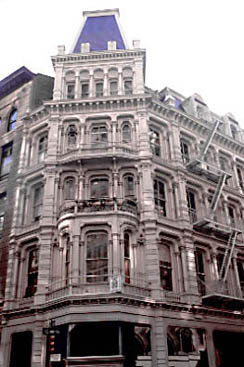
36 901 Broadway: Lord and Taylor (Manhattan)By the early 1870s, fashionable society had wound its way up Fifth Avenue, expanding between Union and Madison parks with new developments of brownstones, theaters and shops. Heralding this change was the flourishing of Ladies Mile, a collection of tony, often cast-iron-clad department stores.

The trend begun by A.T. Stewart (his first store opened in 1823 north of City Hall) had become a retail revolution. In 1869, Samuel Lord and George Washington Taylor opened a luxury retailer in the heart of the mile, here at 901 Broadway. In my humble opinion, the corner store, in its pompous French Second Empire style, is the most beautiful example of the many storefronts that still exist.
37 Samuel Tilden Home, Gramercy Park (Manhattan)
The flamboyant tastes of the privileged classes made for some outlandish homes. Just contrast the simple tenement above with the ornate
15 Gramercy Park. Structurally from the 1840s, no less than Central Park co-creator Calvert Vaux overhauled the building in 1881 for his client, failed presidential candidate Samuel Tilden. The whimsical exterior decor is literally a reflection of its inhabitant; the writers busts and animals adorning the front were based on a few of Tilden’s favorite things.

The home was considered so lavish that when Tilden died, the prestigious (and private) National Arts Club moved in in 1906 — and has been there ever since.

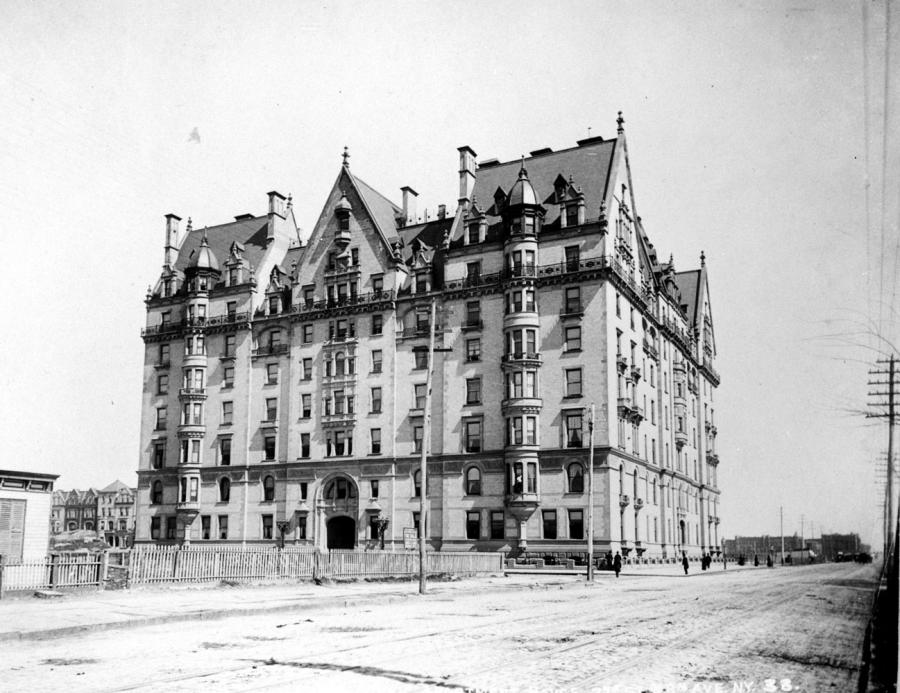
38 Dakota Apartments (Manhattan)
But not all who could afford such luxury necessarily desired it. By the 1880s, Central Park had changed the city, not only as ‘the lungs of the city’ but the real estate fortunes surrounding. The Upper West Side, still quite remote for most people, was slowly being defined by a new form of domicile — the apartment building.

The Dakota Apartments, designed by Henry Janeway Hardenbergh and opening in 1884, brought lavish lifestyle together with ‘shared services’ and such unique features as a courtyard, community stables and windows arranged for cross breezes — unusual for the time.
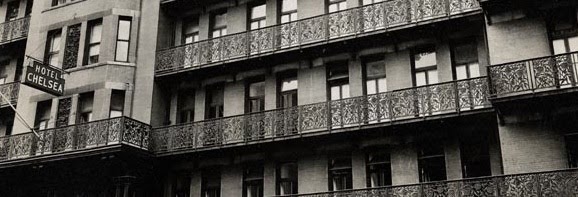
ALSO: The Chelsea Hotel began its life as a similar facility as the Dakota; needless to say, it went in a different direction.

Above: the rather farm-looking original Met, today mostly covered up (thankfully!) Courtesy the JSS Gallery

39 Metropolitan Museum of Art (Manhattan)
New York’s primary cultural institution for almost 140 years, the Met reflects everything the city wanted to be in the 1870s — namely, the American Europe. The original building, opened in
1878, would never have thought to cater to the, gasp!, general public or feature, clutch the pearls!, American artists.

How things change. Most notably the entire building, consumed in later additions. However, if you want to see the 1878 original, simply enter by the front, climb that impressive staircase and hang a left — part of the original Gothic, red brick version sits exposed here to this day.
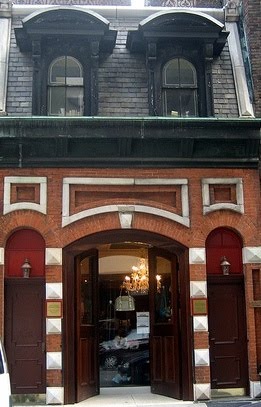
40 Jonathan W Allen Stable (Manhattan)Imagine this: before the early 20th century, the street was filled with horses. Horses, horses, trains and horses. The smell of exhaust, the noise of buses and cars replaced the smell of manure, but a refreshingly quiet clomping. Trolleys would whiz by, trains elevated and spewing black smoke — but horses were still critical to the livelihood of New Yorkers.

There are dozens of homes and businesses in New York that are converted stables of days past. In particular, what I like about the stable at 148 East 40th Street, owned by broker Jonathan W Allen who lived close by, is that it was built in 1871 — years before its equine inhabitants would even see (and get spooked by) a future of ‘horseless carriages’. Also, the stable is close to Longacre Square (future Times Square), the center of New York’s horse-driven carriage industry.
41 Domino Sugar Refinery (Brooklyn)
Meanwhile, across the East River, the former village of Brooklyn had expanded to the size of a small metropolis — half a million people, with thriving centers of industry, amassing all the towns in the vicinity to nearly become the size of the present borough today. In 1883, the Brooklyn Bridge united the city with its big sister, and rumblings of a consolidation were underway.

It rivaled Manhattan as the king of monopolies, in particular, in the commodity of sugar. In 1884, the Havemeyer family, who dominated the marketplace, opened their waterfront refinery as the unofficial kings of the city, one of its largest employers. It changed its name in 1900 to Domino Sugar; its distinctive sign (added in 1967) would define the waterfront.
Photo Bruce Handy/Pablo 57 Flickr
42 Grashorn Building (Brooklyn)
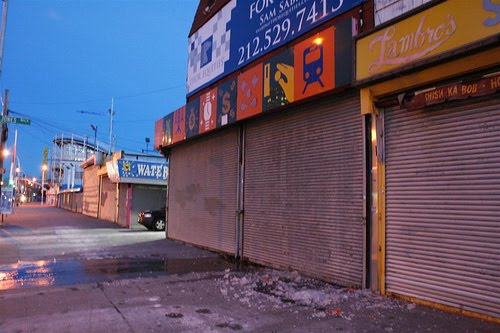
There are many classic buildings still standing from Coney Island’s glory days; Nathan’s Hot Dogs hasn’t budged since it opened in 1916, and the exterior of Childs Restaurant on the beach still looks as good as it did in the 1920s. But the plain Grashorn Building has a special distinction: it saw it all coming.

Unimpressive today, the former Surf Avenue hardware store was built in the late 1880s for Henry Grashorn, a Coney Island business leader who helped foster the city’s reputation as the amusement capital of New York, organizing the neighborhood’s annual Marti Gras parades. Coney Island was a big destination spot in the 1880s, but days of the massive, glorious amusement parks wouldn’t come until the new century.

Today, the Grashorn is dreary, underused and always in fear of being torn down. Kind of like Coney Island always is, generally.
For more information check out the following podcasts on the above subjects: the Dakota Apartments, Coney Island: The Golden Age, Steinway & Sons and a history of Williamsburg

___________________________________________
PART FIVE: IMMIGRANT CITY

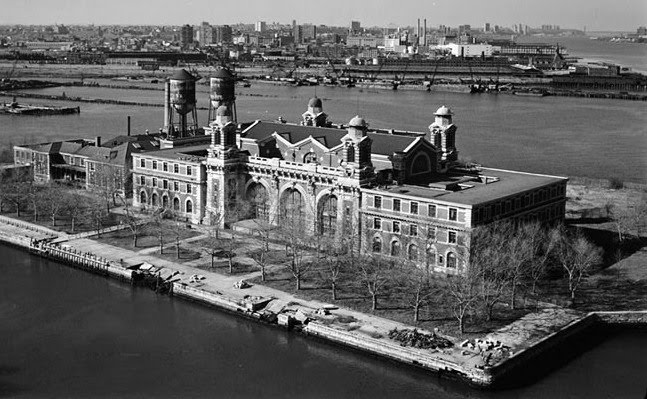
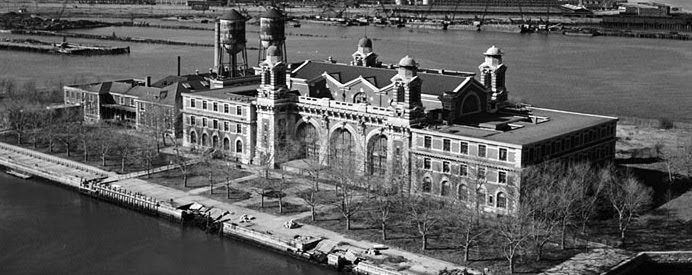
43 Ellis Island Immigration Station (Ellis Island)
The most important period in New York City history (the half-century before World War II) began with a major signifier in 1890 — the federal government would now be in charge of immigration, wresting it from the hands of lackidaisical control of the state. By shifting it an uninhabited island in the harbor, new arrivals could essentially be quarantined from the city.

By this time, New York was in the throes of its Beaux-Arts period, and even a processing center for poor immigrants needed to be ornate. The new station (1892) would eventually process 12 million arrivals, most in the following decade and would be first witness to the change from the Irish and German arrivals of the mid-century new hopefuls from Italy and Eastern Europe.

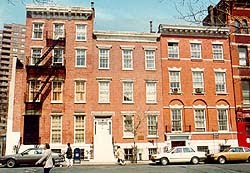
44 Henry Street Settlement (Manhattan)
None of these new arrivals is making live in lower Manhattan easier. But charitable New Yorkers and a rising progressive movement proved worthy of the challenge. In 1893, a group of nurses purchased some abandoned Federal Style townhouse — back from the days when wealthy shipbuilders lived close to Corlear’s Hook — and set up a service organization for the sick and educational opportunities for children. In the most densely populated neighborhood in the world, they were the life preserver.
And they didn’t just save people. They also had the unintended result of saving a group of very attractive old townhouses from the crawl of tenements. Today, the landmarked Settlement buildings look like a time capsule from another time.

45 Webster Hall (Manhattan)
The wave of reforms in ethnic communities didn’t stop at basic care. Labor groups organized for better work conditions, better pay and fairer wages. Along the way, they had a little fun too. When Webster Hall opened in 1886, it was as a general service venue. However it soon became an outpost for protest and fund raising for these progressive groups.

Later in the new century, the likes of Emma Goldman would throw lavish money-making parties here, wild escapades that would presage the swinging jazz age. If you’re looking for a temple to pre-1920s bohemia — of the kind that would typify the East Village in later years — you’ve come to the right place.


46 Carnegie Hall (Manhattan)
Oh, but the upper class yearned to have fun too. Operas and chorales! But their entertainments — as much for social networkers as for actual music lovers — were scattered throughout the city, in antiquated old buildings. Enter the vastly wealthy Andrew Carnegie, who cleared away a bunch of old saloons and slums just south of Central Park and opened (in 1891) what is today still the most respected home of the highest cultural arts.

His new deluxe concert hall also set a new mark for the upper crust to cluster. By the turn of the century, the mansions of Fifth Avenue had crawled their way to the southern border of Central Park, just a few blocks from Carnegie Hall.

ALSO: When a luxury apartment building (built in 1890) at Fifth Avenue and 59th Street didn’t quite pan out, they replaced it with The Plaza Hotel (1907).

47 Low Memorial Library (Manhattan)
Columbia University, no slouch in the landowning department, moved way uptown during the 1890s to Morningside Heights. And to cap the occasion, they hired the hottest design firm in New York, McKim, Mead and White, to create the campus’s key structures, including the classically inspired Low Library (1895), named after the father of Columbia president (and later mayor of New York) Seth Low.

The design firm would help define the Gilded Age. Columbia, on top of educating, would be home to decades of new technical innovations. But it wouldn’t be the only place for them….

48 Bell Laboratories Building (Manhattan)
Few today know that the far West Village housed one of the most important homes for media invention in the United States. This collection of laboritories (1898), scattered throughout the city but many concentrated here, were forefront in the invention of the transitor radio, the television set and even laser technology. In the 20th century, the first radio and television broadcasts — and the first sound motion pictures — would come from here. Long after Bell moved to the suburbs in the mid 20th Century, the Westbeth artist complex moved into the building at West and Bethune, reinventing an abandoned industrial space.

49 P.S. 1 (Queens)
A similar repurposing would happen over in Queens. Before 1898, Long Island City was one of Queens county’s most vigorously governors communities, in its later years as an independent city controlled by colorful and corrupt mayor Patty “Battle-Axe” Gleason. The austere First Ward Primary School (later P.S. 1) is evidence of LIC’s maverick days, its first school and the largest in all of Long Island when it was constructed in 1892-3.

Eventually closed and left abandoned, the artists of The Institute for Art and Urban Resources revitalized the structure as a home for art, and today it’s affiliated with the Museum of Modern Art under its original numerical designation as the P.S.1 Contemporary Art Center.

50 Brooklyn Borough Hall (Brooklyn)
The worst demotion in the history of New York City buildings — at least since the federal government left Federal Hall — happened here, on January 1, 1898, when the lovely Brooklyn City Hall became Brooklyn Borough Hall. The consolidation of the five boroughs would unite the heavily urban with the deeply rural, big city politics with small town political machines — all in an attempt to meld the competing priorities of a metroplitan area into one defined urban vision.

This meant the powers of the great city and town halls of all the other cities and towns were greatly diminisheed. In Queens, the town hall of Jamaica is long gone, as are those village halls in Staten Island. Luckily, the city of Brooklyn had become coterminous with the county of Kings by the time of consolidation, so its grand city hall, completed in 1849, just modified its responsibilities. Today, its one of Brooklyn’s proudest buildings, a reflection of a time of independence.

For more information, check out our podcasts on Ellis Island, Carnegie Hall, Webster Hall and Columbia University


View History of New York in 100 Buildings in a larger map
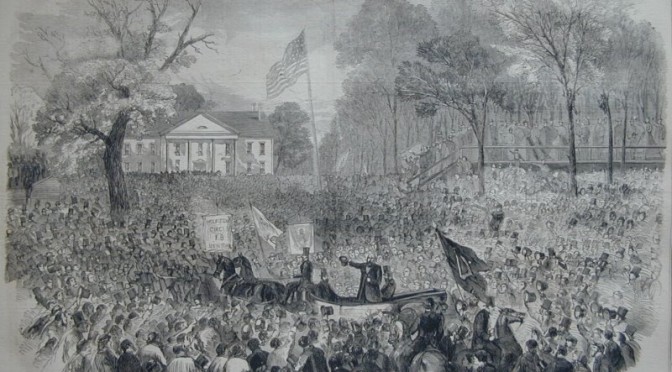
Categories
Uncategorized

The Bowery Boys 2009: A Year of Podcasts In Review

Here’s the whole menu of our 2009 podcasts. As always, you can download them all for free from iTunes and or your favorite podcast aggregator. The original blog page for each is listed below, along with a link to download directly from our satellite site.

WEBSTER HALL

Blog page: Webster Hall, more than a dance hall
Download here

ZIEGFELD!

Blog page: Ziegfeld, the maker of dreams
Download page

WILLIAMSBURG(H) BROOKLYN

Blog page: Williamsburg(h), Brooklyn — upstart city, sugar king
Download here

WOOLWORTH BUILDING

Blog page: Woolworth Building and the birth of the New York skyscraper
Download here

FREEDOMLAND USA

Blog page: Freedomland U.S.A., Bronx forgotten icon
Download here

THE GREAT FIRE OF 1835

Blog page: The Great Fire of 1835, downtown disaster!
Download here

THE WHYOS, GANG OF NEW YORK

Blog page: The Whyos, Gang of New York
Download here

PENNSYLVANIA STATION

Blog page: Pennsylvania Station — Manhattan’s Missing Treasure
Download here

PUCK BUILDING

Blog page: The Puck Building “What Fools These Mortals Be”
Download here

ROOSEVELT ISLAND

Blog page: Roosevelt Island, New York’s former ‘city of asylums’
Download here

HENRY HUDSON

Blog page: Henry Hudson and the European Discovery of Mannahatta
Download here

PROSPECT PARK

Blog page: Prospect Park and the return of Olmsted and Vaux
Download here

SHAKESPEARE IN THE PARK

Blog page: Shakespeare In The Park, the drama behind the drama
Download here

BOSS TWEED AND TAMMANY HALL

Blog page: William ‘Boss’ Tweed and the bitter days of Tammany Hall
Download here

KINGS OF NEW YORK PIZZA

Blog page: Kings of New York Pizza: Lombardi, Totonno, Patsy, Ray?
Download here

ELLIS ISLAND

Blog page: Ellis Island, when the world came to New York City
Download here

CHELSEA HOTEL

Blog page: Chelsea Hotel, the muse of New York counterculture
Download here

COLUMBIA UNIVERSITY

Blog page: Movin’ On Up: From Kings College to Columbia University
Download here

HAUNTED TALES OF NEW YORK

Blog page: Haunted Tales of New York: Urban Phantoms
Download here

STEINWAY: THE PIANO MAN

Blog page: Steinway and Sons: piano men and kings of Queens
Download here

CITY HALL AND CITY HALL PARK

Blog page: Epicenter: the glorious history of New York City Hall
Download here

CORLEARS HOOK AND THE PIRATES OF THE EAST RIVER

Blog page: Corlears Hook and the Pirate Gangs of the East River
Download here

TIN PAN ALLEY

Blog page: Tin Pan Alley and the birth of modern popular music
Download here

THE CLOISTERS

Blog page: Going medieval at the Cloisters and Fort Tryon Park
Download here

Doing this podcast is such a wonderful experience and Tom and I are totally thrilled to share our joy of New York City with you. Thank you for tolerating our continued geekiness and wonder of this awesome city. We’d like to wish you all a wonderful 2010 and we look forward to presenting more shows in the coming year. Thanks for listening!

Categories
Uncategorized

From New Amsterdam to Alicia Keys: NYC history in 2009


(Photo courtesy of Only In Holland)

In 2009, New York went Dutch. One hundred years ago, the city threw an elaborate party, the self-important, historically aware (often inaccurate) and undeniably prideful Hudson-Fulton Celebration, honoring the 300th anniversary of Henry Hudson sailing into New York harbor and Robert Fulton’s invention of the steamship. Although we didn’t go all out for the 400th anniversary of Hudson’s discovery this year — we’ve advanced from the days of cheesy historical floats — the occasion brought the early days of New York City history yearlong recognition.

Replicas of Henry Hudson’s Half Moon sailed the Hudson. New York tipped its hat to its precursor New Amderdam with NY400, a celebration that had Dutch royalty visiting a replica of an old New Amsterdam village and unveiling a permanent plaza called New Amsterdam Plein.

Museums jumped aboard with Hudson and the royals, with exhibits ranging from maps of the island’s original shoreline to the display of Manhattan’s official ‘birth certificate’. The Museum of the City of New York’s Amsterdam/New Amsterdam: The Worlds of Henry Hudson was probably the best primer for the occasion.

Of course, it wasn’t just Dutchophiles in an anniversary state of mind this year. A few New York bridges (like the Manhattan and the Queensboro) coincidentally hit significant anniversaries; the Grand Concourse turned 100 years old with a celebration at the Bronx Museum and a new book.

Some ventured even further back. Eric Sanderson unveiled the Mannahatta Project, easily the most exciting project for New York history lovers, taking a hearty stab at remapping the original ecology of Manhattan island, block by block. The website is hours of geeky enjoyment. I don’t really have any particular award to give, but if I did, Sanderson would be New York City history’s Man of the Year.

The event of the year, to me personally, was the June opening of the High Line, a raised park made from a re-purposed stretch of abandoned elevated train tracks. Those tracks have always held a great deal of mystery for me, so I was sure I was going to cringe at the results. The Meatpacking District had already been turned into luxury retailers; what horrors awaited these strange, unique structures along the west side? But the end result respects its initial allure while creating a quiet, pedestrian friendly destination. You can balk at some of the design choices, but the project as a whole is a beautiful addition to life in the city.

Some New York advertising icons returned (the Long Island City Pepsi Cola sign), others disappeared forever (the pre-9/11 DKNY ad on Houston). A few treasures thought lost rose from the silt, like the old bell from Dreamland park in Coney Island. My favorite archaeological city find has to be that spooky tombstone found in Washington Square, the marker of one James Jackson who died in 1799. Almost 50 years after Jackson’s death, someone would take one of the first photographs of New York — an early daguerreotype of the Upper West Side (see below) — which would then sell at auction at Sotheby’s in 2009 for $62,500.

A few buildings officially became New York landmarks this year, including the La Mama Experimental Theatre Club building in the East Village and The Paramount Hotel in Midtown, and the neighborhoods of Prospect Heights and Perry Avenue became official historical districts.
Politicians made history, most of it questionable. As New York state politicians from the city prove they’re every bit as ludicrous as their 19th century Tammany Hall forebears, Michael Bloomberg capitalized on the change to term limits and was re-elected as mayor. At the completion of his third term, he will be one of New York’s longest serving mayors and the city’s fourth third term mayor in the past 100 years (LaGuardia, Lindsay and Koch also share this distinction.)
The musical which created The Public Theater, Hair, successfully turned a 2008 stint in Central Park into a viable Broadway smash and the Tony for Best Musical Revival. Both the Yankees and the Mets left their past behind with new stadiums this year; only the Yankees christened their new field with a World Series victory, paralleling the team who first moved into the original Yankee stadium.

British epic novelist Edward Rutherfurd released his much-anticipated fictional tribute to city history, New York: The Novel, which I am at this very moment making my way through. But if I had to name a New York book of the year, two very good histories (Sanderson’s companion to his Mannahatta project and Anthony Flint’s zesty document of the Robert Moses/Jane Jacobs battle, Wrestling With Moses) would have to be runner-up to the National Book Award winning biography of Cornelius Vanderbilt by T.J. Stiles, a book so wonderfully written, I completely forgot it weighed about a dozen pounds.
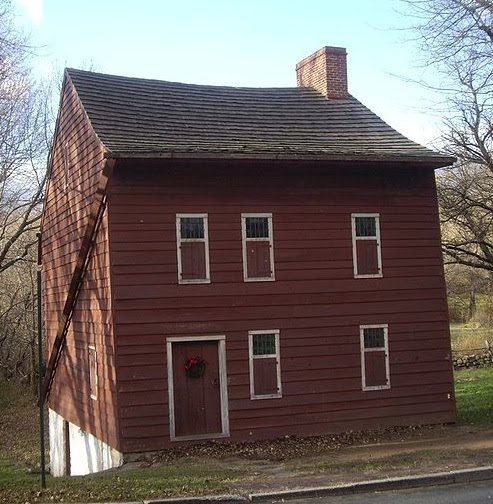

They’re made men: Swell cocktails at the Hotel Pierre

Depictions of New York history didn’t fare so well in movies this year. A fictional 80s New York was obliterated in the Watchmen movie (although not as satisfying as it was in the original graphic novel.) Frank Lloyd Wright’s Guggenheim Museum was shot to pieces in The International, and a true New York film classic, The Taking of Pelham 1-2-3, was itself mutilated with a mediocre remake. It might be worth watching the awful Night At the Museum sequel just to see the three-minute sequence that takes place in a black-and-white 1940s Times Square. On second thought, wait for it to pop up on cable next year.
For a more satisfying look at New York history in pop culture, you had to turn once again to Mad Men, the third season of which saw Don Draper’s job and marriage disintegrate, but not tragically so, in either case. As a result, it’s not surprising that the hints of the past fed to alert viewers were of midtown’s most glamorous hotels, most notably the Hotel Pierre, temporary home to the new Sterling Cooper.
And how great is it that the year ends with one of the most popular songs in the nation being an ode to New York nostalgia? If this blog had a theme song, it would have to be Alicia Keys’ version of her hit with Jay-Z, “Empire State of Mind“:

Categories
Uncategorized

The future of New York history, Twitter style….

The Bowery Boys finally exist in the Twitter world! But how, exactly, do you apply what we do to a medium that’s brief, spontaneous and decidedly unhistoric?

On top of updates and previews about our podcasts, we’ll also attempt to highlight history-related activities in the city, as well as observations as we walk around researching and exploring. If we find a weird plaque or statue, by God, we’ll Tweet about it.

If you have a Twitter account and would like to follow along, just sign up to become a follower @boweryboys.

Categories
Uncategorized

Castle Garden and Battery Park: Bowery Boys rerun

ABOVE: Battery Park in “ye olden time” from the NYPL Picture Collection

No new podcast this week, but here’s a link for one of our older shows from early 2008 on the history of Castle Clinton and Battery Park. We’ve enhanced some of the older shows with some rather cool old images that magically pop up while you listen.

You can also download these image-enhanced episodes at our catalog feed NYC History: Bowery Boys Archive which you get download for free on iTunes.

Categories
Uncategorized

Bowery Billy, sniffing out those transfer grafters!

Click pic for greater detail
Caption: Billy, peering over the edge of the hood, saw the motorman pass the package back to Sim Levy.

Ah, the good old days! The image above was taken from amazing Dime Novels and Penny Dreadful website. If you want to wile away a couple hours when you should be doing something more important, I highly, highly recommend visiting the site, which catalogs dozens of 19th century pulp publications.

You can also find the other adventures of Bowery Billy here.

Categories
Uncategorized

The oldest home in New York: the borough finalists!

Oh this old thing? The Morris-Jumel Mansion circa 1934 (courtesy of Jumel Terrace)

Next up in our borough challenge — where in the city is the oldest New York home? Not oldest building per se, but actual place of (former) domestic living.

Why would I care to rank this? Consider our city today, with shiny new condos sitting astride tenements and rowhouses. In the ever shifting nature of the city, how on earth does an actual house even survive? Unless it’s landmarked, most buildings are under a constant fear of being wiped away by the changing metropolis. So then how did the five below survive in the many generations before landmark status?

What defines a few of these is true historical status — the location of a monumental event — but a couple are just normal domiciles, nothing of extraordinary note. The key is early preservation, historians from generations ago who recognized these structures as a piece of the past, in a time when retaining that past wasn’t as heavily revered.

5) MANHATTAN 1765
It’s not so strange that Manhattan would place last of the five boroughs. It experiences far greater colossal cycles of change than the other areas. And frankly, the idea of actual mansions or ‘houses’ in a skyscraper city seems positively askew.

But they obviously exist, and Manhattan’s oldest is the Morris-Jumel Mansion. Its builder Roger Morris was a clever architect himself and erected his sumptuous home in 1765 among the quiet hills of today’s Washington Heights. The peace did not last. As George Washington and his army fled the city, they had one final stand nearby here, in the battle known as Harlem Heights. Washington used Morris’ home as a homebase during the conflict. (The ‘dinosaur tree’ I mentioned on Monday was actually on the Morris property.)

After the war, the home was bought by Stephen Jumel and was known as the haunt of his scandalous wife Eliza. She lived in the home for years after the death of her first husband and her second, Aaron Burr. (Eliza might actually haunt the place for real. Listen to our ghost story podcast for more info.) With all these brushes with greatness, it’s no surprise the home was preserved well after most of the land was sold off in 1882. The city bought it at the start of the new century, and it’s been frozen in time ever since.

4) BRONX 1748
The Van Cortlandt House (above) and the park surrounding it is one of the Bronx’s greatest treasures and a beautiful thing to visit on a nice weekend afternoon. Jacobus Van Cortlandt, from one of New York’s most prominent families, was actually a British appointed mayor of the city, but decided to build his family this lovely home far from the bustle of the city. His son later finished construction and, like the Morris home, was used during the Revolutionary War, a “scene of military maneuvers and intrigue” according to the Park Service. Washington too stayed here at some point. (I’m beginning to see the meaning of that ‘Washington slept here’ cliche.)

What most likely saved the Van Cortlandt and Morris-Jumel homes is that the city had not yet grown this far north yet. When it did get here, its historical value became obvious and was turned into a museum in 1896.

3) STATEN ISLAND 1675
Our third Revolutionary War-themed destination, the Conference House of Tottenville (above) can definitely be said to have never, ever had George Washington inside of it.

At first blush, it doesn’t look like the warmest of places. But it was indeed the home of one Christopher Billopp, a sea captain vital to the history of Staten Island, for one of his boasts assured that its fate would eternally be tied to New York’s. Any lands that could be circumnavigated by Billopp’s ship in a single day would belong in the jurisdiction of New York, not New Jersey. Billopp had a swift vessel, and Staten Island was New York’s. In fact, the house, built around 1675, is sometimes known as Bentley Manor, Bentley being the name of his ship.

The ‘conference’ in the Conference House comes in 1776, with a summit between Lord Howe, of the encroaching British Army, and representatives of the newly formed union — John Adams, Benjamin Franklin and Edward Rutledge. Their entreaties were not enough to stop the invasion of New York, but the home’s importance in the tale of the Revolutionary War was enough keep the building safe until 1926, when threats of demolition united residents to save and restore it. Today, the stone structure is the pride of Tottenville.

2) QUEENS 1661
The remaining two houses don’t have the loftiness of Revolutionary history to support them. They’re just really damn old, the benefactors of serendipity, good construction and community love.

What we call today the John Bowne house, in Flushing at 1 Bowne Street at 37th Avenue, was a family home for the Bowne family from the time of its construction in 1661 until it was turned into a museum in 1947. That’s an extraordinary, quiet run, but it’s not without its own engaging story.

John Bowne came to New Netherlands and immediately butted heads with Peter Stuyvesant. The reason? Bowne was a Quaker and had just come from the Puritan city of Boston. Bowne was quickly arrested for his beliefs and sent to the Netherlands to stand trial. However, not only was he exonerated, but Stuyvesant was himself reprimanded for his lack of religious tolerance.

Bowne’s home was heavily remodeled over the years and doesn’t look terribly different from a nice old home you would find in the suburbs. It’s still definitely worth a visit sometime, although it is currently undergoing another ‘extensive renovation’.


How our oldest house looked in 1899…

1) BROOKLYN 1652
The oldest house in New York belonged to Pieter Claesen Wyckoff and he built it around 1652, living there approximately 43 years after Henry Hudson had sailed into New York harbor.

Unlike many we’ve just discussed, Pieter’s origins are quite humble. In fact, when he came to the New World in 1637, he was an indentured servant. But with hard work, he was able to earn his freedom and purchase his own farmland, which he bought here in the town of Flatlands. He has a connection to Stuyvesant as well, tending to the director-general’s cattle around the same time that he built his farmhouse.

The house stayed in the Wyckoff family, even as the family’s wealth soon ensured that the Wyckoff name would soon be spread all around the future borough of Brooklyn.

It was finally donated to the city in the 1960s and heavily redone as a museum to New York’s Dutch past. It’s quite a small but striking house, more the construction of a Dutch fairytale than an urban neighborhood. I highly recommend a brief visit. And the Wyckoff House and Association is currently looking for other Wyckoffs. So if your name is even somewhat similar, give them a call!

(By the way, there are TWO historic Wyckoff houses in Brooklyn. The other, known as the Wyckoff-Bennett Homestead, at 1669 E. 22nd Street, ain’t nothing to sneeze at either. It was built in 1766.)

…and how it looks now!

Categories
Uncategorized

New York’s oldest operating tavern: the borough finalists

Today’s faceoff determines which borough has the oldest bar in the city. These places have enjoyed longevity precisely because they weren’t on anybody’s radar. The secret to their success is being low-key, neighborhood establishments where booze and conversation come first. Although a few have some kooky decor, none are what anybody would call flashy.

Of course, once you start looking closer, you find that the definition of bar/tavern/saloon itself gets blurred in a couple of these cases.

5) BRONX 1923 (not 1928 as the big sign indicates!)
Although I’ve never seen it described as such, I believe the Bronx’s oldest bar is the Yankee Tavern, located at 72 East 161st St in the shadow of the elevated subway and old Yankee Stadium. Not surprisingly, it opened the same year as the stadium (1923) to satisfy a predictably parched clientele of baseball fans. Babe Ruth himself would sometimes come in buy a round of brews.

With the new stadium, this should have been a big year for Joe Bastone, whose family has owned the tavern since its opening. Oh it was big all right: Bastone was charged last month for failing to pay over $1 million in taxes on the place.

4) STATEN ISLAND 1905
You don’t get more rustic than Staten Island’s entrant, Liedy’s Shore Inn (748 Richmond Terrace), first opened in 1905 by German immigrant Jacob Liedy. Liedy’s was popular with the sailors —affectionately called the ‘Snugs’ as Sailors Snug Harbor is close by — and kept alive during Prohibition by bootleggers who came over from Bayonne, NJ, in rowboats. Since then, the inn has stayed in the Liedy family.

A liquor license snafu almost closed the place for good a couple years ago; apparently current owner Larry Liedy kept the liquor license in his dead mother’s name.

It’s quite possible that Killmeyer’s Old Bavaria Inn (4254 Arthur Kill Rd) in Charleston, SI, is older than Liedy’s. Their site confirms that the building is older, though its unclear as to when they might have become an operating tavern. Best to grab a drink at both then!


Wintry pic above courtesy Flickr

3) BROOKLYN 1874
I’ll have to take it on its word. PJ Hanley’s in Carroll Gardens (449 Court St.) proclaims itself to be the oldest bar in the borough, opening in 1874. In fact, this is where a little fudging comes in. There has been a bar at this location since 1874, originally a saloon for Norwegian customers. During Prohibition it was called Ryan’s, where Al Capone purportedly brewed beer in its basement. However, the Hanley family have only owned it since 1958. They sold the bar in 2005 but it retains its name and its charm, freshly renovated and reopened a couple years ago.

2) QUEENS 1855
To be in operation over 150 years sometimes requires a certain camouflage. Such is the case with Woodhaven’s Union Course Tavern (87-48 78th Street) which basically looks somebody’s dilapidated two-story house.

I’ve seen both 1853 and 1855 associated with Union Course. This is not a trivial matter; the claim of ‘New York’s oldest bar’ is at stake. It seems though that the Queens tavern might be fine with Manhattan taking the title. (A plaque outside indicates 1855 as the official date.) It’s still a locals bar, far from the hooves of tourists.

It started as the Blue Pump Room, then became Niers Social Hall in 1891. Mae West, who lived in Woodhaven, sometimes performed here; her picture graces the walls of pressed tin today. It’s name today comes from a former racetrack that was once the pride of Woodhaven in the 19th century. The racetrack closed in 1888, so the bar must have taken its name affectionately.

1) MANHATTAN 1854
Everybody knows the oldest continually operating bar in Manhattan is McSorley’s Old Ale House (15 East 7th Street), right? The still-popular old hole in the wall has been serving up its signature brew since 1854, for the likes of Abraham Lincoln, Boss Tweed and John Lennon.

But if you tweak the definition of what ‘continually operating’ and ‘bar’ is, you might come up with two other candidates. The building that contains the Bridge Cafe (279 Water St.), near the South Street Seaport, has reportedly been the location of liquor sales since 1794, both as ‘wine and porter bottler’ and as a boozy ‘grocer’.

And then, what to make of Fraunces Tavern (54 Pearl St), one of the city’s Revolutionary War era treasures and location of George Washington’s farewell speech to the Continental Army? The original building, built in 1719, was opened for business as a tavern as early as 1762. However the tavern has been entirely rebuilt on at least a few occasions. Also, Fraunce’s has been so much more than just a tavern.

Again, it’s all in how you word it. And after a few drinks, does it really matter?

Categories
Mad Men

Mad Men on Mars, Wires: The best NYC history on film, TV

Some high-quality films and television shows returned to New York’s past for inspiration this year. Here’s a few of my favorites:

1 MAN ON WIRE
This documentary purports to be the story of Philippe Petit, the daredevil highwire artist who staged one of the craziest stunts in modern times, an illegal tightrope walk between the Twin Towers in 1974. But to me it’s as much a portrait of 70s New York as it is anything; look through the branches and see the grit and the glamour of downtown Manhattan. And of course the World Trade Center, retaining its wonder and majesty, back in the day when you could both hate it and love it.

2 DOUBT
A world ten years older than Petit’s is depicted in this John Patrick Shanley play turned self-directed flick. The scene, practically gothic, is the St. Anthony parish in the Bronx in 1964. This is the darkest portrait of the Bronx I’ve ever seen. Literally. The one time there’s sun, it’s used by viperous Sister Aloysius (Meryl Streep) as a light of interrogation upon Father Flynn (Phillip Seymour Hoffman), accused of a heinous crime with one of his young charges. Although the film (almost to its fault) stays claustrophobically indoors, snow-covered Italian and Irish working-class neighborhoods set the tone of a deceptively innocent world.

3 REVOLUTIONARY ROAD
Set almost ten years earlier than Doubt, this re-teaming of the Titanic stars Leonardo DiCaprio and Kate Winslet essentially depicts the clash of 50s suburban life with the toils of midtown Manhattan. The pair bicker throughout the entire film as a married couple thinking they can survive the banality of middle class life in Connecticut. To offset it, director Sam Mendes gracefully uses Grand Central Terminal as a metaphor for DiCaprio’s homogeny, its arching windows cast as prison bars.

Honorable Mention: Anyone looking to visit pre-developed 90s New York need only rent The Wackness, a loving portrait of the city and its music. The low-budget but heartfelt Henry May Long was only in theaters for a week, but its worth a look for its drawing-room portrait of two vastly different New Yorkers in the late 19th Century. (Should be on DVD next year.) Milk is set entirely in San Francisco but for the first ten minutes, with a passionate kiss in the subway between Harvey Milk (Sean Penn) and his soon-to-be boyfriend Scott (James Franco). A brief flash to the Stonewall riots remind you of New York’s links to the events of the film.

New York seems to be a backdrop on half the TV shows currently broadcast — even when it’s Toronto — but to take the risk and display New York’s past is pretty admirable when it’s done right. Until HBO answers my calls to make a weekly series about Five Points, these will have to tide you over:

1. LIFE ON MARS
Modern-day cop gets stuck in some kind of mental wormhole, jettisoning to a 1973 New York straight out of old, comfortable cop shows. Although I find it a bit costume-y, I love its attention to detail and zany cultural clashes. Its amber glow grants New York’s near bankrupt, joyously cultural era a buffer of sweet nostalgia. If the 70s were like this for real, who wouldn’t want to be knocked into a coma and join him? Here’s hoping the show makes it at least four years to the blackout, Son of Sam and Studio 54. (Hmm, maybe next season, he can go arrest Philippe Petit!)

2. MAD MEN
This show still isn’t filmed here, but the second season of Mad Man fine-tuned its depiction of early 60s New York in its perfectly dressed interiors and fashions. You never see Madison Avenue, but boy do you feel it on the smarm these ad men bring to their work. Don Draper disappears in Los Angeles for a few episodes, and you feel the loss of New York like a missing limb — or a weight off your shoulders, depending on the perspective.

3. JOHN ADAMS
Almost none of this epic mini-series was filmed here, or for that matter, even set here. But for the New York history geek in all of us, did you not get chills at the reenactment of Washington’s swearing-in at Federal Hall, with bug-eyed Paul Giamatti looking on as the testy, tormented vice president?

Honorable Mention: American Experience had two great New York stories this year — one on Grand Central Terminal, the other on Brooklyn’s favorite son Walt Whitman, a gorgeous, poetic episode that won an Emmy

Categories
Uncategorized

2008 – The Bowery Boys history in review

Below is a list of all the podcasts we did for the year 2008. This year has been a tremendous, overwhelming time for us, and Tom and I want to thank all of you for listening or just checking out this website. I can’t promise we’ll be able to produce quite this many shows for 2009, but we do plan on making the shows even better than before. We have many more ‘epic’ shows in the pipeline, and we’re also going to do a few that are way off the beaten path.

In addition, we now offer another way of getting these shows. In addition to downloading from iTunes and other podcasting services, you can download them directly from our satellite links that are now included below. Just click on the name of the podcast you want to hear, and it will take you to another screen. From there, you can listen with Quicktime or just download to your computer!

Brooklyn Bridge
Original release date January 11

Peter Cooper and Cooper Union
Original release date January 18

Battery Park and Castle Clinton
Original release date January 25

Museum of Modern Art
Original release date February 1

The World’s Fair of 1964-65
Original release date February 8

Katz Delicatessen
Original release date February 15

The British Invasion 1776
Original release date February 22

Life In British New York 1776-1783
Original release date February 29

Henry Ward Beecher and Plymouth Church
Originally release date March 7

Tiffany & Co.
Original release date March 14

New York Yankees
Original release date March 21

Union Square
Original release date March 28

New York Post
Original release date April 4

Triangle Factory Fire of 1911
Original release date April 11

Studio 54
Original release date April 18

Rikers Island
Original release date April 25

Grand Central Terminal
Original release date May 2

PT Barnum’s American Museum
Original release date May 15

Grant’s Tomb
Original release date May 22

Stonewall Riots
Original release date May 30

LaGuardia Airport
(will be uploaded to the new page within the next couple days)
Original release date June 6

Canal Street and Collect Pond
Original release date June 13

McSorley’s Old Ale House
Original release date June 20

DeWitt Clinton and the Erie Canal
Original release date June 27

Meatpacking District
Original release date July 10

The Creation of Central Park
Original release date July 18

The Evolution of Central Park
Original release date July 25

Randall’s Island and the 1936 Olympic Trials
Original release date July 31

Carnegie Hall
Original release date August 8

Delmonico’s Restaurant
Original release date August 15

Five Points Part 1: Wicked Slum
Original release date August 22

Five Points Part 2: The Fate of Five Points
Original release date August 29

The Pan Am Building
Original release date September 12

Shea Stadium
Original release date September 19

New York Stock Exchange
Original release date September 26

Green-Wood Cemetery
Original release date October 2

Spooky Stories of New York
Original release date October 10

Who Killed Mary Rogers?
Original release date October 17

Guggenheim Museum
Original release date October 24

New York City Marathon
Original release date October 31

The Plaza Hotel
Original release date November 14

The Bowery Files
Original release date November 21

Saks Fifth Avenue
Original release date December 4

Rockefeller Center
Original release date December 19

Categories
Uncategorized

Pierre Lorillard: Manhattan’s original snuff king

Just a few gentlemen, enjoying healthy lungfuls of smoke (Picture courtesy National Cigar Museum)

One of the key locales in the mystery of Mary Rogers was the cigar store in which she worked, Anderson’s Tobacco Emporium to the west of City Hall on Broadway. Anderson was known nationwide for the quality of his wares, but by the 1830s New York was already well-known for world-class tobacco products, thanks to one man — Pierre Lorillard.

A habit borrowed from the Native Americans, tobacco was actually grown in Manhattan as far back as the Dutch occupation, with tobacco fields dotting the area, from Greenwich Village to where the United Nations building sits today. But it made a greater impact on the city being shipped in and out of the harbor.

Lorillard, a French Huguenot in British New York, opened the city’s first successful “manufactory” for tobacco products in 1760, on what was then Chatham Street (or today’s Park Row, to the east of City Hall). Described as a “snuff grinder”, Lorillard’s business secret sounds a little repulsive today: to keep his snuff fresh, Pierre sold it in dried animal bladders, “dried and tanned like parchment.”

His products were branded with a trademark of a Native American enjoying the delights of a barrel-full of tobacco. One of the earliest developed trademarks to have derived from New York, the Lorillard brand would quickly catch on even in Europe, as his snuff, all snug in its animal bladder, could be shipped with ease.

Pierre however would see little of his lasting legacy, thanks to the Revolutionary War. In 1776, the anti-Tory Lorillard followed the Continental Army out of town after they were driven out of Manhattan, but Lorillard was tragically killed by a Hessian soldier.

Fortunately, the Lorillard family had tobacco figuratively in their blood. The business was taken over by his two sons George and Peter, who moved the business to the Bronx and expanded nationwide. Believe it or not, the old Lorillard Snuff Mill is still standing, now a part of the New York Botanical Garden.

You can thank current Lorillard Tobacco Company today for providing the world with Newport Cigarettes and a bevy of other nicotine products. Cough cough.

You can find some other historical details about Lorillard here.

Below, some of the cheesy masculinity wrought by the Lorillard empire: