Categories
American History

New York’s Poignant Memorial to Lincoln’s Death Is In A Very Odd Place

Abraham Lincoln died 150 years ago today in a Washington DC rowhouse, shot and killed by the actor John Wilkes Booth while the president was attending a performance of Our American Cousin at Ford’s Theater the previous evening.

The news hit the North as some sort of horrible dream.  Confederate general Robert E Lee had just surrendered to Ulysses S. Grant at Appomattox Courthouse less than a week. The war was over in the minds of many. How could this have happened?

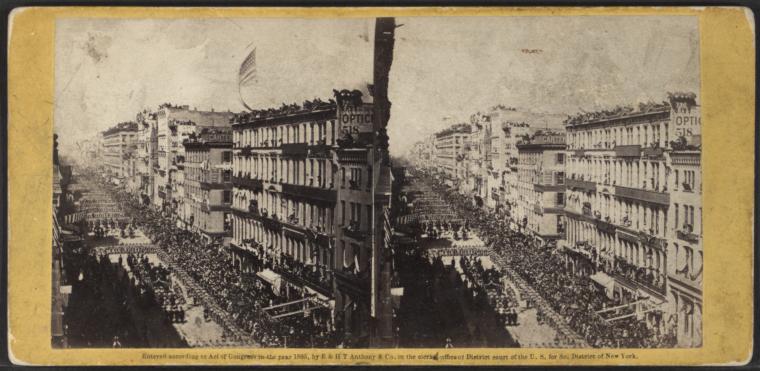
On April 21, Lincoln’s body began a mournful tour of the United States, taken from cities across the country via a funeral train.  Three days later, on April 24, the train with Lincoln’s body pulled into 30th Street Station, the depot which served the Hudson River Railroad back when the train brought passengers down the western side of Manhattan. (We give the details of this vanished station in our podcast on the High Line.)

Funeral of President Lincoln in New-York, April 25th, 1865. (Courtesy of New York Public LIbrary)

From the New York Sun: “This morning the citizens of New  York are called upon to pay funeral honors to the remains of one whose tragic death, invests the ceremonies with an interest never before felt for any individual, who has occupied the highest office which the suffrages of a free people can confer upon a citizen of the Republic.”

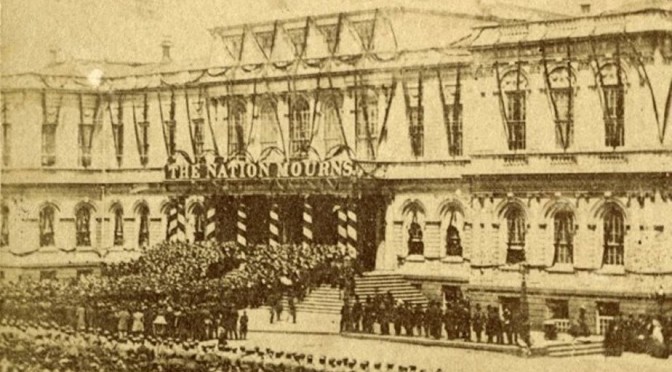
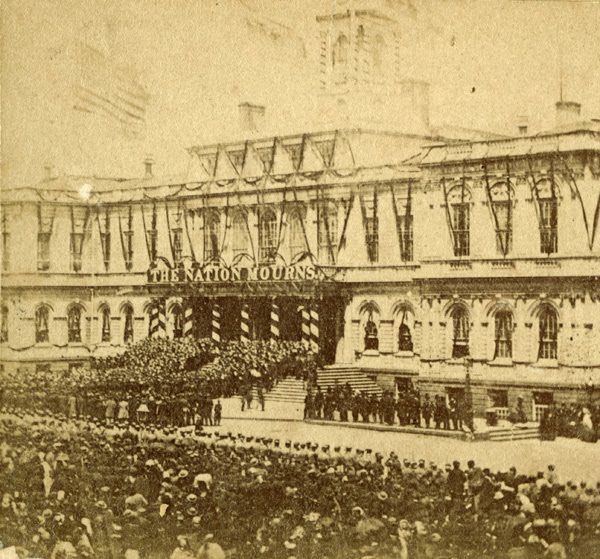
His body was taken to New York City Hall where he lay in visitation for almost an complete twenty four hours. Thousands of New Yorkers came to pay their respects.  In the afternoon of the April 25, his body was brought back to the 30th Street Station and transported to Albany, then to other cities, before its final destination in Springfield, Illinois.

lincolns-funeral-at-city-hall

The Hudson River Railroad station is long gone. Standing in its place however is another large structure:  the United States Postal Service mail processing facility at 341 9th Avenue.  Unless you’re a fan of postal history — or you’ve stumbled around the neighborhood after stepping of the High Line — you’ve probably never given this building much notice.

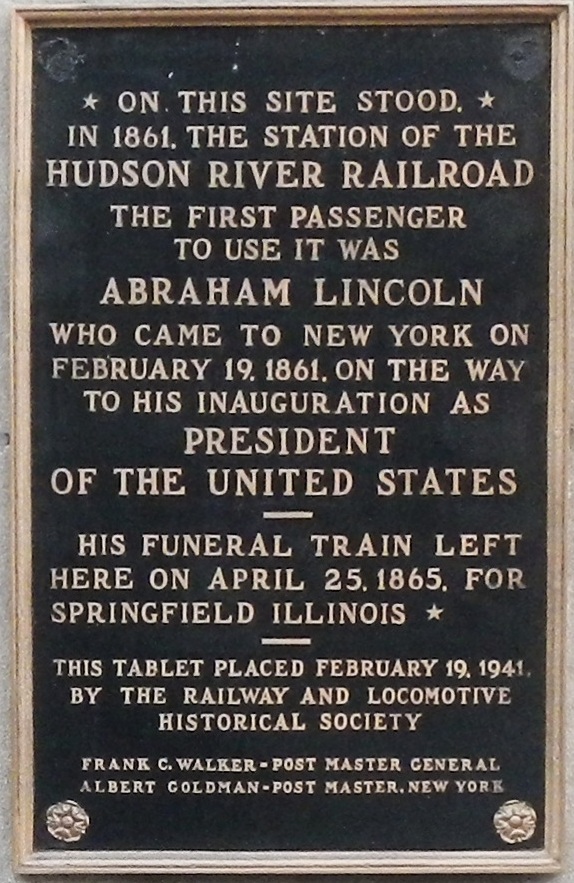
But visit the northern side of this building, and you’ll find the following plaque:

???????????????????????????????

“On this site stood in 1861 the station of the Hudson River Railroad. The first passenger to use it was Abraham Lincoln, who came to New York on February 19, 1861 on his way to his inauguration as President of the United States.  His funeral train left here on April 25, 1865 for Springfield, Illinois.  This tablet placed February 19, 1941 by the Railway & Locomotive Historical Society.”

That’s right — Lincoln was the first honorary passenger to arrive at Cornelius Vanderbilt’s new ‘uptown’ depot! Again the New York Sun, but on February 20, 1861:

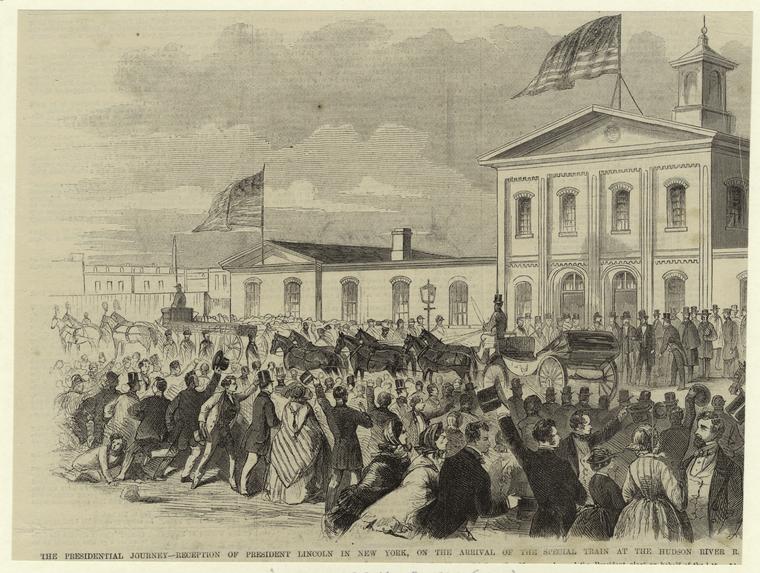
“In that strange and dirty locality where the Hudson River R.R. Company have fixed upon their uptown depot, thousands of people began to congregate fully two hours before the hour when the expected train was due…..The great gate of the depot yard through which the train was to enter was guarded by a cordon of police, and outside these limits surged the crowds, unusually patient for a New York crowd awaiting a sensation probably from a general faith that Old Abe could be depended upon to come to time properly.”
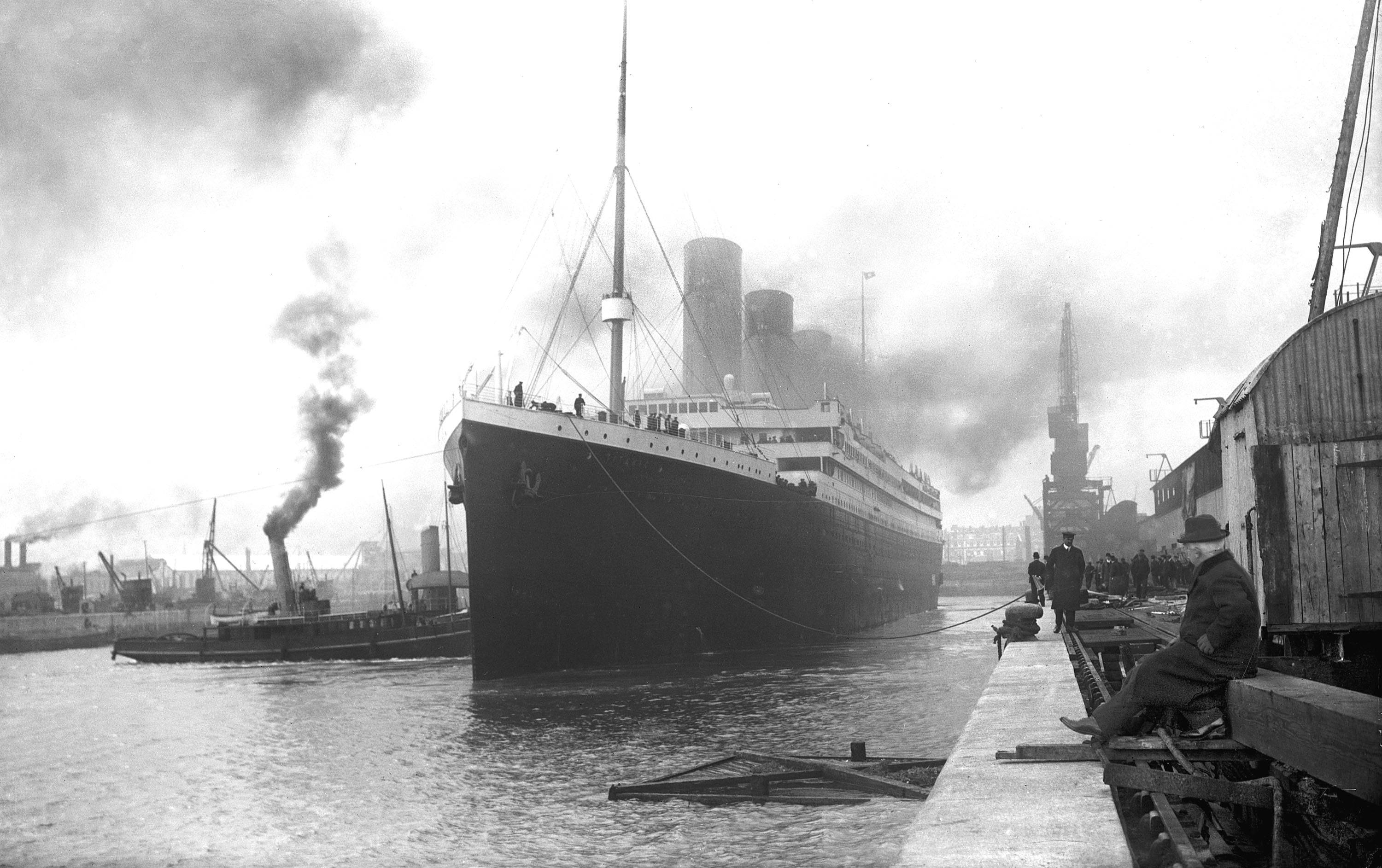
 

Presidential journey : reception of President Lincoln in New York, on the arrival of the special train at the Hudson River Railroad. (Courtesy New York Public Library)


Here’s a description of the exact same spot, over four years later (courtesy the New York Times):

Outside of the gate of the depot yard, on Tenth-avenue, the immense throng stationed there received in respectful and mournful silence the very brief and unsatisfactory glimpse they gained of the coffin of the dead President. Viewing with anxious eyes the train as it emerged from the gate, and gazing upon the gorgeously decorated car, and uncovering with sincere respect for the hallowed dead, the immense multitude beheld the departure of the train. 

 As the train fairly got into motion and disappeared round the curve, the immense mass of beings, so long kept within bounds, at last burst through all restraint, and the entire vicinity of the depot became the scene of the most extraordinary confusion. The police were totally inadequate to the impossible task of keeping the people in order, for they were carried like drift-wood before the flood as the impatient crowd broke up and started upon their several homeward ways.”
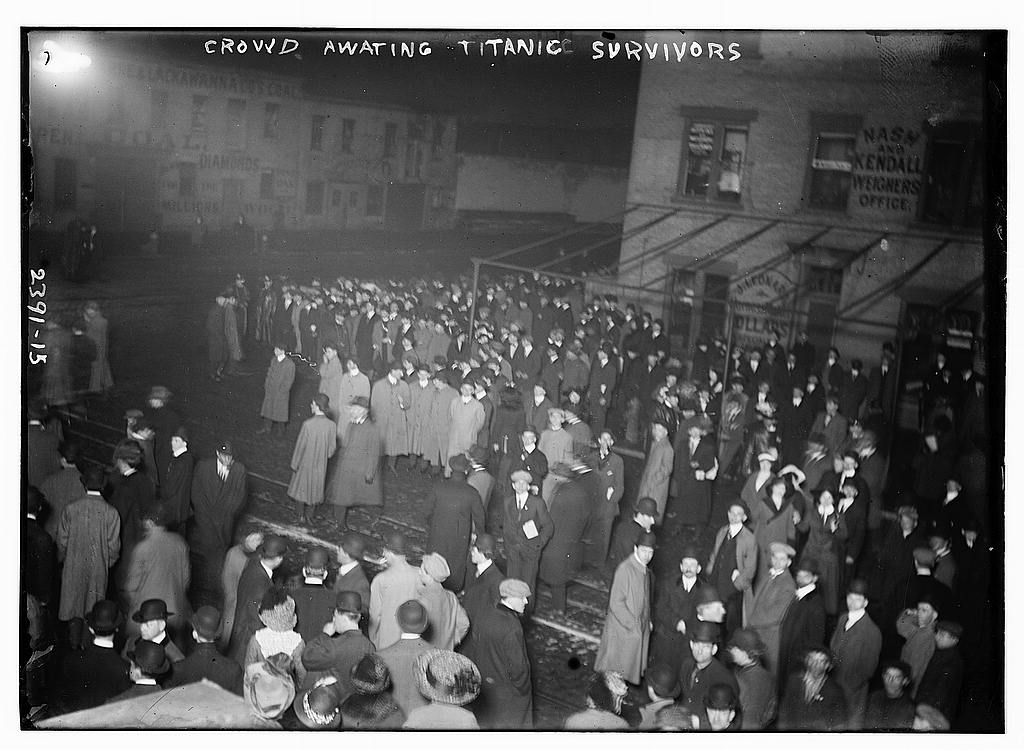
This plaque was placed on the side of the postal facility (called the Morgan Annex) on the afternoon of February 19, 1941, unveiled by the U.S. postmaster Albert Goldman.  The organization who sponsored it, the Railway & Locomotive Historical Society, still operates today.


Categories
Amusements and Thrills

The Monster Tree: A California Sequoia Visits New York City 1855

The mighty Sequoia tree,  principally existing today in northern California, embodied the breathtaking diversity of the North American continent when it was first discovered by European explorers in the 1830s.  The Native American tribes of the west coast revered them.  Early European explorers too marveled at this display of nature’s great flourish, spinning fantastic tales of ‘monster trees’ that breached the sky.

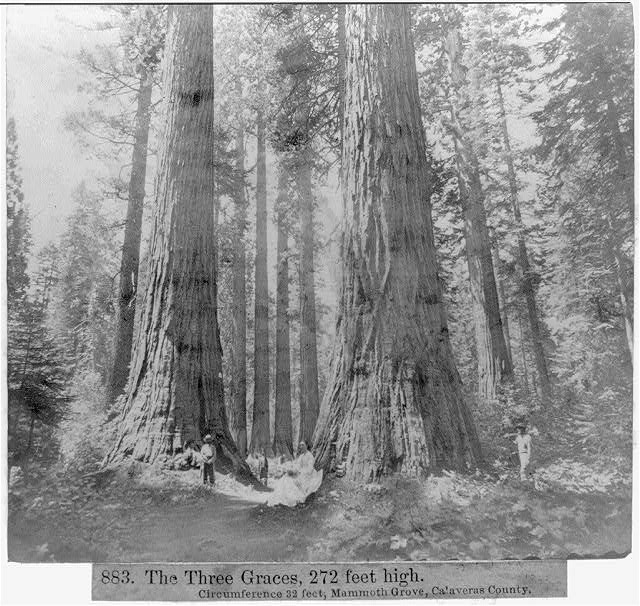
From a photograph in 1866 -- The Three Graces, 272 feet high, circumference 32 feet, Mammoth Grove, Calaveras County (Library of Congress)
From a photograph in 1866 — The Three Graces, 272 feet high, circumference 32 feet, Mammoth Grove, Calaveras County (Library of Congress)


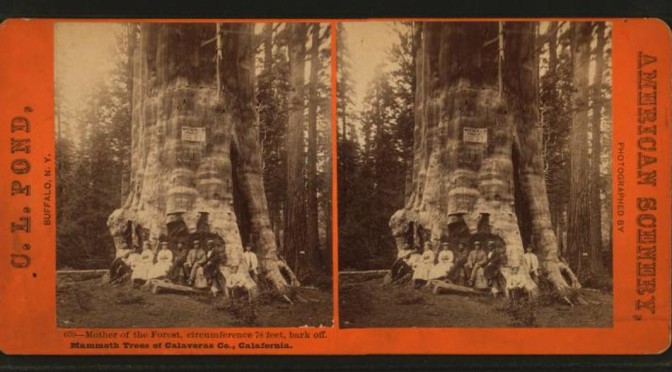
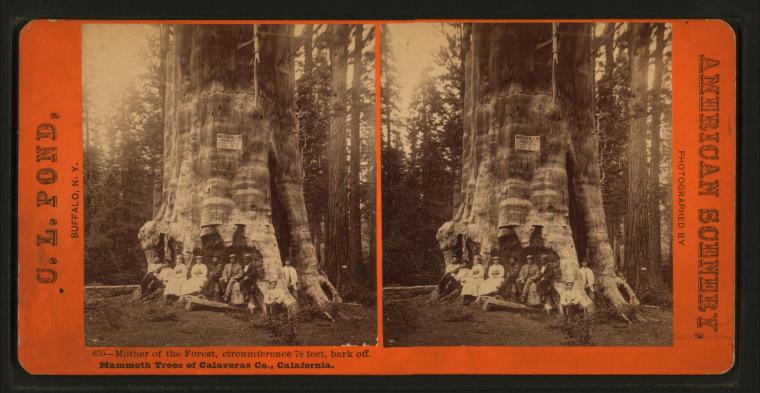
The legends were proven true in the 1840s at the start of what would become known as the California Gold Rush.  The first hotel, monopolizing on the wondrous discovery, was built near a Sequoia grove in Calaveras County. Each of the trees were given nicknames like ‘The Salem Witch’ and the ‘Old Bachelor’. **  But the grandest was ‘Mother of the Forest’, 363 feet tall and thousands of years old.

So naturally in 1854, the Mother of the Forest was stripped of much of its its bark and taken on a tour of the east, courtesy the entrepreneur George L Trask.

The Mother of the Forest, pictured with 78 feet of the tree’s bark already removed.

Courtesy New York Public LIbrary


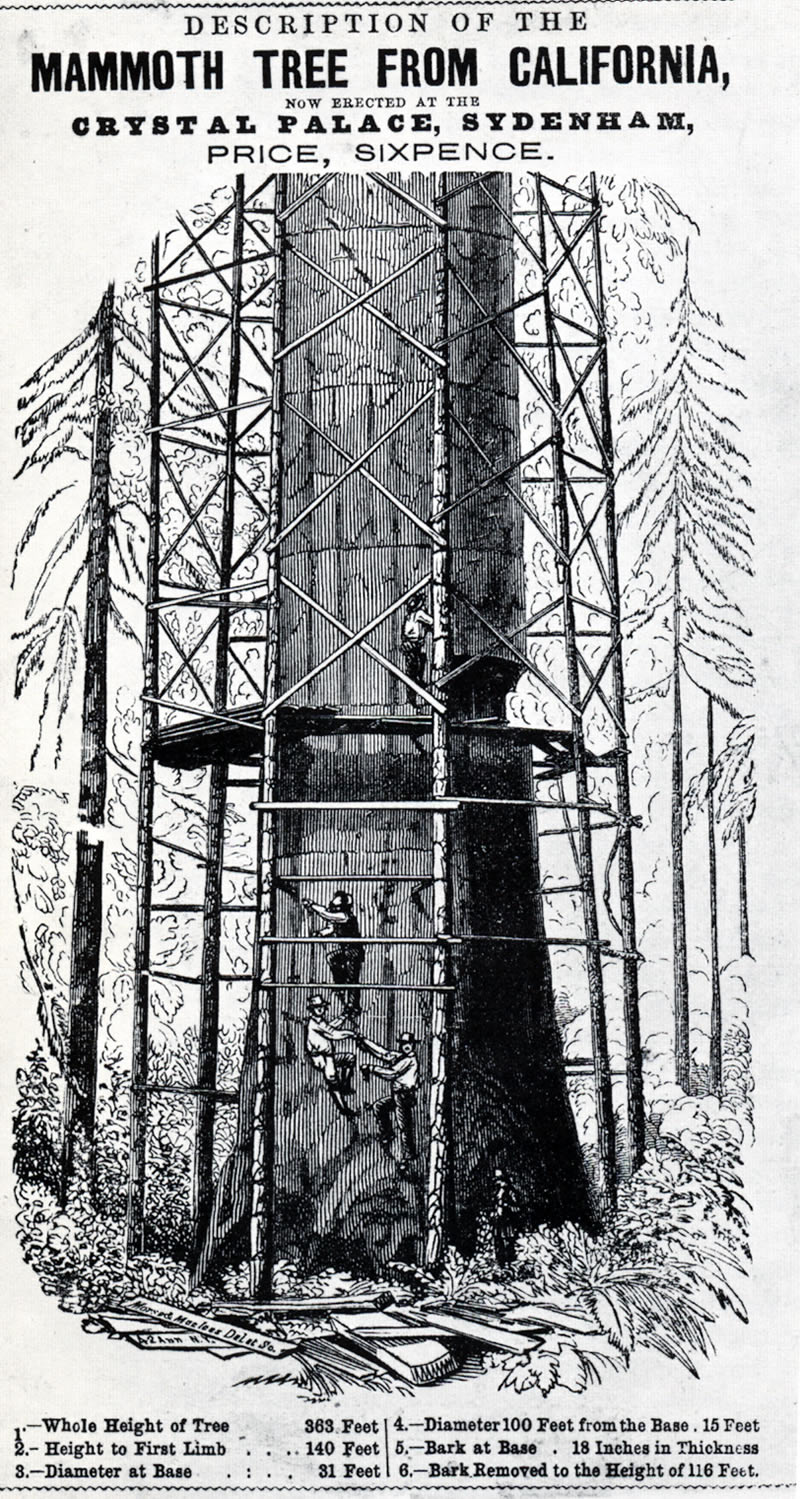
The  bark was carefully sheared from the tree, to a height over 110 feet. The disembodied bark was then “carted overland 80 miles to Stockton, whence it was shipped down the river to San Francisco, and then on a clipper vessel around Cape Horn to New  York.”  It arrived sometime in early 1855 for a grand display in the city.

tree2

But where in New York City in 1855 could you exhibit such a gigantic thing? Why, there was only one place — the Crystal Palace.

The famed Exhibition of the Industry of All Nations – detailed in our podcast on the Crystal Palace – had recently closed, a well-publicized financial failure. However the Palace structure remained open for visitors and the Latting Observatory across the street was still attracting audiences.  (It would not burn down until the following year.)

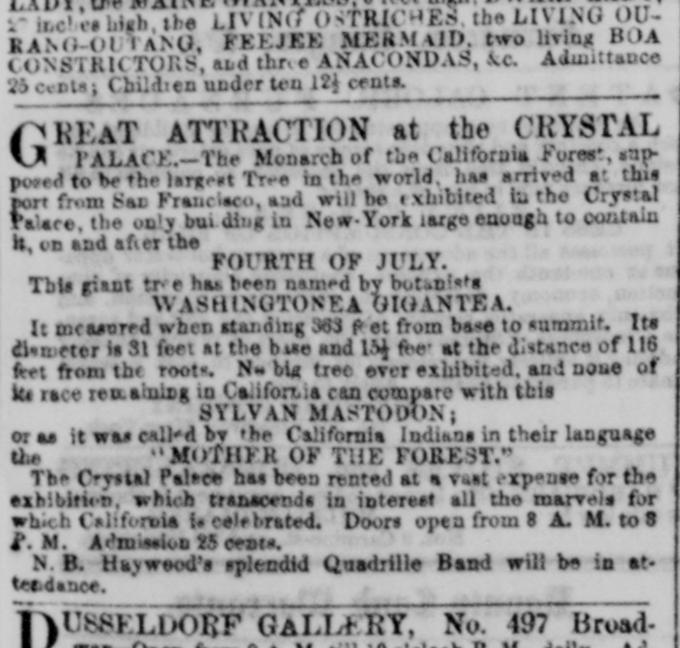
That summer, on July 4th, 1855, the tree bark, laid over a tall scaffolding, was carefully reconstructed in the Palace at the very spot where the George Washington equestrian statue once stood. An appropriate spot, as the exotic trees were originally given the scientific name of Washingtonea Gigantea.

Alongside the constructed tree were a display of daguerreotypes of the tree in context with the forest, well before she was stripped of bark.

Below: From a listing in the New York Daily Tribune, July 6, 1855:

2

It was promoted with a certain Barnum-eque style although without Barnum of course. (His failed tenure as the Crystal Palace president has soured him to the spot immeasurably.)  According to the New York Sunday Courier, over 7,000 visitors came on the first day to admire the tree.

Even a few jaded journalists of the age were impressed by the tree. From a short-lived newspaper called the Leader, under the headline, “The Eighth Wonder of the World – the Mammoth Tree”:

“We have paid a visit to the Crystal Palace and have been gratified beyond our most sanguine expectations. We supposed that this concern was closed and that we should find nothing to please the eye beyond naked walls and vacant space; but, judge of our astonishment, when we found the space under the dome occupied by one of the greatest curiosities of the age….

Sebastapol has not been taken yet [a reference to a lengthy battle in the Crimean War] but this towering monarch of the forest has, and is now in exhibition at the Crystal Palace.”

Because the tree was so clearly cobbled together from parts, others rationally questioned its validity.  From the New York Times, August 8, 1855:

“We very much enjoyed [the tree] but so we did the Automaton Man and the Charmed Snake story … and several other things which a more curious examination of reveals as belonging to the department of questionables.

[W]e have no assurance, from seeing this clothed skeleton, that this tree was actually so large. A little skepticism is somewhat pardonable, taking into account the temptations held out to those who recollect the proverbial gullibility of New York site-seers.”

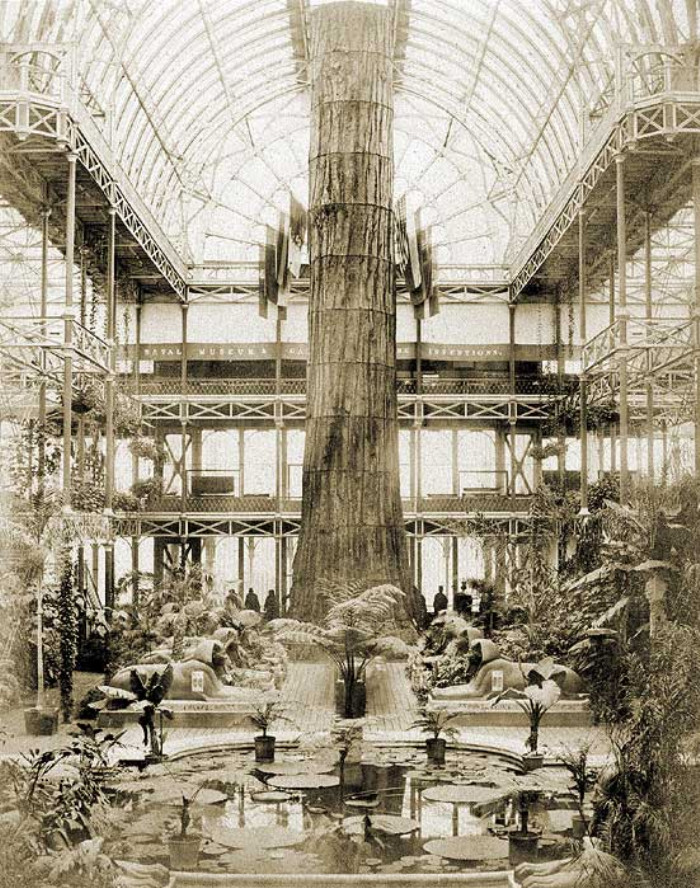
The journeys of this poor tree husk were not quite done.  After the New York display, the pieces were placed upon a ship and taken to London to be displayed at their Crystal Palace.  In 1866 a fire swept through London’s Crystal Palace, destroying this remainder of the Mother of the Forest.

The tree as it appeared at the London Crystal Palace, 1856

3


**By the 1860s most of the trees would be given names. There were even specimens named for Henry Ward Beecher, Daniel Webster and — William Cullen Bryant! (source)


Categories
It's Showtime

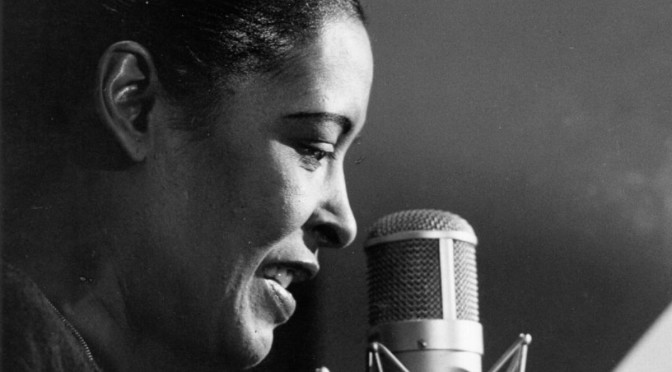
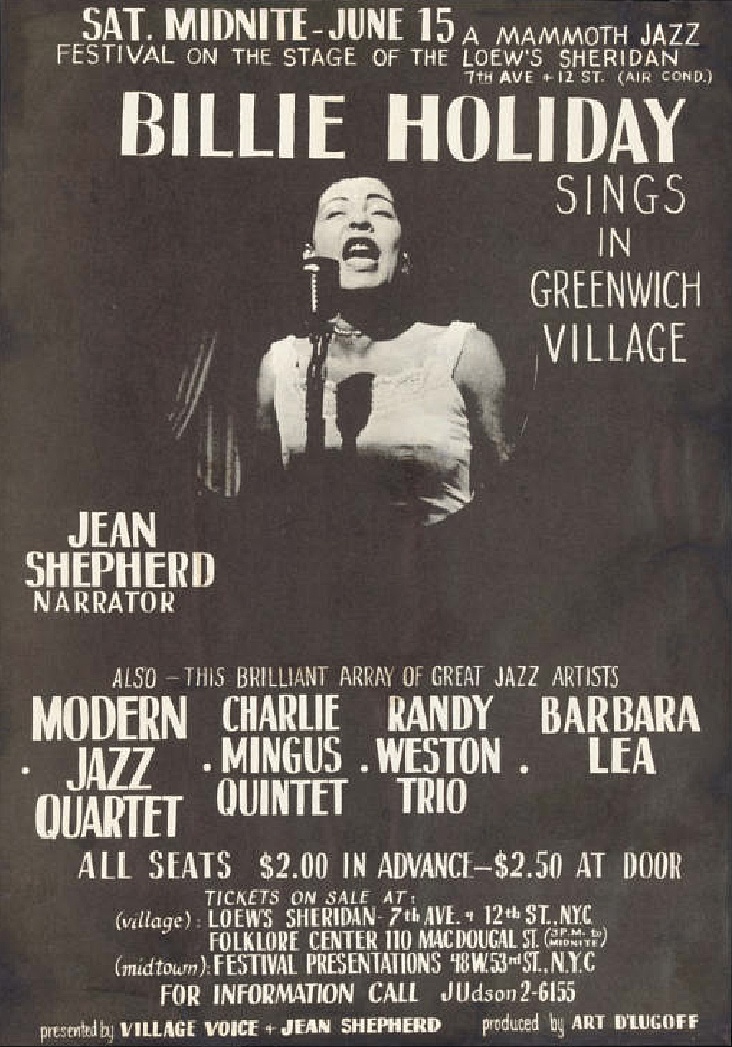
Happy 100th birthday Billie Holiday! Five ways to celebrate a century of music


The great Billie Holiday was born 100 years ago today. This requires spending some of your day listening to a greatest hits album, I hope. But here are five other ways you can celebrate this icon’s life this week:

1) Watch Diana Ross in Lady Sings The Blues. Sure it’s wildly inaccurate but it’s still a pretty great movie.

2) Listen to Cassandra Wilson‘s perform her new Billie Holiday tribute album Coming Forth By Day at the Apollo Theatre this Friday.

3) Just go to a jazz club. Any one. Keep the tradition that made Holiday’s career alive.

4) There are a ton of great articles today about Holiday but if you’re into your “listicles”, check out this 100 Facts about Billie Holiday’s Life and Legacy from USA Today.

5) Listen to the Bowery Boys podcast from this past January — Billie Holiday’s New York, available on iTunes, Stitcher, wherever you get podcasts or right here.


e19a3e4965191cdff0709f2139da44f8


Categories
Parks and Recreation Podcasts

Bryant Park: The Fall and Rise of Midtown’s Most Elegant Public Space

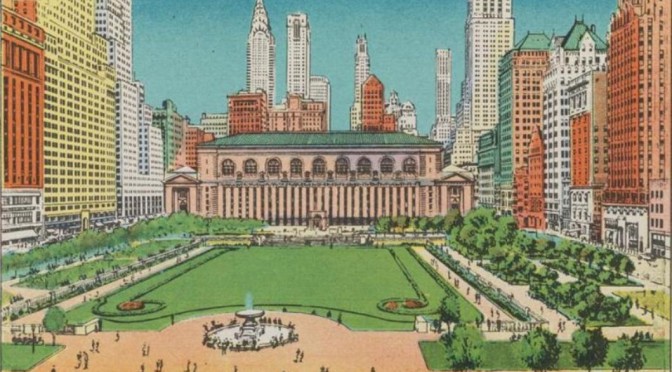
NEW PODCAST  In our last show, we left the space that would become Bryant Park as a disaster area; its former inhabitant, the old Crystal Palace, had tragically burned to the ground in 1858. The area was called Reservoir Square for its proximity to the imposing Egyptian-like structure to its east, but it wouldn’t keep that name for long.

William Cullen Bryant was a key proponent to the creation of Central Park, but it would here that the poet and editor would receive a belated honor in the 1884. With the glorious addition of the New York Public Library in 1911, the park received some substantial upgrades, including its well-known fountain. Over twenty years later, it took on another curious present — a replica of Federal Hall as a tribute to George Washington.

By the 1970s Bryant Park was well known as a destination for drug dealers and most people shied away from its shady paths, even during the day. It would take a unique plan to bring the park back to life and a little help from Hollywood and the fashion world to turn it into New York’s most elegant park.


The Bowery Boys: New York City History podcast is brought to you …. by you!

Starting with this episode, we are doubling our number of episodes per month. Now you’ll hear a new Bowery Boys podcast every two weeks. We’re also looking to improve the show in other ways and expand in other ways as well — through publishing, social media, live events and other forms of media. And we need your help to make these expansion plans happen.

We are now a member of Patreon, a patronage platform where you can support your favorite content creators for as little as a $1 a month.

Please visit our page on Patreon and watch a short video of us recording the show and talking about our expansion plans. If you’d like to help out, there are five different pledge levels (and with clever names too — Mannahatta, New Amsterdam, Five Points, Gilded Age, Jazz Age and Empire State). Check them out and consider being a sponsor.

We greatly appreciate our listeners and readers and thank you for joining us on this journey so far. And the best is yet to come!


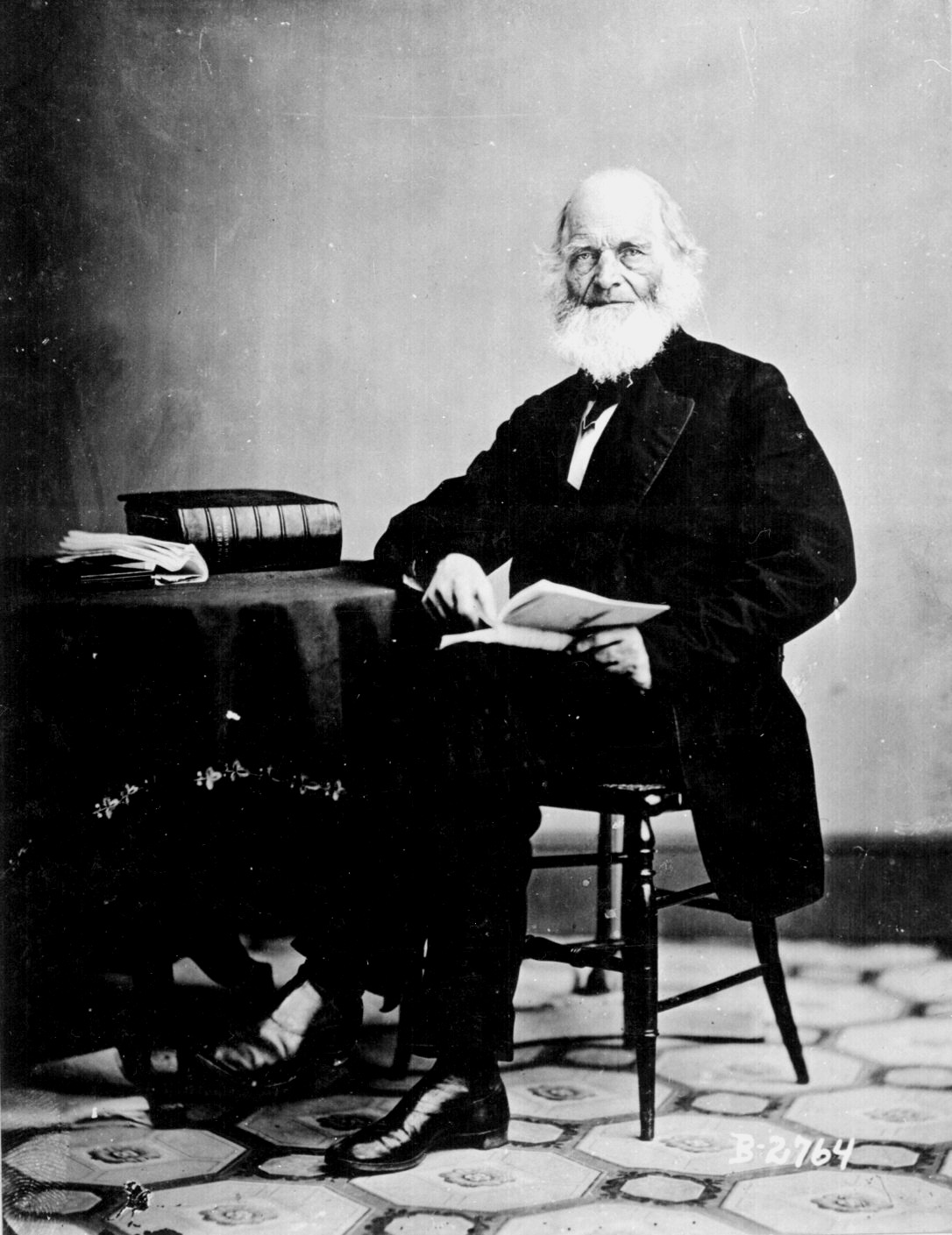
William Cullen Bryant, photo taken by Matthew Brady

2

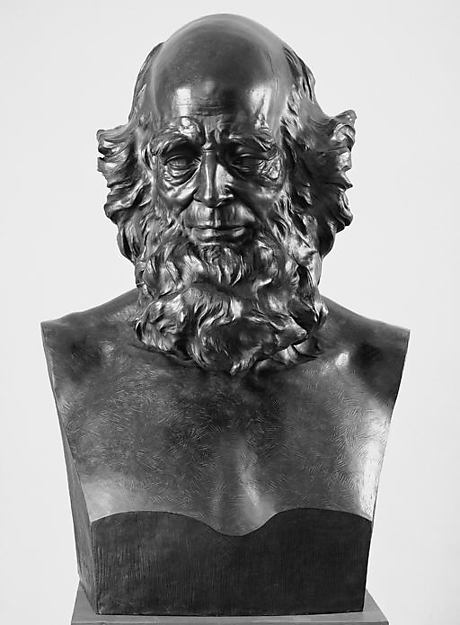
William Cullen Bryant in bust form, but Launt Thompson. It seems this bust has made its way back to the Metropolitan Museum of Art!

2

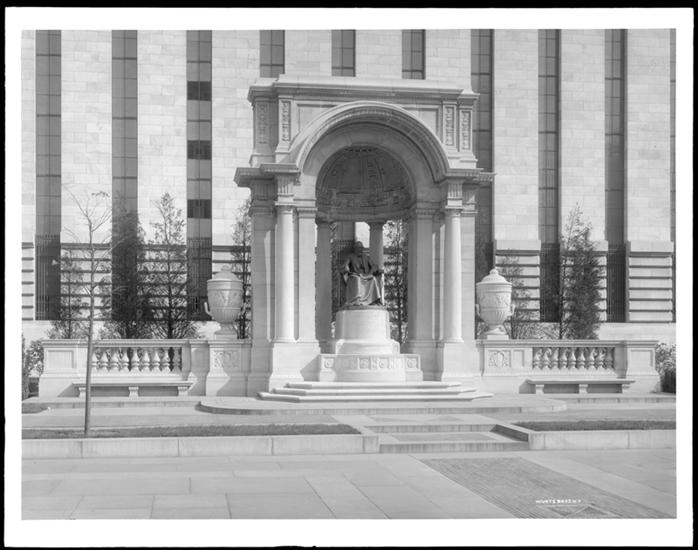
William Cullen Bryant installed in his marble niche behind the New York Public Library. This picture was taken in 1910, well before the radical redesign of the park in the 1930s. (Museum of the City of New York).

3

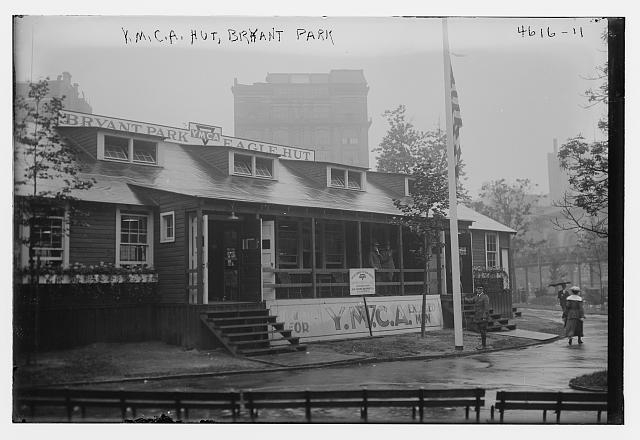
During World War I, the YMCA had a special ‘Eagle Hut’ built in the park for traveling servicemen. (Library of Congress)

2

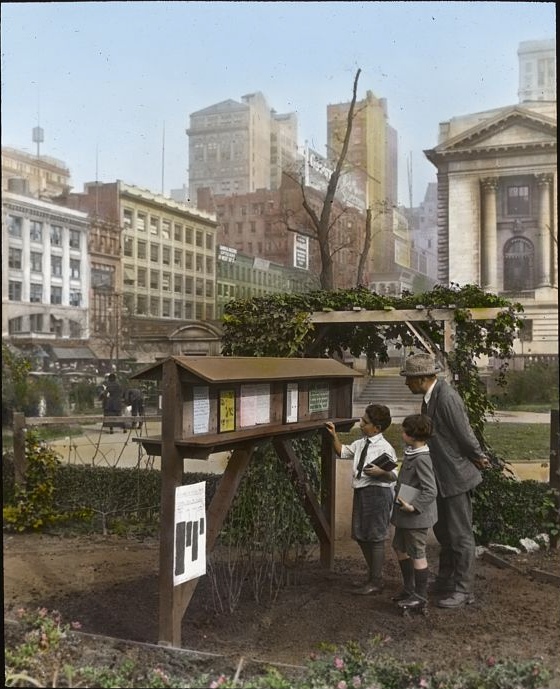
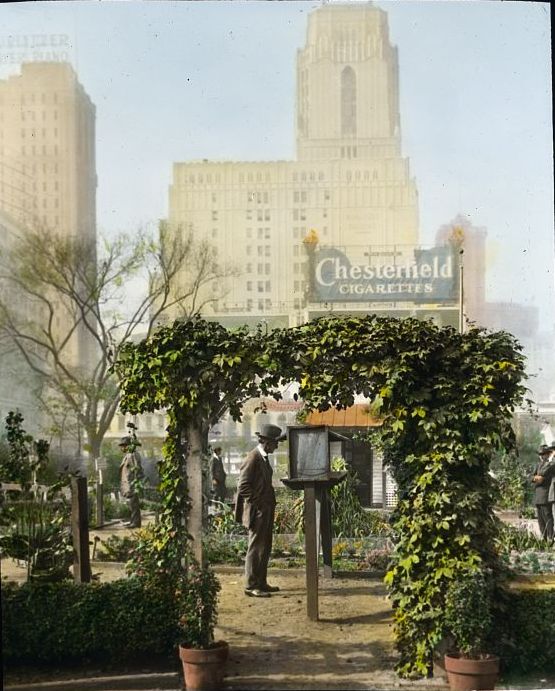
A colorful depiction of the Bryant Park ‘demonstration gardens’ that were planted during the war. (Library of Congress)

7096409143_3df8bc2aa4_b
2

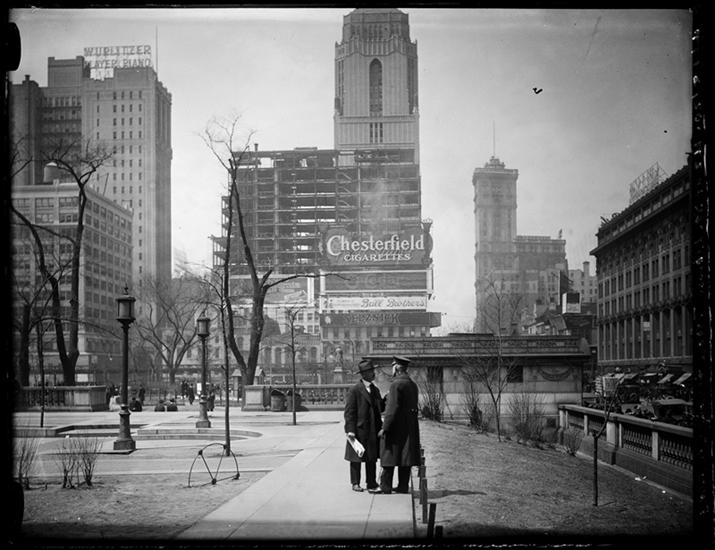
Bryant Park in 1920. Looking west on 42nd Street at 6th Avenue (you can see the elevated railroad!) In the distance is One Times Square. Note the reappearance of the Chesterfield Cigarettes billboard from the picture above. (Museum of the City of New York)

Bryant Park in 1920. Looking west on 42nd Street at 6th Avenue (you can see the elevated railroad!) In the distance is One Times Square. (Museum of the City of New York)

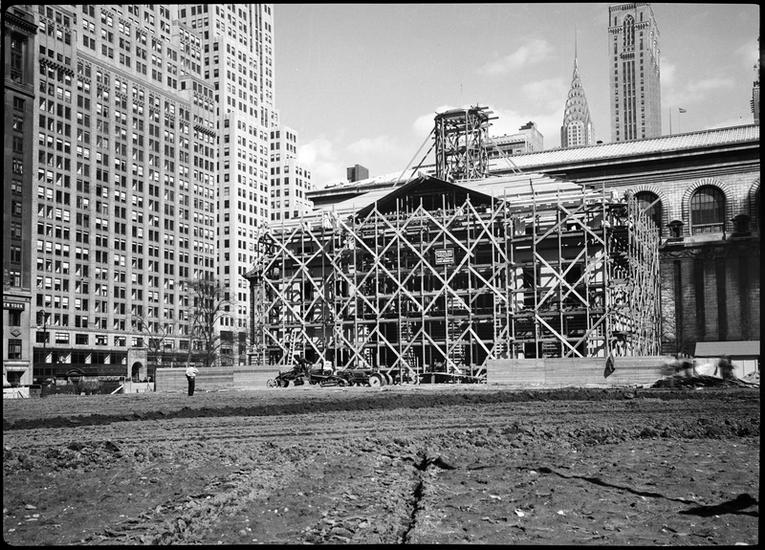
Constructing a replica of Federal Hall in a barren Bryant Park. (Picture taken by the Wurts Brothers, Museum of the City of New York)

8x11mm_X2010_7_1_ 703

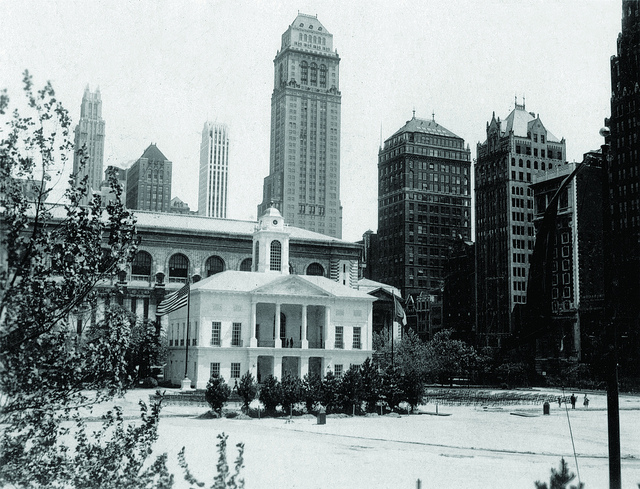
The Federal Hall reconstruction had a corporate sponsor — Sears Roebuck & Co. Here’s how it looked in better days. Believe it or not, the reproduction of Mount Vernon actually did get built in New York — in Prospect Park in Brooklyn! (Bryant Park Corporation)

2

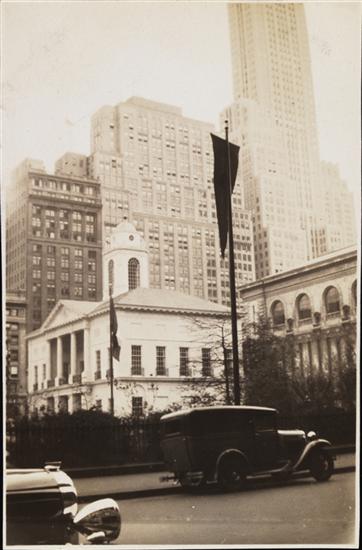
Bryant Park’s Federal Hall, May 1932. (Museum of the City of New York)

Bryant Park's Federal Hall, May 1932. Courtesy Museum of the City of New York

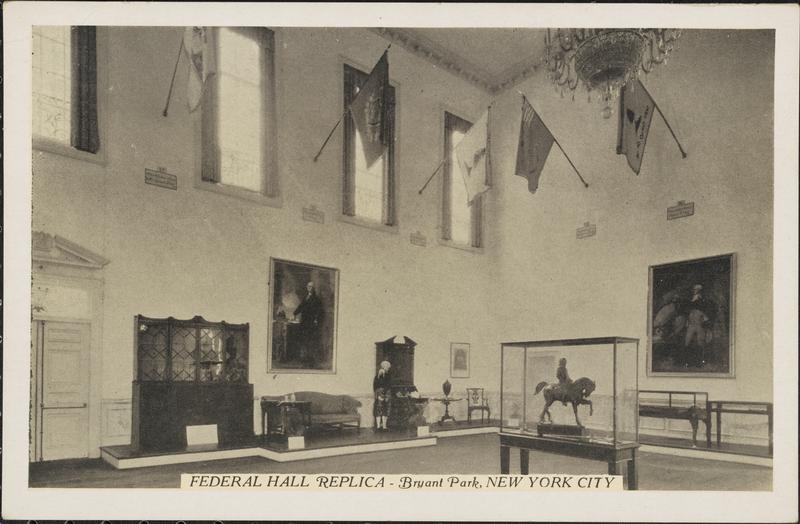
The interior of Bryant Park’s Federal Hall. (Museum of the City of New York)

The interior of Bryant Park's Federal Hall. (Museum of the City of New York)

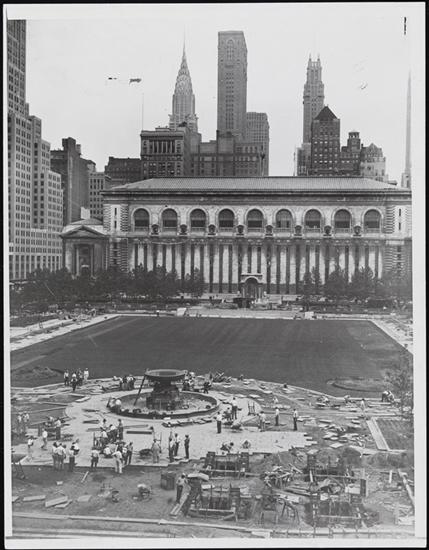
The reconstruction of Bryant Park in 1934, overseen by new Parks Commissioner Robert Moses

The reconstruction of Bryant Park in 1934, overseen by new Parks Commissioner Robert Moses

This photo was taken by Stanley Kubrick during his years as a photographer for Look Magazine. The caption reads “Park Bench Nuisance [Woman reading a newspaper, while a man reads over her shoulder.]” Courtesy Museum of the City of New York

This photo was taken by Stanley Kubrick during his years as a photographer for Look Magazine. The caption reads "Park Bench Nuisance [Woman reading a newspaper, while a man reads over her shoulder.]" Courtesy Museum of the City of New York

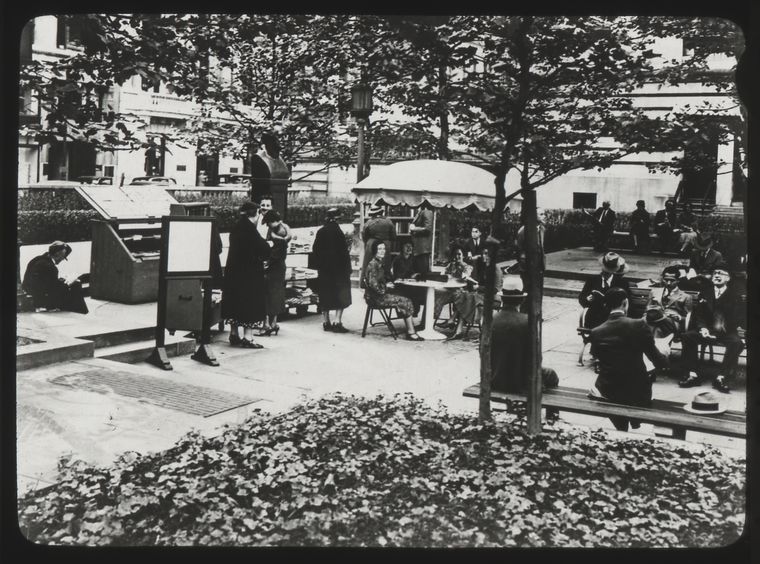
People enjoying the New York Public Library’s outdoor reading room, 1930s. (New York Public Library)

2

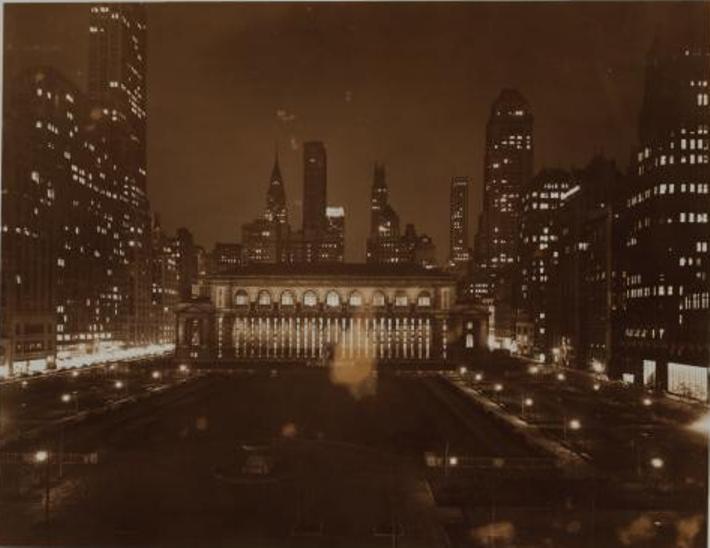
Bryant Park at night, photo by Nathan Schwartz, taken in 1938. (New York Public Library)

1a

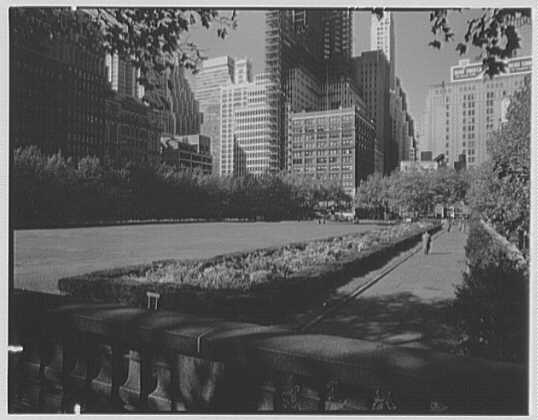
The hedges of the central lawn, photo taken in 1957. These were removed in the desperate effort to clean up the park in the late 1980s. (Library of Congress)

2

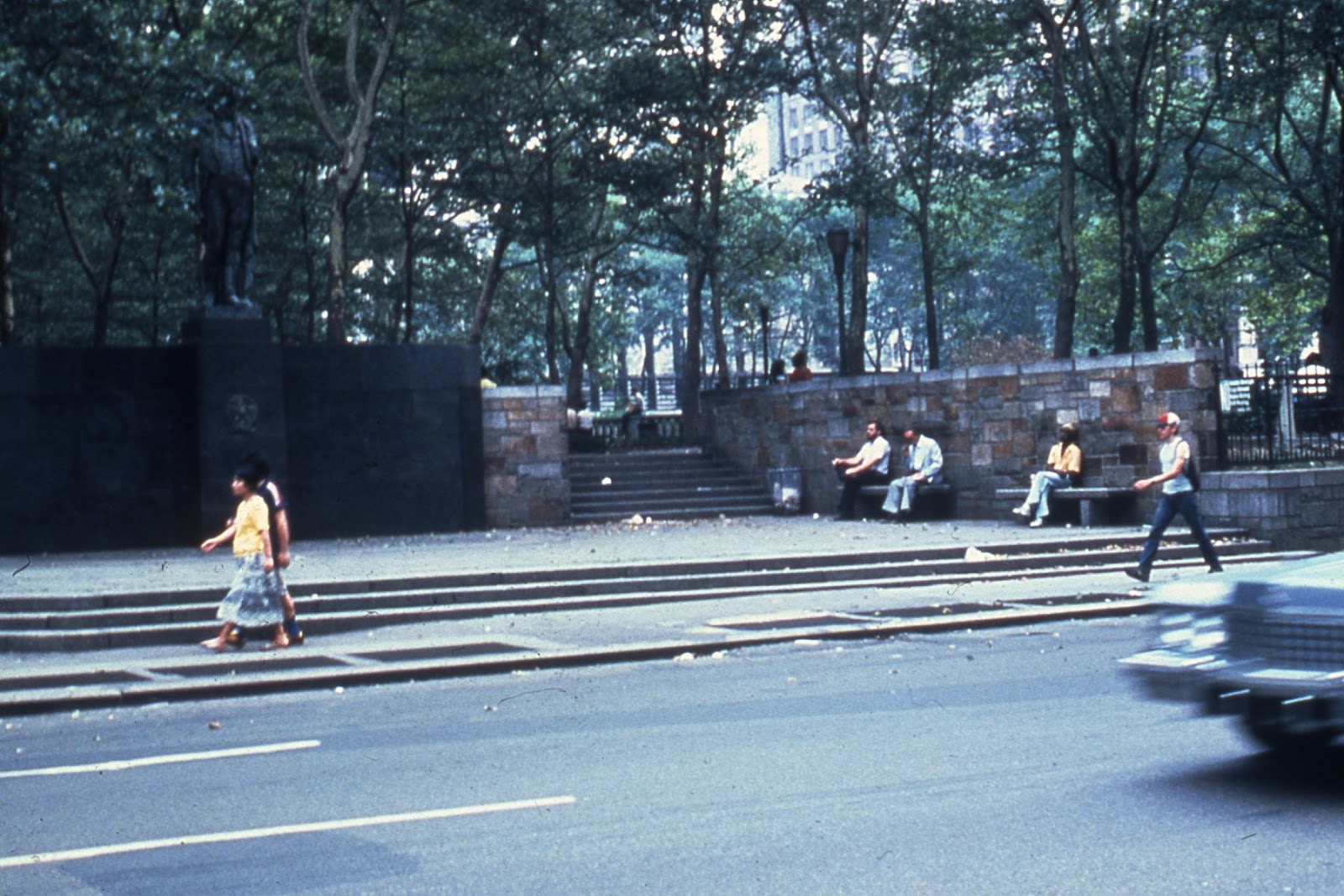
Bryant Park in the 1980s. High walls allowed for suspicious behavior to occur in the at all hours of the day. (Bryant Park Conservancy)

2

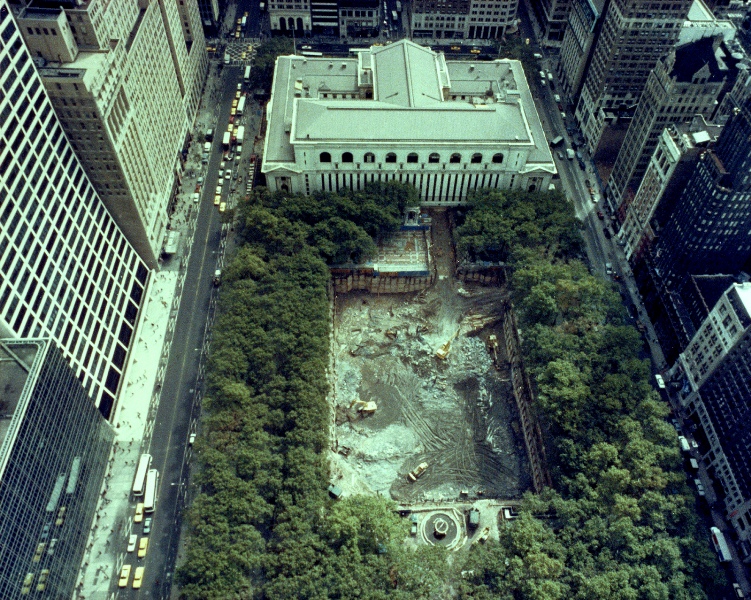
Overlooking the new renovations in the late 1980s (Bryant Park Corporation)

2

Bryant Park after the clean-up, taken sometime in the 1990s. Photo by Carol Highsmith (Library of Congress)

2

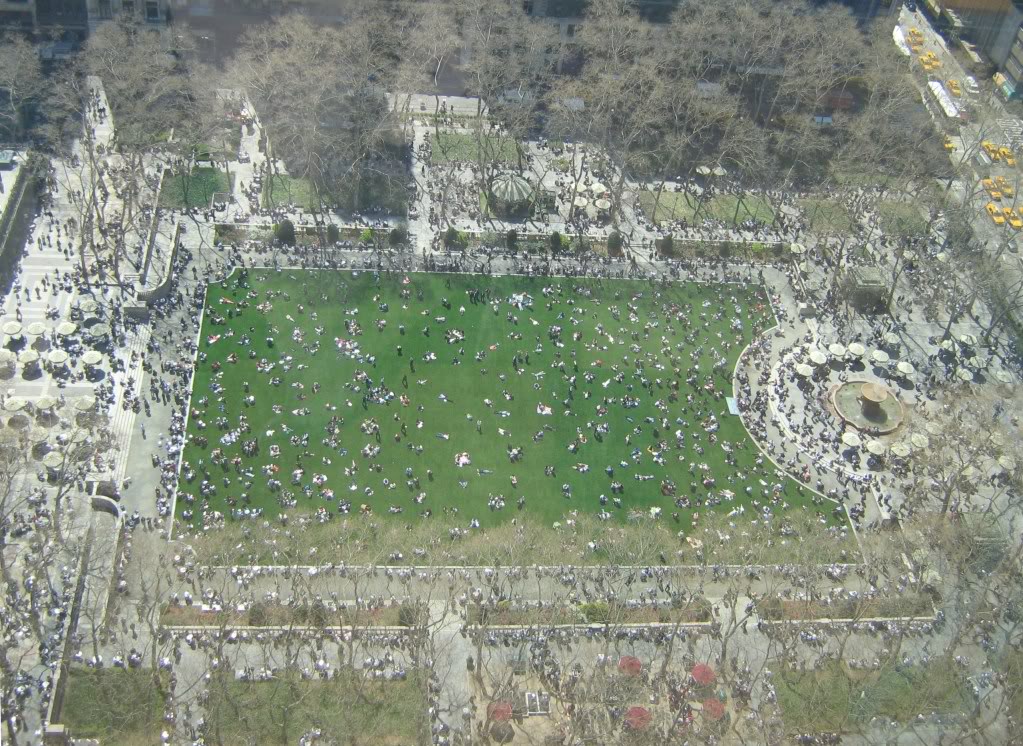
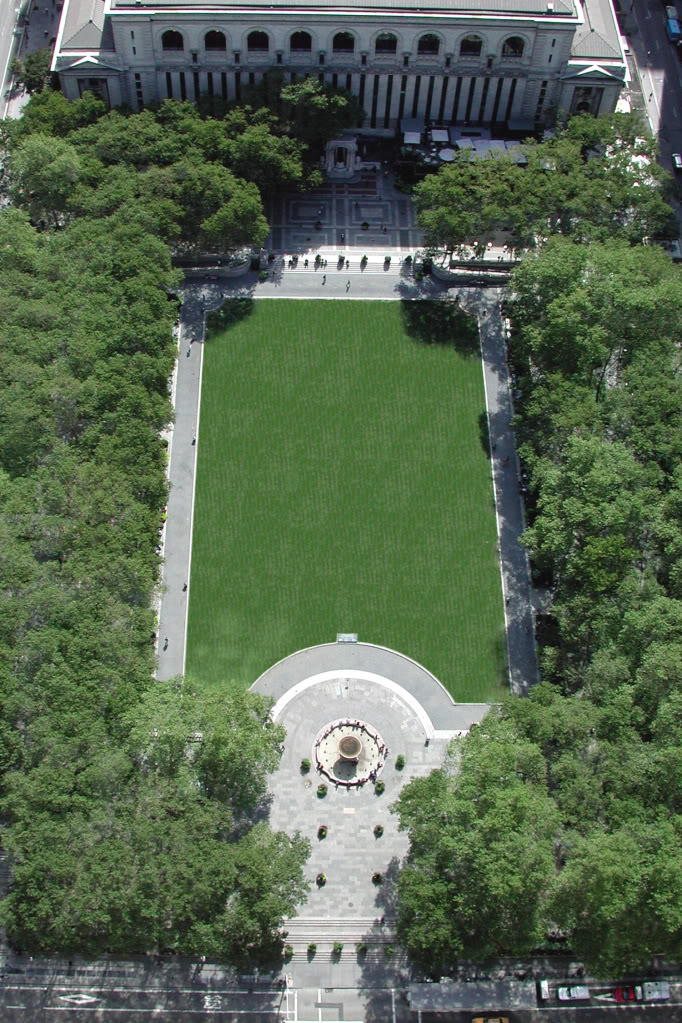
Great overhead shots directly from the Bryant Park Conservancy!

2
3
Categories
Newspapers and Newsies

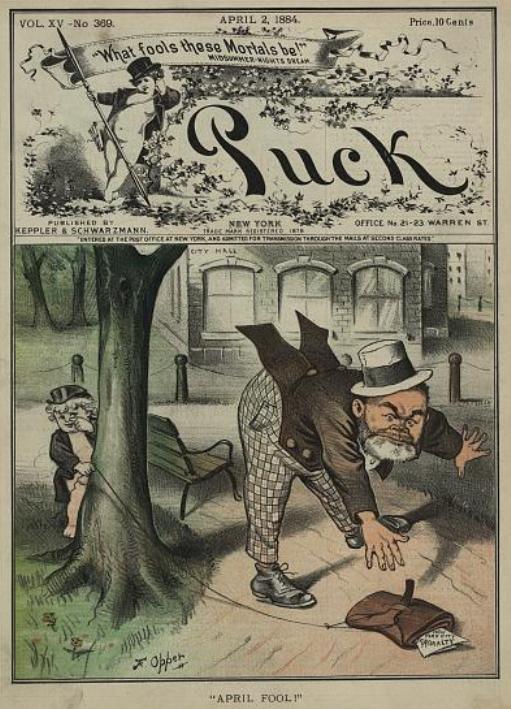
Shameless Urchins and Mighty Frauds: 19th Century Views of April Fools Day

The celebration of April Fools Day traces back to the Middle Ages and possibly as far back as the Roman era. In the mid-19th century, the unofficial holiday for pranks provided a good excuse to attack political opponents.  Here are a couple samples of writing from New York publications from this period which I’m quoting at length because I’m a fan of the almighty air of jadedness that pervades these articles. Also — use of the words “operose” and “gew-gaws”:

1

From the New York Times, April 2, 1861:

“There is a time for all things, we are told. Every dog will have his day, and all fools must have theirs. All fools; and which are the wise ones? Let him among us who is most perfect in wisdom, play the first prank.

And the 1st of April in each year, is the day of all others by common usage consecrated to folly. If there are more senseless acts committed within its twenty-four hours than on any other single day of the three hundred and sixty-five, it has a record not much better than JAMES BUCHANAN’s.*

It is the anniversary on which half-witted people endeavor to make others appear to be so; and they labor to draw forth an ill-advised word or act from them much upon the principle that gave birth to the adage, “Set a thief to catch a thief.”

The custom of late years, it would seem, like an irreverent Dutchman, has more of breaches than observance. Little children honor it, and always will honor it, and may be excused for honoring it; but they who are at years of discretion should put away childish things.

We detest April Fool’s Day. We do not believe in it, and have not believed in it since — yesterday.

To be frank, the writer of this, in the pursuit of pabulum, yesterday, was “sold,” fooled, taken in, deluded, deceived, swindled at every step. He was sent on “Fool’s errands” to distant parts of the City by hypocritical friends whom he told to their double faces afterwards, when they taunted him, that if he had been on “Fool’s errands” it was their errands that he had gone to perform.

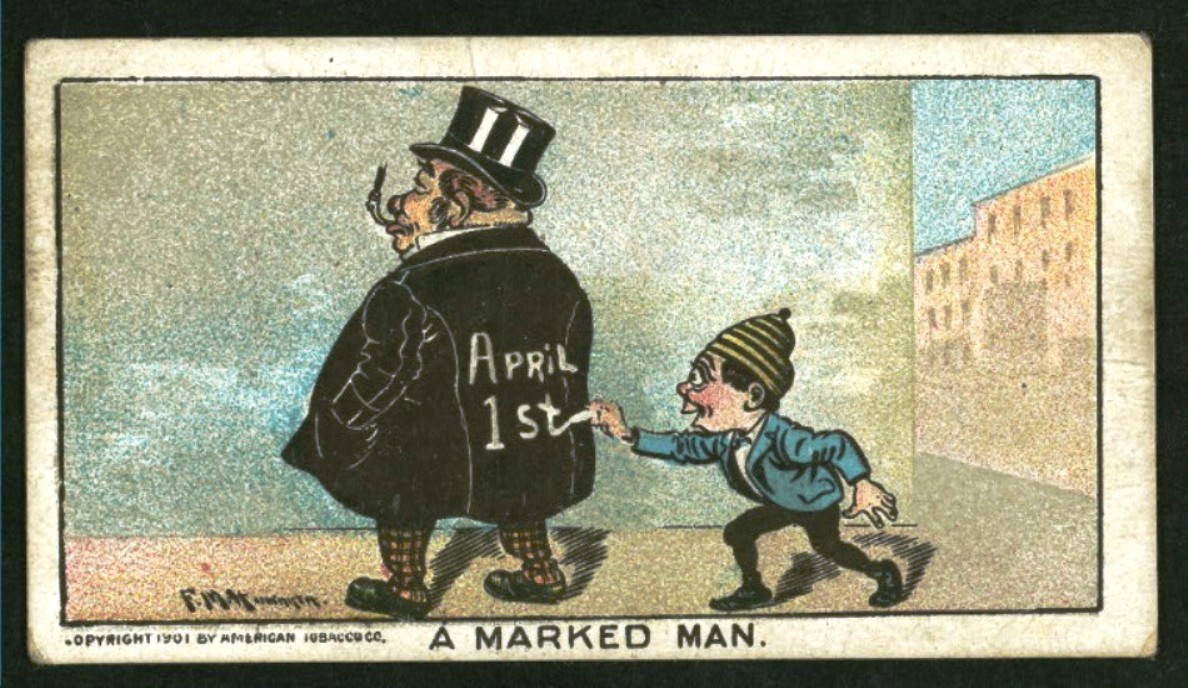
Then shameless little urchins threw tempting parcels in his path, and when he stooped to pick them up, behold! they were up before he could pick them, dangling high in air, pendant by cords from windows, from which deriding faces looked down upon him. And his pockets were turned inside out, and placards were hung on his back, or suspended from his coat-tails, and when, losing his way, he civily asked the name of a street. — “No you don’t,” was the answer. “April fool!”

And so, after a day spent in anxious but unrequited efforts to get leisure to write of it, he sat down late, and weary, and concluded to take revenge upon the reader, and say to him simply, “April Fool!””

* In 1861 James Buchanan was at the end of his presidency. He was also a Democrat and thus unfavored by the Republican-leaning New York Times of the mid-19th century.

1


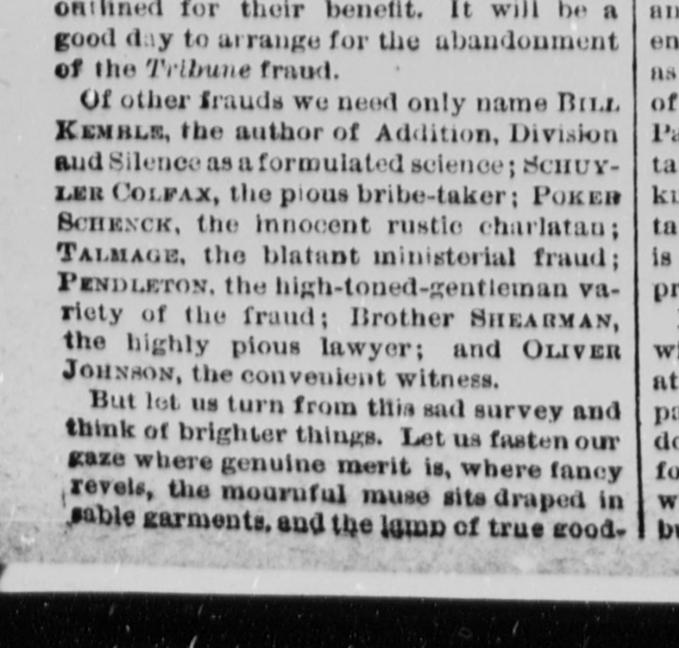
Other newspapers used the holiday as cover to rail against political opponents.   On April 1, 1876, the New York Sun ran down a list of so-called April Fools, calling out some of the biggest names in politics. An excerpt:

“We cannot better celebrate this day dedicated to fools and folly, than by considering some of the principal frauds, humbugs, charlatans, hypocrites and fools who infest the country, and dwelling for a moment on their history and prospects.

They are a large and thoroughly self-satisfied company, recruited from various ranks of society and armed with impudence, pretension, cant or simple stupidity.  They like to be observed and entertain a low opinion of those who criticize them.   They think they out to be permitted to practice their trade  unmolested by impertinent scrutinizers of their shoddy materials, short weights and other tricks of deception.

Today let us celebrate the glories of their enterprising company, carefully abstaining from any word or suggestion to which they can fairly take exception.”

Among their list of the greatest fools in 1876:

“Ulysses S Grant** — “cannot strictly be called a fraud. His practice of greed is open, and he believes in it.  Once of the very lowest estate, a social wreck and failure, he was lifted by a bloody war to the high ground of eminent position where all men could see him.  If ever a man had reason to be thankful for the happy fortune which enabled him to get out of the mire and to stand in clean places, it’s Grant.

Hamilton Fish — “is a pompous sailor, replete with the airs of an operose and ostentatious respectability …. and in fact, Fish is one of the hollowest of frauds.

Henry Ward Beecher*** — “the cheekiest fraud,” “old and unblushing in licentiousness, he takes the part of a manly fellow and a holy man, and with variations of buffoonery, plays it to the entire satisfaction of the brethren.  But paint and gew-gaws cannot cannot hide the foulness underneath.   His reputation is gone, and he lives on lies and perjuries.

Jay Gould — “is a great fraud, but he was a fool in buying the [New York]Tribune, hiring the young editor as a stool pigeon, and building the tall tower.****

There there’s this whole paragraph:

2

**He was at the end of a scandal-ridden presidency, and his cabinet was known for a bevy of corruption charges.

***His adultery trial had sullied his reputation the previous year. 

****Gould, his connections with Tammany Hall well publicized, had bought the Tribune, a rival to the New York Times, in the years before he began amassing railroad property.

Puck Magazine courtesy the Library of Congress

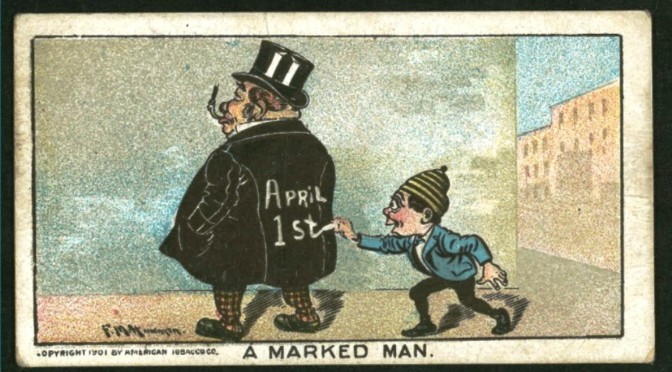
A Marked Man illustration courtesy New York Public Library


Categories
Friday Night Fever

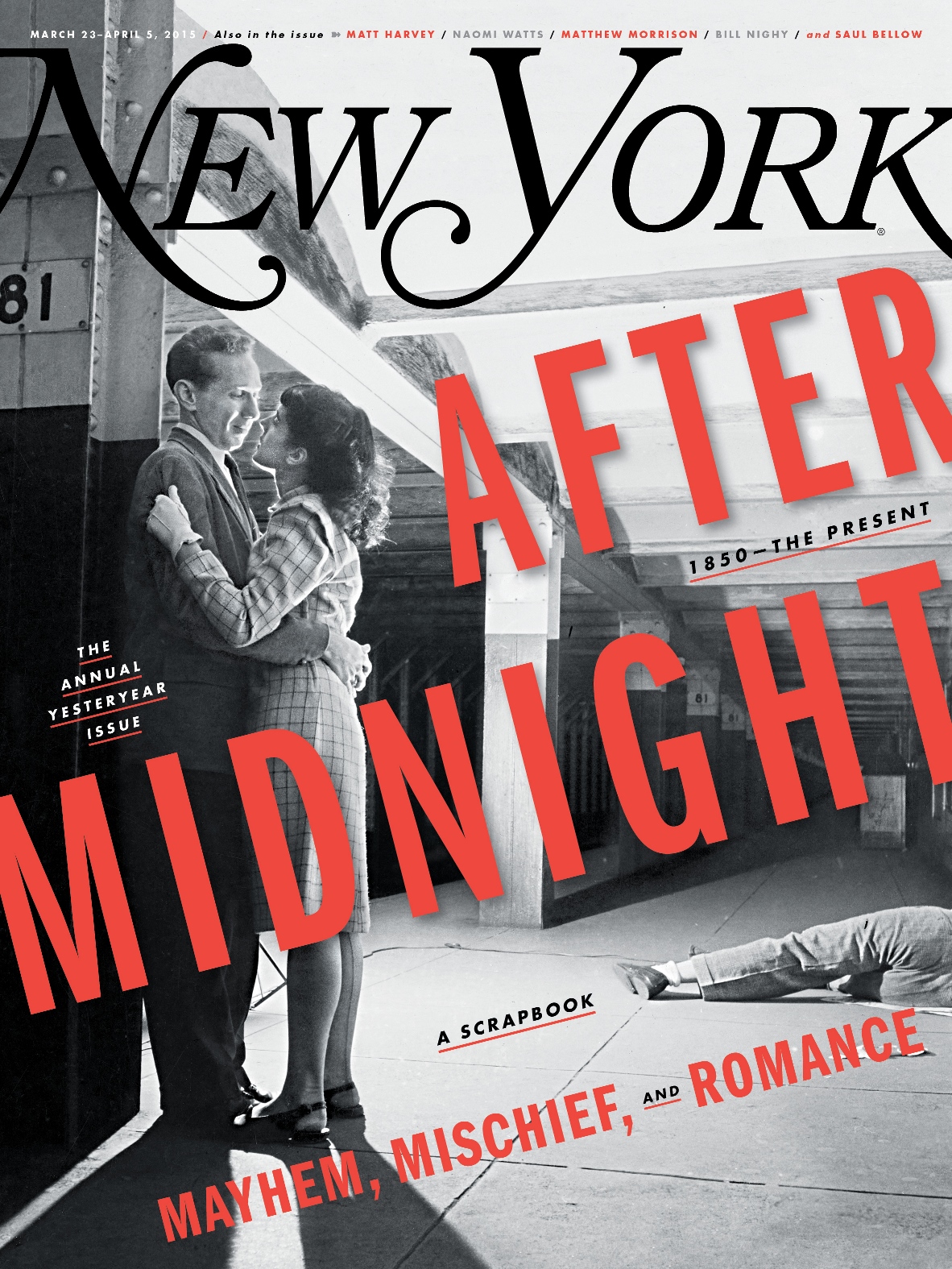
The Wildest Era In New York History: My New York Magazine Investigation

New York Magazine produces an annual buffet of New York City history each year called the Yesteryear Issue.  It’s probably the biggest celebration of the city’s past in print and usually corrals some of New York’s finest writers and celebrities.  Last year’s issue featured eight entertainers from New York’s past including Barbra Streisand, Bob Dylan and the Notorious B.I.G.

This year’s fabulous issue is no exception. The theme is After Midnight, a look at history through the years (from the 1850s to today) as it played out in the late-night hours.   You can read it all right here or go to your newsstand and pick up one of the three gorgeous covers.

3

This issue features tales, interviews, reminiscences and asides by the likes of Jay McInerney, Bebe Buell, Sloane Crosley, Colin Quinn, Alec Baldwin, Sarah Jessica Parker and Matthew Broderick, Laurie Anderson, J.B. Smooth, Sarah Silverman, Lydia Lunch, Isaac Mizrahi, Laurie Anderson — and the Bowery Boys!

That’s right, I have a fun little article in the issue, a thought experiment called “Which New  York Was the Wildest New York? An Inquiry.”

It’s an absurd argument — how do you really quantify debauchery? — but a wonderful thought experiment and a fine excuse to wallow in genuine New York wickedness.  It was fun to pour over the decades and identify four particular eras of rampant bacchanalian excess — the 1970s, the 1920s, the 1880s-90s and the 1850s.  You can read the article to discover which era I crown the wildest.

Disagree?  Have a favorite era you’d love to visit? Leave a comment and tell me about it!

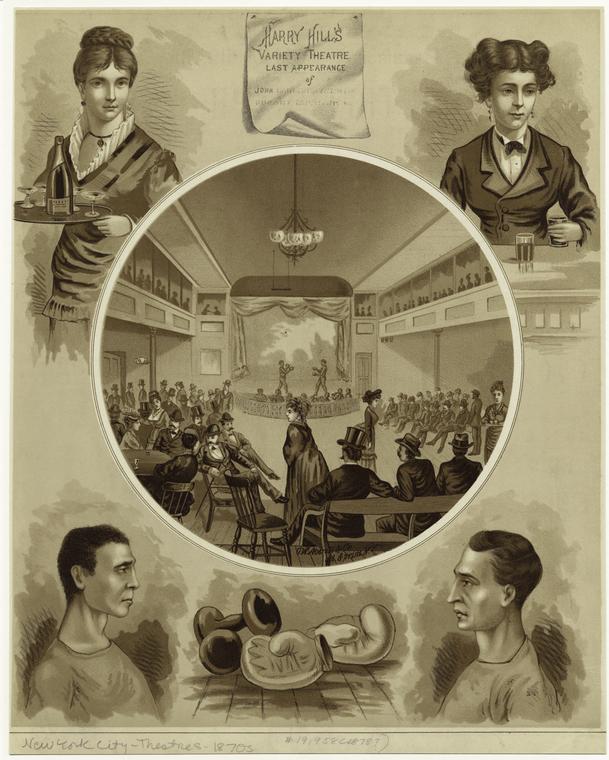
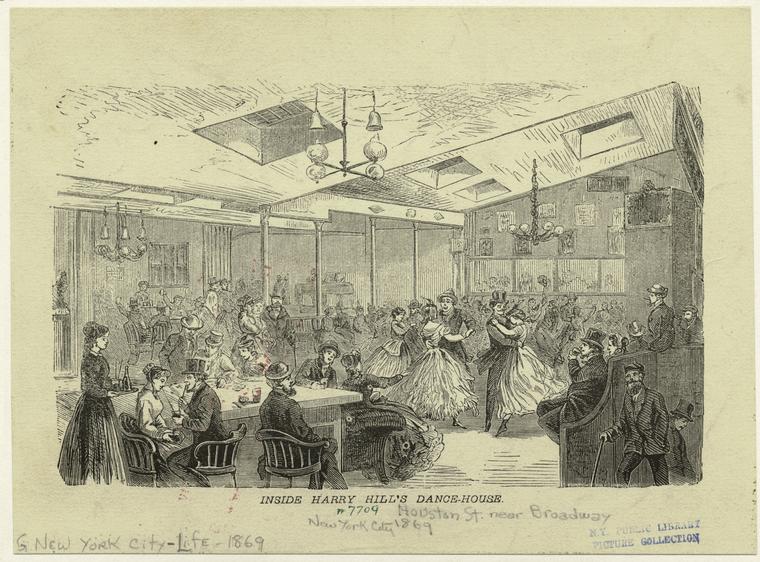
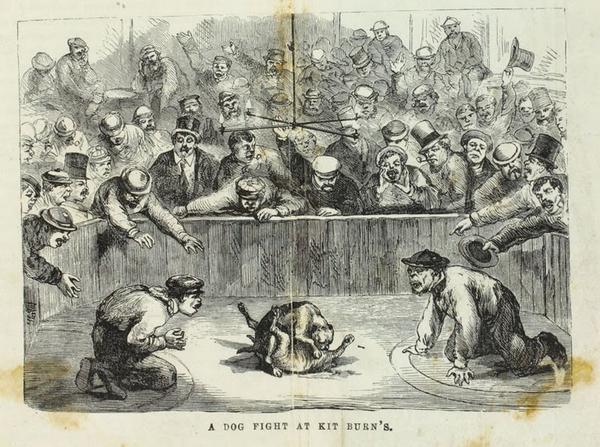
And here are a few images of people and places that I mention in the article.

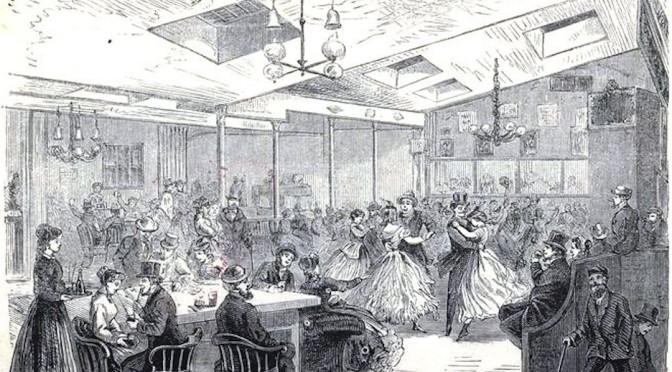
Harry Hill’s Concert Saloon 

2

1.w

For more information on Harry Hill’s check out my Bowery Boys article Purging Evil: New York vs. the Concert Saloon.


 Kit Burns Rat Pit (or, in this case, Dog Pit)

2

For more information on Kit Burn’s Water Street saloon, check our our podcast on the South Street Seaport.


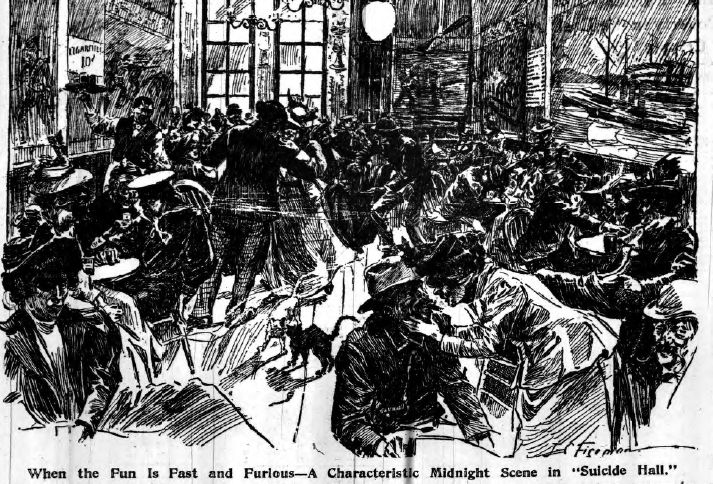
McGurk’s Suicide Hall

4

For more information on McGurk’s Suicide Hall check out my Bowery Boys profile on this sad and dangerous place on the Bowery. (The article was written all the way in 2007 so the neighborhood has changed greatly since then!)


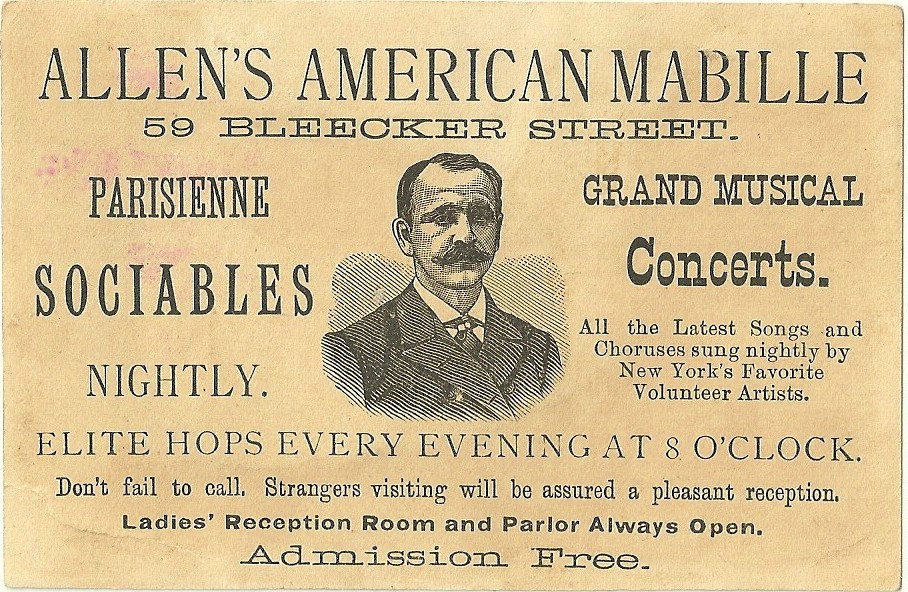
“Parisian-style dance  halls”

2

For more information on the Bleecker Street ‘distractions, check out my Bowery Boys article called Don’t Douse! The Glim! Four Infamous Dancehalls and Dives

And for particular information on The Slide, you can read my profile from back in 2007. (Kennys Castaways has since closed.)


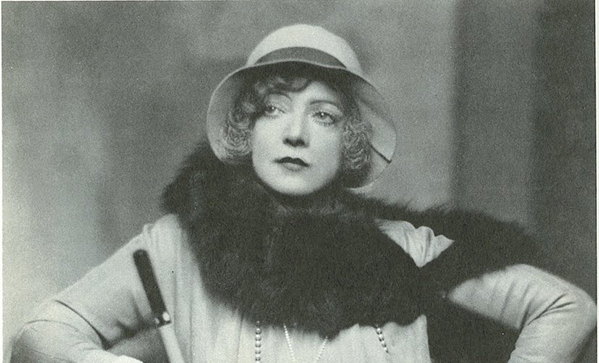
Texas Guinan

4

For more information on Guinan, read my profile of her notorious speakeasy The 300 Club.


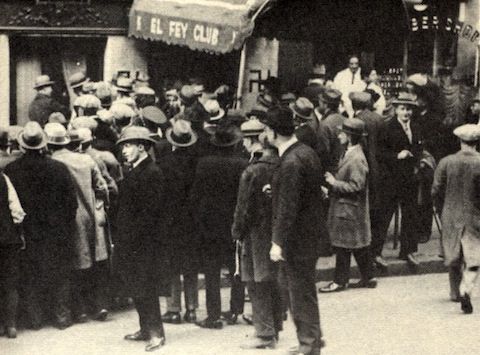
Larry Fay and the El Fay nightclub

4

Categories
Amusements and Thrills Podcasts

The Crystal Palace, America’s first World’s Fair and bizarre treasury of the 19th century

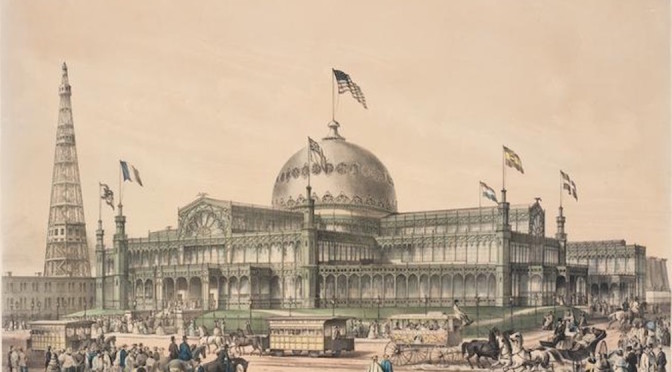
PODCAST New York’s Crystal Palace seems like something out of a dream, a shimmering and spectacular glass-and-steel structure — a gigantic greenhouse — which sat in the area of today’s Bryant Park. In 1853 this was the home to the Exhibition of the Industry of All Nations, a dizzying presentation of items, great and small, meant to exemplify mankind’s industrial might.

We take you on a breathtaking tour of the Palace and its legendary exhibition, including the Latting Observatory (the tallest building in New York!)

Whatever happened to the Crystal Palace? And what inventions contained within do we still benefit from today?

FEATURING: PT Barnum, Henry Ward Beecher, Elisha Otis and literally millions of items!

EDITOR’S NOTE – I mis-pronounced the name of the Fresnel light (actually pronounced fre-nell). Its modern ancestor is used in theatrical lighting today.


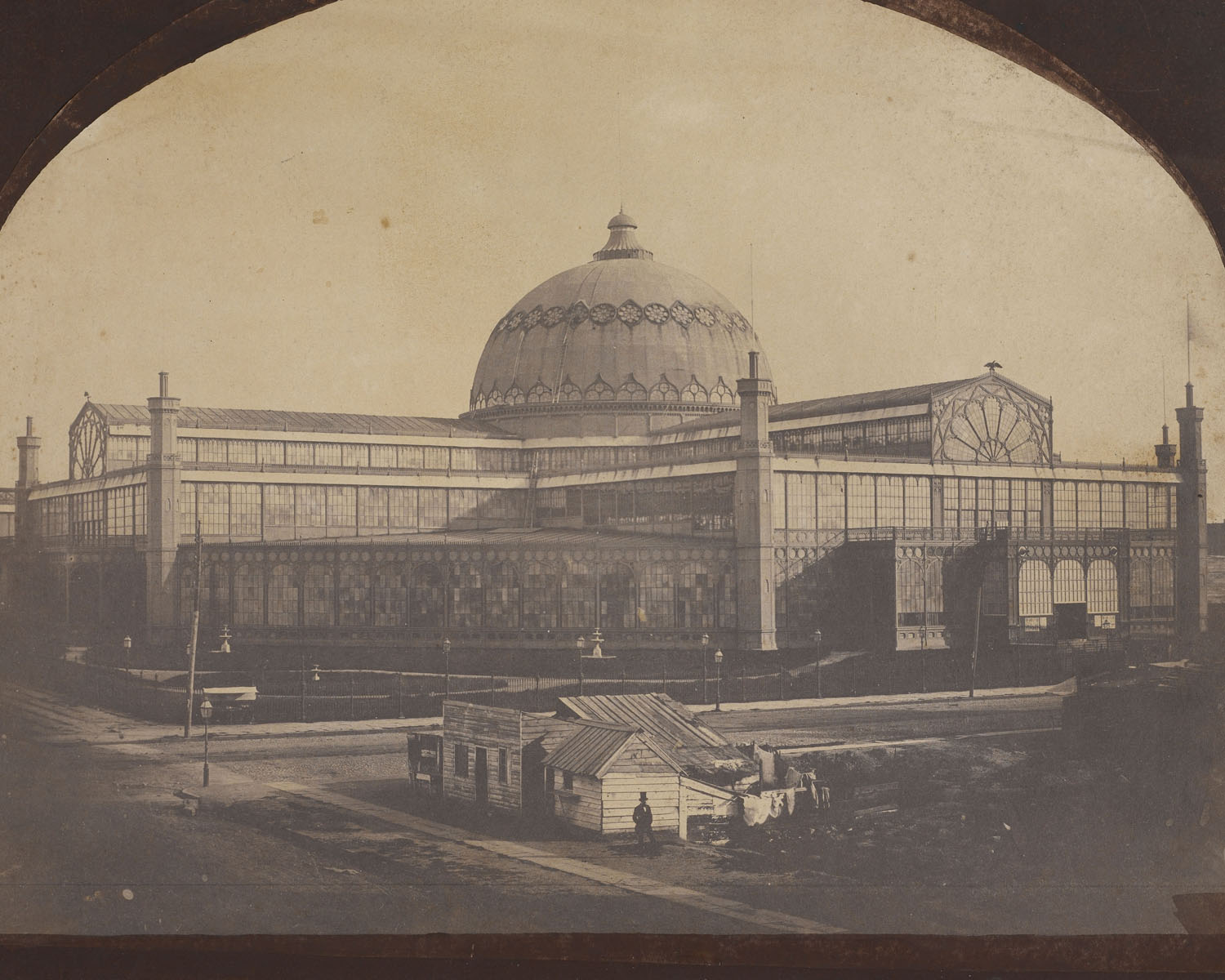
This is one of the earliest photographs of New York City ever taken. As the Crystal Palace hosted examples from the early days of photography, it’s no surprise that one of these early pictures is of the Crystal Palace itself.

A rare photograph of the New York Crystal Palace by Victor Prevost. Courtesy Avery Architectural & Fine Arts Library, Columbia University
A rare photograph of the New York Crystal Palace by Victor Prevost. Courtesy of the Avery Architectural & Fine Arts Library, Columbia University
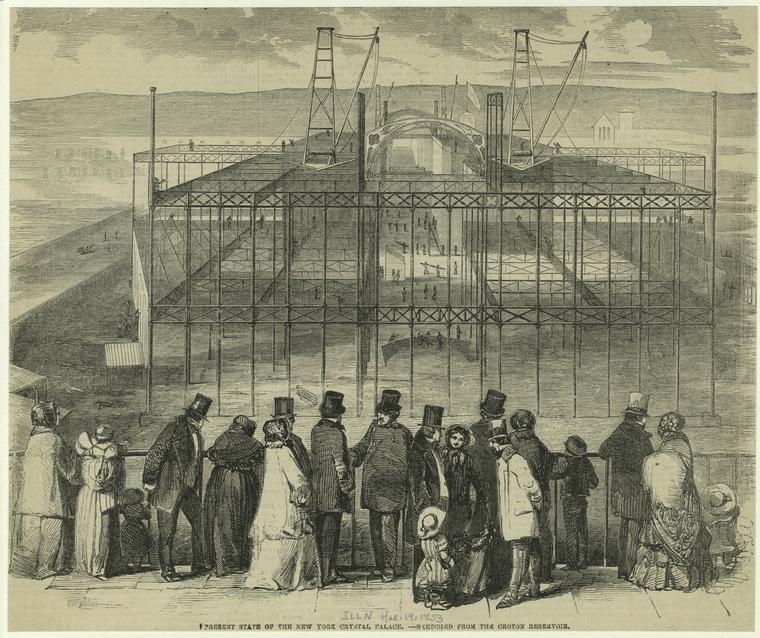
A look into the pit surrounding the Crystal Palace during construction. There were many delays, somewhat sullying the lofty ambitions of the project at the very start. Courtesy New York Public Library
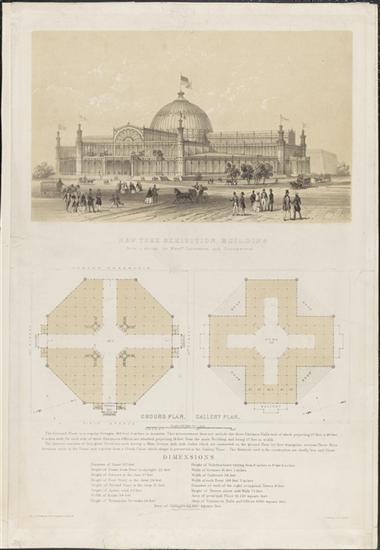
A very church-like plan of the Crystal Palace building by Petermann and Guildemeister. Courtesy Museum of the City of New York
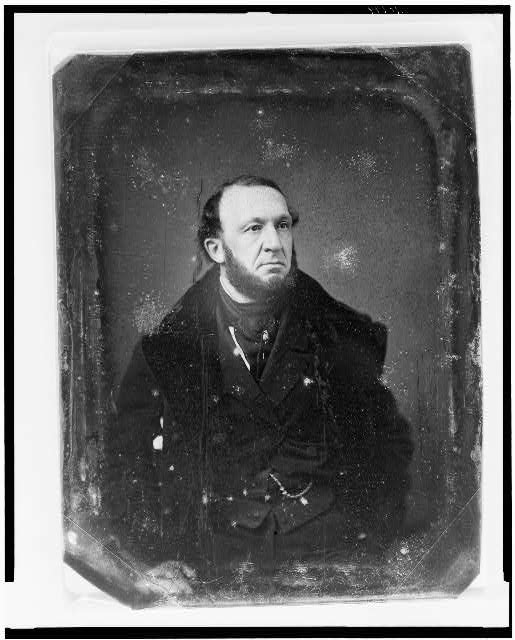
Theodore Sedgwick, who spearheaded the New York Crystal Palace -- and bore some of the criticisms of the Exhibition's rocky opening.
Theodore Sedgwick, who spearheaded the New York Crystal Palace — and bore some of the criticisms of the Exhibition’s rocky opening.
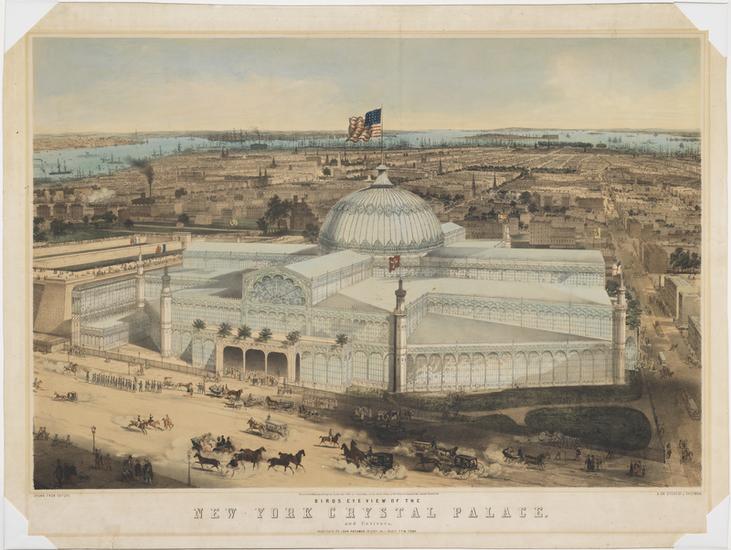
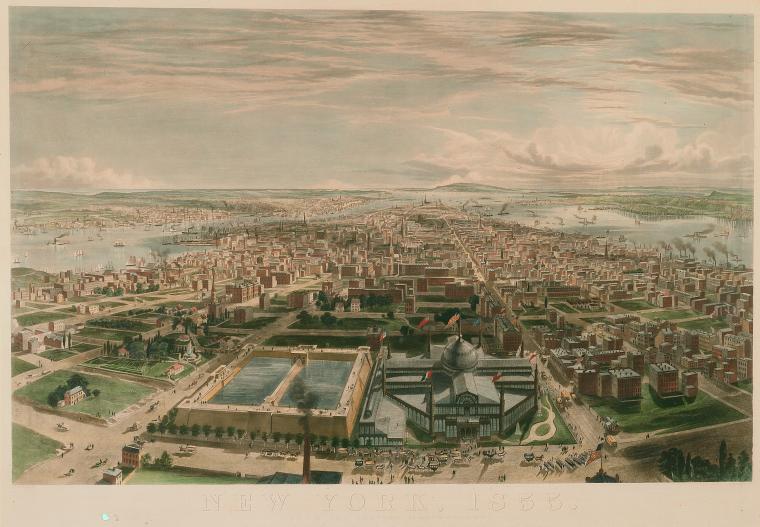
Birds Eye View of the New York Crystal Palace and Environs by John Bachmann. Courtesy the Museum of the City of New York
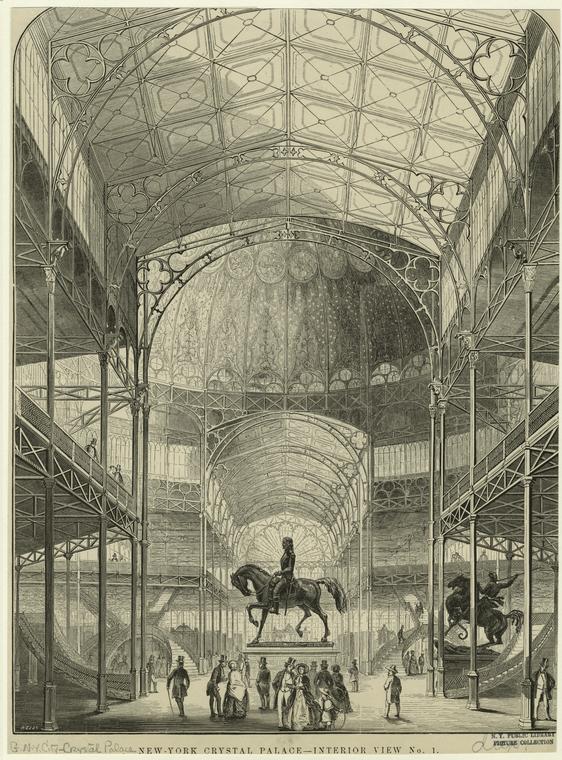
Illustration of the center of the Crystal Palace by J Wells. Courtesy New York Public Library
The view from one of the naves, looking towards the George Washington statue. Courtesy New York Public Library
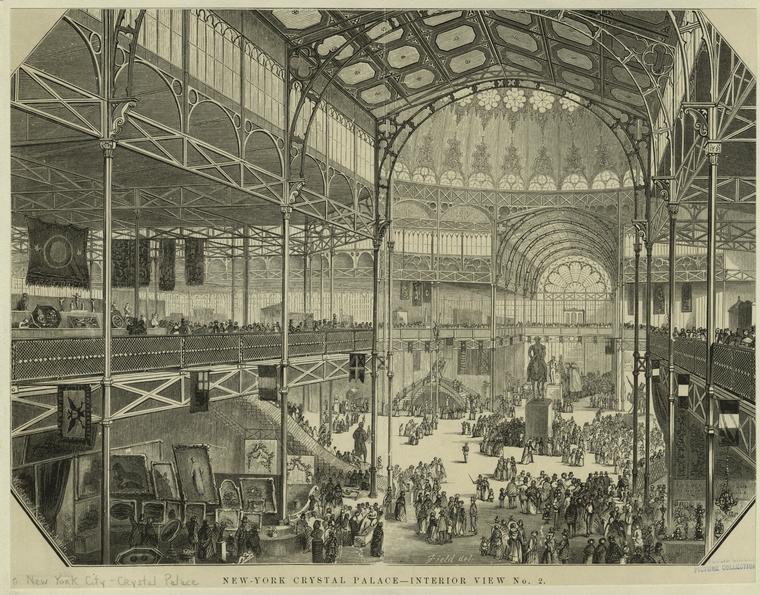
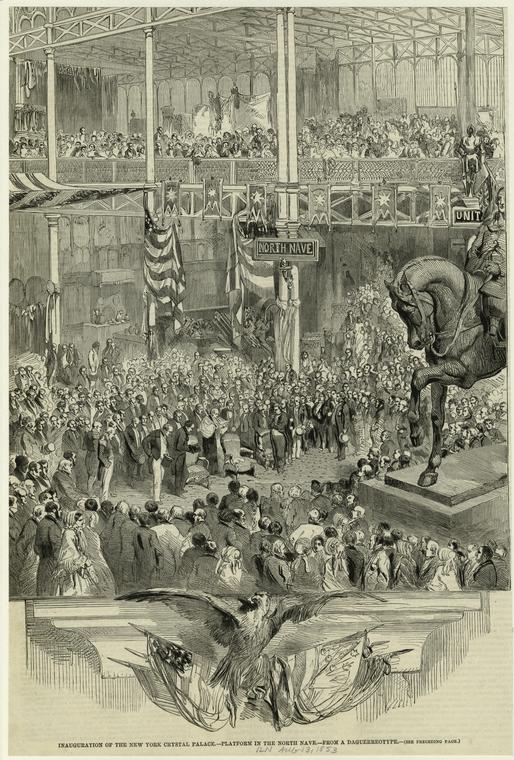
Another view of the inside, this time during the inauguration of the New York Crystal Palace in July 1853 -- looking at a platform in the north nave. Courtesy New York Public Library
Another view of the inside, this time during the inauguration of the New York Crystal Palace in July 1853 — looking at a platform in the north nave. Courtesy New York Public Library
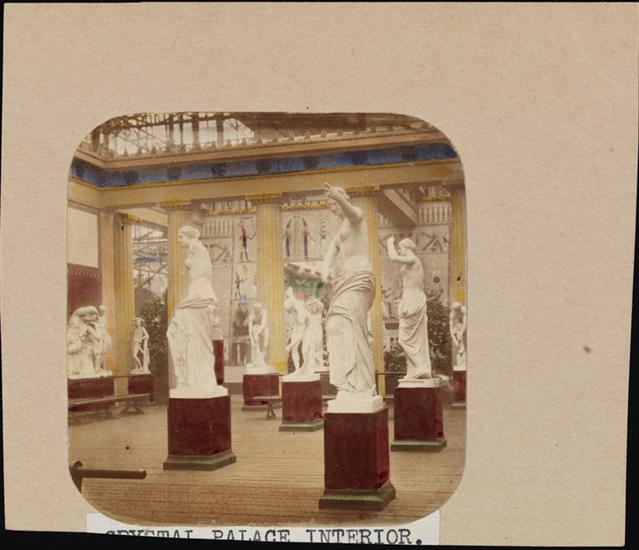
A hand-colored stereoscope of a selection of Crystal Palace statuary. There seems to be some kind of Egyptian thing going on in the background! Courtesy Museum of City of New York
e
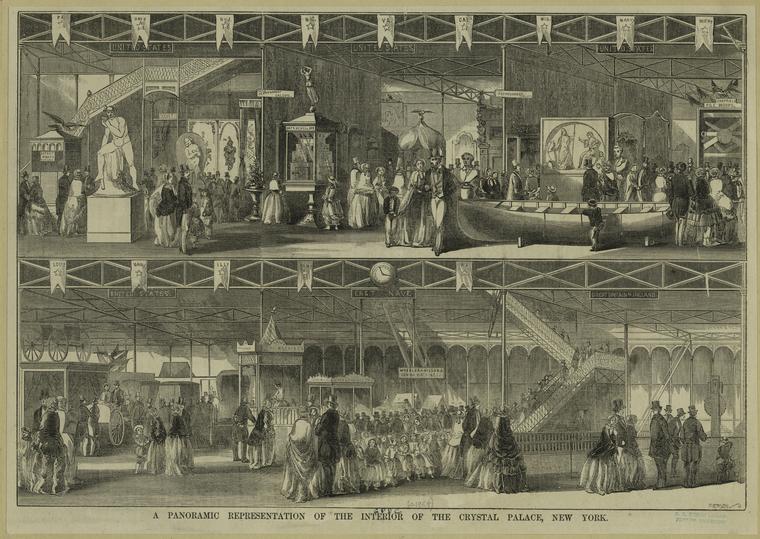
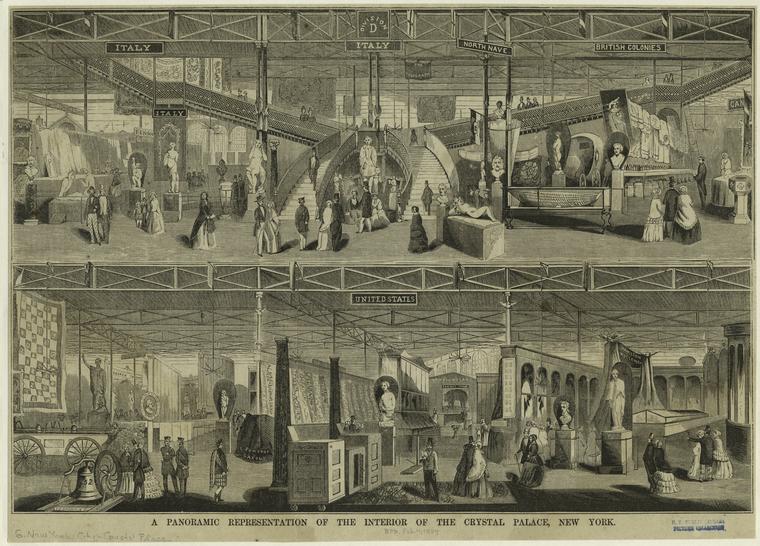
Busts, tapestries, machinery, weapons and various finery! A couple illustrations of the different divisions. Just rooms and rooms of items! Courtesy New York Public Library
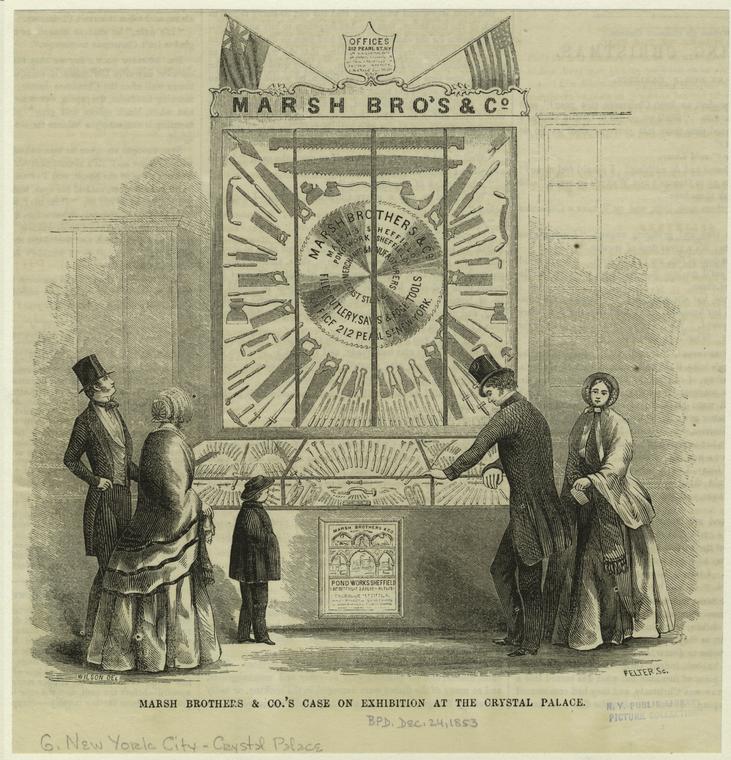
A selection of saws and tools from Marsh Brothers & Co. that one might have seen in the US section. Courtesy NYPL
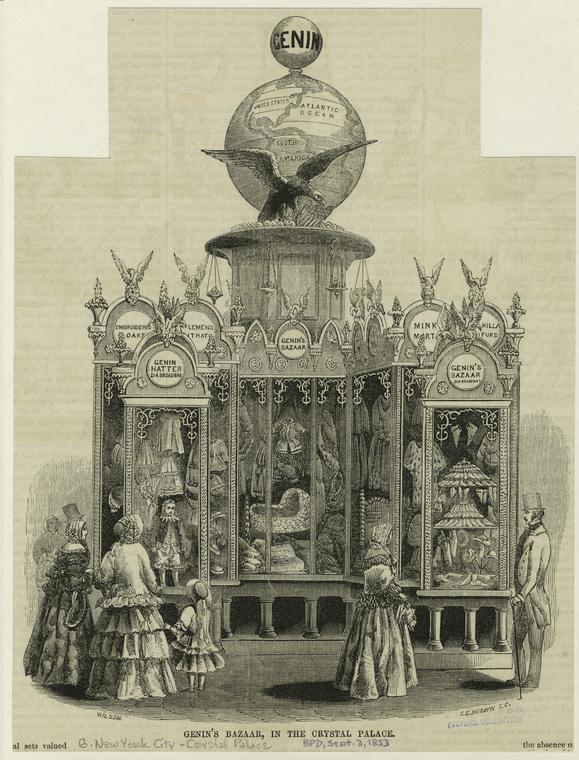
Genin's Bazaar, containing items for the infant. Courtesy New York Public LIbrary
Genin’s Bazaar, containing items for the infant. Courtesy New York Public LIbrary
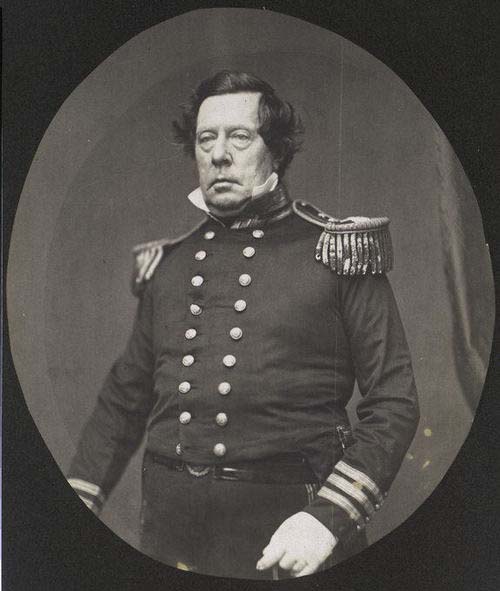
This photo of Commodore Matthew C. Perry was taken by Matthew Brady and displayed at the Crystal Palace, one of the first photographs many people may have seen!
A selection of saws and tools from Marsh Brothers & Co. that one might have seen in the US section. Courtesy New York Public LIbrary
f
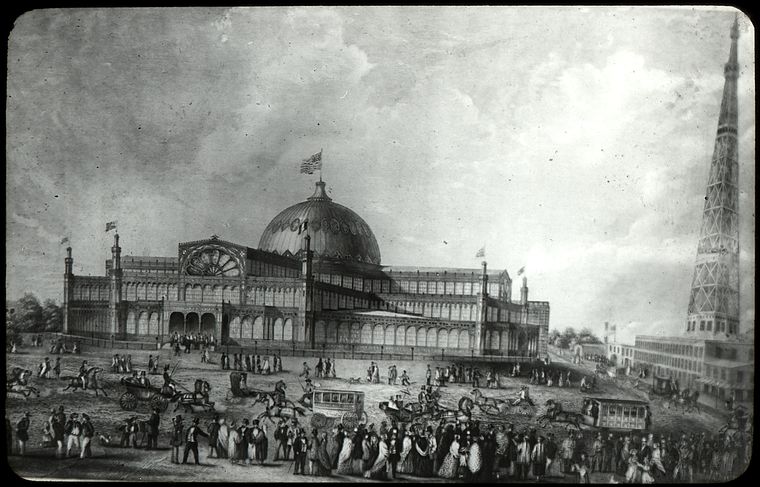
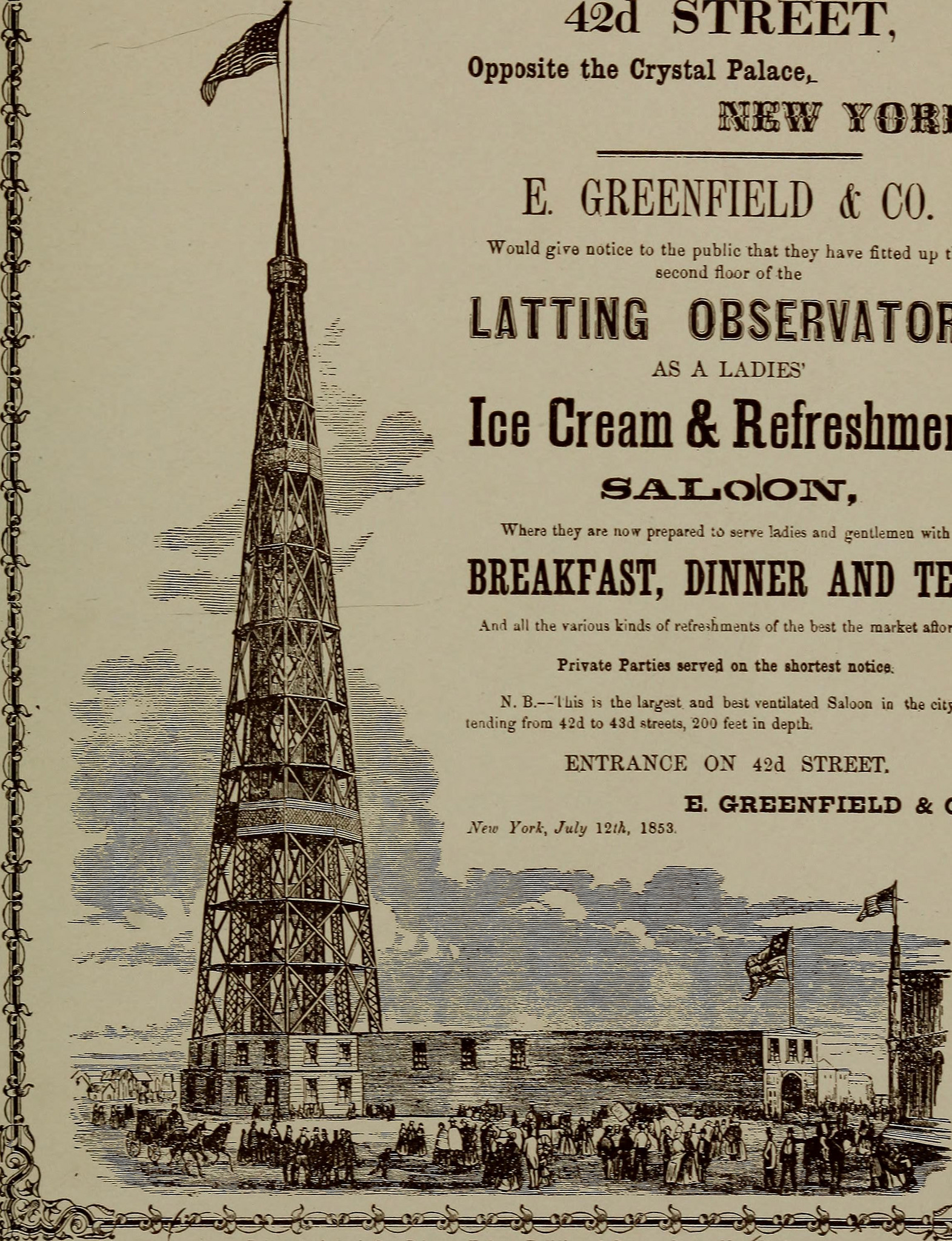
This engraving shows the Latting Observatory in relation to the Crystal Palace, separated by 42nd Street.
A reprinted advertisement from Valentine's Manual of old New York, outlining some of the charms of Latting Observatory
A reprinted advertisement from Valentine’s Manual of old New York, outlining some of the charms of Latting Observatory
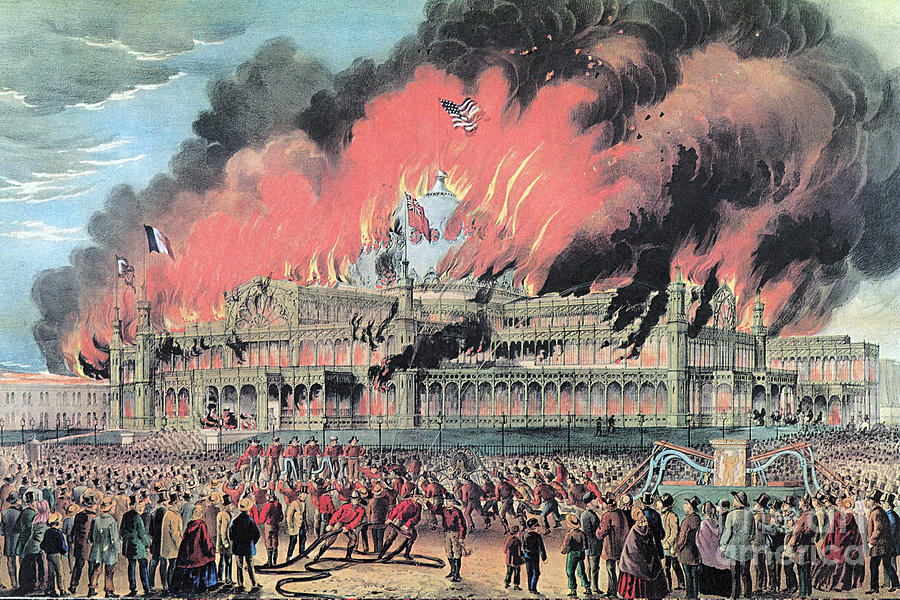
One of several illustrations of the Crystal Palace fire, a dramatic blaze that destroyed the building in under an hour.
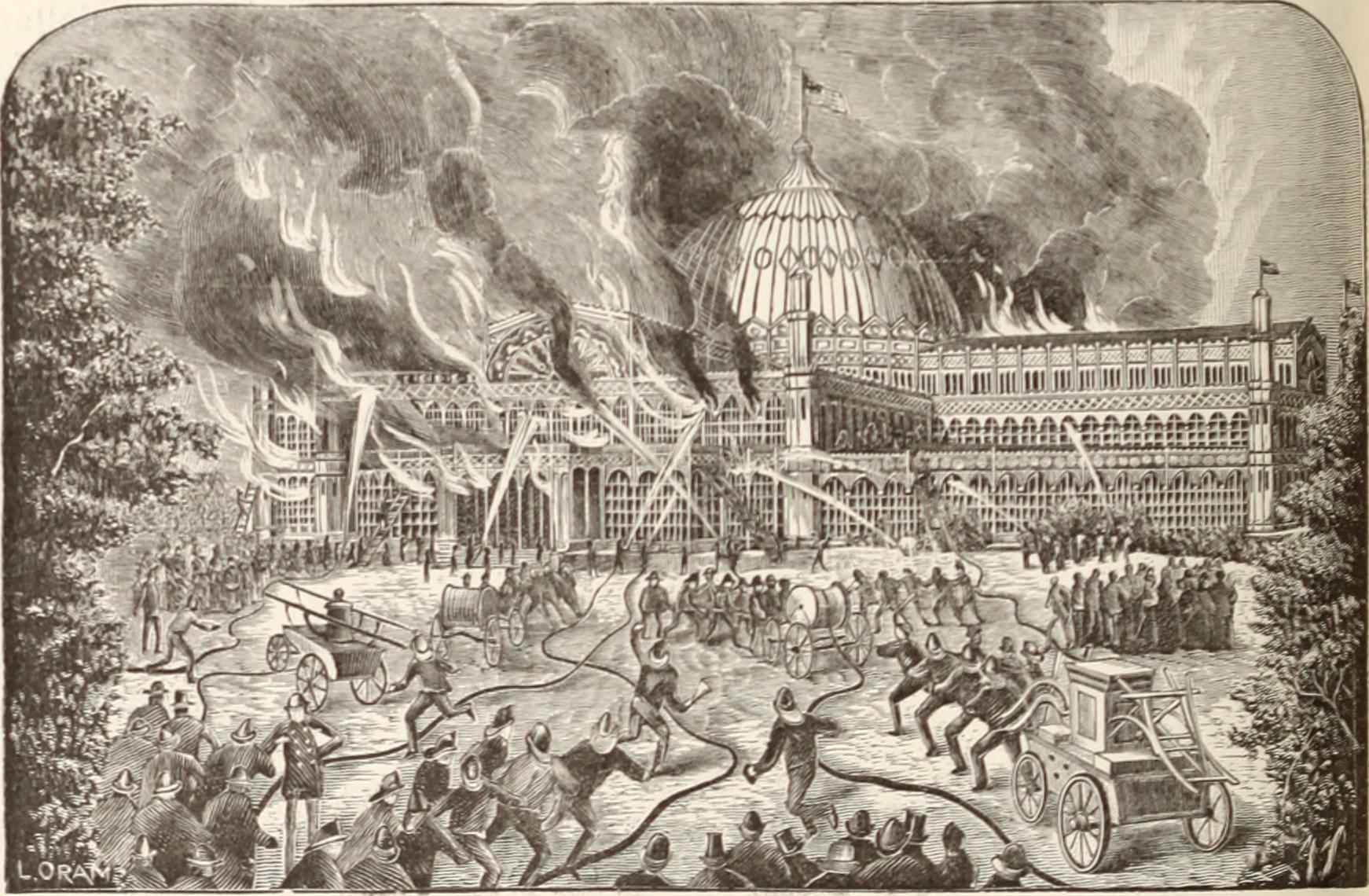
An illustration from an 1887 book "Our firemen. A history of the New York fire department" Courtesy Internet Image Book Archives
An illustration from an 1887 book “Our firemen. A history of the New York fire department” Courtesy Internet Image Book Archives
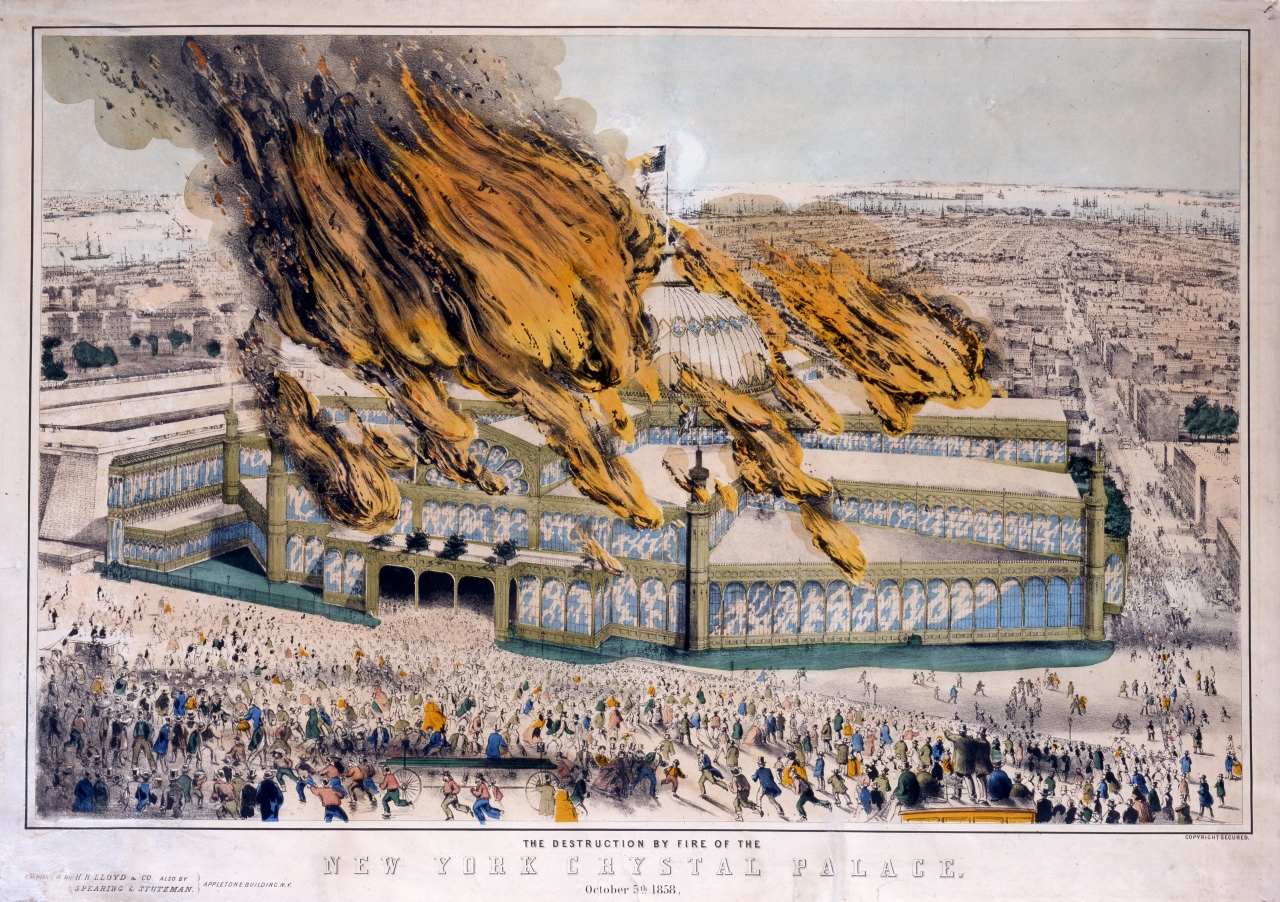
Another view of the blaze, in perspective to the rest of New York to the south. Couirtesy New-York Historical Society
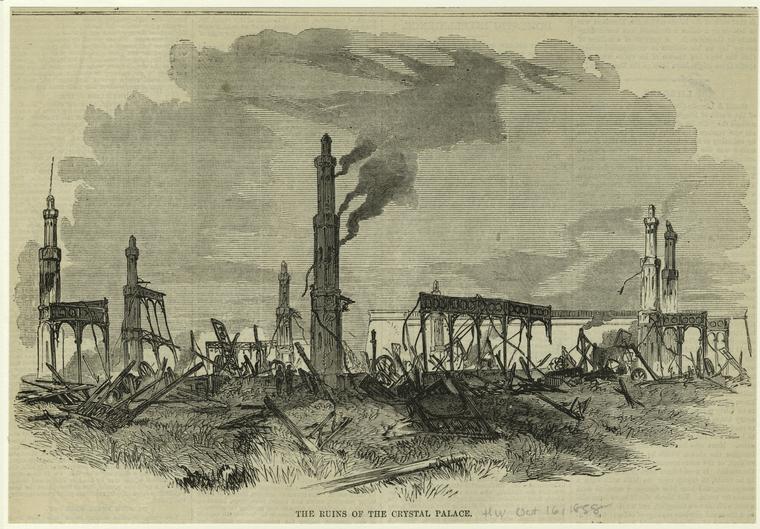
An illustration made in 1858, depicting the aftermath of the horrible fire that destroyed the Crystal Palace. NYPL

Some original documents that you may enjoy reading:

How To See the New York Crystal Palace: Being a Concise Guide to the Principal Objects in the Exhibiton

A Day in the New York Crystal Palace and how to Make the Most of It

And for some comparison, a guide to the London Crystal Palace can be found here.

Categories
Amusements and Thrills Bowery Boys Bookshelf

The literary Coney Island

Everybody sees Coney Island a little differently. Most people know it for the amusements but not everybody has the same feeling about them. One person craves the beaches, the food. Another prefers a stroll along the boardwalk, fireworks, an evening Cyclones game. Others live nearby, too familiar with the swelling weekend crowds. And some people — and this seems like blasphemy — have had their fill of Nathan’s hot dogs.

1Coney Island has always been a Rorschach test of class, morals and taste, an escape from the city for more than 150 years. (In the 19th century, it was an escape from two cities, as Brooklyn was independent then and had not yet subsumed Coney Island within its borders.)

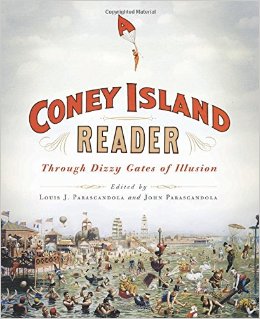
It’s never been considered a bastion high culture, although its degrees of middle- and low-brow have been vibrantly written about from the very beginning.  In The Coney Island Reader: Through The Dizzy Gates of Illusion, edited by Louis J. and John Parascandola, we get a time machine through its many iterations, thanks to the observations of dozens of writers.

I don’t think of Coney Island as a particularly literary destination, and yet here we have some of their greats chiming in to describe the lusty pleasures of Brooklyn’s beach-side getaway.

We begin with Brooklyn’s greatest voices — Walt Whitman.Yes: there was a clam-bake — and, of all the places in the world, a clam-bake at Coney-Island! Could moral ambition go higher, or mortal wishes go deeper?”  He’s writing in 1847 when the area is a barely developed destination.

2163524020_af077b7fec_o

Jose Marti, the poet and Cuban revolutionary, is overtaken by its magic. “And this squandering, this uproar, these crowds, this astonishing swarm of people, lasts from June to October, from morning until late night, without pause without any change whatsoever.”

Today’s Coney Island amusement district is vastly smaller than the one which greeted Stephen Crane in 1894.  “We strolled the music hall district, where the sky lines of the rows of buildings are wondrously near to each other, and the crowded little thoroughfares resemble the eternal ‘Street Scene in Cairo’.”

As Coney Island grew larger in the early 20th century — with its three principal amusement parks Dreamland, Steeplechase and Luna Park — it pulled thousands more to its whimsical attractions.  It’s almost  hilarious to picture Russian writer and dramatist Maxim Gorky sitting inside the Dreamland ride Hellgate, with its hellish flames “constructed of paper mache and painted dark red. Everything in it is on fire — paper fire — and it is filled with the thick, dirty odor of grease. Hell is badly done.”

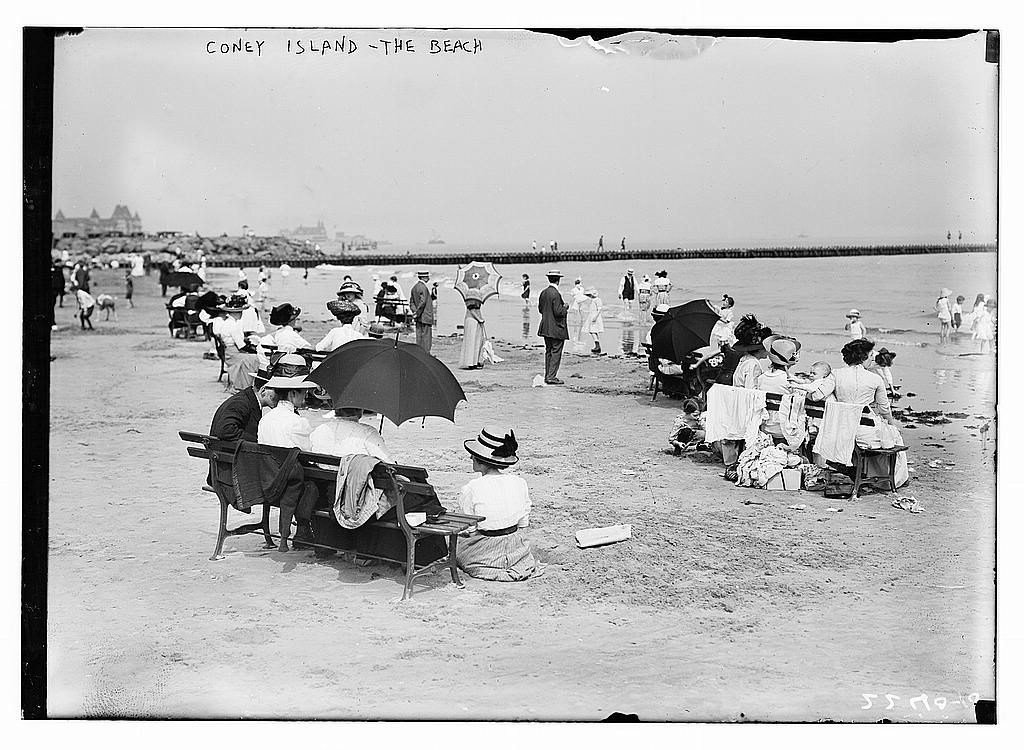
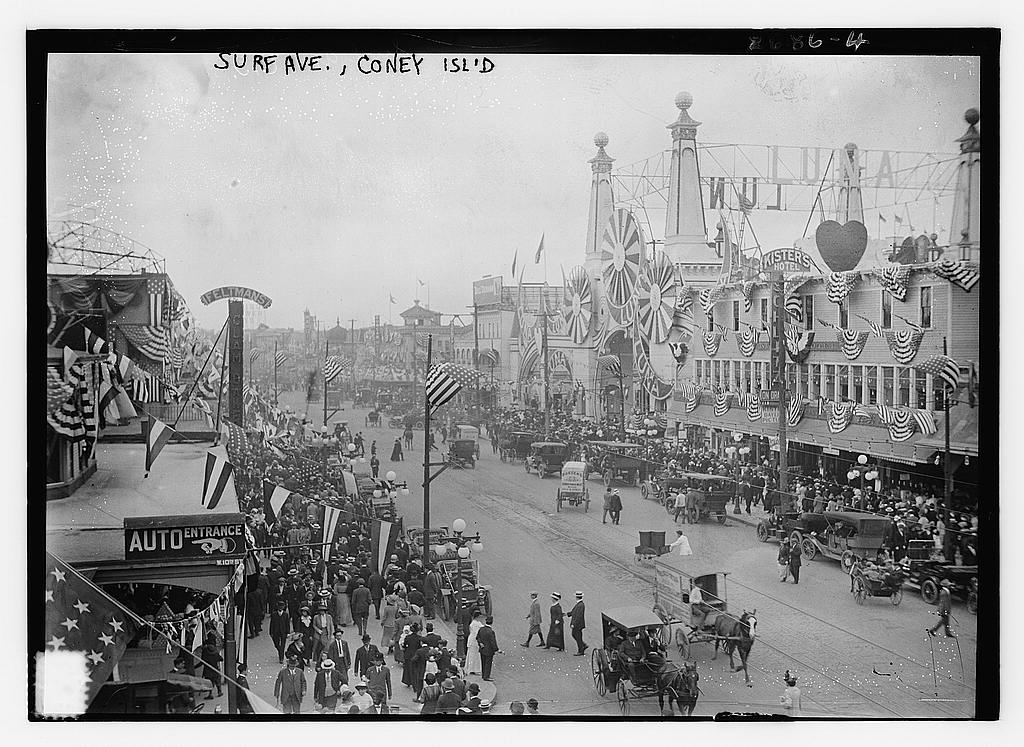
Surf Avenue 1910-15
Surf Avenue 1910-15

The Coney Island Reader combines literary observances with social commentary and documentary accounts featuring interviews with the impresarios themselves.  In a 1909 magazine article by Reginald Wright Kauffman, George C. Tilyou, the owner of Steeplechase Park, proclaims, “To sum up my opinion of the whole thing, we Americans want either to be thrilled or amused, and we are ready to pay well for either sensation.” (George’s brother Edward is represented here with a vivid essay called “Human Nature with the Brakes Off — Or: Why the Schoolma’am Walked Into the Sea.”)

More contemporary observations of the fictional kind are represented by Kevin Baker (who also contributes the forward), Josephine W. Johnson and Sol Yurick (from the novel which inspired the film The Warriors).

This is perhaps the only book in history that features the writing of e.e. cummings and Robert Moses. One saw saw “[t]he incredible temple of pity and terror,  mirth and amazement,” the other “overcrowding at the public beach, inadequete play areas and lack of parking space.”

Ah, Coney Island. It’s what you make of it.


The Coney Island Reader
Through Dizzy Gates of Illusion
edited by Louis J. Parascandola and John Parascandola
Columbia University Press

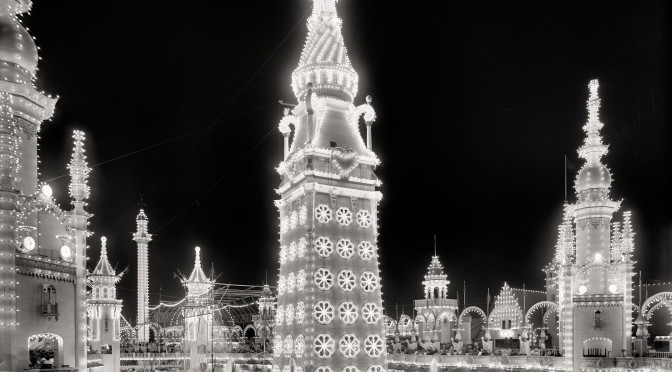
Top image: Luna Park at night, 1905 (polished up image courtesy Shorpy)


Categories
Parks and Recreation

Ten Images of Bowling Green and Ten Facts about its Marvelous History

Bowling Green, at the very tip of Manhattan island, is a small oval park so calm in comparison to its surroundings that it’s hard to believe this is one of the oldest sections of the city of New York.  

Here are ten facts about Bowling Green, accompanied by ten images and photographs from various periods in this tiny park’s extraordinary history:

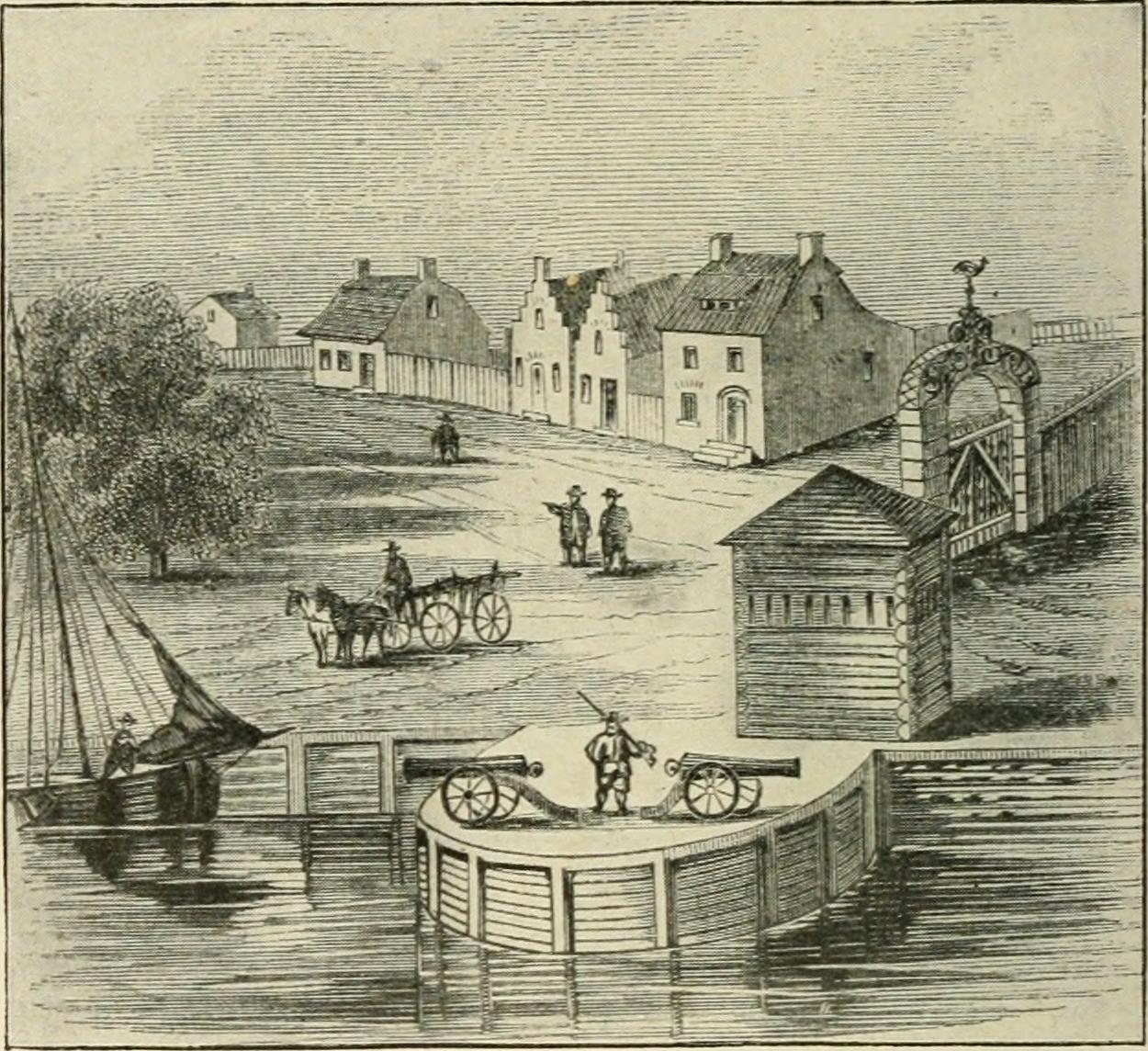
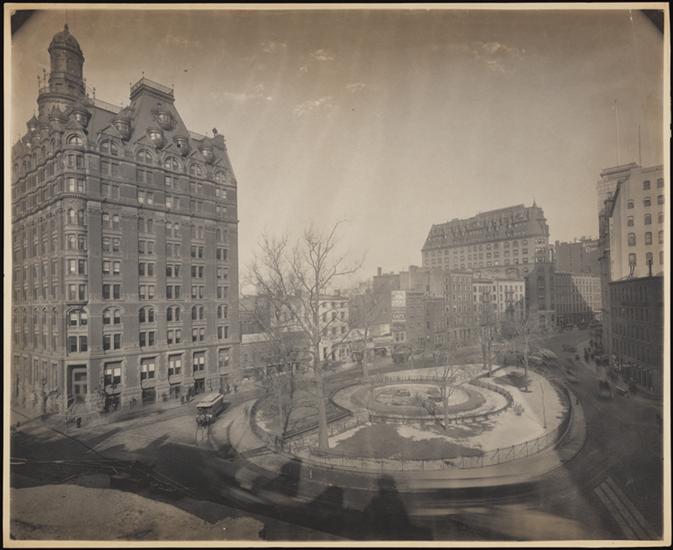
"The Plaine" -- where the trees are to the left -- is where Bowling Green would eventually be constructed. This depicts the early Dutch years. (Courtesy the Internet Book Archive)
“The Plaine” — where the trees are to the left — is where Bowling Green would eventually be constructed. This depicts the early Dutch years. (Courtesy the Internet Book Archive)

1) The land comprising Bowling Green was situated next to Fort Amsterdam. During the days of New Amsterdam, this was the site of the first public well, dug in 1658 and would remain the only well within the city until 1677, long after the Dutch were replaced by the British.

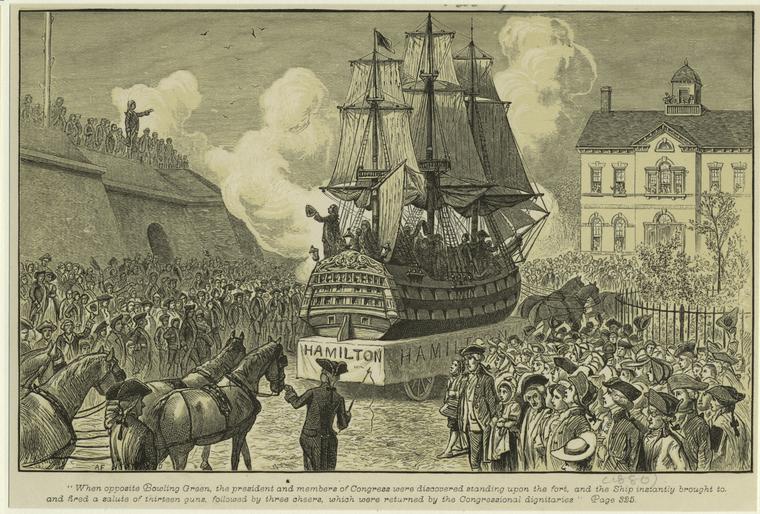
Ship On A Parade Float Drawn By Horses Past Bowling Green, New York, 18th Century. (Courtesy New York Public Library)

2) Since it was next to the fort, it’s not surprising to discover that the area was a parade ground during the early 18th century.  In 1733, it was leased to three local landlords — Peter Jay, John Chambers, and Peter Bayard — to develop an English-style park. It quickly became the destination of lavish homes of the wealthy.

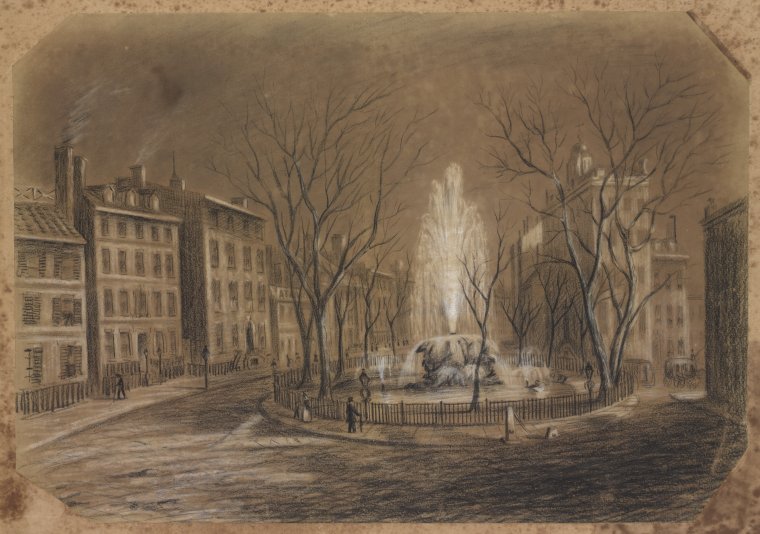
Charcoal drawing of Bowling Green, New York, 1845. (New York Public Library)

3) Yes there was actually bowling here. Or rather, the traditional form of lawn bowling, enjoyed by the residents that lived around the park. This required perpetual maintenance of the lawn. Before the invention of the lawnmower, this was usually accomplished by sheep. I’m not sure whether sheep were employed into service here at Bowling Green. But there were pigs in the street so you never know.

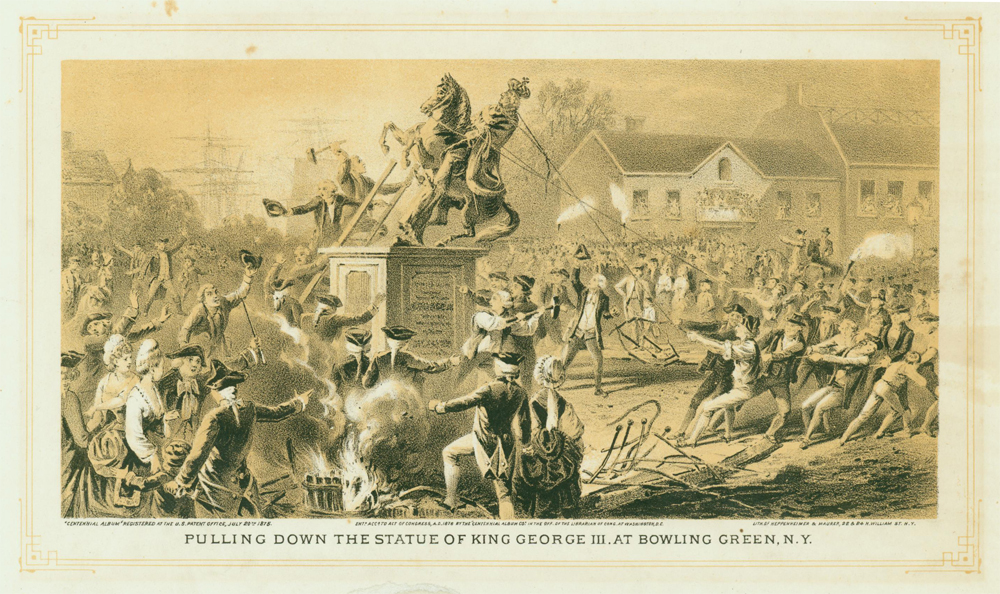
Pulling down the King George statue 1776

4) In 1770, loyalists to the crown erected an equestrian statue of King George III in the center of the park. Six years later, it was ingraciously torn down by New Yorkers after hearing George Washington read the newly crafted Declaration of Independence.  Parts of that statue still exist in the city.

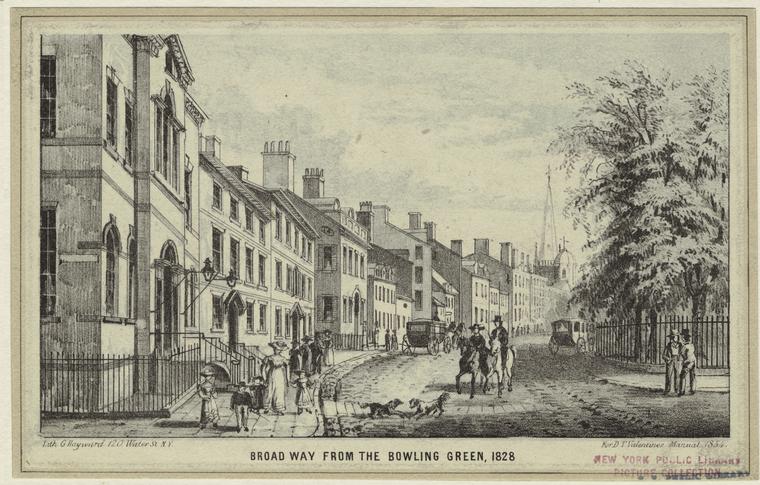
nypl.digitalcollections.510d47e1-0ec5-a3d9-e040-e00a18064a99.001.w

5) George Washington lived here. No really. He had two residences here during the time when New York was briefly the nation’s capital.  The first, over on Cherry Street, provided him and his wife Martha with breathtaking views of the East River, but they soon found it quite unsuitable.  So in 1790 they moved to a home at 39-41 Broadway, at the northern tip of Bowling Green, residing here until the capital was finally moved to Philadelphia.

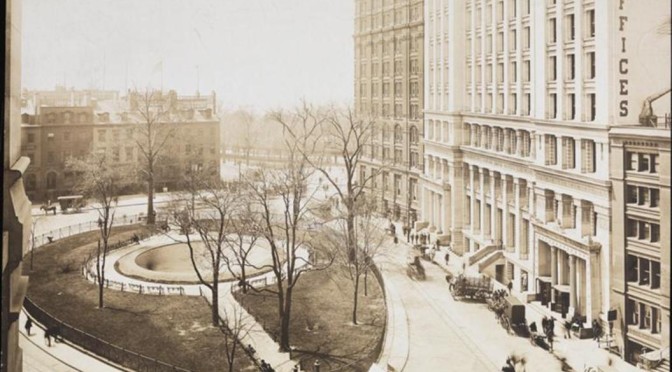
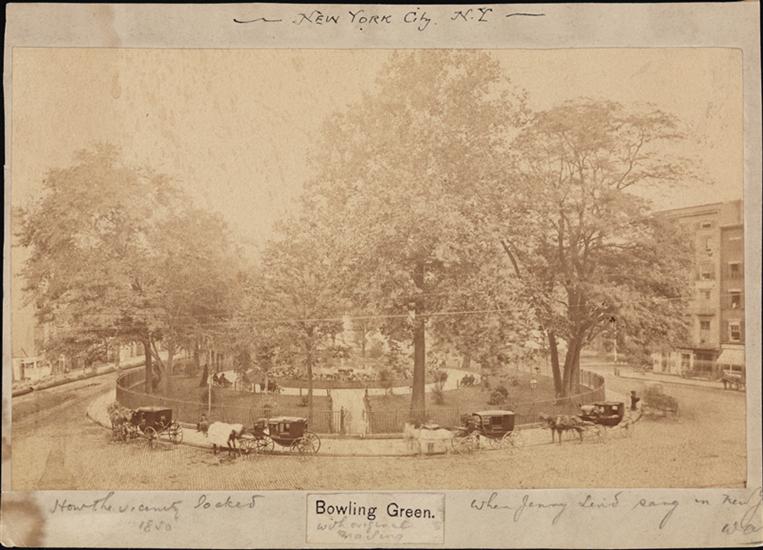
Bowling Green, how the vacinity looked in 1850 whnen Jenny Lind sang in New York.  (Courtesy Museum of the City of New  York)
Bowling Green, how the vacinity looked in 1850 whnen Jenny Lind sang in New York. (Courtesy Museum of the City of New York)

6) Bowling Green was still the destination for the New York’s oldest, snootiest families at the start of the 19th century.  In fact, it was given a rather inappropriate nickname — Nobs Row. As the town moved northward, the wealthy left their houses around Bowling Green.

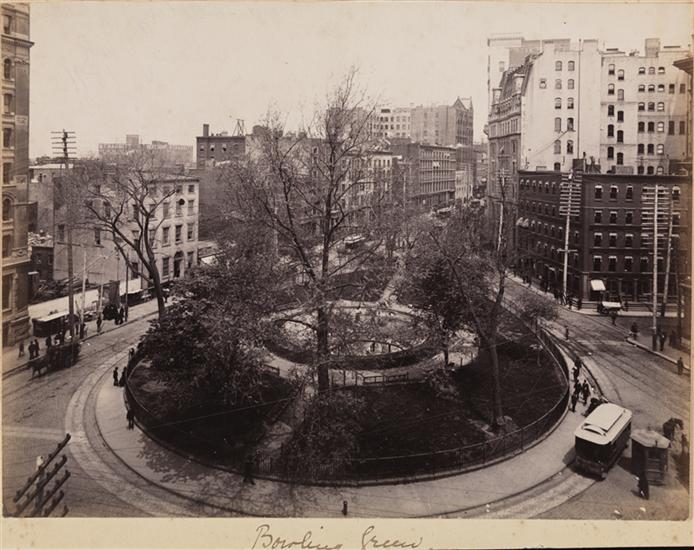
Bowling Green 1900 (Courtesy Museum of the City of New York)

7) In the 1820s, the first velodrome was situated near Bowling Green featuring a precursor to the bicycle called the draisine.  New Yorkers loved this curious device. “Near Bowling Green these vehicles were first exhibited.  Around City Hall Park and the Bowery, at all times of the days, riders might be seen.

Bowling Green 1915 (Courtesy Museum of the City of New York)

8) Bowling Green soon became known as a transportation terminus for coaches and omnibuses which strode up and down Broadway. In the 1820s, when the entertainment venue Castle Garden opened, the streets around Bowling Green became clogged with busy street life. By the 1850s, Castle Garden became the principal immigration station, filling the once elite neighborhood with a bustling cross-section of classes. In the 1890s, New York’s short-lived cable-car line terminated here.

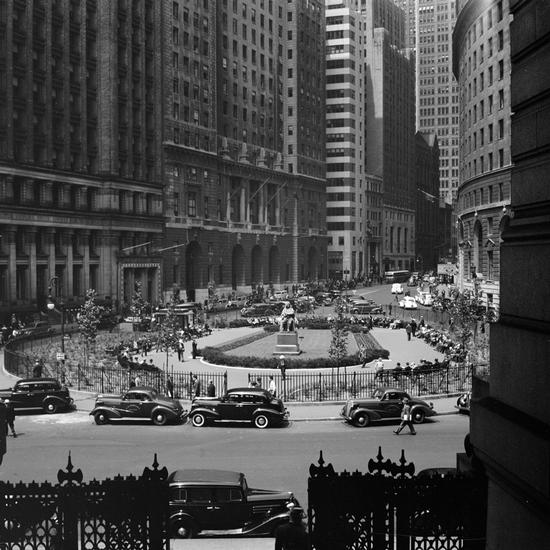
Bowling Green, 1939, Wurts Brothers photography (courtesy Museum of the City of New York)

9) The park was much abused and generally unimpressive during the 1950s and ’60s but was rebuilt during the 1970s to approximately resemble  how it once looked.  The fence which surrounds the park is the original which was first placed around the park in 1773. This makes it one of the oldest free-standing artifacts in all of Manhattan.

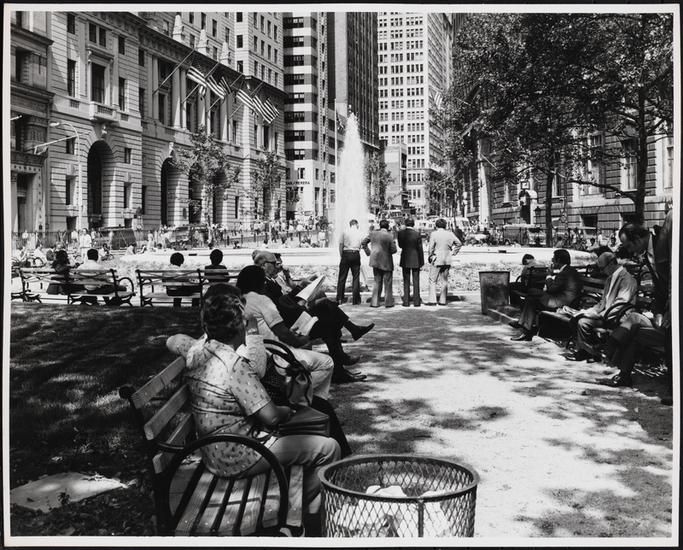
Bowling Green 1975, photo by Edmund V Gillon (Courtesy Museum of the City of New York)

10) During the late 1980s the park met its weirdest neighbor yet — the Charging Bull sculpture by Arturo Di Modica.  Arguably better known and more beloved by tourists, the bull was originally planted illegally in front of the New York Stock Exchange. By the time the city removed the statue, New Yorkers had come to love it. They eventually placed it next to Bowling Green in 1989.

Categories
Landmarks

The Plaza Hotel: From the Champagne Porch to the Black and White Ball

PODCAST REWIND  The Plaza Hotel has become one of the most recognizable landmarks in New York City, a romantic throwback to the last days of the Gilded Age. It epitomized the changes that were arriving on Fifth Avenue, steering away from the private mansions of the moneyed class and towards a certain kind of communal living that was increasingly being seen as acceptable and even preferable.

We take a look at the Plaza’s unusual history, from its days as an upper class “transient hotel” to a party place for celebrities.

Starring: John ‘Bet-a-Million’ Gates, Eloise, Truman Capote and of course the unflappable Mrs. Patrick Campbell.

NOTE: This show was originally recorded in November 2008. The Plaza is currently owned by Sahara India Pariwar.

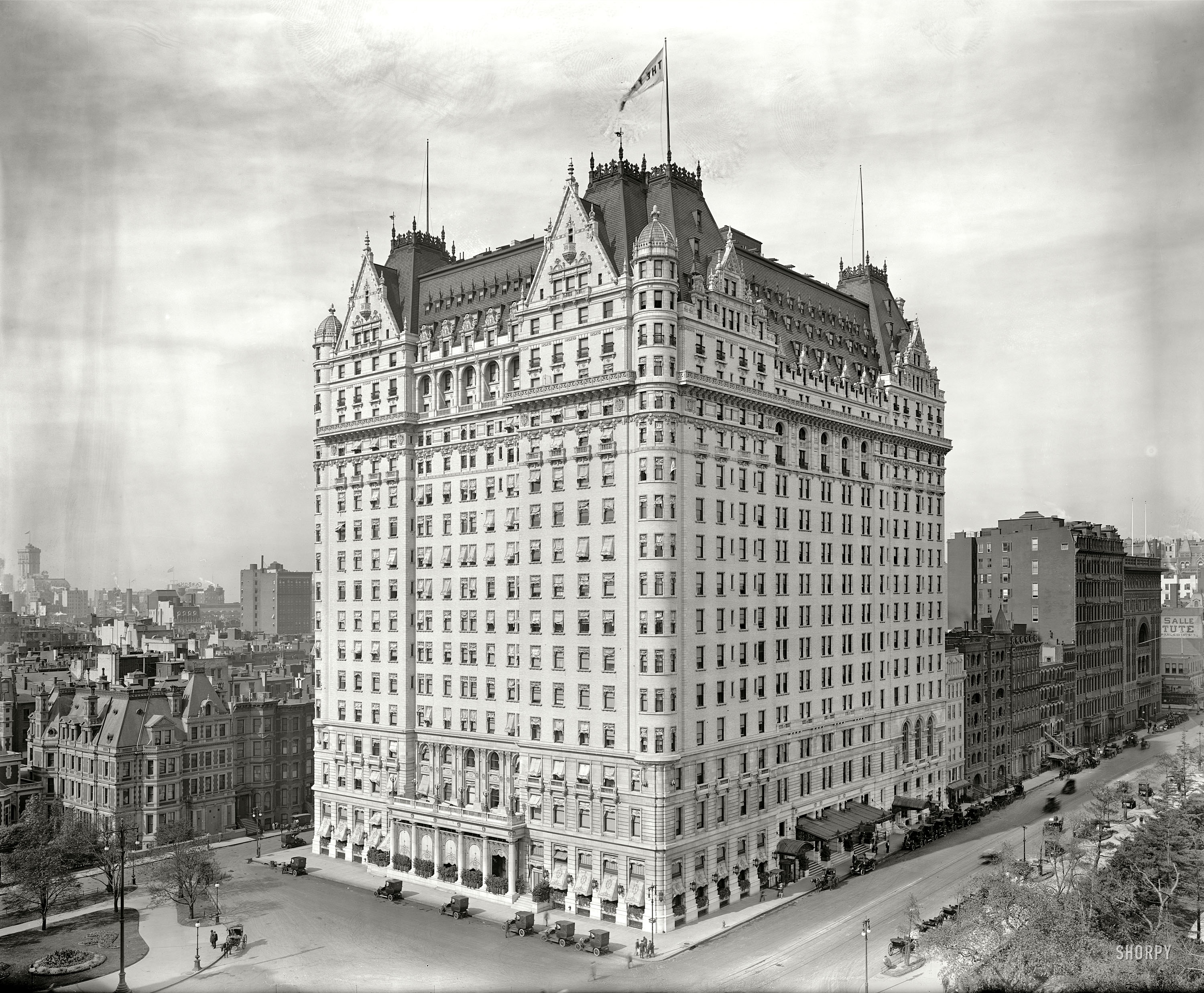
The Plaza Hotel in 1912. Its romantic exterior and sumptuous rooms eased New York's wealthiest class into the habit of hotel living. (Cleaned-up picture courtesy Shorpy)
The Plaza Hotel in 1912. Its romantic exterior and sumptuous rooms eased New York’s wealthiest class into the habit of hotel living. (Cleaned-up picture courtesy Shorpy)
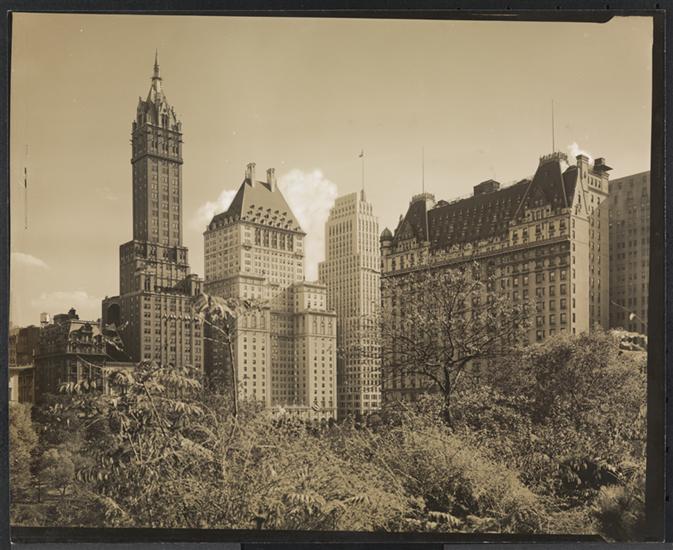
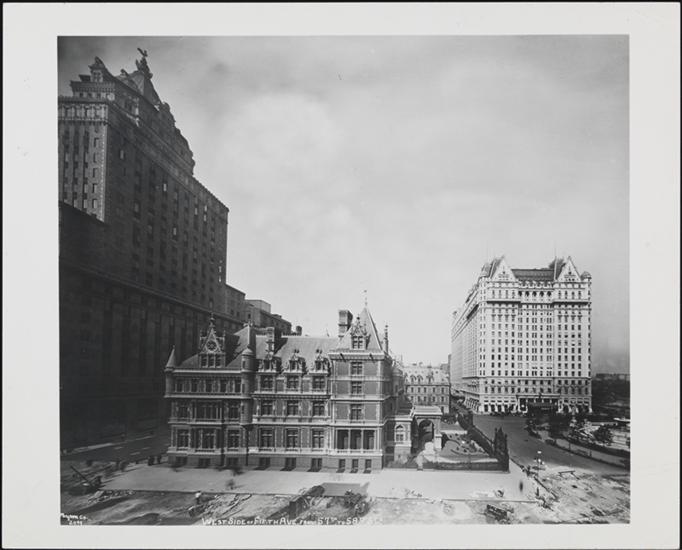
By the 1930s, the Fifth Avenue mansions below 59th Street were gone, and the Plaza was joined by other luxury hotels. (Picture courtesy Museum of the City of New York)
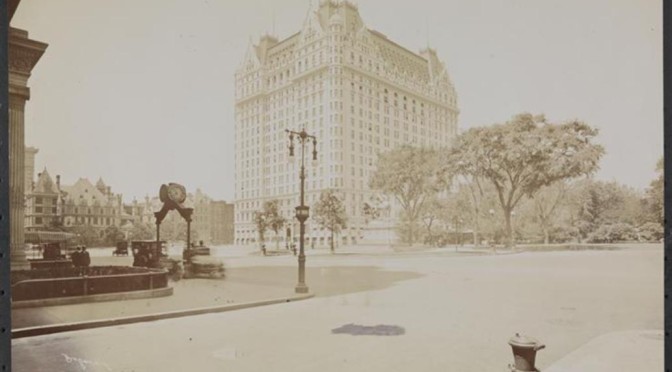
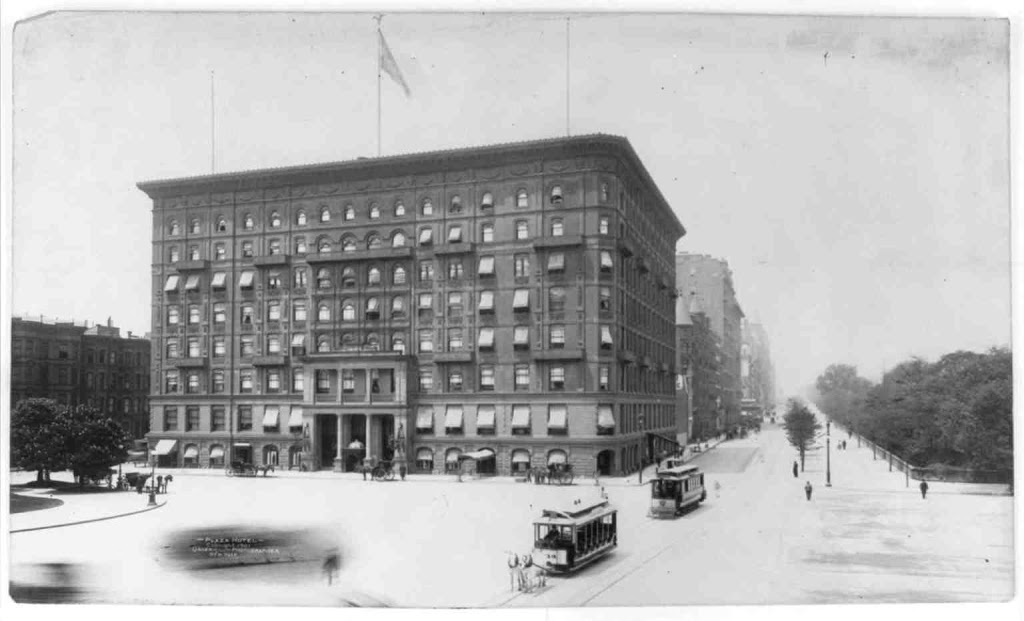
The first Plaza Hotel was deemed out of fashion and indeed looks quite plain in comparison to the building which would replace it.
We're so used to the Plaza being surrounded by department stores and office buildings. But in fact its first neighbors were mansions as illustrated in this photograph from 1923 (Courtesy the Museum of the City of New  York)
We’re so used to the Plaza being surrounded by department stores and office buildings. But in fact its first neighbors were mansions as illustrated in this photograph from 1923 (Courtesy the Museum of the City of New York)
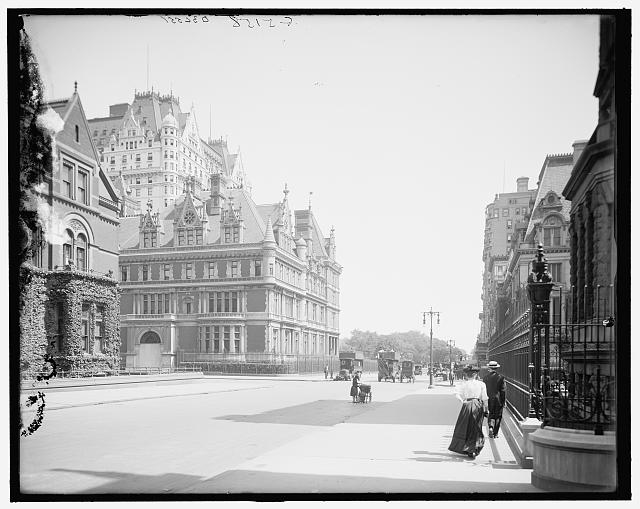
Looking up Fifth Avenue, taken sometime after 1907.  The Plaza peaks over the mansion of Cornelius Vanderbilt. (Courtesy Library of Congress)
Looking up Fifth Avenue, taken sometime after 1907. The Plaza peaks over the mansion of Cornelius Vanderbilt. (Courtesy Library of Congress)
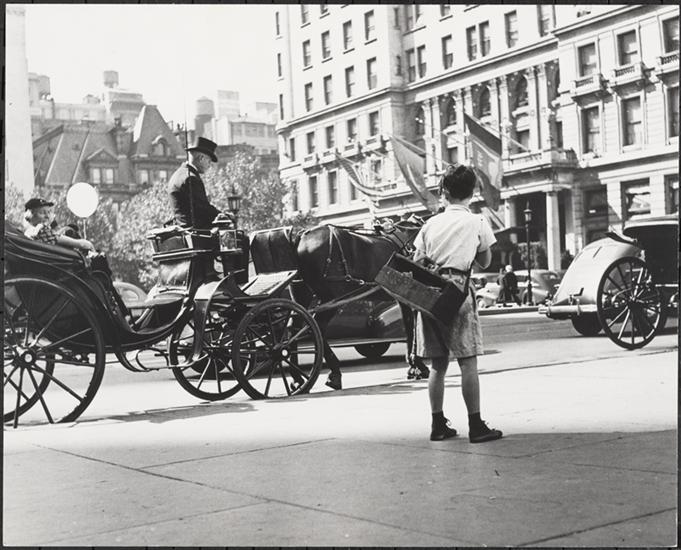
This picture was taken in 1940. Except for the shoe-shine boy and the automobile, it could have been taken yesterday. (Photograph by Roy Perry, courtesy the Museum of the City of New York)
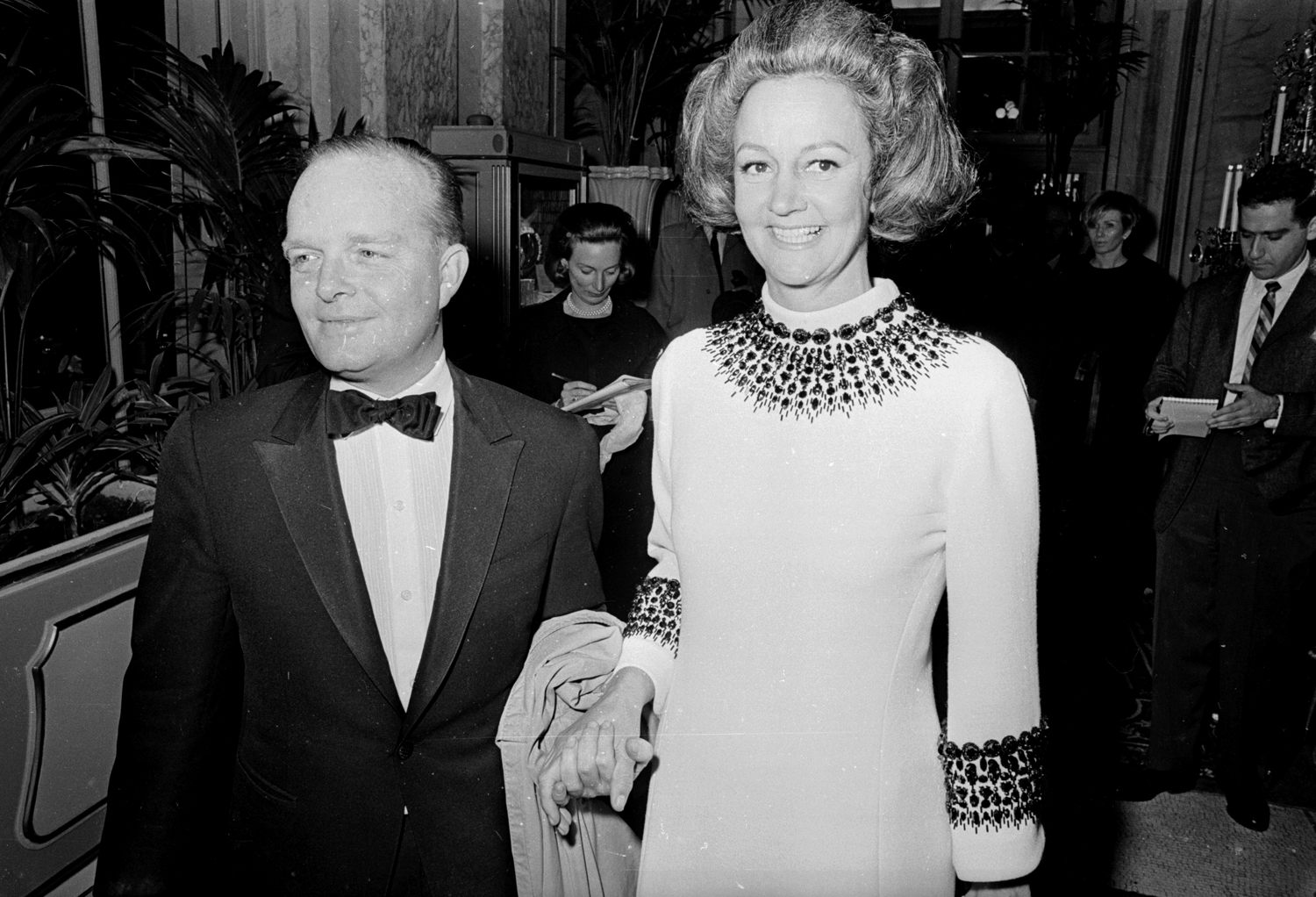
Truman Capote and Katherine Graham at the Black and White Ball, 1966
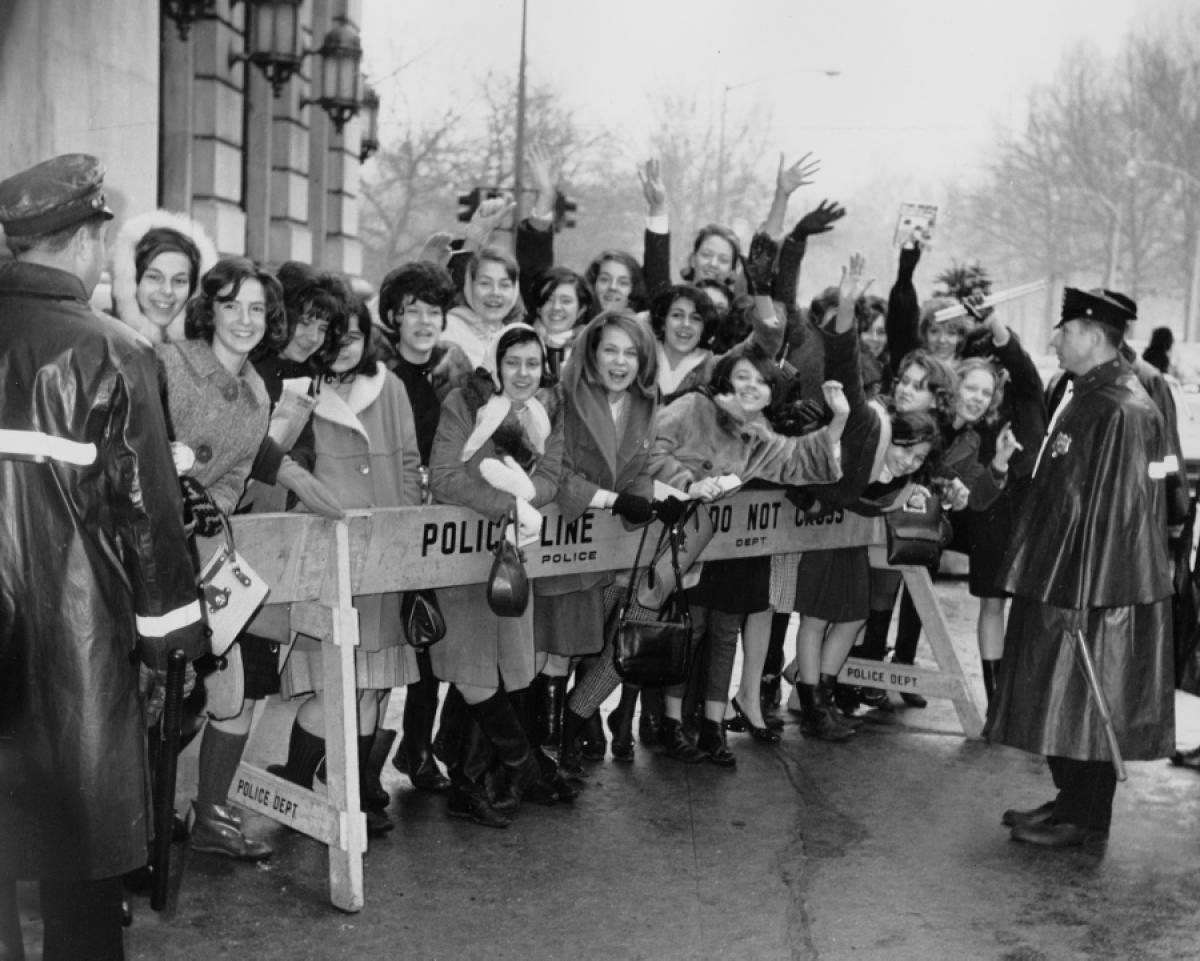
Fans await the Beatles outside the Plaza Hotel 1964 (Courtesy New York Daily News)
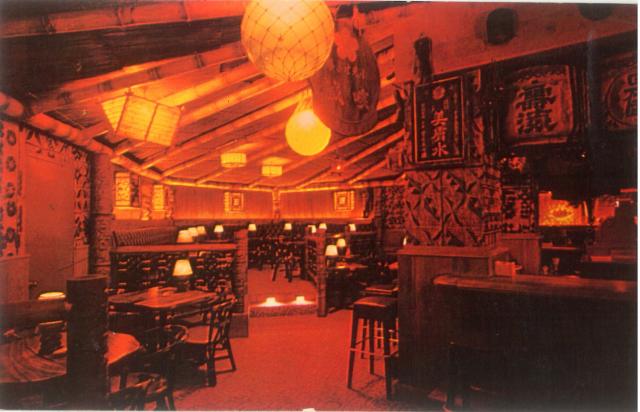
Trader Vic's in the basement of the Plaza (courtesy the blog TikiRoom)
Trader Vic’s in the basement of the Plaza (courtesy the blog TikiRoom)
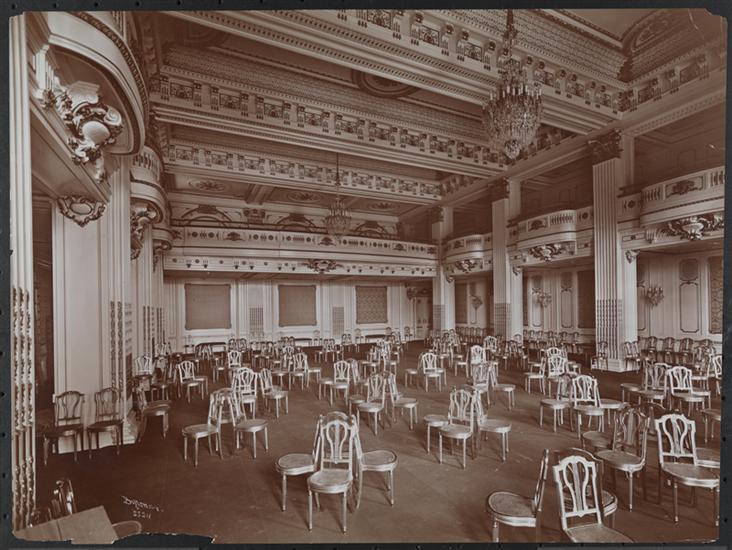
The ballroom of the Plaza, 1907 (Courtesy Museum of the City of New York)
Categories
True Crime

Terror on Sunday: The failed plot to blow up St. Patrick’s Cathedral

On the afternoon of October 13, 1914, a bomb exploded in the northwest corner of St. Patrick’s Cathedral, sending deadly iron shrapnel flying through the room.

A stained glass window was shattered and an 18-inch hole (shown in the picture below) was blown into the floor. While the pews were partially filled with worshipers, there was only a single injury, to a boy whose head was grazed by a piece of flying metal.

That was the second bomb of the day; another explosive, downtown at St. Alphonsus Church on West Broadway, detonated a little after noon.

Photograph shows damage after an anarchist bomb explosion at St. Patrick's Cathedral, New York City. (Source: Flickr Commons project, 2011 and Washington Herald, Oct. 15, 1914) Forms part of: George Grantham Bain Collection (Library of Congress).
Photograph shows damage after an anarchist bomb explosion at St. Patrick’s Cathedral on October 13, 1914. (Source: Flickr Commons project, 2011 and Washington Herald, Oct. 15, 1914)  George Grantham Bain Collection (Library of Congress).

Such a disturbing attack in a public space would cause mayhem in the streets today. Yet this sort of terrorism was disturbingly frequent one hundred years ago, a tactic used by anarchist groups to sow discontent.

Many of the attacks were primarily aimed at New York’s financiers. For instance, on July 4, 1914, a brownstone exploded on the Upper East Side in the Yorkville neighborhood, killing members of the Anarchist Black Cross. The explosives had accidentally gone off and were intended for the home of John D. Rockefeller.

The interior of St. Patrick's Cathedral, circa 1907 (Clean-up photograph courtesy Shorpy.com)
The interior of St. Patrick’s Cathedral, circa 1907 (Clean-up photograph courtesy Shorpy.com)

No arrests had been made in the St. Patrick’s attack. But detectives working with the New York Department of Combustibles were on the case, and, in March of 1915, they managed to thwart a second attack on St. Patrick’s with the help of a young detective named Emilio Polignani.

Polignani was only 25 years old. He had been a patrolman for only a few months when he was chosen in the fall of 1914 for a special assignment — to infiltrate anarchist circles and identify the perpetrators of the attack on St. Patrick’s.

His qualifications, according to the New York Times, were “his nationality, his newness to the force and most especially because Captain Tunney had decided that he had the nerve and the resource to carry him through tight places.”

St Patrick's Cathedral 1923

St. Patrick’s Cathedral 1923

For four months, Polignani lived under cover (possibly not even allowed to speak to his wife) as Frank Baldo, attending anarchist meetings throughout the city, becoming familiar with several of the more radical members. It was in Yorkville that he became friends with an 18-year-old named Charles Carbone.

From the New York Times: “Carbone and Polignani became intimate and used to take long walks together, in which Carbone, according to the detective, inveighed against the rich and suggested bombs as a means of readjusting social inequalities.”

Polignani was even initiated into an anarchist group by swearing an oath administered “on the cross hilt of a dagger to bind him … to his comrades.”

Carbone confided to Polignani details of the botched July 4th bomb meant for Rockefeller. “I am an expert,” he said. “Nothing like that could happen to me.”

Frank Abarno, an Italian anarchist who was charged with planting a bomb in St. Patricks Cathedral, New York City, on March 2, 1915. (Source: Flickr Commons project, 2012) Forms part of: George Grantham Bain Collection (Library of Congress).
Frank Abarno, an Italian anarchist who was charged with planting a bomb in St. Patricks Cathedral, New York City, on March 2, 1915. (Source: Flickr Commons project, 2012)
Forms part of: George Grantham Bain Collection (Library of Congress).

On Christmas the detective met another anarchist named Frank Abarno who later professed the wish to bomb St. Patrick’s.

Over the next two months, the three men walked along the East River and plotted a new attack at St Patrick’s, seen as the ultimate representative of both religion and wealth.

What Abarno and Carbone did not know was that Polignani sent pages from their bomb manual down to police headquarters.

Plans were finally hatched in late February to again bomb the cathedral. The men gathered explosive materials at a tenement on Third Avenue then wandering around the church the Saturday before, looking for a more effective spot in which to place an explosive. Their movements were closely followed by other disguised detectives, clued in by Polignani of the anarchist’s plans.

The new attack on St. Patrick’s Cathedral was planned for March 2nd. Abarno and Polignani left the Third Avenue tenement that morning with bombs placed under coats and armed with cigars to be used to light the fuses. (Curiously enough Carbone failed to show up; he was later arrested.) They headed towards the cathedral which was filled with hundreds of worshipers in the middle of morning Mass.

Luckily, Polignani had alerted his department of the details of the bomb attack. Waiting for them at St. Patrick’s were dozens of disguised detectives, so many that a Broadway theatrical costumer was employed to fashion the various false appearances.

“Of the fifty [detectives] stationed in the Cathedral,” said The Evening World, “[s]ome were disguised as women worshipers, two as scrubwomen, others as ushers.”

When Abarno prepared to light the fuse on the bomb with his cigar, one of the scrubwomen “suddenly straightened up and seized [Abarno] by the arm.” Another detective calmly strolled over to the lit bomb and pinched out the fuse. The Mass went entirely uninterrupted. (Read the breathtaking details of the capture here.)

Photograph shows Frank Abarno and Carmine Carbone, who were accused and convicted of an anarchist plot to blow up St. Patrick's Cathedral in March 1915. (Source: Flickr Commons project, 2012) Forms part of: George Grantham Bain Collection (Library of Congress).
Photograph shows Frank Abarno and Carmine Carbone, who were accused and convicted of an anarchist plot to blow up St. Patrick’s Cathedral in March 1915. (Source: Flickr Commons project, 2012)  George Grantham Bain Collection (Library of Congress).

Polignani kept up the facade for most of the interrogation, and his would-be conspirators were none the wiser. He argued with Abarno in jail, eventually getting him to talk openly about his involvement (to the delight of detectives who were listening in).

Abarno and Carbone both eventually broke down and were promptly convicted. They were both sent to Sing Sing in April where they both served six year terms.

Newspapers the following day declared “the episode was the culmination of one of the most intricate pieces of detective work ever achieved by the New York police.”

However the bombings would continue. The most dramatic incident would take place on September 16, 1920, with a bomb detonating on Wall Street, killing 30 people.

Owen Eagan (1957-1920), a bomb expert in the New York City Fire Department's Bureau of Combustibles. He is holding a bomb recovered from an attempted anarchist bombing of St. Patrick's Cathedral, New York City on March 2, 1915. (Source: Flickr Commons project and New York Times, March 3, 1915) Forms part of: George Grantham Bain Collection (Library of Congress).
Owen Eagan (1957-1920), a bomb expert in the New York City Fire Department’s Bureau of Combustibles. He is holding a bomb recovered from an attempted anarchist bombing of St. Patrick’s Cathedral, New York City on March 2, 1915. (Source: Flickr Commons project and New York Times, March 3, 1915)
Forms part of: George Grantham Bain Collection (Library of Congress).
Categories
Landmarks

A celebration of New York City and the Leonard Nimoy Thalia

Last night the Guides Association of New York City (GANYC) presented their first-ever GANYC Apple Awards at the Leonard Nimoy Thalia Theater (part of Symphony Space), honoring accomplishments in preservation, history, museum exhibition and tourism. It was a rather lively evening, thanks to the night’s hilarious hosts Kevin James Doyle and Olivia Petzy whom you may know from the off-Broadway hit How 2 B A New Yorker.

The institutions and individuals honored at the ceremony last night include:

— Tour guide Justin Ferate (New York City Walking Tours)

—  the Friends of the High Line

– Christopher Gray and his Streetscapes column for the New York Times

William Helmreich and his book The New York Nobody Knows: 6,000 Miles In The City

— The Museum of the City of New York‘s exhibition Palaces For the People: Guastavino and the Art of Structural Tile

Kathleen O’Connor from the New-York Historical Society

Russ & Daughters, the Lower East Side appetizing shop celebrating its 100 years of business last year

– Kevin Walsh and Forgotten New York

And a lifetime achievement award was presented to artist James Turrell who transformed the Guggenheim Museum in 2013 into a surreal cathedral of light.

And look who else won an award!

1

Thank you GANYC for this incredible honor! We are truly grateful for the recognition. Actually we were just honored to be invited in the first place so this was especially humbling! It was quite fantastic seeing all these different kinds of people — journalists, curators, filmmakers, politicians, tour guides, entertainers — together in one room to celebrate New York’s rich culture and historical legacy.

The award was presented to us by Ethel Sheffer from the Municipal Art Society who prefaced it with a moving tribute to her husband  Isaiah Sheffer, the founder of Symphony Space, and the man who helped save the very theater we were sitting in — Leonard Nimoy!

The building which contains the theater today was built one hundred years ago as an indoor market, owned by the Astor family.  In 1931 the basement was converted into the Thalia Theater. (Thalia is the ancient Greek Muse of comedy and idyllic poetry.)  To quote GANYC award winner in his history of the Thalia:

“Generations of Thalia patrons have assumed that its oddly sloping floor – with a depression in the middle – was the result of poor planning or unusual site conditions. But the Thalia’s parabolic reverse floor – apparently the first of its kind in the country – was just what its designer, Ben Schlanger, intended.

In Mr. Schlanger’s view, most movie theaters were poor adaptations of theater designs. The Thalia incorporated not only Mr. Schlanger’s patented floor system – designed to give everyone in the audience the same view of the screen – but also lighting, seating and projection provisions intended specifically for movie presentations.”

The Thalia is best known for showing art house movies and classic film revivals for decades. One might even say it was archetypal of the Upper West Side experience, immortalized in the movie Annie Hall.

2

Martin Scorsese attributes part of his cinematic education to the Thalia:  “That’s where I learned about films. I saw my first Eisenstein there: Alexander Nevsky. I also saw the Yiddish film series there: The Dybbuk and Green Fields and the films of Edgar G. Ulmer. It was the late 50’s. I saw Citizen Kane there and it was amazing on the big screen — well, the little screen. The films were programmed so that there was no intermission: one would end and the other would begin. It was really hard core. It was better than film school. It really was.” [source]

It was actually renowned for being a bit of a dump. According to GANYC nominee Clyde Haberman: “The air in the theater seemed left over from F.D.R.’s third term. Your seat was no thrill, either. It was upright, uncomfortable and usually torn. Pillars stood between it and the screen.”

The theater finally closed in 1987.  Its final screening was a double bill: The Night of the Shooting Stars and Paisan. During the 1990s,  its classic Art Deco interiors were removed to some controversy.  But its ultimate savior would come in the form of a science-fiction icon.

Leonard Nimoy, forever beloved as Spock from Star Trek, does have a background in theater — in 1977, he even performed in Equus on Broadway — and his work would sometimes be performed at Symphony Space.

By 2001, he was living in the Upper West Side, mostly occupied with his work as an acclaimed photographer.  Nimoy donated $1.5 million to the complete renovation of the theater which finally reopened in April 2002. In honor of the donation, the theater was renamed in his honor.  And,  honestly, the Leonard Nimoy Thalia just sounds cool too.

Photo by Seth Kaye, courtesy Buzzfeed


Categories
American History

“Right Makes Might”: The Cooper Union Speech 1860

The announcement that Hon. ABRAHAM LINCOLN, of Illinois, would deliver an address in Cooper Institute, last evening, drew thither a large and enthusiastic assemblage. — New York Times, February 28, 1860

One hundred and fifty-five years ago today, a novice politician named Abraham Lincoln took to the stage at Cooper Institute (Cooper Union) and gave a riveting speech to the assembled members of the  Young Men’s Republican Union.   Lincoln not only put himself on the map in the upcoming presidential election, he laid down the moral basis for the Republican platform with extraordinary clarity, using historical examples to present a case for stopping the progress of slavery in new American territories.

Cooper Union 1875, courtesy Museum of the City of New York

You can read the entire speech here.  The final words are still among the most powerful in 19th century politics:

“Neither let us be slandered from our duty by false accusations against us, nor frightened from it by menaces of destruction to the Government nor of dungeons to ourselves.  Let us have faith that right makes might, and in that faith, let us, to the end, dare to do our duty as we understand it.”

Incidentally, it was also 155 years ago today that Lincoln visited the photographer Matthew Brady at his Broadway studio. Lincoln would later claim “Brady and the Cooper Institute made me President.”

1


For more information on Cooper Union, listen to my back-catalog podcast on the subject here (via SoundCloud) or download from our Bowery Boys Archives feed on iTunes.

Categories
Neighborhoods Podcasts

The big history of Little Italy

PODCAST Little Italy is the pocket-neighborhood reminder of the great wave of Italian immigration which came through New York City starting in the late 1870s.  This was the home of a densely packed, lively neighborhood of pushcarts, cheese shops, barber shops and organ grinders, populated by thousands of new immigrants in dilapidated old tenements.

The area has some of New York’s oldest still-operating shops, from Ferrara Bakery to Di Palo’s.  But there’s also a dark side to this neighborhood, memories of extortion plots by the Black Hand and a perpetual presence of organized crime.

The present-day Little Italy is completely charming but constantly shrinking. How long can the neighborhood survive in the face of a growing Chinatown and the threats of gentrification?

PLUS: Our love/hate relationship with Nolita — REVEALED!

To get this week’s episode, simply download it for FREE from iTunes or other podcasting services or get it straight from our satellite site.

You can also listen to the show on Stitcher streaming radio and Player FM from your mobile devices.

Or listen to it straight from here:
The Bowery Boys #177: Little Italy: La Grande Storia

An Italian boy on his way to school in New York, taken between 1910 and 1915.

A street musician and a cop on Mulberry Street, 1897. (Courtesy Museum of City of New York)
A street musician and a cop on Mulberry Street, 1897. Notice the banks in the background.  Mulberry Street was known as ‘the Italian Wall Street’ for all the banks which assisted in Italians saving and sending home their earnings.  (Courtesy Museum of City of New York)

Children dancing on Mulberry Street as a man plays a barrel organ. (No monkey in sight!) 1897 (Courtesy Museum of the City of New York)

Playing on the street in Mulberry Bend, 1897. This was the year Mulberry Bend Park opened (see below) so hopefully they got out of that filthy street! (Museum of City of New York)

Mulberry Bend Park in 1900, replacing a set of the worst tenements in this area of Five Points

Elizabeth and Broome Streets -- June 18, 1904
Elizabeth and Broome Streets — June 18, 1904

Street vendors on Mulberry Street, 1898 (Library of Congress)
Street vendors on Mulberry Street, 1898 (Museum of City of New York)

Elizabeth Street near Houston Street 1912 (Cleaned up image courtesy Shorpy)

Mott Street all fancied up for a religious festival in 1908. It's May 16, so perhaps Ascension Day? (Cleaned up picture courtesy Shorpy)
Mott Street all fancied up for a religious festival in 1908. It’s May 16, so perhaps Ascension Day? (Cleaned up picture courtesy Shorpy)


An Italian bank at Lafayette and Spring Streets, damaged in a Black Hand dynamite attack, 1915 Nov. 6 (Courtesy Library of Congress)

Another view of the damaged bank (Courtesy Library of Congress)

A sample extortion letter from the Black Hand. "“You dog, spy, informer. If you do not do what we say, we have a shot gun prepared for you. What a fine feast for the rats your fat carcass will make. Do what we say, it will be better for your skin.” (Courtesy the National Law Enforcement Museum)
A sample extortion letter from the Black Hand. ““You dog, spy, informer. If you do not do what we say, we have a shot gun prepared for you. What a fine feast for the rats your fat carcass will make. Do what we say, it will be better for your skin.” (Courtesy the National Law Enforcement Museum)


149 Mulberry Street, near Grand Street. 1932. Banco Stabile which is off-picture to the right is the home of the Italian American Museum today. (Courtesy Museum of the City of New York)

San Gennaro Festival, 1948, taken by Sid Grossman

Bella Napoli (taken from a great Facebook feed called 'Mulberry Street 1900s)
Bella Napoli (taken from a great Facebook feed called ‘Mulberry Street 1900s)

Umberto's Clam House, site of the infamous mob hit on gangster Joe Gallo in 1972 (Courtesy New York Daily News)
Umberto’s Clam House, site of the infamous mob hit on gangster Joe Gallo in 1972 (Courtesy New York Daily News)

Oddly enough, presidential candidate Ronald Reagan appeared at the San Gennaro Festival in 1980. (New York Daily News)

Categories
Neighborhoods

Can you tell me how to get to Slaughterhouse Street?

Mulberry Street is one of the most important streets in New York City history, a central artery of immigrant life for almost two hundred years.

Today its northern end is Bleecker Street, crossing Houston Street and heads all the way down to Bayard Street where it curves to the east (the so-called “Mulberry Bend”) where it finishes on Worth Street.

It is one of the many current streets that still retain a bit of their original nature in their names — like Spring Street, for instance. In this case, that notable bend was once lined with mulberry trees.

In 1764, near the Bend, a linen factory was built here on this once-lazy street and a market specifically for the sale of clothing materials. Sounds so lovely and clean, yes?

Well, Mulberry also happened to abut Collect Pond (or ‘Fresh Water Pond’) on its northeast shore, although the water here would not be considered ‘fresh’ for very much longer.

It would become a magnet for all sorts of filthy industries including tanneries and rope-makers — and especially slaughterhouses. So many slaughterhouses, in fact, that Mulberry’s first nickname was ‘Slaughterhouse Street‘.

An early 19th century butcher named Thomas De Voe lived in a cottage on Mulberry and Spring Streets. He described the street as “a very rough … road that passed along by several mulberry trees, which afterwards gave a name to the much-dreaded route.” He makes mention of 25 or 30 such houses staked on or around Mulberry.

In particular, Nicolas Bayard’s slaughterhouse was conveniently located here, near the pond (to dispose of waste) and near the Bull’s Head Tavern up on the Bowery (to buy cattle from farmers).

Who knows exactly when we lost the mulberry trees but such nature would not be seen again.

The pond was drained in the 1800s and the slaughterhouses soon escaped to the west side of Manhattan. The land that once adjoined Collect Pond was leveled for development. Unfortunately these initial properties, built upon swampy foundations, sank into the ground. Subsequent buildings — eventually the worst examples of tenements — were constructed here for poorer New Yorkers who could only afford these pathetic homes, their cellars perpetually flooded.

Jacob Riis, 1890. Courtesy of Museum of City of New York.

Within a decade, Mulberry would frame a neighborhood of grim notoriety, named for an intersection it would make with four other streets — Five Points.

The Bend would fester to become one of the most infamous areas of Five Points, over-crowded, filthy, “a continual depository of garbage,” according to the 1865 New York Tribune.   Jacob Riis hearkens back to the path’s gentler days in How The Other Half Lives:

“Where Mulberry Street crooks like an elbow within hail of the old depravity of the Five Points, is “the Bend,” foul core of New York’s slums. Long years ago the cows coming home from the pasture trod a path over this hill. Echoes of tinkling bells linger there still, but they do not call up memories of green meadows and summer fields; they proclaim the home-coming of the rag-picker’s cart. In the memory of man the old cow-path has never been other than a vast human pig-sty.”

Only when the most terrible of these structures were demolished and replaced with a park in the 1890s would trees finally return to Mulberry Bend.

Below: Mulberry Bend Park, later renamed Columbus Park

1