Categories
Those Were The Days

THIS is New York Fashion Week — as it might have been in 1915

New York Fashion Week, the city’s twice-yearly celebration of couture and runway, traces its roots to a 1943 press week event at the Plaza Hotel, organized by publicist Eleanor Lambert.

But there had been a variety of one-off ‘fashion weeks’ or American fashion events in the years between the wars.

In 1934, the Mayfair Mannequin Academy, a local modeling school, even petitioned Mayor Fiorello LaGuardia to declare an official New York Fashion Week as a way to encourage American designers who worked in an industry dominated by Paris.

But well before any of those events, New York’s most famous runway show took place on the street — the Sunday promenades along Fifth Avenue.

It was especially robust during Easter with wealthy women trying to outdo each other in latest styles from Europe. Newspapers covered Easter Sunday with the same fervor as a modern fashion show, noting colors, hem lines, and even the plumage flagrantly bursting from hats.

While there was no dedicated ‘fashion week’ one hundred years ago, there was heightened and excited attention to of-the-moment fashion trends. So here’s a little thought experiment — what would an actual Fashion Week in 1915 look like?

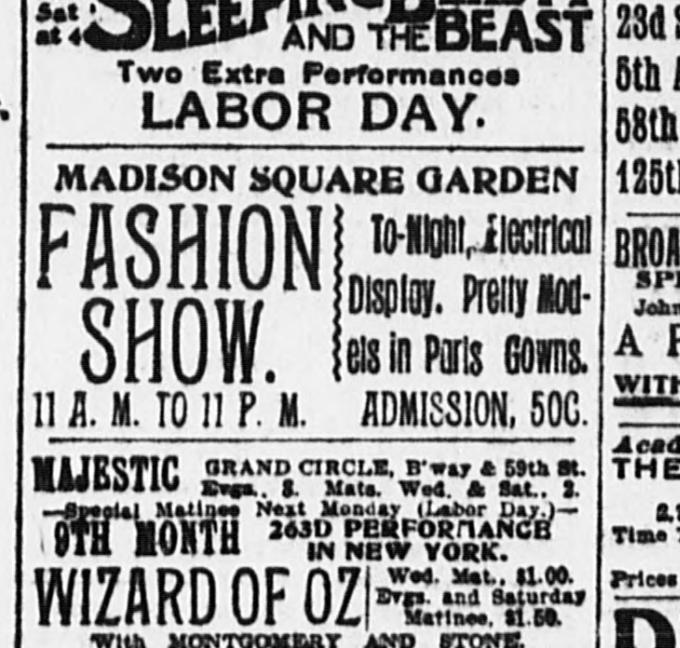
There would in fact be fashion-related events at Madison Square Garden (in its original location off of Madison Square) so let’s put this imaginary Fashion Week there:

from September 4, 1903, New York Evening World

An End to Bondage

Women’s fashion would be affected by the war in Europe in many ways.  Travel restrictions put an end to the constant flow of fashion queues from Paris. New ideas that were strictly American could begin influencing the way women dressed here.

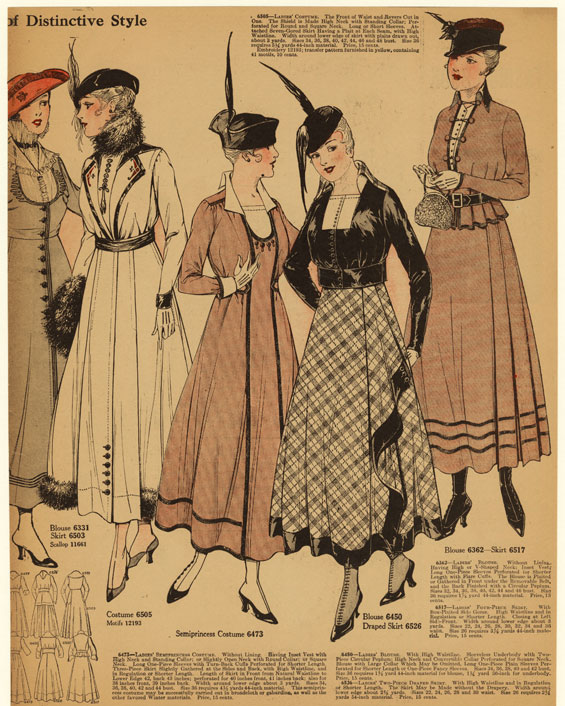
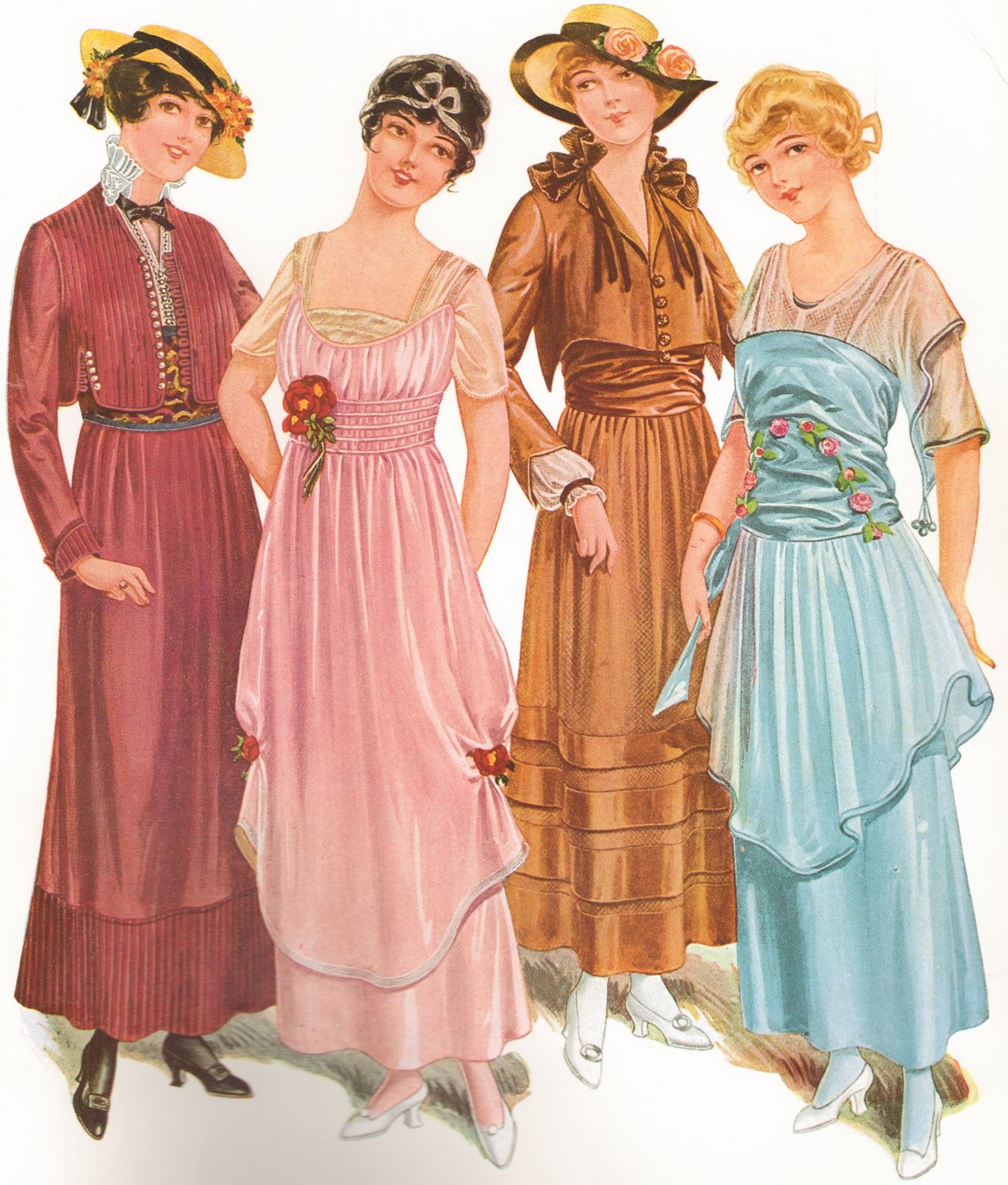
The growing independence of women also allowed for a looser, more comfortable style.  Gone from the streets were the dreaded hobble skirts, limiting the ability of women to take long strides. (Anything for fashion!) What audiences might have seen in 1915 were skirt styles that opened up at the bottom, allowing for freer movement.

Ladies' Costume (6505) ; Blouse (6362) ; Ladies' Four-Piece Skirt (6517) ; Blouse (6450) ; Ladies' Two-Piece Draped Skirt (6526) ; Ladies' Semiprincess Costume (6473) ; Motifs (12193) ; Blouse (6331) ; Skirt (6503) ; Scallop (11661). Courtesy New York Public Library
Ladies’ Costume (6505) ; Blouse (6362) ; Ladies’ Four-Piece Skirt (6517) ; Blouse (6450) ; Ladies’ Two-Piece Draped Skirt (6526) ; Ladies’ Semiprincess Costume (6473) ; Motifs (12193) ; Blouse (6331) ; Skirt (6503) ; Scallop (11661). Courtesy New York Public Library

These would come to be called ‘war crinoline’, essentially a precursor to a modern conservative skirt and described as bell-shaped, a “very full calf-length skirt” requiring extra fabric to attain its flowy, romantic look.

This would seem to be antithetical to wartime thinking — when lifestyles were often pared back — but these larger gowns were touted as practical fashion and thus ‘patriotic’ in their intent.  The role of women in wartime, many thought, was to simply look their best. At least, this was the line many fashion designers took during the era.

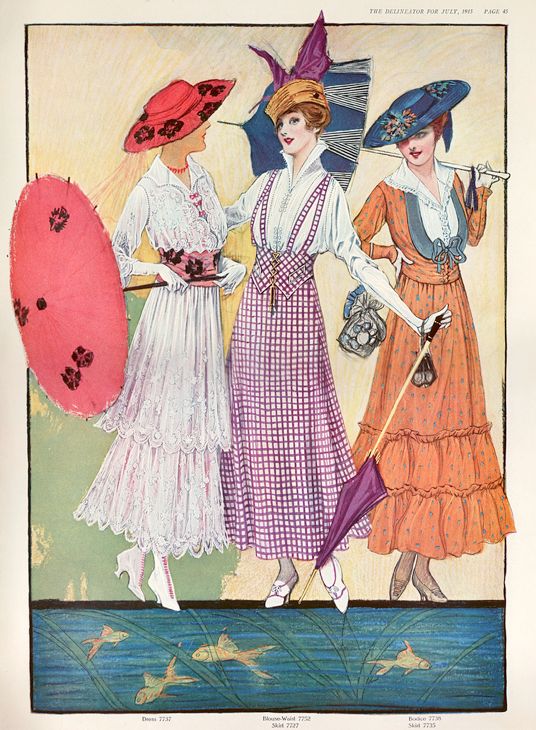
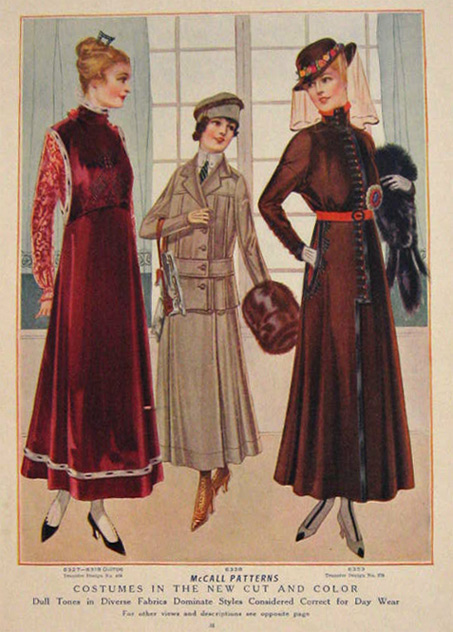
1915 Delineator Spring dresses
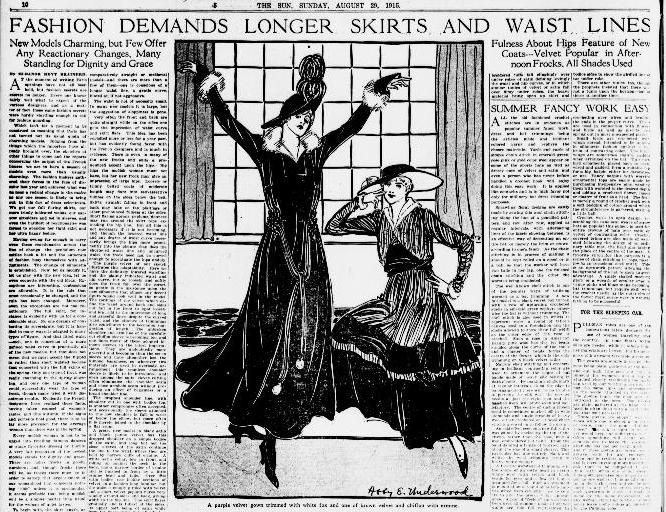
New York Sun, August 1915

Revolutionary Undergarments

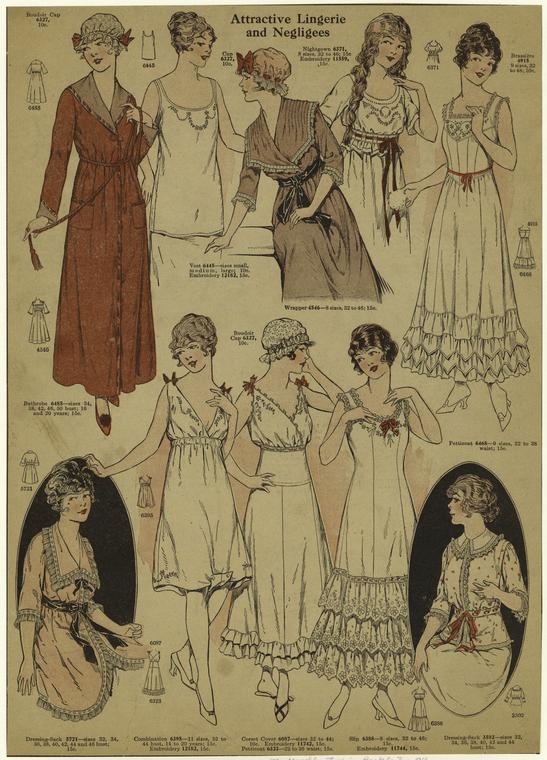
While some women would continue to subject themselves to the corset, the practicalities of life soon led to its unpopularity.  In 1914, Carisse Crosby, a well-connected society heiress from New Rochelle, received the patent for a revolutionary new form of support  — the modern bra.  Called the backless brassiere, the invention further facilitated a departure from stiff and uncomfortable silhouettes.

Crosby (really named Mary Phelps Jacobs) was a well connected society woman and would have been milling about the crowd at Madison Square Garden.  In 1915 she married the Boston Brahmin playboy Richard Peabody and eventually moved to Manhattan when she became pregnant with his child.

Lingerie And Negligees, 1915. Courtesy New York Public LIbrary
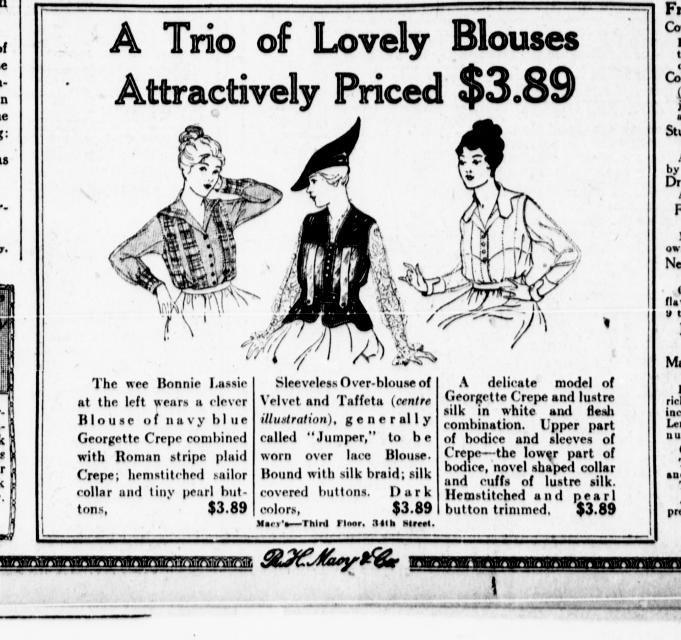
from the New York Evening World, October 21, 1915

The Gradual Straight Line

Perhaps the boldest fashion transition in the 1910s was the subtle shift from curvaceous, hour-glass forms to a straight, shapeless silhouette.  While the war crinoline still required a narrow waist for some of its dramatics, competing styles leaned towards sleekness.   This was an evolution from the Empire waist which had gained a resurgence earlier in the decade.

1

Rise of the Dangerous

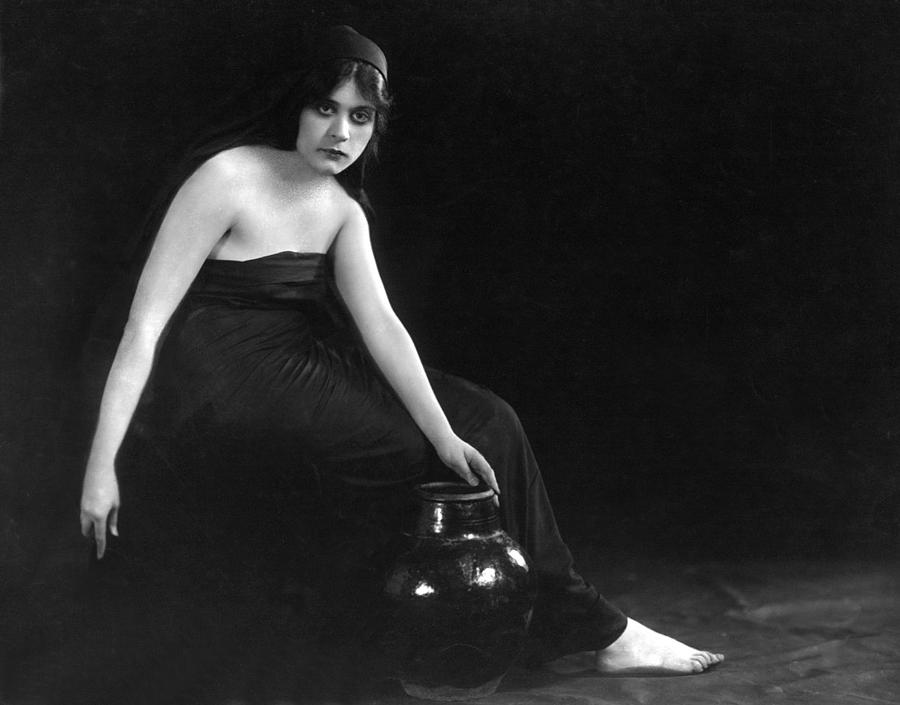
The predominant form of women’s fashion in the 1920s — the boyish flapper with sleek dresses and short hair — would rise from the edgier look of the ‘vamp’, best embodied in the late 1910s by film and stage actress Theda Bara.  This took the reformed instincts of woman’s fashion to its extreme. Sexuality became more overt and stylized, from bold makeup to exposed flesh.  This was certainly not the look of your average lady on the street, but soon slight shades of the vamp style would eventually seep into everyday fashion.

Theda Bara in the 1915 film Sin

The Popularity of Make-Up

It was unseemly of women to paint their faces with too many cosmetics during the late 19th century. But by the mid 1910s, women were influenced by actresses and dancers, and taboos against wearing cosmetics were relaxed.  The natural pale complexion so desired a decade earlier gave way to a kind of democratization that only makeup could provide.  Women were allowed to heighten the drama in their faces and mask the imperfections.

In 1915, two major forces in women’s beauty opened salons on Fifth Avenue — Elizabeth Arden and Helena Rubenstein. Both heavily influenced by the Parisian fashion aesthetic, elite New York women flocked to their shops.   Within a decade, these two entrepreneurs would be the anchors of a burgeoning and highly lucrative beauty industry.

from a 1915 Gimbels fashion magazine, courtesy  the blog Historically Romantic
from a 1915 Gimbels fashion magazine, courtesy the blog Historically Romantic
1

Hints of the ‘Little Black Dress’?

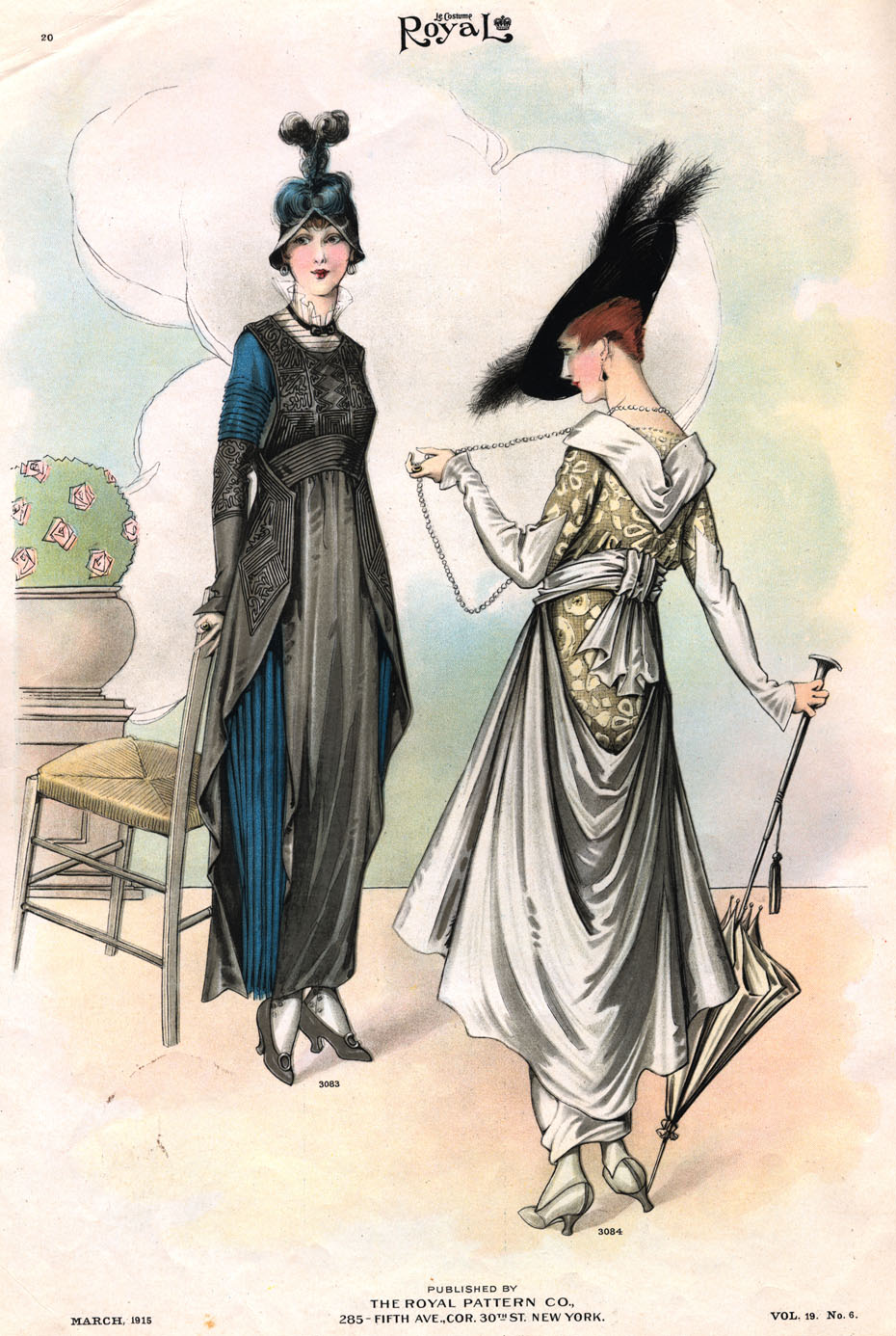
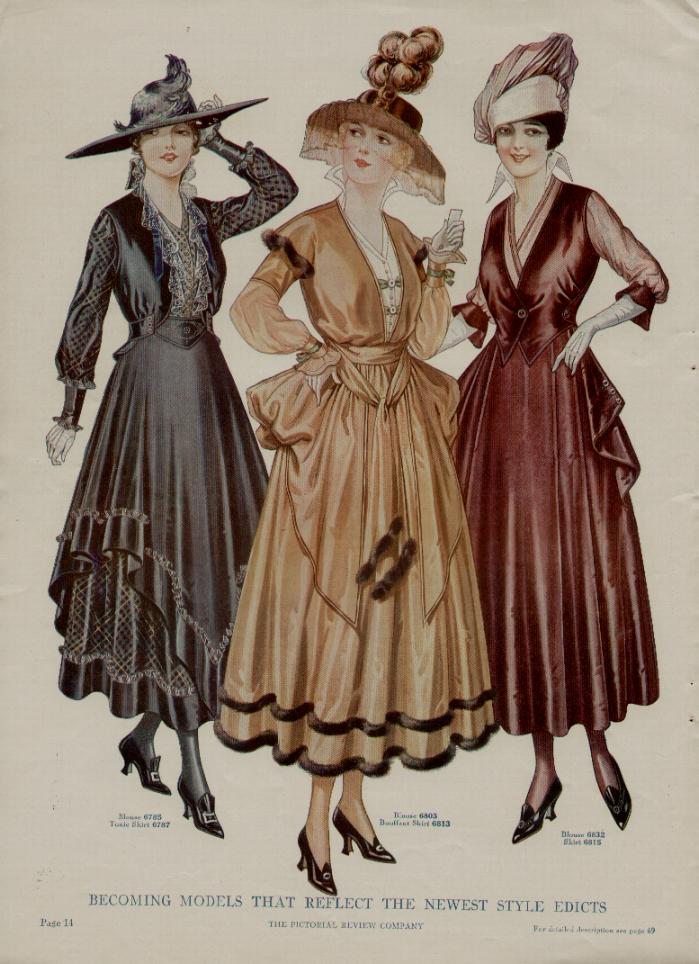
Black was not worn by women of gaiety and glamour.  It was strictly the hue of mourning during the Gilded Age and rarely made an appearance in actual evening wear.  However in an imagined fashion show in 1915, you may have seen a slight hint of it here or there, although not very practical and only as part of bold ‘vamp’ styling of its time.  It might have seemed edgy and even a bit bizarre, something only a worldly woman might have worn.

It would take another decade — and the influence of Coco Chanel — to bring the black dress into fashionable prominence. It would eventually becoming one of the defining looks of the New York woman.

from a 1915 Pictoral Review
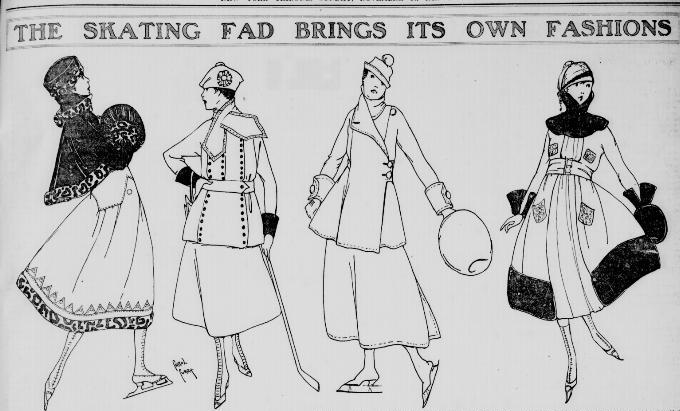
A brief skating fashion fad inspired this spread in the New York Tribune, November 14 1915

Driving Attire

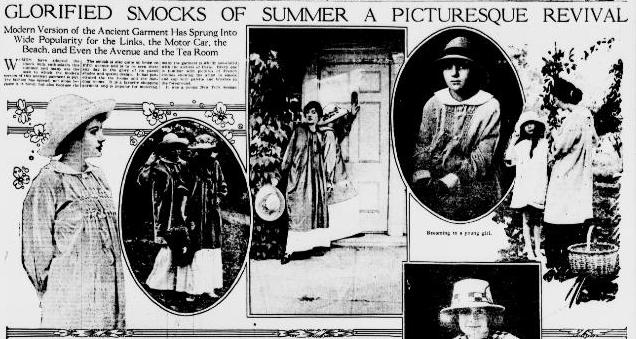
The continued popularity of the automobile required specific sorts of fashion to protect the clothes from dust.  These items found their way into regular wear.  This article from an August 1, 1915, issue of the New York Sun proclaims the return of the smock. “The smock is worn in the garden and on the golf links.”

1

Still A World of Hats

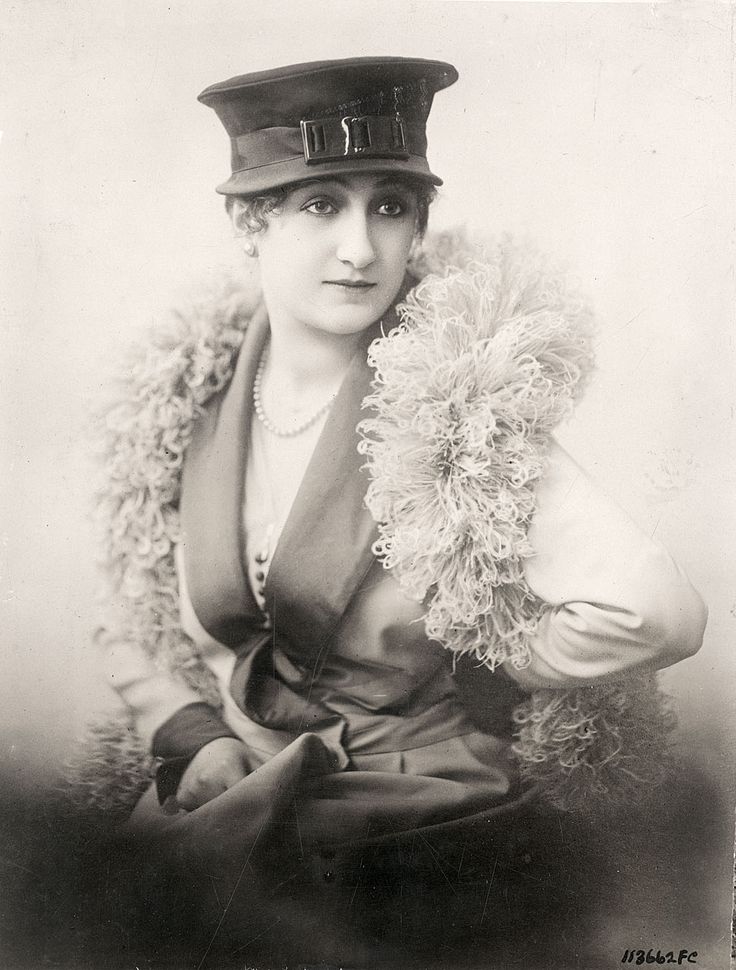
One taste that didn’t wander far was the love of hats. While flamboyant hats still topped many society ladies head, styles eventually became a little serious with nautical and even military influences.

1

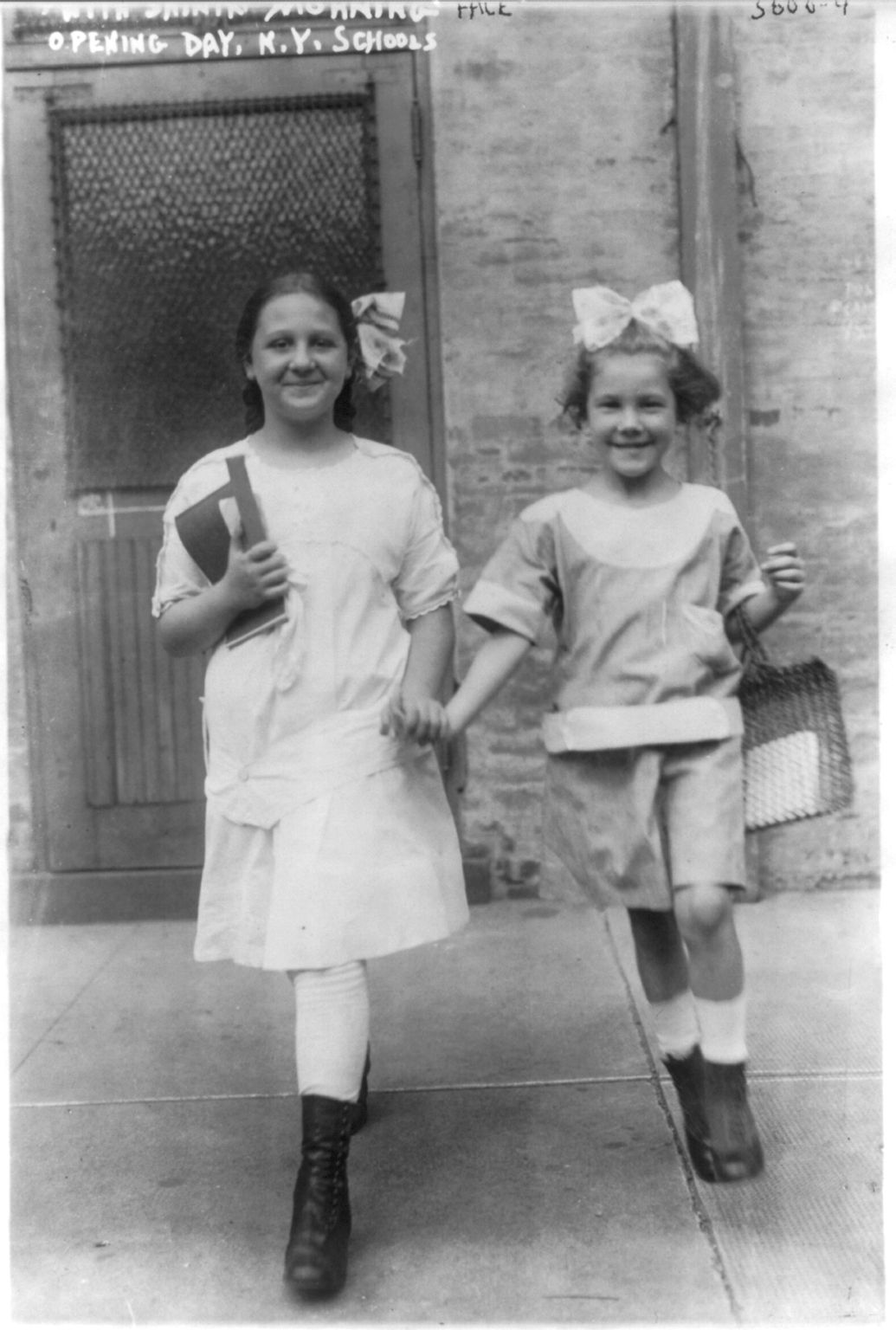
Even the school girls got into the act of fashion!  Here’s a pair from the first day of school in 1915….

1
Categories
Bowery Boys Bookshelf Health and Living

Hog Heaven: The wonderfully messy tale of ‘Taming Manhattan’

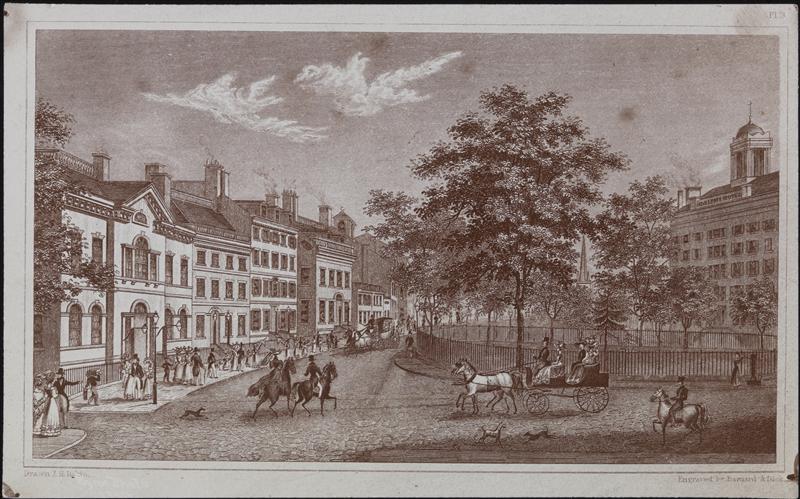
Here is New York — not the evened tree-lined avenues with fashionable ladies and shiny new carriages.  Not an ordered town of impressive architecture and manicured parks, emulating and even surpassing the trappings of European society.   Those things would arrive by the 1880s; before then, they were mostly aspirational designs.

Street Scenes, Broadway, Bowling Green, Trinity Church, 1830. -- An engraving by "Barnard & Dick" made in 1910. Courtesy the Museum of the City of New York
Street Scenes, Broadway, Bowling Green, Trinity Church, 1830. — An engraving by “Barnard & Dick” made in 1910. Courtesy the Museum of the City of New York

Here is New York as it actually was.  Dogs and pigs — hundreds of them — wading through muddy streets of detritus, neighborhoods reeking of human filth and boiling offal.  Blocks dominated by poorly constructed buildings, spilling waste into the streets.  Foul and unhealthy conditions for daily living, fostering sickness and disease. Watch out for that dead horse in the street.

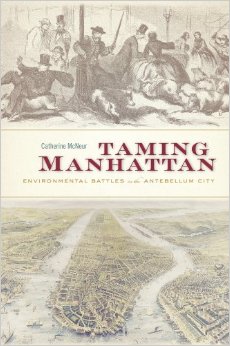
That, of course, may be as exaggerated as the first example, but you come out of reading Taming Manhattan: Environmental Battles In The Antebellum City (Harvard University Press), the terrific new urban history by Catherine McNeur, with that impression. You’ll certainly need a bath afterwards.

McNeur, a professor at Portland State University, isn’t immediately concerned with the taming of the natural land — that is, the transformation of the island into an urban area, although the great hallmarks of that achievement (the Commissioners Plan of 1811, the draining of Collect Pond) are mentioned here.

2Instead, Taming Manhattan focuses on the idea of turning ragged New Yorkers into modern urban dwellers.  

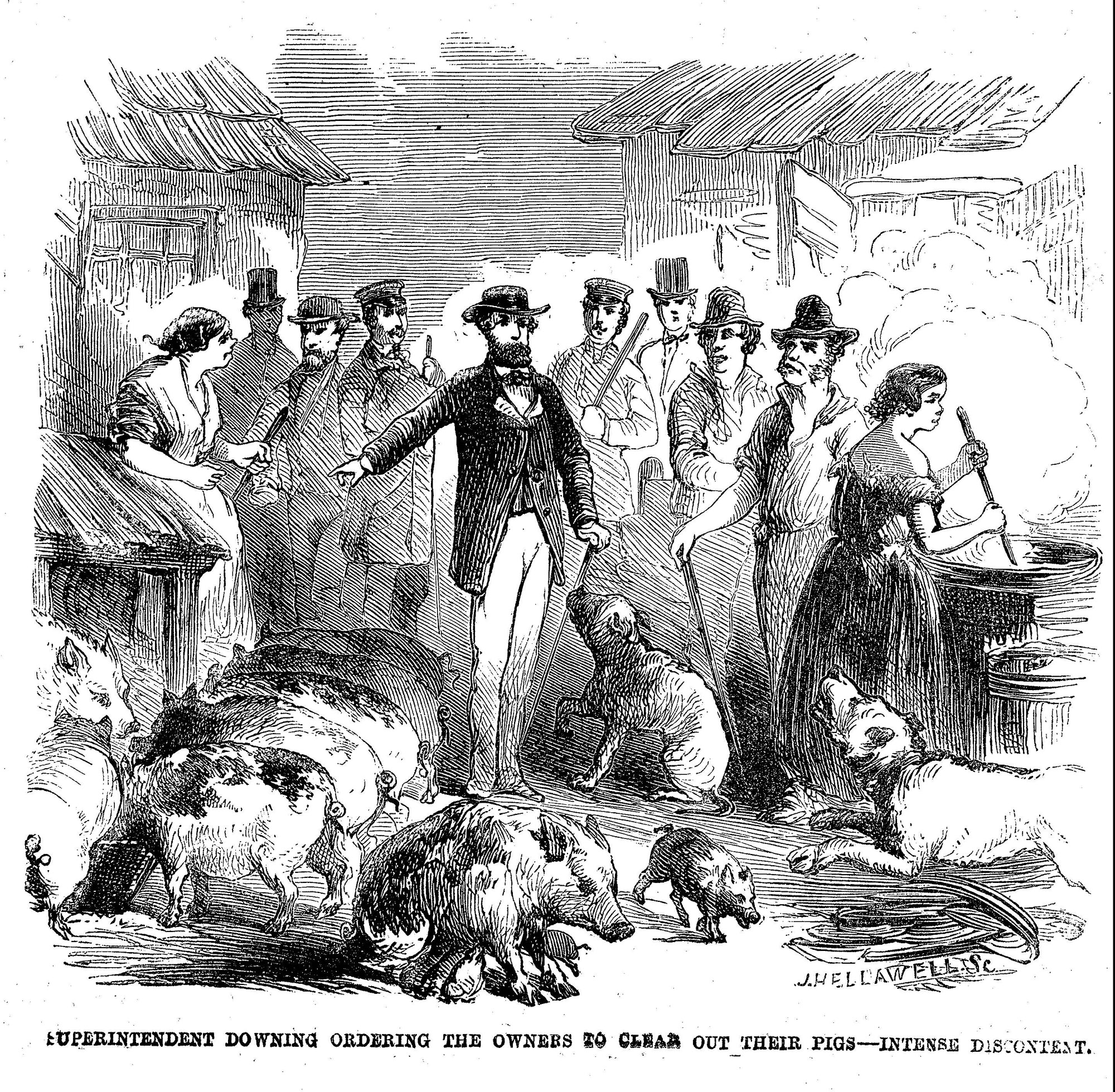
You could no longer, say, have your pigs run rampant through the streets. In McNeur’s survey of the 1820s-1850s, hogs become a significant problem.  They were an unsightly nuisance, attacking women and children and rummaging through garbage.

So too were wild dogs. Large packs of them roamed the streets, often violent and afflicted with rabies.  A 1811 dog law authorized the wholesale slaughter of any dog deemed in any manner dangerous.

One editor wrote, “[N]o dog out to be allowed to exist.  The life of one single person is worth more than the lives of all the dogs in the United States; and while there is one dog living, there is danger that one or more persons may suffer the most cruel of all deaths in the course of a year.”

Even dead animals posed a threat as city custodians, few as they were, refused to pick up carcasses. Offal and bone-boiling companies, often with corrupt ties to city government, sprang up to tackle the problem.  One notable company owned by William B. Reynolds turned Barren Island in Jamaica Bay into an offal oasis.

And it was a sick cycle of life here as well.  As McNeur notes,” [f]ollowing the model of Manhattan offal boilers, Reynolds brought somewhere between 2,000 and 3,000 hogs to the island to fatten them with the city’s offal.”

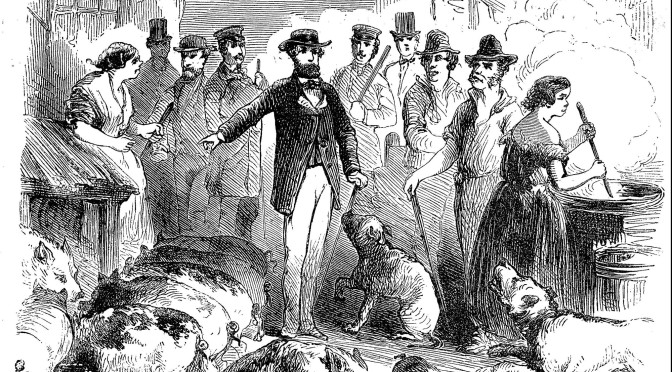
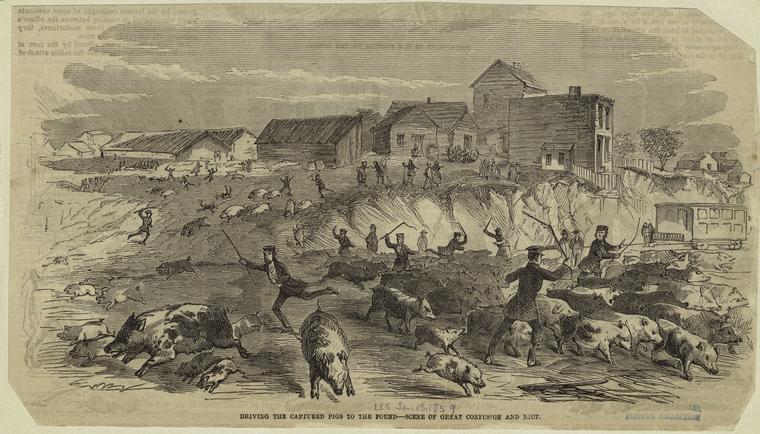
A stark scene from the so-called Piggery Wars of 1859 -- "Driving The Captured Pigs To The Pound : Scene Of Great Confusion And Riot." From Frank Leslie's Illustrated Newspaper, courtesy New York Public LIbrary
A stark scene from the so-called Piggery Wars of 1859 — “Driving The Captured Pigs To The Pound : Scene Of Great Confusion And Riot.” From Frank Leslie’s Illustrated Newspaper, courtesy New York Public LIbrary

There were even the so-called Piggery Wars of 1859, when police officers raided piggeries — pig farms where pork was produced for market — in an area called ‘Hogtown’ in the area of the 50s between Sixth and Seventh Avenues.  As you read McNeur’s vivid recounting of this purge — “they came armed with guns, clubs, pickaxes, crowbars, and a team of reporters” — remember that it is all taking place around the area of today’s Broadway district.

Waste products left by horses and other animals became highly valued as fertilizer for farmers. In fact, a couple intrepid companies attempted to sell off human waste (“night soil”) in the same manner, to lesser success.

Of course, there was a class and racial component to this sudden ‘taming’.  New York’s new wealthy classes, enriched by the opening of the Erie Canal, wanted clean promenades and handsome private parks in which to luxuriate.  And it wanted additional lands to expand, meaning the shantytowns were swept away with the rendering plants.

We benefit from New York’s eventual modernization, but there is an undercurrent in Taming Manhattan of a wholesale cleansing that is not entirely altruistic.

Watching the many changing motivations unspool in McNeur’s dense but exciting narrative makes for a surprisingly unpredictable tale. For instance, dogs and hogs may be among the principal offenders two hundred years ago. But take a look around. There are no hogs in the street anymore, no heaps of horse dung, but New Yorkers greatly value their four-legged canine friends far more than before.

But watch your step.

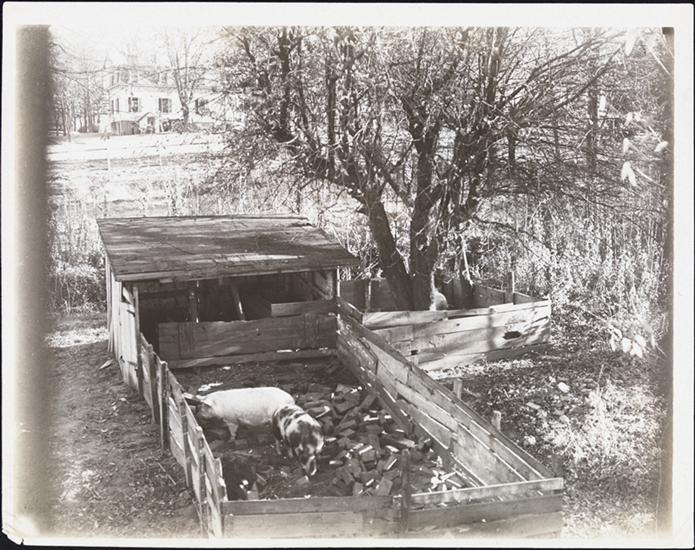
By 1910, pigs had all but vanished from Manhattan.  The caption of this picture reads "Only pig sty on Manhattan Island." Courtesy Museum of the City of New York
By 1910, pigs had all but vanished from Manhattan. The caption of this picture reads “Only pig sty on Manhattan Island.” Courtesy Museum of the City of New York


Categories
On The Waterfront

New York’s first ferry service

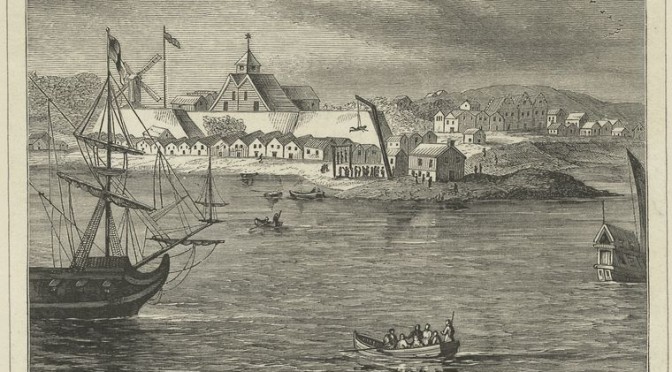
"As it appeared about the year 1640, while under the Dutch Government. Copied from an ancient Etching of the same size Publd. by Justus Danckers, at Amsterdam. Printed and Published by H. R. Robinson, 52 Courtlandt Street New York" Courtesy Museum of the City of New York
“As it appeared about the year 1640, while under the Dutch Government. Copied from an ancient Etching of the same size Publd. by Justus Danckers, at Amsterdam. Printed and Published by H. R. Robinson, 52 Courtlandt Street New York” Courtesy Museum of the City of New York

On Tuesday, Mayor Bill De Blasio announced a broad expansion of New York ferry services beginning in 2017, taking commuters to various destinations along the East River and New York Harbor.

And fares will cost as much as a bus or subway ride. Proposed services would head to the Astoria and Rockaway Beach, Queens; the Lower East Side in Manhattan; and Soundview in the Bronx. The New York Times also mentions possible future routes to Coney Island in Brooklyn and Staten Island’s Stapleton neighborhood.

If these plans come to fruition, it will be a grand return to a form of transportation that once dominated New York waters in the 18th and 19th centuries. Ferries connected the two great cities of New York and Brooklyn well before there was any bridge  or consolidation plan. The Vanderbilts made their early fortunes on ferry service.

Yesterday’s announcement got me thinking about where all of this began — along the sandy shores of Manhattan in the years of Dutch occupation. [NOTE: The story below is partially reprinted from a blog post I wrote in 2010.]

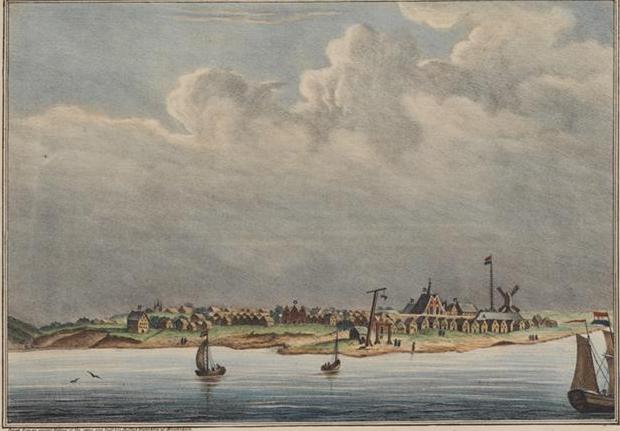
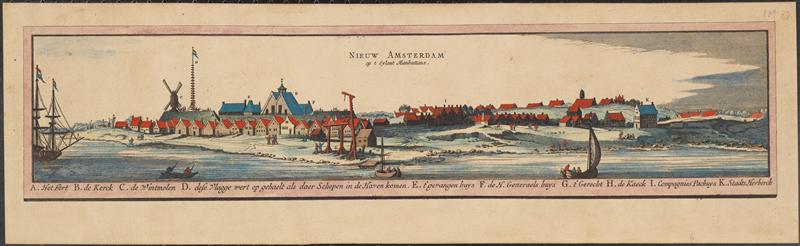
Reproduction of an earlier print of the city depicted in 1652. Courtesy Museum of the City of New York

The year 1642 saw the very first regular ferry service in (later named) New York Harbor, between the two small villages of Breuckelen and New Amsterdam.

The populations of both areas numbered less than 1,000 at most, combined, and most were employed by the Dutch West India Company. New Amsterdam, under Peter Kieft, had a modicum of defenses (notably Fort Amsterdam) but that famous wall demarcating its northern border would only come many years later, as would Peter Stuyvesant.

Across the water, Breuckelen was nothing more than a cluster of basic structures along the shore, near the area where the anchorage of the Brooklyn Bridge sits today. Its long stretch of flat shore in full view of the harbor and a high bluff (later Brooklyn Heights) made it a choice spot for adventurous Dutch settlers who made it their home in 1636. In contrast, other areas of Long Island were settled by other nationalities under Dutch authority, e.g. the English settlements of Gravesend (modern Gravesend and Coney Island).

Just north of New Amsterdam resided a man who would be the first to link the two tiny settlements. Cornelius Dircksen was a farmer and inn owner with prime real estate, even in 1640, along the eastern stretch of Mannahatta at Peck Slip, just north of the city.

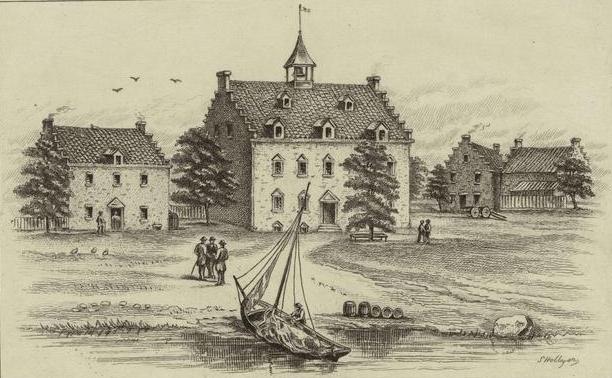
New Amsterdam 1642. The boat depicted would have been much like the vessel used to ferry passengers. Courtesy New York Public Library

In the early 1630s, Dircksen’s ferry was an irregular service, a way to earn extra income. Perhaps he considered it a special accomodation for guests of his inn. And who was staying at his inn, at this time? Mostly newcomers to New Amsterdam, or Dutch West India fur traders passing through.

As legend has it, if one of his guests or a passerby wanted conveyance across the river, they needed only to take a horn hanging from a tree and blow it. Cornelius would drop what he was doing to arrange the voyage, even if he was tending to his own fields. (I imagine the money must have been good.) His small boat would take passengers from the foot of his farm to a small landing on the other side — not surprising in the area that would later develop the Fulton Ferry in the 19th century.

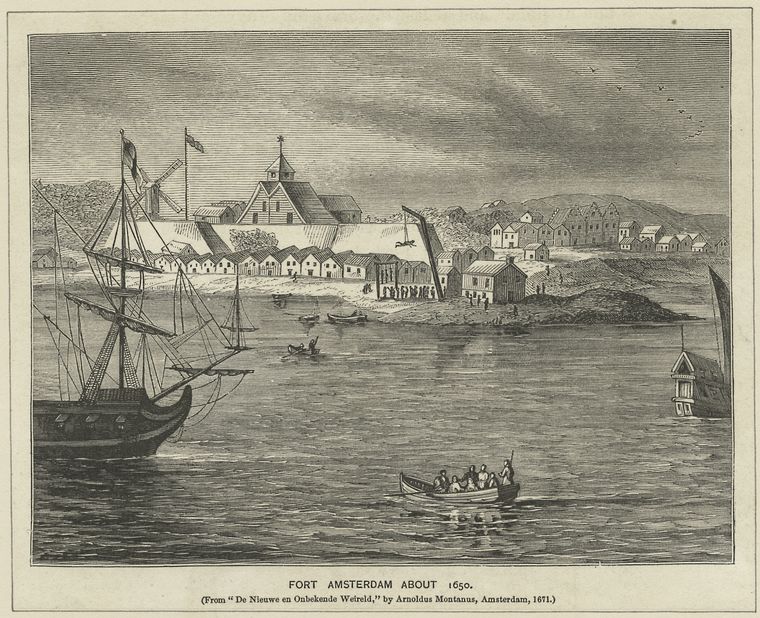
Even in 1650, small skiffs such as Dircksen's ferry would have had to dodge large vessels inhabiting the waters. (Courtesy New York Public Library)
Even in 1650, small skiffs such as Dircksen’s ferry would have had to dodge large vessels inhabiting the waters. (Courtesy New York Public Library)

In 1642, Cornelius decided to jump into the ferry occupation full time. Dircksen was, according to old histories, “the earliest ferryman of whom records speak and was, probably, the first person who regularly followed that calling.”

In a modest skiff, Cornelius (or his assistants) would take passengers across the harbor for shells: “the small price of three stuivers in wampum, meaning nine purple beads or eighteen white beads.” Wampum would be the colony’s most versatile form of currency, usable in both the Dutch settlements and with the Lenape themselves. The ride, often choppy and unpredictable, would sometimes take a full hour.

Cornelius owned the land on both sides but later sold the Breuckelen landing in 1643 to Willem Jansen — who then opened a competing tavern there himself.

Flash forward ten years later, and enough budding (and inept) entrepreneurs had gotten into the unregulated ferry business that people complained to the city of “waiting whole days before they can obtain passage and then not without danger and at an exorbitant price.”  So in 1654 the city began issuing licenses to ferry operators.

But it would not be until British occupation that regular ferry service was actually operated by the city itself.

Categories
Uncategorized

The Raven by Edgar Allan Poe, published 170 years ago today

“The Raven” was first published in the New York Evening Mirror on January 29, 1845, and would come to define the morbid brilliance of its author Edgar Allan Poe.

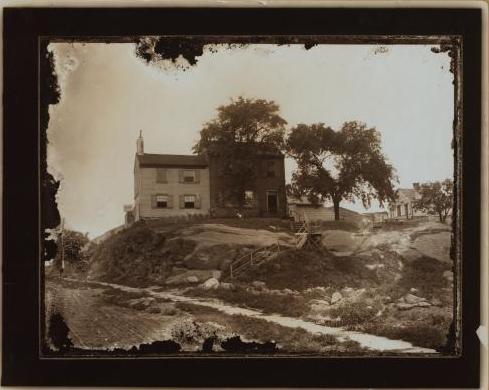
Poe and his sickly young wife Virginia arrived in New York in 1844, lodging at a dairy farm at today’s  West 84th Street, between Broadway and St. Nicolas Blvd. (While blocks would have been marked by the Commissioners Plan in the 1810s, there would have been little development here.)  It’s widely believed that Poe “composed, or at very least, perfected” the poem in New York.

Believed to the be the Brennan farm. Photo courtesy New York Public Library


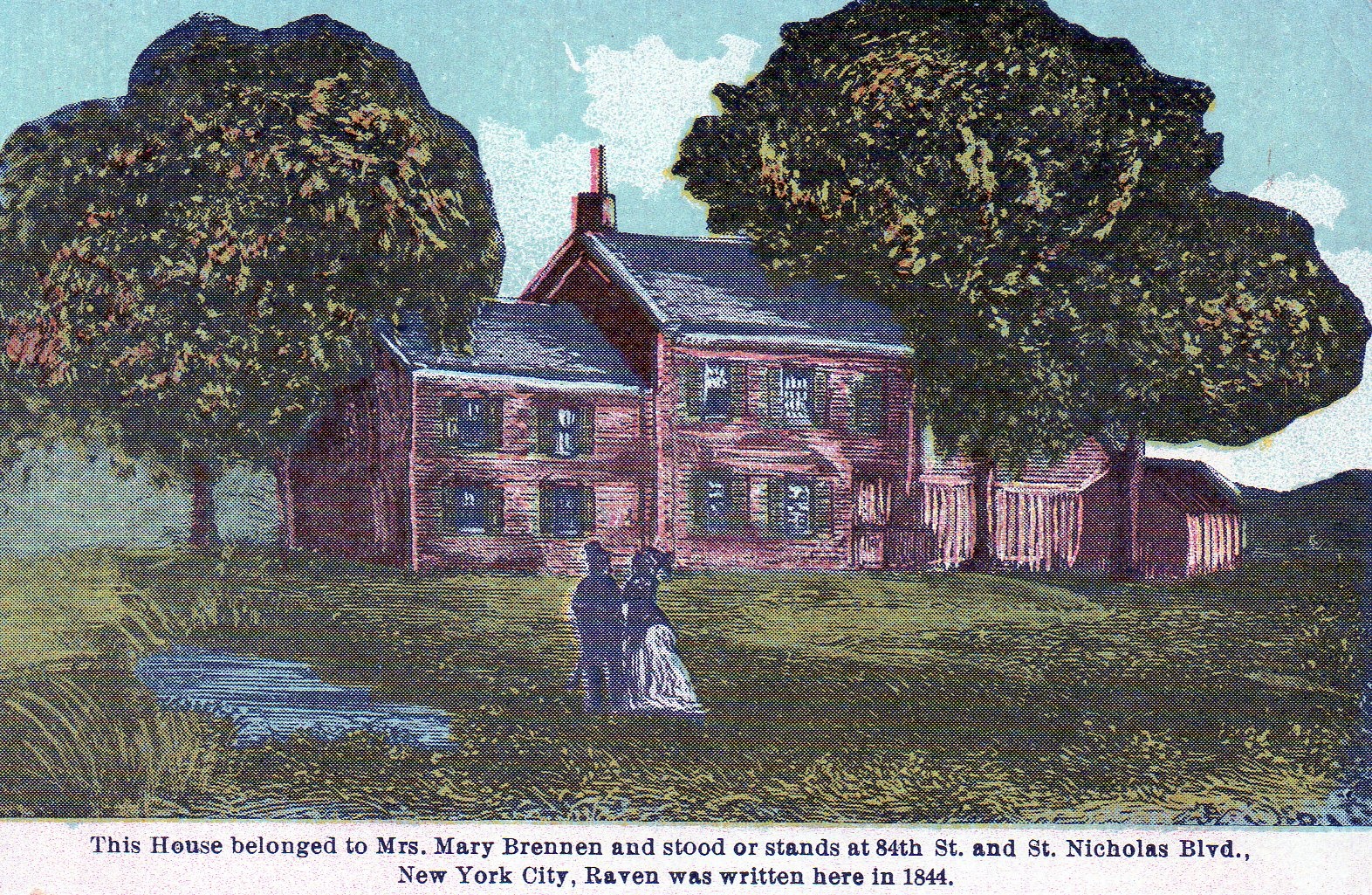
Here’s another angle of the house in a fanciful illustration highlighting the very bucolic nature of the area then.

Courtesy Ephemeral New York

The blog Manhattan Past has an excellent post on the supposed whereabouts of the Brennan farm. Although he lived here for a short time, the street today is ceremonially referred to as Edgar Allan Poe Street.  The street was officially given that distinction in 1980 and for many years presented misspelled street signs — “Edgar Allen Poe Street.”

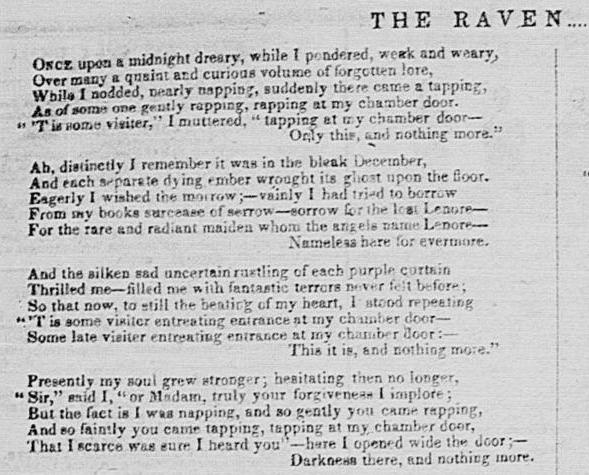
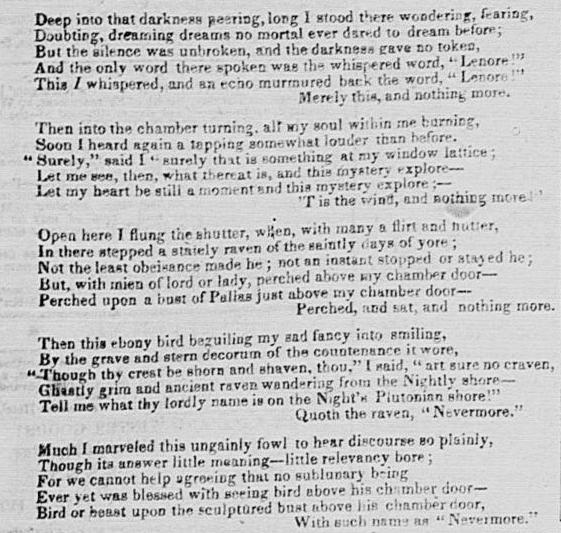
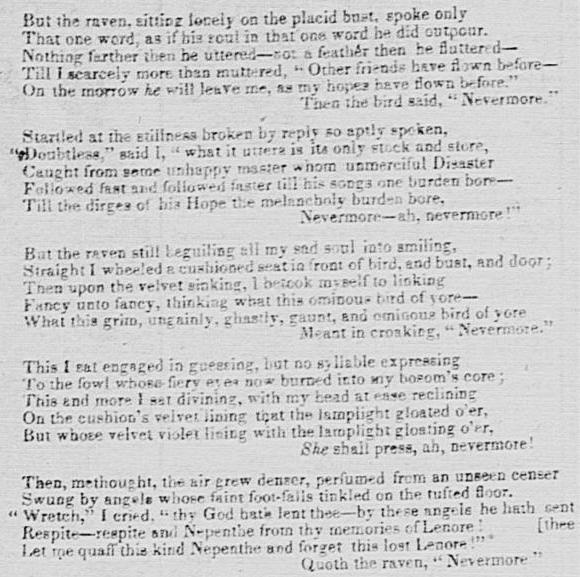
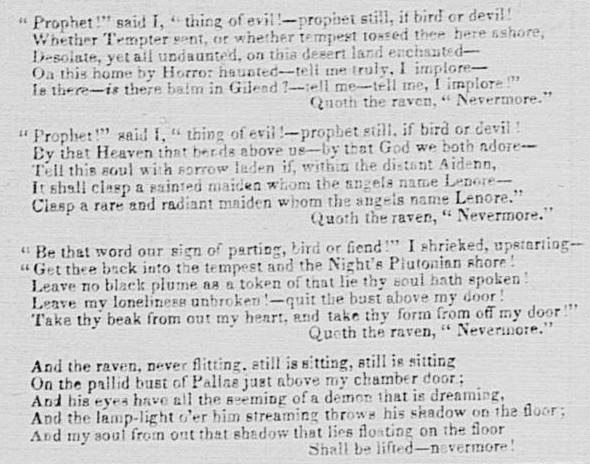
A few days later after the poem’s debut in the Evening Mirror, on February 4, the New York Daily Tribune also published “The Raven”.  Here’s how it first appeared in the Tribune:

1

1

1

1

It was then published in the Broadway Journal, a couple of weeks before Poe became editor of that publication.  The venture however was a financial failure.  In 1846, he and Virginia moved to a farm-house in the area of Fordham (in the Bronx) which is still preserved today.

Poe hoped living far from the bustle of New York would help his wife; but she died here in on January 30, 1847 — almost two years to the day after the publication of “The Raven.”

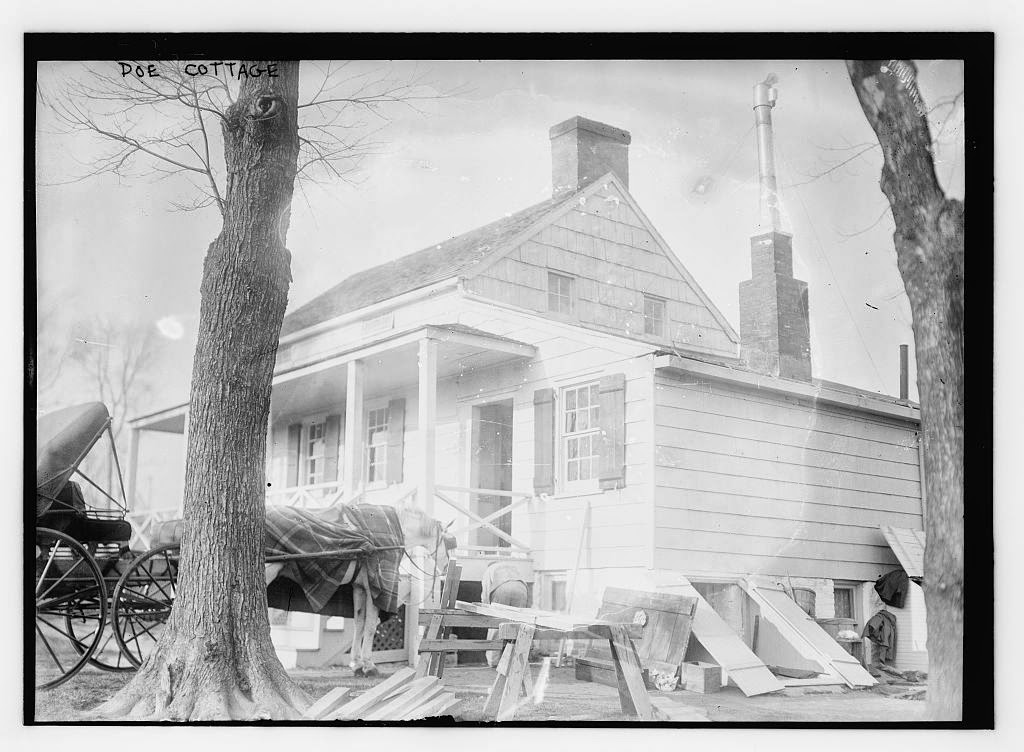
Poe's home in the Bronx, as it appeared in the 1910s. Courtesy Library of Congress
Poe’s home in the Bronx, as it appeared in the 1910s. Courtesy Library of Congress


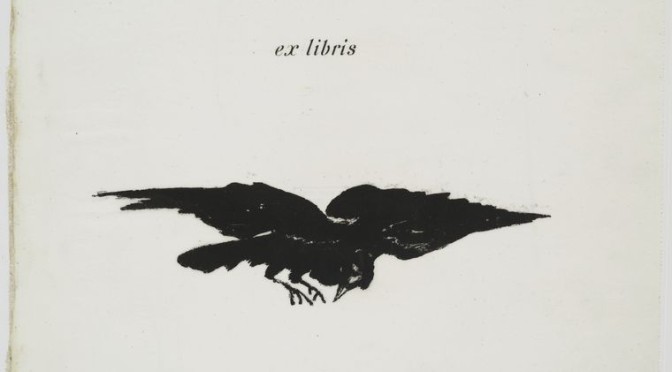
At top: “The Raven” from the original illustrations of Edouard Manet

Categories
It's Showtime Podcasts

Billie Holiday’s New York: Here’s to Swing Street, Harlem’s 133rd Street and other landmarks of jazz

Courtesy Columbia Records

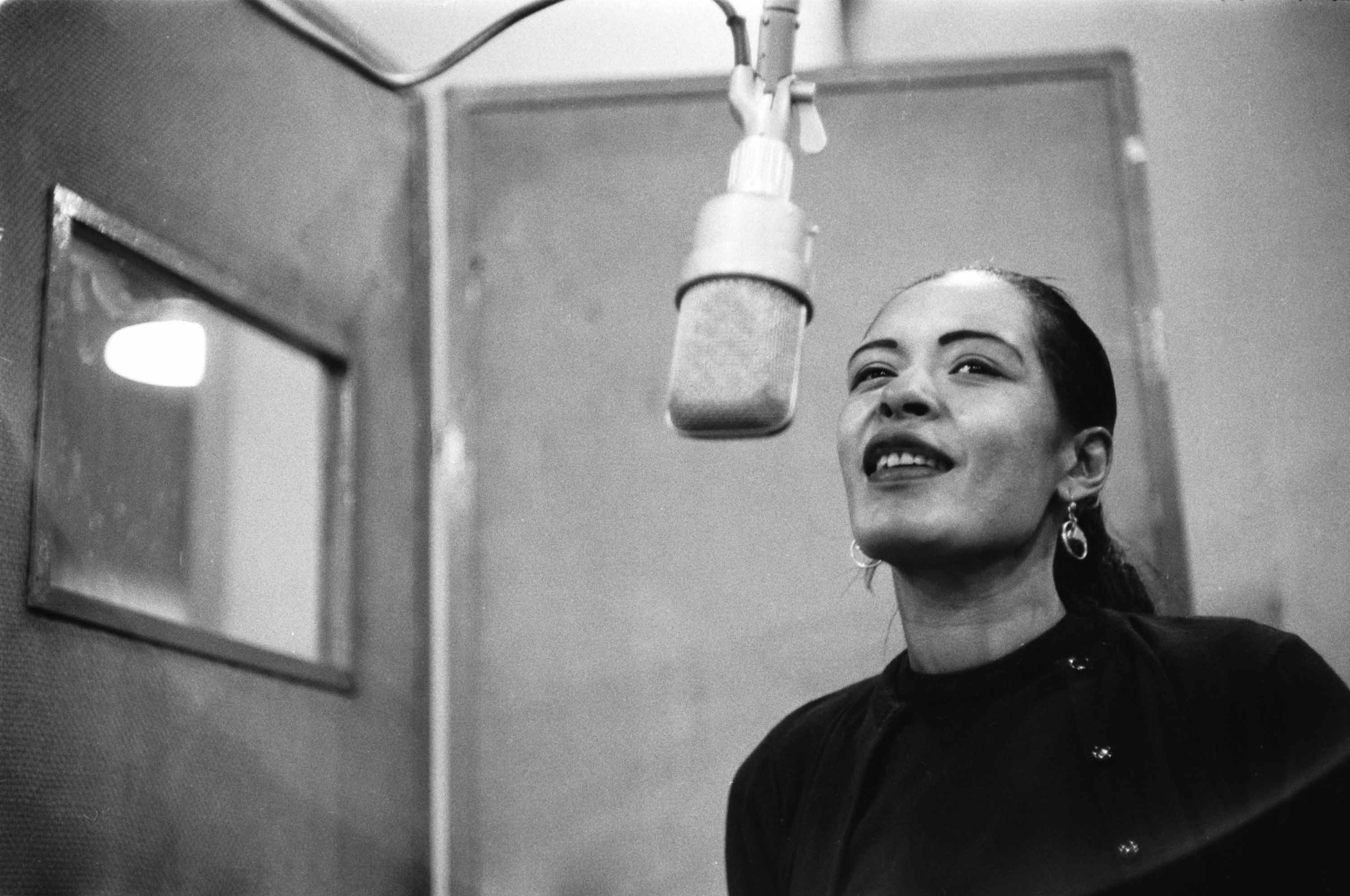
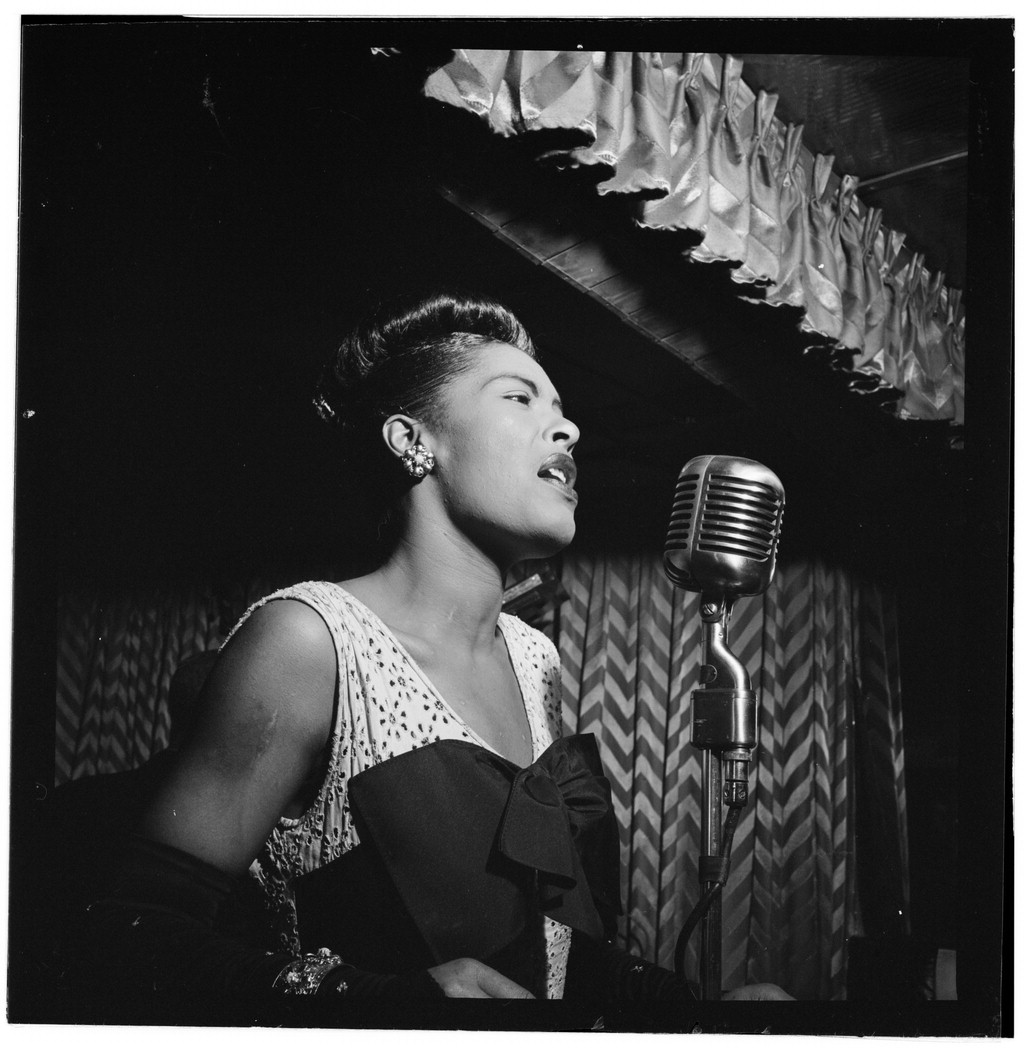
PODCAST Grab your fedora and take a trip with the Bowery Boys into the heart of New York City’s jazz scene — late nights, smoky bars, neon signs — through the eyes of one of the greatest American vocalists who ever lived here — Billie Holiday.

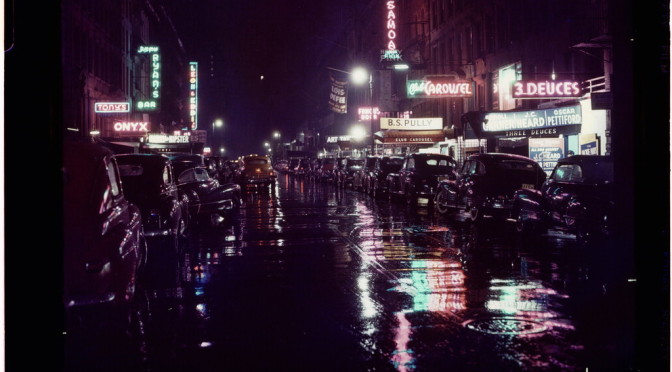
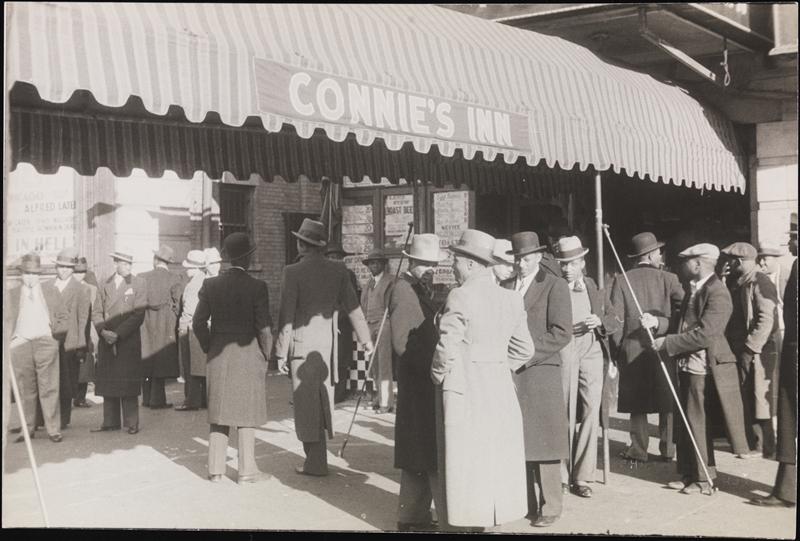
Eleanora Fagan walked out of Pennsylvania Station in 1929 and into the city that would help make her a superstar. Her early years were bleak, arrested for prostitution and thrown into the Welfare Island workhouse. But music would be her savior, breaking out in Harlem first in the nightclubs on 133rd Street, then in the basement clubs of ‘Swing Street’ on 52nd Street.

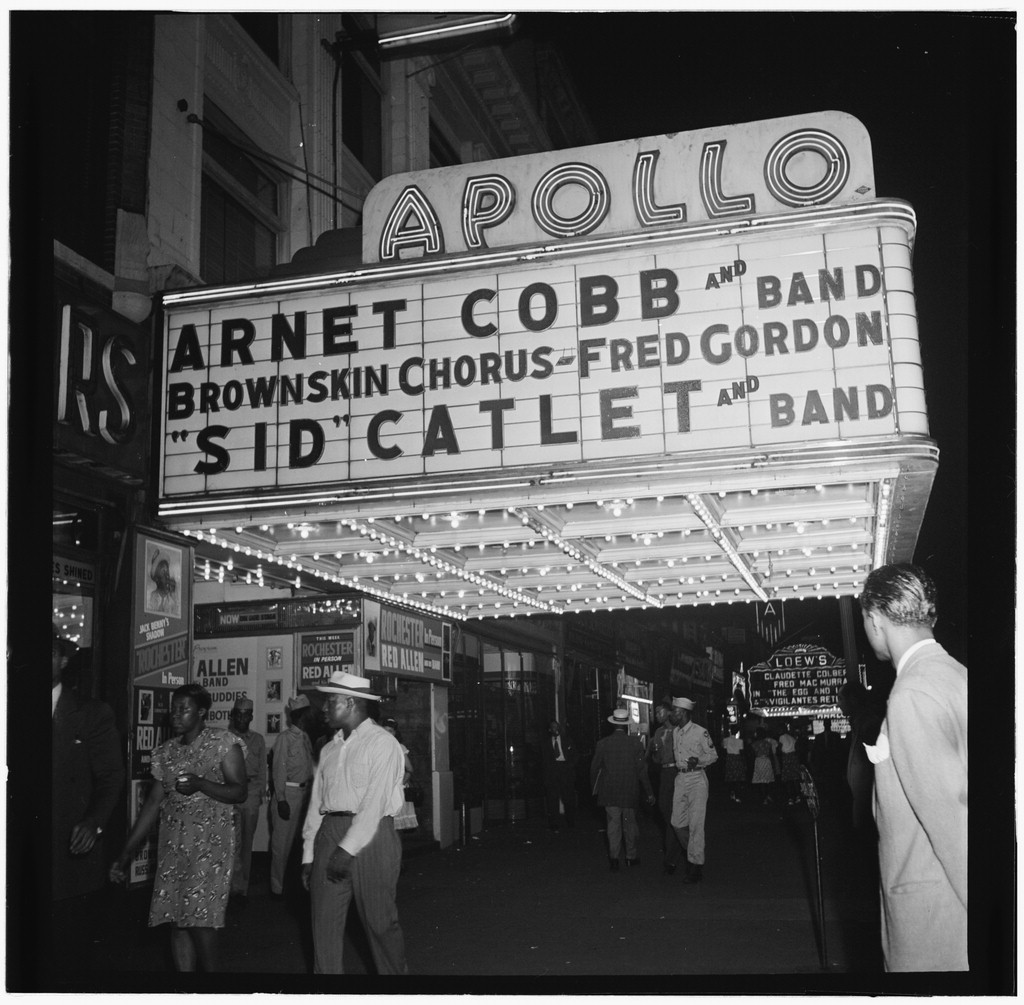
Her recordings make her an international star, but the venues of New York helped solidify her talents — from the Apollo Theater to Carnegie Hall. But one particular club in the West Village would provide her with a signature song, one that reflected the horrible realities of racism in the mid 20th century.


Billie Holiday at Club Downbeat, 1947

5020399920_ccd948ba9c_o

Locations featured in this episode:

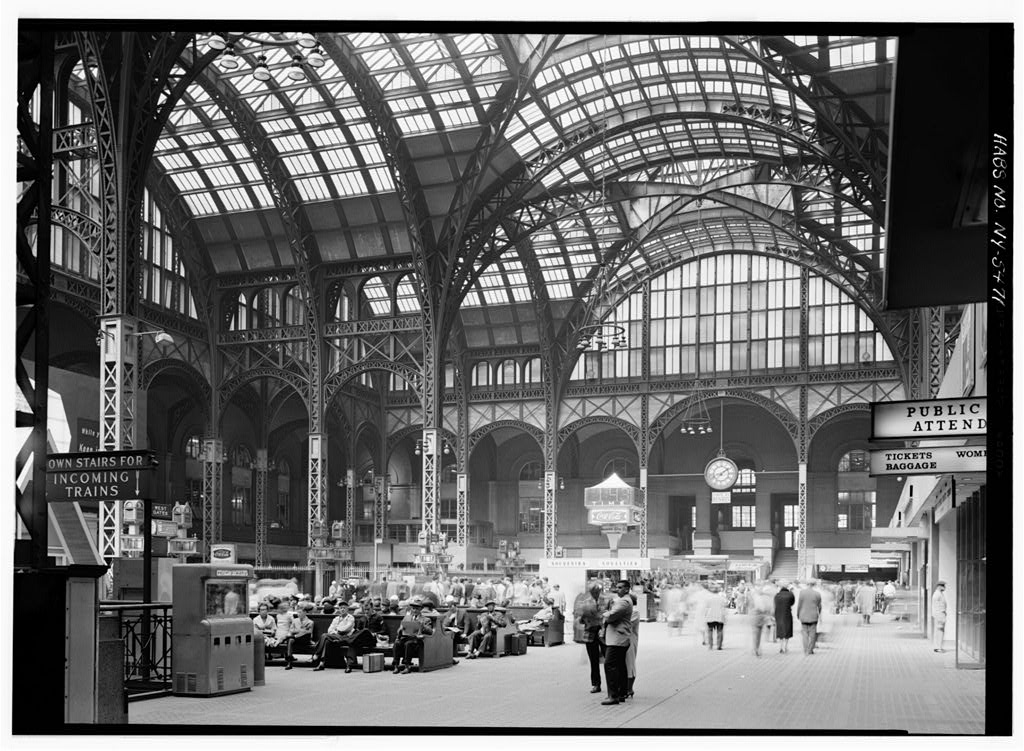
1) Pennsylvania Station (circa 1930s-40s)

Courtesy Library of Congress

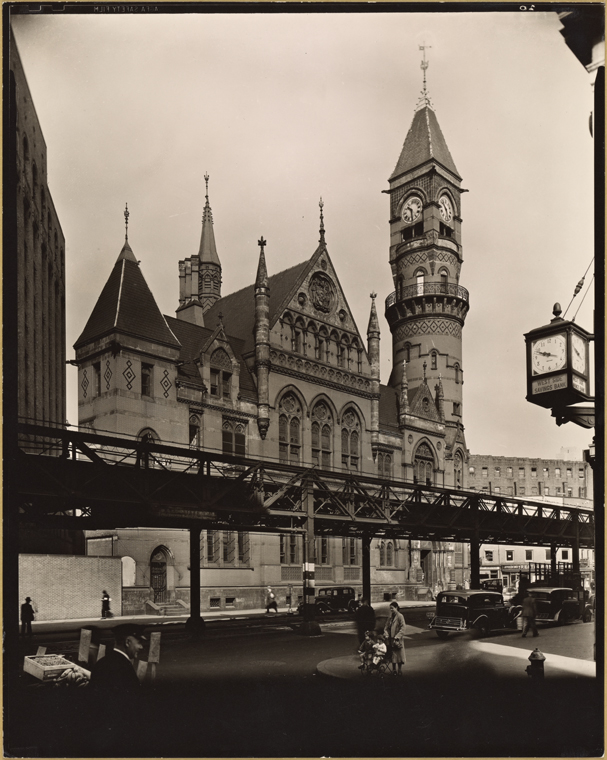
2) Jefferson Market Courthouse, pictured here in 1935

1
Photographed by Berenice Abbott, courtesy New York Public Library

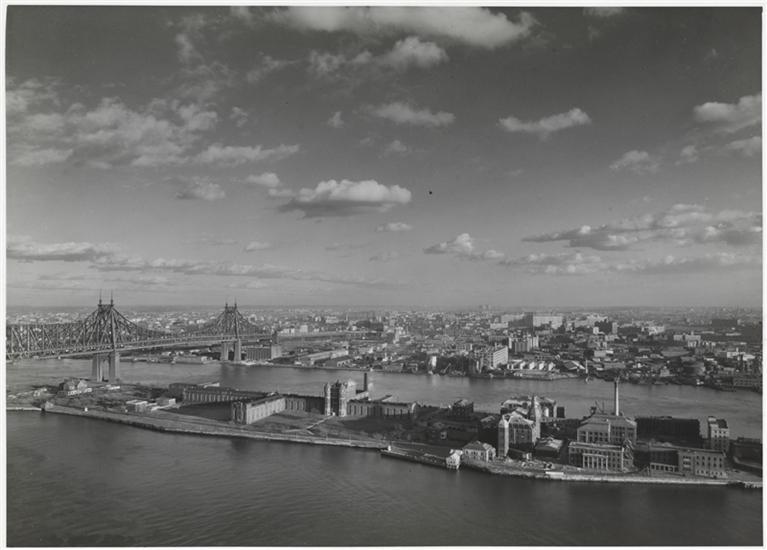
3) Welfare Island, pictured here in 1931

Photographed by Samuel H Gottscho, courtesy Museum of City of New York

4) 133rd Street — “Jungle Alley” or The Street — outside Connie’s Inn

Courtesy Museum of the City of New York

5) Apollo Theater, pictured here in the mid 1940s

Courtesy Library of Congress, photographer William Gottlieb

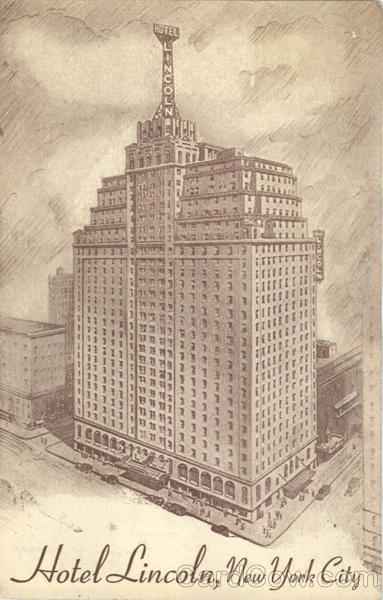
6) Lincoln Hotel

Hotel Lincoln, 44th to 45th Street at 8th Avenue New York City

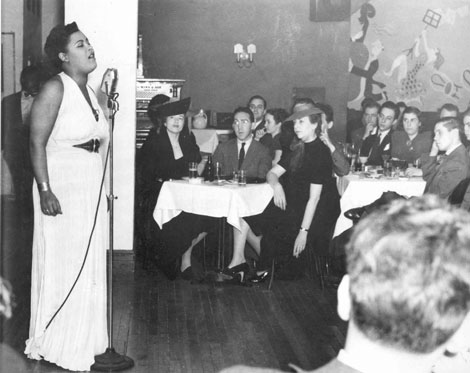
7) Billie Holiday at Cafe Society 1939

Photo by Charles B. Nadell

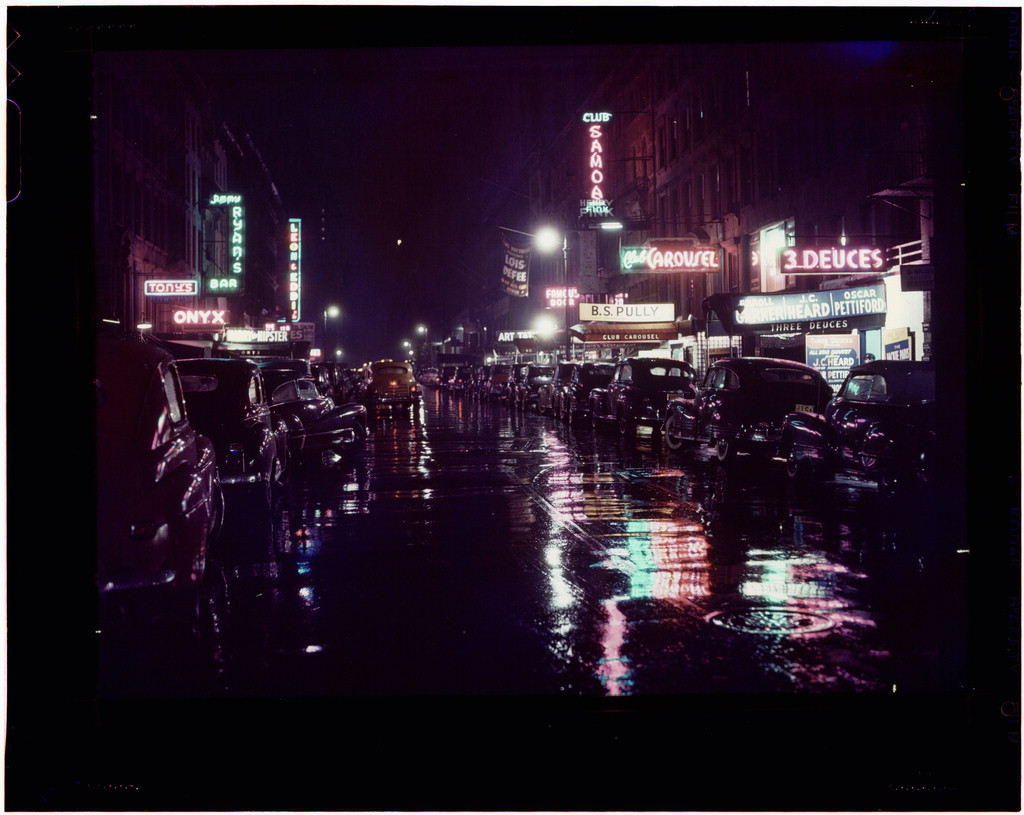
8) 52nd Street aka Swing Street

5268914553_ca77a01af0_o

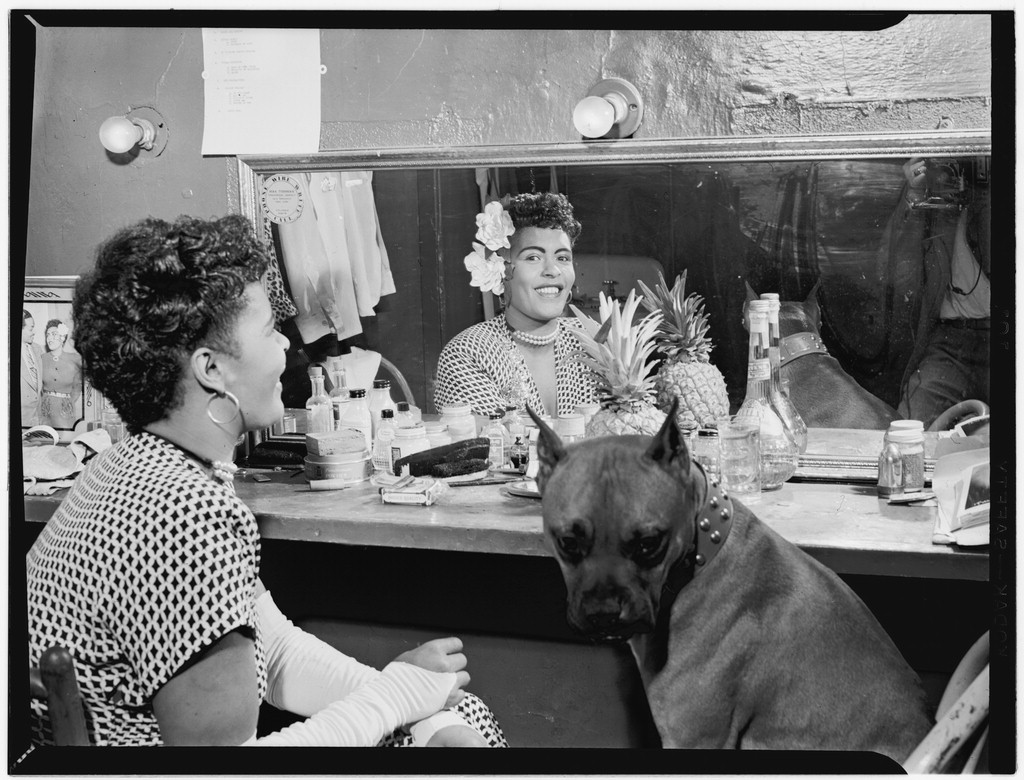
Billie at Club Downbeat (with her dog Mister) — June 1946

Courtesy Library of Congress

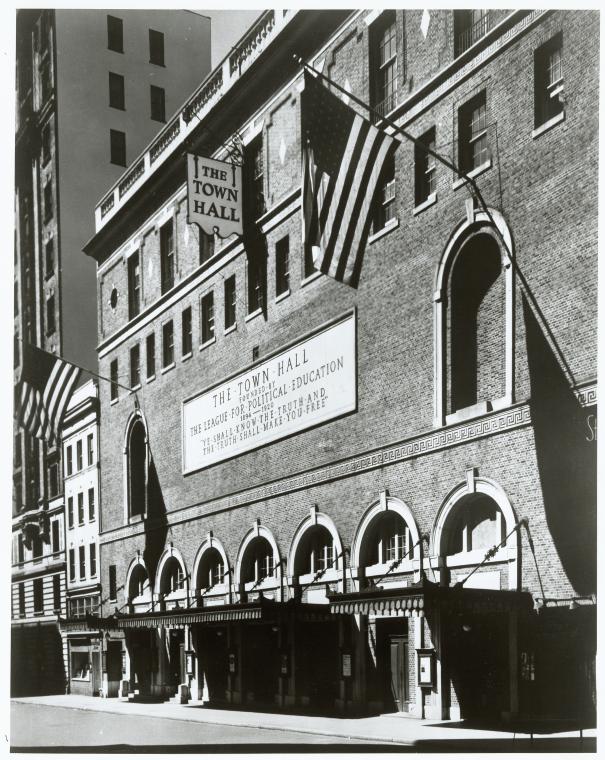
9) Town Hall, sometime in the 1940s

Exterior view of The Town Hall, courtesy New York Public Library

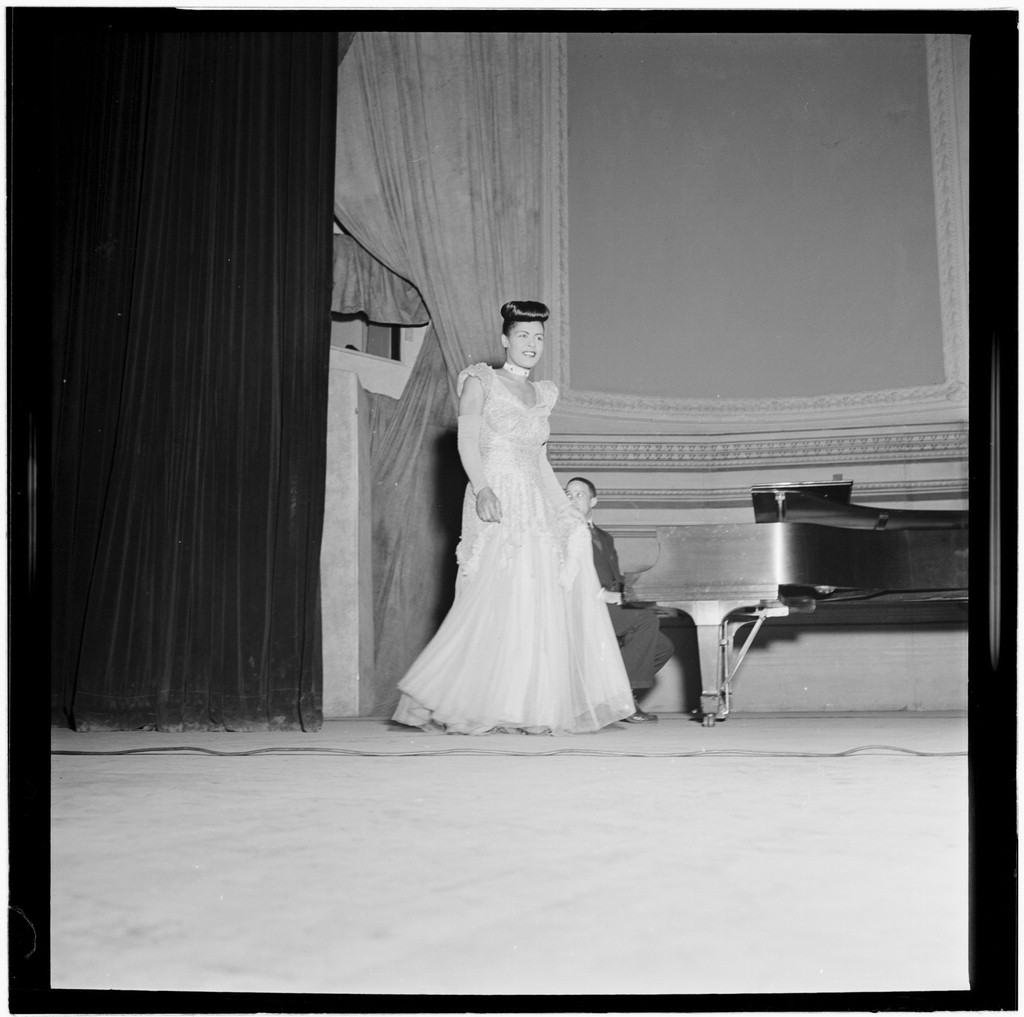
10) Billie Holiday at Carnegie Hall for her rave 1948 concert

Courtesy Library of Congress

An extraordinary performance of ‘Strange Fruit’, performed in February 1959, months before she died. This was recorded for a British television show called ‘Chelsea At Nine’.

https://www.youtube.com/watch?v=h4ZyuULy9zs

Billie Holiday — playing a maid — in the 1947 film New Orleans

And a live performance of one of her greatest songs — well, really, one of the greatest songs — “God Bless The Child”

http://youtu.be/U-3O-X6UUpY

Categories
Amusements and Thrills

Bogie and Bacall meet Basie and Billie

This actually happened.

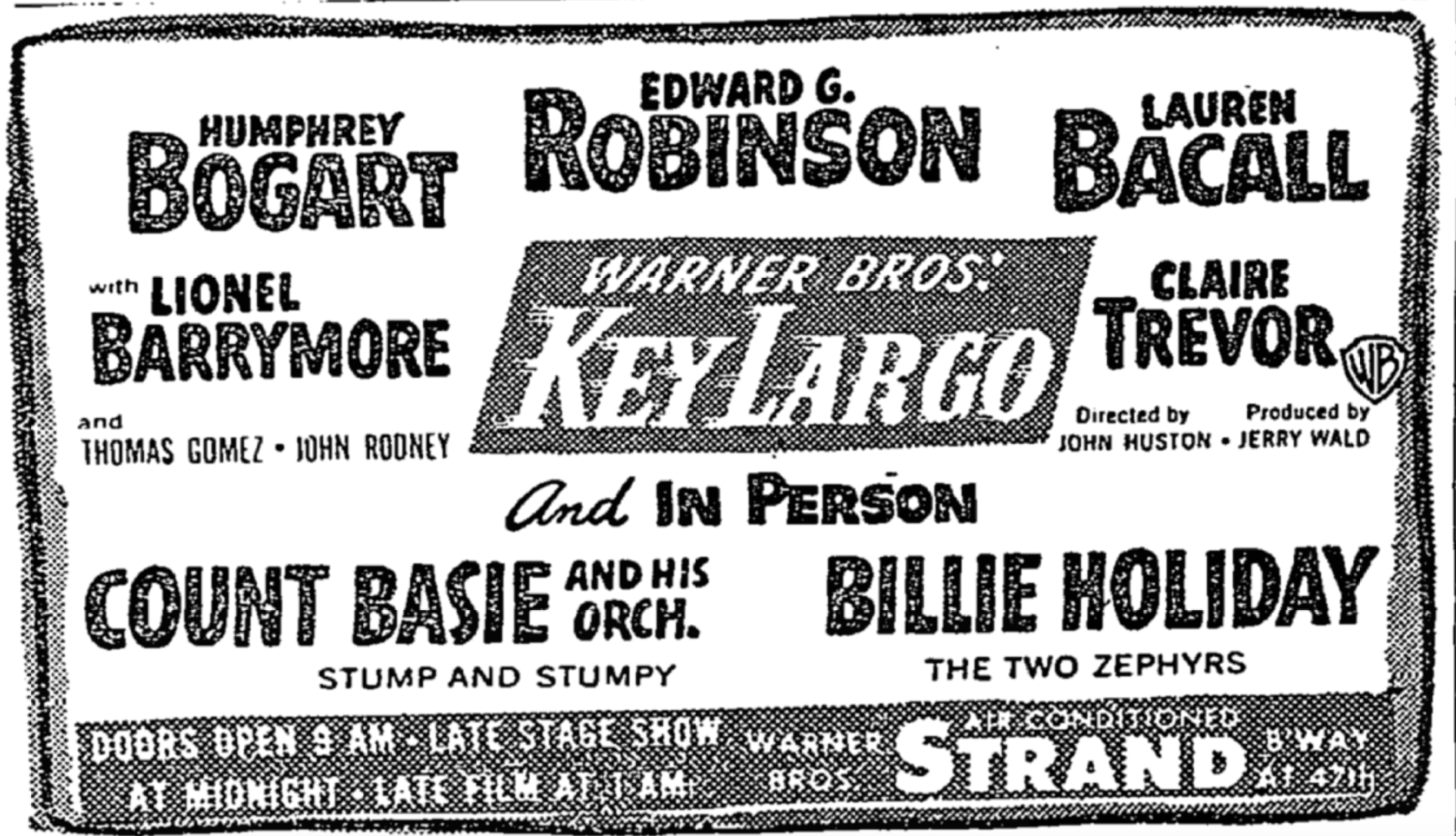
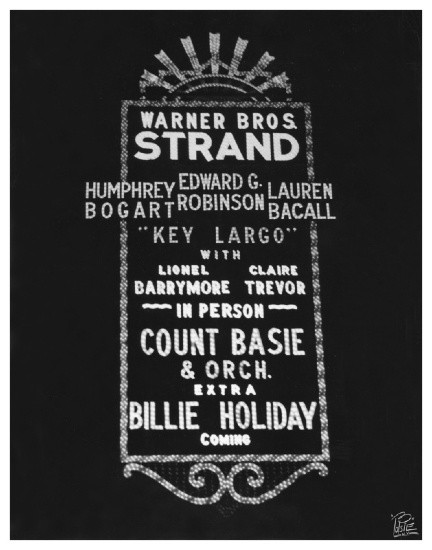
For the debut of the new film Key Largo — starring Humphrey Bogart and Lauren Bacall — the exhibitors at the Warner Strand Theater (at Broadway and 47th Street) has a special treat in store.

from the New York Times, July 17 1943

The Strand Theatre, which opened in 1914, has already made history a few times in New York. Considered the first theater built exclusively for motion picture exhibition, the Strand was the first New York job of Samuel ‘Roxy’ Rothefel (who would move on to his own Roxy Theatre and, then Radio City Music Hall).  On July 6, 1928, The Lights of New York, the first all-talking feature in history, premiered at the Strand.

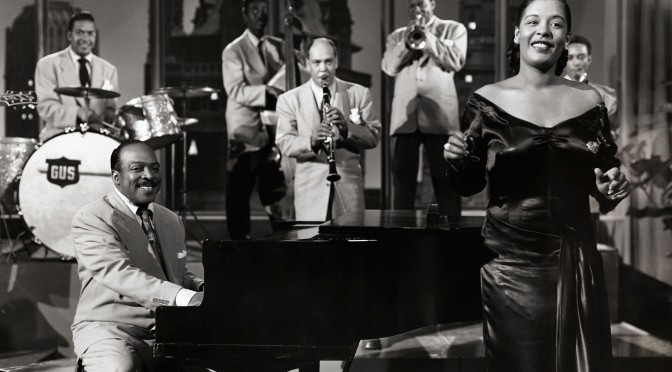
In 1948 came the fourth (and what would be final) movie collaboration between Bogart and Bacall, and its debut on July 16th deserved something out of the ordinary.  For six weeks, the Strand presented the film on an exhaustive bill of music and comedy, featuring two of the biggest stars in jazz music, Count Basie and Billie Holiday.

tumblr_m2af84Jr5g1qb5wa0o1_500

The two greats had recorded and toured with one another a decade previously, but much had changed since then.  Holiday had only been released from prison that March, serving time on a charge of heroin possession.  The big band era was ending, leaving Basie struggling to mold his music to the new styles of bebop, rock and  rhythm and blues.

While both would continue with their celebrated careers into the 1950s, the six-week Key Largo stint would remind many of earlier, more jubilant phases of their careers.

Billie Holiday, Count Basie
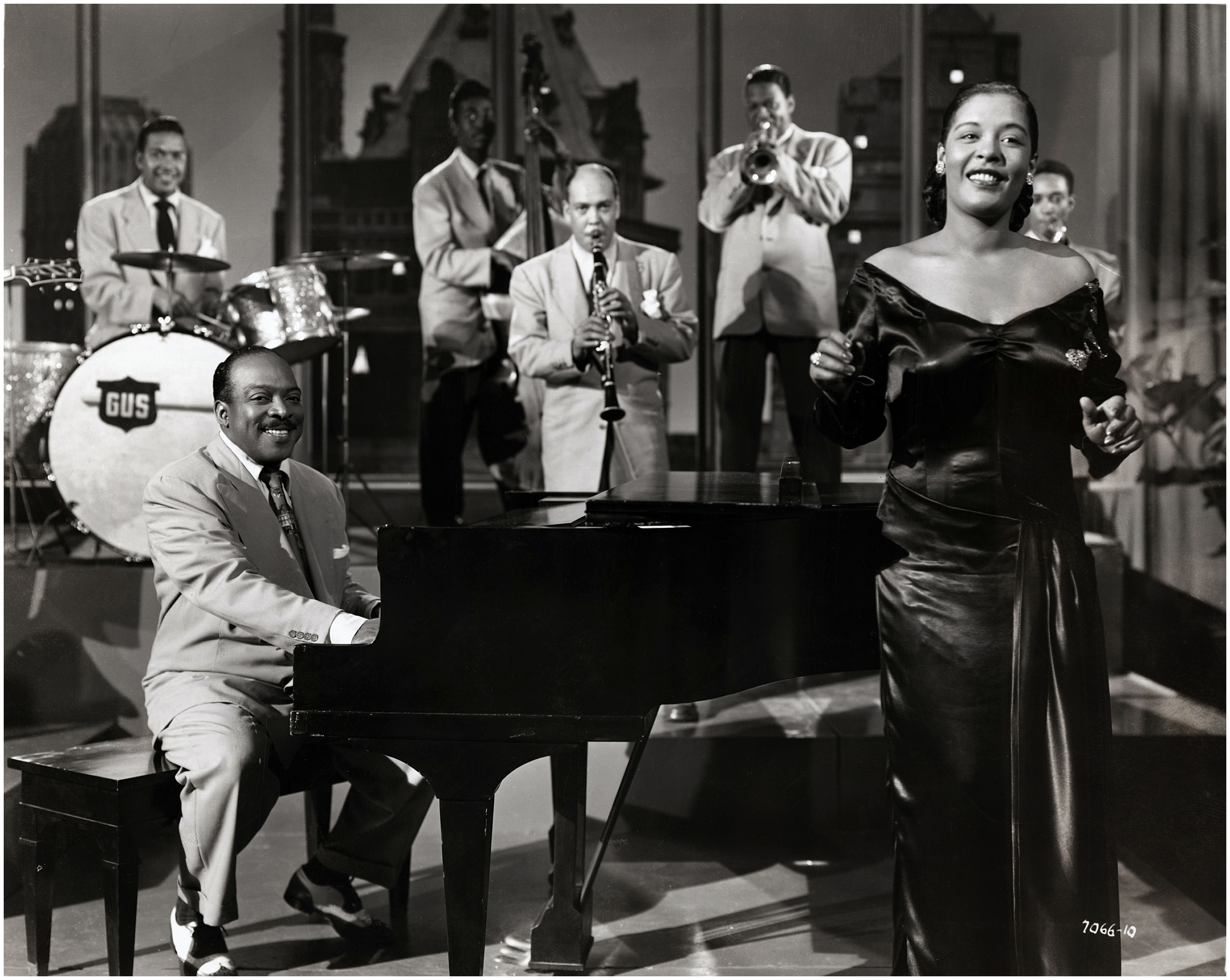
Basie and Billie from a film still

It was the longest theater run of Lady Day’s career although she fretted the fact that many were there to see her “get all fouled up,”  according to author Donald Clarke.

As you can imagine, it broke box office records for the Strand. According to Basie’s autobiography, “I think we went in there on a contract for three weeks with an option to extend for another two weeks, and I think they revised it and made it five weeks with options to make it six or seven weeks.”

They were joined by the black comedy team The Two Zephyrs (with legendary comic Slappy White) and tap dancing duo Stump and Stumpy.

I hope that Billie sang “Moanin’ Low,” made famous by the film in a mesmerizing performance by Claire Trevor (who won the Academy Award).


Categories
Parks and Recreation

Brooklyn’s Forgotten Lake: Pictures of Mount Prospect Reservoir

As you can see, the Bowery Boys: New York City  History blog has gone through some major changes this week.  We have a new URL (boweryboyshistory.com) and a dynamic new layout which will present articles, photographs and podcast audio is a more user-friendly way.  There’s still some backlogged clean up to do so thank you for your patience.  But we think this new format is more reader friendly and makes these old photographs look so much more amazing.

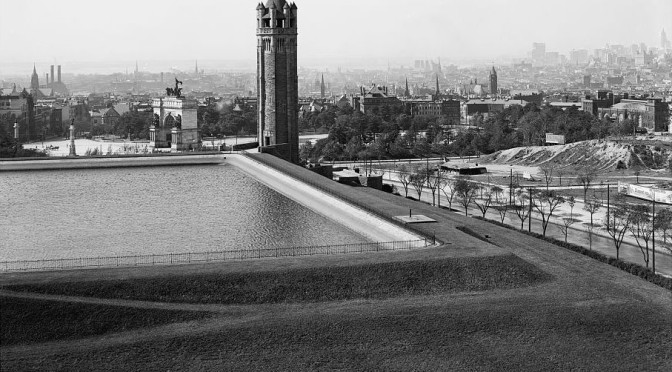
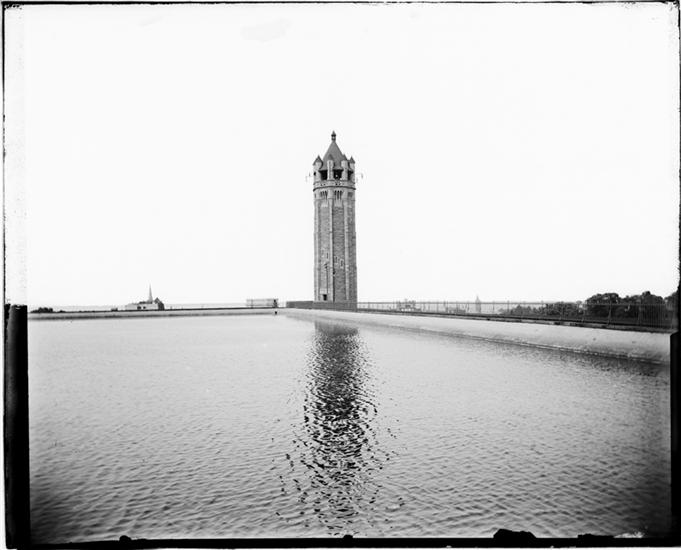
And so, on that note, I thought I’d test out the expanded-image waters here by presenting a few views of one of the most enchanting places from the 19th century, a place that no longer exists — the Mount Prospect Reservoir.

Photographed by Robert Bracklow, courtesy the Museum of the City of New York


Back when it was an independent city, Brooklyn received most of its drinking water from Long Island, pumped into to a large receiving reservoir in Ridgewood.  Some of that was then send southward to a reservoir built in the late 1850s at the second highest point in Brooklyn — Mount Prospect — rising 200 feet above sea level.

The reservoir was 3 1/2 acres, holding 20 million gallons of water at a depth of 20 feet. Or, according to the Brooklyn Daily Eagle, “containing just about enough water to cook the breakfast of the people of Brooklyn for a week

The elevation was not included in the original design of Prospect Park, conceived in the 1860s as Brooklyn’s own Central Park. ** Especially odd when you consider that Prospect Park takes its name from the hill where the reservoir resided.

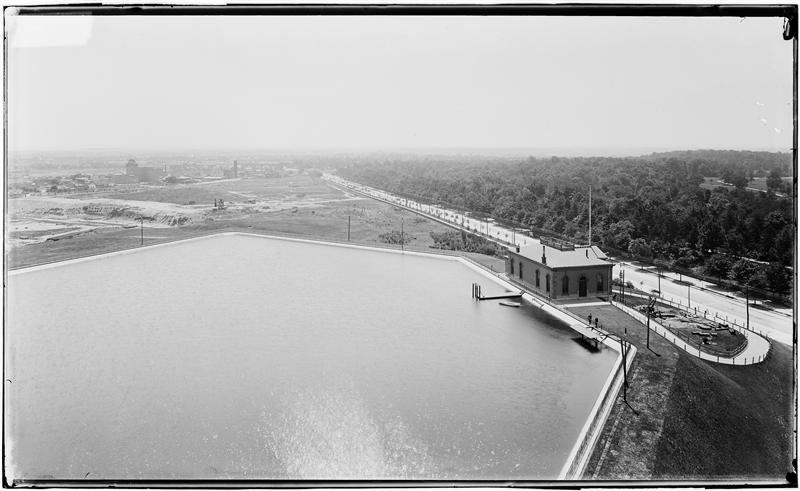
Pump house at the old reservoir on the East Side Lands, with Flatbush Avenue behind it, and Prospect Park in the background.
Pump house at the old reservoir on the East Side Lands, with Flatbush Avenue behind it, and Prospect Park in the background. [Courtesy Museum of the City of New York]
 Standing besides the man made lake was a pumping station and a grand Gothic tower, 30 feet tall. The world could be seen from here. “From the top of the tower … could be afforded a grand view overlooking the Park and City of Brooklyn; south may be seen the Atlantic Ocean; west, Staten Island and New Jersey; north, the Bay and the City of New York; east, the Navy Yard, Williamsburgh and the East River, altogether affording one of the grandest views imaginable.” [source]

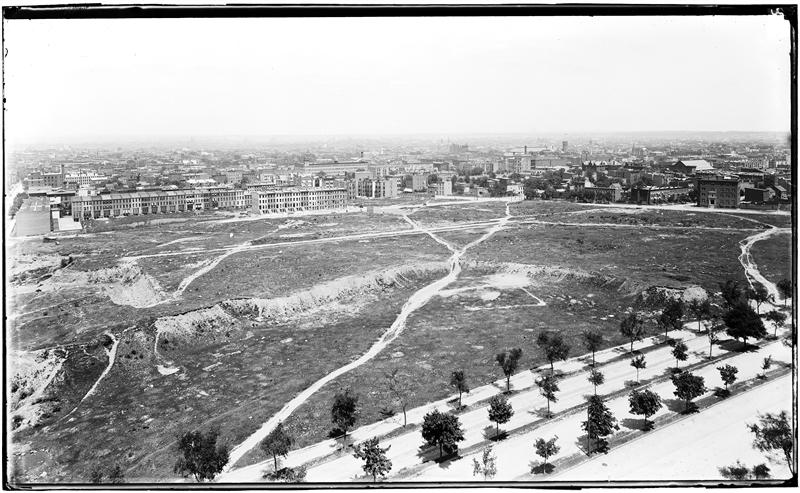
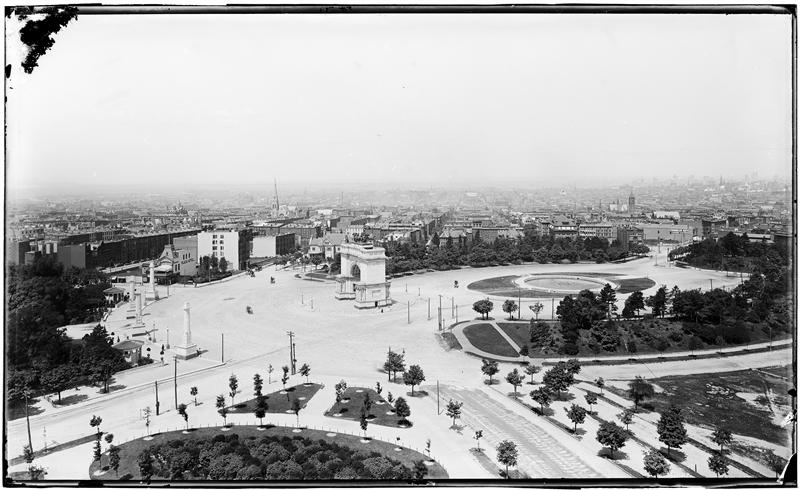
Below: Circa 1900, looking north from the reservoir over Eastern Parkway into what is today’s Prospect Heights neighborhood.  Below that, looking out over Grand Army Plaza. Photos by George Hall and Sons. Courtesy Museum of City of New York

3

4

When Brooklyn was incorporated into the consolidated Greater New York, they also were brought into New  York’s central water system (i.e. the Croton Aqueduct, later blended with the waters of the Delaware and the Catskills).  The Mount Prospect Reservoir was dismantled in 1940 and turned into a park. And the tower was torn down as well when the central branch of the Brooklyn Public Library was constructed.
According to BPL’s blog,  “The wrecking company in charge of tearing it down announced in the Eagle that the Connecticut pink granite used to build the tower would be made freely available to anyone who wanted it.”  So there may be pieces of the old tower incorporated into buildings all across the borough!

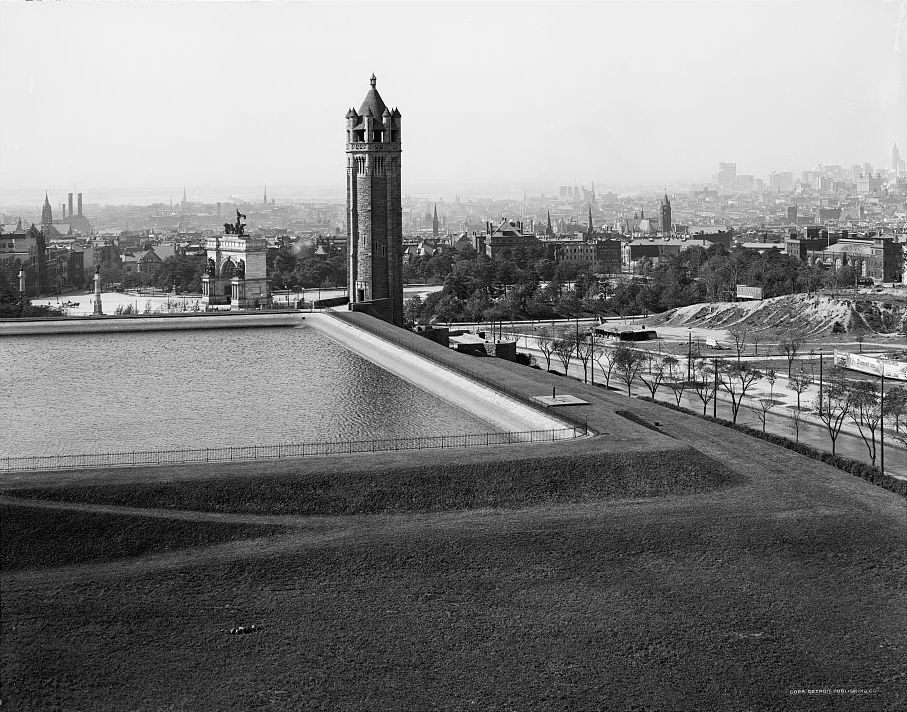
Looking over Brooklyn and Manhattan
Looking over Brooklyn and Manhattan (Library of Congress)


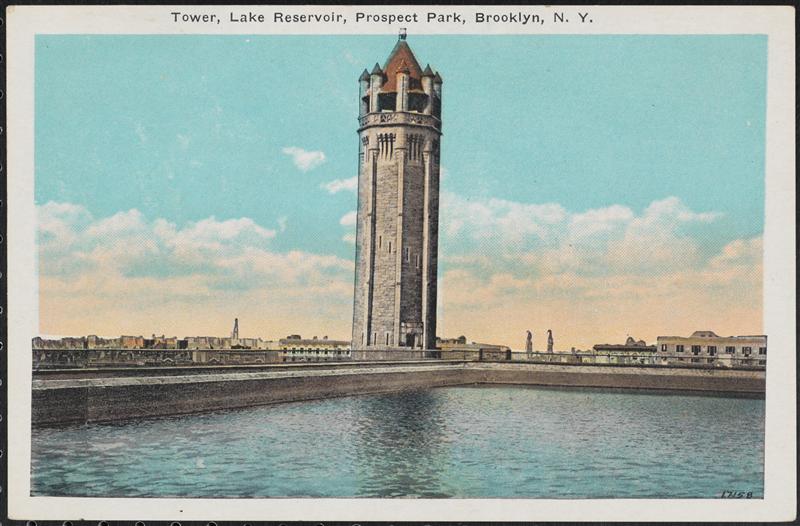
Unsurprisingly, the reservoir was a bit of a tourist attraction as evidenced by this postcard. (Courtesy the Museum of the City of New York)


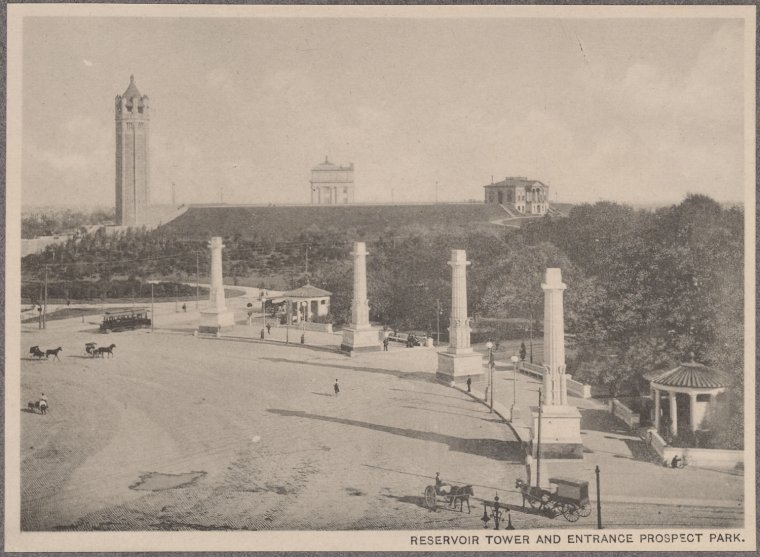
Viewing the entrance to Prospect Park with the reservoir and tower behind it. From this vantage you can see the Brooklyn Museum and the Mount Prospect Laboratory.


** See Matthew’s comment below about Mount Prospect’s appearance in the original Prospect Park plan.

Categories
Planes Trains and Automobiles

The Horror Underground: New York’s first subway disaster — during rush hour, one hundred years ago today

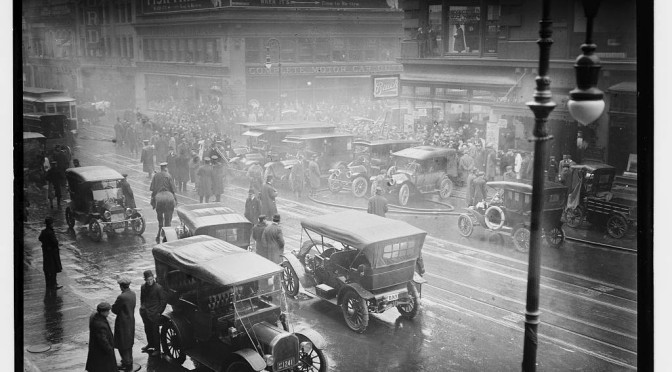
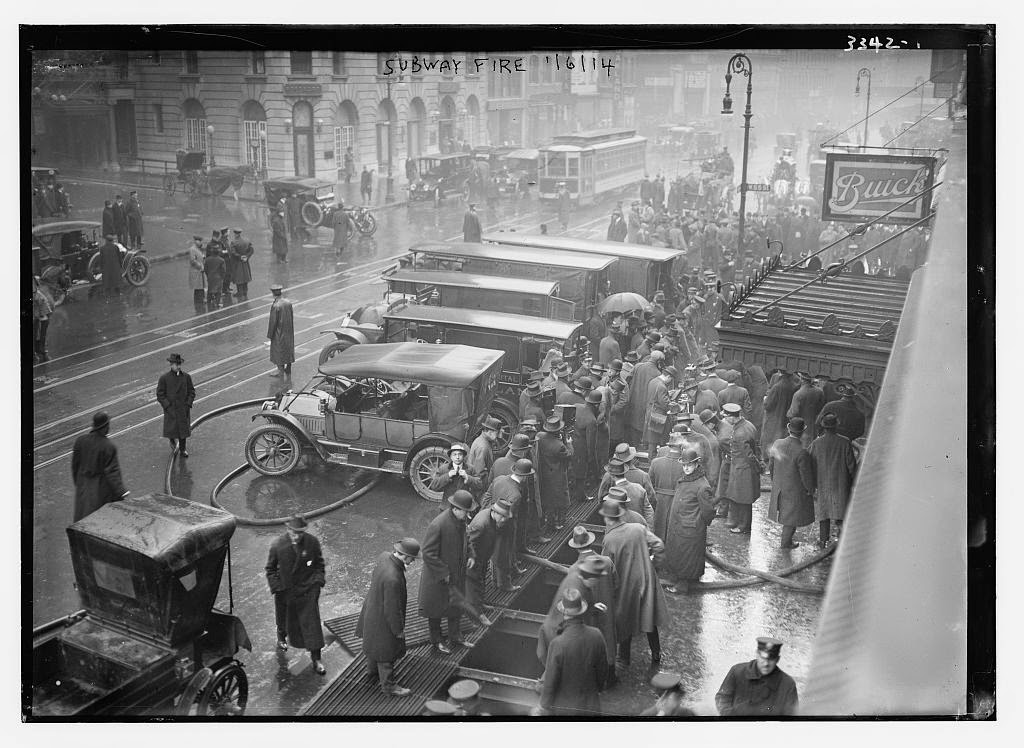
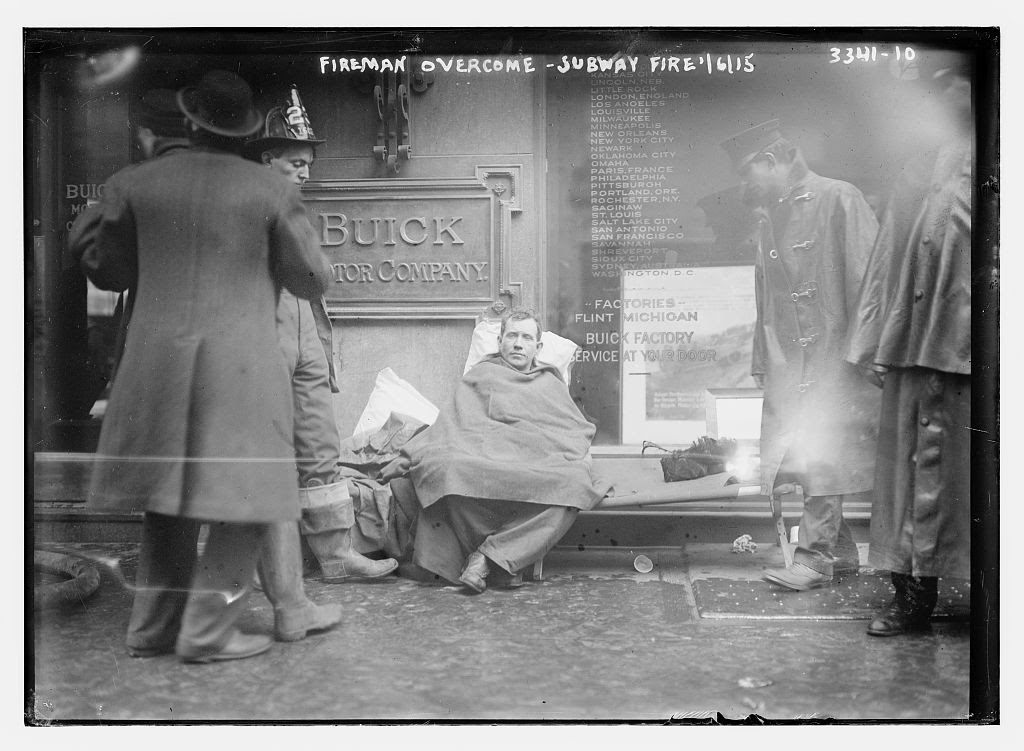
On January 6, 1915, a seemingly minor incident under the streets of Midtown caused a terrible panic, “the worst disaster in the history of the New York subway” up to that date, injuring hundreds of commuters and killing one. 

That morning, two electrical cables feeding into manholes at Broadway and 52nd Street suddenly shorted out, causing a blackout in the subway tunnels below. The cable insulation, not fireproof, began issuing masses of “dense acrid” smoke that soon filled the tunnels.

The event occurred at the start of rush hour so there where three trains between 50th Street and Columbus Circle that were immediately affected. Over 2,500 people were trapped in the subway cars or stuck inside suddenly dark stations.

Nothing but the wires was actually on fire.  But the billowing, toxic smoke in darkened tunnels soon caused a panic as passengers began clawing for the doors, trampling the weak underfoot.


From some newspaper sources:

“The firemen found passengers struggling to get out of the few car doors that were opened while hundreds of persons lay upon the car floors,  having been asphyxiated or trampled on in this panic. Others escaped from cars only to fall besides the tracks blinded and with lungs full of smoke.” [New York Times]

“Blindly shouting and screaming, the passengers ran from the car they were in to the other cars, hoping to find some relief from the fumes and smoke. They knocked each other down in their wild scramble to get air and clawed each other’s clothing……In a few minutes the sound of crashing glass gave higher pitch to the panic.” [New York Tribune]

“There ensued a disgraceful and brutal battle for safety. Men and boys knocked down and trampled women and girls…….Most of the women had practically all their clothing torn off. Many of the men were stripped to the sides from the waist up.” [Evening World]

Hundreds were sent to the hospital with various injuries, mostly smoke inhalation, but many from the horrors of being trampled underfoot. Unfortunately, one woman was killed in the incident.

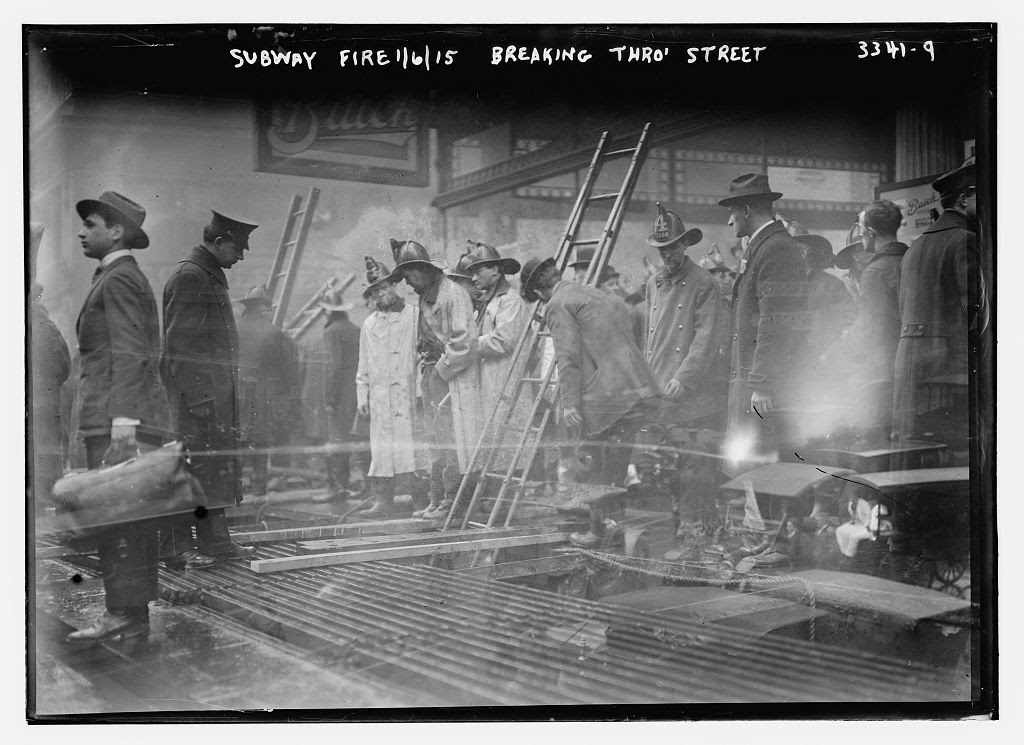
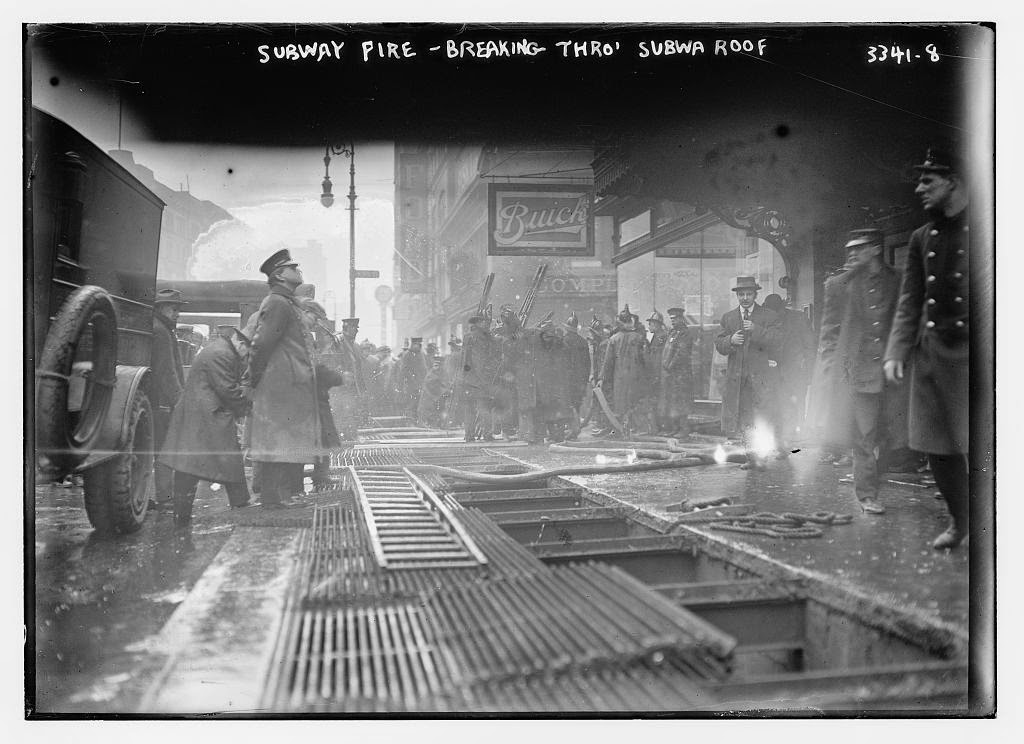
Firefighters had few options in rescuing passengers.  Most were delivered up ladders along a small passage at 55th Street.  The air was so toxic that many firemen were themselves hospitalized.

Subway service was naturally disrupted for a few a days afterwards. Officials initially shrugged off the incident. “In the present state of the art,” said Frank Hedley, general manager of the Interborough Rapid Transit, “there is nothing known which will prevent the recurrence of short circuits.” However, attention soon turned to woefully inadequate insulation used in subway wiring.

“New York received a warning, when hundreds of passengers were suffocated in the subway.   The next occurrence may be far more serious in loss of life due to a similar cause — suffocation. No time should be lost remedying the most serious defect of the subway, viz. lack of suitable ventilation at all times.” [source]

Redesigned subway cars and fireproof wiring would soon ensure such a disaster would not occur again.

Categories
Pop Culture

The history of NYC in eight pop culture moments from 2014

In our 2014 Year In Review podcast, we didn’t have much time to talk about notable pop cultural events that depicted New York City history.  But here’s a recap a few films and television shows which used the city’s history in their narratives. I’ve arranged them in the chronological order in which they’ve been set:

Courtesy AMC

TURN
Year: 1776
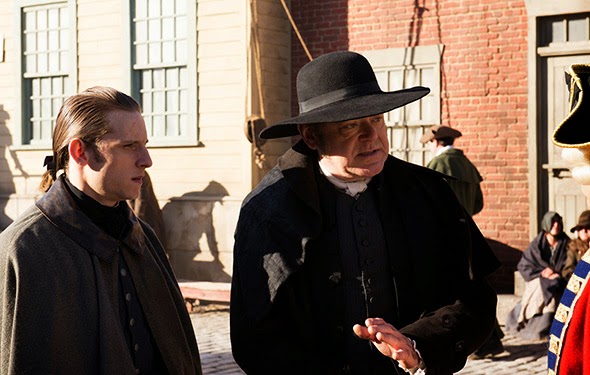
This AMC freshman series, revolving around the early years of the Revolutionary War, depicts Long Island, New Jersey and the cramped port city of New York itself in the year 1776. Its first season was so-so, but the performances were good, and the art direction surely excellent, as in the best episode “Of Cabbage And Kings” when Abe Woodhull (Jamie Bell) takes the boat to downtown Manhattan and ostensibly begins his career as George Washington’s newest spy.


Courtesy HBO/Cinemax

THE KNICK
Year: 1900
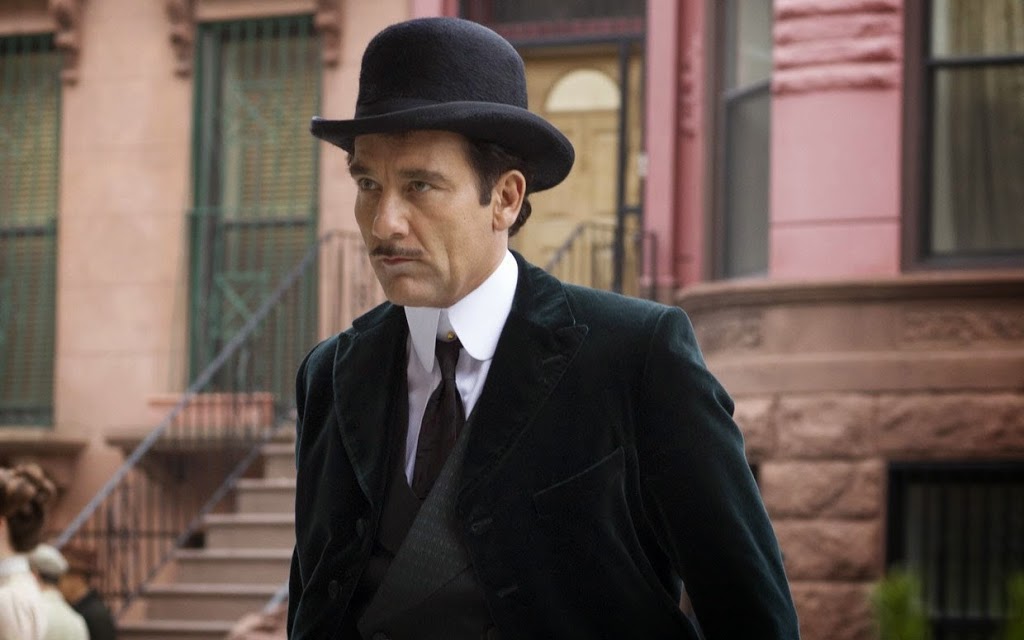
Cinemax’s vivid medical drama was certainly the most atmospheric show on American television (excluding maybe True Detective), illustrating the medical practices of a financially strapped Manhattan hospital as administered by drug addict and genius surgeon Dr. John Thackery (Clive Owen).  The exteriors of Knickerbocker Hospital were shot at Boys’ High School in Bed-Stuy and were most prominently featured in the episode “Get The Rope” when a racist mob violently attacked black passers-by.
Screen shot from On the Set of New York

WINTER’S TALE
Year: 1916
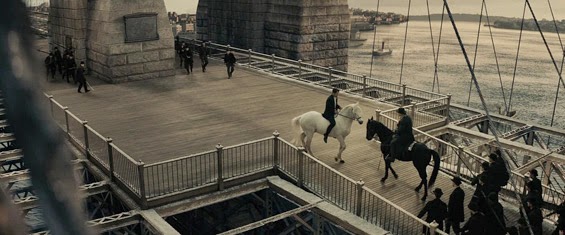
A romantic time-warp fuels this  unsuccessful adaptation of Mark Halperin’s fantasy historical novel.  His writing style is truly enigmatic, proven here when plot is separated from description. However the film is not without its visual charms, including a brief look at the East River waterfront, circa 1916, as Colin Farrell gallops over the Brooklyn Bridge on a white horse.

Courtesy The Weinstein Company

THE IMMIGRANT
Year: 1921
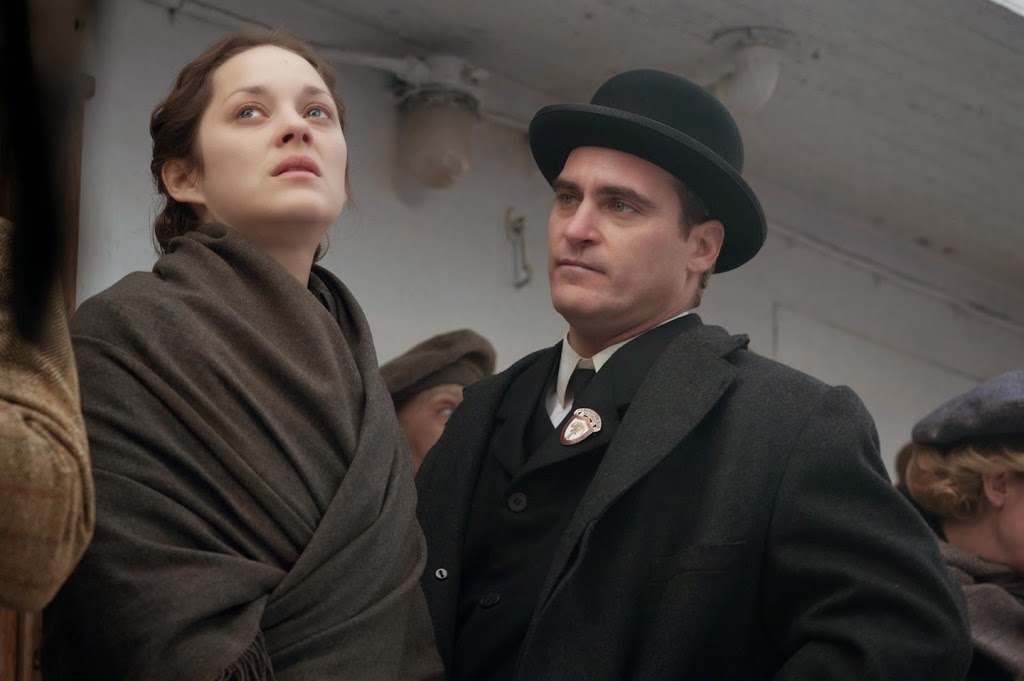
Marion Cotillard, providing an old-school blockbuster performance, is the heart and soul of this film set at the dawn of Prohibition. With her sister Magna is detained at Ellis Island, Ewa (Cotillard) goes to work for a shady impresario (played by Joaquin Phoenix) who then prostitutes her to clients.  The cinematography by Darius Khondji takes inspiration from browned, faded photography, and his views of the Lower East Side in the early scenes are truly breathtaking.

Courtesy HBO
 
BOARDWALK EMPIRE

Year: 1931
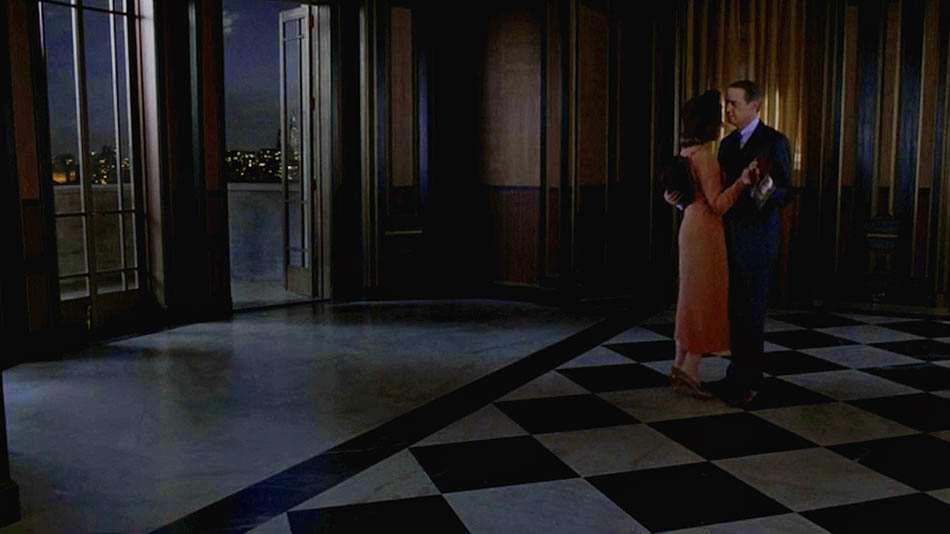
I prefer not to relive the ending of “Eldorado,” the final episode of Martin Scorsese’s Prohibition drama.  So let’s just end it at the lovely scene with Nucky (Steve Buscemi) and Margaret (Kelly MacDonald) dancing in the gorgeous apartment at the Upper West Side apartment complex which gives the episode its bittersweet name.

Courtesy AMC

MAD MEN
Year: 1970
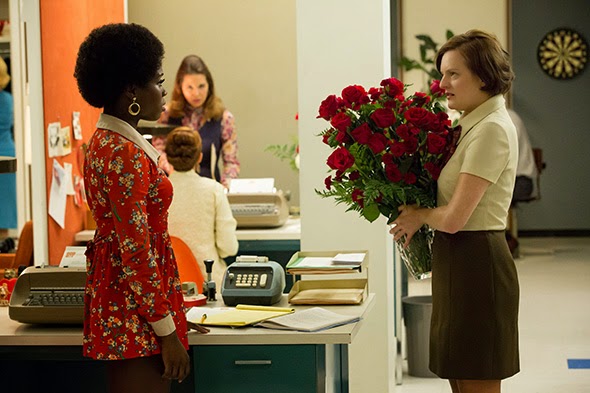
The first half of the final season (can’t believe I’m writing that) saw the beginnings of a redemption arc for Don Draper and general cultural instability for just about everyone else.  The new character Shirley (Sola Bamis) became a bit of a harbinger of the new decade in the episode “A Day’s Work,” bringing out the insane in Peggy (Elizabeth Moss) and the clever side of Joan (Christina Hendricks).
Courtesy A24 FIlms

A MOST VIOLENT YEAR**
Year: 1981
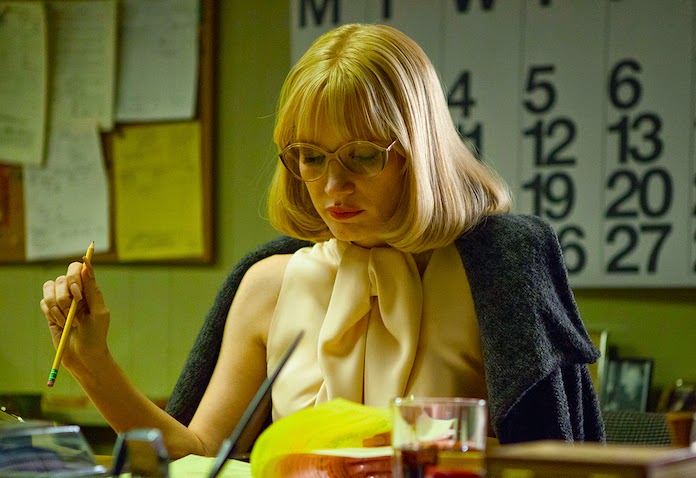
This would be a simple story of an ambitious immigrant businessman Abel (played by Oscar Isaac) just wanting to get ahead in the world, expanding his fuel empire into larger digs in Brooklyn. But this is 1981, and nothing is very simple, least of which his wife Anna (Jessica Chastain) with her familial connections to the mob.

LUCY
Year: Every Year!
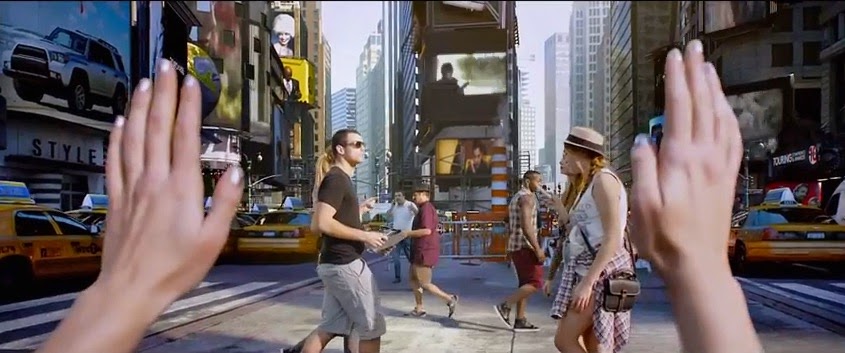
Well, I’m not going to explain why, but let’s just say that La Lucy (Scarlett Johansson) has the ability to both travel through and manipulate time via an extreme overdose of an experimental new drug. It doesn’t matter. What does matter is for about one minute, she finds herself in the middle of Times Square, repeating and rewinding time at that very spot, giving us quick doses of the newly built One Times Square, then of the horse and carriages of Longacre Square.

And then she goes back a couple million more years or so. I cannot confirm the historical veracity of these particular scenes but it looks very pretty.

**For transparency: I’m writing each week at the blog NYC.1981 which is a tie-in into the film.

Categories
Podcasts Preservation

The Best of 2014: The Bowery Boys Year In Review


PODCAST When historians look back at the year 2014, what events or cultural changes within New York City will they deem significant? In this special episode, the Bowery Boys look back at some of the biggest historical events of the year including the opening of the National September 11 Memorial & Museum, the troubling trend of mega-condominiums along 57th Street and the continuing gentrification of several New York City neighborhoods.

We also answer some questions from listeners and present some resolutions and thought on how you can help protect and preserve the historical landscape of New York City — whether you live here or not. Cheers to 2015!

NOTE: We recorded this episode on December 17, and so were unable to make note of events from the recent few days including the tragic shooting of two NYPD officers on December 20, 2014.


Here are our 2014 podcasts. Check out any you’ve missed!

Tompkins Square Park [download]
The ragged, rebellious history of Tompkins Square Park
 
FDNY [download]
At The Ready: The History of the New York City Fire Department
 
George Washington Bridge [download]
The Bridge to Everywhere: The George Washington Bridge strangely political, unexpectedly naked, undeniably beautiful
 
South Street Seaport [download]
The history of the South Street Seaport: A robust story of economic power, historic preservation, rat fights and fish guts
 
The Astor Place Riot [download]
The Astor Place Riot: Massacre at a busy crossroad as a Shakespearean rivalry ignites New York class struggles
 
Ladies’ Mile [download]
The sumptuous story of Ladies’ Mile: Traces of cast-iron grandeur, the architectural delights of the Gilded Age
 
General Slocum Disaster [download]
American tragedy: The tale of the General Slocum disaster


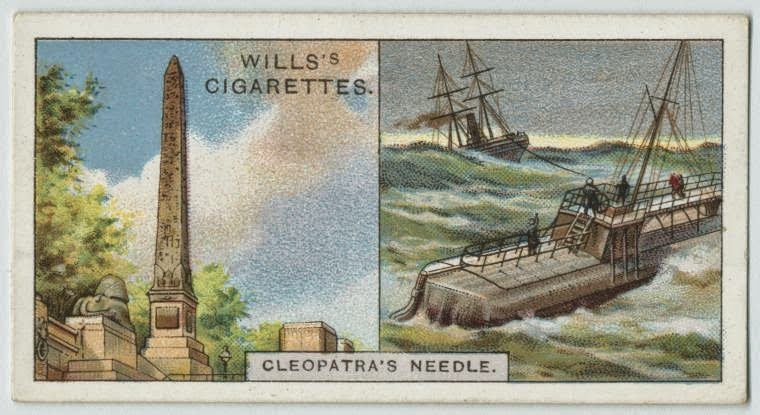
Cleopatra’s Needle [download]
Cleopatra’s Needle and the Secret of the New York Freemasons
 
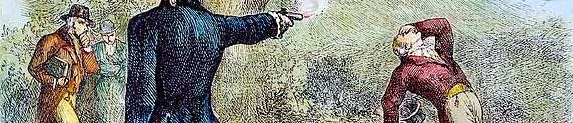
DUEL! Aaron Burr vs. Alexander Hamilton [download]
Aaron Burr vs. Alexander Hamilton:  The duel at Weehawken and the terrible consequences of an ugly insult
 
The Tallest Building In New York [download]
The Tallest Building In New York: A Short History
 
The Life and Death of Rudolph Valentino [download]
Rudolph Valentino, the seductive, tragic idol of the Jazz Age
 
The Keys To Gramercy Park [download]
The Secrets of Gramercy Park (and you don’t even need a key)
 
Ghost Stories of Brooklyn [download]
Haunted Hipsters: Four Ghost Stories of Brooklyn
 
Ruins of the World’s Fair: New York State Pavilion [download]
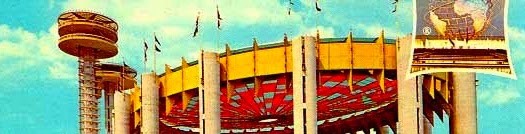
Ruins of the World’s Fair: The New York State Pavilion, or how Philip Johnson’s futuristic architecture was almost forgotten
 
The Rockettes [download]
American Kicks: A History of the Rockettes

And finally, a great big THANK YOU to all of you who donated to the Bowery Boys in 2014! Thanks to you, we have been able to improve our equipment and our sound quality this year, as well as pay for some of our uploading and distribution services. Our thanks to you: Ted D, Sam H, Andrew K, Nicole B, Marie M, Brian H, Joeanna S, Matthew R, Kristin O, Edge of Yonder, Douglas G, Ann C, Richard K, Daniela S, Melissa S, Anthony C, Marjorie W, Carol V, Michael W, Rosa A, Kathleen C, Jamie H, Dan K, Mary Y, Horacio B, Louis G, Nastassia V, Katherine C, John B, Melissa A, Lachlan C, Patricia C, Eric R, Gary J, Michael R, Daniel S, Susan D, Jack L, Ellen L, George S, Jatuporn S, Erin B, Christina H, Robert C, Paula K, Kathy H, Jennifer W, Suzanne H, Kristina E, Milica P, Simone F, Dianne S, Joshua O, Michele O, Susan W, Marsha C, Mark S, Charles L, Bjorn K, Paula K, Ana Lia R, Kimberly T, Saralaughs, and Jean B!

Categories
Bowery Boys

The Bowery Boys and Marvel Comics! Plus: Guardian Angels and a special holiday surprise on Christmas

THIS WEEK IN MARVEL
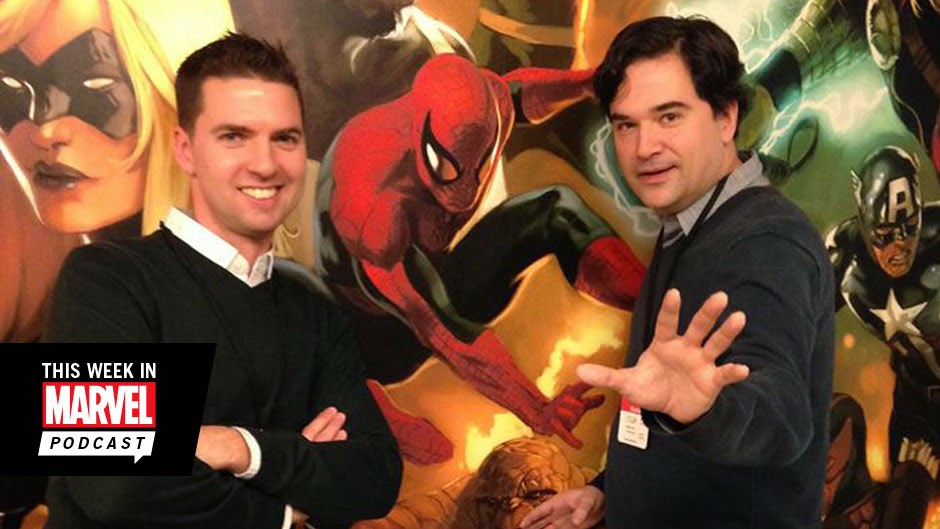
The Bowery Boys are guest stars on this week’s official Marvel Comics podcast This Week In Marvel hosted by those virtual Avengers and Marvel editors Ryan Penagos and Ben Morse.  We had an absolute blast recording this, talking about how New York City has implanted itself into the fabric of the Marvel Comics universe and some of its most popular characters like Spider-Man, Captain America and the X-Men.

What do Dr. Strange and Bob Dylan have in common?  What superhero was created to monopolize upon New York City’s 1970s disco scene?  What famous mystery author got her start writing comics?  Why might comic books be partially responsible for my love of New York City?  ALSO: Is Tom Meyers a member of HYDRA?

You can listen to the show here and also download it from their iTunes page. [This Week In Marvel]

We’re probably still very far away from getting our own blockbuster film, but this does get us one step closer than we were yesterday.

NYC, 1981 – THE RISE OF THE GUARDIAN ANGELS
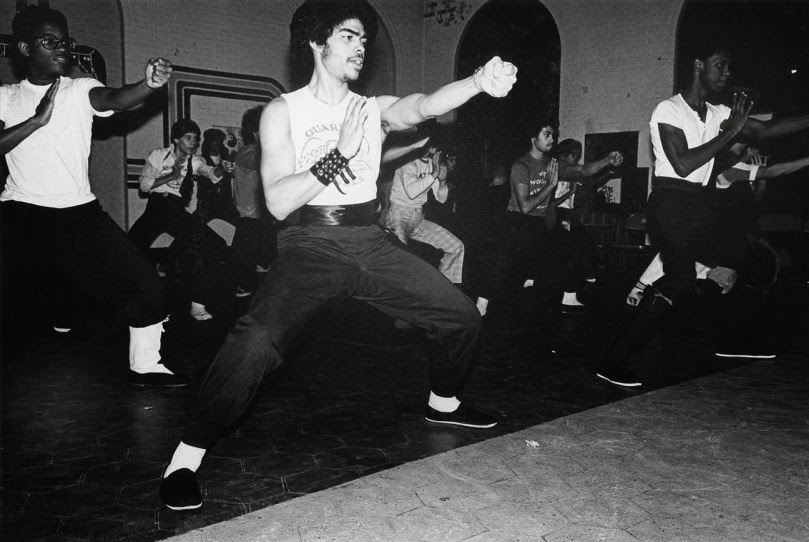
And now for a different sort of superhero!  Over at the A24 Films 1981 website (ramping up for next week’s release of A Most Violent Year with Oscar Isaac and Jessica Chastain) I write about the origins of the Guardian Angels, the independent squadron of subway defenders who patrolled the city streets despite some initial objections from the city.

Included with my article are some outright amazing photographs of the Guardian Angels’ early days, taken by Geoffrey Hiller.

Check it all out right here: [1981]

THE BOWERY BOYS YEAR IN REVIEW ROUNDUP
And we have a special holiday surprise for you — a new podcast this Friday!  We present to you the first annual Bowery Boys year in review.  Just update your podcast feed tomorrow or subscribe to the Bowery Boys on iTunes to get it first.

Categories
Christmas Pop Culture

The real ‘Miracle On 34th Street’: 21 great historical details from New York City’s most famous Christmas movie


The Bowery Boys Obsessive Guides look very, very closely at a classic movie filmed in New York City, finding buried history, additional context and a few secrets within various scenes and plot points. Filled with film spoilers so read this after you’ve seen the movie — or use it to follow along as you watch it!  Check out my previous guides for Midnight CowboyGhostbusters and The Muppets Take Manhattan.

“Oh, Christmas isn’t just a day, it’s a frame of mind… and that’s what’s been changing. That’s why I’m glad I’m here, maybe I can do something about it.” 

— Kris Kringle (Edmund Gwynn)

Miracle on 34th Street is the most famous New York City Christmas movie ever made, a celebration of post-war prosperity that happily substitutes Herald Square for the North Pole.

The movie is a complete inventory of the commercial Christmas experience. It treats the Macy’s Thanksgiving Day Parade like a starting gate — Thanksgiving? What’s that? — and, like many Americans, spends much of its entire running time in department stores.

The central question posed by this 1947 classic is whether Macy’s newly hired Santa Claus (played by Edmund Gwenn) is actually the Santa Claus or just some crazy person. At stake is not only the entire world’s celebration of Christmas, but the heart of young Susan (played by Natalie Wood) who never believed in Santa, thanks to her mother Doris (Maureen O’Hara).

Manhattan is perpetually bustling, from the Upper West Side down to Foley Square. Despite its reputation as a saccharine sweet take on the materialistic component of the holiday, the film is really quite cynical, even dark, at times.  Throwing an old man into the Bellevue Hospital psychiatric ward in the 1940s is hardly what I call a warm and fuzzy image.

I recently dug deep into the film and found a great many fascinating details, many involving people and places that lived in New York City at that time.  Here’s my obsessive guide to what normally stuffy critic Bosley Crowther originally called “the freshest little picture in a long time and maybe even the best comedy of the year.”

1) Arranging Reindeer  The film opens with Kris Kringle walking south down Madison Avenue. Get it? He’s Santa. He’s from the north! Along the way he passes several long-vanished New York businesses — Rosenberg & Grief furrier, Janice Carol salon, Liszt jeweler (or possibly pawn shop?)

He stops to chastise a store clerk on 19 East 61st Street about the placement of reindeer in the shop windows. That shop belonged to the interior designer Lillian Schary Waldman, often employed by high society and responsible for the homes of a few celebrities including Danny Kaye.  

By the way, you’ll notice there’s no Rudolph in the Christmas display.  The red nosed reindeer was created in 1939, within a coloring book produced by Montgomery Ward (at right), but not popularly considered part of Santa’s team until the 1964 Rankin-Bass animated special. (EDIT: Thanks to the commenter for reminding me of Rudolph’s real coming out –the song “Rudolph the Red-Nosed Reindeer,” recorded by Gene Autry and Bing Crosby in successive years.)

2) Old Newsprint  The film occasionally uses the technique of turning newspaper pages as a way of setting the scene. Notice the first time this is used, before the parade. The prop designer constructed a phony newspaper but used real news articles from the New York Times. Here’s the catch — most of the stories are well over a decade old! Some examples:  “NEW FRENCH CABINET UPHELD BY DEPUTIES” – Dec 23, 1932, “OUR SPEED PRAISED IN CHILD LABOR BAN” – July 20, 1933, and “EARTHS FORCES LAID TO COSMIC IMPULSE” – July 24, 1933

The curious Deitrich Knickerbocker balloon from the 1936 parade. (Courtesy Smithsonian)

3) The Real Parade Santa Claus has appeared in the Macy’s Thanksgiving Day Parade since the very first parade in 1924. One detail that did not quite make it into the modern era — knights in shining armor. Santa arrived in Herald Square “in state. The float upon which he rode was in the form of a sled driven by reindeer over a mountain of ice. Preceding him were men dressed like the knights of old, their spears shining in the sunlight.” [source]

The scenes of the Thanksgiving Day parade in Miracle are real, taken from the 1946 parade. This mixing of live events and fictional set pieces (filmed in Hollywood) was rather unusual for the day.  “Scenes shot in actual New York settings add credibility to the film,” said Crowther. Gwenn was even the parade’s real Santa!  “A somewhat frostbitten Santa Claus, in the person of Edmund Gwenn, the actor, gingerly climbed off his high perch and unveiled Macy’s mechanical windows….” [source]

4) Bad Santas  “These pants are gonna fall off in the midst of Columbus Circle,” said the unfortunately inebriated Santa, who is relieved of his duties and replaced by Gwenn’s Santa. Several decades before Santacon, newspapers would occasionally make note of a Santa who would come to work “with liquor on his breath.” It seems there were all sorts of lecherous Santas! In 1948, the year after Miracle, the New York Times Magazine notes a Santa who “grabbed a trim young mother, set her on his knee and suggested that they both go out and have a drink.”

5) Behind The Beard  Edmund Gwenn, the film’s jovial Kris Kringle, went on to win the Academy Award for Best Supporting Actor. (Unfortunately, he beat Richard Widmark‘s work in the film Kiss of Death, widely considered to be one of the greatest film noir performances.)

Although he had made dozens of films, the British actor was known for his work on the stage. In fact, right before starting work on Miracle, he gave what would be his last performance on the New York stage — the play You Touched Me with upcoming young star Montgomery Clift.

Above: Clift and Gwenn from their Broadway production of You Touched Me (Courtesy WalterFilm)

6) D-I-V-O-R-C-E  Miracle is unique in that its heroine is a divorced woman, but she’s badly treated by the film’s screenplay. Note the look of shock on the face of Fred Galley (John Payne) when little Susan casually mentions that her mother and father are divorced.

After World War II, divorce rates skyrocketed in America as servicemen returned from war to changed domestic situations. Divorces were only “fault-based” at the time; “typical grounds were adultery, desertion, habitual drunkenness, conviction of a felony, impotence … and, most used by divorcing parties, ‘cruel and inhuman treatment’.” [source]

The film makes some unsubtle commentary — Doris (which even sounds like divorce) is depicted as a cold, cynical woman, lacking little joy. I mean, she’s the director of the Macy’s Thanksgiving Day Parade and she doesn’t even bother to stay and watch it?

7) Locker Room Talk  We’re granted many scenes of Macy’s work spaces that customers don’t get to see, such as the locker room, where Kringle meets Alfred, the sometimes store Santa “with extra padding” and a thick Brooklyn accent — “just troo ’em on the floor!”

Macy’s was actually once renown for its locker room! From a report in 1913: “At Macy’s there are vast locker rooms containing expanded individual metal lockers for the majority of the employees and some smaller ones for certain groups. Never are two required to use one locker, except during Christmas rush. This is an exceedingly liberal policy, considering the size of the establishment, and a most desirable one.”

8) Toy Stores We get to the crux of the tale when Kringle, now hired as Macy’s Santa, begins sending customers to other department stores in the city. Most notably he sends a thankful mother (played by Thelma Ritter, in her debut film role) to Macy’s big rival Gimbels and another to a toy store called Schoenfeld’s, in Yorkville, at 1254 Lexington Avenue.

Here’s an ad for a toy submarine that was sold at Schoenfeld’s in 1927.

9) Cutthroat Business Macy’s and Gimbel’s were the two biggest department stores in Herald Square and one of New York’s best known rivalries. “Would Macy’s tell Gimbels?” was a popular expression of the time, expressing the fierce secrecy in sales and marketing practices. In Miracle, after Macy’s embraces Kringle’s policy of recommending items for sale at other stores, Gimbals tries to one-up their rival by adhering to the same policy and spread it to their stores across the country.

According to Gimbels lore, the company chairman Bernard Gimbel was asked to take the role of Kringle in Miracle. (I personally find this very hard to believe.) Such a request would not have been made of Macy’s founder Rowland Hussey Macy as he had died almost 70 years before.

Below: Gimbels Department Store in Harold Square, taken in 1915, from the vantage of the Marbridge Building (Photo by the Wurts Brothers, courtesy Museum of City of New York)

10) Home Away From Home When not at the North Pole, Kris Kringle resides at Brooks Memorial Home for the Aged at 126 Maplewood Dr, Great Neck, Long Island. That’s a real address although you won’t find the grand exterior that was used in the film. Why would they put Kringle in a nursing home in Great Neck? Perhaps it was a literary illusion to another great New York City fictional tale — Great Neck is called West Egg in The Great Gatsby, written only twenty-two years previous.

11) Santa Gets It Wrong Kringle is taken in for a psychological evaluation to prove his competence. He’s fully prepared, of course, seeing as he’s frequently accused of being crazy.

He rattles off a list of questions that might be thrown his direction during the mental examination. The trickiest? “Who was the vice president under John Quincy Adams? Daniel D Tompkins. And I’ll bet your Mr Sawyer doesn’t know that!”

Tompkins was a great many things in his day. Today he’s the namesake of Tompkins Square Park and Tompkinsville, Staten Island. But one thing he was not — he was never vice president under John Quincy Adams. That was John C. Calhoun. Tompkins served under President James Monroe.

So what accounts for this obvious error? Is it a true gaffe or an insight into Kringle’s character? Maybe he was crazy! Or just in need of an encyclopedia.

By the way, the psychiatrist Sawyer is taking his examination cues from a 1946 book called Mastering Your Nerves: How To Relax Through Action.

12) Working Delusion The handsome Doctor Pierce from the Brooks Memorial Home is sure the old man is suffering from a deeply held delusion. But so what?

“Why there are thousands of people walking around with similar delusions, living perfectly normal lives in every other respect. A famous example is that fellow — I cant think of his name — but for years he’s insisted he’s a Russian prince. He owns a famous restaurant in Hollywood and is a highly respected citizen.”

Pierce is referencing an actual person named Michael Romanoff (at right), a noted ‘professional imposter’, who once walked the streets of New York City claiming he was Prince Michael Dimitri Alexandrovich Obolensky-Romanoff, nephew of Tsar Nicholas II.

In 1941 he opened the restaurant Romanoff’s in Los Angeles on North Rodeo Drive, enjoying newly found success in a town noted for its impostors. The famous photograph of Sophia Loren and Jayne Mansfield is taken at Romanoff’s.

13) Martini Time! In a delightfully throw-away scene, Shellhammer, the head of Macy’s toy department, tries to convince his wife to let Kringle stay at their home. In order to get her to agree, he gets her wasted on martinis. “We always have martinis before dinner. I’ll make them double-strength tonight.”

We have Prohibition to thank for martini hour in many American homes. Driving alcohol consumption into private dwellings, the cocktail hour was firmly entrenched by the 1930s. It was properly solidified by the world’s most famous martini drinker after James Bond — Franklin Delano Roosevelt. “Before dinner we usually had martini cocktails made by the President’s own hands,” said one cabinet member. Many remembered that Roosevelt made very, very bad martinis, preferring to enhance them with a few drops of absinthe.

At right: A festive Gimbels ad which ran in the New York Times in 1946

14) Advertising Blitz Macy’s fully embraces the altruistic policy of directing shoppers to other stores if they are looking for an item that is not stocked. In a montage, we get to see some of the other department stores benefiting from Macy’s new rules — Bloomingdales, Hearn’s, Gimbels, Stern’s and McCreery’s. 

These stores were situated very close to one another during the 1940s and had followed each other up the island of Manhattan, beginning their existence in lower Manhattan, then moving to Ladies Mile in the late 19th century, then to Midtown by the new century. For instance, Hearn’s went from Broadway and 8th Street, then to 14th Street between Fifth and Sixth Avenue (very near Macy’s old home).

McCreery’s made its Ladies Mile home at Sixth Avenue and 23rd Street. Today it’s occupied by another building with a Best Buy on the bottom floor. It later moved to 34th Street and Fifth Avenue.

For more information about the department store scene, check out our podcast on Ladies Mile.

15) Vintage Lunch We see Alfred and Kris Kringle in another space for Macy’s employee’s — the cafeteria. This was obviously filmed on location as evidenced by this picture of the cafeteria from 1948 (photo by Nina Leen):

16) The Nut House Kris Kringle purposefully fails a mental exam — heartbroken by what he believes is a betrayal by Doris — and gets thrown into Bellevue Hospital for a few days. Kringle is seen in a relatively safe environment although the hospital’s reputation was less than rosy during this period. This is the era of shock therapy and other controversial treatments. In one experiment at Bellevue from the mid-1940s, almost one hundred children with diagnosed schizophrenia were given shock treatments six days a week.

Bellevue was also famous during this period for its alcohol rehabilitation center. In 1945, the film The Lost Weekend detailed one alcoholic’s “staggering ugly treatment” here.

17) Kooky Headlines In another swirl of headlines, we’re alerted to Kringle’s upcoming court trial to determine his true status. Among the many headlines we see is one that makes a total assault upon the English language — KRIS KRINGLE KRAZY? KOURT KASE KOMNG “KALAMITY” KRY KIDDIES

This is a gag directed squarely at Daily Variety, who specialized in absurdist headlines as early as the 1930s. In 1935 they went with the mind-boggling STICKS NIX HICK PIX, a headline later made famous in the 1942 film Yankee Doodle Dandy.

18) Historical Spot The climax of the film arrives at a peculiar place — Foley Square and the New York County Courthouse, one of the pillars of this civic district. The building was a little over 20 years old at the time of this film, and it looks pretty much the same as it does today. Along the top of the structure you can make out a carving of a 1789 quotation by George Washington — “The True Administration of Justice is the Firmest Pillar of Good Government.”

This building sets near the infamous intersection of Five Points and almost exactly on the spot were old Collect Pond once sat!

Below: New York County Courthouse, where Kringle’s fate is decided. (Photo from 1927, Wurts Brothers, courtesy Museum of the City of New York)

19) Kids Court  In an effort to prove the existence of Santa Claus, the son of the prosecutor is called to the stand. His name is Tom Marrah (you know, because he’s the future — tomorrow) and he is questioned about his beliefs on Old Saint Nick. “He gave me a brand-new flexible flyer sled last year,” he proclaims, then proceeds to point out Kringle from the stand.

The scene is an amusing twist on the great tale of “Yes Virginia there is a Santa Claus,” the famous confirmation of Santa’s existence that was published in the New York Sun fifty years earlier. The Virginia in question was also the child of a city employee — the coroner’s assistant — whose letter was answered by Sun editor Francis Pharcellus Church. In the case of Miracle, it is a more assured child that confirms his identity.  Judge Henry X Harper — a Democrat, we learn — affirms Kringle’s existence to curry favor from the electorate.

20) Dear Santa The final proof arrives, deus ex machina style, in the form of thousands of letters, re-routed from New York’s mail processing center to Foley Square. Kringle’s lawyer Galley then proceeds to regale the hall with a brief history of the U.S. post office. Galley informs the judge that the mail service was created in 1776 — technically it was 1775 — by the Second Continental Congress. Benjamin Franklin was indeed the first postmaster general.

So how many letters does Santa really get a year? In 2013 — even in the era of emails — there were over one million letters from American children alone. [source]  Back in 1940, the postmaster’s office was inundated with correspondence. Letters address to Santa were “opened and read so that ‘the real worthy ones’ can be set aside from those which were childish requests.” Because how dare a child ask Santa a childish request.

The film may have played a hand into an increase of Dear Santa letters in 1947 — “up 25% over 1946,” according to reports.

From the 1940s article:

21) Christmas In June Miracle on 34th Street may be set during Christmastime, but it was originally released in the late spring, June 2, 1947. The film made its New York debut at the Roxy Theatre in a program that also featured comedian Jerry Lester, singer Art Lund, a puppet show and “the Gae Foster Roxyettes,” which replaced the original Roxyettes after they moved to Radio City Music Hall.

As part of the promotion for the film, Macy’s sent an undercover shopper into Gimbel’s to report for Macy’s-owned radio station WOR. It’s doubtful that either department store took Santa’s advice and recommended visiting their competitor.

Categories
Christmas Robert Moses

And Now … Two Christmas Poems By Robert Moses

My new column for A24 Films is up over on their 1981 site (in support of the film A Most Violent Year). 1981 was the year that Robert Moses died, and his death sparked new discussions into what his legacy to the New York City area truly was.  In a word: automobiles.  You can read my article here.

But that’s a little depressing. How about I tell you about the time that the New York Times published a couple Christmas poems written by Moses?

That’s right, the Santa Claus of Long Island, bearing gifts of bridges and highways, did occasionally get into the Christmas spirit, albeit dripping in vitriol and sass.


Moses in 1934 during his failed campaign for governor. (Courtesy New York Daily News Archive)

POEM ONE – ‘TIS THE NIGHT BEFORE ELECTION

This loosely poetic speech first manifested in print during the last gasps of Moses’ failed bid for New York governor in 1934.

As the Republican candidate running against incumbent Herbert H. Lehman, young Moses failed to connect with voters, and the experience soured him on elected positions. He was soundly defeated by Lehman, the investment banker-turned-politician aligned with new president Franklin Delano Roosevelt (who had preceded Lehman as governor).

His final words as a candidate were spoken on radio station WEAF and printed the following day.  Those words paid an awkward homage to the great Christmas poem written by Clement Clarke Moore. Despite the fact that the election was in early November, his point in conjuring the visage of Old St. Nick would become clear.  It’s hardly rhythmic. Imagine this read in his gruff, determined voice:

“‘Tis the night before election, and nothing much is stirring throughout the state.

The stockings in Democratic homes are hung by the chimney with care, in the hope that Jim Farley soon will be there.

The Big Bag Man is dressing himself up as Santa. He doesn’t really look the part, but that’s not important.

Neither is the fact that all the presents were bought on credit, and that Santa Claus is running up a tremendous bill.   

The important question is:  Has he plenty of presents to go around for the boys and girls who have been good?

Governor Smith expressed the fondest hopes of the Democratic party, and summed up the strategy of the whole Democratic campaign when he said that he thought the people would not shoot Santa Claus before a hard Christmas.”

Jim Farley (pictured at right, 1938) was considered a ‘kingmaker’ in Democratic politics, responsible for the election of FDR.  He would become Roosevelt’s U.S. Postmaster General.  The James A. Farley Post Office across from Madison Square Garden is named in his honor.

Using the Santa analogy, Moses was taking a dig at Democratic programs that would soon shape FDR’s New Deal.  Of course, as New York’s power builder, Moses would later benefit greatly from these programs so perhaps he shouldn’t have been complaining.

In 1948, Robert Moses received the very first honorary degree from Hofstra University, along with Robert Gannon, the president of Fordham University.  However, that year it would be a phony university that would inspire Moses to pen a sassy Christmas verse. (Courtesy Hofstra University)

POEM TWO: CHRISTMAS GREETINGS (LETTER TO THE CHANCELLOR)

Perhaps more unusual was the poem which ran the day after Christmas in 1948, an inside joke between men of influence.

By the late 1930s, Moses had amassed several positions of responsibility and power and had pushed through a great number of vast, expensive projects, including the Triborough Bridge. Moses had to routinely pitch these projects to the New York Board of Estimate — the men who held the purse strings — which included Henry M. Curran (Deputy Mayor), Newbold Morris (City Council President), and James Lyons (Bronx Borough President).

Curran was a bit of a grammar nerd — the kind who cringes at improper usage of words — and recoiled during debates when Moses (at right) and the others misused the English language.

According to the Times, Curran organized among the men a hierarchy of language correction, (jokingly?) referred to as Curran University.  One could only ‘graduate’ from this phony university by excelling in their verbal and written debates with grammatical aplomb.

During a board meeting where the fate of the old Claremont Inn was discussed, Moses used the phrase ‘coign of vantage’ which scandalized Curran but suggested that Moses’ verbal skills were improving.

Then, one day, Moses wrote a memorandum to Lyons using the phrase ‘high-falutin‘ as well an apparent mis-use of the word Aurignacian.  This threw his superiors into a light-hearted conniption.

“We tried to help.  But Moses has failed, flunked.  Up with the bars!  Let Mose wail — without — not within,” wrote Curran.

Moses, who would become more powerful than all three men combined, responded in an unusual way — he wrote a biting Christmas poem.  The following verse, penned by Moses, was delivered to Lyon, who “promptly converted it into a Christmas card — with embellishments — and passed it along to his superior officer.”  The poem, as published in the Times:

CHRISTMAS GREETINGS
To Chancellor Henry H. Curran
Great Chancellor of Curran U
Greetings from Borough Hall and Zoo.
 
Assorted barks and roars and honks
From the four corners of the Bronx.
 
Gannon, Osborn, Robbins and Moses
Greet you with laurel, rhinos and roses.
 
Cheerios and loud hosannas
From Pelham Bay and the Bronx savannas.
 
Great critic of the spoken word,
Greetings with the proverbial bird.
 
From every coign and height definitive
We greet you with a split infinitive.
 
Signed, 
James J Lyons, Dean
Robert Moses, Sophomore Cheer Leader

So remember: the next time you have a friend correct your grammar, remind yourself, “Hey, I have something in common with the Power Broker!”

Below: A New Yorker cartoon from 1960, the year when his grammar pal Morris took the job of Parks Commissioner from Moses.


Categories
It's Showtime

Maude Adams: Fashion icon and America’s first Peter Pan

Tonight NBC’s unveils its live theatrical experiment Peter Pan with Girls star Alison Williams in the cross-dressing role of the boy who never grows up.

We can all have our debates about who’s been the greatest stage Peter Pan in history.  Most will say Mary Martin, a sizable minority will claim Sandy Duncan, and a few smaller voices may even cry the name Cathy Rigby. However the first and most popular woman to ever play the role was most likely the actress who originated the role on the American stage — Maude Adams.  

Her rendition was so popular that it inspired one enduring fashion trend.

Peter Pan made its New York debut on November 6, 1905 at the Empire Theatre at Broadway and 41st Street.  The theater was owned by one of New York’s most powerful producers Charles Frohman. Adams was one of his greatest finds, casting her in several productions when she was just a teenager.

Adams had played a boy on stage and had even starred in a prior play by Peter Pan’s author J. M Barrie (Quality Street).  Barrie himself came to New York to witness rehearsals with Adams and the show 70-odd cast members.

At right: The bizarre visage of Maude Adams as illustrated in the New York World, November 1905

The audiences loved Adams, but not the critics. From the New York Tribune the following day:  “As an actress Miss Adams is incarnate mediocrity — for she possesses neither imagination, passion, power, depth of feeling or formidable intellect and her faculty of expressive impersonation is extremely limited” — OUCH — “but as a personality, she is piquant, interesting and agreeable … she has shown to advantage and she causes the effect of commingled merriment, sentiment and momentary thought.”

Others criticized her physical size, calling her “plump and prancing.” “She was a trifle overweight for a fairy, but she carried herself lightly and gracefully and didn’t scare the children in the least.”

Audiences loved her, however, Adams proceeded to play the role of Peter Pan, off and on, for over a decade. In fact, Maude Adams was the actress most associated with the part for fifty years.  Mary Martin then took the role to Broadway in 1954, won the Tony Award for Best Actress the following year and then became the model for which all subsequent actors have looked to.

More important, Adams inspired a popular fashion trend — the Peter Pan collar.  Her costume, by John White Alexander, took great liberties with Barrie’s descriptions of Peter’s garments.  Women soon clamored for dresses with a similar floppy collar.  The play was still running at the Empire when the collars soon appeared at department stores.  This ad is from April 1906:

Her belted waist also took the fashion world by storm.  The “Peter Pain waist,” a traditional shirtwaist bound with a thick black belt, was called “decidedly chic,” “particularly becoming and stunning in effect.”

The front of the Empire Theatre, where Peter Pan made its New York debut:

Pic courtesy New York Public Library

Categories
Brooklyn History Gangs of New York

Screaming Phantoms, Tomahawks, Phantom Lords, Dirty Ones and other gangs of 1970s Williamsburg, Brooklyn

The Dirty Ones, a notorious gang from Williamsburg.

My new column for A24 Films (a tie-in to the new movie A Most Violent Year) is up on their site devoted to culture and events from 1981.

For this article, I look at what some of the dangerous undercurrents to life in Williamsburg, Brooklyn, in 1981. “By the 1970s, Williamsburg was best known for its steeply rising crime rate, harboring both violent street-gang activity and organized crime.” You can read the whole article here.

During my research for this piece, I found this rather startling map in the New York Times, August 1, 1974, charting out the various turfs of northern Brooklyn street gangs.

This is not a souvenir from the film The Warriors, but an actual list of the many violent gangs which kept Brooklyn a very dangerous place to walk around in during the 1970s.


Gang activity was so especially vicious at this time — particularly gang-vs-gang violence — that Luis Garten Acosta, the founder of El Puente youth outreach program, called northern Brooklyn ‘the killing fields’ in 1981.

I dug a little further to find some specific incidents which involved some of these gangs.  I’ve put numbers by the gangs so you can find their dedicated turf on the map above:

September 16, 1972 — A gang altercation among the members of the Young Barons (44) resulted in the death of one young man and another whose nose was cut off.Â

— August 21, 1973 — Several members of the Devils Rebels (19) were walking around Bushwick when they were accosted by the Screaming Phantoms (11). Two boys associated with the Devils Rebels were stabbed and killed. Police report “the Screaming Phantoms operated out of the Williamsburg area and had been ‘way out of their area’ at the scene of yesterday’s gang fight.”

— October 12, 1973 — Several gangs have been cast as extras in a new film called The Education of Sonny Carson, including the Tomahawks (48), Pure Hell (22) and the Unknown Riders (43).

— February 25, 1974 — The Times reports on the extortion schemes of various northern Brooklyn gangs, mentioning the Outlaws (28,29), the Tomahawks (48), the Jolly Stompers (not listed) and B’Nai Zaken (41).