Categories
Neighborhoods Podcasts

The many lives of the Limelight, aka the facade formerly known as the Church of the Holy Communion


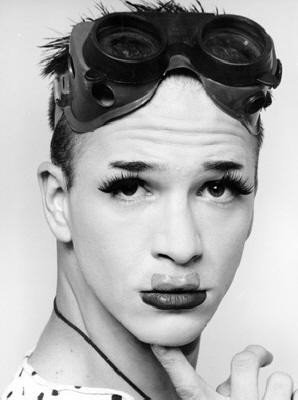
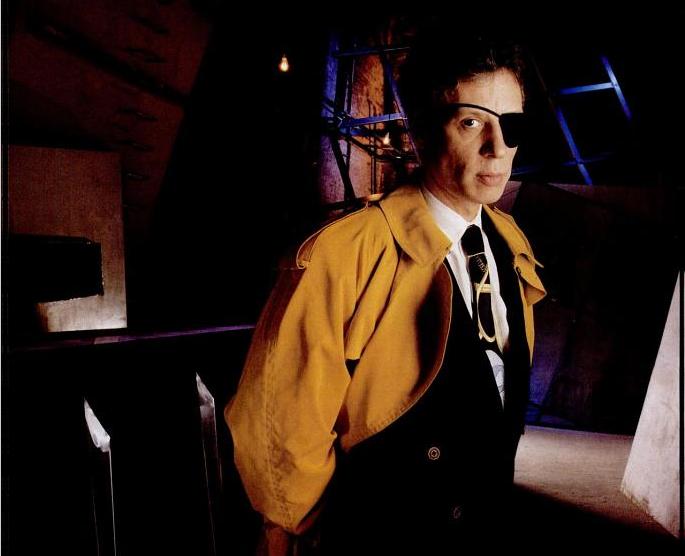
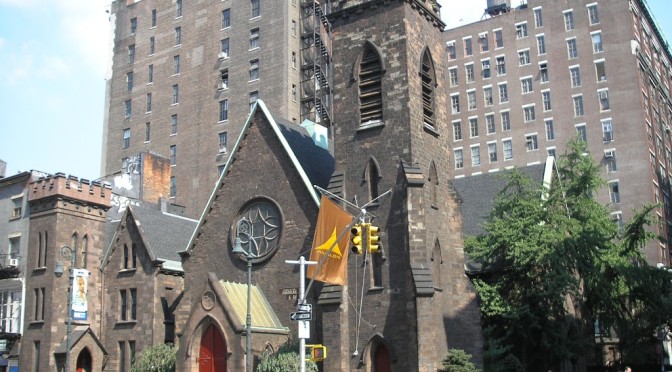
Above: The Church of the Holy Communion — and once the quite infamous nightclub Limelight — as the less lauded follow-up, called Avalon.  Within a couple years, the club would be transformed again — into a high-end retail experience.  Below: Michael Alig, one of its more notorious nightly residents. (source)

PODCAST
If you had told 1840s religious leader William Augustus Muhlenberg that his innovative new Church of the Holy Communion, designed by renown architect Richard Upjohn, would become the glittering seat of drugs and debauchery 150 years later, he might have burned it down then and there.

But thankfully, this lovely building is still with us, proving to be one of the most flexible examples of building use in New York City history. 

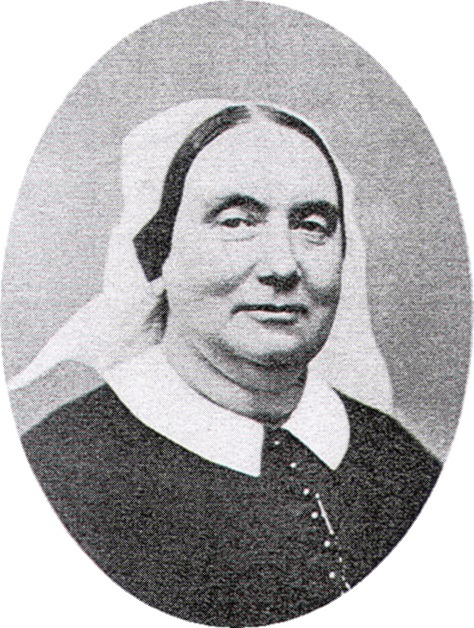
This unusual tale begins with the captivating relationship between Muhlenberg (the grandson of America’s first Speaker of the House) and Anne Ayres, the First Sister in charge of the Sisterhood of the Holy Communion. The two of them helped create one of New York’s great hospital centers. But was something else going on between them? 

The Church of the Holy Communion survives the elevated railroad and the fashionable stores of Ladies Mile, and weathers the various fortunes of the neighborhood.  When it is finally sold and deconsecrated, it briefly houses an intellectual collective and a drug rehabilitation center before being bought by Canadian club impresario Peter Gatien, who turns it into the Limelight, an iconic and sacrilegious symbol of New York nightlife.  And in recent years, the old church has morphed into a rather unique retail experience — shopping mall and department store!


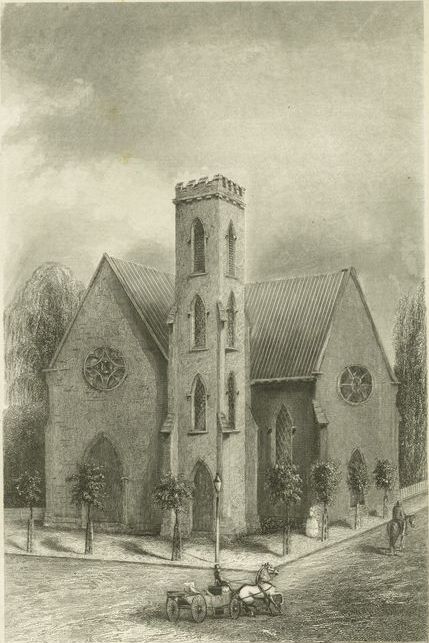
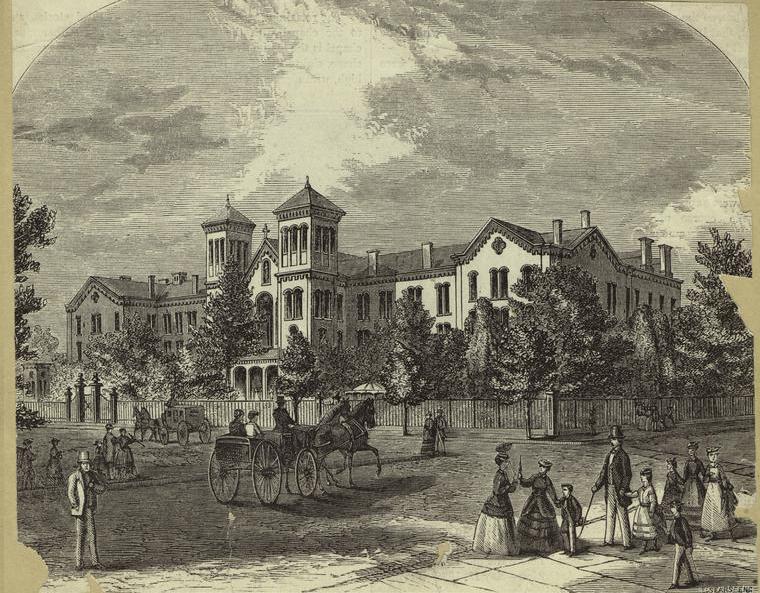
The Church of the Holy Communion in 1846, from an illustration by TD Booth.  The asymmetrical shape of the church was innovative for the time, as was the irregular position of the brownstone bricks along its walls. It had every indication of being a medieval country church, but for the fact of it being on a street corner at Sixth Avenue and 20th Street! (NYPL)

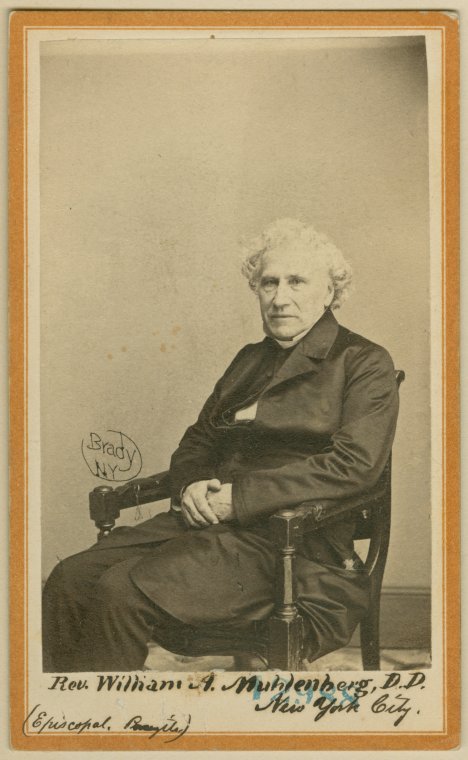
William Augustus Muhlenberg, grandson of Frederick Muhlenberg (America’s first Speaker of the House), was a visionary religious leader.  He opened Church of the Holy Communion as a way to further his progressive religious views.  Pictured below in a carte de visite, probably in the 1860s. (Courtesy NYPL)

Muhlenberg’s reputation was greatly bolstered by Anne Ayres, who became the leading sister as the Reverend’s  Sisterhood of the Holy Communion, the first Anglican convent of its kind in America.  Ayres helped Muhlenberg with most of the church’s major projects and penned an ecstatic biography after his death.  You can read Ayres’ biography of Muhlenberg here.

Muhlenberg and Ayres founded a small infirmary near the church, then later expanded it at Fifth Avenue and 54th Street, becoming the first location of St. Luke’s Hospital.  As you can tell from the original hospital building, it seems to reflect a bit of the architecture of the Church of the Holy Communion. (Pic courtesy NYPL)

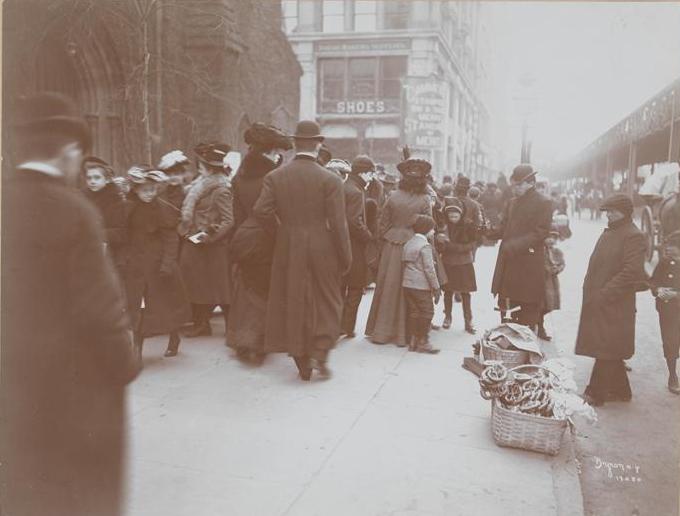
A view from 1895, possibly of a Sunday crowd leaving the church. Vendors like this pretzel seller gathered on the street below, selling treats to shoppers of Ladies Mile.  The church would have been in the heart of New York’s major shopping district during the Gilded Age, with grand department stores stretching on either  side of the street. (Courtesy the Museum of the City of New York)

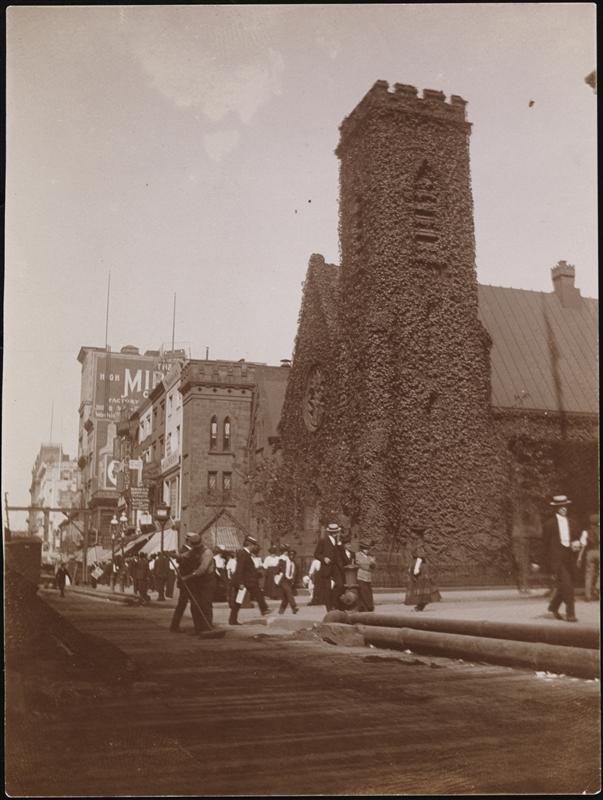
The Church of the Holy Communion, enveloped in thick ivy, as it looked in September 1907.  It also appears this photo was taken in the early afternoon, as the shadow of the elevated railroad begins to creep across the street. (Courtesy Museum of the City of New York)

Peter Gatien, pictured here in a 1993 issue of New York Magazine. The Canadian club owner bought the old church and transformed it into a nightclub in 1983.

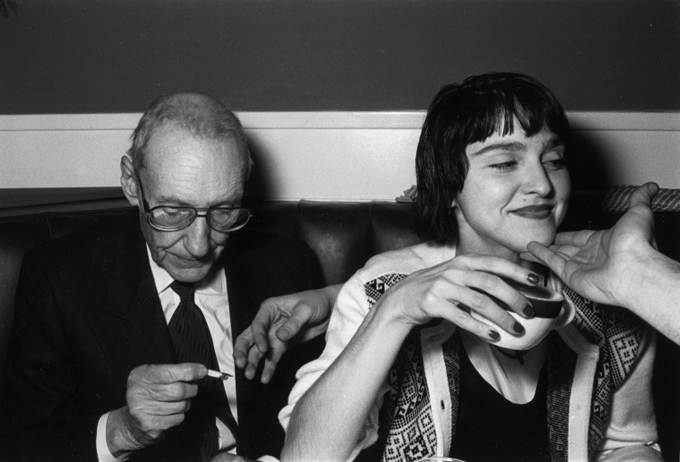
The Limelight was a celebrity hotspot from the very opening in 1983.  When William Burroughs had his 70th birthday at the club in 1984, the young new superstar Madonna came by to wish him well. (Photo by Wolfgang Wesener, courtesy here)

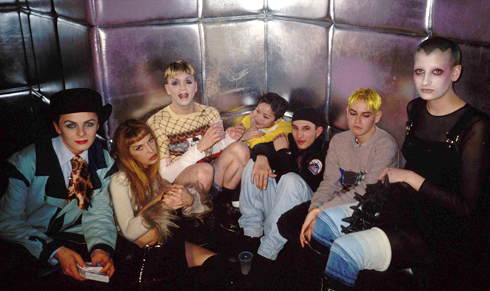
But why conjure real celebrities when you could make some yourself!  By the early 1990s, the club kid set the tone for the Limelight, further turning the old church of Muhlenberg into a surreal playground of music and drugs.

Categories
Mad Men

In Central Park, heated reactions to the assassination of Martin Luther King, while business booms at movie theaters

WARNING The article contains a couple light spoilers about last night’s ‘Mad Men’ on AMC.  If you’re a fan of the show, come back once you’re watched the episode.  But these posts are about a specific element of New York history from the 1960s and can be read even by those who don’t watch the show at all.  You can find other articles in this series here

The 1960s were obviously momentous for American culture and for New York specifically. But that decade was especially strange for Central Park.

Olmsted and Vaux’s urban oasis was a well-trodden destination for protest in the 1960s, a haven for “be-ins” and demonstration (with a little free love thrown in, I imagine).  In December 1967, agitated anti-war protesters even burned a Christmas tree.  Two years later, the first gay pride parade would also culminate here. (Here’s some video of the second pride celebration in Central Park the following year.)

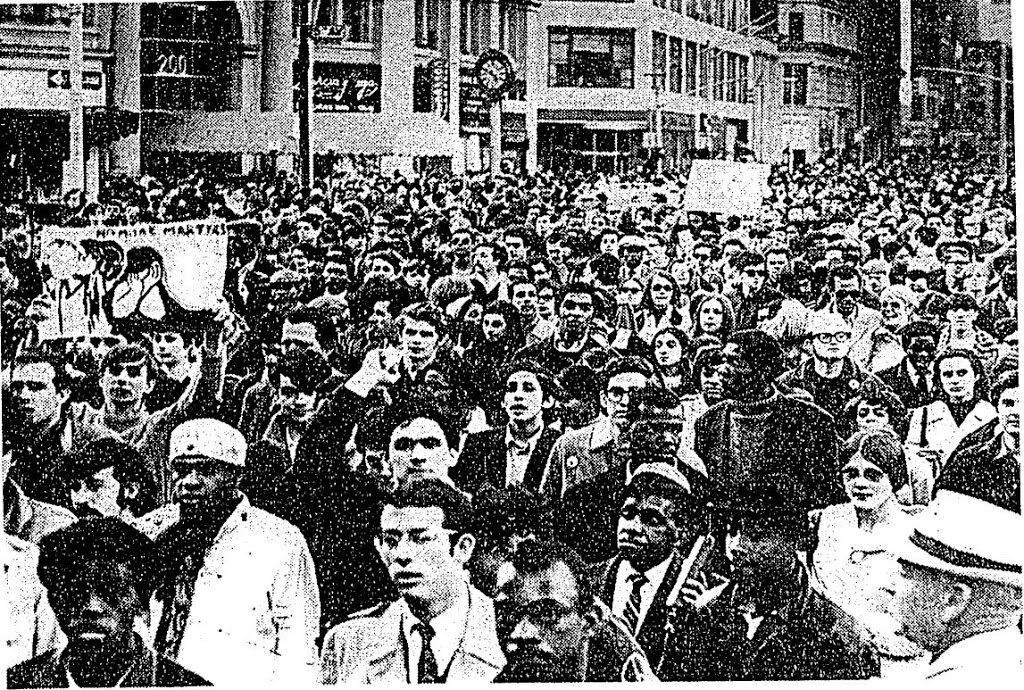
Almost 24 hours after DrMartin Luther King Jr was assassinated in Memphis on April 4, 1968, angered New Yorkers — mostly students — gathered for a rally in Central Park at the Naumberg Bandshell to honor the man’s extraordinary life and to cope with the sudden, inconceivable loss.

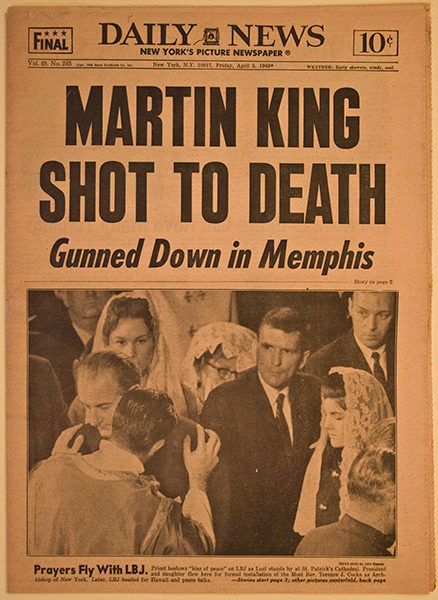
At right: The unusual headline from the New York Daily News. This particular front page popped up on last night’s show. Did you catch it?

The city was in a veritable lock down throughout the day, with many businesses and schools closing early on April 5.  In case you couldn’t make it into the city that evening — and given reports of rioting, many chose to stay home — the ceremonies were actually broadcast by WBAI.  (You can download a recording of the broadcast here, courtesy Pacifica Radio Archives.)

Those invited to speak at the gathering were friends and admirers from a variety of fields.  Looking at the list of speakers, perhaps the most unusual one that jumps out is Dr. Benjamin Spock, the famed pediatrician and best-selling novelist. Spock was an ardent, high-profile protester of the Vietnam War and a friend of Dr. King’s, frequently seen at his side in 1967 at war protest events.

Others who spoke at the rally included actor Ossie Davis and activists Florynce Kennedy and James Forman.  Perhaps the most damning words were spoken by Jarvis Tyner, chairman of the DeBois Clubs of America, who declared that Mayor John Lindsay was poised to send armored tanks to Harlem.

Below: Crowds cross 23rd Street on their way to City Hall. Picture courtesy NYT

Things got rather out of hand once the rally turned into a march down Broadway to City Hall.  According to the New York Times, throngs of students filtered down the streets, occasionally breaking windows along the way.  Trying to stem the violence among their number, others were heard shouting. “Let’s keep order for Martin Luther King.”

The following day, mourners marched from Harlem to an all-faith rally held by local religious leaders in the park.. (It seems likelier that this was the event attended by Megan and her step-children!)

On last night’s episode of ‘Mad Men’, we see Don’s own reaction to the tragedy — going to see ‘Planet of the Apes’ with his son!  According to the same article, this was not an unusual reaction after the tragedy.  While other forms of entertainment saw a notable decrease in attendance, movie theaters saw no such effect, even with fears of a possible riot awaiting moviegoers when they left the theater.  “Times Square movie theaters reported either normal or better than usual crowds and both the Baronet and Coronet Theaters on Third Avenue at 59th Street said they had long lines of people waiting to buy tickets for the early evening shows.”

The April 5th rally for Martin Luther King wasn’t even the most unusual thing to happen in Central Park that day.  That distinction would go President Lyndon B. Johnson, who planned a surprise trip to the United Nations that day and touched down his helicopter in the park!

Categories
Landmarks

The many mysterious events that befell the Woolworths after constructing the Woolworth Building

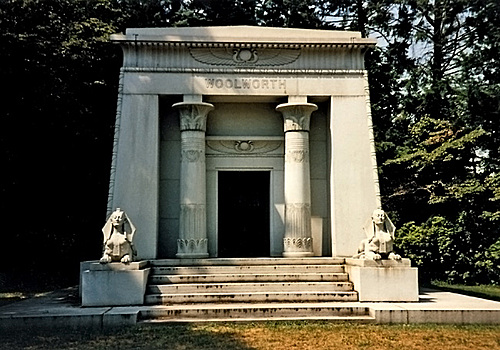
The dramatic Woolworth mausoleum in Woodlawn Cemetery 

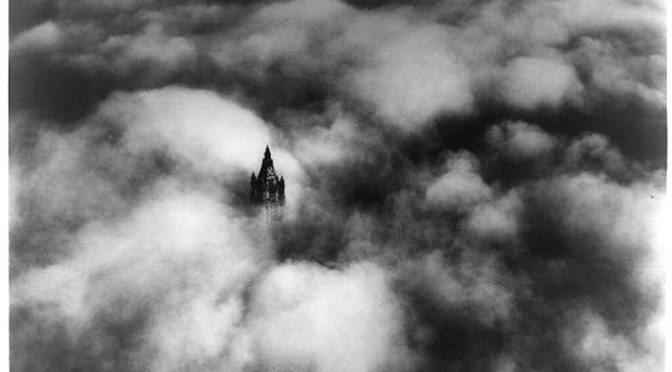
With completion of the Woolworth Building in 1913, the leader of the five-and-dime retail craze Frank W. Woolworth had his grand declaration of success in New York, widely feted and proclaimed.

His hundreds of stores would go on to define the shopping experience around the world over the coming decades.  (Their lunch counters would also unfortunately typify racial segregation in the 1960s.) While there are no more Woolworth stores in America today*, you can still find many outlets with that brand as far away as Germany and South Africa.

But life took a few unexpected, frequently tragic and often bizarre twists for the Woolworth family over the next few decades following the completion of the Woolworth Building:

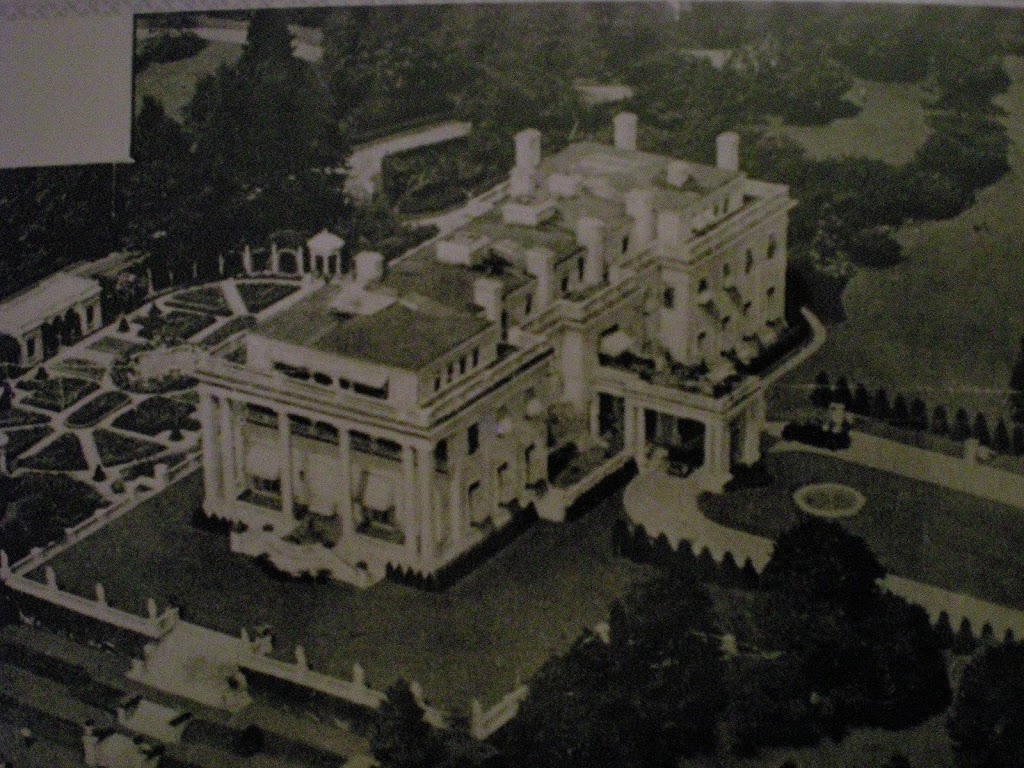
Above: The ‘new’ Winfield Hall in 1925. Courtesy Old Long Island

1) Fire at Winfield Hall: While the family enjoyed a very luxurious residence at Fifth Avenue and 80th Street across from the Metropolitan Museum of Art, his wealth was better displayed in the mansion out in Glen Cove, Long Island, where his wife and daughters lived most of the time.

But this house — a wooden, columned manor named Winfield Hall — mysteriously burned down in November 1916.

And just as oddly, Woolworth had almost instantly on hand new plans for a colossal marble palace, more in keeping with the many gigantic homes along Long Island’s Gold Coast.

Think The Great Gatsby of the five-and-dime; in fact, Glen Cove is just a few minutes over from Manhasset, fictionalized by F. Scott Fitzgerald as ‘East Egg’.

The estate is reportedly haunted due, according to sources, to Woolworth’s interest in the occult.

2) Single White Mogul:  In 1892, in the early days of Woolworth’s business, he hired a young Brooklyn man, Hubert Parson, as a bookkeeper.

By the 1910s, Parson was Woolworth’s right-hand man, thought of as a part of the family and as the son Frank never had. In 1916, Woolworth shocked many by promoting the relatively young assistant to the role of general manager.

It then appeared that the notoriously vain Parson was attempting to actually outdo his boss, first building a bigger Fifth Avenue mansion than his boss, then, in 1918 purposefully buying a house in Long Branch, New Jersey — named Shadow Lawn — that was far larger than Woolworth’s own Winfield Hall!

“If Woolworth bought a brand new automobile,” writes author Karen Plunkett-Powell, “then Parson would, too — complete with uniformed chauffeur.”

After Frank’s death, Parson would become president of the company. Later in life, he would be criticized for his “extravagant personal lifestyle” during the Great Depression and was eventually forced to retire.

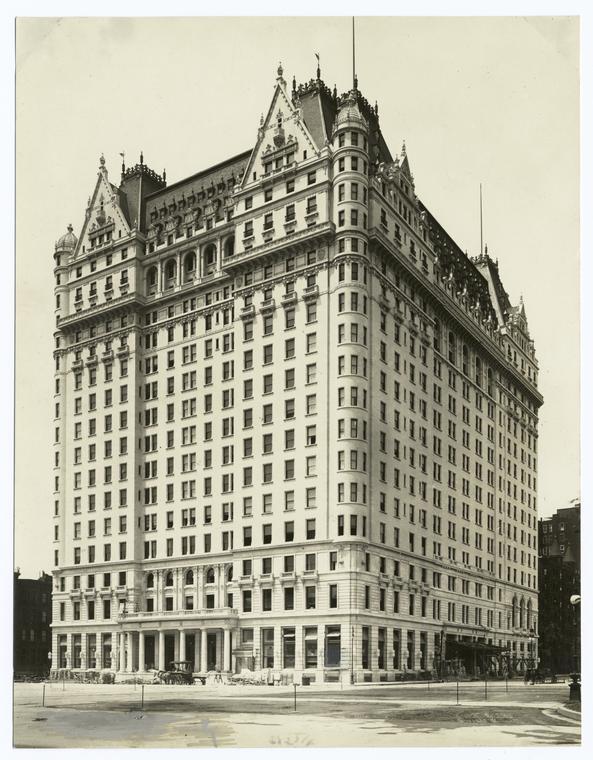
3) Death at the Plaza:  Woolworth’s daughter Edna was a tragic and very tormented woman, marrying an associate of her father’s who ended up drinking heavily and cheating on her. In 1917, at the Plaza Hotel, after reading a letter confirming yet another mistress, Edna put on her loveliest lace dress, sat by a window and ingested a lethal dose of poison.  Unfortunately, her body is discovered several hours later by her daughter Barbara.

4) Why You Should Go to the Dentist: Frank Woolworth had an absolute hatred of going to the dentist, a prejudice that led to his death in April 1919, when he died suddenly due to a tooth infection. Unbelievably, he died with his will unsigned, and all the money (about $30 million) went to his wife Jennie.

However, Jennie was having problems all her own, having been declared ‘mentally feeble‘ and legally incompetent by this time. Of the will, “DEMENTED WIFE GETS ALL,” said an unsubtle New York Times headline.

It’s not clear to me from the reporting of the day, but it appears from description that Mrs. Woolworth was suffering from Alzheimer’s when her husband died.

5) Gem Theft at the Plaza: In 1926, the youngest Woolworth daughter Jennie, living the good life at the Plaza, had over $683,000 worth of jewels stolen from her room while she was in the bathtub.

“The thief displayed a shrewd knowledge of pearls,” said the Times. “Alongside the genuine ones in the drawer were four ropes of imitation pearls …. [T]he robber scorned them.” The crime kept the Woolworths in the paper for an entire month.  The jewels mysteriously reappeared a week later and the man who purloined them — a private detective! — was arrested.

Five years later, Jennie’s husband would then poison himself (another suicide) and die in his office at the Woolworths’ Fifth Avenue residence.

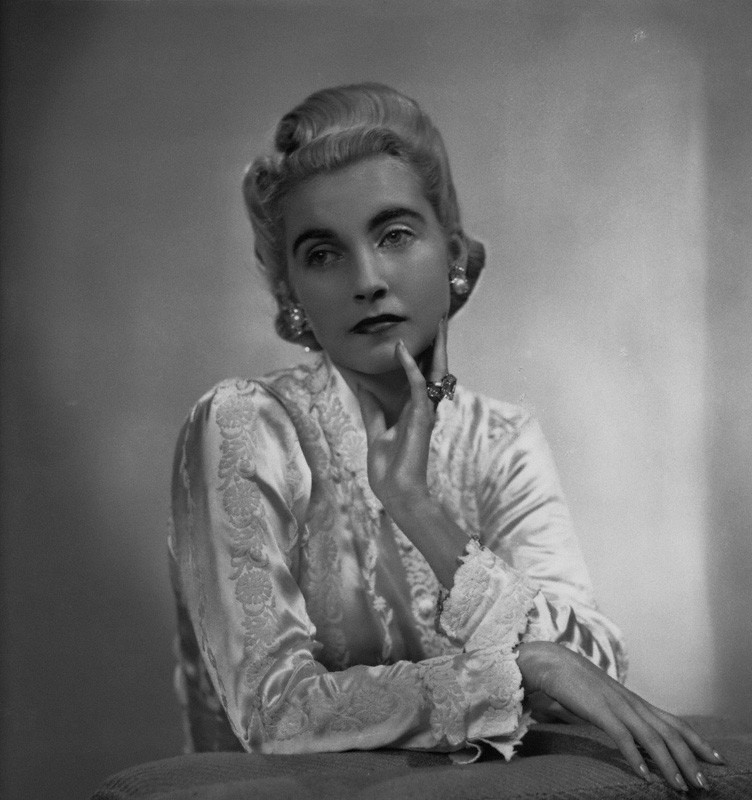
6) Poor Little Rich Girl: Barbara Hutton (above), who had discovered her mother dead in the Plaza, grew up to become something of an infamous party girl, thanks to an over-the-top debutante ball held in her honor during the Great Depression. She was dubbed the ‘poor little rich girl’, fodder for gossip columns and, later, made-for-TV movies.  The heiress, never shying from an extravagant lifestyle, married seven times — most notably to Cary Grant in 1942 — in a life often marred by tragedy and physical abuse.

Most of the people mentioned above are buried in the ornate Woolworth Mausoleum in Woodlawn Cemetery in the Bronx.  The mausoleum is a tribute to vast wealth and self-importance, designed like an Egyptian temple by John Russell Pope, best known for designing the Jefferson Memorial in Washington D.C.!

*The remnants of the Woolworth company are now organized as Foot Locker Inc.

Categories
Landmarks

What a resume! Cass Gilbert’s three stunning prequels to the Woolworth Building


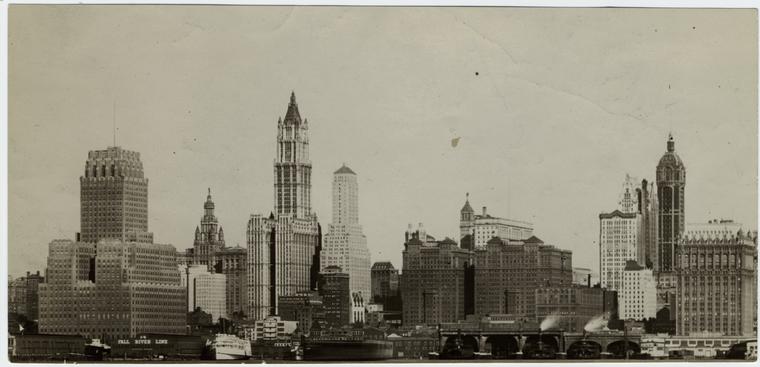
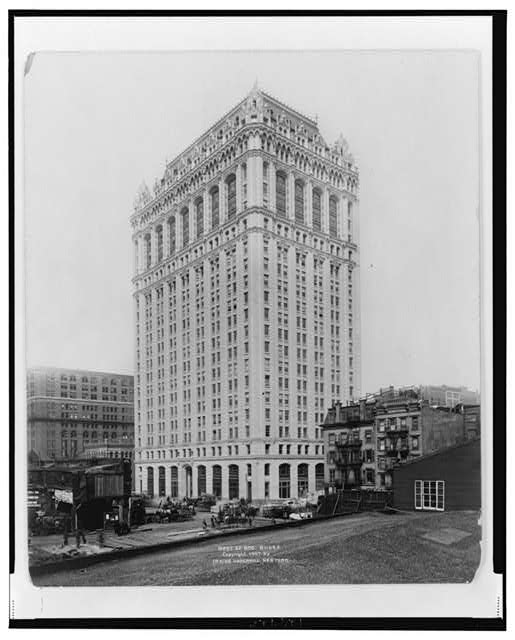
From this angle, you can see two of Cass Gilbert’s creation, the West Street Building and the Woolworth under construction.  View of his Broadway-Chambers Building is obscured by the building to the left. (LOC)

It’s Woolworth Building week here in New York City!  The lights of Frank Woolworth‘s treasured office tower were turned on in an official ceremony on April 24, 1913, and the building opened for business on May 1.

The five-and-dime mogul reached for one of America’s leading architects in planning his namesake tower. Cass Gilbert had distinguished himself in Minnesota before arriving in New York City in 1899 where he immediately went to work transforming the skyline.

Why was he given such a prestigious assignment to create the world’s largest building?  Judging from his work in New York prior to the Woolworth job, there would have been few more qualified than Gilbert to create on a grand scale something so innovative, distinctive to Woolworth’s vision and in keeping with Beaux-Arts values of the day.  Unlike another great architect of the day like George Post — whose greatest works have almost all completely vanished — all three of Gilbert’s early New York buildings survive.

Here’s the three buildings that helped him snag the commission for the Woolworth headquarters:

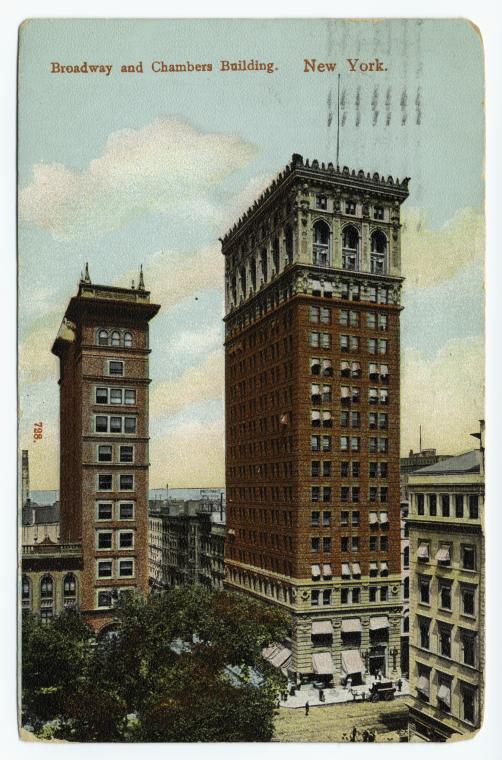
The Broadway-Chambers Building
277 Broadway
1899-1900

Gilbert’s designs for this sturdy tower with a lovely copper top (now, of course, oxidized to green, just like Lady Liberty) featured a mix of brick and terra-cotta, some polychrome, a rarity for its day.

The building’s new tenants required changes to Gilbert’s original plans. The Domestic National Bank on the second floor, who happened to employ a great number of women, required an increase of accessible women’s bathrooms.  And the United States Life Insurance Company demanded several large safes be transported to upper floors and installed.  Despite the changes, the structure was completed in a staggering four months.

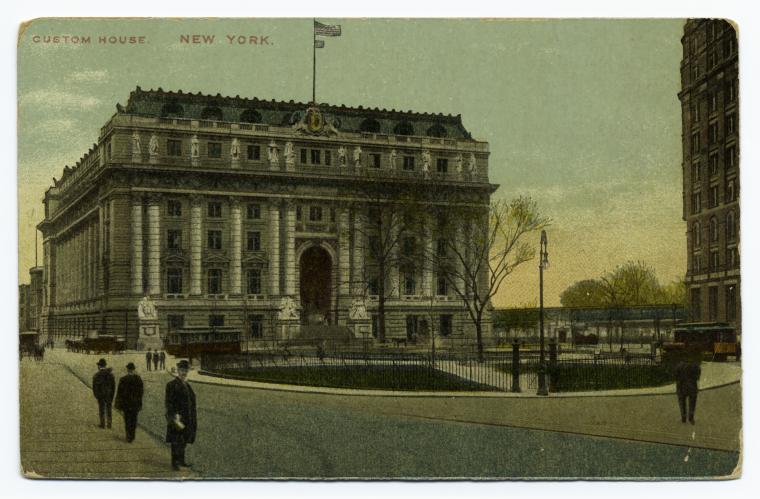
Alexander Hamilton Custom House
One Bowling Green
1902-07

The competition to replace the old Custom House at 55 Wall Street was the impetus that brought Gilbert to New York to create one of America’s finest examples of Beaux-Arts architecture.  He was a heavily contested choice, as his designs beat those of New York firms like Carrere and Hastings (later to create a similar building for the New York Public Library).

The seven-story office — more like a monument, really — sits atop the location of old Fort Amsterdam, giving the location a sense of import with its four representative sculptures (by Daniel Chester French) of Africa, America, Asia and Europe.  Today the structure houses the Smithsonian’s National Museum of the American Indian.

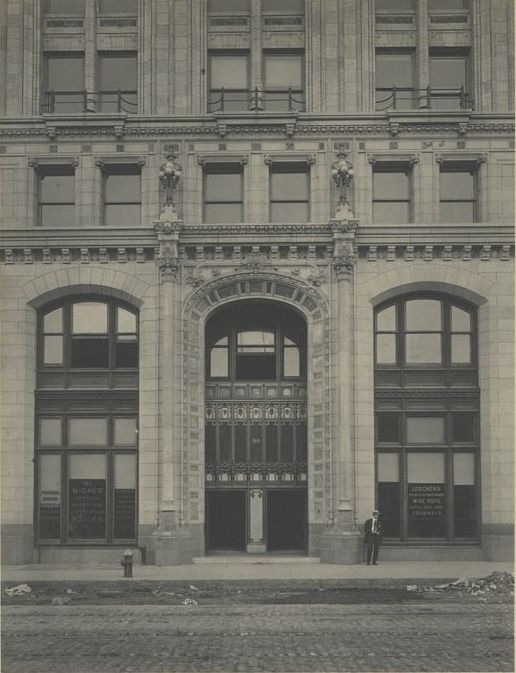
West Street Building 
90 West Street
1905-07

But it may have been his 1905 commission to design a waterfront office building on West Street for ferry operator and asphalt king Howard Carroll that secured his reputation as a virtuoso of the skyscraper age.  The building, to serve port and railroad industries of lower Manhattan, had Manhattan’s highest restaurant on its top floor.  At the time, this was shorefront property; today it stands across from Battery Park City.

Gilbert would dabble in themes and styles with the West Street Building that would be further explored with the Woolworth Building.  No other building shares as many features with the Woolworth Building as this one.   Former rival John Carrere admitted, “If my opinion counts for anything I think it is the most successful building of its class.”

Below: the West Street Building, the side facing into Manhattan. 

Pictures courtesy NYPL.

Categories
Health and Living

Dueling ‘perfect babies’ in Brooklyn and Manhattan, pageantry in support of healthy infants in New York

The exaltation of fat, plucky babies via beauty contests stems from a rather grim origin — American infant mortality rates of the 19th century.  During the 1880s, as swelling immigrants and overcrowding in New York created harbors for disease and malnourishment, over one in five infants would die in America, with higher occurrence among poor or minority populations.

Although people have always adored looking at cute babies, the criteria for a ‘perfect baby’ in 1913 involved body form, fat and general disposition.  Baby pageants were a common place feature in Coney Island parades, with stunned and perplexed infants laid in small floats and pulled along the avenue to great acclaim.  (This second place winner from a 1923 parade doesn’t look too pleased.)

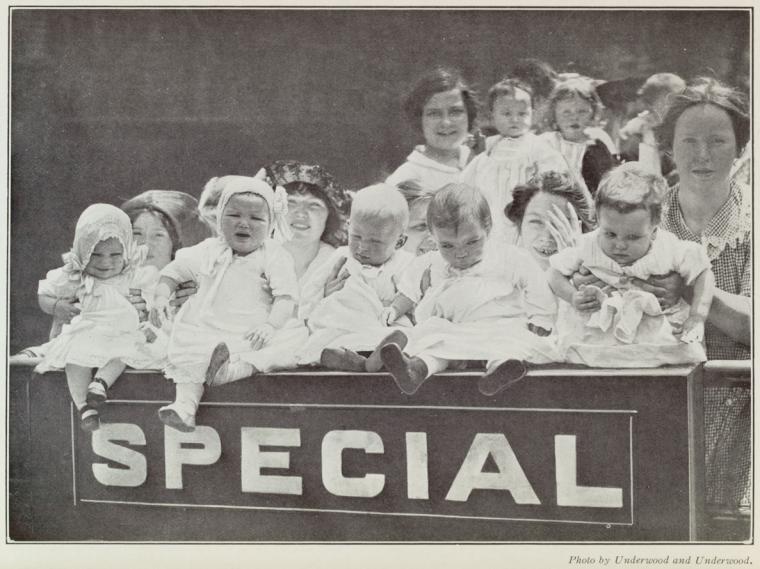
Below: Annoyed babies on display in a June 1914 Grand Automobile Baby Parade.  (This is obviously a photo montage, and, by the way, the original caption for it is super depressing. Read it here if you want.)

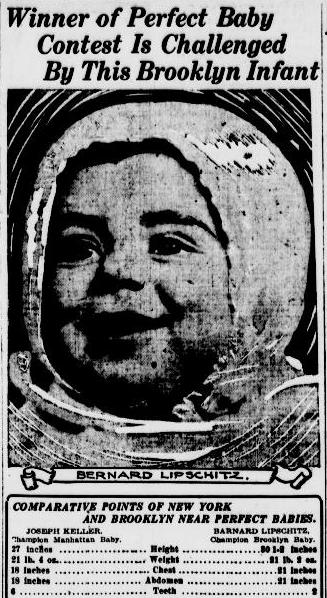
In 1913, with New York City relishing the results of two decades of City Beautiful architecture, so too did they honor the beauty of their offspring.  It even offered an opportunity to rekindle the famous Manhattan-Brooklyn rivalry that so made the Consolidation of 1898 so contentious, when, on April 17, 1913, the New York World declared that the winner of a Manhattan Perfect Baby contest had been challenged by a Brooklyn tot.

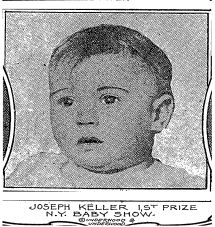
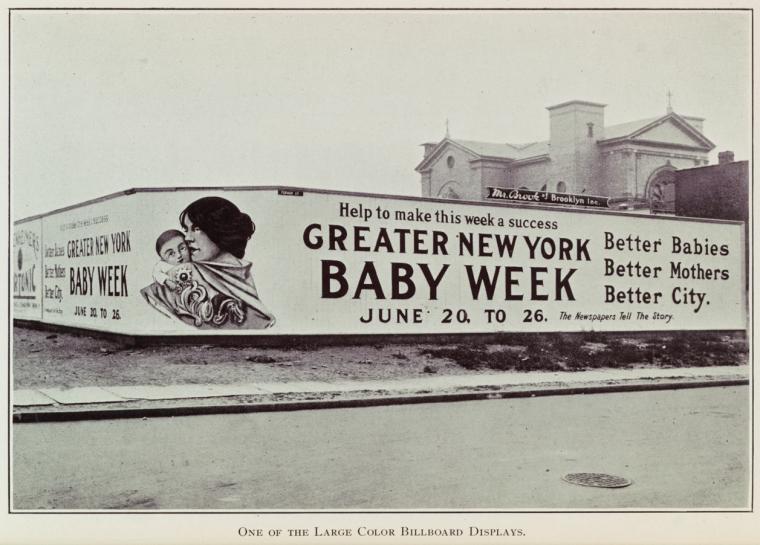
Young nine-month-old Joseph Keller (at right), residing with his German-Irish family at West 136th Street in Manhattan, won a contest held by a local public school, in a culmination of the city’s Better Babies Week, an effort by public health advocates to promote infant health, providing ‘milk stations’ and doctor consultations throughout the city.

The unabashed celebration of gorgeous children — with a mind towards public education — electrified the city.  The program was such a success that it was greatly expanded the following year.  “Baby week has done to New York’s attitude towards babies what a large, active firecracker placed under the chair of a dozing grandfather might be expected to do,” said one journal in 1914.

Keller was chosen from dozens of babies whose mothers showed up at a milk station during Better Babies festivities. Babies were evaluated based on precise guidelines, almost as one judges an animal at the Westminster Dog Show.

According to the New York Times, the scorecard used to judge Keller and the other babies in 1913 included the following criteria:  height, weight, circumference of chest, circumference of abdomen, symmetry, quality of skin and fat, quality of muscles, bones, length of head, shape and size of lips, shape and potency of nose, disposition, energy and attention.

Another article makes note, to the detriment of Mr. Keller, that “it was not the prettiest baby that got the prize” but rather one with the healthiest and most ideal physique.

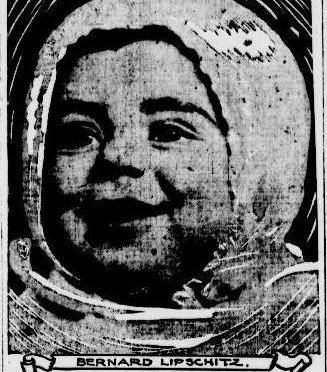
But the mother of Bernard Lipschitz, of 1526 Eastern Parkway in Brooklyn, begged to differ.  “In Brooklyn, there are babies that can equal if not excel the record set by the prize winner Joseph Keller,” she said to the Evening World in an article on April 17, 1913.

“He certainly looks like a prize winner!” the Evening World remarked of Lipschitz, regaling his superior qualifications.  In every aesthetic but one, baby Lipschitz was the superior candidate, with Keller’s only saving grace being his number of teeth — 6 to Bernard’s 2 . “Let Joseph hug that consolation to his soul.” [source]

And now, one hundred years later, what say you — Joseph vs. Bernard?

Below: From the 1914 baby drive, heavily supported by new mayor John Purroy Mitchel.

Pictures courtesy New York Public Library, except for images of Joseph and Bernard.

Categories
Mad Men

‘Mad Men’ notes: New York City on January 31, 1968


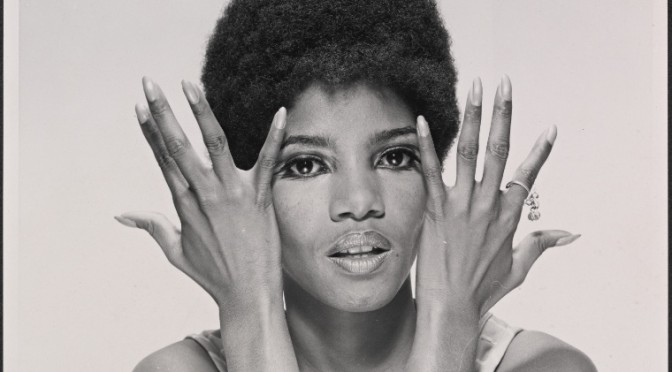
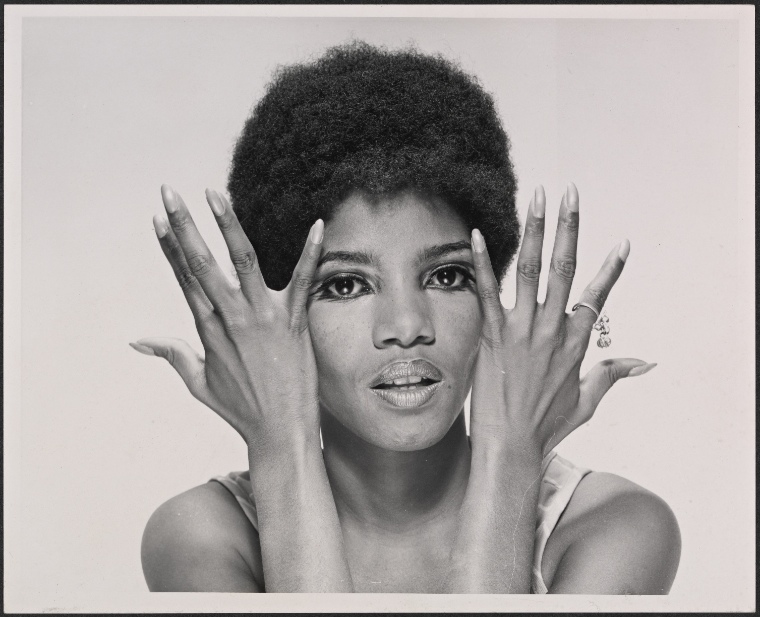
A press photo from Hair, the hottest show in town in early 1968, photographer Kenn Duncan

WARNING The article contains a couple light spoilers about last night’s ‘Mad Men’ on AMC.  If you’re a fan of the show, come back once you’re watched the episode.  But these posts are about a specific element of New York history from the 1960s and can be read even by those who don’t watch the show at all.  You can find other articles in this series here

Don Draper and the gang were too busy with their mistresses and their ‘self-immolating’ pitch meetings to properly react to the headlines of the day on January 31, 1968.  Word of the U.S. military’s devastating setback — today called the Tet Offensive — only briefly interrupted dinner conversation; by the time Draper’s dinner companion ordered steak diavolo, the subject had floated to another table.

In the year 1968, it will be become increasingly difficult to tune out the world.  Pete Campbell, with blank eyes, tunes into Johnny Carson, who has devoted his entire show that evening debating New Orleans district attourney Jim Garrison regarding the assassination of JFK.  Garrison was readying a case against Clay Shaw for conspiracy to kill the president (he was acquitted):

The most vibrant movements in the city involved protest and aggravation. The hottest show off-Broadway, Hair, was prepping for its official Broadway opening that April.  Hair was the very first musical to ever transfer from off-Broadway to Broadway.

What else is going on in January 31, 1968?

—  The finishing touches are placed on the new Madison Square Garden which will open a couple weeks later, on February 11. A few seasons ago, the admen of Sterling Cooper took to wooing the organizers of MSG who were prepping the destruction of Penn Station.  All traces were gone by 1968, replaced with the  drab concrete cylinder which presently sits at 34th Street.

— And things were brewing below it as well.  The following day, New York’s two largest train companies — Pennsylvania Railroad and New York Central Railroad — announced their merger to form the eventually-named Penn Central.  This would eventually incorporate other services, including Pete Campbell’s favorite train. And it would all go bankrupt by 1970!

— The number one song that week? The parody number ‘Judy In Disguise (With Glasses) by John Fred and the Playboys.

The number one film that week was the throwback Western Firecreek.  This was a rare lapse into the traditional, as most filmgoers were talking about two other big releases — Planet of the Apes and The Graduate.

— In a sign of protest (and grim foreboding), the head of the city’s anti-poverty programs George Nicolau resigned out of frustration with lack of support from the federal government.  [source]

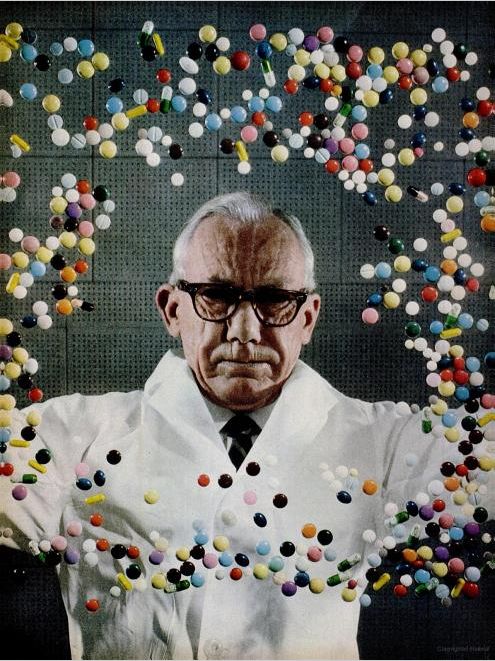
— Has somebody shown this to Betty? The cover of Life Magazine that week presented an expose on dangerous diet pills. The picture below grandly illustrates the problem.  (This issue from the week before is actually seen on a coffee table in this episode.)

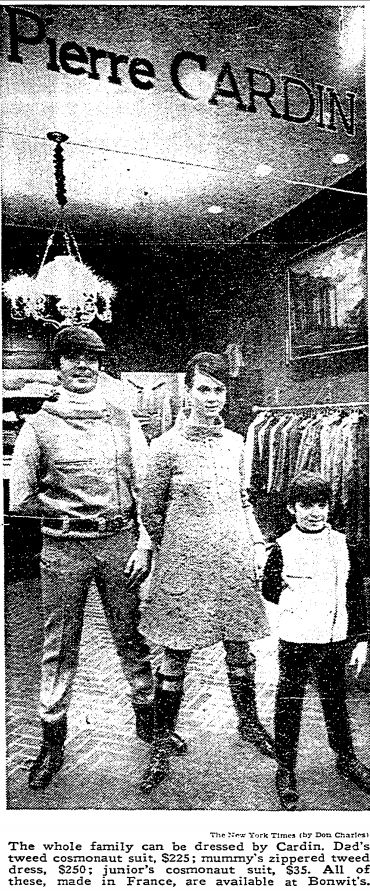
— But never fear. The New York Times fashion section announces a fabulous trend — dress the entire family as cosmonauts, courtesy Pierre Cardin! “The era of the fully fashion-coordinated family is at hands,” they declare.  You could buy this extraordinary set of garments at Bonwit Teller at the corner of Fifth Avenue and 56th Street

(Edit: A prior version of this story listed the address at Fifth Avenue and 38th Street, next to the still-surviving Lord & Taylor. It was indeed there for two decades, but by 1930, it had moved to the tonier uptown address.) [source]

Categories
Bowery Boys Bookshelf

A chat with Matthew Goodman, author of ‘Eighty Days’

So how do you follow two journalists around the world, in opposite directions and from the vantage of almost 125 years in the future?  I asked Matthew Goodman, the author of “Eighty Days: Nellie Bly and Elizabeth Bisland’s History-Making Race Around the World,” this month’s Bowery Boys Book of the Month, about the two competitors and the challenges of Victorian era travel.

Bowery Boys: So just how insane was it for a woman to travel alone around the world – not to mention two women, going in the opposite direction? How many traditions of propriety were they shattering by accomplishing this?  

Matthew Goodman:  By 1888 Nellie Bly had established herself as a star reporter for The World, Joseph Pulitzer’s widely read newspaper.  But when she went to her editors to propose a solo race around the world to beat Phileas Fogg’s eighty-day mark, the idea was soundly rejected.

This was a time, after all, when male newspaper editors didn’t feel comfortable sending their female reporters across the city, much less around the world.   Editors didn’t think it was appropriate for a female reporter to go out by herself out night, or in the rain, or into tenements or dancehalls or barrooms or wherever else a story might lead them, much less consort with criminals and policemen and other unsavory characters.  Such behavior was considered improper, undignified, unseemly – in a word, unladylike.

Moreover, any woman attempting to travel around the world would surely require a battery of steamer trunks, to carry all of the ball gowns and so forth that, of course, she would require. And so, when Bly proposed her trip, The World’s business manager told her firmly, “Only a man can do this.” (To which Bly just as firmly replied, “Very well, then. Send your man, and I will start the same day for some other newspaper and I’ll beat him.”)

A year later, when The World’s circulation had started to decline, Bly’s editors finally gave her permission to set out around the world. To do so, Bly insisted on carrying everything she would need for her trip in a single handbag, measuring sixteen by seven inches at its base. Not only did she want her travel to be as efficient as possible, she also wanted to give the lie to the time-worn notion that a woman required more luggage to travel than did a man. (That leather bag would eventually become iconic, and today it is on public display at the Newseum in Washington, D.C.)

BB:  Nellie Bly is of course a classic figure of the Victorian era but Elizabeth Bisland is relatively unknown. Were there any challenges in bringing Bisland’s tale up to the pace of Nellie’s – the more familiar of the two tales?

MG:  I knew right from the beginning that I wanted this to be a double narrative – half of it told from Nellie Bly’s point of view, half of it from Elizabeth Bisland’s. Which meant that Bisland’s story would need to be just as richly detailed and compelling as Bly’s – a challenge, as you point out, given that no one had ever written any substantial account of her life and she is today almost entirely unremembered.

So I set to work attempting to learn everything that there was to know about Elizabeth Bisland. Fortunately, Bisland had written a book about her race around the world (as had Bly), so I read that first.  Then I read everything else she had ever written – which included a novel and several collections of essays, as well as many dozens of newspaper articles. On the Internet I tracked down a number of her descendants, and they generously shared with me unpublished family histories, letters, photographs, and newspaper clippings about their beloved ancestor.

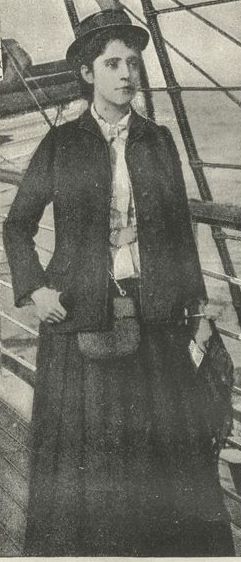
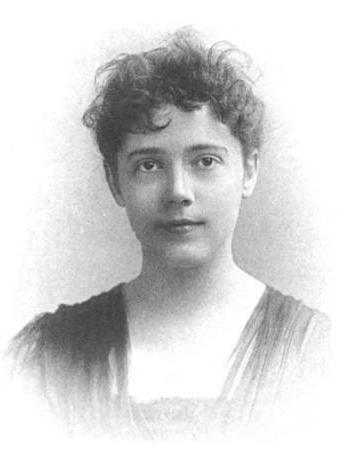
At left: Elizabeth Bisland, from her book written about her journey called A Flying Trip Around The World

At Tulane University I discovered a little-known trove of Bisland’s letters from the last years of her life, which filled in a lot of details that even her family members didn’t know. Over time I was able to develop a very strong sense of who this remarkable woman was; as it turned out, she was this incredibly erudite, cosmopolitan poet and essayist who had grown up on a ruined Louisiana plantation (where, for instance, she taught herself French as she churned butter so that she could read Rousseau’s Confessions in the original language!), who wrote gorgeously but whose books are all, sadly, out of print.

She is someone who deserves to be far better remembered than she is, and if Eighty Days can bring her to the attention of a new generation of readers, then I’ll be extremely gratified.

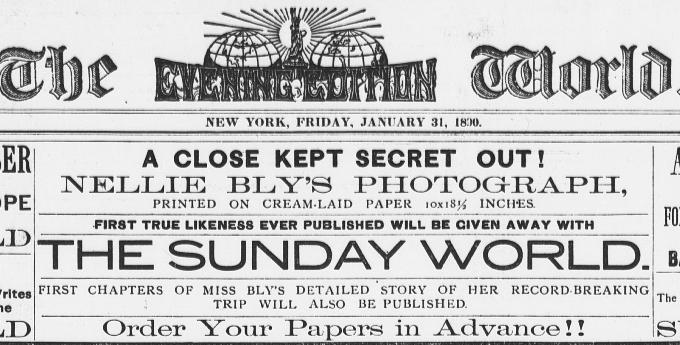
Above: One of dozens of issues of the New York World that used Bly and her adventures to sell papers — before, during and after the race!

BB:  The two travelers take nearly the very same path across the world, from opposite directions of course. I love the exact moment in the book where their paths cross (although of course they never realize it). Were Bly and Bisland driven by similar desires – competition, fame, or the chance to make history perhaps? 

MG:  One of the things I loved about writing this book was that the two main characters – while both pioneering young female journalists – were so different from each other.  Nellie Bly was this scrappy, ambitious, driven investigative reporter from coal country in western Pennsylvania, who always sought out the most sensational news stories; Elizabeth Bisland was a genteel, elegant poet from New Orleans who derided most newspaper reporting as “a caricature of life.” Bisland hosted literary teas in her little apartment on Fourth Avenue; Bly was a regular at O’Rourke’s saloon on the Bowery!

And their very different personalities were reflected in their attitudes toward the race itself.  Bly was deeply competitive (it was part of what made her such a good newspaperwoman), and she was desperate to win the race – she was constantly worrying about schedules and departure times, and was constantly urging ships’ captains to make more speed. On more than one occasion she was heard to say that she would rather die than return to New York behind time.

For Bisland, on the other hand, the trip became an opportunity to see the world, which she would not have had otherwise. She fell in love especially with Japan, to which she returned twice later in life.  In her subsequent book about the trip, she never once used the word “race” to describe it, preferring the word “journey.”  Bly sought out the celebrity that came from the race, immediately embarking on a forty-city lecture tour; Bisland, wanting to escape the public’s attention, sailed to England, where she lived for a year.   She later wrote that she wanted to live the rest of her life in such a way that her name would never again appear in a newspaper headline.

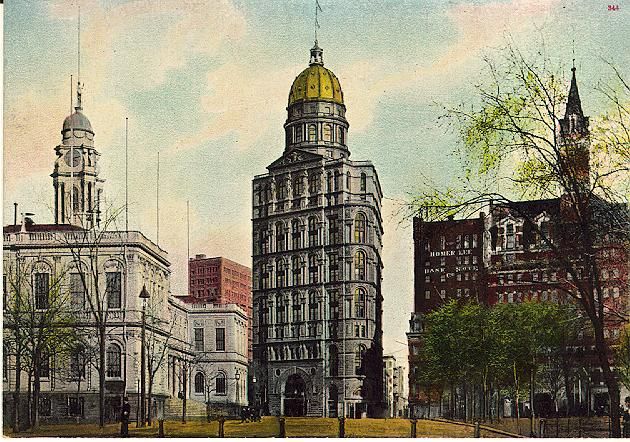
Above: The New York World Building, completed in 1890, the year Bly completed her trip around the globe.

BB:  Your last book The Sun and The Moon was about a fabulous New York media hoax.  In Eighty Days, the publications in question are in fact recounting real events.  But I cannot imagine, given the ethics of the day, that everything you were discovering in them about Bly and Bisland was completely accurate.  Did you find anything unusual in your research about these publications’ treatment of the race? 

MG:  Perhaps not surprisingly, a lot of the initial coverage of the race was rife with mistakes, as New York’s newspapers, caught unawares by the story, tried to pin down just who these two young women were.

For instance, one newspaper claimed, confusingly, that both reporters were being paid by The World (why that paper would send two competitors around the world was not explained). The Tribune even ran a story that claimed that not two but three reporters were racing around the world!

The more substantial inaccuracies, though, were to be found in The World’s own stories about Nellie Bly.   Bly and The World jointly participated in a kind of mythologizing of their star reporter, creating an air-brushed portrait of a plucky, independent, light-hearted, pretty, energetic young American woman – just the sort of heroine the paper’s readers wanted.  Indeed, the most egregious rewriting of Bly’s history came in a story – surely approved by Bly herself – that promised “an authentic biography of The World’s globe-girdler.”

BB:   There should be a side project where you yourself trace the steps of Bly and Bisland, approximating their forms of transportation (no airplanes!)  Is that technically possible and how long do you think it take you – or would you have the stamina of your two heroines? 

MG:  My sense is that it would be technically possible. (I seem to recall a PBS series of some years ago in which Michael Palin, of “Monty Python” fame, traveled around the world in such a manner and accomplished the feat in just under eighty days.)

It would be possible, however, for someone other than I.  I do love to travel, and would very much love to go to many of the places Bly and Bisland visited – such as Hong Kong or Sri Lanka, not to mention Jules Verne’s estate in Amiens, France – but after a few weeks spent aboard ship or in a railway carriage, I’m pretty sure I’d start planning my return to dear old Brooklyn.

Categories
Bowery Boys Bookshelf

The Amazing Race: In ‘Eighty Days’ Nellie Bly tries to outdo Jules Verne while a New Orleans writer vows to beat both


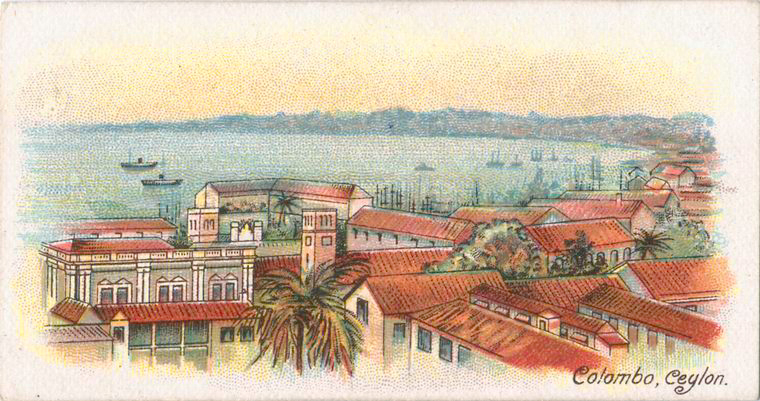
Greetings from Columbo, Ceylon, one of the many glamorous destinations you’ll visit in Matthew Goodman’s new book.

BOWERY BOYS BOOK OF THE MONTH Each month I’ll pick a book — either brand new or old, fiction or non-fiction — that offers an intriguing take on New York City history, something that uses history in a way that’s uniquely unconventional or exposes a previously unseen corner of our city’s complicated past.  Then over the next month, I’ll run an article or two about some of historical themes that are brought up in the selection. 

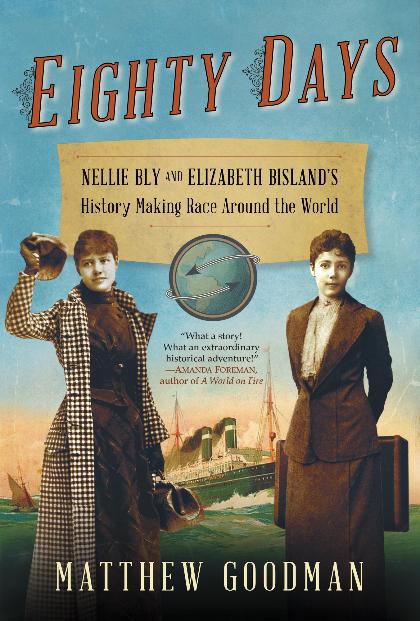
Eighty Days: 
Nellie Bly and Elizabeth Bisland’s History-Making Race Around The World
by Matthew Goodman
Ballantine Books

One under appreciated facet of the Gilded Age is Western civilization’s almost addictive need to push its innovations past their upper limits within the framework of a literal competition — not just in mere quest for improvement, but in a tangible victory over its lessers.  Beauty, in a machine, meant winning.

The value of human life became secondary in the furious race of locomotives crossing vast plains of the United States, or of cross-country automobile competitions over terrain hardly suited for rubber tires, or later the famed air races of early aviation daredevils.

Speed was perfection, but it also came attached with cash prizes (from newspaper moguls or sponsors who benefited from the technology), ticker-tape parades and instant fame.

In 1873, well before the first automobiles and airplanes, one well-noticed gauntlet was thrown by the French writer Jules Verne, who created the character of Phileas Fogg, then sent him “Around the World In Eighty Days.”  The hugely popular novel celebrated both primitive and modern forms of transportation, but a principal theme was the value of speed and modern man’s victory over distance.  The world, already prevailed over by the interests of empire, could now be circumnavigated.

But could this feat be performed by an actual human? And, more daring still, could it be done by a woman?

In Matthew Goodman‘s breathless, exotic new history Eighty Days: Nellie Bly and Elizabeth Bisland’s History-Making Race Around The World, two extraordinary woman attempt to meet Verne’s challenge.  Or rather, challenges made by their New York editors, inspired by Verne’s best-selling novel and dazzled by the possibilities of an impossible quest creating splashy headlines to sell newspapers in 1889.

You are most likely familiar with Bly, the vanguard young journalist best known for her daring exposes for the New York World.  Posing as a patient in Blackwell’s Island’s lunatic asylum in 1887, Bly revealed deep-seeded abuses within the system.  Almost as importantly, Bly helped define investigative journalism along the lines of stunt work.  She was a Victorian era reality star of sorts, fearlessly defying conventions.

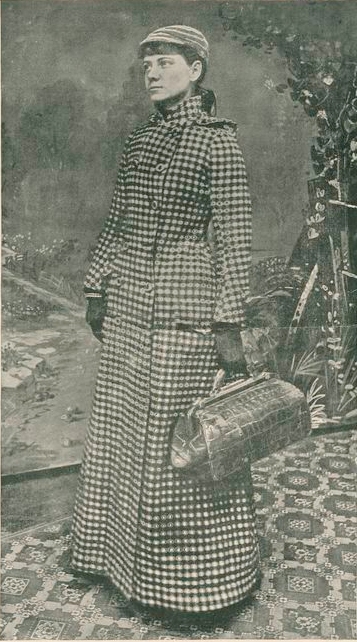
On November 14, 1889, Bly began her quest to beat Phileas Fogg, boarding a steamer for England on her way around the globe. What she did not know then is that the race to beat a fictional character had now been joined by somebody quite real — the journalist Elizabeth Bisland (pictured at left).

A native of New Orleans and a habitue of New York literary salons, Bisland was assigned to take a similar journey by her editor at The Cosmopolitan (precursor to today’s Cosmopolitan magazine).  With less than a day’s notice, he sent Bisland on a trip around the world on the same day — and going in the opposite direction.

Eighty Days is a tale of stops and starts, of telegraph offices and train stations, of foreign places narrowly observed by its two competitors.  Luckily, Goodman doesn’t leave you sitting with the two women, who are sometimes too tired, too rushed or too incurious to explore their surroundings.

With beautiful prose, like a craning camera, Goodman provides sumptuous detail to these fantastic and sometimes mysterious worlds — Hong Kong, Brindisi, San Francisco, Yokohama, the towns along the Suez Canal.

It becomes very clear that this is indeed a trip around the world, but along a fairly narrow band anchored by British ports.  Bly cannot stand the British;  Bisland comes to adore them.  Their personalities are reflected in their empathy.  Bisland mourns a nameless Chinese man who has died aboard her ship.  Bly, at times surprisingly unconcerned of certain conditions, buys a rowdy monkey who accompanies her for the last leg of her trip, to the great alarm of baggage handlers.  Bisland seems the more introspective, Bly the more entertaining companion.

I hate to conjure reality television for a second time in this review, but the competition within Eighty Days, so well paced by Goodman, really comes down to making connections, as often illustrated in CBS’s “The Amazing Race.”  Again, it comes down to the alleged speed of certain vessels, whether they arrive on time, and the abilities of Bly and Bisland to maneuver through foreign countries — many times unaccompanied — to arrive at their next destination.

At right: Nellie Bly, ready for action!

Eighty Days is a romp around the planet, but it returns periodically to Park Row in New York, where Bly’s newspaper has turned her journey into a best-selling sensation.  Thousands enter a contest to guess the exact time that she will finish her trip.

Like those many newspaper readers, you’ll be scrambling to guess which competitor will arrive in New York first — and, more importantly, what unfortunate event might prevent the other from victory.

Goodman’s latest tale expands upon themes he conjured up in his last book, The Sun and The Moon, another tale about fantastical journalism, regarding the Great Moon Hoax perpetrated by the New York Sun in 1835.  Newspapers are perhaps more accurate in 1889 but no less sensational.

Jules Verne himself makes an appearance too, hosting one of the competitors at his home in Amiens, France.  “She is trim, energetic, and strong,” remarks Jules’ wife Honorine.  “I believe, Jules, that she will make your heroes look foolish. She will beat your record.”

COMING FRIDAY: An interview with Matthew Goodman, the author of Eighty Days!

Pictures courtesy New York Public Library. Book cover courtesy Ballantine

Categories
Sports

‘Arctic blasts’, union rousers and hunchbacks: Ten bits of trivia about Ebbets Field’s opening day, 100 years ago today


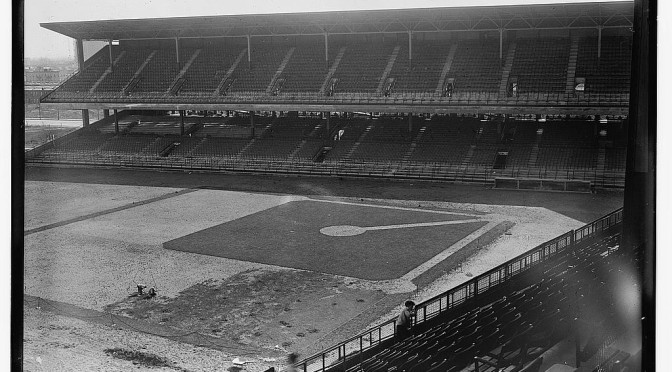
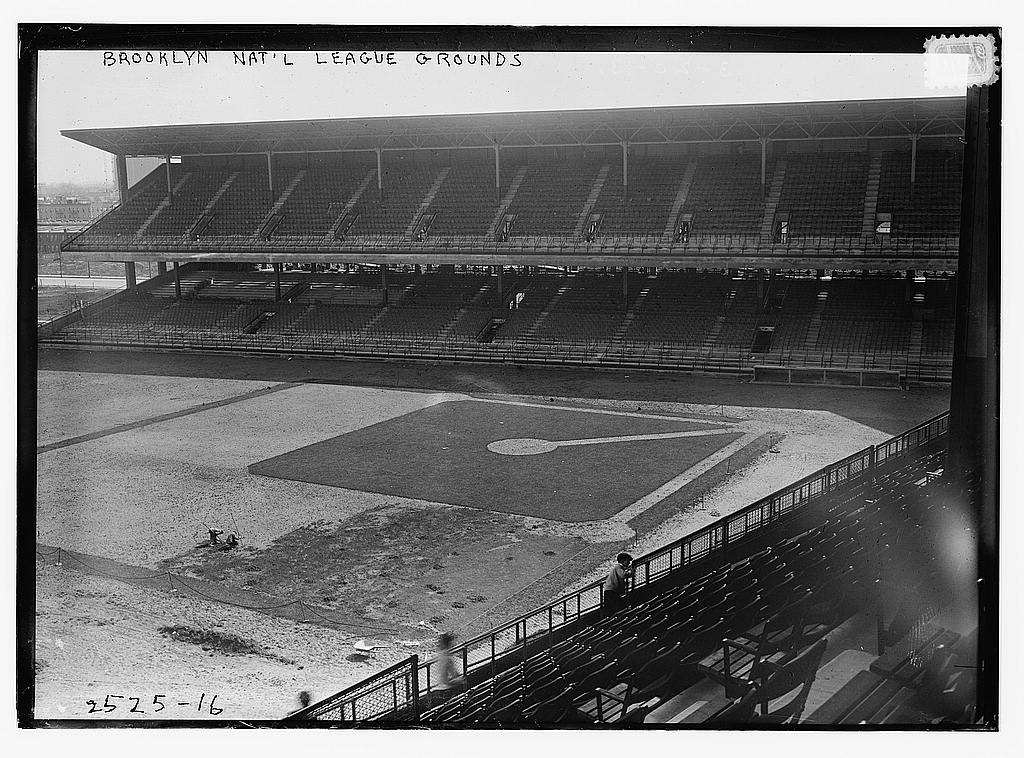
Inside Ebbets Field, 1913, Library of Congress

The first-ever regular season baseball game at Ebbets Field was played 100 years ago today.  The legendary field, once located in the Flatbush neighborhood of Brooklyn, was home to the Brooklyn Dodgers from 1913 until the team left for Los Angeles in 1958.

Here are ten interesting facts about the opening game, played on April 9, 1913:

1)  The Dodgers were thirty years old by the time their lavish new field opened. The team was originally formed under the name the Brooklyn Grays in 1883 by real estate speculator Charles Byrne.  Like many early ball fields, their first home, Washington Park in today’s Park Slope neighborhood, was frozen over during the winter to become Brooklyn’s leading skating rink.

2)  They were originally nicknamed the Brooklyn Trolley Dodgers, for the treacherous skill exhibited by their fans crossing rail-covered streets to get to the ball field.  There were still a great many streetcar lines near their new home of Ebbets Field, but by 1913 the team was more affectionately known as just ‘the Dodgers’.

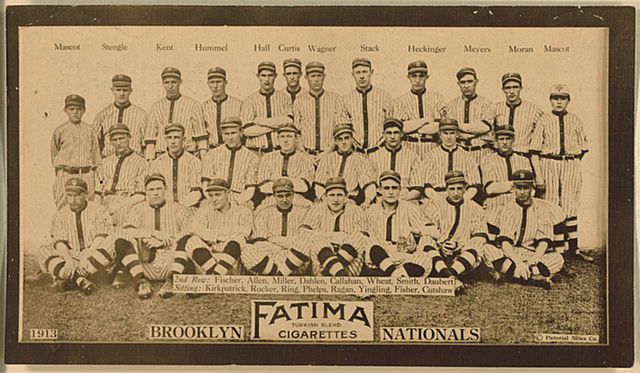
However several names would be casually attached to the team by fans and local journalists — the picture above calls them the Brooklyn Nationals — until 1933, when the name DODGERS would finally be added to both their home and road uniforms.

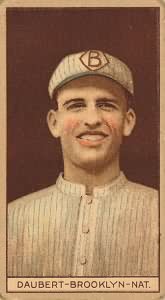
3)  As a nod to its first-ever day, Ebbets Field was allowed to open one day before everybody else in the National League.  One of their most popular players, first baseman Jake Daubert (at right), was presented with a golden bat and a floral horseshoe in a ceremony before the game and would, by season’s end, go on to win the league’s Most Valuable Player honor.

“Gentleman Jake,” as he was called, is better known today as being one of the founders of the baseball’s unionization movement.   This did not make him popular with the namesake of Ebbets Field, owner Charles Ebbet, who traded Daubert in 1917 after a salary dispute.   His union connection may also explain why this unique, well-liked and exemplary ballplayer is not currently listed within National Baseball’s Hall of Fame.

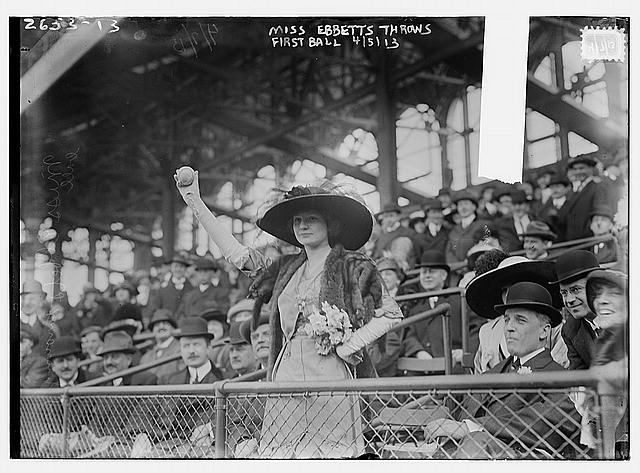
4)  The ceremonial first ball was thrown in by Brooklyn Borough President Alfred E. Steers, a resident of the neighborhood Ebbets Field made its home — Flatbush.   However, at an exhibition game played just a few days earlier, Ebbets’ lovely daughter Genevieve Ebbets tossed out the first pitch.


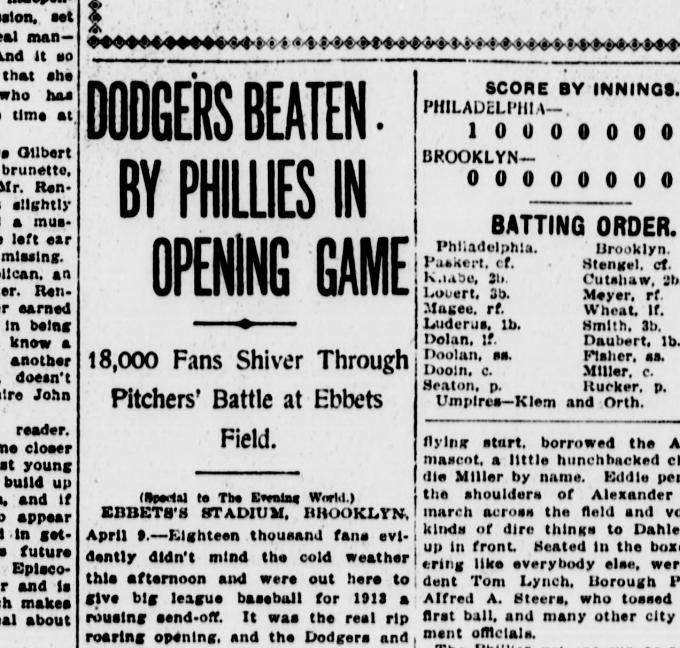
5) The Brooklyn Dodgers played the Philadelphia Phillies that day, which should have boded well for the team in their new home. The Phillies weren’t yet considered a formidable team and were more associated with constant injury. Despite this, the Phillies beat the Dodgers that day, 1-0.

6) Why did the Dodgers lose? Uh, it was unseasonably cold? The Tribune reported that the frightful chill kept the brand-new grandstand partially empty. From the New York Times, April 10, 1913: “It was so cold that the attendance was seriously affected, about 10,000 spectators braving the arctic blasts to see the Phillies win a well-played game by a score of 1 to 0.” [source]

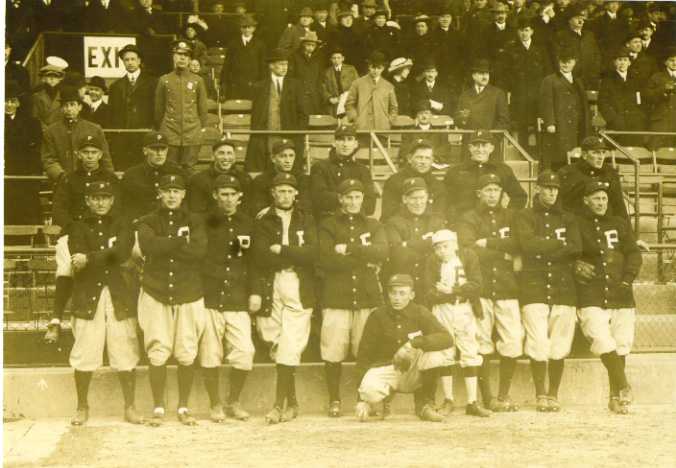
7) The Phillies also had with them an unusual mascot — a hunchback teenage dwarf.  The Phillies home rival the Philadelphia Athletics had a hunchback mascot of their own named Louis Van Zelst, and owner Connie Mack wanted to emulate their success. By, apparently, finding his own young man with a hunchback. Unfortunately, this boy’s name is unknown, but he appears in a 1913 picture with the team:

NOTE: The Tribune infers that this may have been Mr. Van Zelst himself and not another teenager. As the name of the boy in the picture above has not been reported, it’s quite likely that this is the Athletics ‘mascot’.  Note that in the article, the Dodgers are called by yet another name — the Superbas.  

Courtesy the Philadelphia Athletics Historical Society

8) As you could imagine with a 1-0 game, the first-day crowds at Ebbets Field were hardly cheerful.  One might even described them as bored.  The upper seats were barely filled, and the crowd didn’t exactly “wax enthusiastic until the eighth inning” when the Dodgers finally got somebody on base.

9) The first Dodger to ever score a hit in the new field was second baseman George Cutshaw who had only been with the team one year when he scored a single in the first inning.  Ironically, the second basemen was called out when he was caught trying to steal second base.

10) The Dodgers would fare poorly in their first season at Ebbets Field, eventually placing sixth out of eight teams. The winning team that season were their rivals across the East River — the New York Giants.  They would finally bring Ebbets its first pennant victory in 1916.

Categories
Queens History

The Queens boundary line, some amazing New York City trivia, and a clarification to our latest podcast

 Reaction to the Bowery Boys podcast on the Consolidation of 1898 has been tremendous!  But I do have one clarification, and provided by a very excellent source.

The accurate placing of the boundary line between Queens and the newly created Nassau County was a source of frustration for a great many months after consolidation.  I recounted one such tale involving a schoolhouse in Hempstead, included within New York City’s border after a revised survey was completed. (You can read the complete tale here.)

But that is only one part of the story, specific to the area around that particular building.  It may have gained a schoolhouse, but in fact, overall, New York City lost land in the revised survey, and quite a bit of it too!

According to Manhattan borough historian Michael Miscione:  “When the NYS legislature created Nassau County on Jan. 1, 1899 out of that portion of Queens County that was not part of Queens Borough, they almost entirely redrew the Queens Borough line. In the process, Greater New York did NOT gain territory as you state; though it may have acquired an extra sliver of real estate here and there in the resurvey, NYC ultimately LOST about 12 square miles.

Check out the Queens Borough border on an 1897/8 map versus a map from 1899 or later, and the difference is obvious. As a consequence, NYC was the largest it has ever been during the 12 months from Jan. 1 to Dec. 31, 1898! (A very cool piece of trivia that might come in handy some day.)”

Thanks for that great information, Michael!   If you enjoyed our podcast, you’ll have to check out Miscione’s upcoming lecture on the most malleable neighborhood in the history of New York — Marble Hill, the Manhattan neighborhood that’s really in the Bronx:

PEOPLE V. BOYD: THE MURDER TRIAL THAT NEARLY REDREW THE MAP OF NEW YORK CITY 

Manhattan Borough Historian Michael Miscione will describe the peculiar and complex status of Marble Hill, a neighborhood that is attached to the Bronx but is legally a part of Manhattan. (Or is it?)

Tuesday, June 4, 2013
6:00p The General Society Library
20 West 44th St. (Between 5th & 6th Aves.)
 $15 general admission / $10 General Society members / $5 students
Advanced registration is suggested.
Call 212.840.1840 ext. 2, or email victoria.dengel@generalsociety.org .
http://www.generalsociety.org/

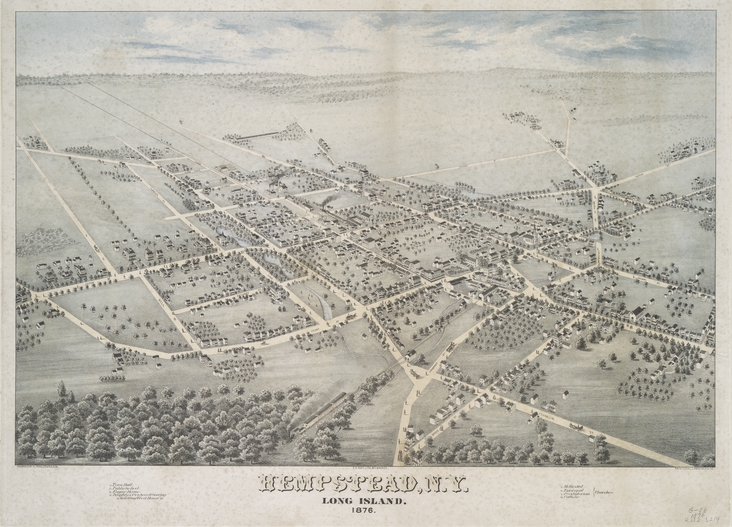
Above: A map of the town of Hempstead in 1876.  Part of its western border was affected by the re-surveying of the border with New York City.

Categories
Bowery Boys

New listeners to the Bowery Boys podcast? Here’s some highlights of the last 149 episodes — and a hint for no. 150

Thanks to the profile on the Bowery Boys podcast which ran on NPR:Morning Edition a couple weeks ago, we’ve seen a lot of new listeners to the show.  Welcome aboard!  We’re grateful to have you join this amazing community of history lovers interested in the story of New York City.

If you’ve just discovered the podcast, you might be a little daunted by our back catalog. I’m daunted by it at times.  (There’s a few older shows that I’ve completely forgotten that we recorded!)  To help you sort through the 147 episodes that are currently available, here’s a rundown of some back episodes that may interest you:

1) The Early Years For our first few dozen episodes of so, we recorded weekly.  As a result, the shows are shorter and less deeply researched.  However if you want to take a dive into the older shows, subscribe via the Bowery Boys Archives (also found on iTunes).  Many of these have been relaunched as ‘illustrated podcasts,’ meaning photographs and other things pop up on your listening device as we speak about things.  Try (Episode #46Barnum’s American Museum, the two episodes on the Revolutionary War (Episodes #35 and #36) and of course the Brooklyn Bridge (Episode #29).

2) Ghost Stories Our annual Halloween shows are always fun to produce, a mix of urban legend, historical context and good ole fashioned storytelling.  Spooky Stories of New York (Episode #65), featuring supernatural tales of the Algonquin Hotel, a SoHo eatery with a secret in its basement, and an axe-wielding witch of Staten Island. And, of course, sound effects.

3) Next month is the 100th anniversary of the opening of the Woolworth Building so give our episode on its history a try. (Episode #76)

4) The Great Fire of 1835 gave us an opportunity to tell a straight-through narrative about a deadly blaze that destroyed almost a third of Manhattan during a frozen December evening.  This is one of my top five favorites. (Episode #78)

5) Robert Moses was 100th episode, and of course about the man we reference again and again in future shows. You need to know the story of Moses before you can understand the story of modern New York. Hopefully we did his tale justice. (Episode #100)

6) For Bowery Boys On The Go, we recorded five stories on the history of New York transportation, from land to sea.  Best listened to if you’re actually riding aboard ferry or subway — although sadly there are no cable cars. (Episode #106 Staten Island Ferry, Episode #107 Elevated Railroad, Episode #108 Cable Cars, Trolleys and Monorails, Episode #109 New York Subway Part One, and Episode #110 New York Subway Part Two)

7)  Want to know what we’re preparing for Episode #150? Well, here’s your first clue. WATER. Listen to Episode #143 Water for New York: The Croton Aqueduct, one of many shows we’ve recorded on New York infrastructure.

8) And finally — a new Bowery Boys audio history walking tour will be released next month!  We’ve released two thus far — the walking tour on Washington Square Park (on sale on iTunes and Amazon, or click the box in the top right column) and a free tour on the High Line (Episode #136).  I’ll reveal the subject of this walking tour on next week’s show.

And if you haven’t done so already, please join our Facebook page. Next week I’ll be posting something there — a treasure from our past! — that will only be available to those on Facebook.


Top picture courtesy New York Public Library

Categories
Mysterious Stories

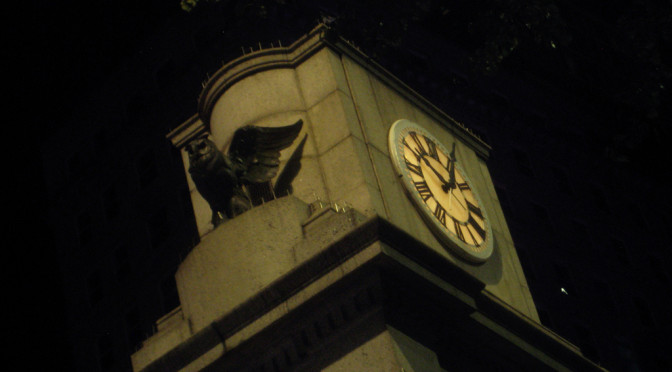
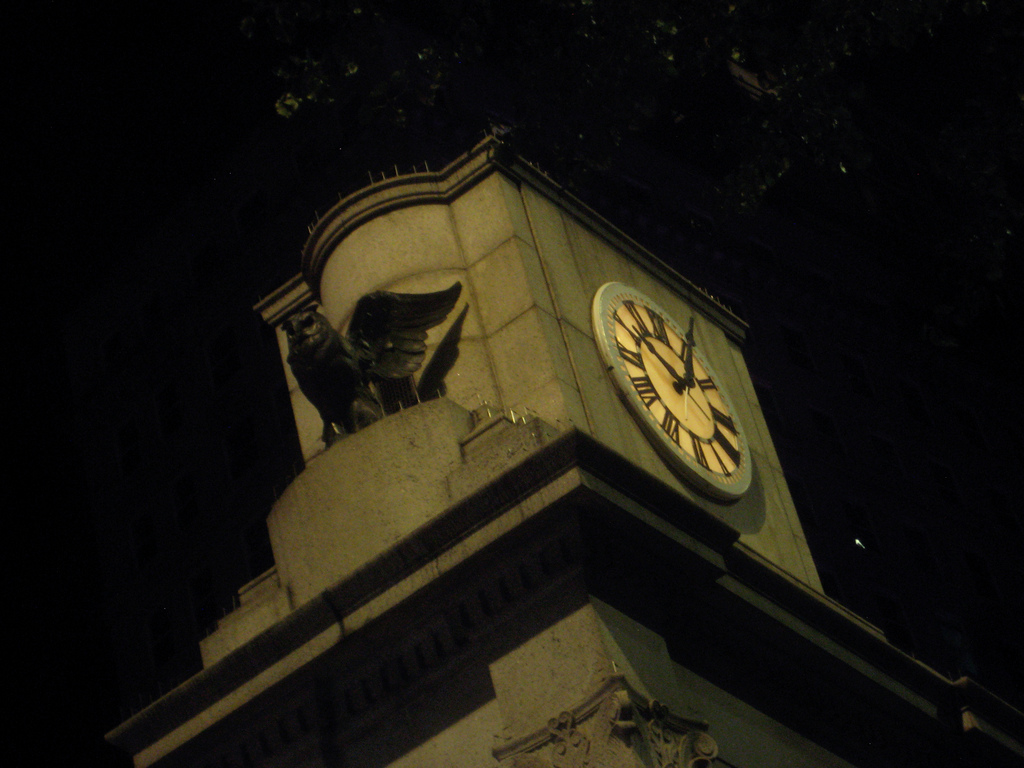
The owls are not what they seem: It appears the clock in Herald Square may not be a portal for the Illuminati after all


Pic courtesy Brecthbug/Flickr
Bummer. I so wanted the spectacular owl-infested Herald Square clock, once perched atop the offices of the New York Herald across the street, to be a secret meeting portal for the Illuminati.

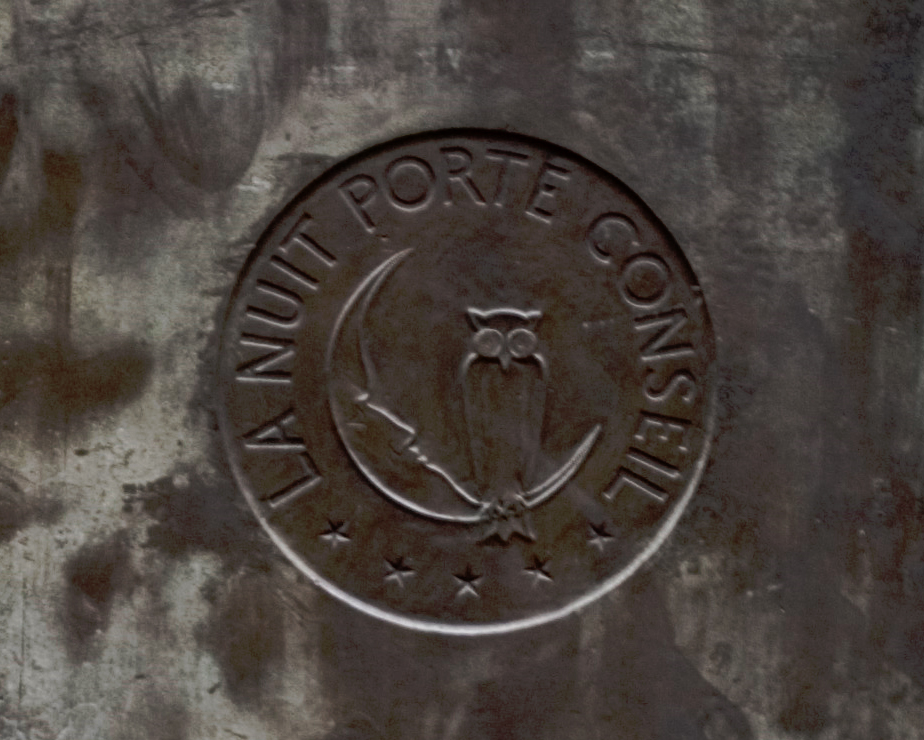
I facetiously brought up the theory in our December podcast on the history of Herald Square.  Upon the door of the clock, which sits in the northern portion of the plaza, is a strange symbol featuring an owl and stars:

Picture courtesy entrance/Flickr

The extravagant James Gordon Bennett Jr., the Herald’s editor at the end of the 19th century, has frequently been linked to the Illuminati.  They say the shadowy, all-powerful organization, with alleged ties to some of the darkest secrets from ancient history, gather to manipulate world affairs only at night. And thus their insignia features the owl — ever vigilant, mysterious and wise.

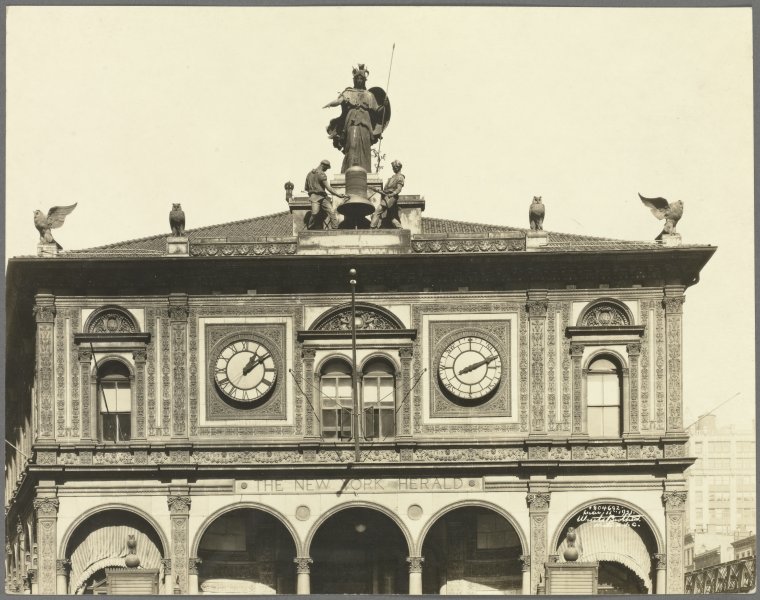
Bennett was obsessed with owls and festooned his lavish newspaper offices with the bird, many with glowing eyes.  Below: Roof decorations on the old Herald Building, pic courtesy NYPL

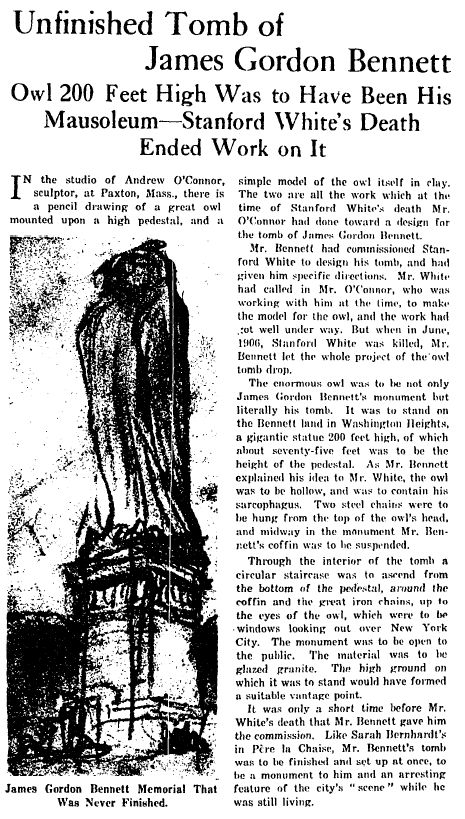
In fact, Bennett had commissioned Stanford White to design a lofty mausoleum for Bennett at his death, featuring an owl 200 feet high, to be placed in Washington Heights!  But when White was murdered on the rooftop of Madison Square Garden in 1906, Bennett’s grandiose plans were scrapped.

Below: The article from the New York Times, featuring a pencil sketch of the proposed owl monument.

The Herald clock features the goddess Minerva and her trademark companion — of course, an owl.  Like the owl, Minerva herself is frequently represented in Illuminati symbolism.  Adding to the mystery are the names of the two bell-ringers below here, Gog and Magog — entities from the biblical era and mentioned in the Book of Revelation. “When the thousand years are over, Satan will be released from his prison and will go out to deceive the nations in the four corners of the Earth—Gog and Magog—and to gather them for battle.”

So you can just imagine how this has stirred the conspiracy theorist community over the years.  It’s all practically begging for a Dan Brown novel or a Nicolas Cage film.  After all, if miles of underground passages exist underneath Trinity Church in ‘National Treasure’, what could possibly lurk here in Herald Square, beneath Bennett’s old symbol-laden clock?

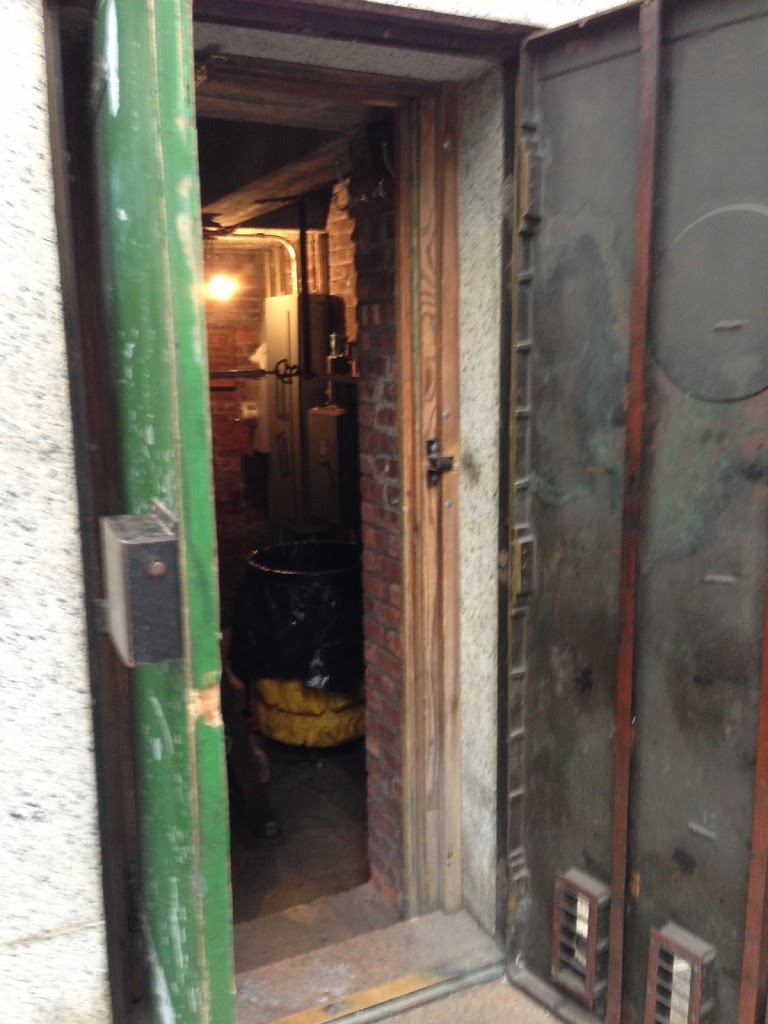
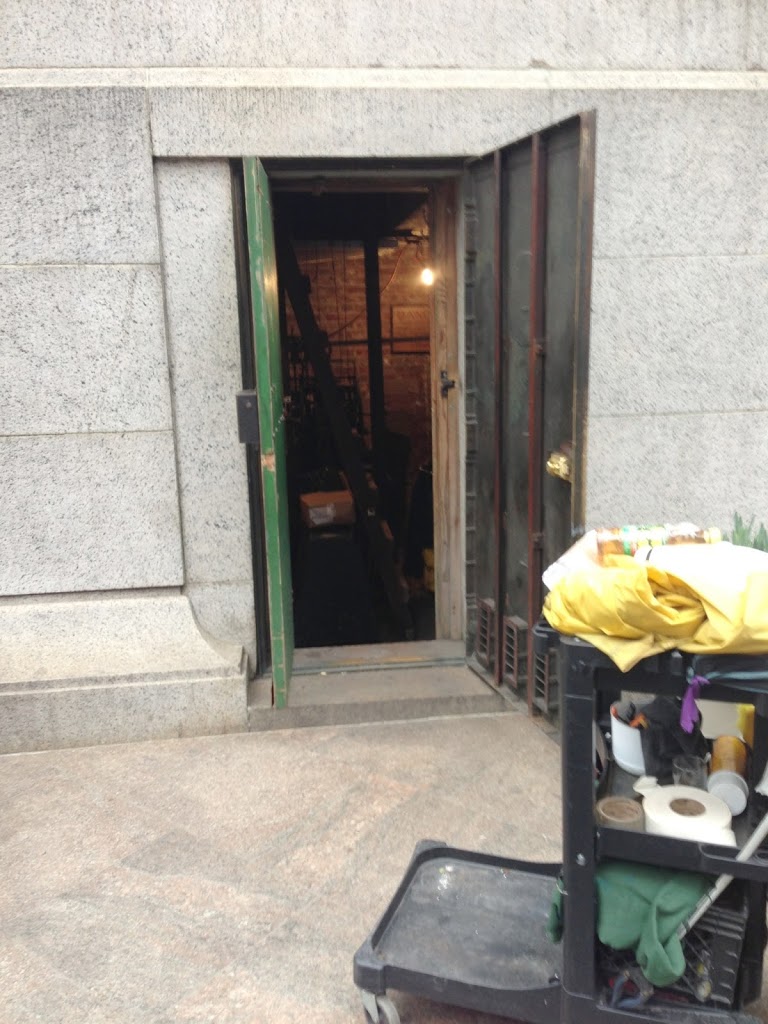
Alas, one of our listeners Ryan Cox has dispelled the existence of any clandestine passageways with a few well-timed photographs. It seems the door is nothing more than a custodian’s closet!

Okay, I mean the realists among you probably assumed this the whole time.

But what if there’s a secret passage behind all the hoses and brooms?  What if Illuminati members step over the mop bucket to get there?

Categories
Brooklyn History Mysterious Stories

A Brooklyn ghost story: A famous actress, a rowdy tavern, Cobble Hill’s ‘ghost-haunted spot’ and a fool named Boerum

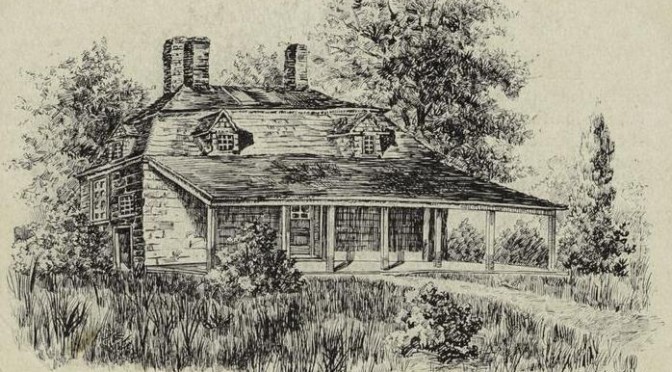
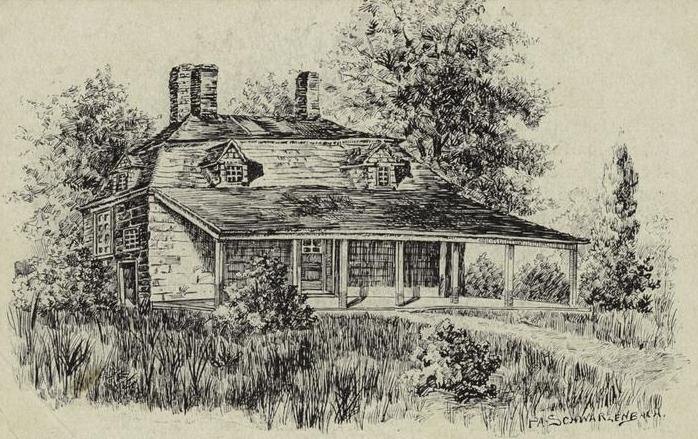
Above: While this is the old Brooklyn Schermerhorn house, it’s of a similar type to one that Ms. Melmoth may have owned, quickly becoming a tavern after her death.

Less than two hundred years ago, in the area approximate to the neighborhood of Carroll Gardens today, there was a very, very rowdy tavern.

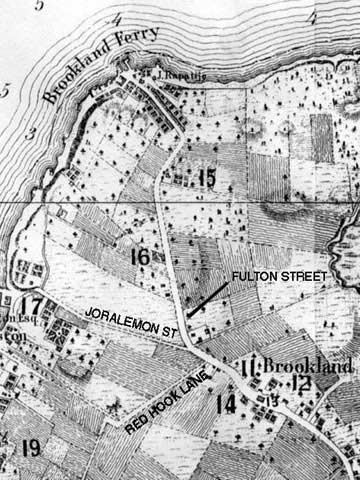
It was located east of Red Hook Lane, “in a retired and beautiful spot, near the line of the present Carroll, between Clinton and Henry street,” a place of intense merriment and gluttony, partaking of beer and hunted game, devouring buckets of oysters taken from the shore. (Many years later, perhaps in penance, St. Paul’s Episcopal Church would be built near this spot.)

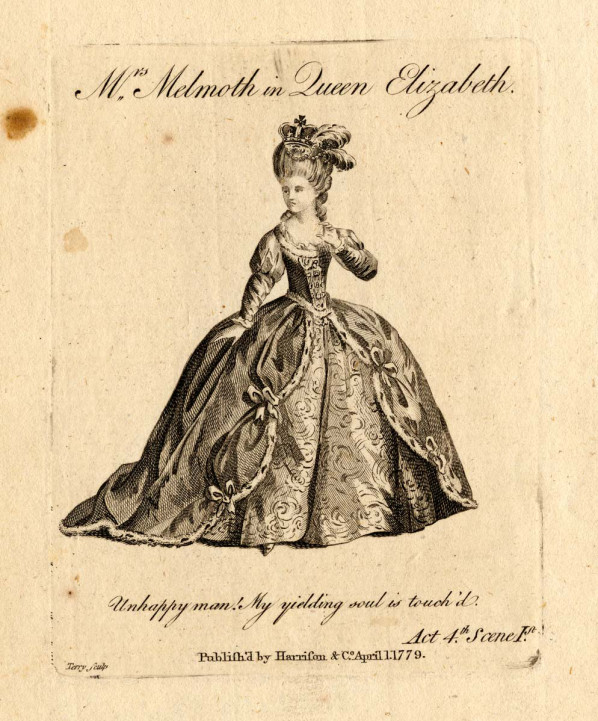
The tavern had once been the home of the famous British stage actress Charlotte Melmoth (depicted at right, in one of her finest roles as Queen Elizabeth).  She retired in 1812 to this grand home off Red Hook lane and spent her last days instructing the children of wealthy Brooklyn families.  Although an actress (hardly the most respected field of work in the early 19th century), her skills of etiquette and elocution brought up the next generation of Pierreponts and Cornells and Luquers.

However, when she died in 1826, her once-proper home took a detour into the debauched, becoming a popular location for young revelers.  Melmoth, buried at St. Patrick’s Old Cathedral on Mott Street, certainly rolled in her grave.

The secluded, wooded tavern attracted young men, farmers and sailors, “their orgies being carried on with a freedom to which the retired character of the spot was particular conducive.” [source]

The gridded streets had not yet been cut through the wooded areas.  Slightly north, in the distance, sat the ruins of old Cobbleshill Fort, the hill itself leveled decades ago by the British.  The fort was briefly refurbished for possible conflict due to the War of 1812 — old Fort Swift, they called it — by the late 1820s, much of the stone would have been covered with dense overgrowth.

According to legend, one evening at around 11 p.m., the men at the converted tavern discovered they had run out of brandy.  Unacceptable, of course, to a bunch of rowdy drunks!  To replenish their supply, somebody needed only to run down Red Hook Lane to the Brooklyn ferry and retrieve more.

Less than a half-mile walk, of course, but one that passed by the old ruined fort, approximately near the intersection of today’s Court and Pacific streets.  Sitting near to the fort was “a ghost-haunted spot,” a frightening, decrepit place well-known to locals, “about which dreadful stories are whispered, which lent wings to the feet of such unwary village urchins as chanced to pass it after dark.”

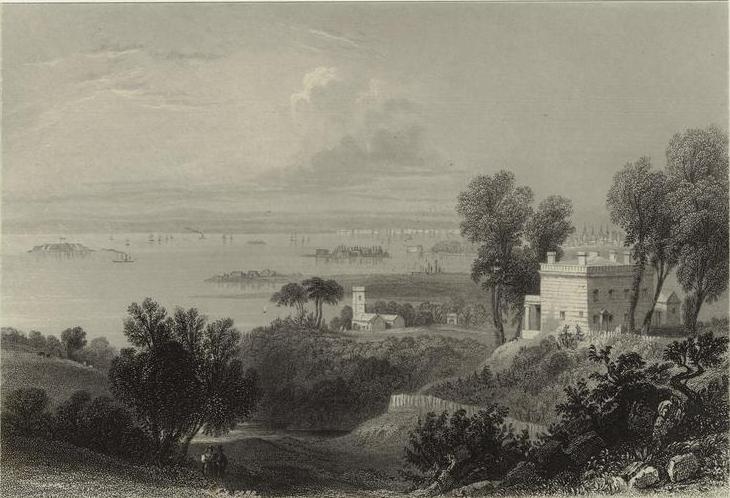
Below: Brooklyn and the East River in the early 1800s, from Gowanus Heights (today’s Green-Wood Cemetery), from an original painting by W. Bartlett. This is a bit south of the events described but gives you a good (if romanticized) idea of the still-verdant countryside that defined the area.

Nobody wanted to admit they were frightened to venture out alone, and yet despite their incredible thirst, nobody volunteered for the task.  Finally, a man named Boerum, thirsty and bold, declared he would head to the ferry and retrieve the brandy.  And if he happened to run into a ghost, all the better, he proclaimed!

It’s safe to assume this Boerum (whose first name is not given) is of the same Dutch Boerum clan which gives the neighborhood Boerum Hill its name.  Sadly for this fellow, he would not live long to carry on his family’s good name.

According to Henry Reed Stile‘s 1869 history of Brooklyn, Boerum jumped on his horse and headed down the lane , toward the ferry and that sweet, sweet brandy.  Two hours later, when Boerum had not yet returned, his anxious (and sobered-up) friends became concerned and decided to venture out looking for him. Safety in numbers, after all.

At right: where Red Hook lane would have been located, cutting through the modern neighborhood of Cobble Hill.

“Mounting, not in hot haste, they turned their horses’ heads towards the village and on approaching the haunted ground, they found Boerum’s horse standing against the fence not far from the house, and when they reach the spot itself, their companion was discovered lying senseless on the road, with features horribly distorted.”

We can only guess what “horribly distorted” might mean.  The friends quickly took Boerum back to the tavern, but the man was too far gone.  “[H]e lingered for two or three more days, in a speechless condition, then died.”

What had happened to young Boerum?  He had never made it to the ferry to fetch the brandy, and no evidence was ever found among the ruins.

Within a few years, the ruins themselves were leveled, and even most of Red Hook Lane was eliminated, as a street plan turned the region into orderly neighborhoods.  Still, as you pass through Cobble Hill at night, on your way perhaps for a little brandy of your own, remember the cautionary tale of young Boerum.

The ghost story is featured alongside more standard history in Stile’s 1869 two-volume history of Brooklyn.
Pictures courtesy New York Public Library, except for labeled map, showing Red Hook Lane, which is from Forgotten New York

Categories
Planes Trains and Automobiles

The Dual Contracts: The New York City subway system gets a serious upgrade 100 years ago today

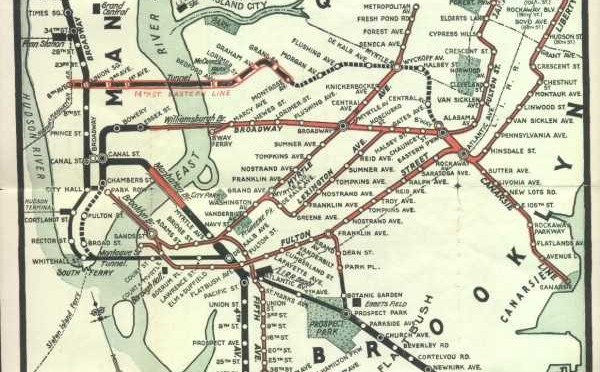
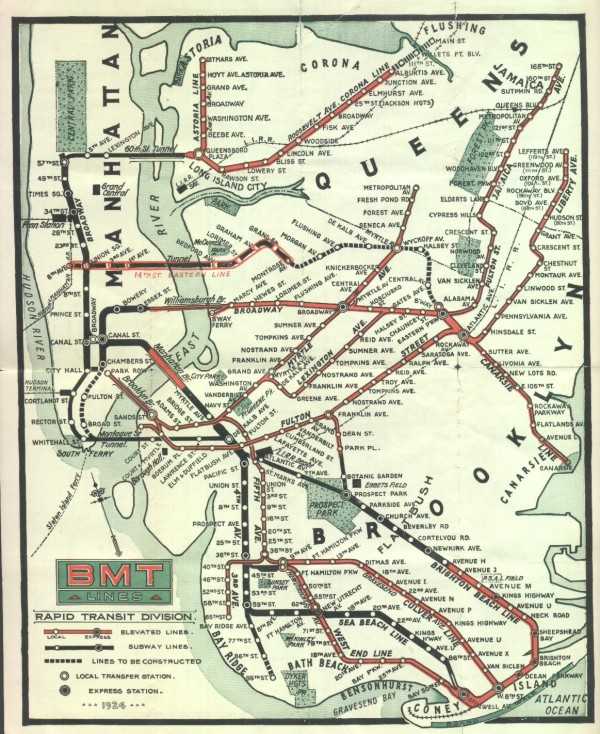
A subway map from 1924, illustrating the system created as a result of the Dual Contracts agreement.

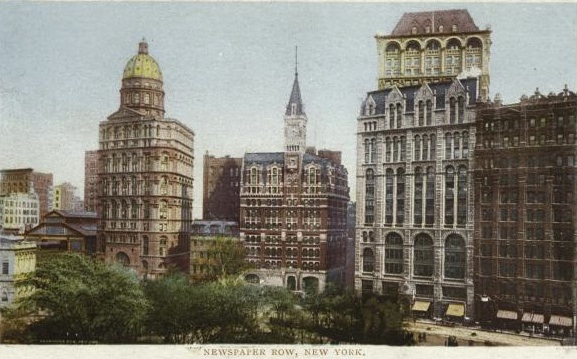
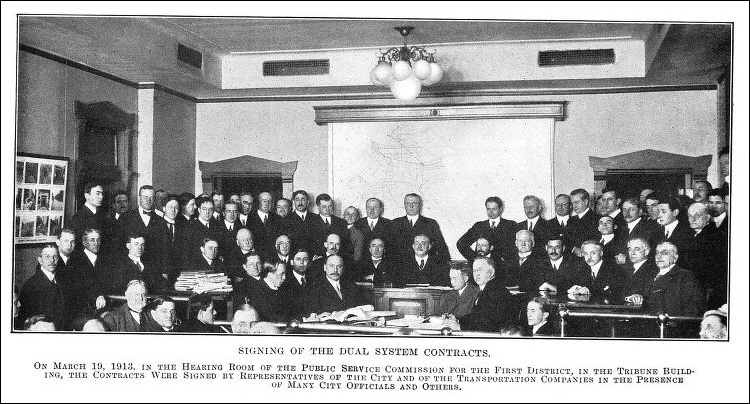
After years of negotiations, false starts and lengthy arguments played out in the press, a group of greatly relieved businessmen entered the large hearing room of the New York Tribune Building (at Nassau and Spruce, where Pace University is today) and put their names to a series of documents that have come to be known as the Dual Contracts.

The beleaguered ceremony ran a half hour late, as a great many gentlemen crammed into the third floor meeting room to sign the official documents, stamped with gold lettering and expensively bound in morocco leather and colored ribbons.

With those signatures, the chaotic New York transportation system — with its fledgling subway and its miles of elevated lines — officially came of age that day — March 19, 1913.

“This makes March 19 a red-letter date on the municipal calendar,” declared the New York Tribune, in whose building the agreement was signed.  The Dual Contracts authorized millions of dollars of new tracks, more than doubling the system in size, from 296 miles of track to 618 miles!

Below: The buildings of Newspaper Row. The towered Tribune Building, in the middle, was the site of the Dual Contracts signing in 1913. 

This seminal agreement in American transportation history is ‘dual’ because the city negotiated two separate contracts — one with August Belmont Jr.’s Interborough Rapid Transit Company (IRT) who operated the New York subway, and the Municipal Railway Company on behalf of the Brooklyn Rapid Transit (BRT), who ran most of Brooklyn’s transit system.

Under the agreement, the city would shoulder some of the cost of building new subway services — many into places where New York expected populations to rise in the coming years — and the two private companies would then lease the new routes from the city and profit from their operation.

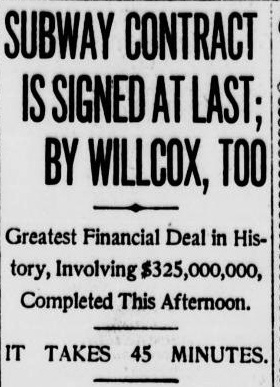
At right: the headline from the New York Evening World

Essentially this gave IRT permission to operate into Brooklyn (once the domain of the BRT) and vice versa.  Previously, people arriving from Brooklyn to Manhattan had to immediately change trains once arriving into the new borough.

According to a report by the Public Service Commission later that year: “The Dual System will remove this abnormal condition and give the Brooklyn company a system of subways in Manhattan, by means of which it shall distribute its passengers through the territory south of 59th Street. Thus the present congestion at the Manhattan terminals of the bridges will be ended and the passengers from Brooklyn will be enabled to reach their destinations in lower Manhattan without change of cars or the payment of an additional fare.” [source]

As part of the deal, the two companies agreed to operate two new lines into Queens.  The importance of this particular part of the deal cannot be overstated.  The borough of Queens was just over a dozen years old by this time and still sparsely populated given its size. (Less than 300,000 people in 1910.)  With the arrival of the Queensboro Bridge in 1909, paired with new subway and elevated services provided by the Dual Contracts, the population of Queens would explode in the 1920s to well over a million.

And this didn’t just stimulate development there.  The deal brought a subway to the Manhattan’s Upper East Side and to the West Village, to most Bronx neighborhoods and down the Eastern Parkway in Brooklyn.  New home and apartment developments into those regions soon followed.
Below: City luminaries gather around to watch representatives from government and the two private companies sign the pretentiously bound contracts. (Picture courtesy NYCSubway, an indispensable destination for transit history.)

The Dual Contracts also created express and local trains, facilitating another great development in the history of New York — the arrival of midtown Manhattan as the heart of business and entertainment.

In all, the contract signed one hundred years ago today made the New York City transit system the largest in the world.  In fact, it was larger than all the rapid transit systems of the world at the time — combined (according to Peter Derrick’s excellent book on the subject Tunneling To The Future).

But this also set in motion one of the great flaws of the subway system. Tracks operated by the IRT were a different size from those operated by the BRT.  The track gauge was wider on BRT tracks.  As a result, today the New York subway system still operates two different sizes of cars. (Ed: See notes below for a slight clarification/better explanation.)

On a humorous note, the original contracts, bound as they were in thick leather volumes, were apparently quite heavy to lift.  The president of the IRT remarked, “I am glad that I have enough strength to receive these contracts.”

For more details on the Dual Contracts, please check out the second podcast on the birth of the New York subway system — Subway by the Numbers (and Letters)

Categories
Amusements and Thrills

The legend of Freedomland USA: Theme park memories from the kids who played there

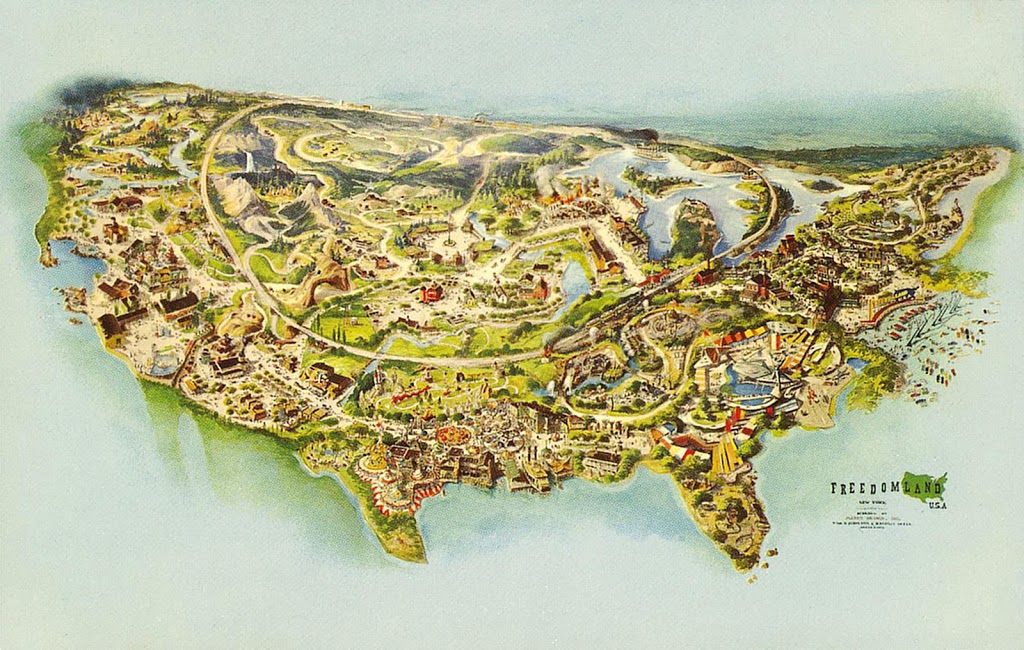
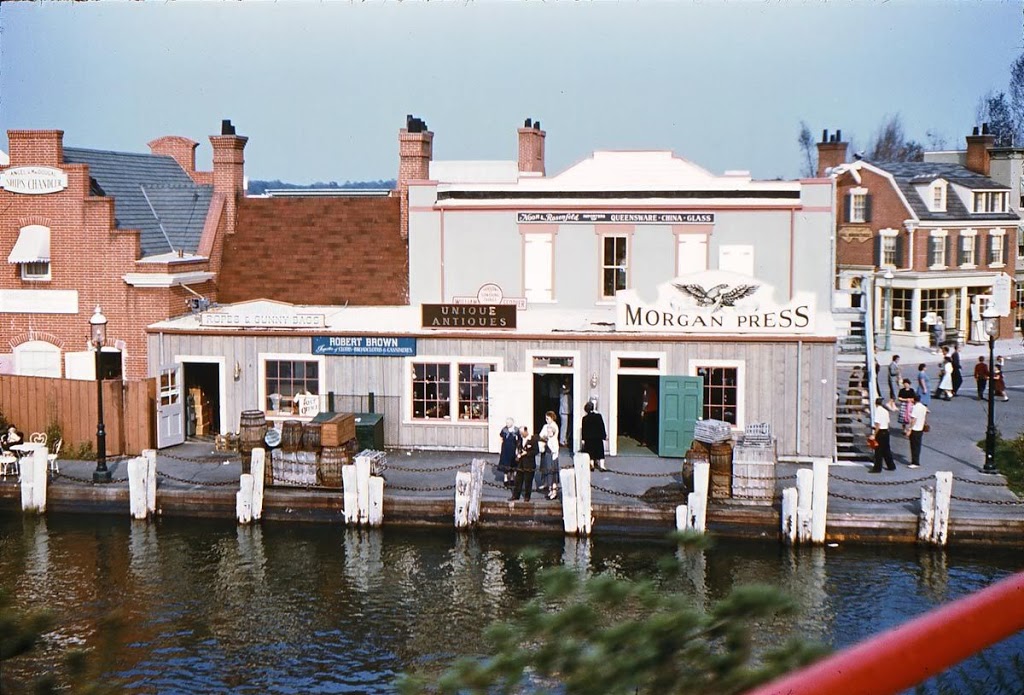
America, as depicted by Freedomland USA pre-opening map — courtesy Viewliner Ltd.

WOW. The response to our profile on NPR Morning Edition has been truly overwhelming. It’s been a very wild and exciting couple days. Thanks to everybody who has written us via email, Facebook and Twitter and welcome to our new listeners!

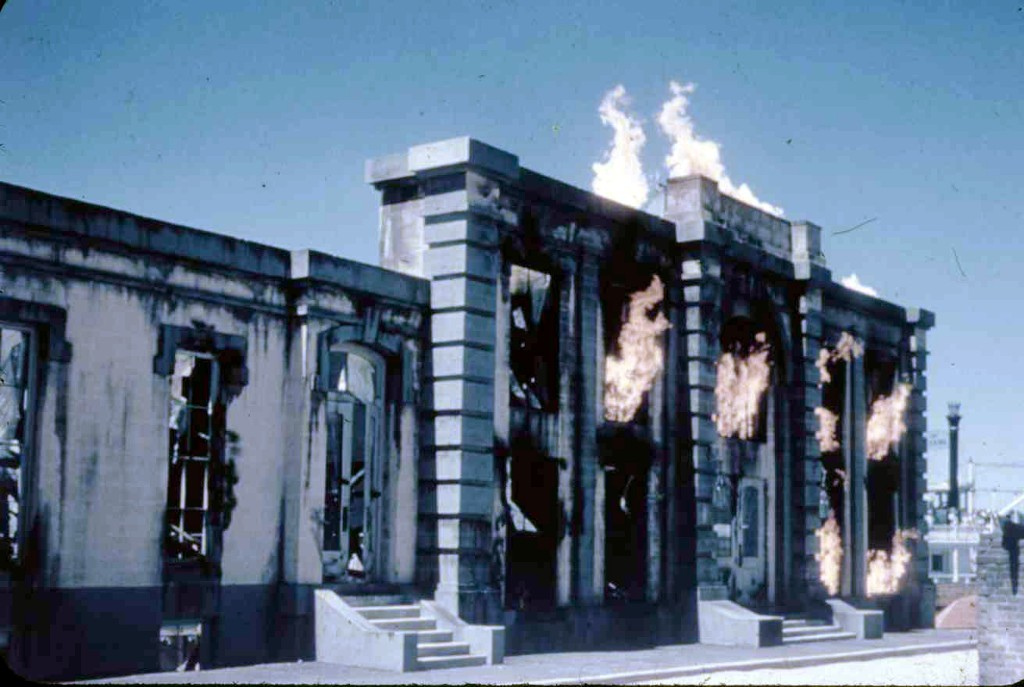
One amusing result of the airing of the piece is a resurgence of interest in Freedomland USA, the 1960s amusement park in the Bronx. I did a short podcast on the long-forgotten America-themed park back in 2009, and an original advertisement for one of the park’s more unusual attractions — reenactment of the Chicago fire! — was used in the NPR story.

The comments section on the blog page relating to our podcast is filled with recollections of people who visited Freedomland USA as a kid.  Here are a few selected comments about particular aspects of the park, giving a little more insight into this strange and mystifying place, written by those who were actually there:

Elsie the Cow
featured in the Borden’s Barn Boudoir, a barn that promoted Borden products. Yes, not only was Elsie a part of Freedomland, she had a very seductive image back in the 1960s

“I hadn’t even thought of Freedomland since the 60’s. It stopped me in my tracks when I heard the name. I remember my family and our friends who lived across the street all piling in the station wagon for our drive from Levittown to the park. Nothing else came to mind, but when you mentioned Elsie the cow- BINGO! I was mesmerized by that cow…I remember just standing there and being thrilled. Who knows what will captivate a little girl’s imagination.” — Jablow

The Chicago Fire
 “Yeah! The Chicago Fire. I was selected to help pump one night & so we started pumping and all of a sudden, the pump started moving by itself – it was motorized! As a 12 year-old, I was crushed by the fakery. The good part was the photographer for LIFE Magazine snapped the scene so I became a smudge on a piece of newsprint.” — Big Al

“I still have my certificate recognizing my efforts to help put out the Chicago fire! Don’t remember Murray the K being there, but the WMCA good guys used to broadcast from a “space ship” in Futureland. Saw Little Peggy March there once, singing “I Will Follow Him.” Fond memories of seeing Elsie the Cow, too.”

Courtesy Flickr/slideshopper

Defying Gravity:
“As a kid growing up in Somerville, N.J. I got to go to Freedomland 3-4 times. My most vivid memory is of an attraction where stuff rolled uphill. You could set a soda can on a table and even though it looked like it was angled down hill, the can rolled up the hill. It still amazes me. Freedomland was the closest we kids from N.J would come to Disneyland for a really long time. California was on the other side of the country and Disney World was not even started yet. I have many great memories of a visit with my cub scout troop.” 

“Went to Freedomland several times over two summers loved the fried chicken with honey in “New Orleans”, “Casa Loco” with weird distortions of gravity, and I’ll never forget seeing my father’s face of amazement as we stood a couple of feet away from Benny Goodman and His Orchestra. The place was so cool.”


Special Events:
“Hey, does anyone remember seeing Chuck McCann do his Halloween kids show from the park? Absolutely! I remember bits and pieces of it like it was yesterday and I have been looking for references online about it for a number of years. As I recall it had two actual children and a number of puppets including a witch. It was one of my favorite Halloween specials. I have been trying to find a New York TV guide from October 1963 as I understand it’s listed there.”

“I was in a Yo-Yo championship contest hosted and judged by Chuck McCann. At Freedomland, I think it was 1962.”
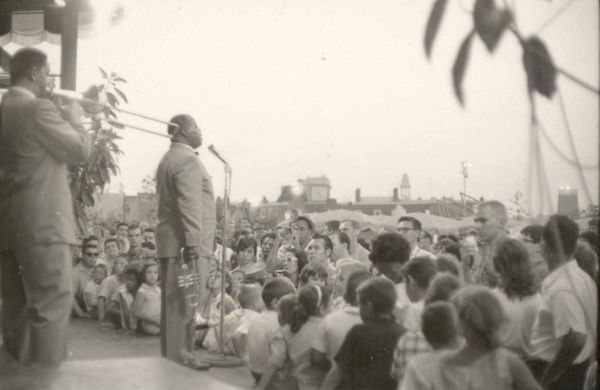
Above: Louis Armstrong at Freedomland, picture courtesy the Louis Armstrong House Museum

“I was 10 years old with Ed Sullivan on the original broadcast about Freedomland. It took all day to tape the show segment. He was very patient and very kind.” “Only thing I remember is seeing The Four Seasons perform on a chilly, damp, windy day. First concert I ever attended.”
“One of the most memorable events of my childhood was seeing Louis Armstrong at Freedomland.”

Photo courtesy Gorillas Don’t Blog

Stagecoach drama:
“I was stunned to hear about Freedomland on NPR today. I was there with my sister when they had the stagecoach accident that eventually caused the financial ruin of Freedomland

Apparently, the horse handlers warned the owners that the train that ran through the park would spook the horses. That is exactly what happened the day we visited. Coming down the last hill, the horse spooked and bolted. The stagecoach flipped over and severely injured most riders. 

My sister and I were on top and were thrown clear of the coach. I had a small cut on my elbow and my sister had a damaged tooth. Others broke legs and spines when they were trapped under the coach. My uncle and cousins helped lift the stagecoach off the injured. Many lawsuits later, Freedomland closed. I never heard anyone mention that place until today.”