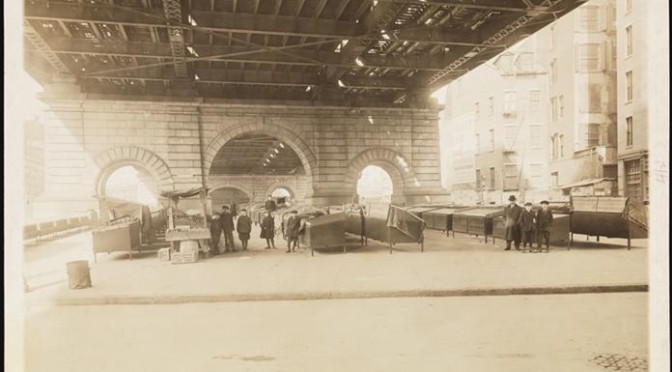
Setting up a market under the Manhattan Bridge. (Courtesy MCNY. Note: This photo may be of an earlier market here, but this gives you an idea of where the 1914-15 markets would have been located.)
Groceries are becoming more expensive as retailers mark up prices due to food shortages (or simple price gouging at perceived shortages). So people are turning to rather unconventional methods of getting fresh meat and produce. Is this 2014 or 1914?
At the start of World War I, there was an immediate shortage of certain food items at New York grocers. Local distributors greatly took advantage of this special circumstance, marking up a variety of essential items. “Sugar and flour, which have been increasing in price so rapidly, gave indications of continuing their upward march,” an article from August 19, 1914 proclaimed.
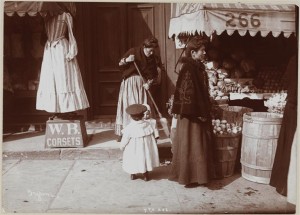
Shopping at a typical New York grocer, 1903 (MCNY):
Fifty years before, New Yorkers could interact with farmers and butchers directly at open-air markets. But by the 1910s, most transactions were governed by local distributors. Old Washington Market was by this time a thriving indoor wholesale market. Local grocers had limited space with limited selection. The era of the modern supermarket — with greater selections and better values — was still a decade or two in the future. (The first supermarket is often considered to be Piggly Wiggly, which opened in Tennessee in 1916.)
To fend off rising food rates, the city of New York did something rather extraordinary: it opened its own direct markets (or “open markets”) which cut out the middle-man entirely.
Manhattan Borough President Marcus M. Marks authorized the opening of four such markets in the following open areas — under the Manhattan sides of the Manhattan and Queensboro Bridges, the intersection of 3rd Avenue and 129th Street (today’s Harlem River Park), and the Fort Lee Ferry Terminal (West 139th Street and the Hudson River, near today’s Riverbank State Park). A similar program was also set up in Tompkinsville, Staten Island.
Below: Interior of the Queensboro Bridge Market, 1915 (MCNY)
The markets opened in September 1914 with dozens of Long Island and New Jersey farmers bringing their wares to New York. Pushcart vendors, already spread throughout the city, also set up shop here. What makes this such a controversial move is that it was a clear attempt to undercut all established grocers, to force distributors to quit gouging price.
They were an immediate hit despite being located in areas quite distant from certain populated areas. The markets appealed to women of many classes, because who doesn’t love a bargain? “At this market were many housewives who came in automobiles to buy from the farmers,” said a report from September 20, 1914. “Baskets filled with fresh vegetables and fruits were on seats, and the legs of more than one chicken projected from paper parcels under the chauffeur’s elbows.” By 1915, the markets were considered by some “a social affair.”
The open markets were so successful that stock was usually emptied out by mid-morning. Late-arriving women “actually wept when the market was bought out.” [source]
Naturally, retail grocers were angered by the city’s bold move and soon went on the offensive. “There is nothing but politics in this open market game, gentleman, from start to finish,” declared one speaker at a grocers union rally that October.
The city counteracted the grocer’s propaganda by providing ‘bargain days’ for extra values, reeling in the participation of farmers, butchers, poultry brokers and even honey producers. “A butcher, who will open a new stand, says that he will give a head of cabbage in lieu of trading stamps to every purchaser of a piece of corned beef.” [October 15, source]
The markets lasted only a few months and, strangely enough, it was the city itself that killed them. Obviously bending to pressure from local businessmen, the city began charging high rents for a spot at the markets, and smaller farmers soon fled. The Evening World noticed rents that would equal up to “$900 a year”. That’s $20,000 in 2014 currency.
In essence, this was one end of New York government attempting to dampen the authority of the other (namely, the borough president’s office). Vendors had to raise prices to keep their place, and so the usefulness of the markets swiftly faded.
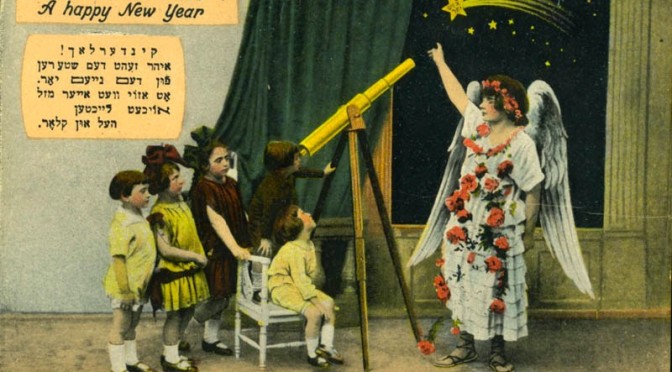
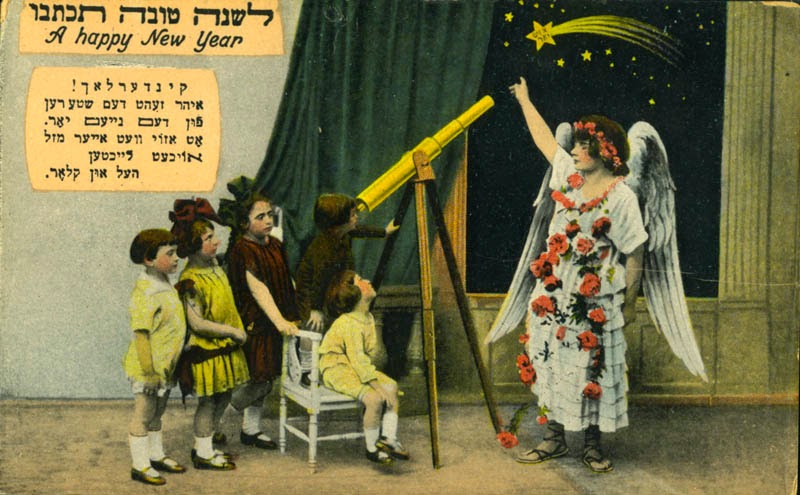
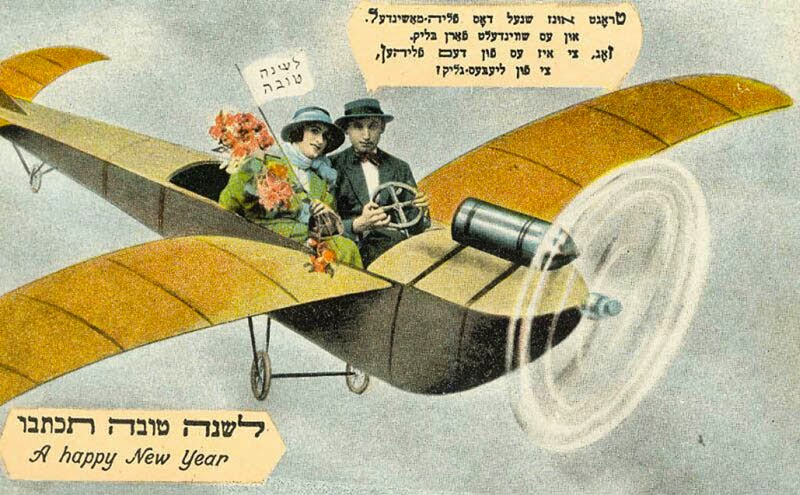
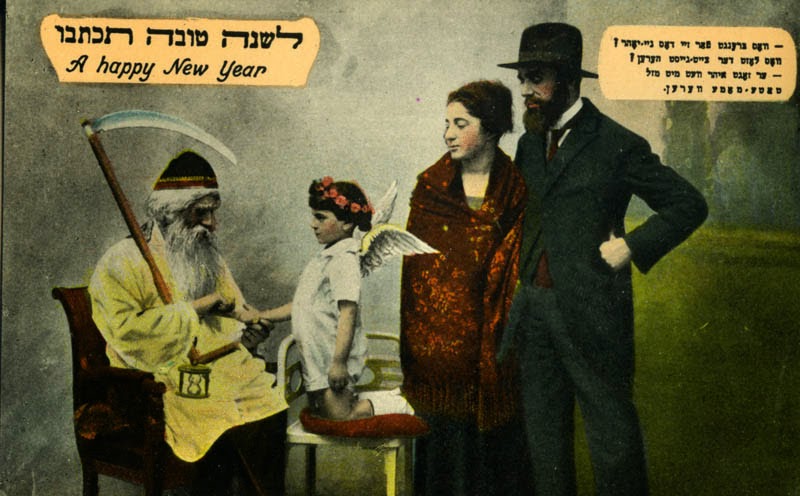
Look to the stars children! A vintage Rosh Hashanah card manufactured by the Williamsburg Art Company in the 1920s.
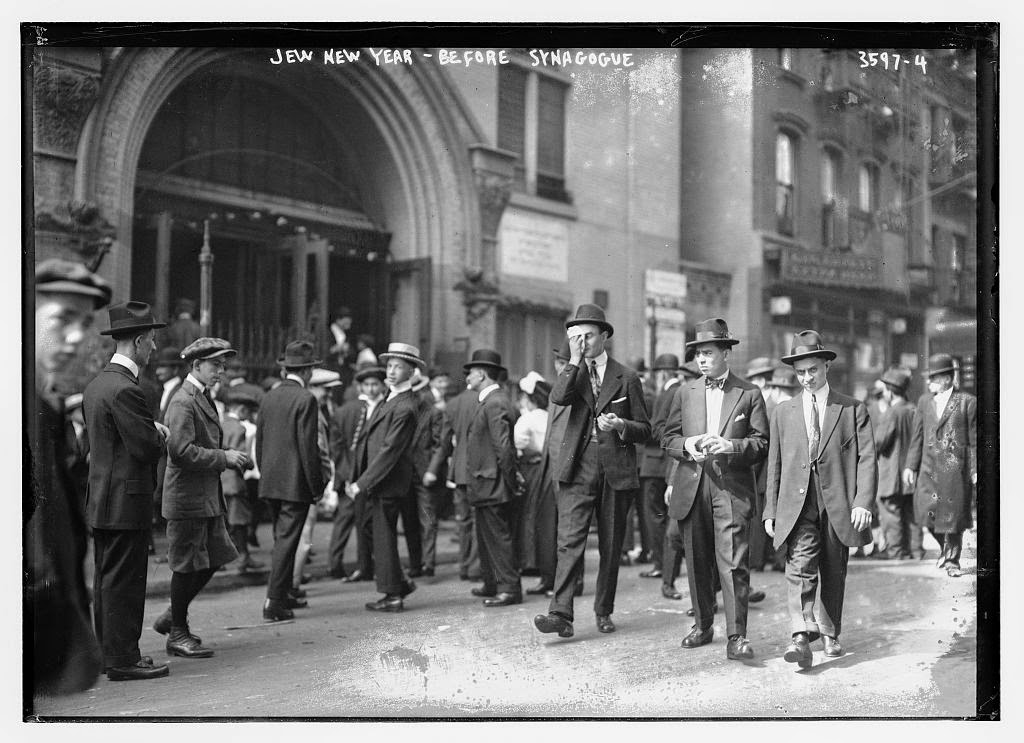
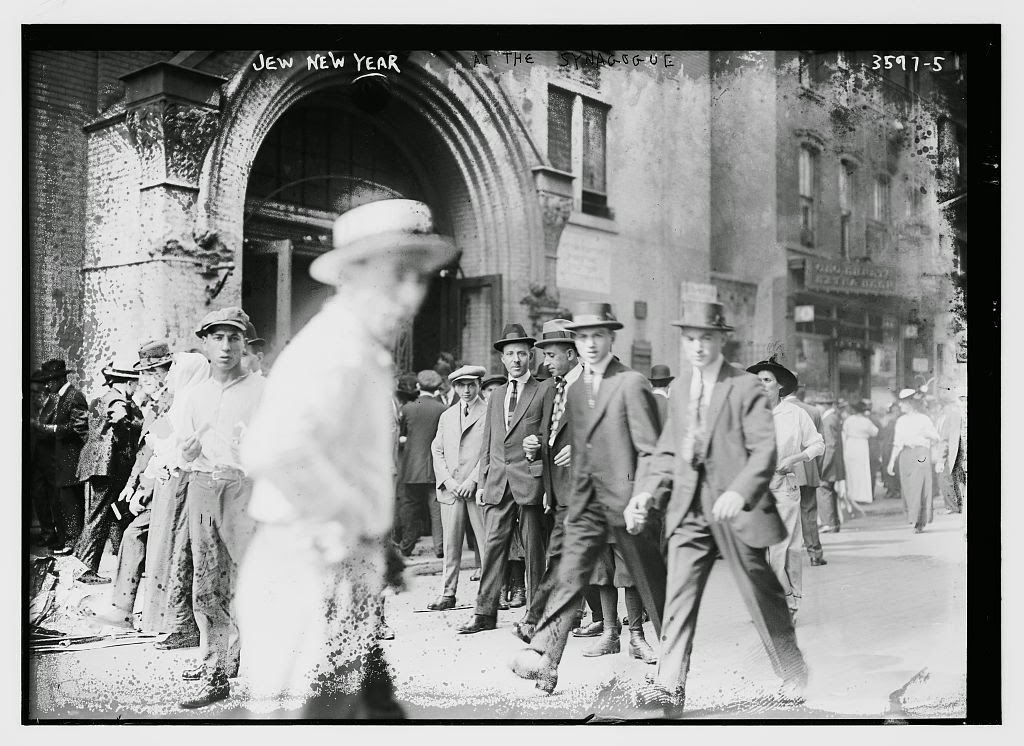
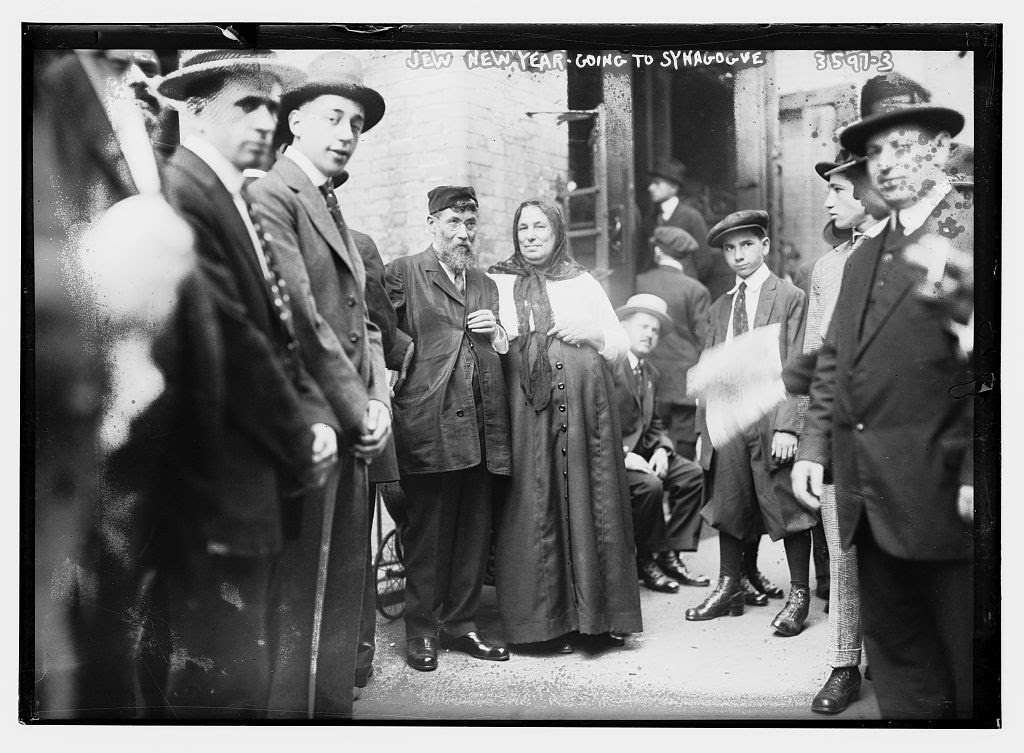
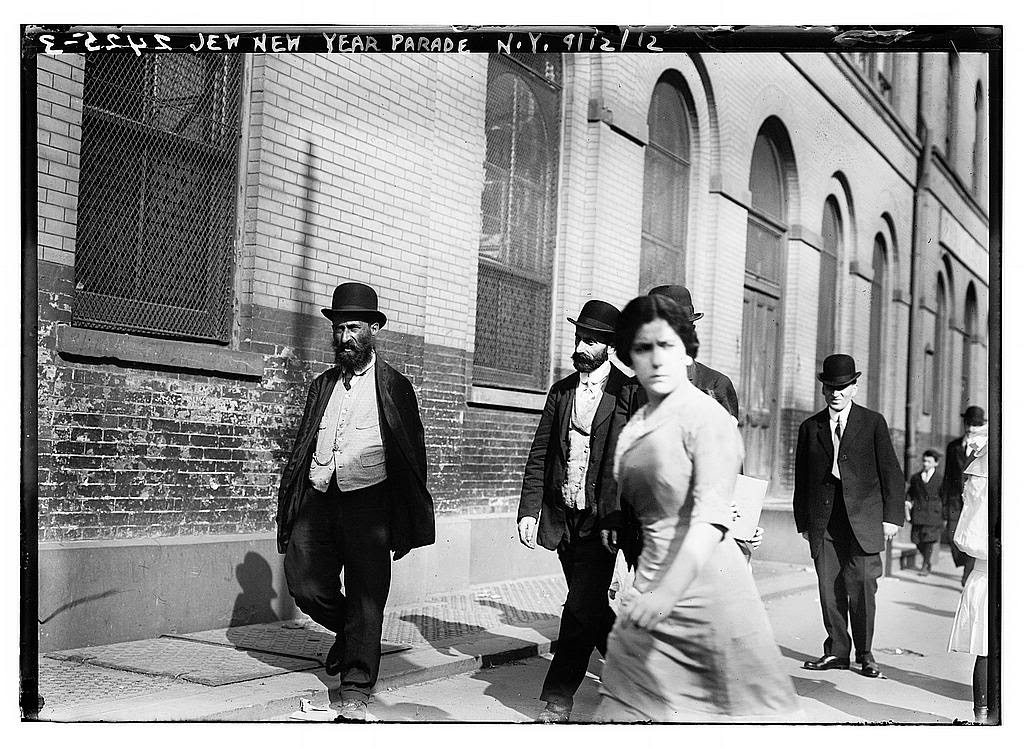
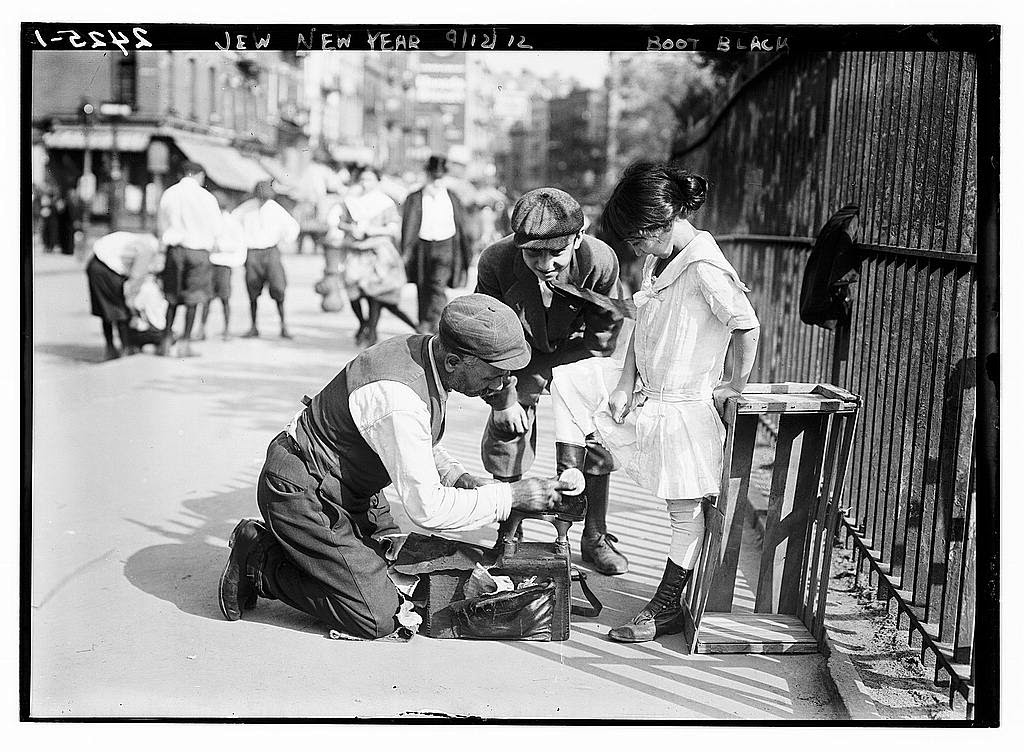
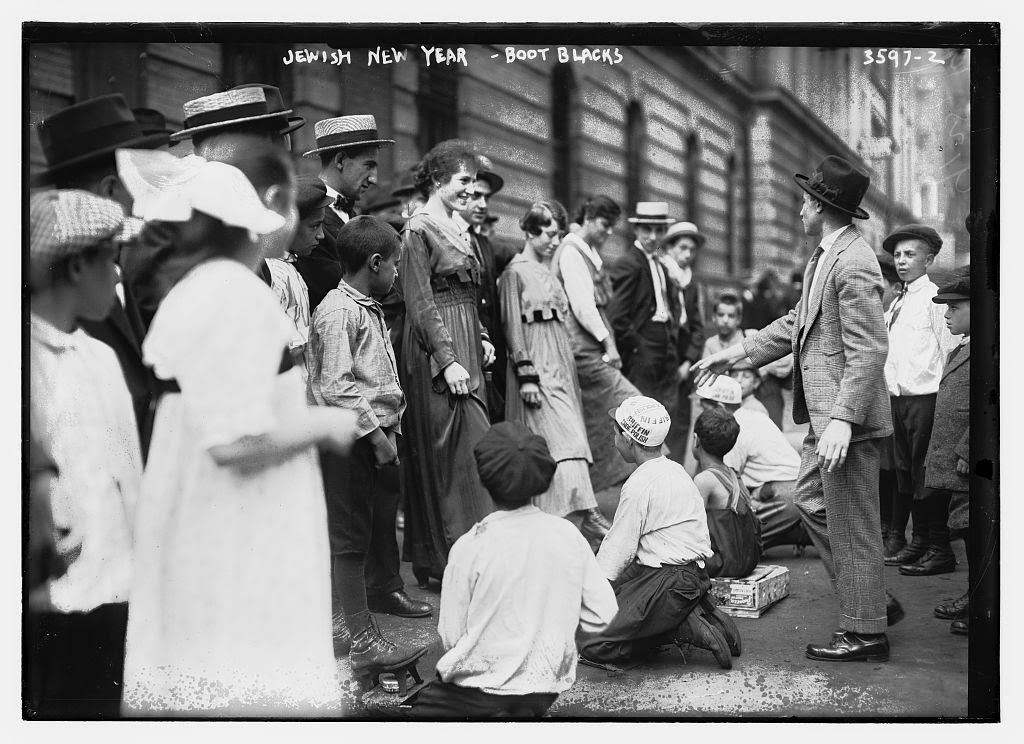
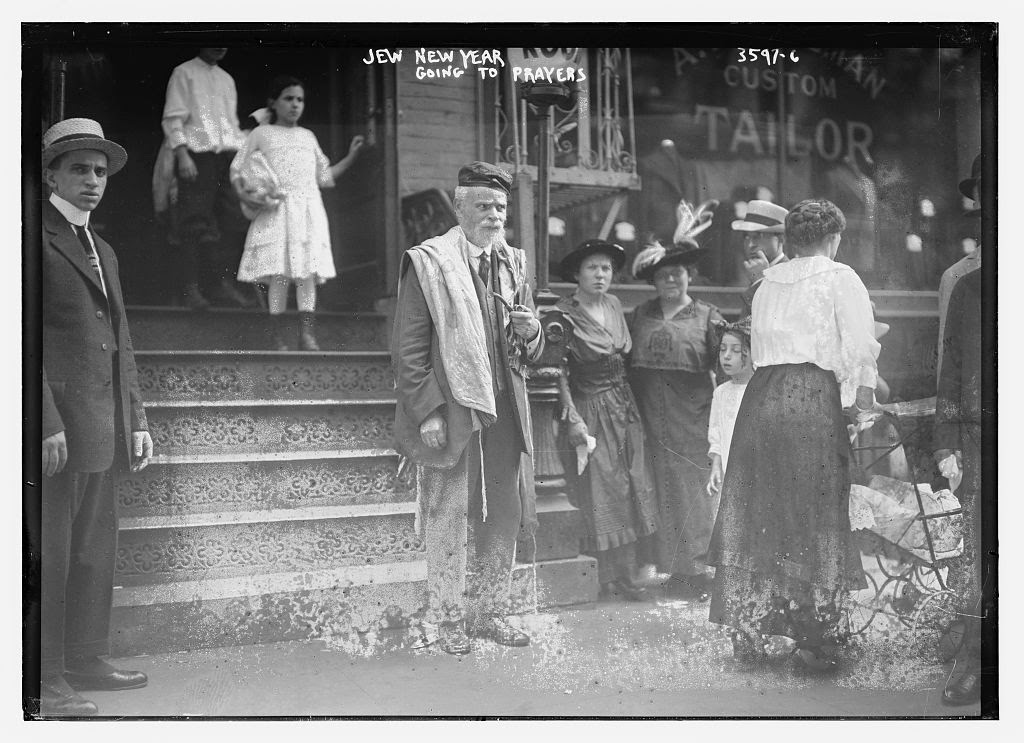
Rosh Hashanah is here — the first of Tishrei, year 5775. Presented here are a selection of photographs from the Library of Congress depicting Jewish New Yorkers celebrating the new year (or, at least, on their way home to start the festivities). These images date from 1909-1915, although most are 1912. As most of these photographs were possibly taken (or labeled) by non-Jewish photographers, some of the meaning is a little lost. If you have any insights into these images, please leave a comment!
And there’s some detective work to be done here. For instance, anyone recognize this synagogue?
One hundred years ago, Jewish New Year celebrations were especially fraught due to the events in Europe. Ethnics groups from embattled countries, in fear their rituals made them targets for local violence, made doubly sure to distance themselves for the politics of the day, while affirming their continuing connection to their Jewish brethren.
A leader of the reformed Jewish congregation proclaimed, “The conservative and patriotic citizenship of America refrains from endorsing the attitude of any country involved in the horrible European conflict. … [O]ur hearts go out to the 300,000 men in the Russian army who, having bled and suffered at the hands of their country on account of being Jews, are now suffering and dying for their country because as Jews they are loyal to the flag under which they live.” [source]
This one is dated September 1912 although there was not a “Jewish New Year Parade” and this is hardly an image of a parade anyway!
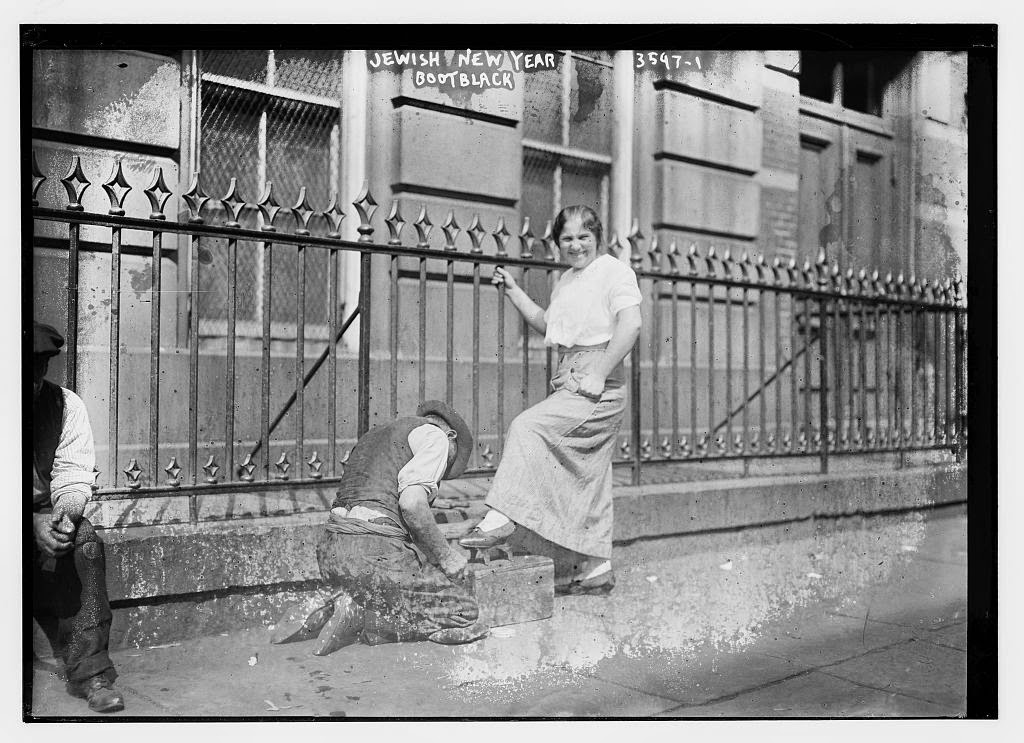
There appear to be a series of old Rosh Hashanah photographs focusing on boot blacks polishing the shoes of young ladies. I doubt this was an actual custom but more a recognition of the fact that many young boot blacks came from Jewish families. (However, for Passover, people leave their shoes at the door.)
The smile of the girl at center is totally making my day:
Here’s a telling detail from 1914: New Jersey decided to hold a statewide primary election on the same day as Rosh Hashanah that year, disenfranchising thousands of Jewish voters “who are prohibited from signing their name.” Registering to vote was quite different back in the day; luckily, there was an alternate date provided that fell before the holiday, but no attempts were made to actually move election day. [source]
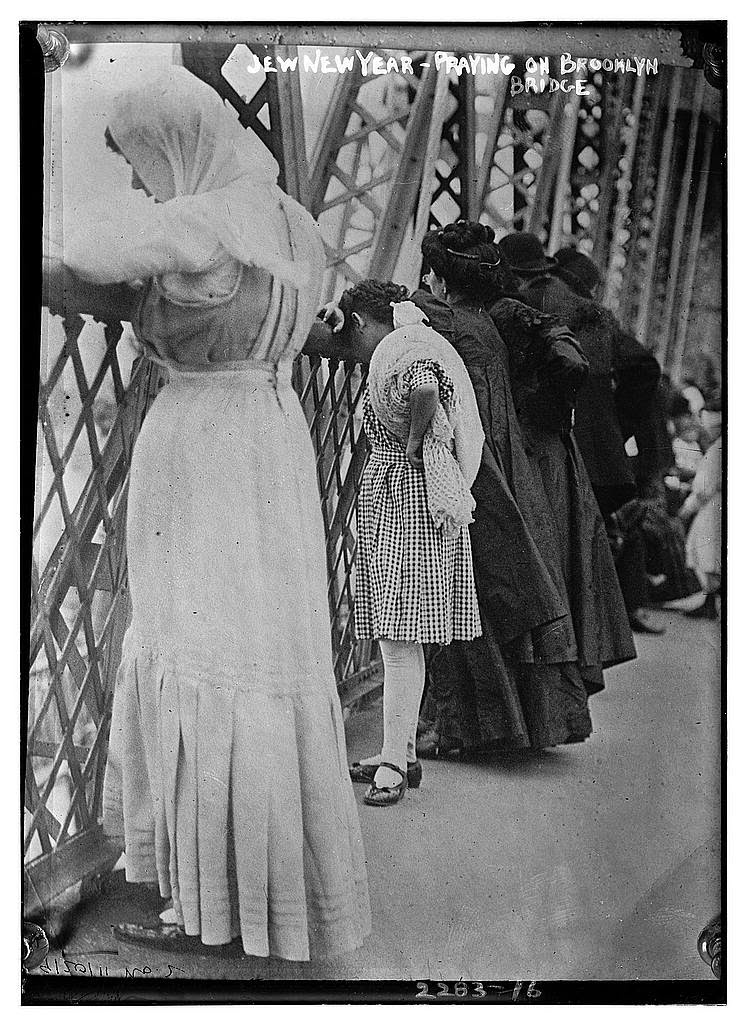
Then there’s this captivating image:
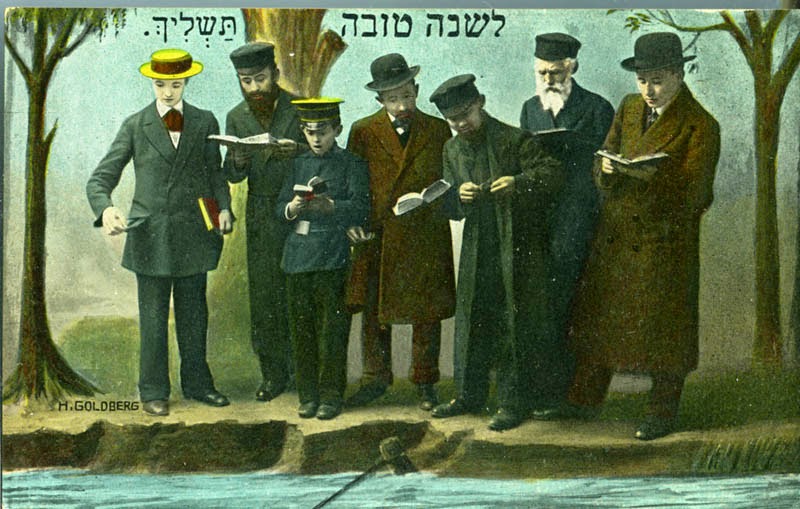
So what’s going on in the picture above, taken on the Williamsburg Bridge in 1909? Per some commentary from a Library of Congress commenter: “If this was photo was indeed taken around Rosh Hashanah (Jewish New Year) as the notation implies then these people are most likely taking part in a “tashlich” ceremony. The ceremony is when the previous year’s sins are symbolically “cast off” by throwing pieces of bread into a flowing body of water.” And finally here’s some rather imaginative Jewish New Year postcards that were manufactured by the Williamsburg Art Company sometime in the 1920s. While the company was located in Brooklyn, all of these were actually manufactured in Germany.
PODCAST Gramercy Park is Manhattan’s only private park, a prohibited place for most New Yorkers. However we have your keys to the history of this significant and rather unusual place, full of the city’s greatest inventors, civic leaders and entertainers.
Literally pulled up from swampy land, Gramercy Park naturally appealed to the city’s elite, a pocket neighborhood with classic old brownstones so vital to the city’s early growth that two streets sprang from its creation — Irving Place and Lexington Avenue.
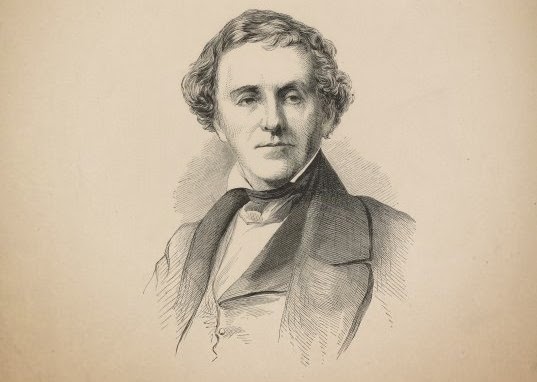
Within the story of Gramercy Park there are echoes of modern debates over class and land usage. The area’s creator Samuel Ruggles was a New York developer before his time, perfecting techniques that modern developers are still using to convince both the city and its residents of the importance and vitality of their high-end projects.
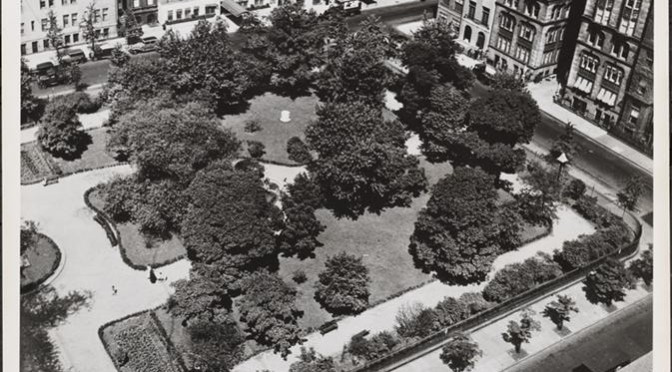
At right: Inside the park with Edwin Booth (Photo by Helaine Magnus, courtesy NYHS)
In this show, we give you an overview of its history — a birds eye’s view, if you will — then follow it up with a virtual walking tour that you can use to guide yourself through the area, on foot or in your mind. (You can follow along virtually starting here.) In this tour, we’ll give you the insights on an early stop on the Underground Railroad, the house of a controversial New York mayor, a fabulous club of thespians, and a hotel that has hosted both the Rolling Stones and John F. Kennedy (though not at the same time).
ALSO: We tell you the right way to get into Gramercy Park — and the wrong way.
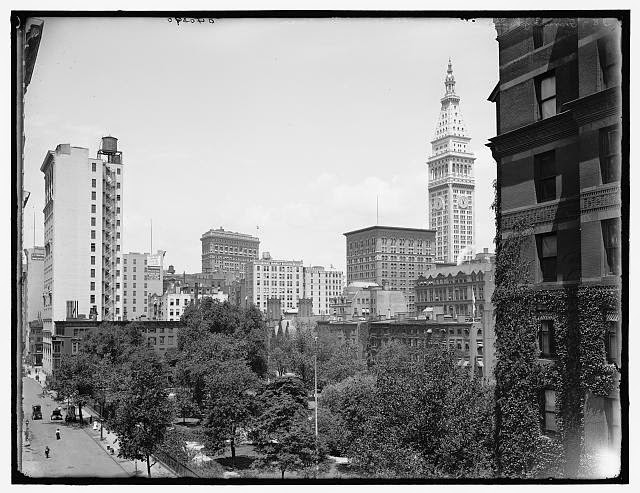
Below: Looking west onto Gramercy Park, photo between 1909-1915. Â You can see both the Flatiron and the Metropolitan Life Tower in the distance. [LOC]
And we would like to thank our sponsors: — Squarespace, the all-in-one platform that makes it fast and easy to create your own professional website or online portfolio. For a free trial and 10% off (your first purchase), go to squarespace.comand use offer code BOWERY. —Audible, the premier provider of digital audiobooks. Get a FREE audiobook download and 30 day free trial at www.audibletrial.com/boweryboys. Over 150,000 titles to choose from for your iPhone, Android, Kindle or mp3 player Audible titles play on iPhone, Kindle, Android and more than 500 devices for listening anytime, anywhere.
Samuel Ruggles, the mastermind behind the Union Square and Gramercy Park developments, two parks with drastically different fates. While Union Square would eventually be considered ‘the people’s park’ and a center of working class protest, Gramercy Park would retain its guarded, exclusive character.
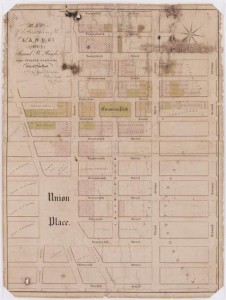
A 1831 map outlining the lands owned and developed by Samuel Ruggles. Lexington Avenue and Irving Place have already been planned by this time. (Courtesy MCNY)
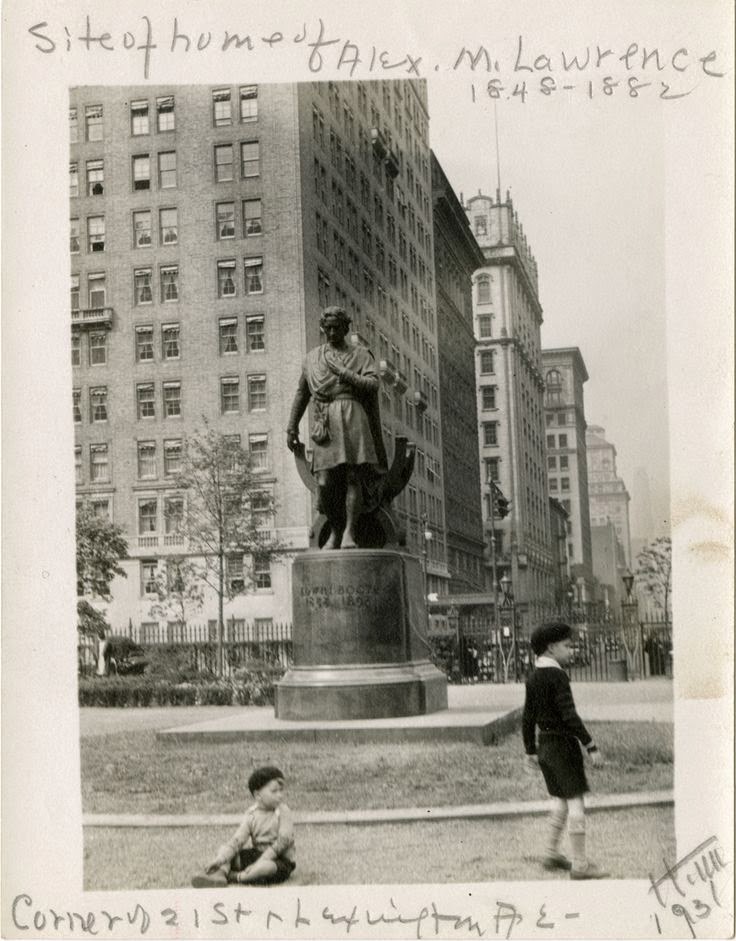
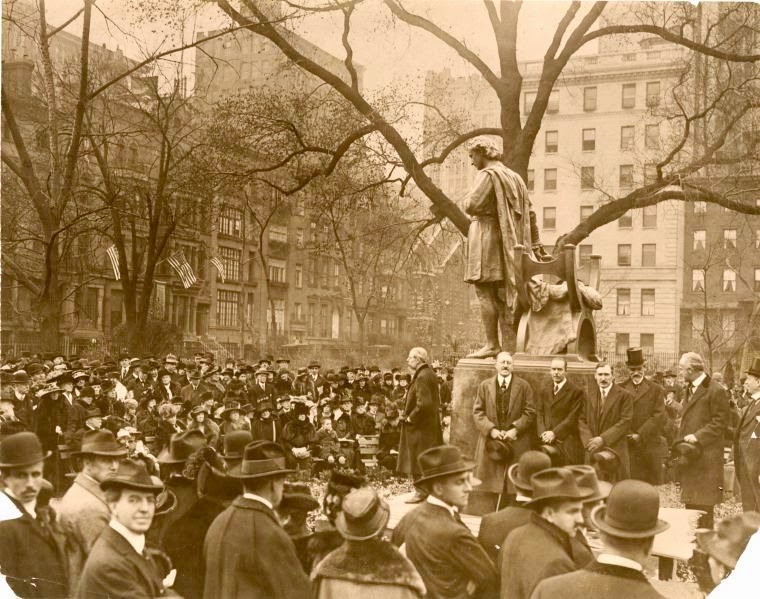
The 1918 unveiling of Gramercy Park’s one permanent resident — the statue of Edwin Booth. (NYPL)
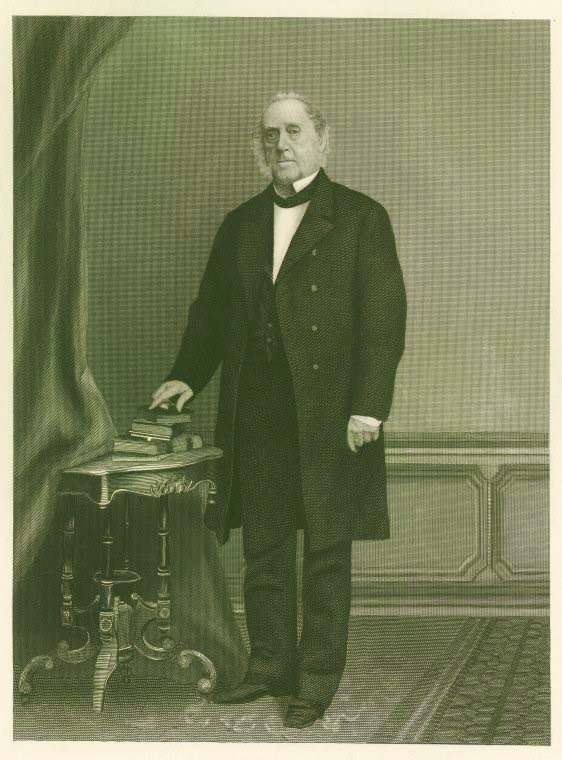
The esteemed Dr. Valentine Mott who lived (with his large family) at 1 Gramercy Park.
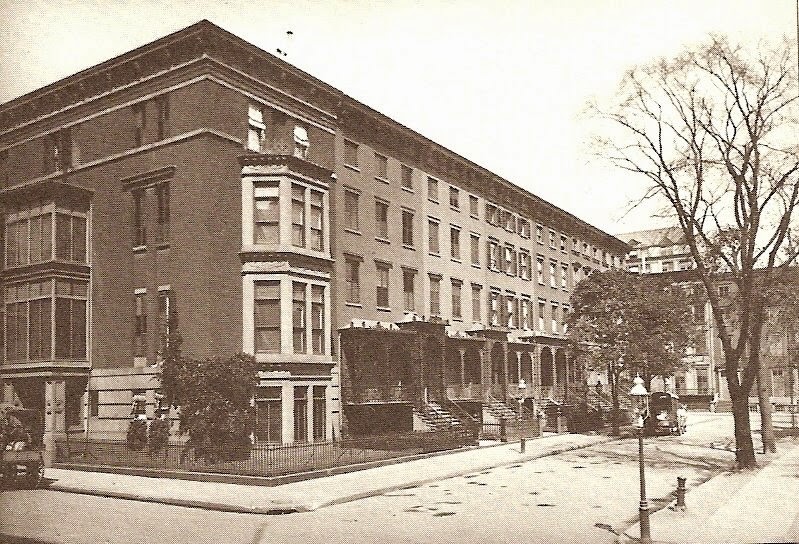
3 and 4 Gramercy Park from 1935 — and they look exactly the same today! The lampposts indicate that this was once the home of former mayor James Harper. (Photo by Berenice Abbot, NYPL)
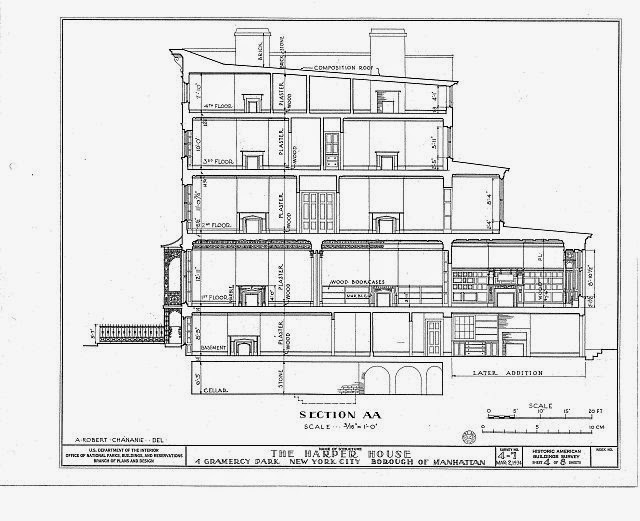
A architectural cross-section of 4 Gramercy Park, showing the size of the house.
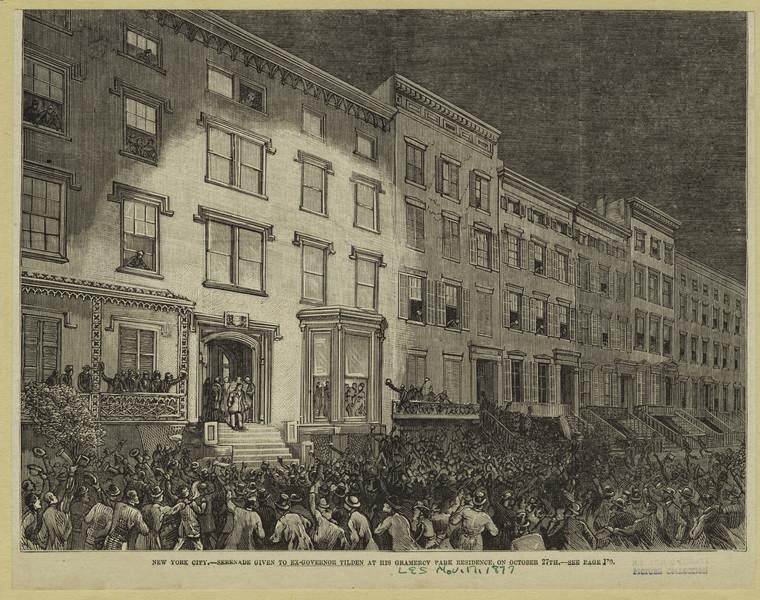
New York governor and almost-U.S. president Samuel Tilden lived in Gramercy Park. His home would later be transformed into the National Arts Club.
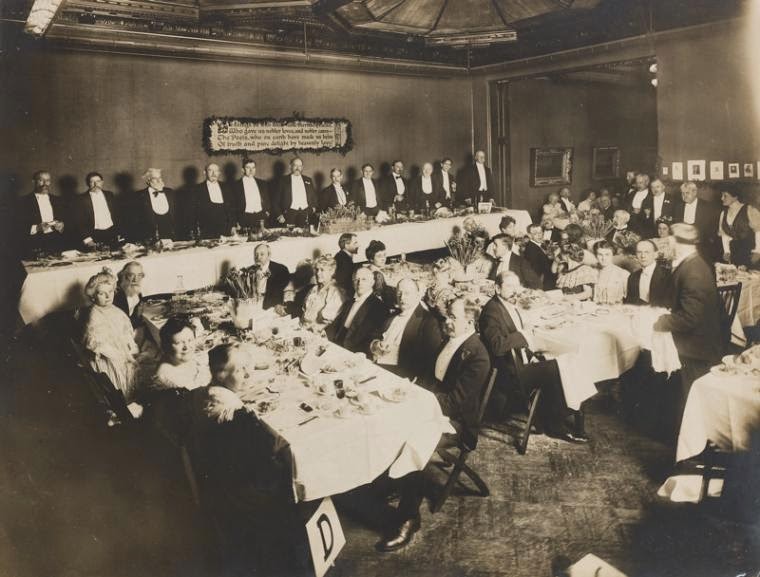
Enjoying a banquet at the National Arts Club in 1908. As you can see, the membership has always been open to both men and women, a trait few social clubs of the day enjoyed. (NYPL)
The Players Club in 1905. In this photo the building is mournfully adorned in black crepe in honor of the actor Joseph Jefferson.
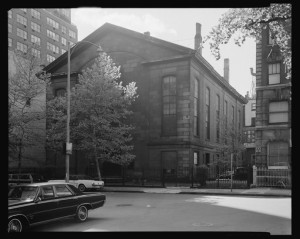
The Friends Meeting House in 1965. It would become the Brotherhood Synagogue ten years later. (Courtesy Wurts Brothers, MCNY)
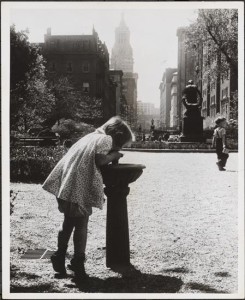
Children within the park, 1944. The Edwin Booth statue stands in the background here (MCNY)
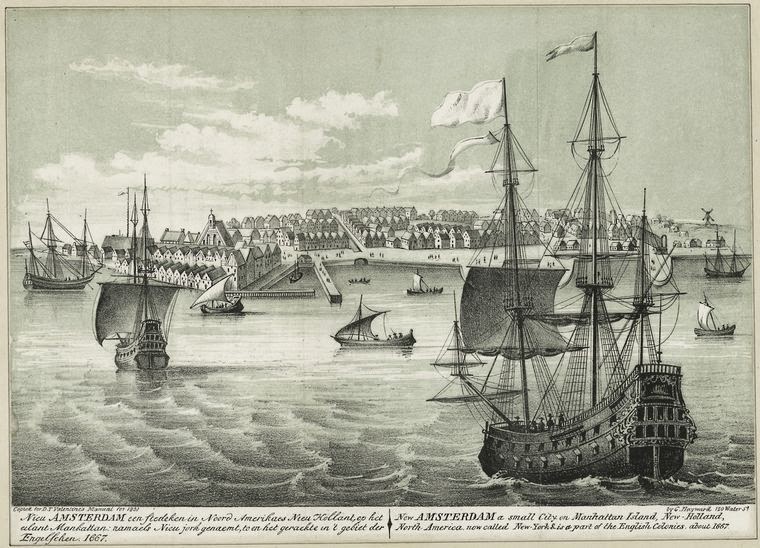
New Amsterdam, the home of Claes Maartenszen van Rosenvelt (by Thomas Addis Emmet, courtesy NYPL)
The new Ken Burns seven-part documentary The Roosevelts: An Intimate History is underway on PBS, a sprawling look at one of New York’s most prominent families. It began last night with the introduction of young Theodore Roosevelt, the sickly boy turned New York police commissioner. Tonight, in part two, he becomes the President of the United States.
With so many Roosevelts to speak about — and two clans of Roosevelts, named for their summer haunts Hyde Park and Oyster Bay — there wasn’t much time to mention the very first Roosevelt. That is, the first ancestor to arrive in future North America — Claes Maartenszen van Rosenvelt.
Claes arrived to New Amsterdam sometime around 1649 or 1650, although possibly much earlier (some records say 1638), one of a number of Dutch settlers arriving at this outpost of the Dutch West India Company. If the earlier dates are true, this puts Rosenvelt in the outpost during the years of William Keift, when New Amsterdam was a ragged company town, with a rudimentary civic structure and in constant fear of attack by the Lenape.
His wife is referred to in records as both Jannetje Samuels and Jannetie Thomas. Keep in mind that with the paucity of extant records, a company-town’s inefficiencies, basic human error and the “peculiar method of naming people during Dutch times,” it’s incredible that we even have these names at all!
Many histories make note of Claes unusual nickname — Klein Klassje or Cleyn Claesjen (“Little Claes”) — perhaps meaning he was a short man or that there was a much larger Claes in town. It’s not inconceivable to think he was also “short” in social stature, not physical.
The colony was whipped into a relatively more livable condition with the arrival of Peter Stuyvesant in 1647, and records list Claes as having a farm “situated back of Stuyvesant’s Bouwery, at present somewhere between Broadway and the East River, in the neighborhood of Tenth Street.” [source]
The couple had four children of which only one (Nicolas) took and kept the name Rosenvelt, which of course was modified over time into Roosevelt.
For decades, Manhattan once had a Roosevelt Street, named not for any of the later great leaders who would make the family famous, but (it’s believed) for either Nicolas or his son Jacobus. The family owned a profitable mill on a small stream which ran between the East River and the banks of Collect Pond. [source]
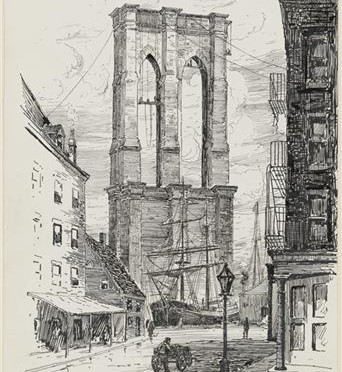
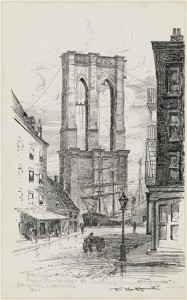
At right: the construction of the Brooklyn Bridge as seen from Roosevelt Street, 1876 (courtesy MCNY)
In the 19th century, Roosevelt Street was a dour place, rife with poverty and the downtrodden culture of South Street piers. It was entirely erased in the 1950s with the creation of the Alfred E. Smith Houses.
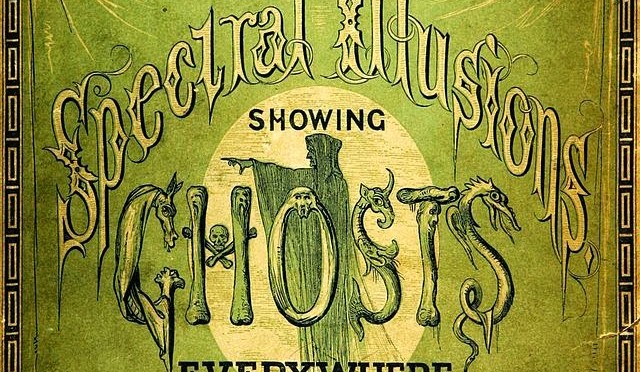
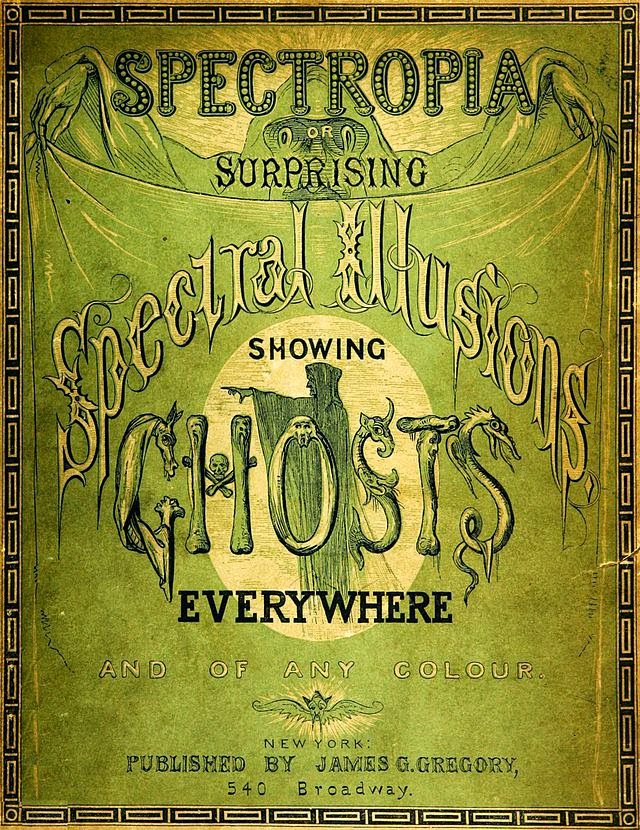
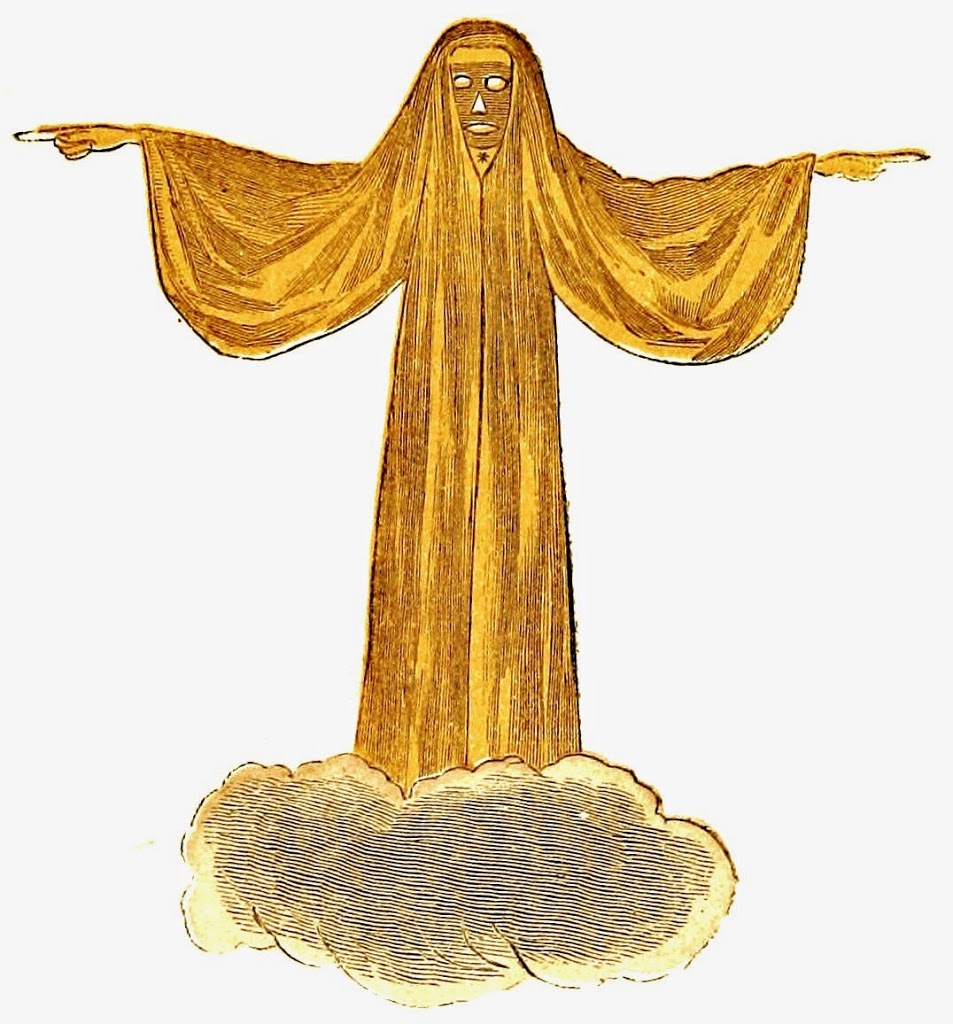
Above: The cover of the New York edition of Brown’s optical illusion book
One of the hottest books in New York City in the fall of 1864 was an optical illusion collection that conjured ghosts through a simple trick of the eye.
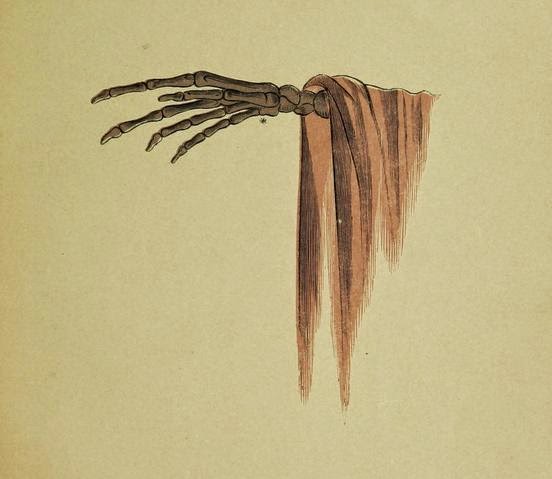
Spectropia, or surprising spectral illusions showing ghosts everywhere and of any colour was both a parlor amusement and picture-filled chapbook written and illustrated by J. H. Brown, an early skeptic of the spiritualism movement.
From the books introduction: “It is a curious fact that, in this age of scientific research, the absurd follies of spiritualism should find an increase in supporters; but mental epidemics seem at certain seasons to affect our minds, and one of the oldest of these mental afflictions — witchcraft — is once more prevalent in this nineteenth century, under the contemptible forms of spirit-rapping and table-turning.”
To counter the phonies, Brown presents readers with a nifty optical illusion that will allow its readers to create their own ghosts at home.
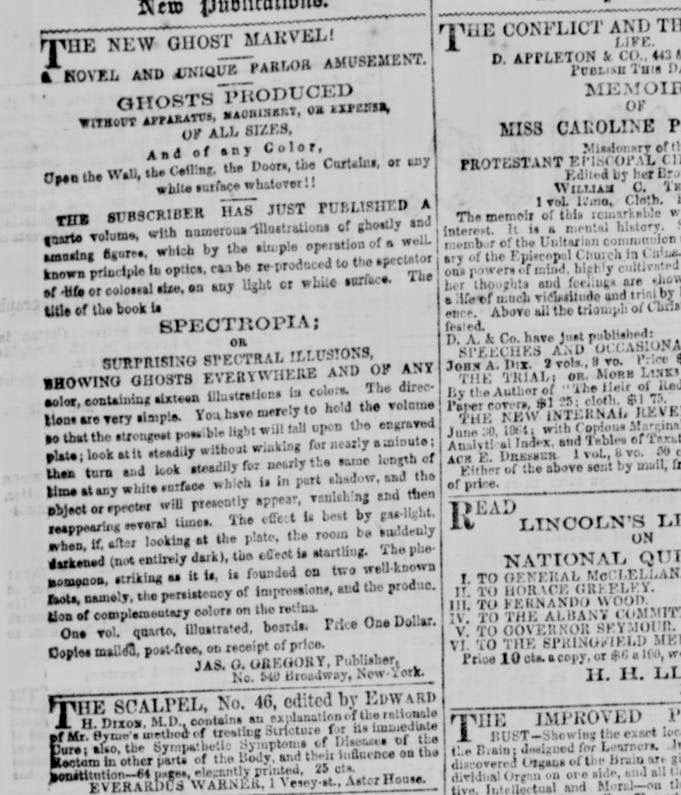
According to advertisements for the book:
“The directions are very simple. You have merely to hold the volume so that the strongest possible light will fall upon the engraved plate; look at it steadily without blinking for nearly a minute; then turn and look steadily for the same length of time at any white surface which is in part shadow, and the object or specter will presently appear.”
“The effect is best by gaslight.” My goodness, what isn’t?
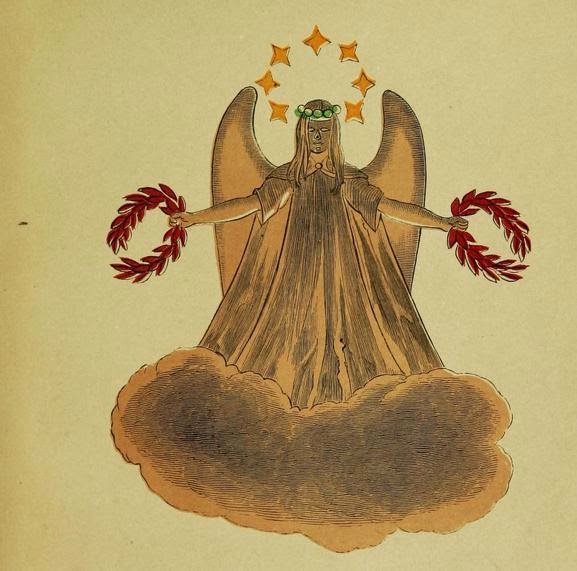
Here’s a sampling of the illustrations. See if they work for you! And yes, definitely try these out if your home is equipped with gaslight….
The book was produced in New York by publisher James Gregory at 540 Broadway in today’s SoHo area. (It’s the building where the Steve Madden shoe store is today.).
Believe it or not, Spectropia was a hot gift under the tree that Christmas. The New York Times lists it that year in their recommended holiday gift list. “The publications of Mr. JAS. G. GREGORY, of No. 540 Broadway, are characterized by good taste and fine execution.” Mr. Gregory kept the book in publication for several years afterwards or at least until the novelty wore off.
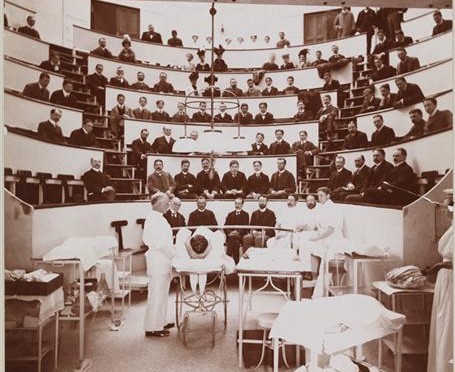
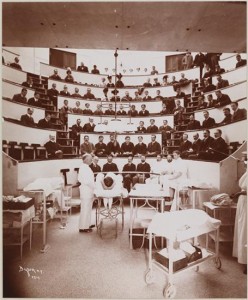
Syms operating theater at Roosevelt Hospital in 1900, perhaps one of the cleanest places in Manhattan! (Picture courtesy Museum of the City of New York)
It was not a fair fight.
In 1895, in celebrating the innovative new surgery building at Roosevelt Hospital, the New York Times decided to compare its revolutionary new features to an antiquated hospital, one that had been serving patients for decades in that metropolis right across the water — Long Island College Hospital in Brooklyn.
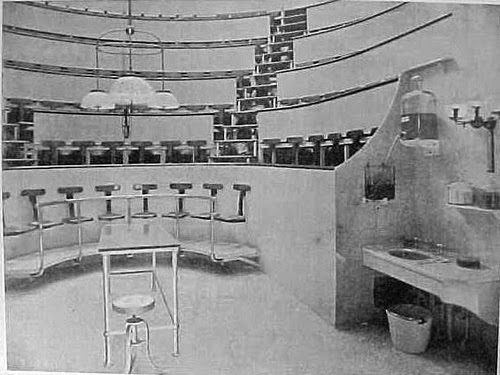
Upon its opening in 1892, William J. Syms Operating Theater, west of Columbus Circle, was a jewel in the crown of the Roosevelt Hospital complex, employing the latest antiseptic techniques, even using materials in its construction that were believed to be less germ prone — glass operating tables, a mosaic floor, iron chairs.
New rules of cleanliness were employed within its surgical theater. “[The visitor] will see everywhere signs of the most exquisite cleanliness. [He] will see no sign of haste or confusion, of dirt or litter, of human pain or suffering.”
Below: The inside of the Syms operating room from 1893: (Scouting NY)
In heralding this sparkly new institution, the newspaper decided to throw a vaunted, albeit older, one under the bus.
“In the operating theater of the Long Island College Hospital the conditions obtain [sic] today are more in keeping with the practices of half a century ago. The large and ugly theatre is fitted with wooden benches, upon which generations of students have done their whittling. The floor beneath the benches acts as a convenient and frequent receptacle for tobacco juice. The walls are tinted with a dirty, bluish color, and on the side nearest the operating table there is an ominous stain of seepage from the floor above.”
The description continues rather grotesquely — I’ll get to more of it in a second — but is it a fair characterization?
While disquieting to our modern understanding of cleanliness, in fact, the Brooklyn institution was certainly deteriorating, but probably in better shape than most places of this type in America in the 1890s.
The Tale of Long Island College Hospital The story of Long Island College Hospital is the tale of the neighborhood of Cobble Hill, Brooklyn.
Well before south Brooklyn was urban-planned into a grid of respectable blocks, the area that is today’s Cobble Hill was called Ponkiesberg, much of it the farmland of a man named Ralph Patchen. Near the eastern edge of his property sat the ruins of the old Revolutionary War fort . [You may remember this fort from our ghost stories podcast from last year.]
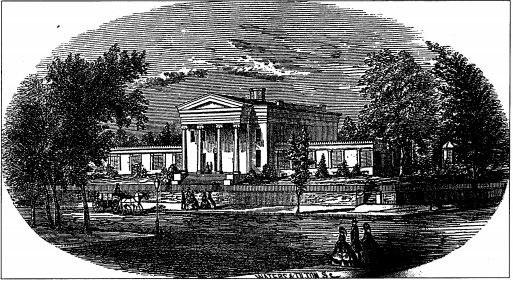
Patchen’s farm was purchased by Joseph A. Perry, later known for his contributions for planning Green-Wood Cemetery. Â On this former lot he built a sumptuous mansion which stood at Henry Street, between Amity and Pacific (pictured below).
Meanwhile, on the edge of his property, two doctors recently arrived from Germany opened a clinic exclusively for Brooklyn’s small, but emerging German population. In the late 1850s, they and other prominent doctors sought to found a college hospital and purchased the Perry mansion in 1858.
From this old house sprang the roots of Long Island College Hospital. While the United States already had a few medical schools, this was America’s first college hospital — on-the-job training as it were, with students interacting directly with patients.
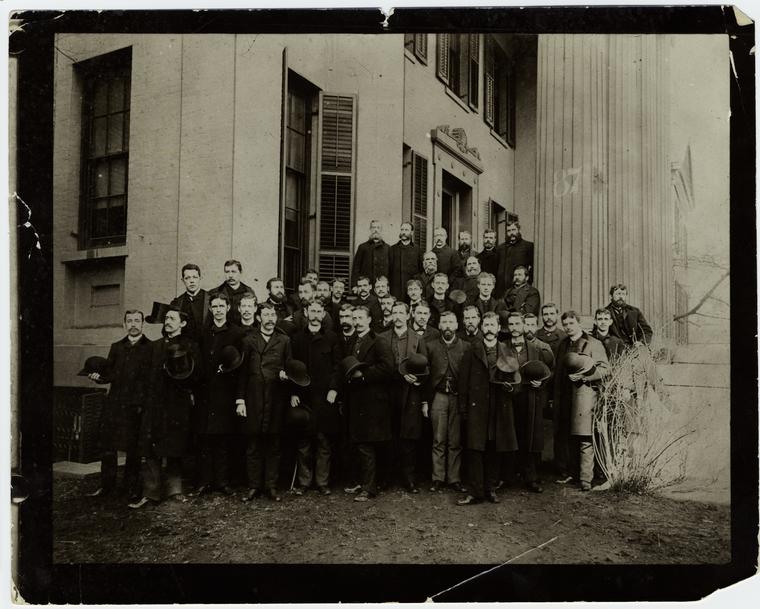
Below: Faculty and students of the medical school pose on the steps of the Perry Mansion, LICH’s principal structure in the mid-19th century
It was an institution quite well known for innovations in the late 19th century.
Many of America’s finest physicians passed through here at some point in their storied careers.
The clinician Austin Flint brought many European techniques to the school, including the stethoscope, a variant of which making its debut here. (Flint actually has a heart murmur named after him, too.)
In 1888 the Hoagland Laboratory opened on campus, providing facilities for both research and education that kept Long Island College Hospital at the forefront of medicine.
In many ways, it was still a respected institution in 1895, but they were often in debt and in desperate need of an upgrade.
Its conditions were probably not unlike most medical institutions of the day, but it paled in comparison to the spectacular new operating theater built for Roosevelt Hospital as a gift.
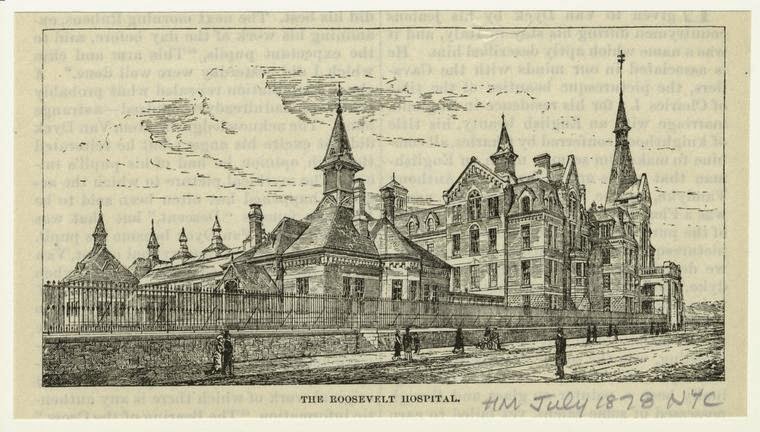
The Tale of Syms Operating Theater Roosevelt Hospital (pictured above) was born out of the generosity of James H. Roosevelt, a wealthy philanthropist confined to his manor for most of his life by illness. When he died, he bequeathed his entire fortune to the creation of a new hospital in his name. Roosevelt Hospital’s first building opened in 1871, over ten years after the opening of Long Island College Hospital.
Many years later, another wealthy benefactor — gun merchant William Syms — benefited from a successful operation at Roosevelt Hospital and donated most of his fortune to the hospital, with the specific intent of building a new operating center.
When Syms Operating Theater opened in 1892, the press trumpeted its sleek innovations in sanitation, creating a brightly lit, aseptic environment previously unseen except in a few places in New York.
It was perhaps the cleanest place in Manhattan or, at least, it was touted as such.
From a citation by the Landmarks Preservation Commission: “Aseptic operating rooms were bright, clean, hard, undecorated spaces; they were the ‘high tech’ spaces of their day.”
Below: The sleek interior of the Syms Operating Theater, 1925. (Picture courtesy Museum of City of New York)
This was not simply for the health of patients and staff. A building of such profound innovations — such as a moat around the basement for thorough drainage — was meant to ease the tensions of New Yorkers who considered operating rooms barbaric and even obscene.
Disturbing descriptions The administrators at Long Island College Hospital could not have been thrilled when they picked up the New York Times on April 27, 1895.
Right there on the front page was a horror story with their historic institution as a backdrop.
“It is from this upper floor that foul and inexpressibly nauseating odors are wafted through the operating theater at all times, because it is there that the students of the college and hospital practice anatomy on eighteen or twenty decomposing cadavers.”
The reporter noted the routine delivery of dead bodies from room to room and the grim procedures of dissection witnessed by dozens of disinterested students.
“In spite of the rising temperature, which should render dissection almost impossible in a building exclusively devoted to the purpose, it is plain from the stench that the hot weather had not stopped the students of Long Island College Hospital.”
Due to the proximity of the autopsy theater to regular patients, “whatever ills result from breathing such a tainted atmosphere must be shared to a lesser extent by the surgical patients of the hospital.”
Sepsis was an omnipresent and growing.danger. As if to confirm this, the hospital refused to provide its mortality records.
The renown doctor Alexander Skene, perhaps the best known physician at the hospital, blamed a lack of funding for the institution’s woes.
“The people of Brooklyn are to blame in some measure because they do not give the hospital the financial support it needs and merits,” said Skene. “The school is very prosperous, while the hospital is very much the reverse.”
(Skene, a leader in the field of gynecology, died just a few years later. Today you can find him in bust form in Brooklyn’s Grand Army Plaza.)
Aftermath The regents of Long Island College Hospital responded with disbelief, even outrage. “I am there everyday, and I never feel any smell,” said a chairman. “We have the plans all ready for a new operating room … but we have no money.”
Fortunately, the hospital and its patients were rescued from further embarrassment by Caroline Polhemus, the wife of one of the hospital’s regents Henry Ditmas Polhemus.
When her husband died that year in 1895, a society matron donated a sizable chunk of her fortune to create the Polhemus Memorial Clinic (pictured at right) in her husband’s honor.
All autopsies for educational purposes were moved to the top floor of the clinic, across the street and far away from the hallways regular hospital.
The building is still around — you can see it here — although it is no longer associated with the hospital.
The Syms Operating Theater served Roosevelt Hospital for several decades before it, too, was declared inadequate.
That building is also still around however; Scouting New York has a nice feature on its current whereabouts, a must-see stop on any New York medical-inspired walking tour.
It’s safe to say that both hospitals are held in high regard in the annals of medical history.
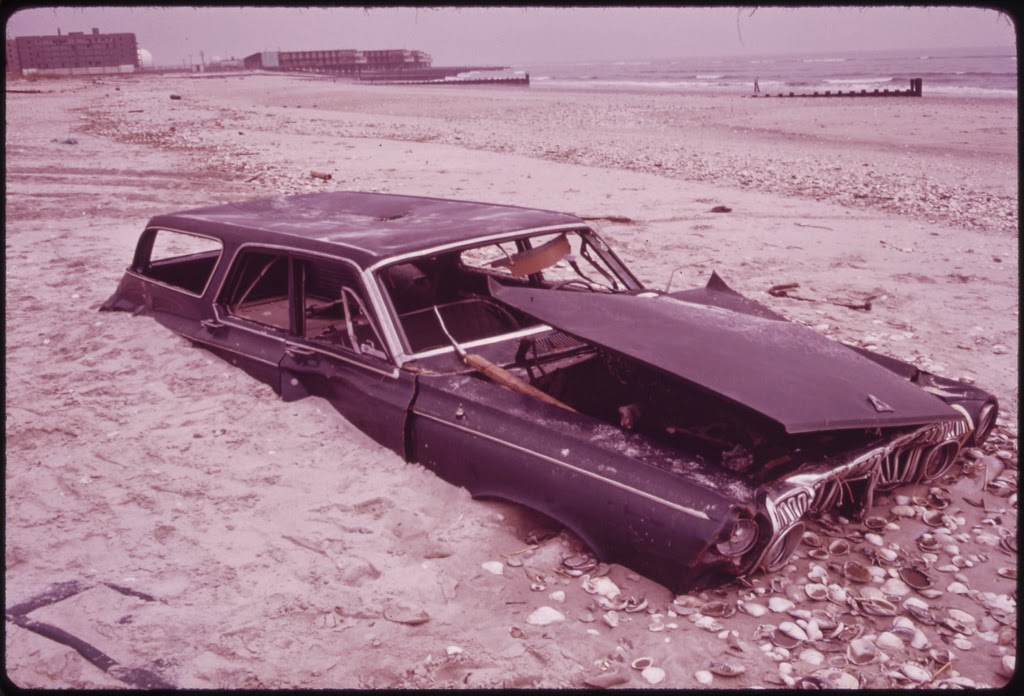
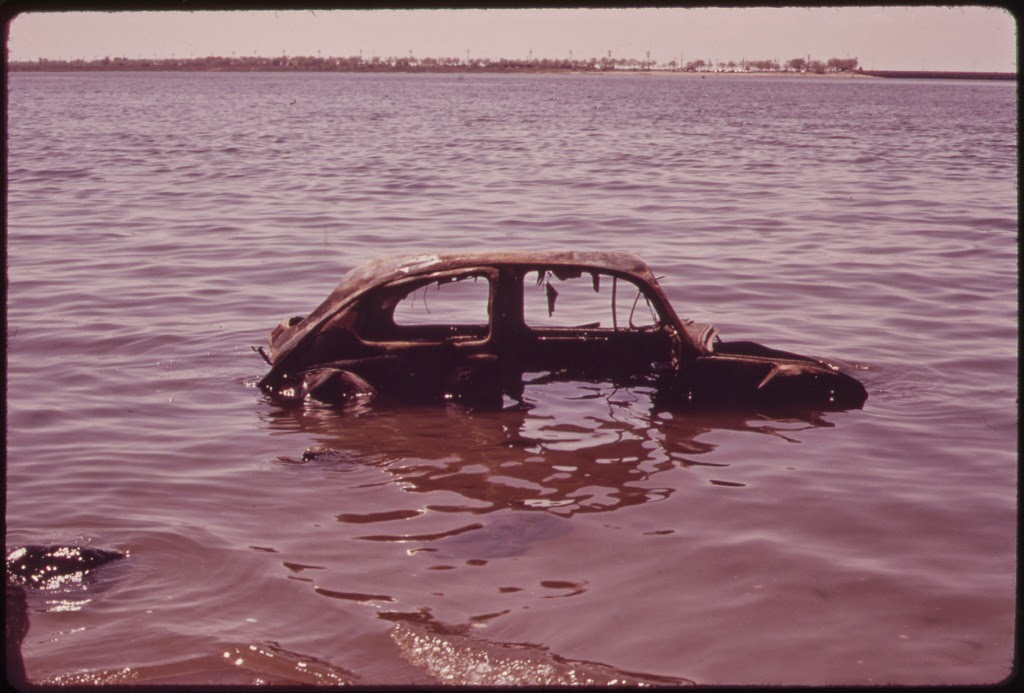
The fate of an automobile at Breezy Point, 1973 (Courtesy US National Archives)
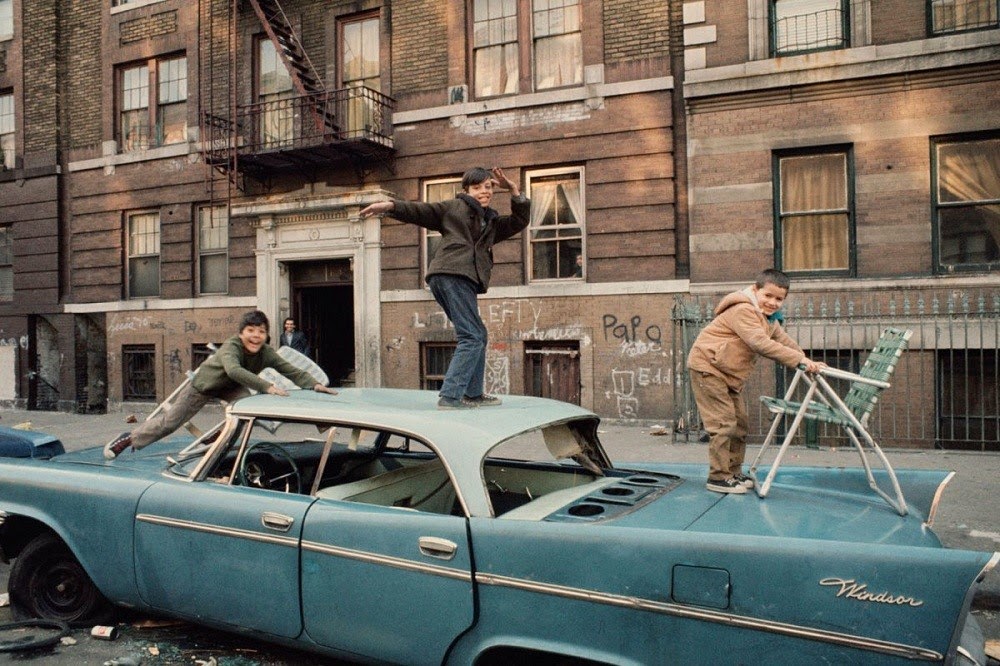
The abandoned car, that most dramatic symbol of urban blight, is a sight that has pretty much vanished from most New York City streets. (Most, not all.)
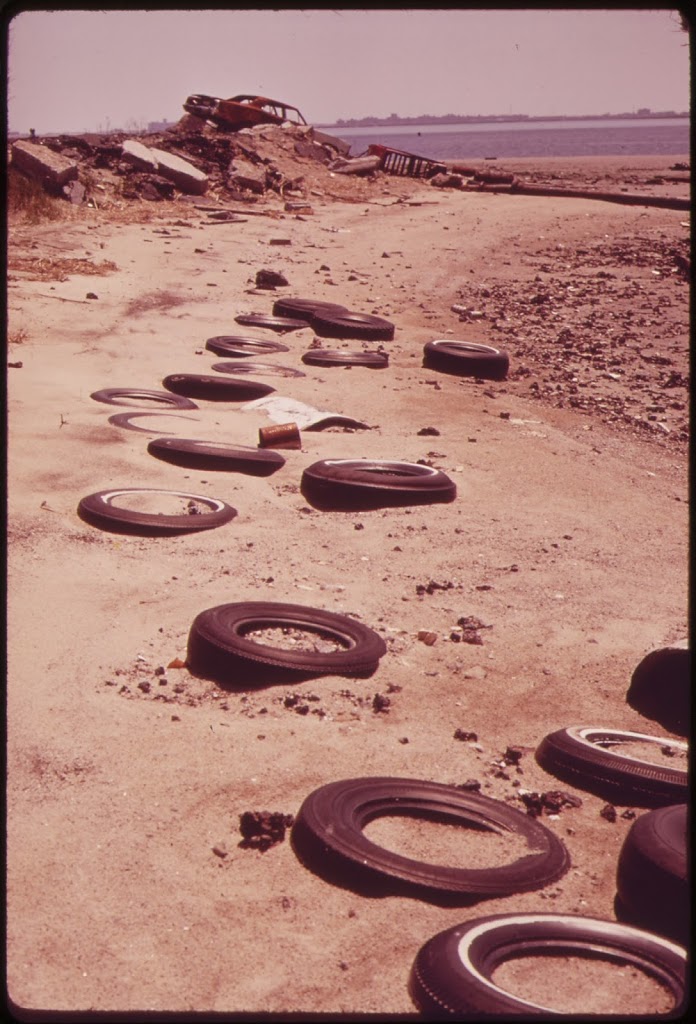
In a city refitted for the automobile by the mid 20th century, people just began leaving their cars everywhere, either vandalized beyond repair or too expensive to tow when their vehicles became unusable. These husks of metal were scavenged for parts, then left to rust, the city’s sanitation crews unable to keep pace of the growing problem.
I recently found an intriguing article in New York Magazine from 45 years ago, titled “Stripped and Abandoned,” outlining the causes of the city’s sudden population of vehicular remains:
“Last year, by Department of Sanitation records, 31,578 cars were abandoned in New York City. Some were wrecks; some were stolen, then stripped; some were involved … in minor highway mishaps which caused their owners to leave them — to expert instant strippers, who evidently abound.”
By 1969, the problem had grown so unwieldy that the city hired third-party contractors to take care of most of it, but its budget for such removal would only shrink as the city entered the hard-knock 1970s.
Within a few years, the city would not even bother to remove such blight from certain neighborhoods.
“At any one time,” wrote author Fred Ferretti in 1969, “there are about 2,000 cars strewn about the highways and local streets.”
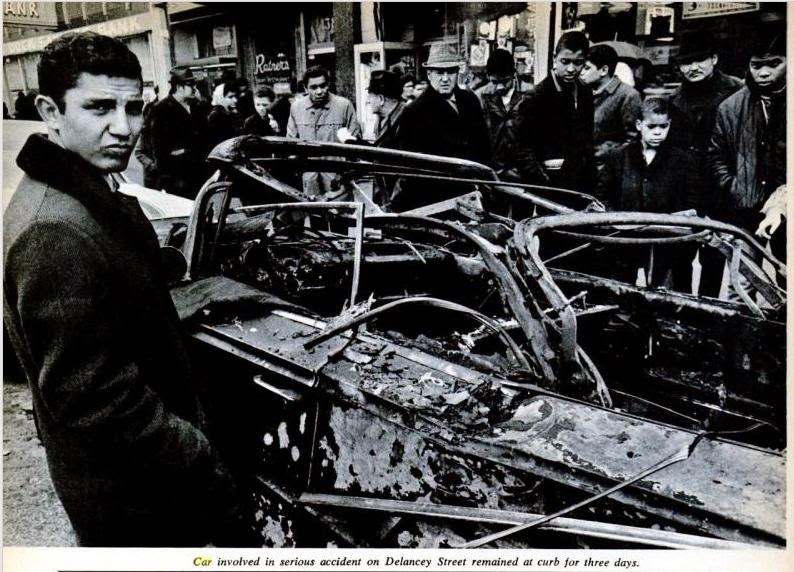
Below: From the New York Magazine article, the fate of a vehicle in Clinton Hill, Brooklyn, and on Delancey Street in the Lower East Side (photos by Robert D’Alessandro):
In 1970, standing in stark contrast to a city of polluted, automotive remains, one artist at the very first Earth Day celebration in Union Square attempted to address the problem. Â A crushed sedan sat alongside the environmental merriment with a sign: “57,742 Cars Removed in 1969; 21,635 Removed in 1970, as of April 21.” Â The New York Times would later note a total of 72,961 abandoned cars in 1970. [source] [source]
They weren’t just eye sores. What wasn’t pilfered or siphoned out was left to rot in the elements, leaking oil, attracting vermin.
New York City was only one problem spot within a new American crisis, with millions and millions of cars across the country already overfilling scrap yards. Here, however, it was a harbinger of hard times on the way.
A car almost completed ingested by Jamaica Bay, 1973Â Â (Courtesy US National Archives)
Abandoned vehicles became the New York Sanitation Department’s biggest issue in the 1970s, although by the new decade, there was some improvement. According to a New York Times article from 1981: “Total abandoned-car collections declined from more than 79,000 in 1978 to 33,112 last year and to 14,900 in the first half of this year, officials said. Robert Hennelly, chief of cleaning operations, said he thought the drop was ”perhaps because the cost of cars has gotten so high that people are holding on to them longer.”
Some cynically still considered the abandoned vehicle to be a recognizable mark of New York City, even in the 1980s, a sort of native animal.
Not that an abandoned car couldn’t have some useful purpose, as this picture by Camily Jose Vergara illustrates. (Click here for more of his terrific photography)
With the general infrastructural improvement of the city during the 1990s, the beast had receded somewhat from view in most neighborhoods.
There are still abandoned cars galore — here’s the city’s current policy for reporting derelict vehicles — but few are so unscrupulously picked clean or left to decay into a rusty shell.
Below: As with the others above, Jamaica Bay 1973, near JFK Airport (US National Archives)
Anybody watching the Houdini mini-series on the History Channel? It’s, um, interesting, I guess. It breezes over any actual character development — eschews all forms of subtlety — and lingers upon vast areas of speculation in his biography. This would be totally unacceptable if it were anybody else but Harry Houdini, who routinely blended fact and fiction in his personal presentation. The influences of Christopher Nolan’s The Prestige are evident.
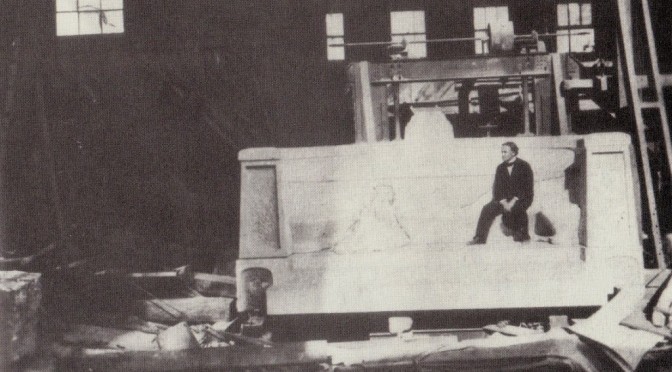
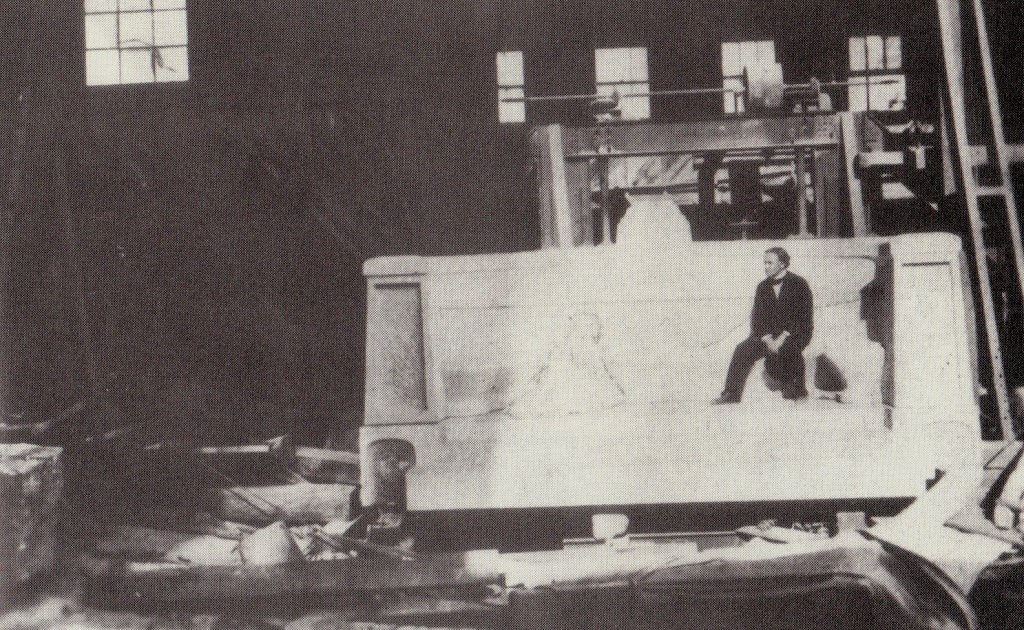
Death hung over Houdini in his performances so it’s no surprise that he had a personal hand in the creation of his final artifice. He’s pictured above in 1916 sitting on his own exedra. The stonework would be moved to Machpelah Cemetery to a plot reserved for his whole family, including his brother and fellow magician Theodore Hardeen.
He was at last interred here at Machpelah on November 4, 1926. Busts have appeared and re-appeared throughout the years — stolen or knocked off. The first one debuted on Halloween in 1927, unveiled by members of the Society of American Magicians, an organization which started in a magic store in Greenwich Village. The current one (see below) was placed there by curators at Pennsylvania’s Houdini Museum.
Give Peace A Chance: Women take to the streets in a stunning parade of mourning
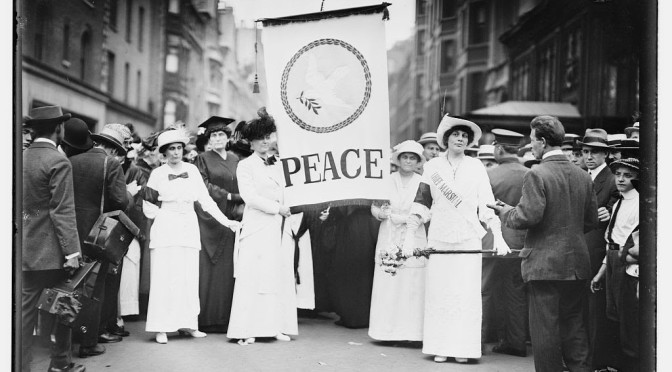
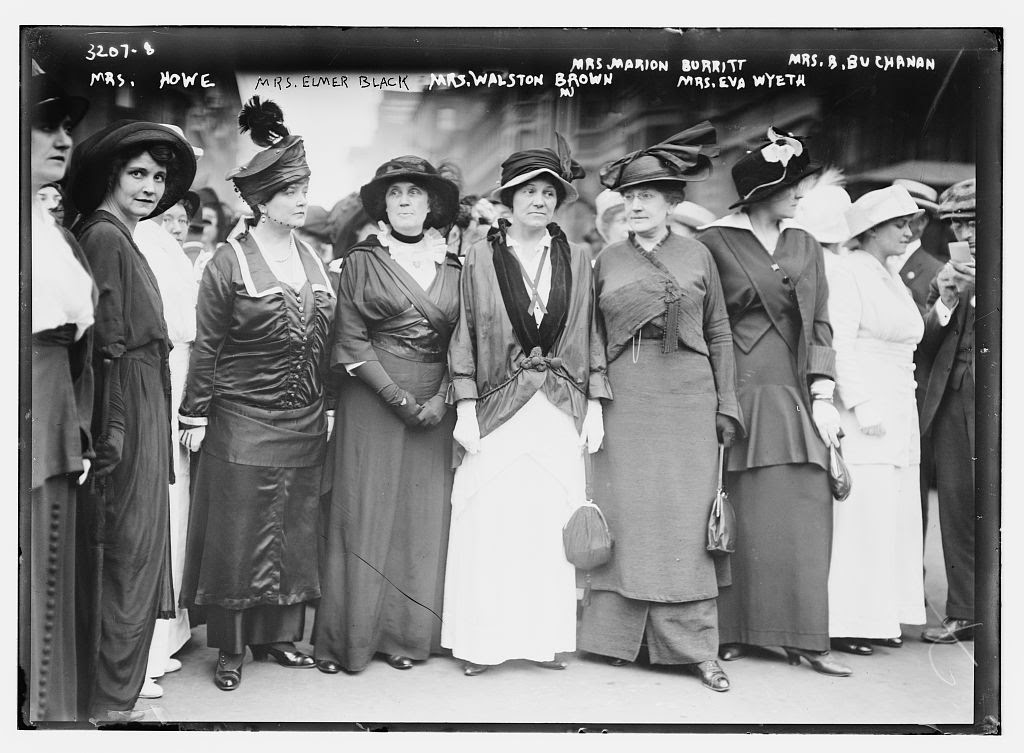
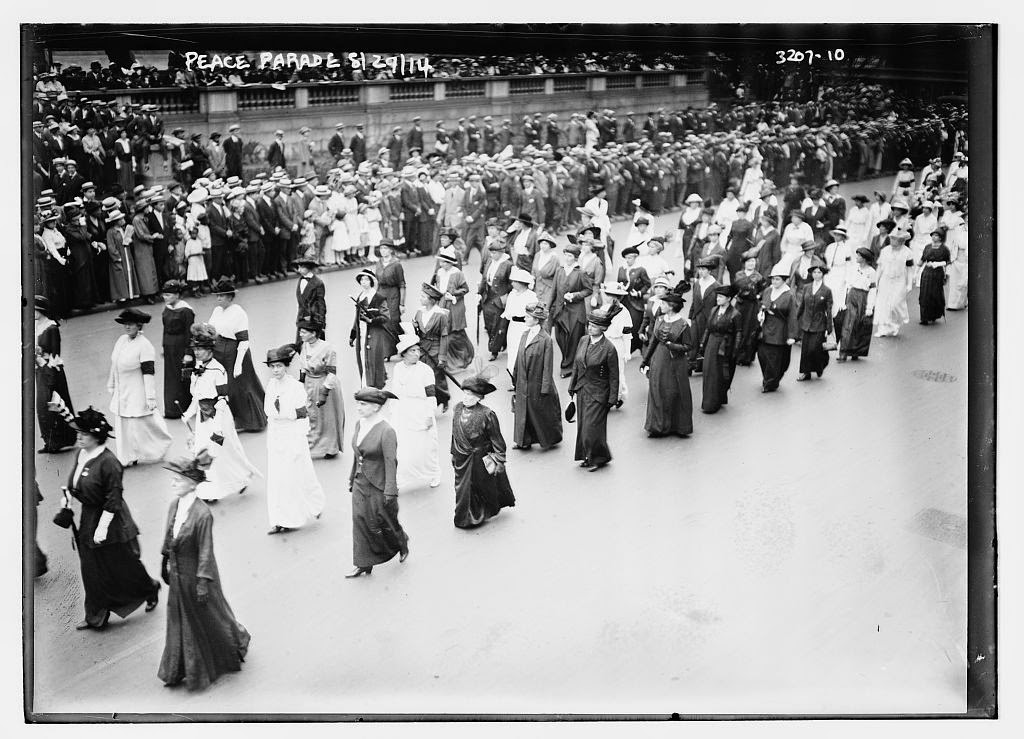
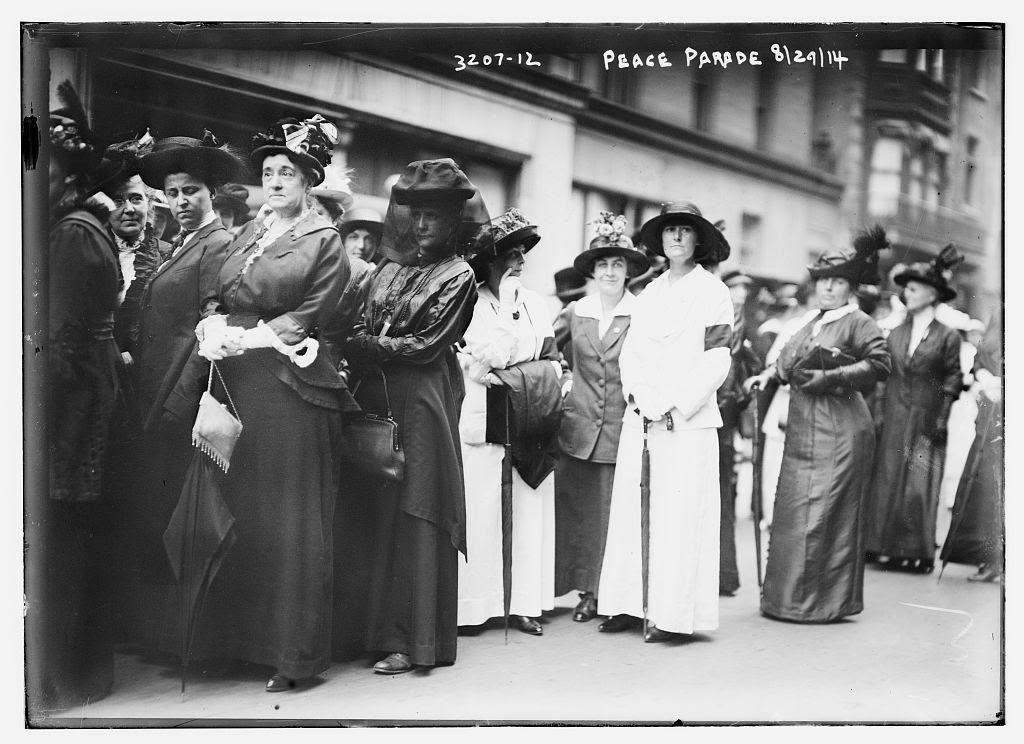
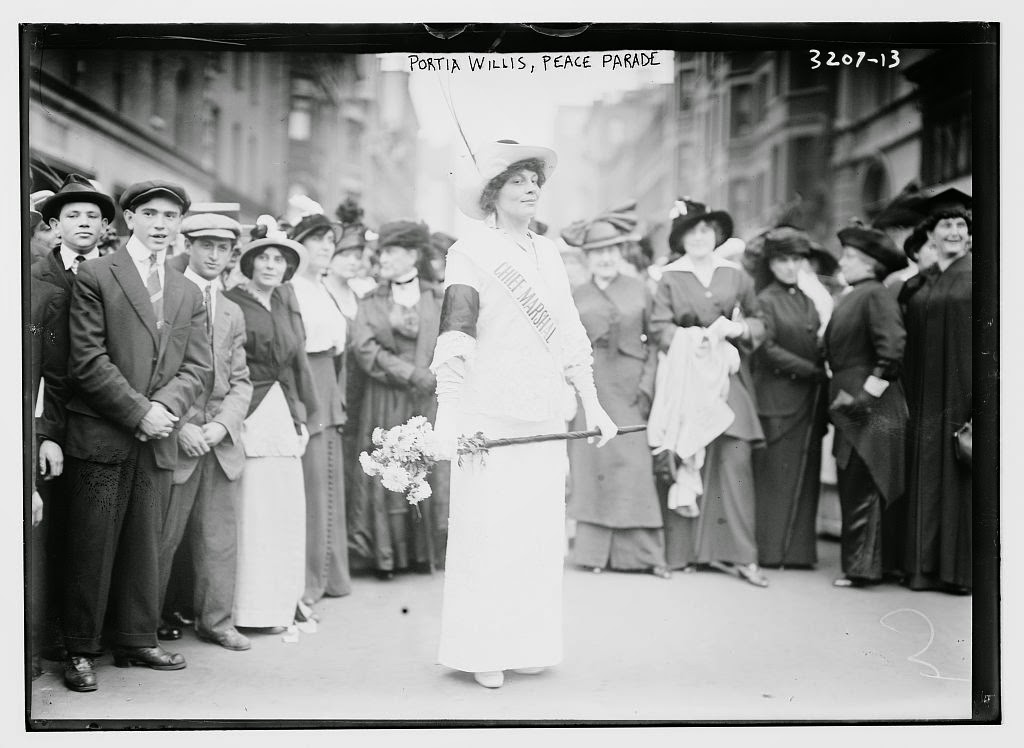
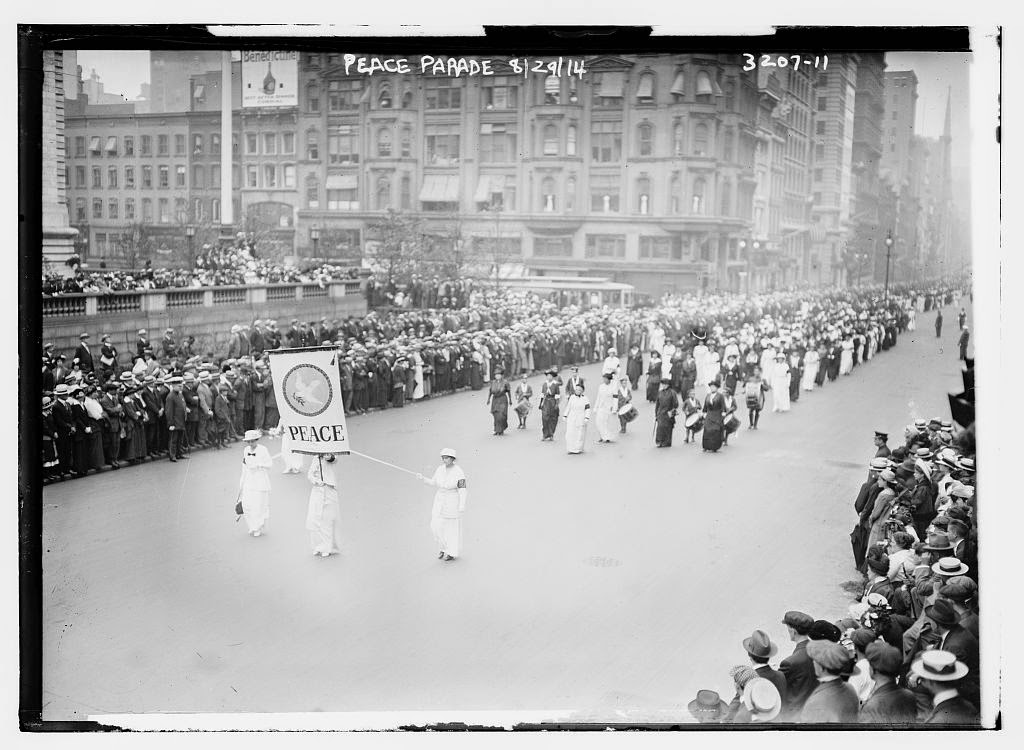
Below are some pictures of what’s possibly New York City’s first anti-war protest organized by women, on August 29, 1914.
War had erupted that summer in Europe, sparked by the assassination of Archduke Franz Ferdinand in late June and unfurling into a continent-wide catastrophe, as countries entered the fray on either side of the conflict. Within weeks of the conflict, New Yorkers with strong ties to individual nations were raising money and even boarding ships to fight alongside their distant countrymen.
In other cities with sizable European populations — such as Montreal — people were already marching, calling for an end to the conflict. And leading this call were women already involved in social organizations, in particular, suffragists with networks that reached into high society.
Protesting war has been a touchy issue in New York City. [See the Civil War Draft Riots for such a protest gone wrong.] The mayor had expressly forbade parades in support of individual nations on New York streets lest a microscopic version of the European conflict erupt here. Anti-war was often associated with socialist organizations and indeed, that August, several did march in Union Square. But these were comprised largely of men.
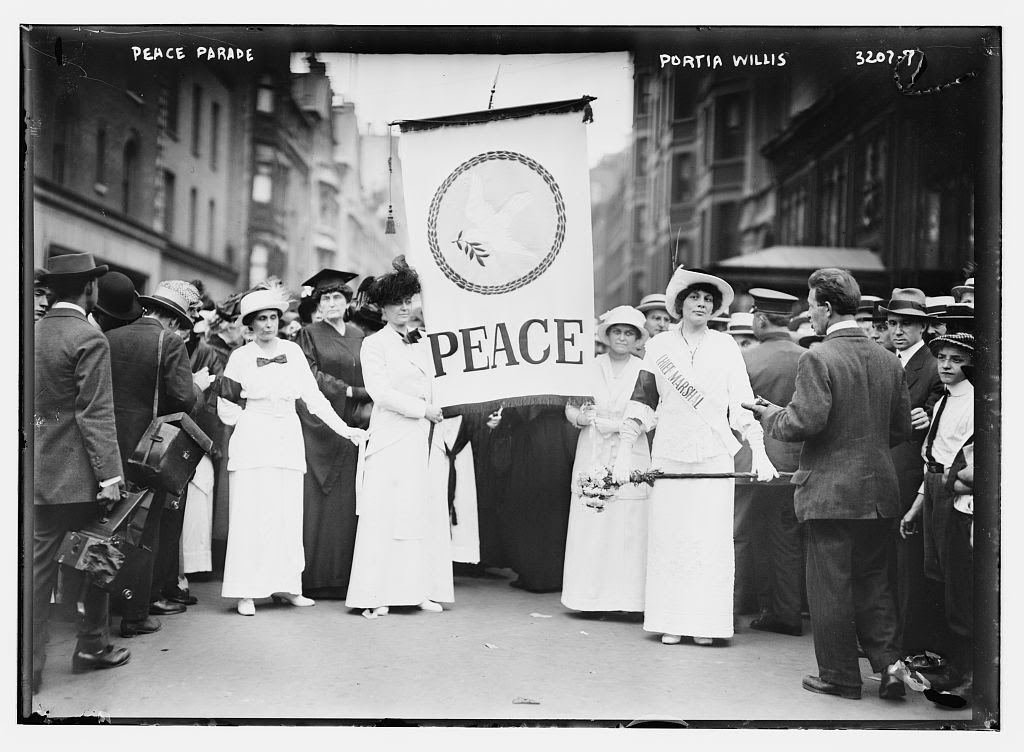
Which makes the Women’s Peace Parade so unusual. Prominent women met at the Hotel McAlpin in mid-August to plan what was essentially a mourning parade, with its participants — from all walks of life — dressed in black as though in a funeral procession. (As you can see in the pictures, many women also chose to wear white in a symbol of peacetime, garnished with black accessories.)
Many people didn’t quite understand what a peace protest even meant, seeing it as a wasted effort. One letter writer to the New York Times asked. “Will any of the women who intend to parade in protest of the war explain what they mean to accomplish by such a demonstration?”
While the parade drew from prominent individuals in the suffrage movement, others were simply not convinced. Carrie Chapman Catt, one of America’s most famous suffragists, remarked, “If anybody thinks that a thousand, or a million, women marching through New York or talking about peace in the abstract will have any effect on the situation in Europe, it is because they don’t know the situation in Europe.”
But, in fact, there was a motivation. One of New York’s leading activists Harriet Stanton Blanch — daughter of Elizabeth Cady Stanton — was very succinct about their motivation. “This is a movement for actual work. We intend to do something definite. We wish to have a meeting at The Hague Peace Conference called.”
The parade began in the afternoon, marching down Fifth Avenue from 58th Street down to Union Square. Women who either lived or shopped along the avenue now marched in formal procession down it, accompanied by the “ominous beat of muffled drums.” There was occasional applause but otherwise “the general silence of the great gathering was considered the best evidence of understanding.” [source]
The skies were appropriately gray. Some participants hoped for rain actually. “Every woman in the slow-moving line wore some badge of mourning, either a band of black around her sleeve or a bit of crepe fluttering at her breast, as a token of the black death which is hovering over the European battlefields.” [source]
The parade marshal was the young Portia Willis, a magnetic lecturer on the suffragist circuit. .
While the organizers announced there was to be only one flag on display in the parade — the flag for peace — one other crept into the proceedings. “The smallest Boy Scout was Alfred Greenwald, 4 years old, who … attracted much attention. Little Alfred unknowingly broke the most stringent rule of the parade by carrying a flag. He carried a United States flag but it was furled.” [source]
Unfortunately I was not able to locate any pictures of the second half of the parade — with 250 African-American women in solidarity, followed by “a number of Indian and Chinese women” and carloads of elderly women and babies.
Those who witnessed the parade would not soon forget it, especially in the following months as the conflict that would become known as World War I grew to eventually encompass the United States.
Seventy five years ago today, an extraordinary tradition began — televised Major League baseball!
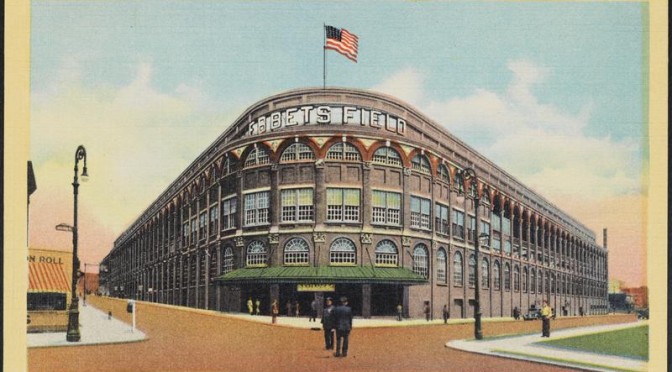
The location was appropriately Ebbets Field, one of baseball’s legendary ‘field of dreams’. The home team, the Brooklyn Dodgers, was pitted against the Cincinnati Reds in a key National League match-up. Both teams were quite strong that year, although it was Cincinnati at the top of the standings.
Fans who packed the stands at Ebbets that steamy Saturday afternoon noticed some rather unusual contraptions had invaded the field — bulky television cameras. “One ‘eye’ or camera was placed near the visiting players’ dugout,” reported the New York Times. “The other was in a second-tier box back of the catcher’s box and commanded an extensive view of the field when outfield plays were made.”
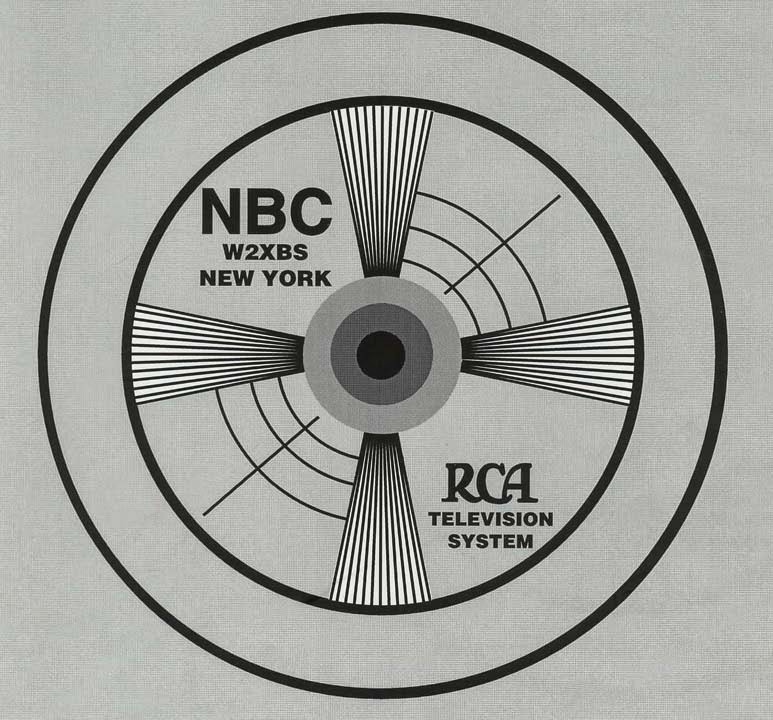
The experiment was inspired by the technological marvels at the 1939 World’s Fair in Flushing-Meadows. In fact, since few people actually owned TVs then, it was in David Sarnoff’s RCA exhibition hall where most people saw the broadcast, courtesy W2XBS (a precursor to WNBC-TV).
Below: A view of one of the cameras broadcasting the game. Ads for GEM Razor Blades and Calvert Whiskey can be seen across the field. They became the first sponsor of a televised baseball game, although it was purely accidental!
Up until that point, the 400-odd receivers throughout the city — owned mostly by RCA executives and technicians — received broadcasts from a studio in Rockefeller Center. (For more information, check our our New York and the Birth of Television podcast.)
This was not the first baseball game ever broadcast; a college game between Columbia and Princeton was beamed out to the handful of received that May, near the opening of the World’s Fair. But it attempting to broadcast a game with broader appeal, like the Dodgers-Reds face off, Sarnoff and his engineers invented a new way of interacting with major sport.
Sports of mass appeal had been heard on the radio for over 15 years by this point. Interestingly, New York teams originally blanched at the idea of radio broadcasts, thinking they would reduce stadium attendance. Broadcasters were even banned from the field for a few years. [source]
Adding a live visual element was crucial not only in popularizing the game of baseball — uniting fans of a certain team beyond the borders of a stadium or a city — but in popularizing the idea of television itself. Televised sports, invented here in 1939, had the unique potential of bringing together masses across the globe, as anybody caught up in this year’s World Cup hysteria or last year’s Summer Olympics fandom can attest.**
It’s to the credit of the television engineers that their feat seems not to have disrupted the game. Coverage in the Brooklyn Daily Eagle neglects to mention the cameras*, and the New York Times mentions it only in a small article.
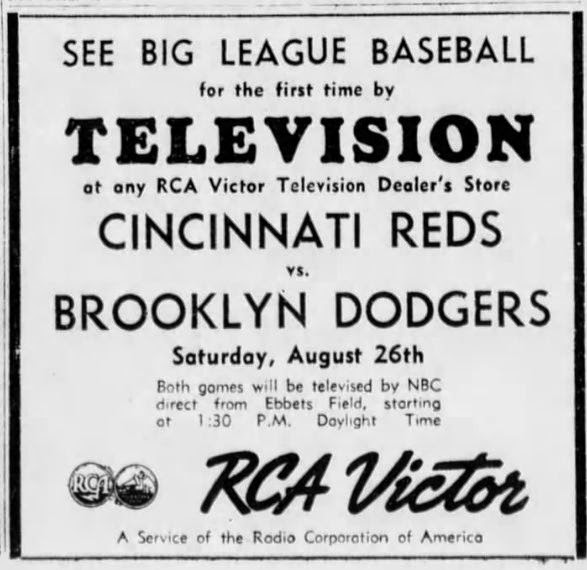
In the end, the teams split the two-game event — the Reds one the first (5-2), the Dodgers the second (6-1). The Reds would eventually win the National League pendant and return to the New York for the World Series, facing (and eventually losing quite badly to) the New York Yankees. *However, RCA ran an advertisement in the Brooklyn paper on August 24, 1939, to drum up a big crowd for their inaugural broadcast:
**As commenter Andrew points out, portions of the 1936 Olympics in Berlin were also broadcast live to several countries. Top picture of Ebbets Field courtesy Museum of City of New York
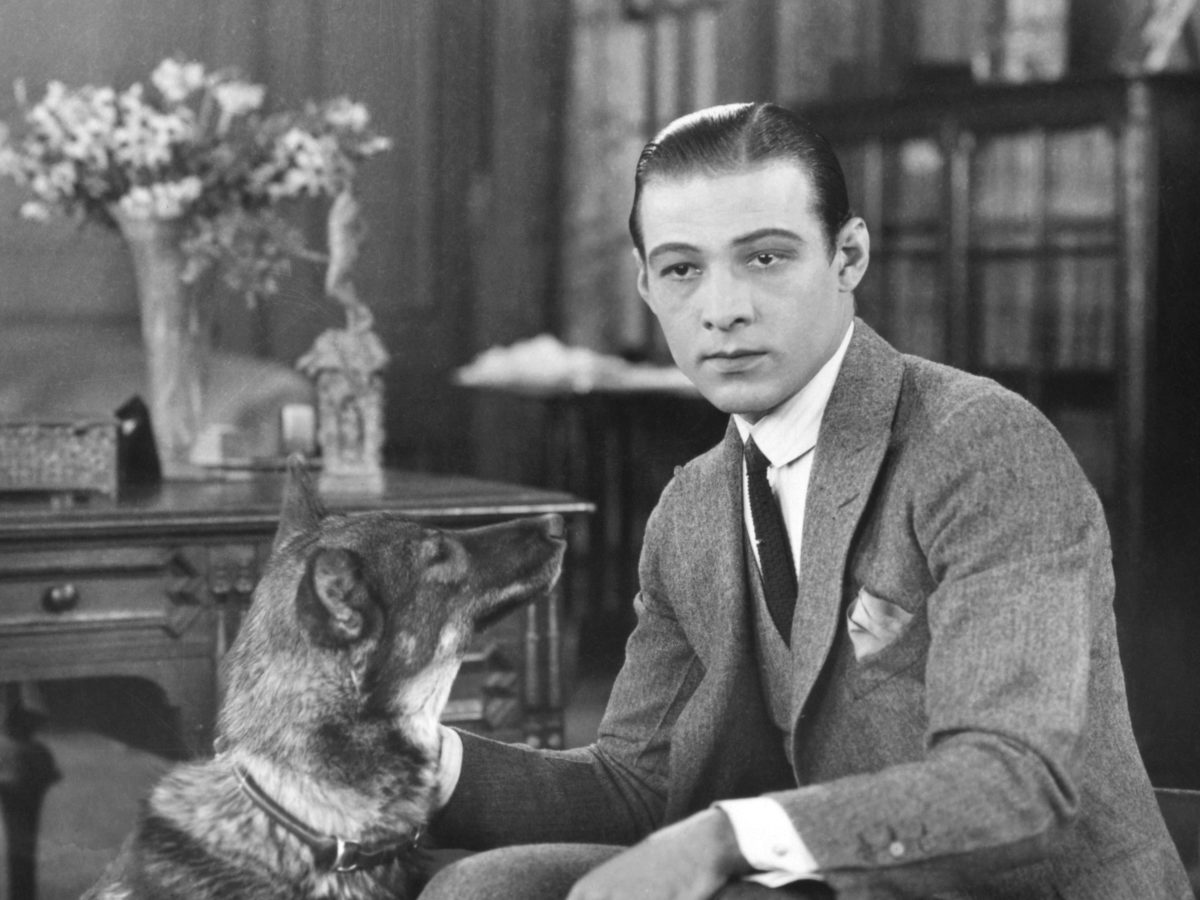
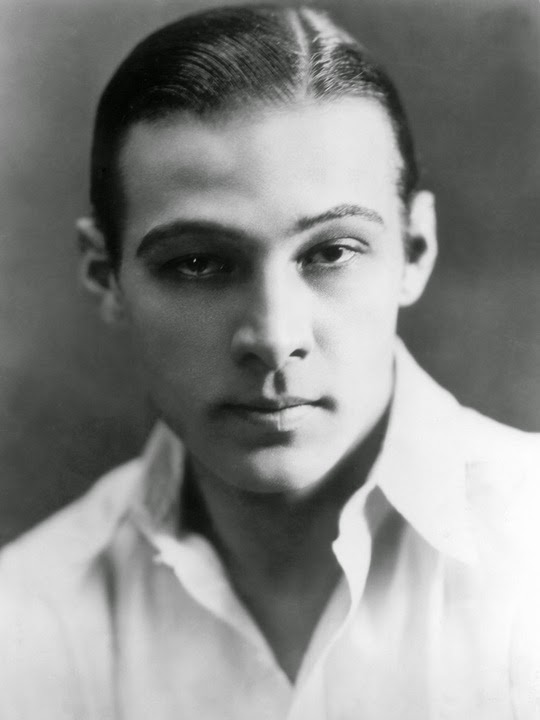
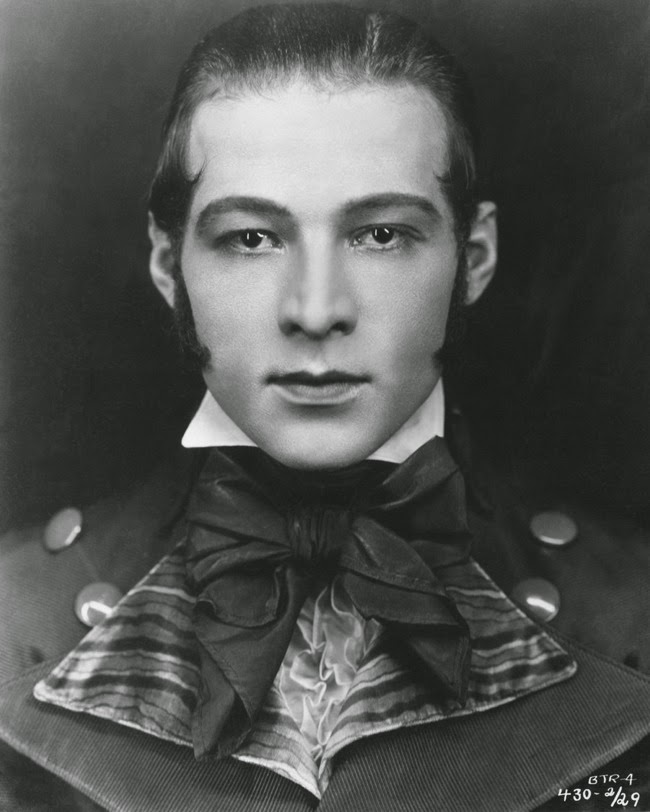
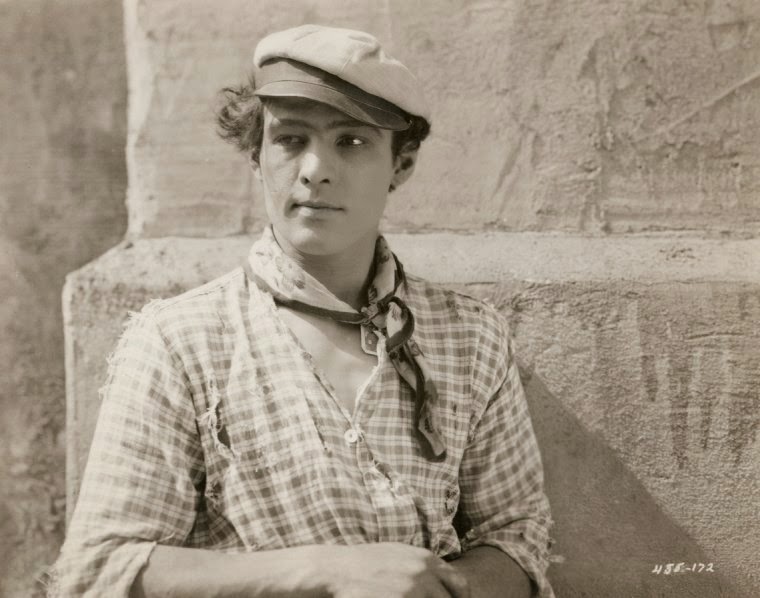
PODCAST Rudolph Valentino was an star from the early years of Hollywood, but his elegant, randy years in New York City should not be forgotten. They helped make him a premier dancer and a glamorous actor. And on August 23, 1926, this is where the silent film icon died.
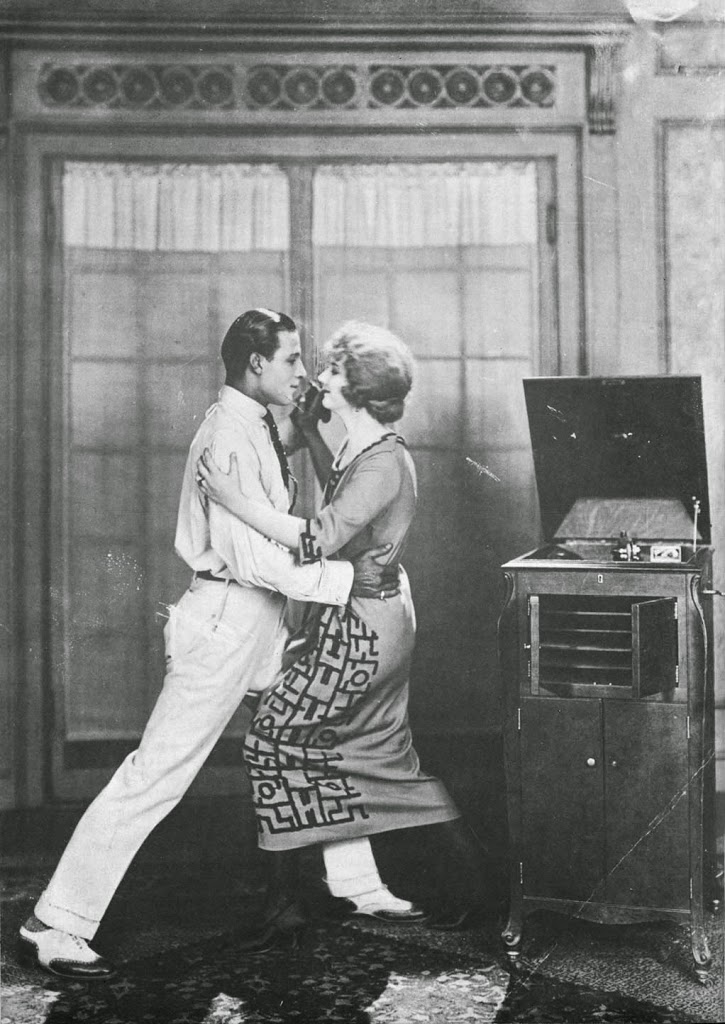
Valentino arrived in Ellis Island in 1913, one of millions of Italians heading to America to begin a new life. Â In his case, he was escaping a restless life in Italy and a set of mounting debts! But he quickly distinguished himself in New York thanks to his job as a taxi dancer at the glamorous club Maxim’s, where he mingled with one particular Chilean femme fatale.
He headed to Hollywood and became a huge film star in 1921, thanks to the film The Sheik, which set his reputation as the consummate Latin Lover. Â Throughout his career, he returned to New York to make features (in particular, those as his Astoria movie studio), and he once even judged a very curious beauty pageant at Madison Square Garden.
In 1926, he headed here not only to promote his sequel Son Of The Sheik, but to display his masculinity after a scathing article blamed him for the effeminacy of the American male!
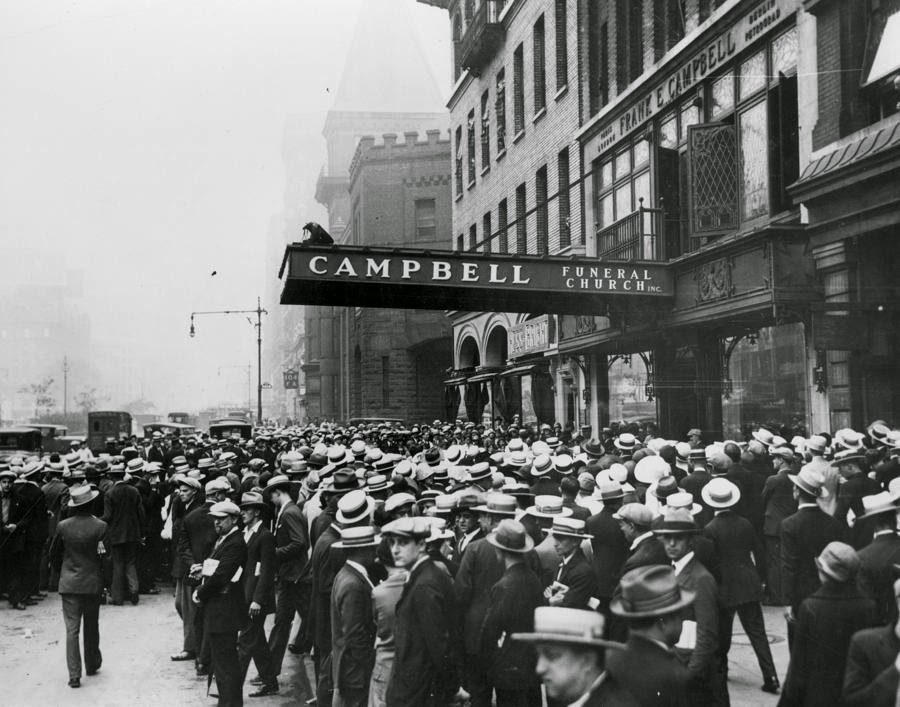
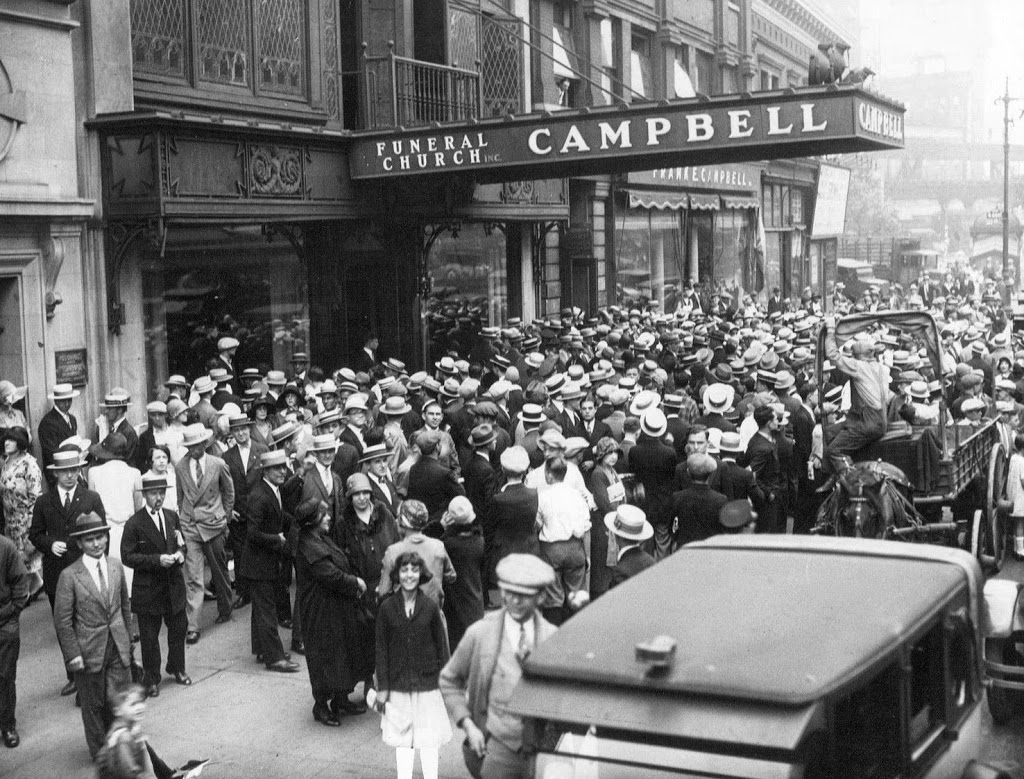
Sadly, however, he tragically and suddenly (and, some would say, mysteriously) died at a Midtown hospital. Â People were so shocked by his demise that the funeral chapel (in the area of today’s Lincoln Center) was mobbed for almost a week, its windows smashed and the streets paralyzed by mourners — or where those people paid by the film studio?Here are the details of the tragedy that many consider one of the most important cultural events of the 1920s.
ALSO: We are proud to introduce to you — POLA!
To get this week’s episode, simply download it for FREE from iTunes or other podcasting services.
The young dancer was employed at Maxims on 110 West 38th Street. From a 1916 guidebook: “A famous ‘smart’ restaurant. A la carte. Music, dancing, cabaret, from 6:30 to close. High prices. Special ladies luncheon at noon.” Valentino would use his skills as a struggling actor in Los Angeles and incorporate it into his film work. Below: Valentino with Alice Terry
Valentino’s breakthrough film — The Four Horsemen of the Apocalypse. “He paints the town red!” “Each kiss flamed with danger!” Like many of his movies, the plot seems taken from his life. Valentino spent some time as a youth in Paris, dancing and dining his way through the city (and into debt). (NYPL)
The Sheik, the film that made his reputation:
From Blood and Sand (1922) — In this one, the Italian Valentino plays a Spanish toreador. (NYPL)
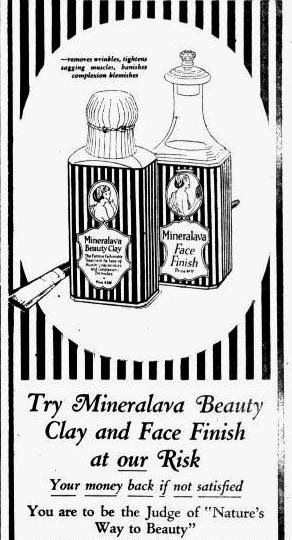
Mineralava Beauty Clay, the sponsor of Valentino and Rambova’s cross-country tango trip:
Newsreel footage of Valentino at Madison Square Garden judging the Mineralava Beauty Clay competition:
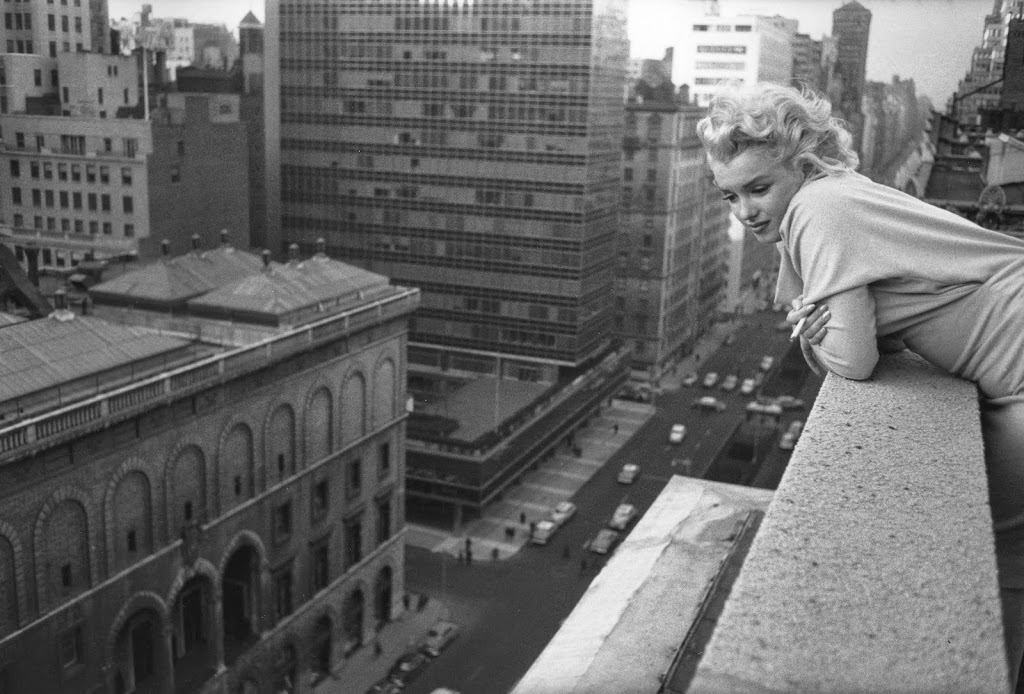
The Hotel Ambassador at Park Avenue and 51 Street. This is where Valentino boxed the reporter (on the rooftop) to defend his masculinity and where he was staying on August 15, 1926, when he collapsed.
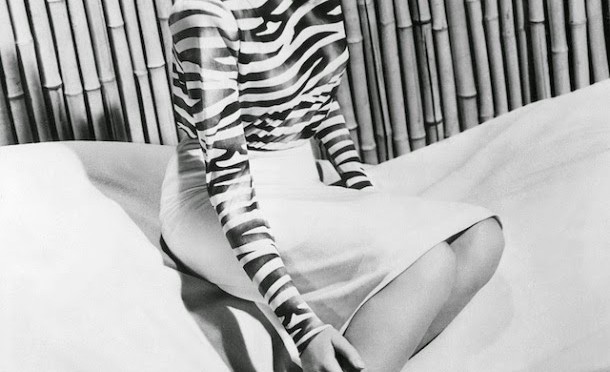
Most people are familiar with the Ambassador due to another iconic film star and her memorable photo shoot (by Ed Feingersh) on the rooftop:
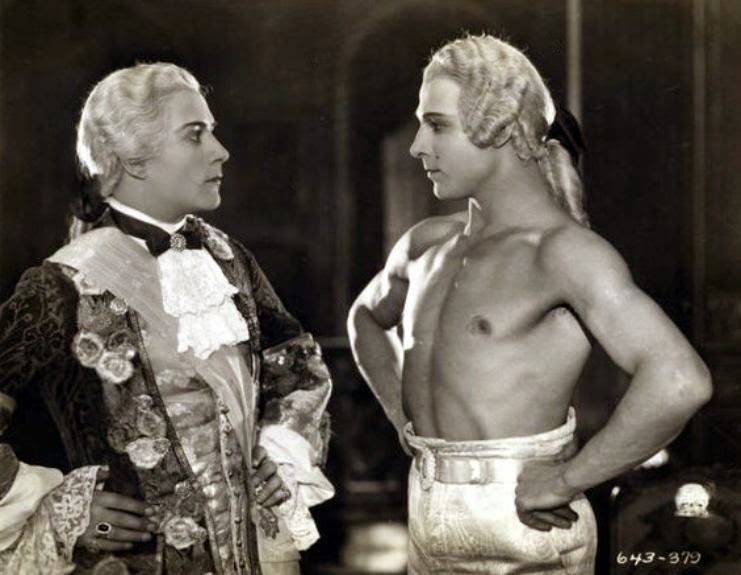
Rudolph in Monsieur Beaucaire, filmed at the Famous Players (later Paramount) studio in Astoria, Queens:
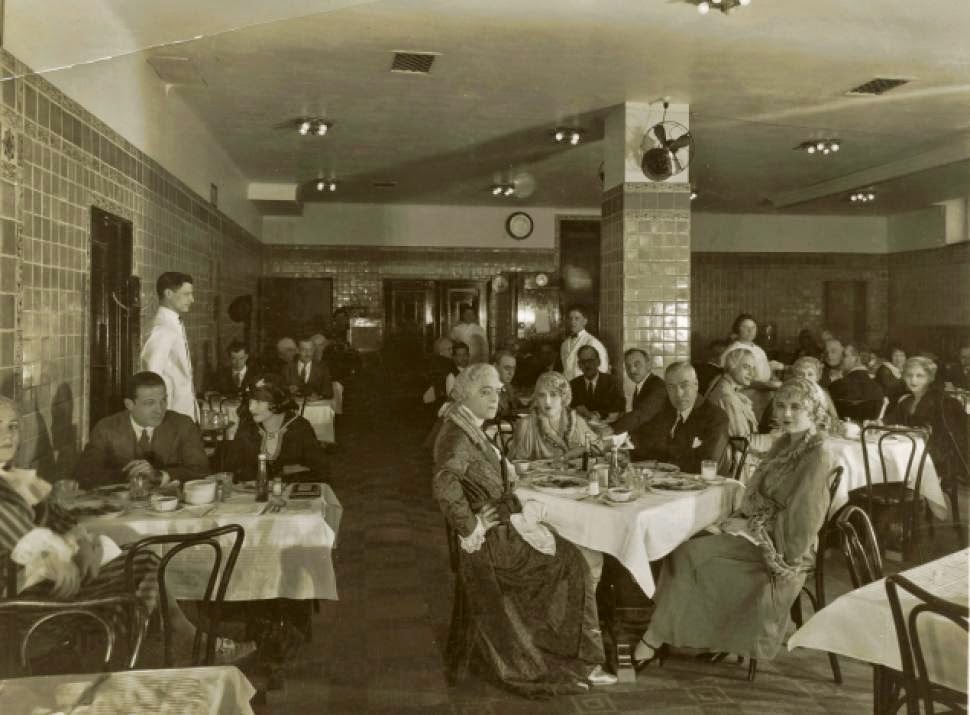
Downstairs, in the studio commissary, with Valentino (at left) and the cast of the film. Today this room is a restaurant named The Astor Room, which features cocktails named for silent film stars. There’s even a Valentino-themed cocktail called Blood and Sand!
Polyclinic Hospital at 345 West 50th Street, where Valentino died on August 23, 1926. The building still exists today as an apartment complex. (Picture courtesy Museum of the City of New York)
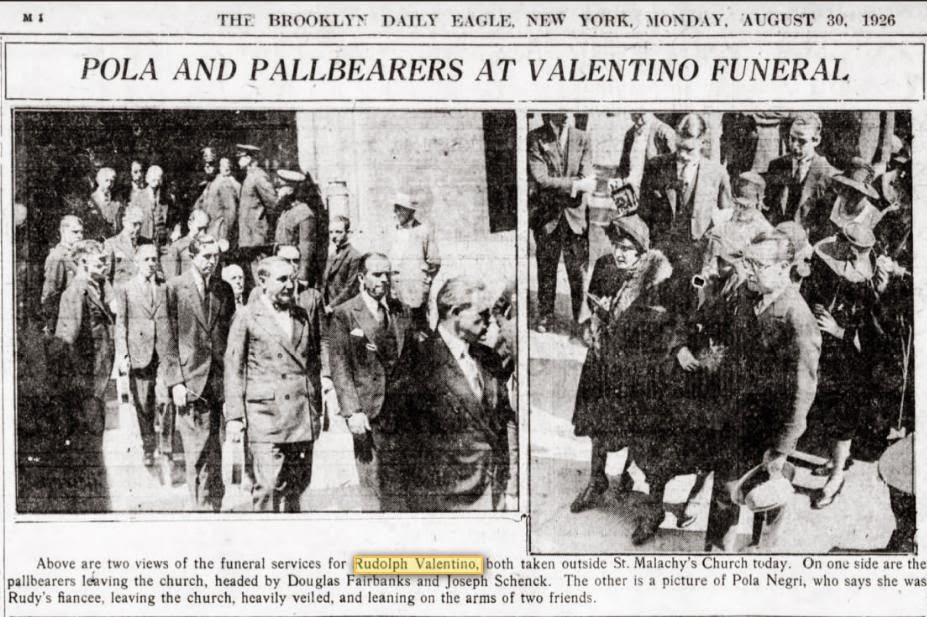
Pictures of the mad, chaotic crowds outside Frank Campbell’s Funeral Church during the week of August 23-30, 1926:
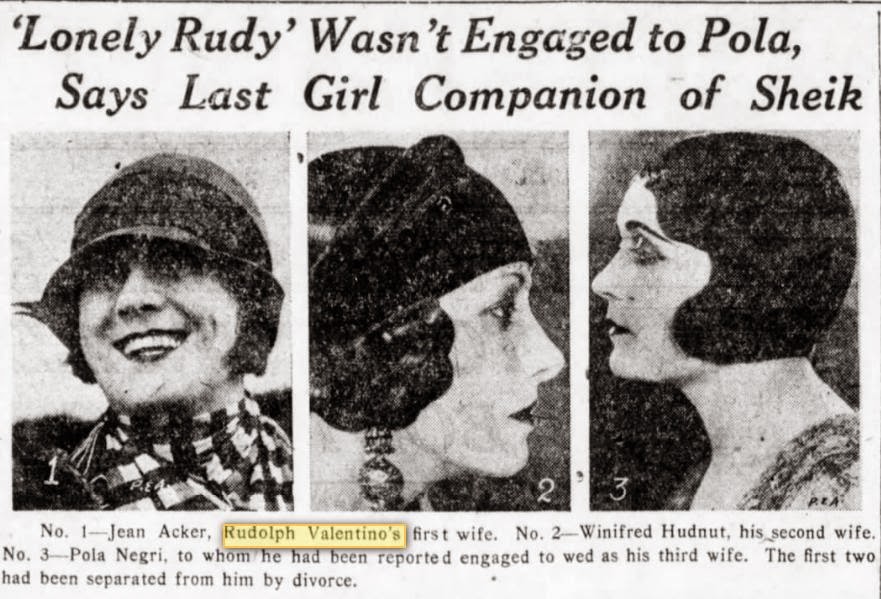
Pola Negri, who made quite a scene at the funeral of Valentino (NYPL):
From the Brooklyn Daily Eagle, August 30, 1926
Newsreel footage of his funeral in Midtown Manhattan — from Frank Campbell’s (in today’s Lincoln Center area) to St Malachy’s on West 49th Street:
SOURCES AND SUGGESTED READING: Note: Don’t say we didn’t warn you! There’s a lot of material that seems to be based on speculation. Thoughts of possible sexual adventures have sent many authors into wild fits of imagination. ( Â Enter the back catalog of Valentino at your own risk:
Rudolph Valentino: A Wife’s Memories of an Icon by Natacha Rambova and Hala Pickford The Valentino Mystique: The Death and Afterlife of a Silent Film Idol by Allen R Ellenberger and Edoardo Ballerini Dark Lover: The Life and Death of Rudolph Valentino by Emily W. Leider The Valentino Affair: The Jazz Age Murder Scandal That Shocked New York Society and Gripped The World by Colin Evans The Intimate Life of Rudolph Valentino by Jack Scagnetti Falcon Lair— an indispensable online resource for all things Valentino Publications sited: New York Times, New Yorker, Newark News, Brooklyn Daily Eagle, New York Sun
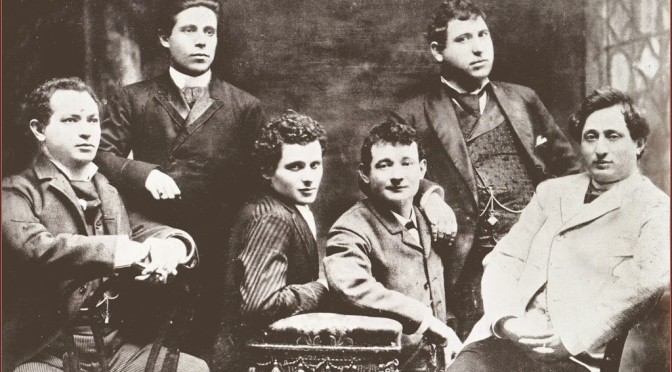
An extraordinary photograph of Yiddish theater stars! Front row: Jacob Adler, Sigmund Feinman, Sigmund Mogulesko, Rudolph Marx; Back row: Mr. Krastoshinsky and David Kessler
For a passionate sub-set of New Yorkers, Mogulesko was everything.
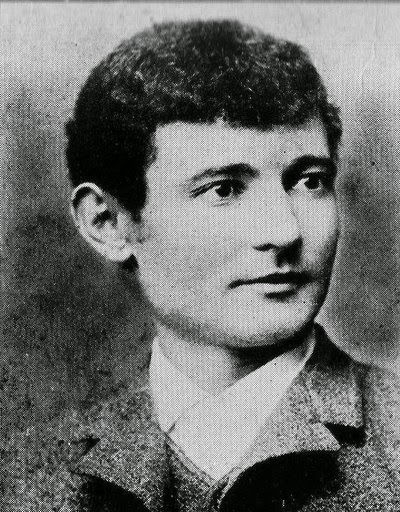
The Romanian-born theater star Sigmund (also written as Zigmund or Zelig) Mogulesko came to America in 1886 already a star of Europe’s Yiddish theater scene. Intrepid performers like Mogulesko helped create the Yiddish theater circuit during this decade — and, by extension, vaudeville as well, since so many of its performers would start here.
When he opened the Rumanian Opera House (later, the National Jewish Theatre) on Second Avenue and Houston Street, Mogulesko wasn’t just opening a stage. It became a vital instrument of the community and a key destination in New York’s thriving ‘little Broadway’, opera stages and vaudeville houses along Houston Street and Second Avenue uniquely catering to the immigrants of the Lower East Side.
Mogulesko became America’s most popular Yiddish theater star by the 1900s, a singer and comedian with an uncanny ability to pluck the heart strings. His debut in Coquettish Ladies required a myriad of costume changes, from old to young, male to female. A Jewish historian wrote, “A born genius he was, and his personality was as marvelous as his art.” [source]
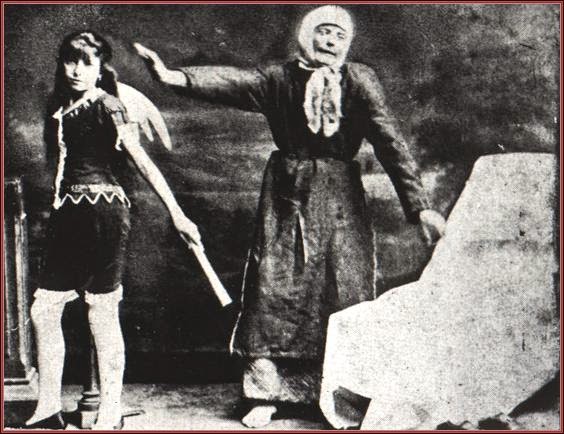
Below: Mogulesko in Joseph Lateiner’s The Dybbuk (performed in Odessa in 1884) playing the character “Grandmother Eve”
At the same time, he was little known in other parts of New York. (He allegedly never learned to speak English.) The more formal elements of the “legitimate” stage sometimes looked at the successes of the Lower East Side theater scene with bemusement and a little jealousy. “These alien citizens have a theater which they thoroughly comprehend and esteem,” said the New York Times in 1914. [source]
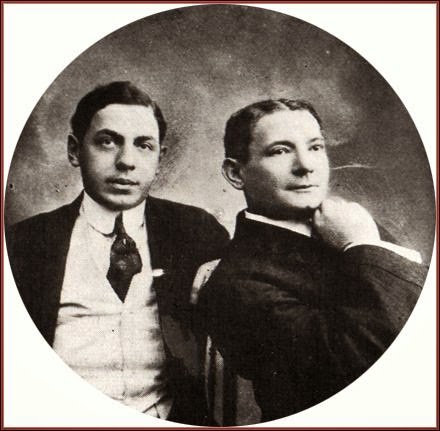
Mogulesko, at right, with his son Julius:
This accounts for the passion held by many for the performers of Yiddish stage, the embrace of an entertainment form that was undeniably theirs in language and custom. And this also accounts for the great outpouring of grief when one of its most acclaimed stars — like Sigmund Mogulesko — passed away.
His memorial service at his theater on Houston and Second Avenue caused a spectacular riot of mourning. Over 20,000 people arrived at the theater, fighting past 50 police officers swinging their clubs. “The crowd tore the theatre doors from their hinges and shattered their glass panels.” [source]
A funeral procession lined the streets all along Second Avenue, from the Hebrew Actors Club (at 31 East 7th Street) to the theater. The hearse transporting the actor’s body was engulfed “in the sea of those who hummed with queer breaks in their voices bits of the songs which had endeared the author to them.” [source] Not since the explosion of the General Slocum steamship had the Lower East Side been filled with such intense grief.
Among those who spoke at his memorial service were Jacob Adler (father of method acting coach Stella Adler) and Boris Thomashefsky, a later inspiration for the Marx Brothers and Mel Brooks. Sadness — and a certain kind of joy — permeated the service, his greatest roles and contributions to the local theater scene lauded. It was now a vital industry of New York, one that would not have thrived as it did without him.
As Moguloesko’s coffin was taken from the church, drawn by eight black horses, and carried through the falling show, all of Delancey Street was lined with thousands of mourners, watching as the hearse, now obscured in a blizzard, headed onto the Williamsburg Bridge for its eventual destination — Washington Cemetery.
We once lived in a world when cocaine was in nearly everything — pain relievers, muscle relaxers, wine, fountain drinks, cigarettes, hair tonics, feminine products. It was therapeutic, a “nerve stimulant,” a natural remedy and an over-the-counter drug sold in a variety of forms and doses. The coca plant, to many, was “the most tonic plant of the vegetable world.” [source]
The coca byproduct popped up in a variety of medicinal and recreational forms in the 1880s. In particular, New Yorkers were wild about cocaine, especially those in the medical community.
“The therapeutic uses of cocaine are so numerous that the value of this wonderful remedy seems only beginning to be appreciated,” said the New York Times in 1885. “The new uses to which cocaine has been applied with success in New York include hay fever, catarrh and toothache and it is now being experimented with in cases of seasickness.” They later report that even asthma could be eradicated by it.
Cocaine was the wonder drug of the early 1880s. Not only could it cure disease; it could also dampen the senses. In 1884, a doctor presented his findings at the College of Physicians and Surgeons (23rd/Park Avenue), heralding the successes of “anesthetic cocaine” in numbing patients during ear and eye surgeries. It was even given as a pain reliever to horses.
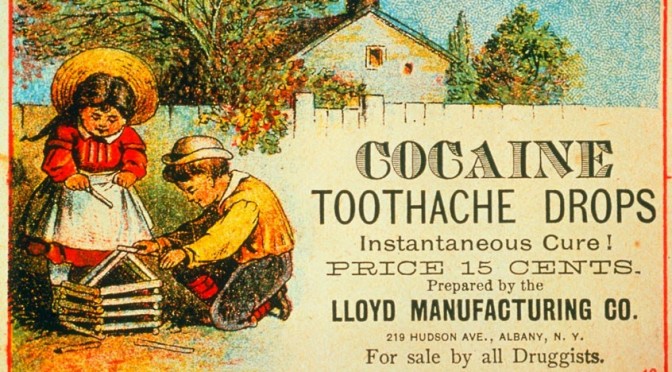
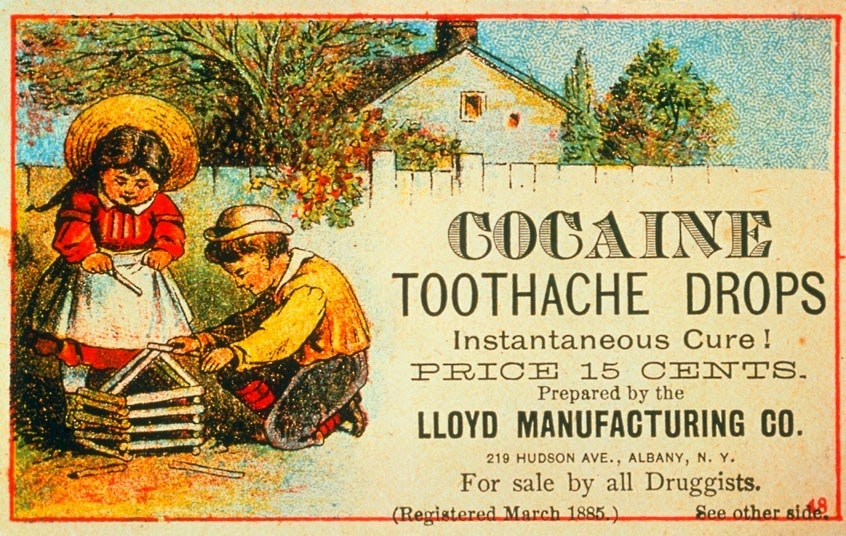
A cocaine ad touting its use for “female complaints, rectal diseases”:
By the 1890s, cocaine would be used as an anesthetic in a variety of cases, even injected directly into the spine. As a miracle solution, “[t]hen came cocaine to claim her crown.” [source]
There was even a cocaine district in lower Manhattan — around the cross streets of William and Fulton — where more of the drug was produced than perhaps any other place in the United States, by such manufacturers as McKesson & Robbins (95-97 Fulton Street) and New York Quinine & Chemical Works (114 William Street).
Below: Helmbold’s Drug Store on Broadway and 17th Street, in Ladies Mile, would have sold a host of cocaine-related products in the 1880s. (NYPL)
“Cocaine looked to be the saviour of doctors the world over,” wrote author Dominic Streatfeild in his book Cocaine: An Unauthorized Biography, “but, apart from its use as an anesthetic in surgical procedures, it was not really curing anything; it was just making people feel great for awhile.”
By the mid-1880s, there seemed to be little doubt of cocaine’s habit-forming qualities, but there were some notable holdouts. William A. Hammond, the Surgeon General for the United States during the Civil War, didn’t think so, frequently experimenting upon himself and later batting away concerns from some notable Brooklyn doctors.
“At first I injected one grain and experienced an exhilaration of spirits similar to that produced by two or three glasses of champagne,” he told a newspaper in 1886.
But medical professionals soon grew weary as their hospitals and asylums soon filled with cocaine addicts, many who supplemented their habits with opium or morphine.
“No medical technique with such a short history has claimed so many victims as cocaine,” reported the New York Medical Record in 1887.
Sometimes it would be the doctors and nurses themselves that were trapped “in the clutches of cocaine.” (The Cinemax show The Knick depicts this disturbing conflict within its main character, Dr. John Thackery, who at a certain point injects the drug straight into his penis and between his toes.)
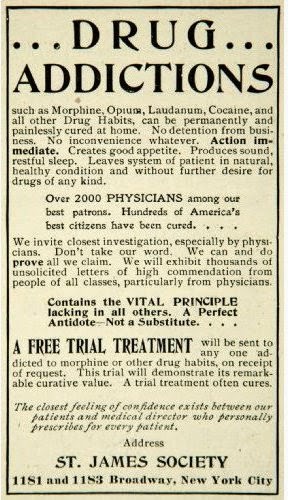
At right: A 1900 ad for an at-home drug therapy program provided by the St. James Society. Interestingly, this was located on Tin Pan Alley and near the heart of the pre-Times Square theater district!
From a cursory perusal of newspaper from the late 1890s, one can find a notable doctor or two succumbing to drug addiction almost once a month. “COCAINE KILLS A DOCTOR,” blared a headline from January 2, 1898. Another physician “WAS CRAZED BY COCAINE.” went another in 1895.
The euphoria over cocaine was over. The number of cocaine addiction cases blossomed through the 1890s, just as moralists and social reformers were looking to eliminate vice from city streets. In 1893, the first law aimed at cocaine (along with morphine, opium and chloral) made it available only by prescription which, like so many later pharmaceuticals, was merely a speed bump for the serious user.
Hysteria soon followed. Cocaine was associated with crime, with occultists, with loose women, with poor people, with African-American, Asians and Jews. Here’s a rather startling quote from a druggist in 1895: “[W]ith the exception of a few abandoned white women, its use is confined almost exclusively to the colored folk.” (Several years later, the New York Times took this assertion to the next level.)
Meanwhile, newspapers seemed only concerned with the numerous rich, white addicts. And, of course, the many innocents who were lured by dealers on the streets and playgrounds.
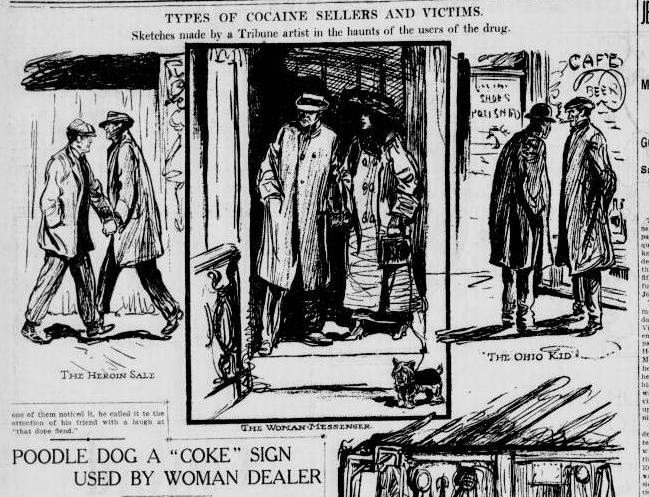
Below: An illustration from the New York Tribune, 1912. A 1907 law prohibited most sales of cocaine over the counter, creating an illicit ‘street market’. The Tribune dramatically displays the ways in which cocaine and other drugs were sold. Note the headline underneath it!
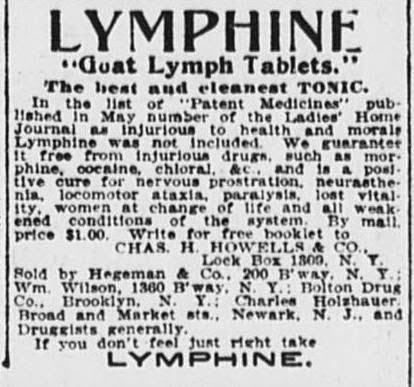
Although still a legal substance, most products began advertising themselves as an alternative to cocaine. In 1895, you might find products that touted cocaine as a pain reliever; ten years later, medicines were now proclaiming they were cocaine-free. Below: A 1904 ad for “goat lymph tablets” reminds its readers that its free of “injurious drugs.”
It would take several years to make cocaine entirely illegal. During the 1910s, those who wanted it could make arrangements with a pharmacist, forge a prescription or, when all else failed, just rob the warehouses which stored cocaine.
In 1911, the drug was now a “poisonous snake,” “the perfect intoxicant of the devil,” its original uses in the United States now entirely forgotten and replaced with safer, less addictive alternatives. (Dentists, for instance, would discover Novocaine.)
A series of local and federal laws in the mid-1900s assured that cocaine and other habit-forming drugs would be ushered off the market within the decade.
The Harrison Narcotics Tax Act, passed in 1914, imposed stiff taxes on coca and opiate products, virtually eliminating any legal market for the drugs and insuring its manufacture and distribution be driven underground.
And just in time, too, for Prohibition was just around the corner!
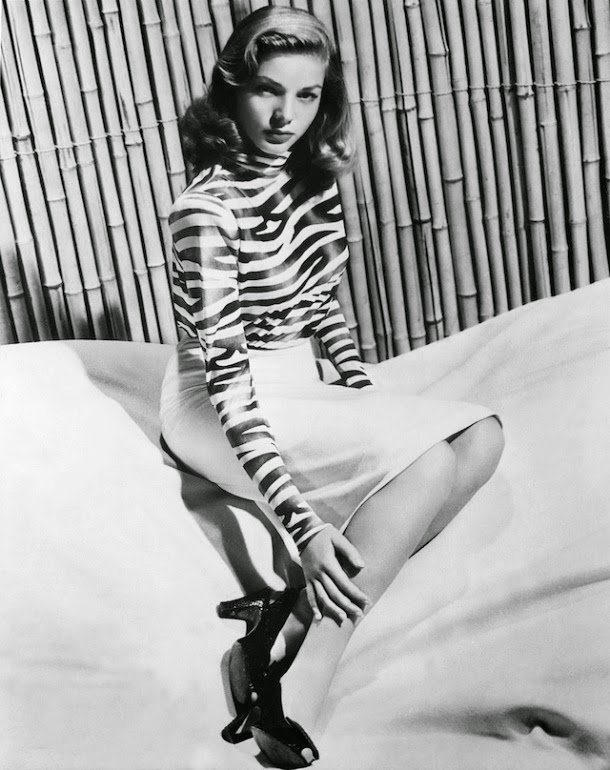
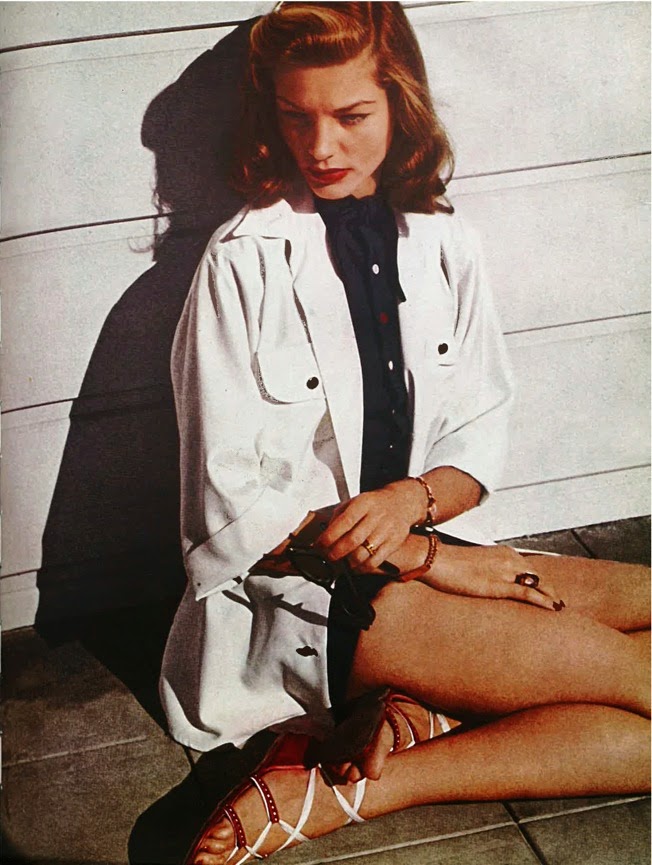
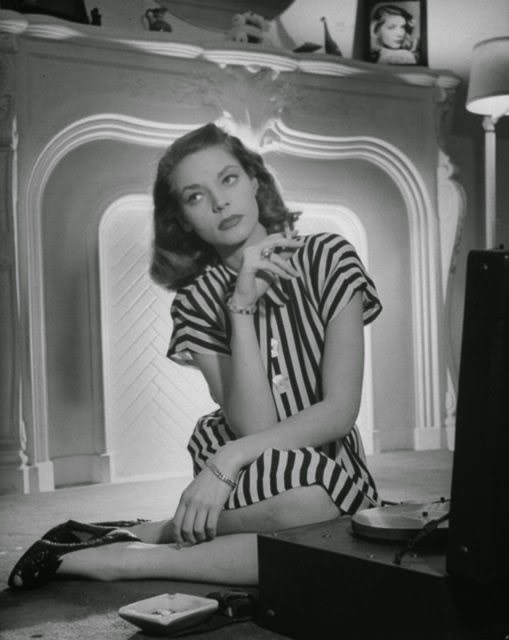
Lauren Bacall, the cinema and stage legend who died yesterday at age 89, was once the less enigmatic Betty Joan Perske, a New York girl with a lot of moxie. As a sixteen year old, she ventured downtown from her home on the Upper West Side (84th Street, under the elevated train) to look for work as a model and actress.
In her great autobiography By Myself, she recounts her experiences as a teen model. Go back in time and take her valuable advice on how to make it in the cutthroat world of the Garment District in 1941!
Know the finer places: “I asked a couple other girls how to find work modeling clothes on Seventh Avenue. They said I should … go down to certain Seventh Avenue buildings — nothing really below 500 Seventh Avenue. The best houses were in 550 or 530 and you could squeeze in 495, but that was it — anything below that was tacky.”
Lie a little: At 498 Seventh Avenue, “[a] woman came out, looked at me, asked me about my experience — I told her I had been a photographic model for several years (a white lie), that I was an actress, that I knew how to move and would certainly be a very good model.”
Play act: “I kept telling myself, ‘It’s a part — play it….’ Finally the woman asked me if I would try on one of the model dresses….I walked through the curtains. Mr. Crystal asked me to turn — I did, without falling down or getting dizzy…”
Dress the part: “I spent the next week going through my scant wardrobe to make certain I had enough to wear to work. Then a trip to Loehmann’s in Brooklyn. Loehmann’s was a large store that stocked clothes from all the Seventh Avenue houses — lower-priced clothes of unknown designers as well as the most expensive…. There were no dressing rooms in the store. Women ran around in their slips, girdles and bras — all shapes and sizes — grabbing things from saleswomen as they brought them down. A madhouse.”
Watch and learn: At Crystal’s, her first modeling house, “you undressed and either sat in a slip or put on a cotton smock. There was a long make-up table with a chair for each of us….I watched [the older models] as they applied their make-up — a base, then full eye make-up. It didn’t look heavy, but it was there. I did the best I could do with the face confronting me in the mirror.”
Composure: “When I showed a dress and a buyer would ask to see it close to, I’d be motioned forward. The buyer, male or female, would then feel the fabric, discuss it — I’d stand there until I was dismissed. An occasional male buyer would feel the goods a bit more than necessary and I never knew what to do. I was petrified, though no one ever was really fresh, just suggestive — just enough to make me aware that I’d better keep on my toes, protect myself.”
Build from rejection: She was laid off at Crystal’s for being too thin (can you imagine?) but promptly got a job modeling evening gowns. “I was much happier at Friedlander’s than at Crystal’s. He laughed at all my little jokes, the other models were good girls (there were only two of them), the feeling was much cozier.”
Plan your escape route: “The other girls seemed fairly uncomplicated to me — they would keep on modeling until Mr. Right came along and then they’d get married and be all set.” But Betty wanted to be an actress. On her lunch breaks, she would go up to Walgreen’s at 44th and Broadway. Then this happened.
After six months she quit — “I was not getting any closer to the stage in the Garment District” — and eventually moved with her mother to 77 Bank Street in the West Village. This allowed her a full time foray into theater work, first as an usher, then as a extra and bit part player.
But she still modeled for extra money, including a stint as a Montgomery Ward catalog model. Although would soon move on to full-time acting, her experience as a model was invaluable once she was put in front of a movie camera. Her cover work for Harper’s Bazaar even got her noticed by director Howard Hawks.
Her debut inTo Have And Have Not with future husband Humphrey Bogart electrified audiences. Now as Lauren Bacall, she seemed to instantly generate magnetism. “Slumberous of eye and softly reedy along the lines of Veronica Lake,” wrote Bosley Crowther for the New York Times, in her first film review,” she acts in the quiet way of catnip and sings a song from deep down in her throat.”
Or, Bacall might have said, she did the best she could do with the face confronting her in the mirror.
PODCAST One World Trade Center was declared last year the tallest building in America, but it’s a very different structure from the other skyscrapers who have once held that title. In New York, owning the tallest building has often been like possessing a valuable trophy, a symbol of commercial and social superiority. In a city driven by commerce, size matters.
In this special show, I give you a rundown of the history of being tall in New York City, short profiles of the 12 structures (11 skyscrapers and one church!) that have held this title. In several cases, these weren’t just the tallest buildings in the city; they were the tallest in the world.
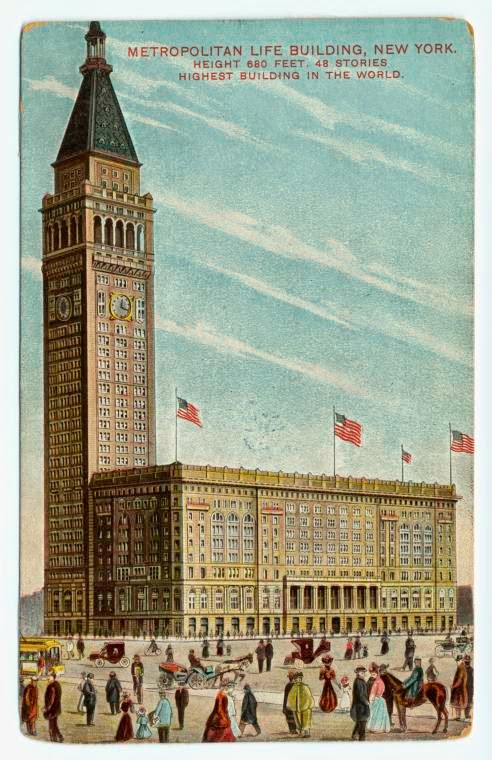
At right: The Metropolitan Life Building, the tallest building in the world in 1909
Skyscrapers were not always well received. New York’s tallest building in 1899 was derisively referred to as a “horned monster.” Lower Manhattan became defined by this particular kind of structure, creating a canyon of claustrophobic, darkened streets. But a new destination for these sorts of spectacular towers beckoned in the 1920s — 42nd Street.
You’ll be familiar with a great number of these — the Woolworth, the Chrysler, the Empire State. But in the early days of skyscrapers, an odd assortment of buildings took the crown as New York’s tallest, from the vanity project of a newspaper publisher to a turtle-like tower made for a sewing machine company.
At stake in the race for the tallest is dominance in the New York City skyline. With brand new towers popping up now all over the five boroughs, should be worried that they’ll overshadow the classics? Or should the skyline always be in a constant state of flux?
ALSO: New York’s very first tall buildings and the ominous purpose they were used for during the Revolutionary War!
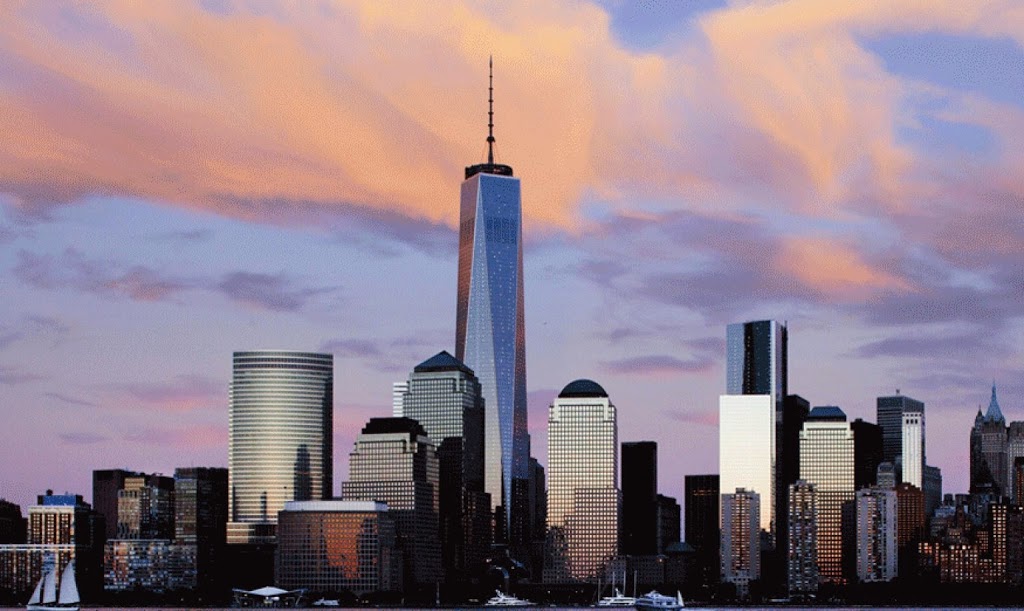
Photo courtesy Huffington Post
The current tallest buildings in New York City (as of 2020) are
1) One World Trade Center — 1,776 feet 2) Central Park Tower (225 West 57th Street) — 1,550 feet 3) 111 West 57th Street — 1,428 feet 4) One Vanderbilt — 1,401 feet 5) 432 Park Avenue — 1,394 feet 6) 30 Hudson Yards — 1,268 feet 7) Empire State Building — 1,250 feet 8) Bank of America Tower — 1,200 feet 9) Three World Trade Center — 1,171 feet 10) 53W53 (MoMA Tower) — 1,050 feet 11 tie) Chrysler Building — 1,046 feet 11 tie) New York Times Tower — 1,046 feet 12) One57 — 1,005 feet
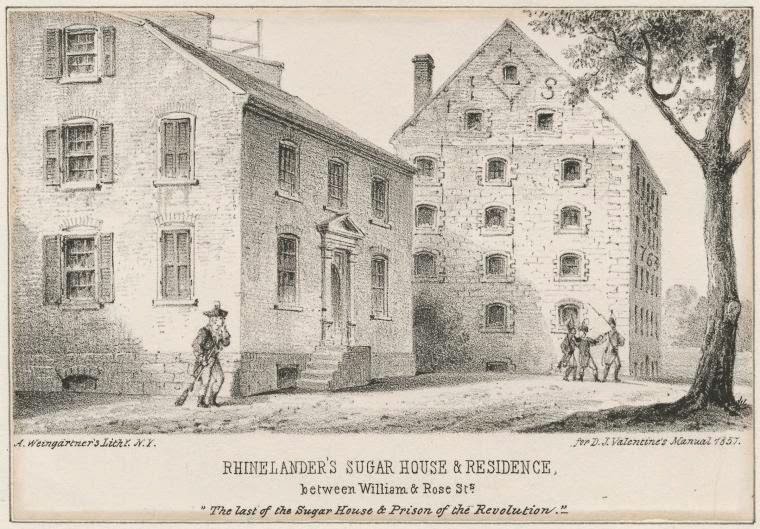
The sugar houses owned by the Rhinelander family. Others owned by the Van Cortlandts and the Livingstons would have all been the tallest structures in the city.
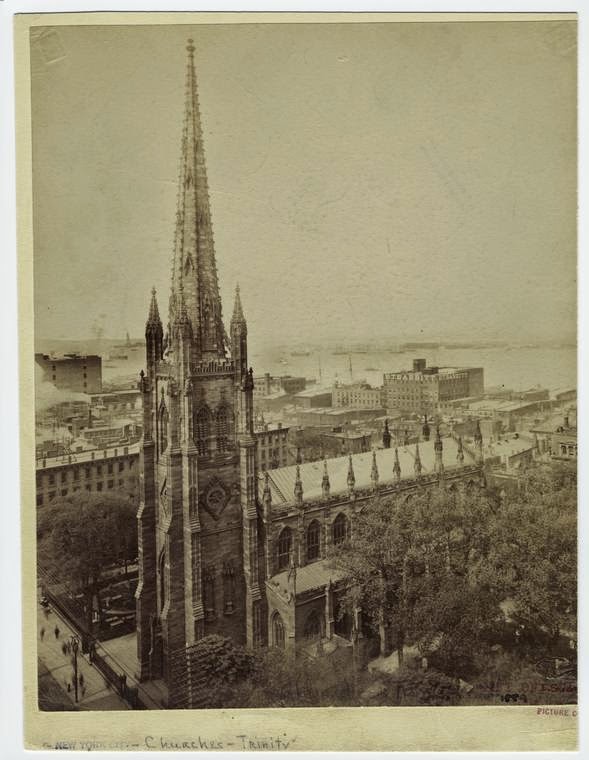
Trinity Church in 1889, the final year that it was the tallest permanent structure in New York City. (NYPL)
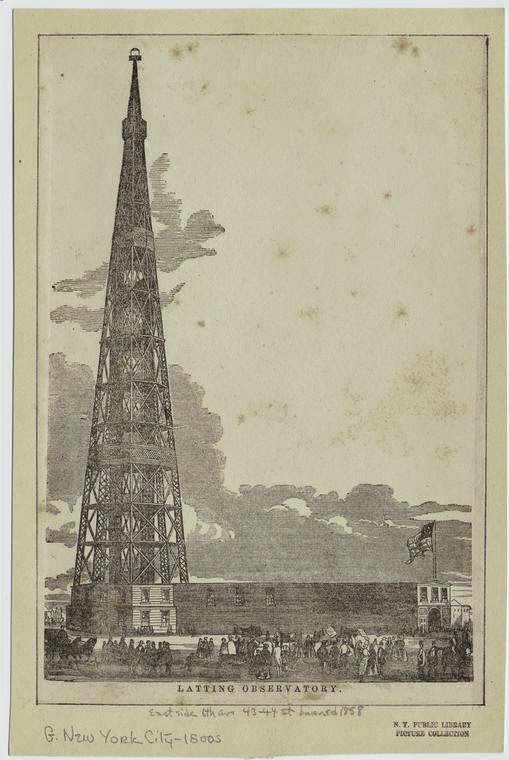
Trinity would be unparalleled in the New York skyline by any permanent buildings for almost 46 years. But the Latting Observatory at the Crystal Palace Exhibition for a short time allowed New Yorkers the highest vantage on the island.
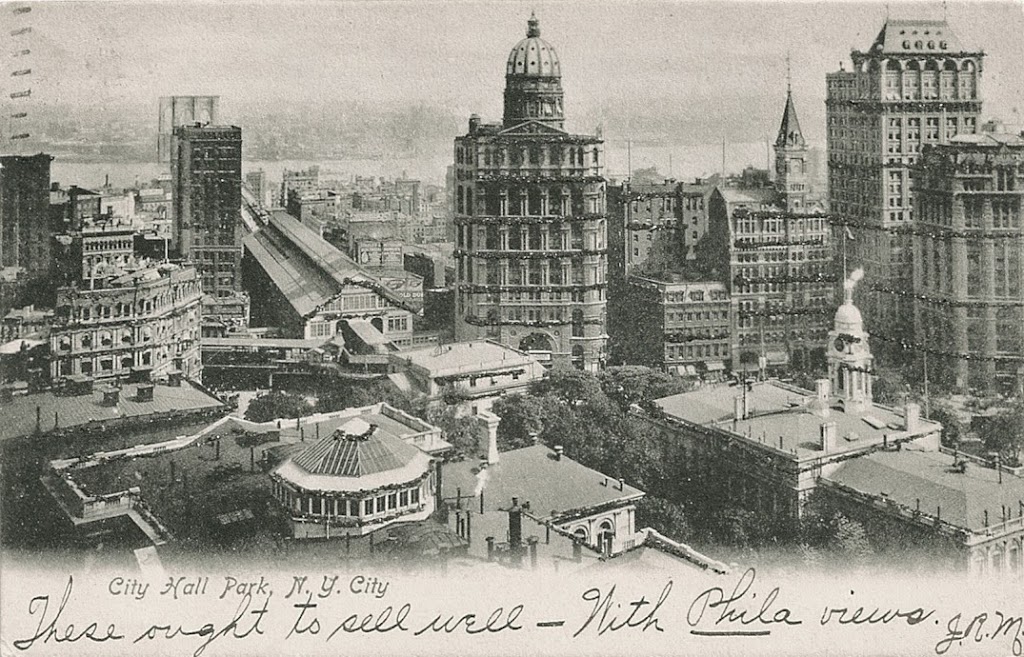
Joseph Pulitzer’s New York World Building, in context with its surroundings, including its proximity to the Brooklyn Bridge. This location would be its undoing, as the building was demolished later to make way for an automobile ramp. (Courtesy Rotograph Project)
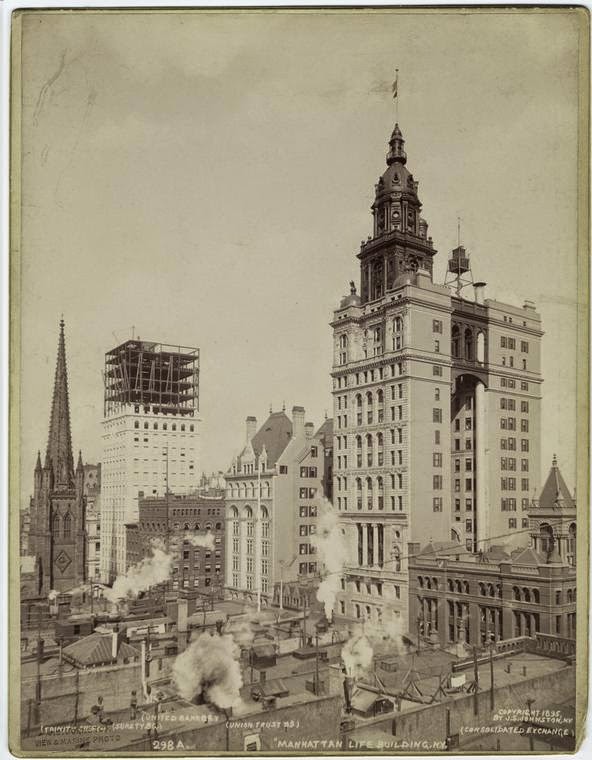
The Manhattan Life Insurance Building became a new neighbor for Trinity Church in 1894. Its lantern top served as a lighthouse and an office for the New York Weather Bureau. (NYPL)
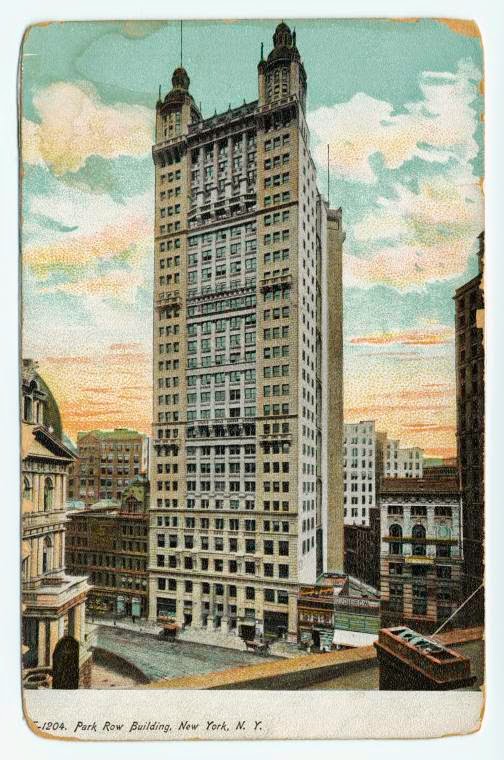
The Park Row Building, the original ‘twin towers’ of lower Manhattan, was criticized for its two-dimensional design but it’s managed to survive into modern times. It used to host J&R Music World on its ground floor until that business closed last year.
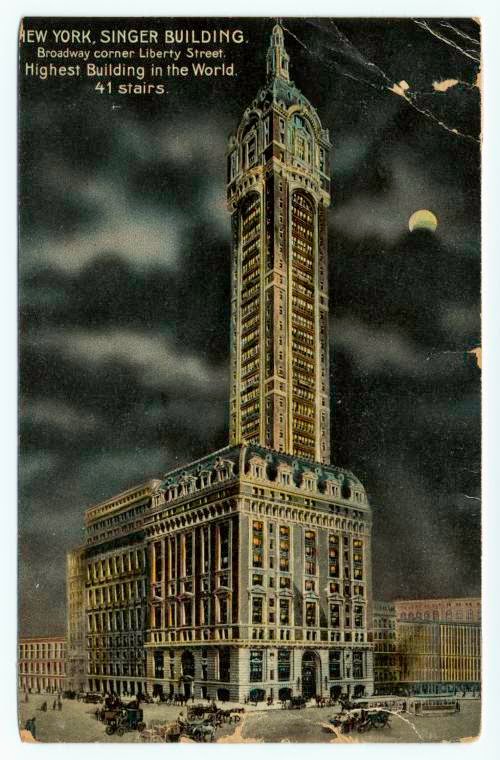
The extraordinarily unusual headquarters for the Singer Sewing Machine Company. The Singer Building has the rare distinction of being the tallest building every purposefully torn down when it was demolished in the 1960s.
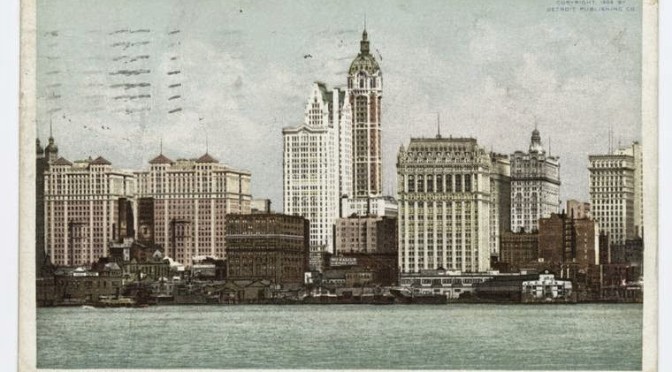
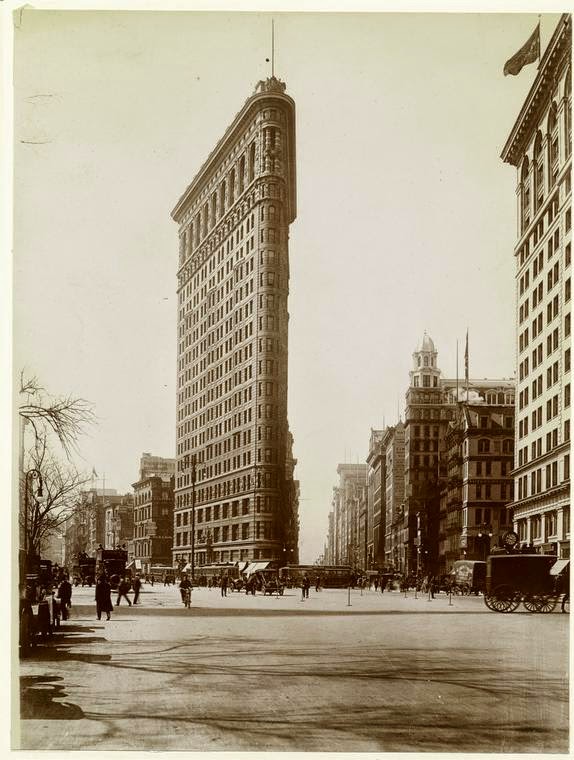
Madison Square was already graced with both the Flatiron Building (below) and Madison Square Garden when it finally got its tallest skyscraper….. (NYPL)
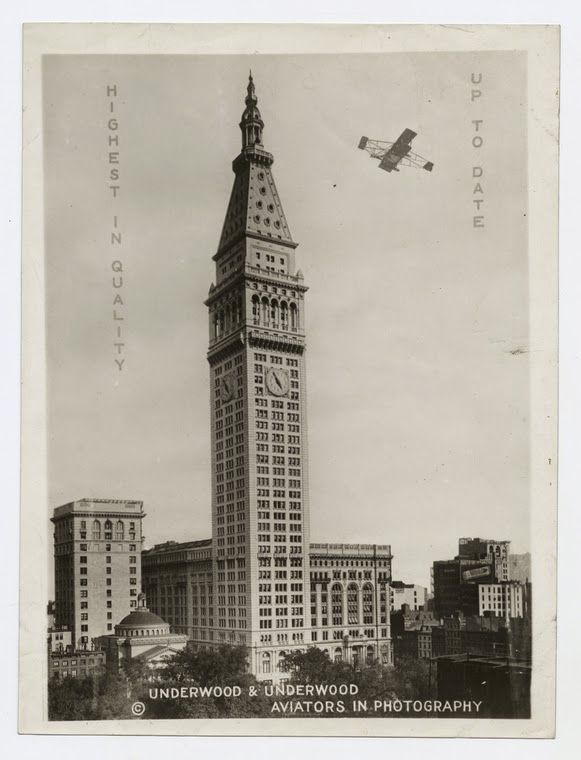
…the Metropolitan Life Insurance Tower, pictured here with an early airplane above it, in a postcard produced by Underwood & Underwood. (NYPL)
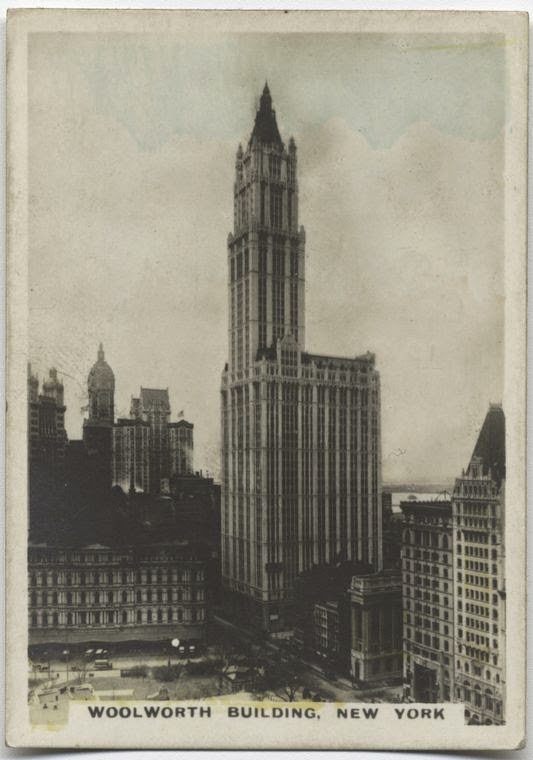
The Woolworth Building (featured here on a cigarette card) is one of the greatest extant examples of pre-zoning law construction with no setbacks along the front side.
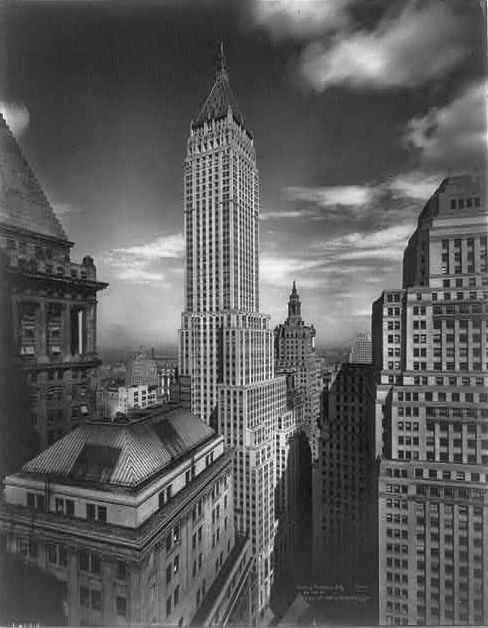
The Manhattan Company Building (or 40 Wall Street) sat among a host of other skyscrapers and was only briefly the city’s tallest building until Walter Chrysler and William Van Alen debuted their surprise uptown.
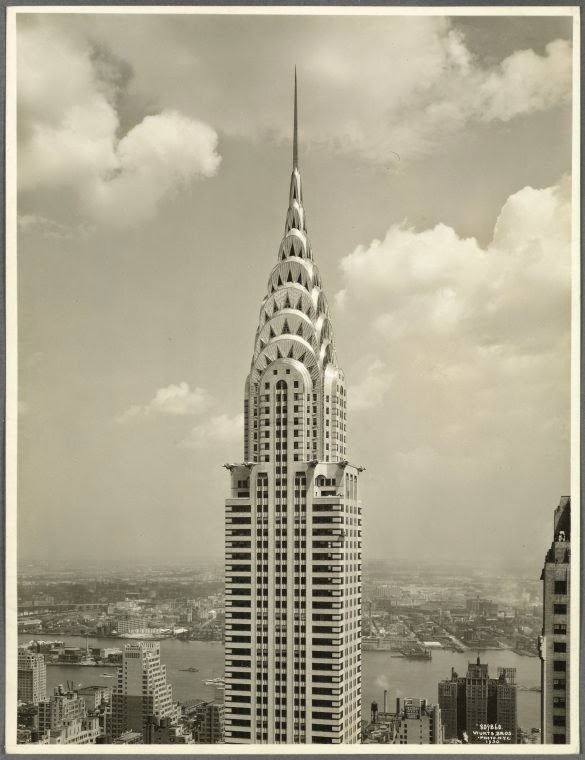
The Chrysler Building in 1930 with its spire freshly attached to the top, making it (for a little over a year) the tallest building in the world.
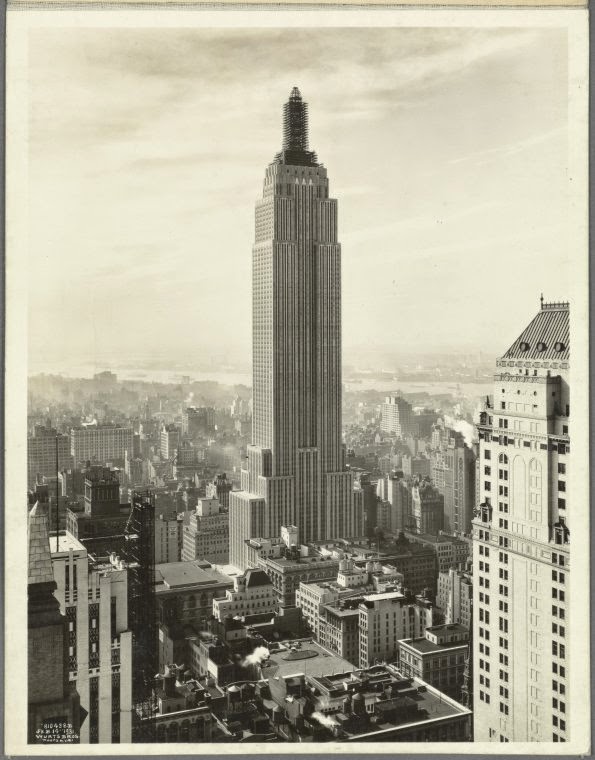
The Empire State Building became the tallest building — and the defining symbol of New York City — thanks to a determined executive from General Motors and Al Smith, the former governor of New York.
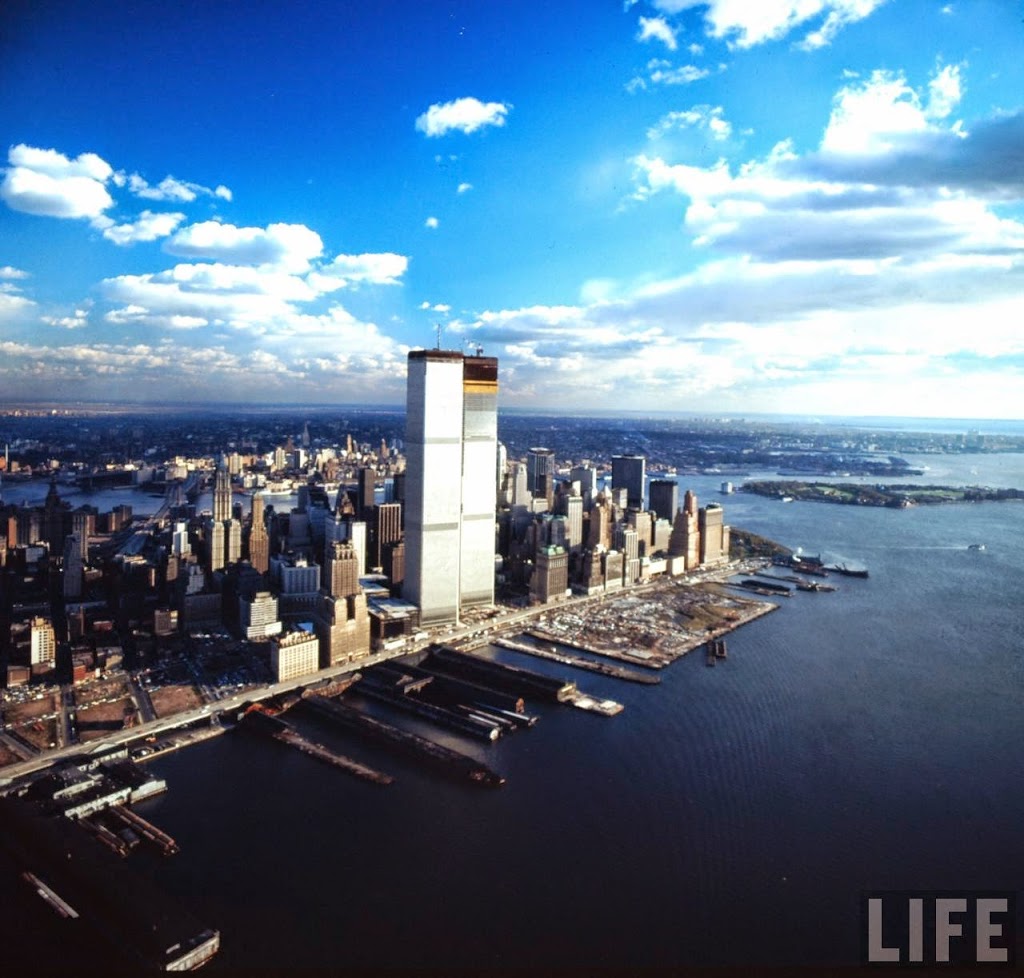
The World Trade Center returned attention to lower Manhattan and set a new record for height, literally leaving other former record holders in its shadow. (Photo courtesy Life Magazine)
SOURCES and RECOMMENDED READING
AIA Guide To New York City 2014 Empire State Building: The Making Of A Landmark — John Tauranac Higher: A Historic Race to the Sky and the Making of a City — Neal Bascomb Manhattan Manners — M. Christine Boyer Pulitzer: A Life In Politics, Print and Power — James McGrath Morris Rise of the New York Skyscraper — Sarah Bradford Landau Skyscrapers:A Social History of the Very Tall Building In America — George H. Douglas Supreme City — Donald Miller and resources from the Landmark Preservation Commission and the New York Skyscraper Museum

![[Manhattan open market.]](https://boweryboyshistory.com/wp-content/uploads/2014/09/MNY217292-300x237.jpg)
![[Interior of market under the Queensboro Bridge.]](https://boweryboyshistory.com/wp-content/uploads/2014/09/MNY224301-300x241.jpg)


![[Roosevelt Hospital, Sym's Operating Room.]](https://boweryboyshistory.com/wp-content/uploads/2014/09/MNY68242-300x242.jpg)