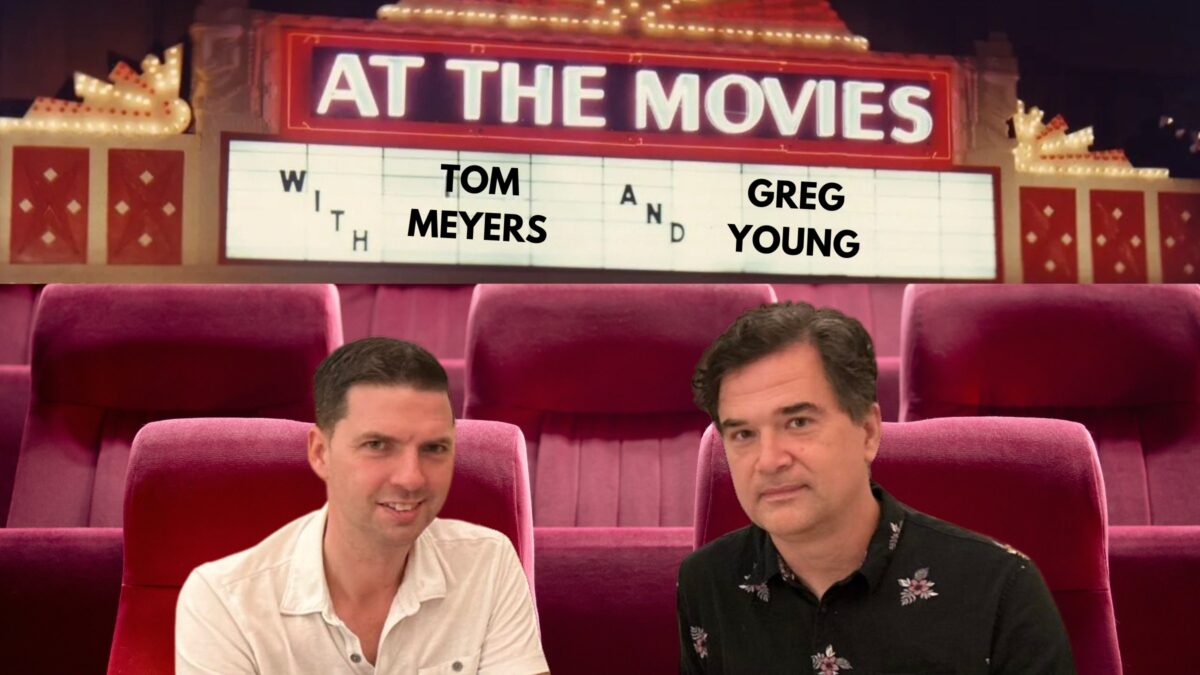
Greg and Tom have taken off their historian hats for a minute and have suddenly become — movie critics? Close but not quite!
This week we’re giving you a ‘sneak preview’ of their Patreon podcast called Side Streets, a conversational chat show about New York City and, well, whatever interests them that week.
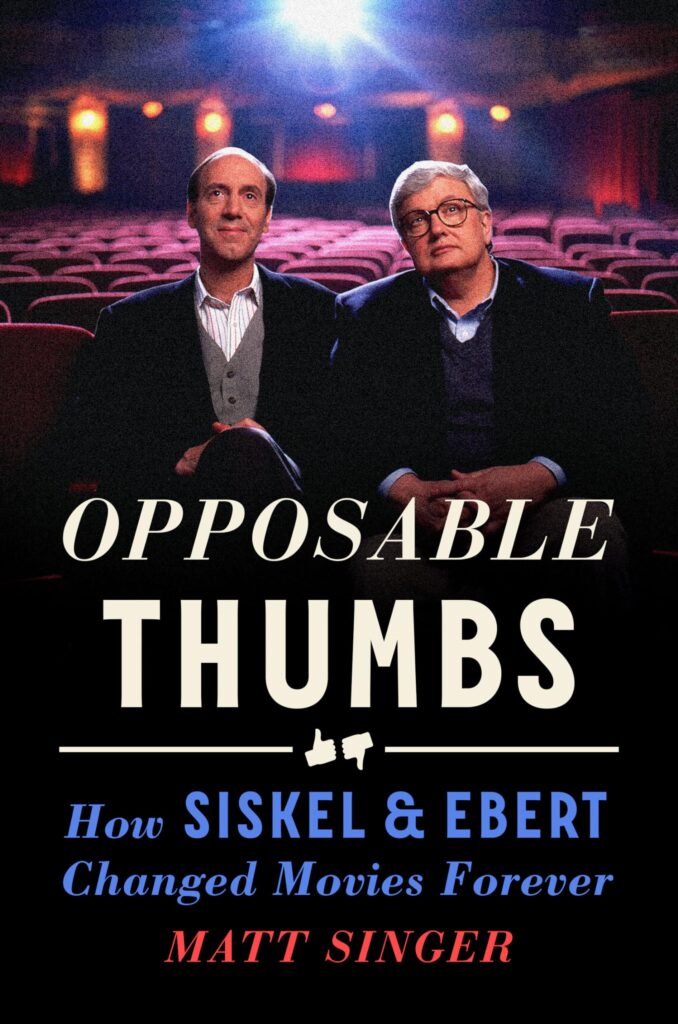
In honor of the Academy Awards, the Bowery Boys hosts pay homage to the great Gene Siskel and Roger Ebert while looking at five award-worthy films with strong New York City connections:
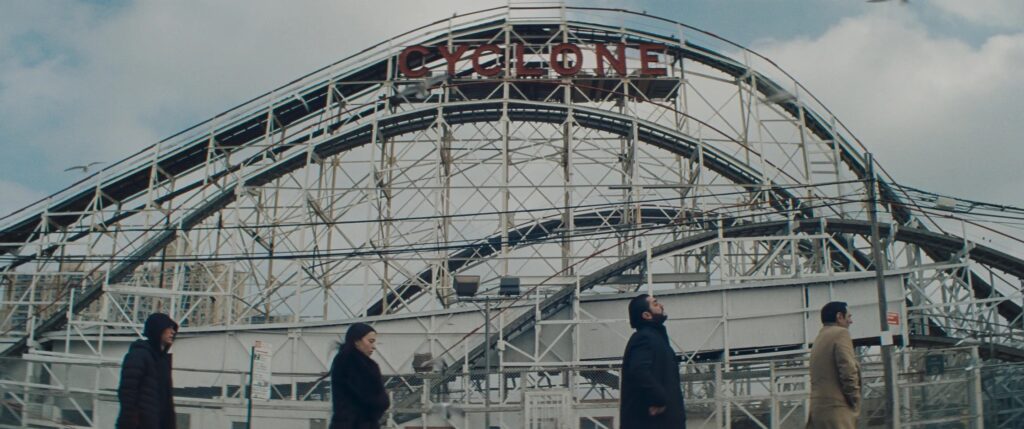
— Anora with its captivating south Brooklyn locations
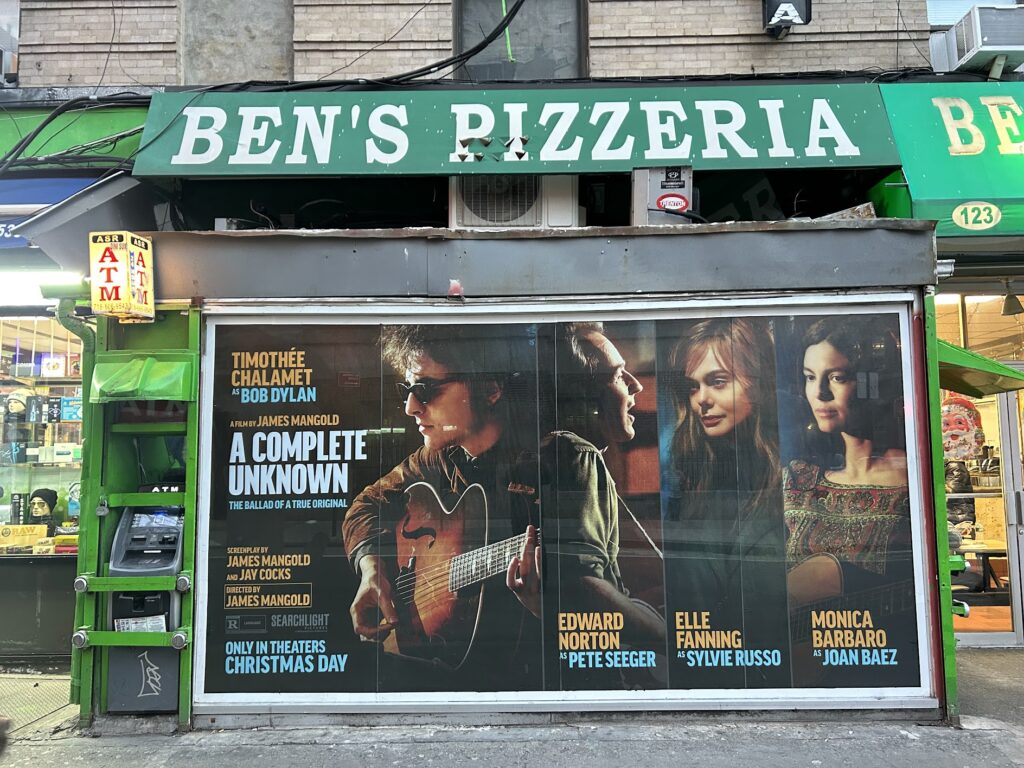
— A Complete Unknown, taking us back 1960s Greenwich Village
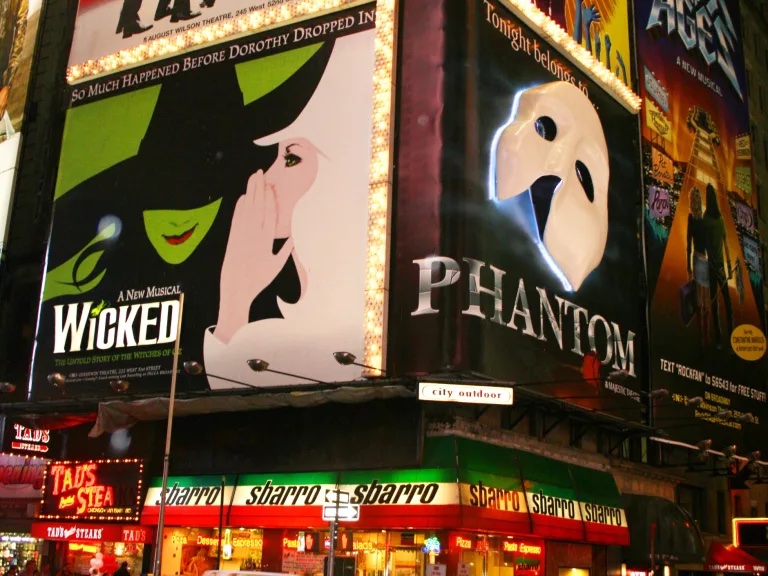
— Wicked, a spritely interpretation of the Broadway musical
— The Brutalist, an epic about more than just architecture
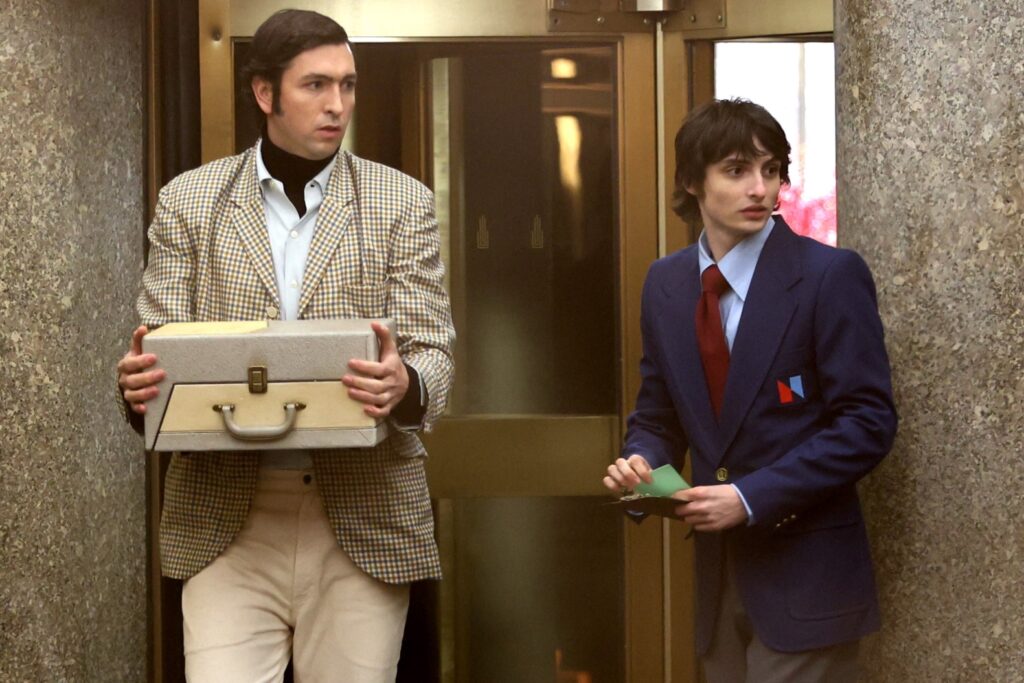
— Saturday Night, a frenetic tribute to the comedy-show icon which turns 50 years old this year
NOTE There are light spoilers (especially to locations used in some of these films) but nothing that will ruin your enjoyment of these movies.
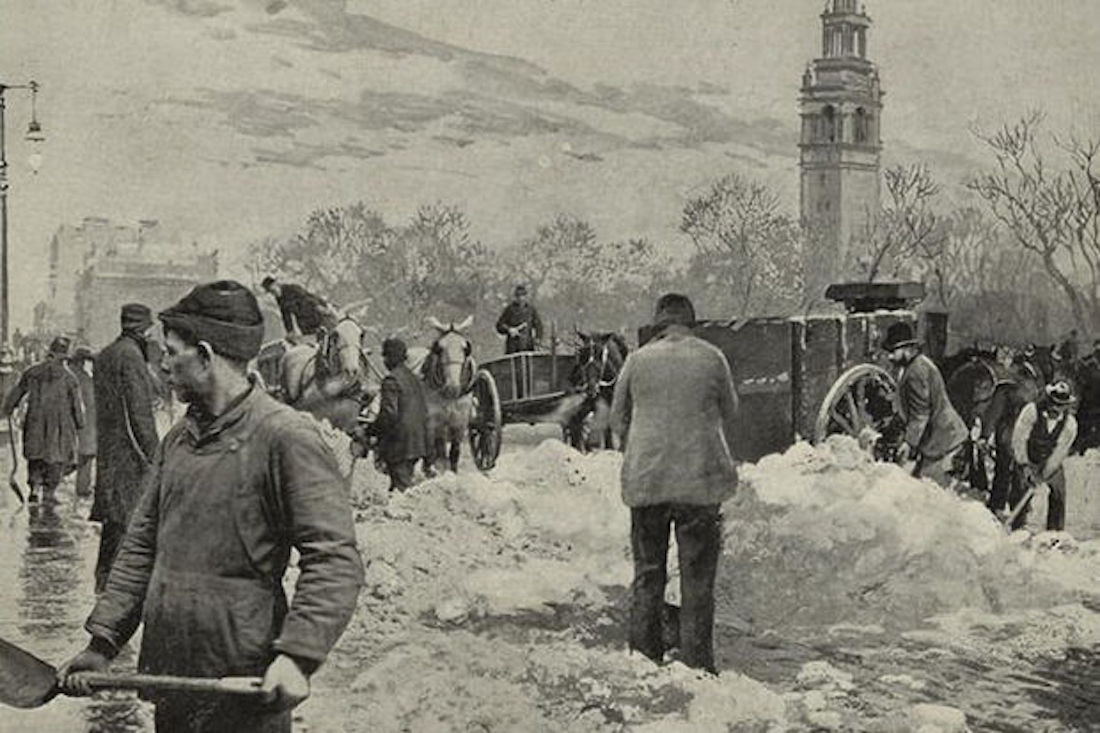
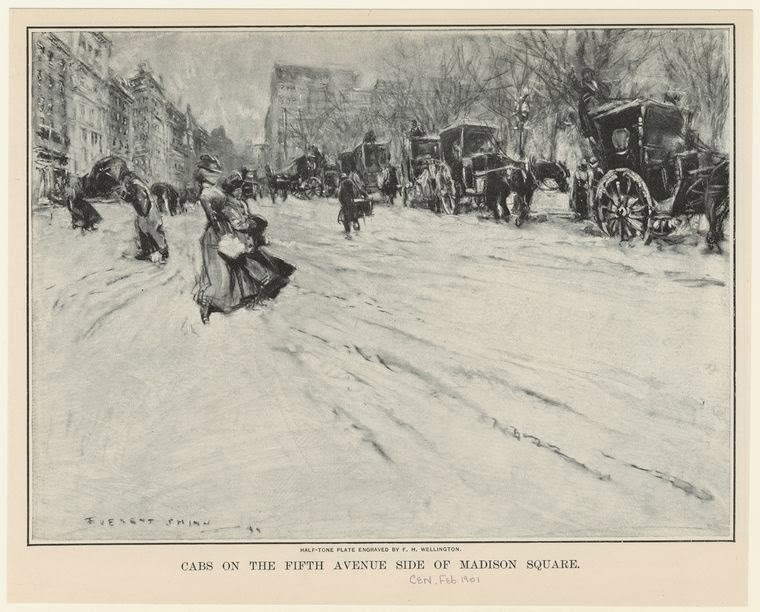
Illustration of Madison Square after a snowstorm, 1899. Courtesy New York Public Library
Missing a good old-fashioned New York City snowfall? Well, then, take in this unusual view from 1902:
What storm is this? The horrific blizzard that hit New York on February 17, 1902. It would be considered the worst snowstorm to hit the metropolitan area since the Great Blizzard of 1888. (Read all about it here.) I assume we’re actually in the aftermath of the blizzard here, as the snow shovels are out, and the kids are playing.
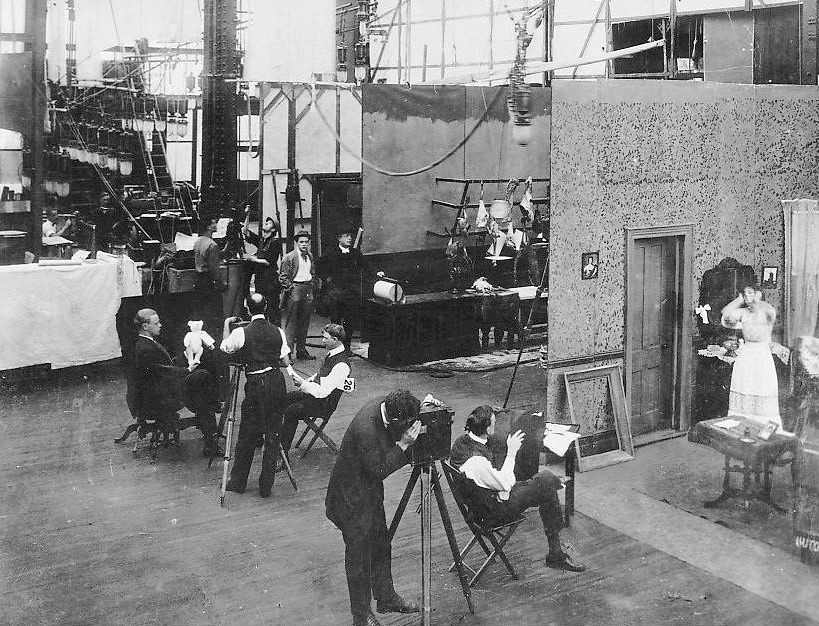
Who made this? Edison Manufacturing Company. Their Manhattan studio was nearby, at 41 East 21st Street.
Who’s the director? The head of Edison’s film division Edwin S. Porter, considered by most to be the first real movie director, inventing basic techniques used by subsequent filmmakers.
What are we seeing? Trolleys, cabs, carriages and other unusual vehicles, braving the icy conditions and dodging pedestrians at the intersection of Broadway, Fifth Avenue and 23rd Street. At one point, you almost see a team of horses slide off the road!
Below: An illustration from 1899, showing cabs parked along Madison Square (courtesy NYPL)
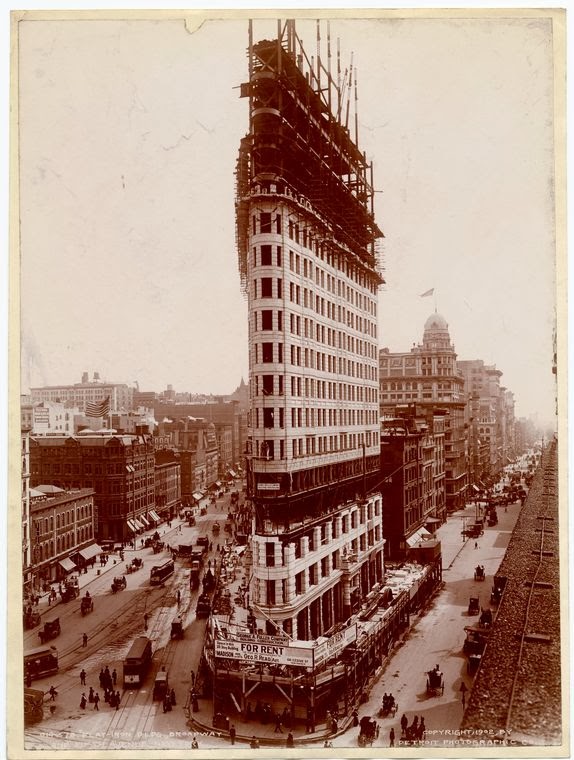
Why aren’t they showing the Flatiron Building? It’s not completed yet! The Daniel Burnham-designed office building would be opened by the summer, to great fanfare. But as an open construction site, it would have been dangerous to linger anywhere around it. I believe the slanted beams you see at the very end are part of the construction site.
This is the first film of a New York blizzard? This is probably the first film of any American blizzard. Primitive film technology had only recently allowed for outdoor filming. Porter and his crew would have been brave indeed dragging Edison’s equipment even two blocks through these conditions.
What’s that statue at the 1:15 mark? The seated, snow-covered figure of William Seward. The statue has sat at that corner since 1876. (More about that here.)
What’s that big building at the end? The Fifth Avenue Hotel, once considered the greatest accommodation in New York City and a headquarters for backroom politics in the 1870s and 1880s. Its glory days are long passed by the time of the blizzard. Six years later, it would be torn down and replaced with the building that stands at that corner today — the International Toy Center.
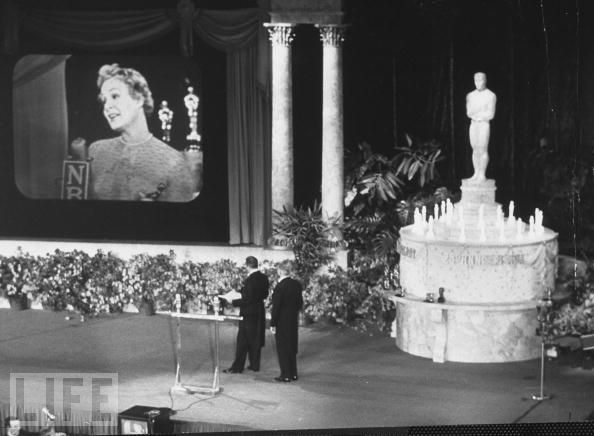
Despite the Academy Awards being a celebration of all things Hollywood, New York has actually hosted the Oscar ceremony on more than one occasion. Or rather, they co-hosted the event — from 1953 to 1957 — in a rare and soon abandoned bicoastal ceremony that taxed the mechanics of television’s earliest production crews.
There were two reasons for this complicated arrangement. NBC, who was broadcasting the event, had most of their principal stages in New York. After all, the first NBC studios were at Rockefeller Center, where they still remain today. Even The Tonight Show, perhaps NBC’s first and most famous Burbank production, filmed in Manhattan until the early 1970s.
Just as important, many film stars were in New York, unable to get out of theatrical commitments on Broadway. And frankly, in the years before international television viewership, the Oscars simply did not have the same urgency as they do today. Thus, the award show came to them.
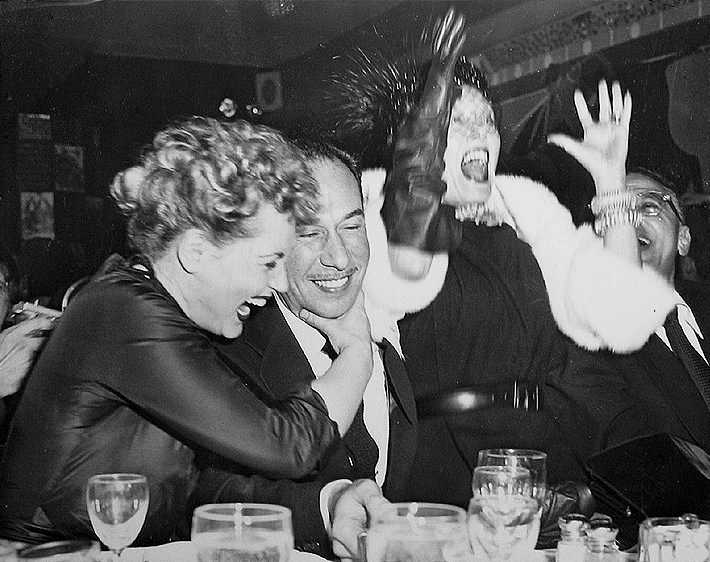
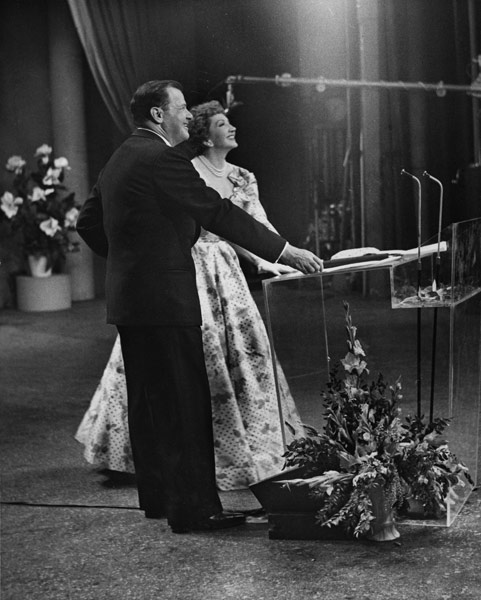
Judy Holliday gives Jose Ferrer a friendly squeeze — and Gloria Swanson bursts with joy — as Ferrer’s name is announced as the winner of Best Actor, at La Zambra in midtown. (Getty Images)
23rd Annual Academy Awards Best Picture winner: All About Eve March 29, 1951
Before splitting the broadcast, the Oscars once tried a very strange live radio remote from a New York nightclub.
For the 23rd Annual Academy Awards, held on March 29, 1951, many nominees like Judy Holliday and Gloria Swanson remained in New York. Both Swanson and Jose Ferrer, starring in the Broadway comedy Twentieth Century, were nominated that year.
Instead of disappointing a sell-out theater audience, Ferrer invited all the nominees to an after-theater party at the La Zambra (127 W. 52nd Street), a nightclub owned by Spanish guitarist Vincente Gomez. A live radio link was set up among the tables, and nominees wined and dined waiting for their categories to be announced out in Los Angeles.
The club was hopping that night. Ferrer won Best Actor (for Cyrano de Bergerac), and Holliday won Best Actress (for Born Yesterday), giving their speeches into a radio microphone as champagne corks popped in the background. (Swanson, who thought she might win for Sunset Blvd., was less enthusiastic for Judy’s win.)
It’s appropriate they were in New York, as Ferrer and Holliday both won for film adaptations of Broadway shows in which they had starred. And clearly underscoring the power that the New York stage still had on the film business, Best Picture went to the stage drama All About Eve.
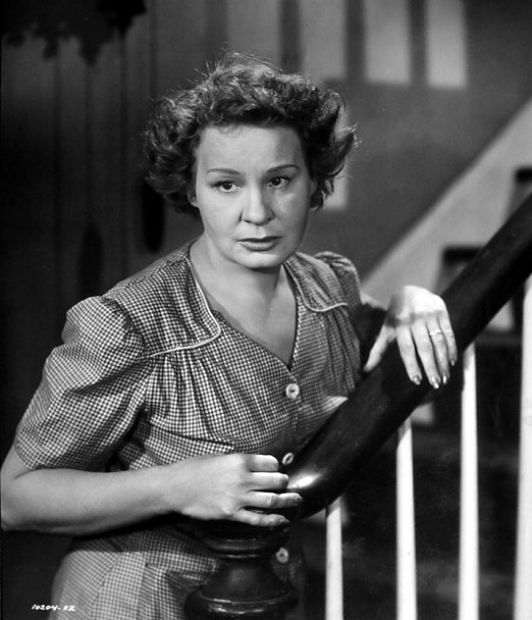
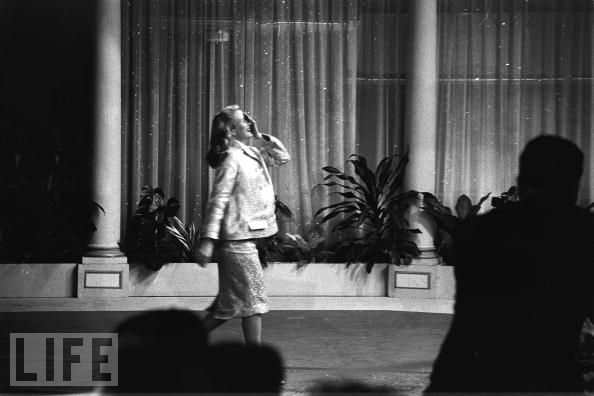
Shirley Booth accepts her Oscar in New York, as the audience in Los Angeles watches on. (LIFE images)
25th Annual Academy Awards Best Picture winner: The Greatest Show On Earth March 19, 1953
While the Los Angeles crowd were entertained by host Bob Hope, the attendees to the first official bicoastal New York ceremony were met by co-host Fredrick March, a two-time Academy Award winner. The event was broadcast from 5 Columbus Circle, at the International Theatre.
In 1953, the International was a worn out, tired New York stage, having gone through a host of different owners and renovations since it first opened — as the Majestic Theatre — in 1903. At different periods of time, it was owned by Florenz Ziegfeld and William Randolph Hearst, and its stage played hosts to virtually every form of entertainment, from burlesque to ballet.
Definitely an odd setting for an awards program, especially given that this was also the first Oscar show to be broadcast on television. But the International was owned by NBC, who had agreed to fund the inaugural broadcast. And NBC’s fees to broadcast the program were especially valuable to Academy of Motion Picture Arts and Sciences, as the film studios had refused to fund an elaborate bi-coastal show.
The broadcast began 7pm PST and 10 p.m. here, to accommodate the Broadway stars just stepping off the stage. Due to staggered entrances, many of the seats at the International were empty for much of the ceremony.
Among the nominees sitting in the Columbus Circle theater was Best Actress nominee Shirley Booth (above), who was starring in the Broadway play The Time Of The Cuckoo on 40th and Broadway at the now-demolished Empire Theatre. She won the Oscar for the film version ofCome Back, Little Sheba; she had won a Tony Award for the stage version in 1950.
Given the limitations of early television technology, it’s amazing they were able to broadcast simultaneously between two coasts at all. Glitches did cause a few amusing gaffes for television audiences. When the universally reviled film The Greatest Show On Earth somehow won Best Picture over the favorite High Noon, the camera switched to the New York audience, who sat there not clapping and in mild confusion.
There would not be another Oscar telecast at the International, or anything else for that matter. The very next year, NBC moved out, and the theater was unceremoniously torn down, replaced with one of Robert Moses’ pet projects, the ill-fated Coliseum convention center.
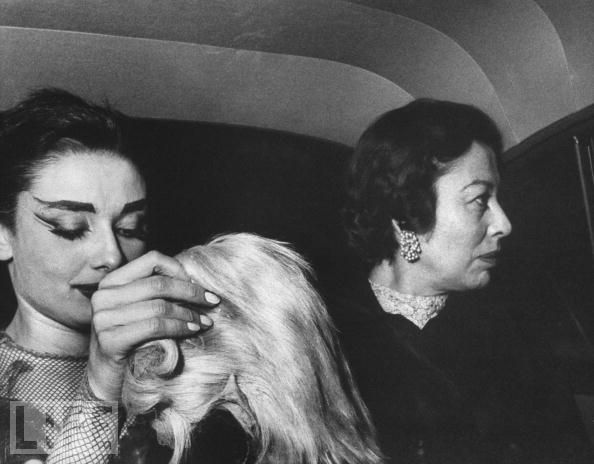
Audrey snatches off her blonde Ondine wig as her limousine races her to the Oscar ceremony uptown.
26th Annual Academy Awards Best Picture Winner: From Here To Eternity March 25, 1954
For the remainder of the Oscars’ short stay in New York, they were broadcast from the New Century Theater*, at Seventh Ave. and 58th Street, right off Columbus Circle and best known as the theater that Orson Welles and his spirited cast stormed in 1937 to perform his musical The Cradle Will Rock.
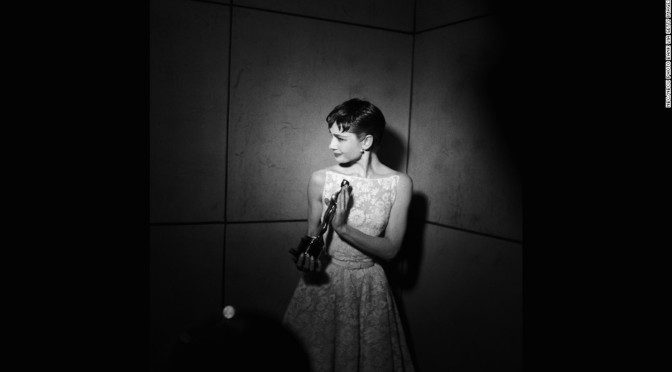
Film fans were set up in bleachers outside, just as they’re popularly done out in Los Angeles. But one New York nominee didn’t get there in time to meet her fans. Audrey Hepburn was down at the 46th Street Theatre performing the play Ondine, costumed in a blonde wig.
After the show, she raced to the Century in a limousine (with police escort, no less), ripped off her wig, rushed to the bathroom to wipe off her stage makeup, then settled into her seat for less than ten minutes before standing again to accept the trophy for Best Actress for Roman Holiday.
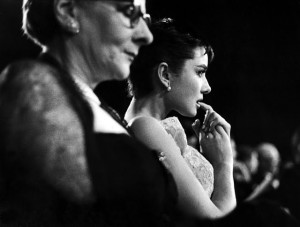
Audrey, off Columbus Circle: Hepburn sits in nervous anticipation at the New Century Theatre, moments before she wins for Best Actress.
The show, hosted in New York again by Fredric March, had another New York icon receiving an Oscar that year — Frank Sinatra, Best Supporting Actor for his role in the Best Picture that year. However, he was in Los Angeles to accept it.
(You can find tons of pictures of Audrey in her post-Oscar glow at the NBC Photo Bank.)
Claudette Colbert and Joseph Mankiewicz presided over a sedate New York audience, while out in Los Angeles, audiences were energized by young comedian Jerry Lewis. (Courtesy Oscars)
27th and 28th Academy Awards Best Picture Winners: On The Waterfront, Marty March 30, 1955; March 21, 1956
It became obvious to most viewers that the bicoastal productions were becoming lopsided. After all, it was early evening in Los Angeles, and most of the young, fresh talent was there. In New York, it was post-theater time, and attracted the older stars — some exhausted from stage productions. Nothing exemplifies this more than the 28th Oscar ceremony, hosted in New York by proper Claudette Colbert and Joseph Mankiewicz and in Hollywood by the hot new comedian Jerry Lewis, whose ribald antics made the New York cutaways seem drab.
But the awards were all about the East Coast. The Best Pictures these two years were for films set in Hoboken, NJ and the Bronx, respectively. Much of the cast of On The Waterfront were actually at the New York ceremony, including Best Supporting Actress winner Eva Marie Saint (pictured below), her pregnancy concealed by a jacket as she mounted the stage to accept her award. (Here’s the video of her win, again highlighting the difference between the New York and the L.A. ceremonies.) Best Director Elia Kazan was also here to accept his trophy. Marlon Brando, however, was out in Los Angeles, apparently where the fun was.
The following year, this time with Colbert going solo as the East Coast mistress of ceremonies, Best Picture went to Marty, another show originating from New York. But not from a Broadway stage. As a symbolic move towards the importance of the small screen, the Ernest Borgnine vehicle was based on a teleplay from the Goodyear Television Playhouse.
Below: Eva Marie Saint, in shock, approaches the podium to accept her Best Supporting Actress Oscar for On the Waterfront, her tasteful ensemble barely concealing her pregnancy. (Courtesy Life images)
29th Academy Awards Best Picture Winner: Around The World In 80 Days March 27, 1957
It was clear by this time that the two coast production was more trouble than it was worth. While Hollywood went with Jerry Lewis again, while New York opted for the elegant but comparatively unexciting Celeste Holm.
This would be the last year New York hosted the Oscars. And this would be the last hurrah for the New Century Theatre as well. It would be torn down in 1962 and replaced with the rather sleek, curvy200 Central Park South co-op.
NOTE: To make this story slightly confusing, New York also had a Century Theatre on the other side of Columbus Circle that was demolished in the 1930s. Hopefully I’ve gotten these theaters all straightened out!
ALSO: You might like to see the Life Magazine photographs of Audrey pictured above in the context of the original Life Magazine article.
The new episode of theBoweryBoysMovieClub explores the new film The French Connection, the gritty action classic employing an astonishing array of on-location shots — from Midtown Manhattan to the streets of Brooklyn. It’s an exclusive podcast for those who support us on Patreon.
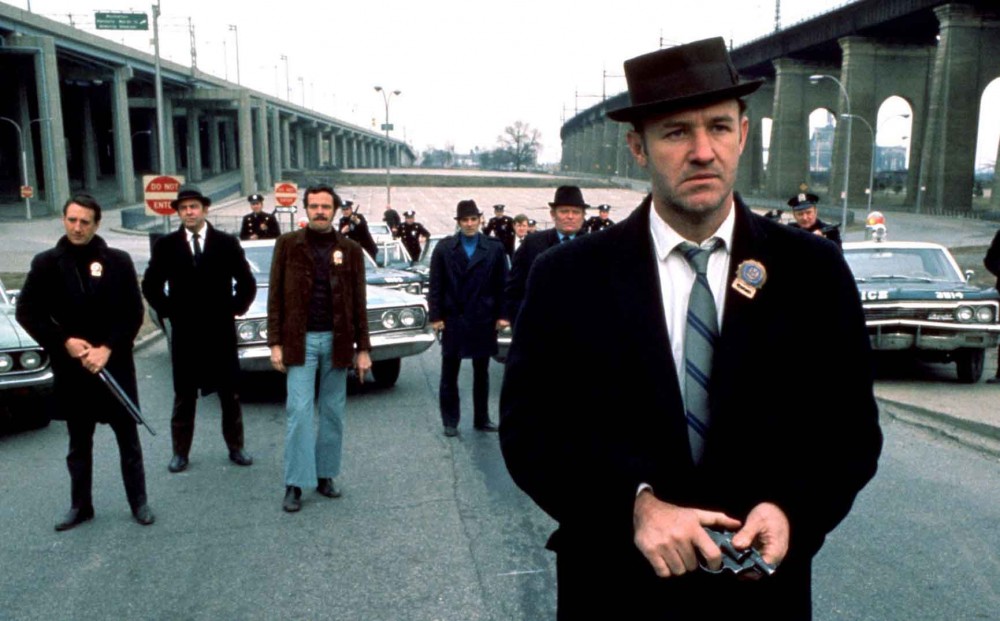
The French Connection, directed by William Friedkin and starring Gene Hackman, was released fifty years ago this year to critical and commercial success.
The movie would change the way film and TV action dramas were presented, a mix of real-life urban decay and brutal violence. But the film has much to say about New York City itself as it swerves into many pre-gentrified neighborhoods.
SPOILER ALERT:The Bowery Boys Movie Club is a movie recap show, mixed with New York City history. We dive into the film, scene by scene… discussing its major plot turns and attempting to put it all into the historical context of New York City in late 60s/early 1970s.
We also discuss the plot, in quite a bit of detail. Haven’t seen the film yet? You might consider watching it first — it’s currently available for rent and also available for streaming on Showtime.
HowdoIlistentheBoweryBoysMovieClub? Once you’re signed in on Patreon, you’ll see a private RSS link that can be put directly into your favorite podcast player. Even easier, it can also be played directly from the Patreon app.
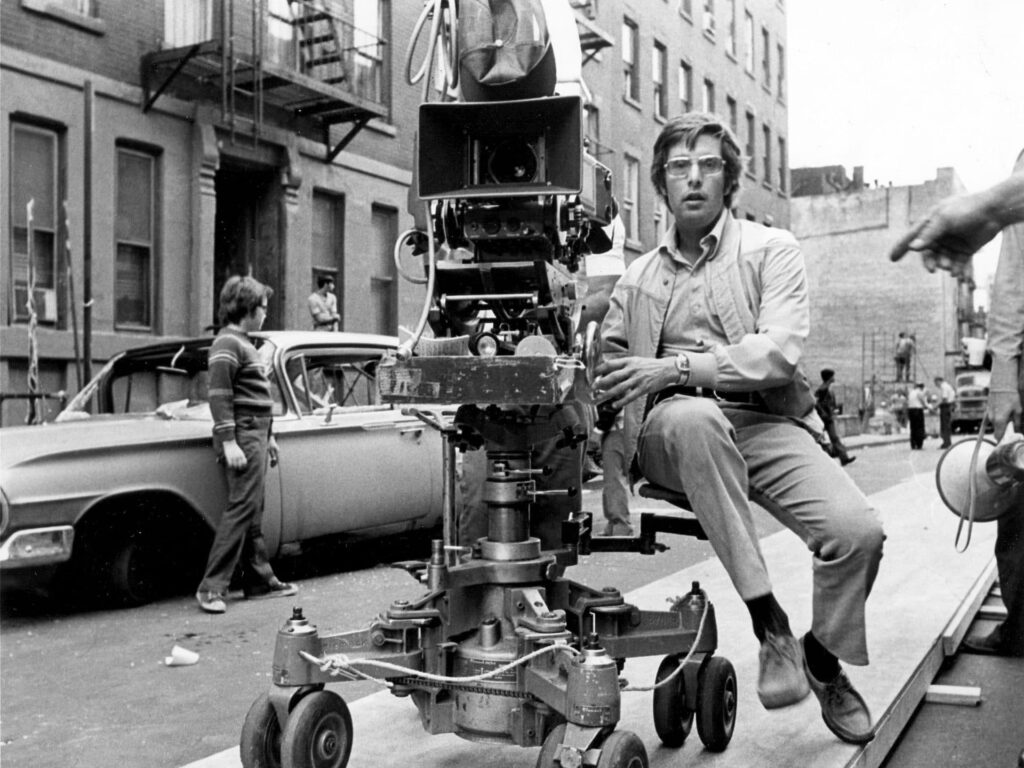
Director William Friedkin on the ‘set’ of The French Connection.
The French Connection was shot in New York — all over the place, uptown, downtown, on bridges, in bars. And much of it, on the fly and illegally. (There are, of course, famous scenes in Marseilles and Washington DC as well.)
Take the film’s most iconic moment, and possibly the greatest car chase scene in the history of film and cars. It’s filmed under the elevated D-line train, near Coney Island, along the course of 26 blocks, over the course of five weeks. However, N train stands in for what was then the B train, because, being New York in the 70s, they could find no clean-looking B trains.
Most of the ‘extras’ were actual residents going to and fro in their daily business. In fact, a car accident that happens at the corner of Stillwell Ave. and 86th Street actually happened; the unlucky vehicle was owned by a guy on his way to work.
The producers later paid for the cost of repairs. Today this would have spawned a multi-million dollar lawsuit!
That was the least of the mayhem. Friedkin and his producers filmed many scenes without the city’s permission at all, including much of the car chase, a staged traffic jam on the exit ramp of the Brooklyn Bridge, and an entire sequence on what is now the S-train between Grand Central and Times Square!
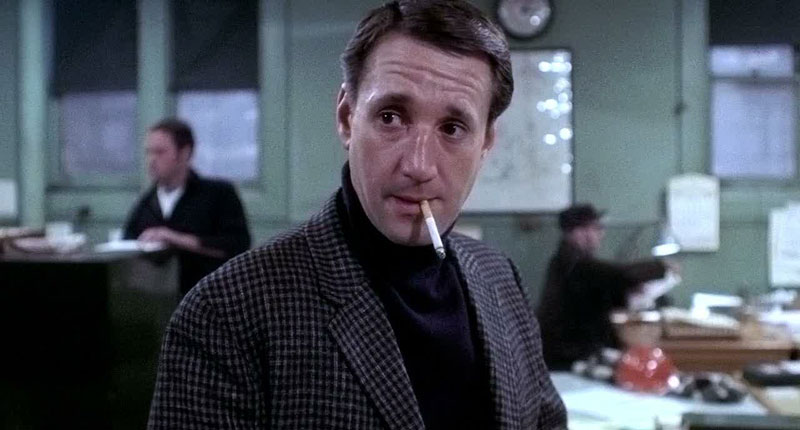
One treasured New York landmark featured in the film is sadly no longer with us. Popeye Doyle (Gene Hackman) and Cloudy Russo (Roy Schieder) stake out at Ratner’s Deli in the Lower East Side right off the Williamsburg Bridge.
Ratner’s was one the city’s legendary old Kosher deli’s, along with Katz’s just a few blocks away. Later in its life, its hidden ‘speak-easy’ Lansky Lounge became a hot spot during the 1990s.
Two Manhattan hotels are also featured prominently, the sumptuous Roosevelt Hotel in Midtown and the former Westbury Hotel, now residences.
Like The Taking of Pelham One Two Three, the movie brilliantly captures a New York on the precipice of near collapse but still retaining its rough-hewn charm. The fact that this classic could be filmed here — almost scot-free — gives a little insight into how massive and uncontrolled the city had gotten.
PODCAST In celebration of 125 years of movie exhibition in New York City — from vaudeville houses to movie palaces, from arthouses to multiplexes.
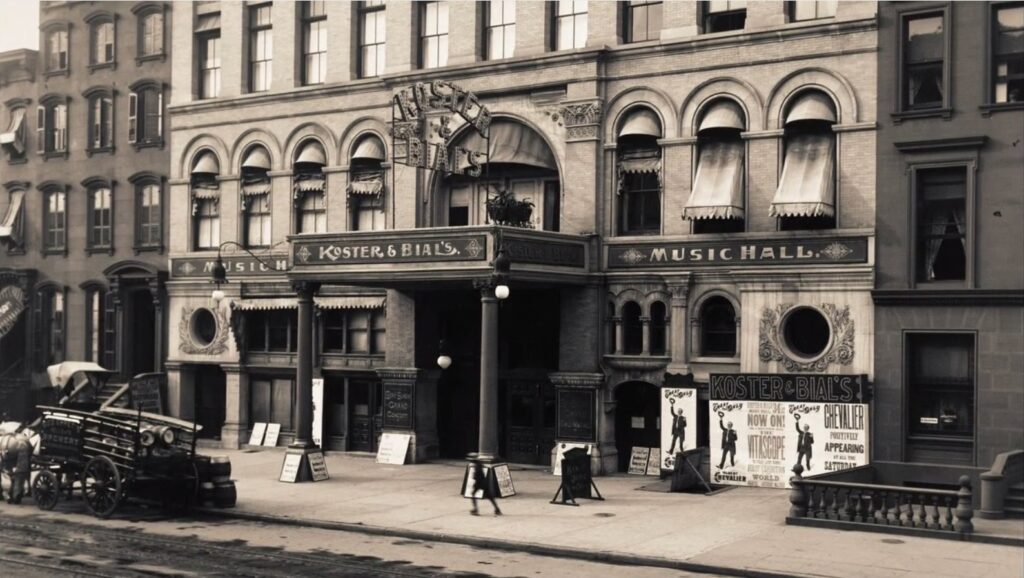
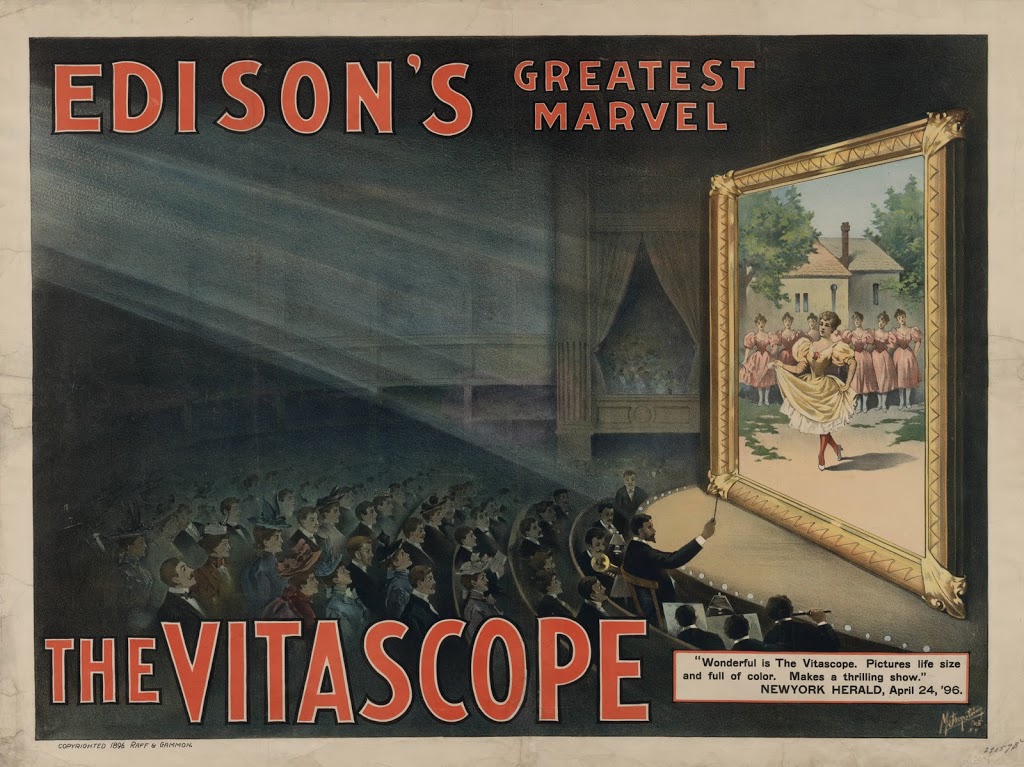
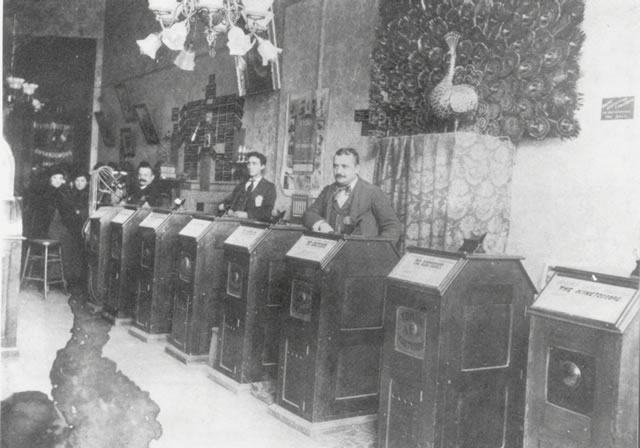
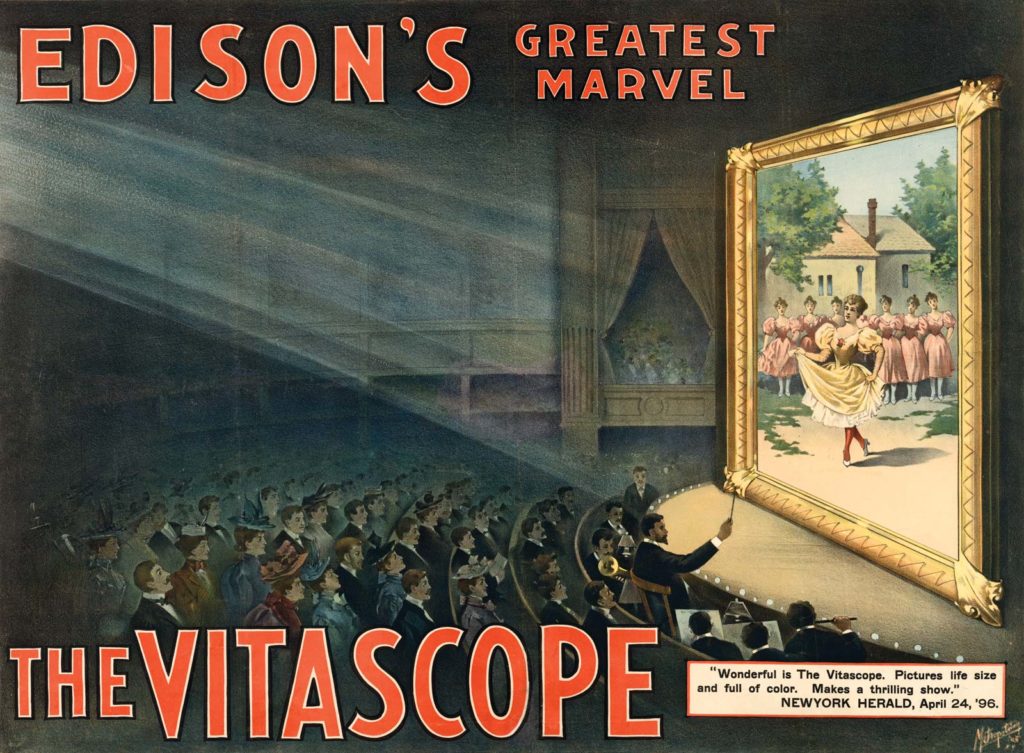
On April 23, 1896 an invention called the Vitascope projected moving images onto a screen at a Midtown Manhattan vaudeville theater named Koster and Bial’s Music Hall.
The business of movies was born.
By the late 1910s, the movies were big, but the theaters were getting bigger! Thanks to men like architect Thomas Lamb and the impresario Samuel ‘Roxy’ Rothafel, movie theaters in New York City grew larger and more opulent.
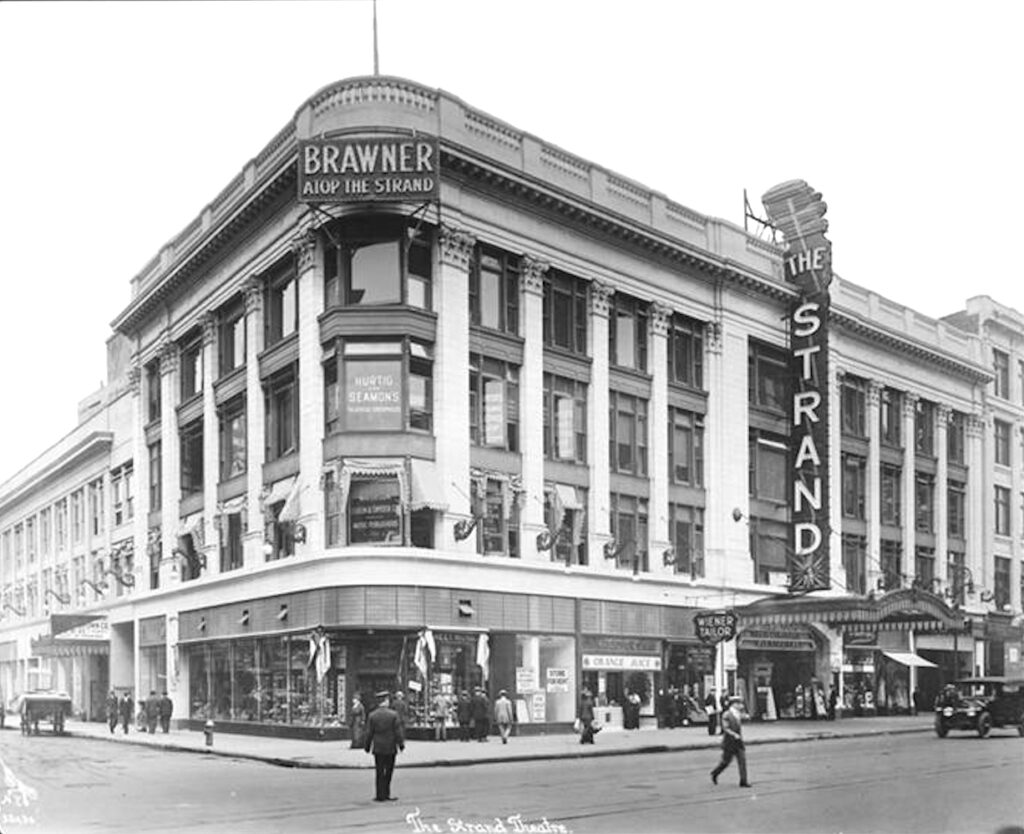
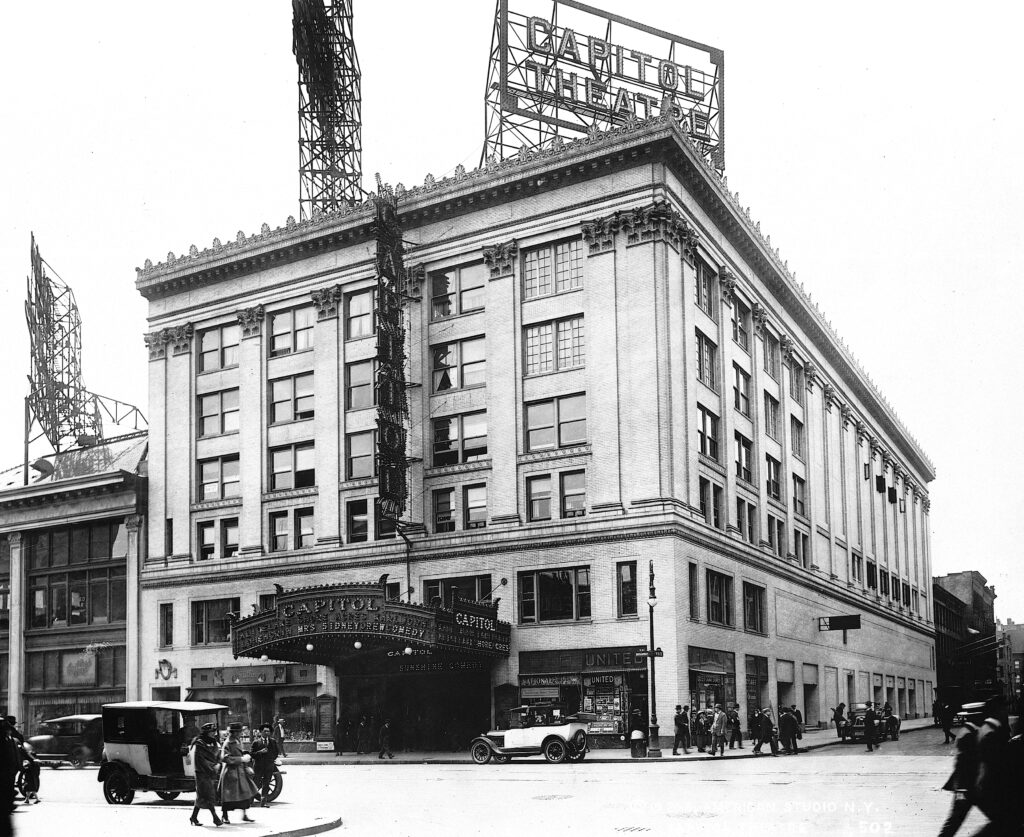
And in Times Square, they were so large that the became known as palaces — the Capitol, the Rialto, the Rivoli, the Strand, the Roxy. They were soon joined by the granddaddy of them all: Radio City Music Hall.
Even by the 1940s, movie theaters were a mix of film and live acts — singers, dancers, animal acrobats and the drama of a Wurlitzer organ!
But a major case at the Supreme Court brought a change to American film exhibition and diversity to the screen — both low brow (grindhouse) and high brow (foreign films and ‘art’ movies).
Today’s greatest arthouse cinemas trace their lineage back to the late 1960s/early 1970s and the new conception of movies as an art form.
Can these theaters survive the perennial villain of the movies (i.e. television) AND the current challenges of a pandemic?
FEATURING: All your favorite New York City movie theaters from A (Angelika) to Z (Ziegfeld).
Listen now on your favorite podcast player:
A special thanks to the website Cinema Treasures for inspiring us for many years and sending us out on many journeys, looking for the great old movie theaters of yore.
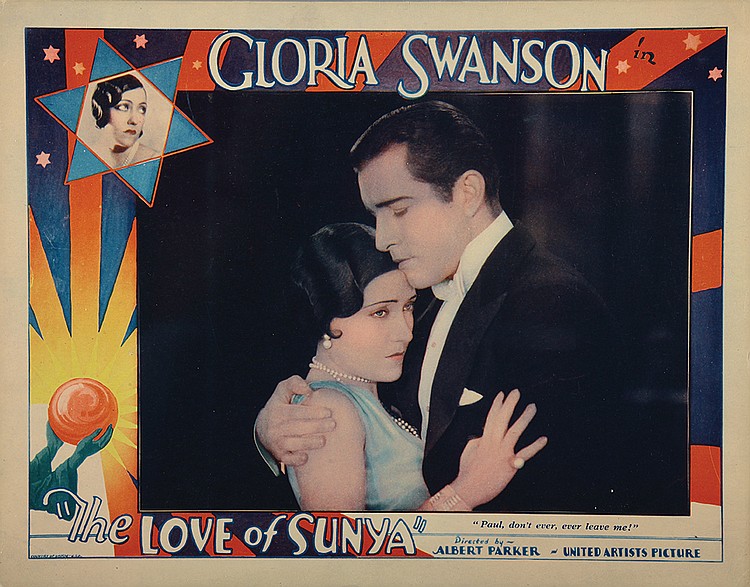
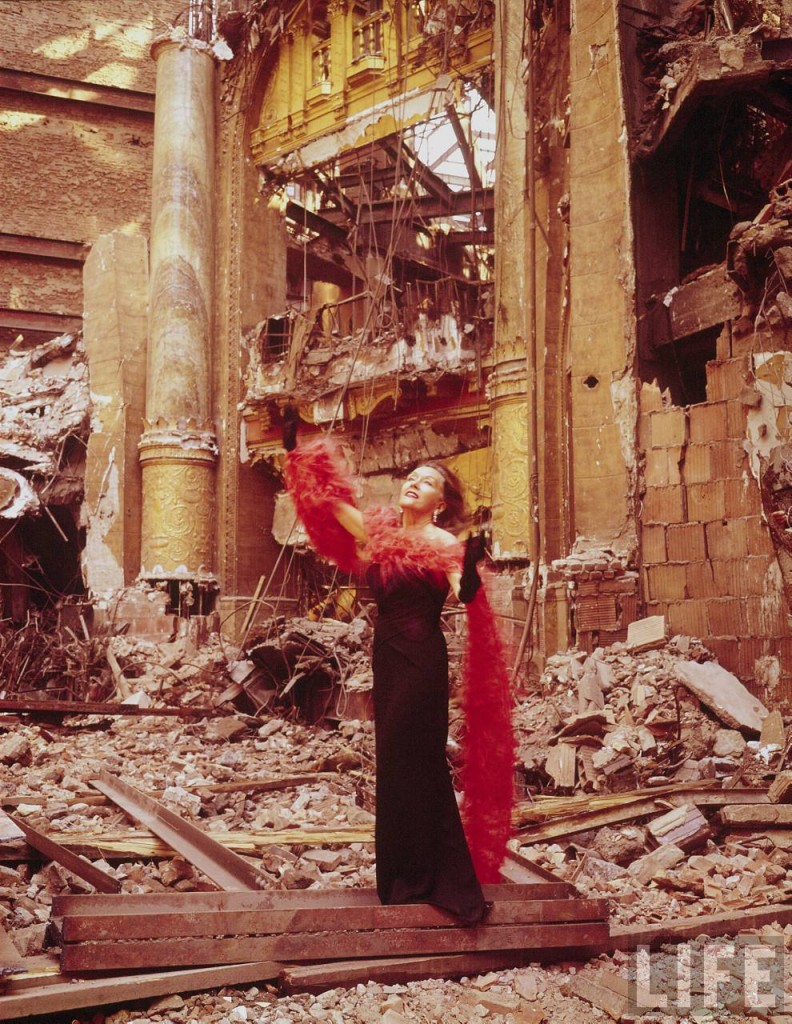
Gloria Swanson in The Love of Sunya, which played on the Roxy’s opening night — March 11, 1927.
Gloria Swanson in the ruins of the Roxy Theatre, October 1960.
Eliot Elisofon for Life MagazineKoster and Bials at 34th Street — location of the first projected movie program for theatrical audiences in the United States.As with many of his ‘inventions’, Edison did not actually invent the Vitascope. But he bought the rights to say he did!
UNITED STATES – CIRCA 1925: Marcus Loew, Founder Of Loews Cinemas, In 1925, Usa. (Photo by Keystone-France/Gamma-Keystone via Getty Images)
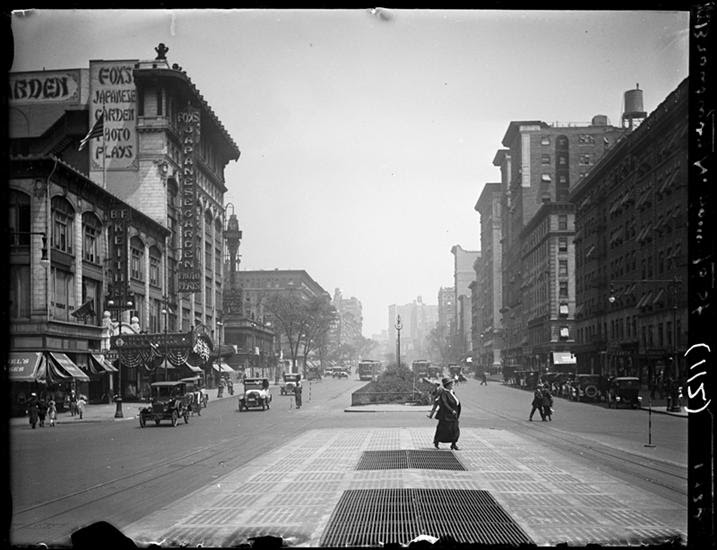
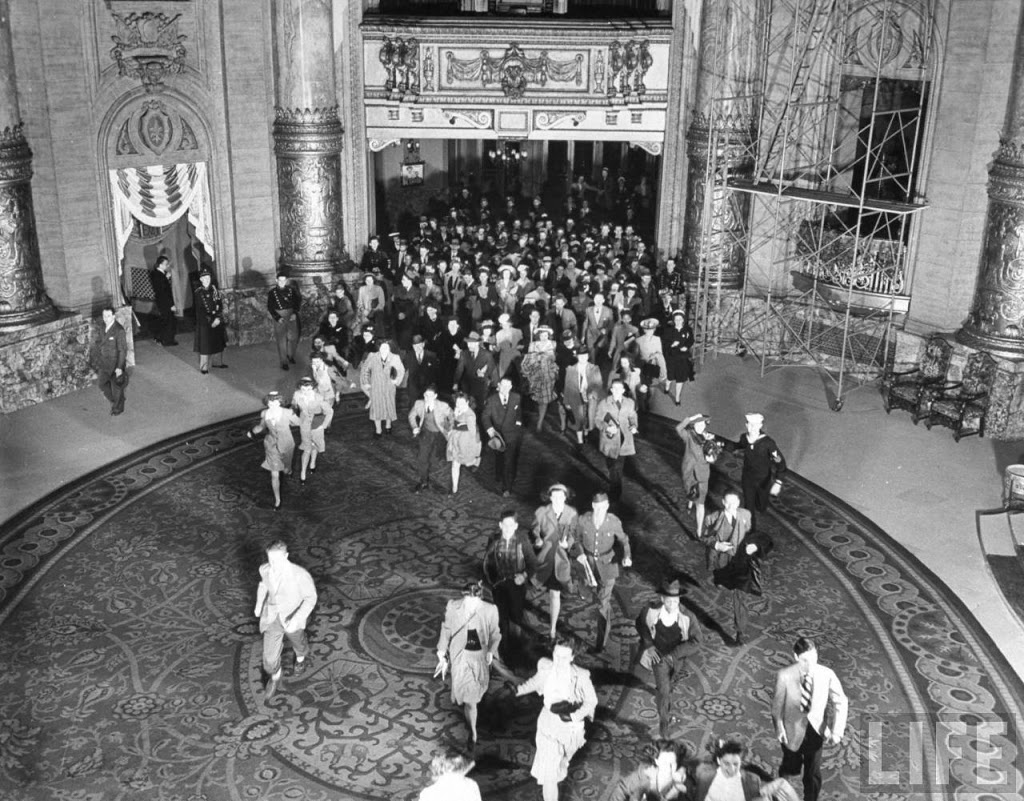
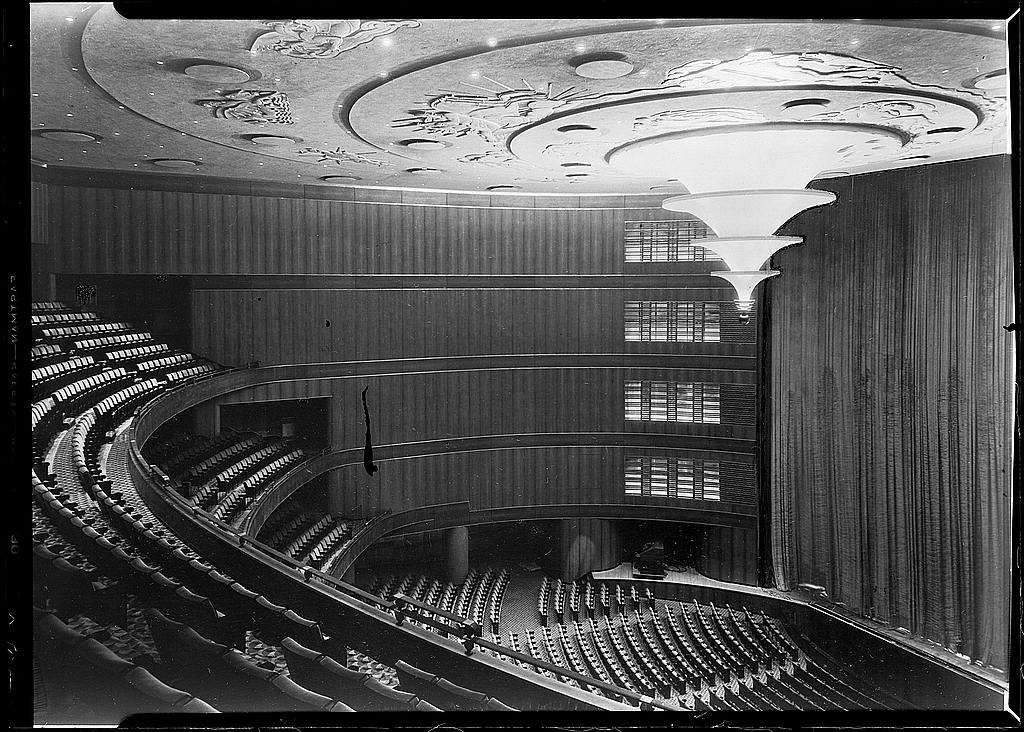
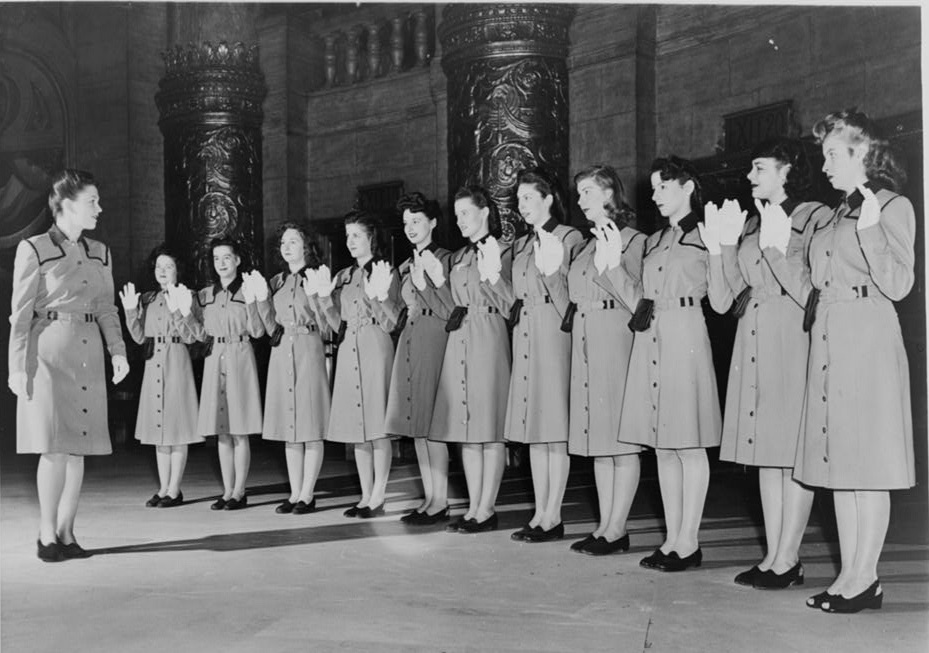
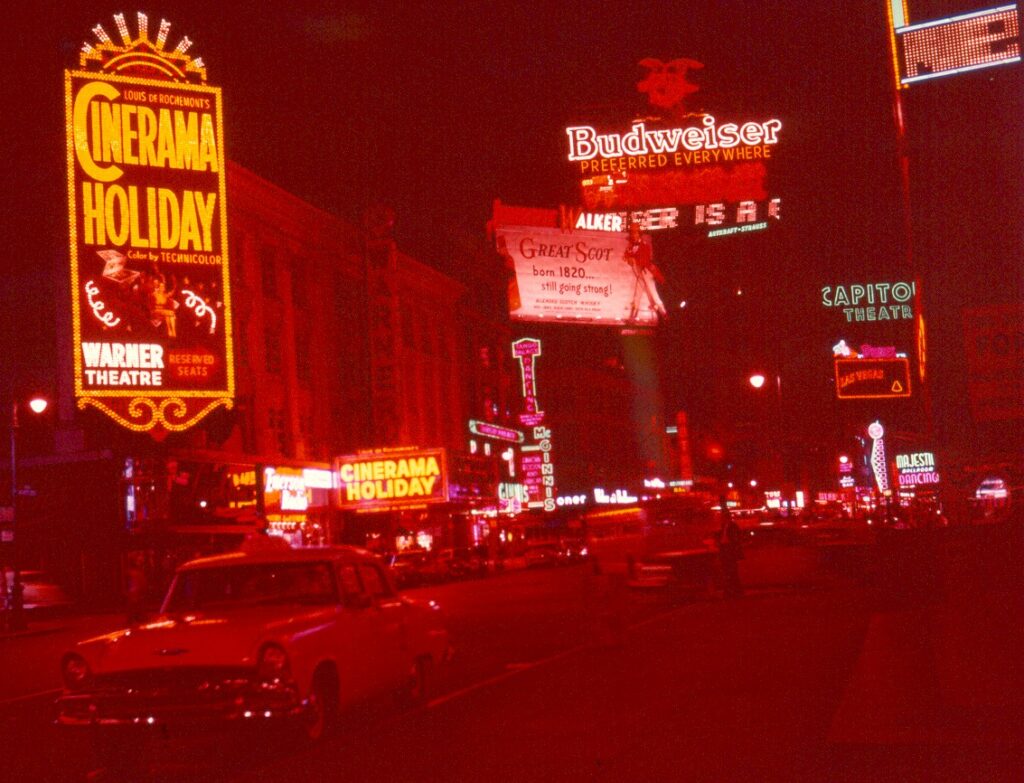
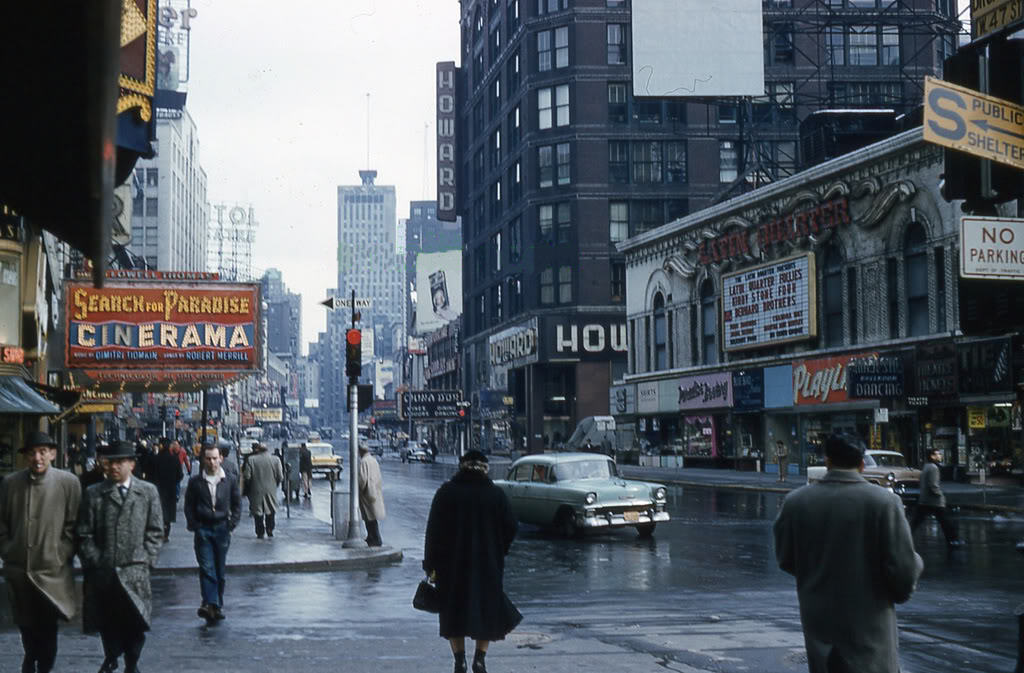
The Strand Theatre, 1914The Capitol Theater, 1920Fox’s Japanese Garden Theatre, at Broadway and 96th Street on the Upper West Side, 1920. Courtesy Museum of the City of New YorkSatisfied New York filmgoers at the Roxy exit into the lobby, May 1943. The 6,000-seat Roxy Theatre, at 153 W. 50th Street, “often cited as the most impressive movie palace ever built” according to Cinema Treasures. Movies at the Roxy were presented with live orchestras and vocals. In this case, the film was the Tyrone Power war thriller ‘Crash Dive’, accompanied by Jimmy Dorsey and His Orchestra and vocalists Bob Eberly and Kitty Kallen.The interior of the Roxy Theater 1932 (Library of Congress)1945 — Head usherette Capt. Rosemary Smith inspects line of uniformed usherettes who are holding gloved hands up to be examined, Roxy Theater, New York City. (Al Ravenna/Library of Congress)Courtesy In Cinerama In CineramaMore information on the Paris Theatre here. Courtesy the Paris TheatreMore information on the Ziegfeld Theater here. (Photo courtesy Ziegfeld Ballroom)
The Bowery Boys: New York City History podcast is brought to you …. by you!
We are now producing a new Bowery Boys podcast every other week. We’re also looking to improve and expand the show in other ways — publishing, social media, live events and other forms of media. But we can only do this with your help!
We are now a creator on Patreon, a patronage platform where you can support your favorite content creators.
Please visit our page on Patreon and watch a short video of us recording the show and talking about our expansion plans. If you’d like to help out, there are six different pledge levels. Check them out and consider being a sponsor.
We greatly appreciate our listeners and readers and thank you for joining us on this journey so far.
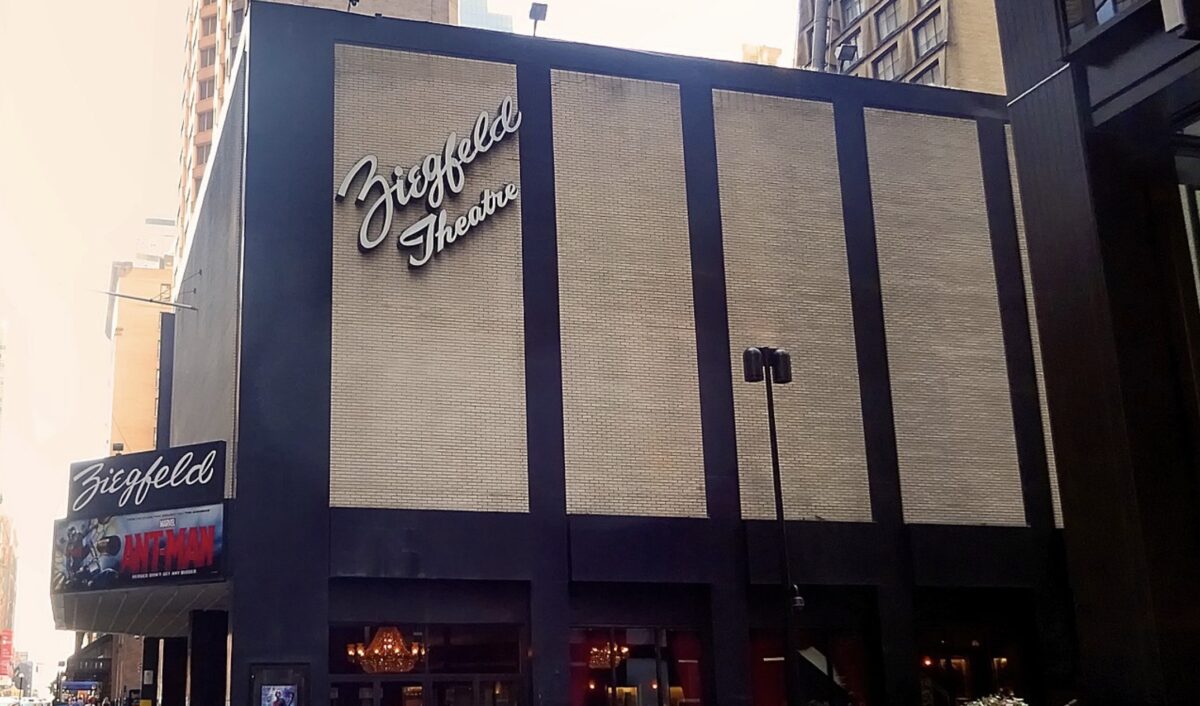
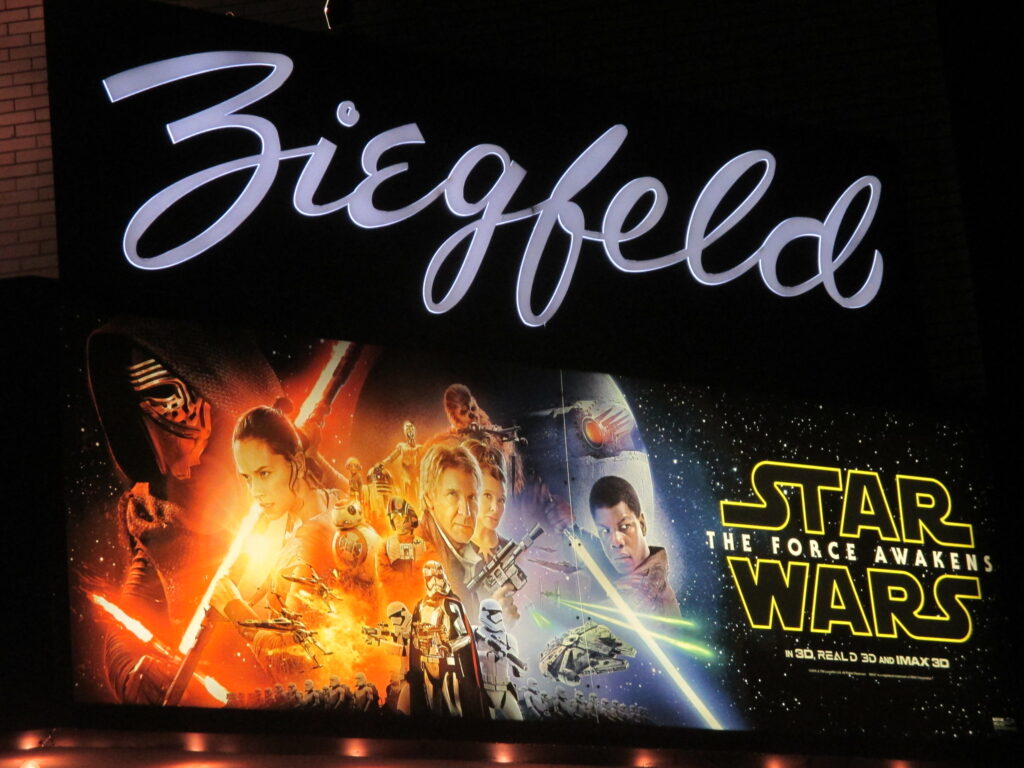
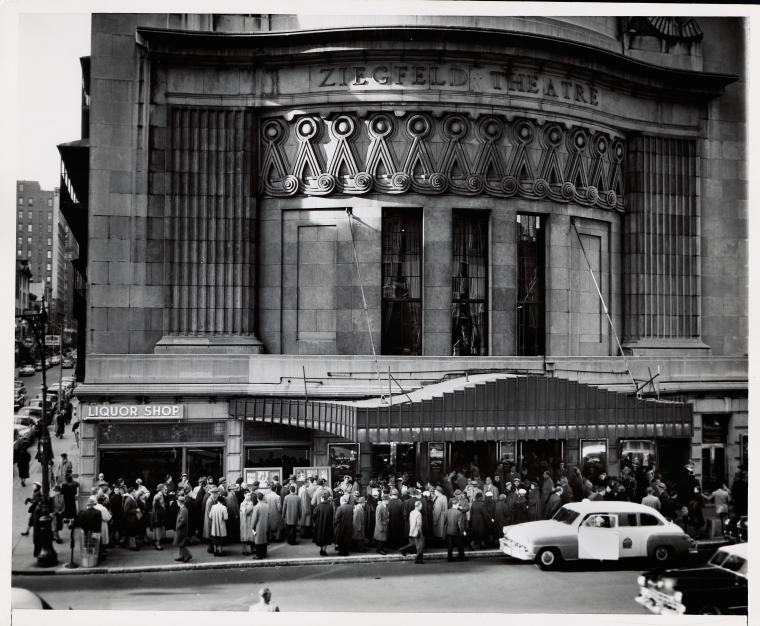
The Ziegfeld Theater, one of Manhattan’s last single-screen movie theaters, closed for regular film exhibition in 2016.* Its final film was Star Wars: The Force Awakens, an appropriate choice as tens of thousands of movie lovers had gone to the Ziegfeld to see previous films in the series — including the 1977 original.
I think the real story here is how — in a landscape of multiplexes and state-of-the-art home theaters — this respected dinosaur, sitting amidst the most valuable real estate in the world, managed to stay open as long as it did, playing a single film at a time.
(The Paris Theater is the only Manhattan theater remaining with just one screen.)
Losing the Ziegfeld means that New York lost a valuable link to one of the city’s greatest theatrical icons, Florenz Ziegfeld. Although, to be fair, that link was already indirect.
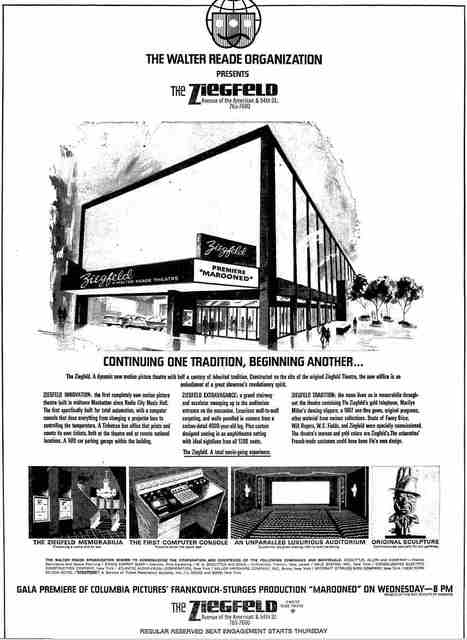
The original Ziegfeld Theater (at top), built especially for the showman by William Randolph Hearst, sat on Sixth Avenue close by the present movie theater. It was demolished in 1966, and a new Ziegfeld — devoted solely to film — was built nearby by Emory Roth & Sons. It opened in December 1969.
At 1,131 seats, the Ziegfeld movie house was hardly the biggest theater in New York. And it doesn’t even have the biggest movie screen (that title belonged to the IMAX at Lincoln Center).
But the grandiosity of design, the traditional show-palace style, and the dramatic trappings of its lobby make for a movie experience of special import. Even its bathrooms were extraordinary.
The Ziegfeld was a throwback to New York’s early single-screen theaters of yore like the Roxy, the Rivoli and the Capitol. It’s also much smaller than all of those. (The Capitol, for instance, sat 4,000 people!)
The Ziegfeld catered to films of a remarkable scope, and it built its reputation upon ‘serious’ films of pedigree.
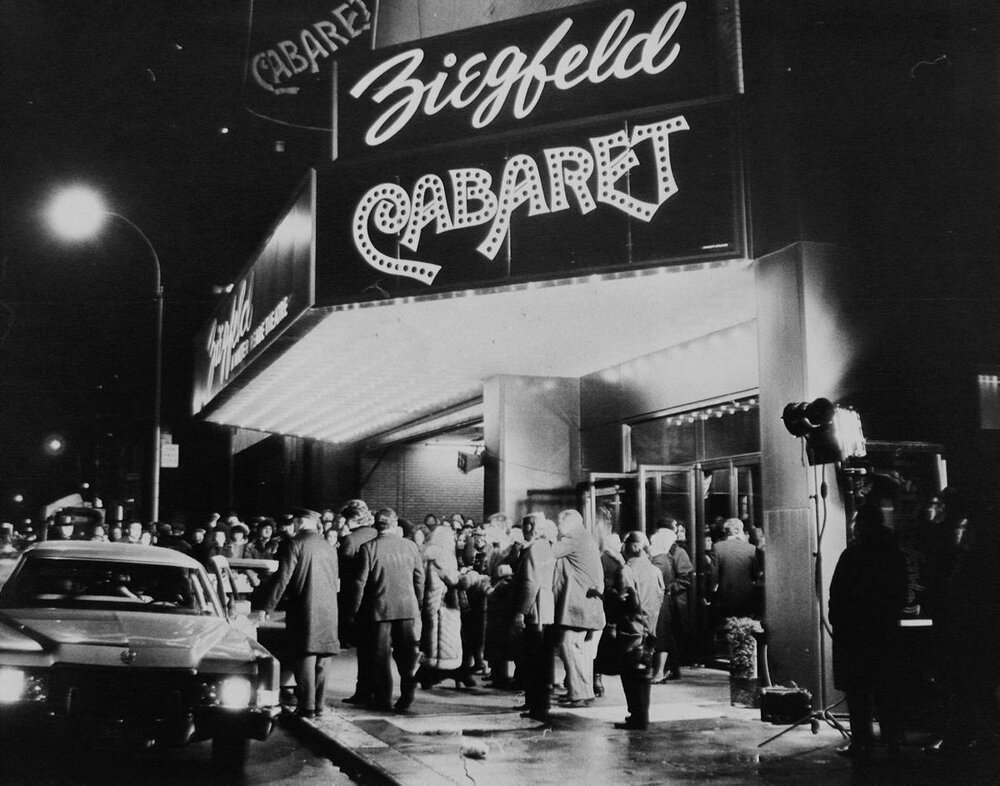
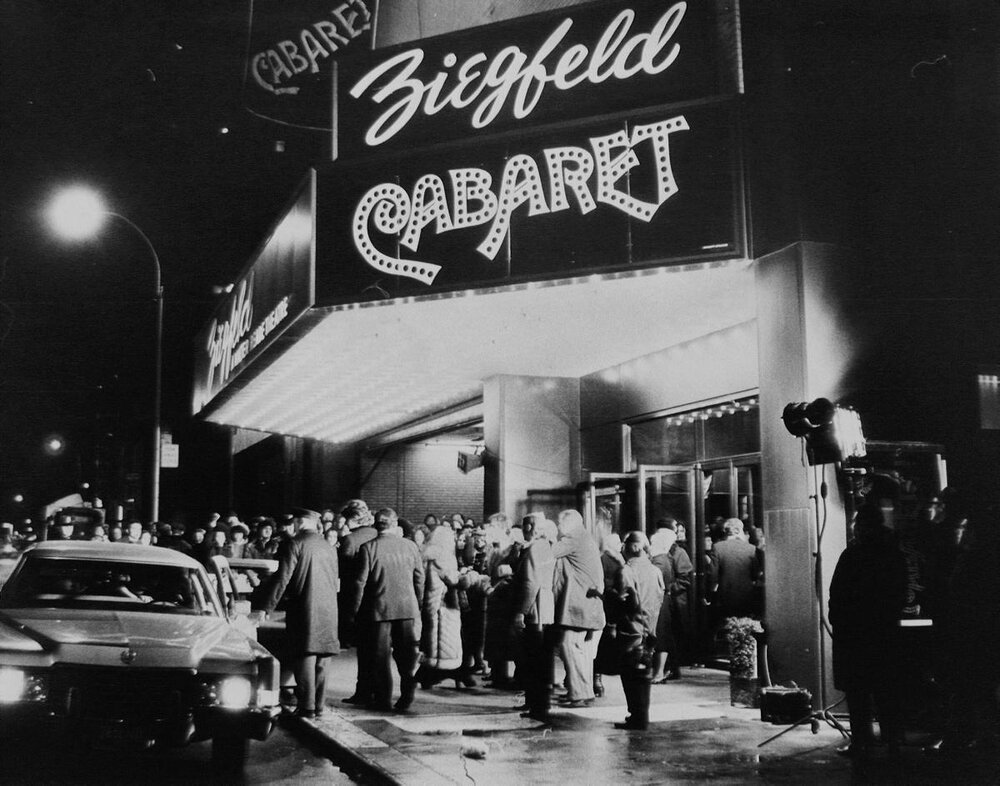
Some of the most successful films to ever play the Ziegfeld include Gandhi (1982, playing 31 weeks), Cabaret (1972, 26 weeks), and Close Encounters of the Third Kind (1977, 23 weeks, plus an additional month in its 1980 reissue).
Courtesy Ziegfeld Ballroom
But screen longevity doesn’t necessary auger quality. For instance, Raiders Of The Lost Ark played here for three weeks. Grease 2 played for five.
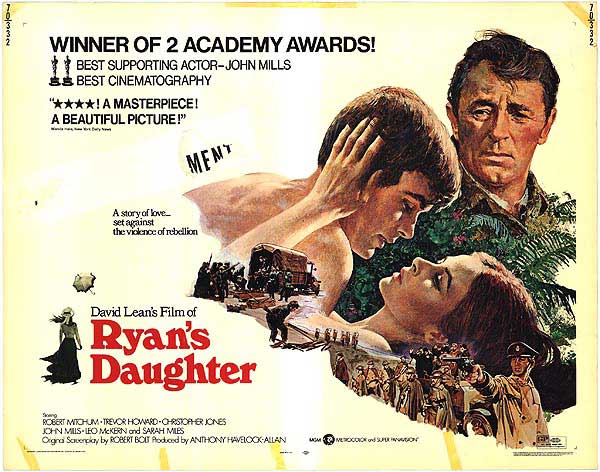
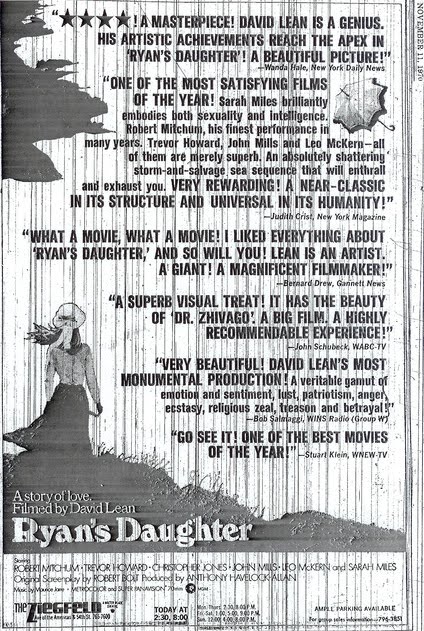
Less than a year after the theater’s opening, on November 9, 1970, came the film that currently holds the record for the longest-running film in Ziegfeld’s history — Ryan’s Daughter.
Perhaps not the traditional classic you might expect to hold such a record.
This blown-out, histrionic World War I drama by legendary filmmaker David Lean, loosely based on the book Madame Bovary, recounts an illicit love affair set along the Irish seashore, with crashing waves serenading the passionate kisses between a married pub owner’s daughter (played by Sarah Miles) and a maimed war veteran (Christoper Jones) who is intermittently tormented by battle flashbacks.
Star wattage was provided by Robert Mitchum as the jilted husband.
Lean’s previous film was Doctor Zhivago, a box office triumph that set international records and proved movie audiences would gratefully sit through lengthy costume dramas if they were any good.
Ryan’s Daughter, sadly, was no Doctor Zhivago.
New York Times critic Vincent Canby completely dismisses it — a film full of ‘soapy gestures’ — but adds a telling postscript to his review:
“I first saw ‘Ryan’s Daughter’ at a press preview at the Ziegfeld Theater, where the audience reaction tended toward rudeness. Five days later, I returned to see it with a paying audience that stood patiently in line around the block before getting into the theater. The members of that audience loved the movie even before they entered the lobby, and, from the reverence with which they greeted the movie itself, they also loved it while seeing it.“
The New Yorker’s Pauline Kael pulled no punches, calling it a “gush made respectable by millions of dollars ‘tastefully’ wasted”.
Afterwards, a brave Lean showed up for a function by the National Society of Film Critics held at the Algonquin Hotel, where he was mercilessly lambasted by the New York critics.
Lean recalls, “One of the most leading questions was, ‘Can you please explain how the man who directed Brief Encounter can have directed this load of sh*t you call Ryan’s Daughter?’ It really cut me to the heart, and that was Richard Schickel.”
The experience was so scarring that Lean later claimed it caused him to withdraw from film making for over a decade
Yet still, New Yorkers flocked to Ryan’s Daughter, from its premiere that November and for thirty-three weeks afterwards.
The film, initially presented in the old ‘roadshow’ format including its overture and intermission, lasted three and a half hours, so the Ziegfeld could only schedule two or three shows a day.
Ryan’s Daughter — all of Lean’s pictures, actually — seemed ready-made for the Ziegfeld.
By 1970, many of New York’s grandest movie screens were already torn down. Those that remained were in Times Square, and it’s doubtful that the Upper East Side crowd — older, wealthier New Yorkers — felt comfortable settling down in those theaters by this time.
The Ziegfeld, right off Sixth Avenue, was also nearby midtown’s swankiest restaurants (as Mad Men, which once mentioned the old Ziegfeld Theater, regularly demonstrates.)
The film was also presented in Super Panavision 70, a film process using ‘spherical optic’ lenses that had only been used by a few films. (2001: A Space Odyssey, another Ziegfeld success, used the same process.)
Such visual scope blasted out from the Ziegfeld’s immense screen, beguiling and even numbing audiences as the IMAX of its day.
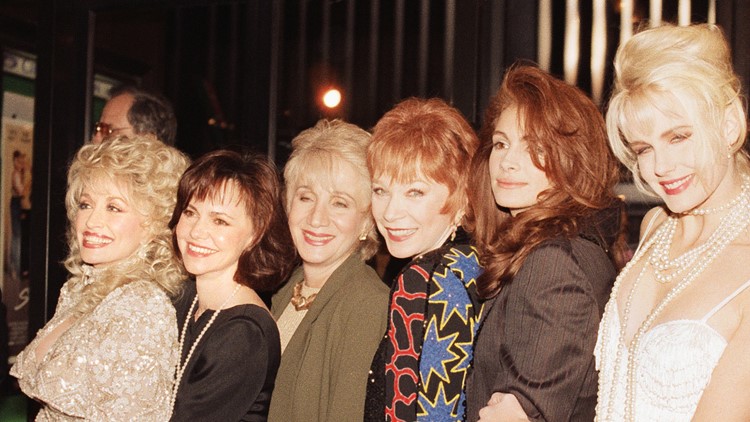
The theater was known for very splashy premieres — especially in the 1980s. Stars of the film Steel Magnolias pose backstage at the Ziegfeld Theater in New York Nov. 5, 1989 at the movie’s premiere. Shown from left: Dolly Parton, Sally Field, Olympia Dukakis, Shirley MacLaine, Julia Roberts and Daryl Hannah. (AP Photo/Ed Bailey)
Which is why Lean would always find a welcome audience at the Ziegfeld — his movies were too monumental in scale to be ignored.
His return to filmmaking A Passage To India would play for over three months at the Ziegfeld in 1984. And a reissue of his greatest masterpiece, Lawrence of Arabia, played to sold-out crowds here in 1989.
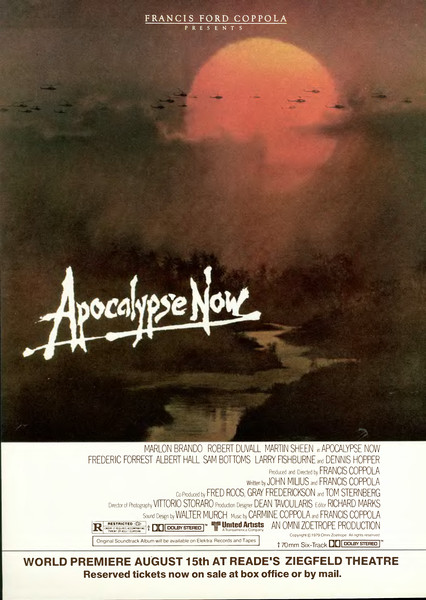
Personally, if I could go back in time, I’d probably want to attend the Ziegfeld premieres of The Last Temptation of Christ (met with offended protesters) or perhaps Apocalypse Now, which made its debut there in 1979 and played for twelve weeks.
Data courtesy the amazing Cinema Treasures / Michael Coate, with verification using old New York magazines.
*Today the old theater is the luxurious event space Ziegfeld Ballroom. Looks swanky!
The Paris Theater, as glamorous and as eccentric as any film it’s ever played, has the benefit of having the Plaza Hotel and Central Park to ensure it never goes out of style.
But the history of this romantic and occasionally radical movie house, the longest running single-screen movie theater in New York, is as cinematic as its photo-friendly neighbors.
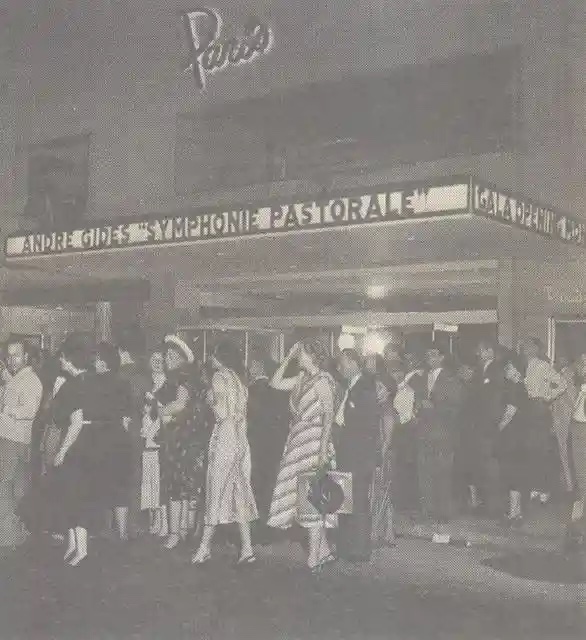
No less than Marlene Dietrich cut the ribbon on opening day of the Paris in September 13, 1948.
Gerald A. DeLuca
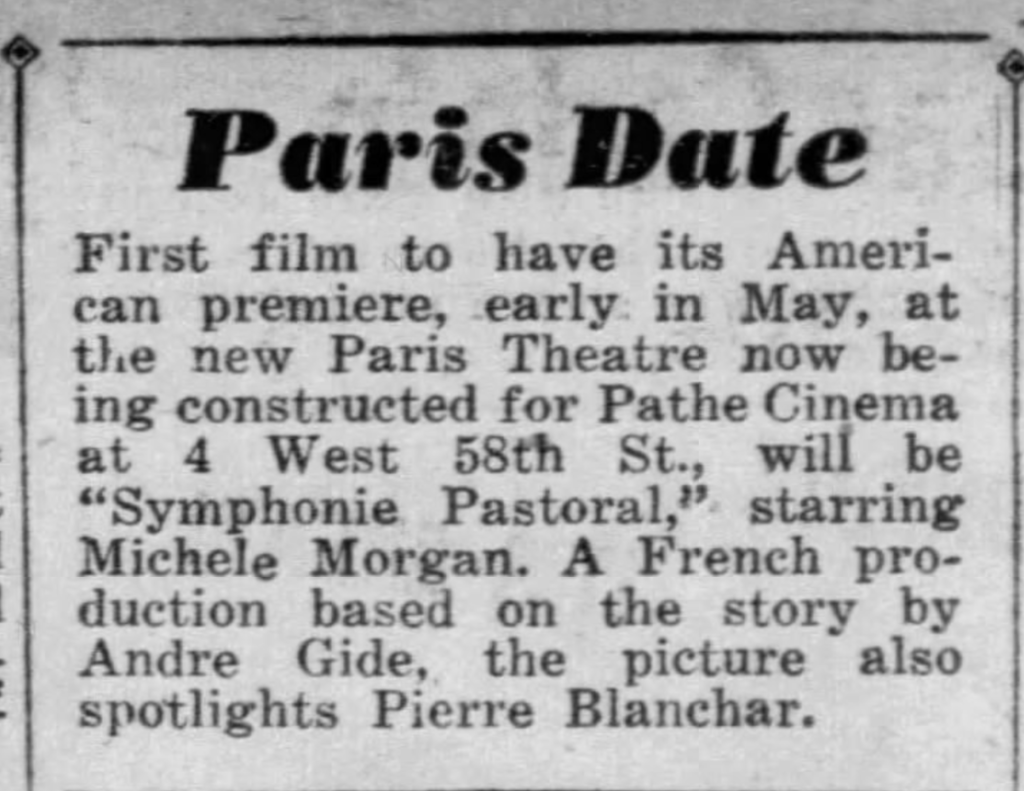
Opened by the French film distributor Pathè Cinema, the old-style 586 seat theatre with balcony — billed as “the first new moving picture theater to be built in New York since before the war” — was intended to debut significant achievements in foreign film, an ambition it still mostly retains today, along with re-issues of classic movies.
New York Daily News, April 11, 1948 (courtesy Newspapers.com)
Its first film was Symphonie Pastoraleby the almost-forgotten French director Jean Delannoy. And the cinema might have continued to enjoy quiet renown among foreign film aficionados if it wasn’t for Roberto Rossellini and Federico Fellini.
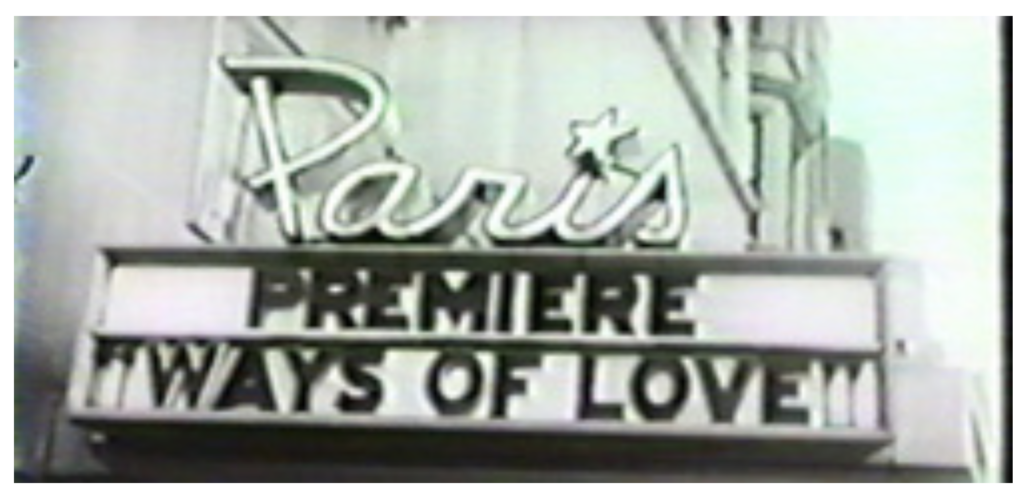
In December 1951, the Paris decided to show three films under an umbrella title Ways of Love.
One of these was a forty-minute piece entitled The Miracle, directed by Rossellini and starring Anna Magnani as a pregnant woman who’s convinced she’s carrying the Christ child after meeting a shepherd (played by Fellini) whom she believes is St. Joseph.
Its subject matter enraged the Catholic Church, and the theatre was assaulted with hundreds of protesters for weeks, orchestrated by Cardinal Spellman from his pulpit at St. Patrick’s Cathedral.
Eventually the Paris was ordered to stop showing the film, a decision Paris manager Lillian Gerard, along with the film’s distributor, appealed in court.
The case eventually went all the way to the U.S. Supreme Court who ruled the banning a violation of free speech.
No other film at the Paris would draw as much international attention, but the theater would affect cinema history in other ways, helping build the reputations of foreign directors on American soil.
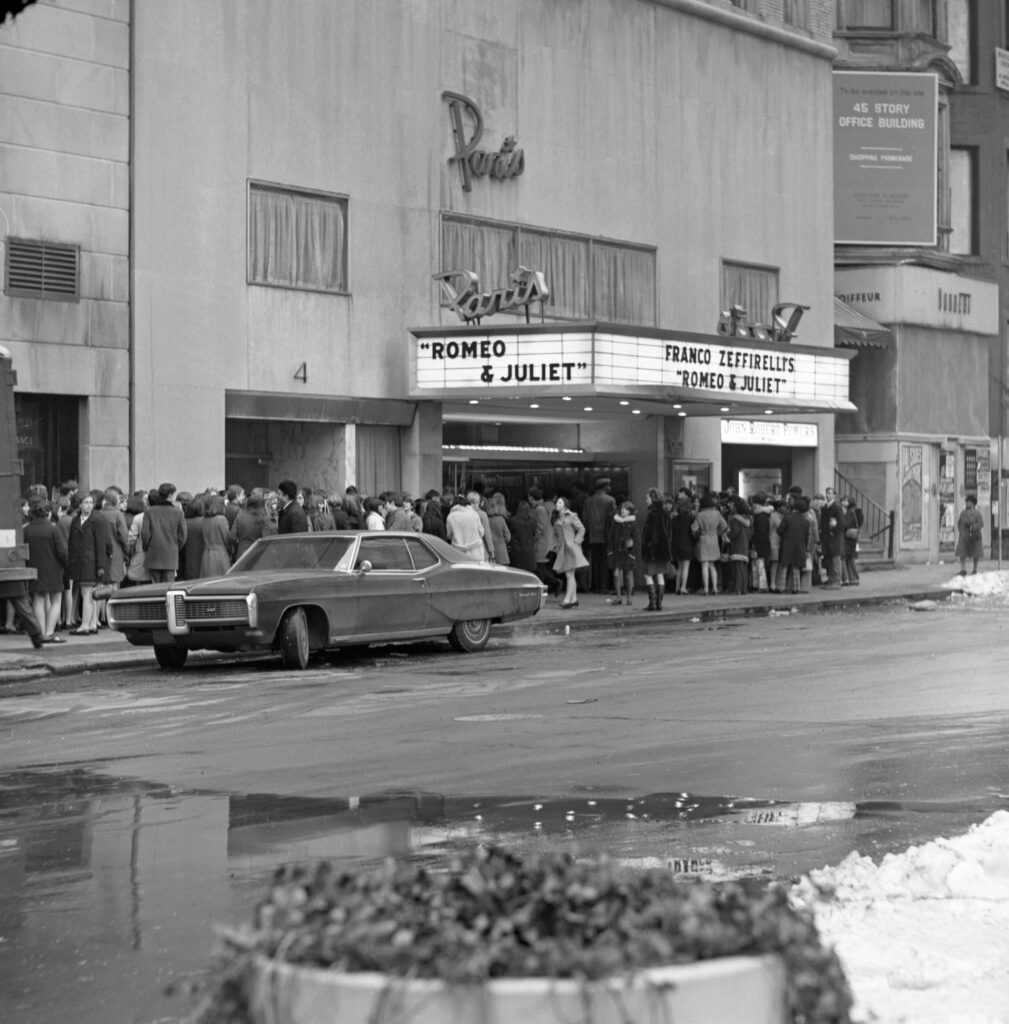
Courtesy the Paris Theatre
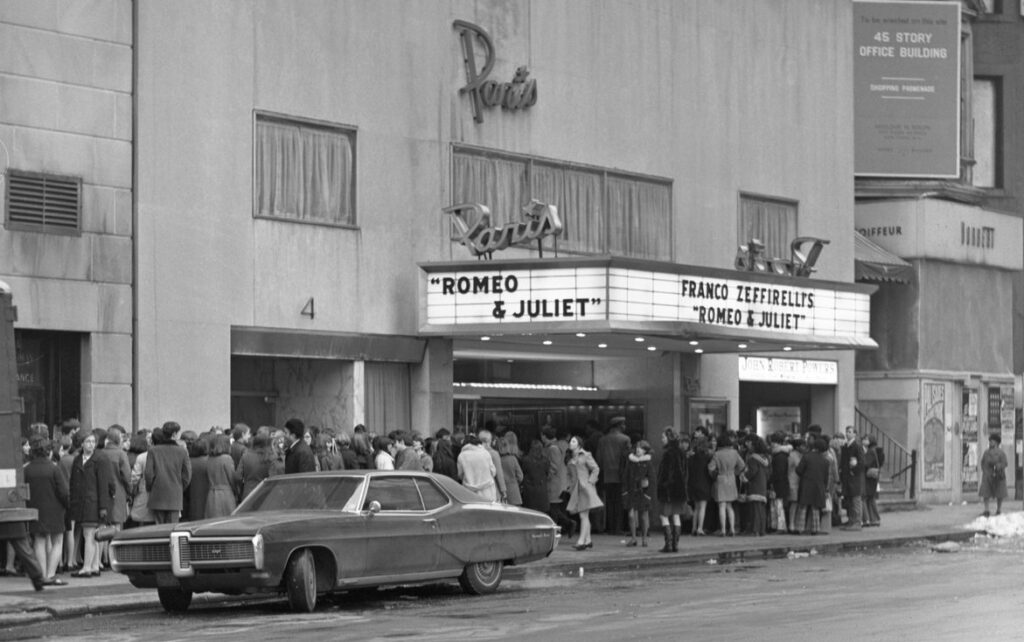
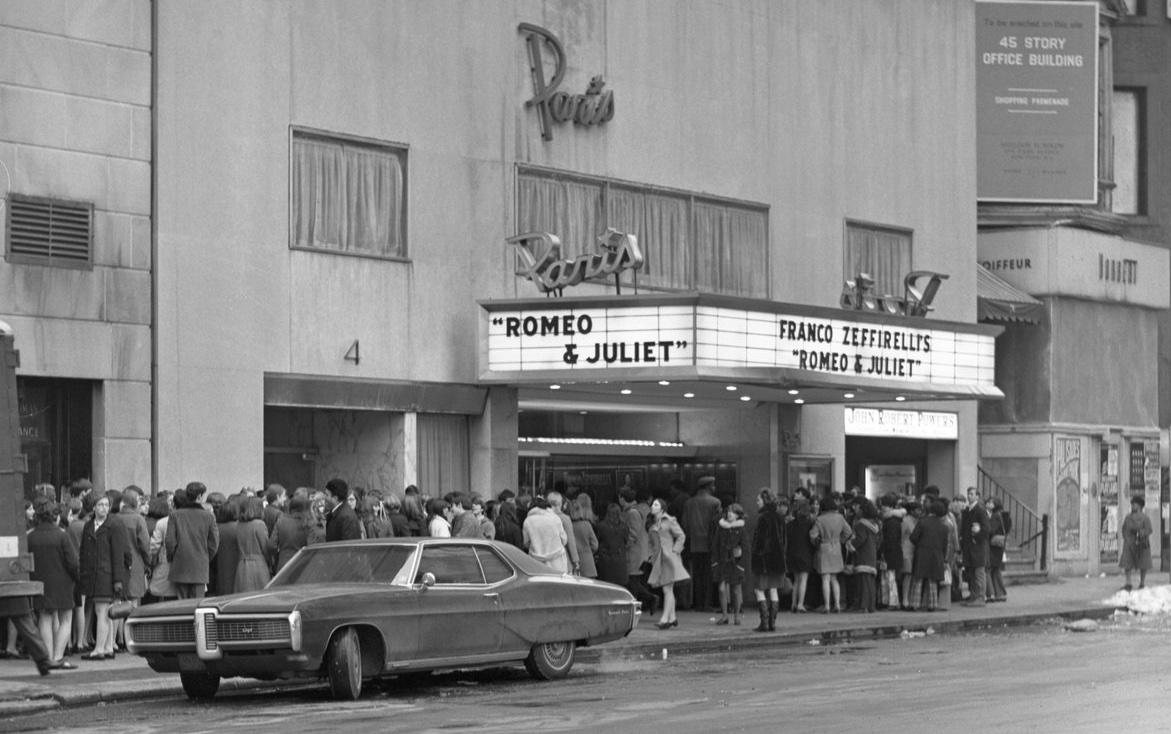
Franco Zeffirelli’s Romeo and Juliet ran for almost an entire year from 1968-69. Director Claude Lelouch’s A Man And A Woman and the Marcello Mastroianni comedy Divorce Italian Style would play for over a year.
Merchant and Ivory preferred to debut all their films here; A Room With A View played almost nine months, Howard’s End seven.
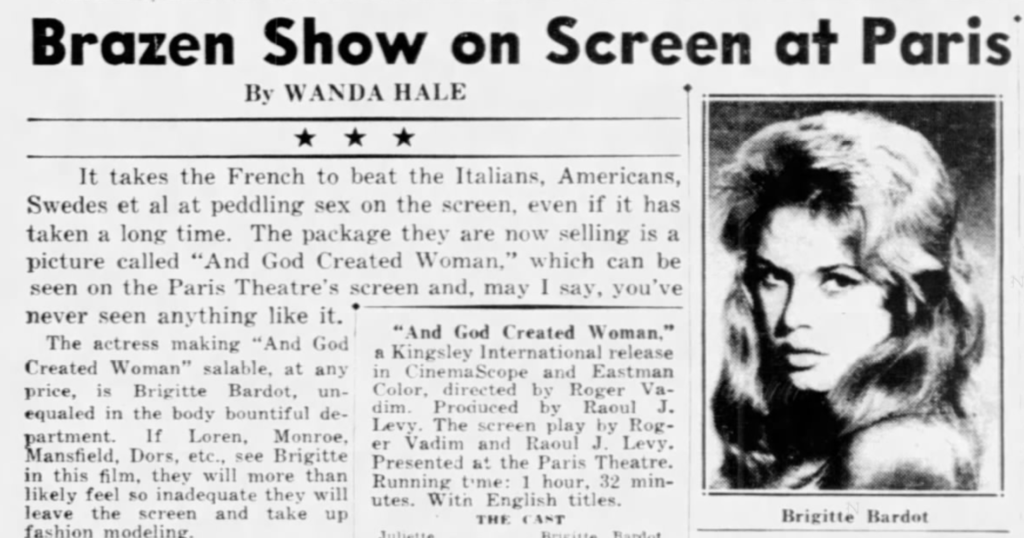
Below: The Paris, no stranger to sex and scandalous screenings
It’s had equally grand success with revival screenings as well, most notably Luis Buñuel’s 1968 drama Belle De Jour starring Catherine Deneuve which re-debuted in theaters in 1995 with the highest single-screen gross for a foreign film ever.
(I saw Lawrence of Arabia for the very first time here in 1997. Anytime the Paris shows a great film like that, I highly recommend you cancel all your plans and go.)
Pathe pulled out of the Paris Theatre in 1990 with intentions of opening another screen in New York. (It never did, but Pathe is still in business, and you can find their film on most art-house screens in New York.)
Loews operated the theater as the Fine Arts Theatre before the landlord bought them out and renamed it back to the Paris.
Courtesy Wikimedia Commons/DavidSchwartzNetflix
Cut to modern day and the threat movie theaters face from at-home streaming services.
Hundreds of theaters across the country have closed in the past ten years, and many have had upgrade interiors and food and drink offerings in order to survive.
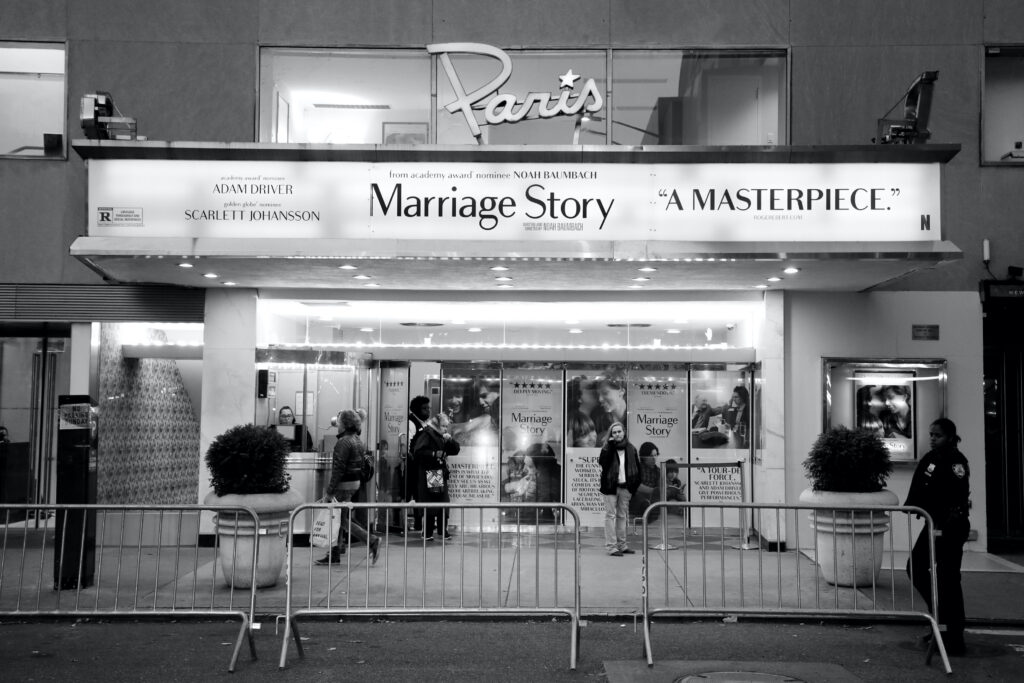
The Paris, however, was actually saved by a streaming service — Netflix. The popular streaming service purchased the theater in 2019 and began launching some of its films there — most with awards-season potential.
From the Paris’ website: “Since opening an engagement of Marriage Story on November 6, 2019, Netflix operates the theater, giving new life to a landmark of New York moviegoing. The Paris is New York’s movie palace, and Netflix will honor the theater’s history while offering the finest in contemporary cinema, introducing the theater to a new generation of film lovers.”
You can find a lot of fun personal recollections by former ushers and managers at Cinema Treasures.
People have been enjoying movies and alcohol well before anybody first thought to make popcorn for hungry audiences.
Believe it or not, this carefree pleasure — one most people do not take for granted anymore — has its roots in a small but significant decision that was made almost 110 years ago.
In May of 1912, people were still reeling from the Titanic disaster and sorting through a messy presidential election between four viable presidential candidates (Woodrow Wilson, William Howard Taft, Theodore Roosevelt and Eugene V Debs).
But most people left their worries behind once they stepped off the train at Coney Island, where the amusement parks were just opening their doors that month, making way for the summer crowds with an even wilder array of rides and shows.
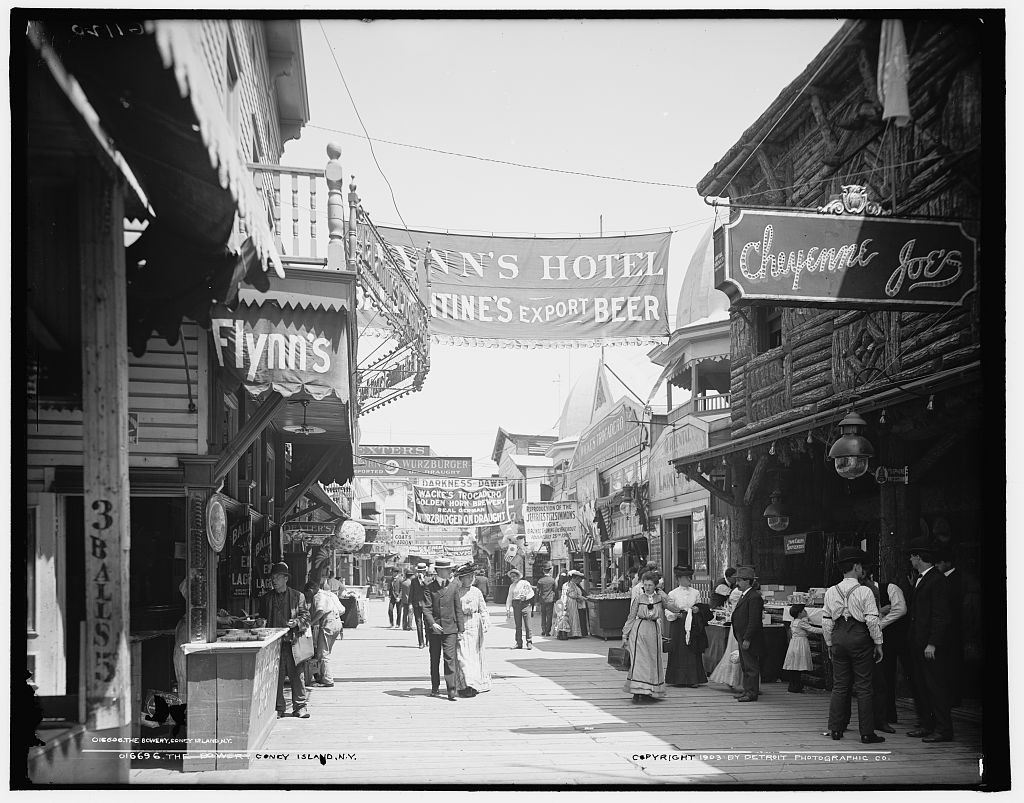
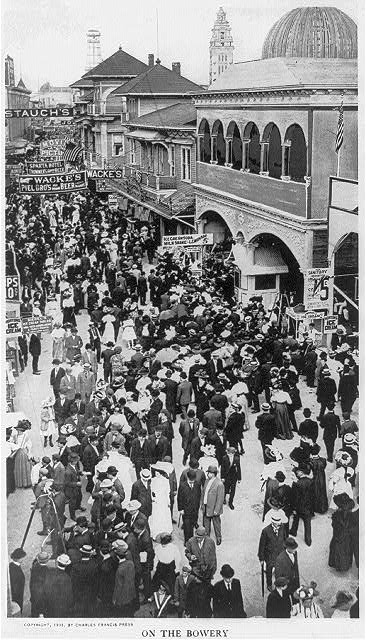
The Bowery, one of the more adventurous sections of Coney Island, 1903
Most of the amusements at Steeplechase Park were totally new, as a fire in 1907 had decimated most of the park.
Nearby sat the ruins of Dreamland, destroyed in a fire in 1911 and never rebuilt. Luna Park also expanded in 1912 with many new rides, including one that seemed to mock the misfortunes of its rival parks — the Great Fire Show, which presented a Western town ravaged in flame.
But a brand new entertainment was making itself known in Coney Island — moving pictures.
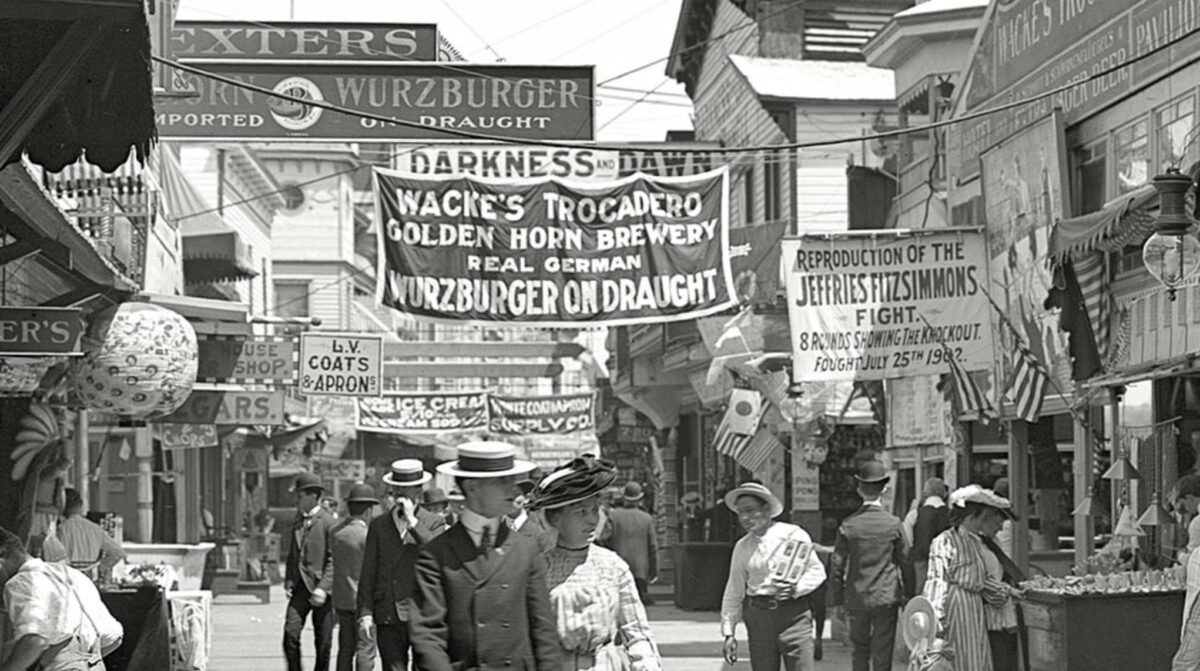
Coney Island’s Bowery. You can see signs for Wacke’s establishment here. (Library of Congress)
For instance, when Luna Park threw open its doors on May 25, 1912, the park contained a theater which presented some of the world’s first color short films in the British-invented Kinemacolor process. (Here’s an example of one of the films that may have exhibited here.)
The popularity of motion pictures, which were often exhibited between vaudeville acts or in continuous runs in theaters called nickelodeons, soon exposed the fallacy of one particular New York law.
For operators had to have a theater license in order to present a free show, even though, technically, a film could be easily displayed in a non-theatrical environment — namely, a saloon.
The Bowery, one of the more adventurous sections of Coney Island, 1903
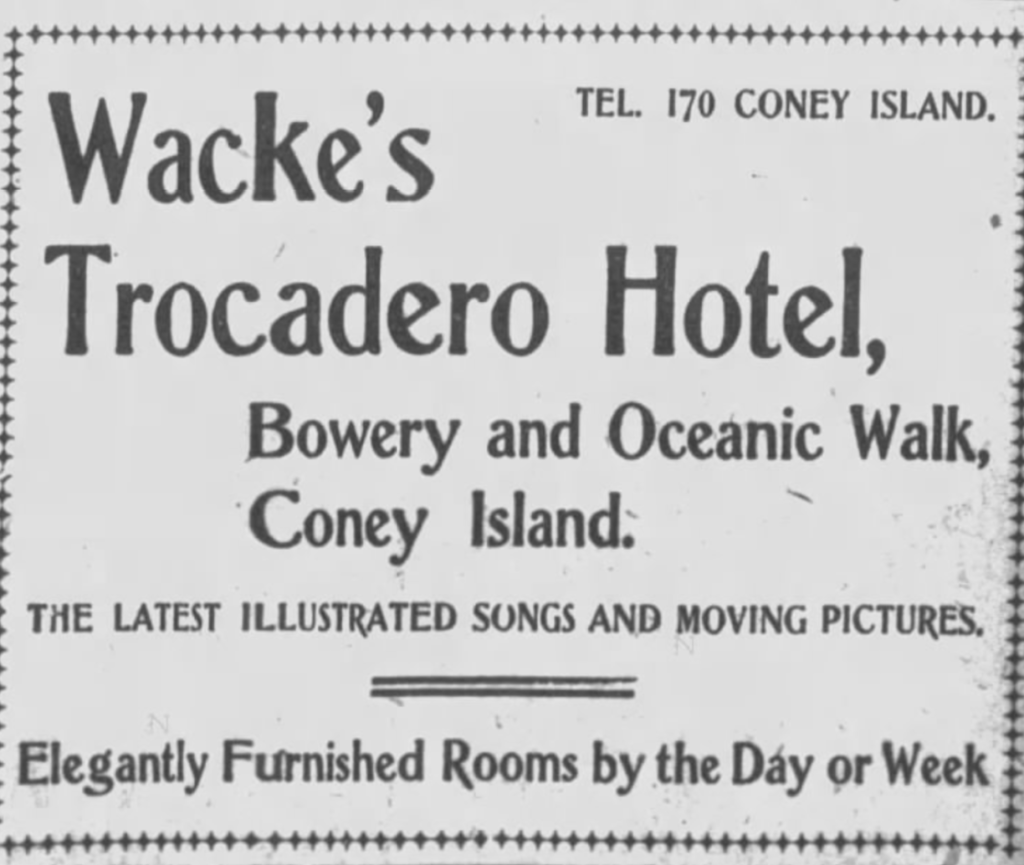
Coney Island theater proprietor Herman Wacke, no stranger to the moving image, is touted by some as the first commercial exhibitor of a motion picture at his Trocadero Hotel in 1893.
Wacke’s hotel, a stalwart from Coney’s early years located along a strip of cabarets and beerhalls affectionately called the Bowery, was nearly destroyed in the fire that consumed Steeplechase in 1907.
In 1912, Wacke fanned a few new flames.
He began showing films for free in the saloon as a way to entice people to come in and purchase food and beer. Wacke’s was probably the best known of many along the Bowery to exhibit films in this fashion.
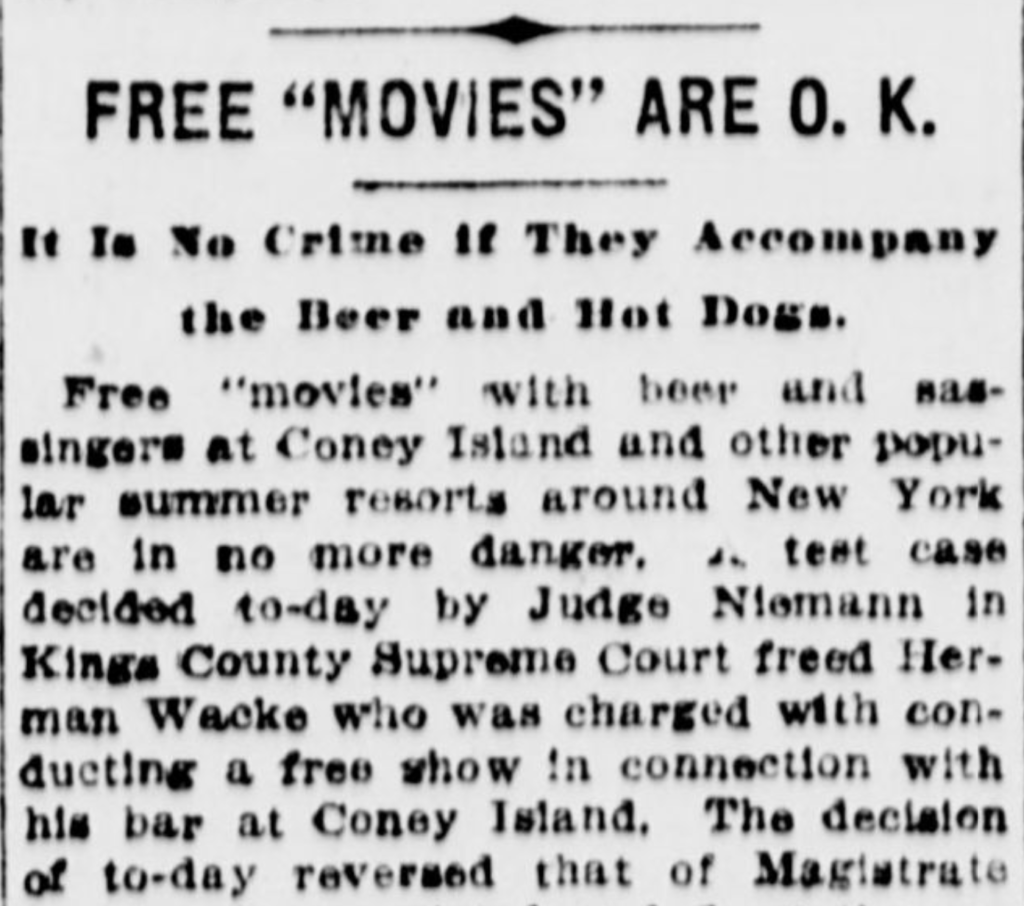
But the proprietor didn’t have a license to do so, and during one particular sting, Wacke was arrested — “charged with conducting a free show in connection with his bar” — and fined $5.
Not a huge sum of money for a successful saloon owner, and Wacke went willingly, becoming a test case for a law that many certainly thought was rigid and overly meddling.
The charge was eventually overturned by a Kings Country Supreme Court judge who announced that such incidental performances were not subject to the law.
“Wacke was arrested for a test of the law and its relation to the free shows given that people may be induced to buy drinks while sitting at the tables. Judge Niemann held that a show must be conducted as a business of exhibition for a price of admission in order to come under the law. “
The law would be challenged again a few years later by the owners of posh Manhattan cabaret Maxim’s, who also presented so-called ‘free’ performances.
By the 1920s, of course, saloons could technically show movies — but they couldn’t serve alcohol! By the time Prohibition was repealed, films were much longer and people preferred the comfort of lavish movie palaces.
Free movies (and broadcast sports) of course returned to bars with the advent of television.
Today theaters like Alamo Drafthouse and Nitehawk Cinema elegantly mix the pleasure of cinema and fine cocktails. The ghost of Herman Wacke looks down approvingly.
As one of America’s premier leisure destinations, Coney Island was so closely associated with films of this period that it even starred in a few of them, including Mack Sennett’s ‘At Coney Island‘ in 1912.
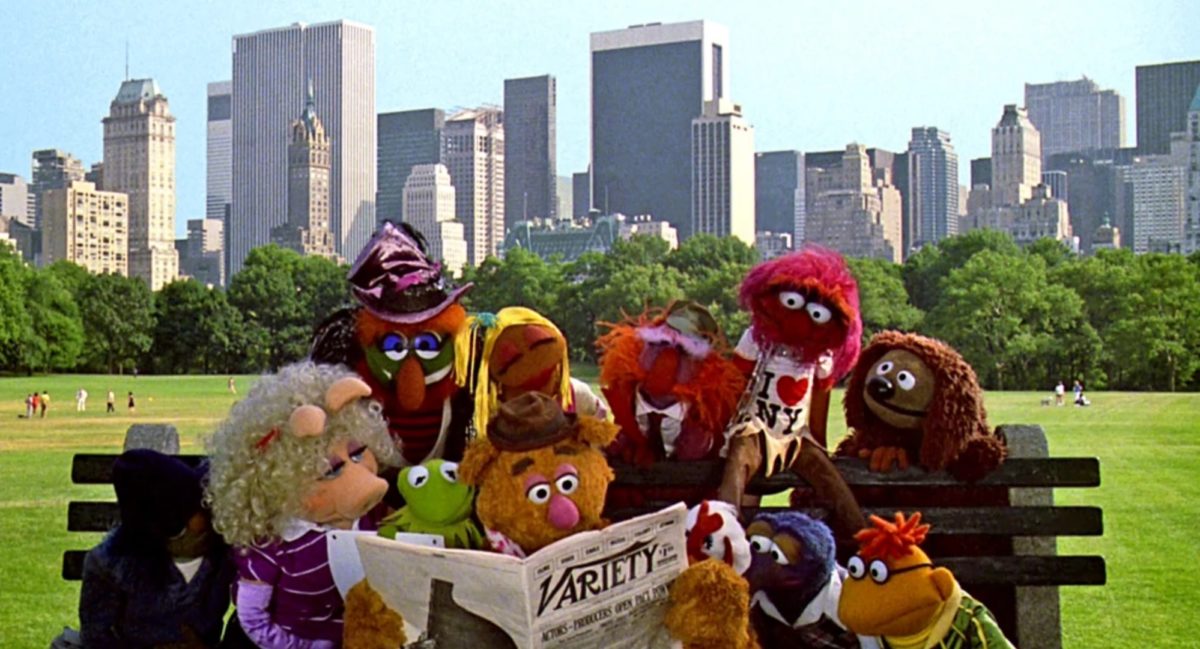
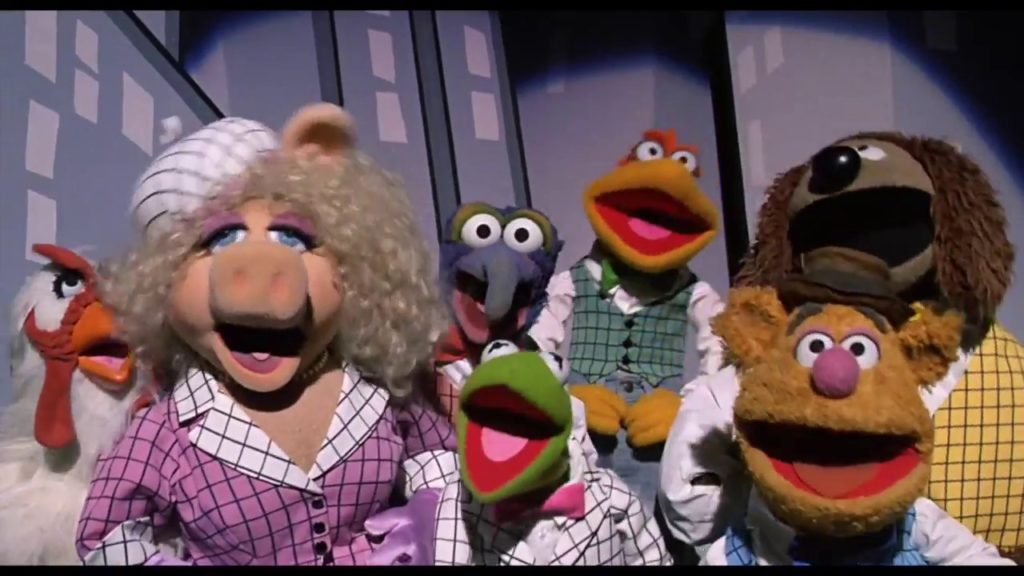
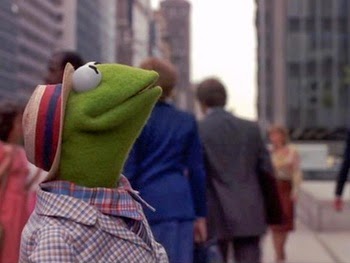
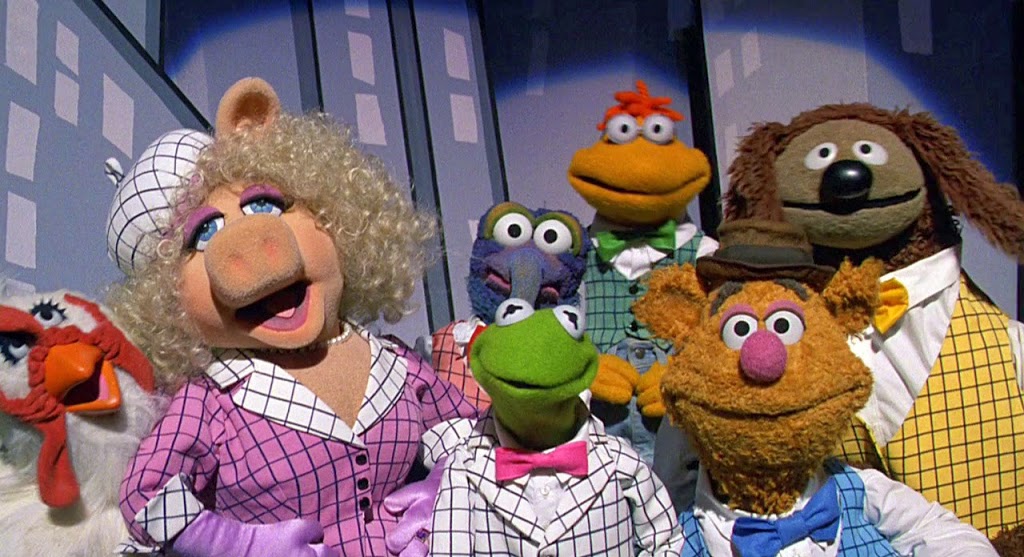
It’s spring in New York City and time for some frivolity! So we’ve just released an unusually whimsical episode of Bowery Boys Movie Club to the general Bowery Boys Podcast audience, exploring the 1984 comedy treat The Muppets Take Manhattan.
And that’s not all! Sticking to the theme of 1980s New York City, the latest episode of theBoweryBoysMovieClub explores the film Coming To America and its rich historical details. An exclusive podcast for those who support us on Patreon.
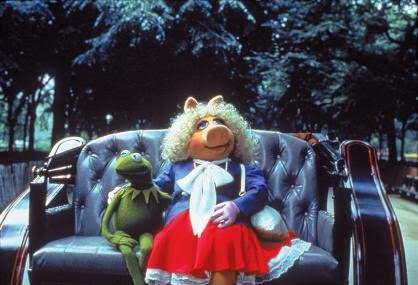
TOGETHER AGAIN! In 1984, Jim Henson brought his world-famous Muppets to New York for a wacky musical comedy that satirized the gritty, jaded environment of 1980s Manhattan while providing fascinating views of some of its most glamorous landmarks.
Listen in as Greg and Tom recap the story and explore the many real New York City settings of the film — from the Empire State Building and Central Park to the corner booth at Sardi’s Restaurant and certain luncheonette in the area of today’s Hudson Square.
The Muppets Take Manhattan expresses an unfiltered enthusiasm for the promise of New York City at a time when national headlines were filled with tales of the city’s high crime and budget problems.
Can Kermit and Miss Piggy (and their roster of guest stars like Art Carney and Joan Rivers) bring magic back to the Big Apple?
HowdoIlistento all episodes of theBoweryBoysMovieClub? Once you’re signed in on Patreon, you’ll see a private RSS link that can be put directly into your favorite podcast player. Even easier, it can also be played directly from the Patreonapp if you’re signed in.
Your support on Patreon assists us in producing our podcast and website and it helps as we endeavor to share our love of New York City history with the world.
Shouldyouwatchthemoviebeforeyoulistentothisepisode? This podcast can be enjoyed both by those who have seen the film and those who’ve never even heard of it.
We think our take on The Muppets Take Manhattan might inspire you to look for the film’s many fascinating (but easy to overlook) historical details, so if you don’t mind being spoiled on the plot, give it a listen first, then watch the movie! Otherwise, come back to the show after you’ve watched it.
This episode was inspired by an ‘obsessive guide’ post that Greg wrote a few years ago. That article is presented here in its entirety, featuring many additional New York City details from the film.
“We did our first film in Los Angeles and our second in London. I thought it would be nice to do the next one in our hometown.” — Jim Henson
In The Muppets Take Manhattan, our friendly assortment of animal and animal-esque protagonists arrive in New York City to put on a variety show. But, of course, Jim Henson and his creations had been here for over a decade already, the critical ingredient of PBS’s Sesame Street, which originally filmed on the Upper West Side.
By 1982, production on the children’s show had moved to 55th Street and Ninth Avenue, but the Muppets had gone global — with a successful syndicated variety show (The Muppet Show, from 1976 to 1981, produced in England) and two box office hits, The Muppet Movie and The Great Muppet Caper.
Given the theatrical nature of their own weekly show — set in a theater, after all — it made sense to return the Muppets to New York, to finally bring the beloved characters to a cinematic Broadway stage.
Below are 21 often trivial, mostly historical points of interest from Henson’s zany, most exuberant homecoming:
NOTE ON TIME AND SETTING: The Muppets Take Manhattan, directed by Frank Oz, was released in the summer of 1984 and filmed the previous summer in a variety of New York and New Jersey locations, with interior shots at Empire Stages in Long Island City (today Paris Film Productions). However it’s set sometime in the summer of 1982, judging from flying calendar pages that set September 1 on a Wednesday.
“Broadway? But this show isn’t good enough for Broooadway!”
1. The film opens with some terrific overhead shots of Manhattan, before taking us over bridges to Poughkeepsie, NY, the home of the fictional Danhurst College (as played by Vassar College). The Muppets are on stage, delighting an over-enthusiastic crowd with their new variety show ‘Manhattan Melodies’. With charming naivety, they decide to bring the show to New York City.
‘Manhattan Melodies‘ was actually the name of a successful New York radio show in 1932, broadcast by WOR from Times Square.
History was made with a unique multi-location broadcast featuring The Do Re Mi Trio, three voices recorded from three different skyscrapers. “‘Do’ was on the Empire State [Building], eighty-six stories in the air, ‘Re’ was on the seventy-first floor of the Chrysler Building, and ‘Mi’ was on the roof of the Manhattan Bank Building [aka 40 Wall Street].” [source]
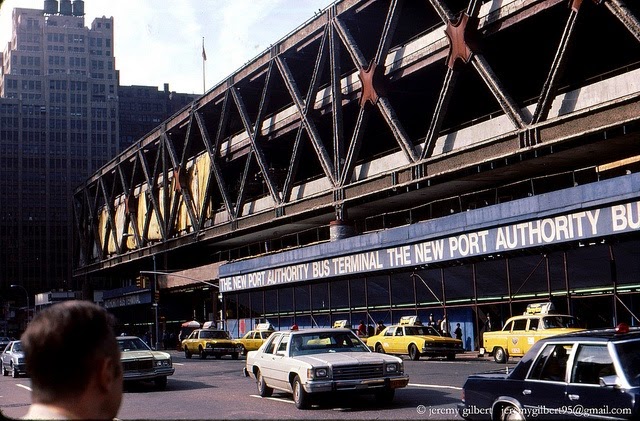
2. The Muppets arrive through the unglamorous hallways of the Port Authority Bus Terminal. In the early 1980s, this was considered one of the most crime infested areas of Midtown, a marketplace for prostitution and crack dealers. The bus terminal was “an ideal place for these illegal activities” during this period due to a recent expansion that left many corridors unguarded at night. Crime here “escalated to an uncontrollable level.”
Despite this, the Muppets decide to move into a wall of lockers. “I’ll trade with anybody who has a Jacuzzi!” says the free-spirited Janice.
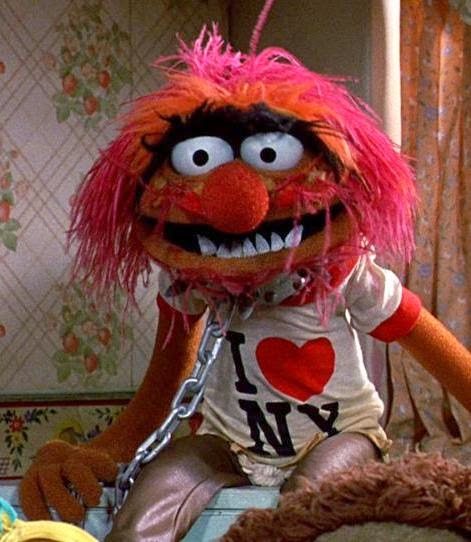
3. Animal wears an I HEART NEW YORK T-shirt throughout the film. This was a rather new emblem then, created in 1977 by graphic designer Milton Glaser. The irony of loving a particular city that was in a serious social and financial crisis was not lost on the designer.
“It was the mid-seventies, a terrible moment in the city. Morale was at the bottom of the pit,” Glaser said in an interview with The Believer. “….[T]hen suddenly the city simultaneously got fed up and said, ‘It’s our city, we’re going to take it back, we’re not going to allow this stuff to happen.” And part of that was this campaign.”
He gave away the rights to the design, so he gets paid nothing for the use — in the film, on tourist T-shirts, or anyplace else.
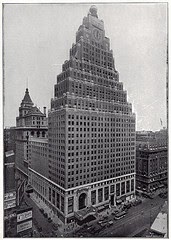
4. With Variety Magazine in hand, the Muppets venture off to pitch the show to big Broadway producers. The first, disreputable Martin Price (Dabney Coleman), has offices at the Paramount Building (1501 Broadway) in Times Square.
Originally built for the film company Paramount Famous Lasky Corporation in 1926, it rapidly became a key center for Broadway theater wheeling-and-dealing, “a hive of suites where ideas are hatched, partnerships forged, contracts signed, legends born,” according the New York Times.
Between 1979 and 1982, there were over 7,000 reported murders in New York City. (In comparison, there were less than 2,000 between 2009-2012.). This partially explains the dialogue exchange between Kermit and Price: “Well, it’s all about life in the big city.” “The big city? Cops, shootings, car chases — that kind of stuff?“
6. Rizzo the Rat delivers a hamburger with no patty to a customer. He turns and shouts to Pete: “Hey Pete. Where’s the beef?” The first Wendy’s commercial featuring the ‘Where’s The Beef’ lady Clara Pellerdebuted in January 1984 — after principal filming was completed — so this is most likely a weird coincidence.
7. Hopeless that their musical will ever be produced, everyone decides to leave town except Kermit. Scooter bikes away through New Jersey, Fozzie hops a train hobo-style, and Dr. Teeth and the Electric Mayhem hitch a ride to the Pennsylvania Turnpike. But, no surprise, Miss Piggy’s departure is the most glamorous, taking one ofThomas Edison’s original 1930 electric traincars from Hoboken Terminal.
“You hear me, New York? We’re going to be on Broadway. You hear that, New York? I’m staying here! The Frog is staying!” 8. A dejected Kermit the Frog finds some renewed encouragement when he visits the Empire State Building‘s observation deck, looking north over the darkened city. To the right is the Pan Am Building which would remain branded with the airline’s logo until 1992, when it would become the Met Life Building.
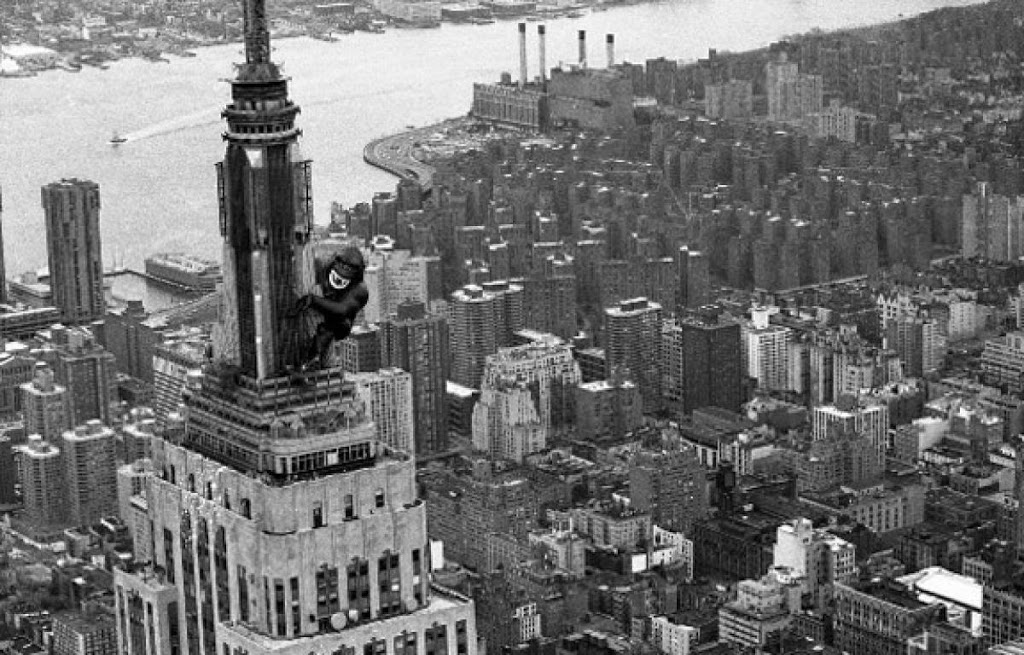
However, presuming this scene was filmed in 1983, Kermit would not have been the only animal superstar on the Empire State Building. In celebration of the 50th anniversary of the movie King Kong, a 3,000 lb nylon King Kong balloon was attached to the top of the building. (Photo courtesy Hamburg News/New York Daily News)
9. Kermit meets up with Pete’s daughter Jenny, a wanna-be fashion designer, in front of the Plaza Hotel, with everything inGrand Army Plazalooking almost the same as it does today.
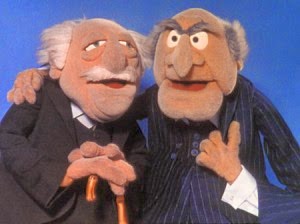
For some reason, those grumpy curmudgeons Statler and Waldorf are sitting on a bench, sunning themselves. The duo has a rather profound link to New York City history; they’re both named for classic New York hotels — the Statler (today’s Hotel Pennsylvania) and the Waldorf Astoria. And, yes, Waldorf’s wife is actually named Astoria. She appeared in this 1979 episode of The Muppet Show starring Dizzy Gillespie.
10. Miss Piggy is spying on Kermit from under a scaffolding in front of Bergdorf Goodman. (Just as we missed out on a shot of the Film Forum earlier, so too is Bergdorf’s neighbor The Paris Theater cut from view.) It’s later revealed she’s working at a perfume and makeup counter with Joan Rivers. This was not far-fetched casting; before making it big as a comic, Rivers worked as a fashion consultant for Bond Clothing Stores and even designed window displays for Saks Fifth Avenue and Lord and Taylor.
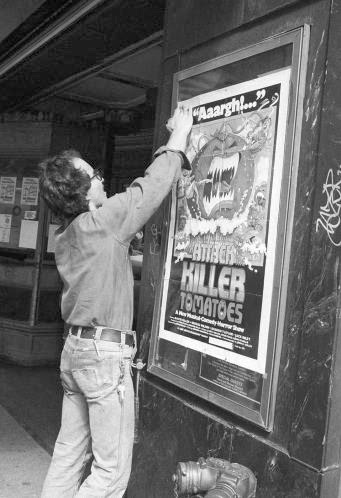
11. What are the rest of the Muppets up to? Scooter works at a Cleveland movie theater, with the Swedish Chef manning concessions. The film playing there is Attack of the Killer Fish in 3D, an obvious parody of 1978’s Attack of the Killer Tomatoes.
Believe it or not, Killer Tomatoes owes a small New York film festival for some of its cult cred. Two years after it was produced, the film piqued the curiosity of the media when it screened at the World’s Worst Film Festival at the Beacon Theatre in 1980, co-hosted by movie critic Michael Medved.
The film festival was a de facto Woodstock for schlock cinema, with Killer Tomatoes a star attraction. Said co-writer John DeBello, “The Wall Street Journal had the poster on its front page, the CBS Evening News used the song to close their credits. When people heard the title, just like when I heard the title, people loved it.” At right: Killer Tomatoes at the Beacon Theatre.
12.Sardi’s Restaurant takes center stage of perhaps the film’s most famous scene, as Kermit, disguised as an elegant producer, sends Rizzo’s rat friends in to create a ‘whisper campaign’ about his new musical.
Sardi’s has been inextricably linked to the Broadway industry since its opening in 1927, hosting hundreds of cast parties, business meetings and probably a few professional break-ups. It even gave birth to the Tony Awards. (You can listen to the whole fabulous tale of Sardi’s in our 2011 podcast.)
Vincent Sardi Jr., who appears in the film (see below), hosted the glittering greats of Broadway for over a half-century. He was considered the unofficial “Mayor of Broadway.“
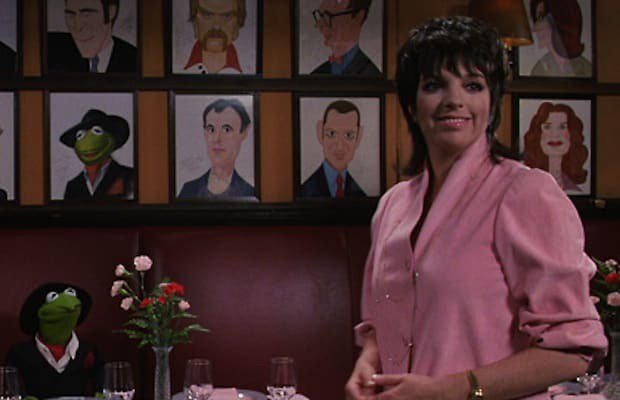
Kermit also squeezes his own likeness onto Sardi’s famous wall of caricatures. To do so, he must take down that of Liza Minelli, which does not please her.
In fact, not only does Liza’s caricature still appear at Sardi’s, Kermit’s is still there too. (At least last time I checked!) Liza’s is by Brooklyn artist Richard Baratz. Look for his other likeness of Robert De Niro, Dustin Hoffman, Al Pacino, Whoopi Goldberg and dozens more. Kermit’s? No one knows who drew that.
13. Jenny consoles Kermit in Central Park, somewhere on Cherry Hill, next to Bethesda Fountain. Near this spot was the site of New York City’s first-ever frog jumping competition in 1935, inspired by Mark Twain’s short story “The Notorious Jumping Frog of Calavaras County.”
Local children’s organizations could sponsor one of 175 frogs shipped in from Louisiana. But this was not a trivial event. Ten thousand people took part, with former governor Al Smith presiding over the event and boxer Jack Dempsey serving as referee. The winner was a female frog named Abbie Villaret. (You can see a picture here.)
14.Central Park is depicted as a destination for people in exercise clothes and a place to ride through in carriages. Oh, and the place you get mugged. While Piggy is spying on Kermit, a mugger grabs her purse. (The mugger is played by Gary Tacon. Today he’s an accomplished stuntman and was recently in The Wolf of Wall Street.)
Crime was a factor people assumed was a regular component of New York’s most famous park. In 1982, the year it set an attendance record of 14.2 million, there were 22 reported rapes and over 700 robberies. [source] Although it would take several years to meaningfully reduce crime, the park’s infrastructure steadily improved, thanks to the efforts of the Central Park Conservancy.
Oh, by the way, Piggy borrows roller-skates from Gregory Hines, chases down her assailant and retrieves her purse. Here’s a video of some fine roller-skating style exhibited in the park during the 1980s:
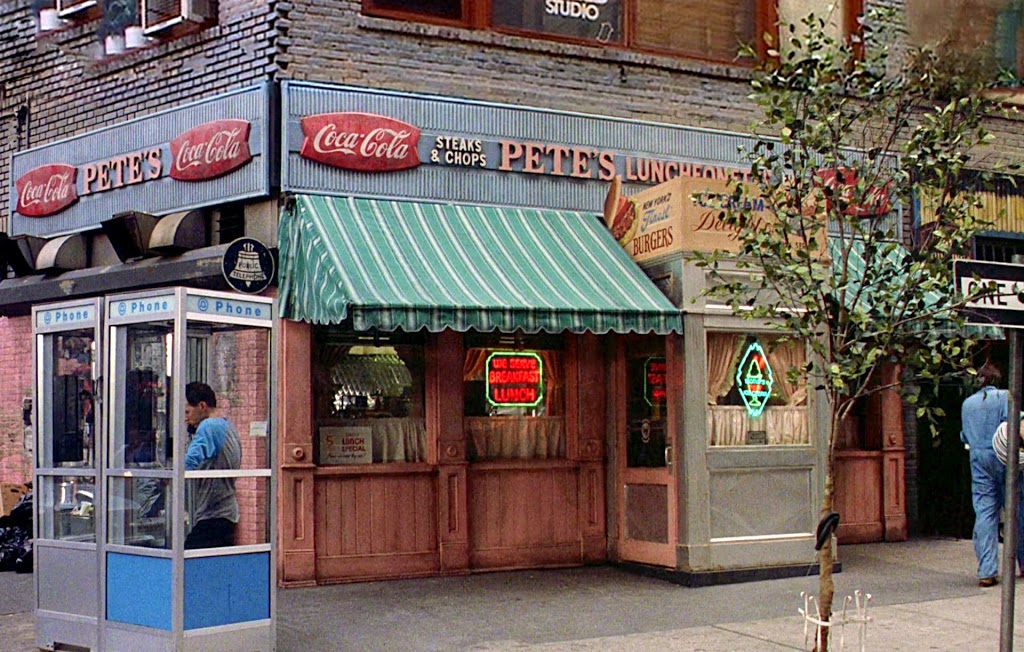
15. Of the many special guests who appear in the film, the hottest star of the moment was perhaps Brooke Shields. The Blue Lagoon star filmed this cameo at Pete’s Luncheonette a few months before entering Princeton:
Masterson the Rat: Do you believe in interspecies dating? Brooke: Well, I’ve gone out with a few rats if that’s what you mean. In 1982, Shields briefly dated John F. Kennedy Jr. and took Ted McGinley to her prom.
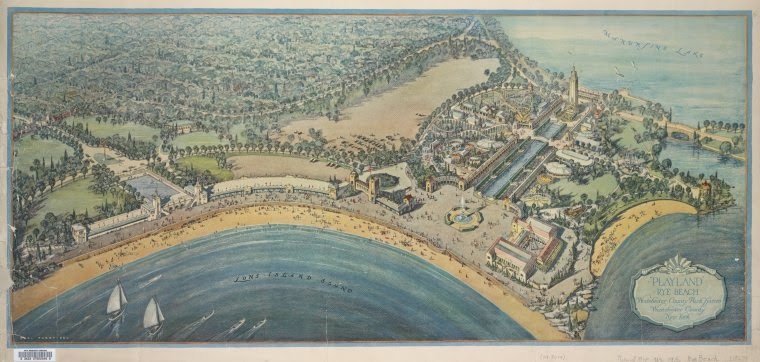
16. Meanwhile where’s Gonzo? He’s trying to make a living on the road, performing in an aquacade in Michigan. But these acrobatic scenes were actually filmed closer to home — Rye Playland, the historic amusement park overlooking the Long Island Sound. Gonzo’s fiery derring-do takes place by the Playland Lake (in the top right corner of the 1927 picture below, courtesy NYPL).
Four years after Gonzo conquers the park, a young boy consults an arcade fortune teller here at Rye Playland and becomes Tom Hanks in the movie Big.
“Just because the whole thing is crazy doesn’t mean it won’t make it on Broadway!”
17. Finally, somebody’s interested in ‘Manhattan Melodies’! Playing esteemed producer Bernard Crawford is Art Carney, who had acted on Broadway for almost thirty years by this time, not to mention, of course, his performance as Ed Norton on The Honeymooners.
But it’s Bernard’s son Ronnie who takes on Kermit’s script to produce and direct. He’s played by Lonny Price in a role that would almost precisely predict his future.
Price was an in-demand theater actor (best known for Broadway’s “Master Harold”…and the Boys) before Muppets. Afterwards, he became an in-demand theater director, recently helming 110 in the Shade with Audra McDonald and a new variation of Camelot with the New York Philharmonic.
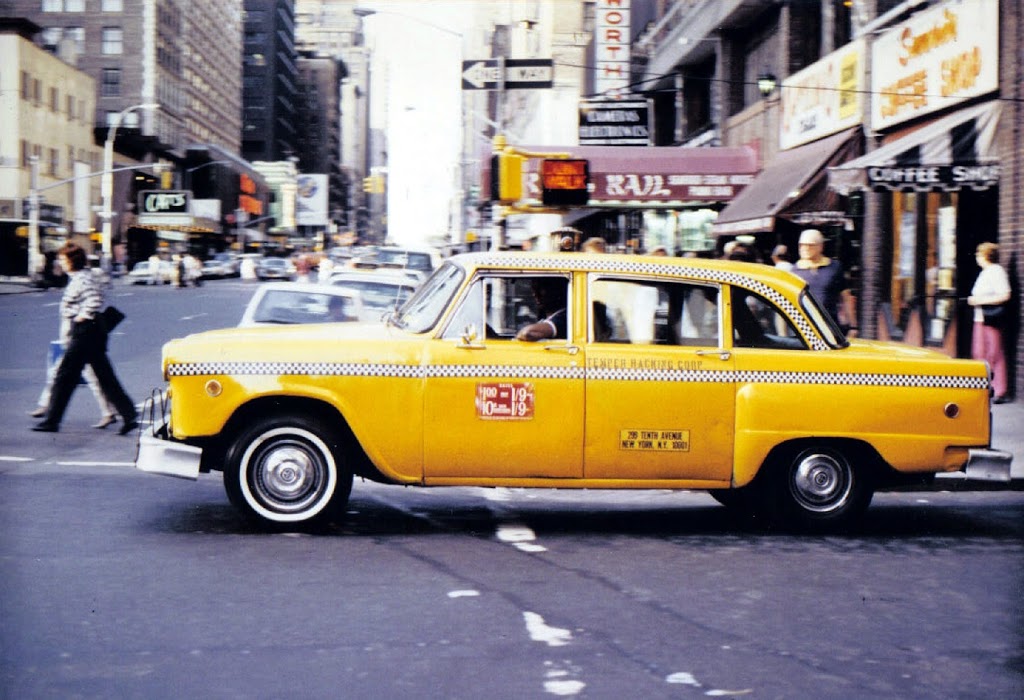
18. Things are looking up for Kermit when he is suddenly hit by a cab in front of Madison Square Garden. And not just any cab, but a Checker Taxi, which had actually ceased manufacturing in 1982. They stayed on city streets for several years after. According to the New York Times, there were ten left in 1993. The final one left service in 1999. Photo above courtesy Inside New York.
19.Kermit’s accident gave him amnesia, and confused about his identity, he gets a job at Mad Ave Advertising, a Madison Avenue advertising firm. Decades before Mad Men, Kermit is immediately thrown into pitch meetings, displaying a Don Draper-like salesmanship. Unlike the offices of Sterling Cooper, female frogs seem to be treated equally. (At least in name — Bill, Gil and Jill.)
1982 was a turbulent year for New York advertising firms with dozens of buyouts and mergers, including one between Madison Avenue’s two largest firms — Saatchi and Saatchi and Compton Advertising — worth over a billion and a half dollars. Given that Mad Ave Advertising is seeking the assistance of an amnesia patient, it doesn’t seem like this firm will be long for this world.
20. The Muppets tear through Manhattan, looking for Kermit. Scooter races his bike by the Shubert Theater and its smash hit A Chorus Line. In September 1983, the show became Broadway’s longest-running show of its day. By the time The Muppets Take Manhattan opened in movie theaters, a movie version of Chorus was already begun filming in New York.
Other Muppets search the New York Public Library, Central Park, even the sewer.
But it’s Gonzo that gets the privilege of interrupting Mayor Ed Koch during a press conference at Gracie Mansion.
Gonzo: I’m looking for a frog that can sing and dance! Koch: If he can also balance the budget, then I’ll hire him.
Koch had a special affection for Gracie Mansion, throwing weekly dinner parties there and organizing press conferences on the porch. Having the mayor of New York live elsewhere, said Koch, would be “like asking the president not to live at the White House.” [source]
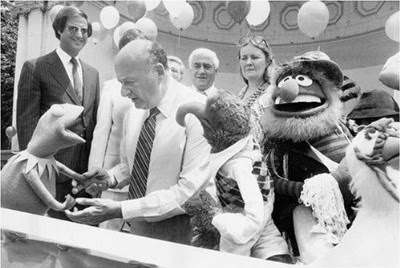
The mayor made several appearances with the Muppets throughout his tenure. The mayor’s itinerary from June 28, 1984 reads as follows: “Courtesy call with Yasushi Oshima, Mayor of Osaka, Japan; views new uniforms for Taxi and Limousine Commission inspectors; accepts check for $500,000 donated by Mobil Corporation for the Summer Youth Employment Program’s Clean Team; attends Financial Control Board meeting; drops in at reception celebrating the opening of The Muppets Take Manhattan.”
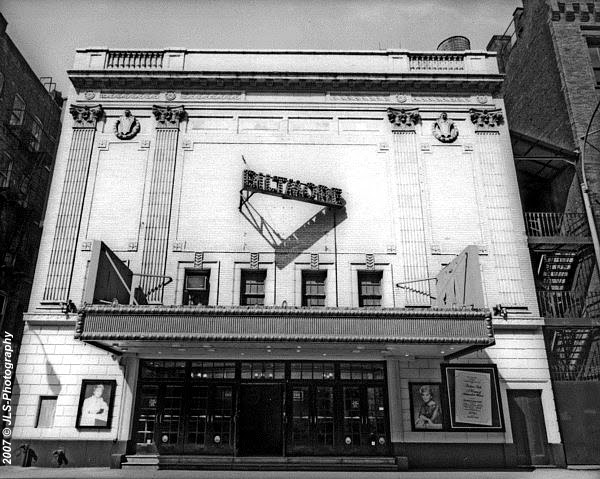
The Biltmore Theater in 1944
21. Finally, Manhattan Melodies opens! And on a swanky stage too — the Biltmore Theater. A stage that unfortunately is on its last legs in the film.
The Biltmore opened in 1925 and hosted dozens of shows in Broadway’s golden years. After briefly becoming a CBS television studio, it reverted back to live theater and was most notably the home for the Broadway transfer of Hairin 1968. The line-up of shows that appeared here in the early 1980s include Deathtrap with Victor Garber and the Garry Trudeau-written musical Doonesbury.
However, in 1987, the theater was ravaged by fire, most likely arson. According to the New York Times report, “Hypodermic needles were found inside the theater, indicating that drug users may have been using it as a shooting gallery, and storage lockers had been rifled.”
The theater finally reopened in 2008 — under the ownership of the Manhattan Theatre Club — as the Samuel J. Friedman Theatre, named for the renown Broadway publicist.
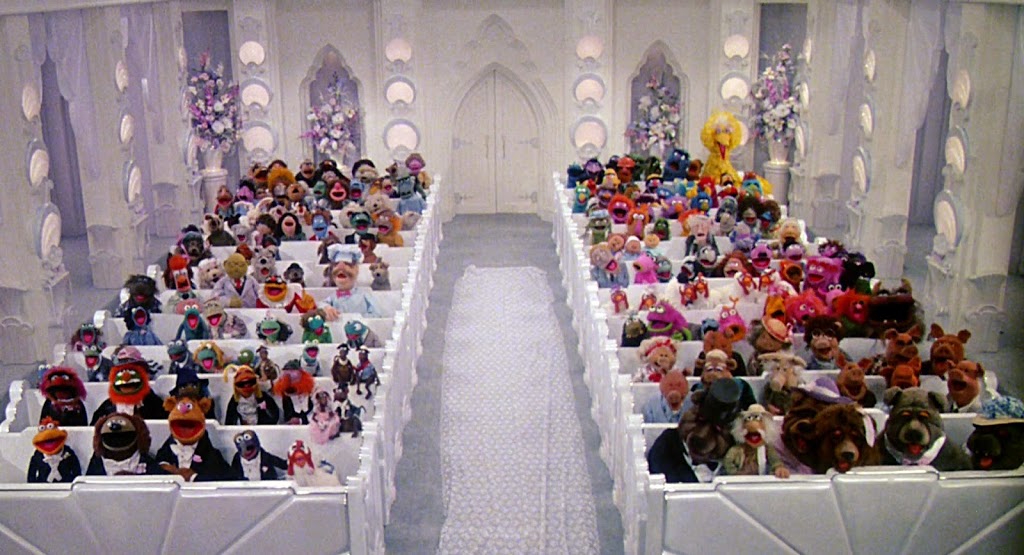
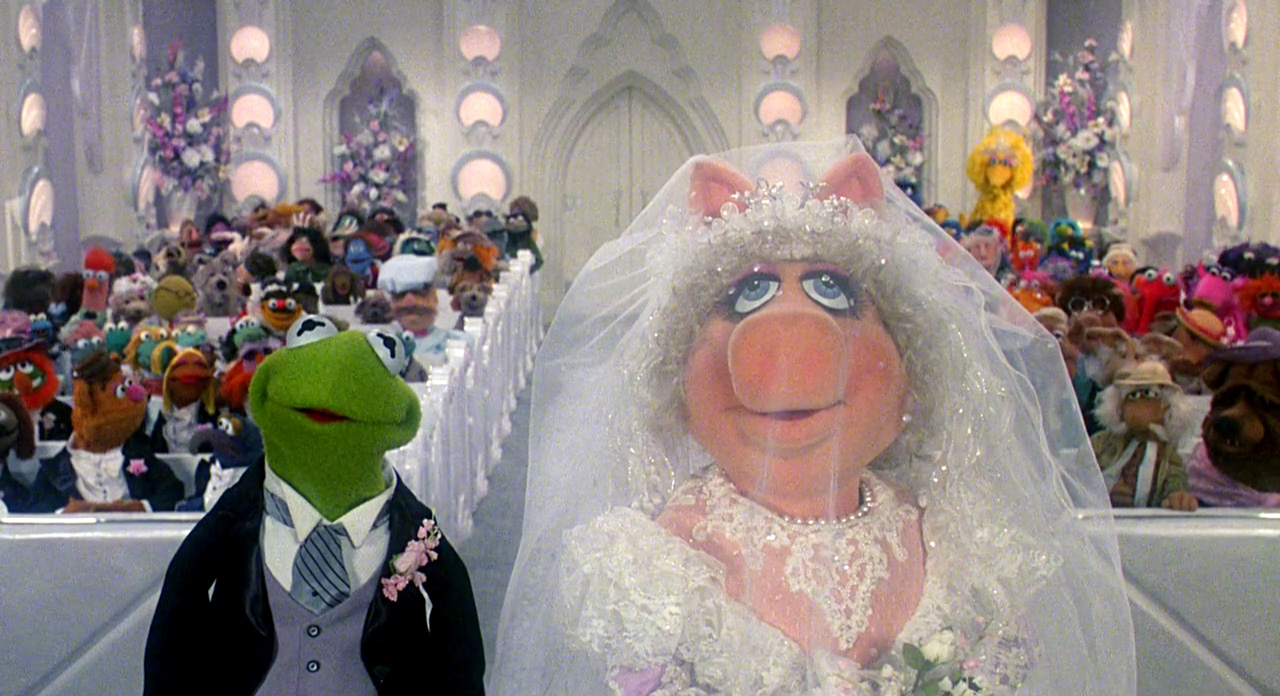
As quickly as the show begins, however we cut to a shot of a wedding chapel for the nuptials of Kermit and Piggy. Nearly all the existing Muppets appear in this scene. (Muppets Wiki actually has a complete seating chart.) Piggy’s gown gives a subtle nod to that of Princess Diana’s when she wed Charles in 1981.
AFTERWORD: The Muppets Take Manhattan was a modest box office success when it opened in July 1984. The film was up for the Academy Award for Best Music, Original Song Score. But the film lost the award to Prince for Purple Rain.
The artist took to the stage wearing a garment which Miss Piggy would have desperately coveted:
My thanks to the Muppets Wiki for the inspiration for this article.. All images are courtesy Tri-Star Pictures/Jim Henson
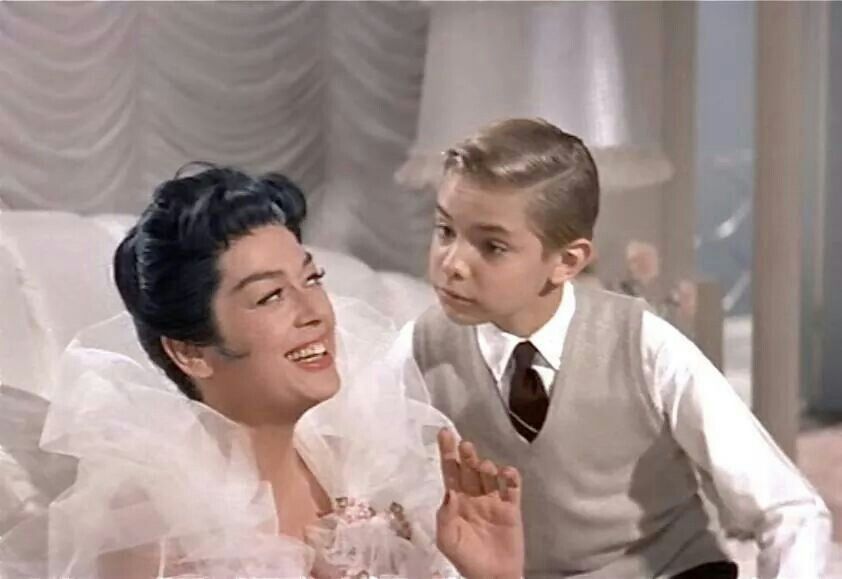
In a bit of Super Bowl counter programming, we’ve just released an unusually eccentric episode of Bowery Boys Movie Clubto the general Bowery Boys Podcast audience, exploring the 1958 comedy masterpiece Auntie Mame.
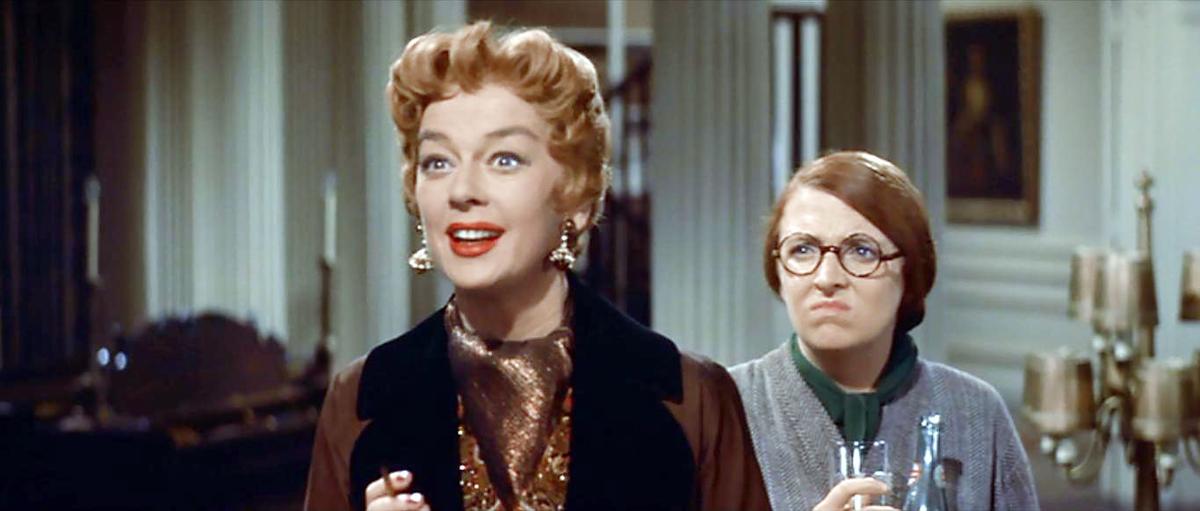
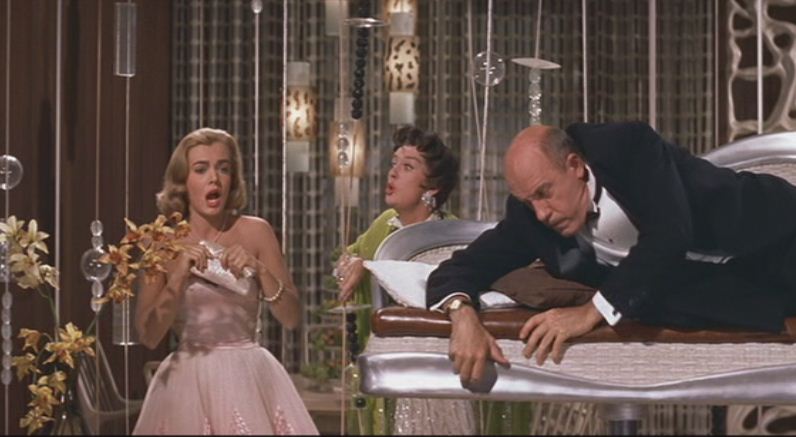
In the latest episode of the Bowery Boys Movie Club, Tom and Greg celebrate wild and fabulous Auntie Mame, the outrageous comedy masterpiece starring Rosalind Russell that’s mostly set on Beekman Place, the pocket enclave of New York wealth that transforms into a haven for oddballs and bohemian eccentrics.
Auntie Mame cleverly uses historical events — the Wall Street Crash of 1929, the Great Depression — as a backdrop to Mame’s own financial woes, and her progressive-minded care of nephew Patrick introduces some rather avant garde philosophies to movie-going audiences.
Listen in as the Bowery Boys set up the film’s history, then give a rollicking synopsis through the zany plot line.
Shouldyouwatchthemoviebeforeyoulistentothis episode? This podcast can be enjoyed both by those who have seen the film and those who’ve never even heard of it.
We think our take on Auntie Mame might inspire you to look for the film’s many fascinating (but easy to overlook) historical details, so if you don’t mind being spoiled on the plot, give it a listen first, then watch the movie! Otherwise, come back to the show after you’ve watched it.
Listen now: Auntie Mame (Bowery Boys Movie Club)
This episode of the Bowery Boys Movie Club was originally released on February 19, 2019, to those who support the Bowery Boys Podcast on Patreon.
Sign up and help support the show today to get the latest episodes of the Bowery Boys Movie Club.
EPISODE 344 We’ve now made our Bowery Boys Movie Club episode on the film Ghostbusters available for everyone. Listen to it today wherever you get your podcasts.
This episode is brought to you by those who support the Bowery Boys Podcast on Patreon. Join us there to get additional episodes of the new Patreon-only Bowery Boys Movie Club — including the latest episode on When Harry Met Sally.
This episode is partially based on this in-depth article on the New York City history moments featured in the film, originally written in 2013. Give it a read while you listen along!
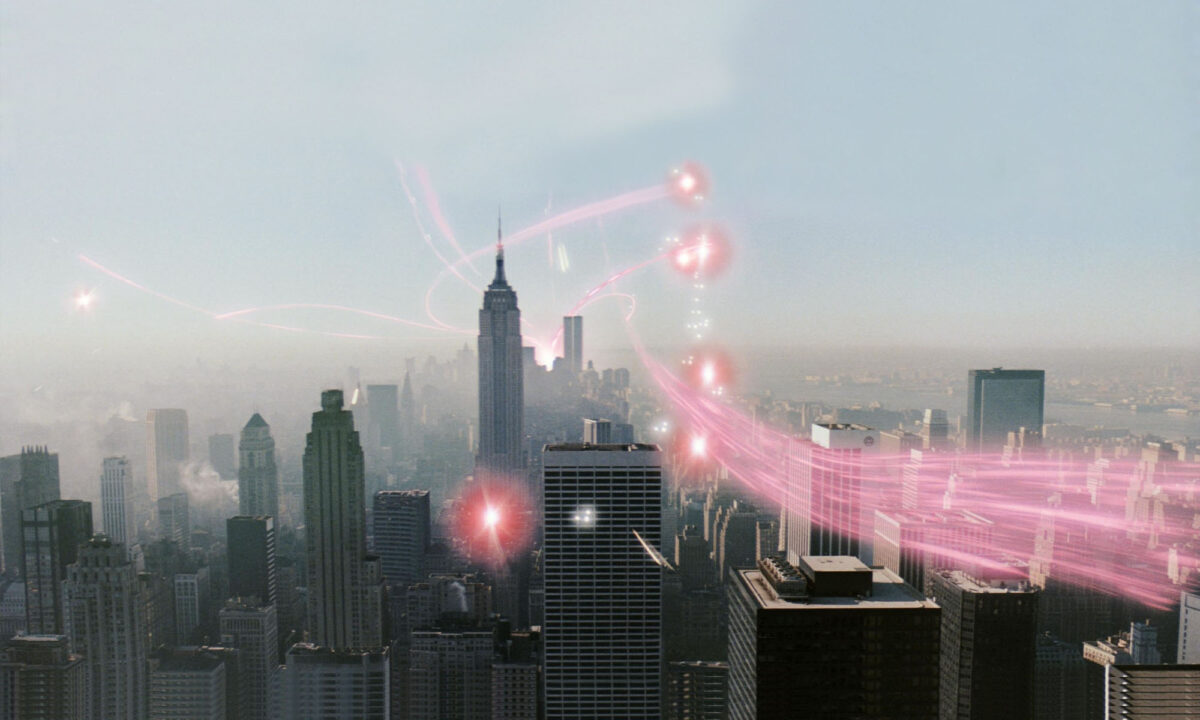
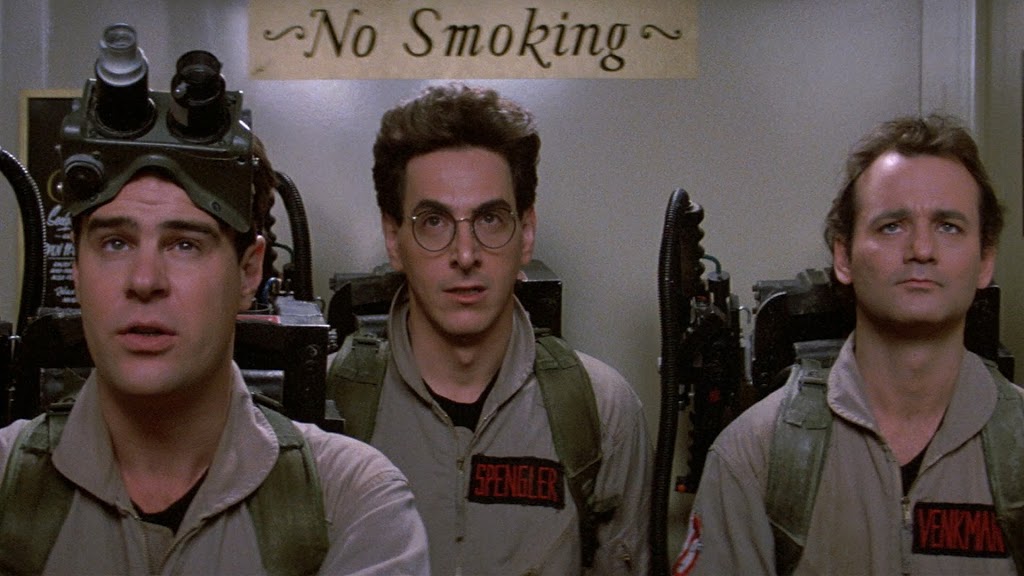
Ghostbusters, the goofy, supernatural tale starring Bill Murray, Dan Ackroyd, Harold Ramis, Ernie Hudson, and Sigourney Weaver, was one of the biggest hits of 1984, a rare blend of wry comedy, special effects and spectacular New York City landscapes.
Despite its preposterous premise — that ghosts look either like oozing fat blobs or Sheena Easton-ish supermodels — the film flawlessly displays the easy comic talents of its stars and reveals a New York City with only monsters as its greatest threat.
There have been both believers and cynics from New York history who have attempted to prove the existence of supernatural forces and have even tried to purge them from the city.
From there, I took a deeper look into the historical people, places and events depicted in the film, if not only to find evidence of New York’s ghostbusting forefathers, then at least to enjoy the pop culture references of the early 1980s.
Ghostbusters was a mainstream offering, so it goes very light on its urban commentary of a city picking itself up out of withering debt.
Its ghosts are quite democratic, in fact, terrorizing libraries, public places, ethnic neighborhoods and wealthy condominiums alike.
Here are 25 fascinating pieces of trivia about Ghostbusters, putting the film within the context of New York City history. Obviously there are a ton of spoilers here, in case you haven’t yet seen it.
But hopefully I’m giving you a good excuse to catch on television this Halloween!
1)Ghostbusters is set in 1984, late October-early November, judging from the dates on newspapers and magazines which appear midway through the film. But the film’s release date was in June 1984, so technically the film documents future events.
The appearance of Sumerian gods on the Upper West Side and a team of wise-cracking ghost exterminators certainly would have been the top story of the year.
Real life is not as magical. The big story in New York City that year came over a month later, when Bernhard Goetz shot four men who tried to mug him in the subway.
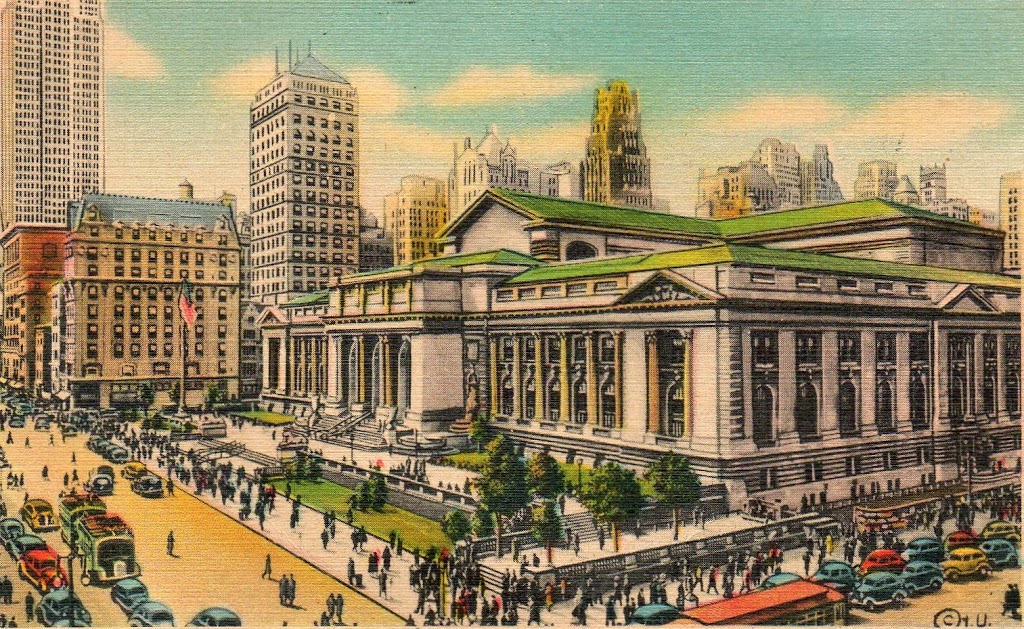
2) The New York Public Library, setting for the delightfully shushy spectre in the opening scene, may actually be haunted. After all, it sits on land that was once a burial ground.
According to historian Charles Hemstreet, writing in 1899, “The ground between Fifth and Sixth Avenues, Fortieth and Forty-second Streets, now occupied by Bryant Park and the old reservoir, was purchased by the city in 1822, and in 1823, a potter’s field was established there, the one in Washington Square having been abandoned in its favor.”
By the way, the two lions (named Patience and Fortitude) are prominently featured in the opening, a sly parallel to the stone monsters which will appear later.
Photo courtesy Bain News Service
3) Our ghostbusting heroes are originally located at Columbia University, in Weaver Hall (actually Havemeyer Hall). Although there is no actual department of paranormal psychology, Columbia does have a connection to one of New York’s earliest institutes of paranormal study.
The American Society for Psychical Research was founded in 1884 — exactly one century before Ghostbusters — as a legitimate organization looking to separate spiritualist quacks from actual supernatural phenomena.
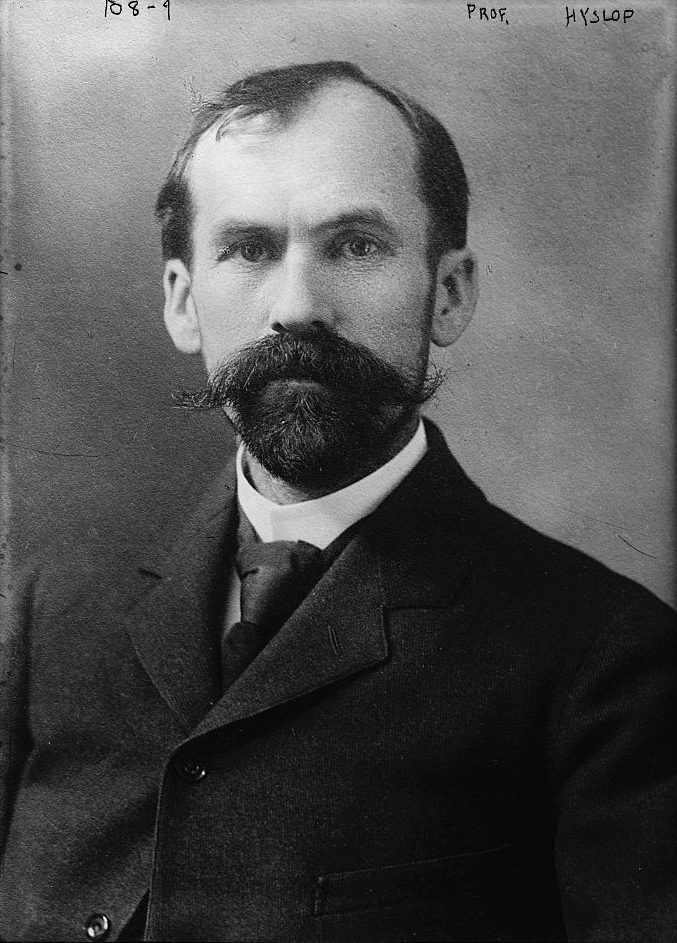
Its most prominent leader was James H. Hyslop (above), a former professor of ethics and logic at Columbia University. Â His early studies read like a jazz-age X-Files, investigating ghosts, spiritual possession and a strange variety of mental abilities. Â (We speak of Hyslop in two of our old ghost story podcasts, investigating a case of spiritual harassment and contact via a Ouija board.)
4) While no hauntings are actually displayed at Columbia University in the film, they certainly could have been.
The campus is located on the site of old Bloomingdale Insane Asylum, where more than a few mentally disturbed individuals met their end.
Columbia bought the facility in the 1880s and demolished most of it to make way for their McKim, Mead and White-designed campus. But one structure still remains — the Macy Villa, a home for mentally-troubled rich gentlemen, in today’s Buell Hall, home of La Maison Francaise.
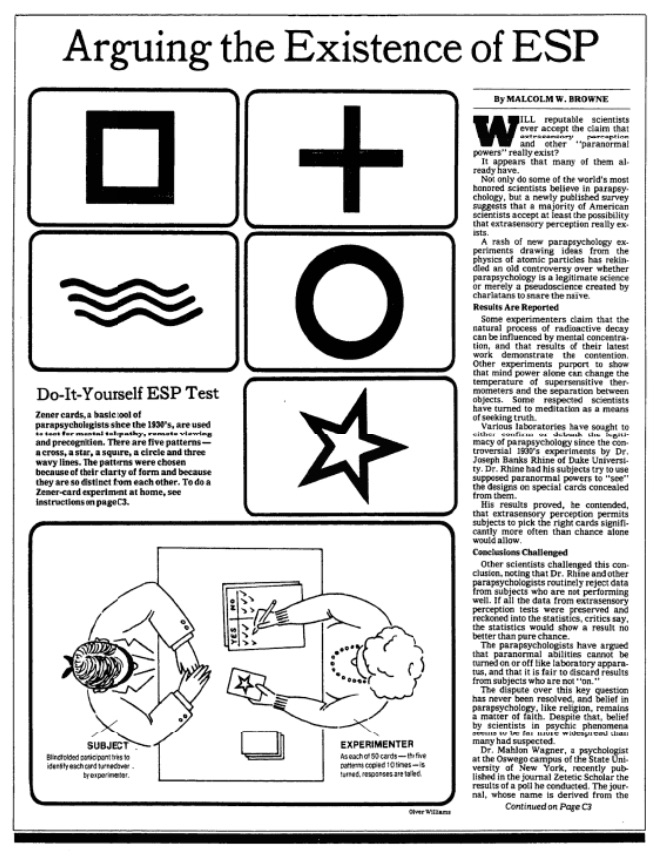
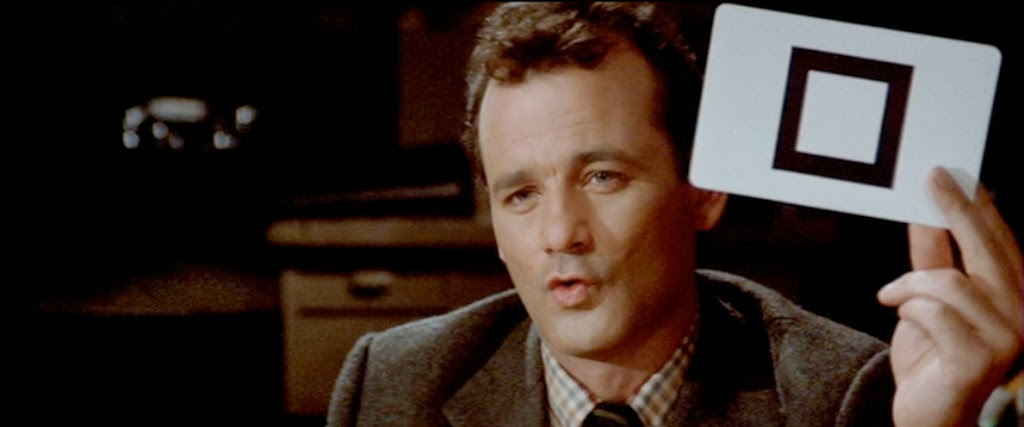
5)The deck of cards used by Dr. Venkman (Bill Murray) to test the telepathic abilities of his patients (and to flirt with the pretty blonde) are called Zener cards, invented by Karl Zener and J. B. Rhine, who was inspired to enter psychical research after listening to a lecture by author and paranormal cheerleader Sir Arthur Conan Doyle.
In 1980, the New York Times printed a set of Zener cards in its January 29, 1980 edition. “The reader may judge for themselves.”
6) Dr. Venkman’s continued skepticism gives Murray a host of excuses to stare at the camera and mug sardonic. But his character probably has the most in common with New York’s original ghostbusters, especially adventurer and conjurer Joseph Rinn.
He and his childhood friend Harry Houdini basked in debunking frauds while keeping alive the illusion of magic and mystery for their acts.
Rinn most famously held a demonstration at Carnegie Hall where he taunted mediums and mystics to exercise their powers for a prize pot of $10,000. Nobody ever won the money.
7)Manhattan City Bank, depicted in the film, is not real. Â Coincidentally, the scene was filmed at another bank directly across the street from the New York Public Library at Fifth Avenue/41st Street. In fact, you can see that the library is surrounded by scaffolding in the movie.
What was the scaffolding for? In 1982, the library embarked a $20 million renovation project. It’s difficult to imagine today, but this classic New York institution had been badly abused over the years.
The 1982 renovation was meant to return the building to its original glory. “It is a restoration in some ways, a modernization in others,” said the Times. “[T]his ambitious plan emerges out of the conviction that this building is as much a part of our cultural heritage as the billions of words that it contains.”
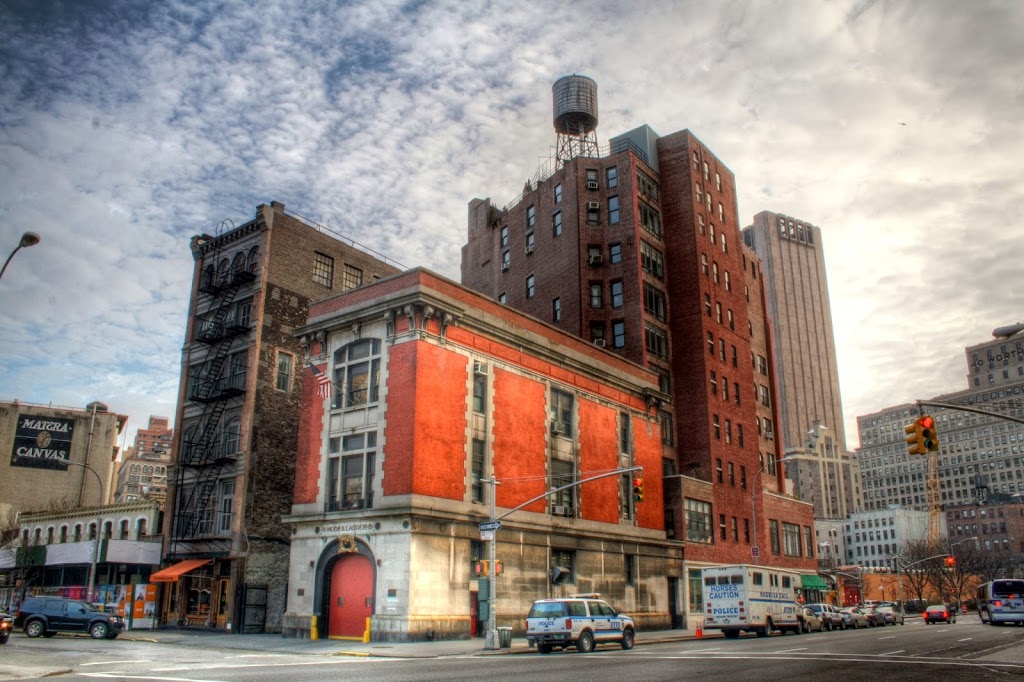
Ghostbusters headquarters — the TriBeCa fire house on North Moore. Pic courtesy Phillip Ritz
8) Perhaps the most beloved New York site from the film is Ghostbusters headquarters, the Hook and Ladder Company No. 8 fire station at the corner of North Moore Street and Varick Street.
If the building looks awkwardly slender to you, there’s a good reason — half the building was demolished in 1914 when Varick Street was widened. Several other buildings, including St. John’s Chapel, owned by Trinity Church, were not so lucky, wiped out entirely by Varick’s expansion.
Spengler (Harold Ramis) says of the firehouse. “I think this building should be condemned….The neighborhood is like a demilitarized zone.”
In fact, the converted lofts and warehouses of TriBeCa (Triangle Below Canal) — the name was slightly over a decade old in 1984 — were a haven for artists, designers and musicians by this time and probably deemed ‘gritty’ by the standards of 1980s American film goers.
9)Sigourney Weaver is probably the most New York-centric star of Ghostbusters and a perfect choice for the role of Dana, the sophisticated lady possessed by an ancient God. (Dana’s in the New York Philharmonic after all!)
Weaver was a regular on the off-Broadway stage, an offbeat star who once starred in a Christopher Durang play about the Titanic. Her first two film performances are in two 1970s New York film classics — Serpico and Annie Hall. 10) As Sigourney arrives at her apartment building, you can clearly identify Checker Cabs passing on the street, even though that were already a dying breed by this time, the last rolling out from its Michigan plant in 1982.
11) The Sedgewick Hotel, site of the Ghostbusters’ most conspicuous catch, is one of several Los Angeles locations pretending to be in New York.
However, if they wanted a haunted hotel near the New York Public Library, they could have looked no further than the Algonquin Hotel, two blocks north on West 44th Street, notoriously famous for the ghosts of the Round Table.
The Sedgewick is played in the film by L.A.’s Biltmore Hotel, site of several Academy Awards ceremonies and itself haunted by a famous ghost, that of Elizabeth Short, aka the Black Dahlia.
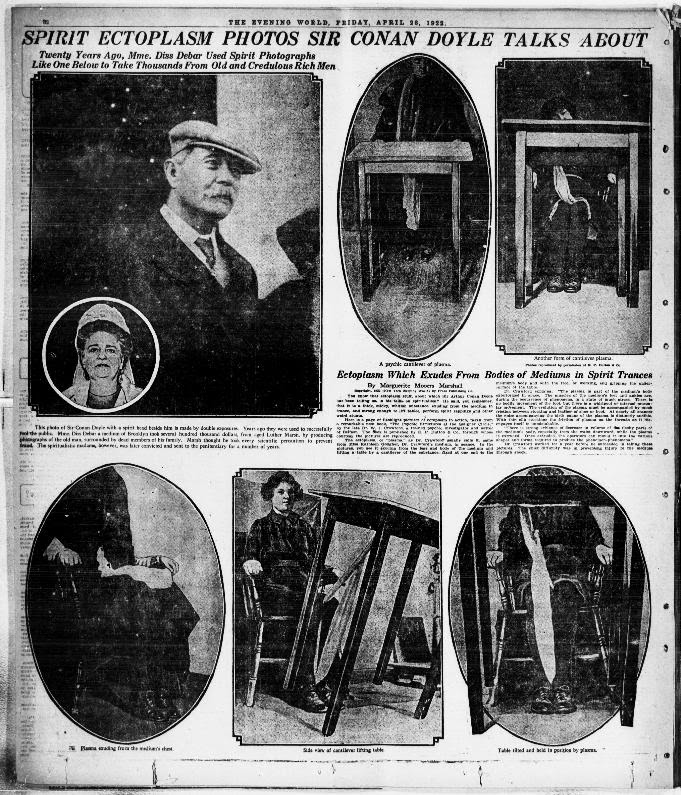
12) Ectoplasm isn’t just a cool word for ‘slime’. In 1922, the New York Evening World ran photographs of mediums coated in ectoplasm.
Sir Arthur Conan Doyle described it as “thick, sticky, whitish substance exuding from the medium in trance and strong enough to lift tables, perform spirit rappings and other weird stunts.”
13) A New Jersey high school student named Jeff Nichols found momentary fame when he accidentally appeared as an extra in the film, during the brief scene in which Bill Murray and Dan Ackroyd storm through Rockefeller Center. (Did they not sign release forms back then?) The scene appears in a montage of the crew’s many ghost-exterminating antics.
”I got a bunch of phone calls from friends who saw it, saying, ‘Hey, Jeff, you’re in the movie,’ ” said a surprised Jeff last week. ”It’s strange to think that I’m in a movie that’s playing all over the country…… I guess it’s like being part of history.”
No offense to Jeff, but I’m kinda more fascinated in another brief scene during this montage, when the Ghostmobile speeds past Umberto’s Clam House in its original location (the corner of Mulberry and Hester).
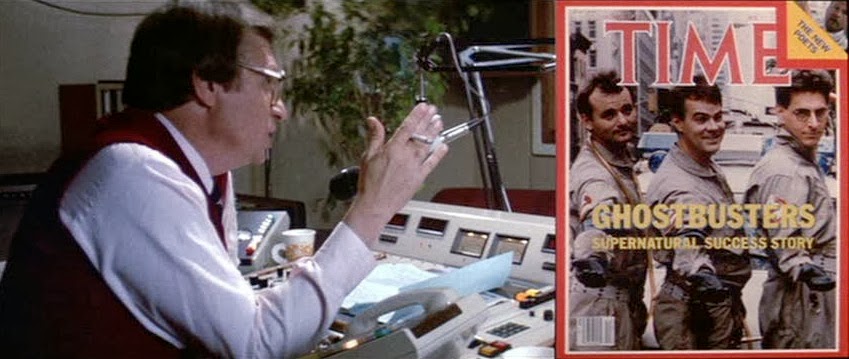
14)Larry King on the radio in Ghostbusters in 1984:
15) There’s a silly montage of 1984 publications that go swirling by. People Magazine touting the trio also reveals “Princess Di Expecting Again!” The magazine (supposedly from October 1984) is a little off — Prince Harry was born on September 15, 1984.
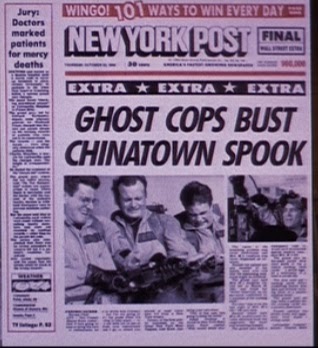
The New York Post also celebrates one off-screen Ghostbusters’ victory: GHOST COPS BUST CHINATOWN SPOOK.
In the early 1980s, the Post gave $50,000 a week in its WINGO! lottery promotion. According to author and former Post reporterCharlie Carillo, the contest illicited some rather mysterious winners:
“One Wingo winner showed up soaked in sweat and literally looking over both shoulders. He wouldn’t even tell me his real name, and he covered his face with his hands when the photographer lifted the camera. ‘No pictures!’ he cried through his fingers. ‘Can’t have my picture in the paper!'”
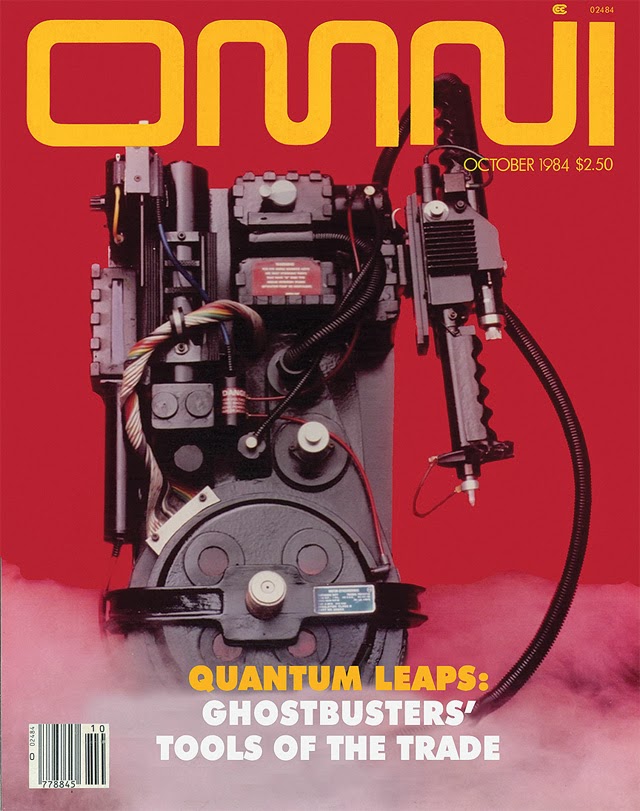
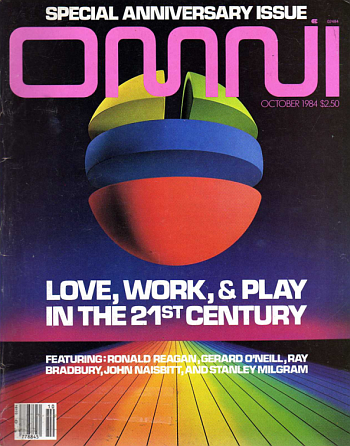
16) Also given credible prominence during this montage is the long-gone OMNI Magazine, a science publication with the unique distinction of being one of the first magazines to simultaneously publish a digital edition (in 1986).
Here’s a copy of the October 1984 issue from the movie, and the actual October 1984 issue:
17) Dana listens to Casey Kasem gab about the Ghostbusters during his Top 40 countdown show. His wife Jean Kasem appears later in the movie as Rick Moranis’ ditzy date.
Had we been privy to the entire broadcast, we would have heard that the top five songs that week were (in Kasem countdown order): 5) “Lucky Star” by Madonna, 4) “Purple Rain” by Prince, 3) “Hard Habit To Break” by Chicago, 2) “Caribbean Queen (No More Love On The Run)” by Billy Ocean, and 1) “I Just Called To Say I Love You” by Stevie Wonder.
18) Veteran New York broadcaster Joe Franklin appears on television, asking Murray, “I’m sure there’s one big question on everybody’s mind, and I imagine you are the man to answer that. How is Elvis, and have you seen him lately?”
Franklin, presumably recording from WWOR‘s brand-new studios in Secaucus, NJ, was touching on a hot-button issue in 1984. That year, some believers found proof that Elvis Presley was actually still alive, due to an infamous photograph that emerged in the press of Elvis with Muhammed Ali. A video of that investigation is below:
19) A supernatural upheaval of godlike forces emerges from Dana’s icebox, located in a penthouse at 55 Central Park West. In the film, this building, constructed in 1929, was made with cosmic connections in mind, with a super-conductive antenna, “pulling in and concentrating spiritual turbulence.” Stantz (Dan Ackroyd) adds, “The architect was either a certified genius or a pathetic wacko.”
In Ghostbusters lore, the architect is Ivo Shandor. In reality, the building was constructed by the less immortal architectural firm of Schwartz and Gross, best known before then for their building The Majestic on West 75th Street. 55 Central Park West has been home to Rudy Vallee, Ginger Rogers, Donna Karan and Calvin Klein.
There does appear to be something strange going on with the building. According to the latest AIA Guide: “[I]f the sun seems brighter at the top than the bottom, it is brighter. Â A flush of brick from red to yellow rises from the second floor to the sun.” Gozer is impressed.
20) Louis Tully (Rick Moranis) just wants somebody to like him. Although a “nerd” in the classic 1980s nerd style, he’s pretty much a prototype for the modern hipster. In a futile effort to get Dana to his party, he proclaims that they will “play some Twister, do some breakdancing.”
1984 was the year that this form of street dancing went mainstream, with films, fashion and music that year monopolizing on the trend. Breakin‘ was in theaters for a month already when Ghostbusters opened on June 8, 1984. It handily beat a competing film making its debut that same week — Beat Street (see below).
Believe it or not, Beat Street debuted on more screens than Ghostbusters, but lost in the box office battle.
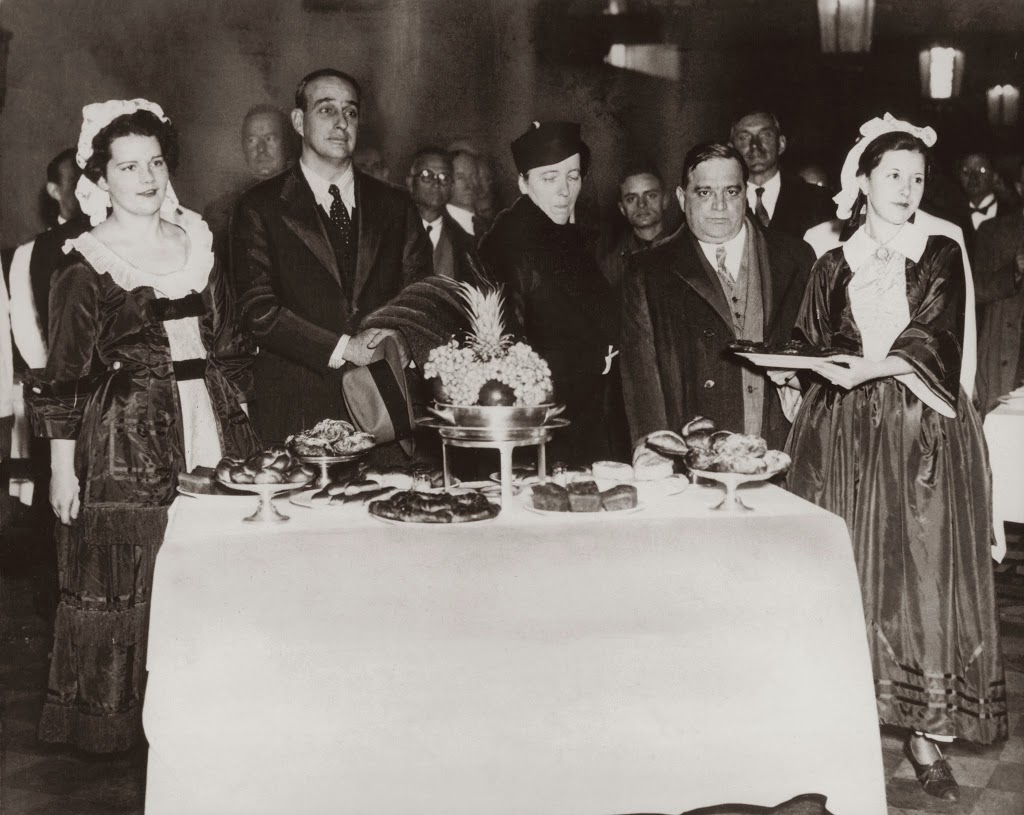
21) Louis runs into Central Park to escapes Gozer’s demon minion but is cornered at Tavern On The Green. It would have been quite a party that Louis and the hellbeast were crashing, as the fancy restaurant was celebrating its 50th anniversary that very month.
Tavern On The Green opened on October 20, 1934, with a lavish dinner attended by Mayor Fiorello LaGuardia and parks commissioner Robert Moses (pictured below, image courtesy New York Times)
22) Later, a possessed Louis (as the Key Master) streaks through Times Square in a demoniacal rage, looking for the Gate Keeper.
It’s a fairly nondescript early 80s midtown landscape, but look for the curious chain restaurant WienerWald in the background.
The German franchise had several locations throughout the United States but was unable to turn Americans on to its menu — mostly chicken, despite the name.
One intrepid Ghostbusters fan has successfully located the precise block on Seventh Avenue where this WienerWald was located.
23) With the city in crisis, the Ghostbusters are invited to City Hall for a meeting. As they enter the building, you can clearly see the banner for an exhibit in the rotunda called “Furnishing the Streets: 1902-1922.”
Because the banner could not be removed for some reason, the filmmakers cleverly obscure the exhibition’s date with a flagpole. However you can still make out that it says 1983.
24) The Stay Puft Marshmallow Man in his deliciously savage rage stomps up Central Park West from Columbus Circle. The most significant landmark destroyed by this sugary-sweet demon spawn is Holy Trinity Lutheran Church which sits next to 55 Central Park West.
The picturesque Gothic building has been a magnet for chaos from the very beginning. Over 3,000 people filled the street when its cornerstone was laid in November 1902, causing a traffic meltdown.
According to the New York Tribune, “It was as much as the police could do for a time to prevent people from being run down by trolley cars and automobiles, as many people were compelled to stand in the middle of the street.”
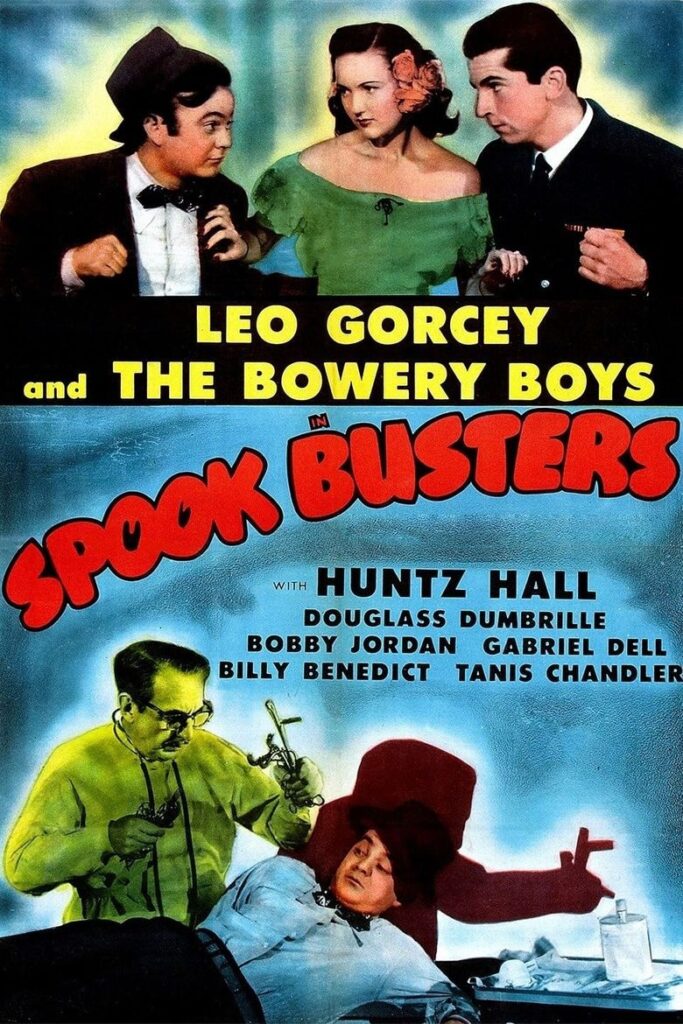
25) Our brave heroes vanquish Gozer and return to the street, greeted to the applause of grateful New Yorkers. I would be remiss, however, if I didn’t mention another set of Ghostbusters who once scoured Manhattan of its supernatural nuisances: the 1940s wacky Bowery Boys comedy troupe made a film in 1946 called Spook Busters.
Instead of a fire station, these exterminators of unwanted phantoms set up shop in a candy store.
It may be some time before we all get to truly enjoy the inside of a movie theater again. Hopefully soon!
But outdoor movies — in particular, drive-in movies — have had a bit of a renaissance, a socially distanced way to enjoy blockbusters on a big screen. Mommy Poppins has a great round-up of all the outdoor drive-in movie options in New York City and the surrounding area.
Watching movies outdoors is tradition much older than you think.
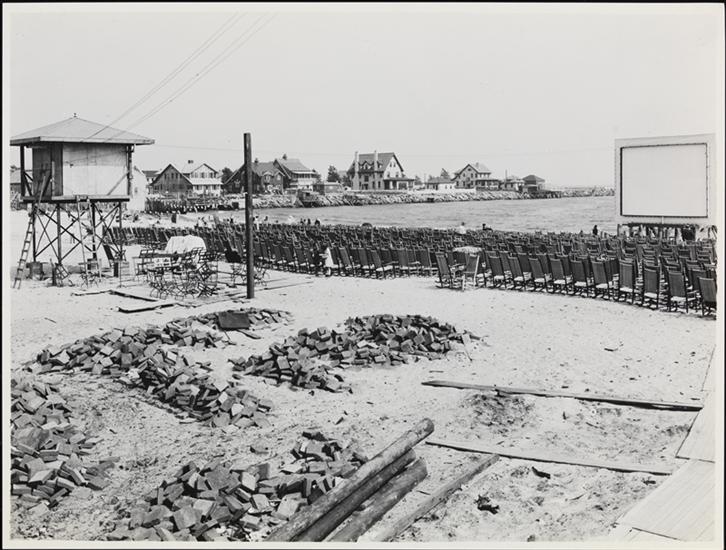
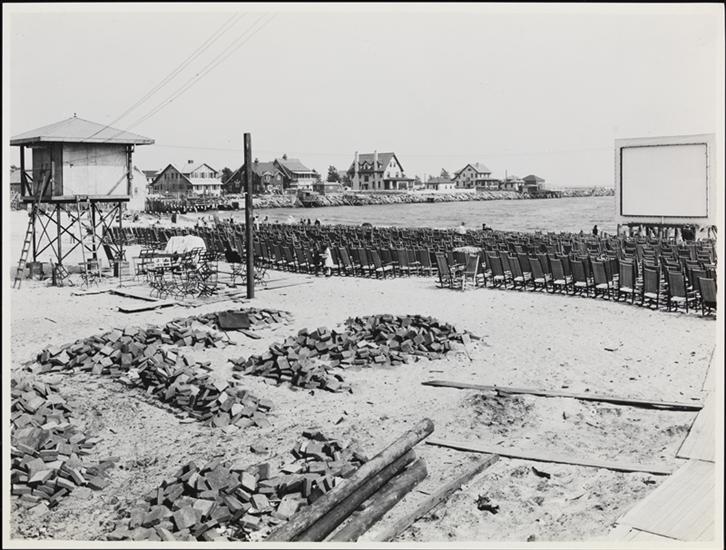
At an outdoor movie theater in Brighton Beach, 1920. (MCNY)
Yes, there were outdoor (or open air) theaters showing films almost as soon as the medium became popular.
This is not terribly surprising. There were already outdoor playhouses for theater and vaudeville, and, in an era of over-crowded tenements and no air conditioning, any reason to sit outside on a nice summer’s night seemed practically luxurious.
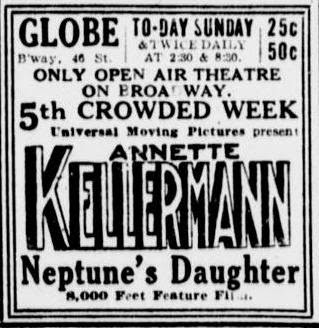
An advertisement for a rare Midtown open-air theater. The lights of Broadway and street noise would have been a serious impediment.
One drawback outdoor movie lovers deal with today is the loud city interfering with the sound of the movie. Not so then; the city might have been loud, but the movies had no sound.
It was a purely visual sensation, a thrilling entertainment light show under the moonlight.
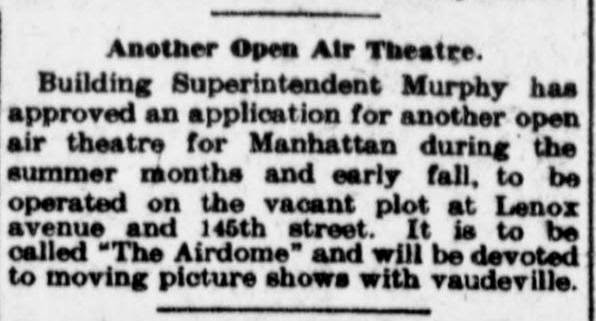
Early outdoor theaters in New York, sometimes called airdomes, were not usually in city parks, but in abandoned lots or open spaces in upper Manhattan.
Here’s a description of an airdome from a 1914 exhibition guide: “An airdome is simply an outside moving picture show that is run on practically the same lines as the old summer garden, and is therefore essentially a fair-weather show, although a few airdomes are equipped with pavilions.”
Airdomes were designed to be temporary although you did need a permit from the city to operate one. Other than that, anybody could do it! “Nothing elaborate …is necessary for a successful airdome,” said the guide. “The chairs and tables may be of the ordinary kitchen variety.”
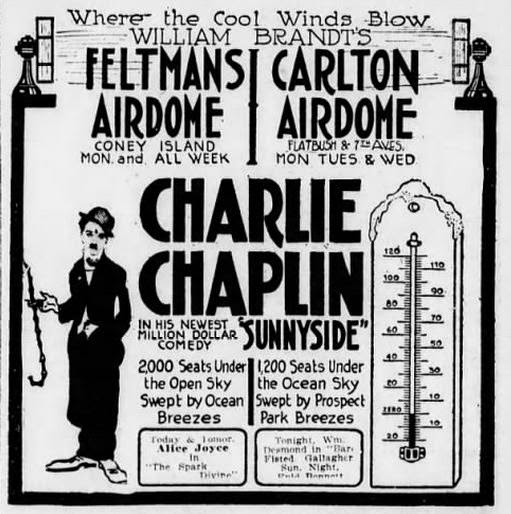
An advertisement for two Brooklyn airdomes — in Coney Island and Prospect Heights (Brooklyn Daily Eagle)
From surveying various newspapers from the 1910s, it appears most airdomes were located either in upper Manhattan and the Bronx (where there were more open lots) or in Coney Island (where the masses went for recreation).
Before 1915, movies were one-reelers, quite short, and often featured alongside live acts as part of a vaudeville routine. This airdome (listed in the July 1909 New York Sun) was typical of the day:
Outdoor movie theaters were so prevalent in the 1910s that, during planned war time electrical blackouts in 1918, they were specifically mentioned as a “bonafide food and entertainment establishment” alongside “roof gardens and outdoor restaurants.” [source]
But as with modern outdoor theaters, sometimes reality elbows its way into the picture.
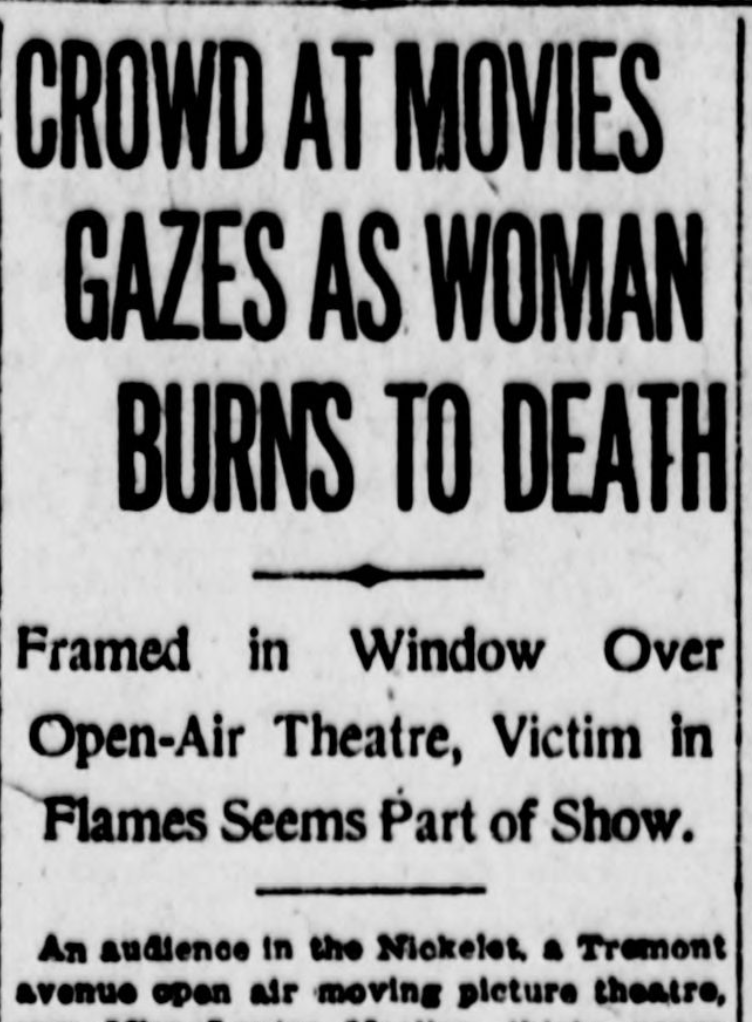
One of the Bronx’s most prominent open air moving picture theatres was the Nickelet (at Tremont and Prospect Avenues), presumably named for the admission price.
One evening in June 1913, audiences witnessed a terrifying sight — a woman burning to death in a building adjacent to the theater lot. Audience members scrambled to her rescue to no avail.
The transient nature of the airdome — and the ability for anybody with a license to have one — did cause friction at times.
During the spring of 1909, in the Long Island town of Freeport, a Brooklyn man enraged the town when he set up an airdome there even though he was not a town resident.
The airdome never went away of course. But the experience paled in comparison to the grand delights of the movie palaces, especially when air conditioning technology came along.
They eventually died out, along with the rooftop garden, in the 1920s, only to return later in the century when sound and projection technologies allowed for a more enjoyable evening at the movies.
And now, ladies and gentlemen, I hope you’re reading this outside! Create your own airdome experience and watch this film — Charlie Chaplin’s Sunnyside — enjoyed by Brooklynites over 90 years ago in an outdoor moving picture theater:
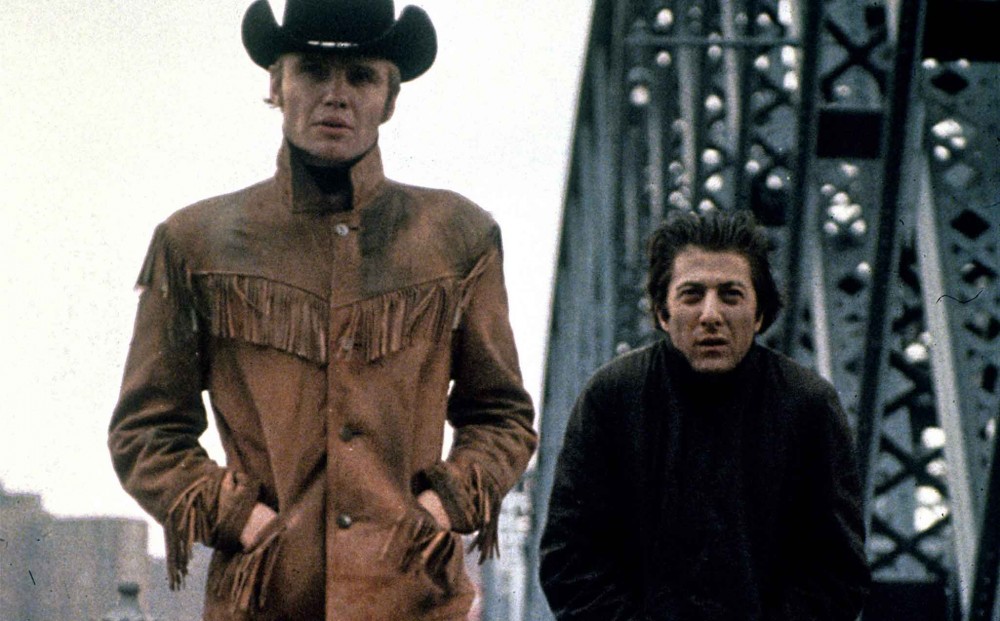
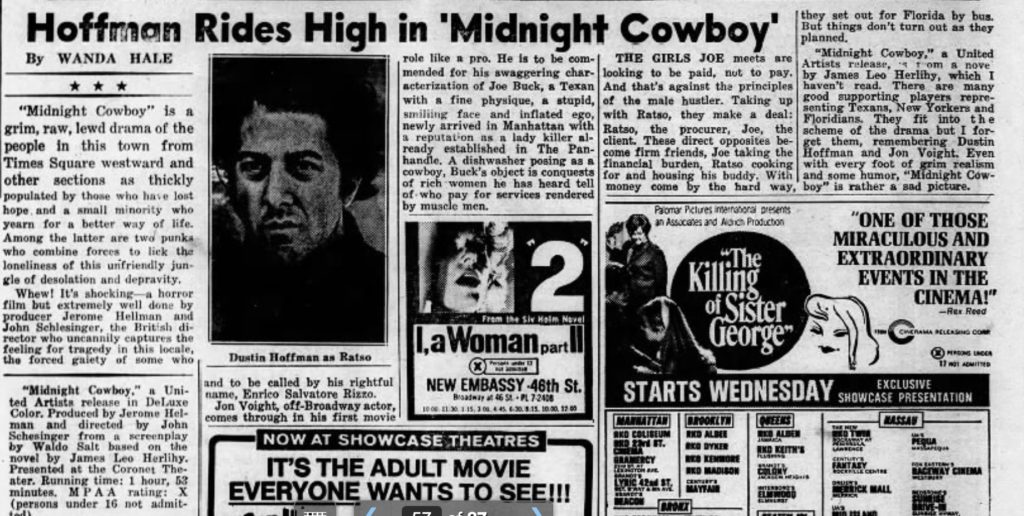
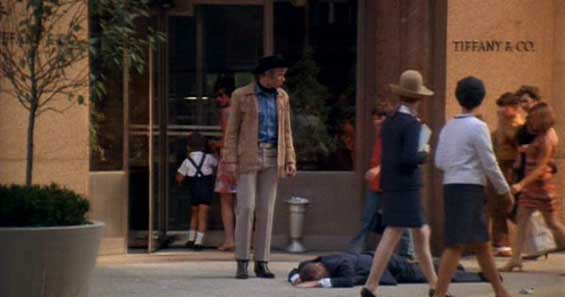
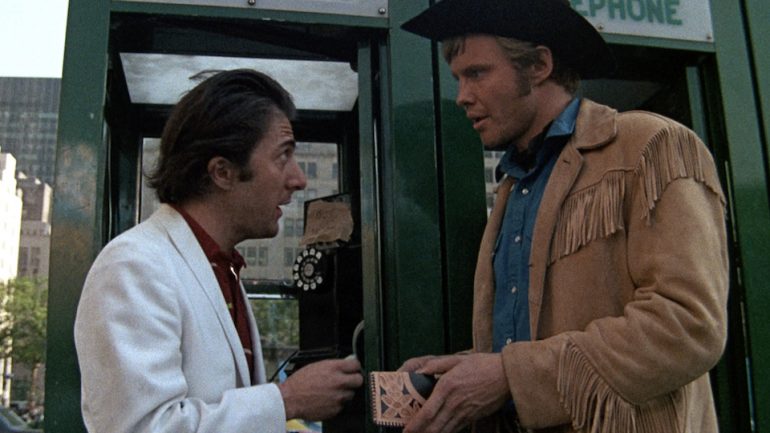
We’ve now made our Bowery Boys Movie Club episode on the film Midnight Cowboy available for everyone. Listen to it today wherever you get your podcasts.
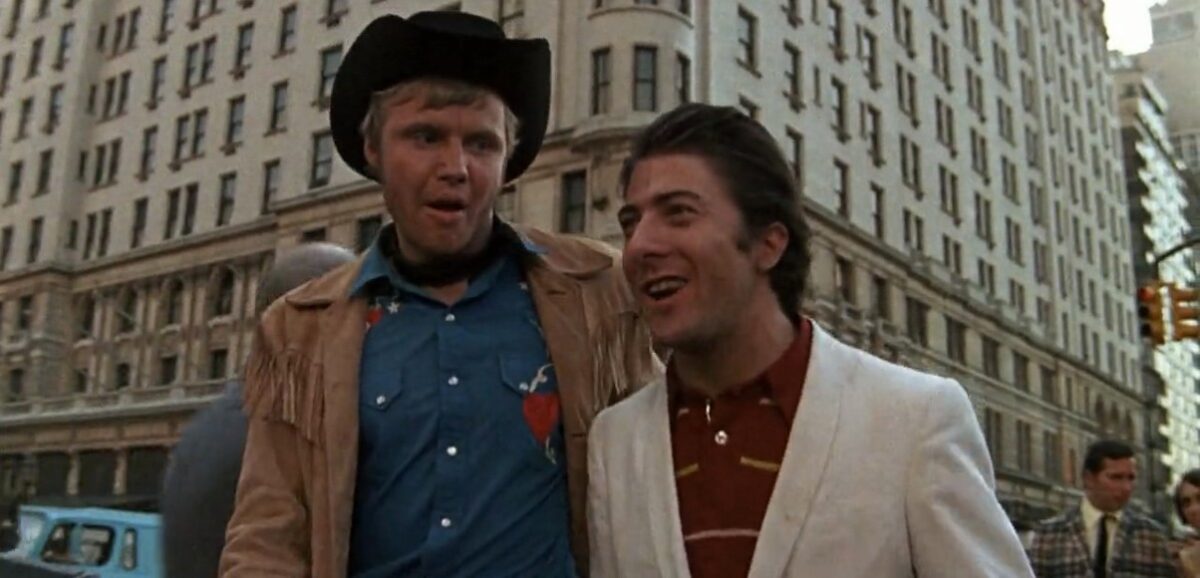
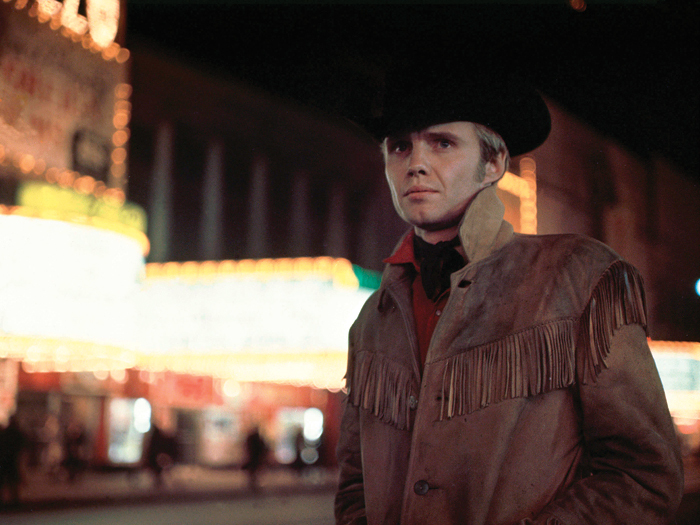
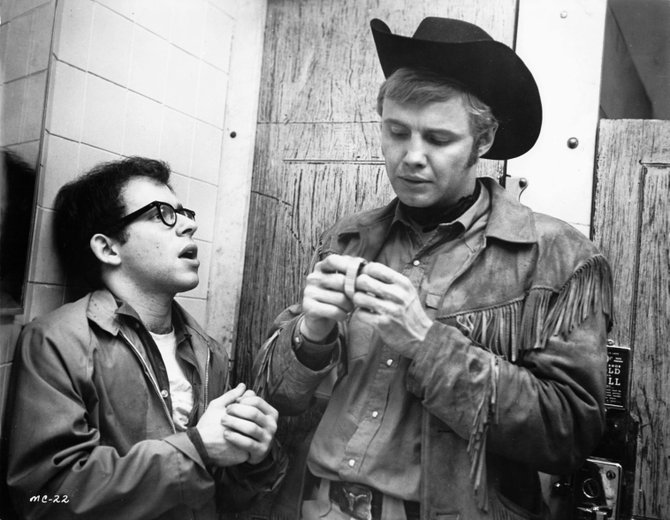
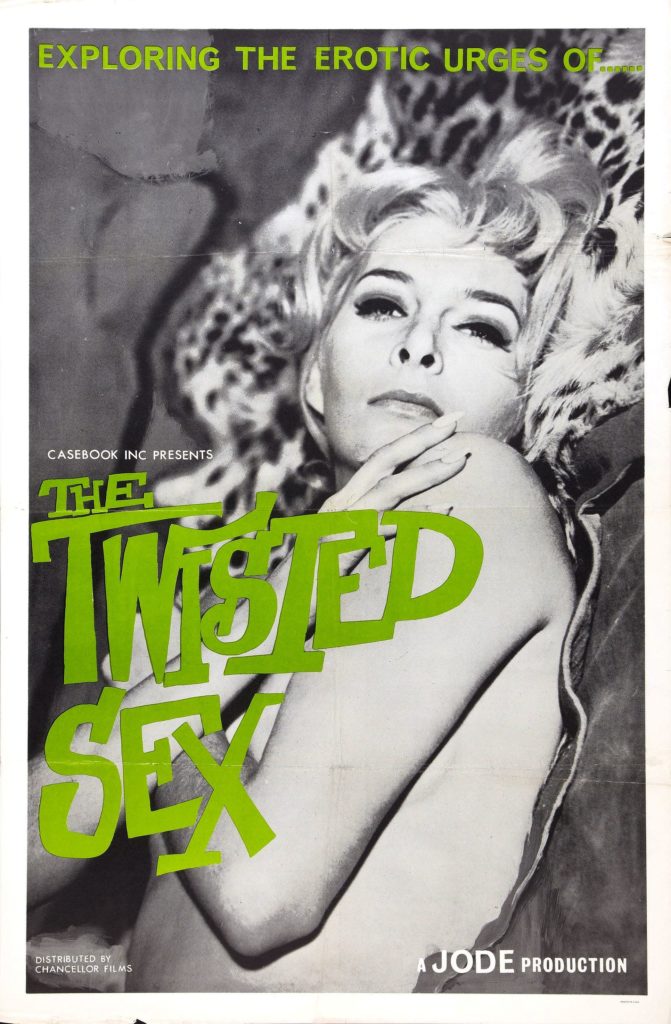
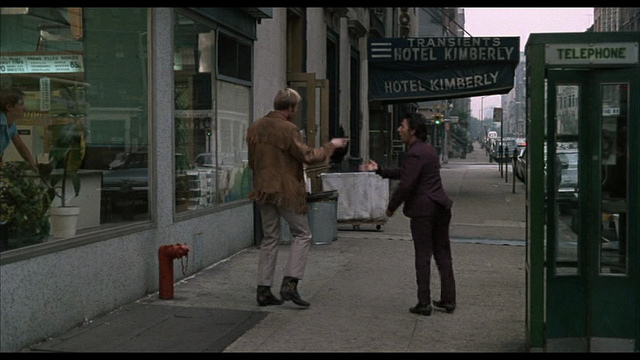
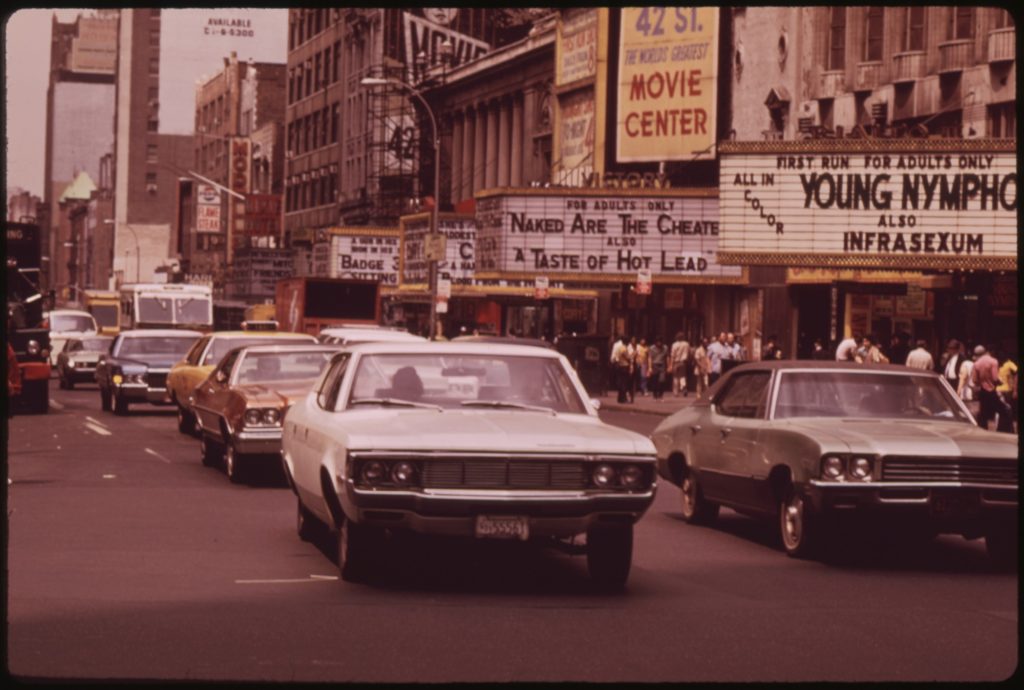
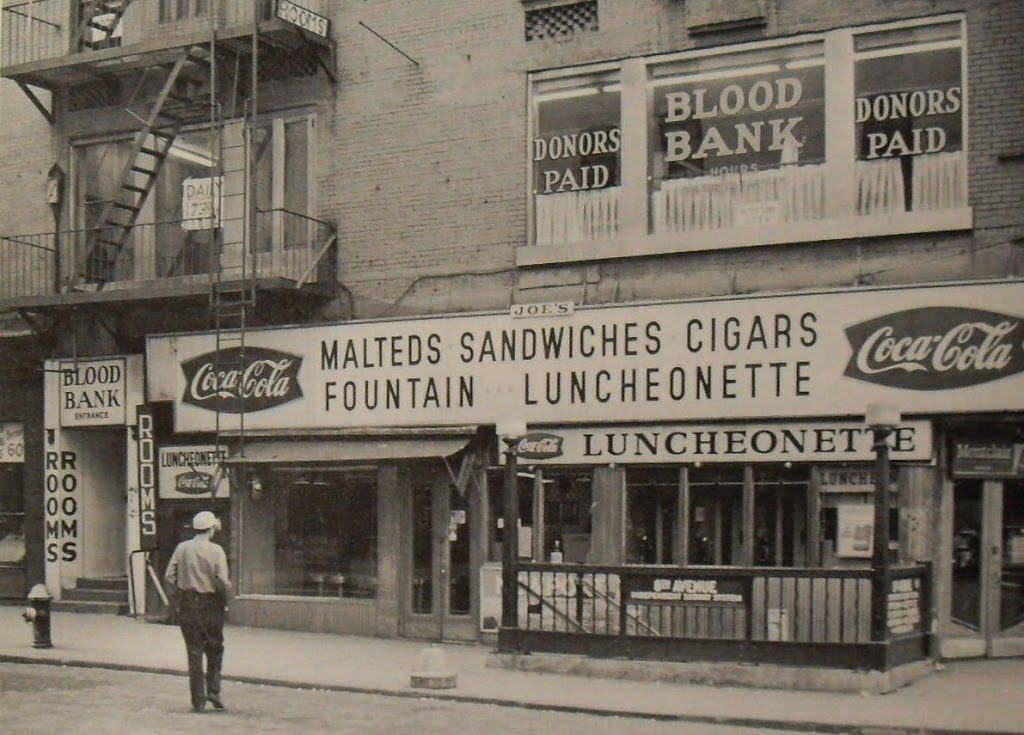
Midnight Cowboy, released one month before the Stonewall Riots, depicts several alternative scenes that were thriving in New York City in the late 1960s — from wild psychedelic parties to the sleazy movie theaters of Times Square.
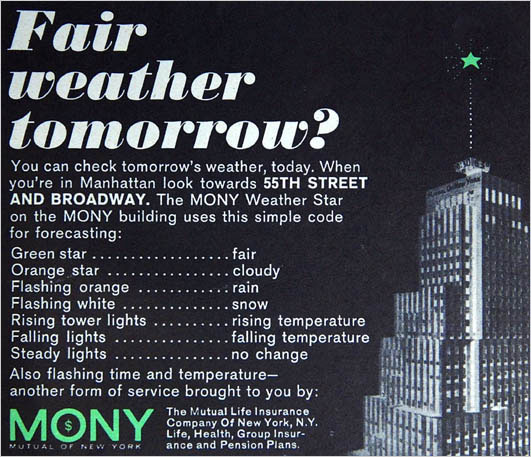
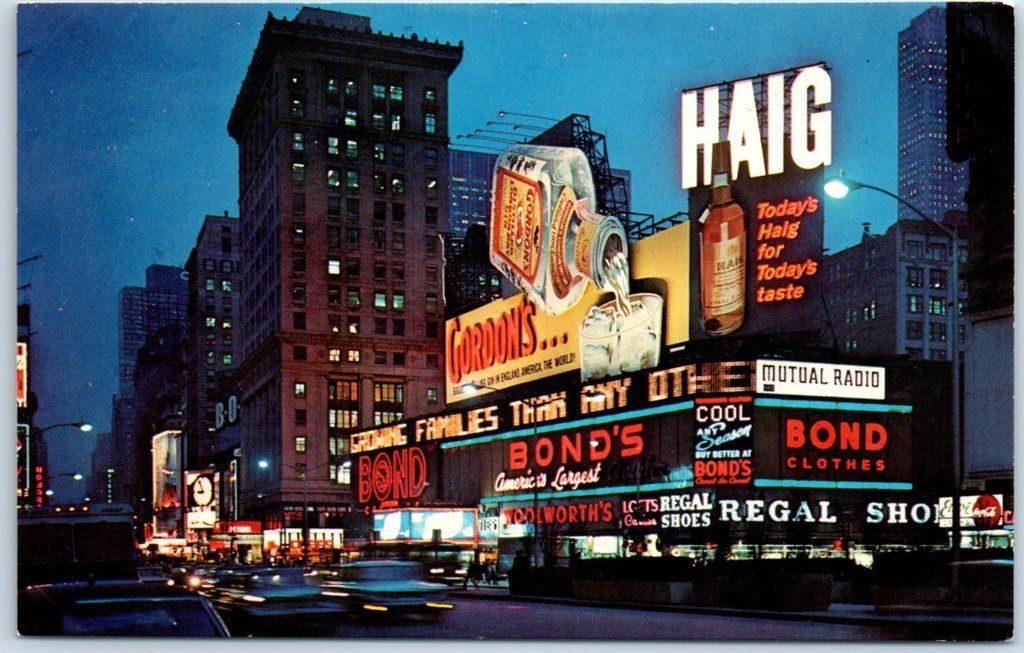
The film plays out in both brightly lit diners and busy Midtown streets. Freeze frame the film for just a moment and you’ll discover a rich history of visual information about New York City history.
Listen in as Greg and Tom discuss the film’s glorious Manhattan locations — from the crumbling Lower East Side to the vistas of Park Avenue — then give a joyful spoiler-filled synopsis through its startling and sometimes unsettling plot.
How do I get the Bowery Boys Movie Club? Simply support the Bowery Boys: New York City History podcast at any levelon Patreon.
Once you’re signed on, you’ll see a private RSS link that can be put directly into your favorite podcast player. Or it can be played directly from the Patreon app once you’re signed in.
This episode is made possible by our supporters on Patreon, and is part of our patron-only series Bowery Boys Movie Club. Join us on Patreon to access all Movie Club episodes, along with other patron-only audio.
Should you watch the movie before you listen to this episode? This podcast can be enjoyed both by those who have seen the film and those who’ve never even heard of it.
We think our take on Midnight Cowboy might inspire you to look for the film’s many fascinating (but easy to overlook) historical details, so if you don’t mind being spoiled on the plot, give it a listen first, then watch the movie! Otherwise, come back to the show after you’ve watched it.
In honor of the 50th anniversary of the release of Midnight Cowboy, we published this celebration of the film, a detailed look at this gritty, provocative film as a celebration of New York City itself.
The central figures in that film — ‘Midnight Cowboy’ directed by John Schlesinger— were a clueless cowboy named Joe Buck (Jon Voight), clomping into New York with dreams of becoming a successful hustler, and the wheezing Enrico Rizzo or ‘Ratso’ (Dustin Hoffman), a con man with even bigger dreams of Florida sunshine.
There are few time capsules of New York’s darker days quite as pleasurable as Midnight Cowboy. It’s hardly as provocative as when it was released in May 1969, but its ragged edges have only become more remarkable to view as a piece of history, paying tribute to an era often romanticized today.
But Midnight Cowboy is in no way sugar-coated, and for those who think they would prefer this New York over the overpriced, condo-centric Manhattan we live, work and play in today might do well to give this film a very close inspection.
The original review in the New York Daily News, May 26, 1969
Here are 25 fascinating facts and details from the film itself, some of them specific to individual shots in the film. There are no major spoilers here, but you’ll appreciate this more if you’ve at least seen the film once.
At the bottom is a Google map of some of the places mentioned in this article:
1. ‘Midnight Cowboy was shot in New York City during the spring and summer of 1968. Inspired by the making of Schlesinger‘s film, Andy Warhol protege Joe Dallesandro starred in his own cowboy hustler movie called Flesh. Given its micro-budget and cheap production values, the Dallesandro variant made it into theaters many months before Cowboy did. (More on Warhol in a bit.)
2. As Buck heads into New York on a Luxury Liner bus, New Jersey is epitomized with a montage of tangled highways, roadside hotels and congestive industry. Featured in this quick-cut of unpleasantness is the Seville Motel (in North Bergen), the Pitt-Consol Chemical Company in Newark, and of course Newark Airport.
3. On the bus, Buck holds a radio to his ear and listens to the sunny voice of Ron Lundy from WABC, 770 on the AM dial. Midnight Cowboy features many iconic images and names which would disappear in the 1970s, but Lundy’s career was just taking off, soothing the anxieties of New York commuters well into the 1990s. If you stuck around listening to 770 that particular day, you’d also be likely to hear another famous broadcaster — Howard Cosell.
4. For the first third of the film, Joe Buck resides at the Hotel Claridge at Broadway and 44th Street.
Back in the 1910s, this might have been considered the heart of New York culture, as Rector’s Restaurant, the ultimate lobster palace, resided on the first floor.
The Claridge was demolished in the early 1970s. Today, ABC broadcasts Good Morning America and other programming from this site.
Joe buys a copy of the postcard (at left) to send back home, indicating with an arrow what floor he’s on. He eventually rips it up. (Pic courtesy Postcard Attic)
5. The cowboy strolls through the streets of Midtown, stunned and confused by the rhythms of city life. His Texan gait and cowboy flair stand apart from the life of Fifth Avenue.
Along the way, you can spot some places that are still around (like the Swiss National Tourist Office at W. 49th Street) and some long gone, such as the children’s clothing retail Best & Company at W. 51st Street, torn down in the 1970s and replaced with the Olympic Tower.
Joe finishes his tour of Fifth Avenue with a stop at Tiffany’s & Co., ogling a lady as she ogles a piece of jewelry behind the window. The 1960s began with the site used in the film Breakfast At Tiffany’s.
You could spend an hour comparing and contrasting the characters of Joe Buck and Holly Golightly. Both characters maneuver through New York nightlife using their sexual wiles.
Below: Buck stands flummoxed in front of a man lying on the sidewalk, more confused perhaps of the reactions of others walking by. (Courtesy On The Set of New York)
6. The naive Buck looks for prospective clients along Park Avenue, stopping older women with his silly line, “I’m looking for the Statue of Liberty.” (He clearly saw it on his way into Manhattan.)
One lady suggests taking the “7th Avenue Subway” (today’s 1-2-3 train) before catching on and escaping to her home at 117 East 70th Street.
The exterior of this luxurious townhouse in Lenox Hill sends Joe into one of his many gauzy fantasies. This house, built in 1931, is situated along Millionaire’s Row and was built by Frederick Rhinelander King, who worked at the firm McKim, Mead & White.
Today the building holds the headquarters of the Harambee USA Foundation, an African relief organization.
7. Joe finally gets lucky (relatively speaking) when he meets a socialite played by Sylvia Miles, who invites him up to her apartment at 114 East 72nd Street. He’s rebuffed when he eventually gets around to asking for money. “Who do you think you’re dealing with, some old slut on 42nd Street?!”
Unlike the previous townhouse, this apartment building was only a few years old when it was notoriously used as the location of Buck’s first New York hookup. A few years after Midnight Cowboy was released, this building became a co-op.
8. The Mutual of New York building at 1740 Broadway makes regular appearances throughout the film, as much for its glowing MONY sign as for the Weather Star atop the building, alerting midtown Manhattan of the time and temperature.
The ubiquitous timepiece — in 7,344-point Futura, for you font buffs — first made its appearance in the 1950s. The sign comes up in a gag later in the film involving a drug-induced Scribbage game.
(Courtesy the New York Times, via Official Guide New York World’s Fair, 1964/1965)
9.Midnight Cowboy is rather ambivalent on the subject of gay people.
While out and confident gay people are seen along the fringes, the film mostly focuses on those who troll 42nd Street and are generally ashamed or guilt-ridden by their actions.
10. Buck meets Rizzo at a midtown bar — possibly the Terminal Bar — and the nervous, chronically ill grifter agrees to take the cowboy to a pimp friend of his. The movie’s most famous line was delivered as Hoffman and Voight are crossing 58th Street at Sixth Avenue.
11. Rizzo and Buck continue their stroll back over to Fifth Avenue and the Plaza Hotel. Rizzo briefly commiserates with a carriage horse before heading over to a spectacular row of green phone booths, similar in design to a set of old booths at the 79th Street Boat Basin (courtesy the Payphone Project ).
These green phone booths must have been quickly replaced in the 1970s with the more familiar silver booths.
Midnight Cowboy is a celebration of old New York phone booths, which sadly dwindled in number starting in the 1980s. For that loss, we’re sorry, Clark Kent.
12. After Rizzo abandons Buck with a crazed preacher, the cowboy lapses into a black-and-white fantasy sequence, chasing Rizzo down into the subway. Rizzo is seen riding away on an F train, specifically the R40 style subway car.
These would become very popular with graffiti artists and most associated with New York’s rundown transportation system. What you’re seeing in the film, however, is a new car, as they entered service in 1968.
13. One of two memorable Times Square signs in the movie is the one hanging outside Buck’s hotel window for Haig’s Whiskey. While the sign proclaims ‘Haig’s for Today’s Taste’, its more popular slogan was ‘Don’t Be Vague’.
A picture of the Times Square sign, below, is from 1970, astride one of Times Square’s most famous signs for Bond Clothing Stores. (Courtesy Skyscraper City)
14. Ah, 42nd Street! The bright illuminated marquees, the all-night shops, the weird and dangerous street scenes, the alternative world that it offers in Midnight Cowboy.
Among the many prurient delights seen in the background is the great old Hubert’s Museum, a classic old dime museum that held on even as the culture around it became debauched and seedy.
The museum closed the year after it was featured in the film, becoming, like so many places along 42nd Street, a peepshow. You can find some incredible pictures of Hubert’s here.
It’s around this spot that Buck is picked up by his first male client, played by a young Bob Balaban (Close Encounters of the Third Kind, Best In Show). While portrayed as a skittish, quiet boy, today his character looks more like the hip lead singer of a Brooklyn electronic band.
15. Buck emerges from an all-night movie theater and wanders down 42nd Street early the next morning. Among the many films advertised on the row of marquees is one with a most arresting title — The Twisted Sex.
The sexploitation flick was made in 1966 by Chancellor Films, famous for all sorts of naughty pictures, including ‘Fanny Hill Meets Dr. Erotico’, ‘The Diary of Knockers McCalla’, ‘Animal Love’ and ‘Sex Cures The Crazy’.
16. Buck chases down Rizzo at a diner on the Upper West Side. They argue and turn the corner to reveal the Hotel Kimberly for ‘transients’.
This is NOT the Kimberly Hotel in Times Square, a far classier joint. Kimberly was located at Broadway and 74th Street, which becomes obvious when you see the exterior of the Apple Bank Building in a cross-shot.
The Hotel Kimberly had once been a rather fabulous hotel in the 1930s-40s. In fact, a young Lucille Balllived here in 1931! (Image courtesy Pay Phone News)
17. Rizzo takes Buck back to his place, not the “Sherry Netherlands” [sic] that he claims earlier in the film, but in a rundown East Village tenement, presumably on its way toward demolition.
Although I do not know the specific address, these scenes are memorable for perhaps being the first time Lower East Side squatting is featured in a Hollywood film!
18. Rizzo decides Buck needs to score clients the old-fashioned way — by stealing them from other men. They visit The Perfect Gentleman Escort Service — “endorsed by leading travel agencies and credit clubs” and probably in no way disreputable — and snag an address where a potential client awaits at the Hotel Berkley.
The Berkley is a women’s hotel, “a whole goddamn hotel with nothin’ but lonely ladies,” as Rizzo indelicately describes. That is one of the few places in ‘Midnight Cowboy’ that does not exist.
The Gotham Hotel, at Fifth Avenue and 55th Street, stood in for this fictional haven. Today, you may know it better asThe Peninsula.
LDan McCoy/Environmental Protection Agency
19. The second notable Times Square signage gets a few seconds of glory at this point — the Gillette Right Guard sign, dispensing steams of aerosol into the street. The steam effect was another iteration of creativity began in 1933 with the A&P 8 O’Clock Coffee cup.
20. Desperate for money, Buck resorts to selling plasma at a midtown blood bank. I can only recoil in horror at the sort who frequented this place in the late 1960s, looking for extra money.
I’m not sure of the exact address of the neon-advertised blood bank featured in the film, but it’s possibly the one featured in this picture, located over on Eighth Avenue. (Courtesy Christian Montone/Flickr)
21. In a refreshing break from Manhattan, the duo is seen walking all the way to Queens to visit the grave of Rizzo’s father at Calvary Cemetery. Rising in the distance you can see the Kosciuszko Bridge.
A few years later this same cemetery would be used in ‘The Godfather’. (Below the scene from Calvary, courtesy DVD Beaver)
22. Rizzo and Buck are talking in a diner when a strange duo enters, snap Buck’s picture and hand him a flyer to a mysterious party, located “at Broadway and Harmony Lane,” another false address designed for the film.
Rizzo is incredulous and possibly jealous. “Where does it tell you to go? Klein’s bargain-basement?” This is a reference the famous discount clothier S. Klein, and in particular to their location off Union Square.
The store typified the square’s general fall from grace as a place of high-end retail. S. Klein would remain open until 1976. (Below: Klein’s being demolished in 1978, pic courtesy Forgotten NY)
23. They eventually go to the strange party — or should I say ‘happening’ — of Hansel and Gretel Mac Albertson. “Flesh and blood and smoke will be served after midnight,” according to the flyer.
The party style and decor is heavily influenced by Andy Warhol’s own psychedelic events, and there’s a glimmer of The Electric Circus in the set design. If that wasn’t enough, Warhol acolytes Viva, Ondine and Ultra Violet make brief appearances.
Warhol was asked to participate in the film but he declined. In June 1968, as Midnight Cowboy was wrapping up filming, Warhol was shot by Valerie Solonas.
24. Buck’s last desperate trick involves an out-of-towner he picks up at a midtown arcade. (This might even be the arcade in question.)
Later, we see the pair up on 49th Street, turning the corner to be greeted with the facade — of Colony Records! The classic music store was located in the Brill Building and had remained a surviving relic of midtown’s popular music glory days, right up until its closure last year.
25. Finally, that omnipresent song! Nilsson’s ‘Everybody’s Talkin” is probably one of the most famous pop songs to ever be featured in a motion picture, its ease and flowing charms compatible with Joe Buck’s carefree attitude.
But if the artist had had his way, another song would have been used — “I Guess The Lord Must Be In New York City.” You can give it a listen here. Which do you prefer?
Here’s a map of some of the places from ‘Midnight Cowboy’ mentioned in the article above. A couple of places may be off — and a few are speculations, based on clues in the film. If you have any further information, please email me! View Midnight Cowboy: The Map in a larger map
Ever wonder what the very first movie ever shot in Manhattan was? It also happens to be the first American film ever shown to a paying movie audience. Woodville Latham and his sons Otway and Gray Latham had invented the Eidoloscope projector (also called the Pantoptikon), running very crudely like a film projector today. However its image size was very small, about the size of a small TV set.
The Latham brothers had debuted test images to the press. But their real test of this device was to film something live and then display it a short time later.
New York Sun, May 5 ,1895 (Newspapers.com)
So on May 4, 1895, the brothers filmed a boxing match on the rooftop of Madison Square Garden, then on 27rd Street and Madison Avenue.
The competitors were ‘Battling’ Charles Barnett in the ring with Young Griffo (pictured below), a legendary Australian boxer who was a rather chaotic presence in the sport.
The match was actually a re-match, the recreation of an actual boxing match between the two athletes which had occurred that morning at the Garden.
Sixteen days later, that four-minute film, Young Griffo versus Battling Charles Barnett, was displayed to a paying audience, at a makeshift theater in a storefront at 153 Broadway (a couple blocks up from Wall Street).
Believe it or not, boxing films were all the rage in these infant years of the motion picture business as they were easy to film (compared to a baseball game) and featured name performers in an era before actual movie stars.
“The film offered topicality that previous productions had not,” said author Dan Streible in his book Fight Pictures: A History of Boxing and Early Cinema. “If such reenactments could be marketed quickly, their commercial value could exceed that of unofficial match-ups created solely for the movies.”
The film was also a huge hit that summer on Coney Island, projected in a tent on Surf Avenue.
No extant copy of Young Griffo v. Battling Charles Barnett has been found.
The historic movie studio Kaufman Astoria Studios opened 100 years ago this year in Astoria, Queens. It remains a vital part of New York City’s entertainment industry with both film and television shows still made there to this day. The Museum of the Moving Image resides next door in a former studio building.
To honor this anniversary, we are re-issuing one of our favorite shows from the back catalog — New York City and the birth of the film industry.
New York City inspires cinema, but it has also consistently manufactured it. Long before anybody had heard of Hollywood, New York and the surrounding region was a capital for movies, the home to the earliest American film studios and the inventors who revolutionized the medium.
It began with Thomas Edison‘s invention of the Kinetoscope out in his New Jersey laboratory. Soon his former employees would spread out through New York, evolving the inventor’s work into entertainments that could be projected in front of audiences.
The uniform, industrial look of a Kinetoscope parlor, almost like a room of slot machines. The one above is probably from San Francisco, not New York, but the first ever parlor, which was located at Broadway and 27th Street, would have looked much like this one/Edison Historical Site
By the mid 1900s, New Yorkers fell in love with nickelodeons and gasped as their first look at moving pictures. Along the way, films were made in locations all throughout the city — from the rooftop of Madison Square Garden to a special super-studio in the Bronx.
This is a special ‘director’s cut’ of a podcast we first released on February 18, 2011.
This is the story of second and third acts — both for an woman of grit and independent spirit and for a landmark with a million stories to tell (and a million more to come).
LISTEN NOW — NICKELODEONS AND MOVIE PALACES: NEW YORK AND THE FILM INDUSTRY 1893-1920
This show was first released on February 18, 2011.
This was an especially unusual show to arrange and represents a closely cultivated tour through New York City’s early film history.
But early movie studios spread beyond New York’s borders. Most notably, Fort Lee, NJ, became as active as New York in the 1910s, especially as the sophistication of filming processes allowed more productions to be shot outdoors and long running times meant story lines with multiple sets.
D.W. Griffith‘s first film, Rescued From An Eagles Nest, for Edison, was shot on the Fort Lee Palisades. But this wasn’t his directorial debut; he was the star of that film.
Soon all the major studios would have locations in Fort Lee and other places along the New Jersey coast. You can find more information on Fort Lee’s contributions to cinema at the Fort Lee Film Commission.
Places To Visit: Your first stop should be the Museum of the Moving Imagein Astoria, Queens, to check out their displays of early film productions. Next door is the Kaufman Astoria Studios, New York’s oldest and still active movie studio.
The National Park Services operatesthe Thomas Edison National Historical Park with tours of the laboratory complex and the Edison home Glenmont, where the inventor himself is buried.
Tom mentioned that Edison’s first demonstration of his kinetoscope — and its first film ‘Blacksmithing Scene’ — was exhibited as the Brooklyn Institute of Arts and Sciences on May 9, 1893. That organization was the forerunner to the Brooklyn Museum.
We planted a few specific addresses in the podcast for you to search out during one of your wandering adventures through the city. See if you can find the plaque at Macy’s honoring the theater that once stood there, Koster and Bial’s Music Hall, and occasion of the debut of Edison’s Vitascope.
Other Sources: For a clearer picture of early film history, you should supplement this podcast with the first three parts of the TCM documentary Moguls and Movie Stars, their mini-series on the history of the movies.
Richard Koszarski’s extensive survey of the region’s contribution to the movies, ‘Hollywood On The Hudson‘, essentially starts where we leave off. David Robinson’s ‘From Peep Show To Palace’, with an introduction by Martin Scorsese, puts New York’s role into international context.
This hideous looking shed is actually America’s first film studio — the Black Maria at Thomas Edison’s West Orange laboratory. Thomas Edison National Historical Park (Wiki Commons/Acroterion)From inside Edison’s Bronx studio
Here’s a few of the films we mentioned in our podcast this week. These were all filmed in New York or New Jersey.
Eugen Sandow, an early discovery of Florenz Ziegfeld and one of the first stars of moving pictures
DW Griffith’s ‘Father Gets In The Game’, with Mack Sennett, filmed in Central Park
‘Those Awful Hats’, a Griffith creation, with a movie within a movie
And finally, ‘Musketeers of Pig Alley’, arguably the first ‘gangster’ movie (allegedly using real members of New York gangs), although organized crime looked quite different pre-Prohibition, and sticklers might balk at that distinction.