Categories
Health and Living Preservation

Bialystoker Home, a remarkable Lower East Side treasure and home for assisted living–now in need of some assistance

Bialystoker Home for the Aged may not make it into many tourist guides, but this Lower East Side art deco artifact holds an important link to New York’s immigrant history. It was just born on the wrong side of the street, and because of that, it’s an endangered structure.

On the south side of East Broadway, between Canal and Montgomery, stands some of New York’s most important Jewish landmarks, from the towering gleam of the Forward Building to a cluster of surviving 1830s rowhouses and tenement synagogues that held the first critical waves of Jewish immigrants in the mid-19th century.

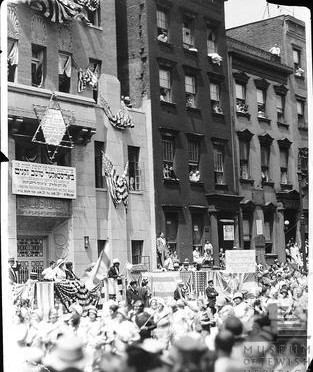
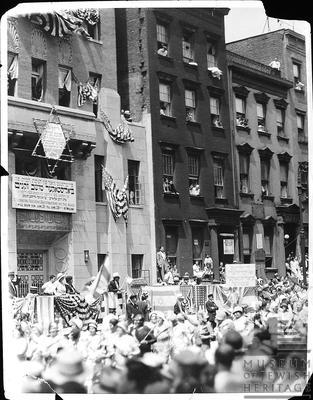
At right: The Bialystoker building on its opening in 1931 (courtesy the Museum of Jewish Heritage)

On the north side of East Broadway, however, these sorts of historical structures east of the Seward Park Library were knocked down and replaced in the 1950s with an immense cooperative village in the fashion of Stuyvesant Town, a series of housing towers interlocked with open spaces and playgrounds.

The Bialystoker building (228 East Broadway), which opened in 1931, is a relic in comparison to its immediate neighbors, a parking garage (which notably collapsed in 1999) and a banal 1960s medical building known for a chipping mural on its side and to HBO subscribers as ‘the New Zealand consulate’ on the TV series ‘Flight of the Conchords‘. (Full confession: I lived across the street for both the collapse and the filming, so I find the block particularly endearing.)

Its two-toned tannish, art deco facade by architect Henry Hurwit makes an unusual silhouette for the neighborhood, and perhaps that alone should make it a candidate for preservation. But it’s the building’s unique history that makes a necessary keepsake of the Lower East Side.

This and many other structures around here trace to a specific immigrant lineage — the Polish Jews of Bialystok, near the border of Belarus. It’s remarkable to think of thousands of Bialystok immigrants — nearly the entire Jewish population of the city — crossing the ocean, entering Ellis Island, and settling  here, and specifically here, in this area of the Lower East Side.

Around the corner, up two blocks, is the Bialystoker Synagogue, a refitted 1826 Episcopal church that collected various neighborhood Jewish congregations and moved in here in 1905. From a cursory glance at its exterior, you might never know that inside is one of New York’s most stunning synagogues. And hopefully everybody is familiar with the wondrous, doughy bialy, the cousin to the bagel, and its supreme baker Kossar’s Bialys up on Grand Street.

The synagogue is an official historic landmark, and Kossar’s a treasured stop on walking tours. The former Bialystoker nursing home has no such protections.
The elderly home was funded by a Bialystoker aid society in the 1920s as an alternative to standard city institutions. The cornerstone was laid in September 1929, accompanied by a massive parade, 25,000 people carrying “flags and banners with Jewish inscriptions and marched through Canal, Grand and other streets.” [source]

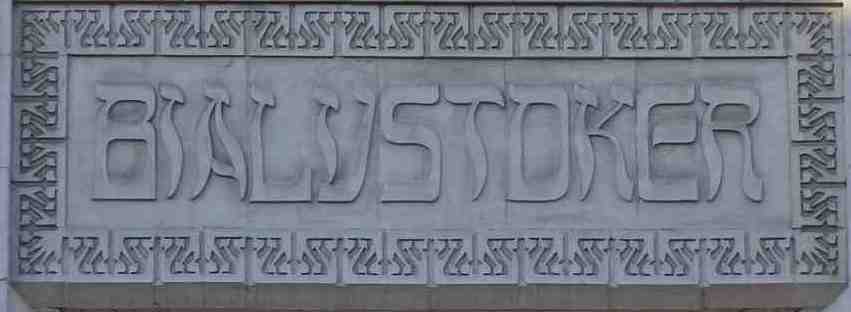
The new arrivals to the neighborhood benefited from the charity of wealthier Jewish immigrants who had arrived earlier and funded projects to ease overcrowding and providing health and education services catering to specific religious customs. The Bialystoker building is perhaps the most striking example of this beneficence. Its design is Moorish Art Deco, of a kind you might see off to a corner in Rockefeller Center. Possibly considered plain in its day, but now seen as beautiful and understated. In particular, its doorway is a marvel; the artfully carved BIALYSTOKER is joined by a dozen medallions representing the twelve tribes of Israel.

Its grand opening on a hot summer day in June 1931 was a premiere event, with another parade drawing tens of thousands, and people crammed onto rooftops and fire escapes to witness the event. Awaiting inside were rooms for several dozen residents, as well as “auditoriums, dormitories, two synagogues, sun parlors and hospital wards.” [source] The Museum of Jewish Heritage has some remarkable photographs of the opening which you can peruse here.

The nursing home has faithfully and quietly served the community for 80 years. Along the way, its seen some prominent and very, very old residents (like 111-year-old Benjamin Kotlowitz). Last year, due to mounting debts and “inadequate Medicaid reimbursement,” the home was forced to close for good.

The building is currently on the market and, as it has not been landmarked, is a candidate for demolition. You can sign a petition here to help the effort to get this unique building saved. The Friends of the Lower East Side also has more information on this remarkable window on New York’s immigrant history.
Categories
Landmarks Podcasts

Notes from the podcast (#134) St. Patrick’s Cathedral

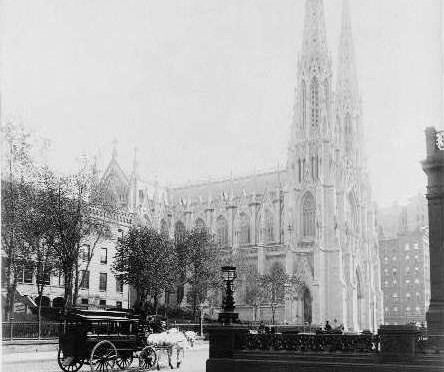
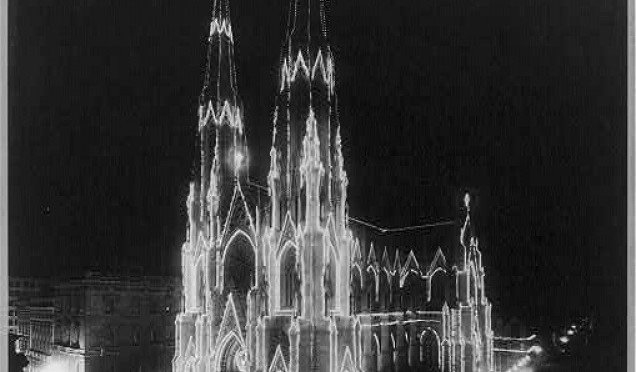
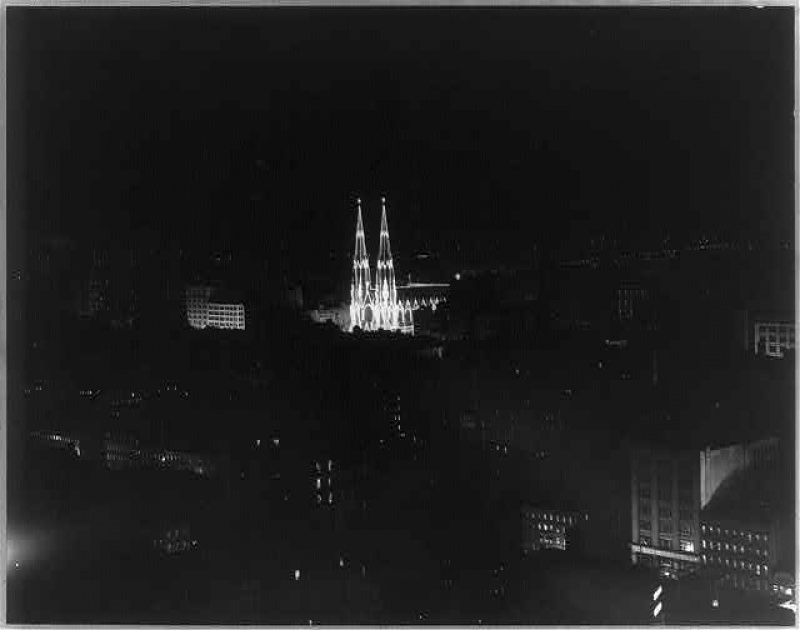
A spectacle from a hundred years ago: St. Patrick’s in 1912, in a gauze of electric lights. The picture below this post illustrates how this particular light performance made the church standout among the as-of-yet mild landscape of Midtown East. Pictures courtesy the Library of Congress

We hope you like our new podcast on St. Patrick’s Cathedral. Very odd timing to be releasing a Catholic themed podcast, given that Archbishop Dolan is set to turn Cardinal tomorrow and, oh right, the contraception controversy.

The church is closely linked to the history of early Irish New Yorkers. However there were obviously huge bodies of Catholics of other nationalities in the mid-19th century, particularly German Catholics. Archbishop John Hughes himself said that “people were composed of representatives from almost all nations.” That said, Germans Catholics opened their own churches, in particular the Roman Catholic Church of the Most Holy Redeemer, opening in the East Village in 1852, in the new German enclave of Kleindeutschland.

Here’s an interesting read about the 1989 ACT UP protest at St. Patrick’s, from a person who was actually arrested at the protest!

VISIT: The official site for St. Patrick’s has a historical timeline, a map, and information on tours.

MUSIC: The music in this week’s show is from the album ‘O Come Let Us Sing’, featuring the St. Patrick’s Cathedral Choir and St. Patrick’s organist Donald Dumler. You can find the album on iTunes.

CORRECTIONS: I made a big blunder in this episode. I’ve always prided myself in New York movie trivia, yet I flubbed it in this episode. ‘The Godfather III’ was filmed at St. Patrick’s Old Cathedral, not at the new one. Sorry for the error.

Speaking of the old cathedral, it’s now a basilica, if you haven’t heard. Although we speak about the original Mott Street cathedral in this episode, you might like to check out our old show (Episode #9). You can tell we’ve come a long way in this podcasting thing!


TIMELINE: We do things a bit out of order at the start of the show, so I thought I’d lay out some of the key dates for you for reference. St. Patrick’s website also has a historical timeline that you can use to follow along. But of the things we speak about:

1801 — David Hosack opens his Elgin Botanical Garden in the vicinity of today’s Rockefeller Center.
1808 — The Diocese of New York is created
1810 — The land where St. Patrick’s sits today is sold to an insurance company, the Eagle Fire Company. One of the trustees of the board is Archibald Gracie. By this time, the Jesuits had already constructed a building on this property.
1813 — Augustin De Lastrange arrives in New York. The following year, he bought the structure and, for a short time, sets up a Trappist monastery here.
1815 — St. Patrick’s Cathedral opens downtown at Mulberry Street.
1828 — The mid-Manhattan land is sold to Francis Cooper, on behalf of St. Peter’s and St Patrick’s, with the intention of building a cemetery
1838 — John Hughes is made a bishop
1850 — The Diocese of New York becomes an archdiocese
1858 — The cornerstone to St. Patrick’s new cathedral is laid. By this time, the controversial figure Madame Restell has already built her mansion across the street, and quite on purpose it seems.
1864 — John Hughes dies
1878 — The ‘Great Cathedral Fair’ is held, raising enough funds to finally complete the structure
1879 — The new Cathedral is officially dedicated
1888 — The cathedral’s distinctive spires are finally completed.

Categories
Landmarks Podcasts

St. Patrick’s Cathedral: Stately grace in bustling Midtown, thanks to a fiery archbishop and a venerable hairdresser

During its early years, St Patrick’s neighbors were luxurious mansions. Today the surrounding streets house retail and tourist attractions. (Picture courtesy Library of Congress)

PODCAST One of America’s most famous churches and a graceful icon upon the landscape of midtown Manhattan, St. Patrick’s Cathedral was also one of New York’s most arduous building projects, taking decades to build. An overflow of worshippers at downtown’s old St Patrick’s demanded a vast new place of worship, even as most Catholic New Yorkers were having an uneasy time due to religious prejudice by angry ‘nativists’.

 Enter ‘Dagger’ John Hughes, the relentless first Archbishop of New York, who hammered the city for equal treatment for Catholics and managed to construct several New York institutions still in existence. Many scoffed at his idea of building a gigantic cathedral so far north of town.

We explore the early years of this once-quiet piece of mid-Manhattan real estate and some of the notable events that have taken place at St. Patrick’s since its opening.

ALSO: The tale of the revered Haitian hairdresser in the crypt!


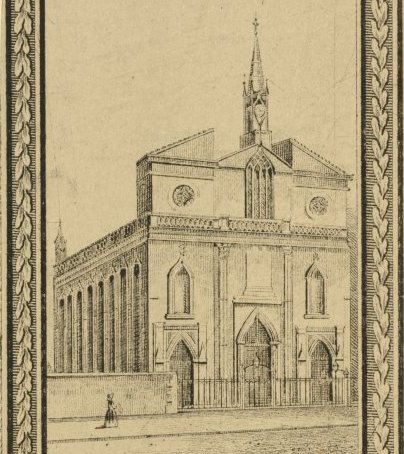
Before ‘uptown’ St. Patrick’s, there was downtown St. Patrick’s, the original cathedral which was consecrated in 1815. By the 1850s, with the number of Catholics growing due to immigration, a larger, grander structure was required, one that reflect the congregants’ growing influence. The image below is from St. Patrick’s before the 1866 fire. The facade was rebuilt with less ornamentation.

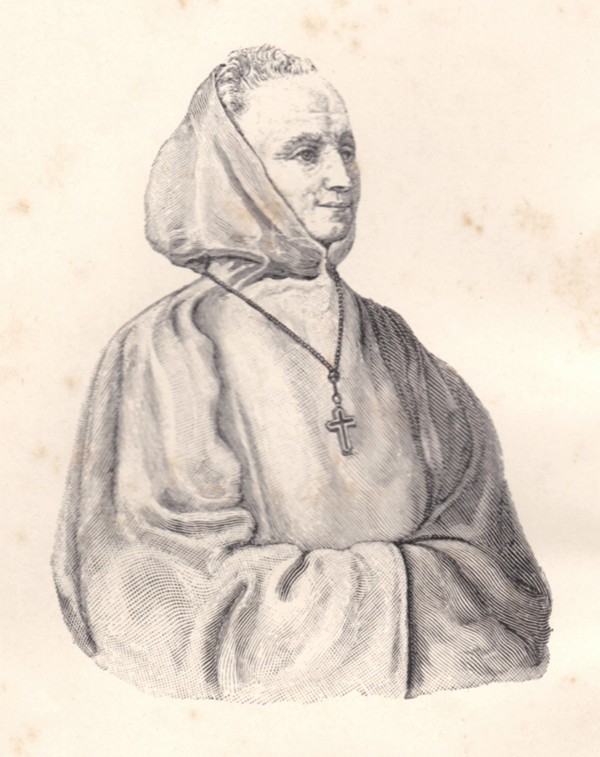
The land where St. Patrick’s sits today was wooded and sparsely populated 210 years ago. But for a short time, in 1814, a Trappist monastery sat here, the haven of French refugee Dom Augustin de Lestrange.

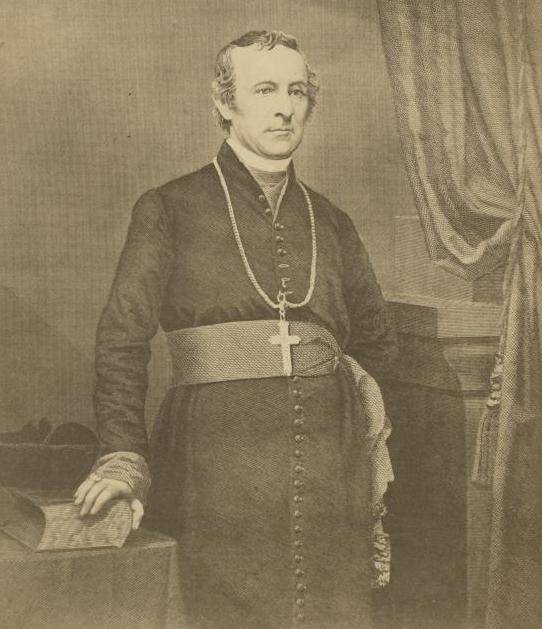
The undisputed religious leader of New York’s Catholic community was Archbishop John Hughes, whose fierce tenacity — and curious signature — earned him the nickname ‘Dagger John’. He spearheaded the construction of a new cathedral, in an area of town that, in the 1850s, was nowhere near the center of the city. ‘Hughes’ Folly’ would take two decades to build; by the time it was completed, Fifth Avenue had entirely transformed. The Archbishop’s risk had paid off. (courtesy NYPL)

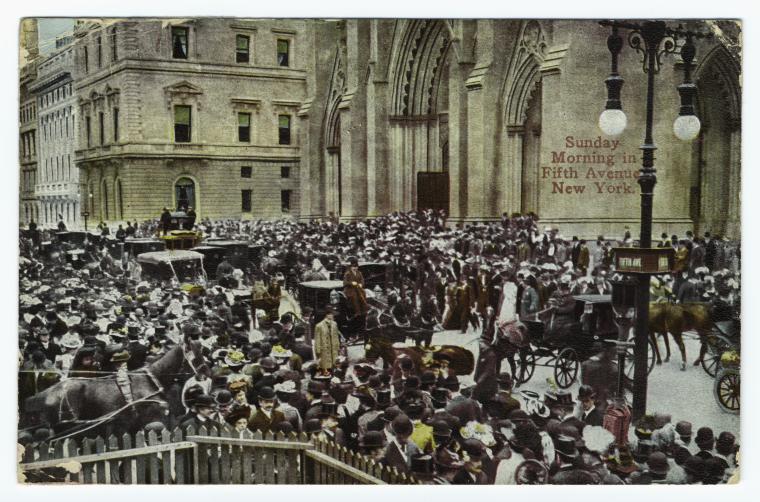
Sunday morning mayhem at St. Patrick’s Cathedral at the start of the 20th century. Fifth Avenue became a veritable procession of New York’s wealthiest residents. (NYPL)

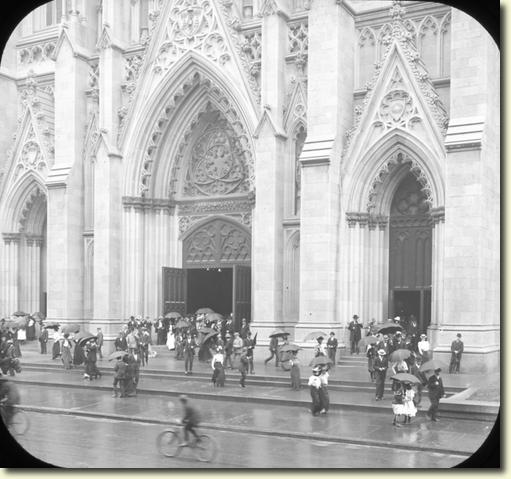
An image from the late 19th century. The famous 20,000-lbs. bronze doors, featuring three-dimensional sculptures of saints, would not be installed until a few decades later. (Courtesy NY State Archives)

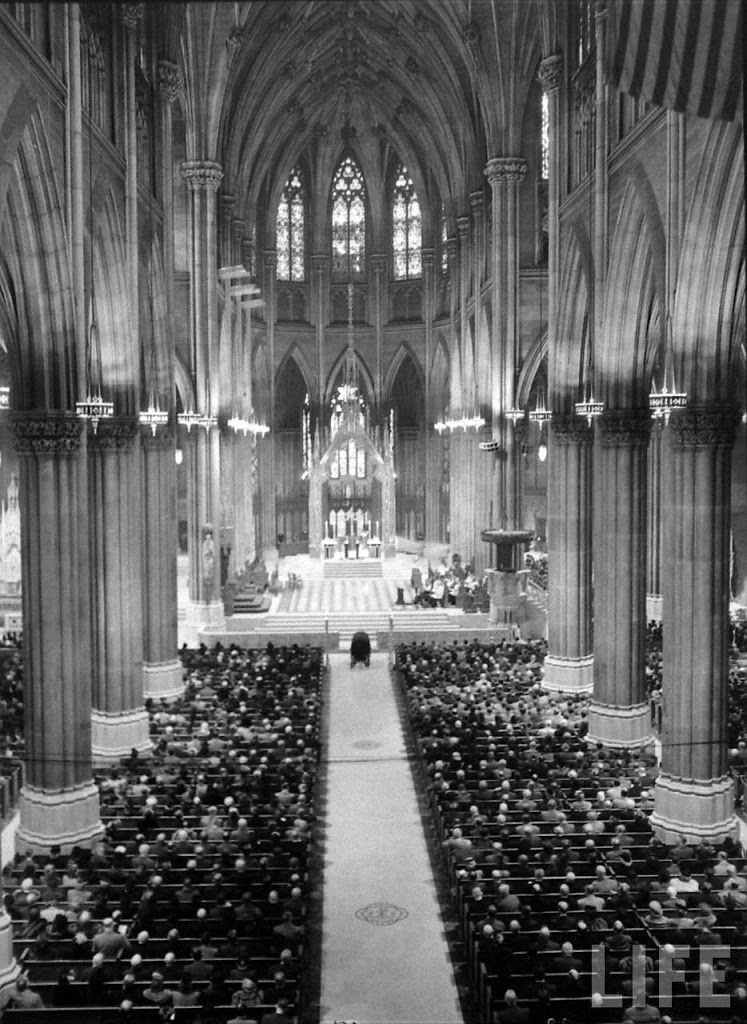
Inside St. Patrick’s Cathedral, during the funeral of former mayor Jimmy Walker, November 1946. (courtesy Life)

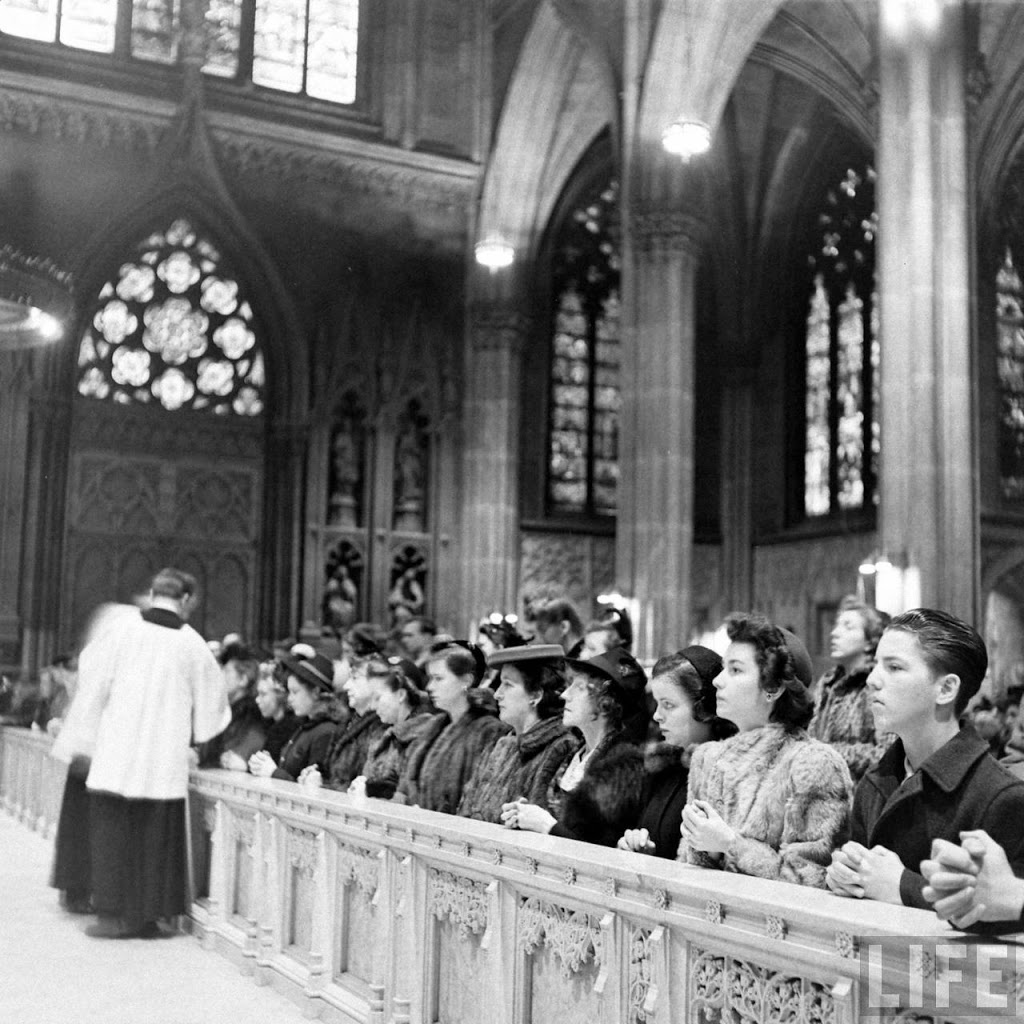
Worshippers in 1944, as photographed by Alfred Eisenstaedt for Life Magazine.

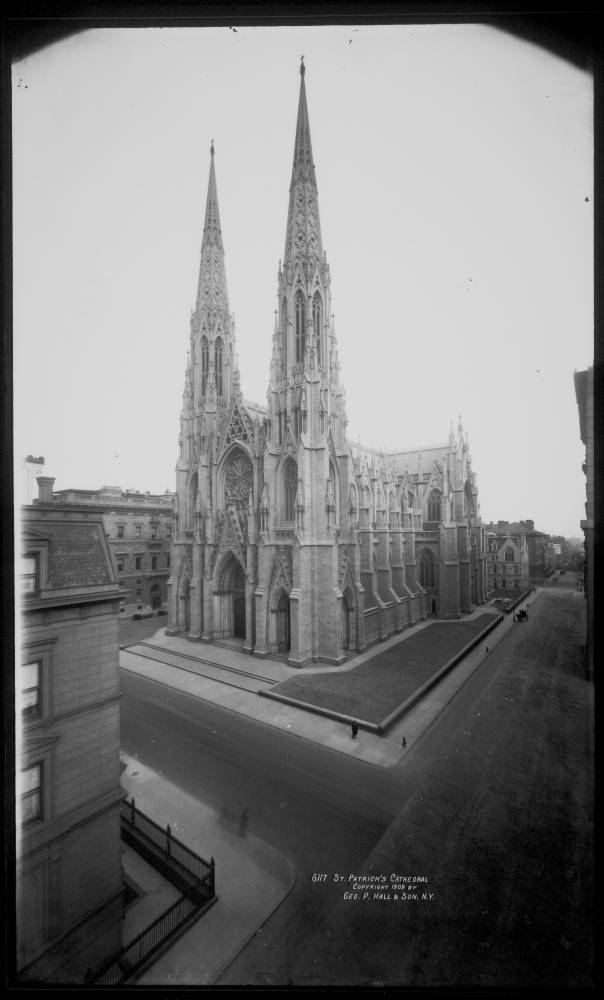
Another shot of St. Patrick’s in 1909, in one of the last years the cathedral would be surrounded with residential homes. By 1924 it would get its neighbor Saks Fifth Avenue. Fifteen years after that, Rockefeller Center would rise across the street.

Categories
Revolutionary History

From prison to post office: The odd fate of a Dutch church

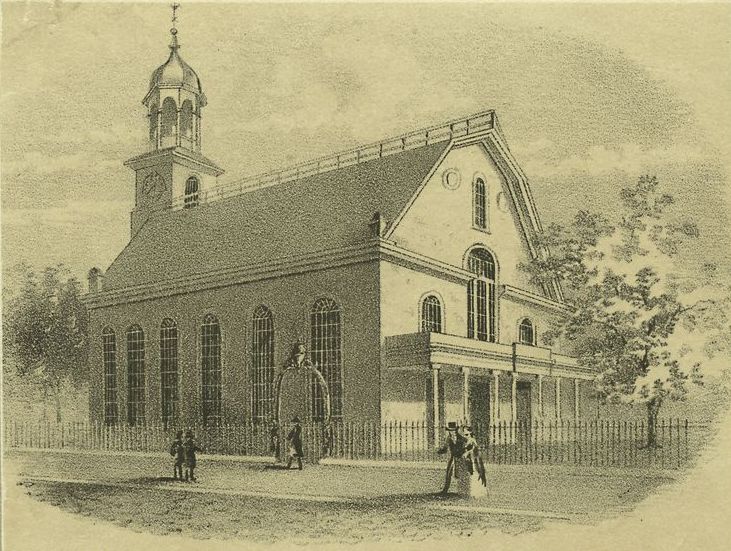
Say a prayer for the Middle Dutch Church (pictured here from sometime before the war) as things are about to get very ugly.

 One need only walk past the old Limelight in the neighborhood of Chelsea to understand the strange flexibility of church architecture.

This former Richard Upjohn-designed Episcopal church at West 20th Street and Sixth Avenue was transformed into a rehab center in the 1970s, then a notorious nightclub in the ’80s, then an upscale mall. And now a gym.

But the Limelight is only the most extreme example of church alteration in New York. Brooklyn Heights has so many churches that some have been turned into swanky loft apartments.

This is not a new trend. New York grew so rapidly in the 19th century that small stone and clapboard churches, once situated on the outskirts of town, found themselves surrounded. As population shifted, congregations left, and other civic services moved in.

The Middle Dutch Church was built between 1726 and 1731, a vestige of Manhattan’s Dutch Reformed community that traced itself back to New Amsterdam‘s very first house of worship.

Its location at Nassau Street and Cedar Street made it central to the lives of colonial New Yorkers, but a series of historical twists ensured a few less hallowed activities would take place here.

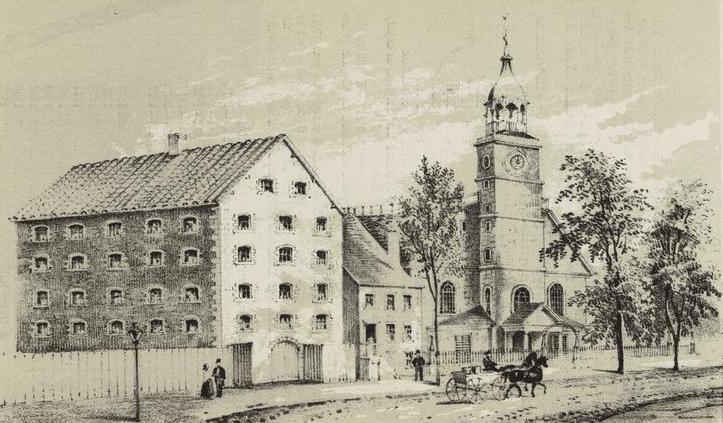
The church and the adjoining ‘sugar house’ in 1830, years after being turned into a horrifying prison complex.

During the Revolutionary War, the occupying British turned the damaged and deteriorating Middle Dutch and its neighboring sugar house into a prison for unruly rebels.

An old Times article estimates that up to 8,000 prisoners were held here in those years.  “When the victims confined to the Middle Dutch church crawled to the windows begging for food, a sentinel, pistol in hand, would turn back the gifts of the charitable.” [source]

“The whole floor of the Church was one caked mass of dead, dying, excrement and vermin,” reported the Times, “supernatural” conditions that probably echoed throughout the entire city, choked off during the occupation years between 1776 to 1783.

I’m grimly speculating that prisoners were transferred the prison ships of Wallabout Bay at some point, for the building was emptied, “the planking torn up, tan laid down, and a riding-school established for the recruits of the English riding-horse.”

When the British galloped out of New York entirely in 1783, the beat-up old building sat virtually unused — although Benjamin Franklin may have used the belfry for electricity experiments, according to one source — before being turned back into a church, re-opening on July 4, 1790.

It stayed as a church for 44 years, even as New York’s population migrated north. Finally, under a cloud of debt, the church permanently closed in 1844, with its final service symbolically held in both English and Dutch languages.

If Franklin (America’s first postmaster general) indeed practiced with electricity here, then the next transformation seems natural.

With the federal standardization of postal rates in 1845, New York found itself in need of a central post office. So the U.S. government leased the old church — buying it outright in 1861 — and radically transformed the building into New York’s central post office.

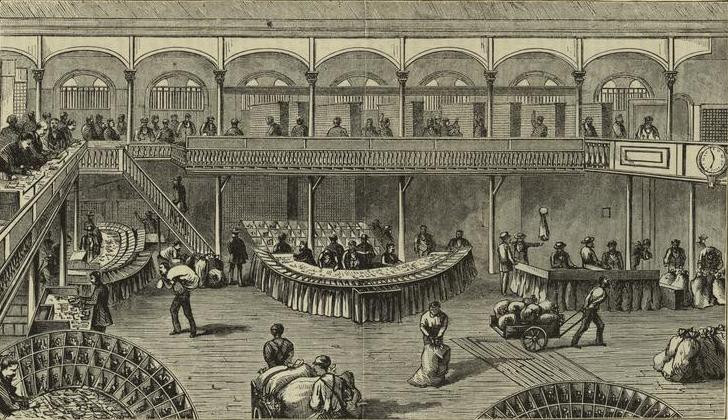
Special delivery: The interior of the Dutch church turned post office in 1871 (NYPL)

The poor building, renovated and stretched thin, could barely process the flow of mail coming through the city by the late 1860s, so a new central post office was built — the odd, greatly loathed City Hall Post Office building.

The old Dutch church, now 150 years old, was considered a city treasure, but real estate in downtown Manhattan was now being carved out for skyscrapers.

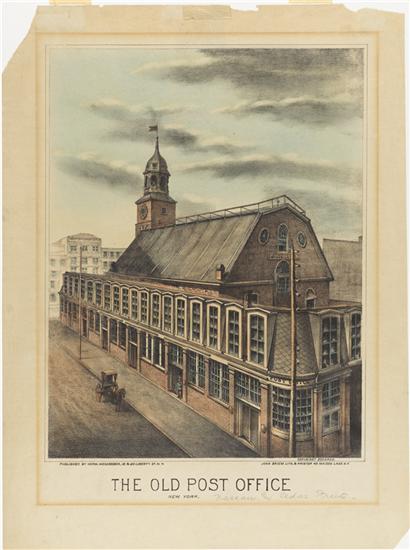
Below: The post office/church in an 1877 lithograph, courtesy the Museum of the City of New York

The church of a thousand faces, to the curiosity of “thousands of relic-hunters and citizens,” was finally torn down and replaced with the Mutual Life Insurance Building in 1882.

The ornate Mutual Life had a good run but was demolished — with a part of Cedar Street erased — to make room for One Chase Manhattan Plaza.

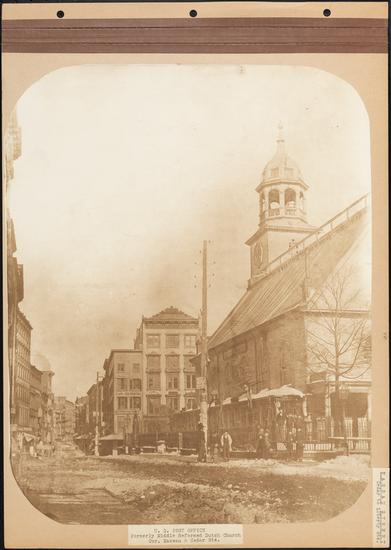
And finally — perhaps the only existing photograph of the old post office, dated 1890, Nassau Street – Cedar to Liberty Sts. (courtesy the Museum of the City of New York)

Categories
Bowery Boys Bookshelf

Langston Hughes: A few Harlem stops on his birthday


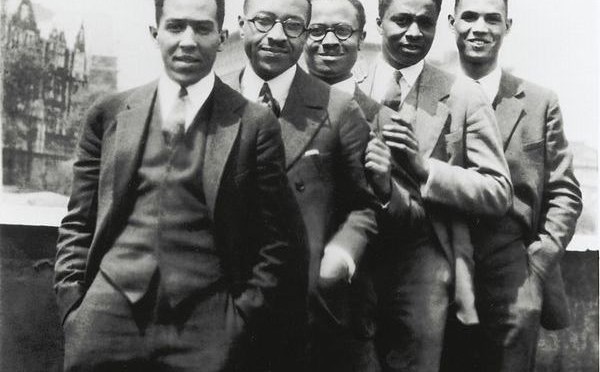
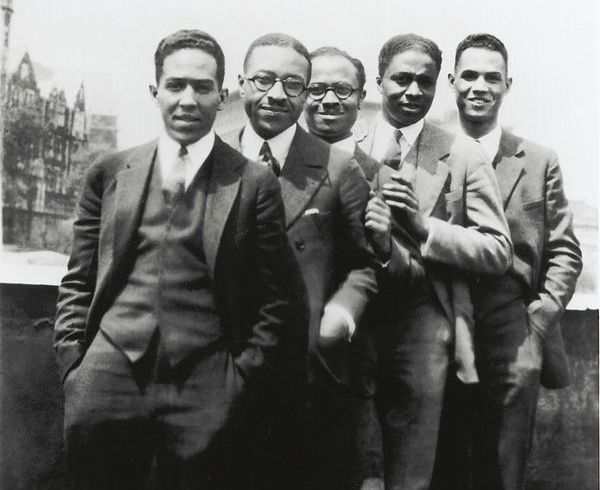
Dapper gentlemen: At a 1924 celebration in Langston’s honor, at the home of Regina Andrews on 580 St. Nicholas Avenue. The author is to the far left, followed by future sociologists Charles S. Johnson and E. Franklin Frazier; novelist and future doctor Rudolph Fisher; and Hubert T. Delany, who would become a New York justice in 1942, appointed by Fiorello LaGuardia.

Since I was a teenager, I’ve had an affinity for writer Langston Hughes, the revolutionary jazz poet who was born 110 years ago today in 1902. I grew up about an hour away from Langston’s birthplace in Joplin, Mo. One of the brightest lights of the Harlem Renaissance grew up here?, I frequently pondered in English class.  In fact, Hughes is considered Joplin’s most famous son.*

But you don’t need to follow Langston’s footprints back to the Ozarks. Celebrate his birthday with a mini-walking tour, four Manhattan addresses that were pivotal to Hughes’ development as an iconic African-American voice and a star of the Harlem literary scene:

181 W. 135th Street (corrected, see note) — Langston’s first exposure to Harlem’s creative energy was as a Columbia University student in 1921, wandering the street, hoping to see “Duke Ellington on the corner of 135th Street, or Bessie Smith passing by, or Bojangles Bill Robinson in front of the Lincoln Theatre, or maybe Paul Robeson or Bert Williams walking down the avenue.” [source] Before moving into Columbia’s Hartley Hall, however, Langston took a room here at the YMCA, known for its live drama productions and art shows. He didn’t need to stroll around to find Robeson; he got his start acting in productions at the YMCA.

NOTE: Thanks to Stephen Robinson for the following correction to the information above: “I’m afraid you’ve got the wrong address for the YMCA at which Langston Hughes would have stayed. From 1919-1933, the YMCA was located across the street from the current building, at 181 West 135th Street. You can see the footprint of this building on the 1930 map we use on our site Digital Harlem: Everyday Life, 1915-1930 , and find more information about it by doing a search for Places, location type=YMCA.

634 St. Nicholas Avenue — Although Langston would rent out a studio in 1938 down the street at 66 St. Nicholas Avenue, he frequently stayed at this address in the Sugar Hill area of Harlem, the home of his friends Toy and Emerson Harper. (He referred to them as ‘aunt’ and ‘uncle’.) Hughes later moved with the couple to another address…

20 East 127th Street For 20 years, Hughes worked out of the top floor, by now an international phenomenon. He was residing here (his own ‘ivory tower’) when he died in 1967. The house was up for sale for most of the year, but was finally sold in December in a Sotheby’s auction.

 515 Malcolm X Boulevard (at W. 135th Street) — The Schomburg Center for Research in Black Culture, a branch of the New York Public Library, is Hughes’ final resting place. His ashes are contained underneath the foyer floor, beneath an inscription: “My soul has grown deep like the rivers.” But the library always had a long association with Hughes. His ‘poetry-play’ ‘Don’t You Want To Be Free‘ played to sold-out crowds in the basement of the library in 1938. The play co-starred Robert Earl Jones, the father of James Earl Jones.

You can find a far more in-depth walking tour of 1920s Harlem here.

 *Another African-American cultural icon, George Washington Carver, was born in the town of Diamond, Mo., fifteen minutes southeast of Joplin. If you’re ever swinging through that area of the world, the George Washington Carver National Monument, where his home was located, is worth a stop.

Categories
American History

As Garfield fights for life, Arthur lays low in Murray Hill

There are several enemies in Candice Millard‘s ‘Destiny of the Republic, the terrific narrative history of the assassination of President James Garfield during the summer of 1881. The most obvious foe is the delusional Charles Guiteau, who believed himself the nation’s savior when he shot President Garfield twice at a Washington DC train station on July 2, 1881. Then there were the microbial infections transmitted during improperly sanitized operations performed by Garfield’s doctor at the White House, causing blood poisoning that worsened the president’s suffering and ultimately killed him.

For the purposes on this blog, however, I was drawn into the tales of two New York politicians who became victims of rumor-mongering that summer. Powerful New York senator Roscoe Conkling was seen as a political rival of Garfield’s, a thorn in the president’s side, especially considering Conkling’s own political protege — his pawn, really — was Garfield’s vice president, Chester A. Arthur. Traumatic crises in this country are frequently accompanied by a churning undercurrent of suspicion and conspiracy, and Conkling and Arthur became victims of just such a shadowy accusation that summer.

Many believed Conkling to be culpable of the assassination attempt himself — perhaps not of pulling the trigger, but of fostering and encouraging the discord that inspired it. It’s not a stretch to consider Conkling an embodiment of the spoils system which determined hundreds of government jobs through political affiliation. Guiteau thought himself unfairly left out of that patronage system when he attacked Garfield that hot July day.

A few weeks ago I wrote about the Fifth Avenue Hotel, the luxury accommodation at 23rd Street off Madison Square that became Conkling’s second home and a regular scene of political intrigue for the Republican Party. Conkling endured the disintegration of his political career from his rooms here.

Meanwhile, many were mortified at the very thought of Arthur, hardly a universally admired figure, ascending to the presidency. While the president lay incapacitated in Washington, there was even debate as to when presidential responsibilities should cede to the vice president. Nobody seemed enthusiastic at the prospect of a President Chester A. Arthur.

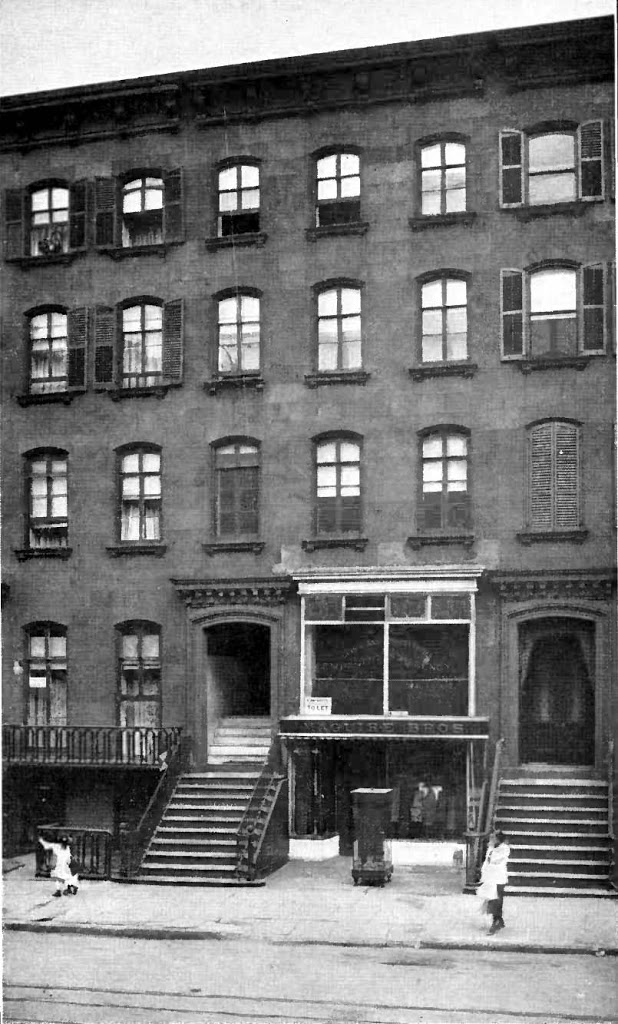
Thus, Arthur essentially spent his summer hiding out in his townhouse at 123 Lexington Avenue (at right), fearful of seeming overly ambitious even as the fate of President Garfield seemed uncertain. On the day the president finally succumbed to his injuries, Arthur sobbed uncontrollably from his shuttered home as servants shooed away the press. Several hours later, he was sworn in as the 21st President of the United States on September 20, at 2:15 a.m, from the green-shuttered parlor of his home here.

‘Destiny of the Republic’ is a swift, thrilling read, certainly worthy of the praise it received when it was released last year, bringing in a cast of icons (including Alexander Graham Bell and Joseph Lister) to present a frightening world of medical uncertainty and strange madness.

Categories
Mad Men

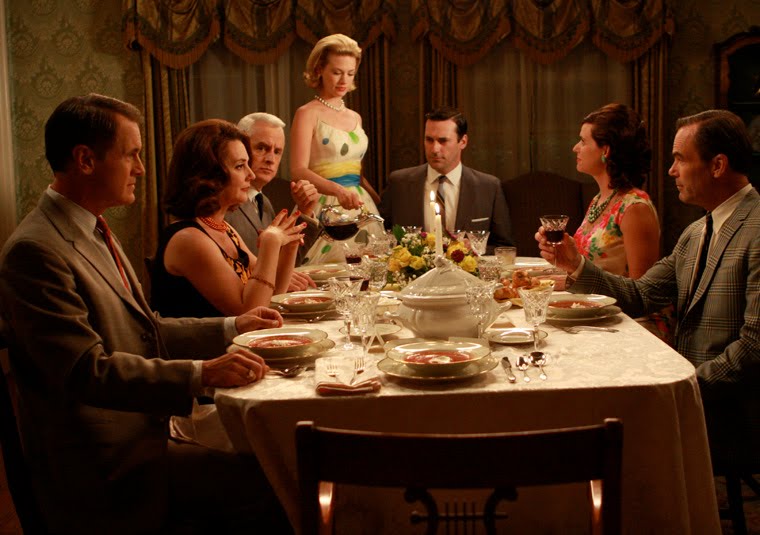
‘Mad Men’ returns: a guide to eating (and drinking) options

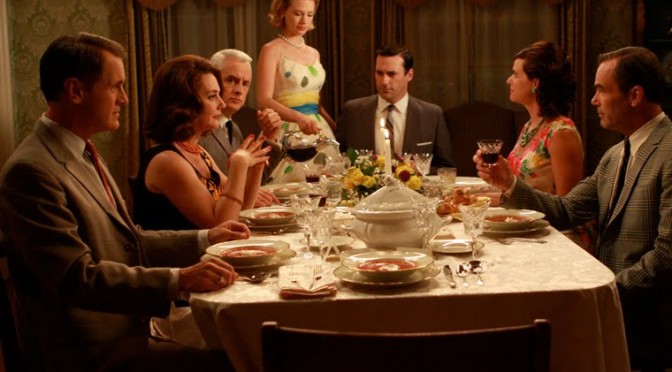
Drama for dinner: ‘Mad Men’ meals go down best with fifteen cocktails

AMC’s ‘Mad Men’ returns for its fifth season this March. Until somebody goes ahead and develops a TV show about Peter Stuyvesant and New Amsterdam, the award-winning Madison Avenue drama is the closest we’ll get to straight-up New York City history TV. The writers cleverly embed the action within very specific 60s locations throughout the city. During the season I try and delve into those locations in our regular ‘Mad Men’ feature


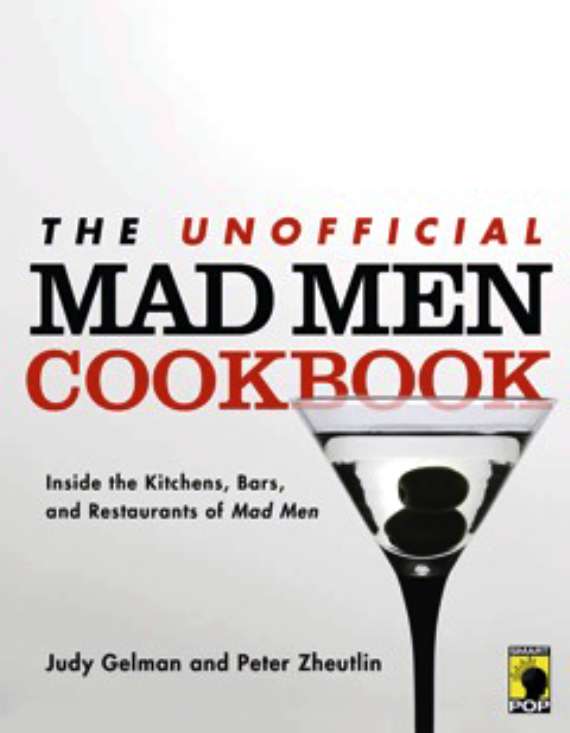
So what, then, to make ofThe Unofficial Mad Men Cookbook: Inside The Kitchens, Bars and Restaurants of Mad Men’, by Judy Gelman and Peter Zheutlin? My first thought, naturally, was, “They eat on ‘Mad Men’?” They certainly flirt over dinners at times. Carla, the Draper’s housekeeper, tortures over hot meals that often get uneaten as Betty sulks and Don swallows down bourbon.

But ‘Mad Men’ is a show of lounges and restaurants, of decorum and indulgence, adrift in a rising stream of booze. It’s also a show of dizzying, if cynical, nostalgia. And that’s the secret of this fun little volume. The particular dishes featured in the book may have been seen or mentioned on the show. But the recipes themselves are straight from the kitchens of New York’s most famous eateries and from original 1960s magazines and cookbooks.

The authors frame each dish within the context of a certain episode. For instance, a recipe on gazpacho and rumaki is prefaced with the description of Season 2, Episode 8, the episode where Betty presents dishes from around the world to her guests (including, you may remember, the at-the-time somewhat exotic Heineken beer.)

The recipes aren’t from Betty’s kitchen, but from actual 1960s magazine articles. Sources include ‘The Kennedy Style’, a 1962 Ebony Magazine cookbook, the 1960’s ‘How America Eats’, among a great many others. Original dishes from New York’s great restaurants make an appearance here too — steak tartar and hearts of palm salad from Sardi’s, fettuccine alfredo from Angelo’s, chicken Kiev from the Russian Tea Room, Caesar salad from Keens Steakhouse, and of course, the original Waldorf salad and sold Amandine from the Waldorf=Astoria.

Betty Crocker, Julia Child, Amy Vanderbilt — all the icons of 60s cuisine and ettiquete are represented. Naturally, this means that few dishes are heart healthy. Butter and red meat are a defining theme.

A more classic selection of original New York recipes has perhaps never been assembled. One might squabble over the fact that most of this has nothing much to do with ‘Mad Men’ itself. But let that slide, relax and have a drink from the guide’s cocktail menu, featuring the how-tos on such classic sips as the Stork Club Cocktail, the 21 Club Bloody Mary and the Classic Algonquin Cocktail (whiskey, vermouth and pineapple juice), all sourced from the original establishments.

I was a sucker for this kind of retro mixology back in the days of the ’90s retro ‘bachelor pad’ craze, and ‘The Unofficial Mad Men Cookbook’ could fit right in with your old Esquivel CDs. But this is an entertaining collection of New York recipes, well-researched, and ready for your weekend soirees and viewing parties..

Categories
Skyscrapers

A century ago, excitement builds as the Woolworth ascends

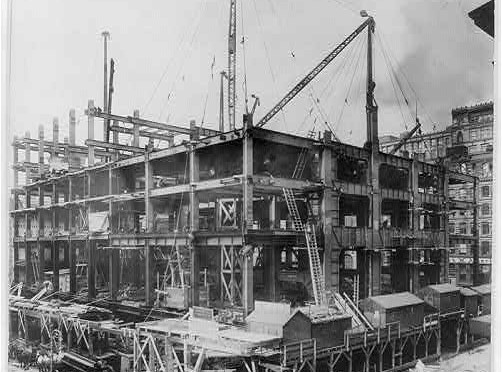
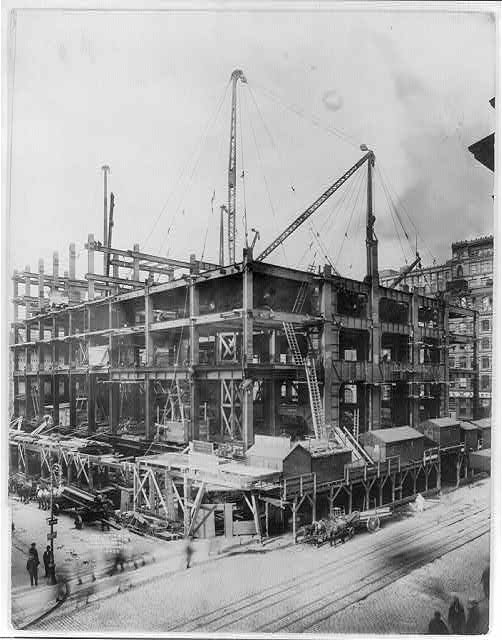
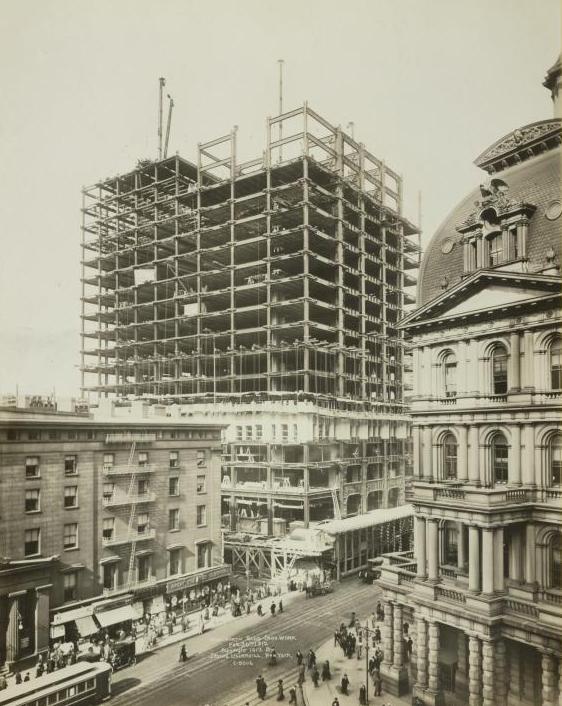
The Woolworth Building, as it appeared on January 20, 1912 (Courtesy LOC)

The Woolworth Building was the biggest story in real estate one hundred years ago, long before it was even completed.

By the waning moments of 1911, something finally began to rise out of the belching smoke and clutter collecting at the northwest corner of Broadway and Barclay Street . The building’s architect Cass Gilbert was busy at work drafting the details of the interior, and as the tower rose, so too did the cost. Luckily, retail king Frank W. Woolworth would eventually pay the entire bill ($13.5 million, from an original project cost of $5 million) in cash.

In a Jan 7, 1912 article, the New York Times assessed the state of real estate in the city, observing that the greatest developments for the year were in ‘apartment houses and lofts’, particularly on the Upper West Side and the neighborhoods west of Broadway between 14th Street and 42nd Street. While residential property was the hot commodity, they made note of seven ‘purely office structures’ that were also debuting. Of those listed, the clear standout was the new office building being designed for Woolworth.

The New York Sun was also dazzled by the Woolworth’s construction that month, announcing its construction as the crown of the ‘world’s greatest building construction era’. Any firm hired for the project promptly touted its involvement in full-page advertisements. Otis Elevators boasted of its ‘Marvelous Vertical Railways … That Are to “Whiz” the Army of Workers Up With Lightning Speed.’

It would take over fifteen months from that moment for the Woolworth Building to be completed, and what a game-changer it was when it officially opened on April 24, 1913. The tallest building in the world until 1930, the Woolworth is also distinctive to this day for its monolithic surface of terra cotta, built before the requirements of setbacks turned future skyscrapers into virtual ‘wedding cakes’.

But back in January 1912, as you can see, it rose on a few floors from street-level, not even as high as the City Hall Post Office which sat across the street. The picture below (from NYPL), taken over a month later, indicates its proximity to the post office:

(As for the picture at top, the Library of Congress dates it as January 20, 1912, while the New York Public Library has it as December 28, 1911. You get the idea. Regardless, it’s a photo by favorite photographer Irving Underhill.)

Categories
Brooklyn History On The Waterfront Podcasts

Notes from the podcast (#133): Red Hook, Brooklyn

A haunting snapshot of the Atlantic Docks, circa 1870-80s (possibly as early as 1872) photo by George Bradford Brainerd (courtesy the Brooklyn Museum

Quite a few notes on the podcast this week! There were a lot of little details I found interesting that didn’t make the cut:

Before the Water Taxi: One of the more enlightening tales left on the cutting-room floor was that of the Hamilton Avenue Ferry, the 1846 Atlantic Docks ferry line that linked Red Hook with downtown Manhattan in much the same way the IKEA Water Taxi does today. As the ferry made “the shortest and most direct route from New York” to the newly constructed Green-Wood Cemetery, it also became the method by which many bodies were transported there.

Fiery renovation: A stalwart of the old community is Visitation of the Blessed Virgin Mary Roman Catholic Church (built in 1896) right off of Coffey Park, the third incarnation after the congregation grew out of the first building (originally built in 1855) and fire destroyed the second. That fire, incidentally, was allegedly caused by combustible materials workers were using to renovate the structure.

Goodbye Vienna: A vestige of World War I hysteria exists within the name of Red Hook’s Lorraine Street. According to Brooklyn By Name, the street was once named Vienna Street but was deemed ‘offensive’ during the war and was changed to reflect the area of Alsace-Lorraine, which entered French possession after the war.

What’s My Name?: I mentioned a couple facts about the neighborhood of Carroll Gardens (once considered a part of Red Hook), although we hope to elaborate further one day on a show on South Brooklyn. The name Carroll Gardens, like that of its neighbors Cobble Hill and Boerum Hill, was a real-estate invention which the community quickly embraced. (Contrast this with modern failures of real-estate re-branding, like ChumboBelDel and LoDel.) You might be interested in reading Carroll Garden’s original 1973 historic designation.

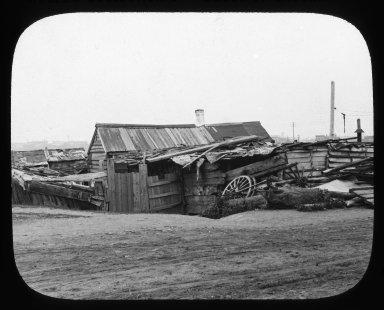
Below: I’m not quite sure of the story behind this sunken squatters home, taken on Van Brunt Street from the year 1900 (courtesy the Brooklyn Museum

Brooklyn Museum: Brooklyn scenes; buildings


Further reading: For more information on the corruption of the  New York and Brooklyn waterfronts , I highly endorse Nathan Ward‘s ‘Dark Harbor’. It’s brilliantly lucid and immediate. In particular, he focuses some attention on the disappearance of Columbia Street longshoreman Pietro Panto and vividly describes a mob hit that took place in a building in Manhattan’s West Village, in a building next door to the treasured piano bar Marie’s Crisis. There are several books that feature chapters on Red Hook history, but a dedicated book on the subject is sorely needed. In the meantime, I recommend the short essay by Jerry Nachman that appears in “Brooklyn: A State of Mind,” about, of all things, an air conditioning crisis!

Maggie Blanck has an extraordinary web resource that begins as a genealogy of her family and elaborates into a history of Red Hook’s industrial giants. And for those of you who are fascinated by late-century street-gang history, the website Stone Greasers has an exhaustive list of gang names, many more unusual than anything you’d find in the movie The Warriors.

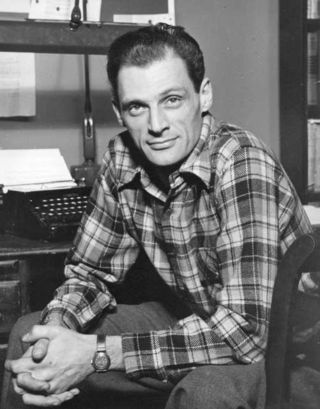
Red Hook as inspiration: Several sources, both on Brooklyn history and film history, discuss Red Hook’s impact on the work of both Arthur Miller and Budd Schulberg, the screenwriter of ‘On The Waterfront’.

 In 2009, a unique restaging of ‘On The Waterfront’ took place aboard the Waterfront Barge Museum in Red Hook, a production that then floated to Manhattan and Hoboken waterfronts for further performances, “all places whose dock wars echoed in Terry [Malloy’s] story,” according to Ward.

Elia Kazan’s Oscar-winning film is embedded with influences from the entire New York waterfront struggle. For instance, Karl Malden‘s Father Barry is transparently inspired by Father Corridan, an activist waterfront priest from Manhattan’s west side. (Author J.T. Fisher focuses on Corridan’s contribution in his new book ‘On The Irish Waterfront’.) Of course no inspiration was greater than Malcolm Johnson‘s now classic series of articles for the New York Sun in the late 1940s, a series which won the Pulitzer Prize in 1949 — coincidentally the same year that Miller won for ‘Death of A Salesman’!

I suppose there is some controversy in some circles regarding whether Schulberg and Kazan ‘stole’ the idea of ‘Waterfront’ from Miller’s ‘The Hook’, but I’m not touching that. However you can read about it yourself in Stephen Schwartz’s argumentative 2005 article.

Thanks to commenter Rob Hill who calls to attention another fascinating literary Red Hook reference. In 1957, Harlon Ellison, one of America’s great science fiction and crime novelists, literally went undercover with a Red Hook street gang called The Barons to find inspiration for his book ‘Web of the City’ and, later, in the non-fictional account Memos From Purgatory. Ellison’s entire life would probably make a good subject for a podcast one day. Thanks Rob!
Further listening: This show shares many similar themes with our past shows on Williamsburg, Brooklyn and Corlears Hook and the Pirates of the East River. Hmm, and let’s just say, we’re probably coming back to the waterfront sooner than later this year….
Community vs Neighborhood: One listener Carolina from PortSide NY had some strong objections to my characterization of Red Hook, particularly my focus on the neighborhood’s crime and gang activity. I’m excerpting part of her letter, as it highlights a challenge that Tom and I often tackle with our podcast:

“Red Hook housed great poverty, but for decades was more mixed economically than your focus on gangland stories describes. Personally, I find what is most distinctive about Red Hook over the years is the capacity of this small place to hold AT THE SAME TIME a striking economic range in its residents and a striking range of land use from major industry to residences.

That is an undoubtedly true statement, especially when you compare it to the fate of other dockside neighborhoods, like Corlears Hook and Water Street in Manhattan. I find there are two ways to accurately tell a story of a place like Red Hook — from an organic, street-level or ‘ground up’ perspective (what I call ‘a community history’) and from a macro-view, as a component of the larger forces of the city which contain it (or ‘a neighborhood history’).

As the creators of a New York City history podcast, we opt to recount neighborhood histories, as New Yorkers and those who love this city are familiar with the mechanisms of change that have influenced it. In this decision, we understand that the normalcy of a place can get sometimes overlooked. (After all, not every person in Five Points was a gang member or a prostitute either.)

However, the sad truth is, Red Hook was for many years nationally known as a blighted neighborhood, and it was important to inspect both how it got that way and how that condition demanded some very unique revitalization plans.  I hope I have shown how essential Red Hook was to New York, and continues to be.  We encourage you to wander around the waterfront on a sunny afternoon sometime and, in particular, check out places like the Waterfront Barge Museum.

Categories
Brooklyn History On The Waterfront Podcasts

Red Hook, Brooklyn: A rich seafaring history, organized crime and the isolation of a beleaguered neighborhood

PODCAST Red Hook, Brooklyn, the neighborhood called by the Dutch ‘Roode Hoek’ for its red soil, became a key port during the 19th century, a stopping point for vessels carry a vast array of raw goods from the interior of the United States along the Erie Canal.

In particular, two manmade harbors were among the greatest developments in Brooklyn history, stepping in when Manhattan’s own decaying wharves became too overcrowded.

With these basins came a mix of ethnicities to Brooklyn, and along with new styles of row houses came the usual assortment of vices — saloons and brothels along Hamilton Avenue. This fostered the development of crime along the docks, and Red Hook soon witnessed firsthand the opening salvos of 20th Century organized crime.

How did the history-rich, nautical neighborhood go from a booming center of employment to one of the worst neighborhoods in the United States by the 1990s? And can some surprising twists of fate from the last twenty years help Red Hook return to its glory days?

Featuring: Revolutionary War forts, shantytowns, Vaseline factories, famous gangsters, the gateway to Hell, and cheap Swedish furniture!

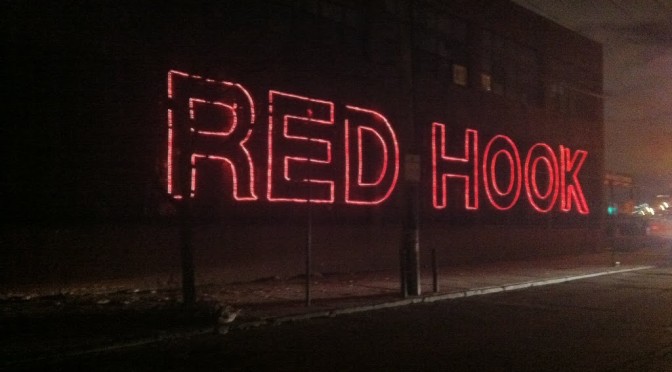
Photo above: Taken on Van Brunt street, 1/11/2012

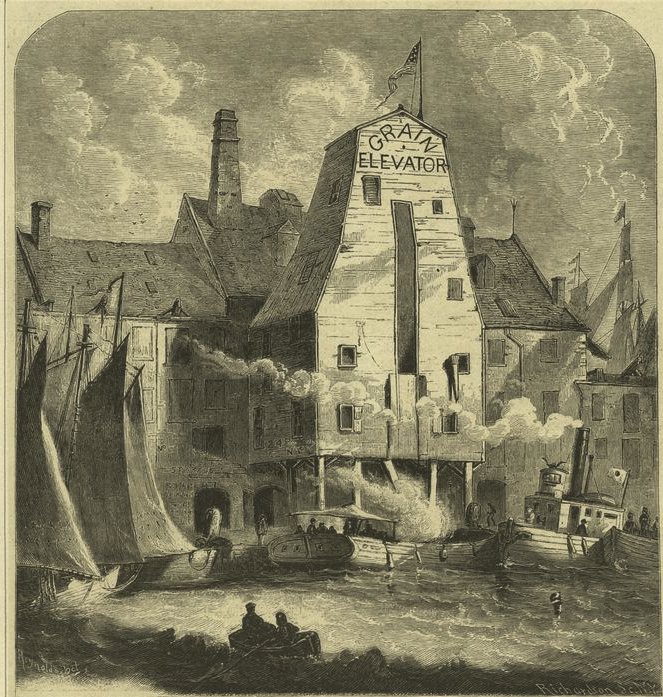
The Atlantic Docks, illustration taken from Booth’s History of New York. (care of NYPL)

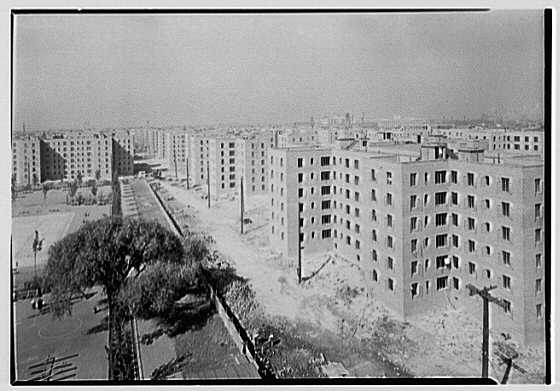
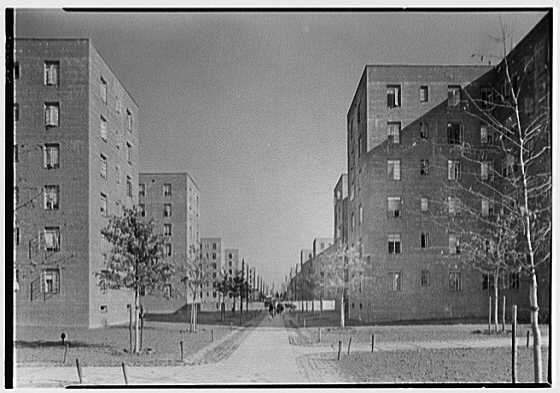
Modern living, circa 1939. The Red Hook Houses at their debut. Although the housing development cleared away a great many dilapidated homes — following a common model of urban redevelopment — the uninspired uniformity would put a dent in the neighborhood’s original character. (Courtesy LOC)

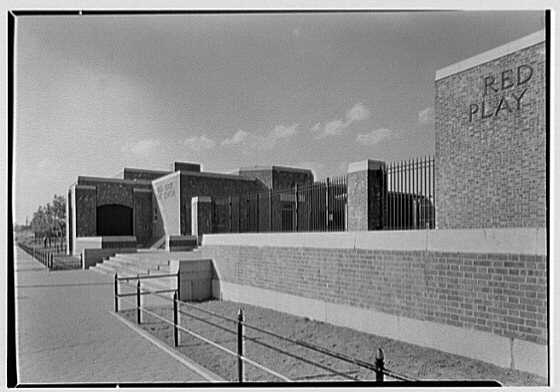
The Red Hook Play Center opened in 1936, the final of 11 swimming pools Robert Moses built during his early years as parks commissioner. Its Art Moderne style made it a beautiful if curious addition to the neighborhood.

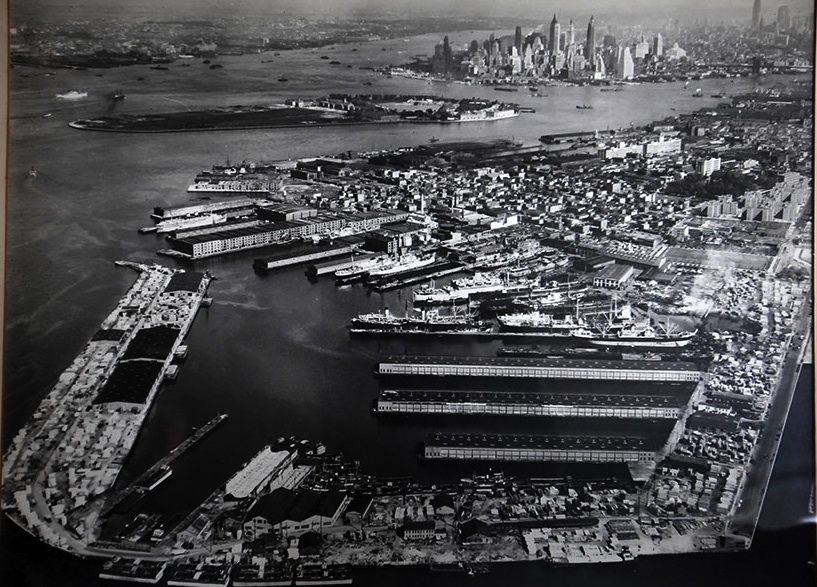
The Erie Basin, a clutter of vessels and piers, is strangely beautiful from overhead in relation to the Manhattan skyline. (Pic courtesy Wired NY)

The crisis of organized crime and corruption within the longshoreman’s union along the Brooklyn waterfront was an inspiration for many writers, including Arthur Miller (below) in his unproduced screenplay ‘The Hook‘ — referring both to the neighborhood and the longshoreman’s “ever-present baling hook“. Later, Elia Kazan and screenwriter Budd Schulberg found similar inspiration for the Oscar winning film ‘On The Waterfront’, loosely basing events on situations that took place along the entire New York and Brooklyn waterfront. (The film was made in Hoboken, but there are of course famous shots of the Manhattan skyline.)

Categories
Revolutionary History Staten Island History

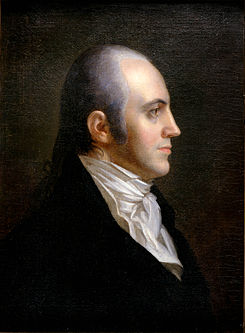
Aaron Burr, Staten Island, and the tale of his death mask

Yes, Hamilton fans, we are a proud people, judging from the many notes and supportive comments yesterday left on the Facebook page on the birthday of Alexander Hamilton, tinged with strong anti-Aaron Burr sentiment. But, from our comfortable vantage of the future, have we been too harsh on the killer Vice President?

Sure, he absolutely got away with murder. But it was, after all, a duel, willingly engaged by both participants, however misguided. Murder charges against Burr were eventually dropped, but he obviously avoided New York for many years.

His later misadventures out West — his failed, confusing efforts to infiltrate Spanish territory and allegedly form a new government in 1806 — just slathered on further scorn and distrust for the once respected lawyer. Three years after killing Alexander Hamilton, Burr was brought to federal trial for treason. He was eventually acquitted due to lack of credible evidence, much to Thomas Jefferson‘s chagrin.

After traveling through Europe and eventually going broke, Burr returned to New York and married the alleged ‘black widow’ Eliza Jumel. They divorced just four months later. The Morris-Jumel Mansion, his home during that time, is today less than two miles away from Alexander’s prized Hamilton Grange. They are two of the oldest homes still standing in northern Manhattan. (The Dyckman Farmhouse , in Inwood on 204th Street, is older than Hamilton’s house.)

Aaron Burr died in 1836 in Staten Island at a boardinghouse in the Port Richmond neighborhood, not far from the Bayonne Bridge.  The boardinghouse later became the St. James Hotel, where guests could specifically ask to stay in Burr’s room for an evening. And sleep in the same bed! A sign even hung over the mantel, “Aaron Burr died in this room.”

The former Vice President spent his last, lonely days in this particular room, shying away from curious locals and pouring over old love letters from Eliza. According to a 1895 New York Times article on the subject of his ‘deathbed’, Burr was hounded by pious ministers who wished to save his soul and release him from his crippling depression.

The article also highlights a very bizarre visitor. One guest at the boardinghouse had an unnatural fascination with Burr, but never spoke to him and kept quietly to himself. When the landlady discovered that Burr was died in his room, the stranger suddenly appeared at the door, opened his satchel and removed the materials to make a plaster death mask of the Vice President. I believe this may be the morbid mask in question!

Categories
Sports

The New York Giants, before they were giants


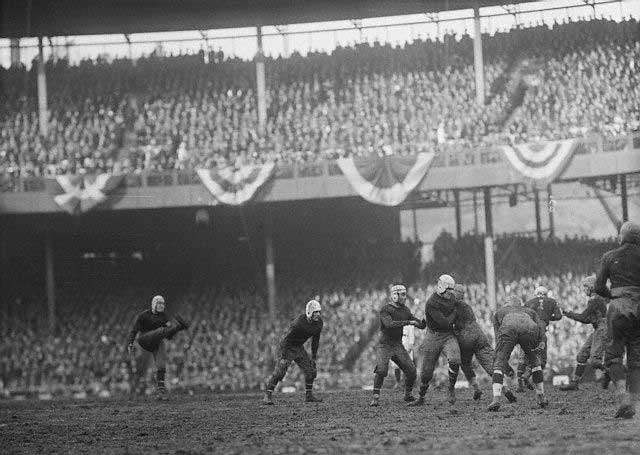
At the legendary Polo Grounds 1925, where the Giants football team (after a couple false starts) finally make their mark on the sport.


The New York Giants, currently in the playoffs and on their way to tackle the formidable Green Bay Packers this Sunday, are football’s oldest existing NFL team, and among its greatest — with seven total championship victories since their debut in 1925.  But that original team, dazzling with such stars as Jim Thorpe at their original home at the Polo Grounds, was not New York’s first professional football team. It wasn’t even New York’s first football team called the Giants!

The first try at a New York Giants football club came in 1919. They were a spin-off of the New York Giants baseball team*, a club considered the best of its day, dominating the sport from the late 19th century and into the 1910s.  Like the baseball franchise, the young Giants football team was to have played at the Polo Grounds as well, the location for many college football contests of the day. But those college games were played on Saturday, and on the month of October 1919, all Saturdays were fully booked.

So the Giants were scheduled to debut on a Sunday, against an Ohio team called the Massillon Tigers. This seemed possible, as team organizers understood that New York’s blue law, prohibiting Sunday play, had been removed from the books. But the city quickly clarified: the law had made way for Sunday baseball, not Sunday football.

Since football was more popularly considered a college pastime — many still questioned the validity of so-called ‘professional’ teams — nobody budged for the football Giants. And thus, the game was cancelled, and the team disbanded before they even hit the field.

The team’s coach, Harvard football star Charles Brickley, tried again two years later, managing to cobble together twenty-four players, a squad that is sometimes referred to as ‘Brickley’s Giants’ to distinguish them from the 1925 team. And people often choose to distinguish them, because Brickley’s Giants were a utter disaster. As one of 21 teams with the American Professional Football Association during its second season, Brickley’s team lost both its regular-season games. The Buffalo team actually destroyed them, 55-0.

During a bout with Jim Thorpe‘s Cleveland team, The New York Times noted, “The game was lopsided and had little to excite even the most rabid of rooters….[L]ittle can be said for the brand of football displayed.”

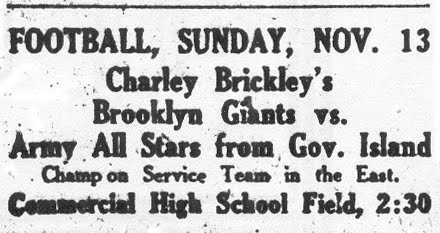
They were more successful at some exhibition games, such as the one advertised below in the Brooklyn Daily Eagle, Brickley’s ‘Brooklyn Giants’ (as they played at Ebbets Field by this time) against the Governors Island ‘Army All Stars’, whom they defeated. (Thanks to Paul Luchter for this image.) 

The following year, the American Professional Football Association changed its name to the National Football League, but Brickley’s team never made it that far, dropping out for good before the new season. They did continue to play exhibition games, but eventually disbanded by 1923. After these two disastrous attempts, nobody would attempt another Giants franchise for another couple years, when former newsie-turned-bookmaker Tim Mara joined the ascendant NFL with a third go at a New York team. And you know what they say about the third time.

By the way, the Maras have kept the Giants in the family since its 1925 debut. Tim’s grandson John Mara is an owner along Steve Tisch (whose last name should be familiar to any students at NYU’s Tisch School of the Arts).

*The original Giants baseball team now haunts and torments New York sports fans today in the form of the San Francisco Giants. The franchise moved to the West Coast in 1958.

Categories
Gangs of New York

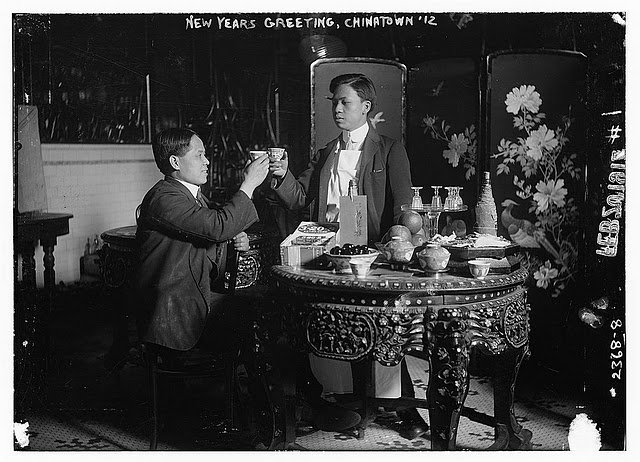
New Year’s Murder: Return of the Tong Wars 1912


“On New Year’s Day they presented any celebration in Chinatown with fireworks. There have been murders sometimes when the whole joyful populace of the crooked streets of Doyers, Mott and Pell have been patriotically celebrating with gunpowder an historic anniversary.” — New York Times, 1/16/1912

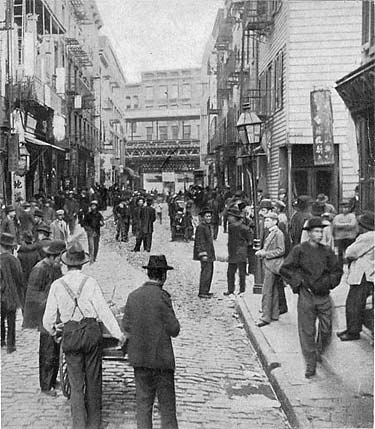
The streets of Chinatown were relatively quiet in 1911, a delicate truce drawn between the neighborhood’s two rival gangs, the On Leong and the Hip Sing tongs. But few strolled down narrow Pell Street without fear that old rivalries might return. Fierce battles had erupted throughout the past decade, culminating in dozens of bloody altercations throughout 1909 and 1910. (We outlined some of the violence in our podcast last year on Manhattan’s Chinatown.)

A committee of Chinese businessmen finally mediated a truce between the two tongs, but few suspected that hostilities would disappear. The control of On Leong Tong, who had once ruled the Chinese underworld for much of the 1890s, had been whittled away by the interloping Hip Sing Tong. Hip Sing’s leader, the flamboyant Mock Duck, often meandered down Pell conspicuously garbed in diamonds and a chain mail vest.

Although Hip Sing was subject to the truce, their allies — and the only other Chinatown tong of significant influence — the Four Brothers, were not. This imbalance of control, favoring Hip Sing and keeping Mock Duck in power, was bound to erupt.


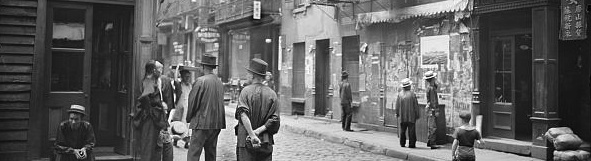
At right: Pell Street in 1899. The address 21 Pell Street is out of frame, just to the right.

And so it did one evening one hundred years ago, on January 5, 1912, at Mock Duck’s fan-tan parlor at 21 Pell Street, today the location of the First Chinese Baptist Church. Members of Hip Sing were gathered there, merrily gambling the night away under the glow of dangling light bulbs when three assassins from the On Leong Tong, armed with their trademark Smith & Wessons, burst in and began shooting.

Mock Duck himself may have been in the room that evening. He was certainly there, calmly sipping tea when police arrived. One of his gang members, Lung You, lay dead on the floor, while another, the ‘president’ of Hip Sing, Chung Pun Sing, was seriously wounded and fled to his home.

Witnesses led police to On Leong’s headquarters at 14 Mott Street. By the end of the day, over two dozen Chinese gangsters and bystanders had been arrested, including Mock Duck himself. He was charged with owning a gambling parlor, a fact that could not have been surprising to anybody at the Elizabeth Street police station. He was quickly released.

Top pic courtesy Library of Congress.

Categories
Bowery Boys

The Bowery Boys Year In Review — and the 1,000th post!

Here’s a listing of all the podcasts we recorded in 2011. This year we followed New York’s contribution to electricity and film, bridged the Narrows and took to the sky, revisited the Revolutionary War via the city’s most influential tavern, and spent the summer surviving riots and conspiracies cooked up during the Civil War. If you missed any, you can download directly via the links below, or find us on iTunes or other podcast aggregate sites.

Our podcasts #120 NYC and the Birth of the Movies and #127 The Civil War Draft Riots and  were our most popular shows of the year, but our most downloaded show of 2011 was recorded in December 2010 — #118 Times Square.

We both would like to thank everybody for listening in this past year! And we look forward to bringing you new tales of the city in 2012. Also, if everything falls in place, we’ll be doing our first real expansion into different media next year.

This is also my 1,000 post for the Bowery Boys: New York City History blog. Onward to 2,000!

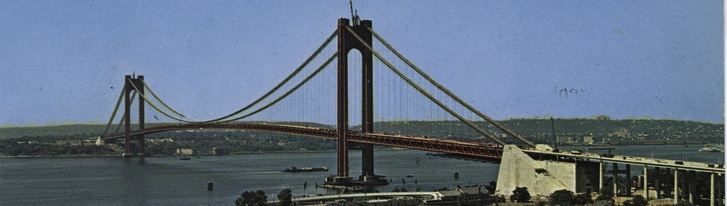
#119 The Verrazano-Narrows Bridge

Click here to download 
Blog page: The Verrazano-Narrows Bridge: Robert Moses, Bay Ridge, and the birth of America’s longest suspension bridge

#120 NYC and the Birth of the Movies

Click here to download 
Blog page: New York City and the beginnings of the film industry 1894-1918

#121 Fraunces Tavern
Click here to download 

Blog page: Fraunces Tavern: Raise your glass to the Revolution!

#122 The Grid – The Commissioners Plan of 1811

Click here to download 
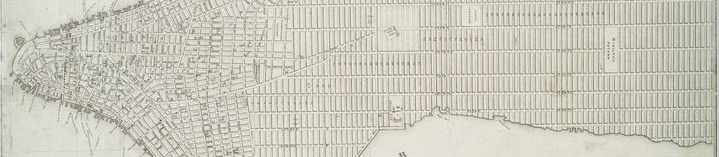
Blog page: Building blocks: The Commissioners Plan of 1811, inventing a New York grid of streets and avenues

#123 TRUMP

Click here to download 
Blog page: A short history of Trump: the roots of Donald’s wealth, from quiet Queens beginnings to glitzy Midtown excess

#124 Idlewild/JFK Airport

Click here to download 
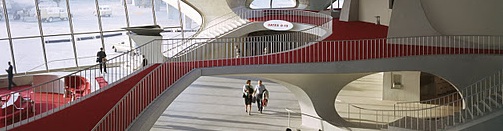
Blog page: Idlewild Airport/John F Kennedy International Airport: from a golf course to a motley crew of classic architecture

#125 Sardi’s Restaurant

Click here to download 
Blog page: Dinner at Sardi’s: New York celebrity history, wall to wall

#126 Fernando Wood: The Scoundrel Mayor

Click here to download 
Blog page: Fernando Wood, the scoundrel mayor during the Civil War: Will New York and Brooklyn secede from the Union?

#127 The Civil War Draft Riots
Click here to download 

Blog page: The Civil War Draft Riots: New York’s worst week ever

#128 Hoaxes and Conspiracies of 1864
Click here to download 
Blog page: Welcome to 1864! A 24-karat hoax, New York’s first theme restaurant, and a Confederate plot to torch the city

#129 Chinatown
Click here to download 
Blog page: Manhattan’s Chinatown: A tribute to the old neighborhood, and to the temptations of rich delicacies and basement vices

#130 Haunted Histories of New York
Click here to download 
Blog page: Haunted Histories of New York: What horrors lie beneath the foundations of the city’s treasured landmarks?


#131 The First Apartment Building
Click here to download 

Blog page: The Stuyvesant, New York’s first apartment building: Imported luxury style for a new middle class

#132 Electric New York: Edison and the City Lights
Click here to download
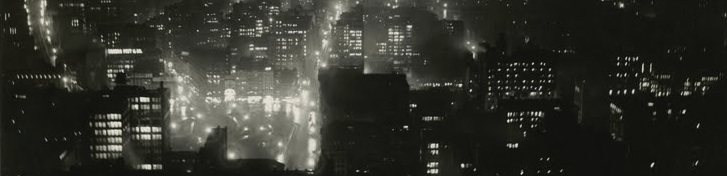
Blog page: Electric New York: From gaslight to Edison’s Pearl Street Station, illuminating the shadows, re-visualizing the night

Categories
Christmas

Pre-Scrooged: The Ghost of New York Christmas specials


A Bill Murray holiday classic is closely linked to a forgotten 1955 teleplay

Tracing itself back to one of America’s first television broadcast station, New York’s local WCBS-TV can claim a host of significant achievements, including the first regular broadcasts in color and the first baseball game in color (with the Brooklyn Dodgers, naturally).

Their early news documentary series ‘Eye on New York’, hosted and produced by future CBS president Bill Leonard, took a break from serious reporting on the evening of Christmas 1955 to broadcast a live version of Charles Dickens’ ‘A Christmas Carol’.  I don’t believe a version of this classic exists to view today, but holiday television lovers benefit from one odd quirk of this fleeting program.

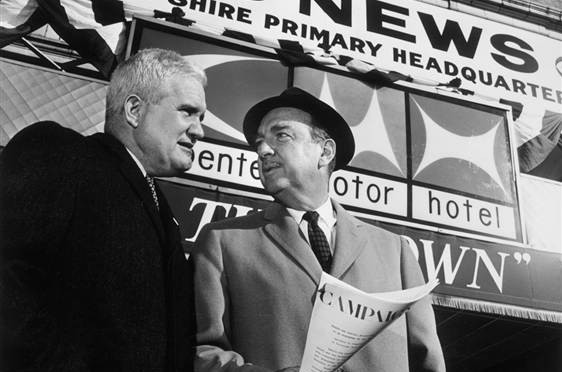
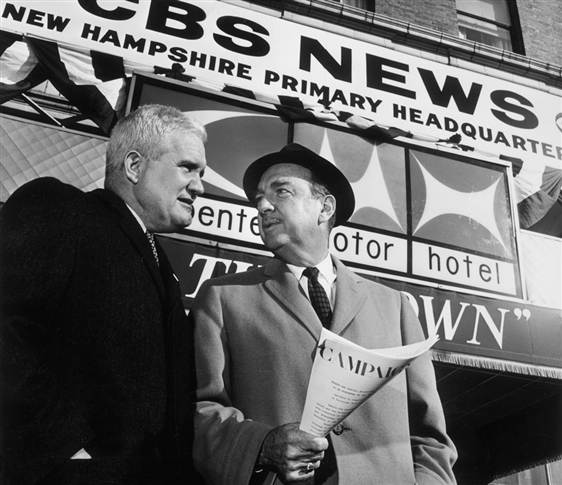
At right: Bill Leonard with CBS News correspondent Walter Cronkite.

This version of ‘Carol’ starred the extraordinary Bronx-born character actor Jonathan Harris (best known as the flamboyant Dr. Smith from ‘Lost In Space’) as Ebenezer Scrooge and Tony Award nominee Biff McGuire as Bob Cratchit.

But far from constructing a dour Victorian London set upon their midtown Manhattan soundstage, Leonard (who wrote the teleplay) decided to change the setting of the story, to modern day New York City. According to author Fred Guida, “this clever conversion preserved the spirit of the original but in the milieu of lower Park Avenue and big industry.”

Harris’ Scrooge was transformed into the bitter old CEO of Metropolitan Plastics, with Cratchit his elevator man. Scrooge was visited by the various ghosts via “a TV receiver as an up-to-date medium for his unearthly visions,” according to Variety.

Leonard’s ‘Carol’ was the very first version of the tale set in New York, and with a modern twist. While this original program has been lost, its cheeky trope has been used in a great many modern shows (especially those of the 1970s and 80s) in ‘very special Christmas episodes’, to bring holiday realizations to jaded characters from Alex P. Keaton of ‘Family Ties’ to even the title character of ‘Xena: Warrior Princess’.

But the greatest beneficiary of Leonard’s holiday twist is the 1988 Bill Murray classicScrooged, where a grumpy New York television producer — filming his own version of ‘A Christmas Carol’ — finds epiphany after an evening with three illuminating spirits, including a cab driver played by former New York Dolls singer David Johansen.

And since we’re on the subject, here’s some more New York holiday themed cheer from Johansen, under the name of his alter ego, Buster Poindexter. Happy holidays from the Bowery Boys!